3 minute read
Case Study:

OASIS TERRACES- SERIE ARCHITECTS
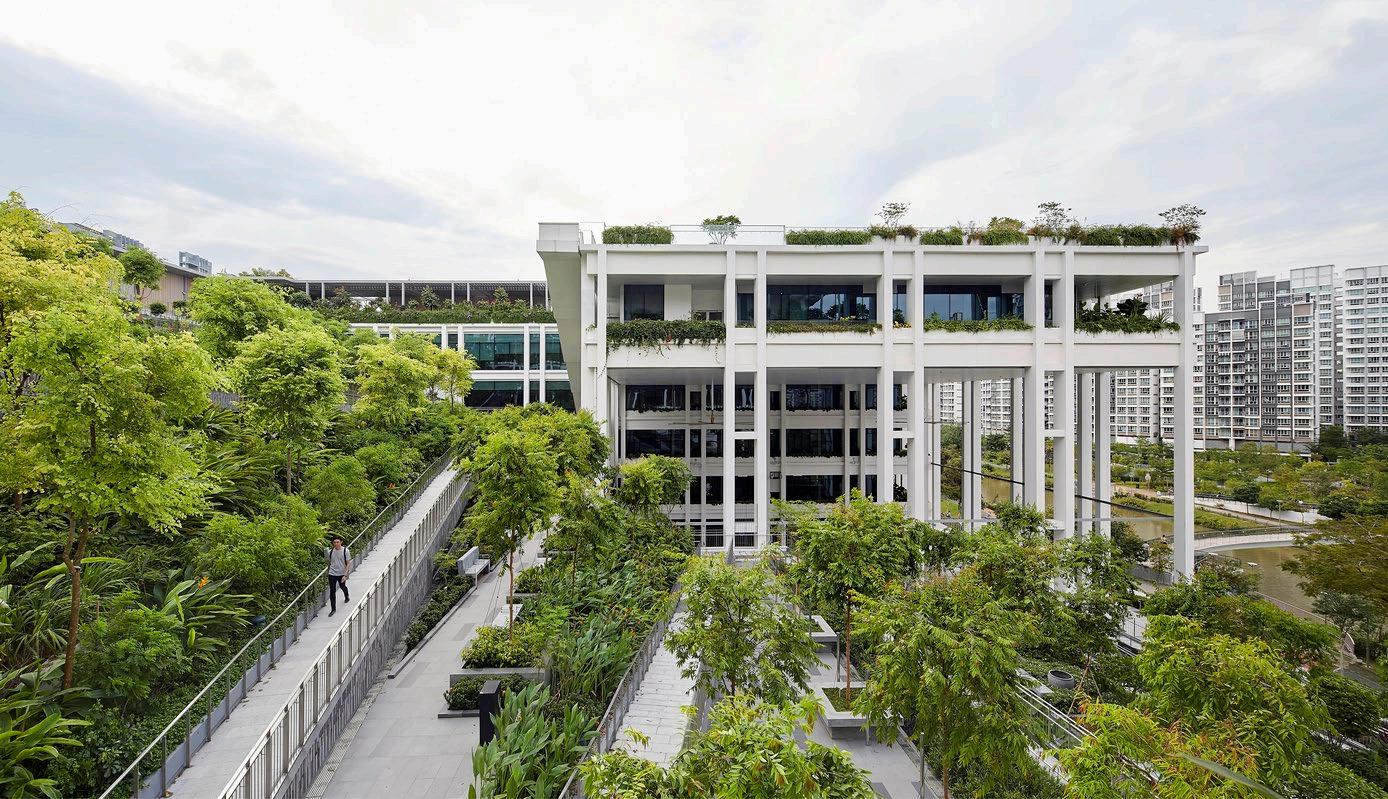
Fig 1:Oasis Terraces_©seriearchitects
Advertisement
Envisioned by Serie Architects in collaboration with Multiply Architects, Oasis Terraces is a mixed-used neighbourhood centre in the densely populated area of Punggol, Singapore. Spanning across an area of 27,400sqm, the design comprises healthcare facilities, retail spaces, communal gardens, restaurants and other amenities which come together as a ‘new generation of integrated development.’ Completed in the year 2018, the project has won several awards both at a local and international level.
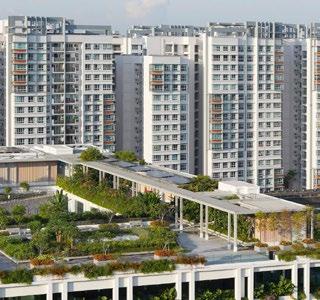
Set amidst a dense concrete jungle of building blocks, the centre emphasizes the comprehensive amalgamation of natural vegetation and landscaping into the design, thus providing an escape from the otherwise monotonous busy routines of city life, promoting social and community life as it is, justifying its name as the ‘Oasis’ of Punggol.
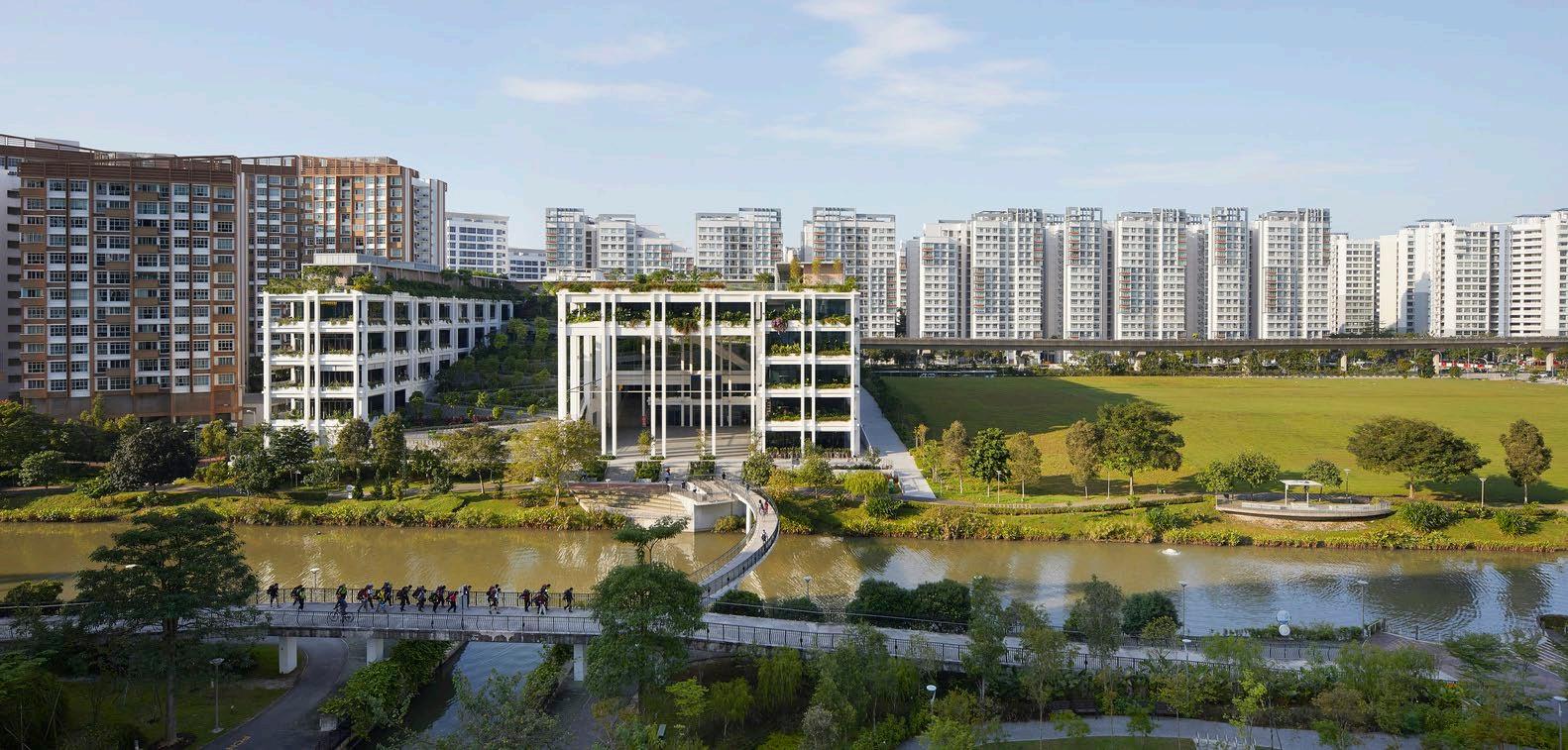
Oasis Terraces: A neighbourhood centre in Punggol_©archdaily
seriearchitects
seriearchitects
seriearchitects
The project is defined by its landscape feature where stepped garden terraces extend from the building, bringing the outside environment to the inside, thus, stimulating a parallel relation between the built and unbuilt. These lush green terraces act as a binding element, connecting the adjacent waterfront to the community gardens on the roof by a series of pedestrian walkways connected via ramps. The walkways serve as children’s play areas, communal spaces and a natural amphitheatre. Some of the restaurants and waiting rooms of the clinics directly connect with the terraces, thereby extending their services outside, allowing the users to spill out into this area and enjoy the views. The terraces not only help in achieving passive ventilation in the building but also enhance visual interaction with the environment.
Weaving communal spaces with terrace gardens allows meandering of the users through the landscaped walkways finding their way from the water’s edge towards the community roof gardens or vice versa, thereby creating a vibrant public space. Thus, nature frames the different activities around the building forming a robust framework where the built is in a symbiotic relationship with the environment.
The roof is landscaped extensively as a community garden by incorporating planting beds which can be used by the locals to practise urban farming. Thus, apart from serving as a building aesthetic, the roof garden embraces communal life by bringing the citizens together and encouraging social interaction amongst them.
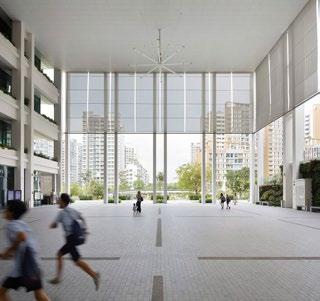
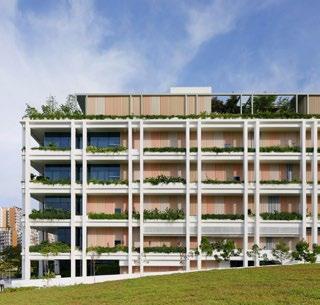
The structure features an open frame façade with balcony spaces wrapped around the perimeter, housing lush green planters. The porous façade lined with double columns and planters that act as an environmental filter between the exterior and interior spaces, give a sense of seamlessness within the building, allowing ample daylight and air to percolate inside. The open façade further symbolizes the openness of the building, referring to the inviting nature of the design as that of a public building.