Welcome About The Magazine
Published quarterly to a circulation of 20,000 + industry professionals across Australia, New Zealand and the wider Asia-Pacific region, Supply Chain Insights Magazine is focused on helping you solve the complexities of today's supply chain. The digital magazine highlights the latest trends, operational strategies, technology advancements and best practice within the supply chain and logistics industry.
Welcome to Supply Chain Insights Magazineyour primary source of industry news, focused on innovation, technology and knowledge-sharing in the logistics sector.
In this edition of Supply Chain Insights, we explore how we explore how geopolitical fragmentation, shifting trade corridors and growing policy uncertainty are reshaping supply chain strategies. In the aftermath of the largest oil market shock recorded in history, Features Editor Mel Stark spoke with global experts to understand how businesses are beginning to plan with global disruption in mind.
Continuing the conversation, TrueCommerce VP of Automotive Solutions, David Eyes, explores how the closure of the Strait of Hormuz exposed not only a logistics disruption, but also a deeper visibility challenge across the automotive
supply chain. We also hear from Neil Sahota, Chief AI Officer at loanDNA, who argues that unlocking AI's potential in global supply chains starts with addressing the coordination and visibility issues at ports, where some of the industry's most significant bottlenecks emerge.
We also examine new findings from Equifax Australia on mounting financial pressures in logistics and construction, and research from Shippit revealing how retailers are balancing rising delivery costs with growing competition from global ecommerce giants.
We hope you enjoy this edition and look forward to your feedback.
For more information or story suggestions, please contact: editor@supplychain-insights.media
For advertising enquiries, please contact: advertising@supplychain-insights.media
Visit our website: www.supplychain-insights.media
News & Insights
Dematic Celebrates 60 Years
of Australian Innovation and Supply Chain Excellence
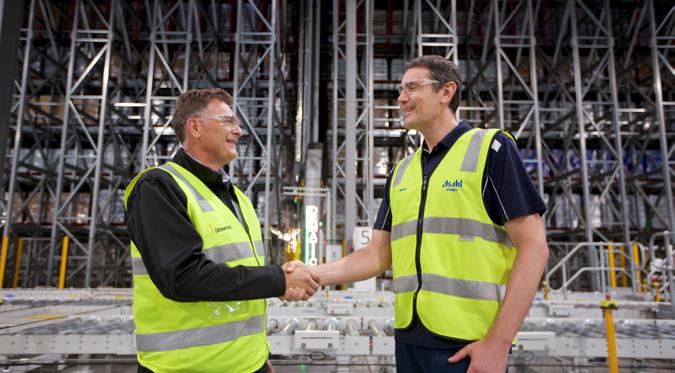
Dematic is celebrating 60 years of innovation, engineering excellence, and customer partnership in Australia and New Zealand, marking a major milestone in the company’s journey from humble beginnings in a small workshop in Sydney’s Northern Beaches to becoming a global leader in supply chain automation.
Founded as Colby Engineering in 1966 by Gerry Hatton AM, the business began as a local manufacturing and engineering operation built on mechanical and structural steel expertise, with the introduction of the adjustable racking system ColbyRACK which remains a key part of Dematic’s
local offering. Over six decades, Dematic has grown into a global automation and technology leader supporting industries including grocery, retail, e-commerce, healthcare, manufacturing, third-party logistics, and food and beverage. Now a provider of advanced automation technologies including voice-directed picking, goods-to-person (GTP) systems, robotics, and integrated software, Dematic has delivered major automation projects for businesses including Woolworths, BIG W, and Sigma Healthcare.
“Dematic has always been built on a culture of innovation, partnership, and a commitment to customers,” says Gerry. “From the very beginning, there was a strong belief that we could design and build worldclass solutions locally, while continuing to evolve with the changing needs of industry. It’s incredibly rewarding to see how far the business has come, and even more exciting to see the next generation continuing to push innovation forward.”
Dematic now employs more than 850 people across Australia and New Zealand and continues to invest in local manufacturing, engineering capability, and apprenticeship programs.
The anniversary comes at a time of
growing demand for intelligent automation, robotics, and AI-driven optimisation as businesses respond to labour challenges, operational complexity, and rising customer expectations. With solutions spanning software, storage and order fulfilment systems, robotics, automated guided vehicles, and fully integrated automation technologies, the company has focused on improving operational performance, efficiency, and resilience throughout modern distribution centres.
“A significant number of products move through supply chains powered by Dematic technology every day,” says Simon Barrow, V.P. and Managing Director for Dematic ANZ. “Whether consumers are shopping online, purchasing groceries, accessing medical supplies or receiving essential goods, there is a high probability that Dematic technology has played a role somewhere along that journey.”
Dematic’s growth over the past six decades has mirrored the evolution of Australia’s supply chain sector, from traditional warehousing through to highly automated distribution environments.
“For 60 years, we have remained focused on helping customers solve complex operational and supply chain challenges. We are incredibly proud of our people and the role Dematic has played in supporting Australian industry, manufacturing, and engineering innovation.
“Ongoing investment in Australian engineering capability remains central to the business’ long-term strategy. Our engineers, technicians, software specialists, project teams, and apprentices have always been pivotal to Dematic’s success. Supplementing our manufacturing in Sydney, is a commitment to our Lifecycle Solutions and Service apprenticeships program, coupled with our graduate pathways to ensure we grow our local engineering expertise across multiple disciplines,” Simon concludes. ●
Country Care Group Transforms National Network With New Queensland Distribution Hub
Assistive technology provider Country Care Group has moved into a new 9,714 sqm distribution facility at Acacia Ridge in Queensland, supported by a comprehensive supply chain, property and project management program delivered by supply chain specialists TMX Transform.
Country Care is an Australian assistive technology and home care equipment provider that manufactures and distributes healthcare products nationally through a network of more than 50 showrooms and 135 member stores, supplying aged care facilities, hospitals, NDIS participants, and government programs.
Developed by Goodman, the healthcare provider has secured the 26 Industrial Crescent property on a 10-year lease. The move will support growth across the east coast of Australia, consolidating volume from higher-cost locations and reducing Country Care's cost-to-serve across its east coast operations.
A strategic review of Country Care’s distribution network by TMX Transform identified an opportunity to greater support
Amazon Australia Announces Mass Onboarding Ahead of Prime Day
Amazon Australia plans to onboard 850 seasonal workers across its Australia fulfilment centres and logistics sites around the country, ahead of Prime Day this July, one of the most anticipated shopping events of the year.
The seasonal positions will see new team members help pick, pack and ship orders for customers around the country, keeping deliveries moving during the sales season – including the annual Prime memberexclusive sale event. Opportunities are now available across sites in NSW, VIC, QLD, SA, and WA, and no previous experience is required.
“During Prime Day, our sites are buzzing with excitement. We provide all training on-
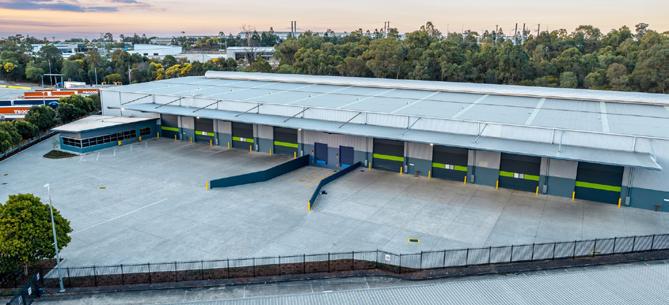
growing demand of the company’s services across the east coast. After modelling multiple scenarios, the network redesign prioritises proximity to Country Care’s customer base.
TMX Transform led property procurement to secure the Acacia Ridge site, provided support across detailed facility design and racking procurement and managed project delivery through to go-live.
The distribution hub comes with ESFR sprinkler protection, 550 sqm of office and amenity space, and a 4,667 sqm secure hardstand. The warehouse includes 3,720 racking pallet positions with dangerous goods storage capability, LED lighting throughout, and a 175kW solar system. Located within the Acacia Link Industrial Estate, the facility sits close to major arterial routes including Beaudesert Road and the Logan Motorway.
"This facility is a big step in helping us bring good care closer to home, whether that's in the busiest cities or the outermost
site, so no experience is required, and over the years we’ve welcomed many people who have never set foot in a warehouse before,” said Michelle Theophilou, Senior HR Manager, Amazon Australia. “All we’re looking for is enthusiasm and a willingness to get involved. For many, what has started as a seasonal role has become the beginning of a long-term career at Amazon,” she added.
Prime Day is Amazon’s annual Prime membership-exclusive shopping event, offering discounts exclusively for Prime members on a huge range of products from everyday essentials to big-brand electronics, appliances, books, clothing, toys, homewares and more.
“Prime Day returns this July, and members will be able to access epic deals on a huge range of products during the sales event, on top of the benefits they already enjoy every day like fast, free delivery, Prime Video, Amazon Music and two years of the DoorDash DashPass,” said Arno Lenior, APAC Director of Prime, Amazon Australia. “At a time when Australians are looking to make every dollar count, Prime delivers more value than ever.”
rural towns," said Andrew Vidler, Country Care. "As we've grown, our distribution network needed to keep pace, and Acacia Ridge gives us the reach to serve customers across the east coast more efficiently. Working collaboratively with TMX through the network strategy, property procurement and project delivery meant we could stay focused on getting the right equipment to the people who need it," said Andrew Vidler, CEO Country Care.
"The starting point for this new facility was about understanding where Country Care's customers are and how the network needed to change to reach them better over the next decade. Once we had that answer, the property and project work could follow the right logic. It's rewarding to see Country Care establish a network that is prepared for its next stage of growth, especially in the east coast of Australia," said George Linn, Director of Property, TMX Transform. ●
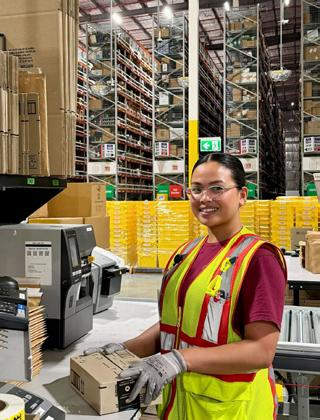
Amazon also offers Amazon Flex delivery partner opportunities, allowing individuals to deliver packages to Amazon customers using their own vehicle, on their own schedule.
Manhattan Associates and Genuine Parts Company Go Live with NextGeneration WMS
Manhattan Associates Inc. and Genuine Parts Company (GPC) have announced the successful go-live of Manhattan Active® Warehouse Management at GPC’s Brisbane distribution centre. The go-live represents the culmination of a large-scale program to modernise GPC’s DC operations, replacing different legacy systems and manual processes with a unified, cloud-native platform designed to improve visibility, efficiency and scalability across its network.
One of the largest automotive and industrial parts distributors in APAC, GPC operates a complex supply chain spanning multiple workflows, systems and locations. The implementation of Manhattan Active Warehouse Management will optimise warehouse operations with real-time visibility, intelligent automation, and a versionless architecture that eliminates costly upgrades.
“The partnership with Manhattan Associates has been critical in delivering a transformation of this scale. From the outset, we looked for a partner who understood the complexity of our network and could help us bring multiple operations together into a single, consistent way of working,” said Jon Longbottom, Chief Supply Chain Officer at GPC. “Manhattan has worked alongside our team at every stage, helping us design enhanced processes that are not only more efficient, but also scalable as our business continues to grow.”
“With the new system, we are well positioned to enhance operational performance across our network while continuing to evolve our supply chain capabilities to meet changing customer and market demands,” added Longbottom.
In the lead-up to the go-live, the program involved extensive testing and preparation to ensure operational readiness. More than 1,400 user acceptance testing scenarios were completed, alongside full-scale operational rehearsals, simulating realworld conditions across stores, inbound containers and local deliveries. Additionally, over 300 team members were trained through more than 850 sessions, supporting a smooth transition to the new system.
The platform introduces system-directed
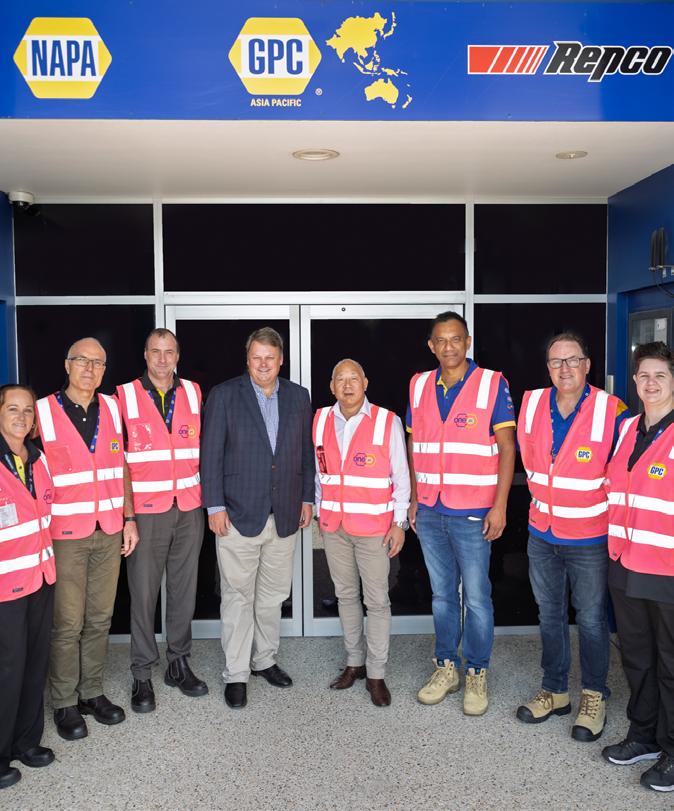
workflows across inbound, inventory and outbound operations, including automated allocation, intelligent replenishment and optimised picking processes. These capabilities are expected to improve inventory accuracy, increase labour productivity and support faster, more reliable fulfilment to stores. GPC will be one of the first organisations in Australia to go live with Honeywell Voice for Manhattan Active (HVMA), the most advanced and sophisticated voice-directed warehouse workflows solution improving accuracy, productivity and enhancing focus and safety in the warehouse.
“Organisations like GPC are operating at a level of complexity where different independent systems were no longer sustainable,” explained Raghav Sibal, Vice President APAC, Manhattan Associates.
“This implementation is a strong example of what can be achieved when you bring together technology, process and people
into a single operating model. We are proud to support GPC as they move into this next phase of their transformation. “The Brisbane go-live is a key step in GPC’s broader strategy to simplify and unify its supply chain operations, supporting improved service outcomes while creating a more scalable foundation for future growth.
“There’s a real sense of momentum across our network. Our teams have put in a huge amount of work to get to this point, and that shows in how smoothly we’ve been able to transition,” said Longbottom. “This gives us a much stronger foundation to build on, whether that’s improving service to our stores or supporting future growth across our business.”
With the new system now live, GPC is well positioned to enhance operational performance across its network while continuing to evolve its supply chain capabilities in line with changing customer and market demands. ●


Australia Post Announces a Reduction in Fuel Surcharge for Contract Customers
Australia Post has advised its contract customers its Fuel Surcharge will decrease by 7.2 percentage points from 1 July 2026, reflecting recent movements in fuel-related costs.
The reduction applies to around 17,000 contract or “account managed” customers, representing around 6% of Australia Post’s business customers, and does not apply to MyPost Business or retail customers.
The StarTrack Courier Fuel Surcharge will also decrease from 19.5% to 12.3%, while the StarTrack Express and StarTrack Premium Fuel Surcharge will reduce from 30.2% to 23%.
The adjustment follows a period of significant fuel market volatility triggered by the conflict in the Middle East, which drove fuel costs sharply higher across the transport and logistics sector.
Speaking at Senate Estimates on 27 May, Australia Post Group Chief Executive Officer and Managing Director Paul Graham said, “Like many Australian businesses, fuel is an integral component of our operating costs, and is not a cost we can simply absorb.”
Mr Graham noted that Australia Post's fuel costs increased from $35.7 million in February to $56.5 million in April, despite parcel volumes being significantly lower than the company's peak trading period.
At the time, Australia Post said the fuel surcharge remained a temporary mechanism to recover a portion of increased fuel costs for larger contracted customers. “A fuel surcharge is a standard, industry-wide mechanism for recovering fuel costs from contract parcel customers that’s based on a rigorous formula, is externally benchmarked, and reviewed by our auditors,” Mr Graham said.
Mr Graham also emphasised that the surcharge only applies to a small proportion of customers. “I want to stress that 94% of our parcel customers are not subject to the fuel surcharge.”
With fuel markets beginning to stabilise, Australia Post has now reduced the surcharge in line with its established review process.
Addressing the reduction, Mr Graham said: “However, I am pleased to report there is some better news for fuel on the horizon - as we have seen fuel prices stabilise, remembering our surcharge is on a lag, tomorrow our July surcharge will reduce to 12.3%.”
Australia Post said it remains focused on maintaining competitive pricing while continuing to invest in its network and operations. As part of this strategy, the organisation is accelerating the electrification of its fleet, with a recent $40.5 million government investment expected to help reduce diesel consumption and lower operating emissions. ●
For more information on the updated fuel surcharge, please visit the Australia Post and StarTrack websites.
Toll and PVH Celebrate Strategic Partnership With New Multi-Year Agreement
World class automation capability at Kemps Creek supports PVH’s iconic global brands
Calvin Klein, Tommy Hilfiger, and Van Heusen.
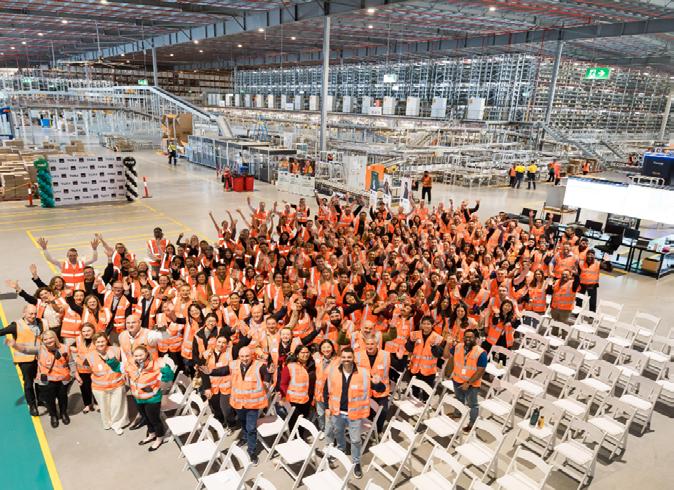
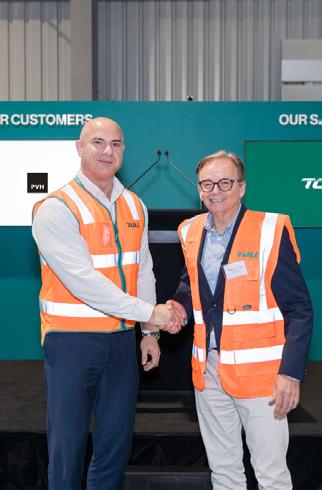
Toll Group and PVH celebrate their successful collaboration and the extension of their multi-year strategic partnership at Toll’s new state-of-the-art retail fulfilment centre in Kemps Creek.
The milestone follows a three-year journey to automate PVH’s fulfilment operations, transitioning from multiple sites with highly manual processes to a single,
purpose-built, scalable automated model.
Nick Vrckovski, President Retail & Consumer, Toll Group, said the celebration reflects their shared vision and unwavering commitment to customer excellence.
“This is a moment of real pride for our teams and our partnership with PVH. Built on trust and collaboration, we have reimagined the operating model to embed productivity, safety and consistency, setting a new benchmark for retail fulfilment in Australia.”
Craig Barnett, CEO & President, PVH Australia and New Zealand, said the milestone reflects the strength of the collaboration between both organisations.
“This is a complete transformation. It takes persistence, resilience and strong partnership to deliver something of this
scale, and I am incredibly proud of what our teams have achieved together.”
The solution integrates goods-toperson technology, automated packing, e-commerce and end-to-end process optimisation to improve throughput, accuracy and consistency, while supporting safer and more responsive service delivery.
“This transformation is not just about automation. It is about building a smarter, safer and more resilient supply chain for the future. For our customers, it means faster speed to market, greater consistency and the flexibility to scale as demand evolves,” Mr. Vrckovski said.
The automation capability forms part of Toll’s broader $250 million Kemps Creek retail fulfilment centre, scheduled to officially open in July 2026. ●
Retail's Biggest Challenge isn't Technology, it's Complexity

WRITTEN BY RAGHAV SIBAL, VICE PRESIDENT OF APAC, MANHATTAN ASSOCIATES
Australian retailers are under pressure from every direction. Consumers expect faster delivery, greater product availability and more personalised experiences, all while operating costs continue to rise. Simultaneously, store teams, contact centres and supply chain operations are navigating increasing levels of complexity with finite resources.
Most organisations today have invested heavily in digital channels, fulfilment capabilities and customer engagement platforms over the past decade. But investment is only the first step. The difficulty lies in bringing these pieces together in a way that allows the business to operate efficiently and respond quickly when conditions change.
As retailers continue to add new channels, fulfilment options and customer touchpoints, the amount of information flowing through the business grows exponentially. Every order, inventory movement, customer enquiry and store transaction creates another decision that needs to be made.
Managing that complexity at scale is becoming one of the defining challenges of modern retail.
New advances in automation are helping retailers address this challenge by reducing the amount of manual intervention required across day-to-day operations. Rather than simply surfacing information, these technologies can help coordinate actions across customer service, stores, inventory and fulfilment, allowing teams to spend less time managing processes and more time serving customers.
Reducing Friction Across Retail Operations
One of the biggest obstacles facing retailers today is the number of disconnected decisions that occur across the organisation. For customer service teams, this could mean accessing multiple systems to resolve a single enquiry. Store managers may have to spend valuable time gathering information before making operational decisions. This creates delays, inconsistencies and unnecessary workload across the business.
The opportunity for retailers is to reduce the friction that exists between systems, teams and processes. As complexity continues to increase, retailers are also exploring new ways to simplify how decisions are made across the business. With access to more connected and real-time data, emerging technologies such as Agentic AI are beginning to help organisations coordinate actions across customer service, inventory and fulfilment operations. Unlike earlier technologies that focused primarily on insights and recommendations, these capabilities are increasingly

helping retailers execute workflows and resolve issues that previously required manual intervention.
When information can move more freely across the organisation, decisions can be made faster and with greater confidence. Customer enquiries are resolved more quickly, inventory issues are identified sooner and operational teams gain better visibility into what is happening across the business.
Giving Stores Better Access to Information
Physical stores continue to play a critical role in the customer experience, particularly as retailers increasingly use stores to support fulfilment, clickand-collect and endless aisle services.
Yet many store teams are still forced to navigate multiple applications and processes to find information about inventory, customer orders, fulfilment activity and operational priorities, creating unnecessary friction in day-to-day decision making. Providing employees with faster access to information allows them to spend less time searching for answers and more time assisting customers. It also helps reduce training requirements by simplifying how information is presented and accessed.
For store managers, better visibility across inventory, fulfilment activity and store performance can support faster decision-making throughout the day. Rather than reacting to issues after they occur, managers are able to identify and address potential problems before they impact customers or store operations. In an environment where labour remains one of the largest operational costs, helping teams work more effectively can deliver significant value.
Improving Decisions Across Inventory, Orders and Fulfilment
Customer expectations around convenience continue to rise. Shoppers increasingly expect retailers to provide accurate inventory availability, flexible fulfilment options and reliable delivery timeframes regardless of where or how they choose to shop. Meeting these expectations requires retailers to make thousands of interconnected decisions every day. Inventory must be positioned in the right locations. Orders need to be routed through the most efficient fulfilment path, and delivery promises must balance customer expectations with operational realities.
Small inefficiencies across these processes can quickly become costly when multiplied across large volumes of orders. By bringing together information from across the retail operation, retailers can improve how these decisions are made. Better visibility into inventory, customer demand and fulfilment performance helps reduce unnecessary costs while improving service levels. It can also help identify the root causes of common issues such as returns, delayed deliveries or stock availability problems that erode both customer satisfaction and margins.
Why Technology Architecture Matters More Than Ever
As retailers explore new technologies, there is a growing recognition that outcomes are heavily influenced by the quality of the underlying technology foundation. Many businesses still operate with fragmented systems that make it difficult to share information across functions. When customer service, stores, inventory and fulfilment operate in separate environments, opportunities for efficiency are often lost.
A unified technology platform creates a stronger foundation for automation by ensuring decisions are based on accurate, real-time information. It also allows retailers to adapt more quickly as customer expectations and business requirements evolve. This becomes increasingly important as retailers look to scale new capabilities without introducing additional complexity into their operations.
Preparing for a More Complex Retail Environment
Retail is unlikely to become simpler in the years ahead. Customer expectations will continue to rise, new channels will emerge and supply chains will remain exposed to economic, geopolitical and environmental disruption. At the same time, businesses will continue to face pressure to improve productivity while controlling costs.
Success will depend on how effectively retailers can manage this growing complexity. Retailers are not struggling because they lack technology. They are struggling because every year they are expected to manage more complexity across channels, fulfilment networks, customer expectations and operational processes. The organisations that can simplify fastest will be best placed to compete. ●
Simulating Certainty: How Digital Modelling is Redefining Supply Chain Resilience
Uncertainty was the defining theme in the World Economic Forum's 2026 Global Risks Report, where 50% of the 1,300+ leaders and experts surveyed anticipated a turbulent or stormy outlook over the next two years – a 14 percentage-point increase on last year. The report specifically identified "the weaponisation of supply chains" alongside sanctions, capital restrictions, and regulations as tools of geoeconomic strategy. In this environment there is high pressure to act, but the risks of making an uninformed decision can also cost organisations.
Charlotte Jordan, Executive Director of Supply Chain at TMX Transform, sees this friction play out regularly with clients across retail, manufacturing, consumer goods, and beyond. She says organisations are wanting to know how to cut costs, and how to build the confidence to act.
"Quite often, clients come to us because they haven't built this capability internally," Charlotte says. "They need help getting a comprehensive view of their network – and that becomes the foundation for informing their strategy."
Building the Baseline
For many organisations, that work begins with visibility. A number of businesses still lack an end-to-end view of their own supply chain – the data flows, physical network and interdependencies that underpin daily operations. Without that complete picture, organisations are exposed – unable to identify where their supply chain is most vulnerable until a disruption forces the question.
"The starting point is a full end-to-end picture of the supply chain, with the data and information flows that represent the physical network in digital form. That's where optimisation begins," Charlotte says.
Simulation technology allows companies to build dynamic virtual models of their operations, such as warehouse configurations, network structures, and automation systems, and test how different
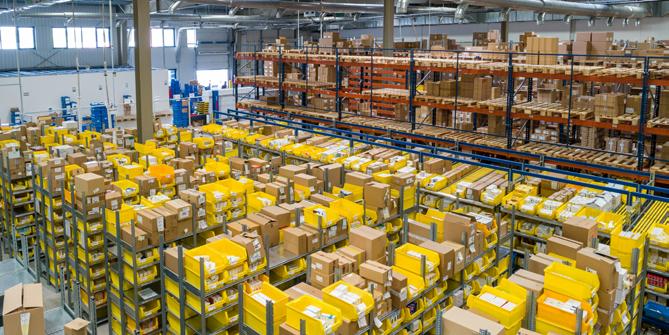
variables would play out without committing capital or changing a single physical asset.
"Once you've twinned a network and built the baseline, you can run scenarios over and over again – in minutes rather than days or weeks," Charlotte says. Modelling exercises that previously required weeks of analyst work can now be tested, adjusted and retested within a single planning cycle.
The Business Case for Simulation
Simulation can have an immediate impact on how investment decisions are made internally. Capital allocation is increasingly competitive, with multiple business units vying for limited funding, and boards demanding a higher standard of evidence before committing.
Charlotte describes a recent client engagement in which simulation was used to model different layouts and operating configurations at an existing facility. "By simulating different layouts and operating models, we were able to extend the life of the facility and bridge the gap to their longer-term investment plans," she says.
"Your sponsor has full confidence because you've run every scenario – you've not just answered why this option, but you've demonstrated reasons not to choose the others. You have the fact base to prove it."
Rather than presenting a document, simulation allows leaders to demonstrate a living model – showing what a future network looks like in operation and walking stakeholders through how it performs under different conditions. "You move from a business case document to something far more tangible – a simulation tool where you can show clients: here is your future network model, running in real time, what it looks like day to day," Charlotte explains.
Strategy As a Living System
What is changing, beyond the tools themselves, is the relationship organisations are building with the planning process. Charlotte describes a growing number of clients who are not looking for a one-off modelling exercise, but for an ongoing capability – the ability to revisit, stress-test and update their strategy as conditions evolve.
That ongoing commitment to revisiting and rerunning the models is a form of resilience that Charlotte says will pay off for the businesses who invest in it.
"Everyone says strategy is a living document, but that's becoming more real," she says. "Businesses want to build capability, keep revisiting plans, and update assumptions as the world changes." ●
The Resilience Myth: Why Southeast Asia's Supply Chains Are Being Built For Control, Not Recovery
Southeast Asia's supply chains are absorbing several shocks at once
According to McKinsey Global Institute’s 2026 trade update, US-China trade fell by around 30% in 2025 as tariff rewired global flows, with ASEAN absorbing much of the shift and deepening its role in global manufacturing.
This year, escalating conflict in the Middle East has disrupted Asia-linked freight corridors, pushing carriers around the Cape of Good Hope, stripping capacity from Asia - Europe air routes, and driving up energy and logistics costs across the region.
Steve Cheung, President of Dematic Asia, China and MEA, the region’s leading logistics automation supplier, has watched this shift accelerate. "Political tensions, shifting trade policies and border restrictions are forcing organisations to rethink the traditional low-cost, labour-intensive operating model," he says. "In many parts of Southeast Asia, that model is not viable anymore."
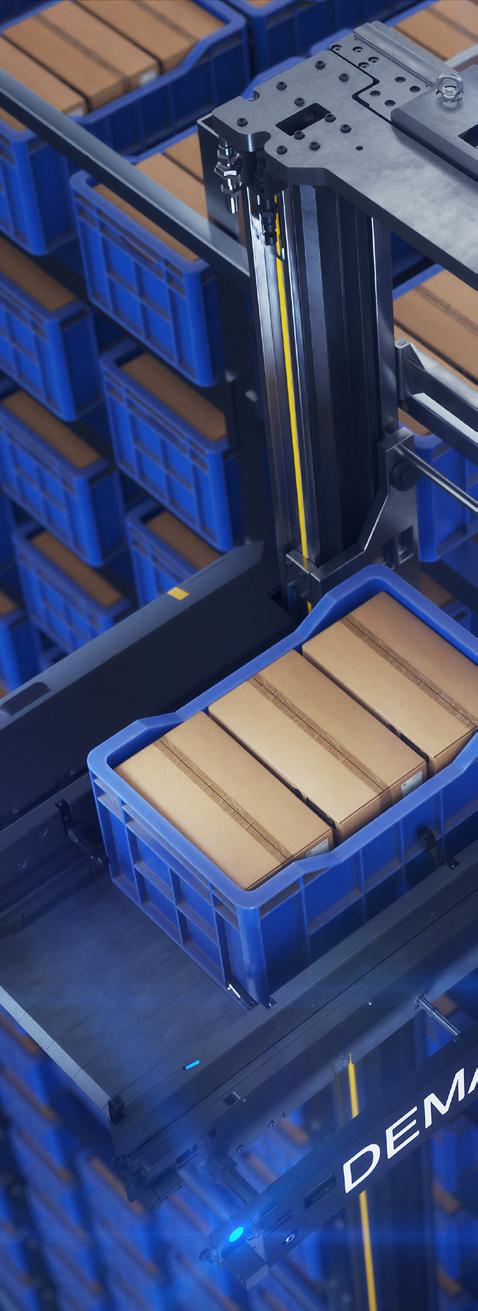

Across
Southeast Asia, the assumption that crossborder labour would remain cheap and readily available
has
proved difficult to sustain. Policy shifts, border tensions and tighter mobility controls have made labour availability increasingly unpredictable.
In Thailand, the number of Cambodian migrant workers has plunged from around 550,000 to approximately 194,000 following a border clash last year, with manufacturing and agriculture sectors already feeling the strain, according to the Bangkok Post. Steve sees this as part of a wider pattern. "Many organisations previously depended on cross-border labour flows – particularly across China, Malaysia and the wider region – and highly concentrated manufacturing or distribution networks," he says. "Today, those same organisations are redesigning their supply chains around flexibility, visibility and redundancy, reducing dependency rather than waiting for conditions to improve."
The Case For Control
The dominant strategic response to supply chain disruption in recent years has been resilience – the ability to absorb a shock and recover. Steve argues that this is no longer sufficient as an organising principle. "Resilience is reactive by definition. It measures how quickly you can recover after something goes wrong," he says. "What we are seeing now is a shift towards control and predictability – designing systems that deliver consistent performance regardless of what is happening externally."
In practice, this means engineering out the variables an organisation can't control: fluctuating labour, single-source suppliers, concentrated distribution networks.
Dematic applies this logic to its own APAC operations, deliberately structuring its supply chain to service the region from within it rather than relying on a single location. "Even within APAC, we won’t depend on a single point," Steve says. "If something happens in one market – and we have seen recently
how quickly that can change – you need the ability to keep operating."
Using Automation as Risk Management and Growth Lever
Steve is clear that the rationale for automation has moved beyond cost savings and headcount. "Initially, people in Southeast Asia thought: labour is cheaper here, so why automate?" he says. "But the demands have changed. It is not just about cost; it’s accuracy, safety, traceability and the ability to handle complexity consistently – at peak." He points to a tobacco manufacturer Dematic worked with, where the requirement was a fully automated warehouse managing the flow from raw materials through to finished product. The driver was the need to eliminate mishandling and inventory discrepancies in a high-value environment where errors carry serious consequences. "When product goes missing or gets damaged, that has an impact on cost, but it’s also a compliance and brand risk," Steve says. E-commerce has added another layer. Consumers now order across a wider range of products, expect faster delivery, and have more alternatives than ever when a retailer fails to deliver. "If your operation cannot handle the volume accurately and on time, the customer moves to a competitor," Steve says. "That’s a brand risk, not just a fulfilment problem. Businesses who invest in smarter automation also have an opportunity to take a larger share of the market, because their operations can handle situations others can’t.”
Start With the Operation, Not the Technology
Steve points to a shift in how Dematic approaches warehouse design, with AI now playing a central role. "Previously, we would design a warehouse based on experience and the systems we had implemented before," he says. "Now, we use AI to enhance our analysis of a customer’s entire operation – the data, the flows, the volumes – and build an optimised system that reflects the customer's operations now and into the future."
The result is faster, more accurate system design and a closer fit between the solution and the operational reality it needs to support. Beyond design, Steve sees intelligent software as increasingly important to how automated systems perform day to day – adapting to changing demand, optimising and orchestrating workflows and making decisions in real time rather than executing fixed routines.
For organisations looking to build greater control and certainty into their supply chains, Steve's advice is consistent: begin with the operation, not the technology. "Every company is different," he says. "You need to understand your own data, your own flows, where your bottlenecks are and what you are actually trying to solve. Automation should be scalable and adaptable. When your business model changes or your volumes shift, the system should still be able to serve your purpose." ●
Rerouting APAC SupplyForChains a Fractured
Fractured World

When the Strait of Hormuz effectively closed earlier this year, it triggered the largest oil market shock in recorded history. Supply Chain Insights spoke with global experts to understand how businesses are beginning to plan with global disruption in mind.
According to the World Bank's April 2026 Commodity Markets Outlook, global oil supply fell by more than 10 million barrels per day in March alone, sending Brent crude to its highest monthly rise ever. For supply chain leaders across the Asia Pacific, it was a confirmation that the era of lean, single-path supply chains has passed.
Speaking recently at an economic conference in Sydney, Australian Prime Minister Anthony Albanese said the disruption of the pandemic and the current fuel crisis had exposed the fiction that Australia could run as a just-in-time economy, offshoring manufacturing and narrowing its industrial base on the assumption that supply would always be there.
The shift in strategic priorities is visible right across the client base, though the pace and depth of response varies. Justin Fried, Managing Director APAC at global supply chain consultancy TMX Transform says that across TMX's work in the APAC region, Australian businesses that spent years optimising for cost – holding lean inventory, relying on single overseas suppliers, building linear supply chains from source to shelf – are now focused on resilience, and the geopolitical awareness to sustain it.
"We're seeing clients hold more inventory despite the cash flow trade-off, build buffer capacity into their logistics networks, and diversify away from single suppliers across domestic, Asian and European sources," he says. "Our supply chain team is also seeing heavy investment in technology

"Supplier switching can take years to execute successfully, and most businesses are still calibrating how far and how fast to go."
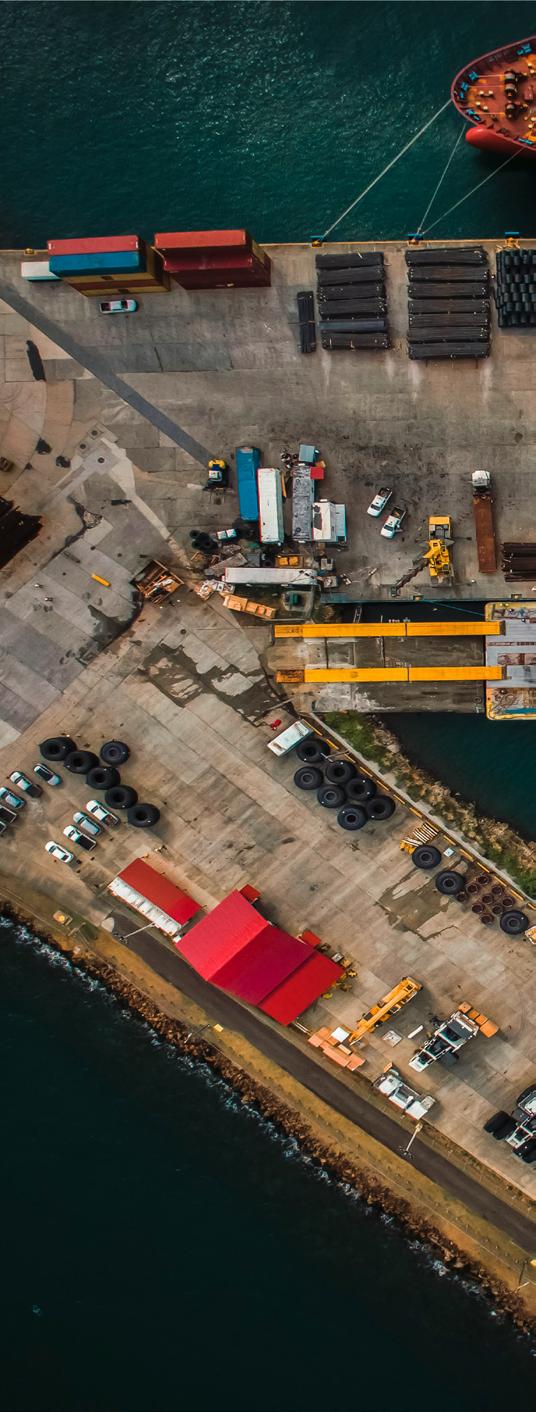
to manage volume uncertainty – real-time control towers, automation to counter labour fluctuations, AI for demand projection and inventory positioning."
The response is not uniform. Large corporates are adapting actively, diversifying their supplier base with secondary and tertiary layers and modelling geopolitical risk at board level. Mid-sized businesses are feeling the sharpest pressure – large enough to carry global exposure, but constrained in how quickly they can respond. Smaller businesses remain largely reactive, absorbing shocks rather than restructuring ahead of them. "The willingness to move is there," Justin says. "But supplier switching can take years to execute successfully, and most businesses are still calibrating how far and how fast to go."
Raghav Sibal, Vice President Asia Pacific at Manhattan Associates, sees the same pattern from the technology side. "There has been a very clear shift away from supply chains designed purely around cost efficiency toward networks focused more heavily on resilience, agility and flexibility," he says.
"Geopolitical instability, shipping disruptions and ongoing trade uncertainty have all reinforced the risks of relying too heavily on a single sourcing region." However, Raghav says this is not about abandoning global supply chains. "Most organisations are diversifying suppliers, introducing multi-sourcing strategies and reassessing where inventory sits across their networks. In doing so, they’re reducing over-dependence on any one geography while investing in technologies that provide greater visibility and operational flexibility."
In Asia, where the intent to restructure is clear but commitment remains cautious, Garret Lu, Sales Director Asia at Dematic, sees how businesses are translating regional supply chain strategies into practical operating models. "Clients are actively reducing reliance on any single country or supplier. We're seeing China-plus-one and even China-plustwo strategies, as they expand into Southeast Asia and India," he says. "But organisations are taking a cautious approach, making incremental adjustments and building operational readiness step by step."
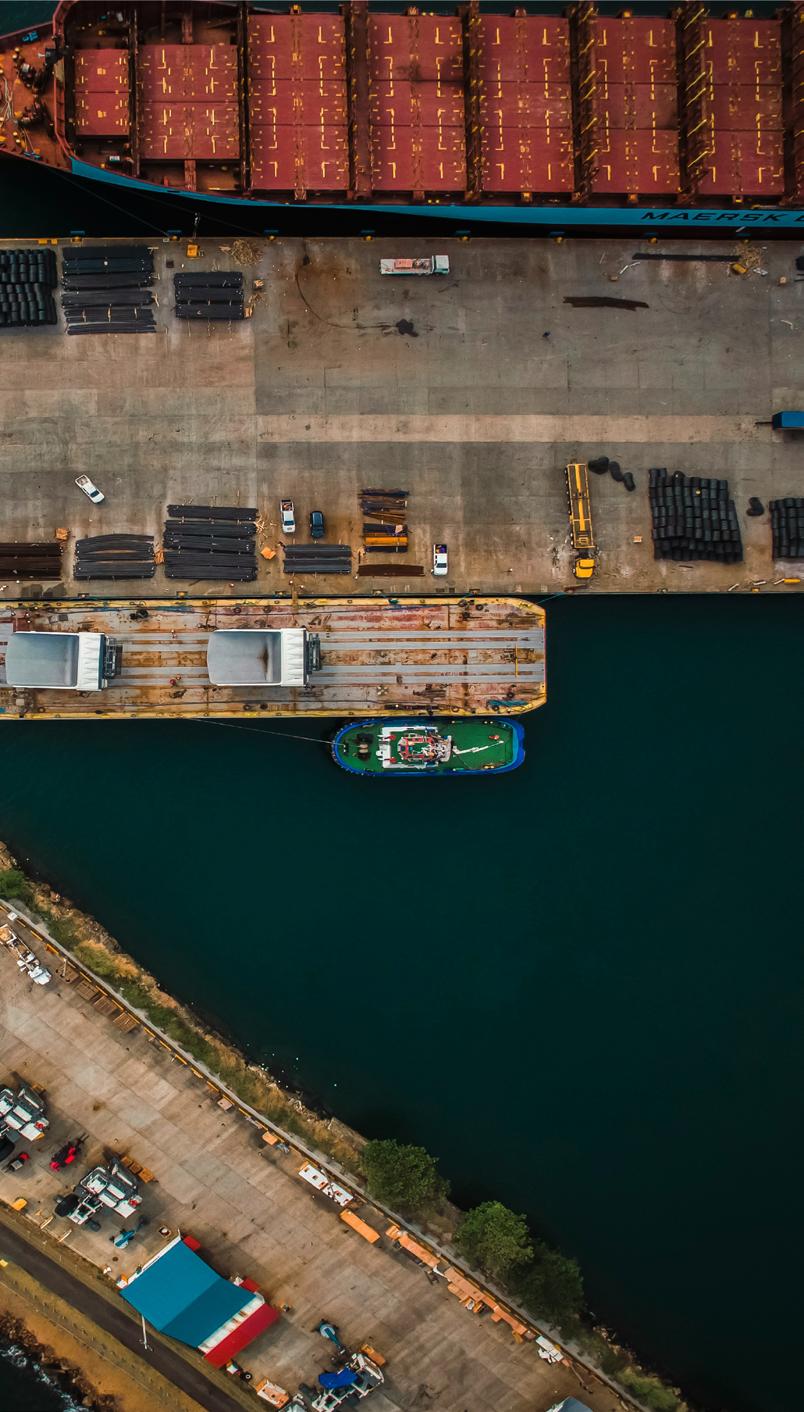
The Real Cost of Going Local
A McKinsey Global Institute report published earlier this year found that trade is being reconfigured along geopolitical lines, with ASEAN export volumes growing at more than twice the global average as companies diversify away from single-country sourcing. China, meanwhile, is ramping up intermediate components for final assembly elsewhere, with exports of industrial goods rising 9% last year even as consumer goods exports declined.
Manhattan’s Raghav Sibal says the first thing for businesses to establish is that regionalisation doesn’t have to be a binary choice. "Regionalisation is not an all-or-nothing strategy," he says. "More localised supply chains can reduce exposure to disruption and long lead times, but they also increase inventory duplication, supplier management complexity and labour costs. The organisations navigating this best are maintaining the advantages of global sourcing while selectively diversifying manufacturing and inventory to reduce risk."
When working through the decision-making process with clients, TMX Transform’s Justin Fried says it’s often about being direct about trade-offs. Improved resilience comes with higher local labour, energy and compliance costs. Greater flexibility means reduced scale, and localisation reduces shipping exposure but can tie up working capital, require more inventory, and shift risk from global disruption toward localised vulnerabilities like labour shortages or extreme weather. "Most Australian businesses end up at a hybrid model," Justin says. "Where cost and efficiency matter, or where there's a capability gap, they continue to use offshore suppliers. Where a particular part of the supply chain is business-critical and resilience in that area is worth paying for, they localise selectively."
Dematic’s Garret Lu raises automation and software-enabled execution as a tool to offset the trade-offs of regionalisation rather than simply add to its cost. “Regionalisation introduces higher operating costs, duplicated infrastructure and more nodes to coordinate,” he says. “Automation, supported by software layer, helps to mitigate those trade-offs. It delivers consistent throughput and accuracy across multiple sites, reduces dependency on local labour conditions and enables higher density storage, which helps make up for smaller facility footprints.”
Building for Multiple Futures
Many businesses are wondering how to invest when the policy landscape could look entirely different in twelve months. For Garret, the answer starts with a leadership mindset shift. “The approach has moved from optimising for a single outcome to building optionality and scalability into supply chain decisions,” he says. “We encourage clients to run what-if analyses across different geopolitical and demand situations so that decisions are more robust. The goal is not to predict the future, but to design a system ready for it.”
In practice, that means phasing investments, working with trusted 3PL partners to avoid overcommitment, and prioritising proven, softwareenabled and scalable solutions over untested technology. Clients that are moving forward with automation, Garret notes, are increasingly looking to standardise as a repeatable regional model across different countries as their networks expand.
Raghav agrees, and says the answer lies in building adaptability into technology platforms, including agentic AI integration.
"Businesses are placing greater value on adaptability when making long-term supply chain investments."
"The focus is becoming less about forecasting every future outcome and more about building agility into the supply chain itself," he says.
Businesses are moving toward unified, cloudnative platforms that connect inventory, warehousing, transportation and fulfilment more seamlessly, and investing in AI that does more than generate dashboards. "Agentic AI is beginning to take a more active role in execution," Raghav explains. "It can analyse operational data, identify issues and, within predefined parameters, carry out routine tasks autonomously – enabling organisations to respond to disruptions and shifting demand without placing the burden entirely on operational teams."
Justin says investment decisions need to work

across multiple policy outcomes. "The goal is to make moves that create value regardless of whether conditions tighten, stabilise or reverse, and to avoid overreacting to current policy incentives like subsidies or tax breaks that may not be there in two years." He’s seeing TMX teams advise clients to shorten payback horizons to three to five years, favour modular and phased investments, and opt for asset-light structures like leasing over ownership where possible.
There's a shift away from big-bang investment in a single, highly automated distribution centre toward a network of smaller, more dynamic nodes – warehouses with modular layouts and plug-and-play automation that can be reconfigured as network requirements change.
Premium logistics sites with automation-ready specifications, strong power infrastructure and transport redundancy are in demand, but in many locations power availability is becoming a real bottleneck, with grid connection timelines at new sites stretching well beyond initial projections. "The industrial property market is becoming increasingly divided," Justin notes. "On one side, future-ready sites with the power, data and physical configuration to support modern supply chain operations. On the other, older assets that need significant work or can only serve lighter logistics roles. Clients are having to make deliberate choices about what they want."
Future-Ready Design
There is broad agreement among the experts on the hallmarks of a supply chain built for the current environment, even if the emphasis differs. For Justin and the TMX team, it comes down to five structural shifts:

"The focus is becoming less about forecasting every future outcome and more about building agility into the supply chain itself."
RAGHAV SIBAL, VICE PRESIDENT, APAC, MANHATTAN ASSOCIATES

"The goal is not to predict the future, but to design a readysystemfor it."
GARRET LU, SALES DIRECTOR, ASIA, DEMATIC
• Moving from one or two core source countries to multi-region sourcing across China, Asia and domestic suppliers
• Replacing just-in-time inventory with a segmented strategy that keeps fast-moving goods lean while holding buffers on inputs at risk of disruption
• Building network redundancy with multiple ports, routes and carriers
• Deploying real-time control towers and AIdriven forecasting rather than systems that record events after the fact
• Shifting from annual risk reviews to continuous monitoring of shipping disruptions, supplier health and geopolitical developments.
"The supply chains designed for business as usual are the ones under the most pressure right now," Justin says. "What we're helping clients build instead is something designed assuming instability: agile, redundant, and able to absorb shocks without significant service impact."
Raghav points to integration as the defining characteristic. "Many organisations are still operating with fragmented systems, disconnected data and limited end-to-end visibility," he says. "The businesses performing best today are those combining real-time visibility with execution agility – the ability to act on information quickly through intelligent inventory allocation, order orchestration and fulfilment decision-making."
Garret identifies three attributes that define a future-ready supply chain: digitally connected, operationally flexible and automation-enabled "It needs real-time visibility and data-driven decision-making, supported by integrated software. It needs built-in redundancy and diversified sourcing. And it needs to integrate automation to reduce reliance on labour and manage volume fluctuations," he says. "There’s still a gap between that and where many supply chains sit today. Many networks are still relatively centralised, labour-intensive, and designed around cost efficiency rather than disruption resilience. The next phase of transformation has to balance efficiency with flexibility and responsiveness, scalability and operational readiness." ●
TMX Transform's Quarterly Report Reveals What's Actually Happening on the Ground Amid Global Disruption
Three months ago, TMX Transform released the inaugural edition of Across the Network.
At the time, businesses had an increasingly stable environment for supply chain transformation and long-term projects. Construction costs had moderated and the property market had room to move while automation was maturing.
Then the US-Iran conflict, rising fuel prices, and broader macroeconomic uncertainty changed the conversation. Since then, there has been plenty of commentary about the impact of global supply chain disruption, much of it leaning towards worstcase scenarios. The second edition of Across the Network, TMX Transform's quarterly report covering supply chain, industrial property, and project services across Australia, cuts through the noise to focus on what is actually happening on the ground and what it means for the decisions in front of you.
A Snapshot
Supply Chain
The response to current disruption has seen businesses be more measured, with the opportunity to be proactive rather than wait for conditions to settle. On the domestic transport side, margin compression is being passed through to supply chain operators and built into pricing. In ocean freight, service risk is increasing – not just cost – with carriers withdrawing capacity and prioritising higher-margin customers. In a volatile environment, leaders need clarity on where they are exposed, how long they can sustain performance, and what actions will stabilise the business quickly – prioritising decisions that protect service, revenue and resilience.
Property
Construction cost increases are being locked into rents, and they are not going backwards. Occupiers running down leases are being caught out by significant renewal increases and limited incentives, while higher-clearance, higher-capacity sites are increasingly offering better value than likefor-like renewals. CPI, interest rates, land tax, and employment costs are all compounding, prompting some occupiers to pause but the report's evidence is clear that delaying will cost more, not less.
Project Services
Concrete and PVC costs are rising, with further increases predicted, though overall project pricing differentials remain moderate compared with market speculation. Rise-and-fall clauses are emerging in development and lease agreements, transferring a portion of material cost risk to tenants. Internal approval delays are compounding cost exposure: a two-to-three-month lag between costings and contractual agreement can result in builders repricing. Fire approval complexity continues to present a material execution risk for automated facilities, and data centre demand is creating potential downstream constraints on industrial power supply and land.
What the Report Unpacks
The report includes TMX Transform's latest proprietary cost benchmarking data covering 3PL warehousing and transport rates across Sydney, Melbourne, and Brisbane, updated to reflect the current market. For supply chain and logistics decision makers benchmarking their spend or planning a new operation, it is one of the few places to access current market rates in a single source. Beyond the benchmarking, each section of the report digs into the detail behind the headlines. On the supply chain side, Charlotte Jordan, Executive Director of Supply Chain examines where pressure points actually sit across suppliers, sourcing

geography, property exposure, and construction timing. In property, Stefanie Frawley breaks down why the maths on waiting doesn't add up, with analysis across Victoria, Queensland, and Sydney covering vacancy, rental dynamics, and the growing impact of data centre demand on land supply. In project services, Angus Perry provides specific cost movement data on materials including concrete and PVC and examines how internal approval delays and the emergence of rise-and-fall clauses are reshaping project risk.
"We are hearing from occupiers that waiting is the right thing to do. Our view is the opposite. Speculative options are diminishing. Construction costs are being built into the cost of development, and they are not going to go backwards. For occupiers looking for quality product, the message is to act now." — Stefanie Frawley, Executive Director, Property.
A Diagnostic Approach to the Big Questions
In a volatile environment, leaders need clarity on where they are exposed, how long they can sustain performance, and what actions will stabilise the business quickly – prioritising decisions that protect service, revenue and resilience. The report provides a snapshot into TMX’s diagnostic for supply chain resilience.
• How long is your business exposed and for how long? (what happens to your cost base if fuel surcharges continue to rise?)
• How long can your supply chain hold before service is affected? (what does it look like if you need to bring overflow sites back online to manage incoming inventory?)
• What’s at stake for your customers and your bottom line? (How can you extend capacity within your existing network if going to market for a new site is not the right move right now?)
• What does your supply chain look like on the other side? (building a clear picture of what “stabilised” looks like and planning beyond the immediate response).
“Use this period to genuinely understand your supply chain. Not just the obvious pressure points, but the ones you haven't looked at yet. Supplier concentration, network performance under different cost scenarios, operational readiness for automation. If you can build that picture now, you are in a far stronger position to stabilise and increase profitability.”
CHARLOTTE JORDAN, EXECUTIVE DIRECTOR, SUPPLY CHAIN, TMX TRANSFORM
The Forces Shaping the Rest of This Year
Also in the report, TMX Transform identifies the biggest emerging pressures heading into mid-2026: data centres competing for greenfield land, power infrastructure, and labour, with potential implications for the pipeline of ready-to-occupy industrial stock; rise-and-fall clauses transferring material cost risk from developers to tenants; the diesel price increase adding complexity to interstate fulfilment models; internal approval delays compounding cost exposure on construction projects; and fire approval complexity continuing to catch out occupiers on automated facility builds. ●

Across the Network, TMX Transform's Q2 2026 Quarterly Insights Report. Covering supply chain transformation, industrial property strategy, and project services.
Available here.
Australian Retailers Forecast Growth Despite Rising Delivery Costs and Looming Amazon Threat
Despite rising delivery costs, inflationary fears, heightened consumer expectations, and global competitors increasing their market share, Australian retailers are forecasting growth in 2026, according to Shippit’s State of Shipping Report.
The report, which draws on data from hundreds of millions of deliveries and research of thousands of consumers, carriers, and retailers in Australia and New Zealand sought to understand the pressures, gaps and opportunities defining retail delivery in 2026.
It found that while delivery is faster and more reliable than ever it's also more expensive, bridging the gap between consumer expectations and retailer performance must be the priority as Amazon, Temu, and Shein continue to win market share.
“Australian retail has never been more complex, and delivery has never been more consequential,” commented Rob Hango-Zada, Co-Founder and Joint-CEO of Shippit. “Costs are rising, consumer expectations are hardening, and global platforms are growing their share with every year that passes.
“But the retailers making ground aren't waiting for conditions to ease, they're closing promise gaps, building data foundations, and treating fulfilment as a


growth lever. This report shows how far the industry has come, and how much further it needs to go."
Delivery Costs Are Increasing, But Performance is Improving
Both standard and express delivery in Australia now costs nearly AUD$1 more on average than in 2025. In New Zealand, meanwhile, standard delivery is $0.30c more expensive, while express delivery has jumped more than NZD$3. Fuel price volatility has added further pressure, with almost half of carriers across ANZ implementing temporary surcharges this year.
Standard delivery (AU):
Up 8.7% from $10.39 in 2025 to $11.30 in 2026
Express delivery (AU):
Up 5.5% from $14.69 in 2025 to $15.50 in 2026
Standard delivery (NZ):
Up 3.1% from $9.70 in 2025 to $10 in 2026
Express delivery (NZ):
Up 23.6% from $14.10 in 2025 to $17.43 in 2026
Not only has delivery become more expensive, the threshold to qualify for free shipping has climbed to $135 (up from $123 in 2025), and only 8.8% of retailers offer free shipping with no minimum spend. While costs are increasing, so too is network performance. In 2026, 94.1% of all deliveries were on time, continuing a strong trajectory from 2025 (93.4%), 2024 (92.3%), and 2023 (88.7%). What’s more, the average transit time for a delivery is now just 2.2 days.
However, retailers are advertising 5.2 days at checkout - a three-day gap from delivery performance. Two in three consumers say an accurate delivery date before purchase is essential or very important, and 38% say it makes them more likely to buy. Yet only 7.2% of retailers currently offer accurate delivery estimates at checkout.
“The gap between what retailers promise at checkout and what they deliver is the biggest conversion killer in ecommerce today," HangoZada added.
“With Amazon able to fulfil orders within 15 minutes - and shoppers demanding fast delivery and turning their back on brands that fall short of their expectations - closing that fulfilment gap must be an operational priority for retailers.”

The Amazon Effect
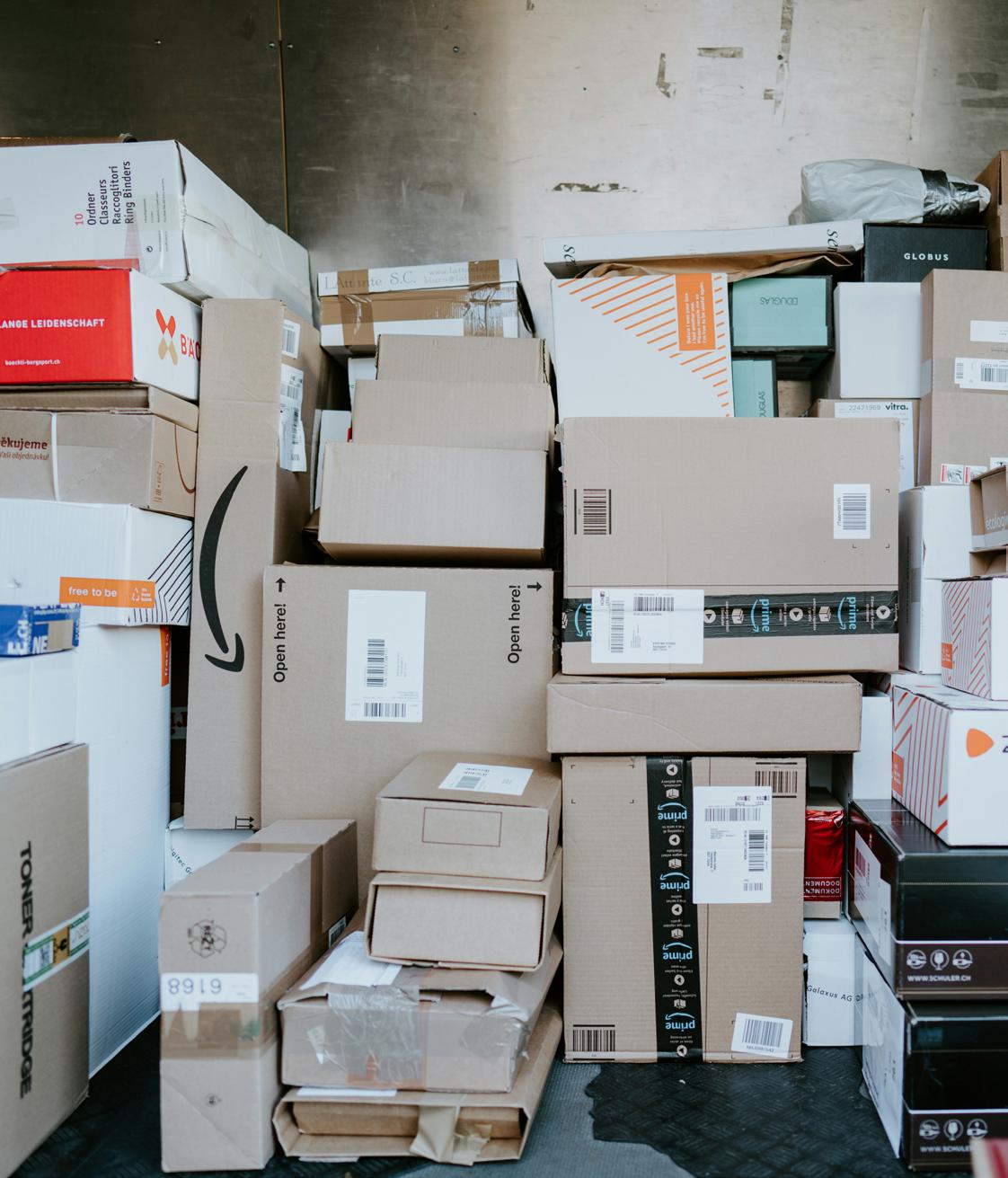
Amazon, Temu, and Shein are forecast to control 36% of Australian ecommerce in 2026. More than half (52%) of Australian shoppers say their delivery expectations have risen as a direct result of Amazon, up sharply from 31% in 2025. Among Millennials and Gen Z, that figure rises to 57% and 55% respectively. Today, 82% of retailers say they're concerned about Amazon, Temu, and Shein’s growing dominance.
Two in three (68%) shoppers say they're unlikely to return to a retailer after a poor delivery experience - a margin for error that continues to shrink (up from 64% in 2025). While their expectations are rising, their spending is steady so far in 2026:
AI Surges to the Top of Retail Investments
AI has moved from a joint-second investment priority in 2025 to the single biggest in 2026, with 35% of retailers investing in AI and automation. Retailers expect it to have its greatest returns across personalisation and customer insights (40%), conversational AI and virtual shopping assistants (30%), automation in fulfilment (30%), and predictive analytics for demand and pricing (16%).
But the data reveals a structural risk: two in three retailers rarely or never use delivery data to inform their operations. AI investment without the data foundation to support it won't deliver the returns retailers are projecting.
As they seek to close the gap on Amazon, Temu, and Shein and pursue their growth forecasts, AIalongside faster delivery, stronger fulfilment, and more accurate promises - will be a critical growth lever.
Consumers are still spending, they're just more deliberate about who earns it. When asked what would persuade them to shop with a retailer, their priorities are cost-effective delivery (40%), fast delivery (34%), click and collect (23%), online inventory visibility (22%), and easy returns (21%).
A Mixed Bag on Returns
The availability of easy returns is one of the top factors influencing consumer purchase decisions. However, just 11% of retailers offer free returns - down from 49% in 2018. After falling to 58% in 2025, the proportion of retailers offering easy returns rebounded to 70%.
Retailers are investing in returns, with 25% listing easy or free returns among their core investment priorities this year. It’s a necessary investment, with one in four (25%) consumers saying they won’t shop with a retailer if it doesn’t offer free or easy returns, while 21% would be hesitant.
“The unlock isn’t a smarter AI assistant - it’s data we can trust,” commented Matt Lang, ANZ Online Transport Operations & Strategy Manager, Kmart. “Our first job is unifying order, carrier manifest, invoice and event-tracking data into a single source of truth across fulfilment and logistics. From there, AI can surface service gaps and cost-to-serve, automate carrier billing queries when discrepancies show up, and eventually give us conversational AI we can interrogate in real time - not just receive reports from.”
Graham Jackson, CEO, Fluent Commerce, added: “Local retailers can win where marketplaces struggle: trust, service, and local immediacy. That means faster and more reliable delivery to local postcodes, clearer delivery promises, convenient collection options, and truly easy returns, paired with brand experience and loyalty that marketplaces can’t replicate. The key is turning stores into fulfilment and service hubs, and using orchestration to make fulfilment choices that protect margin while meeting customer expectations.” ●

What the Federal Budget Means for Australian Supply Chains
WRITTEN BY
STEVEN BALLERINI, CEO OF AUSTRALASIAN SUPPLY CHAIN & LOGISTICS ASSOCIATION (ASCLA)
On Tuesday 12 May 2026, Treasurer Jim Chalmers handed down a Federal Budget that, for the first time in years, places supply chain and freight at the centre of the national economic conversation.
The $14.8 billion Strengthening Australia’s Fuel Resilience package, $1.75 billion in new freight rail investment, and the consolidation of Inland Rail at Parkes, are not standalone announcements. Together with the temporary removal of the heavy vehicle road user charge, announced by the government at the end of March, they are a single, coherent policy response to the structural reality that Australian prosperity now depends on the movement of goods through an increasingly volatile global system.
Fuel Resilience Takes Centre Stage
The headline measure is the $14.8 billion fuel resilience package, framed by Treasurer Chalmers in his Budget speech as a response to “the biggest oil shock in history.” The package responds directly to the ongoing disruption in the Strait of Hormuz and the broader Middle East energy fallout that has reshaped fuel and freight cost structures across the second half of 2025 and into 2026.
Within the $14.8 billion envelope, three measures stand out for members. The $7.5 billion Fuel and Fertiliser Security Facility creates a backstop for industrial and agricultural supply chain inputs. The $3.2 billion Australian Fuel Security Reserve will take national fuel reserves up to 50 days, addressing one of the most persistent vulnerabilities flagged by industry over the past five years. And the $1 billion Economic Resilience Program, delivered through the National Reconstruction Fund, provides interestfree loans to manufacturing and logistics businesses operating in critical supply chains.
For operators dealing with cashflow pressure from fuel volatility and surcharge cycles that have moved from quarterly to monthly, the Economic Resilience Program is a practical instrument.

Immediate Cost Relief for Road Transport
Alongside the structural measures, immediate operating cost relief is already flowing. The heavy vehicle road user charge was temporarily reduced to zero and the fuel excise halved under measures announced by the government at the end of March, responding to the fuel supply shock. Both are scheduled to expire on 30 June 2026, and the Budget confirmed no extension.
For every Australian operator running trucks, the road user charge cut is direct, measurable margin relief. With the relief due to end on 30 June, operators should treat it as a short window to rebuild balance sheets rather than a permanent feature of the cost base. But in a year where bunker price volatility has been resetting fuel surcharges every fortnight, even temporary relief on a domestic cost line is meaningful.
Road Freight NSW CEO Simon O’Hara captured the operational reality: “Road freight keeps supermarket shelves stocked, businesses operating and regional communities connected, so investment in fuel resilience and transport infrastructure is critical.” That is the operating context for every member running trucks today.
$12.1 Billion for Transport Infrastructure
The Budget delivers $12.1 billion in new transport infrastructure investment. The freight-relevant components are substantial. $1.75 billion in additional equity for the Australian Rail Track Corporation will support upgrades, modernisation and resilience across the national freight rail network, taking the total Network Investment Program to almost $2.8 billion. Funded works include track renewal, passing loop extensions, signalling improvements to remove speed restrictions, and resilience upgrades on the flood-prone East-West Corridor.
Australasian Railway Association CEO Caroline Wilkie welcomed the rail package and put a sharp number on the productivity case.
“Australia can save 200,000 litres of diesel for every rail journey on the east-west route that replaces moving the equivalent freight on road.”
“This represents a huge saving at a time where every litre counts.” At a system level, that is exactly the productivity-and-fuel logic the Budget is trying to unlock through the TRACK pilot.
State-level commitments also matter. $552 million for Anketell Road upgrades in Western Australia connects directly to the recently announced $1.1 billion Westport container terminal at Kwinana. $812.5 million for Bruce Highway upgrades in Queensland will reduce risk on one of the country’s most freight-critical corridors. $3.8 billion additional
funding for Victoria’s Suburban Rail Loop East takes total Federal contribution to $6 billion. And a new $55 million Transport Resilience and Capacity Kickstart pilot program, will fund incentives to shift freight onto rail and coastal shipping.
The Inland Rail Decision
The most consequential single decision in the Budget is the consolidation of the Inland Rail project. Federal Government has formally concluded that the project will be completed between Beveridge in Victoria and Parkes in New South Wales by the end of 2027, and that work north of Parkes will focus on corridor preservation and intermodal terminal site protection rather than new construction.
The decision follows independent cost assurance by ACIL Allen, which confirmed that delivering the full Melbourne to Brisbane corridor would now cost more than $45 billion, three times the original budget, and could not be completed until at least 2036. With $14.5 billion in equity already committed, the funding gap was simply unbridgeable. Reallocating the remaining envelope to ARTC network upgrades is, on the numbers, defensible.
It is also, for many members, a real loss. The original Inland Rail vision was a 1,600-kilometre double-stack corridor that would cut Melbourne to Brisbane container transit from 33 hours to under 24. The benefits to grain, intermodal and east coast manufacturing supply chains would have been substantial. ALRTA National President Gerard Johnson framed the rural reaction directly. “Local roads are not minor roads when they are carrying livestock, grain, feed, fertiliser and farm supplies. They are part of the national freight network and need to be funded that way. This Budget puts serious money into fuel security and deserves credit for that.”
“The next job is harder: fixing the rural freight roads that keep regional Australia moving.”
The Last Word
Federal Budget 2026-27 will not resolve every operating pressure members are working through right now. Fuel volatility, freight rate uncertainty, workforce constraints, the structural shifts reshaping the global logistics industry: these are conditions, not events, and they are not going to clear because the Treasurer announced a package on a Tuesday night in May.
But the Budget does something the industry has been asking for over the past decade. It treats supply chain as national infrastructure, funds it through a coherent package rather than scattered line items, and codifies fuel and freight resilience as a Federal responsibility rather than an industry problem. That matters. It changes the conversation members will have with their boards, their banks and their customers over the next twelve months. ●
How Voice and Vision Technologies Are Helping Warehouses Work Smarter
WRITTEN BY
LEE KOUTSOS, ANZ DIRECTOR
CONNECTED WORKFORCE SOLUTIONS AND STORAGE EQUIPMENT, DEMATIC
Most warehouse operators are not short on ideas for improvement. The challenge is knowing where to start, especially when budgets are constrained and large-scale automation is not yet feasible.
Across Australia and New Zealand, warehouse operators are facing a difficult balancing act. Labour costs continue to rise, recruitment remains a challenge and customer expectations around fulfilment speed and accuracy show no signs of slowing down. At the same time, many businesses are being more cautious about where and how they invest.
That environment is pushing operators to look for technologies that can deliver operational gains without major disruption. Voice and vision technologies are increasingly filling that role, helping warehouses improve productivity while supporting both manual and automated workflows.
Getting More Out of Existing Operations
Voice-directed warehousing has been around for many years and has evolved in terms of applications and performance benefits. The concept itself is relatively simple. Operators wear a headset and receive spoken instructions directing them to pick locations, quantities and tasks. Workers then verbally confirm actions as they move through the warehouse.
Because operators can work hands-free and eyes-up, the process removes many of the friction points associated with paper pick slips, handheld scanners and manual data entry.
Operators can move more efficiently, picking accuracy improves and onboarding new workers becomes faster and easier.
The productivity improvements delivered through voice-directed workflows are also well established. Many warehouse
operations implementing voice-directed picking report measurable gains in both speed and accuracy, particularly in eaches and case picking environments where repetitive manual tasks can slow productivity. This typically achieves 25% improvements in case picking and 40% in eaches picking productivity, with accuracy over 99.9%.
Importantly, voice solutions are not just suited to large-scale operations with extensive automation already in place. In many cases, they provide an accessible entry point for warehouses beginning their digital transformation journey and looking to improve operational consistency before making larger infrastructure investments.
Bringing Vision into the Warehouse
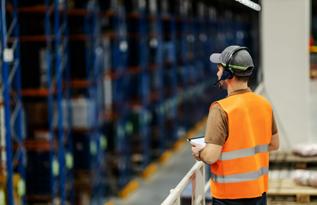
For operations looking to take the next step, vision technology can add another layer of support for warehouse workers. Vision picking solutions use smart glasses with an integrated heads-up display that provides operators with visual instructions directly within their line of sight. Workers can view product images, pick locations, quantities and pallet build guidance while continuing to work hands-free.
Vision solutions are particularly valuable in environments with large product ranges, visually similar stock items or tasks where picking accuracy is especially important. They can also support multilingual workforces and can be highly effective in temperature-controlled environments where handheld devices are less practical.
Beyond picking, the same hands-free approach can also support replenishment,
stocktaking, maintenance and inspection activities across the warehouse.
Supporting Automation Journeys
Importantly, voice and vision technologies should not be viewed as alternatives to automation. Instead, they often work best as part of a broader operational improvement strategy.
If warehouses are already using automated systems, these technologies can help streamline worker interaction with workflows and warehouse management systems. For businesses still operating largely manual facilities, they can provide a manageable and lower-disruption way to begin improving processes while building the operational discipline and digital familiarity needed for future automation projects.
Another advantage is flexibility. Unlike large, fixed automation infrastructure, voice and vision solutions can often be deployed incrementally. Businesses can begin with a single function, workflow or operational area, then expand implementation over time as requirements evolve and the business case strengthens.
A Practical Step Forward
Not every warehouse is ready for a major automation project, nor does every operation need one immediately. However, most warehouses have opportunities to improve productivity, speed, accuracy and workforce efficiency.
While operators are being asked to do more with tighter budgets and ongoing labour pressures, voice and vision technologies are proving to be practical tools that can help warehouses work smarter while supporting longer-term operational growth.●
To find out more about Dematic's voice and vision solutions, click here.


You Don’t Know Where Your Parts Are. That’s the Real Supply Chain Crisis.

WRITTEN BY DAVID EYES, VICE PRESIDENT OF AUTOMOTIVE SOLUTIONS, TRUECOMMERCE
When conflict closed the Strait of Hormuz earlier this year, the automotive industry didn’t just face a logistics problem. It faced a visibility crisis.
Across the sector, supply chain and procurement teams were confronting a question they could not reliably answer: how many of our parts and products are sitting on vessels stranded on the wrong side of the Strait right now?
For most manufacturers, the honest answer was: we don’t know. And that gap, not the disruption itself, is the deeper crisis that continues to be exposed during moments like these.
It's Not Where Parts Come From, It's Where They Are
The scale of the Hormuz disruption made the visibility gap impossible to ignore. Vessels rerouting via the Cape of Good Hope faced additional days to weeks of transit time. Toyota CEO Koji Sato described the closure as a “key challenge” for shipping; Nissan CEO Ivan Espinosa acknowledged it was disrupting distribution across the Middle East, the brand’s second-largest export market.
Most OEMs and Tier 1 suppliers can tell you where their direct partners are located. Far fewer can tell you with confidence which of their Tier 2 or
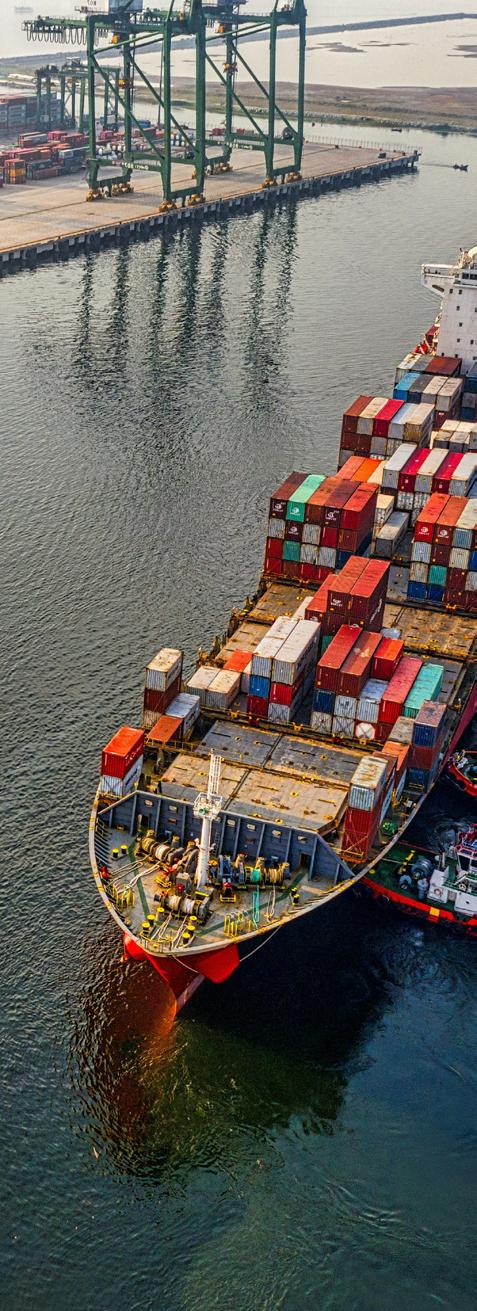

Tier 3 suppliers are exposed to a specific route, port, or region, and fewer still can tell you where in-transit inventory actually sits at any given moment.
Supply chain visibility has historically stopped at the first tier. In a stable world, that was an acceptable limitation. In a world where a shipping strait can close in less than 24 hours, it is an operational liability.
The challenge is not simply mapping where components originate. It is knowing where they are during a disruption. That requires visibility that extends not just to suppliers, but to the logistics providers moving goods through the network.
When the Network Seizes, the Costs Are Concrete
The Hormuz closure did not take long to move from shipping disruption to production threat. Aluminium Bahrain, the world’s largest single-site aluminum smelter, declared force majeure and cut output by 19% because it could not load shipments through the Strait. For automotive manufacturers, examples like this are direct hits to input costs on steel, plastics, and components that move through every vehicle on every production line.
Layer on top of that the insurance and freight cost increases for vessels rerouting around Africa, the port congestion building at alternative hubs, and the cascading effects on subsequent shipping contracts as displaced containers ripple through the system. This is what supply chain fragility looks like in practice. Networks built without buffer, without route redundancy, and without real-time visibility into where goods are moving have no early warning system. By the time shortages register internally, weeks of recovery time have already been lost. The question is not whether the next disruption will expose those gaps again. It is whether teams will have better information when it does happen again.
Visibility Has to Extend Further, and Include Logistics
Building genuine supply chain resilience starts with a more honest accounting of what visibility actually means. For most automotive manufacturers, visibility programs have focused on supplier data: where components are made, who manufactures sub-assemblies, what the lead times are. That is necessary but not sufficient.
Hyundai was able to maintain production through the Hormuz disruption in large part because it had been building inventory buffers since the pandemic and had the operational flexibility to reroute. Its CEO confirmed
rerouting vessels around the Cape of Good Hope while simultaneously accelerating a shift to regional European sourcing and targeting 80% domestic supply chain utilization in the U.S. That response was possible because the company had both the information and the infrastructure to act. Most manufacturers do not yet have both, and the ones that don’t will keep discovering their exposure after the fact.
Tariff volatility compounds the challenge further. A fixed policy change, however painful, can be modeled and absorbed. What procurement and sourcing teams cannot plan around is a policy environment that shifts week to week, where exemptions appear and disappear, and the rules governing cross-border trade are subject to change on short notice. For an industry with multi-year tooling cycles and long supplier qualification lead times, that uncertainty is often more damaging than whatever the policy ultimately settles on.
The Technology Gap Is an Accessibility Gap
Here is the challenge that rarely gets enough attention in resilience conversations: the visibility and data infrastructure that large OEMs are investing in is not automatically accessible to the suppliers and logistics partners they depend on. A Tier 2 or Tier 3 supplier operating on tight margins may not have the resources or technical capacity to implement enterprise-grade supply chain platforms. If the solution only works for the largest players in the network, it does not actually solve the problem, it just moves the blind spot further down the chain.
What the industry needs is an open, technologyagnostic approach to visibility. One that can be adopted and adapted by partners regardless of their size or technical sophistication. The goal should be interoperability: processes and platforms that suppliers and logistics providers can participate in without requiring major upfront investment or building capabilities from scratch. If smaller suppliers cannot join the network affordably, the network remains incomplete.
From Bespoke Processes to Collaborative Infrastructure
The deeper structural shift the industry needs goes beyond technology investment. It requires moving away from the model where supply chain tools are designed as bespoke solutions built around the needs of a single buyer at the top of the chain.
A collaborative infrastructure model changes the equation. Platforms built for wider adoption across supply chain disciplines demand management, transportation, logistics tracking, inventory visibility, and allow suppliers and logistics providers to implement once and apply the capability across all their customer relationships. That reduces the investment requirement, eliminates duplicated process, and creates a network effect: as more partners join, the visibility and resilience of the entire chain improves, not just the one segment a single OEM can see. ●
Sectorial ATO Tax Debt Disclosures Rise, Overall Business Credit Demand Flattens and High-Risk SME
'Credit Shopping' Hits 8-Month Peak
The latest Equifax Business Market Pulse for Q1 2026 reveals signs that Australian businesses have been responding to an everchanging environment, encompassing rate rises and rising energy and fuel costs.
Australia credit demand may have reached a point of surface-level stability in the first quarter of 2026, with a marginal -0.4% decrease YoY. However, this stability differs from the second half of last year where credit was expanding, notably across business loans. Below the surface, Equifax data reveals nuanced differences in how businesses are navigating current economic pressures.
“The Equifax Business Market Pulse for Q1 2026 shows growth in business loans and trade credit running below trend. More positively, asset finance has retained some resilience. This resilience is especially important given that business investment spending is a key component underpinning many economic growth forecasts. Some industries are reporting rising trade payment days and rising tax debt. A gap has also emerged between larger companies compared to Small & Medium sized Enterprises (SMEs),” observed Brad Walters, General Manager, Commercial at Equifax.
In particular, a behavioural gap has emerged in the search for credit, with high-risk SMEs now credit


shopping - making multiple enquiries to different lenders within a 30-day period - at a rate 2.9 times higher than their low-risk counterparts.
This surge in activity among sub-prime borrowers comes as overall SME demand contracted by -7.0% YoY in Q1 2026, as this cohort of borrowers scaled back on enquiries in response to interest rate increases and inflation impacts. Coupled with this are also some signs of a tightening in lending conditions, with some firms reporting that finance became more difficult to obtain over the quarter*.
The Equifax Business Market Pulse shows that while credit shopping among low and medium-risk segments has shrunk, activity among high-risk SMEs (scores of 301-600) surged to 33% in Q1 2026, compared to just 7% for low-risk entities.
"What we are seeing today is the culmination of a trend that has been building over the past few months and is now at its highest levels in the last eight months,” said Walters.
“We are seeing a divergence in how Australian businesses are approaching the credit market. For the majority of stable, low-risk entities, there is a sense of 'rate resignation' - they are opting for the speed and certainty of known lending relationships. In contrast, high-risk SMEs seem to be in a state of accelerated credit shopping, having to cast a much wider approval net, often applying to four or five lenders to find an approval.
“This surge then appears to be further amplified by shifts in market conditions such as rising fuel costs, inflation and interest rates.
“Given the integral role small and medium enterprises play in the Australian economy, these developments within the SME sector are noteworthy. SMBs represent a significant portion of economic output and employment so shifts in this cohort are important for understanding broader economic trends,” he said.
Application Quality Rises Amid Sub-Prime Credit Shopping Behaviours
While there has been an elevation in credit shopping behaviours across sub-prime applicants, the relative proportion of higher-risk applicants remains similar to previous periods. However, the Equifax Business Market Pulse identified a slight improvement in the credit quality of higher-scoring applicants, which is supporting a small increase in the average credit quality across the entire applicant pool.
Building on the three-year highs established in late 2025, average business loan credit scores rose by 4 points YoY, reaching the highest levels seen in nearly two years.
“This SME cohort continues to demonstrate resilience, maintaining higher credit scores, on average, relative to larger businesses,” added Walters.
“This suggests that while high-risk SME segments have scaled back their activity, a resilient and savvy group of SMEs remain active, prioritising strategic credit access despite broader market conditions.
"The fact that average scores are still exhibiting relatively sound levels of credit quality on average, may partly reflect a narrowed field of applicants, but it also indicates that well-managed businesses are successfully adjusting to a 'new normal'."
“Following the resilience we saw in the midmarket last year, what we are potentially seeing here are businesses becoming even more selective about when, and how they borrow to ensure their balance sheets can withstand ongoing changes,” he said.
Sector Insights: Construction and Logistics Credit Pressures
The construction and logistics sectors both continue to demonstrate signs of pressure amid market conditions.
• Construction: While national company insolvency levels in the sector showed a small decline (or improvement) of -6.4%, business insolvencies (non-companies) continued to climb 16% YoY in 26Q1. New ATO tax debt disclosures spiked by 49%, which may indicate significant underlying cash flow pressure as small builders prioritise operational costs over tax obligations. It can also suggest the importance of diesel prices in the construction sector.
• Logistics: Company insolvencies remain 3.7 times higher than 2022 levels, while business insolvencies increased 27% YoY in 2026 Q1. Large logistics operators are increasingly leaning into trade credit (+26% YoY) to manage immediate liquidity and fuel price volatility. While ATO Tax Debt Disclosures were only up 11% YoY for the quarter, there was an observed late stage spike, with the number of new tax debt disclosures for transport & logistics businesses in the month of March up by 97.7% YoY.
"As observers of the credit market, we see rising tax debts as one of the key indicators of cash flow dynamics," said Walters.
"While large businesses in logistics and construction are using trade credit to maintain momentum, it seems many smaller players are avoiding new debt entirely, with new company formations in construction falling 53% YoY this quarter as the sector enters a period of consolidation," Walters concluded. ●
* NAB BUSINESS SURVEY, FEB-2026.
AI Won’t Fix Global Supply Chains Unless We Start Where the Bottlenecks Actually Are

WRITTEN BY NEIL SAHOTA, CHIEF AI OFFICER AT LOANDNA
Each time global supply chains seize up, the conversation follows a predictable script. Companies blame shipping lines. Governments blame geopolitics. Analysts blame demand shocks. Everyone talks about resilience as if it were a philosophical concept rather than an operational one.
What do they all forget about? Ports.
Ports are where global trade becomes physical… real. Sadly, they are also where digital transformation quietly goes to die.
Over the past several years, I’ve worked with organisations across logistics, infrastructure, and public–private partnerships on technology adoption. What consistently surprises executives outside the port ecosystem is how little real-time intelligence governs these environments. For assets that move over 80% of global trade by volume, ports remain astonishingly opaque, fragmented, and resistant to systemic optimisation.
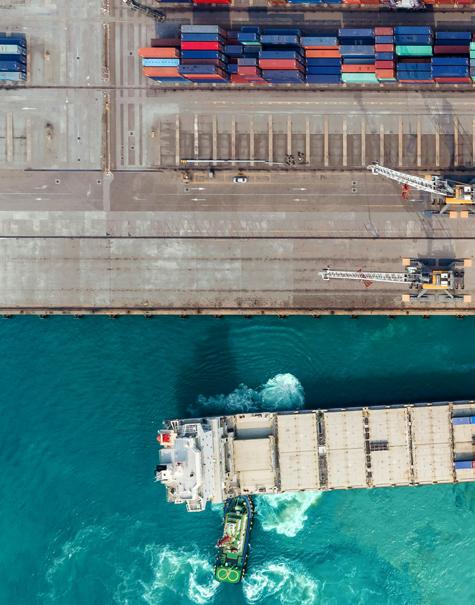
Let’s be clear. This is not a technology problem. It is a governance problem, and AI exposes it.
If you are a CEO whose business depends on global trade, ports determine your lead times, your inventory risk, and your ability to respond to shocks. You may not control ports, but ports increasingly control you. The leaders who understand this dynamic early will stop reacting to disruptions and start shaping the conditions that cause them.
Unfortunately, the popular narrative is that ports are modernising. Cranes are automated. Sensors are installed. Dashboards exist. However, digitisation without intelligence is just instrumentation.
Most ports still operate as collections of semiautonomous actors: terminal operators, customs authorities, trucking firms, shipping lines. Each trying
to optimise locally while (hopefully) sub-optimising the system.
Tragically, they don’t realise that AI’s real value for ports is not automation. It is orchestration.
Consider the problem of congestion. When ports back up, the assumption is that capacity is insufficient. In reality, congestion usually results from poor coordination across yard operations, gate flows,
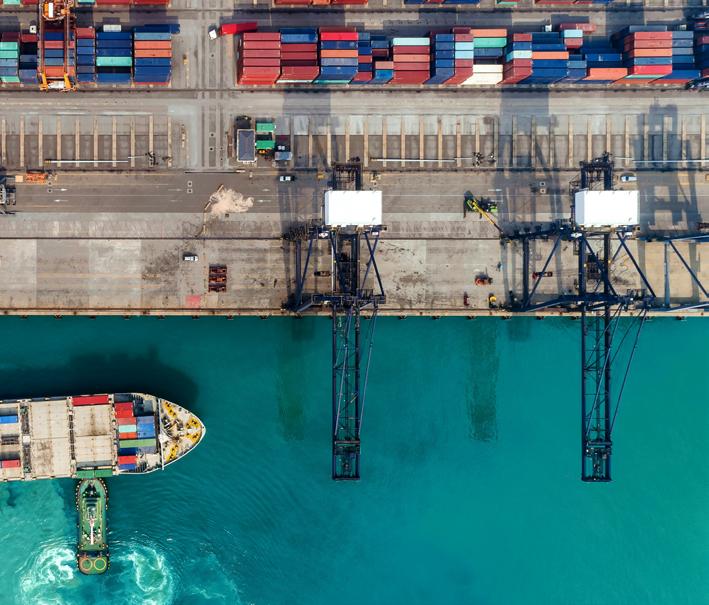
labour availability, and downstream transportation. AI models trained on historical vessel arrivals, yard movements, weather, labour shifts, and inland transport constraints can predict congestion days in advance. I’ve seen this done, and the technology produces sound decision-making and value.
So why does this happen? Authority fails. No single entity owns the optimisation problem end-to-end. This fragmentation has real economic consequences. McKinsey estimates that congestion and inefficiencies at ports can increase total supply chain costs by 10–20%, costs that ultimately show up as inflation or lost competitiveness. However, most mitigation efforts focus on expanding physical infrastructure, a decadelong solution to a coordination problem that could be addressed in months with better intelligence.
Compounding the problems, ports also suffer from a maintenance paradox. Cranes, rail systems, and yard equipment are critical assets, yet maintenance schedules are often time-based rather than condition-based.
AI predictive maintenance (already standard in aviation and manufacturing) remains underutilised in ports, despite clear evidence it can reduce unplanned downtime by 30–50%.
When I ask port executives why adoption lags,
the answer is rarely technical. Honestly, I hear institutional issues: maintenance budgets, labour agreements, and vendor contracts are structured around predictable routines, not probabilistic optimisation. AI threatens those assumptions, and that’s core value add.
There is also a security dimension that receives surprisingly little public attention. Ports are prime targets for smuggling, sanctions evasion, and cargo manipulation. Traditional inspection regimes are blunt instruments. AI anomaly detection (e.g., correlating manifests, routing behaviour, container imagery, and historical risk patterns) dramatically increases detection rates without slowing throughput. Already, several customs authorities have demonstrated this quietly (because publicising success invites political scrutiny.) Silence, in this case, is strategic.
However, what makes ports especially challenging is that they sit at the intersection of public responsibility and private profit. This hybrid model makes transformation slow, but it also makes it extraordinarily valuable. Small improvements in throughput, reliability, or energy efficiency cascade across entire economies. Ports are leverage points hiding in plain sight.
In terms of sustainability, AI helps executives in the areas they struggle to operationalise. For example, ports are major energy consumers and emissions hubs. However, AI energy optimisation across cranes, yard vehicles, and facilities can materially reduce emissions without waiting for new fuels or regulatory mandates. This is one of the few areas where operational efficiency and climate goals align immediately.
So why isn’t this being discussed more openly? Because AI forces uncomfortable conversations about who decides, who benefits, and who loses discretionary control. Ports are conservative with good reason: mistakes are expensive. However, clinging to legacy coordination models has become the bigger risk.
The next phase of global trade competitiveness will not be decided by shipping capacity alone. It will be decided by which regions treat ports as intelligent systems rather than static infrastructure. For CEOs, this creates a strategic choice.
You can continue to model ports as external risks, or you can engage them as partners in intelligencedriven optimisation.
The latter requires understanding governance, incentives, and system design as deeply as technology.
The organisations that do this well won’t issue press releases about “smart ports”. They’ll quietly see fewer disruptions, faster recovery, and more predictable flows… advantages competitors will struggle to replicate after the fact.
In a world where resilience has become a boardlevel concern, ports are no longer someone else’s problem. They are the bottleneck leaders can no longer afford to ignore. ●
Leading Fleet Operators Selected for National Fatigue Trial to Set a New Benchmark in Australia
WHG Technologies has announced participating operators in the FleetPREDICT wearable fatigue technology trial, funded by the National Heavy Vehicle Regulators (NHVR), Heavy Vehicle Safety Initiative (HVSI), supported by the Australian Government.
Following strong interest from across the transport and logistics sector, a group of leading operators has been selected to participate in the national trial, reflecting both the scale of industry engagement and a shared commitment to advancing safety outcomes through innovation.
FleetPREDICT is one of 12 projects selected through the HVSI program, supported by a $4.2 million investment aimed at improving safety outcomes across Australia’s heavy vehicle industry. The trial
represents a targeted, industry-led approach to applying funding where it can deliver practical, real-world impact for operators, drivers, and the broader community.
Developed by WHG Technologies in partnership with Sleep Advice Technologies (SAT), FleetPREDICT combines biometric data and predictive analytics, paired with a Garmin smartwatch to identify fatigue risks 1 to 8 minutes before micro sleep events occur, providing drivers and operators valuable time to respond.
Conducted in freight and logistics environments, the trial brings together operators, drivers, and wearable technology to address a key industry safety challenge, generating real-world insights to support safer operations and broader adoption
of, and confidence in wearable fatigue technology.
“The national trial marks a significant step forward in uniting industry leadership with advanced wearable technology to address fatigue risk at scale,” said Dylan Hartley, Director of Operations at WHG Technologies. “The calibre of operators participating reflects a clear industry commitment to driving meaningful safety outcomes. By combining real-world operational insight with predictive technology, this trial is positioned to set a new benchmark for fatigue management in Australia.”
The participating operators in this trial are: Linfox, Wettenhalls, FBT Transwest & Team Transport.
These operators represent a diverse crosssection of fleet operations, bringing extensive experience, operational scale, and a proactive approach to safety. Their involvement highlights the industry’s willingness to invest time, resources, and expertise into initiatives that support both driver wellbeing and broader road safety outcomes.
“Participating in this trial offers a fantastic chance to provide real feedback on technology that truly makes a difference in managing fatigue and enhancing safety,” said Cameron Dunn, Managing Director of FBT Transwest. “Giving drivers the platform to share their experiences is essential, as they are on the frontline and uniquely positioned to help shape the industry. “Their input will help ensure that solutions are practical and effective, ultimately making the work environment safer for everyone,” Dunn said.
By combining innovations in wearable technology, operator experience and realworld freight operations, the FleetPREDICT trial will contribute to a stronger evidence base to for fatigue management and support the continued evolution of safety practices across Australia’s heavy vehicle industry. ●
For more information on the trial, click here.
Zenobe to Accelerate Electric Truck Adoption in Australia with $100 Million Investment
VISY SHORT
Zenobē announces a $100 million commitment to accelerate the rollout of zero-emission freight across Australia, which could support a doubling of heavy commercial electric trucks and the charging infrastructure required to power them.
There are around 1000 heavy electric trucks currently on the road and this funding is designed to help double that number by the end of 2026, at a critical moment for the sector. With 56% of Australia’s truck fleet now more than a decade old, operators are increasingly making decisions about replacement technologies as vehicles reach the end of their operating life.
Zenobē’s $100 million investment will fund not just the electric trucks themselves, but the full ecosystem supporting them; charging infrastructure, battery replacements, and deployment, designed to match or beat the total cost of ownership
(TCO) of diesel fleets. It also covers upfront planning at no cost to operators, including depot assessments, fleet and energy modelling, and tailored proposals to de-risk the transition.
Zenobē is removing both the financial and technical barriers by funding, designing, and optimising end-to-end zero-emission fleet solutions from day one.
While momentum is building, the market remains in its early stages. Approximately 500 electric trucks were on track to be sold in 2024 more than the total sold over the previous decade combined, highlighting both the progress made and the scale of the opportunity ahead.
Zenobē aims to remove one of the biggest barriers to adoption by making the transition (TCO) neutral for fleet operators. This is achieved through a long-term view of asset lifecycles, access to low-cost capital, and
the expertise to design, develop, and manage cost-effective, fit-for-purpose truck charging infrastructure for diverse customer needs.
“The direction we set in the next five years will define the trajectory for the next two decades,” said Gareth Ridge, Country Director, Australia and New Zealand at Zenobē. “Our goal is simple: to make the transition total cost of ownership neutral so the sustainable choice is also the commercial one.”
The announcement builds on Zenobē’s broader growth ambitions globally to support up to 4,000 electric commercial vehicles by the end of 2026.
By combining capital investment with charging infrastructure and fleet electrification expertise, Zenobē aims to accelerate the shift to zero-emission freight while strengthening the resiliency and sustainability of the logistics and supply chain sector. ●
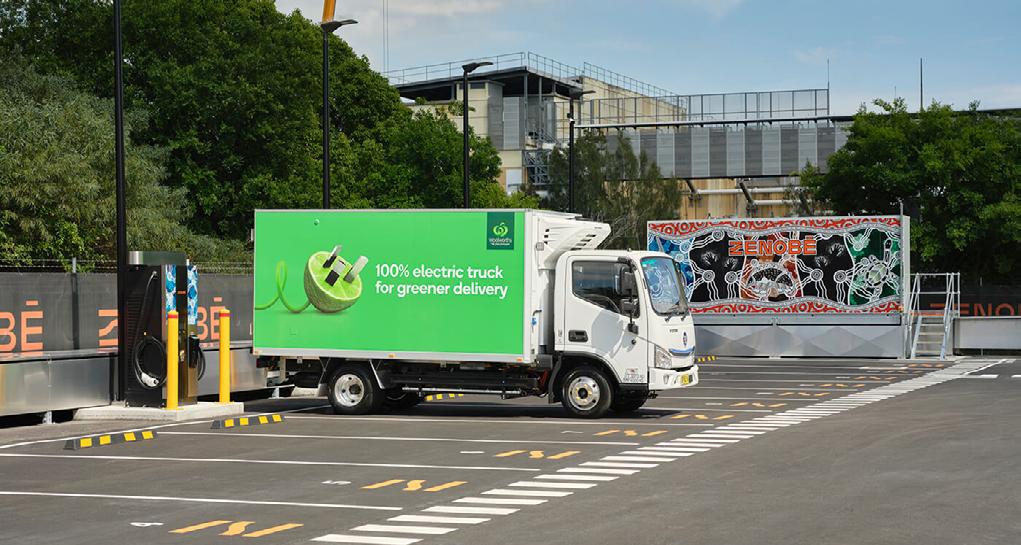
Manhattan Associates Expands Agentic AI Vision with New Design, Intelligence and Marketplace Capabilities
Manhattan Associates has unveiled a trio of new innovations designed to simplify how organisations design, manage and optimise supply chain operations, marking a significant expansion of the company's AI strategy.
Announced at Momentum 2026, the updates include the launch of Solution Design Studio™, an AI-powered workspace that enables business users to configure supply chain systems using natural language, alongside the introduction of Sightline™, a new decision intelligence capability for supply chain planning, and Manhattan Marketplace™, a shared ecosystem for AI agents, extensions and accelerators.
Together, the announcements reflect a broader shift in how supply chain technology is evolving, moving beyond automation and analytics towards systems that can help organisations design, understand and continuously improve operations with greater speed and confidence.
From Business Intent to Live Configuration
Leading the announcements is Solution Design Studio, a new capability within Manhattan's ActivePlatform™ that allows users to create and modify operational blueprints using business language rather than complex configuration tools.
Designed for warehouse leaders, transportation managers and operational teams, Solution Design Studio enables users to describe how they want a warehouse, transportation network or supply chain process to operate. The platform then translates those requirements into live configurations across Manhattan Active® solutions.
Rather than relying on technical specialists or lengthy implementation cycles, organisations can create, edit and redeploy operational blueprints as business requirements evolve, helping ensure systems remain aligned with changing operational realities. According to Manhattan Associates, internal testing demonstrated that Solution

Design Studio was able to autonomously configure the majority of ActiveWarehouse™ using externally created designs, dramatically reducing the time traditionally required for solution design and implementation.
"As supply chain and commerce grow more complex, the design and configuration phases are often where speed-to-value suffers," said Sanjeev Siotia, Executive Vice President and Chief Technology Officer at Manhattan Associates. "Solution Design Studio simplifies configuration by translating it into natural language for business users, helping customers move faster."
Bringing Transparency to AIDriven Planning
Complementing the design capability is the launch of Sightline™, a new feature within ActivePlanning™ that brings greater transparency to AI-driven planning decisions.
As AI becomes increasingly embedded in forecasting, replenishment and inventory management, planners are often challenged by understanding why a particular recommendation or forecast was generated. Sightline addresses this by providing realtime explanations in plain business language directly within the application.
Users can quickly understand the factors influencing forecasts, inventory positions, replenishment recommendations and network decisions, including lead times, safety stock calculations, promotional impacts and fulfilment changes. By eliminating the need to investigate outcomes across spreadsheets and external reporting tools, Sightline helps planners gain faster insight into the reasoning behind AI-generated recommendations while
improving confidence in planning decisions.
"At Manhattan, we are committed to continuous innovation and simplification, which helps our customers work smarter and move faster," said Brian Kinsella, Senior Vice President and Chief Product Officer at Manhattan Associates. "With Sightline, we're giving planning teams a powerful new way to understand the drivers behind every outcome, accelerate decision-making, and drive higher productivity across the supply chain."
Creating a Shared Ecosystem for Innovation
The third announcement, Manhattan Marketplace, extends the company's open platform strategy by creating a shared ecosystem where customers and partners can discover, deploy and develop AI agents, extensions and accelerators.
Built on ActivePlatform, Marketplace provides a common environment where solutions developed by Manhattan, its partners and customers can operate within the same governance framework and operational guardrails. The platform is designed to accelerate innovation while reducing the complexity traditionally associated with integrating third-party capabilities.
Together, Solution Design Studio, Sightline and Manhattan Marketplace represent the next phase of Manhattan's vision for Agentic AI, moving beyond individual automation use cases towards a connected platform where organisations can design, understand and continuously optimise supply chain operations from a single foundation.
As businesses face growing pressure to respond faster to changing customer expectations, supply chain disruptions and operational complexity, these latest innovations aim to make advanced supply chain technology more accessible to the people responsible for running it every day. ●
Look out for the next issue
For all of your latest supply chain industry news, be sure to join our community on LinkedIn
Look out for the next edition of Supply Chain Insights, where we explore why the ability to make faster, smarter decisions is emerging as one of the most important competitive advantages in modern supply chains.
As organisations navigate economic uncertainty, shifting customer expectations, evolving trade conditions and increasing operational complexity, success is becoming less about predicting what comes next and more about responding effectively when conditions change.
From AI-powered planning and forecasting to real-time inventory visibility and autonomous workflows, organisations
are investing in technologies that help turn information into action. We'll examine how leading businesses are building a decision advantage across their operations, the role of decision intelligence and automation in supporting better outcomes, and what the future of human and machine collaboration looks like as supply chains become increasingly connected, agile and responsive.
For all of your latest supply chain industry news, be sure to join our community on LinkedIn
For more information or story suggestions, please contact: editor@supplychain-insights.media
For advertising enquiries, please contact: advertising@supplychain-insights.media