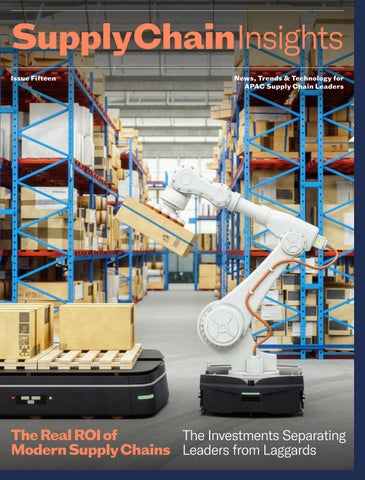
Welcome
About The Magazine
Published quarterly to a circulation of 20,000 + industry professionals across Australia, New Zealand and the wider Asia-Pacific region, Supply Chain Insights Magazine is focused on helping you solve the complexities of today's supply chain. The digital magazine highlights the latest trends, operational strategies, technology advancements and best practice within the supply chain and logistics industry.
Welcome to Supply Chain Insights Magazineyour primary source of industry news, focused on innovation, technology and knowledge-sharing in the logistics sector.
In this edition of Supply Chain Insights, we examine where organisations are investing to deliver meaningful returns in a complex operating environment. Features Editor Mel Stark explores the shift from short-term cost reduction to long-term value creation, highlighting how AI-driven forecasting, warehouse automation, sustainability initiatives and stronger digital foundations are improving productivity, agility and customer outcomes.
Building on this theme, Zoho shares how Capital Logistics unified fragmented systems through Zoho One to improve visibility, strengthen cybersecurity and reduce costs. Appian’s VP - Asia Pacific & Japan, Luke
Thomas, discusses how modernising legacy infrastructure and embedding AI-driven automation can enhance resilience and competitiveness.
Managing Director of Esendex Australia, Jonathan Walsh, also addresses the impact of structural delivery labour shortages and the need for automated, mobile-first communication strategies. We also share insights from DP World’s 2026 Global Trade Observatory and Pattern’s 2026 Marketplace Consumer Report, examining how businesses are navigating tariffs, policy uncertainty and shifting consumer expectations.
We hope you enjoy this edition and look forward to your feedback!
For more information or story suggestions, please contact: editor@supplychain-insights.media
For advertising enquiries, please contact: advertising@supplychain-insights.media
Visit our website: www.supplychain-insights.media
News & Insights
Manhattan Associates Announces Latest Enhancements for Retailers
Manhattan Associates, the global leader in supply chain commerce with unmatched AI capabilities, today announced major enhancements to Manhattan Active® Omni. These innovations are designed to help retailers maximise in-store and online sales while delivering best-in-class customer experiences across all touchpoints. New capabilities include embedded agentic AI for store associates and customer service teams, real-time sales, and fulfilment insights delivered natively within the user experience, and brand-new capabilities focused on maximising both revenue and profit when shipping from stores.
Manhattan announced commercial availability of three new AI agents, a Store Associate Agent, a Contact Centre Agent, and an OMS Configuration Agent, all available within the Manhattan Active Omni user interface, to support retailers’ selling and service teams. Using a natural language interface, these agents deliver immediate, actionable insights into store activity, sales trends, inventory, returns, and customer behaviour, helping associates and customer service teams resolve issues faster and provide more personalised support.
“Retailers are under constant pressure to move faster, operate smarter, and deliver seamless experiences across every
touchpoint,” said Brian Kinsella, SVP of Product Management at Manhattan Associates. “Our latest updates reflect Manhattan’s ongoing commitment to delivering cutting edge artificial intelligence within our applications. Whether it’s the myriad machine learning algorithms present for years or our new Agentic AI and Fulfilment Simulation capabilities, we’ve long believed true AI needs to live within rather than alongside our applications. We’re proud to partner with a number of world class retailers on the design and development of these breakthrough technologies.”
Along with the newly announced agentic AI innovations, Manhattan Active® Point of Sale continues to advance with Customer Facing Display, a powerful new enhancement that brings shoppers into the checkout experience. Customers can view their cart in real time, attach their loyalty information to a transaction, enter shipping details, and choose how they’d like to receive their receipt, all from a dedicated display. Retailers can also capture additional customer input, ensuring greater accuracy and faster transactions at the point of sale, bridging the gap between associates and shoppers, and delivering a smoother, more engaging checkout experience.
Additionally, the Fulfilment Optimisation Simulation engine enables enterprises to model and compare alternative fulfilment strategies by balancing cost, speed, service level, and margin. It provides data-driven insights into split shipments, total fulfilment costs, location-level distribution, and key KPIs using a consistent set of orders for each strategy. Users can easily adjust optimisation rules, rerun simulations, and compare results side-by-side to understand the true impact of each change. The engine

also supports “what if” scenario planning - allowing teams to anticipate constraints, evaluate operational shifts, and analyse trade-offs in a fully self-serve manner. By replaying historical or selected orders, businesses can continuously optimise fulfilment, uncover new savings, and drive meaningful performance improvements.
Together, these innovations reflect Manhattan’s continued focus on delivering practical, enterprise-ready advancements that help retailers move faster and operate with greater confidence. ●
Receive up-to-date product, customer and partner news directly from Manhattan on LinkedIn.
Dematic Automation Solution Drives Precision and Productivity for Bio-Rad Singapore
Dematic, a global leader in supply chain automation, has partnered with life science and clinical diagnostics pioneer, Bio-Rad, to implement a purpose-built modular conveyor system (MCS), transforming its warehouse operations through intelligent automation.
Bio-Rad Laboratories supplies critical equipment and products to hospitals, laboratories and research facilities across the Asia-Pacific (APAC) region. Due to increasing demand, Bio-Rad recognised the need to modernise its Singapore distribution centre, which serves as a critical hub for its APAC operations responsible for timely and regulatory-compliant delivery across multiple countries.
To eliminate manual decision-making and minimise the risk of errors in the packing and shipping process, Bio-Rad required a solution that could address the complexity of handling a diverse product range with a high number of stock keeping units (SKUs). Rather than automating a
single component, the entire workflow needed to be reimagined to achieve meaningful efficiency and accuracy.
For Bio-Rad, automation was especially critical for cold chain logistics where even minor delays between storage, packing, and shipping could compromise product quality and regulatory compliance. Ensuring speed and precision throughout this process was critical to maintaining both standards and customer trust.
Dematic’s modular conveyor system was purpose-built to address this complexity, including intelligent sortation and cloudbased controls engineered to eliminate bottlenecks and manual decision points.
“Once items are picked and placed on the conveyor, everything is managed automatically,” says Terence Chan, Senior Sales Manager, Dematic Asia. “The system diverts each product to the correct packing station, using the appropriate packing materials based on real-time data. From there, finished cartons are routed to the correct shipping lane for outbound processing.”
One of the key innovations was the use of powered right-angle transfer (RAT) technology in place of compressed air systems. “This not only reduces capital expenditure (CAPEX) but also lowers ongoing maintenance requirements, making the solution more sustainable and costeffective for Bio-Rad,” Chan adds.
Cloud-based controls gave Bio-Rad remote flexibility from day one. “With Dematic’s system architecture, authorised
users can access diagnostics and make adjustments from anywhere with an internet connection,” explains Chan. “This capability proved invaluable during the commissioning phase and remains a huge advantage for ongoing support.”
The project was a complex rollout involving a wide variety of products, from tiny vials to large diagnostic equipment, all requiring an exceptionally high level of precision at every stage, from picking to packing and sorting. During testing and commissioning, the team worked closely with Bio-Rad to fine-tune the system, making small adjustments to optimise each piece of equipment for accuracy and efficiency.
Since going live, the automated conveyor system has brought measurable improvements to Bio-Rad’s distribution operations. Packing times have dropped, accuracy rates have climbed and the cold chain process is now faster and more controlled.
“The system has had a significant impact on Bio-Rad’s operations by streamlining and simplifying key processes. With the technology now managing all sorting and packing decisions, errors have been reduced and workflows have become noticeably smoother. This has allowed the team to concentrate on maintaining high levels of quality and efficiency,” concluded Chan. ●

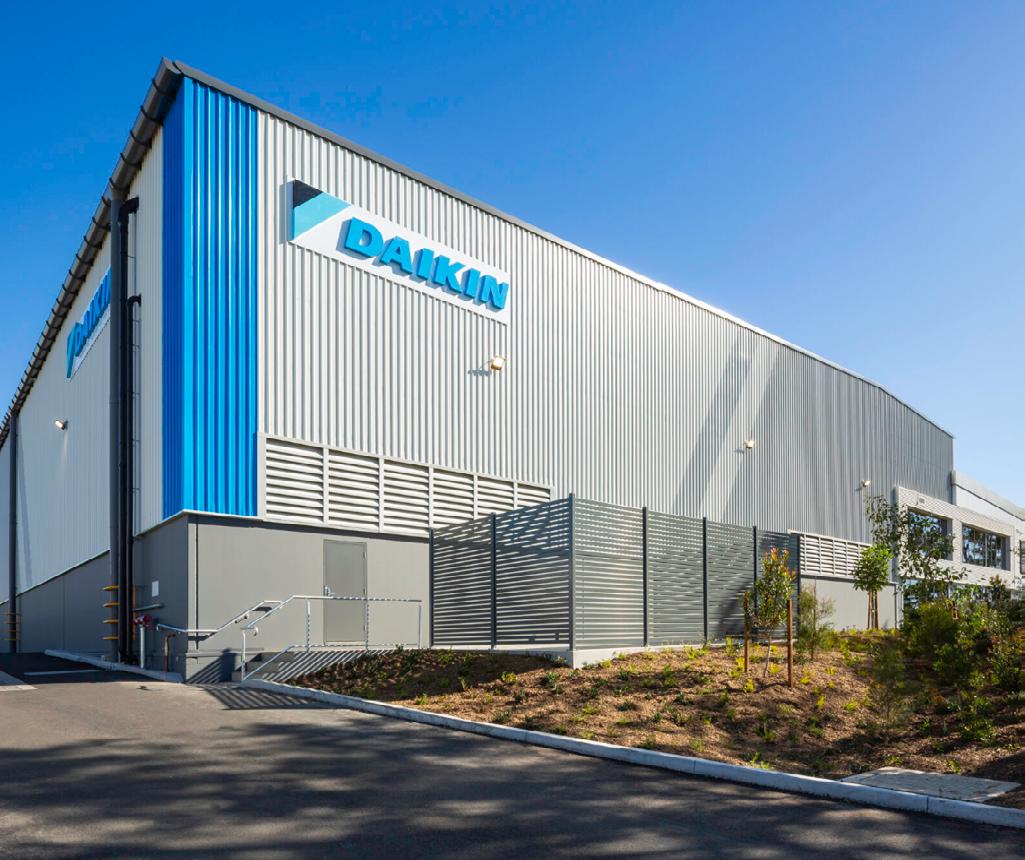
Daikin Completes $28.6 Million NSW Manufacturing Facility
Daikin Australia has completed construction of a new $28.6 million manufacturing facility in Chipping Norton, Western Sydney, marking a significant expansion of the company's local production capability.
The new Factory 2 expands Daikin's capacity to produce customised Air Handling Units and Rooftop Packaged Air Conditioners, with potential to extend ducted indoor production as demand grows. The facility also incorporates autonomous mobile robots, expanded solar photovoltaic generation, and
digitalised sale-to-manufacture processing, supporting Daikin's goal of achieving carbonneutral manufacturing by 2030.
Supply chain and property consultancy TMX Transform supported the project throughout. Adam McDonald, Head of Operations at TMX Transform, said Daikin's investment reflected a genuine commitment to local manufacturing.
"This is a complex existing site, and as specialists in the industrial and manufacturing space, TMX Transform understands the bespoke needs of facilities like this and how to deliver on them. That positions Daikin to better serve their customers well into the future," McDonald said.
The facility has already created more than 60 full-time roles across production, research and development, and support functions, exceeding the initial target of 45 positions. Daikin now employs more than 700 people nationally.
Beyond Factory 2, Daikin has brought printed circuit board manufacturing onshore, achieved Australian Made certification for most locally built products, and established a skills training program led by Daikin Japantrained experts.
Hideaki Furihata, Managing Director of Daikin Australia, said the investment reflects the company's confidence in the local market and workforce. "This new factory strengthens our ability to meet the needs of Australian customers with products that are designed, engineered and built here," Furihata said.
All ducted systems, rooftop packaged units and air-handling units produced at the Chipping Norton facility carry the Australian Made mark. ●
DP World Survey: Trade Leaders Upbeat On 2026 Despite Rising Barriers
Global Trade Observatory Annual
Outlook: 94% expect 2026 growth to match or exceed 2025 despite tariffs, costs and policy uncertainty
The global trade outlook looks fragile. Business confidence does not. That’s the core finding of DP World’s new Global Trade Observatory (GTO) Annual Outlook Report 2026, showing 94% of respondents expect 2026 trade growth to match or exceed the pace of 2025, despite rising frictions and volatility.
The findings are based on a survey of 3,500 senior supply chain and logistics executives across eight industries and 19 countries, conducted ahead of the World Economic Forum Annual Meeting in Davos.
In total, 54% expect trade growth to be faster than 2025 and 40% expect it to be equal. This is despite 53% anticipating high or very high policy uncertainty, 90% expecting trade barriers to rise or remain unchanged. Only 25% expect a negative impact on their business, with 49% expecting no effect and 26% even seeing a positive impact.
This frontline sentiment contrasts with some macro projections, with the IMF forecasting trade growth (by volume) could slow to 2.3% in 2026, down from an estimated 3.6% in 2025.
Asked where trade growth potential is greatest in 2026, executives most frequently pointed to Europe (22%) and China (17%), followed by Asia Pacific (14%) and North America (13%).
Sultan Ahmed bin Sulayem, Group Chairman and CEO of DP World, said: “Global trade is becoming increasingly complex, not less so. Our role is clear: to keep trade moving by understanding where friction exists, anticipating where it may emerge next, and investing in the infrastructure, capabilities and partnerships
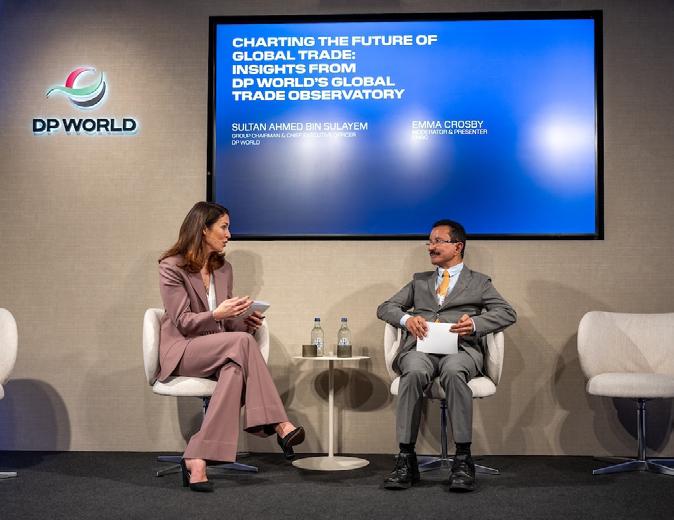
that help our customers operate more efficiently and reliably.”
The GTO Annual Outlook was developed with Geneva-based insights agency, Horizon Group. Margareta Drzeniek, Managing Partner, Horizon Group, said: “What we’re seeing is confidence with contingency plans. Executives are embedding resilience into strategy by diversifying suppliers, reassessing routes and adding options, because volatility is now the baseline. Those best positioned will be the ones who can turn those resilience plans into measurable performance.”
What companies are doing differently in 2026
The survey indicates companies are responding to volatility by actively redesigning supply chains and trade routes.
This includes:
• Resilience as strategy: Supplier diversification (51%), higher inventories (44%), and friend-shoring (36%) are cited among the most common strategic shifts planned for 2026.
• Route agility increases: 26% intend to use new routes, while 23% are evaluating them. Decisions are driven by cost savings (38%), improved connectivity/inland infrastructure (36%), and faster customs procedures/clearance times (35%).
• Border friction remains a choke point: 60% cite customs clearance as a leading cause of delays and disruption. Executives also prioritise investment in warehousing and logistics hubs (39%), road networks (36%), and border/customs processing infrastructure (36%). ●
Visy Logistics and BlueScope Sign New Agreement to Strengthen Steel Supply Chain in Western Australia
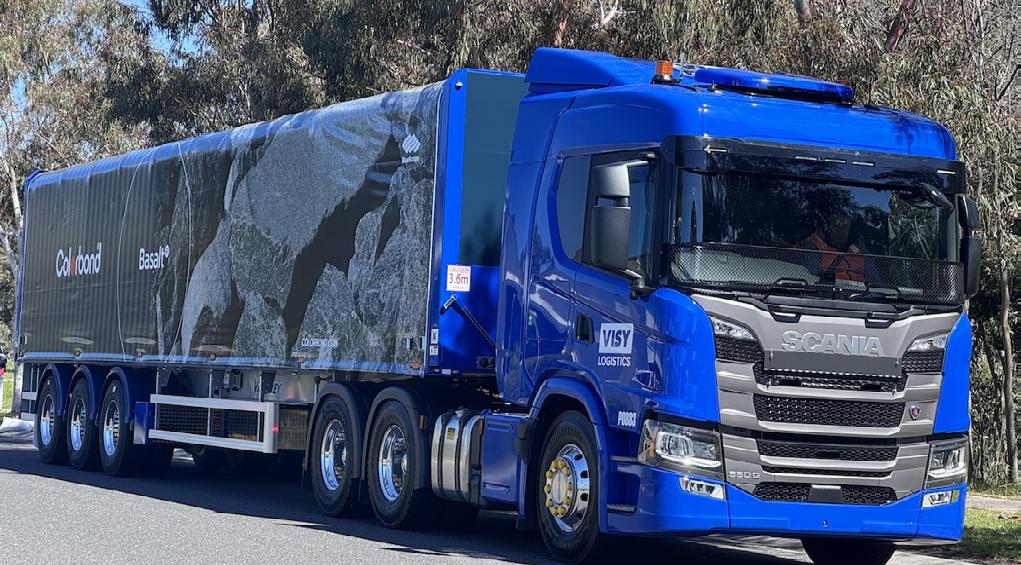
Visy Logistics and BlueScope have entered into a new logistics agreement to further strengthen Western Australia’s steel supply chain and support the region’s growing infrastructure and manufacturing sectors.
Under the new agreement, Visy Logistics will expand its fleet and introduce a suite of purpose-built trailers, including 10 new prairie wagons. This expansion was manufactured in
Australia using BlueScope steel to achieve high safety and compliance standards, and freight-handling requirements of BlueScope’s Western Australian operations.
The agreement will generate 21 jobs for Visy Logistics in Perth, supported by a dedicated fleet. For a customer focused solution, the fleet features:
• Modern trailers to protect product quality from all-weather conditions
• Improved safety through integrated features like roll stability systems and retractable trailer stairs to protect both employees and the wider community
• Improved payload efficiency, optimising cost and environmental performance.
Tony Egbers, BlueScope Western Region Processing and Logistics Manager said: “This
agreement reinforces our commitment to safety, reliability, and continuous improvement in supply chain performance.”
Wayne Boxshall, Visy Logistics Country Manager said: “This new arrangement reflects the strength and longevity of our partnership with BlueScope. Over many years, we have forged this relationship by consistently delivering on our promise across the Eastern Seaboard.
We are proud to extend that same commitment to BlueScope and their WA partners. Visy Logistics is fully dedicated to supporting BlueScope’s growth.”
This new agreement represents another significant and important milestone for Visy Logistics as it continues to build momentum and grow its position as a leader in steel transportation and logistics across Australia. ●
Forget Best, Middle, and Worst Case: Why Supply Chain Professionals Are Planning for More Futures Than Ever
WRITTEN BY CHARLOTTE
JORDAN, EXECUTIVE
Advanced simulation technology is transforming how supply chain leaders approach strategic planning. Charlotte Jordan, TMX Transform Executive Director of Supply Chain, explores why businesses are needing to plan for multiple futures, and how this technology is making it possible.
Supply chain leaders are facing an increasingly complex mix of cyber risk, economic uncertainty, and global instability. In response, businesses are expanding their scenario planning by modelling more potential futures than ever before.
Some are planning for as many as 19 different scenarios, looking across physical node locations and routing/flows, growth assumptions, changes to service/customer needs, operating model and risk profile. Preparing for an unknown future means these businesses need to ‘embed greater flexibility in their networks’ – which will help mitigate unidentified risks and ongoing changes in the external environment.
According to Charlotte Jordan, TMX Transform Executive Director of Supply Chain this expansion of scenario planning, and the increase in the number of scenarios leaders are feeling compelled to test

for, is driven by both technological capability, and increased business complexity.
“As U.S. tariffs alter global costs and automation economics, data breaches and security threats require more risk mitigation, and customer expectations about speed, choice and transparency rise, market conditions continue to have a significant impact on operations,” Charlotte says.
In response to this, she’s seeing scenario testing extend across the entire supply chain lifecycle, and notes that new developments in simulation technology can inform decisions at every stage, including strategic review, design and technology assessment, property procurement, and implementation.
Simulation Is Driving Rapid Scenario Testing
Advanced simulation technology, which allows companies to model complex supply chain environments without physically changing assets or committing capital, is enabling this shift toward expansive scenario planning.
“We're simulating a much greater breadth of strategic options to pressure test scenarios, and model future operating costs with far more detail,” Charlotte notes.
Simulation creates virtual representations of warehouse operations, network configurations, and automation systems. These digital twins respond dynamically to changes in inputs and variables, revealing how different scenarios would play out across the entire supply chain.
A few years ago, the norm was to have analysts running these models over and over, Charlotte says. “Now, once you've twinned your network and built the baseline, we can do that in a matter of minutes."
She points to simulation’s rapid adoption in long-term strategy, and says there is a wide range of situations and scenarios you can now test for –providing companies with greater confidence in the investments being made into their supply chain, particularly when securing capital can be tough and the macro environment continues to change.
“We can factor in a number of variables – whether this be growth scenarios, different sensitivities on strategic assumptions, changes in customer needs or new services, different operating models or a company's appetite for risk,” Charlotte says. “Tools likes simulation allow you to do all of this.”
Simulation also changes everything when presenting a business case. “Your sponsor has complete confidence because we've tested every scenario, and we've not just answered why this option is best, but also why we shouldn't choose the others. And if things change, you can also confirm
what the recommended option looks like or how it can be adjusted,” Charlotte says.
Stakeholder questions also become much easier to answer when there’s a tangible case to show through a simulation tool. “You can demonstrate the future network model and show how it's running – which is a lot more engaging from a stakeholder perspective,” she explains.
“Simulation provides that fact base. Rather than presenting a single projected outcome, leaders can demonstrate how proposed investments would perform across multiple scenarios, showing both the upside potential and the downside protection.”
Multiple Scenarios for One Future
Scenario planning through simulation is already helping companies build supply chains that can withstand unstable market conditions and optimise current operations. Charlotte explains it's a useful tool when companies discover they lack foundational capabilities to conduct future planning, or if they’re missing a comprehensive view of their network.
“We can say, here is your full end-to-end supply chain, and the data and the information representing your physical network in a digital way. This is the opportunity to optimise. This is what it looks like in future state,” Charlotte elaborates.
“Simulating an existing site can indicate how to change its layout or operations to extend its life and support a longer-term investment. The technology can help you bridge that gap and indicate where to cut costs and build efficiencies.”
She believes simulation has transformed the supply chain function within organisations. “Supply chain now has a seat at the table. It's how you enable customer experience, and it's part of your competitive advantage,” Charlotte notes. She describes the dynamic as ‘the perfect storm’, accelerated by competitive stakes intensifying as more companies invest in advanced planning tools.
“We used to run strategies with a 5-10 year horizon. Now, that's shortening dramatically. We need a point-in-time view, and we'll come back in a year to rerun scenarios when things have changed,” she says.
“Everyone calls strategy a living document, but simulation is making that real.” ●



Autostore™ Spare Parts in the Middle
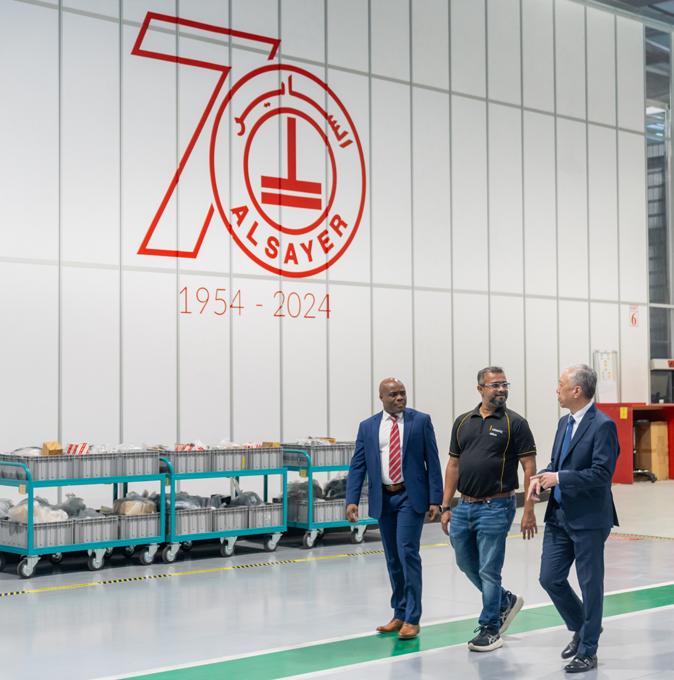
them for the next decade of demand,” explains Mithun Perinchery, Head of Sales for the Middle East, Türkiye and Africa at
The final design includes capacity for 16,000 SKUs, with over 25,770 totes stored across 24 levels and supported by 18 robots. The system is engineered for 500 bins per hour, having already processed more than
“On average, we move around 2,200 lines each day to various branches. The system works smoothly and intuitively, and Dematic has provided fantastic support since going
live,” says Wilfred Kwaku Atuobi, Senior Manager, Logistics & Warehousing, MNSS.
The project was implemented in six months, delivering near-perfect performance from day one. “System uptime has remained near 100%, validating our investment and demonstrating that the project achieved the outcomes we set from the start,” adds Atuobi.
The Dematic solution supports MNSS’s service, retail, and over-the-counter channels. “We wanted to better service our customers, with faster delivery and fewer errors in delivery,” concludes Atuobi. “That’s what we were aiming for, and we achieved it.” ●
PharmaCare Streamlines Operations and Strengthens Compliance with Manhattan Warehouse Management System
PharmaCare is a privately owned Australian health and wellness company that manages more than 25 leading brands, including Nature’s Way and Bioglan.
With over 1,000 products distributed across pharmacy, grocery, and export channels, the business has grown from a $120 million enterprise in 2009 to be a $750 million category leader today.
Operating a network of Therapeutic Goods Administration (TGA)-licensed distribution centres (DCs) in Australia and New Zealand, PharmaCare also oversees an extensive network of third-party logistics (3PL) providers across Asia.
Building Efficiency Amid Complexity
As the PharmaCare business expanded, its warehouse operations began to feel the strain of a fragmented technology environment. Multiple
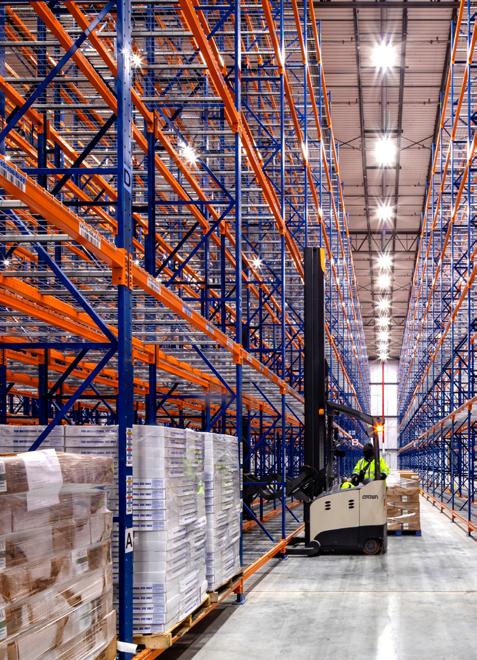
systems were being used to manage critical functions including separate applications for radio frequency (RF) networks, voice picking, conveyor control and Serial Shipping Container Code (SSCC) labelling. Each came with its own licensing costs and complex integrations into PharmaCare’s enterprise resource planning (ERP) system. Manual data entry for batch, expiry and carton quantities consumed valuable time, while paper-based invoicing slowed cash flow and increased administrative overhead.
The warehouse’s existing system also lacked the capability to accurately manage batch and expiry data under a First-Expiry, First-Out (FEFO) model. This is a critical compliance requirement for TGA regulated products. These inefficiencies made it increasingly difficult to scale, plan capacity, or introduce future automation technologies such as automated guided vehicles (AGVs). To maintain its market-leading pace of innovation and responsiveness, PharmaCare needed a unified warehouse management system (WMS) capable of streamlining operations across Australia and New Zealand.
“We were dealing with multiple systems that didn’t talk to each other, manual data entry for hundreds of pallets a day, and outdated workflows that made even simple tasks complex,” said Craig Dunlop, Head of Distribution and Logistics at PharmaCare. “As we grew, it became harder to manage compliance, throughput and accuracy. We knew we needed a single WMS that could bring everything together, reduce duplication, and prepare us for the next phase of automation.”
A Unified System for Growth
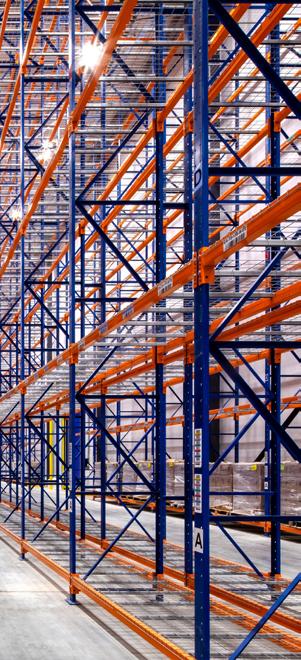
After evaluating several providers, PharmaCare selected Manhattan Associates’ SCALE solution. The implementation of Manhattan SCALE unified core warehouse functions, providing real-time inventory visibility, full batch and expiry traceability, integrated SSCC labelling, and electronic invoicing within one scalable platform. Moving to a SaaS environment eliminated the need for on-premises infrastructure, reduced maintenance costs, and allowed PharmaCare to scale capacity quickly. Regular updates ensured the system would always remain current, without the disruption or expense of major upgrade projects.
The implementation also addressed compliance challenges unique to PharmaCare’s TGA-licensed environment. Working closely with Manhattan Associates, the company validated its processes and transformed what had been a two-step receiving and quality-release workflow into a single electronic process. Goods are now received, stored in their final location under “Q” rack status, and released automatically once approved.
This is a change that reduced receiving times and equipment usage by close to 25% while freeing up warehouse staff for highervalue work.
Together, PharmaCare and Manhattan Associates also developed a Minimum Life on Receipt (MLOR) allocation program to automate customer shelf-life requirements. Major grocery chains often require 75% remaining shelf life on incoming products, and the MLOR capability ensures every order meets these specifications. The rule can be adjusted by customer, channel, or stock keeping unit (SKU), eliminating rejected shipments and the costly loop of returns, credits, and re-shipments. Since implementation, PharmaCare has freed up the equivalent of 1.5 fulltime employees’ worth of time by eliminating manual checks across office and warehouse teams, resulting in measurable reductions in transport costs.
“The MLOR functionality has been a gamechanger,” said Dunlop. “Before Manhattan Associates, we were manually managing expiry and shelf-life windows, which created was open to human error. Now, the system automatically prevents non-compliant stock from leaving the DC. It’s reduced returns, improved customer confidence, and given us complete peace of mind.”
“PharmaCare’s journey is a great example of how technology and people can evolve together,” added Raghav Sibal, Vice President APAC, Manhattan Associates. “By standardising across Australia and New Zealand on Manhattan SCALE, the company has gained not only efficiency but the ability to respond faster, stay compliant, and scale as their business continues to grow.”
Unlocking Measurable Improvements
Within six months of go-live, PharmaCare’s Warriewood DC recorded a 20% lift in daily pick rates within its pharmacy voice-picking conveyor system, increasing from 10,000 to 12,000 picks per shift with the same staffing levels. The transition to paperless SSCC labelling streamlined a full administrative workflow, removing manual keying and improving data accuracy. Combined with electronic invoicing, it has enhanced order accuracy and ensured cartons move smoothly through the conveyor process without delays waiting for printed paperwork.
Manhattan SCALE provides real-time visibility across all warehouse tasks and enables true FirstExpiry, First-Out (FEFO) management, ensuring that inventory remains at its freshest at all times. By consolidating three legacy SSCC labelling systems into one automated platform, PharmaCare has eliminated manual entry of batch and expiry information for every product.
“PharmaCare’s results show the power of simplifying and unifying warehouse operations,” added Sibal. “With SCALE, processes like receiving, quality assurance, and labelling now flow seamlessly, giving teams realtime visibility and freeing them to focus on higher-value tasks rather than repetitive administration.”
Receiving processes have been streamlined into a one-step workflow, with purchase orders receipted directly into the system and products located in their designated storage areas immediately. The Quality Assurance team now performs electronic release only, with no need to print and attach physical green labels to pallets.
The new validation process has reduced receiving and equipment time by approximately 25%, while the MLOR program ensures that no product batch leaves the DC without meeting customer shelf-life requirements. The change has improved administrative efficiency by around 1.5 full time employees’ worth of time, while reducing transport costs through the elimination of rejected loads.
PharmaCare can now pinpoint every batch and expiry across thousands of customers, maintaining full compliance and product integrity.
The adoption of Manhattan SCALE has delivered flexibility, scalability, and efficiency, reinforcing the company’s reputation for speed, reliability, and innovation in the Australian health and wellness sector.
“We see Manhattan Associates as a long-term partner,” Dunlop concluded. “The system has already exceeded expectations, but more importantly, it’s given us a foundation to keep improving. We’re operating faster, with greater accuracy and confidence than ever before.” ●
The Real ROI of Modern Supply Chains:
The Investments
Separating Leaders from Laggards

Chains: Leaders

Supply chain leaders are promising gains in productivity, agility and customer satisfaction – but with cost still a top priority for most organisations, how do you fund transformation?
Supply Chain Insights spoke with industry leaders to explore where the smartest investments are being made, what’s separating the leaders from the laggards, and why the definition of ROI itself is changing.
Industry leaders are currently facing significant pressures to shave spending and drive value to stay ahead, which means investment priorities and business cases across supply chains are under intense scrutiny. After years of pandemic-forward investment, experts say the pendulum has swung toward operational lean-out – but rather than simply cutting costs, leading organisations are extracting efficiencies to fund the next wave of transformation.
From Cost-Cutting to Value Creation
Cost reduction isn’t going away, but how companies pursue it is changing. Rather than slashing budgets, the smartest organisations are using efficiency gains to fund future transformation. To understand the current cost focus, it helps to look at the main drivers and significant events in recent years.
“During COVID, we went from just in time, to just ran out,” says Lee Koutsos, Director of Connected Workforce Solutions & Storage Equipment Division

"The cost of doing things poorly far outweighs the cost of the solution."
LEE KOUTSOS, DIRECTOR OF CONNECTED WORKFORCE SOLUTIONS & STORAGE EQUIPMENT DIVISION ANZ, DEMATIC
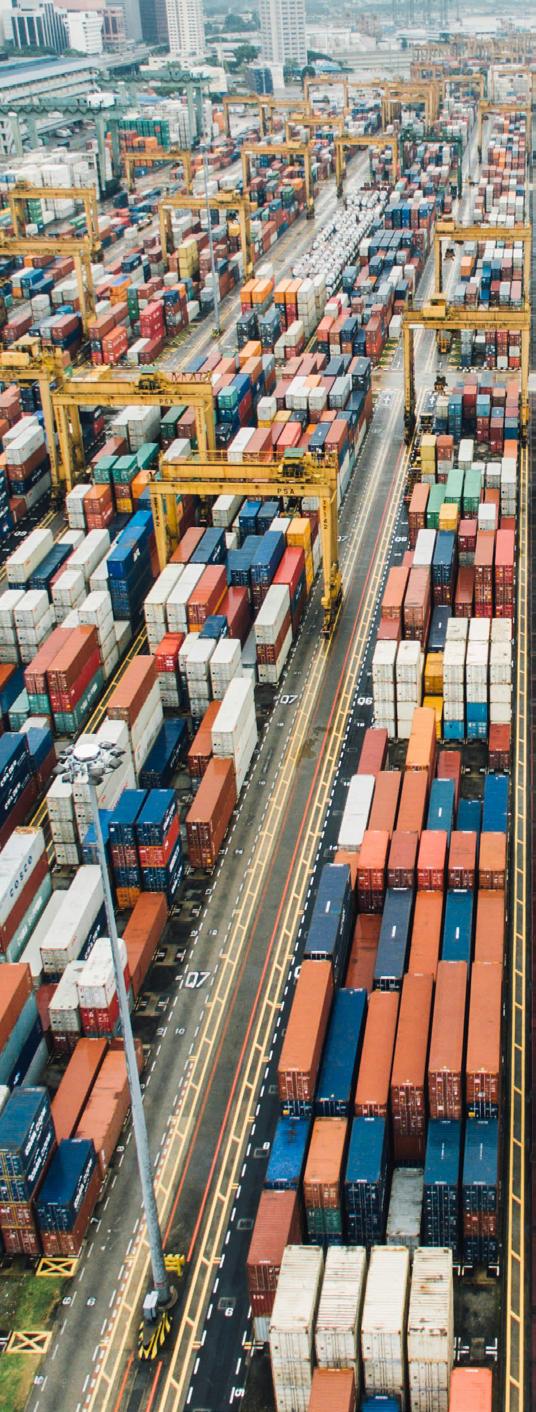
ANZ at Dematic. “Stock holdings multiplied compared with pre-COVID levels, which meant a lot of investment was brought forward. Now organisations are focused on leaning out their operations again.”
Many organisations aren't stopping there. Instead, they're using efficiency gains as a launchpad – extracting savings from existing operations and redirecting them into longer-term transformation.
“Cost still remains a priority,” says Charlotte Jordan, Executive Director Supply Chain at TMX Transform. “To support strategy transformation in that environment, we have to find the benefits first, drive cost out, and use those savings to fund future investments.”
Charlotte says organisations that have already addressed the most accessible savings often find there's more to unlock when they connect data points across their supply chain. "When you build a complete, comprehensive picture, you can draw greater benefit and efficiency," she says. "And if organisations can't afford to invest right now, it's about maximising existing infrastructure, extending the life of assets, and planning for transformation."
For Raghav Sibal, Vice President, APAC at Manhattan Associates, the shift goes further than cost. “While cost reduction is always present, savvy businesses are making investments that support long-term performance and supply chain resilience,” he says. “Instead of asking how technology can simply reduce labour costs, organisations are looking at how it can improve service levels, respond quicker to change and support growth across channels. There’s a growing recognition that efficiency on its own isn’t enough if the supply chain can’t adapt when conditions change.”
Dematic’s Lee Koutsos says the definition of ROI itself needs rethinking. "When companies first install technology the actual operational impact might slow down, because it's an extra process they didn't have before," he says. "If you're just looking at the financials, you think you're going to make a loss. But it pays in multiples when you factor in missed shipments, lost stock, the cost of sending another truck to fulfil an order that went wrong. The cost of doing things poorly far outweighs the cost of the solution."
The Simulation and Data Revolution
Organisations are now starting to change how they build and validate their business cases in supply chain investment.
By using advanced simulation tools, multiscenario analysis can be presented to stakeholders and used as a powerful persuasion tool when making strategic recommendations.
Charlotte says TMX clients are now running upwards of 19 different strategic scenarios simultaneously, incorporating variables around growth, market conditions, new service offerings and changing customer demand. "Five years ago, analysts were manually running these models over and over," she says. "Now, once you've twinned the network and built the baseline, we can run scenarios in a matter of minutes rather than days or weeks."
This has a significant impact on stakeholder buy-in. "You go from a business case document to something far more tangible," Charlotte says. "With simulation, you can show stakeholders the future network model – how it runs, what a day in the life looks like. You’ve answered why this option, why not the others, and you have the fact base to prove it."
Manhattan’s Raghav Sibal sees the same principle playing out through unified technology platforms. "The strongest returns are coming from investments that improve execution, not just planning," he says. "What really sets high-performing organisations apart is a move away from disconnected point solutions. When inventory, order management and workforce orchestration are connected, the benefits compound. Operations become more predictable and resilient, not just faster."
Raghav says this shift toward data-driven decision-making extends beyond strategy into daily operations. "Modern supply chain software makes performance visible in real time," he says. "When
organisations can continuously track productivity, service levels and exceptions, they can identify issues earlier and focus on incremental improvements rather than reactive fixes."
On the warehouse floor, Lee says the improved data availability is linking operations which once ran independently, together. “More and more, everything we do is around connecting the devices, connecting the people to the devices, connecting the people to the business,” he says. “Data is the lifeline of AI. Too many times, I’ve heard people say, ‘if I had that information, I would have made a different decision.’”
This increase in connection means more companies are starting to look at a wider operational scope when making decisions.
"If you've got a data link between all of those, you can get some really nice efficiencies and valuable information that you wouldn't have had before. Don't ring-fence solutions – look at the bigger picture.”
Leaders vs Laggards: The Widening Gap
The gap between high-performing supply chains and those not keeping up is defined by how companies approach investment decisions. One of the most persistent traps, according to Raghav, is the belief that automation alone will solve operational challenges.
He warns against the misconception. “Without the right software foundation and processes in place, automation can actually increase complexity rather than reduce it.” He adds that leaders take a connected, platform-based approach. “Rather than treating technology, people and sustainability as separate initiatives, they invest with a clear view of how everything fits together.”
He reiterates Lee’s point around data connection, and says the mistake is pursuing solutions in isolation, which fragments data and makes it harder to realise real value. Getting it right means treating transformation as a whole-of-business exercise. “For example, WMS transformations are a wholeof-business change, not just a system upgrade. That means bringing operations, IT, leadership and frontline teams together early, so everyone understands why the change is happening and how it will affect the way work gets done.”
Lee points out that while transformation is daunting
to approach, doing so earlier is almost always better in the long run. “Businesses that embrace change always come out saying, ‘I can’t believe I didn’t do this earlier,’” he says. “There are some large companies that have resisted anything technical or any sort of advancement because they’re not comfortable with it, and now the ladder that they’ve got to climb is so much higher than their competitors.”
He says the consequences of poor data visibility play out in everyday decisions. "A manager might keep three extra people on for an afternoon shift because they didn't have up-to-date data telling them they didn't need them," he says. "That's money and efficiency walking out the door."
Lee also warns against isolated investment decisions. "Isolating business decisions from technology roadmaps can be a big mistake."
TMX’s Charlotte Jordan says leaders are leveraging data and AI not just to shape strategy, but to drive predictive decision-making across every operational layer. “From production planning through to final delivery, companies are leveraging data and personalisation to inform not just what customers want, but when and how they want it delivered,” she says. Meanwhile, companies falling behind have aged infrastructure and are now struggling to keep pace with customer needs, or have competitors offering greater speed, choice, services and more transparent, responsible products.
Charlotte says these businesses who paused investment are now scrambling to respond. "We've been saying for the last few years that you will be left behind, but it's really hitting home now. If you don't make those investments, where will you be in a couple of years?"
Where to Invest Now
Looking ahead, all three experts point to converging investment priorities. When it comes to predicting where the sharpest competitive edge will stem from, they offer a range of areas to focus on.
Charlotte says the way data is used in day-to-day operations, and towards strategy will shift from informing human decisions to powering automated ones.
“Data platforms won’t serve people anymore; they will serve machines,” she says. “And the shift

"If you don't make those investments, where will you be in a couple of years?"
CHARLOTTE
JORDAN, EXECUTIVE DIRECTOR SUPPLY CHAIN

"Without the right software foundation and processes in place, automation can actually increase complexity rather than reduce it."
SIBAL, VICE PRESIDENT, APAC AT MANHATTAN ASSOCIATES

RAGHAV

for people will be to provide greater governance and oversight – governing real-time data exchanges between AI agents and enterprise systems.” She also points to unified commerce strategies and customer data platforms as key investment areas, as businesses enter “a more sophisticated environment, connecting fulfilment operations and managing channels strategically”.
Raghav says workforce technology will provide a strong competitive edge. “The ability to onboard, train and support workers efficiently, and to give them intuitive tools that make their jobs easier, will be a key differentiator,” he notes. On AI, he predicts that business success will depend on its use-case. “Data visibility and AI-driven decision support will play a growing role, but only when AI is embedded directly into operational workflows rather than added as a separate layer.”
He also advocates for systems designed for continuous evolution.
Organisations locked into major upgrade cycles are finding it harder to keep pace with those on cloud-native platforms that support continuous improvement.
“Cloud-native platforms make it easier to implement change, whether that's adjusting workflows, introducing new fulfilment options or responding quickly to demand shifts. The underlying architecture matters."
When looking at the practical reality of the warehouse floor, where AI is already delivering, Lee says the biggest gains often come from solving problems people didn't even know they had.
"The organisations that get the most value are the ones willing to open up their operations and talk honestly about their pain points. Often, there are opportunities they didn’t know were there, " he concludes. ●
Australia and New Zealand’s Cold Chain Running Out of Room: Building Capacity and Resilience with Automation
WRITTEN BY DAVID RUBIE, DEMATIC ANZ SALES DIRECTOR, INTEGRATED SYSTEMS AND MOBILE AUTOMATION
Australia and New Zealand’s (ANZ) cold chain sector is experiencing one of the sharpest demand surges in decades.
Frozen categories continue to rise as consumers seek value, meal-kit and online grocery services are expanding deeper into regional markets, and pharmaceutical and export volumes show no sign of easing.
Global forecasts illustrate this upward trajectory. By 2030, the refrigerated warehousing market is projected to reach US$427 billion, growing at more than 18% annually, with Asia Pacific outpacing every other region, according to Grand View Research.
Despite the ANZ region playing a central role in this growth story, capacity across the region is already tight – and it’s getting tighter. The question confronting industry leaders now isn’t whether demand will keep climbing, it’s figuring out how and where the sector will find the capacity and resilience to handle it.
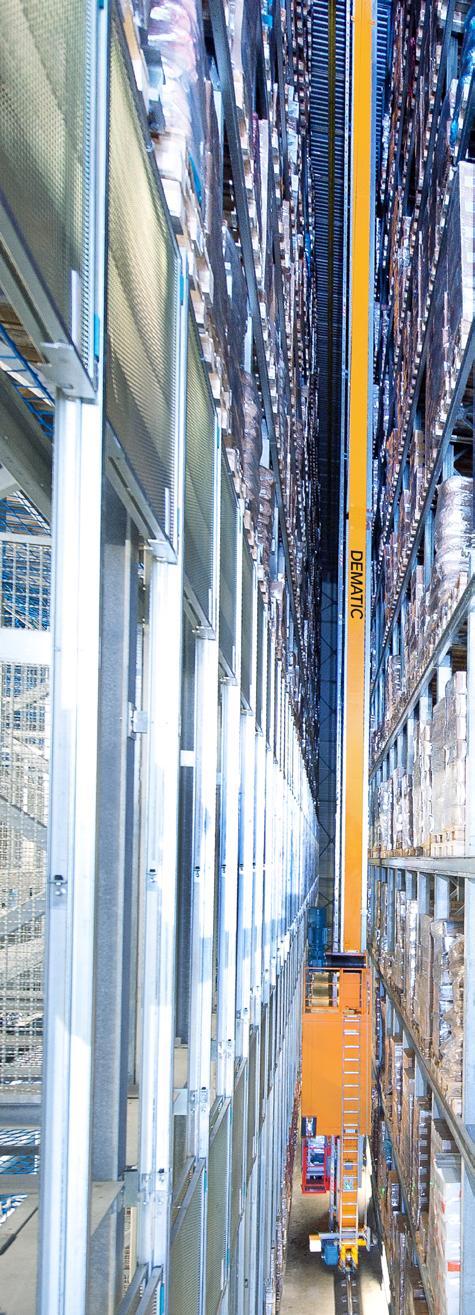
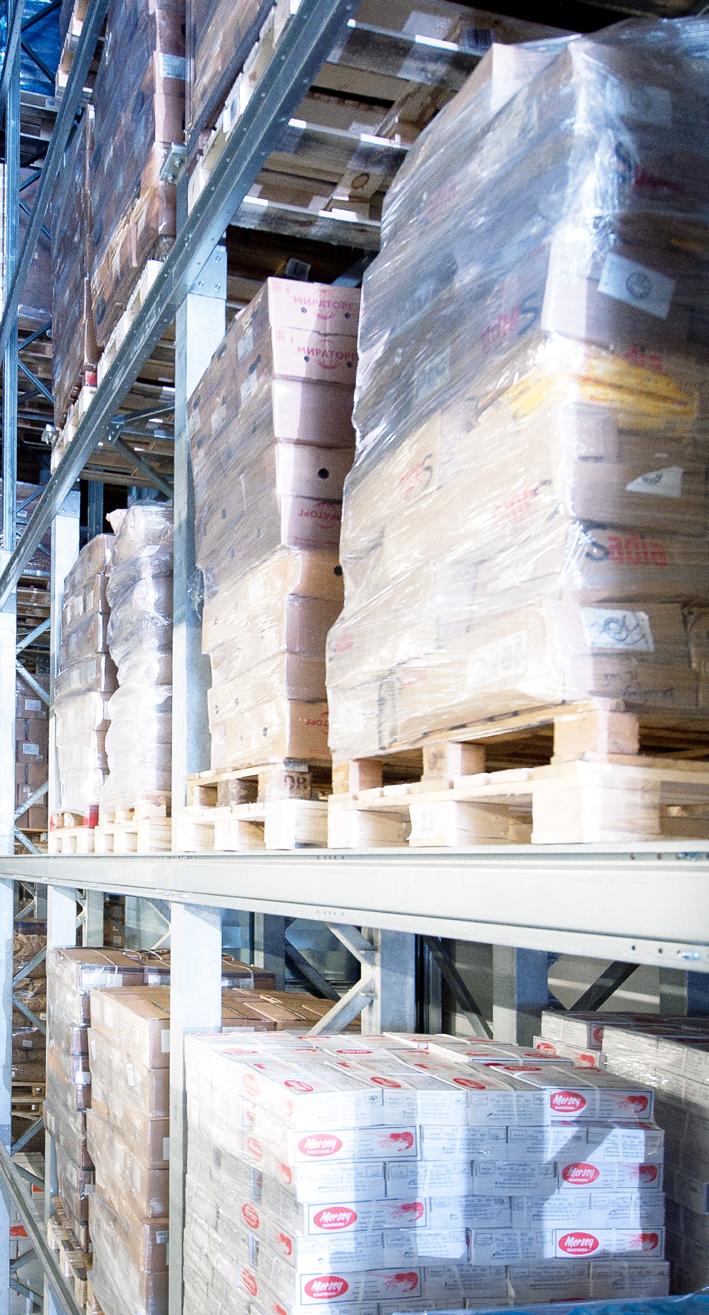
For ANZ, the challenge has shifted from simply meeting demand. It’s now about managing it within tightening infrastructure, labour, and cost constraints.
Development timelines remain lengthy, skilled labour is increasingly hard to find, and regulatory and land-use complexities make expansion difficult. As a result, operators are being pushed to consider new ways to increase capacity and maintain reliability across the supply chain.
What’s Driving Demand?
Consumer behaviour across the region has been changing in recent years. Economic pressures have driven stronger preference for frozen and ready-toeat categories, with frozen fruit and vegetables among the fastest-growing segments. This is contributing to more stock keeping units (SKUs), higher stock rotation, and increased storage requirements.
Online grocery markets are also maturing, with meal-kit and fast delivery services extending further into regional areas. These models depend heavily on reliable temperature-controlled capacity and predictable throughput.
Outside the food sector, demand is growing for temperature-sensitive pharmaceuticals, biologics, chemicals, and specialised materials that support healthcare and industrial sectors. Exports, particularly premium seafood and meat, continue to expand and place additional pressure on cold chain infrastructure. Combined, these pressures are outpacing the rate at which new capacity can be brought online.
A Widening Capacity Gap
Industry analysis by CBRE indicates that unless development accelerates, Australia’s cold storage shortfall could reach 4.2 million cubic metres by 2030. This gap is already visible in day-to-day operations. Facilities are running at or near full capacity, vacancy rates are extremely low, and available space is being leased quickly, often before new builds are completed. Several factors are slowing expansion, including high construction costs (high price materials, refrigeration and specialist trades), lengthy approvals (extending timelines and increasing project risk), and land constraints (particularly near ports and distribution hubs).
At the same time, the sector continues to contend with a range of cost pressures, particularly labour shortages, rising energy costs, and high facility rental prices.
These factors are reshaping investment priorities across the sector.
A Shift Toward Focused and Strategic Automation
In response to these constraints, the conversation around automation has matured. It’s evolved beyond the idea of fully autonomous warehouses.
Today, the focus is on how automation can help to solve real problems to build capacity, improve throughput, support labour shortages and enhance consistency, while reducing operational risk.
Across ANZ, a clear trend is emerging toward targeted automation that delivers immediate, measurable impact. Freezer-rated solutions have become more flexible and cost-accessible, making them viable for a broader range of operators, including producers and regional facilities that previously considered automation out of reach.
Automation is increasingly being used to open up higher storage density within existing facilities, maintain throughput despite labour shortages, stabilise operations and improve reliability, and reduce manual handling and improve safety
A key development has been the growth of multiclient cold storage facilities, where anchor businesses consolidate volumes and share automation infrastructure. Flexible zoning within these facilities also allows operators to reassign chilled, frozen, or ambient areas based on seasonal needs.
Digital warehouse management and control systems have also matured, supported by AIenhanced decision-making that improves inventory accuracy and operational planning. Gartner research showed that 74% of global supply chain respondents said AI would be a key driver of change over the next three to five years.
Meanwhile, operators building new facilities are trending towards higher density, maximising vertical capacity and energy efficiency. Whereas many existing low-bay or older warehousing facilities are shifting to deeper-lane racking, higher-density configurations, or partial automation retrofits.
What Automation Investments Are Being Made
Across ANZ, investment is rising among producers, food manufacturers, and third-party logistics providers. Dematic data shows that last year investment in cold chain automation and robotics sat at almost AUD$100 million in ANZ region.
Key areas of automation investment include automated pallet storage, AGV pallet movement, and automated case storage and case picking. The strongest momentum is in automated pallet storage, driven by higher frozen demand, changing dietary
trends, and the need for consistent temperature control and traceability.
Over the past 25 years Dematic has witnessed automated pallet storage grow from a minority to the majority of new pallet storage installations in the region. While large 3PLs have historically led this trend, a growing share of investment now comes from producers and processors, metropolitan and regional, implementing scaled-down automated facilities or retrofitting existing warehouses.
These smaller, integrated solutions offer one of the most promising avenues for unlocking capacity without relying solely on new builds.
Brownfield Automation Is the Next Step for Many
As land becomes harder to secure and construction costs continue to climb, automation suitable for older facilities is receiving more attention.
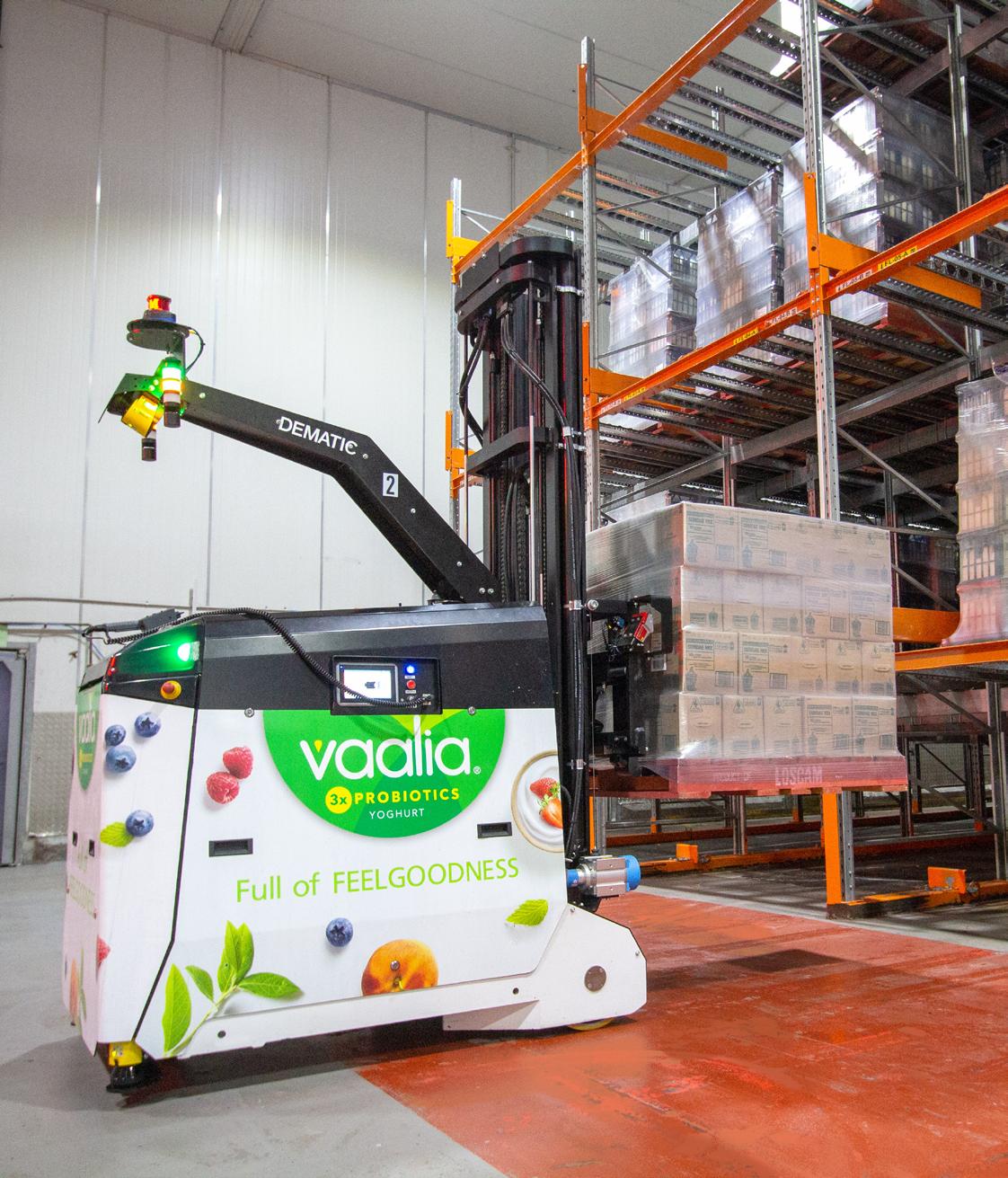
Solutions like the 4-way pallet shuttle are helping to bring automation into existing and older facilities. The system travels both across aisles and storage channels and between levels, enabling deep-lane storage and significantly increasing density without requiring new building construction. It also offers the flexibility to expand or reconfigure as operational capacity or throughput needs change.
This opens opportunities for operators to extract more value from assets they already own, provided the building meets key structural criteria. Some criteria include sufficient ceiling height, adequate floor load and flatness, available or expandable power, robust insulation and envelope integrity, and transport access that can support higher throughput. These factors help determine whether a retrofit, partial automation, or new build will deliver the strongest return.
Dematic has seen strong uptake of retrofitted automation in Australian cold chain environments, particularly among operators aiming to increase resilience without undertaking full-scale redevelopment.
Where The Industry Is Heading
ANZ’s cold chain is facing ongoing demand growth at a time when infrastructure expansion is becoming more challenging. Capacity constraints, rising energy and other costs, and labour shortages are shaping day-to-day operating decisions across the sector.
Automation is a practical, flexible, and scalable solution to address these pressures. Whether through new builds, targeted retrofits, or shared multi-client facilities, automation is helping operators find capacity, strengthen reliability, and improve operational resilience.
As operators look to optimise new and existing assets and prepare for future demand, a measured and strategic approach to automation will play an increasingly central role in building a resilient cold chain across Australia and New Zealand. ●
Building the Smarter, More Resilient Supply Chains of the Future
WRITTEN BY LUKE THOMAS, VICE PRESIDENT - ASIA PACIFIC & JAPAN, APPIAN
The global supply chain landscape continues to evolve at pace.
After years of pandemicdriven disruption, the focus has shifted from short-term survival to building longterm resilience, improving speed and using technology to gain a competitive edge.
Supply chains today are more complex, dynamic and interconnected than ever. From sourcing and manufacturing through to distribution and last-mile delivery, organisations face mounting pressure to move faster, operate more efficiently and remain resilient in the face of constant disruption. Yet many still rely on fragmented systems, manual processes and outdated decision models. This leads to delays, inefficiencies and missed opportunities.
Against this backdrop, supply chain leaders are reassessing how technology can support smarter, more adaptive operations.
Balancing Speed with Resilience
Cost control remains critical, but is no longer the sole priority. Speed has become a defining competitive
differentiator. Supply chain leaders are now working to balance cost discipline with the ability to respond quickly when disruption occurs.
Logistics bottlenecks from unpredictable events like geopolitical instability and regional trade interruptions have also proven the importance of agility. It is no longer enough to identify a disruption early; organisations need the agility and applications in place to respond so quickly it appears almost anticipatory.
Modernising Legacy Technology Without Disruption
Outdated technology remains one of the biggest barriers to achieving speed and resilience.
Many organisations still run decades-old, on-premise systems that create friction across supply chain operations.
Modernising IT infrastructure and applications is a priority, to reduce latency and position organisations to take advantage of AI-powered tools. However, large-scale transformation projects are often seen as costly, time-consuming and resource intensive.
Leveraging an agility layer—a flexible software layer that sits above systems to orchestrate processes and adapt quickly to change—for supply chain management can simplify and streamline the process. It helps organisations evolve and modernise ERP and transactional systems across functions like finance, procurement, and manufacturing without overburdening internal resources.
AI Moves From Productivity Gains To Business Transformation
Artificial intelligence and generative AI are now central to supply chain strategy. While early use cases have delivered impressive productivity improvements—such as reducing a two-hour task to two minutes—the real value of AI lies in its ability to reshape how supply chains operate.
Time savings can be reinvested into higher-value activities, from improving service levels and reducing stockouts to rethinking how work is distributed across teams.

AI is increasingly acting as a digital worker, handling repetitive tasks while allowing employees to shift focus to more value-driven efforts across the supply chain.
Applying AI Across the Supply Chain
To remain competitive, supply chain leaders must move away from reactive problem-solving towards more proactive, end-to-end decision-making.
AI and process automation are playing a critical role in enabling this shift by improving visibility, accelerating responses and supporting better decisions at every stage of the value chain.
• Sourcing and Procurement. Procurement teams are navigating increasing complexity, driven by accelerated timelines, sustainability requirements and the need to manage supplier risk. AI and automation help streamline procure-to-pay processes, improve supplier onboarding and accelerate contract management. This reduces cycle times and frees up teams to focus on strategic priorities. As Gartner notes, “AI-enabled solutions will help procurement expedite business decision-making, decreasing time spent on the contracting process and increasing capacity for additional tasks.”
• Logistics and Distribution. Logistics teams manage vast volumes of data across multi-modal transport networks, often using disconnected systems. AI-powered automation improves visibility across shipments, fleets and inventory, helping organisations meet customer expectations for fast, affordable delivery while also supporting emissions reduction goals. According to EY, “Early adopters that have implemented AI in logistics have achieved remarkable improvements, reducing logistics costs by 15%, optimising inventory levels by 35% and enhancing service levels by 65%.”
• Asset Management and Maintenance. Asset performance and reliability are essential to efficient supply chains, yet many organisations still rely on spreadsheets and manual tracking. AIdriven automation improves asset visibility across the lifecycle, supports predictive maintenance and streamlines field service operations, which all reduce downtime and improve service delivery.
• Demand, Supply and Inventory Planning. Demand volatility underscores the limitations of manual forecasting. Inaccurate demand forecasts can lead to excess or insufficient inventory, production delays and unhappy customers. AI enables real-time planning by integrating
data from sales, production, market trends and external factors such as weather. This improves forecast accuracy, reduces disruptions and allows planners to focus on strategic decision-making rather than manual reconciliation.
• Order-to-Cash Processes. Disconnected systems often slow order fulfilment, invoicing and payment collection. AI-powered automation streamlines the entire order-to-cash cycle, improving dispute resolution, order execution and after-sales service. The result is faster cash flow, better customer experiences and stronger liquidity.
Building Supply Chains Fit for the Future
The long-standing goal of truly connected endto-end supply chains is becoming increasingly achievable.
By linking previously siloed systems across planning and execution, organisations can reduce delays, improve responsiveness and gain clearer insight into operations.
Embedding AI and automation across the entire supply chain—from procurement and logistics to planning and order management—businesses can eliminate bottlenecks and adapt quickly to change. The result is a supply chain that is not only faster and more efficient, but smarter, more customer-centric and better equipped to meet future demands. ●

Why Supply Chain Execution Will Decide Who Wins in Ecommerce in 2026

WRITTEN BY
ROB HANGO-ZADA, CO-FOUNDER AND JOINT CEO OF SHIPPIT
Consumer expectations, global competition, economic uncertainty and industry-wide volatility are rapidly reshaping the delivery landscape.
With four in five Aussies saying delivery influences where they shop, and two in three not returning to a brand after a poor delivery experience, the supply chain is no longer an operational process - it’s a growth lever.
The stakes will rise further in 2026. Amazon, Temu and Shein are forecast to command 36% of local ecommerce, establishing new benchmarks on price, range and speed. For supply chain leaders, the focus must be on how to adapt and optimise fulfilment and delivery without inflating cost, complexity or risk.
From fulfilment speed, carrier strategy and inventory visibility, to automation, AI, and returns, Shippit’s Commerce Delivery Report explores how supply chain leaders must evolve their fulfilment and delivery models to remain competitive.
1. Speed is Now an Fulfilment Problem, not a Transport One
Fast delivery has shifted from competitive advantage to baseline expectation. Retailers offering same- or next-day delivery generated 3.5-4% more orders during the Black Friday Cyber Monday (BFCM) weekend, while on-demand delivery has been linked to 3.5x higher spend per customer and 35% more orders.
Yet speed isn’t won on the road. The gap between the average delivery promise (5.2 days) and actual performance (1.7 days) points to a deeper issue: promise accuracy, inventory visibility and fulfilment execution. In 2026, the most effective supply chains will be those that treat fulfilment and pick and pack execution as growth levers, not afterthoughts.
2. Carrier Reliability is Improving, But Orchestration is the Advantage
Carrier performance continues to improve. During peak season, on-time delivery across major carriers improved from 90.5% to 93.7% (YoY). Reliability is no longer the differentiator it once was, though.
As Amazon lifts expectations, attention shifts to how effectively networks balance speed, cost, experience and flexibility. Rather than relying on a single carrier strategy or one-size-fits-all treatment of deliveries, optionality and flexibility are key. Leading brands are dynamically allocating orders across established, emerging and specialist carriers.

3.
Stores Are Re-emerging as Critical Fulfilment Hubs
Stores are re-emerging as a core delivery advantage. In 2026, a clear performance gap is emerging between brands that can pick, pack, and dispatch orders from stores in minutes or hours, and those constrained by training gaps, inconsistent execution and poor fulfilment ‘culture’.
As delivery speed becomes a baseline expectation, fulfilment execution has emerged as the primary bottleneck. Retailers with strong store and warehouse discipline are consistently outperforming peers on both service and cost.
Treating stores as distributed fulfilment hubs requires more than technology. It demands clear accountability, operational standards and a culture that values fulfilment excellence just as much as instore sales.
4. Automation Enters its Correction Phase as Process Takes Precedence
After years of investment, automation is entering a correction phase. Many businesses have learned that large-scale automation fails to deliver returns when layered onto fragmented inventory, broken processes or poor operational design.
As capital tightens, automation for automation’s sake is losing favour. Instead, supply chain leaders are prioritising practical process improvements that deliver faster, more sustainable gains than larger and, often, more rigid technology deployments. For
supply chain leaders, the key question is where does automation genuinely boost performance, and where does it simply add cost or accelerate inefficiency?
5. AI Will Divide the Field, Not Level it
While 62% of decision-makers cite AI as the biggest trend, its impact in 2026 will be uneven. AI will act as a divider between businesses that embed it across planning, inventory, fulfilment and delivery, and those running isolated pilots disconnected from core operations.
AI is moving rapidly from experimentation into day-to-day execution, for example in scenario planning, inventory management, delivery and fulfilment. Early adopters and those that scale AI into every-day decision-making will improve costs and performance.
6. Returns Are Being Re-Engineered as Closed-Loop Supply Chains
With 92% of consumers more likely to shop again after an easy return, they’ve long been a loyaltydriver. But the economics of returns were deemed unsustainable, with the volume of retailers offering easy or free returns falling from 97% to 58% and 49% to 14% respectively since 2018.
In 2026, leading brands will redesign returns as closed-loop systems. Tactics such as store credits, exchanges and in-store returns help preserve margin, recover inventory faster and keep value circulating within the network. Returns are no longer just a customer experience function, though; they’re a reverse logistics challenge with direct implications on costs, inventory management, and profitability.
7. Inventory Visibility Has Become Existential
Carrier speeds are faster than ever, but many retailers don’t know where inventory sits until after a purchase. This often leads to split shipments, missed delivery promises and margin erosion.
That means inventory visibility is no longer an IT issue; it’s a necessity for accurate delivery promises, efficient orchestration and cost control. Supply chain leaders that use data to tightly integrate stores and DCs will improve conversions, delivery predictability and unlock cost savings.
The reality is clear: 2026 will be a fight for relevance and revenue. Growth will be increasingly determined by execution. Supply chain success is dependent on fixing fulfilment, replacing guesswork with data, moving inventory closer to customers and building delivery networks designed for speed, resilience and scale. Those that do will be wellpositioned not just to survive, but to grow. ●
Introducing ASCLA's First CEO and New Board Chair

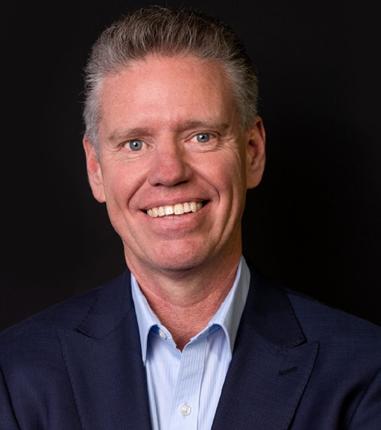
Steven Ballerini Chief Executive Officer
Appointing ASCLA’s First Chief Executive Officer
The Australasian Supply Chain and Logistics Association is pleased to announce the appointment of Steven Ballerini as its inaugural Chief Executive Officer.
This appointment represents a significant milestone for the Association. With operations expanding across Australia and New Zealand, increased focus on member value, and a growing industry presence, the need for dedicated executive leadership has become clear.
As the Australasian Supply Chain and Logistics Association (ASCLA) continues to grow in scale, reach, and impact across the Australasian region, the Association is strengthening its leadership structure to support its expanding ambition.
Steven Ballerini is a passionate and dynamic executive with over 15 years’ experience driving growth and transformation in Australia’s supply chain and logistics sector.
With a strong track record in 4PL services. Known for his energy, commercial insight, and collaborative leadership style, he is widely regarded for building enduring partnerships that create long-term value.
With extensive experience in strategic direction and organisational leadership, Ballerini will lead ASCLA through its next phase of growthscaling member services, strengthening industry partnerships, and positioning the Association as the leading voice for supply chain and logistics professionals across the region.

Welcoming the New Board Chair
Stephen Lakey has been appointed Board Chair of ASCLA.
Stephen has been involved with the Association since 2008, serving as President of the VIC/TAS Division from 2020 and joining the Board as a State Director in 2021.
He is a seasoned supply chain technology consultant and communications coach with over 17 years of industry experience, specialising in supply chain digitalisation and operational improvement to help organisations build efficient and sustainable supply chains.
Stephen is also recognised for developing the communication capabilities of supply chain professionals, supporting stronger collaboration and leadership across organisations. His deep industry knowledge and governance experience position him well to guide ASCLA’s strategic direction and ensure continued strong leadership as the Association builds on its momentum and pursues new opportunities for member value and industry impact.
Honouring the Outgoing Chair
As part of ASCLA's constitutional governance structure, current Board Chair Sue Tomic concluded complete her five-year tenure at the end of 2025.
Sue's leadership has been transformational for the Association. During her tenure, ASCLA experienced significant growth and strategic advancement, strengthening its position as a leading industry body and supporting members through periods of major disruption and change.
Key achievements during her leadership include:
• 94% growth in corporate partnerships, strengthening industry engagement and commercial sustainability
• 143% revenue growth, enabling increased investment in member value and industry advocacy
• A successful rebrand to ASCLA, reflecting the Association’s expanded Australasian vision
• The first-ever acquisition, welcoming Supply Chain Partners into the Association and expanding member benefits through a dedicated jobs board, products and services directory, enhanced member connectivity, and international reach
• Expansion into New Zealand, with more than 120 attendees from 54 companies at the inaugural event, strengthening cross-Tasman collaboration
Sue joined the Board as Treasurer in 2019 and helped guide the Association through unprecedented challenges, including the COVID-19 pandemic. Her leadership was marked by a willingness to rethink how the Association served its members, ensuring not only continuity during disruption but sustained growth and relevance. ●
Stephen Lakey Board Chair
Sue Tomic Outgoing Board Chair
TMX Transform Provides First of its Kind Insights with New Quarterly Report Across the Network
In the first quarter of 2026, the cost-cutting urgency of recent years hasn't disappeared, but it is no longer the whole conversation. Businesses are taking stock of stabilised construction costs, a property market with negotiating room, and an automation landscape that is maturing rapidly.
TMX Transform is about to release its inaugural quarterly report to break down the numbers and insights impacting Australia’s supply chain, industrial property, and project services decisions. As Across the Network will explore, Australia’s leading decision makers are moving from short-term survival to building networks that will remain competitive for years to come.
This first of its kind report will also include TMX Transform's proprietary Q1 2026 cost benchmarking data covering 3PL warehousing and transport rates across Sydney, Melbourne, and Brisbane. For supply chain and logistics decision makers looking to analyse their current spend or benchmark a new operation, it is a rare opportunity to access current market rates in one place.

A Snapshot
Supply Chain
The shift from cost-out to transformation is underway. Businesses are redesigning end-to-end networks, looking to emerging automation provider markets, and moving from one-off simulation testing to ongoing strategic planning.
Property
Rising vacancy and returning incentives have created a negotiating window. Occupiers are leveraging this to interrogate their networks, optimise their property footprint, and execute long-term strategies.
Project Services
Construction cost escalation has moderated to mid-single digits, restoring confidence in business case planning. Fire approvals and data centre expansion are the emerging pressure points to watch.
What the Data Shows
Most supply chain work this quarter has concentrated on setting up future networks – designing what comes next rather than patching what exists. A breakdown of TMX Transform’s top 5 areas clients are investing within their supply chain are network strategy, DC design, program management, automation expertise, and optimisation/cost-out.
On the property side, Victoria is the most active market, with rents well below Sydney even after outgoings. South Sydney rents now rival office rents, pushing occupiers west into areas where port and transport access becomes more difficult. Brisbane continues to attract interest on the back of population growth and infrastructure investment ahead
of the 2032 Olympics. In project services, construction programs are becoming reliable again, but fire approvals for automated facilities are adding two to four months and potentially millions in unplanned costs, a risk that is catching occupiers who haven't built these contingencies into their planning.
"Increasingly, our clients are factoring in network strategies as part of their future – not just for change, but for the cost of inaction, including lost revenue and competitive service gaps." — Charlotte Jordan, Executive Director, Supply Chain, TMX Transform
The Forces Shaping the Rest of This Year
In the report, TMX Transform identifies the biggest emerging pressures to start 2026:
• Data centres competing for labour, capital, and power infrastructure – with major developers raising billions that could redirect resources away from industrial and logistics projects.
• Land scarcity tightening in established precincts, with infill redevelopment becoming a necessity rather than an option.
• Consumer expectations accelerating faster than most businesses can respond, driving infrastructure decisions that businesses must make now.
• Planning approval timelines stretching – particularly in New South Wales and Victoria – making early engagement and site selection more critical than ever.
• Simulation evolving from a one-off planning tool into a continuous strategic capability. ●
Across the Network, TMX Transform's Q1 2026 Quarterly Insights Report, releases mid-March 2026. Access the report first here.
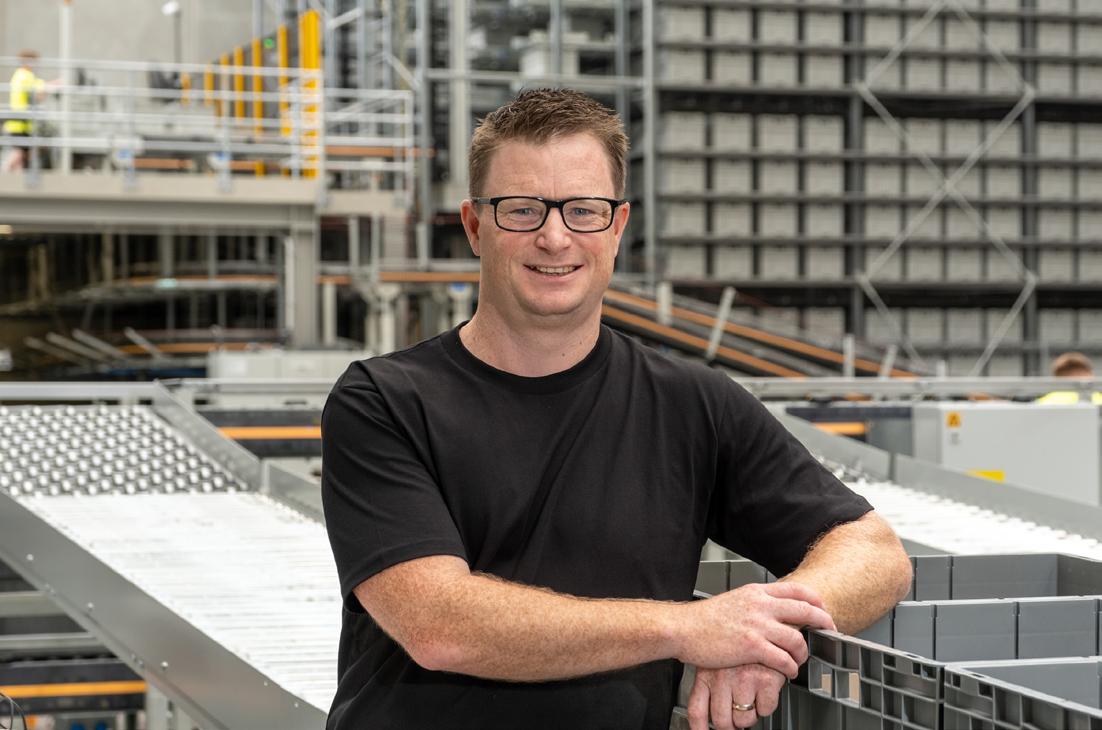
Justin Carnaby Head of Logistics, AS Colour
Order Fulfilment Down to
When AS Colour started out, the trend was for tight tees and baggy pants. But while clothing fashion trends come and go, the trend that doesn’t change is that customers want their orders delivered on time and accurately.
Dematic’s Multishuttle Goods-to-Person (GTP) fulfilment system enables AS Colour to process orders with higher productivity, faster and with increased accuracy, down to the sequence of items in the package.
As a result, AS Colour has seen a big increase in sales as customers see how fast and accurately their orders reach them.
more at dematic.com/as-colour


Amazon, Temu and Shein to Dominate Australia’s Marketplace Sector at the Expense of Local Competition

Pattern’s 2026 Marketplace Consumer Report reveals a sector under pressure, with global giants tightening their grip and the era of local marketplaces at risk
Australia’s marketplace sector is being redefined as global ecommerce giants use their international scale and advanced infrastructure to grow their share of consumer spending at the expense of local marketplaces, according to new research from Pattern.
The ‘2026 Marketplace Consumer Report’ highlights a sector that looks markedly different to just a few years ago. With fewer local Australian marketplaces following the closures of Catch and MyDeal, and pressure on Kogan to maintain its competitiveness as consumers increase their spend with global platforms, data suggests a long-term shift in how marketplace competition will play out in Australia.
Amazon now reaches 60% of Australian shoppers, growing its customer base by 3.45% year on year.
Temu continues to expand rapidly with A$2.6 billion in sales last financial year and 47% of Australians purchasing from the platform, while Shein has lifted its reach to 30%, recording the fastest growth (15%) among major marketplaces. Australia’s last remaining dedicated local marketplace, Kogan, however, is losing ground. Just 15% of consumers now shop on the platform, reflecting a 6% year-on-year decline.
“The pressure on Australian born and bred marketplaces from global giants like Amazon and
Temu is no longer theoretical. What we’re seeing is a sector shaped by international scale, logistics sophistication and global ecosystems. This isn’t a temporary cycle, it’s a structural shift and could signal the end of the local Australian marketplace era as we once knew it,” said Merline McGregor, Managing Director for Pattern Australia.
Amazon Leads as eBay Loses Ground
Amazon continues to lead the Australian marketplace sector with 8.8 million active shoppers and 66% of consumers planning to shop on the platform. eBay, however, is sliding in the opposite direction, declining 7% to 51% of shoppers planning to use the platform in 2026.
The research shows Amazon purchase decisions are broadening and no longer price-led, with price as a motivator falling by 42%. Shoppers now point to speed (35%), Prime benefits (31%) and overall preference for Amazon (28%) as key reasons for purchasing on the platform. The growing role of product reviews, now cited by 24% of shoppers, highlights Amazon’s advantage in trust and community validation, an edge eBay has struggled to match.
"Amazon has moved beyond competing purely on cost. While price still matters, its advantage today is also about removing friction at every stage of the shopping journey. Faster delivery, trusted reviews and habitual usage are what has made it the dominant marketplace in Australia and what keeps customers coming back," said McGregor.

Temu and Shein Rebuild Trust and Expand Beyond Price
Shopper perceptions of product quality and trust have improved sharply for Temu and Shein, marking a significant shift in how these platforms are viewed in Australia. Over the past year, Temu recorded a 50% increase in product quality and trust perception, while Shein saw a 36% increase.
Historically criticised for inconsistent quality, in 2025 Temu was trusted by just 12% of shoppers and Shein, 11%. However, sustained investment in supplier standards, range expansion beyond fast fashion and brand partnerships with established global brands is beginning to change sentiment.
“Temu and Shein have worked hard to shed their reputations as low-cost disruptors and are now emerging as serious players in the marketplace landscape,” said McGregor. “Temu now serves 4.7 million Australians, with its customer base growing at 24% annually.
“With trust levels rising, these platforms are no longer competing on price alone, firmly positioning them for sustained, longterm relevance in the Australian market.”
Product Discovery Fragments Across Platforms
Product discovery behaviour is fragmenting rapidly. While Google has regained ground, with 54% of shoppers beginning their product searches on the platform since the rollout of AI-generated answers that ease discovery, social media is disrupting search.
Social media is now one of the fastest-growing starting points for product research, with 67% more consumers beginning their search on social platforms compared to 2025.
Today 78% of Australians are active on social media and with near-universal mobile use, discovery is increasingly shaped by feeds, creators and shortform video.
“Social platforms are collapsing the long bridge between inspiration and transaction,” said McGregor. “With the imminent launch of TikTok Shop in Australia, this shift will accelerate. Brands that invest in creator-led content and seamless in-platform shopping will be best positioned as social becomes a central pillar of modern product discovery.”
Convenience and Delivery Speed Emerge as Key Differentiators
With 93% of Australians purchasing from marketplaces in the past 12 months, convenience has become a defining factor in how consumers choose where to shop.
One in three Australians now cite ease of use and delivery speed as the primary reason they turn to marketplaces.
Amazon exemplifies this shift, with 36% of shoppers naming convenience as the main driver of their purchasing behaviour.
“Delivery performance has become a core brand asset for marketplaces today. Many Australians are choosing to order products through a marketplace, even if the same product is more expensive than elsewhere, simply because it could be delivered faster,” said McGregor.
What Products Will Consumers Buy From Which Marketplace in 2026?
Pattern's research reveals clear category distinctions across marketplaces, with each platform establishing dominance in specific shopping categories:
• Amazon leads in Books & eBooks (30%), Electronics & Computer (25%), and Clothing, Shoes & Accessories (22%).
• eBay shows strength in Clothing, Shoes & Accessories (17%), Automotive Parts (15%), and Electronics & Computer (14%).
• Temu captures consumer interest in Clothing, Shoes & Accessories (22%), with notable investment in Home & Kitchen Products (13%).
• Shein’s primary appeal lies with Clothing, Shoes & Accessories (21%), but is beginning to spark interest beyond this in Home & Kitchen (7%) and Toys, Kids & Baby Products (7%).
• Kogan holds some ground in Electronics & Computer (8%), Home & Kitchen Products (7%), and DIY/Home Improvement (5%).
"While the future of local marketplaces is uncertain, the opportunity for brands has never been greater. With 93% of Australians shopping on marketplaces, these platforms are where purchase decisions happen. Brands that understand category dynamics, build tailored strategies for each marketplace, and work with ecommerce specialists like Pattern will be positioned to capture a share in this consolidated but growing market," concluded McGregor. ●
For more information and to download the full report please click here.
Leadership Insights: Turning Strategy into Profit

WRITTEN BY STEPHANIE MARTINEZ, PARTNER, BASTIAN CONSULTING
Maximising returns from your supply chain is no longer just about doing more. It is about doing the right things, endto-end, to deliver measurable business value. With ongoing challenges like rising costs impacting supply chains, leaders must carefully balance technology, people, and operational execution to unlock real returns.
To explore what drives the strongest gains, where initiatives often fall short, and how leaders can maximise returns over the next 12 to 24 months, we spoke with three industry veterans: Cédric Lemetter, ex-COO and Head of Operations for FMCG and Consumer Health, Kathryn Dillner, Head of Supply Chain, Beauty and Homewares and Derrick Martins, Head of Supply Chain at The Sorbent Paper Co.
Where Returns Are Coming From
Both Cédric and Derrick emphasise that the most significant supply chain returns are derived from integrated, end-to-end approaches rather than isolated improvements.
By far, the strongest returns have come from initiatives that take a true end-to-end supply chain approach. Optimising individual nodes is important, but it must be done without losing sight of the overall impact. Consistent, continuous improvement initiatives over time deliver the most sustainable results, Cédric explains.
Derrick highlights operational levers that have driven measurable gains, particularly offshoring:
"Offshoring manufacturing to low-cost countries. Australian businesses are being forced to make these supply changes to survive in their market sectors or risk losing market share," he says.
Kathryn adds that while structural changes deliver efficiency, the strongest long-term returns often come from investing in the team itself.
Ensuring people are equipped and empowered to execute the strategy is what ultimately sustains performance.
Together, these perspectives point to the same conclusion: value is unlocked when strategy, operations and people are fully aligned across the supply chain.
When Investments Do Not Deliver
Even well-planned initiatives sometimes fail to generate expected returns. According to Cédric,

technology projects often underperform due to poor adoption or integration into daily operations.
"Even the most sophisticated forecasting or automated allocation tools create little value if they are not fully embedded into day-to-day ways of working. The gap is rarely the technology itself, but how well it is integrated into teams, processes, and decision-making,” says Cédric.
Derrick adds a practical, operational perspective, especially regarding automation. "Many business cases for warehouse automation do not stack up. Often, poor practices, waste, or inadequate labour planning have not been addressed before implementation,” explains Derrick. “If these shortfalls are fixed first, automation can deliver strong ROI and scalability."
Kathryn points to the execution gap that often sits behind these outcomes. “When direction is not clear and the team has not been engaged or developed, this can lead to failure in execution,” she adds.
Balancing Technology and People
A recurring theme is that organisations often overestimate technology and underestimate the role of people.
"Customer service and customer excellence require strong people and relationship skills alongside technology," says Cédric. "Tools are enablers, but they cannot replace deep understanding of the customer and end-consumer experience."
Kathryn reinforces that experience matters just as much as systems.
“Staff carry historical knowledge and longstanding relationships that technology simply cannot replicate. They can validate outputs, sense-check decisions and intervene where required.”
Derrick echoes this caution with artificial intelligence. "AI is still in its infancy. Early adopters often assumed it could replace human effort, but outputs still need people to ensure accuracy."
For Cédric, the missing link is often change management. Even the best tools fall short if teams are not brought along, processes are not reshaped, and behaviours do not evolve. Ultimately, technology delivers returns only when people understand it, trust it and are equipped to use it effectively. Speed, Expertise, and Execution
Cédric, Kathryn and Derrick all highlight speed and capability, each with slightly different emphases. Cédric advocates for progress over perfection. "In a world that continues to accelerate and face constant disruption, speed-to-capability is critical,” says Cédric. “It is far more effective to move quickly, test, learn, and improve over time than to wait for the perfect solution."
Kathryn reinforces the urgency, while pointing to the cultural risks of delay. “Speed to capability is critical,” Kathryn explains. “When organisations hesitate, it can lead to frustration, toxic cultures and an inability to deliver on strategy.”
Derrick focuses on ensuring the right expertise is in place: "Having the expert in your team is more important than speed to fill a vacancy. The wrong person will take longer to achieve goals, whereas the right person delivers ROI even if their salary is higher.”
Execution failures often stem from leadership being disconnected from operational realities.
"Friction occurs when decisions are made at a remote, high level, disconnected from operational reality. It is often the outliers and exceptions that determine whether a strategy succeeds," Cédric explains.
"If leadership has not deeply understood business processes, customers, or competitive pressures, and failed to include their teams, it creates friction or destroys value," Derrick adds.
Leaders must therefore combine speed with the right expertise while keeping decision-making grounded in operational reality.
Where Leaders Should Focus in the Next 12 to 24 Months
Looking ahead, all three experts offer practical advice for leaders aiming to maximise returns. Cédric emphasises integrated leadership. "Operate as an integrated business leader rather than driving value through isolated projects. Success comes from cross-functional collaboration, a clear focus on people, and bringing the broader organisation along."
Kathryn places equal weight on investment in capability. “Invest in your team and the right resources, and the sky is the limit on what a business can execute.”
Derrick highlights operational levers. "Increase forecast accuracy for demand planning and stabilise import supply. This allows logistics planning and network optimisation as we transition from 100 percent local manufacturing to a blend of imports and domestic production. Leaders should pull their levers on costs to maximise returns."
The next 12 to 24 months therefore require a dual focus on strategic integration and operational execution.
Maximising supply chain returns requires a balanced approach that brings together clear strategy, operational discipline, capable teams and smart technology adoption. By combining end-toend thinking and change management with cost control, collaboration and grounded decisionmaking, leaders can position their organisations to deliver strong, sustainable returns in an increasingly complex supply chain environment. ●
To find leaders who can help turn supply chain strategy into measurable business returns, contact Bastian. For more information, click here.
How Capital Logistics Keeps a Tonne of Deliveries Moving Every Day with Zoho

For Australia’s transport and logistics sector, complexity is inevitable. With the freight market valued at close to USD 100 billion and growing steadily, in part driven by e-commerce, networks operate around the clock and rely on thousands of people to make time-critical decisions each day.
Despite the scale and demand of modern supply chains, many operators still face fragmented systems, delayed information flows, and limited endto-end oversight.
In a climate where margins are thin and customer expectations are high, having a clear view of what is happening across the supply chain has become a vital factor in delivering a good return on investment. Without this visibility, businesses are left to manage by reacting to issues after they arise rather than preventing them beforehand.
As Rakesh Prabhakar, General Manager of Zoho Australia and New Zealand, states, “Limited visibility is one of the logistics sector’s biggest constraints. The organisations seeing the strongest returns are the ones investing in systems that connect people, data, and decisions across the entire value chain.”
Fragmentation in a Complex Supply Chain
Capital Logistics runs a nationwide, alwaysoperational logistics network supported by almost 3,000 subcontracted drivers, delivering everything from small parcels to heavy freight. Its services reach residential customers, commercial clients, and large businesses daily, often without the end customers ever realising the company is behind the delivery.
Managing this scale involves inherent complexity. Real-time visibility of consignments, coordination among dispatch, drivers, and customer service teams, and reliable reporting for senior leadership are all vital. As the business grew, Capital Logistics, like many logistics providers, found itself operating across multiple systems introduced at different stages of the organisation’s evolution.
These systems caused friction across the supply chain. Data resided in silos, making end-to-end performance tracking difficult. Information from drivers in the field did not always flow smoothly into operational dashboards or executive reports. Permissions and access controls were challenging to manage across a workforce with vastly different roles and responsibilities.
Cybersecurity posed another point of consideration. The transport sector is part of Australia’s critical infrastructure, and its continuity of service is essential for broader economic activity and everyday life. In this context, protecting sensitive operational data while maintaining speed and resilience became increasingly important, particularly across a technology environment that needed to support round-the-clock operations.

For Capital Logistics, the issue was not a lack of digital ambition. The organisation had a strong culture of innovation and leadership buy-in at the highest levels. The challenge was finding an approach that could simplify their technology stack, while still supporting the business’s complexity and growth ambitions.
A Unified Platform Built for Supply Chain Realities
Rather than pursuing another point solution, Capital Logistics made a strategic investment in Zoho One, Zoho’s unified business operating system. The implementation began modestly, with Zoho Desk introduced as a ticketing and communications management tool.
From there, the scope expanded rapidly. The appeal was not simply the number of available applications, but also the ability to configure and extend them to fit a service-based logistics model.
Central to this approach was Zoho Creator, the lowcode application development platform. Using Creator, Capital Logistics could design bespoke applications tailored to specific supply chain use cases, from customer portals to internal operational tools, without waiting years for custom development projects.
This flexibility fundamentally changed how the organisation responded to client needs.
For large enterprise customers with complex logistics requirements, Capital Logistics could build tailored platforms in months rather than years.
Data from multiple systems could be brought together into a single interface, accessible by Capital staff, drivers and customers with appropriate permissions.
The impact flowed across the supply chain. Drivers using handheld devices could capture data once, with that information feeding directly into customer service workflows, operational reporting and executive dashboards. Booking agents, dispatch teams and managers worked from the same source of truth, reducing errors and rework.
Importantly, this unification extended to security. By consolidating systems onto a single platform with consistent access controls, Capital Logistics strengthened its cyber posture while simplifying compliance and governance across the organisation.
Measurable Returns and Future-Ready Supply Chains
From an investment perspective, the results were clear. Capital Logistics reduced its overall technology costs compared to previous systems, both in implementation and ongoing annual expenditure. These savings were not achieved by cutting capability, but by eliminating duplication across their tech stack.
The organisation also saw returns in less tangible but equally critical areas. Improved data visibility enabled faster decision-making and more reliable service delivery. Clients experienced greater transparency and confidence in the movement of their goods, while internal teams benefited from purpose-built systems for logistics operations. Cybersecurity delivered one of the most significant returns. By protecting operational
data and reducing exposure to cyber incidents, Capital Logistics avoided disruptions that would have cost millions in lost revenue, remediation and reputational damage.
Change management, often a barrier in large-scale technology programs, proved manageable. The userfriendly design of the platform supported adoption across a diverse workforce, from drivers to directors. Even the migration of more than 150 sales representatives from an existing CRM took approximately three months, far faster than initially anticipated.
Investing For the Next Phase of Supply Chain Performance
Looking ahead, Capital Logistics is now exploring how artificial intelligence can further enhance supply chain performance. The focus is not on replacing people, but on assisting them, enabling faster access to information, supporting compliance, and improving safety outcomes across the logistics ecosystem.
The company is also closely watching the emergence of agentic software, viewing it as a potential next phase in automating and orchestrating complex supply chain processes.
For Prabhakar, the Capital Logistics story reflects a broader shift underway across the industry.
“Supply chain investment only delivers returns when it improves how people work together,” he says. “What Capital Logistics has shown is that when you invest in a flexible, unified platform, you create a foundation for resilience, security and continuous improvement. That is where long-term value is built.”
As Australia strengthens its position as a globally connected trading nation, the transport sector will play an increasingly central role in driving GDP growth and supporting critical industries. From energy and food to manufacturing and healthcare, the country’s economic ambitions depend on secure, scalable freight networks. In that context, investing in the right technology is imperative to building the digital foundations required to connect industries and sustain long-term national growth. ●
For more information, click here.
‘Peak’ Seasons Have Become a Permanent Labour Crisis: How Retailers Can Take Action

WRITTEN BY
JONATHAN WALSH, MANAGING DIRECTOR AT ESENDEX AUSTRALIA
Last year, the country entered the retail 'Golden Quarter' with over 3,700 unfilled delivery roles according to our own research - an 11% increase in vacancies from 2024.
Major cities took the biggest hit, as vacancies in Sydney, Brisbane and Melbourne surged by 300%.
Worker shortages combined with the ordering rush of the holiday season can quickly spell disaster. But the figures highlight a bigger problem: that delivery delays caused by a lack of staff are no longer just a seasonal issue, but a major structural problem.
Delays are part of the job. When they become inevitable, however, the battle for customer loyalty can be won or lost on communication.
Instead of trying to avoid the unavoidable, logistics and retail leaders should instead look to build a more robust communication strategy to hold the fort while deliveries are put back on track.
Rising Expectations
In search of cheaper deals and unique products, we’re ordering online more than ever before - and

that’s putting additional strain on delivery networks. Australia Post had a record peak holiday season last year, delivering a whopping 111m parcels in November and December, up 7.6% from 2024.
Not only are consumers ordering more but their delivery expectations have increased. The so-called ‘Amazon effect’ has put businesses under increased pressure to deliver items promptly, with complete visibility over the entire transaction.
For those targeting younger generations, the pressure is even higher:
Research by Shippit suggests that half (51%) of Gen Z have had their delivery time expectations set by Amazon, and almost half of consumers will shop elsewhere if they think delivery times are too long.
While delivery firms are trying to deliver a fastrising number of parcels more quickly, the vacancy figures suggest they don’t quite have the resources to deliver.
Why Deliveries Impact Brand Experience
As the last touchpoint in the customer journey, a poor delivery experience is something the consumer
will remember after the parcel arrives. Psychology’s ‘peak-end rule’ suggests we are most likely to judge moments by how we felt at the peak and how we felt at the end.
If the end of a customer’s experience is a parcel arriving three days late with no explanation, it leaves a lasting negative impression of the brand and makes return customers less likely. In fact, more than half (58%) of customers will abandon a business after a poor experience.
Building
a
Resilient Comms Strategy
Filling almost 4,000 roles overnight is out of the question. But it’s possible to keep 4,000 customers - or moreinformed of what’s happening.
An action all businesses can take now is to revisit their comms strategy and ensure that it’s equipped to deal with delays, be it due to weather, staffing, or seasonal demand.
Introducing automatic status updates can help keep consumers reassured throughout and save them the hassle of needing to reach out for information. Delay notifications can be followed up with specific delivery times and slots so that customers know exactly when to expect their parcel - an essential for items requiring proof of delivery or the recipient to be at home.
It’s also possible to enable two-way communication. This means that customers can redirect or reschedule parcels directly in the conversation, for better choice and customer satisfaction. Crucially, from the business’s standpoint, it will also help to dramatically improve the success rates, ensuring more items are delivered first-time without the need for multiple trips or warehouse space.
A stronger communications link also has a positive impact on both the customer support team and existing drivers. Cutting back the volume of “where is my order?” enquiries and complaints from frustrated customers has a positive impact on staff workload and wellbeing, helping to retain key talent across the chain.
All of this can be done on platforms that consumers are already familiar with, like SMS and WhatsApp, to reduce the consumer hassle of having to sign up to external platforms and ensure that vital messages are not missed.
The labour crisis isn’t something that can be solved overnight, but the communication gap is.
As Australian retail enters a new era of almostcontinuous peak demand, the brands that thrive will be those that stop viewing delays as avoidable and start viewing them as an opportunity to engage.
By investing in a resilient, automated and mobilefirst communication strategy, retailers can protect their bottom line, support their staff, and ensure that even when a parcel is late, the customer’s trust remains intact. ●
Festive Frenzy Sets Record With Almost 111 Million Parcels Delivered
Australia Post hit record highs this peak season, delivering almost 111 million parcels1 across November and December (up 7.6% from the previous year), as Aussies embraced online shopping more than ever before.
November saw an early surge in online shopping, with the Cyber Sales weekend driving record sales as shoppers chased value and ticked off their Christmas shopping well ahead of time. This period
resulted in Australia Post’s busiest delivery day on record, with more than 3 million parcels delivered on Monday 8 December. 7.9 million Australian households shopped online in November and December, representing an increase of 300,000 households compared to last year. This year’s standout shopping categories included Athleisure (up 24.7% year-on-year (YoY)), Women’s Fashion (up 21.2% YoY) and
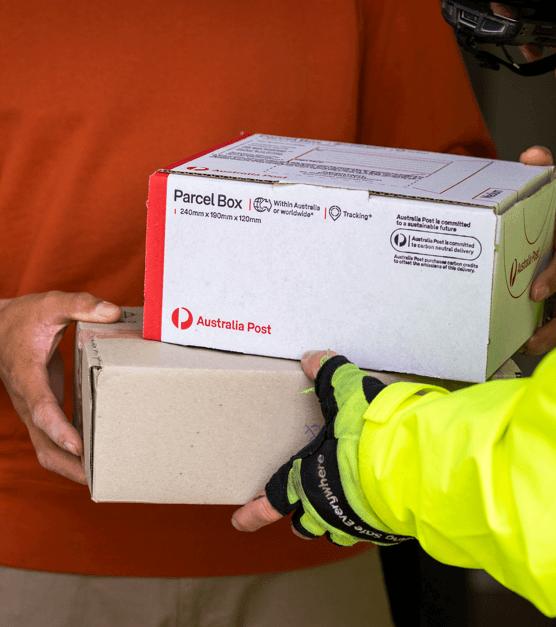
Department Stores (up 15.7% YoY).
Across the country, the strongest YoY growth in number of online purchases was seen in Western Australia (up 15.2% YoY), followed by Queensland (up 10% YoY), South Australia (up 9% YoY) and New South Wales (up 8.3% YoY). The top three postcodes for online shopping were Toowoomba and Mackay (QLD) and Point Cook (VIC) while Richmond (VIC), Bondi Junction (NSW) and Geelong (VIC) used Australia Post’s speed services the most.
Australia Post Executive General Manager Parcel, Post, and eCommerce services Gary Starr said Australia Post delivered 3,075 parcels every minute2 and two million deliveries a day for more than 30 days.
“These results are the product of months of detailed planning, continued investment in our operations and network capacity, and the extraordinary effort of our team members nationwide — working around the clock to keep parcels moving when it matters most.
“What stands out most this year is how much our customers have shaped the way we operate. Their need for greater reliability, easier ways to manage deliveries, and a more seamless online-to-doorstep experience have shaped every enhancement we’ve made. We’ve listened closely, and those insights have helped deliver one of our strongest peak performances yet.
“As we turn our attention to the year ahead, we’re already preparing for the next peak period and identifying new ways to support our customers in a fast-evolving eCommerce landscape. Retailers brought sales forward earlier than previous years, and shoppers responded in force — with cyber-weekend sales rising 6.3% yearon-year as Aussies increasingly seek out smarter, value-driven ways to shop,” Mr Starr said.
Over this period 5.7 million Australians turned to the AusPost app to track their parcels with over 119 million app visits, meaning more customers were able to easily manage their delivery experience. ●
Manhattan Associates Predicts Five Retail & Supply Chain Trends That Will Reshape Australian Commerce in 2026
VISY SHORT
AI’s ‘slow climb,’ unified commerce acceleration and mobile-first POS set to redefine the local retail landscape
Manhattan Associates Inc. (NASDAQ: MANH) has revealed its top predictions for Australia’s retail and supply chain sectors in 2026, signalling a year where AI advances, real-time fulfilment expectations and the evolution of unified commerce will fundamentally reshape how retailers operate.
While AI continues to dominate headlines, Manhattan’s forecast points to a more measured, practical adoption curve in Australia. With consumer expectations rising and competition intensifying across channels, from stores to marketplaces to social commerce, retailers will increasingly require real-time visibility, intelligent decision-making and modern POS capabilities to stay competitive.
1. AI’s ‘Slow Climb’ Will Define the Year
Despite intense global enthusiasm, 2026 will mark a shift from AI experimentation to AI enablement. Australian retailers will realise that meaningful value from AI depends on strong data foundations, clean inventory files and modernised legacy systems. AI will increasingly be deployed in practical areas such as labour-intensive process automation, faster project deployment and incidentmanagement capabilities that support machine-driven self-healing environments.
2. Real-Time Fulfilment & Intelligent Order Promising Become Non-Negotiable
As Australian consumers spread their purchases across more channels and expect consistent speed and reliability, retailers will need to commit to orders in real time no matter where they originate. Intelligent sourcing, dynamic order allocation and continuous reallocation will move from back-
office optimisation to frontline necessity. For many organisations, this will expose the limitations of traditional Enterprise Resource Planning (ERP) and accelerate investment in unified commerce platforms capable of handling real-time decisions at scale.
“Retailers across Australia are reaching a tipping point where they simply cannot meet customer expectations with legacy systems,” said Raghav Sibal, Vice President, APAC, Manhattan Associates. “The ability to make intelligent decisions in the moment, where orders are placed, changed or fulfilled, will shape competitive advantage in 2026.”
3.
Unified Commerce Uptake Accelerates as Hyper-Personalisation Goes Mainstream
The “ubiquitous consumer” now expects retailers to recognise them, anticipate needs and offer flexible fulfilment options at every step. In 2026, unified commerce will shift from strategic aspiration to operational requirement as retailers look to consolidate OMS, POS and inventory systems into a single, real-time ecosystem. This will enable consistent experiences across stores and
digital channels, forming the foundation for hyper-personalisation without adding pressure to already stretched supply chains.
4. Mobile-First POS Platforms Replace Legacy Registers
By the end of 2026, Australian retailers will fast-track the retirement of traditional registers. Mobile-first POS platforms, functioning as omnichannel hubs rather than payment terminals, will give store associates full visibility of inventory, fulfilment options, customer history, loyalty status and open carts. This shift will unlock faster service, reduce friction at checkout and support advanced fulfilment paths such as ship-fromstore, pick-up-later, and same-day delivery.
5. Social & Conversational Commerce Force Retailers to Rethink Digital Discovery
With TikTok Shop continuing to expand globally and more major retailers investing in conversational commerce, 2026 will see a step change in how Australians discover and shop for products online. Traditional keyword search will begin to give ground to AI-driven, dialogue-based shopping journeys. As visual and social search accelerate, retailers will need to optimise product data, imagery and content to ensure their brands appear in AI-generated recommendations and livecommerce environments.
“2026 will be a pivotal year for retail and supply chains in Australia,” Sibal said. “The retailers who succeed will be those that modernise their technology foundations, embrace real-time intelligence, and build unified systems capable of serving customers seamlessly across every channel.” ●
For more information about Manhattan Associates, click here.
SOTI Research Reveals the Need for Retail Tech to Deliver a More Immersive Experience
Australian consumers are seeking value and reassurance, with 87% concerned about data security and 86% tightening budgets
SOTI, a proven innovator and industry leader for simplifying business mobility solutions, launched its latest annual global research, “Retail Tech Assessment: Opportunities for Enhanced Consumer Experiences,” which revealed Australian consumers are increasingly making shopping decisions based on security, trust and the quality of their digital experience. The findings reveal that while retailers are investing in technology, many still fall short of delivering truly personalised and immersive interactions.
Retailers Need to Enhance Consumer Engagement with Technology
The report found that there is progress to be made in enhancing consumer shopping experiences with the technology currently available. Consumers use retail apps for convenience, with 55% using them for exclusive offers, savings and
points, and 53% enjoying benefits such as faster checkout. However, engagement is not growing at the pace retailers would expect, and further incentives may be needed to encourage deeper use of digital touchpoints. Additionally, greater emphasis could be placed on augmented reality (AR) and visualisation to create more immersive experiences.
“Most of the technology does exist, but it is not being leveraged properly. Consumers want experiences that feel more relevant and forward-thinking than what they are receiving today,” said Michael Dyson, VP of Sales APAC at SOTI. “Engagement and loyalty can deepen as this technology becomes more central to the retail experience. Secure and connected devices and apps are the starting point for building brand trust.”
Consumers Are More CostConscious Than Ever Amid Economic Uncertainty
Rising economic pressures are forcing Australian consumers to prioritise value,

convenience and local purchasing, as 33% are now checking product origin or choosing to buy domestically made products. Furthermore, 86% are taking cost-cutting measures to adapt to changing economic conditions and 63% say economic factors have influenced their ability to purchase their usual items in the past 12 months.
“Consumers now know exactly when and where to find the best value, and they’re using digital tools at every step of the buying journey,” added Dyson. “Retailers are working hard to meet expectations for smooth, connected experiences, yet issues with real-time tracking and fulfilment highlight that some foundational supply chain processes still need strengthening.”
Security and Privacy Are Growing Concerns
While 55% of consumers want to see more technology-enhanced shopping, research found that security and trust are critical. In fact, 87% of consumers are concerned about data privacy or security issues when shopping online or in-store, and 69% think twice before shopping with a retailer that has suffered a cyberattack. Much of this sentiment stems from the fact that 42% of consumers have been victims of retailrelated fraud.
“Finding the right balance between smarter, tech-enabled shopping and protecting consumer privacy has become critical,” Dyson said. “Shoppers are open to personalisation, provided they trust how their data is managed. Maintaining that trust requires transparency and robust security, especially at a time when major brands are facing increasing cyber threats.” ●
SOTI’s latest report, “Retail Tech Assessment: Opportunities for Enhanced Consumer Experiences,” can be downloaded here.
Look out for the next issue
For all of your latest supply chain industry news, be sure to join our community on LinkedIn
Look out for the next edition of Supply Chain Insights, where we explore how geopolitical fragmentation, shifting trade corridors and growing policy uncertainty are reshaping supply chain strategy.
As global shipping routes face disruption and political cycles influence trade settings, supply chains are entering a new phase –one defined less by optimisation and more by structural redesign.
From regionalisation and multi-sourcing to energy security and supplier realignment, organisations are rethinking how networks
are built and who they rely on. We’ll examine how leaders are responding to a more fragmented operating environment, the long-term implications for Australian businesses, and what “future-ready” design looks like in a world where stability can no longer be assumed.
For all of your latest supply chain industry news, be sure to join our community on LinkedIn
For more information or story suggestions, please contact: editor@supplychain-insights.media
For advertising enquiries, please contact: advertising@supplychain-insights.media