YARDSTICK


HiLine Treated Wood: Building Outdoor Spaces That Last 97
AI For The Yard: People-First, Tech-Backed 101
Gutter Saver PRO: The Canadian-Made Solution Changing How People Climb Ladders 105
What Makes a Great Sales Manager at an Independent Lumberyard 110
Navigating Uncertainty: A Distributor’s View of Today’s Lumber Market 112
Protecting the Bottom Line Through Digital Efficiency 115
Training Under Pressure: Helping Teams Keep Up When the Ground Keeps Shifting 119
Sixteen Years of Field Testing Is a Business Advantage Most Founders Can’t Buy 124
From Starting Out to Standing Out –Krista Venn Reflects on her 22-Year Career at Sexton Group 129
Liz Kovach
Supply-Build Canada President
Amanda Camara
Vice President of Business Development & Marketing
Amelia Carrera
Event Operations & Marketing Growth Coordinator
Jay Dion Policy Analyst
Camilla Josef Online Marketing Coordinator
Jared King
Marketing Communications & Engagement Coordinator
Matthew Lucek
Workforce Development Coordinator
Alisa Luo
Design & Social Media Coordinator
Dmytro Potapov
Marketing & Communications Manager
Travis Waite
Director, Finance & Administration
Shawna Watson Executive Assistant
Amanda Wright Workforce Development Manager
Published July 2026

The Supply-Build Canada Yardstick is the official publication of the Supply-Build Canada and is published four times per year. It is mailed to all retail and associate members of the Supply-Build Canada, to retail lumber dealers and others in the building supply industry in Northwestern Ontario, Manitoba, Saskatchewan, Alberta and British Columbia, and to selected dealers in the Yukon, Northwest Territories and Nunavut. Views expressed in the Yardstick are not necessarily official Supply-Build Canada policy, nor does the publication of product information or any advertisement imply recommendation by the Supply-Build Canada. No part of this publication may be reproduced in any form without the written consent of the Supply-Build Canada.
Subscription rates in Canada: $12 per year, plus applicable taxes. Outside Canada: $15 per year, no tax. Rates quoted are for non-members only.
Canadian publication mail agreement #43754013. Postmaster send change of Canadian address to:
This year, tariffs, shifting trade policy, and rising costs have pushed our members into decisions no business owner should have to make. Which supplier to drop. Whether to close a store or keep it open and hope to weather the storm. Which price increase to pass on to a customer who is already struggling.
Every day, someone is making one of these calls. And every day, you’re telling us these stories directly on calls, at meetings, and at our industry events.
There’s a saying we keep coming back to, that a bundle of sticks cannot be broken. It’s something our team at Supply-Build Canada lives out every day, relying on each other and working together to accomplish goals that would otherwise be impossible for a small (but scrappy) team.
We put that into action with our members as well, teaming up week after week, month after month, to make connections, to open doors, to teach and to learn from each other in a way that builds a stronger, more resilient industry.
We brought that energy to our recurring Industry Insight Nights. There were no scripts, just members, industry experts, and decision-makers in a room together, talking honestly about what’s actually happening on the ground. It’s here that the real conversations happen, just like the ones you’re having every day in your own stores. These discussions shape how we advocate for you even more than any data point or industry report ever could.
Rest assured, it’s getting through.
Despite the difficulties facing our industry, we’ve come away from these discussions with a strong sense of hope. When we present a united front, those with the power to change the headwinds cannot ignore us.
That urgency is also what built Industry Pulse. Members told us, plainly, that it was hard to keep up. Policy was shifting faster than anyone could track, and harder still to know what it actually meant for their business.

“Advocacy isn’t a separate initiative we run alongside the real work: it is the real work.”
So we built something to close that gap. Every week, we bring you the most important happenings in the industry, shaped by our team and the conversations we’re having with you, our members.
This issue carries that same spirit forward. In the pages ahead, you’ll hear from members who are adjusting prices, managing supply, and navigating customers who are feeling the same squeeze. These aren’t stories of an industry waiting for things to get easier. They’re stories of an industry that keeps building anyway.
Those threads run through everything we do at Supply-Build Canada. Advocacy isn’t a separate initiative we run alongside the real work: it is the real work. It’s what turns your stories into something that reaches policymakers. It’s what turns one voice into a bundle that cannot be broken.
We didn’t want to keep talking about instability in this industry. But here we are, and here’s what keeps proving true: this industry has never had the luxury of waiting for stability. It builds through the uncertainty, not around it.
Together, we are unstoppable.

Liz Kovach PRESIDENT, SUPPLY-BUILD CANADA


Email us at marketing@supplybuild.ca or reach out via social media.




Taiga Building Products is now distributing Huber Engineered Woods products across Canada. To support the expansion, Taiga is increasing its stocking positions across Western Canada, meaning shorter lead times, reduced freight costs, and better availability for dealers.
The expanded offering includes ZIP System sheathing, AdvanTech subflooring, and ZIP System tape with roller accessories. Founded in 1973 and headquartered in Burnaby, B.C., Taiga is one of North America’s largest independent wholesale building-materials distributors, with 15 distribution centres across Canada.
Dealers can contact their Taiga sales representative to confirm what’s available in their region.
Canadian retail-tech firm JRTech Solutions and its partner Pricer AB have signed a major agreement with Sobeys to deploy electronic shelf label (ESL) technology across an estimated 300 to 350 stores.
The rollout includes multicolour digital labels, supporting infrastructure, and the cloud-based Pricer Plaza platform, with the hardware and infrastructure valued at roughly US$51 million (excluding software). Deployment began in May 2026 and runs over 18 months. Montreal-based JRTech has been Pricer’s North American distributor since 2008.
“We’re proud to grow our partnership with Sobeys even further with an expanded rollout,” said JRTech president and CEO Diego Mazzone. The deal supports Sobeys’ continued investment in retail automation and real-time pricing.

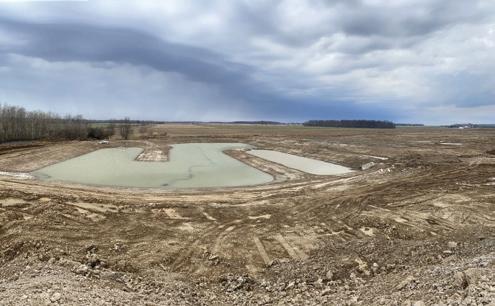
Lynden Door is investing in a new residential-door manufacturing facility in Aylmer, Ontario, on 20 acres within the AIM Industrial Park. Scheduled to begin operations in 2027, the plant will serve customers across Ontario, Quebec, and Atlantic Canada, complementing the family-owned company’s existing operations in Western Canada and the Prairies.
The facility is expected to become one of Aylmer’s largest employers, with early estimates of 60 to 100 new jobs. Lynden Door already operates an Alliance Door Products distribution branch in nearby St. Thomas, and the Eastern Canada initiative is being led by John Ridder, president of Alliance Door Products Canada.
Alongside the Ontario build, the company is also expanding capacity at its existing site in Yarrow, B.C., a two-pronged investment aimed at strengthening residential-door supply coast to coast.
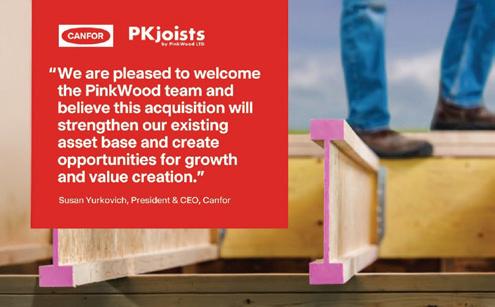
Canfor Corporation has agreed to purchase PinkWood Ltd.’s I-joist business in Calgary for $68 million, including working capital. Founded in 2009, PinkWood is the largest I-joist facility in Western Canada, employing about 120 people with annual production capacity of 46 million linear feet.
The price represents a five-times EBITDA multiple, with $55 million payable at closing and $13 million over five years. “PinkWood is a leading manufacturer of high-quality I-joists with a strong management team and stable returns,” said Canfor president and CEO Susan Yurkovich.
PinkWood will keep its name and operate as a wholly owned subsidiary of Canfor. The transaction is expected to close in the third quarter of 2026.
RONA has opened eight new RONA+ stores across the country, from Toronto to Regina to Saint-Hyacinthe, each featuring an expanded PRO department, new shop-in-shop partnerships, and a modernized store experience.
Dealers are investing too. RONA Lumby in B.C. has unveiled a fully transformed store with 1,500 new products, a building reface, and a refreshed lumberyard. In Manitoba, RONA Portage la Prairie completed a 16-week transformation that added a 5,000-square-foot garden centre and a redesigned design centre, creating a 50,000-square-foot store that is now the largest dealer-owned RONA in Western Canada.

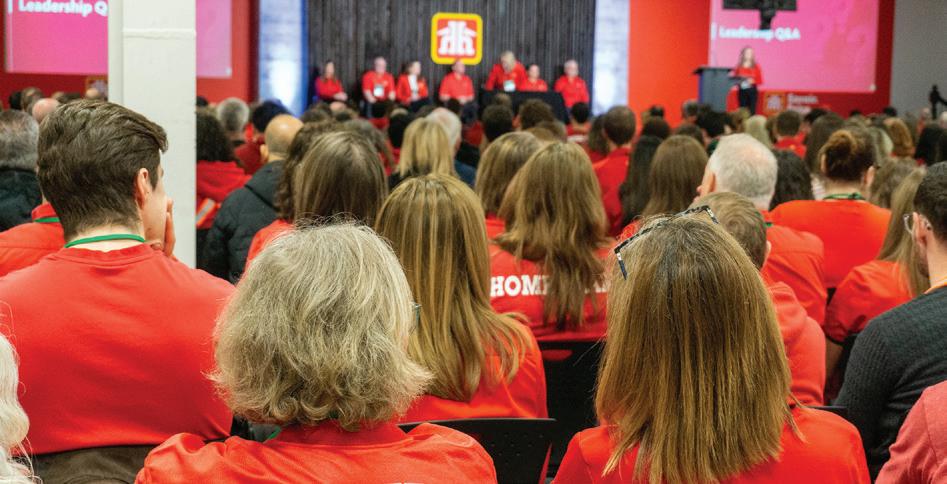
Home Hardware Stores Limited has earned Platinum Club status in Deloitte’s Canada’s Best Managed Companies program for the 14th consecutive year. The program evaluates Canadian-owned companies on strategy, leadership, innovation, financial performance, and culture.
“It’s a true honour to receive this recognition for the 14th year,” said Scott Bryant, the retailer’s chief human resources officer, who credited team members and dealers for making a difference in communities across Canada. Fourteen years in a row isn’t a streak; it’s a standard.
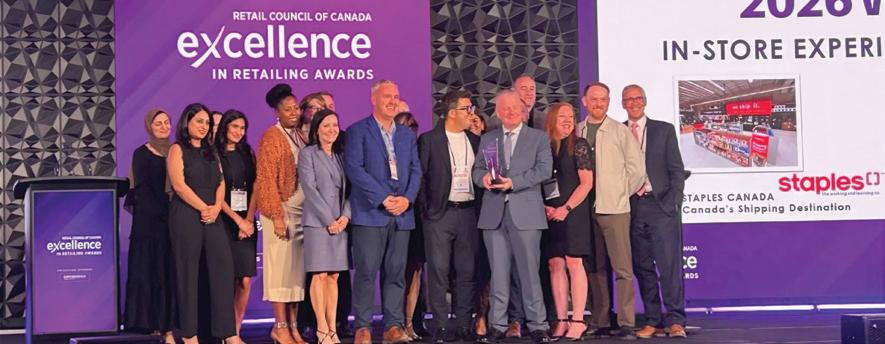
Trademark Industries Inc. has received the 2026 Rising Star Award from Staples Canada, recognizing its growth, product innovation, and customer-focused approach.
Based in Markham, Ontario, the company supplies a broad portfolio of tools, safety products, and retail solutions, drawing on global sourcing relationships to bring new products to market. Recognition from a national retail partner is a vote of confidence as the company continues to grow its presence in the Canadian hardware and retail market.

Founded in 1926 as a small, family-owned millwork business, Metrie is celebrating its 100th year. Today the company is North America’s largest manufacturer and distributor of millwork.
Still family-owned, Metrie operates seven manufacturing sites and roughly 30 distribution centres across the U.S. and Canada, with product lines spanning solid-wood and composite mouldings, trim, and doors. The centennial year has also seen the company expand its door capabilities through acquisitions in Eastern and Western Canada.
In an industry that prizes longevity and reliability, reaching 100 years is a milestone worth pausing to recognize.
Saint-Gobain Canada has contributed $25,000 to the Homes For Heroes Foundation through the Saint-Gobain North America Foundation’s direct grant program. The donation supports the foundation’s next two veterans’ villages, planned for Winnipeg and London, Ontario.
Homes For Heroes builds village-style communities of fully furnished tiny homes paired with on-site support services that help formerly homeless veterans transition to civilian life. The foundation already operates villages in Calgary, Edmonton, and Kingston (roughly 55 homes); the Winnipeg project is the Kinsmen Veterans Village on Transcona Boulevard, while the London village is planned for the grounds of St. Joseph’s Health Care’s Parkwood Institute.
The gift fits a broader pattern of housing-focused giving from Saint-Gobain in Canada, alongside its long-running Habitat for Humanity partnership. It’s a fitting reminder of the direct link between building products and the people they house.

David Chestnut has purchased Hardlines Inc. from founder Michael McLarney and stepped into the role of president. Chestnut joined Hardlines in 2016, later becoming vice-president and publisher, and has been a key driver of the company’s growth in advertising revenue and industry partnerships.
McLarney built Hardlines over some 30 years, growing it from a weekly fax newsletter into a multi-platform information network spanning newsletters, magazines, research, and events. He stays on as editor-at-large.

Things heated up this spring, and not just in the atmosphere. From product deep-dives to closed-door dinners to a sit-down with a Member of Parliament (MP), Supply-Build Canada kept the calendar full between April and June, building the momentum that carried straight into summer.
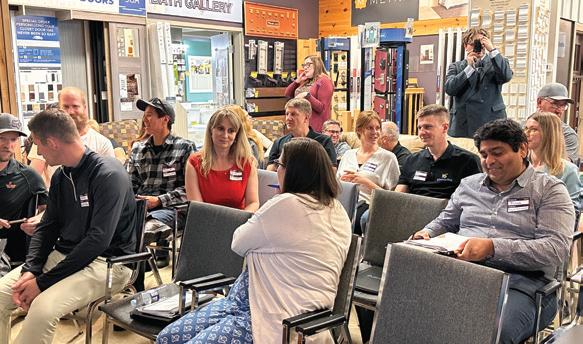

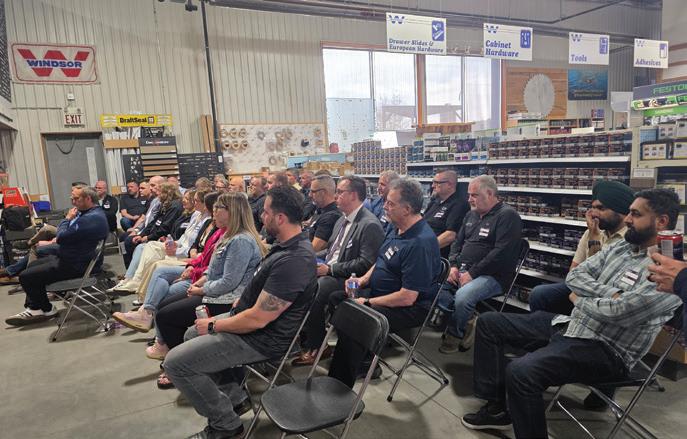

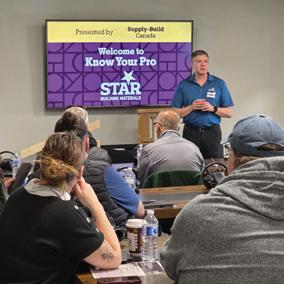

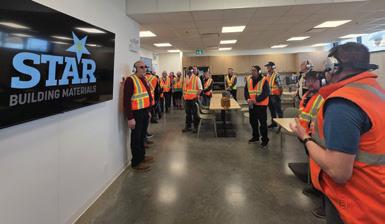
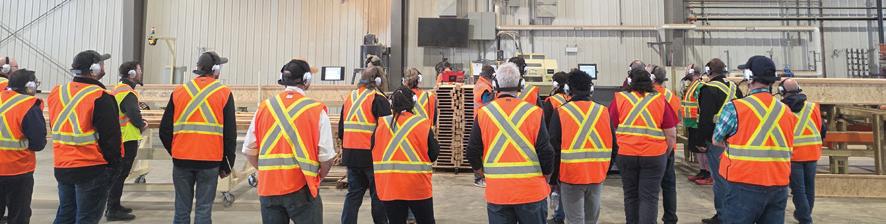
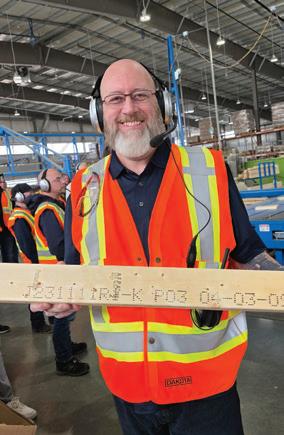
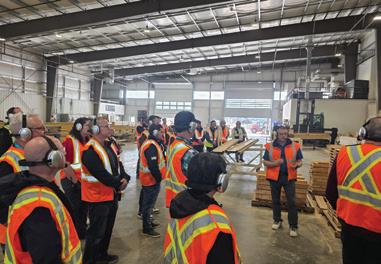
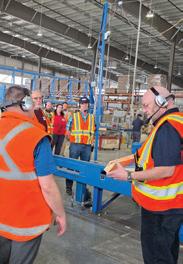
Star Building Materials opened its doors twice this spring, in Nisku (April 8) and Rocky View County (April 22), giving members a floor-level look at how engineered trusses and pre-cut I-Joist systems come together. Lunch was catered, but the takeaway wasn’t: product knowledge sells better than product alone.



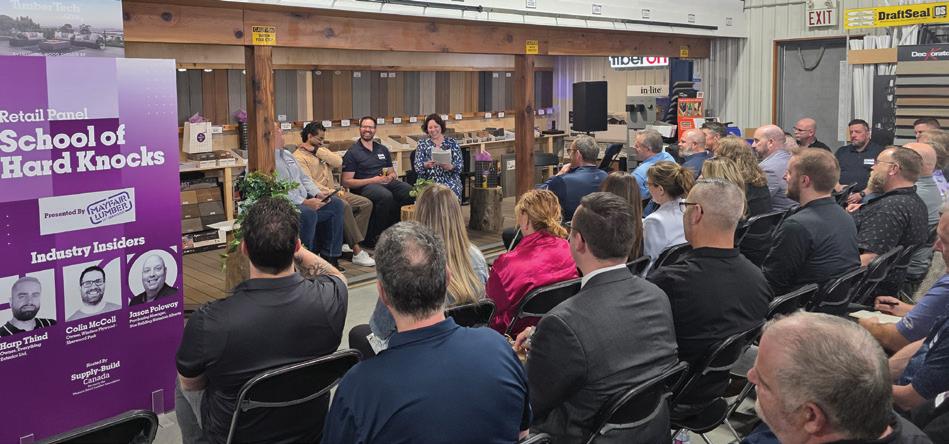
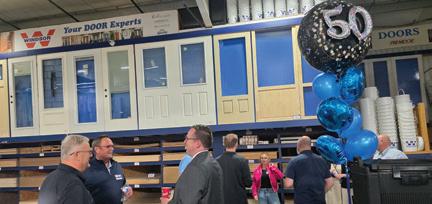
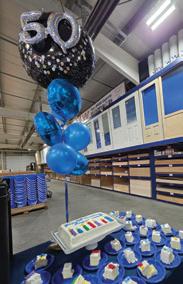
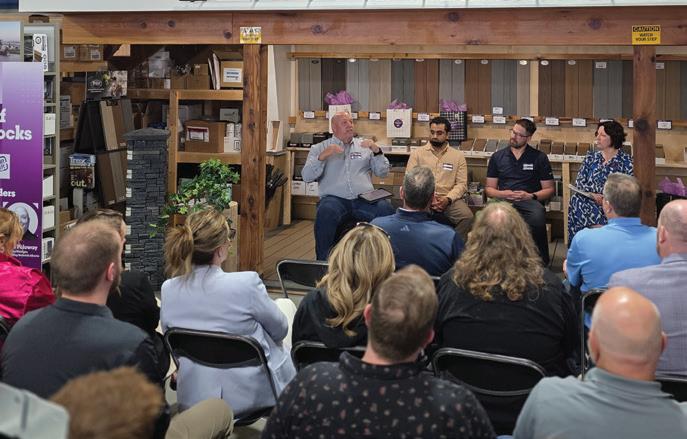
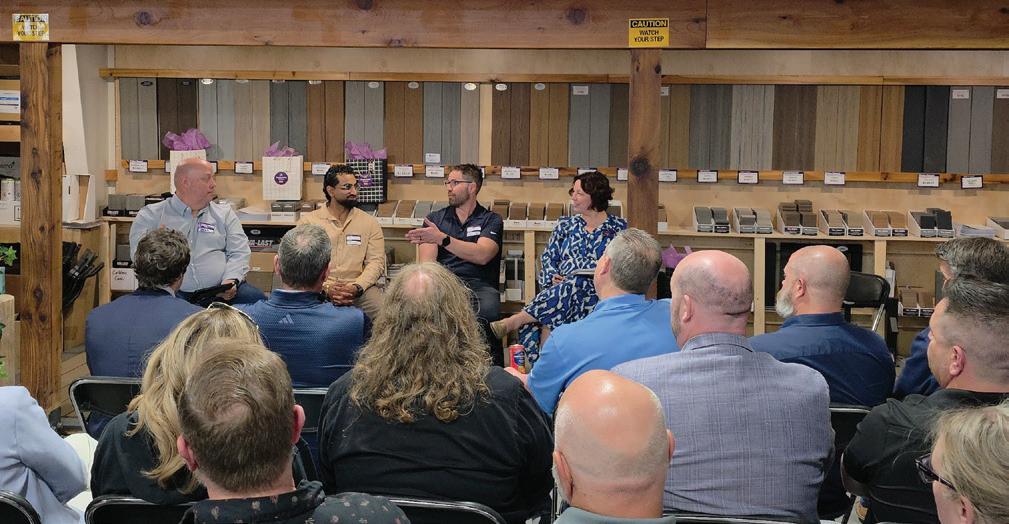
On May 12, retailers and operators packed into Windsor Plywood Sherwood Park for a candid panel on what’s actually working in today’s market: pricing pressure, shifting customer expectations, and where leaders are investing versus pulling back. Presented by Mayfair Lumber, with American Express as food sponsor.
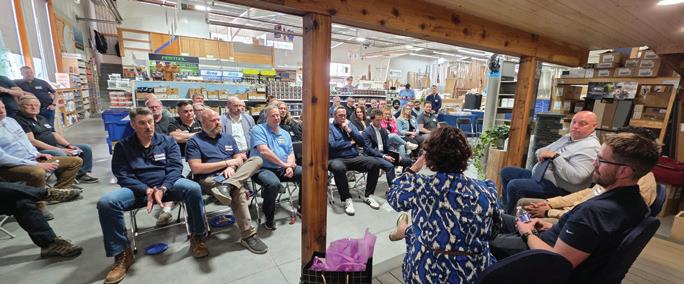
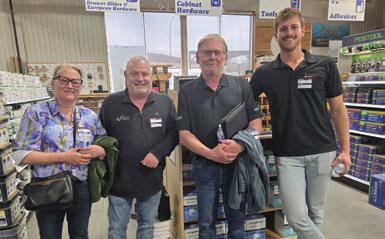



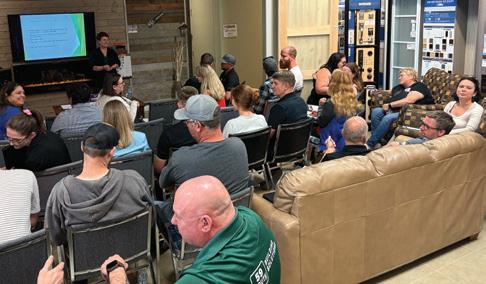
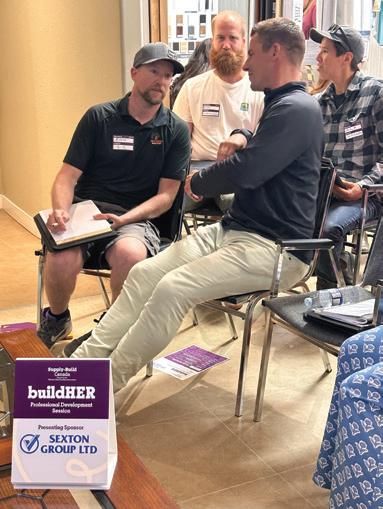
On June 18, industry peers gathered at McMunn & Yates Building Supplies in Winkler for buildHER, presented by Sexton Group. The session, “Own Your Voice: Become a Confident Communicator,” gave attendees tools to speak up with more clarity: in meetings, in tough calls, and in the rooms where careers get decided. Huge thanks to Genny Sacco-Bak for presenting an excellent learning experience.


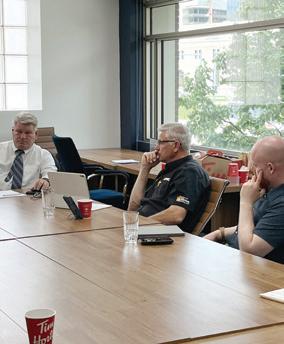
In our push to advocate stronger on behalf of our members, on June 24, SupplyBuild Canada hosted MP Randy Hoback at our Winnipeg office for a direct conversation on the Canada-United States-Mexico Agreement (CUSMA) and the future of Canada-U.S. trade. We kept seats deliberately tight, and members spoke candidly about tariffs and trade uncertainty, feedback Hoback takes straight back to the Hill.
Huge thanks to all our sponsors, to the members who hosted, to all the speakers and everyone who attended our events this spring. We’ve got more in store, and we look forward to seeing you there!




• July 16, 2026: BC BarrierTek Golf Classic, Surrey, BC. A day on the green at Northview Golf & Country Club, bringing together retailers and suppliers from across Canada.
• July 23, 2026: buildHER, presented by Sexton Group, Edmonton, AB. Join us in Edmonton this July for a professional development session about building confidence in the workplace.
• August 13, 2026: Durabuilt Windows and Doors SK Golf Classic, Saskatoon, SK. Saskatchewan’s golf classic returns to Willows Golf & Country Club to support the industry and its scholarships.
• August 20, 2026: Brandt MB Golf Classic, LaSalle, MB. Manitoba’s tournament tees off at Kingswood Golf & Country Club.
• September 2026: buildHER, presented by Sexton Group, Saskatoon, SK. The buildHER series heads to Saskatchewan for another round of career-focused development.
• September 2, 2026: Supply-Build Canada AGM. Members gather to review the fiscal year, hear what’s ahead, and help shape the board.
• September 3, 2026: Regal Ideas AB Golf Classic, Innisfail, AB. Alberta’s tournament hits the links at Innisfail Golf Club.
• September 16, 2026: Kenosee Golf Classic, Kenosee, SK. A long-running community event in partnership with Chimo Lumber, with proceeds supporting Supply-Build Scholarships.
• Webinars:
August 6: The Role of Technology in Increasing Revenue August 27: Canadian Business Risk: Cyber, Conflict and Disinformation
And that’s just the start, as we’re building towards our big showcase in Edmonton this winter.

Supply-Build Canada’s Executive Mastermind program continues to grow, bringing together leaders from across the building materials industry who are committed to strengthening their leadership and their businesses.
The second cohort represents a diverse cross-section of the industry, from manufacturers and distributors to retailers and industry organizations. Over the coming year, they will work together to challenge assumptions, build stronger leadership habits, and develop strategies that help their businesses and teams grow.
Supply-Build Canada’s Executive Mastermind Program is facilitated by Lauren Johnson, a high-performance coach who works with leaders and organizations across North America. Her approach focuses on mindset, decision-making, and building resilient teams that can perform under pressure and lead through change.
Learn more


Dean Petrillo—ABI Mouldings
Kelsey Brooks—Brooks Building Supplies
Jodie Porter—Taiga Building Materials
Jeff Lea—Nucor Rebar
Phil Barter—Dakeryn Industries
Travis Waite—Supply-Build Canada
Simran Mahli—Building Supply Depot
Jay St. Arnault—St. Arnault Lumber & Building Supplies


Jay Dion, Supply-Build Canada
From May 4-5, Supply-Build Canada’s advocacy team traveled to Victoria, B.C. and was joined by members to meet with Government of British Columbia officials and political staffers, including Premier Eby and Forests Minister Parmar. The objective was to promote the building material industry, and touch on some key pain points, such as infrastructure development issues, U.S. tariffs and Canada’s counter tariffs. The meetings provided valuable insights into the B.C. government’s priorities related to housing, infrastructure, economic development, education, and forestry.

Our meetings with the Ministry of Housing and Municipal Affairs highlighted ongoing efforts to create a provincial building permit portal and standardize municipal development fees. A key theme throughout the discussions was the need to accelerate housing construction. However, officials noted that municipal government autonomy has created challenges for harmonizing permitting processes, building codes, and development fees across the province.
Furthermore, we discussed the growing role of prefabricated and modular construction in homebuilding. Government officials acknowledged that “modern methods of construction” will have an increasingly important role in addressing housing supply challenges. However, the federal government has not provided a clear definition of what constitutes modern methods of construction for the provinces to access federal funding.
Discussion with the ministries of Economic Growth, Education and Child Care, and Post-Secondary Education and Future Skills reinforced the importance of the promoting the building materials industry as a viable career path, and possible collaboration with government programs that promote and help workforce development such as the WorkBC Employer Training Grant Program.
Our meeting with the Ministry of Infrastructure highlighted concerns about slowing private-sector development, rising construction costs, and uncertainty surrounding “Made in Canada” procurement definitions.
Finally, Supply-Build Canada’s advocacy delegation was able to meet with Forests Minister Parmar and Premier Eby for a closed door 1:1 meeting to discuss our U.S. advocacy efforts on the softwood lumber dispute between Canada and the U.S. The Minister and Premier were appreciative of Supply-Build Canada’s advocacy efforts in D.C., and expressed interest in continuing to be briefed on our efforts.
• Assistant Deputy Minister John Thomson (Ministry of Housing and Municipal Affairs)
• Executive Director of Construction Innovation and Director of Policy Jarrett Hutchinson (Ministry of Jobs and Economic Growth)
• Premier of British Columbia David Eby
• Minister of Forests Ravi Parmar
• Assistant Deputy Minister Jennifer Melles (Ministry of Infrastructure)
• Ministerial Advisor Joel Blok (Office of the Honourable Jennifer Whiteside Minister of Labour)
• Assistant Deputy Minister Joanna White (Ministry of Post-Secondary Education and Future Skills)
• Director of Graduation, Careers, and Student Transitions (Ministry of Education and Child Care)


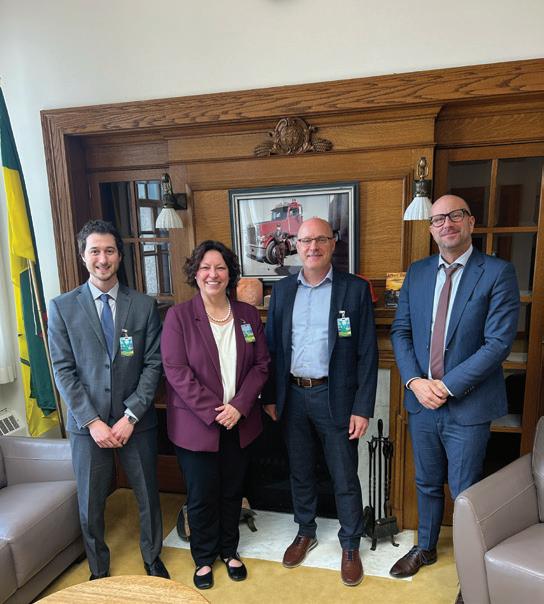
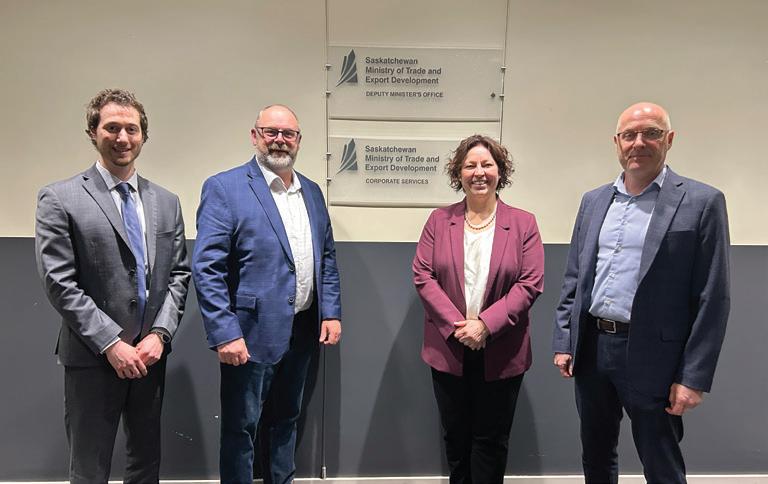
From May 6-7, Supply-Build Canada’s advocacy team, joined by members, traveled to Regina to meet with Government of Saskatchewan officials, political staffers, including SaskBuilds and Procurement Minister Wilson. The objective was to promote the building material industry, and touch on some key pain points that our industry faces in Saskatchewan.

In meetings with the Ministries of Advanced Education, Education, and Immigration and Career Training a common issue that was discussed was the province’s significant labour shortage. Saskatchewan has a high youth unemployment rate and an aging workforce. Government officials emphasized that workforce availability is becoming a critical factor in supporting major economic projects, including planned resource developments. While Saskatchewan continues to rely on immigration and foreign workers to address labour gaps, officials acknowledged ongoing challenges and upcoming discussions with the federal government regarding the Temporary Foreign Worker Program. There was also strong interest in Supply-Build Canada’s workforce initiatives, including educational programs, career promotion efforts, and potential job fair partnerships.
The Minister of SaskBuilds and Procurement was interested to learn about the building supply industry and its contributions to Saskatchewan’s economy. The Minister also expressed interest in learning about the use of dimensional lumber structures in publicly funding projects, and the need for more housing to help Saskatchewan’s lumber industry.
Trade discussions with the Ministry of Trade and Export Development focused on Saskatchewan’s efforts to strengthen Canada-U.S. economic relationships, Supply-Build Canada’s advocacy efforts in D.C.; and how international trade has impacted Saskatchewan’s construction sector supply chain. Also, government officials highlighted ongoing coordinated red tape reduction efforts among the provinces and the federal government.
Meetings:
• Deputy Ministers Louise Michaud and Drew Wilby (Ministry of Advanced Education and Ministry of Immigration and Career Training)
• NDP MLA Aleana Young (Opposition Party in Saskatchewan)
• Minister Wilson (Ministry of SaskBuilds and Procurement)
• Deputy Minister Jodi Banks (Ministry of Trade and Export Development)
• Educational Consultant (Ministry of Education)


From May 12-13, Supply-Build Canada’s advocacy team, joined by members traveled to Edmonton to meet with Government of Alberta officials, political staffers, including Service Alberta and Red Tape Reduction of Alberta Minister Nally, Municipal Affairs Minister Williams, and Forestry and Parks Minister Loewen. The objective was to promote the building material industry, and touch on some key pain points our industry faces in Alberta.
In meetings with the ministries of Advanced Education, Education and Child Care, and Jobs, Economy, Trade and Immigration workforce development was a central theme. Alberta is actively promoting work-integrated learning, youth apprenticeships, and industry partnerships to strengthen skilled trades recruitment. Government officials expressed interest in collaborating with industry on educational programs and workforce initiatives particularly for youth, and Indigenous communities.
The discussions with Minister Nally and Minister Williams focused on housing and permitting reform. Alberta continues to pursue an ambitious red tape reduction agenda, with new measures aimed at accelerating permit approvals and reducing regulatory burdens on builders. Officials highlighted upcoming “auto-yes” permitting processes to streamline permitting approvals. Discussions also explored concerns surrounding wood truss authentication requirements and inconsistencies in building code interpretation (Supply-Build Canada submitted a brief outlining concerns to both ministries. To view the brief please visit the Supply-Build Canada website).

Conversations with the Ministry of Transportation and Economic Corridors focused on transportation infrastructure, workforce development in the trucking industry, how poor trucking practices impact building material shipments, and efforts to reduce interprovincial trade barriers.
Lastly, during our meeting with Minister Loewen we provided a brief on our advocacy efforts in D.C., which the Minister expressed his support. Meetings with the Minister reinforced the importance of export markets for Alberta’s wood products sector, and highlighted the need for a softwood lumber agreement with the U.S.
• Deputy Minister Shannon Marchand (Ministry of Advanced Education)
• Chief of Staff James Johnson (Ministry of Education and Childcare)
• Deputy Minister Christopher McPherson (Ministry of Jobs, Economy, Trade and Immigration)
• Minister Dale Nally (Ministry of Service Alberta and Red Tape Reduction)
• Chief of Staff Jerry Bellikka and Senior Policy Advisor Ranjit Tharmalingam (Ministry of Transportation and Economic Corridors)
• Minister Todd Loewen (Ministry of Forestry and Parks)
• Minister Dan Williams (Ministry of Municipal Affairs)
From May 25-26, Supply-Build Canada’s advocacy delegation was in Winnipeg to meet with Government of Manitoba officials and political staffers. The objective was to promote the building material industry, and touch on some key pain points our industry faces in Manitoba.
In our meeting with the Ministry of Advanced Education & Training Workforce, provincial officials emphasized the need to identify labour market gaps and develop training pathways that align with industry needs. Officials also noted potential opportunities to expand educational resources and increase accessibility through French-language programming.
Discussions with the ministries of Housing, Homelessness and Addictions, Public Service Delivery, and Municipal Affairs and Northern Relations revealed uncertainty surrounding several upcoming Buy Canada, Modern Methods of Construction, and Build Canada Homes initiatives. Officials noted that provincial governments continue to seek clarity on definitions related to Canadian content requirements, modern methods of construction, and procurement rules associated with new federal housing and infrastructure programs. Also, the Supply-Build Canada delegation addressed challenges in housing development arising from rules and regulations imposed by rural municipalities and planning districts; and raised concerns about building inspectors in certain municipalities denying certified building materials.

Our conversation with the Ministry of Transportation and Infrastructure focused on transportation and supply chain resiliency, including improvements to Manitoba’s winter roads. Manitoba continues to support reducing interprovincial trade barriers while ensuring that safety standards remain a priority. Officials discussed trucking regulations, training standards, and oversight. Infrastructure priorities, including major transportation and water projects were identified as important investments that will support long-term housing growth for the province.
Lastly, the meeting with the Ministry of Business, Mining, Trade and Job Creation focused on Supply-Build Canada’s advocacy efforts in D.C., the Government of Manitoba’s activities in D.C., and where both organizations can provide support on the U.S. trade file.
• Deputy Minister Micheal Jack (Ministry of Business, Minning, Trade and Job Creation)
• Assistant Deputy Minister Paris Fragkoulis (Ministry of Public Service Delivery)
• CEO of Manitoba Housing (Ministry of Housing, Homelessness and Addictions)
• Deputy Minister Maurice Bouvier (Ministry of Municipal Affairs and Northern Relations)
• Deputy Minister Ryan Klos (Ministry of Transportation and Infrastructure)
• Director of Universities (Ministry of Advanced Education & Training)
The governments of BC, Alberta, Saskatchewan, and Manitoba have promised to continue to work with Supply-Build Canada and its members.
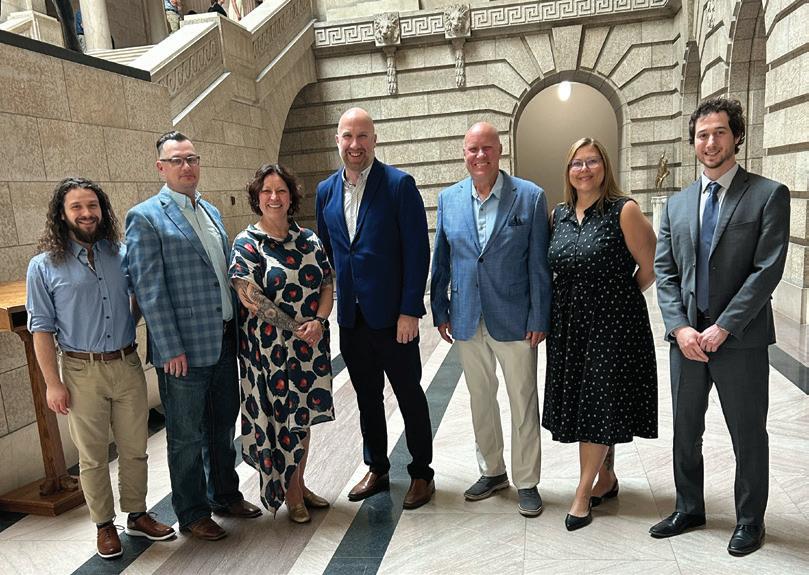

Whether you like it or not, government shapes the environment our businesses operate in. Through policy, regulation and investment decisions, all levels of government can support growth or create real barriers. The reality is, policymakers aren’t living your day-to-day challenges and they won’t automatically understand the unintended consequences of their decisions unless you show up and explain it. Effective government advocacy isn’t a one-off meeting or a box to check, it’s a sustained commitment to building relationships, sharing your story and being part of the conversation over time. If you want better outcomes, you have to invest the time and be consistently engaged.

Corinne
cstavness@westernforest.com


My name is Gary Fletcher. This was the second time I had the honour of accompaning Liz to the Alberta Provincial Legislature in support of the Supply Build Canada Advocacy. Both experiences have helped me understand the importance of why the Supply-Build Canadas government advocacy is so important.
The easiest way I can explain what I mean is; the forestry industry and home builder associations are very well represented with their advocacy and lobby groups to all levels of government. Both of these groups meet regularly with different levels of government and are able to influence policy for their members.
What the governments are missing is our industry. The piece that connects the forestry to the home builders. Without us, no one could build or renovate a house. Unless the government knows who, we are and what we do, they cannot help our industry stay strong and continue to grow.
That is why I volunteer my time to support Liz and the efforts of Supply-Build Canada.

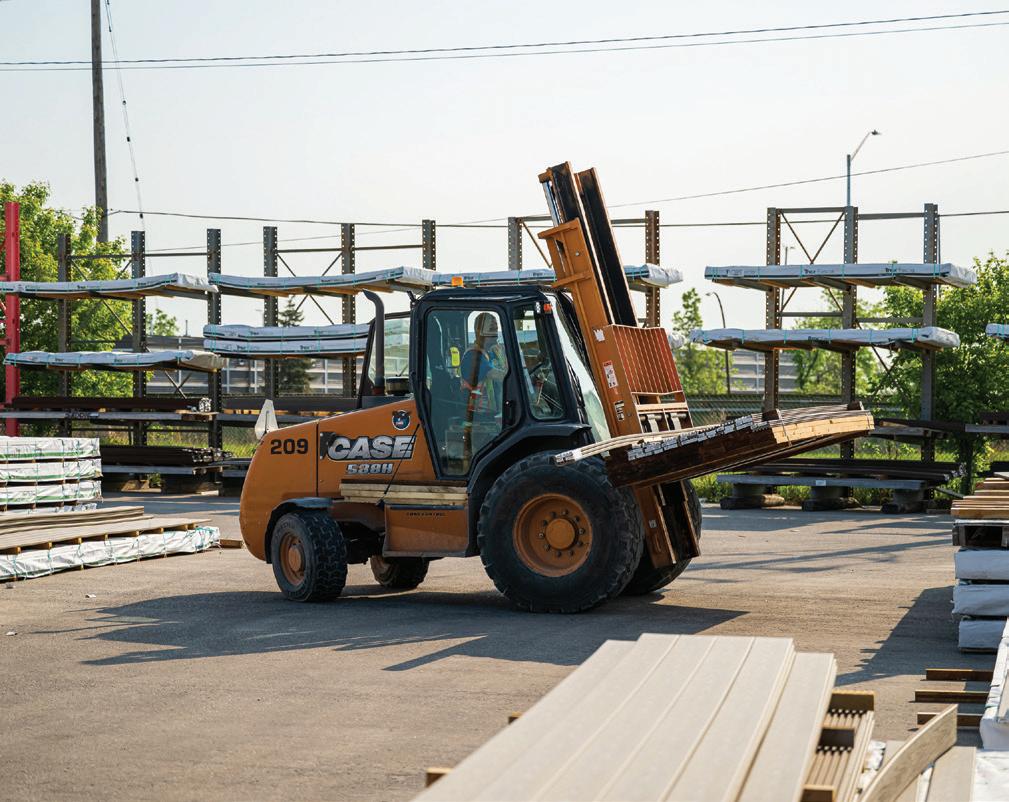
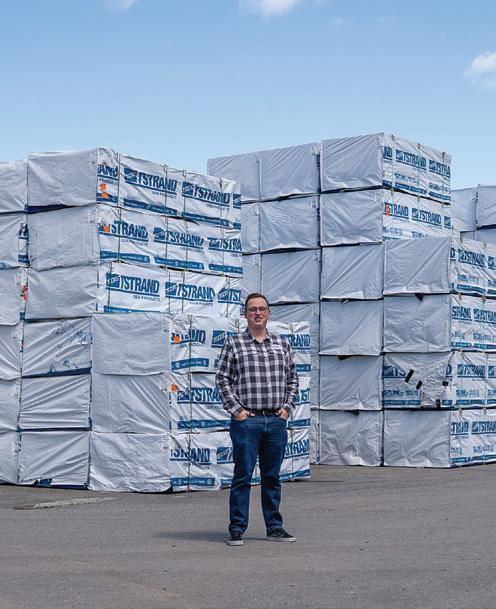
Brady Wilk, Supply Chain & Systems
In our industry, we often speak about “market conditions” as if they are a force of nature, unpredictable and unavoidable. But as we dig into the data, it becomes clear that these “market conditions” are rarely accidental. More often than not, they are the direct operational result of policy decisions made in boardrooms and legislative chambers far from the materials and machinery of our yards.
Policy changes, ranging from US Supreme Court rulings on fentanyl-related tariffs to new Canadian quotas on import steel, have the power to severely affect both the cost and availability of your materials. If you are operating without an eye on these changes, you are operating blindly. You risk quoting a project today based on yesterday’s reality, only to find your margins eroded by a sudden 25% tariff on fasteners or a 10% global levy. Worse, you risk disappointing a customer when a product you promised is suddenly caught in a port strike or a mill curtailment triggered by shifting trade pacts.
To stay ahead, you need to pay attention to all five levels of policy influence:
• Supplier: Primary and secondary producer mill closures, corporate capital allocation based on resource availability, and environmental stewardship goals.
• Municipal: Local housing starts, zoning changes, and infrastructure spending.
• Provincial: Regional incentives, building code changes, and energy mandates.
• National: Steel quotas, Bank of Canada interest rate changes, and federal housing goals.
• International: CUSMA reviews, Middle Eastern conflicts affecting oil supply chains, and US Supreme Court rulings.
This is not a comprehensive list. Your market sector and customer base will dictate what policies you need to pay closest attention to.
The best operators pride themselves on being the informed expert in their marketplace. Many write monthly market reports distributed to all of their key customers, ensuring those customers are equally well-equipped to speak to their own clients. In my time writing market reports, I’ve found that people often know a regulatory change is happening, but they don’t know why, or how it could affect them. You have the opportunity to clear up that confusion. Be the expert. An informed customer is an easier customer to work with.
When your costs increase due to a policy shift beyond your control, like the reduction in allowable VOC (Volatile Organic Compound) content in adhesives resulting in higher production cost alternatives, an informed customer will understand the relationship to the broader environmental control policies being enacted. They see that it isn’t you gouging them; it’s the supply base reacting to policy volatility. An uninformed customer, by contrast, will be combative. They will feel targeted, they will resist the change, and ultimately, both of you will leave the interaction worse off than when you started.


Being informed doesn’t just help you sell; it helps you buy. In our current environment of rising oil prices, supplier fuel surcharges are a common and often reasonable reality. Knowing the “why,” however, allows you to verify the “how much.”
For example, we know that for heavy goods like lumber, freight can account for nearly 10% of the cost of goods. If fuel prices double, a 10% hike is logical. But if you see a surcharge that far exceeds the proportional contribution of fuel to that product, you have the data necessary to determine whether that supplier is being fair or quietly padding their margins.
Consider the source. Always ask: what do they gain by saying this?
A supplier who consistently states that lumber markets are going up regardless of broader market data is in the business of generating panic to sell wood today. The toilet paper buyers of the early 2020s taught us all one clear lesson: panic sells. Use reports from multiple sources, competitors, suppliers, and neutral third parties, to find the truth in the middle.
Raised in a small town in Southwestern Saskatchewan, Brady moved to Medicine Hat as a teen before arriving in Calgary to pursue a Business Supply Chain Management Diploma at SAIT. He got his start at Integrity Building Products in 2015, driving long-haul trucks between classes. After graduating in 2017, he transitioned to the office as the company’s first dedicated purchaser, eventually rising through the ranks to his current role as Supply Chain & Systems Senior Manager. A dedicated family man, he spends his time outside of work raising a three-year-old and a one-year-old with his wife Julie, and can often be found helping friends with basement renovations, decks, or fence builds.
Staying informed does not have to be a full-time job. Use tools like AI to provide weekly summaries, or set Google News alerts for keywords like “lumber” or “tariff.” Subscribe to industry staples like Fastmarkets Random Lengths or Forestry Economic Advisory reports for deep-dive research curated by industry experts.
Most importantly, pay attention to your peers and advocates. SupplyBuild Canada is at the forefront of this effort, providing critical updates through their newsletters and Yardstick Magazine, and walking the halls of legislatures during Hill Days to ensure our operational realities are understood by policymakers.
Don’t just react to policy. Participate in it. Join municipal meetings, attend open forums, and make your voice heard. Our industry is a vital part of the local and broader economy, and our operational realities should shape the policies of tomorrow.
To support the continued fight for our industry’s interests, please consider donating to the Supply-Build Canada Advocacy Fund. Your contribution ensures that when policy hits the yard, we are ready to hit back.

Statistics without context can create a false sense of stability. According to CMHC’s 2026 Spring Housing Supply Repor t , housing completions in Metro Vancouver topped 30,800 units in 2025, the highest level since 1990. But most of those homes were approved and financed years ago under very different conditions, and the conversations I’m having today with builders, renovators, and suppliers across Metro Vancouver tell a different story. We’re finishing yesterday’s projects while today’s pipeline thins.
Presale-dependent projects felt the impact first. CMHC’s report points to slower ownership-oriented construction in Vancouver, driven by weaker condo presales, higher unsold inventory, and tighter financing. But topline numbers do not fully capture the distinction between ownership housing and purpose-built rental construction.
A significant portion of recent rental activity has also been supported by CMHC’s Apartment Construction Loan Program, which helped some market condominium projects pivot toward purpose-built rental as financing and presale conditions weakened. While that shift has helped keep housing starts moving in certain segments, it also reflects how challenging the ownership market has become for many projects.
The urgency and confidence that once defined our market have faded. It’s a buyers’ market , and potential homebuyers are taking more time to compare options, negotiate, and, in many cases, wait. Some may also be holding off in hopes of additional affordability measures similar to recent federal and Ontario HST relief initiatives, where meaningful tax savings can materially affect purchase decisions. Combined with weakening consumer confidence amid growing global pressures, that caution is being felt across the industry.
Whether it’s a 200-unit tower in Burnaby or a fourplex in East Vancouver, the refrain is the same: rising development charges, utility upgrades that blow past contingencies, consultant and compliance costs inching up with each revision, and longer approvals stretching carrying costs. We’ve embraced the goals of gentle density and missing middle housing; what we haven’t solved is the pathway to get those homes built at a price families, lenders, and developers can support.
The philosophy that “growth must pay for growth” has become increasingly difficult to sustain under current market conditions. Infrastructure costs, amenity contributions, development charges, and approval delays are all feeding into project viability at a time when the market is already under pressure. As more costs are layered onto housing, projects become harder to finance, harder to sell, and ultimately harder to move forward. A more balanced approach to funding growth-related infrastructure will be needed if housing supply targets are expected to become reality.
The confidence story is not just showing up on the supply side. A study commissioned by the Canadian Home Builders’ Association (CHBA) and conducted by Abacus Data found that 88% of Canadians under 45 still want to own a home one day, yet only 29% of non-homeowners are confident they will ever be able to buy one. That same erosion in confidence is showing up across the industry. The Housing Market Index data released by the CHBA confirms what many of us are hearing across the sector: builder confidence in British Columbia remains among the weakest in Canada. And the newly launched CHBA Renovation Market Index shows similar concerns in that sector, with BC registering one of the weakest outlooks nationally.
This sentiment data represents real decisions being made right now — projects being redesigned to pencil out, timelines being pushed back, and in too many cases, plans being shelved because costs simply don’t align with achievable sale prices.
The renovation sector deserves particular attention because it increasingly overlaps with housing supply. Secondary suites, aging-in-place modifications, laneway homes, and multiplex conversions all contribute to our housing stock, yet renovators are facing many of the same headwinds: material costs, permitting delays, labour challenges, and cautious consumers holding back on projects they likely would have moved forward with several years ago.
And uncertainty has broadened. Beyond interest rates and municipal costs, we’re contending with global volatility — tariffs that impact material pricing, rising inflation due to energy and food costs, shipping disruptions tied to conflicts and geopolitical tensions, and consumers reading headlines about wars and supply shocks. Add another layer of uncertainty in our region: active First Nations land claims and evolving jurisdictional frameworks. These are critical processes for reconciliation and long-term certainty, but in the near term they add complexity to due diligence, timelines, and investor confidence. When market, regulatory, and geopolitical risk stacks up, capital waits.
Governments at every level continue promoting gentle density and missing middle housing as part of the solution to affordability — and I agree it needs to be part of the solution. But the builders trying to deliver those projects are running into many of the same viability challenges affecting larger developments. When a laneway home pushes beyond the $1 million mark, it raises important questions about what affordability now means in Metro Vancouver.
The bigger concern is the gap forming behind today’s slowdown. Residential construction works on long timelines, and fewer projects breaking ground today means fewer homes available three to five years from now. That sets the stage for another supply crunch in a region already struggling with affordability. Housing supply cannot be rebuilt overnight once projects stop moving and skilled labour leaves the industry. And when housing slows, the impacts extend far beyond builders alone, affecting manufacturers, suppliers, distributors, trades, designers, consultants, lenders, and municipalities across the region.
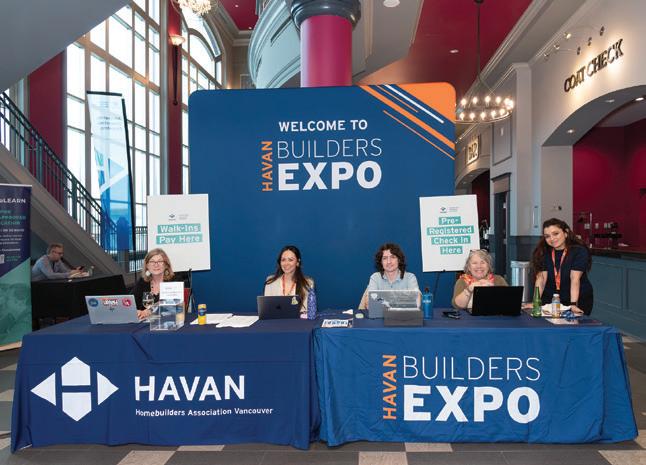
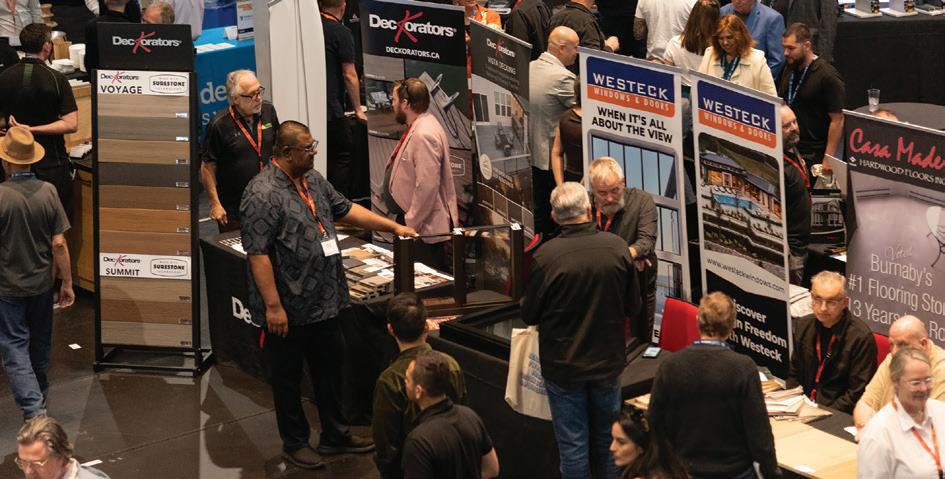
In a slower market, business-to-business relationships are essential infrastructure for our industry. This past May, HAVAN’s 20th Annual Builders Expo brought more than 600 people from across our housing ecosystem into one room — builders, renovators, designers, suppliers, and manufacturers. The conversations centered on practical problem-solving ideas, resources, new technologies, and building stronger industry relationships.
Our Suppliers Council is focused not only on building a stronger supplier network, but also on finding meaningful ways to support the builders, renovators, and designers driving housing projects across the region.
The housing challenges facing Metro Vancouver will not be solved by one group alone. Builders need projects that are financially viable. Municipalities need infrastructure and servicing. Buyers need attainable options. And the broader housing ecosystem — from manufacturers and suppliers to trades, designers, consultants, and lenders — depends on projects continuing to move forward.
What concerns me most is how quickly the industry can lose momentum when uncertainty compounds. Housing supply is not something that can be turned on and off overnight. The decisions being delayed today will shape affordability, inventory, labour capacity, and housing choice years from now.
That is why maintaining a strong and connected homebuilding ecosystem matters. In a slower market, collaboration across the industry becomes even more important — not only to support business continuity, but to ensure the region can continue delivering the homes people need in the years ahead.

Wendy McNeil is the CEO of the Homebuilders Association Vancouver (HAVAN). Founded on building construction excellence in 1974, HAVAN fosters opportunities to connect, provides both industry and consumer education, and actively liaises with local municipal governments with the focus of meeting Metro Vancouver’s housing needs. A not-for-profit association, HAVAN is proudly affiliated with both the provincial CHBA BC, and national CHBA offices. For more information on HAVAN, its programs and membership, visit www.havan.ca


As a lumber and building materials business, advocacy is essential because government decisions directly impact our customers, teams, and communities. Whether it is housing affordability, supply chain challenges, building codes, labour availability, or cross-border trade, our industry needs a strong and informed voice at the table. Too often, policies are created with good intentions but without a full understanding of how they affect businesses on the ground, leading to unnecessary red tape, added costs, and unintended consequences. Advocacy helps open dialogue, build a better understanding of our industry, and ensure policymakers hear practical perspectives from those working in it every day. It is not just about speaking up for individual companies. It is about supporting a healthy, sustainable building materials industry that can continue to serve builders, homeowners, and communities for years to come.

Ken Crockett kcrockett@starbuilding.ca

Amanda Wright, Supply-Build Canada
The best hiring strategy? Make work so good that people don’t want to leave in the first place. While money is always the first thing we think of, there are a number of reasons why a person stays at a job they love, and most of those reasons aren’t financial. Let’s look at some of the ways you can hold on to your top performers without sacrificing the bottom line.
What’s the feel of your organization? One of the biggest things we hear from happy teams is that “work feels like a family,” and we hear it from staff on the floor, not just the leaders. That means making calls that actually make sense for your team, offering real, tangible supports and benefits that make work easier, and making sure everyone is pulling in the same direction. A little friendly competition is healthy, but if your team feels like they need to beat each other rather than the competition, morale is going to take a hit.
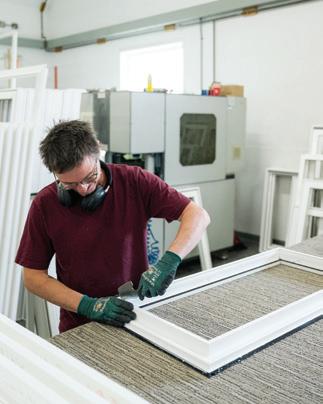
If your team isn’t happy, do you know why? You should. Healthy teams have open communication, the good and the bad, and responses flow both ways. Big changes aren’t steamrolled through; people have a chance to voice their concerns and ask questions. It doesn’t mean changing direction every time someone pushes back, it just means people feel heard. Taking the time to address questions when big changes come will always pay off in the long run.
Does everyone know what their actual job is? It sounds simple, but how many of us have been in positions where “unofficial” tasks are quietly treated like part of the job description? That lack of clarity is often the root of discontent. When everyone is 100% clear on who does what, you get better communication, better cohesion, and a team that actually works together. It might be time to dust off those job descriptions and make it official that Matthew buys the cream and orders the water.
Another great way to keep people is to offer them a clear path forward. Feeling stuck in a “dead end job” often comes from not knowing where they could go next. This industry offers a thousand pathways to keep people moving forward, so make sure your team knows what their options are.
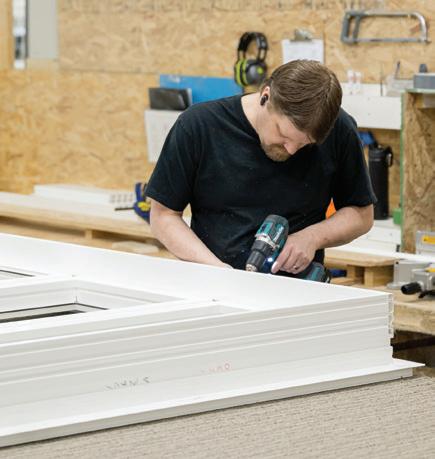
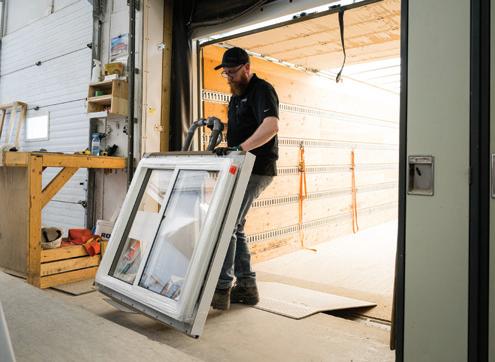
Competitive wages matter, but they’re not the whole picture. What kind of benefits are you offering? Sometimes a better benefits package is worth more to someone than a slightly higher wage. What does your time off look like, vacation, sick time, and anything in between? An extra week of vacation can be a game changer. A few extra days suited to your region can make the difference between someone staying or walking out the door.
Are you recognizing your team’s performance consistently, or only at major milestones? Taking the time to celebrate the small wins, one-on-one and as a team, keeps morale going. People who feel important to the team are more likely to keep contributing and feel genuinely happy coming to work. A cup of coffee here and there goes a long way to making your staff feel seen and valued. If you want people to hit those five-plus year service milestones, make sure they feel valued in every one of those years leading up to it.
We hear it all the time: people don’t leave companies, they leave bosses. Having the right people in leadership roles is critical, not just to your bottom line, but to your team’s health. Being great at a role doesn’t automatically mean someone is ready to lead others in it. Excellent sales skills don’t necessarily translate to excellent leadership skills. Make sure you’re giving your leaders the tools they need to thrive in their new role, rather than just relying on what made them great in their last one.
Focusing on these areas will help you stay ahead of turnover, working a little every day to make sure your top people love what they do and where they are. A healthy culture that prioritizes the everyday will do more to keep people long-term than a salary ever could.

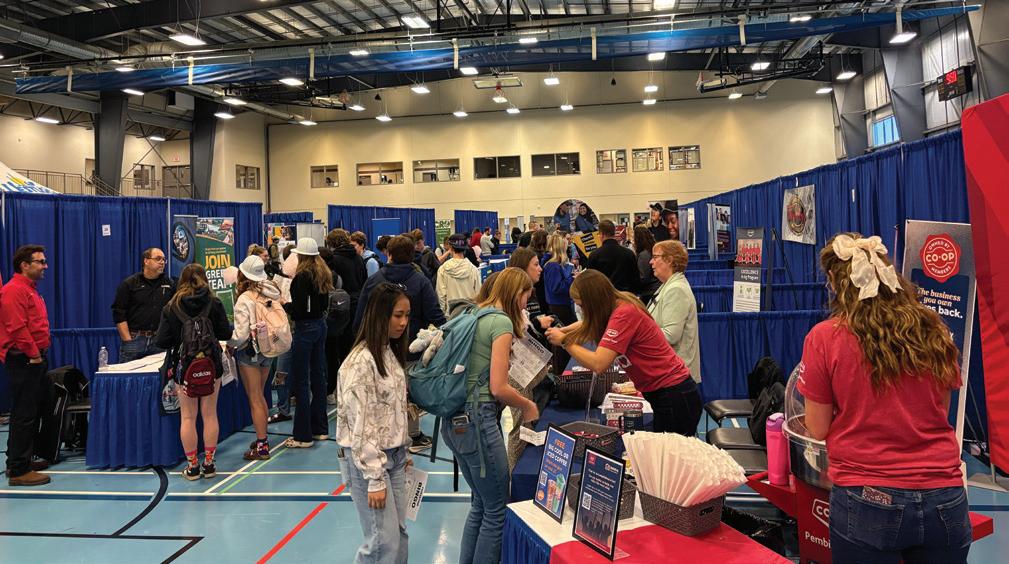
TOTAL ATTENDEES 8 CAREER FAIRS ATTENDED
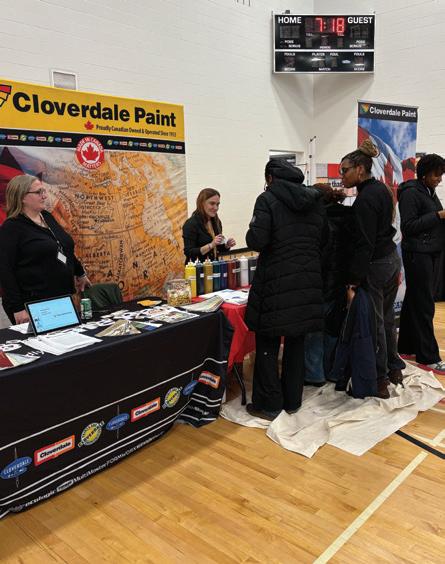
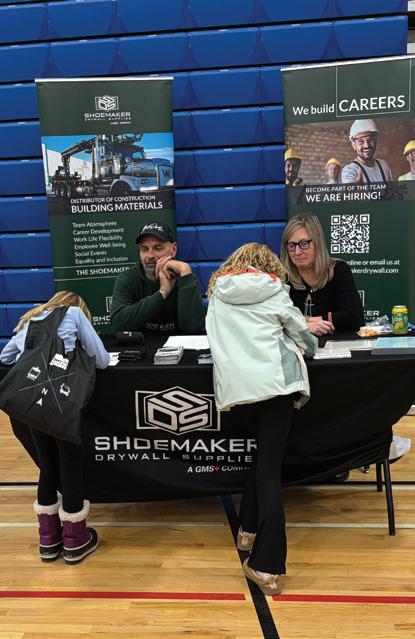
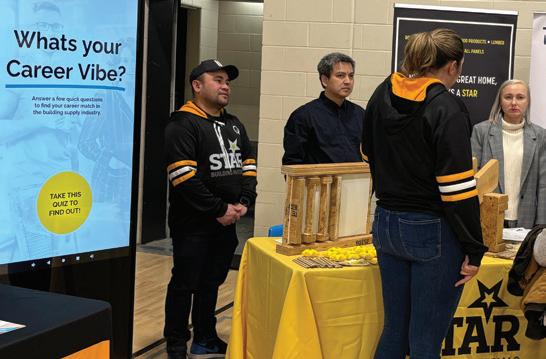
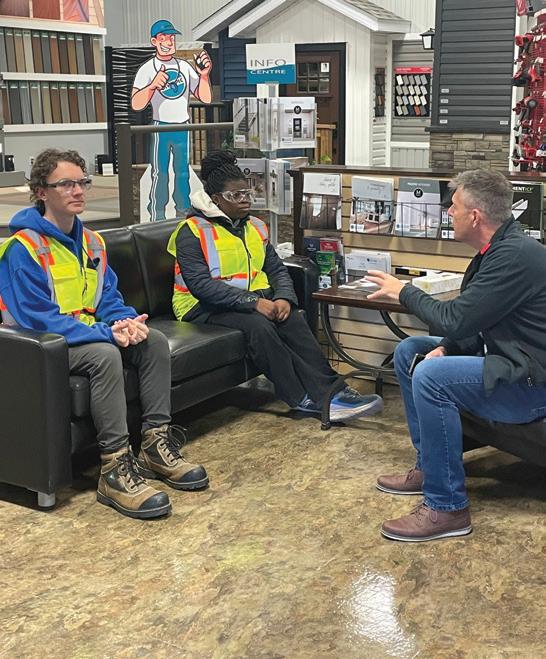
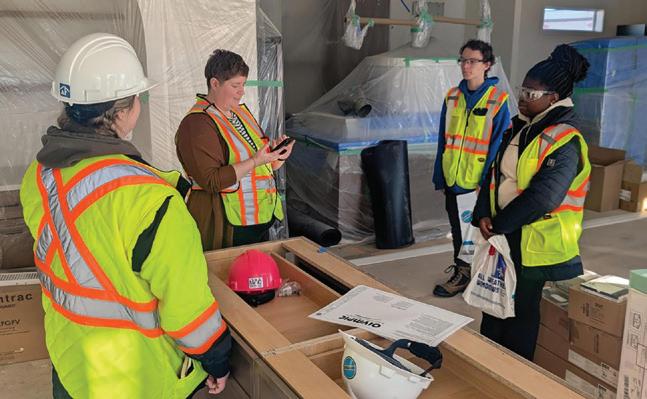
We just wrapped up our busiest spring for career fairs to date - and honestly, it showed. Averaging about two fairs a month, we covered a lot of ground this season, and we couldn’t have done it without the 20 member companies who came out with us. Having familiar faces from the industry at our booth made every conversation more authentic and every connection more meaningful. You made every fair better.
This spring also marked a real milestone for us. For the first time, we took our recruitment efforts beyond major centres and into rural communities, kicking things off with our participation in the Pembina Hills Region Career Fair in Westlock, AB. It’s a direction we’re excited to keep building on, because we know great talent exists everywhere - not just in the cities.

All in, we connected with thousands of students and job seekers across the country, with at least 500 people attending each event. That kind of reach matters. Every student who walks away knowing the building supply industry is a real, viable career option is another person who could one day strengthen your team - and the sector as a whole.
With our workforce development grant from Alberta wrapping up, we’re free to take our career fair presence coast to coast. We’ll be stepping back from the road this summer, but we’re already planning a strong return in the fall.
Want to know where we’ll be? Check out the Career Fairs tab under the Attracting Talent banner at supplybuild.ca for our most up-to-date listings.
Want us to come to you, or want to join us at an upcoming event? Reach out to Amanda W. at awright@supplybuild.ca, and she’ll make it happen.


Amanda Wright, Supply-Build Canada
The Supply-Build Canada team is always working to expand exposure to the building materials industry, ensuring our members have great candidates ready and eager to take on their next big opportunity. One of the ways we’re building that reach is through industry internships at a variety of education levels. Here’s why it’s worth your time.
The most obvious benefit of taking on an intern is the talent pipeline it creates. A strong intern can easily transition into a permanent role, already familiar with your systems, your team, and your culture. Think of an internship as an intensive onboarding process that often comes with the added bonus of subsidized wages, depending on your provincial government programs.
A less obvious but equally valuable benefit is brand awareness. Internships give you an opportunity to showcase how great your team is and all the opportunities you can offer, and you get someone else to spread the word for you. People love to brag about great workplaces. Let an intern brag about yours.
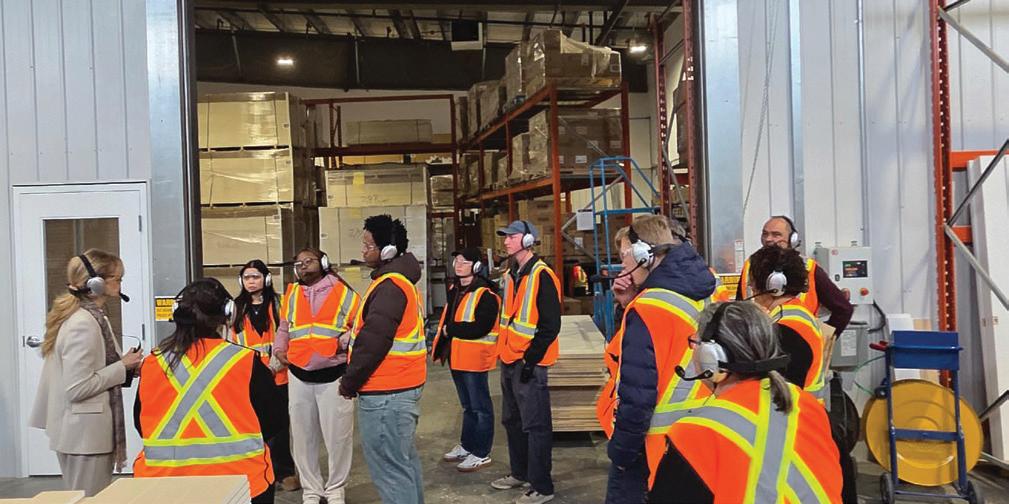
Set the tone as a leader by highlighting your commitment to supporting the next generation. Being known for your internship program is great PR, both in the industry and in your community. People love to support businesses that support them, and it’s a great way to signal to your peers that you’re one to watch.
Interns are also a great way to add temporary capacity to your team during busy seasons or major projects. Selecting interns with skill sets that already align with the role, enhanced by our education programs, means you’ll have someone ready to pitch in and help move things along faster and more effectively than a green hire with no industry experience.
We currently have prospective interns who have reached out with experience in the following areas:
BC: Finance, Business Administration, and Psychology/HR
AB: Supply Chain Management, Construction Engineering, and Electrical Engineering
SK: Finance and Electrical Engineering
MB: We have partnered with the Asper School of Business at the University of Manitoba to support their co-op program in multiple streams of business
ON: We have partnered with the University of Guelph’s Engineering department co-op program with access to multiple engineering streams of study
Flexible on location: Wood Engineering
We’ll be launching a high school internship program in Manitoba this fall. Did you know that Manitoba high school internship students are paid in school credit rather than wages? If you have a position you’d like to include an intern in, reach out and let’s talk.
We’ll also be continuing our partnership with Careers Alberta on youth internships through the summer and fall. Did you know that Careers Alberta has funding available to subsidize the wages of their youth interns? Same deal, if you have a position in mind, we want to hear from you.


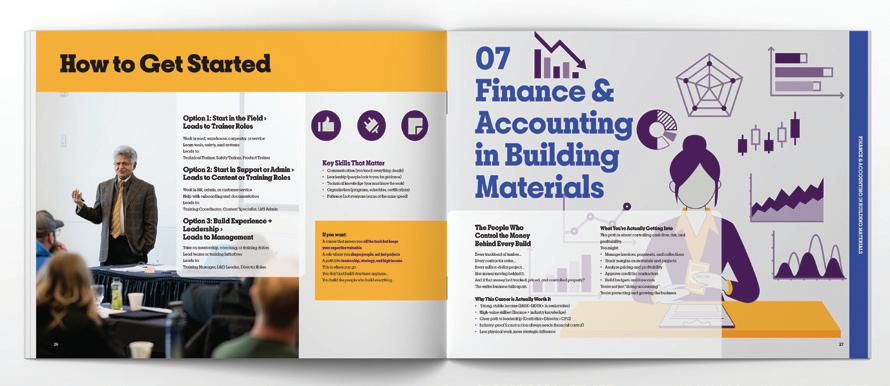
When most people think about the building supply industry, they often picture construction sites, lumber yards, or heavy equipment. But today’s building materials industry is far more diverse, innovative, and opportunity-driven than many realize. There’s never been a better time to show students just how many doors it can open - and that’s exactly what the new Supply-Build Canada Occupation Manual for Guidance Counsellors is here to do.
Created for educators, guidance counsellors, and students, the manual highlights 24 different career pathways within the building materials industry. Each section includes career descriptions, salary insights, and potential growth opportunities, helping students better understand the wide variety of careers available across the sector.
The manual features occupations in:
• Administration and Management
• Architectural and Design Services
• Building Materials Sales and Distribution
• Building and Construction Trades
• Customer Service and Communications
• Finance and Accounting
• Human Resources
• Marketing and Advertising
• Technology and IT
• Supply Chain and Logistics
• Trucking and Transportation
• Safety and Health Careers
• Retail and Home Improvement
• And many more.
The need for this resource has never been greater. Building Materials and Supplies Retail and Wholesale is the third-largest industry in Canada, contributing $22.6 billion to the country’s GDP. The wholesale sector alone employs more than 150,000 people nationwide and generates approximately $15 billion in economic activity annually.
At the same time, the industry is entering a major workforce transition. According to the 2021 Census, 29% of the workforce was aged 55 or older, with more than 46,000 workers expected to retire over the next decade - creating significant opportunities for the next generation entering the workforce.
Statistics Canada data also highlights just how diverse the sector truly is. One out of every seven workers holds a management role, while many others work in technical professions, sales support, logistics, communications, transportation, and self-employment.
If you’re a counsellor working with students interested in business, design, technology, marketing, communications, or operations, the Occupation Manual can help you connect them with career opportunities they may never have considered. Many students don’t realize their passions can lead to rewarding careers within the building supply industry.
As the sector continues to evolve through innovation, sustainability, and workforce development, attracting future talent has never been more important. The Supply-Build Canada Occupation Manual is more than a career guide - it’s a tool that helps students discover meaningful, stable, and future-focused career paths in one of Canada’s most essential industries.
The Occupation Manual will be completed ahead of the fall season, but here’s a sample of what it looks like (on the next page).





Jay Dion, Supply-Build Canada
The building materials industry is no stranger to uncertainty, but the current economic climate has pushed even the most seasoned operators to rethink how they plan, forecast, and lead. At our recent Supply-Build Canada events, members came together to share what they are seeing on the ground and how they are adapting in real time.
Colin McColl, Owner, Windsor Plywood Sherwood Park; Jason Poloway, Purchasing Manager, Star Building Materials Alberta; Gagan Prince, Owner, Everything Exterior Ltd.
The conversation was candid from the start. Ongoing uncertainty driven by US trading policies has made long-term forecasting feel like a moving target for many retailers. Some businesses have moved to month-to-month planning entirely, not by choice, but out of necessity.
The panel was clear: this is not a short-term disruption. Businesses across the industry will need to develop a higher tolerance for uncertainty and build more flexibility into how they operate over the next several years. The leaders who will come out ahead are the ones who stop waiting for stability and start building systems that work without it..
Kelsey and Devon Brooks, Brooks Building Supplies; Jil Reid, FCL; Evan Drisner, Saskatoon Co-op; Lloyd Postnikoff, J&H Builder’s Warehouse; Mick Neufeld, J&H Builder’s Warehouse; Ryan Bill, Adams Lumber; Sue Matic, Matix Lumber; Tia Matic, Matix Lumber; Sam Cohn, Matix Lumber; Scott Steffansen, American Express; Tim Pillipow, American Express; Liz Kovach, Supply-Build Canada; Jay Dion, Supply-Build Canada
Despite the headwinds, the mood in Saskatoon was notably optimistic. The prairie provinces have experienced a sustained mini economic boom in building over the past few years, and the industry has felt it. That momentum has provided a degree of insulation from the broader market pressures hitting other regions, and participants were cautiously confident about what lies ahead.


Joel Hartung, The Lumberzone; Clinton Plett, Countryside Lumber; Andy Hoffman, Lumber Cart; Rudi Sawadsky, Lumber Cart; Regan Penner, Rona Rosenort; Scott Steffanson, American Express; Tim Pillipow, American Express; Liz Kovach, SupplyBuild Canada; Amanda Wright, Supply-Build Canada; Jay Dion, Supply-Build Canada
Leaders within the industry in Manitoba were frank: attracting and retaining talent is one of the biggest challenges they’re facing right now. Red tape around environmental, archaeological, and heritage assessments in rural municipalities was also a key concern, with approval for housing projects often lasting months or even years. The future of robotics in the industry was also raised, with the consensus being that automation won’t be a replacement for skilled labour, but instead will reshape what those roles look like going forward.
Jonathan Vanpopta, West Central Building Supplies; Kyle VanderMooren, West Central Building Supplies; Joash Pleiter, Fabtech Design & Build; Steve Vandergriendt, Fabtech Design & Build; Amber Wood, Haney Builders Supplies; Alex Yakovyshenko, Haney Builders Supplies; Steve Porcellato, Country Lumber; Lyle Perry, The Kerrisdale Lumber Co.; George Bal, Griff Building Supplies; Amanda Camara, Supply-Build Canada; Matthew Lucek, Supply-Build Canada
BC leaders came ready to talk about what’s actually holding the housing and supply industry back. Foreign investment, immigration policy, and mortgage reform were all on the table. So was red tape, with dealers pointing to unnecessary barriers slowing down the entire building chain, from suppliers all the way down to contractors. The message was clear – the industry needs action, not more bureaucracy.
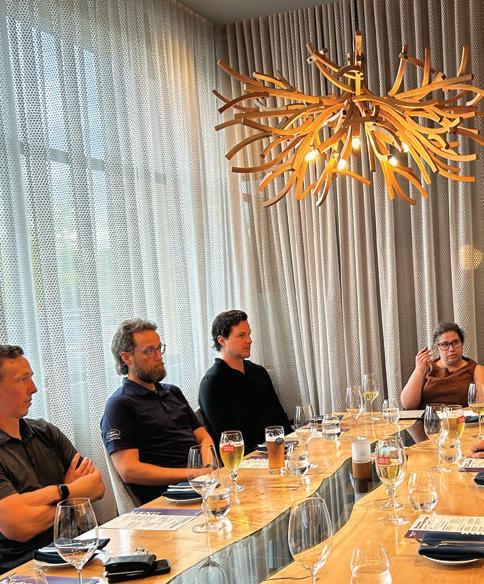
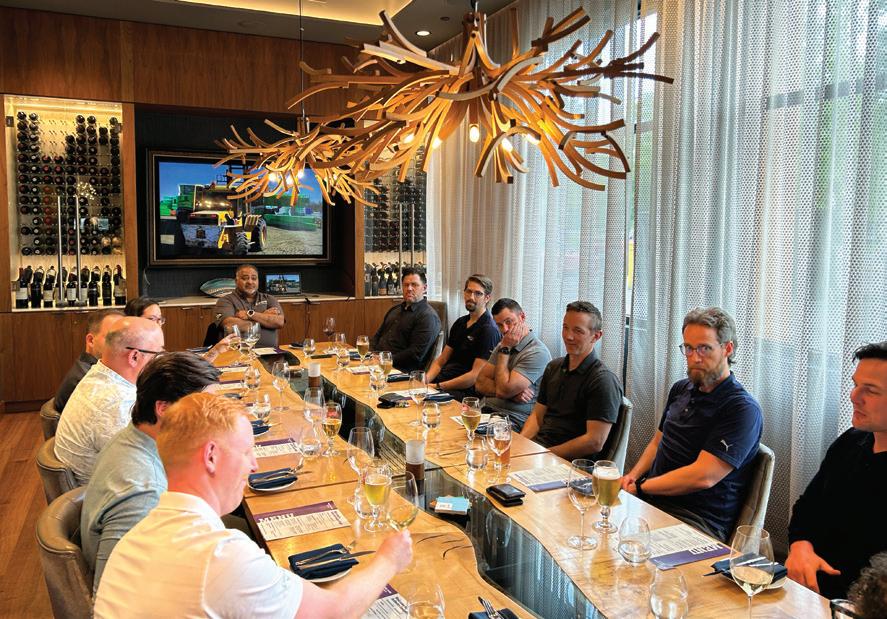

Sven Johnson, Treeco; Conor Karperien, Treeco; Kirk O’Dooley, Forma Steel; Stephen DeGruchy, Caliper Forest Products; Jeff Simmons, Caliper Forest Products; Rose-Marie Stagg, Wesure; Cory Koss, Wesure; Tommy Nguyen, Canada Kitchens Wholesaler; Ella Tran, Canada Kitchen Wholesaler; Teed Burns, Federated Insurance; Sebastian von Kursell, Federated Insurance; Liz Kovach, Supply-Build Canada; Jay Dion, Supply-Build Canada
We gathered some of Alberta’s sharpest minds to discuss the challenges facing that province and the building supply industry as a whole. Three major themes dominated the discussion: imported steel and hardwood tariffs, competition in quality from Asian mills versus their Canadian counterparts, and the need for more workforce development and internship initiatives to bring new talent into the industry.

If there was one thread that ran through every event, it was this: the industry’s relationship with government has never been more important. Three voices said it best.
“As the industry gains deeper recognition from government, it is more likely to gain inroads with policy development.”
— Brady Wilk, Integrity Building Products
“Participating in government advocacy helps grow the industry.”
— Gary Fletcher, Trail Building Supplies
“When government becomes aware of the building materials industry, it is eager to work with it.”
— Jodie Porter, Taiga Building Products
Showing up matters. The more visible and engaged our industry is with policymakers, the better positioned we are to shape the decisions that affect our businesses, our members, and our future.



“The companies that remain visible during difficult times are often the companies that emerge stronger when the market rebounds”
WHY VISIBILITY MATTERS MOST WHEN EVERYONE ELSE IS GOING QUIET.
Amanda Camara, Vice President of Business Development & Marketing, Supply-Build Canada
There is a predictable pattern that happens every time the economy gets shaky.
Sales soften. Customers become more cautious. Margins tighten. Budgets get scrutinized.
And then someone inevitably asks:
“Should we cut marketing?”
And that answer might be, yes – because it’s not as tangible as someone writing a PO.
In fact, this is often the exact moment your brand needs to be more visible, not less.
When uncertainty enters the market, many companies instinctively retreat.
They reduce advertising.
They cancel sponsorships.
They stop communicating.
They disappear from the conversation.
The logic seems reasonable. If revenue is under pressure, expenses need to be reduced.
But here’s the problem: your customers don’t stop existing simply because the economy slows down.
Contractors still need materials.
Homeowners still have projects.
Builders still need suppliers.
Retailers still need traffic.
And every one of those customers is still making purchasing decisions.
History has repeatedly shown that businesses that continue investing through downturns often outperform those that pull back. A landmark McGraw-Hill Research study found that companies maintaining or increasing advertising during a recession experienced significantly stronger sales growth once the economy recovered than those that cut spending.
The companies that remain visible during difficult times are often the companies that emerge stronger when the market rebounds.
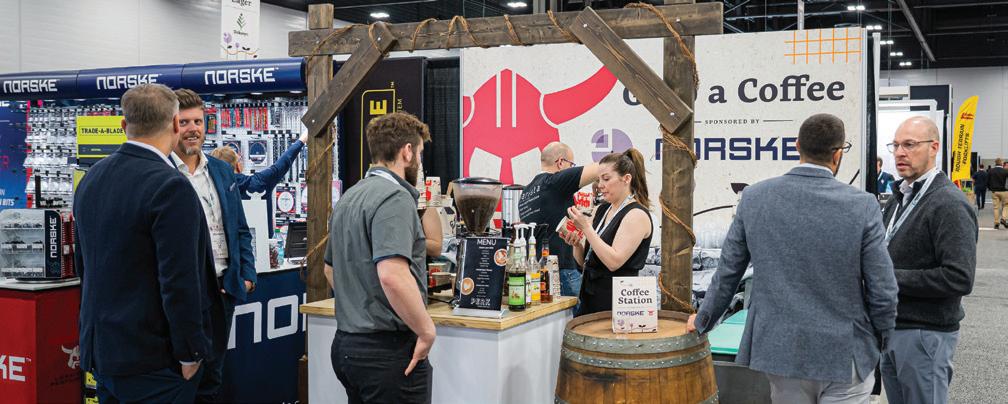
Marketing is not simply about generating leads today.
It’s about remaining relevant tomorrow.
Customers buy from brands they know.
Brands they trust.
Brands they remember.
When companies disappear during a downturn, they create space for competitors to occupy.
Every social media post you didn’t publish.
Every customer story you didn’t tell.
Every sponsorship you didn’t support.
Every email you didn’t send.
Someone else likely did.
Research from the Ehrenberg-Bass Institute suggests that only a small percentage of buyers are actively in-market at any given time. In many industries, that number hovers around 5%.
That means 95% of your future customers aren’t buying today.
Your marketing isn’t just for today’s buyer.
It’s for the customer who will be ready six months from now. Or next year.
The brands that stay present build trust long before a purchase decision is made.

“95% of your future customers aren’t buying today.”
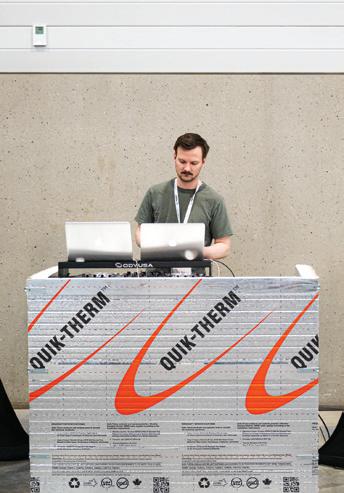

This isn’t just a retailer conversation.
Manufacturers face the same temptation.
When orders slow, it can feel logical to reduce marketing activity and wait for the market to rebound.
But dealers are paying attention.
Retailers want to know which suppliers are investing in their success.
They notice who continues providing training.
Who continues supporting events.
Who continues creating tools and resources.
Who continues showing up.
Strong partnerships are built during difficult markets, not easy ones.
Likewise, retailers who continue engaging in their communities, supporting contractors, and communicating with customers often strengthen loyalty long before market conditions improve.
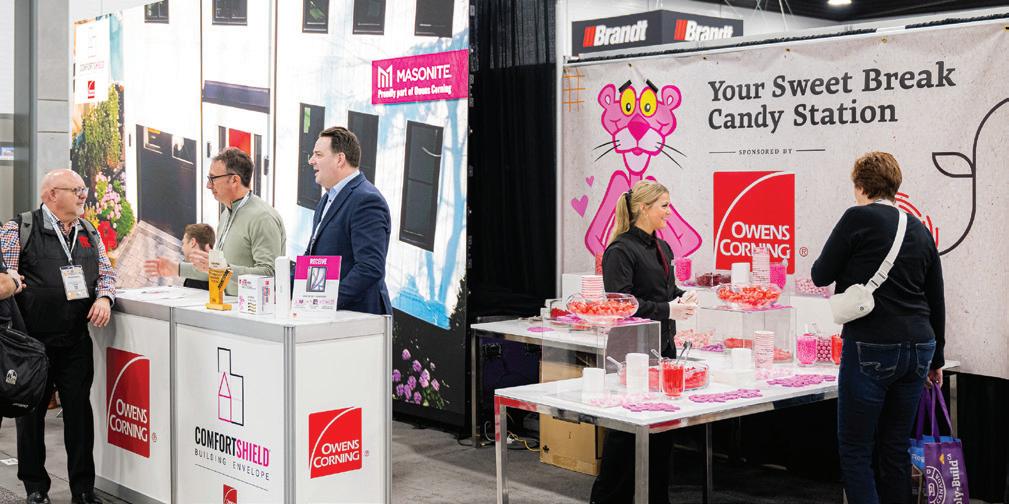
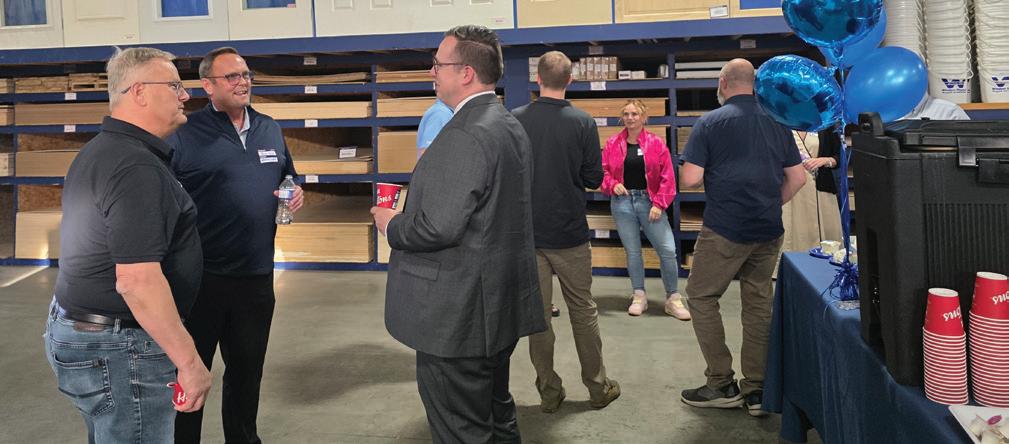
Let’s be clear.
Showing up doesn’t mean spending recklessly.
It doesn’t mean throwing money at every advertising opportunity that crosses your desk.
Good marketing should support business objectives:
• It should support sales teams.
• It should reinforce customer relationships.
• It should create confidence in your brand.
Research published by the Harvard Business Review found that companies that balanced cost management with continued investment in growth initiatives during downturns consistently outperformed competitors after recovery.
Not because they spent more. Because they stayed visible while others went silent.
This is the time to be strategic, not silent.
Focus on the channels that work.
Tell customer success stories.
Invest in education.
Stay connected to your audience.
Provide value.
Be useful.
Most importantly, be present.

“When competitors pull back, the noise decreases.”
There is a silver lining to a slower market.
When competitors pull back, the noise decreases.
Your message has a better chance of being heard.
Your content travels further.
Your brand becomes more memorable.
In business, market share is often won when others are busy protecting it.
The companies that continue showing up while competitors disappear aren’t just maintaining awareness.
They’re capturing attention.
They’re strengthening relationships.
They’re earning trust.
And they’re positioning themselves to grow when conditions improve.


Nobody is pretending the current environment is easy. Businesses across Canada are facing real challenges.
Customers are cautious.
Projects are delayed.
Decisions take longer.
But difficult markets don’t change the fundamentals.
Relationships still matter.
Trust still matters.
Brand still matters.
The companies that continue showing up—for their customers, their partners, and their industry—will be in a far stronger position when conditions improve.
So if you’re debating whether now is the time to pull back your marketing efforts, consider this: Your competitors probably are.
That may be the best reason not to.
Because you can save money by going quiet.
The real question is whether you can afford what it costs you later.

ABOUT THE AUTHOR
Amanda Camara is the Vice-President of Business Development & Marketing at Supply-Build Canada. A marketer with more than 15 years of experience, she is passionate about building brands, growing businesses, and proving that marketing should drive revenue—not just awareness.



Ryan Michael (R.M.) Caligiuri
Somewhere along the way, sales got soft. We traded handshakes for hyperlinks, conversations for conversions, and relationships for response rates. Reps got a little too comfortable behind their screens. It is time to put the laptop down, lace up the boots, and go hunting.
Technology and AI are making marketing lazy and sales even lazier. Every rep now has a tool that can pump out a handful of “personalized” emails before lunch. The inbox fills up with messages that sound polished but say nothing, all opening with the same fake friendly line, all ending with the same ask for fifteen minutes. And buyers know. Buyers always know.
The result is a loss in credibility for cold and, yes, even warm outreach.
Emails are trusted less every quarter because most of them read like they were written by a robot, because they were. Phone calls from numbers nobody recognizes get ignored. The more we automate, the cheaper our outreach becomes, and the cheaper it becomes, the less anyone believes it.
The correction is already underway, and it points in one direction. We’re moving back to old school rules. Back to human to human. Back to the rep who shows up in person, remembers a name, a birthday, a favourite team, and earns trust the slow way.
The salespeople who win the next decade will look a lot more like the ones who won in 1985 than the ones topping the leaderboard today. The tools changed. The fundamentals did not. That is what hunting is, a discipline that can be learned, practiced, and sharpened. Here are three techniques to start sharpening yours today.
The fastest way to build a real relationship is to give before you ask and to give without expectation of return. Drop off a coffee. Send a referral to a contractor who has nothing to do with your product. Share a piece of intel with a competitor’s customer because it genuinely helps them. Most reps cannot help themselves, they give a little, and then immediately reach for the ask. That is not hunting. That is begging with extra steps.
Reciprocation is a law, not a tactic. Give freely and consistently, and the field tilts in your favor. The return rarely comes from the person you gave to, and rarely when you expect it. But it comes.
If you cannot tell me your top customer’s favourite hobby, their birthday, their kids’ names, or what they order at the restaurant after a long week, you do not have a deep relationship. You have a contact. There is a difference, and that difference is everything when the next price war or competitor pitch hits.
Hunters work the ABCs:
A – Anniversary. B – Birthday. C – Children. D – Drinking habits. E – Eating habits. F – Fashion. G – Goals. H – Hobbies. J – Jobs (Upcoming), and so on.
The more you know about the human across the table, the better the relationship and the deeper the trust. And trust is the only currency that survives a downturn. AI cannot fake the fact that you remembered their daughter’s hockey tournament. No software in the world can replicate the fact that you brought their favourite coffee, unprompted, on a rainy Tuesday morning.
While the ABCs seem simple, it’s one of the most powerful competitive advantages I’ve seen protect business when quotes are $50,000.00 to $100,000.00 more than the competitor trying to steal your business away. I’ve seen it in every industry I have ever worked with. While it’s not full proof, it is the single biggest advantage you have in a highly competitive space.

“The fastest way to build a real relationship is to give before you ask and to give without expectation of return. “
Hunting is not a quick sport. It takes time. It takes patience. It takes a lot of sitting still and walking out empty-handed. The best time to start was a year ago. The second-best time is today.
Block your calendar. Every week, dedicate at least 10 to 15 percent of your time to hunting. Starting new conversations, deepening the ones you have, and physically getting in front of people. Not emails. Not phone tag. Real, in-the-field, eye-contact hunting. If a quarter of your week is not pointed at new and developing relationships, you are coasting on a pipeline that is quietly drying up.
Here is the truth nobody puts on a sales dashboard: if you are not hunting, you will go hungry. Maybe not this quarter. Maybe not next. But it comes. It always does.
The shift toward a hunter mentality is not a trend. It is a correction. We got comfortable, and comfort is the most expensive thing a salesperson can buy. The cure is simple, even if it is not easy: put down the templated email, close the CRM tab, and go outside.
Go to the job site. Call the customer you have not seen in person in two years. Drop in on the one who never returns your emails. Bring something. Ask about their kids. Listen longer than you talk. And then do it again next week, and the week after that.
The field is wide open. Sales reps are still sitting behind a keyboard and aren’t tapping into this truth yet. Beat them to the punch. This is your opportunity.
Happy hunting.



If you listen to the news, you’d think the building industry should be slowing to a crawl.
Interest rates remain elevated. Housing affordability continues to challenge buyers across Canada. New home construction has softened in many regions, and consumers are becoming increasingly cautious about large financial decisions. Yet something interesting is happening beneath the surface.
While some areas of construction are slowing, others are quietly gaining momentum. Drive through almost any neighbourhood today and you’ll see it. Contractors’ trucks still line driveways. Decks are being built. Windows are being replaced. Basements are being transformed into income suites. Homeowners are investing in roofing, insulation, outdoor living spaces, and energy-efficient upgrades.
The spending hasn’t disappeared.
It has simply shifted.
For years, growth in the building industry was fuelled largely by new home construction. Homeowners moved more frequently, borrowed cheaply, and often upgraded to larger homes when their needs changed. Today, that equation looks very different.
Millions of Canadians are sitting on mortgage rates they may never see again. Trading a mortgage secured at two or three percent for one at five or six percent no longer feels like an upgrade. For many families, it feels like a financial setback.
As a result, homeowners are staying put longer and when people stay in their homes longer, they begin investing in them differently.
The unfinished basement becomes a rental suite. The aging kitchen gets refreshed. The backyard transforms into an outdoor retreat. The drafty windows finally get replaced. Homeowners start asking how their homes can work harder, last longer, and deliver greater value. In many ways, the current economy is creating a renovation-first mindset and that shift presents an enormous opportunity for manufacturers, suppliers, distributors, and lumber yards willing to adapt.
The challenge is that many companies continue marketing as though consumers are still making decisions the same way they did five years ago and they’re not. Today’s homeowner is more educated, more cautious, and more research-driven than ever before. Prior to making a purchase, consumers are spending hours online comparing products, watching renovation videos, reading reviews, and seeking expert advice. By the time many customers walk into a showroom or lumber yard, they have already formed opinions about brands, products, and solutions. That means the companies winning today are the ones providing the most value before the sale.
Historically, economic slowdowns have often created the greatest opportunities for businesses willing to maintain visibility while competitors retreat. During the Great Depression, Procter & Gamble continued investing heavily in advertising while many competitors cut spending. The company famously sponsored radio programs aimed at homemakers, helping build brand loyalty that lasted generations. More recently, during the 2008 financial crisis, Amazon continued investing aggressively while many retailers focused solely on cost-cutting. While competitors were trying to preserve market share, Amazon was positioning itself to capture more of it.

Marc Atiyolil is a nationally recognized builder, designer and media personality best known as the Co-Host of The Marc & Mandy Show and Editor-in-Chief of Canadian Home Trends Magazine. With over two decades of experience working alongside top contractors, developers and designers across North America.
Marc brings a rare mix of industry know-how and media savvy. From job sites to broadcast studios, he helps brands speak the language of the trades authentically and effectively. Marc has partnered with major brands, delivered keynote talks across the country and built a loyal following by turning real-world expertise into results-driven strategies. When Marc talks about marketing, builders actually listen. Through every talk, every program and every act of service his goal remains the same, to help people rise then teach them to help others rise too.
The lesson is simple: market share is often won during difficult times, not prosperous ones.
When competitors go quiet, consumers still need information, products and solutions. The companies that remain visible become the brands people remember.
For the building industry, this creates an important shift in marketing strategy. The conversation should no longer focus solely on products. It should focus on outcomes. Consumers don’t buy insulation because they love insulation. They buy lower utility bills. They don’t buy windows because they’re excited about glass. They buy comfort, efficiency, and savings. They don’t buy decking because they want lumber. They buy a better place to spend time with family.
The most successful manufacturers and suppliers understand this distinction. They aren’t marketing products but rather solutions.
They’re helping homeowners understand how to reduce energy costs, increase property values, create additional income streams, improve comfort, and reduce maintenance. They are educating first and selling second.
That’s the most important lesson for navigating today’s economy. The money hasn’t disappeared. In fact, many Canadians still have significant home equity, savings, investment income, inheritance wealth, or stable household earnings. What has changed is confidence.
Consumers are simply more selective about where they spend. That means trust has become one of the most valuable assets a brand can build. The companies that consistently educate, inspire, and provide value are the ones earning that trust. They are positioning themselves as experts rather than vendors, advisors rather than salespeople and those relationships often become a competitive advantage that lasts long after the economy improves.

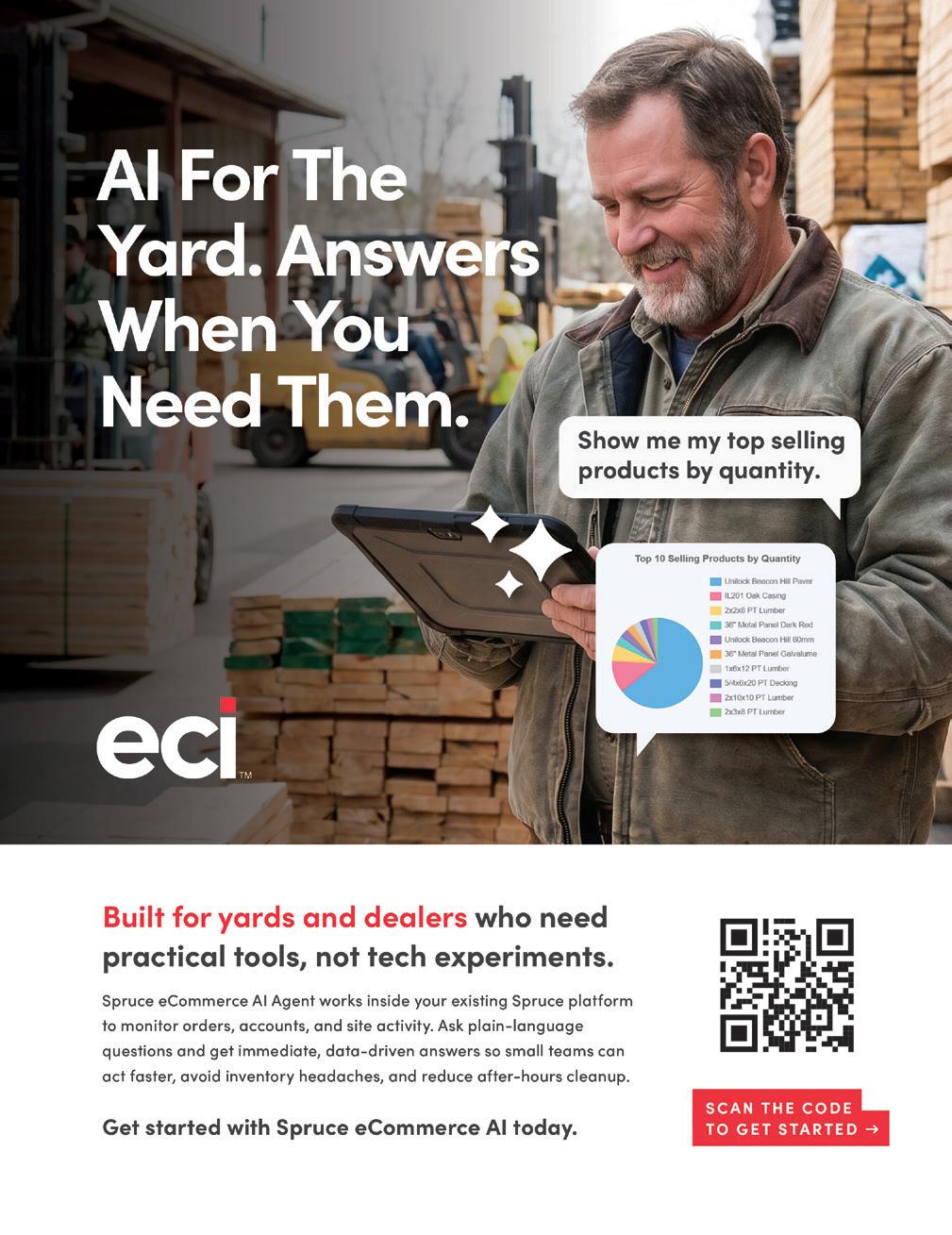


Genny Sacco-Bak
Golf tournaments have a way of bringing people together. The pace is relaxed, conversations happen naturally, and there’s plenty of time to connect with clients, prospects, partners, and colleagues outside the usual office setting.
That’s exactly why golf events remain such a popular choice for business networking and brand visibility. But if your marketing plan starts and ends with a logo on a sign and a box of branded golf balls, you may be missing a valuable opportunity.
The businesses that make the biggest impression are often the ones that think about the attendee experience first.
Before you order giveaways or book your sponsorship, ask yourself one question: “What will people remember about us?” Chances are it won’t be the logo on your tent. It will be the interaction they had with your team, the experience you created, or the way you made their day a little more enjoyable.
That doesn’t mean you need an elaborate activation. In fact, some of the most successful golf event experiences are surprisingly simple.
Think about what golfers might appreciate during a long day on the course. A refreshment station with cold drinks can become a welcome stop and a natural place for conversation. A sunscreen or cooling-towel station on a hot day shows you’re thinking about the participant experience. These small touches often generate more goodwill than another branded giveaway tossed into a golf bag.
Interactive activities can also create memorable moments. A putting challenge, a “closest to the pin” contest, or a prize wheel gives people a reason to stop, engage, and have a little fun. The key is to keep it easy, welcoming, and quick to participate in.
Of course, even the best ideas need good planning. The organizations that look polished and organized on event day are usually the ones that prepared well ahead of time. Make sure your materials are ready and your setup is easy to manage. A little preparation can make a big difference.




“The strongest event marketing isn’t built on a single interaction. It’s built on relationships that continue long after the final putt.”








As the host of the Coffee with Genny B program on the U-Multicultural Channel and an instructor at the University of Winnipeg Professional Applied Continuing Education, Genny is passionate about communication. She sees the potential and believes deeply in every person she connects with. Curious and full of energy, she puts a lot of love into every project.
And let’s talk about your team for a moment. While activations, signage, and giveaways can help attract attention, it’s your people who create the real impact. Make sure your team understands their role and is prepared to engage with attendees in a genuine way. Friendly, approachable staff who are curious, welcoming, and interested in building connections can leave a stronger impression than the most elaborate display.
Don’t let those conversations end when the tournament does. A quick follow-up email, a connection on LinkedIn, or a thank-you message can go a long way. The strongest event marketing isn’t built on a single interaction. It’s built on relationships that continue long after the final putt.
As companies plan their event strategies for 2026, the focus is shifting from simply being seen to creating meaningful experiences that people remember long after the tournament is over. The businesses that stand out are the ones that are intentional, welcoming, and memorable.
Potapov and Alisa Luo Supply-Build Canada
Golf season is officially back, and Supply-Build Canada is ready to hit the fairways bigger than ever in 2026.
This year, we’re bringing the industry together across five tournaments in four provinces for a summer packed with connection, laughs, friendly competition, and unforgettable moments on the course. Whether you’re there for the birdies, the business conversations, or just the chance to reconnect with industry friends face-to-face, these tournaments have become one of the highlights of the year for the building supply community.
We’ve also got some exciting updates this season. We’re thrilled to welcome the brand-new BC BarrierTek Golf Classic to the lineup, while the AB Regal Ideas Golf Classic heads to its new home in Innisfail. New locations. New opportunities. Same incredible industry energy.

But beyond the golf carts, giveaways, and good times, these tournaments support something much bigger. Funds raised go directly toward SupplyBuild Canada’s Education Grant Program, investing in the next generation of building supply professionals. From students entering post-secondary education to employees pursuing continuing education and training, these grants help strengthen the future of our industry one opportunity at a time.
Last year alone, $15,000 was awarded to ten Supply-Build Canada members and their families, supporting career growth, workforce development, and future industry leaders. Every sponsorship, registration, and foursome plays a role in making that happen.
At the end of the day, these events are about connection. There’s something special about stepping away from the office or jobsite and spending a summer day building relationships that carry well beyond the final hole.
So grab your team, dust off your clubs, and get ready for another incredible season on the course. We can’t wait to see you out there.
Interested in sponsorship opportunities? Contact Amanda Camara at acamara@supplybuild.ca for priority access and tournament partnership details.










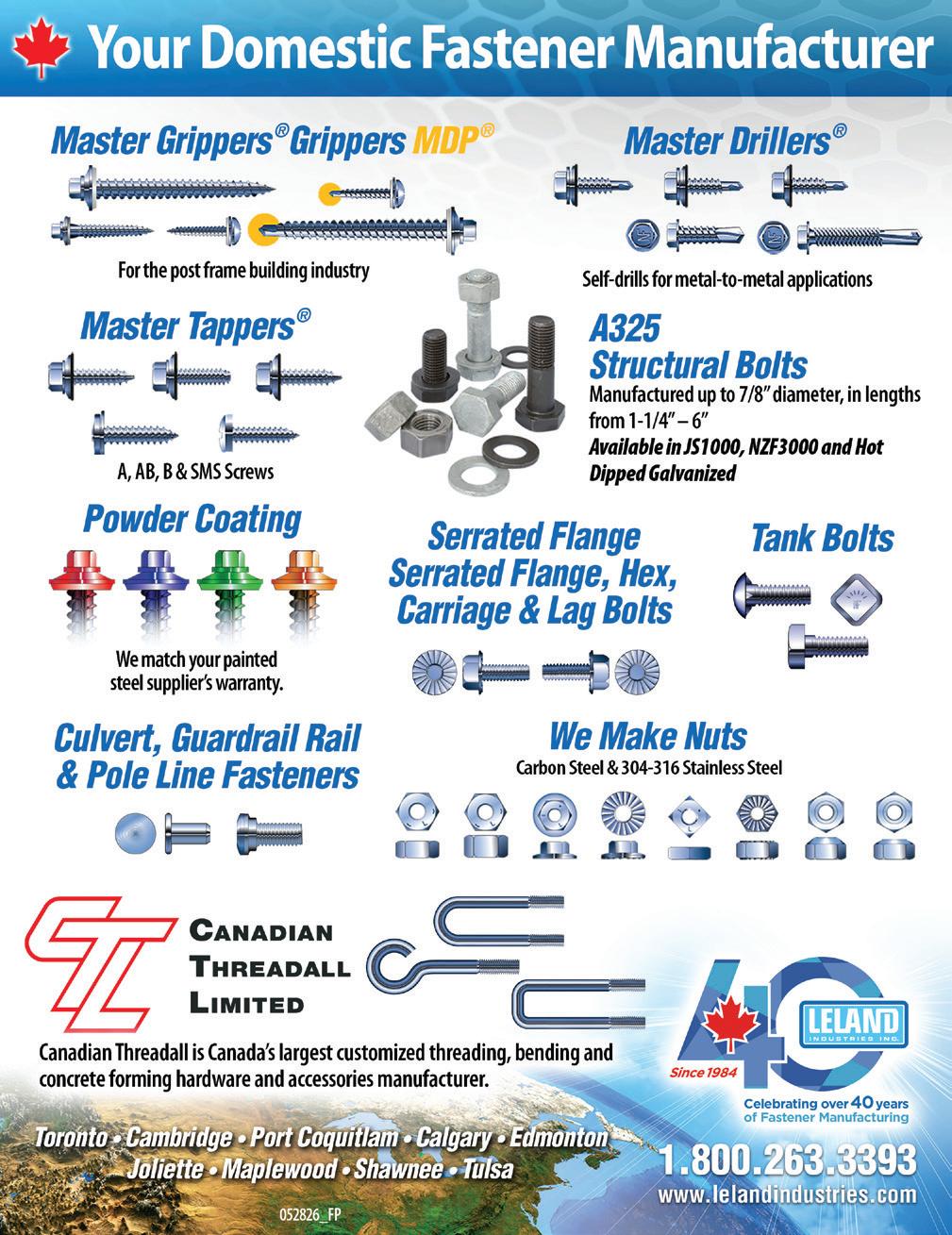
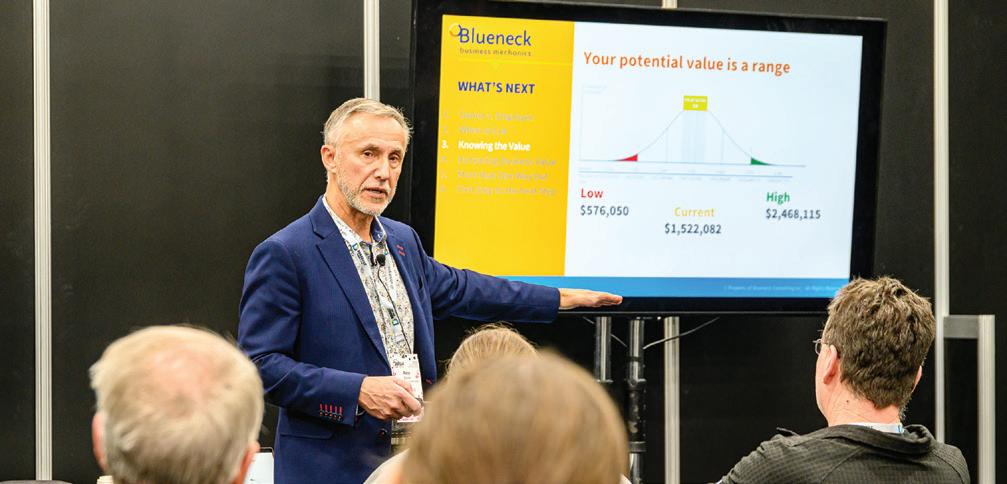

Peter Baran is the Founder of Blueneck Consulting and has spent more than 25 years helping businesses improve operations, navigate growth, and solve complex business challenges. Working closely with blue-collar and building supply businesses, Peter brings practical, real-world insight into what helps businesses grow and perform.
To learn more about Blueneck Consulting and access additional business resources, visit www.blueneckconsulting.ca
Blueneck Consulting
Margins are tight. Labour is expensive. Customers expect more. Competition is everywhere.
And yet many businesses continue treating product knowledge as something nice to have instead of something essential.
The reality?
Product knowledge may be one of the most under-invested profit drivers in the building supply industry.
When teams don’t know the product, businesses pay for it.
How often have you seen:
• Wrong products getting ordered from suppliers.
• Returns increasing due to selling the wrong product.
• Lost orders when a substitute product is available.
• Builder projects that get delayed with crews being rescheduled.
• Customers who no longer come for the advice they need.
• Sales and margins quietly disappearing.
Every one of these problems carries a cost. Sometimes obvious. Sometimes hidden. But whether it shows up in returns, labour, customer frustration, or margin erosion, businesses are paying for product knowledge gaps every day.
The businesses performing best right now are not necessarily the ones with the biggest buildings, the lowest prices, or the newest technology. Often, they are simply the businesses whose teams know what they are talking about!
Over the years, we’ve worked alongside many owners and leaders in this industry, and one thing consistently stands out: strong product knowledge changes conversations.
• Instead of employees simply taking orders, they start solving problems before they become expensive corrections.
• Instead of reacting to customer questions, they start anticipating issues before they create delays, returns, or lost sales.
• Instead of competing on price alone, they compete on expertise.
We often talk about how customers rarely remember the exact price difference between two suppliers, but they absolutely remember the experience of receiving the wrong product, getting bad advice, or needing to make multiple trips because something was missed. Those moments create friction. And friction costs customers time and money.
• Product complexity continues to increase.
• Manufacturers are releasing new systems.
• Specifications are changing.
• Building codes evolve.
• Customer expectations continue rising.
Yet many businesses are trying to manage this growing complexity using the same onboarding and training approaches they used ten years ago. Even worse, some businesses still expect staff to pick it up as they go along without any support or direction. Unfortunately, that’s not how it works anymore, if it ever did.
This approach creates a gap – one filled with mistakes, delays, inefficiencies, and customer frustration. That gap creates risk. That risk will cost your business. Eventually, all of these things will show up where you care deeply: your margins.
Product knowledge is no longer only about knowing features and specifications. It is also about confidence.
• Confidence helps sales teams make recommendations.
• Confidence helps yard teams catch mistakes before materials enter or leave the yard.
• Confidence helps managers delegate because they trust their people to make decisions.
Most importantly, confidence creates speed. Speed creates capacity. And capacity creates revenue opportunities businesses cannot afford to miss.
The challenge is that product knowledge often feels difficult to prioritize.
• Training takes time.
• Operations feel busy.
• Owners assume learning will happen naturally.
• Sometimes it does. Often it doesn’t.
The businesses getting this right usually do a few simple things differently:
• They make learning part of normal operations rather than special events.
• They create opportunities for suppliers and manufacturers to teach teams regularly.
• They encourage questions instead of assuming people should already know the answer.
• They recognize that product knowledge is not only a sales function — it impacts every part of the customer experience.
None of this is particularly complicated. But it does require intention.
When mistakes are expensive and margins are thin, businesses cannot afford to operate on assumptions.
Because the cost of not knowing is almost always higher than the cost of learning.
In today’s market, outstanding product knowledge may be one of the few competitive advantages competitors cannot easily copy – and one of the few investments that improves customer experience, operational efficiency, and profitability.


G“As provincial biosimilar programs expand, many private insurers are updating their group benefits plans to align with these rules.”
overnment policy changes can have a significant impact on group benefits plans in Canada, especially when it comes to prescription drug coverage. While many employers focus primarily on annual renewals and claims costs, decisions made by provincial and federal governments can also affect plan expenses, employee access to medications, and future plan design considerations. Understanding these changes can help organizations with budgeting, employee communication, and long-term planning.
One of the biggest areas affected by government policy is the management of high-cost specialty drugs. Provinces across Canada continue to expand biosimilar programs, which require patients using certain brand-name biologic medications to transition to lower-cost biosimilar alternatives. These programs are designed to help reduce healthcare spending while continuing to provide similar treatment outcomes for patients. Biologic medications are commonly used to treat chronic and complex conditions such as rheumatoid arthritis, Crohn’s disease, psoriasis, diabetes, and certain cancers. These medications can be extremely costly and are often among the highest claims within a group benefits plan.

As provincial biosimilar programs expand, many private insurers are updating their group benefits plans to align with these rules. This means employers may see mandatory biosimilar transitions within their own plans, even for employees currently taking the original brand-name medication. While these changes can help manage rising drug costs, they may also create questions or concerns for employees who are being asked to switch medications.
Clear communication is an important part of managing these transitions. Advisors can help employers explain the changes to employees and provide guidance and access to resources throughout the process. Employees often want reassurance that biosimilar medications have been carefully reviewed for safety and effectiveness and that support programs are available through insurers and drug manufacturers.
Government negotiations with pharmaceutical companies can also influence drug pricing and coverage. Public drug programs negotiate lower prices for medications funded by governments, while private insurers often establish agreements with pharmaceutical manufacturers to help reduce costs within private plans. These agreements can help limit future cost increases for employers, particularly for high-cost medications.
Another important area to monitor is the ongoing discussion around national pharmacare. Canada currently operates with a combination of public and private drug coverage, but governments continue to explore expanded public drug programs. Recently, some provinces and territories have introduced coverage for certain diabetic medications and contraceptives through public plans.
There are also provincial changes that may shift more drug costs to private plans. For example, Alberta has announced changes where private group benefits plans will become the first payor for prescription drugs for Albertans over age 65 who have access to private coverage. Under the updated coordination rules, the provincial Coverage for Seniors program will pay after private insurance. This change may increase drug claim costs for employer-sponsored and retiree benefits plans and highlights how government policy decisions can directly impact private benefits costs.
Future pharmacare developments could have a significant impact on employer-sponsored benefits plans by changing how prescription drugs are covered between public and private programs. Depending on how these programs are structured, employers may see certain medications shift into public coverage, which could help reduce plan costs, while other drugs may remain or move into private plans. While expanded public coverage has the potential to ease some financial pressure on employers, it may also create added complexity around coordination of benefits and employee communication.
Staying informed about healthcare and legislative changes is becoming increasingly important for employers that want to maintain sustainable and competitive benefits plans. Working closely with a trusted advisor can help organizations understand how these changes may affect their plan, identify opportunities to manage costs, and continue providing meaningful coverage and support for employees.
If you have questions about how government drug policies may affect your organization’s benefits plan, please reach out to a PIB Group Benefits Consultant to discuss strategies that can help align your plan with these evolving healthcare changes.
If you have questions about your plan or want to explore ways to strengthen its value, a PIB Group Benefits Consultant can provide guidance and support.
Contact Jacques Poirier at jacques.poirier@pib.com
Get customized insurance solutions to safeguard businesses and employees across industries. From group benefits to commercial coverage, PIB ensures you’re protected at every stage.
Trusted by Supply-Build Canada. Plus, enjoy exclusive member pricing! Scan the QR code to view the offers.



As outdoor living spaces continue to grow in popularity, homeowners and builders are seeking materials that offer both durability and beauty, from backyard decks, fences and pergolas to waterfront docks and garden structures. HiLine Treated wood meets that need by delivering reliable performance in demanding outdoor environments while preserving the natural appeal of real wood.
HiLine Treated wood is pressure-treated to resist Canada’s harsh weather conditions. Through a specialized process, preservatives are forced deep into the wood fibers, protecting wood from rot, fungal decay, and insect damage. This treatment significantly extends the lifespan of the wood, making it suitable for use in above ground residential applications, and in ground and freshwater contact situations.
HiLine Treated stands apart from conventional pressure-treated lumber through its use of MicroPro® preservative technology and wood sourced almost entirely from our own onsite sawmills, helping ensure greater consistency in quality, appearance, and performance.
The MicroPro preservative uses micronized copper azole (MCA), a copper-based preservative that provides long-term protection against biological deterioration while maintaining compatibility with common construction materials. Because the copper particles are micronized, ground into extremely fine particles, they penetrate the wood effectively without relying on harsh solvents traditionally used in wood treatment processes.
The result is a treated wood product that balances performance with environmental consideration. The MicroPro treatment process has been certified as an Environmentally Preferable Product (EPP) based on life-cycle assessments conducted by Scientific Certification Systems. It also meets UL GREENGUARD Gold certification standards for low volatile organic compound (VOC) emissions, meaning the product can be safely used in sensitive environments such as schools or offices.

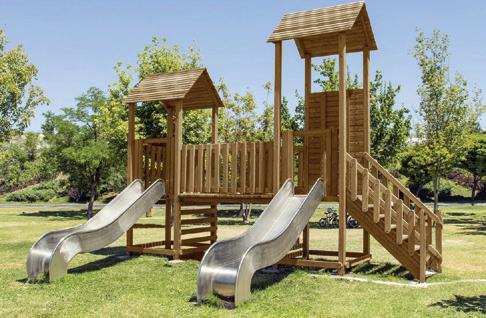
HiLine Treated wood offers more than durability and environmental benefits—it is also designed to look good from the start. Traditional treated lumber often carries a greenish hue that many homeowners choose to hide with stains or paint. HiLine Treated wood, however, uses innovative micronized pigment technology that gives the lumber a warm natural brown tone, enhancing the wood’s grain and delivering a more finished appearance right from the start. This natural colour complements outdoor furniture, landscaping, and architectural design, making it attractive even before any finishing products are applied.
This visual appeal, combined with structural reliability, allows HiLine Treated wood to be used across a wide variety of projects. Residential uses include decks, pergolas, fences, retaining walls, planter boxes, and outdoor play structures. In commercial or agricultural settings, it can be used for boardwalks, structural posts, pole barns, or livestock fencing. The material can be installed above ground, in ground contact, or even in freshwater environments, demonstrating the versatility required in modern construction and landscaping projects.
Like all natural wood products, HiLine Treated lumber requires basic maintenance to preserve its appearance over time. Exposure to sunlight and moisture can gradually fade the original brown tone to a lighter tan or grey if left unprotected. Applying a stain or water-repellent sealer helps maintain the colour and protects the surface from weathering and UV damage. Regular cleaning and sealing every few years can significantly extend both the beauty and performance of outdoor wood projects.
Ultimately, HiLine Treated wood reflects the ongoing innovation within the building materials industry. By combining advanced preservative technology, environmental certification, and an attractive natural finish, it provides a practical solution for homeowners and builders seeking long-lasting outdoor structures without sacrificing the warmth and authenticity of wood.
In an era where outdoor living spaces are extensions of the home itself, materials like HiLine Treated wood ensure those spaces are not only beautiful but built to endure. For more information visit HiLineTreated.com



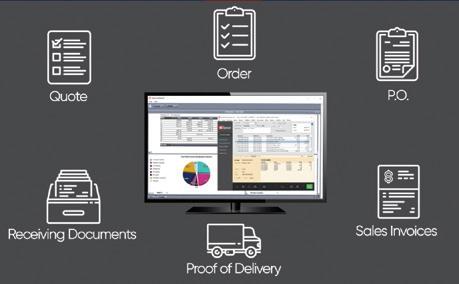
“Spruce understands the terminology; it understands how we do business. It was built for this industry”
—Mike DeBoer, General Manager, Exotic Woods
Running a building-supply yard is messy work: weather shifts, drivers call out, contractors need answers on site, and the counter never stops. Online orders keep arriving after hours, creating more data and more questions than small teams can handle.
Spruce was designed to simplify that reality.
Ecommerce is now part of how customers buy. Contractors and homeowners expect to be able to:
• Check stock and availability
• See accurate pricing
• Place orders at any hour (early mornings, nights, weekends)
• Pay invoices and manage accounts online
At the same time, most yards run lean:
• One or a few locations
• Small teams where everyone wears many hats
• Owners and managers who still work the counter and step into the yard
• Ecommerce added on top of already full days
All that activity generates data—orders, account activity, buying trends—that rarely gets time for proper review. The right AI surfaces the important signals without adding dashboards or new logins.
Built for dealers who don’t have dedicated ecommerce staff, the Spruce Agent works inside your existing Spruce eCommerce system to reduce busywork:
• Continuously monitors orders, accounts, and site activity in the background
• Answers plain-language questions using your actual data—no exports, no spreadsheets
• Cuts down after-hours cleanup by handling routine analysis and flags
• Stays inside Spruce eCommerce—no extra tools or logins to manage
In short, it’s a practical assistant that fits how yards really operate.
Early, relevant signals prevent small issues from becoming expensive ones. With the Agent watching, you can catch problems sooner, such as:
• Slow-moving inventory tying up cash
• Customers quietly reducing spend before you notice
• Risky or unusual orders before they become chargebacks or headaches
• Ecommerce updates stalling when the usual person is unavailable
The Agent not only alerts you but explains the reason, so teams can act confidently.

This isn’t AI repurposed from big-box retail. Spruce was built around dealer workflows:
• Recognizes dealer-specific patterns like contractor accounts and repeat ordering
• Explains findings in clear terms—why something matters, not just that it’s flagged
• Assumes ecommerce is part of someone’s job, not a full-time role
• Backed by support staff who understand LBM operations, not scripted tech help
AI should reduce friction and save hours. Typical outcomes include:
• Owners: fewer surprises and quicker reassurance that ecommerce is monitored
• Managers: faster clarity about what needs attention today without hunting reports
• Back office: fewer last-minute reconciliations and smoother monthends
• Purchasing: earlier signals on demand shifts to limit dead stock and protect cash flow
• Ecommerce handlers: built-in guidance to keep listings accurate without extra overtime
If you’d like to see how the Spruce eCommerce AI Agent can help your team surface issues earlier, get answers faster, and reduce after-hours cleanup—scan the QR Code or request a demo here

















PROTECTING GUTTERS, IMPROVING SAFETY, AND GIVING CANADIANS MORE CONFIDENCE AT HEIGHT
Every homeowner knows the feeling.
A gutter needs cleaning. Christmas lights need to be installed. Roof shingles require inspection after a
harsh winter. Solar panels need maintenance.
The extension ladder comes out of storage, gets positioned against the house, and rests directly on the gutter. And that’s where the problem begins.
Ladders damage gutters. Gutter Saver PRO helps stop that.
It is a simple message, but one that resonates with homeowners and professionals alike. Behind that message is a Canadian-made, Canadian-owned product that is quietly changing how people access roofs while helping prevent property damage and improving ladder safety.
When an extension ladder is placed directly against a home’s gutter, the ladder’s weight and pressure can crush, dent, scratch, or deform the gutter system. Beyond the damage to the home itself, the contact point can also feel unstable, creating the wobble many people experience when climbing onto a roof.
Gutter Saver PRO provides a straightforward solution.
Inserted into the gutter from the ground using a standard extension pole or broom handle, the device transfers ladder pressure away from the gutter and toward the stronger fascia of the home. The result is a more stable, safer ladder setup that helps protect the gutter from damage, and that simplicity is part of what makes it so effective.
For homeowners, it can mean avoiding costly gutter repairs. For contractors, it can help prevent customer complaints, callbacks, and unnecessary liability. For everyone, it contributes to a safer experience when working at height. In short, Gutter Saver PRO can save you money, time, injury, and in some cases, your life.
While protecting gutters is the product’s primary function, safety has become one of its most important benefits.
Falls from ladders remain one of the most common causes of serious injuries in both workplaces and residential settings. A momentary loss of balance can result in broken bones, spinal injuries, extended time away from work, or worse. Many homeowners underestimate the risks because ladders are such familiar tools. Yet every year, countless Canadians are injured while performing routine maintenance tasks around their homes.
Gutter Saver PRO helps create a more secure ladder setup by providing a stable resting point and reducing movement at the top of the ladder.
For contractors, roofers, painters, window cleaners, solar installers, and gutter cleaning professionals, that added stability can make a meaningful difference during daily operations.
The company’s broader mission extends beyond selling a product. It is focused on changing the way Canadians climb roofs and how people think about ladder safety. Just as bicycle helmets evolved from an optional accessory into a widely accepted safety standard, Gutter Saver PRO aims to encourage safer ladder practices across Canada.


One of the unique strengths of Gutter Saver PRO is its versatility.
The product serves homeowners tackling weekend projects just as effectively as it serves professional tradespeople who climb ladders every day. It weighs less than two pounds, requires no permanent ladder modifications, and can be repositioned quickly as needed. It is as simple to use as it is effective.
Professional users value the ability to protect customer property while demonstrating professionalism on the job site. The bright orange design is highly visible from the street, allowing homeowners to see that contractors are actively taking steps to protect their property before work even begins. Some roofing companies have even incorporated Gutter Saver PRO into their customer presentations as part of their commitment to quality workmanship and property protection.
For many professionals, preventing a damaged gutter is about more than avoiding repair costs. It is about protecting customer relationships and maintaining trust.
For building supply dealers, hardware stores, and independent retailers, Gutter Saver PRO offers a unique addition to multiple product categories, including extension ladders and ladder accessories, roofing supplies, gutter maintenance products, exterior painting equipment, window cleaning supplies, home safety solutions, and seasonal maintenance programs.
What makes the product particularly compelling at retail is that customers instantly understand the problem once it is demonstrated. Most homeowners have experienced the concern of leaning a ladder against a gutter. Many simply assume there is no alternative. That creates a strong educational sales opportunity.
Rather than competing as another commodity product on the shelf, Gutter Saver PRO addresses a specific and recognizable problem with a practical, visual solution. The product also benefits from yearround relevance. Whether homeowners are cleaning gutters in the fall, inspecting roofs after winter, installing holiday decorations, or maintaining solar panels, the need for safe roof access remains consistent throughout the year.
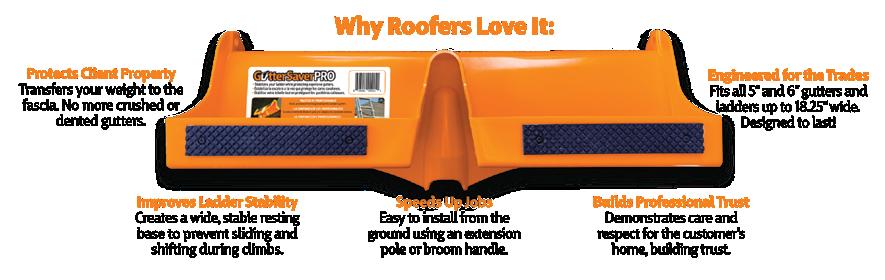
In an increasingly global marketplace, Gutter Saver PRO stands apart as a genuinely Canadian-made and hand-assembled product.
The company is family-owned and operated, with manufacturing taking place in Canada at LD Tool and Die, 139 Iber Rd., Stittsville, ON. The product is hand-assembled by Canadian workers using components sourced from both Canada and the United States.
For owners Jeff and Lucie Quigley, local manufacturing is more than a business decision. It reflects the company’s values.
“Being Canadian-made matters to us because it reflects how we want to do business, with quality, accountability, and transparency,” says Lucie Quigley.
The company has also become increasingly vocal about the importance of authentic Canadian manufacturing in an era where some imported products attempt to create a Canadian image through packaging and branding alone. Gutter Saver PRO offers retailers and consumers a product with a genuine Canadian story, backed by Canadian jobs, Canadian craftsmanship, and Canadian ownership.
To strengthen its presence in Western Canada, Gutter Saver PRO has partnered with Prime Fasteners as its distribution partner. The relationship allows retailers and dealers across Western Canada to access the product more easily while providing local support and product education.
But the company’s focus extends beyond simply shipping product. The Gutter Saver PRO team actively works with distributors and retailers to support sell-through initiatives through educational content, demonstration materials, social media assets, and in-store marketing support. Their philosophy is simple: success is not measured when a retailer places an order. Success occurs when the product reaches the hands of the end user and delivers value.
At its heart, Gutter Saver PRO is about solving a common problem with a practical, simple solution.
It helps homeowners protect their investment. It helps contractors protect their customers’ property. It helps retailers offer a differentiated, value-driven product. Most importantly, it helps create safer ladder practices across Canada.
In a market often driven by price alone, Gutter Saver PRO represents something different: a Canadian-made, Canadian-owned product built around quality, safety, and long-term value. A product that can save you money, time, injury, and your life.
For anyone who uses an extension ladder around a home or job site, the message is simple and memorable.
Ladders damage gutters. Gutter Saver PRO helps stop that.



Mike McDole brings 40+ years of actual hands-on LBM experience, including serving as SVP of a major regional pro dealer. As principal of Firing Line LBM Advisors, he helps LBM dealers across North America improve management efficiency; drive profitable sales; sales training; KPI’s; and more. Mike can be reached at 774.372.1367 or mike@firinglinelbm.com
MIKE MCDOLE
27 Starr Lane, Rehoboth, MA 02769 774.372.3316 / mike@firinglinelbm.com www.FiringLineLBM.com

TURNING HIGH DEMAND, TIGHT MARGINS, AND CONTRACTOR EXPECTATIONS INTO SALES LEADERSHIP SUCCESS
Mike McDole, Firing-Line LBM Consulting
At LBM dealers, the sales manager is the lynchpin between operations, outside sales, and customers, especially contractors. In an industry where product availability, pricing volatility, and service speed can make or break a sale, great sales managers do far more than push paperwork or enforce quotas. They lead teams, coach reps, troubleshoot, and build relationships that help keep contractors loyal in a competitive market.
But what exactly separates a merely competent sales manager from a great one? Here is a look at the key qualities and habits that define top-performing sales managers in contractor-focused lumberyards, and how dealers can support their development.
The best sales managers don’t learn contractors’ needs from spreadsheets. They understand the urgency of a jobsite short on materials, the implications of delays, and the frustrations of meeting deadlines.
Whether they came up through inside sales, outside sales, or even spent time as a contractor, good managers lead with empathy. They speak the contractor’s language, anticipate problems before they arise, and coach their team to do the same.
Margins are tight, and products can be sourced from anywhere. What keeps a contractor coming back is the relationship, built on trust, responsiveness, and the confidence that when something goes wrong, and it will, it gets rectified as fast as possible.
Great sales managers understand this. They invest in their team, training them not just to sell products, but to solve problems. They hold regular check-ins, coach in real time, and celebrate team wins, even the quiet ones. They understand that a motivated, confident sales rep can maintain the loyalty of an account just by picking up the phone and knowing how to handle whatever comes their way.
Too many sales managers fall into one of two traps: they either micromanage every deal or disappear into admin mode and lose touch with what is going on in the field.
Great managers avoid both extremes. They set clear expectations and sales targets, but give their reps room to succeed without hovering. They track performance, provide coaching, and when someone is off track, they intervene constructively, with questions, not accusations.
A contractor-focused sales team doesn’t need a boss constantly barking orders. They need a leader who sets the pace and clears obstacles.
KPIs matter, but they are a lagging indicator. Great managers use data as a tool, not a crutch.
They know which metrics truly reflect performance, including sales, gross margin, close rates on quotes, product category mix, and customer profitability, and which ones can be misleading, like raw sales volume without context. More importantly, they train their salespeople to understand the “why” behind the numbers so that improvement becomes internal.
They also understand that not all wins show up on a spreadsheet. Rebuilding a strained relationship with a long-time contractor or earning a shot with a new custom builder matters too.
In the lumberyard world, credibility is everything. Sales managers earn respect not by title, but by presence. That means riding along on sales calls, building relationships with customers, troubleshooting with other departments when issues arise, and coaching salespeople in the field.
They model the behaviours they expect, responsiveness, professionalism, urgency, and adaptability. When their reps see them sweating the details and being available beyond store hours to get it right, it sets the tone for the entire sales culture.
LBM dealers don’t win long-term by being the cheapest. They win by being reliable, responsive, and value-oriented.
Great sales managers teach their teams to quote confidently, justify value, and walk away from bad business. They push for margin discipline without discouraging creativity. They coach on how to upsell with integrity, how to frame value beyond price, and how to hold the line when contractors ask for just a little off the top.
They understand that margin isn’t just a number. It is the oxygen that fuels service, support, and long-term stability.
Turnover is expensive and demoralizing. The best sales managers create a culture that makes people want to stay. That means fairness, support, accountability, recognition, and a sense of shared mission.
They give new reps a ramp-up plan. They pair rookies with veterans. They create fair incentives that encourage teamwork. And when someone underperforms, they address it directly and constructively.
They also know how to have fun when the time is right, because in a high-pressure business like ours, humour and camaraderie go a long way.
If you are an owner or part of the c-suite, your sales manager is one of the most important leadership roles in the company. They influence margins, customer relationships, team morale, and long-term growth.
Yet too often, they are under-trained, overtasked, and expected to figure it out.
Want to protect your customer base, boost profitability, and grow your reputation in the market? Start by investing in the sales and leadership training, support, and coaching your sales manager needs to thrive. Because when your sales manager gets better, everything else does too.
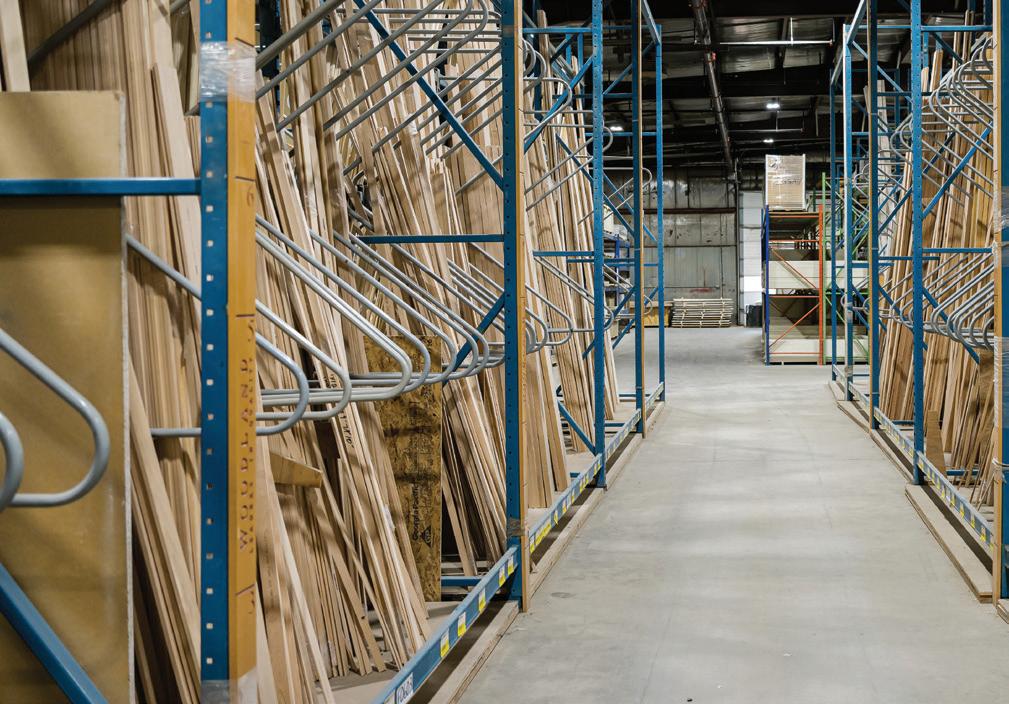
Igor Lafaeff, Burrows Lumber
From a distributor’s perspective, the lumber market remains cautiously optimistic, although several challenges continue to shape the industry. The sector has experienced significant volatility over the past few years, and many distributors are now operating with a far more conservative and disciplined mindset than before.
With higher interest rates slowing new housing starts and reducing consumer confidence, many customers are delaying larger projects or becoming more price-conscious, which directly impacts order volumes for distributors. We have also noticed a shift in purchasing behavior, where large-volume orders that were once delivered all at once are now being spread into smaller purchases over several weeks or months.
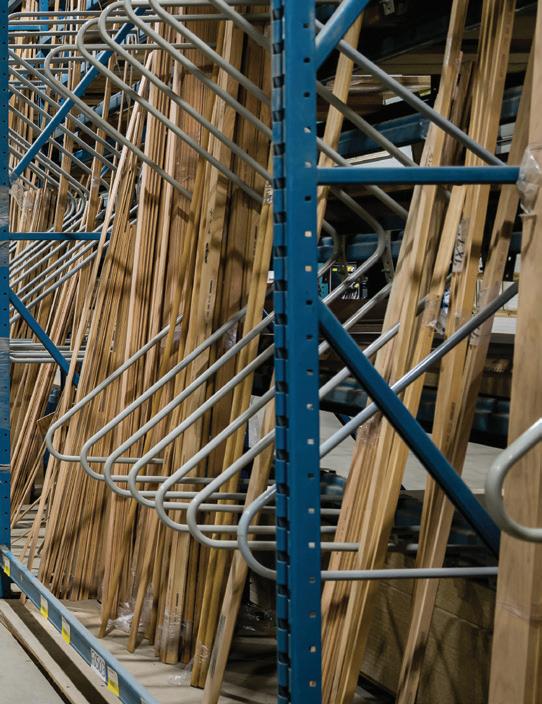
There is a growing sense that lumber distributors across Canada have become increasingly cautious with inventory management, as pricing can shift rapidly due to mill curtailments, wildfires, rail disruptions, tariffs, and rising transportation costs. More recently, geopolitical tensions affecting global fuel markets have added further pressure through increased fuel surcharge costs.
On the supply side, Western Canadian mills continue to face pressure from high operating costs, fibre shortages, and environmental restrictions. In some regions, reduced timber supply has permanently affected production capacity, creating uncertainty for distributors trying to maintain inventory levels without becoming financially overexposed.
Transportation costs also continue to impact the market. Even for distributors located in Manitoba, like us, who benefit from a strategic geographic position that facilitates the movement of products from West to East, factors such as freight pricing, rail reliability, fuel costs, and trucking availability all influence final material pricing. Customers often focus primarily on lumber prices themselves, but logistics have become a much larger component of overall costs in recent years.
From a Manitoba perspective specifically, seasonality continues to play a major role. Long winters compress construction activity into shorter peak periods, making forecasting more difficult. A late spring, like the one we are experiencing this year, or prolonged poor weather can delay projects and create sudden

Igor Lafaeff is a partner and lumber trader at Winnipeg-based Burrows Lumber Company, where he oversees the daily operations. After immigrating to Canada from Brazil, Igor rapidly established himself in the wholesale softwood sector. Today, he combines hands-on trading expertise with an entrepreneurial approach to deliver specialized wood products across the Canadian Prairies.
inventory shifts. Because of this, distributors must remain flexible and closely monitor customer demand patterns throughout the year.
Overall, the Canadian market has remained relatively stable, although it is still highly dependent on broader economic conditions. Most distributors are no longer expecting the explosive growth or extreme pricing experienced during the past several years. Instead, the focus has shifted toward sustainable business practices, controlled inventory management, operational efficiency, and relationship-driven sales.
Companies that adapt quickly to changing customer expectations, manage costs carefully, and maintain dependable supply chains will likely continue to perform well despite ongoing market uncertainty.
The lumber industry has always been cyclical, and experienced traders and distributors understand that volatility is part of the business. While challenges remain, there is still long-term confidence in wood construction and in the Canadian building sector overall.

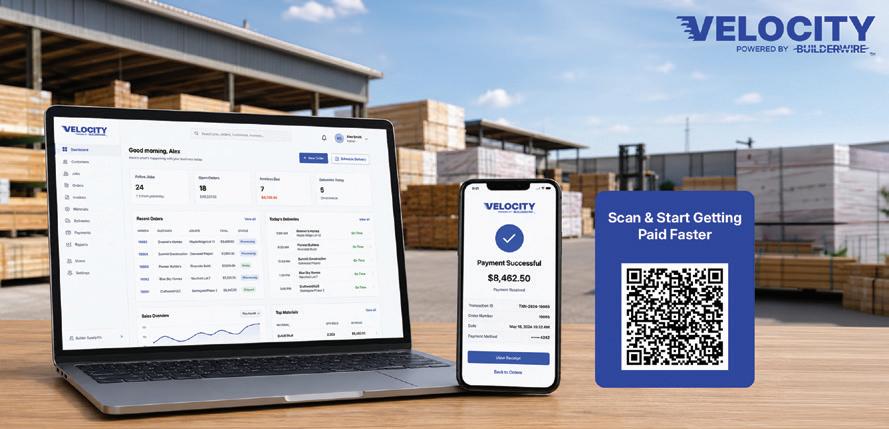

Most LBM dealers aren’t trying to reinvent how their business works. They’re trying to run it with less friction.
You’ve seen it a hundred times. Contractors calling in from the jobsite. Statements getting pulled by hand. Payments chased one at a time. Quotes lost in phone-tag. None of it helps the yard operate better. It just takes time away from the work that grows accounts.
Today’s contractor is used to self-serve tools from the big box dealers, where invoice downloads, 24/7 account access, and app-based reordering are standard. For independent yards, the goal isn’t to out-spend the nationals on tech. It’s to close the convenience gap without giving up what makes your yard different.
Velocity by BuilderWire is the company-branded portal built exactly for that purpose, for your pros. Invoices, payments, statements, orders, and quoting efficiencies, all under your brand and integrated with your ERP. Practically, that means more time back for your staff, faster collections, and contractors who find it easier to keep buying from you.
Most of the work pulling on your team isn’t strategic. It’s the same questions every day. Can you resend my invoice? What’s my balance? Am I over my credit limit? Is this past due? Can you email me a statement? Each interruption is small. Together, they’re a full-time job.
Velocity gives contractors 24/7 access to live balances, statement history, invoices, payment status, and downloadable PDFs, all integrated with your existing ERP. That means fewer staff interruptions and more time for the conversations that actually grow accounts.
On the sales side, the same drag shows up in quoting. Quotes bounce back through clarification rounds, slowing response time and creating extra follow-up. Velocity simplifies the loop with quote visibility and ERP-integrated Quick Quote tools that move requests from quote to order faster.
Cheques aren’t going anywhere, and they don’t need to. But the contractor who’d rather settle up at 11 PM, on their own time, can’t. And every day that payment waits is a day added to your collection cycle.
Velocity supports secure EFT and credit card payments through a clean checkout. Contractors can pay their full balance or pick individual invoices within 2-clicks, making it easier to clear what’s open while reducing manual work on your side.
For AR, Velocity also brings consistency to your follow-up process. You decide how and when reminders go out, whether automated notes for current balances, scheduled follow-ups by preferred timing, or targeted past-due reminders inside a specific date range. Collections stay consistent while the tone stays appropriate to the relationship.
A contractor running three jobs across two crews doesn’t want to dig through email threads to find a quote. They want one place that knows them, remembers their orders, and shows status without a phone call.
Velocity gives contractors a clear view of job-related orders, order status, detailed quotes, and SKU-level information, all under your yard’s brand. When the basics are easier, pros stay organized. And the pros who stay organized stay loyal.
The strongest technology isn’t the flashiest. It’s the tool your team and customers actually use.
For dealers, the math comes down to less time on repetitive requests, fewer payment bottlenecks, faster quote movement, and more staff capacity for the work that protects margin. Digital efficiency isn’t about changing what makes LBM dealers valuable. It’s about giving the people behind the business more time to focus on it.
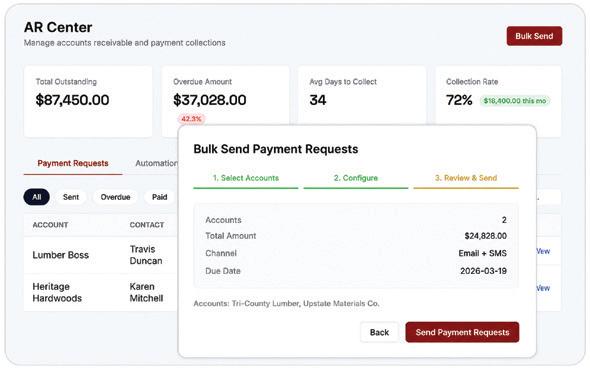
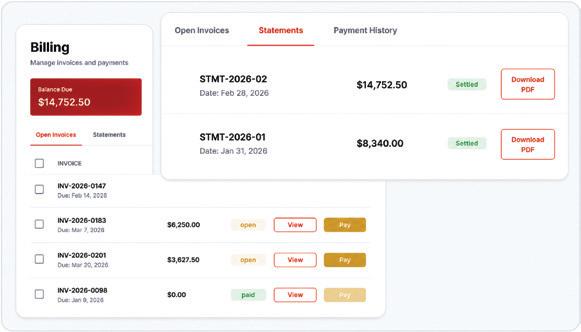
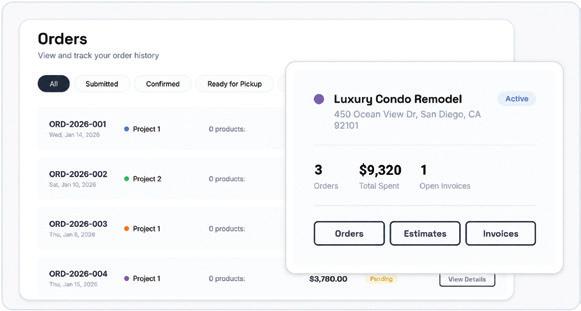

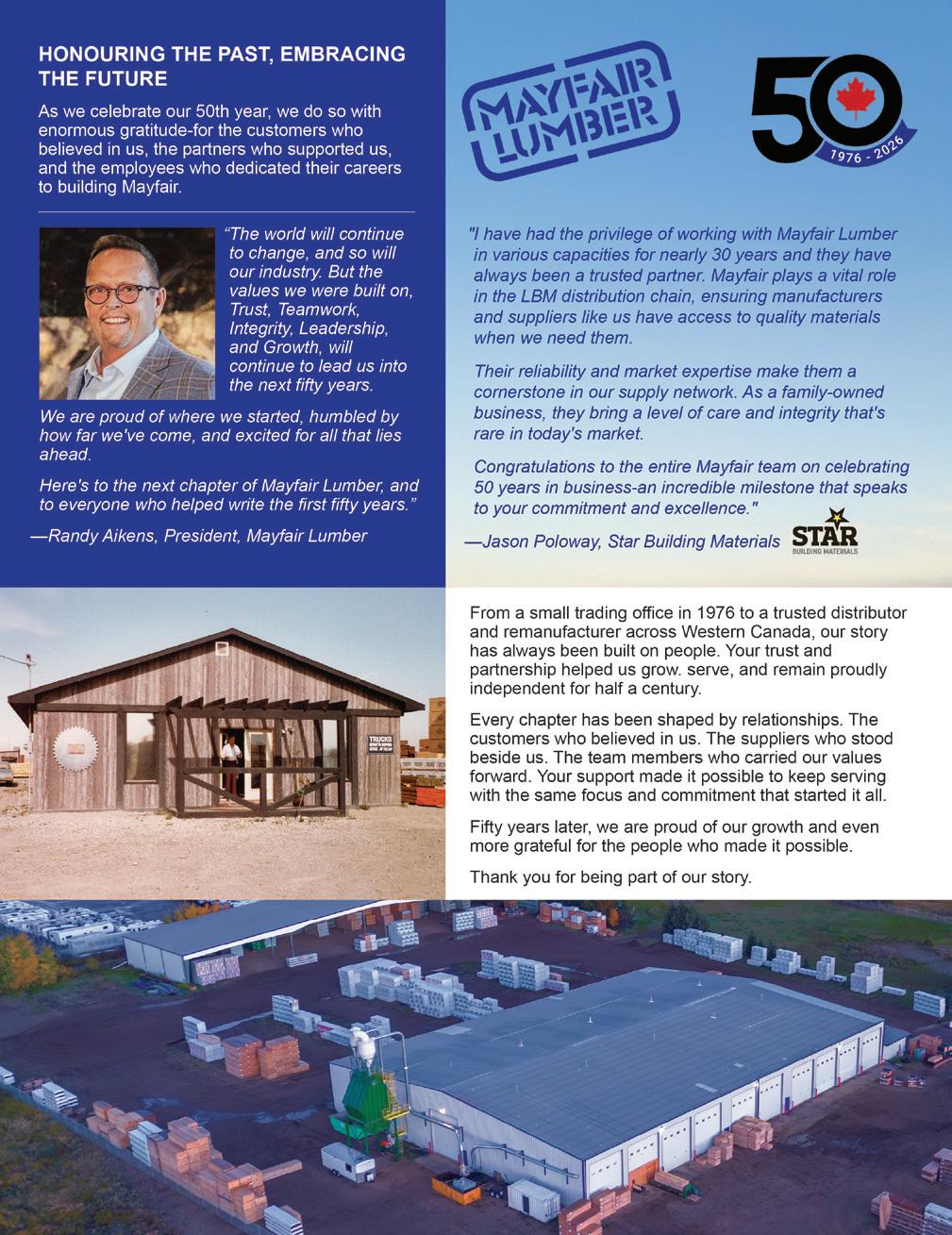
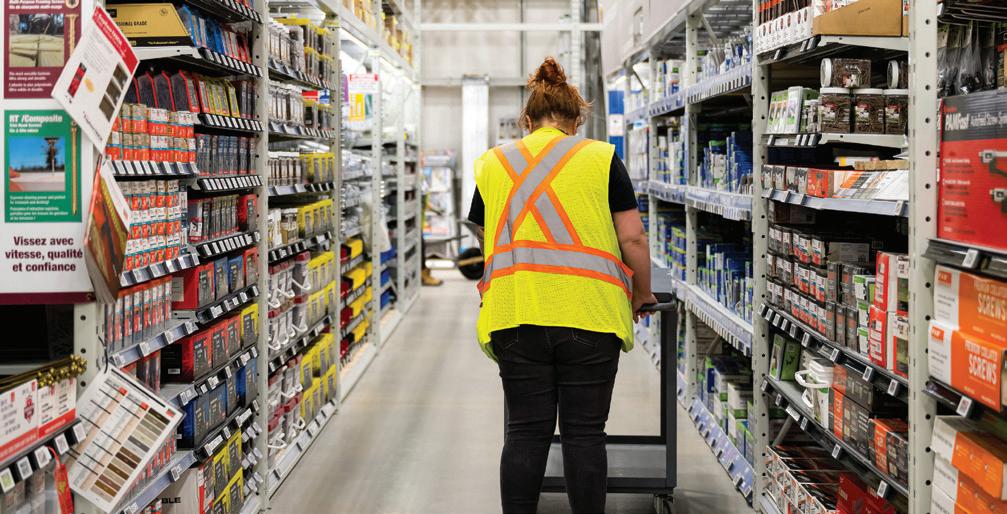
Wahaj Awad, Workplace Psychology Consultant, Training and Development, Humance
In the building supply industry, pressure is nothing new. Busy seasons, tight timelines, demanding customers, and the daily problem-solving that comes with keeping projects moving are all just part of an honest day’s work. But the pressure many businesses are facing is changing…
Tariffs, rising freight costs, softwood lumber uncertainty, shifting supplier relationships, and unpredictable pricing are no longer issues that happen in the background – they’re landing directly at the counter, in everyday conversations with customers.
A price changes. A product is delayed. A usual supplier is no longer the best option.
Suddenly the person at the counter is expected to explain the complexities behind changes, offer alternatives, and keep the customer’s trust – often with limited time, and without having all the information that led to those changes.
This is where training becomes more than a “nice-to-have”. When the environment keeps shifting, businesses need teams that can learn quickly, share knowledge, and respond with confidence.
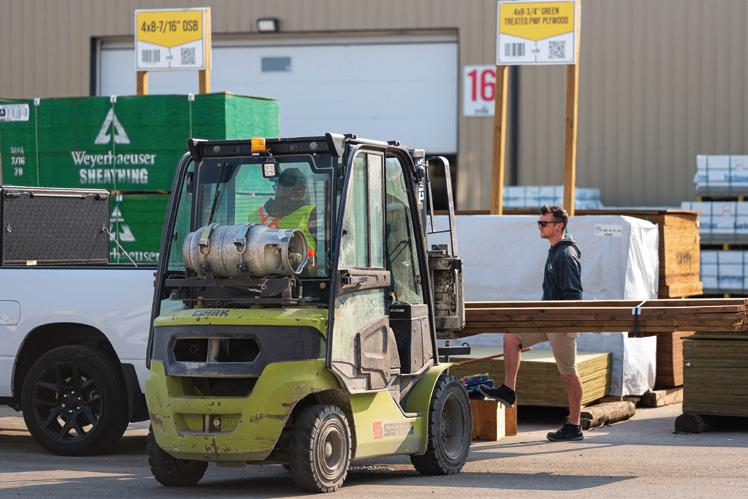
Cross-training is not about expecting everyone to know everything. It’s about making sure the right knowledge doesn’t just sit with one person, and that employees have enough context to empower them to make the best decisions they can when the usual answer no longer applies.
So, what can businesses do when their teams are being asked to keep up, adapt, and answer harder questions with less certainty?
Start with three simple priorities:
When things are moving quickly, it can be tempting to give staff quick instructions:
“This price changed”
“Use this supplier”
“Tell customers this product is delayed”
But if people only get instructions, they can only follow the script they’re given. The moment a customer asks a different question, they’re left stumbling in that stress. In times of unpredictability, when the only constant seems to be change, people manage stress best when they can root themselves in what they can control.
Helping people understand the bigger picture gives them that sense of control. When employees know why something is changing, how it affects the business, and what options they have, they are better able to make good decisions on their own. People are more confident and less overwhelmed when they have the tools to do their jobs well, not just a list of things to repeat.
Ultimately, context builds autonomy. People feel more capable when they understand the why, not just the what. And when people feel more capable, they can more confidently navigate unpredictability with resilience and adaptability.
In almost every business, there are a handful of people who seem to carry the whole operation in their heads. They know who to call, what to substitute, where to look, and how to solve the problem that no one else wants to touch. They’re the people everyone silently hopes never take a two-week vacation during the busiest season. Some of you reading this may even be that person!
We’ve been conditioned to seeing this as valuable, almost a sense of self-preservation. But this kind of sole expertise creates pressure – for the person carrying it, the people depending on them, and the business relying on them.
When this important knowledge lives with only one person, that person becomes the safety net for everyone else. They get interrupted more, relied on more, and pulled into decisions that others could be capable of handling if they had that same information. It can also make the rest of the team feel less confident making decisions on their own because they’re used to waiting for the “go-to” person to weigh in.
Cross-training helps spread that weight. It gives more people the knowledge and confidence to step in, solve problems, and keep work moving. It also gives your most experienced people something they often need but rarely get: breathing room
Shared knowledge lowers stress. People feel less overwhelmed when important information is not trapped with one person. And for the business, it means fewer bottlenecks, faster decisions, and less risk when the usual “go-to” person is unavailable.
When things are changing quickly, people won’t always have the perfect answer – and that’s okay! A customer may ask a question they haven’t heard before. A product may be delayed. A price may change again. A supplier may give an unclear timeline.
When people are under pressure, they often hesitate to ask questions because they don’t want to look unprepared, slow things down, or seem like they should already know the answer. But when people feel they’re afraid to ask, small gaps can grow into bigger problems. A guessed answer becomes a customer issue. A missed update becomes a delay. A simple question left unasked can slow the whole team down.
In those moments, the goal is not for employees to know everything. The goal is for them to feel safe enough to say, “I’m not sure, but I know how to find out”.
That safety matters. People need to know they will not be blamed or judged for asking questions, raising concerns, or admitting when they need more information. In fact, speaking up early should be seen as part of doing the job well.
But safety alone is not enough. People also need a clear path forward. Do they know who to ask? Do they know where the latest information lives? Do they know what they are trusted to decide on their own, and when they should bring someone else in?
People feel more capable when they understand the why, not just the what. And when people feel more capable, they can more confidently navigate unpredictability with resilience and adaptability.

Wahaj Awad is a Leadership and Team Development consultant with a background in industrial-organizational psychology, adult learning, and training and development. She works with organizations to build practical learning experiences, strengthen team effectiveness, and create workplace cultures where people feel supported, included, and able to do their best work.
This is where simple routines can make a big difference: short team huddles, quick product updates, supplier notes, shared FAQs, buddy systems, and regular check-ins. These practices show people that learning is not an interruption to the work; it is part of the work.
Clear support builds confidence. When people know they will be supported, rather than blamed, for asking questions, they are more likely to speak up early, solve problems faster, and respond to customers with confidence. This means they can respond to customers more calmly, solve issues faster, and keep moving even when the answer is not obvious.
In a time when so much feels outside a business’s control, investing in your people is one of the most practical moves you can make. The right training approach can help uncover knowledge gaps, reduce pressure on key people, and give teams the confidence to learn and respond when things change.
For businesses that are feeling stretched, this is also where outside support can help.
Training under pressure is not about having every answer in advance. It is about building a team that knows how to learn, share, ask, and adapt when things change. In a time when tariffs, pricing, supply challenges, and customer expectations are putting pressure on businesses from every direction, your people need steady ground to work from.
If your organization is ready to strengthen how your team learns, communicates, and supports one another, we would be glad to start that conversation.
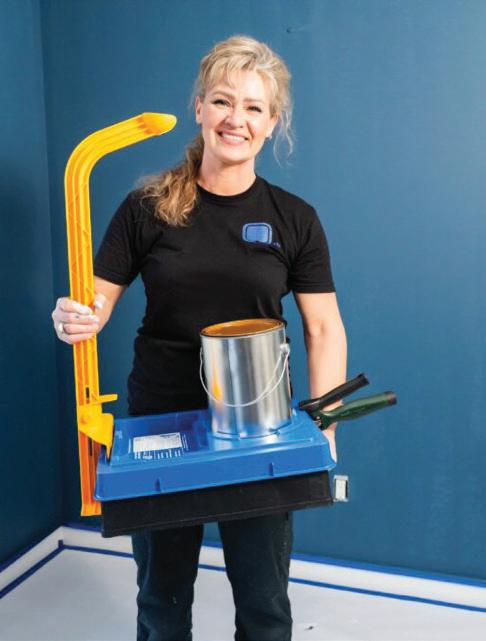
There is a particular kind of market knowledge that no amount of research can replicate. It comes from doing the same job, in the same conditions, with the same inadequate tools, for long enough that the workaround stops being annoying and starts being unacceptable. Karen Wolfe reached that point in 2008, standing in a client’s living room in Kelowna, BC, five years into her career as a residential painter, reaching for a plastic bag to wrap her paint tray and roller at the end of a long day.
The plastic bag is the painter’s universal workaround. Every painter uses it. Nobody likes it. Paint gets on your hands, the seal is unreliable, rollers dry out overnight, and the whole process adds friction to a job that already has plenty. Wolfe looked at her tray that day and said, out loud, what painters across the country have thought for decades: “I wish I could just put a lid on it and leave.” Then she went home and built one.
At that moment, she didn’t really grasp exactly what she had created, and she didn’t sprint to market. Instead, she put her lid through 16 years of daily use, continuous refinement, and the kind of product validation that most founders can only approximate with focus groups and pilot surveys. Wolfe used her homemade lids on every job she took — hundreds of residential painting projects across the Okanagan and Alberta — testing it under real conditions, on real deadlines, with real clients waiting on the other side of a recoat. By the time she decided to commercialize the product in late 2023, she had something most inventors don’t: absolute certainty that it worked.
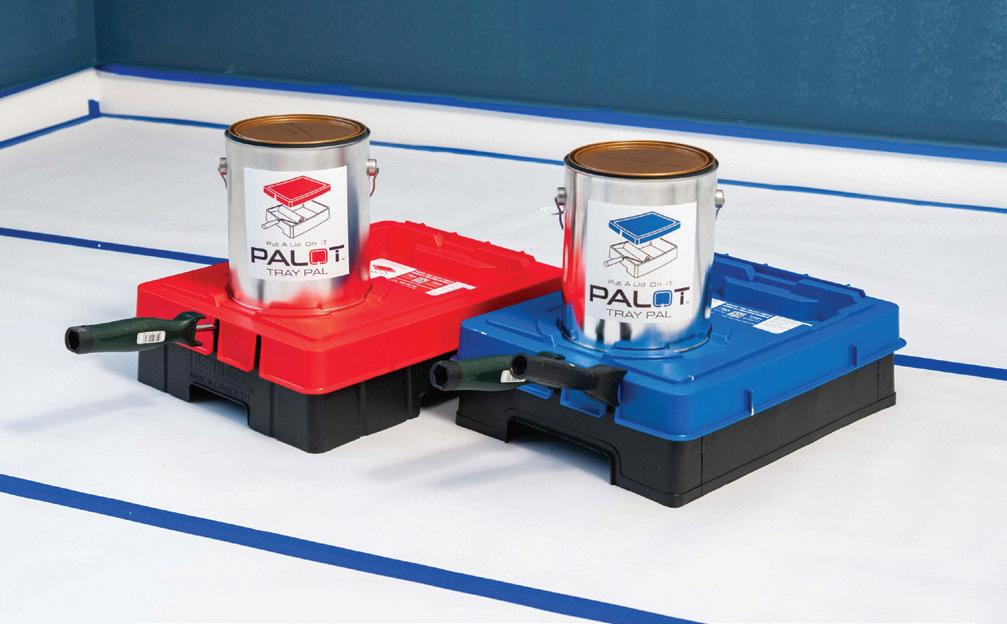
The business case began to take shape in the summer of 2020 when Wolfe was painting a 7,000 square foot custom home in Kelowna — a project she completed entirely on her own, from start to finish, over the course of a year. The job involved multiple colours, extensive trim work, staining of wood soffit timber and interior millwork, and daily use of her paint tray lids from the first week to the last. Her foreman on the project, Jock Camplair, had watched her use the homemade lids throughout and became convinced enough in their potential that he helped her produce the first plastic versions using MDF molds and vacuum forming — twelve lids in total, the earliest indication that what Wolfe had built in her living room could be manufactured at scale.
She applied for a utility patent in November 2023. By February 2024, patent-pending status was confirmed. In March 2024, she connected with Industrial Designer David Duncan, based in Calgary, Alberta, who helped translate 16 years of field-proven design into a manufacturable product built to the tolerances that professional job sites and retail supply chains both demand. The result was two precision-designed lids: a 9.5” model and a 10” model, each designed to seal a standard paint tray and roller in seconds and keep paint and brushes fresh for up to seven days.
Both lids are patent-pending and made in Alberta. They are designed with circular-economy principles in mind. The contractor-grade reusable lids help reduce the build-up of discarded thin plastic sheets and bags over their lifetime of use, while supporting a painter’s waste-reduction goals. The lids have a recyclable main plastic body and a gasket that can be separated at the end of the product’s life.
Before Wolfe had a manufacturer, a business plan, or a single unit ready for retail, a national hardware retailer expressed genuine interest in adding the TRAY PAL to their product line-up. A store owner within the franchise saw the lid and said, “That fills the hole in the paint department.” It was an early signal that the market gap Wolfe had identified from the inside was visible from the outside as well — and that the product’s timing was right.
The formal market test came in August 2024. Wolfe produced 300 units through vacuum forming with Focus Auto Design in Calgary — a deliberate, small-scale pilot designed to answer the question that every product launch eventually has to answer: will people actually buy it? She approached twenty independent paint retailers who sell Benjamin Moore products from Calgary to Vancouver, asked them to take some TRAY PALs on consignment, and waited. Twelve stores took the product. All twelve sold out within weeks. Reorders followed immediately. Customers came back asking for the lids by name. Nine out of the twelve stores issued purchase orders before the product had even been finalized. After this pilot project, David Duncan officially came on board and has became, in Wolfe’s description, indispensable to it.
Among the early retail champions was Jason Banman, owner of Crowfoot Paint and Design in Calgary, who offered consignment terms before the product was proven and actively encouraged the pilot. Jaime Carle, owner of Vernon’s North Okanagan Paint and Window Coverings, was the first British Columbia retailer to stock the TRAY PAL. Jason Cheslock, owner of Calgary North Decorating, was the first to pre-pay for his purchase order of the new lids, when they weren’t even built yet.
All were independent Benjamin Moore dealers — the kind of owner-operated businesses that move quickly on new products precisely because they don’t have to navigate the procurement bureaucracy of a national chain. They also recognized something beyond commercial logic: a Canadian-made product, built by a tradesperson who had worked the same jobs they served. That posture of one small business supporting another was, by Wolfe’s account, a significant factor in the pilot’s early momentum.
The pilot’s success created its own momentum. Wolfe secured a manufacturing contract with a family-owned injection molding company in the Calgary area, finalizing the tooling and moving into full production. The first purchase orders from Calgary-area stores arrived before Christmas 2025. In January 2026, the Put A Lid On iT TRAY PAL launched publicly at the Calgary Renovation Show and the Supply Build Canada Showcase in Edmonton. By May 2026, the product was available in more than 50 stores across Canada, including Castle, RONA locations, and Federated Co-op Home Building Centres at participating locations across Alberta, British Columbia, Manitoba, Saskatchewan, and Ontario.
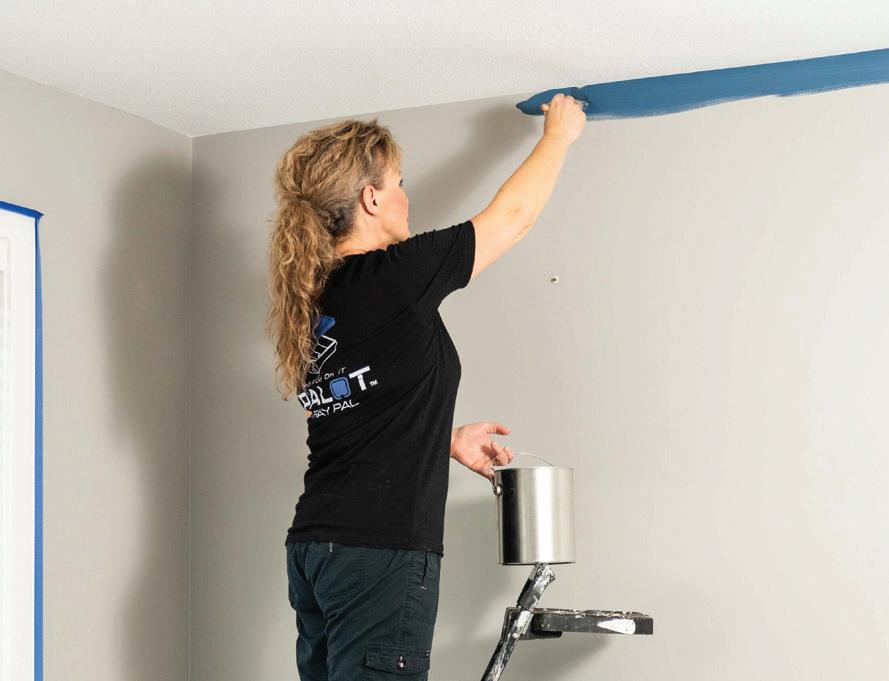
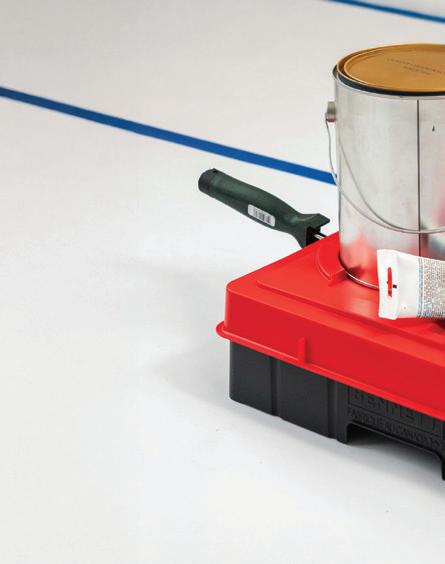
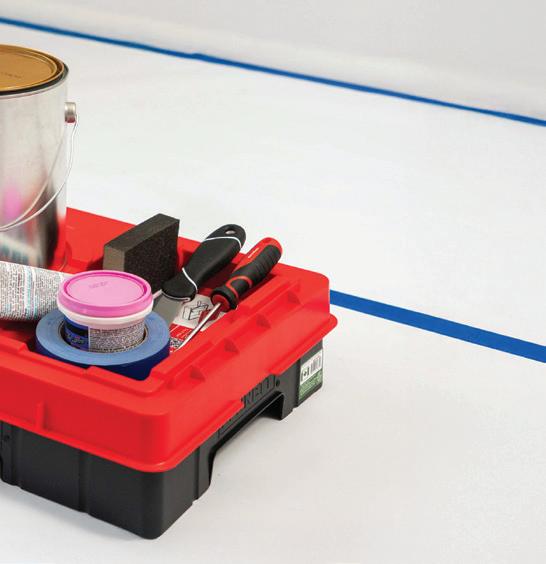
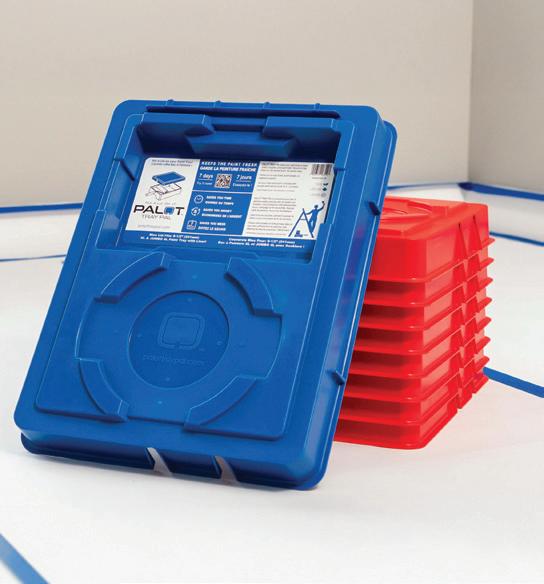
“The deepest product insights tend to come from the people closest to the problem.”
What makes the PALOT TRAY PAL commercially interesting is not just the product itself but the conditions under which it reached the market. Wolfe built the company without outside investors, relying on personal resources, family support, and financing secured on the strength of the pilot results and a business plan alone. The experience she had of building a painting business over two decades and developing a reputation for being honest, forthright, and great to deal with provided a depth of experience and tenacity that can’t be taught in school. The national retail footprint was built through direct relationships, starting with independent paint retailers whose customers were already asking for exactly this, and growing from there.
The market gap Wolfe identified is genuine and, in retrospect, surprising. The hard-cover paint tray lid simply did not exist before she built one. Flexible liner-style lids from a small number of competitors had existed for years, but they were flimsy, prone to breaking, and rarely used in practice. The plastic bag remained standard across the trade — not because it worked well, but because nothing better was available. Wolfe was wellplaced to see that gap: she had been working inside it for 16 years, across a 20-year career as a professional painter. And she was equally well-placed to close it, because she understood from daily experience exactly what the product needed to do and how it needed to perform.
The business lesson here is one that gets discussed in theory far more often than it gets demonstrated in practice: the deepest product insights tend to come from the people closest to the problem, not the people studying it from a distance. Wolfe didn’t identify a market opportunity. She got tired of a bad workaround, built something better, and used it every day until the evidence became undeniable. The market, it turns out, had been waiting for exactly that.
The Put A Lid On It TRAY PAL is available online and through retailers across Canada. For stockiest information, visit palottraypal.com

“It’s the people. It’s why I get up and go to work every day.”
—Krista Venn

When Krista Venn started at Sexton Group, her oldest son, Travis, was only six months old. She was a new mom looking to re-enter the workforce and connected with a recruiter to help her find the right role. It was then that she came across an opportunity for a data entry-based role with Sexton Group. Little did she know that position would spark a career with Sexton Group that would span 22 years and counting. Today, Krista holds the position of Senior Program Manager, playing an essential role in Sexton’s Vendor Relationships and Program Management, with a special focus on Gypsum, Steel Studs, and Insulation.
Krista recalls entering the industry for the first time as she began her new job at Sexton Group. She found herself immersed in a landscape that was as expansive as it was unfamiliar. There were layers to understand—diverse product categories, intricate vendor relationships, and the inner workings of a company deeply connected to its members and industry associations.
In those early years, she leaned into every opportunity to learn. She recalls her first conversations with members and vendors—calls that may have seemed routine but were the first glimpse into learning the business. Each interaction added context, revealing not only how Sexton Group operated, but how its members navigated their own challenges and successes.
It was through these conversations that Krista discovered a defining thread of her career: connection. The more she engaged, the more invested she became—not just in the work itself, but in the people behind it. That sense of connection, combined with an innate curiosity, was her buy in.
When opportunities came up to explore new roles and expand her impact within the group, Krista raised her hand time and again. Over the years, she moved through a variety of roles across both the Accounting and Programs teams, gaining a deep, firsthand understanding of how the business operates from multiple angles. That breadth of experience has given her a unique perspective as someone who sees not just the pieces but how they come together.
Yet as her career has grown and changed, one thing has remained constant.
When asked what has kept her with Sexton Group—and in the industry— for more than two decades, her answer comes without hesitation.
It’s the people.
“It’s why I get up and go to work every day.”
And that connection doesn’t stop at Sexton Group. Over time, the industry itself has come to feel like a community—one where familiar faces resurface year after year. Whether at tradeshows or events, Krista often reconnects with the same individuals, holding relationships that stretch across entire careers.
“As big as the building materials industry is, it’s also small in a lot of ways,” she says. “Once you’re in, many people stay. You might see them move between roles or companies, but what is unique is that many build their entire careers here—so you get to know a lot of familiar faces.”
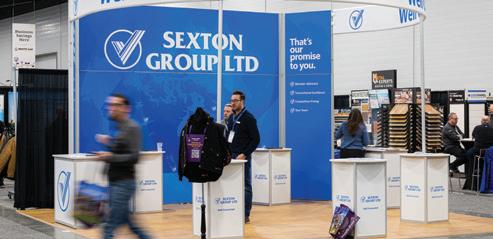

“When opportunities came up to explore new roles and expand my impact within the group, I raised my hand time and again.”
For those just starting out, that sense of community can feel both exciting and intimidating. How do you begin to find your place within it?
Krista’s advice is as straightforward as it is impactful: participate in everything.
“From industry events and tradeshows to company barbecues or other networking opportunities—go whenever you can,” she says. “It is more important than you think it is.”
It’s advice she has lived by. Today, Krista is a familiar and respected presence at industry tradeshows and events. She also plays a key leadership role in Sexton Group’s internal and member-facing events. The relationships she’s built over the years stand as a testament to the power of simply being present—and engaged.
Still, she remembers what it felt like at the beginning. Walking into your first industry event alone can be daunting, and Krista recalls that experience vividly from her first Supply-Build Showcase and how she prepared:
“For myself, it was all about setting expectations about what was to come,” she explains. “I found other members of my own team who could help paint the picture of what I was about to experience, and who were also willing to take me under their wing and help make introductions that first time. It laid the foundation—and after that, I knew I had to take the leap and step out of my shell to keep learning and building my own relationships.”
Many of us have an end career goal in mind, but the path to getting there can feel overwhelming. Krista’s perspective is, never underestimate the impact of that first role. Whether it’s data entry, working in a yard, working in retail, or anything else. That starting point is often an opportunity to learn and find your path forward in your career.
A great reminder that, often, lasting impact begins with a single step— and the willingness to keep going.