YARDSTICK


Liz Kovach
Supply-Build Canada President
Amanda Camara Vice President of Business Development & Marketing
Abimbola Bello Marketing & Communications Manager
Jordan Bouchard Data Entry Administrator
Amelia Carrera Event Operations & Marketing Growth Coordinator
Jay Dion Policy Analyst
Camilla Josef Online Marketing Coordinator
Matthew Lucek Workforce Development Coordinator
Alisa Luo Design & Social Media Coordinator
Rebecca Theobald Executive Assistant
Travis Waite Director, Finance & Administration
Amanda Wright Workforce Development Manager
Published March 2026
The Supply-Build Canada Yardstick is the official publication of the Supply-Build Canada and is published four times per year. It is mailed to all retail and associate members of the Supply-Build Canada, to retail lumber dealers and others in the building supply industry in Northwestern Ontario, Manitoba, Saskatchewan, Alberta and British Columbia, and to selected dealers in the Yukon, Northwest Territories and Nunavut. Views expressed in the Yardstick are not necessarily official Supply-Build Canada policy, nor does the publication of product information or any advertisement imply recommendation by the Supply-Build Canada. No part of this publication may be reproduced in any form without the written consent of the Supply-Build Canada.
Subscription rates in Canada: $12 per year, plus applicable taxes. Outside Canada: $15 per year, no tax. Rates quoted are for non-members only.
Canadian publication mail agreement #43754013.
Well-trained staff leads to a better bottom line, yet there is still hesitation for businesses to invest in industry-focused education. This investment not only gives time back to your business by alleviating pressure on your team, it also helps build consistency in processes and streamline your systems.
Whether it’s basic product knowledge, customer service skills, understanding how to be a strong employee, enhancing sales, or becoming a better leader, there are clear opportunities to build pathways for your staff within the industry.
63 per cent of the people who join our industry leave within the first year. A training gap has been identified, and this poses a real challenge for member businesses.
As the third-largest contributor to Canada’s GDP, our industry plays a critical role in the economy, yet many still don’t see the opportunity. This is a sector where one in seven roles is in management, and more than 6% of workers are self-employed, outpacing other retail industries.
To help members invest in their teams at a larger capacity, we’re extending our March Madness offer exclusively for readers of this message.
Use code YARDSTICK50 by emailing academy@supplybuild.ca to receive 50 per cent off paid courses (excluding Mastermind and Bluehouse Energy courses) for a limited time.
If cost has been a barrier, this is your opportunity to take action. Investing in training reduces turnover, improves performance, and creates more consistent results across your team; impacting your bottom line in a meaningful way.
To learn more about how investing in education can support your business, please refer to the member articles in this issue, where members share their experiences and successes. A huge thank you to everyone who contributed to this edition.
With the current state of global trade and our relationship with our neighbours to the south, we continue to advocate on behalf of the industry. Canada supplies 25–30 per cent of the lumber the U.S. needs

to fill its production gap. Very little work has been done south of the border to educate Congress on why this relationship is necessary. Duties and tariffs do not support housing affordability, and the campaign continues.
To read more about the advocacy work being done, please check out Jay Dion’s first Yardstick article as a member of the Supply-Build team. Jay joined us as a full-time Policy Analyst. If the needle is going to move on advocacy, full-time effort is required.
Building the talent pool requires you. Upcoming career fairs will only be as effective as the participation from industry members. If you want your business to be on the radar for future employees, taking advantage of career fairs, internship opportunities, participating on our youth engagement committee, and engaging with the Let’s Go Build campaign will all support these collective efforts.
Bottom line, nothing changes if nothing changes.
If we don’t invest in our teams, they won’t grow.
If we don’t use our voice for the betterment of the industry, we will continue to go unnoticed.
If we are not present at career fairs and in the school system, we will continue to be a career path that is overlooked.
Business success is built on the choices we make, and we are here to help make those choices a little easier and opportunities more accessible.
If you want to be part of shaping the industry, we ask that you choose to engage. And if you want to get more involved, shoot me an email, text, or give me a call.
Remember, nothing changes if nothing changes.

Liz Kovach PRESIDENT, SUPPLY-BUILD CANADA

Email us at marketing@supplybuild.ca or reach out via social media.

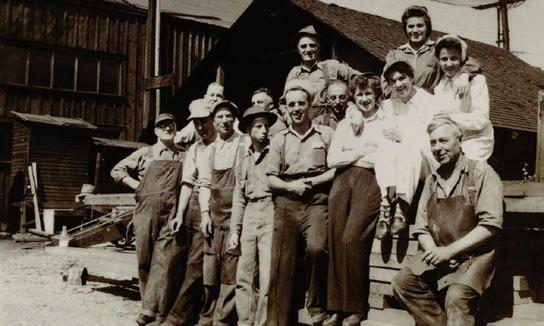
Metrie is marking a major milestone in 2026 as the company celebrates 100 years in business.
Since its founding in 1926, Metrie has focused on building a business customers can rely on—delivering quality products, standing behind its commitments, and treating every relationship as a valued partnership. Over the past century, the company has grown alongside the building materials industry while remaining grounded in those same principles.
Through industry shifts and evolving market opportunities, Metrie continues to prioritize strong relationships with customers and partners, recognizing that long-term success is built through collaboration and trust.
As the company enters its next century, Metrie looks ahead with a continued commitment to its people, partners, and the shared goal of helping businesses across the industry grow and succeed.
Welcome to the next 100.

Home Hardware Stores Limited has announced that its 2025 Supplier Partnership Charity Golf Tournament raised $181,855 in support of Cystic Fibrosis Canada.
Held annually, the tournament brings together Home Hardware team members, Dealers, and suppliers for a day of friendly competition and collaboration, all in support of an important cause.
“We are deeply grateful for the generosity of our suppliers, Dealers and team members whose contributions made the 2025 charity golf tournament such a success,” said Ian White, President and CEO of Home Hardware Stores Limited. “Together, we have helped advance the mission of Cystic Fibrosis Canada.”
Now a much-anticipated annual tradition, the Supplier Partnership Charity Golf Tournament reflects the strong spirit of collaboration, community, and philanthropy shared across Home Hardware’s Dealer and supplier network.
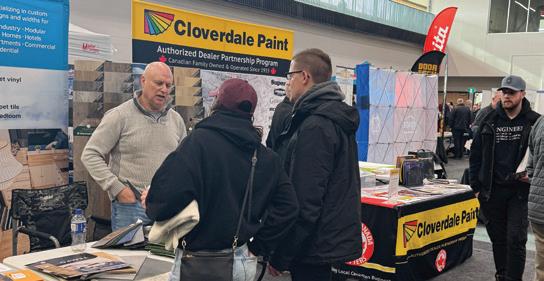
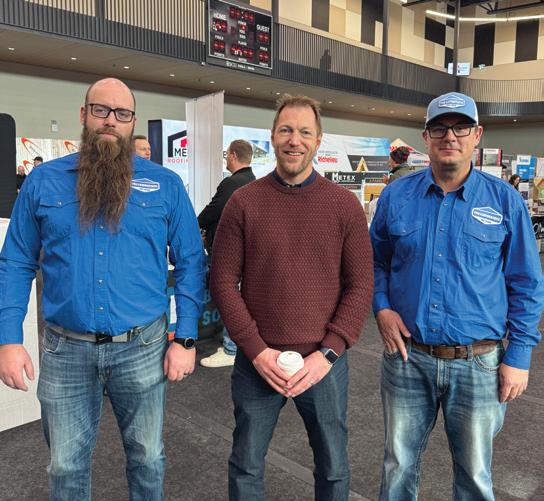
On February 25, The LumberZone hosted a successful Contractor Emporium in Steinbach, bringing together contractors, vendors, and industry partners for a day focused on connection and learning.
The event featured more than 55 vendors, giving attendees the opportunity to explore products, share expertise, and strengthen relationships across the lumber and building materials sector.
Last held in 2019, the return of the Contractor Emporium reflects the strong demand for in-person industry gatherings and the value of bringing suppliers, dealers, and contractors together under one roof.
Supply-Build Canada congratulates Joel Hartung, Ira Dyck, Jon Penner, and the entire LumberZone team for organizing an impactful event and helping strengthen connections across the industry.

Supply-Build Canada congratulates our partners at Qualico on celebrating 75 years of building better cities.
To mark this milestone, Qualico is recognizing the anniversary across its offices and communities throughout the year. As part of the celebration, the Qualico Volunteer Day program has set a goal of achieving 7,500 collective volunteer hours across all regions in 2026.
We thank Qualico for their valued partnership and ongoing commitment to strengthening the communities where we live and work.

VISTA Railings has announced the addition of Robert Legault as Quebec Territory Sales Manager, effective March 2.
Legault brings more than 30 years of experience in market development within the Quebec building materials sector. He previously spent 17 years with Castle Building Centres Group as Business Development Manager for Quebec and served for nine years as National Sales Manager at Colonial Elegance.
With his extensive industry knowledge and strong network across the province, Legault will support VISTA’s continued expansion in Quebec while helping strengthen the company’s national sales team.

Affiliated Distributors (AD) reported record results for 2025, with member company sales reaching $100 billion, representing a 20 per cent increase across the group’s divisions and countries.
On a same-store basis, sales grew 6 per cent overall, including 6 per cent growth in the United States, 5 per cent in Canada, and 1 per cent in Mexico.
Purchases from AD supplier partners increased 34 per cent year over year, while distributions to Owner-Members exceeded $1.8 billion.
“2025 was a very strong year for AD and its Owner-Members, marked by record results and incredible growth,” said Bill Weisberg, CEO of AD. “2026 is already on track to be another record year.”

Trademark Industries Inc. has been recognized with the 2026 Rising Star Award from Staples Canada, honouring the company’s strong performance, innovation, and customer-focused product development.
Based in Markham, Ontario, Trademark Industries supplies a wide assortment of tools, safety products, and retail solutions to major hardware and retail partners across Canada.
With more than 200,000 square feet of office, showroom, and distribution space, the company supports retailers through reliable distribution, product innovation, and a broad assortment of owned, licensed, and private label brands.
The Rising Star Award highlights Trademark Industries’ growing impact in the Canadian retail and hardware marketplace.

RONA has announced the return of RONA Momentum, following a strong first edition that brought together more than 1,700 participants in Québec City.
The 2026 event will take place October 14–15 at the Québec City Convention Centre, bringing together affiliated dealers, vendor partners, store managers, and industry leaders.
The event will feature a large-scale trade show, conferences, and networking opportunities—creating space to align on priorities and explore new products.
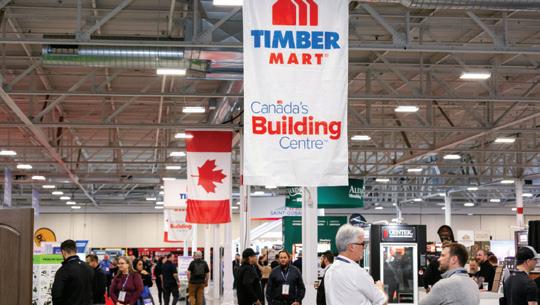
TIMBER MART welcomed more than 1,100 dealers and vendors to its 2026 National Buying Show, held February 10–12 in a hybrid format at the Toronto Congress Centre and through a cloud-based virtual tradeshow platform.
The show featured 227 vendor booths across a 65,000-square-foot show floor and virtual environment, showcasing products across categories such as roofing, insulation, doors, windows, plumbing, electrical, paint, hardware, and business solutions.
Returning highlights included the New Product Showcase and TIMBER MART’s dealer-exclusive pallet-buy section, offering a range of products available for purchase in pallet quantities.
The first quarter of the year brought strong momentum across Supply-Build Canada, with new programs, industry engagement, and education initiatives designed to support members and strengthen the lumber and building materials sector.



In celebration of International Women’s Day, Supply-Build Canada hosted a Build Like a Girl workshop at St. Mary’s Academy in Winnipeg.
Industry leaders shared their career journeys and introduced students to opportunities within the building materials sector.
Panelists included:
• Kayla McIsaac, Business Development Manager, Epak
• Laura Cole, Home Centre Manager, Oakbank Co-op Home Centre
• Kat Kreftsun, Specification Writer, Quik-Therm
Students also participated in a hands-on activity creating custom paint colours with Cloverdale Paints, demonstrating the creativity and technical skills involved in the industry.

Congratulations to Simran Malhi of Building Supply Depot, who was selected as the 2026 BuildHER Scholarship recipient.
Simran will attend the Executive Mastermind Program, supporting her continued leadership development and helping strengthen the next generation of women leaders within the building materials industry.
Applications are now open for the Rising Star Internship Program through the Let’s Go Build website.
Members interested in hosting an intern this season are encouraged to connect with the Supply-Build Canada team to learn how they can help develop the next generation of talent in the building materials industry.

Connect with Amanda Wright awright@supplybuild.ca to learn how to host your intern.



On March 25, we brought together a group of industry leaders in Saskatoon for a closed-door conversation on what’s happening inside their businesses right now.
No presentations. Just honest discussion.
This is why we host Industry Insight Nights to surface what’s real and take those insights forward into action.
What we’re hearing across the industry:
• Workforce remains the top pressure point: attracting, training, and retaining talent is getting harder and more expensive. Expectations have shifted, and businesses are adapting to stay competitive.
• Immigration is critical but the system is a barrier: employers rely on immigrant workers, but complex visa processes and policy challenges are making it difficult to retain good people.
• Rising fixed costs are tightening margins: beyond commodities, it’s insurance, staffing, and system costs putting pressure on businesses and forcing greater operational discipline.
These are not isolated challenges, they’re being felt across the industry.
And they’re shaping where we focus next.
Sponsored by American Express


Supply-Build Canada’s annual Golf Classics are returning this summer, with a few exciting updates for members across Western Canada.
For the first time, Supply-Build Canada will host a BC Golf Tournament, bringing one of the association’s most popular member events to a region that has long asked for it. Details on the date and course will be announced soon.
In Alberta, the Golf Classic has moved to a new location at Innisfail Golf Club to accommodate growing interest. The previous event sold out quickly, and the larger venue will allow more members to participate.
Members can look forward to another season of friendly competition and time with colleagues across the region.
SAVE THE DATES:
2026 BarrierTek Golf Classic—
in Partnership with BCWLA & Supply-Build Canada (New)
July 16, 2026
Northview Golf Course—Surrey, BC
SK | 2026 Durabuilt Windows and Doors & Supply-Build Canada Golf Classic
Presented by Durabuilt Windows & Doors
August 13, 2026
Willows Golf Course—Saskatoon, SK
MB | Winnipeg Golf Classic
August 20, 2026
Kingswood Golf & Country Club—La Salle, MB
AB | Innisfail Golf Classic (New Location)
September 3, 2026
Innisfail Golf Club—Innisfail, AB
SK | Kenosee Golf Classic
September 16, 2026
Golf Kenosee—Moose Mountain Provincial Park, SK
Registration details will be released soon through Supply-Build Canada communications- eblast, website and social media.
The Supply-Build Canada Kenosee Golf Tournament, hosted in partnership with Chimo Lumber, will return to Golf Kenosee in Moose Mountain Provincial Park on September 16, 2026.
A long-standing industry tradition, the tournament brings together suppliers, customers, and industry peers for a day of connection and camaraderie, with proceeds supporting Supply-Build Canada education programs.
This year will also introduce the Builders Award, recognizing individuals who have built a lasting legacy in the supply and building industry. The inaugural award will honour the family of Michael Westrum, former owner of Westrum Lumber and past WRLA Board President.
Contact Don Horvach at don@chimolumber.com for registration.



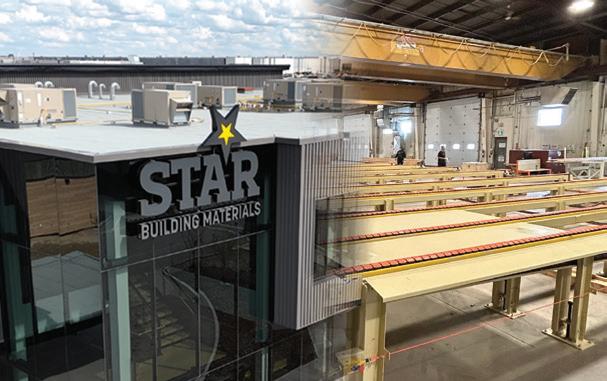
Members can look forward to several upcoming networking and industry events in the months ahead:
• Know Your Pro – Star Building Materials Calgary
• Industry Insights Dinner – Steinbach (Sponsored by American Express)
• Retail Panel – Location TBD (Sponsored by Mayfair Lumber)
• Industry Insight Night & Know Your Pro - Langley (Sponsored by BarrierTek)
And more events are coming up! Additional details and registration information will be shared with members soon.
Want to get involved and host your own events? Contact Amanda Camara at acamara@supplybuild.ca

Rebecca Theobald is the Executive Assistant at Supply-Build Canada, supporting senior leadership and helping keep operations running smoothly. With over 20 years of experience supporting leaders across multiple industries, including businesses in northern and Arctic communities, she excels at solving problems, staying calm under pressure, and organizing complex priorities.
Known for helping people, simplifying processes, and keeping everything moving behind the scenes, Rebecca brings reliability and a proactive approach to every task. Outside of work, she enjoys traveling and has a deep appreciation for art.

HUB International – Group Home & Auto Program Enhancements
Supply-Build Canada members and their employees now have expanded access to enhanced Group Home & Auto Insurance options through our partnership with HUB International. Members can explore personalized coverage solutions through local advisors with expertise in regional insurance needs.
Blueneck Business Mechanics

Supply-Build Canada also welcomes Blueneck Business Mechanics as a new partner supporting trades and service-based business owners. Blueneck works directly with owners to improve profitability, reduce operational chaos, and build businesses that deliver long-term value.

Supply-Build Canada is proud to partner with Marc & Mandy to offer five of our members an exclusive media opportunity to build national credibility. You get a professionally produced video segment that positions your business as an industry leader on Citytv, Amazon Prime, and Roku TV.
Locations: Vancouver, Calgary, Winnipeg, and Ontario
Includes digital amplification and a permanent website listing to ensure your brand reaches engaged consumers long after the air date. This is an elite way to extend your reach at a fraction of the cost of traditional media
Contact Amanda Camara at acamara@supplybuild.ca to learn more if interested.
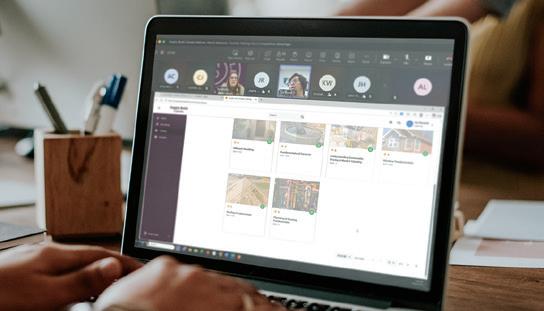
Supply-Build Canada continues to deliver practical learning opportunities designed specifically for the building materials industry.
Recent sessions included:
• Enhancing Performance Through Communication – Novus Global
• AI, Sales, Credit & The Future of AR for Canadian Dealers – NetNow
• The Art of Navigating Change – Novus Global
• Agreement vs. Expectations – Novus Global
• Welcome Wednesdays – Member Orientation
• March Madness Education Kickoff Webinar
These sessions provide members with practical insights into leadership, communication, technology, and operational performance.
Scan the QR Code to see the upcoming webinars.
Season 4 of the Across the Yard Podcast continues with conversations featuring leaders and innovators across the industry.
Recent episodes include:
• The Cutting Edge of Going Green – Rob Forbes, EAB Tool Company
• The Second Life of Lumber – Jay Sanderson, Northmark Materials
• Forging Change in Lumber – Kaitlyn & Lauren Chimko, Dakeryn
• Growing with the Future – Allison Deford, NAFF
• The Power of Customer Experience – Marc Atiyoli
• Old School Grit, New School Wit – R.M. Caligiuri
Listen on all major podcast platforms.




RECAP: SUPPLY-BUILD CANADA’S SECOND ADVOCACY TRIP TO WASHINGTON, D.C.
Jay Dion, Supply-Build Canada
On February 25 and 26, 2026, Supply-Build Canada’s advocacy delegation traveled to Washington, D.C. for its second U.S. advocacy trip. The purpose was to continue building key relationships with U.S. federal officials, collaborate with the Canadian Embassy’s trade team, and educate stakeholders on the importance of Canadian lumber to U.S. homebuilding, while advocating for a softwood lumber agreement.
The delegation included:
• Liz Kovach, President, Supply-Build Canada
• Jay Dion, Policy Analyst, Supply-Build Canada
• Corinne Stavness, Vice President, Government Relations and Partnerships, Western Forest Products
• Jason Kripps, President & CEO, Alberta Forest Products Association
• David Marten, Executive Vice President, Elevate Government Affairs
• David Richey, Chief Executive Public Officer, Resource Public Affairs
Supply-Build Canada continues to recognize that the Canadian lumber industry has not historically had a sustained voice in Washington, while groups such as the United States Lumber Coalition have engaged with the U.S. government since the 1980s.
This was echoed by the Canadian Embassy’s trade team, who expressed appreciation for the delegation’s continued support and advocacy efforts on the softwood lumber file. They emphasized that government-industry collaboration strengthens the broader “Team Canada” position when discussing trade with U.S. officials.
During the first trip, Supply-Build Canada laid the foundation by highlighting the significance of a softwood lumber agreement and the damaging impacts of current duty and tariff rates placed on Canadian softwood lumber.
Carrying that momentum forward, the second visit focused on educating Congress about the role of Canadian-sourced Spruce-Pine-Fir (SPF) lumber in U.S. homebuilding. The delegation reinforced that SPF cannot simply be substituted for Southern Yellow Pine (SYP), and that both are necessary—underscoring the complementary, symbiotic relationship between the two lumber types in residential construction.
The message positioned Canadian lumber not as competition, but as a contributor to U.S. housing supply and affordability.
The response to Supply-Build Canada’s messaging was well received across both Democratic and Republican offices. Staff
were interested in and supportive of any messaging that helps improve U.S. housing affordability. There was bipartisan Congressional support expressed for renewing CUSMA.
More notably, Republican offices acknowledged a disconnect between Congress and the Administration regarding information sharing and communication on trade issues, including Canada-U.S. trade relations. This shift reflects the evolving political environment, as Americans continue to face housing shortages and rising affordability concerns.
There was universal affirmation that Supply-Build Canada’s advocacy efforts are timely. With U.S. midterm elections approaching in November, issues tied to affordability remain front and centre.
Having identified a widely supported issue at the right time, Supply-Build Canada will continue to advance the conversation by:
• Meeting with additional Congressional offices
• Highlighting the Canadian lumber industry’s importance to U.S. homebuilding and affordability
• Building relationships with U.S.-based groups, including homebuilders, who can help reinforce the message
• Continuing to advocate for a negotiated softwood lumber agreement
• Office of Rep. Don Bacon (R-NE)
• Office of Rep. Nicole Malliotakis (R-NY)
• Office of Rep. Darin LaHood (R-IL)
• Office of Sen. John Curtis (R-UT)
• Office of Sen. John Hoeven (R-ND)
• Office of Sen. Elissa Slotkin (D-MI)
• House Ways and Means Committee (Majority Staff)
• House Ways and Means Committee (Minority Staff)
• Senate Committee on Finance (Majority Staff)
• Senate Committee on Finance (Minority Staff)
• Canadian Embassy Trade Team

Members interested in receiving a briefing on the trip or a copy of the delegation’s Congressional handout are encouraged to email Jay Dion at jdion@supplybuild.ca

Jay Dion, Supply-Build Canada
Anew recurring feature bringing members the latest policy developments impacting the building supply industry.
Unaffordability is now the top issue in the United States, just as tariffs and uncertainty around CUSMA renewal are becoming increasingly unpopular among Americans, U.S. industry groups, and members of Congress.
Organizations such as the National Home Builders Association, agriculture coalitions, and the U.S. Chamber of Commerce have expressed concern about tariffs and their impact on affordability. At the same time, support for renewing CUSMA remains strong.
On February 11, the U.S. House passed a bipartisan symbolic resolution to repeal IEEPA tariffs on Canadian goods. Days later, additional Republicans voiced concerns after the U.S. Supreme Court ruled that the global tariffs had been imposed illegally as the White House did not receive proper congressional approval.
Despite this, tariffs on Canada remain largely unchanged. The White House has since reintroduced global tariffs under Section 122 and launched new Section 301 investigations, reinforcing that the broader trade approach is still in place.
While tariffs remain in place, bipartisan opposition is growing. With midterm elections approaching, affordability and trade stability are increasingly central political issues.
Why it matters:
Congressional opposition to tariffs, combined with support for CUSMA renewal, could strengthen Canada’s negotiating position and create momentum on related trade files, including steel, aluminium and softwood lumber.
As Canada-U.S. trade relations remain uncertain, several strategic opportunities are developing.
Buy Canadian & Domestic Procurement
Federal and provincial governments are increasing focus on Buy Canadian and Buy Local policies to stimulate domestic production and infrastructure.
Industry can benefit from:
• Infrastructure procurement programs
• Build Canada Homes initiatives
• Upcoming policy adjustments
Supply-Build Canada will continue monitoring developments to ensure policies support industry growth rather than create unintended barriers.
Expanding Export Markets
As the U.S. becomes a less predictable trading partner, the Government of Canada is exploring expanded trade relationships with Asia-Pacific nations, the European Union, and Mexico.
New agreements in non-U.S. markets may create opportunities for Canadian manufacturers and suppliers to diversify and build new business relationships.
Maintaining U.S. Relationships
Despite current challenges, the United States remains Canada’s closest trading partner. Federal, provincial, and municipal governments are actively maintaining relationships across party lines in Washington.
With U.S. midterm elections in 2026 and the current Administration’s term ending in 2028, shifts in political power are possible. Maintaining relationships with both Democrats and Republicans will help protect supply chains and position industry for smoother transitions when trade relations improve.
Red Tape Reduction & Development Fees
Over the coming months, Supply-Build Canada’s advocacy team will engage provincial and municipal governments on red tape reduction and development fees.
Members have raised concerns about high municipal development fees and policies that discourage innovation in building materials and home construction. In some regions, these barriers have slowed housing starts and infrastructure development, contributing to Canada’s housing affordability challenges.
Supply-Build Canada will bring these issues forward to ensure policy solutions support industry growth and housing supply.
Supply-Build Canada is strengthening its relationships with senior government officials at all levels. To advocate effectively, we rely on direct input from members.
Watch for surveys, emails, and roundtable invitations in the coming months.
By participating, you help ensure governments receive accurate, real-world information—allowing policy to be shaped in a way that supports your business rather than creating unintended barriers.

Questions on these topics?
Reach out to Jay Dion at jdion@supplybuild.ca
Amanda Wright, Supply-Build Canada

“People aren’t going to apply for a job they don’t know exists.”
You’ve heard us say it countless times before and it’s true.
If we want to solve the labour shortage facing our industry, we need to show up where future workers already are. Career fairs are one of our first—and most important—chances to introduce the lumber and building materials industry to the next generation.
Whether we’re speaking to high school students just beginning to explore their options, or adults looking for a new path, these events allow us to showcase something many people still don’t realize: our industry offers real careers, real advancement, and long-term opportunity.
As we learned in our 2023 labour study, one of the biggest threats our industry currently faces is a labour shortage. Career fairs, both for youth and for active job seekers, are one of our best tools for addressing this issue.
While we are always happy to go and represent the industry, these events are always much more impactful when we can present a united front!
What does a united front look like? It is:
• Multiple member businesses showing up
• Manufacturing, retail, distribution, and operations are all represented
What is the impact?
• Students seeing the full scope of opportunity; not just one job, but an industry
These career fairs aren’t just about filling your current open roles; they’re about creating so much demand for our industry that we go from open roles to building waitlists for any potential openings.
And all this starts with your participation!
• April 22 – James Fowler High School, Calgary
• April 23 – Edmonton Soccer Centre South, Edmonton
• March 24 – Prospect Human Services, Polish Hall, Edmonton
• May 5 – Pembina Hills Region Career & Job Fair, Westlock
If you’re wondering whether these events make a difference, consider this:
100 per cent of member survey respondents found candidates for consideration at the Showcase Career Fair.
The impact is real.
Participating is only the first step. Preparation matters.
Visit the Career Fairs tab under Attracting Talent at supplybuild.ca for practical tips on maximizing your impact, from booth setup to messaging that resonates with young job seekers. You’ll also find the most up-to-date listings of career events and registration links.
The labour challenge won’t solve itself.
But when we show up together, consistently and visibly, we strengthen the pipeline.
Let’s make sure the next generation knows we’re here.
Learn More

No two career journeys in the LBM industry look the same. Some begin in fabrication, on the retail floor, the military, straight out of high school, following arrival from other countries and the list can go on!
If you ask almost anyone who has built their career in this sector, you may hear a common thread which is, had there been structured industry-specific training earlier, the learning curve could have been accelerated leading to greater opportunities sooner.
Well-trained staff contribute to a better bottom line as it leads to:
• less guesswork
• strong product knowledge
• fewer costly mistakes
• higher level of confidence, sooner
Employees who see a future instead of just a job is something that we should all strive for and in this article, we will take you through a few current industry professionals and map out what a structured training program could look like for their roles using Supply-Build Canada courses. (Note: several new courses under development which included sales).
While some of these folks may be industry veterans, we will showcase what the basics would like for them had the just been starting out their journey of working in the LBM.

Jay is fresh out of high school—curious, creative, and not entirely sure where the path leads.
For someone beginning on the retail floor today:
Onboarding:
A strong foundation of knowledge leads to success. Utilize the following Supply-Build courses to enhance your onboarding and save you time!
• Building Materials Fundamentals
• Industry terminology + Blueprint Reading
• Customer Service – FISH
• Retails suite of courses with NHPA:
» Beginner Staff Bundle – Retail Basics
» Building Materials Retailing
» Hardware Retailing
» Paint Training
» Project Pro & Loss Prevention
Our industry builds communities, and when new hires understand that foundation, it sets them up for long-term growth with opportunities to advance into leadership.

Jonah entered the industry after serving in the United States Armed Forces. He brought discipline and leadership—but no direct LBM background.
For someone stepping into a dealer representative or customer-facing role today, a clear pathway could look like:
Foundation:
• Building Materials Fundamentals
• Industry Terminology + Blueprint Reading
• Estimating levels 1 & 2
• Customer Service – FISH
Context:
The Estimating Bundle to understand how projects come together—materials, budgets, timelines.
Leadership Track:
The Business Series to understand margins, growth stages, and the life cycle of a business.
When sales professionals understand both the technical and financial sides of a project, credibility rises—and costly errors drop.

Lauren grew up around the family business and later worked her way into lumber trading after completing a Bachelor of Commerce.
For someone looking to move from product familiarity into higher-level decision-making:
Foundation:
• Industry Terminology + Blueprint Reading
• Estimating levels 1 & 2
• Customer Service – FISH
• Industry sales course (coming soon!)
Executive Development: Executive Mastermind to sharpen leadership, decision-making, and team strategy.
As responsibility grows, so should structured thinking.

Roman arrived in Canada from Ukraine with no industry background. Today, he works in truss assembly—understanding fabrication, structure, and precision.
For someone beginning in an entry-level fabrication role today, a structured path could look like:
Foundation:
• Industry Terminology + Blueprint Reading
• Building Materials Fundamentals
Progression:
• Estimating Level 1 & 2 if estimating is of interest
• Sales and customer service course if moving into a more customer facing role which may require a higher level of building materials knowledge where the remaining Building Materials Fundamentals can serve as a launch pad.
Structured learning doesn’t replace experience. It accelerates understanding.
Turnover is real, especially in the first year. And more often than not, it comes down to a lack of clarity, not capability.
When people understand how their role connects to the bigger picture, they stay longer, contribute faster, and grow with confidence.
Structured learning doesn’t just support onboarding. It builds consistency across teams, reduces costly mistakes, and gives people a clear path forward.
Because bringing people into the industry is only the first step. Showing them how to grow is what keeps them here.
DMC Recruitment is the specialist leader of recruitment services, dedicated to the Building Materials industry across Canada and the United States. They partner with manufacturers, distributors, dealers, LBM retail, and buying groups to identify and secure high impact talent on behalf of clients. DMC completes coverage of the construction supply chain with sister divisions which specialize in Architecture & Design, Development, and Real Estate.
“At DMC, we recruit professionals within the Building Materials in the discipline areas of Sales, Marketing, Operations, Purchasing, Finance, HR, industry specialty roles, General Management & Senior Leadership. With deep vertical expertise across all types of building products, our team understands the channel dynamics and nuances of hiring effectively within our sector.”
In collaboration with Association partners, DMC produces industry-specific Salary Reports to support informed retention and talent strategies across the building materials landscape. You can get your free copy when it is published in mid-March by registering via the QR code on page 27.

Alex Mather is a Founding Partner of DMC, and leads the Building Materials division. amather@dmcrecruitment.com dmcrecruitment.com
Alex
In the building materials industry, standing still is not neutral. It is decline.
Markets shift. Margins tighten. Competitors consolidate. Customers become more sophisticated. If your people are not growing, your business is shrinking— even if the numbers look steady on paper.
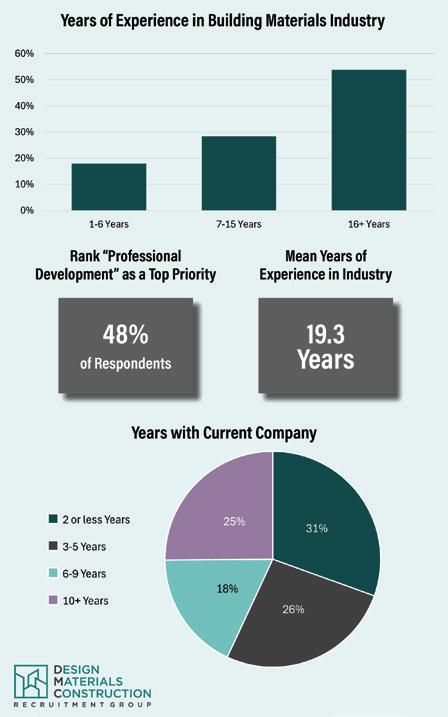
One of the clearest patterns that has become evident from data collected for the DMC 2026 Building Materials Salary Report - Sales Professionals, is this: people are broadly satisfied with their roles, but their time and loyalty spent with a single employer is shortening. Half of all respondent’s report spending five (5) or less years with their current employer, yet median industry experience sits at 15 years. Experience is staying in the industry—it just isn’t staying with one company for as long as it used to.
That is not a compensation problem alone.
Yes, pay perception matters. But career and professional development ranks almost as highly as earning potential and culture when professionals evaluate what matters most in their roles (data from DMC 2026 Building Materials Salary Report - Sales Professionals).
Growth is not optional—it is expected.
AI may be reducing roles in certain sectors, but it is not replacing General Managers running multi-branch lumber operations, Operations Managers coordinating inventory and delivery logistics, Yard Managers overseeing crews and safety, Estimating Managers supporting contractor relationships, or sales leaders driving growth with independent dealers and builders. The building supply sector still runs on experience, judgment, face-to-face relationships, and operational discipline. From the yard to the Branch Manager’s office, to the executive team, capable people remain the engine of performance—and that is not something technology is about to automate away.
We can worry about the changes that AI is bound to bring into our industry, but in Canada we currently face three immediate structural pressures:
• An ageing workforce.
• Growing businesses competing for the same limited talent pool.
• Population growth continues to fall through low birthrates, and declining numbers of newcomers emigrating to Canada.
Replacing any team member in a building materials business costs far more than their annual salary once you account for lost momentum, training time, and impact on the team. Recruitment is expensive and time consuming. Onboarding is disruptive. Productivity dips during transition. Customer relationships are vulnerable. Culture often absorbs the shock.
If finding good people is hard—and it is—then keeping them becomes one of the most strategic decisions you need to consider.
Human nature is not static.
People want to:
• Improve.
• Learn more.
• Earn more.
• Expand their responsibility.
• Gain recognition.
• Be challenged.
• See a path forward.
When those elements are absent internally, the market will provide them externally.
We regularly see high performers leave not because they dislike their employer, but because they can’t see the next chapter. They can’t see how their capability will grow, how their income will grow, or how their responsibility will expand over the next three to five years.
In a tight talent market, someone else is always willing to paint a bigger, brighter picture if they don’t see it internally.
Many businesses assume compensation is the main retention lever.
It is a lever—but it is not the only one.
Career and professional development consistently rank near the top of what all employees value (DMC 2026 Building Materials Salary Report - Sales Professionals) …. Yet in many lumber yards, dealer networks, and distribution businesses, training is informal, reactive, or limited to onboarding.
Development should not stop after the first 90 days.
Training is not just product knowledge or system orientation. It includes:
• Sales capability development.
• Leadership training for emerging managers.
• Succession planning for branch and general management.
• Cross-functional exposure across purchasing, operations, and finance.
• Clear progression pathways tied to earnings and responsibility.
• Structured mentorship from senior leaders.
When employees believe their employer is intentionally investing time and resources into their growth, something shifts. The relationship becomes long-term. The business feels like a platform for their ambition, not a holding place.
Training Is an Investment, Not a Cost
In our industry, we understand capital investment. We invest in new yards, new equipment, new systems, new product lines—because we know that standing still erodes competitiveness.
People are no different.
If you are not intentionally developing your team, you are falling behind competitors who are.
Retention is multi-factorial. Compensation, incentives, benefits, flexibility, culture, and leadership all matter. But training and development sit at the centre because they address the core human driver: growth.
If your people are growing, your business is growing.
If your people are stagnant, your competitors are recruiting them.
In a tight Canadian talent market, the most strategic retention decision you can make is straightforward: develop your people faster than the market can attract them away.
Because in this industry—as in business generally—standing still is not safe.
It is decline.
The DMC 2026 Building Materials Salary Report - Sales Professionals, will be available mid-March. This is a free resource, created to support informed retention and hiring decisions across the building materials industry. We would like to thank Supply-Build Canada for their ongoing support of this initiative.

Scan the QR Code to learn more.


Mike McDole, Firing-Line LBM Consulting
Over the past three years, I’ve had the opportunity to work with a wide range of LBM dealers across the USA country. One of the most consistently requested topics I’m asked to present on is “prospecting.” It’s no surprise—virtually every dealer is looking for effective strategies to drive business growth. That’s the purpose of this article for the Supply-Build Canada. While this may differ in tone from my usual storytelling format, rest assured, I’ve still got plenty of real-world tales to share in the future.
With over four decades of experience working with independent lumberyards, I’ve identified three core approaches to successful prospecting. Let’s dive in.
This is often the most accessible opportunity. I’m not saying it’s easy—but compared to the other strategies, it’s less daunting. I refer to it as “growing wallet share,” which simply means increasing the range of product categories that your existing customers purchase from you.
Start by identifying which product groups your current customers aren’t buying from your business. For example, a loyal client might purchase all their lumber and exterior materials from you, yet source interior doors, hardware, or mouldings elsewhere. Ask yourself: why?
The answer might be as simple as habit, a long-standing relationship with another supplier, or even a lack of awareness that you offer those products competitively. You won’t know unless you ask. Because you already have a trusted relationship, your chances of expanding that business are significantly better than if you were starting from scratch.
Emphasize the strength of your partnership, your competitiveness, and the added efficiencies they can gain by consolidating suppliers—fewer invoices, streamlined communication, combined deliveries, and so on. As I’ve learned over the years: “If you don’t ask, you don’t get.”
The next approach focuses on customers who already buy from you— but not in volume. Let’s say a customer spends $50,000 annually with your company, yet has a total spend of $250,000. That means you’re only capturing 20 per cent of their business.
Why is that?
It could be loyalty to a long-standing competitor, convenience, location-specific buying habits, or simply because no one has made any effort to engage them further. Just like in the first approach, this customer knows your company and has an established relationship. That’s a significant advantage.
Take the time to identify these accounts. Then, reach out and ask the critical questions. Even if the answer is “no,” you may gain valuable insight into their loyalty and your competitors’ strengths. Again—“If you don’t ask, you don’t get.”


Mike McDole brings 40+ years of actual hands-on LBM experience, including serving as SVP of a major regional pro dealer. As principal of Firing Line LBM Advisors, he helps LBM dealers across North America improve management efficiency; drive profitable sales; sales training; KPI’s; and more. Mike can be reached at mike@firinglinelbm.com or 774.372.1367.
MIKE MCDOLE
27 Starr Lane, Rehoboth, MA 02769 774.372.3316 / mike@firinglinelbm.com www.FiringLineLBM.com
This is the most challenging—and for some, the most intimidating approach: acquiring new customers through cold or warm outreach.
Warm calling involves leveraging mutual connections to facilitate an introduction. Referrals carry weight. If someone your prospect trusts recommends you, your odds of success increase significantly.
How do you get these referrals? Ask. If your current customers value your work, they’ll often be happy to help. Encourage them to make an introduction or, at the very least, allow you to mention their name when reaching out. A personal referral is a powerful endorsement—don’t hesitate to pursue it.
Cold calling can feel uncomfortable, largely due to fear of rejection or lack of confidence. But rejection isn’t personal—it’s business. If a prospect declines, it doesn’t reflect on your worth. Stay professional, keep your focus, and move forward.
Why should you prospect at all? Beyond business growth, the reality is that customer attrition is inevitable—people retire, move on, or scale back. Your business needs a pipeline to remain healthy. And keep this in mind: your prospects share the same challenges as your current clients. If you’ve already solved these issues successfully, you’re well-positioned to offer value.
You may never feel completely ready to cold call. Doubt may linger. Call anyway.
• Do your research. Know as much about the company as possible before reaching out.
• Prepare an introduction. Not a full script—just a concise, engaging opener.
• Practice—confidence grows with repetition.
• Plan for whether they answer or not, have a clear message focused on how you can help their business. Keep it brief and compelling.
Like any skill, cold calling improves with time and consistency. The more you do it, the more confident—and effective—you’ll become.
Over my career, I have found this 3-pronged approach to growing sales works, so give it a try.


After spending more than 20 years helping brands market to builders, designers, and contractors, I can tell you this with confidence:
You are not selling lumber. You are not selling windows. You are not selling fasteners. You are selling peace of mind.
And if you think your product is “totally different than everyone else’s,” I say this with love… it probably isn’t. Most products in our industry are more similar than we want to admit. Lumber is lumber. Screws hold things together. Windows keep the wind out. Everyone believes their product is special. What actually makes you different is how confident a contractor feels when they choose you. Builders are not early adopters. They are professional risk managers. When you show up with something new, they’re not thinking, “This is exciting.” They’re thinking, “What is this going to cost me if it fails?” They are not asking if it’s cheaper. They are asking if it will slow down their crew, create callbacks, mess up their schedule, or eat into their margins.
If you want them to switch, stop leading with price. Lead with relief. Show them how it saves time. Show them how it reduces mistakes. Show them how it prevents callbacks. Put numbers to it. “This saved our last builder 15 minutes per install.” “This reduced one site visit per build.” Ten minutes doesn’t sound like much until you multiply it across a job. Time saved protects margins and lowers stress.
And here’s something most companies miss. Contractors rarely leave after one big disaster. They leave after death by a thousand paper cuts. Late deliveries. Takeoffs that miss material. Invoices that don’t match job sites. Calls that don’t get returned. Friction kills loyalty every single time.
When something goes wrong, and it will, that’s your moment. Look at Johnson and Johnson during the Tylenol crisis in the 1980s when their product was tampered with and people died. They didn’t deflect. They didn’t hide. They pulled 31 million bottles off shelves before they had to and owned it. Within a year, they regained over 30 percent market share. They protected trust first, profit second. Contractors care more about protection than blame. Own the problem and fix it fast. When it comes to marketing, remember this, it is not about being louder. It’s about being more helpful. Every message you put out should answer one simple question: “how does this make my client’s job/life easier?”
Now how do you position your brand in a competitive marketplace? Let’s take Red Bull for example, they didn’t win by fighting for shelf space beside ten other energy drinks. They showed up where their audience already lived. Extreme sports. Music events. Cultural moments. Office full of staff working late nights. They embedded themselves in lifestyle. They reached people when they were relaxed and paying attention, not when they were rushing through a store aisle. That lesson applies directly to this industry. Contractors are people first. They are home-
owners, parents, coaches, and community members. When you only try to reach them on the job site, you’re competing in chaos. Phones are ringing, crews are waiting, and deadlines are looming.
Show up where they least expect you. For instance, you can sponsor their favorite renovation and build TV show and be part of the content they already watch with their family, support local community projects or their kid’s soccer team or host builder breakfasts. When contractors see you in a trusted environment, not just behind a counter, credibility transfers. This translates to less noise, less competition and more attention.
Another untapped resource is to turn your contractor desk into your expert hub. Stop treating it like an order counter. Train your team to lead with knowledge that saves time and money. Instead of “What do you need?” ask, “What are you building and where are you losing time/ money?” When contractors walk in stressed and walk out with clarity, you become more than a supplier or lumberyard You become part of their trusted process.
And lastly, invest in video. If no one on your team can confidently speak on camera, you are invisible in today’s market. Video builds trust faster than any brochure ever will. It protects your brand when something goes public and it positions you as the expert.
After 20 years of watching brands grow and watching others disappear, the ones that win do three things consistently. They reduce friction. They reduce uncertainty. And they reduce stress.
When contractors feel safe handing you the problem, price stops being the conversation.
And that’s when sales really start to grow.

Marc Atiyolil is a nationally recognized builder, designer and media personality best known as the Co-Host of The Marc & Mandy Show and Editor-in-Chief of Canadian Home Trends Magazine. With over two decades of experience working alongside top contractors, developers and designers across North America.
Marc brings a rare mix of industry know-how and media savvy. From job sites to broadcast studios, he helps brands speak the language of the trades authentically and effectively. Marc has partnered with major brands, delivered keynote talks across the country and built a loyal following by turning real-world expertise into results-driven strategies. When Marc talks about marketing, builders actually listen. Through every talk, every program and every act of service his goal remains the same, to help people rise then teach them to help others rise too.

For many organizations, the conversation around their group benefits plan tends to focus on one key moment each year: the renewal. When the new rates arrive, the immediate question is often how much costs are increasing and what can be done to minimize the impact.
While the renewal is important, focusing only on the percentage change can sometimes cause organizations to overlook the bigger picture. A benefits plan is not simply an annual expense, it is an investment in the health, stability, and productivity of the workforce. Viewed through this broader lens, several factors can influence the long-term value and sustainability of a benefits program.
One key factor is the underlying cost structure of the plan. A portion of every premium dollar goes toward insurer expenses such as administration, claims adjudication, technology platforms, customer service, risk charges, and insurer margin. These built-in costs affect how much of the premium ultimately goes toward paying employee claims. The plan’s Target Loss Ratio (TLR) reflects this balance, representing the percentage of premiums expected to be paid out in claims. Plans with lower expense structures typically allow a greater share of premiums to fund employee benefits rather than overhead, which can influence the efficiency and long-term sustainability of the program.
Equally important is understanding trends within the plan itself. Claims data can reveal patterns about the health needs of a workforce and how employees are using their coverage. Increases in paramedical services may indicate a growing focus on preventative care and rehabilitation. Higher mental health claims may reflect rising workplace stress or increased comfort in accessing support. Changes in prescription drug utilization can highlight evolving treatment patterns or the introduction of new therapies.
Reviewing these trends allows organizations to move from reacting to renewal increases to proactively managing the plan. Even in pooled or shared-risk arrangements common among small to mid-sized businesses, claims analysis provides insight into where the plan delivers value and where adjustments may be needed.
Another factor often overlooked is employee awareness. Many organizations invest significantly in coverage but provide limited education on what the plan includes or how it works. Employees who are unaware of benefits may underutilize resources such as paramedical care, mental health supports, or virtual healthcare options. Simple initiatives like onboarding sessions, reminders, or short benefit guides can significantly increase engagement and perceived value.
When organizations take a broader view to consider claims trends, plan expenses, and employee engagement, the conversation shifts from simply managing annual cost increases to maximizing overall value. Working with a knowledgeable benefits advisor can further enhance this process. Regular reviews and discussions help uncover trends, identify opportunities, and ensure the plan continues to evolve with workforce needs.
If you have questions about your plan or want to explore ways to strengthen its value, a PIB Group Benefits Consultant can provide guidance and support. Contact Jacques Poirier at jacques.poirier@pib.com
Get customized insurance solutions to safeguard businesses and employees across industries. From group benefits to commercial coverage, PIB ensures you’re protected at every stage.
Trusted by Supply-Build Canada. Plus, enjoy exclusive member pricing! Scan the QR code to view the offers.

Supply-Build Canada’s Executive Mastermind Program brings together leaders from across the building supply industry to challenge assumptions, sharpen leadership skills, and turn reflection into action.
Through guided sessions with performance coach Lauren Johnson, participants explored mindset, decision-making, and the realities of leading teams in a complex and fast-moving industry.
Leaders from across the industry shared what shifted for them and the lessons they’ve taken back to their organizations.
KEN CROCKETT
Star Building Materials Alberta
One of Lauren’s greatest strengths is her ability to move people from insight to action. That alone was a game changer for me both personally and professionally.
My biggest takeaway was realizing how quickly things change when you stop waiting to “feel ready” and start taking intentional action. The Mastermind experience helped cut through the noise, the overthinking, and the assumptions that sometimes slow progress.
Growth doesn’t come from having more information. It comes from clarity, ownership, and the courage to move forward.
Since completing the program, we’ve taken the Mastermind format into our own leadership team meetings across our Alberta operations. It’s helped us build stronger alignment, have more productive conversations, and focus on the priorities that actually move the business forward.


Dakeryn Industries
I completed the first year of the Mastermind program with Liz, Ken, Helen, and others, and the experience made a strong enough impact that I renewed for a second year. Our company is also sending another emerging leader to participate. That decision alone reflects the value we saw in the program.
At first, the investment gave us pause. It was the first time our company had committed meaningful resources to this type of leadership development. But after going through the program, I can say it was absolutely worth it.
What stood out most was the balance between structured learning and real-time problem solving. The sessions with Lauren Johnson pushed us to reflect on how we approach leadership, while the group office hours created space to bring forward real challenges from our businesses. Being able to workshop those situations with experienced peers and an executive coach was incredibly valuable.
Some of my biggest takeaways came from those discussions. Whether it was navigating difficult team dynamics or refining how we approach leadership decisions, the program provided practical tools and perspectives that I continue to use in my role today.
Even in uncertain times, we’ve chosen to double down on this investment in leadership. Strong teams and strong leaders are what help organizations navigate change—and programs like this help build both.

VP of Business Development & Marketing, Supply-Build Canada
Before I started Mastermind, I genuinely thought I didn’t have time for it. I was barely taking lunch and was working constant overtime. What I didn’t realize was how much I was over-functioning for my team by not delegating properly.
Mastermind helped me recognize how often I was operating in a stress response and how that energy affected everyone around me. When I’m stressed, my team feels it. When I’m calm, they’re calm.
One concept that stayed with me is “be so clear you cannot be misunderstood.” That means communicating expectations clearly, asking clarifying questions, and giving feedback quickly and directly.
One of the biggest shifts has been implementing regular one-on-one meetings with my team. Even a short weekly check-in creates space to focus on the person behind the work and support their growth.
Looking back, investing in leadership development has had a ripple effect across our team, our programs, and the results we’re delivering.

LIZ
President, Supply-Build Canada
There are many lessons from the Mastermind experience, but one that stood out was the importance of self-awareness in leadership. While we are shaped by our circumstances, we always have a choice in how we think, how we show up, and how we respond to challenges.
Leadership comes with responsibility and sacrifice. Driving a vision, fostering culture, and making difficult decisions are part of the role. One insight that stayed with me is that every member of an organization contributes to its culture, not just the leadership team.
Another realization was how often we limit ourselves out of fear. Some of the best opportunities appear when we move beyond that discomfort and lean into growth.
For me, the key themes were clarity, choices, and consistency. Clear vision and communication, intentional choices, and consistent action are what drive long-term success.
It was so valuable for Amanda and me that we also enrolled Travis Waite from our leadership team to continuously support his growth.
Supply-Build Canada’s Executive Mastermind program continues to grow, bringing together leaders from across the building materials industry who are committed to strengthening their leadership and their businesses.
The second cohort represents a diverse cross-section of the industry, from manufacturers and distributors to retailers and industry organizations. Over the coming year, they will work together to challenge assumptions, build stronger leadership habits, and develop strategies that help their businesses and teams grow.
Supply-Build Canada’s Executive Mastermind Program is facilitated by Lauren Johnson, a high-performance coach who works with leaders and organizations across North America. Her approach focuses on mindset, decision-making, and building resilient teams that can perform under pressure and lead through change.
Learn more


Dean Petrillo—ABI Mouldings
Kelsey Brooks—Brooks Building Supplies
Jodie Porter—Taiga Building Materials
Jeff Lea—Nucor Rebar
Phil Barter—Dakeryn Industries
Travis Waite—Supply-Build Canada
Simran Mahli—Building Supply Depot
Jay St. Arnault—St. Arnault Lumber & Building Supplies
Sarah Winters, People & Culture Manager, Kamloops Home Hardware Building Centre
s a family-owned building centre in Kamloops, our biggest differentiator has always been our people. We compete in a fast-changing industry where products evolve, customer expectations shift, and experienced trades knowledge is retiring faster than it’s being replaced. We knew that if we wanted to remain an industry leader, we needed to invest intentionally in knowledge.
In 2025, a core priority of our People & Culture strategy was to redesign our training platform so learning wasn’t informal or inconsistent. We needed something structured, practical, and accessible for every role. Many of the NHPA courses became the foundation of that work.
We integrated NHPA courses directly into onboarding so new team members could build a solid understanding of the fundamentals of lumber, hardware, building materials, and customer service. This has been especially important as our workforce demographics change and fewer new hires arrive with industry experience.
But the real impact has been beyond onboarding.
Our sales teams have deepened their technical knowledge in areas like windows, doors, and building materials specifications. Leaders have used the business and management series to strengthen communication, planning, and coaching skills. Specifically, team members who started as entry-level recruits are now moving into managerial roles, inside sales positions, or specialty departments with confidence, attributed to both hands-on mentoring and structured learning pathways.
“When your team understands the ‘why’ behind products and processes, they feel more confident serving customers.”
Training has changed our culture. When employees understand the “why” behind products and processes, they feel more confident serving customers. That confidence shows up as better conversations at the counter, stronger problem-solving, and a calmer, more supportive environment for new hires. It reinforces the kind of high-involvement, grassroots workplace we value, where internal growth is paramount to our success.
Looking ahead, we see structured learning as part of our longterm strategy. It supports succession planning, helps us retain talent, and ensures we can continue serving our community with expertise and integrity. As a local building centre, we don’t succeed because we are the biggest, we succeed because our team knows our products, cares about our customers, and continues learning every day.
In the end, investing in training is really investing in people. When our team grows, our customers are better served, our leaders are stronger, and our community is better supported. Programs like NHPA have helped us create a shared language and foundation for growth. And while the tools we use to learn will continue to evolve, what matters most is that we keep learning together.

Sarah Winters is the People & Culture Manager at Kamloops Home Hardware Building Centre, where she focuses on leadership development, training programs, and building a strong, people-first culture. Sarah is currently completing her CPHR designation and is passionate about building practical learning pathways that help team members grow from entry-level roles into confident leaders within their community.


Danny Serrano is a Senior Retail Operations Advisor, Lumber with Federated Co-operatives Limited, supporting the Home and Building Solutions network. Based in Saskatoon, Danny works closely with retail teams and zone leaders to strengthen lumber operations across the organization.
In his role, Danny provides strategic guidance on lumber pricing, supplier availability, and operational standards, helping retail locations navigate market conditions and improve performance. He is actively involved in developing and delivering sales and pricing strategies, as well as sharing timely updates related to products and operational changes.
Known for his collaborative approach, Danny partners with cross-functional teams and Lumber Advisors to enable consistency, drive best practices, and support sales capability development throughout the network.
Danny Serrano, Senior Retail Operations Advisor, Lumber with Federated Co-operatives Limited
As part of his onboarding at Federated Coop, Danny Serrano completed the Estimating Suite and the structure immediately stood out.
“The courses had a great flow. The video portions were very well explained and detailed. It broke estimating into a clear process, understanding scope, reading plans, identifying materials, and calculating accurately.”
For someone stepping into a senior advisory role, that clarity accelerated his understanding of how estimating connects to overall store performance. The training reinforced that estimating is not simply assembling numbers but understanding the full scope of a project and offering informed solutions.
It also shifted perspective.
“The mindset changed from just getting the quote done to building a complete and profitable solution. Gaps and waste factors matter. It opens conversations around value, risk, and accuracy.”
Stronger estimating capability, he notes, directly impacts store results. Improved accuracy reduces corrections and rework. Confident estimators present their numbers with clarity, which strengthens credibility with customers and teams alike.
“When estimators are confident in their numbers, they’re more confident presenting them. Ultimately, it builds trust and helps advance the project efficiently.”
For Danny, the training reinforced the importance of strong fundamentals—both in building materials knowledge and estimating discipline.
“It reinforced margin discipline, technical knowledge, and confidence in future project conversations. I have a deep appreciation for the vast knowledge estimators in our industry bring to the table.”
Would he recommend it to others entering a similar role?
Absolutely.
Because strong estimating isn’t just operational—it’s strategic.
Dave Rutherford, Retail Pro Contractor Lead, (UFA) United Farmers of Alberta Cooperative
In a competitive and fast-evolving building materials landscape, product knowledge alone is no longer enough. Confidence, credibility and the ability to build long-term customer relationships are what truly set high performing Pro Sales teams apart. At United Farmers of Alberta Cooperative (UFA), investing in people has always been a strategic priority, and its decision to expand Building Materials Fundamentals (BMF) training through SupplyBuild Canada (SBC) reflects that commitment in action.
Over the past several years, UFA’s continually evolving partnership with Supply Build Canada has created meaningful opportunities for mutual growth. The decision to invest in SBC’s web based BMF training was driven by both quality and impact. Each module delivers high production value, rich content and practical, industry relevant learning, an approach that resonates strongly with UFA’s Pro Sales Team.
“The strength of these courses lies in how they build confidence,” says Dave Rutherford, Retail Pro Contractor Lead at UFA. “They equip our team with the knowledge and assurance they need to support customers at every level. That confidence shows up immediately in customer conversations.”
The impact of the training has gone well beyond day-to-day sales interactions. UFA has already seen members of its Pro Sales Team step into new roles within the cooperative or pursue additional development opportunities after completing the courses.
Much of this growth is fueled by a layered learning approach. In addition to BMF training through SBC, UFA offers its internal Building Materials University (BMU), an intensive 85hour program delivered by the Training and Business Solutions Team. Together, these programs create a strong foundation for internal advancement and succession planning.
“A strong succession plan is essential for retaining top talent and promoting growth from within,” Rutherford explains. “This training approach supports exactly that. We’re seeing people gain confidence, apply for new opportunities and grow into leadership roles.”

Dave Rutherford joined the building material industry from the golf business in 1996, with Home Depot Canada, moved onto the position of District Manager rural stores in Alberta with Rona, from there moved to the position of Safety Manager/Operations with Timbertown Building Centers in 2008, happily married since 1990 (36) years this September, love football and golf.
At the heart of UFA’s training philosophy is a belief that foundational knowledge drives performance. Rutherford has witnessed firsthand how learning transforms individuals.
“Time and again, I’ve seen quiet, reserved team members grow into confident, capable professionals once they truly understand our products, processes and customer expectations,” he says. “That knowledge gives them the confidence to engage customers with assurance and build meaningful, long-term relationships.”
This transformation is a core reason UFA developed its comprehensive training strategy, one guided by Rutherford’s personal mantra: “Build a Customer for Life.” Every training initiative is designed to equip team members with the skills, knowledge and support they need not only to perform well, but to excel in their roles.
For UFA, training is not a onetime investment; it’s a cornerstone of its long-term workforce strategy. Across agribusiness, petroleum and building materials, UFA is committed to developing its people at every level.
Investing in skill development strengthens customer service, increases engagement and supports retention by creating a workplace where employees feel valued, and see clear pathways for advancement. Just as importantly, a strong learning culture enhances recruitment, positioning UFA as an employer that prioritizes professional growth.
“Ultimately, this approach helps us build a knowledgeable, motivated workforce,” Rutherford says. “And that directly supports the long-term growth of both our teams and our business.”
What began as a pilot program in 10 UFA locations in 2024 quickly demonstrated its value. The initiative expanded to 21 locations in 2025, and UFA is now advancing the program across all 34, soon to be 35, UFA sites.
“This level of investment in our team’s growth far exceeds the training approaches I’ve seen at other building materials retailers,” Rutherford notes. “It gives us a clear competitive advantage and positions UFA to deliver exceptional service in every market we serve.”
As the industry continues to evolve, UFA’s commitment to training, development and internal growth ensures its Pro Sales Team is not just keeping pace but leading the way.
Lisa Salvador, Instructional/Content Designer, Supply-Build Canada
In an industry built on materials, confidence starts with understanding what you’re selling, specifying, installing, or supporting.
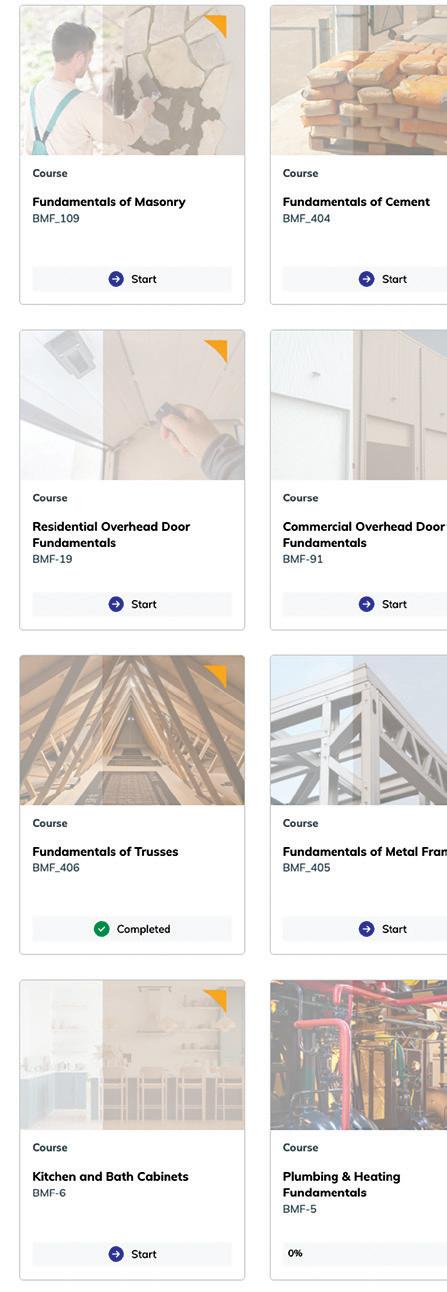
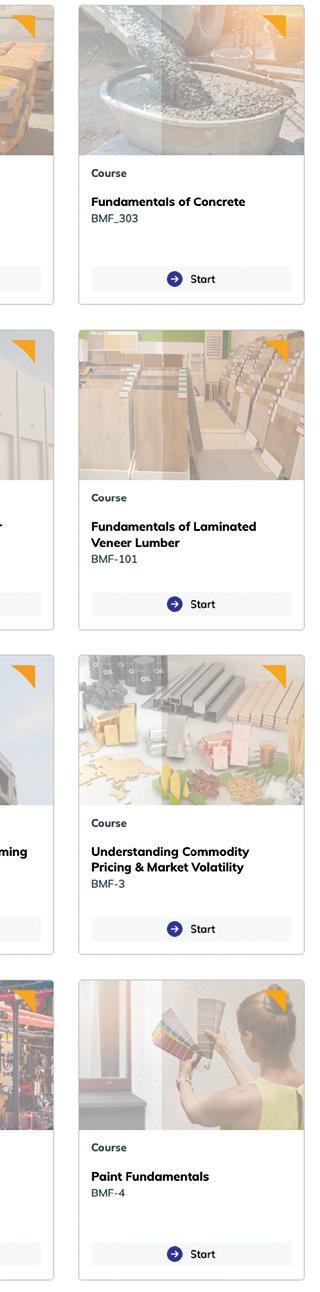
That’s exactly why Supply-Build Canada’s Building Material Fundamentals (BMF) series exists—and why it’s included at no additional cost with membership.
BMF was built specifically for the Canadian building material and supply industry. It provides practical knowledge that front-line teams, yard staff, inside sales, and new hires need to succeed. This is not generic retail training. It is industry-specific, foundational education that strengthens product knowledge, confidence, and customer service from day one.
With more than 30 courses covering product knowledge, operations, safety, and customer experience, BMF strengthens teams across departments. Yard staff gain insight into inside sales. Sales teams deepen technical product knowledge. New hires see a clear pathway for growth.
The result? Stronger collaboration. Greater flexibility. Better service.
And it’s working.
Delivered online and self-paced, BMF allows businesses to onboard new employees faster and reinforce learning consistently. In a market where margins matter and turnover is costly, structured, industry-built training isn’t just a benefit.
It’s a competitive advantage.
BMF
• 30+ courses available
• 780+ learners enrolled
• 60+ learners completed all courses
• 180+ organizations represented
• 19 per cent completion rate (strong for voluntary learning)
• Average course length: 45 minutes
• Lumber Fundamentals
• Exterior Sheathing Fundamentals
• Insulation Fundamentals
• Exterior Siding
• Roofing Fundamentals

Caleb Miller is a Field Service Technician for an air compressor company and recently completed his second year at NAIT, working toward becoming a third-year Millwright/Industrial Mechanic.
When he started the Building Material Fundamentals (BMF) courses, he was already deep into technical training— but he quickly saw the value.
“The courses were set up very nicely, easy to follow and gave great information with excellent knowledge checks followed by a quiz to make sure you were understanding everything,” he says. “If there was anything that I got wrong, I could retake the course or quizzes to make sure I understood it fully.”
For Caleb, the timing couldn’t have been better.
“I had just purchased and moved into my first home when I was awarded this scholarship. I was actually in the middle of renovations while taking these courses, so I learned tons of useful information about the ins and outs of my home and even helped with the renos I was doing—which was great.”
The impact went beyond renovation tips.
“It has made me appreciate the home building process and all the different moving parts, people and materials that go into making just one home. It’s amazing.”
His advice to other young professionals considering BMF?
“Go into this course with an open mind. It’s not like most courses some people may take. I’ve taken countless boring courses—dry material. These courses you do at your own pace, they’re interesting, interactive, keep you engaged, test your knowledge and are guaranteed to have useful information you can use in any trade.”
And perhaps most importantly:
“The knowledge of the ins and outs of your house, how it works, how it was made, basic maintenance items or things to look out for is great.”
BMF isn’t just about product knowledge.
It’s about building bench strength. Preparing tomorrow’s leaders. Giving teams the confidence to speak clearly, serve customers well, and grow within the industry.
Because when your people understand the materials from the ground up, they don’t just sell better.
They build better.
And that strengthens the entire sector.
Lisa Salvador is the Founder of Designer Learning and partners with Supply-Build Canada to support eLearning development, learning strategy, and LMS management. With nearly 20 years in learning and development, she helps turn industry knowledge into practical, easy-to-understand training that supports front-line teams.

“Your role isn’t to be perfect— it’s to be present.”
—
Jaana Reinikka, Business Development Manager, Castle Building Centres Group
Jaana Reinikka, Castle Building Centres Group Ltd. and Jil Reid, Federated Co-operatives Ltd.
In an industry where leadership can often feel solitary—and representation still matters— mentorship isn’t a formal program. It’s a relationship built on trust, experience, and shared ambition.
For Jaana Reinikka and Jil Reid, mentorship began not as a structured initiative, but as a moment of recognition.
Jil’s early years in the industry were shaped by determination. After seven years on the wholesale side, she was ready for more specifically, an outside sales role. But leadership roles for women were limited.
“She never made me feel like a threat. She made me feel seen and capable.”
—Jil Reid, LBM Sales Manager for Federated Co-op.
“Most of the women I encountered were in inside sales, customer service, or marketing,” Jil recalls. “Leadership opportunities were scarce, and the few who held them often felt they had to protect their space.”
Meeting Jaana shifted that narrative.
“She held the exact type of role I aspired to,” Jil says. “From the beginning, she was open, kind, and genuinely supportive. She never made me feel like a threat. She made me feel seen and capable.”
For Jaana, the connection was just as clear.
“When I met Jil, I saw a reflection of where I once stood—young, enthusiastic, eager to learn,” she says. “I wanted her to love the industry as much as I did. It was clear she needed to start building her circle of support.”
While mentorship is often framed as senior guiding junior, both women describe it as reciprocal.
“Mentorship is never one-sided,” Jaana explains. “Mentors provide guidance and perspective, but mentees bring fresh insight. Those conversations often spark the innovation needed to move organizations forward.”
Jil agrees.
“One of the most important things I’ve learned is the power of women supporting women,” she says. “Sometimes the most meaningful support is simply being heard and truly seen.”
Over time, what began as guidance evolved into something deeper—a trusted relationship where ideas, doubts, and ambitions could be shared openly.
Both women emphasize that mentorship matters even more in leadership roles.
“Leadership can be a lonely place,” Jil notes. “Having people you trust to run ideas by and lean on for support makes all the difference.”
For Jaana, mentorship shaped her entire career trajectory—from entering the building products industry after banking, knowing nothing about materials, to managing large territories today.
“Without mentors who believed in me and allowed me to learn through mistakes, I wouldn’t have built the confidence I carry today,” she says. “Now stepping into the role of mentor has sharpened my own leadership even further.”
In an industry built on relationships and craftsmanship, knowledge transfer is essential.
“Passing it forward ensures that knowledge doesn’t walk out the door,” Jaana explains. “Businesses grow stronger when experienced leaders actively invest in the next wave of talent.”
For Jil, it’s also about culture.
“When we share lessons learned, we create stronger teams and healthier organizations. Growth becomes collective.”
Both agree: mentorship isn’t about title or hierarchy—it’s about authenticity.
“If you’re looking for a mentor,” Jil advises, “choose someone based on who they are, not just the position they hold. Trust, values, and authenticity matter far more than position.”
And for those considering becoming one?
“Do it,” Jaana says. “Your role isn’t to be perfect—it’s to be present.”
In a changing industry where representation continues to evolve, mentorship builds more than careers. It builds confidence, resilience, and a stronger network of leaders committed to lifting one another.
As both women demonstrate, when mentorship becomes reciprocal, it transforms from guidance into partnership—and from partnership into lasting impact.

Jaana
Reinikka, Business Development Manager, Castle Building Centres Group
With over 23 years in the building materials industry, Jaana Reinikka brings deep expertise to her role, driving business development across Western Canada. Known for building strong relationships with independent retailers, she is passionate about helping them stay competitive in evolving markets. Jaana is also a dedicated advocate for mentorship, supporting women and the next generation in the industry.

Jil
Reid, LBM Sales Manager for Federated Co-op.
Jil works with the local Co-op stores to grow their B2B business and build strong, sustainable teams. She’s passionate about this industry, leadership, learning, and creating environments where people feel supported and challenged in the best ways.
Jil loves connecting with other women who are navigating their own paths in business—and sharing real conversations about growth, balance, and what success really looks like.



In building materials and supply, margins are tight, competition is real, and experience matters. Many businesses are cautious about spending on training, especially when teams are already stretched. But the bigger risk may be doing nothing at all.
The cost of standing still rarely shows up as a line item. It shows up in turnover, missed sales, rework, safety incidents, and shrinking margins.
Let’s start with turnover. Replacing an employee typically costs anywhere from 30 per cent to 50 per cent of their annual salary, and even more for specialized roles. In our industry, that doesn’t just mean recruitment costs. It means lost product knowledge, disrupted customer relationships, and time spent getting a new hire up to speed. Research from LinkedIn’s Workplace Learning Report consistently shows that companies that invest in employee development see significantly higher retention rates. People stay where they grow.
Then there’s productivity. According to Gallup, organizations that invest in employee development report up to 11 per cent greater profitability and are twice as likely to retain their employees. In practical terms, trained staff make fewer mistakes, handle objections better, and sell more complete solutions. In a yard or on a sales floor, that might mean the difference between selling a few sticks of lumber or selling the full project package.
Lisa Salvador, Instructional/Content Designer, Supply-Build Canada
“ Research from LinkedIn’s Workplace Learning Report consistently shows that companies that invest in employee development see significantly higher retention rates. People stay where they grow.
In practical terms, trained staff make fewer mistakes, handle objections better, and sell more complete solutions.”
There’s also the hidden cost of knowledge gaps. When employees don’t fully understand products like engineered wood, fasteners, or grading standards, it can lead to incorrect orders, returns, jobsite delays, and damaged trust. Those costs add up quickly. Even a small increase in order accuracy or upselling can materially impact gross margin over the course of a year.
And finally, safety. In environments involving heavy materials and equipment, proper training reduces incidents. Fewer incidents mean lower insurance costs, less downtime, and a safer workplace culture.
Training is not a “nice to have.” It’s operational infrastructure. It protects margin. It strengthens customer relationships. It builds bench strength for succession planning.
In a changing market, new products, new regulations, new customer expectations standing still is actually moving backward. The businesses that will lead the next decade in building materials won’t just invest in inventory and equipment. They’ll invest in their people.
Because the real cost isn’t the training. It’s not training.
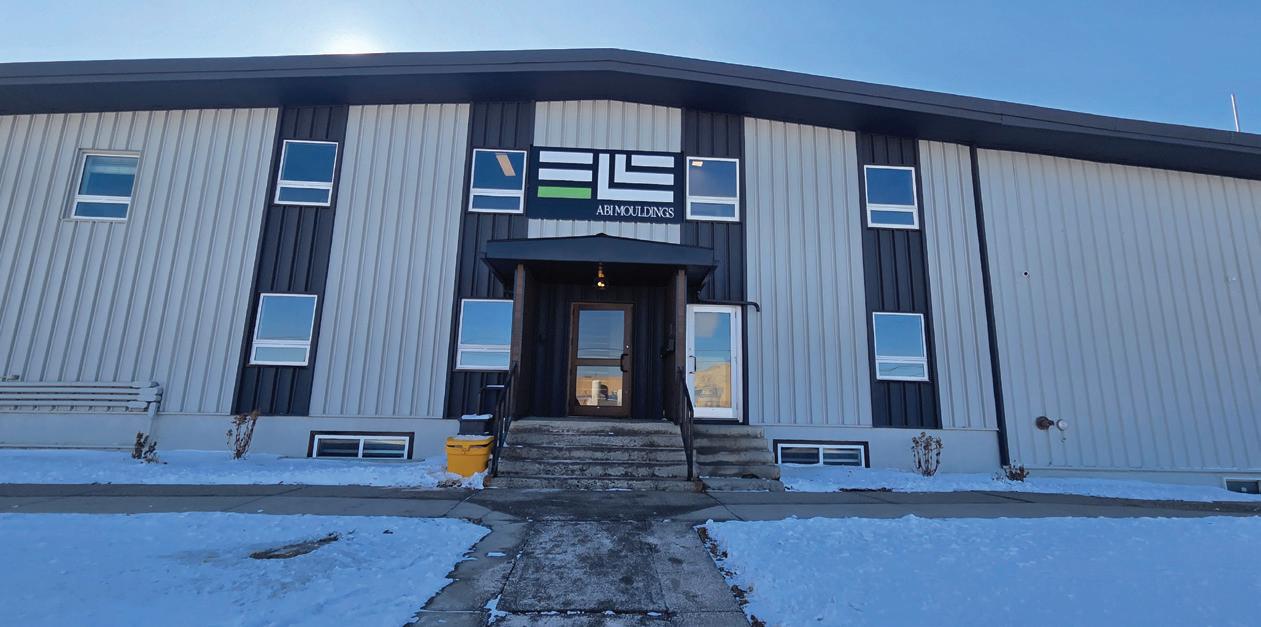
Kristyna Tranova, ABI Mouldings
“Trust is not built overnight; it is earned through repeatable quality and honest communication.”
In today’s competitive lumber and millwork landscape, product alone is not enough. Retailers, builders and contractors need partners who understand not just how to manufacture, but how to support the businesses who are selling and installing those products. At ABI, investing in product knowledge and market understanding is not a marketing slogan - it is a business strategy.
For ABI Mouldings, education starts internally. From sourcing to machining and priming, the team focuses on understanding the “why” behind every detail. How does a profile scale visually in today’s open-concept homes? What holds up best in high-traffic environments? How do lead times and small batch runs impact dealer margins? Those are not abstract questions; they shape daily decisions on the production floor.
“Durability and consistency reduce jobsite headaches and protect reputations.”
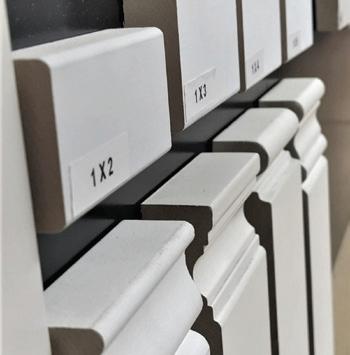
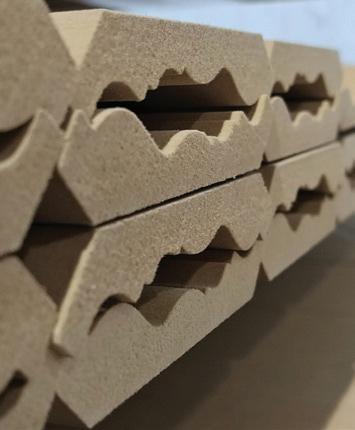

Investing in product knowledge also means understanding material quality at a deeper level. When it comes to MDF, quality matters. Not all MDF delivers the same performance. Density, fiber consistency and moisture resistance all play a role in how a moulding machine holds primer and performs over time. Higher-quality MDF and local manufacturing come at a cost - there is no avoiding that reality. Products that may appear less expensive upfront can carry hidden costs down the road: swelling, chipping, callbacks, repainting or full replacement. After accounting for repairs and labour, the lower upfront cost often leads to higher long-term expenses.
That long-term perspective is critical for dealers and builders. When a product installs cleanly, paints smoothly and maintains its integrity years later, it protects not only the homeowner’s investment, but also the builder’s and retailer’s reputation. Durability and consistency reduce jobsite headaches and strengthen repeat business.
Staying ahead of trends is another key component of ABI’s strategy. Clean lines and simplified profiles continue to dominate modern builds, while transitional designs are reintroducing subtle traditional elements. By tracking these shifts, ABI can help dealers stock profiles that reflect real demand. That insight gives retail staff and sales reps more than a catalogue; it gives them confidence. Belief in your product inspires belief in your customer.
Close relationships with dealers have reinforced the importance of communication. Through plant tours, industry events and direct feedback, ABI has gained a clearer understanding of the pressures partners face - smaller stock orders, tighter timelines and increased price sensitivity. Small runs and custom profiles require significant setup time and skilled labour. Explaining that process transparently builds trust and helps partners position products appropriately in the market.
Craftsmanship remains the backbone of the operation. In an era of automation and offshore imports, skilled operators, diligence and consistent standards matter. Reliable machining, priming, drying and packaging protect not only the product but also the dealer’s credibility once it reaches the jobsite.
Ultimately, investing in education and material quality is not about short-term gains, it is about building long-term brand trust. When dealers know their supplier understands the market, supports their sales efforts and delivers dependable quality, the relationship becomes more than transactional, it becomes collaborative.
Collaboration is what builds lasting success.

About the author:
Kristyna Tranova is a Business Development Manager at ABI Mouldings. With over eight years in the millwork and lumber industry, she brings hands-on experience in product development, dealer relations and market strategy. Kristyna is passionate about helping partners grow through education, transparency and long-term collaboration.
About ABI Mouldings:
ABI Mouldings is a Canadian manufacturer of MDF mouldings and interior doors, supplying retail lumber yards and building supply dealers across Canada. ABI focuses on consistent quality, reliable lead times and strong customer relationships. From machining and professional priming to careful packaging and delivery, every step of the process is designed to support dealers with dependable, high-performing products built for today’s market.

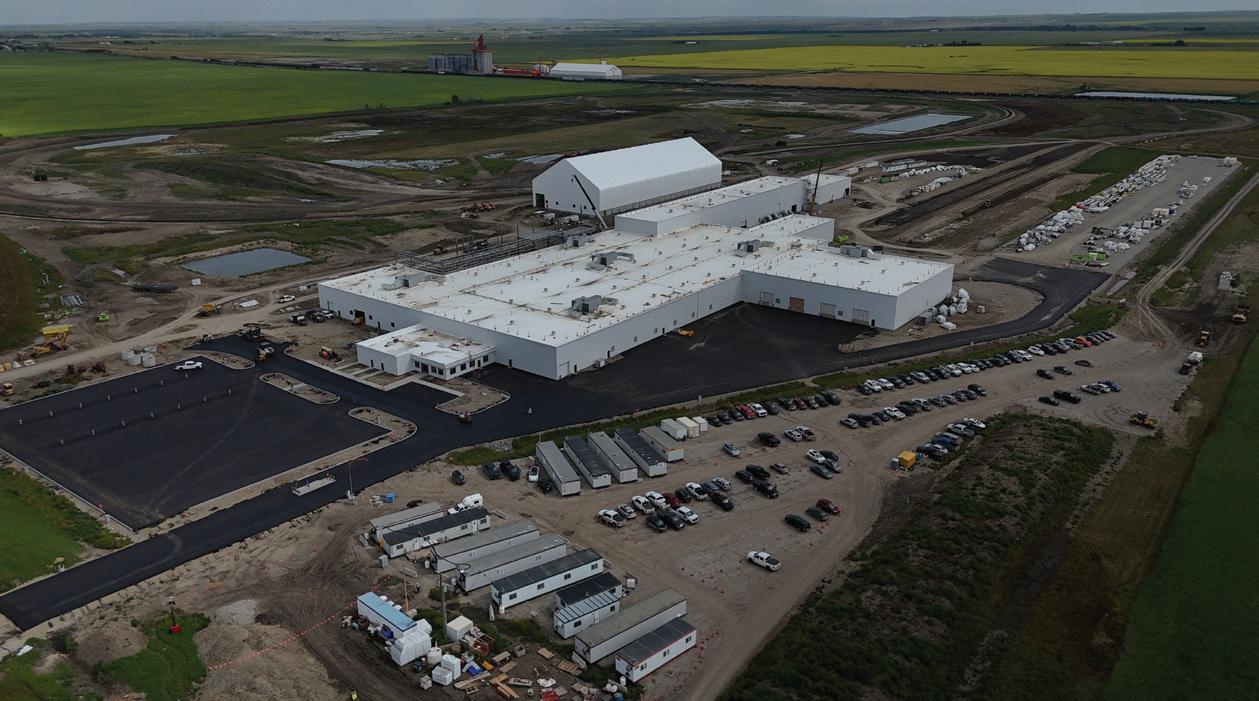
“By producing responsibly and closer to our customers, we are helping reduce the overall carbon impact of construction across Western Canada and supporting the Country’s broader transition to a more sustainable built environment.”
Duane VanDuuren, Plant Manager, CGC Wheatland
Across Canada, construction and manufacturing are being reshaped by surging housing demand and the shift to low-carbon, locally made materials. Nowhere is this more evident than in Western Canada, where stronger domestic supply is critical to meeting the pace of growth.
CGC’s $210 million investment in Wheatland County responds to that need with a new facility opening this year, powered by 100 per cent renewable power and engineered for zero-waste manufacturing of industry-leading products. By bringing supply closer to builders, this facility will help support the future of construction in Western Canada.
Our Wheatland plant is a long-term commitment to Canada’s economy and supply-chain resilience, beginning with the 200 jobs created during its construction phase. Now, as we prepare to begin full operations later this year, we have established a strong, permanent team with more than 95 per cent of employees living in nearby communities. By hiring locally, we ensure that the economic benefits of our investment remain rooted in Wheatland County and the surrounding areas.
By producing Sheetrock® Brand wallboard panels in Alberta, we’re aiming to solve a long-standing supply challenge for Western Canada. This localized production approach will create an efficient sourcing option for local builders, ensuring that from Winnipeg to British Columbia, the materials needed to solve the housing crisis are accessible, affordable and produced with significantly lower transportation emissions.

While the economic impact is significant, the real innovation lies in the facility’s environmental performance. We designed Wheatland to be the most sustainable plant in the CGC network, and it will serve as a model for clean manufacturing in the building materials sector.
Fully powered by renewable energy and supported by an on-site solar field, CGC Wheatland then goes even further by incorporating advanced low-energy processing technology to manufacture gypsum wallboard with the least amount of energy required.
A high-efficiency kiln will recover and reuse heat and evaporated water, reducing energy consumption and significantly lowering our water footprint. And with a closed-loop recycling system, our goal is to achieve zero waste manufacturing, where 100 per cent of production materials is returned directly back into the process.
By producing responsibly and closer to our customers, we are helping reduce the overall carbon impact of construction across Western Canada and supporting the Country’s broader transition to a more sustainable built environment.
CGC’s investment in Wheatland County is helping create a generational impact for the families who live and work here. From the beginning, we have worked alongside Wheatland County and Siksika Nation to shape a project that reflects local priorities and supports long-term economic stability and a more sustainable future for the region.
Through our Give Local program, we support organizations that strengthen families and essential services, including Siksika Family Services and the Carseland Fire Hall. Over the last three years, we have raised $81,000 through CGC’s Cowboy Corral in support of the Trellis Society, and we continue to participate in community touchpoints. These partnerships matter because our materials help shape the places where people live, work, and gather, but it is the communities around them that turn those spaces into home.
CGC Wheatland shows what is possible when manufacturing expertise is paired with a commitment to sustainability and community partnership. We are not just building a facility; we are supporting a more reliable future for Western Canada. The homes of tomorrow should be built with responsibly produced materials, and starting this year, that supply will be closer to the builders who need it most.

Duane VanDuuren Plant Manager, CGC Wheatland
About the author:
Duane leads CGC’s new wallboard manufacturing facility in Wheatland County, Alberta, overseeing all aspects of the plant’s operations including safety, employee relations, operations, community and environmental impact. With 25 years at CGC and a background in civil engineering, he brings deep experience to the role. Living in High River, Alberta with his wife and two children, Duane is committed to contributing to his community and can often be found supporting local events or cheering on his kids at sports tournaments.
“These partnerships matter because our materials help shape the places where people live, work, and gather, but it is the communities around them that turn those spaces into home.”
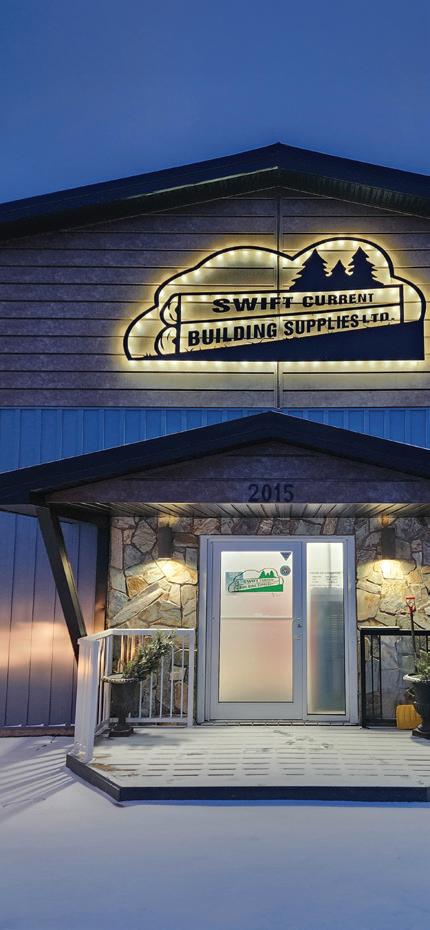
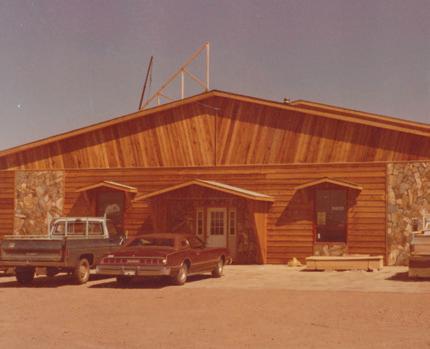
Melissa Jensen, Swift Current Building Supplies
When their dad passed away on March 31, 2020, everything changed overnight. By April 1, the Mueller sisters were stepping in to take over the business.
“My personal background is in education, not business,” Melissa shares. “With the very sudden and unexpected loss of our dad, inheriting the lumber yard was not really something I had considered seriously.”
The succession plan had never been formally discussed. At the same time, with their dad having taken over from Grandpa John, it wasn’t completely out of the realm of possibility. Still, stepping in after being away from the business for almost 20 years felt daunting.
They were fortunate. Marissa had already been working at the lumber yard for nearly a decade, and they had an incredible staff who helped them through the transition.
Continuing the business was never a question.
They all knew the time and effort Grandpa John and Grandma Norma had put into growing Swift Current Building Supplies into what it is today. They didn’t just want to uphold the legacy—they wanted to continue expanding and improving the lumber yard into something their dad and grandpa would be proud of.
Another priority was improving the work environment for their staff and continuing to provide the best possible experience for their customers.
Investing in the business meant many different things.
Immediately after taking over, they knew they needed to invest time and energy into learning how to manage the lumber yard. They also wanted to invest in their employees—ensuring fair compensation and creating a more balanced home and work life.
In the nearly six years since stepping into leadership, they have invested significantly in renovating and improving the façade of the building, enhancing safety measures, and purchasing new vehicles and equipment.
Most significantly, they invested in all-new software and hardware to modernize business practices and improve operations for both employees and customers.
“When we took over in 2020, there was a lot of room for improvement,” Melissa says. “Within the first few years it felt like we took baby steps to make small but significant improvements.”
Over time, it became clear that their most beneficial investment was in people.
Finding and training employees who wanted the business to succeed as much as they did became the foundation of their success. Coming into the business with limited expertise meant surrounding themselves with knowledgeable staff was essential.
Investing in the team they have now, Melissa says, is setting them up not just to maintain the business, but to make room for growth and future investment.


As women in leadership roles within a traditionally male-dominated industry, their approach centers on confidence.
“It’s all about self-confidence. Confidence in myself and in my education and abilities,” Melissa explains.
At the same time, she recognizes the importance of humility— understanding there is always more to learn and being willing to ask for support when needed.
She credits her sisters as strong partners and points to Operations Manager, Sheena Cochet’s education and experience as a key strength. Together, they agree that women in this industry must stand up for themselves and be assertive.
“We recognize that we often have to prove ourselves and not bow under pressure.”
Education plays a critical role in preparing for the future.
Melissa believes her own education taught her to be a lifelong learner, building both confidence and world experience. In today’s industry, education supports the growth of technology, the increasing need for human resources, and the creation of an improved customer experience.
It’s part of how Swift Current Building Supplies continues to evolve while staying rooted in its values.
Being named finalists in the Forge & Form Women of Influence category was both humbling and meaningful.
“My first thought was that my dad and grandpa would be so proud,” Melissa says. “But my second thought was to be proud of myself and my sisters.”
When they took over in 2020, they faced immense challenges—the sudden loss of their dad, living in different places, returning home during an emotional time, navigating the pandemic, and making difficult decisions about the future of the business.
They met those challenges head-on.
Today, the business is not just doing well, it is thriving.
Being recognized as finalists feels like vindication, but also like another challenge: to continue doing even better.
Their message to women entering or growing within the building supply industry is clear:
Know your worth. Stay strong. Be confident in your abilities.
“You will be tested and you can’t always expect validation,” Melissa says. “Find allies or be an ally in the industry yourself. Be a woman who will put yourself out there to support and elevate other women.”
For Swift Current Building Supplies, the focus remains the same; keep investing, keep learning, and keep building something the next generation can be proud of.
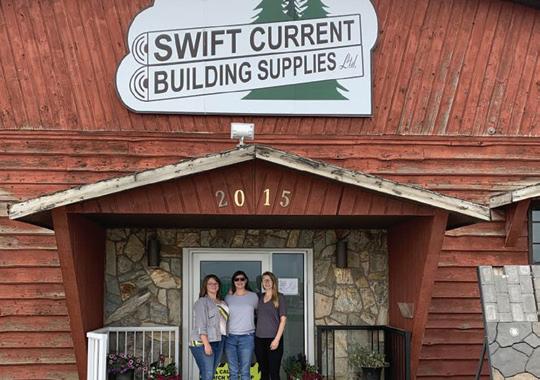
Swift Current Building Supplies
Celebrating 55 years in 2025, Swift Current Building Supplies has served Southwest Saskatchewan since 1970. John and Norma Mueller purchased the lumber yard and spent decades building a reputation for quality products at competitive prices and excellent customer service. Their son, Lindsay Mueller, worked every role in the business before managing and eventually taking ownership in 2011.
Melissa Jensen
Melissa is the oldest sister and Marissa’s twin. She holds a degree in Education and lives in Southern Alberta with her family. She supports the business through sponsorships, donations, and administrative duties, and values the flexibility and family support that allow her to contribute.
Marissa Wolfe
Marissa chose to remain in Swift Current to focus on her family and career. Known as the operating owner and often the smiling face at the front counter, her knowledge and experience were crucial during the transition into ownership.
Kristie Mueller
Kristie, the youngest sister, pursued a career as a physiotherapist and currently lives on Vancouver Island, working with the men’s Rugby Canada team. While her role in day-to-day operations is limited, she plays an important part in mapping the future of the business and supporting strategic decisions.
Partner Profile: Sexton Group Ltd.
For decades, Sexton Group has supported independent building material dealers across Western Canada through buying power, strategic partnerships, and business resources designed to strengthen local operations.
By working alongside community-rooted businesses like Swift Current Building Supplies, Sexton helps preserve the independence of familyowned dealers while providing the tools and network needed to remain competitive in an evolving marketplace.
Long-term partnerships built on trust, shared values, and forwardthinking investment continue to help independent dealers grow—while staying true to the communities they serve.
By Kelsey Patrick, Falcon Equipment
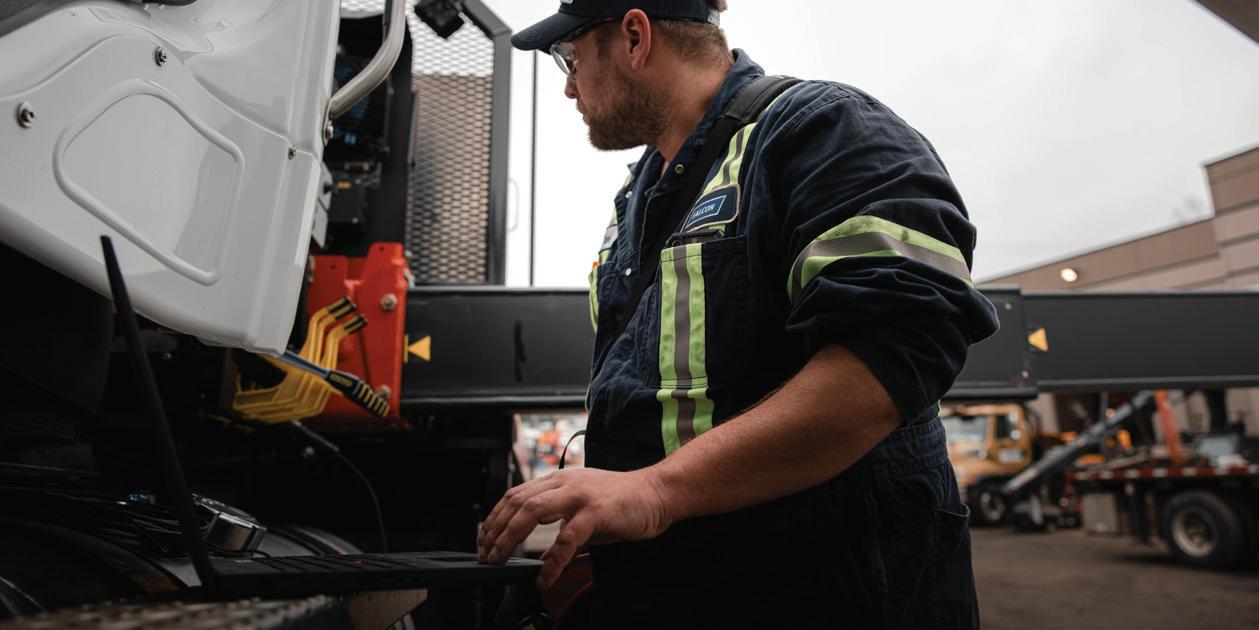
In the lumber and building supply industry, efficiency and safety go hand in hand. Yards and warehouses are fast-paced environments where heavy, oversized, and often awkward loads are moved every day. When the right material-handling equipment is in place, operations run smoother, employees stay safer, and productivity increases across the board.
Lumber and building supply products present unique challenges. Long loads, bundled materials, and varying weights require equipment that is purpose-built for control and stability. Equipment such as truckmounted cranes, forklifts designed for long loads, and specialized attachments allow materials to be handled with precision rather than manual effort. This reduces the risk of strain injuries, dropped loads, and collisions, which are among the most common safety concerns in yard and delivery operations.
Safety improvements often translate directly into productivity gains. When employees are confident in the equipment they are using, tasks are completed more efficiently and with fewer interruptions. Proper material-handling equipment minimizes the need for multiple workers to move a single load, reduces rehandling of materials, and shortens loading and unloading times.
“Material-handling equipment should work with your team, not against them,” says Joel Gibson, Director of Sales at Falcon Equipment. “When equipment is properly matched to the application, employees can do their jobs safely and efficiently, and businesses see immediate benefits in uptime and throughput.”
Access to the right equipment is just as important as the equipment itself. For many lumber and building supply businesses, rental, leasing, and financing options play a key role in maintaining safe and productive operations. Rental equipment allows companies to handle seasonal volume spikes or specialized jobs without long-term commitment.
Leasing provides predictable costs while keeping fleets up to date with modern safety features. Financing options make it possible to invest in purpose-built equipment without placing strain on cash flow.
Equipment selection also impacts yard layout and traffic flow. Wellmatched material-handling solutions support organized storage, clearer aisles, and improved visibility throughout the yard. This reduces congestion and lowers the risk of accidents involving vehicles and pedestrians, particularly during peak hours.
Training and ergonomics further enhance safety and productivity. Modern equipment is designed with operator comfort and control in mind, helping reduce fatigue over long shifts. When paired with proper training and the flexibility to scale equipment as needs change, businesses are better positioned to support their teams and customers.
Ultimately, the right material-handling equipment, combined with flexible acquisition options, creates a safer, more productive environment. For lumber and building supply operations, it is a practical investment that supports growth, protects employees, and improves performance every day.
Since 1988, Falcon Equipment has delivered innovative, custom equipment solutions for the lifting, snow and ice, utility, and rail industries. From the beginning, their focus has been on building strong, lasting relationships with their valued customers, dedicated team members, trusted suppliers, and the industry. The team at Falcon brings integrity and a commitment to excellence to every aspect of the operation. At Falcon Equipment, they see their customers as integral members of the team, and take pride in working collaboratively to design tailored solutions that meet their unique needs and drive efficiency.
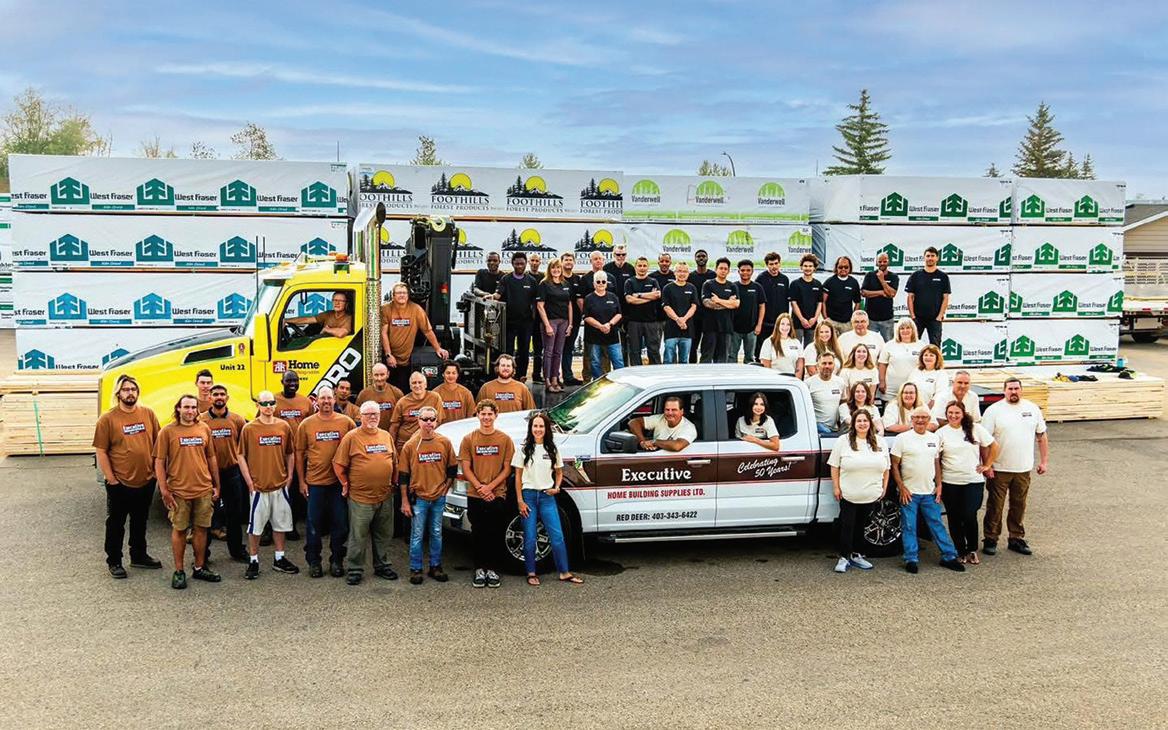

Trevor Holowatiuk, DuPont
In 1974, frustrated with the level of service and material quality he was receiving from local suppliers, Bill Welikoklad - owner of Executive Homes - purchased land, built a shop, and began bringing in the highest-quality lumber he could find. What started as a response to poor service quickly grew into a dedicated contractor supply business. Within two years, Bill stepped away from home building to focus entirely on providing local builders with the service and standards he had always expected himself.
In 1993, his son Jason joined the business full time, continuing to build on that framework. Together, they strengthened the company’s reputation as a 100 per cent contractor-focused lumber yard, known for dependable material quality and a dedication to excellent service.
What started as one builder’s commitment to doing better has grown into a third-generation family business serving Central Alberta.

When Jason Welikoklad stepped into leadership, he focused on building upon the strong foundation that had already been established. He strengthened supplier partnerships, invested in his staff, and reinforced the company’s commitment to standing behind every recommendation. Jason has always believed that strong relationships are fundamental to long-term success. For him, business is built on trust, open communication, and consistency - not just making a sale, but being present and dependable for customers.
Today, the third generation is represented by Claire Welikoklad, continuing the family’s long-term approach to business. Growing up around the company, she understands that reputation is built over decades - not transactions. Her role reflects a continued investment in the people and partnerships that have been at the heart of the business for over 50 years.
Contractors today face tighter timelines, stricter codes, and higher performance expectations than ever before. Jobs are more complex, inspections are more detailed, and customers are more informed. That makes product knowledge essential - but trust in the supplier equally critical. The company does not recommend something unless it believes in it fully.
The Executive team spends a great deal of time ensuring a full understanding of the products carried. Builders rely on them to answer questions about performance, product selection, and reliability. Part of their role is ensuring the information behind the products is solid and dependable. That responsibility requires confidence in both the information shared and the brands represented.
Long-term partnerships, particularly with companies like DuPont, have helped reinforce that confidence. Working with manufacturers that consistently invest in research, technical support, and product education allows the team to speak with certainty. When a supplier relationship spans years, consistency becomes clear. That consistency benefits everyone involved - from supplier to dealer to builder.
Central Alberta’s conditions demand reliability. Builders need products that perform as expected, without surprises. That is why the company aligns with brands it trusts - so the materials supplied reflect the same dependability customers expect.
Being a third-generation business brings a long-term mindset. Trust is built over years of consistency. Choosing the right supplier partners remains one of the most important investments the company makes.
For Executive Lumber Co, investing in the business has always meant building trust within the team, with customers, and with supplier partners. That mindset has not changed much since 1974: focus on dependable service, work with brands you believe in, and build relationships that last beyond the job. Over time, that steady approach builds something more valuable than any one sale - it builds lasting confidence.
For decades, DuPont has invested in building science innovation, product research, and technical support to help builders meet evolving performance standards. Through long-term partnerships with dealers like Executive Lumber Co., DuPont supports reliability, durability, and confidence on the job site.
As part of this commitment, Trevor Holowatiuk, Residential Specialist, provides dedicated support to ensure builders receive expert guidance and solutions tailored to their project needs.
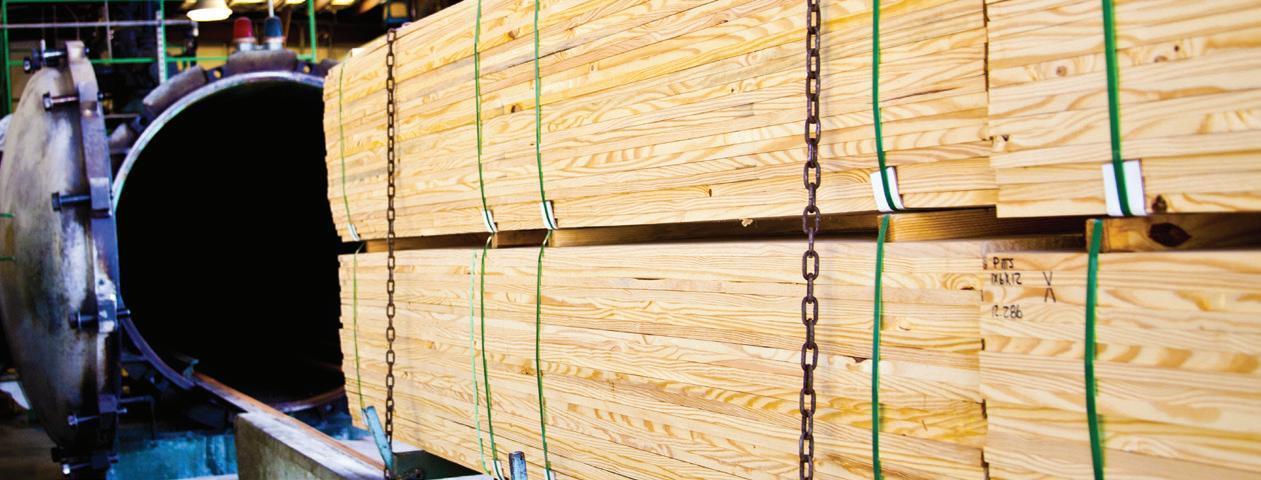
Remember that feeling when you watched Willy Wonka and the Chocolate Factory for the first time and the gates to the candy factory opened revealing the mysterious world inside? Taking a tour of a wood treating facility might not seem as exciting as a chocolate river, but step inside and see just how interesting it is.
Welcome inside the plant gates.
“Wood is nature’s sustainable building block,” says Matt Roughen, Arxada’s North American Strategic Accounts and Marketing Director. For thousands of years, people have been building with wood because it is easily sourced, easy to work with, and aesthetically pleasing.
“Wood treaters take that resource up a notch by enhancing wood with preservatives that make it last longer while maintaining its beautiful appearance,” says Matt. “So, by extending the useful service life of wood in outdoor applications, preservative treatment reduces demands on our forests.”
The basics are simple, really; yet, the process is highly controlled using state-of-the art equipment to ensure the safety of the treaters as well as the quality consumers expect to see.
Raquel Hyde, Site and Plant Administrator at Arxada’s Conley, Georgia, facility, recently visited a treating plant for the first time. “While the entire operation was professionally run and impressive to see, I was really in awe of the control room. It was equipped with what looked like the latest computerized control system for treating.”
Raquel was able to step back and watch the process from a safe distance.
The lumber, timbers, plywood, poles, piling, etc., are loaded onto trams by skilled and highly trained workers. After loading is complete and the wood is secured, a vehicle such as a forklift pushes the trams into
a large horizontal treating cylinder (usually between 60 and 100 feet long). The treating cylinder door is closed and sealed, and a vacuum is applied to remove most of the air from the cylinder and the wood cells. Preservative solution is then pumped into the cylinder and the pressure raised to about 150 pounds per square inch, forcing the preservative into the wood. During this process, additives such as moldicides and colorants may also be used to enhance the finished product.
The total treating time varies, depending on the species of wood and whether the tram is loaded with lumber such as fence boards, deck boards, or 2x4s; heavier timbers such as 6x6s; or even utility poles and piling. The type of preservative and the amount of preservative being forced into the wood varies as well depending upon end-use application.
“Treatment time for wood depends upon the intended application,” explains Matt. “For example, lumber treated to Ground Contact retentions stays under pressure within the cylinder for less time than utility poles and piling that require more preservative.”
Different commodities are also treated with different preservatives. Commonly, wood treated for residential applications such as decks and fencing is protected with waterborne preservatives including copper azole, developed about three decades ago. Products used in infrastructure, marine, or agricultural applications are usually treated with a waterborne preservative called CCA (chromated copper arsenate), innovated to protect wood nearly a century ago; or preservatives such as creosote, used for more than a century; and DCOIT, the next generation oilborne preservatives.
At the end of the treating process, excess preservative solution is removed from the cylinder and pumped back into a storage tank for later reuse. The cylinder door is released and the trams with the newly treated wood are pulled out. Since the wood is wet, it is kept on a concrete pad allowing any drips to trickle into a containment area from which they can be either disposed of properly or reused.
“Once the process is complete, wood is protected from its natural enemies like termites and fungal decay,” says Matt.
The whole treating process is a closed system, meaning that individuals should never come into physical contact with the preservative. Tanker trucks from the chemical manufacturer deliver preservatives to treating facilities all across North America. The preservative is uploaded directly to a receiving tank, called a concentrate tank. The preservative concentrate is moved as needed to a mix tank and is diluted with water or other agent (in the case of oilborne preservatives). From the mix tank, the dilution is pumped into the cylinder where the wood is awaiting treatment.
“The operator within the control room monitors the entire treating process from his computer system,” says Raquel. “He demonstrated how he watches the tank levels for the concentrate and mix tanks, so he knows exactly how much preservative is being used and how much is left. He also watches the treating process to ensure that the wood is neither over nor under treated.”
Raquel says what also struck her during her visit was the level of care for safety at the treating facility. “As we entered the treating facility, we were required to check in,” she explains. “And we had to put our PPE (Personal Protective Equipment) on before we were escorted around the plant. I noticed that all the employees (probably about 20 that I encountered) all wore PPE appropriate to their jobs.” For example, even Raquel’s tour guide wore a long-sleeved shirt, long pants, a hard hat, and safety glasses.
Monitoring quality does not end once the wood is treated. After the treated wood is removed from the cylinder, plant personnel pull core samples from each bundle of wood, testing the amount of preservative in the wood.
“The freshly treated wood must meet standards set by the American Wood Protection Association (AWPA),” explains Josh Roth, Manager of Building Codes and Product Standards for Arxada. “For example, if a bundle of lumber is supposed to be treated for Ground Contact applications, it is tested to ensure it meets the retention of 0.15 pcf. If it does not meet the Standard, it is retreated.” Founded in 1904, AWPA is the principal Standards-writing body for methods, preservatives, and other technologies which protect wood and wood-based products.
Along with internal testing, the treated wood is also tested by the preservative manufacturers for quality assurance and is subject to random testing and inspection by independent agencies such as Southern Pine Inspection Bureau and Timber Products Inspection. Additionally, the groups also test the chemical solutions to ensure the correct ratios are being used.
The treated wood is moved from the trams onto the treating plant yard to await loading and delivery to retail yards, dealers, jobsites, etc. “The treating facility was much larger than I thought it would be,” Raquel says. “Along with the treating area that included the cylinders, drip pad, control room, and tanks, there was also a loading and unloading area for the treated wood and what seemed like endless acres of land with neatly stacked wood. The whole place was clean and organized.”
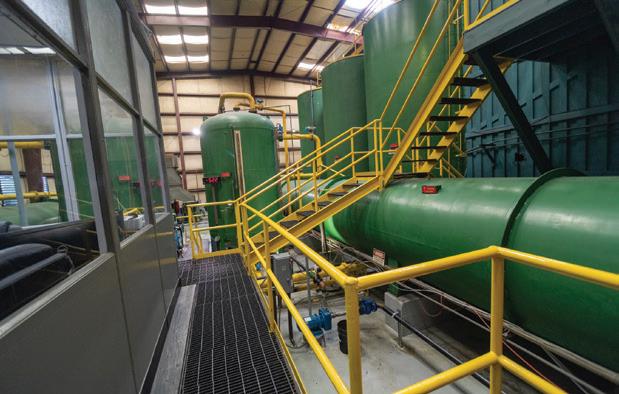
Above: Preservative is stored in a concentrate tank; then moved to a mix tank to create the correct ratio for pressure treatment.
Treating facilities are an integral part of the wood industry and are careful to be good stewards of the forests and what it provides. Not only is the preservative reclaimed and recycled during the treating process, any excess from the wood is also used. “Nothing in the whole process from when the tree is harvested through the treating process is wasted,” Matt says. “If the treating facility cuts any of the wood, it uses the sawdust either as fuel for their kiln or sells it to paper mills or other appropriate businesses within the supply chain.”
What you see is what you get.
Once the treated wood has been delivered, retailers, utility providers, and other end users can quickly see what each piece of wood has been preserved to do. Each piece of lumber is marked with an end tag, brand, or stamp that describes the intended use as well as what preservative was used for treatment and a quality assurance mark.
Opening the plant gates of a wood treating facility shows the level of care and precision that goes into every piece of preserved wood. Treaters throughout North America follow strict guidelines set forth by industry and government agencies such as EPA and OSHA. They act as stewards of the wood industry by increasing the longevity of wood in a controlled environment so that each end user receives reliable, beautiful wood to enhance their outdoor projects. Chocolate – maybe not. But what they produce can be used to build an amazing, relaxing place to eat your chocolate in the outdoors.
Learn more at Arxada’s Knowledge Center located on the website: wolmanizedwood.com. Please visit www.arxada.com for all product information. © 2026 Arxada.
About the author:
Belinda Remley is a marketing professional with Arxada. She has been promoting wood and the protection of wood for more than 32 years.
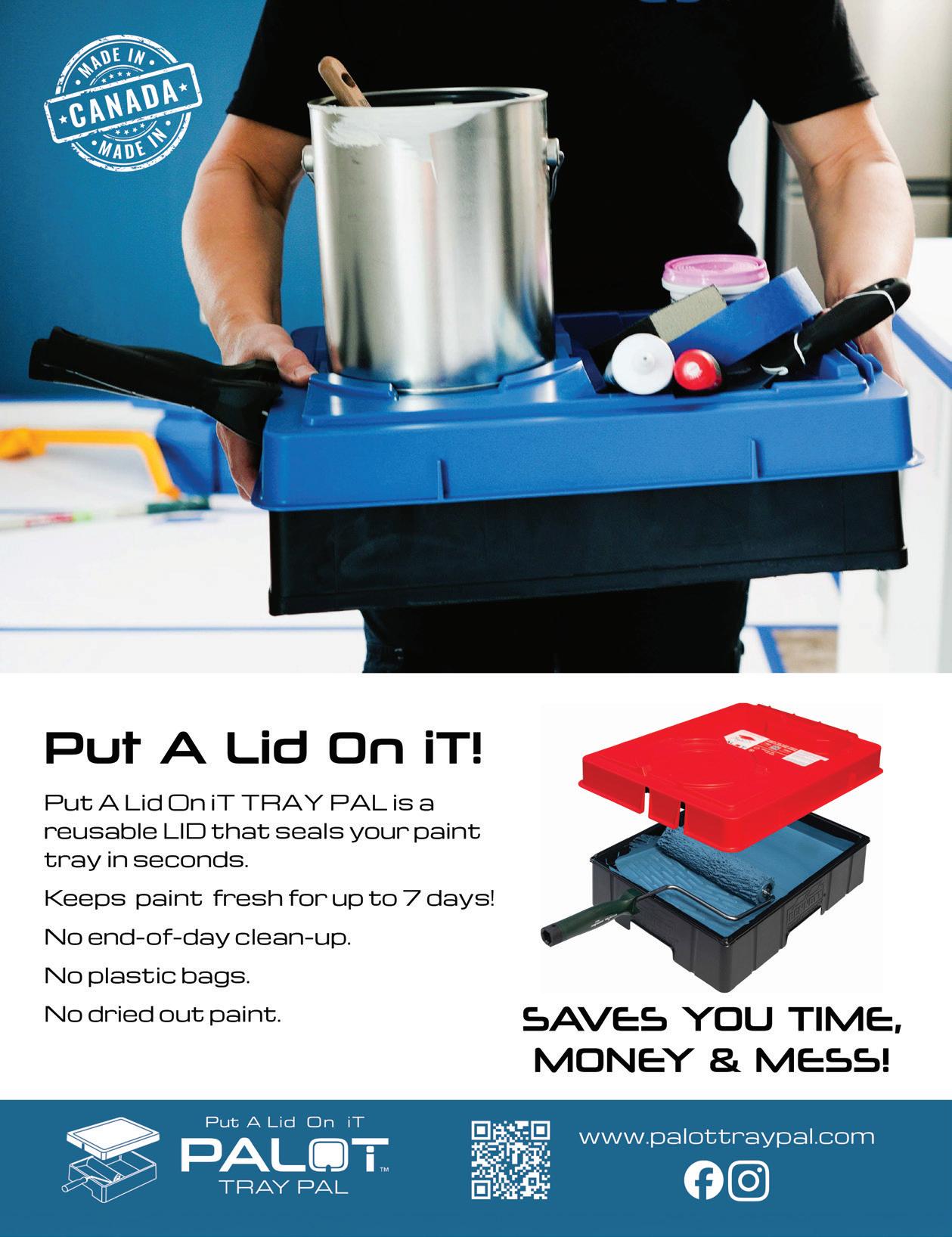
Alex Tewksbury, Media Retail
“In over 20 years in this business, I’ve invested in equipment, trucks, technology, marketing—you name it. Nothing has delivered a faster or more measurable return than JRTech’s digital tags.”
In the retail world, “dead stock” is a quiet drain on the bottom line. It occupies premium shelf space, bloats inventory reports, and, most critically, ties up capital that could instead be driving growth. While these items technically remain assets on a balance sheet, dead stock is more accurately serving as frozen capital.
For JRTech Solutions, the remedy lies in reimagining the role of the Electronic Shelf Label (ESL). Far from being simple digital price tags, ESLs can serve as a precision instrument for unlocking trapped value. This was demonstrated most effectively at RONA Sonnenburg in Massey, Ontario, where owner Chad Sonnenburg leveraged JRTech’s technology to transform stagnant inventory into immediate working capital.
The challenge for most retailers isn’t a lack of data; it is the friction of execution. Like his peers, Sonnenburg could easily generate reports identifying SKUs that hadn’t moved in a year. However, the traditional liquidation process - printing markdown stickers, identifying all dead stock locations throughout the store, deploying staff to manually update paper labels, and auditing for errors - was often too labor-intensive to justify the urgency.
By integrating JRTech’s ESL system, that friction was eliminated at RONA Sonnenburg. After isolating his “no-sale” SKUs, Sonnenburg implemented a strategic clearance: pricing each item at just $1 above cost. Instead of an indeterminately long and manual relabeling project, the new price points were pushed to the shelf edge digitally within seconds due to the speed of JRTech’s infrared communication platform powered by Pricer. Moreover, the customized label templates clearly flagged liquidation items on the ESL screen, allowing both customers and staff to easily identify discounted stock at a glance.
The financial impact was both immediate and significant. Within six months, RONA Sonnenburg recovered approximately $200,000 in cash from idle inventory. Chad Sonnenburg champions the impact smart labels had on his business versus other investments . “In over 20 years in this business, I’ve invested in equipment, trucks, technology, marketing—
you name it,” says Sonnenburg. “Nothing has delivered a faster or more measurable return than JRTech’s digital tags.”
This wasn’t “new” revenue from expansion or increased foot traffic; it was the liberation of capital already spent. In the context of the time value of money, this recovery is vital. A dollar recovered today is worth more than a dollar recovered at some later date because it can be immediately reinvested into high-velocity SKUs, used to settle liabilities, or deployed for strategic growth. By compressing the time between insight and action, JRTech’s ESL system accelerated the store’s ROI and drastically improved its cash flow position.
The RONA Sonnenburg case study highlights a core pillar of the JRTech Solutions philosophy: ESLs are about changing financial outcomes, not just changing prices.
The same digital infrastructure that facilitated these markdowns provides a foundation for broader operational agility, including:
• Planogram Compliance: Ensuring shelf layouts mirror corporate strategy with digital precision.
• Inventory Accuracy: Improving visibility at the shelf edge to reduce out-of-stocks.
• Waste Mitigation: Automating expiration date management in perishable categories to protect margins.
• Dynamic Promotions: Executing flash sales and seasonal shifts without the overhead of traditional signage.
Inventory forecasting is an imperfect science, and shifts in consumer demand are inevitable. However, a retailer’s competitive advantage now rests on their ability to respond to these shifts in real-time.
By turning dead stock into live sales, JRTech Solutions helps retailers transform their stagnant inventory back into the fuel required for business growth. At RONA Sonnenburg, the result was clear: $200,000 back in the bank, a leaner shelf, and a more responsive, data-driven operation.
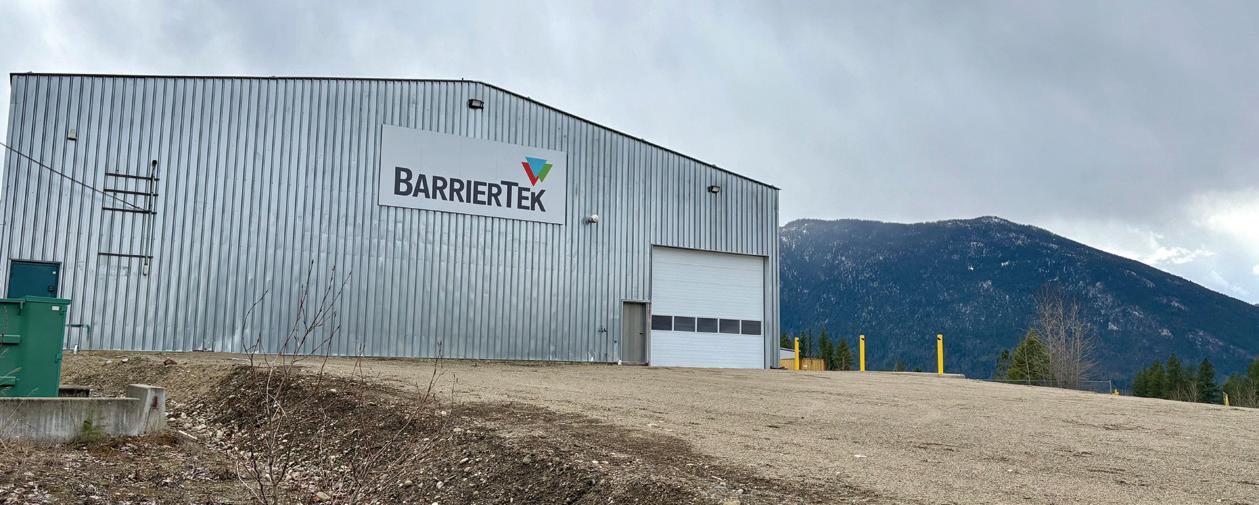
“The addition of the British Columbia plant will more than double BarrierTek’s current capacity, strengthening our ability to support growing industry demand.”
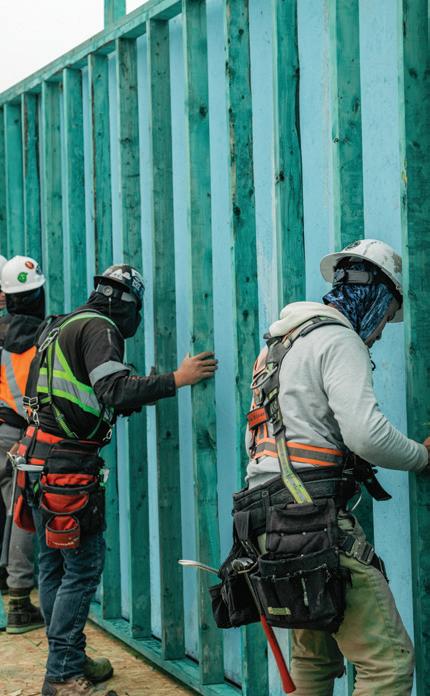
Ewan Davie, VP Sales, BarrierTek Inc.
BarrierTek continues to grow alongside the evolving needs of wood construction across Western Canada. With the opening of a new facility in Tappen, British Columbia, the company is expanding its ability with the supply of fire-retardant lumber coating to support builders, developers, and lumber yards within BC and beyond.
Conveniently located within the regional flow of lumber, the new property includes more than 70,000 square foot production facility with over 30 acres of yard space, providing room for current operations and future expansion.
The BC facility will primarily serve the Okanagan, Interior, Lower Mainland, and Vancouver Island, while further strengthening BarrierTek’s ability to support customers across Western Canada.
The site has been fully remodelled to align with the company’s operational vision. Initial operations include three upgraded lines dedicated to coat dimensional lumber, panel products, and structural components such as I-joists and truss lumber. With final calibrations complete, the facility is now operational and processing orders.
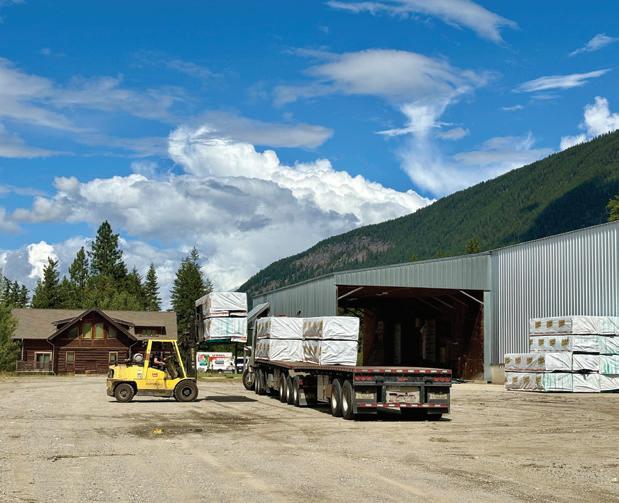
Since 2010, BarrierTek’s team of scientists and engineers has focused on developing fire-protection solutions for wood-frame construction, designed to reduce the immediately available fuel load of the substrates used in wood construction projects.
These factory-applied treatments help builders and developers reduce the risk of high-intensity residential fires and construction-site fires, helping mantain the continuity of a construction schedule and helping to protect the construction site itself and adjacent structure.
Projects treated with BarrierTek products are easy to recognize. Their distinctive coloured applications are more than a visual marker; they reflect more than a decade of innovation in construction fire safety for wood buildings.
The addition of the British Columbia plant will significantly increase BarrierTek’s ability to serve developers geographically with double the capacity of the original plant.
For builders, lumber yards, and distributors, that scale provides confidence that BarrierTek can meet growing demand while maintaining consistent supply.
The expansion is also creating opportunities locally. The new Tappen facility will bring jobs to the region, including roles in warehousing, machine operation, and operational leadership.
For BarrierTek, the investment reflects a growing demand for fire-protection solutions and a commitment to supporting the communities where these projects are built.

BarrierTek’s research team continues to design, test, and certify new products that respond to the evolving needs of the industry.
In 2026, the company plans to introduce several new technologies, including a micro-membrane system designed to further improve our AtTEK Sheathing product line and a product that meets Zero Lot Line requirements for wood construction single family homes.
BarrierTek products are available through preferred lumber suppliers, allowing builders and developers to integrate fire- and mold-resistive solutions directly into their supply chain.
BarrierTek also works closely with developers constructing wood-frame projects over 4-storeys. BarrierTek can provide engineered solutions designed to meet Adjacent Property Protection Planning requirements, through a NFPA 80A method.
With the opening of the BC facility, BarrierTek is reinforcing its long-term commitment to helping builders across Western Canada reduce risk, improve site safety, and build with confidence.
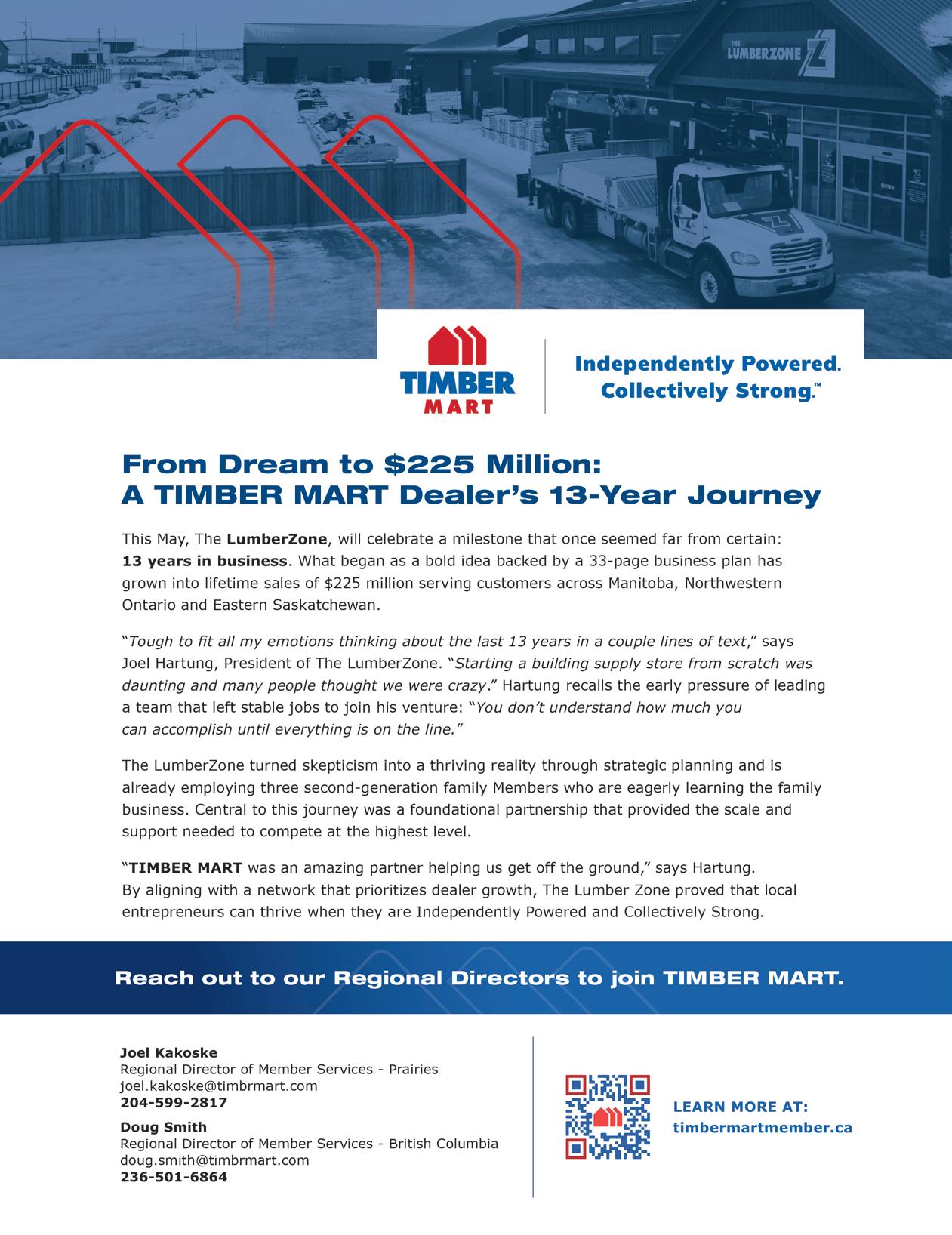
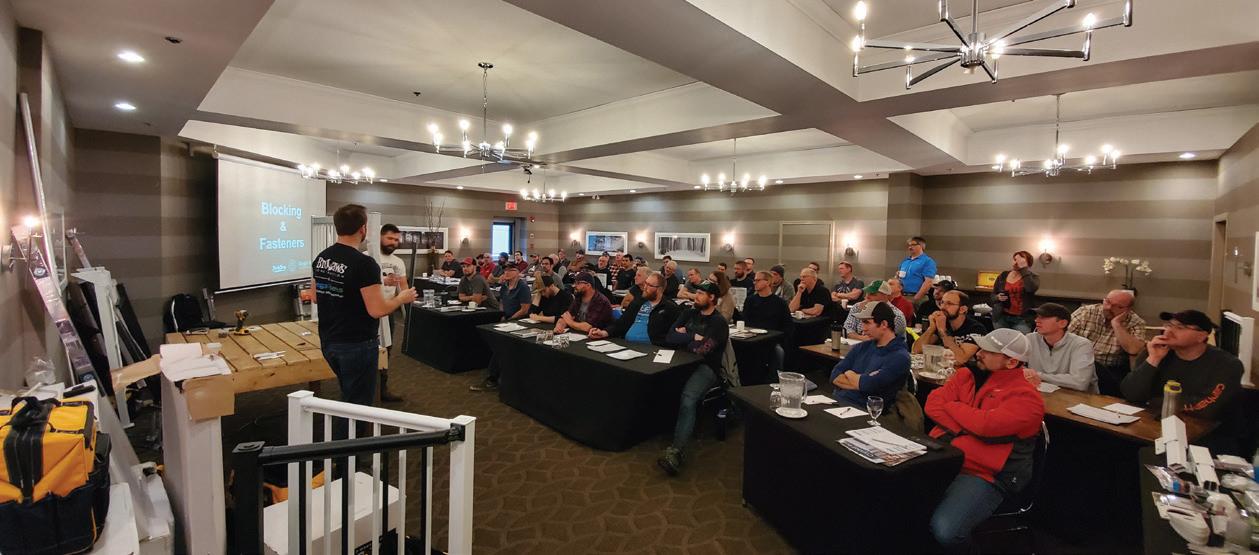
Kristyna Zuwoski, Regal ideas
More than four decades ago, Regal ideas opened its doors with a simple vision, a small team, and a single product: Regal Aluminum Railing. What began as a focused solution for outdoor spaces has grown into one of the most respected brands in the outdoor living industry.
Today, Regal ideas operates over 700,000 square feet of manufacturing across three factories and is supported by more than 300 employees who share a commitment to innovation, quality, and craftsmanship. From those humble beginnings, Regal ideas has grown into North America’s largest and most recognized aluminum railing brand, trusted by retailers, contractors, builders, and homeowners alike.
But the real story of Regal ideas is not just about manufacturing scale or product development. It’s about something far more powerful: brand building.
Many companies view marketing as a cost center. At Regal ideas, we have always viewed it differently.
We see marketing as an investment in brand equity, an intangible asset that compounds over time. When done right, branding builds trust, credibility, and long-term market share. It ensures that when customers are ready to build or renovate, your name is already in their mind.
Short-term sales tactics may generate immediate results, but true brands are built through consistency, storytelling, and emotional connection.
While many companies focus their marketing on product features and technical benefits, we chose a different approach. We focused on people.
Contractors, builders, and installers are the true ambassadors of the outdoor living industry. They influence homeowner decisions every day. Recognizing this, Regal ideas invested heavily in supporting contractors and giving them the tools, exposure, and platforms they need to succeed.
That strategy naturally expanded into storytelling opportunities and media visibility. Regal ideas has appeared on major renovation shows including Rock the Block, The Vanilla Ice Project, and several Property Brothers productions.
These appearances introduced the Regal brand into millions of homes, allowing homeowners to see the product not through advertising, but through real projects and authentic storytelling.

In today’s marketing landscape, authenticity matters more than ever.
Regal ideas has become widely recognized as the railing of choice in celebrity builds and high-profile projects, creating organic exposure that resonates far beyond traditional marketing campaigns. When products appear in real homes and real stories, the message carries far more weight than paid promotion.
Through high-quality content, digital PR, social storytelling, and in-person industry events, Regal ideas has cultivated a strong presence while bringing contractors and homeowners along for the journey.
This strategy has helped transform the company from simply a product manufacturer into a trusted brand within the outdoor living lifestyle space. “If people only remember your product, you built a business. If they remember how you made them feel, you built a brand.” states Andrew Pantelides, Executive Vice President, Regal ideas Inc.
Brand building also means investing in the future of the industry.
That philosophy led to the creation of DeckStars, a program designed to help elevate and promote talented contractors across North America. By providing marketing tools, visibility, and business development support, DeckStars helps contractors build their own brands while strengthening the broader outdoor living community.
When contractors succeed, the entire industry grows stronger.
Beyond marketing and product innovation, Regal ideas is committed to leadership within the decking and railing industry. As Acting President of the North American Deck and Railing Association, Andrew Pantelides is proud to support initiatives that promote safety and education across the industry.
Deck safety is an issue that affects millions of homeowners. Through campaigns such as “Deck Safety Month” and the “Check Your Deck” initiative, Regal ideas continues to help educate homeowners and contractors about the importance of proper inspection, installation, and maintenance.
“Safety is not just a product feature, it is a responsibility.” states Pantelides
At Regal ideas, we believe business is about more than selling products. It’s about building relationships, supporting partners, and creating opportunities for others to succeed.
Our mission has always been simple: build the best aluminum railing system in the world while helping others build their businesses. Because when your partners grow, your brand grows with them.
And the journey is far from over, you can catch Regal ideas this summer on a new season of Rock the Block and Rock Solid Builds, continuing to inspire homeowners and contractors across North America.
Regal ideas
Built to Perform. Designed to Inspire.
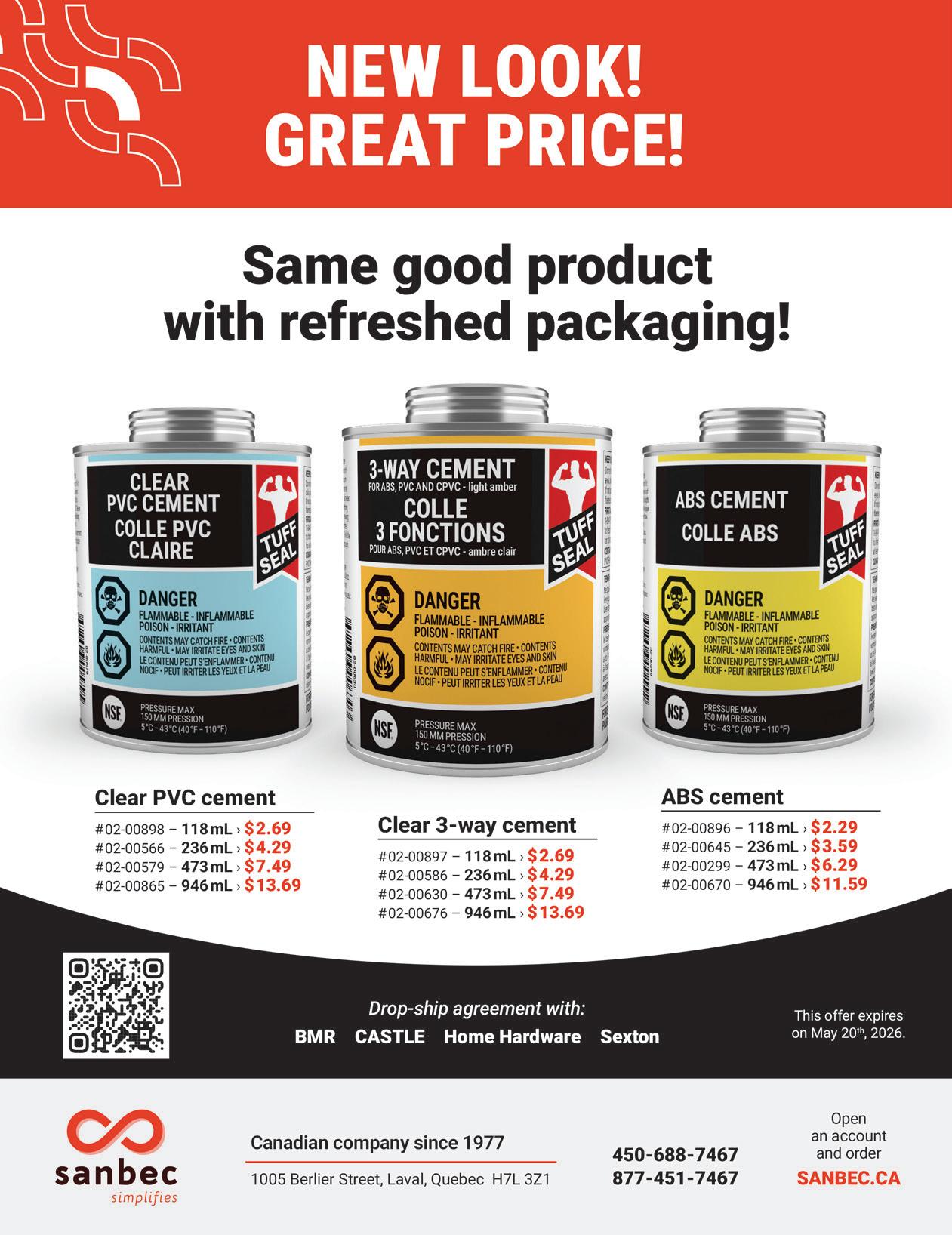
When Navjot Singh started his business at 26, he didn’t claim to have it all figured out.
“At 26, I didn’t have all the answers, but I had belief, work ethic, and a clear vision,” he says. “I trusted that I could outwork uncertainty.”
He had spent years learning the industry hands-on. He understood how the lumber and building materials sector operates—the relationships, the pace, the details that matter. What he didn’t have was certainty.
“I asked myself, what’s the worst that could happen? If I failed, I could always return to the job I already had. Youth gave me energy; responsibility gave me focus.”
That mindset carried him through the start-up phase; a stage defined less by polish and more by persistence.
The biggest challenge early on?
“Cash flow was the biggest hurdle. In the beginning, every dollar mattered—it still matters.”
Like many new business owners, Nav found himself balancing expenses carefully while trying to grow revenue. There was no room for careless decisions. At the same time, he had to build trust.
“Building credibility was another challenge. Earning trust from customers and suppliers as a young entrepreneur takes consistency.”
There were long hours. Multiple hats. And constant decision-making without a roadmap.
That’s the reality of start-ups. You’re proving your business model every day.
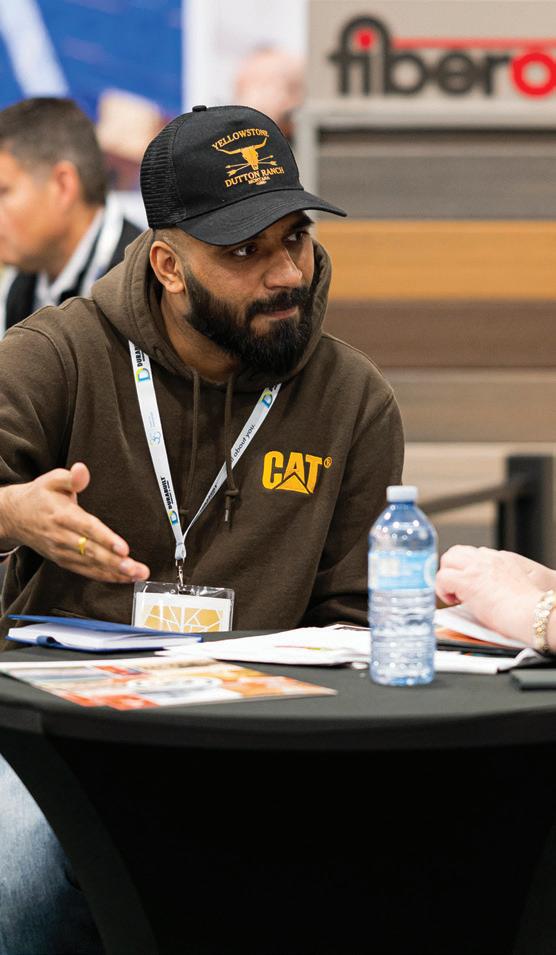
“Back in India I grew up on a farm close to a small town, so moving to Leader feels like coming home. My dad even says I qualify for the ‘Return of the Prodigal Son’ title.”
The shift into stability didn’t happen overnight. It came when predictability replaced pressure.
“The shift happened when revenue became predictable and systems replaced constant firefighting.”
Instead of worrying about payroll or covering expenses month to month, the focus moved toward planning; investing in inventory intentionally, strengthening staff capability, and building customer relationships strategically rather than reactively.
“Stability arrived when the business no longer relied solely on daily hustle but on structure.”
That structure meant understanding the numbers—break-even sales, cost controls, and cash management—and ensuring key roles were filled with the right people.
It also meant thinking beyond today’s workload.
Once stable, the next challenge wasn’t working harder. It was thinking differently.
“Growth began when decisions became strategic rather than emotional.”
Nav points to three shifts that made the biggest difference:
“Systems over hustle: documenting processes, tracking numbers weekly, and creating accountability.”
“Delegation: trusting and developing the right people instead of trying to do everything myself.”
“Long-term thinking: moving from ‘What helps this month?’ to ‘What builds value over the next 5–10 years?’”
Growth, he learned, is less about effort and more about discipline. It requires stepping back from daily urgency and making decisions that build long-term value.
Looking back, there are things he would change.
“I would seek mentorship earlier and build systems sooner,” he says. “In the early days, I focused heavily on working hard, but not enough on working strategically.”
He would also have tracked financial metrics more closely from the beginning—“margins, inventory turns, and cash-flow forecasting.”
Today, when Nav talks about investing in his business, he doesn’t start with expansion.
“Today, investing means strengthening the foundation—people, systems, training, and relationships.”
It’s about leadership development. Operational efficiency. Improving the customer experience.
“Real investment is long-term thinking.”
And that long-term thinking includes continuing to learn.
Nav’s journey reflects the natural evolution many lumber and building materials businesses experience: start-up, stability, growth—and eventually replication or succession.
The challenge for any leader is knowing which stage they’re truly in and what decisions that stage requires.
That’s why Nav is planning to take part in Supply-Build Canada’s new Business Series, a five-part learning pathway designed specifically for leaders in the Canadian LBM sector.
The Business Series helps owners and senior managers understand where their company sits in the business life cycle—from proving the model, to creating predictable performance, to scaling strategically, expanding to new markets, and preparing for transition.
For Nav, it’s not about starting over. It’s about sharpening the next phase.
His advice to anyone entering the industry remains clear:
“Start with clarity. Know your numbers. Protect your reputation. Build relationships before you need them. And above all—be patient. Success isn’t about one big win; it’s the result of consistent execution over time. If you’re willing to learn, adapt, and stay disciplined, growth will follow.”
That mindset built his business.
And it’s what will carry it forward.
Navjot Singh is the owner of Leader Hardware & Building Centre and brings seven years of hands-on experience in the construction industry.
He studied Business Administration at Kwantlen Polytechnic University—“I quit after two years though,” he adds with a grin— choosing instead to learn by doing.
Nav moved to Canada at 18 with $500 in cash and, as he puts it, “a strong will.” Today, running Leader Hardware feels full circle.
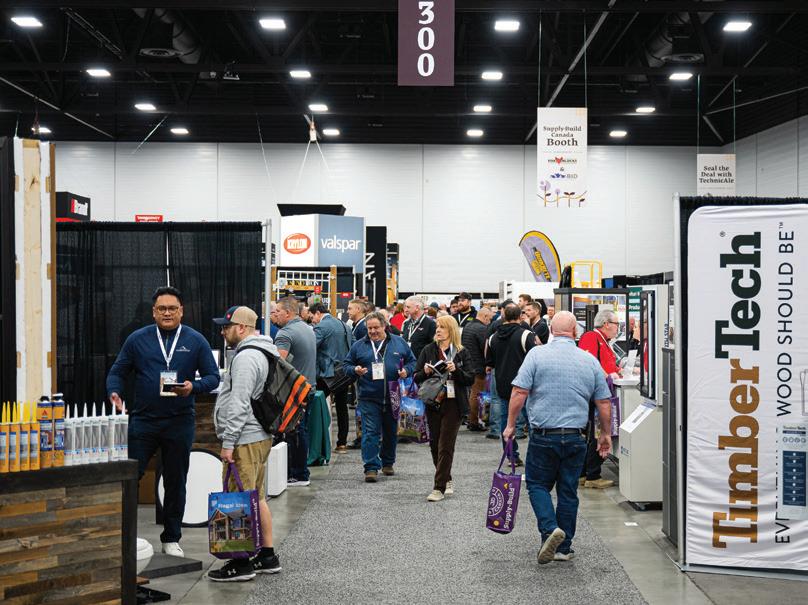
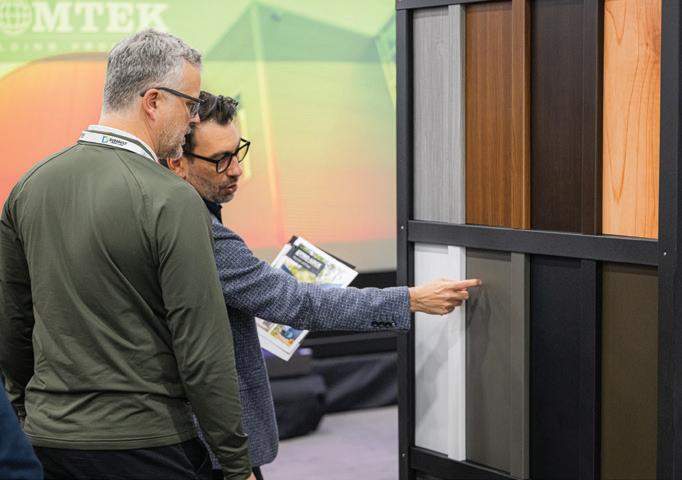
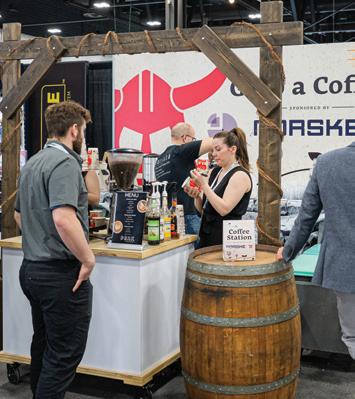


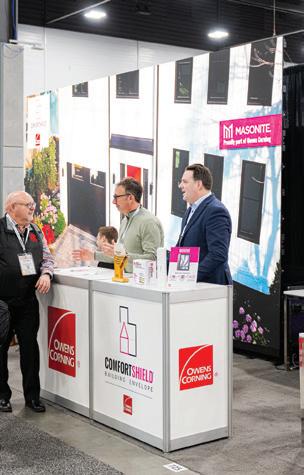
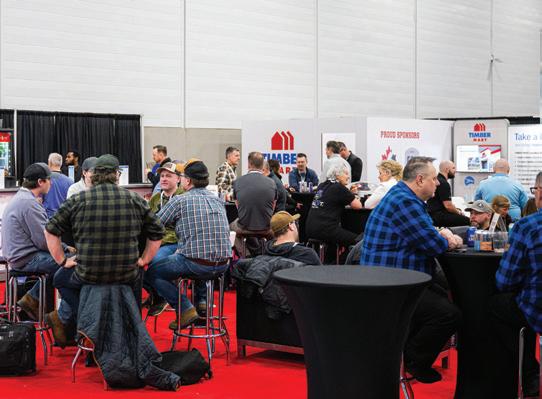
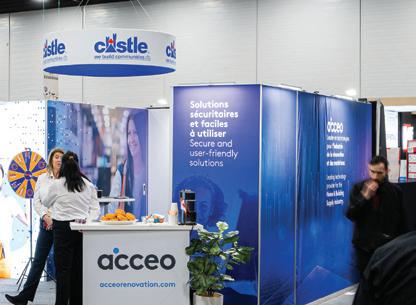
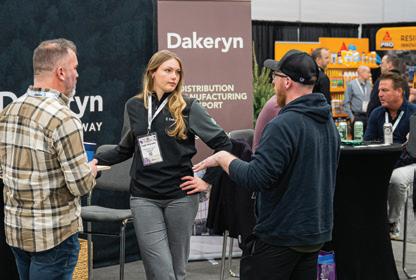

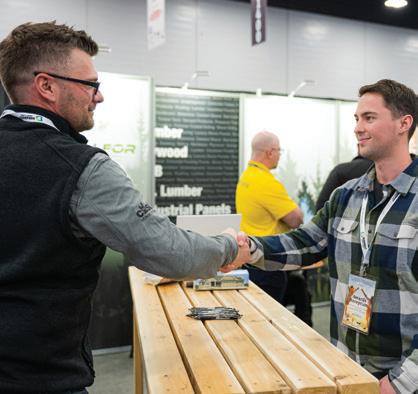
This year’s Showcase delivered exactly what our industry needed, momentum. With a sold-out show floor featuring 220+ booths, 75+ new products, 880+ dealers, more than 2,000 attendees, and 104,610 square feet of innovation, ideas, and connection, the energy was undeniable from the first handshake to the final deal.
Members leaned into every part of the week. We debuted our first-ever Advocacy Art Exhibition, hosted high-demand Professional Development sessions, including two sold-out sales workshops and brought the community together through a packed hockey game and high-energy show floor activations. The expanded Career Fair welcomed 18 booths and over 500 attendees, with several brands already reporting interviews booked with candidates they met onsite.
On the floor, the shift was clear. Conversations turned into commitments.
“This is becoming a buying show again—with some of our biggest sales in a while.”—Showcase Exhibitor
“For my first Showcase, I really enjoyed it. Great job.”—Westview Co-op
“Traffic was great through the booth and the quality of customer was on point and focused.”—Westfour
Thank you to our sponsors and partners who helped bring the full Showcase experience to life, from programming and networking to awards and activations.
This industry shows up and when it does, business follows.
This year, we partnered with Alley Kat Brewing Company to create a custom SupplyBuild Canada branded beer for the Showcase, and it quickly became a fan favourite.
Founded in 1995, Alley Kat is one of Edmonton’s original craft breweries, known for small-batch brewing, bold flavour profiles, and deep roots in the local community. Their commitment to quality and independent spirit made them a natural partner for an event built on connection and industry pride.
From the show floor to networking receptions, the collaboration added a distinctly local touch to the week. It wasn’t just about what was in the can, it was about creating a shared moment. A conversation starter. A reminder that Showcase is as much about relationships as it is about business.
We’re proud to work alongside partners who reflect the strength and character of the communities we gather in.
And yes, it tasted pretty great too.


“We are not in the hardware business; we are in the people business.”
—Walter Hachborn, Co-founder of Home Hardware
The Supply-Build Canada Industry Achievement Award recognizes individuals whose leadership, integrity, and long-term dedication have strengthened Canada’s independent building supply industry.
It honours those who don’t just lead organizations, they mentor people, elevate standards, and leave the industry better than they found it.
Dale embodies every one of those qualities.
Formore than five decades, Dale MacPherson has helped shape the Canadian building supply industry, not through headlines, but through steady leadership, deep relationships, and an unwavering commitment to independent Dealers.
His journey began in 1974 as a summer student unloading rail cars at the St. Jacobs Distribution Centre. What followed was not simply a career, but a lifetime of service to Dealers, colleagues, suppliers, and communities across Canada.
Through recessions, acquisitions, industry transformation, and the global disruption of COVID-19, Dale remained focused on one constant: supporting independent business owners and strengthening the cooperative model that defines Home Hardware.
This year, Supply-Build Canada proudly recognizes Dale MacPherson with the 2025 Industry Achievement Award—honouring not only longevity, but leadership defined by integrity, mentorship, and belief in people.

Trisha Owens, Communications Director
It was a privilege to stand on behalf of Home Hardware to recognize someone who has truly shaped our organization and our industry.
We gathered to celebrate Dale MacPherson, recipient of the 2025 Supply-Build Canada Industry Achievement Award.
Dale’s journey with Home Hardware began in 1974, as a summer student in the St. Jacobs Distribution Centre.
During his time with Home, Dale had the opportunity to be mentored by the company’s co-founder, Walter Hachborn, whose expertise taught him the value of independence, integrity, and people-first leadership.
Over the course of his 52-year career, Dale has played a significant role in guiding Home through major acquisitions, industry transformations, and the challenges of the COVID-19 pandemic.
Through it all, he remained focused on supporting independent Dealers and strengthening the cooperative.
Today, as Senior Director of Store Operations and Business Development, Dale oversees real estate, business development, capital ventures, and corporate retail stores.
Dale’s career is a powerful example of what long-term commitment, principled leadership, and belief in independent business can accomplish.
Congratulations to Dale MacPherson on receiving the Supply-Build Canada Industry Achievement Award.
Dale, thank you for everything you’ve done—and continue to do—for our Dealers, our company, and the industry.
By Heather Brincheski, Territory Manager, Western Retail Operations
It’s hard to put into words the impact Dale has had on our industry.
When you think about leaders who’ve truly shaped the heart of Home Hardware Stores Limited, Dale’s name always comes to mind. He leads with humility, integrity, and a kindness that is deeply felt by everyone around him. Those qualities have always inspired me, and so many others who’ve had the privilege of working with him, to lead in the same way.
Dale’s leadership has never been focused solely on strategy or results. He has always embodied our cofounder Walter J. Hachborn’s philosophy that we are not in the hardware business; we are in the people business. Dale’s mentorship, steady support, and genuine care have ensured that those who work with him feel seen, valued, and encouraged. He believes leadership is not about standing out in front, but about lifting others up.
I have always admired how naturally Dale balances the “people” side of this industry with his exceptional business acumen. Whether he is working alongside a Dealer, mentoring a Home team member, or helping to move the industry forward with new ideas, he believes in connection and collaboration. Over the past 53 years, countless Dealers, suppliers, and colleagues from across the country have picked up the phone to call Dale, knowing he would take the time to listen and offer thoughtful advice.
I am grateful for the opportunity to work with and learn from Dale and continue to be inspired by his leadership every day.
Heather Brincheski has been part of the Home Hardware family for more than 25 years, serving as a Territory Manager with Home Hardware Stores Limited. She has worked closely with Dale throughout that time and oversees Area 12, which includes Southern Manitoba, Northwestern Ontario, and Nunavut.


“What I’m most proud of are the relationships that go back more than 20 years.”
Arnie Hofsink, Richelieu Hardware
HOW LONG HAVE YOU BEEN IN SALES, AND HOW DID YOU GET STARTED IN YOUR CURRENT ROLE OR CAREER PATH?
I’ve been in sales for 28 years. In 2001, I had the opportunity to join the team at Richelieu. After a couple of successful years in the office, I was offered the chance to go on the road as a fulltime sales representative. That’s where I really found my stride.
WHAT DO YOU ENJOY MOST ABOUT WHAT YOU DO DAY TO DAY?
What I enjoy most is helping my clients succeed. From sourcing the hard-to-find special orders to the everyday needs each store has. I take pride in being a resource they can count on.
Next to that would be the many opportunities I’ve had to bring my wife, daughters, and even my father along with me while visiting stores I call on regularly. Those moments mean a lot.
WHAT DO YOU THINK SETS GREAT SALES PROFESSIONALS APART IN TODAY’S MARKET?
Respecting your clients and taking the time to build lasting relationships that grow their business and yours.
WHAT’S ONE PIECE OF ADVICE YOU’D GIVE TO SOMEONE ENTERING SALES IN THE BUILDING SUPPLY INDUSTRY?
Take your time building relationships. Don’t rush the sale. Slow down and work with your clients so you can grow together.
WHAT’S SOMETHING PEOPLE MIGHT BE SURPRISED TO LEARN ABOUT YOUR ROLE OR YOUR APPROACH TO SALES?
Maybe it’s not surprising, but I really don’t like high-pressure sales. I prefer a slow and steady approach, focusing on the long game.
You travel and connect with a lot of communities. Do you have any favourite local spots or hidden gems you’ve discovered along the way?
Anyone who asks about my territory will hear me say that my favourite drive is from Smithers, where I grew up, to Prince Rupert. There’s very little traffic, unbelievable scenery, and not much cell coverage. Sometimes the opportunity to just drive and disconnect is pretty amazing.
OUTSIDE OF WORK, HOW DO YOU RECHARGE IN A FAST-PACED INDUSTRY LIKE THIS?
When I’m not on the road or in my office, I enjoy time at home with my wife and three daughters. Camping, hiking, fishing, and exploring the backcountry are at the top of our list.
A CAREER HIGHLIGHT
Being chosen as Sales Rep of the Year by Supply-Build Canada is certainly a highlight. But what I’m most proud of are the relationships with clients that go back more than 20 years, to my very first visits as a rookie sales rep for Richelieu Hardware.
LESSON BEYOND SALES
Relax and enjoy connecting with the great people who cross your path. Try to focus on the many great things life has to offer.
In an industry where many sales professionals begin on the road, Kristyna Tranova started on the production floor.
She joined ABI Mouldings in May 2018, not in an office, but on the prime line. Learning the rhythm of MDF moving through machinery, understanding finishes, quality control and the pace of manufacturing. From there, she moved into shipping, earned her forklift certification and became Shipping Supervisor. Eventually, she transitioned into the office, answering phones and entering orders, before stepping into marketing and ultimately into her current role as Business Development Manager. By 2021, she was fully immersed in sales.
That layered journey matters.
“I don’t sell something I don’t understand,” she says. Having worked every stage - from production to shipping logisticsKristyna speaks to customers with firsthand knowledge of lead times, machinery limitations and what it truly takes to manufacture mouldings and doors in Canada.
Her days are rarely quiet and that’s exactly how she likes them.
“I love chaotic days that keep my brain turning,” she admits. Problem-solving energizes her. So does the human side of the business. In the building supply world, relationships stretch across years, sometimes decades. For Kristyna, clients feel less like accounts and more like friends. Add in a close-knit internal team that laughs often and never says no to shared food and the pace becomes something to enjoy rather than survive.
What sets elite sales professionals apart in today’s market? Listening.
“Listen to what the customer actually needs. And don’t promise what you can’t provide.” In an industry built on timelines and trust, overpromising can cost more than a delayed shipment - it can cost credibility. Kristyna believes in early transparency. If something shifts, customers deserve a heads-up so they can plan accordingly.

“If we stay comfortable, we stay stagnant.”
Her advice to newcomers is refreshingly direct: Don’t be pushy. “If they don’t want what you’re selling, move on.” She laughs, noting that aggressive sales tactics personally frustrate her. Her approach is rooted in honesty and long-term trust. She’d rather build something sustainable than force a short-term win.
One of her proudest career moments wasn’t a single deal. It was a shift in perception. When ABI first joined Supply-Build Canada, few recognized the brand. By year two, people were approaching their booth at the Showcase, acknowledging the transformation and stronger presence. After months of planning, she stood back at the completed display -cohesive, professional, sleek - and felt the quiet satisfaction of growth realized.
Traveling across Alberta has also brought small joys, like discovering hidden gems – for example The Coffee Cottage in Innisfail on a trip to Bashaw - a tiny bakery with unforgettable baked goods.
Outside of work, Kristyna recharges by baking, cooking and taking long walks in nature with her dog. Sales, she says, has taught her something far bigger than negotiation: step outside your comfort zone. Naturally introverted, she once questioned whether she belonged in front of customers. Leaning into discomfort proved otherwise.
“If we stay comfortable, we stay stagnant,” she reflects. And stagnant, to her, is boring. Growth, whether in business or in self, is far more meaningful.

“Be the person they come to first, even for advice on products you don’t sell.”
HOW LONG HAVE YOU BEEN IN SALES, AND HOW DID YOU GET STARTED IN YOUR CURRENT ROLE OR CAREER PATH?
My journey in sales spans about 26 years so far. I started working for a retailer in my hometown of Macrorie, Saskatchewan at 15 years old. It didn’t take long to realize that working with people and solving problems was incredibly rewarding. That passion for customer service led me into retail management and commercial building material supply before eventually landing at Taiga Building Products.
WHAT DO YOU ENJOY MOST ABOUT WHAT YOU DO DAY TO DAY?
The speed and ever-changing nature of this industry keeps things exciting. I love seeing new products and building innovations come to market.
WHAT DO YOU THINK SETS GREAT SALES PROFESSIONALS APART IN TODAY’S MARKET?
Being engaged with people. Listen to what they have to say and learn what they need. Be the person they come to first, even when it’s for advice on products you don’t sell.
WHAT’S ONE PIECE OF ADVICE YOU’D GIVE TO SOMEONE ENTERING SALES IN THE BUILDING SUPPLY INDUSTRY?
Be brave and be prepared for uncomfortable conversations. Your most rewarding wins will likely come from those scenarios.
WHAT’S SOMETHING PEOPLE MIGHT BE SURPRISED TO LEARN ABOUT YOUR ROLE OR YOUR APPROACH TO SALES?
It surprises customers when I talk them out of buying something if I don’t feel it’s the right fit. A sale isn’t a good sale unless it’s going to be successful for both parties.
YOU TRAVEL AND CONNECT WITH A LOT OF COMMUNITIES—ANY FAVOURITE LOCAL SPOTS OR HIDDEN GEMS?
There are so many hidden spots in Saskatchewan, but if you ever find yourself in Humboldt, you need to stop at The Danish Oven bakery—the donuts are incredible.
OUTSIDE OF WORK, HOW DO YOU RECHARGE?
My best recharge moments are spent with my family and young daughter, ideally outdoors or at the lake.

“This industry is exceptional because of the people.”
HOW LONG HAVE YOU BEEN IN SALES, AND HOW DID YOU GET STARTED IN YOUR CURRENT ROLE OR CAREER PATH?
I’ve been in sales in the building supply industry for just over 20 years. I got my start thanks to a former manager who believed in bringing in fresh perspectives rather than hiring someone with preconceived notions or ingrained habits. He wanted someone he could trust and mold into a champion.
WHAT DO YOU ENJOY MOST ABOUT WHAT YOU DO DAY TO DAY?
Every day brings something new, with its own challenges and opportunities to make a meaningful impact for a customer. There’s truly never a dull moment—whether it’s strengthening partnerships, enhancing the customer experience, driving growth, or helping customers achieve their goals. The variety keeps the work dynamic and reinforces how every interaction contributes to our partners’ overall success.
WHAT DO YOU THINK SETS GREAT SALES PROFESSIONALS APART IN TODAY’S MARKET?
Response time and follow-up. If you say you’re going to get back to a customer, get back to them. The faster you respond to an inquiry, the more they feel valued as a partner.
The hidden talent that really sets you apart is active listening. Don’t listen just so you can respond with your product’s feature-advantagebenefit pitch—that never works. Listen to understand your customer’s needs. Tailor a solution that benefits them. If you can add value, great. If not, that’s fair too, as long as you’re respectful and honest, they’ll keep the door open for future opportunities.
WHAT’S ONE PIECE OF ADVICE YOU’D GIVE TO SOMEONE ENTERING SALES IN THE BUILDING SUPPLY INDUSTRY?
This industry is truly exceptional. It offers tremendous opportunities, but what stands out most are the people. It’s incredible to look back at relationships that started with customers, distributors, or fellow manufacturer reps and see how they’ve grown into genuine friendships. You get to know each other, support one another, and celebrate each other’s successes, both professionally and personally.
WHAT’S SOMETHING PEOPLE MIGHT BE SURPRISED TO LEARN ABOUT YOUR ROLE OR YOUR APPROACH TO SALES?
Imagine sitting through an hour-long product knowledge session where the presenter speaks in one unbroken monotone—no peaks, no valleys, just a straight line of technical jargon. Your caffeine is wearing off, the donut sugar rush has abandoned you, and despite your best efforts, your eyelids start negotiating with gravity.
That’s me. That’s my secret weapon. I’m the monotone guy who gently lulls everyone into a peaceful nap.
Totally kidding… mostly.
YOU TRAVEL AND CONNECT WITH A LOT OF COMMUNITIES—ANY FAVOURITE LOCAL SPOTS OR HIDDEN GEMS?
I’ve been extremely fortunate to travel throughout Canada to places I never thought I’d go because of this industry. I’ve been coast to coast and had the privilege of seeing lighthouses on both the East and West Coasts—and, more surprisingly, even a lighthouse in the middle of Saskatchewan.
OUTSIDE OF WORK, HOW DO YOU RECHARGE?
Spending time with my family is important to me. Whether it’s helping coach my kids’ sports teams, watching them grow up, or getting away together for some quality time, that’s how I reset.
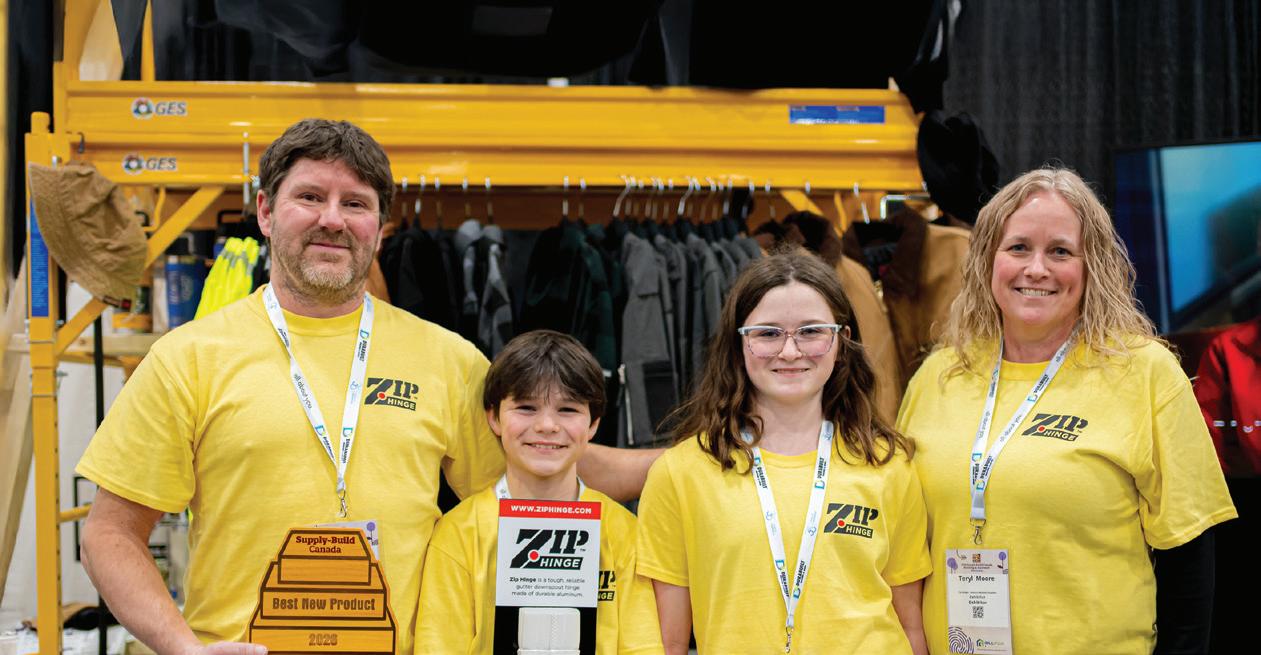


The Zip Hinge is a simple solution to one of the most common frustrations homeowners face.
Eavestrough systems are critical for protecting foundations and basements by directing roof water away from the home. To do that properly, downspouts must extend out from the house.
The problem is those extensions almost always land in inconvenient locations—across walkways, beside driveways, or directly in the way of the lawnmower or snowblower.
As a result, downspouts are frequently:
• Crushed by vehicles or stepped on
• Bent during snow clearing
• Damaged by lawn equipment
• Removed entirely by frustrated homeowners
When extensions are removed or damaged, water drains directly beside the foundation, increasing the risk of costly structural damage and basement leaks
The Zip Hinge allows the downspout to flip up and out of the way when not in use and drop back into position when needed. It preserves proper drainage while eliminating the inconvenience that causes damage in the first place.
The inspiration was simple: solve a universal, recurring problem with the most straightforward possible solution.
Every contractor sees damaged downspouts. Every homeowner deals with them.
Rather than redesigning entire drainage systems, we engineered a durable hinge that integrates seamlessly with existing aluminum downspouts. No complicated system changes. No expensive retrofits. Just a practical upgrade that works with everyones existing downspouts
Several features differentiate the Zip Hinge:
Its design works with standard residential aluminum downspouts, simplifying inventory and eliminating sizing confusion for dealers.
The patented system securely clamps to the downspout and actually reinforces lightweight aluminum elbows, increasing durability rather than weakening them.
Installation can be completed in minutes. Contractors appreciate the speed, and homeowners can easily install it themselves.
RETAIL-FRIENDLY PRICE POINT
Even as a premium solution, the product remains highly accessible to homeowners, making it an easy add-on sale.
Built for long-term performance, not temporary fixes.
The Zip Hinge was designed not just to solve a problem, but to move off shelves.
• Packaged in retail-ready bags with installation instructions clearly displayed
• Compact footprint for easy merchandising
• Countertop working display provided with initial stocking orders
• Demonstration-based selling that immediately resonates with customers
The working display has proven especially effective. When customers see the hinge flip up and lock back down, the value becomes obvious within seconds.
Dealer feedback has been extremely positive, with strong early reorder activity and consistent customer interest heading into spring season.
The reaction was immediate and enthusiastic.
Attendees recognized the problem instantly. Many shared personal experiences with damaged downspouts at their own homes.
We had multiple industry professionals asking to purchase units directly at the show. The universal nature of the problem makes the product easy to understand and easy to sell.
Winning Best New Product among more than 75 entries was a major validation.
The award was voted on by building industry professionals, not consumers. That peer recognition confirms both the practicality and market demand for the Zip Hinge.
For our team, it reinforced what early dealers were already experiencing: this is a product customers genuinely want.
Following the award, we have been focused on:
• Expanding dealer partnerships
• Fulfilling spring stocking orders
• Supporting national promotional programs
• Building marketing campaigns that drive homeowners directly to stocking retailers
OUR GOAL IS CLEAR:
Support our dealers with marketing, fulfillment, and customer service so they can move product efficiently and profitably.
We believe our success is directly tied to our customers’ success—and we are building our growth strategy around that principle.
Dusty Moore is the founder of Advance Building Supplies, a distributor focused on practical innovations for the exterior construction industry. With over 25 years in the exterior construction industry Dusty and his team focus on helping the industry excel by using better products and construction methods.

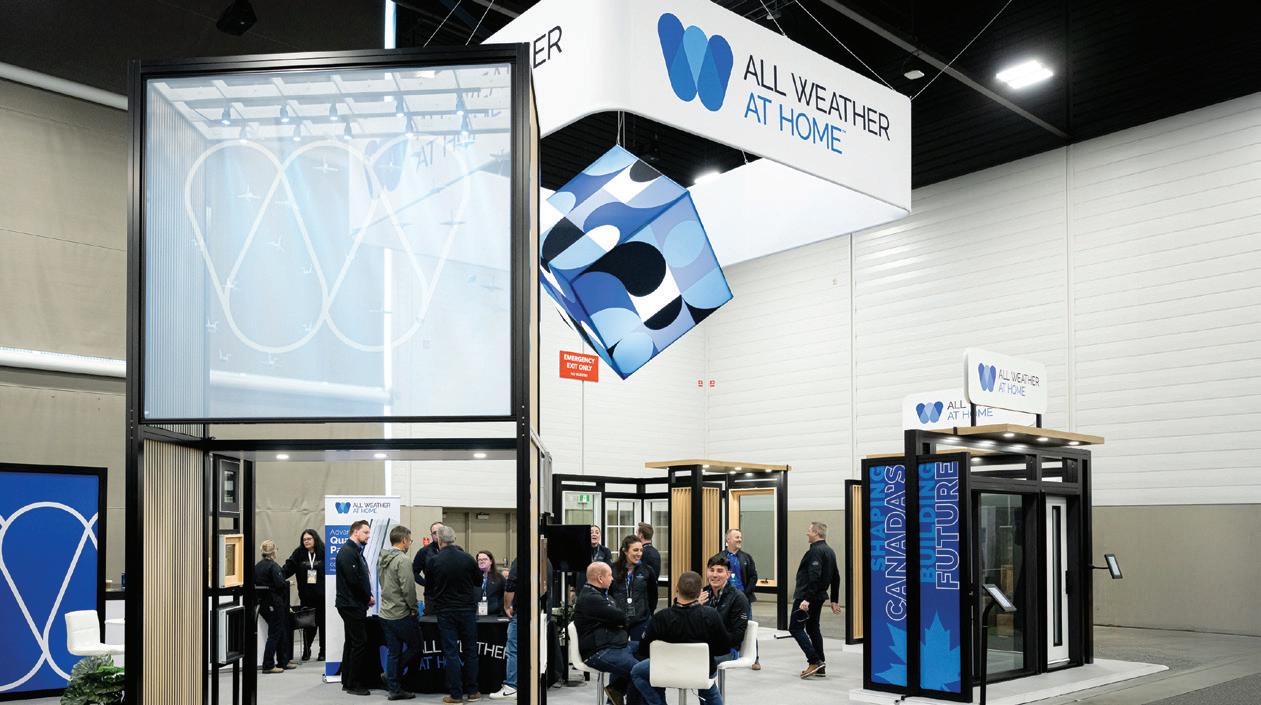
AtShowcase 2026, All Weather at Home earned the Best Booth award for their strategic, high-energy presence on the show floor. We asked their team to share the thinking behind the booth, the preparation involved, and what the recognition means to them.
From a strategic lens, our goal was straightforward: generate new customers and revenue, while strengthening relationships with our partners and solidifying our new brand presence.
We approach Supply Build as a focused sales opportunity. Our booth needed to attract the right conversations, invite real opportunities, and support our team in moving business forward.
Our theme this year—Shaping Canada’s Building Future— reflects how we see our role in the industry. As a Canadian manufacturer, we’re not just supplying products; we’re helping our partners stay competitive in a changing market. That thinking influenced the products we featured and the innovation we brought forward, including live demonstrations of Corning’s Enlighten™ Glass. The activation created real energy in the space and gave attendees a clear reason to stop by, which naturally led to deeper business conversations.
Trade shows are a defined part of our annual marketing and sales plan. They support lead generation and brand visibility, but more importantly, they give us dedicated face-to-face time with current and prospective customers.
They play a role in our broader business strategy by helping us strengthen partnerships and reinforce our position as a Canadian manufacturer. We don’t see them as short-term marketing events. We see them as opportunities to show up, demonstrate what we’re investing in, and have real conversations that move business forward.
We also see trade shows as an opportunity to showcase our brand in a relevant way. We do this by creating a theme for each show that enhances the experience in the booth and ties our product and our organization to the overall industry. This tie reinforces to our customer that we understand their business and the challenges they are faced with.
Each show gives us a platform to highlight innovation, showcase collaborations like Corning, and reinforce the value we bring to our partners.
We intentionally designed a space that was welcoming and inviting but also had an air of excitement through the products and demonstrations we showed in the booth.
In a busy trade show environment, we wanted our booth to feel like an attraction and a stop not to be missed. It was also important that it was open, approachable, and conversation driven. The layout encouraged interaction rather than just product viewing.
The number one experience we wanted to create was something exciting to come and see. Demonstrating Corning’s Enlighten™ Glass, a new thin glass technology, gave us exactly that. It created real curiosity on the show floor and drew people into the space.
Ultimately, we wanted visitors to feel that they were stepping into a company that is confident, understanding of the customer’s business, and invested in the future of building in Canada.
Before the show, we meet with the team to walk through the theme, the layout of the booth, and the products being featured. It’s important that our team understand what’s on display, why it matters, and what kinds of conversations we’re there to have. We spend time with the team on the key messages we want to ensure that we deliver about our organization.
We also make sure the team is confident in the full features and benefits of the products—performance specs, differentiators, manufacturing capabilities, timelines, and upcoming launches. When detailed questions come up, we need the team to be ready with clear, knowledgeable answers. That expertise builds credibility quickly.
Just as important is mindset. Trade shows aren’t only about meeting new prospects—they’re about reinforcing existing relationships. Many of our current partners attend, and this is a valuable opportunity to reconnect, talk about what’s working, understand where they’re feeling pressure, and show that we’re continuing to invest in listening, innovating, and supporting them in their growth.
We also ensure the team acts like a host with everyone that comes to the booth. Whether a direct customer or not, our team is prepped to welcome attendees in.
We encourage curiosity over traditional sales pitches. Rather than leading with a sales script, we focus on asking thoughtful questions about what’s happening in their business—which categories are performing well, where they’re seeing margin pressure, what their customers are asking for more of, and how we can better support their team. Those conversations uncover new opportunities while strengthening long-standing partnerships. It’s about being present, knowledgeable, and genuinely invested.
We’re looking for new customers and revenue. That’s the primary goal.
We track the number of qualified conversations we have, the follow-up meetings we book, and the pipeline generated as a direct result of the show. Most importantly, we measure the revenue that can be tied back to those conversations.
Brand visibility and solidifying that we are more than just product—that we are partners who care—is also valuable, but certainly harder to measure. Our key differentiator is our approach to business, and the Showcase is the perfect platform to show what we do best.
Winning Best Booth is something we’re incredibly proud of.
This wasn’t something that happened by accident. It was months of planning, design revisions, coordination, product selection, partner alignment, and many hours of work to turn a vision into something tangible.
There’s a big difference between imagining a booth and seeing it fully realized on the show floor. When it all came together— the structure, the product displays, the Corning activation—it felt like a real moment of accomplishment.
Our team invested significant time and energy into getting every detail right. Marketing, sales, leadership, operations, and our partners all played a role.
Winning validates that effort. It recognizes the collaboration and the countless behind-the-scenes hours that brought the concept to life.
For our team, it’s pride. For our brand, it reinforces that how we show up matters.
And we’re proud of that.
The Supply-B uild Canada App is your year-round connection to the Lumber & Building Materials industry.
Stay informed. Stay connected. Stay ahead.
• Receive real-time alerts on events, deadlines, and key updates
• Access the full Member Directory anytime
• Use the interactive Member Map to find partners across Canada
• View exclusive member promotions
• Get important industry communications the moment they’re released
The information you need is always within reach.

Download the Supply-Build Canada App today.
Professional Development wasn’t an add-on at Showcase this year; it was front and centre.
On Monday, members leaned into leadership and sales with Real Leadership: The Workshop Your Team Wishes You Took with Humance and High-Impact Sales Strategies for the Building Supply Sector with R.M Caliguiri
By Tuesday, the momentum continued with Trade Secrets: How to Market to Builders & Actually Win Business with Marc & Mandy Atiyollil and From Order-Taker to Rainmaker: The LBM Sales Pro Playbook with Mike McDole.
Two of the sales sessions sold out. Rooms were full. Conversations were practical and direct, focused on strengthening teams, improving margins, and sharpening how members show up in competitive markets.
From leadership and HR to marketing and sales execution, the appetite was evident that our industry isn’t just investing in product. It’s investing in people.
When learning fills the room, growth follows.
And this year, the response spoke for itself.
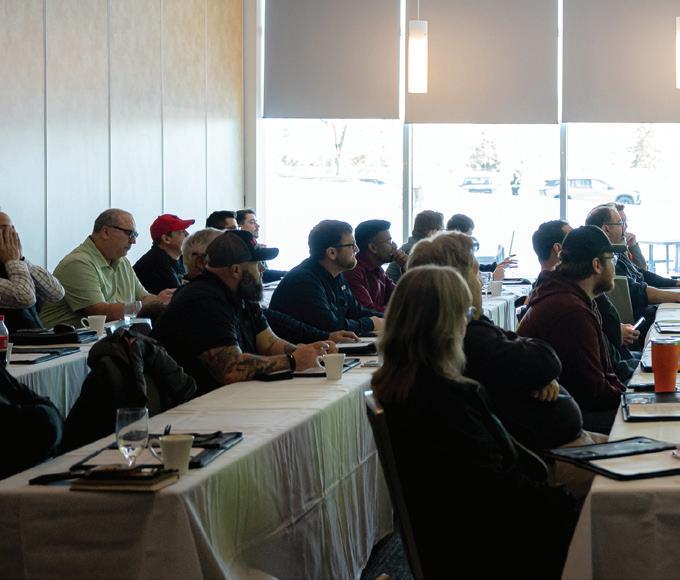

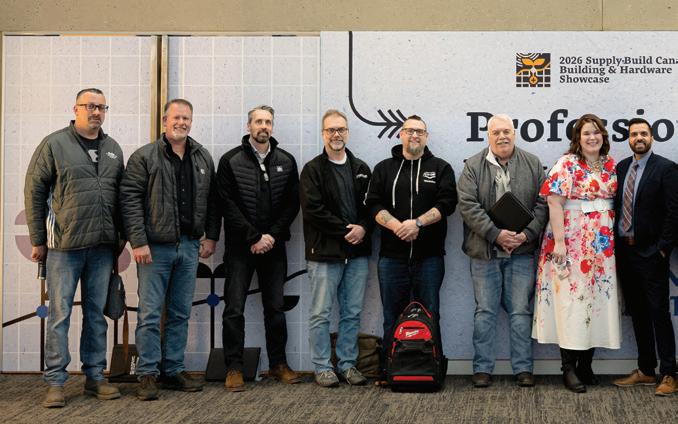
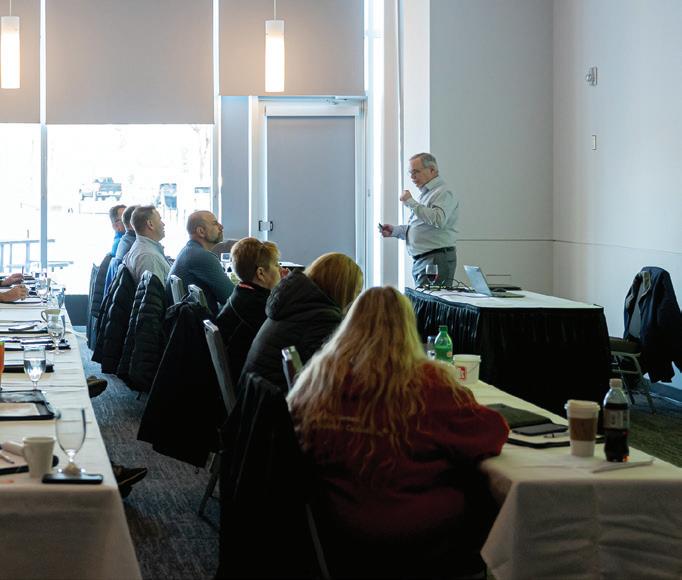

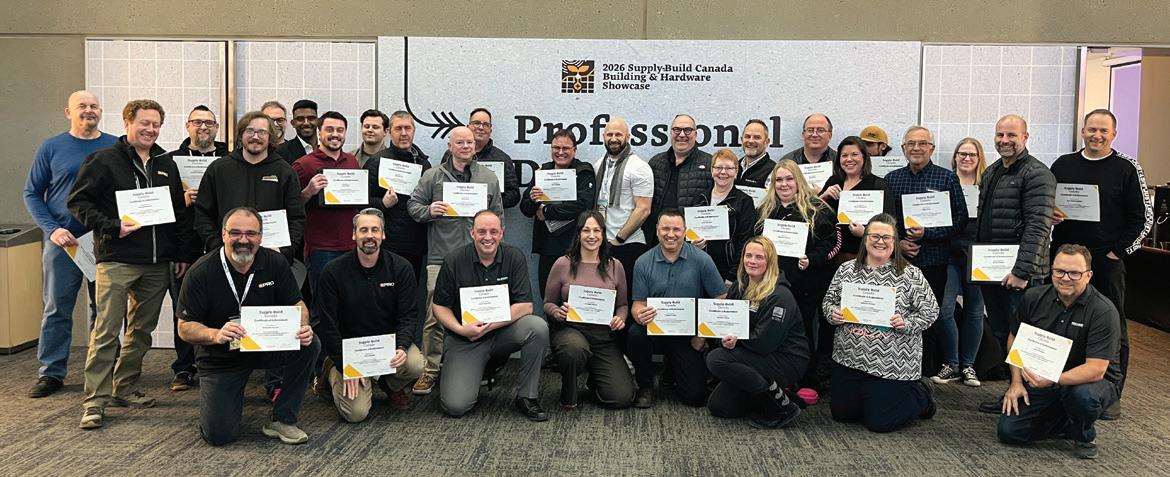
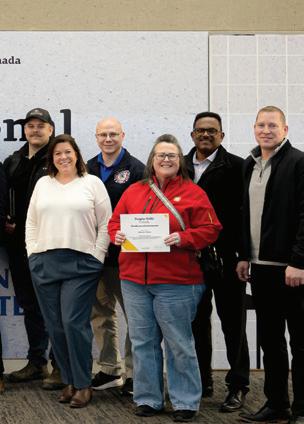
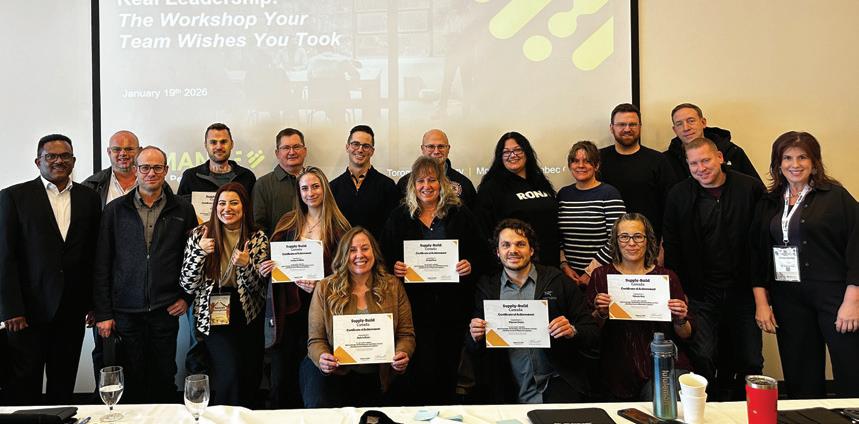

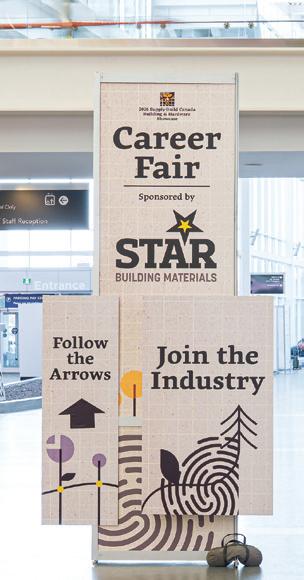
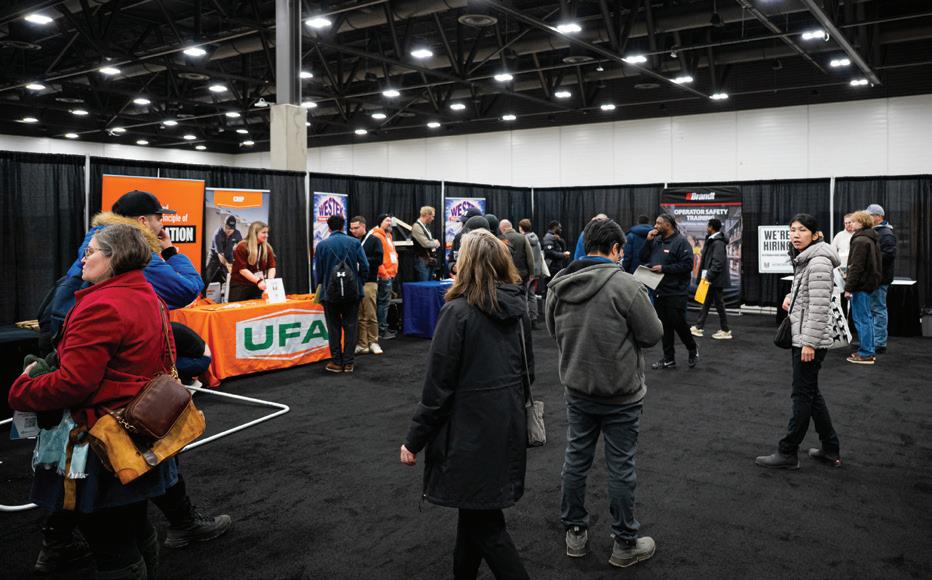
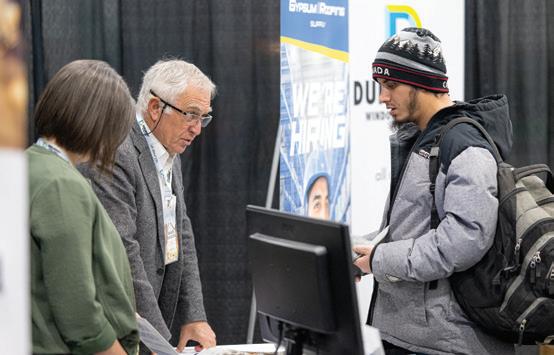



One of the biggest challenge an industry faces is the lack of awareness and vast opportunities that people never see. The building supply sector is the 3rd largest contributor to GDP. We need to ensure we are broadcasting this message! That’s why our applicant base needs to be just as broad. This year’s Showcase Career Fair brought that vision to life with 18 industry tables and more than 500 attendees exploring opportunities across the sector.
With the support of job seeker organizations onsite, attendees received live résumé editing, interview coaching, and guidance on safeguarding applications, members practical tools and people that turned curiosity into action. From first conversations to real follow-ups, everyone who walked through those doors understood one thing: they can find their home, and career, here.
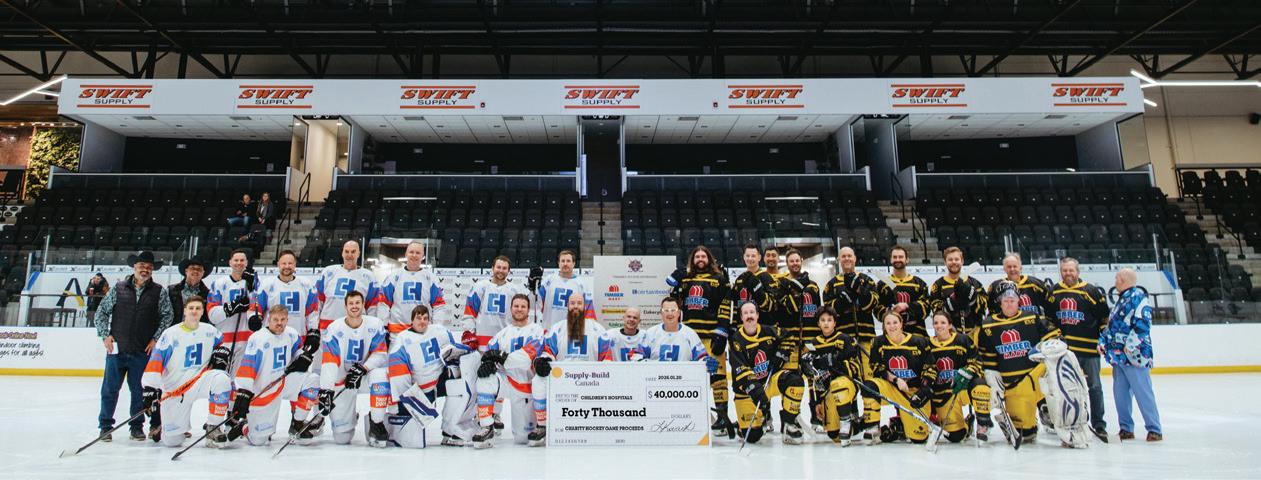



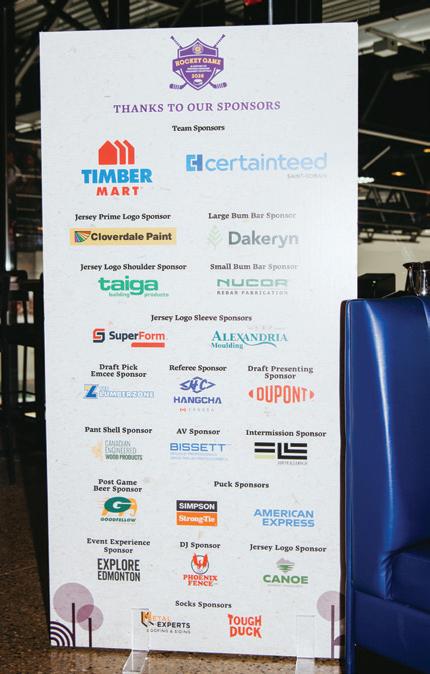







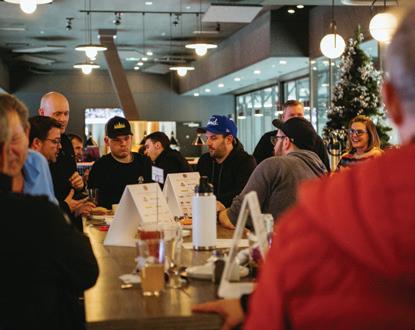
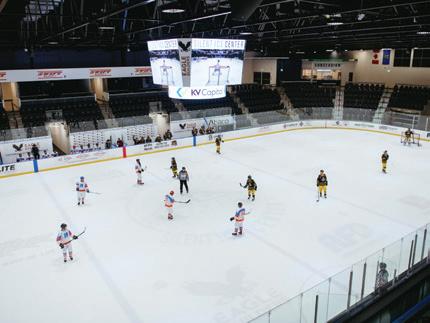



Travis Waite, Supply-Build Canada
It was another successful charity hockey game hosted by Supply-Build Canada, as Team CertainTeed faced off against Team Timber MART. This time, the players hit the ice at the Silent Ice Centre just outside Edmonton in Nisku, playing a hard-fought game filled with competitive spirit, plenty of laughs, and all in support of Children’s Hospitals across Canada.
After last year’s nail-biter - decided in a shootout and resulted in a big win and a year of bragging rights for Team Timber MART - Team CertainTeed exacted their revenge in a more decisive, but equally intense tilt.
Taking an early lead on the backs of their star players, CertainTeed held off a late push from Timber Mart to secure a 14–9 victory after three periods, setting up the rubber match in 2027.
A special thank you to Joel Hartung for leading the organization of the Heroes on Ice Charity Hockey Game and helping make the evening a success.
Thank you to all of our sponsors and participants for their support and for helping create a meaningful impact beyond the rink.
In total, $40,000 was raised that evening, with all proceeds supporting Children’s Hospitals across Western Canada. vs.

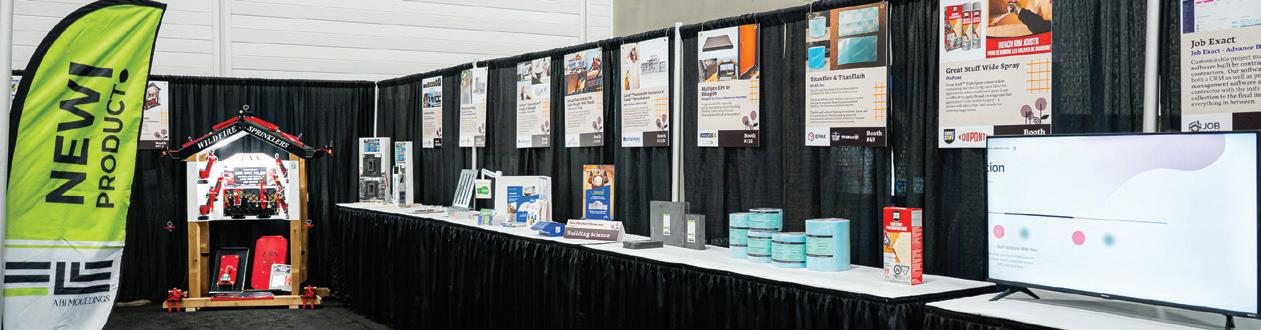
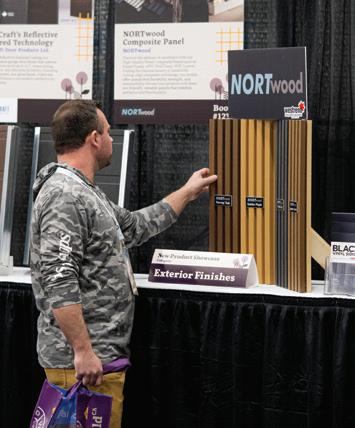
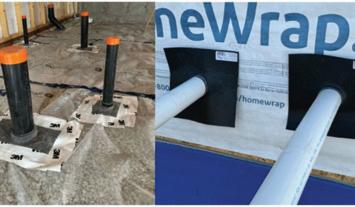
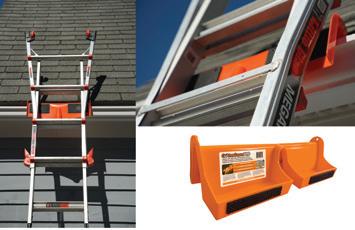

Showcase 2026 featured more than 75 new products across the show floor— reflecting the breadth of innovation shaping today’s building supply industry. From building envelope performance and exterior finishes to jobsite efficiency and retailready solutions, members introduced products designed to solve real-world challenges.
Below is a look at some of the new products presented during the event.
AIR BARRIER + TECHNICAL BUILDING PRODUCTS
Air Barrier Gaskets deliver instant, repeatable airtight seals around plumbing, HVAC, electrical, gas, and below-slab penetrations.
With tool-free installation and long-term movement tolerance from -40°C to +120°C, they support modern Step Code and Net Zero builds while helping reduce blower-door failures.
GUTTER SAVER PRO INC.
Gutter Saver PRO is a Canadian-made ladder accessory designed to protect gutters from damage while improving ladder stability.
Installed from the ground using an extension pole, it transfers ladder weight to the fascia to reduce dents, cracking, and slippage. Lightweight and durable, it is suitable for both professional and homeowner use.
Inspired by the natural dark slate quarries of Canada, Bay Stone in Orthic pairs an authentic stone aesthetic with Fusion Stone’s patented mortarless installation system.
CCMC approved and backed by a Lifetime Guarantee, the product includes stainless steel hardware for durability and ease of installation.
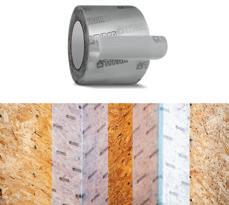
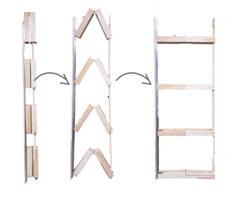
TYPAR
Winner of the “Best of IBS” Award for Most Innovative Building Material, Typar Clear Acrylic Flashing allows installers to clearly see nail and screw fins during window installation.
The transparent design improves accuracy and efficiency while simplifying inspection approvals. Offered with a lifetime limited warranty.
DOMTEK BUILDING PRODUCTS
New in 2025, Domtek’s Board & Batten steel siding delivers the classic look of traditional board and batten with the durability and low-maintenance benefits of steel.
Available in premium finishes and realistic woodgrain textures, with 2" or 4" trim face options.
CONTEMPORARY
Bionic Snipe is a high-performance microbial cleaner designed to eliminate biologically based stains and odors at their source.
Using specialized microorganisms that digest organic waste, it penetrates porous surfaces and hardto-reach areas where traditional cleaners often fail. Once applied, the microbes remain active for up to 48 hours, continuing to break down contaminants beyond the initial treatment.
WIPECO INDUSTRIES
SHINEX MICROKLEAN delivers microfiber on a roll—tearing off like paper towel while offering the absorbency and durability of a reusable cloth.
Each 12" x 12" sheet is soft, washable, and designed for cleaning, dusting, and detailing. Available in grey or blue.
GOODFELLOW INC.
This 6' x 8' fence panel combines a Western Red Cedar frame with 26-gauge black corrugated metal for enhanced durability and privacy.
Offering an alternative to traditional fence boards, the panel is designed for easy installation and has gained strong popularity on the West Coast, with growing adoption across the Prairies.
ALEXANDRIA MOULDING
This patented pocket door frame features a hinged design for tool-free assembly in under a minute.
Pre-installed soft-close and soft-open hardware, nylon wheels with ball bearings, and a lightweight engineered frame improve installation efficiency while reducing packaging bulk by up to 66 per cent compared to traditional frames. Supports doors up to 150 lbs.





Building Science
• Air Barrier Gaskets
• BrandGuard Vents
• CertainTeed FIRELITE: light-weight wall panels
• Infinaé™ CarbonLow™ range of drywall
• Lanaé™ Sustainable Insulation & Lanaé™ NoiseReducer
• Multipro EPS by Blaugelb
• WME Single Stem Heavy Duty Engineered Support Column
• Construction Materials
• Sika Fast Fix 440 Polymeric Asphalt
• Western #2 SPF Finger Joint Stud
Exterior Drainage
• Gutter Clean Pro by Alu-Rex
• Gutter Saver PRO
• Zip Hinge - Universal Downspout Hinge
Exterior Finishes
• Barrette Contemporary Black PVC Lattice Panel



• Black Corrugated Metal Premium Cedar Fence Panel Board & Batten - Hidden Fastener
Chalet Siding -New Colours
ChamClad Board and Batten
EX-Cel Cellular PVC Trim - Now available
Fusion Stone Bay Stone in Orthic
GoodPanel Wall and Ceiling Solutions
Mitten Black Vinyl Siding
• NorthRidge Stone
• NORTwood Composite Panel
• Steel-Craft’s Reflective Textured Technology
• QwickBuild Aluminum Deck Framing
• Wakefield Bridge Steel Shingles
• White Plank Door
Hardlines
• CBS Profiles
• DOSCZ Deck Offset Support Connector
• Great Stuff Wide Spray
• Jona Lock Subfloor & Construction Adhesive
• Pica Master Belt
• Pica Powder Deep Hole Spray Marker
• Provence Bath Collection
• Simpson Strong-Tie HDUE Holdown
• Simpson Strong-Tie Strong-Bond
• Tavira Bath Mat
• TitanFlex & TitanFlash
• Typar Clear Acrylic Flashing
• Wood Repair Plus+ Kit
Interior Finishes
• Floorpan Wings
• Palmera
• RTA Kitchen Cabinets and Vanities
• VIZÜWALL NUEVE
• Woodscape
Outdoor Living
• Outdoor Living Today’s 4x1.5 Urban Raised Garden Bed
• Outdoor Living Today’s 6x3 Urban Raised Garden Bed
• Outdoor Living Today’s 8x5 Western Red Cedar Grill Gazebo
• Outdoor Living Today’s 8x5 Western Red Cedar Raised Garden Bed
• Outdoor Living Today’s Corner Tiered Raised Garden Bed
• Outdoor Living Today’s L-Shaped Tiered Raised Garden Bed
• Outdoor Living Today’s Saltbox Studio
• Simpson Strong-Tie Outdoor Accents Sage System
• Sunbelly STANDARD & SHORTY Gate Kits
• Urban Escape Pergola
Safety & Janitorial
• Bionic Snipe
• Limitless Wildfire Suppression Systems
• Multi-Zorb® Universal Granular Absorbent
Tools
• FN91T1 3-1/2" Paper Tape Framing Nailer
• JN91H1 1-1/2" METAL CONNECTOR NAILER
• Job Exact
• PALOT TRAY PAL
• RoofPro 445XP
• Senco CS61H1 Cap Stapler
• Serpent Premium Pro
• SHINEX MICROKLEAN
• SHOPRO Universal Cordless Worklights
• SN71P1 2-1/2" Coil Siding Nailer
Windows & Doors
• 2 Panel Basic
• All Weather at Home Advanced IGU powered by Corning® Enlighten™ Glass
• Alpha 2.0 Sliding Patio Door
• Compact Fixed Width Pocket Door Frame
• Hopper 2.0
• Kingsley
• Workhorse Rock Glass Combo


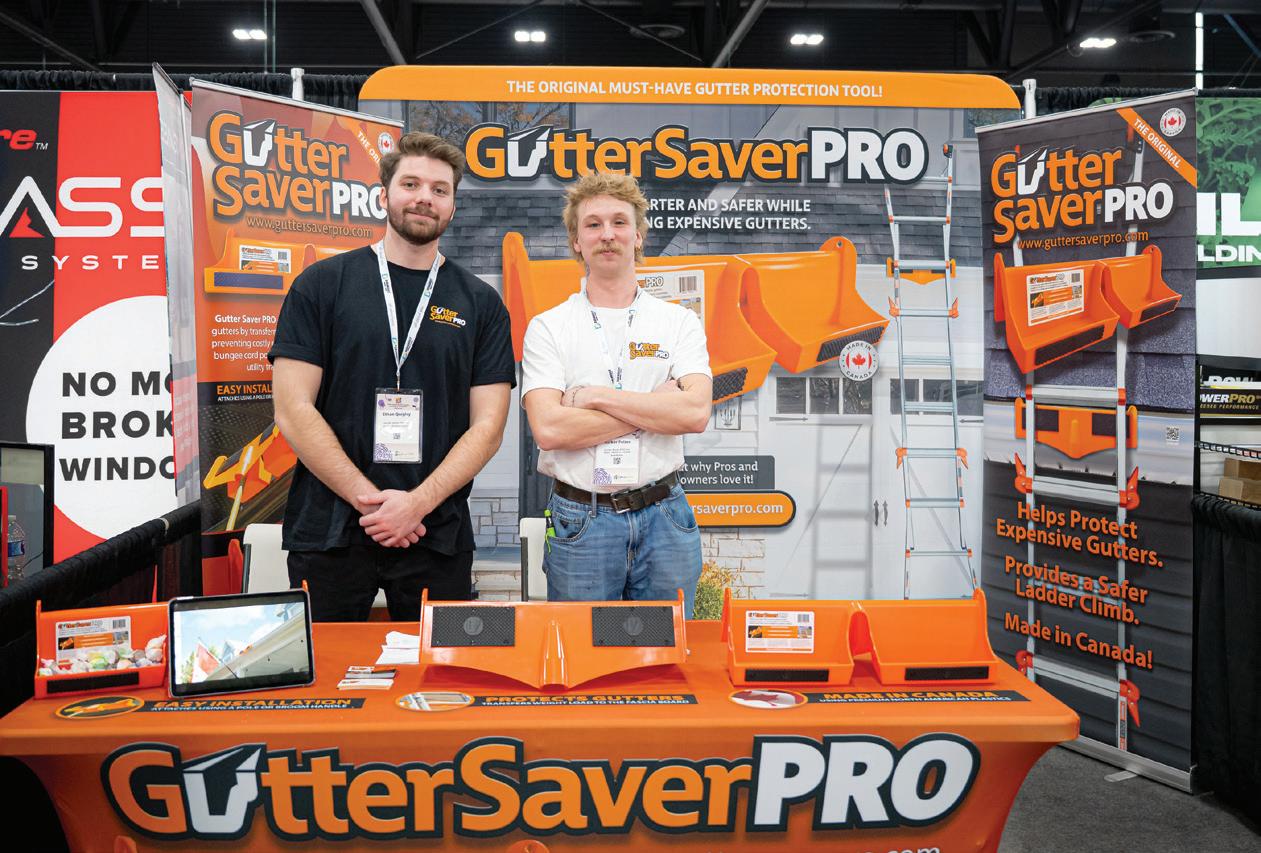
For some exhibitors, Showcase 2026 marked their first time on the floor. For others, it was the beginning of a new chapter with Supply-Build Canada. We asked new and first-time attendees what stood out, what surprised them, and what the week meant for their business.
Lucie Quigley
How friendly and genuinely supportive everyone was stood out most. Supply-Build Canada had clearly thought of every detail, and as a first-time exhibitor, that took a huge load off. A special shout-out to Matthew Lucek for checking in during setup.
The New Product Showcase was impressive. Each entry had its own customized sign, creating a polished look and making it easy for attendees to quickly understand each product at a glance.
We connected with other small, family-run businesses right away, which shifted the energy from “intimidating” to “we’re in this together.” Showcase puts us directly in front of decision-makers and allows people to see the Gutter Saver PRO in person—ask questions, understand where it fits, and build trust immediately.
“It’s one thing to understand this industry conceptually— it’s another to feel the energy of thousands of professionals in one space.”
—Natalie Bell
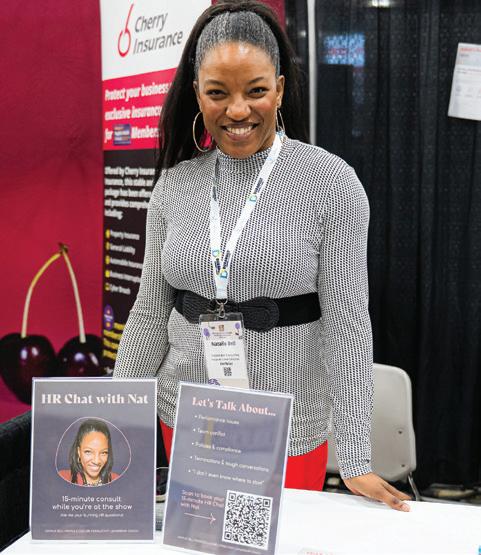
Frankie Kiely
Whatstood out most was the inclusion of a dedicated New Product Showcase area. It gave us the opportunity to highlight our wildfire suppression systems beyond our booth space and created a strong conversation starter across the floor.
We were surprised by how much advice was shared by surrounding booths and even attendees. No one was shy to offer feedback, and as a new member, that was incredibly helpful. The organization of the event also deserves a shoutout, especially the move-in, setup team, and arena staff.
We made meaningful connections with store owners looking to stock our products, individuals interested in protecting their own properties, and managers and executives championing our system internally. Showcase put us directly in front of decision-makers and aligned us with exactly the kind of community we want to grow alongside.
Natalie Bell
The scale of it all stood out immediately. I’d seen photos and videos, but nothing prepared me for walking into that space and feeling the energy of thousands of industry professionals in one place.
There’s real collaboration happening in this industry. People genuinely want to connect, learn from each other, and grow together. I wasn’t sure how HR would land at a trade show focused on building materials, but once people understood that strong people practices directly impact their bottom line, the conversations took off.
The impromptu HR strategy sessions at my booth were unforgettable. People weren’t just grabbing information, they stayed to talk through real challenges. Hearing their questions around legal compliance and foundational people practices showed how hungry this industry is for practical solutions that actually work.
Amanda Sereda
The scale of the event and the many meaningful networking opportunities made an immediate impression. The busy show floor, professional development sessions, and variety of activities created an engaging atmosphere and made it easy to connect with people in different settings.
We were pleasantly surprised by how approachable everyone was. Many members had been part of the organization for decades, which highlighted the long-term value of the community.
Showcase lets us tell our story the way it’s meant to be told, in person. When people can see the wood, feel the texture, and hear how each kit is made, they understand the craftsmanship behind our products. It makes building real connections much easier.
Karen Wolfe
Whatstood out most was how real the conversations were. People weren’t just walking by, they were stopping, asking thoughtful questions, and taking time to understand what TRAY PAL could do for them and their customers.
We were surprised by how welcoming and down-to-earth everyone was. It felt less like a trade show and more like a room full of people who genuinely wanted to help each other succeed.
The Showcase gave us direct exposure to decision-makers and accelerated the launch of our reusable paint tray lid in a way that’s difficult to replicate elsewhere. We gained feedback, clarified next steps, and built relationships aligned with how we want to grow our business.