MARINA WORLD



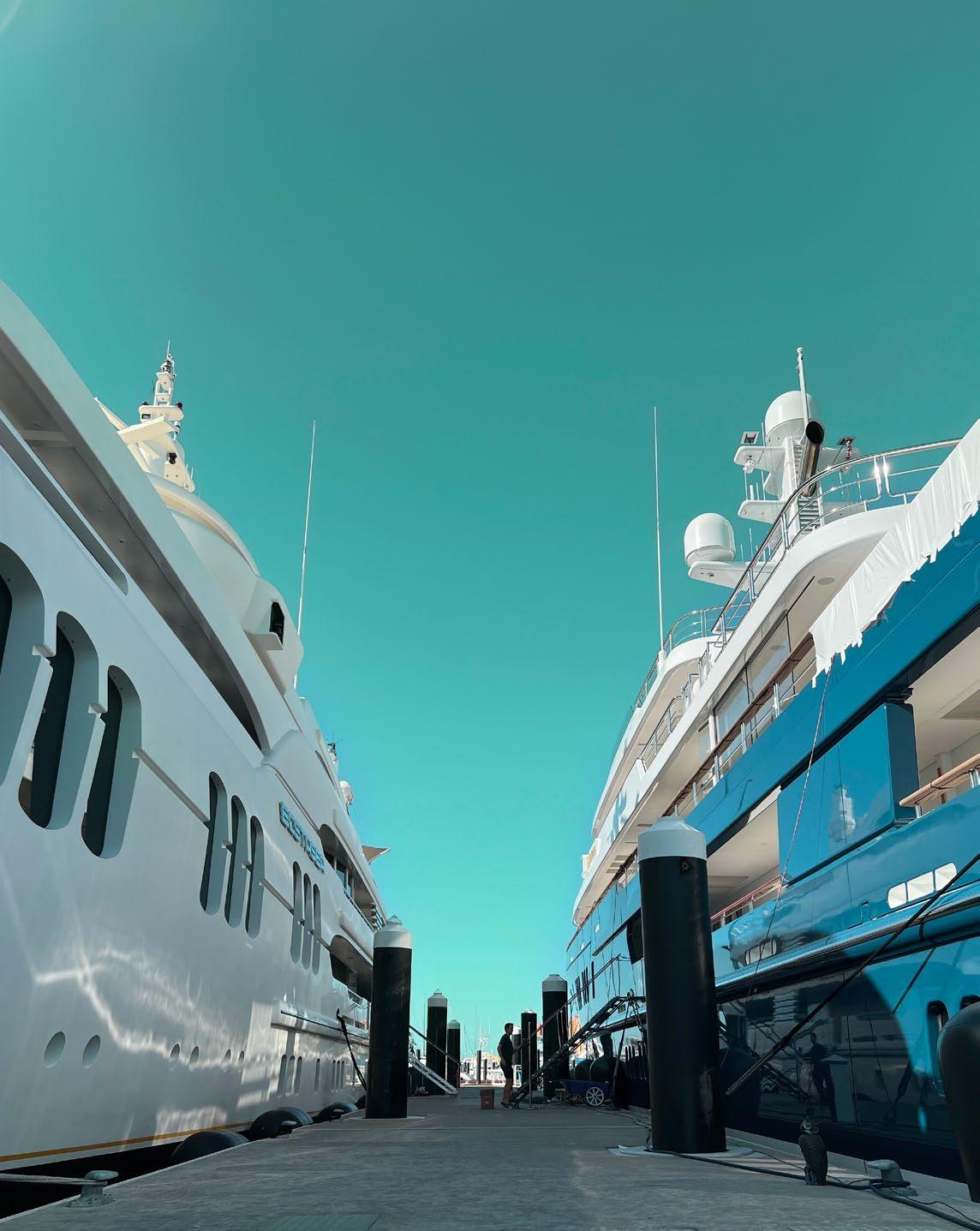
SF Marina is a world-renowned expert on developing new or existing premium marinas. We provide state-of-the-art floating breakwaters and concrete pontoons to anyone anywhere who plans on building a marina with superyacht berths. And who wants it to still be there after the storm.
Dear Readers,
One of the challenges of my job as editor of Marina World is making sure that each quarterly edition of the magazine delivers content that is fresh and engaging, where every article contributes something new.
As large language models such as ChatGPT are playing an increasingly prominent role in generating online content, it is important to remember that these tools can only draw on information that already exists. While they do indeed have some positive aspects - such as conducting research, finding sources or writing summaries - they are incapable of generating genuinely new content and they cannot think for themselves. The copy they produce is always artificial and rarely intelligent.
How, therefore, can I make sure that the publication remains the megaphone of the global marina industry, upholds good editorial standards, retains its unique identity and always contributes something new, while the trajectory of the wider information space is pulling me in the opposite direction?
The answer - and antidote - is conversations. This is how we unlock the wealth of knowledge and experience stashed away in industry experts’ brains and share it for the benefit of the global marina community. Real people, real words, real intelligence. This has been my modus operandi for this 154th issue of Marina World and so it will continue.
Alongside many articles borne out of my own conversations with outstanding representatives of the marina industry - including Türkiye’s Artun Ertem, Port Denarau’s Cynthia Rasch, Viltec’s Paula and Miquel Vilanova, and V-Marine’s Wael Juju - I am proud to present our first ever article bringing together two marina managers in one conversation: Gareth Wilson, of Westhaven Marina in New Zealand; and Jackie Zolnierowicz, of Suntex’s facility at Marina del Rey in California, USA.
Marina World can only be a megaphone if the marina industry is brave enough to speak. To that end I would like to thank the people featured in this issue for helping me guarantee that the knowledge and perspectives included within these pages are new, never artificial and always intelligent.
Patrick Norén Editor


Marina World patrick.noren@marinaworld.com













EDITORIAL
EDITOR IN CHIEF EDITOR
NEWS WRITER
EDITORIAL CONTRIBUTOR
EDITORIAL CONTRIBUTOR
CREATIVE DIRECTOR GRAPHIC DESIGNER
Francesca Webster
Patrick Norén
Ellaine Zabate
Mel Symes
Vladislav Vorotnikov
DESIGN PRODUCTION SALES & ADVERTISING
HEAD OF SALES SALES MANAGER
CLIENT SERVICE MANAGER
SALES AMERICAS & CARIBBEAN SALES ITALY
Ivo Nupoort
Beatriz Ramos
Marieke de Vries
Brianna Johann
Krista Andres
Philippe Critot info@admarex.com
CORPORATE
FOUNDER & DIRECTOR TECHNOLOGY DIRECTOR FINANCE DIRECTOR
Merijn de Waard Fabian Tollenaar
Laura Weber
SuperYacht Times B.V. Silodam 256, 1013 AS, Amsterdam, The Netherlands 31 (0) 20 773 28 64 info@superyachttimes.com www.superyachttimes.com
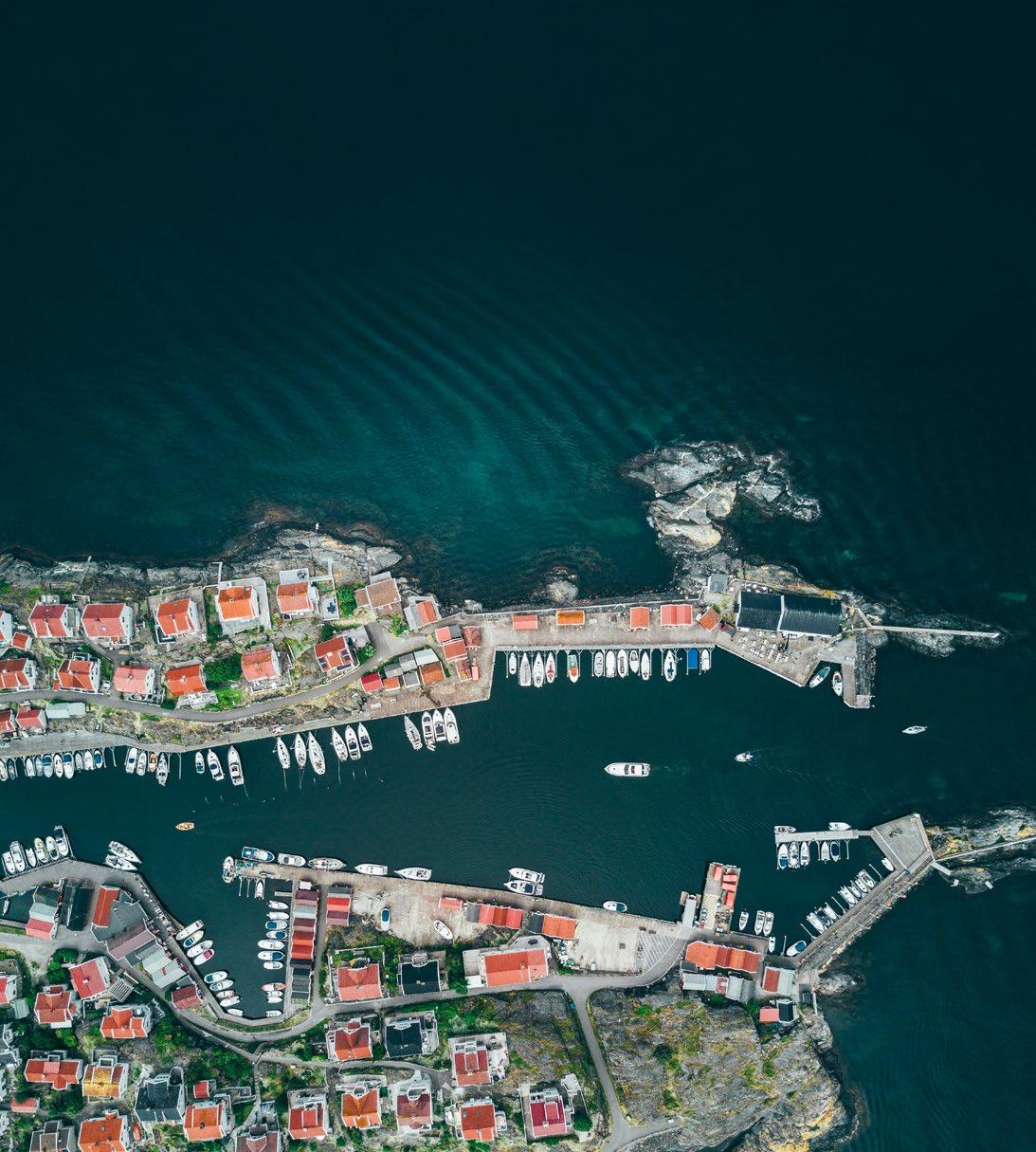
Cover Image:
Åstol harbour, Sweden by Geranimo / Unsplash
“Marina World” (ISSN “1471-5856” USPS 19194) is published four times a year in January, April, July and October by “SuperYacht Times B.V.”, “256 Silodam, 1013 AS, Amsterdam, The Netherlands”. Airfreight and mailing in the USA by World Container Inc., c/o BBT 150-15 183rd St, Jamaica, NY 11413-4037, USA. Periodicals postage paid at Brooklyn, NY 11256.
POSTMASTER: Send address changes to “Marina World”, World Container Inc., c/o BBT 150-15, 183rd St, Jamaica, NY 11413, USA.
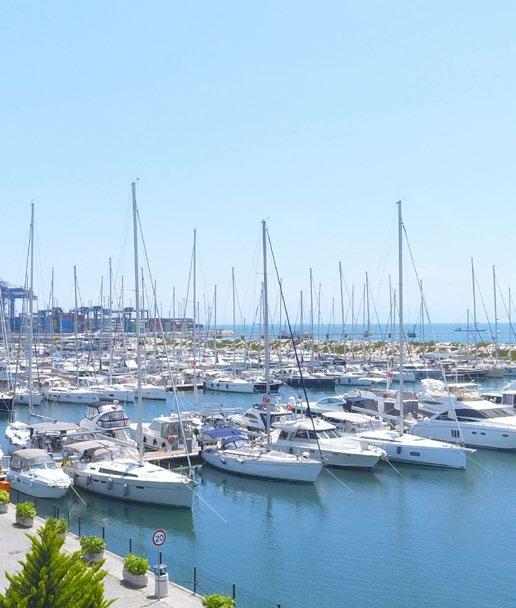
IF YOU OWN, BUILD, OR DESIGN FLOATING STRUCTURES
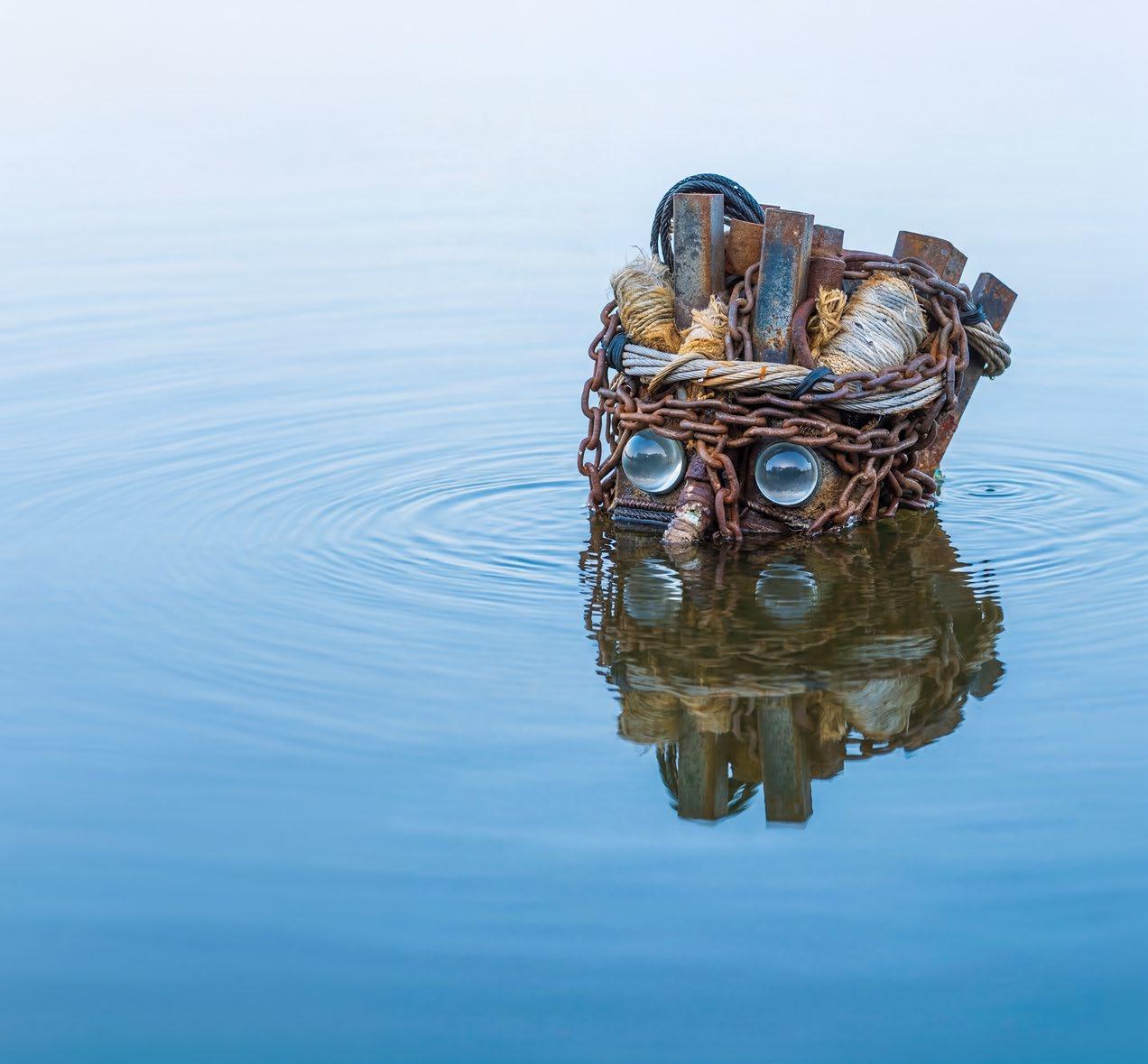
When your mooring choices look back at you after 20+ years, what do they say?
Did it hold in place through the worst storms?
Did it reduce loads and protect the structure or did it slowly introduce wear and tear?
What did it actually cost over time maintenance, replacements, downtime?
What about what you do not see the seabed, the environmental impact?
How about the accumulated visual impact above water?
These answers matter for mooring system selection
Make a mooring decision worthy of the next 20+ years
As your turnkey mooring partner, we work with you to evaluate your specific site and priorities, providing a mooring design aligned with your long-term goals.
Mooring selection should be based on proven long-term performance in real-world conditions, not assumptions or marketing claims.
Let’s get your floating vision sustainably moored!

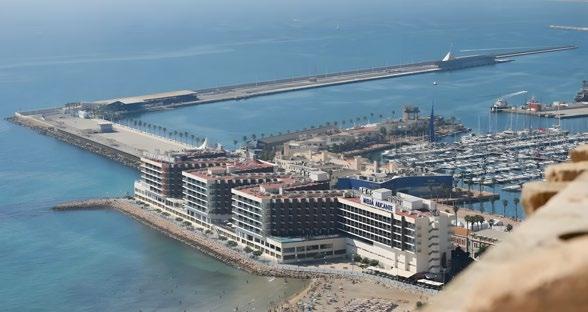
The Port Authority of Alicante has confirmed that legal proceedings tied to Specific Amendment No. 5 of its Special Plan have ended after the party behind the appeal withdrew the case. The proceedings concerned the planned superyacht marina at docks 10, 12 and 14, where Puerta del Mar y Ocio holds the concession for the project.
Spanning more than 11 hectares, the plan includes berths for vessels up to 50 metres, along with dining, retail, port services and waste management facilities. The concession runs for 10 years, with investment linked to the project raised to €15 million ($17 million USD).
The port authority said the plan targets an area of the port with limited activity, with expected effects during construction and operations including job creation and increased activity in local business sectors such as hospitality, retail and services.
Luis Rodríguez, president of the port authority, welcomed the end of the legal proceedings, describing it as “a decisive milestone that allows the project to move forward with confidence”.
The concession was first awarded in 2020 for a nautical-sports facility at the same location. In 2021, Puerta del Mar y Ocio requested changes to the original plans to allow larger vessels.
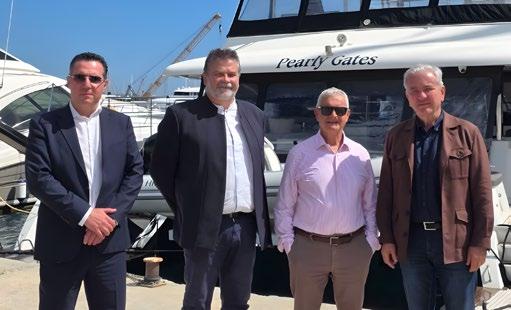
The Port of Lavrio has signed a €3.9 million (around $4.5 million USD) contract with Marinetek Adriatic to install new floating breakwaters and pontoons at the Greek port, as authorities continue redevelopment efforts at one of Attica’s busiest maritime gateways.
The agreement was signed on 14 May 2026 at the offices of the Lavrio Port Authority following a public tender process that began in October 2024. The project is expected to support marina operations and vessel traffic at Lavrio, which serves routes between Attica and islands in the Aegean, Saronic and Ionian seas.
George Vacondios, director of the Lavrio Port Authority, and Boris Miškić, director of Marinetek Adriatic, signed the contract in the presence of Lavrio mayor Dimitris Loukas and Fanis Karagianis, director of consultancy company Optimum Value.
Under the contract, Marinetek Adriatic will produce and install 19 floating breakwater units and 18 reinforced concrete pontoons. The structures will create six floating piers with a combined length of nearly 500 metres.
The units will be built at the company’s facility in Šibenik, Croatia, before installation at the Port of Lavrio. The project is expected to be completed within eight months, with the upgraded marina set to provide berthing for vessels from 10 to 40 metres in length. Located at the south-eastern tip of Attica near Athens International Airport, the Port of Lavrio is officially classified as a “Port of International Interest”.
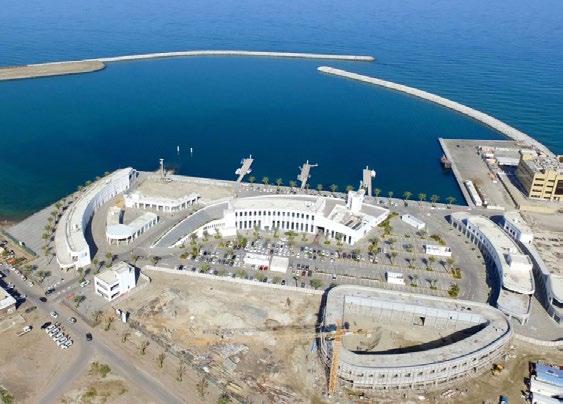
Phased operations have begun at Barka Fishing Port Project, also known as Barka Marina, in South Al Batinah Governorate, Oman. Developed by and with investment from the private sector, the project has an investment value of over 55 million Omani rials (about $142 million USD) and aligns with Oman Vision 2040.
Engineer Hassan bin Hussein Al-Aghbari, assistant director-general for fisheries, said current activities at the site are focused on fisheries services. These include the fish market, ice plant, marine workshop and fishing equipment outlets, which support the port’s daily operations.
He added that vessel traffic has increased since operations began, especially from artisanal and coastal fishing boats. Fish landings have also gone up following improved handling systems, logistics services and upgraded facilities. Work continues across the site as the commercial and tourism areas progress through finishing stages. Restaurants, cafés and other leisure and retail units are still undergoing interior work and await final approvals before opening.
Plans also include expanding yacht berthing capacity, introducing digital systems for tracking fish landings, improving seafood marketing processes, as well as developing hospitality facilities such as beachfront accommodation. In 2019, Salim bin Ali al-Siyabi, chairman of Al-Siyabi Group (Falcon), the main investor in the project, said the development covers a total area of about 133.62 hectares, with the actual development area standing at around 11.52 hectares. The project includes 450 commercial units and a marina with berths for around 80 vessels.
Jeddah Yacht Club & Marina in Saudi Arabia has gained Five Gold Anchor status from The Yacht Harbour Association at its first assessment under the programme following an independent review of its operations, customer service, safety and environmental standards.
Set on Jeddah’s Red Sea shoreline, the marina is close to Al Rahma Mosque and the Jeddah Corniche Formula One circuit, with King Abdulaziz International Airport about 15 minutes away.
The marina offers 94 berths and can accommodate superyachts up to 120 metres in length, while the yacht club includes lounge bars, boardrooms, a beach club, a gym and an outdoor terrace used for private and business events.
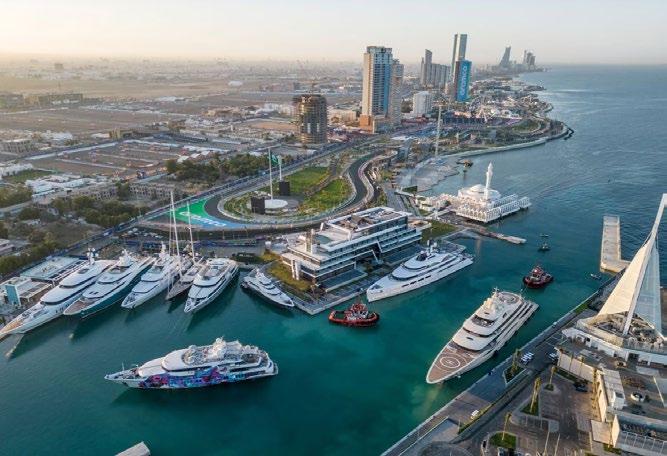
In a social media post, Oriel Blake, marine operations director at Jeddah Yacht Club & Marina, said: “Achieving Five Gold Anchors at first assessment is the highest level within the programme and reflects the dedication, professionalism and consistency delivered across every part of the marina experience.”
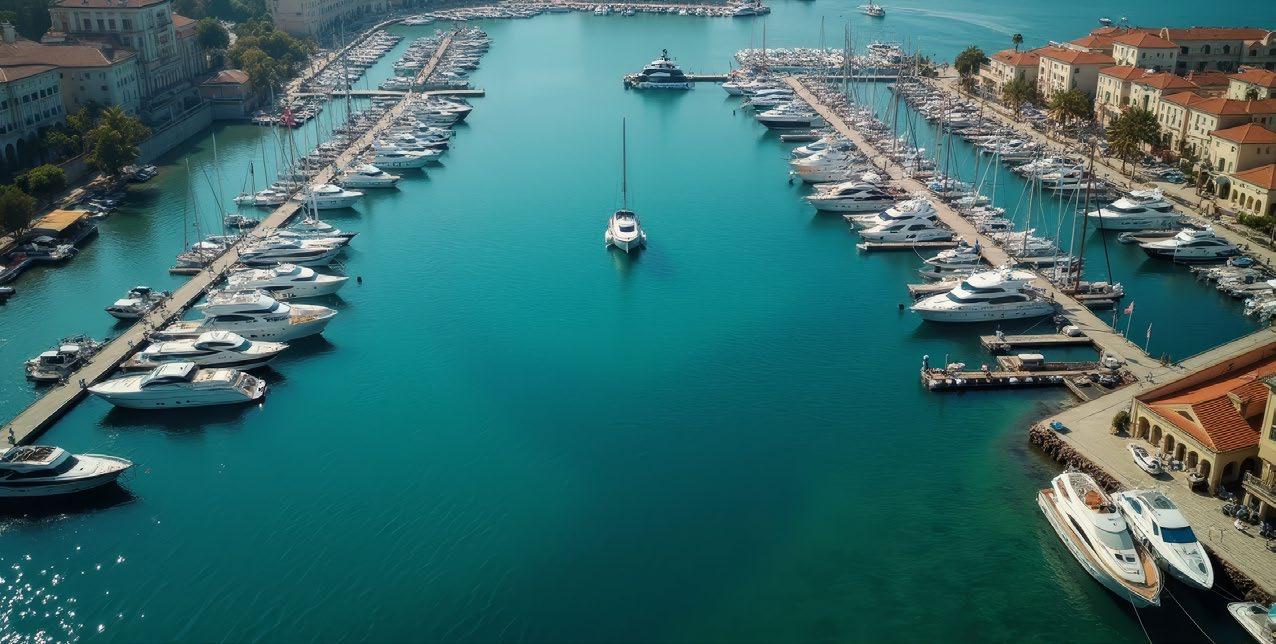


The US Virgin Islands government is reviewing a proposal for a hotel, marina and residential development on Water Island that would involve a minimum private investment of $300 million USD.
Acting governor Tregenza Roach announced the proposal during a government house briefing on 1 June, with the project requiring legislative approval, environmental review and other regulatory clearances before construction can begin.
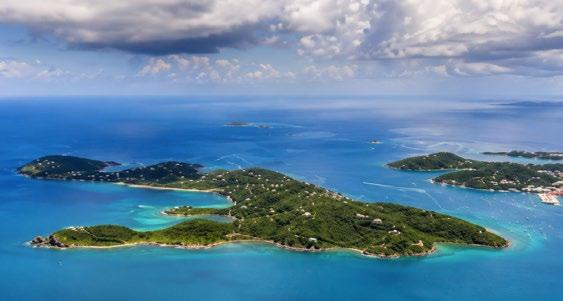
Under an amended lease agreement with Water Island Development Company, the project would include at least 88 hotel rooms, marina facilities, restaurants, retail space, spa amenities and up to 100 residential units on portions of government-owned land.
The proposal also includes infrastructure improvements valued at about $40 million, such as roads, drainage systems, potable water infrastructure, wastewater systems, utilities, solid waste facilities and marine infrastructure.
Government projections place the total investment at approximately $440 million, with the development expected to create about 200 construction jobs and around 300 permanent positions once the hotel and marina open.
The proposal stems from a lease agreement first approved in 2014. The project did not progress as planned, leading the government to issue a termination notice in 2025 for non-performance. That notice was later withdrawn, and a revised agreement was reached with a restructured Water Island Development Company.
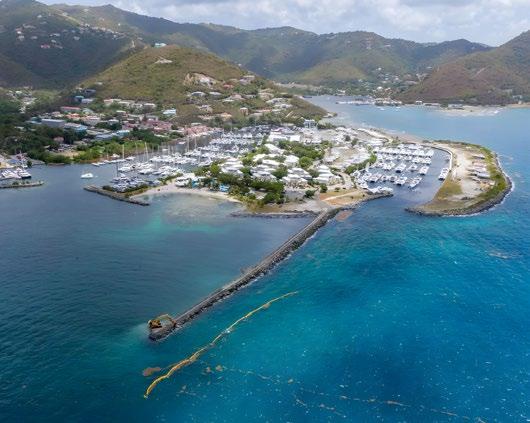
Nanny Cay Resort & Marina in the British Virgin Islands has reached the halfway point in building the breakwater for its south marina expansion. The project is part of a $30 million USD development aimed at increasing berthing capacity and improving facilities for larger vessels.
Work on the breakwater started after the project broke ground in October 2025, and has since reached 218 metres of its planned 435-metre length. So far, 34,209 tonnes of rock have been placed to form the structure that will protect the new marina area.
The south marina expansion will add 112 berths, including eight berths measuring 38 metres and two berths at 55 metres for superyachts.
Phase 1 of the development, which is expected to take around 18 months, also includes an extension of the existing boatyard, along with the construction of a new 150-tonne haul-out facility. It will be built to accommodate vessels up to 37 metres long and 13 metres wide.
Nanny Cay currently has 302 berths spread across its inner and outer basins, alongside waterfront housing units, retail space, restaurants and marine services. The boatyard has a 50-tonne Marine Travelift for monohulls, a 70-tonne widebody Marine Travelift for catamarans and two hydraulic trailers.








































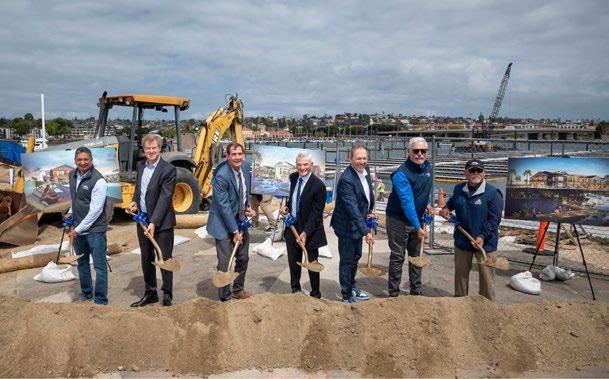
Harbor Island West Marina in San Diego Bay, California, has officially started construction on a $70 million USD redevelopment project with a groundbreaking ceremony attended by representatives from Beauchamp Leslie Development & Management, the Port of San Diego and project partners.
Covering 3.8 acres of land and 22 acres of water, the project is located near the San Diego International Airport, the Embarcadero and downtown’s Gaslamp District. It also sits within reach of Liberty Station, which offers public park spaces, dining options and retail areas, and Point Loma, known for marinerelated services and a waterfront community.
Eric Leslie, CEO of Beauchamp Leslie Development & Management, said: “This is an exciting step forward in San Diego Bay’s continued transformation. Alongside our community partners, we’re focused on creating an anchor waterfront destination that will allow boaters and the public to experience the bay with improved access and more comfortable, modern amenities.”
Once completed, the marina will provide 623 new slips for vessels between six and 43 metres. New facilities for boaters will include a lounge, fitness centre, pool and spa, along with around 1,486sqm of commercial space. A public waterfront promenade and viewing deck will be accessible to the public.
Bellingham Marine is handling waterside works, including new docks and utility upgrades. Pacific Building Group is responsible for landside construction, which includes boater facilities, commercial space and public access areas. AO, an architecture and planning firm based in Orange, California, is leading the design work.
Headquartered together in Charleston, South Carolina, PORT 32 Marinas and Acme Marinas have announced the merger of their portfolios. The deal creates an expanded operating platform across established coastal locations in the United States, including major East Coast and Florida markets.
The combined portfolio holds around 4,000 slips across 17 locations. PORT 32’s properties span Palm Beach Gardens, Fort Lauderdale, Naples, Tampa, Marco Island, Cape Coral, Tierra Verde, Jacksonville, Lighthouse Point and Morehead City.
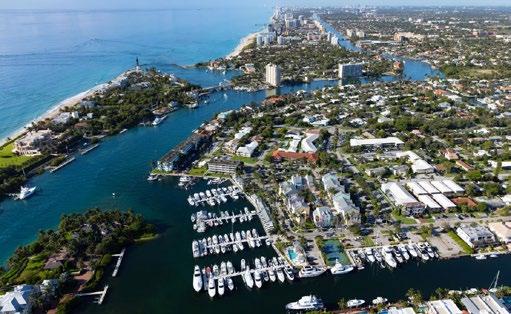
Backed by Koch Real Estate Investments and founded in 2021, Acme covers Sag Harbor Yacht Yard, Annapolis Landing Marina, Sanibel Marina, MacDougalls’ Cape Cod Marine Service, Falmouth Marine Yachting Center, Falmouth Ferry, Coinjock Marina & Restaurant and Vineyard Haven Marina.
PORT 32 chief executive officer Austin Schell will remain in the role following the merger, leading the combined organisation. Members of the Acme team will also stay in leadership positions, with Stephen Shaw as chief investment officer and Shelby Tucker as chief financial and chief administrative officer.

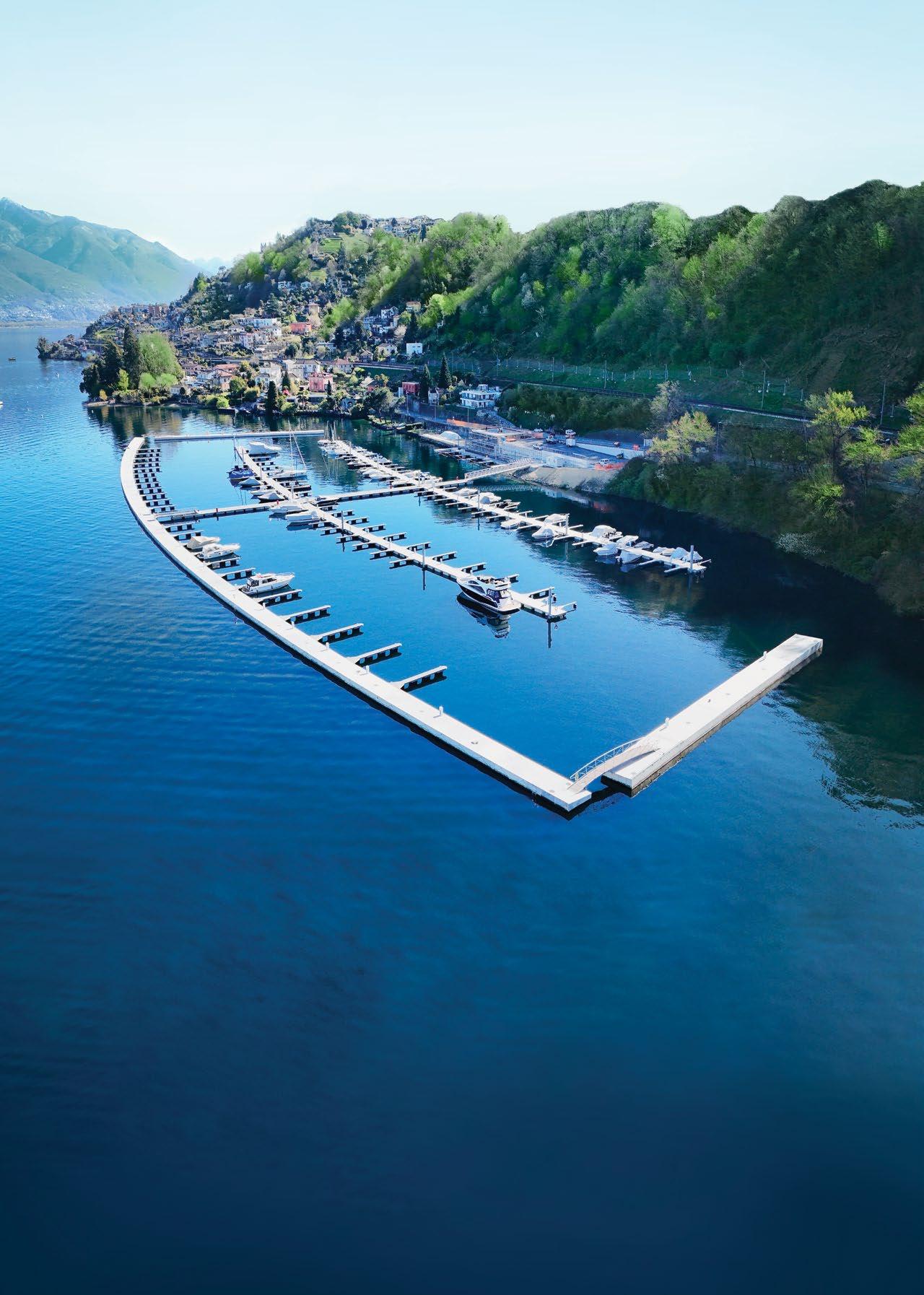
Floating marinas, beyond the limit of depth.
Pontoons, breakwaters, superyacht piers, walkways and floating structures. Robust and reliable, standard or custom-made, available in aluminum, concrete or steel.
Turnkey solutions for marine, commercial and industrial sectors.
Tanja Marina Bay in Tangier, Morocco, is approaching completion as part of the redevelopment of the Tangier City Port area, with delivery expected in summer 2026.
The project sits within a long-term plan to reshape the former commercial shipping waterfront into a mixed-use urban district with residential, commercial and tourism functions.
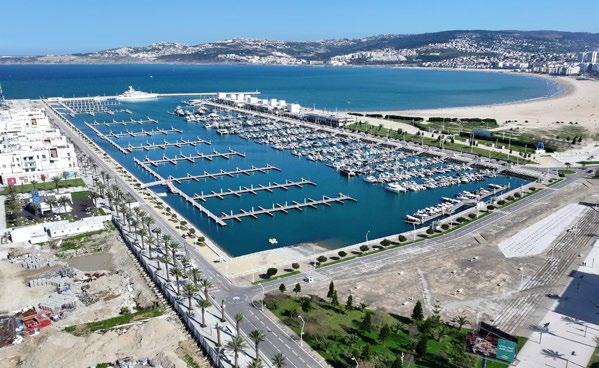
Presented as the country’s first urban marina, Tanja Marina Bay will include around 1,400 berths across two basins within the former port layout. The infrastructure includes around three kilometres of pontoons, about 350 finger pontoons and 24 gangways, with berthing for vessels up to 90 metres in length.
Metalu supplied aluminium marina equipment for the pontoon system, including floating structures, edge profiles, fender systems and related components, with fabrication and product ranges adapted to pontoons up to four metres wide.
DUMEZ Maroc is responsible for installation activity and utility systems across the site, while Rolec has supplied Quantum power pedestals to provide shore-side services for vessels.
The redevelopment began as Tangier’s port operations were reorganised. From 2008, commercial shipping was gradually withdrawn from the city centre, and the Port de Tanger Ville was closed to commercial traffic on 15 December 2010. After this, former port areas were reassigned for marina basins, fishing relocation and waterfront redevelopment linked to the city.
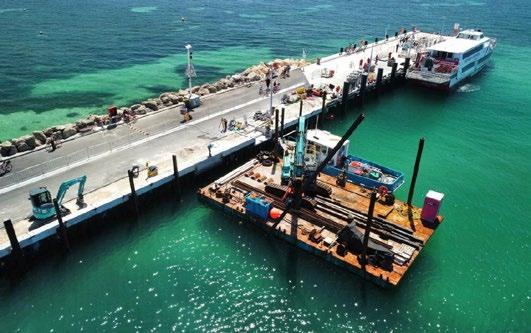
Following their 2025 partnership, Marine Structures and Jetty & Marine Constructions (JMC) have expanded their marine infrastructure work in Western Australia through projects across marina, jetty and waterfront developments in government, commercial and public sites.
In Perth, work continues on the Pier 21 redevelopment, valued at about $12 million AUD ($8.4 million USD). The project includes Superior Elite pontoons and Mega Elite wave attenuation T-head systems designed for use in marine conditions that require stability and long service life.
The partnership is also progressing a combined $4.7 million AUD ($3.2 million USD) project involving the replacement of a fixed jetty at Fremantle Fishing Boat Harbour and the construction of a new boat ramp pontoon at Woodman Point for community and commercial marine users.
Marine Structures is known for its pontoon design, engineering and manufacturing in marina and waterfront projects in Australia and overseas, while JMC brings decades of experience in marine construction, piling and fabrication, supported by local facilities and knowledge of coastal conditions.
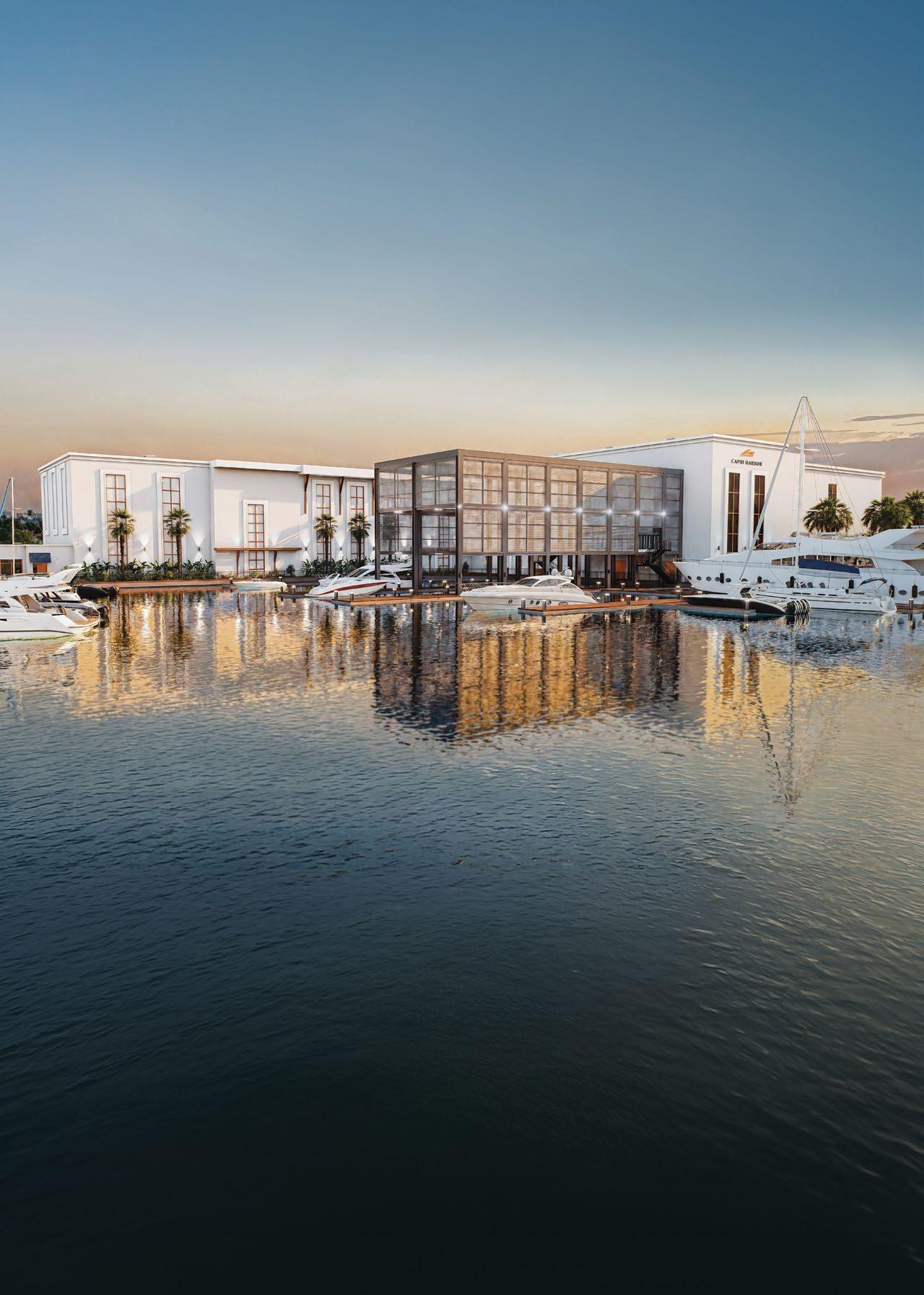
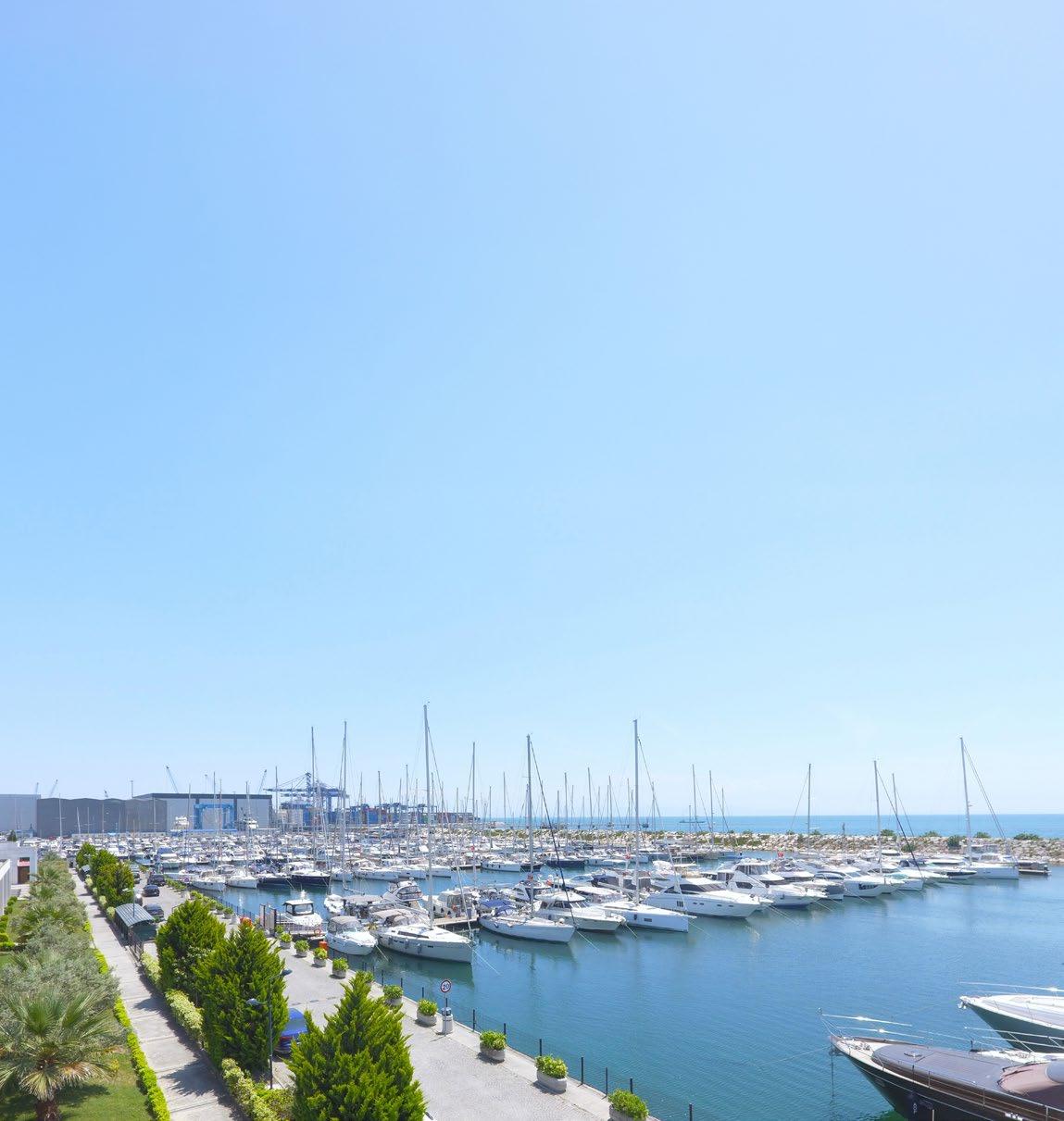
West Istanbul Marina has become a recognised destination for superyacht berthing, refit, repair and maintenance in the eastern Mediterranean, supported by comprehensive technical facilities and coordinated project management.
By Patrick Norén
As the global superyacht market continues to grow, West Istanbul Marina is a stand-out facility offering high levels of service while still championing environmentally conscious principles.
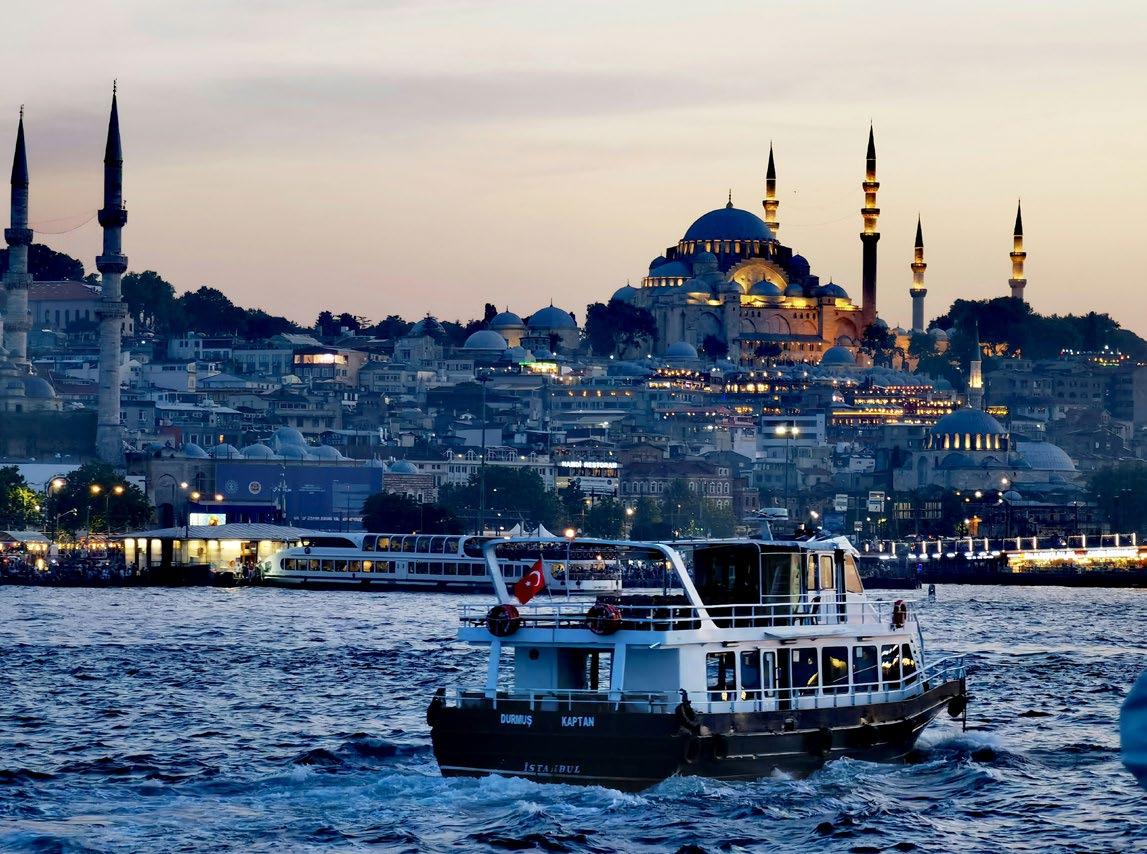
Located on the Sea of Marmara on Istanbul's European coastline and being an official port of entry with on-site customs facilities, West Istanbul Marina is an ideal destination for international yachts cruising between Europe, Türkiye and the eastern Mediterranean. There is also a helipad on-site for clients who wish to arrive via air travel. Not only offering a range of recreational facilities and social activities, it is also known for its comprehensive refit and service facilities that have carried out over 130 superyacht jobs since the start of operation.
The original plans to develop the area into a marina and a wider recreational destination were officially approved by local authorities on 15 March 1996, and the first
version of the project dates back to 1998.
The marina subsequently underwent major revisions and expansion planning and all core marine structures required for operations had been completed by September 2012. This included everything from breakwaters, floating pontoons, dry berths and piling systems, to boat racking systems, technical infrastructure and maintenance facilities.
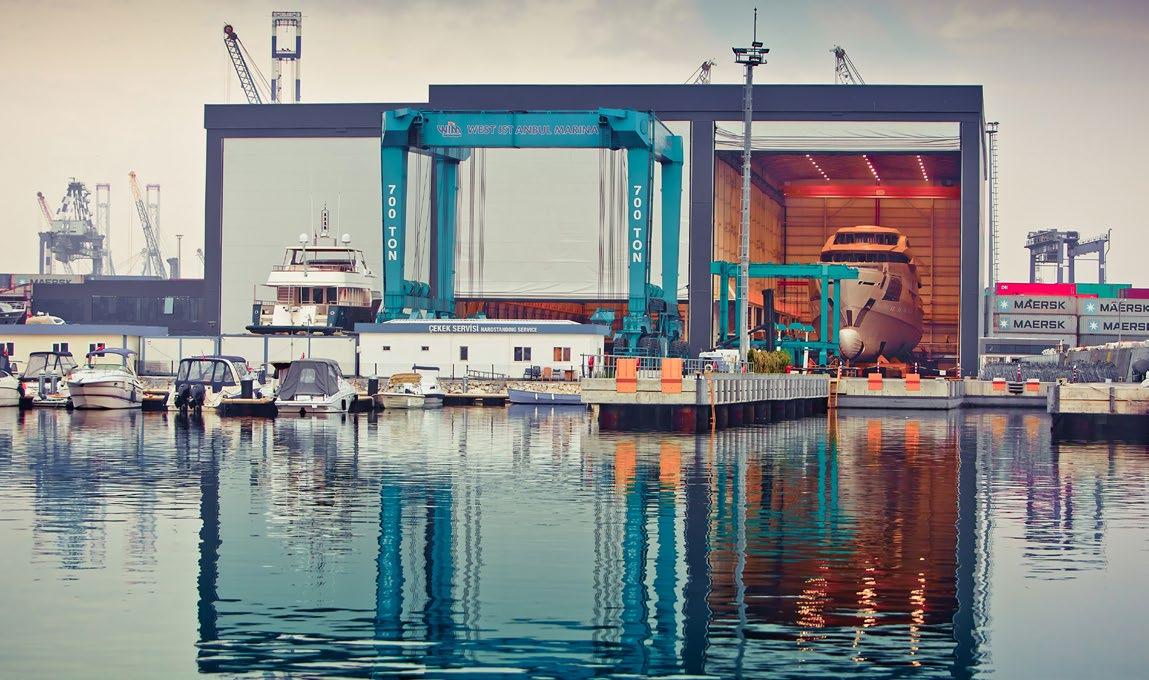
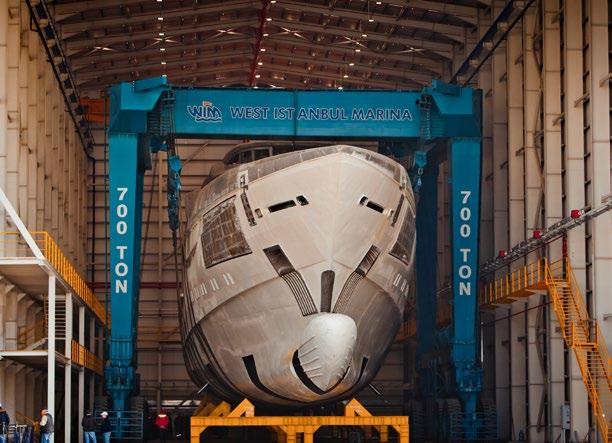
Today, West Istanbul Marina can accommodate approximately 600 vessels in the water - including superyachts up to 90 metres in length - as well as 200 boats in dry dock storage areas. The marina's technical infrastructure includes a 700-ton travel lift, a 75-ton travel lift and a 300-ton boat crane, together with dedicated hardstand areas and specialised maintenance hangars capable of supporting multiple superyacht projects simultaneously.
A decade and a half of growth since its entry into operation has seen it grow into one of the most comprehensive independent facilities of its kind in Istanbul: an integrated marina and yacht service destination with restaurants, cafés, retail outlets, a sailing school, yacht club, beach club, swimming pool, sports facilities and superyacht maintenance hangars.
Indeed, the marina's expansion from the very outset focused on broadening its scope, transforming it into a mixed-use lifestyle destination with hospitality, wellness, recreation and marine tourism at its heart. The addition of the western breakwater was another major turning point in this regard, as it enabled the marina to host larger vessels, including superyachts, who would naturally bring high-net-worth clients and guests into the marina for whom outstanding hospitality and service are paramount.
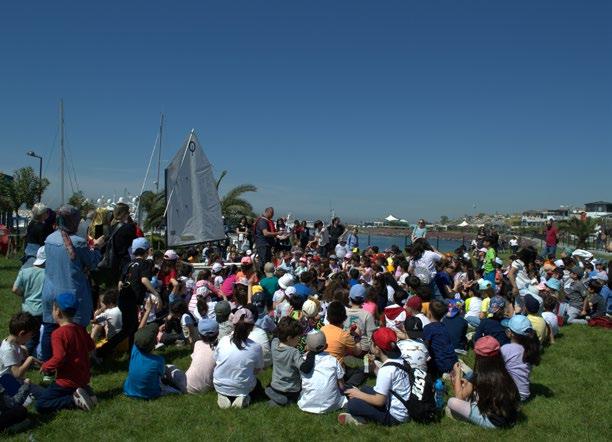
from top: West
boasts a 700-ton travel lift; Children’s education event at West Istanbul Marina on environmental conservation and the basics of yachting and sailing.
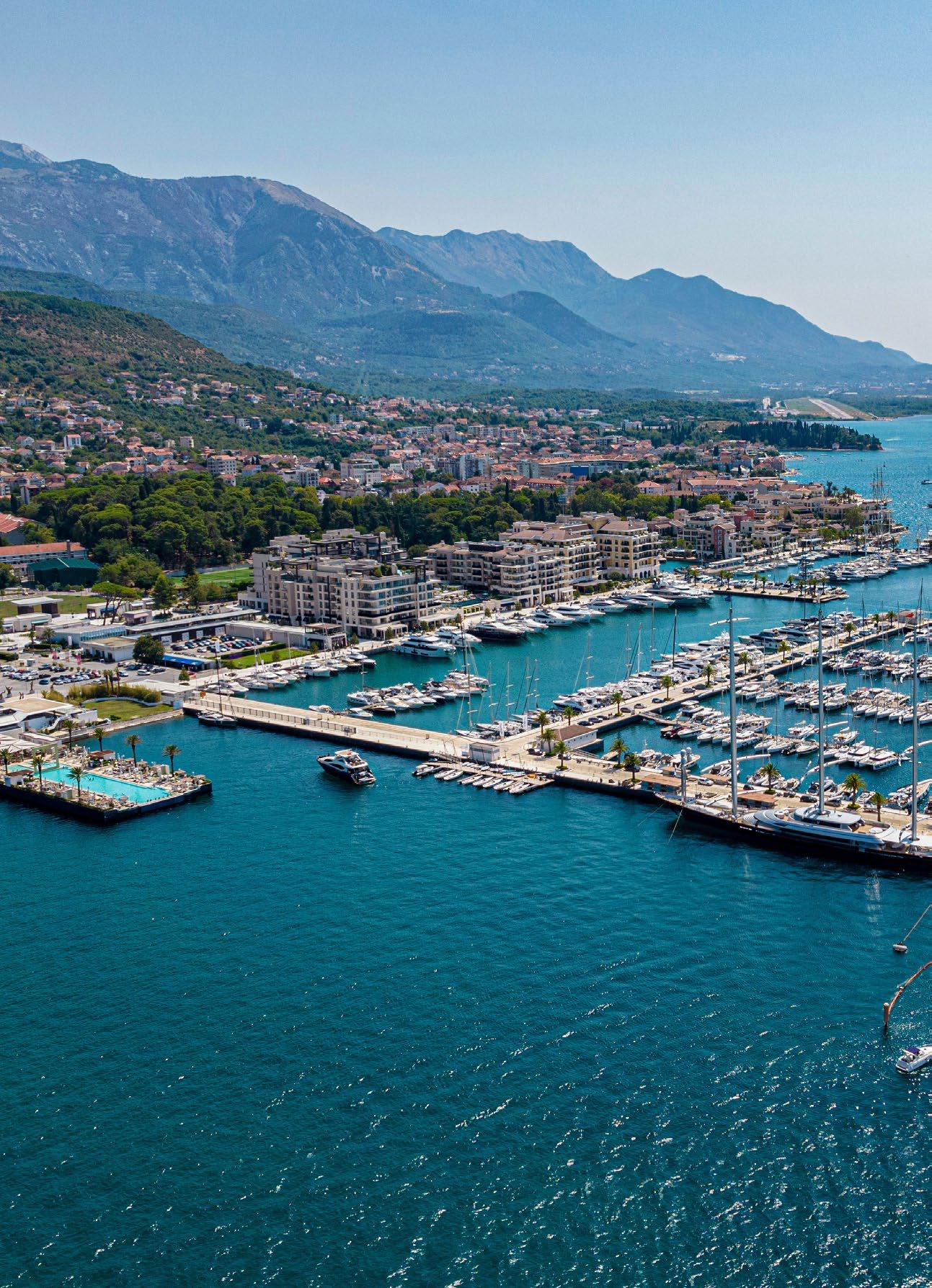
Next page: Aerial view of West Istanbul Marina.
For owners and crew, a refit period at West Istanbul Marina offers considerably more than technical support. Designed as an integrated waterfront destination, the marina features more than 30 restaurants and cafés, a fitness centre, beach, tennis courts and a wide range of leisure facilities that make extended stays both comfortable and convenient. Residential neighbourhoods within walking distance provide additional restaurants, supermarkets, pharmacies and everyday amenities, while a dedicated shuttle service connects the marina with the Metrobus network, offering easy access to the rest of Istanbul.
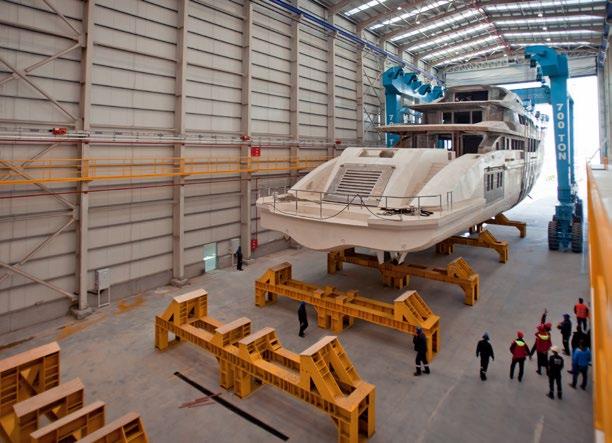
A natural progression from attracting superyachts as berthing clients is of course expanding the necessary refit and maintenance facilities, into which West Istanbul Marina has invested greatly and to their success. The marina has developed into one of Türkiye's largest yacht service infrastructures, including 11 specialised maintenance and refit hangars, large technical workshops, as well as the aforementioned travel lifts.
Today, the marina offers a comprehensive range of technical services including project management, mechanical works, engine overhauls, electrical systems, marine electronics, hull repair and painting, teak deck restoration, stainless steel fabrication, composite repairs, hydraulic systems, HVAC, plumbing, rigging, upholstery, interior joinery and preventive maintenance. Working alongside carefully selected specialist subcontractors, West Istanbul Marina delivers complete refit solutions through a single coordinated team, allowing owners and yacht managers to entrust every aspect of a project to one experienced point of contact.
The stand-out job to date was in 2019, when West Istanbul Marina welcomed an 85-metre Lürssen vessel for a full interior and exterior refit, as well as conducting the first ever full on-water paint job of a superyacht in Türkiye. Having carried out over 130 successful refits on superyachts, other jobs have included a 65m Feadship, which underwent tank sandblasting, flushing and antifouling paint application - and a 57.6m San Lorenzo, which underwent air conditioning, hydrophore, tank, fire pump and other types of maintenance.
Behind every successful refit is a dedicated project management team responsible for planning, scheduling, budget control, quality assurance and coordination between owners, captains, surveyors and specialist contractors. Clients benefit from transparent communication, regular progress updates and detailed photographic reporting throughout every stage of the project, ensuring confidence even when managing their yacht remotely.
In addition to this, West Istanbul Marina continuously expands its technical and operational capabilities to service several superyachts simultaneously, maintaining its reputation as a leading refit and maintenance hub in Türkiye and the wider eastern Mediterranean region.
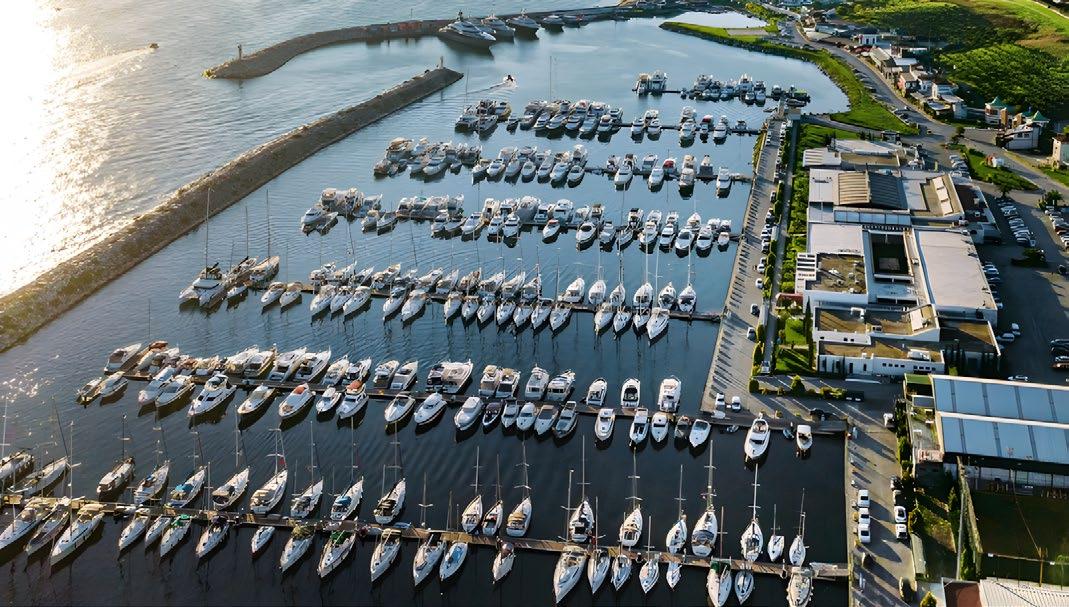
Alongside its leading maintenance and refit operations, West Istanbul Marina endeavours to remain a natureconscious marina that minimises its environmental impact.
Aside from having received a Blue Flag certification consecutively over the last decade, it also operates under internationally recognised management systems and certifications. These include ISO 14001:2015 Environmental Management Systems, ISO 9001 Quality Management Systems, ISO 45001 Occupational Health and Safety Systems, ISO 10002 Customer Satisfaction Management Systems, and others.
Other sustainability initiatives championed by West Istanbul Marina over the last 15 years of its operation include the efficient use of energy, raw materials and natural resources, as well as sustainable waste management systems and regularly holding environmental awareness programmes for staff and stakeholders. They also apply preventive measures against environmental pollution and use environmentally safe technologies and operational systems to ensure compliance with stringent rules and regulations in Türkiye, as well as conduct continuous environmental monitoring to identify and reduce any operational risks that might impact marine ecosystems.
Long term, however, West Istanbul Marina aims to set a benchmark for combining luxury yachting infrastructure with environmentally conscious development. In fact, the marina itself was constructed on nearby dry and disused land, and
children from nearby schools have been invited every year to plant tree seedlings and learn how to care for them. To date, this initiative has seen over 14,000 trees planted in an attempt to revive the area and it is set to continue.
Other activities to promote environmental protection include annual sea bottom and beach cleaning days together with seminars conducted by the local GuruDive diving school in collaboration with universities, foundations and the municipality. The marina also encourages staff to plant various kinds of fruit and vegetables on its land to promote sustainability and offer those who enjoy gardening a place to harvest food organically.
Far from being home exclusively to human guests, West Istanbul Marina's gardens are populated by ducks, geese, peacocks and numerous other bird species, while dolphins are known to pass by the marina each year during the month of May.
Environmental responsibility extends beyond compliance. West Istanbul Marina believes that minimising environmental impact is fundamental to the future of yachting and continually invests in sustainable operational practices that protect the surrounding ecosystem. Despite being a relatively young facility by European standards, West Istanbul Marina has built a modern reputation founded on professionalism, technical excellence and long-term vision.
To book your berth or refit at West Istanbul Marina, contact +90 212 850 22 00 or marina@westistanbulmarina.com
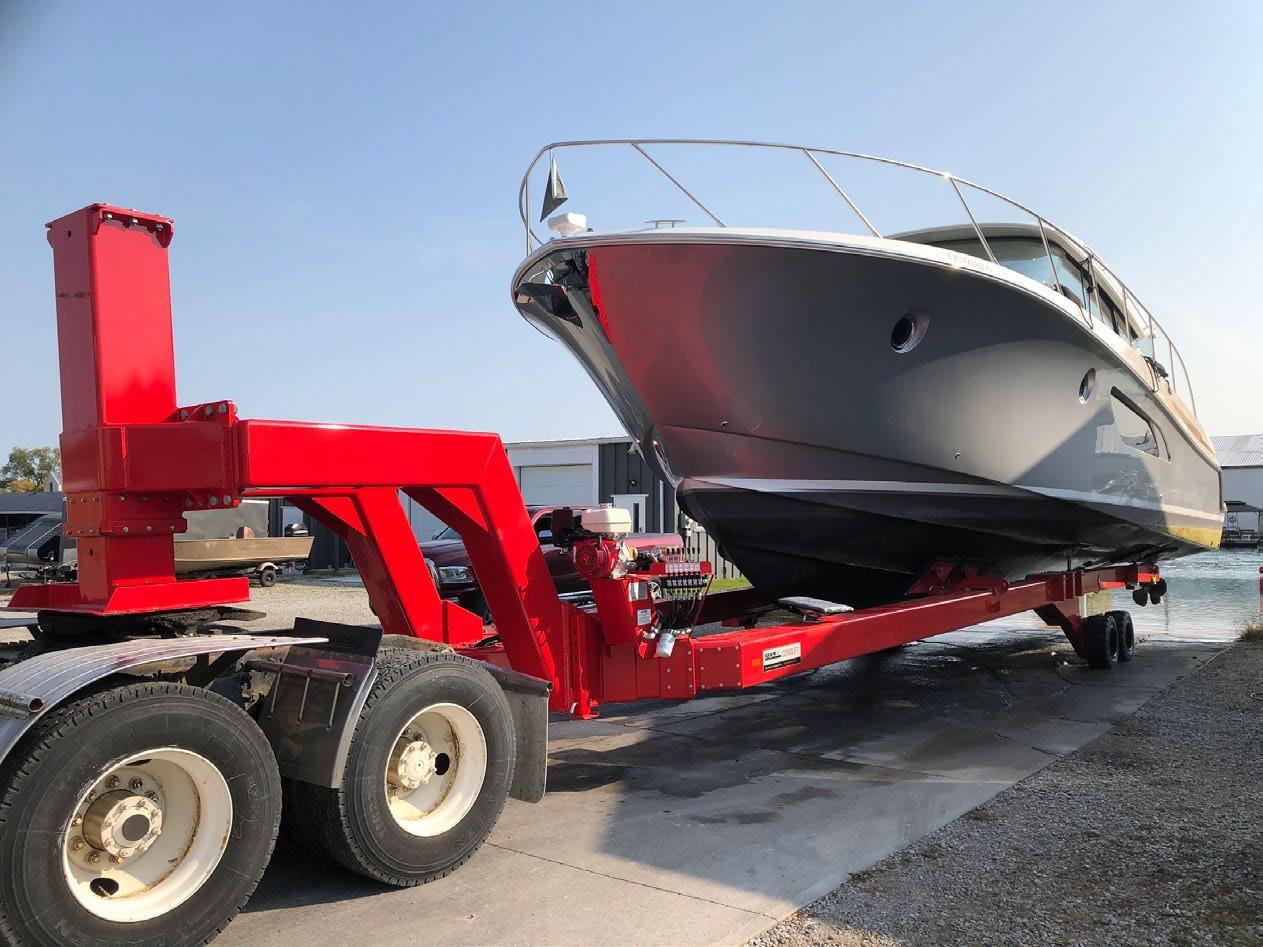
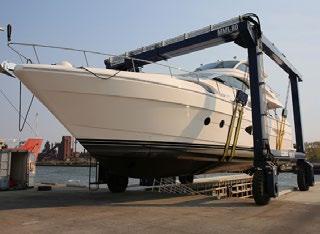
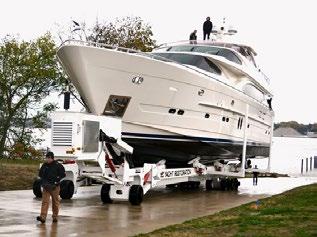
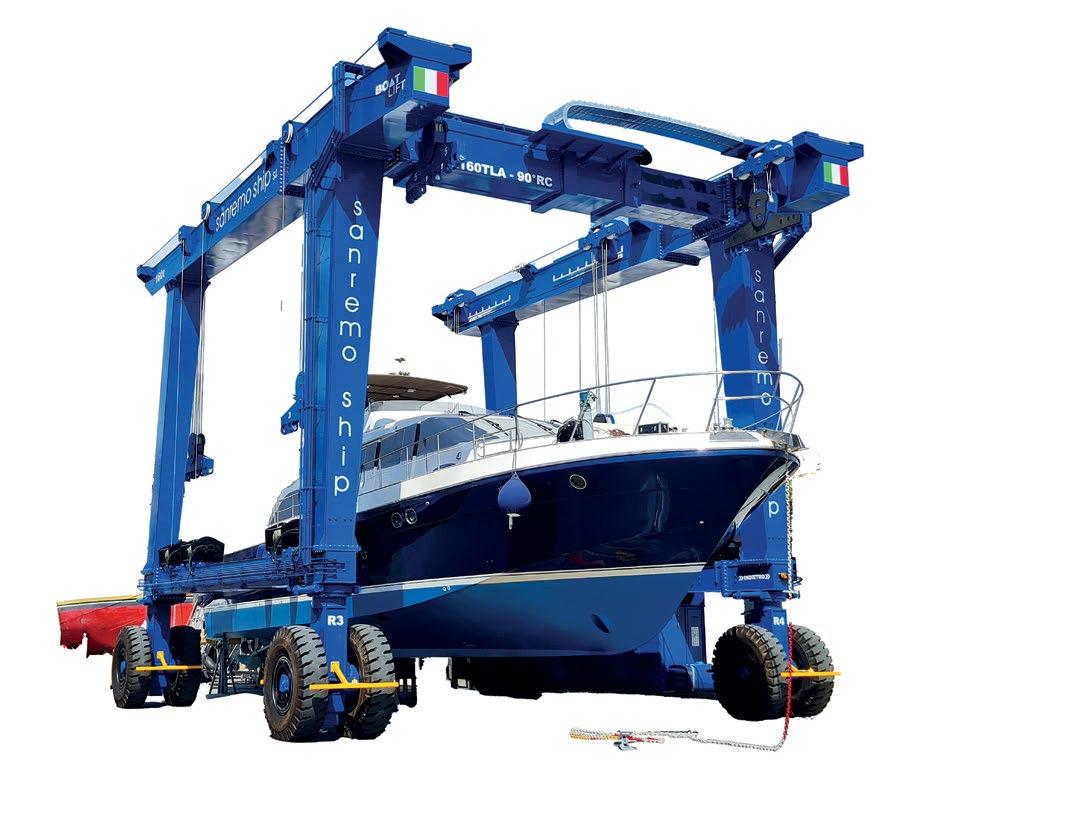
• Towed, self-propelled, and highway trailers
• Towed, self-propelled, and highway trailers
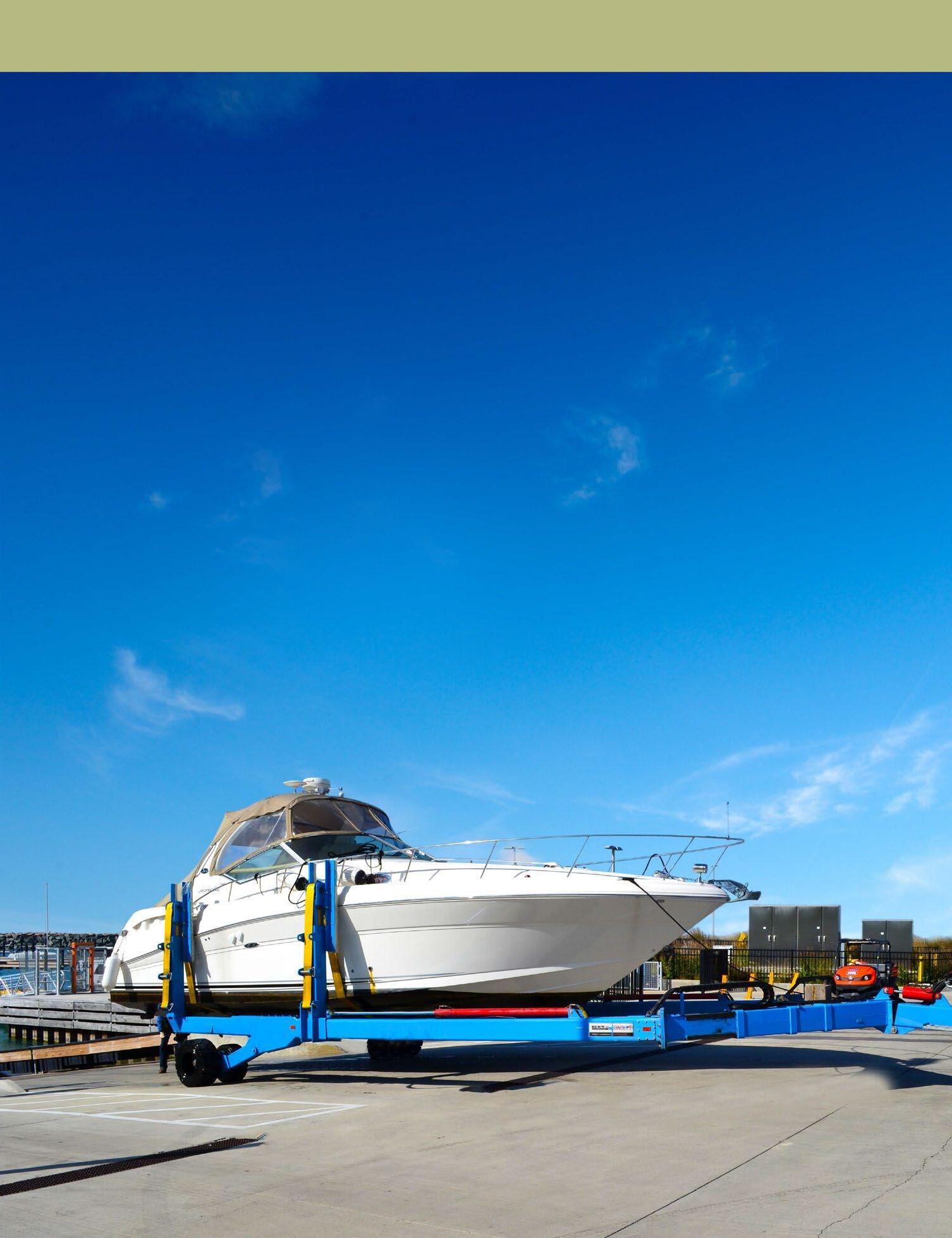
• Sling lift trailers and boat hoists
• Sling lift trailers and boat hoists
Remote control hydraulic trailer tugs
Remote control hydraulic trailer tugs
• Galvanized boat storage stands
• Galvanized boat storage stands
• Simple operation, rugged durability, flexible features
• Simple operation, rugged durability, flexible features
• We also supply floating docks and breakwaters
• We also supply floating docks and breakwaters
The Dutch company Inter Boat Marinas shares their perspectives on the future of marinas and the value Metstrade brings to the industry.
How has your role as a marina developer and supplier evolved over the past 5–10 years?
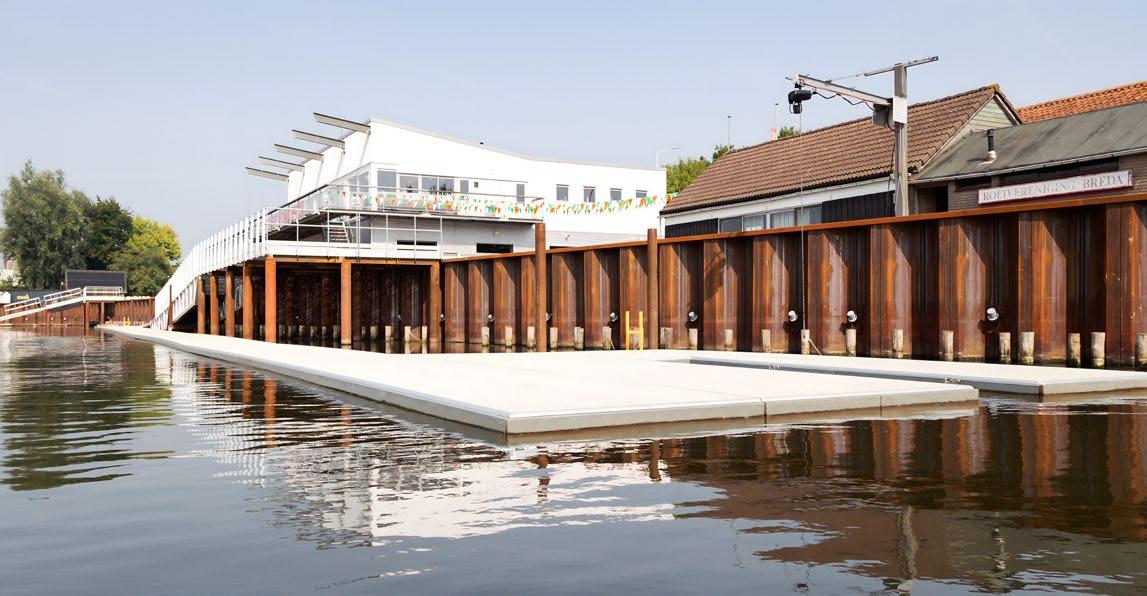
Over the past decade, our role has shifted from being a supplier of floating pontoons to becoming a development partner for complete marina infrastructure. Clients increasingly expect durable, low-maintenance systems with long lifespans, suitable for a growing variety of vessels and user groups. As boats become larger and wider, the demand for finger pontoons, wider walkways and stable floating structures has grown significantly. At the same time, marinas require a broader variety of floating systems and buoyancy options to accommodate different water conditions, vessel types and functional requirements.
Projects have also become more integrated. Marinas are looking for complete solutions that combine floating infrastructure, anchoring systems, utilities, temporary berthing capacity and logistical support. This requires a broader advisory role and closer involvement from the earliest design stages.
Industry platforms like Metstrade reflect and accelerate these developments. The themes we encounter in daily practice — sustainability, electrification, climate adaptation and modularity — are the same topics discussed internationally at the show. Metstrade provides valuable insights from other markets and helps align our work with global trends.
What does a “future-proof marina” mean in practice to you?
A future-proof marina is designed to cope with increasingly variable conditions. Water levels fluctuate more strongly, storm loads are rising and periods of low water occur more frequently. This requires robust anchoring, flexible floating systems and layouts that can adapt to changing circumstances.
Electrification is another key driver. The growth of electric boating demands new energy infrastructure and smart solutions for charging capacity. Marinas that anticipate this now will be well positioned for the next phase of the market.
At the same time, the role of the marina is expanding. Users expect more than a berth: high-quality facilities, recreational opportunities and a safe, accessible environment. This broadening of functions requires careful planning and systems that combine durability, comfort and low maintenance.
The conversations we have at Metstrade help us better understand these developments and anticipate what marinas will need in the coming years.
Which recent or flagship projects best represent your current approach?
Our recent work across Europe illustrates the diversity and complexity of today’s marina projects. We support large-scale water-based events with temporary berthing capacity, using modular systems that can be installed quickly and withstand intensive use. This includes major public maritime events such as HISWA te Water and SAIL, where additional capacity, safe access and operational reliability are essential.
We also deliver long-lasting, low-maintenance solutions for marinas and recreational areas, ranging from floating walkways to specialised low-freeboard platforms. The complexity often lies in the combination of locationspecific conditions, regulatory requirements, soil characteristics and tight timelines.
The lessons learned from these projects — particularly regarding flexibility, modularity and durability — are regularly discussed with international partners at Metstrade, where many of these themes converge.
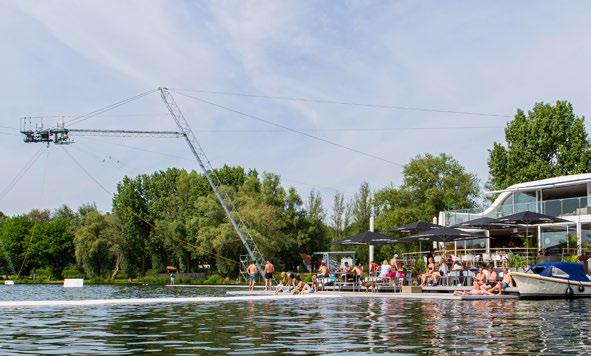
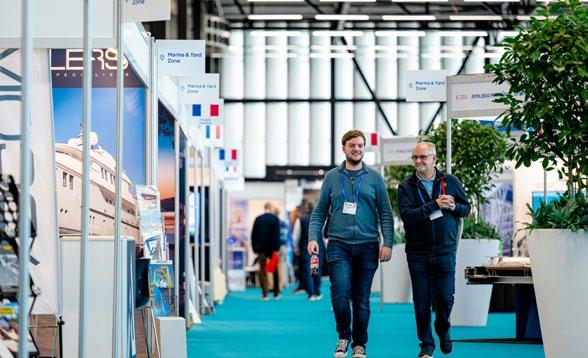
Sustainability is embedded in our approach. Our floating systems have long lifespans and are produced using regenerated and regenerable materials. This aligns with the growing demand for low-maintenance and futureproof solutions.
We also make conscious choices in our own operations. Our facility is gas-free and equipped with solar panels. We minimise packaging materials, work with local suppliers and continuously optimise our production and inventory processes to improve efficiency and reduce environmental impact.
Demand for sustainable solutions is driven by regulation, client expectations and our own belief that quality and longevity form the foundation of good marina design. The main challenges lie in varying regulations across regions and the higher initial investment that sustainable systems sometimes require. Raising awareness of total cost of ownership is an important part of this transition.
Industry events like Metstrade help accelerate sustainable innovation by bringing together regulation, technology and practical experience.
What major developments do you expect in the marina sector in the coming years?
In the coming years, electrification will have an impact on the sector. This development is driven by regulatory changes, the growing availability of electric vessels and increasing user demand for low-emission boating. As a result, marinas will need to prepare their energy infrastructure and make choices that remain viable in the long term.
Climate adaptation will also become increasingly important. Anchoring, buoyancy and flexibility will play a larger role as weather conditions become more extreme. Marinas that invest in robust systems now will be better prepared for the future.
We also expect marinas to continue evolving into broader recreational destinations. The combination of berths, facilities and user experience will become increasingly relevant.
One trend that remains underestimated is the impact of fluctuating water levels and climate change on existing infrastructure. This will require timely adjustments and long-term planning.
Metstrade plays an important role in shaping these developments. It is an international platform where knowledge, innovation and practical experience come together.
What value does Metstrade bring to your business?
Metstrade is a valuable platform for us. It brings together the international market and provides direct access to decision-makers in the marina sector. It allows us to present our innovations, gather market insights and strengthen relationships.
We continue to participate in the Marina & Yard pavilion because it aligns closely with our target audience and because the quality of discussions and contacts is consistently high. The segment attracts professionals who are looking for reliable, durable and future-proof solutions.
Our goals at Metstrade are clear: networking, showcasing systems and innovations, exchanging knowledge and reinforcing our position in the international market.
To learn more about Metstrade, contact Merle Eggink at m.eggink@rai.nl or +31 6 34 33 50 61, or visit https://www.metstrade.com/

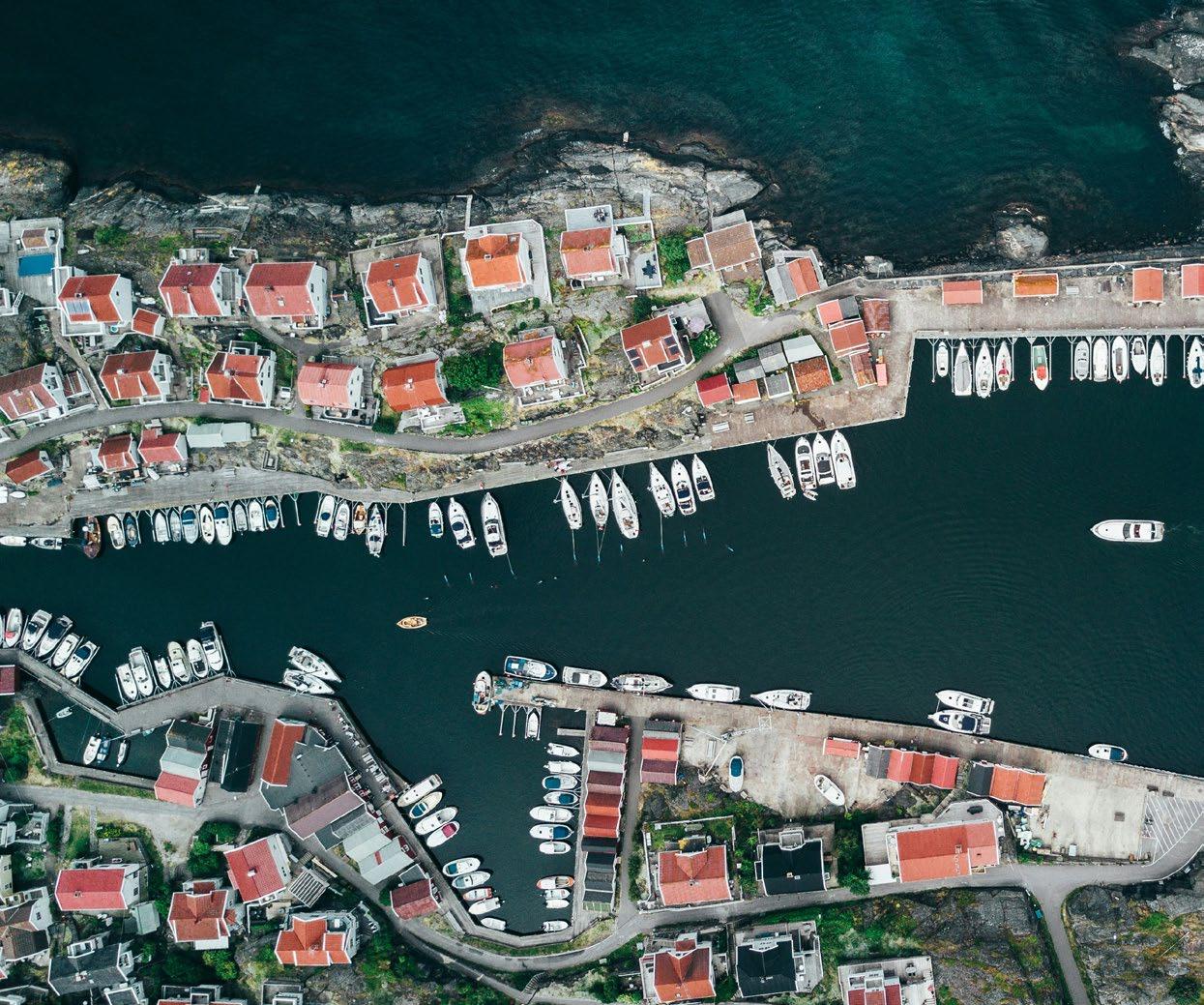
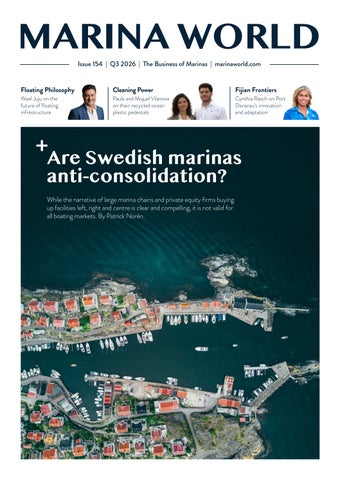
While the narrative of large marina chains and private equity firms buying up facilities left, right and centre is clear and compelling, it is not valid for all boating markets.
By Patrick Norén
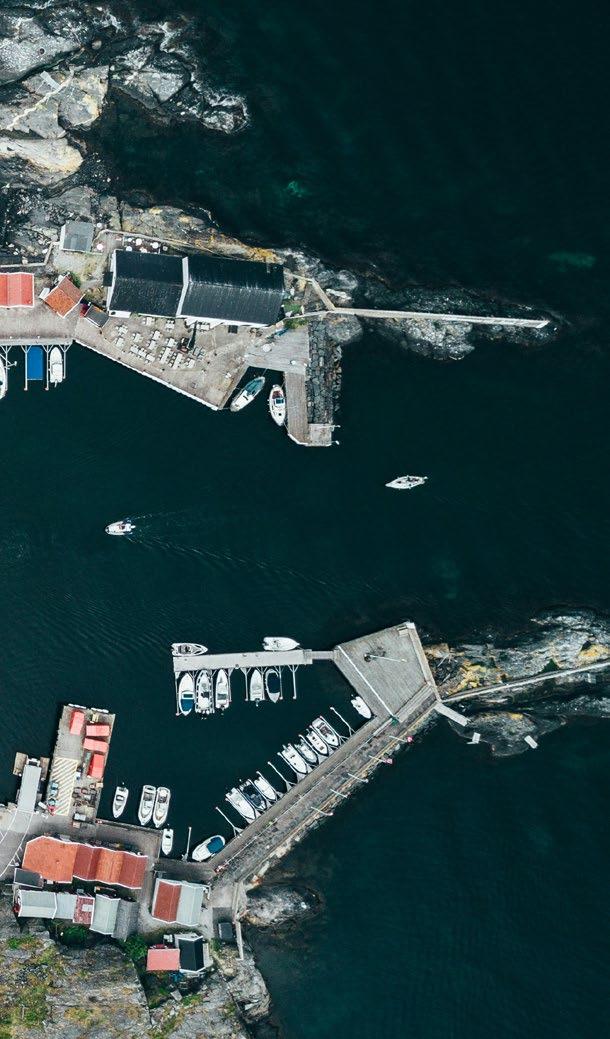
According to a 2025 report published by the European Union that used data from a 2022 ICOMIA report, the three Nordic countries of Norway, Sweden and Finland had rates of recreational boat ownership at 148.3, 82 and 132 boats per 10,000 inhabitants, respectively.
These figures dwarfed the Mediterranean yachting giants of France (16.7 boats per 10,000 inhabitants), Greece (18.3 boats) and Italy (8.2 boats). Spain had an ownership rate of only two boats per 10,000 inhabitants.
What these numbers demonstrate most clearly is the popularity of boating as an ordinary, recreational activity for the general populace rather than as a luxury pastime for the few that can afford it. With boat ownership rates as high as they are in the Nordics, one would expect there to be a representatively large number of marinas where people keep their boats, and, if global trends are to be followed, a representatively high rate of marina acquisitions. Not so.
Being of Swedish extraction myself, this lack of marina news from the country has not escaped my attention. During my first 12 months as editor of Marina World, there were only two notable acquisitions, namely Marina Group’s opening gambit of four marinas in Sweden (and one in Norway) as well as Port Adhoc’s second acquisition in Sweden, of Gåshaga Marina.
If one were to extrapolate the current global marina acquisition lore onto Sweden, given the huge popularity of recreational boating in the country, then it should in theory be among the hottest markets in the world for marina acquisitions. But the evidence points to the contrary. Why?
I should start by pointing out that there is one big but partial exception to this rule. Grefab is a network of 11 leisure marinas in and around the Gothenburg region that certainly seems like the kind of marina chain we are used to, however the company is jointly owned by the cities of Gothenburg and Mölndal, and the municipalities of Partille and Ale. Although they are known to operate their marinas well, they do so in competition with private marinas.
In fact, the concept of a commercial, privately run marina doesn’t really exist in Sweden to anywhere near the same extent as in the United States or Mediterranean. There are only a handful of well-known examples, including Ringens Varv in Marstrand on the west coast and Bullandö Marina near Stockholm. Instead, the backbone of the country’s boating industry has long been boat clubs, which are typically structured as non-profit, member-owned or cooperative-style associations, or small and simple municipal harbours.
In contrast to the commercial marina model, members of a Swedish boat club will pay membership fees and elect a board to run the organisation on behalf of its members. Many boat clubs would also expect their members to occasionally volunteer their time to maintain the pontoons, boathouse or any other facilities they might have, reducing membership fees even further. Municipal harbours, meanwhile, have also historically kept costs very low while keeping management and upkeep a municipal rather than berth-holder responsibility.
There are plenty of cultural reasons that explain why these kinds of structures have long dominated Swedish boating, but perhaps the most important is a general belief that nature should be open and accessible to everyone. Sweden is one of the few countries in the world that has a universal “Right of Public Access” law giving all people in the country the right to walk, cycle, ride, ski and camp on any land with the exception of private gardens, near a dwelling house or land under cultivation.
Advertisement
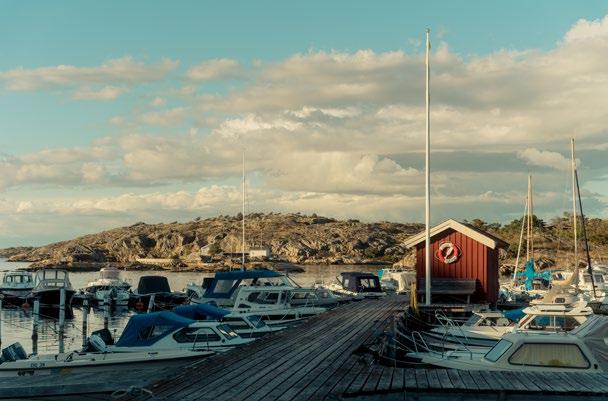
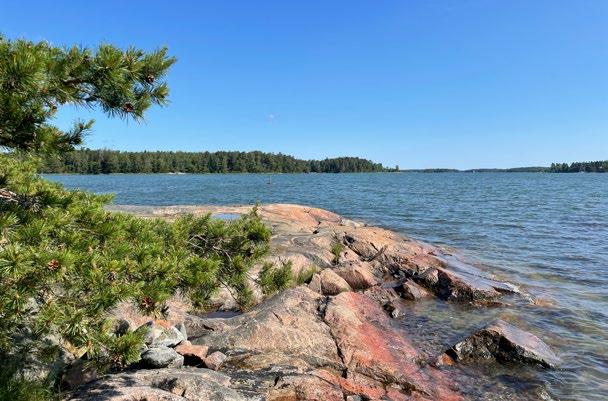
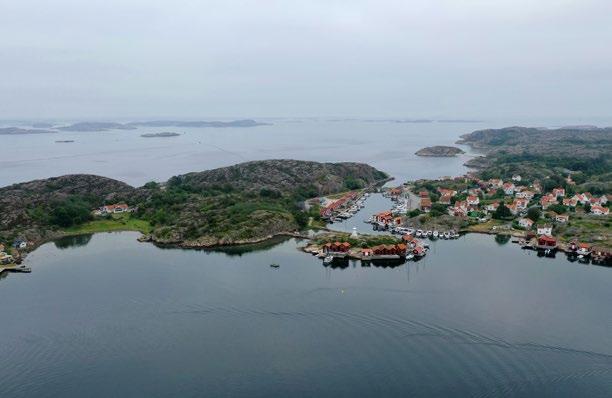
With this law in mind, it no longer seems so surprising that access to the country’s coastline and record 267,000 islands has been shaped by boat clubs and municipal harbours. Instead of being profit-driven, their purpose has long been to enable as many Swedes as possible to enjoy their country’s maritime beauty at the lowest possible cost.
“Swedish boating culture has had a positive development for the simple reason that everyone has, in principle, had the opportunity to go boating,” said Fredrik Barthold, founder of dockspot. “Not-for-profit organisations and municipalities have kept prices low, making it possible for many people to own a boat. This has of course been very positive.”
“The prices are set at such a level that boat clubs work on a break-even model,” said Lars Brandt, CEO of Seaflex. “They were set up to have the lowest possible costs while giving members a parking place for their boat, and that’s it.”
“Looking at these historical profit margins, you can see that buying a marina in Sweden to earn money is perhaps not a sensible idea,” he continued. “You want to buy a marina that is already in good health and gives good returns.”
Meanwhile, the managing director of SF Marina, Michael Sigvardsson, pointed out that low prices are not just because of the dominant boat club and municipal harbour model: “We have around 800,000 berths for 10 million people, which means at least eight percent of the population will have access to a berth. But, if you think that it’s almost always a couple or a family that owns a boat, and not a single person, then almost 25 percent of the population has access to a berth. So the potential to raise prices and make a profit is limited.”
Karl-Oskar Tjernström, co-founder of Secfuel, argues that if you are going to start buying up marinas in Sweden, you need to address a more deep-seated cultural nuance. “The first step is getting people to change their behaviour from one of a boat club to one of a marina,” he said.
“The typical Swede likes to do things themselves,” he continued. “In general, I think it is very difficult to get Swedes to buy into this full-service concept. We want to decide where we keep our boat, where it stays during the winter, we want to fix things ourselves. No Swedish person will ever phone a tradesman to put up curtain rails. They will do it themselves.”
Whereas larger chains in the USA or the Mediterranean might see services as a lucrative profit centre, Swedes by and large seem to enjoy looking after their boats themselves. Or at least they are willing to look after their boats themselves if it means that they can continue to enjoy low berthing fees. The fact that many facilities in Sweden are owned and operated by local municipalities on threadbare budgets almost certainly affects this boating culture, although it is doubtless enabled by Swedish cultural preferences for minimalism and self-reliance.
“There have been a few companies in the real estate sector in Sweden try this full-service concept with a lounge, a receptionist and a gym and so on, and none have flown. I have never seen a single one of them work in Sweden,” Karl-Oskar said. “I absolutely do think it can work but you need to build a market and this is the challenge.”
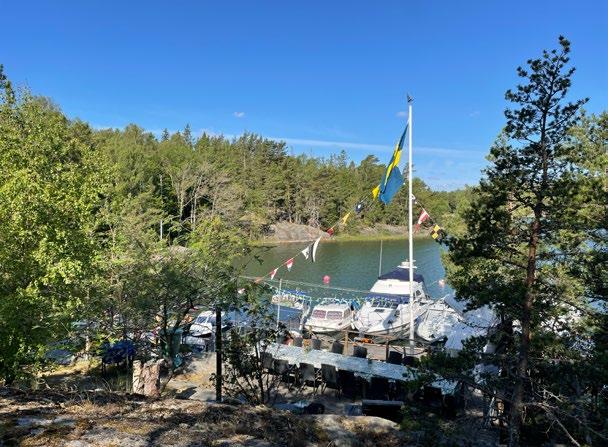
Toste Tanhua is a Swedish scientist at GEOMAR in Germany and a keen sailor. “The municipality will often have a harbour with pontoons, and a harbourmaster that fixes toilets and showers,” he said. “When you’re out in the archipelago, you will tie up next to a rock or by a tree, and you only go to a harbour for electricity or water, to meet friends, go to the supermarket or have a shower.”
Having spent many summers in Sweden myself, I can attest to this. A weekend away for boating Swedes will begin on a Friday afternoon trip to the supermarket to buy food before heading down to the boat club and sailing off to an island for a couple of nights to either camp or stay on your boat. After all, the Swedish “Right of Public Access” law allows it.
While there might be some boaters who would appreciate some more luxury in the form of a gym or sauna at their marina, Sweden is still the country where people prefer to dive naked into the Baltic Sea instead of lounging all day by a pool in swimming trunks or a bikini.
“It is not the same service level that is expected in the Mediterranean, it’s not like that in Sweden,” concluded Toste. “It’s just a completely different mindset.”
It is well understood that a major problem facing the global boating industry is encouraging young people to take up the hobby. “It’s complicated, it’s a pain, it’s fiddly,” said one Swede who works in the industry and wished to remain anonymous.
“Everyone is talking about trying to solve this problem by making boating easier, and although this is something that many people in Sweden are looking for, it almost doesn’t exist. There are indeed some that have that level of service, but we need more of it. Of course it costs a little more but certain people could afford it.
“It’s not a case of choosing between luxury or a tent,” they continued. “There is so much in between and there are many people in the middle who could do with
a little help across all aspects of boating. I think this consolidation trend is positive, and we will get there sooner or later, but it’s a difficult task because this Swedish boating culture runs deep.”
If you understand that profit is the fundamental motivating factor behind marina acquisitions in other parts of the world, you begin to realise that this business model is antithetical to the history, culture and general operation of Swedish boating. Not only might it go down badly with a population that values high access and enjoys low prices, but it quite simply might just be a bad investment because there is very little from which you could make a profit.
Another issue is the length of the boating season, which might only run for around four months over the summer. Not only is this season too short to justify higher berthing fees, but it also makes achieving a quick return on investment on areas such as service extremely difficult. This, combined with municipalities’ reluctance to relinquish control and their tendency to inhibit marina development, has meant that the Swedish industry has more or less stood still when compared to the Mediterranean.
Despite the headwinds, Port Adhoc and Marina Group, the latter being a new venture of the Norwegian investment company, Norvestor, seem to think there are upsides in consolidating Sweden’s very fragmented marina industry.
Port Adhoc currently owns two service-oriented marinas and I have been told that they are looking to acquire more. Meanwhile, although little is publicly known about Marina Group and I did not receive any response from their management when I requested to learn more about their business, I was told by a third party in Sweden that they are planning up to 50 further acquisitions across the region.
As I was researching this article I was told that a Belgian actor had also been buying up marinas in Sweden, but their identity was not publicly known. Then, only two weeks before Marina World issue 154 went to print, the pan-European investment company AMAVI Capital announced Fantasi Marinas, described as a “new platform established to consolidate the fragmented marina market across the Nordic region”. I checked their website and, lo and behold, their headquarters is indeed in Belgium.
And, biggest of all, it is my understanding that the major Mediterranean marina chain D-Marin has been investigating opportunities in Sweden too, although a senior representative of the company was unable to provide a comment on the topic when the question was put to them.
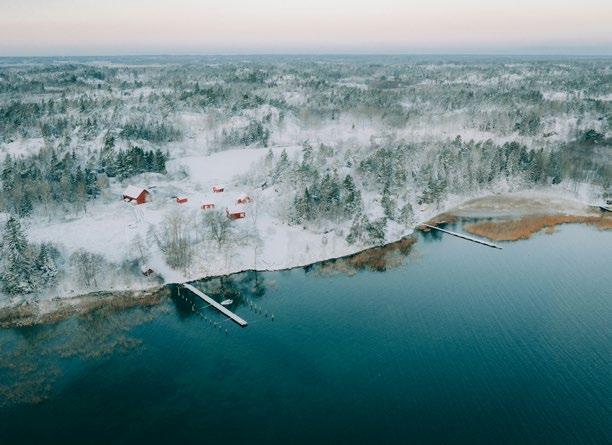
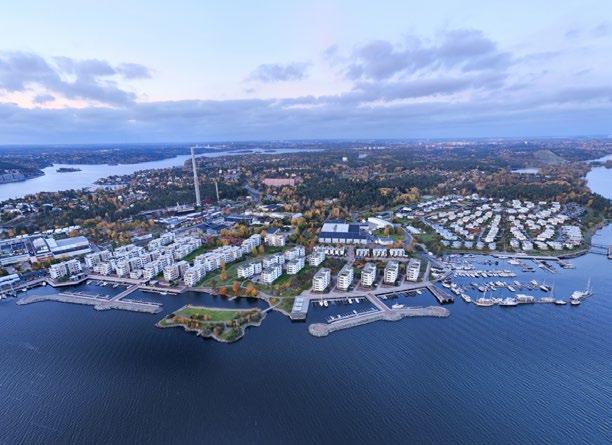
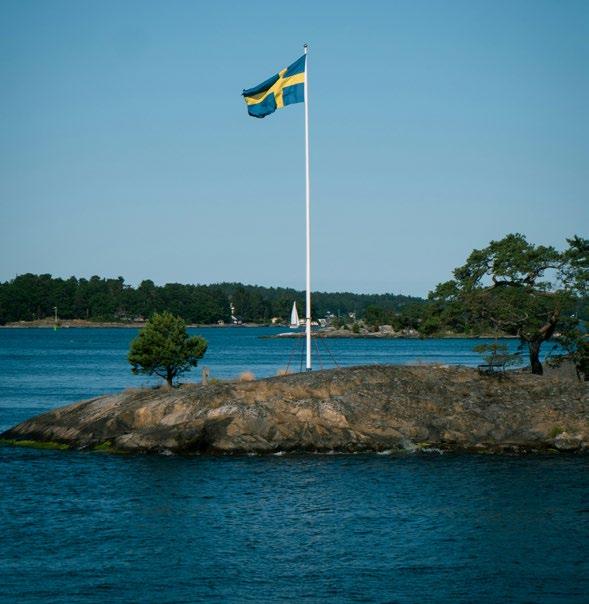
Left: Sweden has a world record 267,000 islands, many of which are located in the Stockholm archipelago.
So are Swedish marinas anti-consolidation? Not necessarily. Not only does it seem that there is more going on in Sweden than meets the eye, but those looking to enter the market have been remarkably cagey. It would seem that some have calculated that the Swedish marina market is one that can indeed be consolidated, despite its clear and obvious challenges, and don’t want to shout too loudly in case others manage to get in the door before them.
In any case, the currently operating marina chains in Sweden - Port Adhoc, Marina Group and Grefab (despite being an activity of a municipally owned company) and now AMAVI’s Fantasi Marinas too - demonstrate that the country’s marina industry could be receptive to greater consolidation, provided that it is done in the right way and that it doesn’t undermine the deep-seated roots of Swedish boating culture.
At least this was the case until Seaflex’s Lars Brandt told me in May that the Swedish parliament had just hammered through a new competition law. The Act on Public Commercial Activities, which will come into force on 1 August 2026, will provide the Swedish Competition Authority “greater opportunities to intervene against public sales activities that unduly affect the opportunities for private actors to conduct business in the market”.
While this new law may not affect the traditional boat club model so much, it could enable private companies like Port Adhoc, Marina Group, Fantasi Marinas and D-Marin, or simply individual private marinas, to better compete with municipally owned marinas. However, by the time this article is published, this new law will not have taken effect yet and so it remains to be seen to what extent this will be the case.
Nevertheless, one gets the sense that while Sweden and the wider Nordic region have lagged behind the rest of Europe in marina acquisitions, this could be about to change. The marinas are there, the boaters are there, the gap in service level has been identified, the challenges are well understood, and potentially consequential laws are changing in favour of private companies.

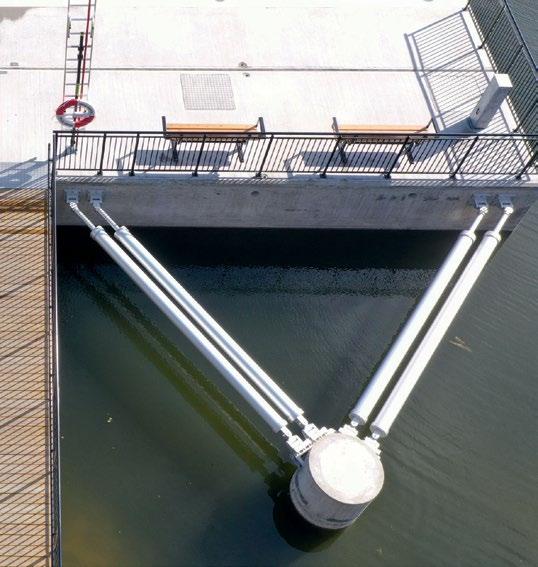




A. Neumueller - SF Pontona, Sweden

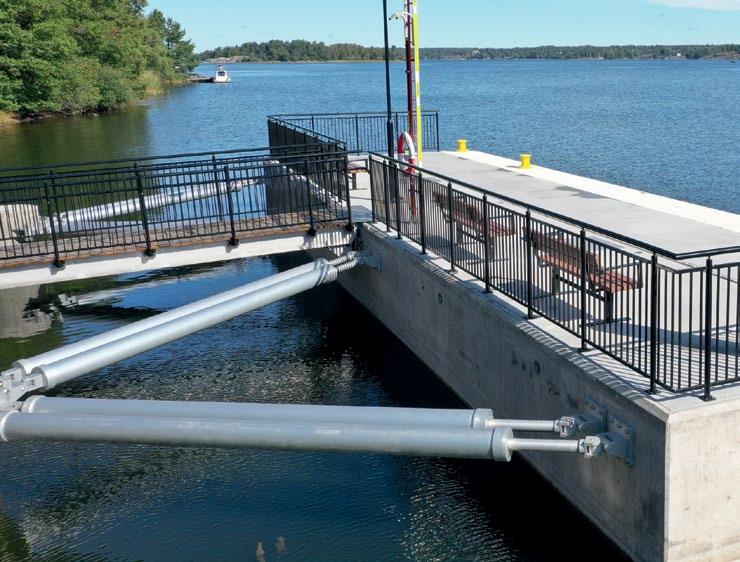

Yet another floating pontoon project where we have used DualDocker as mooring solution for a challenging ferry dock. We are very pleased with the perfomance of the damped mooring arms and particulary the easy installation during the construction phase 3 years ago! I believe the innovative DualDocker mooring solution adds value to heavy duty floating pontoon installations. Thanks to the DualDocker team for their valuable support!”

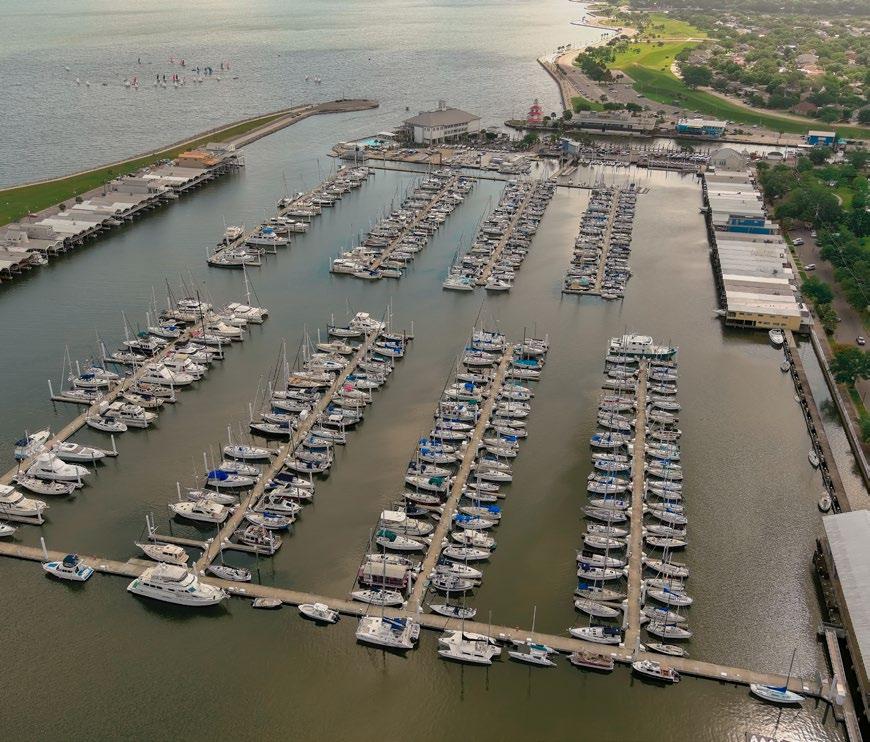
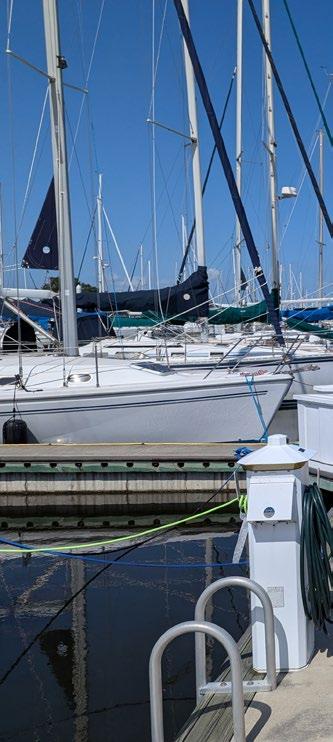
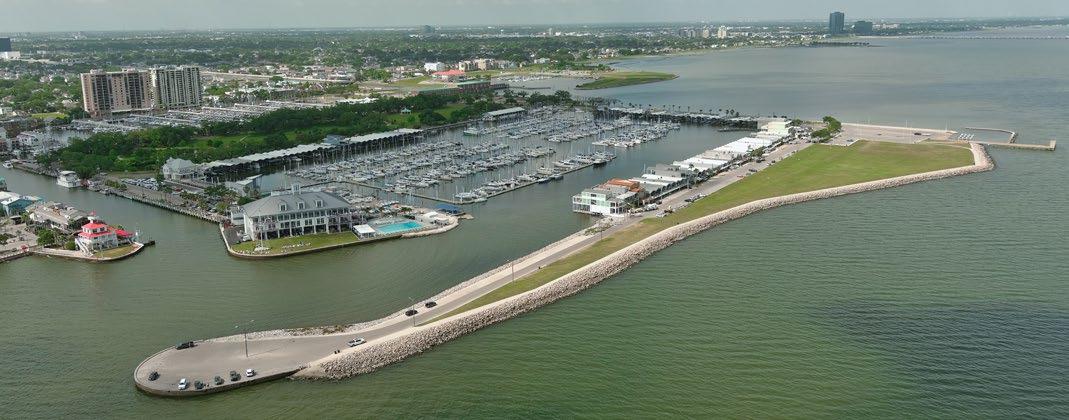
Devastated by Hurricane Katrina, the redevelopment of the New Orleans Municipal Yacht Harbor in Louisiana aimed to rethink the regional approach to marina design in vulnerable areas. After five years in operation and having seen multiple storms, the marina functions as a real-world example of how a well-planned, resilient facility performs under pressure.
By Nicole Shaw
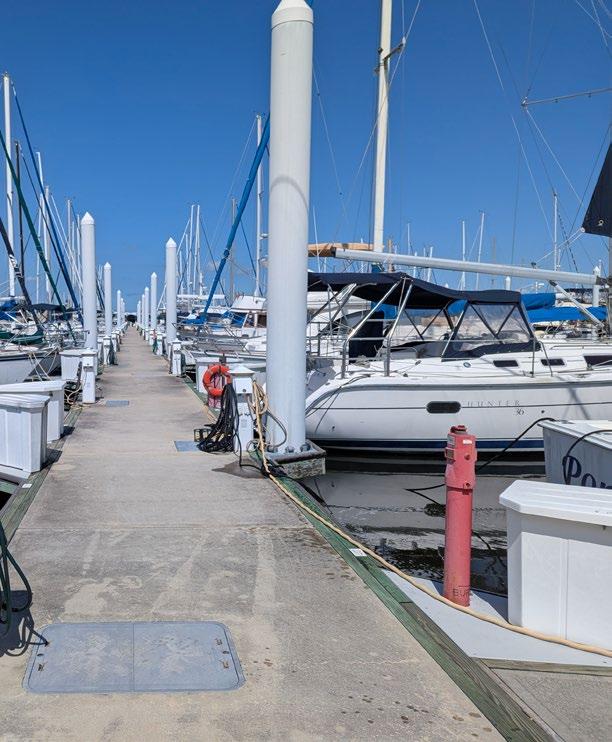
When Hurricane Katrina struck New Orleans in 2005, it fundamentally and permanently transformed the city, devastating neighbourhoods and the lives of those who call the region home. The New Orleans Municipal Yacht Harbor, situated on the south shore of Lake Pontchartrain, experienced storm surge levels of up to 3.5m and wind gusts of up to 38.5 m/s and was heavily damaged, with docks destroyed and the site left largely unusable in the years following the storm.
The city applied for and received federal funding for a redevelopment effort. This presented an opportunity to do more than just restore what had been lost during Katrina and rethink how the marina could be redesigned to function in an environment where stronger, more frequent extreme weather events are becoming the norm. Serving as the prime consultant for the planning and design of the redevelopment, Moffatt & Nichol understood this distinction and the importance of redesigning the marina with resilience as a central concept.
The project team evaluated a wide range of potential extreme events to ensure that the redesign could account for a spectrum of future conditions. One of the project’s most defining design decisions was to replace the existing fixed dock marina with a robust floating dock system in a region where floating structures were not well understood. Unlike fixed docks, which remain static regardless of water levels, floating docks rise and fall with changing water levels. This adaptability reduces the likelihood of structural failure during storm surge or high wind and also allows the system to adjust to long-term changes caused by sea level rise.
Julio Viteri, project manager for the City of New Orleans, describes the scope of the project along with some of the considerations the team made when approaching the design.
“Once we understood the extent of the damage to the fixed docks and utilities, it was clear that rebuilding the marina in-kind was not the best approach. With more than 50 percent of the facility damaged beyond repair, we had an opportunity to step back and rethink the entire vision of the marina as a state-of-the-art redevelopment,” he said.
“Adaptability was a core characteristic that we knew the new facility needed to have, and the concept of a floating dock system became a central component of that direction. The City brought in Moffatt & Nichol as a key contributor to advancing that vision, and their focus on long-term performance helped shape the truly resilient marina that exists today.”
The floating dock system is anchored to the ground by tall guide piles that extend six metres above mean tide. These guide piles were designed to accommodate a wide range of water levels, from normal operating water levels to storm surge from the 100-year return event. The height of the guide piles was calculated to include a combination of factors including dock freeboard, storm surge, wave setup and projected sea level rise. Updated federal standards also played a role, with the design flood elevation set at +5.2m NAVD.
Bellingham Marine Industries was selected by the general contractor, TKTMJ, as the subcontractor responsible for the final design, fabrication and installation of the floating dock system. The system was designed to comply with the performance specifications prepared by Moffatt & Nichol which called for a marina that could survive 58 m/s wind gusts and a still water level of 2.65m. Steve Ryder, manager of product development at Bellingham, speaks on the construction and durability considerations of their floating dock system:
“Bellingham’s Unifloat concrete floating dock system, which uses six-sided precast concrete modules with a structural timber waler system, was selected to meet the design requirements of the contract. Structurally, the system evenly distributes loads through the waler and throughrod system to the steel pipe piles which were driven deep into the soils of the harbour. Heavy duty dock floats were installed around the outer perimeter of the marina to attenuate the waves entering the harbour for the remaining interior docks, providing the protection the marina needed while making the project economically viable.
“Floating docks rise and fall with the water levels, providing safe and consistent access to boats as they are always at the same level no matter the tide or storm event. Unlike fixed docks, where utility work can be submerged during high water events, floating docks have all utility systems run internally, which elevates the utilities above the water level at all times and reduces the cost of maintenance during and after these events. The City of New Orleans has a marina that meets today’s needs as well as the future needs of the facility.”
Material selection and system integration were of equal importance. Materials in the brackish waters of Lake Pontchartrain are moderately susceptible to corrosion, requiring durability and service life considerations to be key aspects of the design. Concrete docks were selected for their mass and durability, while the steel pipe construction of the guide piles offered the high capacity and flexibility needed to accommodate the large horizontal loads. The piles were epoxy coated to further enhance corrosion resistance and extend their lifespan.
Previous
Below:
Next
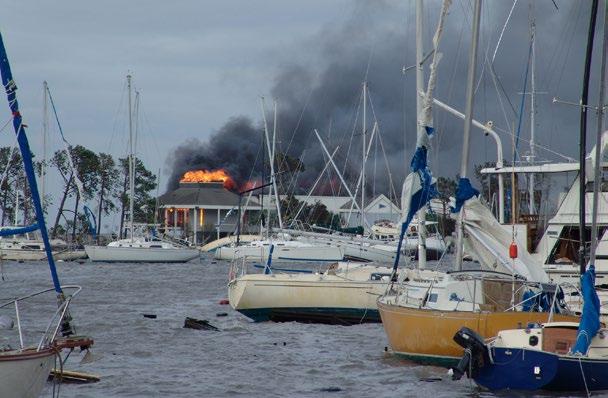
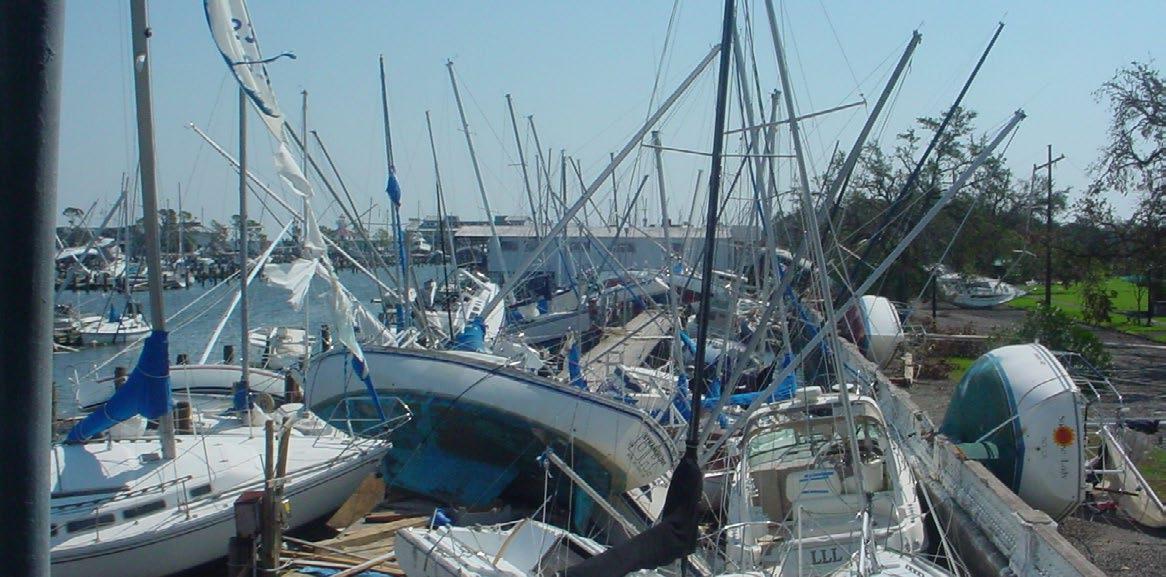
Electrical distribution was installed on the second floor of buildings to elevate the equipment above the design flood elevation. Utility disconnects were installed at the entrance of each dock, and dock utilities were installed with flexible piping and conduits under the gangways with enough slack to accommodate the full range of water level fluctuations. An overwater comfort station offering restrooms and shaded gathering space was designed and constructed as a fixed, elevated structure designed to withstand storm surge and remain stable in the event of major storms.
Enhancing the marina’s breakwater further strengthened its ability to withstand extreme weather. Moffatt & Nichol’s coastal analysis identified that the breakwater was frequently overtopped during storms and the waves rolling over the breakwater were a primary driver of damage to the marina’s infrastructure. This led to a separate project to raise and enhance the breakwater to implement a multiple lines of defence strategy where the breakwater improvements work in tandem with the floating docks to improve coastal protection. Rather than relying solely on the success of any one feature, the marina’s performance is the result of multiple systems working together to respond to uncertain conditions in a controlled and predictable way.
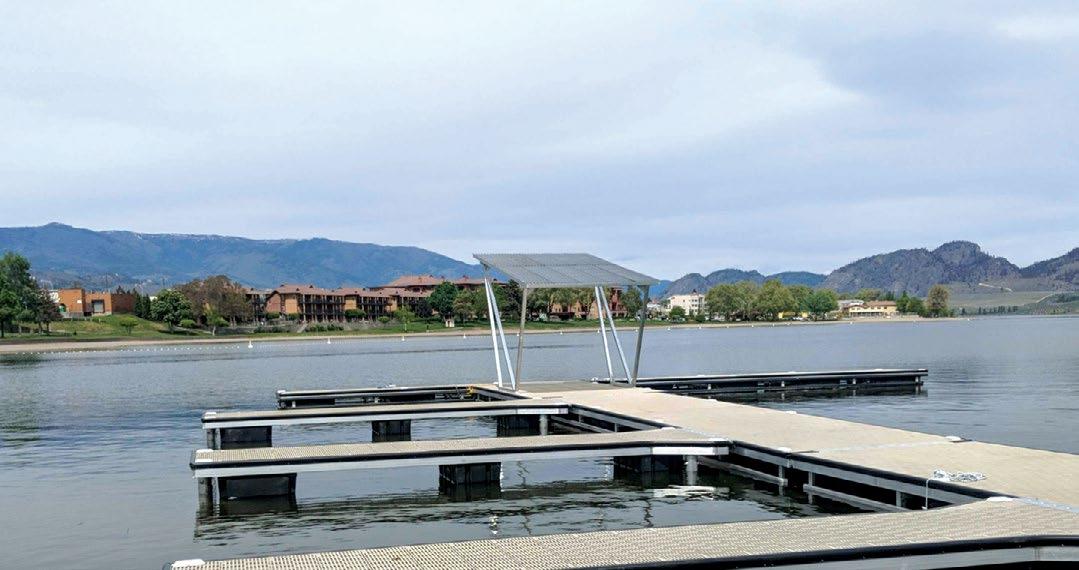

Multiple hurricanes have tested the New Orleans Municipal Yacht Harbor since it opened in 2020, offering a real-world test of its design. Hurricanes Delta and Zeta, category 4 and 3 respectively, struck the marina in October 2020 while the last phase was finishing construction, followed by Hurricane Ida in 2021, a category 4 hurricane, about one year after the new facility was fully operational. Three years later, the marina was struck by Hurricane Francine.
Across these four storm events, the marina endured a maximum storm surge of 1.7m and wind gusts of up to 43.5 m/s, which would have historically submerged the existing fixed docks and overtopped the breakwater. The floating dock systems behaved as intended, rising and falling with water levels and allowing for controlled movement rather than structural strain. In contrast to the prior fixed docks, the new infrastructure has demonstrated an ability to absorb and adapt to changing conditions.
While routine maintenance and minor wear are expected in any marine environment, the marina has remained operational and avoided the kind of widespread damage that disrupts operations and requires significant repair. Instead, it continues to function as intended, supporting tenants and users with minimal downtime after major storm events.
Bryan Whited has been the marina’s executive director since 2021 and has experienced first-hand how the facility has performed under extreme weather conditions.
“Since reopening, the marina has been tested by several major storms, including Hurricanes Zeta and Ida, both of which brought significant storm surge and high windspeeds,” he said. “Despite those conditions, the marina experienced minimal damage. The floating dock system has been a major upgrade for us and has allowed the
marina to absorb storm surge and movement that would have overwhelmed the previous fixed dock system.”
The marina’s redevelopment reflects a growing focus towards proactive, resilience-driven design. As storm frequency increases and long-term environmental conditions remain uncertain, the adaptability of infrastructure becomes a defining factor in coastal design and engineering. New Orleans was one of many communities impacted by the devastation of Hurricane Katrina, and projects like the New Orleans Municipal Yacht Harbor can set a precedent for how resilient planning and design can deliver long-term benefits for areas affected by extreme weather.
“The marina has performed consistently since the development,” said Whited. “Tenants have responded positively to the upgraded facility, and the day-to-day experience of using the marina has been smooth and reliable. Importantly, the new docks have given us a lot of confidence moving forward. We feel that we’re well positioned to handle future storms in a way that the previous facility simply wasn’t.”
Five years after completion, the New Orleans Municipal Yacht Harbor has moved beyond design intent and into demonstrated performance. Its ability to withstand storm events and adapt to changing conditions offers a model for what resilient marina design can achieve. As a publicly owned, municipal yacht harbor, the project emphasises that resilient infrastructure is something that everyone can benefit from.
In a field where success is often measured over decades, the New Orleans Municipal Yacht Harbor has passed its first tests with flying colours and has set the stage for how marinas in the region can be designed for future extreme weather events.
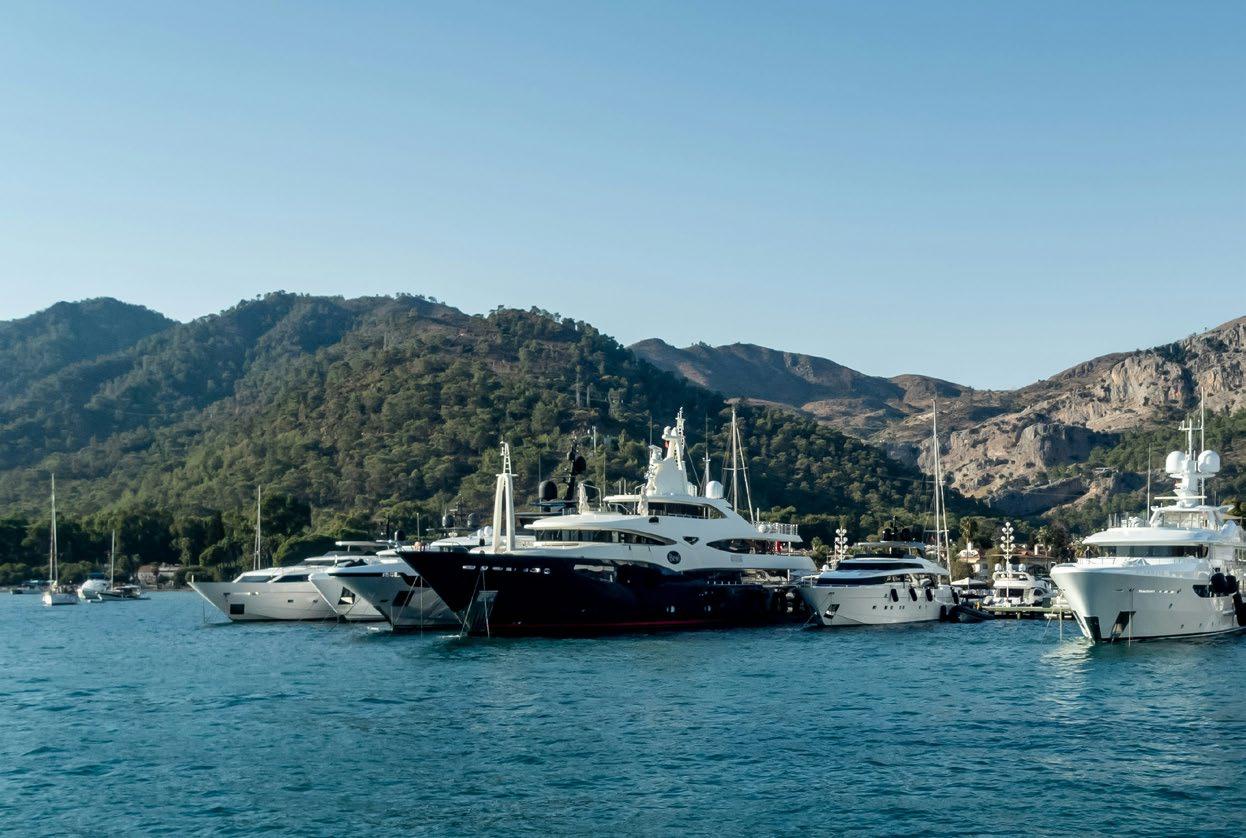
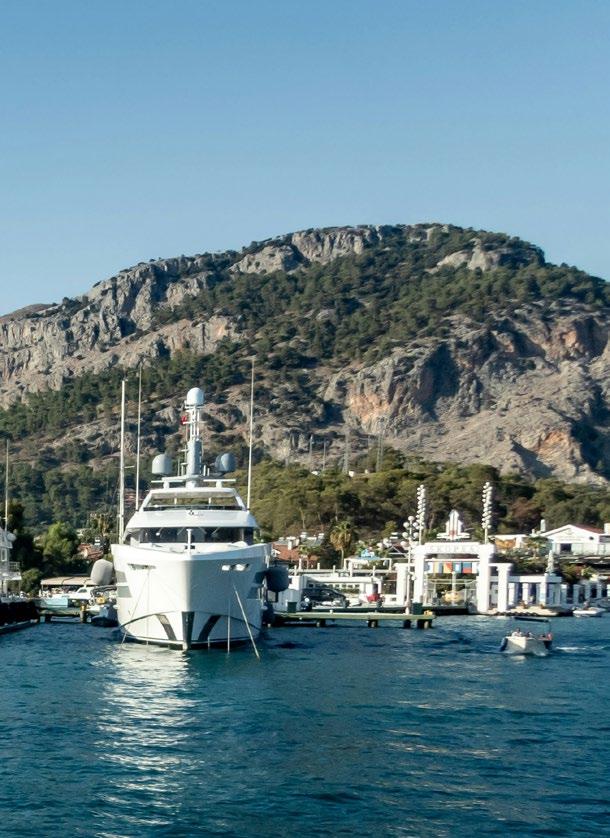
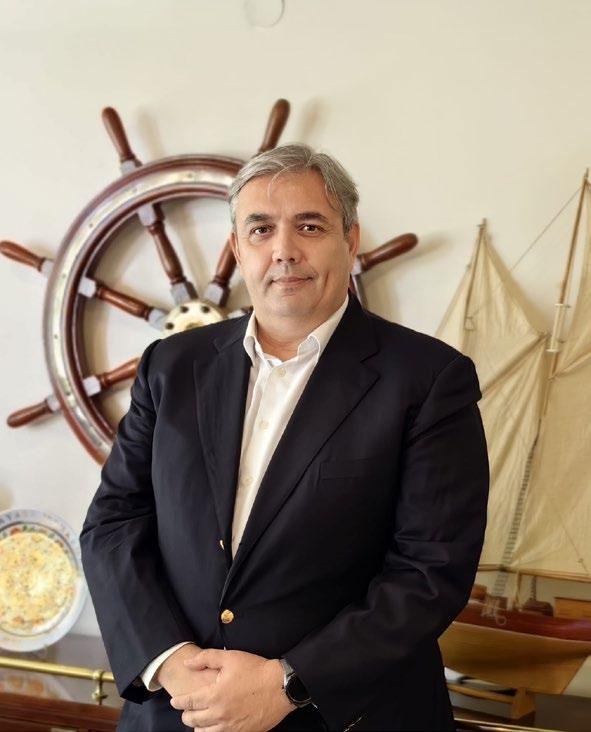
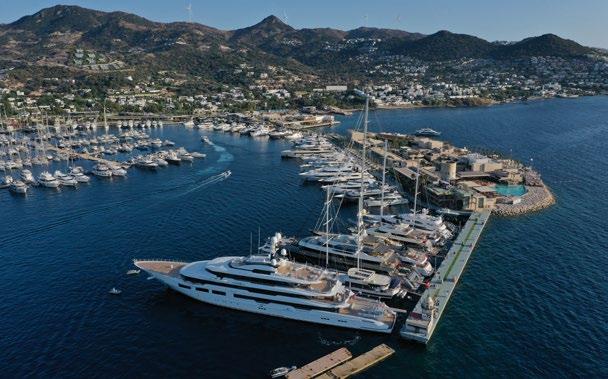
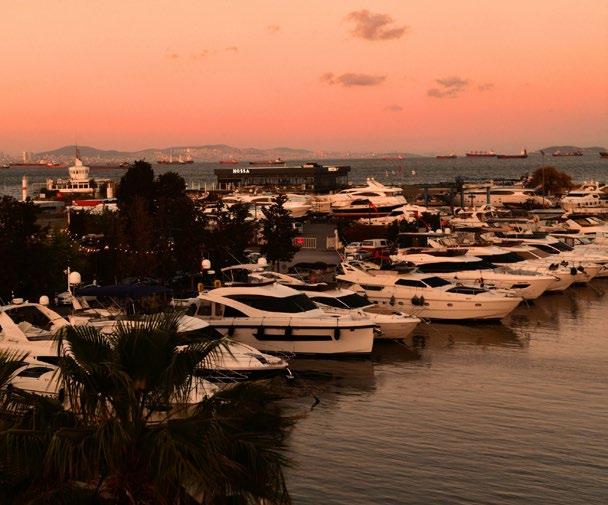
Marina World speaks to the general manager of Istanbul’s Ataköy Marina, Artun Ertem, about the growth of the Turkish marina industry, opportunities for cooperation across the eastern Mediterranean and his work as the chairman of his country’s Marine Tourism Association.
You have been in the marina industry for a very long time and are a key figure in the Turkish marina industry. Could you summarise your career so far?
I started working in the marina business in 2003 when I became the manager of Club Marina in Göcek, Türkiye. After that I was transferred to Çelebi Marina Antalya to work on a rehabilitation project worth around €7.5 million.
We took over the old marina basin, which was pretty tired and in a generally poor condition, and our company renovated it into the world-class marina it is today with a five gold anchor status from The Yacht Harbour Association as well as many other recognitions.
I was transferred to Croatia in 2009 and afterwards Setur Marinas took over the marina from my former company. I worked at D-Marin’s Mandalina Marina in Šibenik until March 2016, and continued to work in Croatia until 2022, before returning to Türkiye as my son started university here. I have been working at Ataköy Marina since 2023.
How would you say the industry in Türkiye has grown and changed over the last two decades?
There have been incredible improvements in the Turkish marina industry. I am very proud that Turkish marinas are top-notch in terms of superstructure, substructure and in service standards, including those with the five gold anchor status. Standards have been kept very high even in the marinas for yacht owners with lower budgets, and the Ministry of Culture and Tourism, and the Ministry of Transportation and Infrastructure, have really supported this too. Although our berthing capacities are lower than some other European countries, our quality standards are brilliant.
How have your years spent working in Croatia influenced your career in Türkiye and the two countries’ respective marinas industries?
I was the first Turkish general manager of a marina in Croatia, from 2009 to 2016. We introduced Turkish standards in constructing and managing marinas, and my personal opinion is that we contributed to improving the service standards and general understanding of the marina industry in Croatia as a whole. Croatians are very good at nautical activities and they have deep-rooted maritime traditions, perhaps even more so than in Türkiye.
Although Croatia is a country of only some four million people, the nautical lifestyle has penetrated into their social fabric. In Türkiye, however, the nautical lifestyle is much more based on luxury, comfort and upper-class service standards.
Croatians are very hard-working people and I have been lucky enough to work with many of them in this industry. I am proud to have worked for many years in such a great country with great people as Croatia and I have learned a lot from them. I have also been witness to many cordial and mutually beneficial relationships between Croatia and Türkiye over the years.
Does that cooperation between Croatia and Türkiye in the marine industry still exist? And in what way?
I think it does, yes. We have established very strong relationships with our Croatian colleagues and friends. Although our two nations may seem like competitors in the market, I think there is more cooperation than competition. There is also a strong cultural and social bridge between Croatian and Turkish societies.
The same goes for Greece. In the maritime industry, as professionals, we have very good and strong relationships with each other, and whatever we can develop together we would consider as a success. I think they would do the same for their side as well.
How do you view the development of new projects elsewhere in the eastern Mediterranean, in places like Egypt? Do you think there are opportunities for cooperation there, or more competition?
It has to be based on cooperation, of course. The eastern Mediterranean is a great location to be developed in terms of marina investments. Egypt and Israel are two countries with strong traditions of maritime tourism. Syria is another country that borders on the Mediterranean and it would be nice to see them develop their coastal areas once their situation improves. The island of Cyprus is another example of where there are some marinas already, but there is room for more.
In any case, development needs to occur on the basis of cooperation. If nautical tourism across this region can be developed, then new destinations will emerge for the benefit of the end users, including superyachts and local economies. It goes without saying that tourism and conflict do not go well together, so we need peace in our regions so we can develop these touristic activities for the benefit of all stakeholders.
Whether it is the Black Sea - where Türkiye also has a long coastline and great potential, but it is currently affected by the Russia-Ukraine war - the Aegean Sea or the eastern Mediterranean Sea, Türkiye will have a great role to play.
“We would like to replicate some of our domestic initiatives on an international scale, and we would like to align our activities with those of our international counterparts as much as possible.”
You are also the chairman of the Turkish Marine Tourism Association. Could you summarise the work you do both domestically and internationally in supporting the Turkish marine tourism industry?
Domestically, the major issue we work on is trying to shape the laws and regulations of Türkiye to better help our members. When something doesn’t work as well as it should, we gather our board of directors to come up with some suggestions that we can make to the authorities, for example undersecretaries or the general management of some ministries.
Seeing as marinas work across many sectors and government portfolios, we might have to contact the Ministry of Treasury and Finance, Ministry of Environment and Climate Change, Ministry of Transportation and Infrastructure, Ministry of Commerce or the Ministry of Culture and Tourism, depending on the nature of the issue. Some marinas are built and operated under privatisation laws, some marinas are subject to national trust regulations, and some marinas and fishermen’s ports are subject to the ruling laws of the Ministry of Agriculture.
However, putting the different connections to different government ministries to one side, our main focus is of course on developing the Turkish nautical tourism industry. Internationally, we would like to replicate some of our domestic initiatives on an international scale, and we would like to align our activities with those of our international counterparts as much as possible to promote our country in the relevant markets.
We are of course still a small organisation with a limited amount of power to get to the right people, but we always try our best to make the right suggestions and take the appropriate steps to support our members so they can run their businesses as efficiently as possible.
“I am very proud that Turkish marinas are top-notch in terms of superstructure and substructure, as well as in service standards, including those with the five gold anchor status.”
In which areas do you believe there are the most significant technological developments and innovations in marinas?
Frankly speaking, I am somewhat suspicious of artificial intelligence because, at the beginning, it might seem like it is helpful. But we don’t know how it is going to develop in the future and whether it will be the only catalyst for technological innovations in marina developments and investments. I doubt it, personally. I am not against it, but I think it is something to be monitored very carefully. Something can start out as very good but it might not finish up well.
On the other hand, digitalisation of marinas is one of the most helpful and significant technological developments. For instance, some big groups like D-Marin and Setur Marinas are keen on digitalisation. There are many different, very useful mobile apps that make the lives of yacht owners and marina users easier. I think improvements and developments should focus in this direction.
But this digitalisation is sometimes not straightforward. If the substructure of the marina and its operations are outdated, then adapting technology to the marina basin can become problematic. And we know of course that many marinas, especially in Europe, are far from new. Many have a long history and, in that respect, any brand new marinas must be digitally contemporary and user-friendly.
Are there any environmentally-minded innovations or initiatives that have caught your eye recently?
Yes, absolutely, I can give a great example from our Ataköy Marina in Istanbul. We have converted one of our RIB boats from a petrol engine to electric. This is a prototype that we put into service about one and a half months ago, and it has been very successful. We have seen that the costs of this electric solution will be much lower than the old boat with a petrol outboard engine. Not only are maintenance costs lower but it also protects the environment better. Petrol outboards can cause oil spills, so using an electric motor prevents this. We may also convert other service dinghies to electric power if the results continue to be good.
As far as electric charging facilities are concerned, I think it is still a bit early. However, as a superyacht marina, we already have strong power pedestals of up to 600 amps. When the time comes, I don’t believe it will be too challenging to increase the amount of charging capacity. We recently had a hybrid 50-metre superyacht in our marina for two and a half years, and they had very good charging without any problems on their side.





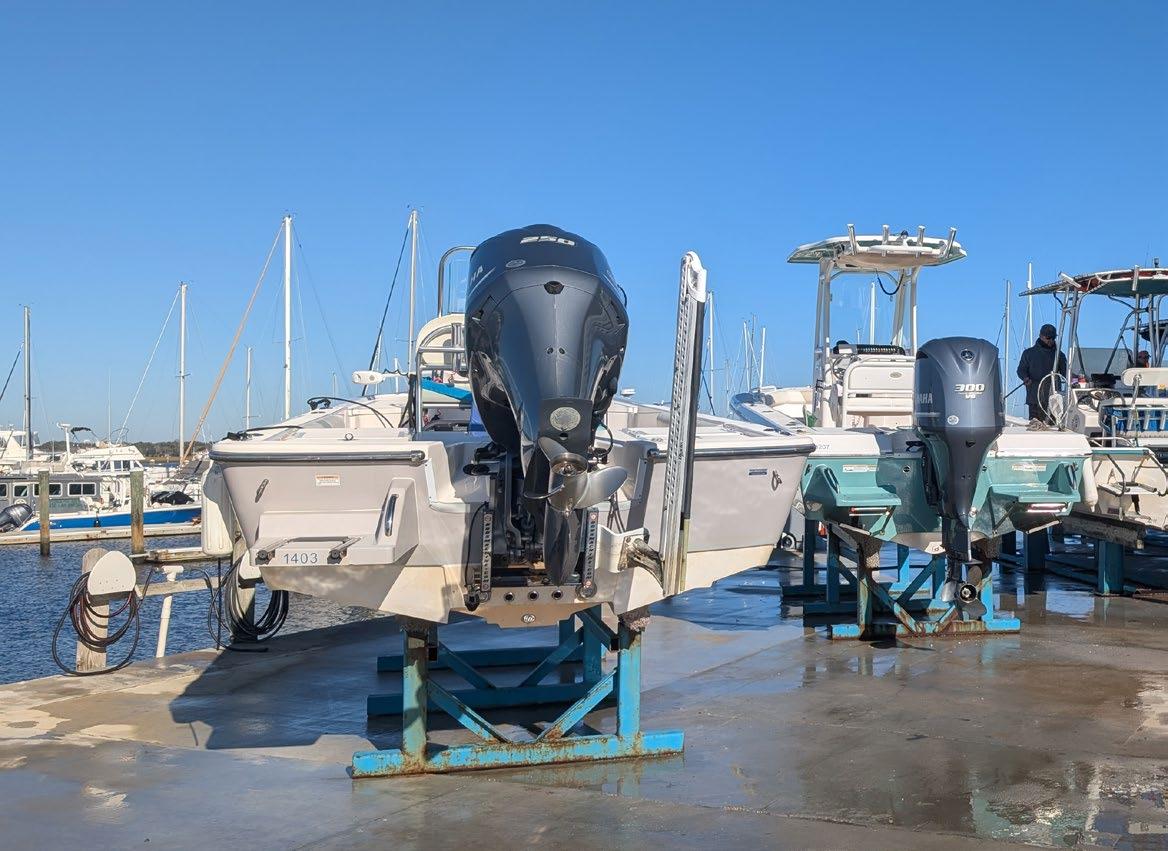
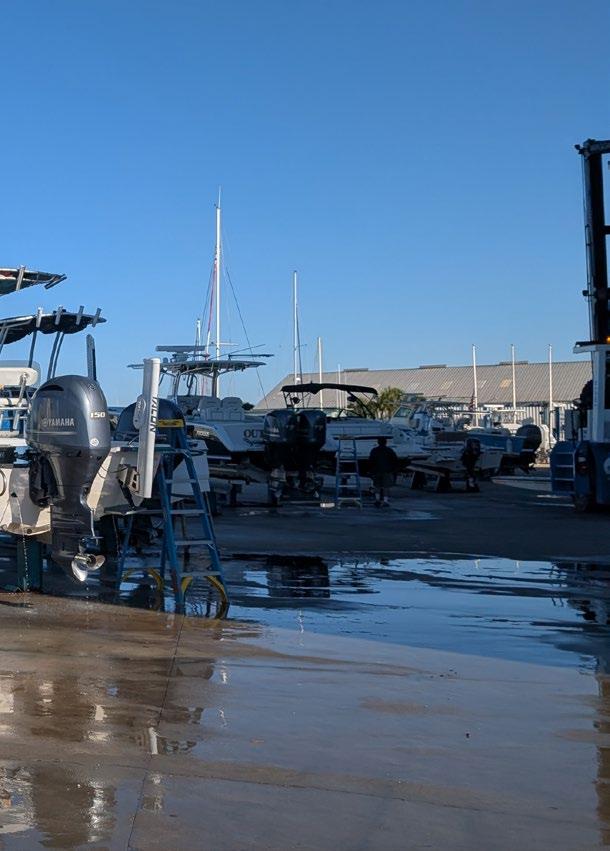
Boats always break. This is as true as death and taxes. If you’re clever, you can sometimes find your way around taxes, but you most certainly cannot get around the fact that something will go wrong on your boat.
By Kenneth Richards
Marinas that understand and incorporate this fundamental truth about boating into their operations are the businesses that create real value for their customers - a value that is seen in healthy margins and exciting exits. Boat service is the consistent need that provides real and immediate value to customers. If done poorly (or worse, not at all) it drastically affects business operations, brand value and customer retention. If done well, people stay for years, your phone doesn’t stop ringing and good money will be made.
As marina consolidation and software intrusion shake up our industry, all eyes seem to be on the durable revenue derived from slip and storage rentals. When you begin to connect the dots between the money and the water, you’ll see how large firms fundamentally see marinas as a type of real estate investment. With very real limitations to future new development, marinas-as-real-estate fit snugly into a tried and true investment model: moatprotected accelerating property values plus a rent-based secure cash flow. Cha-ching.
But for these firms to really add a few digits to their exit multipliers, they need to add value to the already existing operations. Enter the hospitality thesis. Marinas become a “lifestyle” play with the added amenities of a country club or a luxury resort. While some marinas increasingly cater towards a wealthier demographic as cost of boat ownership increases, the hospitality thesis creates value across a wide range of marina demographics, from luxury to working class. These businesses have a significant opportunity to capitalise on their customers’ spending power through a lateral expansion of marina services. I know a marina that will deliver $30 bespoke cocktails to your slip so you never have to leave your boat for an ice cold martini, at an average 300 percent markup.
In addition to hospitality, there is a more fundamental need that is currently being unmet in this new era of marina business: repair and maintenance. Remember, boats always break. Without functioning boats, you don’t have a functioning marina. I have heard many times that boat work is a lost lead and operational nightmare. This does not have to be the case. With the right operational architecture and software, boat work can be a significant revenue and margin driver for any marina.
“Boat service is the consistent need that provides real and immediate value to customers.”
When a marina does not invest in and support boat repair and maintenance they are negatively affected in three primary ways: lost respect, lost customers and lost profits. All three of these can combine to drastically reduce overall marina value.
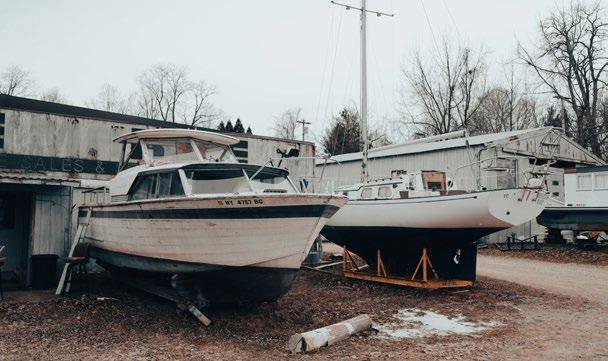
A couple years ago I watched as a local marina and shipyard was acquired by a big and well-known entity. They had one of the largest lifts around and were a well-respected yard. For reasons that I can only surmise, the new ownership decided that the repair and maintenance side of the business was too costly and complicated, and wanted to focus instead on a “best in class” experience: with slips, a mooring field, tenders and a very nice shipstore. They promptly fired the technical staff and left just one or two employees to help with winterisation and other small tasks.
Then, as you would expect, they were unable to repair their customers’ boats as they began to break. Frustrated customers began leaving for other marinas and they watched as their occupancy rate quickly declined.
But something worse happened; they lost the trust and respect of the local community. When they realised their mistake, they tried to reopen the service yard but couldn’t get the techs to return. Today they must rely on a steady flow of independent contractors and watch as a poorly staffed but fully built service centre leaks margin and overall value day after day. This marina remains substantially undervalued because they lost the respect and trust of their community.
Marinas also lose customers through poorly run service departments. My father is the proud owner of an 11-year-old 24’ Everglades that he keeps in immaculate condition. He puts more hours into his engine than most fishing guides. Last year he was having trouble with the pump in his baitwell so he took it to the marina service department to see if they could fix the problem. After several frustrating delays from misdiagnosed problems and a few bills paid to cover the labour charges, they finally declared they had fixed the baitwell. He paid them and then went fishing the next day - during which the baitwell promptly broke.
He did not bother calling, nor did he complain or ask them to fix it. Instead, he went to another local service department. They fixed the problem in a couple of hours and now he uses them for all of his repair and maintenance work. The moral of the story is that a poorly run service department will drive customers away, often invisibly, resulting in declining customer trust, lost revenue, decreasing margins and overall diminished enterprise value.
My final example comes from a more insidious and harder-to-see problem, but one that nonetheless diminishes margin, affects revenue and devalues the business. This is the problem of operational inefficiency in marina service departments, a problem that is commonly created by the use of outdated or industryagnostic software. I’ve seen this problem at multiple yards, but want to share one specific example from a well-respected marina with a modest repair, build and maintenance operation.
This yard does about $3M a year in boat repair and maintenance. They use a well-known legacy software solution to help manage their service operations. In the shipyard office there is a whiteboard full of sticky notes that managers use to track projects. There are two full-time employees whose job it is to transfer and retype information between the legacy software, their invoicing process, inventory, customer correspondences, project flow and accounting software. There’s a stack of notebooks with customer information that managers have to manually search through to look up customer history. There are multiple spreadsheets managed by different people. The software crashes when you try to run a report on business health analytics. The costs compound while the marina hires people and pays for labour time to work around the problems that the software should be solving.
Yet, they are still profitable, and business goes on as usual in all of its ordered chaos. It’s like trying to bail a sinking ship with a milkjug and just because the boat still floats, you believe everything is normal. On the surface, everything seems okay. Customers are mostly happy. Bills are paid. The business is making a profit, but bleeding margin on every line in their profit and loss due to a software solution that is just “good enough” to keep the ship afloat.
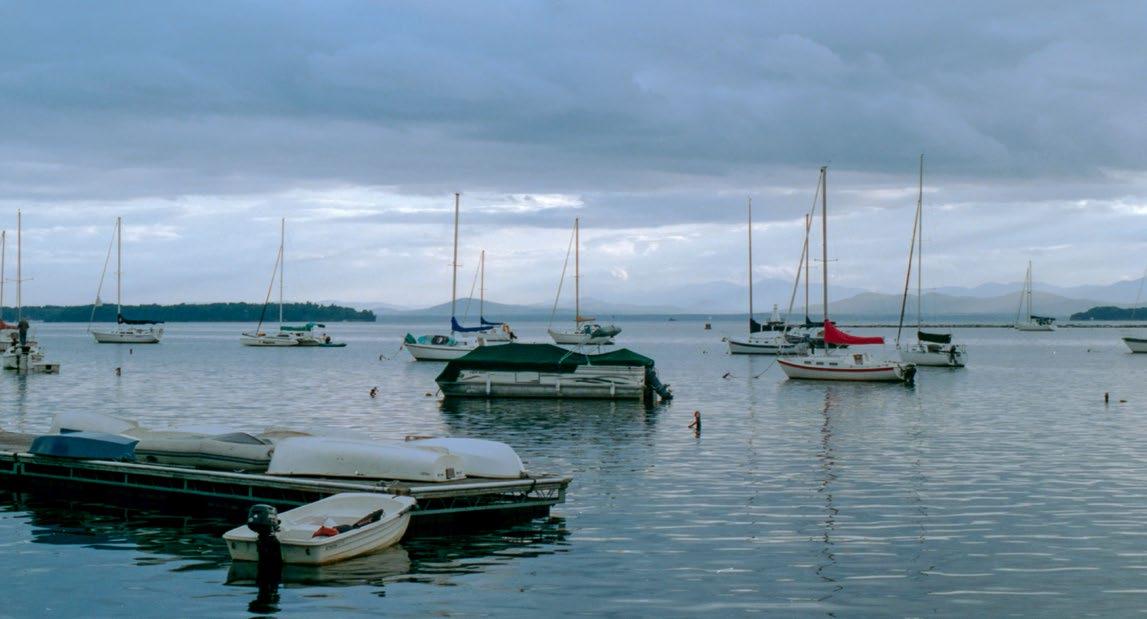
Below: Burlington, Vermont, USA.
This problem compounds when these marinas with legacy software solutions are acquired and rolled up into larger portfolios. You don’t need to be a data scientist to understand that if you add multiple different systems together that are running on chaos-causing software, you get an increasingly chaotic system. Bad data leads to bad decisions which leads to bad business. When this becomes endemic to a marina portfolio, you have the potential for massive devaluation, lost revenue and diminishing margins - when combined they lead to a scenario of compounding loss.
Boats break, but your service department doesn’t need to be broken too. There are many new software solutions entering the industry. This is mostly a good thing, although there can be too much of a good thing, especially in a world where hauling on a sheet, navigating an inlet or casting a line is a profoundly analogue experience. One place that software development has largely overlooked is also the place where software can make an outsized impact on customer satisfaction, company valuation and the bottom line, and that is in boat service, repair and build operations.
It’s my belief that good software should never tell the pros how to do their job. After all, they’re the experts and there is just too much variability in boats. It should instead help them run and understand a better business. There are a small handful of software companies out there doing this.
Our company, Herons, is designed to specifically address the black box operational problem of marina service, repair and build operations. However, regardless of which software you choose to run your marina service departments, they should all share a few common best practices: standardise where you can standardise, simplify when you can simplify, be available to help with real people, and share a goal to support an industry that is far older than computers or software. We do this because we all share a common love for boats and being on the water.
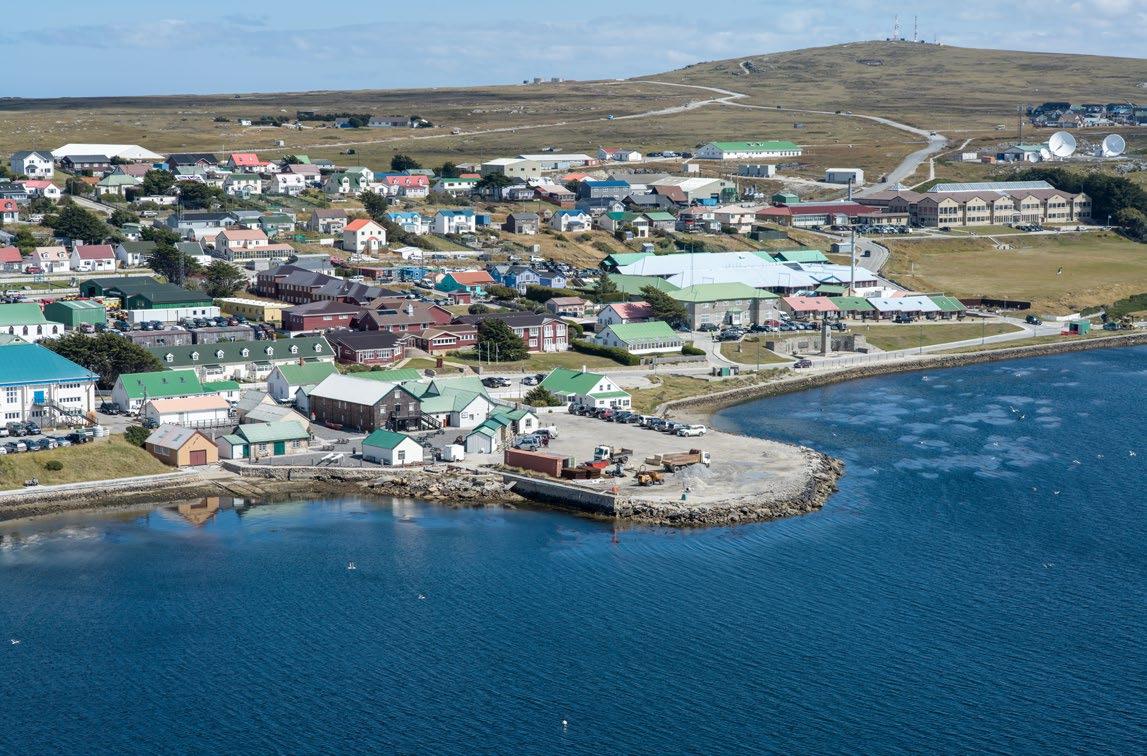
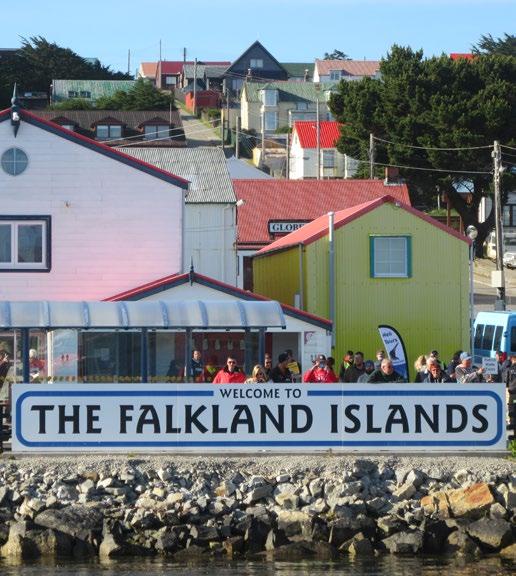
The remote archipelago of the Falkland Islands might be about to see a small but nevertheless full-service marina constructed in its capital city, serving both local boaters as well as larger yachts venturing to and from Antarctica.
By Patrick Norén
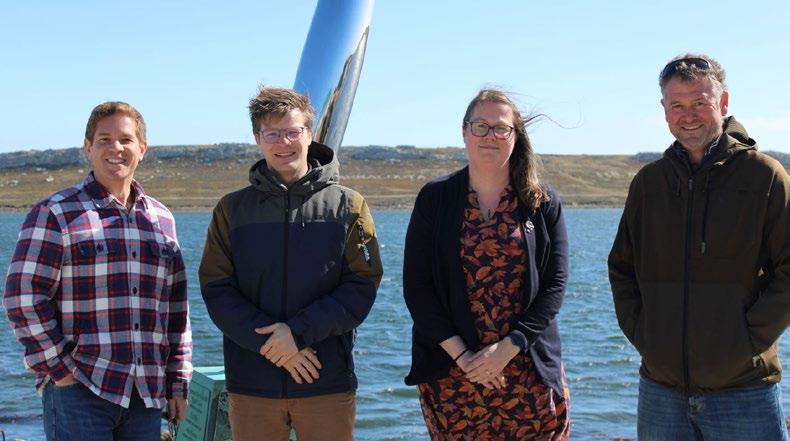
“There have been discussions and ideas around a marina in Stanley for over a decade,” said Zachary Franklin, managing director of the Falkland Islands Development Corporation (FIDC). But, for one reason or another, a full-service marina in this corner of the South Atlantic has never materialised.
About 12 years ago there was a vision to redevelop the entire waterfront in Stanley, which makes up about 80 percent of the total local population of around 3,700 people. An additional 2,000 British military personnel are stationed at the Mount Pleasant Royal Air Force base, but do not represent part of the permanent population.
“Everything from the Falkland Islands Company east jetty all the way up to in front of Government House would have been turned into this whole mixed-use development, including a marina. So the idea of a marina isn’t new,” he said. “It has just never really got off the ground.”
Many pieces of the puzzle for a marina in Stanley are there. There is a yacht club, hobby yachting and some people have even built out their own little jetties in a section of Stanley harbour. Local authorities are currently installing a brand new port facility to aid transatlantic shipping and commercial imports and exports, and people on the island are already aware of a small but notable market for Antarctic tourism. After all, Antarctica is only around 1,200km from the Falkland Islands, which is roughly the same distance as from New York to Chicago.
“A couple of years ago, the FIDC rejoined the International Association of Antarctica Tour Operators, or IAATO, where there is also a yacht committee. There is a whole yachting industry that services Antarctic tourism so we know, qualitatively speaking, that there is a certain amount of demand,” said Franklin.
Not only is the demand apparently there, but there is a lack of full-service facilities in the region that can both accommodate larger vessels and provide maintenance. Marinas in nearby Punta Arenas in Chile and Ushuaia in Argentina do exist, but not at the level needed to provide safe and convenient year-round berthing alongside ancillary services.
“Feedback from IAATO and the Falkland Islands Yacht Club has shown that, if given the opportunity to have a marina here, yacht owners and boaters would choose to spend their time in the Falklands over anywhere else,” Franklin told me.
“This is the impetus for how we decided to seriously look into building a full-service marina for the Falkland Islands, and in particular Stanley, which has a large, open waterfront but doesn’t have an elegant marina that you might see in pictures like elsewhere around the world.”
Not only do the Falklands know that demand is there, but the hope is that should a marina be built, then more yachts will indeed come. Due to the lack of appropriate infrastructure, arriving vessels currently have to anchor offshore - which is risky given the islands’ harsh and exposed geography - and take a tender in.
from top: Bird’s eye view of the location for the proposed marina; A settlement on Pebble Island, Falkland Islands; The Falkland Islands are rugged and exposed to the elements, making marina developments there challenging.
Preliminary approval for the project was granted after Zachary Franklin and his team presented a vision to the FIDC oversight board, but it was decided that a third party was needed to demonstrate and validate the business case for building a marina in Stanley.
FIDC launched a tender process, about 120 companies around the world accessed the request and 24 put in a full proposal. Arch Henderson, a UK-based company that is part of the larger Haskoning group from the Netherlands, was ultimately chosen to conduct the feasibility study based on their proposals, the timescale and developmental checkpoints.
“It was this that gave our oversight board a better feeling that that we could have stops during the development that didn’t commit us to investing fully in things that were unproven before seeing a complete business case,” said Franklin.
“Of course, one of the key steps at the start of the project was going to the Falkland Islands,” said Gosse de Boer, a marine engineer at Haskoning, who visited the proposed site in Stanley in February 2026. “It’s such a unique place that also needs to cater to unique user groups, including Antarctic access and round-the-world sailing,” he told me. “However, there is limited data and limited yachting at the moment, so we have to put together a financial feasibility study based on local insights combined with our own expertise at Haskoning. We visited the Falklands to hear from the local stakeholders what their view on it was and this is one of the major input factors that we have.”
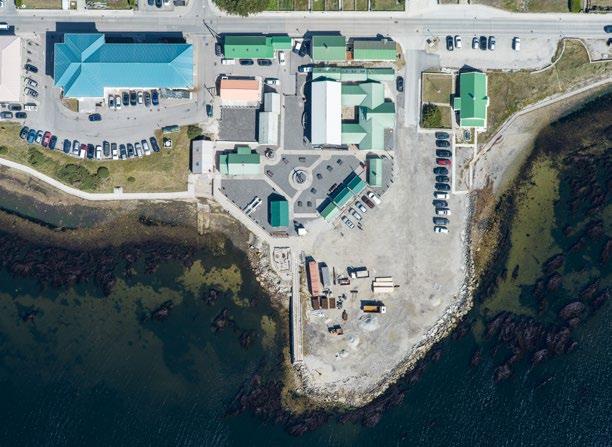
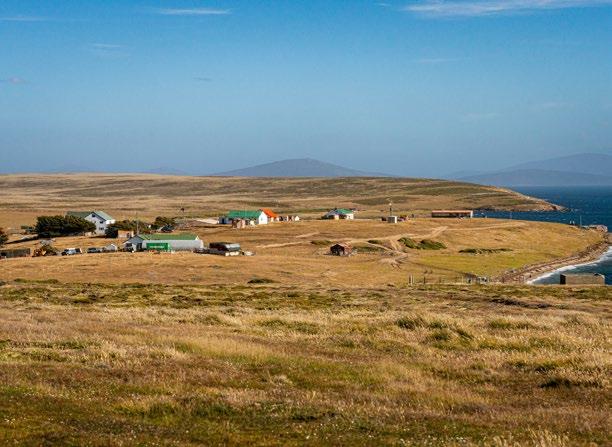
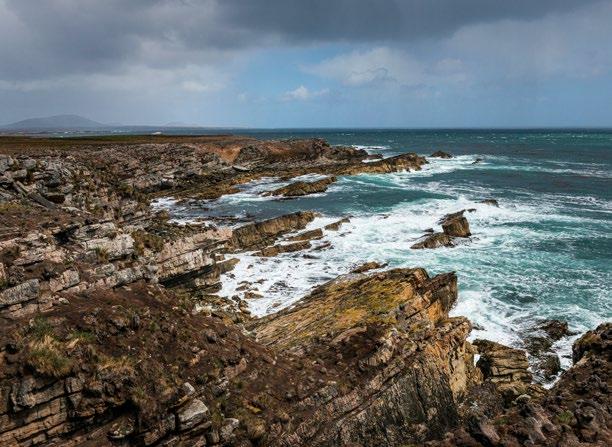
That said, a future marina in the Falklands will be far from a Mediterranean-style behemoth. In a first phase proof of concept, the marina might only host as many as 20-25 berths.
“We want to make sure the initial investment and capital expenditure is low,” said de Boer. “For private parties to step in and for the marina to be realised, you have to start small. Generally speaking, we have found that locals in Stanley would welcome a marina, but in their view it should start small and very simple. We should start with safe berthing, because that is the one thing that is missing in the entire Falklands.”
However, the Falkland Islands government does not intend to invest any public money into the project, and so the eventual marina would have to rely solely on private funds. FIDC will therefore be turning to the Falkland islanders themselves - whether it be individuals or local businesses - as well as foreign direct investment to get the project off the ground.
“We will need to design a financing mechanism that is not reliant on public funds,” said Franklin. “There are a considerable number of businesses here, many of which are cash rich but do not have a lot of investment opportunities because not many new projects come along. They also don’t have access to a stock market and the economy in the Falklands is not very complex.”
While there has been some interest from investors in Chile, the FIDC envisions making an offer to the individual and business community in the Falklands based on the feasibility study that Haskoning produces. “The first step would be to create a kind of fund where people could put in money, provided that we can demonstrate the prospect of a long-term return on their investment,” said Franklin. “That way, we will have de-risked an initiative that doesn’t really exist yet and brought some prospect of economic development for the benefit of the local community.”
“It’s such a unique place that also needs to cater to unique user groups, including Antarctic access and round-the-world sailing.”

Building a marina in Stanley harbour would not be without its challenges, says Haskoning’s Gosse de Boer. The site chosen for the marina - called Government Jetty - belongs to the Falkland Islands Museum & National Trust, and while there was some land reclamation to create this area in the first place, it was not built with a particularly solid foundation and neither does it have much bearing capacity.
“If you were to construct larger buildings there you would need to do a lot of ground improvements or even replacing existing materials with something stronger,” said de Boer. “Despite the relative shelter of the harbour, there is still a lot of wind and wave action, so any marina would need some pretty significant breakwater to provide some extra protection. One of the key priorities is safe, yearround berthing and this needs to be properly designed to protect from all wind directions.”
“Furthermore, the water depth is only between two to five metres. To avoid any dredging you would need to limit the yacht draught to that number and only build out the marina as far as you need to accommodate the yachts
that you foresee coming,” de Boer continued. “There is also a lot of kelp growth on nearby shorelines and so we are looking at how to avoid impacting that as well. This is not only for environmental benefits but also to reduce any maintenance work afterwards because the kelp can grow back very quickly.”
Haskoning is due to provide their feasibility study on the proposed marina by September 2026, at which point it should be clear whether the project can go ahead. In any case, both Zachary Franklin of the Falkland Islands Development Corporation and Gosse de Boer of Haskoning agree that reducing capital investment and operational expenditure while maximising revenues will be key to securing the marina’s long-term viability.
“If you can keep the balance sheet positive by keeping costs low but revenues high,” said de Boer, “then a marina like the one that is being discussed in Stanley in the Falkland Islands could become a very interesting investment opportunity, especially because there is not much competition in the region.”
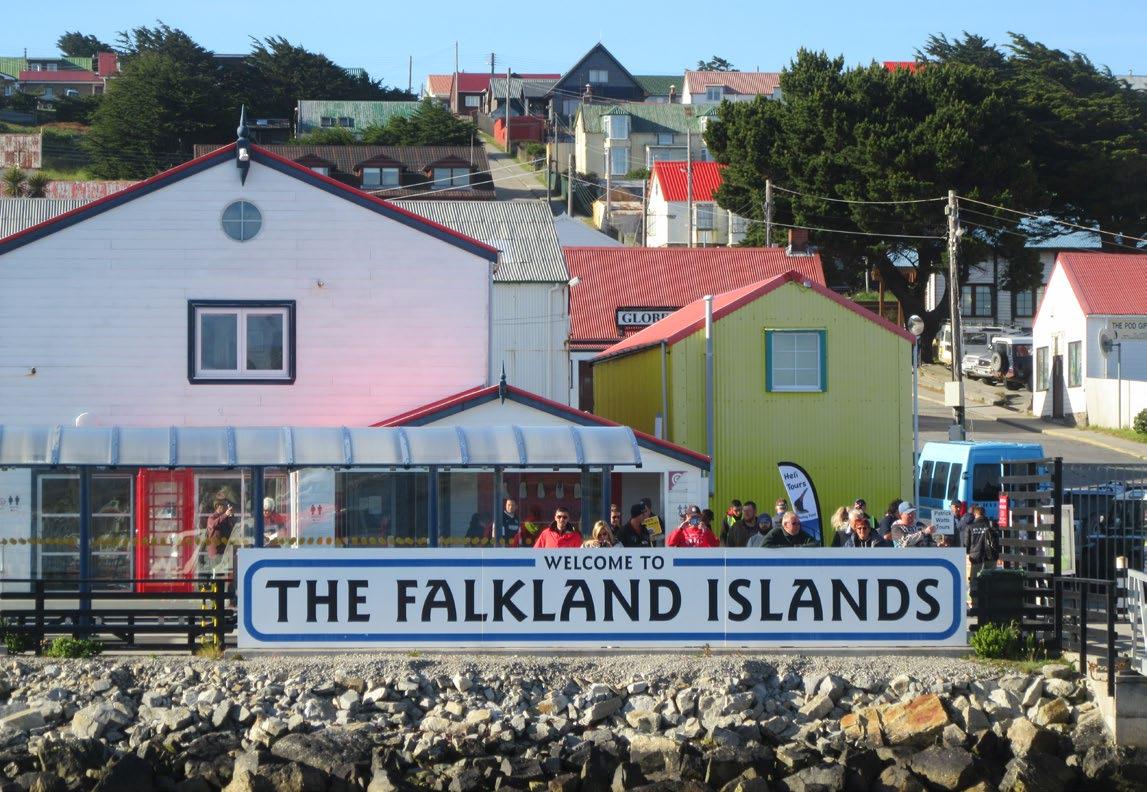

Design, manufacture, installation and maintenance of floating solutions
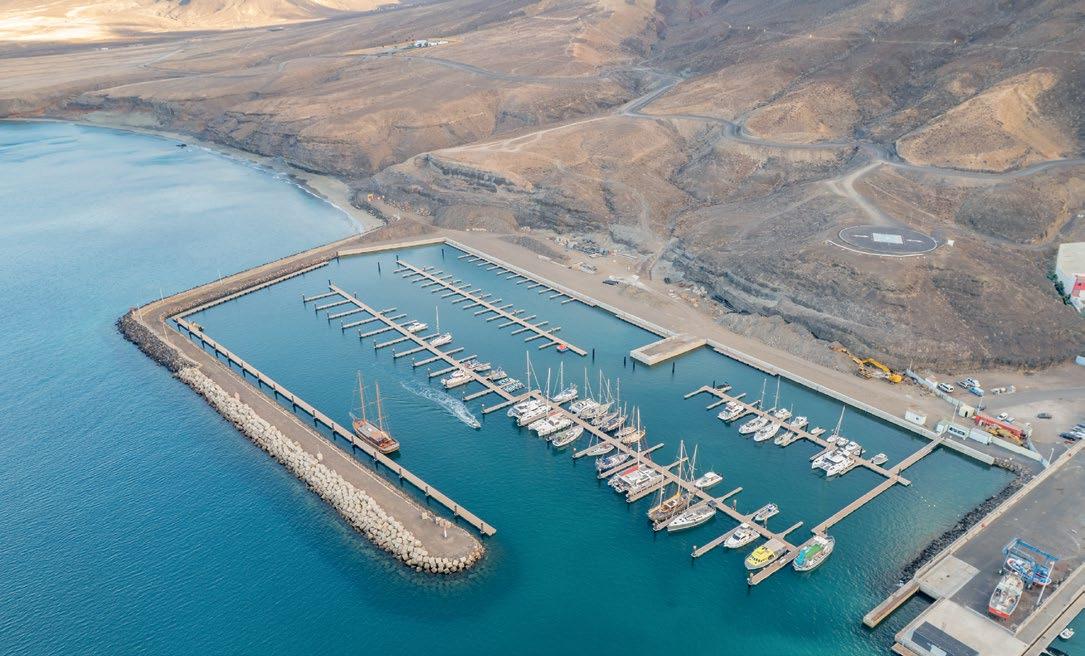


MEET OUR FULL-ELECTRIC SERIES 0 EMISSIONS. 0 LEAKS. GH70E
65T ELECTRIC BOAT HOIST OPERATING AT THE PORT OF BERMEO (SPAIN).
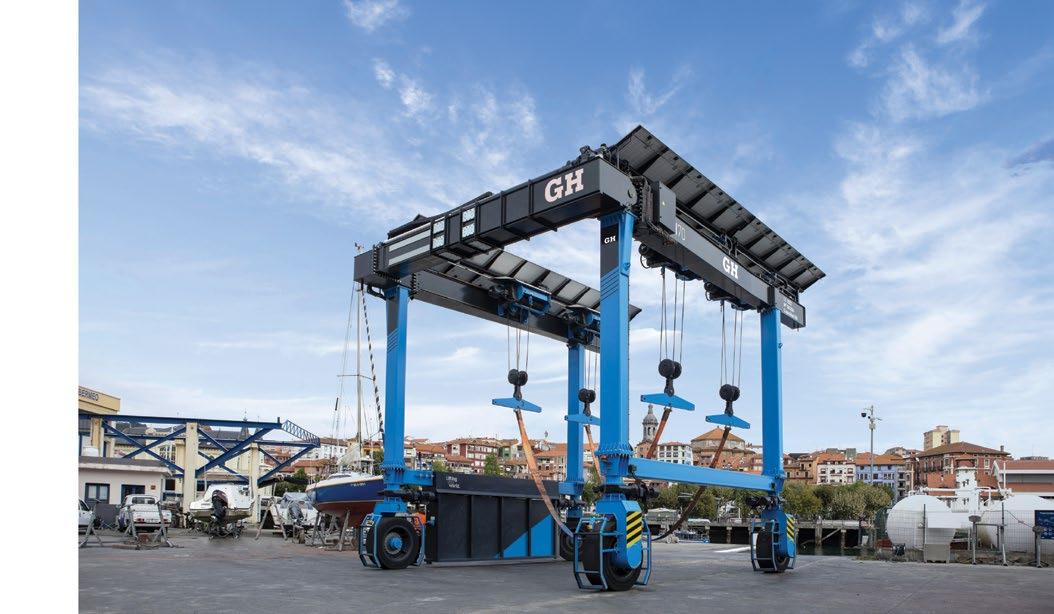
Easy to charge with full-day autonomy.
Integrated solar panels supplying up to 20% of daily energy.
Variable span to maximize yard storage density.
Explore our complete marine range. Download the latest catalogue. motion@ghcranes.com motion.ghcranes.com
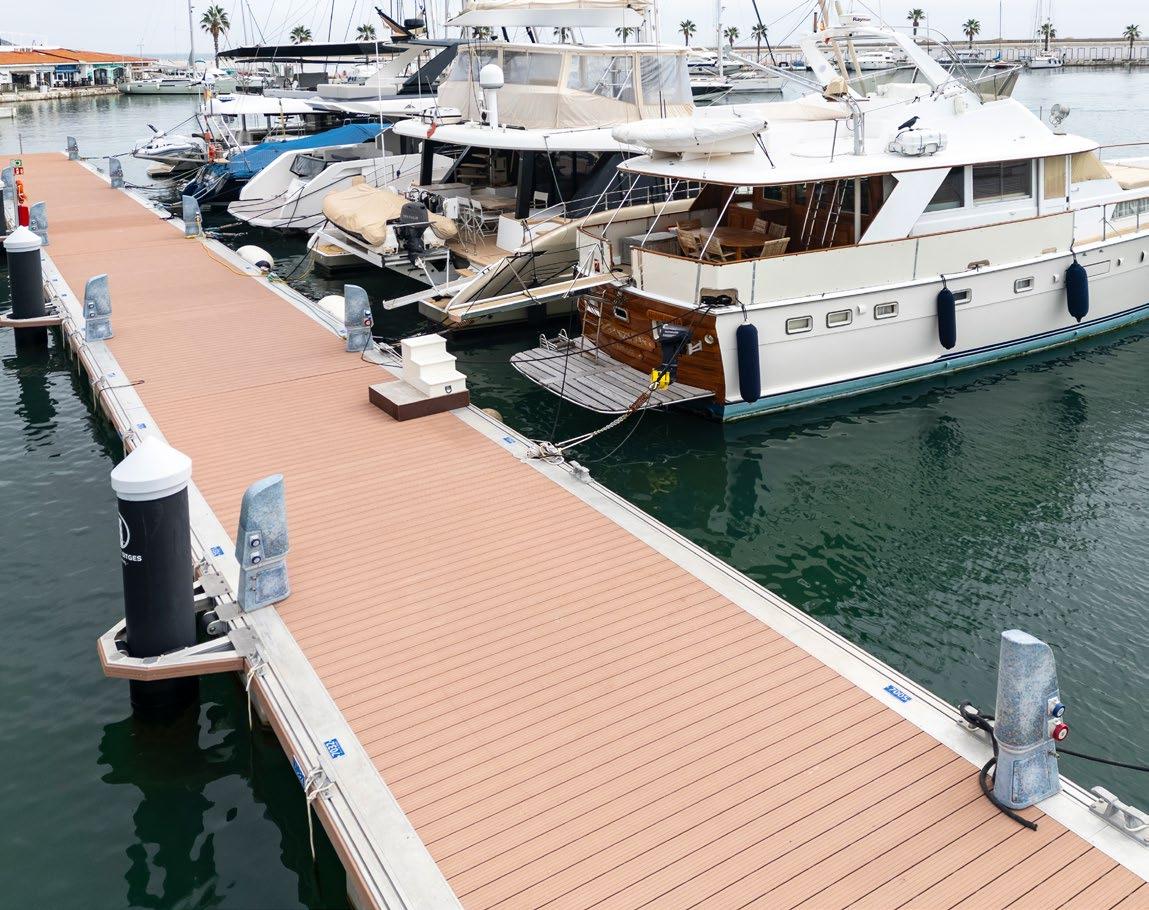
ASpanish manufacturer of power pedestals made from recycled ocean plastics has shaken up a competitive Mediterranean market. Marina World speaks to Marconn’s Paula and Miquel Vilanova to find out more.
How did the company get its name and where did the idea of making power pedestals from recycled materials come from?
The name of our company - Marconn - comes from the Spanish words for sea, connection and connectivity: mar, conexión and conectividad. The history of the company starts with the Vilanova family, who are the owners of a really big company in Girona called Tavil. The founder, Lluis, is our father and we are users of a marina in Platja d’Aro and it was here that the idea to create power pedestals for marinas was born.
At the time, Paula was also working on a university project concerning water and big data, and after having spoken to other marina users they understood that many pedestals were facing similar issues, such as water leaks and poor consumption habits. To address these problems, Paula began developing a housing for electrical pedestals designed to prevent water leaks, along with a software platform for consumption analysis and control.
The first idea was to work with fibreglass like many other companies in the market. After fibreglass, they started to work with polyethylene because they saw it was very durable in a marine environment. However, they soon realised that you could add recycled materials recovered from the ocean, such as fishing nets and bottle caps, to the polyethylene to create a pedestal that is both durable and combats plastic pollution in the sea.
Nowadays, we make power pedestals from three different types of recycled materials: urban/domestic plastics, bottle caps and fishing nets. Just one of the biggest superyacht power pedestals can contain around 1500 bottle caps.
How did you break into such a competitive market that is dominated by big brands and companies?
In the early years, we didn’t just make a product and then go to market. We did it the other way round. We went from port to port across Catalonia to talk to captains and heads of maintenance to understand what these customers needed most in a new pedestal. They said that durability was a problem, which meant we shouldn’t use stainless steel or aluminium. We started out with fibreglass, then moved to polyethylene and eventually recycled materials, like I already said.
Customers also said they wanted a material that was durable, one that would still be in good condition after five, 10 or even 15 years. In fact, we now give a 20-year warranty for our products and want to be able to give more in the future.
Another key point was that accessing the pedestals to conduct maintenance was difficult. Many pedestals are quite small and complicated, so we created a design where you literally just lift the top off the pedestal and then you have 360-degree access to the control panel.
The pedestals themselves are highly customisable, no two marinas have exactly the pedestal configuration. We can choose the types of sockets, we can choose the types of water that can be supplied through the pedestal, it can adapt easily.
Were there any particular initial challenges in manufacturing power pedestals from recycled materials? How did you overcome them?
The first prototypes we made were 50 percent recycled materials and 50 percent virgin polyethylene, however when we started we understood that a higher percentage of recycled materials in the mixture meant a lower durability. So we had to experiment and change the composition of the polyethylene and recycled materials in the manufacturing process to increase the number of recycled materials without sacrificing durability.
Just this year we made our first pedestal out of 100 percent recycled materials, and our intention is definitely to move towards making more pedestals out of 100 percent recycled materials. We have also managed to make the pedestals made completely out of recycled materials have the same durability as the ones made from virgin polyethylene, which is something we are very proud of.
We had to change the types of recycled plastics we were receiving. In essence, better quality plastic means a more durable pedestal. We also had to change the way we chop up the recycled materials as well as the temperature at which we mix them. Once you have found a good formula that works, you can increase the level of recycled material.
And, because our pedestals are made from recycled materials, we can actually take them out at the end of their lifespan, cut them up, melt them down and make new pedestals. Yes, it’s very important to clean the polyethylene properly to give it a new life, but in general we don’t need to use new materials to make new pedestals.
According to a study that we commissioned, manufacturing pedestals with recycled polyethylene and recycled plastics also produces considerably less emissions and uses much less energy compared to aluminium. Our manufacturing process releases 75 percent less carbon dioxide and uses 86 percent less energy, which is a very big reduction.
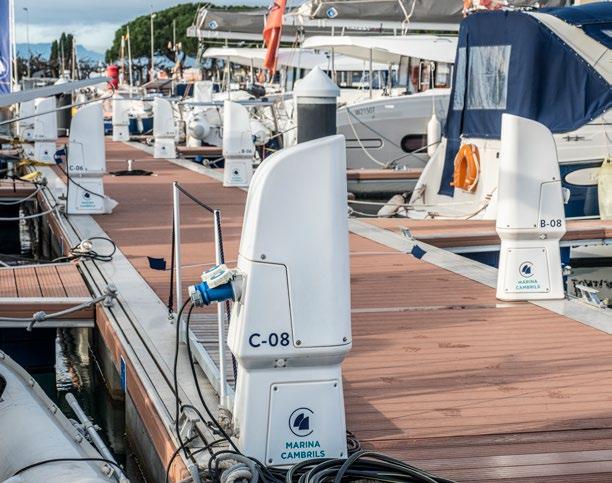
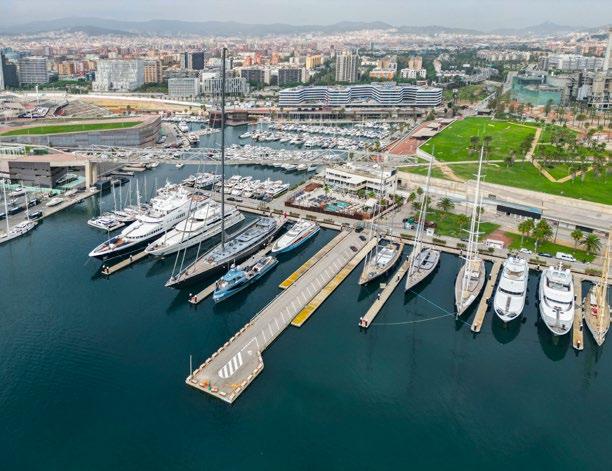

“The funny thing about the pedestals made from bottle caps is that we can’t guarantee what colour they will be. It depends on the mixture.”
So is it cheaper for the customer to make a new pedestal out of the old pedestal, instead of buying a completely new one?
That would be fantastic, but unfortunately not! The cost is about the same. When you build a new one, you have to buy the raw materials. When you recycle the old pedestal you already have the raw materials, so you don’t need to buy new materials, but instead you have additional costs to clean and break down the old pedestal to be able to reuse it.
Being able to provide a solution that is both durable and sustainable is a key point, and choosing to recycle your old pedestals will not cost any more than buying new ones. So the onus is on the customer to make the more sustainable choice. However, because we started in 2018, none of our pedestals have actually reached the end of their lifespan yet. Port d’Aro was our first customer with around 300 pedestals and we have to wait some more years before it’s time to recycle the old pedestals to make new ones.
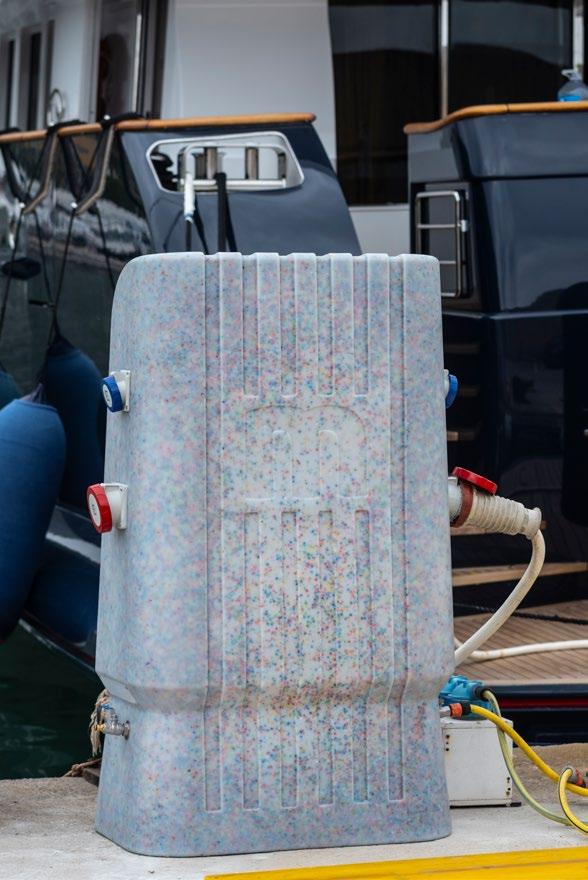
Below: A polyethylene power pedestal.
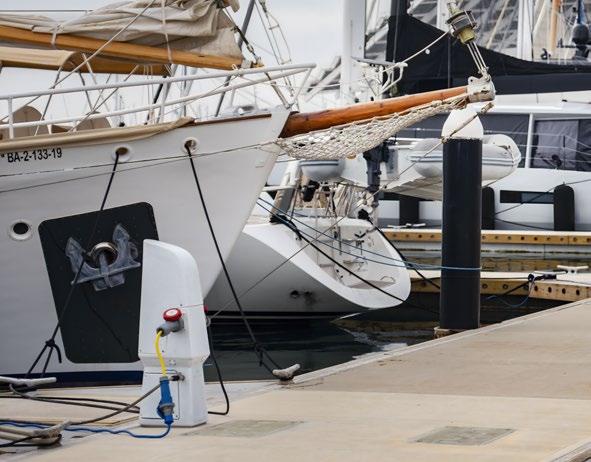
You have grown quite quickly in what is a very competitive market. Who are some of your biggest customers?
We have a really good presence in Spain, which is where we are based. Port d’Aro were our first customers, and since then we have served many others, including Port de Masnou, Port Ginesta, Marina Port Blanc, Port de Cadaqués, Nautic Tarragona, Port de Sitges-Aiguadolç, Port Torredembarra, Port Balís, Rolnautic Yachts in the Canary Islands, Port Fòrum in Barcelona, Marina del Odiel in the south of Spain and Bermeo Marina in the north of Spain.
In France, we are just finishing an installation in SaintMalo and we have sold to Port Leucate, Port Lavandou, Horizon Marine and Port de Hérel-Granville. We have also sold to Cantiere del Pardo in Italy.
When we say that our product developed out of a university project, sometimes some people are scared that they will end up working with a young and inexperienced team. But since being founded in 2018, we have installed over 3500 pedestals across Spain, France and Italy, which is an average of over one pedestal every day.
Where do you source the bottle caps and fishing nets from to make the pedestals? Who are your partners in this?
We started creating the product together with a rotomoulding company in Valencia called Rotolia, and when we wanted to include recycled plastics they gave us the names and contact details of different public companies and non-governmental organisations that worked in these kinds of recycling processes.
After working with non-governmental organisations for a while, we started working with Gravity Wave. They are also based in Valencia and they work with fishermen and companies like ours to remove plastics from the sea and port areas to turn them into usable panels and products.
The Spanish basketball legends Pau and Marc Gasol even joined as advisors and invested in Gravity Wave in February 2024, so they do a lot of publicity for them too.
The funny thing about the pedestals made from bottle caps is that we can’t guarantee what colour they will be. It depends on the mixture. For example, some marinas have blue pedestals but in the Port of Sitges, they are pink. But the most important thing is of course that these pedestals help clean up our oceans from plastic pollution, so we believe it is worth it!
Do you have expansion plans outside of Spain, France and Italy?
We are already increasing in France and Italy, and we are especially interested in the African and South American markets. We would like to grow step by step, slowly and consistently. We are happy and confident that we will continue to grow because our product is unique and more people in the marina sector are changing their mentality about sustainability and construction materials.
All the customers that we have say that they are happy with the product and our service, and these kinds of references are probably the best way to attract more customers. Captains and marinas all talk with each other and confirm that it is a good product, so we believe that the future looks good for Marconn.
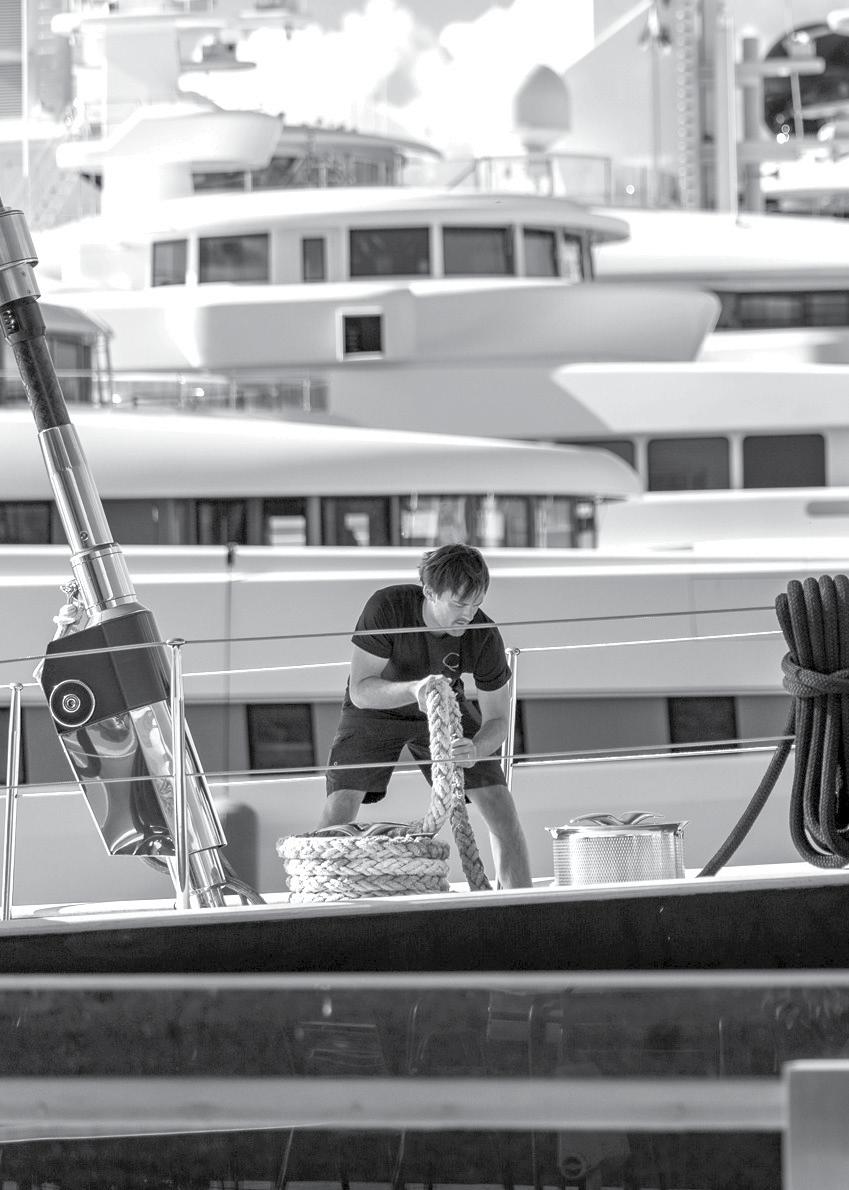
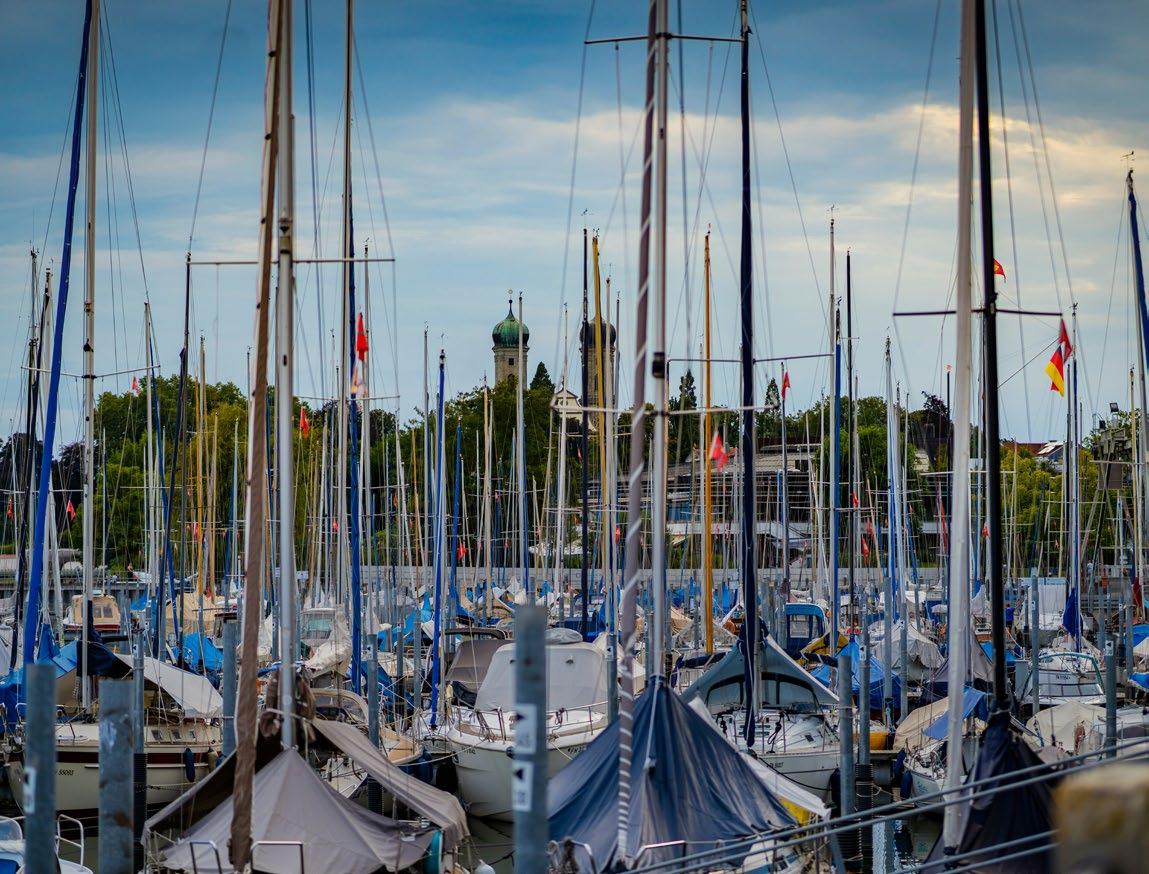
Securing the future of the global marina industry will mean changing how the industry sees itself and interacts with all manner of stakeholders, companies and clients, and to what end.
By Mel Symes
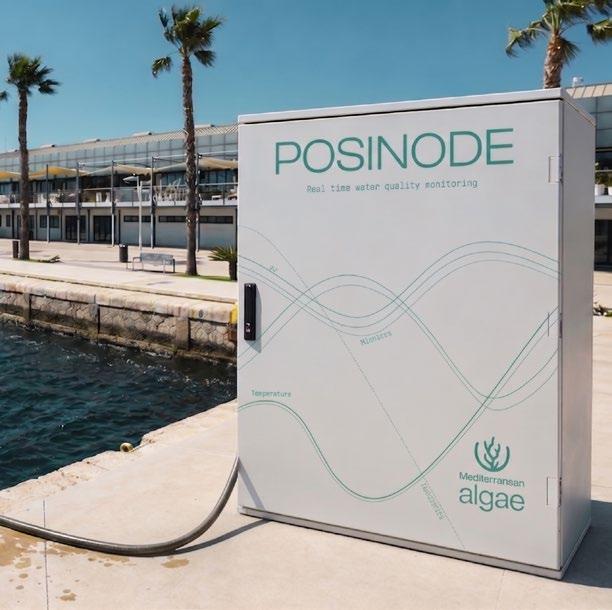
Next year’s ICOMIA World Marinas Conference (IWMC), set to take place in Shanghai, follows an impressive precedent. The 2026 conference, hosted by Vento di Venezia and led by local Olympic sailor Alberto Sonino, celebrated 20 years of regenerating the island of Certosa. Its lowimpact marina serves as the financial engine for a serene public park, successfully restoring historical “commons” land through a public-private partnership with the City of Venice.
In the IWMC’s commemorative magazine, Sonino’s comments stand out in addressing the social role of marinas. He talks about support for local communities and voices a wish that “future editions will delve further into corporate social responsibility and the role of our sector in promoting sustainable growth, human rights and welfare.”
This is already being put into practice at Certosa, where a social impact assessment by Ca’ Foscari University is currently underway. By tracking indicators like employment and training opportunities, services tailored for families and local citizens, and supply chain integration, this study should offer a valuable reference model for marinas seeking to achieve measurable and positive community impact.
Beyond local community impact, Sonino points out that along popular Mediterranean routes, the luxury yacht sector cannot ignore the visible realities of migrant trafficking and refugee crises. He challenges the industry to look past pure technical prowess and connect highend transactions with global humanitarian funding.
This conversation around the broader purpose of a marina coincides with an evolving consumer market. Aiming to future-proof its services amidst a fragmented national registration system, the German Motoring Club (ADAC) recently commissioned a comprehensive market research study.
Emerging data has already revealed a German market far larger than previously assumed with an estimated 3.55 million active boaters aged 16 and over. Although processing is still underway, some of the early insights carry clear implications for infrastructure operators, particularly regarding the notable prevalence of chartering over traditional ownership. Only 12 percent of active German boaters own a vessel, whereas a prominent 51 percent opt for paid charters.
The study also highlights behaviours that challenge traditional marina business models: 67 percent of boaters engage in day or evening trips; just 27 percent sail overnight, while 23 percent choose to sleep ashore in hotels during multi-day holidays. This last contingent highlights a need for specific trailer-boat services, including low-gradient slipways, secure vehicle and trailer parking, dynamic booking and flexible short-term berthing.
The research also exposes a major bottleneck in long-term engagement. While 62 percent of German boaters hold official licenses, there appears to be a sizable gap between earning a certificate and actually taking to the water. As Alex Brinkmann, the senior advisor for pleasure craft and water sports at ADAC, has discovered through conducting training courses, the licensing structure often creates “skippers on paper who have never handled a boat in a crosswind”, indicating a not uncommon framework that is heavy on theory but limited in practical experience.
“People invest heavily in these courses, pass the exam and then realise they feel entirely unprepared for the physical realities of the water,” he observes. Capitalising on the high interest shown in the ADAC data may require a stronger focus on practical training to build the confidence and competency needed for long-term boating.
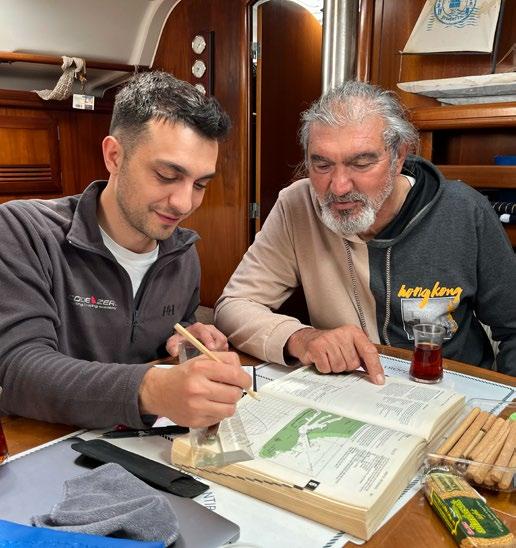
Gabbi Richardson, founder of Yachting Ventures, a prominent startup network and growth platform, views the leisure marine industry as being late to embrace the innovation ecosystem that has become commonplace in adjacent sectors.
Yachting Ventures is currently the only organisation focused entirely on startups and scaleups within the leisure marine industry, something Richardson finds surprising:
“When you look at commercial shipping or the wider blue economy, startups benefit from the support of numerous organisations, accelerators and media platforms. In the leisure marine sector, however, that infrastructure is virtually non-existent, despite plenty of innovation happening behind the scenes.”
Yachting Ventures has worked closely with M3 Monaco and the Smart & Sustainable Marina Rendezvous for the past four years, helping to identify and showcase emerging technologies offering solutions for marinas.
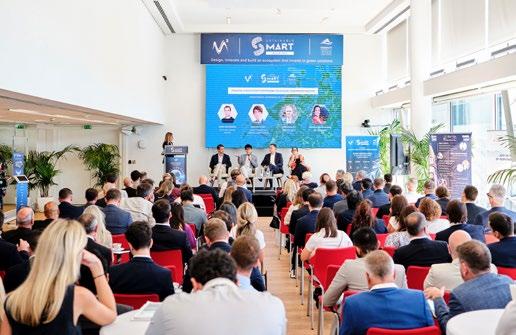
Beyond natural or engineered flushing systems, marinas have historically limited water quality control to reactive or periodic measures, including visual checks, oil booms or detergents in the event of spills, while better-resourced facilities have moved towards robotic cleaners and macro-waste collectors. Laboratory water testing is expensive and, where not obligatory, rarely conducted with any regular frequency.
Mediterranean Algae, a blue biotech company developing climate infrastructure for marine data intelligence and ecological regeneration, has already deployed its realtime water quality monitoring technology in over 30 marinas across Spain. By continuously tracking a range of parameters including dissolved oxygen, nitrates, phosphates and hydrocarbons, marina operators gain a detailed dashboard overview of ambient water quality. This enables earlier detection of environmental risks and helps mitigate pollution events before they escalate.
An optional next step is the installation of a smart macroalgae-based bioremediation unit, designed to absorb excess nutrients, filter heavy metals and restore quality parameters in the water column. The system is scaled according to treatment needs, while the resulting biomass is valorised into cosmetics and nutricosmetics ingredients.
As Yago Sierras Peral, Mediterranean Algae’s CEO, explains: “Water quality is no longer just an environmental topic for ports and marinas. It directly impacts reputation, user experience, biodiversity, regulatory exposure and longterm operational resilience.”
“By modern tourism standards, paying premium prices for low-quality service is not sustainable.”
Through a technical partnership with Meta, AI guest experience platform VELA links a marina’s social media channels to its communication setup, allowing the marina team to handle all incoming customer messages from WhatsApp, Facebook and Instagram via a centralised system.
Combining fifteen years as a sailing instructor with a career in AI solutions in the automotive and real estate sectors, Doğancan Uluğ recalls with frustration how the cost of a night’s berthing for a 12-metre summer berth in popular Med destinations might reach €300 - 500, yet the corresponding on-site support rarely justifies the price. “Even just for topping up my electricity card, I need to walk half a kilometre,” he protests.
By modern tourism standards, paying premium prices for low-quality service is not sustainable. Someone using a yacht service for fewer than twenty days a year, in varied and unfamiliar destinations, expects a similar quality of experience to that of a comfortable hotel. To deliver this, VELA uses AI to answer guest queries on topics about berthing, provisioning or technical support. If the platform cannot answer automatically, it simply alerts the marina.
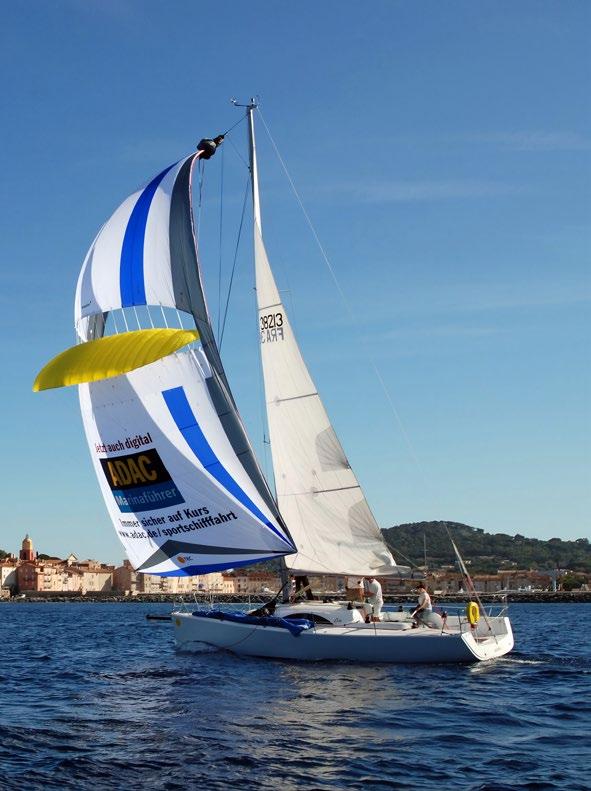
The sixth edition of the Monaco Smart & Sustainable Marina Rendezvous will take place this September. Victor Meyer’s role managing the event often takes him outside the industry to scout for inspiring technologies to introduce to marina managers.
“Marinas globally...tend to use solutions that have already been used somewhere else before or in another marina,” he explains. Accordingly, proposals such as solar-powered desalination, smart-grid infrastructure and robotic water cleaners have been sourced from industries as diverse as agriculture, public works and commercial real estate. He sees marinas as perfect incubators for testing new technologies, given suitable receptivity, minimum disruption and low risk for operators.
The event’s marina architecture competition for 2026 also reflects a notable evolution towards community and public value, with applications obliged to attend to local heritage, contextual sensitivity, wellbeing and recreational functionality.
A significant hurdle for tomorrow’s marina network lies in public policy, a challenge well known to Estonian hydrographer Liina Härm.
During nearly 50 years of Soviet occupation, the Estonian coast was a restricted border zone where private boating was strictly controlled, and beaches were monitored by watchtowers and border guards, with sand raked at night to detect fleeing inhabitants. After regaining independence in 1991, Estonia fasttracked innovation through EU tourism-related support and the country’s famously advanced digital culture to create a modern marina network.
A hydrographer trained in cartography, geoinformatics and small harbour management, Härm’s perspective is based on experience as a surveyor, assessor of port engineering designs, and having managed a group of four harbours. She has also spent years representing Estonia in international recreational boating committees.
Spending long days out surveying amid the unpredictable conditions of Estonia’s coastal waters, Härm particularly values the life opportunities afforded by boating. “This exposure to nature, to life’s fragility, with so much out of your control and yet where you can achieve peace of mind and completely disconnect from your day-to-day concerns, is nothing short of extraordinary. Increasingly, it seems, we live in a society where people have less accountability. At sea, you are presented with the direct consequences of your decisions. Agency is everything.”
She is content to contribute to making waterways safer but decries the lack of coherent management for the country’s marinas, which currently rely on volunteer reporting with no central coordinating body. Marina fleets comprise most foreign visitors, with locally owned vessels representing barely a third.
“I really struggle to convey the potential of recreational boating to decision makers,” she laments. “Here it remains a low priority, predominantly connected to tourism, and, still, dishearteningly, viewed as something for ‘others’.”
Embracing innovation and collaborating with industries outside the traditional marine sphere have long been recognised as fundamental for marina development. Creating a new narrative around boating that celebrates its capacity to deliver wider benefits for human wellbeing, could be both a worthwhile exercise for the boating industry and a practical tool to secure public sector support.


















Bring marina operations, boat rentals, service management, payments, and reporting together in one connected platform built for marina operators.
See Storable Marine in Action































Mirazur Capital becomes majority shareholder in Marina Port Vell
Mirazur Capital, a Monaco-based alternative investment management firm, has become the majority shareholder in Barcelona’s Marina Port Vell as it seeks to expand its portfolio of marinas across the Mediterranean.
Marina Port Vell caters to the international superyacht market with 73 berths for vessels up to 190 metres in length and a 400-metre quay, which is described as one of the longest in the region.
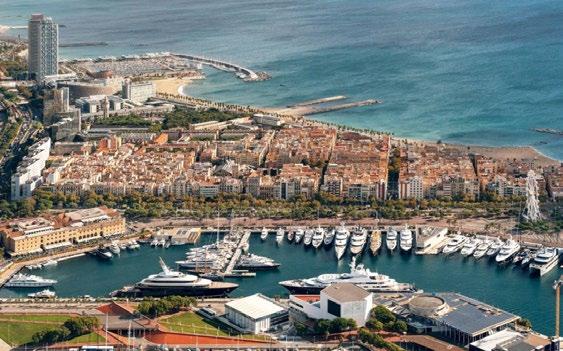
More than €20 million (approximately $22.8 million USD) has been invested in the marina since 2021, expanding its facilities for larger vessels, improving operational and sustainability standards, and supporting Barcelona’s role as a superyacht destination. General manager Ignacio Erroz and the existing management team will continue to lead Marina Port Vell as Mirazur Capital pursues its long-term plans for the business.
With offices in Madrid and Luxembourg, Mirazur Capital manages more than €1 billion ($1.1 billion) in assets and invests across public and private markets. The company said the acquisition supports its strategy of investing in premium marinas in established nautical destinations, with the Mediterranean as its primary market.
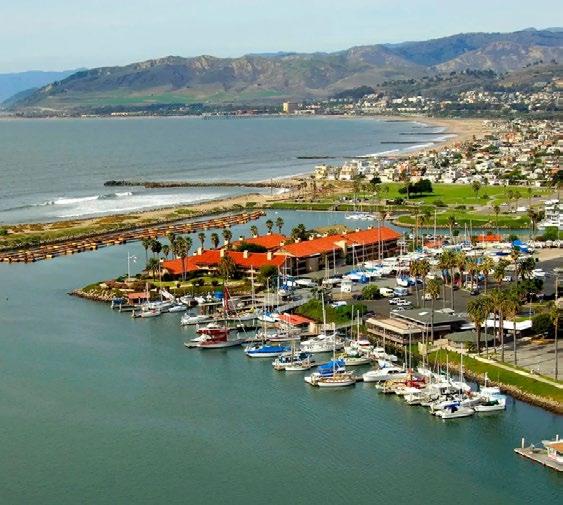
Suntex Marina Investors LLC, together with Centerbridge Partners, L.P. and its affiliates, has acquired Kinship Marina in Ventura, Southern California. Announced on 16 June 2026, the acquisition includes plans for infrastructure upgrades and slip redevelopment.
The marina is located between Ventura’s downtown area and access routes to the Channel Islands National Park. It offers 40 wet slips and 80 dry storage spaces for recreational boaters and commercial vessels.
On site, the marina also features Waters Edge Restaurant and Derecktor Ventura, a full-service boatyard for repair and maintenance services. MAVCCO Market Fuel and Bait also operates as a family-owned fuel dock, while Ventura Sportfishing runs charter operations and offers professional multi-day excursions.
Suntex said it plans to redevelop the marina’s wet slips, along with improvements to infrastructure and vessel accommodation to support long-term operations at the site.
D-Marin has acquired Olbia Marina in Sardinia, Italy, including Marina di Olbia Yacht Service and Molo Brin in its expansion in the country. The two sites operate in close proximity and act as an access point for yachting activities in northern Sardinia and the wider western Mediterranean.
Olbia Marina is located near Olbia Costa Smeralda International Airport and the city centre, with ferry links to the mainland. It also serves as a gateway to sailing routes across the Costa Smeralda, the Tavolara Marine Protected Area, the La Maddalena Archipelago and Corsica.
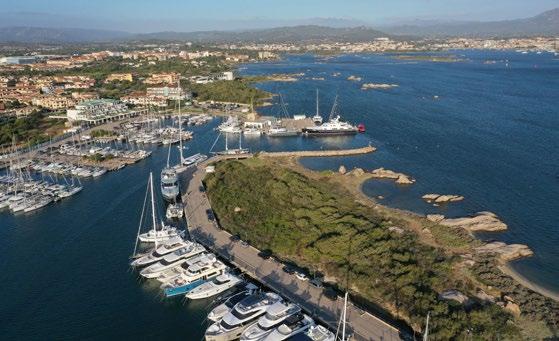
The marina features 270 berths for vessels up to 150 metres, with a maximum draught of 5.2 metres. It also includes a 200-metre fuel dock, which can refuel up to seven vessels at the same time and is described as the largest of its type on the northern Sardinian coast.
Following the acquisition, the site will operate using D-Marin’s digital systems, including an app for berth management and sensor-based vessel monitoring, along with the Happy Berth Days programme, which allows annual berth holders to access marinas across the network.
The acquisition expands D-Marin’s network to 27 marinas across multiple countries, including Spain, France, Malta, Croatia, Albania, Greece, Türkiye and the UAE, with more than 50,000 customers served annually and over 14,000 berths, including more than 1,000 for superyachts.
MA Financial Group has completed the acquisition of Gold Coast City Marina & Shipyard (GCCM) in Queensland. Initially announced in March 2026, the acquisition expands the d’Albora network to 17 marinas across Australia’s east coast.
Located within the Gold Coast marine precinct with deep-water access near the Broadwater, GCCM supports superyacht servicing, refits and marine maintenance, with more than 80 marine businesses operating from the site. The facility also provides fuel services and includes more than 200 wet berths for vessels up to 75 metres and 300 enclosed dry stack storage spaces.
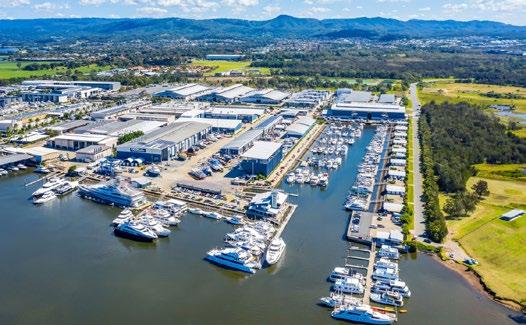
The facility also has five hectares of hardstand area, enclosed sheds from eight to 45 metres and undercover work areas for vessels up to 100ft (32 metres). Equipment onsite includes 50-tonne and 300-tonne travelifts, 12-tonne and 14-tonne forklifts, as well as a 45-tonne hydraulic trailer.
Julien Pouteau, managing director of d’Albora Marinas said: “This is an exciting step forward for d’Albora as we continue to grow our presence in key marine markets. Gold Coast City Marina & Shipyard is an exceptional facility with a strong legacy, and we are thrilled to welcome it into our network.”
As part of the transition, Darrell Barnett, a certified marina manager and board member of the Marina Industries Association, has been appointed general manager of GCCM. Paul Vernon will also support operations at the marina and shipyard, with experience in engineering, boat building and shipyard work.
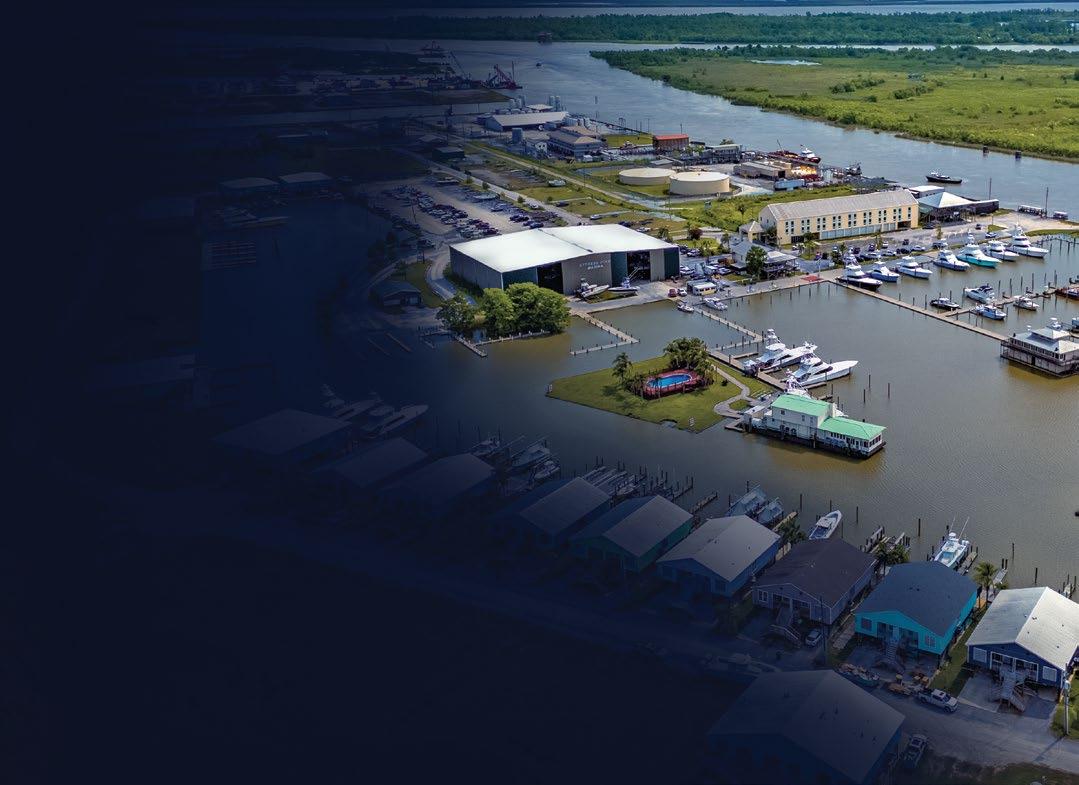




Following reports in February 2026 that Stonepeak was in talks to acquire Southern Marinas, it was announced on 22 April that affiliates of KSL Capital Partners have sold the marina operator to Stonepeak in a recapitalisation deal. Additional terms of the transaction were not disclosed.
Southern Marinas was founded in 2018 and currently operates 16 marinas across Florida, Idaho, Missouri, New Jersey, New York, North Carolina, Tennessee and Washington. Its portfolio includes more than 6,700 slips, supported by services such as fuel, boat rentals and maintenance.
Mitchell Jones, co-founder and chairman of Southern Marinas, said: “With the close of this transaction, we are entering into an exciting new chapter as we look to further strengthen the business and propel our growth. Stonepeak brings deep infrastructure expertise, experience building scaled businesses and a clear strategic perspective, and we are confident they will make an excellent partner as we continue to deliver for our customers.”
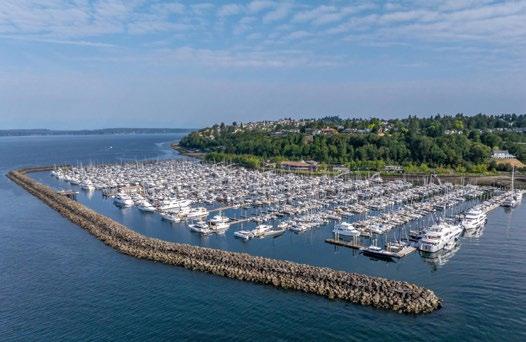
Daniel Raubolt, principal at Stonepeak, added: “The Southern Marinas team has built a best-in-class platform with a strong operating track record, and we look forward to partnering with the team to support the next phase of growth.”
Stonepeak has approximately $88 billion USD in assets under management and focuses on infrastructure and real assets, including transport and logistics. PJT Partners served as financial adviser and Simpson Thacher & Bartlett LLP served as legal counsel to Stonepeak. Lazard Frères & Co. served as financial adviser and Hogan Lovells served as legal counsel to Southern Marinas and KSL Capital Partners.
Stella Marinas, a boutique investment platform, has acquired Hope Springs Marina in Stafford, Virginia, following a purchase in Maryland earlier this year. The transaction was supported by SVN Marinas and completed in partnership with Drake Real Estate Partners.
The site began as a campground before a group of local businessmen acquired it in 1993 and gradually turned it into a boating facility. Over time, added infrastructure and land acquisitions expanded the property, which developed into a larger waterfront site with improved access and storage capacity.
The marina now operates with 190 wet slips for vessels up to 50ft (15 metres) and 277 dry rack spaces across two enclosed storage buildings for vessels up to 35ft (11 metres). It also includes a fuel station, a boat ramp, maintenance areas and clubhouse facilities. Plans for the newly acquired marina include early-stage engineering work on initial concepts for the property and a survey of boaters to understand desired amenities, experiences and improvements at the marina.
Ryan Comisky, owner of Stella Marinas, told Marina World : “We see tremendous potential in Hope Springs Marina as more than just a place to store your boat. Our vision is to create a destination where boaters and their families want to spend time – even when they’re not out on the water.”
Comisky said: “Our focus will be on investing in the team, improving the overall customer experience and bringing additional resources and infrastructure that can help support the marina’s long-term success while preserving the character and community that already exist at Hope Springs.”
SVN Marinas’ David Kendall and Josh Sheppard advised on the acquisition, while Phillip Baxter of RE/MAX Supercenter served as the Virginia broker of record.
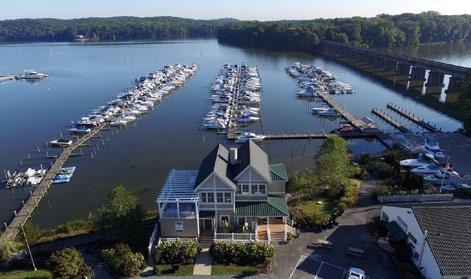
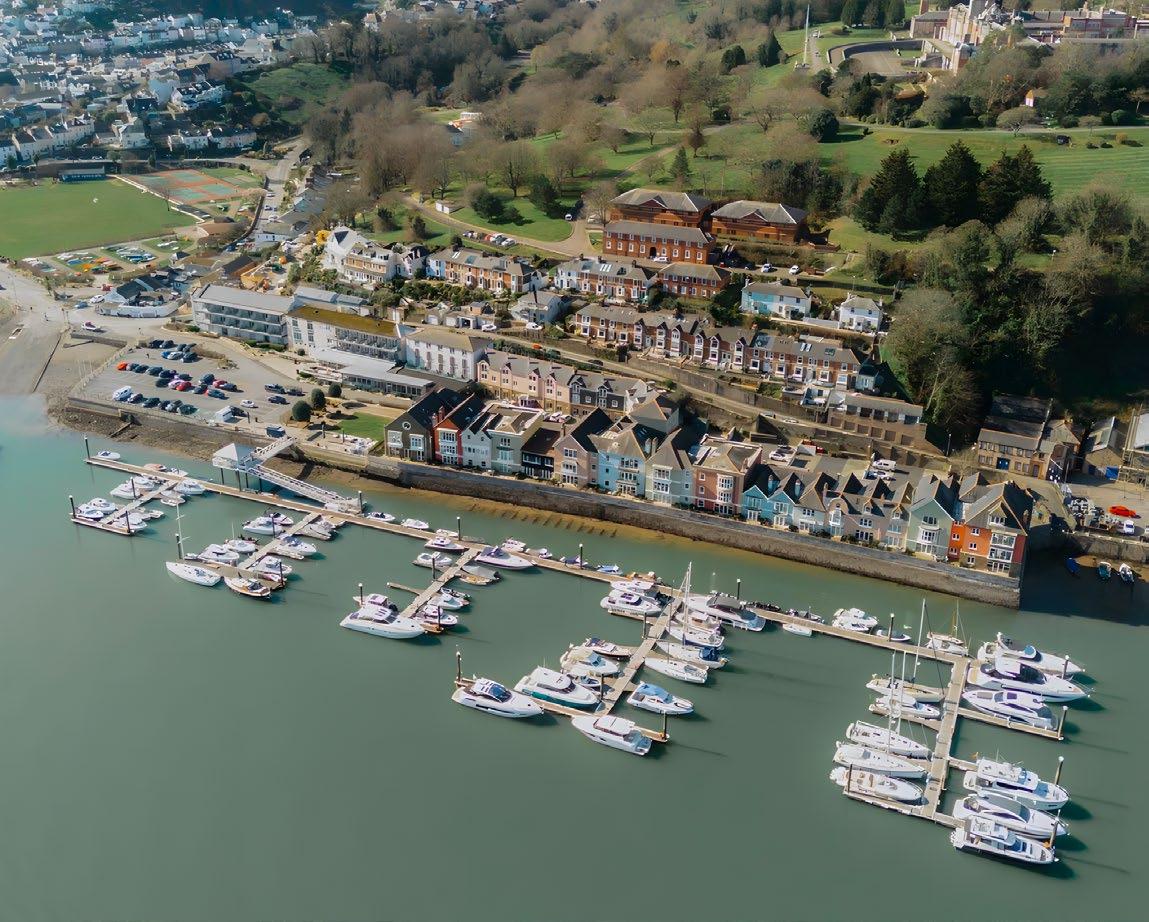
Premier Marinas has expanded its network with the acquisition of the Dart Marina Group in Devon, England. The group adds a marina, hotel and ferry service as the company continues to grow along the South Coast, supported by its long-term owner, Wellcome.
Based in Dartmouth, the business operates on a waterfront site along the River Dart. The marina offers over 100 berths for vessels between five and 20 metres, with walk-ashore access and full services. The site also includes a restaurant, a fitness centre and an event space.
Pete Bradshaw, chief executive of Premier Marinas, said: “The Dart Marina Group is an already successful and highly respected collection of businesses, with a fantastic team and a strong identity of its own. Our intention is not to change what makes it special, but to support and build on it for the long term. We are particularly pleased to be welcoming the Dart Marina Group team into the wider Premier Marinas group, and we look forward to working together to continue delivering the high standards customers expect.”
The acquisition follows Premier Marinas’ purchase of boatfolk in September 2025, which expanded its network to 22 locations across the United Kingdom. Since then, Haslar Marina in Gosport, East Cowes Marina on the Isle of Wight, and Weymouth and Portland marinas in Dorset have all transitioned into the Premier Marinas network.
TopSide Marinas has entered the Iowa market with the acquisition of Rathbun Lake Marina, a fullservice marina and resort destination in Moravia. The acquisition follows the company’s marina purchases in Michigan and Missouri in early 2026.
Located on Rathbun Lake in southern Iowa, the marina sits in an area known for boating, fishing, camping and water-based activities. The nearby town of Moravia serves as one of the main access points to the lake.
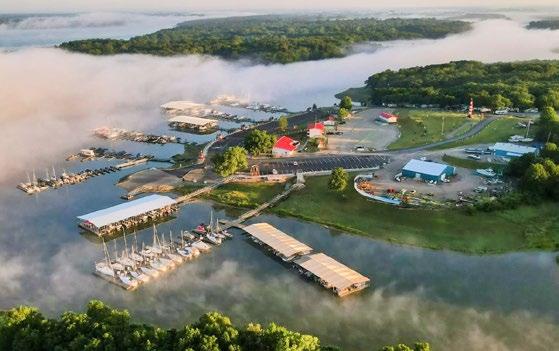
Rathbun Lake Marina was established in 2010 and operates on a 160-acre leasehold property with the US Army Corps of Engineers. The site includes approximately 246 wet slips, boat rental facilities, four campgrounds with around 144 campsites and a 12-room hotel, as well as amenities including a soccer field and frisbee golf.
TopSide Marinas said plans for the marina include increasing slip capacity, adding roofs to uncovered docks and introducing a service department. The company also plans to expand its boat rental operation and parking area to support additional public boat launches.
TopSide Marinas owns and operates marinas across Missouri, Texas, Oklahoma, Kansas, Wisconsin, Illinois and Michigan. In February 2026, the company acquired Bay Harbor Marina, followed by the acquisition of Campbell Point Marina in March 2026.
CVC Capital Partners sells D-Marin for over €1 billion
CVC Capital Partners has announced that it will sell its stake in the international premium marina operator, D-Marin, to InfraVia Capital Partners, a leading independent private equity firm in Europe. Financial Times reported the cost of the sale as being over €1 billion ($1.14 billion USD).
In a press release issued by CVC on 6 July, the company said it had “transformed” D-Marin into the “leading premium marina operator in the EMEA region”, having recruited “a new management team and significantly expanded the company’s footprint beyond its traditional markets in Turkey, Croatia, Greece, and the UAE into Spain, Italy, France, Malta and Albania”.
CVC acquired D-Marin’s international assets from Turkish conglomerate Doğuş Group in 2020, taking ownership of the company’s Greek, Croatian and UAE operations. The Turkish assets remained under Doğuş Group ownership, although they continued to be managed by D-Marin.
Oliver Dörschuck, CEO of D-Marin said: “InfraVia has consistently demonstrated clear alignment with D-Marin’s customer-first philosophy and our purpose of enriching the yachting experience, and we are well positioned together to accelerate the next phase of our growth. Our partnership with CVC has been instrumental in shaping D-Marin into the business it is today — and the strong foundation they helped build is what powers our next chapter.”
Vincent Levita, CEO of InfraVia, described the transaction as “a strong fit with InfraVia’s infrastructure investment thesis and is fully aligned with InfraVia’s ambition to partner with outstanding management teams and back resilient European platforms where long-term capital can support continued growth, transformation and institutionalisation”.
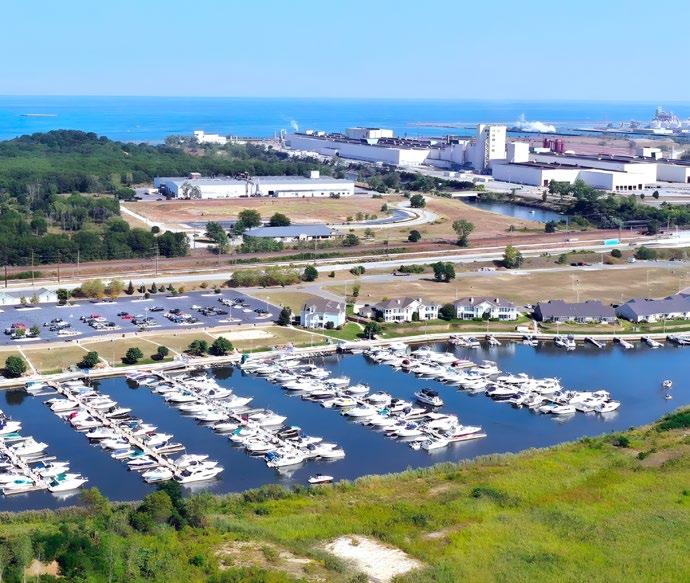
Marina Shores at Dune Harbor sold
Marina Shores at Dune Harbor in Portage, Indiana, has been acquired by investors Peter and Erin Meiusi through a transaction brokered by National Marina Sales.
Located on the southern shoreline of Lake Michigan, the marina offers a sheltered harbour near Indiana Dunes National Park, with connections to major expressways and the South Shore rail line. It provides more than 265 boat slips for vessels over 50ft (15 metres), as well as 57 jet ski slips.
The site includes floating docks, fuel services, a pump-out station and a harbour master’s office. On-site amenities include a yacht club, swimming pool, fitness centre, and food and drink outlets. Peter and Erin Meiusi also operate other marina properties, including Clinton Marina in Lawrence, Kansas, which they acquired in 2020, followed by Marina Del Sur and the Dam Site facilities in New Mexico in 2024.
Following the acquisition, the marina is expected to continue operating under its current setup, with the new owners planning to maintain the site and introduce updates to facilities and services over time. In a short announcement on the marina’s page, it said: “As a family-owned and operated team, our vision is simple: honour the things that already make this place special while building a community that boaters are proud to call home.”
Hinckley, an American yacht builder and marine service company, has acquired Port of Egypt Marine in Southold, New York. The site is located on the East End of Long Island and serves boaters from the North and South Forks.
Port of Egypt Marine has operated since 1946, when brothers William Sr., Herb, and Herman Lieblein purchased a fishing station on Southold Bay. At the time, the site mainly catered to visitors looking for fishing access and boat rentals along the coastline.
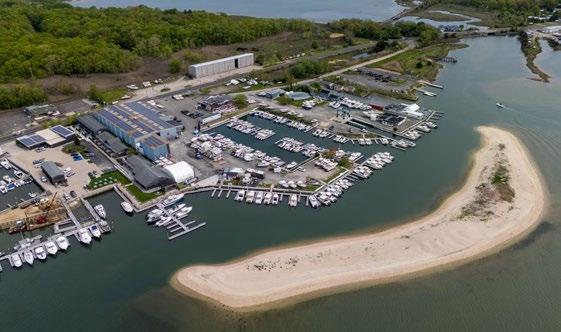
The business later developed into a full-service marina, which now includes more than 130 slips, a fuel dock and a pumpout station. It also operates a service department, a supply store, a dockside restaurant and a paddleboard shop alongside an outdoor lifestyle retail space.
Hinckley, founded in Maine in 1928, builds yachts and operates a network of service yards along the US East Coast. Its operations extend from Maine to Florida with maintenance, refit and technical assistance across multiple coastal regions.
Port of Egypt Marine will be part of Hinckley’s wider network across the north east, including Connecticut, the Hamptons, Shelter Island and surrounding areas. The company plans to convert a 24,000sqft (about 2,230sqm) cold storage facility into heated storage for year-round yacht maintenance. Further updates will focus on upgrading service capacity and support for boat owners using the marina.
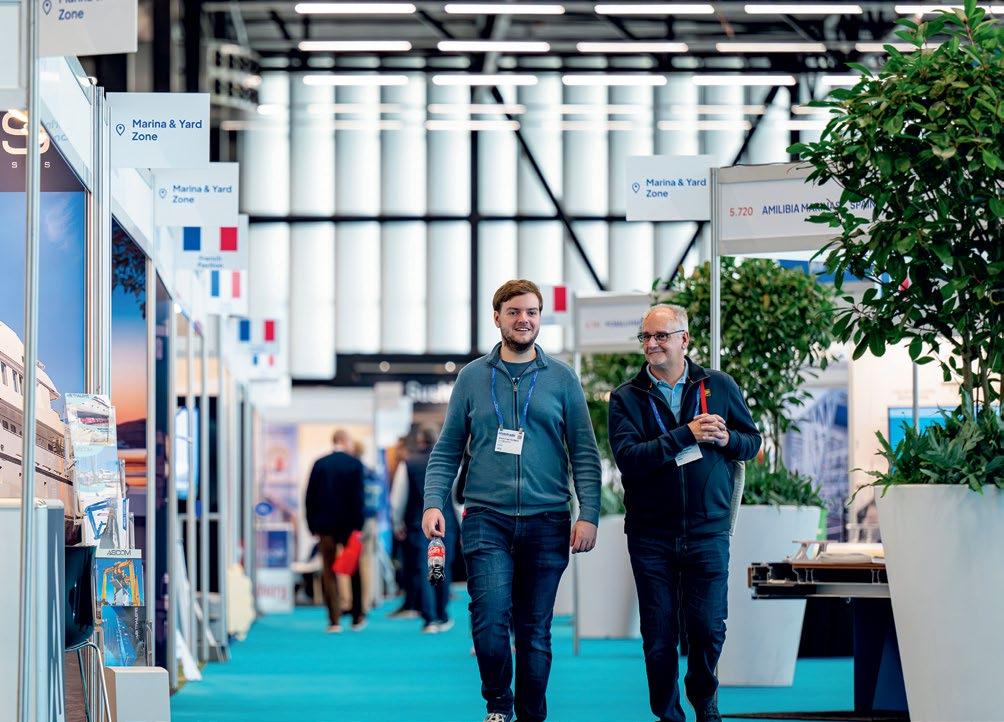
As the future development of marinas is getting more and more important, the Marina & Yard Zone at Metstrade is the place to discover what’s next. Experience the latest innovations in dock systems, mooring technology, shore power, safety equipment, and marina management solutions.
Now featuring a larger variety of product categories, the zone is the spot to showcase your latest innovations in leisure marine equipment. Don’t miss your chance to showcase your innovations and network with industry leaders.
Secure your spot
16 → 17 November 2026 - The Superyacht Forum
17 → 20 November 2026 - Metstrade
RAI Amsterdam
& Figures
unique visitors
1,700 exhibitors 13 halls
country pavilions
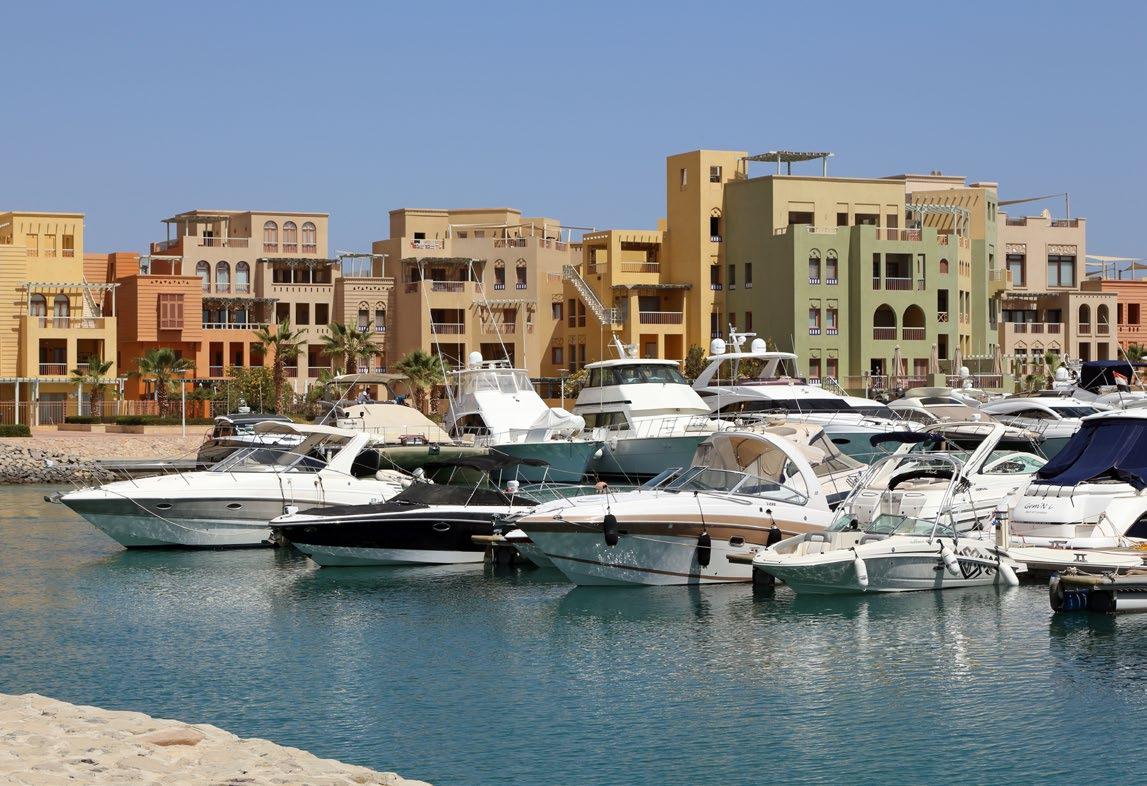
Long regarded primarily as a gateway between the Mediterranean and the Indian Ocean, Egypt is increasingly becoming a destination in its own right for yacht owners and charter operators despite Red Sea security concerns, infrastructure gaps and growing competition from established Mediterranean destinations.
By Vladislav Vorotnikov
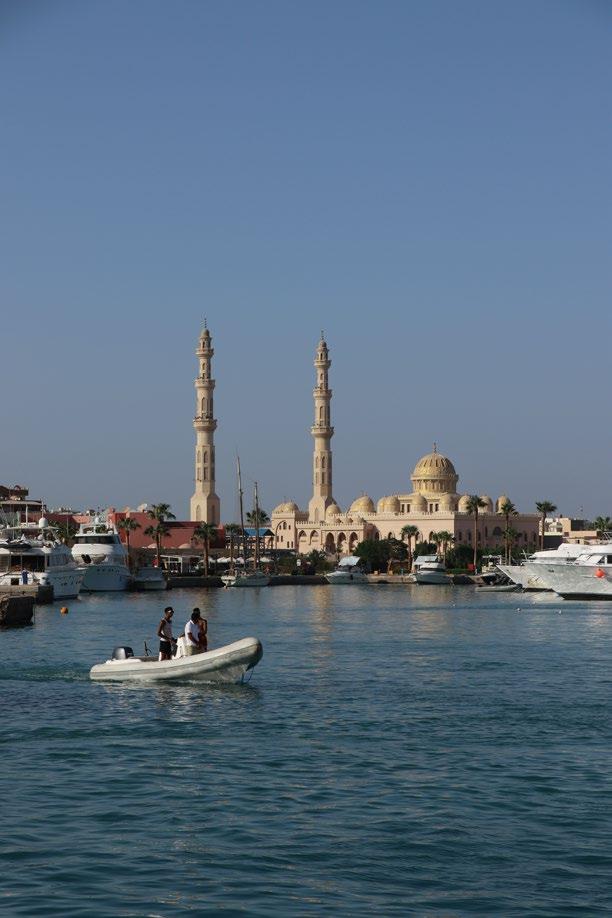
The past several years were exceptionally good for established Egyptian marina operators. For example, business performance at Hurghada Marina has shown steady growth, particularly after the recovery of international tourism and the increasing interest in the Red Sea as a yachting destination.
“Demand for berthing services, especially during the high season, has increased noticeably with stronger occupancy rates from both private yacht owners and visiting international vessels,” commented Ahmed Nazeh, marina manager at Hurghada Marina.
One of the key indicators of growth, Nazeh continued, is the rising number of transit yachts choosing Egypt and the Red Sea route as part of their cruising itineraries between the Mediterranean, the Gulf region and Asia. In addition, local interest in recreational boating and marine tourism has also started to expand gradually.
Things have been equally positive for El Gouna Red Sea’s marina network, which has expanded from 280 wet berths in 2015 to over 600, reaching full occupancy. Haytham Samir, El Gouna Red Sea chief commercial officer, said that this trajectory “reflects not just growing demand but the town cementing its place as a leading yachting destination in the region and on the Red Sea coast”.
With four marinas integrated across the community, the water is woven into daily life in a way that sets El Gouna apart from any other destination on the Red Sea, according to Samir.
“Last year, 39 percent of El Gouna’s property sales came from international buyers, a figure that speaks to the town’s growing appeal as a place to own, not just visit,” Samir emphasised. “The marina infrastructure is central to that appeal.”

Local yachting companies also believe that the industry is booming, with improving infrastructure playing an important role in this trend.
“Demand has risen clearly and it’s still accelerating,” commented Bahi Naguib, general manager with Seal Superyachts Egypt. In particular, the growth in demand for yachting services is reflected in the growing number of foreign-flagged yachts calling at Egyptian marinas and transiting the Suez Canal, as well as in the expanding charter and superyacht segment on the Red Sea, Naguib noted.
“The drivers are fairly straightforward: Egypt’s position at the junction of the Mediterranean and the Red Sea makes it an essential waypoint for yachts moving between European and Indian Ocean seasons.”
On top of that, Egypt has a year-round climate and world-class reefs around Hurghada, El Gouna and Marsa Alam, Naguib said, adding that a national tourism strategy backed by large-scale coastal investment contributes to the rapid industry growth. Moreover, the cost base stays competitive against established Mediterranean destinations, which is especially important given a surge in inflation across the region.
“We are seeing gradual growth in yacht ownership and marine lifestyle interest within North Africa and the Middle East, particularly among high-net-worth individuals and investors,” Nazeh said. Egypt is also experiencing a strong recovery in its tourist industry more generally, especially in Red Sea destinations such as Hurghada, El Gouna and Sharm El Sheikh. Marine tourism has become an important component of this growth.
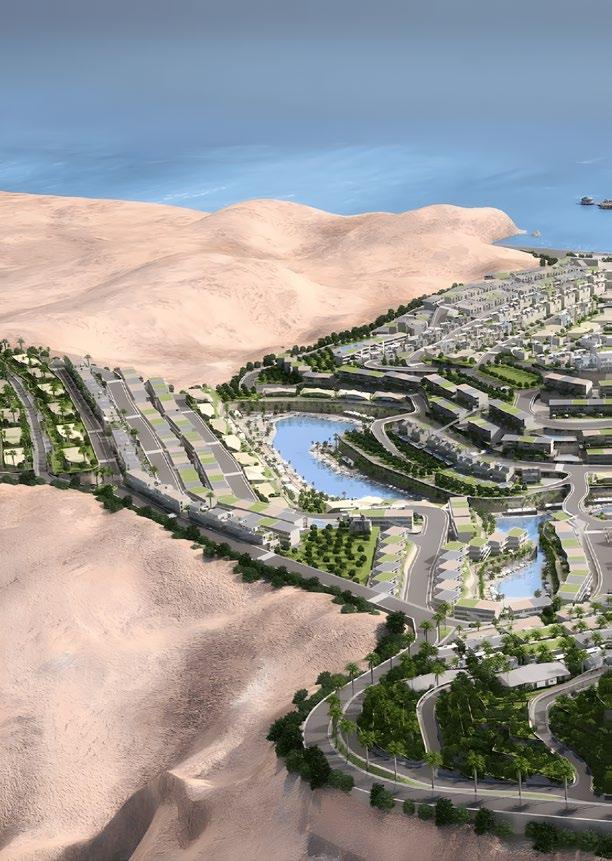
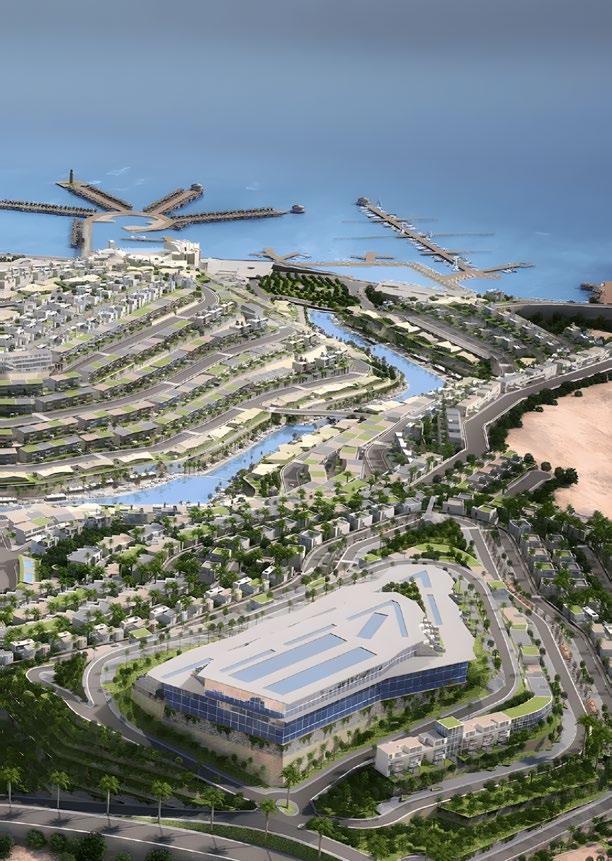
Amid the growth in yachting tourists, infrastructure is also growing but it isn’t yet sufficient for Egypt’s ambitions, according to Naguib. Local players believe that the Red Sea network is already relatively mature, comprising marinas in El Gouna, Hurghada, Port Ghalib, Safaga and Marsa Alam. At the same time, the Mediterranean coast is catching up quickly, led by developments in Ras El Hekma and New Alamein, alongside upgrades at Galala, the modernisation of Ismailia, expansion at Soma Bay and planned investment at Nuweiba.
Most recently, Egypt’s National Centre for Planning State Land Uses approved three new international yacht marinas. This includes one in Sharm El Sheikh, covering 21 hectares. On the Mediterranean north coast, the plan envisaged the construction of Marsa Matrouh for 67 hectares. In the Suez Canal region, the government gave the go-ahead for the construction of Ismailia Marina of 30 hectares.
El Gouna is a good example of where marina industry development is heading, according to Naguib, who pointed out that Marina Island by Tuban sits at the heart of the town’s central Tuban district with open-to-sea lagoon access, alongside curated waterfront dining and retail.
“It continues El Gouna’s 36-year track record of waterfront development on the Red Sea, following earlier launches such as Nuba El Gouna, Fanadir Shores and North Bay. It also carries a strong investment profile with reported returns of around 20 percent over two years and rental yields in the region of 6-8 percent,” Naguib said.
The strongest development in Egypt’s marina industry in recent years has been concentrated in three coastal clusters: the Mediterranean North Coast, the northern Red Sea and Gulf of Suez, and the established Red Sea resort corridor around Hurghada, El Gouna and Marsa Alam, commented Nandini Roy Choudhury, senior analyst with Future Market Insights. The Gulf of Suez and Ain Sokhna–Galala corridor likely hold particularly high interest for investors.
“Its principal advantage is accessibility from Cairo, which makes it suitable for weekend boating, secondhome ownership and resort-based marine tourism,” Choudhury said.
The recently announced Monte Galala Towers and Marina project illustrates the scale of this opportunity: the approximately $1 billion public-private development is expected to combine a marina with hotels, residences and wider tourism infrastructure south of Ain Sokhna, Choudhury added.
Despite the positive outlook, the sector still faces several operational and regulatory challenges, Hurghada Marina’s Nazeh commented. Despite the recent development, Egypt still has a need for specialised marina infrastructure.
“Some areas still require additional technical infrastructure, including advanced yacht maintenance, refit and repair facilities. However, we are optimistic as the country is currently looking into expanding shipyard and maintenance capabilities along the coasts to address this gap,” Nazeh said. In addition, the faster growth is constrained by financial and investment challenges.
“Marina developments require significant long-term investment, and returns are usually linked closely to tourism and international market conditions,” Nazeh added. On top of that, seasonality and regional competition are also factors to reckon with. Nazeh noted that Egypt competes with well-established Mediterranean and Gulf marina destinations, so maintaining high service quality and operational efficiency remains essential.
“The main challenges are still largely procedural, though entry and cruising formalities continue to improve,” Naguib said. Beyond that there’s the Mediterranean’s current capacity gap compared to the Red Sea, the need for deeper marine technical services, and the importance of protecting the reefs and natural environments that are among Egypt’s greatest yachting assets.
Administrative complexity has also historically been the key challenge for yacht industry development in Egypt.
“International yacht operators value predictability: they need to know in advance how long clearance will take, what documents are required, what fees will be charged and whether they can move easily between domestic marinas,” Choudhury said.
Egypt’s recently introduced single-window platform and unified regulations are meaningful improvements, but their effectiveness will ultimately depend on consistent implementation by every authority and port, according to Choudhury.
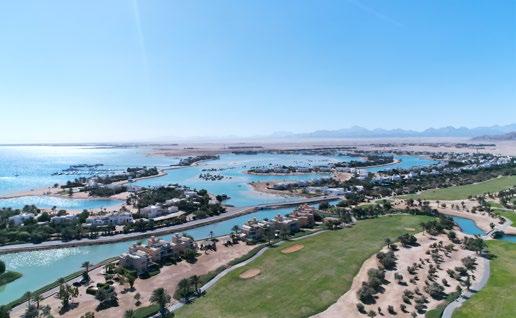
“A second barrier is the uneven quality of supporting services,” Choudhury believes, explaining that a competitive yachting hub requires more than attractive berths. It needs reliable bunkering, waste disposal, customs and immigration services, chandlery, spare parts, lifting facilities, dry docks, skilled technicians, yacht management, crew accommodation and provisioning.
“These services are available to varying degrees in Egypt, but not yet with the consistency or geographical coverage found in more established Mediterranean hubs,” Choudhury added.
Connectivity between marinas also needs improvement, local market players believe. Egypt has several successful coastal destinations, but they do not yet operate as a clearly marketed national cruising network.
In general, market players believe the government is moving in the right direction by not only supporting the construction of new marinas, but also facilitating the growth in the auxiliary services.
“What ultimately makes a destination successful is the network effect: a chain of safe harbours close enough together to allow cruising along the entire coast, supported by fuel and bunkering facilities, repair and refit yards, crew services, and streamlined clearance procedures for foreign-flagged vessels,” Naguib said.
Overall, Egypt has the coastline, climate, tourism base and location required to become a significant yachting destination, Choudhury said, adding that the next stage “is less about announcing isolated marina projects and more about creating a reliable national ecosystem”.
“Consistent regulation, transparent costs, stronger technical services, connected cruising routes and environmentally responsible development would allow the country to convert yacht transit into longer stays, higher spending and sustainable marina investment.”
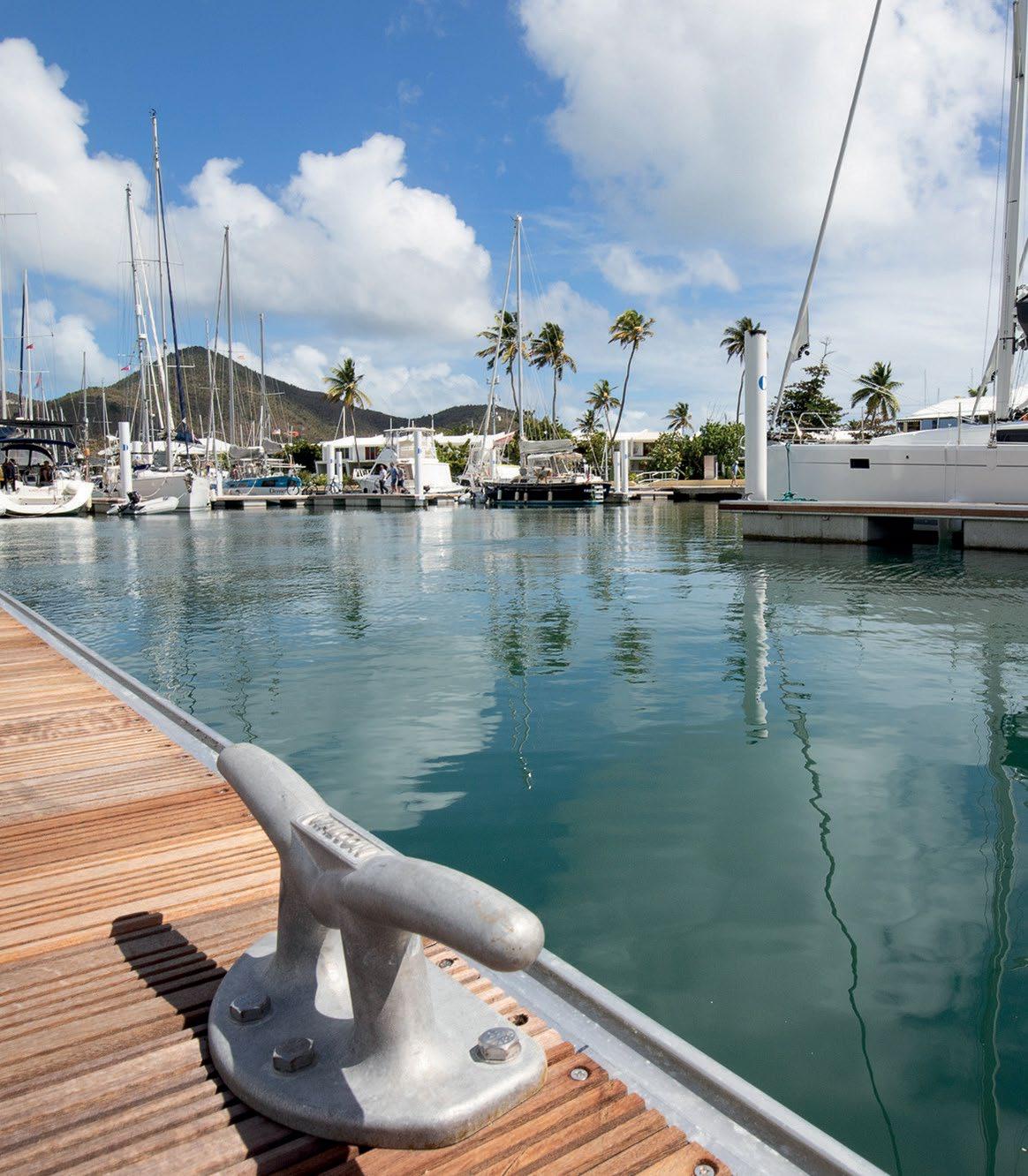
Specialist builders of marinas with more than sixty years’ experience on five different continents
Industry leading technical, design, manufacture and engineering capabilities
Floating wave attenuating, commercial and leisure pontoons, access bridges
Installation barges, dedicated piling and workboat fleet
The CEO of Port Denarau in Fiji reveals how this unique island location has innovated and adapted to become a standout facility in the South Pacific.
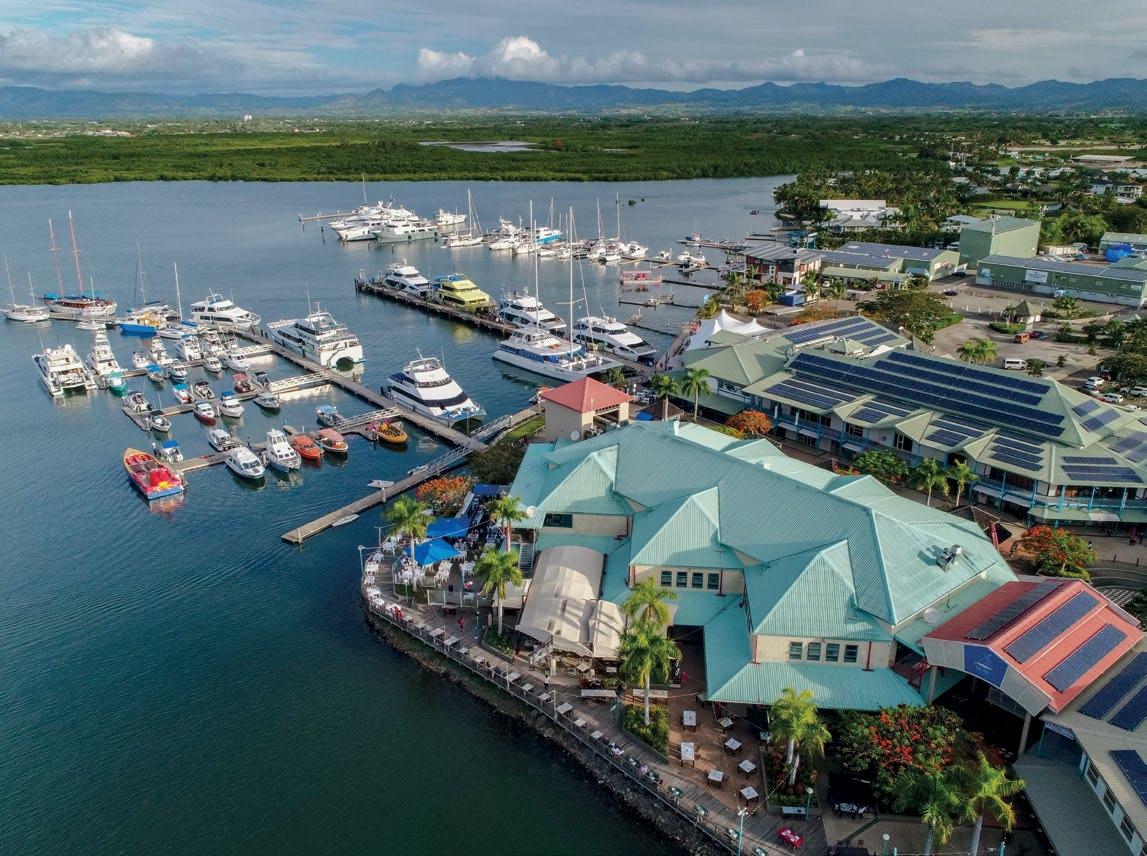
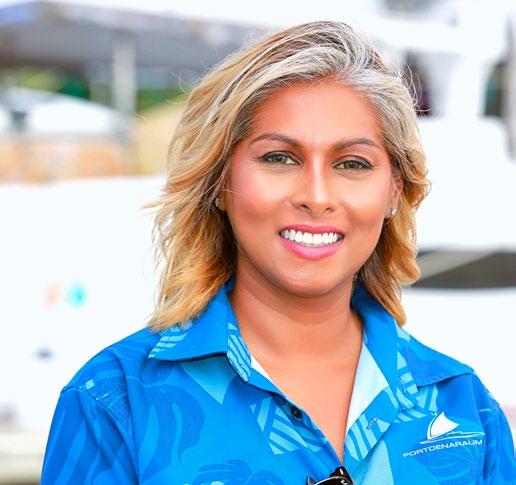
Can you tell me more about the history of Port Denarau?
In 1999 a gentleman called Sir Clifford Skeggs from New Zealand came to Fiji and loved the little wharf that used to be here. He thought about investing in Fiji and the business officially began sometime later in 2000. It was owned by the Skeggs family business until early February 2026, when they sold the business entirely. Sir Clifford Skeggs’ grandson, Nigel Skeggs, who was also a superyacht captain, was my predecessor as the CEO of Port Denarau until 2017 and he had the vision to bring superyachts into Fiji.
The business grew from strength to strength thanks to our marketing efforts. More and more superyachts started passing through Fiji and we grew organically. We were publicly listed on the South Pacific Stock Exchange in August 2019, just before the COVID-19 pandemic reached our shores. We now have over 600 shareholders and I am one of them - you’ve got to believe in your product, right? We also have a substantial shareholder in Fijian Holdings, a highly successful investment company that now owns 51 percent of Port Denarau Marina. The remaining shareholders are institutional and individual investors.
How has the marina expanded geographically in terms of pontoons and docks? What are your business plans after the recent expansion and FHL Holdings acquisition?
Port Denarau started out as a tiny 24-30m dock for commercial boats and how it has expanded over time is incredible. The marina mostly started growing in 2010 with the first superyacht extension and now the largest berth is 115m. There are 62 berths that are entirely assigned to private vessels.
We are a mixed-use marina, including private vessels, charter operations, commercial ferries, diving operations, local transfer vessels and fishing charters. Transient vessels also stop by during the yachting season, which runs from May to October, and Port Denarau is especially busy during these six months. The cyclone season is quieter and during this period we carry out maintenance, training and development programmes for our team. We also have our land assets, including restaurants, chandleries, workshops and a boatyard with storage and maintenance capabilities, as well as a 30-tonne travelift and reverse forklift.
Given the marina’s current footprint and location, we have the potential for exponential growth. We have developed an expansion-focused masterplan spanning the next two to eight years to make sure we are ready for the Brisbane 2032 Olympics, with further plans to establish various specialised business hubs within the marina precinct.
Around 200 superyachts are forecast to be heading into the southern hemisphere during the Brisbane 2032 Olympics, and I think that there is potential for that number to grow considering the current geopolitical situation. We need to be ready for this influx, hence our motivation to expand further.
There are 62 berths for private vessels and 63 berths for local commercial vessels within the marina precinct. We plan to expand the latter to include over 200 berths, which would then become a hybrid marina consisting of local commercial vessels while keeping a portion of the docks for foreign-flagged vessels and resident vessels living within the marina. We also have plans to reconfigure our private dock, which is currently mainly for charter and superyachts, so it becomes a private luxury facility.
We are currently working on concept planning and design for our land asset expansion and new installations in the marina. We also want to look at different areas of expansion on the waterside, but resources are limited, especially in terms of people, and costs are increasing considerably.
Charter markets have experienced exponential growth over the last few years, with 2024 seeing a minimum 200 percent increase in comparison to 2023, and we are exploring development of our facilities to accommodate more charter
vessels. This surge is a direct result of regulatory changes that have made Fiji a more attractive destination for charter vessels, combined with our marketing efforts to promote Fiji as a premier charter destination.
Marketing Fiji on the other side of the globe is the hardest part – it is difficult to make people feel her beauty and understand where it is because it really looks like a speck on the map. But once you are here, you are sold. Fiji sells itself; it is a beautiful location.
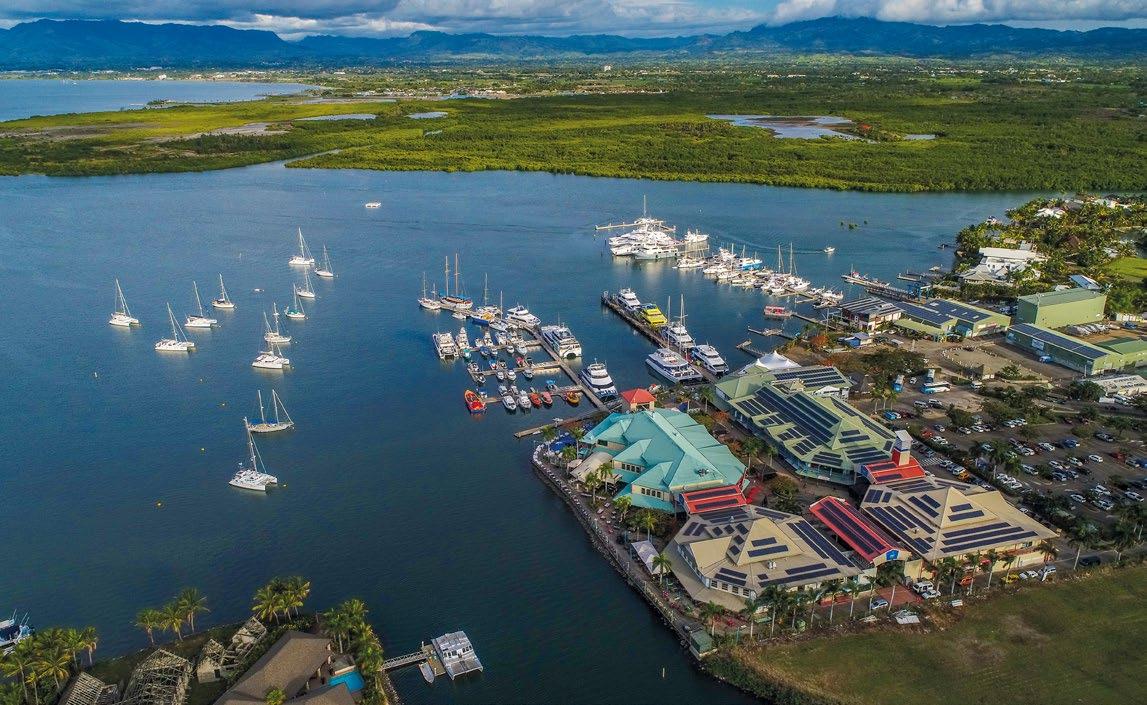
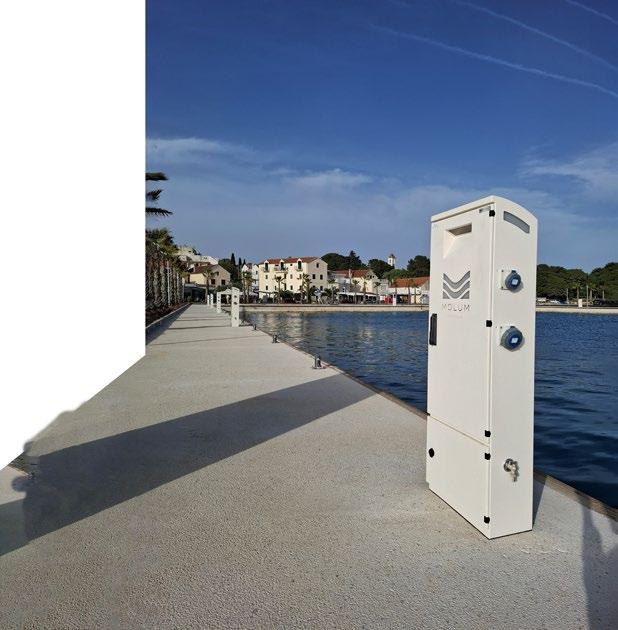
Where does most of the yacht traffic come from at Port Denarau? Is it mostly Australia and New Zealand or do yachts come from further afield?
We have in fact just done a survey for this with recent upto-date data. Last year, around 762 smaller vessels visited Fiji, these were mostly cruising yachts under 24 metres. We also welcome between 50-60 superyachts per year. Last year, around 35 percent of these vessels were from Australia, 21 percent were USA-flagged and around 16 percent of the smaller cruising yachts were New Zealandflagged. But most of the superyachts are from the likes of the Marshall Islands, Turks & Caicos, Grenada and other similar jurisdictions.
We are also located very close to Nadi Airport, which is one of Fiji’s two main international airports. This is one reason why we have become an ideal location. Even for freight and logistics, we sit right in the middle of everything. On a good day, the airport is a 20-minute drive from Port Denarau.
What is best about Port Denarau Marina is that we are located on a fully integrated island, which means that there is no reason to leave the island. You have everything you need at your doorstep, offering a “one stop shop” experience. The island features nine resorts and hotels, spas, shops, several restaurants and bars, complemented by a nine-hole golf course.
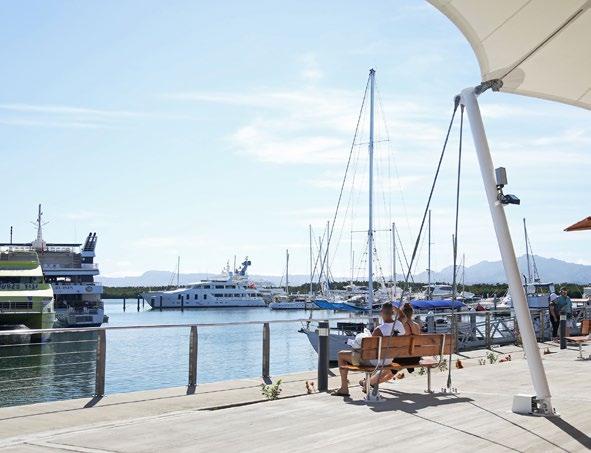
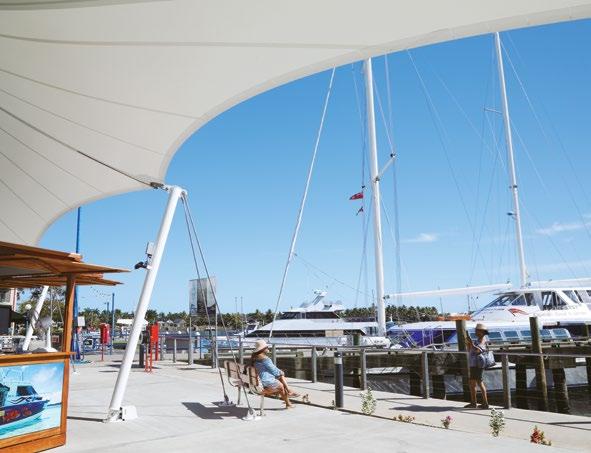
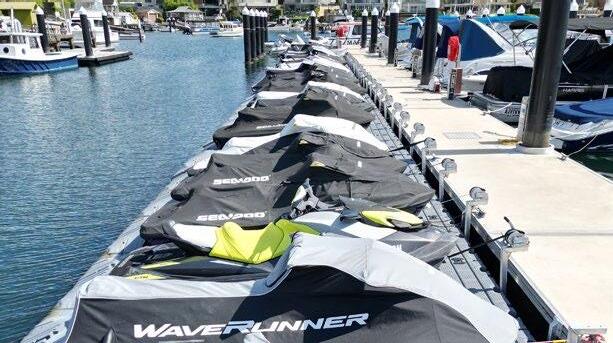
Fiji is of course in quite a remote and isolated location. How have you managed your construction projects to overcome the difficulties posed by geography?
Our components and materials are mainly ordered from overseas. For our recent new marina extension, the pontoons were manufactured by Marine Structures in Australia, the piles were sourced directly from China, but all installations were carried out locally and by our own in-house team.
I might joke about it, but it is true when I say that we don’t have “Docks ‘R Us” here in Fiji. We don’t have an outsourced team who turn up with their toolboxes and carry out maintenance at the end of the season. We are a developing and small island nation; we don’t have that luxury.
We prioritise internal development by hiring unskilled teams or we bring construction trainees and give them on the job training. This is a niche market; there are only a handful of marinas in Fiji, local parts and components are scarce and some things have to be imported. Consequently, our team does a lot of custom retrofitting and fabrication to compensate for the lack of off-theshelf items. This drives innovation in our operations and we’ve managed this challenge quite successfully so far.
A good example of this is our recent 203m dock extension through Marine Structures. They engineered, manufactured and supplied all the pontoons and sent them across in flat racks. Our team and a local piling contractor in Fiji assembled them and managed the extension project.
We are also trying to move away from the old wood timber waler systems because of concerns around maintenance and durability. We now have new pontoons which have aluminium extrusion walers retrofitted into the old infrastructure. Our team together with Marine Structures worked out a technical solution for retrofitting the old with the new, and we did it successfully. It was a great example of leveraging local expertise through international collaboration.
Another great example of how we have innovated and raised standards in Fiji is through our water management solutions. We introduced primary and secondary water filtration systems within our workshop and yard spaces, a technology that no-one has in Fiji. Additionally, we have imported black water pump-out systems and integrated them into our local water supply infrastructure. These were done as part of our voluntary Clean Marina accreditation through Marina Industries Association. Back then, these systems were so advanced that even the local water authority were unfamiliar with them! We take great pride in being trendsetters and we are very fortunate to have dedicated teams that are eager to learn and be innovative.
What are some of the challenges that you encounter on both a daily basis, but also more long term?
Weather is our biggest challenge. We are in a volatile region and have faced Category 5 cyclones that can devastate infrastructure. We are also grappling with rising costs, especially for importing goods and components.
Over the past couple of years, maintaining trade skills has been difficult. The Pacific Labour Mobility schemes in Australia and New Zealand have drawn a significant portion of our skilled workforce away from Fiji. These countries have well-structured programmes with competitive salaries, making it challenging to retain the expertise locally.
Operationally, our berths fill up very quickly. Aside from Savusavu, there are few other marinas in the area, meaning seasonal demands place extra pressure on our facilities. While the goal is to maximise berth utilisation and occupancy, our specific configuration makes this a complex task. But in terms of regulations for charter and superyachts, we have performed exceptionally well compared to our regional neighbours.
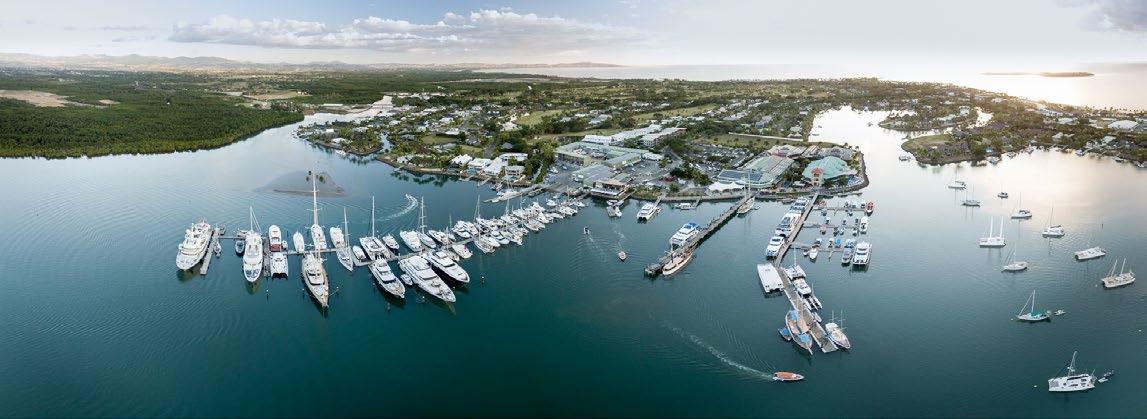




Elite Dynamics reveals how they navigated the transition from holiday park to marina management software.
By Calum Gray
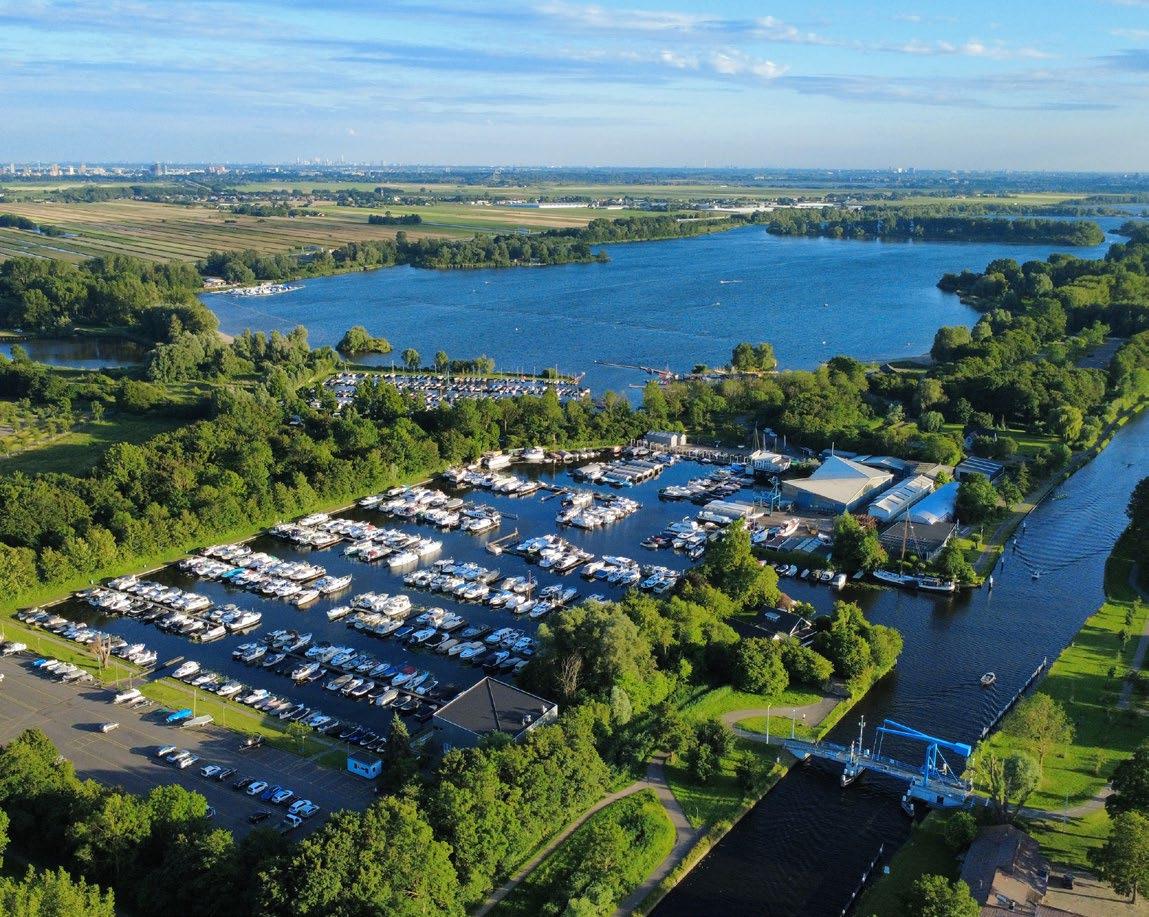
When you step into a new industry, there’s a moment when the similarities stop being helpful. From a distance, moving from holiday parks into marinas might look straightforward. Both sit within the leisure industry and both manage physical space such as pitches and berths, both work with long-term customers such as holiday home owners and berth holders, and both manage operations with multiple layers such as bookings, billing and compliance. It’s only when you get closer that the reality proves more complex than the comparison suggests.
Having spent years embedded in the holiday park sector, Elite Dynamics were used to a certain operational rhythm. We understood how sites run, where inefficiencies creep in, how revenue is shaped and how customer relationships evolve over time. That experience gave us a strong foundation and informed our early thinking.
Our entry into the marina sector was driven by customer demand. When holiday park groups started purchasing marinas and vice versa, they saw the similarity too and those conversations started to become more consistent – how can you help?
At first, it felt familiar, we treated a berth much like a pitch, a berth holder like an owner. Service workflows were mapped against familiar processes. It made the transition feel logical, even comfortable. It just wasn’t quite right.
The more marinas we spoke to, the clearer the gaps became not only in their tech stack but in how well it supported day-to-day operations. There were systems that didn’t quite connect, processes that had been built on workarounds and technology that wasn’t fully supporting the way marinas actually operate. It was indeed a different world but there was a recognisable sense of friction that we had seen before and worked through in the holiday park sector.
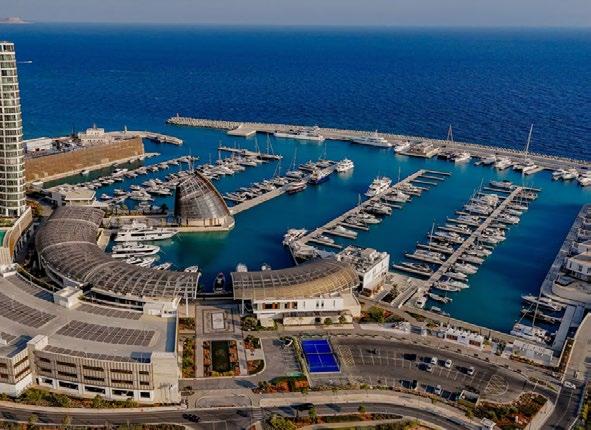
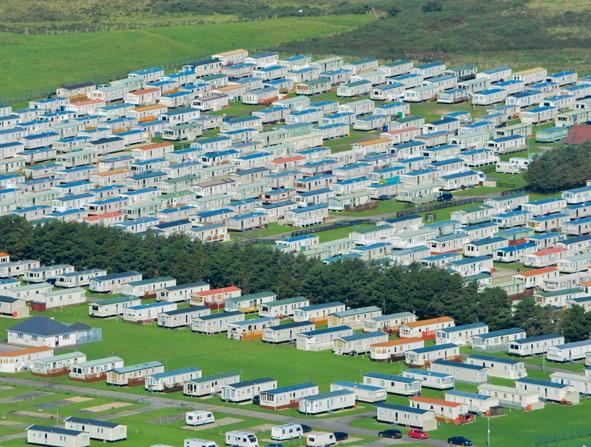
The shift in our own understanding came gradually, through a series of conversations with early adopters who believed there had to be a better way forward and trusted us to help shape that future. Over time, those small mismatches that we were introduced to revealed something more fundamental: a gap between how marinas actually operate and how their systems were built to support them. That’s what led to EliteMarinas.
For example, boatyards introduce a level of logistical complexity that doesn’t translate cleanly from park operations. We saw this first-hand after an early conversation with a marina operator about how their yard runs day to day. What had sounded straightforward at the beginning - lift, service, relaunch - quickly became something much more involved once we started to unpack it.
We ended up bringing members of the team together to work it out, starting out with the trusty whiteboard and some pens. We mapped it out, using different coloured pens for different inputs on the sequence of events that will drive the outcomes that affect both the marina operator and their customers.
What happens when the boat is lifted and the scope of the originally requested work is changed? If an issue has been found in the hull, the marina can’t simply go ahead and fix it without involving the customer. And what happens to the original quote that’s been accepted?
We mapped it out, challenged each other over the smallest details that turned out to be not that small at all. We revisited the original plan and started again more than once, fuelled by plenty of coffee, until we were positive our concept accommodated the actual needs of the marina and their customer at every touch point. We then built it and we continue to build on it.
Even the language carries weight. Terminology in marinas isn’t interchangeable and this reflects how the sector understands itself. A berth isn’t just renamed from a pitch, it comes with a different set of expectations around access and availability. Pitches are a static relationship, people don’t simply take their caravan and go somewhere else for a few weeks, and berths aren’t neatly packaged into a single transaction.
While that might be a subtle difference on the surface, giving a marina the ability to quickly bring the berth into their available sellable spaces is a bigger change in how a marina actually operates in comparison to a holiday park.
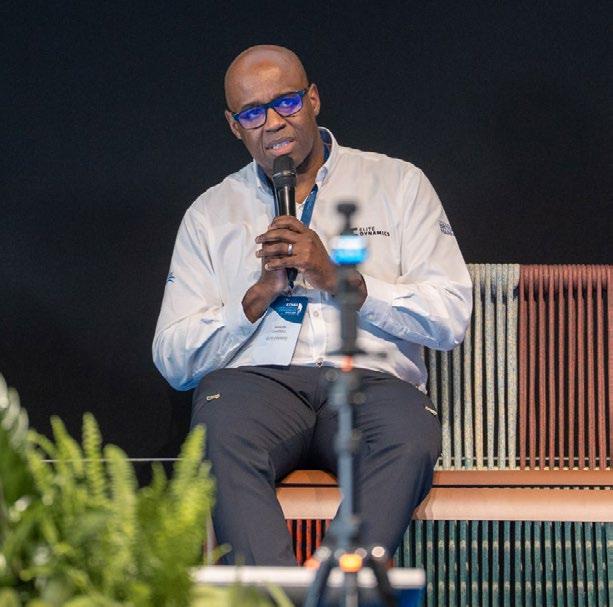
Mark Brown, of Oregon’s Port of Newport, saw that their previous systems “simply weren’t designed for the scale and turnover of our operations”, adding that “staff were frustrated, customers were frustrated and we were spending huge amounts of time patching problems instead of serving people”.
“With Elite Dynamics we have found a solution provider that understands our business model, and with EliteMarinas we have found a solution that efficiently supports each department’s business processes. It integrates seamlessly with Microsoft Business Central, it will save us an estimated $140,000 to $180,000 a year in staff time and efficiency, and gives us the tools to deliver the kind of customer experience our community expects. For me, the real win is that it will bring all sides of the port together – commercial, recreational, and international – into one cohesive system.”
We test ideas in real environments, refine what works and adjust what doesn’t in house. It’s driven by real world usage and feedback because this is what keeps the solution relevant.
One of the more understated challenges in crossing sectors is reputation. We might have a long history in holiday parks, but we are relatively new in marinas. That changes the dynamic. The first major marina event we walked into was the 2025 ICOMIA World Marinas Conference in Venice, Italy. Only a handful of people knew who we were and our presence in the marina industry was still emerging, which was daunting.
But what a welcome we got! The marina industry, much like the park industry, was incredibly welcoming and curiosity about who we were and what we offered was strong. One of the first interactions we had was with an American gentleman: “Why don’t I know you?” This perfectly fair question proved that credibility or reputation isn’t transferable.
Conversations were more probing and our assumptions were tested more quickly, and rightly so. Operators are dealing with diverse environments and high-value assets, and they need confidence that any new system will support their operation and, more importantly, offer a return on their investment.
Earning that trust takes time and what helped was honesty. We had to be clear about where our experience applied, and where we were continuing to build sector-specific understanding. It created a different kind of dialogue, where the product fit became more important than its positioning in the market. We left ICOMIA knowing we were on the right path and there was a need for the technology we offer.
“Operators are dealing with diverse environments and high-value assets, and they need confidence that any new system will support their operation and, more importantly, offer a return on their investment.”
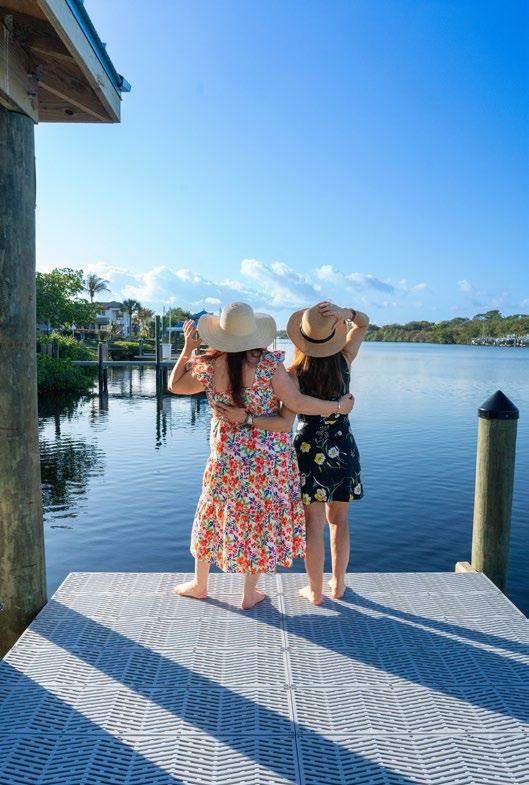
While the external transition is visible, the internal transition was just as significant. We needed a reset across teams and sales conversations needed to reflect different priorities. For many years, holiday parks shifted from singular revenue models to broader and more layered operations, and we’ve supported that transition as it happened.
So when the sales team speaks to marinas, that experience shapes how those conversations start. The focus naturally shifts to how operations evolve over time, how different revenue streams connect, how acquisition and expansion play a role, and how technology supports that as part of the wider journey. We know that road and get real joy from showing the industry the art of what is possible.
Although marketing had to adjust its language and learn a whole new set of terminology, we realised it would be better to bring actual experience into the team. A marketer that had not only worked in marinas, but also experienced life as a boater, both professionally and personally, a nautical translator, if you like. Someone that has seen the frustration first hand when tech doesn’t match the expectations of the person using it. We continue to build that alignment with the industry through exposure, repetition and learning by actively engaging and being part of the conversations.
Our aim is fairly simple. We want to make using this system feel as frictionless as it can be, just as much in the short-term day-to-day operations as in the long-term evolution of the business and industry. It needs to be software that can work both for a moment in time and support what comes next.
It is important that marina management software continues to evolve and adapt as the sector does. After all, the pace of change is increasing and the expectations around how technology supports operations are only getting higher. The job, as we see it, is to keep operators at the forefront of tech and make sure the people running marinas aren’t the ones carrying that weight.
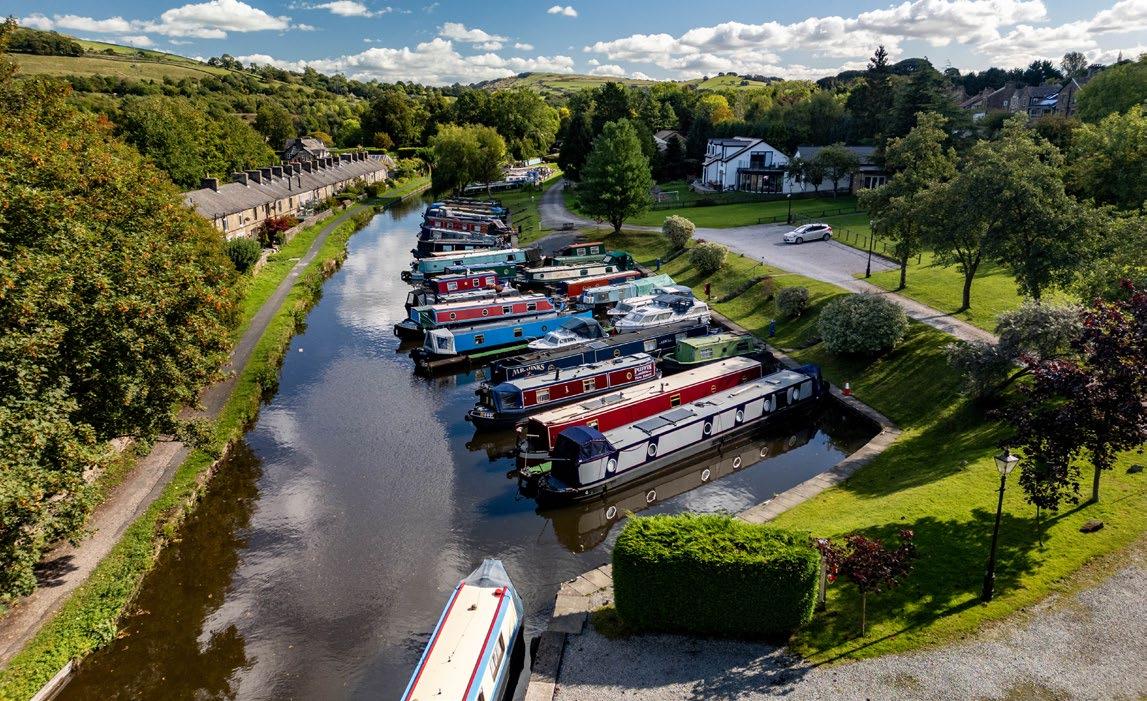


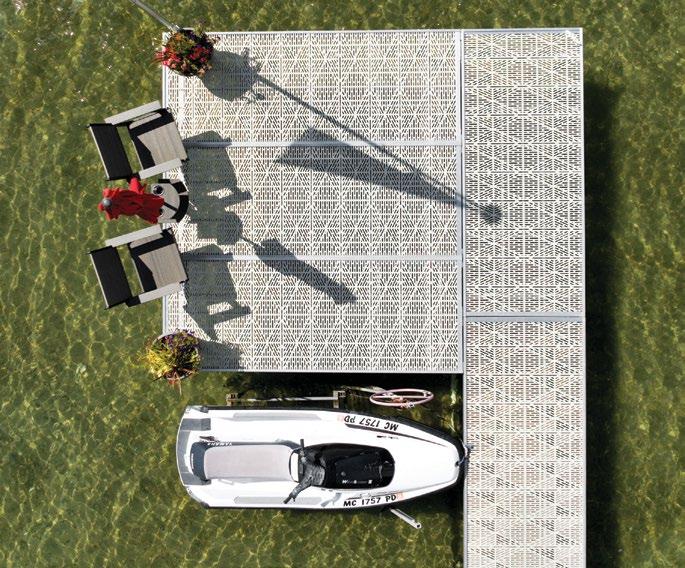




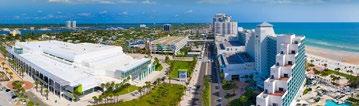
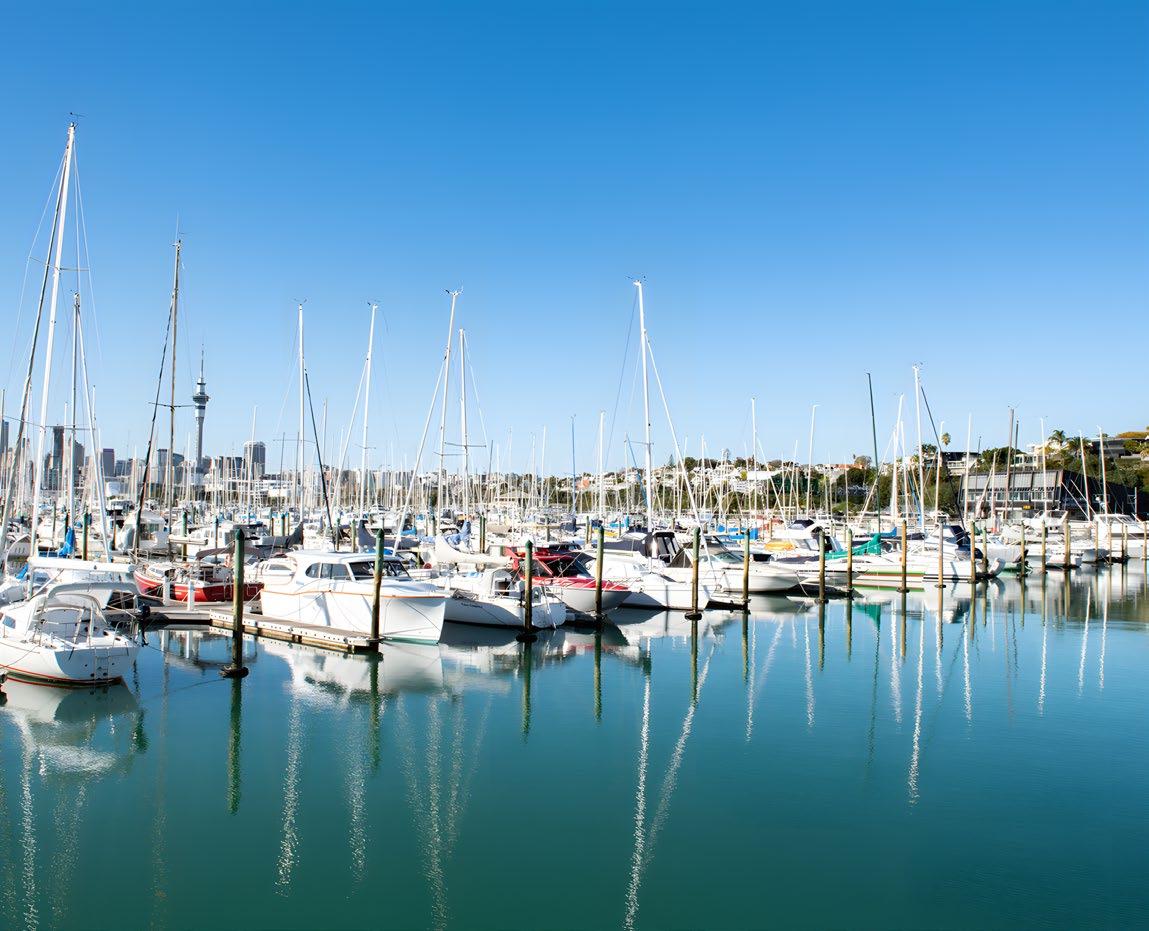
In the first article of its kind in Marina World, the managers of New Zealand’s Westhaven Marina and Suntex’s facility at Marina del Rey in California discuss their unique journeys into the industry and share their experiences about working with local government, protecting the environment, shared boating and organising events.
Gareth Wilson, Westhaven Marina, Auckland: I come from a boat-building family and am a fifth-generation New Zealander – my family arrived in New Zealand in 1862. Water and sailing have always been in my blood, and although I spent a lot of time around marinas growing up, I never imagined becoming a marina manager.
I joined Westhaven Marina in 2020 as the maintenance and asset manager, with the intention of progressing within the organisation. Over time, I became the marina manager for not only Westhaven, but also the neighbouring council-owned Auckland Central and Silo marinas. Transitioning from privately owned to councilowned marinas has been an interesting experience, as they differ significantly in how they are run.
Jackie Zolnierowicz, Marina del Rey (Suntex), California: My background in marinas is definitely not as extensive! The way I started working in the industry is pretty different. I was racing sailboats at the time and my friend suggested I try and get a job at a marina, which is when I started at Marina Harbor Anchorage in 2013.
I applied to where I am now while on a surfing trip in Nicaragua. I have now worked within the wider Marina del Rey harbour for 13 years and at the Suntex Marina del Rey facility for eight years. But there are 21 marinas in the whole harbour, the Suntex marina is only one of these.
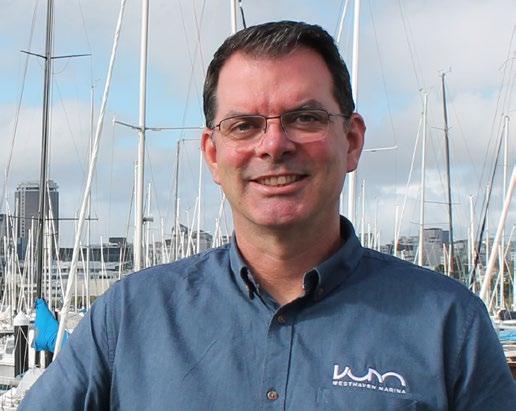
GW: When I first stepped into the marinas manager role, I wondered how I would oversee multiple marinas all at once. One of the advantages of working within local government is the strong connection we have with the wider Auckland Council Group. If we have a question –for example about consenting – I can go directly to the relevant team and request assistance. While council responds to requests as they receive them and there isn’t preferential treatment, it helps knowing who to contact. In a private marina setting, that process can take significantly longer.
That said, public organisations come with multiple layers of approval and we must follow structured processes, particularly for maintenance and capital works. Ultimately, the relationship between the marinas and local government comes down to forward planning and recognising the scale of Westhaven. With around 1,800 berths, careful year-by-year planning is essential.
JZ: It is a similar situation at Marina del Rey, but still quite different. The entire Marina del Rey harbour is actually run by the Los Angeles County Department of Beaches and Harbors, and they have their own rules and regulations that all 21 marinas have to follow, including us. Beyond that, each marina at Marina del Rey has their own pricing, all the docks are different, and some rules and regulations will differ from marina to marina.
GW: For us, there are a number of layers when it comes to pricing and regulation. At Westhaven, we currently have two trusts in place – one due to expire later this year and the other in 2029. Following the first expiry, Auckland Council has decided to move to a full rental model for that section of the marina. Given Westhaven’s significance as a council asset, this decision was made at the highest levels of council.
As far as annual rental rates are concerned, these are decisions we can make ourselves, although they still require sign-off from Auckland Council’s head of marinas. Our operational expenditure is also managed by our team, with council approval required. That said, senior leadership maintains a strong interest in rental rates and projected income. Encouragingly, this process has never created roadblocks, which I see as a reflection of the confidence Auckland Council has in our team.
JZ: Our local government is also pretty hands off, each marina at Marina del Rey can more or less do their own thing, especially concerning rates and who rents where. They have their rules on certain things but once they lease the property line, you’re good to do whatever you want so long as you stay within their rules. They don’t have a say on how much rates increase each year, although they do of course collect their share.
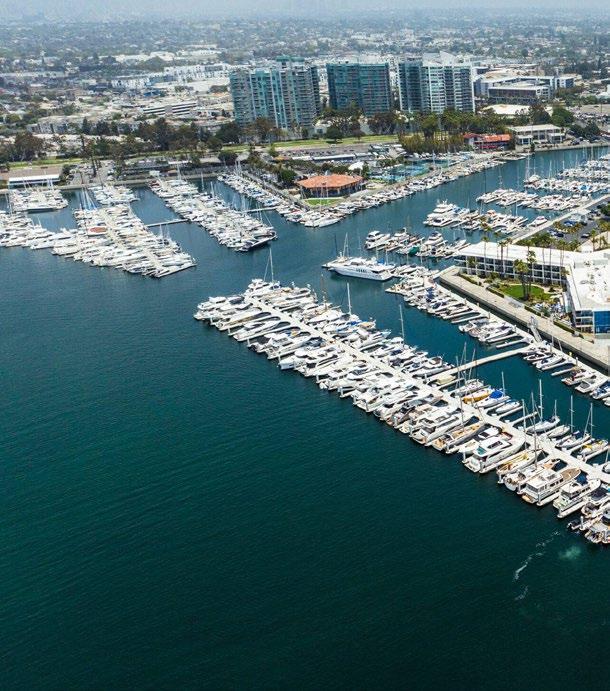
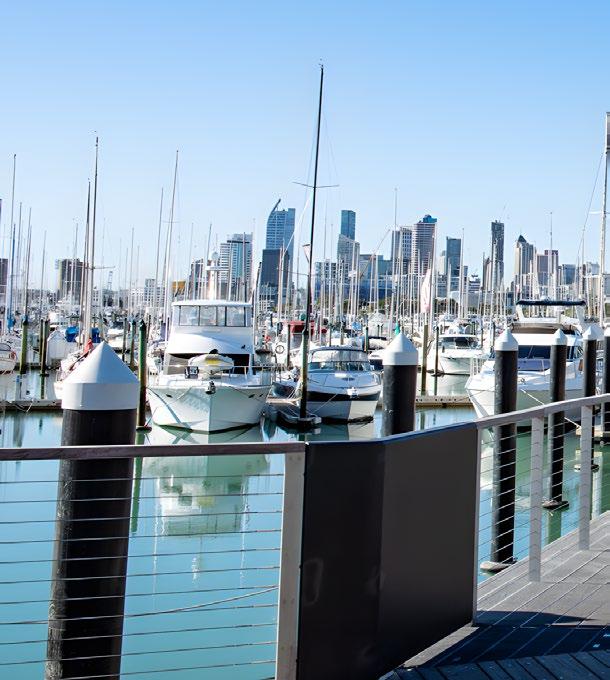
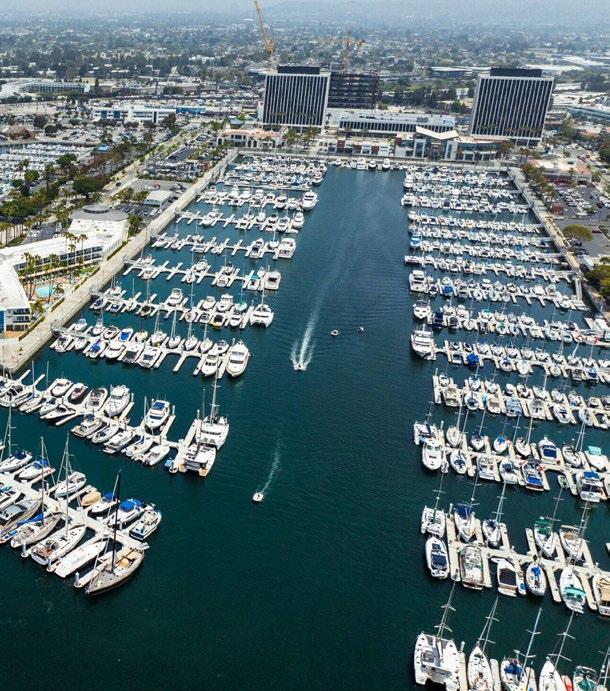
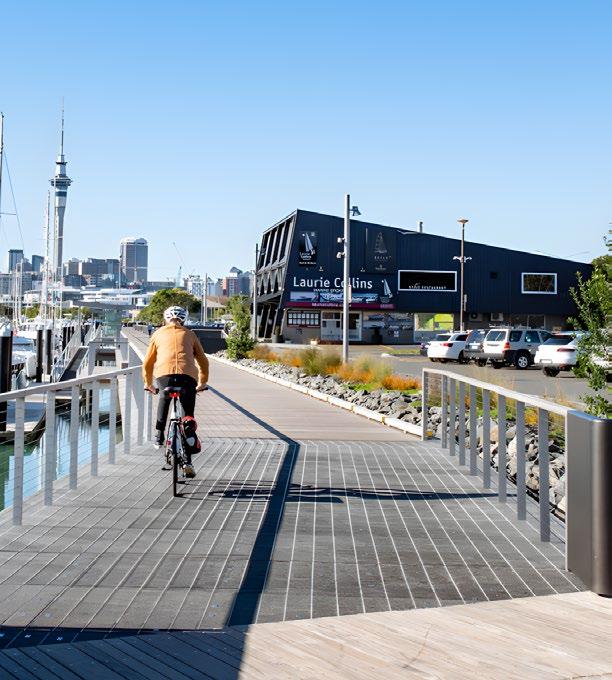
GW: Another thing we are very conscious of is our customer demographics as they say a lot about the future of boating in New Zealand. Our largest group is over 50. While we still see some representation in the 40–50 group, it drops off more noticeably in the 20s. What we are seeing among younger boaters is growing interest in shared boating. We have operators like Freedom Boat Club and Skipperi, as well as local providers, offering a more flexible way to access boating without the commitment of full ownership.
JZ: My boating demographic at Marina del Rey is actually a lot more varied. I have a lot more younger people, especially 20-somethings who are liveaboards, and then all the way up to 80 years old, like you have at Westhaven. But most of them are indeed under 60 years old all the way down to their 20s. We also have a lot of people who have partners in boat ownership and I have seen more women coming into boating too.
There is also a Freedom Boat Club across from me, and then another one called Care Free Boat Club. These are so good for getting people into boating because people can try out lots of different boats.
GW: We see shared boating as an important pathway into the industry, and exploring what the future of this model might look like is a priority for us.
At present, Tāmaki Makaurau has a significant number of smaller runabouts for recreational use and only a relatively small proportion of Auckland’s population actively engages with berthing a vessel in a marina. A key question for us is how we work with our shared boating companies to connect people coming through shared boating with longer-term involvement in marinas. Affordability is a factor for younger boaties, and I think that’s why the entry level boating will increasingly involve shared or joint ownership.
JW: I totally agree with that. I have several boaters that jointly own a vessel, splitting the costs between a few of them. I absolutely think that is one good way to do it. What is not so good is if people buy a boat, use it in the very beginning, and then forget that they have it and neglect it. Owning a boat can definitely be hard on your pocket sometimes and people don’t know how much time and effort go into gas, maintenance, top clean, bottom clean and so on.
GW: In the past, particularly during Auckland’s racing heyday of the 1960s through to the 80s, yacht racing was a major community activity on the Waitematā Harbour, with spectators lining the seawall. That level of participation is far less common today, across both weekday and weekend racing. These days, many vessels remain in marinas for extended periods without regular use, which can contribute to marine growth and maintenance challenges.
In New Zealand, there is now a strong focus on managing invasive species attached to vessel hulls. Many of these species arrive via international vessels entering Tāmaki Makaurau, and strict controls are in place to prevent their spread to other regions. Boats may be restricted from travelling elsewhere in the country unless they have recently been antifouled or cleaned.
Auckland Council also operates a biosecurity team that conducts in-water inspections across Auckland, identifying marine pests and issuing notices requiring vessels to be cleaned before they can be moved. The system is tightly managed to protect New Zealand waters.
JZ: Wow, that’s crazy! Los Angeles county is trying to encourage people to use anti-fouling paint and they are very strict about lake-to-ocean and ocean-to-lake transfers of invasive species. We have divers that will mark if you need new paint, but nothing like this! Boats that don’t really leave the marina can certainly cause problems with bottom growth, yes.
Below, from top: New Zealand’s biggest city, Auckland, is nicknamed “The City of Sails”; Leisure area at Suntex’s Marina del Rey in California. Right: Suntex’s Marina del Rey frequently organises events such as exercises classes and marina clean-ups.
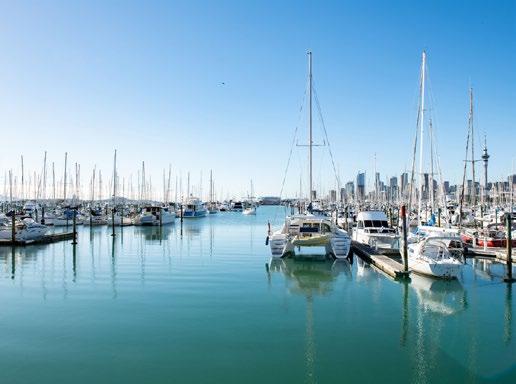
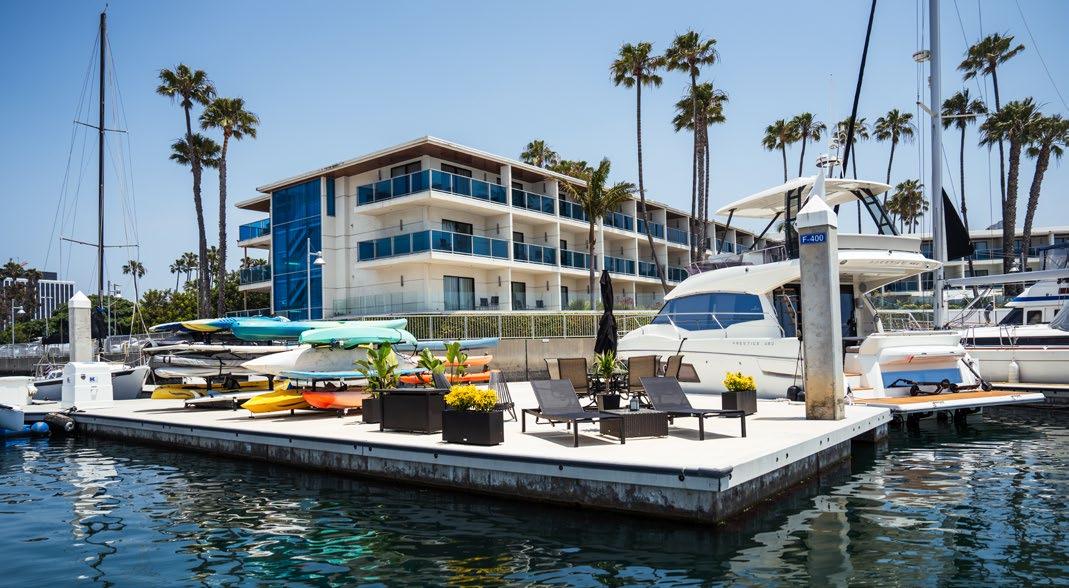
GW: And you have liveaboards in your marina? Is it normally allowed in California?
JZ: I know that my neighbouring marina, Pier 44, doesn’t allow liveaboards. So it will depend on if the individual marina allows it, and Suntex does allow it. However, if a marina within Marina del Rey does allow liveaboards, they must limit it to only 10 percent of the boats.
GW: We only have a small number of liveaboards at Westhaven – around five or so. As a general rule, we don’t allow liveaboards unless there are specific circumstances, such as on compassionate grounds. Liveaboards can bring both positives and challenges, but at Westhaven the expectation is that vessels are actively used. When a boat becomes more of a floating home, it can also contribute to maintenance challenges, including increased bottom growth.
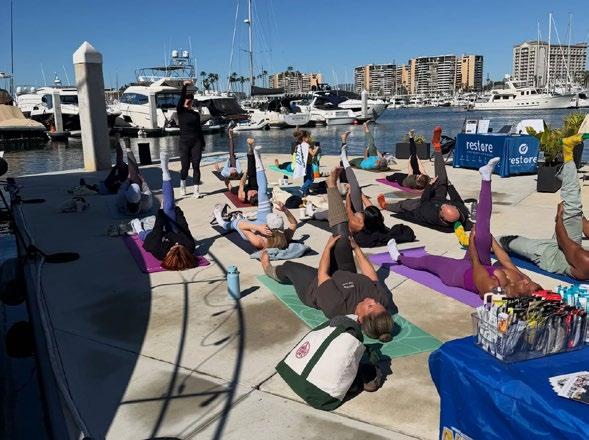
“Los Angeles county is trying to encourage people to use anti-fouling paint and they are very strict about lake-to-ocean and ocean-to-lake transfers of invasive species.”





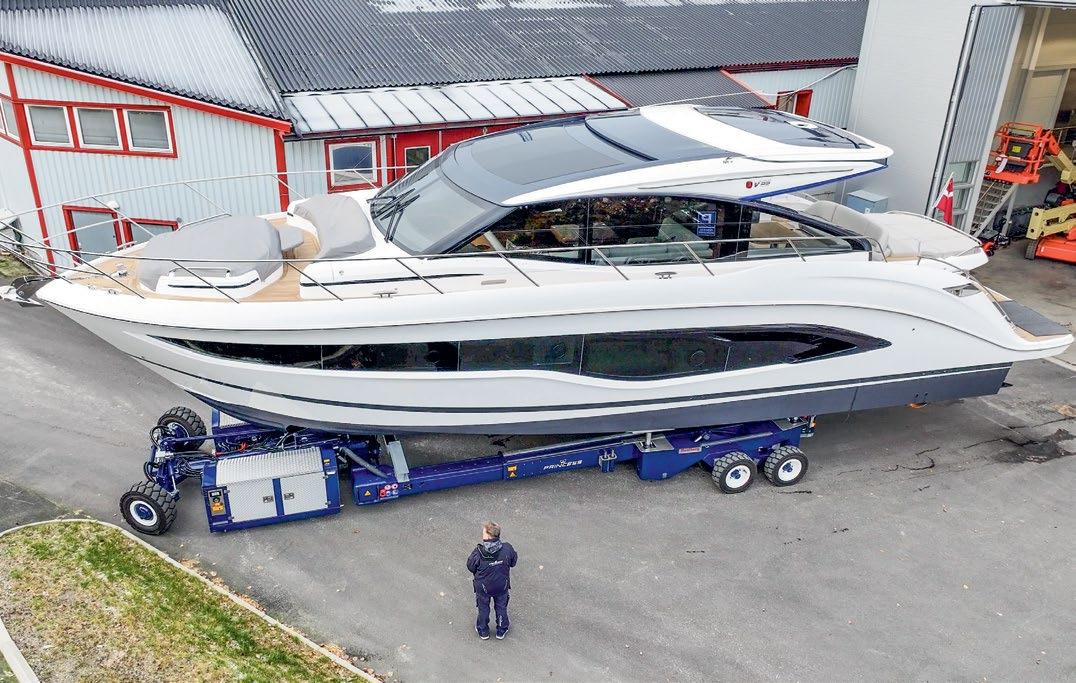

JZ: I am pretty strict at my own marina about top cleaning and bottom cleaning, so if I do see growth we will send them a notice. But we try very hard to get people to come down and enjoy their boats, and to do that we throw a lot of events. Some events will focus on skills that they will need, for example tying knots or splicing. I also organise exercise classes, swap meets, monthly parties, etc. We also do an Earth Day harbour cleanup to try and get people to come down to the marina, engage with the community and enjoy their boats.
GW: I find this really interesting. The Auckland waterfront is an incredibly popular destination for locals and visitors alike and a popular walking and cycling destination. The idea of creating a vibrant atmosphere through specific events to encourage people to come down and enjoy the marina in different ways is a good one.
JZ: Absolutely, it’s about creating additional amenities and getting people involved. But it’s also a way to get people from different marinas to come to mine, because they realise that we organise fun activities to create that community.
GW: Westhaven used to host a number of open days and swap meets, but since COVID we haven’t quite got back into that rhythm. We still have strong yacht club and hospitality partners around Westhaven, and we’re keen to continue strengthening those relationships. There is a clear opportunity to work more closely together and better understand each other’s needs. The yacht clubs are intrinsically linked to the success of the marina – when they are thriving, it flows through to Westhaven as well, particularly through the events and activity they generate.
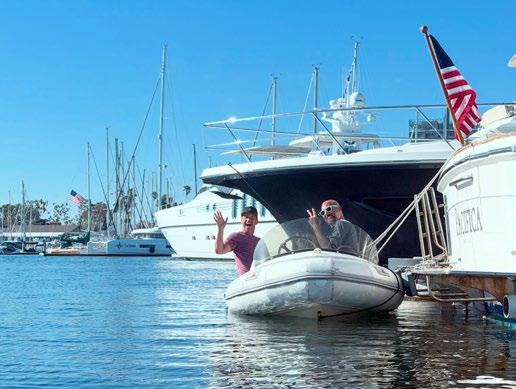
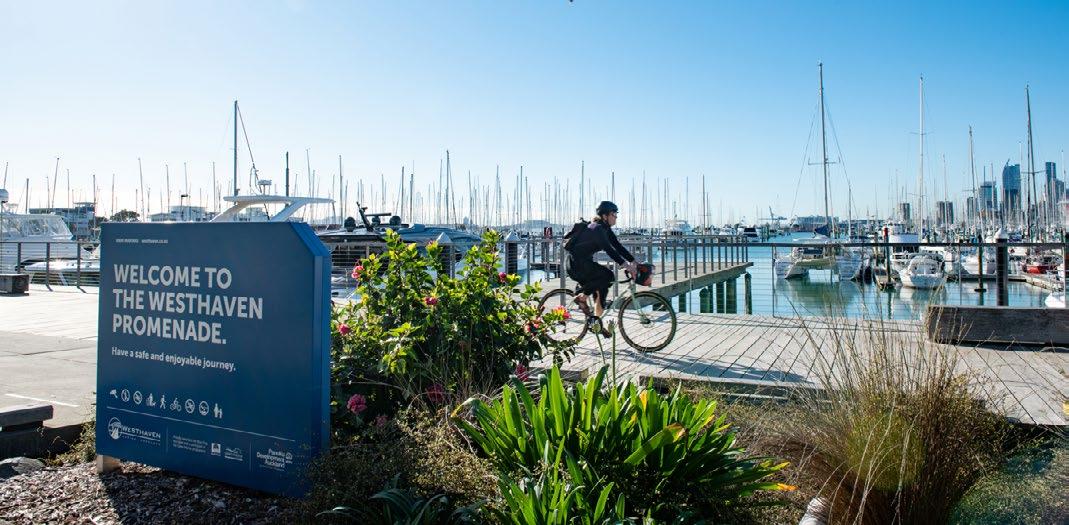
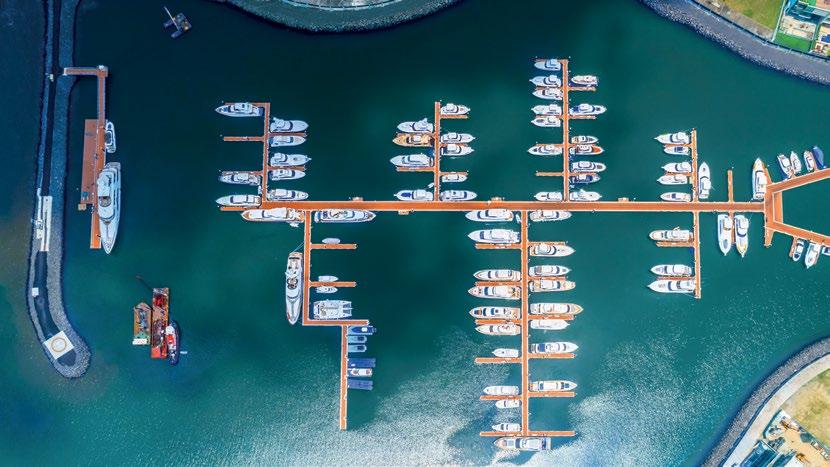
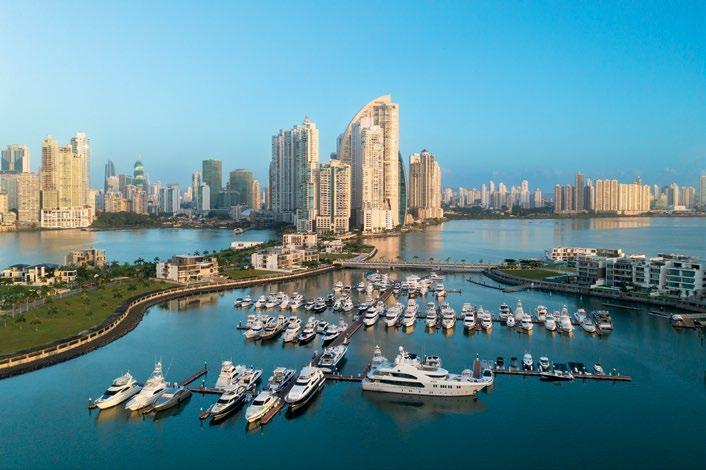
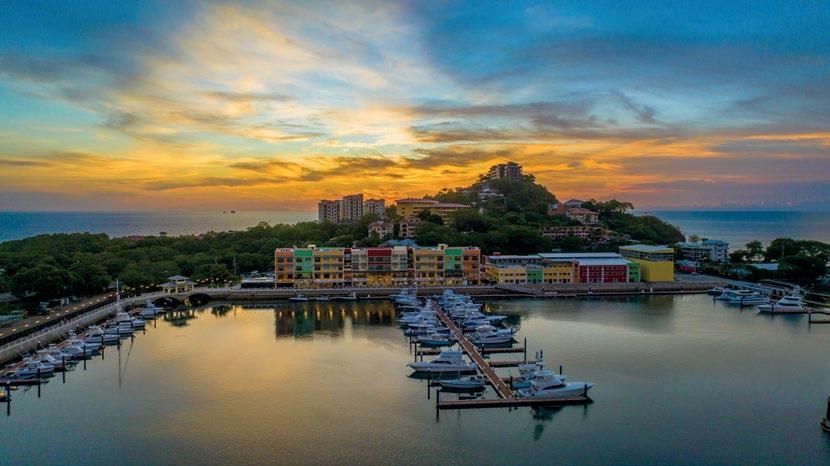



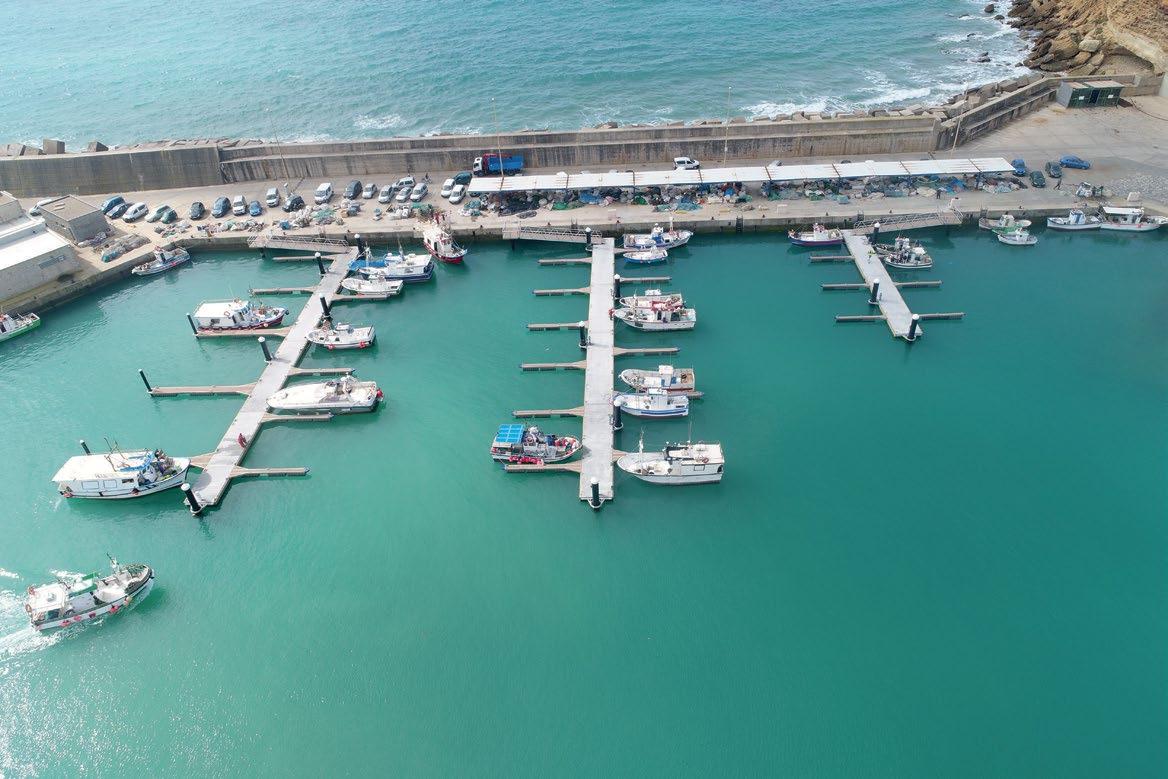
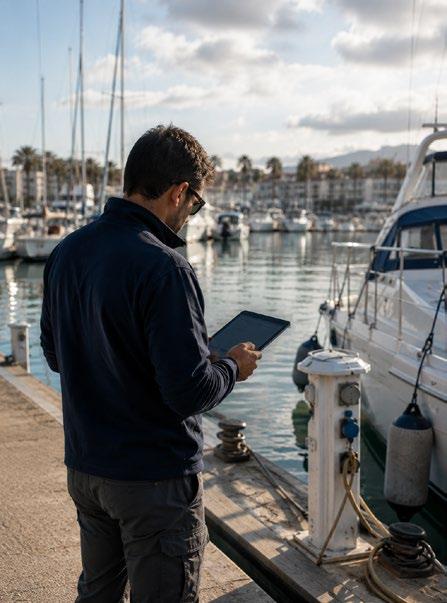
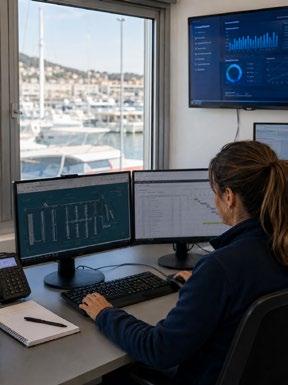
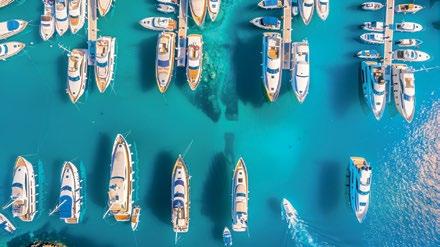
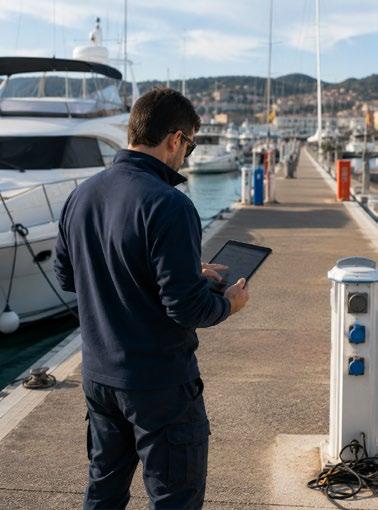
Could looking at water as a strong foundation for construction revolutionise waterfront living?
By Wael Juju
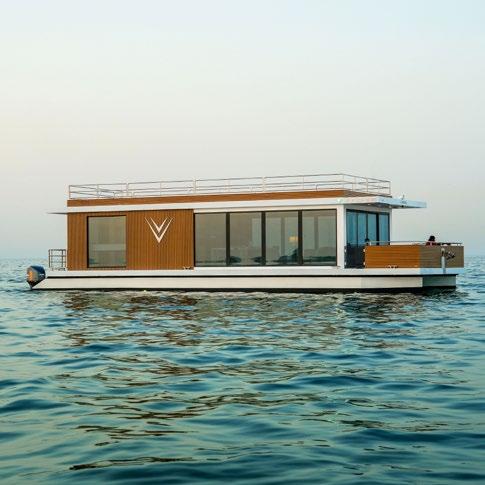
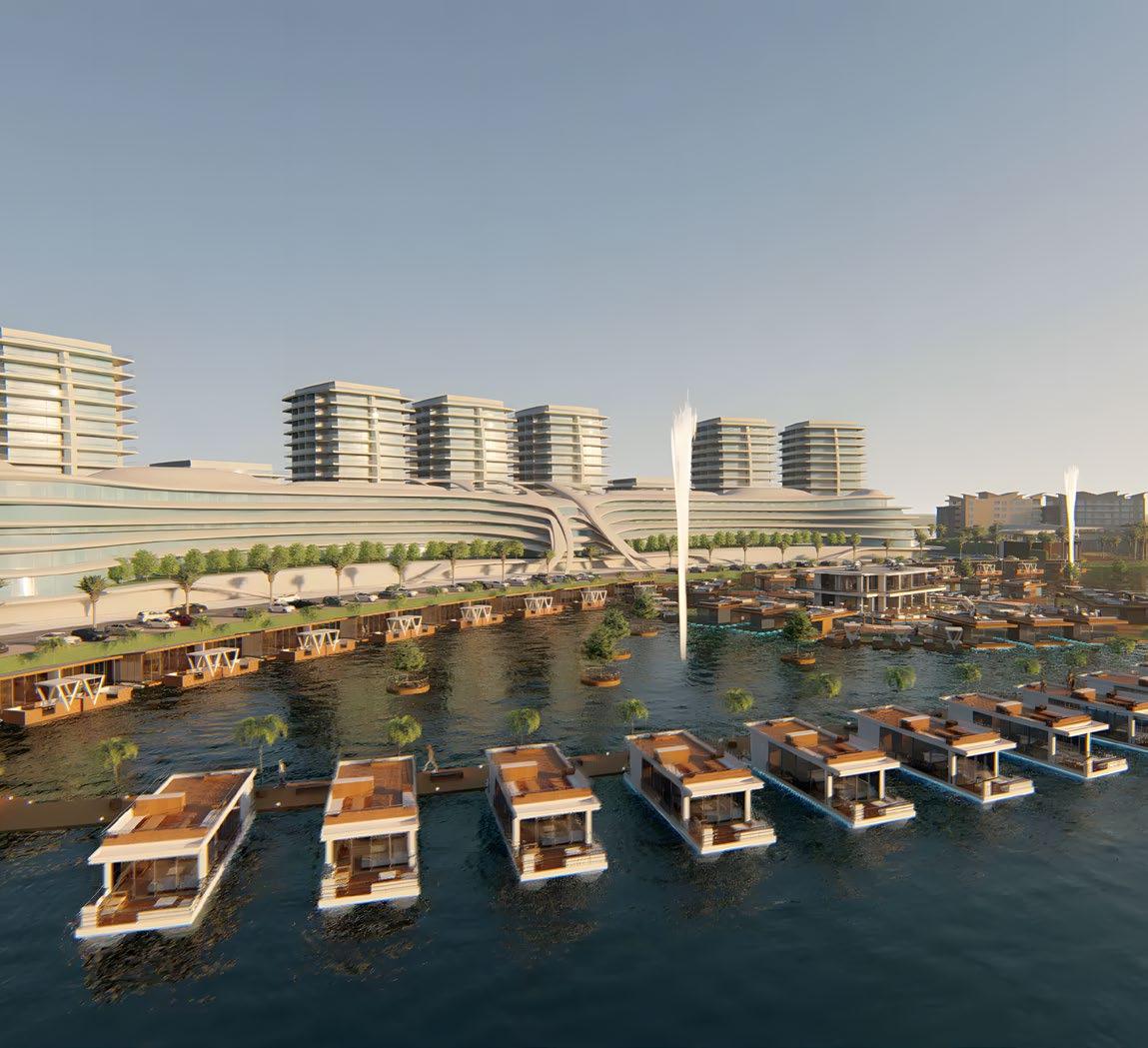
As we all know, 70 percent of the Earth’s surface is covered by water and 30 percent is covered by land. The limitations of only building on land, as well its use, overuse and abuse, are obvious. However, humans’ relationship with the sea has not yet been industrialised to the level of real estate and I believe that it is time to start thinking very differently. We can live on the water, we can eat on the water, we can commute through the water, we can work on the water, all while keeping land available for things like agriculture.
Only half a percent of the planet’s land area is coastal and yet twenty percent of the global population lives there, putting enormous stress on land use, infrastructure, public services and the people that live in these areas. Spreading this concentration out across the water would open up new skylines, architecture and city planning to tap into new opportunities that we are not currently exploiting.
In general, for real estate assessments, waterfront assets are the most expensive assets in any particular country and the first 100m of the landside is the most expensive part of the waterfront because it is the area that is the most visible, accessible and connected to the water. However, the land behind these first 100m tends to be around 30-40 percent cheaper. So this confirms that it is indeed proximity to the water that increases the value of the land.
If the value increases because of the property’s accessibility to the water, then the first kilometre of the water itself - as long as it is sheltered or usable - can also be considered a valuable area that can be used for the development of floating asset classes. In this sense, water has a value but at the moment it doesn’t necessarily have a price.
In my opinion, floating properties create added value, increase quality of life, create a stronger economy and would reduce the concentration of high-value, high-rise properties on the waterfront. Because the land is so expensive, until now the only way to increase value further is to build upwards, but this ultimately blocks your view of the water and land, and harms the overall experience of being by the sea. This is why institutionalising the development of floating properties is the most profitable, sustainable and common-sense approach to guaranteeing waterfront quality of life.
Furthermore, developing floating asset classes will invariably mean the introduction of rules and regulations from government and local authorities, in turn meaning that any such developments are bankable and have an inherent value. Recognising this would be the first step in taking the knowledge and lessons of the marina industry and applying them to floating properties, potentially as standalone developments or indeed as part of a wider marina or waterfront development.
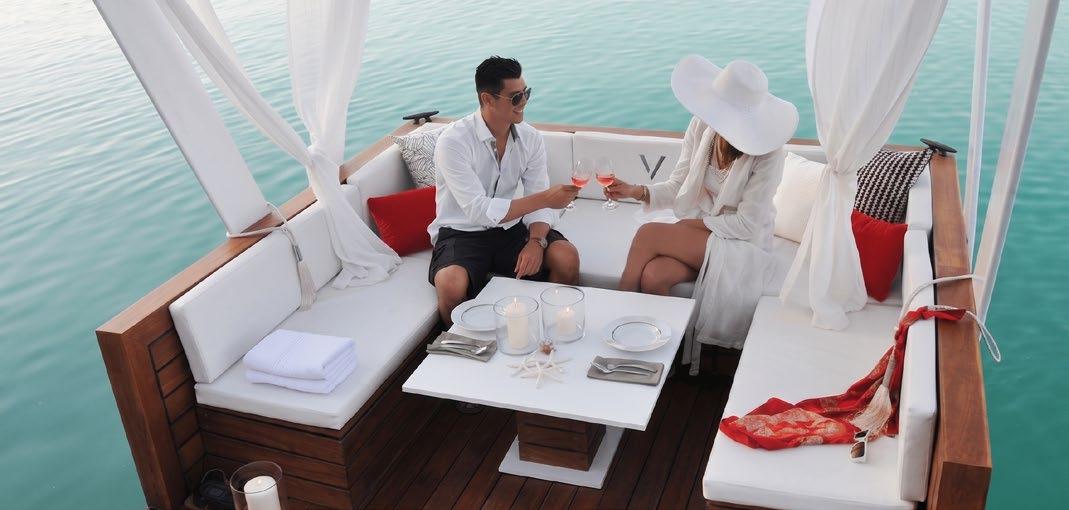
Generally speaking, many people are not particularly aware of water’s scientific properties. Many think that it is not strong and it cannot bear large weights. But this is not so. Water can carry enormous structures such as ocean tankers, as well as large platforms made from wood, steel or concrete, provided they have the necessary buoyancy built into them. Floating properties’ wider surface area and lowrise nature mean that they are more suitable for on-water construction than their denser land-based counterparts.
Water can in fact carry greater weights than land itself and this is evidenced by how massive, ocean-going cruise ships are built. Shipyards will tend to build only the first 20-30 percent of the ship on land so that it sits just above the waterline. Then, rather than having extremely expensive and complicated ground foundations, they transfer the vessel to the water to continue construction, which is both easier and stronger. Improving the general understanding of water’s scientific properties as a very strong construction foundation is critical to realising its potential as a host of new, high-quality, accessible living spaces with a minimal environmental impact.
It is also important to ensure that underwater ecosystems receive enough exposure to direct sunlight, which is necessary for healthy marine life. If floating properties are constructed in a configuration that still leaves 30-40 percent of the water’s surface exposed to direct sunlight, you actually create fairly ideal, shaded habitats for sea life without having to install additional structures on the seabed to encourage fish and crustaceans to live there. So, in this sense, floating properties can actually enhance rather than harm marine ecosystems, provided they are constructed and regulated in the right manner.
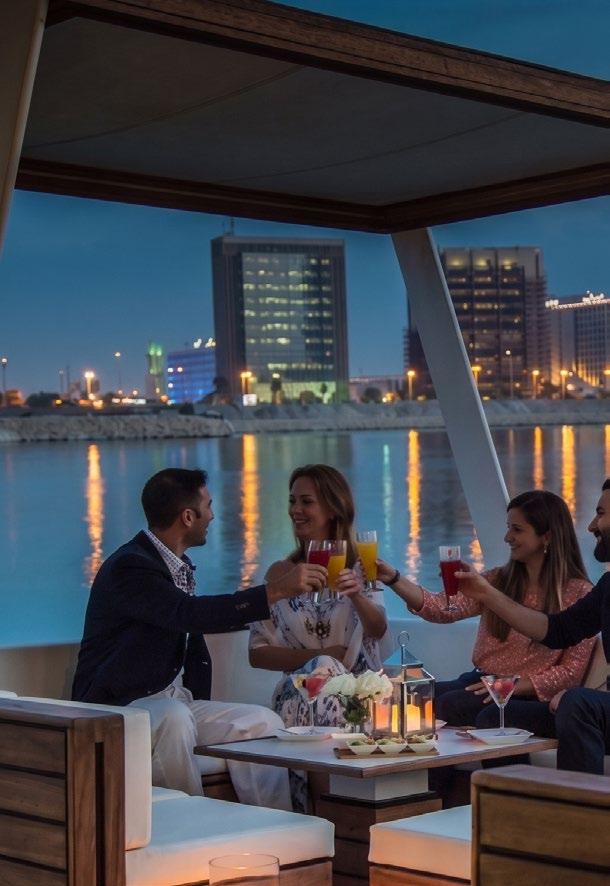
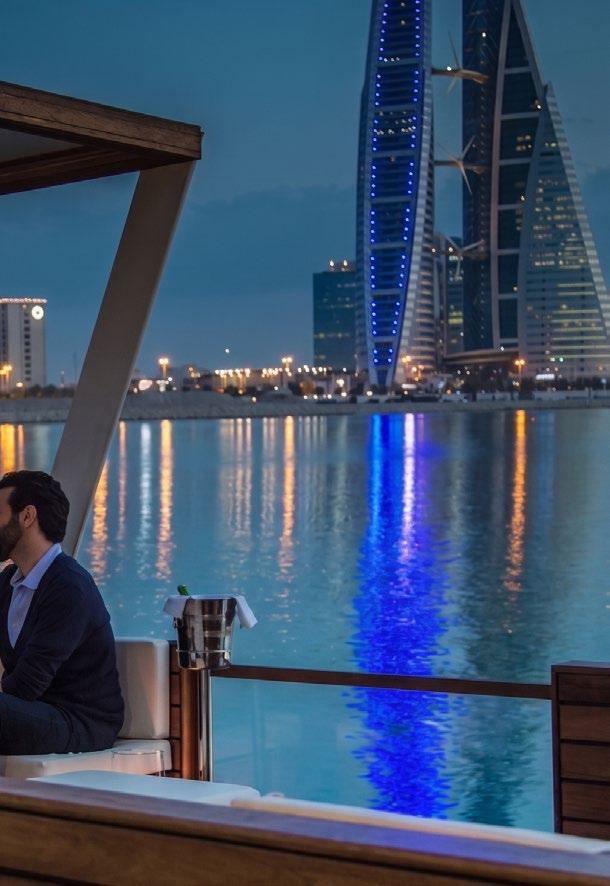
Nowadays, all construction companies and architects refer to environmentally friendly or “green” strategies or approaches, but this does not change the fact that land-based construction and land reclamation causes significant environmental damage. The amount of concrete, chemicals, steel or any other such materials used in land reclamation is enormous and it leaves a lasting impact on marine ecosystems. However, building on water without land reclamation or even piling is considerably less harmful and invasive. There is no need to dig massive holes, lay foundations or take anything away from the seabed. You only need strong anchoring systems with a minimum impact, and many of these systems exist today already.
It is also worth emphasising that the demand for living in floating properties is almost certainly there. Many people already seek a waterfront, seaside lifestyle, and yet the prohibitive cost of waterfront property makes this impossible. However, if you were to ask anybody if they would like to live by the water, open their doors, dive in, go for a swim and go out on your boat which is docked right there, with unlimited access to watersports and relaxing on the beach, the answer would be yes.
The price for floating properties need not be premium either. If you institutionalise, democratise them and regulate floating properties, then they could emerge as a very competitive alternative to land-based real estate. In the Middle East, for example, it is important to understand that it was not the desire to live on reclaimed land that drove land reclamation. It was the desire to live by the water. Floating properties give a similar solution that is better on cost effectiveness, sustainability and environmental impact, and, most importantly, it represents an added value to unused open water space that creates a genuine connection with nature rather than damaging it.
One can apply this philosophy to marinas. We know that people are increasingly saying how marinas should adapt their business models to encourage owners down to the marina more often through investing in “lifestyle” facilities. However, boat owners are usually successful, busy people, so they cannot come every day or even every weekend.
In my opinion, in the future, a successful marina will combine four elements. Firstly is its most basic function as a parking lot for boats, second is a hotel, third is hospitality such as restaurants, and fourth is floating assets such as offices, shops or entertainment venues. This mixed-use model will create the vibrant, 24/7 atmosphere that many marinas or waterfront areas are lacking, and what many inner-city districts away from the waterfront do have.
Floating properties have not yet been realised on a large scale, possibly because they have often been seen only as an innovation or a concept without real-world utility. However, it is up to developers, contractors, media and promoters to create those few examples as a proof of concept and a challenger to conventional properties built on land reclamation.
Dubai is a good example of how water can bring value to human population centres. They took existing and commercially valuable land and excavated a canal to connect the two sides of the city and create a new waterfront with new scenery and a new economy. The lesson from Dubai is not that we should be digging canals everywhere, but instead that you could build floating cities while keeping canals free for transportation.
At V-Marine, we have received and delivered on requests for the world’s first five-star floating lounge next to the Four Seasons in Bahrain and floating offices for Ferretti Group in Dubai. We have also looked at beach clubs, theatres, watersports, shops, offices and we are even working on a floating resort. All of these together show that floating buildings are indeed a viable host for affordable and sustainable human living and recreation. What remains is to encourage the wider adoption of floating buildings as a solution to urban and waterfront overcrowding, and to create the democratic, institutional and regulatory frameworks needed to unlock their potential to radically reframe waterfront living.
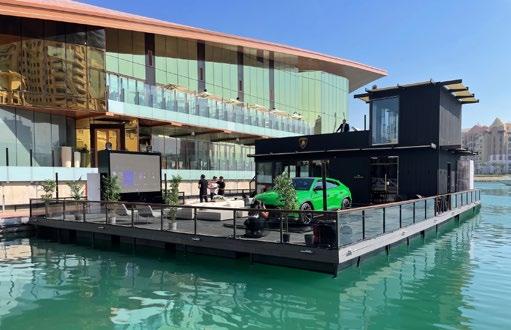
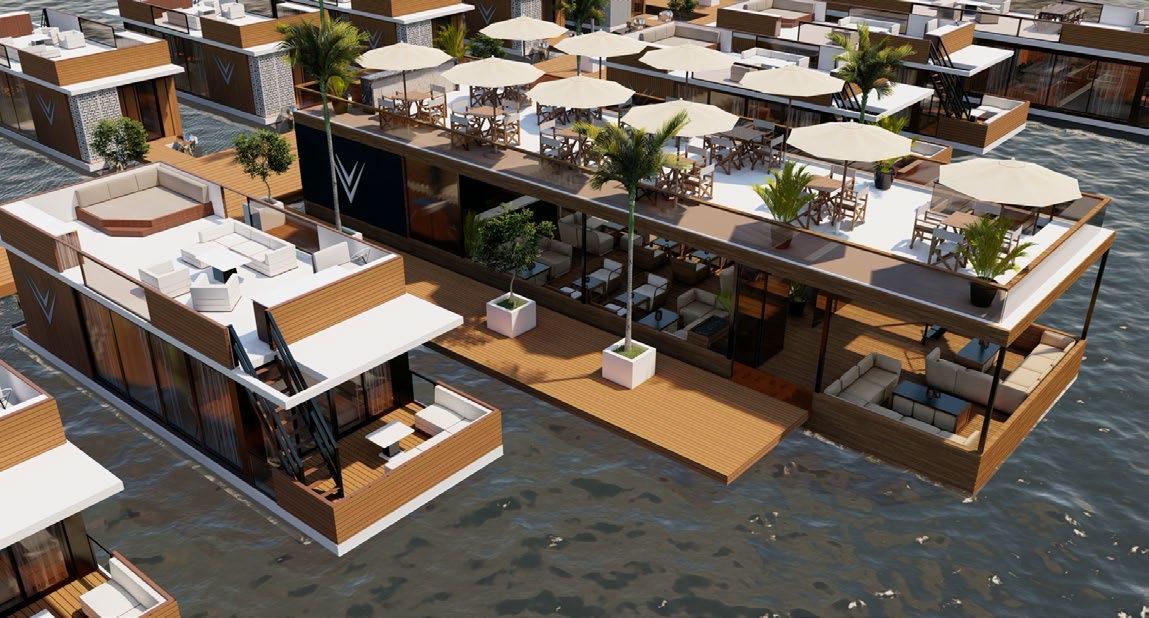










































Innovating the waterfront since 1958, Bellingham Marine turns comprehensive marine construction visions into reality. Bringing expertise to every waterfront project, Bellingham specialises in turnkey solutions, floating structures and single-source marina contracting.
From private docks to commercial marinas, the team guides all of its clients from the initial concept to final completion of a project. With almost seven decades of marine development and innovation, Bellingham Marine has created award-winning floating systems that are not just functional, but also exceptional
They have a diverse range of products including concrete, wood and aluminum dock systems, floating platforms, wave attenuators and more. Each Bellingham product is engineered to offer you the best value for your project.

Established in 1997, Bluewater Marine and Dock Specialities is one of the premier dock manufacturers in the Pacific basin and beyond, specialising in the design, fabrication and installation of aluminium floating dock systems, fixed piers and gangways. Commercial dock system installations range from large scale marinas to small facilities.
The company’s low maintenance, flexible, modular designs include custom proprietary aluminium extrusions, stainless steel hardware and other recyclable materials. All products are fully engineered by an experienced team of licensed civil and structural engineers, are ADA compliant (where applicable) and are designed to meet site-specific environmental conditions.
All Bluewater Marine dock systems are fabricated in-house and shipped to site ready for installation. In 2001, the company built and installed 120 boat slips at the Waikiki Yacht Club. This project was the first aluminium floating dock system ever installed in the state of Hawaii. Following this success, Bluewater went on to develop a portfolio of innovative projects throughout Hawaii, California, Micronesia, the Philippines and beyond, and now – with fabrication facilities in Hawaii, California and North Carolina – it implements projects globally.

Bluewater Marine Systems designs, manufactures and constructs state-of-the-art marina solutions. Their expertise spans both aluminum floating docks and concrete floating dock systems, each customengineered to meet the demands of diverse marine environments.
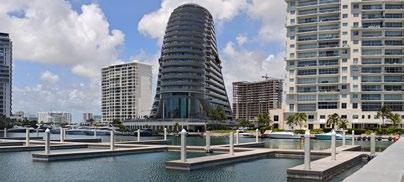
Their aluminum docks include coastal extrusion designs for lighter-duty applications and heavy-water extrusion systems for more demanding conditions. For concrete, they offer keeled wave attenuators, non-keeled wave attenuators and heavy-duty dock systems, providing unmatched durability, stability and performance in challenging coastal settings.
Every product is meticulously engineered, integrating advanced design, premium materials and precision fabrication to ensure longevity and safety. They specialise in custom solutions tailored to client specifications, whether for new marina construction or large-scale upgrades. In addition to dock manufacturing, they offer comprehensive marina repair services, restoring functionality and extending the life of existing infrastructure. Their in-house metal fabrication facility enables them to produce a wide range of marina-related products, from gangways and pile guides to specialty hardware, ensuring consistent quality.
CJ Plast is a pioneer in advanced decking solutions through its innovative Twinwood® brand. By manufacturing customised moulds and dies in-house, they offer a diverse and adaptable range of profiles and geometries — designed to meet the needs of both pontoon and marina decking, as well as other outdoor applications.
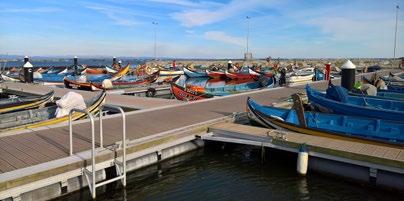
Engineered with durability, aesthetics and sustainability in mind, Twinwood® requires minimal maintenance and can be worked using standard woodworking tools, making it an ideal, eco-conscious alternative to natural wood. Visually appealing and highly resistant, Twinwood® is suited for new installations and refurbishments alike.
As a sustainable material, Twinwood® reflects a commitment to environmentally responsible innovation. Made from recycled resources and minimising dependence on virgin raw materials, it helps reduce waste and contributes to a healthier living environment.
Their dedicated production site in Portugal is at the heart of Twinwood® manufacturing. This strategic site supports their growing international presence, allowing them to respond quickly and effectively to rising demand across European and global markets.
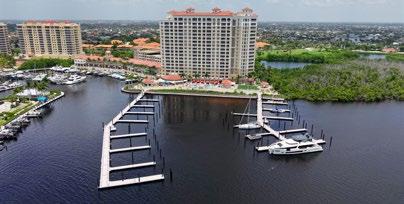
Golden Boat Lifts & Marine Systems revolutionises marine infrastructure with cutting-edge solutions tailored for marinas. With over three decades of experience, the company leads in providing high-quality, reliable and efficient products designed to meet marina needs. Its innovative offerings enhance marina functionality and safety, making them user-friendly.
A standout product is the Golden aluminium floating dock system, favoured for its exceptional stability and durability. Designed to withstand daily use and harsh marine environments, including hurricanes, these docks feature patented resilience-enhancing elements. The dock systems are easy to install and adapt, and are perfect for marina expansions or upgrades. Golden Boat Lifts also offers numerous types of customisable boat lifts, protective canopies and advanced dock lighting systems.
Committed to tailored products and services, Golden Boat Lifts collaborates closely with marina operators to develop superior solutions that maximise efficiency and safety while minimising costs. A customer-focused approach and dedication to quality and innovation have earned Golden a trusted reputation in the marina industry. By providing durable, reliable and innovative marine infrastructure solutions, Golden Boat Lifts helps marinas thrive, offering patrons an exceptional waterfront experience.

Since 1983, IMFS has been a global leader in building innovative floating concrete structures that give people the opportunity to live, work and play on the surface of the water. The company maintains the highest level of quality with customer service, and honours this commitment to past and present customers.
IMFS designs, engineers and manufactures concrete floating structures that take a project from initial conceptual design to final installation and has over 40 years of experience with such projects. The company has built marinas, wave attenuators, floating homes, yacht enclosures and large commercial floating buildings. A licensing programme enables IMFS to work with people and projects all over the world, bringing its expertise and years of waterfront experience directly to each market. IMFS floats are manufactured of structurally reinforced concrete according to engineer’s load requirements for wind, wave and snow in specific locations. Full sections are monolithically cast to meet customer requirements.
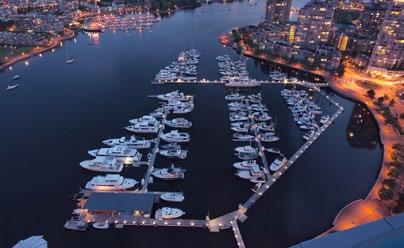
For nearly five decades, Ingemar has designed and delivered bespoke floating solutions tailored to specific operational requirements. A consulting-driven approach ensures the selection of the most appropriate technologies for each project, while production at company-owned facilities in Italy guarantees full quality control. This model brings Made in Italy excellence to marine and waterfront developments worldwide.
Quality and sustainability are central to the company’s operations, supported by ISO 9001, ISO 14001, FSC Chain of Custody, and SOA certifications. Operating from its facilities near Venice, Ingemar serves markets across Italy, the Mediterranean, the Red Sea and the Gulf region.
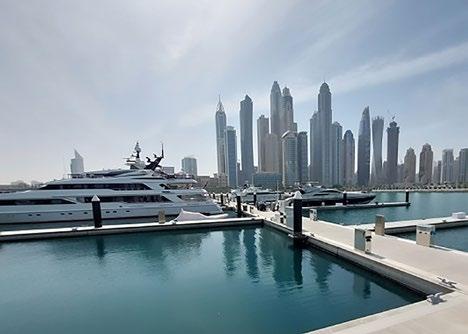
The company’s expertise covers floating facilities for water sports and leisure, floating platforms and bridges, and heavyduty mooring structures for megayachts, commercial vessels and naval applications. Its portfolio includes modular all concrete pontoons, discontinuous floating elements with galvanised steel or aluminium frames, hardwood decking and fibre-reinforced concrete or rotomoulded polyethylene floats, fixed piers and high-performance concrete floating breakwaters of up to 185 tonnes, with on-site production capabilities available for large-scale projects.
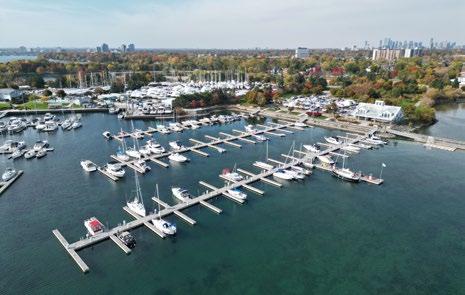
With over 35 years’ experience, Kropf Industrial has grown to become one of the premier suppliers of floating dock and breakwater systems in Canada. Kropf offers a range of advanced floating dock designs, and its floating breakwater systems have been extensively tested and proven through both modelling and real-world applications.
Kropf steel pipe floating dock systems offer stability and strength in high-energy sites, especially where winter ice is a factor. Finished with a variety of advanced coatings and materials, Kropf docks provide extended service life and low maintenance, even in harsh conditions. HDPE pipe floats are also available, providing a heavy-duty design that is stronger and more impact resistant than traditional plastic box floats.
Kropf’s floating breakwater systems use full-length steel pipe floats and a range of steel attenuation structures, depending on site conditions. A range of designs provide excellent wave attenuation performance, tailored to the unique requirements of each project site. Kropf floating structures provide exceptional service for clients throughout the Great Lakes region and beyond.
Lindley Marinas, founded in 1930 and based in Lisbon, is a leading pontoon manufacturer in southern Europe, with over 40 years of sector experience and more than 75,000 linear metres of floating solutions installed.
With an in-house engineering team and a network of specialised partners, Lindley offers solutions in reinforced concrete, rotomoulded polyethylene, aluminium and galvanised steel, tailored to different technical and operational requirements.
With a strong presence across Europe, South America, Africa and the Middle East, Lindley Marinas is open to new international partnerships to expand the reach of its high-quality solutions into new markets.
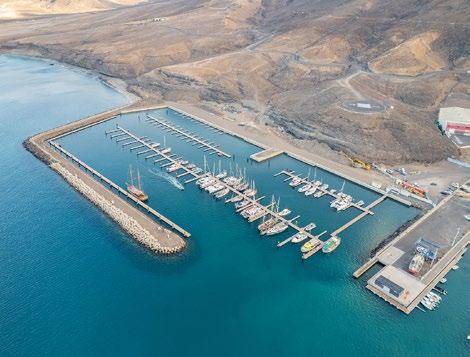
As the principal engineering and manufacturing brand within Livart Group, Livart Marine specialises in the design, manufacture and supply of high-quality aluminium and concrete floating marina systems for commercial, recreational and waterfront developments worldwide.
With almost two decades of experience, Livart Marine has established a reputation for delivering reliable, cost-effective and highly adaptable floating infrastructure tailored to the unique requirements of each project. Combining advanced engineering with modern manufacturing facilities, the brand provides scalable solutions that meet the demands of projects ranging from boutique marinas to major waterfront developments.
Livart Marine’s extensive product portfolio includes aluminium and concrete pontoons, floating walkways, access gangways, service platforms and customised floating structures, all engineered to deliver long-term performance in demanding marine environments.
As part of the broader Livart Group, Livart Marine integrates seamlessly with complementary specialist brands including Walcon Marine, Pacific Pontoon & Pier Systems, Astra, Supflex and DryStack Australia, allowing clients to access complete marina infrastructure solutions through a single, coordinated partner.
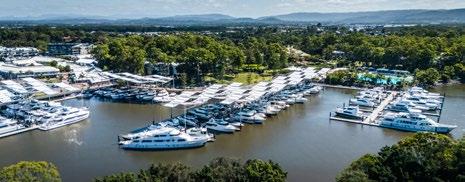

Marine Structures is a leading global provider of innovative marine infrastructure, specialising in commercial and superyacht solutions. With over 70 years of combined expertise, the company designs, manufactures and installs structures including superyacht berths, ferry terminals, wave attenuators and full-scale marina developments.
Renowned for innovation, precision and durability, Marine Structures offers fully integrated, turnkey solutions backed by advanced in-house engineering and cutting-edge manufacturing capabilities. Its comprehensive pontoon range from the heavy-duty concrete Mega Elite through to the Superior Modular Dock series delivers longevity and minimal maintenance, even in the most challenging marine environments.
Trusted by governments, developers and marina operators, Marine Structures consistently delivers complex infrastructure projects on time and to the highest standards. From iconic waterfront precincts to remote island ports, the company’s designs are tailored to meet specific site conditions and operational requirements.
Whether enabling superyacht mooring or supporting critical commercial infrastructure, Marine Structures is redefining global marine infrastructure through a commitment to quality, performance and reliability.
Marinetek is an internationally recognised brand name for premium marinas and advanced floating solutions. Claiming the industry’s widest product range, and with a network of marina experts around the world, Marinetek can match different customer needs from a custom-made floating structure to a world-class marina.
The company offers world-famous concrete pontoons, breakwaters, advanced floating solutions and marina equipment. Through collaborative partnerships, Marinetek provides its customers with turnkey services for concept design, engineering, manufacturing, installation and modernisation.
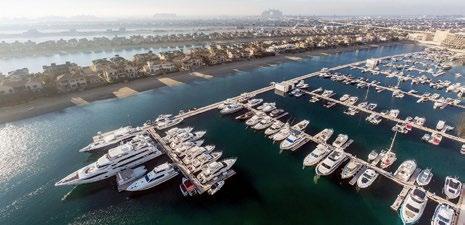
It’s not just about size or volume. By listening to customers’ needs and learning about their culture and values, the Marinetek team establishes relationships that last a lifetime. Ultimately, Marinetek’s aim is to develop winning solutions for its customers and to keep its promises.
Operating in more than 45 countries and manufacturing in eight countries, Marinetek has delivered more than 2,500 marina references to over 50 countries worldwide.
Ronáutica Marinas specialises in the design, manufacturing and turnkey installation of floating infrastructure for marinas, yacht harbours, private docks and waterfront tourism developments. They offer a range of products, including aluminium and concrete pontoons, fingers, gangways, floating platforms and modular terraces.
With over 35 years of experience and a presence in more than 20 countries, they deliver customised solutions for each project to ensure durability, innovation and sustainability. Their in-house design and production capabilities allow them to plan and execute projects to the highest technical and aesthetic standards.
With clients around the world, Ronáutica Marinas transforms waterfronts into safe, functional and high-value spaces.
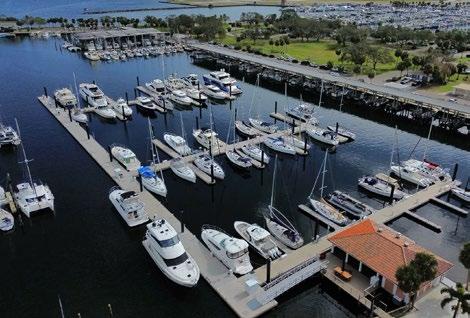
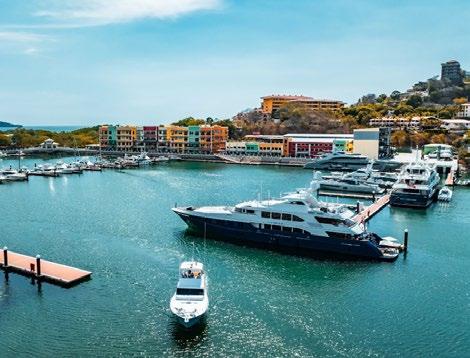
Breaking waves since 1918, SF Marina is internationally recognised for providing its customers with a century of experience producing tailor-made premium marinas and advanced floating solutions all over the world.
SF Marina offers a full range of marine-related services and has the in-house knowledge and experience to design, permit, manufacture, install and operate marinas. The company is a fully integrated corporation that understands the needs of the marina industry and can deliver the best marina products in the world to meet those needs. SF’s flagship product, its own-design Swedish floating concrete pontoon marina system, originated back in the 1920s.
SF Marina is based in Gothenburg, Sweden, and has affiliates worldwide. The company is familiar with and has completed installations in climatic conditions ranging from north of the Arctic circle to the tropics. Operating in more than 70 countries, SF Marina has delivered over 2,000 marina references worldwide.
SunWalk® delivers high-performance marine decking solutions engineered for contractors, designers and marina owners who demand durability, safety and environmental responsibility. Designed for coastal and inland applications, SunWalk® decking features proprietary microcellular core technology for strength and impact resistance, at just onethird the weight of wood.
Their three series - 90-Series, 45-Series, and Wood-Seriesoffer tailored options for every project. The 90-Series boasts an industry-leading 45% open surface for storm resistance and ecosystem preservation. The 45-Series ensures consistent design aesthetics and effortless installation with large-format panels, while the Wood-Series brings timeless plank appeal without splinters, rot or upkeep.
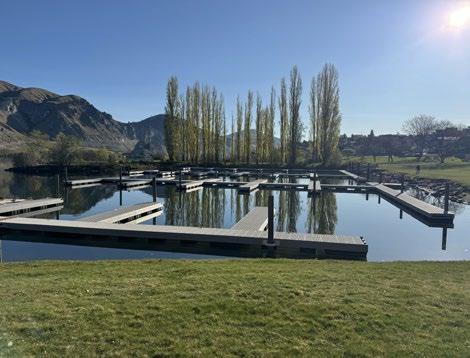
All panels are UV-protected, ADA-compliant, non-slip and quick to install using 50–60% fewer fasteners. Whether you’re specifying for a large marina, upgrading access infrastructure or retrofitting floating docks, SunWalk® helps you build smarter, faster and leaner.

Sure-Step is a high quality and durable polypropylene decking solution for residential and commercial builds. The high impact material is claimed to exceed competition and is maintenance-free so users can spend more time enjoying their dock.
If you are worried about storm surges on your pier, Sure-Step’s slotted surface helps minimise the waves and rising water levels. Its light penetration surface is a perfect choice for marinas and other environmentally sensitive areas like protected nature areas or beaches.
Additional features include an anti-slip surface for worry-free walking and playing, storm surge capability, high impact resistance, a UV-stabiliser, and premium materials that withstand the elements and maintain their beauty even in the harshest of environments. Versatile options are available to match specific styles and complement waterfront settings, and the low maintenance means that you can spend more time enjoying your waterfront paradise.
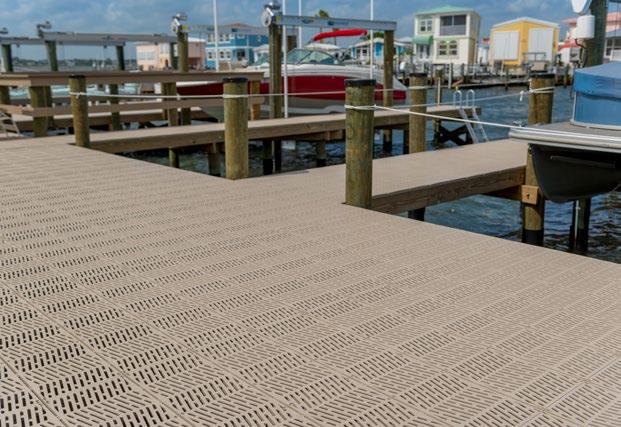
Sure-Step decking offers safety, durability and aesthetics, and is suitable for decks, marinas, walkways, docks, gangways and more.
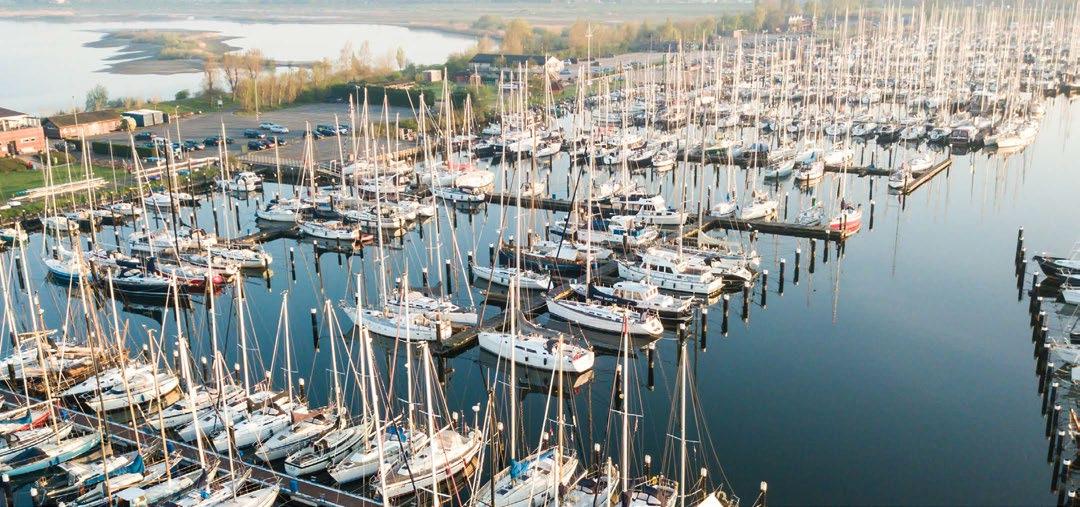
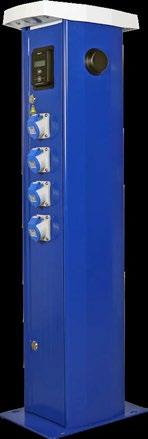
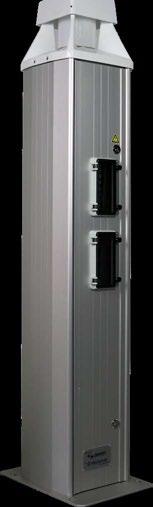
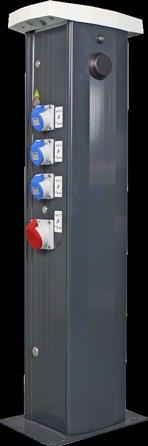
Titan Deck is a premium, maintenance-free polypropylene decking system engineered to outlast traditional decking materials in the most demanding conditions. For marinas, docks, piers and gangways, Titan Deck delivers the strength, safety and longevity your project demands.
It resists rust, rot, corrosion and UV degradation, and will not warp, splinter, absorb moisture, corrode or overheat in the sun. This makes it ideal for both freshwater and saltwater applications, where exposure to the elements is constant and unforgiving. Titan Deck’s grated surface design is available in multiple open-space configurations, allowing water to drain freely and light to pass through. This reduces the impact of storm surges and rising water levels by minimising surface resistance and pressure. It also helps preserve aquatic ecosystems by allowing sunlight to reach the water below.
Strong enough for heavy loads and up to 24” spans, it is trusted in commercial, public and private projects. Currently available in two UV-stable colours, Titan Deck delivers long-term value with a lower lifetime cost and a cleaner, more attractive finish.
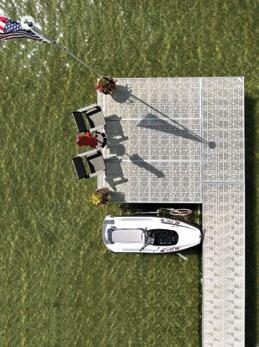
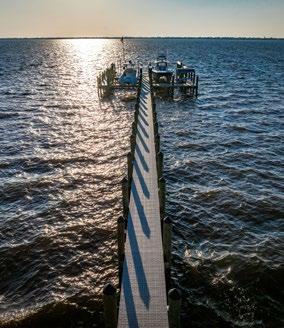
Twin Bay Docks Diamond Decking Tread is a premium waterfront decking solution with more than 25 years of proven performance. Engineered for docks, decks, piers, walkways and stairs, it delivers the strength, durability and long-lasting value needed for residential, commercial and marina applications.
Built to perform in demanding big water environments, Diamond Decking Tread features a slip-resistant diamond surface for secure footing in wet conditions. The advanced material remains cool to the touch, even in direct sunlight, creating a comfortable, barefoot-friendly surface throughout the boating season.
Its innovative slotted design allows sunlight and water to pass through, helping preserve aquatic vegetation and support shoreline conservation. An integrated UV stabiliser protects against fading, maintaining a clean, attractive appearance year after year with minimal maintenance.
Available in 3’, 40”, 4’ and 5’ widths, Diamond Decking Tread offers the versatility to accommodate projects of virtually any size. For optimal performance, a framing spacing of 16 inches on centre is recommended. Every panel is manufactured with 8-inch on-centre anchoring locations, providing additional fastening flexibility and enhanced structural support. Panels are available with interlocking tabs for fast, seamless installation or without tabs for custom applications.
Designed for exceptional strength and engineered to elevate every waterfront, Twin Bay Docks Diamond Decking Tread continues to be the trusted choice for quality, performance and reliability.

Walcon Marine is a UK-based company that specialises in the design, build, installation and maintenance of berthing facilities. Its pontoon product range caters for all requirements from recreational marinas for craft ranging in size from a few metres up to superyachts, to berths designed for commercial vessels such as fishing boats, crew transport vessels, lifeboats and law enforcement patrol boats.
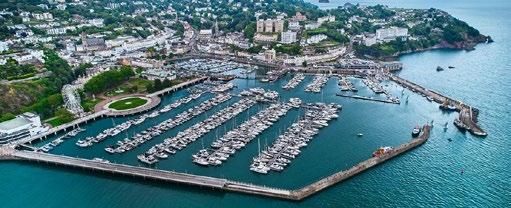
Walcon also works with many smaller clients including local harbour authorities, sailing clubs and private individuals, and each project is treated with the same attention to detail to ensure that the end result gives decades of satisfaction.
The company prides itself on supplying durable products. Its output is designed to last for many years with support and maintenance just a phone call away. Custom products can also be supplied to meet specific demands including increased stability, bespoke decking materials and the inclusion of client branding.
Over the past 60 years, Walcon Marine has supplied its equipment to customers across a wide variety of countries and regions including Australia, Egypt, the USA, the Caribbean, the Netherlands, Italy and the Middle East, as well as the UK and Ireland.
Poralu Marine has developed a unique dock finish line that can halve the total carbon footprint of a full docks system, limiting the environmental impact of raw material extraction, marina installations and related investments.
Their aluminium dock structures with a “Harmony” finish - containing 75 percent recycled and 25 percent primary aluminium - have a carbon footprint of 2.92 kg CO2eq. per kilogram of aluminium. This is compared to 8.1 kg CO2eq. for an entirely primary aluminium finish, representing a 64 percent reduction in carbon footprint.
Notably, despite having a very different composition, “Harmony” finish docks have similar mechanical properties, durability and appearance to those of a primary aluminium frame while also benefitting from a much reduced carbon footprint.
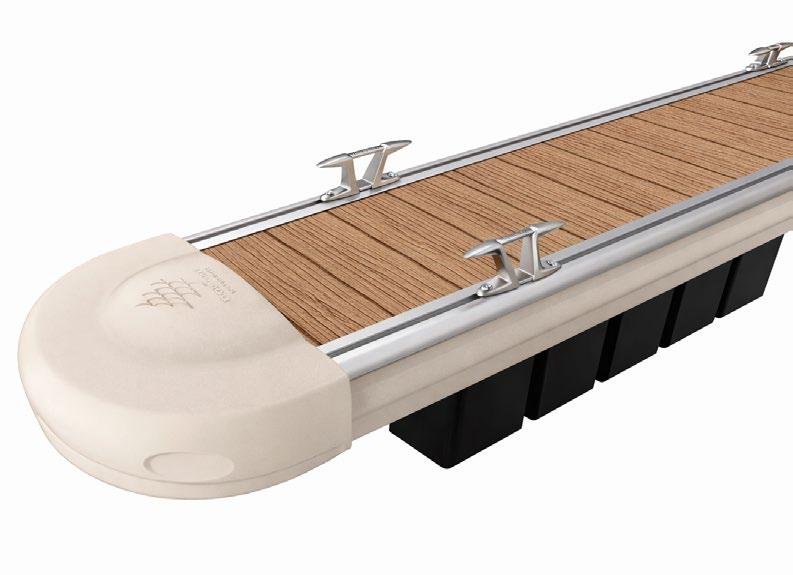
Meanwhile, the reworked composition and manufacturing process now allows for a minimum of 50 percent recycled polyethylene to be incorporated into the floats, with the 16 kg/m³ expanded polystyrene being composed of 80 percent recycled material. A similar analysis of the carbon savings on raw materials revealed a reduction from 139.5 kg CO2eq. per m³ of float to 69.9 kg CO2eq. per m³ of float for the “Harmony” finish, representing a reduction of 50 percent.
The new low-carbon floats have also been designed to preserve the mechanical properties of the original product, thus enabling Poralu to provide the same 15-year warranty currently available for the ordinary floats. A newly developed composite decking made from recycled PVC and rice husk offers a 23 percent lower carbon footprint compared to standard composite wood decking.
On top of these reductions in carbon footprint, Poralu Marine’s “Harmony” finish docks are still 100 percent recyclable, further reducing the docks’ impact on the environment at the end of their life. The company deliberately chose to work exclusively with suppliers able to provide raw material certificates, proving that the composition of the final product effectively matches the initial description.
With the introduction of the “Harmony” finish, customers can now choose between three finishes: Nautic, the standard level; Harmony, the low-carbon offering; and Premium, which combines low-carbon construction with a unique, visually appealing high-end signature. When used across a whole dock system, “Harmony” finish products can result in a carbon footprint reduction of between 48-53 percent, halving the carbon footprint.
After an initial life cycle assessment of the wider Wearth Group and following the development of their “Harmony” dock finish line, Poralu Marine commissioned a second impact assessment study based on the PEF method. This is the standard life cycle assessment method within the European Union and is approved by the French Ecological Transition Agency.
More broadly, Wearth Group is looking to decrease its overall carbon footprint by 4.2 percent per year within the next 10 years. Should just over 50 percent of its overall production within the next five years use “Harmony” production, Wearth Group would already have reached 75 percent of that objective, representing an annual three percent decrease over the same period.
Launched on World Oceans Day 2026, Ecocoast has introduced Ecoreef, a new mooring block intended for use across coastal infrastructure. The system has been designed as an alternative to conventional concrete mooring units, developed over three years of work in the UAE and the UK.
Ecoreef is designed for use across ports, harbours, marinas, tourism developments, aquaculture facilities, solar installations and other coastal projects. It functions as a mooring solution that also supports young fish, encourages coral recruitment and enhances marine biodiversity. Its concept was first introduced in 2023 during the UAE’s Year of Sustainability, developed by an in-house team in collaboration with marine ecologist and artificial reef expert Dr. Aaron Bartholomew. Trials in the UAE began in August 2025, with early monitoring recording juvenile snappers and groupers (hammour) using the structures as shelter.
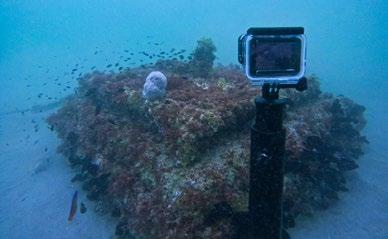
Dr. Bartholomew stated: “I have been exploring concepts for more effective artificial reefs and marine infrastructure since my PhD research in 2001, and it has been incredibly rewarding to work with Ecocoast to help bring these ideas into practical application. Initial results have exceeded expectations, with strong early evidence of juvenile fish using the structures as refuge habitat.”
Post-design research involved the Fujairah Research Centre, with monitoring after deployment supported by interns from the American University of Sharjah and the University of Oxford. Ecoreef is part of Ecocoast’s wider portfolio of sustainability and marine regeneration offerings across markets in the Middle East and Europe. It is designed to work alongside Ecomoor, a neutrally buoyant mooring line system that reduces habitat damage often associated with steel mooring chains.
Dr. Philip Sanders, aquatic ecologist and sustainability strategist at Ecocoast, said: “Marine infrastructure has traditionally been designed with little consideration for ecological function. Ecoreef represents a different approach, actively contributing to healthier marine ecosystems while still delivering the operational performance required by ports, marinas and coastal projects.”
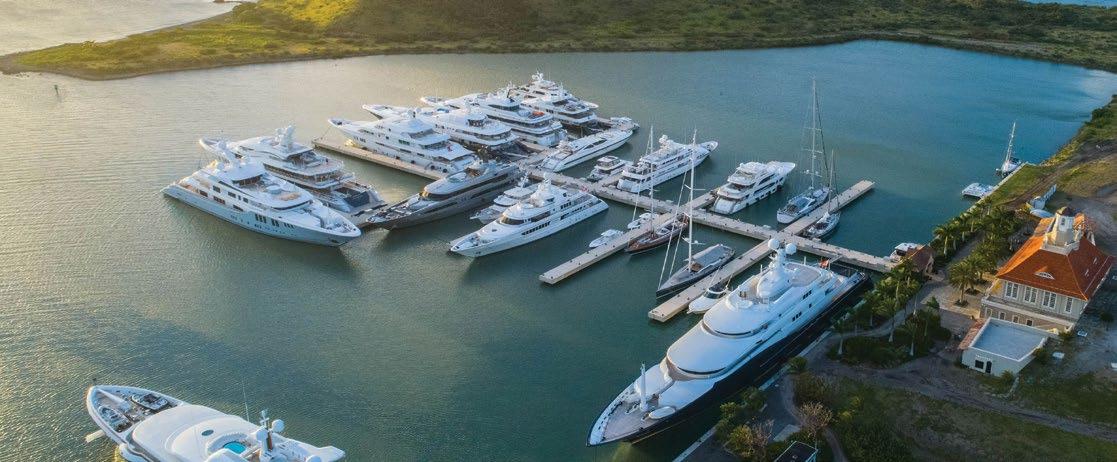
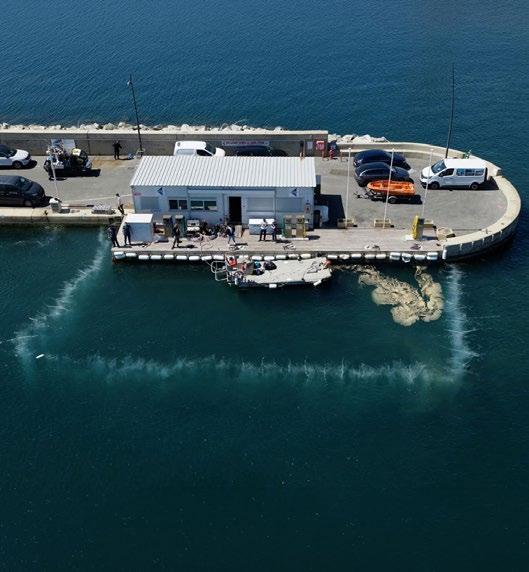
In a collaboration between the Port of SaintTropez, Phare Vert refuelling station and The Searial Cleaners, the InvisiBubble system has been deployed at the port in France to manage hydrocarbon leaks during routine fuel handling operations.
Hydrocarbon leaks in port environments can occur during refuelling due to nozzle drips, tank overflows or maintenance residues. In semi-closed waters with limited exchange, these substances can remain in the area and form a surface layer or mix into the water column and sediments.
The InvisiBubble technology uses a bubble curtain formed by perforated pipes or hoses placed on the seabed and connected to an air compressor. Air is released through these pipes and rises through the water column, creating a continuous barrier of bubbles around the refuelling zone.
Users can activate the system using a push button, which triggers the bubble curtain to create an internal current within the area. This keeps hydrocarbons such as fuel, engine oil and grease close to where they enter the water, reduces their spread across port waters and makes collection easier.
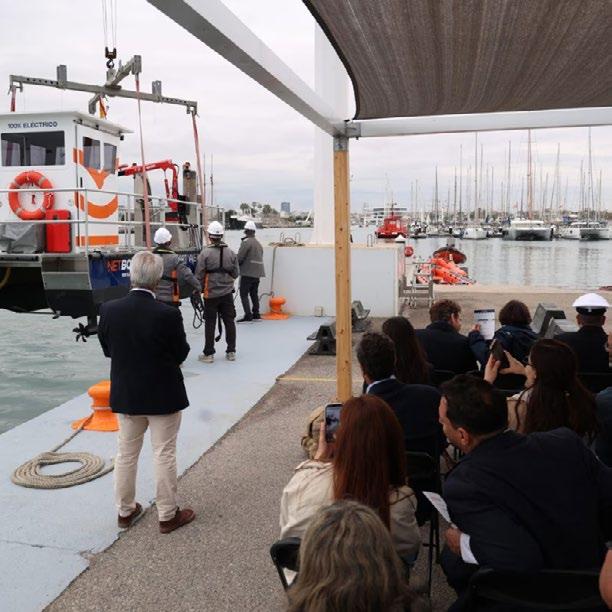
Marina Port Valencia has introduced an electric cleaning vessel at Marina Norte to help keep marina waters cleaner and reduce emissions and noise during daily operations. The vessel, called NetBoat, was unveiled on 8 May in the presence of representatives from the Valencia Port Authority, Marina Port Valencia and Ona Safe & Clean.
NetBoat uses a fully electric propulsion system designed for water cleaning work inside the marina. The vessel can collect floating waste, remove hydrocarbons and surface oils, and oxygenate the water during operation.
The CatClean 75 model can operate for up to 16 hours using an electrical system supported by built-in solar panels. The vessel measures 7.5 metres in length with a 2.5-metre beam and has a hydrocarbon retention capacity of up to 2,000 litres. It also has an estimated cleaning capacity of 8.89 km² per hour.
Built with certified marine-grade aluminium, the vessel features a catamaran-style hull designed to improve stability and handling in tighter marina spaces.
Marina Port Valencia’s wider project includes Marina Norte, Marina Sur and Marina City, with berths planned for vessels from eight metres to 130 metres. The development also includes a dry marina and a technical shipyard for marine-sector businesses.
One Concept Marine has installed a floating solar canopy on the reception dock at the Yacht Club de Monaco (YCM) marina. Completed on 7 April 2026, the project uses photovoltaic panels supplied by Voltec Solar and is described as a world-first solar canopy installed on an existing floating dock.
The custom-built canopy measures 12 metres in length and reaches nearly five metres in height. It includes around 26sqm of photovoltaic panels, with an installed capacity of 6kWp. Annual production is expected to be about 9,200kWh. Based on an estimated consumption of 765kWh per boat each year, the output is equal to the energy use of around 12 medium-sized vessels or about 100 full charging cycles for electric boats.
Electricity generated by the canopy will supply equipment on the dock, including dedicated charging stations for electric boats. Once connected to the grid in the coming weeks, the system will also be able to feed back surplus electricity. Project data shows that similar systems could increase energy output at marina scale. Around 30 units in a medium-sized port could produce close to 300MWh per year, which is comparable to the consumption of several hundred boats.
Thomas Aboulinc, founder of One Concept Marine, said: “This project demonstrates our ability to design and deploy innovative solutions rapidly, even in complex environments. Integrating solar production onto an existing floating
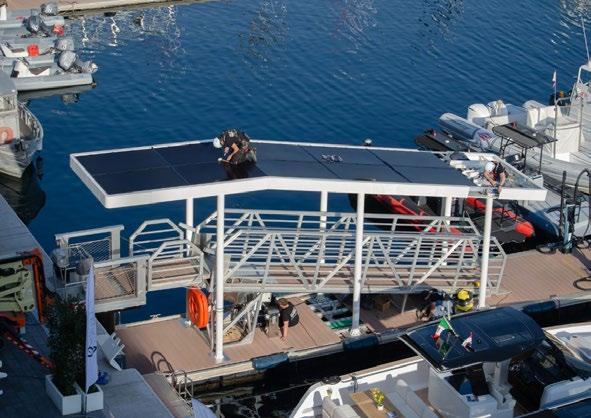
structure represents a significant technical step forward, opening new perspectives for marinas.”
Bernard d’Alessandri, secretary general of the Yacht Club de Monaco, said: “As part of the Monaco, Capital of Advanced Yachting initiative, the Yacht Club de Monaco acts as a catalyst for concrete solutions supporting more sustainable yachting. This project reflects our ambition to transform our infrastructure into innovation platforms and to actively contribute to the evolution of marina standards.”
plans to expand into new markets, develop new products and build on its presence in the marina sector.
Founded in 2015, Dockwa provides software used by marina operators to manage reservations, contracts, payments and other day-to-day operations. The platform currently serves nearly 4,000 marinas and more than 450,000 boaters across North America. Dockwa said the investment will help accelerate the next stage of its plans, including expanding module adoption within its existing operator base and extending the platform into Canada and Europe.
The company has compiled 11 years of transaction history through Marinas.com, Dockwa’s consumer marketplace, and Marine Graph, its proprietary data layer that powers its AI products. That data will support products including Telescope, a pricing and revenue intelligence tool for marinas, and Marina-X, a platform for insurers, lenders and institutional acquirers.
A simulation study commissioned by DualDocker and conducted by Blue21 has shown that DualDocker’s high-damping connection system for floating infrastructure reduces motion, improves occupant comfort and lowers susceptibility to resonance compared with rigid and pile-guided mooring.
The study was commissioned to evaluate whether DualDocker’s connector technology could offer advantages over conventional mooring solutions used in floating developments and marinas, and was conducted using Blue21’s HydroMEC+ simulation platform. Blue21 modelled a large floating building connected to a quay wall - a 60x20x12m superstructure on a 60x20x6m pontoon, weighing roughly 4,000 tonnes - and tested it under realistic maritime conditions representative of Dokhaven in Rotterdam, including waves up to 0.4m, currents of 1 m/s, ship-generated waves and wind gusts of 40 m/s.
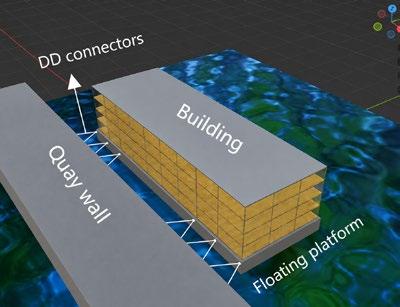
Three systems were compared: DualDocker’s high-damping connectors, a rigid quay connection and a pile-guided mooring system typical of marinas. The quay-connected configurations both used 11 connection points of equal load capacity, differing only in stiffness, allowable displacement and damping - isolating those variables for direct comparison.
The results showed that DualDocker’s controlled high-damping connectors shifted the structure’s dynamic response away from the frequencies most excited by waves, wind and other loads, reducing resonance and improving stability. This translated into measurably lower horizontal accelerations at deck level and at the top of the building than either the rigid or pile-guided alternatives, directly improving motion control, comfort and safety.
In a report shared with Marina World, Blue21 wrote that the occupant comfort assessment “further demonstrated that connection-system behaviour has a direct influence on acceleration levels throughout the structure”, adding that “the DualDocker concept achieved lower acceleration levels in critical areas of the building, contributing to improved comfort, operational performance and overall safety”.
CEO of DualDocker, Michael Fuhrmann, celebrated the study, highlighting that their connectors absorb “enormous” kinetic energy from wind and waves, meaning “comfort and significantly higher safety for floating pontoons and jetties, yachts and, of course, superyachts too”.
DualDocker is an Austrian company that develops high-damping connector technology for floating structures as an alternative to conventional mooring systems in marinas and floating developments, with a focus on improving motion control, safety and comfort.
Blue21 is a Delft-based engineering firm specialising in floating urban development. Its HydroMEC+ platform combines hydrodynamic modelling, mooring analysis and dynamic response assessment to evaluate floating structures under realworld conditions, helping validate new technologies before being deployed.
Dutch marine equipment manufacturer Roodberg has introduced a new generation of modular self-propelled trailers for use in shipyards and marinas, developed to handle vessel lifting and transport operations with configurable power and drive options.
The new generation was developed as a modular system in response to increased demand for more adaptable equipment and shorter lead times in marine facilities. It allows operators to select configurations based on site conditions and operational requirements, with options including rear-wheel drive setups and either electric or diesel power systems.
The design is intended for vessels from 20 to 60 tonnes, with larger units available on request and similar configuration options available across the company’s wider trailer range, including both towed and self-propelled slipway systems.
Roodberg has more than 70 years of experience in boat handling equipment, supplying lifting and transport systems for shipyards, repair yards, naval facilities and marinas. The company develops and manufactures both towed and self-propelled systems, alongside hoisting equipment for marine operations.
Based in the Netherlands and supplying international markets, the company has secured several recent orders, including 20-tonne class self-propelled slipway trailers for clients in Singapore, a 40-tonne self-propelled boat transporter for Fenwicks Marina in Australia and additional self-propelled units for customers in the United States. Further units are currently in production for other international facilities.
Aqua superPower has installed a marine fast charger at Marina Park in Newport Beach, California, marking southern California’s first fast-charging location for electric boats.
The charger is now available to Aqua superPower members and supports electric recreational and commercial vessels operating in Newport Harbor. Supported by the international CCS charging standard, the unit can provide up to 24kW of power and is designed for harsh marine conditions.
Aqua superPower said the installation supports the growing use of electric boats in coastal waters and aims to make charging more accessible for boat operators in the area.
Boaters can locate the charger, check live availability and make payments using the Aqua superPower app, while the company handles maintenance and remote monitoring through the Neptune cloud-based platform.
The Newport Beach charger joins Aqua superPower’s wider US network, which includes sites at Lake Tahoe, San Francisco Bay and Lake George. Aqua superPower’s global network now includes more than 60 installations across Europe and North America, and is set to expand further into coastal locations such as San Diego and Santa Barbara.