GETTING PRODUCTION LINES READY FOR 2D CODES:
An In-Depth Look with German Marking and Coding Expert

GETTING PRODUCTION LINES READY FOR 2D CODES:
An In-Depth Look with German Marking and Coding Expert

TANIA WALTERS F+B Tech Magazine Publisher
Fuel relief has become a central political talking point, yet for growers, the real concern is not pump pricing but whether diesel availability could disrupt planting, harvesting and the steady flow of food towards supermarket shelves.
Much of the current debate has centred on household affordability and short-term cost support. While these issues are clearly significant, the operational realities of food production sit further upstream.
Agriculture remains deeply dependent on fuel continuity. Diesel powers cultivation equipment, irrigation systems, crop protection machinery and the freight networks that move produce from rural regions to packhouses and distribution centres.
When supply conditions become uncertain, the challenge is not limited to rising expenses. The question becomes whether activity can continue at the required pace.
Production cycles do not easily accommodate delay. Planting windows are finite and influenced by climate patterns rather than market sentiment. Crops cannot be held back while energy markets stabilise.
In many cases, growers must make seasonal decisions under conditions of incomplete information, weighing the risk of higher input costs against the possibility of lost yield or reduced market presence. That tension introduces a form of fragility rarely visible at the retail end of the supply chain.
Fertiliser supply is emerging as another point of exposure. Energy-intensive manufacturing processes and reliance on global shipping routes mean volatility in oil markets can quickly translate into pricing pressure or reduced availability. For growers, this influences crop mix planning, yield expectations and overall financial risk. Adjustments made at
this stage can shape supply outcomes months later, long after political attention has shifted elsewhere.
The logistics dimension adds further complexity. Supermarket distribution systems are designed around continuity rather than surplus. Freight scheduling, promotional planning and inventory management all assume relatively stable transport conditions.
If diesel costs rise sharply or access becomes inconsistent, retailers may respond by tightening forward commitments, moderating promotional intensity or managing range depth more conservatively. These changes can occur gradually yet still alter the reliability of supply experienced by shoppers.
New Zealand’s food sector has demonstrated resilience through previous disruptions, including weather variability and pandemicera freight constraints. What feels different in the current environment is the extent to which energy market instability lies beyond domestic influence. Production capability remains strong, but confidence in input stability becomes harder to maintain when geopolitical risk intensifies.
For consumers, the impact is unlikely to appear suddenly. It may instead emerge through sharper seasonal pricing, intermittent availability of certain lines, or reduced promotional predictability. For industry participants, the focus is already shifting towards contingency planning. Strengthening local sourcing relationships, maintaining operational flexibility and reassessing exposure to imported inputs are becoming practical priorities.
If volatility persists into key planting and harvesting periods, the consequences may extend beyond temporary cost pressure. Production decisions could become more cautious, supply buffers could become thinner, and coordination across the food chain could become more demanding.
The risk is not an immediate shortage. It is a gradual tightening within a system that depends heavily on timing, stable inputs and confidence that the machinery of production can keep moving.
Publisher
Tania Walters
General Manager Kieran Mitchell
Editorial Director Caitlan Mitchell
Content Managers
Caroline Boe Pam Vasquez-Gutierrez
Editorial Associates Jenelle Sequeira Sam Francks
Graphic Designer Raymund Santos
Contact Us
Retail 6, Heards Building, 2 Ruskin Street, Parnell, Auckland, New Zealand
+64 9 304 0142 info@reviewmags.com
ISSN 2744-3566 (ONLINE) ISSN 2744-5895 (PRINT)
F&B TECHNOLOGY launched to facilitate the connection between food and beverage suppliers of technology, ingredients and packaging across the food and beverage manufacturing sectors for fmcg and foodservice. Copyright 2026 food
Our Partners:
&















The Ministry for Primary Industries’ Exporter Help team supports new and established New Zealand exporters with advice and ongoing support on regulation and certifications. We make it easier to understand exporting requirements so you can reach more markets overseas and grow your sales with confidence.
Lian Butcher has been appointed as the next Chief Executive of the Environmental Protection Authority (EPA), effective the 1st of July 2026.
Butcher will join the EPA from Greater Wellington Regional Council, where she has been Group Manager of the Environment Group, her second tenure with Greater Wellington.
Previously, she was Deputy DirectorGeneral, Partnerships and Engagement, at the Department of Conservation.
Announcing the appointment, EPA Board Chair Barry O’Neil said Lian Butcher is an accomplished and experienced leader who brings a proven ability to lead complex organisations and work collaboratively with agencies and stakeholders to achieve results.

“Lian has led major programmes of change and has a strong track record in building high-performing organisational cultures in the public sector,” he said.
“The EPA continues to evolve in its role as an environmental regulator. We are focused on innovation and strengthening our engagement with stakeholders. Lian is well placed, given her experience
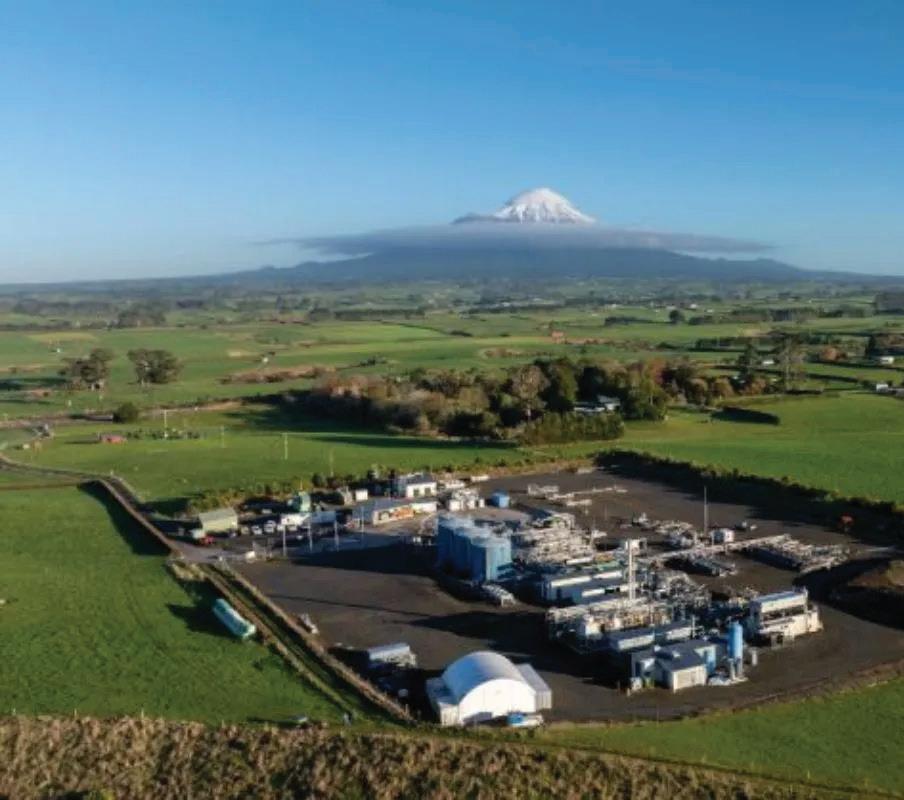
A new era for the energy sector has begun, with Sunda Energy set to enter the New Zealand market, having acquired Matahio Energy’s assets.
The proposed sale of Matahio Energy’s New Zealand assets to Sunda Energy is expected to carry broader implications beyond the petroleum sector, with potential downstream benefits for food and beverage manufacturers, particularly in areas of supply chain stability, freight costs, and energy security.
Under the agreement, Sunda Energy will acquire a suite of established onshore assets in Taranaki, including the producing Cheal, Cheal East and Sidewinder fields, as well as the Puka exploration permit. These assets are already integrated into New Zealand’s energy infrastructure.
and leadership approach, to lead the organisation through this next phase.”
Originally from the United Kingdom, Butcher holds a Master of Science in Fisheries and Shellfish Biology and a Bachelor of Science in Marine Biology from the University of North Wales.
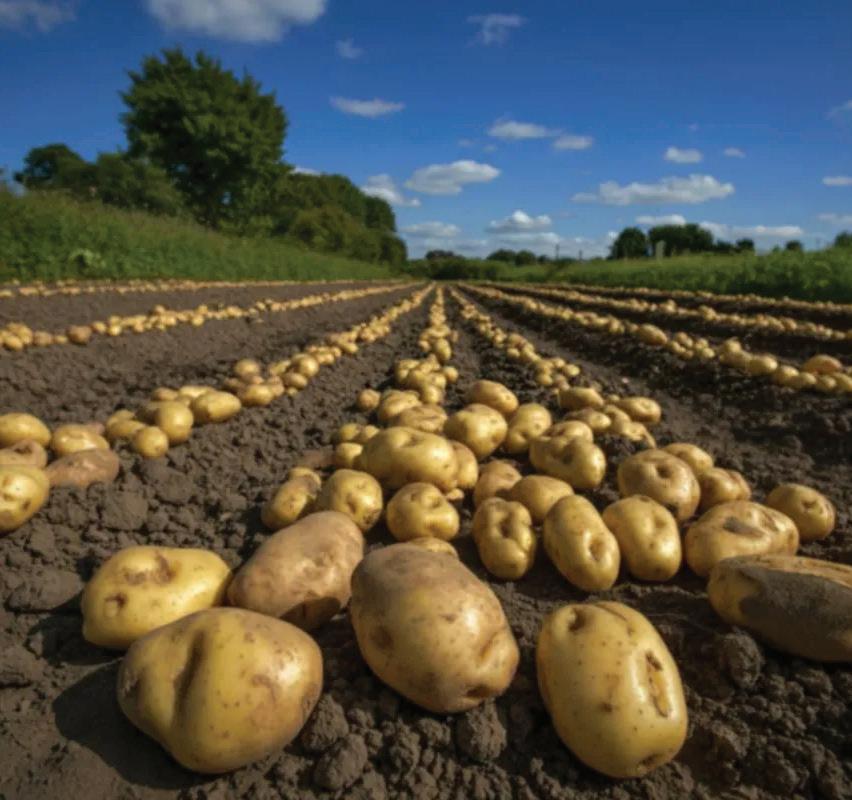
The Environmental Protection Authority (EPA) has approved a new fungicide seed treatment to control potato diseases.
The New Zealand potato industry is valued at approximately NZD one billion annually, according to Potatoes New Zealand.
Syngenta Crop Protection Limited applied to introduce Vibrance Premium, a fungicide containing 40 g/L sedaxane and 50 g/L fludioxonil.
Vibrance Premium can be applied to seed tubers before planting. It will control black scurf, silver scurf, black dot, fusarium dry rot, and gangrene and suppress common scab.
⮞ READ MORE ONLINE
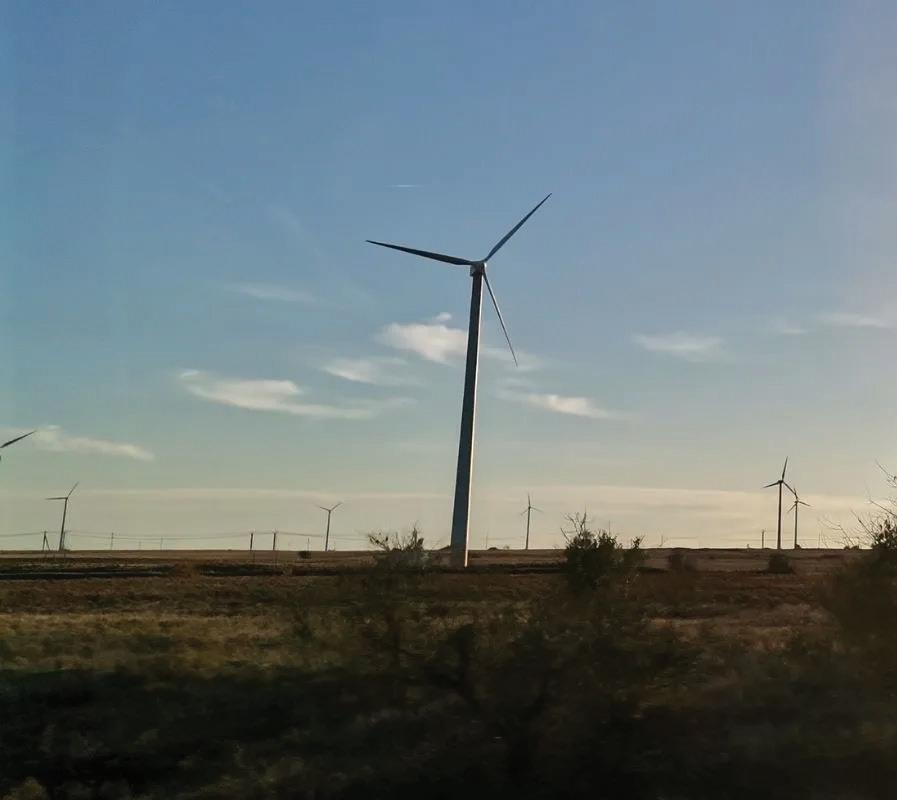
Fast-track approval has been granted for New Zealand’s largest wind farm project.
Contact Energy lodged a substantive application for the Southland Windfarm in August 2025. The proposed wind farm will be developed across 58km² of privately owned land in eastern Southland, about 30km southeast of Gore.
“Approval has taken around five months following the commencement of an expert panel. This project, with national benefits, will significantly increase the amount of power supplied to the national grid,” said Chris Bishop.
“The wind farm will generate up to 380 megawatts (MW) and provide power for up to 150,000 households, and includes 55 wind turbines, each up to approximately 7MW in capacity.
Shane Jones said the project would
inject NZD 13.5 million into the local economy and create up to 300 jobs during construction.
Once commissioned, it would employ about 10 to 14 fulltime equivalent staff to operate the wind farm.
“The real significance of this infrastructure lies in the ability to unlock further investment and attract new industry to the region,” he said.
“The Fast Track process is about cutting through unnecessary delays to unlock the projects that matter. It gives regions the certainty and momentum they need to
create jobs and drive long-term economic growth.”
Energy Minister Simon Watts added that the project will make a significant contribution to New Zealand’s energy future. ⮞ READ MORE ONLINE




Rule changes that free up high-country farmers to make the most of their land will unlock economic opportunities, support job creation, and strengthen regional economies.
Land Information Minister Chris Penk said that farmers in the high country make a significant contribution to New Zealand’s primary industries, but they want to do more and regulatory barriers are holding them back.

The Government will introduce a Bill to Parliament that will give Crown pastoral land leaseholders more flexibility to expand their businesses and diversify their income.
“Changes to the Crown Pastoral Land Act and Land Act will allow a wider range of complementary activities on Crown pastoral land alongside pastoral farming, including growing crops and horticulture, running small farm shops, hospitality
ventures, and renewable energy projects,” said Penk.
Modelling suggests these changes could significantly lift the value of Crown pastoral land, with returns per hectare rising from around NZD 80 for pastoral farming to about NZD 2,000 for horticulture such as cherries, and up to NZD 18,500 for solar projects in some cases.
⮞ READ MORE ONLINE

The Bioeconomy Science Institute has developed world-leading wood fibre dice technology, licensed exclusively to ConiForme, that will benefit the global plastics market and help position New Zealand as a leader in sustainable materials.
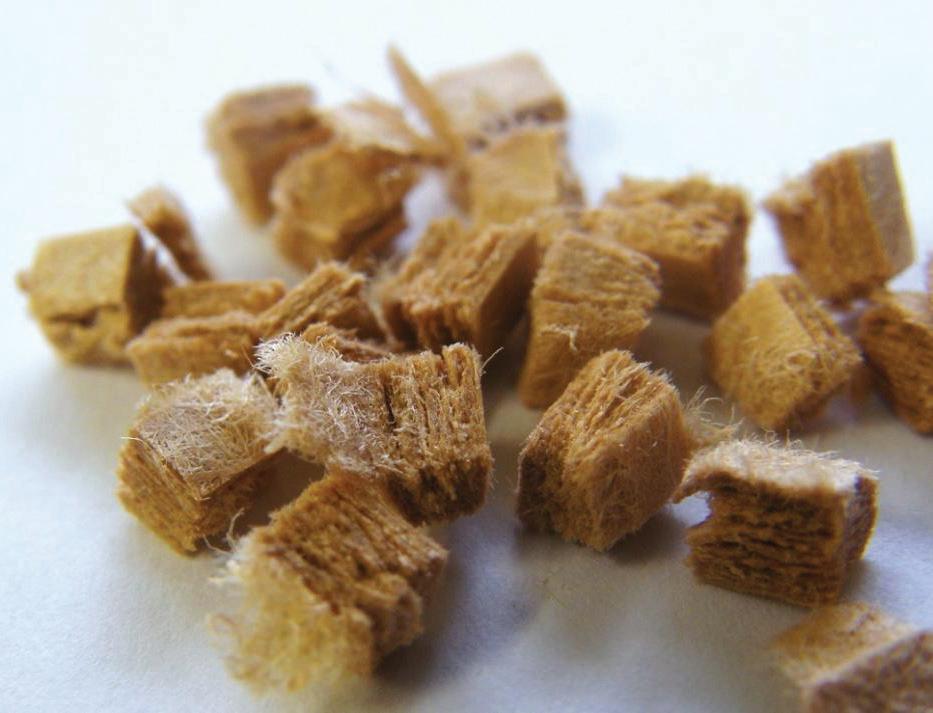
This is an innovative solution to meet increasing worldwide demand for sustainable plastics. Named after ConiForme, the dice technology enables the use of wood fibres to make sustainable, lighter plastics for the automotive, furniture, consumer products, appliances, and packaging industries.
The fibre dice, so-called because of their square shape that enables easier cutting, are small and can be easily handled by existing plastics processing machinery. They can reduce tooling abrasion, shorten processing cycles, and enhance mechanical properties, dimensional stability, and scratch resistance for high-performance results. The dice hold wood fibres together until they are released and evenly dispersed into the plastic resin.
This technology addresses the odour, quality and consistency challenges that come with other natural fibre solutions.
The Bioeconomy Science Institute began working with ConiForme in 2021 to commercialise the dice technology. ConiForme general manager Jeremy Warnes said ensuring technologies are developed to meet market needs takes time, and it’s exciting to now take the fibre dice to market.
“This technology delivers environmental benefits, fantastic properties and production efficiency improvements. It’s a win for everyone,” said Warnes.
“Composites made using wood fibre dice are produced from renewable resources and are more sustainable than glass fibre equivalents. They are also easily recyclable, and help manufacturers meet legislative end-of-life requirements.”
ConiForme is working with the Daiken Corporation, a leading MDF manufacturer, and its subsidiary, Daiken New Zealand, to produce the dice. Daiken MDF business operating officer Takahisa Honda said that manufacturing ConiForme wood fibre dice was an exciting evolution of the MDF business in New Zealand.
“It opens doors to new markets in construction materials as well as in auto parts, food packaging and beyond, all
while driving innovation and advancing sustainability.”
According to Research and Markets, the global natural fibre composites market is projected to reach USD 18.65 billion by 2030, with an expected 12 percent compound annual growth rate from 2025.
“We see the market growing, driven by increasing consumer demand for sustainable plastics, evolving legislative requirements and the need for improved performance, particularly in automotive applications,” added Warnes.
“As industry trends continue to accelerate, this will create exciting opportunities for our partners.”
ConiForme has aligned with ITOCHU Plastics Inc to distribute the wood fibre dice in Asia and is testing the product with plastics processors and manufacturers in Japan, the EU and the US.
As the only New Zealand-grown apple with a vibrant pinky-red flesh, the 2026 FIZZ apple harvest is underway.
This is the second year of commercial production of ‘PremA021’, marketed as FIZZ apples, which were developed through the Bioeconomy Science Institute Maiangi Taiao breeding programme and introduced to the market by Prevar. Bioeconomy Science Institute apple breeder Dr Richard Volz, who led the breeding of the apple cultivar marketed as FIZZ, said the variety was an exciting new offering for New Zealand’s apple industry.
“There are some really unique traits in this cultivar that stand out and appeal to consumers, including its vibrant pink-red

flesh colouration and bold, effervescent berry-like flavour,” he said.
“It’s really rewarding to have bred a variety that provides differentiation and an opportunity to diversify orchard portfolios, but importantly, we’ve also developed a cultivar with strong cropping performance.”
FIZZ is exclusively licensed to the New

Zealand produce company Snazzy Fruit for fresh fruit production and sales. Snazzy Fruit managing director, Josh Parlane, said that for the 2026 season, FIZZ volumes remain limited, but production has steadily increased. ⮞ READ MORE ONLINE
The Board of New Zealand Apples and Pears (NZAPI) has appointed Danielle Adsett as Chief Executive. Her appointment reflects her deep knowledge of the pipfruit industry and her future-focused vision for the organisation, its members and the sector.
As Market Access Manager for six years and Acting General Manager since December 2025, Adsett has provided strong, steady leadership, clear direction, and continuity for the organisation.
NZAPI Chair Andrew Gibbs said the Board was unanimous in its decision after a rigorous recruitment process.
⮞ READ MORE ONLINE

New Zealand has a flourishing food and fibre sector, with businesses sending products around the world every day.
The country’s strong reputation for producing consistently high-quality and trusted products, positions the sector to drive sustainable growth that benefits all New Zealanders. Global demand shows no signs of slowing; with export revenue forecasted to continue growing.
The Ministry for Primary Industries (MPI) is committed to doubling the value of exports to $106 billion by 2034, a goal that relies on all parts of the food and fibre production system. MPI’s Exporter Help service supports businesses to expand into overseas markets and navigate their exporting journey.
Exporter Help delivers one-to-one advice, and develops educational resources such as guides and webinars, to assist food and fibre businesses understand the rules and become more confident in sending their products overseas.
The free Exporter Help service is available to businesses of all sizes, no matter where they are in their exporting journey. This means any business can seek support; from those just exploring the idea of exporting, to those that are already established and need specific requirements clarified. Exporter Help works to provide accurate and up-to-date information, enabling businesses to work efficiently and avoid costly mistakes. The team has supported many businesses, including wine producer Giesen Wines.
Giesen Wines specialises in dealcoholised and low-alcohol wines alongside their traditional wine portfolio, and was the first to produce and export dealcoholised New Zealand Sauvignon Blanc. Founded in 1981 by brothers Theo, Alex, and Marcel Giesen, the business has grown from its early beginnings into a globally successful brand.
The company began exporting in 1988, initially sending wine to Great Britain. Today, Giesen products are exported to over 25 countries, and are among the top-selling premium dealcoholised wine brands in the United States.
Throughout Giesen’s export journey, the Exporter Help team has provided support with a range of export related queries. These have often arisen due to differing regulatory requirements in overseas markets, particularly for dealcoholised products.
Exporter Help has worked closely with other MPI teams to provide tailored advice, ensuring Giesen has a clear pathway to export their dealcoholised wines, that product definitions are met, and that the appropriate certification requested by overseas markets can be supplied.
Thanks to Exporter Help’s assistance, Giesen has the confidence to continue exploring new export opportunities and to proudly represent New Zealand on the global stage.
Giesen is just one of thousands of businesses that Exporter Help has supported, and continues to support, on their export journey.
Contact the Exporter Help team with your exporting questions by emailing exporterhelp@mpi.govt.nz, calling 0800 674 490, or by visiting the MPI website at www.mpi.govt.nz/export/get-help-with-exporting/.

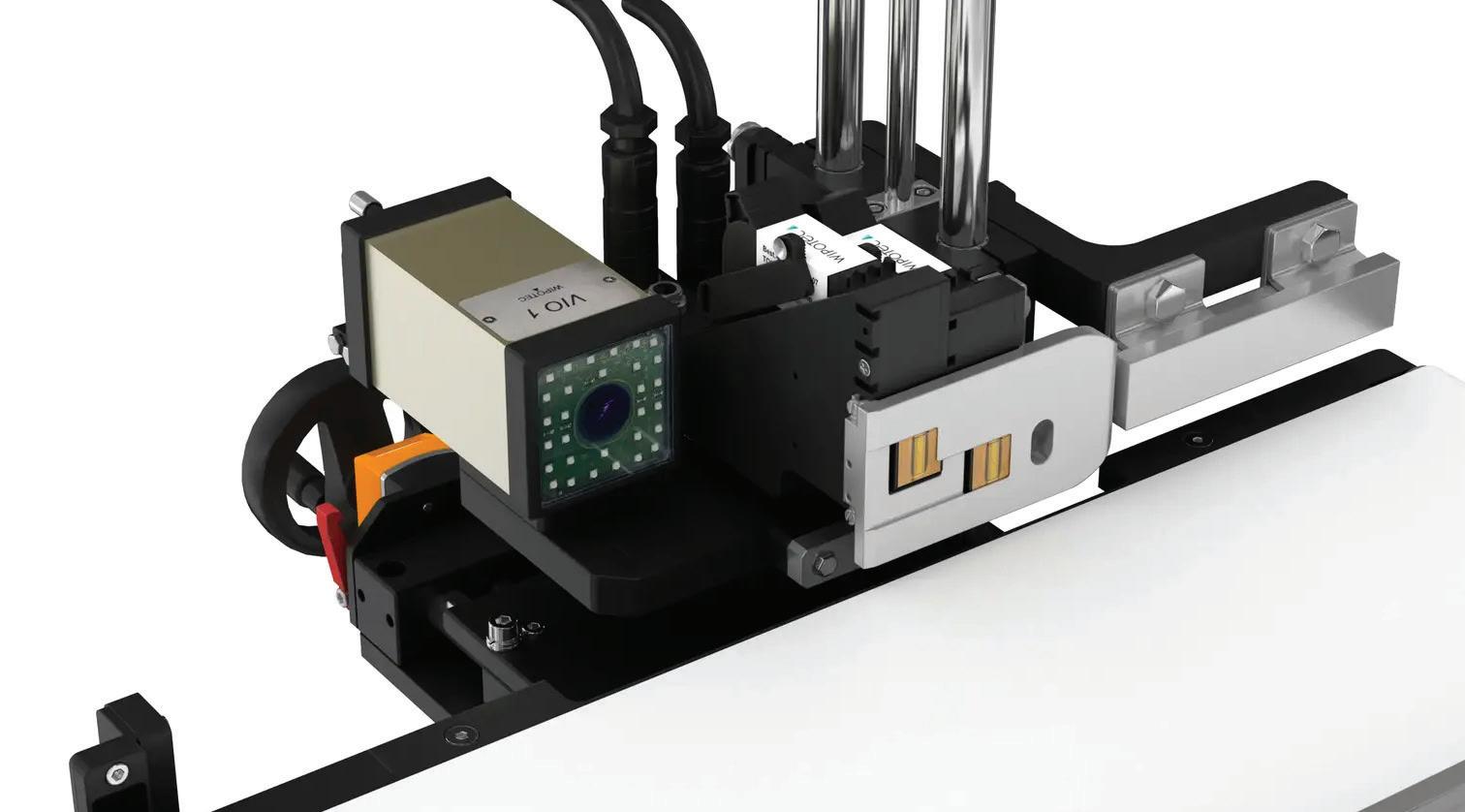
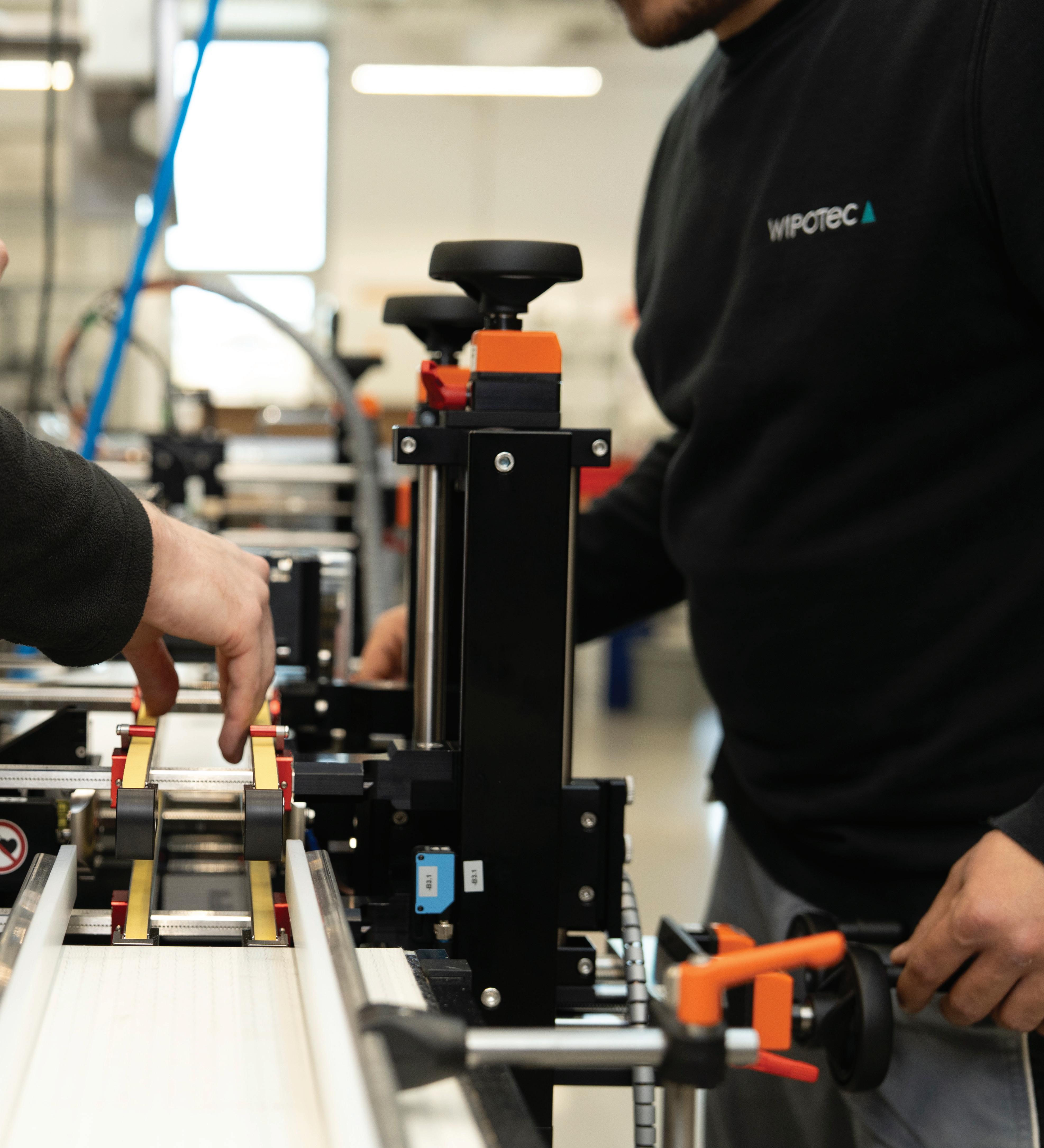
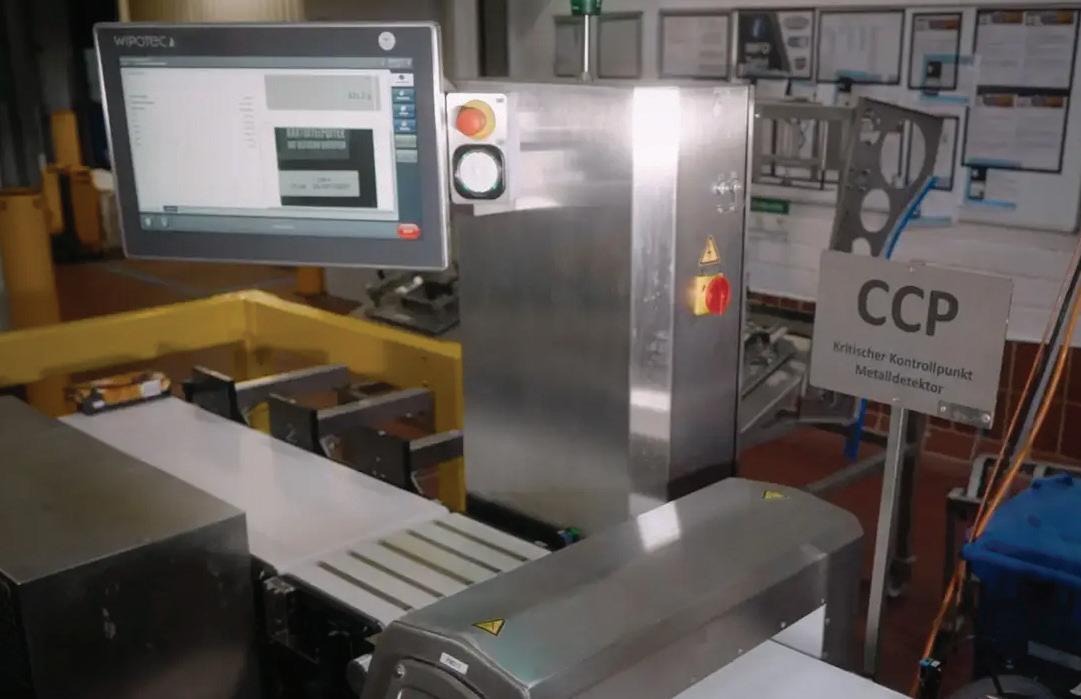
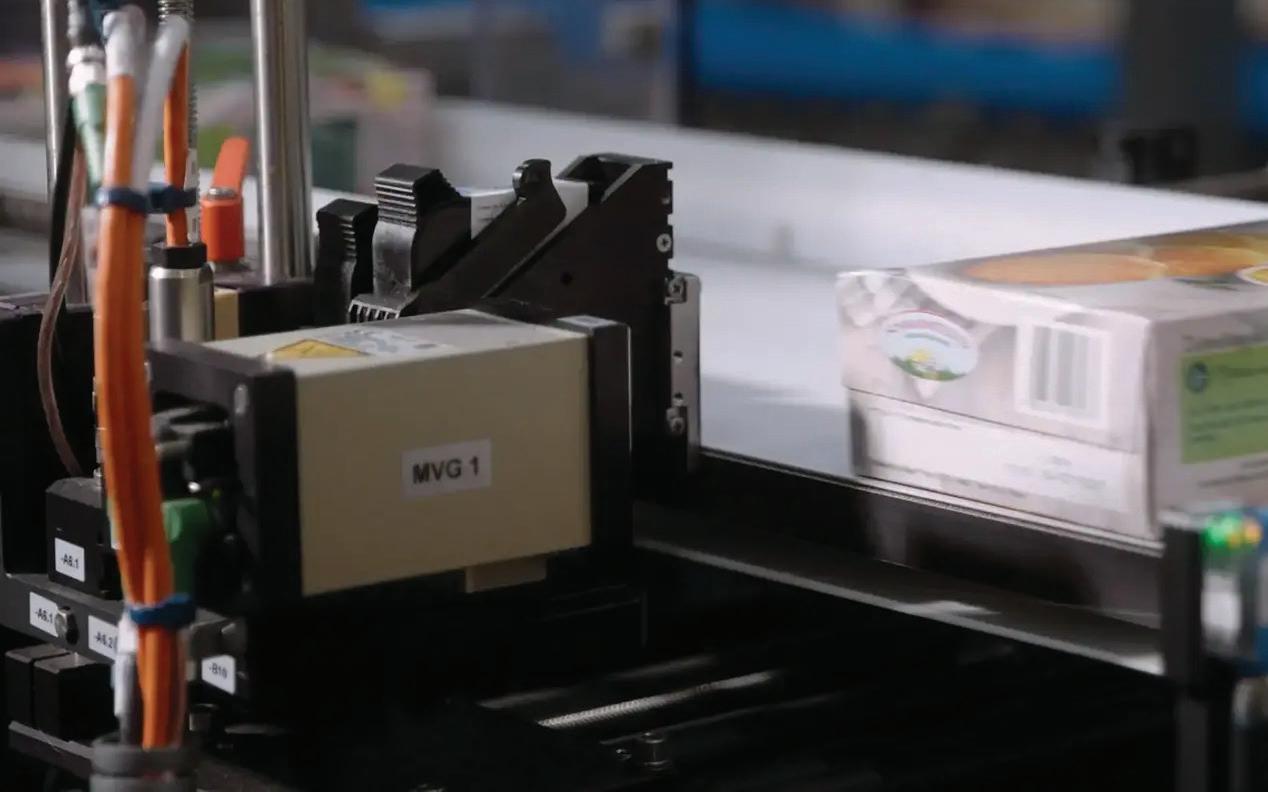
Installing and training a camera to recognize what to inspect is both costly and timeconsuming. Wipotec recommends fully integrated systems where printer and camera are combined under one control system.
The move to 2D codes under GS1 Sunrise 2027 is often framed as a labelling change. For manufacturers, it is gradually becoming part of how product data is handled from production onwards.
Wipotec, a Germanybased manufacturer of weighing, inspection, and track and trace systems, works with food and consumer goods producers to integrate these processes on the production line.
A 2D code allows more information to sit with the product itself. Batch detail, origin, and production data are no longer tied up in separate systems. They can be accessed at different points across distribution and retail, and where relevant, by the consumer.
This adds to how products are understood once they leave the line.
“It is not just about marking products for checkout or smartphones. We are mapping entire product lifecycles through QR codes using GS1 Digital Link,” said Volker Ditscher, Director Global Sales Track and Trace at Wipotec.
This provides a more consistent view of how product moves through the chain and supports more targeted recall processes
and clearer traceability.
In this model, traceability becomes something that can be accessed rather than something that sits in the background.
“It is about making product information available when and where it is needed, rather than relying on separate systems to retrieve it,” said Ditscher.
This also changes how product information is used across the supply chain. Information is no longer tied to a system alone, but can move with the product itself.
It also opens a direct path to the consumer, where product information, provenance, and additional content can be accessed through the same code.
Instead of acting only as a physical identifier, it becomes a point of interaction. Product information, usage details, and brand content can all be accessed through the same code, linking what happens in production more directly with how the product is experienced in market.

The model itself is not new. Industries such as pharma have already built systems around serialisation and traceability. The processes are established. What is changing is how those approaches are being applied in food and consumer goods.
“It is not new territory. The processes and standards already exist. The opportunity is to apply them in a way that fits consumer goods production,” said Ditscher.
For many manufacturers, this builds on what is already in place.
Codes are already used to support logistics and internal processes. Extending that to include more structured product data at item level strengthens how information moves with the product.
As manufacturers begin to work with 2D codes, the structure behind the data becomes more important.
“The code may look simple, but what sits behind it is a defined structure that determines how that information can be used,” said Ditscher.
This is where implementation becomes more deliberate.
Rather than being treated as a simple upgrade, 2D codes rely on alignment between data structure, print quality, and verification. When these elements are aligned, they support a more consistent flow of information across systems.
Getting this right early allows manufacturers to build on existing processes without adding unnecessary complexity later.
It also creates a clearer foundation for future applications, where the same code can support multiple use cases across production, logistics, retail, and consumer interaction.
In practice, the shift happens on the line. Where codes carry variable or batchspecific data, they are applied during production rather than fixed in packaging design. This brings marking, inspection, and data handling closer together.
“There are also new requirements for codes on cartons and shipping labels.
Manufacturers are looking to meet those using integrated systems that can manage different formats and applications,” said Ditscher.
As more information is carried within the code, consistency becomes more important.
Print quality, positioning, and verification all influence how reliably codes can be read across different environments. Ensuring that codes are applied clearly and checked at the point of production supports consistent scanning later, whether in distribution, at retail, or by the consumer. This is where inspection and traceability systems form part of the process.
Rather than acting as a separate step, they support how information is applied and confirmed at the point of production. This helps ensure the data linked to each product can be used reliably as it moves through the supply chain.
Wipotec has focused on bringing these elements together, combining weighing,
For decades, products have been black boxes — moving through production, logistics, and retail with limited visibility. Information exists, but it is fragmented. Regulations such as PPWR and ESPR, along with concepts like the Digital Product Passport (DPP), are pushing toward productlevel transparency. At the same time, retail initiatives like GS1 Sunrise 2027 and QR Codes powered by GS1 are redefining how products are identified and accessed across systems.
inspection, and track and trace capability within the same system. Since establishing a presence in Australia in 2022, the company has extended support across New Zealand and the wider region.
“By making these systems available locally, we help companies adopt advanced solutions without long lead times or logistical hurdles,” said Colin Seddon, Managing Director Wipotec Australia.
Manufacturers are also able to test systems using their own products before rollout.
“Seeing the results firsthand gives teams a clearer understanding of how the technology works in their own environment,” said Seddon.
As 2027 approaches, the discussion is moving beyond the code itself to how product data is created and used across the supply chain. This is extending what production systems can support, both internally and in how information is shared more widely.
The code may look familiar. It is becoming part of a wider system for managing product data.
Wipotec Australia Pty Ltd will be exhibiting at Foodpro Melbourne, 26–29 July (Stand AC16).
+61 370 316 100 | info.au@wipotec.com www.wipotec.com
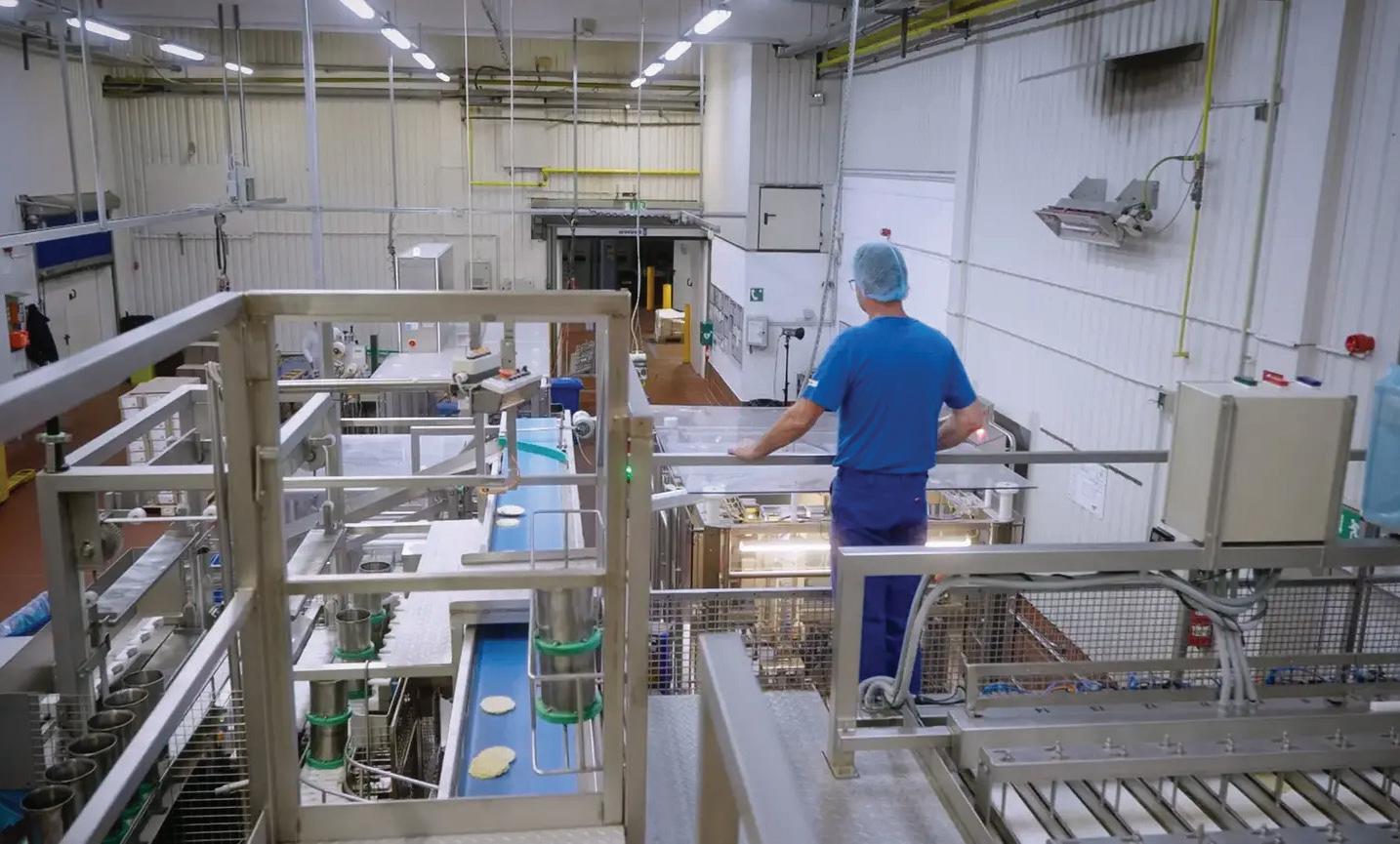
Snackmaster, a producer of frozen potato products and part of the Schnefrost group, has focused on building capability on the line as demand for its products continues to grow.
Working alongside its parent company Schnefrost, and long-term partner Wipotec, the business has invested in systems that bring printing, inspection, and weighing together within a single process. The aim has been to simplify how the line operates while improving how product information is applied and checked.
This builds on a long-standing relationship with Wipotec, with systems installed more than 18 years ago still in use today. That continuity has allowed the focus to shift toward automation and digital connectivity, rather than replacement.
“We chose Wipotec because we need a reliable partner for the future,” said Sükrü Celebi, Plant Manager.
More recently, the focus has been on integration.
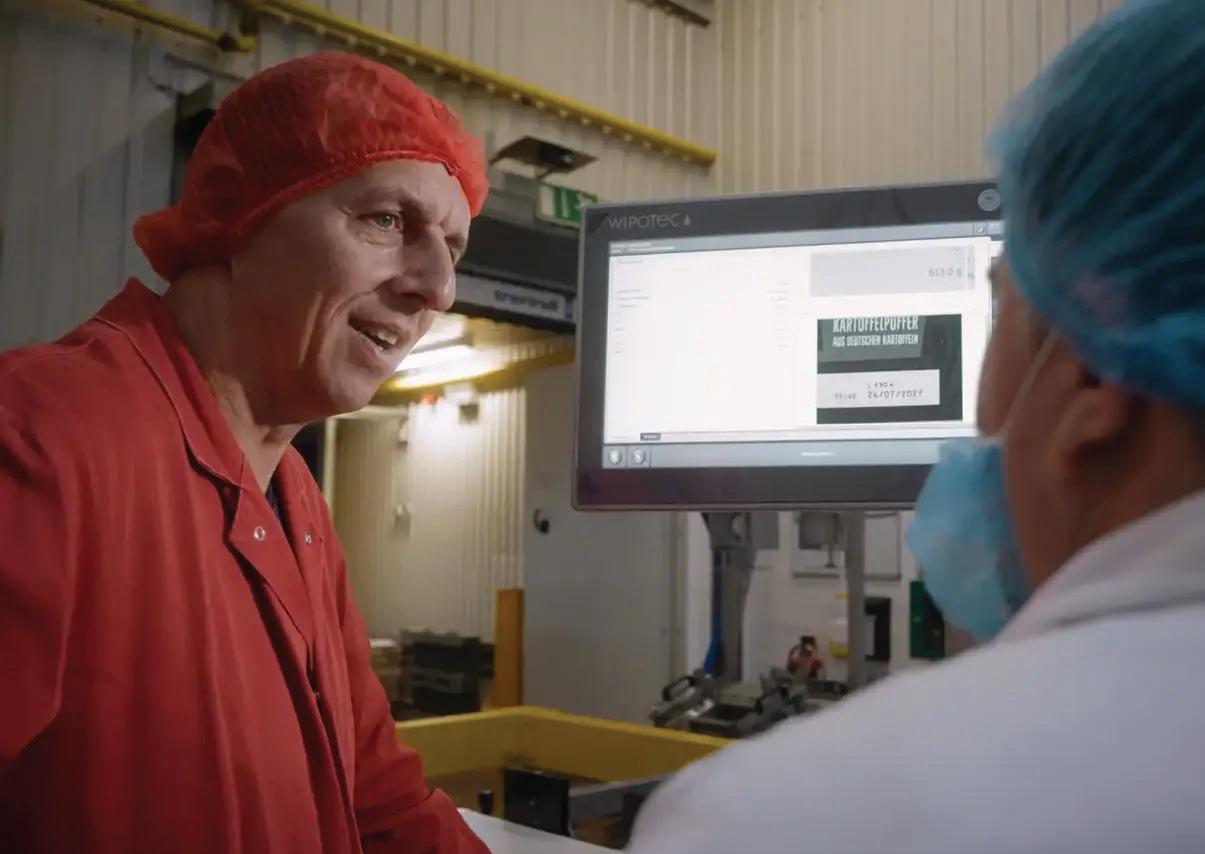
Functions that were previously handled across multiple devices, including date printing, inspection, metal detection, and checkweighing, are now combined within a single system, the Wipotec TQS. This system brings weighing, inspection, marking, and data handling together into one control platform on the line.
This reflects how Wipotec systems are designed to operate on the line, combining multiple functions within a single workflow.
“The functions are optimally combined in a compact machine length,” said Ralf Bistritzky, Deputy Technical Manager.
Bringing marking and inspection together also changes how product information is handled.
Codes applied during production are checked immediately, ensuring accuracy before product moves further along the line. This gives a consistent starting point for how that information is used later.
It also supports what comes next.
Snackmaster has already seen interest from retailers in the ability to apply 2D codes, particularly for information such as best-before dates. With print quality and integration in place, the line is now capable of supporting in-line printing of high-resolution codes with variable data.
“Retailers have already asked whether our lines are ready to print 2D codes. At present, this is only possible on the line equipped with TQS,” said Bistritzky. Beyond marking, attention is also on how information is managed.
User access is controlled through RFID login, ensuring operators have the appropriate level of access. At the same time, centralised software connects machines, lines, and sites, making production data more visible and easier to work with.
For Snackmaster, working with Wipotec, the benefit is straightforward.
Information is captured, applied, and checked in one place. This supports dayto-day production while also making it easier to manage product information as it moves into distribution.
The move to 2D codes builds on that.
It allows more information to travel with the product and be used across production, distribution, and retail, while fitting within how the line already operates.
Wipotec Australia Pty Ltd will be exhibiting at Foodpro Melbourne, 26–29
July (Stand AC16).
+61 370 316 100 | info.au@wipotec.com www.wipotec.com

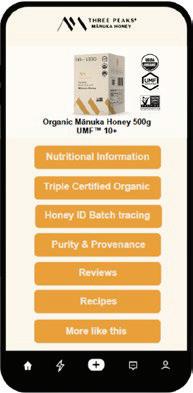
The Mānuka Collective uses QR Codes powered by GS1 to offer consumers transparent product information and traceability.
The Mānuka Collective is an award-winning producer of premium New Zealand honey operating a house of brands including 100% Pure New Zealand Honey, Three Peaks Organic, Watson & Son, and several exclusive or customer brands. The collective has a strong commitment to providing traceable and authentic mānuka products to New Zealand and export markets.
The Mānuka Collective adopted QR Codes powered by GS1 to give their customers easy access to product information maintained by the company for a new product release. The product, Three Peaks Organic Mānuka Honey, launched on Amazon in the United States in February 2026.
In the competitive honey sector, standing out is vital. The Mānuka Collective’s Three Peaks Organic product is fully traceable, triple certified organic, UMF 10+ and MGO 300+ certified. Sharing these certifications and the unique benefits of New Zealand mānuka honey with consumers unfamiliar with the brand was critical for a successful product launch in an international market. With packaging space at a premium, and a diverse group of consumers in the US market, The Mānuka Collective needed a way to convey these product credentials effectively.
The Mānuka Collective worked with GS1 New Zealand and K10X to implement QR Codes powered by GS1 for their Three Peaks product launch. This allows consumers to connect to a deeper layer of product information with one simple scan. Embedded in the product’s QR Code is a barcode number (Global Trade Item Number also known as a GTIN) and a weblink allowing the product to be scanned both at point-of-sale and by a consumer’s smartphone. Consumers are directed to a product information page with links to certifications and product information complimentary to the information on the physical pack. One seamless physical-todigital brand experience is delivered and consumers accessing the information can access it in multiple languages.
Entering the new world of QR Codes was a learning curve for the team at The Mānuka Collective but was made easier by their engagements with GS1 New Zealand as the standards organisation behind the QR Code powered by GS1. While implementing traditional ‘linear’ barcodes was familiar, understanding the QR Code syntax was new for the team. The verification team from GS1 New Zealand supported their implementation by verifying the QR Code’s digital link and confirming the QR Code would scan at point-of-sale once printed.
The Mānuka Collective wanted to go beyond just a link to their website and offer a more personalised experience for their consumers. They brought in K10X to develop a ‘linktree’ style landing page, connecting customers from a scan of their smartphone to product descriptions, ingredients, certifications, honey tracing IDs, social channels and shopping opportunities.
With QR Codes powered by GS1, The Mānuka Collective has delivered key product information to their consumers while also aligning with the transition to next generation barcodes (such as QR Codes) at point of sale. This has future proofed their product as they look to take their product to the world by creating a seamless physical-to-digital brand experience for their consumers. Behind the scenes, leveraging the software, the business can easily access a platform to edit the page links seen by consumers allowing the team to update content and links when information changes and view analytics.
“The Mānuka Collective has had QR traceability codes for years on pack. QR Codes powered by GS1 take us further by layering in multi dimensional data and richer consumer access beyond a single link,” says Sean Goodwin, Chief Executive of The Mānuka Collective.
“We can instantly update the dynamic digital experience behind the scan using an intuitive and easy to use drag and drop interface, providing market-specific content and campaign agility without the need for costly packaging reprints or the risk of broken links.”
Looking forward, The Mānuka Collective aims to rollout QR Codes powered by GS1 on more of their products as they expand their global reach and seek to position their brands with international retailers.
“The impact of QR Codes powered by GS1, especially in export markets will make a huge difference to consumers. There are real benefits around transparency - consumers can quickly gain the information they need about a product. This is particularly valuable for organic products, as consumers can be assured of its origins, food safety and certifications, without having to search for the information.”


Sunrise 2027 is the biggest change to retail since the first barcode was scanned in the 1970s, marking a pivotal moment for the global supply chain. The team at Barcodes Limited has viewed this transition through a lens of practicality and cost-effectiveness.
The transition to 2D Digital Link QR codes has shifted the focus from simple “scan-andbeep” checkouts to a dynamic data ecosystem. The 2D code unlocks features previously impossible, such as instant recalls, in which retailers can program registers to block the sale of a specific batch when a recall is active.
Dynamic Expiry can automatically apply a “near-expiry” discount at the till. Importantly, there will be increased consumer connection. A single scan can show the consumer where the ingredients were grown, which sustainability certifications are in place, or recipe ideas.
In practical terms, Sunrise 2027 is the global target date for retailers to be able to scan 2D Digital Link barcodes at checkout. This doesn’t mean that current EAN-13 barcodes (GTINs) will suddenly stop working. Instead, it means retailers will begin preferring or requiring 2D codes because they hold more data.
Currently, New Zealand is in a “mixedmode” phase. Some of the larger players (like Woolworths NZ and Foodstuffs) have actively upgraded their point-of-sale hardware. Most modern scanners can already read 2D codes, but the backend software that processes “expiry dates” or “batch numbers” from a scan is still being refined.
“Most small-to-medium producers are in a ‘wait and see’ mode. Larger exporters are moving faster because overseas markets like Europe are demanding better traceability,” said David Allis, Director at Barcodes Limited.

• “I have to replace my 1D barcode immediately”: False. Barcodes Limited expect a hybrid period in which both codes appear on packaging.
• “Any QR code will work”: False. A standard static QR code that just leads to a website is not a “Digital Link.” It must follow specific data structures and use a resolver service. A resolver is a traffic controller that directs a scan to the right place, whether that’s a retailer’s database or a consumer’s smartphone.
• “It’s too expensive” False. While there are setup costs, 2D codes actually reduce costs by preventing food waste through better expiry tracking and reducing the need for multiple labels.
The change to packaging management will depend on the product’s specific traceability needs.
Manufacturers have multiple paths forward:
• The Static Approach (Plates): If the product does not require unique unit tracking, the business can continue using traditional flexographic or offset plates. By simply updating its artwork to replace the EAN-13 with a QR code (containing your GTIN and a “resolver” URL), it can web-enable your product without changing a single piece of machinery.
• The Batch-Level Approach (Swappable Plates): For large runs where the batch changes only every few days, a “platechange” strategy is viable. The 2D code
is modified at the start of the run to reflect the new batch data, maintaining the efficiency of traditional printing.
• The Dynamic Approach (Digital Coders): For manufacturers requiring unit-level serialisation (Unique IDs for every item), an upgrade to thermal transfer or industrial inkjet coders may be necessary. These systems print variable data in real time, enabling the highest level of brand protection and consumer engagement.
Regardless of the printing method, the data is critical, and the production floor must eventually integrate with a digital database.
If a business chooses to include Batch or Serial numbers, the manufacturing execution system (MES) must “talk” to the printer. This ensures that the physical code on the package perfectly matches the digital record in your system.
At the same time, the barcode (GTIN) becomes the bridge to a “Digital Twin.”
A single scan can route a consumer to a marketing video, a retailer to inventory data, or a regulator to a certificate of authenticity. Looking ahead, Allis said that labelling is becoming much more connected. The label will no longer be static; it will be a dynamic interface. He expects to see a “decluttering” of packaging: instead of printing ten different logos for “Organic,” “Halal,” or “Fair Trade,” all that information will be stored in a single 2D code. In addition to product management, manufacturers can also use them as engaging marketing tools.
Once product leaves the factory, most manufacturers lose sight of it. That has been accepted as part of the system. Goods move through distribution, into retail, and out to the consumer with limited visibility beyond what can be inferred from sales and logistics data.
That model is starting to break down.
The shift under GS1 Sunrise 2027 is changing how products are identified, but the bigger impact sits in what that identification allows. When products carry scannable, structured information, they stop being anonymous once they leave the line.
That has consequences for control.
For manufacturers, loss of visibility has always come with cost. Parallel imports, grey market movement, and product diversion are difficult to track and even harder to quantify. When product turns up where it should not, the response is often reactive.
More precise identification changes that balance.
When product can be identified at a more granular level, it becomes easier to see where it has moved, where it has stalled, and where it has deviated from expected paths. That does not eliminate leakage, but it reduces the blind spots.
Recalls are another area where this becomes practical.
Most recall processes still rely on broad batch assumptions. Product is removed from the system in volumes that exceed what is actually affected because visibility

is limited. More detailed identification allows for tighter intervention. Less product is pulled, disruption is reduced, and cost is contained.
There is also a shift in how product behaviour is understood once it is in market.
Improved identification does not just support tracking. It starts to show how product moves through different channels. Delays, exceptions, and inconsistencies become clearer. That creates a more complete view of performance beyond what sales data alone can provide.
This is where the conversation moves from tracking to control.
A 2D code is not the outcome. It is the entry point. The value sits in the ability to access and act on information linked directly to the product. That information can be read across supply chain systems, at retail, and where relevant, by the consumer.
The opportunity is clear. So is the exposure.
When visibility improves, gaps are harder to ignore. If product data is inconsistent, if codes fail, or if systems do not align, those issues surface quickly. What was once absorbed within the system becomes visible across it.
That raises the standard.
Manufacturers are no longer just
supplying product into the market. There is an expectation that they can account for where it goes and how it behaves. That expectation is not being set by regulation alone. It is being driven by retailers, supply chain partners, and internal pressure to reduce loss and improve efficiency.
Meeting that expectation requires more than applying a new code.
It depends on how well production, data management, and downstream systems connect. If those elements are aligned, product moves with fewer unknowns. If they are not, visibility will expose the gaps rather than solve them.
This is where the role of the product changes.
It becomes a reference point for information that others rely on to make decisions. That shifts how issues are identified and how quickly they can be addressed. It also removes some of the distance that has traditionally existed between production and what happens in market.
Once that visibility is in place, the product is no longer anonymous. Where it goes, how it moves, and where it fails becomes clear. That changes the level of control, and the level of responsibility that comes with it.

Food and grocery suppliers have been using on-pack QR codes to connect consumers to product information online and to digital experiences.
SmartFacts® is a trans-Tasman digital labelling program led by the Australian Food and Grocery Council (AFGC) and GS1 Australia, and supported in New Zealand by the New Zealand Food and Grocery Council and GS1 New Zealand, aimed at transforming product labelling through digital technology.
With a simple smartphone scan, SmartFacts can provide consumers with instant access to digital, standardised product information, including nutritional details, allergen information, and company details, eliminating confusion and fostering greater transparency and trust in brands.
Digital labelling enables consumers to
access a wealth of brand-owner-managed product and company information by scanning a QR code on-pack, driving consumer engagement, supporting purchasing decisions, and building brands.
With the SmartFacts initiative, the aim is to develop industry guidance to harmonise the implementation of digital labelling in Australia and New Zealand, and deliver a consistent consumer experience.
Consumers are increasingly seeking more detailed product information, and the traditional way to convey it is through physical product packaging. The limited space available on-pack makes this challenging. Moving to a scannable ‘digital label’ opens a world of possibilities.
While some producers have been early adopters with consumer QR codes already on pack, currently, the information made available on these links varies considerably across brands and products.
SmartFacts has been developed to provide guidance to producers and brands, standardise key information for presentation through a digital label, and make it easier for consumers to understand and compare product information as they make purchasing decisions.
When digital product information is presented in a standardised QR code format, it becomes much easier for consumers to engage with. This consistency can build trust and foster consumer confidence, leading to longterm brand loyalty.
NZFGC Chief Executive Raewyn Bleakley said that SmartFacts represents
a positive step forward in empowering consumers with the information they need to make informed choices while also giving producers a powerful tool to communicate transparently and consistently.
“By embracing standardised digital labelling, we’re not only enhancing trust in the products on the shelf but also supporting innovation and efficiency across the food and grocery sector,” she said.
“This collaboration with our Australian counterparts ensures a consistent experience for consumers and businesses across the Tasman.”
At the same time, AFGC CEO Colm Maguire said this was an innovative and practical leap forward, not just for manufacturers, who can now share rich, accurate information in real time, but also for consumers who want fast facts at their fingertips.
“SmartFacts is a 21st-century answer to 21st-century consumer expectations,” he said.
“This initiative shows our sector is serious about meeting rising expectations for information, quality and transparency. It’s about building trust through transparency and showing consumers that Australian manufacturers are proud of what goes into products and how they are made.”
With a simple smartphone scan, SmartFacts can provide consumers with instant access to digital, standardised product information, including nutritional details, allergen information, and company details, eliminating confusion and fostering greater transparency and trust in brands.
Being a Trans-Tasman initiative, it gives brands confidence as they deliver products to both the New Zealand and Australian markets.

Retailers are being sold a more connected, data-driven shelf through 2D codes. The pressure sits elsewhere. If the code does not perform, the cost does not stay in store; it moves upstream to the manufacturer.
The shift under GS1 Sunrise 2027 is often framed around scanning, pricing, and consumer interaction. That is the visible layer. The less visible question is whether the product arriving in the store is set up to work in that environment.
This matters because store operations are relying more heavily on automation. Electronic shelf labelling, self-checkout, and inventory systems reduce the ability for teams to correct errors manually. If a code fails, it fails in real time. There is less room to fix it quietly on the shop floor.
That changes the risk profile.
For retailers, the impact shows up as friction. Pricing mismatches, failed scans, or exceptions at checkout slow the system down. For suppliers, the consequence is more direct. Products that introduce friction become harder to justify at range review, particularly when there are alternatives that integrate cleanly.
The industry is moving from static identifiers to structured data. That brings benefits in traceability and visibility, but it also raises the execution bar. Manufacturers are no longer just supplying products. They are expected to supply structured, standardised data that works across retail, logistics, and increasingly consumer-facing systems.
That expectation starts at production.
Lines that were set up to apply a fixed barcode are now being asked to generate variable data, apply it consistently, and ensure it scans every time. At the same time, throughput requirements and cost pressures have not eased. The line is being asked to do more, without slowing down.
This is where the gap is starting to show.
Retail systems are evolving faster than many production environments. The result is not failure at scale, but small inconsistencies that compound. A code that scans most of the time

is not enough when systems expect it to work every time.
Those inconsistencies do not stay contained. They show up across the chain, from distribution through to checkout. Each failure point adds cost, whether through manual intervention, delays, or lost sales.
There is also a second layer to the conversation. Much of the attention around 2D codes has focused on consumer engagement. Scan for more information, access to provenance, brand interaction. That may come.
For now, retailers are focused on execution.
If the code does not scan cleanly, align with pricing systems, and integrate into store processes, the rest becomes irrelevant. The operational requirement comes first.
This is why the shift to 2D codes is not a shelf-led change. The shelf will reflect it, but it will not fix it.
The real work sits upstream, where the code is created, the data is applied, and the first opportunity to get it right sits. That is also where the cost of getting it wrong is lowest. Once a product moves into the supply chain, the ability to correct errors reduces and the cost increases.
What follows from here is less about technology and more about discipline. Production teams will be asked to deliver consistency at a level that has not always been required. Small errors that once went unnoticed will surface quickly and repeatedly.
That will shape conversations with retailers in a different way. Not around innovation or intent, but around reliability. Does the product move cleanly? Does it create extra work? Does it hold up under real conditions?
The point where it fails or holds up is where the code is created and verified. Those are the questions that determine whether the code works.
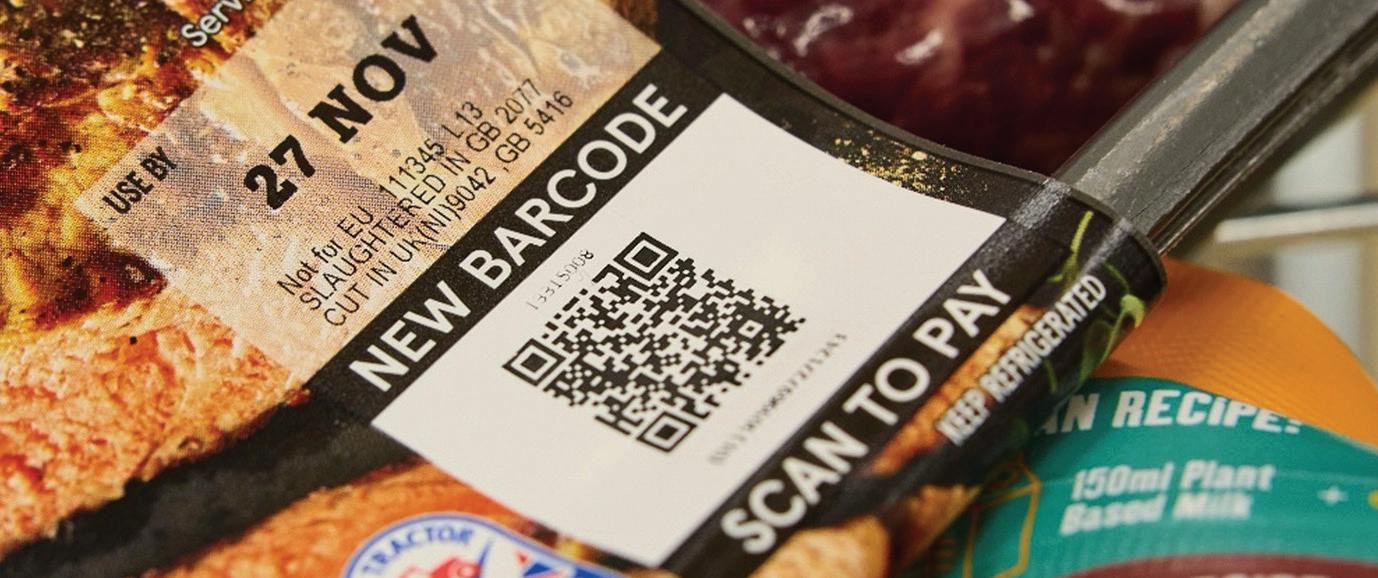
The retail industry is currently transitioning from traditional linear barcodes to QR codes, which can hold far more information and help reduce food waste.
Tesco has become the first supermarket in the UK to upgrade an entire product range to a new scanning system, beginning the transition of its own-label core sausage range from old barcodes to the next generation of QR codes. The advantages of QR Codes include:
Customer Benefits
• QR codes can provide customers with additional product information, such as nutritional content and traceability. Shoppers could also access recipes and competitions.
Waste Reduction
• Allowing retailers to have better visibility of the distribution of code on products in stores. This will help them to order more accurately and improve the efficiency of stock control routines, both of which will reduce unnecessary waste.
Product Management
• In the event of a product recall, QR codes will allow retailers to identify the specific batches affected rather than removing all items. This will avoid unnecessary product waste and improve availability. Retailers will even be able to block the sale of affected items at the till and contact customers who may have purchased them.
For customers, this is a tiny, almost invisible change at checkout, but for the retail industry, it’s a significant step forward. Tesco Development and Change Director Peter Draper said that the move to QR codes will help reduce food waste, improve stock control and unlock new digital benefits for customers.
“Customers will continue to shop and pay in exactly the same way, but they’ll have the option to access far richer information about the products they buy simply by using their smartphones,” said Draper.
“Over time, this opens up exciting possibilities, such as personalised digital tools to help customers manage the food they buy and reduce waste at home.
Working with supplier partner Cranswick, the change will see 13 lines switched over, including: 8 and 12 Tesco Pork Sausages; 12 Tesco Pork Chipolatas; Tesco British Pork Sausage Meat, as well as British Cumberland Sausages 12 pack and British Lincolnshire Sausages 8 pack.
The move formed part of a wider industry shift led by GS1, the global body responsible for barcode standards, which has set a target for retailers and manufacturers to be ready to accept QR codes.
Tesco’s move to QR codes powered by GS1 across its entire range marks a significant step forward for UK retail. It showed how the next generation of barcodes can support a more connected, transparent future.
“We hope this progress encourages others to follow Tesco’s lead so that consumers and businesses alike can benefit from richer, more trusted product information,” said Anne Godfrey, CEO of GS1 UK.
While linear barcodes will remain on branded products during the transition period, Tesco’s move demonstrates how existing technology can already be used at scale to deliver tangible benefits for customers, colleagues, and the planet. It signals the direction of travel for the rest of the industry.
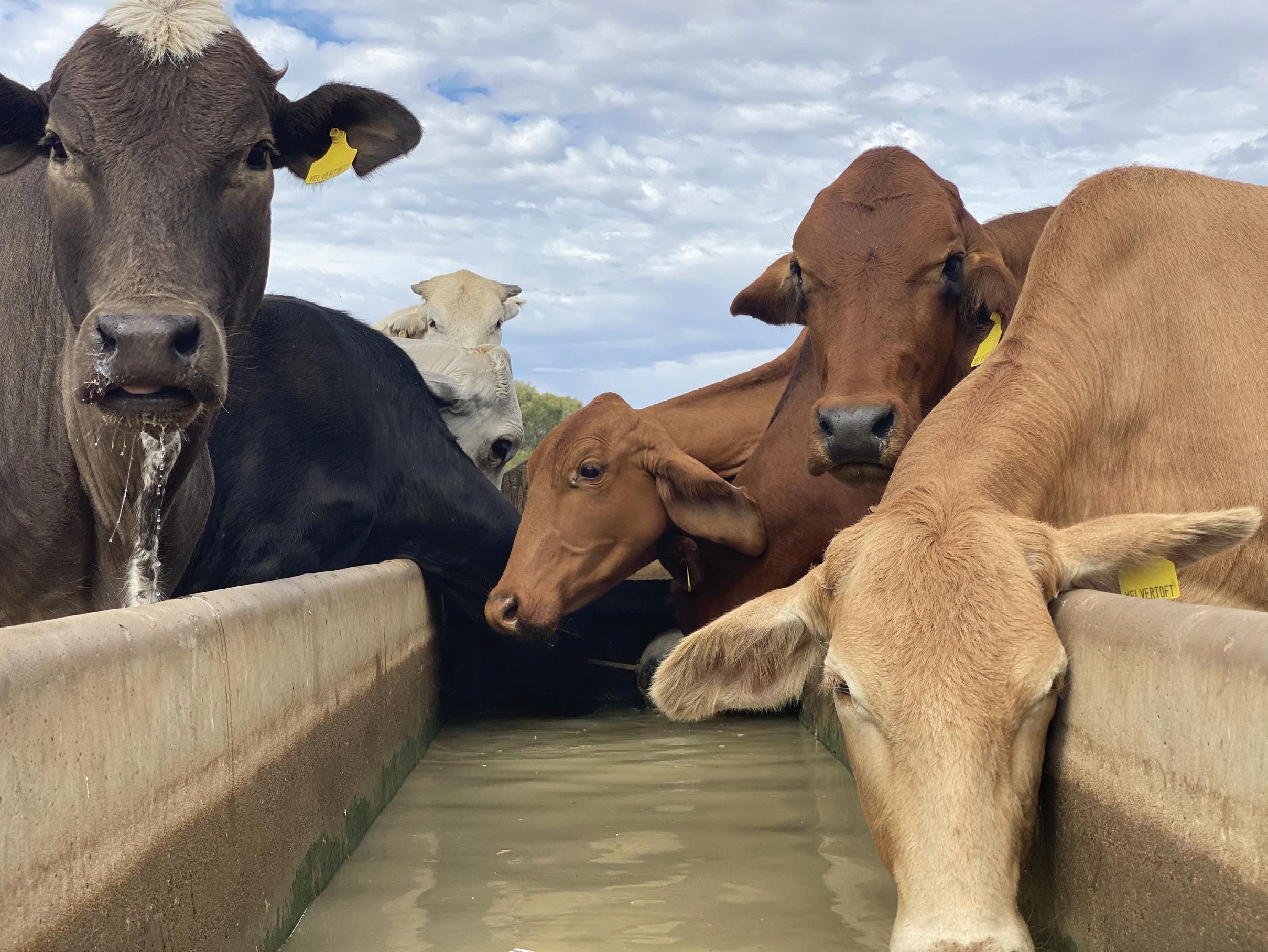
DIT AgTech was originally founded to solve a very practical problem for grazing producers: delivering consistent nutrition to livestock across large, remote properties.
Traditional supplementation methods, such as lick blocks or loose mineral supplements, can be labour-intensive and inconsistent. On extensive cattle stations, not all animals consume the supplement due to hierarchy within the herd, distance from feeding points, or simple variability in intake.
“Our approach was simple: animals drink water every day. So, we developed a system that delivers nutrients through the
water supply,” said Mark Peart, CEO.
“Today, our uDOSE™ precision water supplementation system integrates hardware, IoT connectivity, and cloud monitoring via the uHUB dashboard, enabling producers to deliver supplements while remotely controlling dose rates and monitoring performance.”
This real-time data helps producers optimise supplementation programs and quickly detect problems in remote watering points. By delivering
supplements through water, every animal receives a consistent daily intake, labour associated with distributing supplements across paddocks is removed, and supplement wastage from weather or overconsumption is reduced.
In commercial operations, this automation can reduce supplementation and labour costs, while also eliminating the need for frequent manual feeding runs.
Across commercial deployments, producers commonly report a 10 to
DIT AgTech has also developed a plug-and-play water supplementation system, the uDOSE Flex, that producers can install in just minutes. It’s a self-install, fully mobile setup designed for producers who need supplementation that can move with their mob.
55 percent increase in average daily gains, up to 15 percent improvement in reproduction rates, more consistent body condition across the herd and improved resilience during dry seasons or poor pasture conditions.
Because the supplement delivered is proportional to water consumption, farmers can avoid both under- and oversupplementation. This reduces waste, improves nutrient efficiency, and lowers overall input use.
Another major benefit is the ability to deliver methane-reducing additives at scale through water, which is particularly valuable in extensive grazing systems where controlled feeding is difficult.
DIT AgTech now has a carbon project registered under Verra’s Verified Carbon Standard (VCS) VM0041 methodology (the world’s leading voluntary carbon credit standard), creating a pathway for producers to generate a new revenue stream from verified emissions reductions. This capability allows producers to participate in verified carbon-reduction
programs and contribute to lower emissions in the beef supply chain.
One of DIT AgTech’s key design principles was to work with the infrastructure farmers already have. The uDOSE™ system connects directly to existing water lines, typically at a bore pump or tank supply point. As water flows through the line, the system proportionally doses the correct amount of supplement. This approach means producers with the appropriate water infrastructure do not need to build new feeding infrastructure or change their grazing systems. In most cases, the system can be installed within a day and immediately start servicing multiple troughs across a paddock network.
DIT AgTech has also developed a plugand-play water supplementation system, the uDOSE™ Flex, that producers can install in just minutes. It’s a self-install, fully mobile setup designed for producers who need supplementation that can move with their mob.
For farmers considering their first step into smart water supplementation, the
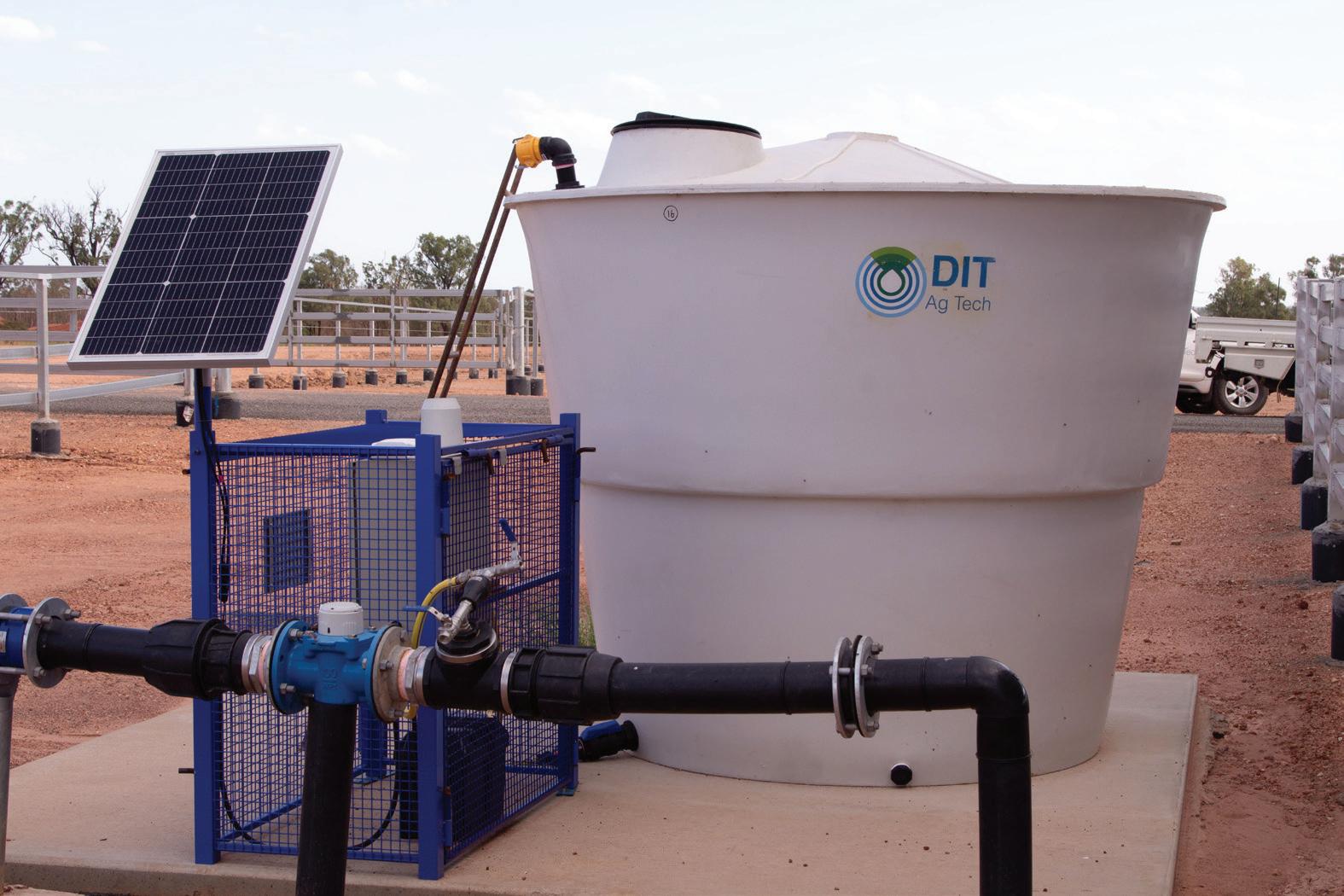
DIT AgTech system can support in:
• Performance & Cost: Precision water supplementation can improve productivity outcomes and reduce the work and costs associated with traditional supplementation methods.
• Consistency of delivery – Water delivery ensures every animal receives the target nutrients required, every day.
• Ease of integration – The system can work with existing water infrastructure.
• Data and monitoring capabilities –Real-time visibility provides greater control, empowering farmers with the data they need to make the best decisions day in, day out.
The right solution should improve productivity while reducing labour and operational complexity. Looking ahead, the company will continue to scale the platform in Australia and internationally and make precision supplementation accessible to producers operating across a wide range of herd sizes.

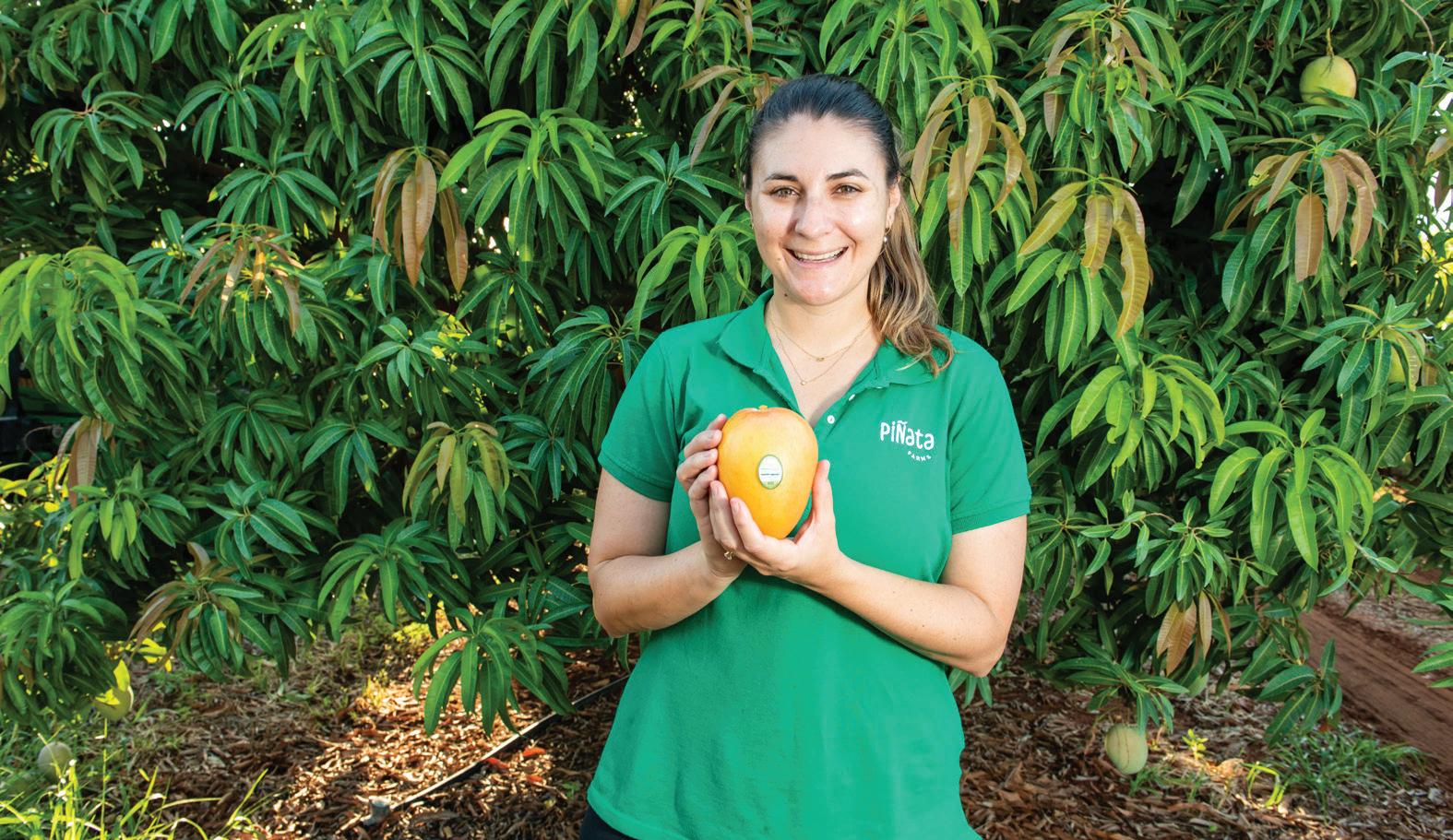
With origins dating back to the 1960s in the state’s south-east, Piñata Farms is a proud Queensland farming business. It is also the largest pineapple producer in Australia, one of the largest strawberry producers, and it grows premium raspberries and Honey Gold mangoes.
This season, Piñata Farms has finalised its most commercially successful Honey Gold mango season, reporting a five percent volume increase on last season.
Sales and marketing manager Rebecca Scurr said the business supplied mangoes nationally for 16 weeks from November 2025 to February 2026, about two weeks longer than usual.
The harvest from growing regions in the Northern Territory, Queensland and Western Australia was the least disrupted by weather in 17 years of production.
“One of the biggest challenges we often face in Queensland during summer is that the main freight route, the Bruce Highway, is impacted due to cyclone or tropical low activity,” said Scurr.
“This season, while Mareeba and Dimbulah had a lot of rain, growers managed their harvests around this to ensure supply was unaffected. Ideal weather conditions also meant excellent external fruit quality could be maintained all season long.”
According to her, season highlights included exceptionally strong prices for the mango in the premium retail space and the highest consumer demand on record, contributing to an above-average tray return to the grower.
Honey Gold mangoes are distributed nationally to major retail outlets, Woolworths, Coles, Aldi, and Harris Farm Markets, as well as select independents.
There was also small crop growth from its farms in the Northern Territory, and at third-party farms at Mareeba, Bowen and Rockhampton as trees came into full production. Around 25 third-party growers supply Piñata Farms, which begins harvesting at its own farms in Darwin and Katherine, Northern Territory, in November.
“December is always tough for prices because it’s the peak of mango season and competition is heavy, but we were able to weather the storm that the whole industry faced and achieve a significant premium,” added Scurr.
“One of our customers has been trying to retail (another mango variety) at AUD 20 a tray during Christmas week for 20 years, and this was the first season he did it. It was a very good outcome for consumers.”
As the Honey Gold is a late-season variety, Scurr mentioned that January is the time to shine, with less competition from other mangoes, and prices reflect this.
“Honey Golds tasted incredible all season long, retail displays were excellent, and all retail customers reported demand was up.”
Scurr added that consumer awareness of Honey Golds was also higher than ever after a new generation of consumers discovered the variety via her growing TikTok presence, where she shared mango content, including varietal and harvest information, in-store selecting and cutting tips.

Honey Golds tasted incredible all season long, retail displays were excellent, and all retail customers reported demand was up.

“We have an experienced and committed growing group, proven ripening partners and an established customer base. Postharvest, we now look at the variety itself and the nutritional nuances of each growing region to grow it even better.”
Looking ahead, Piñata Farms has planned to host the annual Honey Gold Congress in Yeppoon, Central Queensland, this month. Third-party growers will gather to celebrate the season’s success and share insights. A highlight is the announcement of the Honey Gold Grower of the Year award.
Piñata Farms will also launch a full Honey Gold brand refresh ahead of next season.
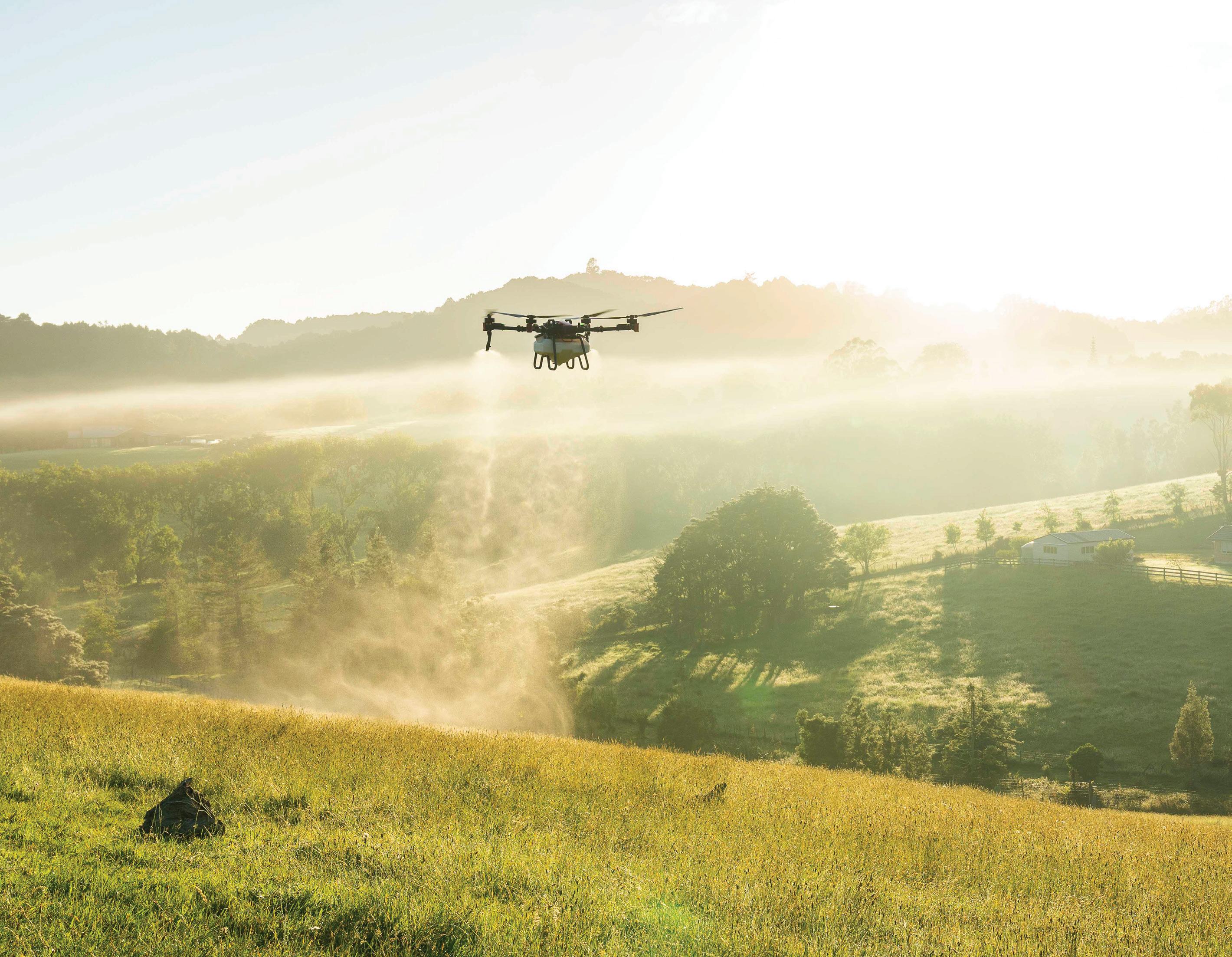
The agricultural drone market has developed rapidly over the past couple of years, moving from first-generation drones that were only marginally effective to the latest highly refined models that deliver unmatched results compared to traditional methods and offer many benefits beyond them.
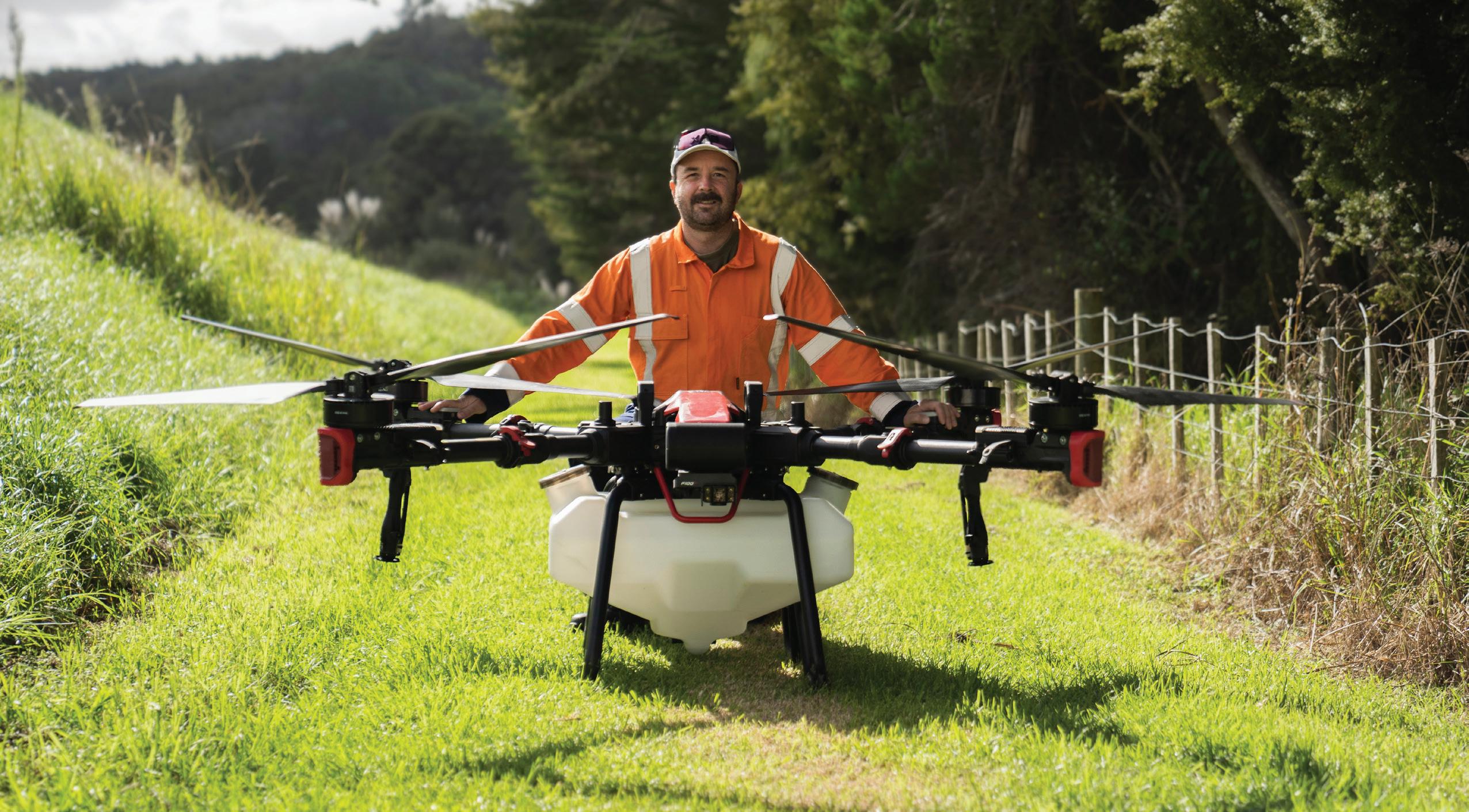
ACivil Aviation Authority 102-approved agricultural and commercial drone operation based in Whangarei, Culture Drones Limited, has customers with an ever-increasing range of requirements.
These initially started with small-scale spot spraying, then moved to medium to large-scale spot and broadcast applications of both herbicides/pesticides and fertiliser, as well as farming and commercial roof cleaning.
“Now we are getting more enquiries for plant identification and drone-based location, which can really help ground teams locate weeds such as mothplant in dense native bush,” said Murray Brock, Director / Chief Pilot, Culture Drones Limited.
Multispectral scanning and photogrammetry have also become more common, with Brock observing increasing adoption of this technology by farmers to help them make more informed decisions on the farm. More customers have also adopted multispectral mapping, which generates a near-infrared index to assess plant stress and health.
Brock added that this was a great indicator of pasture growth rates and a key tool to inform the correct fertiliser rate for each paddock and to identify any isolated problems that need urgent attention.
Another key tool for marking and monitoring problematic weed growth year on year was photogrammetry, which can accurately outline spray application boundaries.

mark weeds or set boundary paddocks for the drone to fly autonomously. We find this method means nothing gets missed; any small gorse hiding in a back gully that could easily be missed by chopper or ground spraying is not safe.”
According to Brock, the most immediate return on investment for farmers is the time they get back.
Controlling weeds and maintaining soil and pasture health can be very timeconsuming and never-ending, so with drones, he said, they could be sure of a quality result across a large application area at a competitive price, allowing them to focus their own efforts on other tasks around the farm and get ahead of the grind.
“We keep all our clients’ land maps on hand, and have their paddocks premarked and set up for spraying, which makes it easy to quote new work for them and get in to spray quickly,” he added.
Culture Drones operate on the RTK network, a corrected GPS that enables flight accuracy within one centimetre of the drone’s planned route.
“This means that we can utilise very high-resolution mapping to identify and
The drones are extremely efficient, with reduced application rates for effective weed kill. This is due to the drone’s low height and proximity to the target, which delivers a tighter spray pattern and increased plant penetration compared to other methods.
Additionally, the data on hand can help create a variable-rate application, reducing the overall chemical or fertiliser applied where it is not needed, saving on product cost and application time.
Brock was excited that the industry was pushing toward larger-scale, highercapacity drones.
He said this will be an inevitable evolution as battery technology and motor efficiency improve, leading to wider spray swaths, greater pump output, and faster flight and application speeds, which will be great for broadcast applications in wide-open spaces.
He was also excited about the improvements in environmental sensors and radars on drones, which help them fly autonomously. LiDAR scanning,
implemented on the latest agricultural drones, has greatly improved drones’ ability to read undulating and steep terrain and maintain a constant flight altitude while spraying.
“I think the main thing will be resetting expectations with farmers about what is possible. All our customers are really excited when they see just how much work can be done in a short time, so they start thinking bigger,” added Brock.
“And that shift to thinking bigger will lead to farmers getting on top of weed control and pasture management like never before and pushing the development of their systems and methods in an ever more innovative direction, because they will have the time to invest in doing so.”
Brock mentioned that the regulatory system was well set up to keep pace with the drone industry as it continues to discover new use cases for drones and their deployments.
The Civil Aviation Authority of New Zealand has worked closely with the agricultural drone industry from the outset to develop an operational and regulatory framework that establishes a standard for all drone pilots to meet, while also providing freedom and bespoke privileges for those who need them.
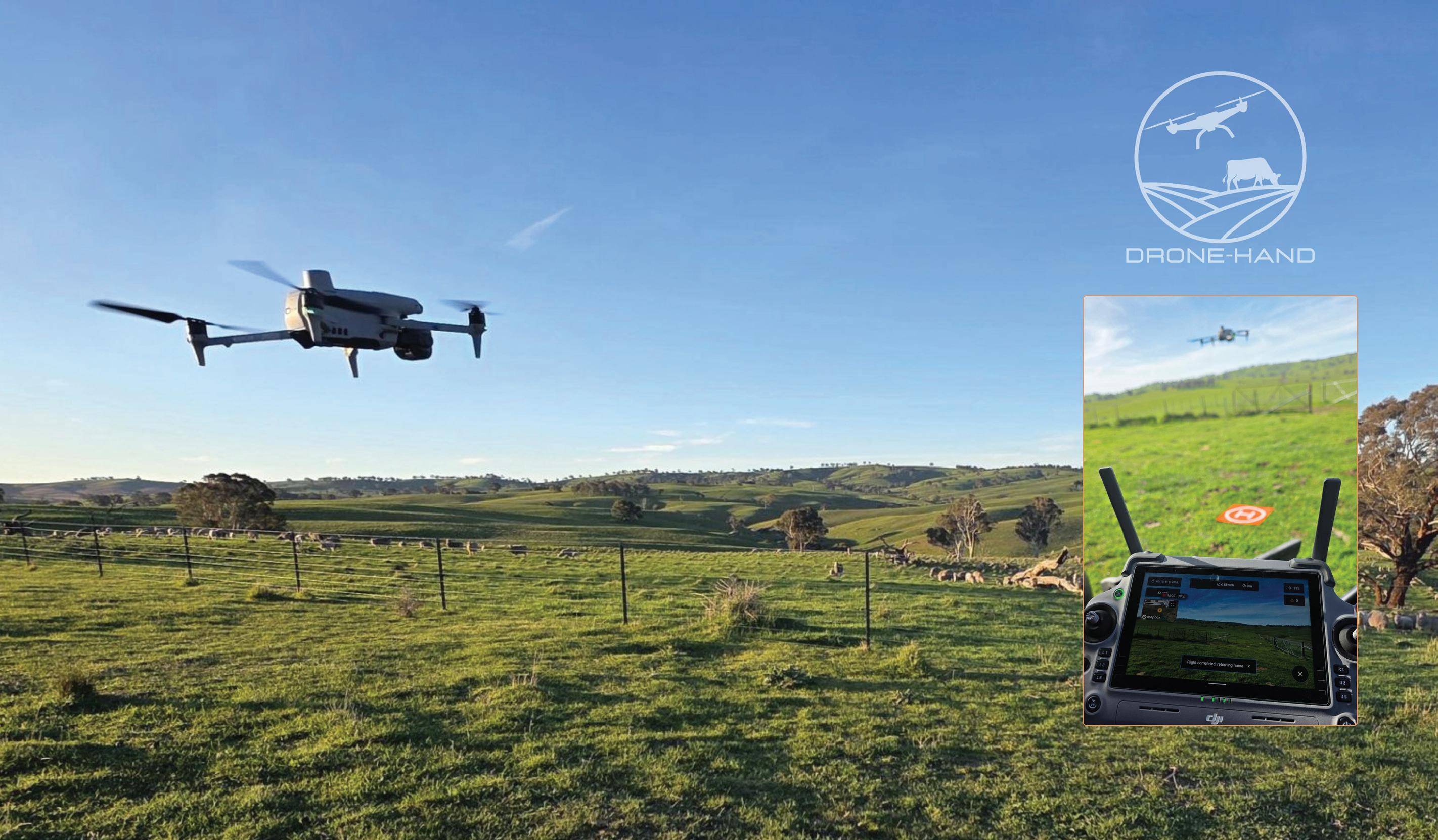
With his family background in agriculture and years of experience as a professional drone operator, Edward Barraclough, founder and CEO of Drone-Hand, began thinking about how the technology could be applied more meaningfully on-farm.
Drone-Hand was built around the idea of using autonomous systems to reduce workload, improve safety, and provide reliable visibility across stations, feedlots and dairies, even in areas without internet connectivity.
Most agricultural land, particularly in Australia, New Zealand, and parts of North and South America, has limited or no reliable connectivity. Barraclough highlighted that if a system depends on internet access to function, it becomes impractical very quickly, especially when handling large volumes of data.
“Our approach is to process data ondevice so that the system can operate
completely offline during flight. That means producers can still get real-time insights regardless of connectivity, with detailed reports that can be downloaded later when a connection is available,” said Barraclough.
“Without that capability, large parts of the livestock industry simply couldn’t adopt this type of technology.”
He added that the tech has moved from drones as tools that need to be flown to systems that can operate autonomously as part of everyday farm infrastructure.
Instead of a farmer needing to go out, drive for hours, and manually inspect stock or water, autonomous drones can be deployed to run those checks on
Automation ensures that data is collected regularly and reliably, which improves the quality of decisionmaking. Instead of reacting to problems, producers can proactively manage based on continuous insights.
a schedule or on demand. Combined with machine learning, they’re not just capturing imagery; they’re interpreting it and reacting to it in real time.
For day-to-day operations, that means less time spent on repetitive tasks, faster issue identification, and the ability to make decisions based on consistent, objective data rather than occasional manual observation.
Traditionally, monitoring has been manual, time-based, and often inconsistent. In contrast, machine learning has introduced consistency and scale by analysing every frame of footage, every time, and identifying patterns or issues that may not be obvious to the human eye, especially across large areas.
Automation ensures that data is collected regularly and reliably, which improves the quality of decision-making. Instead of reacting to problems, producers can proactively manage based on continuous insights.
“It comes down to earlier intervention and better resource allocation. If you can identify an issue earlier, whether it’s a sick animal, a water failure, or stock in the wrong paddock, you reduce losses and avoid escalation. That has a direct impact on productivity and profitability,” added Barraclough.
“There are also labour and cost
benefits. Reducing the need for daily manual checks lowers fuel use, vehicle wear, and staff hours. Over time, those savings are significant. Consistent data allows producers to make more informed management decisions, rather than relying on periodic checks or assumptions.”
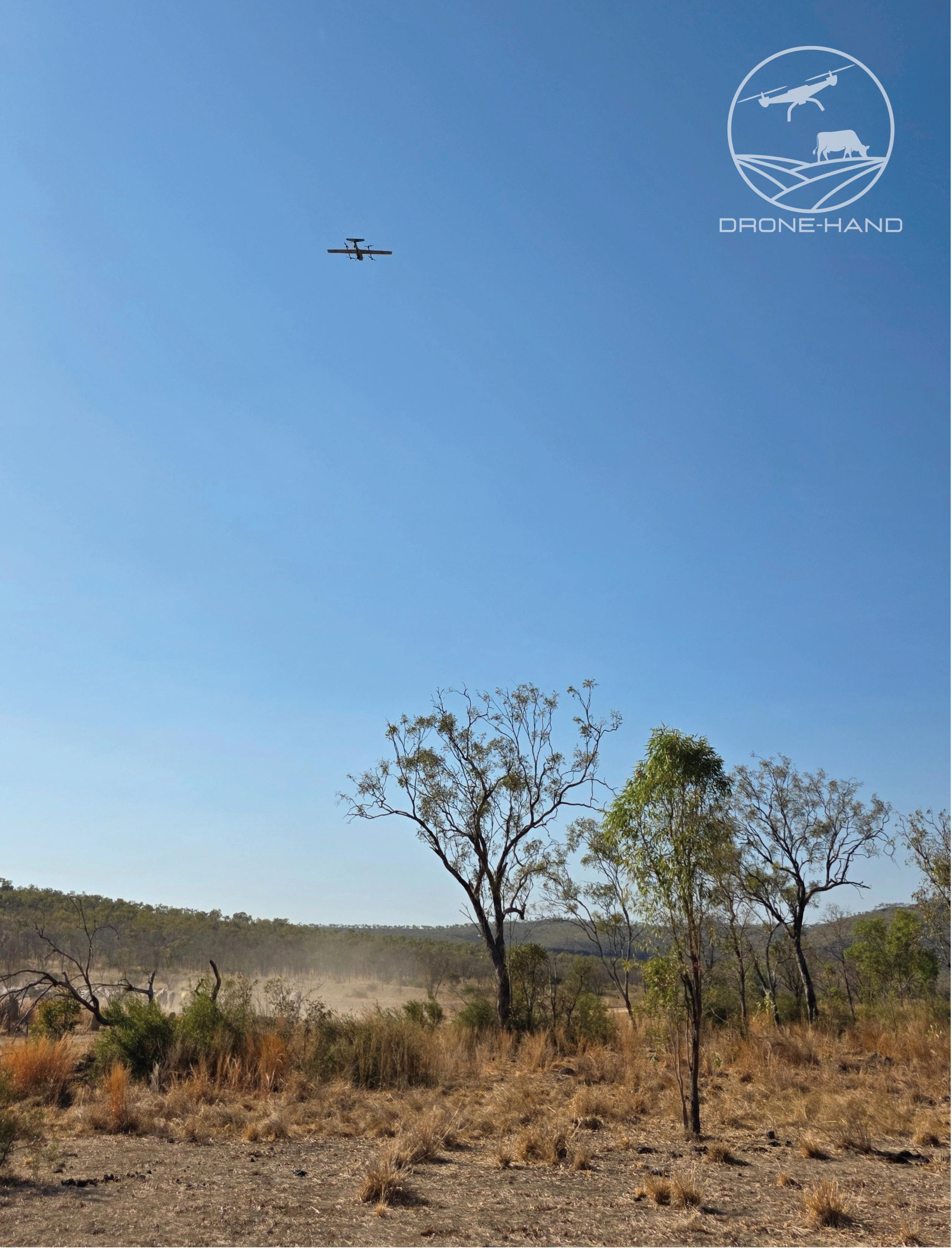
Looking ahead, Barraclough believes that autonomous systems will become a standard part of farm operations, much like machinery is today. A key part of the future for larger properties will be autonomous long-range mustering, where drones can assist or replace some traditional methods, such as helicopters, improving safety and reducing costs.
More broadly, these systems will play
a role in improving productivity, animal welfare, and sustainability, while helping address ongoing labour challenges in agriculture.
He added that although there’s a lot of innovation in agriculture, adoption depends on whether it actually works in real-world conditions and delivers value to producers.
“We spend a lot of time working directly with farmers, feedlots, and industry partners to make sure what we’re building solves real problems, not just theoretical ones. That collaboration is critical to making sure these systems are useful, scalable, and ultimately adopted across the industry.”
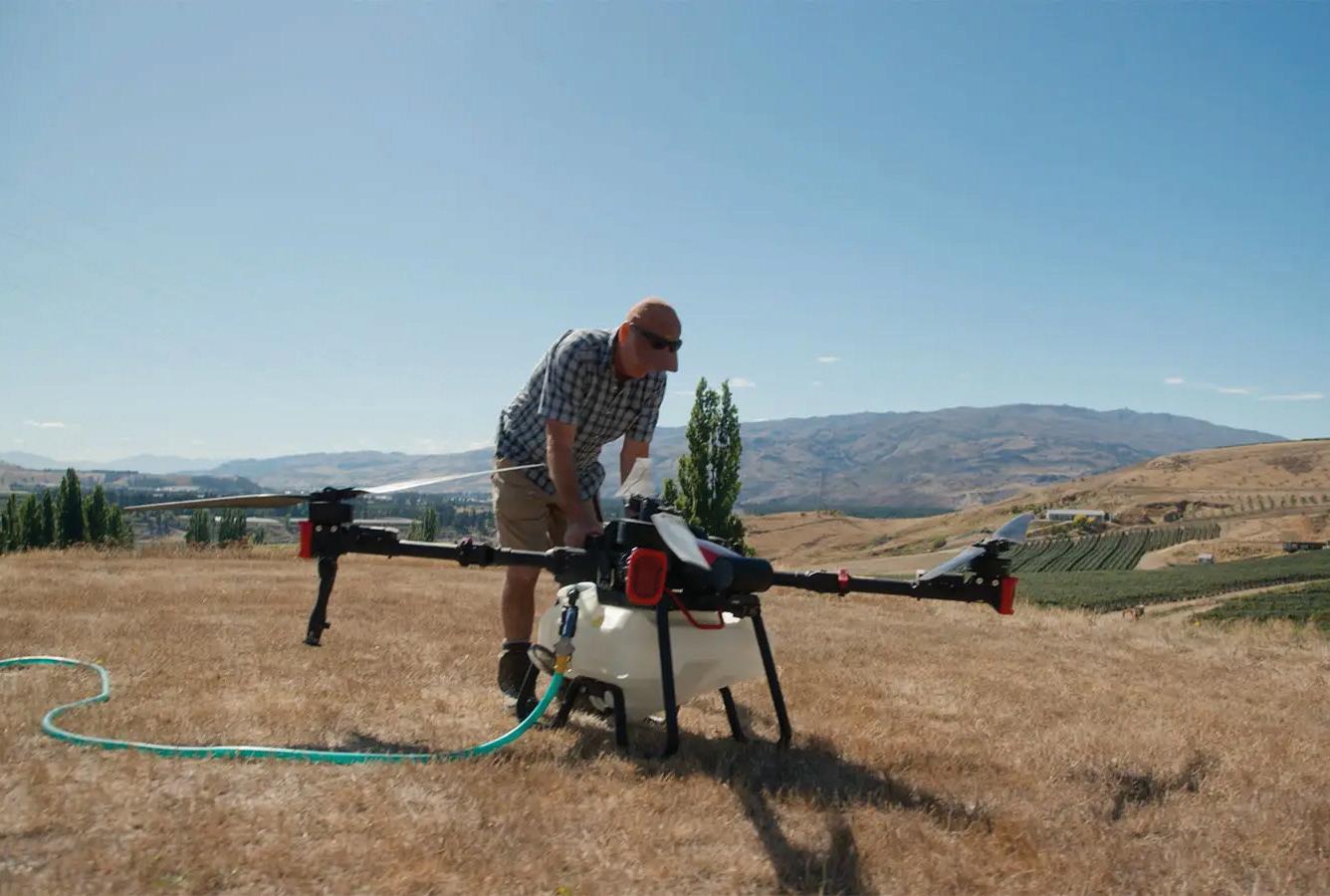
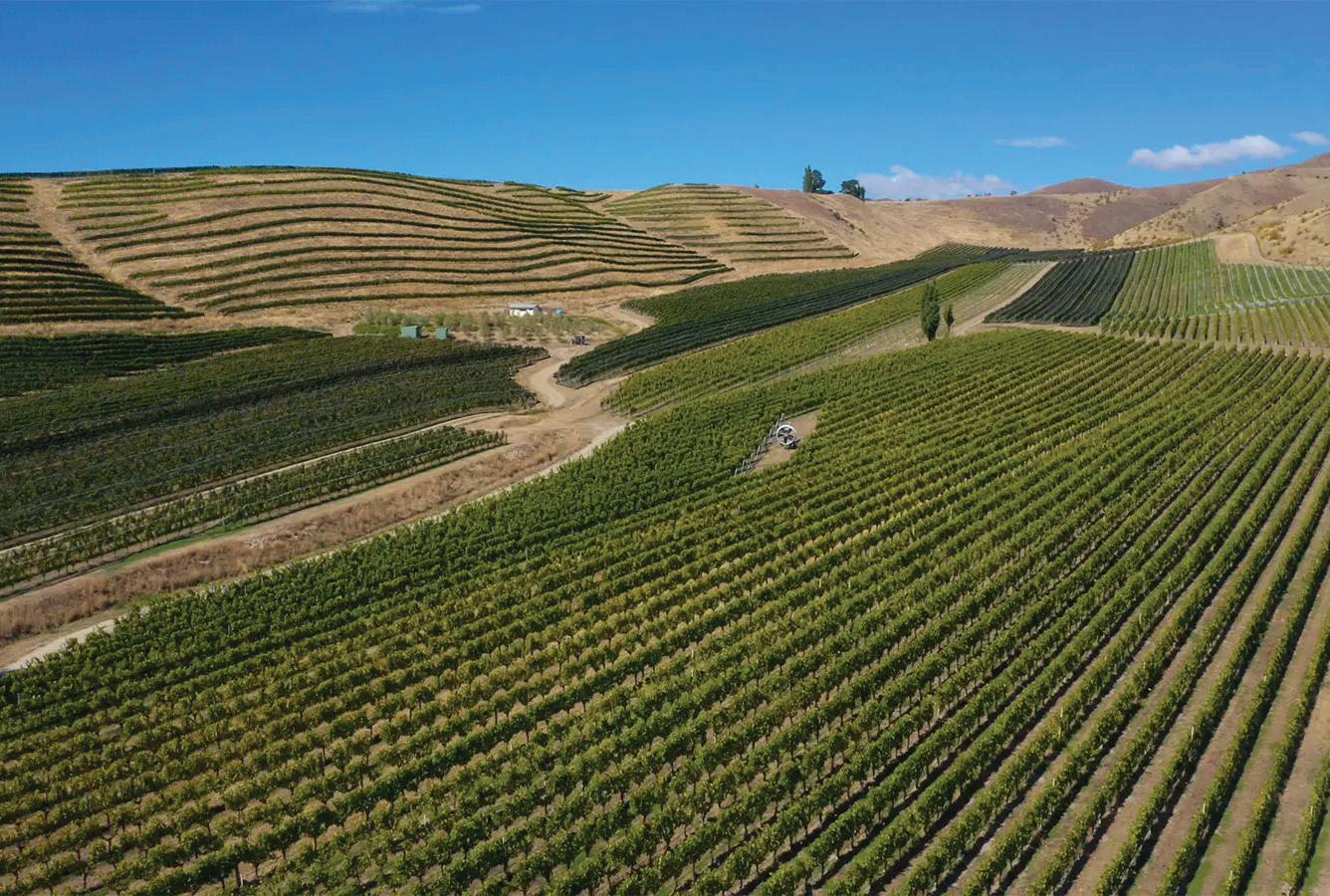
Felton Road Wines in Bannockburn, Otago, has been using an electric agricultural drone sprayer as an alternative to diesel-powered tractors and transforming its vineyard management.
The producer of certified organic and biodynamic Pinot Noir, Chardonnay, and Riesling wines has incorporated an electric agricultural drone sprayer to manage its 33 hectares of vineyard and surrounding land.
They had received NZD 20,000 cofunding for the P-100 XAG electric agricultural spraying drone through EECA’s (Energy Efficiency and Conservation Authority) Technology Demonstration Fund.
The shift to the P100 Pro XAG drone has reduced the vineyard’s diesel use by 18 percent, saving approximately 1,700 litres of fuel per year and cutting CO2 emissions by five tonnes annually.
The team looked for drone technology that could carry enough weight, be reliable, and cover the vineyard.
“The drone is really the first chance we’ve had to work with something that isn’t a tractor. We know that the future is not tractors as they are heavy, cumbersome, use a lot of fuel and squash the soil and the land. The tractor was the vineyard’s last dinosaur,” said vineyard owner Nigel Greening.
“Farming is tough, hot, cold, and physically demanding. But technology like this makes it more attractive and sustainable. The drone runs fully electric. We charge it using our solar PV, which saves on energy costs and diesel use.”
The drone has applied certified organic fungicides, aligning with Felton Road’s biodynamic and regenerative farming philosophy. More than just an energysaving tool, the drone also improves health and safety.
Tractors on steep terrain pose risks of tipping and fatigue-related accidents. The drone eliminates those hazards, reducing
operators’ chemical exposure and reducing soil compaction, preserving the ecosystem and cover crops. It also uses infrared sensors to map crop stress and nutrient needs.
Greening said the efficiency gains have been significant as the drone sprays 50 to 60 percent faster than traditional methods.
Beyond fuel savings, the drone reduces labour time by up to 60 percent compared to tractor spraying. Even accounting for battery and tank refills every five minutes, the drone completes the same job significantly faster.
Estate Manager Gareth King added that the drone can cover a hectare in just 20 minutes, while a tractor takes over an hour. The drone has a 50-litre capacity and, even with pauses for battery swaps and tank refills, consistently outpaces ground-based equipment.
The drone’s ability to fly right after rain has been another advantage. While tractors must wait for the ground to dry to avoid compacting the soil, drones can spray immediately. This is especially important when treating mildew with sulfur-based sprays after rainfall.
Advanced features like terrainfollowing radar, adjustable nozzles, and programmable mapping optimise coverage while minimising chemical use.
Greening mentioned that the winery has already seen comparable results in disease control versus traditional tractors, especially for mildew management. The transition wasn’t without challenges, particularly in learning to operate the drone, but the team quickly adapted, benefiting from improved efficiency and biodiversity outcomes.
The team at Felton Road has found many benefits from the drone sprayer, including cost savings and efficiency gains,
diesel and emissions reductions, improved soil health, and all-weather readiness.
Vineyard Manager Annabel Bulk highlighted another major benefit of improved health and safety: reduced exposure to steep slopes, heavy machinery, and chemicals. The drone virtually eliminates these risks.
“Flying it is thrilling but nerve-wracking. It demands careful setup and operation,” said Bulk.
“But it’s much safer than having someone drive a heavy tractor with hundreds of litres of spray across a hillside.”
To fully leverage the drone’s capabilities, Felton Road has also invested in in-house skills. Training for drone operation, while rigorous, has proven worthwhile.
Bulk mentioned that the 10-day training process was a “steep but rewarding learning curve” and a unique opportunity to engage younger farming talent with cutting-edge agricultural practices.
“We jumped in headfirst. A lot of our early-season sprays were a big learning curve, but now we have achieved spray coverage and disease control comparable to our tractors.”
Initial scepticism was replaced by confidence, especially in managing mildew outbreaks.
For Felton Road, drones are more than a tool; they’re a glimpse of the vineyard’s future. The team saw drones as a platform for future innovation, and Greening has been interested in emerging capabilities, such as infrared sensors, for mapping vine stress, water needs, and nutrient levels from above.
There’s also potential to use drones to spread pelletised compost, a development that would further reduce the need for heavy machinery and expand the drone’s utility across seasonal cycles.
Unmanned aerial vehicles (UAVs), commonly known as drones, are increasingly being used as tools across New Zealand’s primary industries.
Growers, farmers and foresters need technologies that save time, reduce risk and support better decisionmaking. Bioeconomy Science Institute Maiangi Taiao researchers are working hard to meet that need, building on their decades of knowledge and experience to develop precision tools and techniques that have real-world value.
Efforts include working with Christchurch-based SPS Automation to develop a customised hybrid UAV for forest operations. With advanced navigational capability and an estimated two-hour operational flight time, this machine is designed for large-scale spot spraying of individual trees while continuously flying.
Aerially acquired data is an essential land management tool that complements field observations, filling gaps between ground surveys and enabling more frequent monitoring across large or difficult-to-access areas. In forestry, this approach supports early detection of disease or stress in trees, improved understanding of growth patterns and better targeting of interventions.
Bioeconomy Science Institute researchers support foresters to adopt UAV technology to develop relevant and cost-effective systems. Examples of applications include:
• High-definition geospatial work (such as mapping for forest planning and management)
• Pest and disease identification and monitoring – to support New Zealand’s biosecurity work
• Forest inventory and analysing the environmental impact of forest operations.
In agriculture and horticulture, UAVs support crop monitoring, irrigation planning and yield forecasting, helping producers make timely, evidence-based decisions, while for processors and exporters, aerial data improves confidence and planning certainty and reduces inefficiency.
It also provides timely insights that are vital for all land managers. Crop stress, pest pressure, forestry health issues or irrigation inefficiencies can escalate quickly if they go unnoticed. Unmanned aerial vehicle platforms equipped with multispectral cameras, LiDAR and thermal sensors enable researchers and land managers to collect high-resolution data precisely when and where it is needed.
The result is more responsive management, grounded in actual conditions rather than assumptions.
The growth potential of UAV technology is vast, in New Zealand and globally, and the Bioeconomy Science Institute is taking a collaborative approach to R&D in this space.
In June 2024, the organisation received government funding to progress a potential collaboration with the U.S. Department of Agriculture Aerial Application Research Unit (ARS). This partnership will aim to re-invigorate research to underpin development of new aerial spray application models, with a focus on creating and validating a publicly available model to simulate spray deposition and drift from unmanned aerial spraying systems (UASS).
Workshops held in Houston in 2024 and 2025, attended by researchers, regulators and agrichemical industry representatives, showed there was strong interest in such a collaboration. Funding applications to enable this development are now underway.
The organisation is also collaborating at a national level. A workshop in Hamilton in February brought Bioeconomy Science Institute experts together to explore how drone-based spraying could transform forestry, agriculture, horticulture, conservation and biosecurity. Together, we hope to establish a precision pest management / UASS working group to drive cross-sector innovation and collaboration with regulators, industry and technology providers.
As UAV technology continues to evolve, its success will be measured largely by usability, reliability and trust. For New Zealand’s land-based sectors, the greatest gains will come from tools that are easy to deploy, deliver repeatable results and support confident decision-making to ensure a more productive and sustainable future.
By grounding UAV innovation in real-world needs and scalable systems, Bioeconomy Science Institute researchers are helping ensure UAVs become a practical, enduring part of New Zealand land management systems.

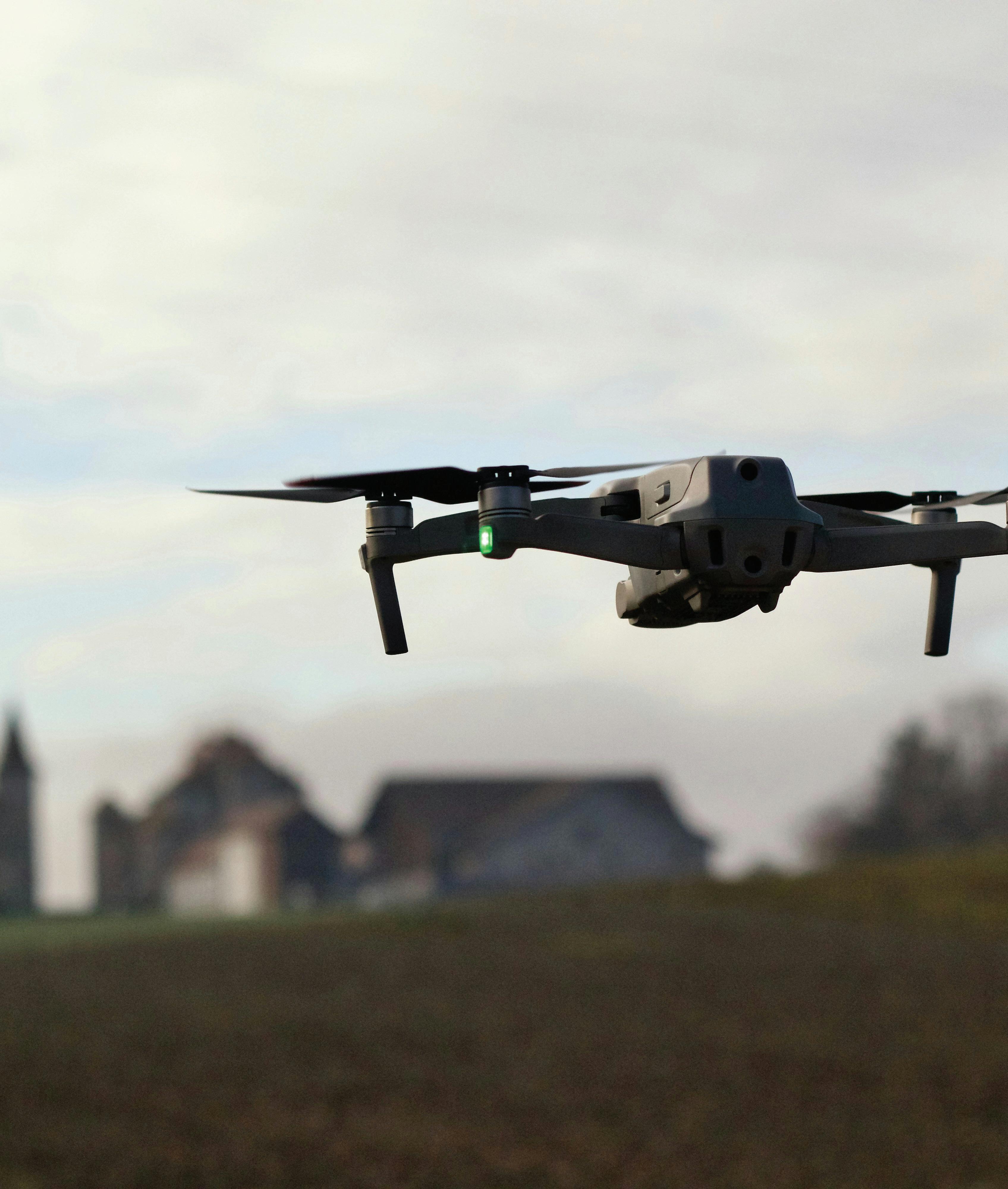
Australian farmers navigate a complex landscape, marked by labour shortages, rising input costs, climate variability, and the pressure to increase yields.

Farming has always been about problem-solving, responding to unpredictable weather, fluctuating markets, and workforce challenges.
Today, those pressures have intensified. Labour is harder to source, inputs have become more expensive, compliance and environmental requirements have increased, and precision has become more important than ever.
It is in this environment that robotics has begun to find its place. Autonomous systems, drones, and AI-driven machines are no longer futuristic concepts; they’re being trialled and deployed in real farming operations.
Although adoption has remained selective, constrained by cost and technical expertise, early adopters have reported benefits such as efficiency, precision, and sustainability.
As more providers bring solutions to market, robotic technologies will shape the future of farming, offering a glimpse of what operational resilience can look like in practice.
Labour-intensive tasks, such as fruit picking, are ideal candidates for automation. Ripe Robotics uses AI-powered vision and robotic suction to select and gently pick fruit, reducing damage and food waste. For growers, this means more consistent quality and less reliance on seasonal labour.
Weeding and chemical application are costly and can disrupt soil health and biodiversity. Robots in agriculture use sensors and computer vision to detect individual weeds and apply herbicides only where needed. This reduces chemical use, protects non-target plants, and preserves soil microbes and invertebrates, which are critical for nutrient cycling.
Checking stock can be a significant time burden for livestock businesses. Robotics platforms like Drone-Hand use machine-
learning-powered autonomous drones and fixed-camera systems to deliver instant, on-the-ground insights into animal and pasture health, stock location, water, and fences, helping producers cut costs, improve animal welfare, and build climate resilience.
Manual crop monitoring is time-consuming and can miss early stress signals. Robotics in agriculture is changing that. Prisma Technologies flies drones over paddocks to collect data on plant counts, crop health, and soil composition. This information helps farmers identify areas of concern earlier, enabling targeted interventions that protect yield, optimise inputs, and improve operational efficiency. By extending human capability, increasing precision, and generating actionable data, robotics in agriculture can show how innovation can turn operational challenges into measurable opportunities for growers and producers.
While robotics in farming has delivered measurable benefits to early adopters, uptake is not without its hurdles. High upfront costs remain a key barrier. Producers may also need to upskill, shifting from traditional machinery to managing autonomous systems.
Technical reliability (mechanical failures, software glitches, and connectivity issues) still poses operational risks for some robotic solutions, and not every task or farm is immediately suited to full automation.
Navigating these challenges has become essential for farms seeking to capture the efficiency, precision, and data advantages that robotics can provide.
Robotics in agriculture has emerged as a high-potential tool for Australian farms. While adoption is still limited by cost and complexity, early applications are already demonstrating measurable benefits across labour, precision and sustainability, safety, and operational insights.
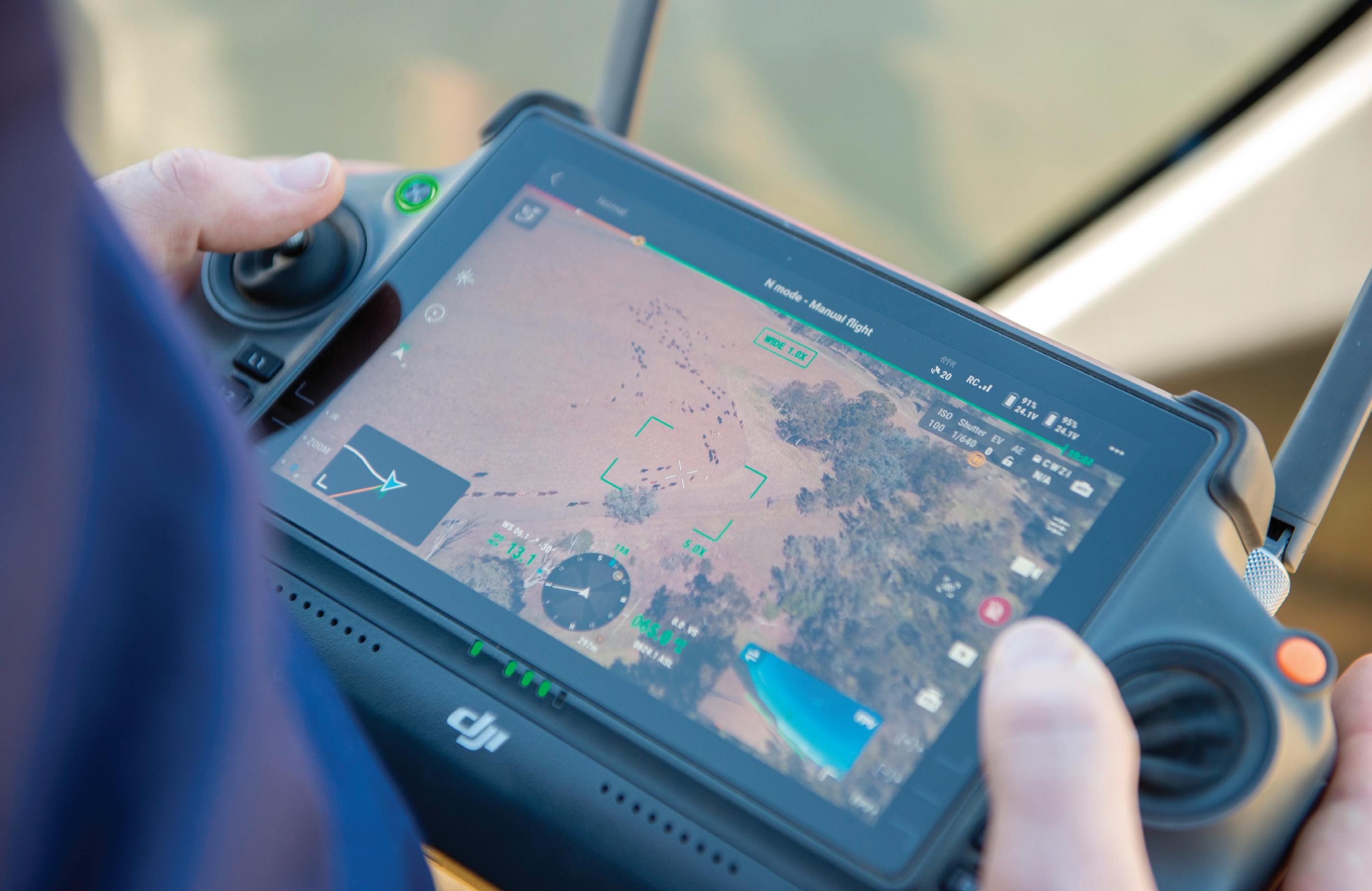
SkyKelpie is built on real stockmanship, not just technology. Every system created has been grounded in decades of practical experience under real conditions, with real consequences.
Luke Chaplain, founder of SkyKelpie, grew up in the livestock industry and could see both the strengths and the limitations of traditional mustering methods, especially across large, remote properties.
When drone technology started becoming more capable, he saw an opportunity to apply it in a way that genuinely suited livestock operations, not as a gimmick, but as a practical tool.
Chaplain explained that one of the biggest pain points is simply visibility. On a large grazing operation, finding livestock can take a lot of time, fuel and labour, especially when the country is timbered, rough or spread over large distances.
Another is labour efficiency, as producers constantly try to do more with fewer people. There is also the safety aspect, whether that is reducing the need for people to cover difficult country physically or lowering reliance on more expensive and higher-risk methods in some situations.
Chaplain was inspired most by the chance to combine good stockmanship with new technology to improve efficiency, safety, animal welfare, and visibility across the property.
He said technology has evolved from being simply a piloted eye in the sky into a much more intelligent on-farm tool, and has observed movement towards systems that can complete repeatable
tasks more efficiently, such as scanning paddocks, identifying livestock, checking infrastructure and helping operators target the right areas before they even leave the house or ute.
For day-to-day farm operations, that means less time spent searching, better use of labour, quicker decisions, and more consistent monitoring across large areas. Additionally, this real-time visibility can lead to better timing and better decisions.
“If you know where your livestock are, whether they are moving normally, and whether key infrastructure is in order, you can respond earlier and more accurately,” said Chaplain.
“That can mean less time spent searching for them, faster identification of issues with water or fencing, fewer stock losses, lower fuel and labour costs, and more confidence in daily operations.”
He added that this also allowed graziers to prioritise effort where it matters most, rather than relying on broad assumptions or delayed observations.
SkyKelpie’s systems also operate even without internet connectivity, which is critical for deployment in remote or largescale farming environments.
In much of rural and remote Australia, patchy or non-existent connectivity is just a reality. If a system depends on reliable internet to function, its usefulness drops away very quickly in environments where it is needed most.
SkyKelpie has always focused on solutions that work in real paddock conditions, not just in theory. Graziers need tools that are dependable on the ground, whether they are close to the homestead or operating far from coverage, and offline capability is not a bonus in this context; it is essential.
According to Chaplain, one of the most important things to understand is that successful agricultural technology has to be built around real operational needs.
“Farmers are not looking for novelty; they are looking for tools that save time, reduce pressure, improve outcomes and work reliably in the environments they
operate in,” he added.
“That is where we have always tried to keep our focus. For us, it is about creating technology that is useful, practical and grounded in the realities of livestock production.”
Looking ahead, Chaplain’s vision is to help build a future where producers have practical, accessible tools that make livestock management more efficient, more informed and easier to carry out across large and challenging landscapes.
He believed that autonomous systems would become increasingly important, particularly for repetitive monitoring tasks, livestock location, infrastructure checks, and decision support. At the same time, he added that the future is strongest when technology works alongside people, not when it tries to remove them from the equation.
“Good operators and good stockmanship will always matter. The role of autonomous systems is to extend what people can do, improve visibility and make day-to-day operations more effective.”
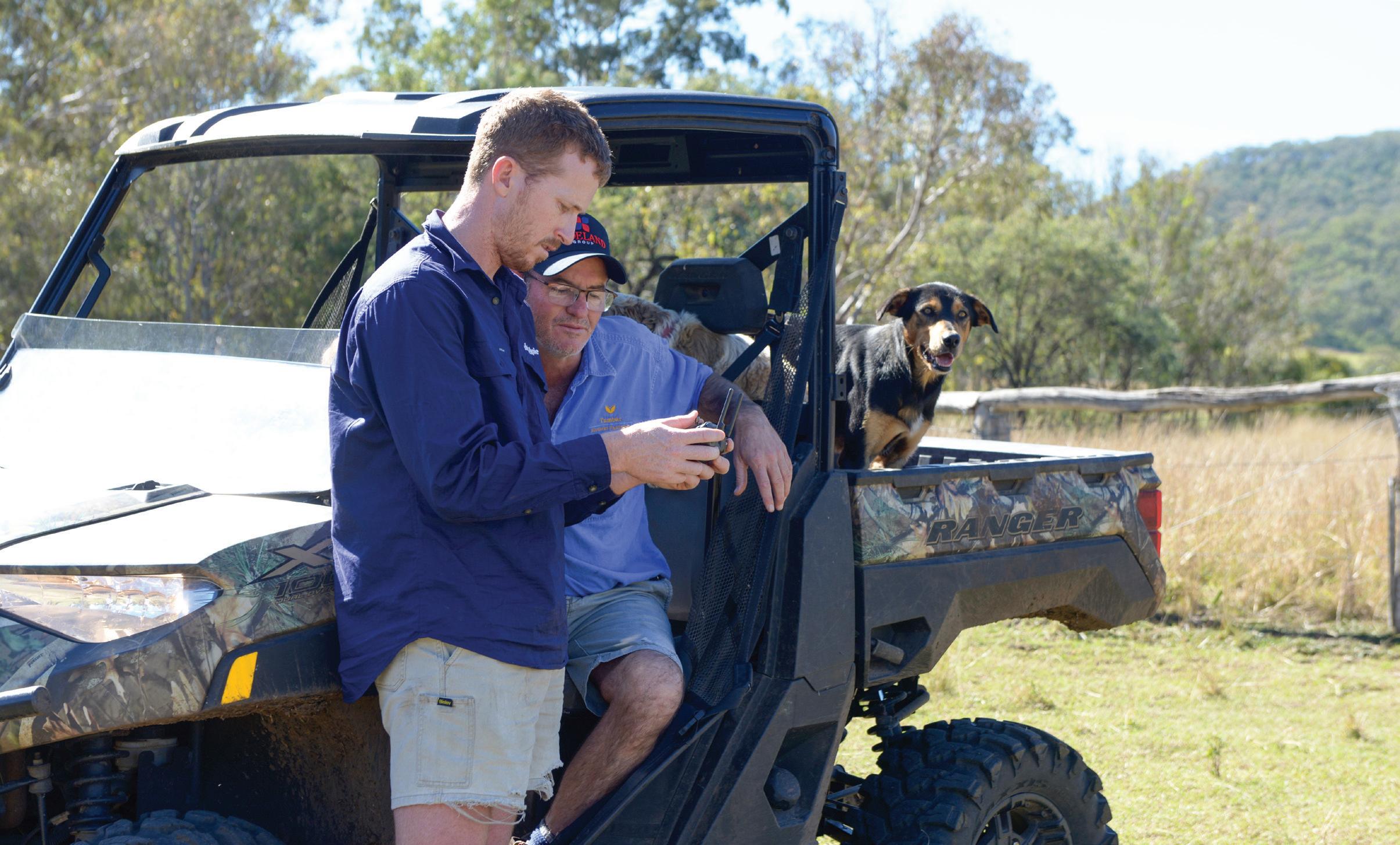

American Drone Network (ADN) has announced a partnership with BRANDT to advance crop input solutions specifically tailored for agricultural spray drone operations.
Together, BRANDT and ADN will develop and optimise adjuvant, nutritional, and surfactant systems designed to enhance the performance, efficiency, and effectiveness of drone-based crop applications.
As part of the partnership, ADN members will gain access to select BRANDT products with added benefits, helping drone operators adopt proven crop input technologies while improving operational efficiency and application results. Members will also be able to source products through BRANDT’s established distribution network, ensuring reliable availability and streamlined access across the agricultural landscape.

BRANDT, a family-owned company with a long-standing legacy in agriculture, has built its reputation over decades by delivering innovative crop input solutions to growers worldwide.
Founded in 1953, BRANDT has remained family-led and is widely recognised for its commitment to research, quality, and supporting the success of farmers and agricultural retailers.
Together, ADN and BRANDT aim to accelerate innovation in aerial crop application by equipping drone operators with advanced formulation systems and agronomic expertise tailored to the unique demands of drone spraying.
The partnership reflected a shared commitment to supporting the next generation of agricultural technology while strengthening the capabilities and profitability of ADN’s growing network of operators.
BRANDT technical representatives will participate in ADN’s Drone Days regional training events, providing hands-on instruction on product selection, mixing procedures, tank mix compatibility, and adjuvant selection. Training sessions will qualify for continuing education credits applicable to pesticide applicator licence renewals.
“Chemicals are only effective when applied correctly,” said Charlie Booker, ADN Training Director.
“We are committed to providing the education and support that ensures pilots apply products at proper rates, with compatible tank mixes, under appropriate conditions, and in compliance with label requirements.”
ADN plans to integrate BRANDT product access into its platform via a digital system that includes inventory management tools, application rate calculators, and automated documentation linking chemical usage to flight records.
The BRANDT partnership is the latest addition to ADN’s growing ecosystem of industry collaborations. Earlier this year, ADN announced the acquisition of CropFlight, a flight logging and operational management platform, establishing what the company describes as the nation’s largest agricultural drone pilot network.
American Drone Network provides agricultural drone pilots with access to N-numbered fleet aircraft, a 72-hour equipment replacement guarantee, training, technical support, and competitive pricing on chemicals and supplies through an ownership-based model.
ADN connects pilots, farmers, chemical manufacturers, equipment providers, and insurance companies in a comprehensive ecosystem.
Hoping to transform agricultural pollination strategies with aviation, students from UC Davis College of Engineering entered RoboBees into NASA’s 2025 Gateways to Blue Skies Competition.
Oliver Austin, a third-year undergraduate doublemajoring in aerospace science and engineering and mechanical engineering, led the team.
The RoboBees team also included second-year mechanical and aerospace engineering undergraduate students Orfeas Magoulas and Het Satsiya, mechanical engineering Master of Science student Achuth J. Kondoor and biological and agricultural engineering Master of Science student Horacio Contreras.
RoboBees aren’t just bees. They are miniature drones that mimic bee flight patterns, stopping at each flower to
pollinate, designed to support natural pollinators and improve crop yields. It is a novel adaptive pollination system of a swarm of lightweight autonomous drones that can mimic natural pollination.
The multirotor microdrones each weigh under 250 grams and will either have a sprayer to distribute pollen or an electrostatic tip as a proboscis-like arm to take pollen from one flower and deposit it on another.
The proboscis-like arm is a particularly unique RoboBees feature. By mimicking the long, tube-like tongues of butterflies, the RoboBee’s electrostatic tip can deposit pollen directly into the flower, preventing

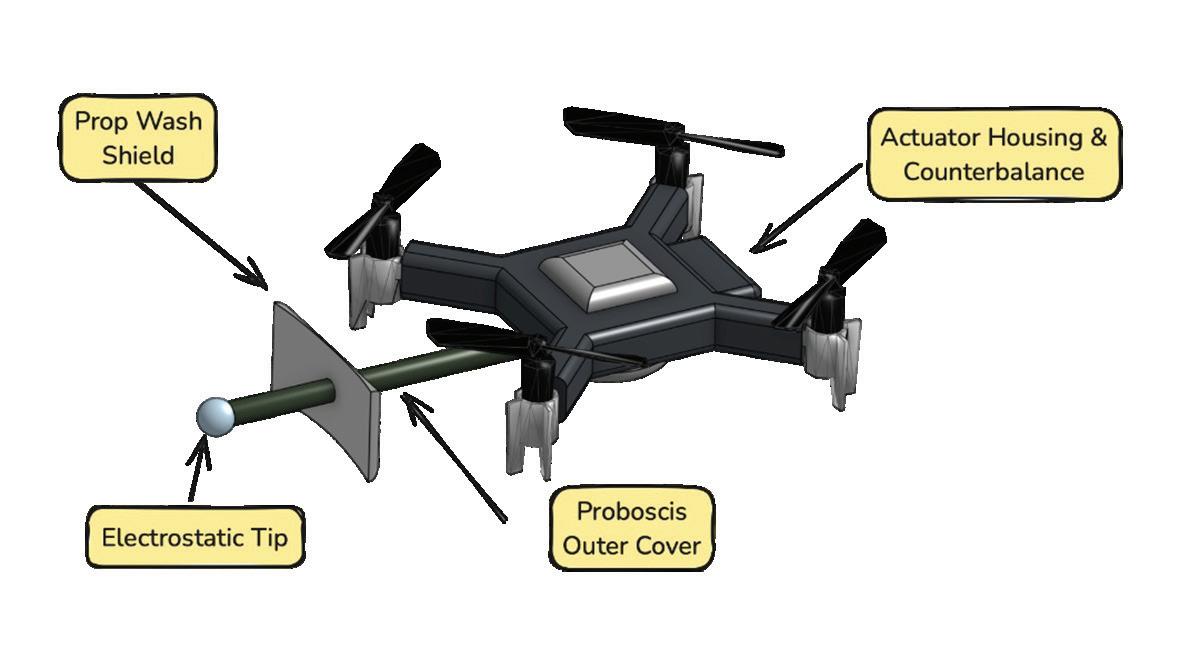
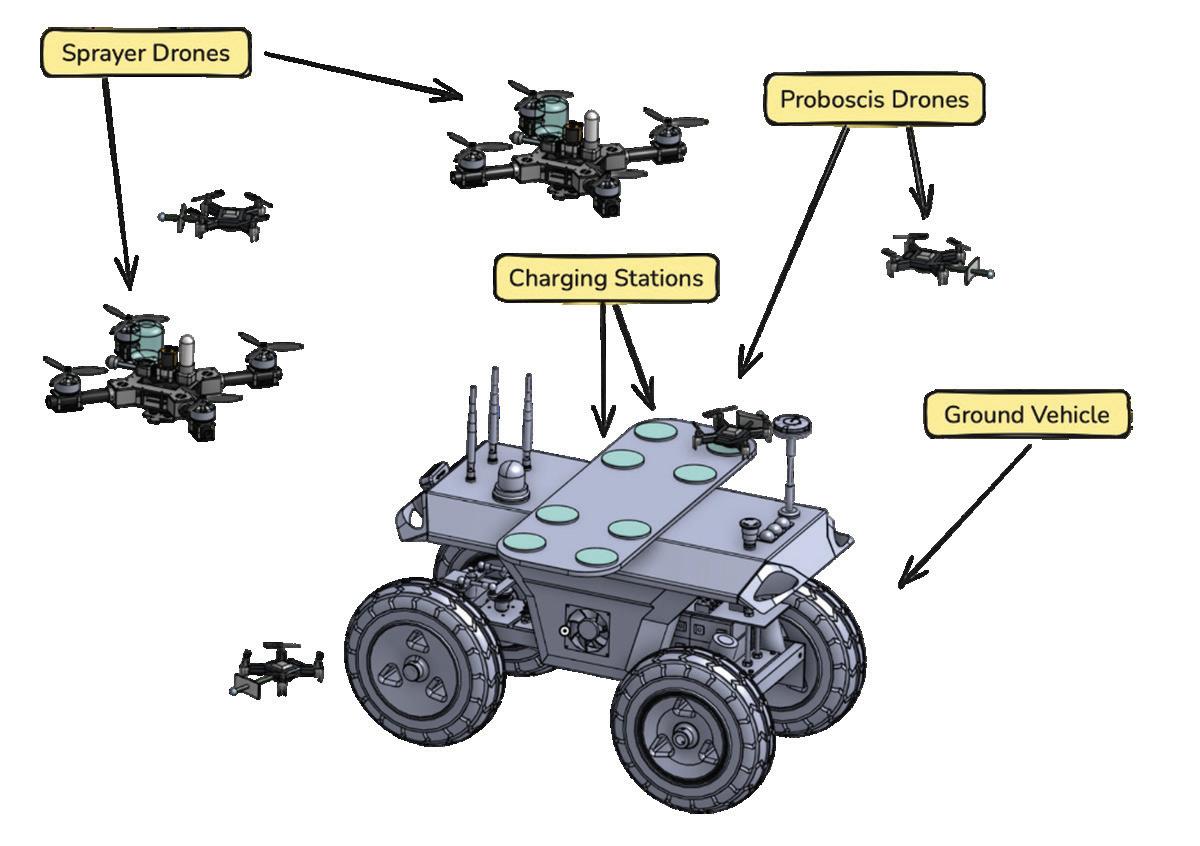
it from landing on leaves or being blown away by the wind.
Each microdrone will be equipped with a camera to help detect the appropriate flowers and AprilTag, a QR code-like system used for computer vision, to monitor its location. The fleet would all be connected to a central computer system, or a BeeHive, to coordinate the drones’ locations relative to crops and handle drone recharging and pollen refuelling.
Austin and his team sought to modernise inefficient pollen-dispersal systems and reduce farmers’ costs. With their RoboBees drones, they can provide a cheap, rechargeable alternative to pollen distribution and on a larger, more accurate scale than with bees.
The biggest problem RoboBees has tried to solve is the decline in bee populations. The team aimed to support pollinators with this technology and extend their
product to work with bee conservationists to create a symbiotic relationship between drones and bees.
“Without bees, there’s going to be significant agricultural impacts. We were like, ‘How can we assist bees, rather than replace them?’” said Austin.
“By assisting bees, we can also support farmers.”
The team faced a challenge in balancing RoboBees’ futuristic capabilities with current drone mapping, surveillance, computer recognition, and battery technology to determine whether their proposal was feasible within the next ten years.
To solve this issue, the team referenced other attempts to use UAVs in agriculture, like drones for crop picking and pesticide spraying. They reviewed these drone ideas and concluded that multiple drones were key to using UAVs
A CAD model of the proboscis-equipped microdrone. (Courtesy of Oliver Austin).
The RoboBees fleet will include sprayer and proboscis drones and a ground vehicle BeeHive (Courtesy of Oliver Austin).
in this niche of agriculture.
Many on the team have a background in both aerospace science and mechanical engineering, while Contreras brought his knowledge of agricultural science.
Having this cross-section of knowledge contributed to their overall learning experience by helping develop a passion across disciplines.
“What makes this project important to me is being able to make an innovation that spans multiple industries,” said Austin.
“I have loved drones for a very long time, and so being able to extend the reach of UAVs and make a proposed impact on the agricultural world is really meaningful to me.”

There is a war being waged against industrial progress, a quiet assault on the materials that empower human life. It is fought in the name of “sustainability” and “naturalness” by those who find virtue in limitation. They look at a piece of modern, lightweight, flexible packaging—a plastic pouch holding fresh food—and see a pollutant. They are wrong.
To understand the absolute moral good of flexible packaging, one must reject the anti-human premise that human impact on the world is inherently evil. We must adopt a new standard: human flourishing. Using the framework of rational egoism, where the highest value is man’s life, and the “human standard of value” championed by Alex Epstein, it becomes clear that flexible packaging is not a necessary evil, but a technological marvel—a proactive, value-producing triumph of human ingenuity over a hostile natural environment.
Ayn Rand identified the trader principle as the only ethical basis for human interaction: the voluntary exchange of value for value. It is only the nature of Life that makes the concept of Value possible. Flexible packaging is a pure expression of this principle in industrial life.
Consider the alternatives: heavy glass, bulky rigid plastic, or inefficient paper. These materials demand high energy to manufacture and high fuel costs to transport. Flexible packaging, made largely from petrochemical derivatives, uses significantly less material to achieve better results. It is a triumph of efficiency, which is a moral virtue. It takes less to create more, allowing the consumer to pay for the product, not the waste of excessive packaging material.
The producer of flexible packaging is acting in their rational self-interest, creating a superior product that improves upon the limitations of the past. The consumer, in turn, benefits from a lighter, more durable, and more affordable product. It is a win-win, free-market solution that benefits human life, completely apart from
the irrational demands of those who would sacrifice human convenience for the sake of “less impact.”
The primary purpose of packaging is to preserve food and industrial products, making them available to more people at lower costs. Flexible packaging excels at this, dramatically extending shelf life through superior sealing and barrier technologies. In doing so, it serves the highest moral purpose: the preservation of life.
The anti-impact cult argues that packaging is waste. The industrial philosopher argues that rotting food is waste. A bag of frozen vegetables, kept fresh for months, allows a person to thrive regardless of the season or their location.
A vacuum-sealed pouch of meat allows for safe transport across oceans. The ability to consume fresh, nutritious food is a product of fossil-fuel-powered industrialisation, of which flexible packaging is a pinnacle.
To reject flexible packaging is to embrace spoilage, high costs, and reduced access to goods. It is a rejection of the abundance that rational human beings have engineered.
We are told that “less is more”—that using less technology makes us more virtuous. This is the ultimate “package deal” of our time. The truth, as Alex Epstein has articulated, is that fossilfuel-driven technology does not ruin the environment; it turns a naturally dangerous environment into a livable one.
Flexible packaging is superior to traditional materials because it emits two times fewer greenhouse gases, uses six times less water, and produces five times
less solid waste in landfills compared to alternatives. It is the most environmentally “efficient” option precisely because it is the most technologically advanced option.
The goal should not be to make the smallest footprint, but to make the best impact—to harness materials to maximise human longevity and comfort. A plastic pouch that keeps a delicate, high-value medical device sterile is a far greater good than the sentimentality of using a “natural” material that breaks and fails.
Flexible packaging is a symbol of man’s ability to rearrange nature for his own survival and enjoyment. It is a triumph of production, a victory of mind over matter, and a clear moral good. It embodies the virtue of self-interest, maximising value while minimising waste, and it thrives on the industrial progress that makes human life possible.
We should reject the guilt-driven demands to abandon it. We should embrace flexible packaging as a shining example of a world that is becoming more, not less, human. We should welcome this material not as a necessary compromise, but as a masterpiece of industrial civilisation—a testament to the fact that, through industry, we can achieve a higher quality of human life.
- Kyle Vafiadis, Sr. Packaging Engineer, PPC Flex
There is a war being waged against industrial progress, a quiet assault on the materials that empower human life. It is fought in the name of “sustainability” and “naturalness” by those who find virtue in limitation. They look at a piece of modern, lightweight, flexible packaging—a plastic pouch holding fresh food—and see a pollutant. They are wrong.
Richard Parker’s days revolve around keeping people safe and productive.
The Bioeconomy Science Institute’s human factors scientist is usually found at the forefront of forestry research, collaborating with people to identify problems in their work environments.
Being on the front line can be demanding and dangerous, particularly when working with the Bioeconomy Science Institute’s wildfire research team, but Parker wouldn’t have it any other way.
“It’s quite a special thing to connect with people working in demanding industries such as forestry or fire to understand what they do and how you can improve their work experience,” he said.
Being able to connect with people is vital, but forming those relationships isn’t always easy. Parker’s friendly personality and sense of humour help.
“Sometimes you’re seen as being sent there by the management. And so people wonder, are you going to make them
work faster, or for longer days? But we’re focused solely on making the job safer, which means making it more organised. Then it becomes more productive, and everyone is happier.”
Growing up, Parker didn’t know human factors science was a field, but he had a natural attraction to working outside. His journey into human factors began with hands-on experience working on a logging crew between university studies. This gave him valuable insights into the challenges faced by forestry workers. This, plus his ability to connect with people, helped him engage with workers.
Parker made quite an impact in his role at Scion before it became part of the Bioeconomy Science Institute, including designing the striped high-vis shirts used across the industry today and using wearable cameras to determine why experienced tree fallers were more efficient than novices (his PhD topic). He also developed an award-winning robot in collaboration with the University of
Canterbury, as well as a radio-controlled car to inspect under houses after the earthquakes.
Tinkering with tools is his favourite pastime, as he spends a lot of time in his home workshop making prototypes of forestry and fire management tools, repairing his push bike or reading.
His biggest goal for the year ahead is to have human factors work integrated into all areas of the Bioeconomy Science Institute.
“I think there are things we’ve done in forestry and fire that we could do in agriculture and horticulture and other areas. So there’s a lot of opportunity there.”
He’s focused on building new relationships across the organisation, rekindling those from his sheep behaviour study days at Lincoln and maintaining existing ones in Rotorua.
“It’s really good to be highlighting this area of the Bioeconomy Science Institute. It’s a little-known area, and it’s so important.”