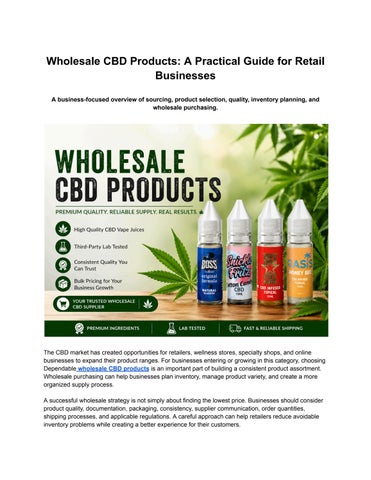
Wholesale CBD Products: A Practical Guide for Retail Businesses A business-focused overview of sourcing, product selection, quality, inventory planning, and wholesale purchasing.
The CBD market has created opportunities for retailers, wellness stores, specialty shops, and online businesses to expand their product ranges. For businesses entering or growing in this category, choosing Dependable wholesale CBD products is an important part of building a consistent product assortment. Wholesale purchasing can help businesses plan inventory, manage product variety, and create a more organized supply process. A successful wholesale strategy is not simply about finding the lowest price. Businesses should consider product quality, documentation, packaging, consistency, supplier communication, order quantities, shipping processes, and applicable regulations. A careful approach can help retailers reduce avoidable inventory problems while creating a better experience for their customers.
Why Businesses Choose Wholesale CBD Products Buying products in wholesale quantities can provide practical advantages for established retailers and businesses testing new product categories. Instead of placing frequent small orders, a retailer may be able to plan purchases around expected demand and maintain a more consistent stock level.
Key advantages include: • More predictable inventory planning and replenishment. • A broader selection of formats and product categories. • Potentially better unit economics when purchasing appropriate quantities. • Simplified ordering when working with a reliable supplier. • Greater consistency in packaging and product presentation.
Choosing the Right Wholesale CBD Products Product selection should match the needs of the business and its customers. Retailers may evaluate oils, gummies, capsules, topicals, or other CBD-related categories, depending on their market, local rules, customer demand, and business model. The goal should be to build a practical assortment rather than carrying too many products without a clear reason.
1. Review Product Information Before placing an order, review the available product information, ingredient details, serving or usage information where applicable, batch information, and laboratory documentation. Clear documentation can make supplier evaluation easier and supports more responsible product selection.
2. Evaluate Consistency Consistency matters when a retailer plans to reorder the same products. Packaging, labeling, product specifications, and batch documentation should be reviewed regularly so that the business can maintain reliable inventory standards.
3. Consider Customer Demand A good wholesale assortment should reflect actual customer interest. Businesses can begin with a manageable selection, track sales performance, and expand based on demand rather than purchasing large quantities of untested products.
Wholesale Purchasing Checklist
Area & What to Review Product quality Ingredients, specifications, batch information
Testing Current laboratory or third-party documentation
Packaging Label clarity, consistency, and condition
Supplier Communication, ordering, and fulfillment process
Inventory MOQ, lead times, storage, and reorder planning
Building a Reliable Wholesale CBD Supply Strategy Once a business has identified suitable products, the next step is developing a repeatable purchasing process. A structured supply strategy can make it easier to forecast demand, control inventory, and avoid unnecessary stock shortages or excess inventory.
Inventory Planning Retailers should monitor which products move quickly, which products require longer replenishment periods, and which items have seasonal demand. Simple inventory records can help determine reorder points and prevent last-minute purchasing decisions.
Supplier Communication Clear communication is valuable when purchasing wholesale CBD products. Before ordering, businesses can confirm minimum order quantities, available formats, lead times, shipping procedures, documentation, and any packaging requirements. Maintaining a professional relationship with suppliers can also make future ordering more efficient.
Quality and Compliance Considerations CBD businesses operate in a regulated and changing environment. Retailers should independently verify the rules that apply to their location, product type, labeling, marketing claims, and sales channels. Businesses should avoid unsupported health claims and should ensure that their product and marketing practices comply with applicable laws and platform requirements. Quality documentation is also an important consideration. Depending on the product and jurisdiction, businesses may review certificates of analysis, ingredient information, batch details, and other supplier
documentation. Responsible sourcing means checking information rather than relying only on promotional statements.
Tips for New Retailers • Start with a focused product range instead of ordering too many items. • Compare suppliers using quality, documentation, service, and pricing together. • Track inventory and reorder before stock reaches critical levels. • Keep supplier and batch records organized. • Review applicable federal, state, and local requirements before selling.
Conclusion: Planning for Long-Term Growth A thoughtful approach to wholesale CBD products can help retailers create a more organized and sustainable purchasing process. The strongest wholesale programs typically combine sensible product selection, reliable supplier communication, inventory planning, documentation, and attention to applicable requirements. Rather than focusing on price alone, businesses should evaluate the complete value of a wholesale relationship. Product consistency, documentation, fulfillment reliability, packaging, customer demand, and service all influence whether a supplier is a good long-term fit. For businesses expanding their CBD category, the best starting point is a clear purchasing plan: identify the customer, select appropriate products, verify supplier information, set realistic inventory levels, and monitor performance over time. This approach allows retailers to make purchasing decisions based on evidence and business needs.