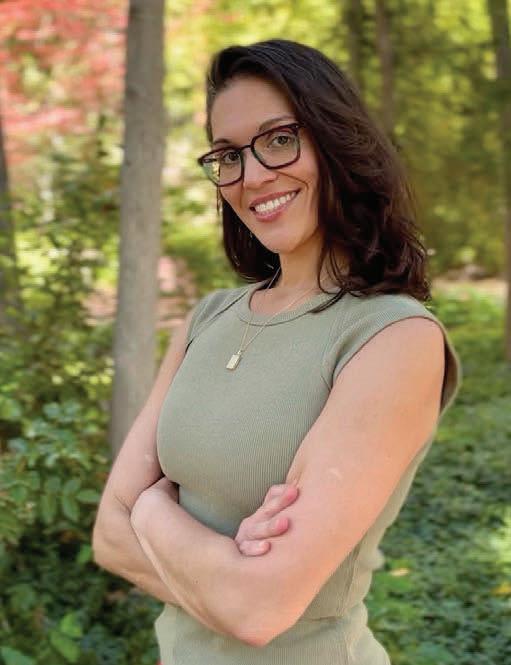
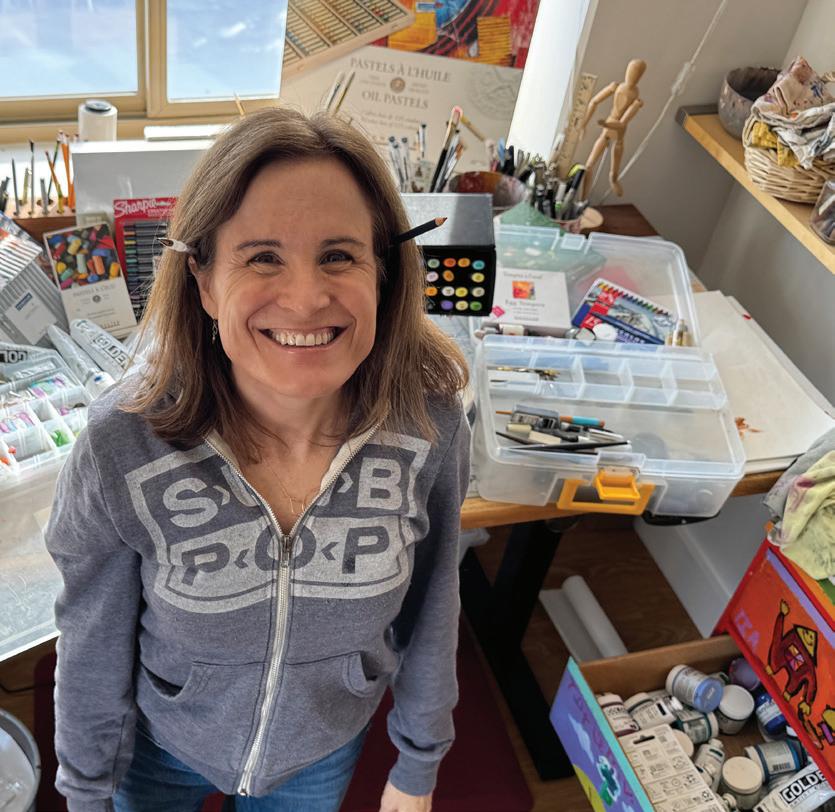
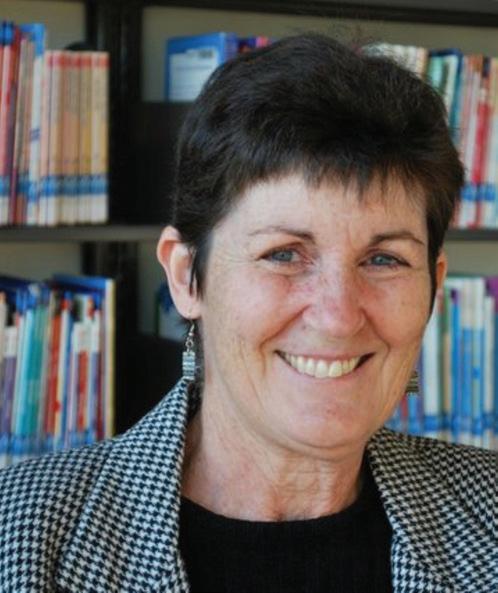
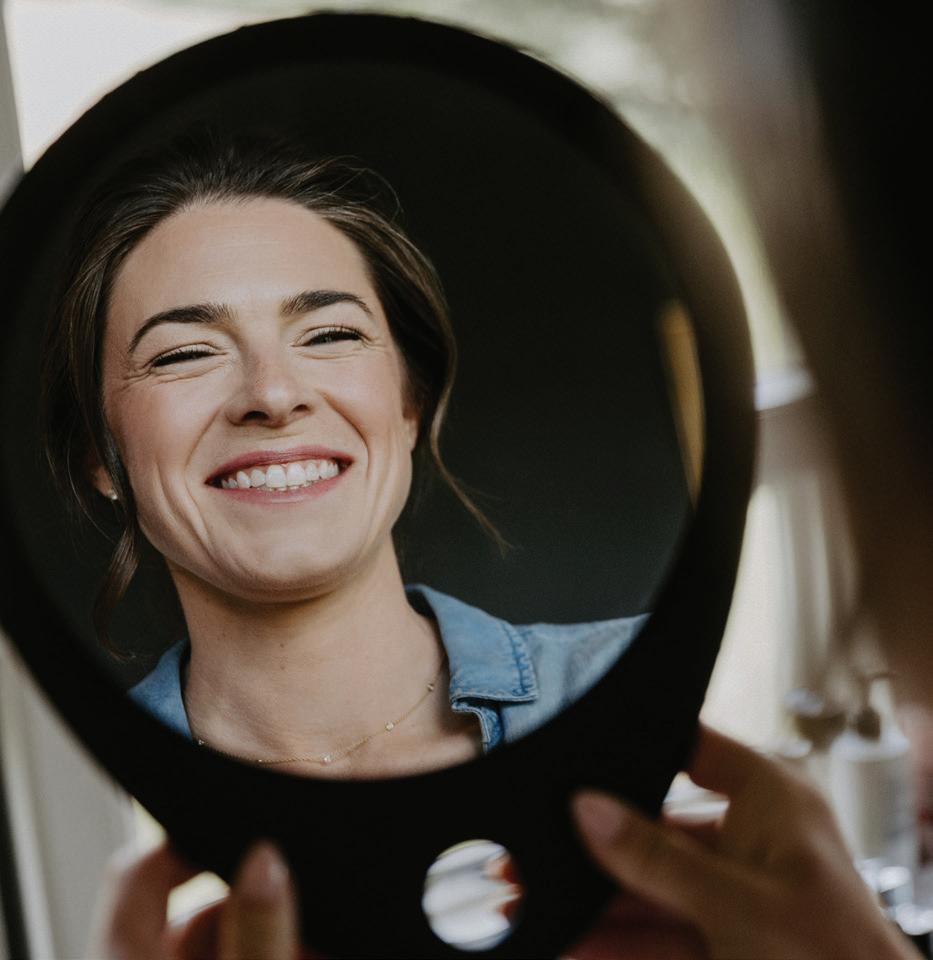
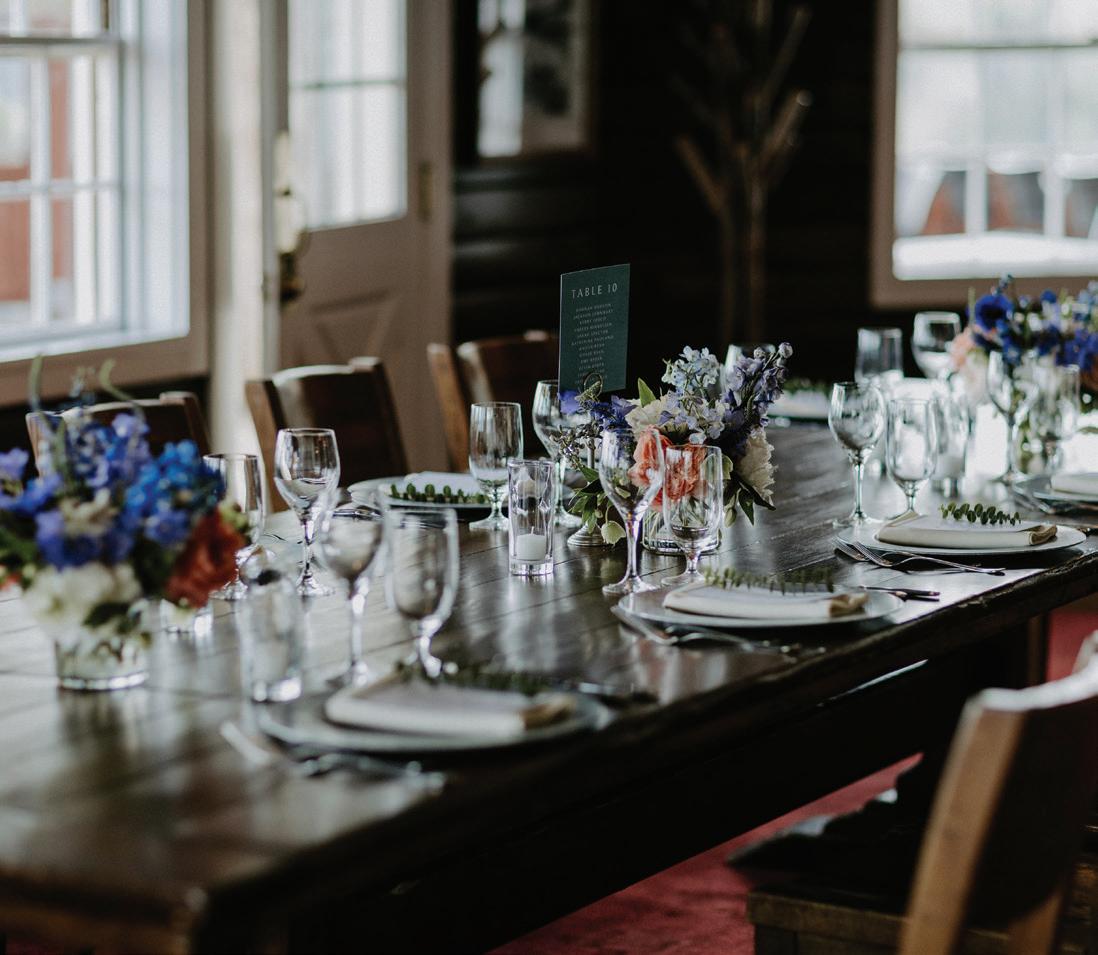
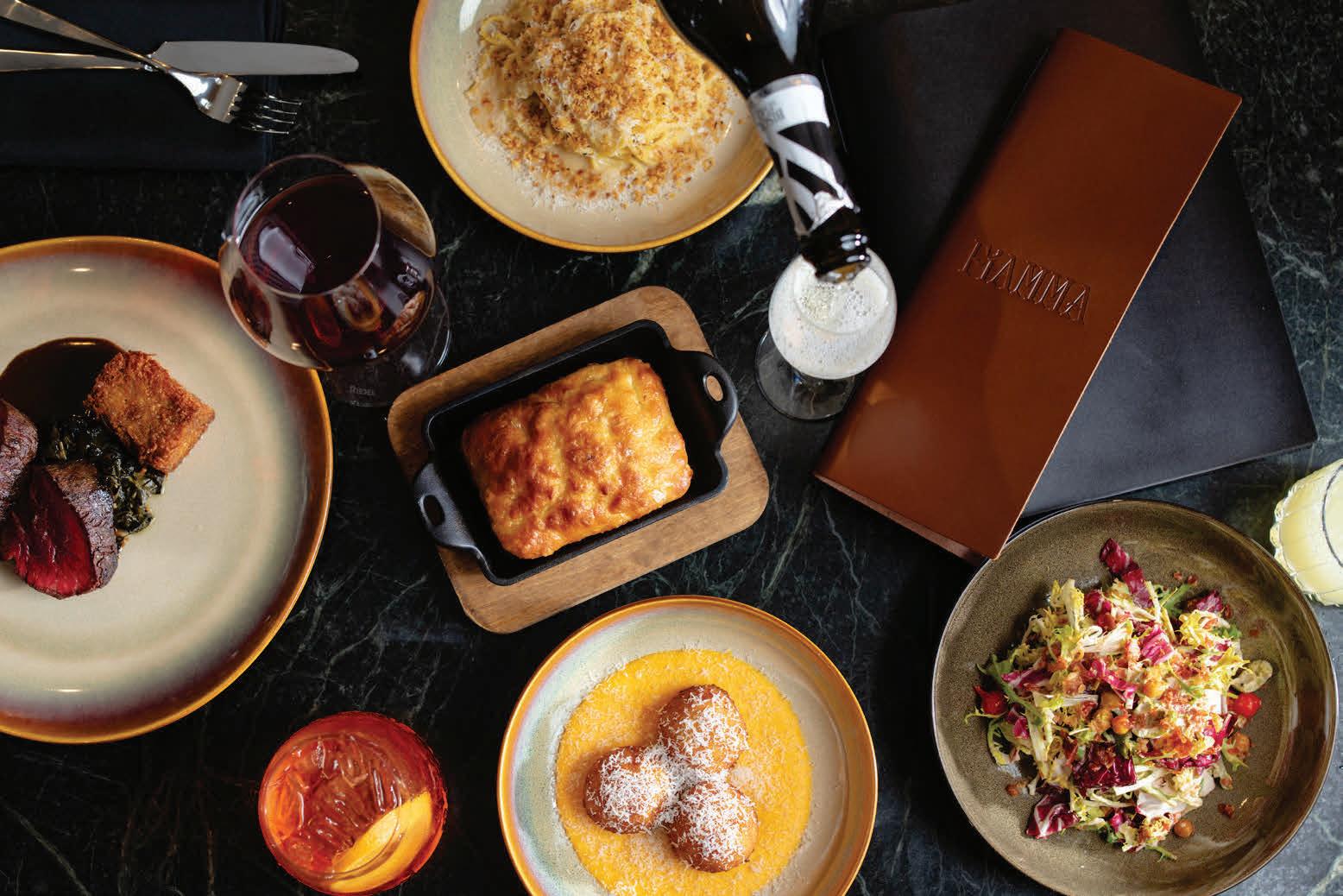
As a traditionally trained physician w ith advanced fellow ship training in anti-aging, regenerative, and integrative medicine, Dr Morales specializes in precision-based personalized health analysis and w ellness plans. Utilizing advanced genomic testing to proactively prevent and reverse cognitive decline, protect brain health, and restore your body's foundational balance Individualized care w ith a thoughtful client-centered approach, optimized for your brain, biology, and the decades ahead. Working for you locally, available nationally.
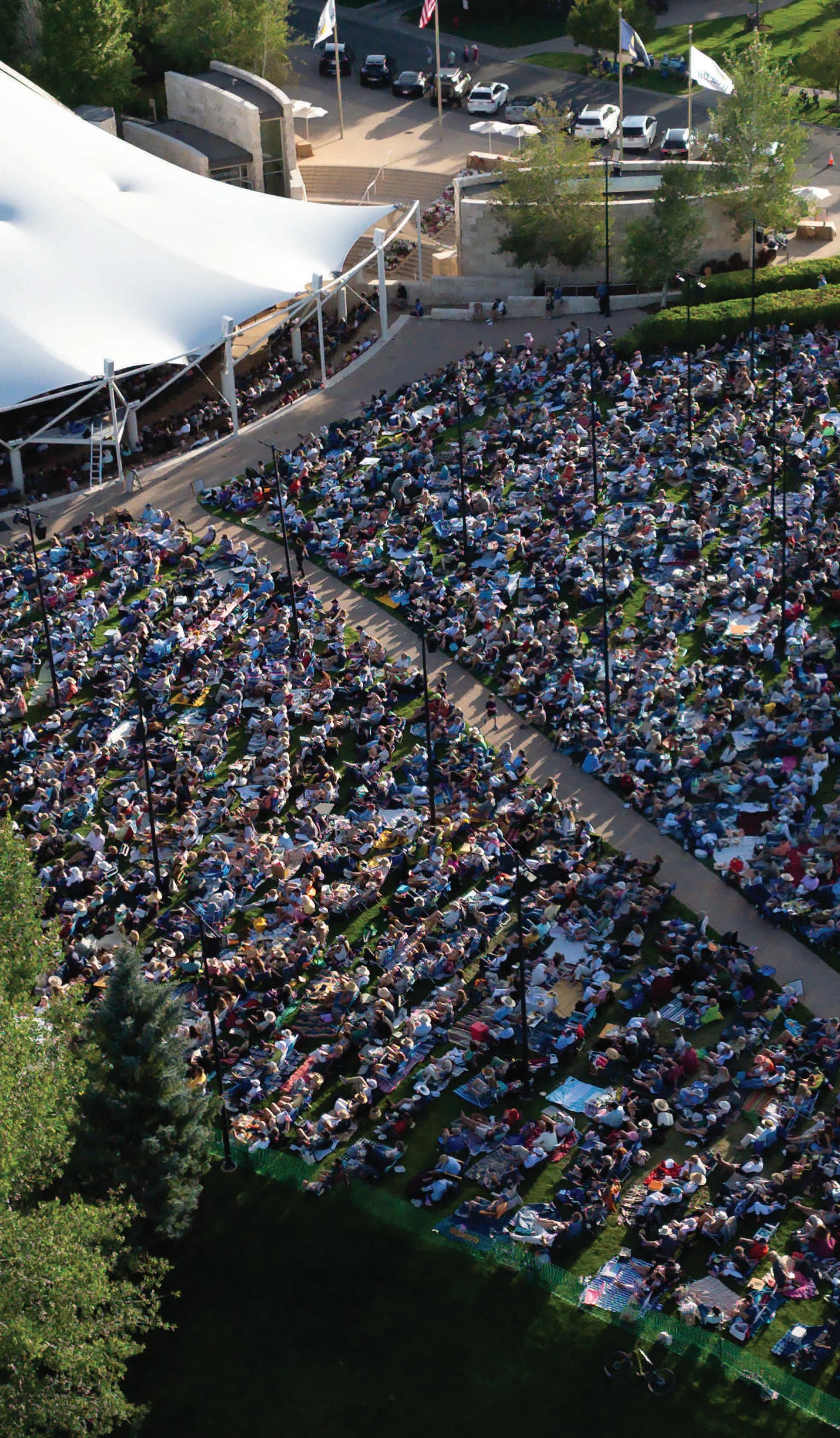
SUMMER , EL E V A TE D .
MEN’S SECOND CHANCE LIVING PICKLEBALL WEEKEND
JULY 30 – AUGUST 2, 2026
Come out and watch your favorite tennis legends battle it out on the pickleball court in support of a life-changing cause. This year’s event is set to be another unforgettable weekend of competition, connection, and charity.
Mats Wilander
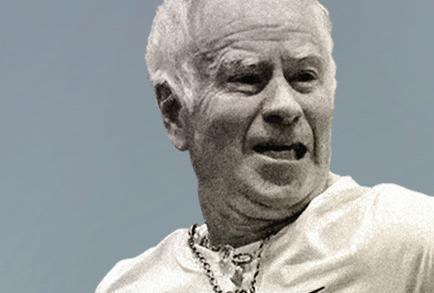
John McEnroe
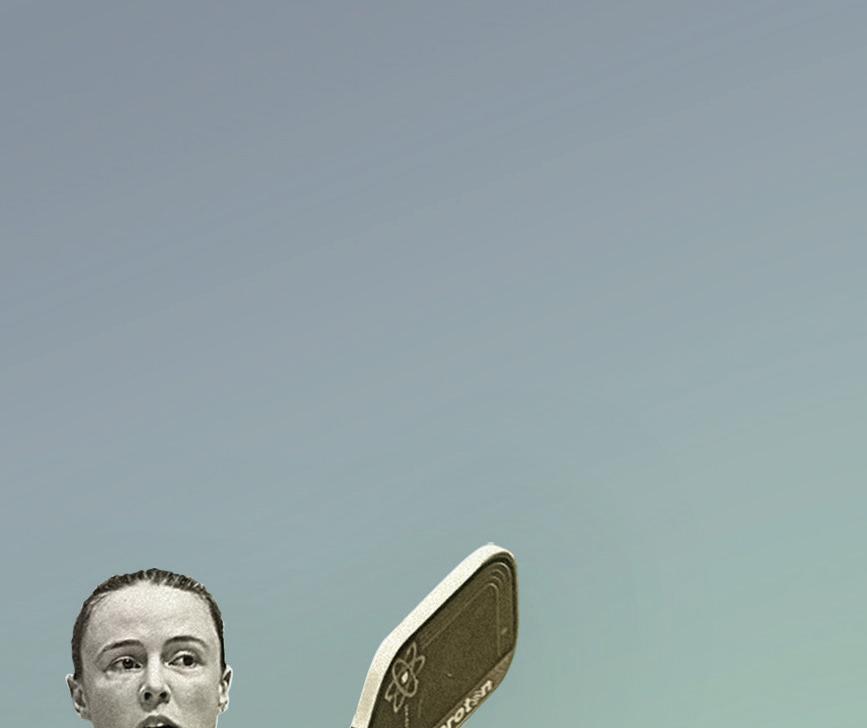
Get ready to improve your game, enjoy an unforgettable exhibition by top players, and support a life-changing cause in our community. Following the success of our last four tournaments, Men’s Second Chance Living is excited to announce our 5th Annual Pickleball Weekend. We are thrilled to welcome back tennis legends Mikael Pernfors, John McEnroe and our own local legend, Mats Wilander for an exhibition match which this year will include the #3 ranked women’s pickleball player, Kaitlyn Christian. In addition, we will have nationally ranked pickleball professionals who will be providing clinics and a tournament for local players. This exciting weekend has become a Pickleball extravaganza that you do not want to miss.
Men’s Second Chance Living continues to support men in our community as they overcome addiction and build lasting sobriety. What began as one sober living home has grown to four recovery residences serving men across the Wood River Valley. 100% of proceeds from this special weekend help provide safe housing, recovery support, behavioral health services, education opportunities, and wellness programming. Supporting men as they Recover, Rebuild, Restore, and Reenter their lives and community.
MSCL 5 th ANNUAL PICKLEBALL WEEKEND
THURSDAY, JULY 30 th
Welcome Cocktail Party 5:30pm – 7:30pm
By invitation only for VIP, Sponsors and Pro Players
FRIDAY, JULY 31 st
Clinics with the Pros
$300
Session One: 9am – Noon Session Two: 2pm – 5pm
An opportunity to learn from the best and participate in a 1-hour fun match play with prizes!
SATURDAY, AUGUST 1 st
Legends Exhibition and Dinner
$400 5:30pm – 9:30pm
MEN’S SECOND CHANCE LIVING GREATLY APPRECIATES SUN VALLEY COMPANY, SCOTTeVEST, ROBERTSON STEPHENS, AND SUN VALLEY MAGAZINE.
For more information and to purchase tickets scan the QR code or call Sonya at 208-481-0182.
Watch the Legends battle it out on the pickleball court in support of charity. Enjoy dinner prepared by the Sun Valley Culinary Institute followed by a Paddle Up and bid to play with the Legends.
SUNDAY, AUGUST 2 nd
Paddle Up Champions Match
10am – 12pm
Join us at the Sun Valley Tennis and Pickleball Club and enjoy watching the tennis legends play with the lucky bidders of Paddle Up from Saturday night. This is a free event.
All included in $1500 VIP Package
Kaitlyn
Christian
Mikael Pernfors
People are at the heart of great health care. That’s why we are committed to delivering compassionate, high-quality care tailored to the communities we serve. Together with our community partners and patients, we are building a stronger, healthier future for all Idahoans.
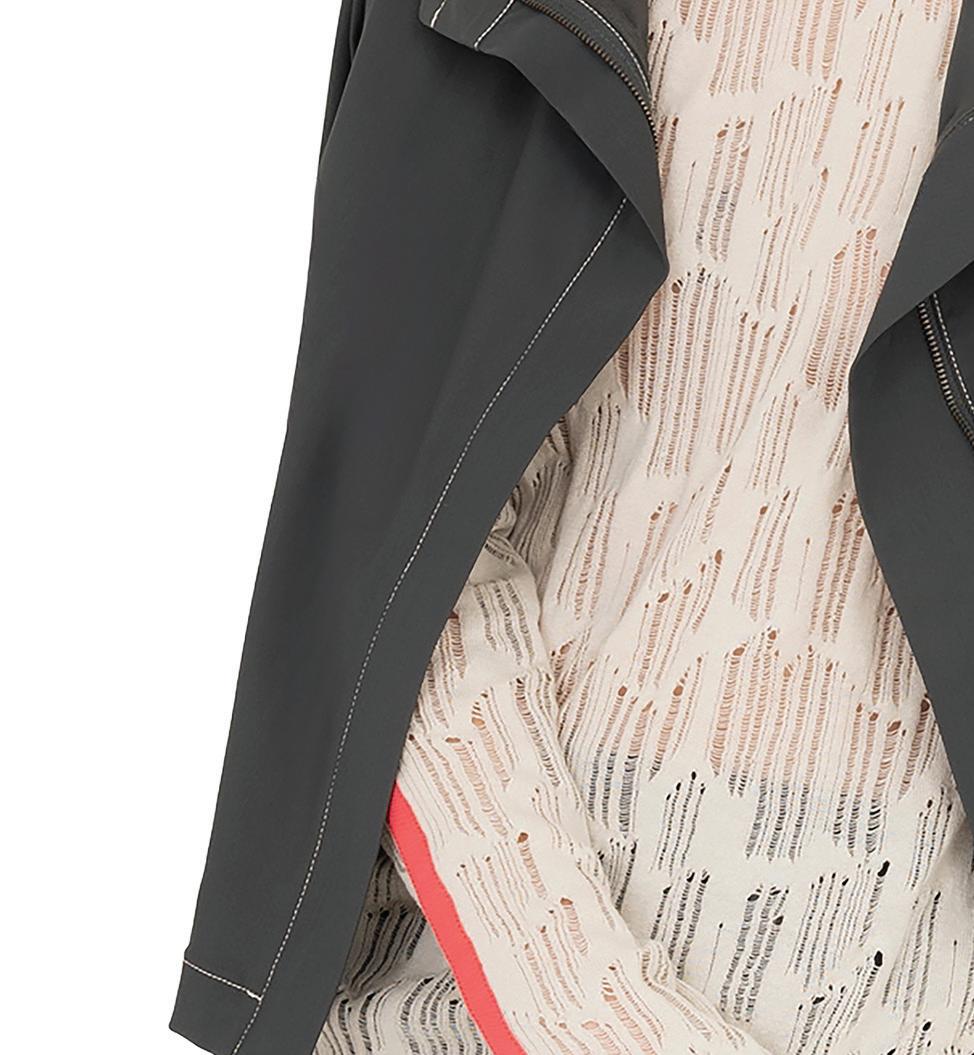
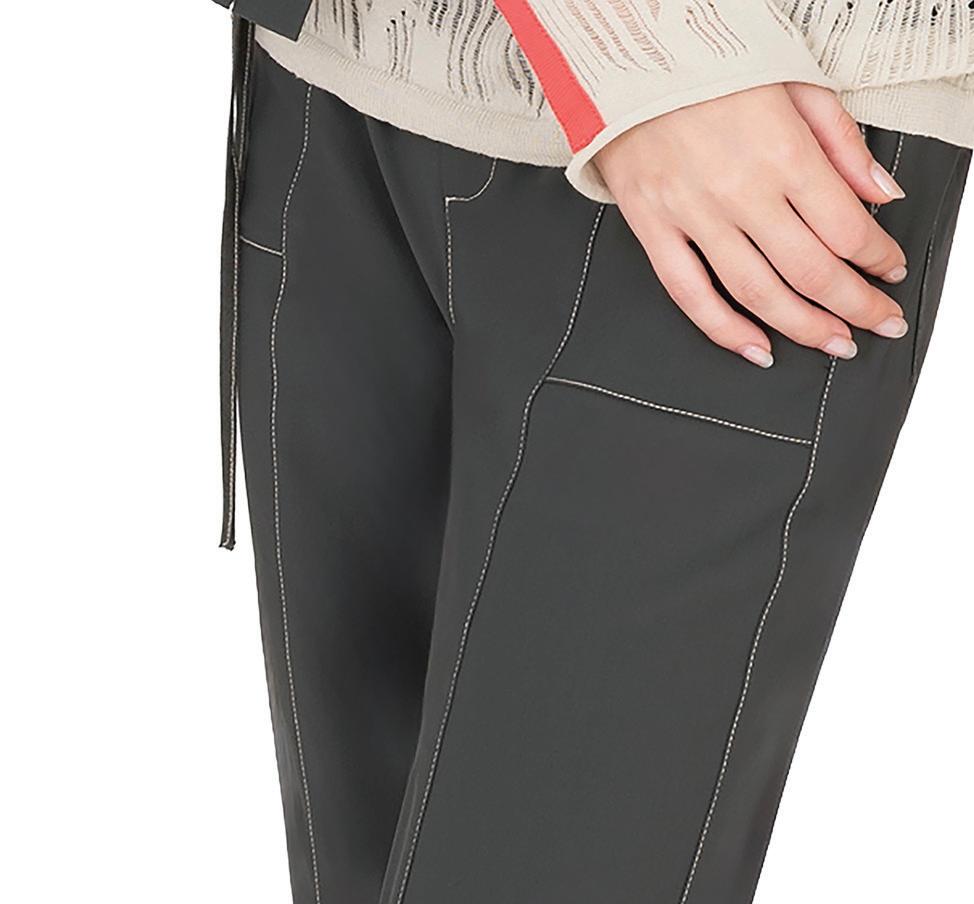
Model: Local Sun Valley resident & celebrity figure skater, Ashley Clark
Photo by: Amanda René Photography
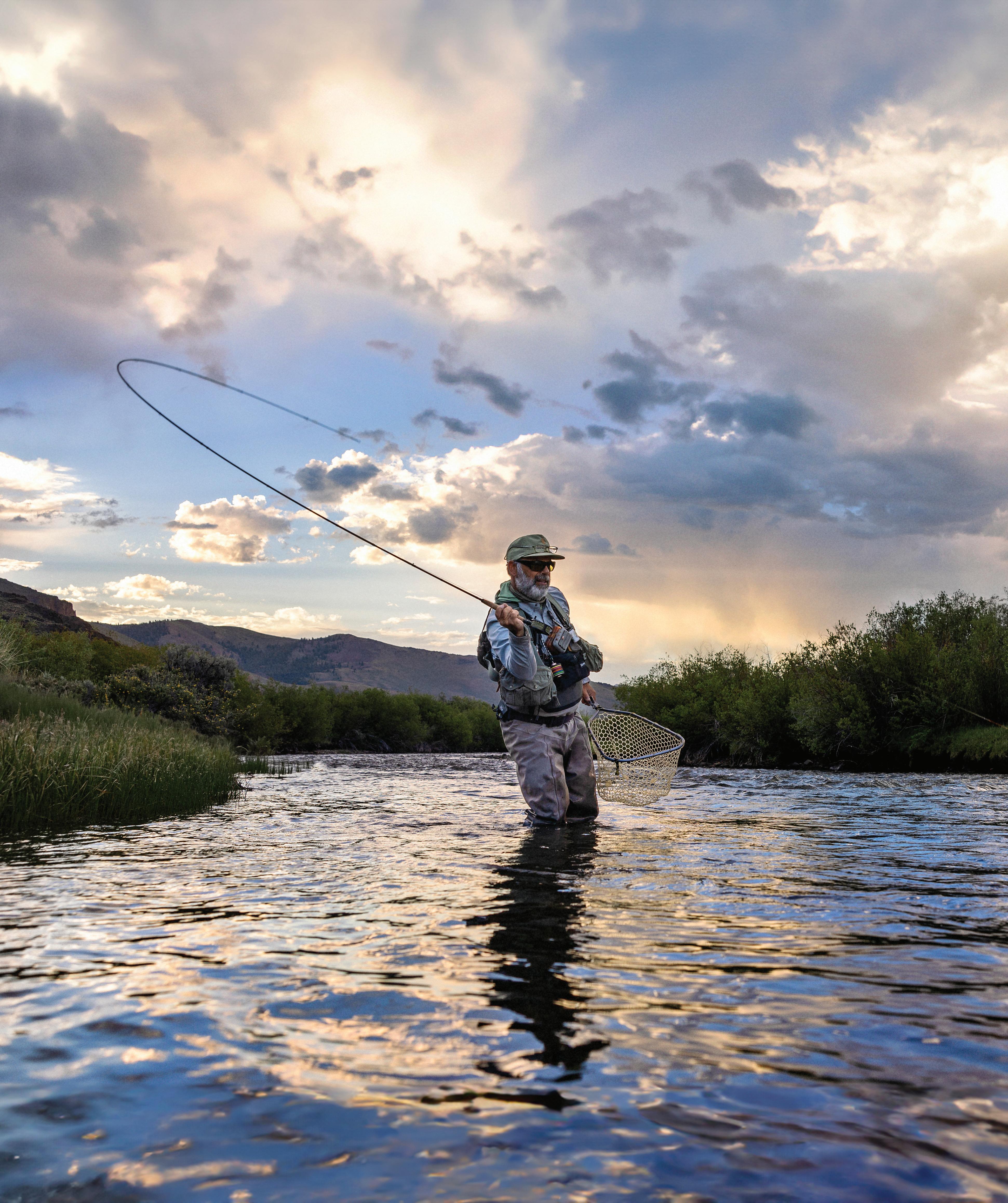
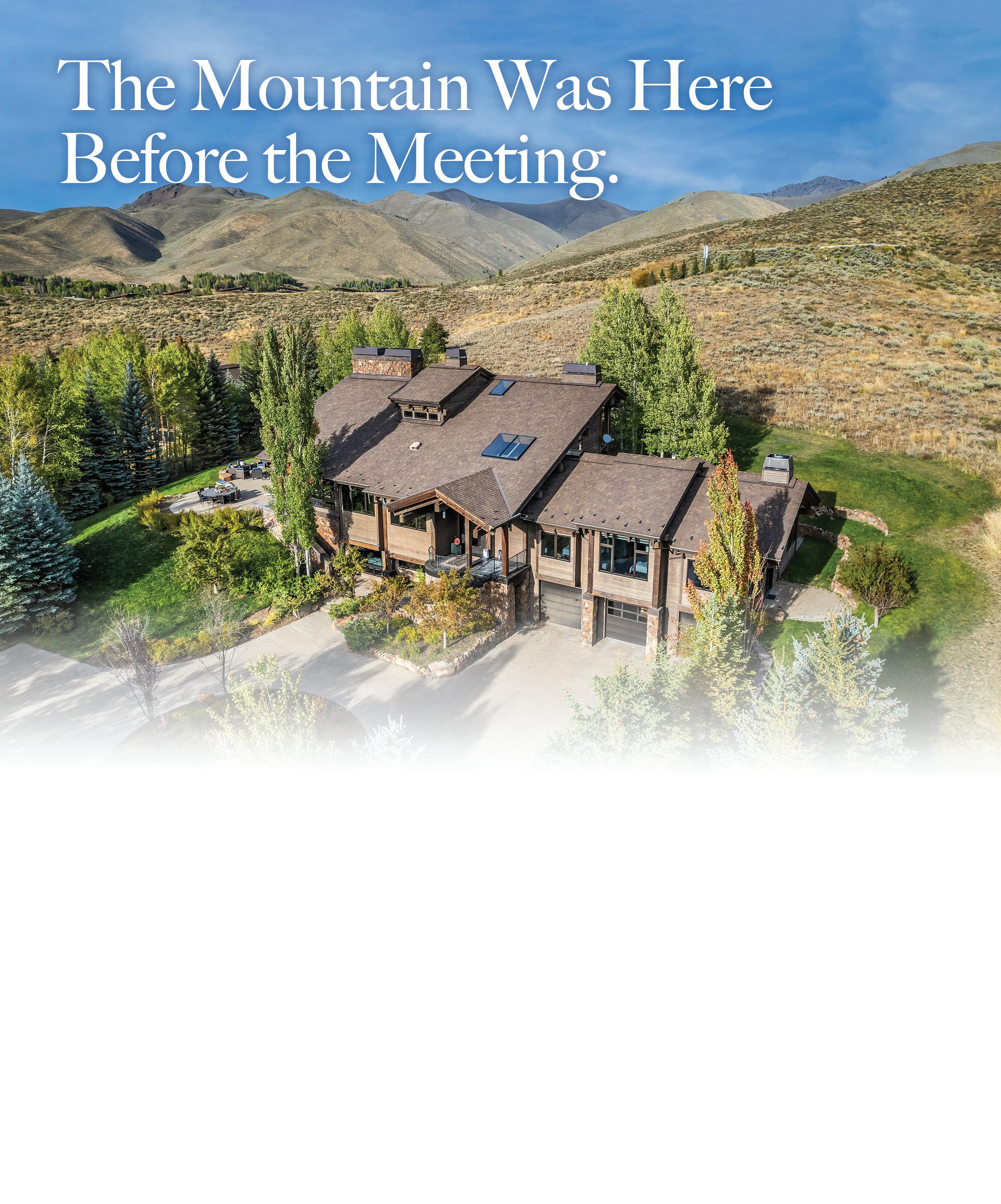
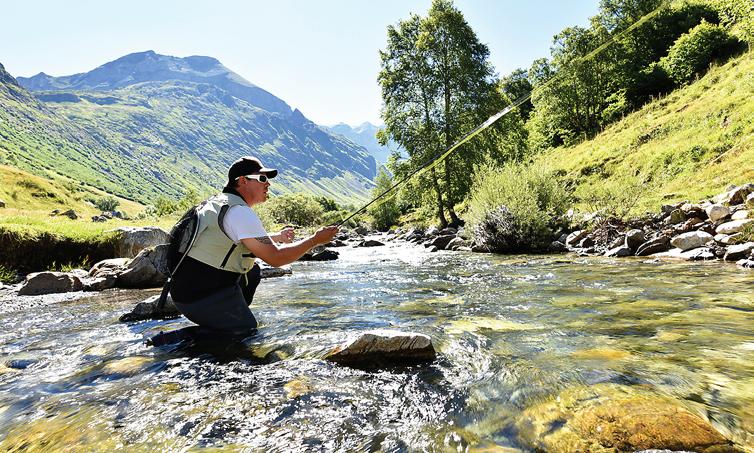
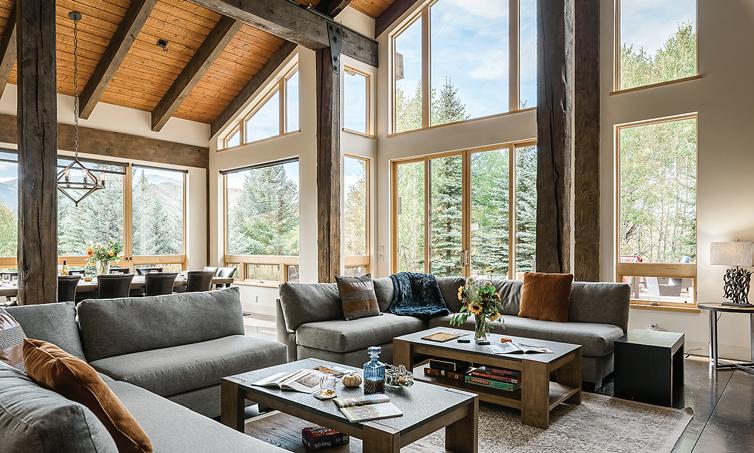
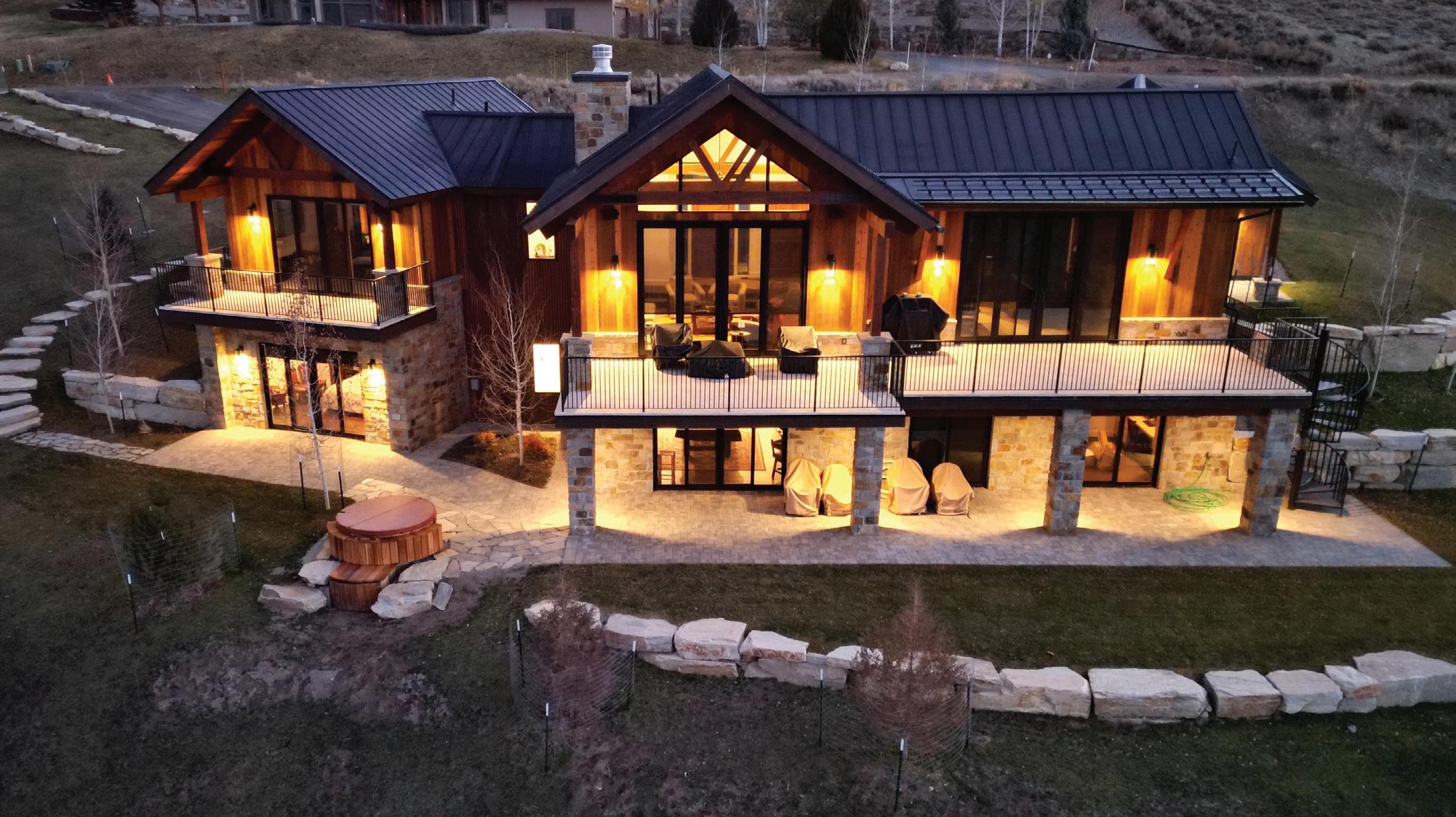
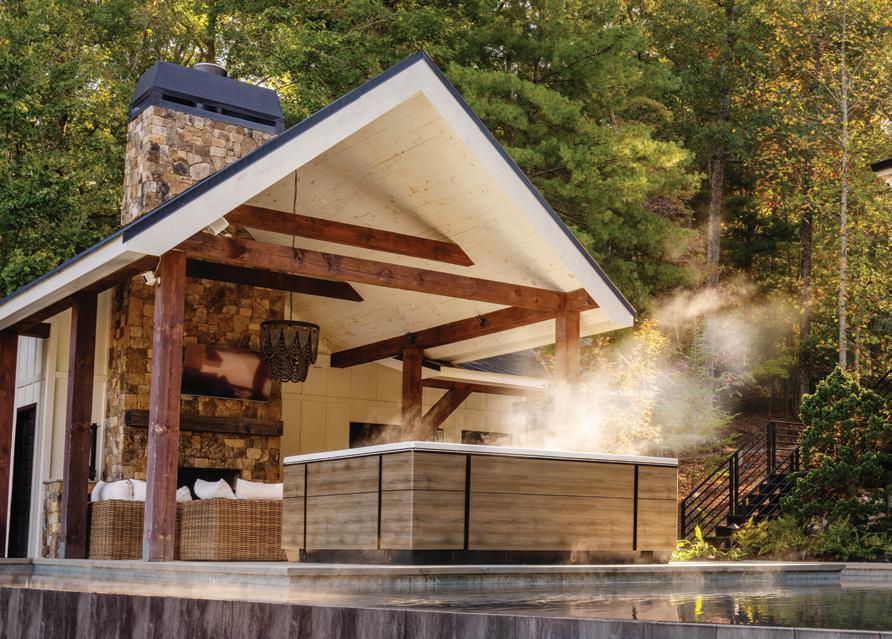
The Big Wood River doesn’t care about your calendar. Neither does Bald Mountain. Elkhorn Estate is where those with no time find more of it — 9,000 square feet of complete privacy, minutes from the ski mountain, surrounded by wilderness where elk still roam the grounds at dusk. Fly fish at dawn. Summit by noon. By the evening, return to a hot tub that holds the whole story of the day.
In Sun Valley, the mountains have always known: the best things in life are better shared somewhere extraordinary. That’s Elkhorn Estate. And it’s only... at Abode.
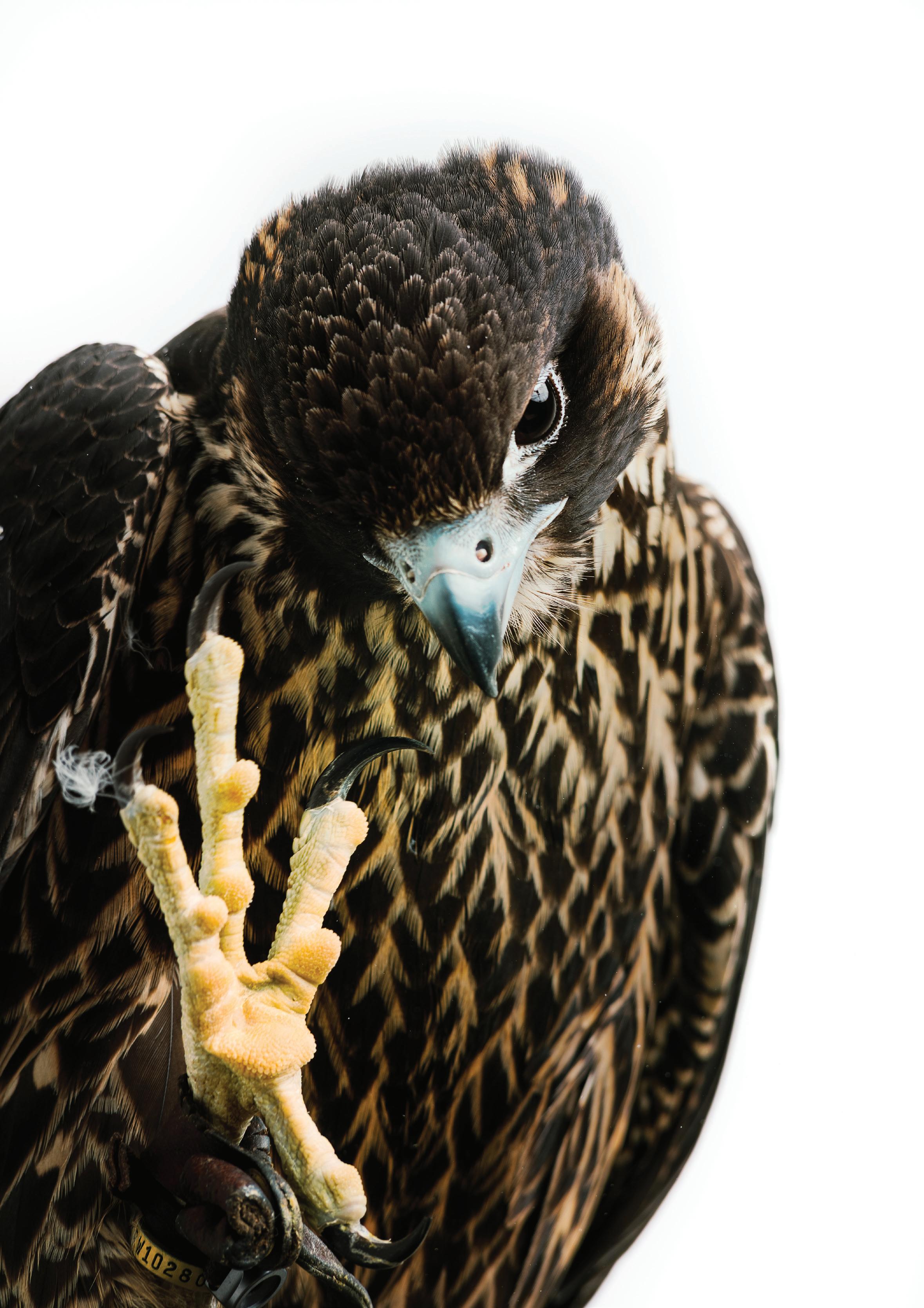
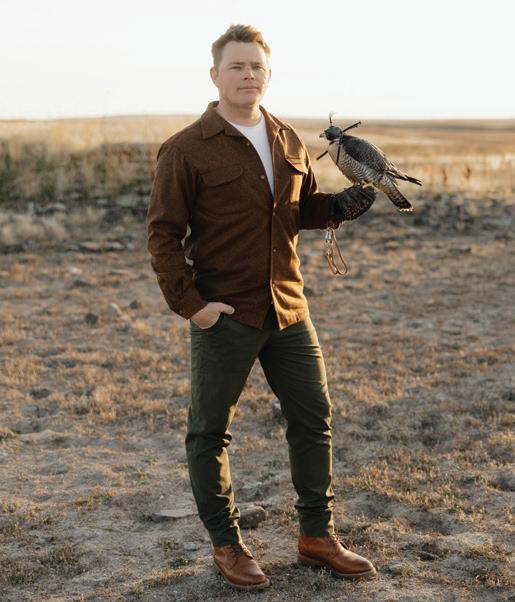
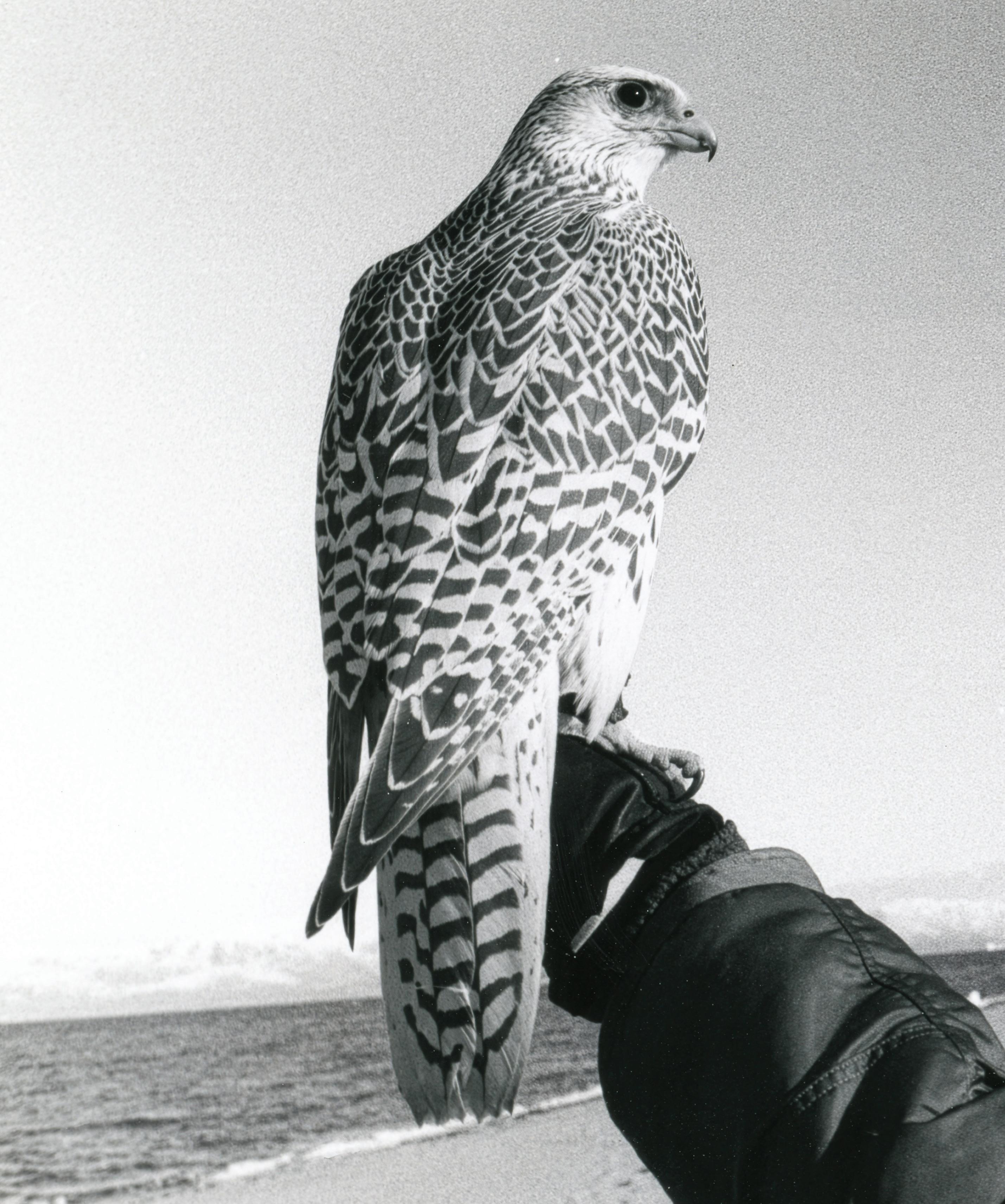
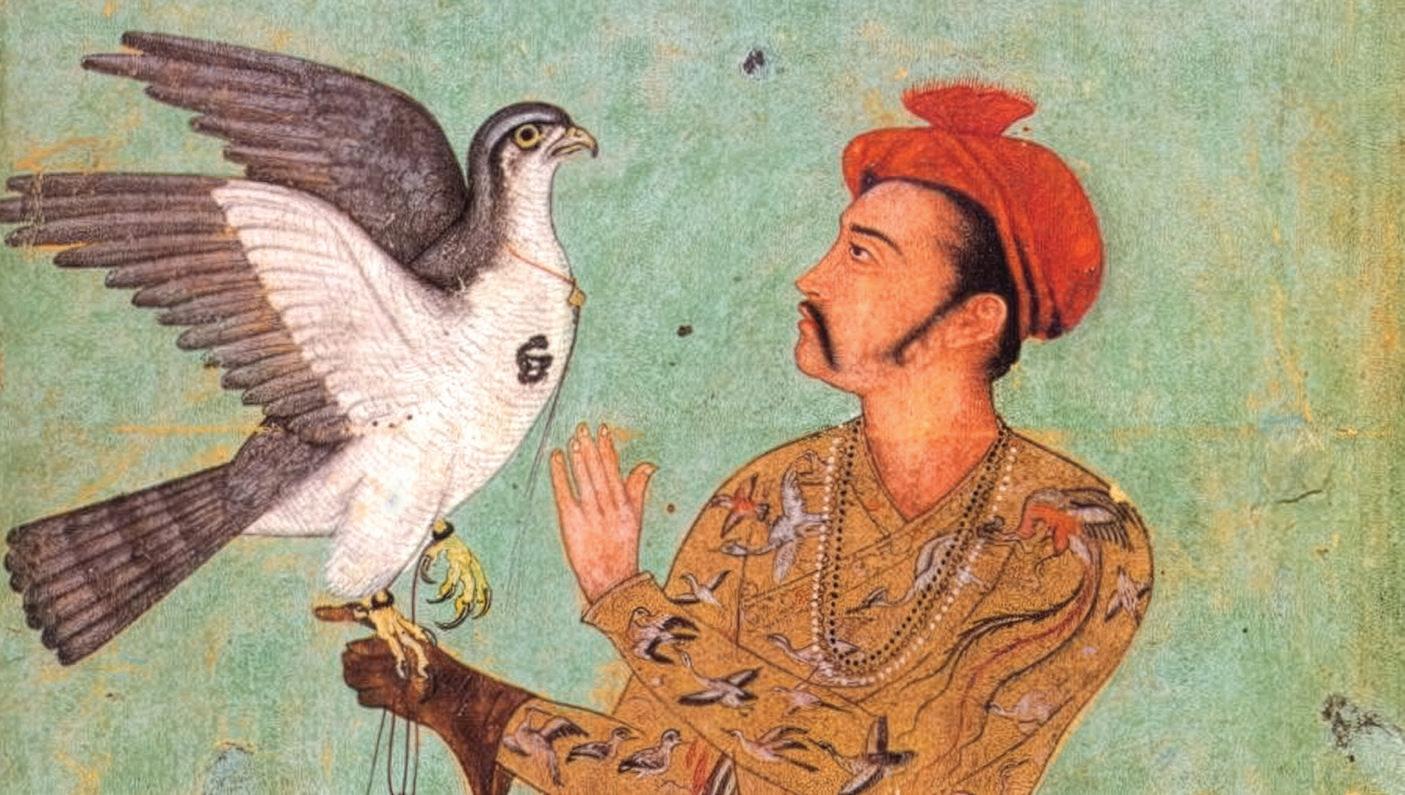
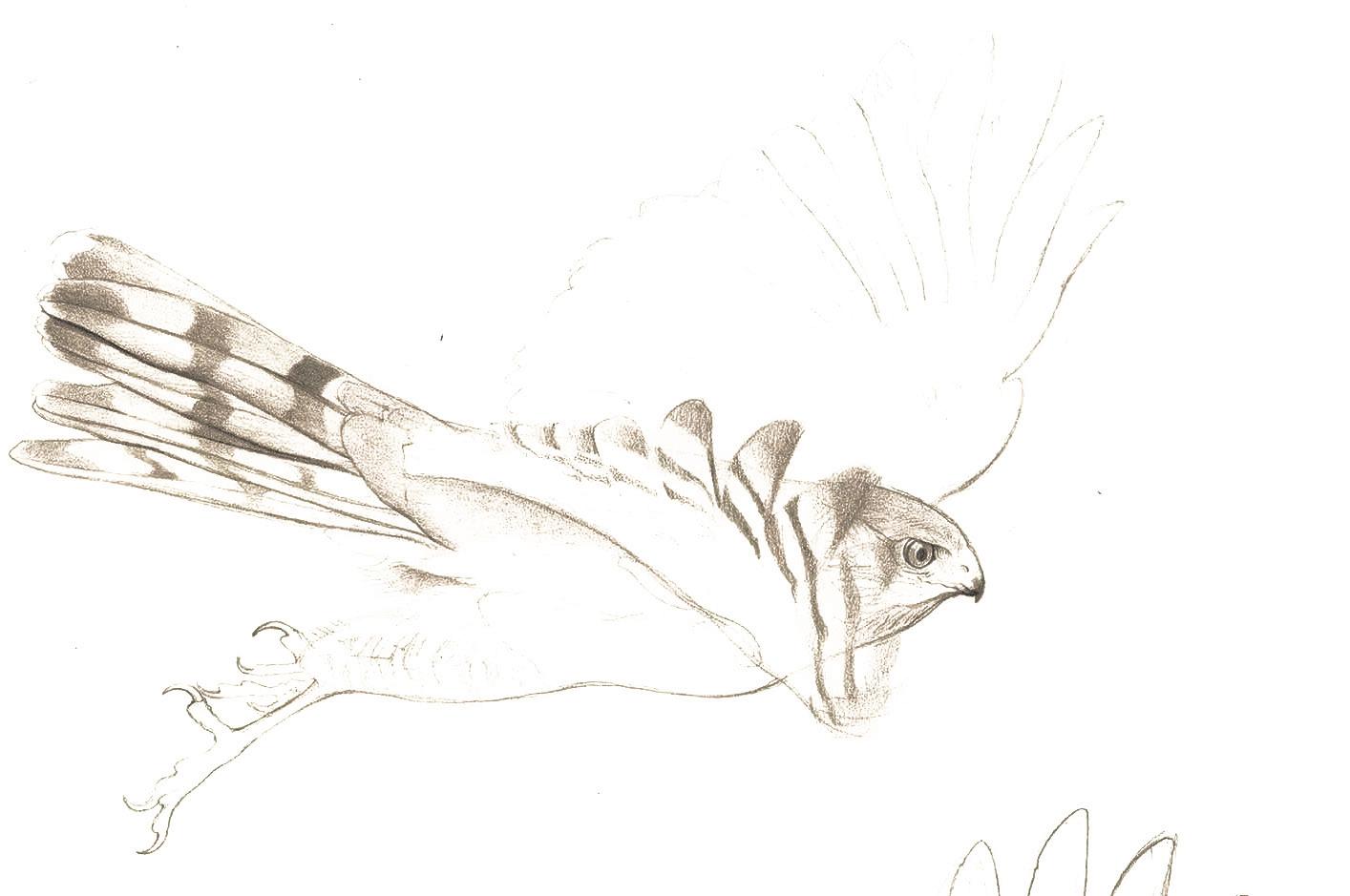
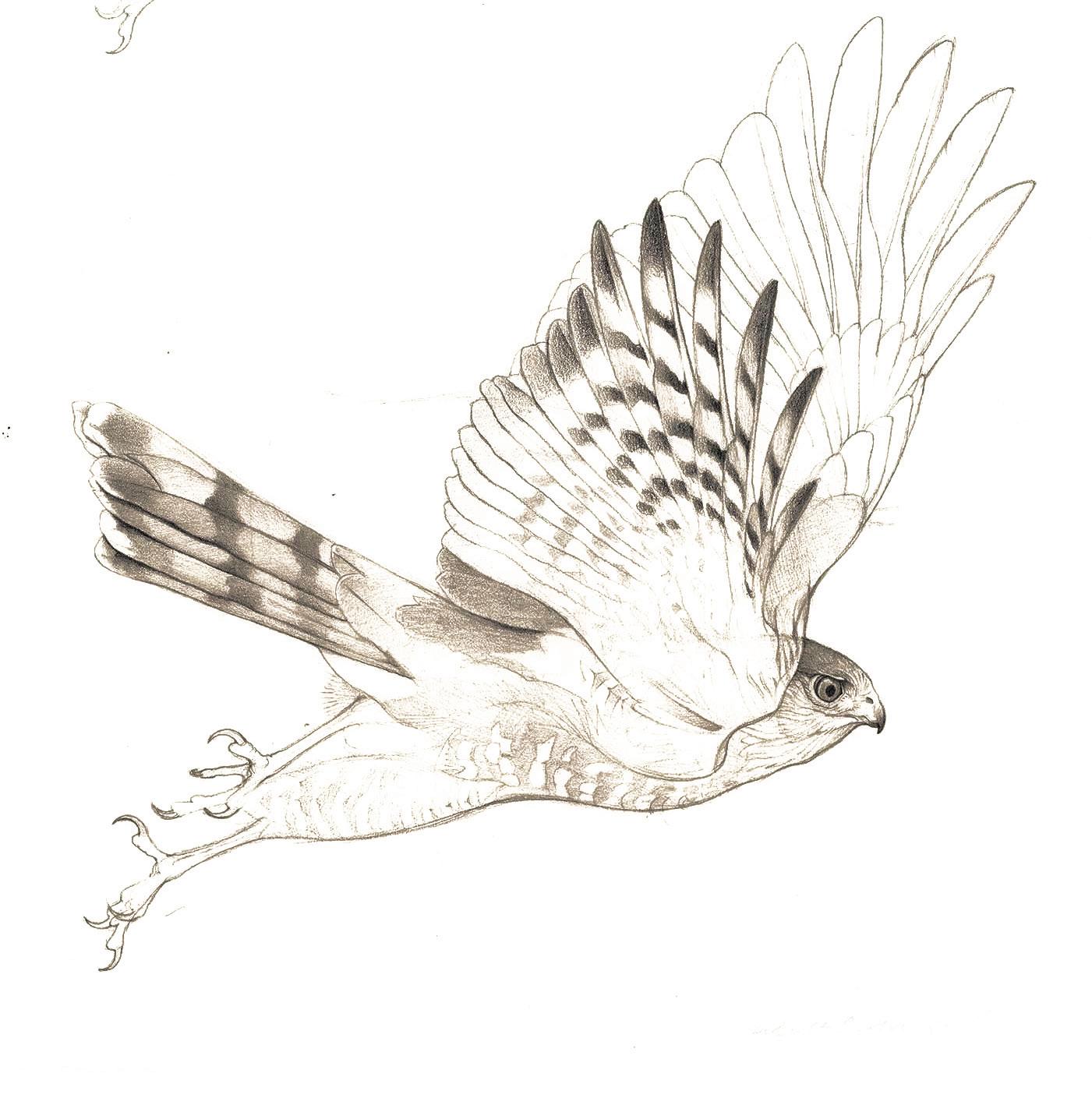
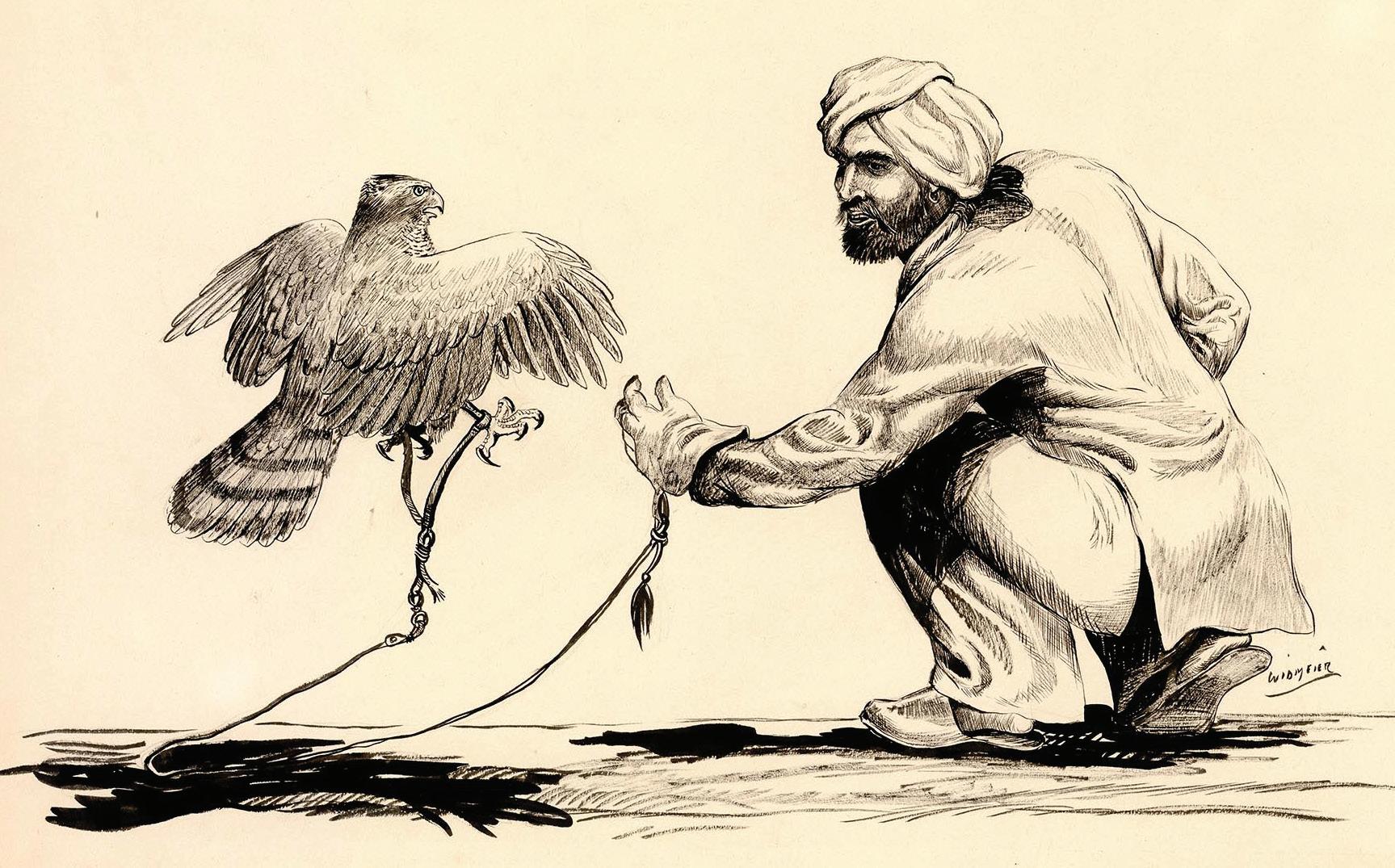
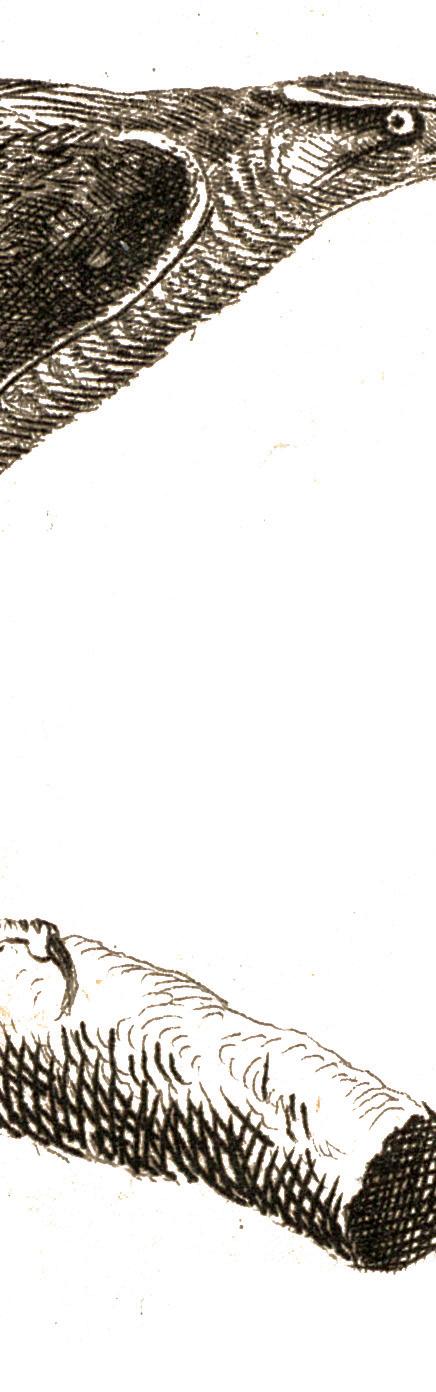
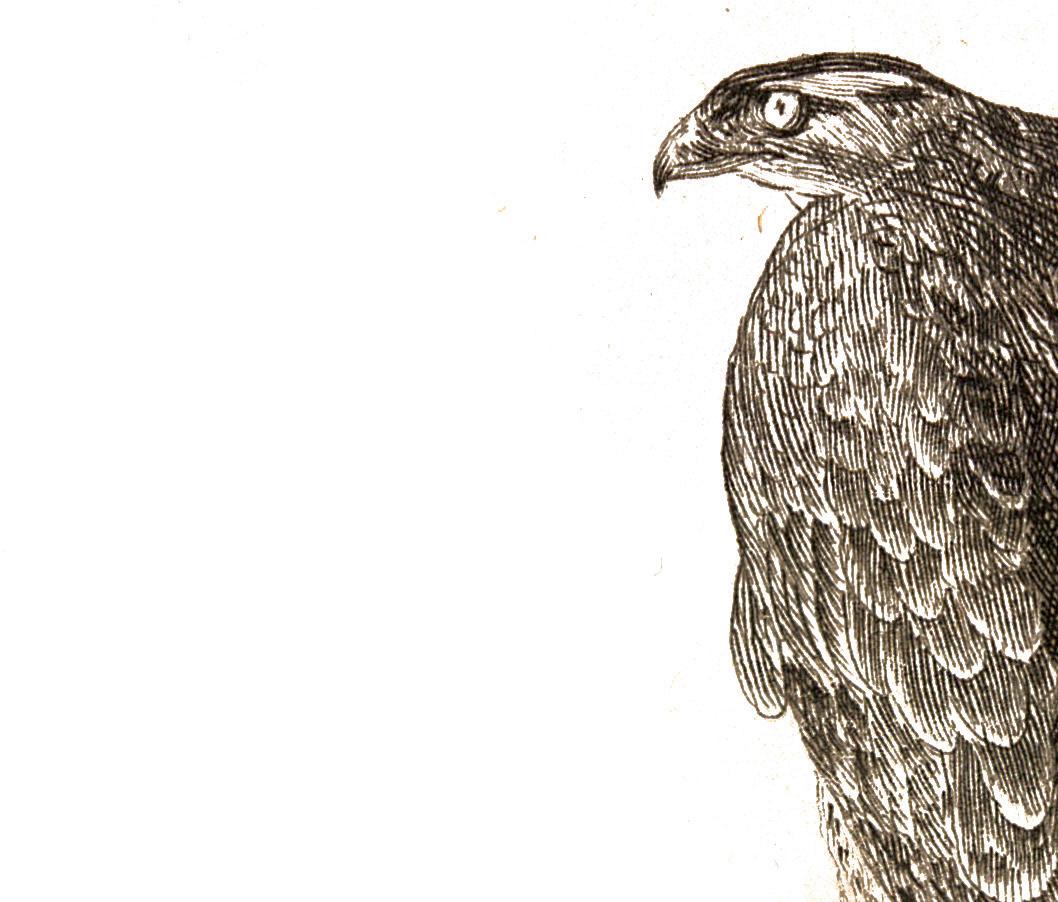
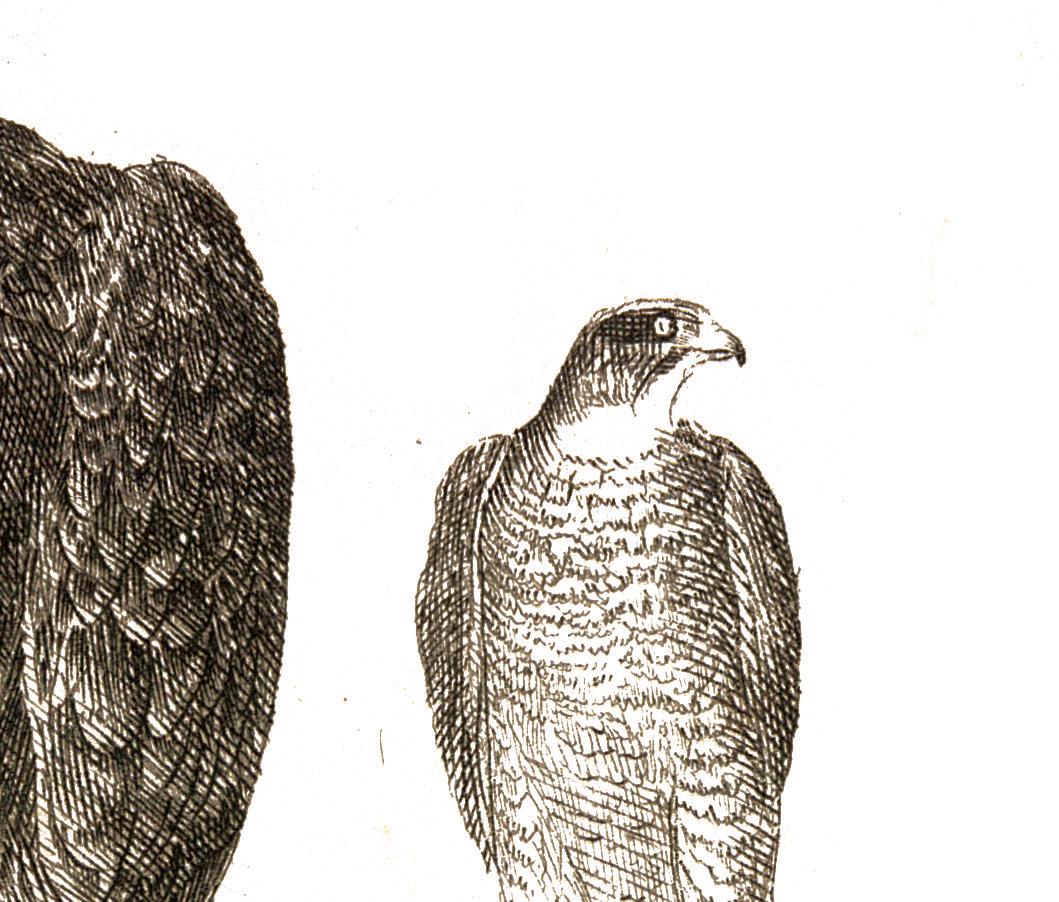
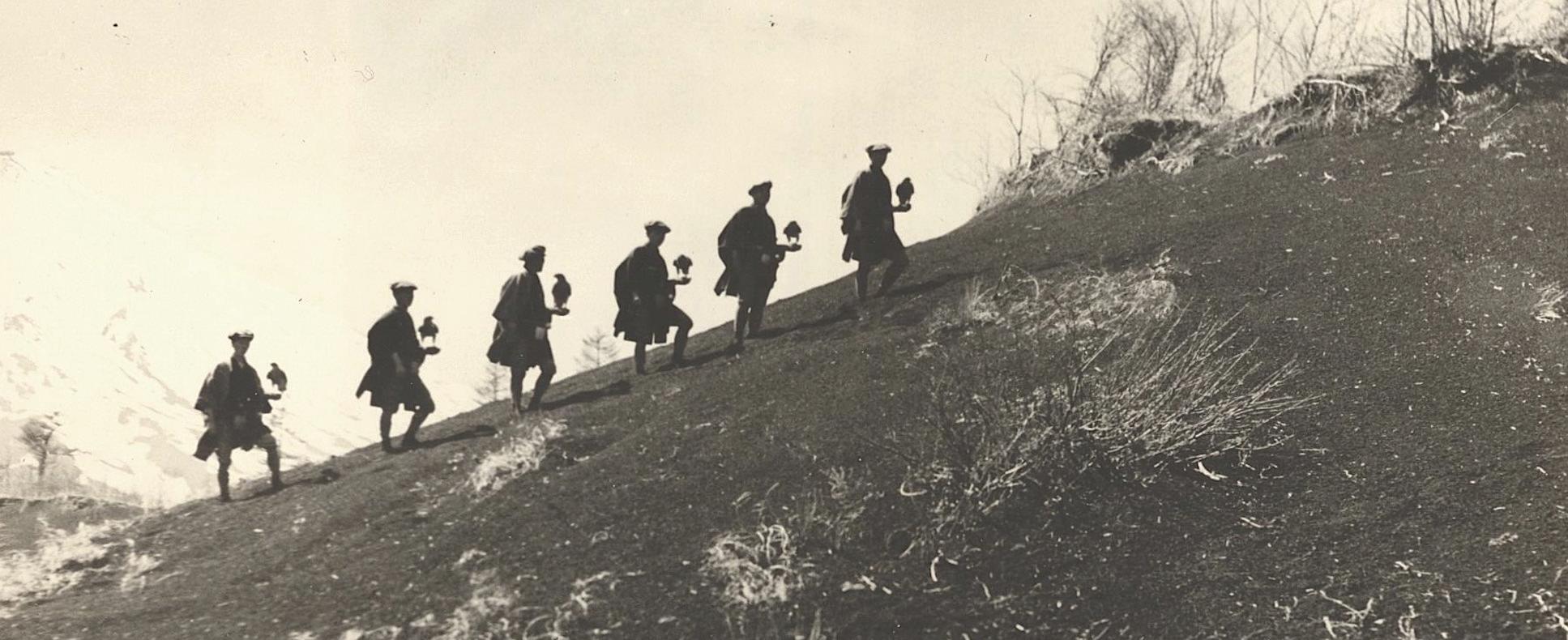
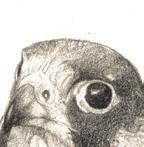
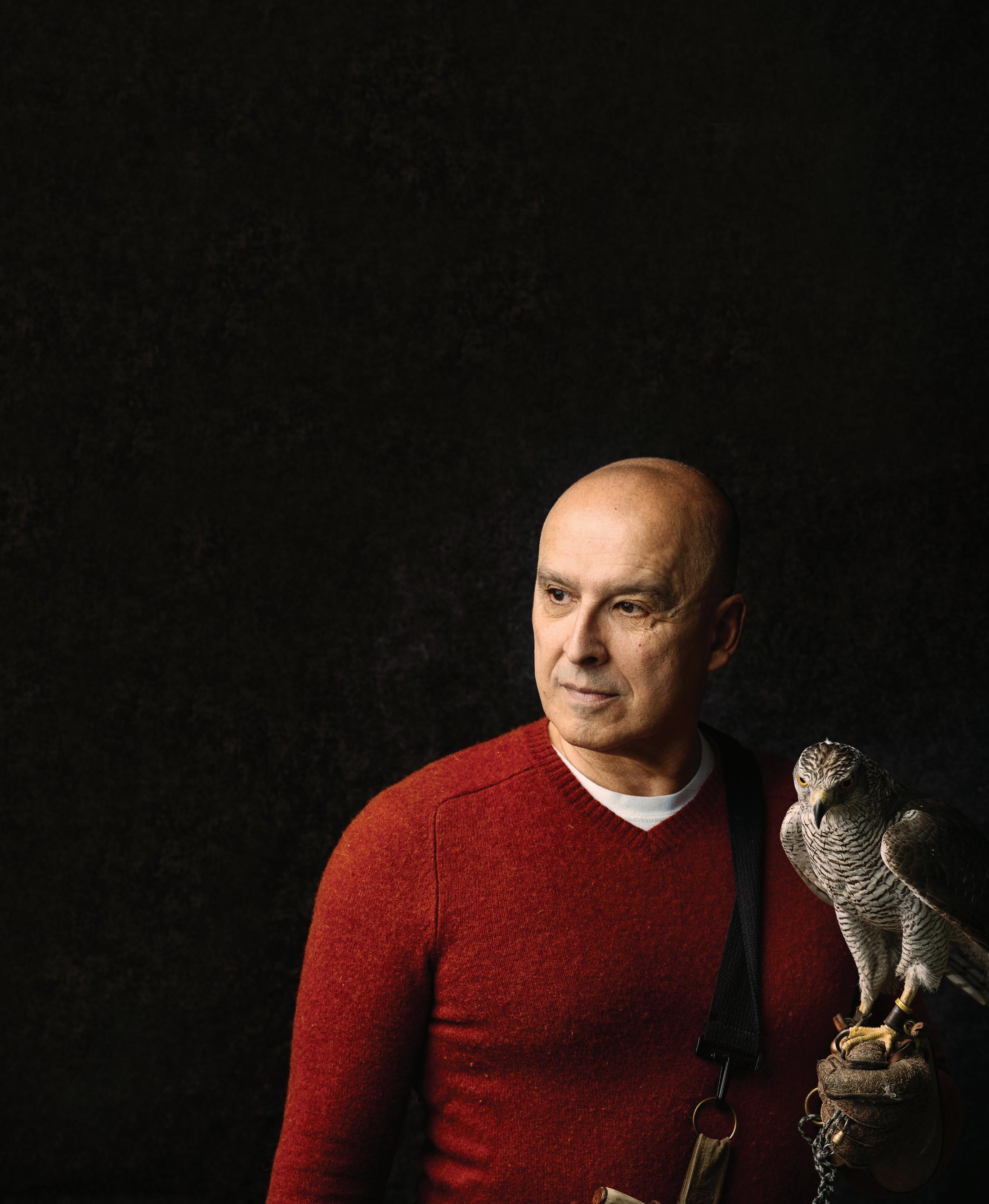
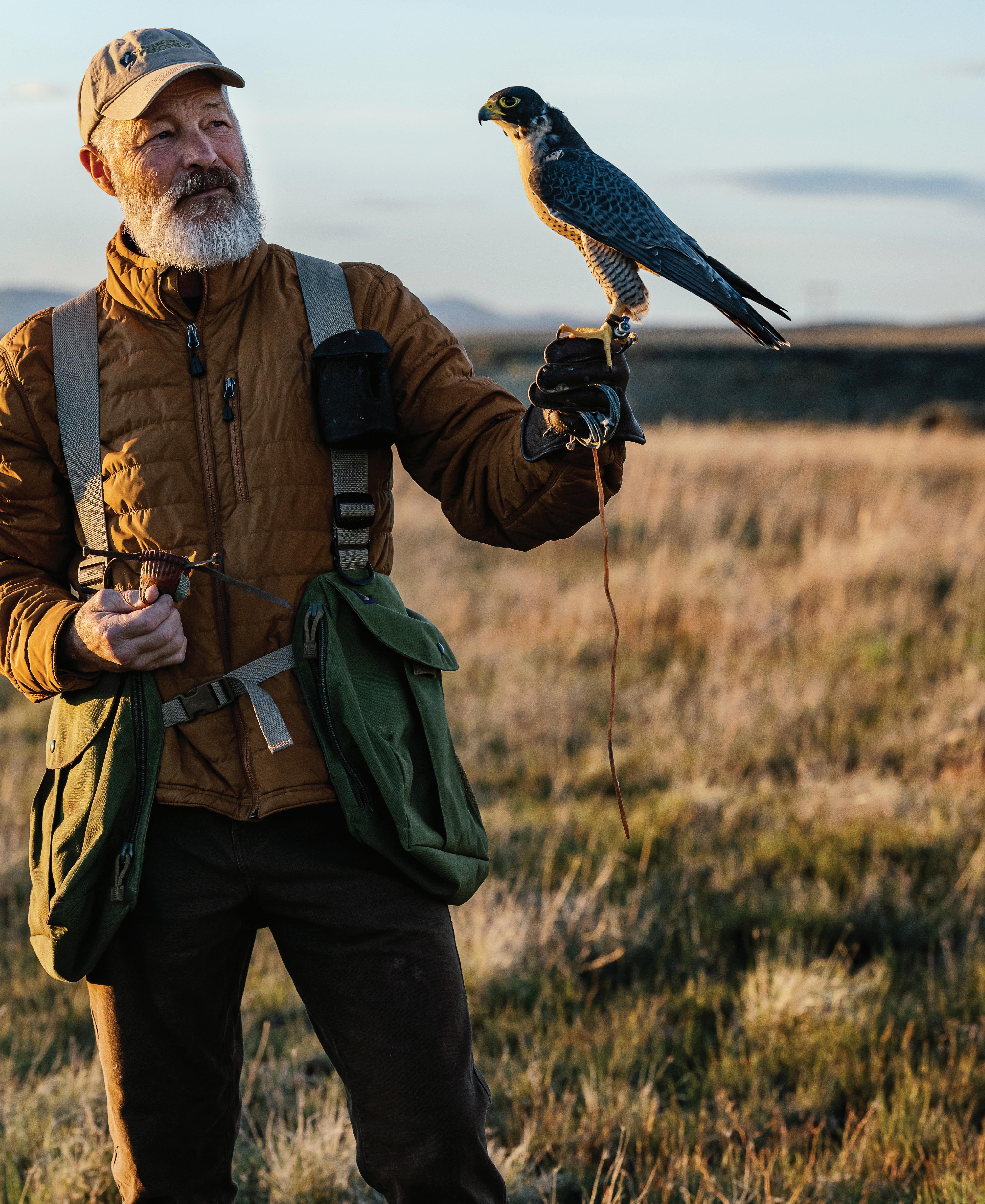
THIS PAGE: Male Finnish goshawk flown by falconer Afshin Mofid.
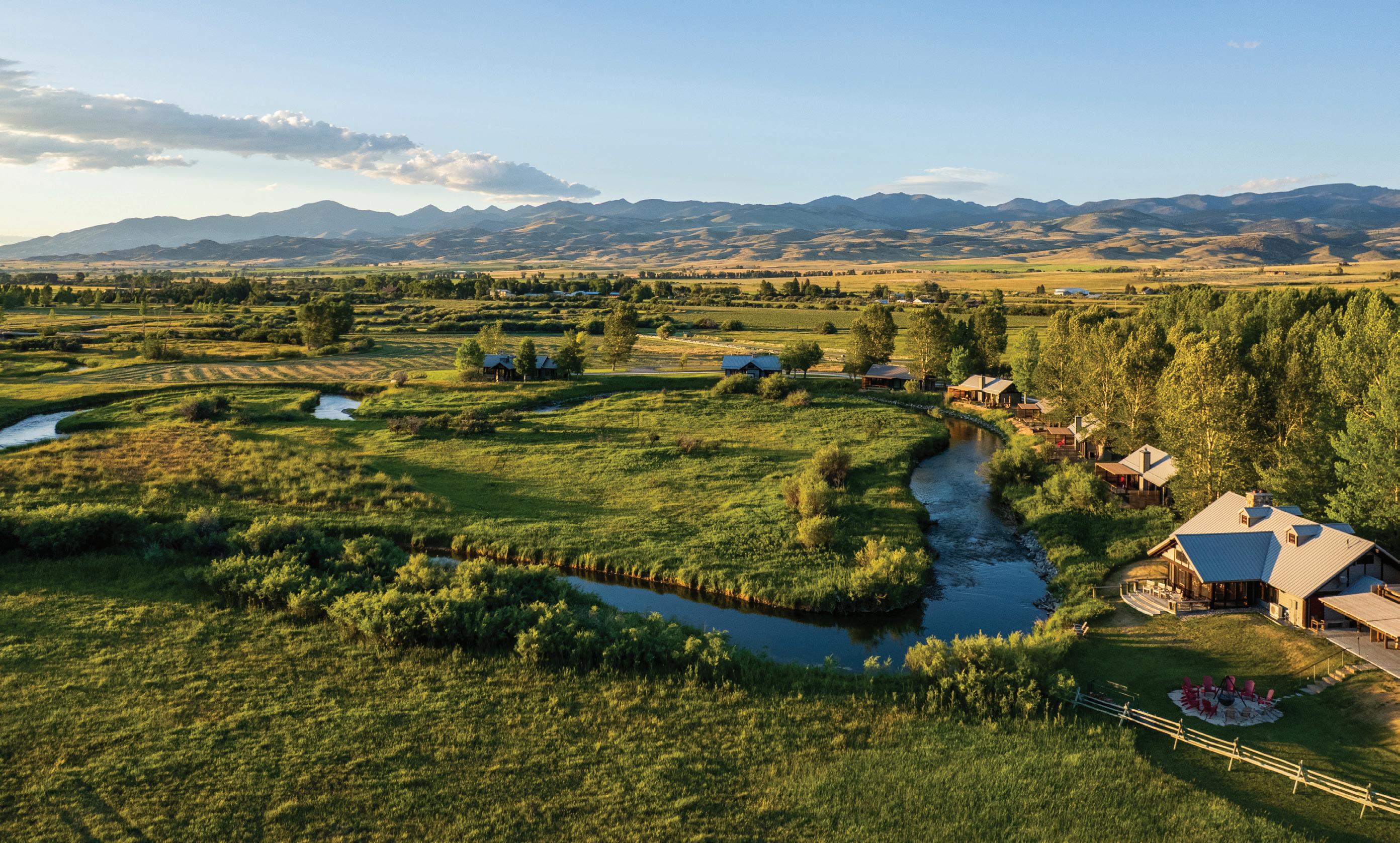
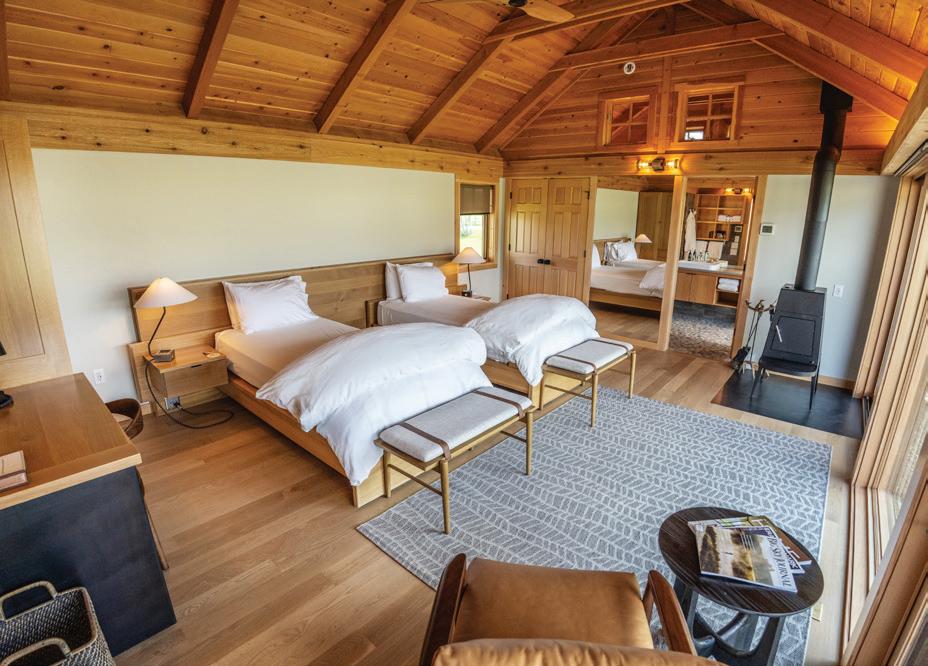
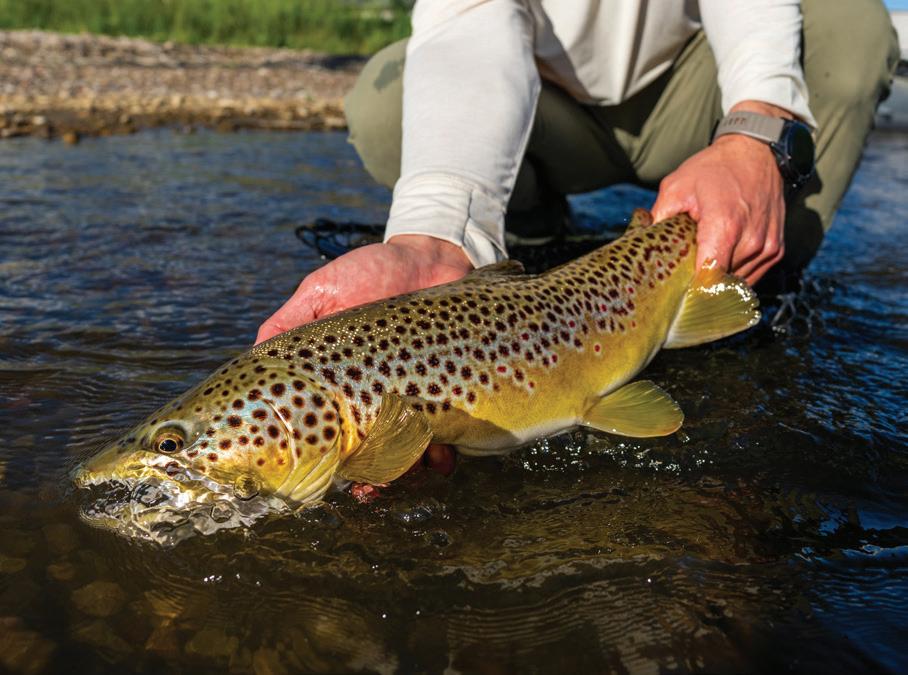
An Unparalleled Montana Fly Fishing Experience
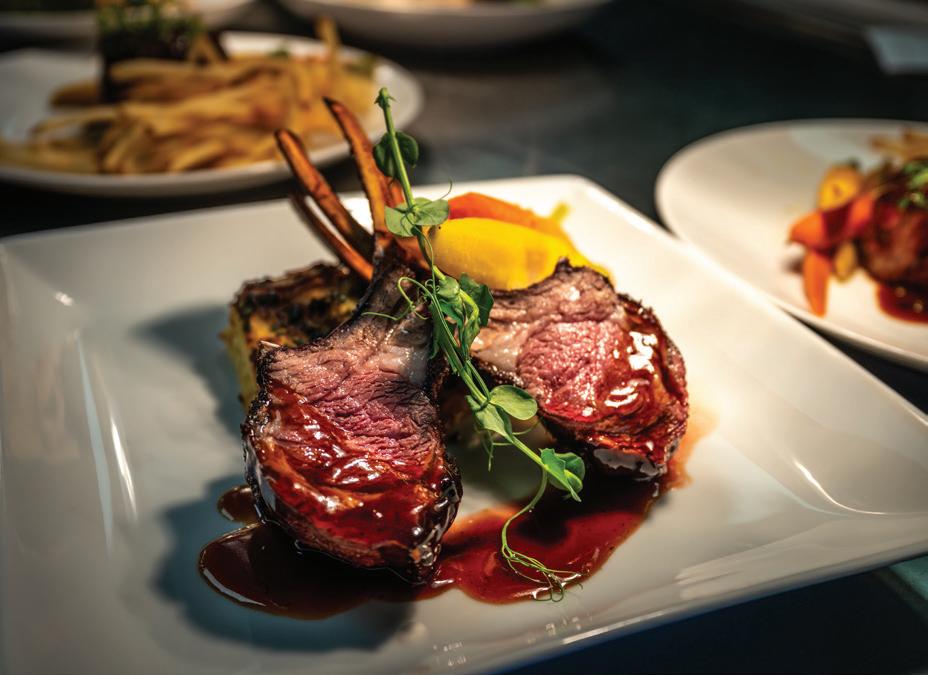
With newly renovated cabins and other signi cant upgrades to complement our world-class guided shing, cuisine, and hospitality, Ruby Springs is simply next level.
PIONEER
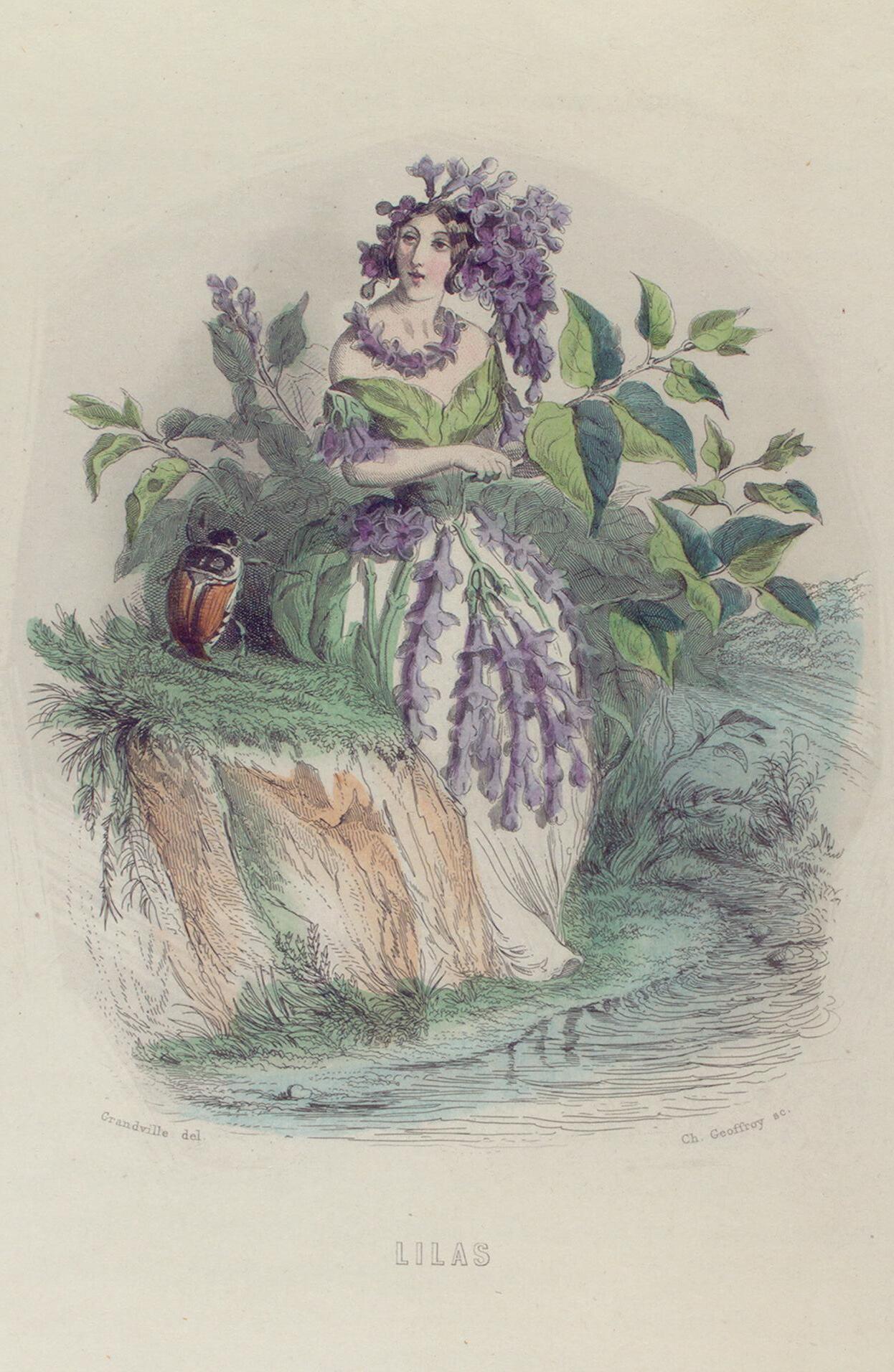
Lilacs of the Wood River Valley
MORE THAN JUST GOLF
The renaissance at Bigwood Golf
PROVIDING SAFETY AND HEALING
The Advocates expands services with its new
THE WILD MILES
Ultra-endurance athletes test limits across Idaho’s rugged terrain A DIFFERENT KIND OF HUNT
Seeking out shed antlers in the Idaho backcountry
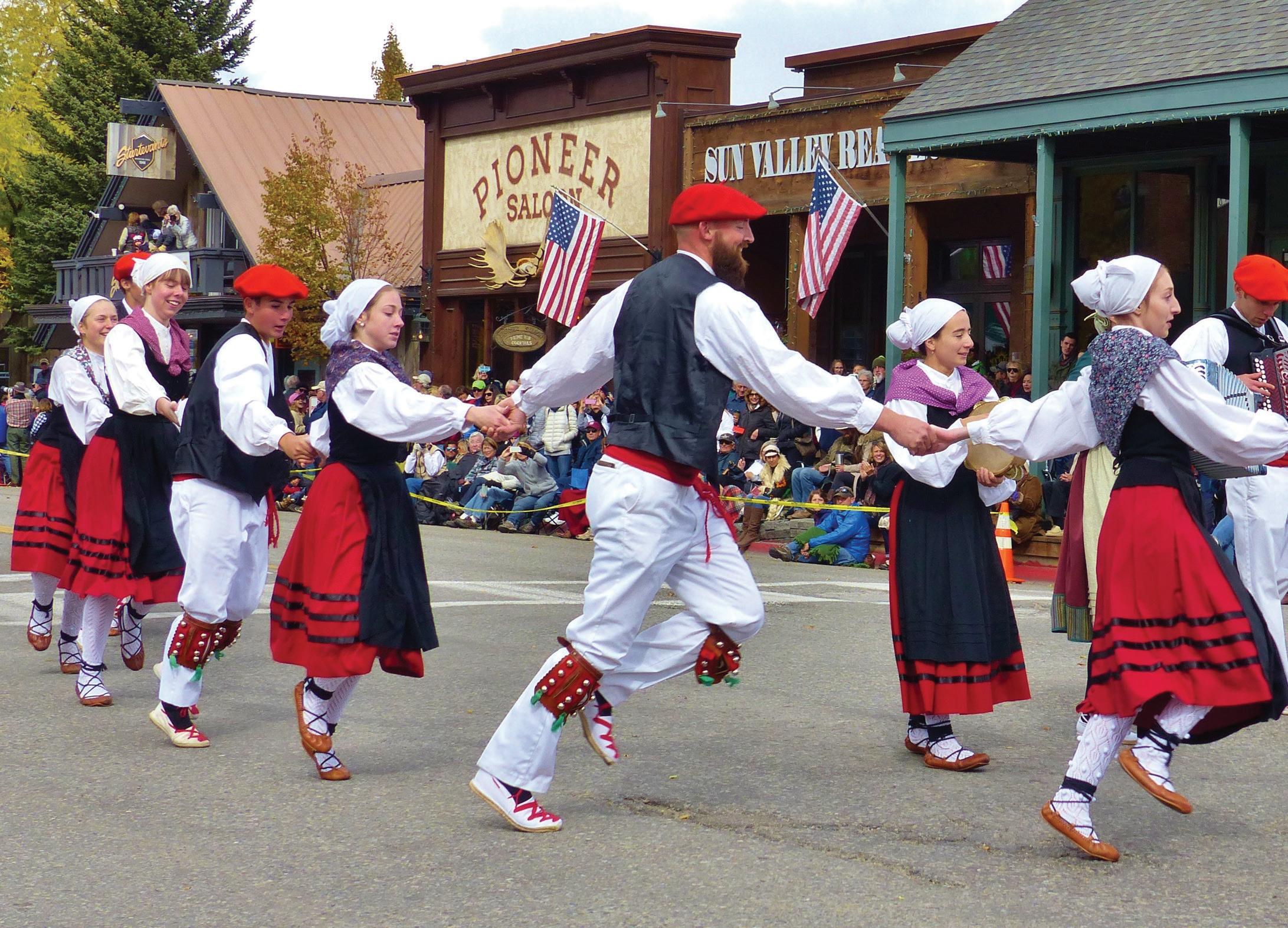
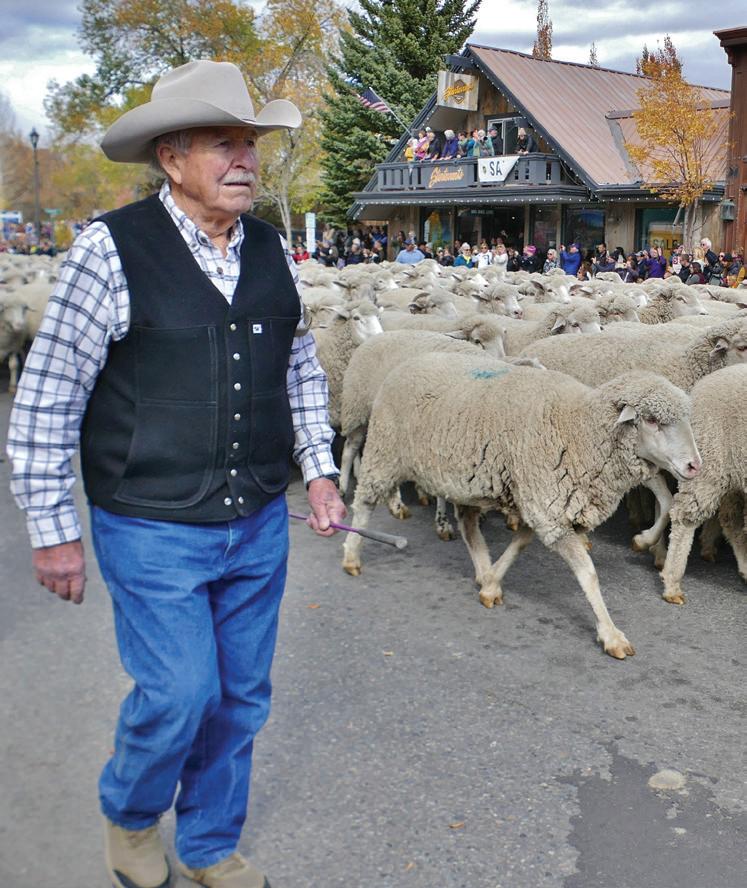
CELEBRATING A RICH HERITAGE
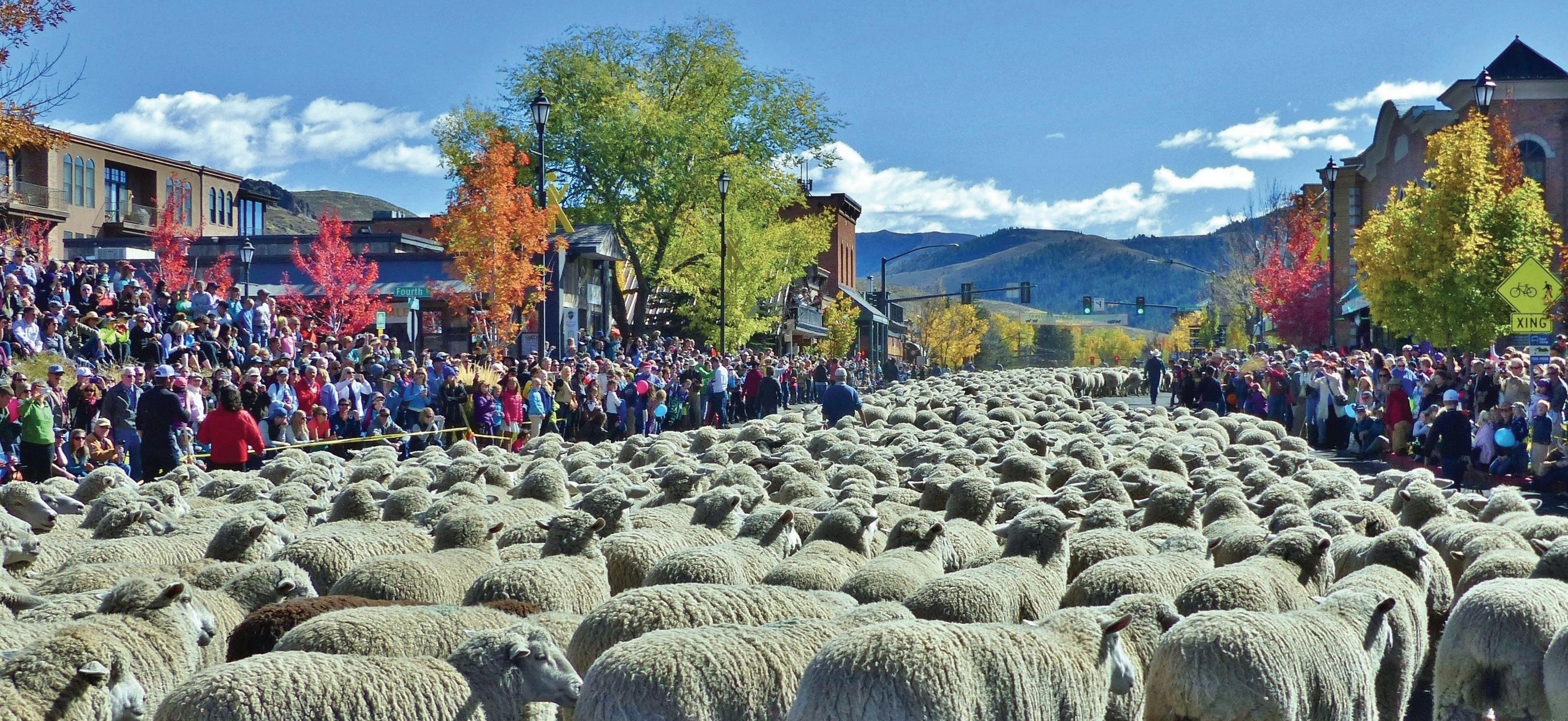
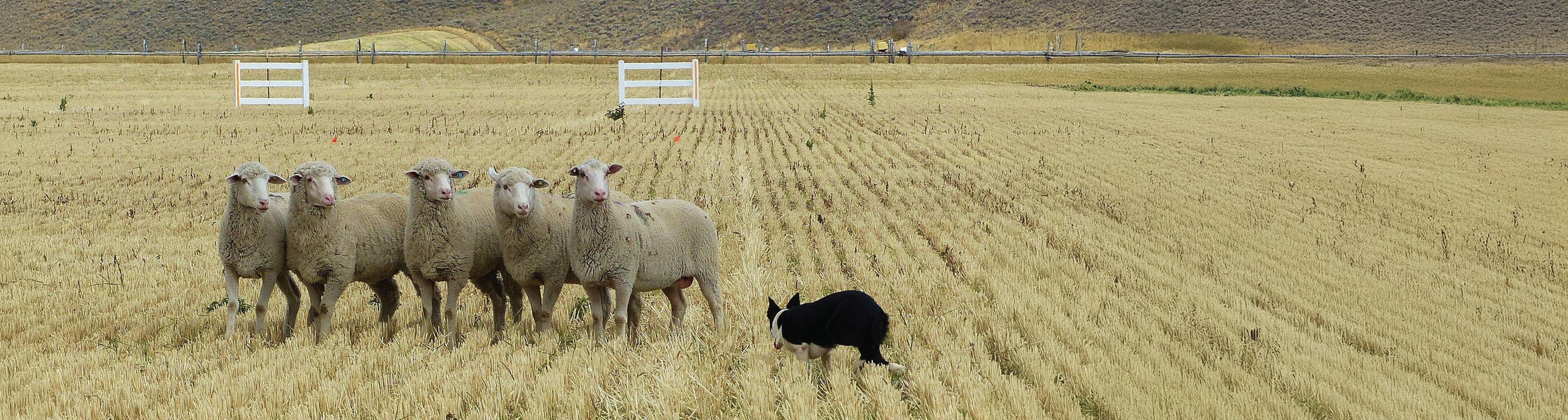
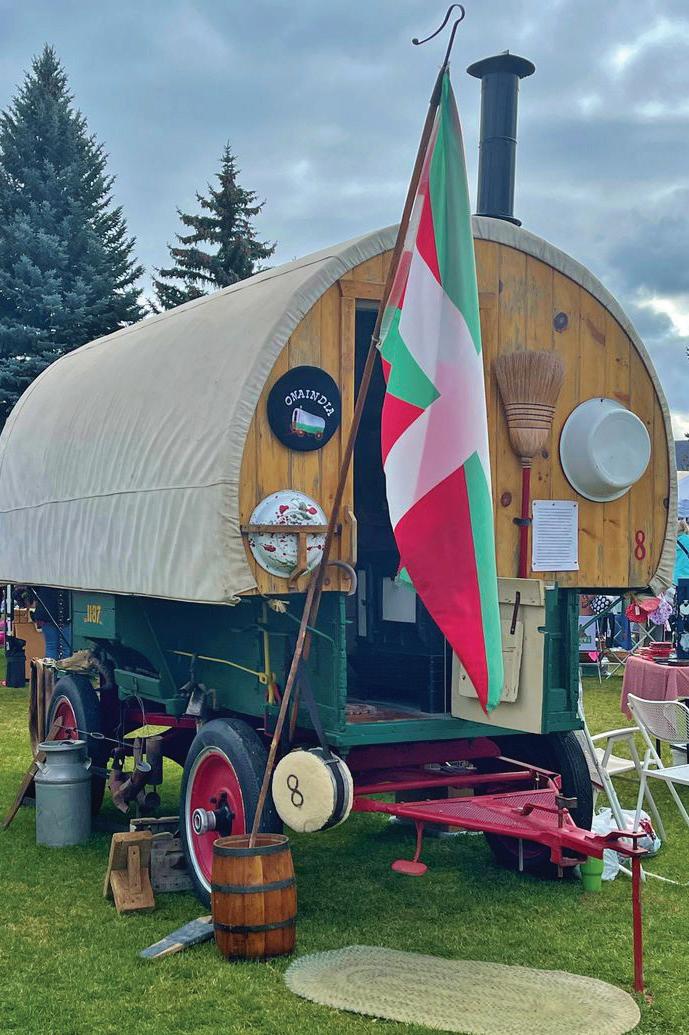
The Trailing of the Sheep Festival turns 30
AGE IS JUST
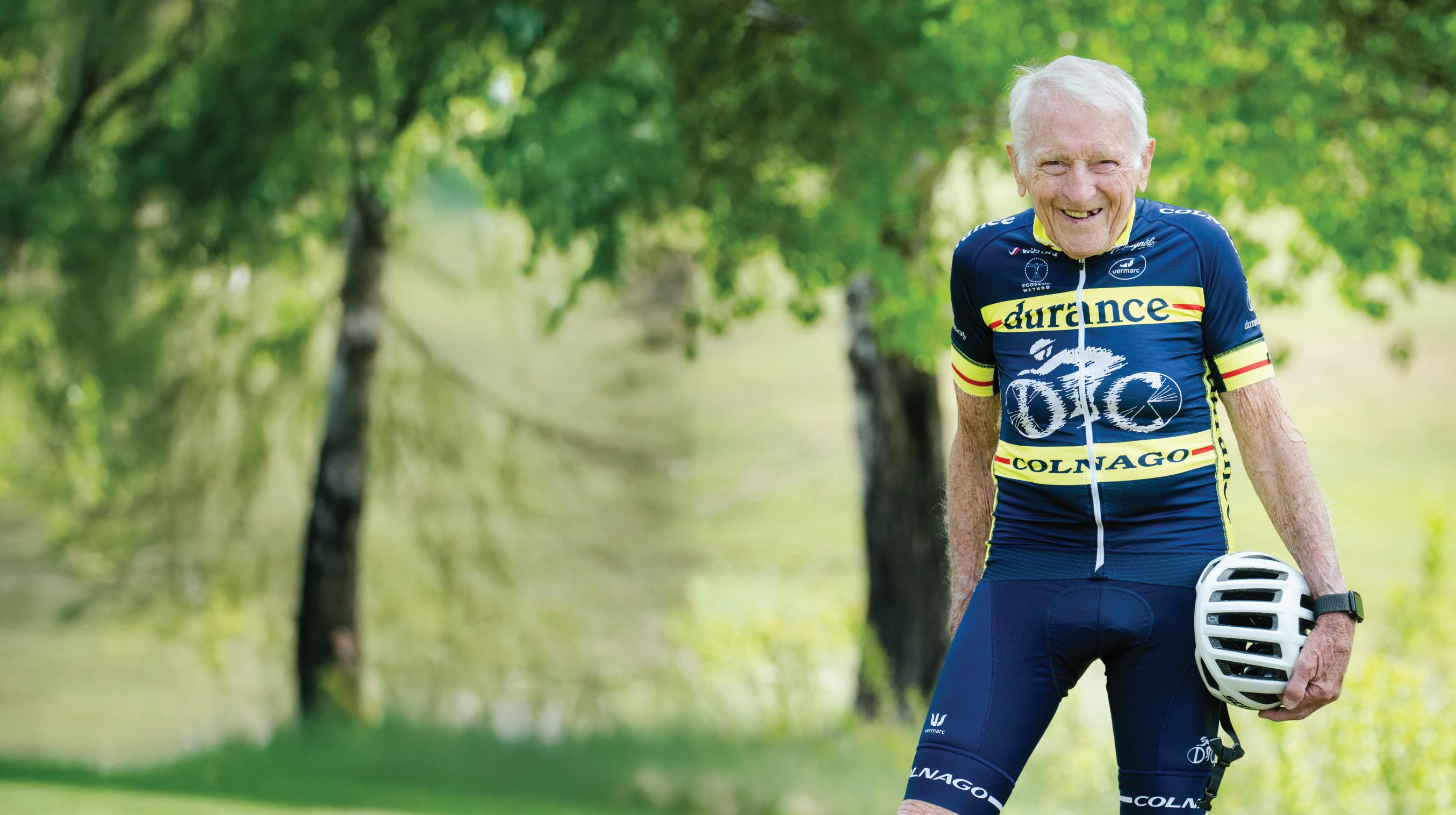
Charley French, fit at 100
How digital detoxes can increase well-being
CARRYING THE MOUNTAIN
Weighted vests and rucksacks are the latest trends in exercise
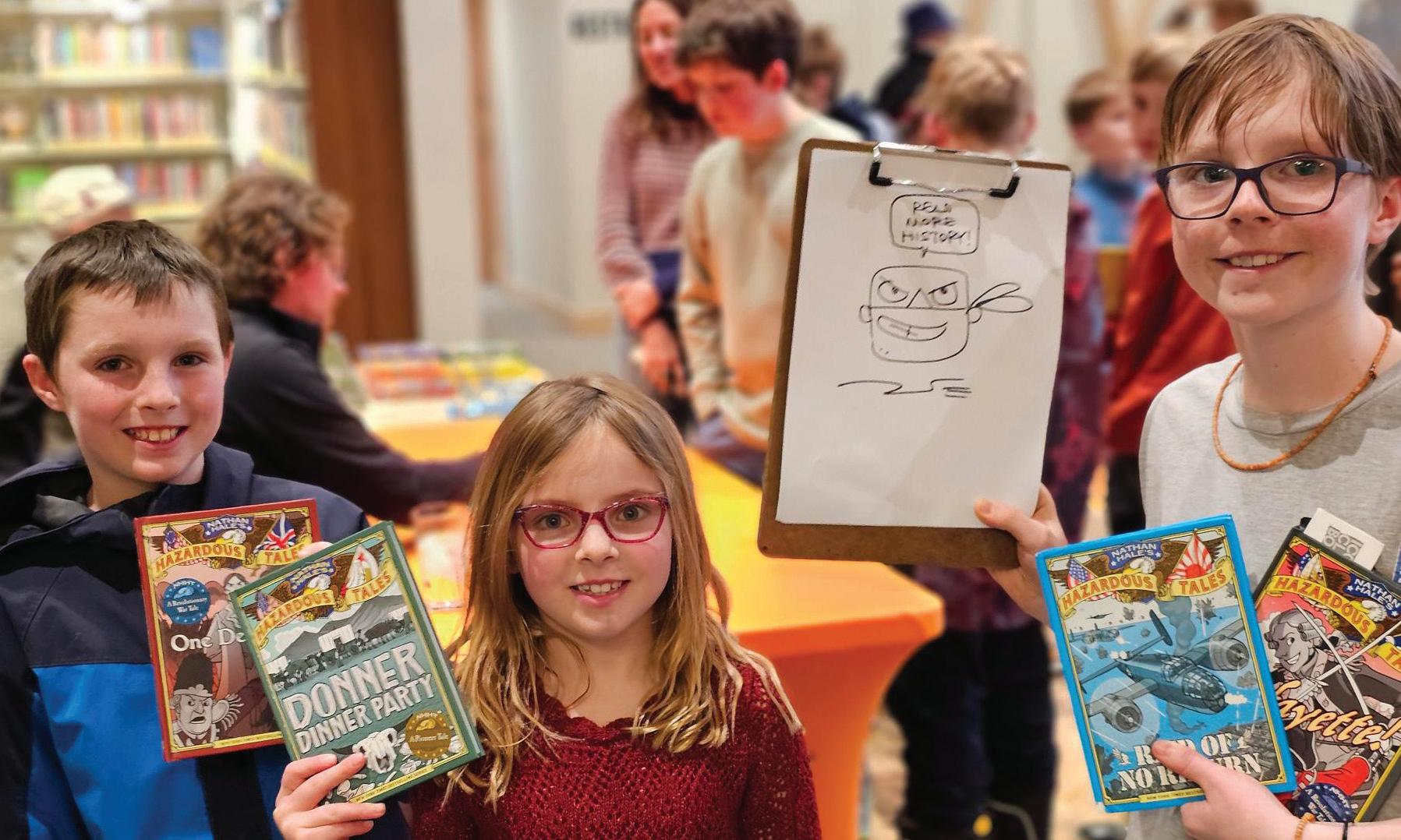
JUST ONE MORE STORY, PLEASE! Creating lifelong readers at The Children’s Library
THE POWER OF CHILDREN’S BOOKS
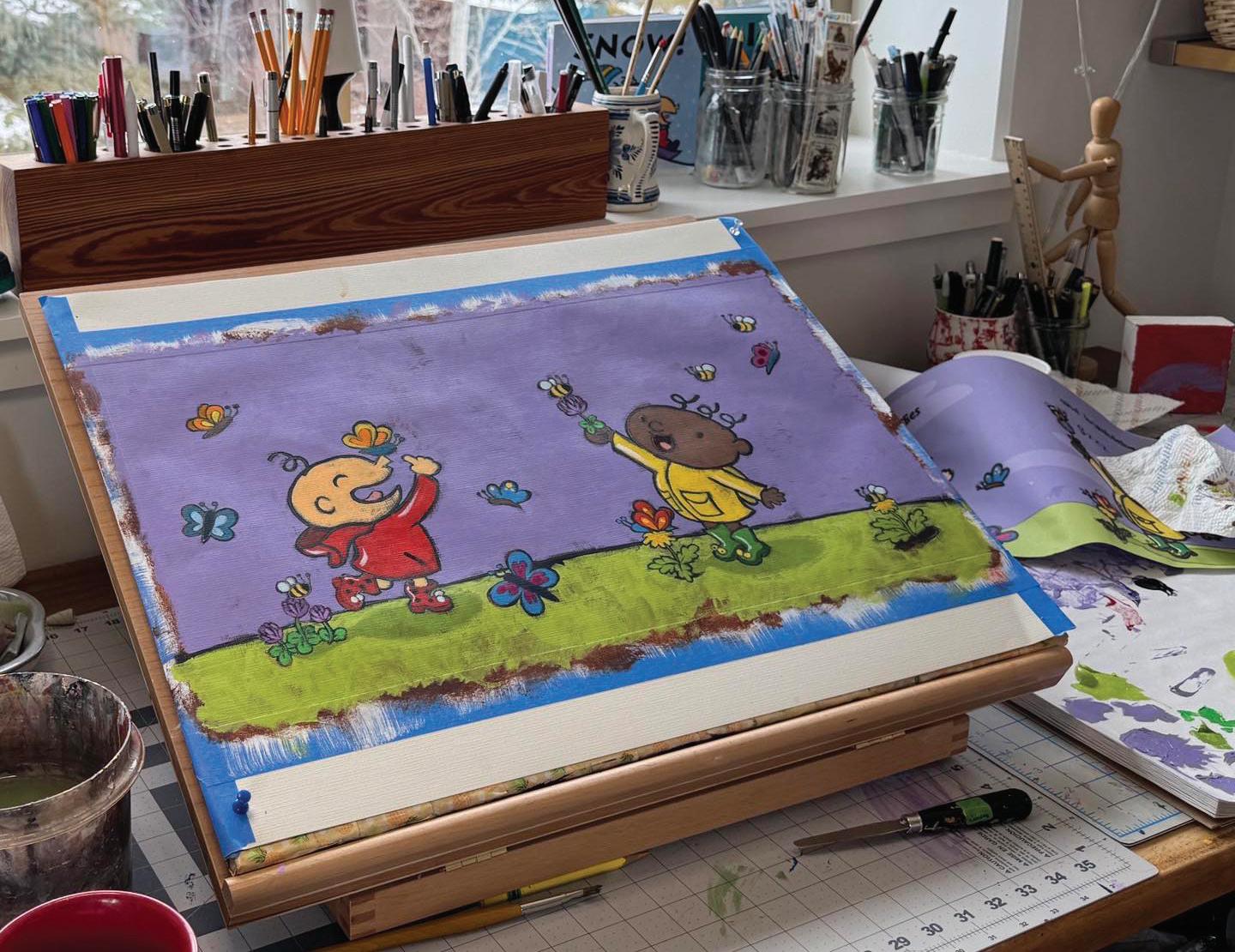
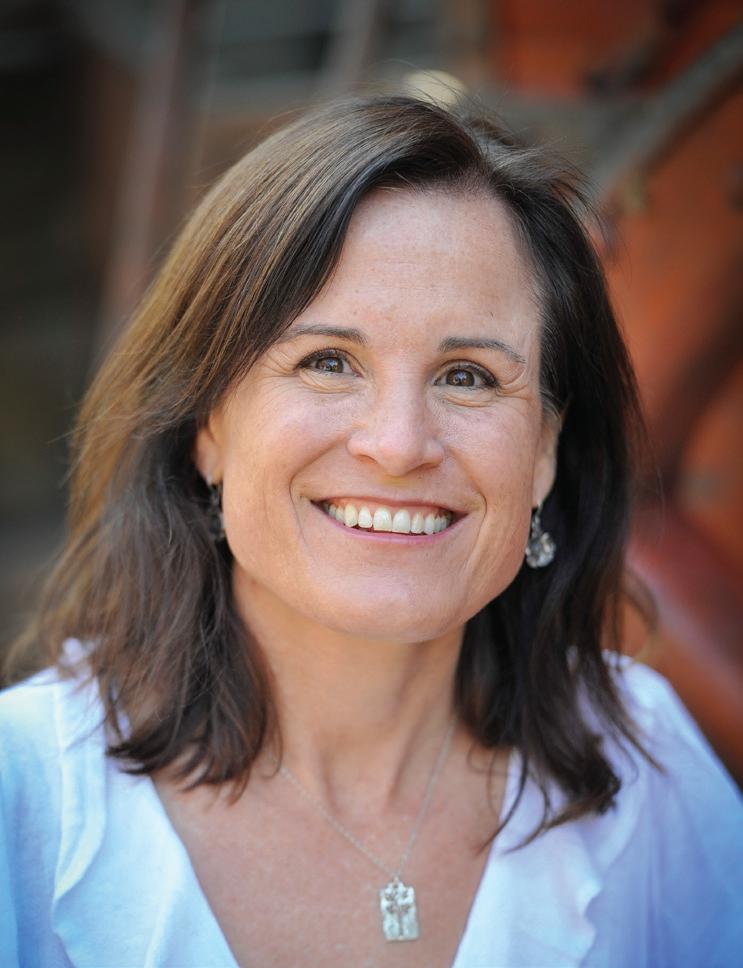
Hailey’s Leslie Patricelli delights young and old with her stories and art
BACKYARD TO TABLE
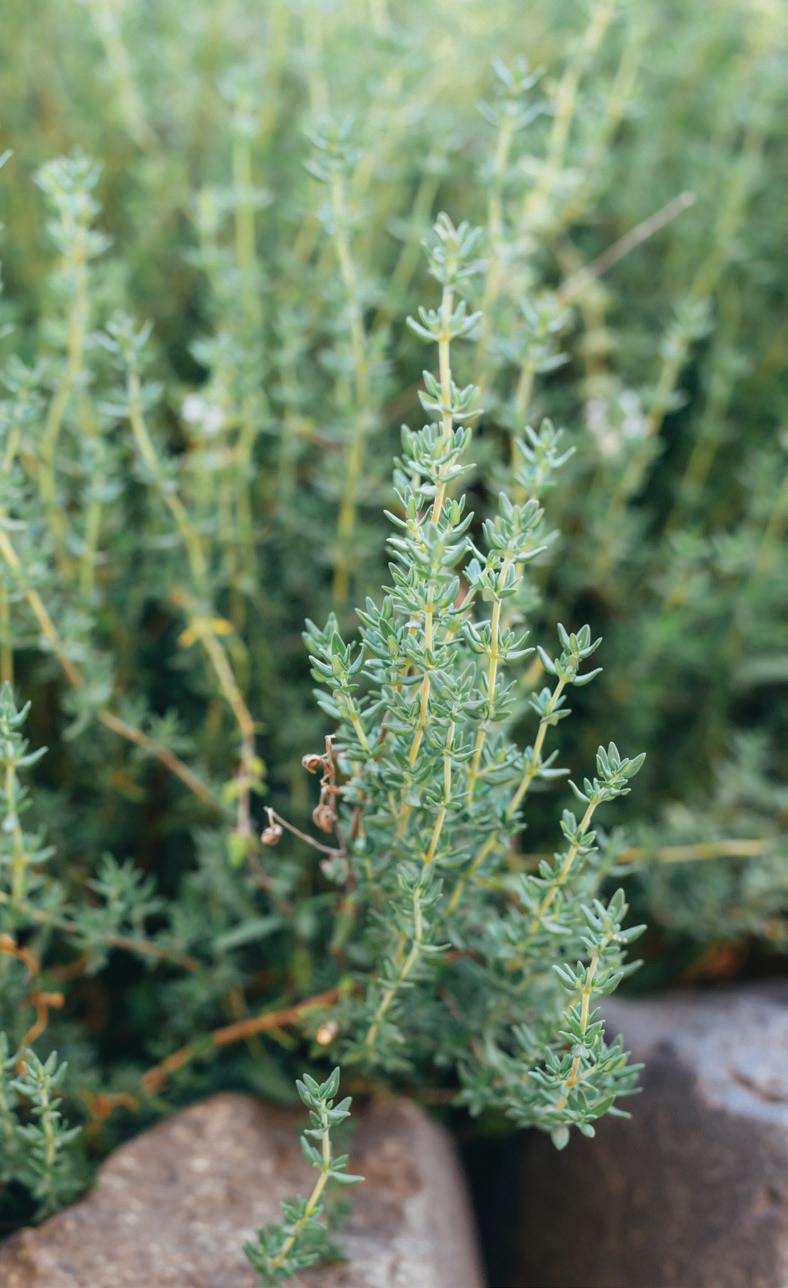
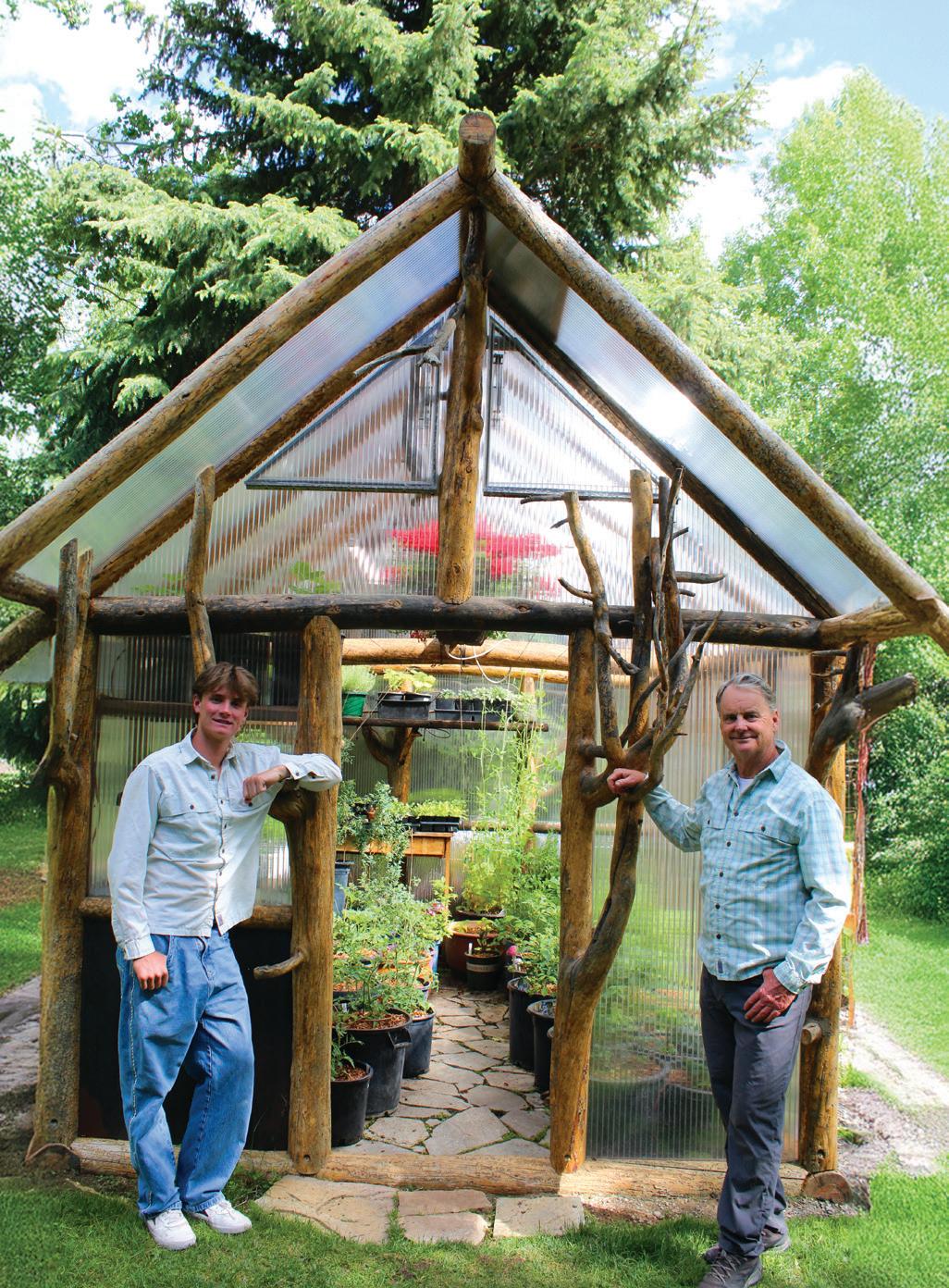
How an herb garden can enhance cuisine and a connection to food
Photo by Yancy Caldwell
The Sun Valley Magazine website, at sunvalleymag.com, is user friendly and incorporates responsive design so that you get the same award-winning content on phones, tablets or desktop computers. On our site you will find all of our print stories, as well as a wealth of additional online content, including resource guides, videos and online features. Look for the best of Sun Valley life in our Arts , Food & Drink , Community, Health , Adventure , Home & Design , and Wedding sections. You can also enjoy digital editions of Sun Valley Magazine in our extensive archives and access all of our social media sites.
PAST ISSUES
To explore our magazine archives, dating all the way back to the Winter 1973/1974, visit sunvalleymag.com/magazine. On our digital magazine page, you can enjoy back issues of Sun Valley Magazine . Travel back in time to see what we were covering at the turn of the century (21st!) and beyond. Looking for an old article? Spend some time in our archives—an ongoing, living record of life in the Wood River Valley. Also check out our digital edition of TASTE of Sun Valley on the Food & Drink page!
MORE STORIES
Here in Idaho, there are places where history feels close enough to touch.
Sometimes it lingers in weathered stone or tooled leather, worn smooth by generations of many hands. Sometimes it echoes in stories passed around campfires, from elder to apprentice, or through the pages of old journals. Other times it lives in the landscape itself—in trails carved through mountains, in the remnants of buildings that stand sentinel over another era, or in the communities that continue to thrive because others endured hardship before them.
We often think of history as something behind us. But perhaps it is less a collection of past events and more the living remembrance of the places and people that shaped them.
Every generation inherits a world shaped by those who came before, courageous individuals who led the way with only their inner compass as guide. The traditions we celebrate, the trails we travel and opportunities we pursue can be seen as gifts from those whose names we may never know.
This issue of Sun Valley Magazine celebrates some of those individuals and their contributions to the places we know and love. Explore the history of Sawtooth City and Vienna, near present-day Smiley Creek—a place many only know as a stop for an ice-cold milkshake on the road between Ketchum and Stanley (“Distinctly Idaho: Smiley Creek,” page 102). More than a century ago, this area was home to bustling mining camps that boasted nine restaurants, 18 saloons, two hotels, four general stores, a Chinese laundry and several blacksmith shops; and, later, sheep ranching operations—all sustained by pioneering individuals like Levi Smiley and T.B. Mulkey, as well as Idaho families like the Bevins and Vaders.
These individuals persevered through uncertainty, weathered setbacks, built businesses, raised families, cultivated communities, and imagined futures they themselves would never see.
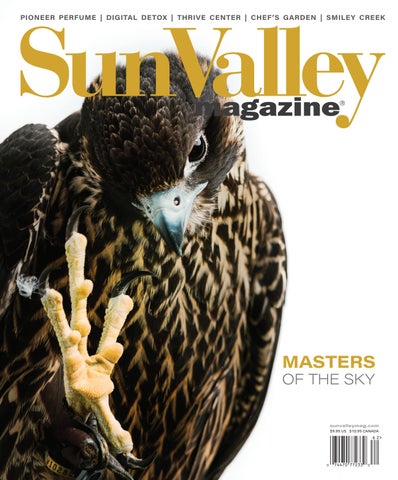
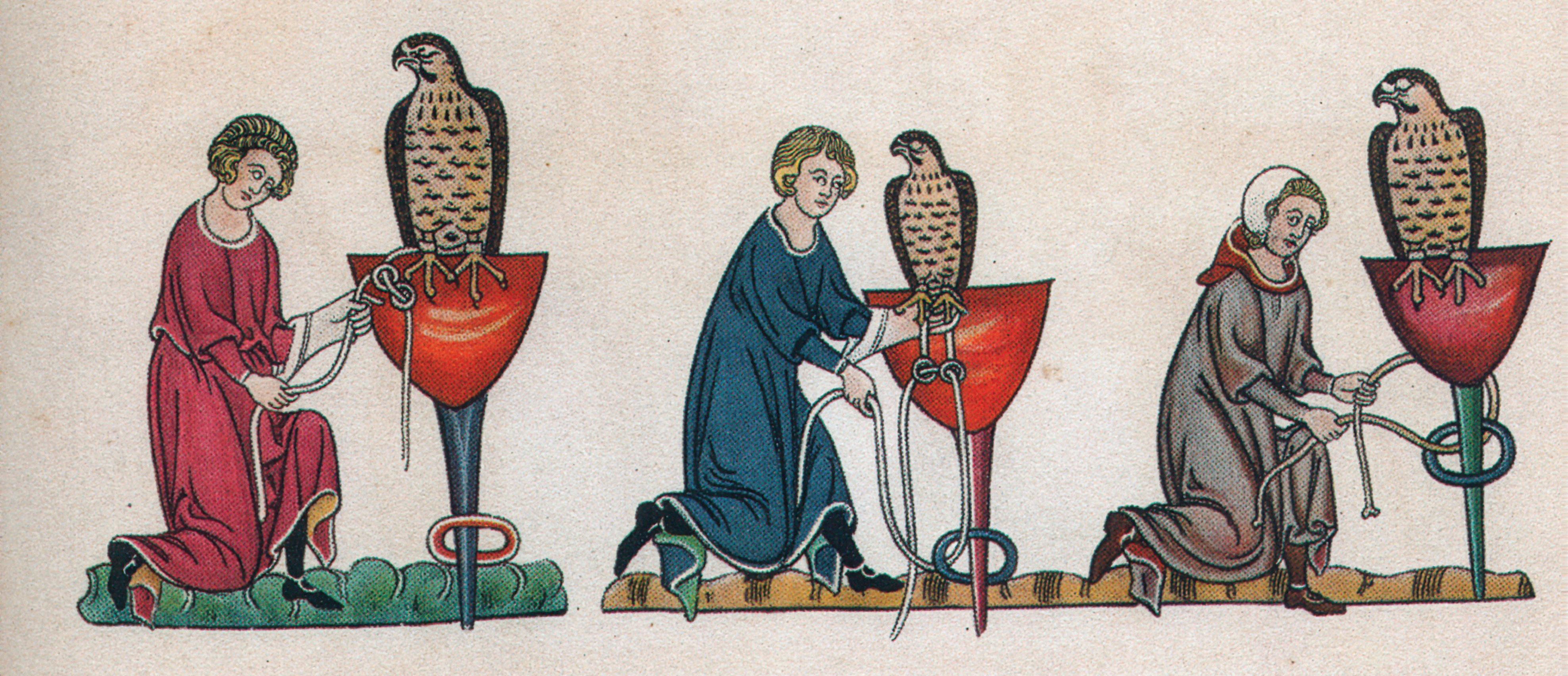
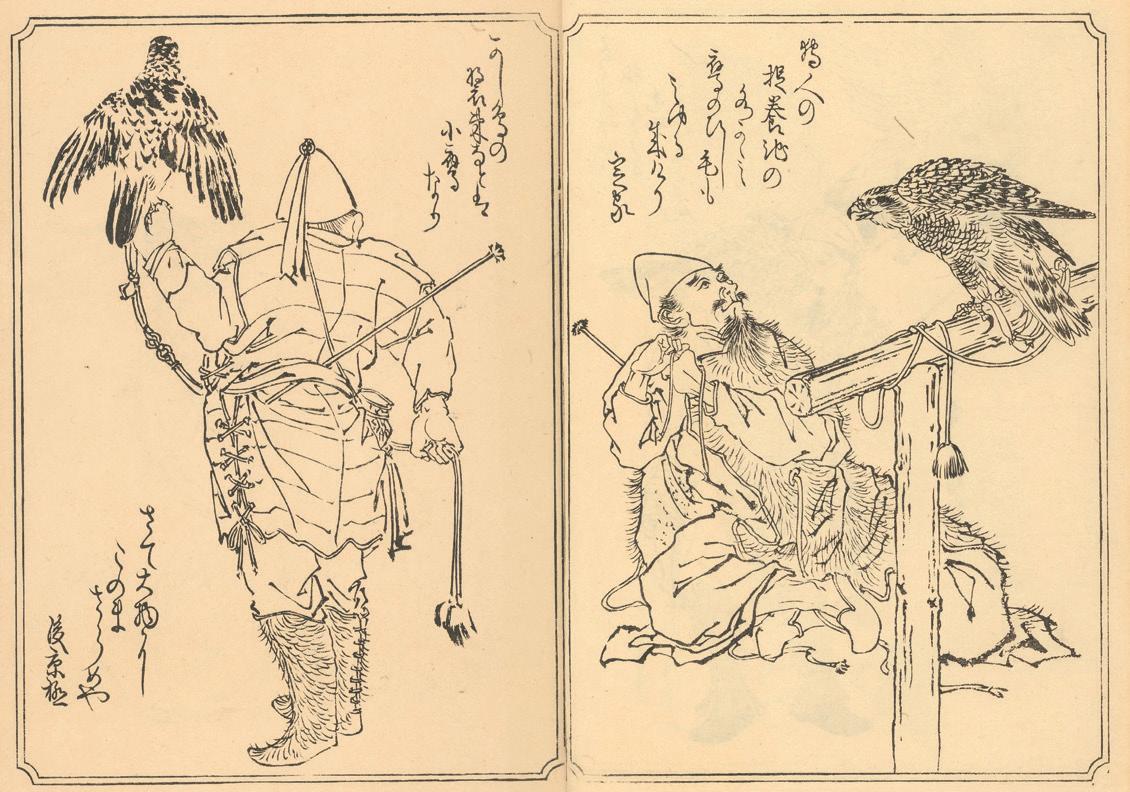
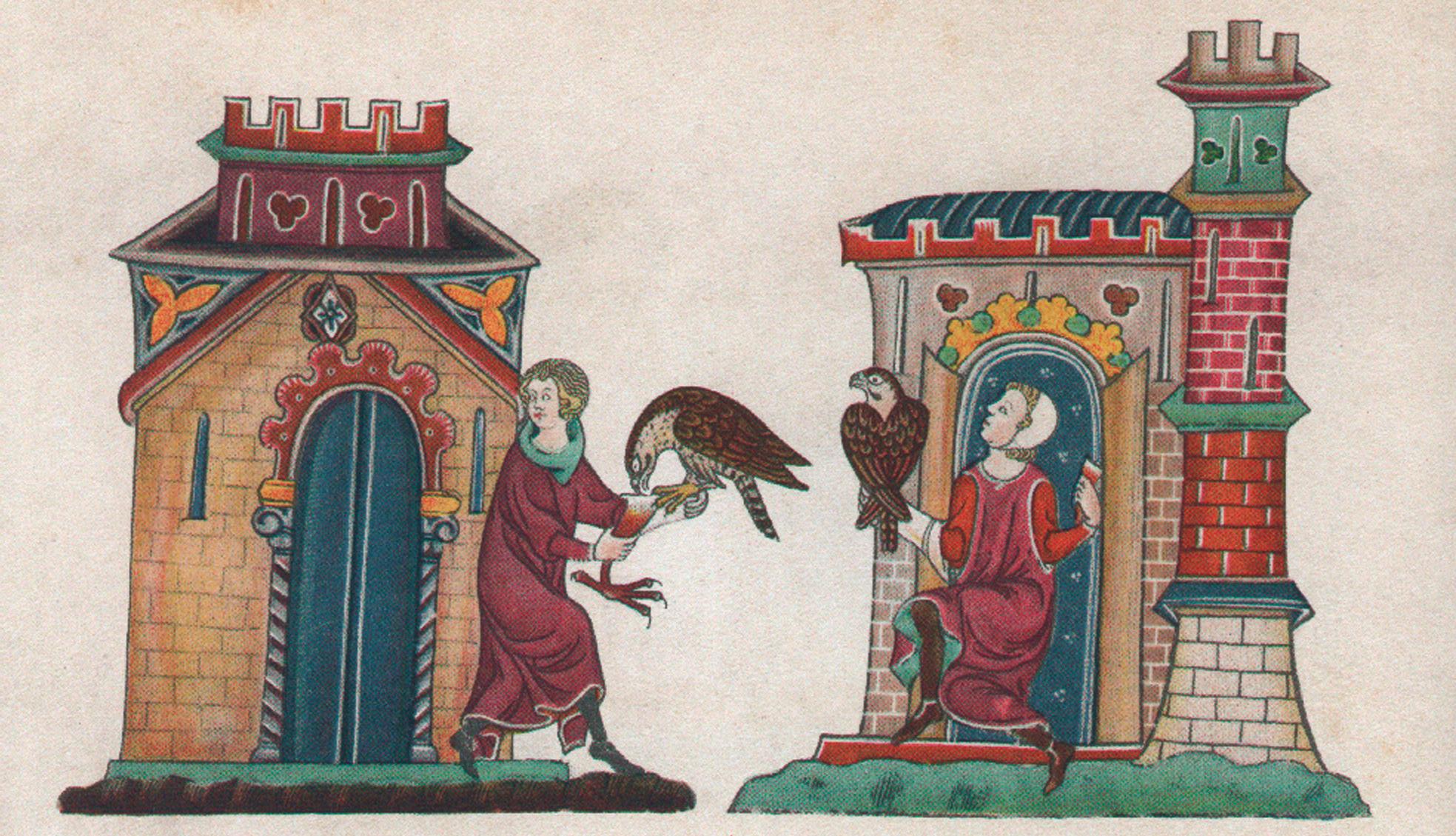
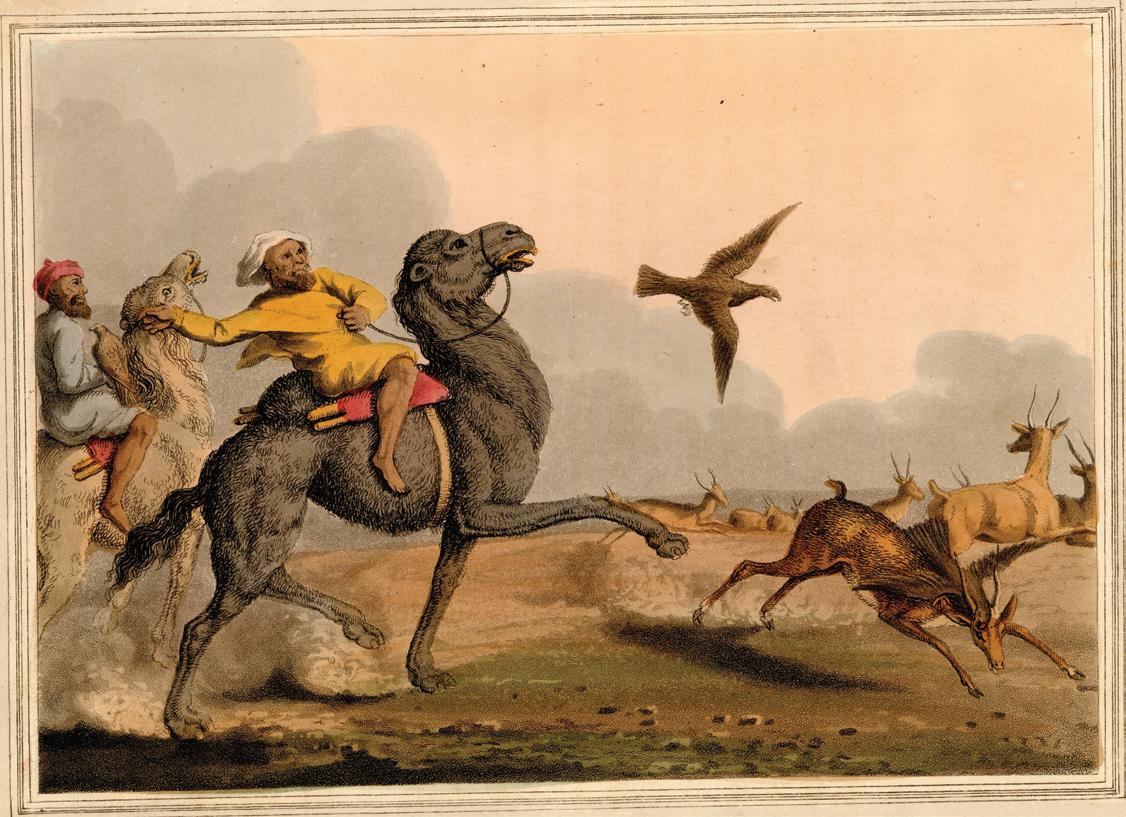
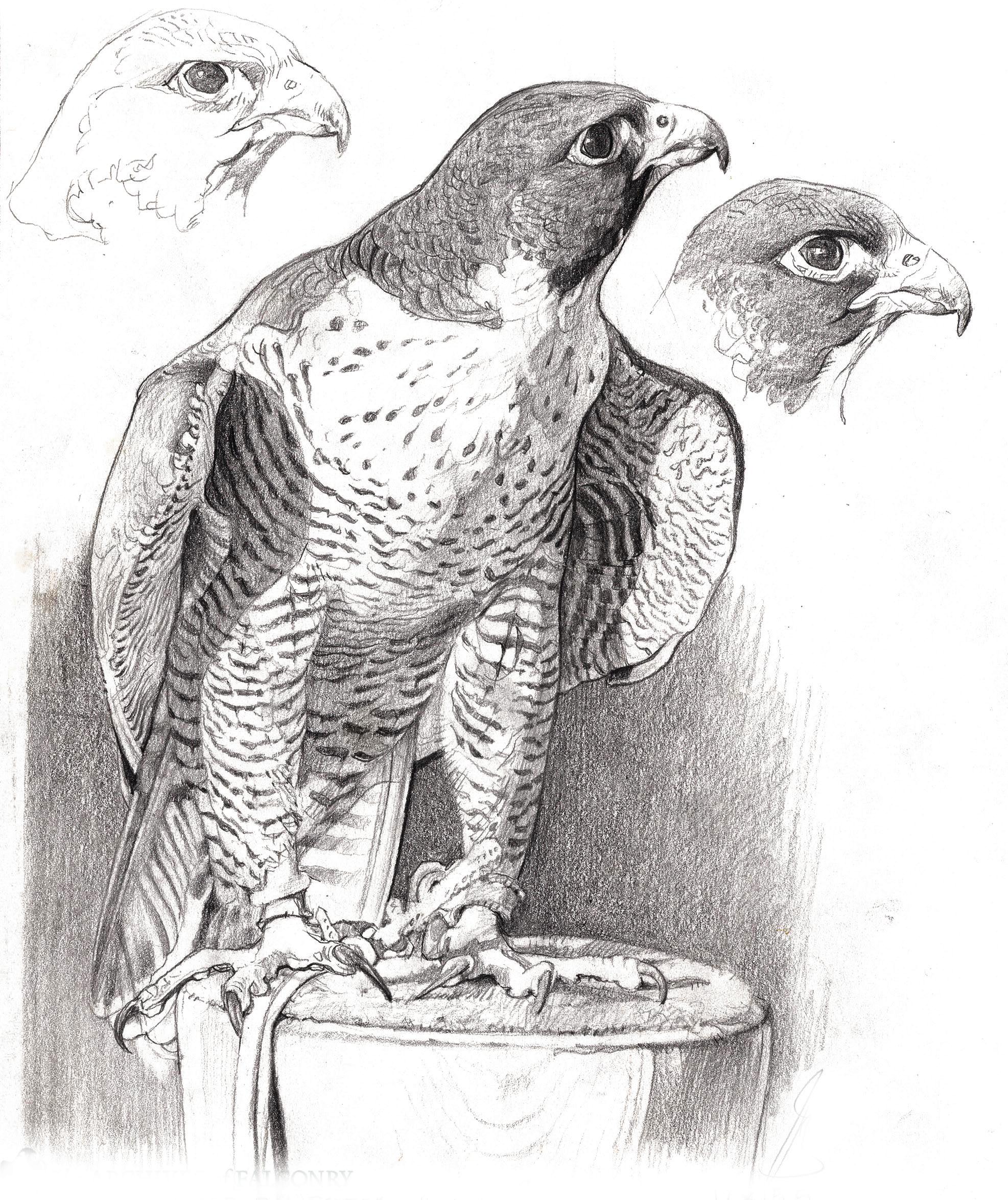
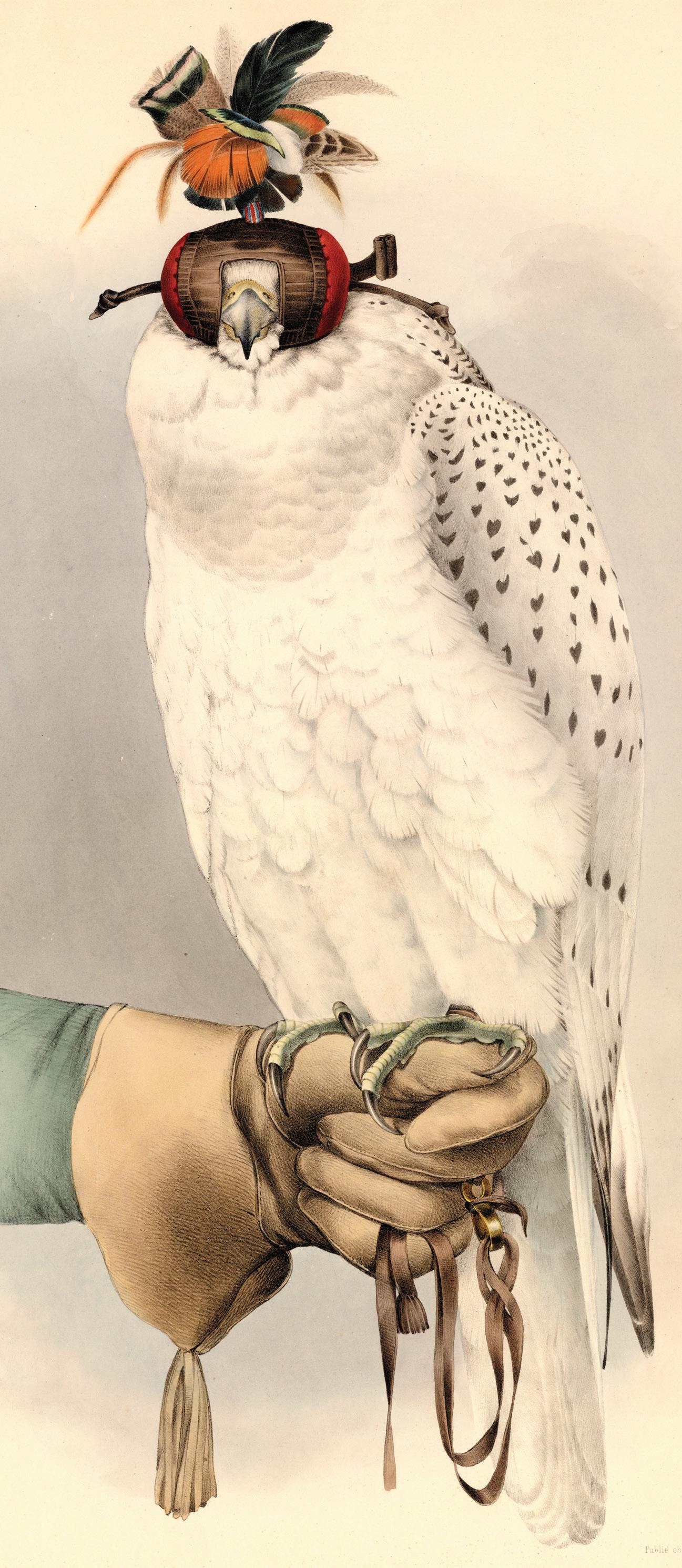
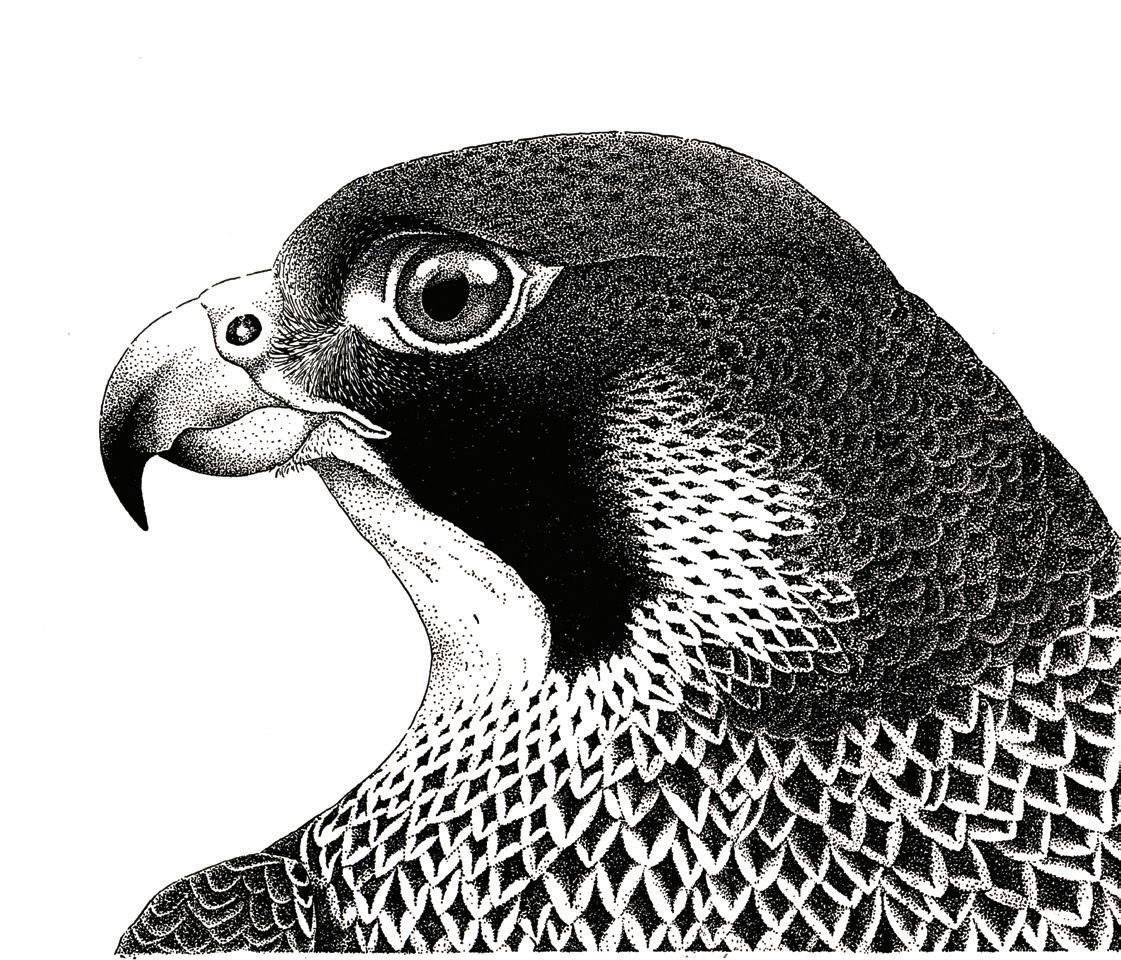
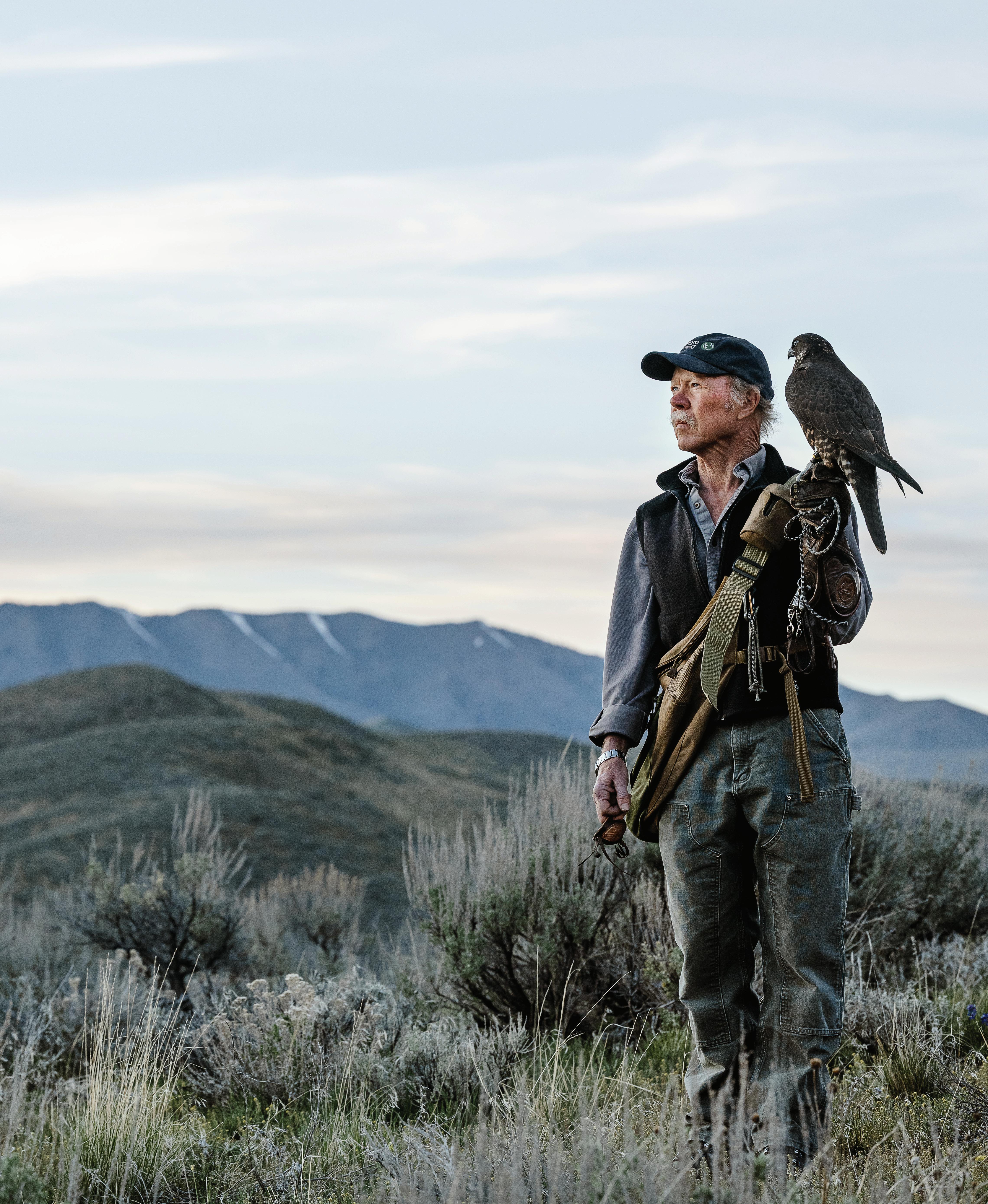
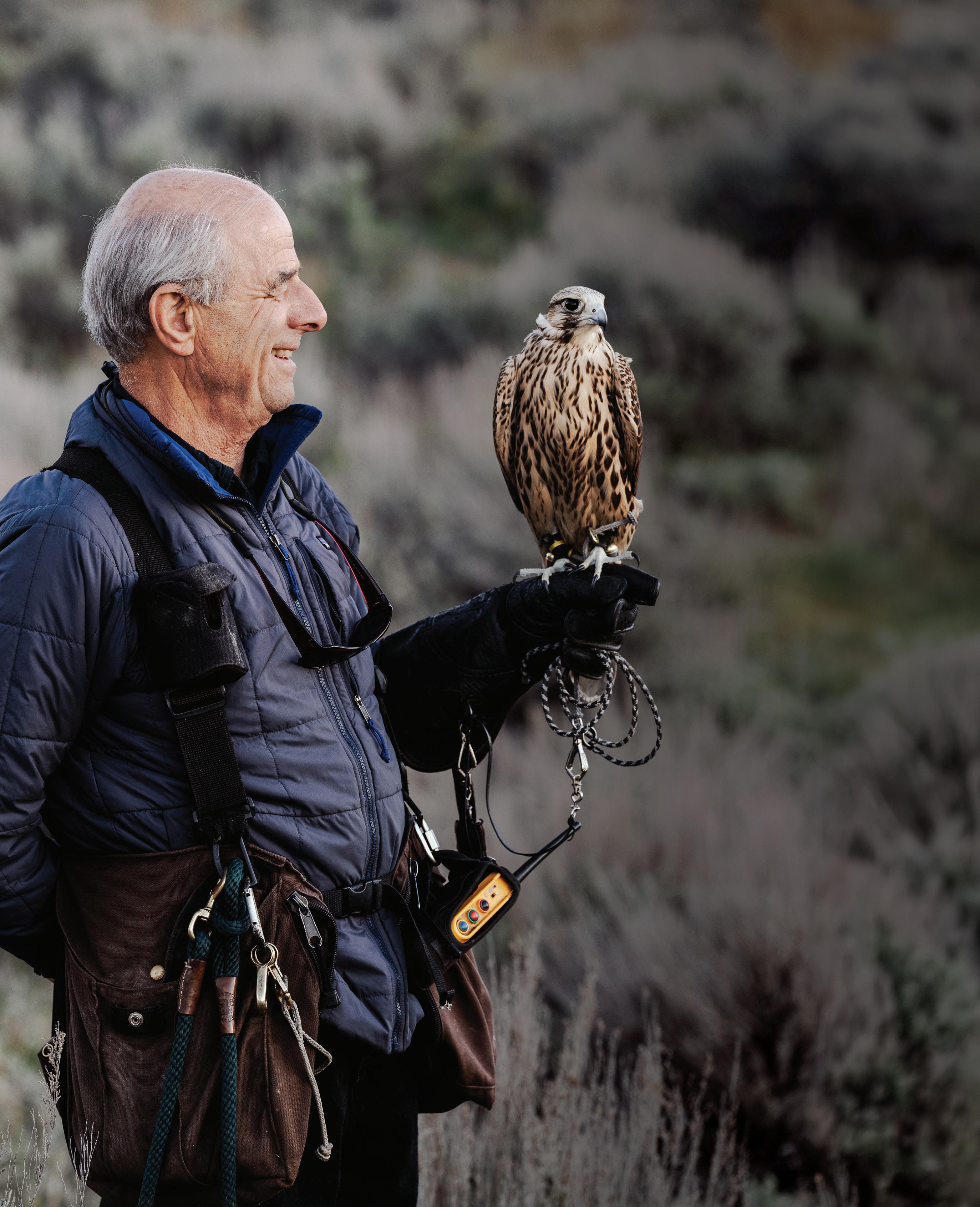
Learn about the history of falconry, a pursuit founded out of necessity and grounded in observation and field data, which helped establish the very foundations of modern-day ornithology (“The First Flight,” page 88). Discover how integral Idaho has been in furthering the science of avian biology, largely led by falconer-biologists at The Peregrine Fund in Boise, and meet the real-life Idaho falconers preserving this ancient art that dates back 5,000 years or more (“Partners in the Hunt,” page 96).
Follow writer Mark Dee’s account of the recent—and ongoing—transformation of Bigwood Golf Course, once a treeless in-town airstrip just 50 years ago (“More Than Just Golf,” page 46). Read about innovator and athlete Charley French who, at 100 years old this August, remains a force of nature and proof that a long, active, inspired life is built through determination (“Age is Just a Number,” page 54). Meet recently-elected mayor Pete Prekeges whose leadership style harkens back to a time of respectful, but engaged, debate and active listening (“Pete Prekeges: Ketchum’s New Mayor is Anything but Grumpy,” page 110), or read about fifth-generation Idahoan, Gail Severn, the quiet but powerful force behind the Gail Severn Gallery, who has spent five decades advancing her mentors’ vision of demonstrating how “the arts can have an outsized impact in an unexpected setting” (“Gail Severn: An Eye for Beauty, a Life in Art,” page 108).
These stories—the histories they record and innovations they illuminate—remind us that progress is not measured by how quickly we leave the past behind, but by how thoughtfully we build upon it.
Because the people we most admire from the past were rarely content to simply preserve what existed. They dreamed and experimented. They challenged assumptions, were innovative, and adapted when circumstances demanded it. They understood that honoring the past did not require remaining anchored to it.
As you turn the pages of this issue, we invite you to reflect on the people whose efforts have shaped your own journey. Consider the mentors, pioneers, builders, artists, entrepreneurs, and quiet contributors whose determination created opportunities for others. Their stories remind us that every achievement rests upon countless unseen acts of perseverance.
And perhaps they offer something even more valuable: inspiration. Because one day, we too will become part of someone else’s history.
The question is not whether we will leave a legacy, but what kind—and why.
Enjoy the journey.
Laurie Sammis publisher / editor-in-chief
BRYANT DUNN DEV KHALSA
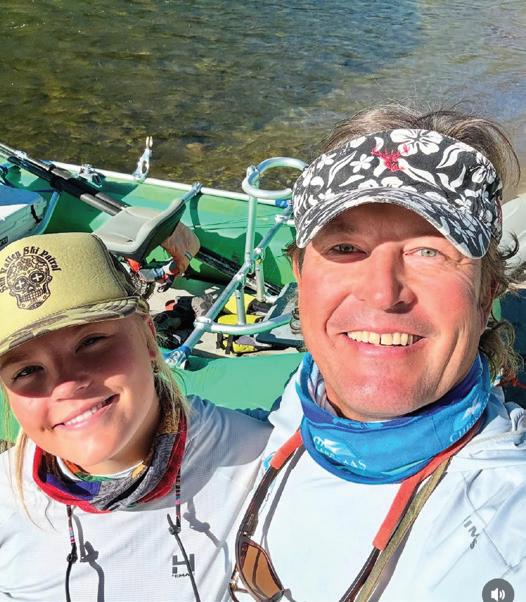
BRYANT DUNN is an unapologetic local history buff who lives on the banks of the Upper Salmon River somewhere downstream from Stanley, Idaho. In his spare time, Bryant operates Dunn Outfitting International, which offers flyfishing and big game hunting services in the American Rocky Mountains, the Central Pacific Ocean, the South Pacific, Southeast Asia, the Himalayas and other remote exotic locations. More importantly, Bryant is the proud dad of Maddy, Amanda, Daker and Hunter and loves nothing more than sharing his outdoor passions with them through hunting, flyfishing, rafting, skiing and generally dorking around in the mountains.
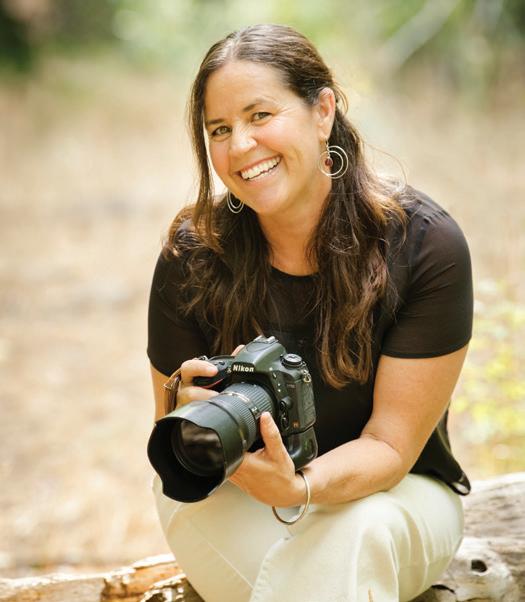
From Santa Fe to Sun Valley, photography has taken local studio owner, DEV KHALSA, all over the map. Over the past 22 years, Dev has become the Valley go-to for wedding photography, family portraiture, editorial and iconic Sun Valley events. Dev credits her success to her roots in photojournalism and the lasting relationships she has built with each of her clients. For her, photography is an act of storytelling, weaving stories through her lens.
Photos by Dev Khalsa:
”Age is Just a Number” page 54; “Profiles” page 108
PAMELA KLEIBRINKTHOMPSON
PAMELA KLEIBRINKTHOMPSON, a career coach since 1999, has helped clients around the world and is an internationally known speaker. Pamela has a background in animation and was production manager on “The Simpsons” television show. She has written and produced training films for AT&T and IBM, and her articles have appeared in over 150 publications. Her picture book “The Horse Who Wanted to Fly,” won the Gold Medallion, at the Will Rogers Medallion Awards, is a Spur Finalist from the Western Writers of America, and won the Winnie Award from Equus Arts and Film Fest.
Story by Pamela KleibrinkThompson: “The Power of Children’s Books,” page 118
GABE BORDER
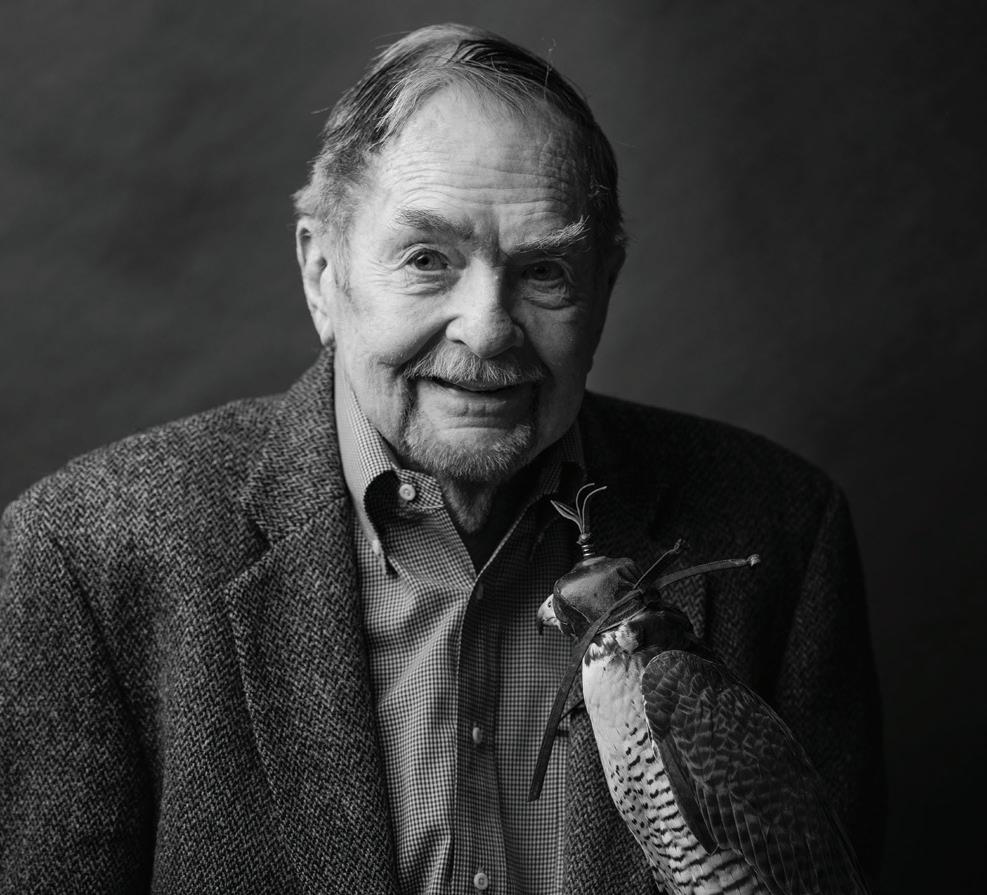
GABE BORDER is an architectural and interiors photographer based in the American West. Prior to his photography career, he worked in wildlife conservation with California Condors. A lifelong sportsman, Gabe pursues upland birds in the classic tradition — with trained falcons, English setters, and an 1840 English sideby-side — bringing the same reverence for craft and heritage to the field as he does to his work behind the camera
Photos by Gabe Border: “Partners in the Hunt,” page 96
writers - Lindsay Boeger, Mark Dee, Emma Drucker, Bryant Dunn, Kate Hull, Jonathan Mentzer, Bill Nurge, Laurie Sammis, Hayden Seder, Cristy Sellas, and Pamela Kleibrink-Thompson.
photographers & illustrators - Gabe Border, Spencer Cordovano, Sofia DeWolfe, Steve Earle, Beth Fox, Dev Khalsa, Ray J. Gadd, Nick Lacey, Roland Lane, Amanda René Nagy, Halsey Pierce, Kirsten Shultz, Brie Thomason, and Carol Waller.
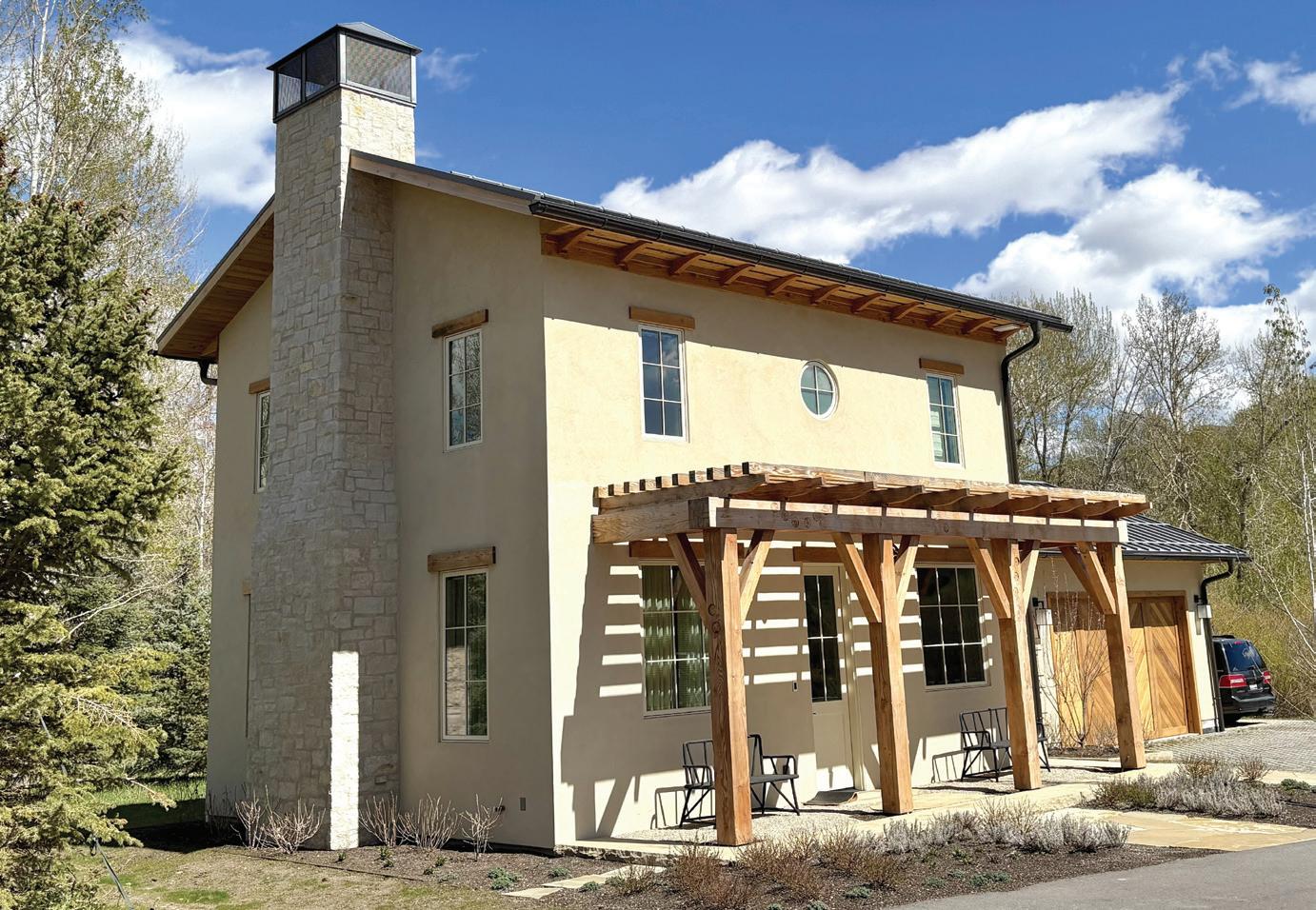
If “home is where the heart is,” then the heart of our company is partnering with our clients and teams of professionals to turn dreams into realities. Whether we are building a new home or turning a closed-off kitchen into a wide-open great room for gathering with family and friends, we have the experience and expertise to make it happen. We look forward to the opportunity to work with you and see how we can be of service.
OUR SERVICES
• New Construction
• Remodels
• Additions and ADUs
• Decks and Patios
• Rough Carpentry
• Finish Carpentry
• Cabinet Installation
• Window Installation
• Door Installation
• Hardware Installation
• Tile & Flooring Installation
• Drywall
• Texture
• Painting
• Demolition
• And more…
SUMMER 2026
publisher/editor in chief Laurie C. Sammis
managing editor Adam Tanous associate editor Cristy Sellas guest art director Lillie Cooper senior designer Liz Parmalee
Sun Valley Magazine Online: sunvalleymag.com email: info@sunvalleymag.com
Sun Valley Magazine Awards
2024 OZZIE AWARDS
Gold Winner, Best Cover Design - Summer 2023
Gold Winner, Best Feature Design - “Men of Steel” Gold Winner, Best Use of Photography in a Feature - “Kings of Rodeo”
2024 EDDIE AWARDS
Finalist, Best Feature Article, “Men of Steel”
2018 MAGGIE AWARDS
Finalist, Best Feature Article - “Primal Necessity”
2017 MAGGIE AWARDS
Finalist, Best Feature Article - “The Long Journey Back” Finalist, Best Profile - “A Life in the Sky”
2016 MAGGIE AWARDS
Finalist, Best Feature Article - “The Great Migration”
2015 MAGGIE AWARDS
Finalist, Best Annuals & One-Time Custom Publication/Consumer Finalist, Best Cover/Consumer
2014 MAGGIE AWARDS
Finalist, Best Annuals & One-Time Custom Publication/Consumer
2013 MAGGIE AWARDS
Finalist, Best Semi-Annual & Three-Time/Trade & Consumer
Finalist, Best Special Theme Issue/Consumer
2012 MAGGIE AWARDS
Winner, Best Semi-Annual & Three-Time/Trade & Consumer
2011 MAGGIE AWARDS
Finalist, Best Semi-Annual & Three-Time/Trade & Consumer
Finalist, Best Special Theme Issue/Consumer
2010 MAGGIE AWARDS
Finalist, Best Semi-Annual & Three-Time/Trade & Consumer
Finalist, Best Special Theme Issue/Consumer
2010 OZZIE AWARDS
Gold Winner, publication fewer than 6 times per year
2010 EDDIE AWARDS
Gold Winner, publication fewer than 6 times per year
2010 MAGGIE AWARDS
Finalist, Best Semi-Annual & Three-Time/Trade & Consumer
2009 MAGGIE AWARDS
Winner, Best Semi-Annual & Three-Time/Trade & Consumer
1,391 survivors received safety, shelter, and support last year
1,948 Helpline calls met with real help from real people
8,799 hours of Advocacy provided face-to-face
69 adults and children found stability in safe housing
82 survivors received free legal support
239 people gained confidence through Empowerment Programs
651 students learned skills to build safe and respectful relationships
100 percent of Transitional Housing participants report improved well being
The Circle That Holds Us
The Advocates promotes healthy relationships by providing safety, healing and resources to people impacted by abuse. The Advocates THRIVE Center for Safety and Healing is opening in November 2026. This transformative project will expand our transitional housing to 38 apartments and grow the THRIVE Kids Early Learning Center–creating a safer, more supportive future for families impacted by abuse.
MAKE A DONATION TO THE ADVOCATES TODAY!
Pioneer Perfume
Lilacs of the Wood River Valley
BY BRYANT DUNN
The earliest Western pioneers of the Wood River Valley were a tough lot. The first local inhabitants of the late 1870s and early 1880s encountered tempestuous springs, moody autumns, and winters that could be brutally cold, driving the less-hardy newcomers away. It was, ultimately, a survival scenario, requiring that families work together to persevere through Mother Nature’s myriad unforgiving and unpredictable challenges.
Long before roads were built, even before the arrival of the great Iron Horse to the Wood
River Valley in 1883 to serve the burgeoning mining industry, families worked the land, ran cattle, mined mountains and built homesteads as they established a foothold in this Northern Rocky Mountain paradise. Homesteading, however, comprised more than the felling of timber, the horse-drawn transport of supplies to a homesite, or the construction of houses and outbuildings. Making a home also included the beautification of the environment in which early inhabitants toiled, lived, loved, and died.
To this day, remnant evidence of this era can be seen sprinkled throughout the Wood
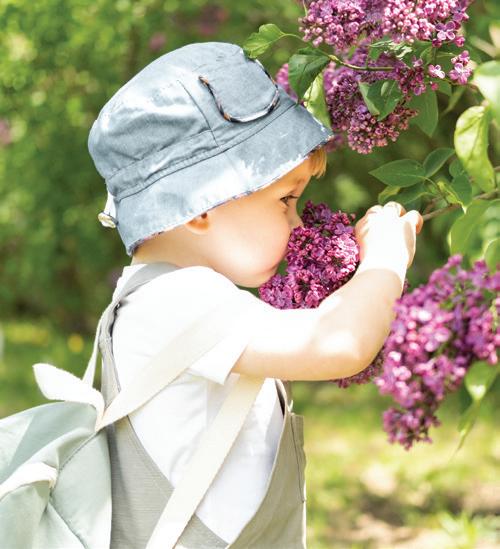
River Valley and surrounding mountain communities in the form of lilac bushes, perennial proof of a pioneer presence long past that continues to beautify yards, fields, farms, and communities with the unmistakable scent that wafts along mountain breezes each spring.
On May 1, 1881, after an arduous 25-day wagon journey from Ogden, Utah, Michael Brown bounced uncomfortably along a muddy two-track freight trail toward a low sagebrush saddle. As he crested the ridge, he was greeted with a view that profoundly affected him. In front of him stretched a
verdant valley, replete with numerous spring creeks, a cottonwood tree-lined river, celadon sagebrush-blanketed hills and snow-capped mountains far to the north.
Mary Brown McGonigal, Brown’s daughter and local pioneer historian, recalled her father’s story in her informative book, “Spring of Gladness: Reminiscences of Pioneer Life in the Wood River Valley.”
“The sight I saw to the north almost stopped my breathing,” Brown reportedly said from his viewpoint on what has long been referred to as Timmerman Hill. “A most
beautiful valley lay ahead, untouched by man’s cultivation. As I looked down on the valley floor, the native rye grass was waving in that mild breeze and seemed to appear as a lake of blue water.”
The beauty and majesty of the valley had a similar effect on most of the early valley visitors, whether they were prospectors of Idaho’s Gold Belt, immigrants adventuring farther west to seek their fortune or aspiring ranchers of the cattle and pigs required to supply the exploding mining camps of Broadford, Jacob City, Bullion, Doniphan,
Boulder Mountain Clayworks is a 501(c) nonprofit organiztion. Partial scholarships available, contact us at
Deer Creek, Hailey, Ketchum, Galena, Vienna and Sawtooth City among many others.
These communities began as mining camps, and where quality ore was unearthed, a level of economic stability and the potential of a promising future resulted in miners collecting their families to join them. While the men worked in the mines, women were tasked with homemaking and introducing a level of civility and culture to the townships growing quickly around them. One way this was accomplished was the beautification of yards surrounding the valley’s ever-multiplying log cabins.
Soon, lilac bushes began to dot the yards of homesteads as young starts were delivered by train and the endless trail of Conestoga wagons that snaked through the Western prairies. Within a few short years, young shoots had matured into flowering plants, and the perfume
of the hardy, alkaline-soil-loving flora was ubiquitous throughout the Wood River Valley. The addition of natural beauty and springtime sweet scents softened the rough edges of the rugged valley communities and added a pleasant aspect to pioneers’ daily lives.
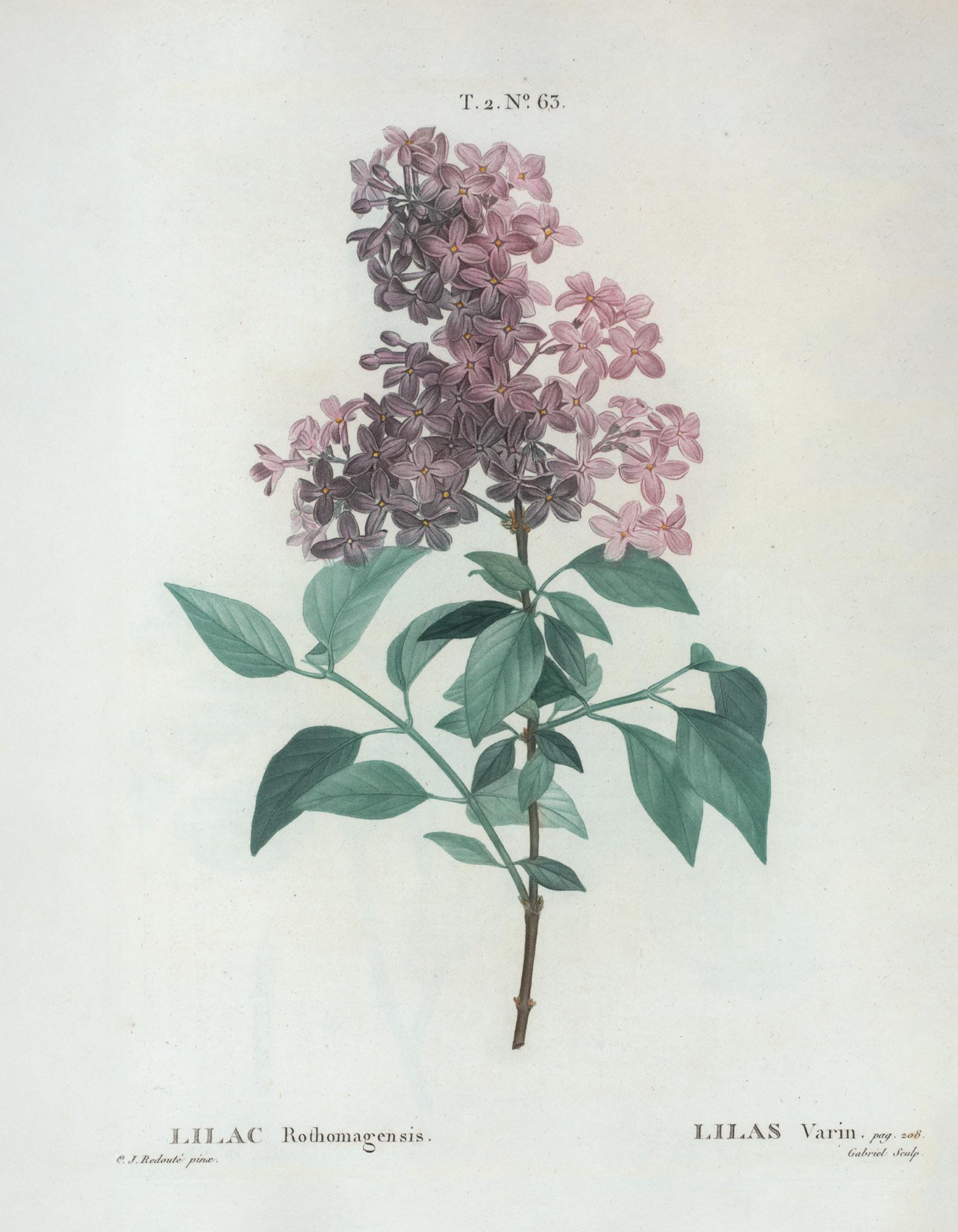
Lilacs, a genus of deciduous shrubs and small trees, are not native to the Northern Rockies or North America for that matter. In fact, lilacs are a member of the olive family (Oleaceae) and are native to Eastern Europe, specifically the Balkans and Carpathian Mountains of Romania and Turkey, Ukraine, across the Himalayan range from Pakistan to India, Nepal, Tibet and Eastern Asia, including China, Mongolia, Korea and Japan. Botanical experts report that there are 12 recognized species with over 200 additional cultivated varieties, many of which were
developed by the French Lemoine family between 1876 and 1955.
The common lilac (Syringa vulgaris) which is most prevalent in the Wood River Valley and often lives for well over a century, should not be confused with the Idaho State Flower, syringa, which is a syringa in common name only.
Lilacs, known for their durability in harsh climates have a remarkable history across the globe. These headily scented flowers were originally introduced to the courts of Vienna, Austria, in the 1500s and quickly spread in popularity through Europe, ultimately being shipped across the Atlantic Ocean to North America in the 1600s. In fact, by the time of the Revolutionary War in 1776, lilacs had long been ensconced throughout the colonies as settlers desired to bring remembrances of the Old World to their homes in the New World.
The earliest record of lilacs arriving in the West is attributed to Mary Charlotte and Philip Foster who brought lilac starts with them on a ship that sailed around the Cape of Good Hope in 1843. This pioneering plant was carefully nurtured in their Oregon pastureland along the Oregon Trail.
Lilacs were also a common subject matter of essayists, poets and artists in the late 19th and early 20th centuries. Among many others, Henry Wadsworth Longfellow, Louisa May Alcott, Walt Whitman, Henry David Thoreau, Gustave Kline and Claude Monet celebrated the flowering plants literally, figuratively, artistically, and in song.
Whitman, in his “When Lilacs Last in the Dooryard Bloom’d,” employed lilacs as a figurative reference to Abraham Lincoln and his unfortunate passing in 1865,
coincidentally the same year that the first mining claim was filed in Blaine County by Mathew Hale Williams at Rocky Bar.
Lilacs serve many diverse purposes in addition to having provided natural beauty and ornamental landscaping for the early pioneers. The flower’s perfume-like odor served not only to sweeten the spring breezes but also to conceal odors, especially around outhouses. Phenological data confirms that the blooming season of S. vulgaris commonly coincided with the melting of winter-long aggregation of sludge waste in privies, thus leading to their occasional reference as “Outhouse Flowers.”
Lilacs were also used most famously in the Victorian Era and in the early days of the American West to mask the scent of death
Throughout history, color variations of lilacs have been associated with different symbolic qualities. Purple is often tied to romance and first love. Magenta is commonly associated with passion, while white lilacs have always been linked to purity and innocence.
and decay before embalming was standard practice. This is one reason they are commonly associated with funerals and present in many of our local cemeteries, including those in Picabo, Bellevue, Hailey, Ketchum and other less-well known burial sites scattered throughout the Wood River Valley, both public and private.
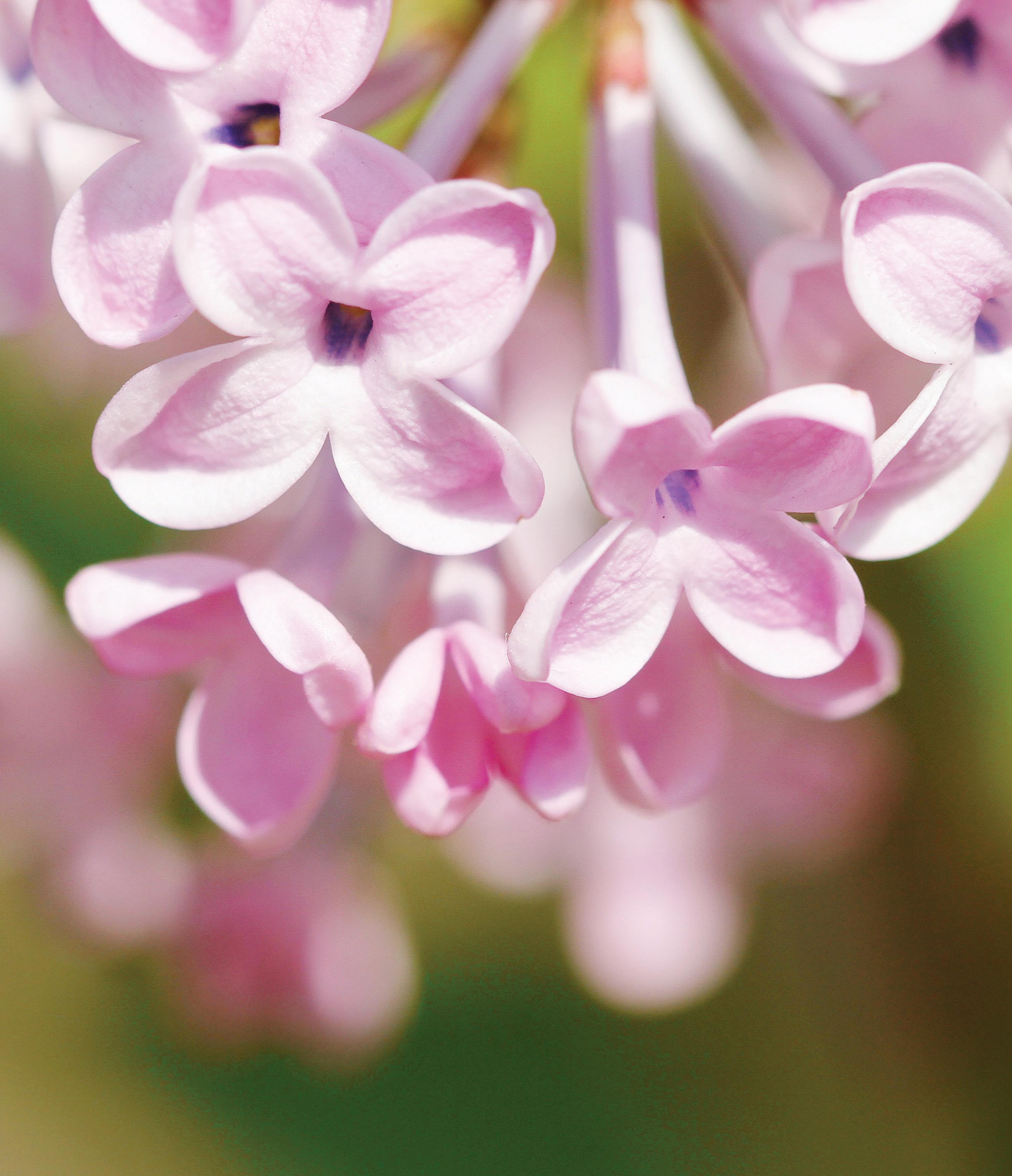
Many old wives’ tales surround this remarkable plant. Common pioneer knowledge suggested that it was unwise to bring lilacs inside a home as they would attract fairies and fairy mischief, which was to be avoided at all costs. And though lilacs are naturally four-petalled blooms, occasionally one might encounter a five-petalled flower, which was reported to grant the discoverer good luck if ingested.
Lilacs also provide important medicinal and pharmacological benefits, many of which early valley inhabitants likely were familiar with. Lilacs can be used to treat bronchitis,
diarrhea, fever, conjunctivitis, myocardial ischemia and infections. Additionally, they contain anti-inflammatory, antioxidant, antihypertensive and antifungal properties.
Early settlers commonly used lilacs to make syrups and jellies, which complemented many other foraged and cultivated regional edibles of the time, such as rosehip, chokecherry, wild onion, nettles, fern tips, huckleberries, wild raspberries, wild strawberries and myriad fruit trees.
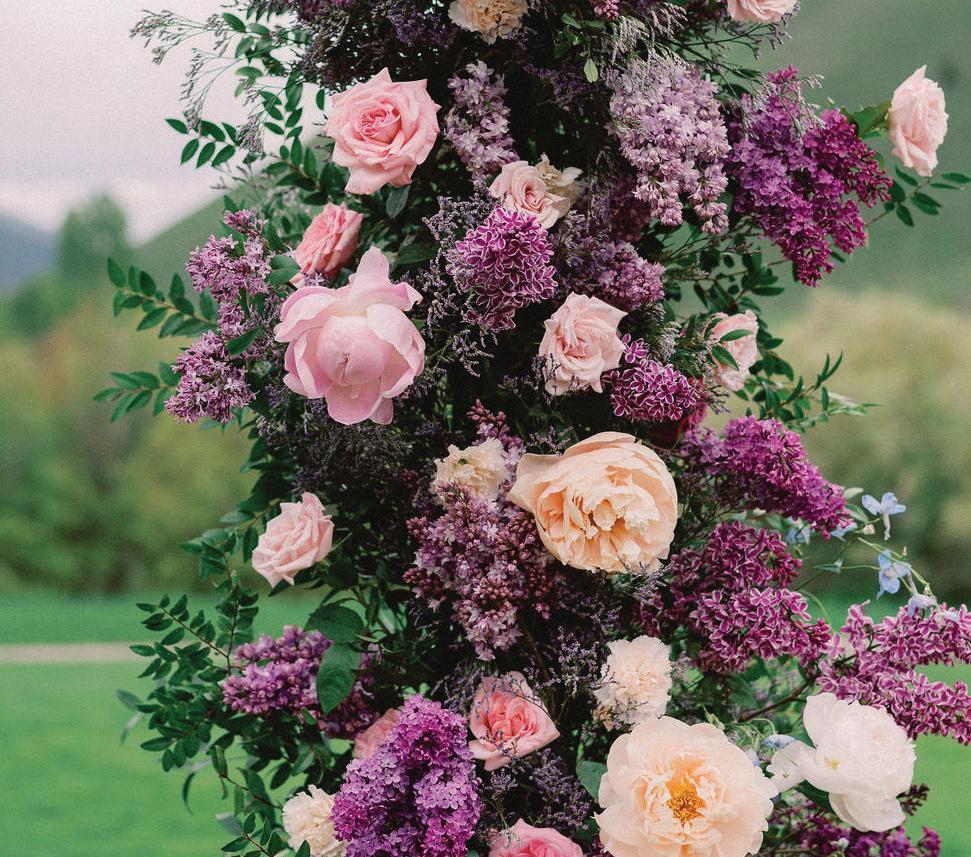
The symbolism of lilacs, specifically based on color, would have been well-known by early valley residents. Purple lilacs were said to portray the concepts of first love and romance. Magenta lilacs conveyed a sense of deep passion. White lilacs reflected innocence, purity and chastity and were often used in wedding contexts throughout the Wood River Valley of the late 19th century and onward.
Today, it is easy to forget the generations that forged their lives—and our
communities—in the Wood River Valley long before ski lifts ascended Ruud and Proctor Mountains, and Bald Mountain soon after. At that time, dependence on one’s neighbors wasn’t a consideration, but rather a requirement of survival.
If you pay close attention the next time you drive up or down the Valley, you will notice robust, verdant and briefly blooming purple, pink and white lilac bushes present in fields and pastures far from pavement or existing structures. These botanical remnants serve as lovely reminders that once upon a time, in that very location, an early resident of our treasured valley bent to his or her knees with a shovel, a lilac start and the desire to add a touch of beauty and humanity to what had previously existed as untouched wildness of the American West. ï
More Than Just Golf
The renaissance at Bigwood Golf
BY MARK DEE
Lyndsay Lyle looked across the rootshot grass of Bigwood Golf Course and pictured children playing. She saw bocce, maybe a few beers, and families gathering after a round — or not — for a meal in the clubhouse along Saddle Road. What she didn’t picture was the golf, because neither Lyndsay, nor her husband Christopher, had ever played a round.
That didn’t stop the Ketchum couple from buying the shopworn — and much loved — public layout, and putting Bigwood through the biggest changes the property has seen since it transitioned from a treeless in-town airstrip to a nine-hole golf course more than 50 years ago.
After two years of renovations, the Lyles are opening their reimagined Bigwood in full this summer, with an overhauled nine-hole par 36, a new bar and restaurant, a half-way house, a recreation area and a full slate of activities ready to launch north of downtown.
Maybe then they’ll have a minute for a round of golf.
“It has been a huge project — beyond our wildest dreams,” Christopher Lyle said.
To do it, they needed to build a team.
But that’s part of what drove the Lyles to buy into Bigwood in 2024.
Six years earlier, the family made a list of small towns around the West. The couple and their three kids were growing weary of their lives in the Bay Area. They knew they’d be happier in the mountains — they just didn’t know where. So, they went down the list. They booked trips, called schools, and headed out to see for themselves.
Christopher had never set foot in Idaho, but after 36 hours in Ketchum he knew their family had found their place. It had its glitz and it had its grit, and it had its places where both sides of the spectrum could meet and mingle, places like Lefty’s and Grumpy’s and the Pio — and Bigwood.
“It was so clear that Bigwood was one of these institutions,” Lyndsay Lyle said, “and it really had fallen on hard times.”
To Christopher, the feel of Bigwood was “true Ketchum” — they chose to buy the course for the same reasons they fell in love with the place.
“It has always been at the core of Ketchum,” he said. “It’s golf, but it’s a little irreverent. It’s not stuffy. That vibe is at the core of Bigwood.
“We thought, ‘How could we make this place we call home — this town, this valley — even more amazing?’ And we decided Bigwood is a place where we could do that.”
At its closest, Bigwood is three strong shots away from Sun Valley Resort. But prior to its 2024-25 renovation, no serious golfer would confuse the two. The resort’s operation is well oiled — and its courses well-manicured, an emerald mirage cut through dun sage and cottonwoods. Bigwood survived on its ramshackle charm, and those who loved it worked hard hours against stacked odds to keep the course alive and playable. But irrigation pipes kept failing. Greens kept dying. A casual visitor could drive north
‘‘ Nobody’s trying to be Augusta. We’re trying to be a great experience.” —CHRISTOPHER LYLE
towards the Boulders and, if no one was playing, not realize they had passed a golf course. Compared to its neighbor up Saddle Road, Bigwood was “Caddyshack” in the shadow of Carnoustie.
Changes started with the course itself. But to fix it, they had to destroy it first.
“There was a lot of trepidation beforehand,” said Superintendent Chris Gray, who came over from Sun Valley to lead the greenskeeping crew. “We were talking about tearing the course up and putting it back together.”
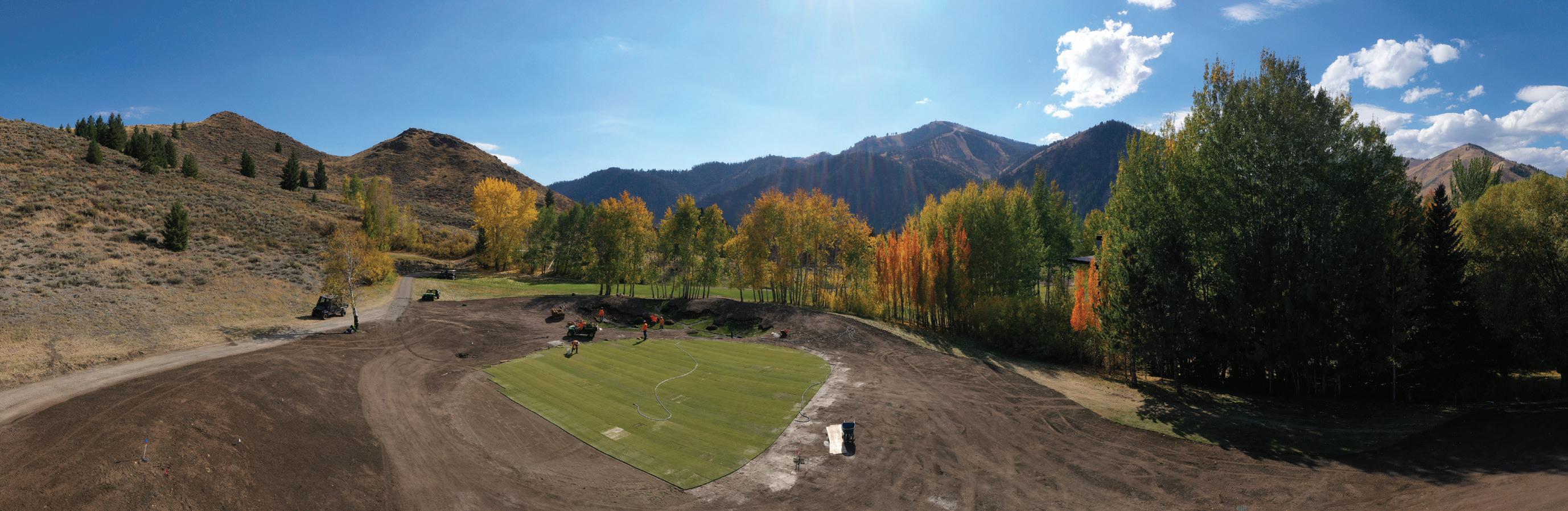
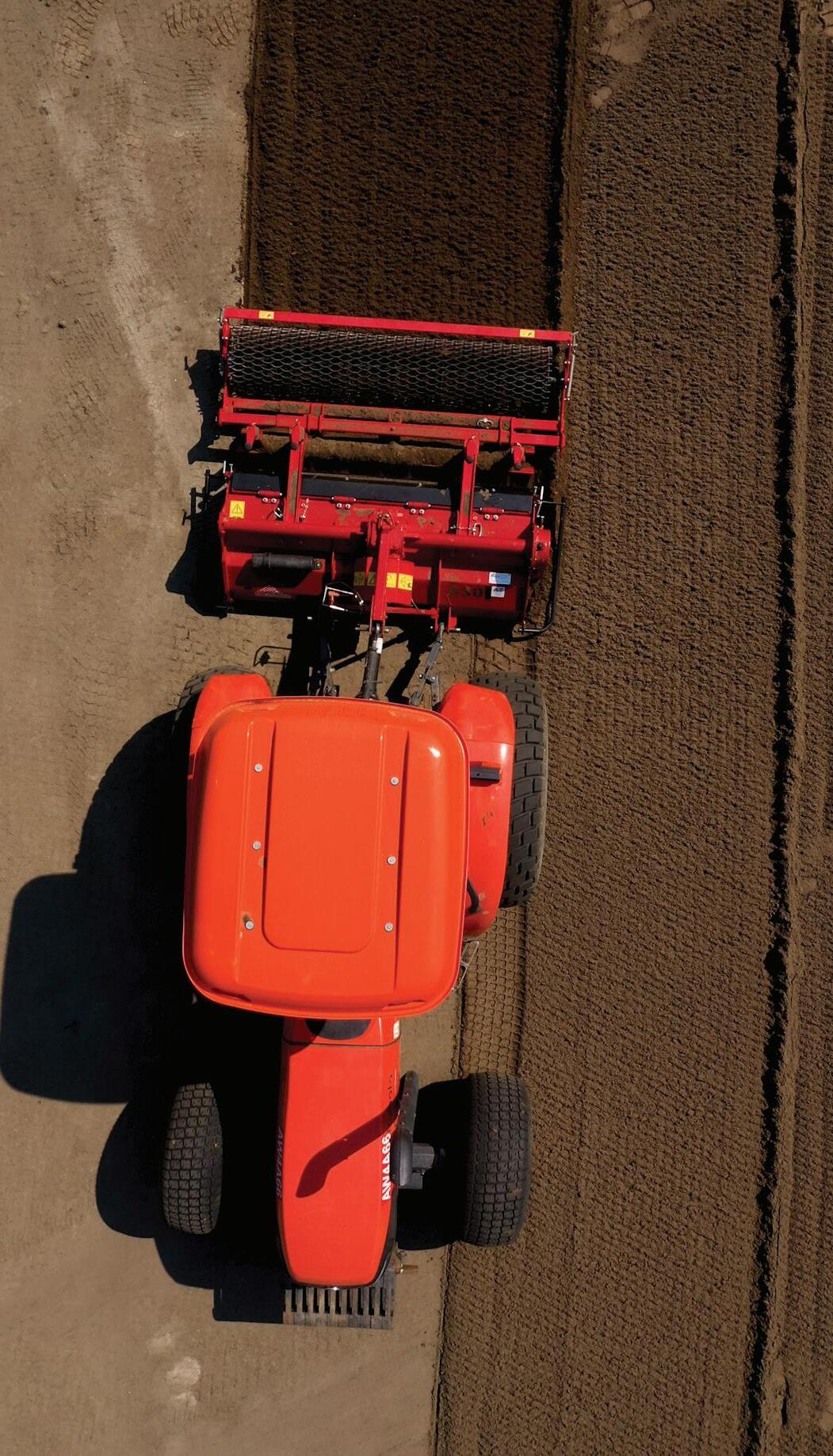
Architect David Druzisky came over from Boise to lead the redesign, which started with new irrigation under the grass. Then, he reshaped the original Robert Muir Graves routing, sculpting with a bulldozer. Crews put in new greens and replaced the hardpan sand traps with new bunkers, rugged and rough-hewn, to match the landscape. Finally, they changed the routing and added a new ninth green — formerly the sixth — below the clubhouse patio.
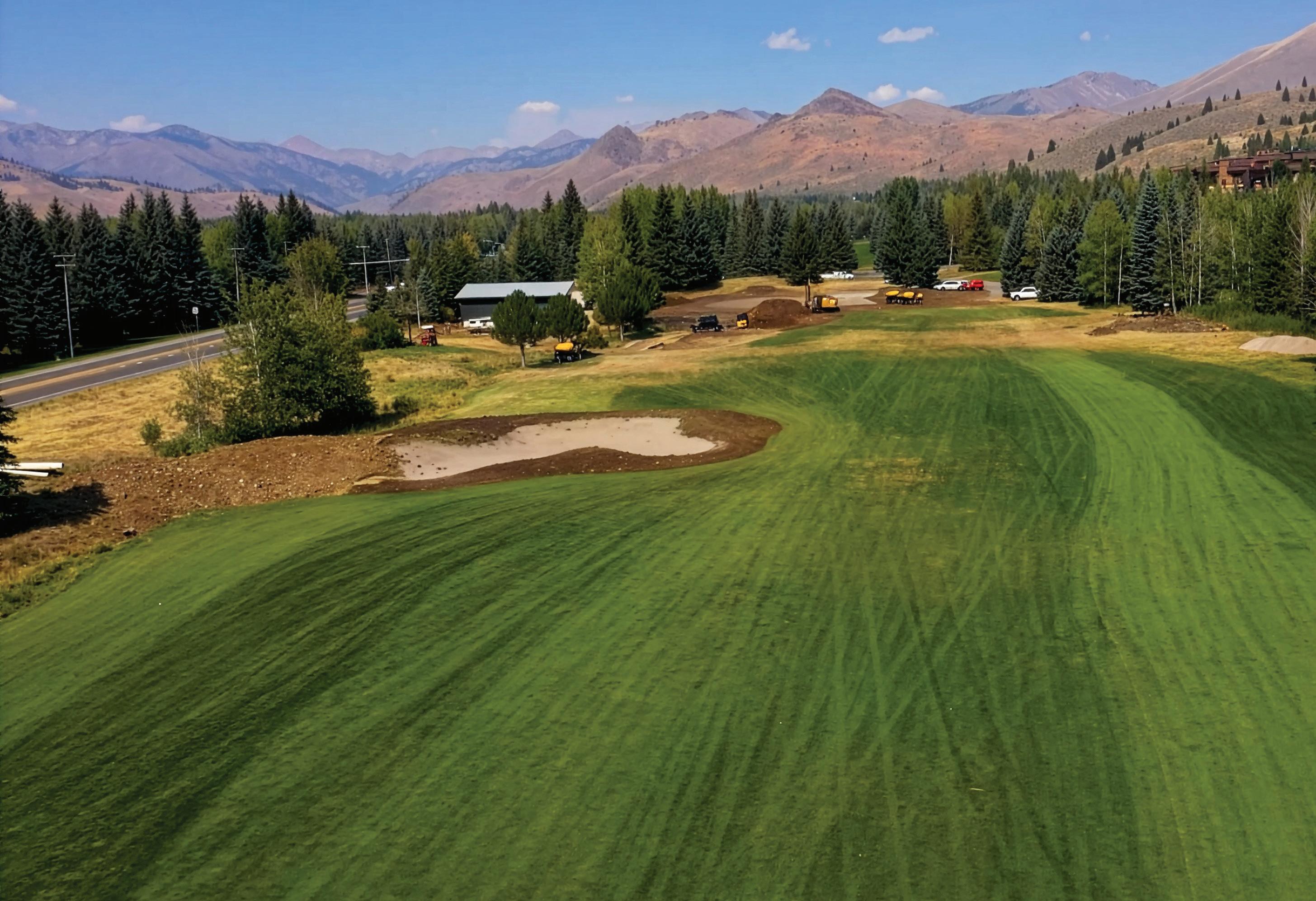
The renaissance at Bigwood was from the ground up, literally, beginning with the irrigation system. Greens were rebuilt, the terrain sculpted, bunkers redone, and the hole layout reconfigured. A short video of the reconstruction is available here: bigwoodsv.com/ renovation. Likewise, the menu at Timbers was created from scratch with the goal being a local slant on “crafted American.”
The new course, which opened last summer, takes a few more linksland cues than its previous self. But the overall effect has less to do with the layout than the look: It’s just so much greener than it looked before.
To Gray, that starts with the Lyles, who committed three keys to the project: “Resources, time and people,” he said.
One of those people is Clif Neely. After 20 years at the Pioneer Saloon, Neely left restaurants six years ago to get closer to his passion: golf. As a greenskeeper, Neely met the Lyles’ commitment with one of his own, recently completing a turf management degree to better understand the course he was caring for.
“Having such proactive owners, it’s fabulous,” he said. “They’re investing in it. They’re bringing on good people. It’s legit. You stand a little taller, working around here. It’s something to be proud of.”
Bigwood “needed a fresh face,” Neely said, and it’s finding one. This summer, he’ll dip back into his old expertise to run the course’s new snack shack, Birdie’s, by the fourth tee box. They’ll serve up drinks, hotdogs and burger dogs — a hotdog-shaped hamburger pulled
in from San Francisco’s famed Olympic Club, where Bigwood’s longtime starter worked before decamping for Idaho.
Birdie’s sits next to a broad, open field, once a pond by the old sixth green. It already has a bocce court and a small turf putting green, with more on the way for kids and families. To Neely, that’s the spot that represents what the new Bigwood is all about.
“It’s always been an accessible, affordable spot. You can come and spend a lot of money or spend no money and have a great time.”
By the time you read this, all of that should be open to the public. So should the clubhouse, bar and restaurant, Timber’s. That — like the food it serves — started from scratch, too. The Lyles recruited Matt Robinson away from Sun Valley to launch the project. The new general manager cut his teeth running the Roundhouse, where items have been on the menu longer than most diners have been alive. At Bigwood, he said, “we’re making it up as we go along.”
“At the start, everything was just an idea,” he said. “We’re creating something out of nothing, without any real direction besides ‘What do we feel like this should be?’”
Idaho native Taite Pearson sets the menu at Timber’s, lured off the river (and out of culinary retirement) by the Lyles’ pitch. A chef and a fishing guide, he was leery of re-entering the Valley’s restaurant scene. Then again, the Lyles are no more restaurateurs than they are golfers. They offered him the reins and agreed on one red line: “You won’t have to Google anything on the menu.”
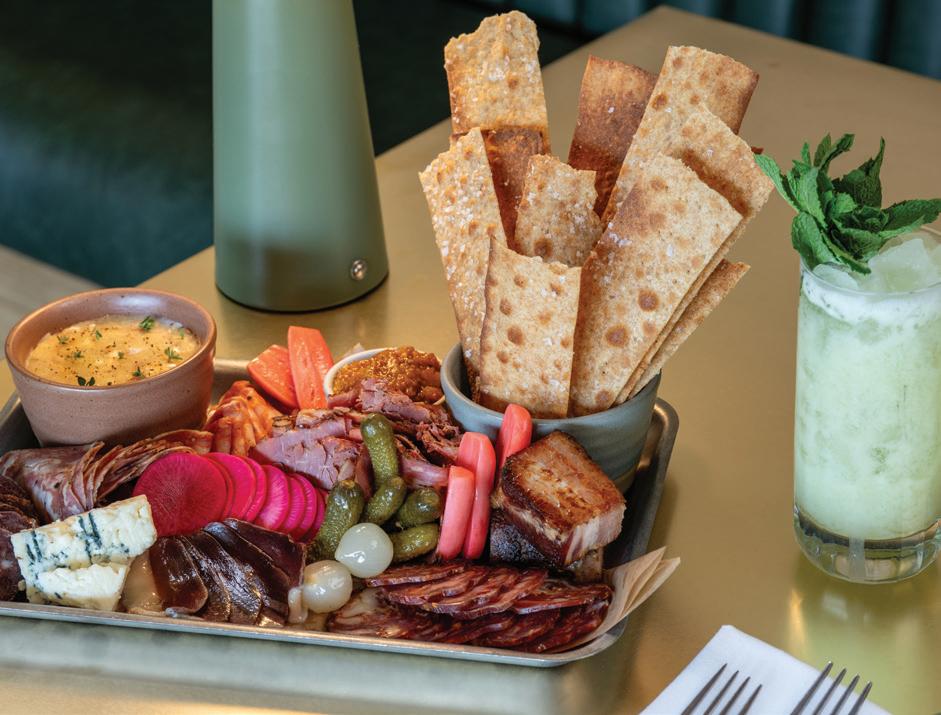
Pearson and his crew call Timber’s style “crafted American,” but its focus is more local than that. The baking, curing and pickling will all be done in house.
“Everything we can do here we will do here,” Pearson said. Ingredients, too: If Pearson can find it close to home, he plans to use it. That’s why he’s most excited about “getting chefy” with the menu’s “grazing platter,” featuring local meats, cheeses, pickles and breads. Not only does it scream Idaho, he said, but it’s also meant to share — a “community aspect” he sees running through the Lyles’ Bigwood.
“We want people who live here to want to and be able to come here frequently,” Lyndsay Lyle said. “The only thing we cared about was the community — the people who make a home here or feel at home here.”
To Christopher, that means knowing what to change, and what to leave alone.
“Nobody’s trying to be Augusta. We’re trying to be a great experience,” he said. “You can’t serve everybody — you have to build for a core set of customers. I think the people who have loved Bigwood over time — people who live here, who make a home here and love this valley — those people are our core audience. That really drives every decision.”
On a cold Monday in April, Pearson and his chefs were working in the new kitchen on “long prep,” and there was plenty to prepare. Around them, construction crews buzzed and hammered. Out the new bank of westerly windows, Baldy still glistened in post-season white, and a thin scrim of snow formed in the air. And Bellevue resident Vicky Walker strode to the new first tee, weather be damned, for the first of her three rounds that week.
“We’re just loving the transition to this new, wonderful place,” the nine-year Bigwood member said. “I can’t wait to see it come to fruition. It’s living up to its potential.” ï
Providing Safety and Healing
The Advocates expands services with its new THRIVE Center
BY HAYDEN SEDER
Founded in 1991, The Advocates has been operating in the Wood River Valley for more than 30 years, providing a range of services, including a crisis shelter, transitional housing, legal advocacy, and educational programs. It’s extensive programming has touched Wood River Valley lives in many ways, whether through its retail shop, The Advocates Attic, or with its prevention curriculum for children. Domestic violence and sexual assault do not discriminate—meaning the work of The Advocates is just as critical in this small corner of the world as anywhere else.
The Advocates’ mission promotes healthy relationships by providing safety, healing, and resources to people impacted by abuse. To work toward that mission requires a staff of 61 who provide a variety of free, confidential services 24 hours a day, 365 days a year. Funds to support the organization come from a mix of fundraising efforts, foundation grants, government grants, The Advocates Attic sales, and programming income.
The Advocates’ extensive programming can be divided into four categories: services, support and transition, education, and empowerment programs.
Services include a 24-hour helpline and emergency shelter.
The support and transition program offers transitional housing, counseling and support groups in English and Spanish, and free legal advice and advocacy. Providing transitional housing is perhaps one of The Advocates’ most valued service, as the demand is constantly outpacing what is available. The shelter currently has 28 beds and an additional 18 rent-subsidized transitional
THE ADVOCATES’ 2025 STATS
1,391 survivors were helped. The Advocates provided services to 1,067 adults and 24 children.
1,948 helpline calls were answered.
82 people received free legal services.
8,799 hours of “face-to-face” advocacy were provided.
126 people, including 43 children, called The Advocates Crisis Shelter home.
88 sexual assault victims were assisted.
1 in 3 women in this community will experience verbal, financial, physical or sexual abuse.
housing units, which last year housed 69 adults and children. The average length of stay in these units is 16 months.
“We are committed to never turning anyone away due to lack of spaces,” says Shannon Nichols, director of development and engagement at The Advocates. “When we are at capacity, that may mean placing someone in a hotel or in a studio transitional unit for a night or two until a bed becomes available. This kind of flexibility has significantly changed how The Advocates can provide support, allowing us to respond more effectively to each individual’s needs.”
Education programming focuses on prevention for all ages, including the Every Teen Counts initiative to promote healthy dating behaviors; Live Respect and Teen Titans, two initiatives to engage boys in learning how to stand up against abuse; and prevention specialists providing violence prevention programming in local schools.
In 2025, 651 local middle school students took part in the prevention curriculum, with training sessions on topics like boundary setting and communication.
“Our long-term goal is to work ourselves out of a job,” says Nichols. “While we know that’s ambitious, it’s what drives our commitment to prevention.” The THRIVE Kids Early Learning Center, opened in June 2024, also provides quality early learning and a strong foundation in the form of teachers, parents, advocates, and community support.
Empowerment programs include the Skills for Success and Smart About Economic Empowerment classes to help survivors achieve financial independence as well as enrichment,
skills, and connections through classes in Zumba, cooking, or art.
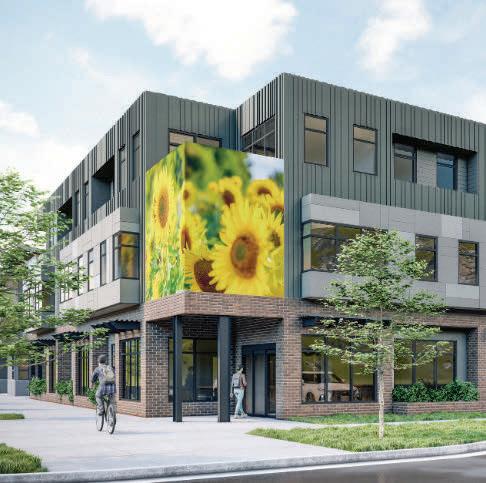
The Advocates is currently building a new THRIVE Center to both increase transitional housing options and provide more space for current programming.
The organization bought it’s first four-unit building in 2017, which filled immediately, as did a large wait list. At the time, the organization thought this would meet the Valley’s needs, but with population growth in the area and unprecedented housing costs, the length of stay in transitional housing has increased and the wait list continues to grow.
The new THRIVE Center will provide an additional 20 units of transitional housing apartments, for a total of 38 apartments, as well as an Early Learning Center for up to 71 children ages 0–5, and four off-site units of employee housing. There will also be private consultation rooms, spaces for teaching and training, a youth and teen engagement space, a playroom, a community kitchen for classes and events, a food and essential needs pantry, and a Dress for Success closet. As of now, the project is on budget and ahead of schedule for opening in November 2026.
Being able to provide longer-term transitional housing can be the difference between someone staying in an abusive relationship and feeling stable enough to leave.
“That level of support makes it possible for survivors to not just escape abuse but build a sustainable, violence-free future,” says Nichols.
“I wish people understood how difficult it is to walk through our doors or make that first call to the helpline. No one expects abuse to happen to them or imagines they’ll need our help.”.
The Advocates staff, which numbers 61, offers services 24 hours a day, 365 days a year.
body&soul
Age Is Just a Number
Charley French, fit at 100
What if living to 100 isn’t about luck but about how you choose to live every single day leading up to it?
There are big birthdays, and then there are Big Birthdays! On August 3, one of Sun Valley’s most beloved residents—an innovator, an athlete, and a quiet force of nature—will celebrate his 100th birthday. And no, Charley French isn’t Irish. So maybe his remarkable run of good “luck” has less to do with chance, and everything to do with a lifetime of preparation meeting opportunity—again and again—for nearly a century.
Just how rare is 100? Aside from being the only 99.9-year-old living in Blaine County, there are roughly 100,000 centenarians in the U.S., just 0.03% of the population. Even with projections indicating that number will quadruple in the next three decades, this is still one of the most exclusive clubs on Earth. If you’re 65 today, your odds of making it there are slim: for women it’s about 6%, for men less than 3%.
So, how does someone not only get into club centenarian, but arrive strong, mobile, and mentally sharp? Success always leaves clues, so let’s do some digging and try to ascertain how French has managed to outrun the “Four Horsemen of Death” (heart disease, cancer,
Alzheimer’s, type-2 diabetes) and outlive 99.97% of Americans. And if you’re thinking he simply inherited some magical longevity gene, he didn’t. His parents and siblings lived mostly average lifespans. French didn’t inherit longevity. He built it. Through movement. Through resilience. Through a stubborn refusal to ever “act his age.”
Born restless in St. Louis, Missouri, French joined the Navy at 17, at which point he was quickly shipped off to the Pacific Theater during World War II. He worked below deck as a machinist aboard the USS Cleveland, surviving multiple sea battles, including one especially close call with an incoming Japanese torpedo. After the war, engineering took him into the aviation industry overseas, where skiing in the Alps every chance he got led to a chance encounter with fellow powder addict Bob Smith—yes, Bob Smith of Smith Optics—and together they helped create the first dual-lens ski goggle still used today. Then came Sun Valley. In the early 1970s, French arrived to ski and stayed to build. Working alongside Ed Scott—founder of Scott Sports in Ketchum—he helped develop a lighter, more responsive alpine ski boot that would redefine performance on the mountain. And when he wasn’t designing the future of
sport, he was outside building it—running, biking, and testing the limits of his body.
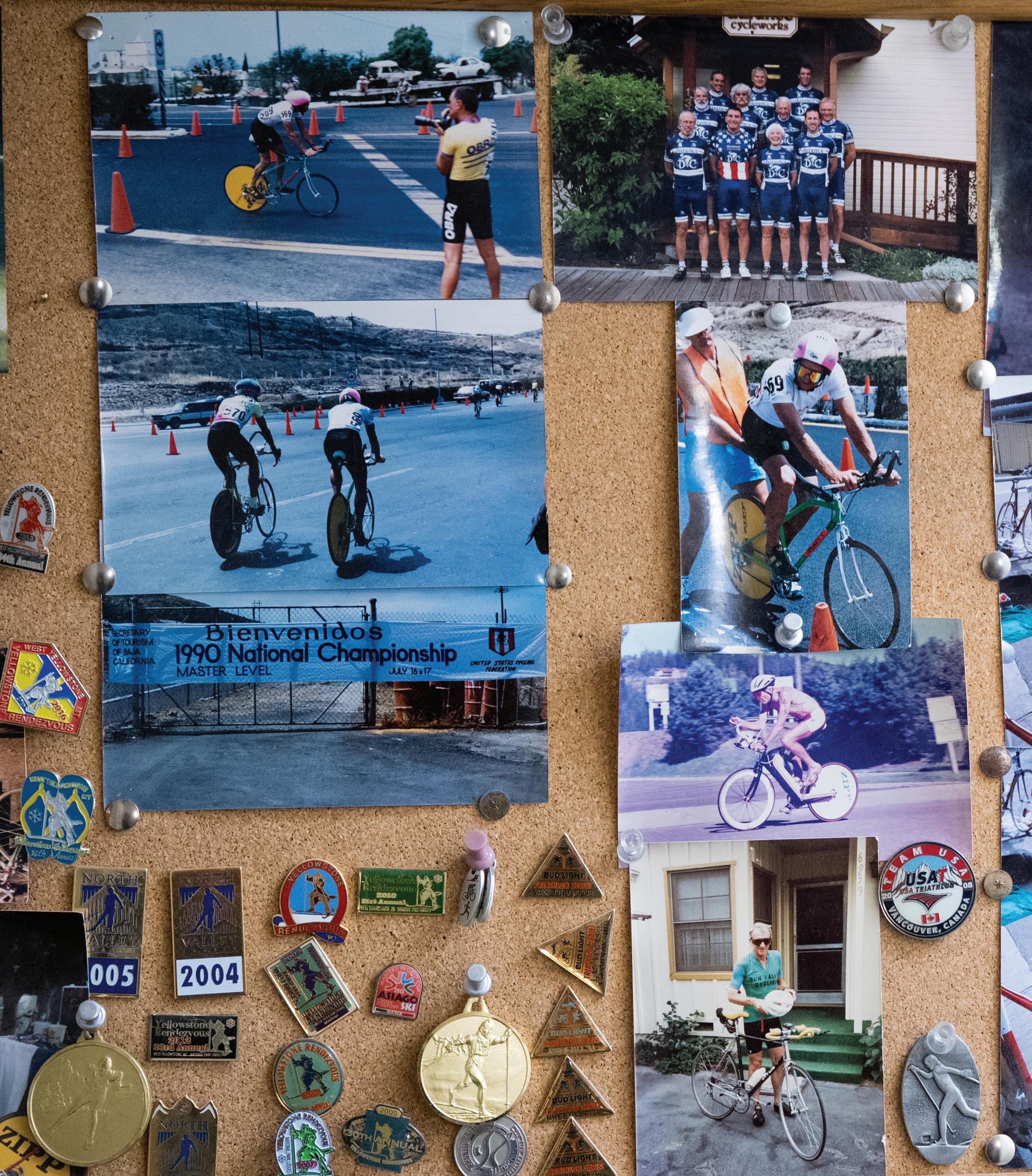
By the mid 1980s, French’s engineering mind collided with cycling history. He designed—and literally bent into shape—the aerodynamic handlebars Greg LeMond used to win the 1989 Tour de France. But here’s what separates French from most innovators: he didn’t just build it. He proved it. Three years earlier, at age 60, he showed up at the 1986 Ironman World Championships with a homemade version of those same aero bars— unseen, unheard of—and won his age group by 41 minutes.
French would go on to compete in well over 200 triathlons, winning his age group in 195 of them (five of which were World Championship titles). He also picked up 12 gold medals at the World Masters Nordic Championships and won his age group in 41 out of 45 Boulder Mountain Tour races. And last, but not least, at the tender age of 99, French earned indoor world records on the Concept2 SkiErg and RowErg!
But here’s the crucial detail: French didn’t fully commit to power-endurance sports until his mid-50s. When most people are slowing down, he was just getting started. Better late than never, because science continues
to demonstrate that the two most critical drivers of health-span and survival are power and endurance!
Study after study points to the same uncomfortable truth: weakness is not just inconvenient—it’s downright dangerous. In fact, it carries a five-times higher health risk than being a smoker. Low strength— which reflects declining muscle mass, power, and coordination—is one of the strongest predictors of frailty, loss of independence,
‘‘ As I’ve gotten older, I’ve realized that balance, coordination, and mobility need to be part of every workout.”
and early death. Poor cardiovascular fitness is equally unforgiving. Landing in the bottom 25th percentile for VO2 max—the maximum amount of oxygen your body can process during aerobic exercise—is associated with a 400% higher risk of all-cause mortality.
As French’s example demonstrates, it’s never too late to start upping your power-endurance game. Consider also Robert Marchand, one of the most well studied late-bloomer athletes in history. He didn’t catch the fitness bug until his late 60s. Then, at 101 years old, after breaking the world hour cycling record, he decided to go even farther before old age slowed him down.
Working with renowned exercise physiologist Dr. Véronique Billat, Marchand trained for two more years and didn’t just improve, he transformed. He rode significantly farther (averaging 17 mph), increased his power output by 39%, improved VO2 max by 13%, and achieved the cardiovascular fitness of a 50-year-old man—all this at 103 years old! He continued to ride nearly every day until his passing at age 109, proving beyond any doubt that you’re never too old to get “younger,” faster, and more fit.
Which brings us back to French, and a question that applies directly to me as his fitness-trainer. How should a man who is about to turn 100—and who still wants to hike, bike, ski, and travel—continue to train his body?
SHOES FOR EVERY MAN, WOMAN, CHILD & SEASON!
4th & Leadville • Across from Atkinsons’ in Ketchum • (208) 726-3604
‘‘ The older you get, the more important it is to train in a way that keeps you improving without getting injured.”
The first rule is simple: Don’t get hurt! As French sees it: “The older you get, the more important it is to train in a way that keeps you improving without getting injured. My best advice is shift from lifting weights, to using your own bodyweight and elastic bands to train athletic movements that are similar to life and sports.”
For older bodies, injury is not just a setback, it’s a threat to independence. One bad fall, one careless lift, can mean months of pain, immobility, decline, and even death.
The second rule: Stimulate, don’t annihilate! Every workout should deliver the strongest possible signal for targeted adaptation—increased power, VO2 max, muscle mass, bone density, mobility, coordination—using the minimum effective dose. Enough to improve; not enough to break. As a corollary, French adds some centenarian wisdom: “As I’ve gotten older, I’ve realized that balance, coordination, and mobility need to be part of every workout.”
Interestingly this approach mirrors protocols developed by NASA for astronauts in microgravity. Since the first Apollo mission in 1969, scientists have understood that the weightlessness of space accelerates the aging process—muscle wasting, bone loss, reduced strength—similar to the rate of a 100-year-old body on Earth. NASA’s solution? Daily highintensity cardio, combined with resistance training utilizing elastic bands, pistons, and flywheels for resistance.
Not only is this the best way to train young astronauts in orbit, but it’s also proven to be the safest and most effective methodology for training older bodies.
Whether you’re floating in space, or hiking in Sun Valley, aging is a thief. It’s a clever one that silently steals the physiological assets you need to enjoy an active lifestyle. Unlike money, which grows with compounding interest, health and fitness metrics decline exponentially. So, it’s essentially reverse
compound interest, which can only be offset by properly training your physical assets to defend themselves against the process of aging.
So, the real retirement question is not just: “Will I have enough money?” but, “Will I have enough fitness to enjoy my life?”
Without a doubt, working with French and observing him move and feel better while getting stronger and more confident has inspired me to never quit. In 2062—when I’m 100—I’m aiming to be where French is now: sharp as a tack, mobile, energetic, and still doing the targeted training indoors that makes it possible to enjoy activities outside.
The real lesson to be learned from the life of Charley French is not that he’s lucky. It’s not that he’s gifted, nor even that he’s extraordinary—though he clearly is. It is this: A long, active, productive life is not built by accident. It’s built by design. ï
TOP THREE TAKEAWAYS:
Maximize Your Rewards: Workouts should focus on improving the six things your body needs: power, endurance (V02Max), dynamic mobility, whole-body coordination, functional muscle mass, and bone density.
Adapt Intelligently: Just because you skied bumps when you were 50, doesn’t mean you should when you’re 80 or 90. Pivot to easier terrain on perfect days, or swap your alpine skis for Nordic.
Be Relentlessly Consistent: Being consistent and staying at a high level of fitness year-round helps stave off declines. Aim for three to five workouts per week to make your body harder to knock down and easier to get back up when you do get knocked down.
Idaho Aging in Place · Wood River Valley
Your mountain home, built for every chapter
You chose this valley for a reason. The views from your deck. The ski runs out your back door. The life you built here. Idaho Aging in Place makes sure your home keeps up with you — so the only move you ever make is toward the mountain. Schedule a home consultation Ketchum · Hailey · Sun
Built by Cooper Custom Builds, a licensed Idaho contractor.
idahoaginginplace.com · 208 - 969 - 1965
Unplugged
How digital detoxes can increase well-being
BY EMMA DRUCKER
People love the beautiful, wild places in and around the Wood River Valley.
The trails, peaks, and rivers of central Idaho provide a refuge in nature and relief from technology. Recreators can revel in a few hours, a few days, or even a few weeks being “out of service” and “off the grid.” However, new cell towers and satellite texting have made it harder to find places to be tech-free.
It is common to spend a workday on the computer, use wearable tech while exercising, prep dinner with a podcast, relax with TV, and set a smartphone alarm next to the bed. The average U.S. adult spends seven hours a day on screens, about half of waking life. Often, the media pushes products or ideas, limiting independent thought.
The digital dominance of modern life has led some people to seek ways to detox from digital life. Parents, especially, are eager to find ways to reduce the time children spend on technology. Some of the most compelling research on screens has been about children. Excess screentime has been linked to poor executive functioning, academic performance, and language development. It can also have detrimental effects on social and emotional growth, and increases the likelihood of obesity, sleep disorders, and mental health conditions.
In the Wood River Valley, there are resources—beyond the ready access to a
wealth of outdoor activities—for individuals and families who want to increase feelings of belonging and well-being by reducing screen time. Organizations like TogetherWe and the 5B Digital Wellness Network promote mental health and well-being. Kirstin Emerson, prevention program manager at TogetherWe and a volunteer and founding member of the 5B Digital Wellness Network, understands that to balance screen time, families need alternatives.
“Parents seem to be more afraid of risky play than they seem to be of unstructured screen time, which can be much riskier,” Emerson observed. “Something I think we could do a lot better about in our community is providing safe containers for unstructured play … The ideas and opportunities are endless!”
The 5B Digital Wellness Network offers seasonal screen-free challenges full of tips on getting outside and connecting with the community. Emerson noted that more thoughtful use of technology by adults can have a big impact on children. “The more we all challenge our own habits, the more our youth will take notice, and the more our collective well-being will grow!”
Digital detoxes, at their simplest, are about reducing or eliminating screen time. When
encouraging youth to reduce tech time, setting time limits for devices should be paired with instruction for responsible digital media use.
Monica Reyna, program director and educator at The Space, a hub of academic support, mentorship, and advocacy for teens, remarked: “We’re about connection, learning, and belonging, and phones often get in the way of those things. But these students will be living in a digital world that we cannot even imagine, so we need to coach them on the roles of technology in our lives and give them good skills.”
Reyna suggested that, rather than a blanket ban on technology, adults should focus on positive modeling and conversing with youth about screen time, particularly social media use, as it can have distinct, negative impacts. Emerson added that “social media has been designed to be addictive—literally changing our brains with the constant micro hits of dopamine. It gives you the illusion of being connected, while actually promoting loneliness.” This resulting lack of belonging is
Data from the Communities for Youth 2025/2026 Survey of 6th-12th graders in Blaine County on their self-reported screen use.
one of the most damaging impacts of spending too much time on screens.
Sarah Seppa, the director of community engagement at St. Luke’s Wood River, explained that St. Luke’s partnered with Communities for Youth to collect data from 6th-12th graders in Blaine County to measure youth well-being over the past three years. The data reveal that sleep and social isolation, which can lead to depression and even suicidality, are two significant factors impacting youth locally. Broader research indicates that screen use can be detrimental to both quality sleep and social belonging. Seppa noted that St. Luke’s “focuses on protective measures and things that have a positive impact on youth mental health” and work to bolster those opportunities. She shared the success of recent teen-led community events, which provide a venue for off-screen connection and belonging. She also highlighted that “82.5% of youth have never reported cyberbullying, and that is a bright spot to celebrate.”
The benefits of reduced screen time are increased physical and mental wellbeing, more focus and creativity, and more connections. Replacing even some of the seven hours that the average American adult spends on screens each day would improve personal and community well-being. While the benefits
of digital detoxes abound, it is difficult to cut down on screen time. Luckily, there’s nothing we need to buy to make us feel better. Often, the simple, free solutions have the most impact: go outside, bring a friend, and leave your phone behind. ï
TIPS
Switch your phone to grayscale rather than full color.
Leave your phone outside your bedroom at night.
Lengthen the time each day between your last tech check of the evening and first check of the morning.
Set time limits on apps.
Turn off all notifications except for calls and texts from saved numbers.
Go for a daily tech-free walk.
Choose a day or half day a week to be totally tech-free.
sunvalleyartsandcraftsfestival.com
Presented By
Carrying the Mountain
Weighted vests and rucksacks are the latest trend in exercise
BY JONATHAN MENTZER
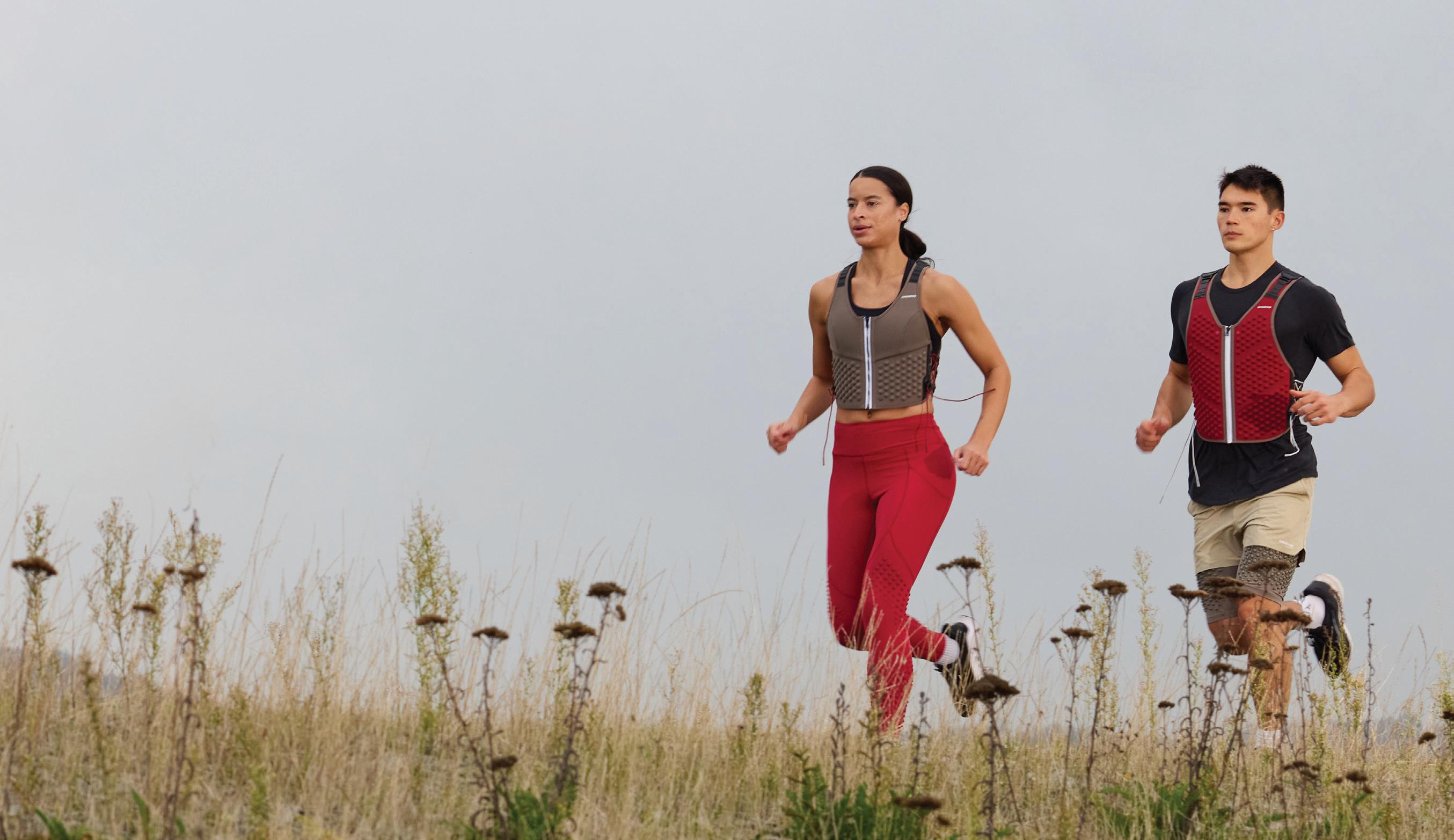
On cool mornings along the Wood River Trail, men and women in sleek and colorful vests move at a steady, purposeful pace. From slow jogs to brisk walks, each step has intent, and their vests signal a constant workout.
In gyms, at home, or on the trail, people are ramping up intensity in new ways.
Once for military and niche fitness, weighted vests, rucksacks, ankle weights, and belts now feature in mountain towns, gyms, and homes worldwide. They turn daily movement into something more demanding and purposeful. Called “rucking” or “weighted training,” the idea is simple: add load, increase effort, amplify results.
Inspired by military ruck marches—during which endurance and resilience are built under heavy loads—this approach has evolved for civilians seeking efficient, tough workouts. In this trend, walking becomes strength training. Hiking serves as conditioning. Ordinary errands offer fitness. This marks a shift in daily exercise.
According to MudGear.com, the primary difference between rucking and wearing a weight vest lies in how the weight is carried and how each adapts to different activities.
Rucking uses backpacks to focus the load on your back, which can feel familiar to hikers and backpackers. A weighted vest, on the other hand, holds weight snugly and evenly around your torso, which can help maintain posture and balance during many movements. This means each approach may suit different preferences and activities better.
“We’re seeing more curiosity around both, especially from people who want to feel strong outside the gym,” said Meggie Rose, owner of The Mill in Ketchum. “Weighted vests tend to catch people’s attention first because they’re simple and familiar. Rucking is growing too, especially with people who hike and/or backpack, ski, or spend a lot of time outside and want their training to match their lifestyle.”
People in the Wood River Valley naturally incorporate outdoor activity into their daily routines. Carrying extra weight increases calorie burn, builds endurance, and strengthens bones—especially as people age. While these benefits are attractive, it is important to consider the risks.
Taking on extra weight still requires caution. Physical therapists and trainers warn that improper weight use stresses joints— especially knees, hips, and lower backs.
‘‘ I recommend beginning with short walks or simple movements, focusing on posture and how your body feels.”
—MEGGIE ROSE, OWNER OF THE MILL
Carrying too much or moving with poor posture alters stride and increases the risk of overuse injuries.
“The biggest mistake I see is going too heavy too fast; more weight isn’t better,” Rose said. “Another common issue is using weighted gear all the time and thinking it replaces strength training. Strength training builds muscle, protects joints, and keeps people resilient over the long term. Weighted walking adds challenge, but it doesn’t create the same strength stimulus. And finally, people forget that moving with extra weight is still stressful on the body. Your muscles and joints will need time to adapt.”
Who should adopt this trend, given the benefits and risks? According to Rose, it’s a wide range of people. Athletes like the added challenge. Older adults are drawn to it because walking can be a workout. It can also help maintain strength and bone health. Beginners are adapting because it adds a gentle challenge to daily activities.
Rose advises starting lighter than expected. Heavy weight is not necessary to be effective.
“I recommend beginning with short walks or simple movements, focusing on posture and how your body feels,” Rose said. “If you can’t move well or breathe comfortably, it’s too heavy. The goal is to feel challenged, not crushed.”
Rose added that a good rule of thumb is to start around 5-10% of your body weight. Use even less if you’re new. If posture changes or feels sloppy, that’s a cue to back off.
“The ‘right’ weight is the one you can control well,” Rose added.
In a landscape defined by elevation and endurance, the rise of weighted movement feels less like a fleeting trend and more like a true evolution—one that challenges us to redefine our limits, discover new strengths, and see how a simple shift can fundamentally transform our daily lives. ï
THE HEART OF THE VALLEY. THE HEIGHT OF CARE.
By Joy Prudek, Public Relations and Communications Business Partner, St. Luke’s Wood River
For 25 years, St. Luke’s Wood River Medical Center has delivered something rare: advanced, high quality health care in the heart of a rural mountain community. Opened in 2000 through the vision and generosity of local residents, St. Luke’s Wood River (SLWR) was built on a shared belief—that people in the Wood River Valley deserve exceptional care, close to home. A quarter century later, that commitment continues to guide everything the hospital does.
As the only hospital within 75 miles of Ketchum, Sun Valley, Hailey, and Bellevue, St. Luke’s Wood River serves both year round residents and the many visitors drawn here for skiing, hiking, biking, and outdoor adventure. Whether someone is welcoming a baby, managing a chronic condition, recovering from surgery, or facing an unexpected emergency, SLWR provides care grounded in compassion, clinical expertise, and strong community connection.
Patients have access to a broad range of services designed to meet the needs of a rural, active population. Primary care providers are located in both Ketchum and Hailey. Specialty services include orthopedics, cardiology, dermatology, OB/GYN, pediatrics, general surgery, neurology, rehabilitation, wound care and more, with visiting specialists in areas such as oncology and gastroenterology.
Recognizing mental health needs in our community, St. Luke’s Wood River offers comprehensive behavioral health services for adults, children, and adolescents. This includes pediatric and adolescent psychiatry—an uncommon resource in rural communities—supported by a multidisciplinary team of experienced therapists providing counseling and support close to home.
The emergency department is staffed 24/7 by board certified emergency physicians, and diagnostic services include CT, MRI, full laboratory testing, and advanced breast imaging at the Women’s Imaging Center.
Over the years, the care available at St. Luke’s Wood River has continued to evolve—shaped by community need, health system commitment, and local generosity. With support from the St. Luke’s Wood River Foundation, the hospital has recently added clinically meaningful advancements, including robotic assisted surgery, automated breast ultrasound (ABUS) to enhance breast cancer screening, and a new CT scanner completed through a shared investment with St. Luke’s Health System. Together, these tools help ensure patients receive timely diagnosis, thoughtful treatment, and advanced care without leaving the Valley.
Access and convenience are also central to how care is delivered. Patients can use on demand virtual care, available seven days a week for many non emergency needs. St. Luke’s also offers prescription home delivery, making it easier for patients to receive medications safely and reliably—especially helpful for those managing ongoing conditions, seasonal residents, or anyone balancing busy schedules.
In a community defined by outdoor recreation, rapid emergency response can be lifesaving. With Air St. Luke’s base at St. Luke’s Wood River, critically ill or injured patients can be transported quickly to higher levels of care when needed. Staffed by highly trained flight nurses, paramedics, and pilots, Air St. Luke’s provides ICU level care in the air—offering reassurance when minutes truly matter.
As St. Luke’s Wood River celebrates its 25th anniversary, the focus remains steady: caring for this community today while preparing for what’s ahead. It’s a commitment to meeting the community’s needs by providing care, connecting care, and funding care—today and for the future.
St. Luke’s Wood River Medical Center 100 Hospital Drive, Ketchum 208 727 8800
St. Luke’s Clinic – Family Medicine (Hailey) 1450 Aviation Drive, Suite 100, Hailey 208 788 3434
Learn more about services, virtual care, and pharmacy home delivery at www.stlukesonline.org Through the generosity of donors, the SLWR Foundation helps fund critical equipment, programs, and services that improve the lives of people throughout the Wood River Valley. For more information, visit www.slwrf.org
BARRY PETERSON
FIELDBAR:
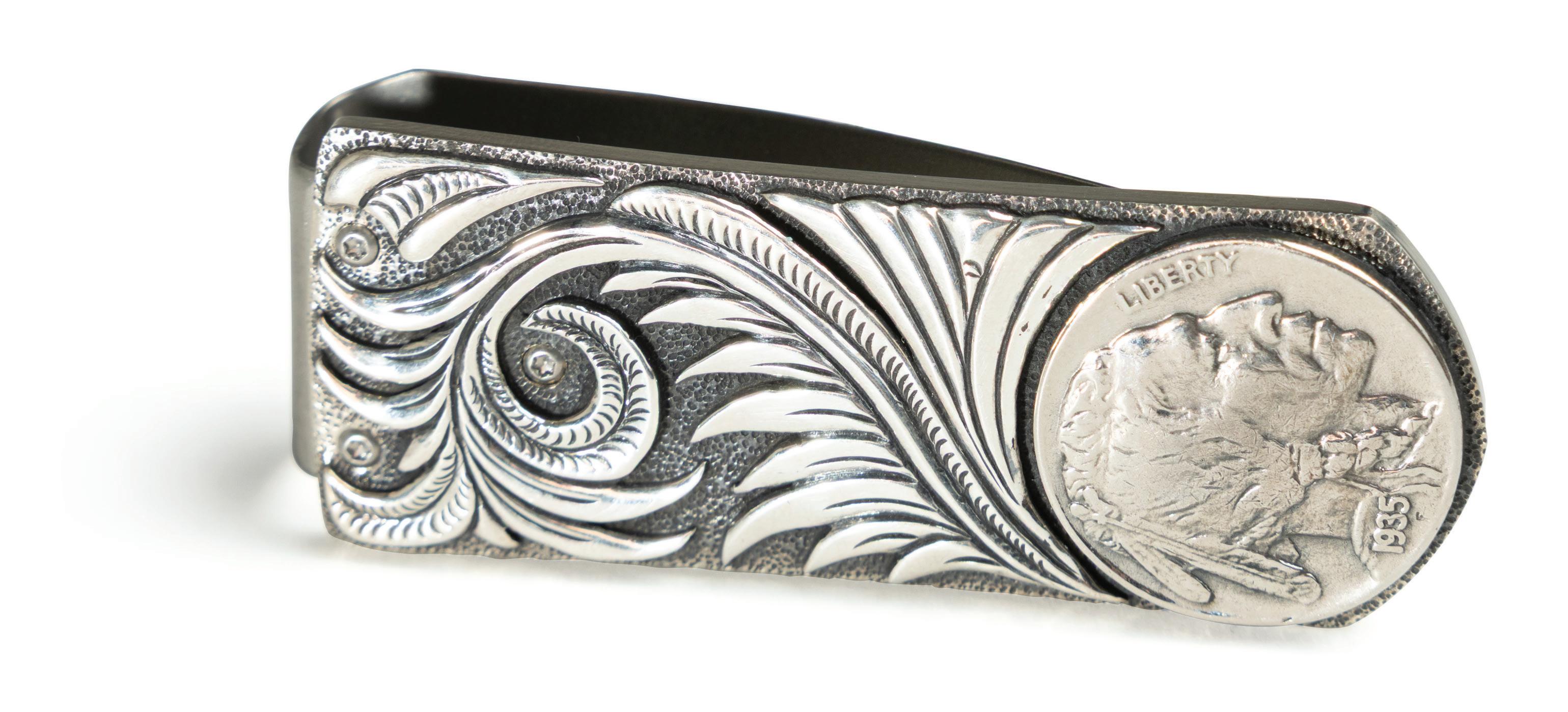
H Bar C: Vintage Western style with
refined edge.
H Bar C: Bold contrast with classic Western detailing.
Black Cowboy Hat: Built for grit and unapologetic style. 5. Fedora: Lightweight, breathable, and e ortlessly sharp.
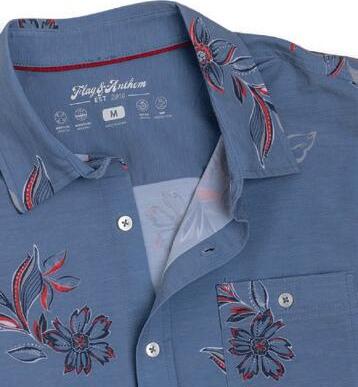
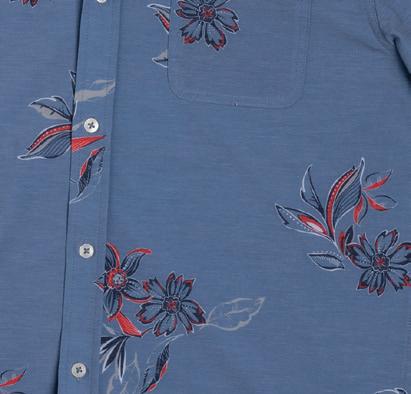
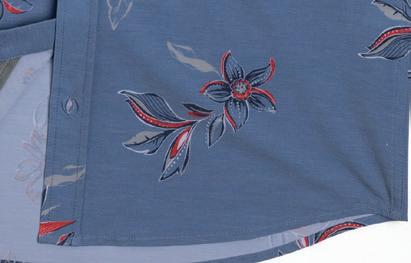
6. Old Gringo Boots: Bold Western spirit in rich blue leather. 7. Flag & Anthem: Relaxed fit and an easygoing vibe.
8. Idaho Ball Caps: Clean, classic caps with personal style.
breezy style...
1. Bold Hoorsenbuhs sunglasses with a deep blue tortoiseshell frame, mirrored lenses, and white gold accents - a standout gift for any style lover. Armstrong Root | armstrongroot.com
2. A breezy striped sundress, relaxed wrap, and woven bag create an easy, polished summer look.
Panache | panachesunvalley.com
3. The Bonnie - Soft curves in hand-stitched leather with zipper closure and pockets. Available in four colors. Cindy Kirk | cindykirkdesigns.com
4. The Valentina - Inspired by Italy, with top carry handles and adjustable crossbody strap. Available in five colors. Cindy Kirk | cindykirkdesigns.com
5. The McKenna - A fresh shape with zipper closure and handy luggage strap on back. Cindy Kirk | cindykirkdesigns.com
6. Easy elegance for every summer occasion—light, feminine, and e ortlessly polished. Panache | panachesunvalley.com
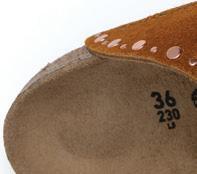
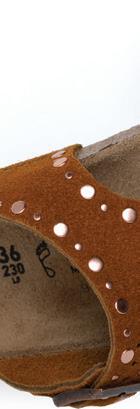
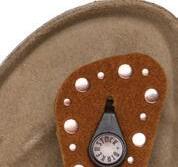
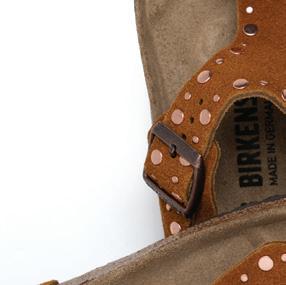
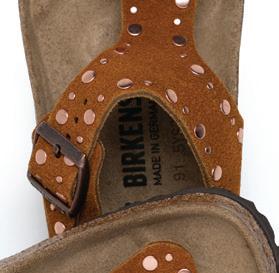
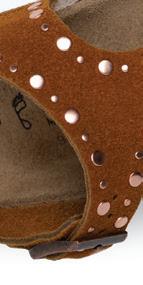
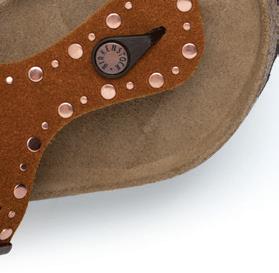
7. Find your perfect summer pair. Explore a wide variety of Birkenstock sandals and styles—made for comfort, versatility, and sunny days ahead. Ozzie’s Shoes | 208.726.3604
outdoor entertaining...
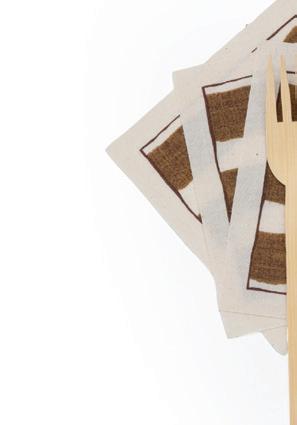
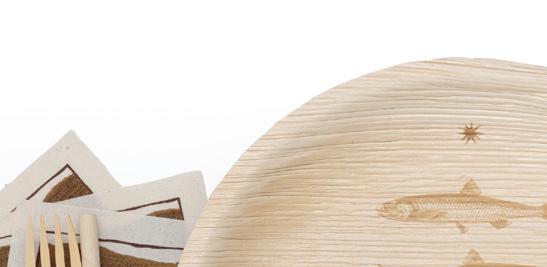
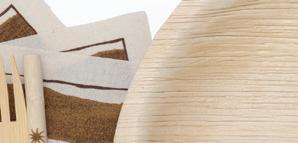
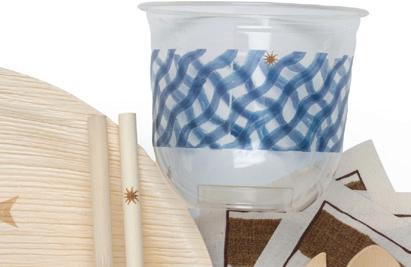
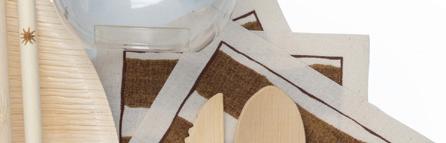
1. Summer dining, done beautifully. Compostable tableware in natural tones and a collection of designs for every occasion — from symphony picnics to wedding parties to the perfect host gift. Maaterra | maaterra.com
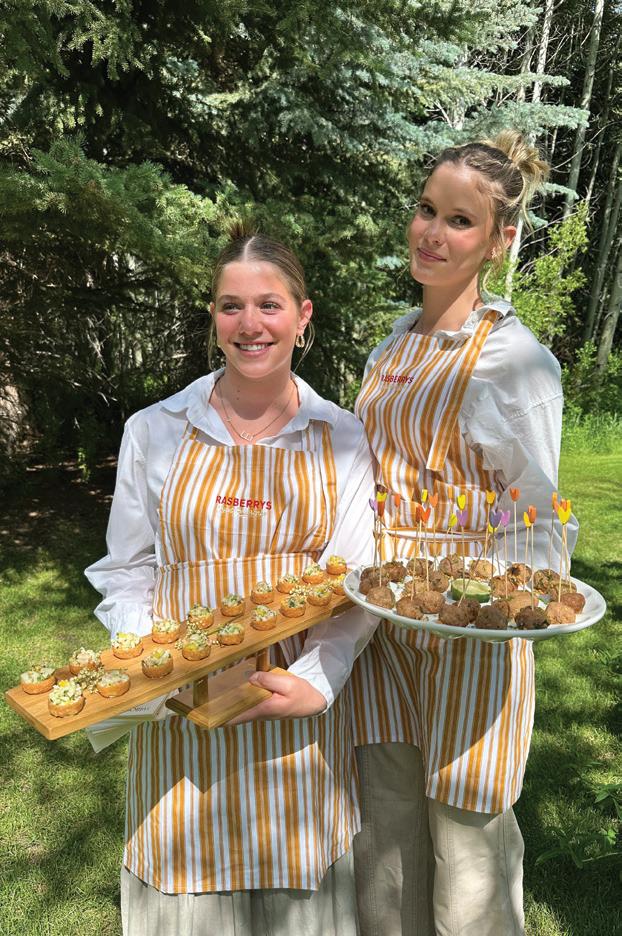
2. Organic infused vinegars are the perfect complement to any fresh salad, while Rasberrys’ extensive deli case o ers everything needed for the perfect al fresco soirée. Rasberrys | rasberrys.net
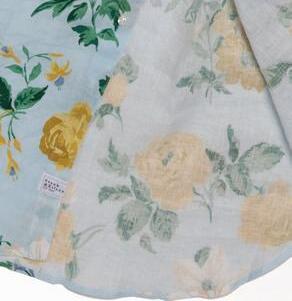
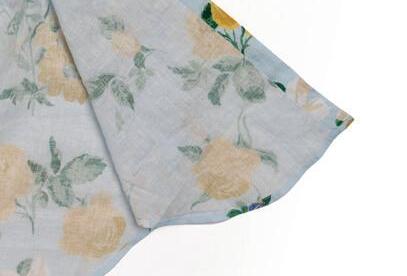
3. Blue roses print viscose-linen stretch midi dress, perfect for a standout summer outdoor occasion. Panache | panachesunvalley.com
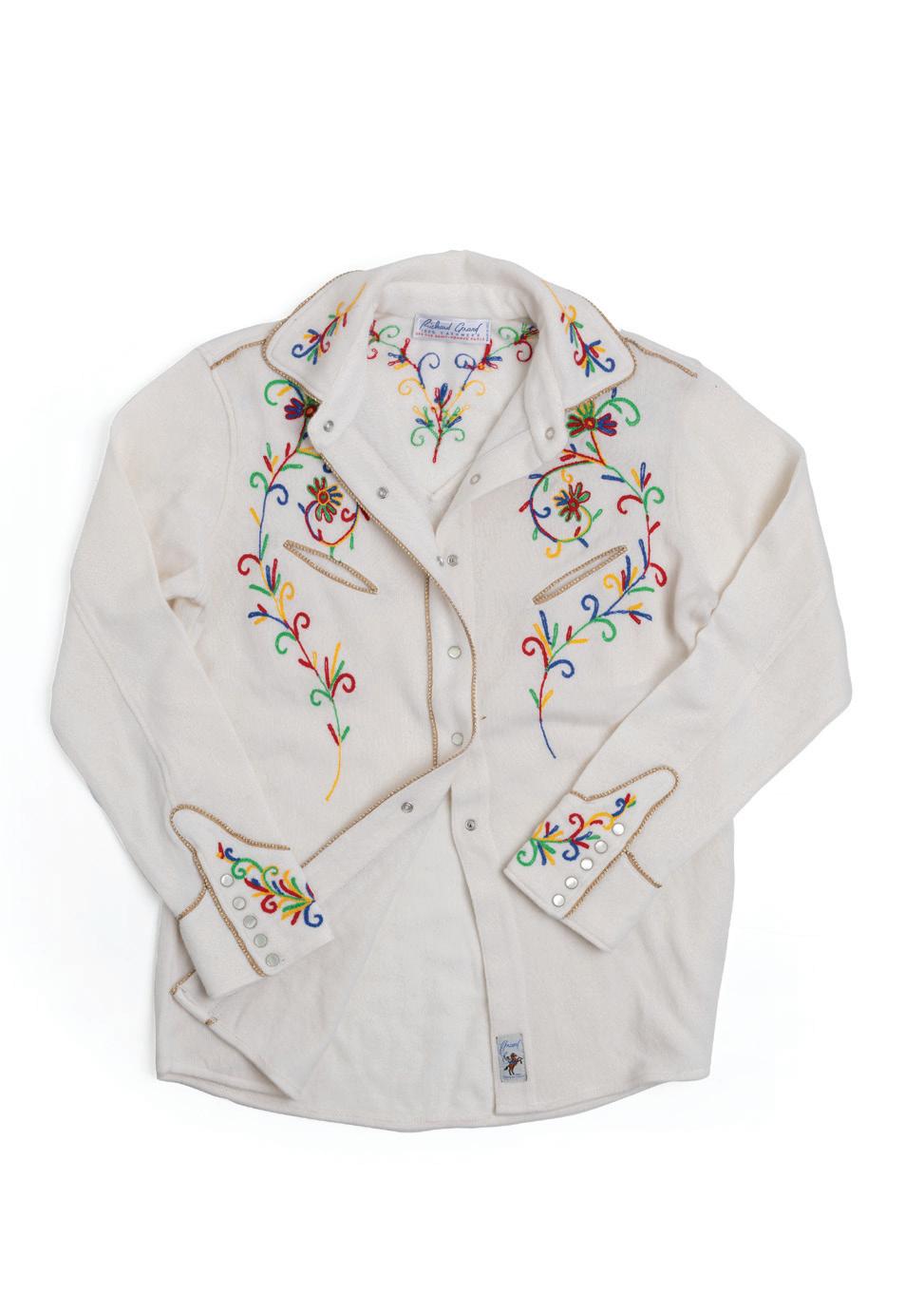
100% cashmere, Western-inspired, vibrant floral embroidery and classic mother-of-pearl snaps.
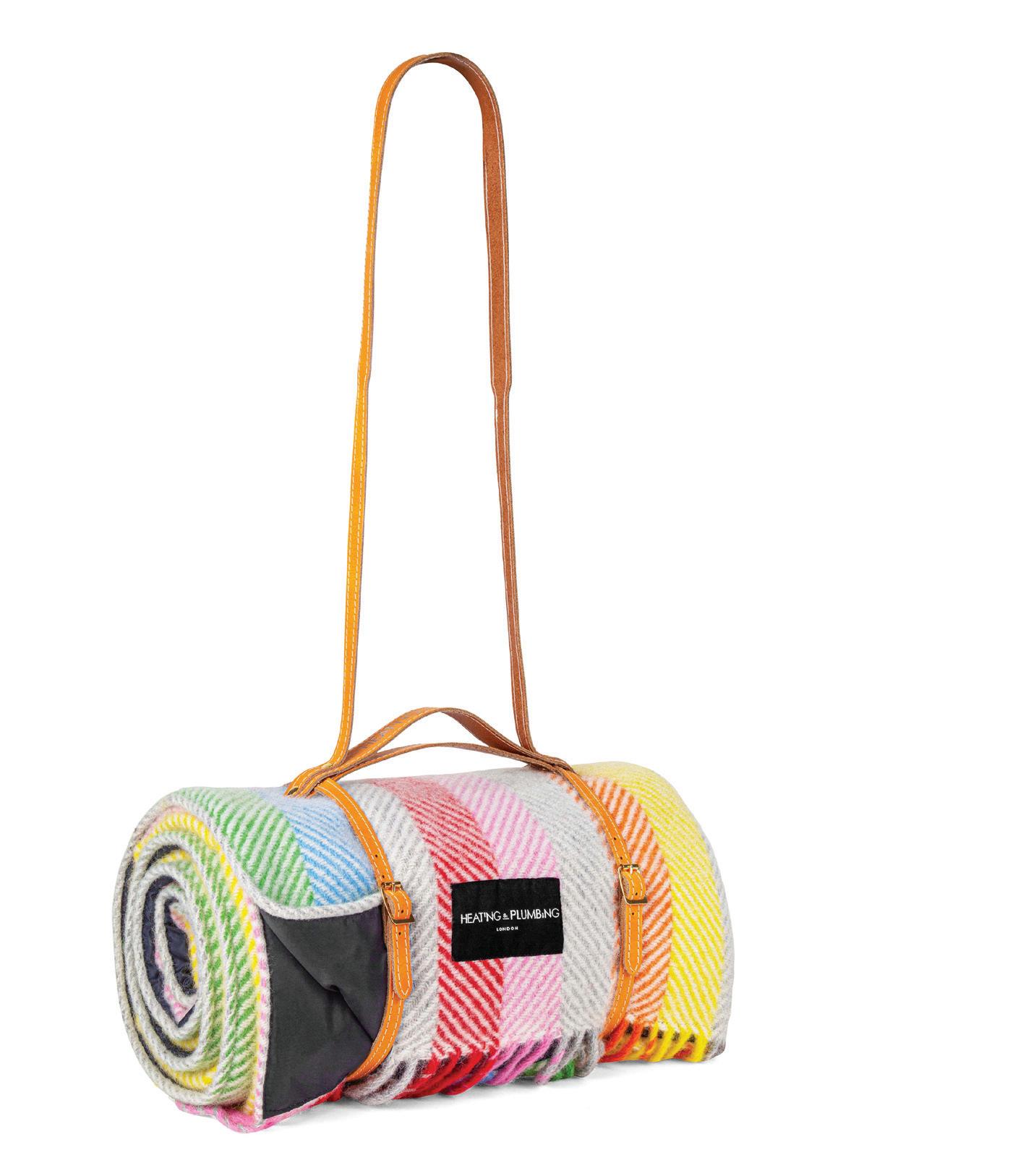
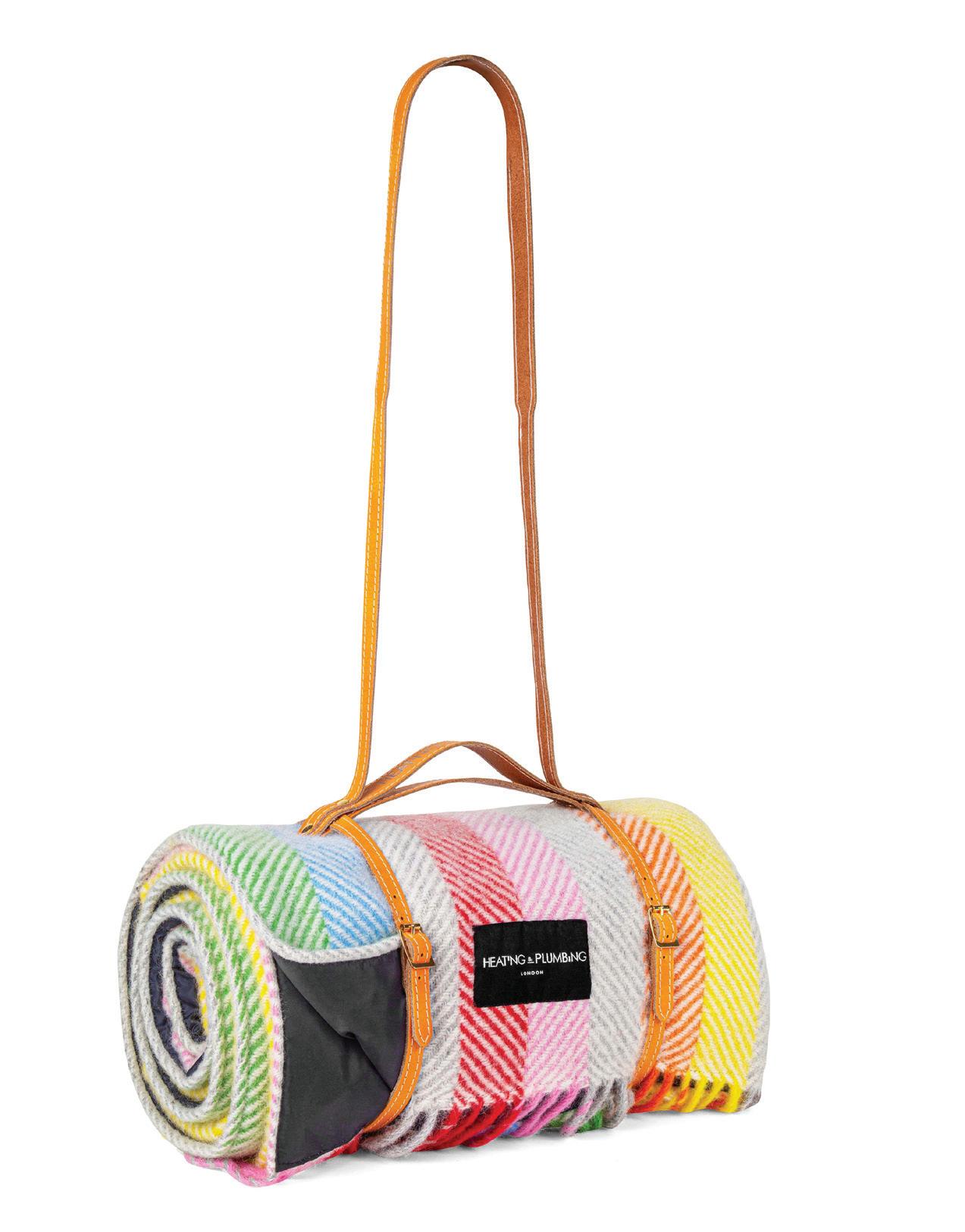
A customer favorite! Made in the UK, this machine-washable wool blanket with waterproof backing is perfect for picnics, outdoor concerts, and cozy moments. Independent Goods | independentgoods.com
riding essentials...
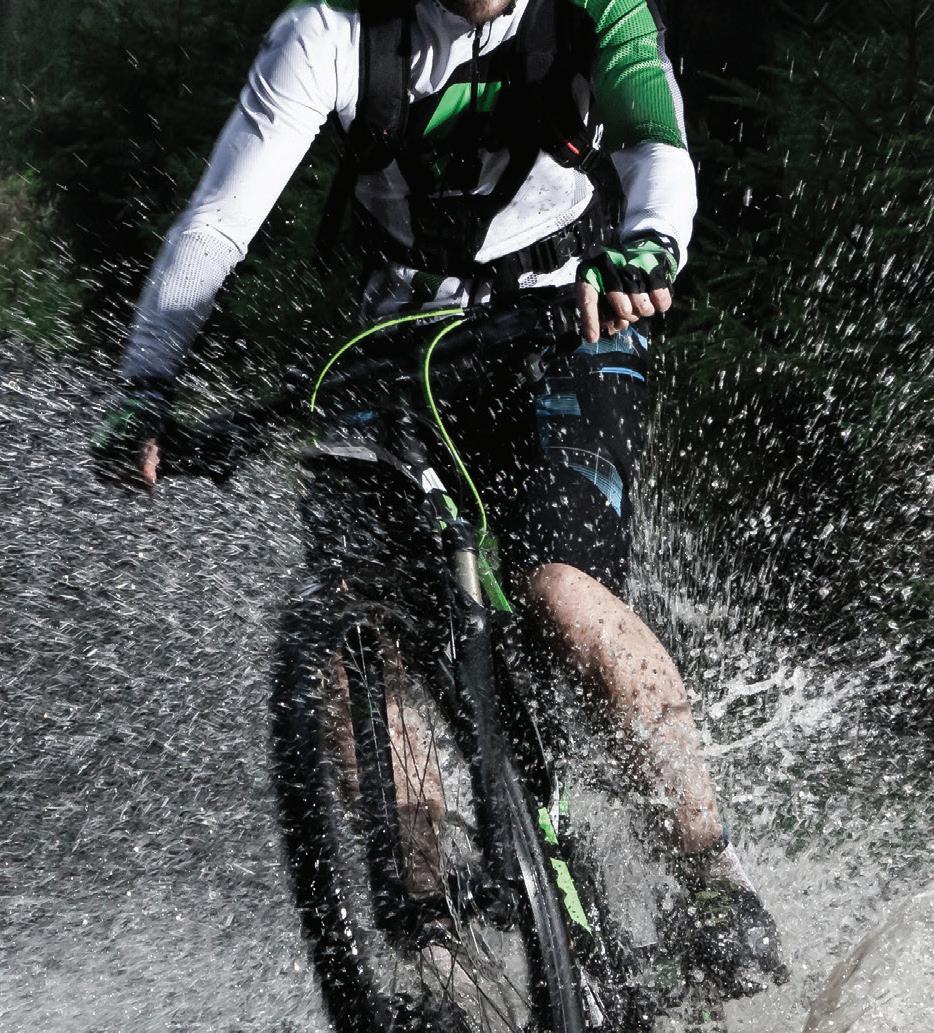
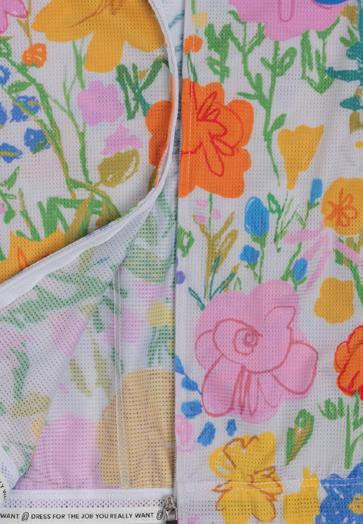
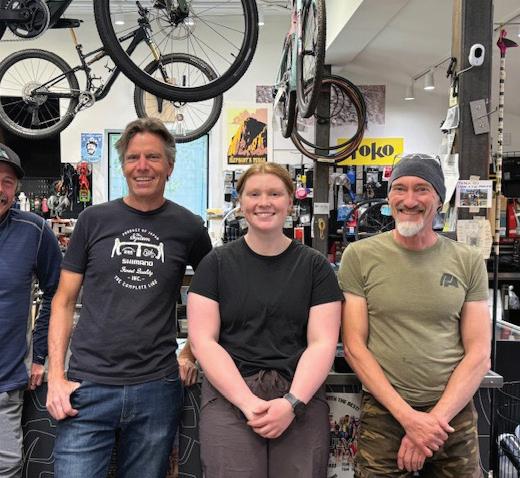
Millions of years ago the Earth’s crust cooled forming a substance scientists call “dirt” and it was only a few years later that we started using that so-called “dirt” for what God intended, riding bicycles. During that pre-history, little creatures crawled out of the vast oceans and, after growing arms and facial hair, learned to turn wrenches in The Perch bike shop where they sell and maintain the sickest rides.
John, Kate, Miles, Mike, and Jason are devoting their productive years to keeping you from showing up to the group ride on crummy equipment and to keeping said non-crummy equipment fresh and ready to ride!
bikes in the Valley longer than most
just kept working away, riding away, and you what you need, and caring enough to try for the best results no matter if your ride is worth a
Heavy like the burned-out weight of a thousand stars is the seriousness with which we take our solemn vow to be the Valley’s most conscientious bike shop. Yes, we are old. We have been here a long time. We’ve been selling Specialized bikes in the Valley longer than most other bike mechanics have been alive. People who are right in the head would have put the tools down and gotten real jobs long ago, but we’ve just kept working away, riding away, and still just as excited about pulling another new bike out of the box as we were 10 years ago, or 30 years ago, or longer. We’re still here because we keep striving to do the right thing: not turning you away if you didn’t buy your bike from us, listening to what you need instead of telling you what you need, and caring enough to try for the best results no matter if your ride is worth a king’s ransom or a leftover sandwich.
getoutthere
The Wild Miles
Ultra-endurance athletes test limits across Idaho’s rugged terrain
BY JONATHAN MENTZER
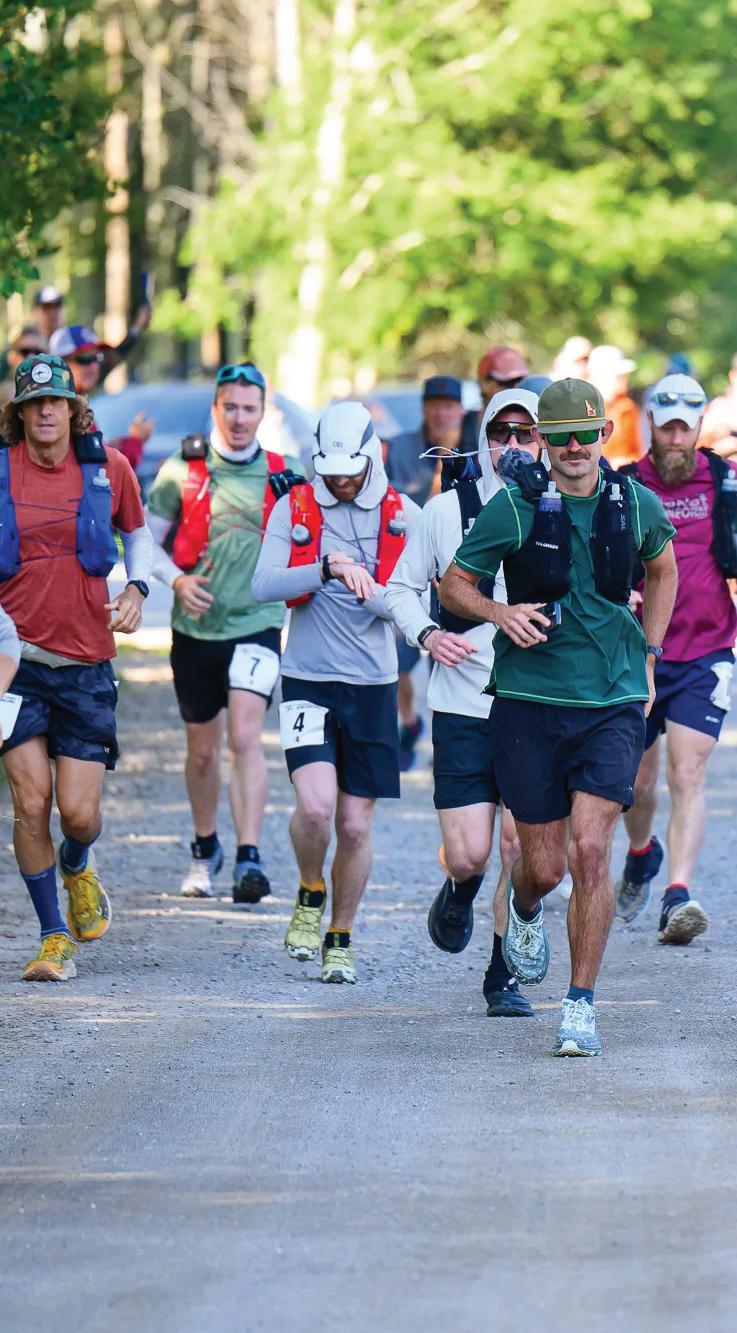
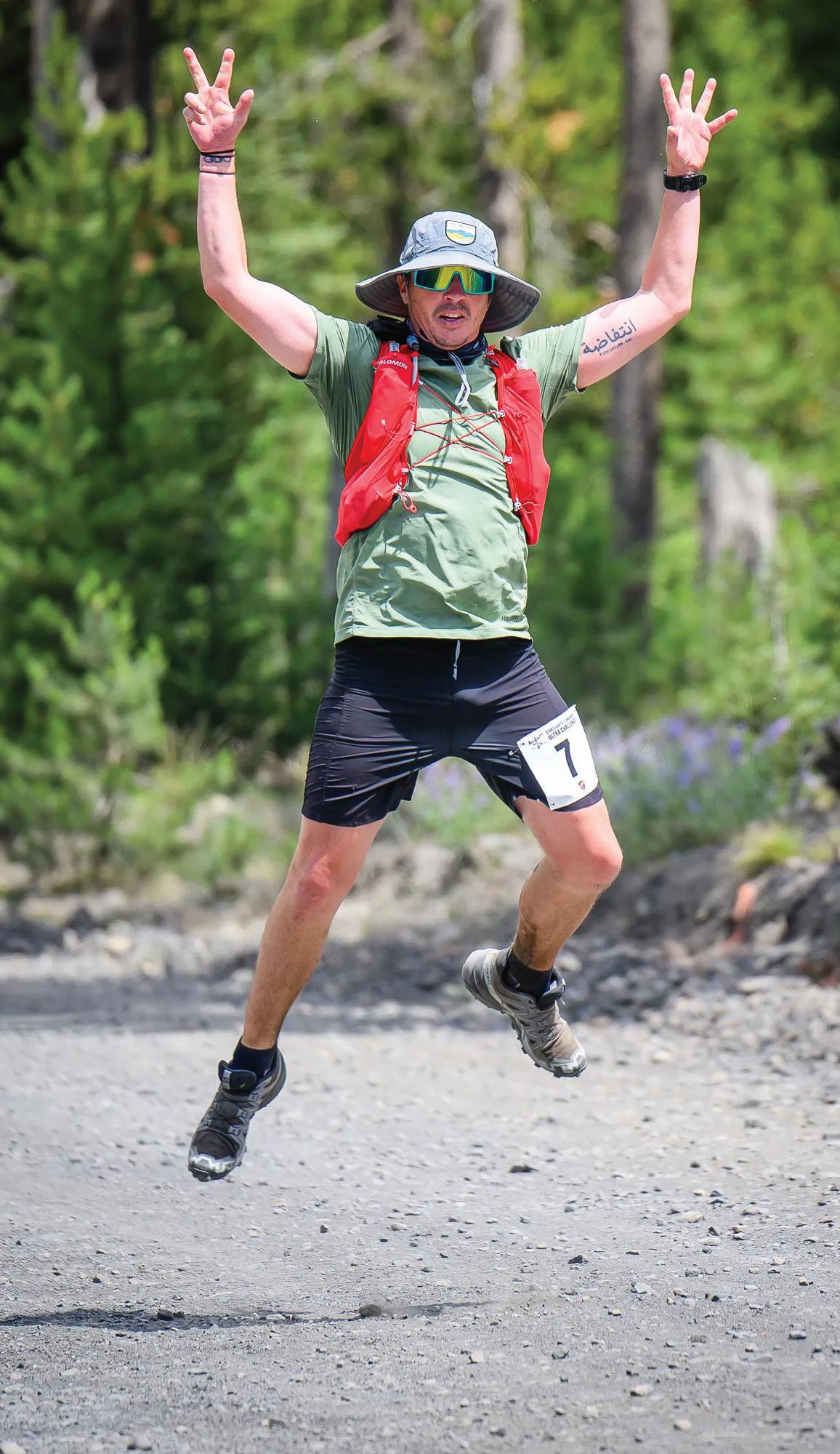
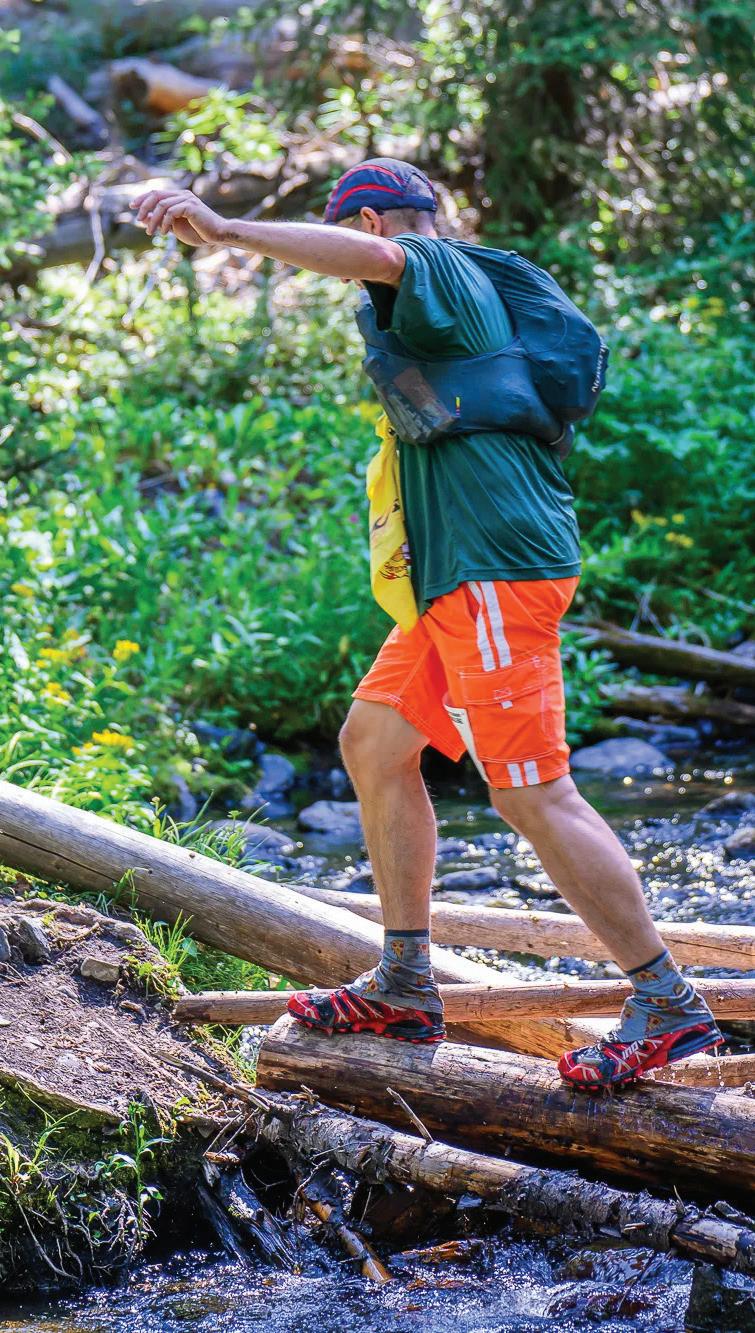
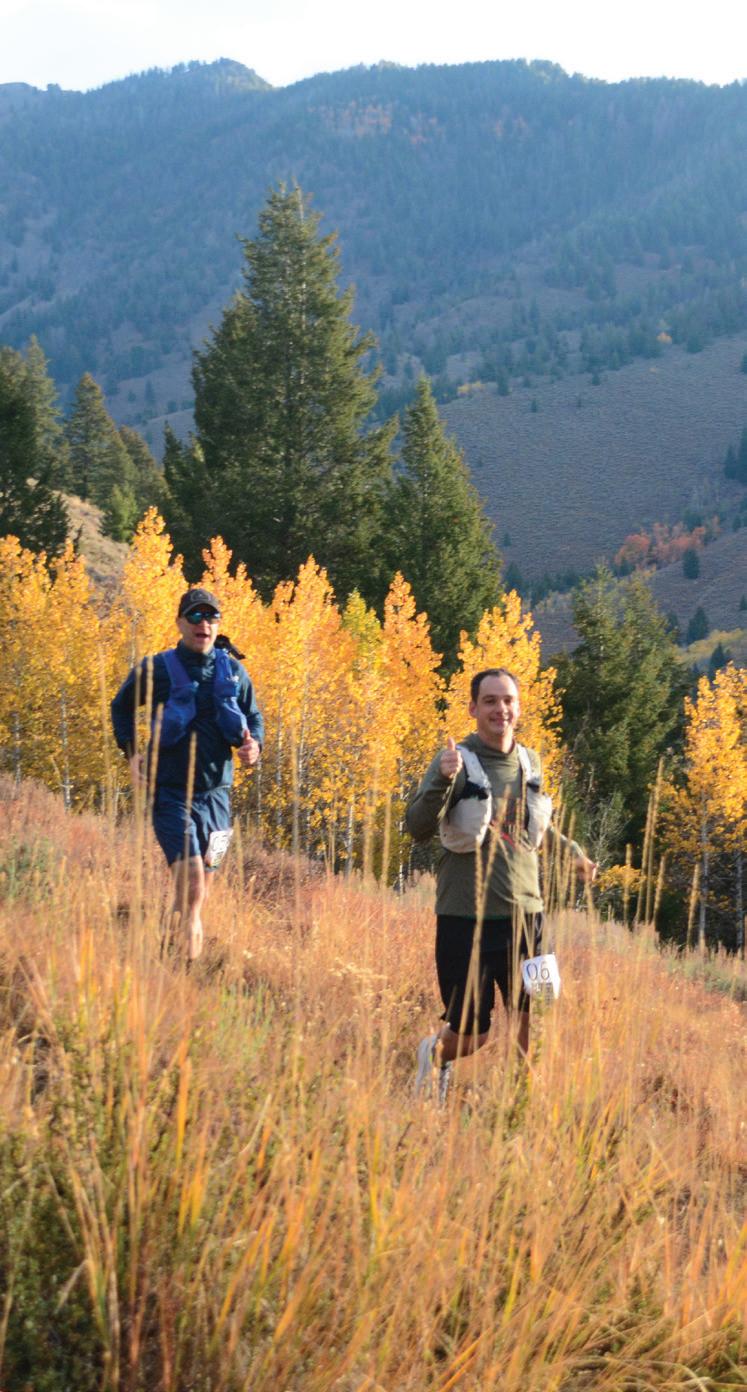
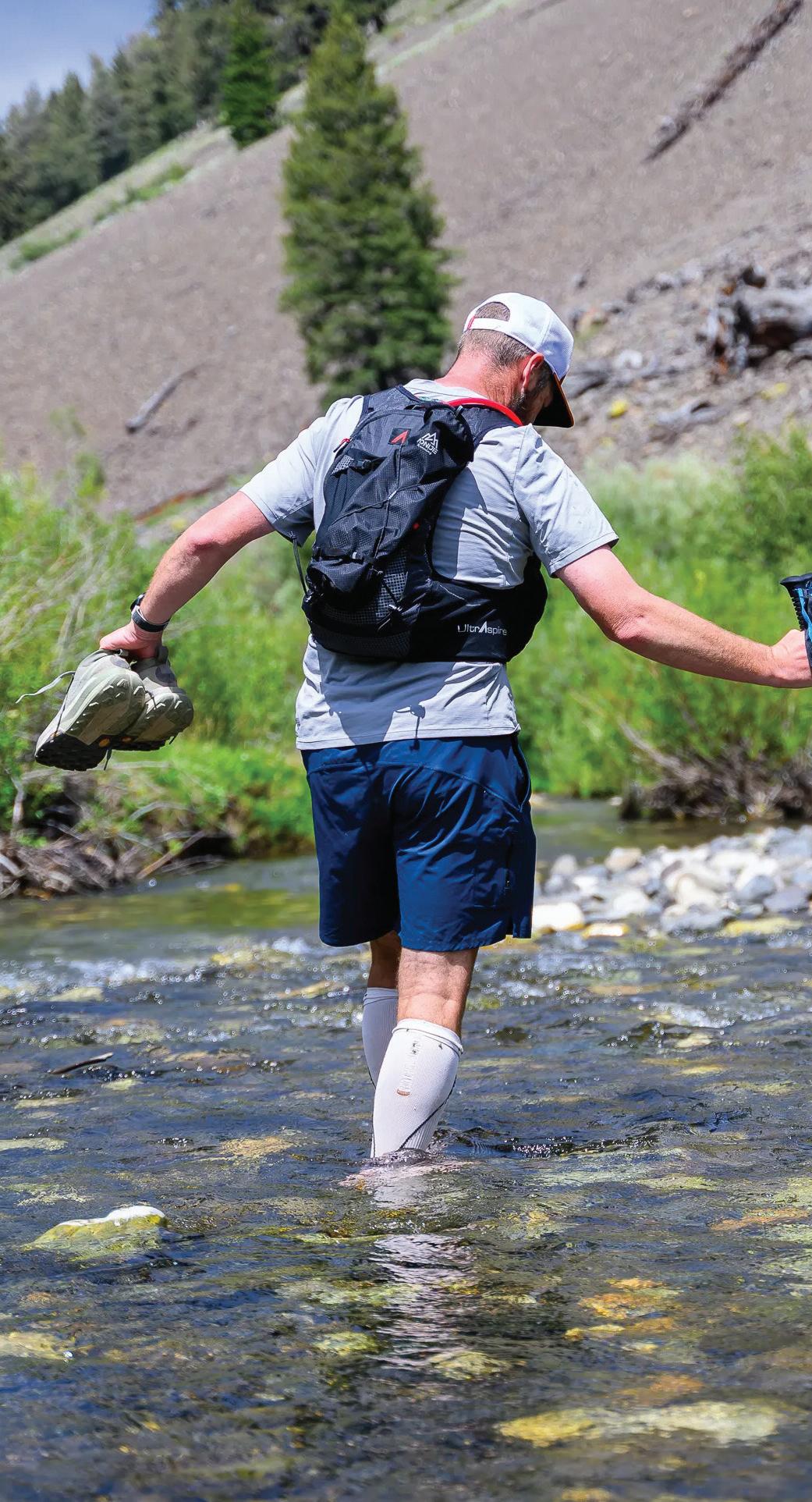
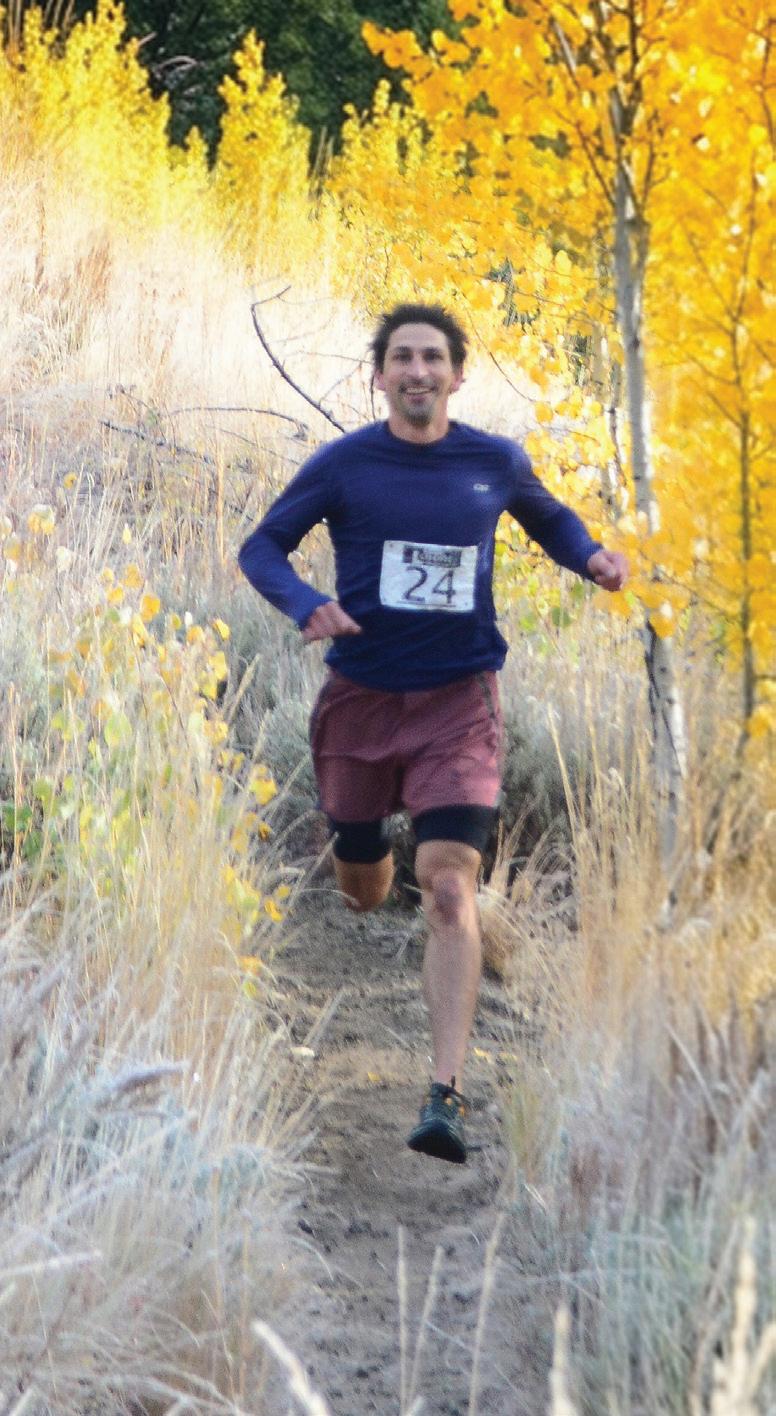
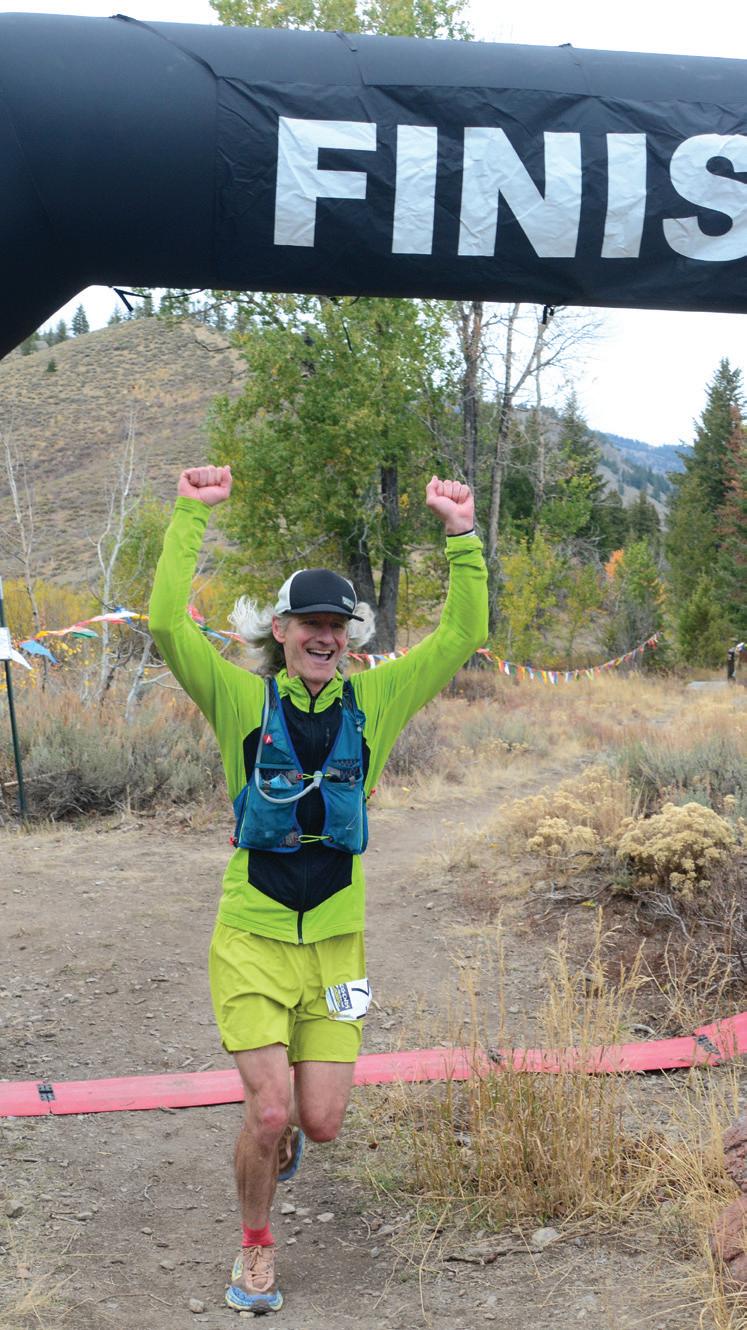
At the height of Idaho’s peaks, runners and ultra-marathoners take to the high country, running vests strapped, running hats tight, trail shoes snug, headlamps flickering and GPS maps dialed. Equal parts eager and uneasy, chasing something beyond distance—where air is thin, and trails are rugged, the Gem State distance runners enjoy a wealth of vistas and sunrises in their pursuit of their physical limits. In Idaho’s wild silence,
endurance becomes identity, and the finish line is only the beginning. If you’re looking for a way to get a taste of what Idaho can offer or slowly get into distance running, here are some options for summer races throughout Idaho.
RIVER OF NO RETURN ENDURANCE RUNS
JUNE 20—CHALLIS
The River of No Return Endurance Runs in Challis features 32-kilometer, 55-kilometer and 108-kilometer courses with steep elevation gains, including climbs above 9,000 feet. Runners traverse rugged terrain past historic mines, wildlife such as elk and bears, and Idaho’s scenic landscapes, all while being supported by the welcoming Challis community. The event blends challenge, beauty and tradition.
PHOTOS: PRO IMAGE PHOTOGRAPHY
MCCALL TRAILRUNNING CLASSIC
JUNE 27—MCCALL
The McCall Trailrunning Classic takes runners through alpine singletrack in the Payette National Forest near Burgdorf Hot Springs. Offering 30k and 50k races, the event features technical terrain, major elevation gains and sweeping views. This has been a McCall tradition since 2012.
TO BONE AND BACK RELAY
JUNE 27—IDAHO FALLS
The To Bone and Back Relay celebrates its 34th year in Southeast Idaho. The 40-mile race features rugged climbs and exposed stretches, with options for teams of eight, four or two, or solo runners tackling the full distance. The event highlights team spirit, scenic challenge and a chance for friends and families to compete for prizes.
BEAVERHEAD ENDURANCE RUNS
JULY 11—SALMON, LEADORE, DILLON MOUNTAIN
The Beaverhead Endurance Runs in Salmon offer 55k and 100k trail races. The course covers the Continental Divide National Scenic Trail, tracing the Idaho-Montana border, making this event a scenic and demanding test for trail enthusiasts.
STANDHOPE ULTRA CHALLENGE
JULY 24-26—MACKAY
Tucked into the rugged folds of Mackay’s Copper Basin and deep within the Pioneer Mountains, the Standhope Ultra Challenge has grown into more than just a race. It features 100-mile, 60k, and 30k trail races. Known for high altitudes, steep climbs reaching 11,000 feet, and remote, technical terrain, the event is a serious test for ultra runners.
Now in its 14th year, the event draws between 400 and 500 runners annually. Race director Mary Martin said the terrain itself is a defining feature. “I think the course speaks for itself, given that it’s in the Pioneer Mountains,” Martin said.
For Martin, the finish line represents more than the end of a race. It’s a moment of personal discovery. “The Standhope Ultra Challenge is an incredibly challenging race,” she said. “I hope it causes people to dig deep and find a strength in a different side to them that they can take into their life that they didn’t really know they had.”
SPARTAN RACE
AUGUST 8-9—PAYETTE
The Spartan Race returns to city of Payette for a Trifecta weekend with 5k, 10k and 21k obstacle courses. Set against Western Idaho’s rugged high desert and the Snake River Plain, the event at Pence Ranch offers athletes challenging volcanic terrain and open skies. The course is known for demanding grit and delivering scenic, raw adventure.
INKOM LAST MAN STANDING
AUGUST 14—INKOM
The Inkom Last Man Standing uses a backyard ultra format where runners complete a 1.1-mile loop every 20 minutes. The clock resets at the start of each round, eliminating anyone who fails to finish within the time
limit. The event continues until only one runner remains, making it a psychological and physical test more than a traditional race.
HARRIMAN PARK 50K
AUGUST 15—ISLAND
PARK
The Harriman Park 50k offers a peaceful ultra experience on remote wilderness trails. Runners traverse forests and meadows on gravel roads and pine-needle singletrack, with chances to spot wildlife along the way. The course offers views of the Teton Mountains and the local valley, creating a beautiful, meditative atmosphere for all participants.
BOGUS 50/50
SEPTEMBER 26—BOISE
The Bogus 50/50 features 50-mile, 50k and 27k mountain trail races. Each course starts and finishes at the Fort Boise parking lot in the lower foothills, highlighting Boise’s top trails. Designed for challenge and fun, the event gives runners a chance to experience the region’s favorite routes and mountain landscapes.
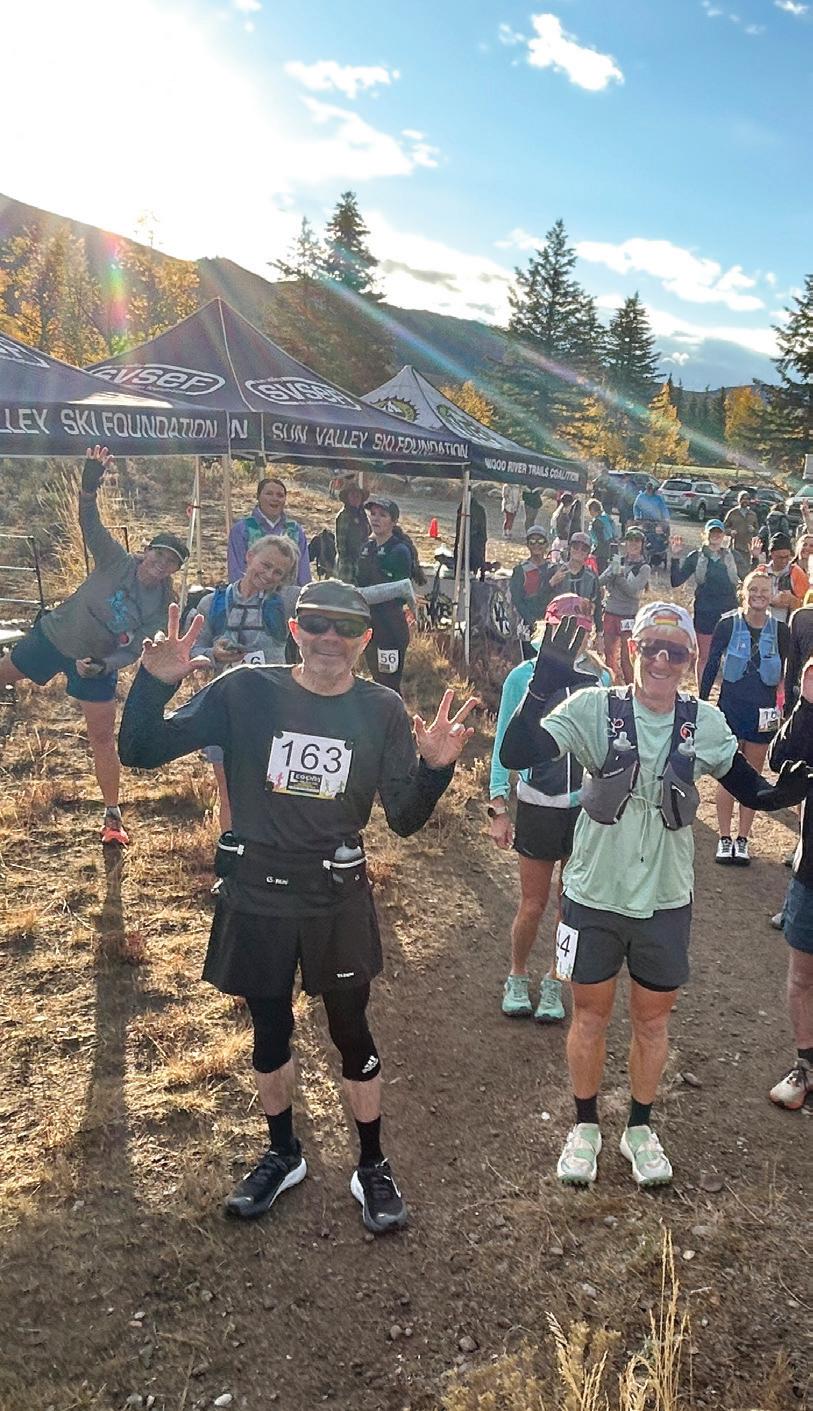
What began as a single half-marathon has evolved into a mountain test of endurance, drawing runners to Idaho’s high country each fall for the Legends Never Die race, which features a trail course with about 2,450 feet of elevation gain and a high point of 7,600 feet.
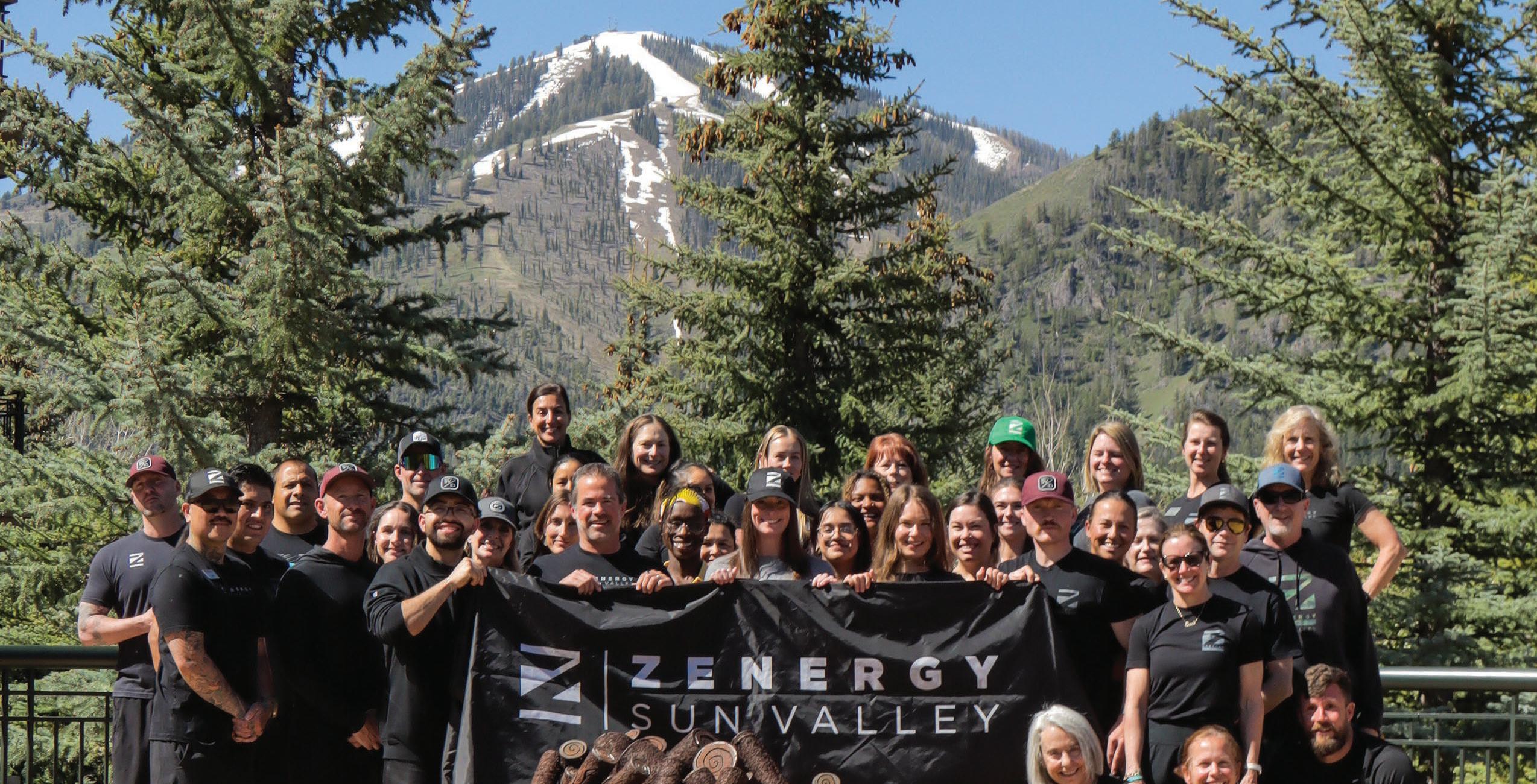
Organized by Thomas Smiley and backed by title sponsor Zenergy Sun Valley, the event now includes both a half-marathon and a 55k. The course winds through terrain that Smiley says defines the race as distinctly Idahoan. “It’s the landscape and the time of year in the fall, with colors that are really spectacular,” Smiley said. “The mountains present some iconic views.”
That goal continues to resonate with runners, particularly newcomers to the sport. “It’s so rewarding to hear people who ran their first half-marathon because Legends Never Die was here,” Smiley said.
As the race continues to grow, Smiley said its purpose remains steady: to challenge runners and connect them with Idaho’s outdoors, one mile at a time. ï
A Different Kind of Hunt
Seeking out shed antlers in the Idaho backcountry
BY CRISTY SELLAS
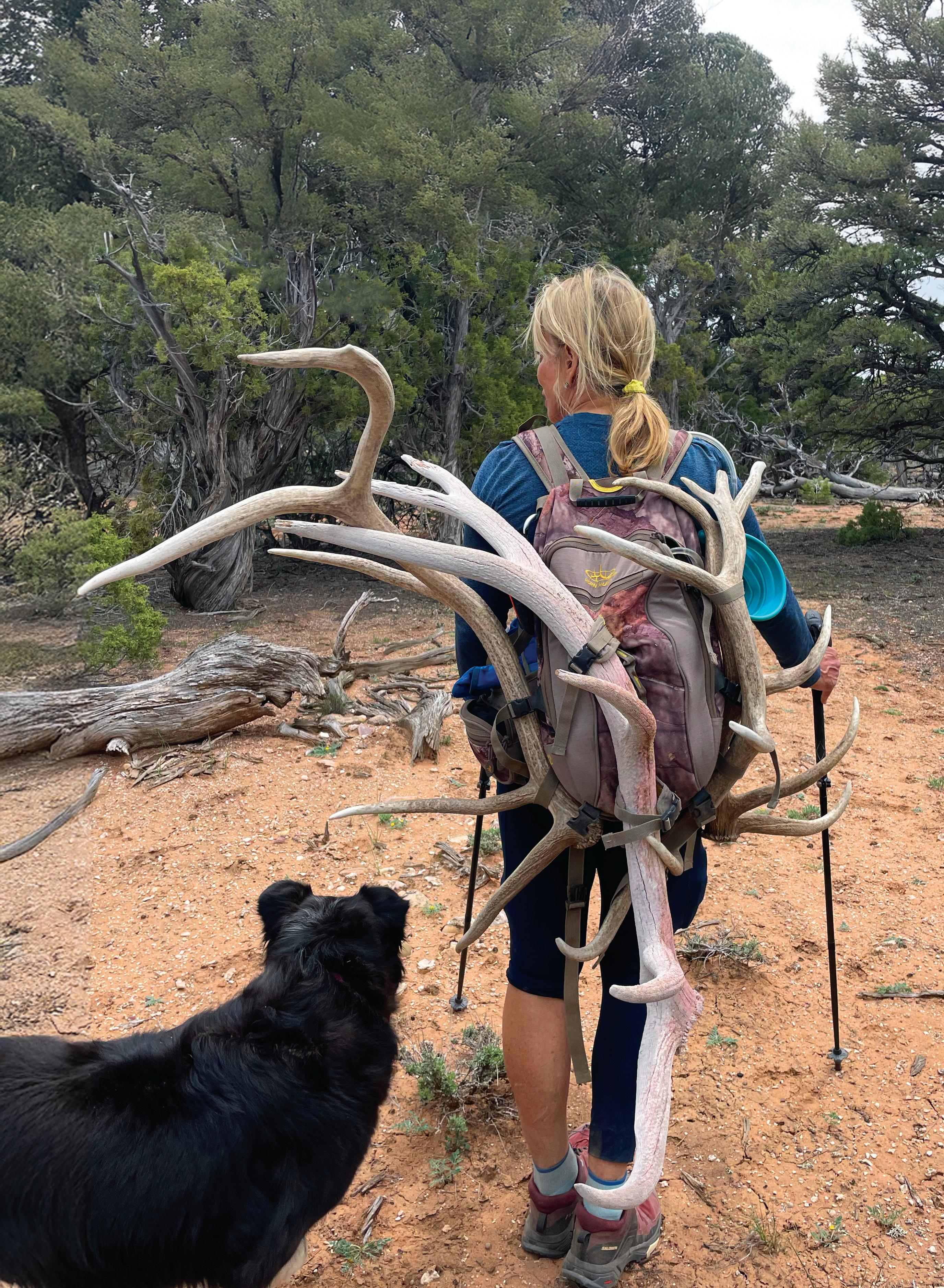
Beth Fox packs out a day hike’s worth of shed treasures.
PHOTO: COURTESY BETH FOX
Many Idahoans are avid hunters of everything from pheasant to elk. Each fall, they hunt responsibly and safely, enjoy the great outdoors and fill their freezers with high protein meat. But for folks who are seeking a hunt without a kill, shed hunting is a fun and challenging alternative.
Shed hunting is just what it sounds like—searching for naturally dropped deer, elk and moose antlers. Finding these “sheds” is like finding a treasure in the wild. They are beautiful and unique and can be quite large—one deer shed found in Nebraska in 1959—known as “The General”—measured over 207 inches, according to Field and Stream. This measurement is the length of both sides together—animal sheds come off in two distinct pieces and not always at the same time. This can add to the excitement of the hunt, because once you find one piece, you can be pretty sure that the other side of the set is somewhere nearby.
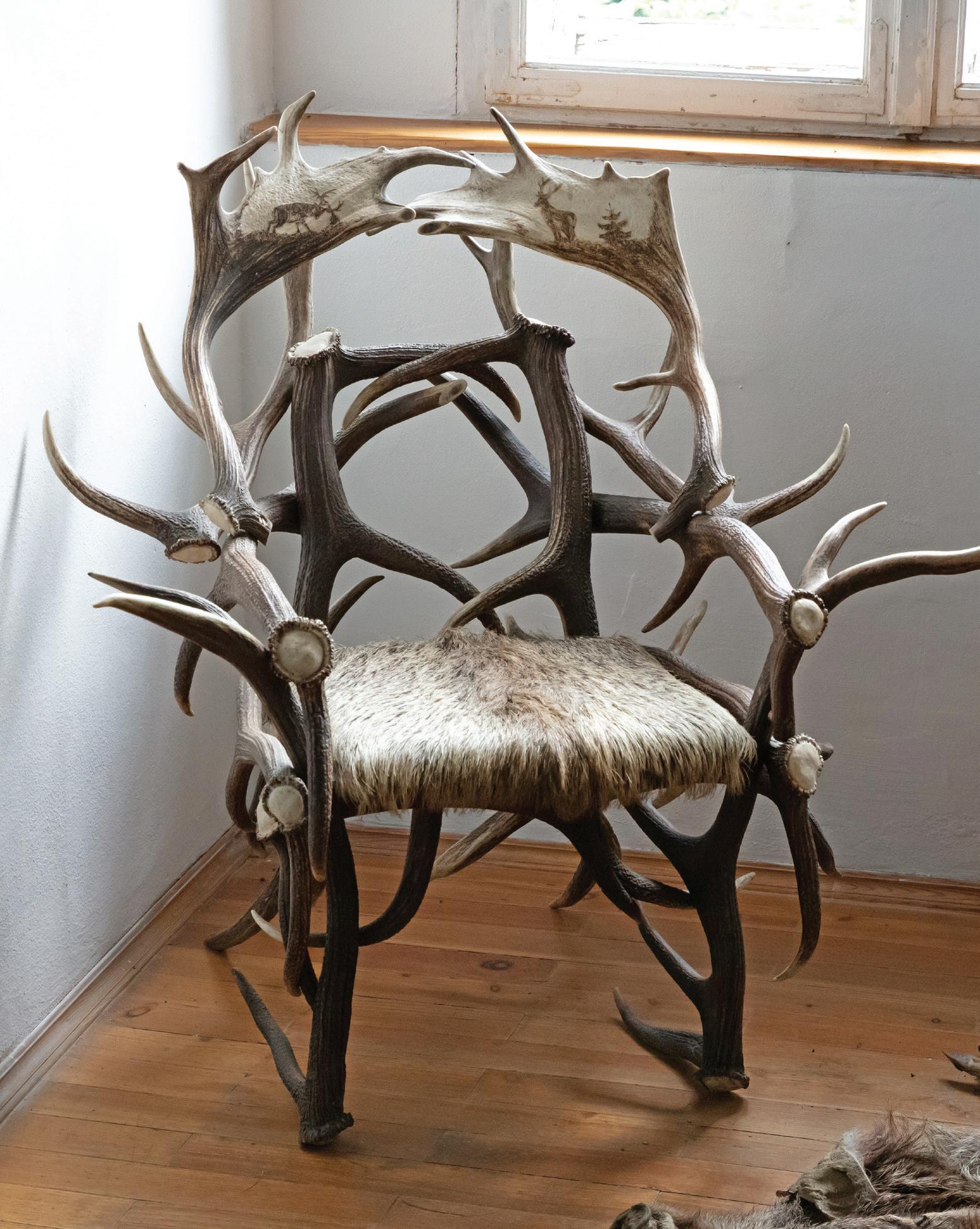
Artisans craft these unique pieces into one-of-a-kind chandeliers, candleholders, and even furniture. These sheds—when cut into manageable pieces—can also be used as pet chews for dogs; they are packed with nutrients and don’t splinter easily, making them safer than the plastic chew toys found in the pet store.
As animals shed their winter coats, the males of the species will also shed their antlers. This event is triggered by a drop in testosterone levels after the breeding season, or rut. A natural weakening at the base of
the antlers or “pedicle” occurs and the blood supply to the antlers then shuts off making them brittle. The heavy antlers will then simply drop off an elk when it shakes its head or rubs against trees. The new antlers start growing immediately, and they are the fastest growing bone in the animal kingdom— sometimes growing up to three-quarters of an inch per day. This happens every year; antlers grow and then shed seasonally. The shedding enables the animals to conserve energy during the colder months, as they can eliminate unnecessary weight.
Shed hunting is a simple activity; just walk slowly and scan the terrain. Successful shed hunters stress the need to “train your eyes.” You are more likely to see just the ivory tip of a tine poking out of a bush or some ground cover versus an entire rack on the trail. The best places to find sheds are also the best places to find the animals themselves: areas with plenty of vegetation, bedding areas, and, in the colder months, south-facing slopes that provide warmth and less snow cover. Locals will attest to the abundance of deer and elk everywhere in the Wood River Valley, so you could come across the sheds on any hike or walk—you just need to be looking!
Some hunters use trained dogs to help locate antlers. Labrador retrievers and German shorthaired pointers make great shed hunters because of their retrieving instincts and scent tracking capabilities. If dogs do come along, they should be kept close and under control so as not to put undue stress on live deer or Need
new caption for this
GUIDELINES AND REGULATIONS
From the Idaho Fish and Game
Licenses: Idaho requires nonresidents over 12 to possess a valid Idaho hunting license to collect shed antlers.
Seasonal Closures : While no set state-wide dates exist, Idaho Department of Fish and Game (IDFG) can implement emergency closures in winter/early spring to protect stressed deer and elk. In addition, IDFG encourages shed hunters to wait until after May 1, so as to avoid stressing wintering deer and elk herds.
Motorized Travel: Shed hunters must remain on designated (and dry) roads and trails. Certain public lands, including Fish and Game’s Wildlife Management Areas, are often closed to unauthorized motorized vehicle traffic and can only be accessed by foot or on horseback.
Respect Private Lands: Like all hunters, shed hunters should check with a landowner before venturing on to their property in search of antlers.
Some Public Lands May Be Closed: Some public lands are temporarily closed during winter and early spring to provide deer and elk with disturbancefree wintering grounds.
elk that you may come across. One other consideration, particularly in the spring, is the possibility of bumping into a bear.
Beth Fox, a local shed hunter, has been hunting and finding sheds for 20 years all over the Wood River Valley. When she hunts, it’s always “a family affair,” as she puts it. All her dogs join the hunt, and she will often hunt on horseback. Fox carries a revolver and bear spray, as well as a first-aid kit, binoculars, and plenty of water. She wears a “shed backpack,” which has buckles and straps to pack out the sheds, and she wears sturdy hiking boots and carries hiking poles. One of her dogs is outfitted with a satellite collar with an SOS
button that Fox can use if she is injured or in trouble and out of cell service areas.
Fox has found so many sheds that she was once able to construct a 7-foot-diameter wreath, which hangs in her barn. Next year, she plans to make an entire Christmas tree with all the sheds she found this past season.
“Always look under the sage, as they use the bushes to pop their sheds,” Fox advises. “I literally have found so many sheds because I’ll notice one point sticking out of the mud, only to find a beauty buried under the sage, leaves, and mud.”
Like most shed hunters, Fox loves being in nature and has learned a tremendous amount
about how the animals migrate and roam. Learning to identify different types of antlers is also one of the great joys of shed hunting. Elk antlers are larger than deer antlers and have an almost backward curve and very distinct tines. Deer antlers are smaller and have compact points which typically fork and grow forward, and upward. Deer antlers are harder and denser than the more porous and softer elk antlers.
Shed hunting is a near perfect outdoor pursuit because whether you find the treasures or not, you’ve already accomplished your exercise, sunshine and nature goals for the day. ï
Using sheds to craft a decorative statement chair.
Celebrating a Rich Heritage
The Trailing of the Sheep Festival turns 30
BY CRISTY SELLAS
The Trailing of the Sheep Festival is celebrating 30 years this fall and is showing no signs of slowing down. Come October, thousands will line the parade route on Main Street of Ketchum and watch the Big Sheep Parade—the finale of this unique celebration of the history and culture of sheepherding.
The festival itself spans five days of events with up to 25,000 people attending from all over the world. And those events and those crowds boost the Wood River Valley’s economy by $7.5 million every year, according to Laura Drake, the festival executive director.
Drake reminds us that “sheep were here in the Valley long before people were,” and she and the rest of the festival team consider it their responsibility and great honor to keep that history alive.
From 1984-1991, the Blaine County Recreation District worked on transforming the rail tracks in the Valley to the glorious bike path that we all know and love today. For
the sheep though, that path was already well worn, and one they had been using for the previous 150 years. During the fall, sheep were trailed south by ranchers from high-elevation mountain pastures to warmer, lower-elevation areas for winter grazing and lambing.
So, the bikers and rollerbladers enjoying their new path were suddenly dealing with sheep poop in their wheels, and they weren’t happy about it. The late John Peavey, then a local rancher, suggested a coffee, a chat and a walk during which he explained the rich heritage of sheep ranching. This little walk continued for a few years every October with more people joining Peavey and the sheep (including very enthusiastic school children) until Carol Waller, the Sun Valley/Ketchum Chamber of Commerce director, at the time thought: We need to make this a festival—let’s walk these sheep right down Main Street. So, the conflict was transformed into a celebration. And with the added support of the Chamber, this little walk became a five-day, fall event full of stories, music, food and history.
Drake has been leading the Trailing of the Sheep event for the past 10 years of the festival’s 30-year history, and though she wouldn’t tell me what her favorite event is—“That’s like picking a favorite child,”—she did tell me that she feels participants are really taking the time to engage with the festival and all it has to offer. In this way, they are helping Drake and the rest of the team keep the history alive.
Many people who are longtime festival goers spend most of their time on Buttercup Road in Hailey where the Sheepdog Trials are hosted. Here, the U.S. Border Collie Handlers Association presents the National Point Qualifying Sheepdog Trials to demonstrate who really runs the show: these incredibly well-trained dogs. Their talents, instincts and responsiveness are on full display as they demonstrate herding skills.
And then there are those who come from far and wide to indulge in their love of lamb, enjoying mouthwatering sample bites from all the best chefs in the Valley, as well as delicious
Drake described their three-pronged approach to continuing this important cultural education. First, the festival itself offers classes of all kinds to its attendees, including those on knitting, cooking and sheep shearing. In addition, there are broad topic Q&As with local ranchers who can speak not only to the history of sheep ranching and the festival itself but how this industry continues to thrive both agriculturally and in the arts.
Second, Drake outlined the “Sheep Go to School” program in which the organization visits local fourth-grade classrooms to bring this unique history directly to the kids. Future plans include providing curricula for lower school grade levels, as well as middle school and high school.
Lastly, in this educational push, the Trailing of the Sheep each year offers the John Peavey Legacy Scholarship to a high school agriculture student. This year’s scholarship recipient is Dakota Monroe from Minersville, Utah, who wrote in her application essay: “The John Peavey Legacy Fund Scholarship matters to me because it represents the values I was raised with: hard work, community, stewardship, and dedication to the land.”
Monroe is representative of what the festival is trying to convey: That it’s important to understand the community you live in and the values that come with that knowledge and responsibility.
There are consistently about 1,200 sheep in the parade each year. The only time the festival has been canceled in 30 years was the year of the pandemic, 2020. Since then, the festival and the history, arts, and humanities it represents has remained a fun and educational way to celebrate a way of life that has sustained people and economies for generations.
Drake added: “This festival has become a respite from the real world for many people, and thus far, the changing political and economic climate hasn’t seemed to affect attendance.” ï
lamb dishes available at booths and food trucks at the Lamb Fest.
Opposite: 1,200 sheep parade down Main Street in Ketchum. Top: Basque dancers perform for the crowds. Above: The late John Peavey, founder of the Trailing, accompanies the sheep through town.
2026 SUMMER EVENTS
Summer in the Wood River Valley is replete with concerts, art fairs, forums, picnics, and parades. A day doesn’t go by without there being a fun and festive event, almost always outside in the fresh mountain air. Listed below are some of the highlight events for the summer.
Baldy Bluebird Music Festival
PHOTO: NICK LACEY
FARMERS’ MARKETS HAILEY
June 8–Oct. 19 (Saturdays)
Drop by the Hailey Market at Roberta McKercher Park every Saturday between 9 a.m. and 1 p.m. to find local produce, artisan goods, live music, and family activities.
KETCHUM
June 12–Oct. 9 (Wednesdays)
Held in Forest Service Park (just west of the Limelight Hotel), the Ketchum Farmers’ Market offers the best of local produce, live music, and artisan goods. Food trucks will be offering their eats as well. The market is open from 12 – 4 p.m.
JUNE
SUN VALLEY FORUM
June 15-18
The Sun Valley Forum convenes leaders, innovators, and change-makers across sectors to create a better future for all. The Forum is a catalyst, with powerful presentations, curated working sessions, and serendipitous conversations on the trails and around the table.
This year’s theme is “Powered by Nature: A Blueprint for Innovation, Investment, and Impact.”
The event is held at the Sun Valley Resort.
KETCH’EM ALIVE CONCERT SERIES
June 17-Aug. 5 (every Tuesday)
Have a picnic, enjoy free music, and catch up with friends in the Forest Service Park for the weekly Ketch’em Alive concerts. Concerts are free.
11th ANNUAL SAWTOOTH VALLEY GATHERING
June 18-21
Trek up to the Stanley Basin for four days of live music at the base of the Sawtooths. Headlining the event are Railroad Earth, Built to Spill, and Andy Frasco & The U.N.
SUN VALLEY BREWFEST
June 20
SUN VALLEY BREWFEST
June 20
Join the fun at Ketchum Town Square for the 12th annual Brewfest, a family friendly event.. Enjoy live music, beverages from more than 40 regional breweries, cideries and winteries, as well as interactive games and local cuisine.
JAZZ IN THE PARK
June 21 - July 26 (Every Sunday)
The city of Ketchum presents another summer of free, live music with the return of its annual Jazz in the Park concert series at Rotary Park in Ketchum, every Sunday evening from 6 to 8 p.m. Bring a picnic, low-back chair and enjoy great jazz in a lovely setting.
THE COWBOY BALL
June 25
Benefiting the Swiftsure Ranch, whose mission is to “Empower individuals of all abilities to gain strength and freedom through therapeutic equine connections,” the Cowboy Ball is an evening of socializing, dinner, live auction, and dancing. The Kilgore Boys will be performing.
JULY
HAILEY ROCKS
July 2 – Aug. 28 (Thursdays)
Sawtooth Brewery presents live summer concerts in Hop Porter Park in Hailey every Thursday from 6:30 – 9 p.m. Enjoy music, picnics, food trucks, and friends. To date, confirmed acts include RCA & The Radicals on July 2, Deltaphonic on July 30, and Boot Juice on Aug 6.
BALLET SUN VALLEY
June 27-28
Ballet Sun Valley welcomes the Pacific Northwest Ballet Company for two nights of ballet artistry at the Sun Valley Pavilion.
On June 27, the program will feature works from George Balanchine’s “Jewels,” “The Window” by Dani Rowe, and “ZigZag” by Jessica Lang. The following night features a world premiere by Jessica Lang, “Red Angels” by Ulysses Dove, “The Calling” by Jessica Lang, and “Nine Sinatra Songs” by Twyla Tharp.
HAILEY DAYS OF SUN VALLEY ON ICE
July 1 - Sept. 5
Sun Valley On Ice features world-class skaters performing under the stars at the iconic outdoor Sun Valley Ice Rink. The series kicks off Wednesday, July 1, then continues Saturdays from July 18 – Sept. 5. Headliners include Isabeau Levito, Ellie Kam & Danny O’Shea, Madison Chock & Evan Bates, and Jason Brown.
THE OLD WEST
July 2-5
Celebrate the Fourth of July at Hailey’s 2025 Days of the Old West Independence Day celebration. Festivities include the parade down Main Street; the rodeo the evenings of July 2, 3, and 4; and the antique fair held in Roberta McKercher Park July 3-5.
BALDY BLUEBIRD MUSIC FESTIVAL
July 3-4
The Baldy Bluebird Music Festival is held on the River Run plaza at the base of Bald Mountain and runs two nights, with headliner Brothers Osborne on the 3rd and Chase Rice on the 4th. Other performers include Tylor & the Train Robbers, Drake White, Aaron Golay & the Original Sin, and Lanie Gardner. A fireworks display will follow the final performance.
WYNTON MARSALIS
July 9
One of the great jazz musicians of his era, Wynton Marsalis is a classical trumpeter, composer, educator, and a big band leader in the vein of Duke Ellington. He performs at the Argyros Performing Arts Center at 7:30 p.m.
Ballet Sun Valley
SUN VALLEY WRITERS’ CONFERENCE
July 18-20
This ever-popular literary gathering includes three days of presentations, workshops, and discussions by some of the world’s literary luminaries. Participants this summer include Richard Osman, Gary Shteyngart, Simon Rich, New Voices Fellows Shelley Read and Virginia Evans, Rick Atkinson, Michael Pollan, David Sanger, Abby Phillip, Derek Thompson, Peter Godwin, Julia Lovell, Robert Macfarlane, Sebastian Mallaby, Liaquat Ahamed, Amy Bowers Cordalis, and Ada Limón.
OLD CROW MEDICINE SHOW
July 21
The band, which has been inducted as members of the Grand Ole Opry and have won two Grammy Awards, performs at the Argyros Performing Arts Center at 7:30 p.m.. Their classic single, “Wagon Wheel,” received the Recording Industry Association of America Double-Platinum certification in 2019 for selling over 2 million copies. The band’s latest Grammy-nominated album is “Jubilee.”
RIVER RUN CONCERT SERIES
July 22 – Aug. 26 (Wednesdays)
Enjoy live music, an outdoor food bar, food trucks, lawn games, and an overall festive atmosphere at the base of Bald Mountain. Gondola service is extended until 7 p.m. on concert nights to provide three additional hours of lift-assisted mountain biking and hiking adventures. Each night’s concert helps support a local nonprofit organization.
SUN VALLEY TOUR DE FORCE
July 23-25
This is a weekend for those who love everything to do with autos. From the celebrated SVTdF Car Show featuring exceptional vehicles, to the Huckleberry Drive to Stanley, and other exclusive events at new venues, the Tour de Force connects those with a passion for extraordinary cars. The weekend culminates in a fundraiser for local nonprofits titled “Cars & Comedy”
THE MARKET
July 24-26
Stop by Forest Service Park in Ketchum for a celebration of all things summer. The Market offers music and food, and unique handcrafted and vintage goods for sale.
SUN VALLEY MUSIC FESTIVAL
July 27-Aug. 20
The Sun Valley Music Festival’s 42nd Summer Season offers three weeks of free classical music concerts in the lovely Sun Valley Pavilion and lawn venue. Alasdair Neale, the festival music director, will conduct world-class musicians as they perform works by Anna Clyne, Mahler, Elgar, and Brahms.
EMMANUEL EZEKIEL
July 29
The St. Luke’s Wood River Foundation, as part of its Health and Well-Being Speaker Series, presents a talk by Emmanuel Ezekiel, MD, PhD, at the Church of the Big Wood in Ketchum. Ezekiel is an expert in health policy, medical ethics, and lifelong well-being. His most recent book is “Eat Your Ice Cream.”
AUGUST
SHAKESPEARE IN THE PARK
Aug. 3-15
Laughing Stock Theater Company presents two shows at Rotary Park in Ketchum: Shakespeare’s “Taming of the Shrew” and the musical “1776.” Performances are at 6 p.m. Check laughingstocktheater.com for specific performance dates.
SUN VALLEY ARTS & CRAFTS FESTIVAL
Aug. 14–16
Each year over a hundred of the nation’s finest artists bring their wares to the expanse of
Atkinson Park in Ketchum for this three-day celebration of arts and crafts. Browse among the booths offering works of photography, jewelry, painting, ceramics, and more. The festival is free of charge.
STEVE EARLE
Aug. 4
Acclaimed singer-songwriter Steve Earle performs at the Argyros Performing Arts Center at 7:30 p.m. Earle is a master storyteller who has had his songs recorded by Johnny Cash, Waylon Jennings, Joan Baez, Emmylou Harris, and The Pretenders, among others.
SEPTEMBER WAGON DAYS
Sept. 4-5
Join Ketchum’s Wagon Days over Labor Day weekend for a celebration of mining history, an event held annually since 1958. Don’t miss the Big Hitch Parade, the Papoose Club Pancake Breakfast, Cowboy Poetry event and a street party with live music by Susie Brown.
PORTUGAL. THE MAN
Sept. 6
Portugal. The Man is a hard-touring cult favorite known for idiosyncratic records, the pop hit “Feel It Still,” and a constantly evolving style and sound. Their latest album is “Shish.” Led by John Gourley, the band performs at the Sun Valley Pavilion, 6:30 p.m.
REBECCA’S PRIVATE IDAHO
Sept. 9-12
Rebecca’s Private Idaho comprises four days of racing and riding over 200 miles of pristine gravel through Idaho’s Pioneer Mountains and its valleys. There are multiple races offered at various lengths and difficulties for both amateur and elite racers. One of America’s longest-running, mass-participation gravel races, RPI supports the charitable efforts of the Be Good Foundation.
BOZ SKAGGS
Sept. 13
An early bandmate of Steve Miller in The Ardells and the Steve Miller Band, Skaggs has had a remarkable solo career, which has included creating the hit album “Silk Degrees.” Skaggs also produced the hit singles “Lido Shuffle” and “Lowdown.” He performs at the Argyros Performing Arts Center at 7:30 p.m.
Steve Earle
Rebecca’s Private Idaho
July 2 | 8:00PM A Deadication Celebration W/ Grateful Dead Cover Band Terrapin Flyer
July 25 | 7:30 Yuja Wang & People of Earth Featuring Ahmed Alom
July 5 & 6 | 7:30PM BODYTRAFFIC A Farewell Season
July 29 | 8:00PM Vitalogy A Tribute to Pearl Jam
August 8 | 7:30PM Pablo Cruise
July 9 | 7:30PM Wynton Marsalis
August 2 | 7:30PM Chris Botti
August 15 | 7:30PM Storm Large
July 21 | 7:30PM Old Crow Medicine Show
August 4 | 7:30PM Steve Earle
September 5 | 7:30PM An Evening with Sonny Landreth
Check out our lineup and buy tickets by visiting our website at www.theargyros.org Argyros Performing Arts Center • 120 S Main St, Ketchum • 208.726.7872
BJOIN US FOR THE 30 TH ANNIVERSARY OF THE FESTIVAL!
OCTOBER 7-11, 2026
SUN VALLEY • KETCHUM • HAILEY
elieve it or not, one of the world’s most unique cultural festivals is all about sheep. And in 2026, the Trailing of the Sheep Festival celebrates 30 years!
It was the 1990s and the Blaine County Recreation District (BCRD) was putting in its Wood River Trail—a 20-plus mile paved, multi-use, year-round path that provides a non-motorized connection between the Wood River Valley communities of Bellevue, Hailey, Ketchum and Sun Valley. The late John Peavey, co-founder of the Festival with his wife, Diane Josephy Peavey, was running for Idaho Senate. When the “bike path” – common slang for the Wood River Trail – was to be installed, the team from BCRD contacted local sheep ranchers to let them know of the pathway. It was going to intersect with the sheep’s natural driveway in places – the paths the animals trailed north for mountain grazing and
south for winter grazing for over 150 years. The ranchers and BCRD team agreed – as long as the sheep could still trail their natural pathways, they could co-exist with the new bike path users.
When the path was installed, John’s phone started ringing off the hook (as unfriendly droppings were now getting stuck in recreators’ bike wheels, roller blade wheels, skateboard wheels and more.) “Get YOUR sheep off OUR bike path,” was demanded – or so the story goes. John, seeing an opportunity to turn a conflict into a peaceful resolution, invited people to meet for coffee at a local café and then walk with the sheep through the Valley to learn about this historic tradition of trailing the sheep. Along the way, they shared stories of the rich history, heritage and cultures of the Wood River Valley. It was small, informal and educational – and, people loved it.
2026 FESTIVAL HIGHLIGHTS:
Big Sheep Parade with over 1,200 sheep trailing down Main Street in Ketchum, Idaho.
National Qualifying Sheepdog Trials featuring 80 of the country’s most talented border collies, and other trained herding breeds, with their handlers competing for top awards.
Sheep Folklife Fair featuring Basque, Scottish, and Peruvian dancers and musicians, sheep shearing demonstrations, over eighty sheep and wool product vendors, and children’s activities.
Sheep Tales Gathering, this year featuring “Basque Food in the West: There to Here & Then to Now.” The esteemed, James Beard nominated Boise chef Dan Ansotegui will be joined by John M. Ysursa, Ph.D., Boise native and co-director of the Basque Global Collaborative at Boise State University. Also joining them will be Patty Miller, who is the Basque Community History Project Director for the Basque Museum & Cultural Center in Boise, Idaho. They will present the story of Basque food: from the old country to the hybrid servings in the boarding houses for the Basque sheepherders, to the “American Basque” or modern Basque foods of today. (See more on this presentation on the next two pages of this issue.)
The Peaveys met with the local Sun Valley/Ketchum Chamber & Visitor Bureau (SVKCVB) to discuss the idea of creating an event based on the sheep trailing. Seeing the potential to turn a conflict into a celebration of cultural heritage and a unique fall event to attract visitors, the SVKCVB quickly jumped on board with support and the Trailing of the Sheep Festival was born. The SVKCVB, along with the Peaveys and a dedicated committee of volunteers, produced the event until 2003, when the non profit Trailing of the Sheep Cultural Heritage Center, Inc., was formed to take over the reins and continue to develop the Festival into the future.
Now, each fall, the Trailing of the Sheep Festival honors the 150-plus year annual tradition of moving sheep (‘trailing’) from high mountain summer pastures down through the Valley to traditional winter grazing and lambing areas in the south. This annual migration is living history and the focus of a unique and authentic Festival that celebrates the people, arts, cultures, and traditions of Idaho’s sheep ranching families, highlighting the principal contributors – the Basques, Scottish, and Peruvians.
While the Festival has expanded greatly from its humble beginnings, the goals and objectives of the Festival remain the same—preserving the stories and history of sheep ranchers and herders, celebrating the rich cultures of the past and present, and entertaining and educating children and adults about the production of local food and fiber that have sustained local economies for generations. Last year, combined attendance at the five-day Festival topped over 25,000 people coming
Culinary Events, including For the Love of Lamb dine-around, Lamb Fest at the Folklife Fair, Cooking with Lamb classes, a Cheese Making class, and Farm to Table Lamb Dinners featuring Idaho lamb from area ranchers.
Wool Fest featuring over 20 classes and workshops on creating with wool.
Happy Trails Closing Party in Ketchum Town Square (before and after the Big Sheep Parade) featuring vendors, food, and live music.
For the detailed schedule, tickets, and lodging information, visit www.trailingofthesheep.org.
from 46 states and multiple countries with an economic impact to the Valley of just over $7.5 million.
The five-day Trailing of the Sheep Festival includes nonstop activities in multiple venues: history, folk arts, an authentic Sheep Folklife Fair, lamb culinary offerings, Wool Fest classes, music, storytelling, National Qualifying Sheepdog Trials and, the always entertaining, Big Sheep Parade with over 1,200 sheep hoofing it down Main Street in Ketchum.
SHEEP TALES GATHERING
BASQUE FOOD IN THE WEST: THERE TO HERE AND THEN TO NOW
The 2026 Festival will again feature the storytelling arm of our eventthe Sheep Tales Gathering. This event will feature esteemed, James Beard nominated Boise resident and chef Dan Ansotegui. Dan is a wellknown local Basque chef in Boise owning and operating such restaurants as Bar Gernika and Ansots Basque Chorizos & Catering, and founding The Basque Market.
IT IS ICONIC, LIVING HISTORY AND TAKES PLACE IN THE WOOD RIVER VALLEY ANNUALLY – THE TRAILING OF THE SHEEP FESTIVAL CELEBRATES 30 YEARS
Dan will be joined by John Ysursa who has a Ph.D. in history with a specialty in the history of the Basque diaspora of the Western United States, as well as Patty Miller who is the Basque Community History Project Director for the Basque Museum and Cultural Center in Boise, Idaho.
Together, they will present “Basque Food In The West: There to Here and Then to Now” speaking about how Basque food has changed from the farmhouses of the Basque country of Spain and France, to the Basque owned boarding houses, and to today’s Basque restaurants throughout the U.S.
Basque culture and community topics will be intertwined into the conversation. These ideas include the effect of the sheep ranches of the West on the development of Basque communities, Basque boarding houses in the Hailey/Ketchum area in the 1900s as well as aspects of Basque communities that held them together in the West.
TOPICS WILL INCLUDE:
• Peppers, potatoes, beans and corn introduced to Spain from the Americas in the 16th and 17th centuries which have played a huge role in the development of today’s definition of Basque food.
• How did food develop on the small Basque farms, or baserris, in the late 1800s and early 1900s, and what were the early restaurants like.
• How did this food change as Basque cooks came to sheep ranches in the West and which foods did they lose and which did they gain.
• How did the food change even further in the Basque boarding houses and then again once those boarding houses changed to restaurants.
• How has modern Basque food in the homeland changed Basque restaurants in the western U.S.
DAN ANSOTEGUI
Dan Ansotegui was born to Domingo Ansotegui and Dorothy Inchausti Ansotegui in Boise. Along with four sisters, the Ansotegui kids were raised with Basque food as a part of every meal. Dorothy learned to cook from her mother Epi Inchausti, at her parents’ Basque boarding house in Hailey, as well as from her father-in-law, Santiago Ansotegui, who lived with the Ansotegui family in Boise. Dan’s mom, Dorothy, taught him the basics of Basque cooking and most of all the appreciation for the food and the stories of its tradition in the Ansotegui and Inchausti families. Dan remembers watching his grandmother, Epi, cook for the family which often numbered 50 people with all of the aunts, uncles, and cousins. Dan also fondly remembers going up to Hailey each year in the fall for the Basque dinner at St. Charles Borromeo Catholic Church. Each year, Epi, her daughters, and many from Hailey, helped put on a Basque dinner for the community, while Dan’s father and his good friend, Jimmy Jausoro, played music for the dinner. Dan and his sisters, along with Jimmy’s daughters, would perform their Basque dances throughout the evening while also getting to nibble from the bit pots in the kitchen. After studying the Basque language in the Basque country of Spain in Dan’s sophomore year of college, Dan came back to Boise to open Bar Gernika, a Basque styled pub in downtown Boise in June of 1991. Later, in 1999, Dan opened The Basque Market just down the block from Gernika. Dan received the National Heritage Award in 2019 for his work promoting Basque music and food in Idaho. Dan’s current restaurant, Ansots Basque Chorizos & Catering in Boise, opened in September 2020 and has been nominated four times as a James Beard semifinalist. Ansots, with Dan, his wife Tamara, and daughter Ellie, were named as finalists for the 2026 national James Beard category in Hospitality. Dan continues to teach Basque food and music and hopes to continue to contribute to the Basque communities throughout the West for years to come.
PATTY A. MILLER
Patty A. Miller is the Basque Community History Project Director for the Basque Museum & Cultural Center. A third generation Idahoan of Basque ancestry, Patty has conducted educational programs and presentations for the museum and worked on the expansion of the museum’s collections and on outreach for exhibits for over twenty-two years in her role as Executive Director. She oversaw the restoration of the historic house that is part of the Museum complex, worked on establishing the “Basque Block” area in downtown Boise and helped establish a language-immersion preschool in 1998 that is one of the off-site activities of the Museum and Cultural Center. Patty stepped down as Executive Director in January 2016 to work with a team of researchers to document the histories of communities with a Basque presence in the American West. The Basque Community History Project includes collecting photographs, archival materials, and some artifacts as well as conducting video interviews with individuals. These materials have greatly expanded the Museum’s collections and are already contributing to exhibits being created. Much of the information is being made accessible to the public through the Museum’s website.
JOHN M. YSURSA, PHD
John M. Ysursa, PhD, a Boise native, is the co-director of the Basque Global Collaborative at Boise State University. A veteran of Basque academic and cultural initiatives, Dr. Ysursa’s work often explores the intersection of heritage and history. He holds a particular interest in Basque culinary evolution, specifically how settlement patterns in the American sheep industry and local “terroir” have shaped unique regional flavors. John is the son of immigrant Basques, and his grandparents ran The Valencia Basque Boarding House in Boise from the 1930s through the 1960s. John has written a book called Basque Dance. This year marks his inaugural attendance at the Trailing of the Sheep Festival.
Photo: Carol Waller
Photo from the 1967 Greenland Expedition by falconers Bill Mattox and Richard Graham.
Courtesy The Archives of Falconry
First Flight The
Falconry and the birth of ornithology
Since the beginning of time humans have turned their eyes upward, looking to the skies in search of meaning. The moon and stars offered a means of navigation to ancient civilizations, and the masters of the sky—falcons, hawks, owls, eagles—embodied the exhilaration and wild freedom of flight with soaring ease and the breathless, knife-edge precision of a raptor diving on prey.
WORDS LAURIE SAMMIS PHOTOS & SKETCHES COURTESY THE ARCHIVES OF FALCONRY
AMONG THEM, THE FALCON STANDS APART
Falcons are the fastest animal on Earth. To witness a peregrine falcon stoop from the heavens—wings folded into a living blade, plunging at speeds approaching 200 miles per hour—is to encounter a force that feels almost mythic. In 1998, National Geographic video footage
recorded a young female peregrine falcon, named Frightful, diving alongside a free-falling skydiver from 15,000 feet at 183 mph in a feat of extraordinary animal performance. One week later, Frightful was clocked at 242 mph. Yet numbers alone fail to capture the moment. There is an element of astonishment that accompanies this type of precision and speed. A jolting shock to the silence of the descent, the violent grace of impact, the sudden unfurling of wings as if nothing extraordinary had occurred at all.
This is not simply flight. It represents a command of sky and mastery of the air—a realm closed to humans until the advent of the airplane in 1903.
And it is here—at the intersection of awe and inquiry—that the story of falconry begins.
Prints from ancient falconry texts. Top and Middle Row (right): 13th Century plates from “De Art Venandi cum Avibus ” (The Art of Hunting with Birds) by Frederick II. Middle Row (left): “Ehou Taka Kagan ” (The Mirror of Hawking), Japenese treatise on falconry (1880). Bottom (left): 17th century Mughal imperial painting, housed in Los Angeles County Museum of Art. Bottom (right): “Arabs Hawking Antelopes ” from “Foreign Field Sports, Fisheries, Sporting Anecdotes ” by Edware Orme, circa 1813. OPPOSITE PAGE: sketches by wildlife artist John P. Baumlin (2003); talon sketch by Jean Huber from “Observations on the Flight of Birds of Prey ” (1784)
A PARTNERSHIP OLDER THAN MEMORY
Falconry is defined as “the pursuit of wild quarry (prey) in its natural habitat,” with a trained raptor.” It is not merely a sport. It is one of the oldest recorded relationships between human and wild animal, a pursuit whose origins, as Lieutenant Colonel S. Kent Carnie, a lifelong falconer and founder of the Archives of Falconry in Boise, Idaho, suggests, are “concealed within the mists of time.”
Archaeological fragments hint at its ancient roots: pottery shards in Northern Syria dating back to 3,000 B.C.E. depicting what appears to be a falconer holding a raptor; the recent discovery of petroglyphs etched into stone in Iran depicting falconers mounted on horseback that possibly date back to around 7,000 B.C.E.; Anatolian Hittite reliefs showing figures holding both bird and quarry from around 2,000 B.C.E.; early Chinese and Persian records describing trained hawks used in coordinated hunts; or, the mummified remains of an ancient woman, found in the Xinjiang province of northwest China dating to the 2nd Century B.C.E. On her left hand and forearm, she wears a large, heavy leather falconry mitten that matches the distinctive bialeye, a protective mitt or gauntlet, worn today by the Kazakh and Kyrgyz eagle hunters in the same region.
Unlike agriculture or architecture, falconry left few permanent traces. Its knowledge was not carved in stone but carried in memory— passed from master to apprentice in quiet fields and windswept plains. It was an art transmitted initially through presence, not parchment.
“Early cultures known to practice falconry include nomadic tribes
of the Central Asian steppe and Persia, who generally left behind little archeological evidence of their presence,” says John Goodell, executive director and chief curator at The Archives of Falconry.
And it began not with leisure, but out of necessity.
“It wasn’t a sport, it was oriented for the kitchen,” Carnie observes. “It was easier for a man to train a hawk to catch a rabbit than to run chasing one through the brush with sticks.”
From the deserts of Arabia to the steppes of Central Asia or moors of Scotland, falconry emerged as a solution—an elegant collaboration between human ingenuity and animal instinct. Over time, it became something more: a discipline of observation and a foundation for scientific thought.
THE NECESSITY OF OBSERVATION
To practice falconry is to surrender the illusion of control. Raptors are not domesticated. They are persuaded—through patience, repetition, diligent and rapt attention, and a profound respect for their nature—to cooperate. At any moment, they can leave, flying off beyond the horizon. And sometimes, they do.
OPPOSITE PAGE (top right): Pen & ink sketch from U.S. Army sergeant and falconer-artist Robert Widmeier from journals when stationed in Indian (1942-1944), exhibit at The Archives of Falconry. All other plates from “Traite de Fauconrerie ” (Treatise on Falconry) by H. Schlegel and A.H. Verterde Wulverhorst (between 1844-1853). THIS PAGE: Sketches by Jean Huber from “Observations on the Flight of Birds of Prey ” (1784).
This fragile arrangement demands a particular kind of attention and falconers must learn the language of subtlety: the shift of weight on a talon, the dilation of a pupil, the slight tightening of feathers before flight. They must understand weather patterns, seasonal rhythms, prey behavior, and the invisible geometry of landscape and potential threats to survival, both known and unseen. Success depends not on dominance, but on alignment—with the bird, with the terrain and pursuit of prey, with the moment.
texts in both falconry and natural science. Drawing from Arab, Persian and European sources, as well as his own extensive observations, Frederick rejected superstition, emphasized direct observation and tested hypotheses. He compiled sources and included over 900 highly detailed and naturalistic images of birds, falconers and their equipment. In doing so, he produced what many consider the first true zoological treatise—a precursor to modern ornithology.
In the field, the falconer and raptor are a team,” says falconer Darryl Barnes. “A deep understanding of the quarry, its predilections and habits, is essential to success. Then, having set the stage and provided the opportunity for the raptor to be an aerial predator, how the story ends is up to them.”
This is not passive observation—it is active, iterative and exacting. The art of falconry is based on evidence and small, but perceptible, alterations and enhancements.
Long before the emergence of formal scientific methodology, falconers were recording, comparing, and refining their understanding of avian behavior. They tracked migration patterns, documented dietary needs, studied anatomy, and developed treatments for disease through diet, care and environment. Survival depended on it.
In this way, falconry became one of humanity’s earliest laboratories.
THE FIRST TEXTS OF SCIENCE
By the medieval period, falconry had ascended from necessity to nobility. It became known as the “Sport of Kings,” practiced by emperors, sultans, and monarchs across continents. Yet even in its most aristocratic form, falconry retained its intellectual rigor, embodied fully by Frederick II of Hohenstaufen.
In the 13th century, Frederick II—Holy Roman Emperor, linguist, and scholar—authored “De Arte Venandi cum Avibus” (“The Art of Hunting with Birds” ), a work that would become one of the most influential
He was not alone. Across cultures, falconry texts began to emerge: the Arabic “Kitāb dawārī al-tayr” (“Book of the Birds of Prey” ), a text dating from 780 C.E., known as possibly the oldest surviving falconry treatise in the world; Chinese treatises on goshawks; Japanese illustrated manuals on hawking techniques. These works catalogued species, described behaviors, and outlined training methods with remarkable precision.
They were, in essence, early scientific documents—born not in universities, but in the field.
THE PARADOX OF THE WILD
At the heart of falconry lies a paradox.
The falconer seeks intimacy with a creature that remains fundamentally untamed. The bond is real, but it is conditional, built on trust, not ownership. “They’re wild animals,” Carnie says. “They can fly away at any point … and that is one of the great beauties of falconry, is to have that wild creature cooperate with you.”
This tension creates a unique kind of awareness.
Unlike domesticated animals, which adapt to human expectations, falcons and other birds of prey demand that humans adapt to them. The falconer must think like the bird—anticipate its needs, respect its instincts, and accept its autonomy.
This mindset—this willingness to observe without imposing—would later become a cornerstone of scientific inquiry.
It is no coincidence that many early ornithologists were also falconers.
Photos (clockwise from top left): Unknown by British naturalist and photographer Peter Henry Emerson; (top right) John “Jack” Mavrogordato, prominent British falconer and author of “A Hawk for the Bush” (1960) and “A Falcon in the Field” (1967); American falconer Brian McDonald, known for his pioneering trapping and conservations efforts with peregrine falcons; falconers in Japan with hawks.
FALCONERS AS CONSERVATIONISTS
By the 20th century, the legacy of falconry had begun to merge more directly with modern science.
In 1911, Russell Luff Meredith—often called the father of American falconry—published an article describing his experiences hunting with a sharp-shinned hawk. His work helped ignite a resurgence of interest in falconry in North America, but it also contributed to a growing body of observational data about raptors. Soon after, falconers played a pivotal role in one of the most important conservation efforts in history.
The peregrine falcon, once widespread across North America, experienced catastrophic population declines in the mid-20th century due to the pesticide DDT. Falconers, who had long studied and worked with these birds, were among the first to recognize the crisis.
They became advocates. They became scientists.
Through captive breeding programs, field research, and persistent local and global advocacy, falconer-biologists helped lead the recovery of the peregrine falcon.
The Peregrine Fund—co-founded in 1970 by raptor biologist, Cornell University ornithology professor and falconer, Dr. Tom Cade, along with Bob Berry, Jim Weaver and Frank Bond—successfully bred and released thousands of birds, ultimately contributing to the species’ removal from the Endangered Species list in 1999, making this not merely a victory for conservation, but also a testament to the enduring relevance of falconry as a scientific discipline.
A LIVING HERITAGE
In 2021, UNESCO recognized falconry as an Intangible Cultural Heritage of Humanity, acknowledging not only its historical significance, but its continued relevance. Practiced across continents by people of all backgrounds, falconry remains united by a shared ethos: respect for nature, commitment to conservation, and devotion to the craft. Modern falconers may use radio telemetry to track their birds, but the essence of the practice remains unchanged. It is still about patience. Still about observation and learning. Still about trust.
To stand in a field with a falcon on your glove is to exist at the edge of understanding.
The bird is still, poised, coiled with potential. Its gaze is fixed on something beyond your perception, beyond human vision. In that moment, you are connected—through proximity and a form of partnership—to a world that operates on entirely different terms.
Then, without warning, the raptor launches. A few powerful wingbeats, talons tucked into the body. A blur. Then, nothing but silence. A vanishing point.
And in its wake, a question remains that has echoed through millennia: How is flight possible?
Falconry did not answer that question. But it taught us how to ask it.
THE SKY AS TEACHER
The story of falconry is not merely the story of a sport or tradition. It is the story of how humans learned to observe the natural world with discipline and humility. It is the story of how curiosity becomes method.
From ancient petroglyphs to medieval treatises, from royal courts to modern conservation labs, falconry has shaped the way we understand birds—and, by extension, the way we understand our place within the natural world.
It is, in many respects, the quiet origin of ornithology.
It offers a simple, enduring reminder: knowledge does not always begin in books.
Sometimes, it begins in the sky.
Sketches (top) by wildlife artist John P. Baumlin; (bottom) intaglio print by Joseph Gerl.
PARTNERS IN THE
HUNT
Meet the falconers preserving an ancient art
WORDS LAURIE SAMMIS PHOTOS GABE BORDER
LIEUTENANT COLONEL S. KENT CARNIE
The Archives of Falconry, Founder | Falconer since 1960 (66 years)
Falconry is an incurable disease. It is not an interest. It’s not a hobby. It’s an obsession. People ask me, “what do you do?” And I say: “I’m a falconer … And in my spare time, I have a life.”
I was introduced to falconry at 10 years old, got my first bird when I was 14, and flew my last bird at 87 years old. I really “graduated” into the hard-core falconer status in 1960 when I began to take game regularly.
Falconry is a sport, but it’s a hunting sport. And … although it’s a hunting sport, the objective isn’t always to kill something. And we have a hard time making people understand this, but the whole reason that the falconer today flies a falcon is to watch that bird and its magnificent flight … the powers of its flight, and the speed and the heights that it reaches, and the stoops, and all this sort of thing. And the kill is incidental. But the
falcon flies at its utmost when it’s hunting. And consequently, falconry is a hunting sport. So, if you are not actually hunting and taking game with a falcon, you’re not a falconer.
Well, I’ve had three things in my life that I wanted to do … or three things that I’m proud of doing. And one was establishing the Archives of Falconry—it was established by falconers, for falconers, to preserve the tangible history of falconry around the world. And I wrote a book on the history of falconry in the Western Hemisphere. And I’m pleased with that. I was working on it … I got a letter from Cornell Press in 1980. And we published the book in 2013. So, it took me a while. It’s a big book, though, with 500-plus pages and four editors. The other thing I’m proud of is that for a quarter century I have worked on the Technical Advisory Committee at NAFA in our national
club, which was providing technical advice to falconers and administrators on falconry. And the first objective was just to get it legalized. And when we finally got it legalized basically with the feds, 17 states had adopted it. And when I stepped down from that job, 49 of the 50 states had it.
My last bird was a cross between a merlin and a gyrfalcon. It’s like crossing a dachshund and a great Dane. His name was Sport, but like any loved creature, he had lots of nicknames. He weighed about 13 ounces. He was a tiny, little thing. All heart, though, that bird. All heart.
AFSHIN MOFID
Falconer since 2012 (14 years)
I was born in Tehran, Iran. And I came to the United States on a scholarship from Queen Farah of Iran to come to study ballet in New York. And so, I had a whole career with the New York City Ballet for about seven years. Then, later, when I came to Idaho, I said: I love this place.
As a boy growing up in Iran, I would read about falconry, especially in the 19th century literature or diaries of kings and aristocrats that would talk about falconry. And I was obsessed, so as a kid of 8 or 9, I would ask my grandfather about it because he was a hunter. We were all hunters. But I would always get the same answer, that, “Oh, that’s something that we used to do, but we don’t know anybody that does that anymore.”
I didn’t find out the reason for this until many, many years later. In the early 20th century, there was a big movement in all levels of Iranian society towards modernization and people looked at falconry as a relic of the past, something people did in the old times. There were actually laws passed in the 1920s that forbade people from keeping birds—people could not keep pigeons.
So, falconry quietly disappeared from Iran, a country where it originated. I think it traces back to World War II when the Allies occupied the country. They left. But when they left, they left behind guns, jeeps, all this military equipment. Suddenly people had access to semi-automatic shotguns and rifles, and hunting became easier—more immediate. Shooting took over and became so popular that people just forgot about anything that was traditional. And that’s why as a kid, when I would go hunting with my grandfather and kept asking about these birds, nobody could answer me.
When I moved to Idaho in 2000, I began asking again. And then I realized that Idaho is the place all these falconers want to be. Idaho is home to all these public lands and the Archives of Falconry. There is even an Iranian book on falconry that was
written almost 300 years ago, and the only copy in the country is right here in Boise at the Archives of Falconry.
My turning point came outside Howe, Idaho. I was scouting with an antelope permit. I was just driving around and drove past a house in the middle of nowhere with a falcon on a block out front. So, I stopped the car. I ran out. And it turned out to be a falconer by the name of Jack Orr. I didn’t know who he was. But I saw his birds, so we started talking. And he took me out hawking with his gyrperegrine. And we caught a couple of sage grouse around his house. And later, I shot an antelope. And then I gave him half the antelope. And I put my tent up and stayed in their yard for two nights just to be around those birds.
Soon after, I looked into falconry and became an apprentice. You have to take a test with Idaho Fish and Game, then find a sponsor and complete a
two-year apprenticeship. It’s a great system, designed with care by people like Kent Carnie, who helped set the rules and regulations.
To me falconry is about the challenge of putting away a gun, which is easy to get something with. And, in its place, you are really focused on developing this bird like an athlete. Because the birds are hunters. So, I relate to them. They hunt, and I hunt. And they’re much, much better hunters than we
are, because they’ve developed it over millions of years.
You’ve got to be a patient person. This is a living thing you’re working with. But it truly is the best way you can hang out with this bird and experience what they do in nature. It’s kind of like being in National Geographic. You get to see them do what they do in nature, what they do in the wild—and it’s such a privilege to be able to see that up front.
CHARLES BROWNING
Falconer since 1969 (57 years)
I got my beginners falconer’s license at 15 years old. I eventually became a farrier, and in 1977 I picked up and moved to Idaho, because I had done my research and found it was one of the best places to fly birds. My life has pretty much revolved around falconry ever since. I have three birds: two are gyrfalcon-peregrine hybrids and one is a gyrfalcon with a little saker falcon mixed in.
Falconry is one of the coolest forms of hunting. It’s very intertwined with the dog and the bird and the partnership between the two of them. And you just get to see things that nobody else gets to see in the natural world, pretty
much, on a regular basis. It’s the way the raptor flies, but it’s also the quarry and the interaction between them and all the cool stuff that the quarry does that a gun hunter would never get to see. Nothing against gun hunting, but the difference between being chased by a falcon and being shot at is night and day. You know it when you see it. Sometimes when I’m talking to a hunter, they’ll say something like, “Once we were out duck hunting and, out of nowhere, this falcon came in and attacked one of the ducks right in front of us… it was the coolest thing we’ve ever seen.” And my response is just: there you go. That’s what I get to do every time.
As a sport, falconry is an exercise in self-restraint and dedication and patience. It demands a lot of you personally. It’s a daily thing and everything else revolves around making the time. For me, falconry is something to live for … A lot of people don’t have that.
JEFF KING, DVM
Falconer since 1975 (51 years)
I always say that “I didn’t choose falconry, it chose me.” … When I was 16 years old, I was living in California and rode to the coast with a friend of
mine who was delivering a Bentley he had done some restoration work on. I didn’t have a driver’s license at the time, and, as we were walking in to deliver the keys, I saw a falcon on a block perch in front of a condo. I was immediately attracted to it, to the point that when my friend said, “It’s time to go,” I said, “No, I just talked to the cleaning lady, and I’m waiting for the owner to come home to find out what this is all about.” So, I sat down cross-legged on the grass for a couple hours before the owner came back and explained that he was a falconer. He was a corporate pilot and had acquired the bird from the Middle East. That was the beginning of my fascination with raptors, which grew over the years by combing the local libraries to read anything about falconry.
While I was at UC Davis getting my degrees in wildlife and avian sciences, I was working at the Raptor Center and realized that all the techniques we were using for rehabbing birds were adapted from the art and sport of falconry … So, for me, my entry into the sport really all started from conservation. After becoming licensed and practicing as a falconer in California, I moved to Southern Idaho so I could specialize in gyrfalcons because it offered some of best habitat and quarry—the sage grouse— for my birds, the largest and most powerful falcon species on Earth.
Falconry keeps me centered. I like to tell people that falconry is a very specialized form of bird watching. It’s a way of life. You need to have the passion for i, because you have to be willing to give up other things in order to care properly for the birds. And you also must have the ability to think outside of yourself to facilitate a great working relationship. My mantra, which I didn’t originate, a very good falconer friend of my coined the phrase: When you’re interacting with other sentient beings, it doesn’t really matter what I think, what really matters is what they think. In other words, you’ve got to know their needs and motivation so you can determine what endears them to you; or at least, create some level of fidelity so that they want to cooperatively hunt with you and your pointing dog.
The first time I saw a falcon was when I was 7 years old and saw someone with a kestrel on the glove at the New England states annual fair. There weren’t any falconers where I lived in Connecticut, so I just read everything I could … at the school library, the city library, the Natural History Museum. Then I saw an article in an outdoor hunting magazine with an interview about Heinz Meng, a pretty well-known falconer in New York (also one of America’s leading ornithologists). I was probably only 10 years old at the time, but I wrote him a letter asking about falconry, and he actually wrote me back. That was it for me. I was living in Massachusetts.
DARRYL BARNES, MS, PA-C
Technically speaking, if you are not using a raptor to hunt and chase quarry, then it is not truly falconry. You don’t train a bird to do that, evolution has done it. Essentially, we provide the opportunity and then try to get out of the way. What we’re really trying to do is allow the birds to behave as they would in the wild. It’s best for both the raptor and the
President, Idaho Falconers Association | Falconer since 1982 (44 years)
falconer for the bird to be as close as possible, mentally and physically, to a wild raptor.
I’m thinking of a particular flight on a large triangular pond this season with “Rojo,” a tiercel [male] peregrine falcon I bred here at home. With GPS telemetry technology, we are able to record flights in real time. This particular flight was 31 minutes long. He had two stoops in excess of 120 miles an hour, both over 2,500 feet. That’s a half a mile up … and at about 1,200 feet, even if you’re staring at them, they just vaporize. His max altitude for that flight was 2,785 feet, well out of sight to the naked eye.
For me, the realization is that when practicing falconry, I am not an observer, I am part of the experience; not an observer of nature, but a part of nature. The reality is we already are, everybody is, but we don’t really think of it in those terms every day. But when you go out and you fly birds, it reminds you. It puts you in that moment.
SMILEY CREEK
Smiley Creek’s history runs over 100 years
BY BRYANT DUNN
Levi Smiley and T.B. Mulkey made a good team. By all historical accounts, they were hardy men who were well-conditioned to the profound rigors of exploring the rugged central Idaho mountains with pick and shovel in search of gold and silver ore. And though
neither had unearthed the Mother Lode during their prior explorations, their fates were fundamentally altered on a hot summer day in 1878 at the northern foot of Galena Summit, an imposing mountain pass some 30 miles north of modern-day Sun Valley, Idaho.
The grizzled prospectors panned their way up a small tributary among the headwaters of the Upper Salmon River, often referred to as Idaho’s River of No Return due to the at-the-time unnavigable rapids farther downriver. Near the emergence of spring water from the upper-
most bedrock reaches of the creek, a shimmering reflection caught their attention, and upon further inspection, a significant quartz lode was identified, a sure sign of color, a term commonly used to refer to gold and silver ore. Outcries of “Eureka!” may very well have echoed down
One of two primary mining camps, Sawtooth City was established in 1879 on the banks of Beaver Creek. By its peak in 1882, it boasted a population of approximately 600 residents.
the valley of what has been known as Smiley Creek from that long-ago day until nearly 150 years later.
But their meaningful discovery was not to be developed without delay. In those early days of European exploration and settlement, Native American tribes, including the Bannock, Shoshone, and Tukudeka tribes, still circulated in the wilder reaches of central Idaho. Most Native Americans of that era had been corralled or were in the process of being moved to reservations where they were displaced from their traditional lands, yet some still roamed the area.
As a result, relations between settlers and natives were reaching boiling points in several regional locales. In 1878, within weeks of Smiley and Mulkey’s discovery, the Bannock War broke out on the Camas Prairie, 40 miles south. As a result, local prospectors immediately closed up shop and hustled back to the relative safety of Challis, approximately 50 miles to the northeast, only to return the following spring to resume their prospecting.
Once a booming mining town, Sawtooth City, is now the community of Smiley Creek. The area boasts spectacular natural beauty and a wealth of recreational options.
Once the Bannock War had been quelled and prospectors returned, ore production exploded in the upper Sawtooth Valley. Several mining companies, such as the Colombia and Beaver Mining Company, constructed mills and the necessary infrastructure to extract gold, silver, lead, zinc and tungsten at a frenetic pace, often putting basic safety considerations on the back burner, which led to numerous accidents and kept the local graveyard population growing at a steady rate.
One of two primary mining camps, Sawtooth City was established in 1879 on the banks of Beaver Creek. By its peak in 1882, it boasted a population of approximately 600 residents and two dozen log-hewn homes, two hotels, three restaurants, four saloons, a general merchandising store, a blacksmith shop, a laundry, an assay office and a post office.
In addition to Sawtooth City, a sister camp in the head of Smiley Creek was constructed and named Vienna (pronounced Vy-ee-na), the town that serviced the Vienna mine. At its zenith, Vienna consisted of 250 buildings, including 14 saloons, six restaurants, three general stores,
a Chinese laundry, and a blacksmith shop. Like so many of the boom-orbust mining communities of the American West, the shelf life of both Sawtooth City and Vienna was relatively short, and both bustling populations had completely deserted by the winter of 1888.
Today, Smiley Creek not only serves as the moniker attributed to the high mountain stream which was home to Vienna and the Vienna mine but is also the colloquial term assigned to the small community of Sawtooth City, a community of approximately 70 mostly part-time residents who reside in this idyllic Rocky Mountain hamlet in northern Blaine County.
Smiley Creek Lodge—the roadside restaurant, store, and gas station— that currently serves the residents of Sawtooth City and the thousands
of tourists who visit annually, was built in the mid-1950s by Louise and Maurice Bevins to address growing tourism due to the newly paved and redirected road, which spanned from Ketchum northward to Stanley. Prior to the construction of the lodge, the land had been owned by Leroy and Ona Vader, Louise Bevins’s parents. It had served as the ranching headquarters of the Salmon Falls Sheep Company.
In 1970, the establishment of the Sawtooth National Recreation Area threatened potential eviction of private landowners within the proposed SNRA boundaries due to claims of Eminent Domain. In response, Sawtooth City homeowners employed a lawyer to represent their interests. They convinced the U.S. Congress to approve Sawtooth City as a “designated community” within the SNRA along with Stanley
CLOCKWISE FROM TOP: Preparing meals at the Smiley Creek Lodge; sunset from one of the many summer cabins in the area; snowmobilers exploring the backcountry near Smiley Creek. OPPOSITE PAGE: Mountain biking single track at Casino Creek with Sawtooth Mountain views.
and Lower Stanley, situated 20-some miles downstream. Through this effort, the community officially and legally adopted the township name Sawtooth City.
Modern visitors to Sawtooth City often stop by Smiley Creek Lodge for a tank of gas, a signature huckleberry milkshake or a delicious meal served in the lodge’s dining room. Recreational rentals such as XUVs, mountain bikes, standup paddleboards in the summer, and snowmobiles in the winter make for exciting and fun mountain adventure options for visitors from across the United States and even further abroad.
Occasionally, music concerts are held in the meadows nearby. Groups of aviators regularly descend and camp on the grass airstrip across state Highway 75, coming together to celebrate Idaho’s significant backcountry
aviation history and culture. Access roads to Alturas, Pettit, and Redfish lakes are a short drive from Sawtooth City, allowing recreationists to access more than 300 alpine lakes on many trail systems that offer worldclass hiking, backpacking, mountain biking and horseback experiences.
Today, Sawtooth City, still referred to as Smiley Creek by most locals from the Sawtooth and adjacent Wood River Valley, stands not only as a storied community and hub of recreation in one of the most scenic and majestic Rocky Mountain landscapes but also serves as a reminder of the rugged and rife pioneer history of the many men and women that ventured into the wilds of central Idaho in search of gold and a ruggedly individualistic lifestyle more than a century and a half ago. ï
GAIL SEVERN
An eye for beauty, a life in art
BY LINDSAY BOEGER
Long before Gail Severn opened her Ketchum art gallery, she was gathering close the things that mattered most to her: impressions of the natural world, pieces that elicited an emotional reaction, and people who nurtured and valued deep human connection. Over the course of a 50-year career, her collector’s instincts have helped drive the success of one of the American West’s most respected galleries, a place where artists find a true champion of their vision and a beautiful venue for their works.
A fifth-generation Idahoan, Severn was born and raised in Nampa. She learned to respect the landscape around her, honing an eye for beauty and an appreciation of her surroundings. Her attentiveness—the careful observation, patience, and willingness to be moved by what she saw—later became the foundation for her wellrespected curatorial sensibility.
Severn’s parents were accountants, pragmatic people who nonetheless recognized and nurtured their daughter’s creative spirit. Her mother lined the walls with butcher paper so a young Gail could draw freely and sought out teachers to encourage her daughter’s artistic gifts.
Severn went on to study art at the University of Idaho but thought she’d need to move to a big city to break into the art world. As fate would have it, Severn learned that renowned art collectors Bill and Glenn Jansses were planning to open a nonprofit art center in Sun Valley. The Jansses believed that the visual and performing arts could elevate Sun Valley’s cultural reputation beyond that of other recreational mountain towns. In what proved to be among the most pivotal decisions of her life, Severn joined their team in 1974, helping to launch a place for visiting artists to lecture and connect with the community. “Working at the Sun Valley Center for the Arts was a transformative experience,” she said. “It showed me what the arts could accomplish in an unexpected setting.”
The Jansses eventually persuaded Severn to open a gallery to further engage artists and the public. Too self-conscious at the time to put her own name on the door, she nevertheless took the leap and opened Images Gallery, offering visiting artists working with the Center a venue in which to display and sell their works.
“The early years were not glamorous,” Severn acknowledged. Yet the Jansses continued to be generous with their connections, vision,
and time, directing artists and clients her way as she sold woven pieces from her years as a fiber artist to keep the business afloat. After several years of steady progress and learning the ropes, Severn felt ready to rename the gallery and further distinguish herself in her field. In 1999, her clients and mentors co-signed a loan so she could build a nearly 12,000-square-foot permanent home for the Gail Severn Gallery.
In the years since, Severn has brought big city exhibition energy to a small mountain town through this distinctive space and her impressive portfolio of international artists, many of whom also have pieces in major museums. The enviable roster reflects her ability to form deep connections and a proven track record of stewarding her artists’ career development and legacies.
“Gail is a visionary with a big heart,” noted the gallery’s longtime director of logistics and operations, Shannon Daley. “She isn’t afraid to surround herself with people who can help realize her vision. From her design of a world-class gallery space to exhibiting worldrenowned artists, Gail’s vision has had a ripple effect throughout the Wood River Valley.”
The sheer scope and scale of the gallery are remarkable, amplifying the lesson Severn learned from the Janss’ long ago: that the arts can have an outsized impact in an unexpected setting. She has imbued the space with her trademark warmth and presented unique and distinctive exhibits that appeal to the most cultured art enthusiasts and vacationing passersby alike. Severn also uses the gallery to give back to the place that helped her get her start, frequently hosting major events for area nonprofits and other arts organizations.
“Gail cares deeply about the arts and their impact on our community,” Daley said. “Having invested countless hours serving on boards for the Sawtooth Botanical Garden and the Sun Valley Music Festival, and co-founding the Ketchum Arts Commission, she has poured her heart into making Ketchum a place people want to be a part of and come back to. Not just for the artwork, but for the connections she makes with everyone she meets.”
This, too, is evidence of Severn’s knack for collecting what is important and the beauty of living a life in art. ï
PHOTO: DEV KHALSA
PETE PREKEGES
Ketchum’s new mayor is anything
but Grumpy
BY MARK DEE
Pete Prekeges is quick to tell you two things, in no particular order. First, that he loves to talk.
Second, that he’s Greek, and damn proud of it.
Now, as mayor of Ketchum, Prekeges is putting his own slant on his fatherland’s most famous export, and he’s happy to talk about it. “As we Greeks like to say,” he told me in a staccato Hellenic accent, “You’re welcome for the di-mah-kruh-see.”
Since his swearing-in in January, Prekeges’ personal version of democracy has been markedly louder than past Ketchum administrations. Questions get asked, and answered. Those answers are debated, and new questions asked. Meetings run long—that’s the way the longtime restaurateur likes it.
“If you look back at history, people were yelling and screaming at each other,” he said of the government debate. “We don’t need things to be so stuffy. You know, I do have ‘Robert’s Rules of Order’—but I don’t read it.”
Halfway through his first term, council president Spencer Cordovano called Prekeges’ election “the best-case-scenario for Ketchum.”
“Pete’s a breath of fresh air,” Cordovano said. “People feel heard. It’s not like we’re wearing powdered wigs and robes in there. We’re just talking to people. And the results are going to be better for it.”
As the longtime owner of Grumpy’s, the beer-and-burger institution on Warm Springs Road, Prekeges is still adjusting his approach from private businessman to public servant. He reminds himself that the city’s budget is not his money; its policy decisions are not only his call.
Council member Tripp Hutchinson remembers a particularly long meeting early in Prekeges’ term. He looked up from his desk and was surprised to find the council chambers full, citizens engaged—deep into a five-hour meeting.
“They felt like active participants, fully part of the decision-making that’s going on,” he said.
“It’s night-and-day different,” Hutchinson, who’s half-way through his term, said of the new administration. “The entire energy has shifted for the better.”
It helps that Prekeges knows just about everyone in the council chambers—or any room in town. He has 7,500 contacts on his phone, more numbers than Ketchum has people. At this point, he said he has to pay Verizon for extra storage. He goes to four bars a night—though, he’s quick to clarify, he doesn’t drink at four bars a night. He goes to listen. That comes easy after spending more than three decades pouring beers and serving burgers. Prekeges is the guy who bought the bar he was hanging out in anyway—first as a Grumpy’s patron, then as manager, then partner, and, from 2008 onward, as the owner outright.
Inside Grumpy’s, Prekeges’ clown prince attitude—he loves a costume, not to mention a sequined dress—masks a sharp head for business. Grumpy’s may look like a time warp, but there’s a reason it has lasted close to five decades in Ketchum’s revolving-door restaurant scene.
Prekeges is active in the local business community, and it was local business owners who propelled him toward politics. He’s a founding member of the Ketchum Business Advisory Coalition, an advocacy group composed of merchants, restaurateurs and other owners. The group formed to give business interests a voice at City Hall, and it decided to aim for the top office. It quickly ran into an issue, Prekeges remembers: While the members ran businesses in Ketchum, few lived in town. Prekeges himself moved down Valley decades ago, trading a cramped apartment by Trail Creek for a house, a garage and a yard.
He put his hand up anyway. Prekeges ran for mayor and won. Now, he’s back where he started, living out of the exact condo he left in 1998.
To Hutchinson, that business backing belies the mayor’s deeper appeal, and the “big tent” that elected him to office. Prekeges is a “true populist politician,” Hutchinson said. He’s “intensely intertwined with the working class of the town, always has been since he moved here. If you look at what he created at Grumpy’s—the welcoming culture, the packed deck—it stems from who Pete is as a person.”
“You can’t teach this s–t,” Cordovano said. “He understands the community’s character, and he tells it like it is.”
At Prekeges’ core, Cordovano sees a people person—someone who can “bridge the gap” between Ketchum’s disparate constituencies.
“Pete says ‘Please’ to Siri,” Cordovano told me. “I’m 100% optimistic. I’m loving it. I enjoy the work. And whether I agree with Pete or not, I love the conversation.”
These days, the mayor says he wakes up in Ketchum. In the morning, he checks in at Grumpy’s, then heads to City Hall. In the afternoon, he commutes to his old house in Hailey—“Grumpy’s Worldwide Headquarters”—and works on the business alongside his wife. They’ll have a meal, and he’ll wait out the traffic, before he heads north for meetings, more city work, and a sleepy return to the condo on Andorra Lane.
Want to know the whole story, go ahead and ask him yourself. He wouldn’t have it any other way. The mayor is in, and he doesn’t plan on shutting up any time soon.
“Only the good die young,” Prekeges said, “so I’m going to live forever.” ï
AMY KLINGER
Stanley’s first line of care
BY HAYDEN SEDER
The Stanley Clinic is the only medical facility in Stanley, Idaho. When nurse practitioner Marie Osborne founded the clinic in 1972, she became the only medical provider across 6,000 square miles—a fact that sounds like something straight out of the days of prospecting and mail by Pony Express. It was, and is, a daunting responsibility. When Osborne retired in 1999, that responsibility eventually fell to physician assistant Amy Klinger, who after decades on the job has proven to be a perfect fit for the role.
As a physician assistant (PA), Klinger practices under the supervision of a physician, in this case Dr. Richard Paris of Hailey. Klinger began her practice in rural Stanley in June 2006, becoming an integral part of the community. Growing up in Virginia, Klinger and her family would take ski vacations every year, instilling in her a desire to not just visit the mountains but to make her life in them.
After graduating college and moving out West, Klinger learned about Stanley and its small clinic. “I was inspired by the location and the impact you can have in a rural community—you can really make a difference in people’s lives,” she explained in a recent interview. That inspiration prompted Klinger to go to PA school in the hopes of getting the job she has today.
Practicing rural medicine is no easy feat, and not simply from a medical point of view. Earning the trust of the community is essential, and something that Klinger has succeeded in doing. After Osborne retired, the clinic went through a handful of PAs before finding Klinger.
“It took a while for the community to trust again in a new person and see I was committed to being here,” Klinger said. “I joke that once I’d been here about 10 years, people were like, ‘Oh, maybe she’s going to stick around, and we can use her for primary care.’”
As the only medical provider in town, Klinger practices both family medicine and urgent care and is the primary care physician for almost everyone in the area.
On a day-to-day basis, Klinger’s job may take many forms, from seeing patients for regular visits at her clinic, to making judgment calls on whether to send someone by ambulance to the emergency department in Ketchum, to calling a patient (and likely neighbor or friend) to check in. While working with your friends and neighbors can mean never really being off the clock—Klinger jokes that people hide their grocery carts from her at the local grocery store, lest she see them buying junk food—she recognizes that it allows her to practice more thorough, personalized medicine since she has extensive knowledge of that person’s health and family history. And knowing patients on such an intimate level makes her truly care about the outcome in every scenario.
“Prescribing blood pressure medicine isn’t the most exciting part of my day but connecting with a person . . . that is what motivates me and makes this job so special,” Klinger offered. She admits that she doesn’t
have the greatest work-life balance, as might be expected in such a small community. “The trade-offs are, I love my life,” she said. “I love being a part of this community. I do sometimes wish I had stronger boundaries, but if I see a patient during the day, and I’m worried about them at night, I’d rather call them and see how they are than worry about it.”
One of Klinger’s greatest strengths is her diagnostic skill—as well as a certain tolerance for risk. Owing to the clinic’s size and remote location, there are no X-rays or diagnostic imaging or any kind of immediate test results available. Nor does she have colleagues down the hall to run something by. Given that an ambulance or helicopter ride to the emergency department in the Wood River Valley is not only pricey but time consuming, Klinger is extremely wary of sending anyone out of town for medical reasons unless it is absolutely necessary.
Dr. Deborah Robertson, an attending emergency physician and Vice Chief of Staff at the St. Luke’s Wood River Medical Center, has known Klinger for 17 years. Robertson admires Klinger’s ability to practice medicine in this way—a way, she is quick to add, that most physicians would not be comfortable with. “She has to be comfortable with making decisions without knowing all the facts,” Robertson said. “It reflects a risk tolerance that is a strength of hers. To me, there’s a certain special quality to every person who lives in a remote rural area like Stanley.”
Indeed, Klinger has made it feel much safer to live in an area like Stanley, given her clinical intuition and the care and attention she provides her patients. When Robertson has seen patients from Stanley who have Klinger as their primary care physician, she often hears this from the patients: “We would not live in Stanley if it weren’t for Klinger.”
“She provides so much peace of mind and reassurance,” Robertson said. “Knowing Klinger is there gives them the confidence to live that remotely.”
Not only has Klinger found the community she was looking for, but her family has, too. Klinger’s husband, Chris, a native Idahoan, found his dream job in the area as a wildlife biologist doing work for the Sawtooth National Recreation Area. Their son, Grady, is now a freshman at the College of Idaho after having attended school in Stanley for K–8th grade and then completing high school online from home.
“My family’s really important,” Klinger said. “The quality of life we’re able to have in Stanley is incredible.”
While practicing rural medicine isn’t for everyone, for Klinger, it’s a passion that makes it possible to live in a beautiful place while connecting with her newfound hometown and its residents.
“One of my favorite things about it is just being part of a community. I’m really proud of the health care we provide, the kind of attention we give to people in our community. I just feel like I’ve been able to carve out a bit of connection with people through the work I do here. It’s what sustains me.” ï
inthearts
Just One More Story, Please!
Creating lifelong readers at The Children’s Library
BY CRISTY SELLAS
The Children’s Library at The Community Library in Ketchum is not generally a very quiet space; it is filled with enthused and happy kids—kids that are excited about reading and excited about everything else this extraordinary library has to offer. Locals and visitors frequent the library, and many kids refer to it as their favorite place in Ketchum. Some children come every day, especially over school breaks or when the weather prevents any outside fun. Many tourists from big cities use The Community Library far more than they do their home libraries because of its ease and accessibility and truly inviting atmosphere. For many summer visitors, the library is one of the many reasons they look forward to visiting Sun Valley and Ketchum.
The physical space itself is designed for young hearts and minds. The bookshelves are curved and whimsical and topped with Dr. Seuss sculptures like the Turtle-Necked Sea Turtle and Carbonic Walrus. Tables, chairs and comfortable couches make for cozy story time, and the Totem Pole (a commissioned artwork by Allan and Mary Dee Dodge) has a
wide mouth with cushions that makes a great secret reading spot for kids in the know. The Toddler Room has a door to keep new walkers safe and is filled with board books and games for the library’s youngest patrons.
The Tree House is a separate space filled with bean bags and a beautiful view and is used for visiting classes and story time (every Monday morning at 10:30 a.m.) but is usually open for all to relax and enjoy. And, of course, with kids you need a designated “messy space” where they can participate in daily crafts, have a snack, and even learn how to oil paint with Judy Zimmer, one of the librarians who also heads up and teaches the weekly “Paint Club.”
Beyond Story Time and Paint Club and daily crafts, The Children’s Library also features a “Paws to Read” program allowing children to read to trained therapy dogs, a monthly day of Pretend Play which is a dropin program with a story and a theme from 11 a.m. -1 p.m. for younger library patrons. The library also embraces each season and holiday with themed crafts and book displays. The staff even holds a much-beloved dinosaur scavenger hunt every year, which is a fun way
to get kids to explore all areas of the library. One of The Children’s Library’s most popular programs is their summer reading program, which encourages kids to read for fun. Children sign up individually and then log their reading minutes and earn prizes each time they reach certain milestones.
This year’s summer reading theme is “Unearth a Book,” with weekly activity and book ideas and suggestions that are then expanded upon by programs director Haley Christianson. Every year, 250-300 kids participate in the summer reading program across the three age groups—preschool, grades one through six, and teens (grades seven through 12.) The kids get together for a kickoff party at the start of summer and then an awards party as summer and the “competition” draws to a close.
The children’s book collection has board books, picture books, first readers, regular fiction, graphic novels, young adult fiction (housed in the main library) read-aloud books, books on CD, a great selection of Spanish-language books and movie DVDs, and YOTOs, which are very popular analog
61” x 48”
of Beings
Woodcut, Hand Painting
audio book players. Deann Campbell, the head of The Children’s Library for 13 years, has put together a remarkable collection. She has also assembled a staff of caring, smart and enthusiastic “reading role models” for the kids.
When we spoke, Campbell was deep in planning stages for The Sun Valley Early Literacy Summit, held in June. It brings together Idaho’s teachers around the science of reading. The group explores structured literacy, phonemic awareness and various teaching strategies around multilingual language learners and students with various learning differences.
When asked about her fundamental philosophies regarding kids and reading, Campbell notes that parents, grandparents, caregivers, and teachers should be intentional; it takes time and “mileage” meaning plenty of time spent reading to or with a child. The vocabulary of a child who has been read to will be much higher than that of a child who hasn’t, simply due to the exposure to so many more words.
Though there are computers available for independent use for older kids in “The Juice Box,” (a room near the “Teen Lounge”), there is only one computer in The Children’s Library; its sole function is to lead children to books. Whatever a child’s interest may be, whether it’s soccer, puppies, aliens, hockey, or funny stories about dinosaurs, the computer (or the librarians) can point that child in the right direction.
“The library is a magical place, and it’s a safe space,” Campbell stressed. “The layout progresses with the child … from the toddler
room to the beginning readers and children’s picture books, fiction and nonfiction; to the young adult link and the adult library beyond.”
And you may have seen the colorful Book Mobile around town? This van functions as a full-service library serving more remote areas and neighborhoods to prevent summer learning loss. Driven by Lilianna Bridge, who handles The Children’s Library outreach, and hosts the mobile story time, the Book Mobile works alongside the Bloom Truck, which is run by The Hunger Coalition. The Bloom Truck provides lunches to go along with books.
“Some days are wild and crazy here,” Campbell noted. “And other days are nice and slow; but what I love to see are kids and parents being present with each other, enjoying a book together here and then taking books home to continue that quality time.”
For many families, The Community Library has become a ritual—whether weekly or monthly or even as an in-between spot after school and before ballet or soccer—it’s a place for homework, maybe a snack, puzzles, crafts, coloring, but most of all reading, whether in the mouth of the Totem Pole or lounging in the sunlight streaming into the Tree House. As Campbell pointed out, “Every kid deserves a beautiful place to read.”
The children’s collection complements what is available in Ketchum and a courier system does exist to shuttle books back and forth. “We can’t police what children read or whether they read—that’s a parent’s job—but we know that the bottom line is that the library is a positive place to visit.” ï
WHAT’S HAPPENING IN HAILEY …
Lee Dabney, co-director of the Hailey Public Library, has similar views about the importance of getting books into kids’ hands—especially in the present era with the prevalence of screens in children’s lives. Dabney believes graphic novels are a great bridge for many kids as a first foray into higher levels of fiction, and she spends time trying to help kids “find what they like.”
The New York Times publishes lists of related books just for this purpose. For example, if you like the “Dog Man” series by Dav Pilkey then you may also like “Investigators” by John Patrick Green. Dabney has these lists laminated and posted in the library.
Dabney believes, “If you don’t like to read you just haven’t met the right book.” She knows how important the library is to a community and is happy to report that the Hailey Library continues to grow, averaging 400 visitors per day.
HAILEY’S WEEKLY CHILDREN’S CALENDAR
Baby & Toddler Story Time: Wednesdays, 10:15 – 10:45 a.m. (story time) and 11:15 – 11:45 a.m. (story time) with Community Play Time, including stories, songs, instruments and finger plays.
Story Time: Fridays at 11a.m. and Saturdays at 3:30 p.m., includes songs, stories, and crafts.
Reading Bridge: Wednesdays, 4-5 p.m. Designed to help foster a love of books and reading in a supportive small group environment—basic reading concepts are reinforced through fun activities designed to build reader’s fluency and confidence. The program is free and no registration is required.
Kids from toddlers to teens use the library as a safe space and a second home.
The Power of Children’s Books
Hailey’s Leslie Patricelli delights young and old with her stories and art
BY PAMELA KLEIBRINK-THOMPSON
Reading picture books helps children develop language skills and literacy, as well as empathy. And their colorful illustrations and memorable lessons have a way of sticking with young readers long after they graduate to chapter books.
Idaho is home to a wealth of children’s book creators. One who stands out through the years is author and illustrator Leslie Patricelli, a longtime resident of Hailey. Patricelli has produced more than 25 board books as well as picture books, middle grade and bilingual books. She has also written a series of books titled “Mini Myths,” including “Be Patient Pandora” and “Be Careful Icarus!” Patricelli focused on children’s literature after taking a class in 1997 at the School of Visual Concepts in Seattle, having previously
‘‘
worked as a copywriter and illustrator. The class was taught by two published authors from Seattle: Keith Baker and Laura McGee Kvasnosky. During this class she met other aspiring authors/illustrators, including Lorie Ann Grover and Margaret Chodos-Irvine. At the same time, she was contracting for Microsoft, designing and illustrating their cartoon help characters. Her office mate, Kevan Atteberry, now also a prolific children’s book author, designed the somewhat infamous Clippy, an animated “office assistant” that appeared in earlier versions of Microsoft Office. Patricelli, for her part, designed and animated Rover the Dog in Windows XP. When Patricelli’s son Beck was about a year old and starting to stick everything into his mouth, she found herself following
him around saying “Yucky!” all the time, or “Yummy!” when she was trying to get him to eat his nutritious meals.
“I had the idea to put them together into an opposite book and sketched out what was originally called ‘The Yummy Yucky Book,’ said Patricelli. “I decided to make a trio of opposite books and created ‘Quiet Loud’ and ‘Big Little’ to go with it. By 2003, my first books were on the shelves!
“For as long as I can remember, when anyone asked me what I wanted to be when I grow up, I would say, ‘an artist.’”
In college, Patricelli thought she might be a dentist like her dad. “I filled my chemistry notes with art, and I didn’t do well in the pre-med classes, so I changed my mind,” she
Children’s books encourage growth and change, and the books they love reside in their hearts forever...”
—JANE YOLEN, AUTHOR OF MORE THAN 400 BOOKS FOR CHILDREN AND ADULTS
Patricelli is author of more than 25 board books, as well as picture books, middle grade and bilingual books.
TWO MORE IDAHO AUTHORS OF NOTE
A mother of two and Idaho resident since 2010, Stephanie Mullani was discouraged by a kindergarten teacher. She used that incident to write “Milo’s Glow,” a story Mullani explains is about “… a teacher, an authority figure, who told a young pupil that he didn’t quite have what it takes and dimmed his spark. But the tiny firefly continued to protect his spark and use it anyway and succeeded in the end because he didn’t give up.”
Another book about not giving up is the award-winning picture book “The Horse Who Wanted to Fly” by Idaho author Pamela Kleibrink Thompson (author of main story above). It’s based on the true story of how Leland Stanford, founder of Stanford University, hires a photographer to prove that horses can “fly.” This inspiring and historically based children’s book won the Gold Medallion at the Will Rogers Awards, a Winnie Award at the Equus Film and Arts Fest, and is a Spur Awards Finalist from the Western Writers of America.
FOR THE INSPIRED...
If you aspire to write or illustrate children’s literature, check out The Society of Children’s Book Writers and Illustrators (scbwi.org). Founded in 1971, SCBWI is the preeminent membership organization for children’s book creators. SCWBI has 20,000 members worldwide and is a global community of writers, illustrators, translators, publishers, librarians, advocates, and other industry professionals working to establish a more imaginative and inclusive world through the power of children’s literature. They have both in-person and virtual conferences, regional events, and an annual writer’s and illustrator’s retreat in Massachusetts at Whispering Pines. An Idaho chapter meets online the third Tuesday of the month from 6:30 p.m. to 9 p.m. Find out more by contacting Tanager at tanagerh@gmail.com.
offered. “The path to becoming an artist is rarely well-defined.”
As Patricelli recalled, “My school notes growing up were filled with caricatures of my teachers and classmates. My two best friends from grade school are still my two best friends now (45 years and counting!). I based The Rizzlerunk club books on some of our adventures as kids. My besties — Dianne and Michelle (Darby and Jill in the Rizzlerunk series) — actually snuck paints from the janitor’s closet and painted the monkey bars during recess! I wasn’t there but I always wished I had been, so when I wrote about the story in my book, I made sure that I was included!”
Patricelli’s favorite children’s book when she was a kid was “Mog the Forgetful Cat” by Judith Kerr. She identified with it because she was forgetful like Mog, looked like Debbie, the main character, and had horrible nightmares like her, too. Her favorite read-aloud book was “Hop on Pop” by Dr. Seuss because “… my Pop would read it to my sister and me, and we would hop all over him!” Patricelli recalled.
“I was diagnosed with attention deficit disorder in my 20s, which explained a lot about my forgetfulness. It means my brain is filled with a zillion random connections at once that make it hard for me to pay attention. But, sometimes, if I am quiet and listen, I will discover the most amazing things — like a brand-new idea for a children’s book!”
Patricelli once attended an event at The Community Library featuring Judy Blume, a
noted children’s book author. Blume told the audience that in sixth grade she gave an oral book report on a series of horse books that she had invented. Patricelli could relate.
“In 8th grade, I was supposed to do a book report on a book of my choice. I hadn’t read anything, so I decided to invent the book! It was titled, “Sunsets Over Seas,” by Frank De Filitta, a romance novel. It took place during the French Revolutionary War. The main character was Devon from Devonshire. I trashed the book, writing, ‘I find the book to be very wordy. I’d consider most romances to be similar to this in their most notable trademark — bad taste!’ I got an A on my report. This was before the Internet. Good luck doing that now!” ï
A story in the making at Patricelli’s studio.
SUMMER 2026 GALLERY BUZZ
JUNE OPENINGS
BROSCHOFSKY GALLERIES
“Westward Visions” (June-September) presents a compelling group exhibition exploring the evolving narrative of the American West through the work of historically significant and contemporary artists. Spanning a wide range of media and perspectives, the exhibition reflects both the mythology and the modern reinterpretation of the West.
Anchoring the historical foundation of the exhibition are vintage photographs from Edward Curtis’s seminal 30-year project, “The North American Indian” (1898–1928). These works offer a powerful and enduring visual record of Native American life at the turn of the 20th century.
In dialogue with this legacy are the bold, iconic prints from Andy Warhol’s “Cowboys and Indians” series (1986), which reframe Western imagery through the lens of Pop Art, challenging and recontextualizing cultural characters and symbols.
Contemporary photographic works by David Yarrow bring a cinematic scale and theatrical intensity to the
exhibition. Known for his immersive compositions, Yarrow constructs visually striking narratives that blend dramatic landscapes with carefully staged human and animal subjects, evoking both spectacle and storytelling.
The exhibition also highlights the work of painters Rudi Broschofsky and Billy Schenck, whose distinct approaches contribute to the evolution of Western Pop. Schenck’s signature “paint-by-numbers” style presents a refined, flattened realism, while Broschofsky’s line-based compositions explore a dynamic interplay between abstraction and representation.
Rounding out “Westward Visions” are recent acquisitions by Russell Chatham. His evocative landscapes transcend literal depiction, instead capturing a deeper emotional resonance—an atmospheric sense of place that speaks to memory, solitude, and the enduring spirit of the American West.
“Westward Visions” invites viewers to consider how the imagery of the West continues to be shaped, reimagined, and reinterpreted across generations. Additional works by gallery artists will also be on display, including Bill Barrett, Duke Beardsley, Joan Mitchell, Ken Peloke, Kollabs, Theodore Villa, and more.
“Bad Asses,” by David Yarrow, at Broschofsky Galleries; pigment print photograph, 52 in. x 93 in. (standard) and 64 in. x 118 in. (large).
JANET STARR fine art
GAIL SEVERN GALLERY
Gail Severn Gallery’s summer programming will kick off in June with three group exhibitions each exploring different themes.
Gallery I will feature the annual group floral exhibition, “Floral Reverie,” which will bring together a group of artists exploring the expressive and symbolic languages of flowers. Featured artists will include Kathy Moss, Betsy Margolius, Alicia Tormey, Maggie Shafran, Tony Berlant, Berkeley Hoerr, Michael Gregory, and Jan Aronson. Through painting, photography, and mixed media, the exhibition offers a vibrant meditation on beauty, memory, and seasonal transformation.
Large scale landscape paintings by Michael Gregory, James Cook, Theodore Waddell, Divit Cardoza and Victoria Adams will be featured in the group exhibition “Land and Legacy” in Gallery II. Through diverse artistic perspectives, the exhibition reflects on the connections between environment, memory, and identity.
Bringing together both two- and three-dimensional forms, “Color and Clay” in Gallery III will investigate the dynamic relationship between form, texture, and color found in the sculptural and encaustic painting practices of Rana Rochat, Raphaëlle Goethals, Bean Finneran, Jim Romberg, Mark Cooper, and Margaret Keelan.
The exhibition highlights both functional and abstract approaches to these dynamic art forms revealing the versatility and expressive power of each medium.
OCHI
Rooted in river landscapes from Sacramento to Los Angeles, Emily Marchand’s work explores memory, loss, and renewal. Across ceramic sculpture and tiled wall works of flora and fauna, she honors the spirits of loved ones and finds refuge, symbolism, and connection in the natural world. The exhibition is on view from May 8 to June 27.
SUN VALLEY CONTEMPORARY
GALLERY
With a program that spans photography, painting, sculpture, and mixed media, the gallery focuses on work that feels both current and lasting - pieces that challenge, refine, and elevate the spaces they live in. This season, Sun Valley Contemporary leans further into dynamic, concept-driven curation, introducing new artists whose work pushes material, process, and perspective, while continuing to showcase the signature pieces collectors return for year after year.
Left: “Rockies” by Robert Moore, at Kneeland Gallery; oil on canvas, 48 in. x 48 in.
Above: “Aspen, Late Summer” by Divit Cardoza, at Gail Severn Gallery, watercolor on paper, 60 in. x 20 in.
Two Sisters 80” x 80”
oil on canvas
The result is a gallery experience that feels both familiar and unexpected - where bold, contemporary works sit seamlessly alongside timeless compositions, creating a dialogue that evolves with each visit.
SUN VALLEY MUSEUM OF ART
“3rd Annual Cowgirl Congress: Women’s Western Art Gathering” (June 17 – 20).
As part of Idaho Commission on the Arts Traditional and Folk Arts Programming, Idaho women Western traditional and fine artists are gathering to network, learn, and share their work in the wider community. Celebrating America’s 250th birthday, ICA has joined Handwork 2026 to celebrate craft in America through this gathering. ICA has partnered with Sun Valley Museum of Art for this multi-day gathering to provide a public exhibition featuring the exceptional craftswoman-ship of these Idaho artists. In true Western fashion, these cowgirls have rounded up the community to ensure that everyone has access to learning about and celebrating Western traditional arts and the artists’ connection to the place they call home.
JULY OPENINGS
GAIL SEVERN GALLERY
July will feature a large solo exhibition of works by the late Chinese American artist Hung Liu in Gallery II. The exhibition will bring together large scale works on canvas, mixed media resin paintings on panel and limited edition works. New large format oil paintings and edition variable woodblocks by British painter and printmaker, Tom Hammick, will be featured in Gallery I.
GILMAN CONTEMPORARY
Alia Ali
This July, Gilman Contemporary is proud to present a curated selection of work by Alia Ali. Ali is a photographer and installation artist whose practice investigates migration, the body, and culture through the combined languages of photography and textile. With roots in Yemen, Bosnia, and the United States, Ali is herself a product of transnationalism. Her work is inspired by movement and identity. In each portrait, the figure is obscured beneath carefully draped textiles that envelop the body.These photographs are then displayed in handmade frames upholstered with complementary fabrics, extending the visual language beyond the image and creating a heightened sense of three-dimensionality. The result is a dynamic balance between abstraction and open-ended portraiture that explores the dichotomies of belonging.
Top: “Lexicon”
Bottom: “tête-à-tête
by Tony Berlant, at Gail Severn Gallery; found and fabricated printed tin with steel brads, 15 in. x 10 in. x 14 in.
(blue heron, flamingo, swan, vulture)” by Emily Marchand, at OCHI; stoneware, glaze, underglaze, 23 in. x 16 in. x 16 in. Photo by Deen Babakhyi.
Picture Framing & Art Installation for 48 Years
Severn Art Services offers custom archival framing, featuring vintage and contemporary frames for fine art, mirrors, and three-dimensional objects of all sizes
PICTURE FRAMING & ART INSTALLATION
Severn Art Services offers custom archival framing, featuring vintage and contemporary frames for fine art, mirrors, and three dimensional objects of all sizes
Art storage and professional advisory services for artwork valuations conservation and restoration
...
Art Storage, shipping and advisory services for artwork valuations, appraisals, conservation and restoration
Professional services for indoor and outdoor art installations
...
Professional services for indoor and outdoor art installations ...
Severn Art Services is located in Gail Severn Gallery
At the heart of Ali’s practice is textile, a thread that has influenced her since childhood. Textiles are significant to each of us, from swaddle to funeral shroud, we live, work, eat and sleep with it regardless of our origins. Fabric can be a force that identifies or conceals, Ali exaggerates this dichotomy. While it unites us, it also divides us physically and symbolically. Her work broadens into immersive installations utilizing light, pattern, and textile to move past language and invites viewers to reflect on how fabric shapes our perceptions of ourselves, the world, and each other.
HEMMINGS GALLERY
Thom Ross
Opening night: July 3, 5-7:30 p.m.
Step into the spirit of the American frontier this summer with a remarkable new exhibition by acclaimed artist Thom Ross and featuring Buffalo Bill’s “Wild West Show”—a cultural phenomenon that captured imaginations across continents.
Founded in 1883 by William F. “Buffalo Bill” Cody, the “Wild West Show” was more than entertainment—it was a traveling spectacle that blended history, myth, and theatrical performance and helped shape
global perceptions of the American frontier for decades to come.
Known for his vivid reimagining of the American West, Thom Ross brings fresh energy and insight to this iconic subject. Ross’ paintings capture the energy of the arena, the personalities of its stars, and the complex cultural narratives embedded within the show itself.
From moments of high drama to quieter, introspective scenes, each of his paintings offers a window into a world where history and performance are intertwined. Experience the Wild West as you’ve never seen it before—through the eyes of an artist who continues to redefine how its stories are told.
KNEELAND GALLERY
Featured artist: Silas Thompson
Artists’ reception: Friday July 3, 5-7.30pm
This month’s featured artist is Idaho native landscape painter Silas Thompson, known for his bold use of color, texture and light. His subjects are as varied as the landscape itself, consisting of farmland scenes, rural buildings and mountain lakes. Alongside Thompson’s work, a selection of new paintings from Kneeland’s other gallery artists will be on display.
OCHI
“Pictures of Something: New Positions in Abstraction” presents a survey of artists working in abstract art. Featuring emerging, mid-career and established practitioners, this exhibition explores evolutions and developments in non-representational in sculpture and painting. The exhibition is on view from July 3 to Aug. 21.
SUN VALLEY MUSEUM OF ART
“Adam West: 60 Years of Batman”
July 1-Aug. 14
In collaboration with the family of longtime Ketchum resident Adam West and the city of Ketchum, the Sun Valley Museum of Art (SVMoA) is organizing an exhibition coinciding with the 60th anniversary of the television series “Batman,” in which West played the title role. The exhibition will be presented in the westernmost historic building at Forest Service Park. The exhibition will include photographs from West’s childhood on a ranch in Walla Walla, Washington, photographs from his early career taken in Hawaii and on the sets of Spaghetti Westerns, still photographs made on the “Batman” set, “Batman” memorabilia, sound recordings, video, animation cels from his work on “The Simpsons” and “Family Guy,” and a selection of paintings West made in the later decades of his life.
Above: “Rocky Butte, North Fork” by Frances Ashforth at Hemmings Gallery; oil on panel, 16 in. x 20 in.
“Red Blossom” by Alia Ali, at Gilman Contemporary; archival pigment print, 63 in. x 39 in. x 3 in. Edition 3/5
JOIN BRANDS WHO KNOW MARKETING!
Sun Valley Magazine has been delivering national award-winning publications for over 50 years and has the largest requested circulation of any magazine in the area, period! We are the only magazine in our market with both local and national distribution. Aligning your brand and business with Sun Valley Magazine will ensure that you stay top of mind among this coveted audience—we are an influencer in the Sun Valley market! Contact sales@sunvalleymag.com
Since 1973, Sun Valley Magazine has remained the trusted resource for passionate residents and curious newcomers. We continue to deliver the most sought-after demographics in the state of Idaho:
AFFLUENT, EDUCATED, ACTIVE and SOPHISTICATED readers living a LUXURY RESORT LIFESTYLE!
“Circa 1971”—From the Collections of Jordan D. Schnitzer and His Family Foundation
July 3 – Oct. 17
“Circa 1971” presents exceptional prints and limited editions from the Collections of Jordan D. Schnitzer and His Family Foundation and offers an intimate portrait of American art at a pivotal cultural moment. This exhibition commemorates the 55th anniversary of the founding of the then Sun Valley Center for the Arts and Humanities (now Sun Valley Museum of Art) by returning to the artistic landscape of its origins.
Featuring works created between 1970 and 1972, the exhibition captures the dynamic crosscurrents that defined the era—from the bold graphics of Pop Art to the perceptual experiments of Op Art, the austere elegance of Minimalism, the exacting detail of Photorealism, and the intellectual rigor of Conceptual Art. Carefully selected, the exhibition includes prints and sculptural editions by Anni Albers, Larry Bell, Vija Celmins, David Hockney, Jasper Johns, Alex Katz, Ellsworth Kelly, Sol LeWitt, Louise Nevelson, Claes Oldenburg, Ed Ruscha, Frank Stella, Wayne Thiebaud, and Andy Warhol, among others.
AUGUST OPENINGS
GAIL SEVERN GALLERY
The August memorial exhibitions will include a solo show of mixed-media work by Tony Berlant and an exhibition of watercolors by Don Nice. Tom Hammicks’ solo exhibition will also continue through the month.
Rounding out the summer season will be a solo show for famed British watercolorist Tony Foster, whose recent paintings document his momentous trip along the Green River and other travels in the American West.
GILMAN CONTEMPORARY
Stephen Wilkes
Stephen Wilkes is a National Geographic photographer known for blending documentary storytelling and fine art photography, experimenting with science and art to explore the concept of time. His celebrated “Day to Night” series, a 14-year personal journey, captures the fundamental elements of our world through the lens of
a single day, while his “Ellis Island” series documented the ruins of America’s primary immigration station and helped raise $6 million for its restoration. His most recent work layers imagery onto tapestries, capturing not just what he saw in a given moment, but what he felt.
Jim Westphalen
For over 30 years, Jim Westphalen has photographed landscapes. In his ongoing series “Vanish,” Westphalen explores and documents the aging architecture of rural America, honoring the lives of those who worked and lived in these disappearing barns, farmhouses, churches, and homes. He shoots with a vintage 4x5 view camera adapted for digital capture, producing large-scale archival pigment prints finished with a protective coating and displayed without glass, placing the viewer in direct contact with the image.
HEMMINGS GALLERY
Sally King Benedict
Opening night: Aug. 7, 5-7:30 p.m.
Color, rhythm, and expressive line take center stage in the mixed-media works of artist Sally King Benedict.
Left: “John Wayne” by Andy Warhol (1986), at Broschofsky Galleries; original screen print, 36in. x 36 in.
Right: “Flat Iron 9/11, NYC” by Stephen Wilkes, at Gilman Contemporary; Fuji Flex archival digital
“Stillness 6” by Ellie Davies, at Gilman Contemporary; chromogenic print, 26.5 in. x 35.5 in., 35.5 in. x 47.25 in.
Known for her unmistakable visual language, Benedict’s work pulses with energy—layered patterns, bold palettes, and abstracted faces that feel at once spontaneous and deeply intentional.
This summer exhibition will bring together a vibrant collection of new works that highlight Benedict’s evolving exploration of form and emotion. Her signature faces emerge through intuitive mark-making, where each brushstroke feels alive with movement.
Her work invites viewers to connect on a visceral level—its playful yet mature, structured yet free. Whether you’re drawn to color, gesture, or the quiet narratives hidden within her layered surfaces, there is a sense of discovery in every piece.
KNEELAND GALLERY
35th Annual Plein Air Exhibition Aug. 3-7
Featuring: Steven Lee Adams, Jack Braman, Shanna Kunz, Lori McNee, Robert Moore, Ovanes Berberian and Bart Walker
En plein air is a French expression meaning “in the open air” and refers to the act of painting outdoors with the artist’s subject in full view. Plein air artists capture the spirit and essence of a landscape or subject by incorporating natural light, color and movement into their works. Kneeland Gallery’s exciting
annual plein air event allows you to get involved in a variety of fun activities with eight premier plein air painters. First and foremost, participants are encouraged to interact with the artists; they really do love the attention. Attend a variety of events, including a plein air workshop and the Gallery Walk where the public will have the opportunity to chat with all the artists and view their work from the week. While the artwork represents a mix of subject matter and styles, all the paintings offer a true sense of place and one’s meaningful remembrance of these beautiful surroundings. The event spans the week, beginning Aug. 3 and for a full schedule, please contact the gallery or visit kneelandgallery.com.
SEPTEMBER OPENINGS
GILMAN
CONTEMPORARY
This fall Gilman Contemporary will curate a group exhibition featuring the work of Ellie Davies, Jill Lear, Dana Hart-Stone, and others.
Ellie Davies is a UK-based photographer who explores the relationship between the individual and the fabricated nature of landscape. Davies uses temporary interventions in the forest which lace the viewer in the
gap between reality and fantasy. Her recent work is concerned with climate change and the need to alter our behaviors to protect the natural world.
Dana Hart-Stone investigates intersecting themes of race, gender, sexual identity, class, and socioeconomic struggle through creating digitally rendered paintings using rediscovered vernacular photographs. Hailing from Montana, Hart-Stone’s work is rooted in a deep engagement with the historical and cultural fabric of the American West.
Idaho-based Jill Lear has been painting arboreal investigations since 2014; mapping the experience of being in and thinking about nature. Her primary subject and inspiration has been trees in the landscape as a means of thinking about nature and how we process the world around us.
HEMMINGS GALLERY
“Scenic Route” by Frances Ashforth
Opening night: Sept. 4 from 5-7:30 p.m.
Frances Ashforth’s spare paintings and drawings reflect the geography and geology of the intersecting habitats that she has studied and explored. Her passion for flyfishing and time spent in remote places has allowed her to experience and be inspired by wild, unpopulated lands across the United States. For her latest show, “Scenic Route,” Ashforth has chosen subjects closer to her home in the Wood River Valley.
Whether she’s working with pencil or oil paint, Ashforth’s process is consistently based on observation and intuition. Her work can appear deceptively simple, yet by focusing on the details and editing the composition, Ashforth’s work evokes memories and knowledge that only comes from the focused study of a particular landscape. Each piece takes the viewer on a contemplative journey—one that rewards patience and introspection.
KNEELAND GALLERY
Artist’s reception: Sept. 4, 5-7:30pm
September’s featured artist is local favorite Lori McNee. Her work is rooted in the traditions of Tonalism and Impressionism and she is frequently described as a contemporary Luminist. Her paintings explore the everchanging relationship between land, light and living things and feature themes of landscape, wilderness and wildlife all inspired by Idaho’s natural beauty. McNee is an exhibiting member of Oil Painters of America, and Plein Air Painters of Idaho and has featured annually in Kneeland Gallery’s Plein Air painting event. She also received the honor of being chosen artist for this year’s Wagon Days poster, the painting for which will be on display during the Gallery Walk.
A selection of work from other gallery artists will also be on display. ï
XANADU IN WARM SPRINGS
KELSEY & SAM
Beyond the immediate chemistry on their first date, Kelsey Bunce, a somatic movement therapist, and Sam Wyman, a software engineer, found that they both share a love of magic, fantasy and the outdoors. So, when it was time to plan their wedding, they let those inspirations lead them to a “Midsummer Night’s Dream” of mythological lands and vivid colors for a wild and free celebration of their love.
The romantic weekend began at Apple’s— Kelsey’s old stomping grounds from her team snowboarding days. The air resonated with heartfelt speeches and toasts from family and
friends carried away by the couple’s energy and infectious love. For the main event at Kelsey’s family home in Warm Springs, the wedding party and the guests were encouraged to wear their brightest colors— an assignment they nailed in high style, and were seated at tables bearing names like Avalon, Xanadu and Nirvana.
Music and dancing were at the heart of this enchanted party—with SoulCirque transforming the dance floor into a true experience and Kelsey’s childhood friend Jens Peterson handling DJ duties and late-night song requests. The couple spent quality time
WORDS CRISTY SELLAS PHOTOS HALSEY PIERCE
curating their playlists and danced their first dance to “Nothing Else Matters” (covered by Miley Cyrus, Elton John, and Yo-Yo Ma.)
Kelsey walked down the aisle to “Forever” by Labrinth, and Sam’s dad (a Stanford alum) used “Alright Now” by Free (Stanford’s de facto fight song) to introduce himself as he made his way to the microphone for his toast. Not one to ignore gut feelings or instincts, Kelsey ultimately chose the first dress she had seen at Julietta Bridal. The Andrea Sedici gown was simple but transcendent and paired beautifully with custom cowboy boots gifted by her aunt.
Kelsey and Sam made sure every detail— from tie-dyed robes for the bridesmaids to mini bottles of Patron at each place setting to an officiant who has known Caroline since she was a little girl—heightened the celebration and reflected their deep love and affection for each other and their guests.
The newlyweds have recently relocated to San Francisco where they are busy planning their postponed honeymoon to a rustic and rain forested island with plenty of good hiking and sailing. ï
THE DETAILS
VENUE
Bunce family home
WEDDING COORDINATOR
Heather Minor Events
FLOWERS:
Floret Design Studio
PHOTOGRAPHER/VIDEOGRAPHER
Halsey Pierce
CATERING AND CAKE
Rasberrys
DRESS
Andrea Sedici from Julietta Bridal
HAIR/ MAKEUP
Natalie Westerhold
GROOM’S ATTIRE
Ralph Lauren Purple Label
MUSIC
SoulCirque
PARTY RENTALS
That’s Entertainment
08.23.25
BUTTERCUPS ON THE BIG LOST RIVER
SARAH & STOD
WORDS CRISTY SELLAS PHOTOS SOFIA DEWOLFE
In 1970, Sarah Mullins’ great grandfather purchased some land on the East Fork of the Big Lost River, and his family has been gathering and celebrating milestones on that beautiful property ever since. Sarah and her husband Stod Rowley never even considered another venue even though the dirt roads leading to
the remote venue weren’t easy to navigate and logistics were tricky. Tying the knot on family land with Stod’s father as the officiant made the event deeply meaningful for the couple and their 135 guests.
Sarah, an RN at St. Luke’s Wood River Medical Center, and Stod, general manager at Silver Creek Outfitters, met at a Wood River
Land Trust event and got engaged on a favorite hike in the Valley. Sarah and Stod welcomed guests with a party at Apple’s and then spent the rest of the wedding weekend at the Wild Horse Creek Ranch where many of the guests stayed (some camping!) making the celebration feel like a real family party, complete with a cowboy style breakfast the next morning.
FLOWERS BY
Our floral design is uniquely elegant for every occasion. Locally owned and operated, we take pride in meticulously creating thoughtful floral arrangements tailored for every occasion.
|
| 208.788.4046 (Shop) | 208.720.2499 (Cell)
THE DETAILS
VENUE
Wild Horse Creek Ranch
WEDDING COORDINATOR
Emily Aitken Events
FLOWERS
Buttercup Farms
PHOTOGRAPHER/VIDEOGRAPHER
Sofia DeWolfe Photography
CATERING AND CAKE
Horsewood Catering
DRESS & SHOES
À la Robe Bridal, Petite Paloma Boots
HAIR/ MAKEUP
Danielle Anspach
MUSIC
Mark Mueller Pisten Bullys, DJ Joey Sides
INVITATIONS
Designed by Public House Co. and printed by Willow Papery
07.26.25
Everything about Sarah and Stod’s wedding celebrated the natural beauty of the valley. Buttercup Farms used local flowers and even made floral collars for the couple’s golden retrievers. Danielle Anspach used matching flowers in Sarah’s hair. Sarah’s bridesmaids got to choose their own dresses based on the blue and tan color scheme and wore coordinating Tecovas Western Boots. The reception was an intimate and laid-back affair with a fabulous buffet from Horsewood Catering and giant ice cream sandwiches instead of traditional wedding cake, which had every guest raving! And the combination of live music—The Pisten Bullys—and the DJ, Joey Sides, kept the party rocking until 2 a.m!
Sarah and Stod plan to continue their newlywed adventures on a honeymoon trip to New Zealand when their schedules allow!
LOVE IS A VERB
CAROLINE & JACK
Even with a surprise cold front and a dusting of snow, Jack Gerli and Caroline Broder’s June wedding at the Roundhouse was a magical gathering of family and friends brought together to celebrate the
beginning of their journey together. Caroline’s father officiated the wedding, demonstrating the ultimate blessing and creating an emotional and intimate ambience within the stunning panorama of the mountains.
The couple chose Ray Gadd to photograph their big day because of his incredible talent and local knowledge and love for the valley, but also because Caroline recognized genuine smiles on the faces of the
WORDS CRISTY SELLAS PHOTOS RAY J. GADD
THE DETAILS
VENUE
The Roundhouse—Sun Valley Resort
PHOTOGRAPHER
Ray J. Gadd
FLOWERS
Tara Bella Flowers
CAKE
Hank and Sylvie’s
CATERING
Sun Valley Resort
DRESS & SHOES
Pronovias from Wild Bride, San Francisco, CA
HAIR/ MAKEUP
Ali Sherbine Ratliffe at The Feathered Flip
MUSIC
Alexa Sluder and husband, Dan (DJ and MC)
06.21.25
brides he had photographed. She knew she wanted to feel that kind of connection and comfort with the person they had selected to capture this momentous occasion.
Ali at the Feathered Flip, Tara at Tara Bella Flowers and Jessie at the Sun Valley Resort were all part of bringing Caroline and Jack’s vision to life and were able to keep things stress free and low key for the wedding party.
Music was an important piece of the big day and Alexa Sluder from Pocatello worked closely with Jack and Caroline to capture their energy and mood and the feeling of the day.
Alexa performed “Love is a Verb” by John Mayer as the wedding party entered, “Angela” by the Lumineers when Caroline walked down the aisle, and “Real Love Baby” by Father John Misty for the couple’s first dance.
Alexa’s husband, Dan, was the party’s MC who took over DJ duties when the party migrated to the final venue—an afterparty at the Warfield Distillery & Brewery in Ketchum. ï
EMERALD ELEGANCE
With a welcome party at Whiskey’s, rehearsal dinner at The Valley Club, and a perfect June wedding day at Trail Creek Cabin, Caroline and Remy’s East Coast families and friends were able to experience Sun Valley in all its glory. When they weren’t
CAROLINE & REMY
celebrating the happy couple, out of town guests enjoyed exploring town, hiking, and beers at Grumpy’s.
The couple, along with their planner and florist—Amanda Seaward and Taylor Sturges—envisioned and executed a magical and joyful atmosphere that was both elegant
and relaxed, with vibrant florals making the most of the golden sunshine lasting deep into the evening.
Caroline’s gown was a stunning Mira Zwillinger design, which she tracked down after seeing it on Instagram, even though the dress itself hadn’t yet been released. Her bridesmaids’
Photo: Kirsten Shultz Photography
THE DETAILS
VENUE
Trail Creek Cabin
PHOTOGRAPHER
Brie Thomason
WEDDING PLANNER
Amanda Seaward
VIDEOGRAPHER
Carli & Beau
FLOWERS:
Taylor’d Events
CAKE
Hank and Sylvie’s
CATERING
Sun Valley Resort
DRESS & SHOES
Mira Zwillinger at Mark Ingram Bridal, New York City
HAIR
The Feathered Flip
MAKEUP
Lea Webber at Bare Salon, Chantelle Conway
MUSIC
The Dance Doctors
INVITATIONS
Wouldn’t it Be Lovely
PARTY RENTALS
That’s Entertainment
06.07.25
dresses in varying shades of springtime greens were a perfect complement to the surrounding foliage and their colorful bouquets.
Though they wanted to honor many of the classic wedding traditions, the couple’s highest priority was creating a weekend that felt like “them” in other words, warm, fun, high energy; and most importantly surrounded by the people they love the most.
The event was black tie and a seated dinner, but it was important to the couple that the party was fun and welcoming and not overly stiff or serious, so they knew that their choice of music was going to be a key component to the overall tone of the evening. And their band—The Dance Doctors—did not disappoint! The dance floor was packed all night and the energy coming from the stage absolutely made the reception.
One Destination. Endless Celebration!
PLAN THE PERFECT WEDDING WITH OUR EXCLUSIVE MAGAZINE—FROM VENUES TO VENDORS AND SUN VALLEY MAGIC!
In WEDDINGS by Sun Valley Magazine, explore everything you need to plan the destination wedding of your dreams. Discover exclusive venues, trusted local vendors, weekend itinerary ideas, and expert tips to make the most of every moment-from welcome party to farewell brunch.
Because in Sun Valley, your wedding is more than a day. It’s a memory you and your guests will treasure forever.
food&drink Backyard to Table
A chef’s garden enhances cuisine and connection to food
BY KATE HULL
Ahefty addition of basil to a piping hot margherita pizza; dill topped on tangy homemade tzatziki or inside buttermilk ranch dressing; chives that add a little bite to a baked potato with all the fixings—a sprinkling of fresh herbs adds brightness, complexity, and a crisp note to just about any dish. And, while the flavorful notes are a welcome, delicious
bite, what may be even more satisfying than the aromatics is popping outside to cut your own from a lush, chef-inspired culinary herb garden. Whether a gardening pro or greenhorn, growing your own herbs is a great way to dive into homegrown aspirations. Or at the very least, jazz up your cooking and find more connection to where your food comes from.
Gardening in the high mountain desert climate of the Wood River Valley can be a challenge, but when done correctly, it reaps bountiful rewards from early summer through late fall. Dedicated farmers like Sara Berman and Ed Zinader, the wife and husband pair behind celebrated Squash Blossom Farm, a high-yield, small-scale farm at the mouth of
Muldoon Canyon, know Idaho growing like the back of their hand. Their farm is now in its 10th season of providing vegetables to locals through farmers’ markets, Community Supported Agriculture (CSA) shares, and wholesale through restaurants.
“This area has a unique growing climate that poses challenges and opportunities,
too,” Sara says. “It is so short because we are at a high elevation and also have cooler temperatures than a lot of the rest of southern Idaho. We have to be really careful with our timing and maximize it, while not pushing things too early or too late.”
A Sun Valley native, Berman first became inspired by agriculture and sustainability
OPPOSITE PAGE: sweet basil and purple basil, thyme, lavender; THIS PAGE: chives. At left are chives, which grow well in the Wood River Valley and are always useful in the kitchen.
in Harry Weekes’ advanced biology class at The Community School. After stints working at farms abroad and diving deeper into sustainable food systems in college, she decided to return to the area to be a part of the movement in her hometown.
“It is a wonderful community to do this sort of farming in because of the mentality of a lot of people who live in this area: they are people who are health-focused and interested in supporting local business, and value eating healthy local foods and recreating,” she says.
While Berman and Zinader and other incredible local farmers can no doubt provide hungry market goers with mouth-watering tomatoes and hearty greens all season, herbs are a fun and simple addition to your home garden, and according to Berman, a great place to begin.
“I love herbs,” Berman says. “They are one of my favorite things to grow, and I think herbs should be put on everything. Even though we have many acres of vegetables growing, I still grow pots of herbs on our back deck because I want to grab a bit and throw them on top of whatever I am cooking or mix them in.”
GROWING YOUR OWN
When starting your own culinary herb garden, the first decision and distinction to make is: perennial or annual? A variety of perennial herbs (meaning a plant that returns each growing season) thrive in the Wood River Valley climate and will come back each season. These make for a great addition to your summer garden beds for lovely landscaping combined with delicious flavor.
“Be sure and put them somewhere you want them long-term,” Sara says. “Herbs like chives, mint, oregano, thyme, and sage—a lot of those really woody plants—do okay through the cold winter here, especially if you cut them back a little bit before winter.”
If you plant them once, with a little TLC, you will have a happy, returning garden.
WHERE AND HOW TO PLANT
Start your garden indoors! Use quality grow lights or a greenhouse for up to 8 weeks before your last spring frost or even as a season extender —for starts in the spring and for crops to mature in the fall.
Do not transplant outdoors until all danger of hard freezes is over! Be patient.
Elevate! Invest in raised beds if possible! Idaho high country soil can be rocky and often drains poorly, and a raised bed (wooden or metal) will keep your herbs much warmer in the springtime.
Cover and protect! Make sure you have hoop covers draped with frost cloth or clear plastic for early spring and late fall when the big temperature swings are likely and a sudden frost could damage uncovered buds.
MAXIMIZE YOUR SUN EXPOSURE!
Your herbs need 6-8 hours of direct sunlight every day to thrive.
Position your garden against south- or west-facing foundations or wood fences which will absorb heat at night and release it during the colder nighttime hours, protecting your soil and your plants.
Chives may just be the most forgiving of all the perennial herbs. These quick-growing onion-like herbs are one of the first to grow in the spring. They are also topped with edible purple flowers that add a pop of color to your garden beds.
Oregano is also best suited for your flower garden or raised bed, thanks to its love of full sun. Although also a perennial, mint is a soloist. It will spread thanks to its underground runners and stems, so unless you’re hoping for a plethora of mint tea, opt for a singular pot where it can thrive as the star.
“Not only are they beautiful, but the herbs will flower, and pollinators love those flowers,” Sara says. “Most of these are also relatively low
water. If you have automated water, it is taken care of with your sprinkler.”
After each season, cut your perennials down to soil level, which will give them a better start come spring thaw.
Annuals complete their entire growing cycle in one season and do not regrow each year. Think basil, parsley, cilantro, and dill. For these herbs, create a back porch herb oasis either in a raised bed, a large pot, or even a windowsill garden with plenty of light.
Berman explains that parsley is hardy and can handle a variety of weather. Its germination period is slow (around three weeks) but it can handle cold nights, so get parsley going early. Cilantro, however, is great in the early summer
and late summer, but in mid-summer, peak heat, it tends to bolt, a survival mechanism where the plant stops producing leaves and instead grows a thick stem and flowers. “As soon as you see it bolting, cut your losses and harvest what you can and plant again in the late summer,” she says.
If caprese salads, pesto, and Italian cuisine are high on the summer menu, don’t skimp on the basil plants. They need a warm spot, but given the right conditions and some maintenance, they can and will thrive in Blaine County summers.
“Basil is the fussiest,” Sara says. “Don’t be afraid of harvesting it pretty heavily.” Some people get nervous, she explains, about
harvesting it too much. But her go-to is to cut the herb in half every week or so at the big stem. “This makes it healthier and more robust.” And that means more basil.
The beauty of an herb garden is, all things considered, lower maintenance. For your landscape perennials, a good watering with the rest of your flowers is all it needs to thrive and produce tasty aromatics. For your culinary raised beds and pots, whichever you choose, start with an organic fertilizer plant food. But don’t overthink it. “Leafing crops are so much lower maintenance than fruiting crops,” Sara says.
And when it comes to water, opt for keeping them relatively moist, meaning not
super dried out or super saturated. Berman’s tip: Just water with a watering can for small herb gardens. If you have more going on, you might need a drip system. Pots will need some drainage to keep everything from getting waterlogged, too.
A LITTLE TLC FOR ALL
Sometimes we just need to get our hands dirty and dig in the dirt. And there is science to back it up. Study after study boasts the incredible health benefits of spending time working in a garden. The act of tending a garden has been shown to reduce anxiety, boost cognitive function, and provide a bit of physical fitness. A study from the University of
Built with locally harvested lodge pole and by locally grown craftsmen
10mm double-wall, polycarbonate glazing for max efficiency per dollar
Extend our growing season 3-4 months without supplemental energy
Turnkey consulting and services for more successful yields
Taking orders now for our Summer/Fall building season
Billy Mann at: (208) 720-4624
OPPOSITE PAGE: oregano.
THIS PAGE: Left: cilantro.
Right: flat-leafed parsley
Colorado Boulder found that new gardeners significantly decreased stress and anxiety, while increasing physical activity and fiber intake.
“Working and having contact with plants is always healthy, mentally and physically, and then I think tuning in to food production, even on the smallest scale, and how that relates to how you are preparing your food, is so important,” Berman says.
Access to something as simple as basil and parsley grown in your backyard can also add creativity to cooking. Involve the family in each meal, whether by having the kiddos pick the basil or asking what herb might be best for a certain dish.
Out of cooking ideas? Start with what’s ready to harvest. If your cilantro is going wild, throw a cup of packed cilantro in a blender with a half cup of sour cream or Greek yogurt, garlic and lime juice to taste. The results? A creamy sauce that’s perfect for tacos, salads, and more.
THE FLAVOR WILL SPEAK FOR ITSELF
“The flavor in plants is one of the last things that is developed in the plant’s life,” Berman says. “A healthy crop will basically have all systems functioning in line and then develop flavor. So, inherently, the healthiest, most nutritious crops are also the best tasting.”
That means your backyard basil, when ready to harvest, is probably the tastiest you’ve had. And you grew it!
Whether a small windowsill garden teeming with sprouting herbs or raised beds sharing room between squash, cilantro, cucumbers, and whatever else your garden grows, herbs can spark creativity in the kitchen and in the garden. ï
WATERCRESS SAUCE
Ingredients
1 onion, peeled and roughly chipped
1 tablespoon olive oil
1 cup of watercress
1 1/4 cups stock
sea salt
Blend onion in a food processor until finely chopped, heat oil in a pan and cook onion for 10 minutes until softened. Blend watercress in the processor until finely chopped and add it to onion. Cook for 5 more minutes. Stir in stock and simmer for 15 minutes.
Serve with grilled salmon or add pine nuts, lemon zest, and prated Parmesan for a pesto, add to eggs, or use as a base to a stuffing for lamb.
CREAMY CILANTRO DIP
Ingredients
1 cup packed cilantro leaves
2 garlic cloves
1/2 cup Greek yogurt
2 tablespoons lime juice
1 tablespoon olive oil
Salt to taste
optional: 1 jalapeño, 1/4 teaspoon lime zest
Combine the cilantro, garlic, and jalapeño (if using) in a food processor and pulse. Stir in remaining ingredients.
Serve as a dip with chips and crackers, top salads, grilled fish, and tacos.
PARSLEY SAUCE
Ingredients
1-1.5 cups tightly packed parsley
2 cloves garlic, peeled
Juice of 1/2-1 lemon
2 tablespoons olive oil
sea salt
In a food processor, add the parsley, garlic and the lemon juice. Blend to finely chop. Season with sea salt and black pepper. Then, with the processor running, gradually pour in enough oil until you have your desired consistency. Add more lemon juice to taste.
Serve over grilled fish, dress a salad, add mayonnaise or Greek yogurt to make a dip, or liven up casseroles by adding chopped anchovies and mustard.
FIVE FLAVOR YOGURT DIP
Ingredients
1 cup plain or Greek yogurt
1/2 cup roasted tahini
1/2 teaspoon salt
2 tablespoons lemon juice
1 garlic clove, minced
2 tablespoons fresh dill (or parsley), minced
1/4 teaspoon cayenne
Mix all ingredients in a bowl. Refrigerate for at least 1 hour to allow flavors to blend.
Serve with pita or carrots, top baked potatoes, grilled lamb, chicken, or as a sandwich spread.
Two Local Icons. One Main Street.
• Downtown Ketchum At Its Best Since 1986 •
DINING OUT
A guide to the best eateries in the Valley and beyond
BREAKFAST & CAFES
4 ROOTS
At 4 Roots, all of the juices, smoothies and acai bowls are made fresh and customizable! Dedicated to being as organic as possible, 4 Roots ensures its meats are humanely raised and free from all nitrates and antibiotics. Juices are cold pressed to order using the freshest ingredients in unique and healthful flavor combinations.
611 Sun Valley Road, Ketchum. 208.420.8418.
BIGWOOD BREAD BAKERY & CAFÉ
Visit the café’s spectacular location, featuring beautiful outdoor views, fantastic food, and outstanding service. Baking locally in Sun Valley since 1997, using only the most wholesome ingredients from sustainable sources. Fresh and homemade!
271 Northwood Way, Ketchum. 208.726.2035.
BLACK OWL COFFEE
Locally roasted, custom blended coffee brewed to perfection. Large selection of loose-leaf tea. Home-baked scones, muffins and breads. Breakfast and lunch.
208 N. River St., Hailey. 208.928.6200.
CAFÉ DELLA
Café, bakery, and market located in the heart of Hailey. The market offers prepared dinners to-go, house-made provisions, grocery essentials, local produce, dairy, meats, fish, beer and wine. Stop in to shop the daily “Dinner Tonight” offerings and more, or order from the weekly dinner and grocery menu online for pickup.
103 S. Main St., Hailey. 208.913.0263.
CATALINA’S
Catalina’s deli case offers elevated “grab and go” food like chicken Milanese and fabulous lasagna as well as a great assortment of sandwiches and salads. They also offer signature desserts including assorted cookies, lemon bars, and their specialty “goo” cookies!
230 Walnut Ave., Ketchum. 208.928.4809.
THE CHOCOLATE FOUNDRY
No matter how sophisticated your sweet tooth, The Chocolate Foundry is a one-stop sweets and snack shop that will satisfy any craving. Fudge, Jelly Belly candies, licorice, soft-serve ice cream and a fun selection of novelties are a hit with kids, and grownups will also love fine chocolates and a selection of frosty floats, milkshakes and OMG-inducing sundaes. Sun Valley Village, Sun Valley. 208.622.2147.
GALENA LODGE
The perfect place for a summer or winter outing. Enjoy one of the carefully maintained trail loops (on foot or bike in the summer, or on Nordic skis when the snow flies), before sitting down for a handcrafted lunch using the freshest seasonal ingredients. Call or check their website for special dinner events and offerings, like their Galena Full Moon Dinners. 15187 State Hwy. 75, Ketchum. 208.726.4010.
GOLDEN TIER SWEETS
Golden Tier Sweets is a family-owned bakery in Bellevue, Idaho, specializing in delicious custom cakes and homemade desserts. From creamy flan and rich cheesecakes to freshly baked pies and cookies, everything is made with love and care. 312 S. Main St., Bellevue. 208.578.4759.
GRETCHEN’S
Adjacent to the Sun Valley Lodge lobby, Gretchen’s restaurant welcomes you with a relaxing atmosphere. Enjoy breakfast, lunch or dinner and full bar service. Sun Valley Lodge, Sun Valley. 208.622.2144.
HAILEY COFFEE COMPANY
The café serves delicious gourmet espresso drinks and fresh-baked goods from their on-site bakery.
Cajun oysters from Humberto’s Bistro.
All of their coffees are fresh roasted in Hailey and baked goods are served fresh from the oven.
219 S. Main St., Hailey. 208.788.8482.
HANGAR BREAD
Hangar Bread is a neighborhood bakery, specializing in long-fermented sourdough breads. They also make baguettes, bagels, ciabatta rolls, cinnamon rolls, pizzas, cookies and sandwiches. Open Mon.-Fri.
111 N. 1st Ave., Ste. #1., Hailey. 562.248.9323.
HANK & SYLVIE’S
Hank & Sylvie’s is a bakery, floral design, and gift shop offering fresh-baked sweets, custom cakes, flowers, and an array of unique gifts.
580 4th St. East, Ketchum, 208.726.0115; 91 E. Croy St., Hailey. 208.928.4088.
HUMBERTO’S BISTRO
A welcoming spot where community, flavor, and friendship meet. We serve fresh, local breakfast and lunch, offer a curated case of to-go foods, and feature coffee, wine, and catering.
520 Second St. S., Ketchum. 208.726.4499.
JAVA ON FOURTH/ JAVA HAILEY
Truly a great coffeehouse! Baking from scratch daily. Serving the finest Fair Trade and organic coffees. Sound like a local and order the “Dirty Hippie Burrito” and a “Bowl of Soul.”
191 4th St. W., Ketchum. 208.726.2882; 111 N. 1st Ave., Hailey. 208.788.2399
KONDITOREI
Lunch dishes range from pumpkin spaetzle with sausage and apples to roasted chicken crepes with spinach and spicy Liptauer cheese. The café offers a full complement of artisanal coffee and hot chocolate drinks, plus house-baked European pastries. Sun Valley Resort, Sun Valley. 208.622.2235.
LUCY’S BREAKFAST
Lucy’s menu offers Chicken Enchiladas, Breakfast Burritos, Philly Sandwiches, and so much more! Visit Lucy’s on N Main St near Family Dollar or order online for easy take-out!
745 N. Main St., Ste. D & E, Bellevue. 208.928.4737.
MAUDE’S COFFEE & CLOTHES
Maude’s is a coffee shop and a clothing store that serves traditional espresso, small eats, and is a purveyor of unique vintage contemporary clothing for women and men. 311 1st Ave. N., Ketchum. 208.928.4223.
MOUNTAIN HIGH CREAMERY
In addition to a rotating menu of high-quality soft serve flavors and toppings, Mountain High Creamery has house-blend hot cocoa, homemade liege waffles, and other sweet treats.
591 4th St. E. Ketchum. 208.450.2820.
NOURISHME
Julie Johnson opened NourishMe in June 2010 in order to bring her love of nutrition and local food to the community in which she lived. This light-filled store on Main Street in Ketchum features everything from seasonal produce and bulk seeds, nuts and fruits, to a wide variety of supplements, homemade sandwiches, salads and soups, wellness products, gluten-free foods and organic cosmetics.
151 N. Main St., Ketchum. 208.928.7604.
RASBERRYS
Callie and Maeme Rasberry believe all the senses must be involved in meal preparation; therefore, the menu is eclectic, just like the chefs, with dishes prepared with fresh local ingredients when available and their own take on comfort and ethnic food.
411 Building, 5th St., Ketchum. 208.726.0606.
SALT N’ PEPPER SANDWICH CO.
Best sandwiches in town! Enjoy a perfectly packed breakfast burrito, fresh salads, the locals favorite “Bacado” (house roasted turkey, bacon, Swiss, avocado), and a wonderful lineup of homemade soups—all served with fresh ingredients and a warm chocolate chip cookie.
14 E. Croy St., Hailey. 208.788.8844.
SHORTY’S DINER
Established in 1996, Shorty’s is a family-owned business that serves great food with exceptional customer service. Step out of the present and back into the 1950s, with genuine, functioning old school jukeboxes, which add an extra touch of authenticity and nostalgia to this retro American Diner experience. Open every day. Serving breakfast all day.
126 S. Main St., Hailey. 208.578.1293
SIPOLOGY!
Sipology is your neighborhood gathering spot in Ketchum where genuine hospitality meets craft beverages. From expertly crafted coffee and tea to refreshing smoothies and bubble tea, every drink is made with care by a team that truly loves what they do.
511 Leadville Ave., Ketchum. 208.450.1509.
SMILEY CREEK LODGE
Smiley Creek Lodge is located near the headwaters of the Salmon River at the top of the Sawtooth Valley, 37 miles north of Ketchum/Sun Valley. A full restaurant serves delicious homestyle food for breakfast, lunch and dinner.
16546 N. Hwy. 75, Sawtooth City (over Galena Summit). 208.774.3547
STANLEY BAKING COMPANY
Set amidst Idaho’s majestic Sawtooth mountains and the mighty Salmon river lies the sublime mountain town of Stanley...And in the heart of Stanley lies a bakery, where homemade meals are served, the baked goods are legendary, and the atmosphere is humming.
250 Wall St., Stanley. 208.774.6573.
STANLEY HIGH COUNTRY INN
The inn offers a cozy, intimate dining experience specializing in brunch and upscale, locally sourced cuisine. The menu includes fresh-squeezed juices, a full coffee bar, tea service, and brunch cocktails. 21 Ace of Diamonds St., Stanley. 208.774.7000.
SUNBEAM CAFE
Sunbeam sources local, organic, seasonal, and sustainable ingredients and it all together in a delicious way. Come sit on the deck, play games on the grass, or cozy up inside during a cool summer morning while soaking in the mouthwatering smells coming from the oven.
100 Yankee Fork Rd., Stanley. 208.788.5005.
THE KNEADERY
The Kneadery combines wholesome fresh food with a rustic Idaho atmosphere. All meals start with the freshest ingredients: locally baked organic breads, farm-fresh, cage-free eggs, seasonal fruit and top-quality meats.
260 N. Leadville Ave., Ketchum. 208.726.9462
THE WYLDE BEET
Offering a 100% plant-based menu, designed with the mission of making healthy and sustainable dining more available to everyone, Wylde Beet creates mindful eats that taste good, make you feel great and helps everyone tread a little more mindfully.
400 N. Main St., Hailey. 208.913.0087
WILDFLOUR CAFÉ
Made with love in the heart of Idaho, Wildflour offers handmade, small-batch cookies, muffins, scones, breads, coffee cakes, and a variety of specialty items made right here in Idaho.
380 East Ave., Ketchum. 208.928.7868.
DELIS
ATKINSONS’ MARKETS
Atkinsons’ Markets, serving you and your family at our three locations in the Wood River Valley with deli sandwiches made to order, hot soups, graband-go meals and desserts, and a full deli case of freshly made main dishes and sides.
451 E. 4th St., Ketchum. 208.726.5668; 93 E. Croy St., Hailey. 208.788.2294; 757 N. Main St., Bellevue. 208.788.7788.
BIG BELLY DELI
Homemade soups, salads, and a variety of great sandwiches. Serving the Valley for over 15 years and rated #1 Best Sandwich Deli. 161 N. Main St. #171, Hailey. 208.788.2411.
FRX
Offering up crispy fried chicken sandwiches made Southern style, waffle fries, coleslaw and mouthwatering breakfast burritos—and yes, $1 beer—this is your go-to spot for bold flavors and casual bites.
650 N. Main St., D, Ketchum.
JOHNNY G’S SUB SHACK
Serving the best subs in the Great State of Idaho! Family owned and operated since 1998, and serving up hot subs like the popular “5B” (turkey, bacon, cream cheese, mayo, lettuce, tomato) or the “Mama Sass’s Meatball” (Italian meatballs, marinara, parmesan). Homemade soups, salads, smoothies and build-your-own round out a solid menu of delicious sandwiches.
371 Washington Ave., Ketchum. 208.725.7827.
SALTED SPRIG
Salted Sprig specializes in fresh, thoughtful and inventive meals that satisfy the needs of all palates at your table—offering delicious and healthy gluten-free, dairy-free, vegan or nut-free options to satisfy every dietary need. The talented team of chefs and bakers at Salted Sprig can also work to create the perfect menu for all of your events small and large. Reach out to see how they can help plan your event!
700 N. Main St., Ketchum. 208.957.3092
WRAPCITY
Wrapcity serves up creative wraps and salads, homemade soups, and unique quesadillas. Wrapcity also serves breakfast wraps all day with special breakfast creations on Saturdays and Sundays. 180 Main St, S., Ketchum. 208.727.6766.
PUBS, GRILLS, & LOUNGES
APPLE’S BAR & GRILL
For 34 years, Apple’s Bar & Grill has been a popular spot for lunch and après-ski, and it’s now open yearround for lunch and dinner! At the base of Baldy near Warm Springs Lodge, the restaurant is known for mouthwatering grub and gathering with good friends. 215 Picabo St., Ketchum. 208.726.7067.
THE BURGER GRILL
A family-friendly restaurant with exceptional service and food, the Ketchum Burger Grill has been providing loyal customers with the best burgers, lobster bisque, soups and chowders in town since 1995!
102 N. Main St., Ketchum. 208.726.7733.
GRUMPY’S
Grumpy’s is a favorite of locals and visitors alike. It’s a little hard to find, but not hard to find out about.
860 Warm Springs Road, Ketchum. 208.720.3171.
KASINO CLUB
The Kasino Club, opened in 1938, is an iconic Idaho restaurant, bar, and music venue. Located in downtown Stanley, with breathtaking views of the Sawtooth Mountains, they serve up an authentic western experience of great food, refreshing drinks and an eclectic mix of live music.
620 Ace of Diamonds St., Stanley. 208.720.9491.
LEFTY’S BAR & GRILL
Lefty’s has a great casual dining menu, including killer burgers served on fresh-baked bread, monster hot sandwiches, wings, salads and the house specialty, fresh-cut French fries. And the outdoor deck can’t be beat in the summer!
231 6th St. E., Ketchum. 208.726.2744.
LIMELIGHT LOUNGE
When late afternoon hits, the Limelight swings its doors wide open for guests and locals to dig into friendly après food and drink specials. The full dinner menu is available evenings in the Lounge, for in-room dining, or take-out.
151 S. Main St., Ketchum. 208.726.0888.
MAHONEY’S BAR & GRILL
Mahoney’s offers a full bar, a terrific patio that’s just a short stroll from Bellevue’s Howard Preserve and a tasty menu featuring their famous “Juicy Lucy” cheese-filled, grilled-onion-topped hamburger. 104 Main St., Bellevue. 208.788.4449.
POWER HOUSE
Serving locally raised Wagyu beef burgers,
blackened ahi sandwiches and tacos, hand-cut fries, and organic salads with a wealth of beers on tap.
502 N. Main St., Hailey. 208.788.9184
THE ROD AND GUN
Located in the beautiful Sawtooth Mountains and established in 1931, The Rod and Gun calls itself a historic, iconic, fancy, divey, fun, beautiful bar! They are serving up hearty bar food to accompany their cocktails and beers.
730 Ace of Diamonds St., Stanley. 208.774.2922.
ROOTS WINE BAR & BOTTLE SHOP
Roots offers a chic and cozy space to explore wine and food. The menu is geared toward lunch and happy hour snacking, with an array of cheese and charcuterie boards, snacks and small plates.
122 S. Main St., Hailey. 208.928.4376.
SAWMILL BISTRO
The Sawmill Bistro serves a variety of homemade, hearty meals. They use all natural ingredients that are, to the greatest extent possible, locally sourced. Come hang out on their covered outdoor deck and enjoy a glass of wine, an ice cold draft beer, or a homemade milkshake.
21855 ID-75, Clayton. 208.838.2400.
SAWTOOTH BREWERY
25 taps with beer, wine, cider, and kombucha on tap! Stop in for a game on one of the big-screen TVs. They fill growlers, crowlers, and have kegs, bottles, and cans to go! Two locations—Hailey and Ketchum—with seasonal outdoor seating at both spots.
631 Warm Springs Road, Ketchum. 208.726.6803; 110 N. River St., Hailey. 208.788.3213.
SUN VALLEY WINE COMPANY
Ketchum’s original wine bar is the place to go for lunch, an afternoon break, happy hour, après ski, or to meet up with friends. The owners are passionate about wine, carrying over 1,000 bottles of handcurated wines to satisfy wine enthusiasts of every type, and a handcrafted selection of large and small plates rounds out a delectable, seasonal menu.
360 Leadville Ave., Ketchum. 208.726.2442.
THE CELLAR PUB
Offering traditional pub fare such as buffalo burgers or fish & chips to original dishes like the flat-iron steak salad, the Cellar Pub has something for everyone in your party. The eatery has a full bar and features a great selection of draft beer and fine wines.
400 Sun Valley Road, Ketchum. 208.622.3832.
TNT TAPROOM
TNT / TapRoom is a craft beer and wine bar focusing on organic, sustainable and biodynamic wines, with 12 rotating taps of independent craft beer. They are located in a piece of Ketchum history in the dynamite shed.
271 Sun Valley Road E., Ketchum.
VILLAGE STATION
Enjoy a wide selection of cocktails and craft beer on tap, as well as a crowd-pleasing menu of classic American favorites: hearty cheeseburgers, chicken wings, pizza and family-style salads.
Sun Valley Village, Sun Valley. 208.622.2138.
WHISKEY’S ON MAIN
A historic venue and sports bar serving upscale pub fare that offers a lively and casual atmosphere for sports enthusiasts. Located in the heart of downtown Ketchum, Whiskey’s boasts a wide selection of brews including local craft brews, as well as a full bar with a variety of spirits and cocktails.
251 N. Main St., Ketchum. 208.620.5496.
MEXICAN/SOUTH AMERICAN
DESPO’S
Despo’s is committed to authentic, delicious Mexican dishes that respect your desire for a healthy meal without compromising flavor.
211 4th St. E., Ketchum. 208.726.3068.
JHONY’S PERUVIAN CUISINE
Authentic Peruvian cuisine served in a familyfriendly atmosphere. La vida mas feliz! 200 S. Main St., Hailey. 208.928.7929.
KB’S
This cheerful, laid-back burrito joint serves delicious fish tacos and offers a make-your-own burrito, with a choice of 27 fillings.
460 Sun Valley Road., Ketchum. 208.928.6955; 121 N. Main St., Hailey. 208.788.7217.
LA CABAÑITA MEX
Only one way to put it…best authentic Mexican food in town. The town’s hidden gem that is truly a favorite. 116 S. Main St., Hailey. 208.788.1255; 160 5th St. W., Ketchum. 208.725.5001; 101 S. Main St., Bellevue. 208.928.7550.
LAGO AZUL MEXICAN & SALVADORIAN RESTAURANT
Enjoy true Mexican food in downtown Hailey. Pollo rancherito, carne asada and “Sandy” tacos are
house specialties not to be missed.
14 W. Croy St., Hailey. 208.578.1700.
PERLA’S ANTOJITOS LOCOS
Serving an eclectic mix of Mexican foods, including items such as asadera, aguas frescas, and mini pancakes.
126 S. Main St., A8, Hailey. 208.913.0620
TACOS 208
Tacos 208 brings the vibrant flavors of Baja California and Oaxaca to the Valley with its authentic tacos. Inspired by cherished recipes from the owners’ grandmothers and fathers’ family, each taco is of tradition and taste.
107 S. Main St., Hailey. 208.913.0255.
MEDITERRANEAN/ ITALIAN/PIZZA
ENOTECA
Located in the heart of Ketchum, Enoteca is an upscale pizzeria and wine bar. Enoteca has a plethora of small plates to choose from.
300 N. Main St., Ketchum. 208.928.6280.
FIAMMA
Fiamma, or “little flame” in Italian, is a live-fire, Italian-inspired restaurant in Ketchum, created by acclaimed chefs Britt Rescigno and Kinsey Leodler-Rescigno. Focusing on local and seasonal ingredients, Fiamma celebrates the art of open flame cooking and pasta fatto a mano, ensuring every dish is as fresh and flavorful as possible.
211 Leadville Ave., Ketchum. 208.913.0118
PAPA BRUNEE’S
This local favorite offers a mouthwatering selection of pizzas, calzones, salads, wings, and weekly specials.
37 Ace of Diamonds St., Stanley. 208.774.2536.
ROMINNA’S
Since 2013, Rominna’s has been offering contemporary Italian cuisine prepared to the highest standards. Their premium wine selection includes more than 150 wines to pair with any course.
580 Washington Ave., Ketchum. 208.726.6961.
SMOKY MOUNTAIN PIZZERIA & GRILL
Fresh, handcrafted food is what brings people in to Smoky Mountain Pizzeria and Grill, and the service is what keeps them coming back for more. They pride themselves on creating a “nourishing and memorable neighborhood experience that people love!”
200 Sun Valley Road, Ketchum. 208.622.5625.
2 TALLS PIZZERIA
Outstanding pizza with great mountain vibes. Local family-owned restaurant focusing on crazy good pizza, salads, and appetizers. Dedicated to using the best ingredients from true Italian San Marzano tomatoes, house made sausage, and the freshest produce available. A great beer and wine selection fills every need. Stop in and see if you are Tall enough for a free pie!
121 N. Main St. Unit 3B, Hailey. 208.913.0523.
WISEGUY PIZZA PIE
Serving New York-style, hand-tossed pizzas topped with whole-milk mozzarella and baked to perfection in stone deck ovens. Large selection of local and regional bottled and draft beer.
460 Sun Valley Road, Ketchum. 208.726.0737; 411 N. Main St., Hailey. 208.788.8688.
FRENCH/EUROPEAN
MICHEL’S CHRISTIANIA RESTAURANT & OLYMPIC BAR
“The Christy,” as it is known to locals, offers worldclass French dining in the heart of downtown Ketchum. This beloved and historic restaurant and Olympic Bar—a favorite haunt of Ernest Hemingway—has been a landmark Ketchum institution for decades, combining a love of skiing and ski racing culture with a passion for cooking. 303 Walnut Ave., Ketchum. 208.726.3388.
ASIAN/SUSHI
DANG’S THAI CUISINE & SUSHI BAR
Dang’s offers a wide selection of popular dishes ranging from sushi, green papaya salad, pad thai, and their famous green curry with chicken! Highly recommended as an affordable, flavorful and fun experience in Hailey!
310 N. Main St., Hailey. 208.928.7111.
CHINA PANDA
Informal Chinese restaurant dishing up familiar fare, including vegetarian options, since 1987. 515 East Ave., Ketchum. 208.726.3591
IDA THAI
Enjoy authentic Thai cuisine in a log cabin with views of Bald Mountain. With specials such as tender slow cooked Lamb Shank served in a Massaman curry, Shrimp in a Ceramic Pot served on top clear vermicelli noodles and Fresh Rolls with house made peanut sauce, Ida Thai is your place to celebrate a special occasion, relax after a day on the
mountain, or order online.
310 S. Main St., Ketchum. 208.726.7155
MR. DEE
Hailey’s newest sushi-seafood-steak and martini bar. Serving Asian fusion, sushi, steak and seafood selections. A full bar with handcrafted cocktails and lounge for drinks you can’t put down.
416 N. Main St., Hailey. 208.928.4899.
RICKSHAW
Serving “ethnic street foods,” inspired by the flavors and foods in locales such as Thailand, Vietnam, China, and Indonesia.
460 N. Washington Ave., Ketchum. 208.726.8481.
SUSHI ON SECOND
Sushi on Second is the Valley’s oldest sushi restaurant. But don’t let age fool you. A talented crew of Sushi Chefs are in the center and delight in creating dishes that are as appetizing to look at as they are to eat.
260 Second St., Ketchum. 208.726.5181.
YOIMI SUSHI & HIBACHI
Japanese steak house serving fresh hibachi-style chicken, steak, shrimp, scallop and salmon grilled fresh to order with mixed vegetables, and fresh rice and fried rice. Sushi that is mouthwatering with fried and fresh sushi rolls, along with nigiri and sashimi.
745 N. Main St., Suite B, Bellevue. 208.751.1497.
WORLD CUISINE
COOKBOOK RESTAURANT
This cozy place was built in 1932 as a church and then later on was an architect’s office, daycare, butcher shop, BBQ restaurant and bakery. Vita and Burke Smith fell in love with this cute building and decided to give it a new life.
360 East Ave., Ketchum. 208.720.3260.
SERVA PERUVIAN CUISINE
Serva Peruvian Cuisine is all about simple clean ingredients and flavor using the freshest quality ingredients seasonally. Step inside and experience a fusion of Peruvian and American food. Traditional recipes from Rodolfo Serva’s family appear alongside the unique creations of Chef Edgar for an upscale Peruvian dining experience.
103 S. Main St., Hailey. 208.928.6202.
REGIONAL NORTHWEST
CUTTHROAT CLUB
Bellevue’s Cutthroat Club highlights the best Wood River Valley and Idaho has to offer by partnering
with area farmers and producers. 200 S. Main St., Bellevue. 208.913.0285.
DUCHIN LOUNGE
All new and inviting, this legendary lounge serves up cocktails, imported beer and an extensive wine list. Now, you can also duck in for a quick bite from the lounge menu.
Sun Valley Lodge, Sun Valley. 208.622.2144.
GRILL AT KNOB HILL
The environment at the Knob Hill Inn is casual and comfortable, yet sophisticated, with distinctively Northwest cuisine, and a variety of American and European classics. A top local favorite!
960 N. Main St., Ketchum. 208.726.8004.
IDAHO ROCKY MOUNTAIN RANCH
The ranch features delicious multi-course meals served either in their cozy lodge dining room or outside at their scenic picnic tables. You’ll find irresistible menu choices that are sure to delight everyone in your group. If you’re not staying on the ranch but would still like to dine, they welcome off-ranch guests with advance reservations, based on availability.
18027 State Hwy 75, Stanley. 208.725.3000.
KETCHUM GRILL
For over 30 years (since 1991), Ketchum Grill has brought the dining experience to the highest gastronomical level, and the best Idaho has to offer. 520 East Ave., Ketchum. 208.726.4660.
LIMBERT’S REDFISH LAKE LODGE
In staying true to Robert Limbert’s love for Idaho, Chefs Jacob Johnson and TJ Degnan have taken great care in curating a menu designed with Northwest ingredients and culture in mind. The wine list is designed to pair well with the menu and has been carefully selected to feature many wines from the Pacific Northwest.
401 Redfish Lodge Rd., Stanley. 208.774.3536.
MOUNTAIN VILLAGE RESORT
The restaurant serves up classic American fare that highlights the chef’s creative culinary skills. They offer full-service breakfast, lunch & dinner year-round, seven days a week. Serving fresh, quality meals and delicious homemade soups, chilis and more.
250 Eva Falls Ave., Stanley. 208.774.3317.
ROUNDHOUSE
Perched midway up Bald Mountain on the River Run side, the Roundhouse is a culinary destination not to be missed. Serviced by the Roundhouse
Gondola, the restaurant offers spectacular views of the Valley.
Bald Mountain, Ketchum. 208.622.2012.
SAWTOOTH HOTEL
The dining room of the Sawtooth Hotel is a special place to enjoy a meal. The food is all homemade and prepared using fresh, local, ingredients. The atmosphere is casual, and the ambiance is inspiring. 755 Ace of Diamonds St., Stanley. 208.721.2459.
STANLEY SUPPER CLUB
Stanley Supper Club offers the best of both worlds—a homey comfortable place with simple food that is elevated to fine dining. Everything from the homemade sourdough bread to the cauliflower fritters to the delicious gnocchi is prepared with great skill and care.
250 Niece Ave., Stanley. 208.774.2102.
SUN VALLEY CLUB
Among the most popular places in Sun Valley to eat, drink and relax, the wraparound terrace at Sun Valley Club offers stunning views of Bald Mountain, Dollar Mountain and the golf course (summer) or Nordic trails (winter). The Sun Valley Club brings exciting, contemporary dishes that are focused on local ingredients.
200 Trail Creek Road, Sun Valley. 208.622.2919.
THE COVEY
Offering an intimate ambiance with an alwaysevolving menu. The relaxed atmosphere is a place to enjoy good friends, fine wine, and delicious meals. 520 Washington Ave., Ketchum. 208.726.3663.
THE PIONEER SALOON
The Pioneer Saloon, renowned for perfectly aged, tender and flavorful beef, is typical of an earlier Idaho where ore wagons rattled down Main Street and business was done with a handshake and a drink. Natural woods, mounted game, and period firearms help recreate an authentic saloon atmosphere. 320 N. Main St., Ketchum. 208.726.3139.
THE RAM
Sun Valley’s original restaurant, The Ram has been warming and welcoming diners since 1937. Travel back in time with the nightly “Heritage Menu”—a series of historic dishes such as pork tenderloin schnitzel, Hungarian goulash, and the famous Ram fondue. Sun Valley Village, Sun Valley. 208.622.2225.
THE SAWTOOTH CLUB
Always busy with a great mix of locals and visitors, The Sawtooth Club offers a unique blend of American steakhouse classics, fresh seafood, wild game, unique pasta dishes and much more. Many
entrées are cooked over the live, mesquite-wood fire, and all are prepared with a singular creative flair. The award-winning wine list offers a diverse selection of reasonably priced wines to complement any of the delicious menu offerings.
231 Main St. S., Ketchum. 208.726.5233
TIMBERS AT BIGWOOD
Modern American cooking with a mountain sensibility. A menu with something for everyone-built around great ingredients and the care it takes to do them right..
115 Thunder Trail, Ketchum. 208.296.6253.
TRAIL CREEK CABIN
Sun Valley’s destination for romantic dining in a rustic, Western atmosphere. Originally built in 1937, the magic of this mountain style log-cabin-turnedrestaurant lies in the rustic charm, hearty menu, sweeping views and the sleigh ride through a winter wonderland to get there. Reservations required.
300 Trail Creek Cabin Rd, Sun Valley. 208.622.2800.
TUNDRA RESTAURANT
TUNDRA Restaurant in Hailey is a hip place serving creative, freshly made food, beer, wine and bubbles. TUNDRA strives to provide the best service, best food and a unique and fun experience! Reservations can be made online at tundrahailey.com. 516 N. Main St., Hailey. 208.928.4121.
VINTAGE
A favorite of the locals, chef Rodrigo Herrera is tuned into the best of the season’s offerings. With a lovely ambiance, both inside and seasonally outside, Vintage offers a dining experience like one would have in France: leisurely, lively, and without pretense.
231 Leadville Ave., Ketchum. 208.726.9595.
WARFIELD RESTAURANT
The ever-changing menu brings you the best provisions from across the Northwest in a comfortable neighborhood pub setting. The best summer deck in town with fire pits and rocking chairs for comfort and conversation.
280 N. Main St., Ketchum. 208.726.2739.
TWIN FALLS
ELEVATION 486
Award-winning restaurant, Elevation 486 is perched 486 vertical feet above the beautiful Snake River. Voted Idaho’s “Best Fine Dining Restaurant” in 2022, Elevation 486 is a charming and modern bistro serving up eclectic new-American cuisine with global influences. The dining area and patio terrace offer stunning views of the Snake River Canyon, the Perrine
Bridge and the surrounding Magic Valley region. 195 River Vista Place, Twin Falls. 208.737.0486.
KB’S
This cheerful, laid-back burrito joint serves delicious fish tacos and offers a make-yourown burrito, with a choice of 27 fillings. 2794 S. Eagle Road, Suite 600, Eagle. 208.629.8553; 616 N. Third St., McCall. 208.634.5500. 1520 Fillmore St., Twin Falls. 208.733.5194
MILNER’S GATE
Milner’s Gate is an Idaho craft brewery and restaurant located in a historic brick building in the heart of Twin Falls. The carefully chosen menu features “creative interpretations of classic American bistro and pub fare” along with a full bar featuring craft cocktails.
205 Shoshone St. N., Twin Falls. 208.293.8250.
TURF CLUB
Turf Club features locally procured steaks, fresh daily seafood, seasonal desserts, signature craft cocktails, daily happy hour specials, live music events, a lively lounge, and a hidden speakeasy bar. 734 Falls Ave., Twin Falls. 208.734.2000.
BOISE/EAGLE
JAVA IDAHO DOWNTOWN & JAVA IDAHO HYDE PARK
Java serves up great coffee, great music, and great vibes along with their delicious baked muffins, cookies and treats. Their breakfast and lunch menus are full of classics like scrambled eggs and oatmeal as well as homemade granola, healthy salads and soups.
Downtown: 223 N. 6th St., Ste. 110, Boise. 208.345.7770. Hyde Park: 1612 N. 13th St., Boise. 208.345.4777.
KB’S
Locally owned and crafted with love, KB’s is serving up award winning burritos as well as tacos, enchiladas, quesadillas, salads and a full kids menu. Diners can even“build their own burritos” at KB’s to get exactly what they are craving.
2794 S. Eagle Rd., Ste. 160, Eagle. 208.629.8553.
“here’s the thing about wildflowers they take root wherever they are grow strong through the wind, rain, pain, sunshine, blue skies and starless nights they dance, even when it seems there is nothing worth dancing for they bloom with or without you”