SEA MARBLE FROM MENDOCINO THE NEW DINER EASY WEEKEND ESCAPES
THIS NO- CLOTHES- ON-THE- CHAIR MOMENT WAS BROUGHT TO YOU BY
of the West
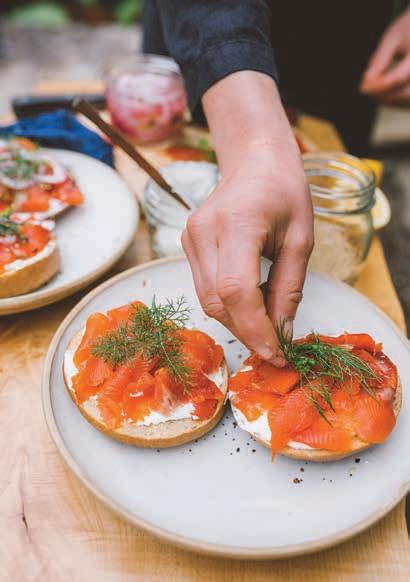
The neo-diner revolution; Highway 1 reopens the road to Big Sur.
Home
& Garden
Kidding Around
Social media-savvy Oregon designer Molly Kidd crafts a family home that blends grounded materials, warm minimalism, and a distinctly Pacific Northwest sensibility.
When Stars Align
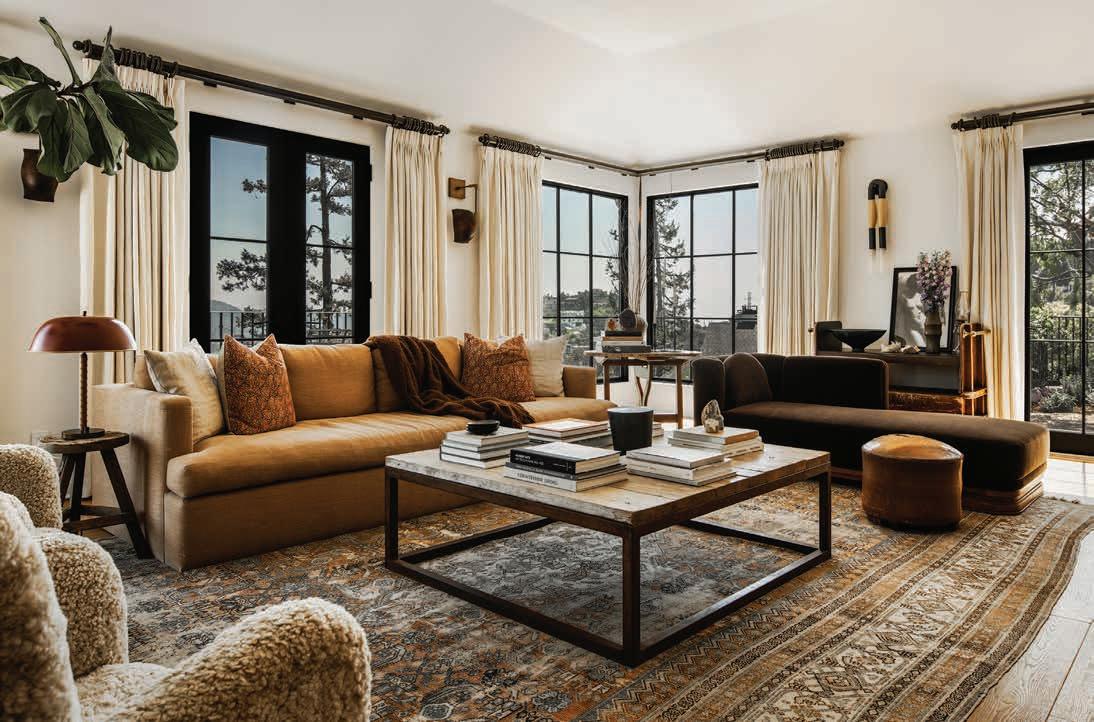
Rising design star Jake Arnold creates a countrychic retreat for dancer and TV personality Julianne Hough.
The Architecture of Agriculture
In the heart of the redwoods, a professional farmer paints with plants—shaping landscapes that are both productive and poetic.
Checklist
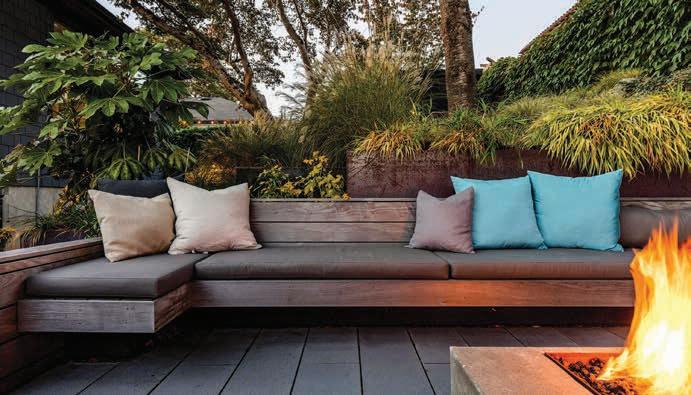
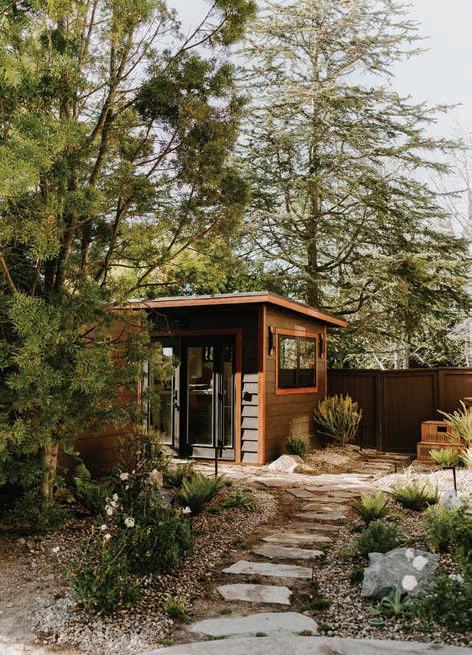
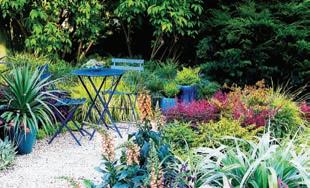
What to do in your garden now, wherever you live in the West—plus how to design a colorful, multi-level outdoor room.
Special Section
The Annual Sunset Home & Design Awards
Our yearly celebration of standout design across the West, honoring visionary architects, landscape architects, interior designers, and makers who elevate the art of living well.
Food
&
Drink
75 From Soil to Supper Kevin West reveals why the most memorable meals begin in the garden.
Travel
&
Escapes
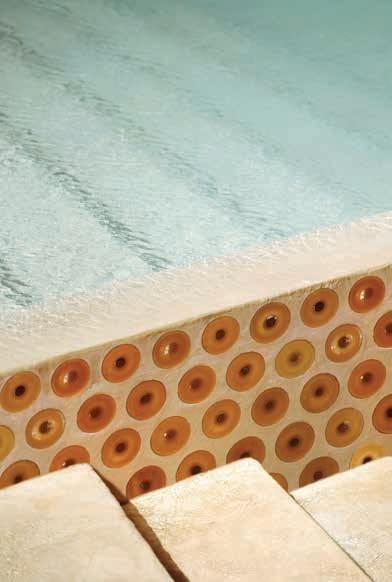
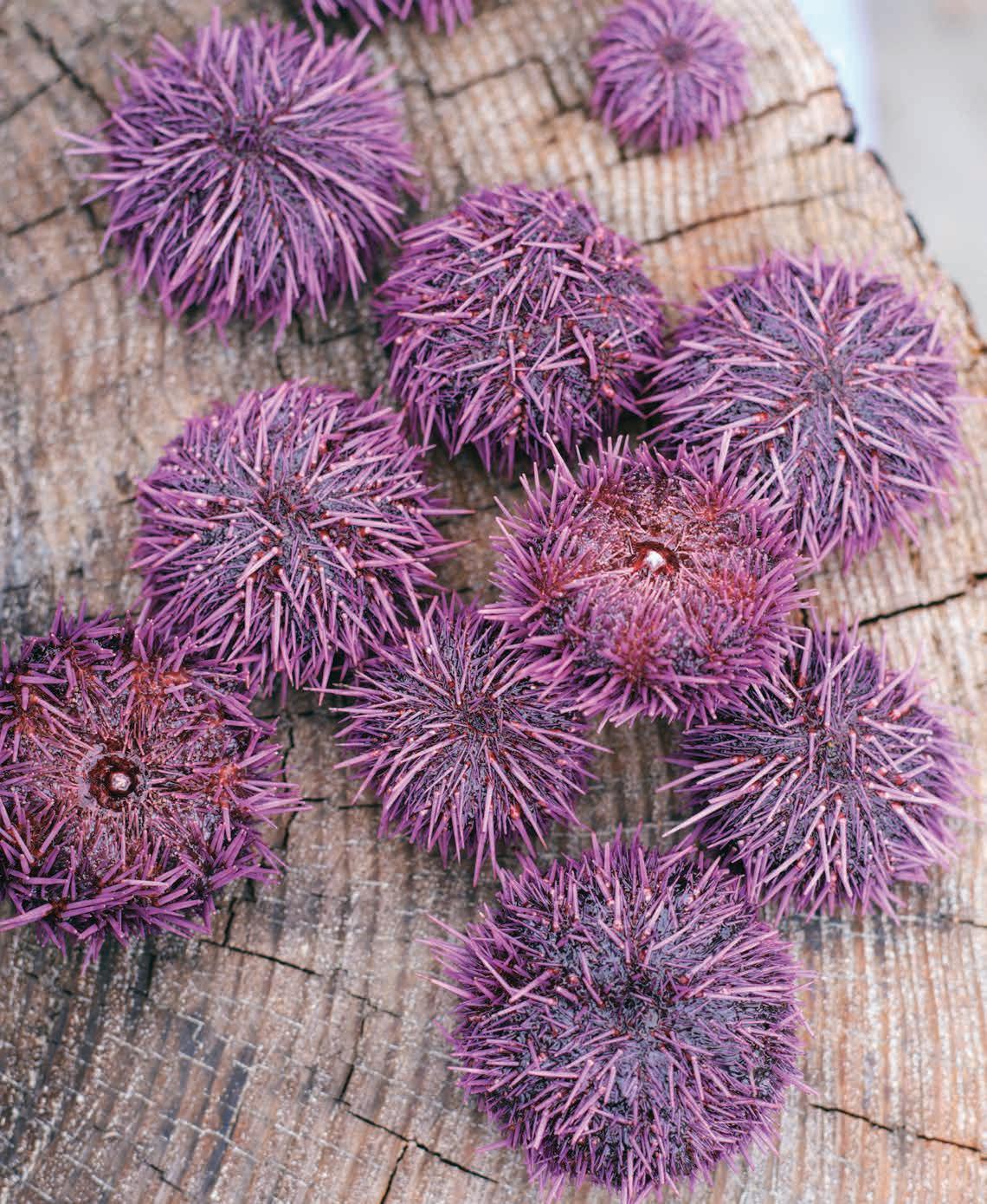
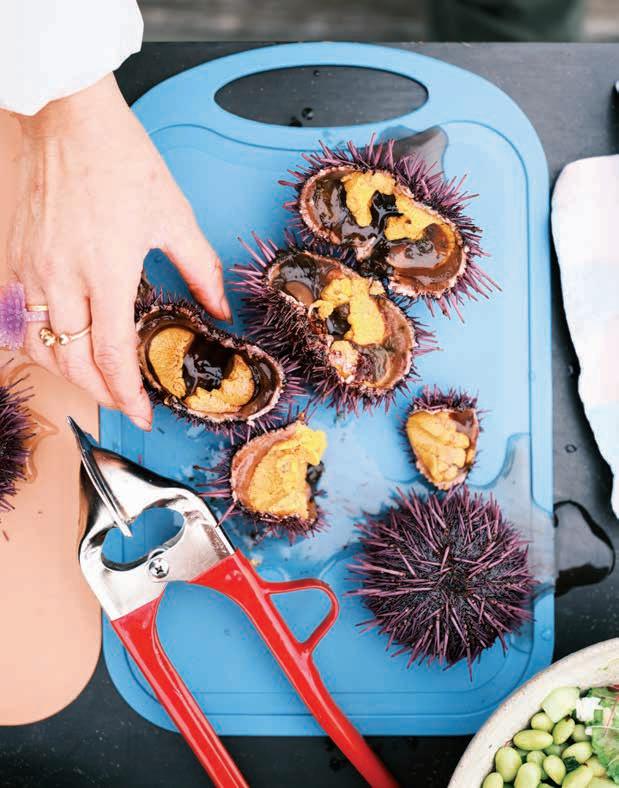
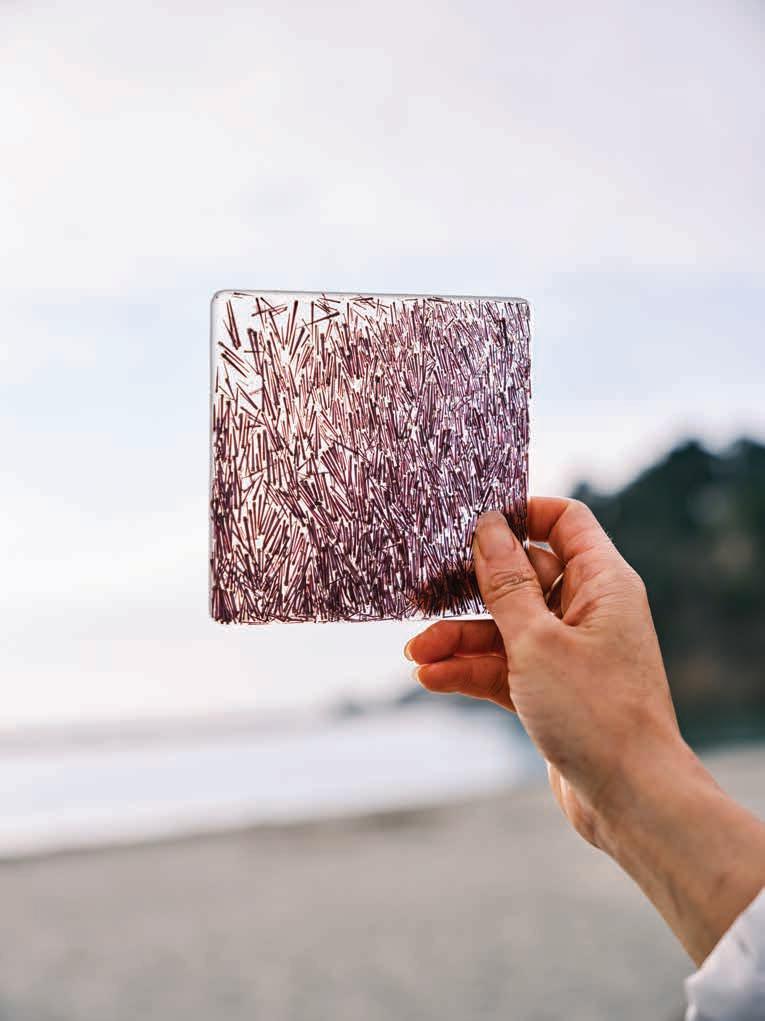
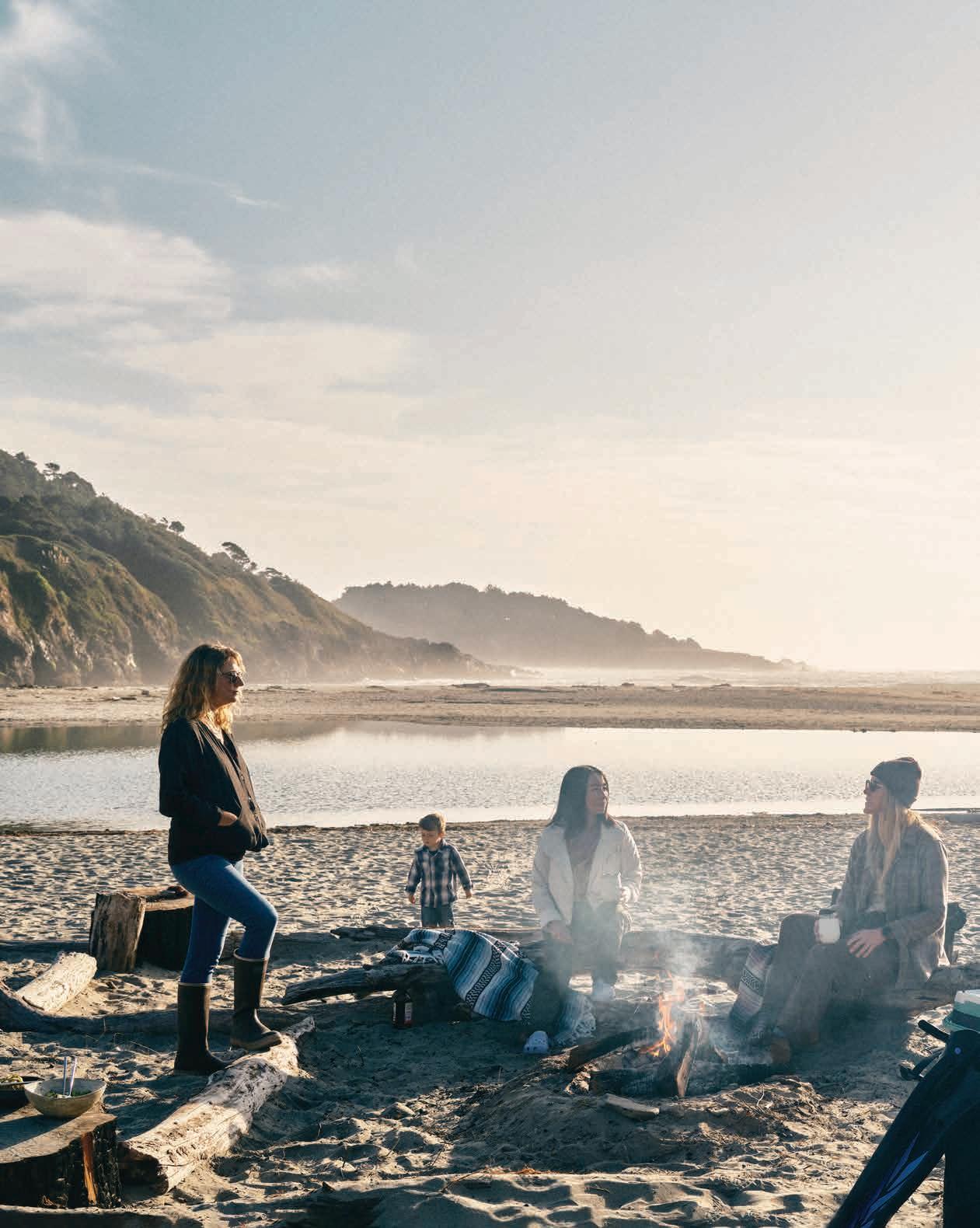
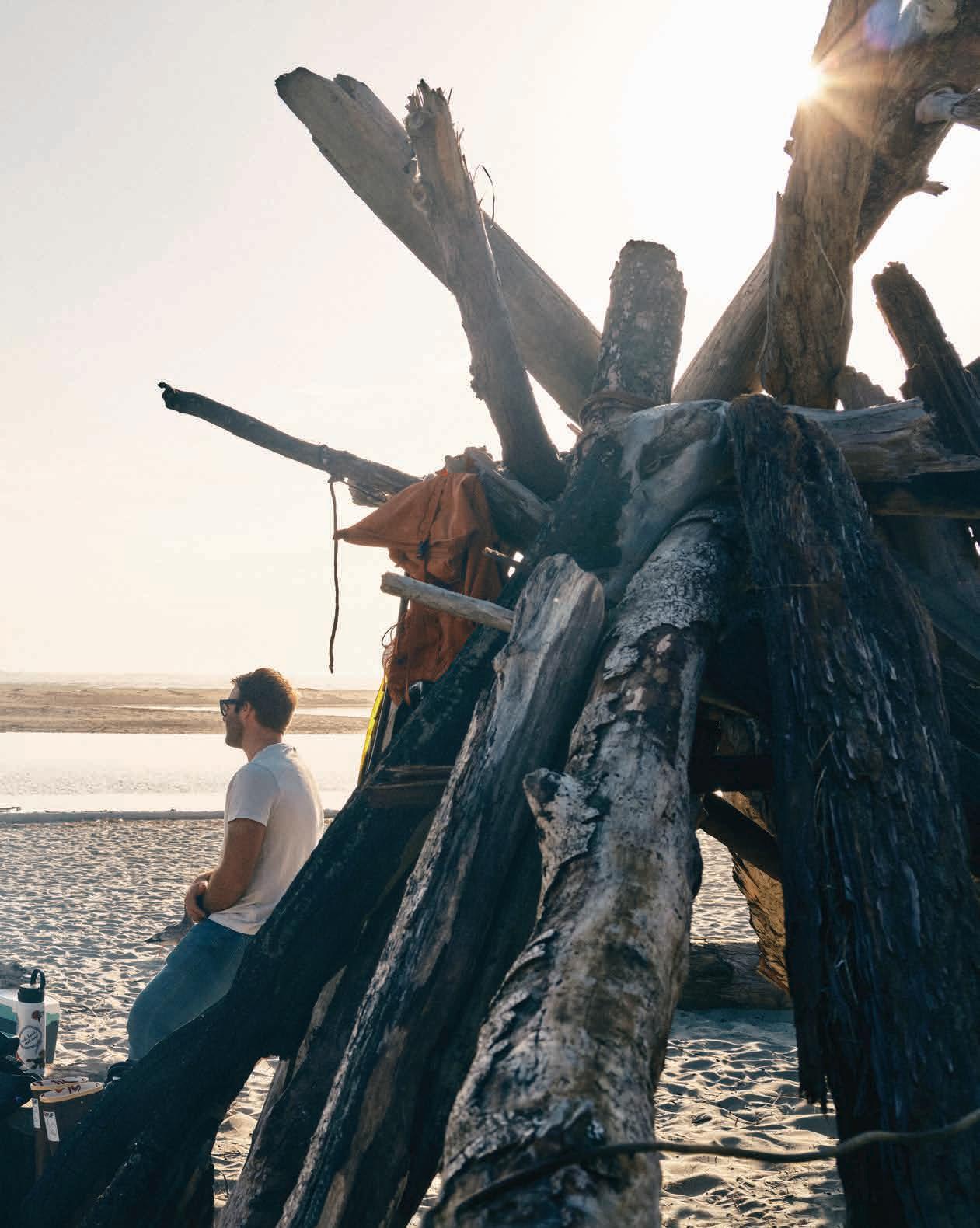
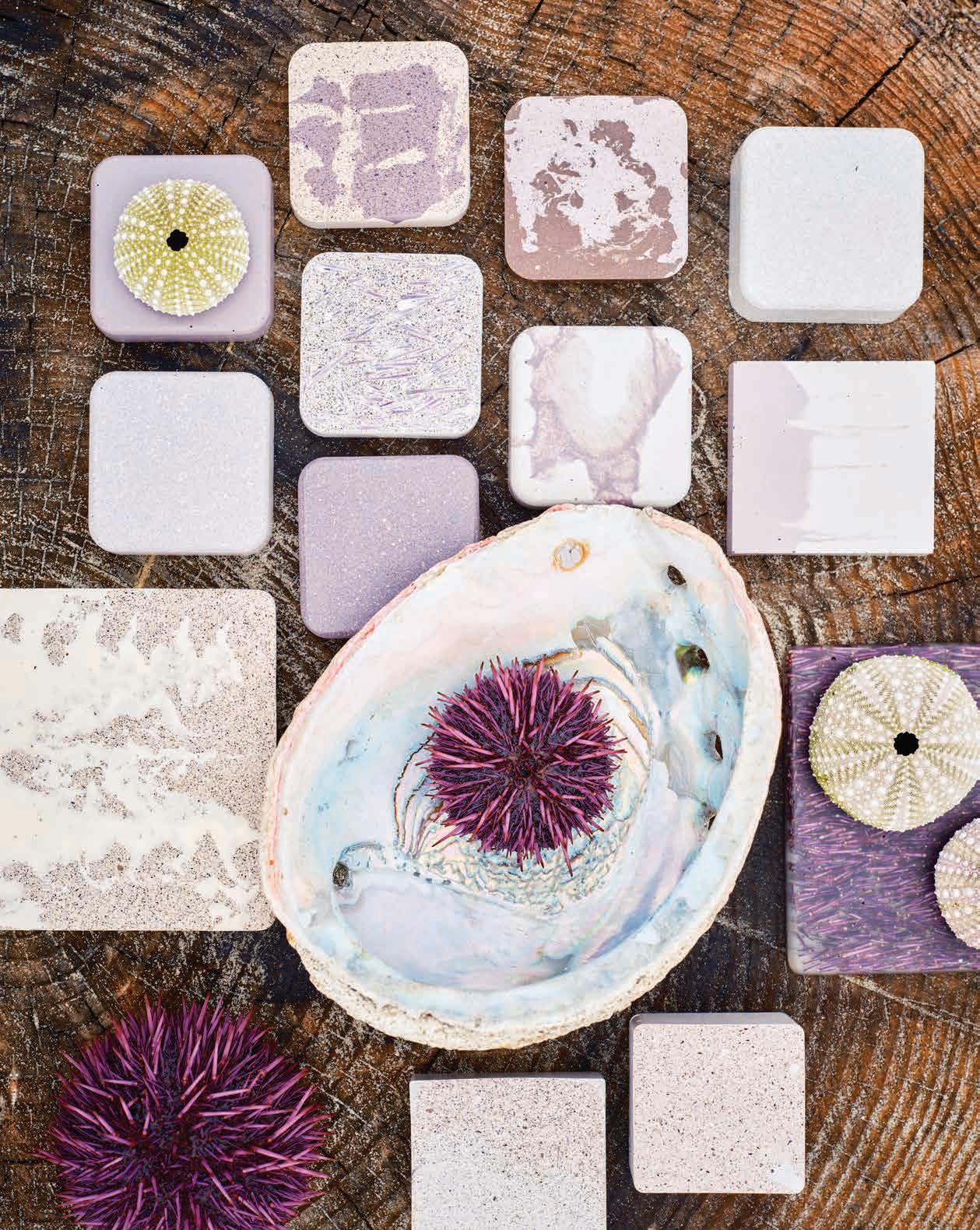
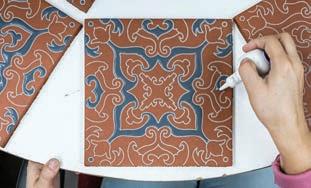
79 Tide to Tile On the Mendocino Coast, a new biomaterial made from purple sea urchins spotlights kelp forest restoration.
Insider Guides
Up-to-the-minute tips on what to do, where to eat and drink, and where to stay in San Francisco, California; Pacific City, Oregon; and Cordova, Alaska.
Voices of the West
House Swapping 101
A HomeExchange expert on how house swapping can expand your travel horizons.
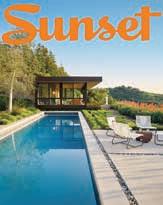
ON THE COVER A Montecito home designed by Home & Design Award winner Marmol Radziner.
Photograph by
THOMAS J. STORY
Gimme Shelter
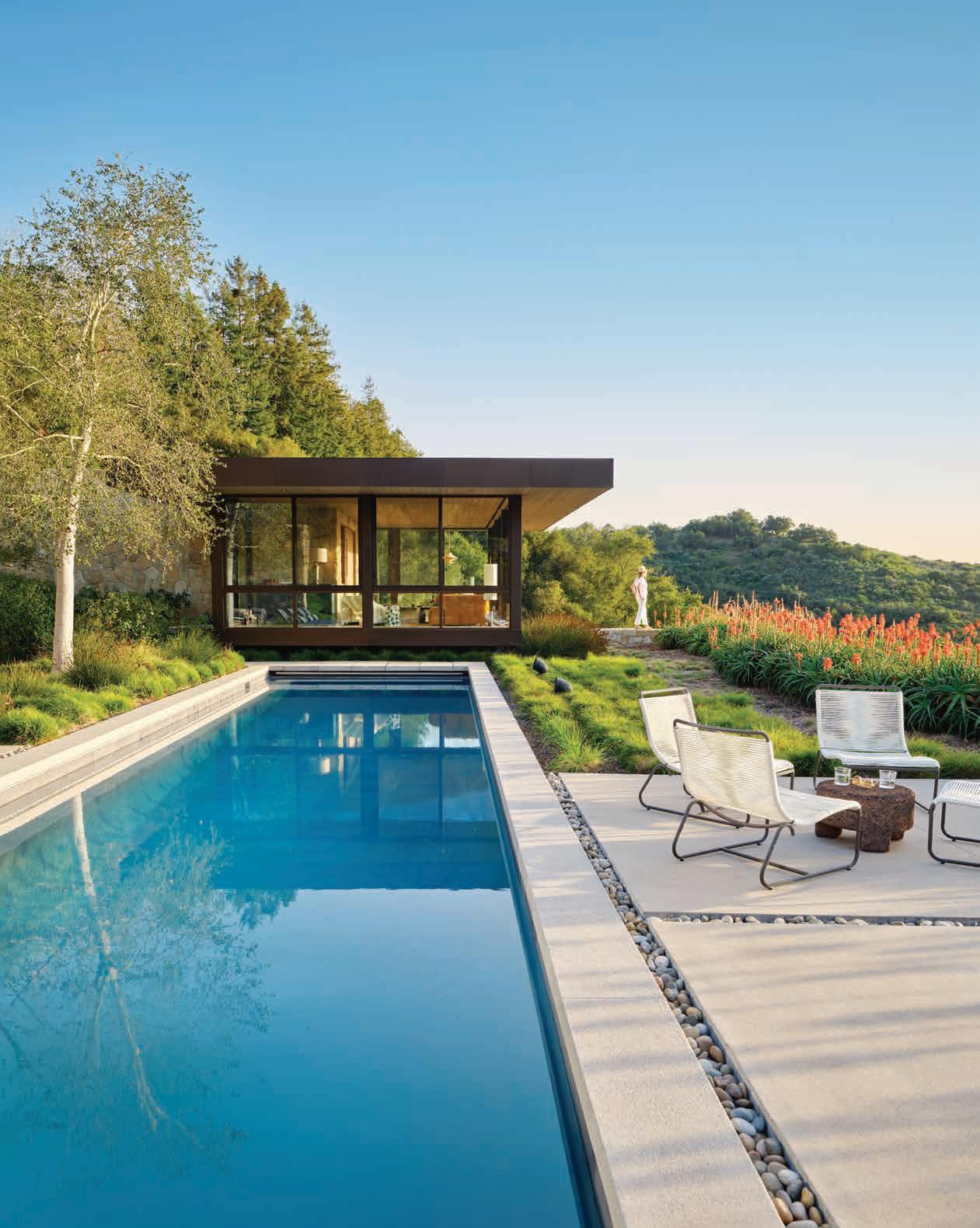
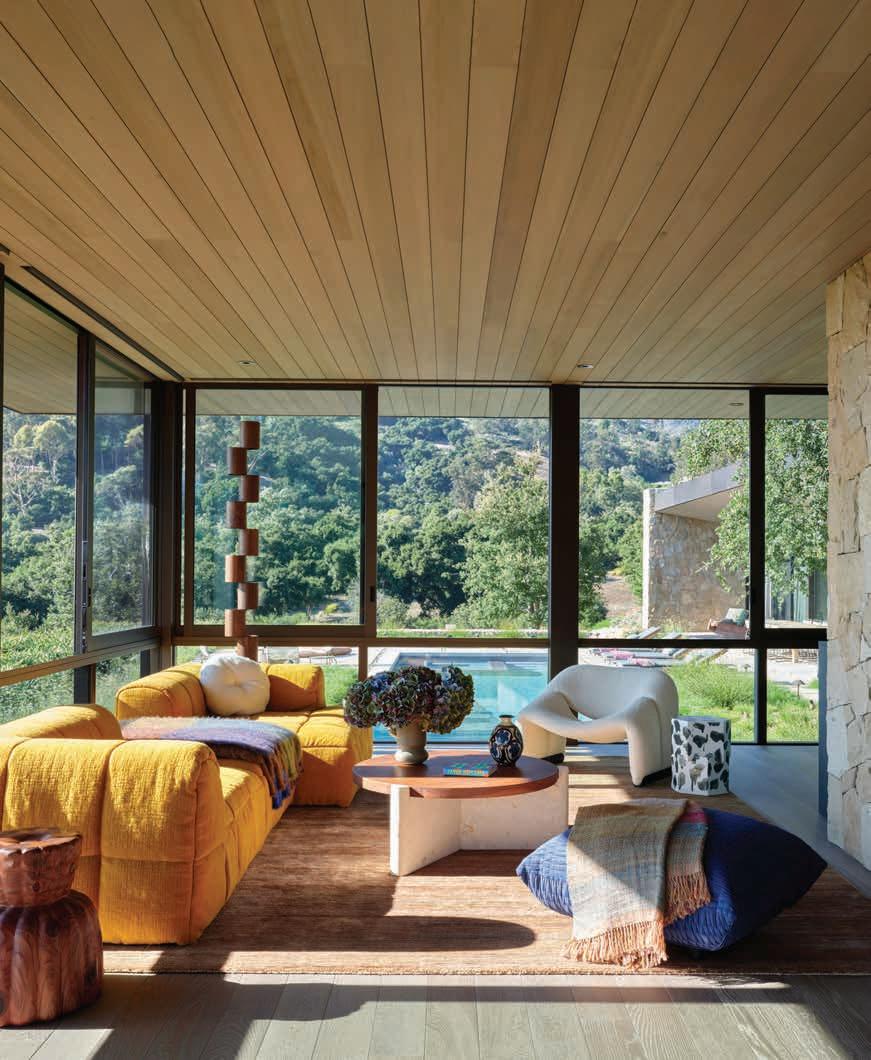
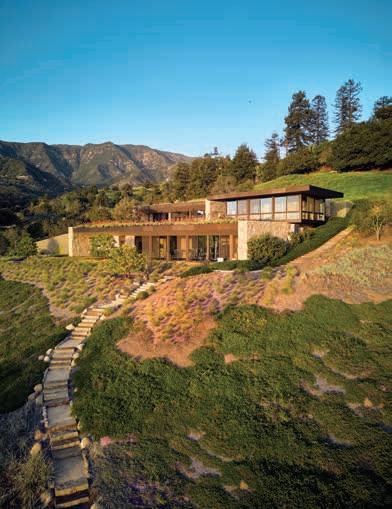
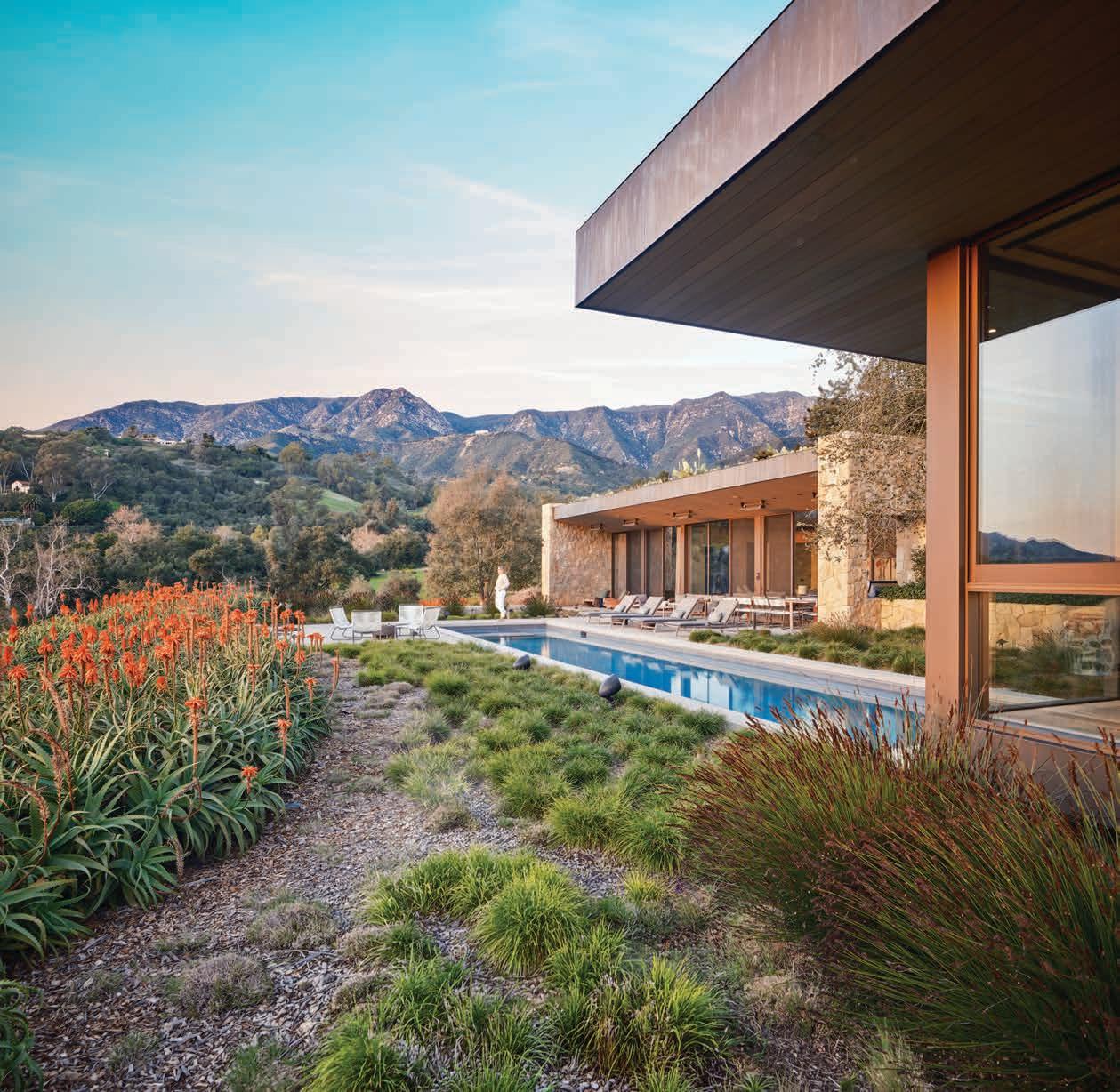
If you can hire Marmol Radziner to design your home, you can, in theory, have just about anything you want. But what the homeowner of the house gracing the cover of our annual Home & Design issue wanted most was something surprisingly restrained: a home that would all but disappear into its surroundings. “I didn’t want to ruin the views for my neighbors,” he told us as we photographed the house on a spectacular early spring day in Santa Barbara County. And in a region where ostentation and hillside grandeur often dominate the landscape, he instead asked for a guesthouse and gym to be carved directly into the slope, nestled within the land, rather than perched atop it. One roof is dotted with cacti, another with grasses and agaves, giving the structures the feel of a modernist hobbit house (the Tolkien comparisons come up often when architects see the design). “When Ron [Radziner] showed me the plan, he nailed it.”
Cacti and succulents grow on the roof of this guesthouse that sits harmoniously within the land.
CHAIRMAN & PUBLISHER
Michael A. Reinstein
EDITOR-IN-CHIEF
Hugh Garvey
DIGITAL DIRECTOR
Sarah Yang
DESIGN DIRECTOR
Brian Walker
PHOTO EDITOR
Christine Bobbish
STAFF PHOTOGRAPHER
Thomas J. Story
With sweeping vistas of oak groves, citrus orchards, and the Channel Islands across the Pacific, the home is both dramatic and deeply sensitive to place. Stone for the exterior walls was quarried on site. The landscaping is low-water and leans native. Solar panels heat the pool. An accessible ramp welcomes all visitors. A Murphy bed tucks neatly into the pool house—proof that thoughtful design can be both beautiful and practical. Marmol Radziner has long been at the forefront of California’s architectural evolution—known for pioneering prefab innovation, pushing material boundaries, and helping preserve and reinterpret modernist landmarks like Richard Neutra’s iconic Kaufmann House. Its work consistently balances rigor with warmth, ambition with humility. So, it’s no surprise that this home inspires immediate awe at its sculptural lines while also delivering that elemental feeling of shelter, of being part of the land rather than imposed upon it. And it’s exactly the spirit we celebrate in our second annual Home & Design Awards, where we honor the designers, makers, and visionaries shaping the future of living in the West.
—Hugh Garvey, EDITOR-IN-CHIEF
Elena Scott
Tracy Seng
Kathleen Craven
Coffey
Facer
Mindy Morgan
Megan Giordano
Turkel Design ensures quality and predictability with premium materials, expert craftsmanship, and precision assembly.
Discover our award-winning portfolio of homes throughout North America and beyond.
BEST OF THE WEST
Diner Redux
Counter culture is reborn at these modern California classics.
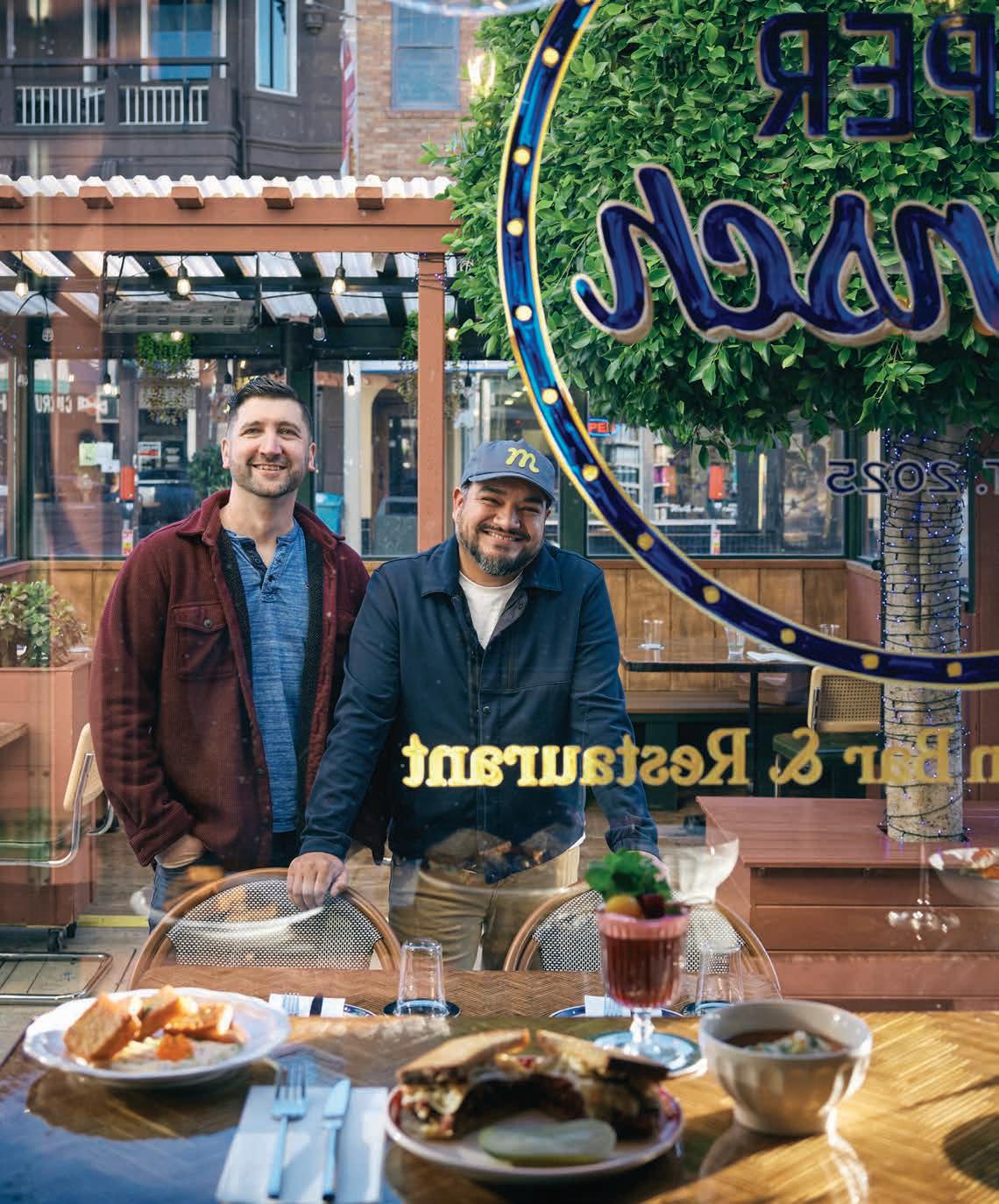
Adam Rosenblum and Elmer Mejicanos at Super Mensch in San Francisco.
Story by KRISTA SIMMONS
Super Mensch
Jumbo’s Win Win
Jumbo’s Win Win
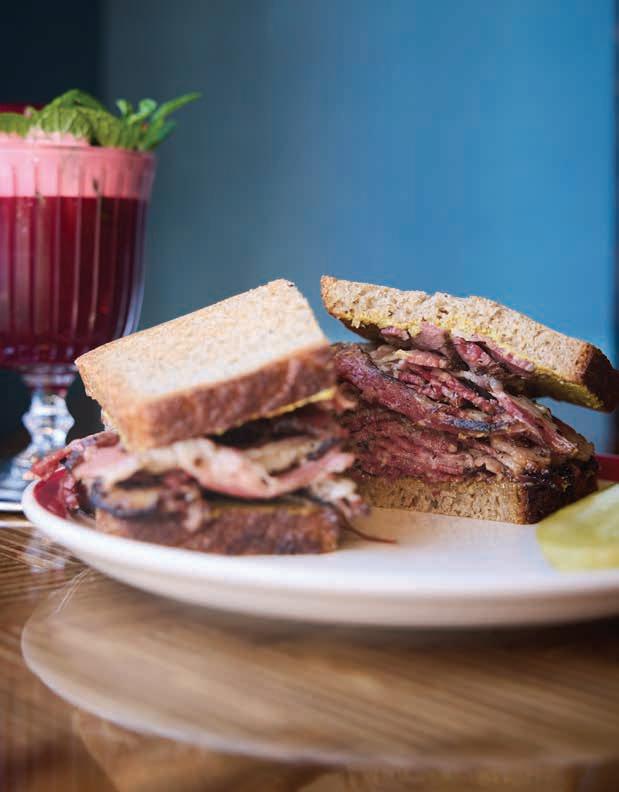
The West Coast is seeing a new wave of diners reimagining casual counter service comfort food with chef-y techniques, thoughtful design, and a strong sense of place. Instead of bottomless burnt coffee and pancakes made from a mix, you’ll find natural wine next to pasture-raised pastrami sandwiches and softserve sundaes made with cream from local dairies. Here are a few of the nostalgic options on offer.
Jumbo’s Win Win
Set along the scenic Highway 128 in the heart of Anderson Valley, this twist on a classic American roadside burger stand from former San Francisco cocktail whiz Scott Baird (of Trick Dog and 15 Romolo fame) is the pit stop you’ve always wished for. Here, you’ll find meticulously executed smash burgers, soft-serve from Straus Family Creamery, pickle dogs served alongside a house-brewed briny pickle beer, and a “Win Win Wedge” that absolutely lives up to its name. There’s also a secret menu of Mexican standbys worth trying, meant to serve the local agricultural community of Philo, complete with handmade tortillas and salsas, meaning there’s truly something for everyone.
Super Mensch
In San Francisco’s Marina District, the traditional Jewish deli has been transformed into a petite restaurant and cocktail bar hybrid, courtesy of chef Adam Rosenblum and beverage director Elmer Mejicanos. The menu leans into deli staples like house-cured and smoked pastrami on rye, matzo ball soup, golden latkes, and towering slices of chocolate cake that even the most skeptical of bubbes would approve of. She may question the likes of the bagel and lox martinis, but to each their own.
Max & Helen’s
Located in one of L.A.’s great walkable neighborhoods along Larchmont Boulevard, Max & Helen’s is a retro ode to the classic diner from Somebody Feed Phil host Phil Rosenthal and legendary chef-restaurateur Nancy Silverton, both of whom call the area home. The space seamlessly channels midcentury Americana without being overly cheesy, and it’s the perfect spot to nosh on patty melts, breakfast plates, and milkshakes, all executed with the elevated technique and ingredient care you’d expect from these Angeleno restaurant vets.
Phil Rosenthal and Nancy Silverton at Max & Helen’s.
Jumbo’s Win Win
Homecoming HIGHWAY
The
iconic route to Big Sur is back.
Here’s where to go now.
Story by KRISTA SIMMONS
After months of rebuilding road infrastructure damaged by winter storms, Highway 1 through Big Sur has reopened. The 6.8-mile stretch at Regent’s Slide has been closed to through-traffic since early 2024, when heavy storms triggered major slope failures and forced long-term repairs along one of California’s most scenic corridors.
The reopening restores uninterrupted travel between Monterey County and San Luis Obispo County, reconnecting visitors with the region’s famed state parks, beaches, and overlooks— without lengthy detours.
The California Department of Transportation notes that travelers should still expect active construction zones and single-lane traffic controls, which will continue even after the road officially reopens. But don’t let that deter you from enjoying seasonal highlights like these: Back in action, the Pfeiffer Falls Trail in Pfeiffer Big Sur State Park leads hikers through towering redwoods to a moss-covered waterfall. Solstice is welcoming travelers with a new weekend supper club experience ahead of its full dinner service return in April. At Post Ranch Inn, the falconry program invites guests to walk the cliffs as hawks soar overhead. The onsen-style Spa Alila at Ventana Big Sur offers outdoor soaking tubs and natureinspired treatments designed for deep relaxation.
What is RV insurance?
How can RV insurance protect you?
Do you really need RV insurance on your travel trailer?
As RVers, we know the allure of the open road and the freedom it offers. However, with freedom comes responsibility, including the important decision of securing insurance.
RV insurance is designed to cover various types of RVs, including travel trailers, toy haulers, motor homes, fth wheels, and camper vans. While liability insurance is not required for most travel trailers, having RV coverage could bene t you and your adventures.
• Protection against accidents: May provide nancial protection for repair costs, medical expenses, and liability in case of an accident.
• Coverage for theft and vandalism: Could help with repairs or replace your trailer with less out-of-pocket expenses if it’s lost or stolen.
• Natural disasters and weather events: May cover the cost of damage from storms, oods, or other natural disasters.
Is your travel trailer covered under your home or auto insurance?
While your home or auto policy can protect your trailer in certain instances, it can also leave you with gaps in your coverage.
Con dence on the road
insure your investment
For example, your auto policy may only cover your trailer while you’re on the road, not if you’re parked or at a campsite. The same goes for home insurance—if you’re on your home’s property it might be covered, but damage from a storm at a campground wouldn’t be.
What specialized coverages does Progressive offer?
Progressive offers a variety of specialized coverages that aren’t included on a standard auto insurance policy like:
• Roof Protection Plus®: Covers repairs or replacements for RV roofs, including if the cause is wear and tear.*
• Pest Damage Protection SM: Covers the cost of repairs from pest infestations.*
Having RV insurance gives you con dence you’re protected no matter where you roam. From remote national parks to bustling campgrounds, RV insurance ensures you have the support and nancial protection you need if something goes wrong.
While insurance for your travel trailer may not be legally required, it’s a crucial investment in protecting your RV, nances, and peace of mind.
Scan to get a quote in as little as 4 minutes.
to learn more.
LIFE AMONG VINES
Annual Wine Competition
Winners
Top Tastings
Hot Hotels
Recipes for Pairing
HIGH STYLE IN ST. HELENA
TASTEFUL TASTING ROOMS
WINE COUNTRY TRIP PLANNER
Our Picks for the West’s Best Wines
Sunset’s Annual Wine Issue is live.
Learn about the bottles to know, pour, and share right now.
Read the Issue
HOME & GARDEN
She’s a Natural
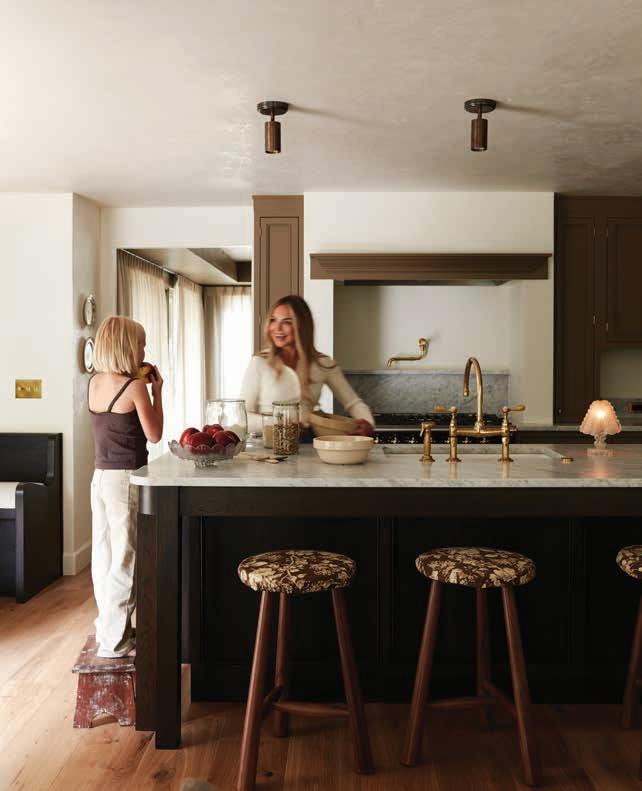
A social media-savvy Oregon-based designer built a family home that showcases her talent with grounded materials and warm minimalism, with a Pac-Northwest twist.
Story by CHRISTINE LENNON
Photographs by TIM LENZ
Molly Kidd starts every interior design project with a floral arrangement.
It helps her establish a color palette, a mood, and a style, whether that’s more traditional, minimal, or romantic. It’s the first thing she does when she begins ideating for a client, and the finishing touch of every installation.
“Before I was a designer, I was a florist, and flowers have a big influence on my work,” Kidd says. “That’s where I want to start to determine the color and
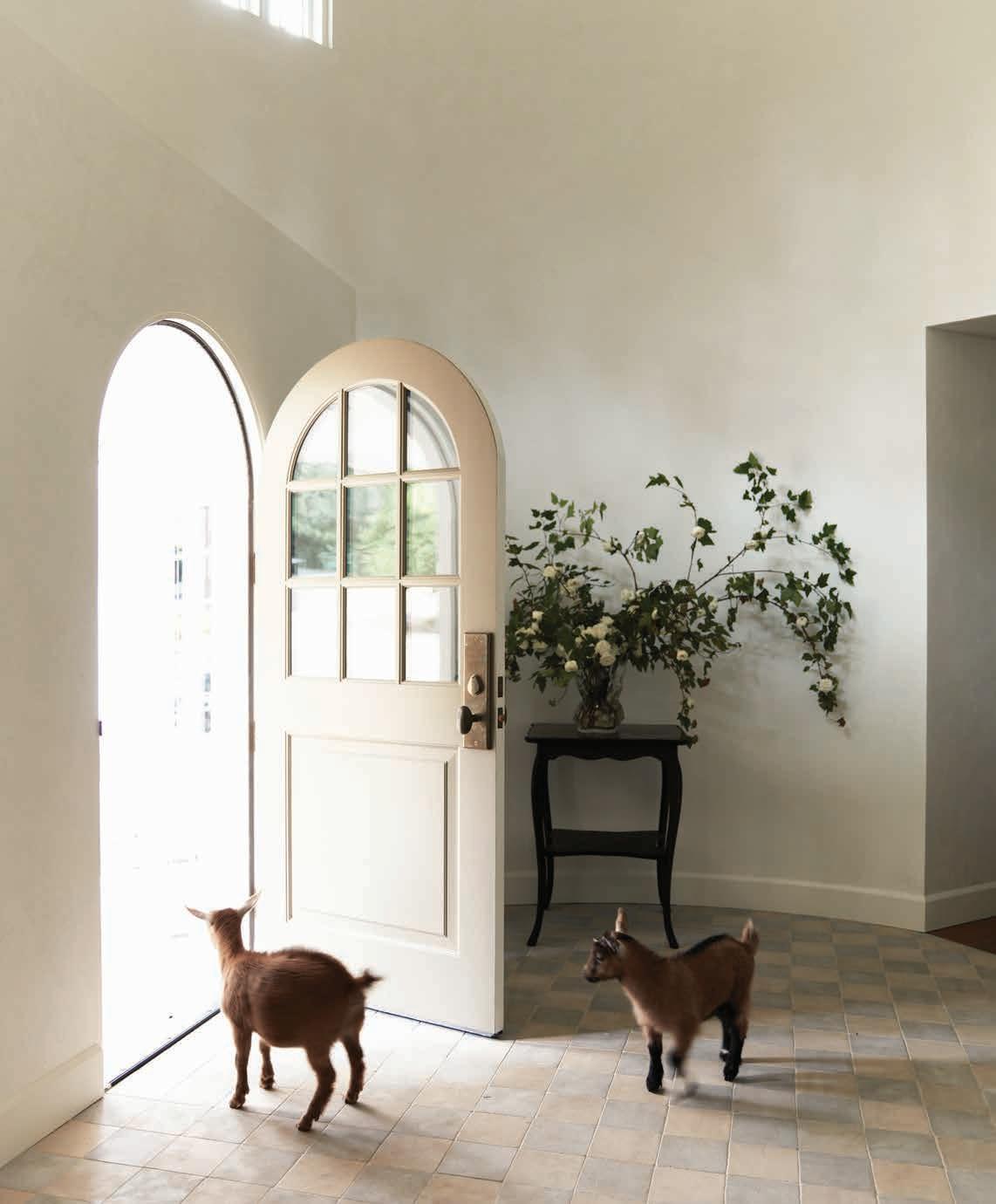
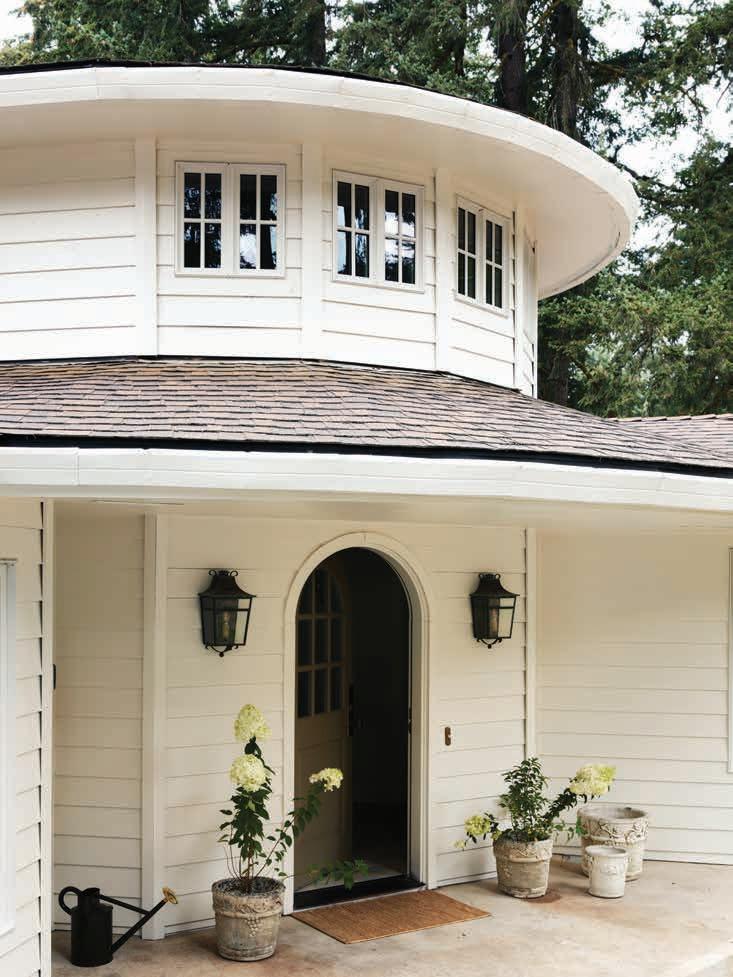
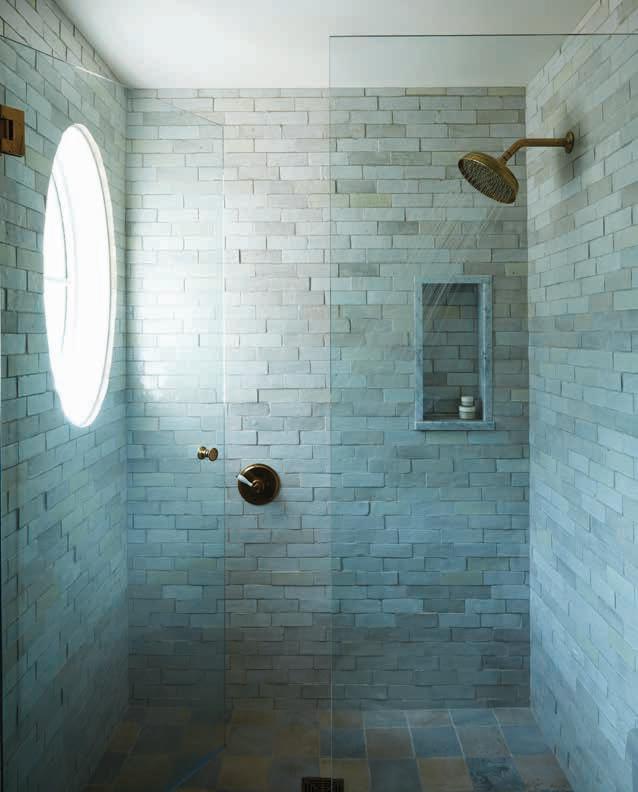
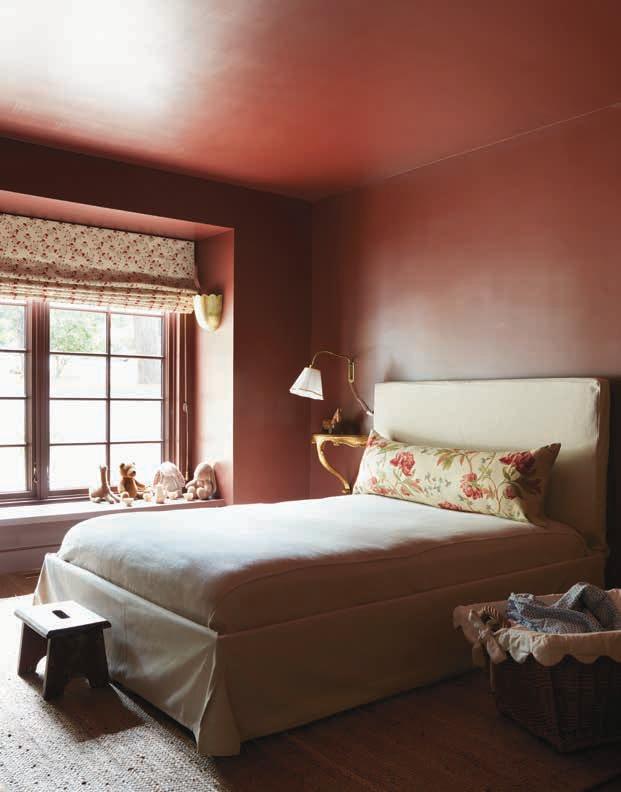
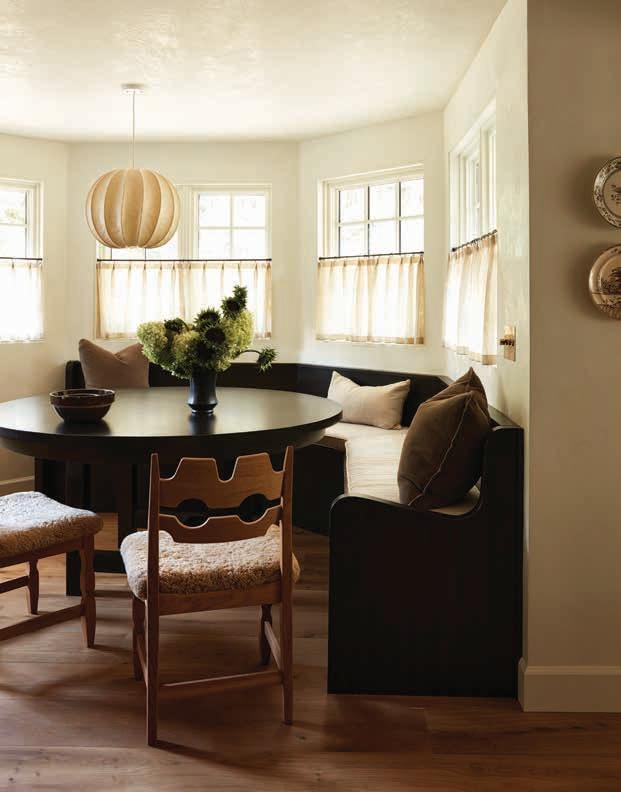
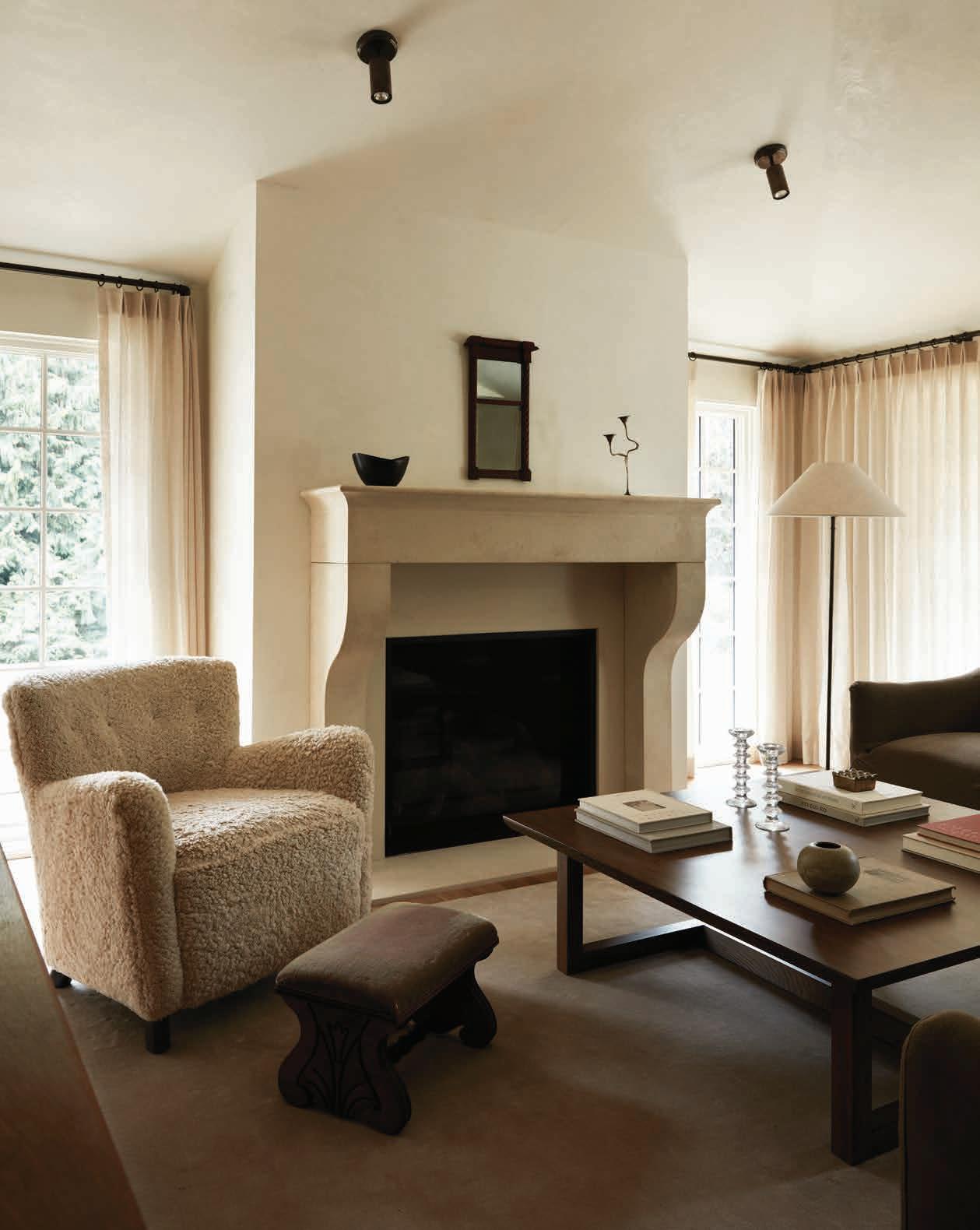
This page: Kidd designed a new arched doorway to transform the home’s entrance. Sconces, Ralph Lauren. Front door paint, Farrow & Ball Broccoli Brown. Opposite page, clockwise from top left: The brown front door is echoed in the painted custom cabinetry in the kitchen, finished with Rocky Mountain Hardware. Vintage textiles, a custom bed frame, and walls painted Farrow & Ball Deep Reddish Brown in a daughter’s bedroom. A custom-built breakfast nook in the kitchen features vintage chairs and sheer linen cafe curtains by Everhem. Zellige tile in the primary bathroom shower, Zia Tile.
design direction. It’s kind of a throughline, from beginning to end.”
Is it unconventional? Absolutely. But there isn’t much about the Salem, Oregon-based designer’s approach to her business that’s rooted in old-fashioned, outmoded ways. She may embrace timehonored techniques and ancient materials, like plaster, copper, and honed marble, and she gravitates toward vintage decor and antiques. But the social mediasavvy Kidd is very much a digital age designer, with a team of employees working remotely, a savvy woman contractor on her payroll, and a live-work space that functions as an idea lab, showroom, and family home surrounded by nature in the Pacific Northwest.
“Ninety-five percent of my clients come through Instagram. I also use social media to curate my team because most live out of state,” she says. “We have local projects, but we’re working on houses from Rosemary Beach, Florida to Maryland and everywhere in between.”
Kidd has tapped into the aspirational digital homesteader ethos and aesthetic and channeled it into a thriving design business. Like many modern entrepreneurs, she focuses on sustainability and responsible consumerism, fosters an iron-clad brand identity, and refuses to compromise on family time. Instead of making her family life work around her job, she’s done the inverse.
“I bought this house two years ago with the intent of making it both a family home and a showroom for my clients. Local clients can come see the finishes I like, different paint colors, or cabinetry. I use natural finishes in all of my projects. I also only work with natural stone like marble. Sustainability is a big pillar for me, and about 50% of the items I use in projects are vintage. I create homes
that have that soulful, lived-in feel with antique elements that are warm and grounded.”
Kidd never strays from a muted, slightly muddy “classic Pacific Northwest” color palette, no matter the zip code or time zone.
“You’ll see that represented in all of my projects, no matter where they are in the country. Every project is different. Some are new builds, others are remodels. They do differ, but the goal is to be able to look at a project and tell that it’s mine,” she says.
Two years ago, Kidd found a late ’80s single-owner home on a two-acre lot dotted with oak trees and knew she found her place.
“The previous owners took great care of the house, but it hadn’t been updated at all,” she says. “I wanted to give the house a new identity with a more traditional floorplan that felt more intimate.”
The transformation from dated ranch house to Cotswolds-inspired retreat was swift. She took the house down to the studs, reconfigured the primary suite, and added a fourth bedroom and bathroom, all without expanding the footprint. Kidd also replaced every window, adding floor-to-ceiling gridded windows to the living and dining rooms, and a few well-placed arches.
“I knew what I wanted pretty quickly, so the actual remodel from demo to completion took nine months. I owe that to Brittney Young, one of my colleagues who was the general contractor on the project. She owned her own construction business for 10 years and was so incredibly organized.”
Kidd’s approach to decor is inspired in equal parts by Australian minimalism and the rich materiality of design in the U.K. and France.
“I don’t like things to feel too layered. I like restraint. It lets pieces shine,” she says. “I want to walk into a house and feel like I can take a deep breath, sit down, and relax.”
Kidd finds herself explaining the “buy well, buy less” approach to furnishing a house to her clients, who largely embrace her aversion to clutter. Appliances don’t live on her countertops; she prefers hidden pantries to hide unsightly toasters and blenders. Instead of installing eight middling lights in the kitchen, she invested in two vintage lanterns that “tell a story.”
“Why would you invest in beautiful plaster walls just to cover them up with a bunch of stuff?” she says.
Outside, neighborhood goats wander into the yard on occasion (and make appearances in photo shoots), and her three children help in the greenhouse and garden and play outside whenever possible. Kidd has
a deep respect for the natural world and is a conservationist at heart, adapting that “do no harm” approach to reimagining homes and filling them with found treasures, embracing the imperfections that come with it.
“I advise people to think about the impact. Do you want to invest in a real wool rug that you’ll own for over a decade, or three synthetic rugs that wear out?”
And while the world she creates on social media may appear to be perfect to the casual eye, it’s the imperfections, Kidd says, that bring the magic.
“Real limestone and marble get beat up a little, but it just shows that there’s life in the room. A drink ring on a table? That means that life has been lived well.”
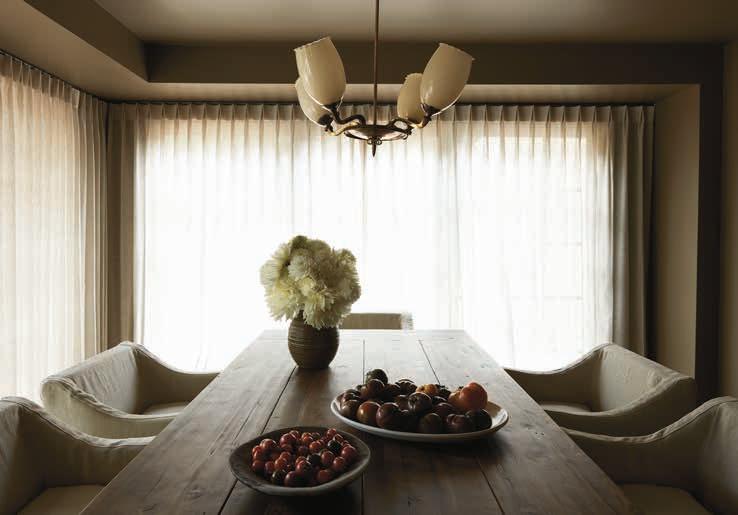
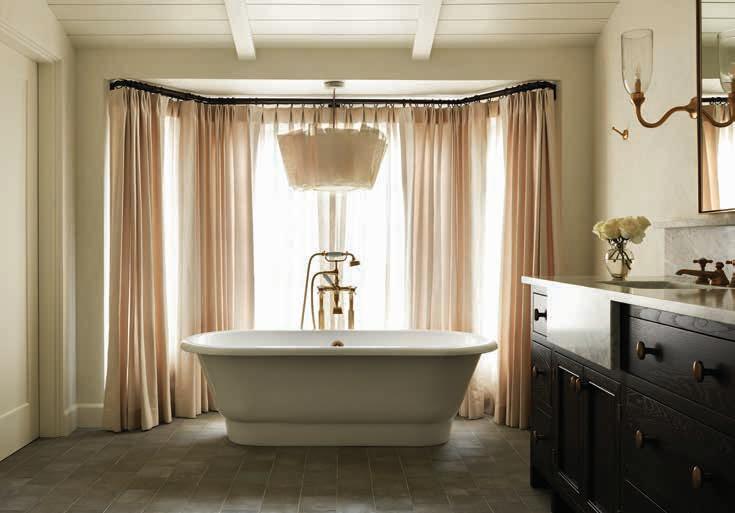
Opposite page: A minimally appointed living room lets a custom mantel and smooth plaster walls take center stage. This page, top: Upholstered dining chairs by Sixpenny surround a vintage dining table. Bottom: A pendant light by Pinch is suspended over a Waterworks freestanding tub in the primary bath.
TIMELESS DESIGN AT THE HEART OF THE HOME
How Lacanche’s enduring craftsmanship creates a kitchen meant to be lived in.
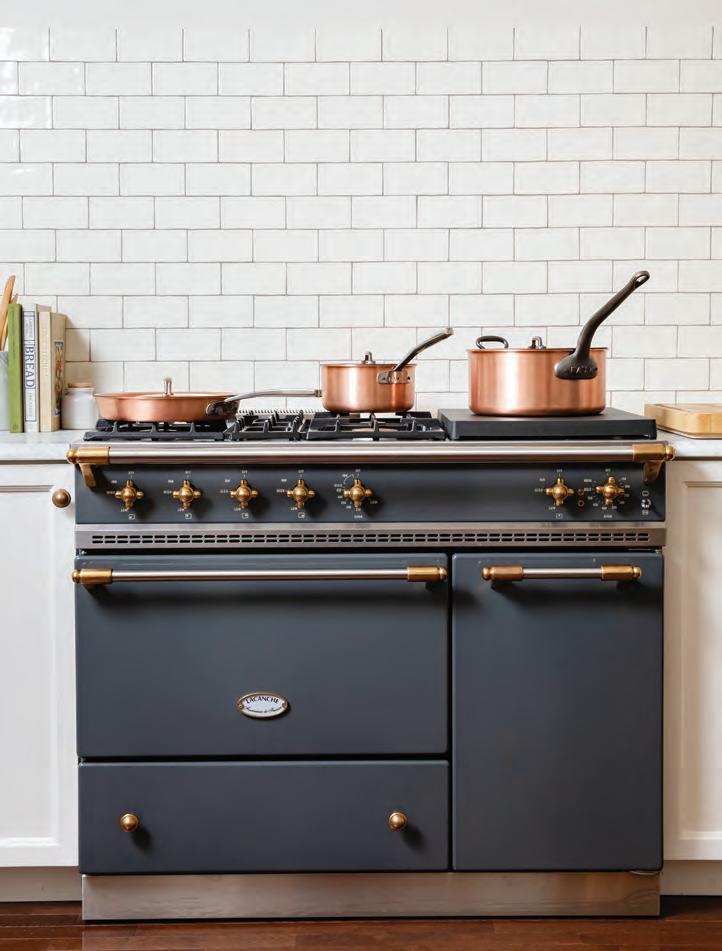
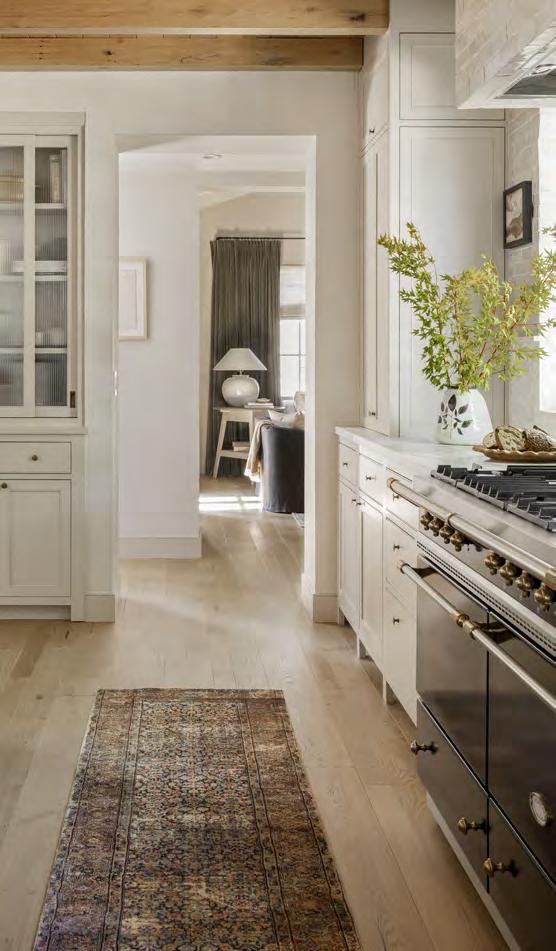
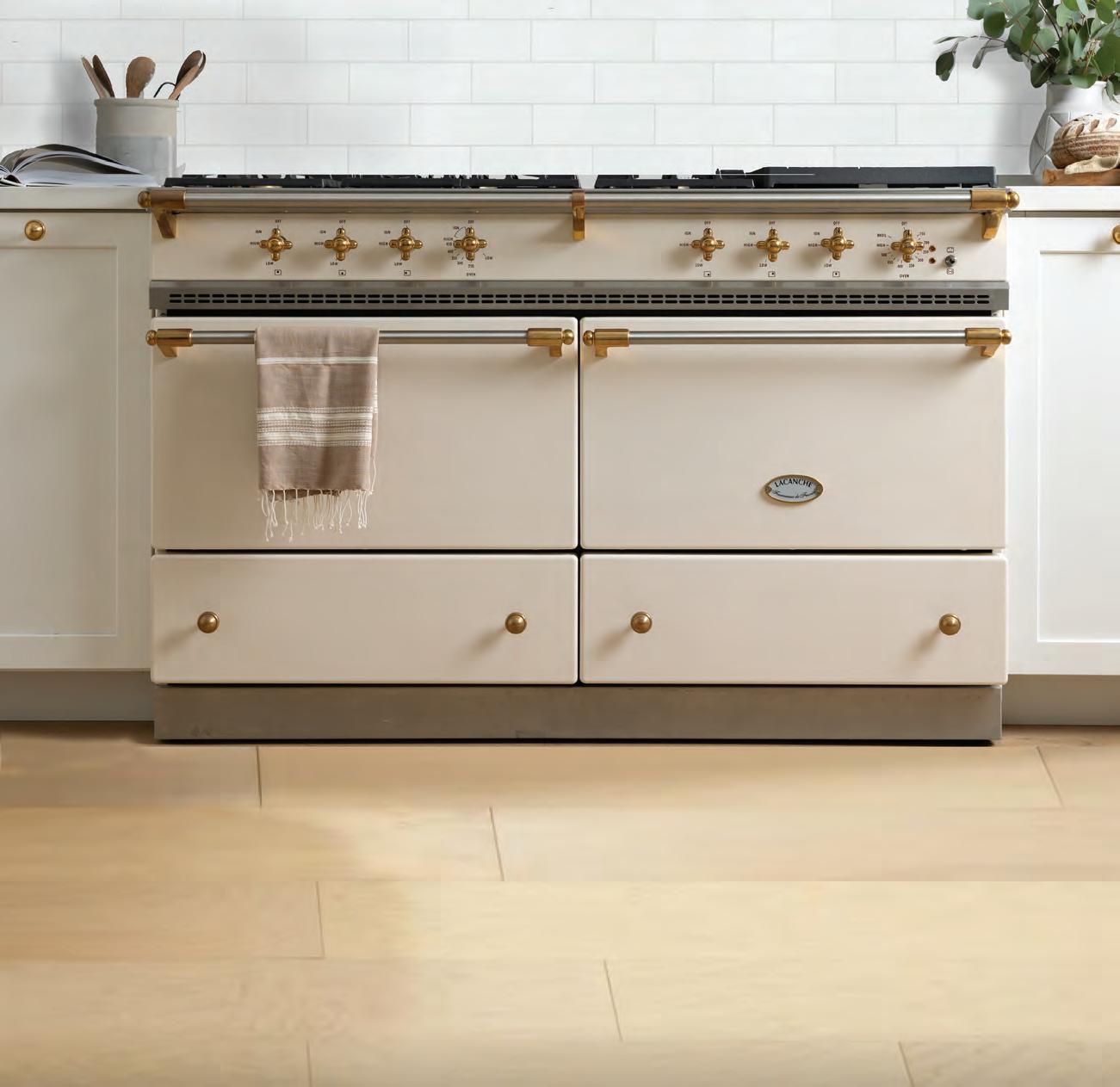
From Burgundy, the birthplace of French cuisine, Lacanche creates beautifully handcrafted, heritage French ranges. Art Culinaire is the sole distributor of Lacanche in the US, and part of every journey throughout the life of the range in the US. They are backed by more than three decades of in-house technical expertise, and supported by a wide network of authorized service providers. It’s not simply a range, it’s truly the creation of an experience through their highly-functional, analog pieces.
Lacanche and Art Culinaire’s mission is to have people slow down, enjoy a meal, gather with loved ones, and celebrate what’s important. Design, functionality, and this brand ethos are just some of the reasons that designer Amber Lewis turned to Lacanche when looking for the right fit for her new home.
With Amber’s long history of using
Lacanche pieces in projects, as well as previously in her own home, her familiarity with the custom designs and analog features drew her back to the brand when designing the kitchen in her new home.
The range is a centerpiece when designing this space, and being able to choose the right finish from 30 porcelain-enamel options and four metal trims was important in bringing the vision for her design to life.
“My new home will reflect a traditional, timeless design and the Sully Classique in Ardoise porcelain with the brass trim was the right fit for my kitchen. Having both gas and convection ovens and a seven burner configuration, I know this will be the right piece for my family and I to enjoy for years to come.”
What sets Lacanche apart is not only the
beautiful, everlasting elegance, but also the simple, durable functionality and heirloom quality that aligns with Amber’s aesthetic and lifestyle.
With the kitchen being such an important part of her family life, and the center of the home, Lacanche provides a professionalstyle, customizable experience.
“I fell in love with Lacanche in previous homes and continue to use them in projects, which has allowed me to experience the quality and craftsmanship first-hand. I’m excited to have a Lacanche range in my new kitchen and look forward to cooking with my family.”
Lacanche delivers the level of quality Amber desires, as well as a heritage-rich piece that will anchor the kitchen and naturally draw people together.
is an official partner of the Sunset Idea House x Amber Lewis project. This one-of-a-kind Southern California property is scheduled for completion later this year.
Lacanche
The dynamic young designer Jake Arnold created the country-chic house of dancer and TV personality Julianne Hough’s dreams.
Story by CHRISTINE LENNON / Photographs by GAVIN CATER
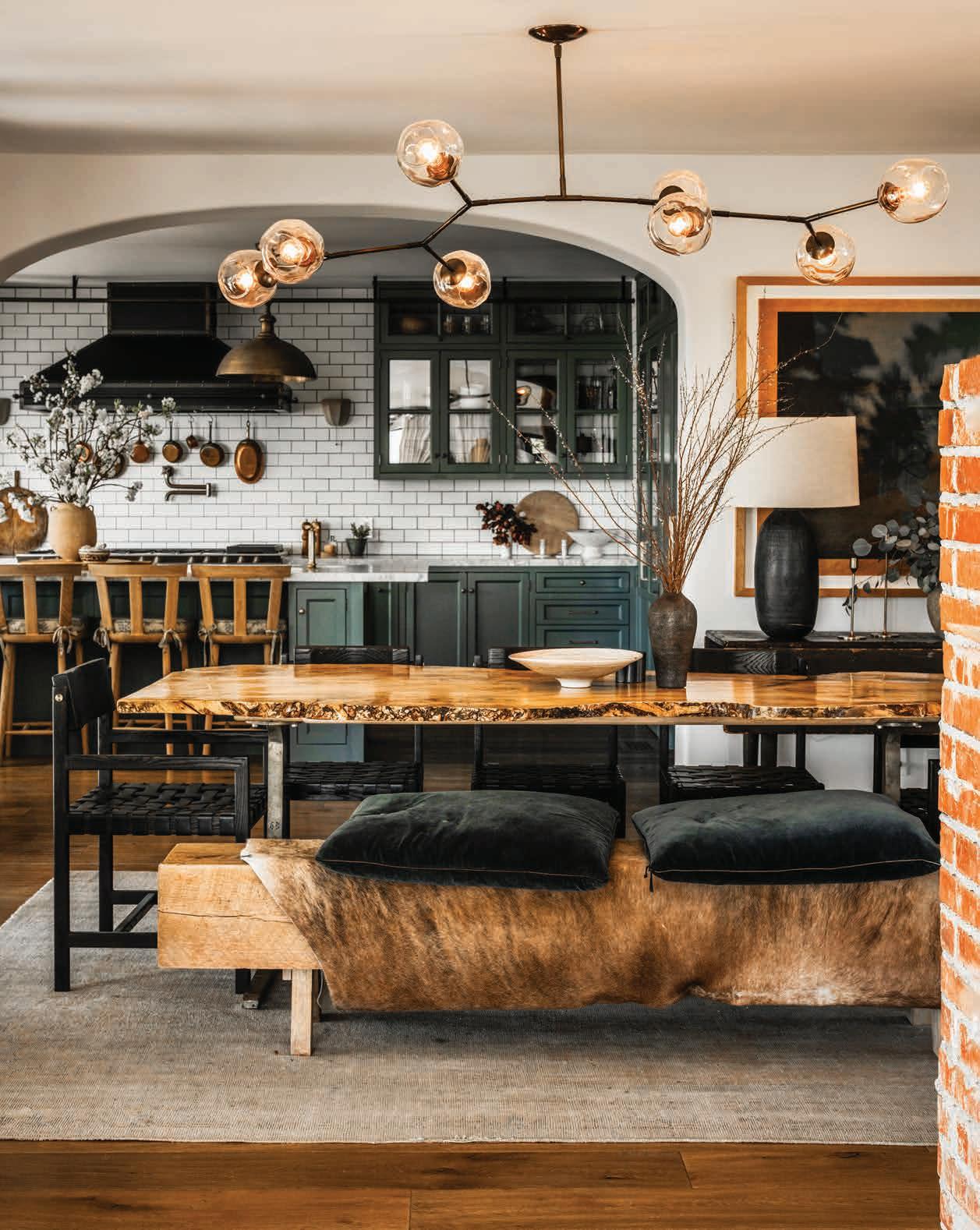
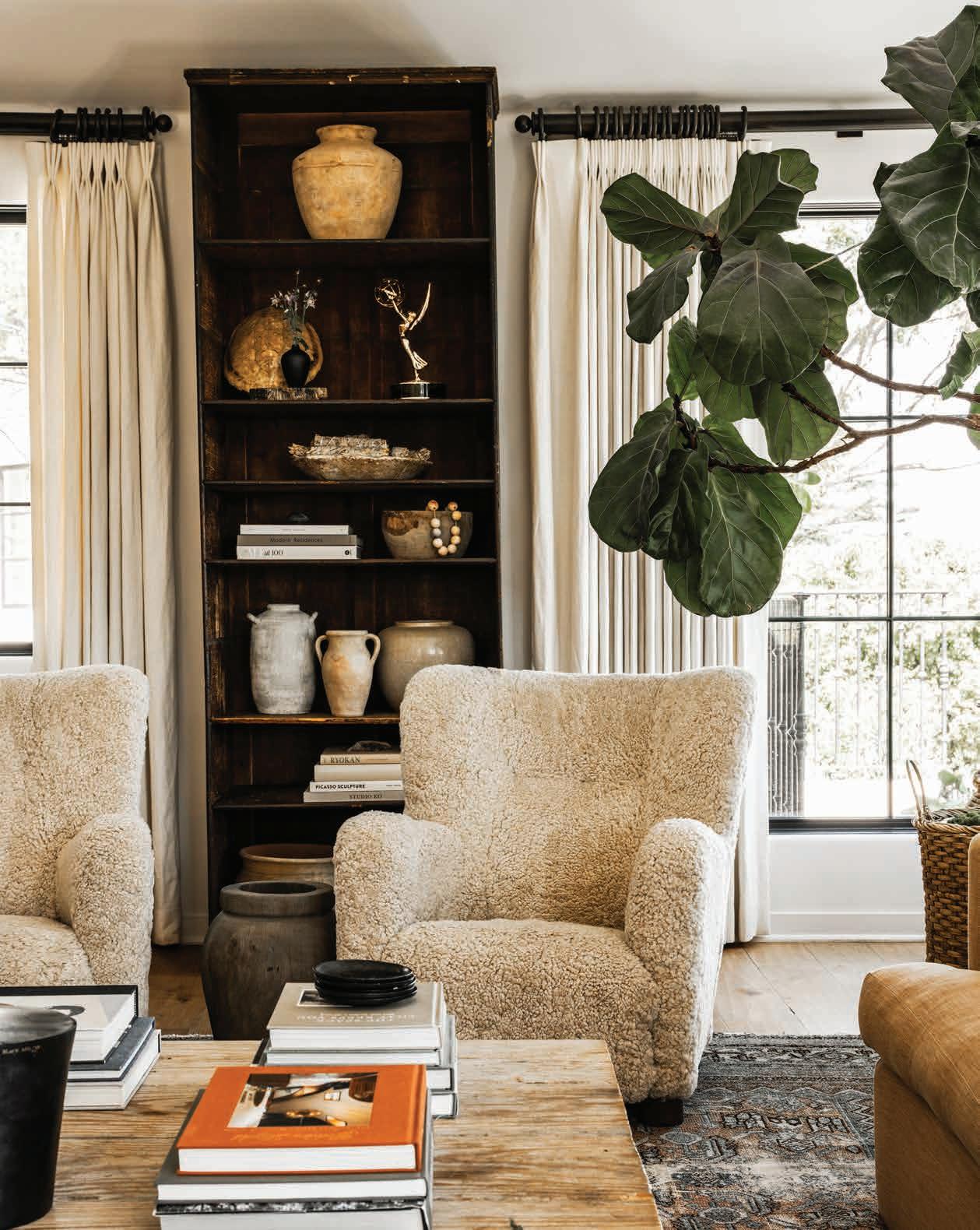
A hide-covered bench and live-edge wood table in Hough’s rustic dining area.
Once in a rare while,
a design talent lands on the interiors scene with such a sure hand that you can’t believe they don’t have decades of experience behind them. Such is the case with Jake Arnold, the British designer who has taken both coasts (and everywhere in between) by storm in his brief five years as the principal of Studio Jake Arnold. In the blink of an eye, he landed on the revered AD100 list; released collaborative lines with Crate and Barrel, Lulu and Georgia, and Parachute Home; and co-founded The Expert, the online platform that connects customers with the designers of their dreams for FaceTime-assisted decorating advice, with entrepreneur Leo Seigal. In his spare time, Arnold finesses the homes of a full squad of A-list celeb-
rities, including Zendaya and Chrissy Teigen and John Legend’s family.
Take, for example, the very first project he designed on his own in 2020— after a stint as an intern at Woodson & Rummerfield’s and a few years working for designer Estee Stanley. It belongs to “Dancing with the Stars” alum and television personality Julianne Hough.
“It was one of those rare moments you appreciate hindsight, the kind you realize changed the trajectory of your career,” Arnold says. “This was the first time I stepped into a space as the sole creative lead responsible for the entire vision. The way we met was almost serendipitous. I was speaking with an architect I knew who mentioned that Julianne was looking for someone to help finish her house, and half-jokingly, I said, ‘I can do it.’ I didn’t have a signifi-
cant portfolio at the time, nor a network of contacts, vendors, and contractors, but she trusted me. That trust became the foundation for everything we created together.”
Here, Arnold answers our questions about Hough’s home and how his style has evolved throughout his brief but spectacular career.
At what point did you come on board the project? Was it newly purchased and unfurnished? Or did Julianne have existing furniture to work with? I joined the project after Julianne had purchased the home. It wasn’t a new build, but it was a charming house with great bones. There were pieces she already owned, but for the most part, we approached the home as a blank slate. What made the process fun was that
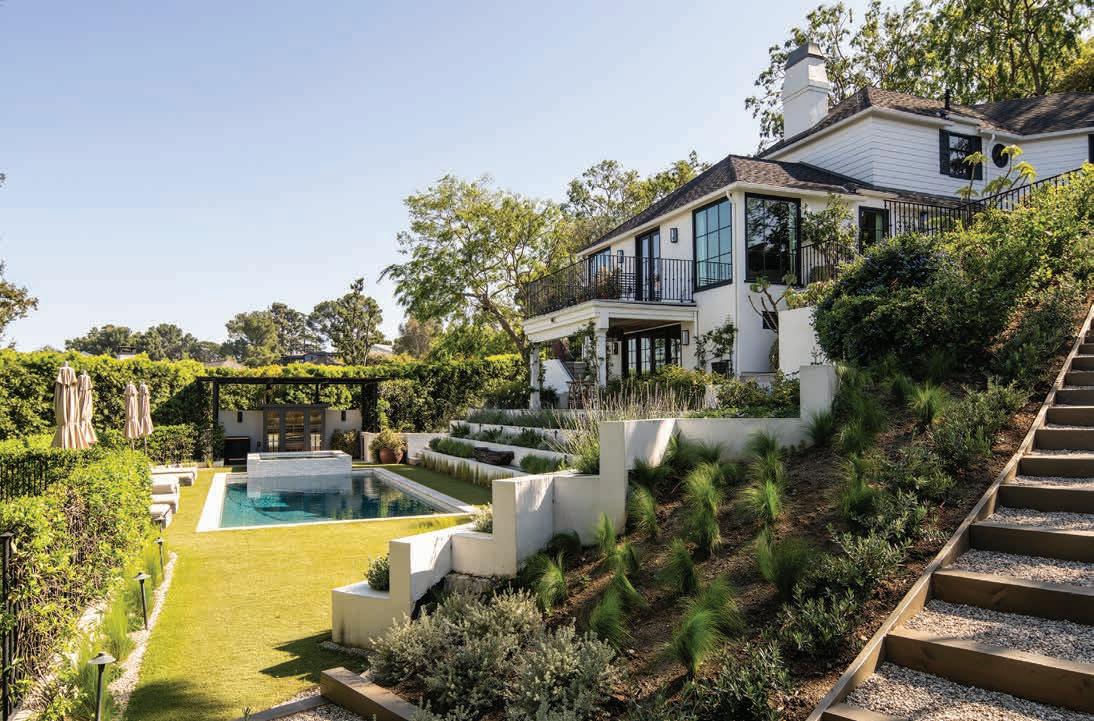
This page: The terraced hillside behind the house was designed to carve outdoor living spaces into the steep terrain. Right: Arnold has demonstrated a skill with subtle texture, like rough-hewn wood surfaces, nubby linen drapery, and sherpa upholstery, from the beginning of his career.
Jake Arnold
she was incredibly open to exploring, curating, and discovering things with me. We sourced many of the pieces specifically for this home, choosing items that were beautiful but also flexible, such as furniture that could move between rooms and evolve with her lifestyle. She liked the idea of a home that felt collected rather than decorated, and that guided the choices we made together.
What were the design priorities for the house? What kind of home did Julianne want to live in?
From the start, the priority was to create a sanctuary, a place where she could retreat from her fast-paced life, slow down, and feel grounded. She’s deeply intuitive and values emotional connection to her environment, so the house needed to reflect that sense of safety and warmth. She wanted a home that didn’t shout for attention but quietly enveloped you. That meant a palette rooted in earthy, muted
tones, organic textures, and pieces that carried a sense of timelessness. She wasn’t interested in design that felt trendy or overly new. Instead, she gravitated toward objects with soul, things that looked as though they could have existed for decades. Function was also essential. With her dogs, her routines, and her love of movement, fabrics needed to be durable; spaces had to be livable. The home ultimately became a physical manifestation of the calm she was seeking in her life at that time.
Looking back, how do you feel about the project? It's a really confident first house to design. How has your work evolved since you finished this home? And how has it stayed the same? Looking back, I feel an enormous amount of affection for that project. It was the first time I proved to myself what I was capable of creatively and technically. Designing someone’s home—for a public
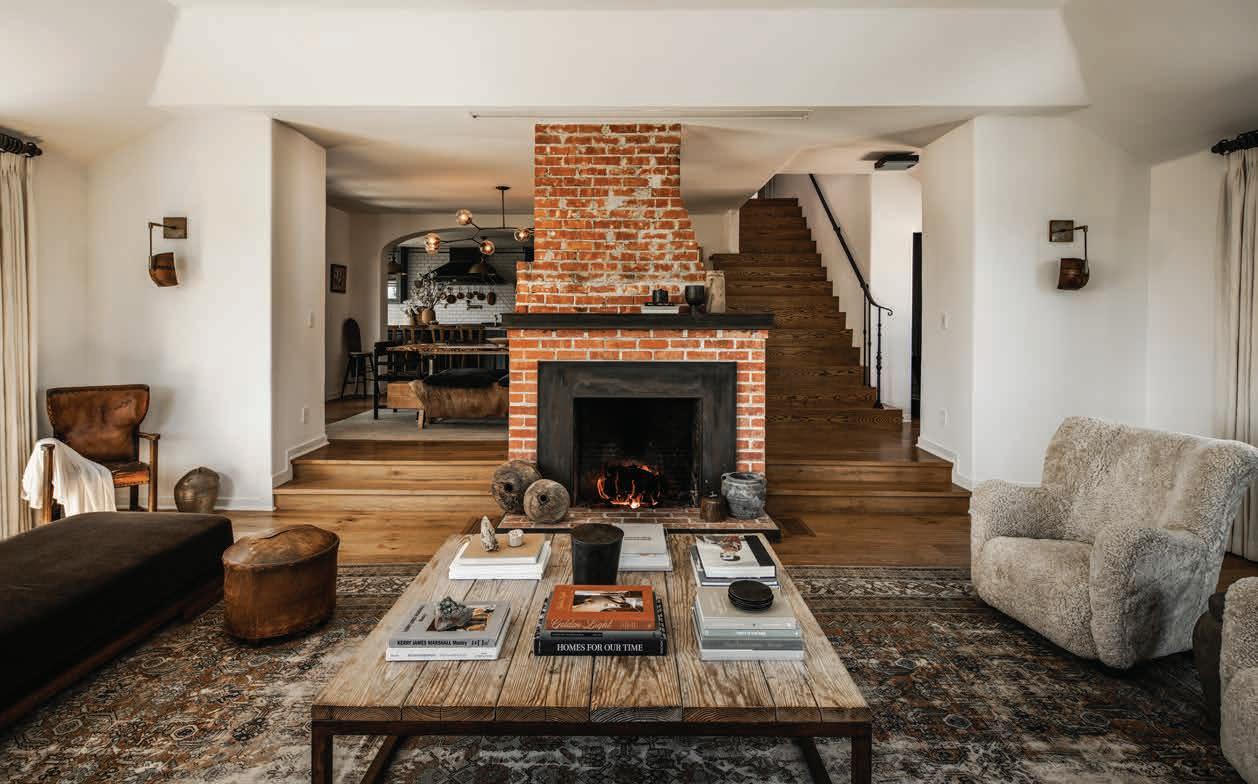
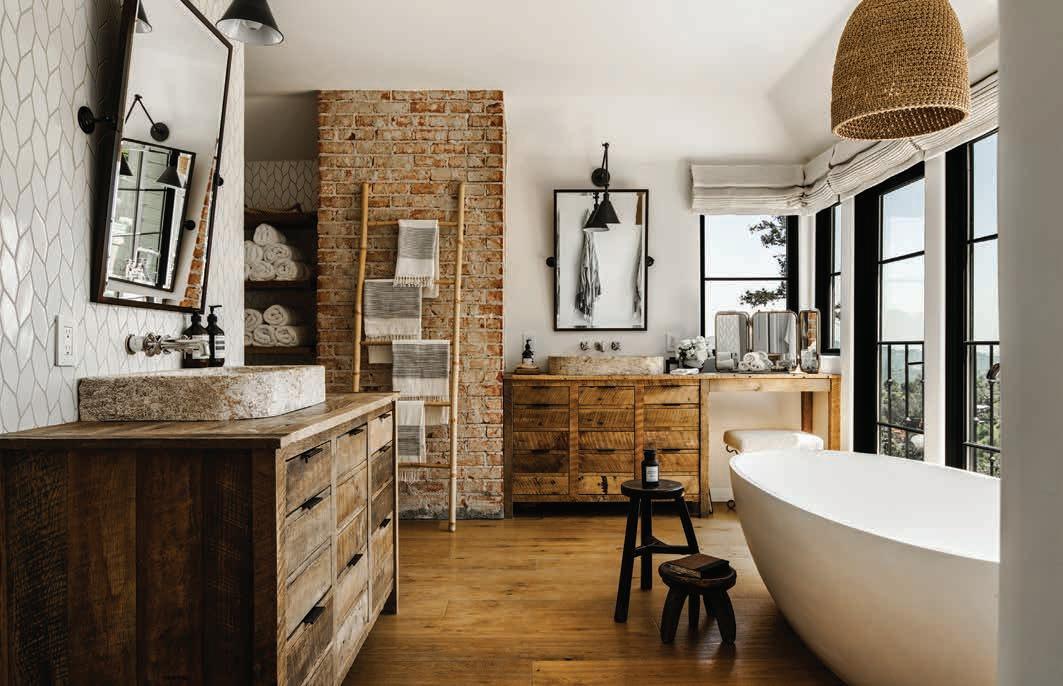
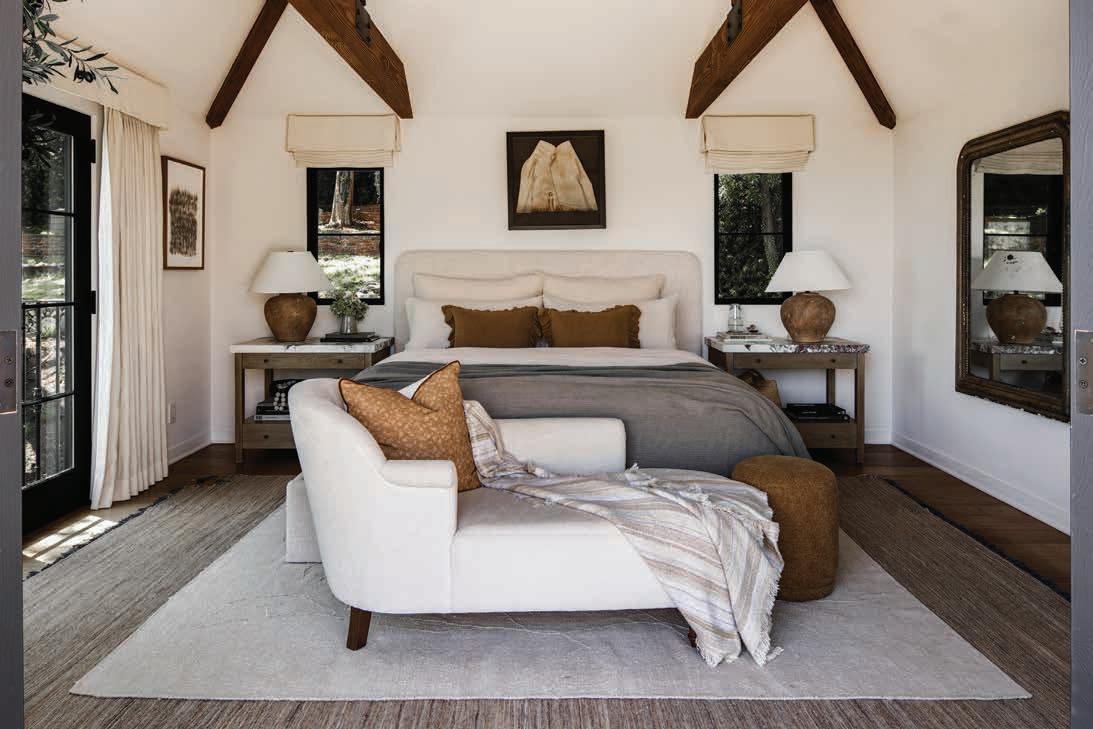
Opposite page, top: Arnold connected the multi-level living spaces with a cohesive palette of warm neutrals. Bottom: In the primary bathroom, raw wood vanities, a woven pendant, exposed brick, and carved stone sinks reflect Hough’s affinity for organic material and finishes. This page: Angular beams add intrigue to the ceiling of the primary bedroom.
figure, no less—could’ve been intimidating, but instead it felt incredibly natural. That house opened so many doors for me, and I’m still grateful for the trust that allowed it to happen. My work has certainly evolved since then. I’ve become more confident in scale, more adventurous with materials, and more deliberate in the layering and patina that define my style. Yet the core of my approach hasn’t changed. I still believe in creating homes that feel deeply lived-in, personal, and emotionally resonant. Livability, warmth, and attention to the smallest tactile details—those values have stayed exactly the same.
Can you talk a little about the design
strategy for the outdoor spaces? They're very much an extension of the interior and really expand the livable space.
The outdoor areas are just as important to me as the interior, and for Julianne, they needed to feel like an extension of the home. We treated the terrace and garden areas with the same intentionali-
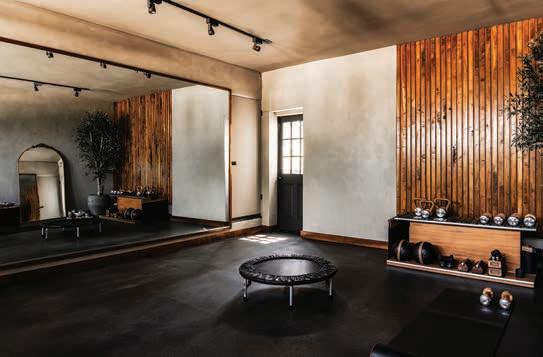
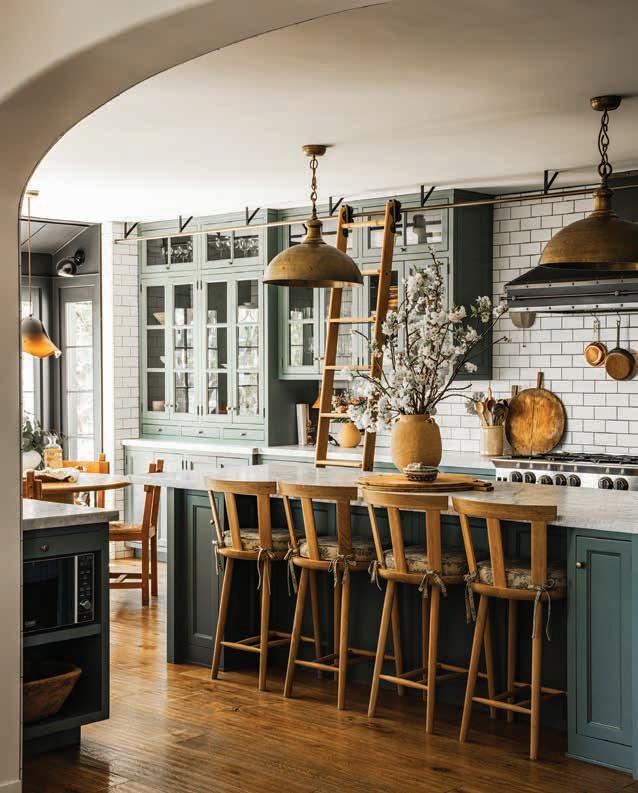
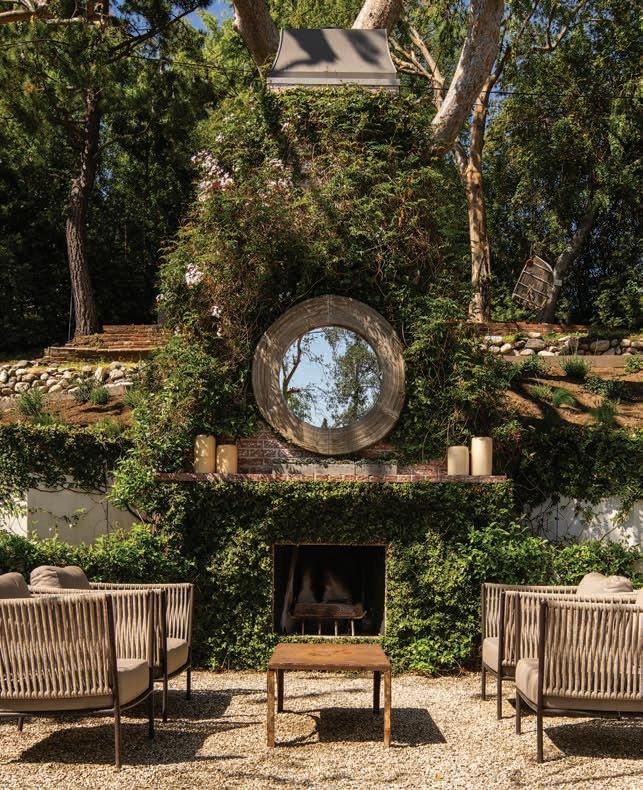
Above: Shades of deep ochre and brown play with a masculine-feminine balance. Left: Hough’s luxe home gym reflects the dancer’s priorities. Opposite, clockwise from top left: Glass-front cabinets, copper cookware, and homey stools give the kitchen a cozy-country vibe. Armchairs covered in outdoor fabric are positioned to enjoy canyon views. Potted trees and ivy at the front door reflect the home’s classic bones. An ivy-covered outdoor fireplace adds to the lived-in charm.
ty as we did the living spaces, echoing materials and tones so the transition felt seamless. The landscape design was soft and organic, something that felt natural, rather than overly formal.
Once the doors were opened, the home expanded in the best way; the outside became a continuation of the sanctuary we built indoors, a place where she could entertain, meditate, or just breathe.
Any design tips for a home gym? Julianne's is amazing. When it comes to a home gym, the goal
is to create a space that energizes you but still feels connected to the overall design of the home. With Julianne’s gym, we didn’t want a clinical-feeling workout room. Instead, we focused on bringing warmth into the space through thoughtful lighting, refined materials, and a layout that supported her routines without sacrificing comfort. Function always comes first in a gym—good flooring, clear zones for different types of movement, proper ventilation, etc.— but aesthetics do have a huge impact on how you feel when you're there. If the space feels inviting and inspiring, you’re far more likely to use it. That balance between utility and beauty is what makes a home gym successful.
mize every inch, proving that going vertical not only boosts productivity but adds structure and charm to your edible landscape.
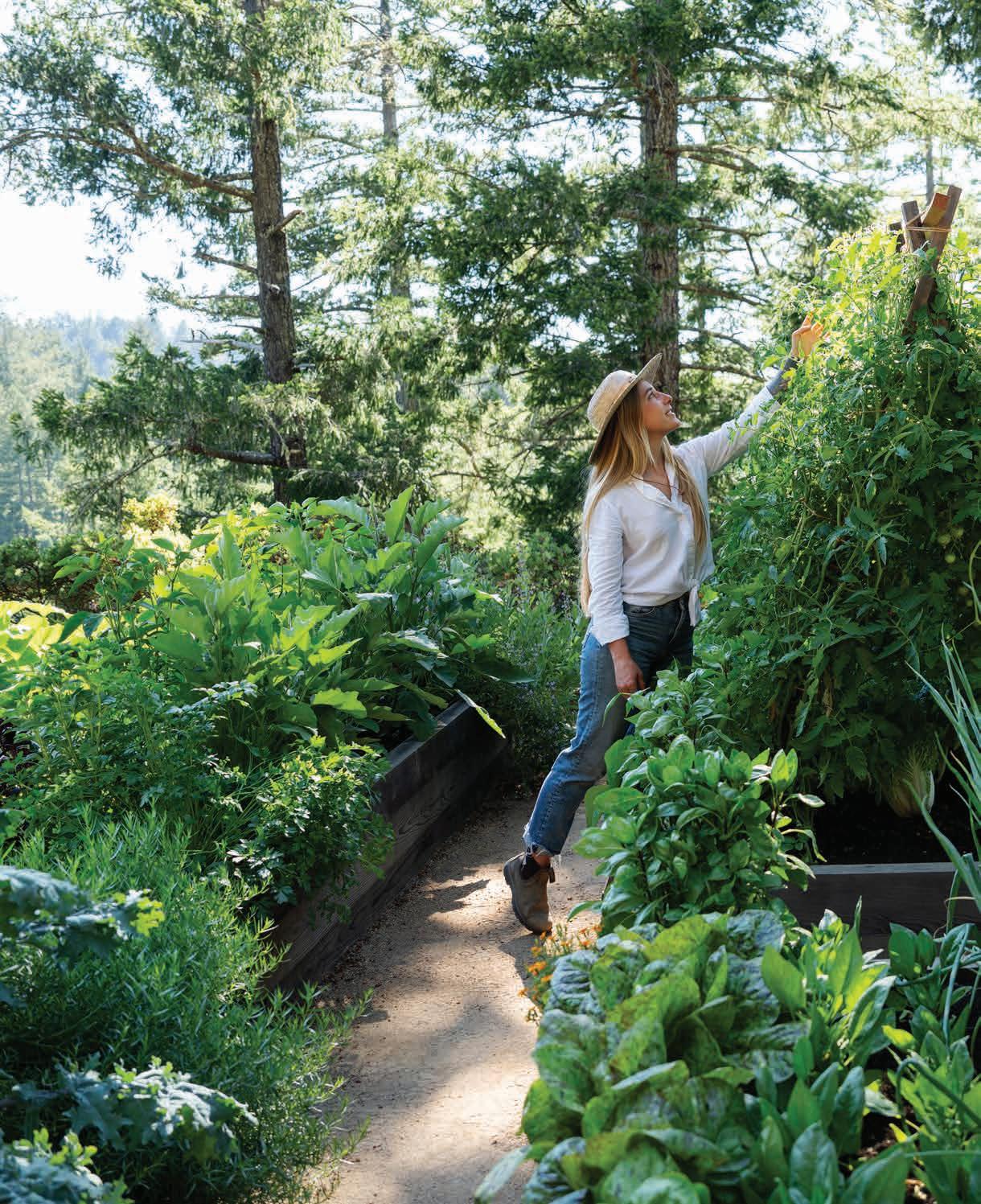
Christiana Drewry, a professional farmer and garden designer, turns small spaces into high-yield havens. In her garden, thoughtful trellises and intentional plant choices maxi-
the architecture of agriculture
How a professional farmer paints with plants in the heart of the Redwoods.
Story by KRISTIN GUY
Photographs by THOMAS J. STORY
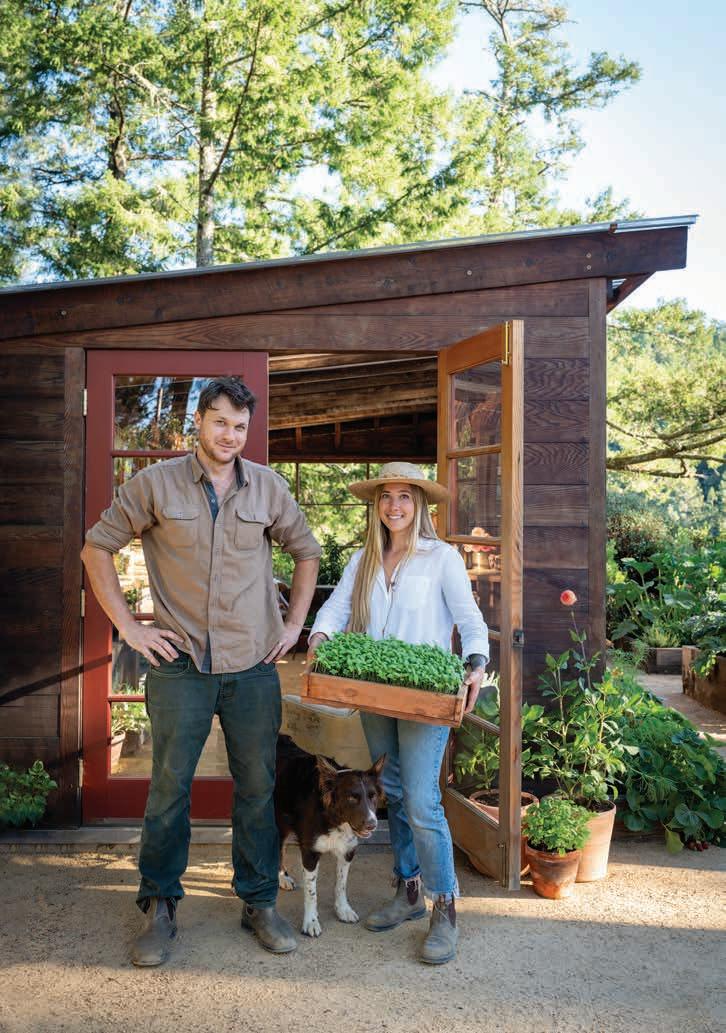
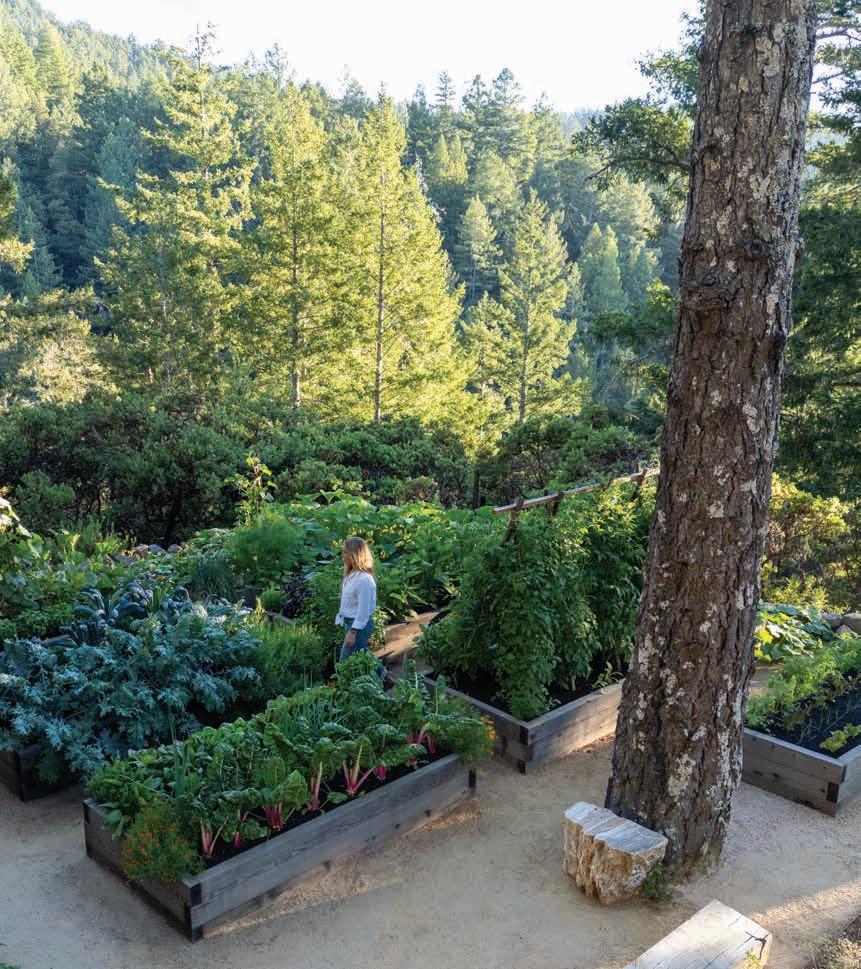
CChristiana Drewry has always been surrounded by the beauty and abundance of the land. Raised in Northern California’s Capay Valley, she spent years working on farms across the globe and growing for Michelin-starred restaurants, discovering her true passion along the way: creating edible landscapes that blend the practicality of agriculture with the artistry of homestead design. Today, she brings this vision to life from her home garden and greenhouse nestled in Marin County’s scenic San Geronimo Valley.
Through her work with The Backyard Farm Co., Christiana is now shifting her focus from planting and maintaining farms to educating others on how to grow their own food at home. With a comprehensive online gardening course, she empowers gardeners of all levels to design productive, sustainable backyard farms. “The best part has been fostering a community of backyard farmers from all over the country,” she says. Her approach is rooted in simplicity, creativity, and sustainability.
For Christiana, gardening isn’t just about feeding our bodies; it’s about nurturing experiences that nourish our souls. It’s a powerful way to reconnect—with the land, with the community, and with the simple joys of life. “Sharing food with loved ones is deeply rewarding,” she adds and encourages others to cultivate their own bountiful, sustainable foodscapes—whether in small urban plots or sprawling backyard gardens. Now, she’s sharing her top tips with us for creating a garden that’s as pretty as it is productive, no matter your space or skill set.
Start With Soil
When Christiana looks at a backyard garden, she sees a chance to marry the beauty of homestead life with the efficiency of professional agriculture. “On a large farm, you often can’t afford to spend time monitoring each individual plant, while in the garden, it’s the opposite—you can’t afford not to,” she says. Her approach borrows structure from the field—deep soil, defined paths, and drip irrigation—and blends it with the intentionality of design. Think symmetry, layered planting, and materials that complement the home. The result? A space that feels both hardworking and high-style.
One of her biggest takeaways from life on the farm: become a soil farmer first. “Healthy soil is alive,” she explains, urging gardeners to think beyond texture and dig into microbial life, oxygen flow, and drainage. She recommends starting with a base of native soil, compost, and something for aeration—like lava rock or coconut coir—and testing it with a lab to see exactly what your plants need. Organic practices, proactive
Kodiak and Christiana Drewry
pest prevention (like neem oil and regular egg checks), and nutrient-rich amendments each season help maintain balance below the surface.
To keep the garden productive and polished, Christiana uses every inch wisely. Raised beds make sense for both form and function—protecting roots, improving soil conditions, and offering a clean visual frame for your crops. “Choose a material or color that matches the house,” she suggests, to integrate the beds into the landscape. For small spaces, vertical gardening is her secret weapon: Climbing tomatoes, beans, and cukes on trellises or tunnels not only maximize yields but also add architectural drama. “Vertical space is untapped garden real estate,” she says. It’s that kind of thinking—farm-smart, design-savvy—that turns a humble plot into a true backyard masterpiece.
Prioritize Productivity
Creating a garden that’s both abundant and manageable is all about prioritizing purpose. “Don’t try to grow it all,” says Christiana. Instead, focus on your favorite foods—those you’d like to stop buying from the store. For Christiana, that’s kale, chard, and herbs. By allocating garden space to these crops, she ensures a steady, daily harvest. She encourages gardeners to think about their grocery shopping habits and replace items they regularly buy with homegrown alternatives. Whether it’s baby salad greens, spinach for smoothies, or a berry patch for the kids, growing what you already purchase is the key to a productive garden that truly serves your lifestyle.
For those looking to create a highly productive garden, Christiana stresses the importance of understanding crop lifecycles and harvest windows. Some plants offer a single harvest, like root vegetables, while others, like cucumbers, tomatoes, and kale, provide multiple harvests over time.
“Focus on mixing these plant characteristics to ensure there’s always something ready to harvest, while you wait for the long-haul crops,” she advises. Succession planting, or planting crops in stages a few weeks apart, is another critical strategy for
maintaining a consistent harvest throughout the season to achieve a continuous supply of fresh food.
To simplify garden selections, Christiana recommends focusing on flavor and time commitment. Homegrown produce can vastly outperform storebought, especially when it comes to taste—think sweet, robust spinach versus watery store varieties, or juicy, flavorful tomatoes. But, she says, it's important to also consider the time you have to invest. Busy gardeners should opt for low-maintenance crops with longer harvest windows. And, don’t forget the power of rotation. While companion planting can be helpful in large gardens, it’s the organization based on sun requirements, size, and harvest timing that truly maximizes productivity. Christiana keeps things simple, with crop rotation being a priority for disease-prone
IN STYLE
Simple, Sustainable Seed Trays
Christiana advocates for plastic-free gardening, recommending compostable pots, wood trays, terra-cotta, metal, and even egg cartons as alternatives to single-use plastic.
“The real culprit is single-use plastic,” she says. “Seed trays and pots that can be reused for years are not the issue.” For her tools and storage, she opts for metal, wood, and glass over plastic, citing their durability and aesthetic appeal.
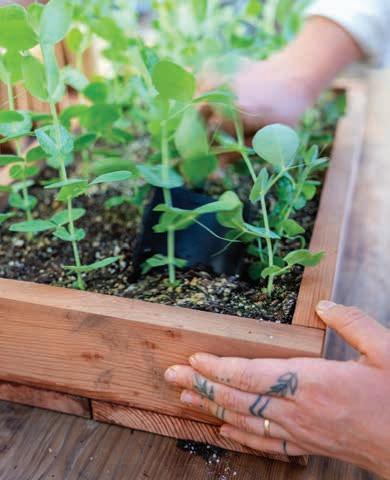
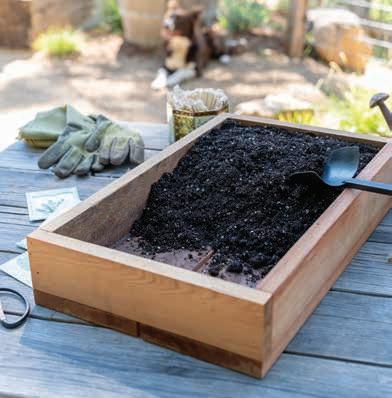
When it comes to DIY wooden seed trays, she embraces simplicity and sustainability. These easy-to-make trays are a practical, lowimpact solution that reduces waste and helps plants thrive. Here’s how to build your own.
MATERIALS
1-in.-thick redwood
2 bottom pieces: 20-in. x 6 ¼-in.
2 short walls: 3-in. x 12 ¾-in.
2 long walls: 3-in. x 18-in.
2-in. 18-gauge finish nails (like those used for baseboards and molding)
HOW-TO
1. Assemble the box upside down for a clean finish, with most nails inserted from the bottom.
2. Arrange the walls upright on a flat surface: short walls at the top and bottom, long walls set inside (total length 20 in.).
3. Attach the first bottom piece on the left-hand side, ensuring it’s flush with both corners. Nail it every 2 to 3 in. around the perimeter.
4. Attach the second bottom piece on the right-hand side, leaving a ¼-in. gap between the floorboards for drainage.
5. Flip the box over and add 2 to 3 nails at each corner to secure the wall pieces.
CUSTOMIZING
Sizing: Adjust floorboard length to the width of your box, minus ¼ in. for drainage. For wider boxes, split the floorboards into 3 to 4 pieces for more drainage gaps.
Wall Height: Customize the height to fit your needs— shallower for seedlings or deeper for larger transplants. Aesthetic Tip: Hide the end grain by positioning the fulllength wall at the front of the tray for a smoother finish.
MAINTENANCE
If using non-rot-resistant wood, try burning the inside with a Shou Sugi Ban technique or apply an oil sealant for extra durability. Redwood, however, needs no special treatment beyond occasional cleaning with water.
SPROUT
Go for the Greenhouse!
CHRISTIANA’S 8 TIPS FOR A FUNCTIONAL AND FABULOUS GARDEN RETREAT.
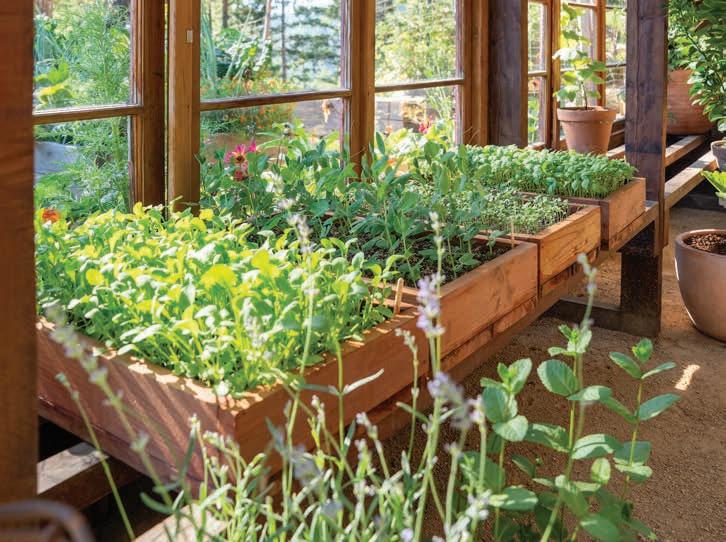
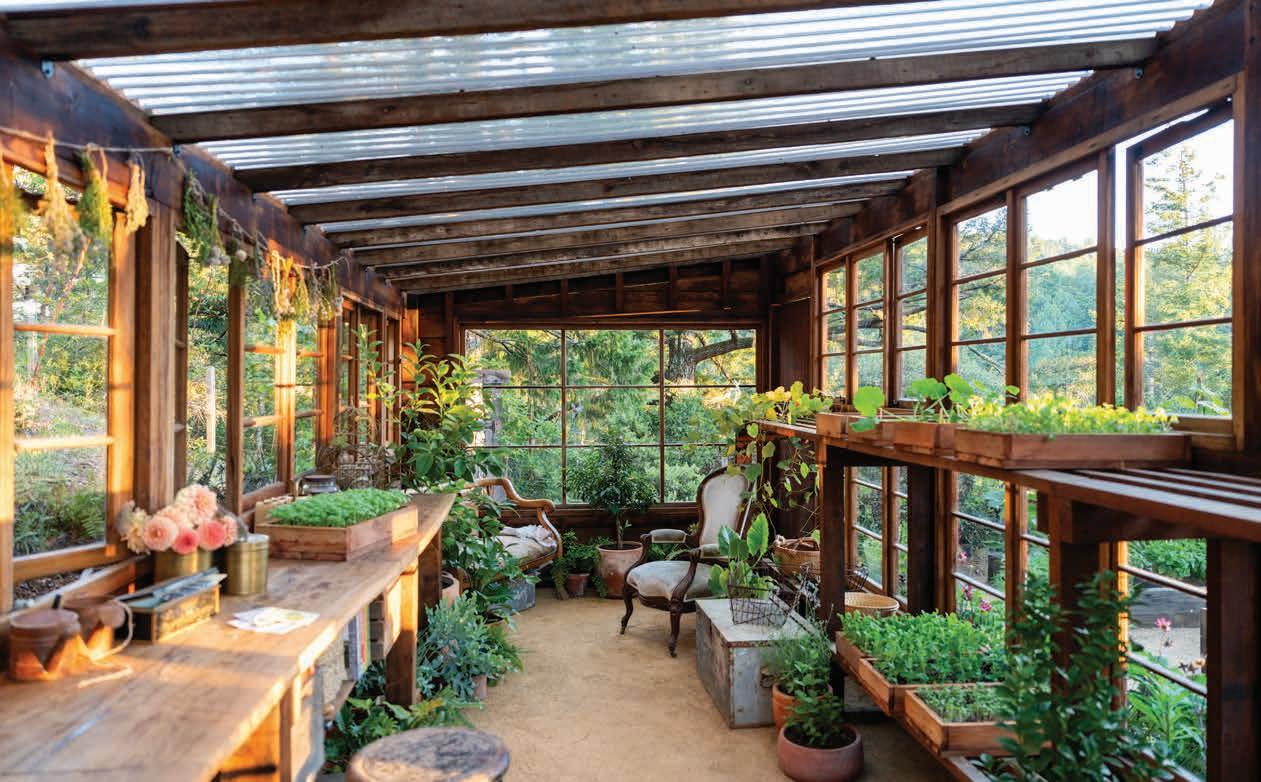
Christiana’s greenhouse is not just a place to grow plants—it’s a creative, functional extension of her garden that combines craftsmanship, sustainability, and beauty. Here’s how she and her husband Kodiak turned a pile of reclaimed materials into a thriving space that serves everything from seed starting to neighborhood dinners, with practical tips and inspiring ideas you can incorporate into your own greenhouse project.
1 Start with What You Have: Reclaimed Materials Make a Big Impact
Christiana’s journey began with a neighbor’s offer of old windows and doors. “There was nothing else to do but build it!” she says. These reclaimed materials set the tone for the entire project, emphasizing sustainability while adding a unique charm
to the greenhouse. From the redwood framing milled on-site to the corrugated polycarbonate roof, the greenhouse was built with materials that not only fit her budget but also blended seamlessly with the surrounding natural landscape.
2 Leverage Natural Light for Optimal Plant Growth
When it came to orientation, Christiana used the land’s natural features to her advantage. She positioned the greenhouse to face west, avoiding the morning shade from the tall trees while capturing afternoon sunlight. The front wall of the greenhouse is entirely made of windows, allowing maximum sunlight to pour in. For the best results, orient your greenhouse with a southern exposure if possible. If not, consider your surroundings—like hills or trees— and position the greenhouse where it gets the most light throughout the day.
3 Build for Function and Flow
The layout of Christiana’s greenhouse maximizes space for both plants and people. The center aisle remains clear for easy movement, while slatted shelves run the length of the window wall, providing ample space for seedlings. A solid workbench on
the opposite side faces away from the sun, ensuring a comfortable work environment. When designing your greenhouse, think about how you’ll move around inside. Keep the center aisle clear, and use vertical space with shelves for seedlings, plants, and tools. This will help you maximize both growing space and efficiency.
4 Temperature Control
Christiana opted for a bronze-tinted polycarbonate roof to keep the greenhouse cooler in the summer without sacrificing the UV light plants need. With a blend of heat mats for seedlings and passive ventilation through operable windows, she ensures the temperature stays manageable year-round. Always consider your plants’ temperature needs. Use passive ventilation for natural airflow, and if necessary, use heat mats or grow lights for specific seedlings that need a little extra warmth or light.
5 Infuse Your Personal Style
While function is key, don’t forget about making the greenhouse a welcoming space. Christiana chose a mix of terracotta pots (mostly secondhand) and added personal touches, like a gold velvet chair and vintage metal storage bins.
Christiana’s greenhouse is a perfect blend of function, creativity, and sustainability, thanks to the craftsmanship of her husband Kodiak. Using salvaged windows, redwood framing, and a polycarbonate roof, they turned a pile of discarded items into a thriving, beautiful space.
“The greenhouse feels like a conservatory where you’d want to sit and stay awhile,” she explains. While choosing pots and furniture that reflect your taste, also consider soft furnishings, like a cozy chair or cushions, which can make the space feel more like an extension of your home.
6 Sustainable Solutions
The flooring in Christiana’s greenhouse is made of decomposed granite, which is permeable and ensures proper drainage. This water-efficient flooring keeps the area functional while preventing excess water from pooling. Consider water-permeable flooring like decomposed granite or gravel, which allow water to flow back into the land.
7 Climate Control
In her coastal microclimate, Christiana has to deal with cool temperatures and fog. To balance the need for warmth in the winter with comfort in the summer, she relied on the greenhouse’s passive ventilation system, opening and closing windows to maintain a steady temperature. In the cooler months, she keeps the windows slightly cracked open to prevent mold and mildew buildup. In areas with fluctuating temperatures, use a combination of passive ventilation and carefully chosen materials (like tinted roofing) to maintain a comfortable temperature for both plants and people. And don’t forget to regularly open your windows to prevent humidity buildup.
8 Make It a Social Space
plants like tomatoes. For a garden that’s both productive and beautiful, rows can be a powerful tool—offering structure, efficient watering, and visual appeal when paired with layered plantings.
Beauty Meets Bounty
A greenhouse can be more than a growing space—it’s a social hub for neighborhood gatherings and family meals. Christiana designed hers with wide doors that open to a picnic area, and the airy, light-filled space makes it perfect for summer dinners. Don’t be afraid to make your greenhouse a multifunctional space. Whether it’s a quiet retreat, a place for family gatherings, or even a space for friends to hang out, a greenhouse can become a beloved part of your homestead.
For Christiana, design and functionality go hand in hand. “The key is a streamlined layout with wide paths and deep beds,” she says. “Design should reflect the surrounding landscape, using materials like locally sourced wood to ensure the garden feels integrated into its environment.” With a focus on symmetry and contrast, Christiana uses plants’ natural textures and colors to bring visual interest to vegetable gardens. She recommends pairing contrasting
plants like purple basil with dark greens and layering plant heights to create depth, such as planting spiky onions next to frilly red lettuce.
Her design philosophy draws heavily from the natural landscape around her home in Northern California.
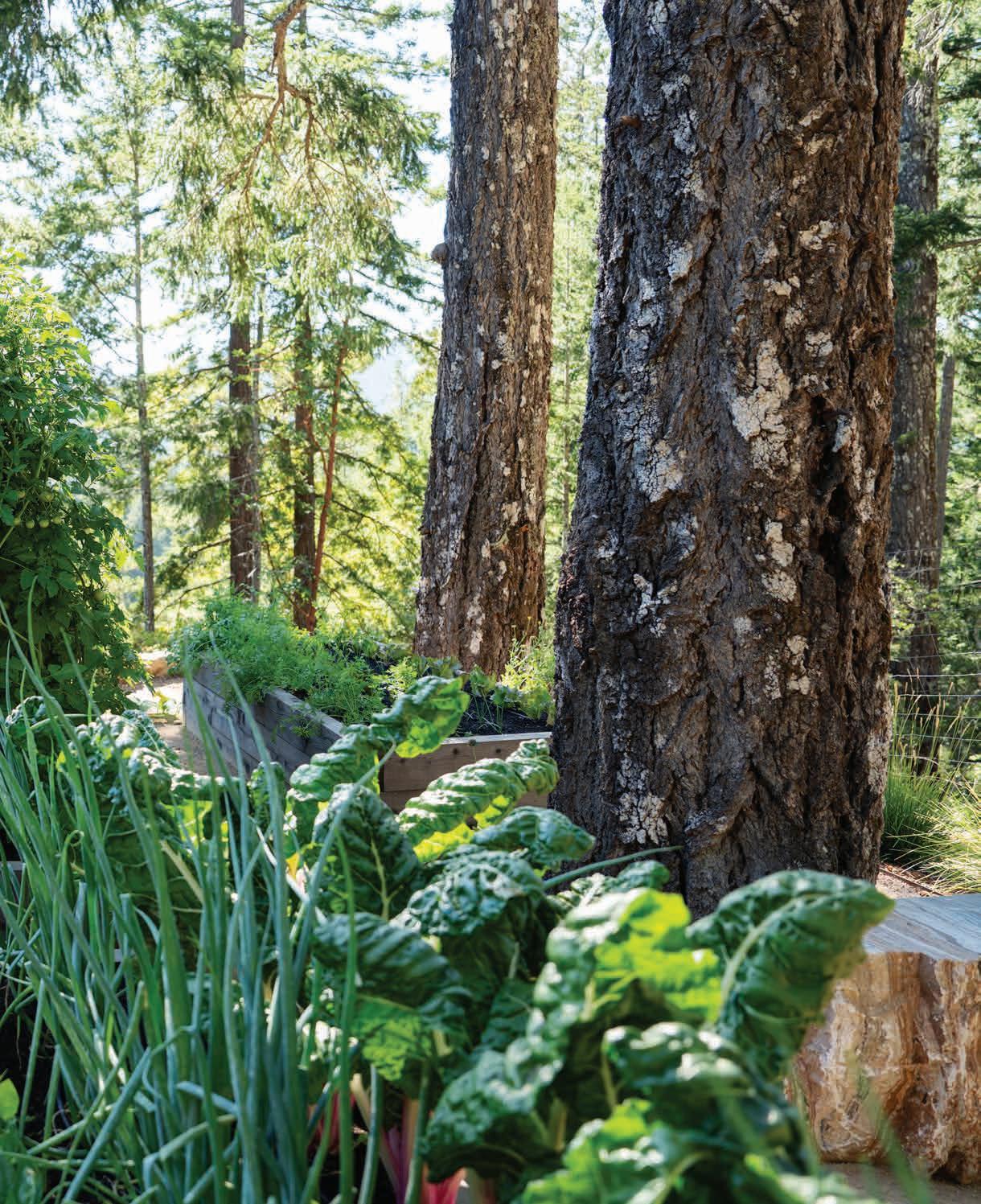
“A garden should feel like it belongs to its surroundings,” she says. Inspired by the surrounding redwoods, Christiana uses native plants and local materials to create harmony between her cultivated space and the wilderness. Whether it’s using redwood for garden beds or California gold gravel to blend the edges of her garden into the natural soil, her designs prioritize sustainability and beauty that flows with the land's contours. “It’s all about creating a garden that feels like it has always been there.”
AUTHENTIC MATERIALS, THOUGHTFUL DESIGN
How ARTO’s sustainably made, artisan-crafted brick and stone shape the Sunset Idea House.
ARTO is a longstanding family-owned brand in the West, known for providing a bespoke experience for homeowners and designers. Making any project stand out with their striking tile portfolio, ARTO’s materials are handmade, all created by artisans locally in Los Angeles.
ARTO provides an openness to create exactly what designers are looking for, and is complementary to any project looking for elevated, quality and unique hard surface materials.
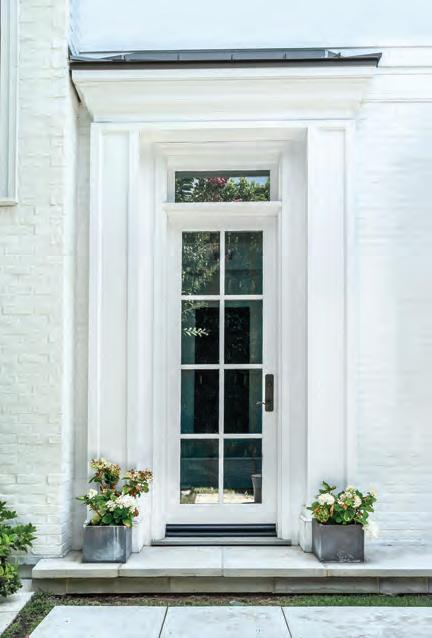
When visualizing her new home, interior designer Amber Lewis looked to ARTO for the perfect exterior thin brick veneer. With so many options and the ability to customize within the collection, Amber was able to find the ideal fit with ARTO to match her vision.
In choosing the brick, Amber considered both technique and effect. As a designer, she understands the importance of investing in products to make a home unique. Some of the qualities that set ARTO apart are the quality and ability to customize.
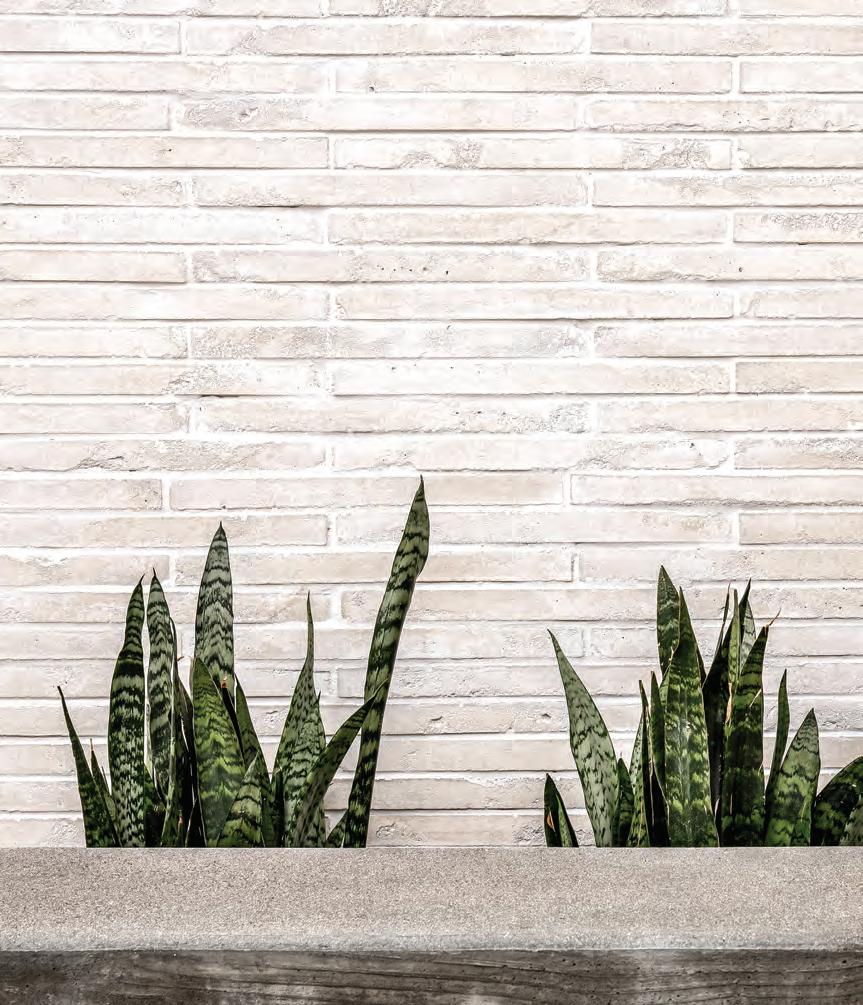
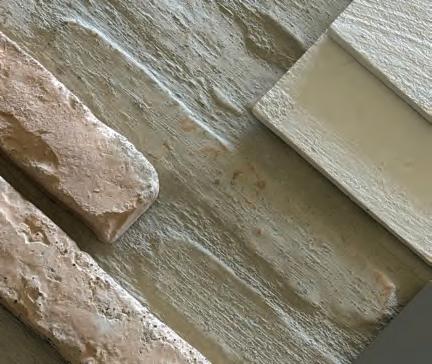
Amber selected a handcrafted concrete brick veneer with a limestone-style texture, which will be layered with a slurried effect, ultimately producing an elevated, timeless appeal for the exterior.
“I chose the Bastogne, which has this beautiful, rustic, limestone finish. It will add the perfect texture to the exterior of my home. The artisanal elements of the product are important to me, as well as having enduring
quality that will last for years to come.”
Knowing the exterior would set the tone for the entire home, Amber chose a specific stone and technique to achieve the desired effect. The textured brick reinforces her classic, elevated design sensibility and creates a beautiful, lasting first impression.
“ARTO is a trusted brand I’ve used for years in many of my projects, and I knew they could provide a product and a finish that would align with my home and personal design aesthetic.”
ARTO had not only the quality of product that she was looking for, but the heritagerich creativity to bring her design vision to life.
ARTO is an official partner of the Sunset Idea House x Amber Lewis project. This one-of-a-kind Southern California property is scheduled for completion later this year. For more about the brick veneer and tile selects: howdy@arto.com
SPRING
PLANT
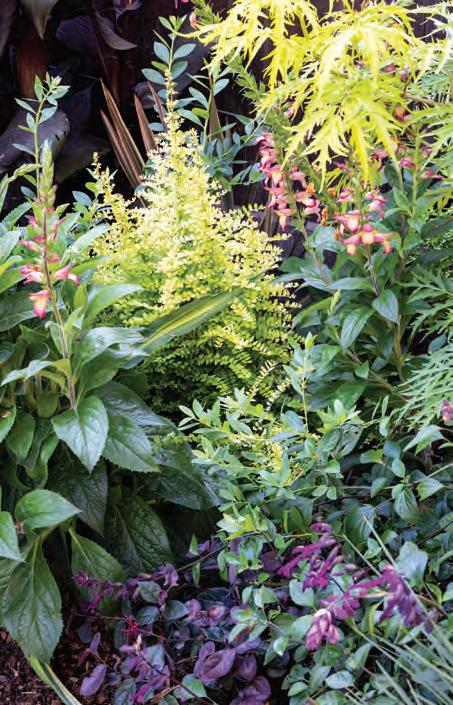
Swap a section of lawn for a mix of native flowering plants, like California poppies, desert milkweed, or penstemon, to support bees and butterflies
Plan for shade with vertical greenery and experiment with trellises, living walls, or espaliered fruit trees to maximize small urban yards.
HARVEST
Create a new kind of cutting garden by mixing in drought-tolerant natives, like Clarkia, blanketflower, desert marigold, and penstemon, for eco-friendly bouquets that will also benefit pollinators and your overall garden health
Story by KRISTIN GUY
Add edible hedges for foraging throughout your landscape. Blueberries, currants, goji berries, dwarf pomegranate, and feijoa all make for a living screen that offers both privacy and a
Hunt for miner’s lettuce, wild arugula, or dandelion greens in open spaces or low-traffic areas for vibrant early-season greens.
Gather sage, yerba santa, or wild mint to dry for herbal infusions. This is the perfect
delicious harvest.
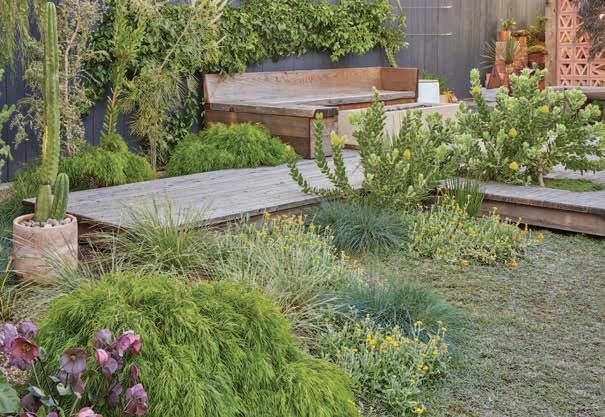
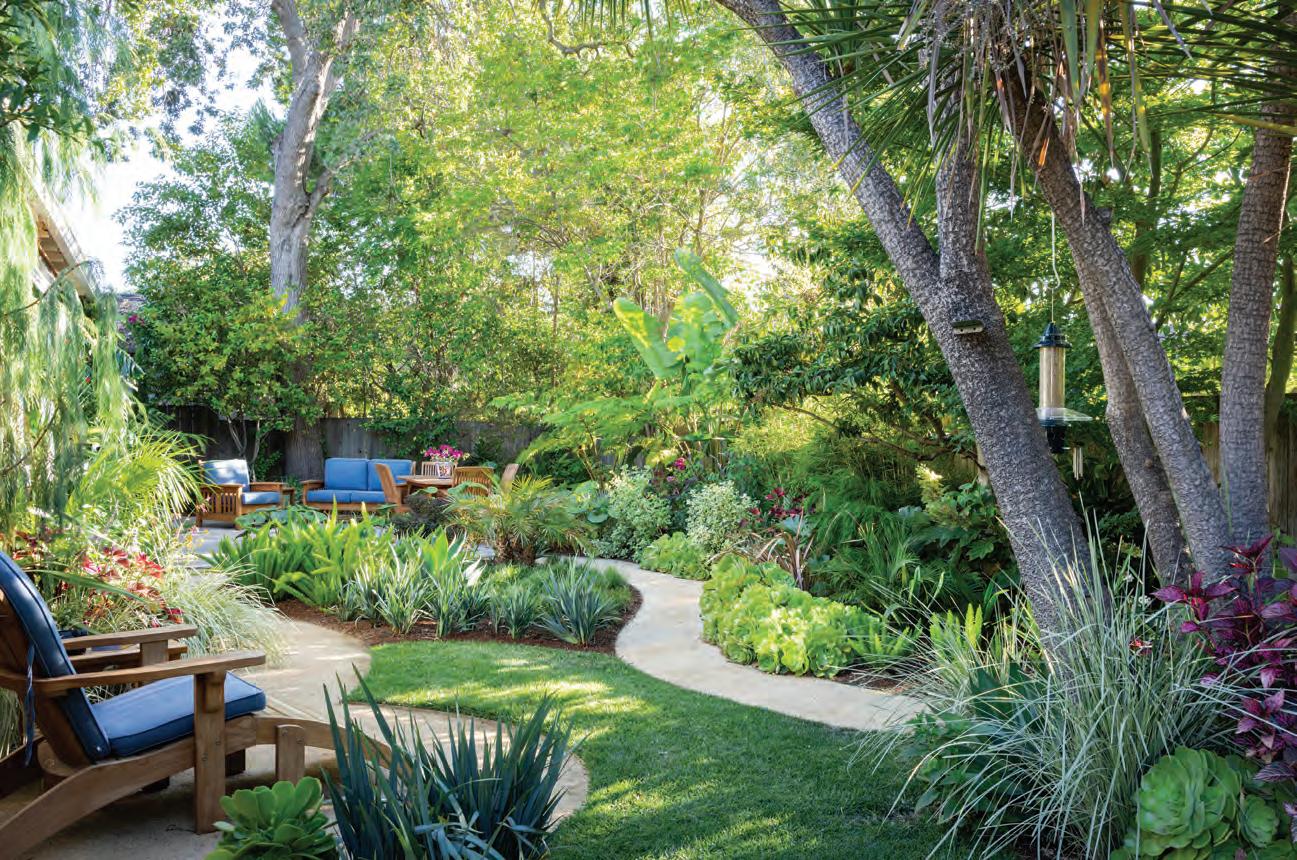
Friday Gardens pairs a sculptural statement tree with finetextured foliage to create layered lushness that draws the eye to the garden’s architecture.
time to also forage young ponderosa or sugar pine tips for syrups or aromatic teas
MAINTAIN
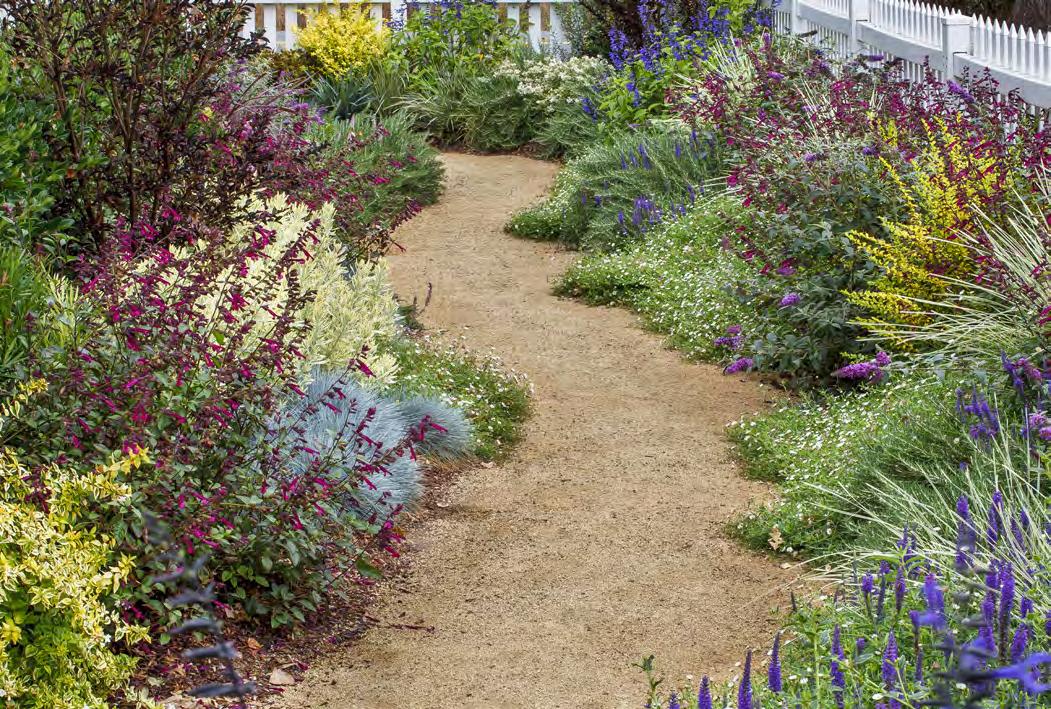
Consider a lowlift, drought-wise patio. Install gravel or decomposed granite pathways edged with lavender, sage, or ornamental grasses for texture and lowwater interest.
Mulch for microclimates by using leaf litter, straw, or shredded bark to protect roots, retain water, and encourage beneficial insects.
Prune springflowering shrubs after bloom for shape and vigor, and thin blossoms on citrus and stone fruits like peaches and plums to encourage larger, juicier fruit later in the season
PROTECT
Reduce wildfire risk and get ahead on growth by clearing dead branches and planting low-flammability natives to create a defensible space around your home
Track what thrived last year and rotate crops to keep soil healthy, reduce pests, and prevent disease buildup, then plant nitrogenfixing legumes or cover crops in empty beds to recharge the soil.
Fun-Scapes
San Francisco design studio Friday Gardens is adding a pop of personality to the modern backyard.
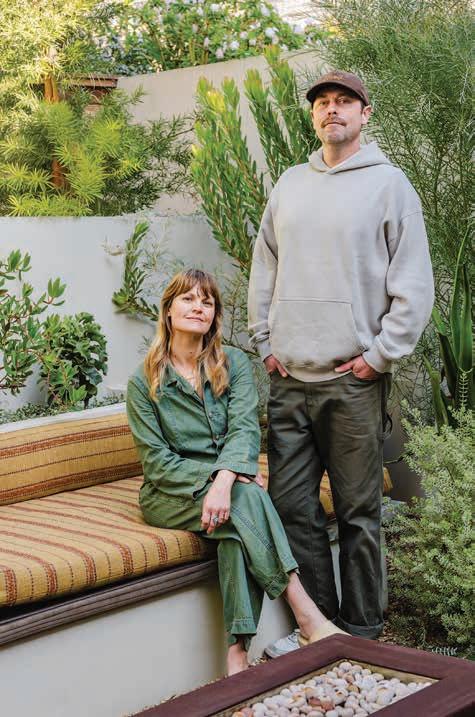
Friday Gardens isn’t afraid to push a backyard past the expected. Known for creating unique, inviting outdoor spaces and for bringing the fun back to the garden, San Francisco designers Dani Coulter and Johnny Keegan approach every project with an easy, breezy sense of joy.
Founded in 2017, the studio grew from Dani’s interior design roots and Johnny’s background as a visual artist and contractor, a pairing that naturally blends lived-in comfort with bold creativity.
With playful materials, thoughtful planting, and an eclectic mix of textures and color, they blur the lines between landscape and hardscape to craft spaces that feel modern, warm, and completely their own. As they put it: “Easy-breezy and fun! Delightful and lived-in. Creating joyful spaces for our clients to relax, unwind, play, and party is our main objective at Friday Gardens. The garden is the perfect place to blur the lines, soften the hardscape, bring in the wabi-sabi, unconventional shapes and color to create an effortless flow, ensuring your new space feels cozy and warm, has history, and most importantly, is a place that you can’t wait to come home to.”
Not only do their gardens feel like little worlds of their own, layered, textural, and humming with personality, but every material choice is softened by movement, and every corner invites you to settle in. It is design with a sense of joy, built for real life.
Here’s how Dani and Johnny are turning ordinary yards into unforgettable fun-scapes.
Rethink Your Layout: Elevation & Outdoor Rooms
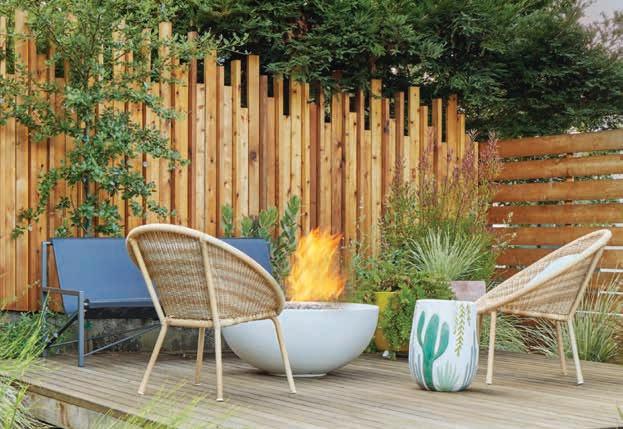
Instead of defaulting to a single patio or one open lawn, Friday Gardens designs with flow in mind, creating distinct zones that encourage lingering and exploration. “We want our clients to live in their gardens. That means making sure all members of the house have a space of their own and to share that feels comfy and inviting, an effortless drift from one zone to the next,”
Dani says They start with the sun, shade, and natural “problems” of a yard, transforming them into design opportunities. A chilly corner might become
a cozy firepit nook; a sunny, south-facing space could hold kids’ play zones or veggie boxes. By shifting just a few steps in elevation, they create intimacy and interest: “By raising a space or lowering an area to create a recessed zone, you have taken the living space off the main level, and just like that, there’s a new exciting destination in the garden.”
PRO TIP: Try a simple DIY elevation: Build a small redwood or cedar platform in a shady corner, cushion it with mid-height and groundcover plantings, and add a sofa or chairs. Instant new favorite spot.
Material Magic: Fluted Wood
Texture transforms a backyard from flat to fascinating, and for Friday Gardens, fluted wood is the ultimate tool. “Oh, the softness and texture for sure! The way the light moves along the dowels
Dani Coulter and Johnny Keegan
beautifully, plants notch into them just right,” Dani says. It’s a material that adds visual depth without shouting—perfect for walls, screens, or planters.
The team often turns ordinary retaining walls into points of intrigue. “Retaining walls are abundant in our spaces, and making them feel interesting and cool rather than a necessity is a huge part of my job Cladding a cold concrete wall with vibey, delicate fluted Western red cedar is the most fun. The change is just so dramatic; rather than rebuilding a utilitarian wall that is doing its job perfectly well, we clad it,” the two explain.
Fluted wood works brilliantly when layered with other textures. Think smooth stones, patterned tiles, or rough-hewn pavers. The repetition of rounded dowels creates rhythm, a subtle
sculptural quality that complements asymmetrical garden layouts. It’s a way to inject personality while maintaining a calm, cohesive feel.
PRO TIP: Highlight fluted wood with mid-height textural shrubs or tall grasses. The material itself is sculptural, so let it peek through plantings or partner with rough stone for contrast. Even a single accent wall can instantly transform a previously “boring” backyard.
Retro Meets Modern: Breeze Blocks
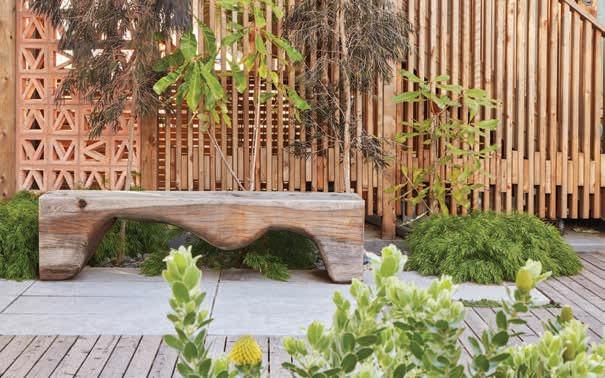
Breeze blocks are equal parts function and flair. “Fun and functionality! We often work in jewel box gardens where we want to create unique zones and possibly a private space without the feeling of being closed in. That’s where breeze block becomes
the star,” Dani says. The designers love the way the geometric patterns provide structure while keeping a space airy and light.
Breeze blocks' versatility is part of the appeal. Use them as partition walls that allow sunlight and breeze through, or stack them as bases for coffee tables or benches. “If you don’t have space for planting on one side, install a flexible plant on the other and let it grow through—voila! Now you have greenery on both sides of the hardscape,” Dani says. It’s all about playful problem-solving.
For small yards, breeze blocks are a dream. Elevate a planter, create a bench base, or form a simple focal point—their weighty presence grounds the space without overwhelming it. The designers also enjoy pairing them
Design studio Friday Gardens blends diverse plant palettes, uniquely mixed materials, and unexpected pops of color to create outdoor spaces that feel playful, personal, and deeply livable.
with warm wood elements, integrating a natural softness with their hard-edged geometry: “ Warm cedar wood looks gorgeous paired with breeze block We love it in the form of an organic bench or decking ”
PRO TIP: Consider using breeze blocks for both function and movement. A screen in a sunny spot can become a vertical support for vines, while a stack near seating transforms the backyard into a layered, sculptural retreat.
Personality Underfoot: Colorful Tile Patios
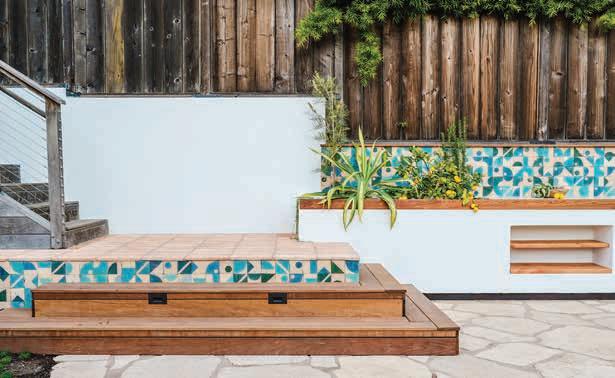
Nothing says “fun backyard” like a bold tile pattern. Dani and Johnny select tiles not just for beauty, but for how they define a
Plants That Play Nice *
Friday Gardens' go-to pairings for balancing bold materials in any landscape.
Fluted Wood
* WHAT TO PAIR: Lomandra longifolia, Azara microphylla, or a trailing Senecio ‘Stringof-Pearls.’
* WHY IT WORKS: Fluted wood already has movement in its vertical rhythm—pair it with plants that echo that softness. Friday Gardens loves “something that flows, that isn’t static,” so tall, wispy grasses or lightweight shrubs help the wall feel alive. On still days, the open form keeps the texture readable; on breezy ones, everything sways together. A cascading string-of-pearls adds a delicate drape that highlights the grooves without hiding them.
Breeze Blocks
* WHAT TO PAIR: Passionflower vine, Ficus pumila, Acacia vestita, or Giant Bird of Paradise.
* WHY IT WORKS: Breeze blocks bring strong lines and graphic geometry. To complement that structure without competing, Friday Gardens leans toward vines and upright but fluid silhouettes. Passionflower or creeping fig add softness and movement right across the surface, while plants like Weeping Acacia or Strelitzia nicolai match the blocks’ visual weight but keep things loose and organic.
Colorful Tile Patios
* WHAT TO PAIR: Casuarina glauca ‘Cousin Itt,’ Irish moss, and chamomile.
* WHY IT WORKS: Patterned tiles do the talking—your plants should do the supporting. Low, draping forms soften
crisp edges and visually settle the patio into the surrounding garden. Friday Gardens loves how Cousin Itt “makes the tile look like it’s been there forever,” adding instant patina. Layer in plush groundcovers to blur transitions and pull your eye straight to the color and pattern underfoot.
Slatted Wood
* WHAT TO PAIR: Broadleafed palms or cactus mixed with slender foliage like Acacia ‘Cousin Itt’ and dwarf conifers.
* WHY IT WORKS: When boards shift in width or tone, the trick is balancing heft with contrast. Substantial plants ground narrow boards, while fine-textured, flexible foliage keeps the overall look airy as the board size increases. The contrast mirrors the layered woodwork, making the planting feel intentional and textural, rather than busy.
Elevation Changes
* WHAT TO PAIR: Any plant with a cascading or draping habit. Think trailing rosemary, lyrical grasses, or spilling perennials.
* WHY IT WORKS: Friday Gardens often staggers boards and steps specifically to “notch plants into the negative space.” Instead of treating elevation as a barrier, they use it as a stage. Plants that break the line—softening corners, blurring edges, or tumbling between levels— turn stairs and decks into green-wrapped moments.
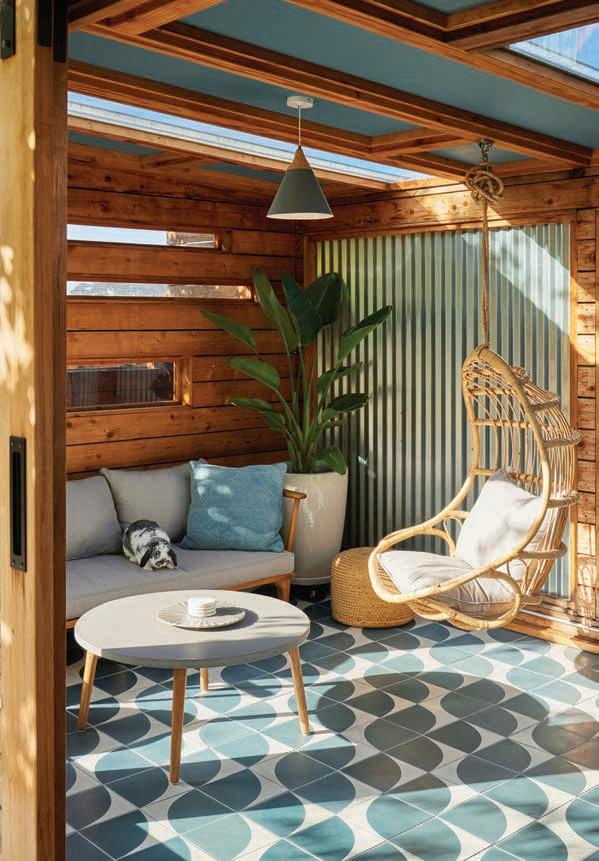
space and interact with its natural light. “Well, since we easily fall in love with most tiles we meet We assess what our clients and the space are asking for. A foggy or shady garden is usually in need of a brighter, more exciting patterned tile, while a bright, open space with a view that already has a lot going on would benefit from a calmer cotto or Moroccan zellige,” they explain. Tiles are also a way to establish hierarchy in a garden. Large field tiles act as a neutral base, while patterned or small-format tiles can punctuate seating areas, outdoor kitchens, or sun traps. The designers emphasize scale and balance: “Consider scale—things often look chaotic when there are too many elements that are different but the same size. We want to make sure we have a large shape like
rough-cut limestone, a smaller, more intricate shape, possibly with a busy pattern like a small, bold tile, a large expanse of decking with 4-inch boards installed with regular seams.”
Transitions between materials are key. Whether moving from decking to tile or gravel to pavers, a thoughtful edge or a strip of neutral tile can unify the space while keeping it dynamic. The result is a patio that feels intentional, cohesive, and full of personality.
PRO TIP: Break up bold tile areas with simpler surfaces to prevent visual chaos. Think of your patterned tile as punctuation— dramatic but balanced by more subdued surroundings. Small spaces can benefit from a single accent tile installation paired with large neutral tiles to expand the feeling of openness.
Victoria Morris Pottery
Scott Shrader
Leah O’Connell Textiles
The Green Room Landscape Architecture
WESTER N HOM E& DESIGN AWARDS
These are the best architects, designers, and makers defining the ultimate in Western living.
Story by SUNSET STAFF
For generations, Sunset has chronicled the way homes and landscapes across the West reflect the spirit of this region—its openness, creativity, and deep connection to place. From airy coastal retreats to desert modern masterpieces and mountain hideaways, the built environment of the West continues to evolve alongside the people who shape it. These spaces are more than structures; they’re expressions of lifestyle, craft, and thoughtful design, rooted in local culture and geography. Following the thrilling inaugural year of this awards program, we return for the second year to spotlight the wide range of talent that brings these environments to life. This year saw an increase in exceptional entries, which made judging all the more difficult. This year’s honorees span architecture, interiors, landscape design, kitchens, craftsmanship, and the enduring firms whose influence has helped define Western design for decades. Together, they represent the innovation, artistry, and vision that continue to raise the bar for living well in the West.
Kalon Studios
Charles Cunniffe Architects
Jessica Alpert Design: Most Impactful Use of Color Glossy red tile, inky blue walls, berry velvet upholstery. This up-and-coming L.A. designer is at her best when she uses saturated shades to make bold statements. jessica alpertdesign.com
INTERIOR DESIGN
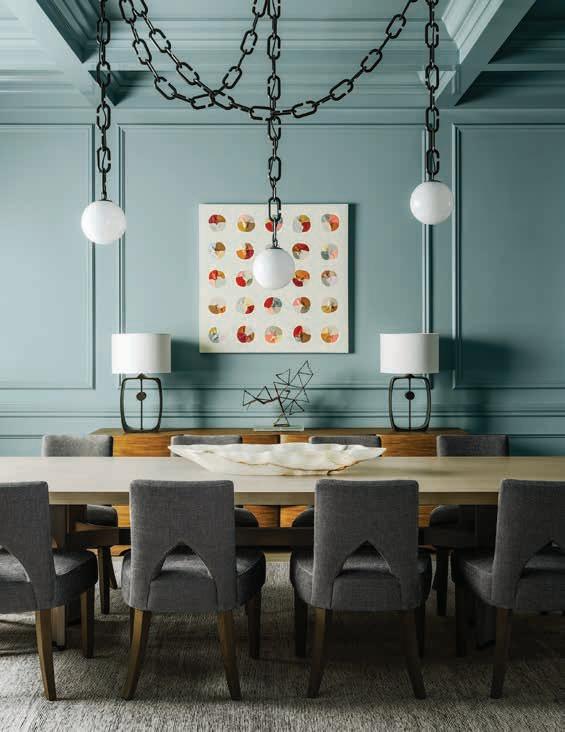
Morrison Interiors: Most Approachable Elegance Orange County-based Rachel Morrison strives for timeless, dynamic interiors that balance grace and practicality. Take this living room—where the formal molding and coffered ceiling get a coat of unpretentious aqua paint. morrisoninteriors.com
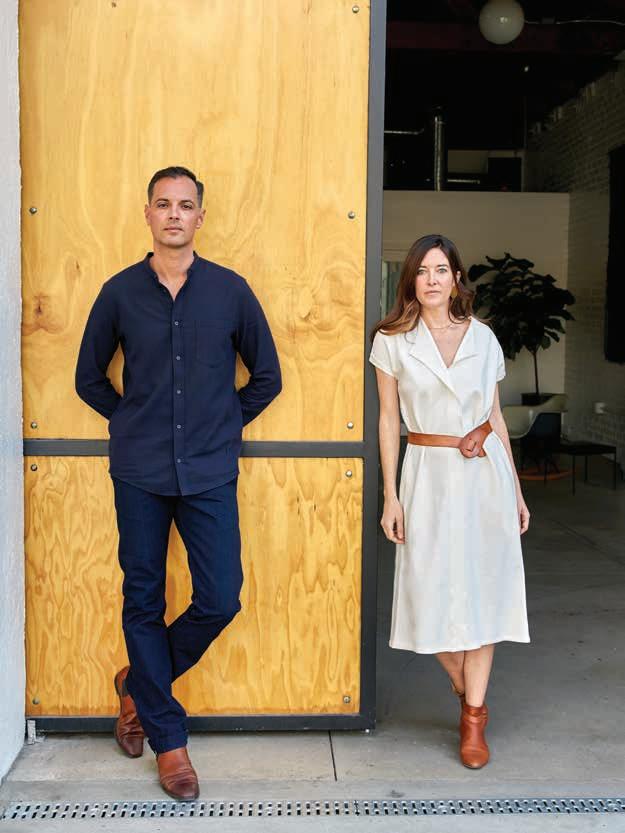
Rachel Morrison
Hawkins Interiors: Best Tasting Rooms that Feel Like Home
Tasting rooms are stockin-trade for wine country designers. Their primary goal is to make oenophiles and visitors feel welcome, comfortable, and inspired. One could argue that those priorities are also at the top of the list for home design, and no one does a cozy winery that feels like your living room quite like Napa-based Julie Hawkins. hawkins interiors.com
A1000xBetter: Best Romantic Contemporary
Kirsten Blazek, founder of A1000xBetter, brings a smidgeon of rock ’n’ roll glamour to everything she does. Influenced by her native Scotland and her edgy personal style, you’ll find dark florals mixed with sculptural vintage pieces. a1000xbetter.com
Audrey Scheck Design: Best Elevated Storage
We’ve praised Scheck’s skill with functional, fabulous kitchens before. But have you seen her sleek built-ins and closets? This Austin-based interior designer champions workhorse spaces in the home, creating thoughtful, functional, and beautiful storage solutions for her clients. audreyscheckdesign.com
Narrative Design Studio: Best Luxury Oases with an Urban Edge
Narrative’s founder Shannon Niehenke cut her decorative teeth on high-end hospitality projects, so if the well-appointed, serenely minimal rooms she creates with her San Francisco firm remind you of a particularly lovely Ritz-Carlton, that’s no coincidence. narrativesf.com
Philpotts Interiors: Most Refined Island Escape
The stalwart team at this Honolulu firm knows how to weave nods to Hawaiian culture into sophisticated island properties, prioritizing comfort, livability, and access to the outdoors. philpotts.net
Caitlin Jones Design: Chicest Family Living Solutions
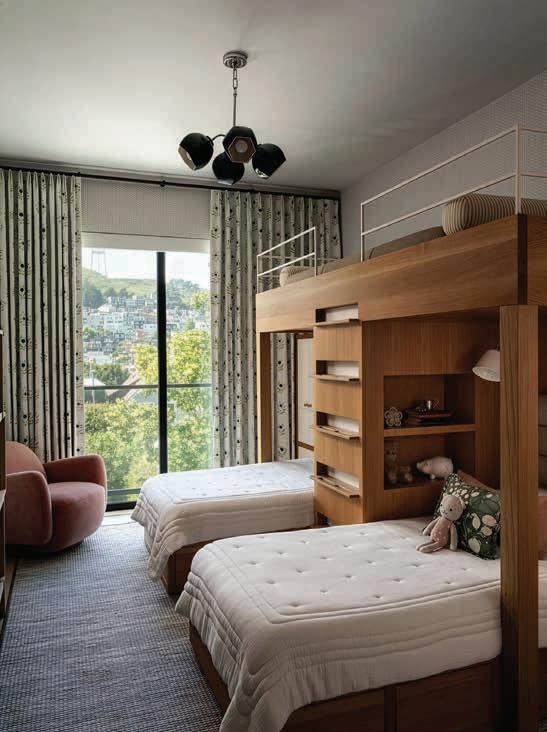
Living and working in the Bay Area has made Caitlin Jones an expert on maximizing square footage, and her breezy, elegant work has a way of making even shared bedrooms—like this kids’ room with sleeping space for three— feel spacious and light. caitlinjonesdesign.com
Shannon Niehenke
Redmond Aldrich Design: Most Exquisite Beach House
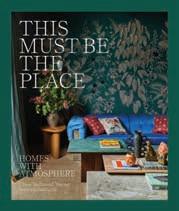
Combining East Coast nostalgia and West Coast ease, Chloe Redmond Warner imagined the ultimate beach retreat. With a central courtyard and access to Stinson Beach, this 1960s remodel shows what Warner does best: Creating transportive interiors that transcend trends and blend eras. Lucky for us, Warner’s first book, This Must Be The Place (Abrams), is out this spring. redmondaldrich.com
Adamson Design Studio: Best Climate-Resilient Cabin
Shannon Adamson put the “fun” in functional when updating this home on Camano Island in Washington, which takes a beating from waves large enough to clear the house. Porcelain plank floors, sturdy tile, and water-resistant teak built-ins are as playful as they are functional. adamsondesignstudio.com
Sogno Design Group: Best Environmentally Conscious Renovation
Kathryn Rogers of Sogno fell in love with historic restoration working in Washington, D.C., and brings it to her Bay Area practice. Shepherding classic homes into an era of sustainability is a passion—evident in this 1930s East Bay home, updated with smart-home tech and energy systems. sognodesigngroup.com
Staprans Design: Best “Design for Good” Project
Working with the beliefs that beauty is healing and that design can impact the nervous system, Lisa Staprans created Willow Commons, a group living environment for neurodivergent adults. Its light-filled common spaces and soothing materials create a calm, nurturing space. stapransdesign.com
LANDSCAPE ARCHITECTURE & GARDEN DESIGN
Shrader Design: Best Estate-Worthy Gardens
Designing landscapes that feel like a natural extension of the home itself—calm, intentional, and deeply livable—Scott Shrader is grounded in both landscape architecture and urban planning. He crafts serene outdoor rooms that balance style with soul, from coastal California retreats to far-flung wellness destinations. shraderdesign.com
Fredrickson Landscape, Inc.: Best Low-Maintenance Outdoor Living
Crafting functional outdoor spaces, Fredrickson Landscape blends modern coastal cottage garden and minimalist luxe styles. With an emphasis on low-maintenance, water-wise design, the Oceanside-based firm creates relaxing, sensory-rich gardens for serene living. fredrickson landscape.com
Wittman Estes: Best Outdoor Rooms
Integrating architecture and landscape into one seamless, nature-connected experience, the Seattle firm creates richly detailed modern environments that blur the line between indoors and out. The studio’s resilient, livable spaces prioritize comfort, thoughtful experimentation, and a deeply human connection to the natural world. wittman-estes.com
Erin and Ben Fredrickson
Christine London Ltd.: Best Serene Style
Blending classical European sophistication with contemporary California sensibilities, Christine London creates luxurious, functional gardens that seamlessly extend the home into elegant outdoor living spaces. Her designs pair lush, fragrant plantings with thoughtful, context-driven layouts to form serene, personalized retreats that feel both grand and intimately connected to nature. christinelondonltd.com
Topophyla: Best NatureFirst Design
Honoring the intricate connections between land and life, Topophyla designs landscapes with a focus on site-specificity and ecological harmony. Each project becomes a thoughtful, place-driven composition that celebrates both biodiversity and the human experience of the outdoors. topophyla.com
Bliss Landscape Architecture: Best Site-Savvy Design
Creating regionally rooted landscapes that artfully connect architecture with the natural world, Bliss Landscape Architecture is known for refined residential, estate, and winery projects across Central and Northern California. The firm excels at collaborative, full-service design that results in outdoor spaces that feel cohesive, welcoming, and enduring. blisslandarch.com
The Green Room Landscape Architecture: Best Climate-Conscious Landscape
Engaging the senses while honoring ecology, Green Room Landscape Architecture designs modern landscapes with thoughtful plant selection, textured hardscapes, and climate-conscious strategies. Its outdoor spaces balance beauty, biodiversity, and human experience in harmonious, livable environments. tgrla.com
Viola Gardens: Best Regenerative Outdoor Rooms
Specializing in regenerative, art-driven landscapes that honor both people and place, Jessica Viola and her women-led, permaculture-trained team create holistic gardens that balance ecological intelligence with sculptural beauty, resulting in outdoor spaces that are grounded and alive. violagardens.com
David Thorne Landscape Architect: Best Hillside Design
With over 40 years of experience, DTLA shapes residential landscapes that feel personal and timeless. Marrying artistic vision with a commitment to sustainability and thoughtful collaboration, the firm crafts outdoor spaces that elevate the home while honoring how people live and connect in them. davidthornela.com
Studio Campo: Best Lyrical Landscapes
Rooted in ecology, craft, and storytelling, Denverbased Studio Campo designs romantic, site-specific landscapes. Its work honors history and evolves over time, blending horticultural sensitivity with Western sensibility to create enduring gardens that deepen our connection to place and the natural world. studio-campo.com
The Well: Best Transporting Design
Layering story-driven home and garden environments, The Well by Big Daddy’s Antiques blends modern design with timeless antiques. Founded by Shane Brown, the studio specializes in thoughtful product curation and sensory-rich styling, using texture, light, sound, and natural elements to create spaces that feel collected, calming, and deeply personal. thewellbybdantiques.com
Studio John Sharp: Best Living Art
Fusing artistry, architecture, and a deep reverence for nature, Studio John Sharp crafts emotionally rich landscapes. The firm’s evocative, lifestyledriven designs for iconic homes bring romance, narrative, and a refined sense of place to exterior environments that feel both grounded and transportive. studiojohn sharp.com
John Sharp
RESIDENTIAL ARCHITECTURE
Clayton Korte: Best Rooms With a View
These Texan architects (with offices in Austin and San Antonio) aren’t intimidated by wide-open spaces or expanding their reach outside their native state. This vineyard home in Buellton, California, is a prime example of the firm’s work, which lets the landscape steal the spotlight and has vista points to soak in majestic surroundings. claytonkorte.com
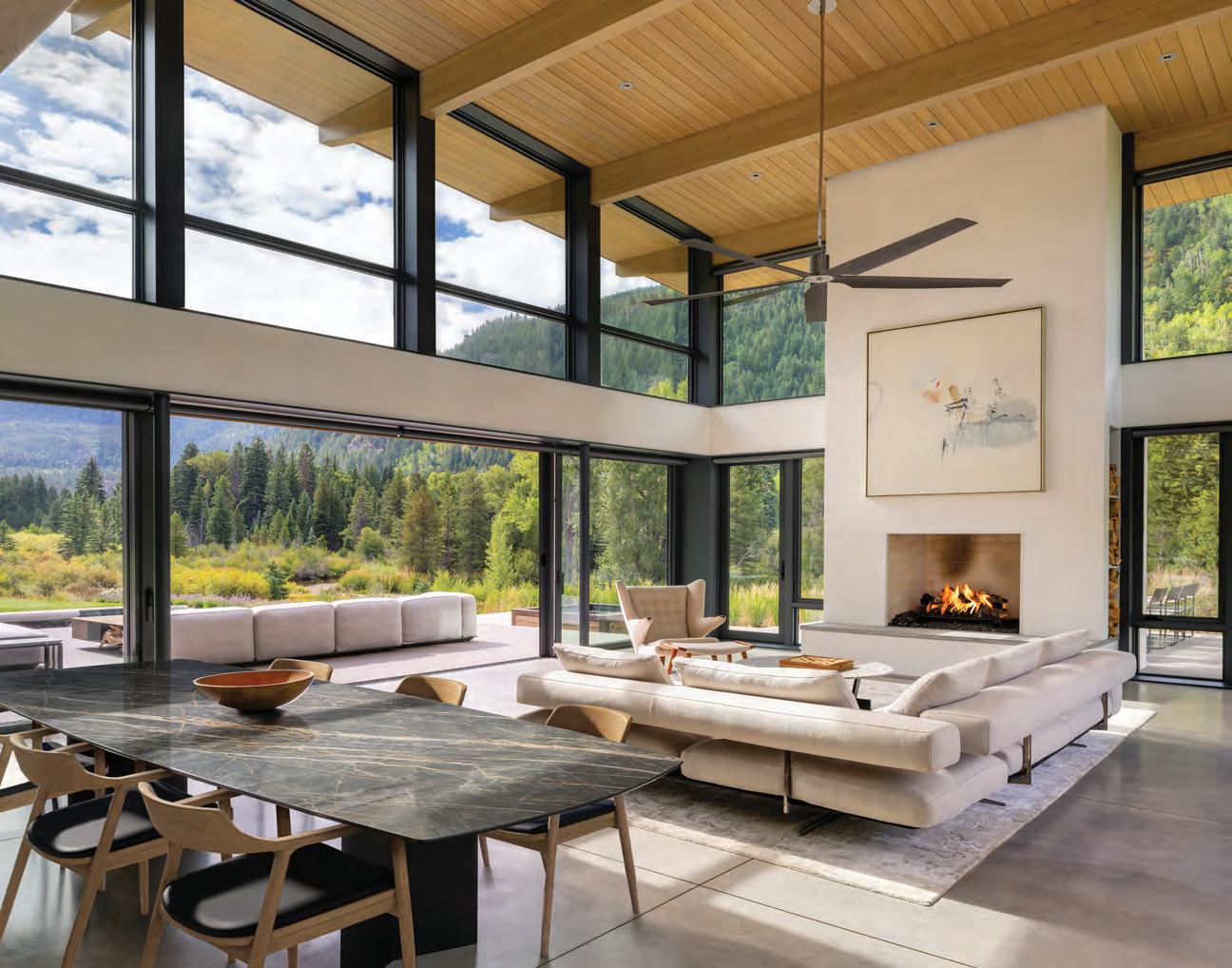
AAHA Studio: Most Inspired Use of Concrete Leave it to the partners at AAHA Studio to make a monolith of poured concrete feel both warm and airy. The 22-foot glass doors slide into pockets to open up the first floor to the enclosed backyard, creating a seamless indoor-outdoor flow. aaha.studio
Harper Halprin and Aaron Leshtz
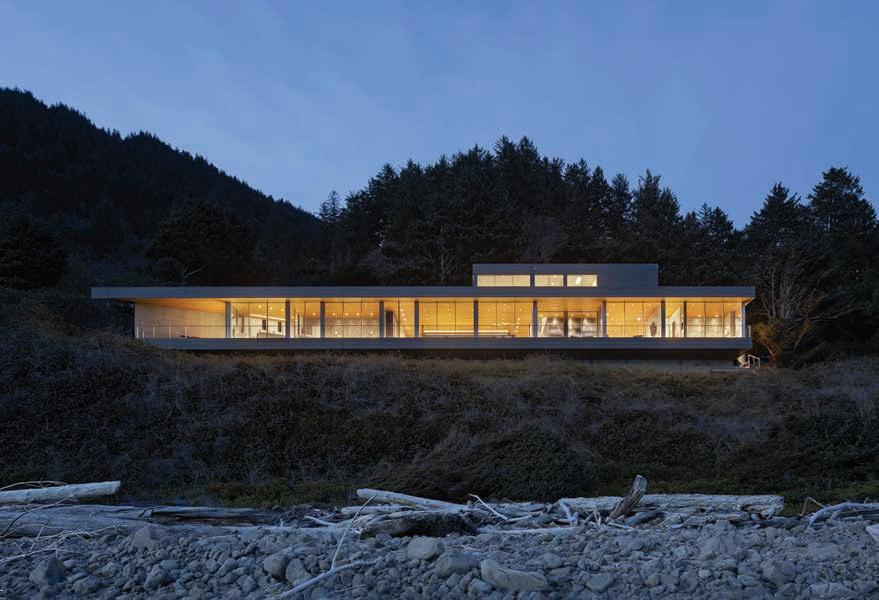
chadbourne + doss architects: Best Waterfront Modern Cantilevered over the hillside and stretched to the sea, this coastal Oregon home designed by Seattle-based chadbourne + doss architects utilizes durable materials like zinc, cedar, and concrete to create an elegantly minimal perch that hovers over the rugged Pacific. chadbournedoss.com
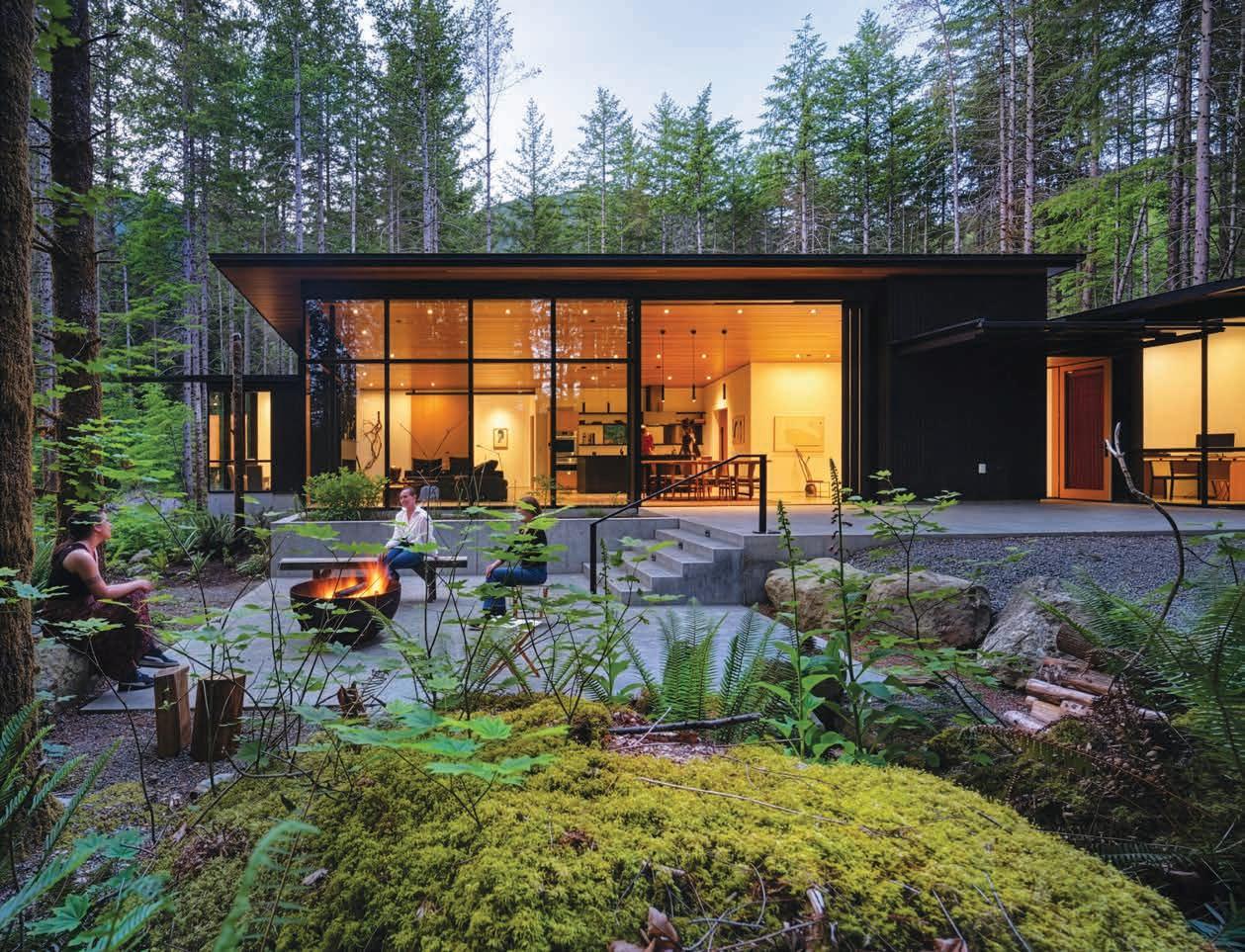
Signal Architecture + Research: Best Glass Box House Design
This Seattle firm treated the second-growth forest surrounding this glass box design as a collaborator, “opening it carefully, placing the house inside, and closing it again,” building the home with minimal disruption to the land. Inside the house, the architecture practically disappears, and only the view and quiet embrace of the trees remain. signalarch.com
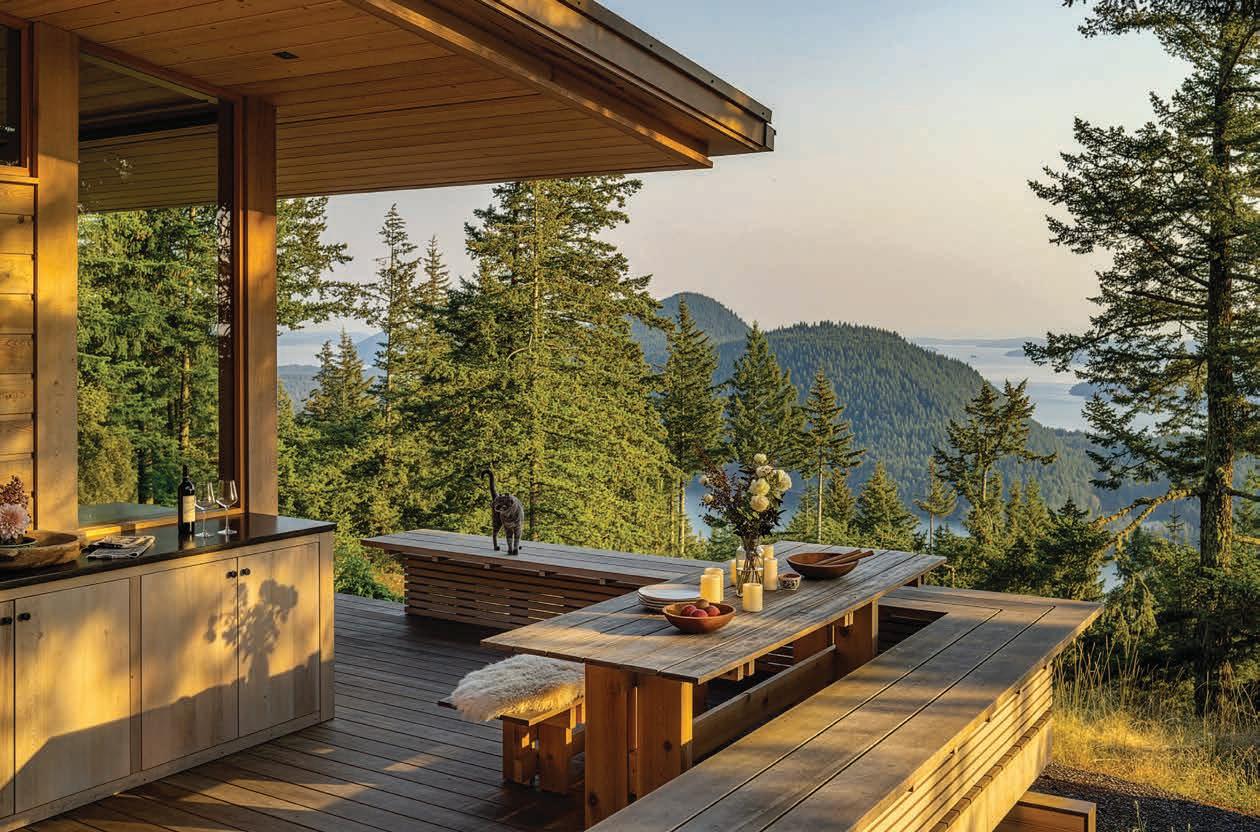
Heliotrope Architects: Best Retro-Inspired Cabin
Joe Herrin and Mike Mora of Seattle-based Heliotrope Architects think of the houses they design as frames for the surrounding landscape. This hillside residence, which overlooks the San Juan archipelago, is a prime example: Comprising two structures built around an old-growth tree and nestled into boulders, it’s a low-impact home that takes major cues from the midcentury masters. heliotropearchitects.com
Feldman
Architecture: Best
Understated Luxury
Back in the winner’s circle for the second year in a row, the San Francisco firm Feldman Architecture has mastered the art of discretion. While Feldman houses can’t be described as modest, exactly, they project a relaxed confidence that’s hard to find in a field of more strident competitors. feldman architecture.com
Marmol Radziner: Most Iconic “Master Builders”
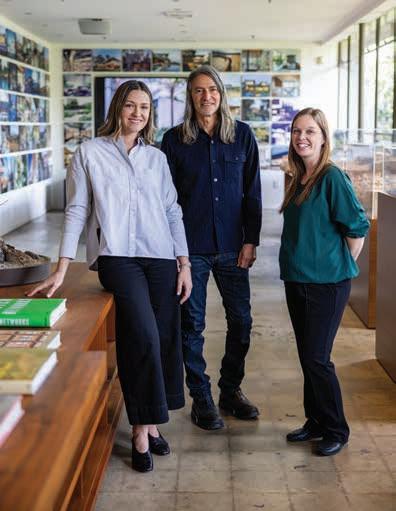
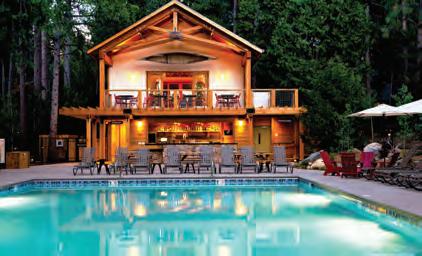
Founded in 1989, Marmol Radziner is a design-build practice led by architects Ron Radziner and Leo Marmol. Their multi-award winning cross-disciplinary team of 200 employees, including interior designers, landscape designers, metal fabricators, carpenters, furniture makers, and a full construction crew, has been at the forefront of the West Coast design scene for decades. This Toro Canyon pool cabana and guest house nestled into a steep 10-acre plot, with its modern geometry and quietly luxurious finishes, exemplifies their building philosophy. But their work isn’t available exclusively to the ultra-rich. In 2025, in response to the wildfires in their beloved city, the firm developed a new line of prefab homes that uphold their commitment to thoughtful design, spatial harmony, and a seamless connection between indoor and outdoor living. marmol-radziner.com
Ashley Nath, Ron Radziner and Amy Smith
Rowland + Broughton
Architecture and Interior
Design: Best Agricultural Estate
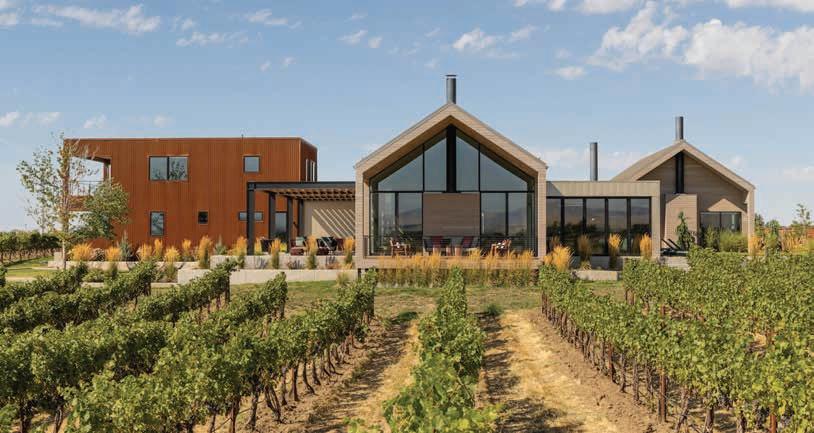
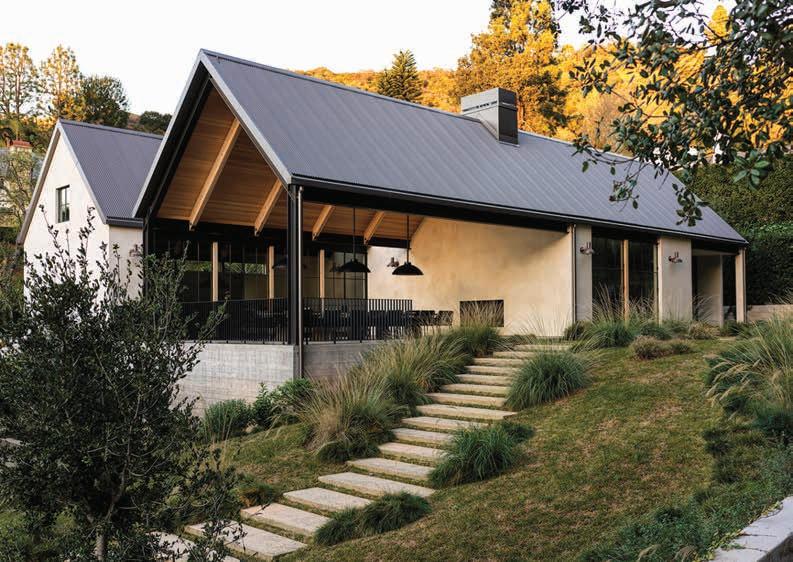
The Aspen-based firm Rowland + Broughton was charged with the task of building a vineyard home that would function as both a private residence and a base for growing 8 acres of Cabernet grapes in Walla Walla. Blend barninspired gabled forms with modern amenities and sleek construction, and the resulting property is a winelover’s dream. rowland broughton.com
Zack de Vito
Architecture + Construction: Best Wine Country Escape
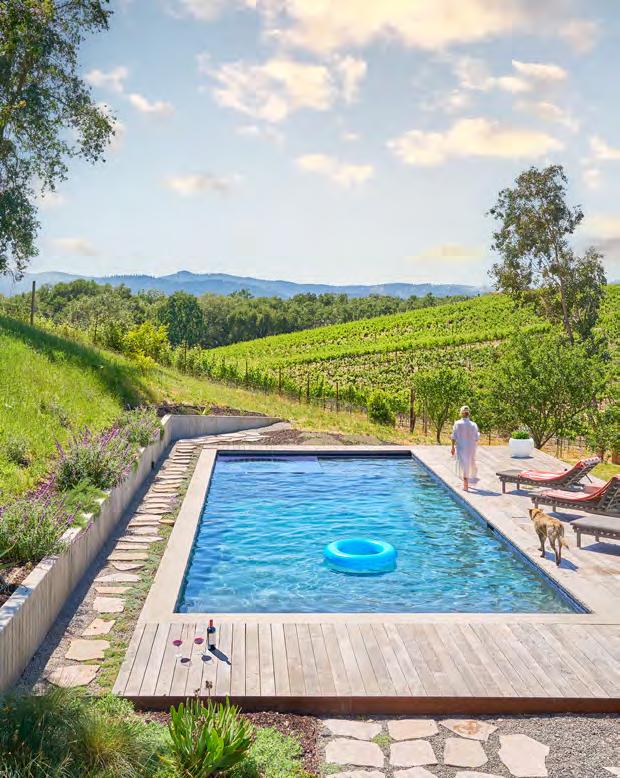
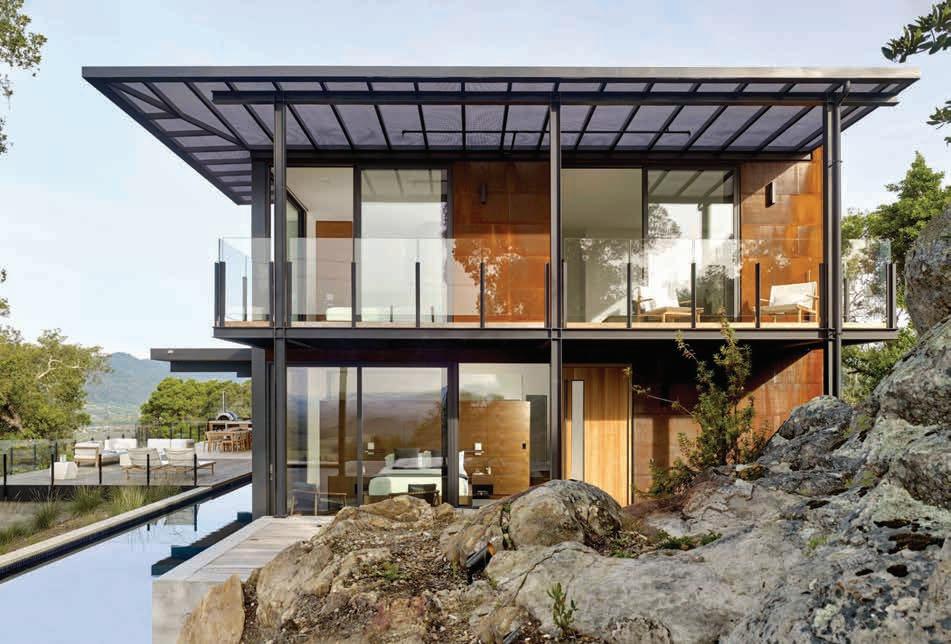
Built around lichencovered boulders and majestic trees, this St. Helena home is decidedly modern, yet it feels like it’s been there forever. A special nod goes to Randy Thueme Design for assistance with this glorious pool. zack devito.com
Prentiss Balance Wickline Architects: Best Boathouse
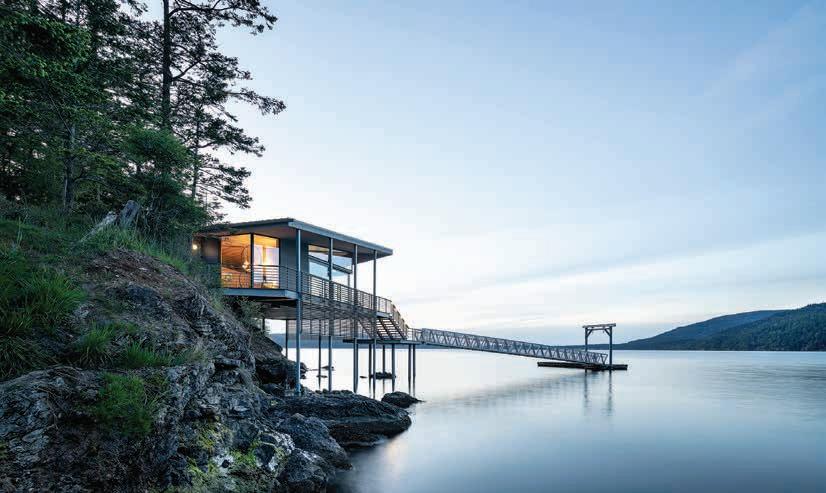
Perched as lightly as a heron on the shores of the Salish Sea, this new-build boathouse is from Seattle-based PBW Architects. Its steel and glass frame may look delicate from the water, but its construction was built to withstand coastal climate extremes. pbwarchitects.com
John Rowland and Sarah Broughton
Hoshide Wanzer Architects + Interiors: Best Barrel-Roof Construction
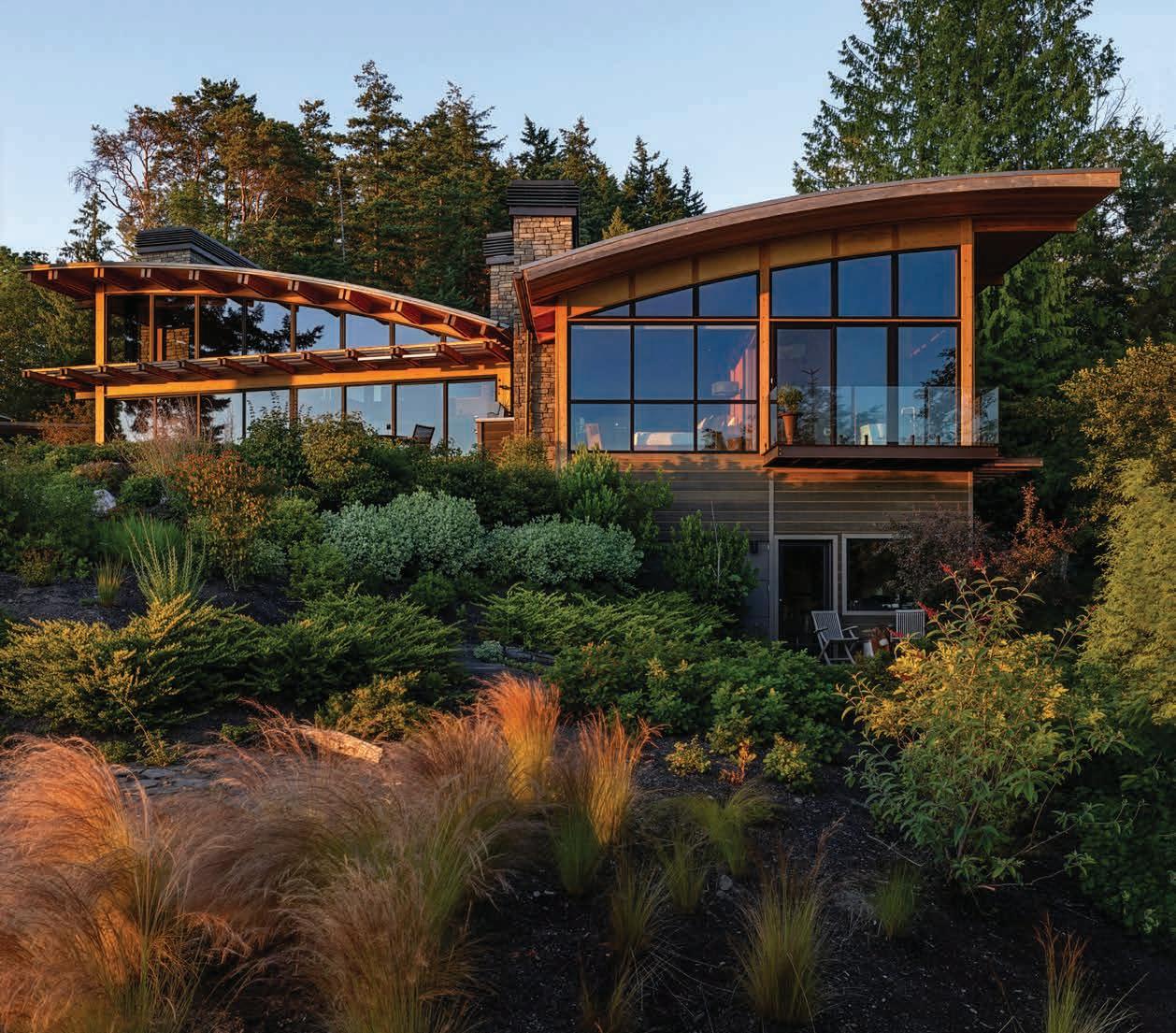
For this Edmonds, Washington, retreat on a narrow bluff overlooking the Puget Sound, Seattle firm Hoshide Wanzer created two barrel-roofed forms, connected at an angle, to maximize the views and reduce “visual mass.” But the curvilinear ceilings remind us of a tall ship’s hull. hw-architects.com
Charles Cunniffe Architects: Best Grand-Scale “Legacy” Home
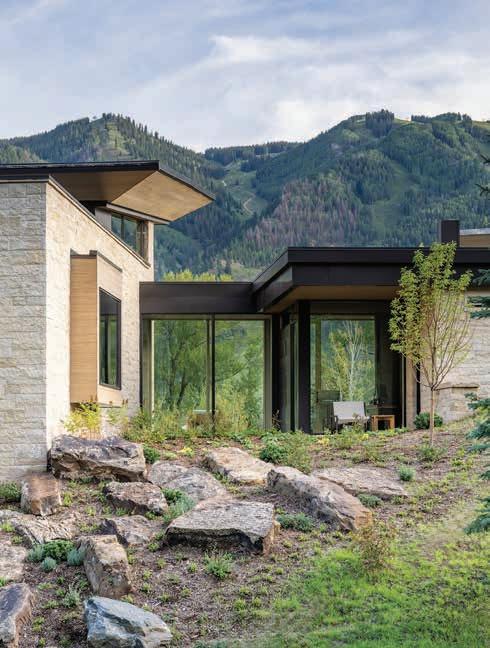
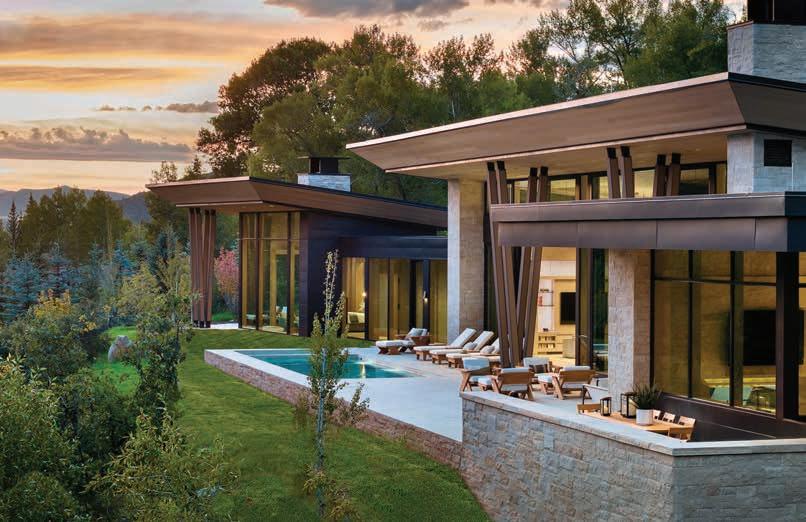
Aspen-based Charles Cunniffe Architects did not come to play. Known for focusing on the topography of a lot and maximizing killer views, this firm understands how clients with deep pockets want to spend their downtime. Each home is built with environmental sensitivity and wellness in mind, enforcing the firm’s commitment to “ensuring beauty, performance, and a timeless sense of belonging.” cunniffe.com
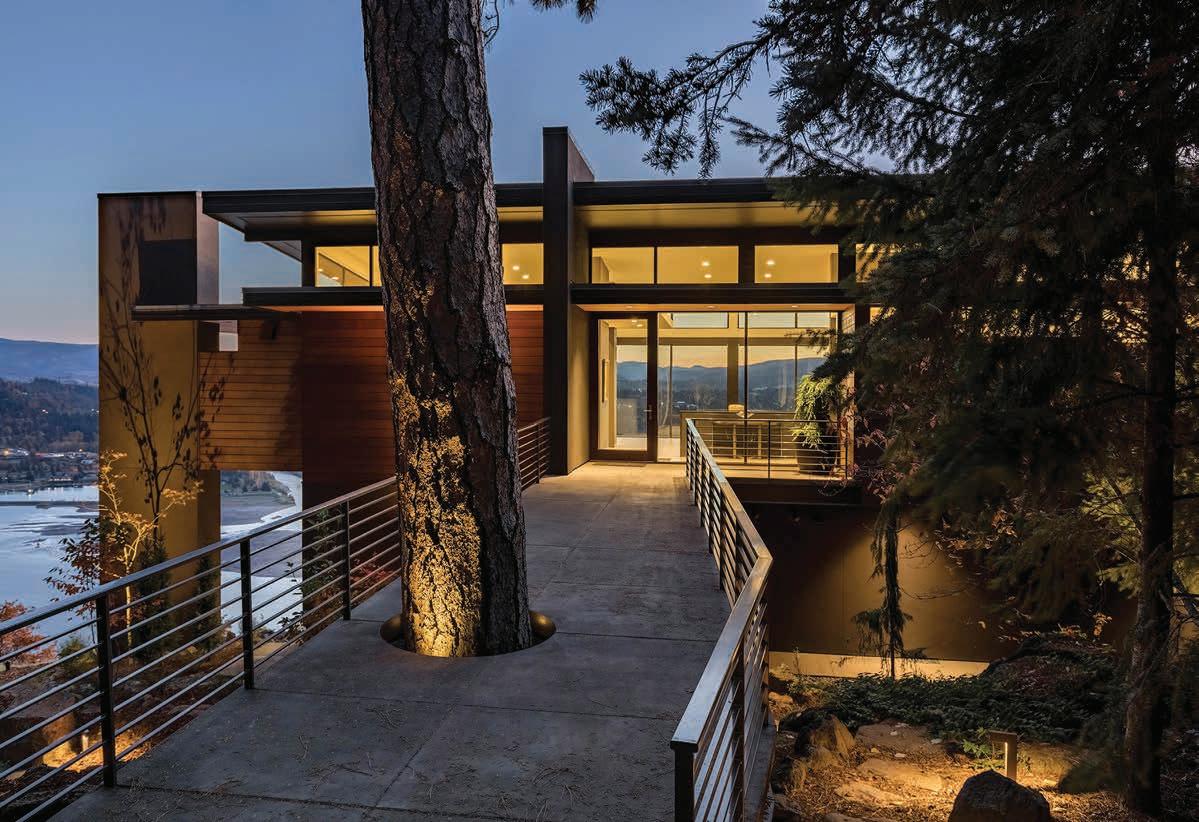
Giulietti Schouten Weber Architects: Most Artistic Pacific Northwest Retreat A Portland-based firm in practice for about 40 years, Giulietti Schouten Weber shows no signs of slowing down. It nominated this Kalama Ridge house as a representation of how its work has evolved. Soaring above the Columbia River Valley, the home’s broad eaves make it look as though it could take flight. gswarchitects.net
Ogawa Fisher Architects: Most Seamless Midcentury Update
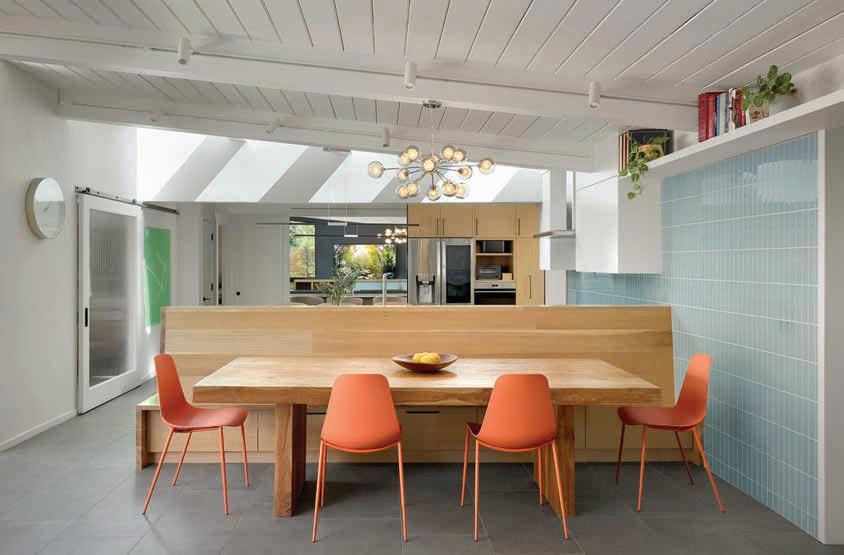
These Palo Alto architects are no strangers to 20th-century ranch houses, but this remodel of a classic Eichler home commissioned by a lively family of five was exceptionally satisfying. Keeping the bones and pedigree of the structure intact, they reconfigured the kitchen, dining, and living spaces to create a more open flow to suit the family’s active lifestyle. ogawafisher.com
Lynn Fisher
Hiromi Ogawa
Gast Architects: Most Impressive Aesthetic Range
Whether collaborating with interior designer Noz Nozawa on a Victoria remodel or building a split-level farmhouse, Gast Architects’ work is so versatile that it’s hard to define. Some identifiable through lines for the Bay Area firm: Crisp, clean lines, top-shelf materials, and meticulous attention to detail. gastarchitects.com
Standard Architecture: Best Multi-Gen Compound
This project by L.A.-based Standard Architecture combines two lots into a three-generation family compound. A new house was built on the east half of the property, with large flexible spaces. On the west half, the existing home was remodeled, a large pergola joins the pool deck, and a flowing landscape effortlessly connects the backyards. standardarchitecture.com
Studio VARA: Best Surprising Remodel
With its sinuous forms and black-and-white palette, the residence from the architects and urbanists at Studio VARA is a maximalist’s interpretation of minimalism. This 1894 Queen Anne Victorian in San Francisco, reimagined to resemble an art gallery, is pared back but also somehow extra, a nonconformist’s dream. studiovara.com
Tomecek Studio Architecture: Best Futuristic House (for Spotting UFOs)
The Denver-based team members at Tomecek Studio are unapologetic futurists, pushing the boundaries of contemporary architecture without much nostalgia for old ideas. This Skinwalker Ranch property, sited in an area famous for (alleged) paranormal activity, looks like it may have been deposited, or at least designed, by aliens. And that’s just the way they like it. tomecekstudio.com
Studio Pear: Best Gold Country Retreat
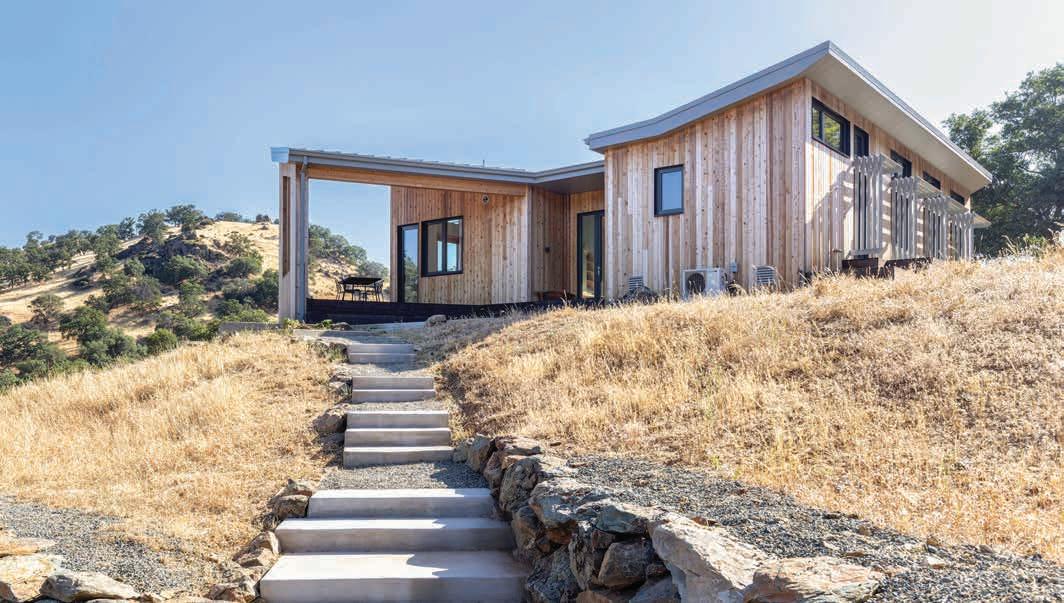
Sweet, simple, and straightforward, this California Gold Country cabin by the environmentally conscious Oakland firm Studio Pear can be switched off the grid to be fully self-sustaining. studiopear.us
William/Kaven Architecture: Best Blending of the Urban-Wildlife Interface
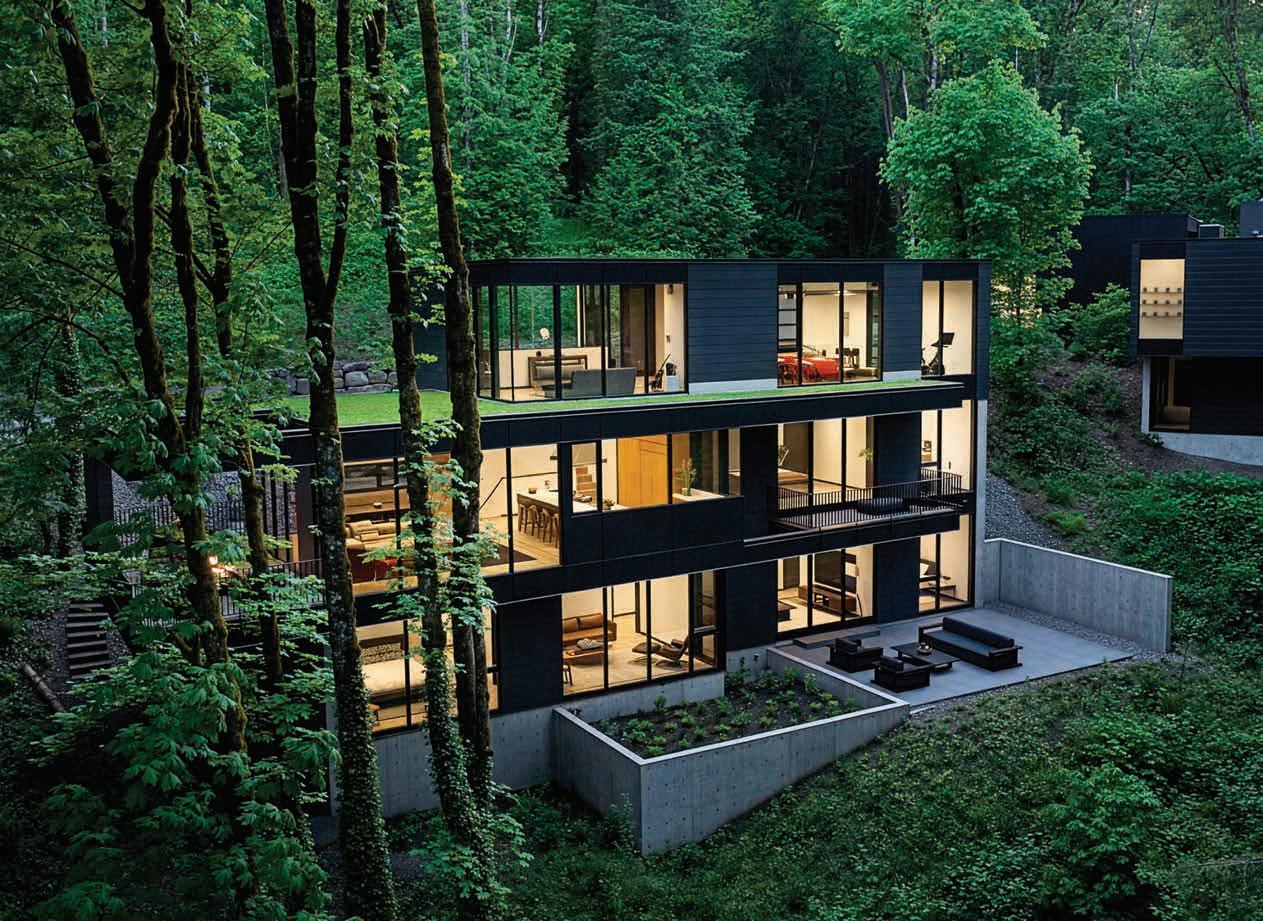
Surrounded by towering Douglas firs and alders, and clad in dark steel, concrete, glass, and black bronze, this multi-story home designed by William/Kaven offers its residents the experience of living fully immersed in a 5,000-acre forested reserve in Portland without sacrificing the convenience of urban life. williamkaven.com
Kirley Architects: Best SmallFootprint Beach Cottage
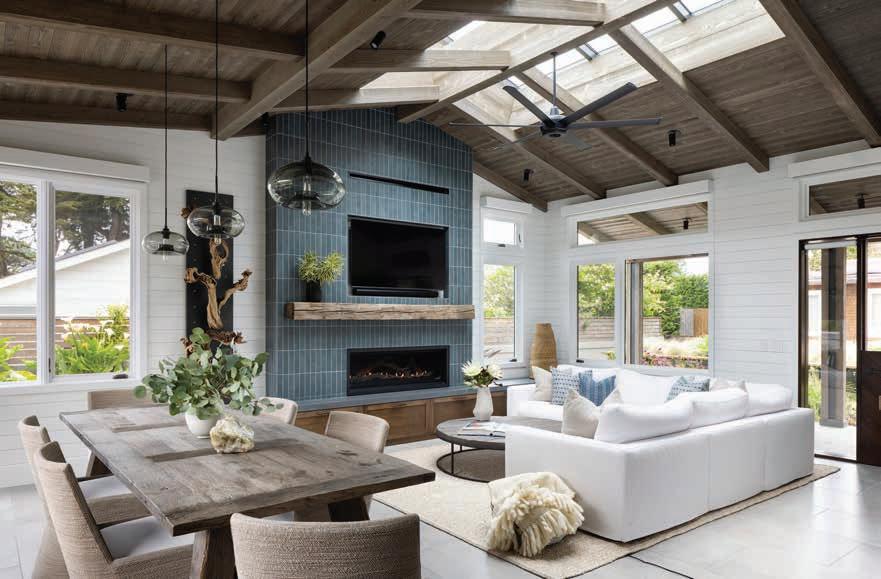
Coming in at roughly 1,500 square feet, this Stinson Beach cottage is a masterclass on efficient design. A large skylight and motorized flip-up window open to create the impression of a large living space, and a bluetiled fireplace at its heart makes a chic statement. kirley architects.com
Daniel Kaven and Trevor William Lewis
MMW Architects: Best Lake House
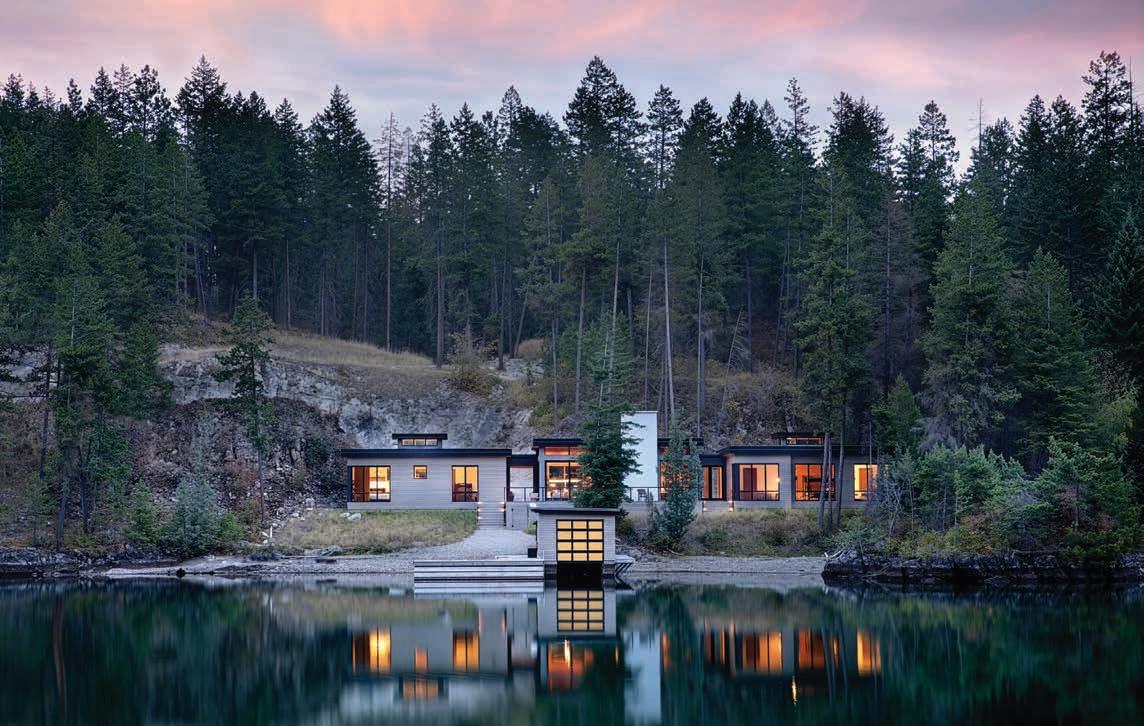
Generations of a single family have gathered on the shores of Flathead Lake at this floating home near the base of a rocky slope. MMW Architects updated the structure with glass connectors that link private and shared wings, creating sleeping quarters for a crowd. The roofline follows the hillside, helping the home blend seamlessly into its environment. mmwarchitects.com
Lewis/Schoeplein Architects: Best FlintstonesInspired Home
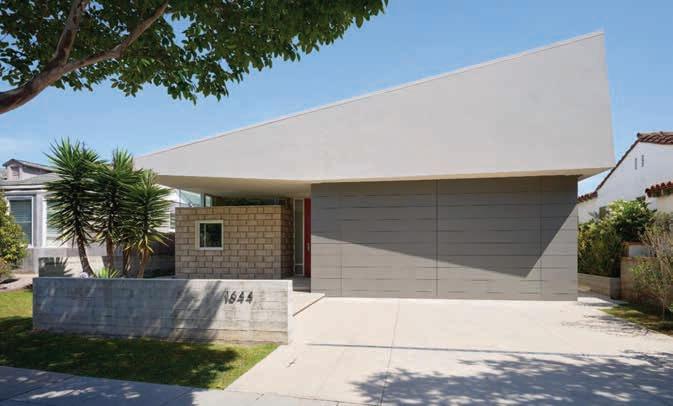
At the urging of its L.A. client, a guitarist with a clear sense of humor, the firm designed this single-story modern house with a rock wall and a monolithic asymmetrical roofline—which conceals attic storage and a small workspace—that would make Fred and Wilma feel right at home. lewisschoeplein.com
JLF Architects: Best “Regionalist” Mountain House
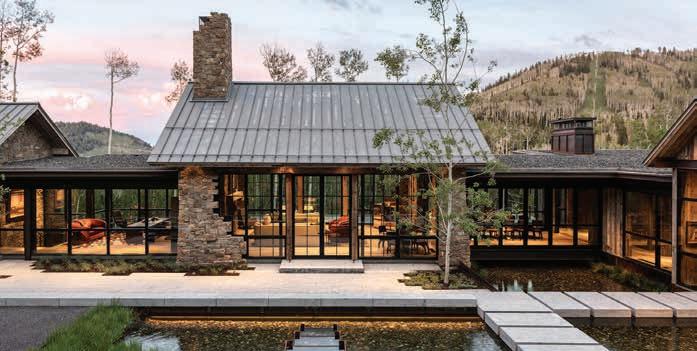
Rustic materials meet contemporary design at this 8,500-square-foot Park City mountain house, designed with multiple connected buildings to resemble early homestead communities in Utah. Two-foot-thick fieldstone
“remnant walls” were deconstructed to look like they’ve aged over time, and a water feature mimics the construction of a mining sluice box. While the Bozeman, Montana-based JLF is focused on building rural and mountain homes that feel deeply connected to place, it spares no luxuries in the process. jlfarchitects.com
Land + Shelter Architecture Studio: Best Low-Impact Desert Digs
This Carbondale, Colorado, firm understands that the view is always the main attraction, and the firm designs no-fuss, functional properties for enjoying a life that’s focused on, and centered in, the natural world. landandshelter.com
Rodwin Architecture: Best Updated Farmstead Boulder, Colorado-based firm Rodwin Architecture took a 19th-century family farm and updated it for modern living, all without abandoning the property’s original charm and several working barns. The 80-acre property is being rehabbed from the inside out, now that the owners are working to restore the soil, plant hundreds of trees, reintroduce livestock, and turn it into a model of regenerative farming. rodwinarch. com
Appleton Partners LLP: Best Midcentury Expansion
This Santa Barbara firm understands the fundamentals of a beach house and how to combine and transform existing structures to meet the benchmarks of contemporary luxury. This 1950s home, which was combined with a neighboring structure to expand the footprint to 6,500 square feet, stays true to its provenance and the original scale of the rooms. appleton-architects.com
Butler Armsden Architects: Best Urban Sanctuary
A Sunset regular, San Franciscobased Butler Armsden Architects reimagined this elegant BeauxArts home in Presidio Heights as a light-filled space with sinuous curves and floor-to-ceiling casement windows that open to a wrap porch, creating a surprisingly serene retreat in the heart of the city. butlerarmsden.com
MAGIC MOUNTAIN
Small, inspired slopeside dwellings dominated the entry pool. Here are the standouts.
CAST Architecture: Best Low-Impact Hideaway
The name “Icicle Creek Retreat” says it all. Built for deep snow and temperature extremes, this low-impact, resilient, small-footprint house was designed with water storage, fire-resistant details, and solar power. castarchitecture.com
Johnston Architects: Best Winter Sports Shelter
When its snow-loving clients requested a spot to store their coldweather gear in the Methow Valley, before they committed to building a home, the Johnston team came up with a lofted shed design covering their basic needs for storage and shelter, with style to spare. johnstonarchitects.com
Grouparchitect: Best Snowbound Yoga Studio
Grouparchitect built this accessible yoga studio on a forested hillside for a very intrepid client. grouparch.com
Jacobs + Interiors: Best Use of Cheeky Taxidermy
This great room from Edwards, Colorado-based Jacobs + Interiors brings that kitschy Western mountain house vibe into a new era. jacobsinteriors.com
KITCHEN DESIGN
Cooper Pacific: Best California Coastal Kitchen
Inviting Malibu’s coast breezes and light into the kitchen with pass-through windows, Cooper Pacific has nailed the soft, sun-washed palette and indoor-outdoor flow of the ultimate Cali kitchen. Another bonus: Wide walkways and two generous islands allow for multiple people to move, cook, eat, and live comfortably. cooperpacific.com
Rumor Designs: Best
Low-Light Kitchen
Steering away from blinding white Carrara marble and creamy cabinetry, the Steamboat Springs, Colorado-based Rumor Designs team embraced the dark side for this “mountain modern” Colorado kitchen. Eggplant paint, gray-green marble, and a honed stone fireplace make this kitchen the heart and hub of the house. rumordesigns.com Valerie Stafford and Lindsey Jamison
HERE architecture + interiors: Most Inspired Snug Kitchen
Houseboat fantasists and admirers, behold! The richly textured kitchen that Seattle-based HERE designed for a client’s floating home, with handmade tile, a bespoke metal hood, and ZAK+FOX fabric, has the feel of a sprawling custom kitchen shrunken down to pleasingly cozy proportions. here.design
Banner Day Interiors: Most Dinner Party-Ready Kitchen
Clara Jung of Banner Day pivoted her own kitchen remodel when she realized she was using the space wrong. She swapped a table for the standard island, a smart move for cooks who want to visit with guests before, during, and after a meal. Cheery paint is a bonus! bannerdaysf.com
Blythe Interiors: Best Kitchen Color Story
This compact kitchen, designed for a young San Diego family by Blythe Interiors, is as bright and cheerful as the city itself. The Kelly-green-painted door, pool-blue tile, a sunbeam-yellow light fixture, and a true-red pot on the range work together to make the small space sing. blytheinteriors.com
Tierney Conner Architecture: Best Hidden Kitchen
Sleek, smooth, and stowed away, this ultra-streamlined kitchen practically vanishes into the walls. The Oakland-based, women-led team integrated this thoughtful modern home into the surrounding oak-studded landscape, but the stealth kitchen design is the star of the show. tierneyconner.com
MAKERS
Leah O’Connell Textiles: Best California Florals
Unfussy nature-inspired patterns in clean, happy colorways are the hallmarks of Leah O’Connell’s fabric and wallpaper. A native San Franciscan and Bay Area interior designer, O’Connell’s work embodies Northern California ease, striking the perfect balance between formality and cozy charm. leahoconnelltextiles.com
LIVDEN: Cheeriest Environmentally Conscious Tile
The sisters behind LIVDEN, a San Diego-based tile company, are committed to making the most sustainable, domestically made tile on the market. But what sets the brand apart are the joyful geometry and bold color in the patterns. livden.com
Cedar & Moss: Best Clean, Minimal Lighting
When Cedar & Moss owner and founder Michelle Aaro went looking for the perfect new fixtures for her Eichler-style home in Portland and came up emptyhanded, a small business was born. For 13 years, Aaro and her team have been handmaking accessibly priced ceramic, glass, paper, and wood pendants, lamps, and sconces that put a fresh, affordable spin on modern simplicity. cedarandmoss.com
Kalon Studios: Best
Locally Made Furniture Stemming from a belief in the simple beauty and emotive power of objects, Kalon aims to deepen our relationship to the furniture in our homes. Founded in L.A. by Michaele Simmering and Johannes Pauwen in 2007, the partners are committed to carrying on American furniture traditions and modernist design. kalonstudios.com
Rocky Mountain Hardware: Best Handmade Hardware
Designed and forged in the West, this Colorado-made bronze hardware—stylish and durable pulls, handles, and locks—is so much more than meets the eye. A near-instant upgrade to built-in millwork, Rocky Mountain’s work is worth the investment, and then some. rockymountain hardware.com
OUTERclé: Most Elevated Outdoor Surfaces
Deborah Osburn has spent the last few decades perfecting the art of outdoor tile and surfaces, breathing color, pattern, and high-end design ideas into an oft-neglected category. Based in Marin County, OUTERclé has captured the easy, idyllic aura of stylish West Coast living. outercle.com
Victoria Morris Pottery: Most Inspiring Ceramics Artist
L.A. native Victoria Morris became the face of resilience after the Eaton Fire took her home and pottery studio. The production-designer-turnedpotter was known for her graceful bowls and lamps. These days, now that she’s back in production at her new Ventura studio, she’s known for her heart and spirit, too. victoriamorris.com
Victoria Morris
CW
Stockwell:
Most Iconic Wall Coverings
Since 1905, CW Stockwell has been designing and manufacturing hand-printed fabric and wall coverings in L.A.— like its famous Martinique banana leaf print at The Beverly Hills Hotel. Now in its fourth generation, with Katy Polsby at the helm, the company has built upon its extensive pattern library, reimagining archival prints with a fresh perspective. cwstockwell.com
Submaterial: Most Creative Use of Textiles
Albuquerque-based Submaterial makes sustainable felt, wood, and cork wall coverings and room dividers for residential and commercial spaces alike. They muffle sound, create more comfortable spaces, and offer a stylish, inventive alternative to more industrial materials. But it’s the new colorful, hand-built wall hangings that are capturing our attention. submaterial.com
Heather Levine Ceramics: Best RusticModern Ceramics
You’ve likely spotted Heather Levine’s glorious, speckled stoneware lighting and wall hangings in many of your favorite tasteful hipsters’ homes or restaurants. Each piece is handmade and glazed at her Atwater studio, and her rustic but refined aesthetic, which is deeply influenced by midcentury modernism, is synonymous with confident, unpretentious L.A. style. heatherlevine.com
Heather Levine
+ Architecture Design Edit
The aesthetic of The West is calling. Welcome to a curated view into the latest design inspiration, where sustainability meets sophistication, and every surface tells a story.
Designed for the Way We Live
Western Window Systems designs expansive glass systems that integrate seamlessly into modern homes, supporting clean lines, balanced proportions, and uninterrupted views.
Our windows and doors are created to work in harmony with the architecture—allowing materials, structure, and landscape to take center stage. Refined sightlines and carefully scaled openings create natural flow between living spaces and the outdoors.
We work alongside architects and builders to ensure each system reflects the vision of the home. Every opening is developed with attention to proportion, performance, and long-term durability.
Western Window Systems is featured in homes across the country that value thoughtful design and lasting quality. Our work reflects a commitment to clarity and restraint—systems that enhance the architecture without overpowering it.
When architecture and openings are considered together, the result feels cohesive and complete. Spaces feel open and connected. Views remain uninterrupted. westernwindowsystems.com
Western Classic Line
Western Classic Line
Western Classic Line
FROM VISION TO VIEW
Minimal frame. More views. The Vantage Line is made for homes defined by what’s beyond the glass. Expansive openings create a seamless connection between living spaces and the outdoors.
A Backyard That Feels Like a Vacation
A home-grown garden getaway makes every day feel like a vacation–plane tickets and suitcases not required! And this backyard oasis hides a clever secret: a strategically designed walking loop for smooth strolls and easy access, adorned with high-impact, low-maintenance plants from the Sunset® Plant Collection.
The garden was designed by Bay Area firm Pine House Edible Gardens, cofounded by Leslie Bennett, co-author of Garden Wonderland. Bennett and her team are well-versed in designing lush, livable spaces that evoke beauty, connection, and a sense of belonging. Their gardens are individually tailored and unapologetically plant-forward. And like any great artist, they are meticulous in selecting the perfect plants to craft their creative palette. From flowing grasses to bold blooms, Leslie and the Pine House team rely on Sunset® Plant Collection to compose West Coast landscapes that feel immersive, personal, and deeply restorative.
The Pine House Team’s philosophy comes to life in this Northern California backyard, where a suburban setting is transformed into a private retreat. “A garden provides a special opportunity to collaborate with nature and co-create beauty, as we choose to include specific plants and arrange them to highlight the appeal of each,” Bennett explains.
Here, grasslike perennials Platinum
Beauty® Lomandra and Clarity Blue™ Dianella add subtle movement, softening the walkway’s hard edges and infusing rich texture into the garden. And these aren’t basic green grasses: each infuses a new hue into the landscape, from the cool teal tones of Clarity Blue to the white-frosted blades of Platinum Beauty that shimmer in the light. Paired with accents of red and chartreuse, the resulting garden is a brilliant spectrum of color that feels like an instant getaway. And with four seasons of evergreen beauty and color, this abundant backyard destination never has a “low season.”
More than merely beautiful, Sunset® Plant Collection’s dazzling varieties are ready to tackle the tough terrain and varied climate of the West Coast. Prized by home gardeners and experts like Bennett and her team for their adaptability and resilience, these plants deliver bold beauty with less water. From the rare and seldom-seen to landscape stand-bys, the Collection’s diverse array of climate-suited, ethically sourced plants from around the world delivers dynamic beauty and exceptional performance right here at home.
Lush, immersive, and easy to tend, this garden oasis makes the everyday feel like a staycation with stellar selections from Sunset® Plant Collection.
To learn more, visit sunsetplantcollection.com
‘Sunshine’ Ligustrum
Senecio
Ever Amethyst™ Agapanthus
Beach Ball™ Pittosporum
Platinum Beauty® Lomandra
Unbox the West
FOOD & DRINK
From Soil to Supper
Kevin West shows why the most flavorful meals begin in the garden.
There are garden-to-table cookbooks filled with produce-forward recipes organized by season—and then there’s Kevin West’s The Cook’s Garden: A Gardener’s Guide to Selecting, Growing, and Savoring the Tastiest Vegetables of Each Season. The book doesn’t get to actual cooking until more than 100 pages in. Before the recipes arrive, West makes a poetic case for growing your own vegetables, arguing that nothing at the farmers’ market can rival the immediacy and flavor of produce harvested and cooked within minutes. He offers practical, well-grounded guidance on composting, till versus no-till methods, raised bed know-how, sowing and transplanting, and pest control, quoting Walt Whitman as naturally as he discusses soil health.
When West finally turns to the kitchen, he does so by category— beans and peas, brassicas, cucumbers and gherkins, hearty greens, and more—conjuring visions of a backyard in constant, generous rotation. The recipes are simple and deeply satisfying, designed to let vegetables shine in their microseasonal peak: young greens
braised with spring onions, herby biscuits loaded with chives, thyme, savory, and rosemary, a risotto bright with green beans, or a watermelon and herb salad studded with cucumbers and fresh mint. Reading the book is a pleasure in its own right, and even if you never turn a spade of soil, it fosters a deeper appreciation for the plants—and the people—that grow our food. We’re sharing a few seasonal recipes from the book, which will become a go-to resource for gardeners who want to cook better and for cooks who want to garden smarter.
ROASTED CAULIFLOWER with
BAGNA CAUDA
A young cauliflower plant bides its time in the garden, attractive but vague. Nothing about it suggests flamboyant maturity. The faint, powdery bloom on its glaucous leaves looks like blushing in reverse, the applied pallor of a ballerina’s face. Then something unthinkable happens. Atop the apical bud, the plant forms a clenched fist of pure white, a strange color in the garden, and punches itself into existence. The curd swells into a head. Unless quickly snatched in at this ripe moment, it will burst open over several days, flying into pieces, an explosion of flowers. Such drama! Before that happens, seize it and roast whole until browned and tender as flesh. The dressing is a matter of taste, but cauliflower favors the bold. Splashed with bagna cauda, a potent warm sauce flavored with garlic, anchovies, and garden thyme, the head is fit to serve on a platter as the centerpiece of a garden meal. For a vegetarian option, omit the anchovies.
SERVES 6 TO 8
1 large head cauliflower, trimmed Fine sea salt
Extra-virgin olive oil
Bagna cauda (recipe follows), for serving
1. Preheat the oven to 400°F.
2. Plunge the cauliflower into a large bowl of cold, salted water for a few minutes to purge aphids.
3. Drain and place the head upside down on a cutting board. Remove the small leaves that cling at the base like damp curls. Carefully pare the thickest part of the core while leaving it intact.
4. Place the head right-side up in a cast-iron skillet. Drizzle with olive oil and rub all over to coat. Sprinkle generously with salt, inside and out. Loosely cover with foil and transfer to the oven.
5. After 30 minutes, remove the foil and baste with olive oil. Continue to roast, uncovered, basting occasionally, until tender when poked with a skewer, 1 hour or more.
6. At the end, brown the head under the broiler for a few minutes, if you like. Bring to the table whole. To serve, cut into wedges and splash with the bagna cauda.
BAGNA CAUDA
MAKES ¾ CUP
¼ cup extra-virgin olive oil
5 Tbsp. unsalted butter
1 tsp. minced garlic
2 Tbsp. minced shallot
Pinch of red chile flakes
¼ tsp. chopped fresh thyme
3 whole salt-cured anchovies, rinsed, cleaned, and chopped (2 Tbsp.)
Grated zest of ½ lemon
2 Tbsp. fresh lemon juice
1. In a small saucepan, combine the olive oil, butter, garlic, shallot, red chile flakes, thyme, and anchovies. Warm over low heat, without sizzling, until the oil is fragrant and infused, about 10 minutes.
2. Remove from the heat. Stir in the lemon zest and lemon juice. Taste and adjust seasonings as needed.
The Cook’s Garden: A Gardener’s Guide to Selecting, Growing, and Savoring the Tastiest Vegetables of Each Season , by Kevin West (Knopf, $45.00).
MARINATED WAX BEANS
“I’m going to put out a couple rows of green beans,” I tell Del as we sat around the winter fireplace. “You’ll be sorry,” he said. Del had spent many teenage hours in his mother’s garden, and that summer, he complained every time we picked beans. Toward the middle of August, I gave him a jar of marinated wax beans with his reward, which is what he calls his six o’clock beer. After that, he didn’t complain as much. Any type of young, tender bean will work for this recipe. I like wax beans for their look, and I usually add a few of another color for contrast. I “top” the beans—trim the stem end—but leave them whole. The marinade is a quick-pickling brine; white wine and herbs give it a suave French-y
vibe. Float a layer of good olive oil on top, and the beans emerge pre-dressed in a fragrant vinaigrette. My first cookbook, Saving the Season, includes more recipes for pickled green beans, alias Dilly Beans, as well as for fermenting green beans, a delicious technique for anyone who appreciates kosher dill pickles.
SERVES 6 TO 8
1 cup dry white wine
½ cup white wine vinegar
2 cloves garlic, lightly crushed and peeled
½ tsp. dried savory or thyme, or several fresh sprigs
2 small bay leaves
1 arbol chile or other dried red chile, split lengthwise
½ tsp. yellow mustard seeds
¼ tsp. black peppercorns
1 Tbsp. plus ½ tsp. salt
1 ¼ lbs. tender wax beans or other beans, topped
4 Tbsp. extra-virgin olive oil
1. Fill a large bowl with ice and water.
MISOBRAISED RED CABBAGE
with FENNEL
cut into ¼-inch dice
½ cup chopped fennel fronds
2. In a small saucepan, combine the wine, vinegar, ½ cup water, garlic, savory, bay leaves, chile, mustard seeds, peppercorns, and ½ tsp. of the salt. Bring to a boil over high heat, then remove from the heat and set aside.
3. In a medium saucepan, bring 2 quarts of water to a boil and season with the remaining 1 Tbsp. of salt. Add the beans and blanch, uncovered, for 4 to 5 minutes, or until just cooked. Drain and shock in the ice-water bath, then drain the beans again.
4. Pack the beans into two clean pint jars. Bring the marinade to a boil for a second time and pour into the jars. Top each jar with 2 Tbsp. of olive oil. Seal and refrigerate overnight.
5. The beans will keep for 2 weeks in the refrigerator. Remove them 1 hour before serving to knock off the chill.
Braising red cabbage in wine preserves the color, but the flavor is reason enough. Here, I use Riesling because its residual sugar balances the acid, but other wines would work as well, including light, fruity reds. Or, improvise a nonalcoholic braising liquid with 1 pint of water, 1 Tbsp. red wine vinegar, and 1 tsp. honey. Red cabbage is spicier and firmer than green. The densest fall-harvested varieties will require considerable cooking time. Like potatoes, cabbage absorbs fat as it cooks, becoming silky and luxurious. The sweet white miso stirred in at the end falls into the category of sneaky umami ingredients. You can do without, but it’s an ingredient worth getting to know. Here, the Granny Smith isn’t stewed but rather diced raw for a garnish.
SERVES 6 TO 8
3 slices bacon, cut into lardons (optional)
4 Tbsp. unsalted butter
2 ½ lbs. red cabbage, quartered, cored, and shredded (about 12 cups)
1 tsp. salt
½ tsp. freshly ground black pepper, plus more for grinding
2 ½ cups dry or off-dry Riesling
1 Tbsp. white miso
1 Tbsp. honey
1 Granny Smith apple,
1. In a 6-quart dutch oven, render the bacon over medium heat, if using. Remove the lardons and save for another use, such as snacking while the cabbage cooks.
2. Add the butter to the bacon fat. When foamy, add the cabbage, salt, and pepper. Stir to coat and cook down for 5 to 7 minutes. Add the wine. It should not quite submerge the cabbage. Cover the pot, reduce the heat to maintain a steady simmer, and braise for 1 hour.
3. Check the cabbage to gauge how much longer it needs, but don’t rush it. Red cabbage cooked this way doesn’t turn mushy but silky—eventually. Keep going until the texture relents, about 1 hour longer. Cooking time can vary depending on the variety, the season, and how the cabbage is cut. There should be a little braising liquid left at the end. Add water by the ¼ cup, if necessary.
4. Just before serving, stir in the miso and honey. Turn the cabbage over several times to coat. Transfer to a serving bowl. Top with the diced apple and fennel fronds. Finish with generous grinds of black pepper.
Note: For a vegetarian option, omit the bacon and increase the butter by 1½ Tbsp. Adjust salt to taste. Proceed with the recipe. Drizzle with walnut oil before serving.
TRAVEL & ESCAPES
A new biomaterial made from purple sea urchins highlights kelp forest restoration on the Mendocino Coast.
Story by KRISTA SIMMONS
Photographs by THOMAS J. STORY
Tide to Tile
Fog drapes over the headlands of the Mendocino Coast,
lifting just long enough to reveal jagged cliffs, wind-twisted cypress, and the powerful tides of the Pacific pounding against the shore. The ocean in this corner of Northern California is cold and uncompromising, but its strength is its beauty. And just beneath its surface, a silent struggle has
This page: Primitives founder Virj Kan and The Nature Conservancy kelp project director Tristin Anoush McHugh at Big River Beach. Opposite, clockwise from top: An aerial view of the Mendocino coastline taken from Big River Beach; a poke bowl topped with local purple sea urchin, harvested from the Northern California kelp forest; an urchin barren at The Nature Conservancy's restoration site at Caspar Cove.
taken hold. In a place where the seas are often rough, visibility is low, and few people ever dare to dive, entire underwater landscapes have shifted from towering kelp forest canopies to spiny purple urchin barrens. Fed by nutrient-rich upwelling, Northern California’s kelp forest— referred to by some as the sequoias of the sea—once functioned as the backbone of the nearshore ecosystem, sheltering fish, feeding abalone and sea otters, and buffering the coastline from erosion and acidification. But over the past decade, more than 90% of bull kelp along the North Coast has disappeared, the result of warming waters, the loss of a key urchin predator called the sunflower sea star, and an explosion of purple sea urchins that graze relentlessly on kelp holdfasts. The consequences have rippled outward: Commercial fisheries have collapsed, abalone diving (both commercial and recreational) has shut down, dive shops and coastal businesses have struggled, and a defining piece of Mendocino’s underwater identity is slowly slipping away.
But in the true spirit of the West, entrepreneurs and environmental enthusiasts are creatively seeking solutions that work ecologically, culturally, and economically. Virj Kan, CEO of the Berkeleybased materials company Primitives Biodesign, is
Opposite, clockwise from top left: Purple sea urchin being cracked open with a Japanese tool called an uni-kun; chawanmushi, a savory Japanese custard, topped with uni at Harbor House Inn, located in Elk; an aerial view of the Mendocino coastline. This page: A prototype of Marblis biomaterial utilizing the spines of the purple sea urchin.
one such free thinker hoping to combat the issue through a beautiful biomarble called Urchinite.
Urchinite is made from the mineralized shells of purple sea urchins harvested from active restoration sites along the Mendocino Coast. Instead of treating the urchin population as waste, the material transforms a destructive species into a driver of recovery. Kan says the production of one slab of Urchinite can restore 1,000 square feet of kelp forest.
The slabs themselves are striking, tapping into the aesthetic of the ocean, creating fog-soft grays, muted lavenders, and marbled patterns that feel pulled directly from the tide pools below.
“We realized that in the world of building materials, there’s a desire and a need for more eco-friendly, green options. For countertops in particular, there’s a major problem with engineered quartz. There’s silica in it, which is causing lung issues. It’s the asbestos of our time,” Kan says. “So we thought, can we make something that can be better for human health and also better for the environment? We also then started discovering all these unique properties that Urchinite has and all these performance capabilities. It’s actually stronger than natural marble, stronger than natural quartzite. It’s extremely durable.”
are directly tied to the urchins that are harvested in those particular regions every season, making it a material with a true sense of place.
All the pigment color comes from the sea urchins themselves, rather than from adding purple or pink colorant. The patterns and the colorways
Kan is working with local architects and designers to build out the first concept houses using Urchinite surfaces, and they will also develop pieces for the home down the line, like chairs, tables, and bowls. An avid diver herself, Kan is energized by the potential, as well as the results she’s seen on her numerous volunteer restoration dives hosted by the Watermen’s Alliance at Caspar Cove.
“You see fish coming back. You see red urchins,
“It’s all theory until you really see it with your own eyes ... Sometimes ecological issues seem so big, but this gives me hope and the enthusiasm.”
you see invertebrates, you see many other species of macroalgae, and it’s palpable that this method really works,” she says. “It’s all theory until you really see it with your own eyes. It’s like pruning the garden. Sometimes ecological issues seem so big, but this gives me hope and the enthusiasm.”
The biomarble’s development has unfolded alongside the work of The Nature Conservancy, a key partner in kelp restoration along the California coastline. The organization has described kelp forests as the foundation of nearshore ecosystems, supporting more than 1,000 marine species while protecting coastlines from erosion and acidification. Increasingly, its efforts emphasize
Left: Overlooking an arch from the back terrace at the Harbor House Inn in Elk. Right: A variety of designs showcasing the natural colors produced by purple urchins. Previous page: Writer Krista Simmons chats about conservation around the campfire with Virj Kan, Tristin Anoush McHugh, Colin McHugh, and their son Lee.
market-based solutions that align economic incentives with ecological recovery.
By purchasing urchins from commercial divers and conservation groups clearing restoration sites, Urchinite helps fund ongoing removal efforts and supports a longerterm vision for kelp recovery. That blend of science, community, and creativity is increasingly visible on land as well.
At the critically acclaimed Harbor House Inn, chef Matthew Kammerer has featured ranched purple sea urchin on his menus, reframing the species not as a villain but as a carefully sourced ingredient within a regenerative system. In San Francisco, Artist Margaret Seelie of Seelie Studio teaches classes on dyeing natural fabrics with sea urchins, revealing a surprisingly delicate palette drawn straight from the coast. Filmmakers Natasha Benjamin and Ana Blanco produced and directed Sequoias of the Sea, which takes a deep dive into the lives of fishermen, tribes, scientists, and the community impacted by the issue, bringing kelp forests into public view. And at the annual KelpFest, locals and travelers can engage with talks, art, and tidepool exploration in a quirky way that’s symbolic of this part of the California Coast.
“I’m part of a broader movement, and we’re really a community cheering each other on to drive ecosystem restoration,” Kan says. “It feels like we’re all in it together.”
Insider
SAN FRANCISCO
CALIFORNIA
When it comes to where San Francisco eats, drinks, and listens right now, Caroline Brown has her finger on the pulse. A longtime music curator with deep roots in the city’s sound scene, including work on the Outside Lands music festival, she co-opened the celebrated Side A in the Mission District last year with her husband, chef Parker Brown. The vinyl-forward restaurant and listening bar feels like being invited into someone’s living room, where the records matter, the food hits, and the vibe is just right. Here’s her guide for how to best explore the city’s rhythm.
EAT
The insider:
Caroline Brown, co-owner and music curator, Side A
If eating out before noon, it’s likely at Plow. We like to sit at the bar, sip on black coffee, and watch the kitchen line rock out. On our last visit, my plate arrived with seasonal pumpkin pancakes, avocado, crispy potatoes, bacon, and a side of toast and jam—the best breakfast I’ve had in recent memory. There are some places you can go solo, on a date, with family or friends, and even on business that hit just right, no matter what the occasion. Zuni Café is a perfect bistro near the city center and my go-to late lunch. The building alone charms me to my core. Ask for the house-cured anchovies,
Seasonal diversions and secret travel tips from local experts.
chicken for two, and a half order of shoestring potatoes. Thank me later! Our countless date night visits to Foreign Cinema never disappoint. The staff is so friendly, and the space feels like a warm hug. We especially love the “wet finish” menu
that’ll send you off with a carajillo and fernet flight.
DRINK
Before Coffee Movement opened its third location within Side A , I spent years climbing over Nob Hill. Its founders have built a team devoted to
craftsmanship and community, giving guests easy access to top roasters from around the world. With the addition of our freshly made donuts and vinyl playing overhead at the Mission location, I can’t think of a better way to start the
Amoeba Music
Fort Mason
day. When day drinking, I’ll typically head to Radhaus at Fort Mason , an alpine beer hall looking out onto the Marina and Golden Gate Bridge Pair your visit with a walk or bike ride, and you’ve got yourself a lovely afternoon. At least one of our team members is seen at Trick Dog nightly. It has been named one of the best bars in the States for good reason. We’re lucky to have it as a neighbor, along with El Chato and Bar Gemini ,
when we’re in the mood for wine.
DO
When I’m not at home or the restaurant, I’m usually digging for records or catching a live show. Among my favorite record shops in the city
are Amoeba Music , Tunnel Records , Rooky Ricardo’s , Groove Merchant , Vinyl Dreams , Originals , Dark Entries , and Out of Sight . For a live show, I like any venue run by Another Planet , and I often end up at The Independent in NoPa.
Plow
Foreign Cinema
Foreign Cinema
PACIFIC CITY
OREGON
Insider
Alexandra Pallas is a born-and-raised Oregonian photographer and avid outdoor adventurer. When she’s not at her day job as the senior brand manager for the local Pelican Brewing Company, she can be found behind the camera, chasing swell along the Oregon Coast, or indulging in Pacific Northwest powder days alongside her dog, Po. Here, she shares her tips for this magical corner of the Oregon Coast.
course, pool, and bicycles for the family.
EAT
The insider:
Alexandra Pallas, photographer
STAY
Headlands Coastal Lodge & Spa is an unforgettable experience, complete with oceanfront views, inviting rooms, and the brisk ocean breeze. Falling asleep at the water’s edge brings a sense of comfort and contentment that awakens an appreciation for the surrounding nature. I am always quick to recommend a stay at the Inn at Cape Kiwanda in the heart of town. It offers spacious rooms, plus access to a miniature golf
Whether coming in from a day of surfing or meeting up with friends, there’s no better place than Pelican Brewing Company. My husband and I had our very first date there. It’s the only beachfront brewpub in Oregon. I have been coming into Stimulus Coffee + Bakery for years and enjoying great coffee, delicious pastries, and friendly staff. The baristas make my day!
DO
When I first moved to Pacific City, I knew I wanted to get into the ocean. I started my surf journey with lessons at Moment Surf Company and instantly became hooked. Be sure to take a sunset photo walk at Cape Kiwanda in the evening. Walking around the Cape and up the sand dune allows me to practice capturing the coastal scenes and wildlife while enjoying the golden hour glow. South of Cape Kiwanda State Natural Area but still in Pacific City is Bob
Straub State Park . This stretch of beach never gets too hectic since it’s not near any of the amenities in town. Tidepooling at low tide is always a new adventure! At the base of Cape Kiwanda, there’s an incredible marine garden for lowtidepooling for anemones, starfish, crabs, and countless other creatures.
Cape Kiwanda
Inn at Cape Kiwanda
WEST ESSENTIALS
~ Our picks for what’s essential in the West ~
Missoula in Full Bloom
As spring wakes Missoula, the city comes alive with blooming trails, open patios and creative energy. Rivers run high, markets return and outdoor adventure blends seamlessly with art, food and culture—inviting you to explore it all at your own pace. DestinationMissoula.org
Rustic Elegance Since 1966
Handcrafted in America — one tile at a time. Visit our California studio, touch the clay, and see the artisans behind every piece. We welcome you. arto.com
The Living Story of Wine in the West
STORY-WORTHY WINES
in the West.
Each wine we've chosen brings the poetry and history of California, Oregon, and Washington into your glass, delivering the best of the West in every box. And each is a moment in time, connected to the land, the growers, and the vintners who brought it to life. Join the Sunset Wine Club to enjoy the best bottles in the West. sunset.com/wineclub
More Color, Less Water
Through partnerships with innovative breeders and trusted local growers, the Sunset Plant Collection offers water-wise, easy-care plants customized to thrive in the West’s diverse climates. Enjoy vibrant color and striking texture— find Sunset Plants at your local garden center today! SunsetPlantCollection.com
Small Ship Cruise Vacations
Experience the beauty and history of the St. Lawrence and Ottawa rivers on a classic Canadian riverboat. 4, 5, 6, 7 night cruises with departures from Kingston, Ottawa, and Quebec City. Call 1.800.267.7868 to request our free travel brochure. stlawrencecruiselines.com
Unbox The West!
Sunset Subscription Box brings the Best of the West straight to your door! Every three months, you’ll get a box full of home, design, food, and gardening products curated by Sunset editors. Choose the box that fi ts your style and price point, then get ready to be surprised and delighted by what you find inside! TheSunsetBox.com
CORDOVA
ALASKA
Insider
Nelly Hand is a fisherman who runs her own small boat, catching wild spot prawns and Copper River salmon. She ships out her sustainably harvested catch directly to chefs, restaurants, and home cooks across the country through her business, Drifters Fish. Having grown up in the area, she’s the ultimate resource to this charming coastal town.
STAY
The insider: Nelly Hand, owner, Drifters Fish
The Reluctant Fisherman Inn is a great spot to stay because the rooms have beautiful harbor views where you can watch the local fishing fleet and the sunset over the mountains. Watch for sea otters napping in the harbor! If you are feeling adventurous, the Hidden Valley Cabin is a very cozy retreat nestled in the trees with an ocean view, just a short hike from town.
EAT
Coastal Cravings is run by a local fisherman and serves up locally caught
seafood. I love the salmon poke made with locally caught Copper River sockeye salmon. The halibut and rockfish are incredibly delicious as well, caught in the waters right outside of Cordova.
DRINK
Copper River Brewing makes local beers and seltzers using wild and foraged ingredients. Try the spruce tip seltzer or
a glass of beer brewed with local kelp. For a good cup of coffee with a waterfront view, stop by The Whale’s Tale. You can find my smoked salmon lox on the bagel menu at this cozy coffee shop housed in a historic salmon cannery.
DO
Take a hike up the hill at the base of Mt. Eyak Ski Area . This short, scenic
hike is close to town and takes you up above the harbor for a beautiful view of the wild coast that makes the region so unique. In the summertime, the trails are lined with wildflowers and wild blueberries, and in the winter, it’s a super fun little mountain to ski. Another really engaging way to learn more about the vibrant Copper River Delta is at The Copper River Watershed Project Salmon is at the heart of this little fishing town, and the nonprofit works to support the health of salmon habitat. Stop by its gift shop and pick up a cozy sweatshirt to show your support for wild salmon. Or, rent a bike from Cordova Gear and explore the quiet roads along Orca Inlet
SHOP
Stop by the Drifters Fish shop down by the harbor to pick up some frozenat-sea spot prawns or some of my wild-caught salmon to cook for dinner while you’re here. The Net Loft is another beautiful shop to pick up locally made art or take a creative workshop while you’re in town.
Drifters Fish
Great Getaways
ALASKA
101 Explore Fairbanks CALIFORNIA
102 Birch Aquarium
103 Evergreen Lodge
104 Firefall Ranch at Yosemite
105Rush Creek Lodge
106 Palm Springs Preferred Small Hotels
CANADA
107 St. Lawrence Cruise Lines MONTANA
108 Missoula CVB
House Swapping 101
A seasoned expert from HomeExchange Collection shares tips on travel’s biggest trend.
Interview by KRISTA SIMMONS
Sierra Hudson is a marketing project manager at HomeExchange Collection, a global community of homeowners seeking to share their exceptional spaces, marked by bespoke design and high-touch hospitality, with fellow travelers through either direct or points-based swaps. Here, she delivers insights into why this travel trend is worth trying and how to maximize your home for the best experience.
As a house swapper, why is this your preferred way to travel?
House swapping truly changes the way you experience travel; a trip can be so much more meaningful when you stay in someone’s actual home. You get a real sense of the area, settling into a place that feels lived-in and personal. It also allows you to immerse yourself in the culture, experiencing how someone in that city really lives.
What are the best ways to prepare your home for house swapping? Preparation is about showcasing the home’s unique character while
“A TRIP CAN BE SO MUCH MORE MEANINGFUL WHEN YOU STAY IN SOMEONE’S ‘ACTUAL’ HOME.”
ensuring a seamless experience. Many members provide a short home guide, highlighting everything from smart home features to favorite local experiences so guests can fully enjoy the residence and destination with ease. As a host, it feels like welcoming friends for a stay, sharing my favorite spots or leaving a little welcome gift. We live a few blocks from the beach, so we make sure to leave out sunscreen, towels, and beach blankets—little things that make the stay more enjoyable.
What are some of the most memorable touches you’ve experienced, and how can those be integrated into a stay?
The most memorable moments often come from personalization: a warm welcome note, locally sourced treats, or curated recommendations that reflect the host’s personal taste. I recently visited Puglia and received a beautiful ceramic olive holiday ornament. It was a small gift that showcased the region’s connections to both ceramics and olives, which we will have for a long time. It’s simple touches like that which make it feel more personal.
Travelers who choose an exchange are usually not looking for a hotel-style experience. Hotels are also designed to keep you inside their ecosystem: the room, the spa, the restaurant, the bar. Exchanging homes tends to push you in the opposite direction, to explore as if you were a local. That’s where the most memorable moments come from: not scripted luxury, but generosity and authenticity.
Why is the West such an exciting place to house swap?
The West offers an exceptional mix of architectural variety, designforward homes, and a lifestyle centered on openness and hospitality. Many HomeExchange Collection residences in the region emphasize natural light, indoor-outdoor living, and thoughtful craftsmanship, whether it’s a modern desert retreat, a coastal home, or a mountain escape. There’s also a strong cultural emphasis on welcoming guests while maintaining a relaxed, refined sense of luxury.
Where do you hope to see the luxury house swapping industry go in the coming years?
I see it continuing to grow. There’s a real fatigue with repetitive, surface-level tourism. People no longer want to visit places the same way everyone else does. HomeExchange Collection adds depth and texture to travel, even in well-known destinations, by allowing people to experience a place as a local, rather than as a visitor passing through. No money changes hands between members, helping preserve the integrity of local communities. I see it as a move toward more intentional, immersive, and sustainable travel, not just as a niche option, but as a lasting part of how people choose to explore the world.