EASY OUTDOOR RECIPES

How to make the most of the coast
Beachy Getaways
Ultimate Route 66 Road Trip
Ted Turner’s Western Wish
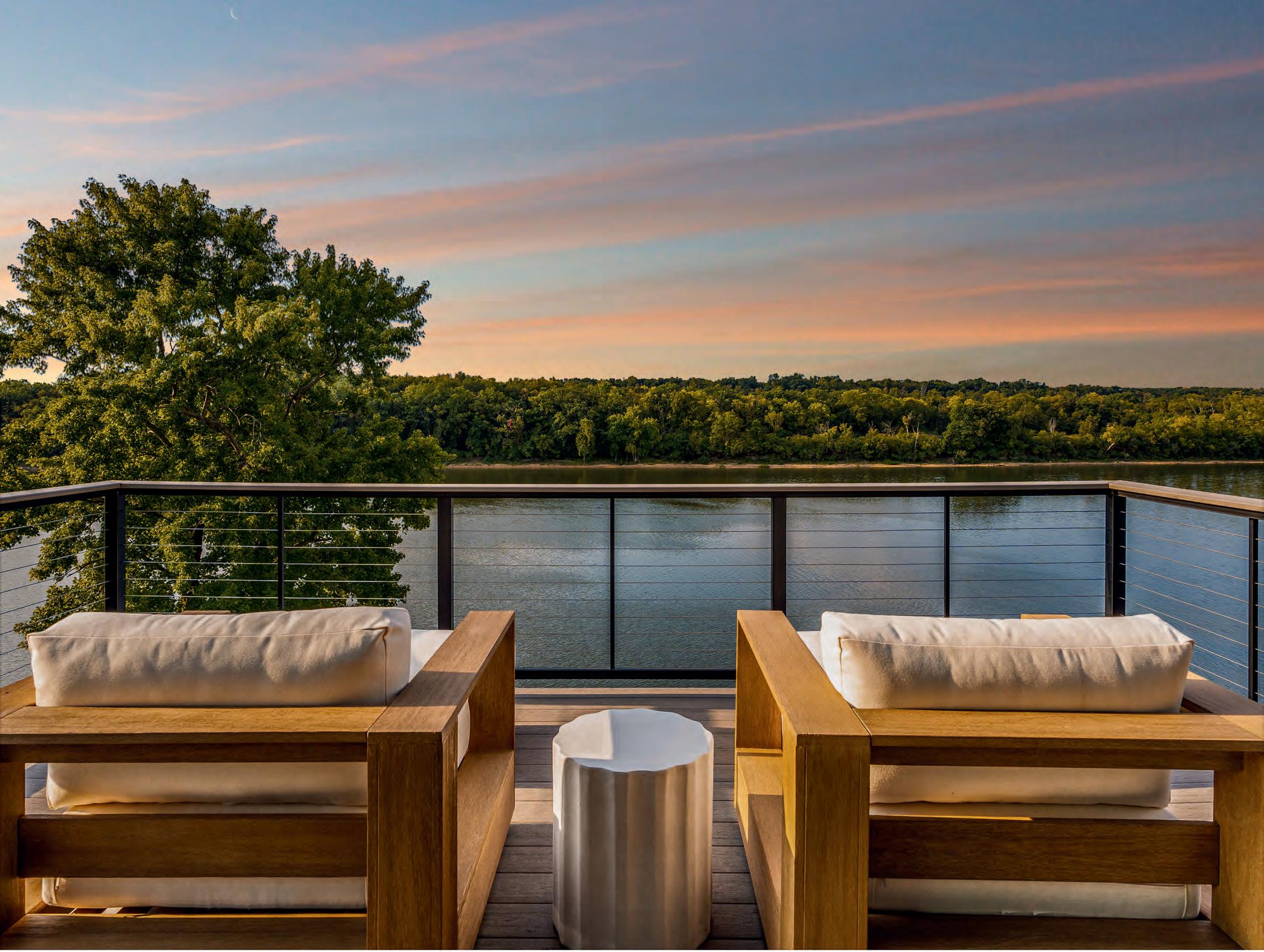

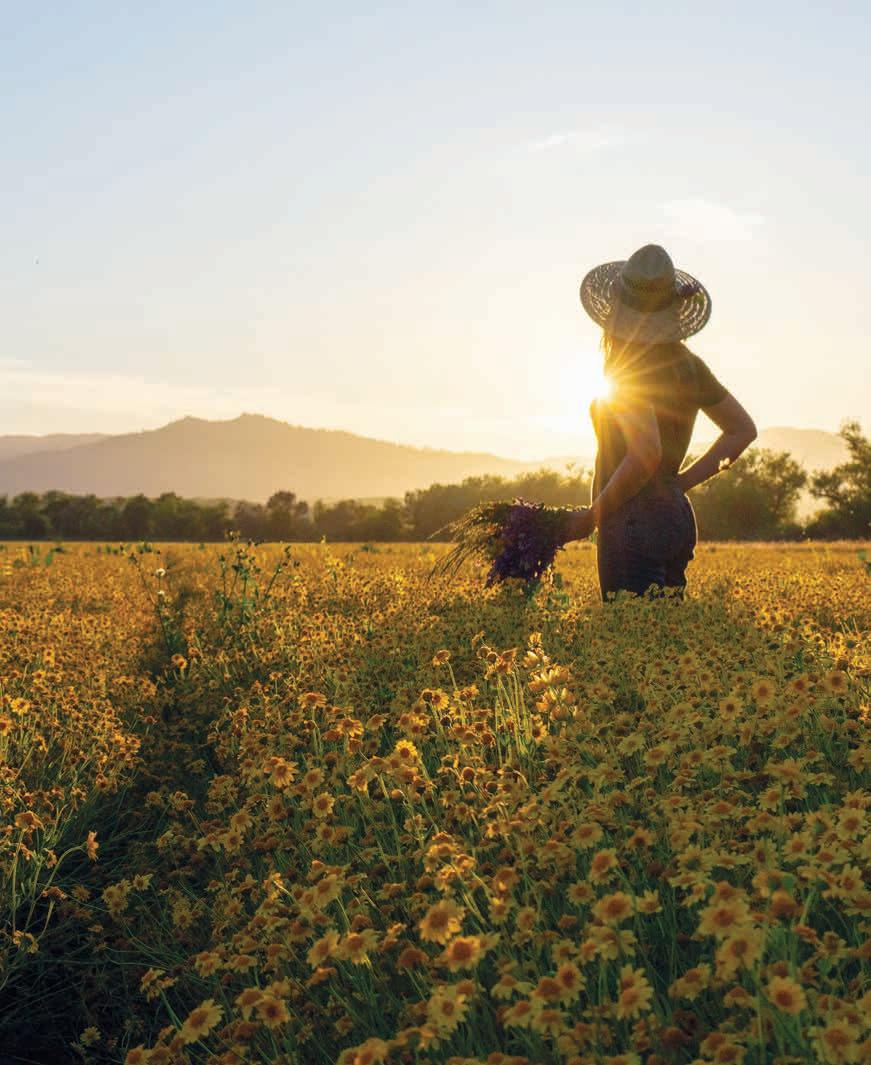
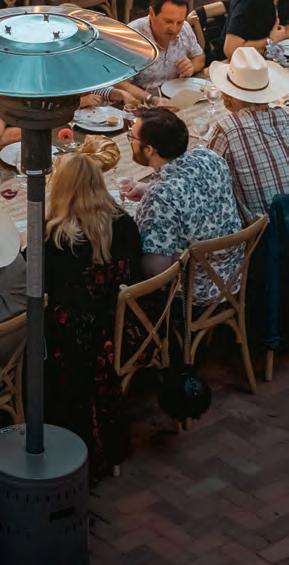
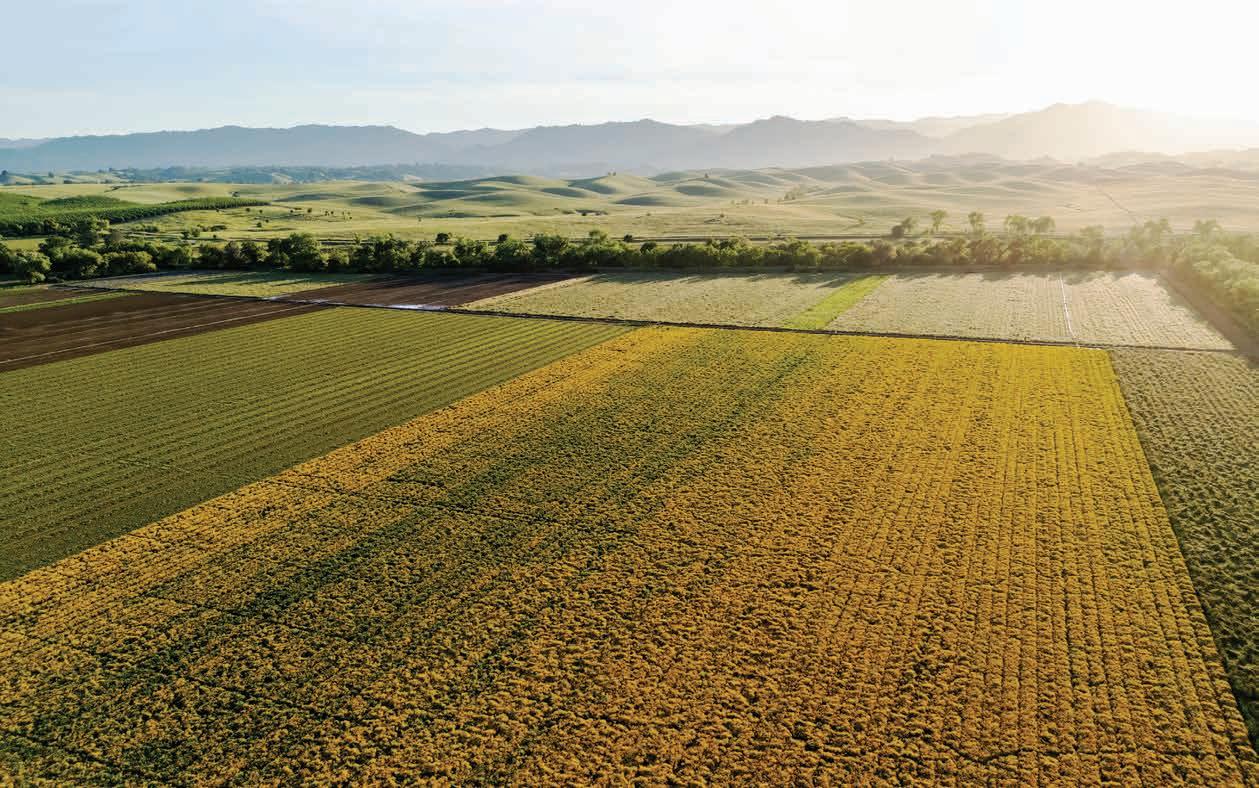
The sun sets on another glorious day at native seed producer Hedgerow Farms.
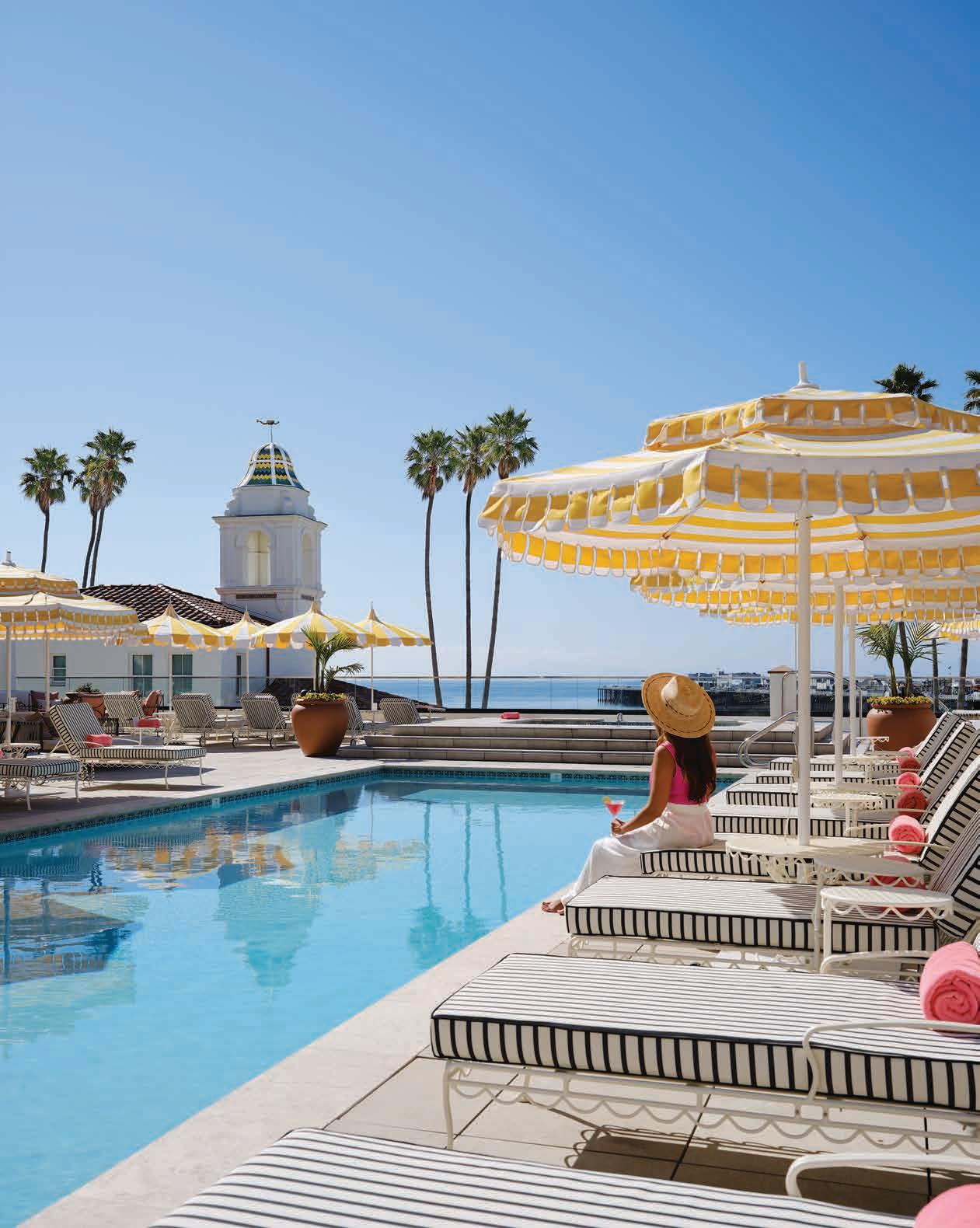
5 S tylish new seaside stays redefining the California summer escape.
Home & Garden
11 Wide Open Spaces
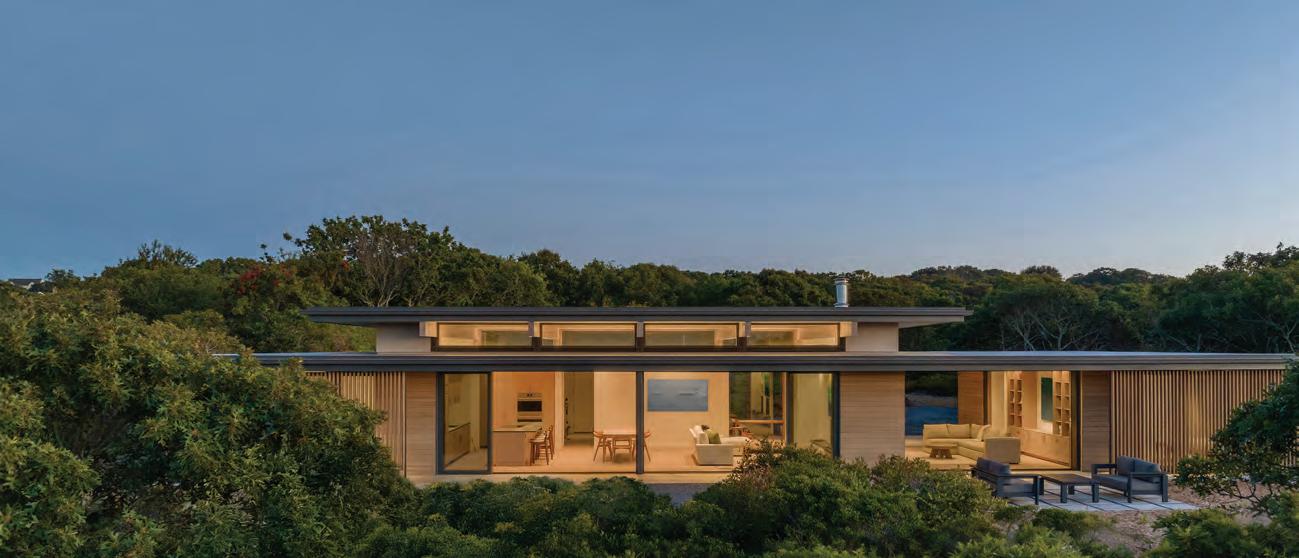
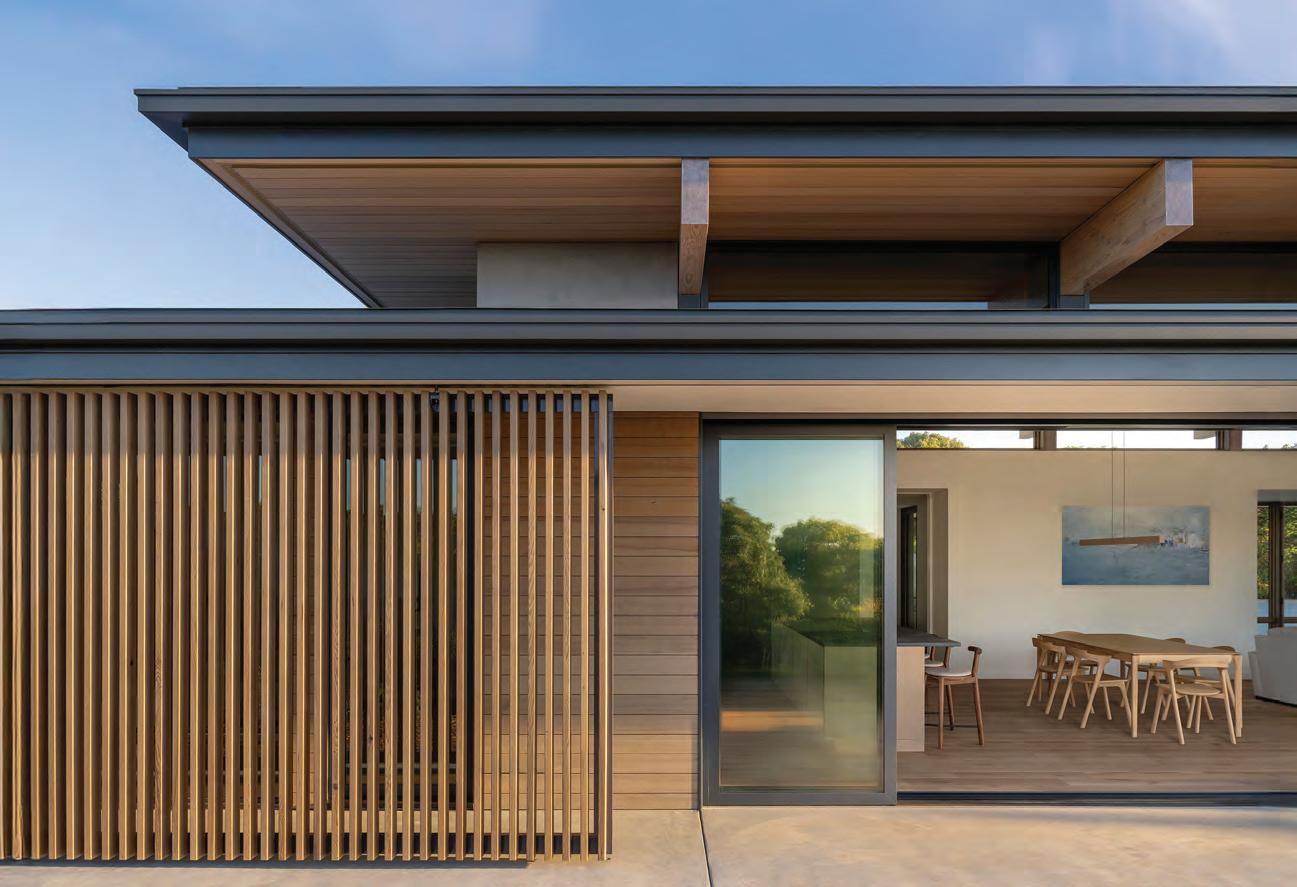
A Montecito family takes full advantage of their access to the great outdoors in a home built for multigenerational gatherings. 24 Banner Day at Sea Ranch
Designer Clara Jung, the color-obsessed Bay Area designer, celebrates her career with a new book featuring her own historic, boho-utopian NorCal retreat.
36 Checklist
Here’s how to keep your garden thriving through the height of summer.
42 Seedy Business
At a beloved Northern California grower, habitatminded flowers are reshaping what a sustainable American bouquet can look like.
52 Putting Down Roots
A winemaking couple with a penchant for warm modernism creates a dream home and a transportive tasting room in the rolling hills of Healdsburg.
Food & Drink 61 Cooking Through Fire
In Rooted in Fire, chef Pyet DeSpain shares bold, ingredient-driven recipes grounded in Indigenous traditions, built for grilling season and beyond.
67 66 Things to Do on Route 66
The ultimate Sunset road trip: neon motels, lava fields, teepee curios, desert diners, ghost towns, trading posts, and the new Americana stretching from California to New Mexico.
74 Ted Turner's Western Wish
In Northern New Mexico, the late Ted Turner’s vision for a sustainable model of conservation lives on in a luxury
nature reserve that combines hospitality and hope.
88 Insider Guides
Local tastemakers share their favorite places to eat, drink, and explore in Mount Shasta, the Big Island, and Tofino, British Columbia.
96 Natural Talent
The acclaimed adventurer and photographer Pete McBride reflects on rivers, public lands, and what the modern West still has left to protect.

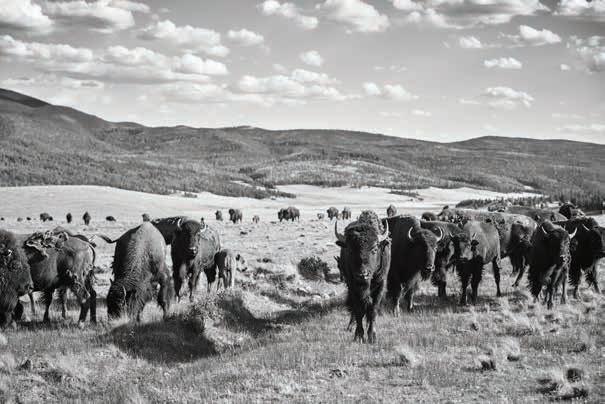
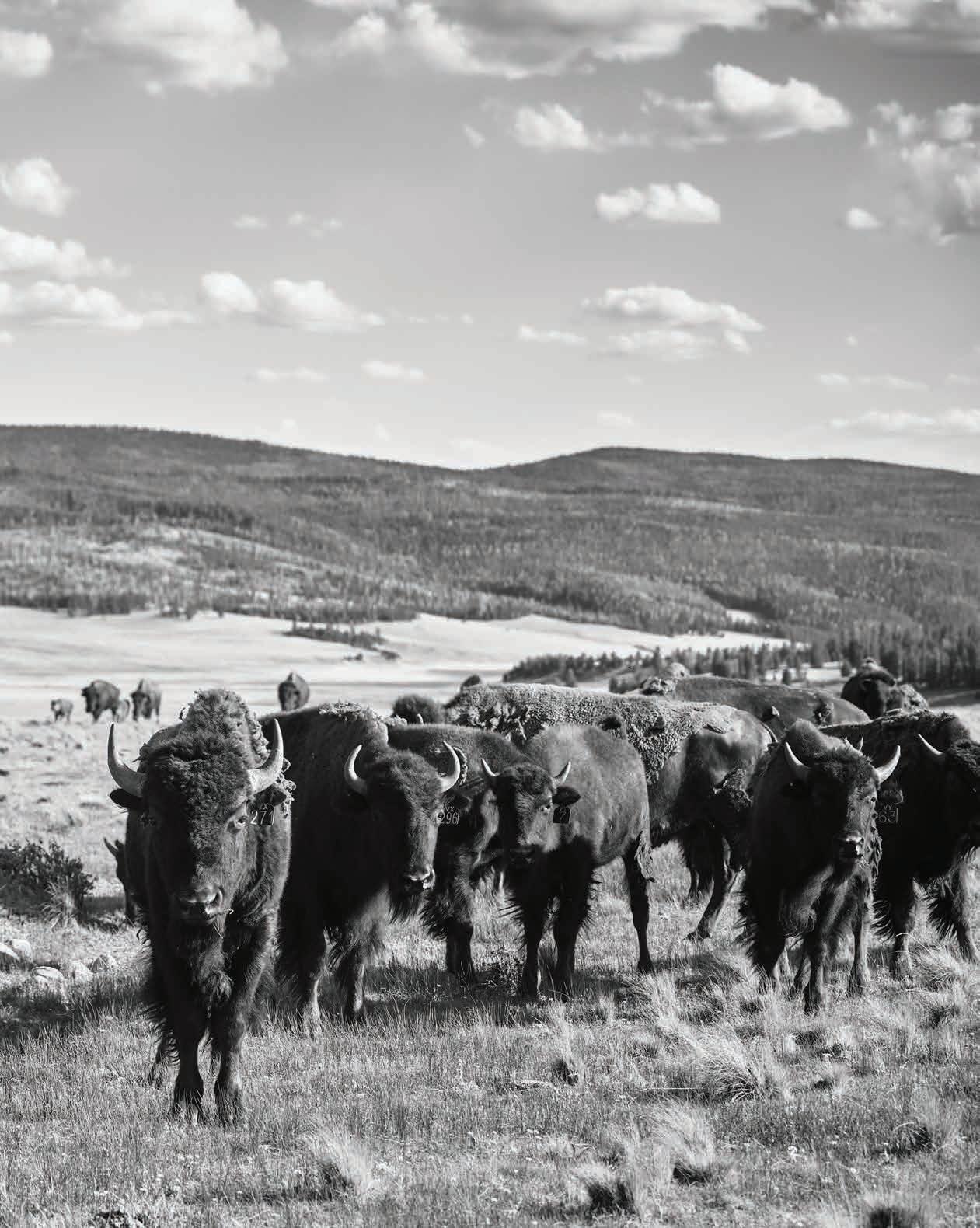
As you plan your late-summer travels and consider how to spend those last precious weeks of long evenings and slightly lighter inboxes, may I suggest a stay at Vermejo? Vermejo is the name of the late Ted Turner’s vast conservation reserve and resort on the Colorado–New Mexico border. I was fortunate enough to spend several days exploring its astonishing 500,000 acres of mountains, grasslands, forests, and streams. I left with a renewed belief in something easy to forget: how fragile and interconnected the living world really is. For that, I have Ted Turner—or simply Ted, as he insisted people call him—to thank. Turner, who died earlier this year after living with Lewy body dementia in the final chapter of his life, understood something many struggle to reconcile. Admiring nature isn’t enough. Protecting it requires resources, commitment, and a willingness to think in decades, if not centuries. At Vermejo, Turner’s philosophy of bettering us as humans by understanding the interconnectedness of the natural world is visible everywhere. Bison, which Turner helped bring back from near extinction, once again roam the grasslands. Forests are managed as living systems. What I remember most isn’t a conservation strategy, but a feeling of being one with nature—and, in turn, more responsible for it. I recall: Days of hiking and exploring without once hearing anything louder than wind moving through the pines. Climbing a steep slope of loose scree to reach a ridgeline with views stretching for dozens of miles. Catching sight of a distant contrail and realizing I didn’t want to go home. In many ways, Vermejo is the West in miniature: grasslands, forests, rivers, wildlife, ranching, recreation, and the perpetual challenge of balancing human needs with the needs of everything else that calls this place home. The West has always been a place of grand experiments. Some have extracted. Others have restored. Vermejo stands as a reminder that conservation is not simply about preserving what remains. It’s about rebuilding what was lost and stewarding what we still have. As I wandered its trails, I found myself returning to a simple thought: the most meaningful legacy isn’t simply what we take from a place. It’s also what we leave behind. For the full story, read “Ted Turner’s Western Wish” on page 74.
—Hugh Garvey, EDITOR-IN-CHIEF

CHAIRMAN & PUBLISHER
Michael A. Reinstein
EDITOR-IN-CHIEF
Hugh Garvey
DIGITAL DIRECTOR
Sarah Yang
DESIGN DIRECTOR
Brian Walker
PHOTO EDITOR
Christine Bobbish
STAFF PHOTOGRAPHER
Thomas J. Story
TRAVEL EDITOR
Krista Simmons
SOCIAL MEDIA EDITOR
Kristin Guy
HOME & DESIGN EDITOR
CONTRIBUTING
Christine Lennon
DIGITAL PRODUCER/NEWSLETTER EDITOR
Nicole Clausing
SENIOR DIRECTOR, PRODUCTION
Jamie Elliott
Sales & Marketing
HEAD OF CUSTOM EVENTS AND PROGRAMS
Tracy Seng
VP, PARTNERSHIPS
Kathleen Craven
HEAD OF TRAVEL
Pamela Coffey
SVP, HEAD OF OPERATIONS
Kelly Facer
SENIOR DIRECTOR OF AD OPERATIONS
Mindy Morgan
ACCOUNT MANAGER
Megan Giordano
SUNSET
P.O. BOX 15688 BEVERLY HILLS, CA 90209 SUNSET.COM

@Sunset @sunsetmag
SunsetMagazine pinterest.com/SunsetMag
Copyright ©2026 Sunset. Sunset is a registered trademark. All rights reserved. Reproduction in whole or in part without written permission is prohibited. No responsibility is assumed for unsolicited submissions. Manuscripts, photographs, and other material submitted to P.O. Box 15688, Beverly Hills, CA 90209 can be acknowledged or returned only if accompanied by a self-addressed, stamped envelope. For assistance with your Sunset subscription, call 1-800-777-0117 or email support@sunset.com.
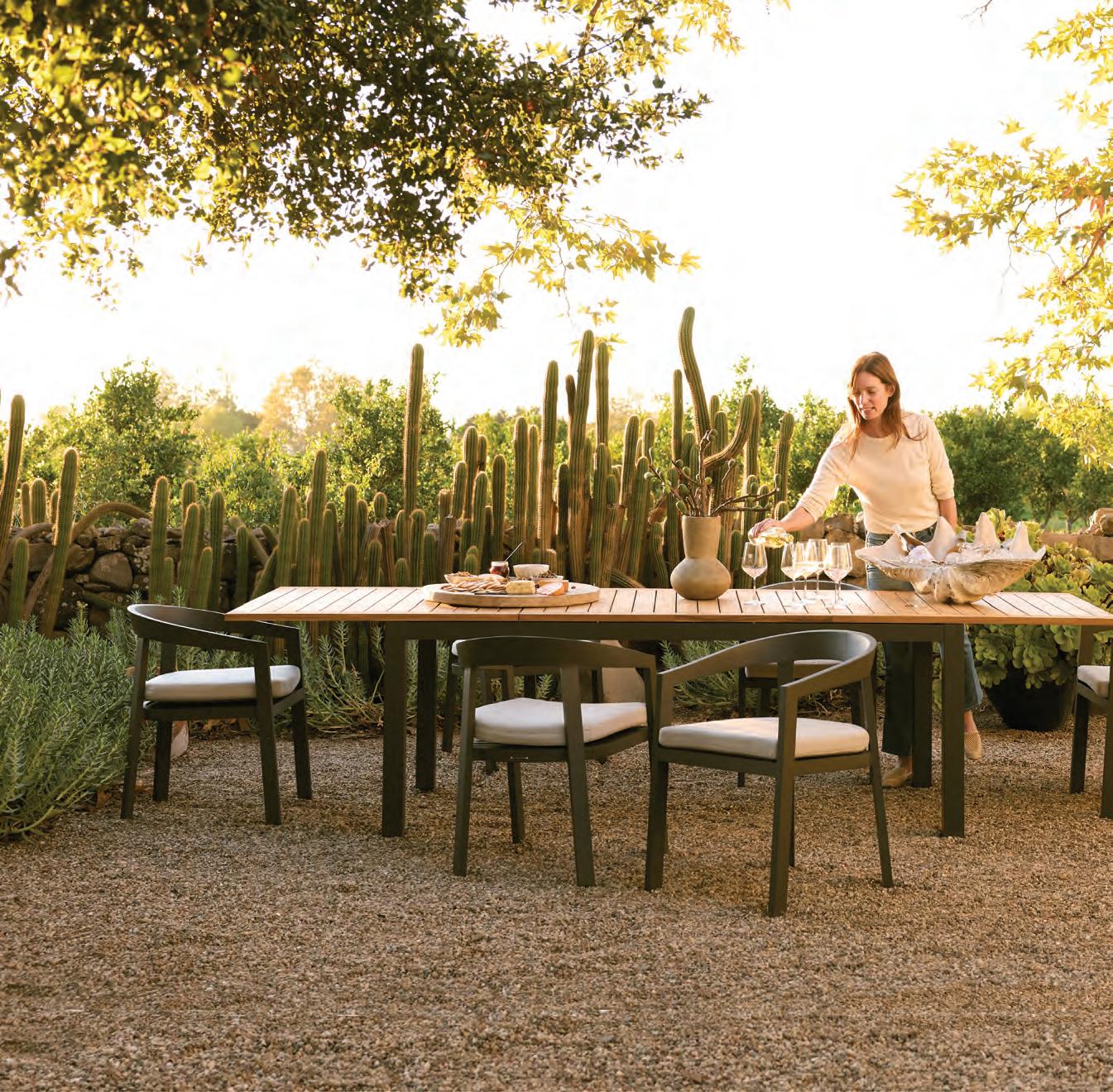

TERRA COLLABORATES WITH AN EXTRAORDINARY TEAM OF DESIGNERS, MANUFACTURERS AND ARTISANS ACROSS THE GLOBE TO CREATE EXCEPTIONAL OUTDOOR FURNISHINGS. OUR PREMIUM QUALITY AND CONTEMPORARY EUROPEAN DESIGNS ARE IN-STOCK AND READY TO TURN YOUR OUTDOOR SPACE INTO A PERSONAL SANCTUARY.





Enjoy a 3-night Stay & Save package that includes 25% off train travel to the canyon, overnight stay in Grand Canyon National Park, and two nights at Grand Canyon Railway Hotel in Williams, Arizona.



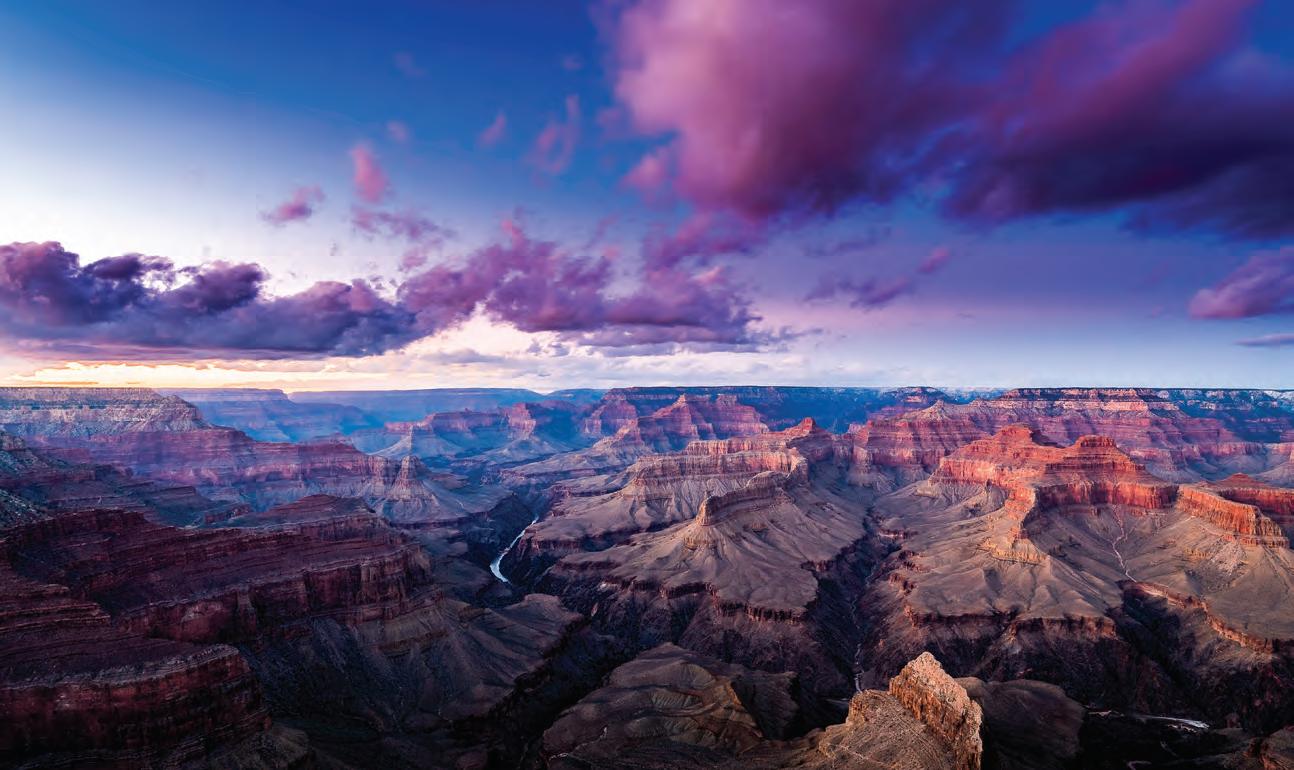

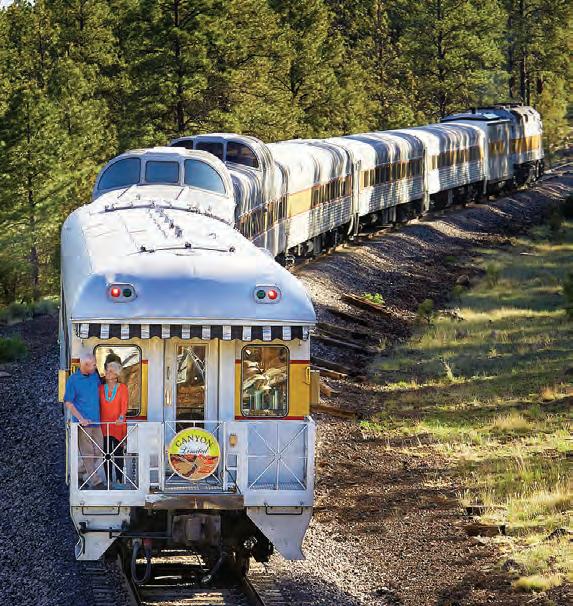







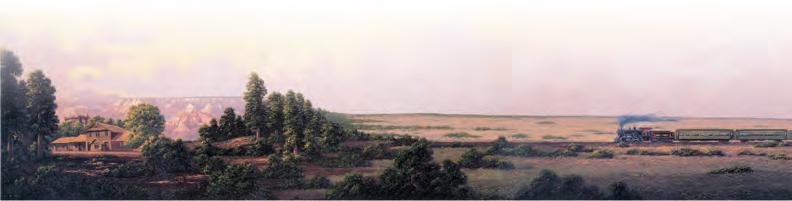
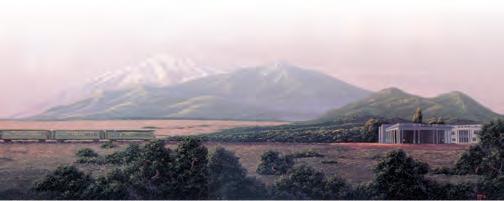
Since 1901, this railway has carried travelers to the edge of the Grand Canyon the way it was meant to be seen— unhurried, in good company, in lovingly restored rail cars with living history riding alongside you. Serenading musicians and knowledgeable attendants make the ride as memorable as the destination. The canyon is timeless. Your trip there should be, too.
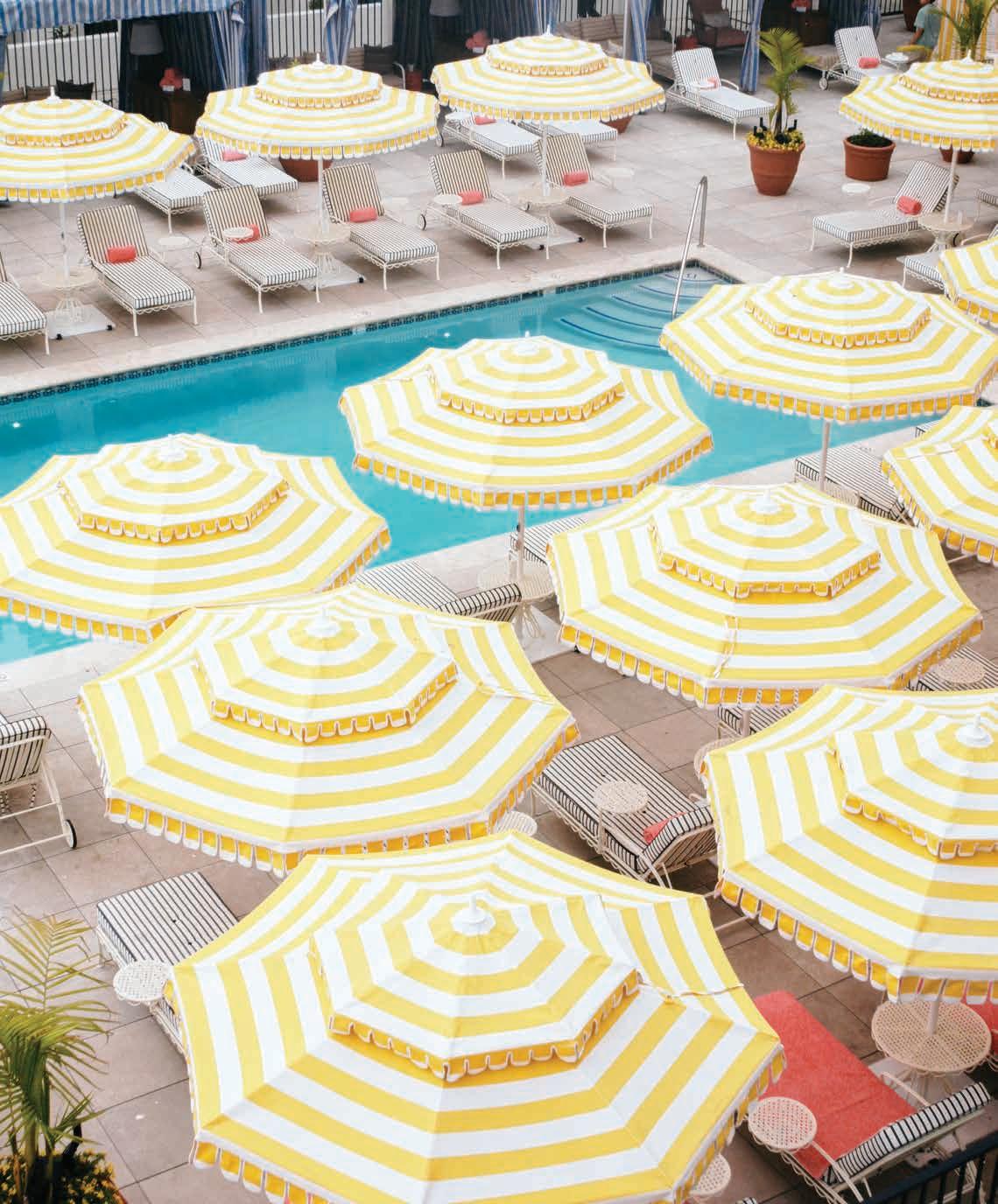
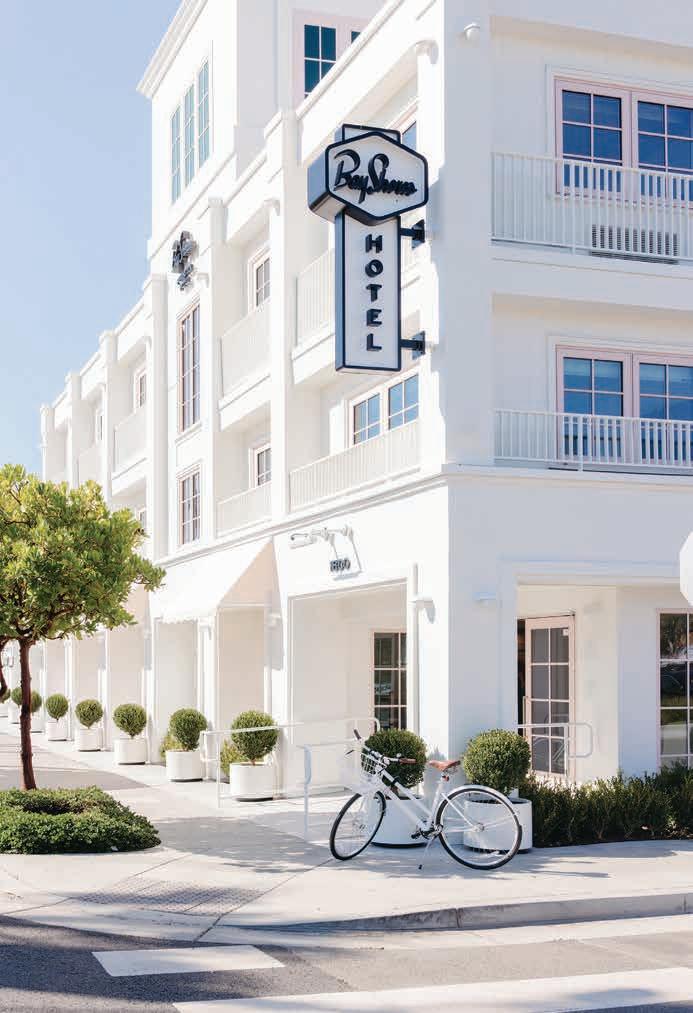
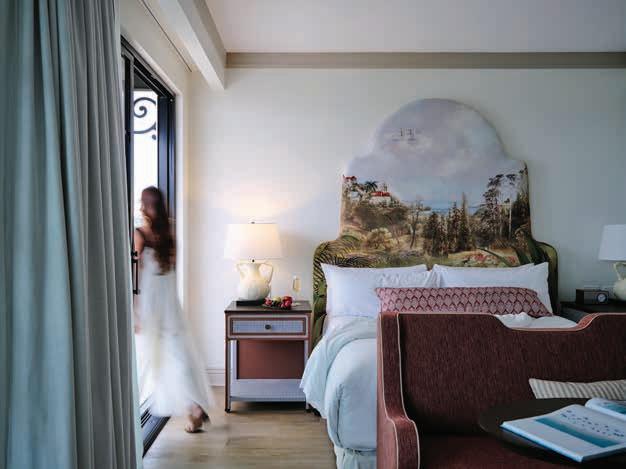
These are the hottest new hotels and resorts on the California coast.
Known for its redwood groves and peeling surf breaks, Santa Cruz has long lacked upscale accommodations but this new, ultra-luxe retreat situated right by the Boardwalk is changing the narrative. The property strikes a perfect balance between high-end sophistication and a breezy beach chalet: you might find a lobby cocktail lounge reminiscent of London's finest hotels and a rooftop sauna with sweeping Pacific views, yet the atmosphere remains entirely unpretentious. It’s a choose-your-own-adventure sort of stay where you can book an indulgent beach butler to manage umbrellas and bespoke picnics, or simply head to Low Tide for fish tacos and smash burgers while still sporting salty hair and sandals.
Anyone who’s driven down 101 has noticed the sleepy little beach town of Pismo, which until now hasn’t had any boutique stays to speak of. The property aims to connect deeply with the coastline in uniquely quirky ways, from in-room binoculars and watercolor kits for seaside sketching to an exclusive Whale Watch Dispatch service that sends real-time text alerts for whale and dolphin sightings.
With complimentary kites and bikes, pop-up pizza parties, a detective library themed after the episodes of Murder, She Wrote that were filmed at the hotel years ago, and views on views on views, this modern lodge is a truly unique offering on this quiet nook of California coastline.
It’s difficult to imagine a more picturesque town than this Monterey County seaside shire, and competition is surely stiff when it comes to charming places to stay. Heron’s Lodge delivers in spades with its intimate 35-key property with groovy, earthy interiors by Freudenberger Design Studio.
True, we are Palihouse stans and the brand can practically do no wrong, but this OC outpost stands out with its pet-friendly, palm-tree-adorned grounds just steps from Treasure Island Beach and Goff Cove. Did we mention there’s a complimentary champagne continental breakfast included in your stay?
Home to the annual monarch migration and some of the Central Coast’s most charming, high-value real estate, this Spanish revival property sets itself apart from the area’s ubiquitous (and albeit charming) Victorians not only in aesthetics, but in its programming, with daily yoga and sound baths, complimentary wine hours, and ultra-pet-friendly spaces for furry friends to unwind, too. It’s easy to see why

Innovation after innovation, Hestan leads again.
Thoughtfully engineered sealed rims lock out moisture to protect the core and preserve performance for a lifetime—because innovation isn’t about adding features, it’s about eliminating problems.
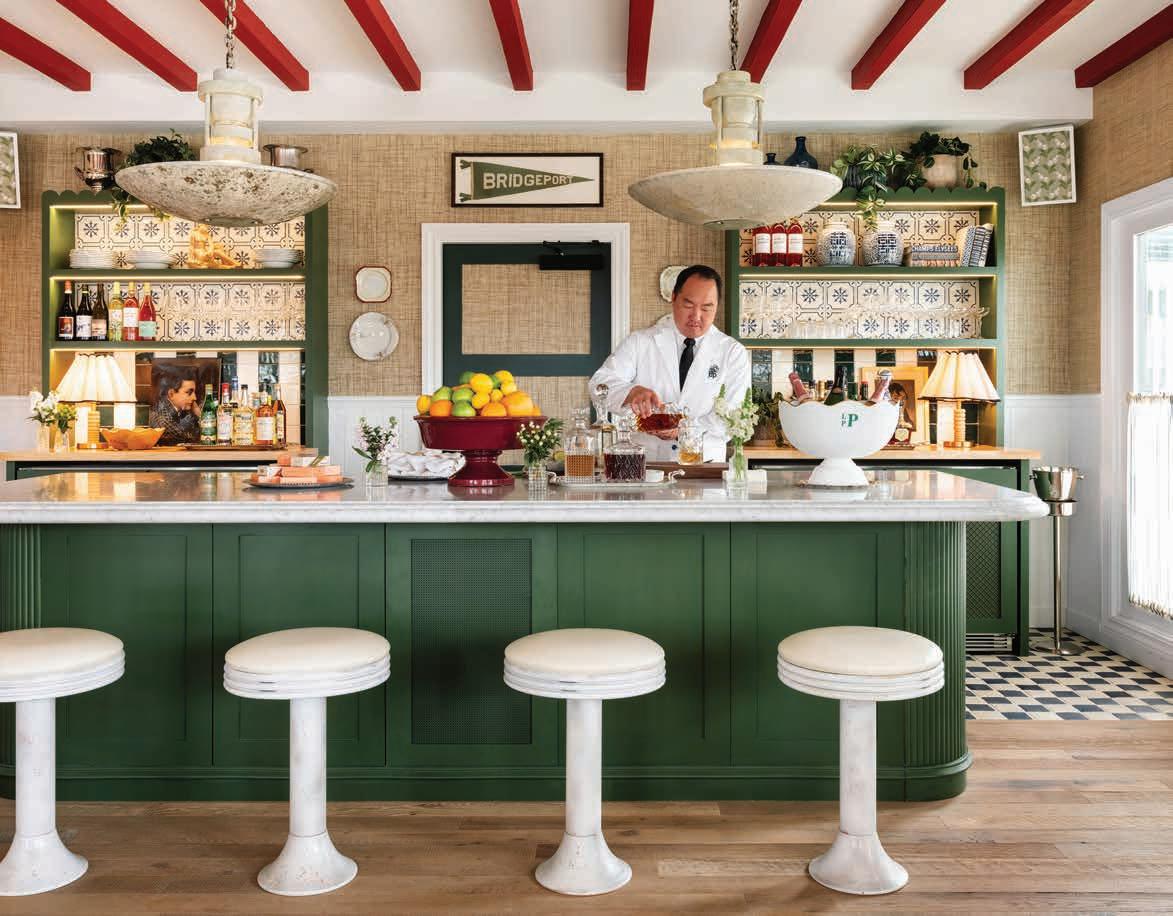
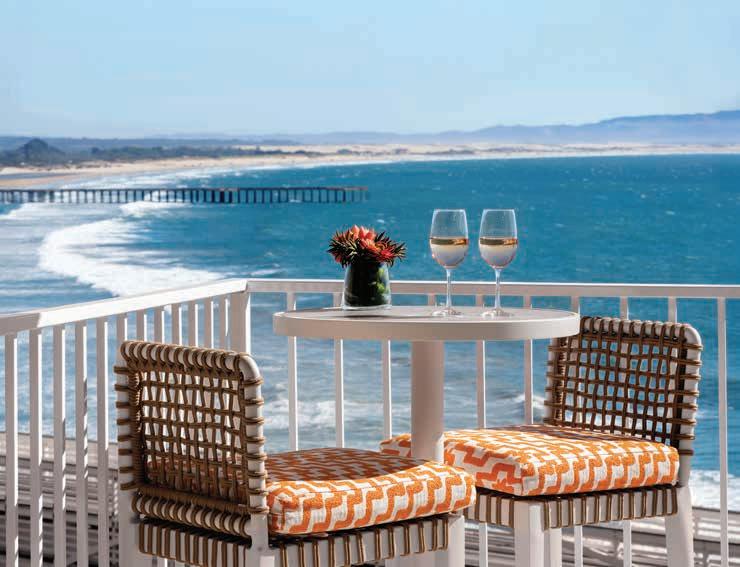
authors like Robert Louis Stevenson and John Steinbeck used to spend time here.
This relaxed newly renovated beach retreat near the Funk Zone is all class, offering ocean views and beach cruisers to explore it all in style. When you’re back on property, unwind with wine by the fire pits or a round of bocce ball while the kids play with games from the Discovery Cabinet, a treasure trove of books, colored pencils and activities to borrow during your stay.
This old surf motel located inside one of So Cal’s most exclusive enclaves makes your beach stay turnkey. Skip the stops at stores and outfitters and opt in for a plethora of beach rentals and an extensive cooler menu to tote to the beach. After soaking up the rays and local brews, book in for discounted treatments and sauna sessions at the property’s partner, Wren Wellness.























What is RV insurance?
How can RV insurance protect you?



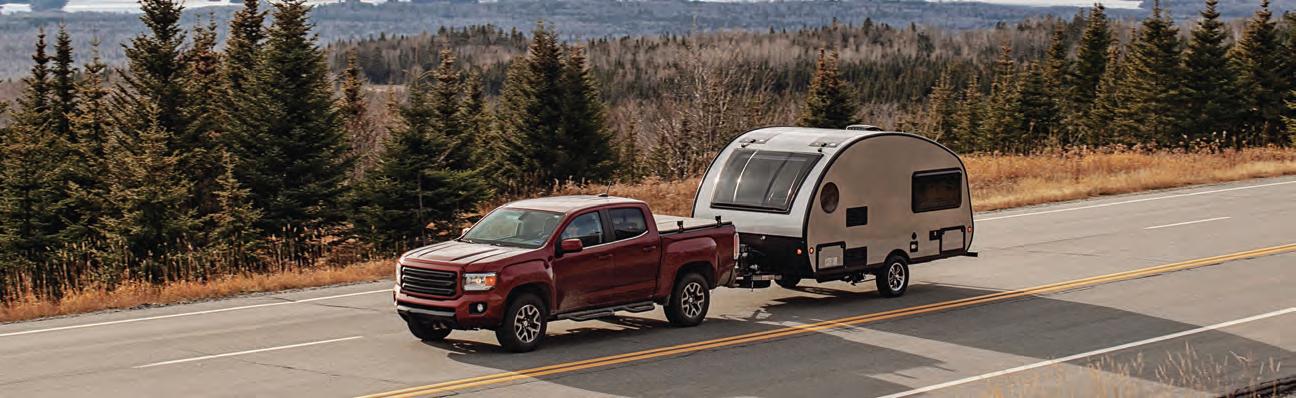

















Do you really need RV insurance on your travel trailer?
As RVers, we know the allure of the open road and the freedom it offers. However, with freedom comes responsibility, including the important decision of securing insurance.
RV insurance is designed to cover various types of RVs, including travel trailers, toy haulers, motor homes, fth wheels, and camper vans. While liability insurance is not required for most travel trailers, having RV coverage could bene t you and your adventures.
• Protection against accidents: May provide nancial protection for repair costs, medical expenses, and liability in case of an accident.
• Coverage for theft and vandalism: Could help with repairs or replace your trailer with less out-of-pocket expenses if it’s lost or stolen.
• Natural disasters and weather events: May cover the cost of damage from storms, oods, or other natural disasters.
Is your travel trailer covered under your home or auto insurance?
While your home or auto policy can protect your trailer in certain instances, it can also leave you with gaps in your coverage.















For example, your auto policy may only cover your trailer while you’re on the road, not if you’re parked or at a campsite. The same goes for home insurance—if you’re on your home’s property it might be covered, but damage from a storm at a campground wouldn’t be.
What specialized coverages does Progressive offer?
Progressive offers a variety of specialized coverages that aren’t included on a standard auto insurance policy like:
• Roof Protection Plus®: Covers repairs or replacements for RV roofs, including if the cause is wear and tear.*
• Pest Damage Protection SM: Covers the cost of repairs from pest infestations.*
Having RV insurance gives you con dence you’re protected no matter where you roam. From remote national parks to bustling campgrounds, RV insurance ensures you have the support and nancial protection you need if something goes wrong.
While insurance for your travel trailer may not be legally required, it’s a crucial investment in protecting your RV, nances, and peace of mind.
Scan to get a quote in as little as 4 minutes.
to learn more.

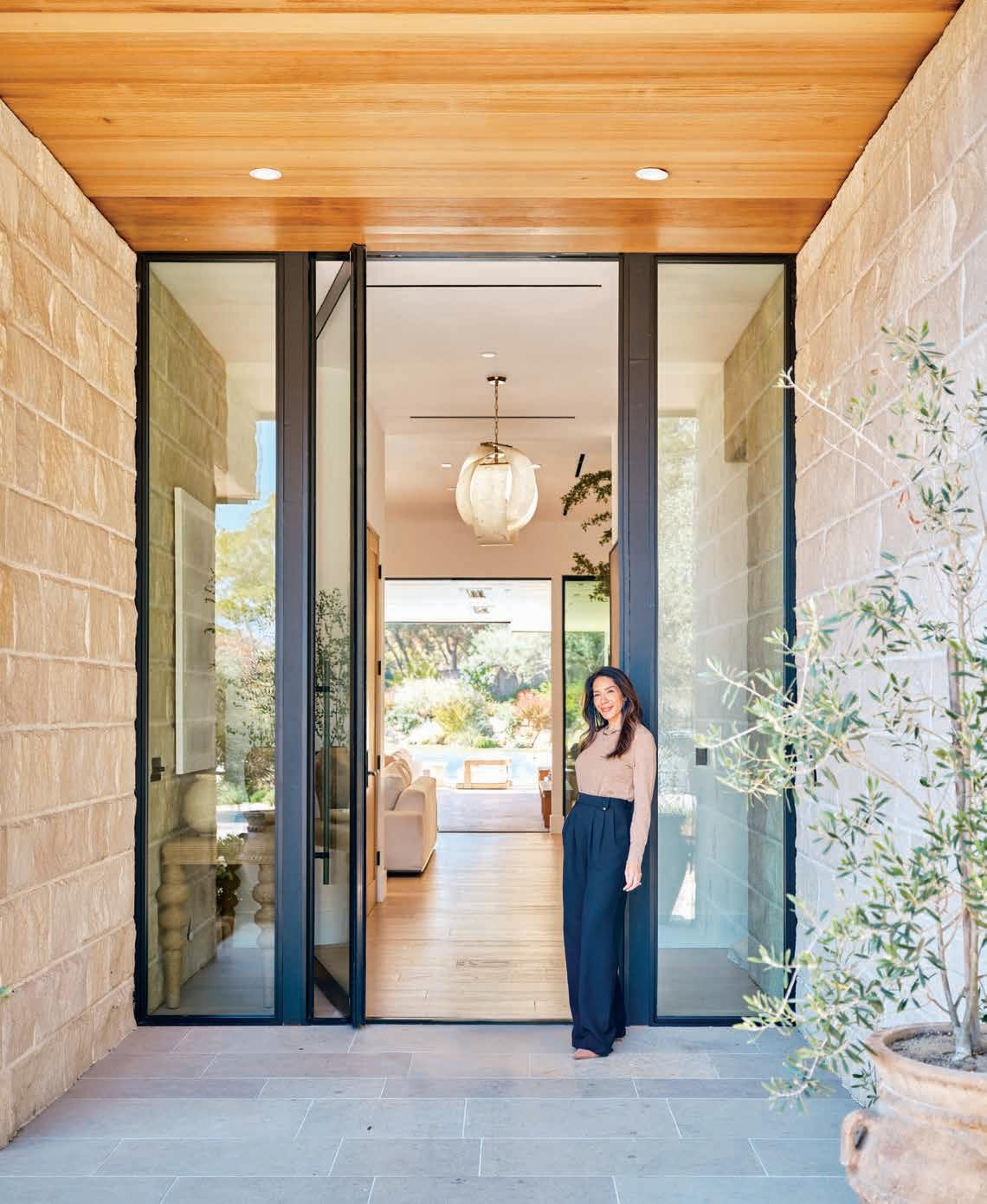
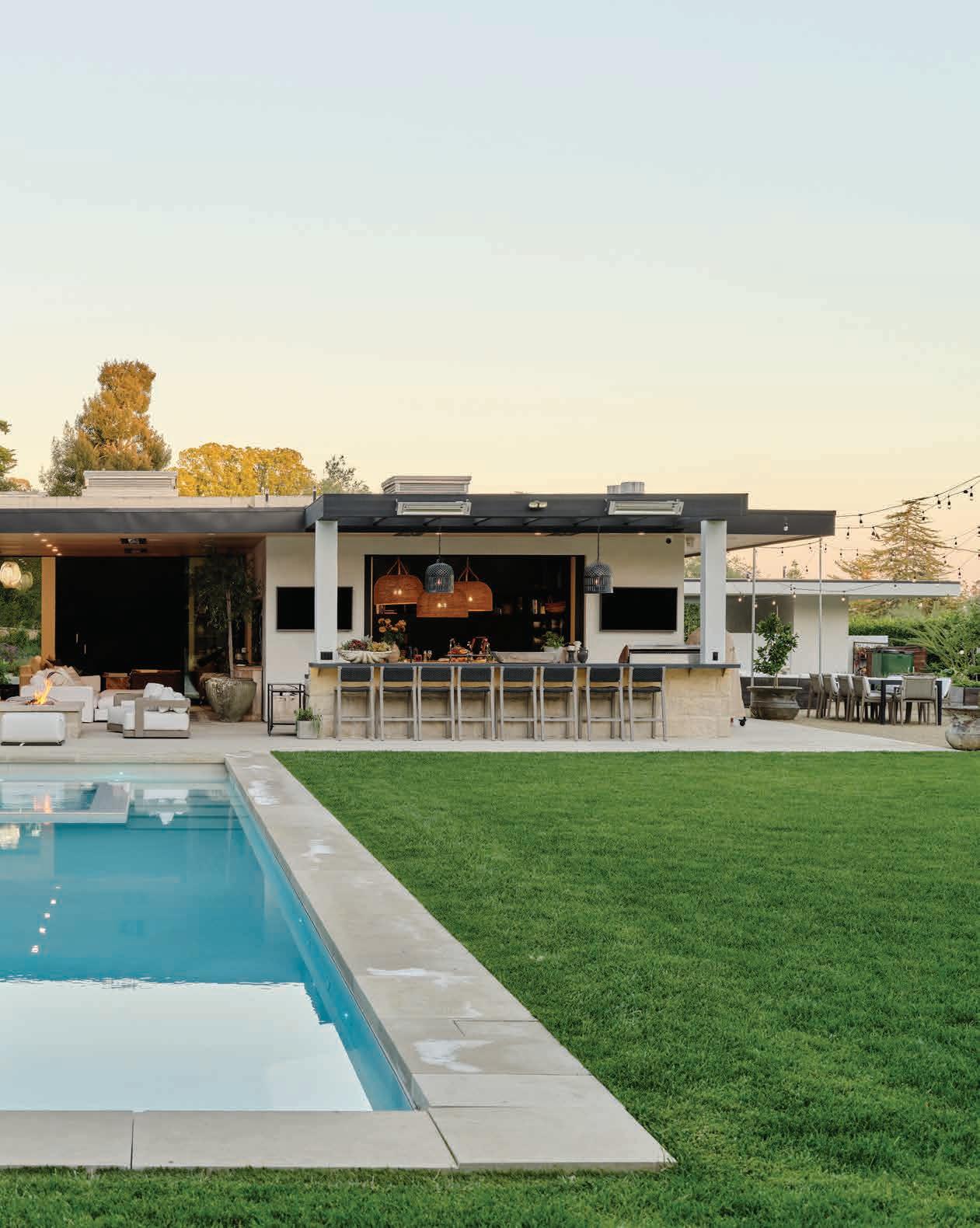
Thanks to a home renovation that created an expansive open-air living and dining room, a Montecito family takes full advantage of their access to the great outdoors.
Story by CHRISTINE LE NNON
WWhen Los Angeles-based designer Sarah Akbary was hired by Cate and Matt Stoll, a Santa Barbara-area couple to help renovate their new home, the clients’ priority was family. Not just accommodating their four active teenagers, but also a brother and sister-in-law who live with their own brood of kids a few doors down the street, grandparents, myriad cousins, and friends-likefamily who they love to entertain whenever the opportunity arises.
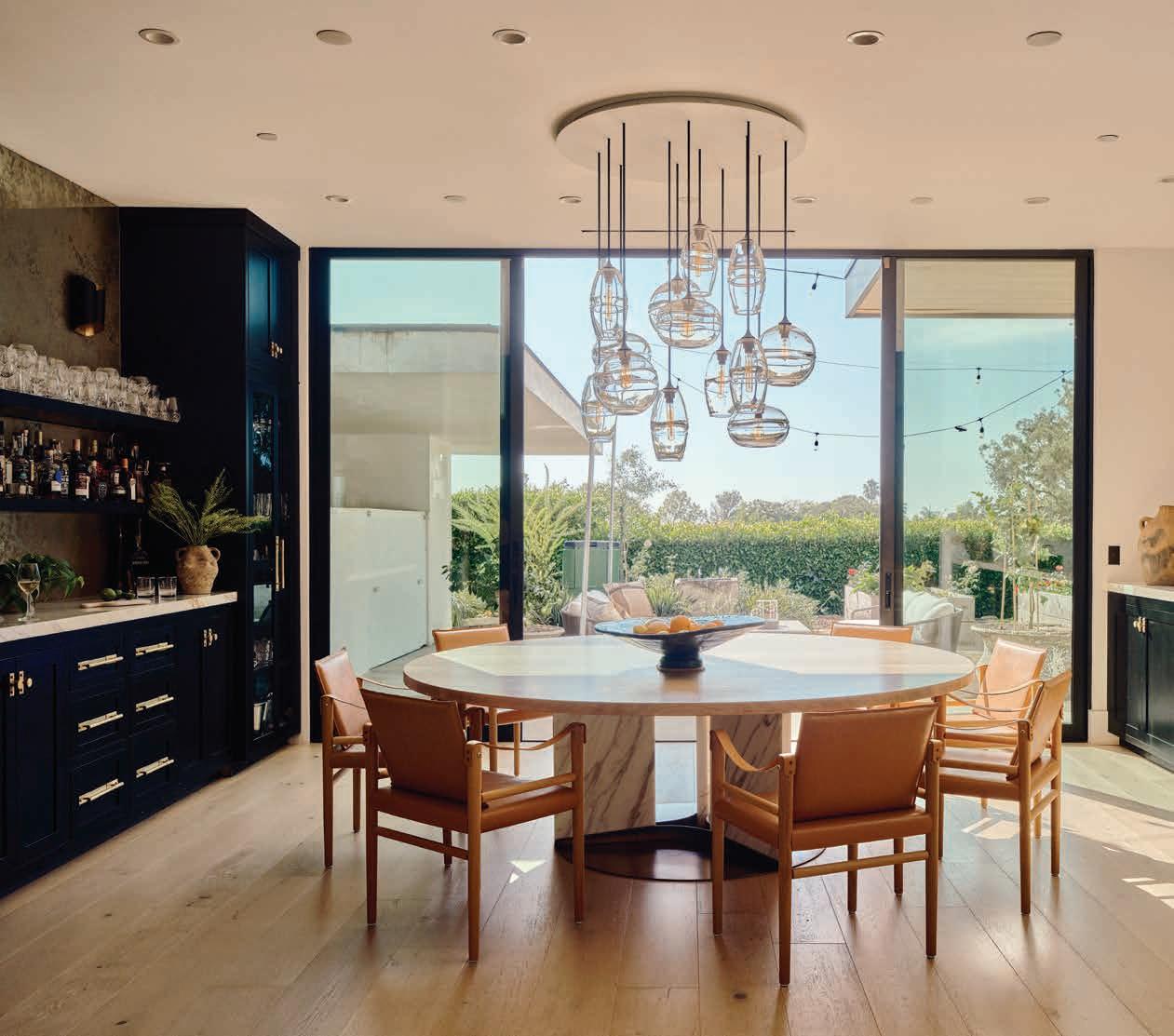
“They will host Thanksgiving and have up to 60 people at the house,” Akbary says. “They wanted a sophisticated open living space that fed into the dining room that has an 8-footround custom dining table. And then if that’s filled, the overflow goes to the outdoor living and dining spaces”
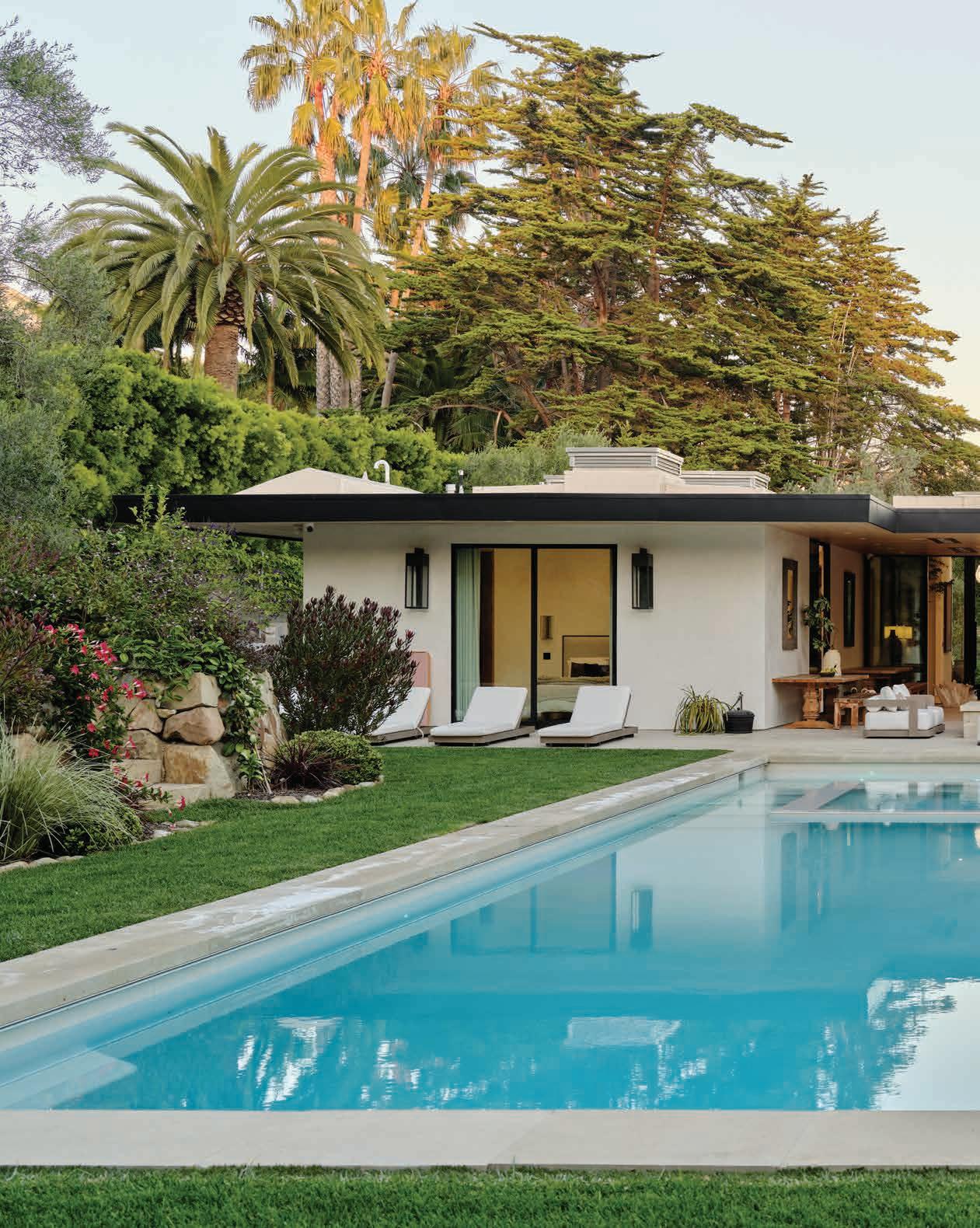
The Stolls were living across the street when the house came on the market a handful of years ago. They were drawn to its 10-foot ceilings, and the potential to open up the whole house to the great outdoors. The singlestory contemporary ranch house is sited on a rare, open, flat lot that makes it

easy to enjoy the frequent warm, sunny days and coastal breezes and create multiple dining, playing, and conversation zones throughout. “We moved the primary bedroom and bathroom to the front of the house from the back and put the kitchen in the back to open it up to the yard,” says Cate, who acted as the general contractor on the year-long renovation. Akbary was brought on to choose finishes, furnishings, and create a cohesive feel throughout. Two decisions they made as a team set this coastal-chic house apart from the pack in a neighborhood celebrated for inspiring design. The first was designing a massive, covered living room on the rear patio, outfitted
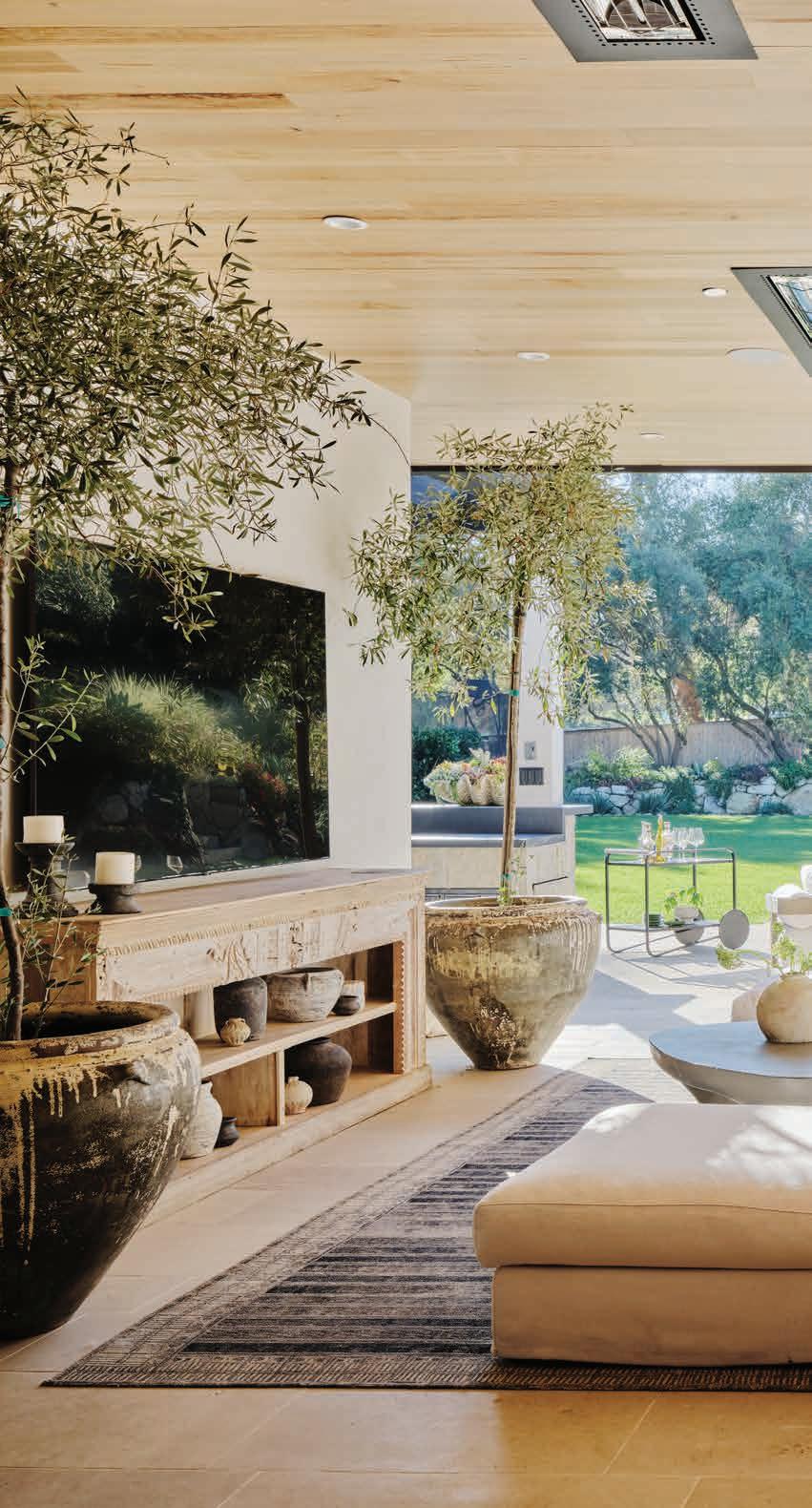
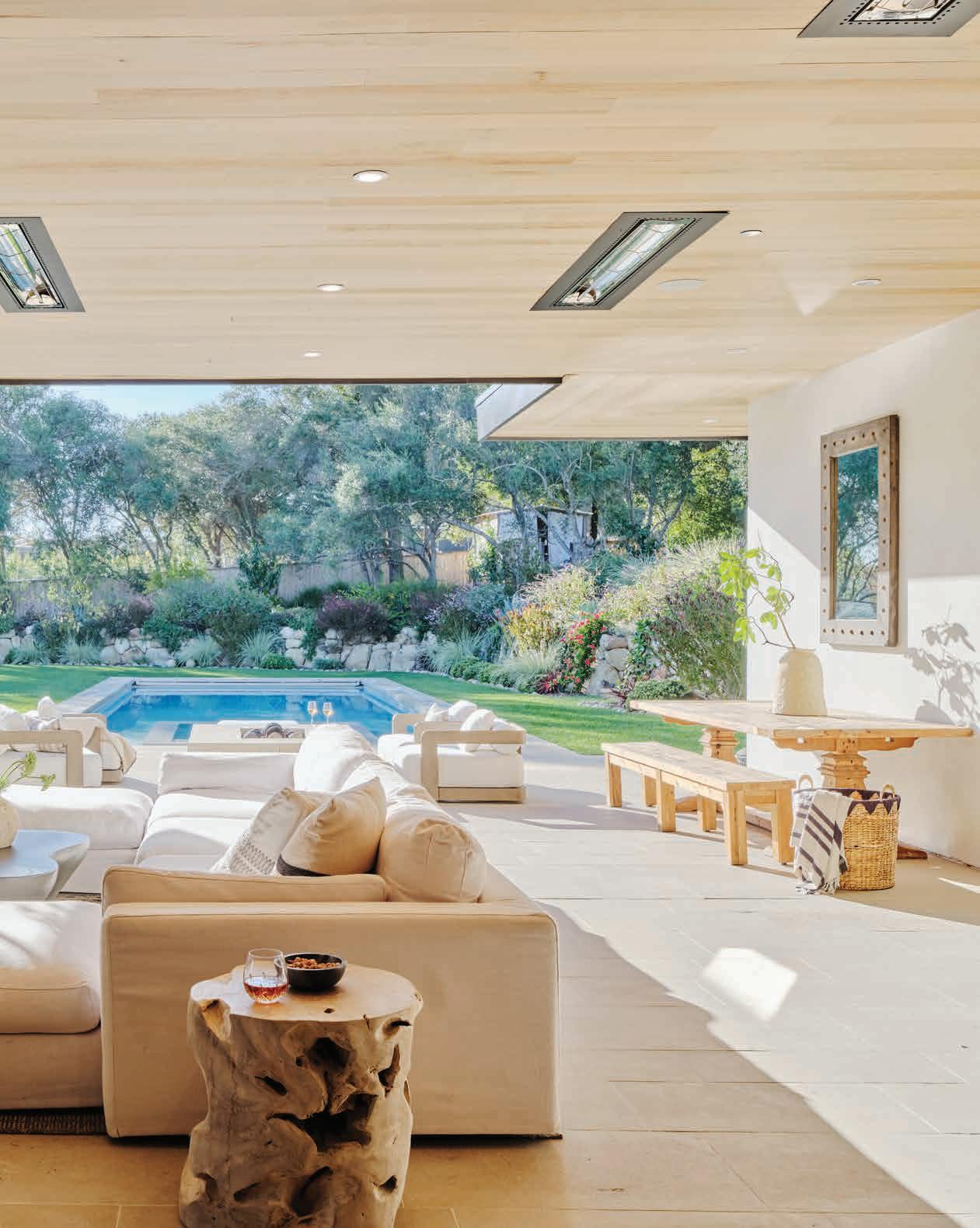
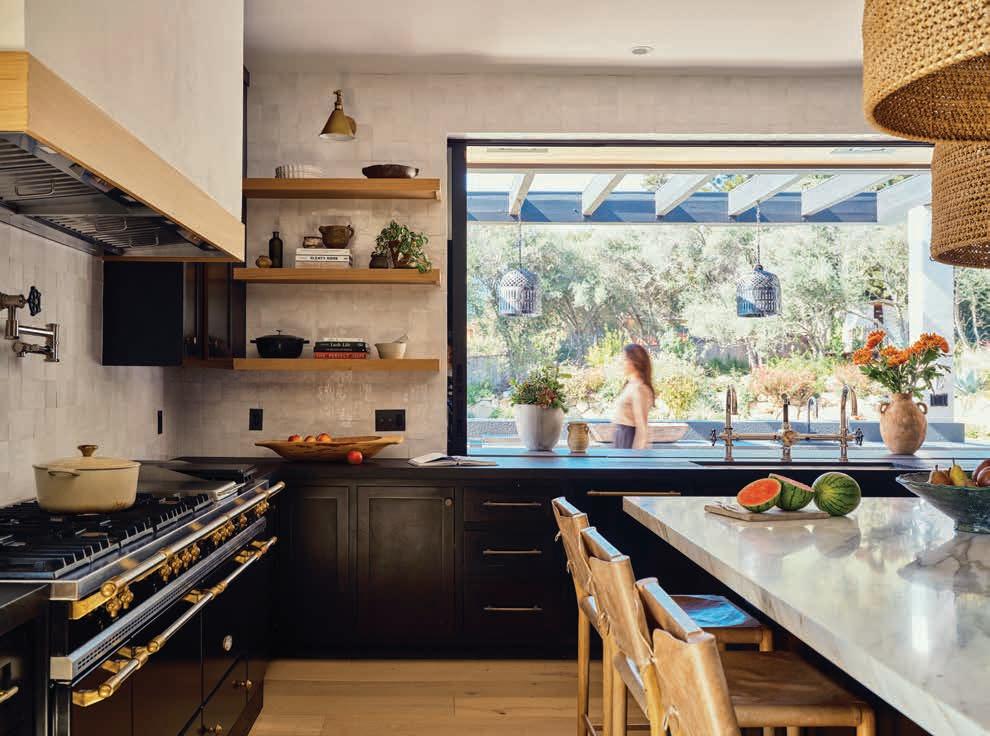
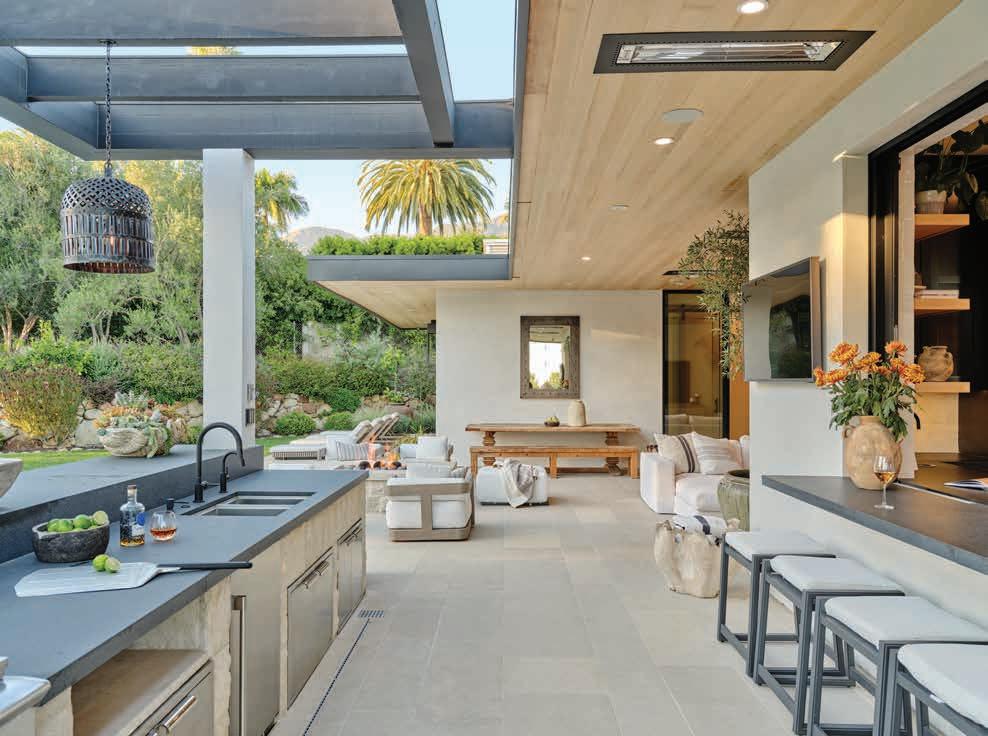
with interior-worthy seating, a television for game days and movie nights, and some versatile dining tables that double as consoles for a buffet. It practically doubles the square footage of family hangout area, and is a four-season multi-purpose space. “We hung outdoor mirrors, and the tables and chairs are outdoor furniture, but the sofa is an indoor piece. Cate just throws a tarp over it when the weather is bad,” says Akbary. The second critical move was to balance the pale interior palette with a dark, moody kitchen anchored by a large island, alder-wood custom cabinets stained black, True Appliances refrigerators, and a whopping 80-inch wide custom
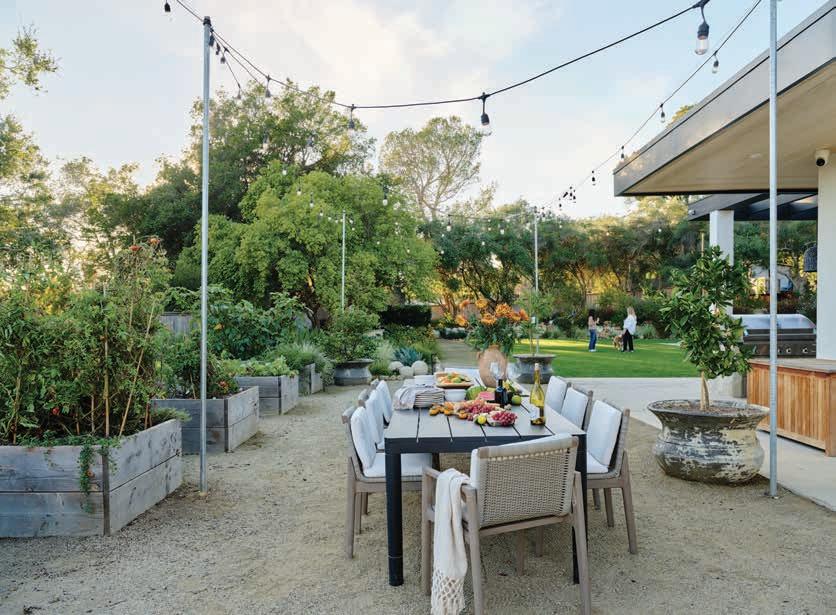
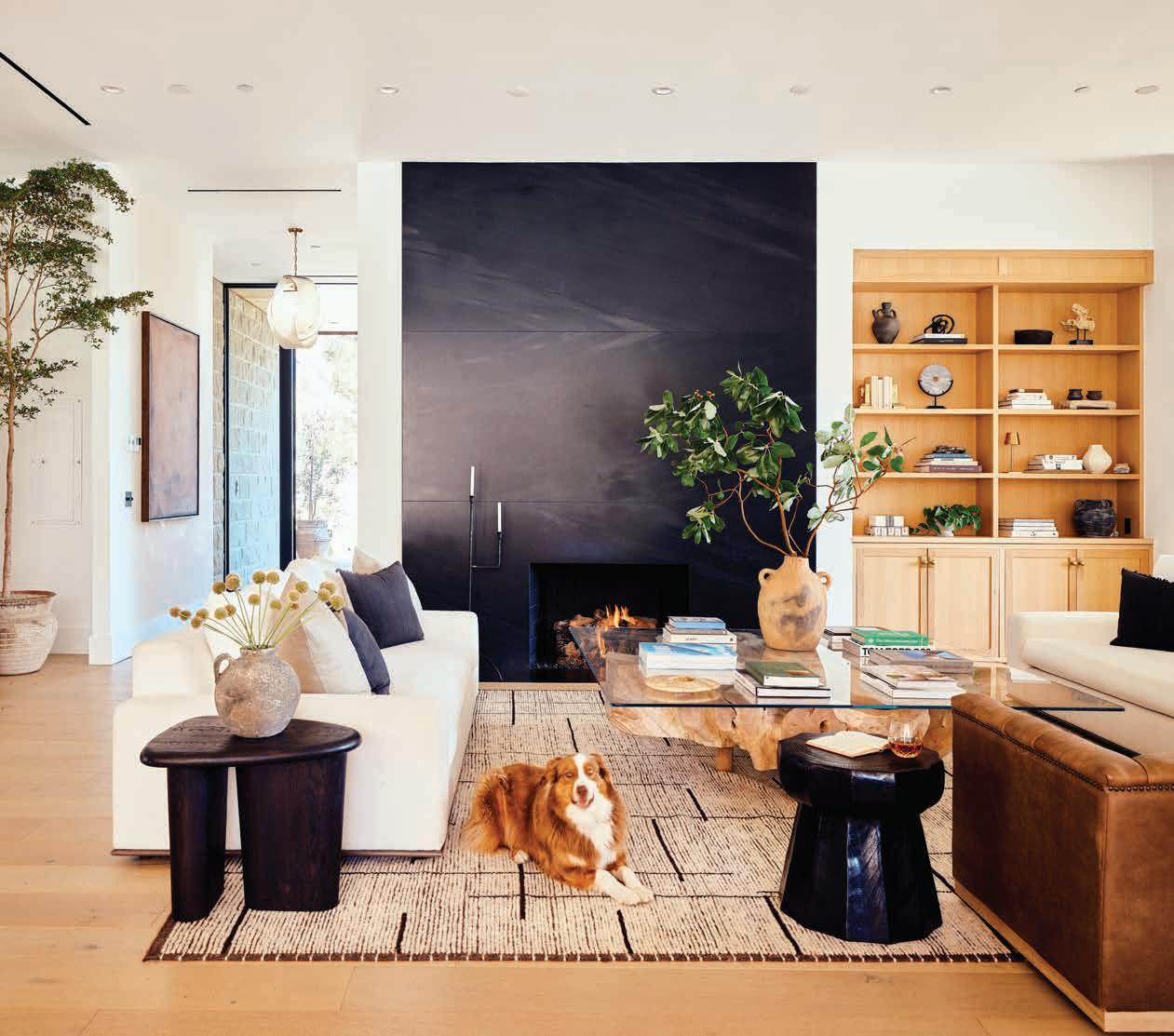
Above: Tall, black olive trees from Plant Daddies, two large, identical custom sofas, and a massive Indonesian teak coffee table base provide the size and scale needed for the voluminous living room. Opposite, top: Frequent entertainers and cooks, the owners requested a 44-inch Kohler sink and 80-inch wide Lacanche range in their high-functioning, well-used kitchen. Below: The large, flat backyard is spacious enough for 3 separate outdoor dining areas.
“They value quality family time above all else ... They’re always getting together and they’re happy to have the space to do it.”
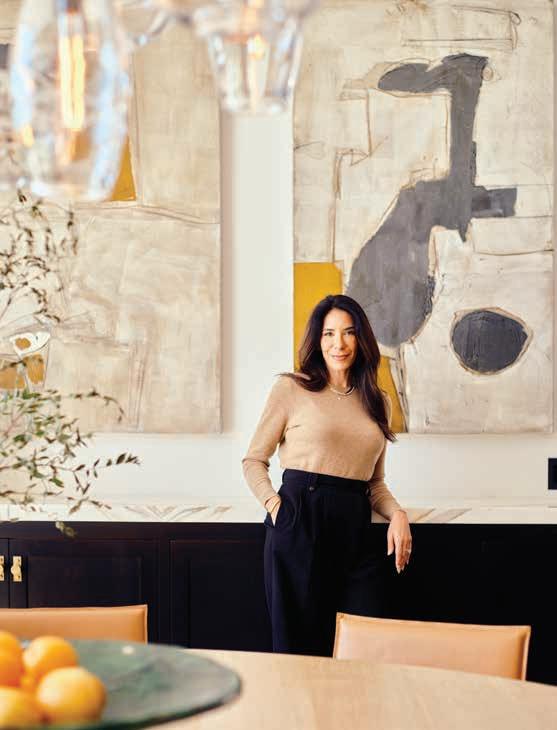
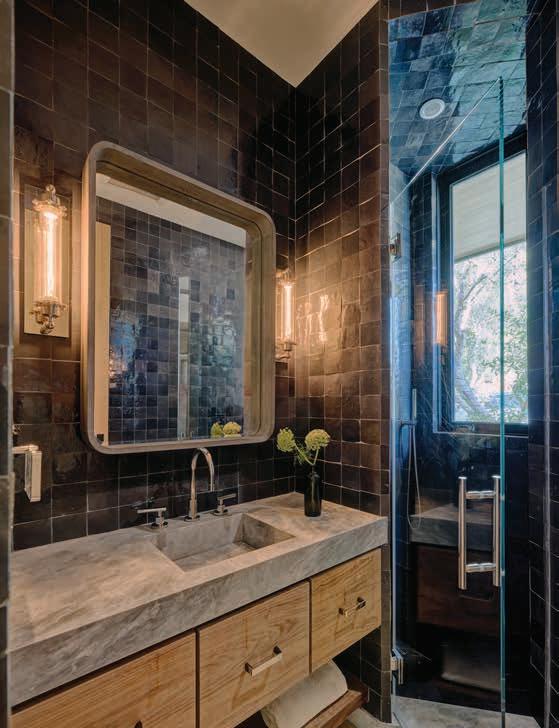
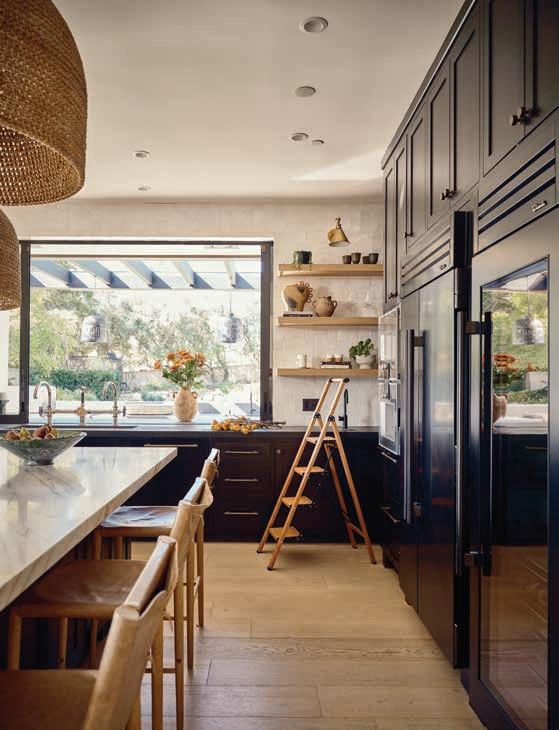
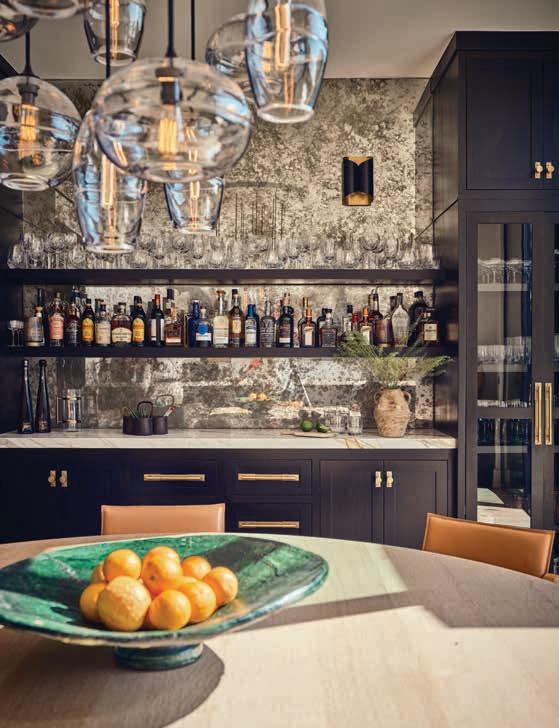
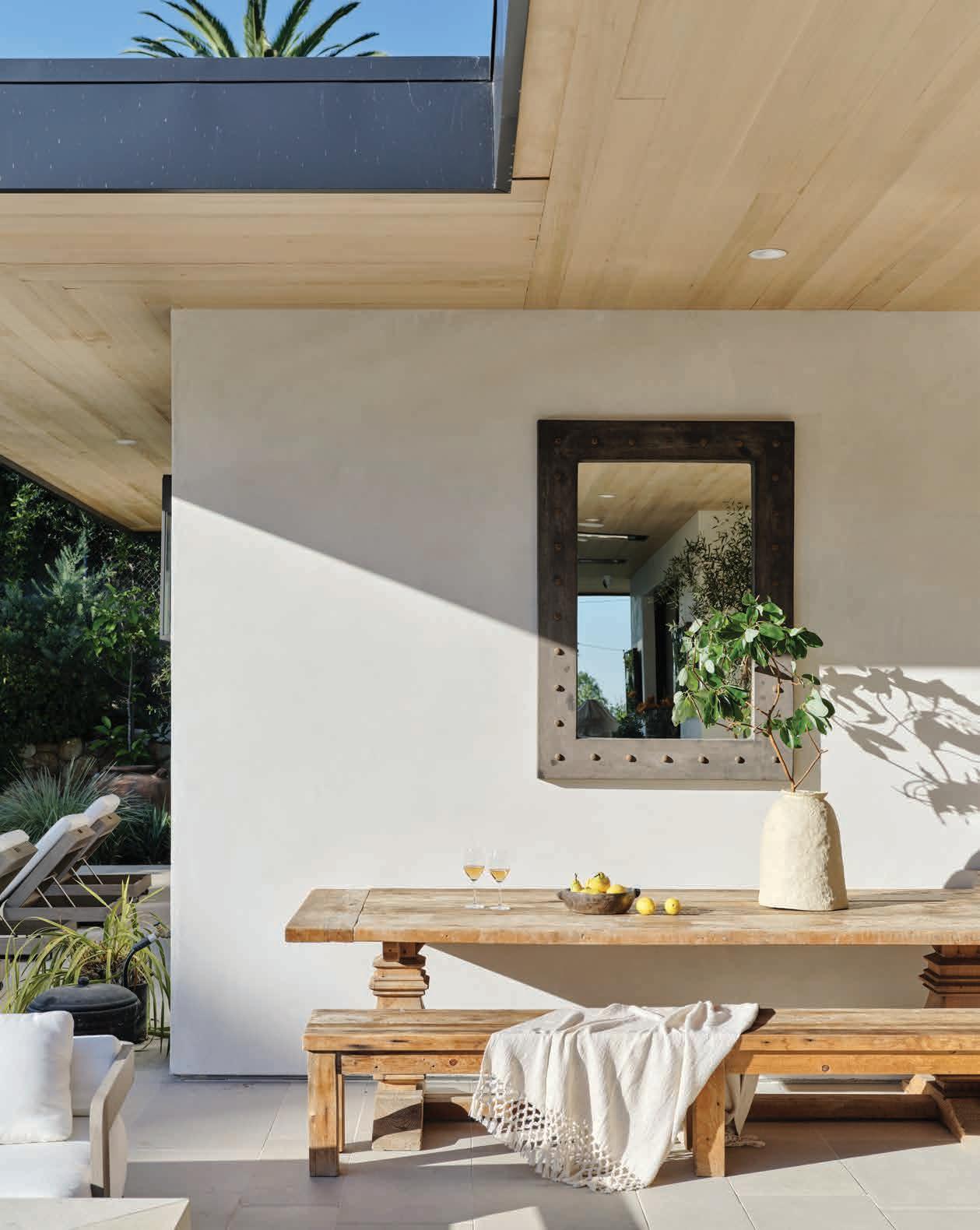
Opposite, clockwise from top left: Akbary in the dining room, which connects the kitchen and living spaces. The custom alder wood cabinets were stained black. Large woven pendants over the island, Palecek. A distressed mirror reflects warm light into the dining room. Akbary “tile drenched” a bathroom with a uniquely angled shower with Clé zellige in Battled Armor. This page: An outdoor dining table doubles as a buffet when it’s tucked against the wall.
page:
Opposite: The backyard features a series of distinct and spacious areas for cooking, casual dining, lounging, and sunbathing.
Lacanche range.
“I designed two versions of the kitchen, one with white cabinetry and one with dark,” Akbary says. “But it’s a really big kitchen, with an island to seat 10 and a window that opens to the back patio, and a lot of big appliances. Somehow with the lighter cabinets and light natural wood it lost its elegance and felt kind of cookie cutter. We used Calcutta Machia Vecchia marble with a lot of veining, but it isn’t so busy. It created a beautiful design and drew your eye to the backyard.”
Akbary notes that the biggest challenge was working with the proportions of the rooms, emphasizing the extra-high ceilings with tall indoor
trees, and creating balance and negative space to move around large custom pieces in every room.
“Everything was designed on a slightly larger scale,” she says. “I love symmetry, and we wanted to get a pair of nice, big sofas in the seating area. And we used a big, driftwood table base for the living room, which gave us the scale we needed and centered the room.”
With enough seating for a football team, and perpetually stocked smoky glass-backed bar shelves in the dining room, the house is always ready to absorb a crowd.
“They value quality family time above all else,” says Akbary.

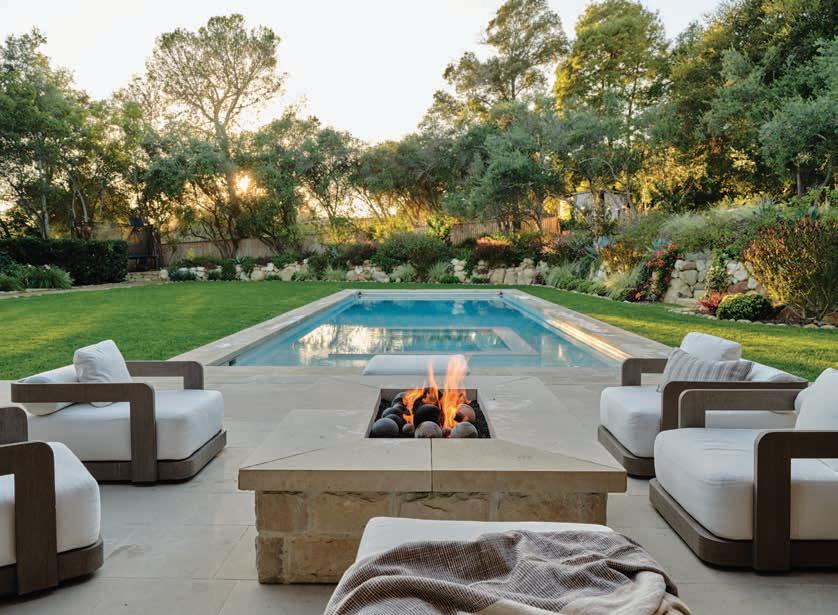
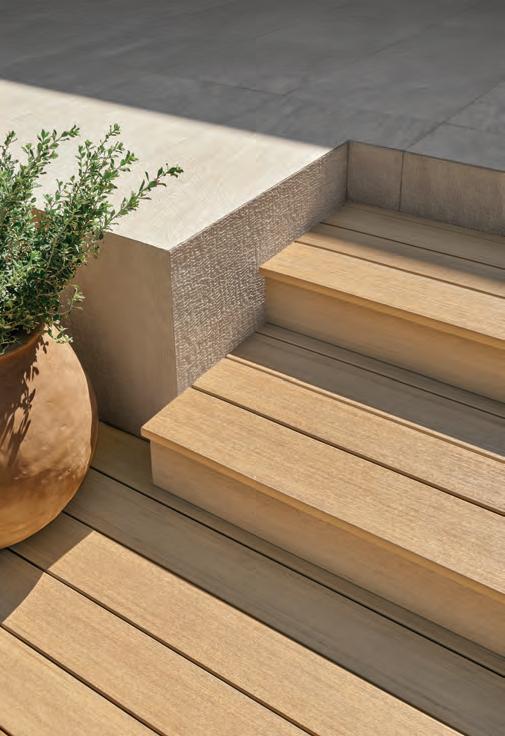
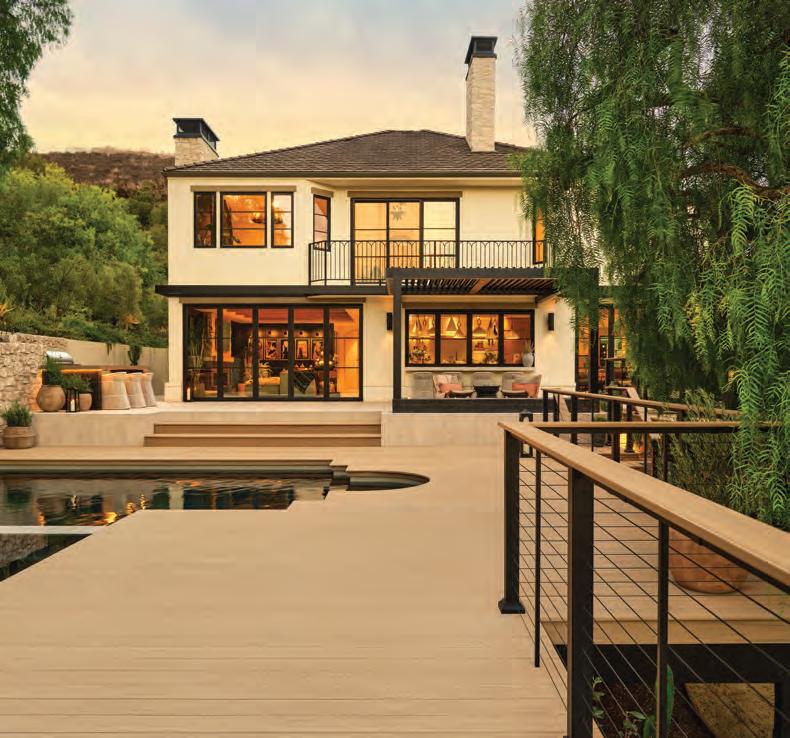
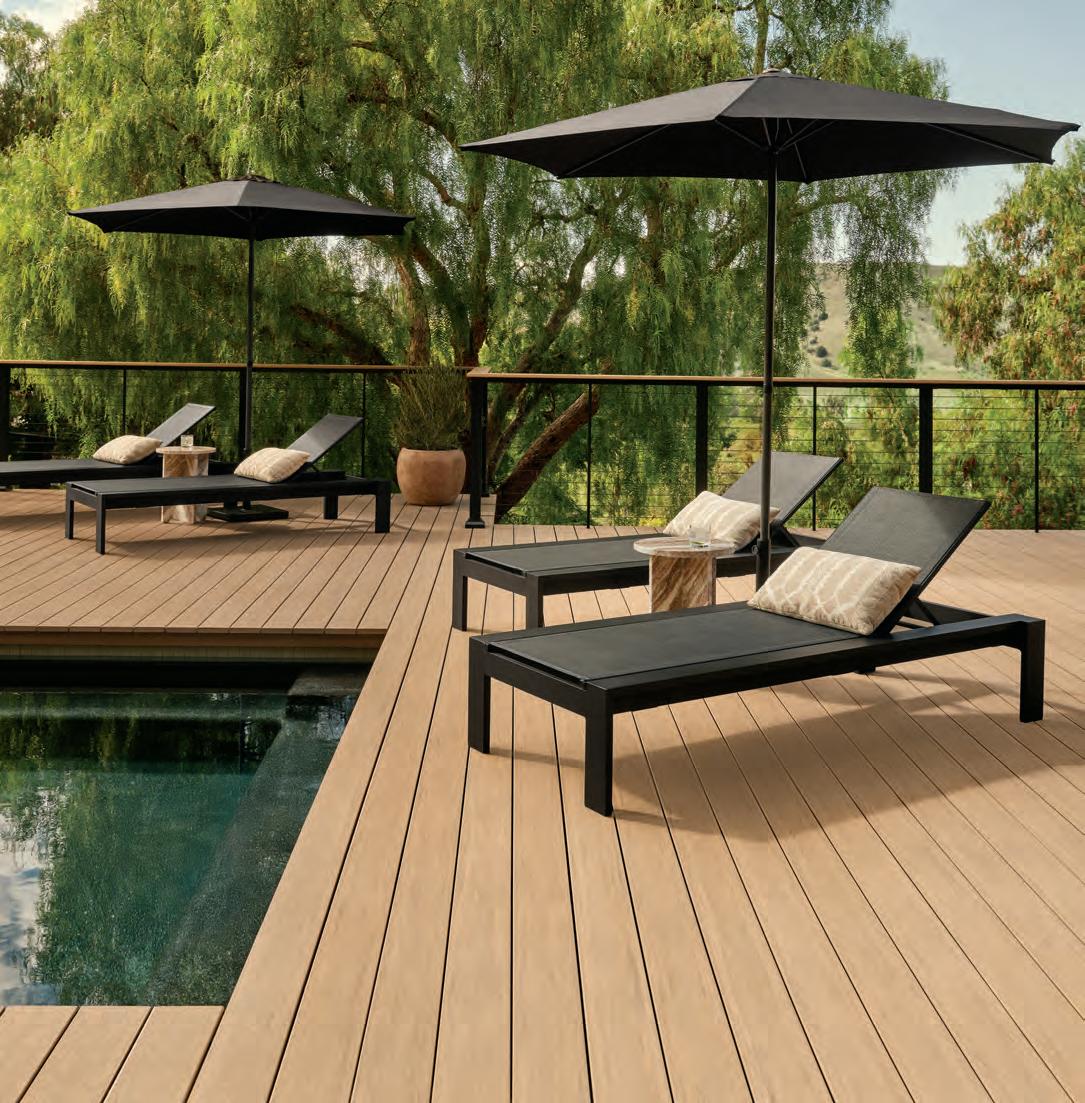
Today’s outdoor spaces need to do more than look beautiful. Here’s how TimberTech’s decking materials deliver wood-inspired design, fire-resistance, and performance that supports a resilient home.
In the West, a deck is rarely just a deck. It’s where weeknight dinners stretch into golden hour. Where kids race from the pool to the grill. Where morning coffee tastes better because the marine layer is beginning to lift off the hills. In many Western homes, outdoor spaces function as true extensions of daily life—part dining room, part living room, part sanctuary. Which is exactly why homeowners are asking more from the materials that shape those spaces.
Yes, a deck should look beautiful. But it also needs to contend with relentless sun, heavy foot traffic, shifting weather conditions, and increasingly, the realities of building in a region shaped by wildfire. More homeowners are thinking holistically about home hardening—from roofing materials to landscaping choices to exterior finishes that can contribute to a broader
resilience plan. And at the same time, no one wants to sacrifice aesthetics. That’s where TimberTech is changing expectations.
For years, decking meant compromise. Traditional wood delivered warmth and character but demanded constant sanding, staining, sealing, and eventual replacement. Early composite materials solved for maintenance but often lacked the natural look homeowners wanted. TimberTech’s Advanced PVC decking has helped reshape the category by focusing on both design and performance. First: aesthetics. Through proprietary color blending and advanced embossing technology, TimberTech creates decking that captures the tonal variation and texture of real wood. The result feels warm, elevated, and design-forward— without the upkeep. No sanding. No staining. No sealing. Ever.
Then there’s fire resistance, one element of material resiliency. Some decking can provide easy fuel for fires, which is why TimberTech’s Vintage and Landmark Collections stand out: both carry an Ignition Resistant designation (TimberTech is one of the only brands in the industry to offer decking with this designation), WUI compliance, and a Class A Flame Spread Rating—the highest Flame Spread Rating available. Those credentials are based on independent testing standards and can support a broader home hardening strategy. Of course comfort matters, too. Select TimberTech Advanced PVC colors feature Cool Touch™ Technology, which can stay up to 30 degrees cooler than traditional composite decking—making pool days, mornings, and outdoor entertaining more comfortable. And sustainability has become part of the luxury equation. TimberTech’s decking is made from up to 65 to 85 percent recycled materials, and in manufacturing the company diverts roughly 500 million pounds of waste from landfills annually. The biggest shift may be this: homeowners no longer need to choose between beauty and performance. With TimberTech, today's best outdoor spaces can deliver both. Explore free samples from TimberTech to find the right fit for your outdoor space at TimberTech.com


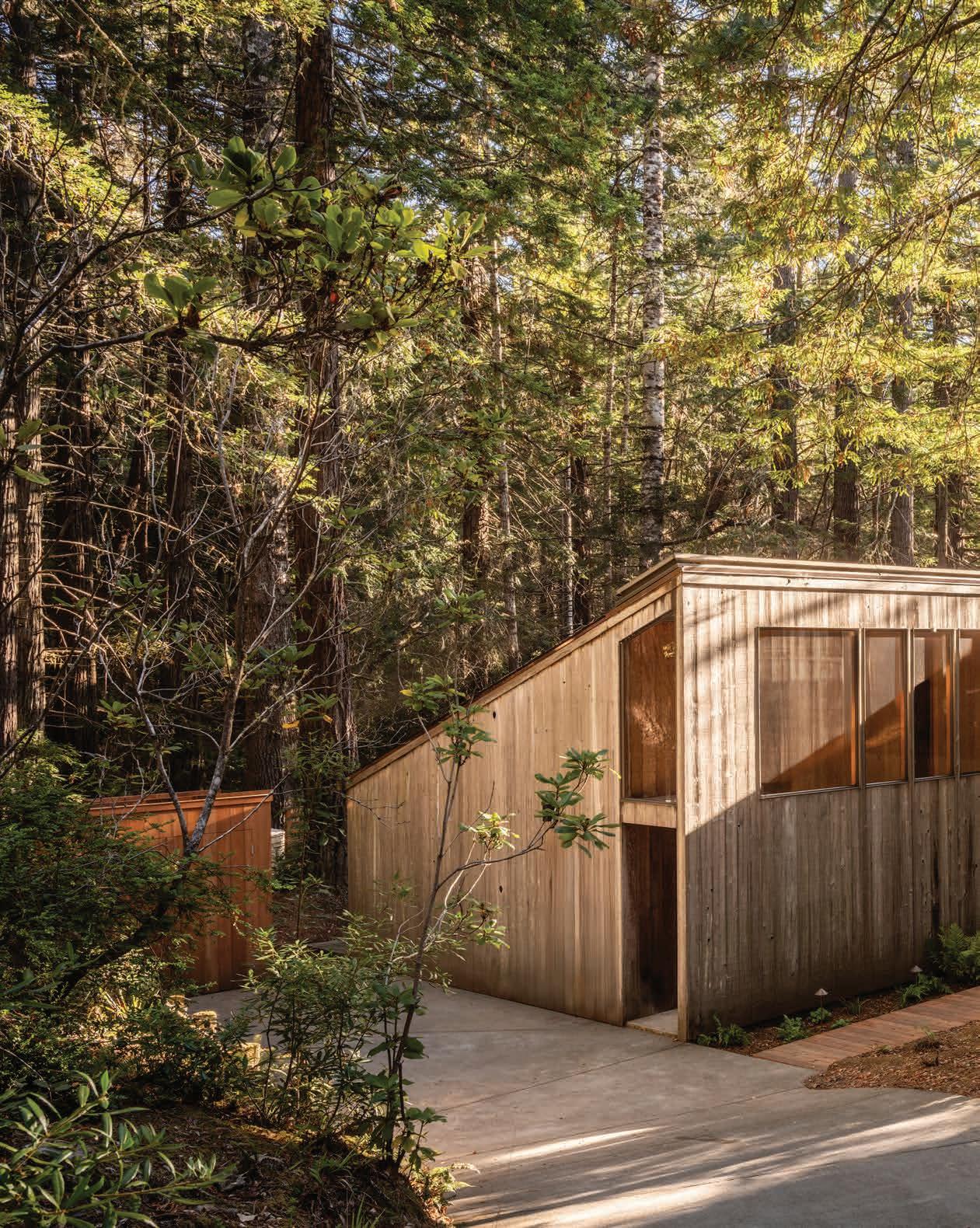
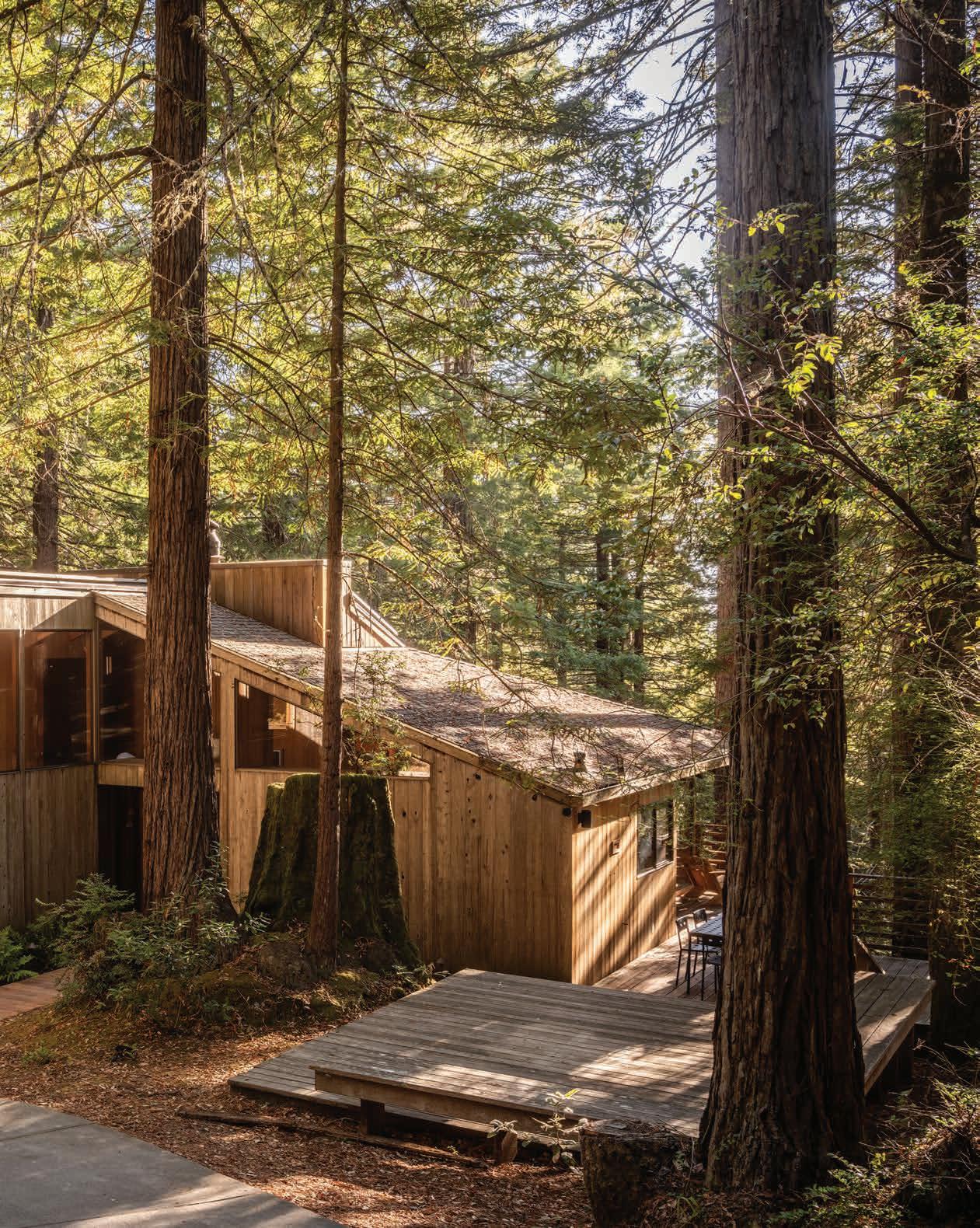
Designer Clara Jung, the color-obsessed Bay Area founder of Banner Day Interiors, celebrates her career with a new book featuring her own historic, boho-utopian NorCal retreat.
SSea Ranch, the coastal design utopia north of San Francisco known for its wind-swept bluffs and rustic-modern charm, has been a destination to reflect and recharge for Clara Jung for 15 years. “When my hus-
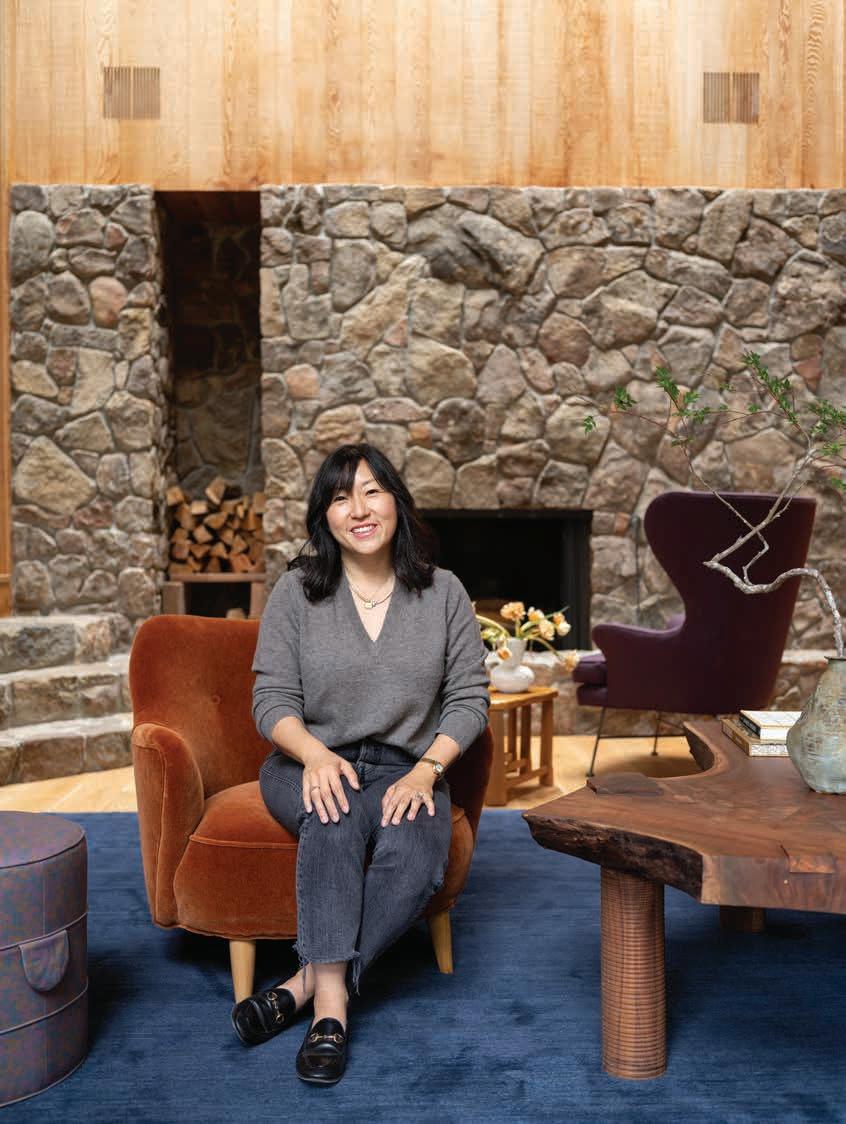
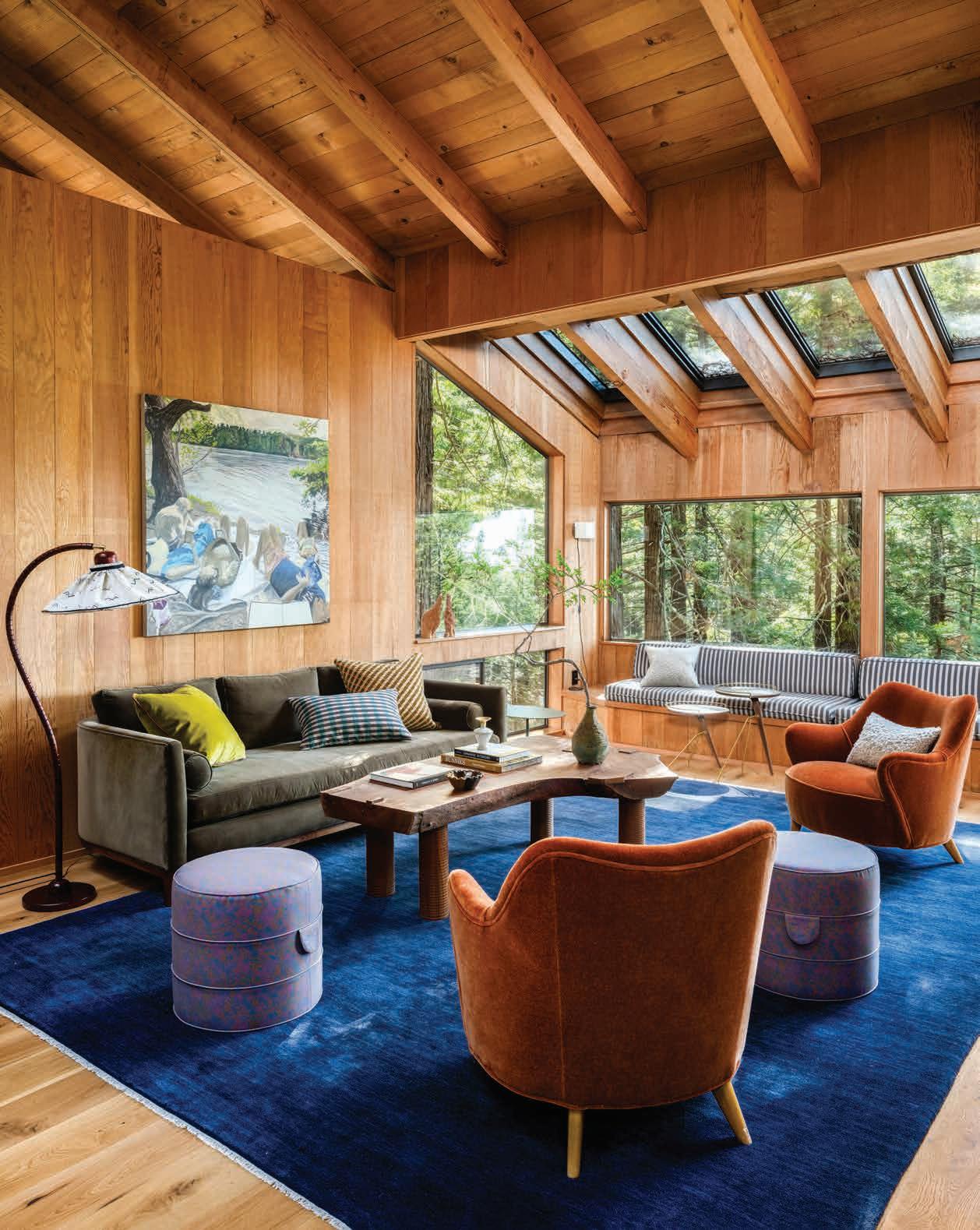
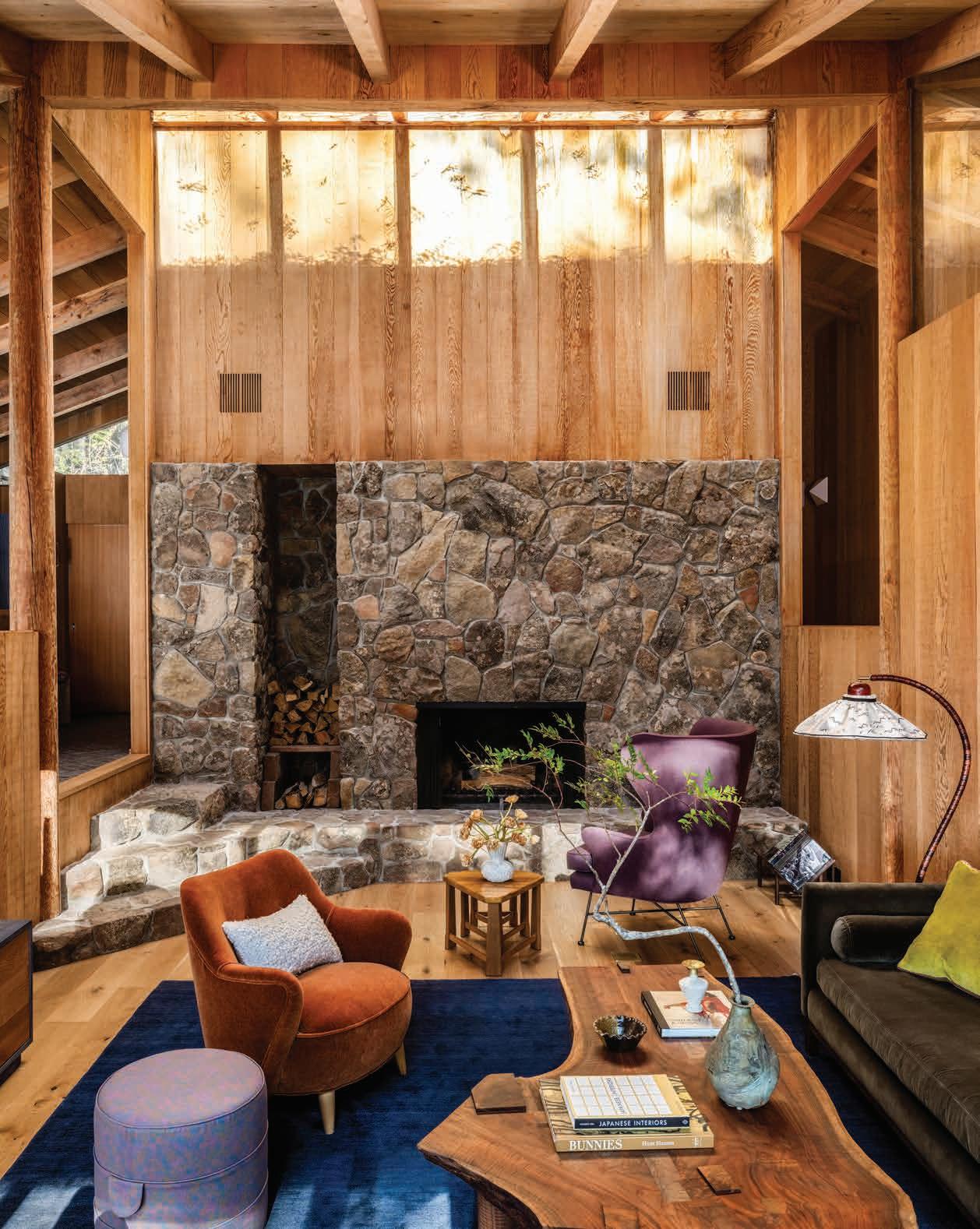
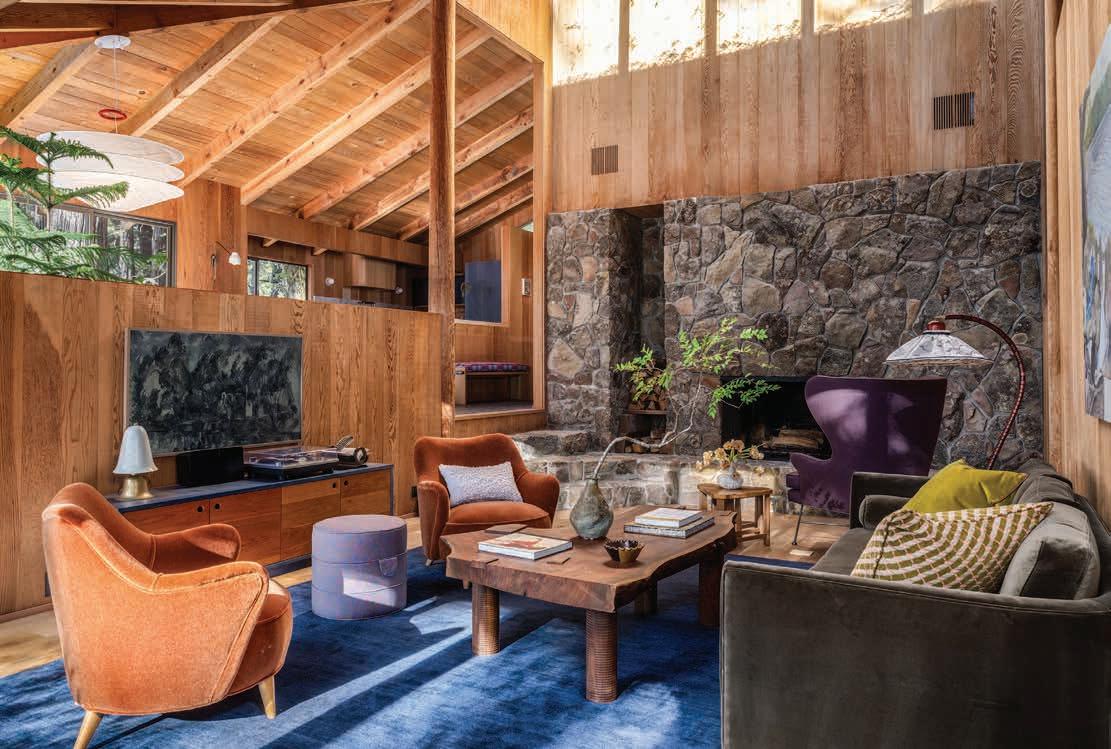
This page: Jung in the sunken living room, in front of the original, massive rock fireplace. Opposite page: The color palette serves as a proof of concept for saturated shades and combinations previous clients rejected, like burnt orange mohair velvet arm chairs and sea-blue carpet from Armadillo.
band and I moved back to San Francisco after law school, we started the tradition of a New Year’s retreat up there. We’d go on hikes and enjoy the quiet and nature, and loved the juxtaposition of the ocean and the forest,” she says. It’s where she went to contemplate big life decisions, like ditching a legal career in favor of interior design. And where she and her husband de-camped at least twice a year to process their victories and heart ache.
“We tried to have kids for a long time, and that didn’t happen. Sea Ranch was our escape,” she says.
While owning a home in the area was always a dream, well before the Covid-era re-emergence of the community as a destination for creative vacationers, it was just beyond their financial grasp. On a whim,
Jung decided to float her wish out to the universe to see if she could find a financial partner willing to take a chance on a shared property.
blanche with the design, once we found the right fixer-upper that was as close to the original design we could find. It takes a huge amount of trust, but it works.”
This
The
ly
the
“One day I put it on Instagram stories, saying that I’d like to co-own a place there if anyone was interested,” she says. A former client-turned-friend responded positively, and a partnership was born.
“I manifested it,” Jung laughs.
Jung and her husband and their young daughter—another manifested dream!— now share the three-bedroom, two-bath home with another couple that shares expenses but ceded total creative control to Jung. “There are 2.5 attorneys in this partnership, because I don’t practice anymore, so we were very thoughtful about the financial and personal relationship we were entering,” she says. “Everything is split 50/50. We don’t rent it out. We negotiate the calendar. They gave me carte
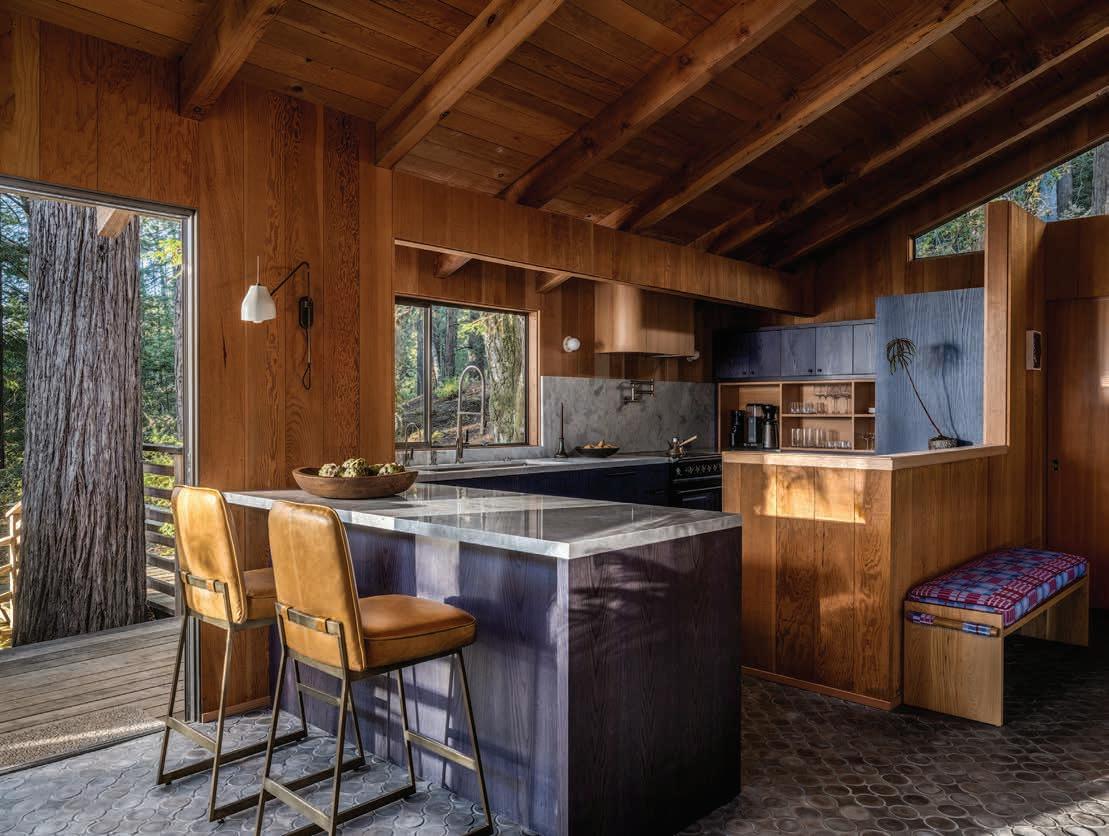
The house they found was built in 1972 by a prominent Napa winemaker and was a frozen-in-time capsule from the Sea Ranch heyday. The kitchen, including the appliances and the linoleum floor, was original. There was a wine cellar in the basement with decades-old forgotten bottles and a copy of a Sunset-published travel guide about the best coastal road trips that now sits on the coffee table upstairs.
“I wanted to keep the original wood paneling, and the footprint intact,” she says. “We had to replace most of the floors, and the bathrooms are new. We turned an old darkroom into a larger primary bathroom. But I considered myself a steward of the house and wanted to keep as much of it intact as possible, including the massive stone fireplace in the sunken living room.” The jewel-tone palette in the living
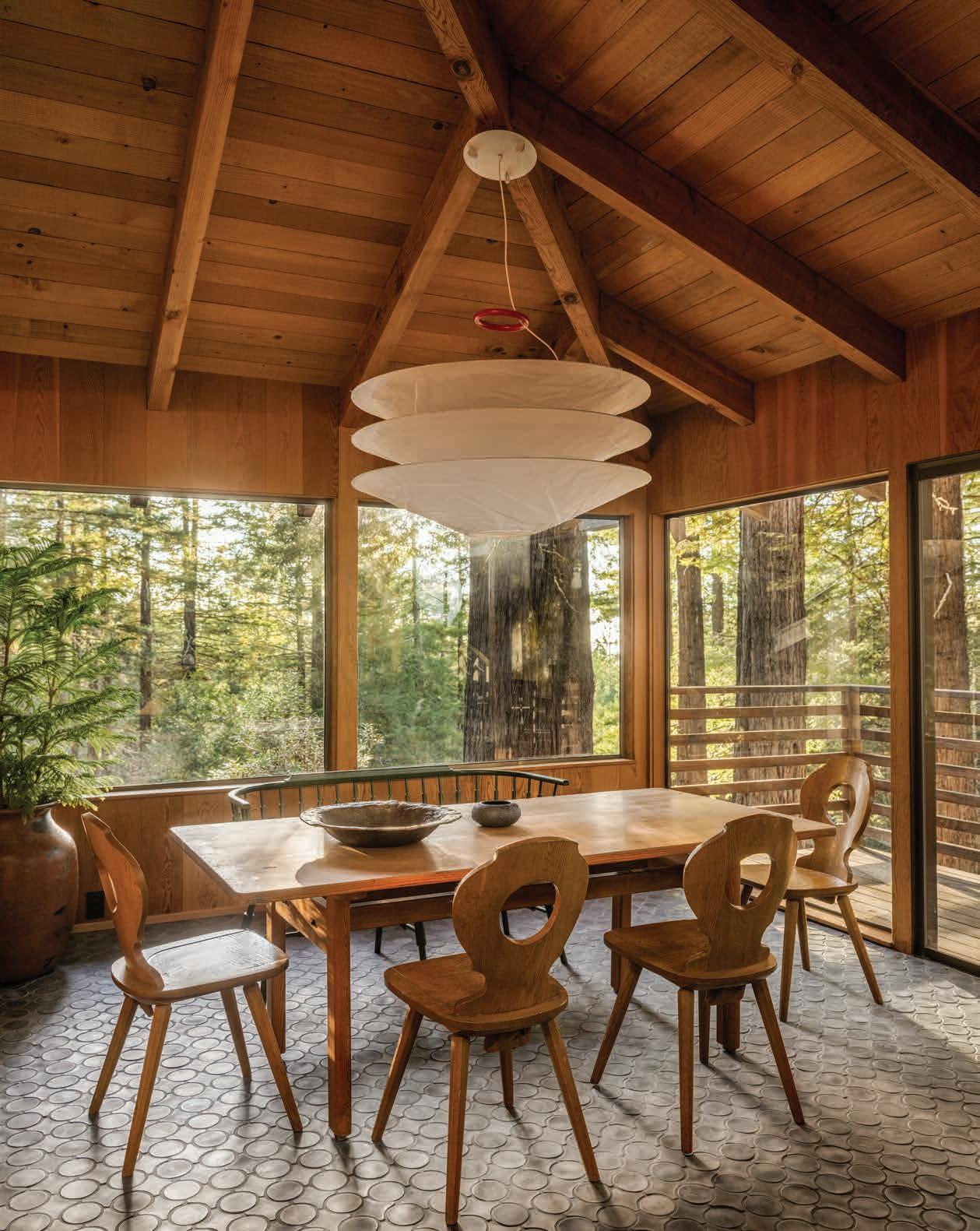
This page, an Ingo Maurer pendant lamp hangs over the vintage dining table and rustic chairs. Opposite page, top: While the living room gets plenty of light, it’s dappled through the trees and entering the room from odd, appealing angles. Bottom right: A narrow office, formerly a bathroom, was a good opportunity for bold Zak & Fox wallpaper. “There’s a hot tub view which taunts you every time you sit there,” she says. Bottom left: Jung was inspired by the colors used by famed modernist designer Barbara Stauffacher Solomon in the original Sea Ranch logo and graphics, like teal blue and orange.
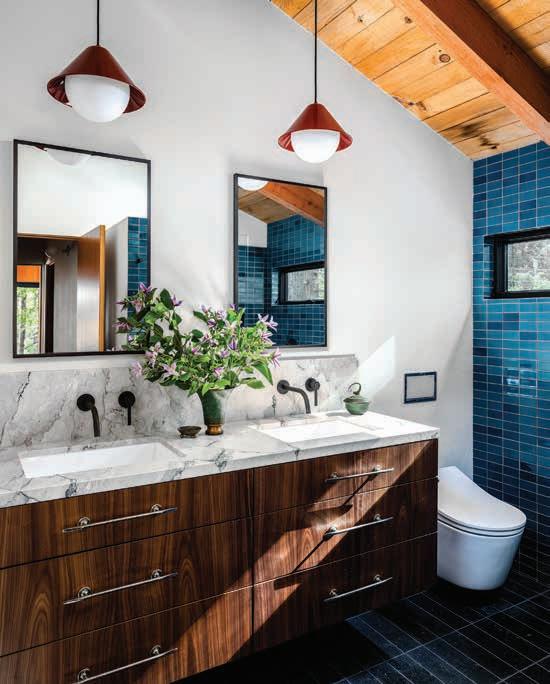
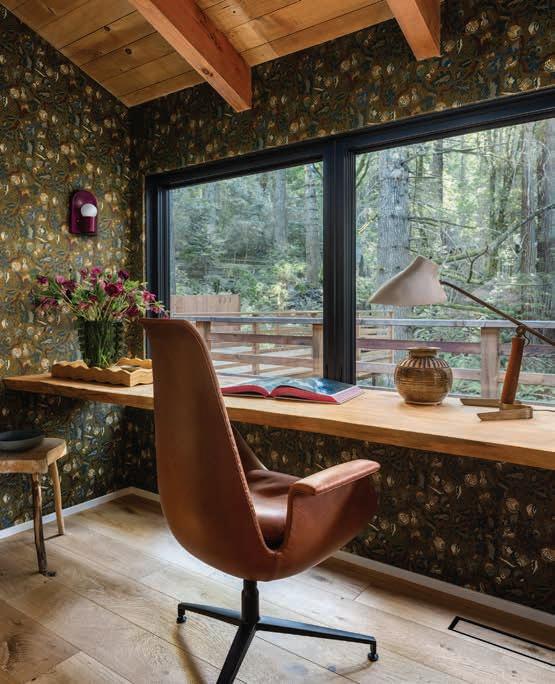
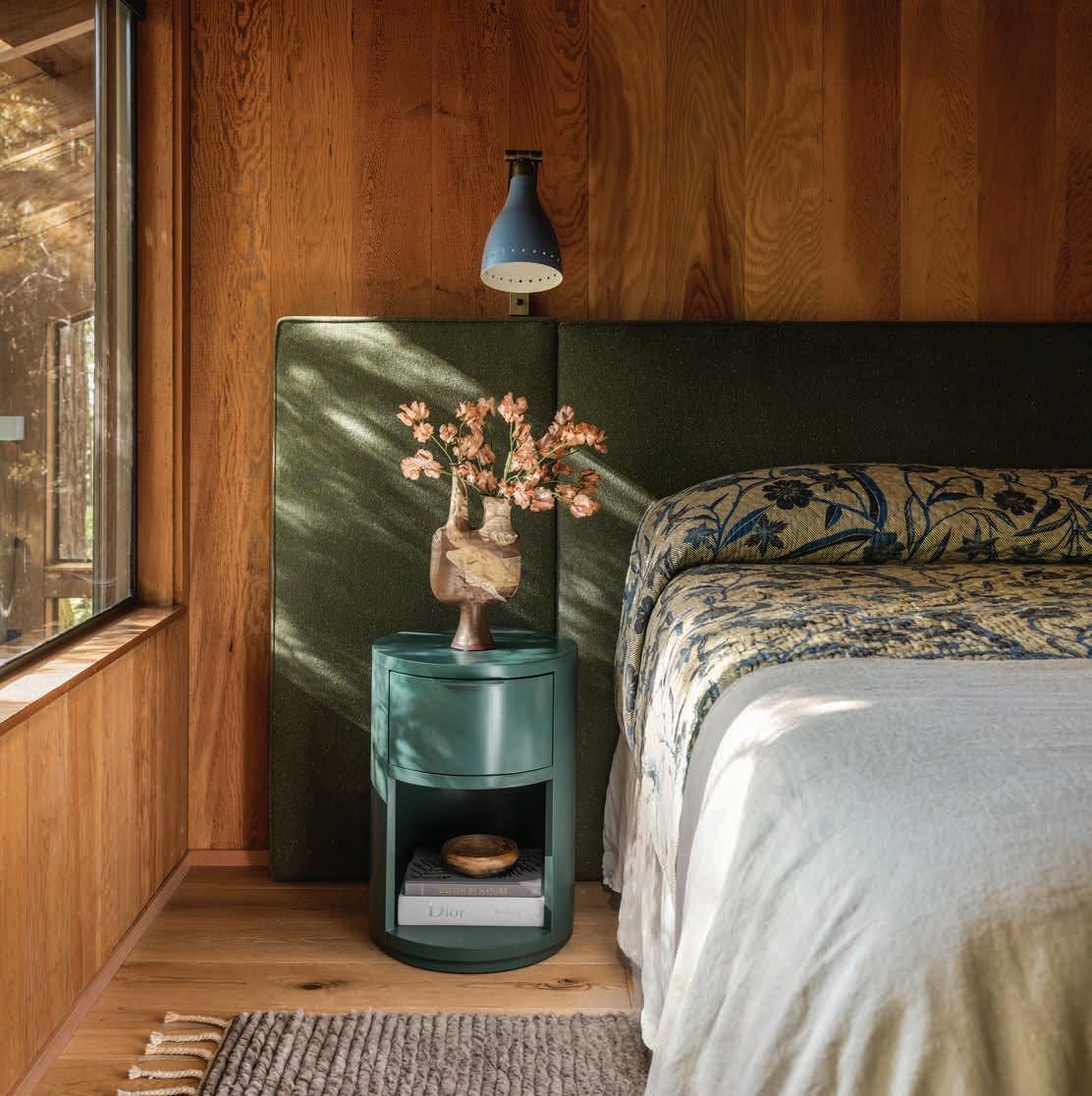
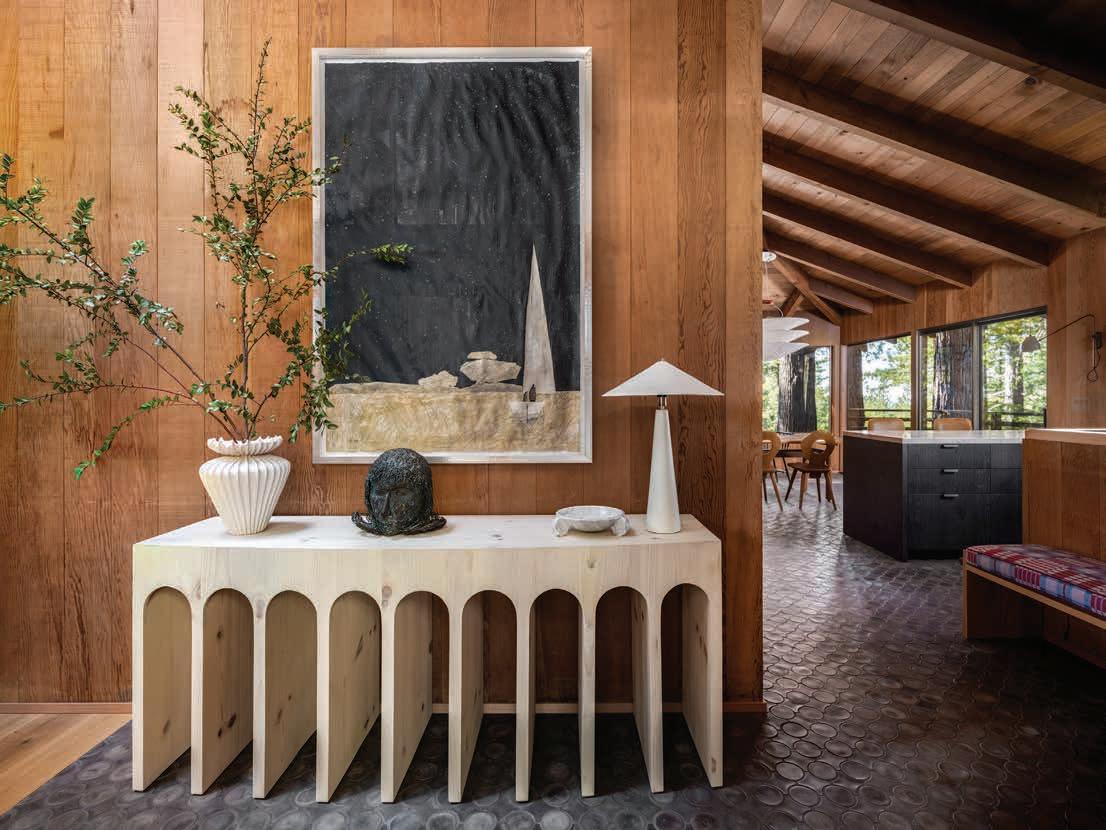
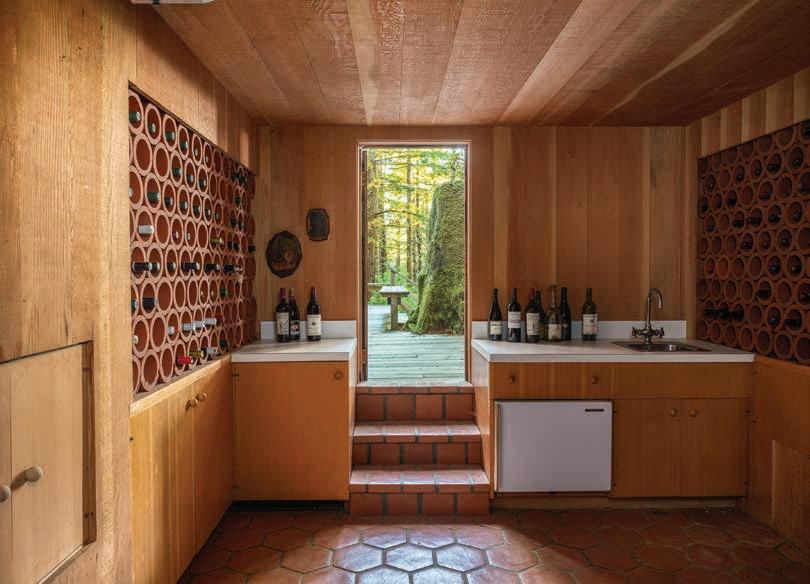
Above: A Nickey Kehoe coverlet and custom upholstered headboard in the primary bedroom. Opposite page, top: Jung relied on locally made and second-hand pieces to furnish the house. Bottom: The wine cellar, outfitted with round, terracotta tiles that have been used to store and protect bottles for centuries, was filled with vintage bottles and treasures.
room, violet, rust, and deep ocean blue, was pulled from “color stories my clients rejected,” Jung says.
“I have a trail of rejections behind me and I bookmark them in my head,” she says. This is a persuasive argument for future clients to show that there are other color prisms out there. I wanted to do Sea Ranch in my own way.
As it’s become more a part of the consciousness, people are falling into this aesthetic of layered neutrals and not really embracing color. I want to show that color has a place in these homes.”
Mixing vintage pieces and handmade accents by local artisans, Jung threaded the needle between honoring the property’s history, celebrating the present, and anticipating the future. “I started my firm 11 years ago, and when we were putting the book, Storied Homes, together, we did about six shoots in a year. I was surprised by the longevity of some of my earlier projects. They didn’t feel overly trendy, which is important.” What hasn’t aged quite as well are Napa wines that had been sitting in the cellar for decades. “We found a 1970s Schramsberg Blanc de Blanc,” she says. “You’re not supposed to keep them for that long, but it was still tasty. You never know. Some of them hold up after all this time.”

For more inspired homes pick up a copy of

















Late summer gardens are bursting with color and flavor. From sun-warmed fruits to fragrant herbs, it's a time to savor the harvest, tuck in new roots, and set your beds up for a thriving fall.
Story by KRISTIN GUY
Get garlic on your calendar and order bulbs now by choosing hardneck for colder regions or softneck for mild coastal climates. Plant cloves late September into October for a low-effort, high-reward crop
Plant a “chef’s herb hedge” by tucking in perennial herbs like lemon verbena, culinary sage, Greek oregano, and thyme along bed edges. They’ll root now and return lush for spring clipping
Try a “lawn patch swap” by replacing a thirsty turf patch with low-water groundcovers like Dymondia, creeping thyme, or native red fescue. Late-season planting lets roots settle with cooler temps and fall rains.
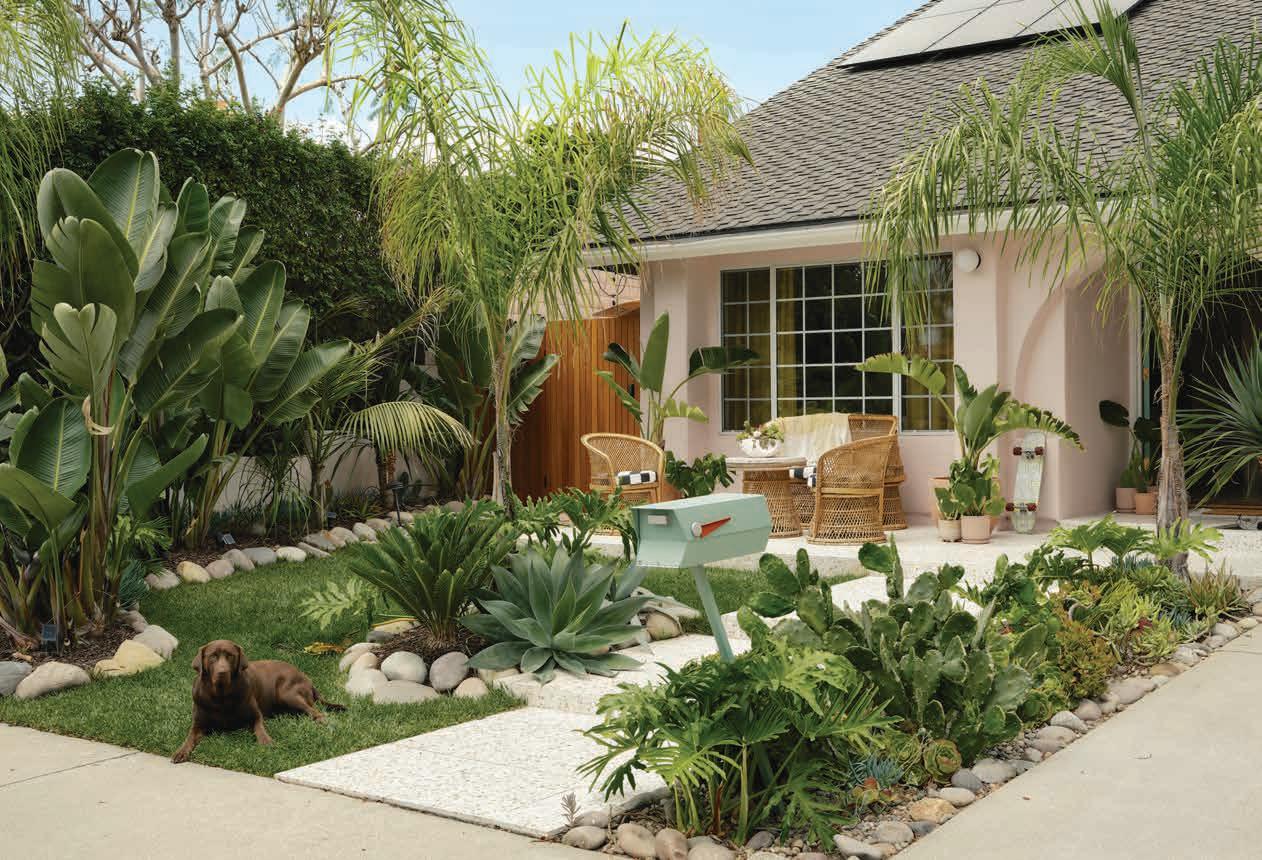
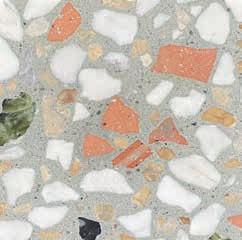
Terrazzo pavers by Concrete Collaborative and sculptural plantings transform the front approach into something softer and more inviting—proof that hardscape can still feel warm, layered, and distinctly California.
Shop for statement houseplants and take advantage of late summer nursery markdowns on larger plants such as bird of paradise, fiddle-leaf fig, and even olive
Master the “morning harvest” habit and pick tomatoes, squash, cucumbers, and beans in the cool of the day for best flavor and shelf life. Ease up on watering tomatoes to concentrate sugars and minimize splitting
Preserve herbs at their peak by snipping basil, oregano, thyme, and lavender just before flowering when oils are highest
Go foraging for blue elderberry (Sambucus nigra subsp. caerulea) which is
ripening across California and interior West. Always cook or dry berries before using in syrups, tinctures, or shrubs as raw berries can cause illness
Feed the soil, not just the plant by top-dressing beds with an inch of finished compost as summer crops wind down. Sow cover crops like crimson clover, fava beans, or mustard in resting beds to build next year’s soil
Water deeply, then step back. Shift to slow, deep irrigation to encourage strong roots and drought resilience. A drip system set for early morning watering keeps it efficient
Deadhead with intention and clip spent blooms on roses, dahlias, and coneflowers to keep flowers coming. Leave seedheads on sunflowers, rudbeckia, goldenrod, and native grasses—they feed birds and beneficial insects.
Stay ahead of late-season pests like hornworms, spider mites, whiteflies, and squash pests by checking plants daily. Hand-pick when possible or rinse with a strong morning spray; support beneficial insects with undisturbed soil
Shield fall seedlings by using 30–40% shade cloth over newly seeded beds to buffer heat and prevent scorch. Add bird netting or simple row covers until seedlings are sturdy enough to fend for themselves
Set up a bee hotel and install nesting blocks or bundles of hollow stems for solitary native bees like mason and leafcutter bees. Place in a dry, sheltered spot facing east to catch morning sun
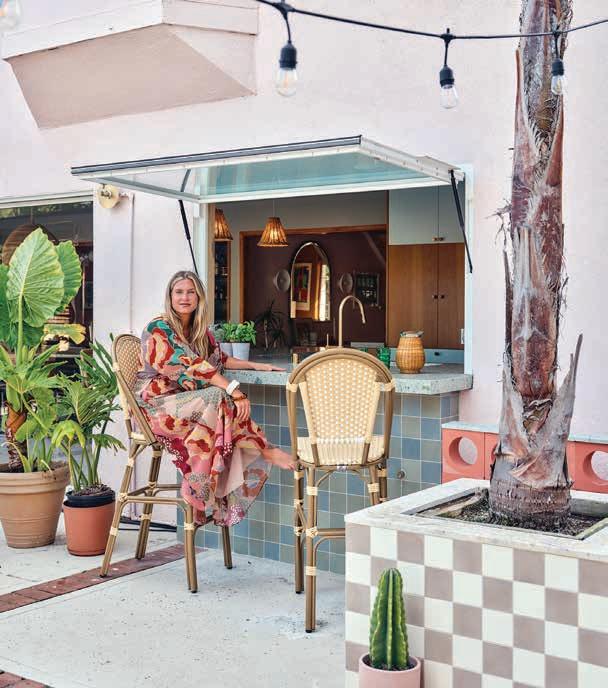
Concrete Collaborative co-founder Kate Balsis, brings life and personality into her outdoor space through tonal hardscaping, playful pattern, and lush plant palettes designed to soften every edge.
Set just above the coast in Dana Point, this 1970s home unfolds as both a personal retreat and a living design manifesto. For Kate and Chad Balsis—co-founders of Concrete Collaborative—their reimagined property goes beyond renovation, exploring how concrete, when handled with nuance, can feel as warm and inviting as sun-washed wood or linen. The outdoor spaces strike a careful balance: relaxed and a little transportive, with subtle nods to Palm Springs layered into a distinctly Southern California beach town sensibility—where playfulness and restraint coexist, and every detail is designed to feel lived-in and easy to move through.
At the Balsis residence, pathways, patios, and planters unfold in a palette that feels equal parts sun-washed and playful—creamy terrazzo underfoot, soft blush tones guiding movement, and patterned tile moments that catch you slightly off guard in the best way. There’s a tactile quality to everything: surfaces you want to run your hand across, edges softened by planting, color layered in a way that feels collected rather than composed. It ’s a space that challenges the long-held idea that hard materials have to feel rigid or restrained. Instead, concrete becomes expressive. Grounding the garden while allowing it to feel dynamic, even a little transportive. The effect is subtle but powerful: outdoor rooms that feel designed for gathering, lingering, and living fully, where texture and tone do as much of the talking as the view beyond.
In the backyard, Kate Balsis uses terrazzo, color, and texture to give hardscape a softer, more inviting point of view.
A Front Yard That Sets the Tone
The entry garden does what the best front yards do: it hints at what’s to come without giving everything away. In place of turf, a patio now anchors the space, finished in terrazzo tile that extends directly from the interior, a subtle but effective move that immediately blurs the line between indoors and out. A curved garden bed softens the geometry, filled with river stones, palms, and sculptural succulents
The palette stays relatively restrained here— creamy alabaster tones underfoot, muted greens overhead—creating a calm, welcoming threshold before the home reveals its more playful side.
The Side Yard, Reimagined as a Working Garden
Of ten overlooked, the side yard becomes one of the most thoughtful zones on the property “That area is really about transition and utility. It connects the front yard to the pool while also functioning as a place to store boards and rinse off,” Balsis explains.
A streamlined potting bench, framed in warm ipe wood, introduces a tactile counterpoint to the surrounding concrete. Underfoot, pink terrazzo pavers guide movement through the space, turning what could have been a pass-through into a deliberate pathway.
Planting plays a supporting role here, softening edges and adding just enough density to keep
the space from feeling purely functional.
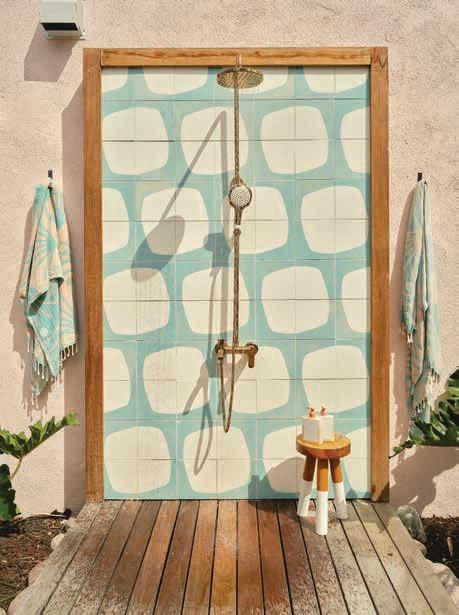
Just beyond, a quintessential California outdoor shower gets a thoughtful upgrade. “It’s usually in the material choices,” says Balsis. “We kept the structure simple with ipe, but added a layer of interest through the tile.”
That tile, a soft blue patterned design, brings a sense of play without overwhelming the space. It’s a reminder that even the most practical corners of a garden can hold a bit of delight, especially when texture and color are used with intention.
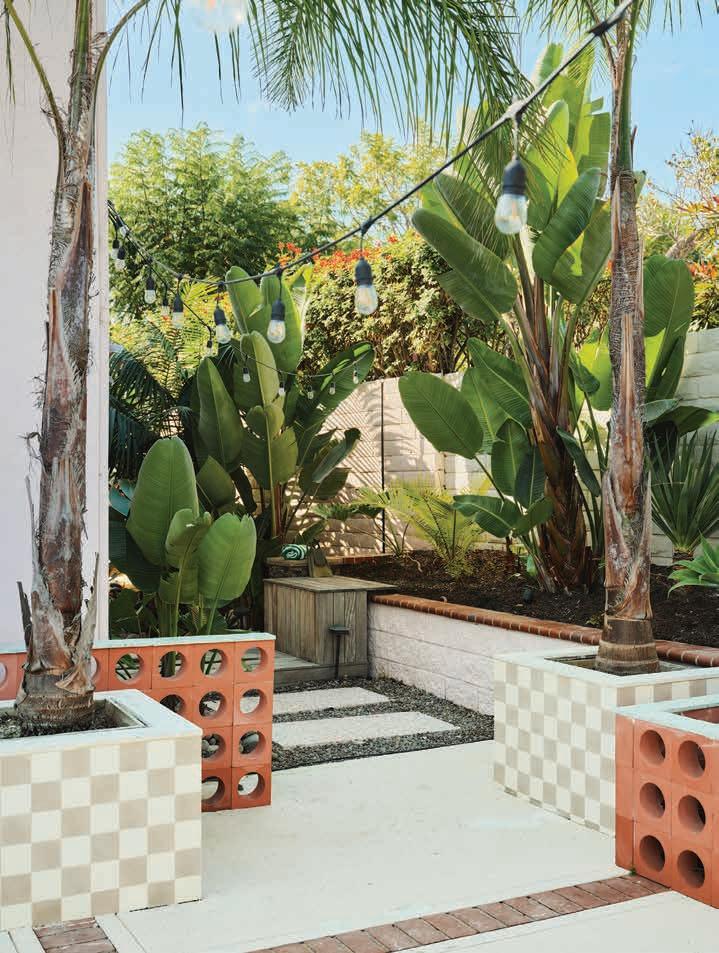
Throughout the garden, custom concrete planters act as quiet organizers of space. “Planters help define space in a subtle way,” says Balsis. “They
act almost like anchors within the landscape, helping organize different areas without needing walls or barriers.”
Simple in form but finished to match the home’s broader material palette, they ground seating areas, frame pathways, and create moments of pause. Filled with a mix of native palms and sculptural succulents, they strike a balance between structure and movement, softening the harder edges of the hardscape.
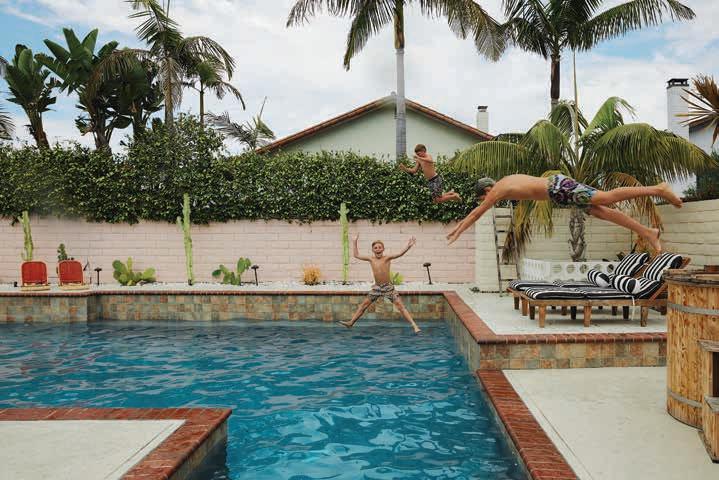
In the backyard, the energy shifts. The palette deepens, the layout opens, and the home’s entertaining spirit comes into focus.
A series of zones—dining area, bar, and conversation pit—unfold across the yard, each defined by subtle shifts in layout and material. Overhead, trellises introduce height and dap-
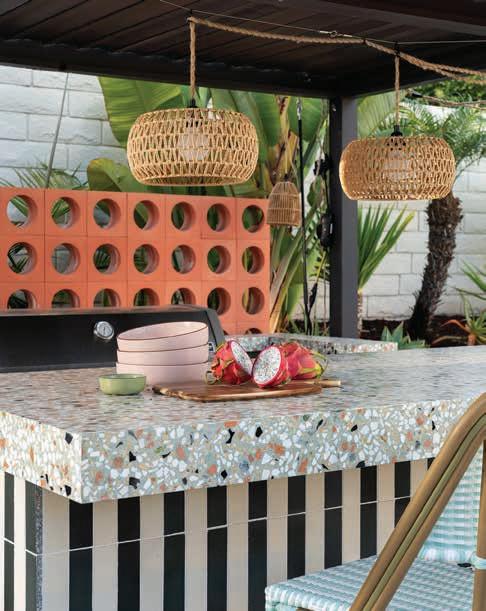
pled shade, guiding movement from one space to the next while reinforcing a sense of progression. “It’s really about comfort and flow,”
Balsis adds. “When a space feels easy to move through and offers a few different ways to gather, it naturally draws people in.” Underfoot, concrete pavers provide continuity, while layered furnishings including woven textures and low-slung seating echo the ease of indoor living.
With so much hardscape, planting becomes essential, not as decoration, but as counterbalance. “We leaned into native palms and more sculptural succulents to contrast the cream-toned hardscape,” says Balsis. “The planting adds movement and variation, which helps balance out the more structured materials.” Palms, in particular, play a starring role, their fronds
Master the softer side of hardscaping.
Choose a single application— a patio, pathway, or feature wall— and let it anchor the space. From there, extend that same material or tone to create an easy sense of flow.


catching ocean breezes and casting shifting shadows across the pale concrete. Succulents introduce color and texture at a lower level, creating a layered effect that feels both intentional and relaxed.
At the heart of it all is a quiet shift in perspective: concrete not as backdrop, but as personality. Here, it takes on a softer, more expressive role: warming in the sun, catching color in unexpected ways, and grounding each space without ever weighing it down. The result feels equal parts playful and polished, where terrazzo glints underfoot, planting spills gently over clean edges, and every surface invites a second look. It’s a reminder that even the most familiar materials can surprise you—especially when they’re layered with intention, a sense of ease, and just enough confidence to keep things interesting.
Build your design around one core hue (like warm alabaster) and repeat it across surfaces. This keeps even bold moments feeling cohesive rather than chaotic.
Concrete feels softer when paired with natural elements. Mix in wood, woven textures, and planting to balance out harder edges and add depth.
Let pattern shine in one or two key areas—underfoot or on a vertical surface—then pull back with solids to give the eye a place to rest.
Don’t shy away from saturation. Even a single bold tile moment can transform a space—especially when it echoes tones found in the surrounding landscape.
Blur the Lines
Carry materials from indoors to out whenever possible. Repetition creates that seamless, indoor-outdoor California flow.
Resist the urge to do too much. A tight material palette and a few well-executed ideas will always feel more timeless than a mix of competing elements.



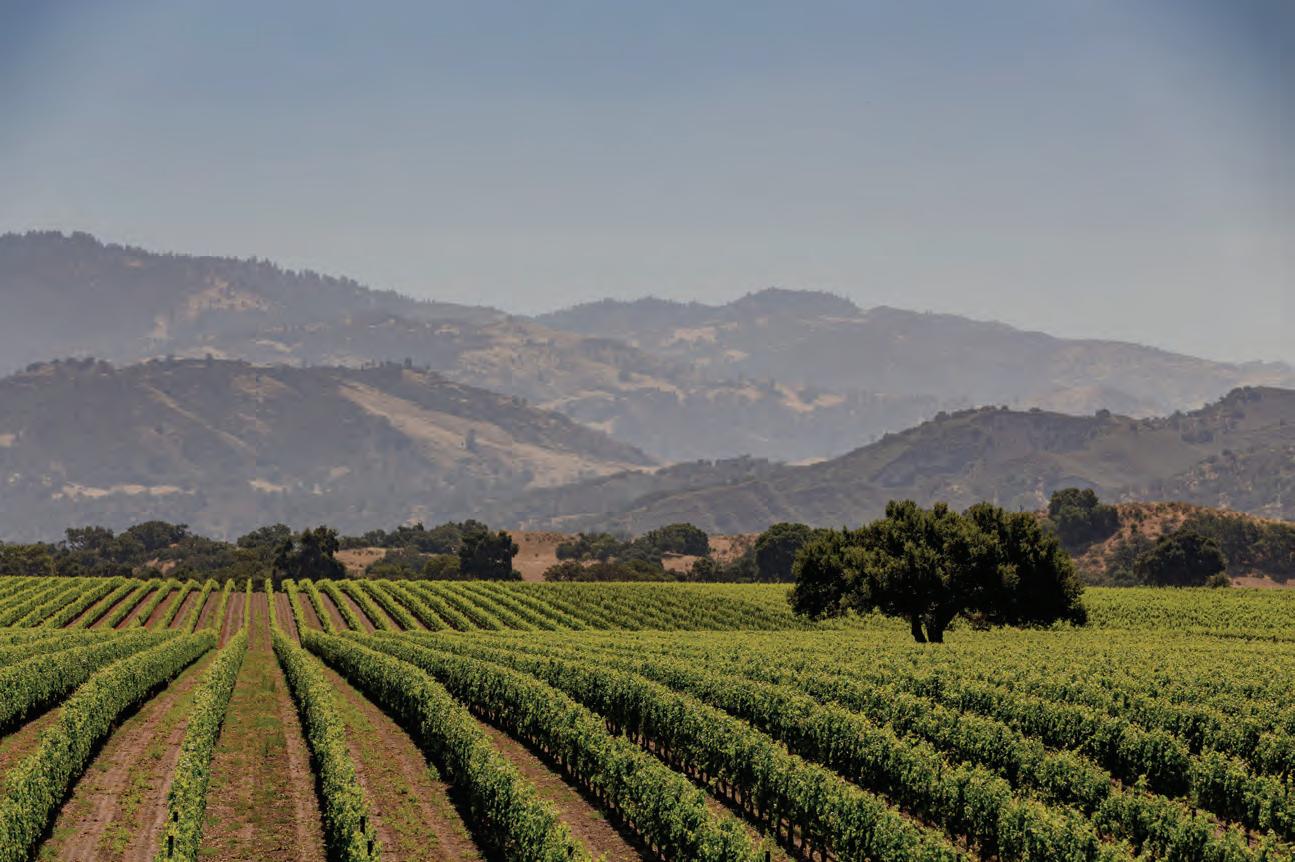
Set among the rolling vineyards and golden hills of California’s Central Coast, the Santa Ynez Valley feels a world away from Los Angeles and San Francisco despite being so close to both. The region’s charm lies in its six communities: Ballard, Buellton, Los Alamos, Los Olivos, Santa Ynez, and Solvang. Each brings its own personality, culture, and flavor.
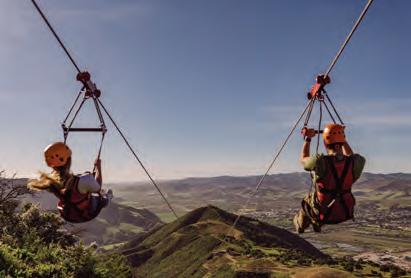
Wine is the Santa Ynez Valley’s calling card, of course. And with more than 100 wineries to explore, there’s always more to savor. But what makes the Santa Ynez Valley truly special is what pairs with its wine. A world-class Pinot complements outdoor adventure, from horseback rides with Vino Vaqueros to wildflower hikes up Gaviota Peak, scenic cycling routes, and ziplining with Highline Adventures. Cultural exploration runs deep, too, whether visiting the Santa Ynez Chumash Museum and Cultural Center, enjoying an authentic Danish pastry in Solvang, or seeking out California’s first Thomas Dambo troll.
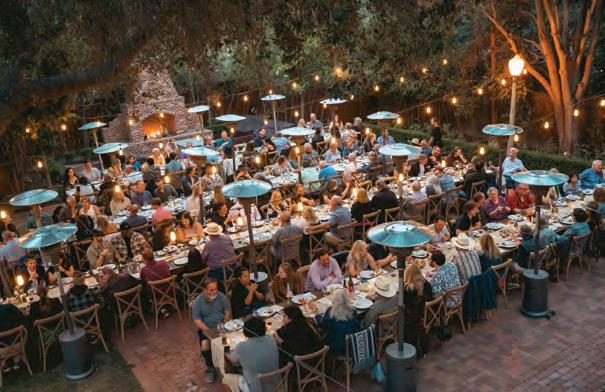
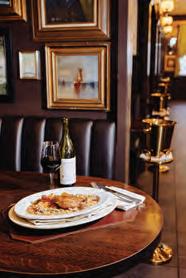
The culinary scene is as compelling as its wine. Five Michelinrecognized restaurants—from Bell’s to peasants FEAST—anchor a locally driven food culture. Vineyard dining at Roblar Winery and Vega Vineyard and Farm brings that connection even closer, with meals sourced directly from the surrounding land.
Each fall, the region’s diverse flavors take center stage during Taste of the Santa Ynez Valley (Oct. 1-4, 2026), which offers the best of the Valley in one four-day celebration of food, wine, and community. Intimate winemaker dinners, grand tastings, and other immersive experiences bring together the Valley’s top chefs, vintners, and artisans in a showcase of the region’s creative spirit.
Whether you’re drawn to refined stays like the Inn at Mattei’s Tavern or The Genevieve, or boutique escapes like Hotel Ynez and the Ballard Inn, the Santa Ynez Valley delivers a wine country experience that feels entirely its own.
visitsyv.com

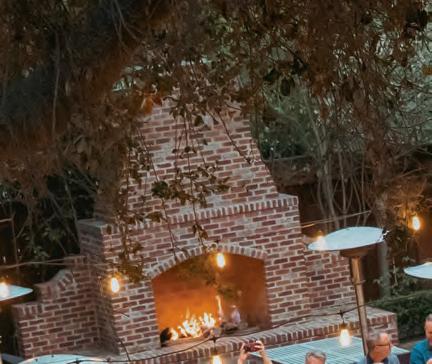






October 1-4, 2026


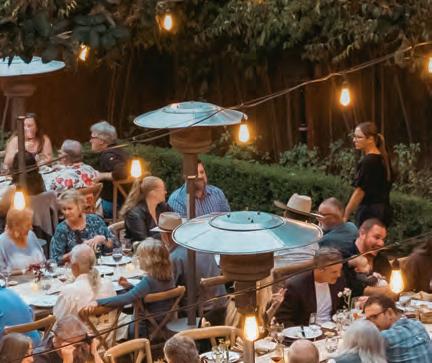

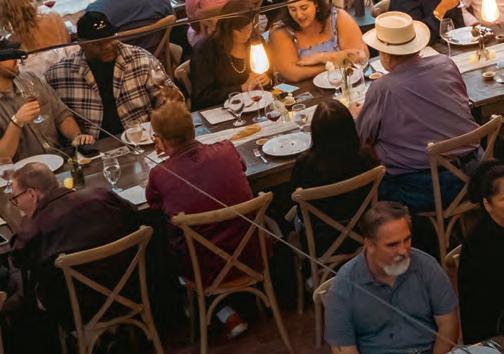
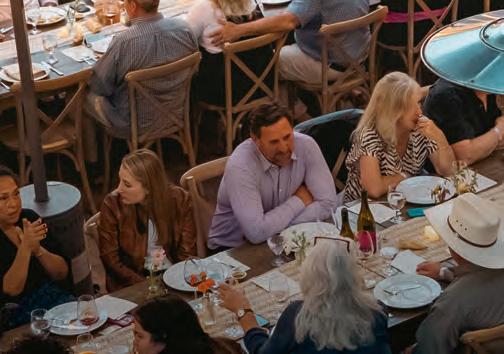
Don’t miss our annual four-day celebration of food, wine, and more across the towns of Solvang, Santa Ynez, Los Alamos, Los Olivos, Ballard and Buellton. Experience curated wine tastings, chef-driven long table dinners, lunches, and activities, all celebrating the incredible offerings of this California wine country destination. Plan your trip today at TasteSYV.com.

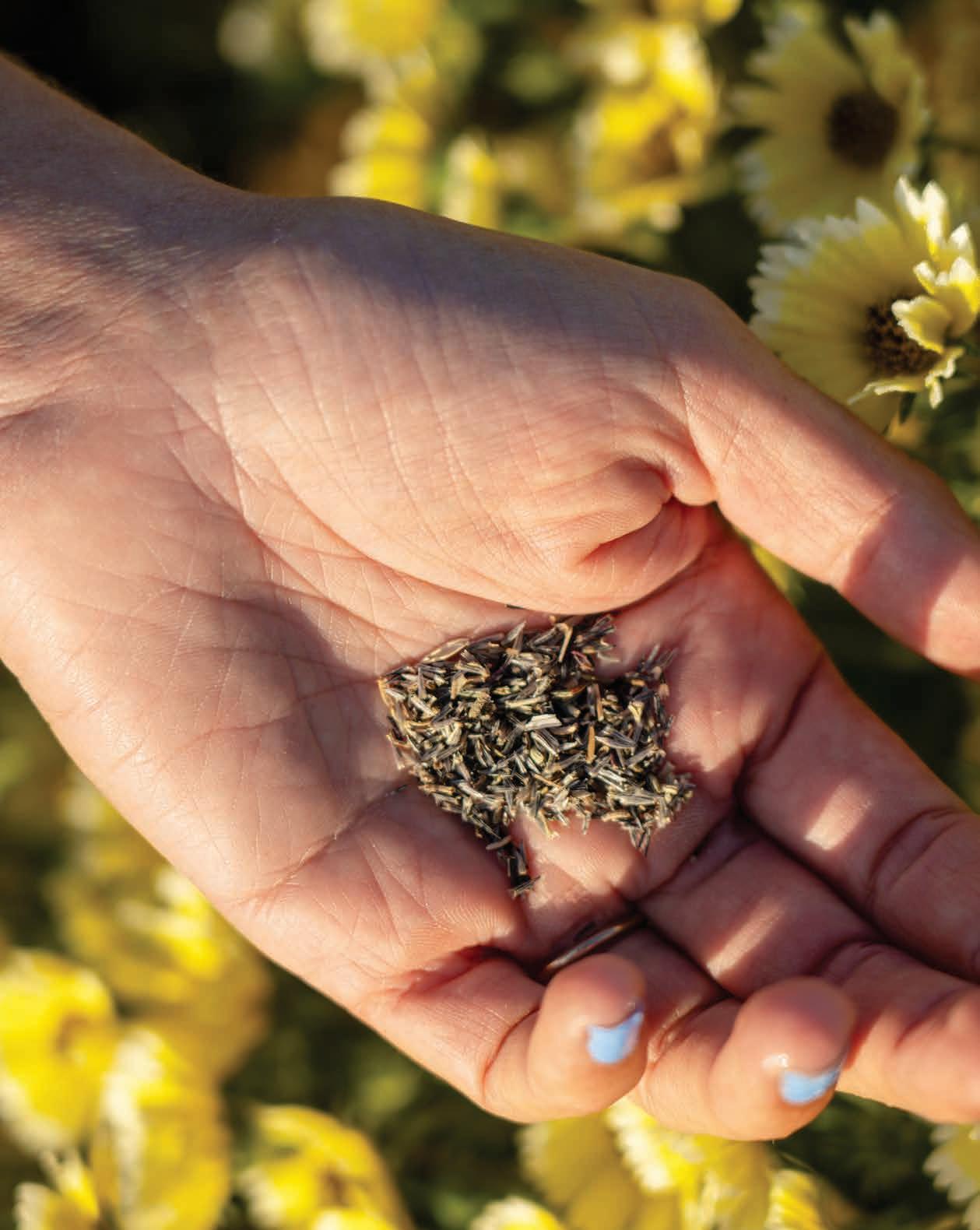
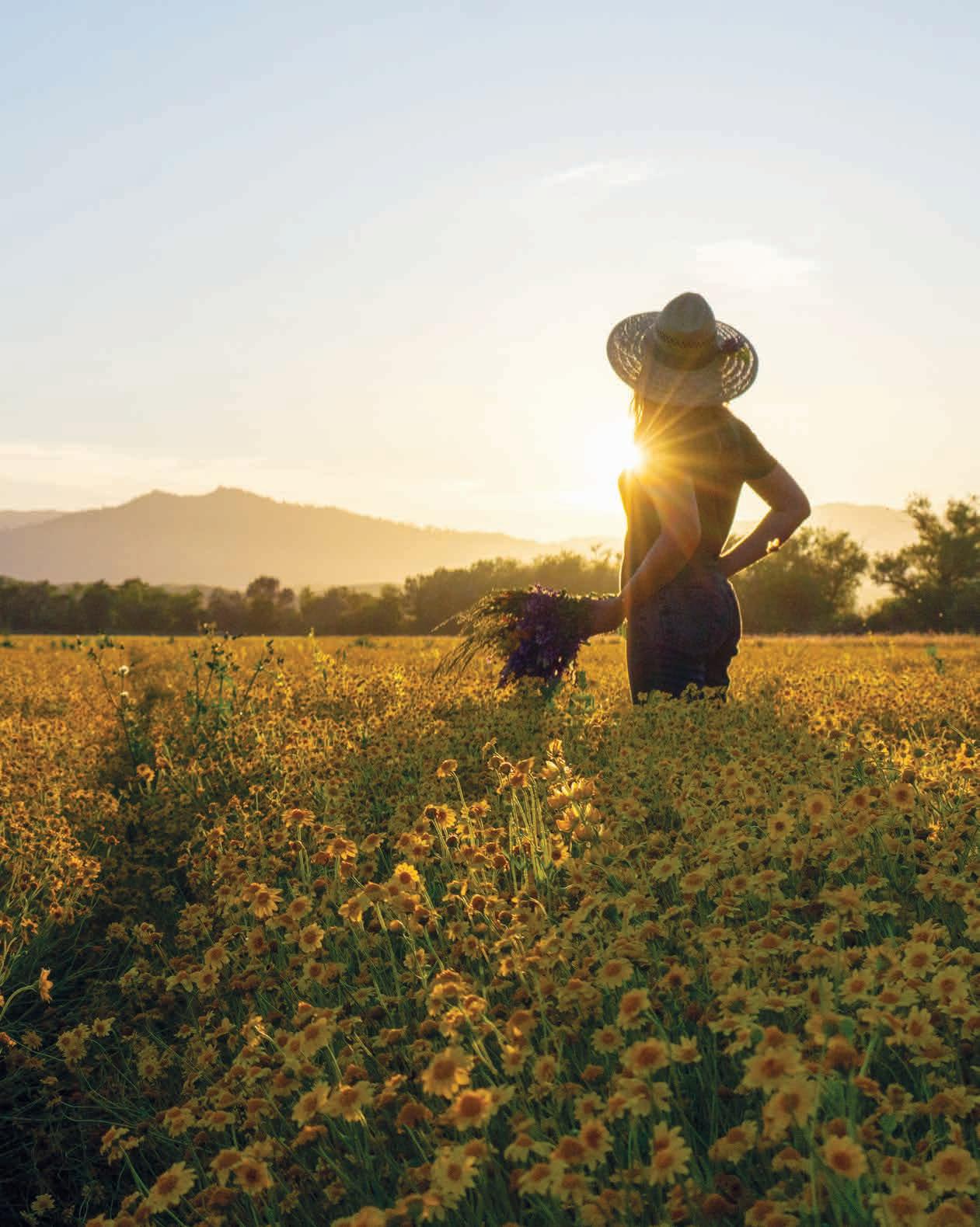
At this Northern California farm growing stunning native plant seeds, restoration begins after the bloom.
Story by KRISTIN GUY
In late summer,
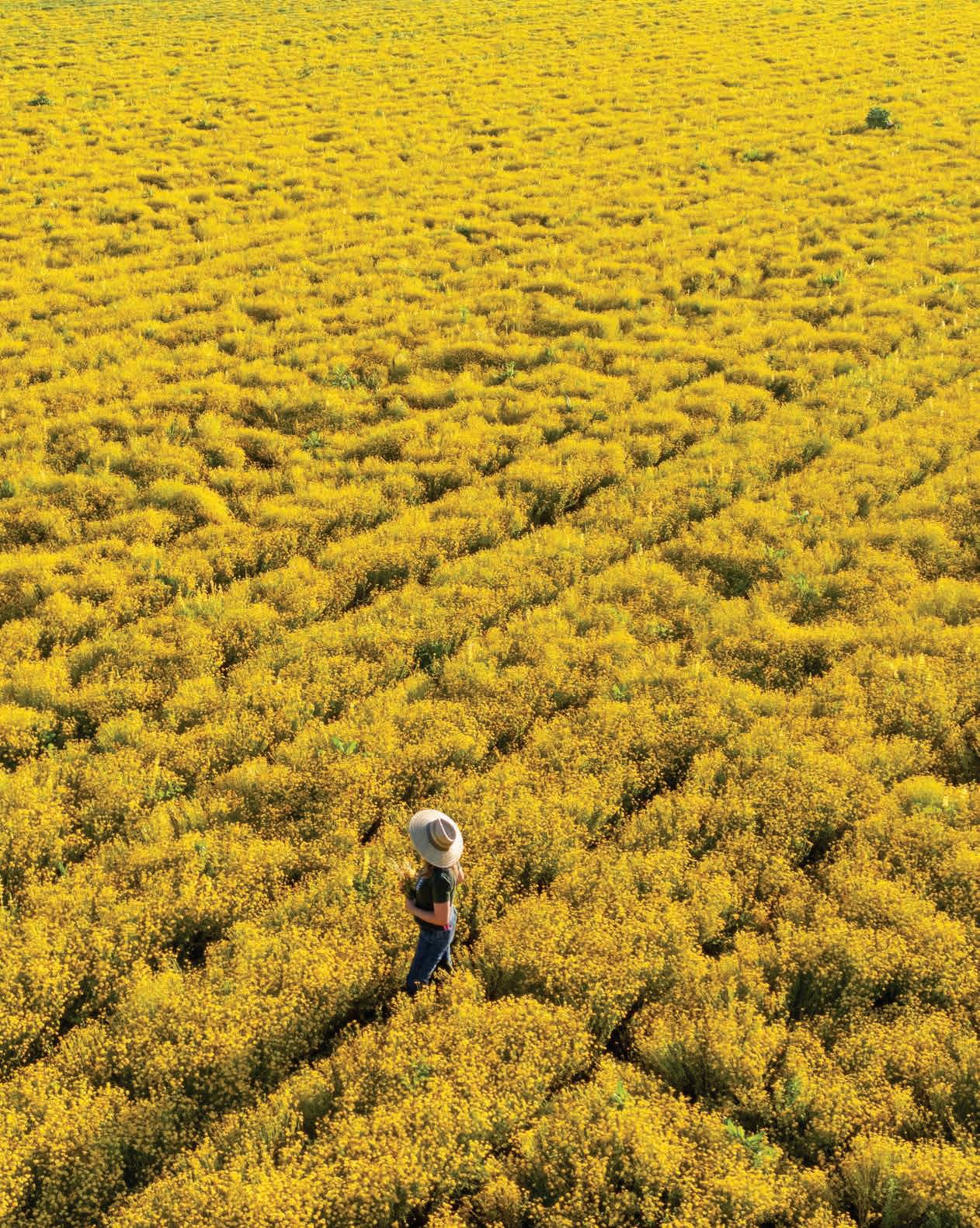
the fields outside Winters California are kaleidoscopic. There are rows of native grasses catching the light, wildflowers bursting in ribbons of vibrant color across the fields, pollinators steady at work. It looks, at first glance, like abundance. But what’s growing here isn’t just a crop. It’s a future landscape.
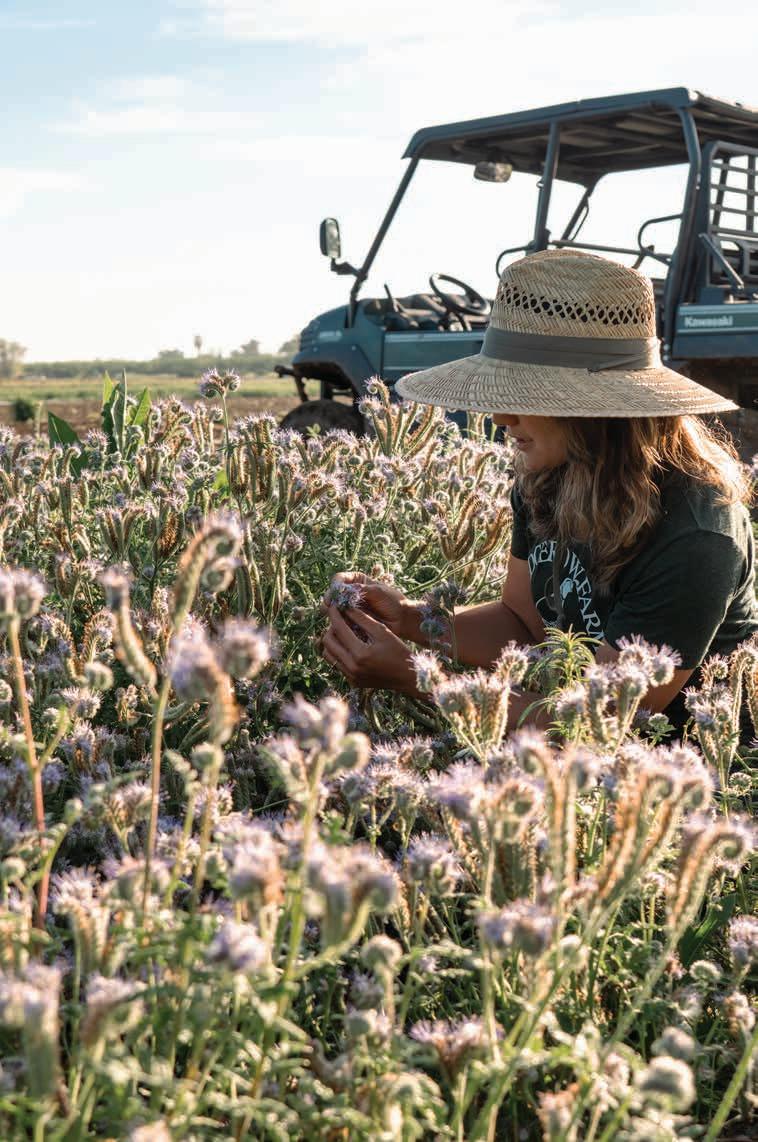
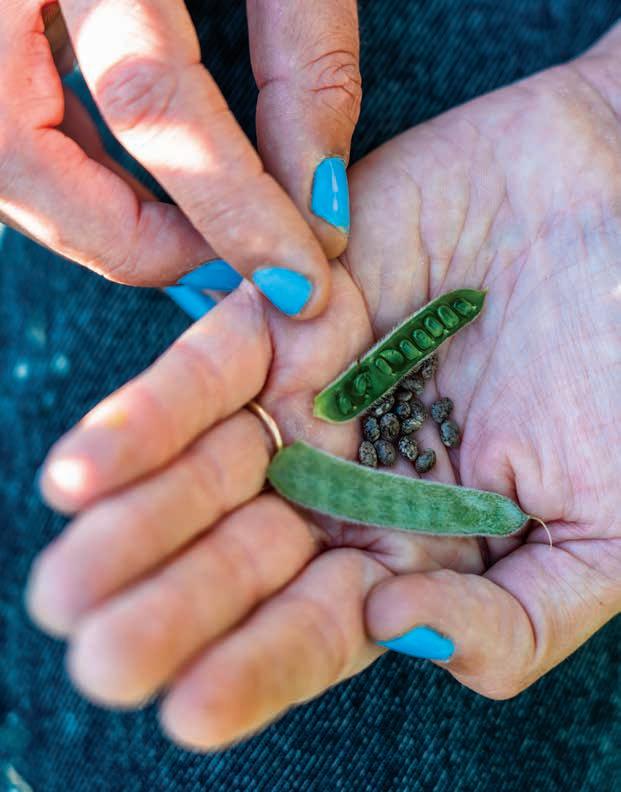
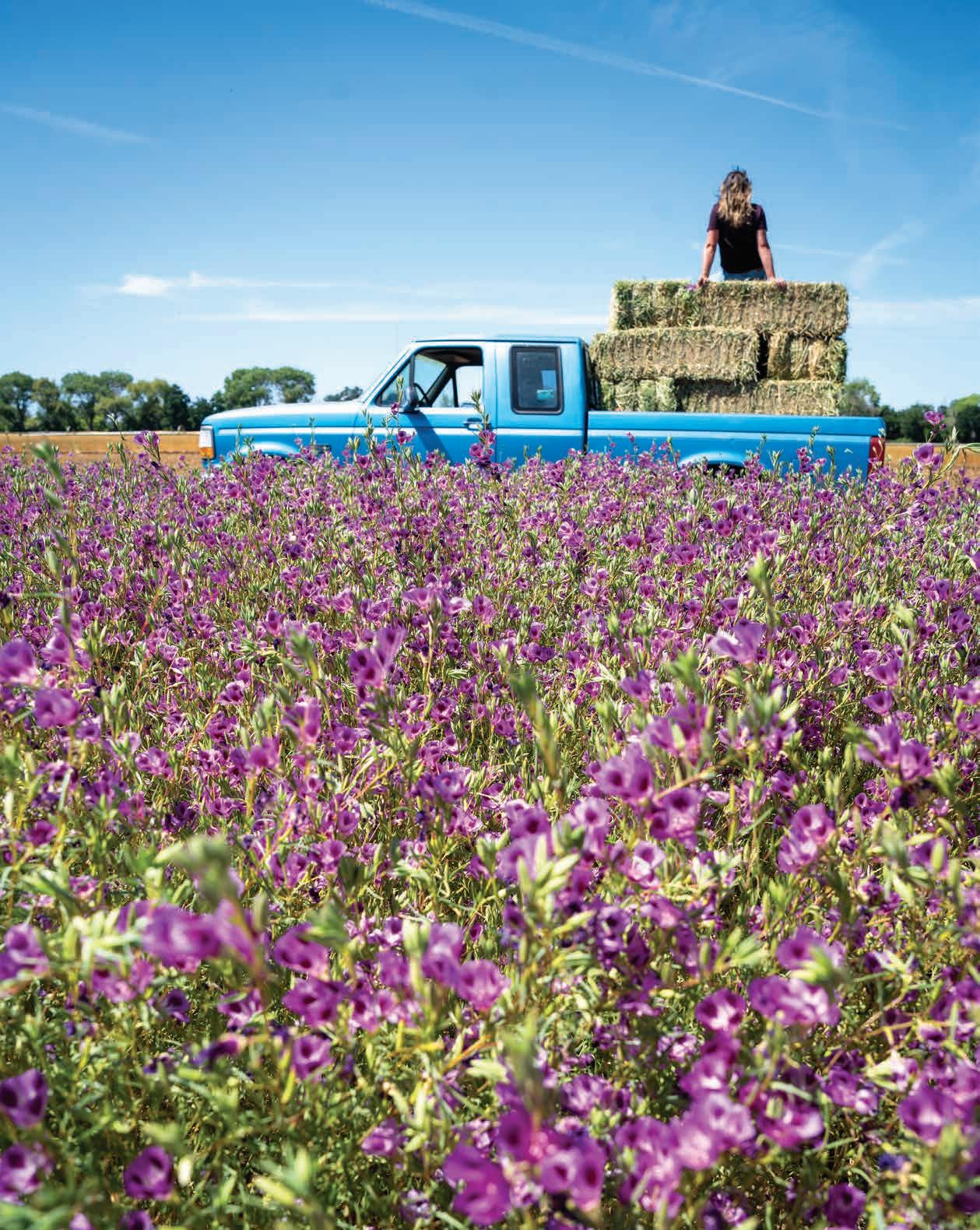
Hedgerow Farms grows regionally adapted native seed to support restoration, resilience, and biodiversity across the West. These seeds play a critical role in supporting pollinators and building healthy ecosystems— like this field of Lacy phacelia (Phacelia tanacetifolia), commonly used in vineyards and organic farming as a beneficial cover crop.
At Hedgerow Farms, a 300-acre native seed operation tucked into the agricultural heart of Northern California, every planting begins with a question: what belongs here?
“When our founder, John Anderson, started planting native grasses and wildflowers almost 40 years ago, he envisioned both a seed production farm and a venue to test new ideas,” says Julia Michaels, Ph.D., Restoration Ecologist at Hedgerow Farms and Vice President of Business Development for NativeSeed Group. “At the time, our native hedgerows were a brand-new idea in California— planting native habitat corridors within an agricultural matrix.”
Those early experiments have since become standard practice. But what’s changed most, Michaels notes, is urgency. “What’s changed over the decades is really the pace and scale of restoration, and the urgency. People are finally connecting the dots between native plants and climate resilience, water, habitat—all of it.”
That connection starts, quite literally, at the root.
In ecological restoration, not all seeds are created equal. At Hedgerow Farms, a California poppy is more than a flower; it carries the story of its home. “It means a seed isn’t just the right species, it’s the right population of that species,” Michaels explains. “A California poppy that evolved in the Central Valley has been shaped by that place for thousands of years… If you take a poppy from the coast and plant it in the valley, it will likely survive, but it may not thrive.”
This principle, genetic appropriateness, guides the farm’s work across the diverse landscapes of the Western U.S., where microclimates shift dramatically from coastal fog to inland heat to alpine cold. “When you’re planting resilient landscapes, you want plants that are prepared for


Make your yard a buzzing, blooming hotspot.

LAYER THE BLOOMS
Mix flower heights—groundcovers, mid-height forbs, and tall blooms. Pollinators all have different needs, different tongue lengths, different life histories. Diversity = happy bees.
BLOOM FROM SPRING TO FALL
Choose early bloomers like goldfields and tidy tips, and late-season stars like gumplant, vinegarweed, and native buckwheats. These late blooms help pollinators build their winter reserves.
PLANT THE MVP’S
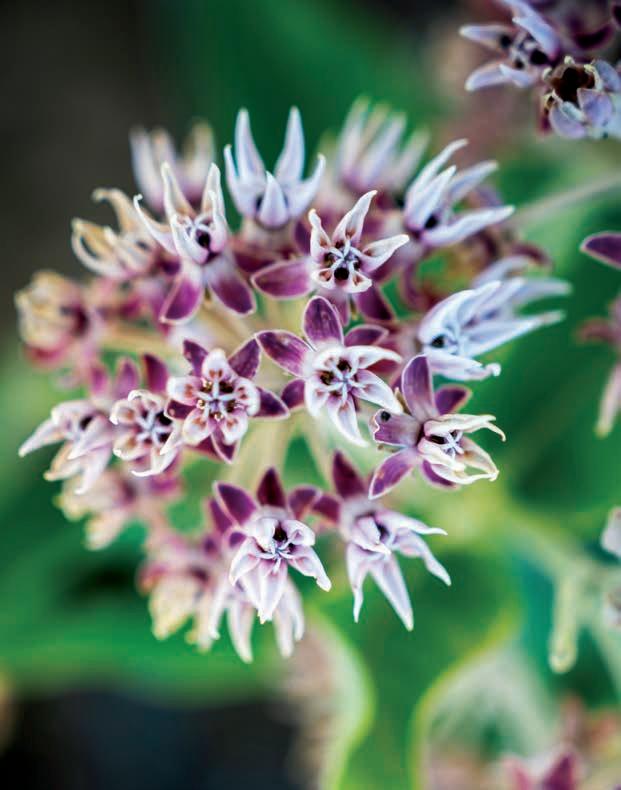
Buckwheats and gumplant = nectar powerhouses. Purple needlegrass = perfect nesting habitat. Milkweed = monarch magnet. Annuals like clarkia, phacelia, and lupines provide pops of seasonal color.
THINK “MESSY PLANTS, ORDERLY FRAMES”
Annuals dazzle in year one; perennials quietly root. By year three, the perennials take over, the weeds retreat, and pollinators move in for good. “The whole garden starts feeling like a living system doing its own thing,” Michaels says.
TIP FOR HOMEOWNERS
Start small—get to know a handful of species before expanding. Let nature guide the rhythm, not a calendar.
the local conditions from day one,” Michaels says. “It gives your project its best shot at becoming self-sustaining.” It’s not just about aesthetics; it’s about building landscapes that can endure, evolve, and support the creatures that depend on them.
Long before a seed mix is ever designed, the work begins far from the farm. “It starts with our botanists out in the field, and I mean really out there,” Michaels says. “Our collection crew covers hundreds of miles of California… hiking and driving around our state’s wild areas.” From Humboldt County down to Bakersfield, small amounts of seed are hand-collected, carefully and with restraint. “We generally take no more than 10–25% from any given population,” she explains. “The goal is always to leave a population healthier and more intact than we found it.”
Back in Winters, those seeds are coaxed into production across a mile-long patchwork of

“People are finally connecting the dots between native plants and climate resilience, water, habitat—all of it.”
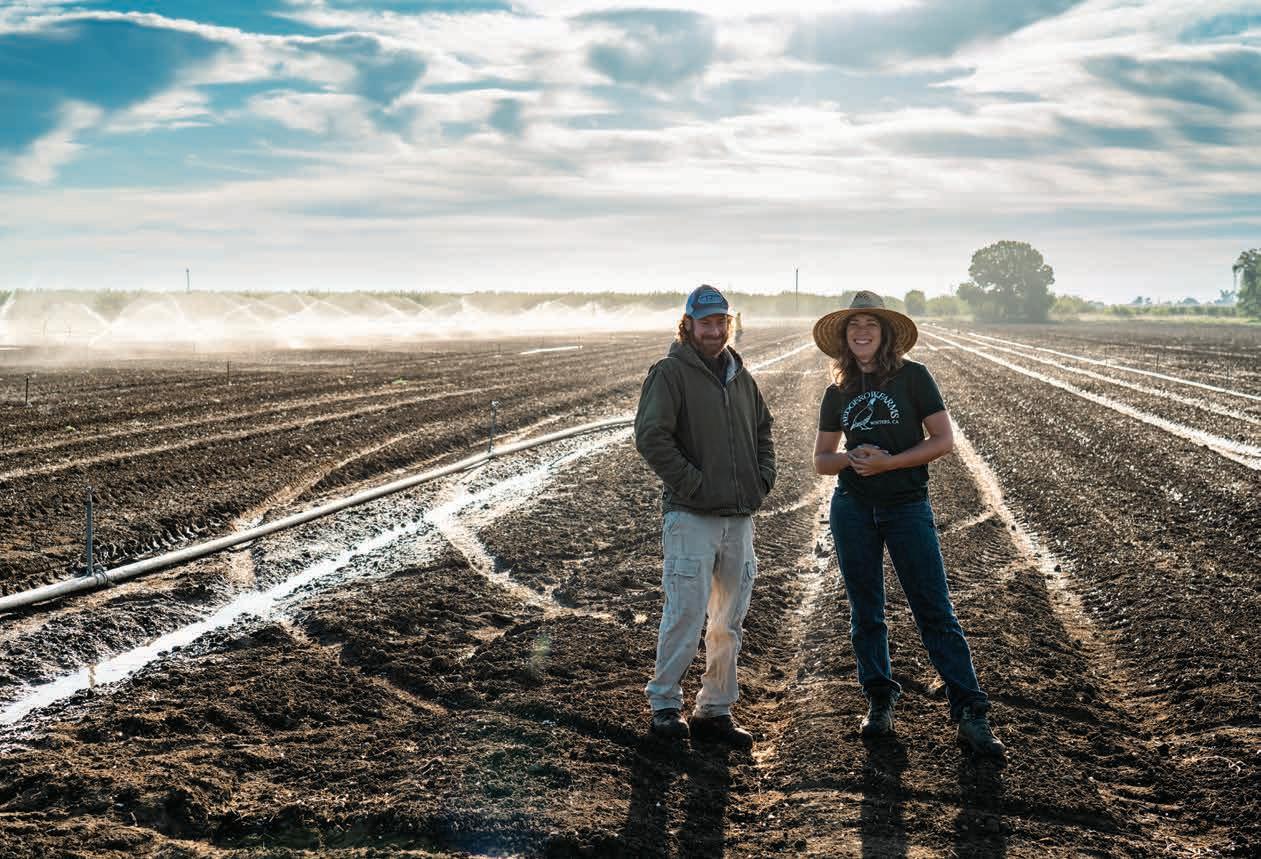
Julia Michaels, Ph.D., Restoration Ecologist at Hedgerow Farms, alongside Farm Manager Jeff Quiter, at work in the fields. Together, they oversee an expert team guiding each seed from wildland collection to restoration-ready, matching plants to place and shaping landscapes that feel right at home.
Turn tricky slopes into living landscapes.
ROOTS = ARMOR
Deep-rooted native grasses like purple needlegrass stabilize soil. Fast-establishers like small fescue cover the surface while perennials take hold.
FUNCTION + BEAUTY

Mix can be both pretty and practical—blue wild rye for shade, sweeping purple needlegrass for sunny slopes. On extreme grades, anchor first, style later.
KNOW YOUR SITE
Slope, sun exposure, and soil type matter. South-facing slopes need different species than north-facing, shady spots. Steep slopes? Add mulch or straw for extra grip.
TIMING IS EVERYTHING
Plant after a few rains for better seed-to-soil contact. Annuals show up quickly, perennials take 2–3 years to shine.
THINK LONG GAME
These plantings aren’t just functional—they build soil, filter runoff, store carbon, and support wildlife. Once established, they mostly take care of themselves.
fields. Each crop is tracked with precision—location, lineage, generation—ensuring its wild characteristics remain intact. “If we grow the same seed at the farm for too many generations, it can even start to lose its ‘wildness,’” Michaels says. The result is a living library: more than 600 types of native seed, each cleaned, tested, and stored across tens of thousands of square feet, ready to be blended into custom mixes that fit both the land and the larger ecological vision.
More than 90 percent of Hedgerow Farms’ work is custom, with seed mixes tailored to the needs of each site. “We start by understanding the site: where is it? What’s the soil like? What’s the hydrology?” Michaels says. “Then we layer in the ecological goals.” That might mean stabilizing a slope, restoring wildlife habitat, or supporting pollinators in unexpected places—even beneath solar panels.
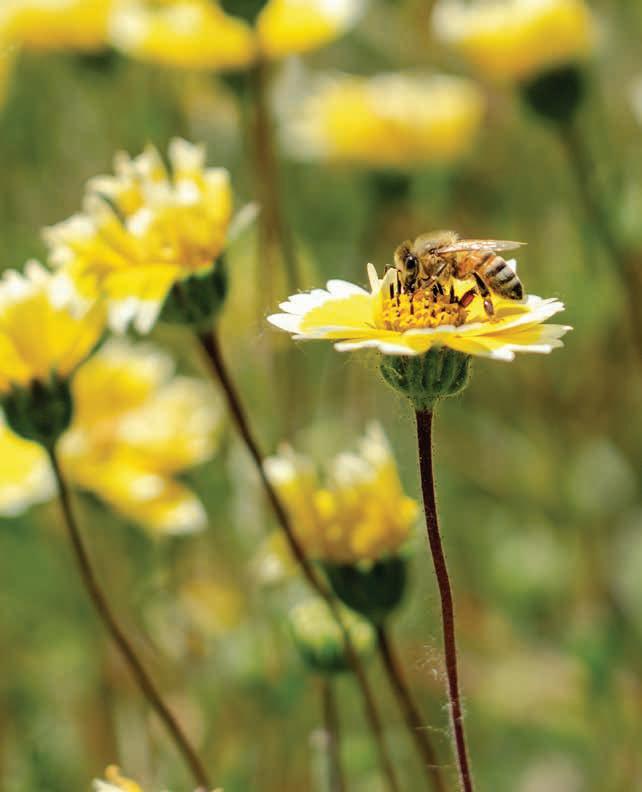
“I got to design 26 mixes of different wildflower and grass species… for a pollinator-focused solar project,” she says of a recent collaboration at UC Davis. “The mixes have been blooming for 2 years… I have seen so many native bees and bumblebees flourishing at this project already.” It’s a reminder that restoration doesn’t always look like untouched wilderness. Sometimes, it looks like coexistence—carefully designed, yet alive with spontaneity.
For all its beauty, native seed is not a quick fix. It asks something different of both land managers and home gardeners: time. “In the first year, you get a lot of annual wildflowers putting on a great show,” Michaels says. “A year or two later the noxious weeds start to creep in, but the perennial grasses and forbs are quietly putting down roots.”
“Restoration doesn’t always look like untouched wilderness. Sometimes, it looks like coexistence—carefully designed, yet alive with spontaneity.”
Ditch the thirsty turf. Welcome a meadow-minded landscape instead.

THINK MEADOW, NOT MONOCULTURE
Traditional lawns guzzle water and offer little habitat. A native meadow, layered with regionally adapted grasses and wildflowers, creates a living tapestry that moves with the seasons and supports birds, bees, and butterflies.
START WITH NATIVE GRASSES
A backbone of bunching grasses, like California fescues or a California Habitat Mix, forms a soft, drought-tolerant base that thrives on rainfall and tolerates light foot traffic.
LAYER IN WILDFLOWERS
Combine annuals for early color like California poppies, baby blue eyes with perennials like clarkia, phacelia, and yarrow for midsummer and late-season interest. This layered approach ensures blooms throughout the growing season and attracts pollinators.
YARROW AS A LAWN ALTERNATIVE
Low, resilient, and soft underfoot, yarrow (Achillea millefolium) offers flat, white flower clusters that butterflies and bees love, with feathery foliage that looks lush without constant mowing.
THE PAYOFF
Your “lawn” becomes a self-sustaining meadow that saves water, supports wildlife, and feels alive in a way turf never could.
By year three to five, a true plant community begins to emerge. Full ecological function can take a decade or more.
“Native seed is not just pretty, it’s infrastructure,” she emphasizes.
Explore these regionally adapted seed mixes at naturesseed.com and watch your landscape come alive.
“It’s one of the most practical tools we have for building landscapes that can handle what’s coming.” In other words, it’s an investment—not just in a single season’s bloom, but in the resilience of the land itself.
For homeowners, Michaels’ advice is both simple and radical: start small, observe carefully, and let nature guide your rhythm.
“Pick a single patch and get to know a handful of species really well before expanding,” she suggests. Maintenance shifts, too.
“With natives, you’re working more based on what the temperature, rainfall, wind… is doing. It’s less labor and input overall, but it requires a different kind of labor from all the attention and patience you input.”
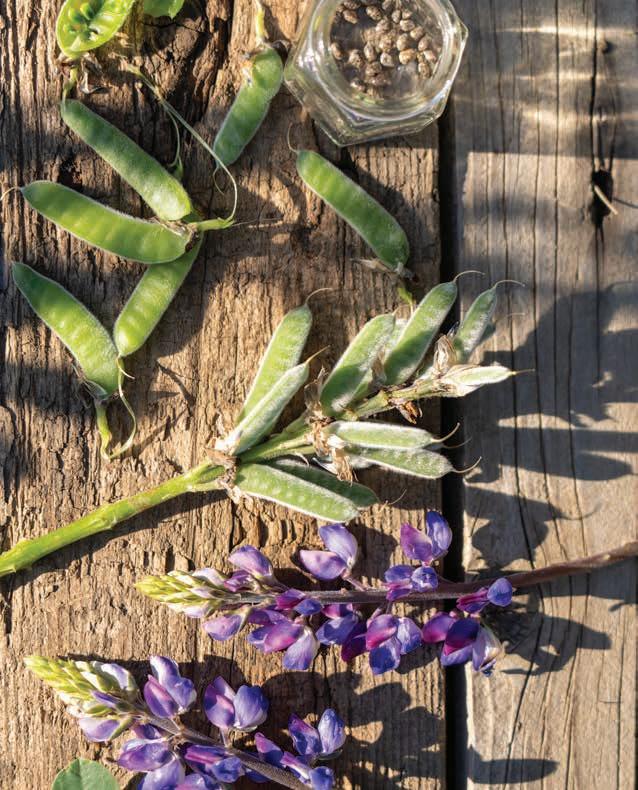
Back in the fields, that patience is already paying off. Lupine hums with bees, grasses sway in layered greens, and seed heads form, dry, and wait. “A successful crop means the plants produced abundantly and the seed quality is high,” Michaels says.
“Also when we know where the seed is going, you’re looking at the future of ecological restoration somewhere in the West, and that feeling never gets old.”
At Hedgerow Farms, the work is never done, but every seed planted is a small step toward landscapes that are vibrant, resilient, and unmistakably of their place.
A winemaking couple with a penchant for warm modernism creates a dream home and a transportive tasting room in the rolling hills of Healdsburg.
Story by CHRISTINE LE NNON
about the liquid inside is a favorite pastime of aesthetic oenophiles. The font and graphics have the potential to reveal the vintner’s taste and priorities in a way that a price point or a grape variety doesn’t. What’s even more revealing about their values is to see how a winemaker lives. Catch a glimpse of their turf, their tasting room, and (if you’re lucky) their home, and their point of view
is as clear as a Sonoma sky.
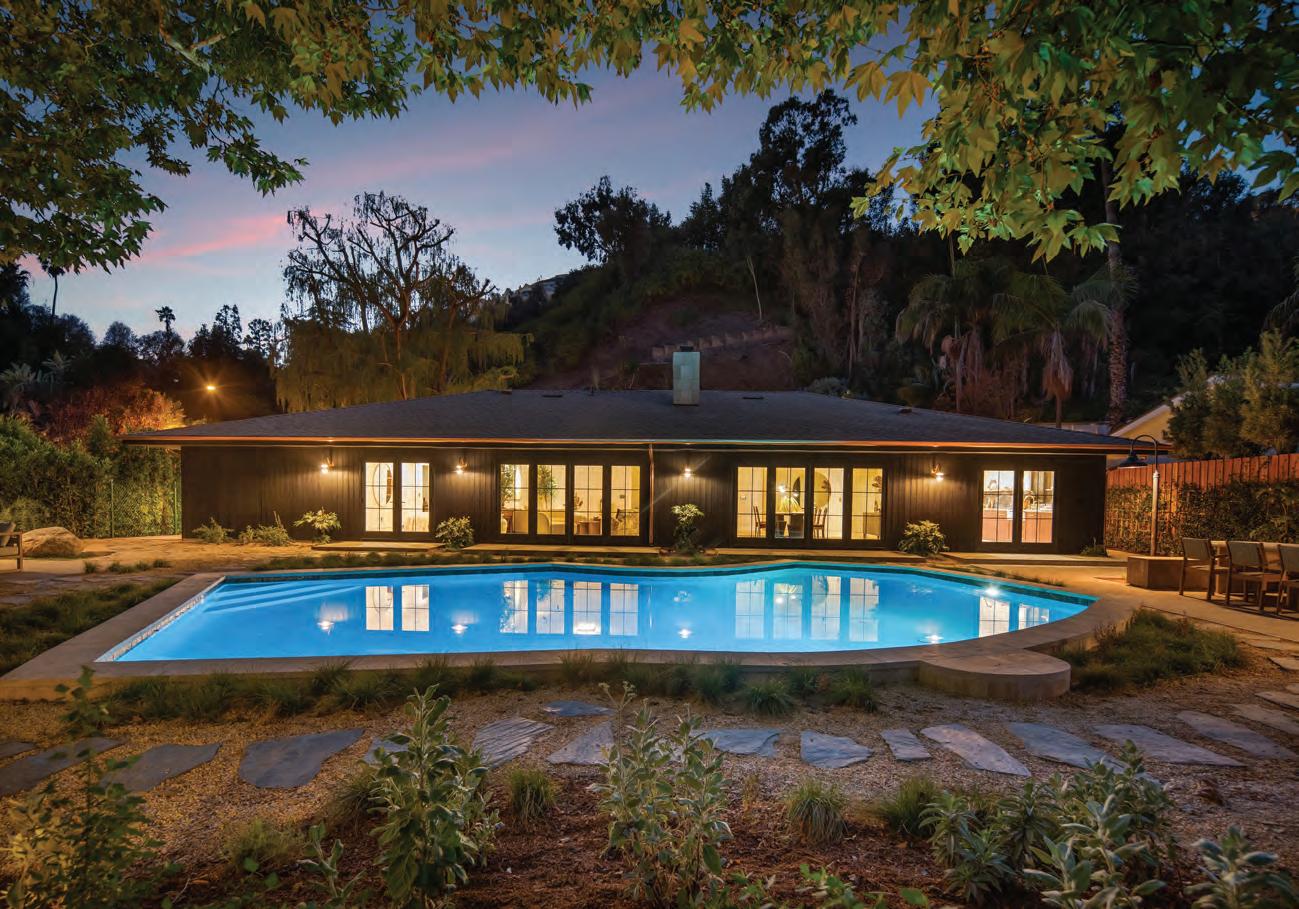
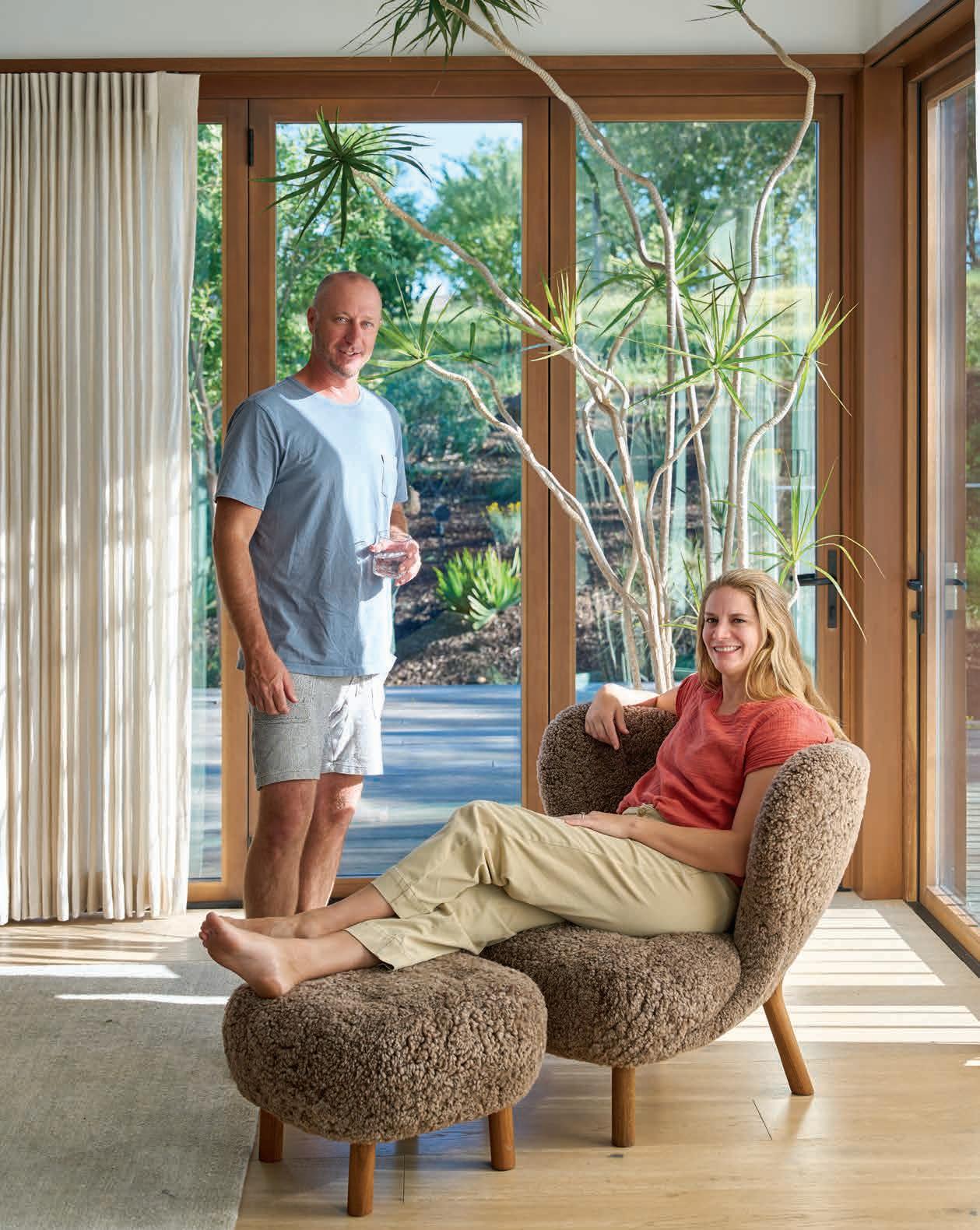
Winery owner and interior designer Jill Shadek and her husband and business partner Mike Lucia went all-in when they designed their Healdsburg home with an attached tasting room. The couple owns Cole Ranch and Rootdown, based in Mendocino and Healdsburg, and produces innovative, organic wines from dry-farmed vines with minimal intervention. When Shadek and Lucia hired Bay Area architectural designer Erik Kramer of the design and build firm Social Studio, they contracted with Matthew Bowles of TenBooks to join the team and
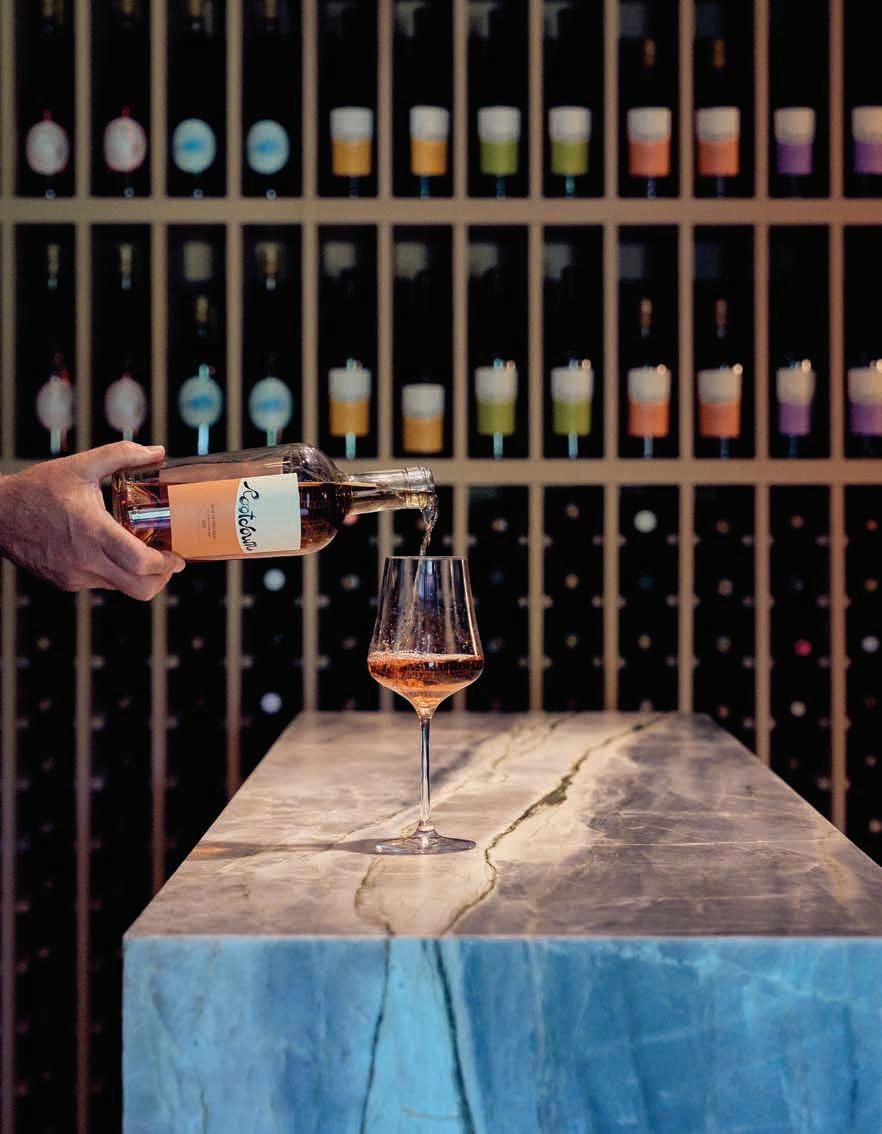
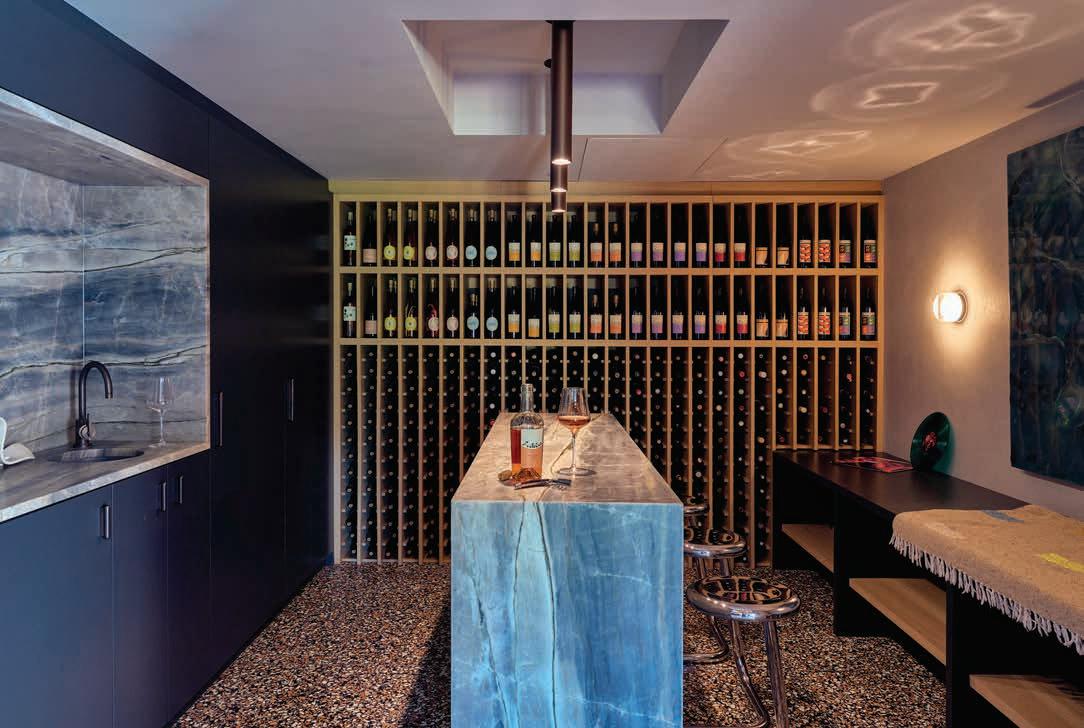
Opposite: The lowerlevel Rootdown tasting room is insulated by the surrounding hillside. An elaborately veined gray marble counter anchors the space.
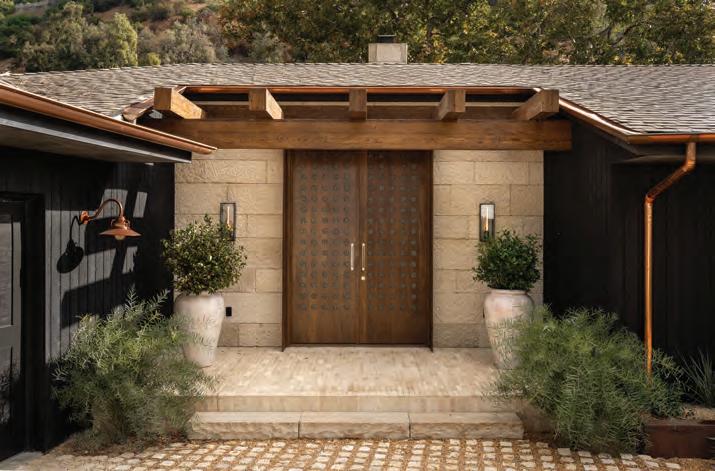
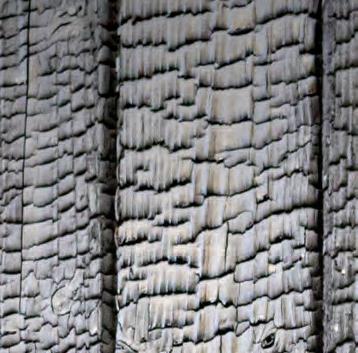
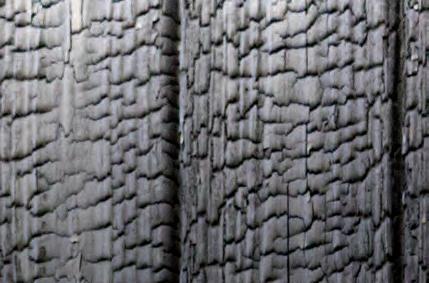
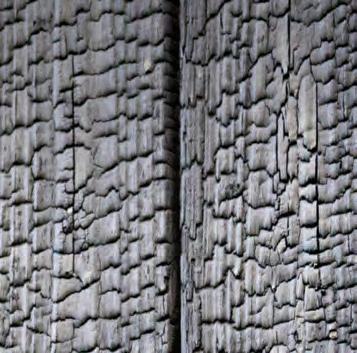
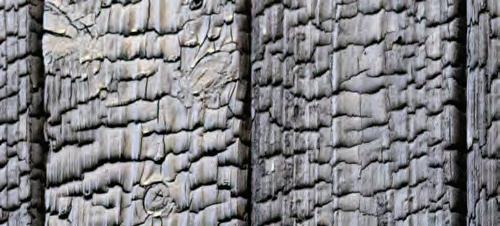
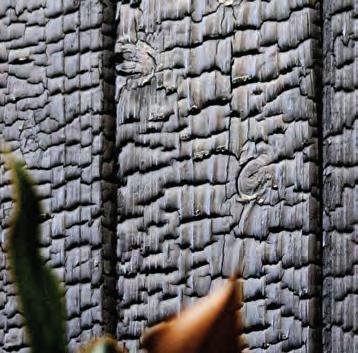
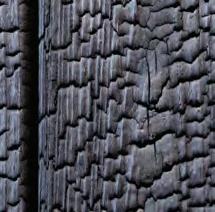
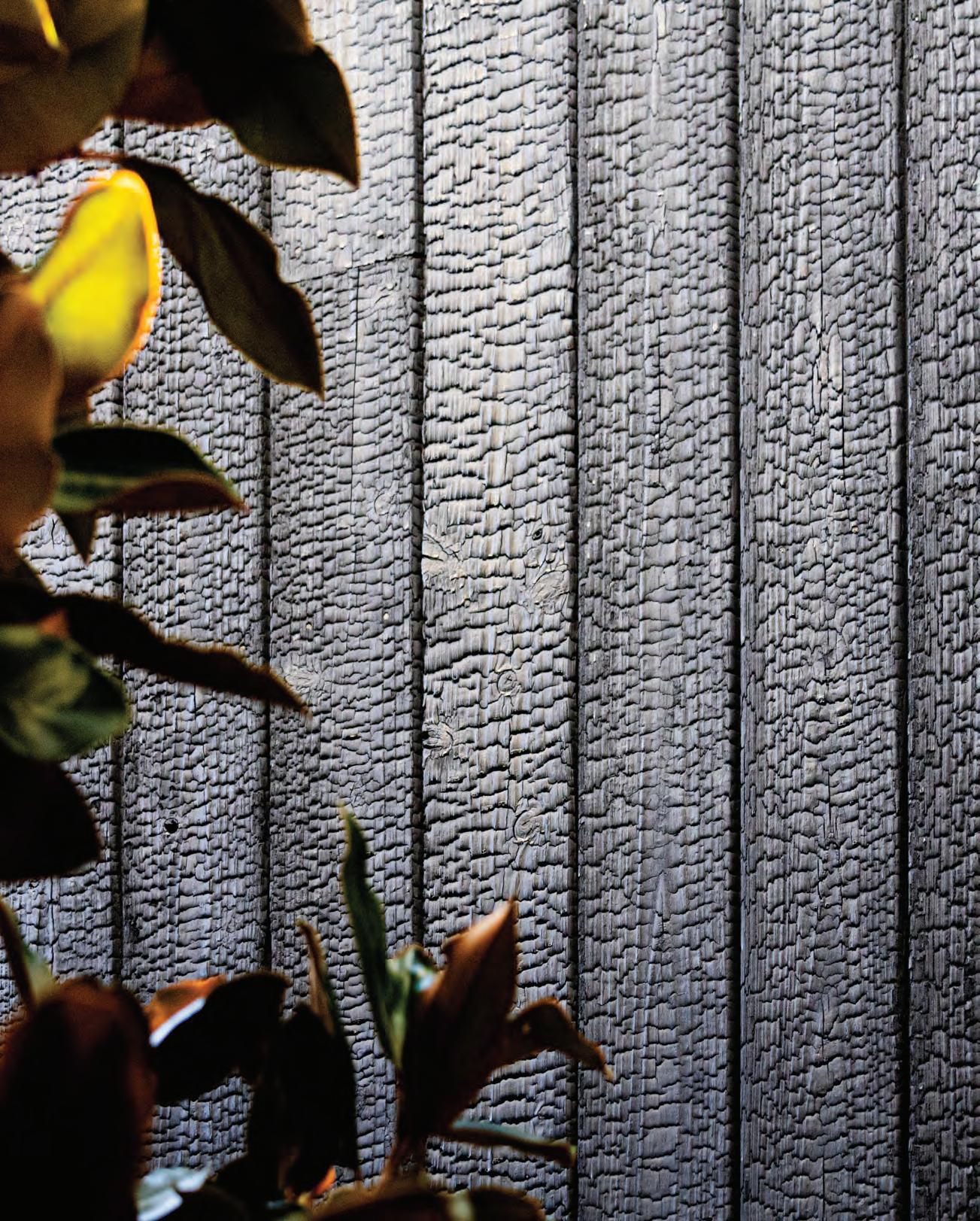
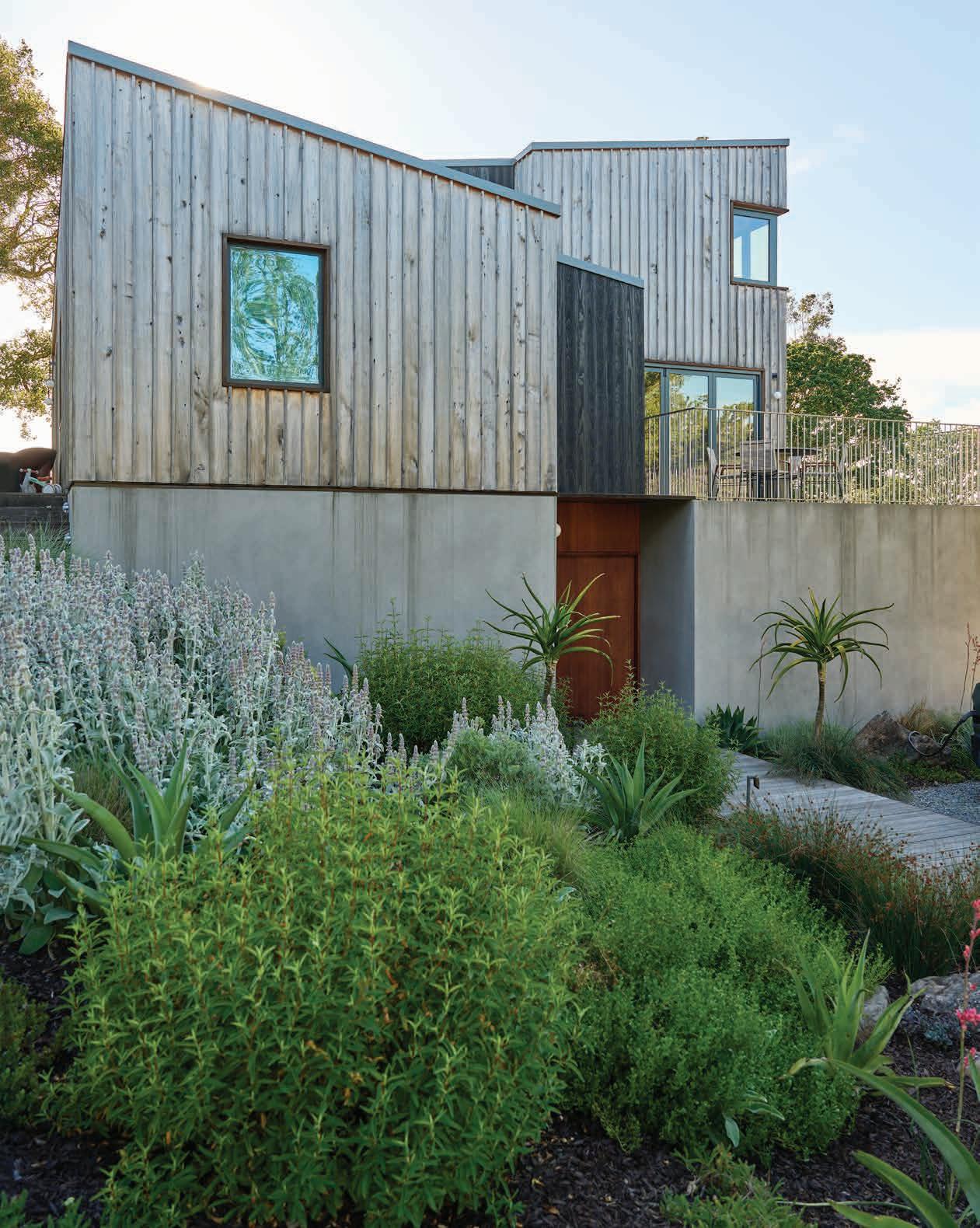
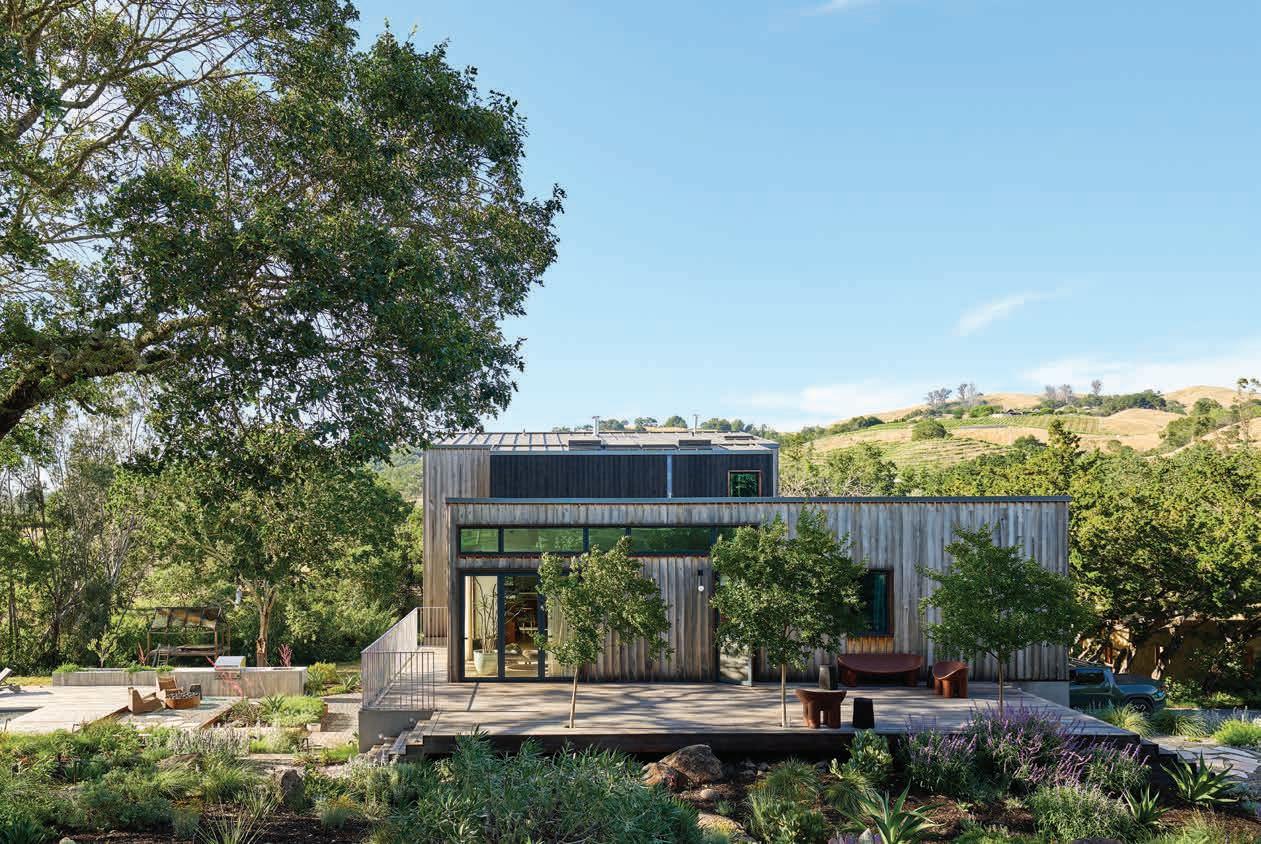
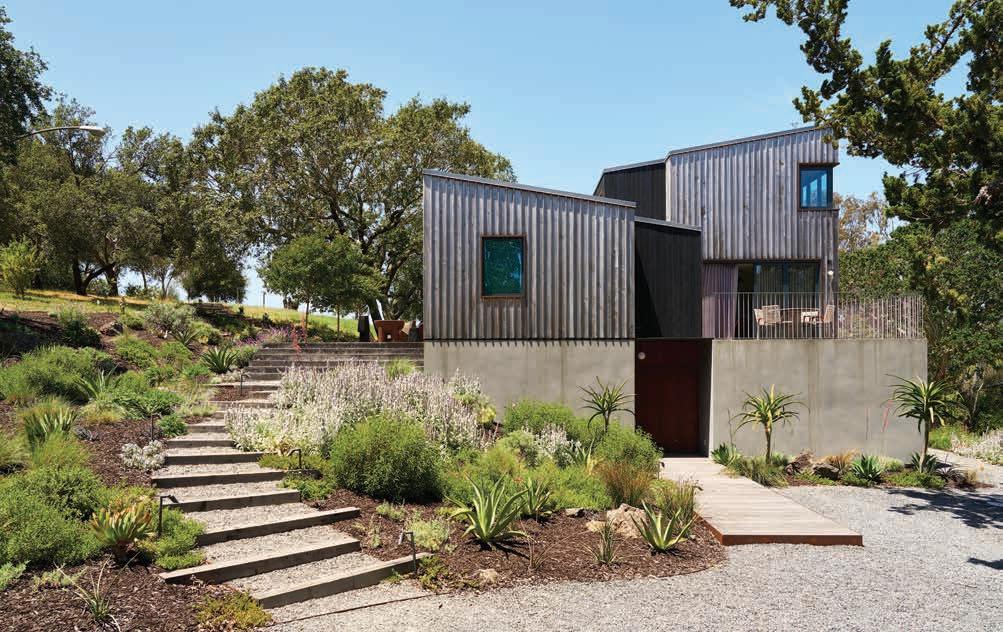
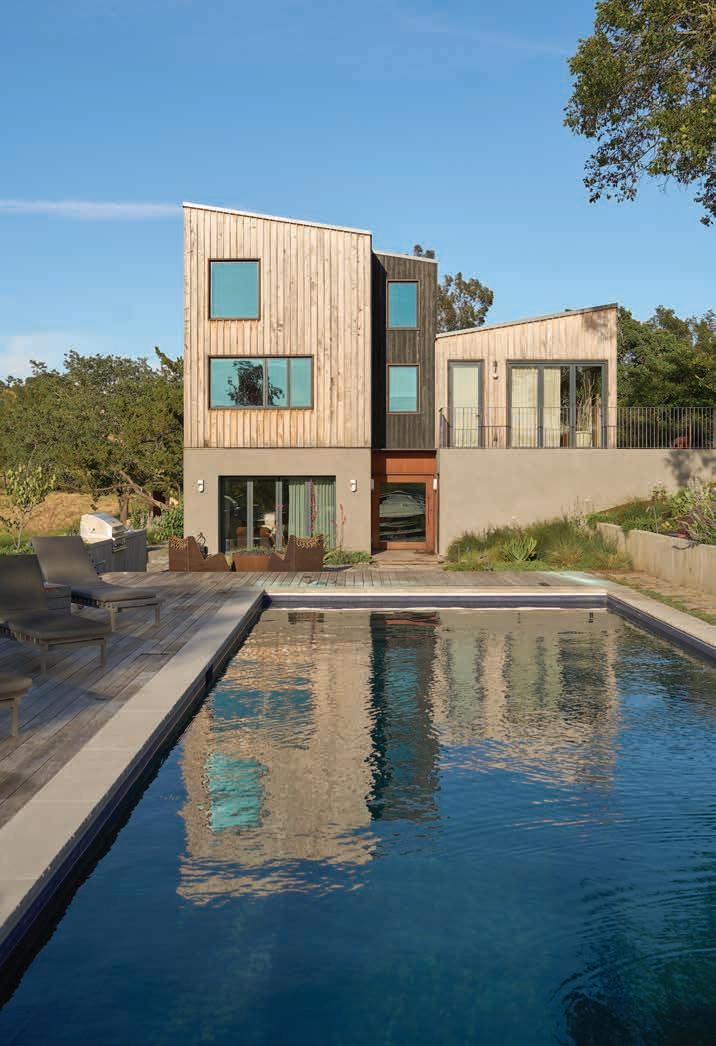
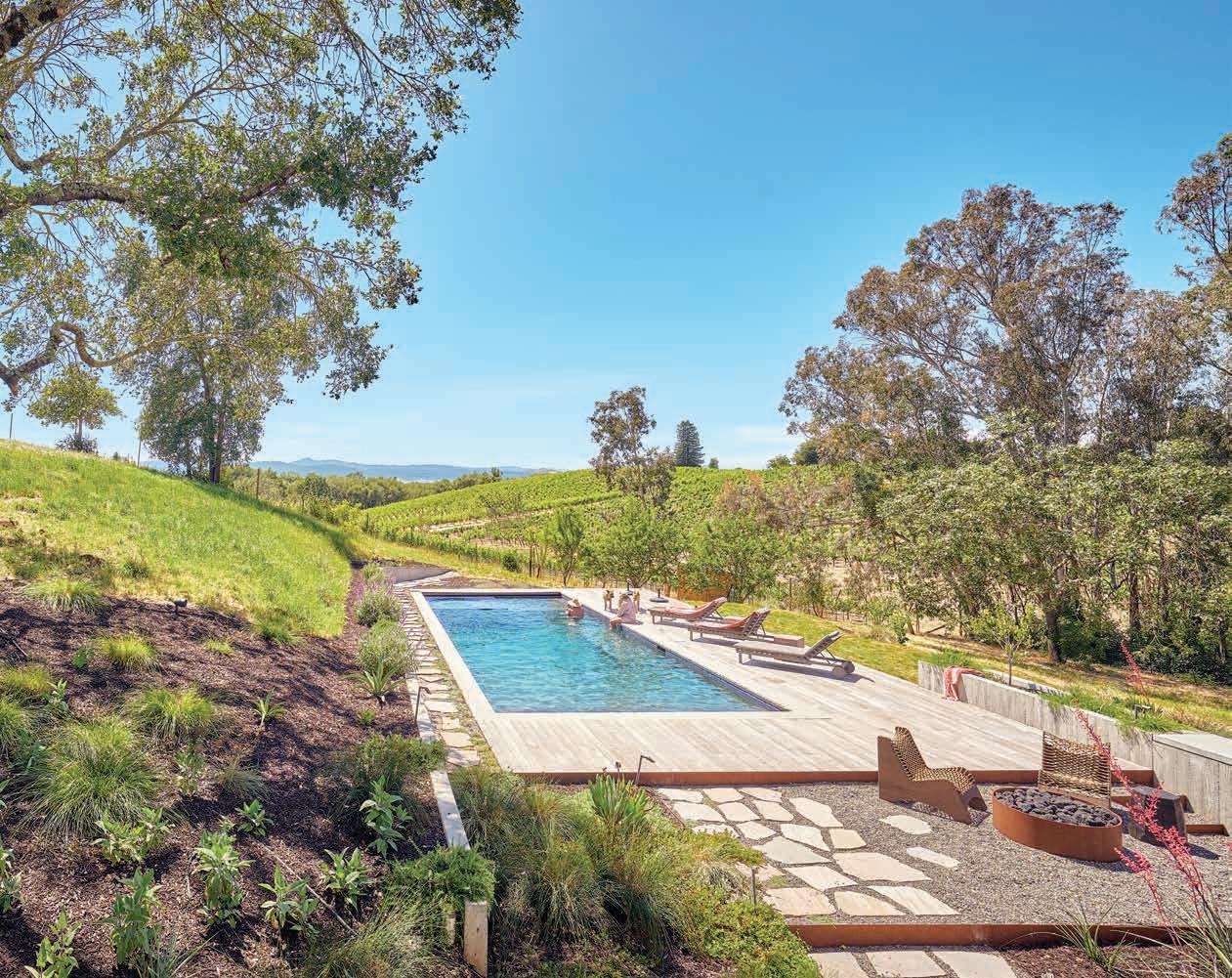
This page: The angular exterior façade is blackened shou sugi ban wood and native Monterey cypress, reclaimed by local artisan Evan Shively of Arborica. The unfinished wood will naturally patina and turn silver over time. Leon Hordijk of Studio Foliosa designed the terraced garden.
This page, from top:
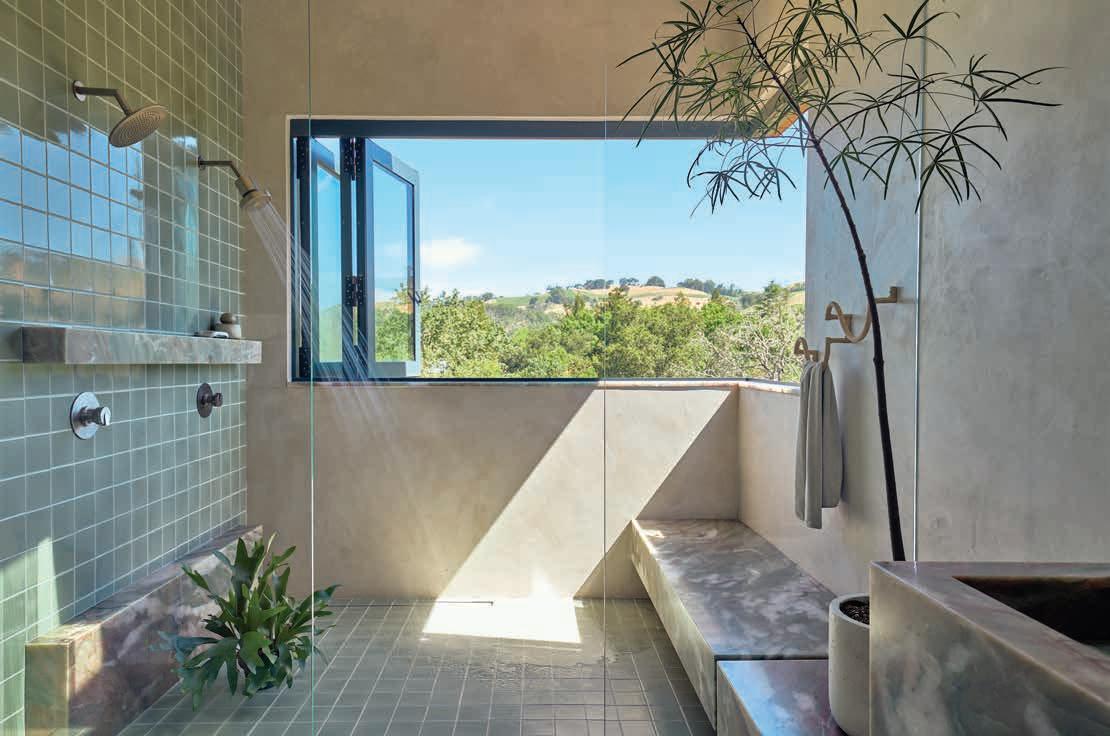
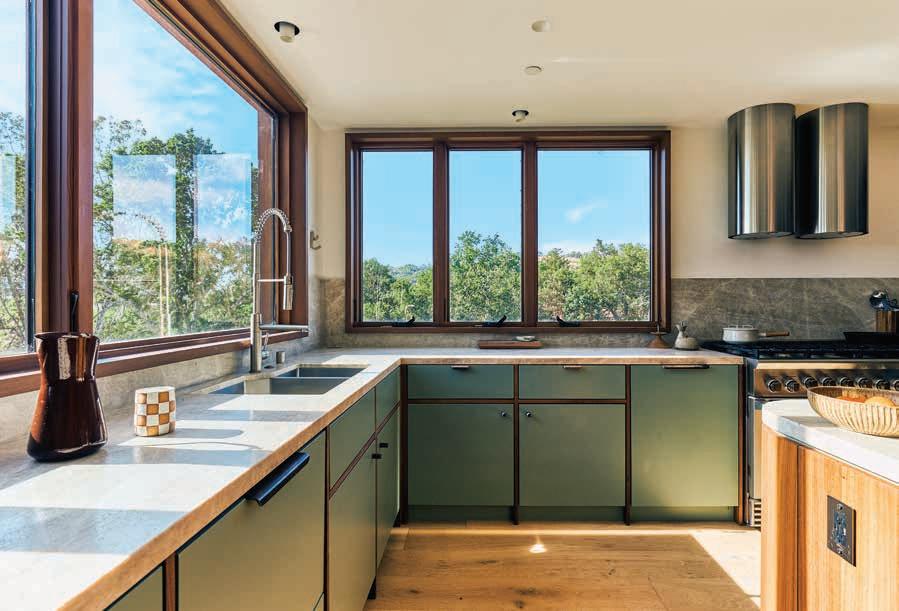
The primary bathroom’s scene-stealing shower has a zero-post corner and windows. Materials like tadelakt plaster walls, Fireclay tile, and a long jasmine quartzite shaving bench are as elegant as they are functional. The kitchen’s lack of upper cabinetry allows for unobstructed views. Opposite, from top:
LaCantina bifold doors open onto the broad deck. Focusing on a low-sheen aesthetic, even the stone countertops were honed for a leathery, gloss-free finish. The tasting room is accessed by a large pivot door and has an adjacent terrace. The custom casework wine storage is by Ogee Millwork.
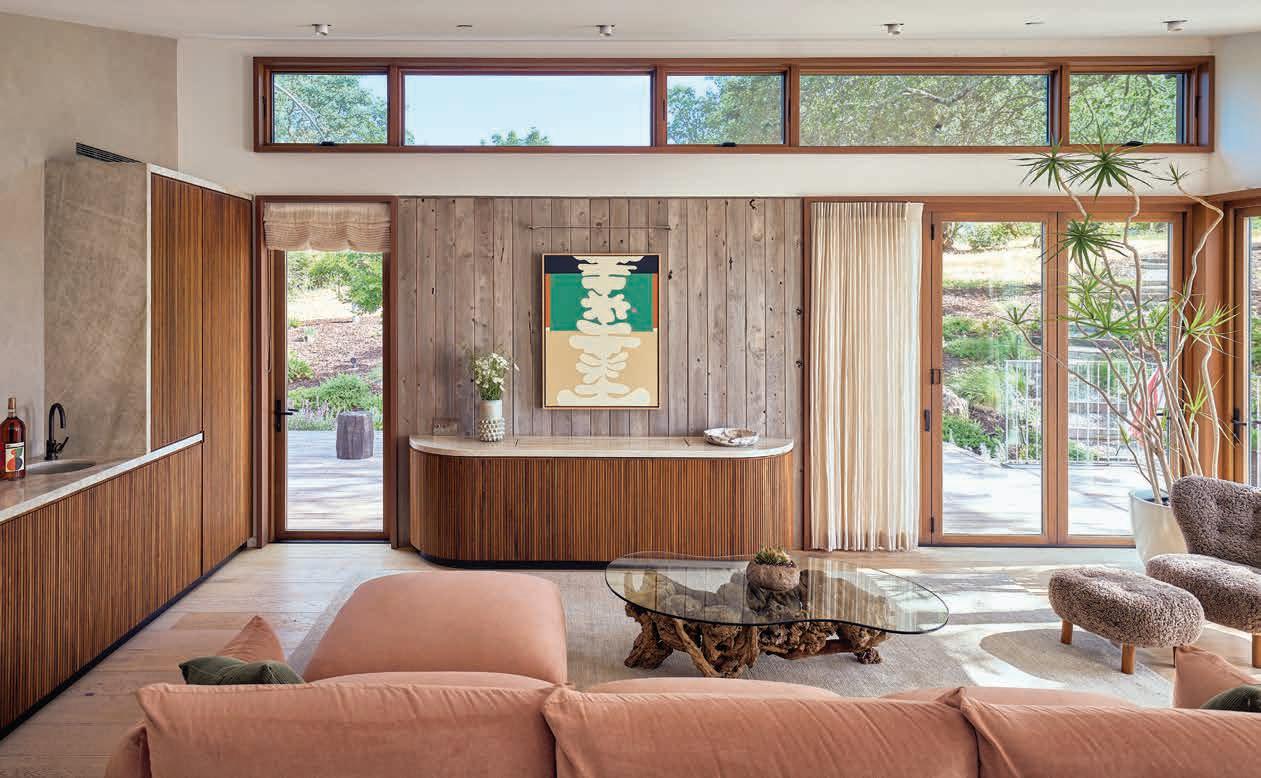
contribute to the design of their dream house. The goal was to create a property that embodies their commitment to sustainable practices and their embrace of minimalism, both in winemaking and design.
“That’s an interesting design challenge with a single-family home. We had to figure out how to let the public in and also maintain privacy in the home,” Bowles says. “The upper two levels are the family living areas, and they’re more playful, with angular volumetric forms that create dramatic interior spaces.”
Initially, Kramer, Bowles, and Shadek intended to
modernize an existing 1960s house on the property, which had been trucked in from another location and nestled into the hillside. For better or worse, the team determined that a fresh start was in order.
“We kept that idea of partially burying the house in the earth in the design concept, but we decided to start over for a new build,” Bowles says. “The footprint of the house is the same as it was, and we used a bit of the foundation. The low volume that’s in the hillside is clad in plaster, and that creates a massive, solid base to the house. The tasting room and the wine cellar are down there, and it doesn’t need air-conditioning. It stays naturally cooled by the earth. It’s moody, dark, and durable. The upper two floors are lighter and more playful.”
Their design is an unapologetically modern, angular alternative to the area’s ubiquitous farmhouse. Unfinished Monterey cypress board-and-batten exterior
siding will silver over time. And the surrounding terraced garden lets the breathtaking natural surroundings take center stage. Inside, the team committed to using simple materials like corten steel, terrazzo tile, and dark wood paneling in exacting and creative ways.
“What’s crazy about the house is how detailed Jill allowed us to get,” Bowles says. “There’s nothing in the house that doesn’t flush out or plane out. All of the doors in that walnut paneling are blind and hidden. It’s a very high level of detailing that’s a pain in the butt for a contractor but makes the house feel very integrated.”
Bowles describes the look as earthy modernism, which is matched by the palette of dusty rose, terracotta, and sky blue.
“It was really important to the three of us—Erik, Jill, and myself—to use raw materials with integrity and honesty,” he says, pointing out the walnut kitchen cabinetry and subtle quartzite stone from Brazil. “We didn’t use a high-gloss finish anywhere. For the
stone, we went with a leathered finish that has a soft, supple feel.”
The home’s most remarkable feature happens to be in the most private space, the primary bathroom with a shower that opens up completely to a view of Chalk Hill.
“That sink is all Erik, who designed the marble vanity to run through the glass into the shower,” Bowles says. “We worked hard to get that zero-post corner so we could open up those windows, so it felt spacious and calming. And we got that top-down light like you’d get from a skylight, which is different from the light from a window. When you’re in there, it feels like an outdoor shower about 30 feet off the ground.”
The result is equal parts rooted in nature and suspended in beautiful, open space. It’s both grounded and light as a feather; fun, not too serious, and punctuated with sunshine. Like you could bottle it and drink it, and savor every sip.
Left: Bowles kept the original footprint of the 1960s foundation but added 1,000 square feet by building vertically.
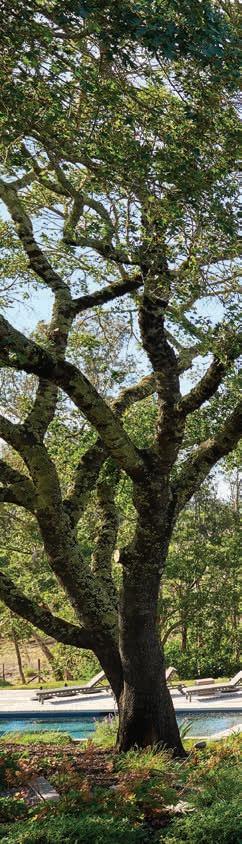
Above: Hordijk’s landscape design prioritized proper drainage along the hillside and minimal impact on the natural environment. Wood decking around the pool is subtle and minimal.

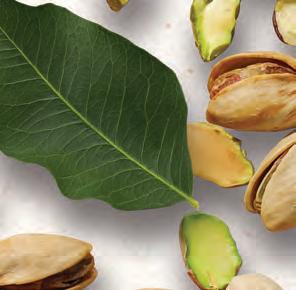


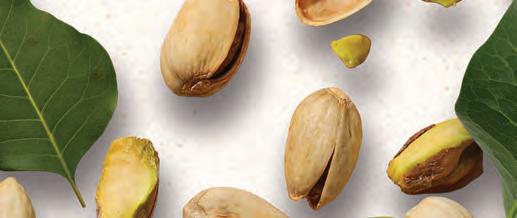




























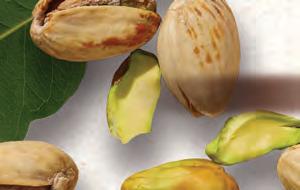

































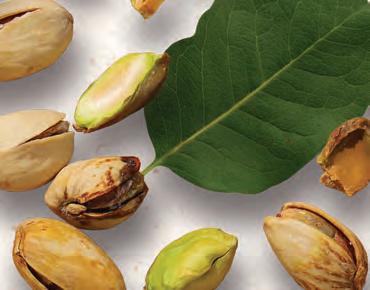































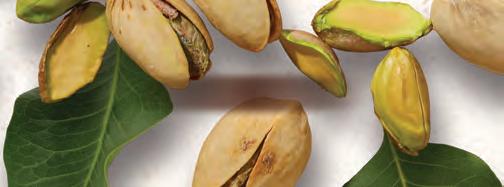
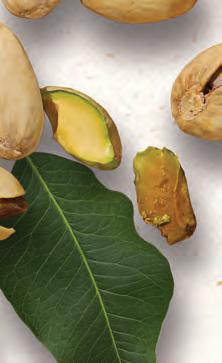
As a fourth-generation farming family that is built around community we know how important root systems are. Both trees and people need them to thrive, which is what sets Nichols Farms apart from any other pistachio grower. With your support, we will keep crafting our pistachios with quality...for generations to come.
California Grown Pistachios










































From ancestral ingredients to weeknight tables, Pyet DeSpain’s Rooted in Fire brings Indigenous and Mexican flavors into vivid, living conversation.
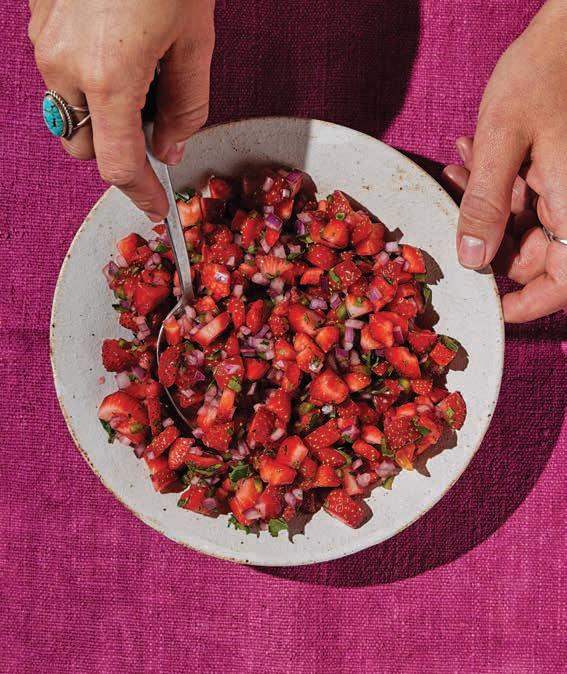
When I was competing in the Next Level Chef brunch challenge, I decided to bring my roots to the table and make a Native taco with homemade fry bread as the vessel and chorizo and a fried egg as the filling. Every taco needs some salsa, but since I didn’t have tomatoes, I decided to turn the strawberries I had pulled off the platform into the topping of choice for my brunch fry bread taco. I kept making this salsa way after the cameras stopped rolling. Orange juice brings in the acidity, agave amplifies the flavor of the strawberries, and the jalapeño gives this recipe the hint of heat it deserves.
MAKES 2 1 / 2 CUPS
2 cups fresh strawberries, hulled and diced
¼ cup cilantro, finely chopped
¼ cup red onion, finely diced
1 jalapeño pepper, seeded and finely chopped
1 tsp. agave
1 tsp. orange juice
Juice of 1 lime
Pinch of kosher salt
1. In a medium bowl, add the strawberries, cilantro, red onion, and jalapeño pepper, and gently combine.
2. Drizzle the agave, orange juice, and lime juice into the mixture, sprinkle with the salt, and toss the salsa gently to combine all the flavors. Taste the salsa and adjust the sweetness, acidity, and salt according to your preference.
3. Allow the strawberry salsa to chill in the refrigerator for at least 30 minutes to allow the flavors to meld.
4. Serve this vibrant strawberry salsa alongside traditional Native American dishes featuring grilled meats or squash, or enjoy it with corn chips.
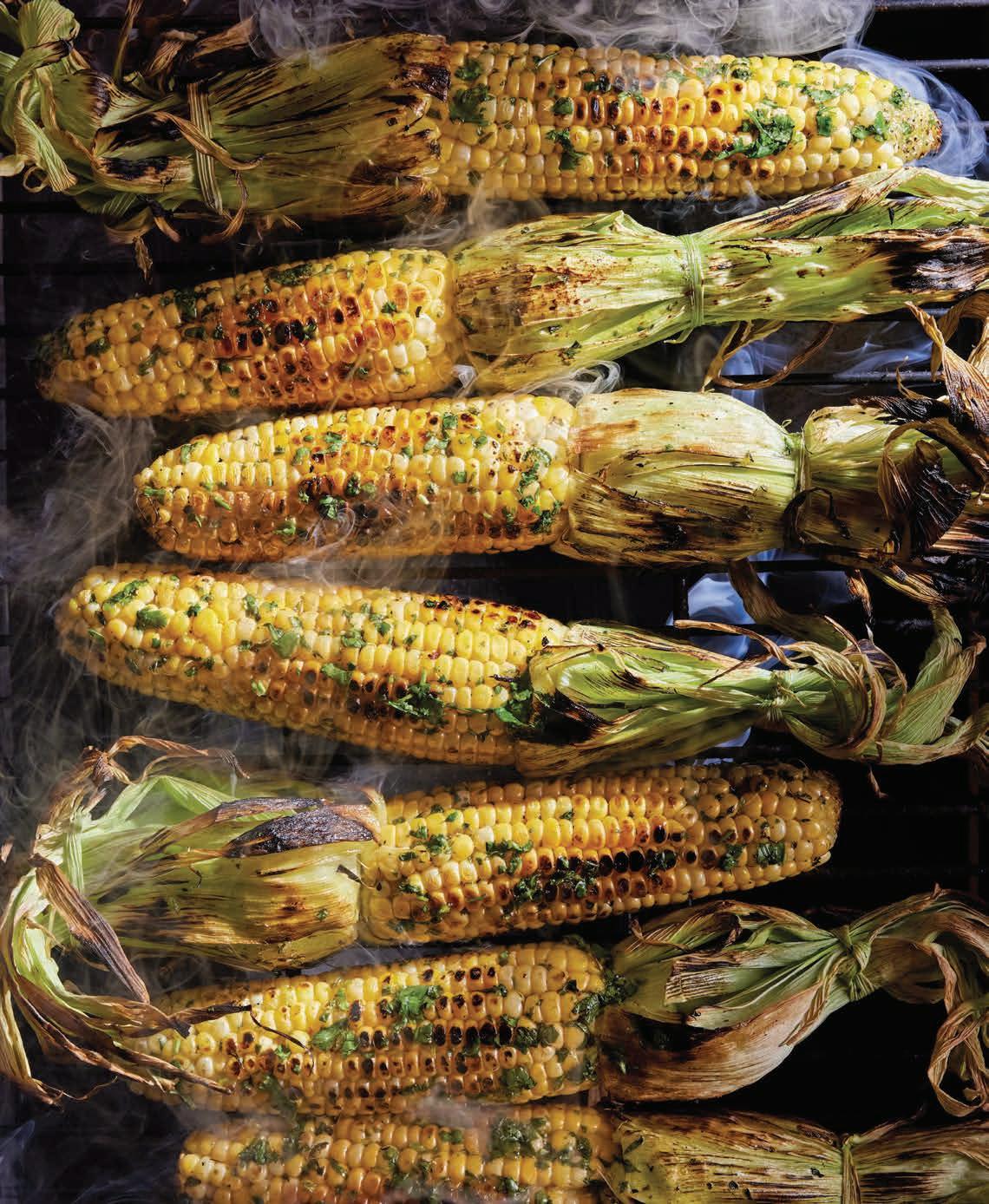
IIn her new book Rooted in Fire, private chef and winner of Gordon Ramsay’s Next Level Chef Pyet DeSpain shares personal recipes that land first on flavor and ease, then open the door to something deeper. The appeal is immediate. A warm Three Sisters salad folds corn, beans, and squash into something savory, simple, and deeply satisfying. A strawberry salsa brings brightness and surprise, with lime, jalapeño, and a touch of sweetness that makes it feel built for summer grilling (and hard to stop eating). And grilled corn brushed with cilantro, honey, and lime leans into everything you want off the grill—charred, sticky, citrusy, and just a little messy in the best way.
These recipes are ingredient-driven, and intuitive, requiring only a skillet or a grill and a handful of things that already make sense together. That ease is part of the point. DeSpain’s cooking is grounded in her identity as a Prairie Band Potawatomi and Mexican American chef, That perspective shows up in the way flavors are layered and ingredients are paired: corn and beans as a base, citrus and chile for lift, fire as both technique and instinct. The through line is fire, not just literal flame, but energy and transformation.



I use a lot of cilantro, honey, and lime because they are one of my favorite flavor combos, creating the perfect sweet, tart, and savory bite. I also tend to reach for honey and maple syrup often, especially when I’ve fired up the grill and am prepping to cook some veggies. I just love the caramelization these ingredients create when thrown on the hot grate. Honey pairs well with corn because it brings out its natural sweetness, but if you’re not into that specific flavor profile, feel free to skip the honey in this recipe to keep it a little more on the savory side.
MAKES 4 SERVINGS
4 ears of fresh corn, peeled or with husks
¼ cup fresh cilantro leaves, finely chopped
2 Tbsp. honey
Zest of 1 lime
Juice of 1 lime
2 Tbsp. sunflower seed oil
Kosher salt and freshly ground black pepper to taste Lime wedges, for serving
1. Preheat the grill to medium-high heat.
WWhen I lived on the Osage Nation Reservation as a kid, I loved watching the grandmas and aunties cook big pots of beans, squash, and rice outdoors over an open flame during the ceremonial powwows and then place their labor of love on the long tables for all to enjoy during the supper break. On one occasion, I noticed a dish I hadn’t seen before. I was drawn to its bright, festive colors and varied ingredients. As I watched the elders and later the dancers spoon the food onto their plates, I hoped that there would still be some of that vibrant salad left for me to try once it was
the children’s turn to fill our plates. My eyes brightened when I reached the big bowl and scooped a serving on my plate. I dug in, and instantly fell in love with that three sisters salad. I have re-created that dish here, keeping it simple so you too can savor the traditional flavors of my youth.
SERVES 4
½ tsp. sunflower seed oil
¼ white onion, diced
1 cup fresh or frozen corn, thawed (or 11-oz. can)
1 zucchini, thinly sliced
1 Tbsp. fresh thyme leaves
15 oz. cooked black beans (or canned black beans, drained)
Pinch of kosher salt
Pinch of freshly ground black pepper
1. Coat the bottom of a skillet with the sunflower oil, and heat over medium heat. Add the onion, and saute until translucent. Add the corn, zucchini, and thyme, and stir to combine.
2. Cook for 2 minutes, mix gently, and cook for an additional 2 minutes.
3. Add the beans to the skillet, and mix gently again. Season with the salt and pepper.
4. Cover with a lid and continue to cook for 2 to 3 minutes, stirring occasionally.
5. Serve warm.
2. If the corn has husks, peel them back and remove the silk. Note: You can save the corn silk to dry and make Corn Silk and Honey Tea.
3. Place the corn on the grill, turning it occasionally, until the kernels are charred and cooked through, 10 to 12 minutes.
4. While the corn is grilling, in a small bowl, combine the cilantro, honey, lime zest, lime juice, and sunflower seed oil, and mix well.
5. During the last few minutes of grilling, brush the corn with the cilantro, honey, and lime mixture, turning the corn to coat all sides evenly. Reserve any extra mixture.
6. Remove the corn from the grill, and place it on a serving platter. Drizzle any remaining cilantro, honey, and lime mixture over the corn, season with salt and pepper to taste, and serve with lime wedges on the side for an extra burst of citrus flavor.
WHERE GREAT INGREDIENTS AND TECHNIQUE MEET
Nicole Dragon’s Grilled Skirt Steak puts a fresh spin on a seasonal favorite.


For a video of Nicole preparing this dish, visit Sunset’s Instagram @sunsetmag
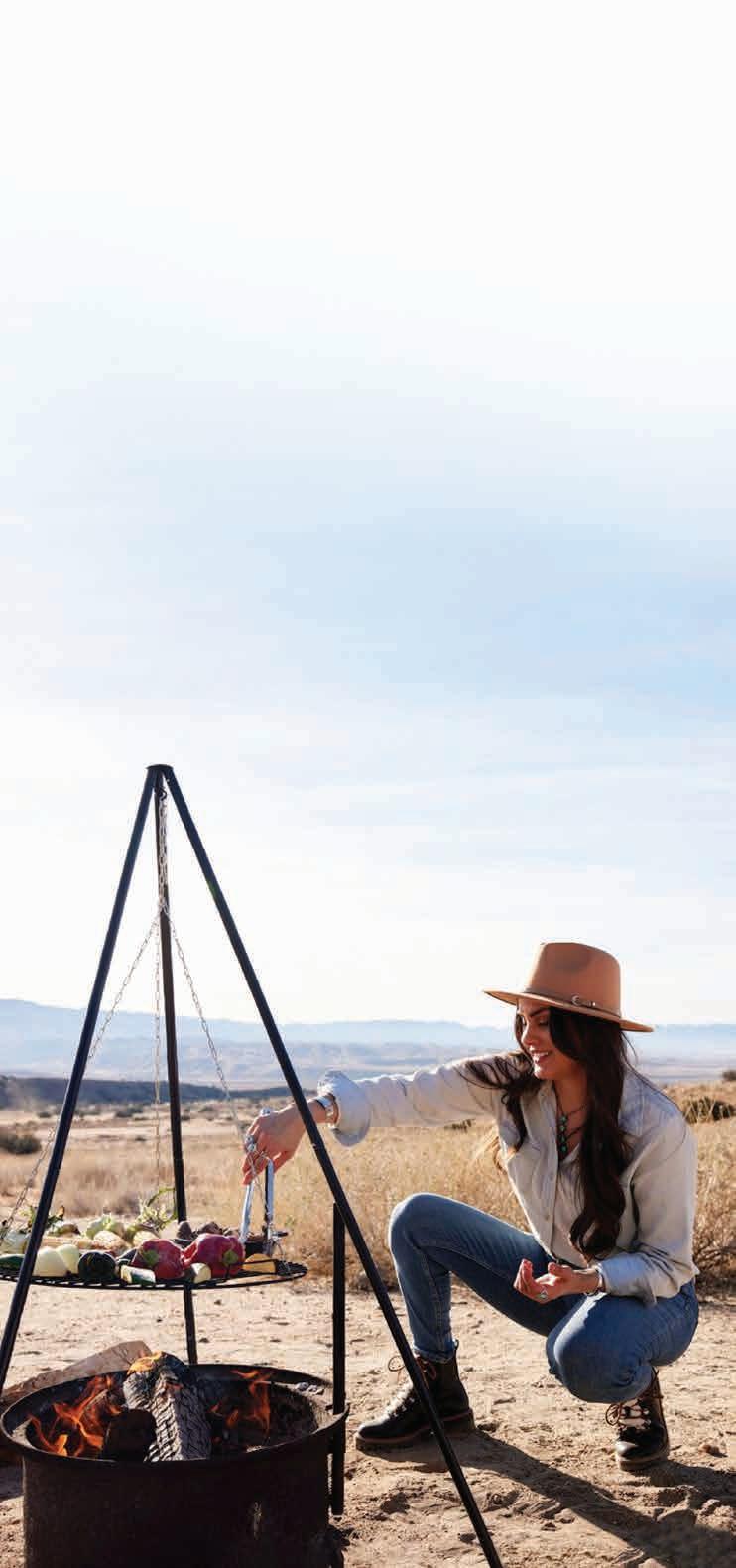
Summer cooking is all about letting quality ingredients shine. As a private chef rooted in seasonal cooking, I find myself reaching for bright herbs, simple preparations, and recipes that celebrate what’s fresh. This grilled skirt steak with pistachio and avocado oil salsa verde is exactly that. It feels elevated enough for entertaining but is simple enough to throw together for a weeknight dinner. The combination of smoky grilled steak, charred summer vegetables, and a vibrant herb-packed salsa verde creates a meal that is full of contrast, flavor, and texture.
Every great dish needs different textures, and Nichols Farms no shell sea salt pistachios are the secret ingredient in this salsa verde. Nichols Farms is a sustainable family farm, and I love knowing exactly where my ingredients are coming from. The pistachios add the perfect crunch along with a subtle sweet nuttiness that pairs really well with the fresh herbs and rich steak.
For the salsa verde, I'm using Marianne's Avocado Oil. It's 100% pure avocado oil with no blends or fillers and is Regenerative Organic Certified, plus it’s the only Seed Oil Free Certified™ avocado oil available. Starting with high-quality ingredients sets up success in the final dish. During grilling season, avocado oil is a kitchen staple thanks to its neutral flavor and 500°F smoke point. It can handle the high heat of the grill and doesn’t compete with the bright flavors of the herbs and vegetables, allowing every ingredient to do exactly what it's supposed to. —Nicole Dragon

Nicole Dragon is a private chef who splits her time between San Diego and New Jersey. Follow her on Instagram @thefooddragon. Follow Nichols Farms @nichols.farms and Marianne’s @mariannesharvest.
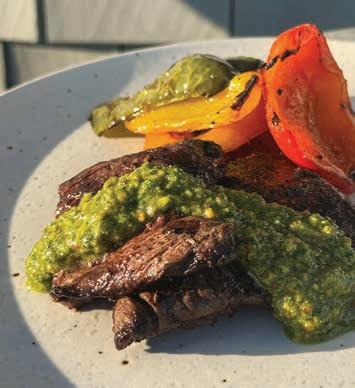
Grilled Skirt Steak With Pistachio and Avocado Oil
INGREDIENTS
FOR THE STEAK & VEGETABLES
1 1/2 - 2lb. skirt steak
2 Tbsp. Marianne’s Avocado Oil
Salt and freshly cracked black pepper
Assorted summer vegetables (peppers, onions, summer squash)
FOR THE PISTACHIO SALSA VERDE
1/3 cup Nichols Farms No Shell Sea Salt Pistachios
1 cup fresh parsley
1/2 cup fresh basil
2 Tbsp. fresh chives
1 garlic clove
1 jalapeno
Juice of 1 lemon
Salsa Verde In partnership with Nichols Farm and Marianne’s
1/3 cup Marianne’s Avocado Oil, plus more as needed
Salt and freshly cracked black pepper, to taste
1. Remove the skirt steak from the refrigerator 20-30 minutes before grilling to take the chill off. Pat the steak dry and drizzle with Marianne’s Avocado Oil. Season generously with salt and black pepper on both sides.
2. Toss vegetables with Marianne’s Avocado Oil, salt, and pepper.
3. To make the pistachio salsa verde, combine the pistachios, parsley, basil, chives, garlic, lemon juice, and Marianne’s Avocado Oil in a food processor. Pulse until combined but still slightly textured. Stream in more avocado oil as needed to adjust consistency to your preference. Season with salt and pepper to taste.
4. Preheat your grill to medium-high heat. Grill the vegetables for 3-4 minutes per side until lightly charred and tender. Place the skirt steak on the hot grill and cook for 4-5 minutes per side for medium, depending on thickness. The steak will naturally release from the grates when it’s ready to flip.
5. Transfer the steak to a cutting board and allow it to rest for 10 minutes before slicing. Slice the steak against the grain and arrange on a platter with the grilled vegetables.
6. Spoon the pistachio salsa verde generously over the steak and vegetables.
7. Finish with an extra sprinkle of chopped Nichols Farms Pistachios for additional crunch and serve immediately.
~ Our picks for what’s essential in the West ~
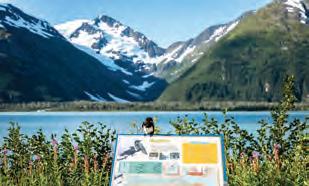
Experience Alaska, Visit Anchorage Anchorage is known for glaciers, wildlife, and vast park lands.
The best of Alaska is all right here. City comforts pair with endless outdoor opportunities in one unforgettable place. Plan a trip with your free Official Guide to Anchorage. VisitAnchorage.net
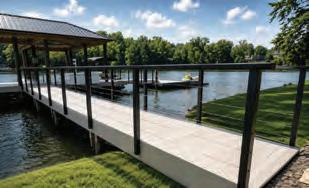
Feeney® DockRail™ for Upscale Waterfront Living
Create a refined waterfront experience with premium dock railing systems designed for luxury homes and private marinas. Featuring sleek aluminum framing, cable infill, and unobstructed water views delivering lasting beauty with low-maintenance durability. feeneyinc.com/products/dockrail
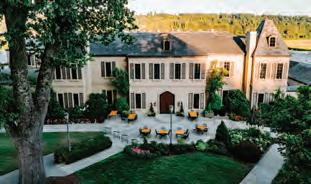
Chateau Ste. Michelle – Woodinville Wine Country Escape
Just outside Seattle, Chateau Ste. Michelle offers immersive tasting experiences, inspired cuisine, and scenic grounds with summer concerts. Discover award-winning wines while exploring Washington's founding winery—one of the region’s most iconic, and welcoming wine country destinations. ste-michelle.com
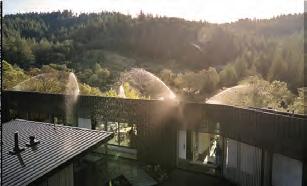
Draw the Line Against Wildfire
The Frontline Wildfire Defense System is a whole-home exterior soaking system that activates when wildfire is near, blanketing your home with water and biodegradable foam to prevent ignition and provide peace of mind. frontlinewildfire.com
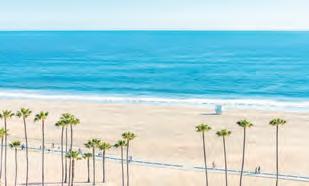
Follow Route 66 to Its Final, Unforgettable Stop
At the edge of the Pacific, Santa Monica welcomes travelers with its iconic pier, coastal charm and rich history — offering the perfect place to pause, celebrate and soak in the journey’s end. santamonica.com

Made for Gathering
Crafted from American alder sourced from Oregon, our personalized cutting boards add warmth and character to memorable gatherings. Whether serving appetizers or gathering around the table, they elevate meals, conversation and evenings that linger after the last bite. LillianVernon.com

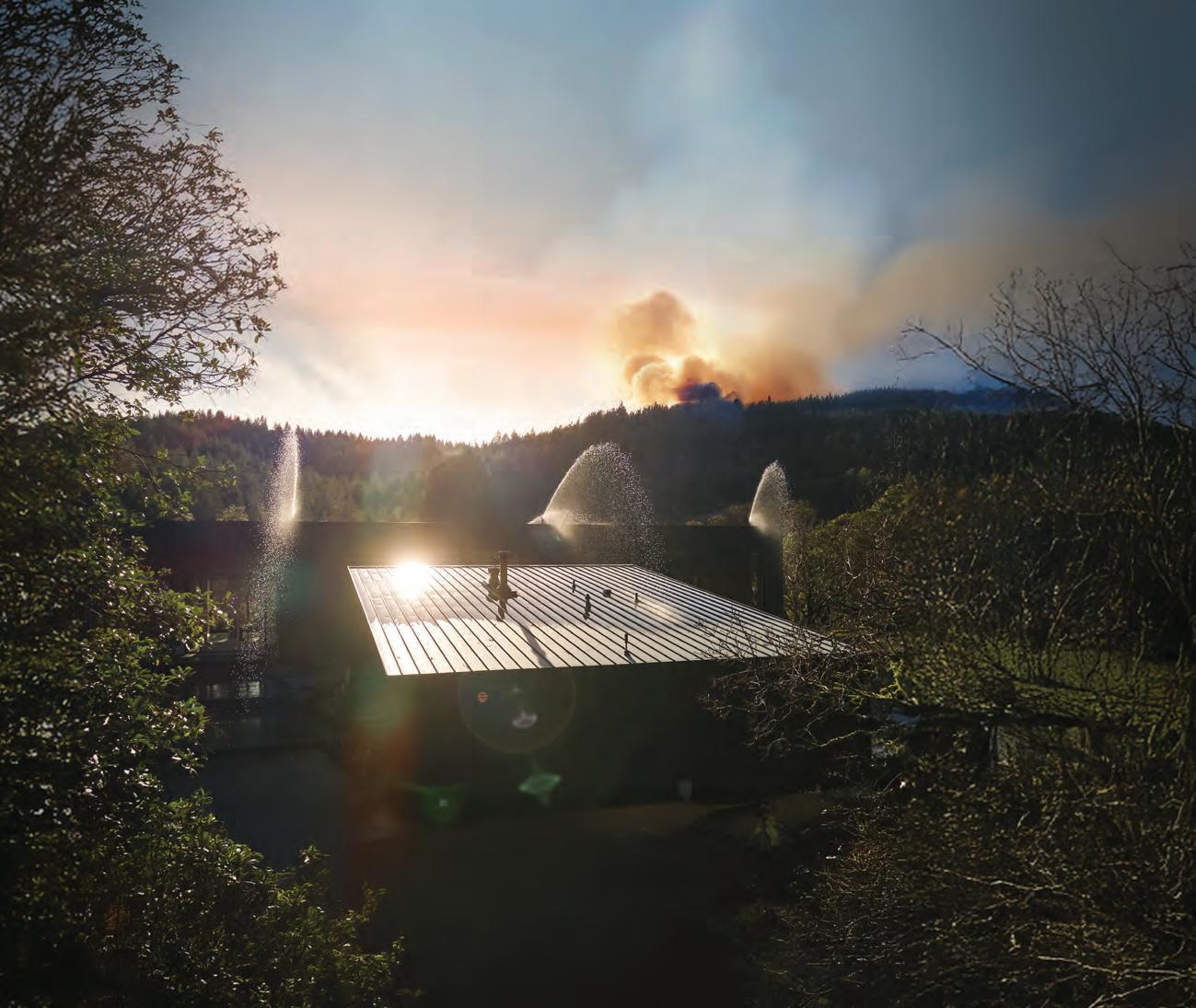


with Frontline.
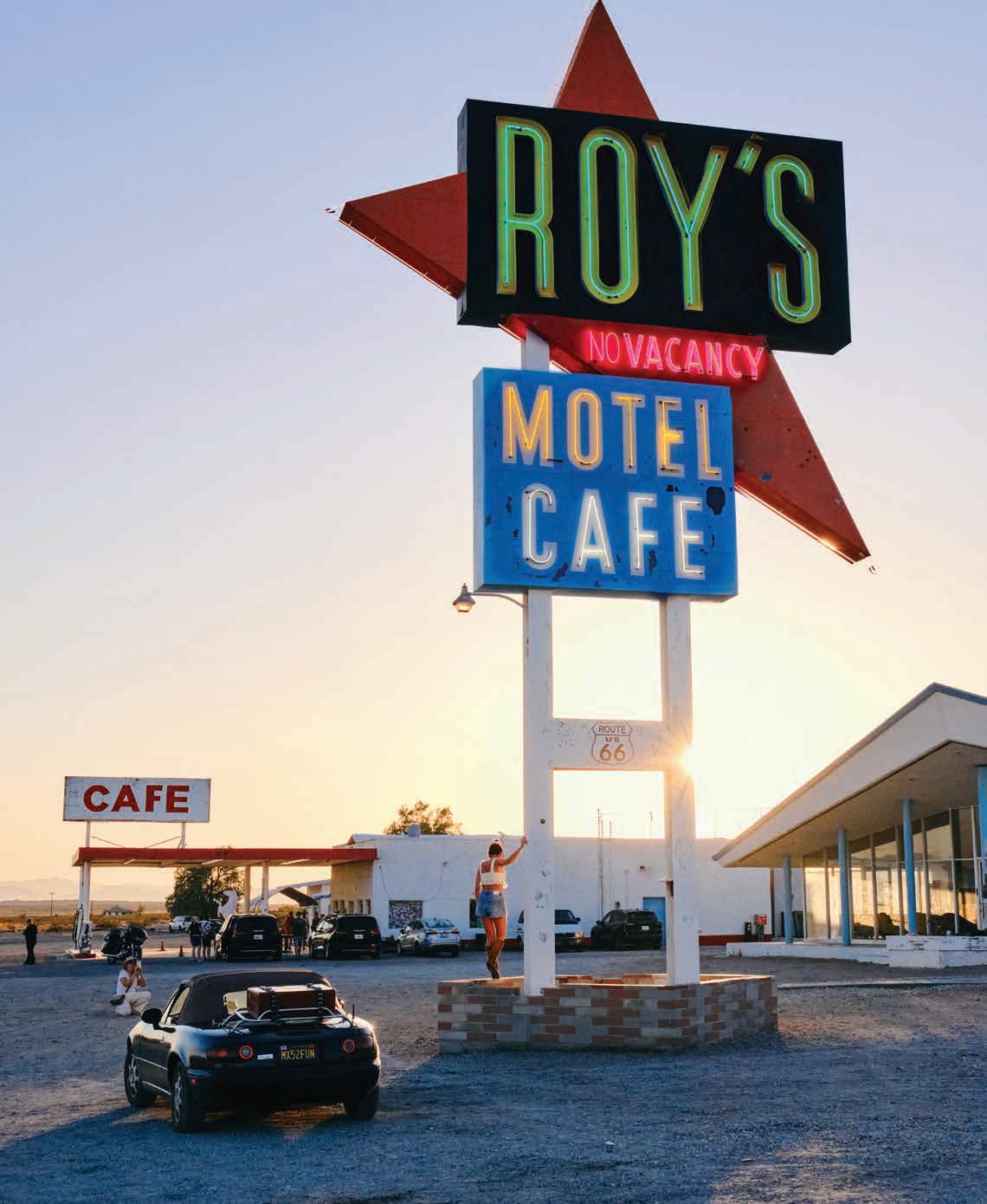
From roadside diners to lava fields, these stops capture the enduring myth of America’s most legendary highway.
by THOMAS J. STORY
a century since the “Main Street of America” first stitched together Chicago and Santa Monica, carrying Dust Bowl migrants west, launching the great American road trip, and hardwiring neon, diners, and desert motels into our collective imagination. Decommissioned in 1985 but never erased, the Mother Road today is a patchwork of preserved alignments, lovingly restored motor courts, small-town museums, and wideopen nature that still delivers on the promise of reinvention at the end of the asphalt. From New Mexico’s lava fields to Arizona’s high country and California’s Mojave silence, here are 66 stops that make the western stretch unforgettable. Whether you travel West to East, vice versa, or carve out just a few dozen miles, this is the year to get your kicks.
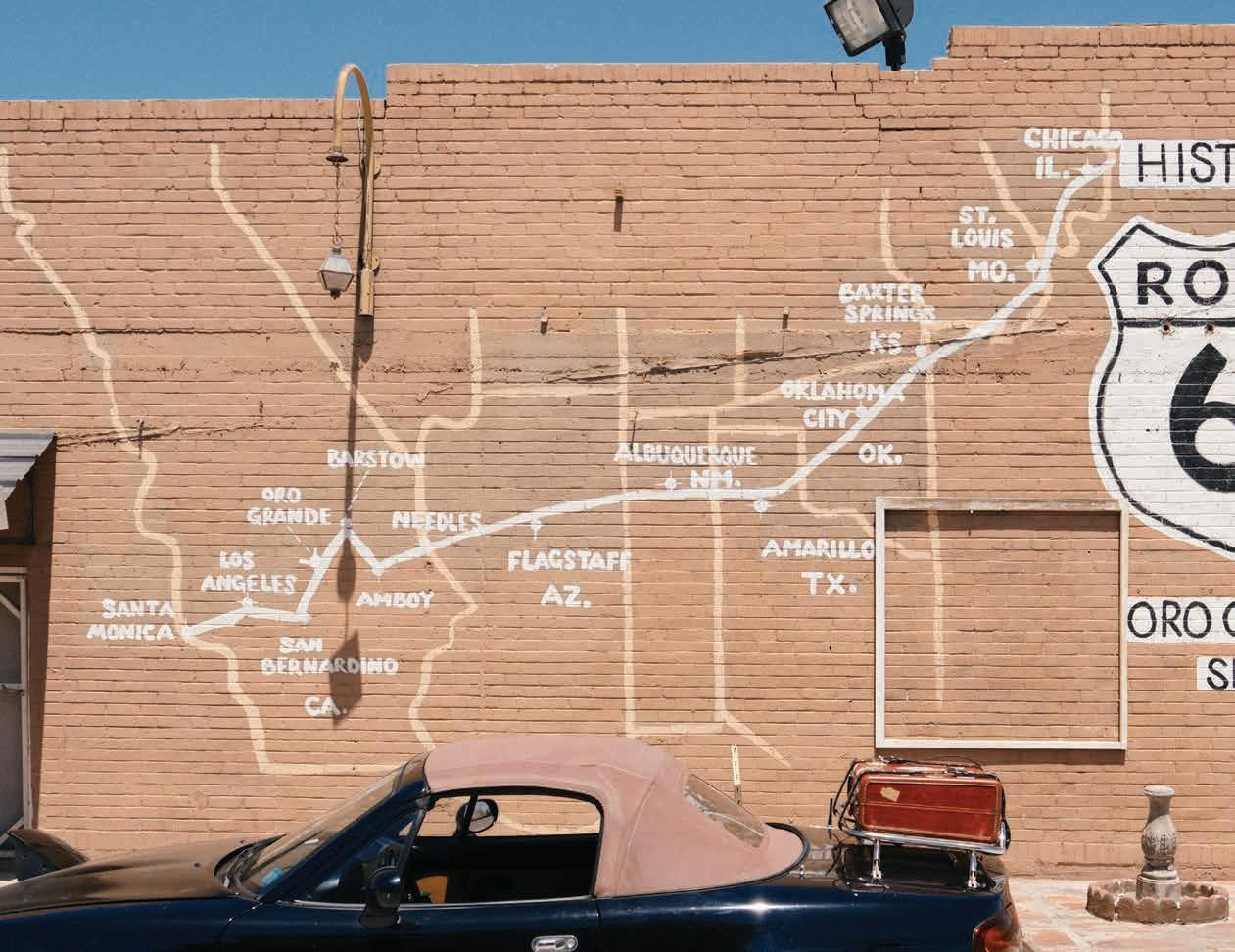
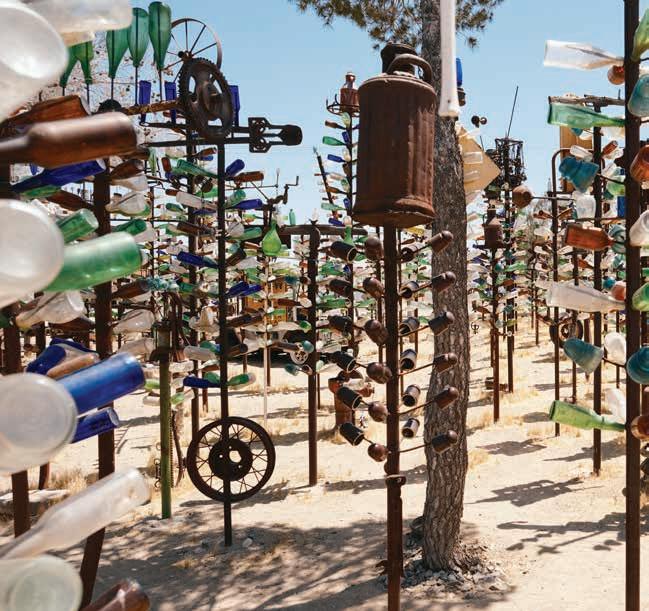


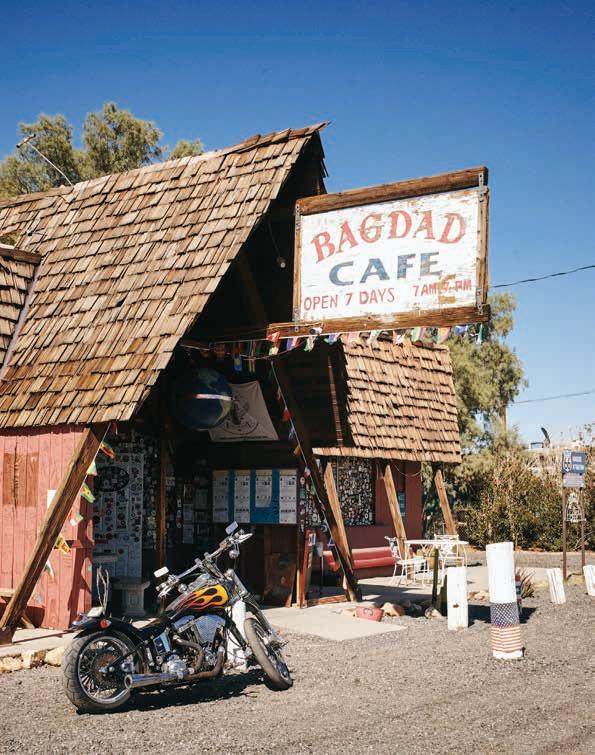
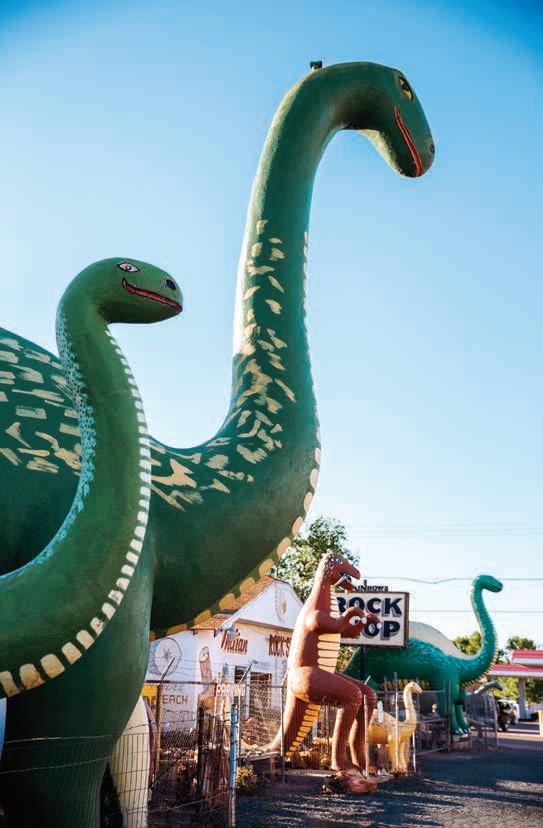
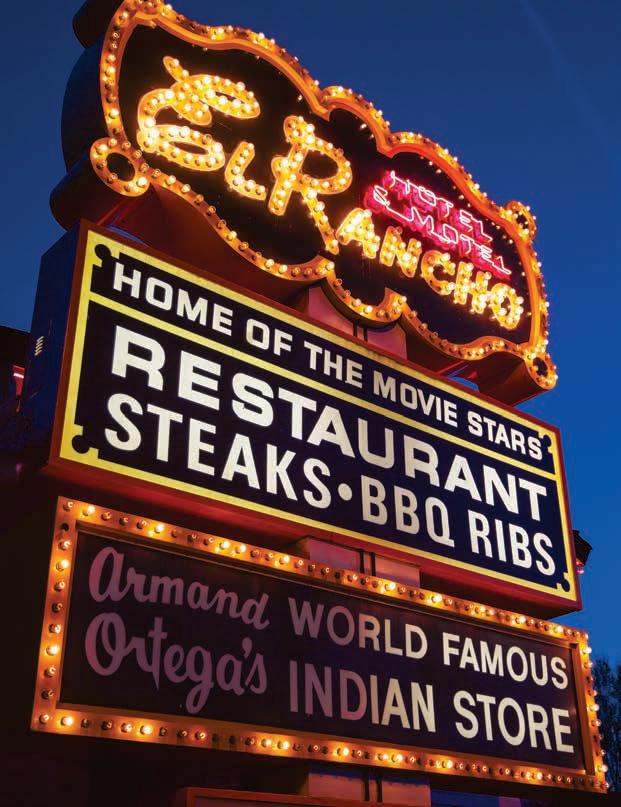
1. Cruise Central Avenue in Albuquerque for a greatesthits sampler of preserved Route 66 neon (visit albuquerque.org).

2. Hike the lava flows and sandstone arches at El Malpais National Monument (nps.gov/elma).
3. Read centuries of carved names at El Morro National Monument (nps.gov/elmo).
4. Swim in the startlingly clear artesian waters of Blue Hole (santarosanm.org).
5. Tour chrome and fins at the Route 66 Auto Museum (route66automuseum.com).
6. Overnight under glowing neon at the Blue Swallow Motel (blueswallowmotel.com).
7. Photograph the teepeeshaped sign at Tee Pee Curios in Tucumcari (teepeecurios. com).
8. Get context at the New Mexico Route 66 Museum (new mexicoroute66museum.com).
9. Browse trading-post classics in Gallup (gallupnm.gov).
10. Stretch your legs at Rio Puerco Bridge—a preserved 1933 span (nmroads.com).
11. Catch sunset over the mesas in Grants (visitgrantsnm. com).
12. Cruise the cinematic curves of Tijeras Canyon east of Albuquerque (nmroads. com).
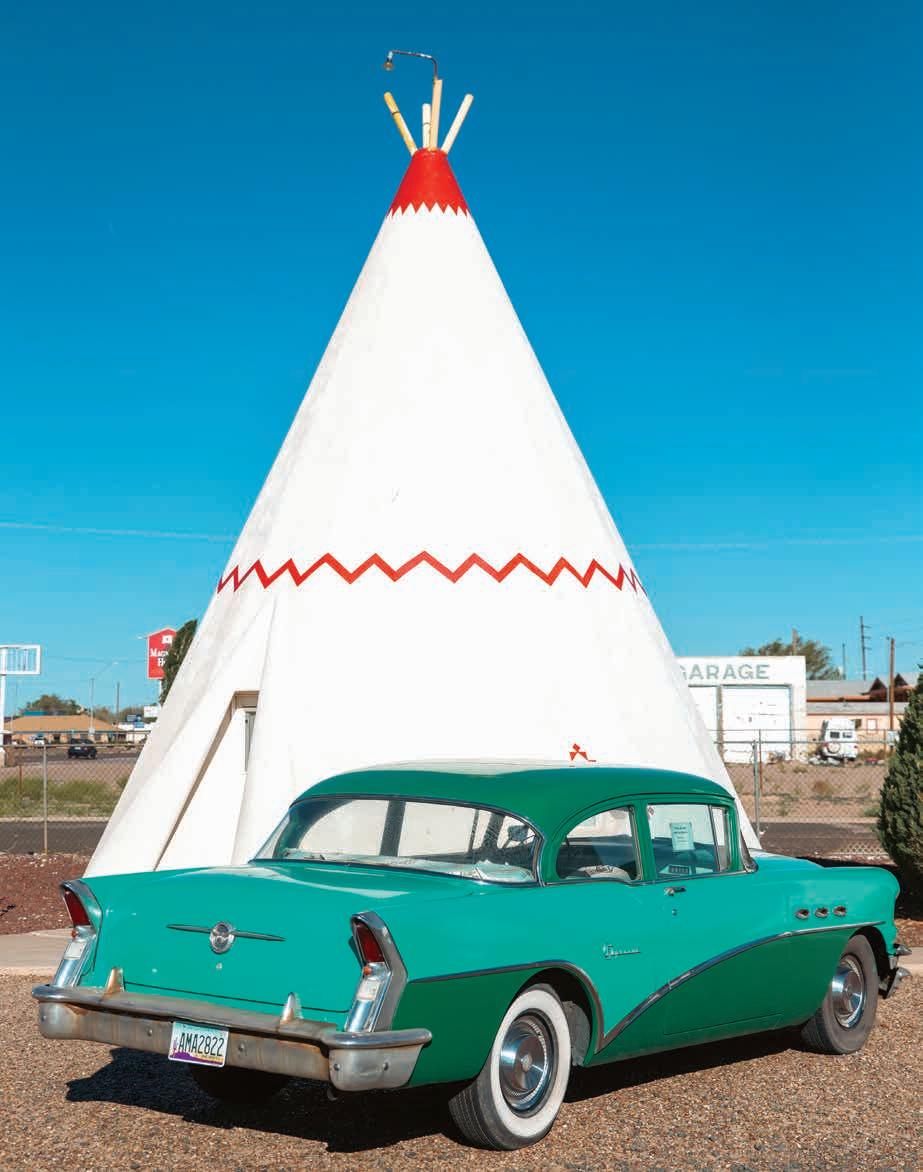
13. Sleep in a concrete teepee at the Wigwam Motel (sleep inawigwam.com).
14. Walk among technicolor badlands in Petrified Forest National Park (nps.gov/pefo).
15. Pull over for Painted Desert overlooks inside Petrified Forest (nps.gov/pefo).
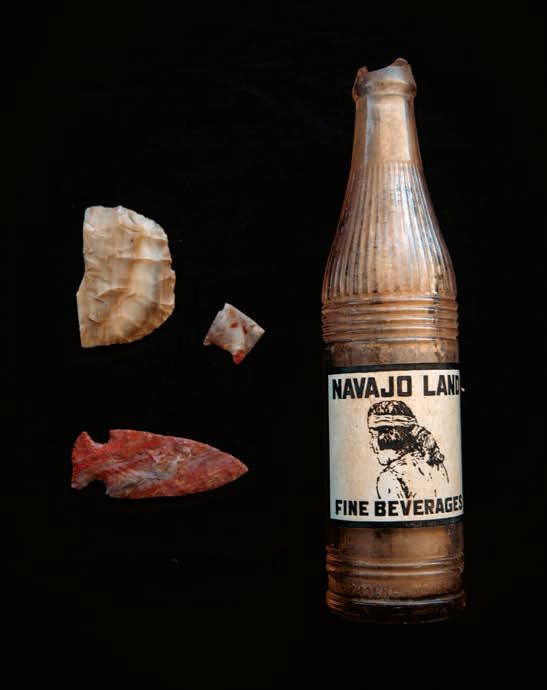
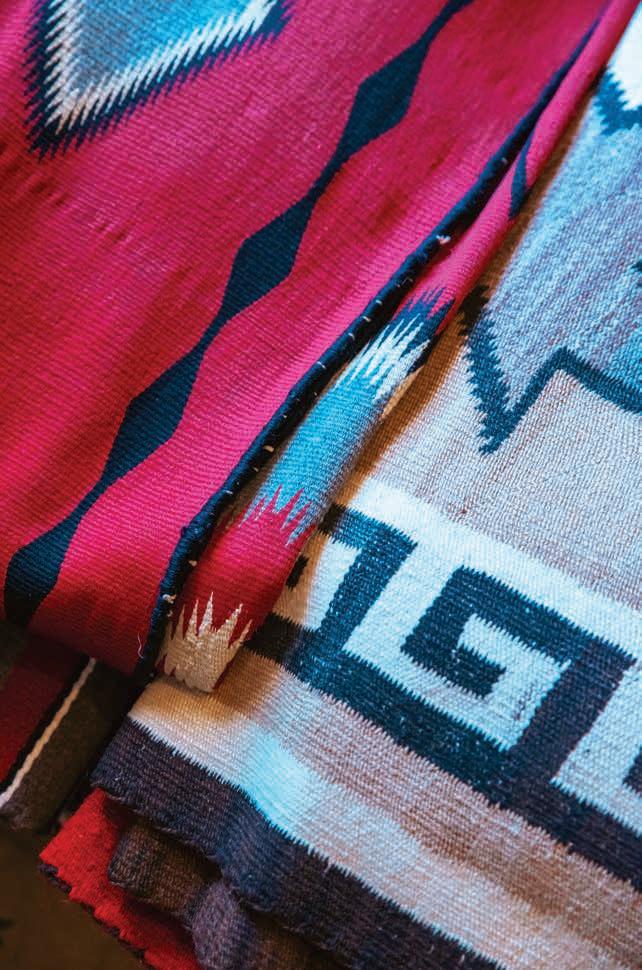
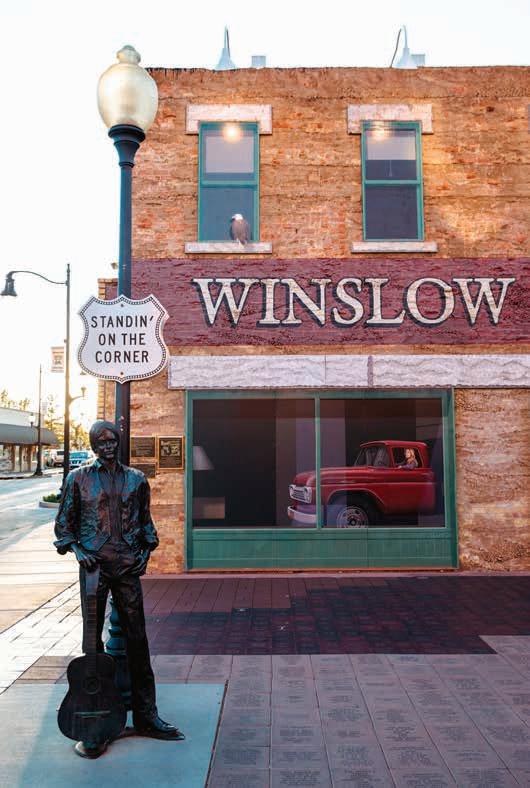
16. Snap the classic lyricinspired photo at Standin’ on the Corner Park (standin onthecorner.org).
17. Check into the grand railroad-era La Posada Hotel (laposada.org).
18. Explore breweries and heritage storefronts along Route 66 in Flagstaff (discoverflagstaff.com).
19. Gaze at alpine peaks in the San Francisco Peaks (fs.usda.gov/coconino).
20. Stand on the rim of Meteor Crater (meteorcrater.com).
21. Overnight in the allAmerican town of Williams (experiencewilliams.com).

22. Stay at the design-forward Trailborn Grand Canyon (trailborn.com/grandcanyon).
23. Ride the rails on the Grand Canyon Railway (thetrain.com).
24. Pair your road trip with a day at Grand Canyon National Park (nps.gov/grca).
25. Eat burgers and banter at Delgadillo’s Snow Cap Drive-In (snowcapdrivein. com).
26. Browse vintage signs at the Seligman Sundries shop (historic66.com).
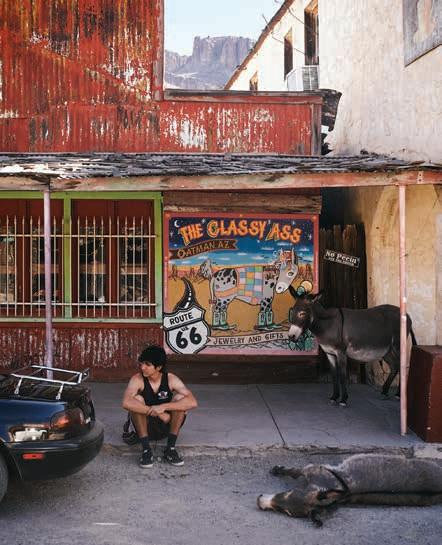
27. Road-trip the twisty Sitgreaves Pass to Oatman (oatmanghosttown.com).
28. Visit the Hackberry General Store (hackberrygeneral store.com).

34. Pause in railroad-era Ash Fork (ashfork.org).
29. Dive into Mother Road lore at the Arizona Route 66 Museum (azrt66 museum.org).
30. Slurp a root beer at Mr. D’z Route 66 Diner (mrdz66 diner.com).
31. Check out the dinosaurs at Rainbow Rock Shop in Holbrook.
32. Hike pinyon-studded trails at Hualapai Mountain Park (mohavecounty.us).
35. Photograph the historic El Trovatore Motel sign in Kingman (eltrovatore motel.com).
36. Fill up (and time-travel) at Roy’s Motel & Cafe (visitamboy.com).
37. Hike the cinder cone at Amboy Crater (blm.gov).
38. Gaze at the bottle-built folk art forest at Elmer’s Bottle Tree Ranch (elmerlongs bottletreeranch.com).
39. Cruise the vast quiet of Mojave National Preserve (nps.gov/moja).
40. Step inside the Goffs Schoolhouse Museum (goffsschoolhouse.org).
41. Overnight at the retro Route 66 Motel (route66motel.net).
42. Get oriented at the Route 66 Mother Road Museum (barstowmuseum.org).
43. Explore the California Route 66 Museum (califrt66museum.org).
44. Grab a pie at Emma Jean’s Holland Burger Café in Victorville.
45. Drive past vintage storefronts in San Bernardino (sbcity.org).
46. Sleep in a teepee at the Wigwam Motel (wigwammotel.com).
47. Follow the old alignment through Pasadena (visitpasadena.com).
48. Sip craft cocktails along Colorado Boulevard in
33. Seek turquoise waterfalls at Havasu Falls (havasu paireservations.com).

49. Cruise into Los Angeles along historic Route 66 (discoverlosangeles.com).
50. Finish your pilgrimage at the Santa Monica Pier (santamonicapier.org).
51. Photograph the “End of the Trail” sign at the Santa Monica Pier (santamonica pier.org).
52. Catch a Pacific sunset in Santa Monica (santa monica.com).

53. Bike the Marvin Braude Beach Trail from the pier (losangelescounty.gov).
54. Explore neon history at the Museum of Neon Art in Glendale (neonmona.org).
55. Tour the Autry Museum of the American West in Los Angeles (theautry.org).
56. Dine at Formosa Café, a 1939 Hollywood standby (formosacafe.com).
57. Sip coffee at Urth Caffé on old Route 66 in Pasadena (urthcaffe.com). Pasadena (visitpasadena. com).
58. Catch live music at the Troubadour in West Hollywood (troubadour.com).
59. Drive Mulholland for a modern LA coda (losangelescounty.gov).
60. Visit the Getty Center for a cultural detour (getty.edu).
61. Explore desert art at Noah Purifoy Outdoor Desert Art Museum near Joshua Tree (noahpurifoy.com).
62. Hike Kelso Dunes in Mojave National Preserve (nps.gov/ moja).
63. Stargaze in Mojave’s dark skies (nps.gov/moja).
64. Browse vintage Americana at Antique Station in Oro Grande (antiquestation66. com).
65. Cruise the Colorado River backwaters near Needles (cityofneedles.com).
66. Toast the centennial with a westward-facing road-trip photo at Santa Monica’s Route 66 marker (route66 roadtrip.com).
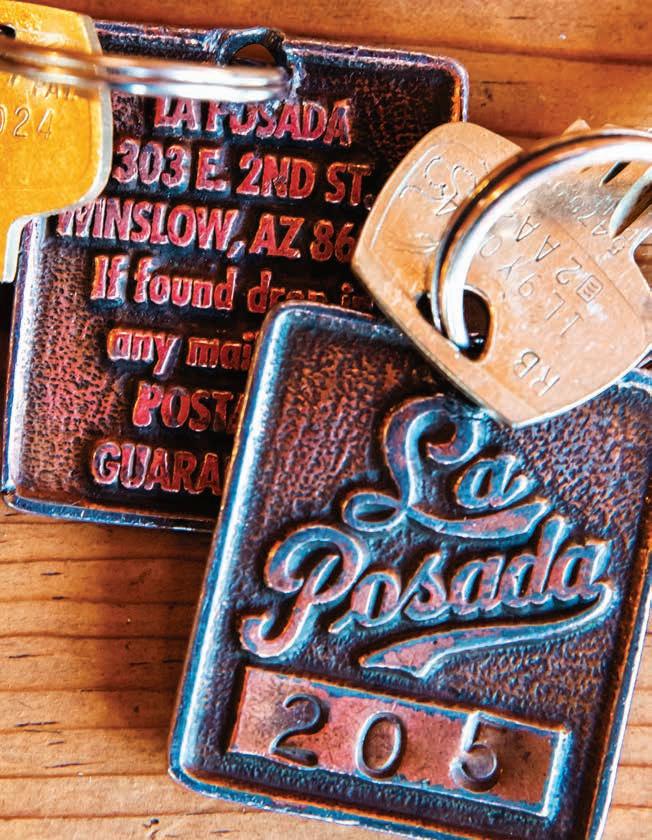
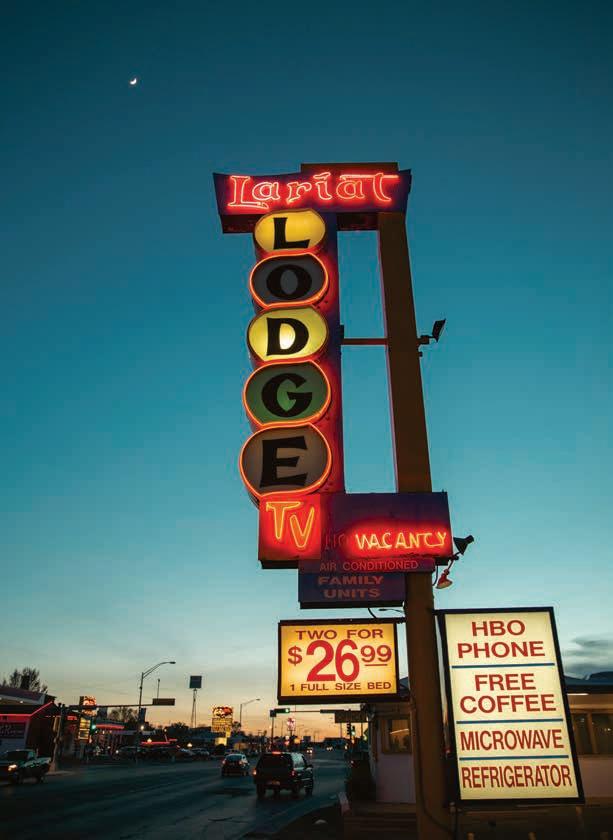
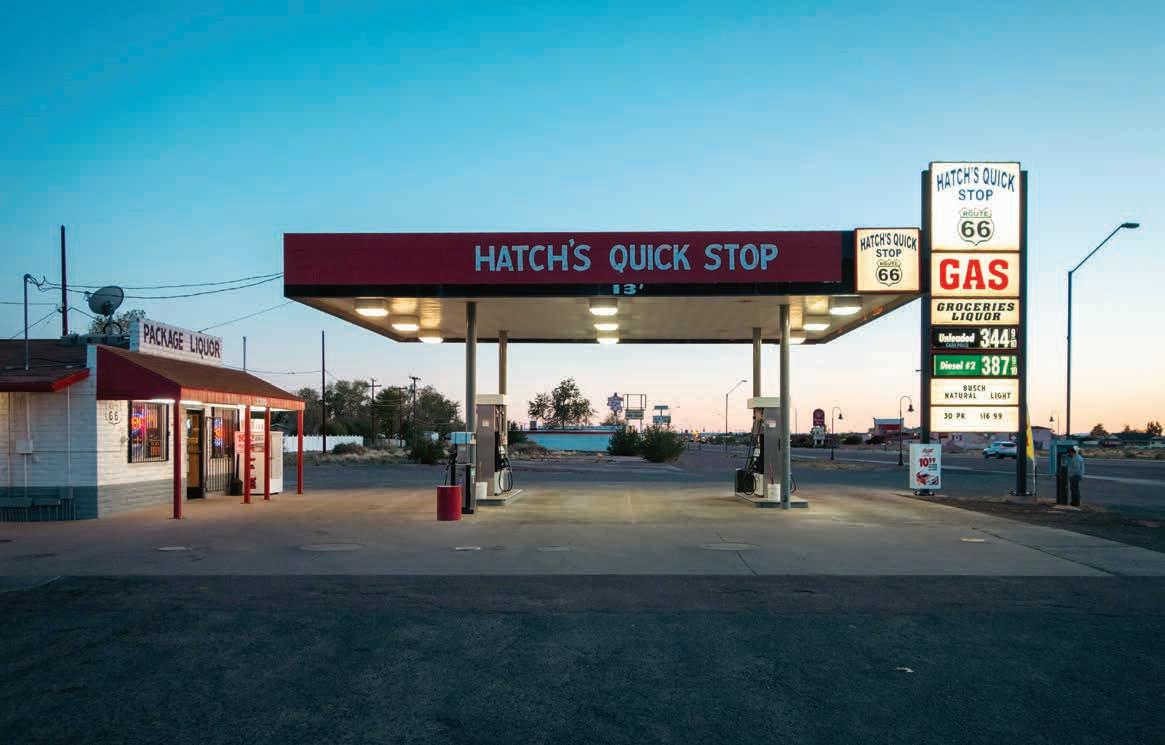
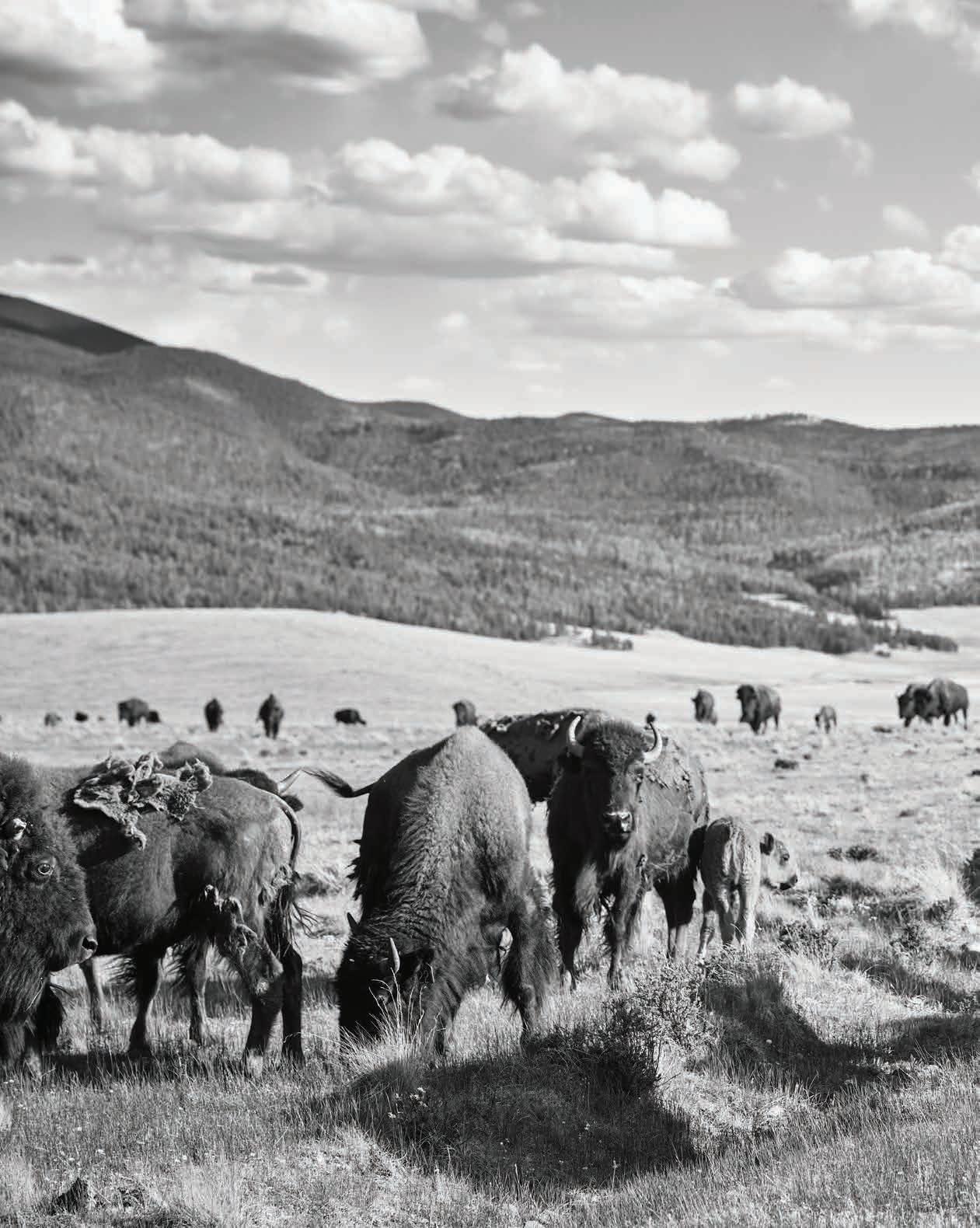
At Vermejo, the late Ted Turner’s vast private wilderness in northern New Mexico, conservation and hospitality converge in an experiment as big as the West itself.
TThe angler crouches low, quietly whipping his fly rod back and forth across the creek that reflects the vivid blue sky. Melting ice pack brings water down from the mountains in the distance, through native grass, past blooming lavender-hued Rocky Mountain Iris. The fly sinks, the line goes taut, and suddenly glinting in the sun is a diminutive but beautiful Rio Grande Cutthroat Trout, its speckled rose-colored underbelly, which gives the fish its name, glowing crimson in the sun. It's one of mere hundreds, so we admire it briefly before the angler dips his hands into the icy waters and gently releases the fish to swim again.
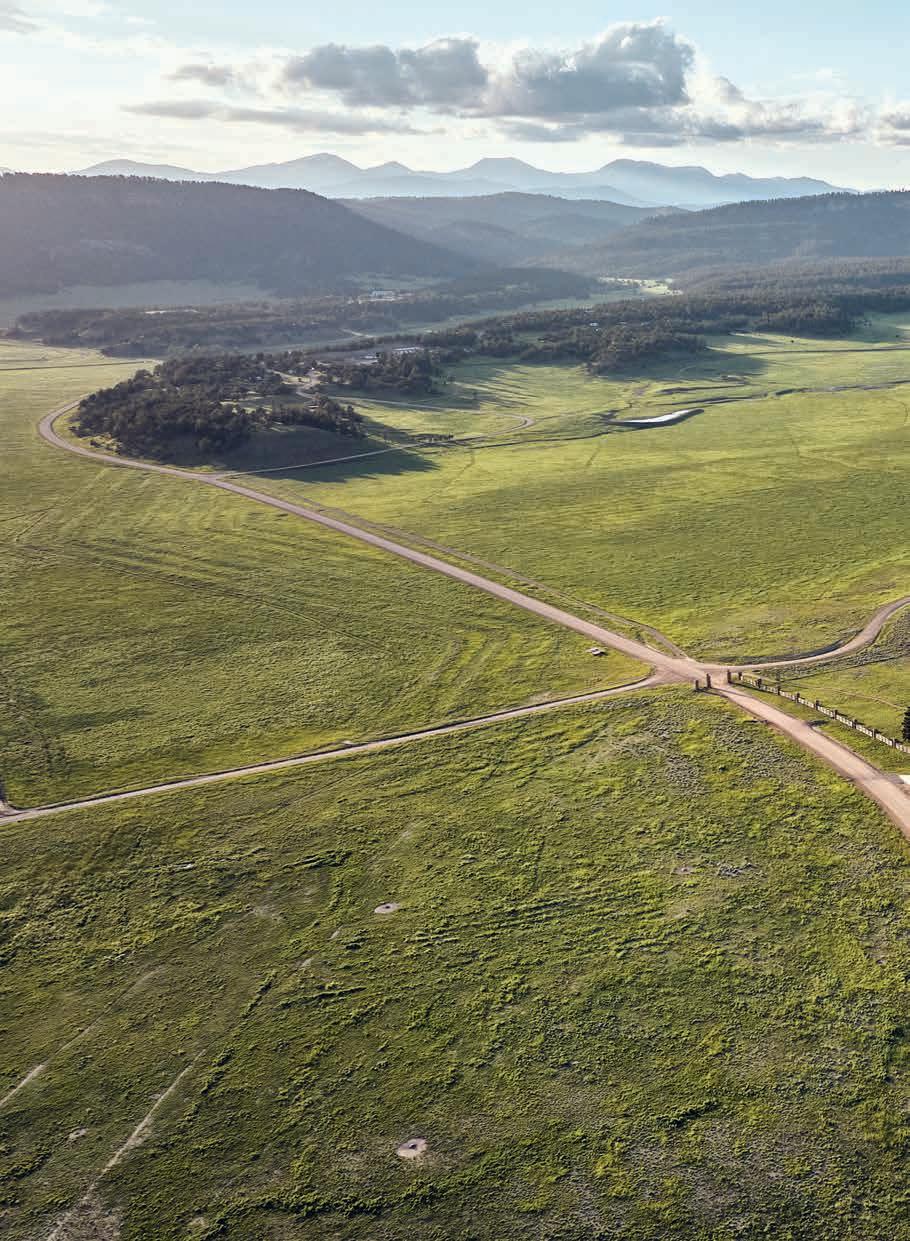
This is Vermejo, a 558,000acre private wilderness preserve and all-inclusive resort 40 miles west of Raton near the New Mexico–Colorado border. The nearly 1,000 square miles of Alpine tundra, shortgrass prairie, forests, wetlands, and more are a mosaic of many ecosystems and a sort of private national park. Elk herds drift across valleys. Bison graze where cattle once stripped the grass. Black bears move through the ponderosa forests. Mountain lions patrol the ridges. And at the center of it all is the idea that compassionate capitalism can save the wild American West.
To most Americans, Ted Turner, who passed away this spring at the age of 87, will always be the media titan who built CNN and rewired how the world consumes news. But to conservationists and the hospitality industry, Turner is known for something else entirely. At times he has been the largest private landowner in North America, with roughly two million acres spread across the
United States and Argentina. Beginning in the 1970s, Turner began buying land across the West—massive properties in Montana, Nebraska, New Mexico, and South Dakota that had been worked hard for generations.
Many were typical Western cattle operations: overgrazed grasslands, degraded waterways, wildlife pushed aside for livestock. Turner had a different idea. Instead of maximizing short-term profit from cattle,
he would attempt something radically different: restore the ecosystems first, then build a business around their health. Over time he assembled a constellation of properties—Ted Turner Reserves—including places like Vermejo, Ladder, and Armendaris in New Mexico, along with vast properties in Montana. Today these lands function as a kind of ecological laboratory: part conservation preserve, part luxury wilderness destination. If the model works, the theory goes, the
land pays for its own restoration.
I recently spent several days there to experience this rare model of conservation-minded luxury hospitality. My guide was Jade McBride, the infectuously-positive president of Ted Turner Reserves, the hospitality arm of Turner Enterprises. We traversed the landscape in a hybrid Ford F-150, taking in the endless sky and vast prairie, pausing to watch bison, mule deer, and the occasional pronghorn,
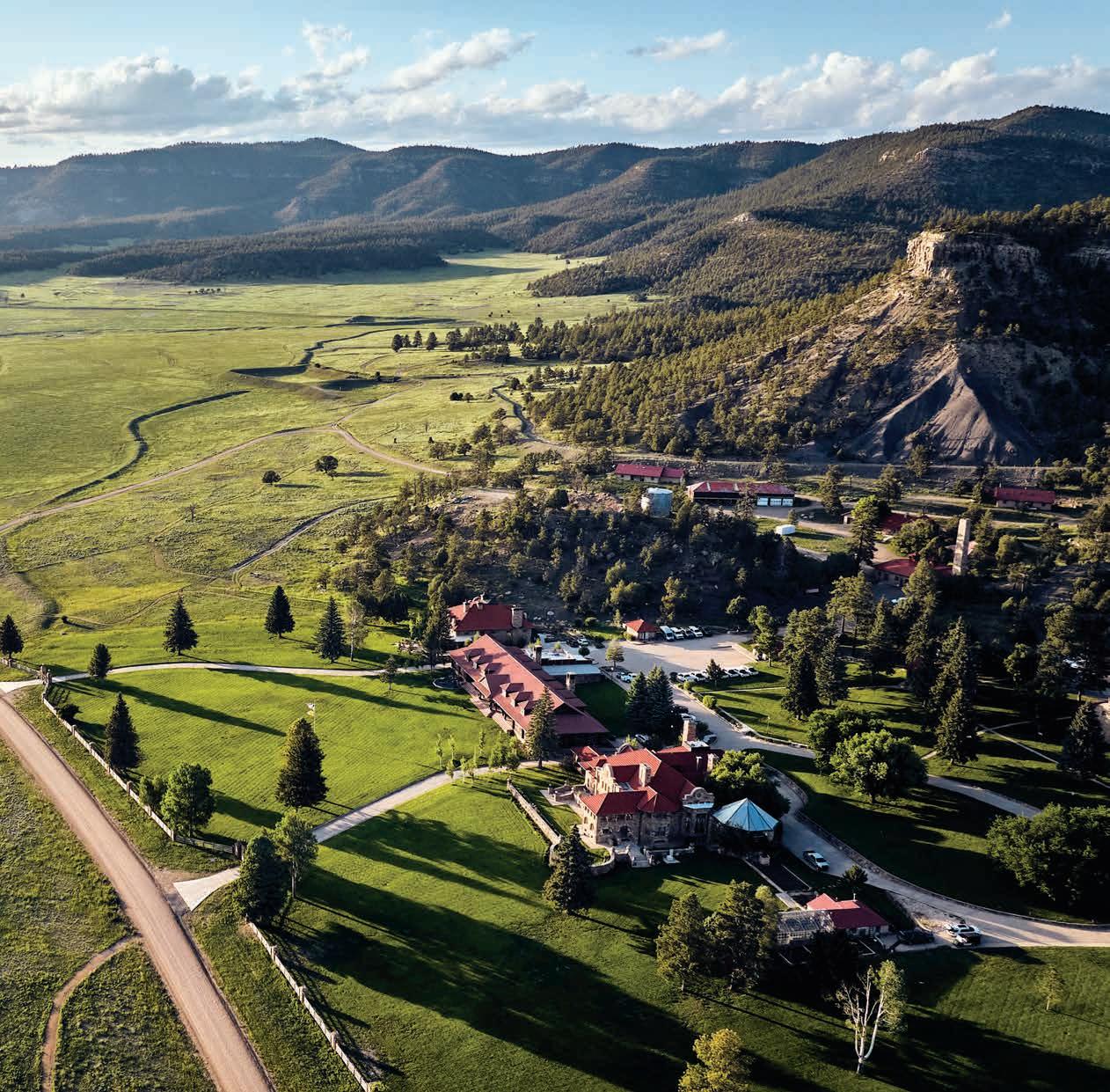
Even the sizable lodges at Vermejo are dwarfed by the vastness of the property, which stretches horizon to horizon.
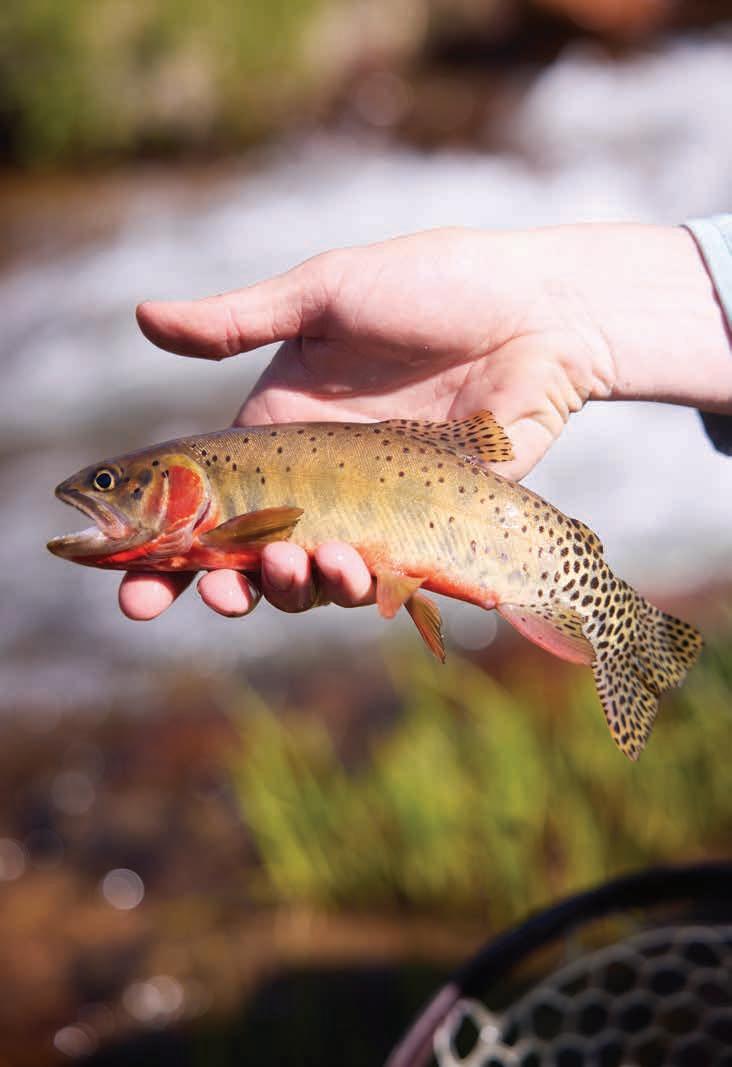
This page: Formerly declining populations of Rio Grande cutthroat trout are increasing at Vermejo thanks to the conservation efforts of scientists at the Turner Institute of Ecoagriculture. Opposite: accomodations at Vermejo include the opulent Casa Grande, which Ted Turner favored when he stayed at the property, as well as many other cabins and lodges ranging from luxe rustic to refined.
the fastest land animal in North America. “Popping a tire here is a rite of passage,” says McBride, slowing as we climb a particularly rutted road.
Driving through Vermejo feels less like crossing into a separate country. The scale is difficult to grasp. The preserve stretches more than 30 miles north to south, rising from rolling prairie grasslands into alpine forests that crest above 12,000 feet. Hidden lakes appear in high valleys. Elk trails thread through spruce forests. Two mountain ranges sit inside the property boundary.
“Rivers can tell you whether land is healthy,” says McBride. “If the land’s healthy, the rivers are healthy.” He points to a creek cutting through the valley. “That one’s recovering.” Unlike another creek that looks like a gash cutting through the grass, this one is overgrown with shrubs and little
trees that shade the creek, lowering the water temperature to a degree more hospitable for the trout and creating an ecosystem more amenable to beavers who are now damming the streams for the first time in decades.
Like much of the American West, Vermejo spent decades under the pressures of extractive ranching—heavy cattle grazing, logging, and land practices that prioritized short-term productivity over long-term health. The results were predictable: degraded streams, damaged soil, wildlife pushed out of habitat. When Turner acquired the property in 1996, it was a shadow of what it had once been. Restoring it would take decades.
The experience of staying on Vermejo is as much about inhabiting Ted Turner’s vision as it is about the landscape itself. Guests don’t just check into a lodge— they step into a rarefied version of Western life that blends private-residence intimacy with quietly exacting luxury. At Casa Grande, Turner’s historic home turned flagship lodge, mornings begin with sunlight pouring through tall windows into a library with double-height ceilings and personal photos of Turner and friends. A guide might be waiting with saddled horses for a ride across open prairie, or a fly-fishing kit packed for a morning of angling. Others head out in trucks scanning for elk, bison, and the occasional black bear moving through the folds of the land. Guests can shoot clays, but you’d never know it back at the lodge, the distances being what they are. There’s hiking at higher elevations where the air sharpens. Or you can simply find a remote spot and sit still long enough to understand what quiet really feels like. There’s a working greenhouse supplying the kitchen, and meals lean into the land: bison steaks, just-harvested vegetables, regional wines. The rare privilege here is not just comfort, but proximity: to land at scale, to wildlife in motion, and to a version of the West that feels, against all odds, intact.
Turner’s most famous conservation story involves an animal that once defined the American West. The American bison. Before European settlement, an estimated 30 to 60 million bison roamed the Great Plains. Their migration shaped the ecology of an entire continent. By the late 1800s, industrial hunting and westward expansion had reduced that number to fewer than 1,000 animals. The species came within inches of extinction. As a boy Turner read about the plight of the bison in National Geo-

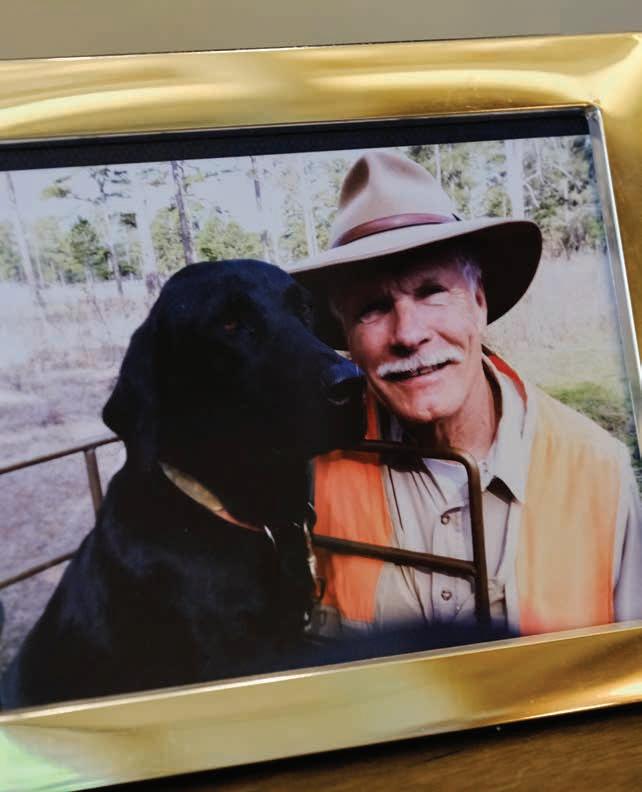
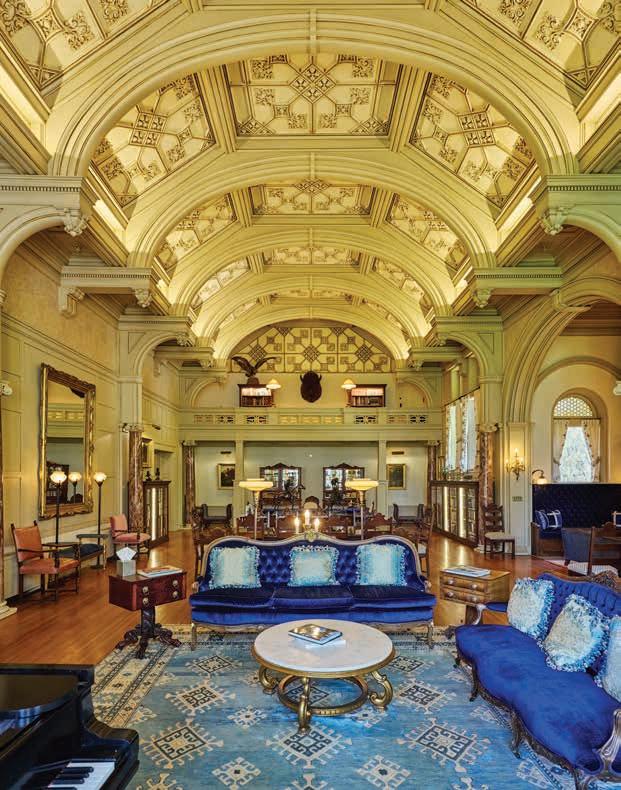
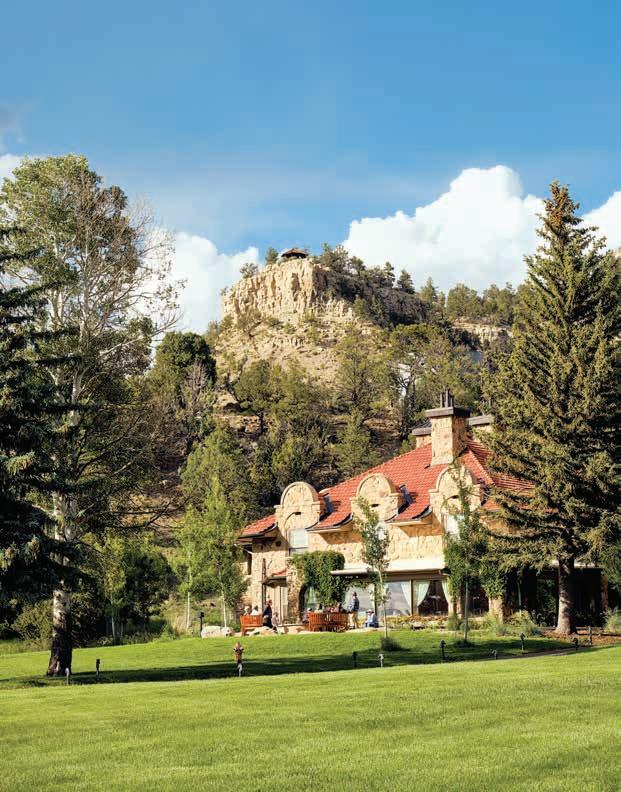
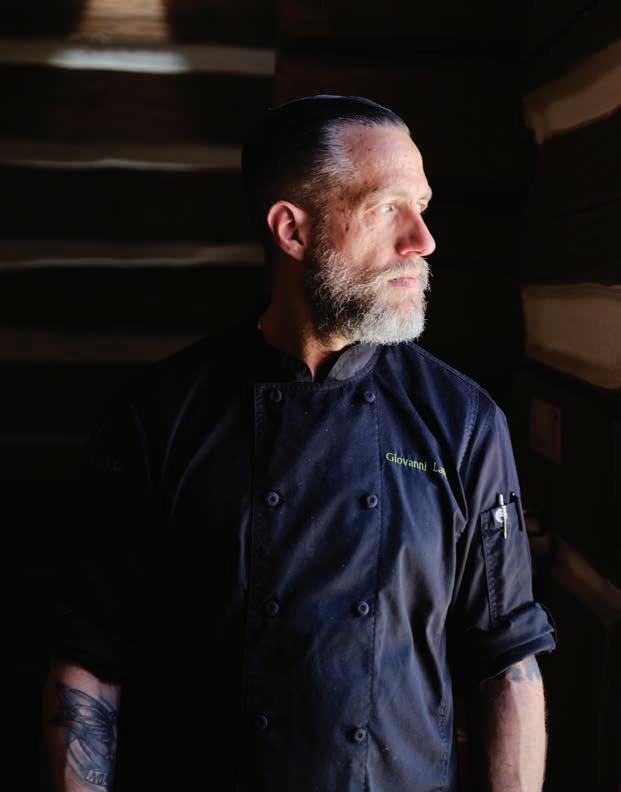
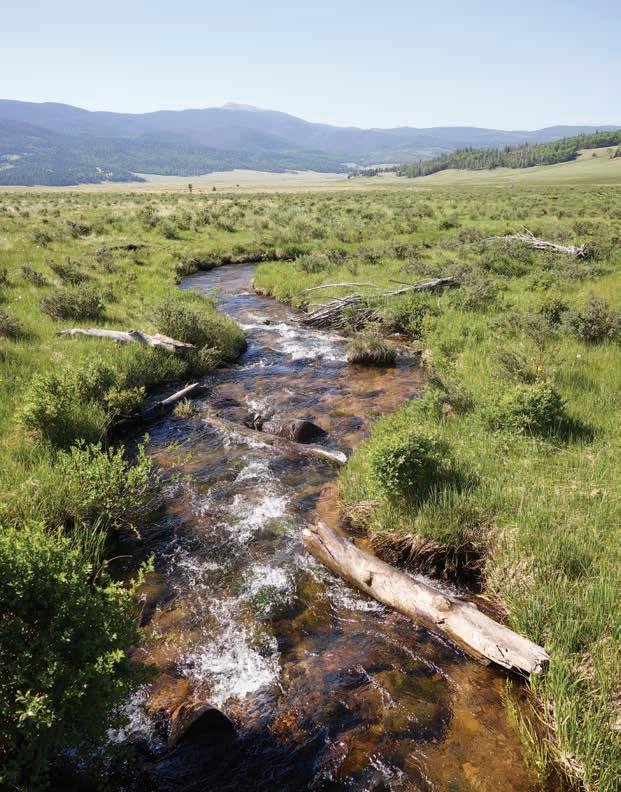
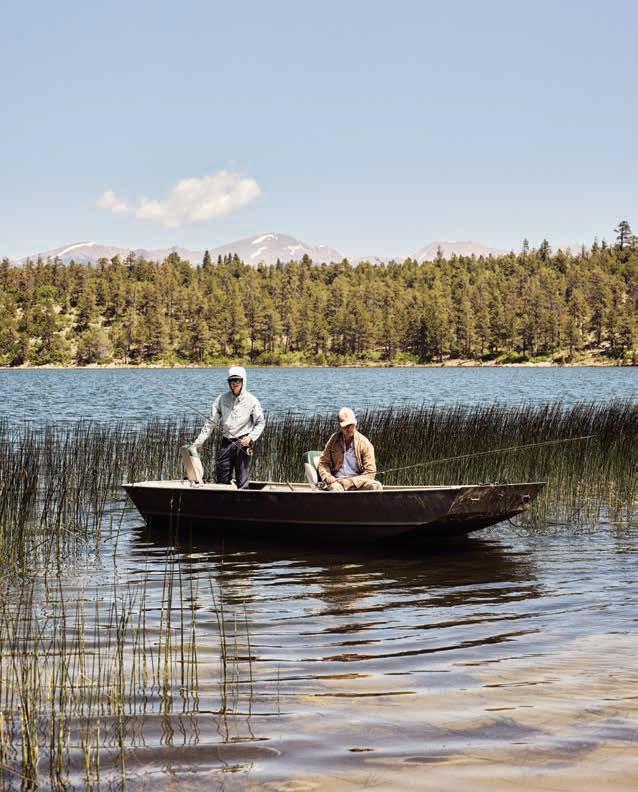
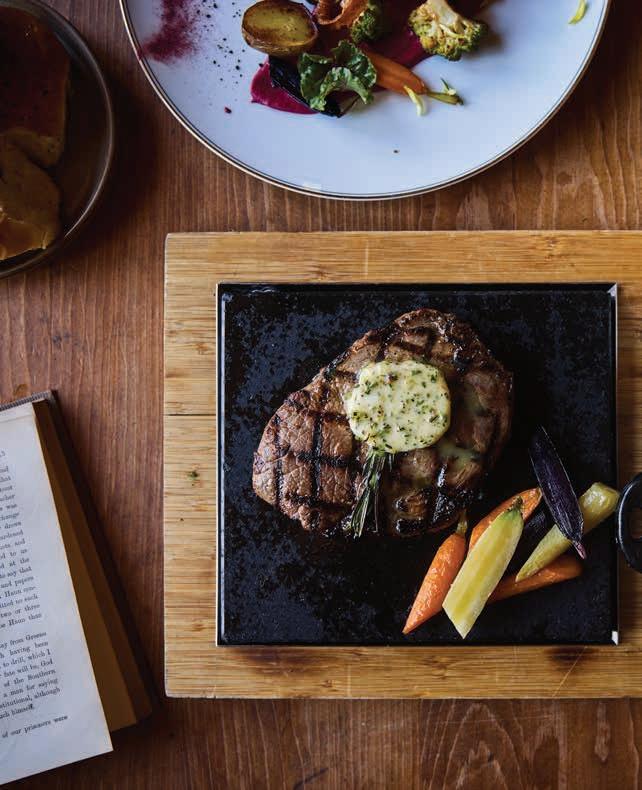
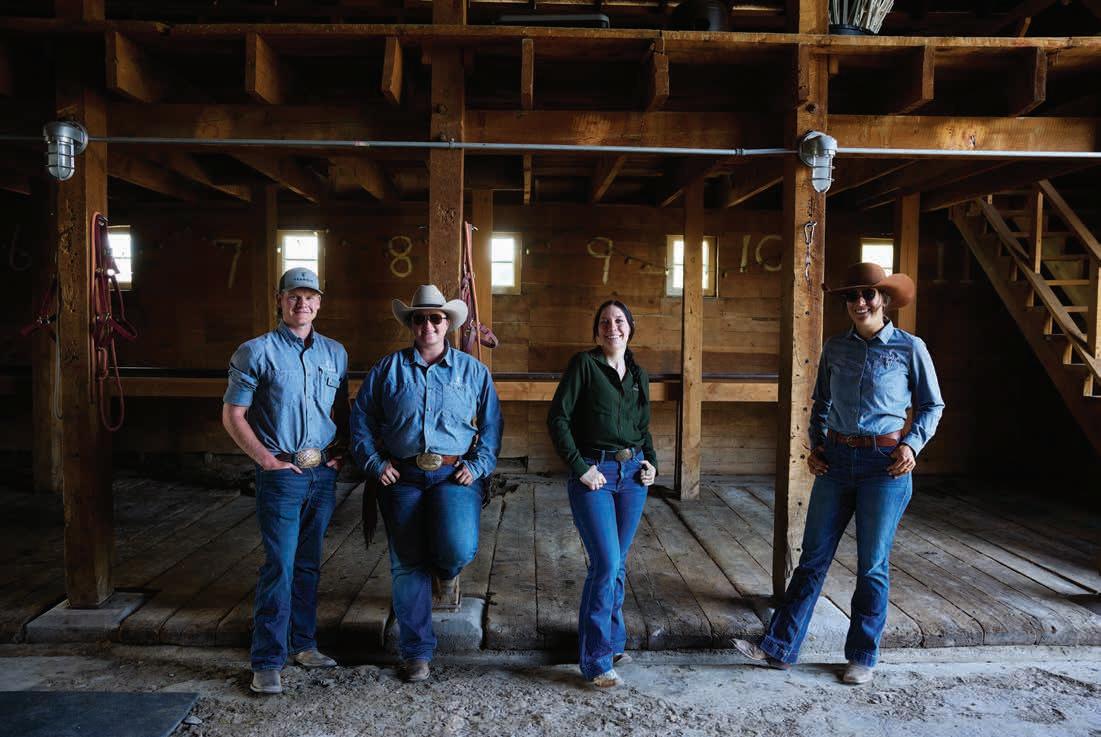
graphic and told his father he wanted to save them. His father told him he’d need to make a lot of money to do that. It’s a story Turner kept in his mind as he built his empire. When Turner began acquiring properties in the 1980s, he started introducing bison herds back onto the land—not as spectacle, but as functioning components of a restored prairie ecosystem. Today his holdings collectively host one of the largest privately managed bison herds in the world, numbering in the tens of thousands. But buffalo, it turns out, were just the beginning.
In recent years Turner’s conservation focus shifted to a far smaller creature. The Rio Grande cutthroat trout. Native to the cold mountain streams of New Mexico and southern Colorado, the fish once thrived across thousands of miles of waterways. Over time, habitat destruction, overfishing, and the introduction of non-native trout species pushed the cutthroat into retreat. Today it survives only in fragments of its historic range. At Vermejo, biologists are working to reverse that trend. Creeks are monitored. Water flows restored. Non-native species removed. Native trout reintroduced. The goal is not simply to protect a fish—but to restore the entire watershed ecosystem that sustains it. Standing
beside that small creek, watching the trout vanish back into the current, it’s easy to forget how fragile the species has become. The fish swims away. But the story that keeps it alive is much larger. Yes, it’s about saving fish, but it’s also about saving us. Turner liked to compress big ideas into bumper stickers. In the early environmental era the message was simple—“Save the Whales.” But as he spent decades on the land, restoring rivers, grasslands, and wildlife across his land, the slogan evolved. At one point he joked that the bumper sticker should really read “Save the Humans,” because the entire environmental movement ultimately comes down to our own survival. Today the trucks and vehicles that crisscross his properties carry the line that best sums up the philosophy behind Ted Turner Reserves: “Save Everything.” It’s both a joke and a worldview. Once you start thinking in ecosystems instead of individual species, there’s really no other logical goal.
Today Vermejo is managed less like a traditional resort and more like a massive ecological restoration project. Teams of biologists track wildlife movement, monitor native vegetation recovery, and
of the property’s lakes; elevated ranch cuisine awaits guests at the end of the day; a stream that now serves as home to the Rio
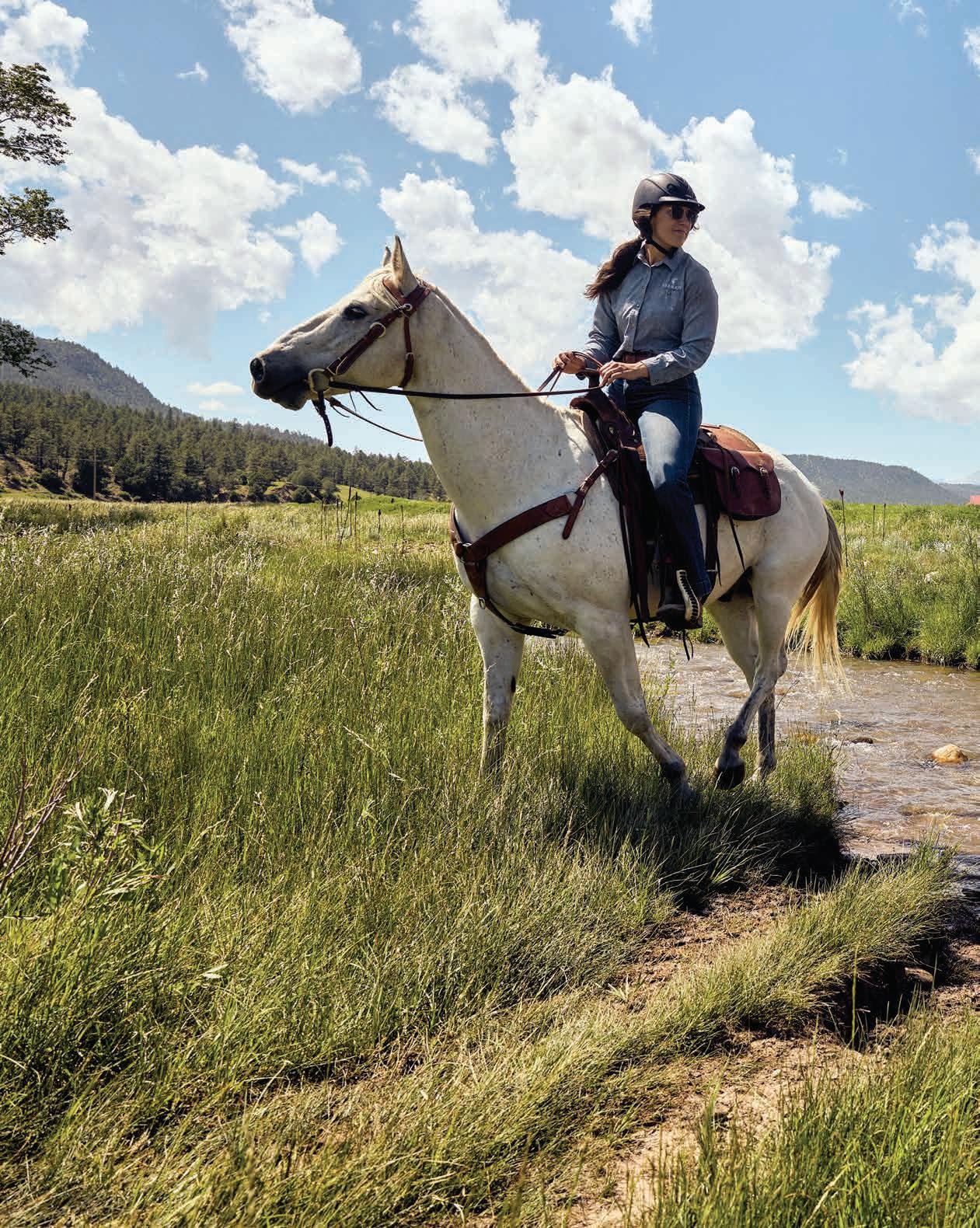
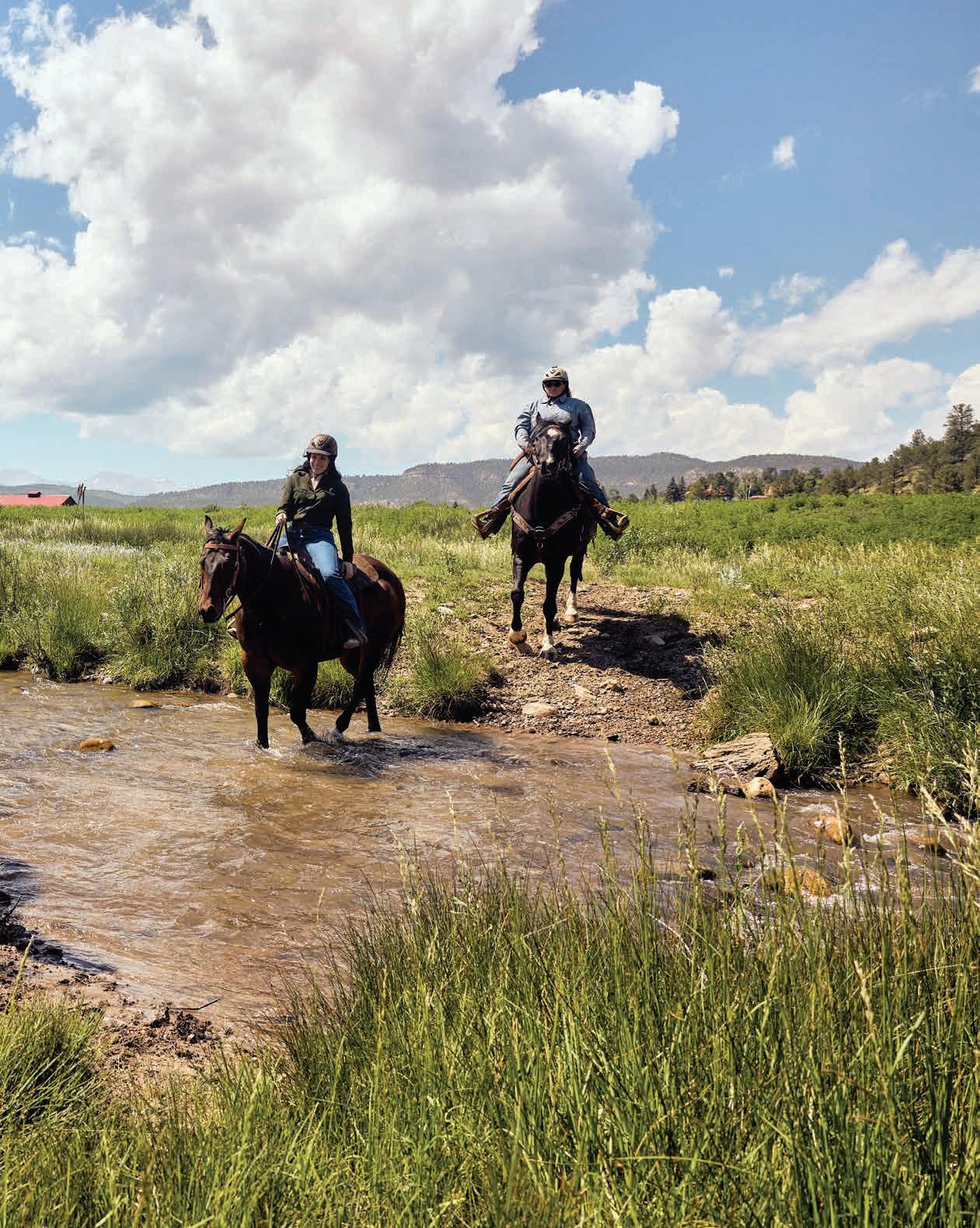
And at the center of it all is one man’s idea that compassionate capitalism can save the wild American West.

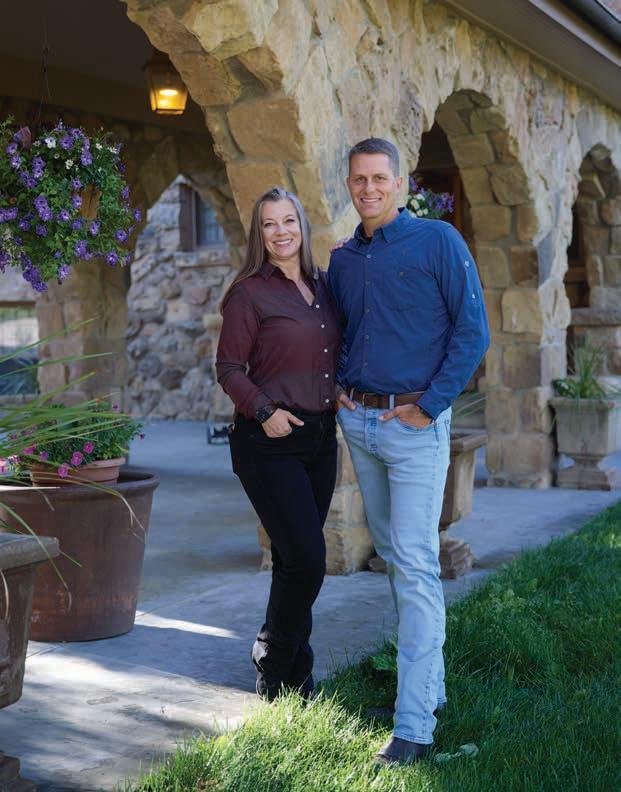
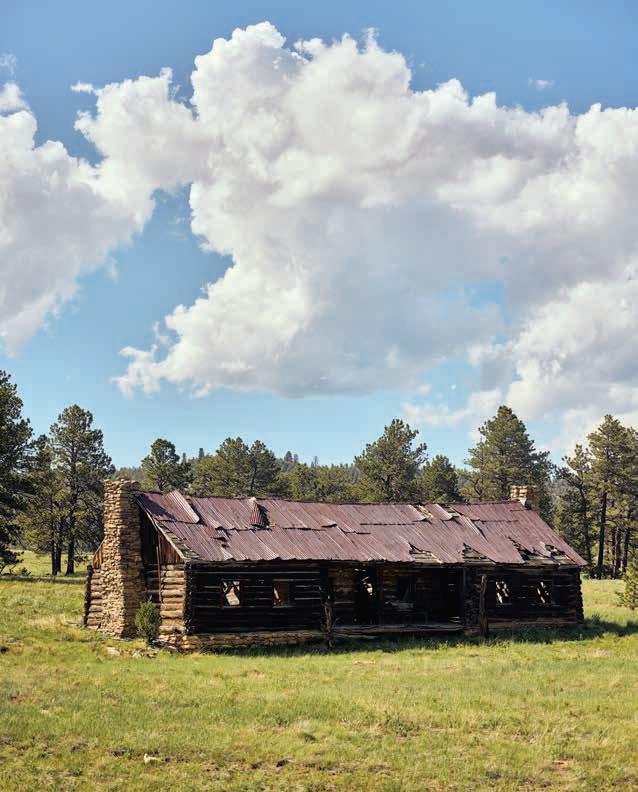
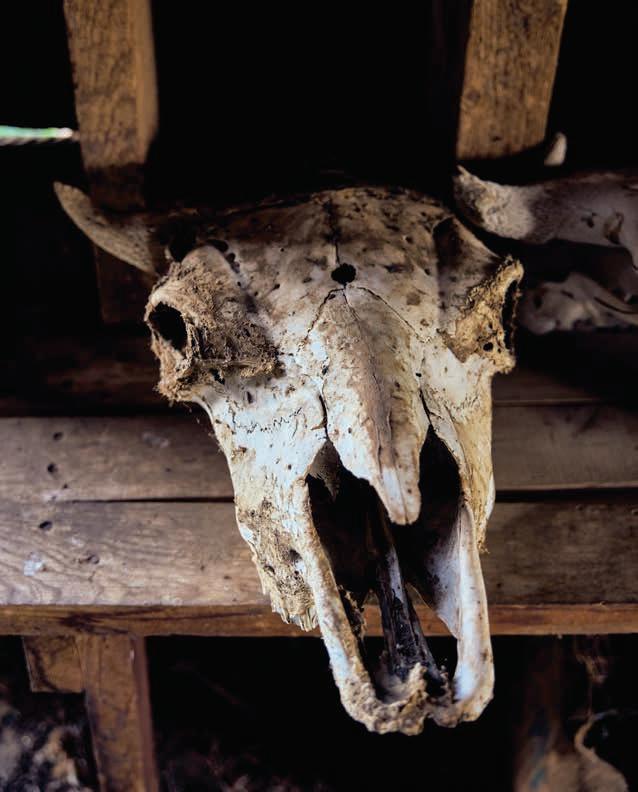
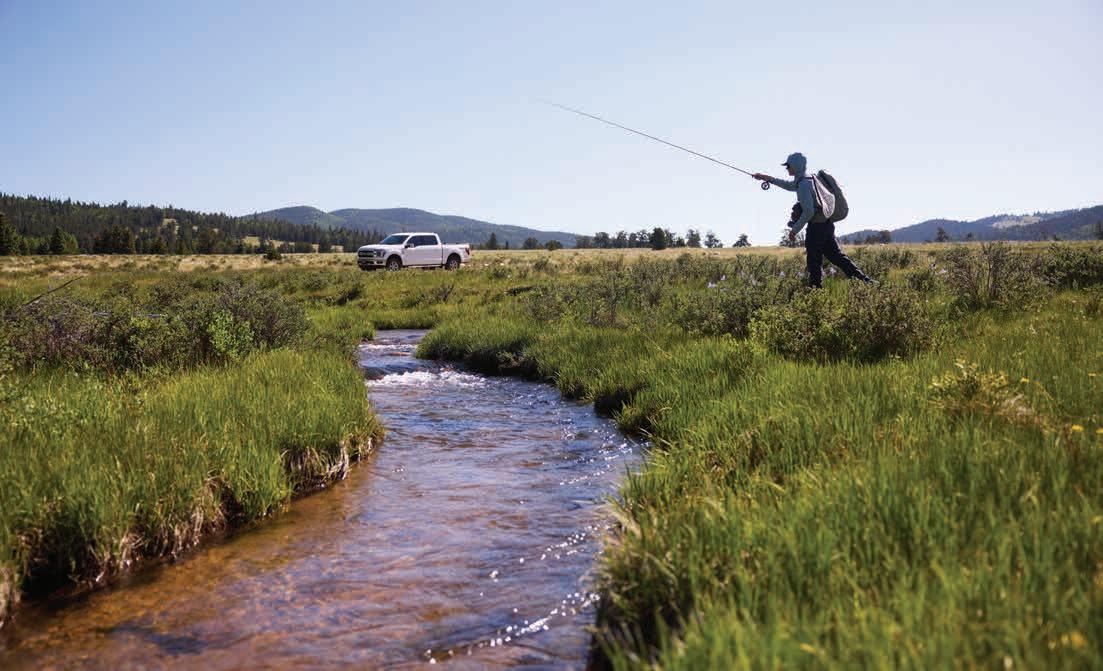
study predator-prey dynamics. In some valleys, the land looks as if the last century never happened.
But none of it comes cheap. And this is where Turner’s model diverges sharply from traditional conservation. The land must pay for its own protection. At Vermejo, that means carefully managed revenue streams—luxury lodging, guided outdoor experiences, wildlife tourism, and regulated hunting. The idea is not to eliminate extraction but to manage it thoughtfully. A certain number of elk are harvested each year. Bison are culled to maintain healthy herd sizes. Meat is sold.
Late one afternoon I hike toward a small gazebo perched on a hilltop. From here the land stretches outward in every direction: golden grasslands, dark forests, distant mountain ridges layered into the horizon. The sound? Wind rustling through leaves. My heartbeat. Nothing else. Back at the lodge a naturalist describes one of the most remarkable features of the property. The K-Pg boundary layer —a thin geological seam marking the asteroid impact that wiped out the dinosaurs 66 million years ago—runs through Vermejo. It’s a reminder that this landscape contains not just centuries of human history but millions of years of planetary history. The same land where bison graze today once hosted Tyrannosaurus rex. Standing in the quiet, the time scales begin to blur.
Today the empire Ted Turner built—from media networks to vast land holdings—is gradually transitioning into foundations and nonprofit structures designed to outlast him. The properties are increasingly managed under the umbrella of the Turner Institute of Eco-Agriculture, which studies sustainable land practices across the portfolio. The hope is that these lands will remain protected. That the model—conservation funded by thoughtful business—might inspire others to follow. It’s an ambitious vision. Perhaps an impossible one. But then again, so was saving the buffalo.
One afternoon we wander farther than planned. The trail dissolves into grass. The hills roll outward endlessly. For a moment it’s easy to imagine what this place looked like two hundred years ago— before railroads, highways, and barbed wire cut the West into pieces. Eventually we find our way back. But something about the experience lingers. In an age where almost every landscape is mapped, monetized, and measured, Vermejo offers a rare glimpse of something else: Space. Not just physical space, but the possibility of thinking about land differently.
McBride tells me a story that I now think of anytime I look out at a vast landscape untouched by the human hand. During a visit with Turner before his health took a steep decline, the mogul turned con-
This page: Fly fishing is just one of dozens of activities available to guests. Opposite: Throughout the sprawling property there’s evidence of its long history as a working ranch. Ted Turner Reserves president Jade McBride and wife Deann.
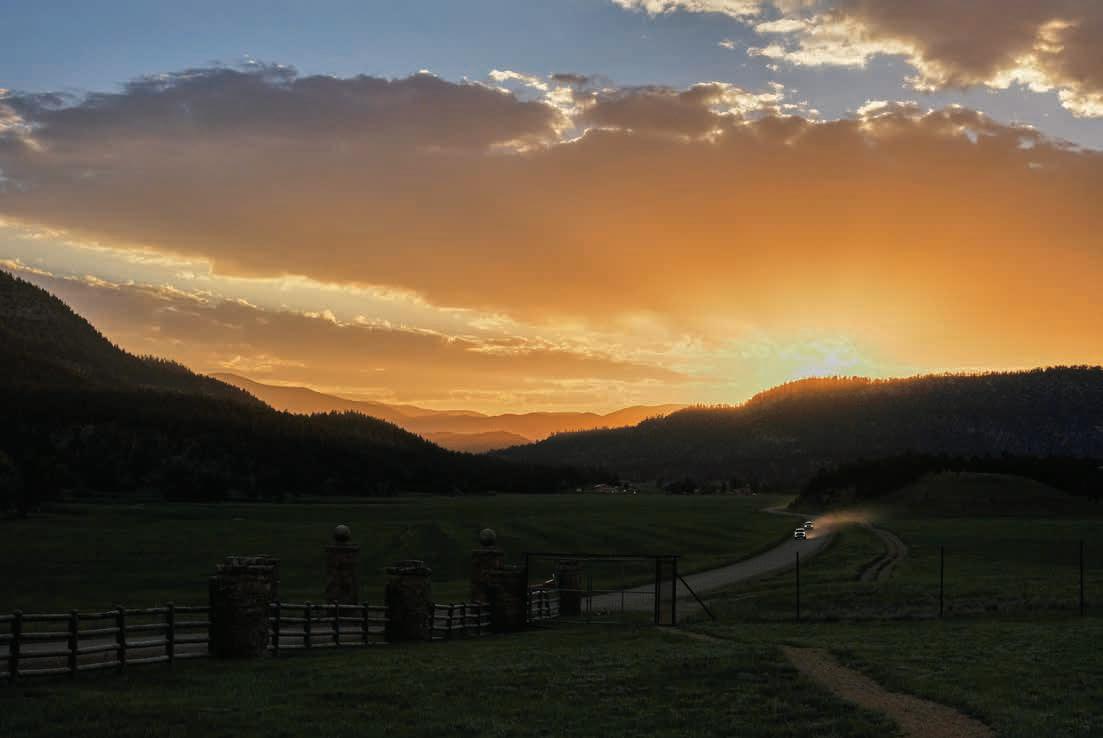
This page: the sun sets over Vermejo. Opposite: Bison fertilize and preserve the grass as they walk and graze just enough to be nourished, while leaving the roots behind to grow again; A ranch hand readies a horse for a ride.
servationist insisted on taking one last drive to Vision Quest, the highest point on his Flying D property in Montana. The request came after a difficult afternoon in which Turner, weakened by illness and traveling with nurses, struggled simply to stand. When a nurse suggested he skip the outing, Turner refused. “No,” he said. “I need to take Jade to Vision Quest.”
Assisted by nurses and leaning on a trekking pole, Turner slowly made his way to the vehicle and endured the rough drive to the summit. When they arrived, Turner had one more request. “Jade,” he said, “let’s walk out to the edge.” Eventually the pair reached an overlook with sweeping views across the lands below. Looking out over the landscape he had spent decades protecting, he turned to McBride. “This is the most exciting spot on all my properties,” he said. McBride laughed, thinking Turner was joking. But when he looked down, Turner’s eyes were wet with tears. “Don’t you think people would like to see this place?” he asked. Then came the charge McBride says guides his work to this day: “We have to share this place with people because it will make better humans out of them.”
Does Turner’s model actually work? Can capital-
ism—often blamed for environmental destruction—be repurposed as a tool for ecological restoration? Walking through the grasslands of Vermejo, watching elk move across valleys and trout slip through clear streams, it’s hard not to feel that something meaningful is happening here. An experiment. A dream. Maybe even a blueprint.
A month after Turner died, three of the properties were put up for sale to create a fund that will provide the revenue needed to support the education-meets-hospitality mission of Vermejo and the other properties. It will fund the research and conservation efforts. It will continue to refine a model in which travelers can both be changed by nature and in turn rehabilitate the nature that nourishes us in profound ways. McBride once heard a guest say how it was so good to be at Vermejo and disconnect. McBride pointed out that connection with nature was actually what she was feeling. It’s a visceral and rare thing to be at a luxury resort and know that you’re doing something good for the planet and in turn for people. The West has always been a place where big ideas take shape on big landscapes. Ted Turner simply decided to try one of the biggest.
Big Island Bees is a mainstay at the iconic farmers market at Kapi’olani Community College on O’ahu, known for their delicate and delicious honey made from native ohia lehua flowers. Here, owner Whendi Grad shares personal recommendations for her Big Island home where their apiary is located. Many of her local favorites are located between Kailua-Kona and Honaunau in the Kona District near their business—an area that still captures the charm of what she calls “Old Kona.”
The insider:
Whendi Grad, co-owner of Big Island Bees

Kaaloa’s Super J’s in Honaunau is bar none the best place for authentic lau-lau. A sweet local family runs it,
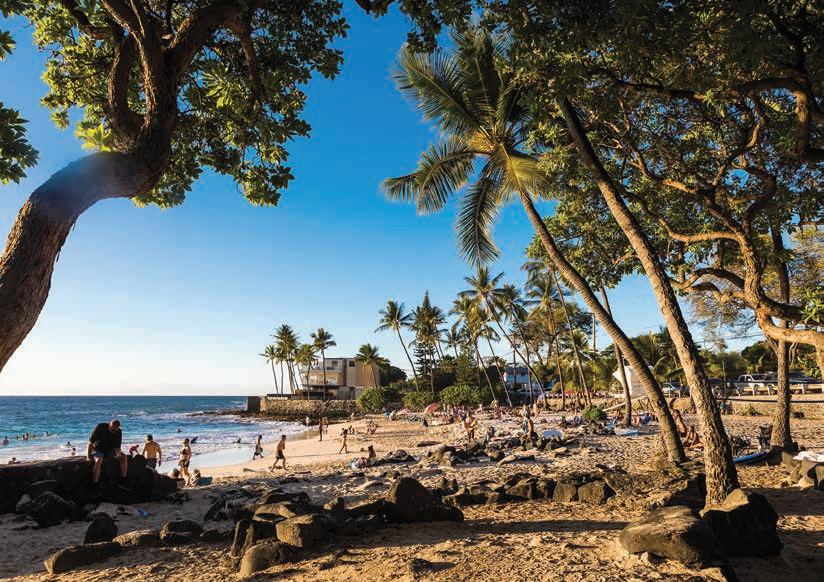
exuding the true warmth of Aloha. They also serve local favorites like lomilomi salmon, macaroni salad, and haupia. For breakfast, visit Kaya’s Kawanui in Honalo, a relaxed café serving excellent coffee alongside a great selection of gluten-free baked goods, quiche, bagels, and chia pudding. Theatery in Kainaliu offers delicious gourmet dinners in a beautiful setting with ocean views from the lanai. The lamb shanks and local fish are favorites.
I love coming to Magics Beach Grill in the afternoon for drinks and live acoustic guitar. It’s the perfect spot to sip a
cocktail while watching the body surfers at Magic Sands Beach
For a classic experience, the Kona Inn in the heart of Kailua-Kona is famous for its Mai Tais. It’s an open-air landmark with incredible views of Kailua Bay.
I recommend exploring Holualoa Village, located in the lush “coffee land” mauka (upland) of Kailua. Browse at Crown Flower, a darling shop featuring handmade Kona Coffee tote bags and high-quality artisan wares. At Dovetail Gallery owned by artists Renee and Gerald Ben, they showcase exquisite Koa furniture, bowls, and fine art.


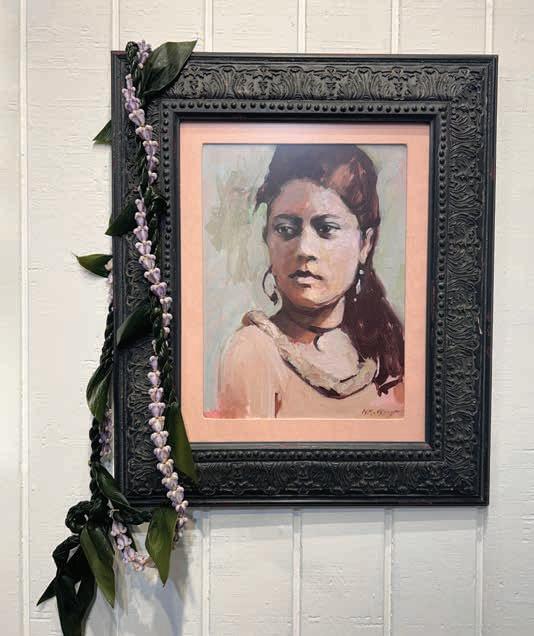
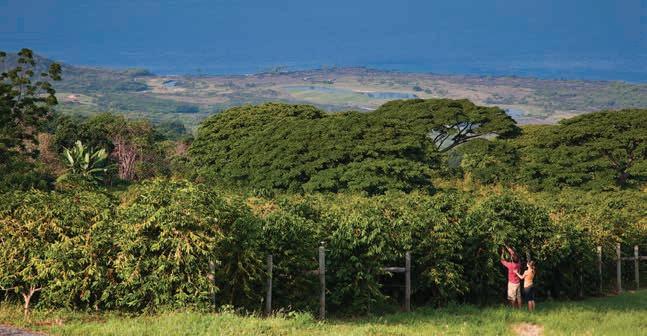
DO Agriculture is the heart of Kona life. Spend a day doing a self-styled farm tour by visiting local producers throughout the area. Start in Captain Cook at Kona Lisa Coffee,
head to Big Island Bees for a hive tour and honey tasting, visit Greenwell Farms, stop by the Original Hawaiian Chocolate Factory, and finish at The Vanillerie near the airport. And for an
unforgettable adventure outside of the beloved Hawai’i Volcanoes National Park , rent a kayak from Kona Boys and paddle across the crystal-clear waters of the Kealakekua Bay
Located on the west coast of Vancouver Island, Tofino is one of Canada’s coziest coastal towns, known for its stunning Pacific Northwest setting and access to Clayoquot Sound. We tapped pro surfer Sanoa Olin for her go-to spots across this laid-back outpost, from longtime local restaurants and standout happy hours to surf schools and wildlife tours. Her guide to this mellow beach town highlights all of the must-dos, whether that’s getting out on the water, wandering old-growth forest trails, or browsing shops stocked with locally loved gear and goods.
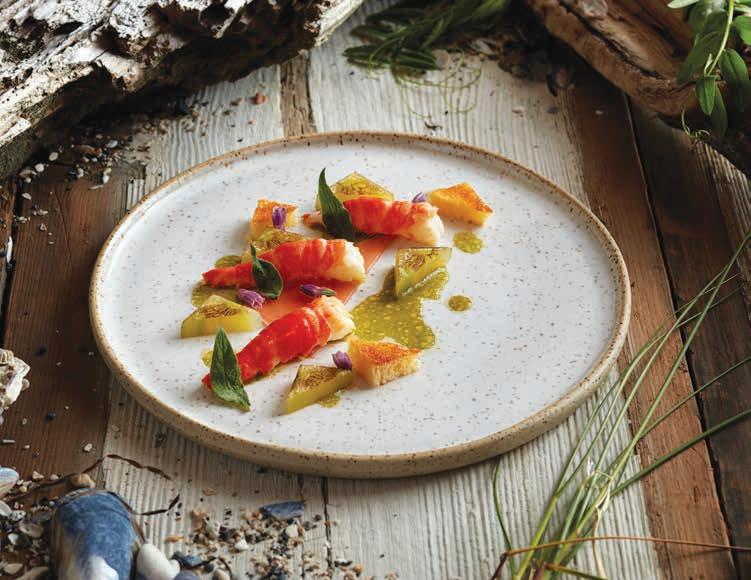
chef Lisa Ahier utilizing fresh local produce that locals have missed since the closing of her previous restaurant, Sobo. The new Ombre has the best happy hour in town, with delicious tapas and a great atmosphere for grabbing drinks.
The insider: Sanoa Olin, Olympic surfer

Shelter Restaurant is a long time Tofino staple. Everything on the menu is delicious. Being located at the Marina, it’s a great location for a full meal or drinks and appetizers while looking out into the inlet. The Clayoquot Campus is home to Indigenous gardens, a carving studio, and a cafe led by
Tofino is one of the few places within Canada you can try surfing. Get a lesson if you are a beginner or rent a board and wetsuit if you have some experience. Surf Sister is a longstanding school with a cool boutique, and they also have a Surf Shack location at Pacific Sands Beach Resort Tofino Paddle Surf was started by Canada’s first female professional surfer, Catherine Bruhwiler. They offer privates as well as paddle surf tours. Book in for a boat tour with West Coast Aquatic Safaris or Ahous Adventures and take in some of the beauty and magical wildlife the Clayoquot Sound has to offer. You’ll see everything from whales, orcas, sea lions
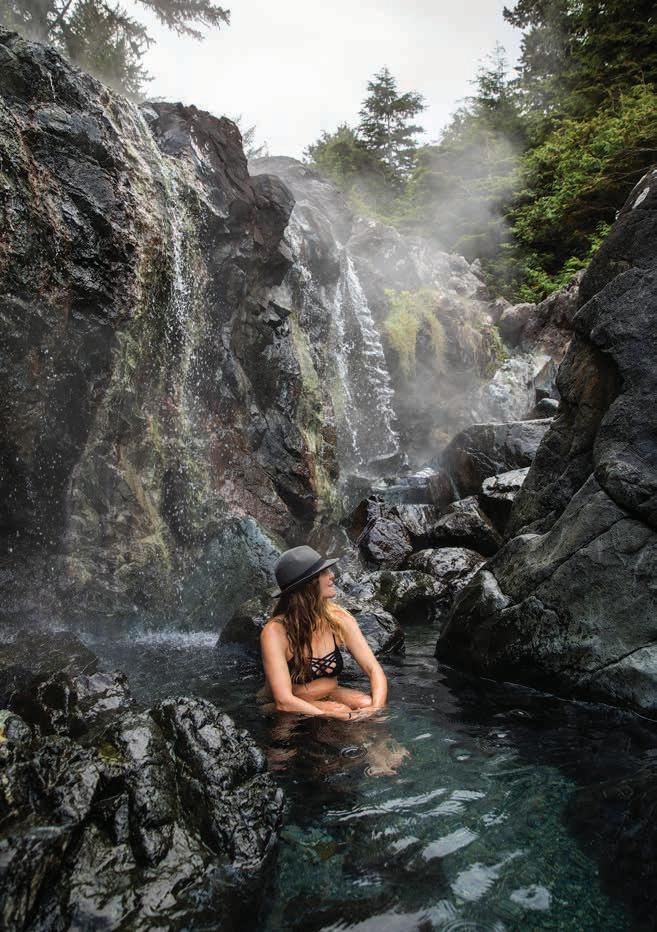
and otters, and you may even spot land creatures like bears and wolves. They also offer half-day tours to Hot Springs Cove. Walk the Big Tree Trail at Wanachus-Hilthuuis (Meares Island) Tribal Park , where you’ll traverse a protected old growth rainforest. Dur-
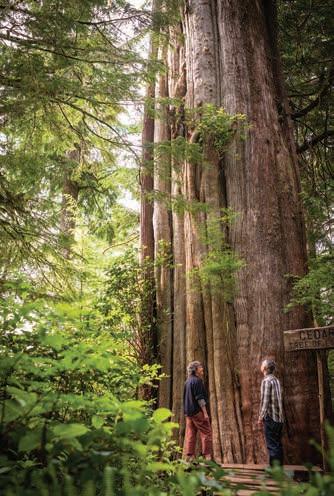

ing the nicer months, you can book a kayak or canoe trip to the island which makes for a beautiful full day adventure.
Live to Surf has a great selection of clothing and accessories as well as surfing equipment and rentals. Best place to get some Tofino swag and the place I go for any of my surf equipment needs. The Factory offers a large selection of quality goods; some apparel, lots of jewelry, goods for your home and beautiful art.
Pacific Sands Beach Resort is waterfront at Cox Bay. The fire pits overlook the beach and are the perfect place to end the day with a gorgeous view of the sunset. Wickaninnish Inn is lovely too.
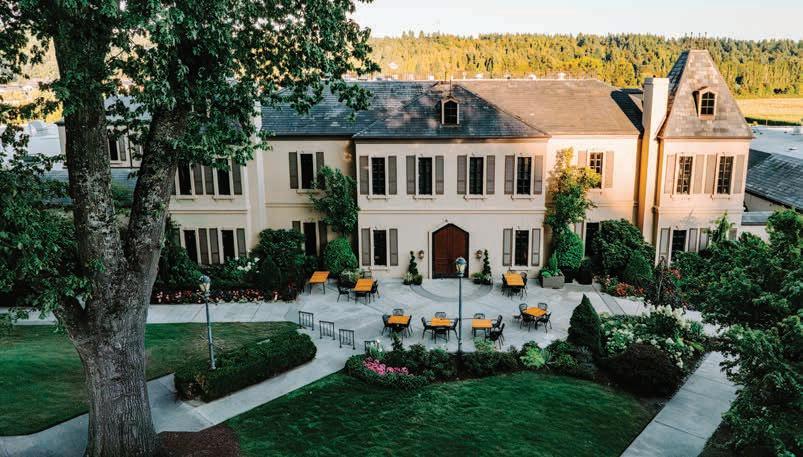



On Saturday May 2, Chateau Ste. Michelle hosted an elegant Spring Soirée at their Woodinville, Washington estate. The evening began with a sparkling reception at the Manor House before guests were led on a lantern-lit stroll to an elegant dinner prepared by Executive Chef Meghan Morrill. The seasonal fourcourse menu featured wine pairings by Winemaker Taylor Butterfield and live string music set the perfect mood. It was an evening of unexpected touches and lasting impressions with a graceful reminder that at Chateau Ste. Michelle, every gathering is as thoughtfully crafted as the wine itself. The magic continues through the Summer with the Chateau Ste. Michelle Summer Concert Series, running through September, alongside a vibrant lineup of tastings, seasonal experiences, and special events. Learn more at ste-michelle.com.

Hikers, road trippers, and spiritual seekers have long been drawn to Mount Shasta, and for good reason.
Ashalyn, founder and guide at Shasta Vortex Adventures, has spent years leading visitors through this mystical mountain town’s most meaningful sites while sharing insight into the area’s unique energy and history. Her picks blend the practical with the personal, covering where to get outside, refuel, and settle in, all with a focus on experiencing this quirky corner of California in a more intentional way.
The insider: Ashalyn, owner and guide at Shasta Vortex Adventures

Take a Guided Tour of Mt. Shasta’s Sacred Sites. A guided experience along Everitt Memorial Highway invites travelers into Mt. Shasta’s most sacred landscapes, from McBride Springs to Bunny Flat, Panther Meadows, and beyond.
Through year-round Sacred Site Tours and Guided Vision Quests, experienced, permitted guides offer profound insight into the mountain’s spiritual energy while providing access to lesser-known sites. Check out Mount Shasta Resort for golfing, good food and lodging.
Lake Siskiyou is an amazing place for boating, fishing, swimming, camping, wind surfing, cabin rentals, food booths, paddle boat rentals and more.
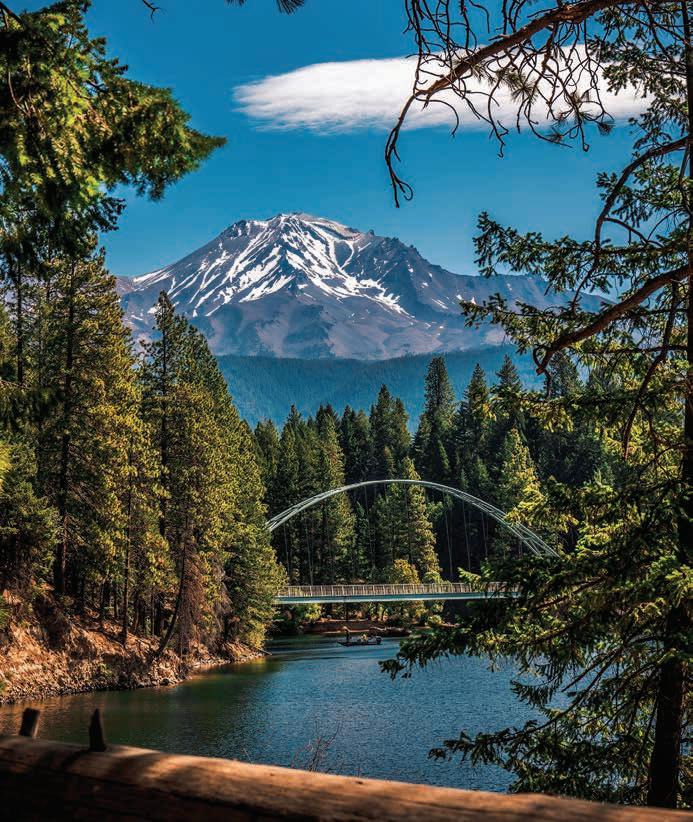
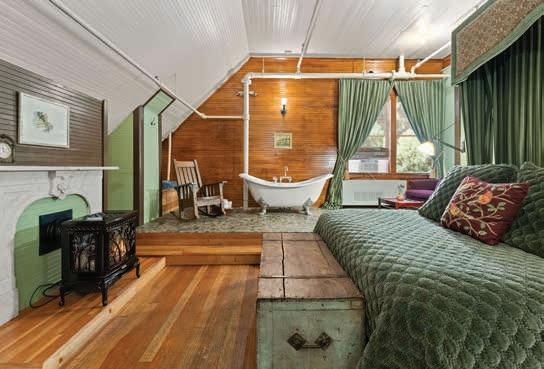
Nestled at the base of Mt. Shasta, Basecamp
Lodge Mt. Shasta features cozy chalet-style cabins with easy access to popular trailheads like Bunny Flat and Panther Meadows. It’s an ideal home base for travelers looking to pair alpine adventure with a deeper connection to the moun-
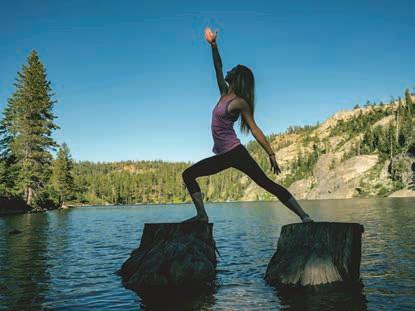
tain’s rich spiritual energy. McCloud Mercantile is a beautiful option as well. For a proper charge-up before a day on the trails, visit Summit Lofts’ Theory Coffee
Seven Suns Coffee & Café offers a relaxed, grounding space to pause and recharge, with a welcoming atmosphere that reflects Mt. Shasta’s mindful spirit. Visitors can grab a quick coffee or pastry on the go, or linger over a meal with favorites like breakfast burritos, house-made granola, and more. And for locally produced craft brews and casual bites, visit Pipeline Craft Taps and Kitchen

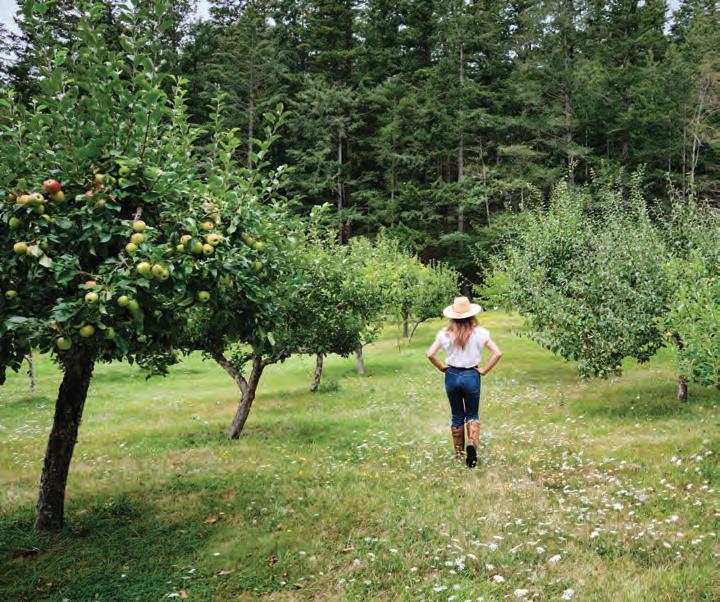

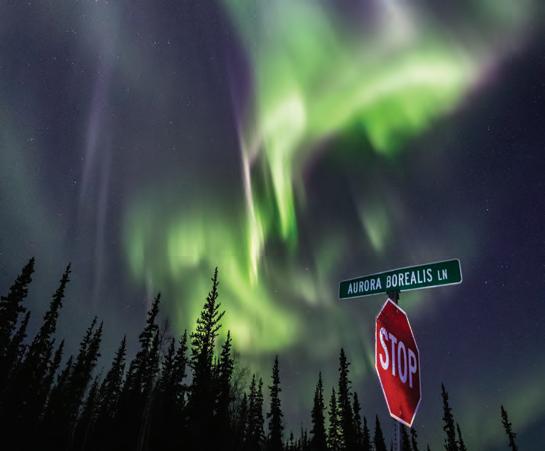











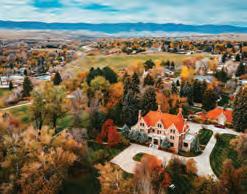
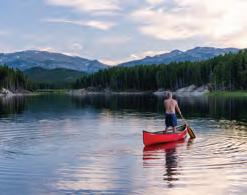

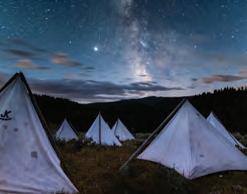
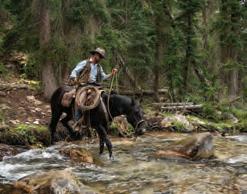
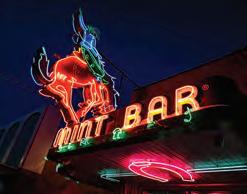


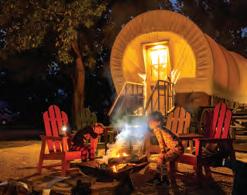
1.1
WYOMING, USA.
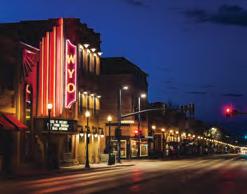
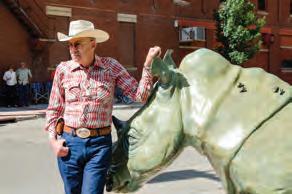


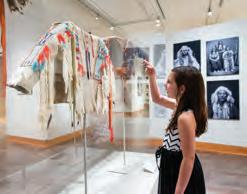
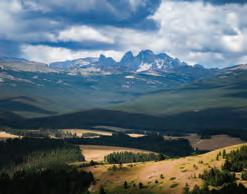
Frontier History. Cowboy Heritage. Craft CULTURE. Iconic Art. The Great Outdoors. Sheridan County is The Nature of the West.
116
million acres of pristine wildland in the Bighorn National Forest, encompassing 1,200 miles of trails, 30 campgrounds, 10 picnic areas, 6 mountain lodges, legendary dude ranches, and hundreds of miles of waterways. The Bighorns offer limitless outdoor recreation opportunities.
restaurants, bars, food trucks, lounges, breweries, distilleries, tap rooms, saloons, and holes in the wall are spread across Sheridan County. That’s 116 different ways to aprés adventure in the craft capital of Wyoming. We are also home to more than 40 hotels, motels, RV parks, B&Bs, and unique vacation properties.
4
seasons to get WYO’d. In winter, shred sick turns at Antelope Butte, on a sled at one of our mountain lodges, or at Cutler Hill or Sibley Lake Nordic Trails. July features the beloved Sheridan WYO Rodeo and the height of polo season. Spring and fall are the perfect time to chase cool mountain streams or epic backcountry lines.
Sheridan features a thriving, historic downtown district, with western allure, hospitality and good graces to spare; a vibrant arts scene; bombastic craft culture; a robust festival and events calendar; and living history from one corner of the county to the next. Welcome to the Real American West.
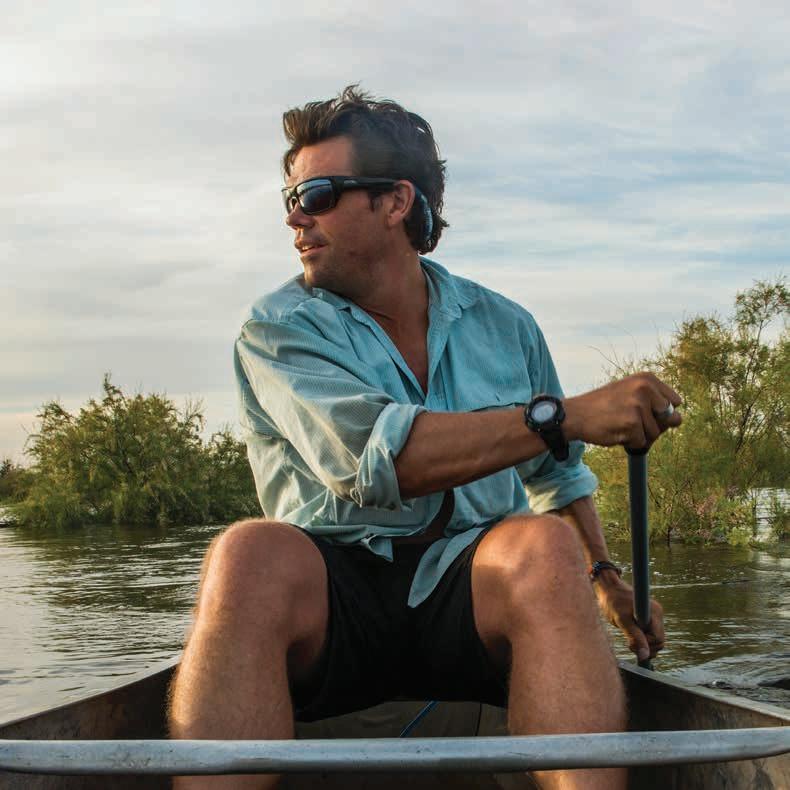
Photographer and conservationist
Pete McBride shares the story of the Colorado River, a troubled water system of epic beauty.
Interview by KRISTA SIMMONS
When Pete McBride reached the end of the Colorado River, he expected it to spill into the sea. Instead, he ran aground in the dry earth of the Colorado River Delta, roughly 100 miles from the Gulf of Mexico. The moment, which opens his book The Colorado River: Chasing Water, raises a stark question: How does a river that carved the Grand Canyon, supplies drinking water to 40 million people, and irrigates more than five million acres simply… end? That question sparked a deeper look at one of the West’s most urgent (and often overlooked) environmental crises. After hiking the Grand Canyon end to end—roughly 750 miles without a trail—McBride explores why this river’s story is bigger than drought, and what it will take to protect it.
“ W E ALL NEED TO LEARN TO USE AND ASK FOR LESS WATER.”
We’ve engineered, divided, and stretched the river to the point that there’s nothing left at its end in the Gulf of Mexico. And we’ve had this wildly dry Western winter. There’s a tendency to frame this as a drought story, but your work suggests something deeper.
It’s about a lack of water and collaborative work between water managers, as well as valuing the river as a river, not just a Western plumbing system. It’s a drought story compounded by a hotter and drier climate that is decreasing the Colorado River’s flow by 15 to 20%. We have also overallocated the river, which means we have water rights to more water than there actually is. We thought the river flowed annually at X and now it flows at two-thirds of X, but we still have water rights for X. It’s like we ordered a large drink with lots of straws for a group to share. But now the drink is a medium size but the same people (or more) are drinking the same amount.
Indigenous water rights are also an issue. What are some of the inequities there?
Native communities hold rights to over 25% of the Colorado River water, but most of those are never delivered. I’ve become more and more alarmed by how native communities are consistently overlooked and their voices kept from the decision-making.
What are some practical solutions that could help protect and restore the river?
We all need to learn to use and ask for less water. From cities to towns, industry (energy and data centers) and agriculture. Agriculture remains the largest straw in the system, so we need to grow crops and food that require less. Alfalfa production for export is currently a big problem as it uses about 25% of the river’s water for forage crops that get sent overseas. Being aware of where your water comes from and using your voice when possible through public meetings, comment periods or water conservation organizations is important.
There’s a current of hope in your work. What would a healthier future for the Colorado River look like downstream?
I try to remind people (and myself) of the power of earned hope. This is the concept of people working hard behind the scenes to protect their regions. I’ve seen this in the Grand Canyon with uranium mining, and also in the Delta with restoration projects. In 2014 there was a big one that connected the river to the sea, but that’s unlikely to happen again. Despite all the challenges, people are still making a difference with hard work and collaboration.
Invest in a sustainable future for your family with technology you can trust, year a er year. By installing REC solar panels on your home, you are promised long-term premium power and a sleek, elegant design.
DESIGNED FOR THOSE WHO EXPECT THE BEST LEARN MORE