AL FRESCO RECIPES
The must-take trip of the summer
SUN VALLEY STYLE TOP MOUNTAIN GETAWAYS
BEVERLY HILLS MAXIMALISM

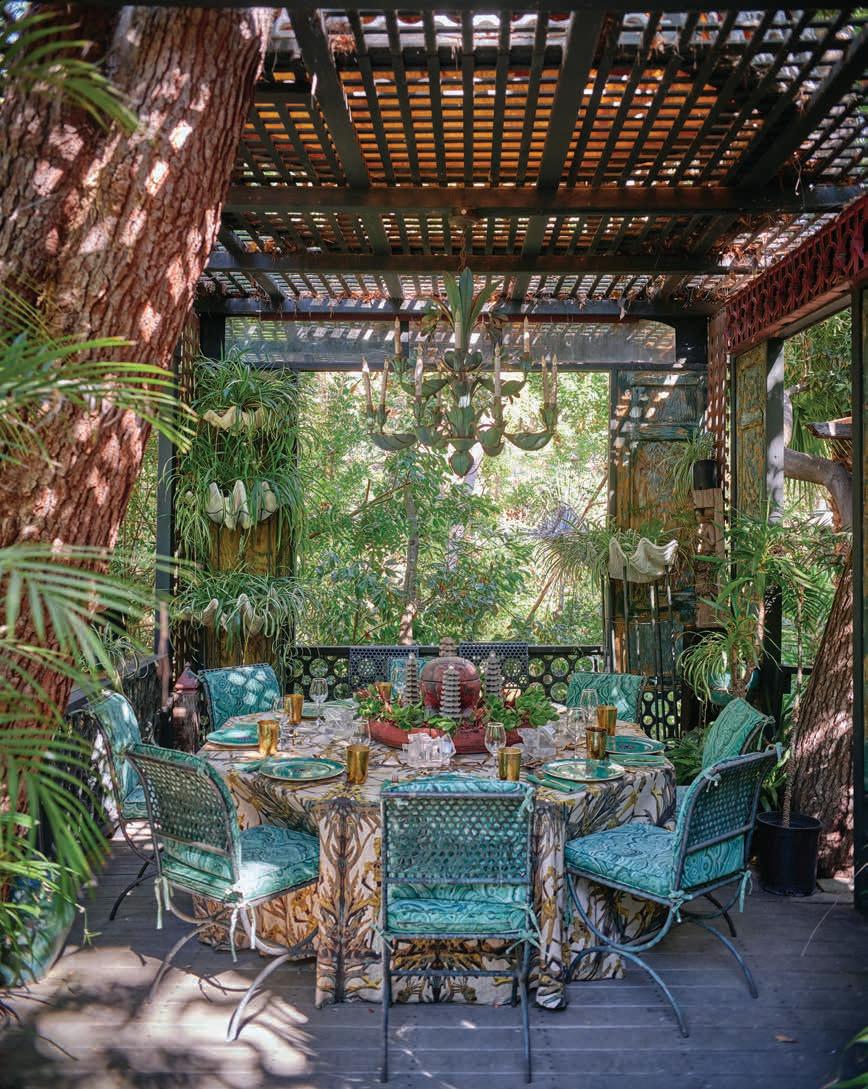
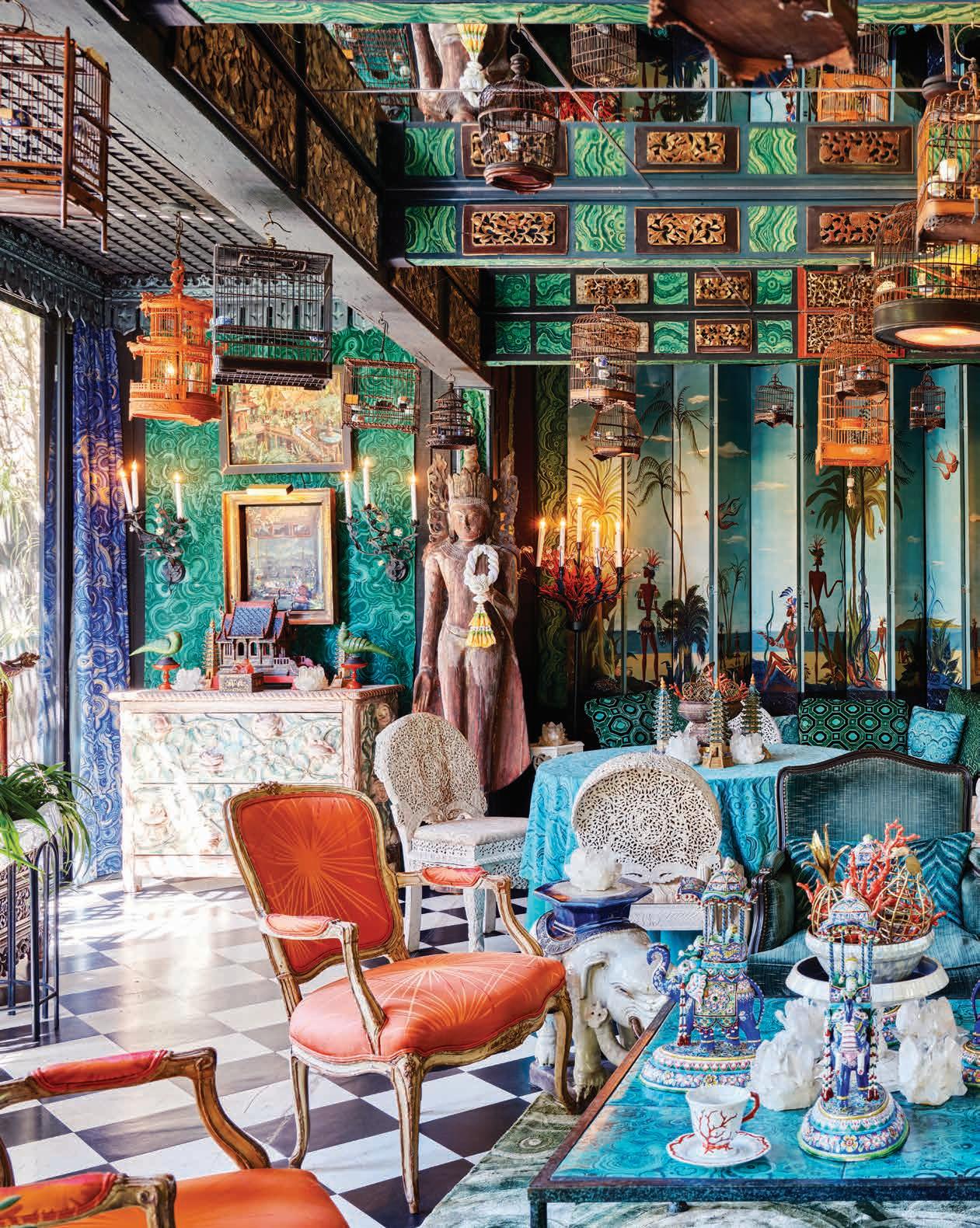
Al fresco dining at the legendary Dawnridge in Beverly Hills is always a maximalist affair.
2 Editor’s Note
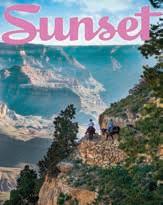
The infinite awe of the Grand Canyon.
5 Sk i Towns Gone Summer; La Bahia Reborn.
& Garden 11 Classic Western
Studio McGee brings East Coast grace to a luminous Arizona family home.
22 Laid-Back Luxe
Two Sun Valley homes show how mountain design can feel refined without losing its easygoing spirit.
34 More Is More at Dawnridge
Inside Tony Duquette’s Beverly Hills fantasia, where Hutton Wilkinson continues to push one of the West’s most extravagant homes to operatic heights. 52 Checklist
Here’s how to keep your garden thriving through the height of summer.
Food & Drink 57 Viva Zepeda
Claudette Zepeda captures the swagger, smoke, and cultural crosscurrents of Tijuana in recipes that redefine what Mexican food can be. 62 No-Fuss Family Style
Recipes from Sheldon Simeon’s Ohana Style, built for passing plates, second helpings, and relaxed nights around the table.
67 For the Love of the Wild
Beth Pratt’s long campaign to reconnect Southern California’s fractured wilderness is culminating in the world’s largest wildlife crossing.
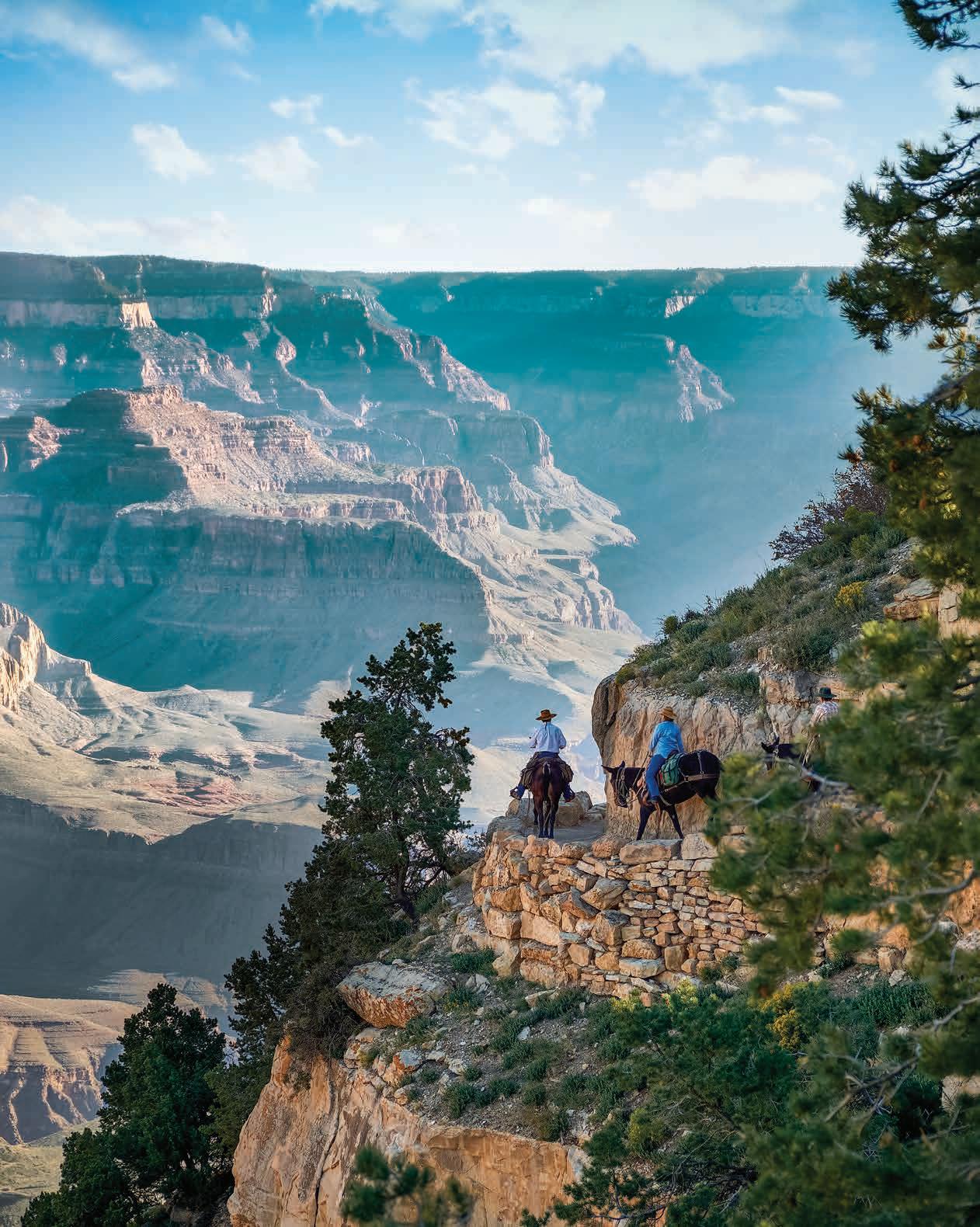
72 The Ultimate Grand Canyon Journey
Ride the historic railway into canyon time and rediscover why no visit to the Canyon ever feels the same twice.
88 Insider Guides
Local tastemakers share their favorite places to eat, drink, and explore in Taos, New Mexico; Hood River, Oregon; and Healdsburg, California.
96 The Life Aquatic
With little sailing experience and plenty of nerve, a young couple discovers a deeper connection to the California Coast, one nautical mile at a time.
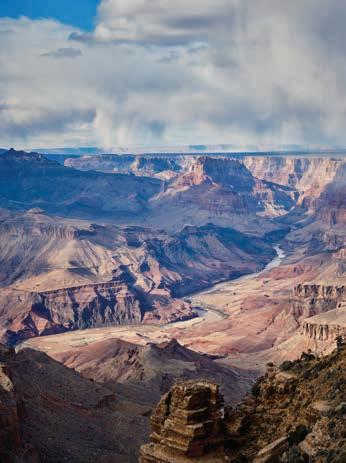
Over four glorious and tempestuous days at the Grand Canyon earlier this year, the weather swung wildly—balmy afternoons gave way to flurries, and frigid mornings softened again into bright sun. Watching the canyon through those shifting moods over a visit longer than most people make, I realized the power of lingering longer in a place. I’m slightly embarrassed to admit it was my first visit to the Grand Canyon, despite having lived within a seven-hour drive of this natural wonder of the world for 25 years. The experience of seeing it for the first time is something you only get once. I spent roughly 40 waking hours looking at it, hiking into it, tracing its contours, glimpse by gaze, step by step. And by the time I left, I felt like I’d only just scratched the surface. That’s the paradox of the canyon. The longer you stay, the more you realize how much you haven’t seen. Every minute, the light shifts. Every storm redraws the landscape. A trail you passed yesterday reveals an entirely new perspective today. You leave already knowing you’ll need to come back. And that when you do, it will never look exactly the same again.
Astronauts talk about the overview effect, the subtle reprogramming that happens when you see Earth from space and suddenly understand how small, fragile, and interconnected our world really is. Standing on the rim during a shifting spring storm, I felt a hint of that same sensation. Below us, an inversion layer of clouds filled the canyon like a white ocean. To the west, dark clouds dropped curtains of snow into the depths. To the east, bright sun lit the cliffs in copper and gold beneath an impossible blue sky. Two entirely different worlds unfolding at once, each seemingly unaware of the other, and of the thousands of visitors quietly taking it all in from the rim. For a few moments, everything else receded. Headlines. Deadlines. Notifications. Identity. The endless churn of the modern world.
What remained was something simpler: a shared sense of wonder among strangers staring into a landscape that has been reshaping perspective for millions of years. Travel at its best does that. It nudges us out of the predictable rhythms of our daily lives and reminds us that the world is larger—and more surprising—than we tend to remember. If you’re going to take just one trip this summer, I highly suggest a visit to the Grand Canyon to put everything in the world in perspective. And know that your perspective will shift yet again, whether it’s your first visit or your fifth. If my first visit to the Grand Canyon taught me anything, it’s this: The West still has plenty of surprises left. And sometimes the most powerful ones are the destinations we thought we already knew.
—Hugh Garvey, EDITOR-IN-CHIEF


CHAIRMAN & PUBLISHER
Michael A. Reinstein
EDITOR-IN-CHIEF Hugh Garvey
DIGITAL DIRECTOR
Sarah Yang
DESIGN DIRECTOR
Brian Walker
PHOTO EDITOR
Christine Bobbish
STAFF PHOTOGRAPHER
Thomas J. Story
Nicole Clausing
Jamie Elliott
EDITORIAL
Elena Scott
Tracy Seng
Kathleen Craven HEAD
Pamela Coffey SVP,
Kelly Facer SENIOR
Mindy Morgan
Megan Giordano



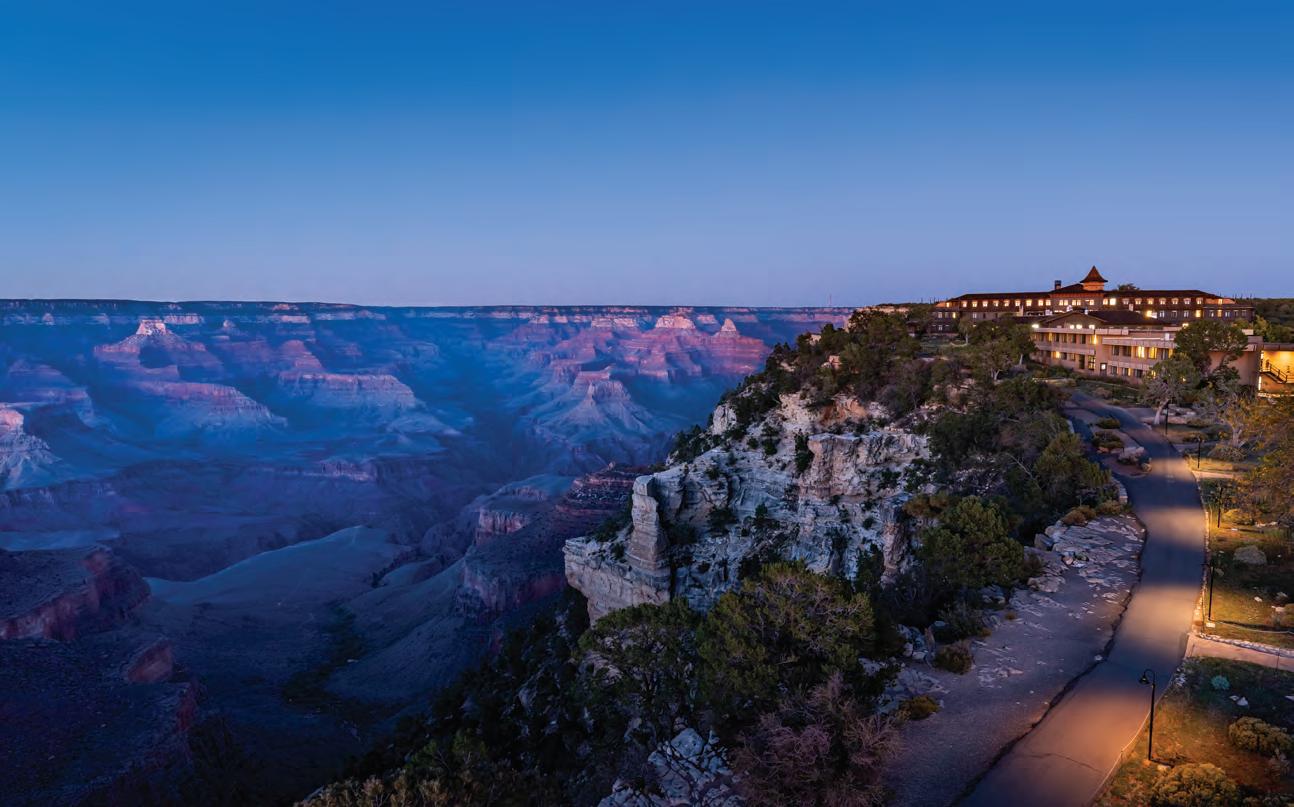
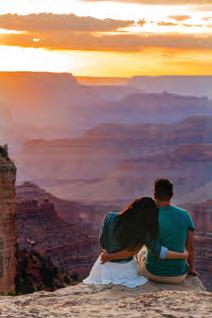
In a country of many paths, togetherness isn’t always easy to find. Yet at the Grand Canyon’s edge, something shifts, and what connects us comes into view.
We stand together in the same quiet awe. Shared silence. Shared wonder. Shared moments. A shared experience that transcends where we come from.
e canyon reminds us that we the people have always shared something greater. A living symbol of the American spirit—limitless in scale, and in what it inspires.
Join us in celebrating America’s 250th with a trip to one of its greatest wonders.
Shoulder season is when the mountains really come into their own.
by KRISTA SIMMONS
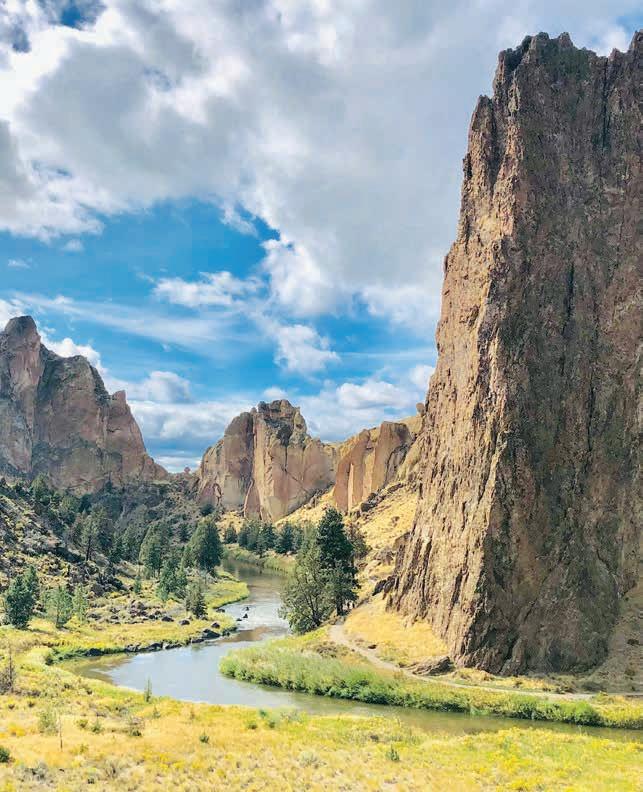
TThe Western ranges are known as outdoor playgrounds in the winter, marked by majestic mountain terrain, world-class snow, and top-tier resorts. But what often goes overlooked is the time after the snow has melted, when the backcountry becomes bike corridors and alpine ascents transform into hiking trails, giving outdoor enthusiasts something to look forward to long after the last chairlift has closed. Considering the West has struggled with a winter season marked by some of the lowest snowfall on record, visiting these mountain towns in the offseason is not only an opportunity to explore with fewer crowds but also to support small businesses that could use a boost.
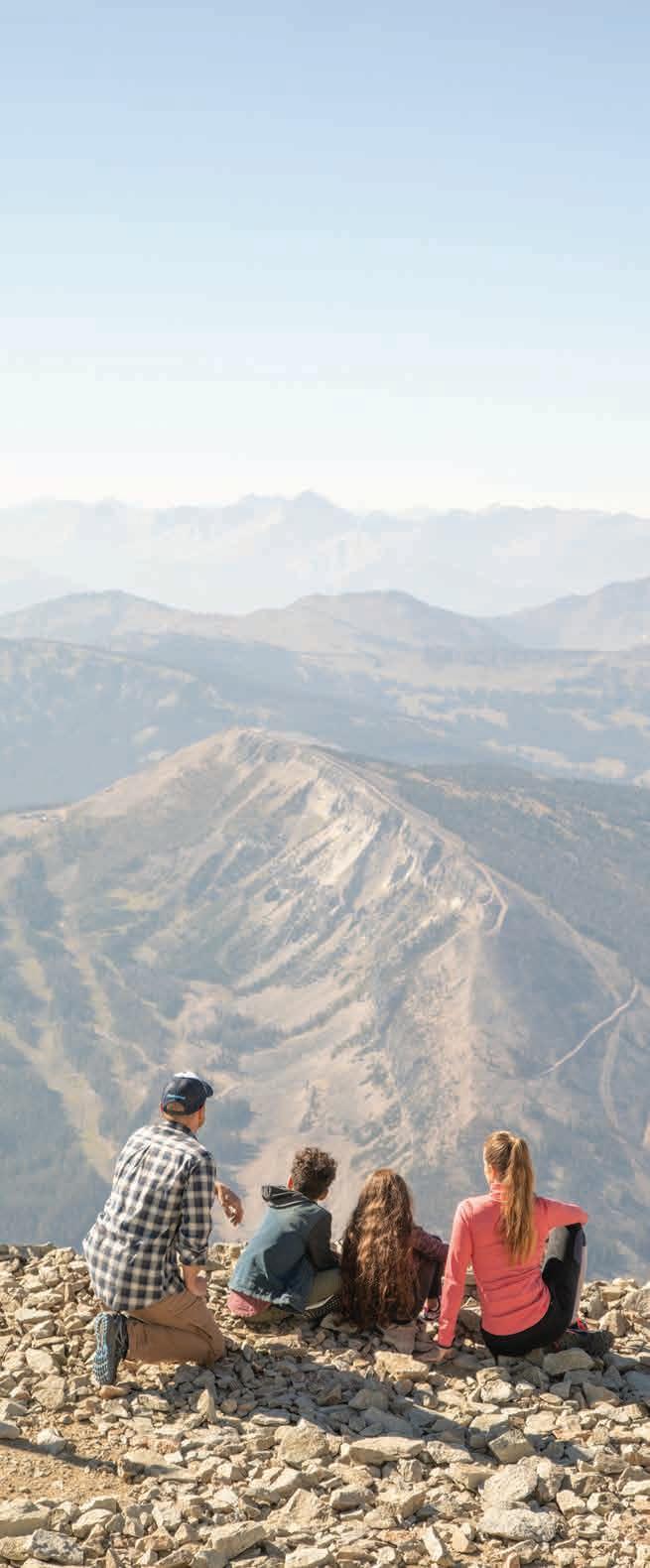
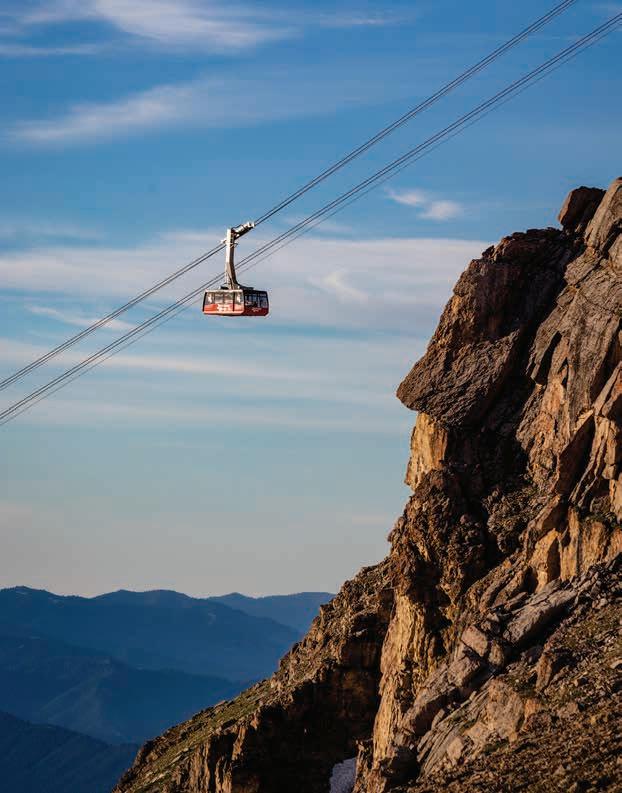
It’s hard to argue with the glory of winters in Big Sky, the premier ski town in the Rockies. The melt makes way for sweeping views of Southwest Montana via the newly opened Kircliff tram that heads up Lone Peak, leading to a new all-glass summit observatory that provides 360° views of life below. Nearby Bozeman adds access to limestone sport climbing in Gallatin Canyon, blue-ribbon trout rivers, and trail systems that stretch straight out of town.
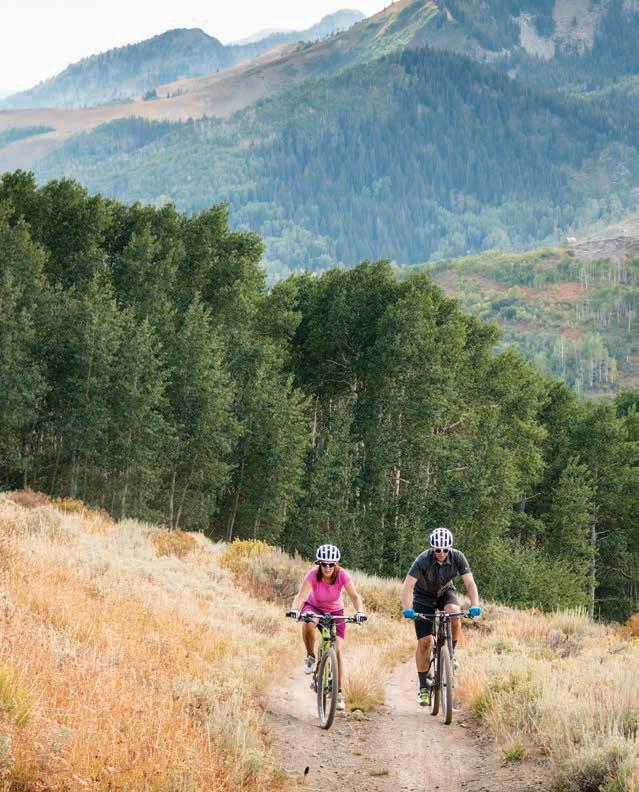
Park City is the largest ski resort in the U.S., and that big, wideopen space transforms into more than 400 miles of hiking and mountain bike trails, winding through sage flats, aspen groves, and alpine ridges with views over the Wasatch, and many of the trails are served by lifts, helping travelers access the high-alpine terrain year-round. Add in a trip to the High West Distillery, a visit to the Utah Olympic Park Museum, and some fly-fishing on the Provo, and you’ve got yourself a proper summer vacay.
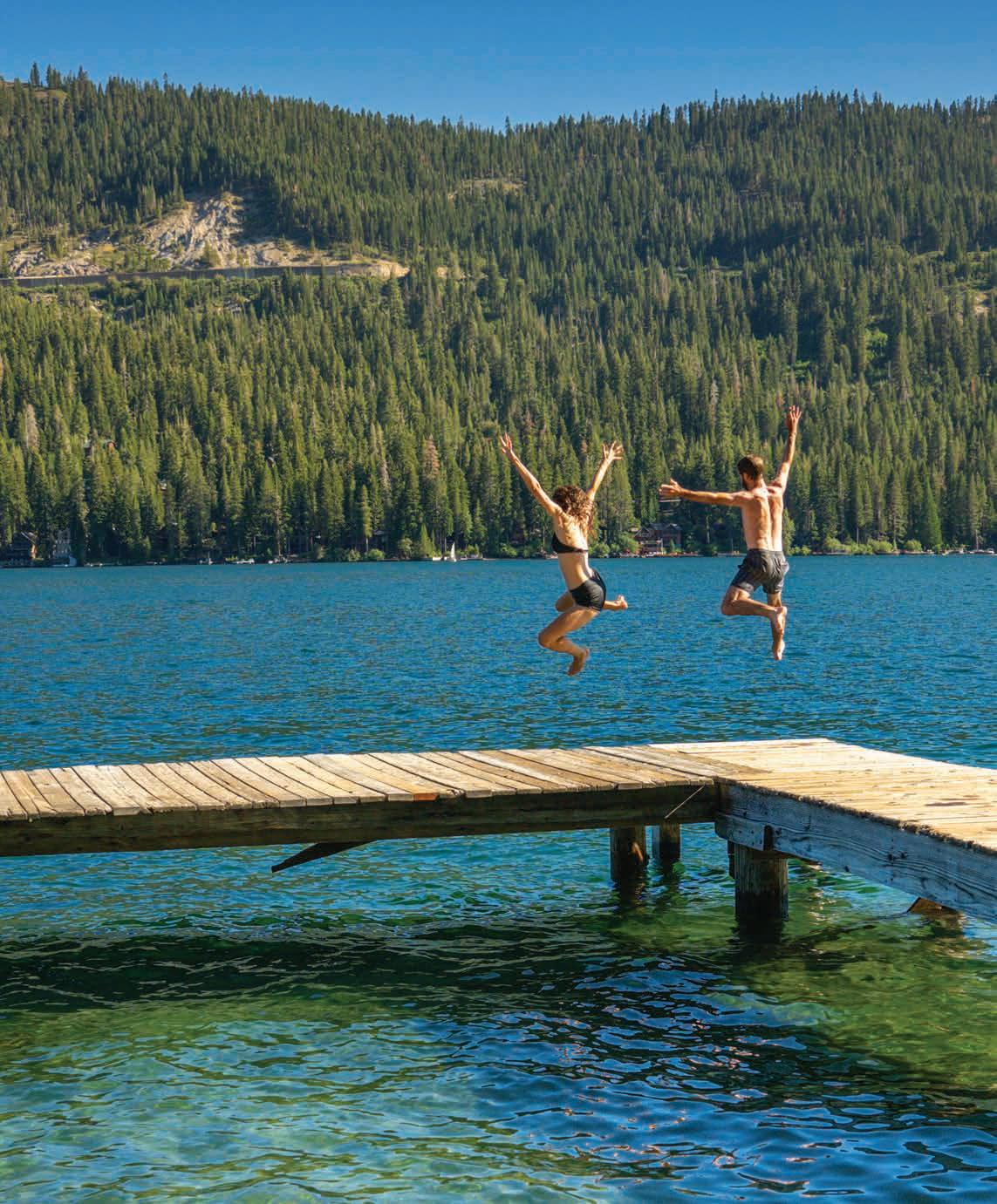
Summer in the Sierra is a blend of alpine hiking, big mountain biking, lake days, and adrenaline-inducing vertical terrain. The area also offers classic trad and sport climbing at nearby Lover’s Leap and Donner Summit, with routes for all skill levels along granite faces etched into the Tahoe landscape, and a via ferrata at the resort Palisades Tahoe as well.
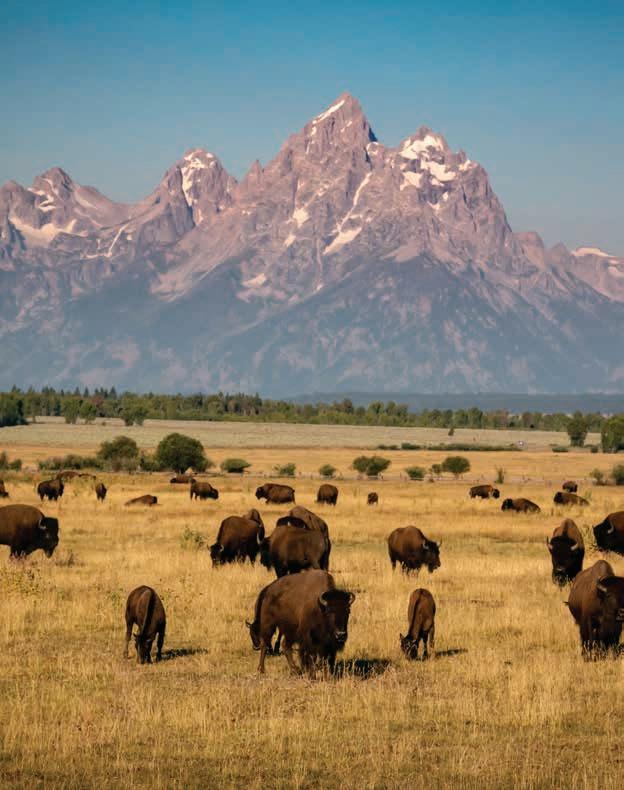
The Tetons are a year-round wonder, offering granite peaks for climbing, gravel grinding, and peak wildlife viewing and alpine hiking. Make like Ansel Adams did and spend a couple of days photographing the magic of the Snake River, which flows through the valley floor and opens itself up as a veritable playground for whitewater rafting as well. Horseback riding and rodeo are also popular in the warmer months and are worth checking out in this unique corner of the Cowboy State. And it goes without saying that it’s an excellent base camp to visit the nearby Yellowstone National Park.
Situated in the volcanic high desert, Bend is beloved by mountain bikers and climbers alike. Deschutes River offers excellent kayaking and floating, and the city’s super dog-friendly vibe and ample craft breweries make for a proper summer town. With Cascade Mountain peaks on the horizon and high-desert sunshine nearly guaranteed, summer here feels like one long outdoor happy hour.
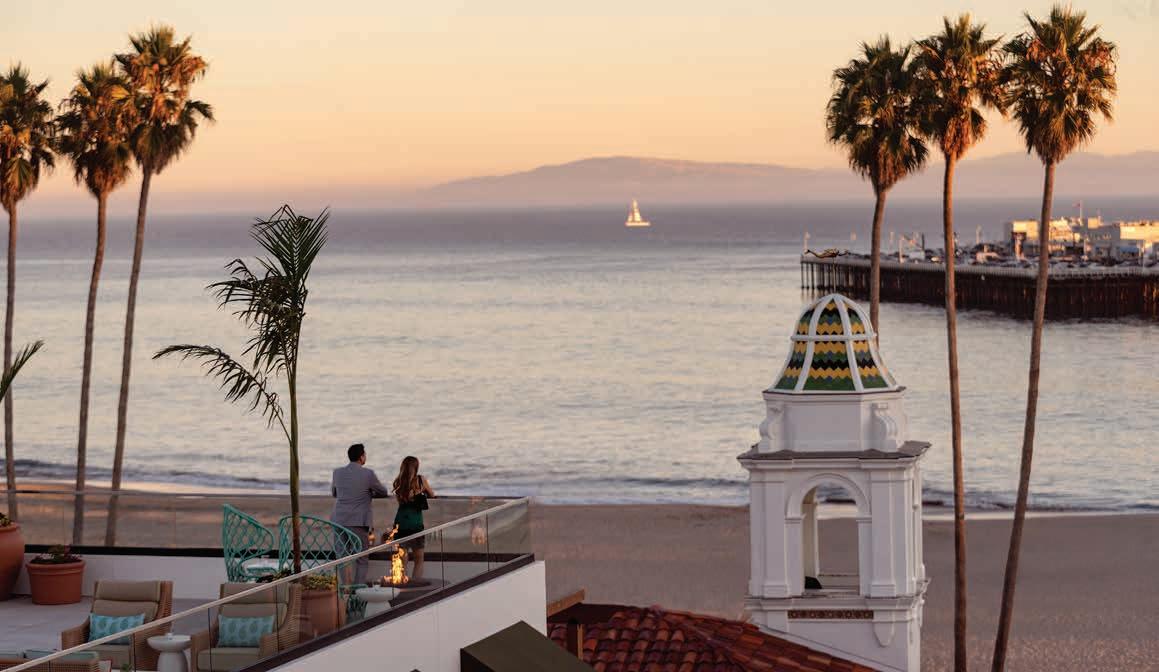
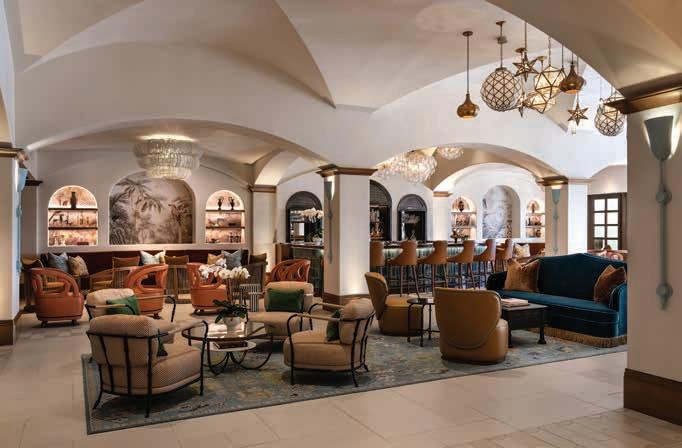
Santa Cruz’s newest hotel is coastal luxury in motion.
Santa Cruz has always had sweet waves, and now it has a hotel to match. The new La Bahia Hotel & Spa fills a gap in the lineup of offerings in this beloved beach town that was notably lacking in more polished boutique options. Located directly across from the iconic boardwalk and
Main Beach, La Bahia solves that, offering up a masterclass in surfside sophistication. The Spanish-Mediterranean landmark has lived many lives since opening in 1926, including as apartments and neighboring a seaside hotel and casino. And its recent revival keeps that Old World romance intact. Arched doorways, azulejo tiles, and forged iron rail balconies with firepits make it seem like it’s one of California’s historic Spanish colonial revival properties, but it’s the modern touches that bring it to present times. Think a London-style lobby bar stocked with top-tier gins, nightly turndown service with a nostalgic bag of local Marini’s salt water taffy, and beach butler service that makes a day on the sand feel like a summer on the Riviera.
Surf culture is still front and center. Guests can borrow complimentary Almond surfboards or hop on e-bikes to cruise West Cliff Drive. Complimentary weekend yoga sessions nod to the town’s laid-back spirit. The spa leans into recovery mode with an ocean-view sauna, Zen deck, and sea-inspired treatments, like a surf recovery massage designed for those who’ve tested themselves in the famously punchy breaks. Dining happens in two moods: Low Tide is breezy and coastal-casual, while High Tide offers a more refined experience. Outside, an oversize lap pool and hot tub overlook the sand and boardwalk, allowing guests to witness all the fun without having to be in the thick of it.
The hotel comes from the same ownership group behind the beloved Dream Inn Santa Cruz at Cowell Beach, which is already a favorite. But where the Dream Inn is playful and easygoing, La Bahia feels tailored and transportive. It’s a welcome addition that fits right in.



















What is RV insurance?
How can RV insurance protect you?




















Do you really need RV insurance on your travel trailer?
As RVers, we know the allure of the open road and the freedom it offers. However, with freedom comes responsibility, including the important decision of securing insurance.
RV insurance is designed to cover various types of RVs, including travel trailers, toy haulers, motor homes, fth wheels, and camper vans. While liability insurance is not required for most travel trailers, having RV coverage could bene t you and your adventures.
• Protection against accidents: May provide nancial protection for repair costs, medical expenses, and liability in case of an accident.
• Coverage for theft and vandalism: Could help with repairs or replace your trailer with less out-of-pocket expenses if it’s lost or stolen.
• Natural disasters and weather events: May cover the cost of damage from storms, oods, or other natural disasters.
Is your travel trailer covered under your home or auto insurance?
While your home or auto policy can protect your trailer in certain instances, it can also leave you with gaps in your coverage.








For example, your auto policy may only cover your trailer while you’re on the road, not if you’re parked or at a campsite. The same goes for home insurance—if you’re on your home’s property it might be covered, but damage from a storm at a campground wouldn’t be.
Progressive offers a variety of specialized coverages that aren’t included on a standard auto insurance policy like:
• Roof Protection Plus®: Covers repairs or replacements for RV roofs, including if the cause is wear and tear.*
• Pest Damage Protection SM: Covers the cost of repairs from pest infestations.*











Having RV insurance gives you con dence you’re protected no matter where you roam. From remote national parks to bustling campgrounds, RV insurance ensures you have the support and nancial protection you need if something goes wrong.
While insurance for your travel trailer may not be legally required, it’s a crucial investment in protecting your RV, nances, and peace of mind.
Scan to get a quote in as little as 4 minutes.
to learn more.




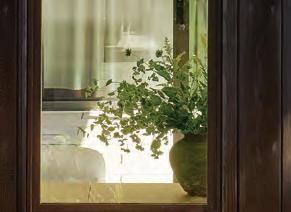
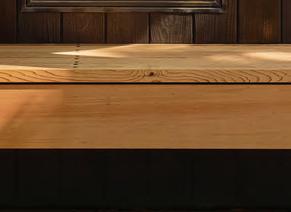


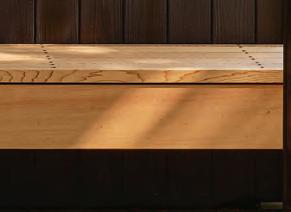
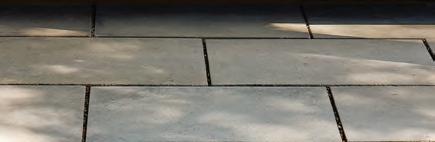




Combining a desert-inspired palette of earthy neutrals and classic architectural details, interiors icon Shea McGee designed an Arizona home for a vibrant family of six.

It takes a sure hand
that classic New England, formal architectural style for a home in the American West and not make it feel sorely out of place.
This five-bedroom Arizona house built for homeowners with roots back East is a masterclass in how it’s done.
“The home is designed to be a really beautiful blend of both styles: a desert-inspired, earthy-organic palette with East Coast heritage details throughout every space,” says designer Shea McGee. McGee, the Salt Lake City-based phenom, has spent the last decade working her way to household name status. She and Syd, her husband and business partner, were among the first generation of Instagram users to harness the power of sharing personal home renovation stories back in 2014. And their telegenic looks and classic good taste were tailormade for the multi-platform interiors era. They produced and starred in Netflix show Dream Home Makeover, wrote multiple best-selling books, and have had successful collaborations with Studio McGee for Target, Kohler, Ann Sacks, and MasterClass.
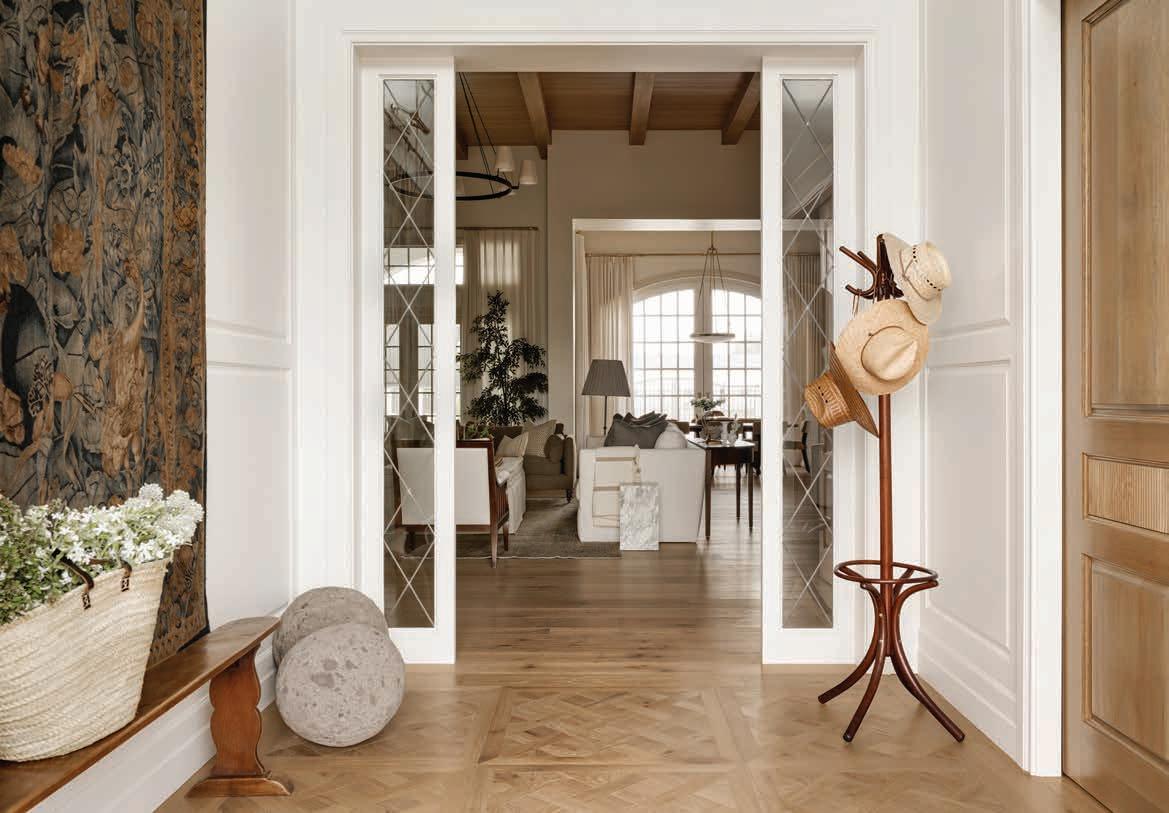
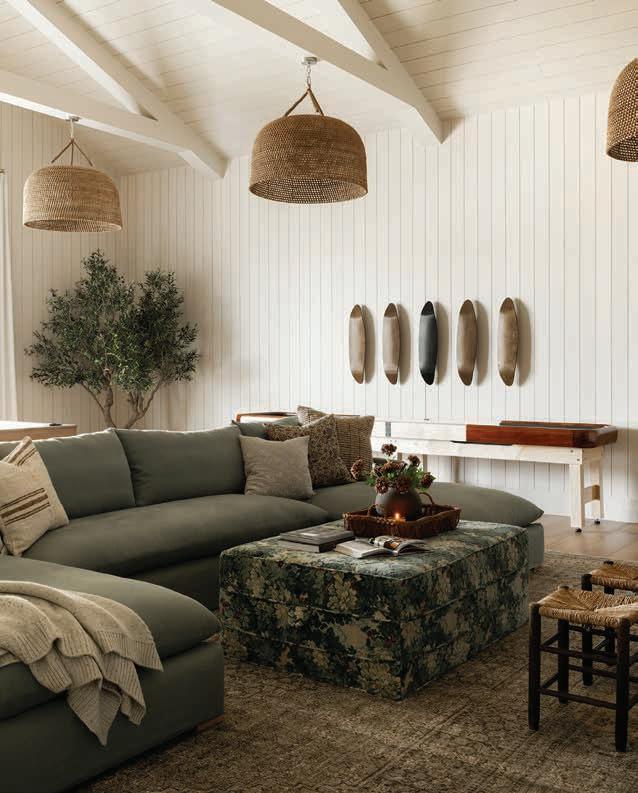
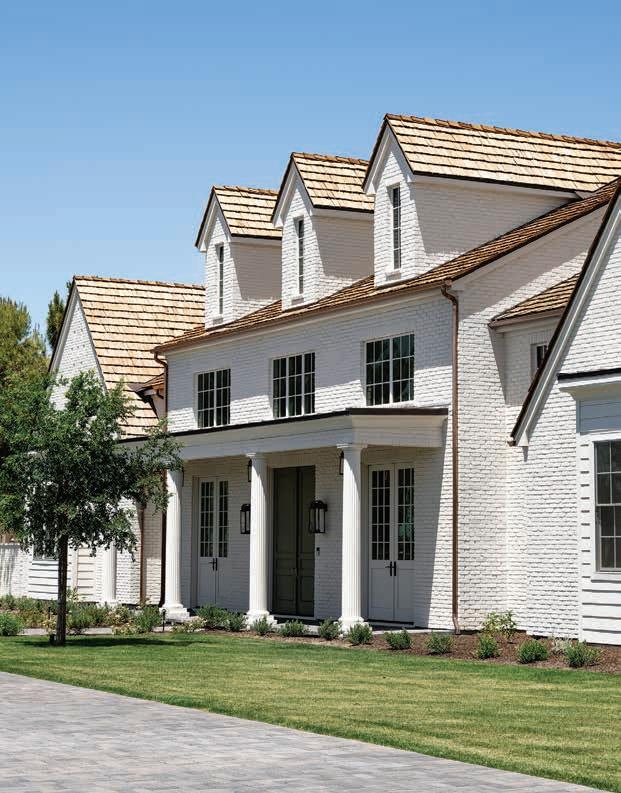
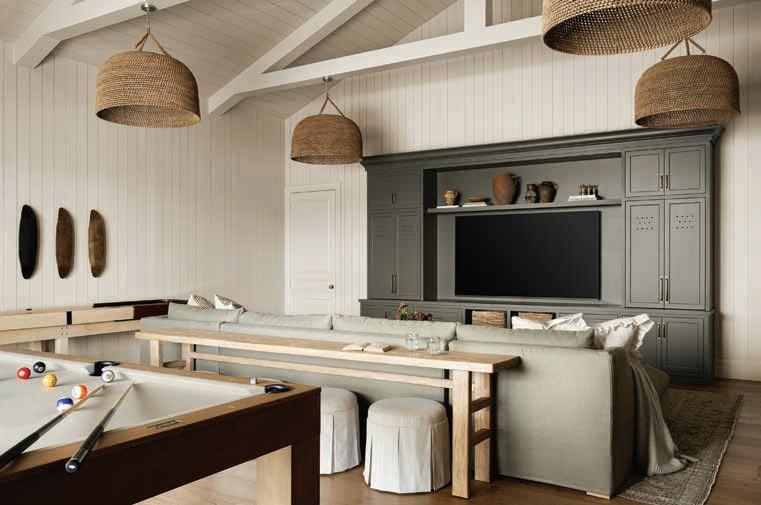
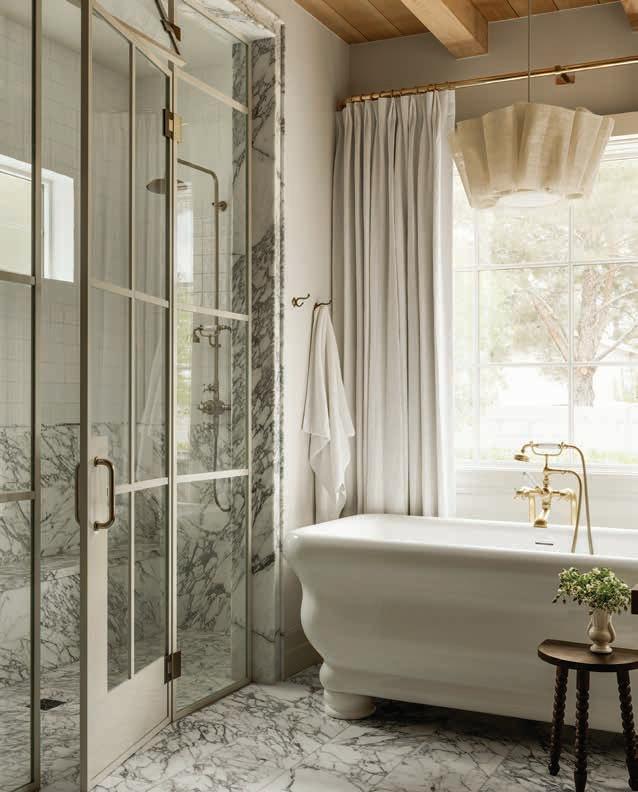
This page: In the foyer, parquet flooring sets a formal tone. Vintage bench and tapestry, Chairish. Opposite page, clockwise from top left: A custom Community sectional sofa and Nickey Kehoe hassock seat a crowd in the game room. The painted white brick exterior and white pillars at the entry are unexpected choices for the Arizona desert. A McGee & Co. turned leg stool sits near the tub in the primary bath; the bathroom trim is painted Rivers Edge by Sherwin-Williams, and the floor tiles are honed marble. The prep kitchen is where the family gathers for breakfast and casual meals; the countertops are made of extra-honed Calacatta Borghini marble; the Shaker-style cabinets are painted in Benjamin Moore Stanley Park.
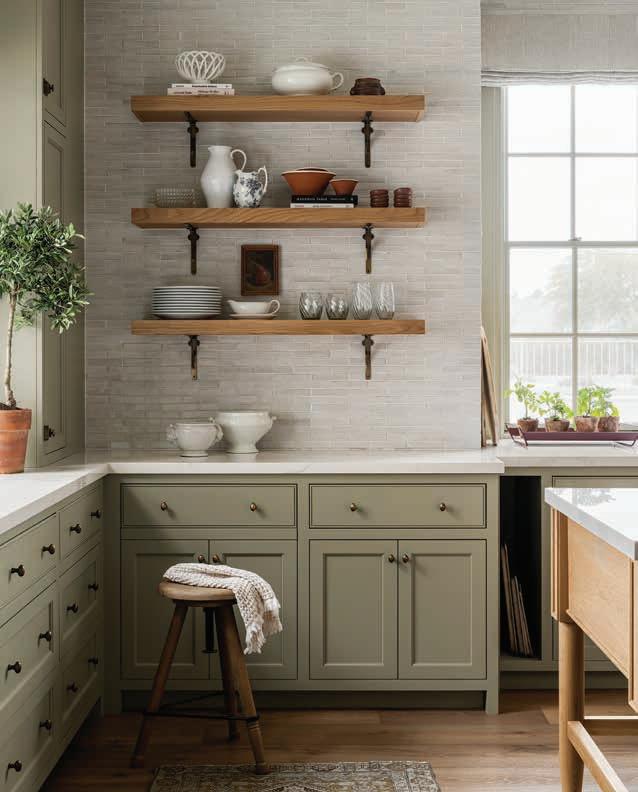

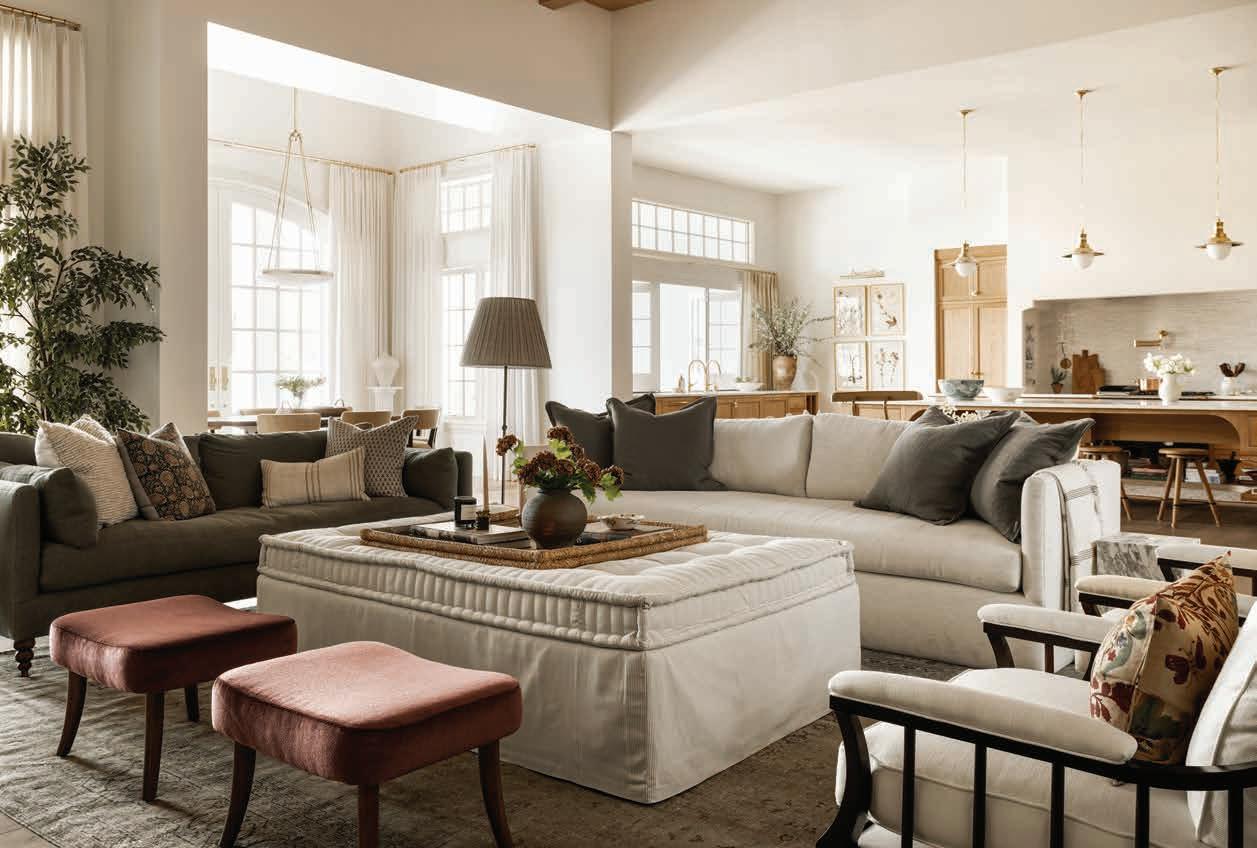
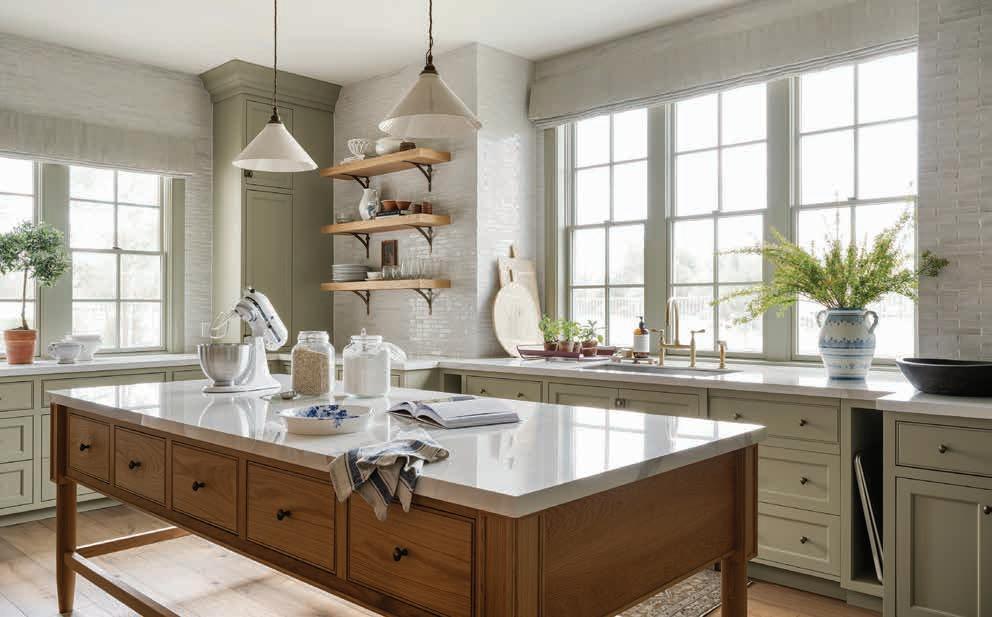
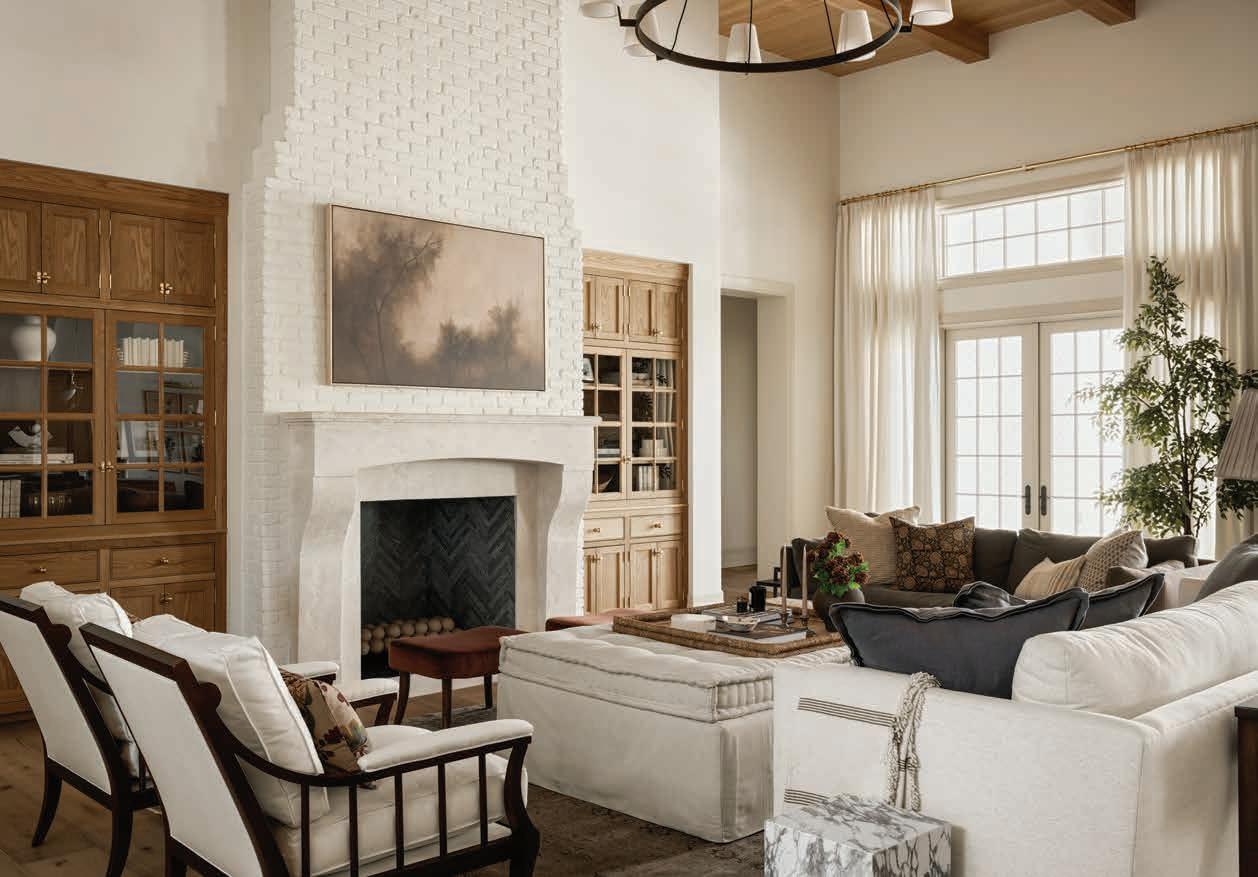
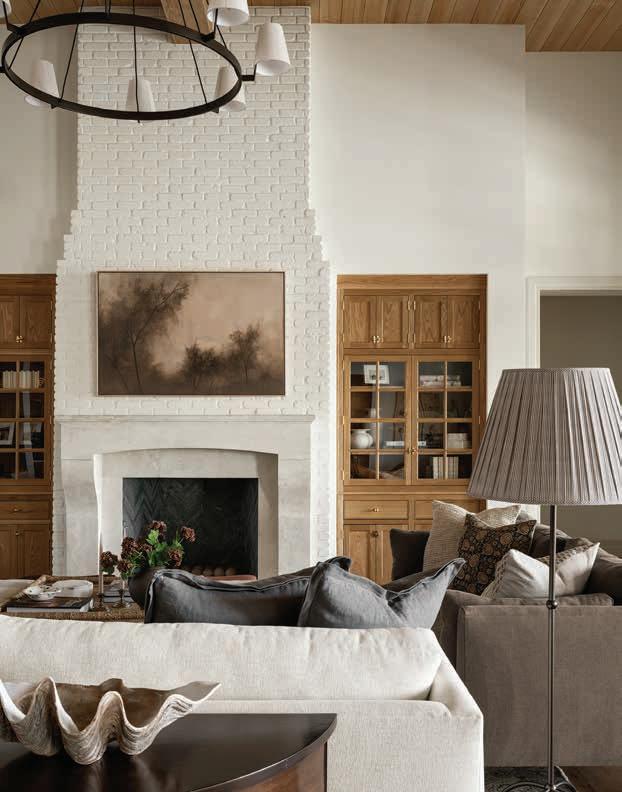
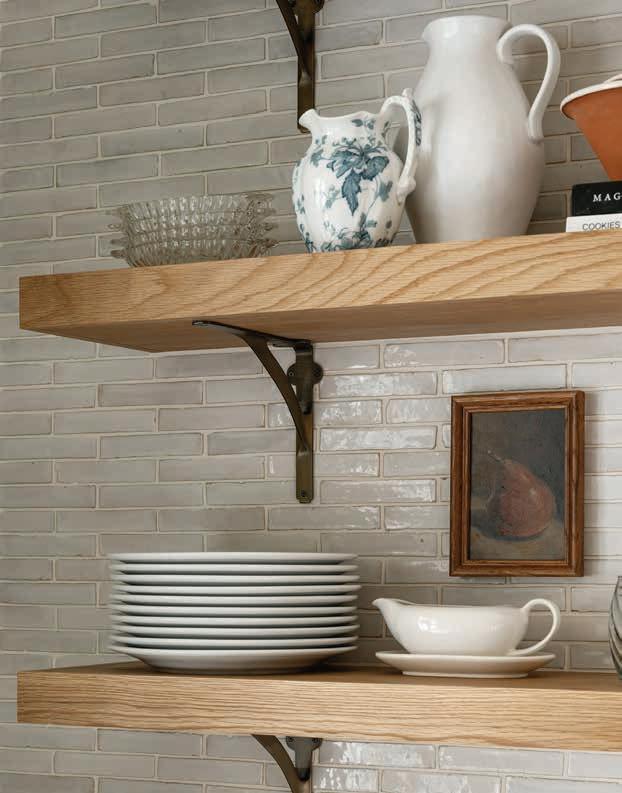
This page: The formal living room is grounded in tones of soothing ivory and earthy green. A custom 72-in.-wide tufted ottoman anchors the seating area. The two sofas are by Community, and the floor lamp is Soho House. Opposite page, top: Tiled walls and a large, marble-topped island give the prep kitchen the feel of a professional kitchen. Unlacquered brass brackets support the open shelves. Bottom: Glass-front builtin cabinets in stained oak flank the fireplace. A pair of Hickory Chair lounge chairs suits the traditional American decor.
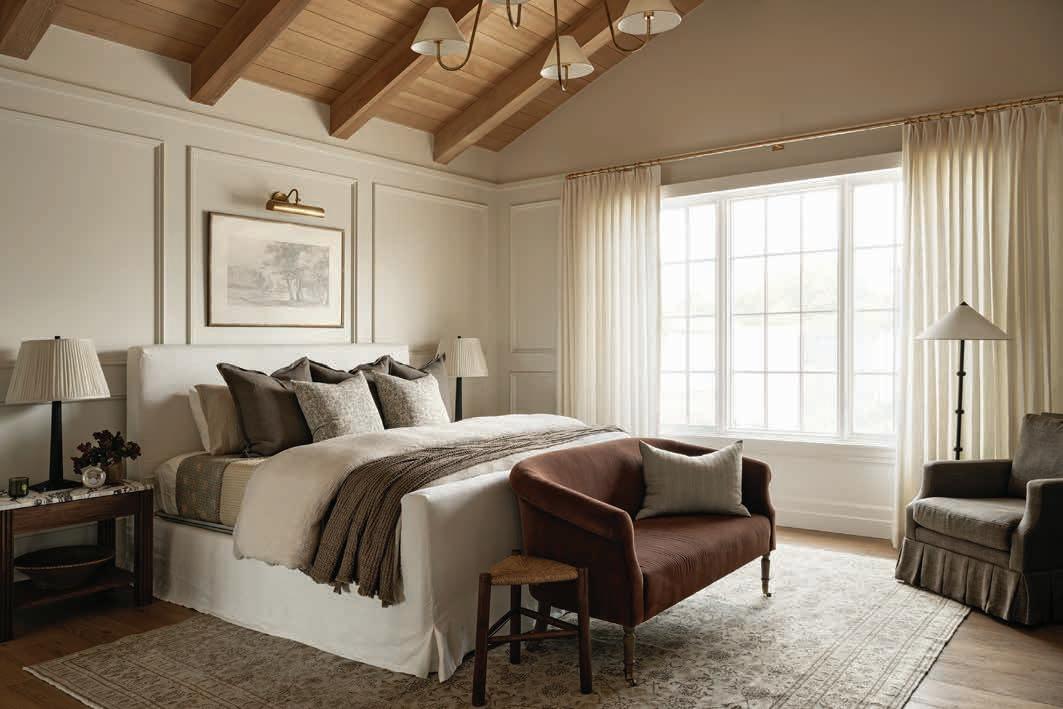
However, their first love—designing elegant but practical and family-friendly homes—is alive and well, and their team is busy interpreting the brand’s aesthetic for clients across the country. This Arizona new-build for a family of six embodies the McGee sensibility, incorporating a limited color palette of ivory, warm gray, earthy clay, and soft greens; light, low-sheen wood; a mix of vintage and contemporary furnishings; and smart proportions that respond to a modern family’s needs.
With five bedrooms, five-and-a-half baths, and a private guest suite above the garage, the home balances grand scale with intimate spaces. A greenpainted front door sets the tone for an interior defined by traditional wood paneling, parquet floors, intricate tile-
work, and details one might expect to find in homes built in the last century.
“We were lucky to have such trusting clients who knew the value of wall paneling,” says McGee. “Paneling and molding add so much character to a space and help it feel more intentionally designed.”
A large hangout space with a pool table, a TV, and an oversize sectional was created for family time with their two teenagers, their adult children, and the two dogs. Each of the kids’ bedrooms reflects their hobbies, like music, fishing, camping, and sports.
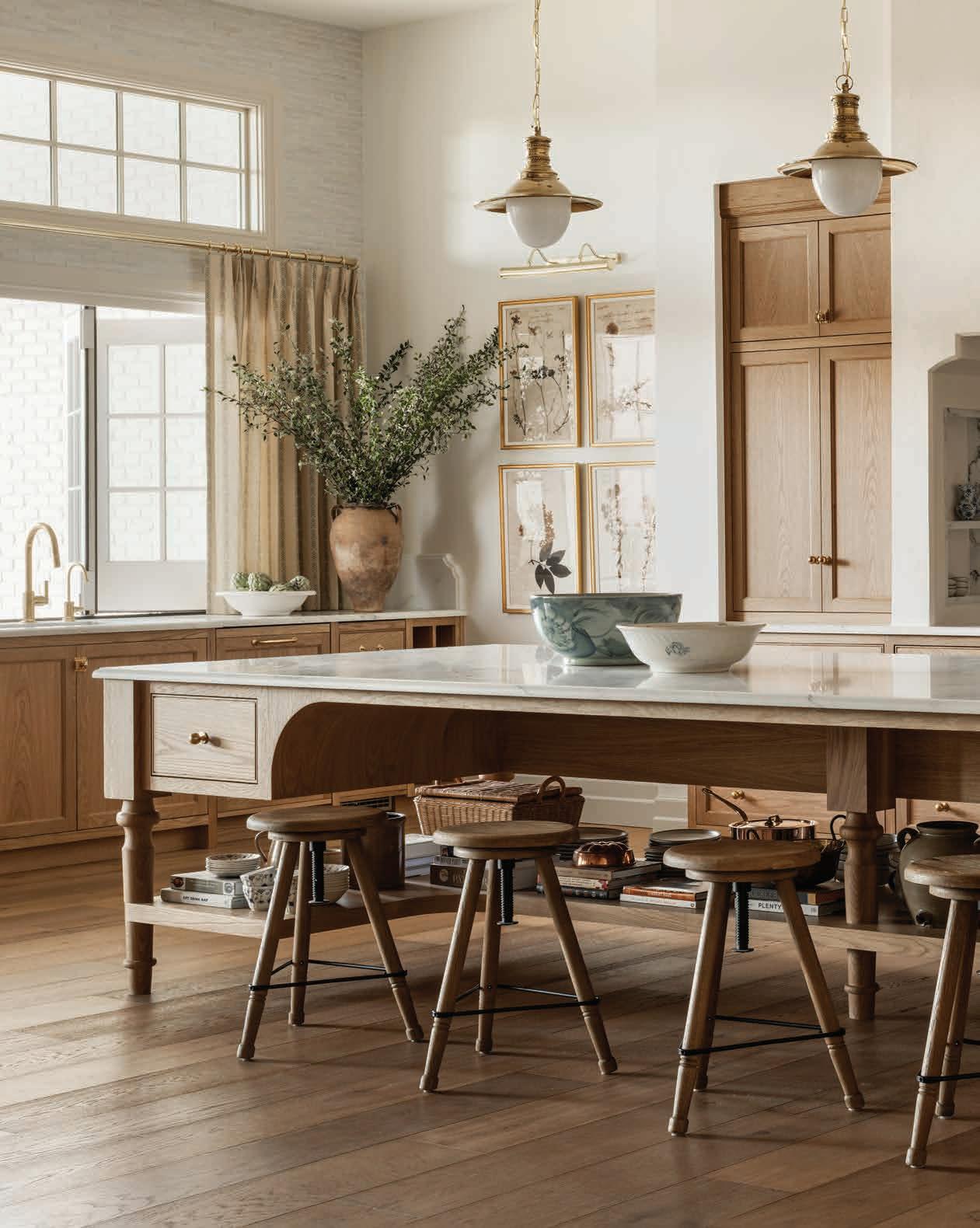
The standout feature of the house has to be the dual kitchen concept. The main, more formal kitchen that is part of the open-plan living area features custom cabinets and a sprawling 5-by-13foot island. There’s also a pass-through
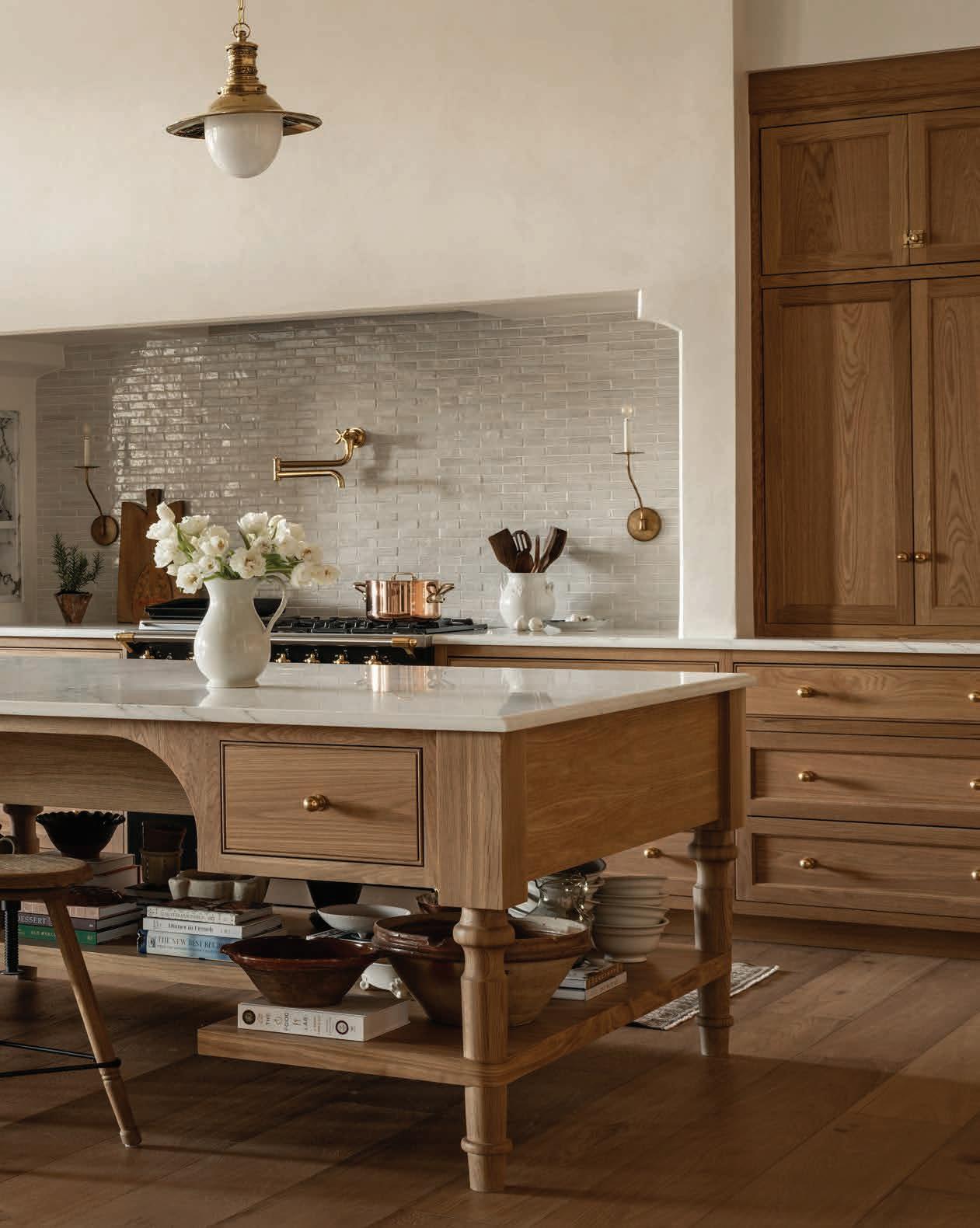
It’s an approachable, comfortable house that feels elevated enough for large-scale entertaining without feeling precious.
window over the sink designed for indoor-outdoor entertaining. A built-in plate rack displays vintage porcelain, collected locally at secondhand shops. Then the back kitchen, which is like an expanded butler’s pantry, is a cozier place to house the mess.
“It’s a pantry slash prep kitchen,” says McGee. “We’ve done a lot of these over the years, and this is one of my favorites. Our client says it’s the most used room in the house! It stores most of their food and baking supplies. She says it ends up being a space they all congregate in to chat as she’s cooking.”
Set against the backdrop of the Sonoran Desert, it’s an approachable, comfortable house that feels elevated enough for large-scale entertaining without feeling precious. And while it honors the past with design rooted in tradition, it’s a contemporary interpretation that meets a modern family’s needs.


Amber Lewis turns to heritage British hardware brand Croft to add the subtle, tactile sophistication that defines her timeless aesthetic.

Croft is a heritage brand, hand-crafted in the heart of England for over 150 years and still family operated today. Their pieces are all made-to-order with a high level of care and attention to detail. Croft caught the eye of designer Amber Lewis because of their quality and design, and quickly became the perfect choice to add the subtle sophistication she was looking for in her new home.
With their wide range of applications, Amber is utilizing Croft in multiple places to further establish her expression of an elevated, timeless aesthetic. These pieces all complement each other within the space; from door knobs and flush pulls, to floor bolts and casement window locks, enhancing the overall look and feel with elegant, yet impactful details.

“One thing I appreciated about Croft was the variety in their collection. They offered over 25 finishes and patinas, and having this hand-crafted detail as the finishing touch in so many spaces like rim locks and door bolts was important to me in making design decisions.”
Croft will also be incorporated into interior doors with a classic oval knob on a square rose, paired with a complementary turn piece for locking. Windows will have an ergonomically designed, yet elegant sash lift as the finishing touch, paired with a beautifully crafted sash lock. The artistry and exceptional quality of


Croft’s products make them a natural fit for Amber’s forever home, seamlessly integrating into her visual language.
“The details always make a difference and I strive to bring this level of craftsmanship through everything I do and make my house a home. Not only from a creative point of view, but having that substantial and tactile feel, which ages gracefully, and maintains structural integrity well into the future.”
Amber looks forward to having Croft in her home with their heritage craftsmanship, solid materials and timeless expression, all of which elevate the smallest details in any luxury interior.
Croft Hardware is an official partner of the Sunset Idea House x Amber Lewis project. This one-of-a-kind Southern California property is scheduled for completion early next year.

crofthardware.com
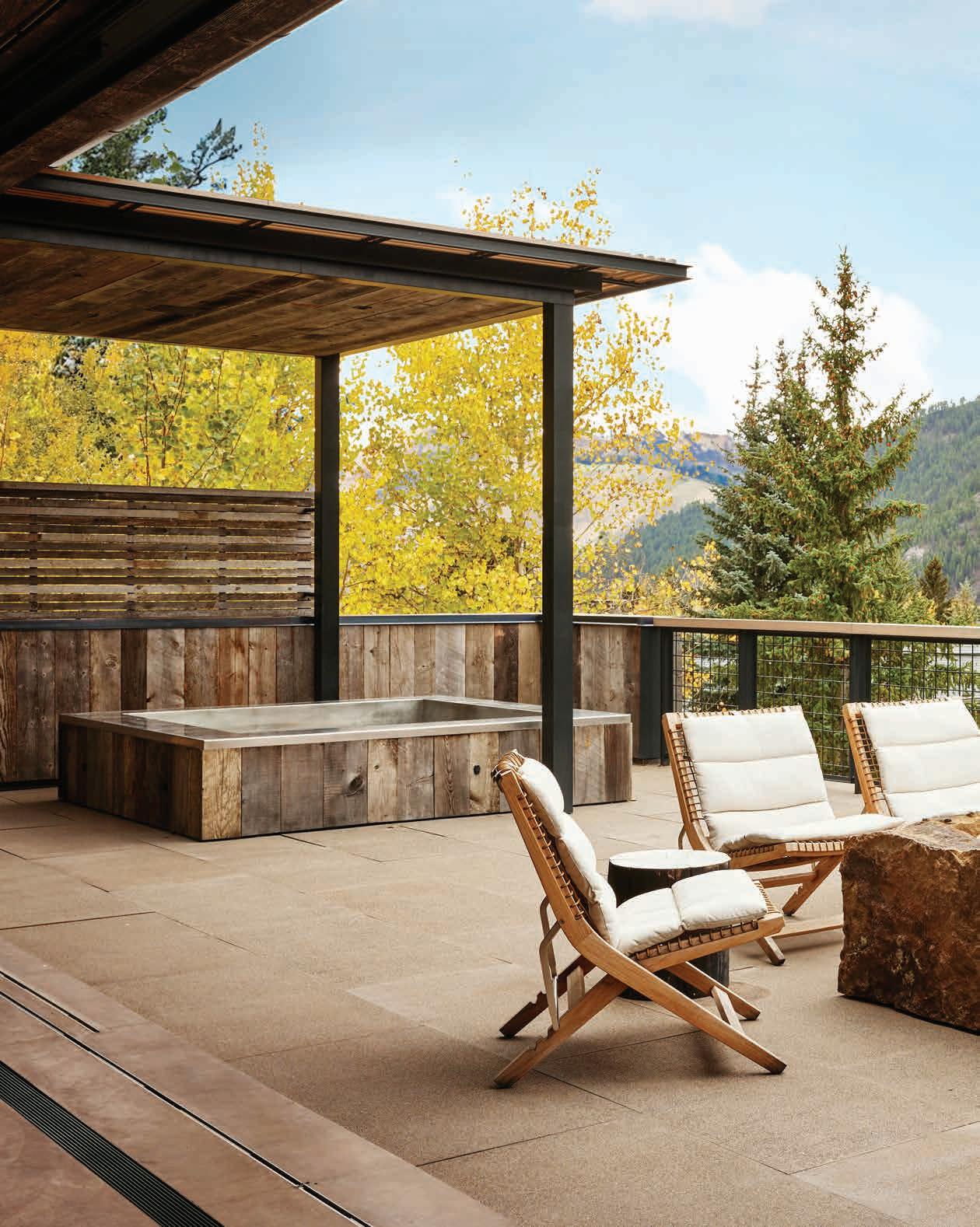
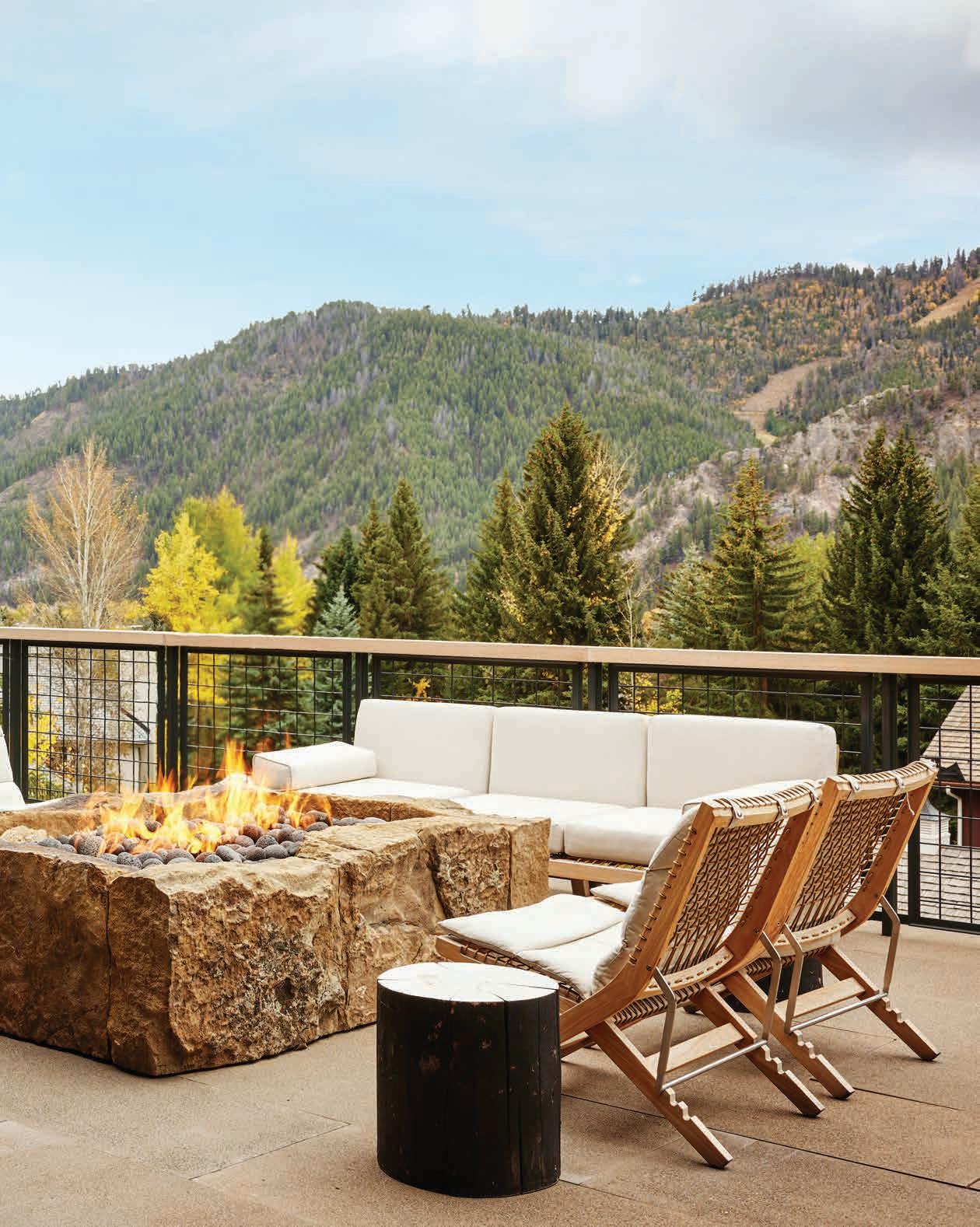
No matter how striking the architecture is in Sun Valley, the view steals the show. The deck, outdoor seating area, and firepit, designed by Backen & Backen Architecture, are oriented to make the most of it.
Two Sun Valley, Idaho-area homes master the art of elegant but informal modern mountain living that’s in tune with the town’s family-first, always-fun ethos.
Story by CHRISTINE LENNON
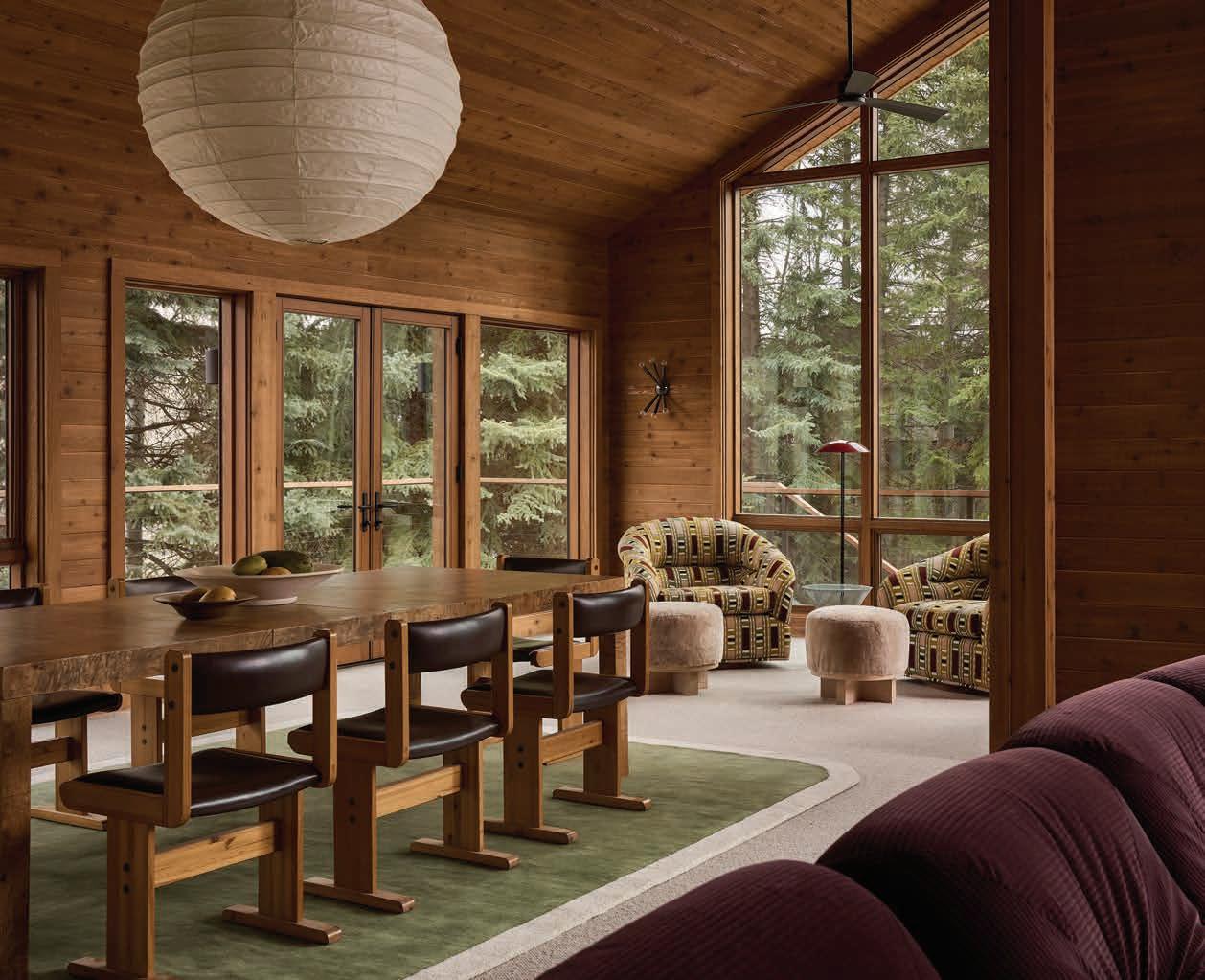
An awkward ‘80s-era Ketchum, Idaho home is refashioned as a high-style, retro family getaway.
As America’s first destination ski resort, founded in the mid-1930s with heavy Alpine influences and plenty of Western flair, Sun Valley, Idaho, has maintained its quaint, family-owned charm and four-season appeal for almost a century. Though the community has dodged some of the pretentious pitfalls of its corporate cousins in the Rockies, the real estate market at the resort and in neighboring Ketchum will still make your eyes water. It’s a luxury market that rejects ostentation, fancy but chill. When it comes to architecture and interiors, that can be a
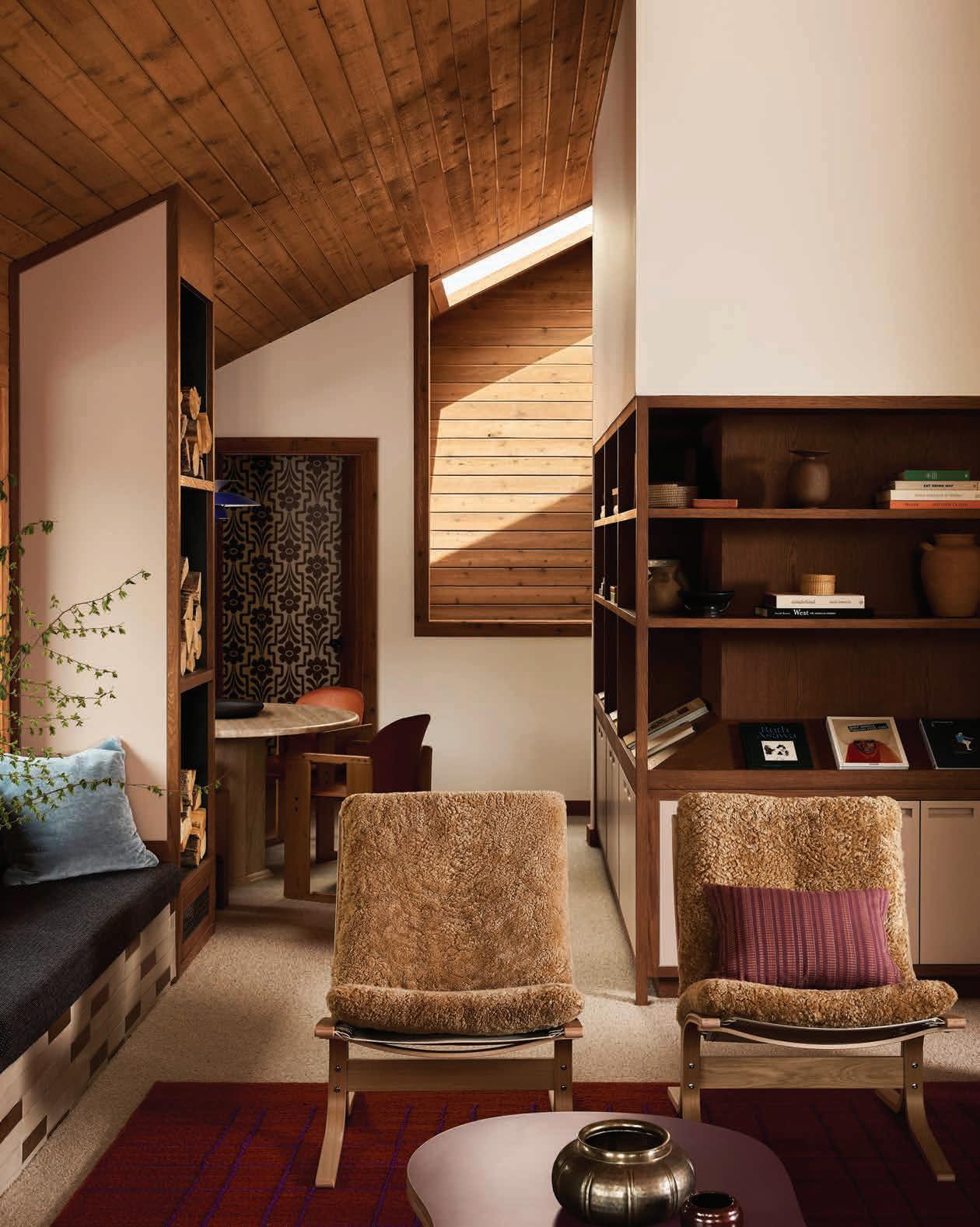
Opposite page: Yond Interiors used some carefully chosen vintage pieces, like angular dining chairs, a burl wood table, and swivel chairs upholstered in Pierre Frey fabric, to enhance this remodeled home’s retro charm. This page: Opening up the layout in the great room made the dining nook and office more accessible and allowed for built-in bench seating. Sherpa-covered chairs, Design Within Reach.
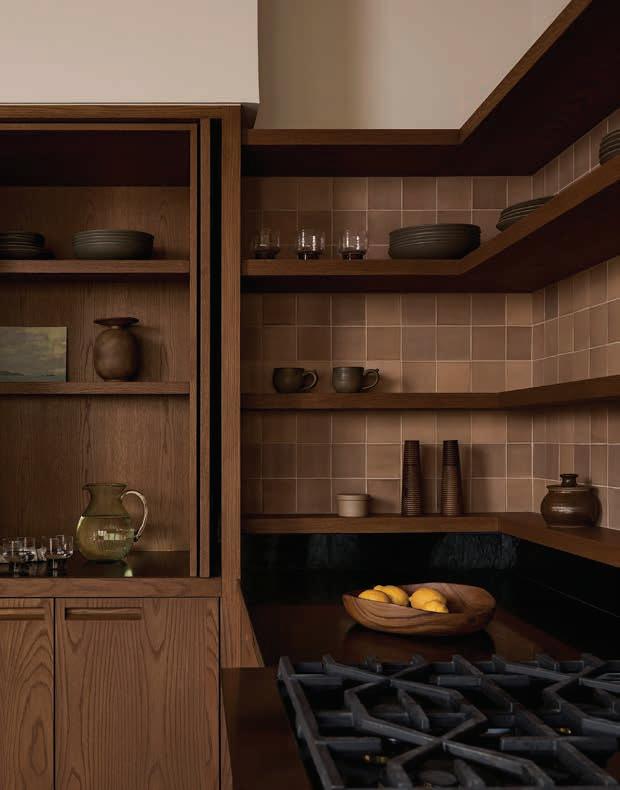
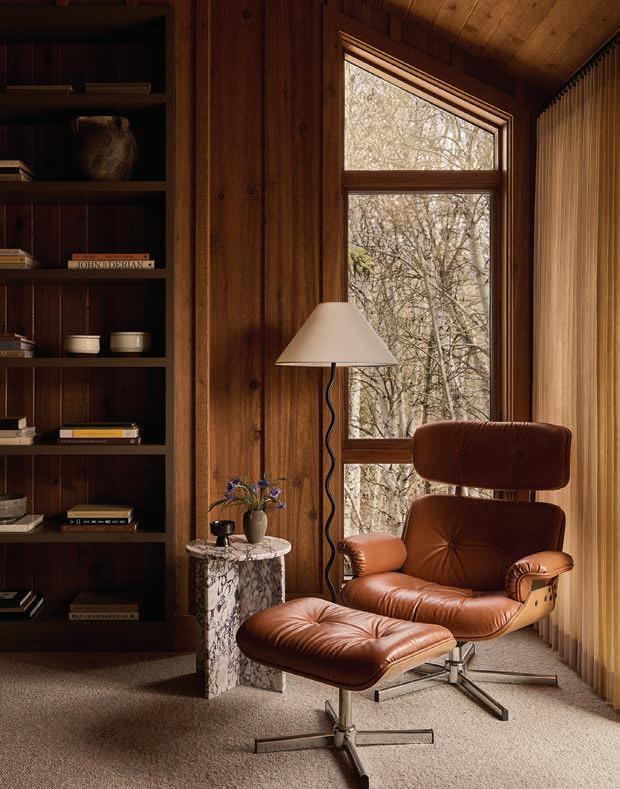
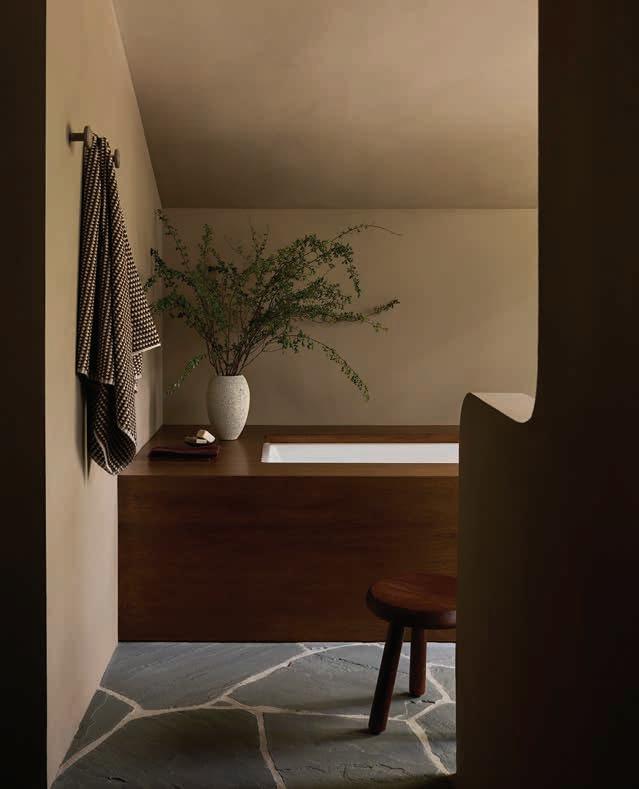
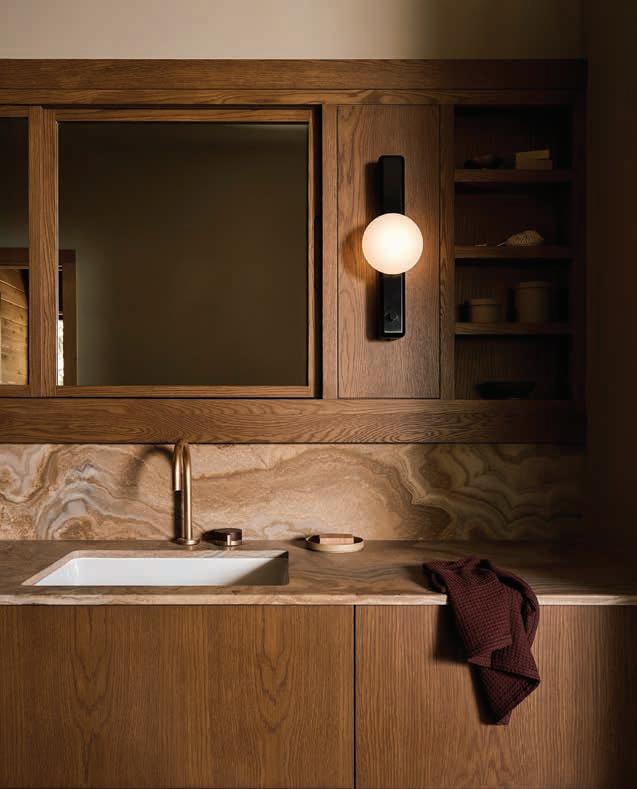
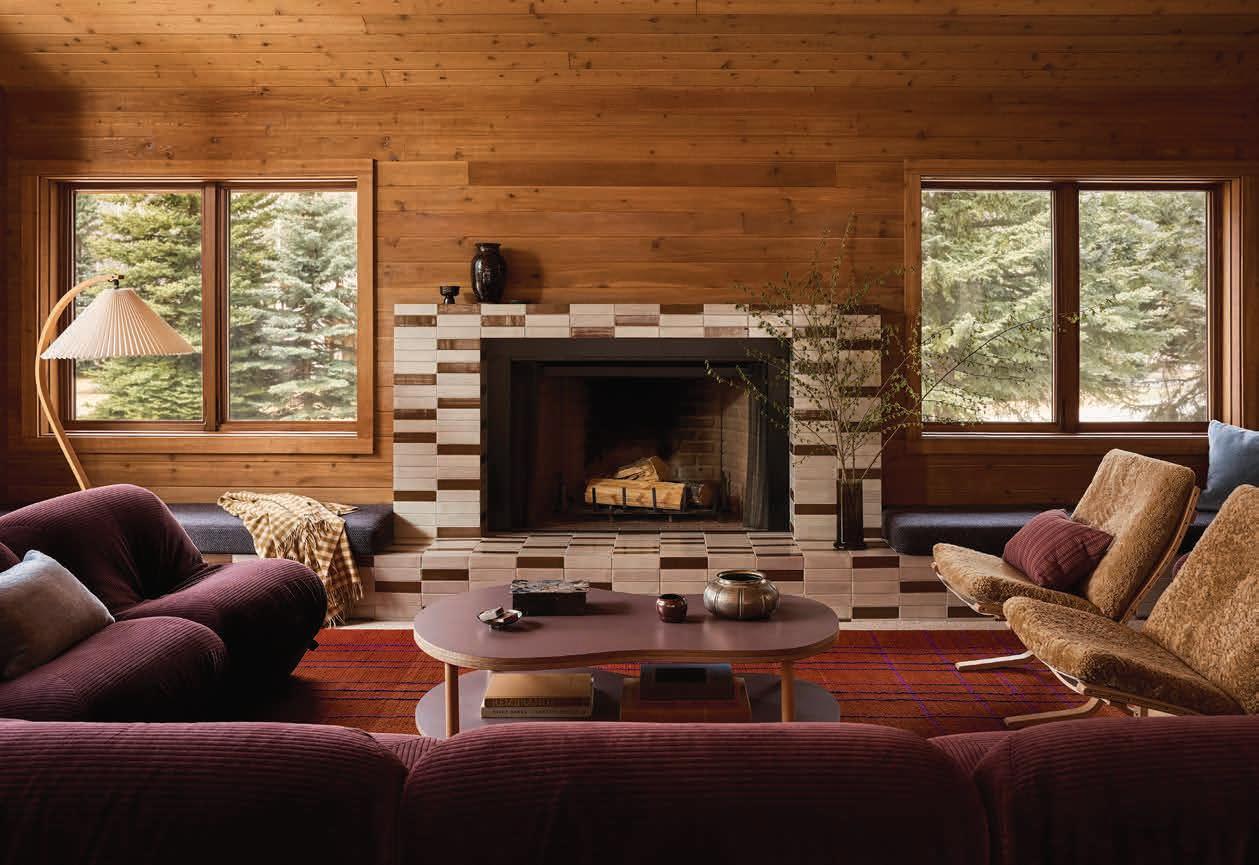
This page: A vintage Patate sofa was reupholstered in a rich eggplant corduroy fabric. The tiles surrounding the fireplace were custom-made by Tess Tile in Minneapolis. Opposite page, clockwise from top left: Square tiles in shades of warm clay and stained wood shelves and cabinets with obvious grain in the kitchen. The primary bath walls are clad in waterproof plaster. Deeply veined tan marble covers the counters and backsplash in the primary bath. Yond extended the wood paneling to all of the first-floor interior walls.
challenging note to hit.
How do you rise to the aesthetic level that a multimillion-dollar home deserves without sacrificing the low-key, outdoorsy vibe the region demands? The approach requires creativity, balance, restraint, and a slightly retro approach to modern mountain living.
Julia Miller of Minneapolis-based Yond Interiors was hired to update an early ‘80s multi-level house with wood-paneled interior walls in a Ketchum subdivision. Where others may have seen a disjointed jumble in need of complete gutting, Miller and her clients saw opportunities.
“We knew the house could be cool, but it needed some thought. It was the kind of house with carpet in the bathroom. Certain areas were always cold,” Miller says. “The owners loved the quirkiness, but we needed
to work to make it feel more connected. The vibes were good, but it needed to be decluttered.”
Repositioning a fireplace against an exterior wall helped to open up the main living area. Adding fresh wood paneling, a handmade tile fireplace surround, durable stone flooring, and updating the kitchen helped usher the home into its new, refreshed era. Vintage Louis Poulsen, retro swivel chairs in a Pierre Frey geometric pattern, and a Patate modular sofa upholstered in deep aubergine corduroy add to the home’s loungey, modern feel. And, the dusty color palette was drawn from the family’s roots in New Mexico and Australia.
“This is a house that was designed for welcoming their kids and their friends, playing games, and enjoying everything the area has to offer,” Miller says.
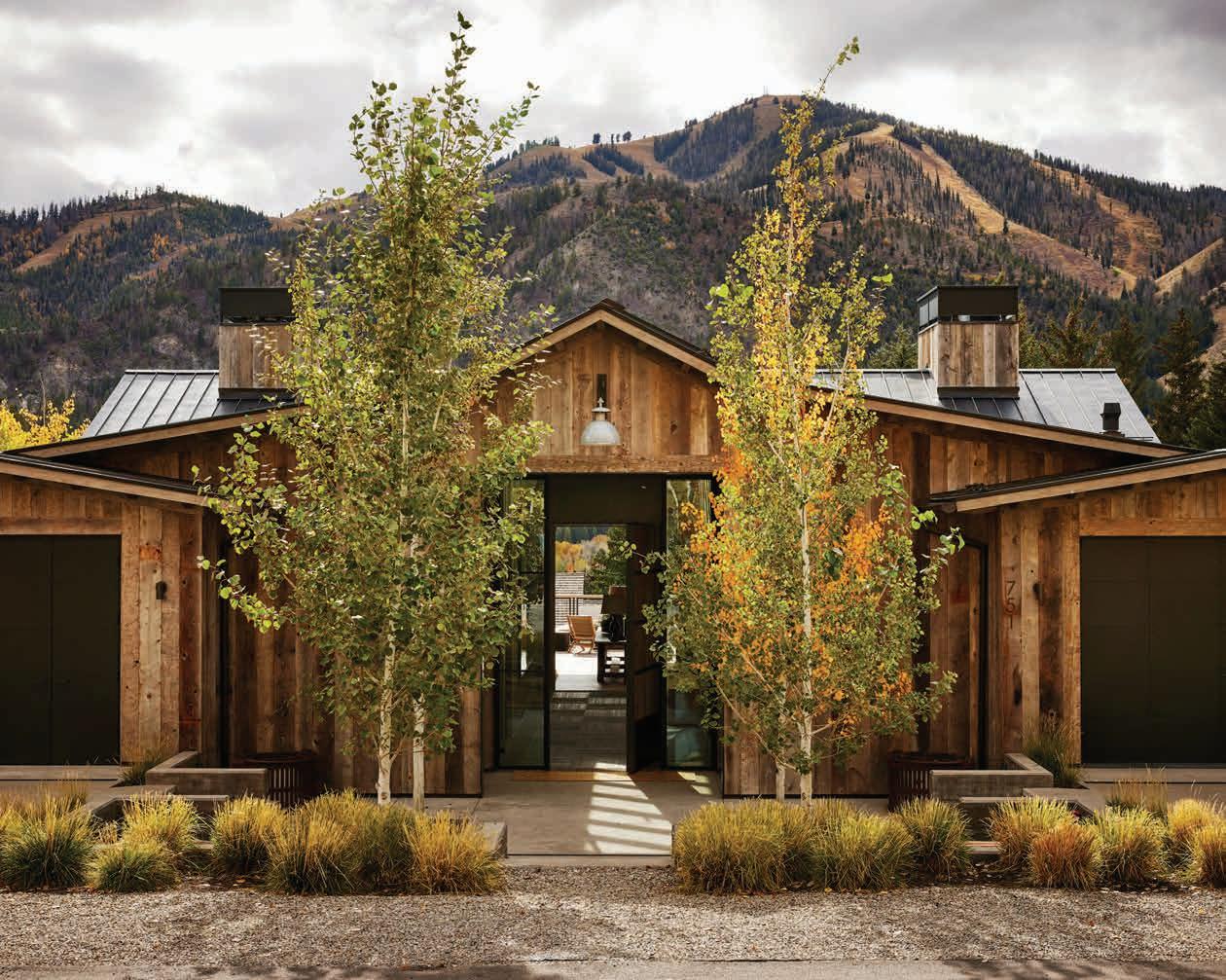
This page, top: A standingseam metal roof, vertical cedar siding, and a full-height floorto-ceiling door set the scene.
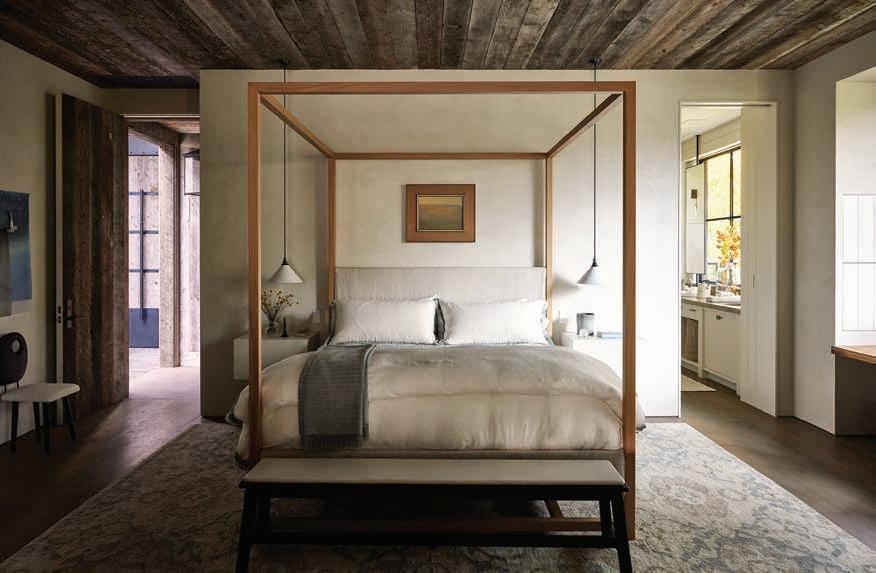
Bottom: Two low-hanging pendants and a minimal fourposter bed add striking visual elements to the primary suite.
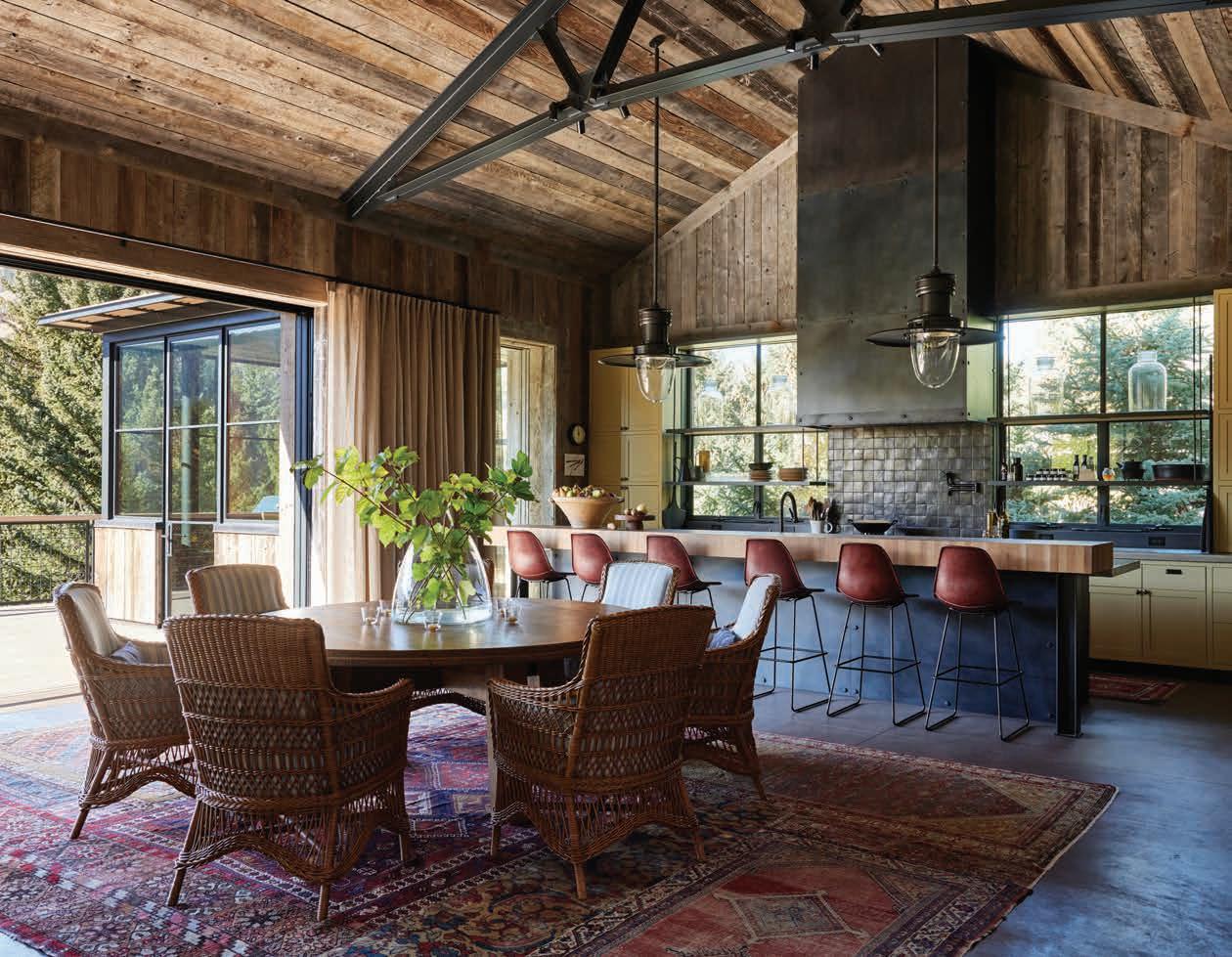
Opposite page: Woven dining chairs and a vintage patchwork rug soften the stone, steel, and glass finishes in the kitchen.
Forgoing cliche mountain house decor, an architect and interior designer opt for classic American family camp influences.
On a slightly grander scale, this new build by Backen & Backen Architecture, with interiors by Leslie Hemmings of Hemmings Design, was designed for a multigenerational family to grow into. Built on a steep hillside lot, the two-level house is sited to maximize views of Mount Baldy and the town below.
The main level contains the arrival courtyard, a skylit entry gallery, and the primary suite, positioned discreetly behind the great room. This right-sized open plan space is the heart of the home, combining kitch-
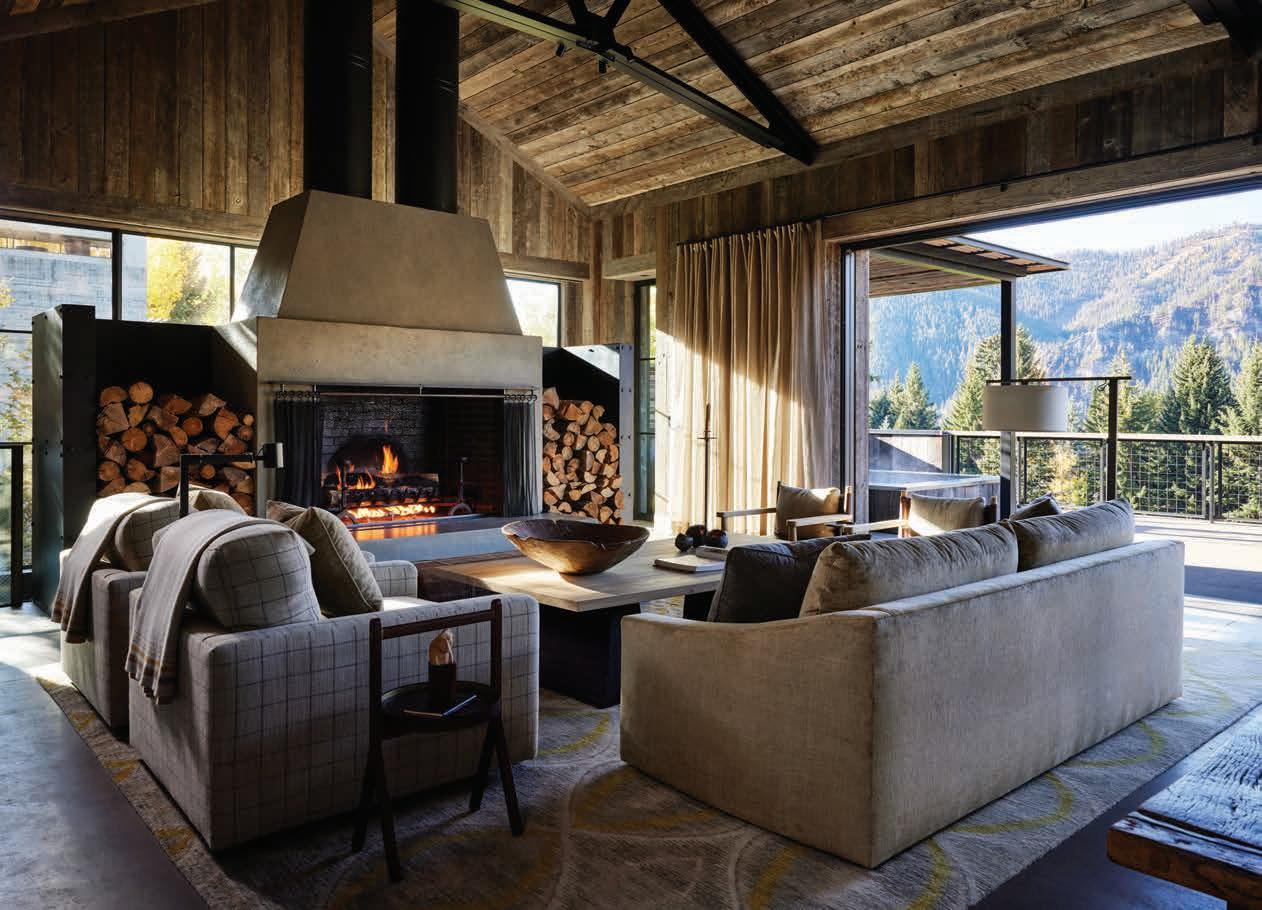
en, dining, and living areas around a large wood-burning fireplace. A full-width terrace extends directly off the great room, accessible through steel and glass pocketing doors that dissolve the boundary between inside and outside.
The owners were familiar with Backen & Backen’s work on the Ram’s Gate Winery in Sonoma, California, and they wanted a similar structure with pronounced steel trusses. They were drawn to a modern barn aesthetic, which the firm embodied through clean detailing and reclaimed materials that were regionally attuned.
The real appeal of this house, we
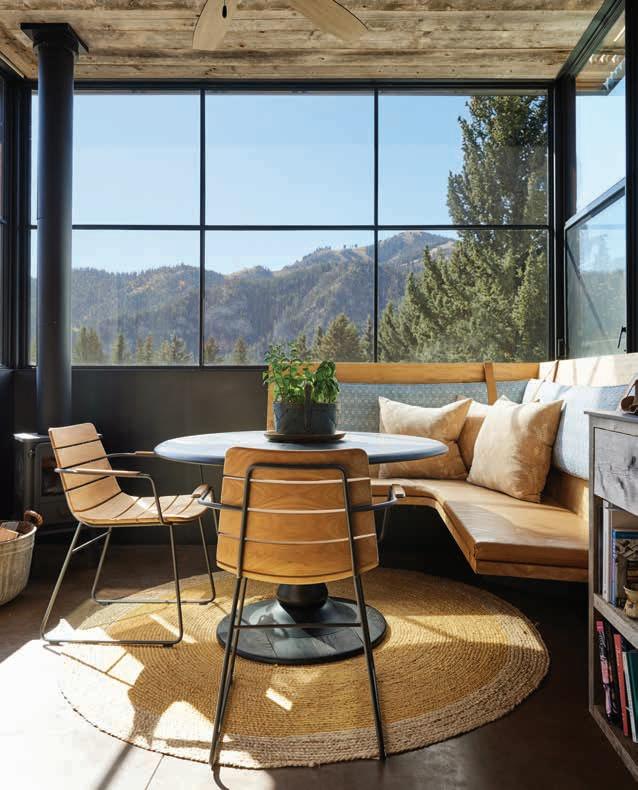
think, lies in the smaller, more intimate spaces, which are often sacrificed when designers and builders err on the side of making rooms overly large to maximize the views. A breakfast nook with a wood stove, a comfortable media room, and a windowed mudroom with seating help the house maintain a cozier, more human scale. The requisite bunk room and guest rooms are located on the lower level. Hemmings’ interiors, with soft plaid upholstered pieces, rustic lighting, and charming art, tip the scales from vacation property to beloved family home, the kind of place that feels in step with the Sun Valley ethos.
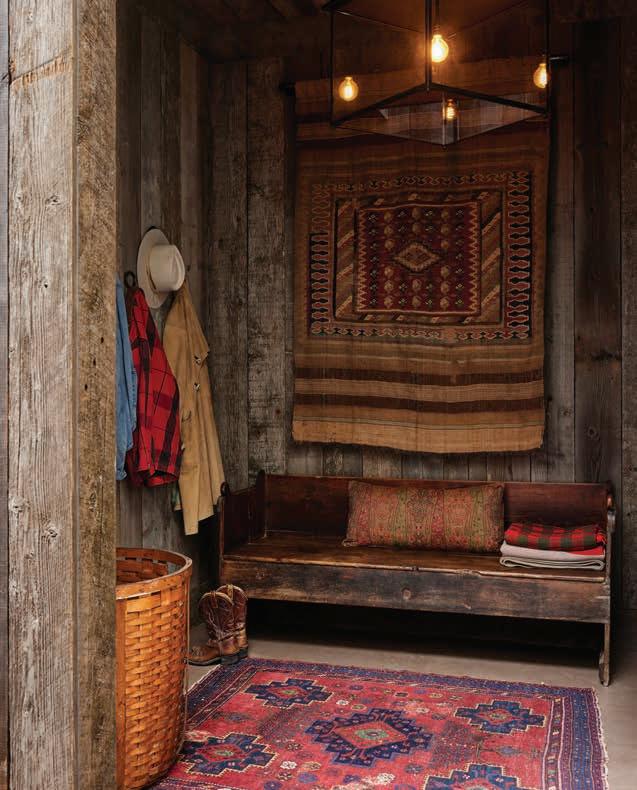
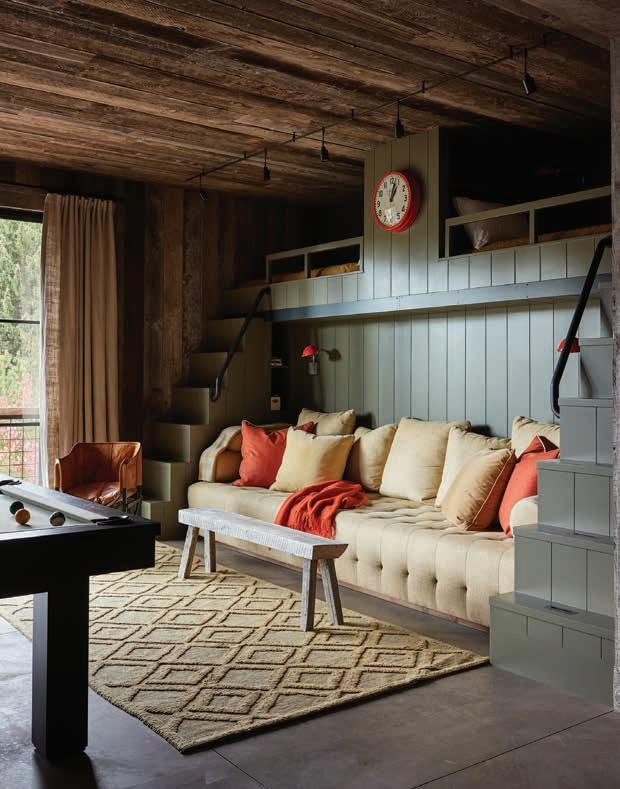
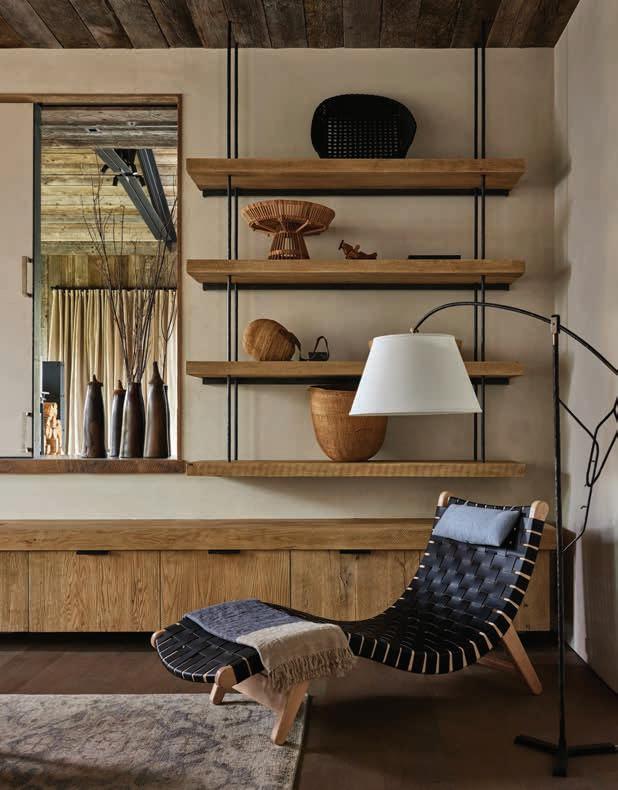
This page: Plaid upholstered chairs, cozy blankets, and an oversize fireplace are tailor-made for chilly mountain nights. Opposite page, clockwise from top left: A glassed-in breakfast nook is a prime spot for morning coffee. A cleverly designed bunk room doubles as a game space for grandkids. Open shelving and lightly finished wood built-ins contribute to the rustic-modern architectural design. A vintage bench, tapestry, and antique rug add personal, homey touches to a coatroom.
Designed for performance, built for effortless living.

American Standard® is one of the most recognized HVAC brands in North America, known for delivering products that are built to last. They combine over a century of engineering heritage with modern efficiency and durability to provide long-term comfort and performance.
Their HVAC products and systems are tested against extreme environmental elements and rigorous trials, to develop systems that are designed for longevity. With this, American Standard has built a reputation for durable, high-performance equipment to deliver year-round comfort. When interior designer Amber Lewis was ready to upgrade the HVAC system in her new home renovation, she turned to American Standard to find the right products that were a fit.
There’s a lot that goes into designing and renovating a home, and while it’s often overlooked, the HVAC system is essential for maintaining a comfortable environment.
In addition, upgrading equipment can help lower energy bills and create long-term savings.
Amber chose the American Standard AccuComfort™ Variable Speed Platinum 20 Heat Pump because its variable speed technology automatically adjusts heating and cooling to handle the hot California afternoons and cooler evenings. Having a system that maintains a consistent temperature also helps reduce energy consumption and, of course, allows it to operate quietly as a type of invisible hero in a home.
Knowing that being comfortable in your home is in a sense, a comfort of its own, Amber is intentional about how she manages this essential detail.
“When I’m building or designing a new home, comfort and temperature should be the last thing you have to worry about when you
finally move in. And for me personally, having a quality HVAC system to deliver ongoing comfort is an important element of my well-being,” said Amber. “American Standard offers every element I need, including a smart thermostat to consistently provide a comfortable, elevated environment for me and my family.”
There are lots of considerations when choosing an HVAC system, from efficiency ratings and new technologies to installation options. Amber and her team worked with American Standard’s extensive dealer network to easily find a local, certified dealer for installation, and any ongoing maintenance that may be needed in the future.
The American Standard dealer helped Amber identify which systems were best suited for her space, offering energy-efficient options tailored to the unique needs of both her home and barn.
American Standard is an official partner of the Sunset Idea House x Amber Lewis project. This one-of-a-kind Southern California property is scheduled for completion early next year.
You’re not just a homeowner. You’re also a “water stain that may or may not be a mythical creature” owner.



Fortunately, you’re also an American Standard owner. Which means you’ve got heating and cooling built and tested to keep going no matter what happens.
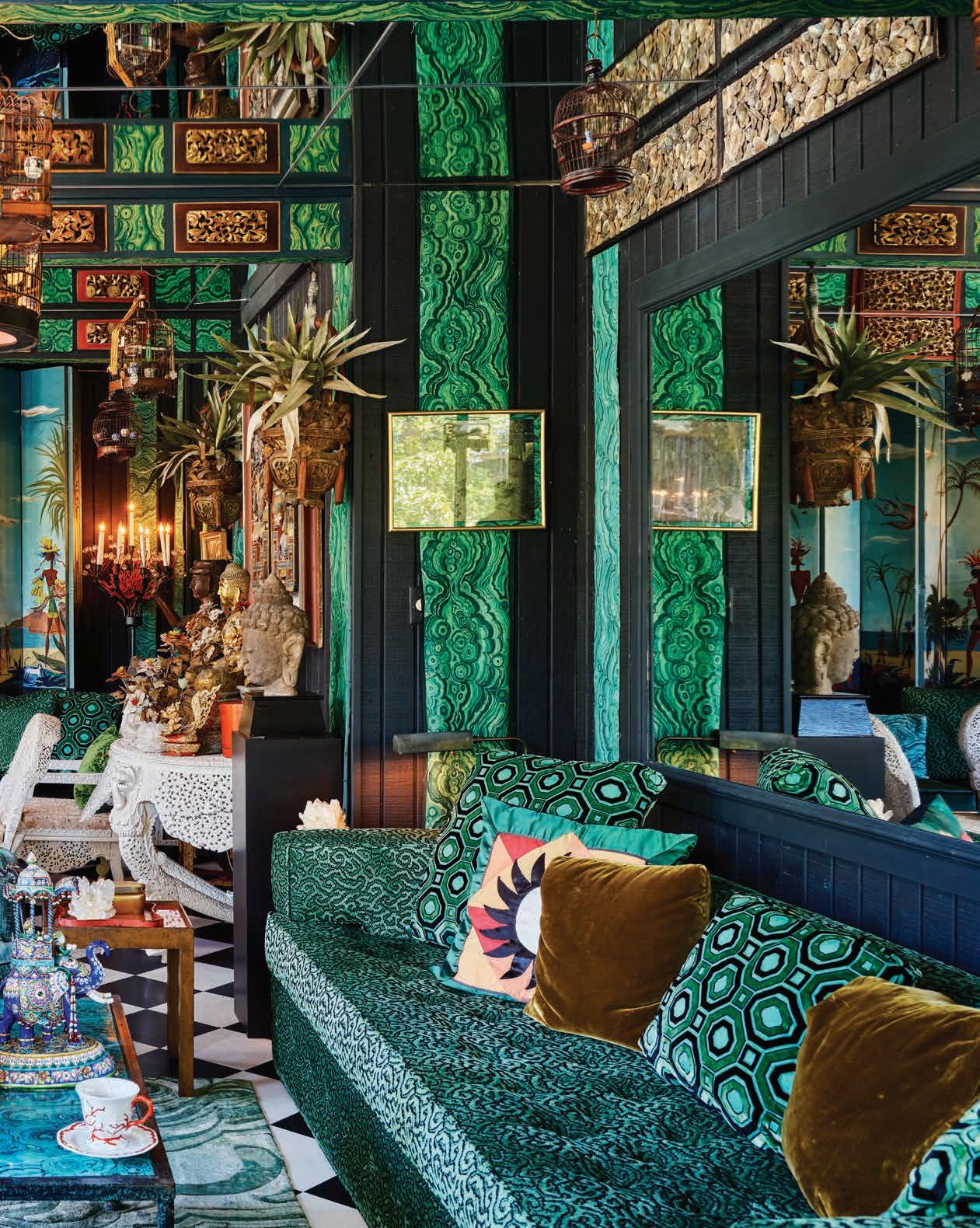
The legendary Beverly Hills home of Tony Duquette remains a labyrinth of baroque fantasy—where designer Hutton Wilkinson has pushed an already extravagant vision to operatic heights.
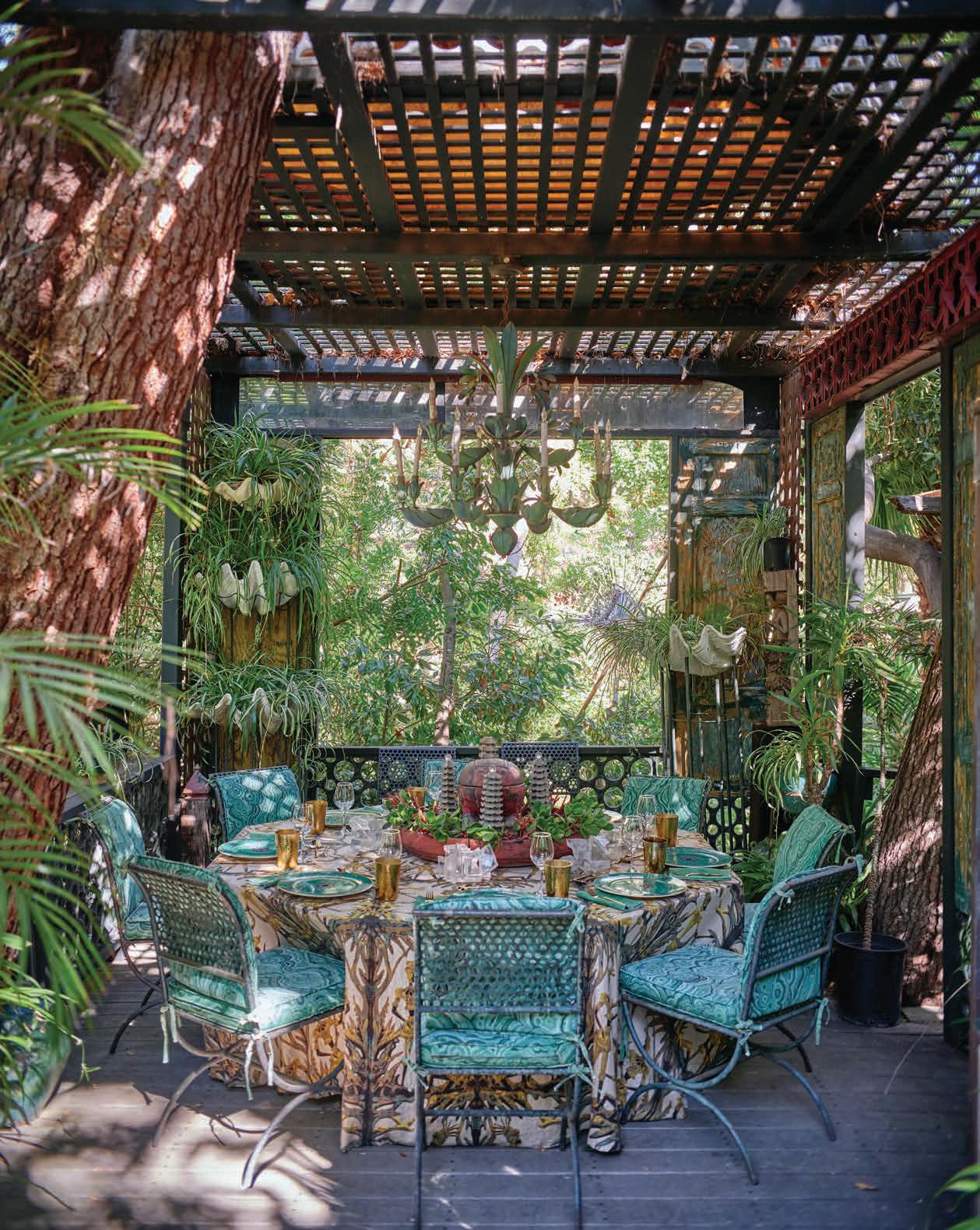
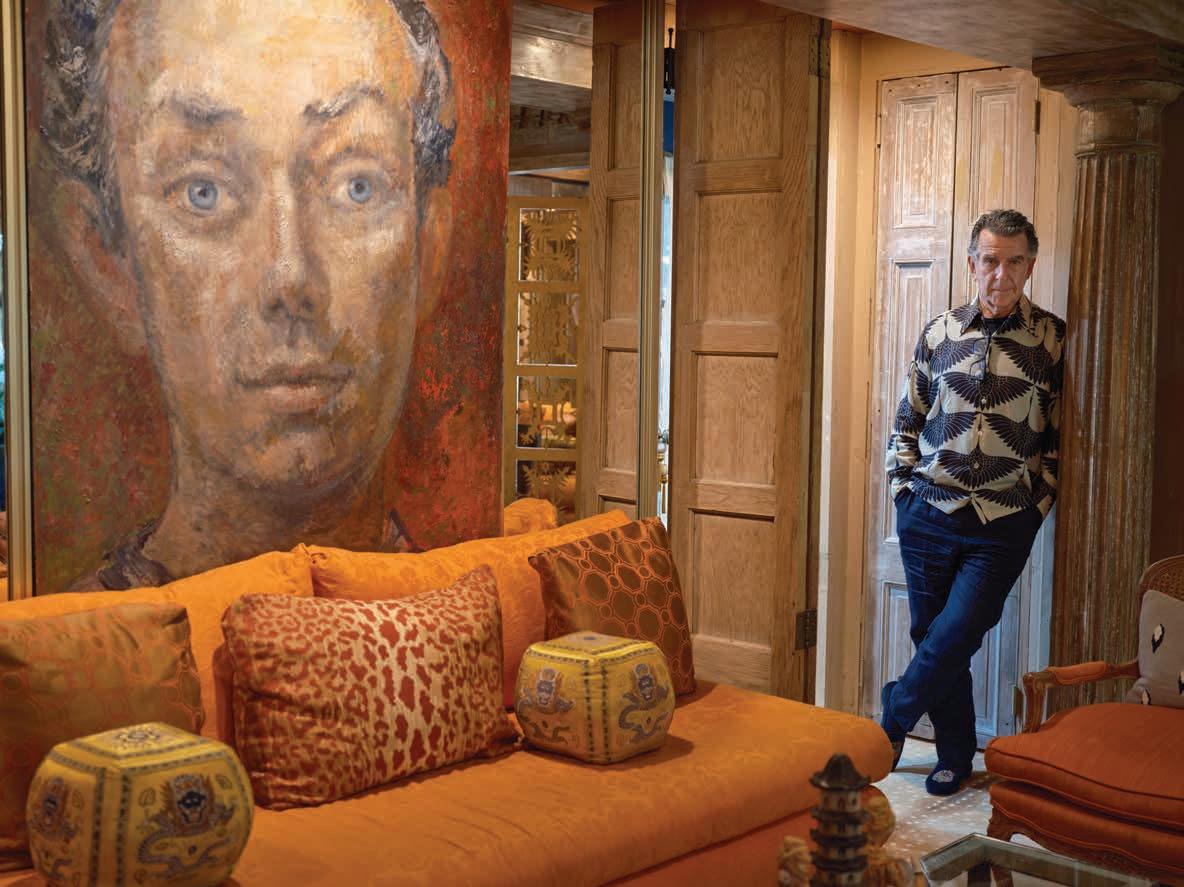
Opposite: A pergola-shaded dining room dissolves indoors and out, with layered textiles, latticework, and collected objects creating a garden set piece. Above: Hutton Wilkinson inside Dawnridge, where portraiture, saturated color, and pattern collapse time into a single, theatrical interior.
sits one of the most creatively designed private homes in America. Even though the exterior is deceptively nondescript, something spellbinding is going on inside. Once you enter, you step down into a double-height room so exotic you might expect to see a wild animal. It’s called Dawnridge, and it is perhaps the most extravagant, idiosyncratic, and exotically visionary piece of design in Beverly Hills. Equal parts museum, homage, and inspiration to countless top designers, it is one of the great hidden treasures of Los Angeles. This was the home of multihyphenate designer Tony Duquette, a prolific creator of maximalist fantasy who took his tireless and theatrical can-do spirit to multiple worlds: He designed costumes and stage sets. He dressed up ballrooms and fashion shows for films in the ‘50s. He made jewelry for the Duchess of Windsor. He also designed houses that were a baroque yet unpretentious mixture of everything he had seen on his travels in Europe and the
Far East. He designed furniture, fixtures, and fabrics, and even painted murals himself. His clients were a mix of the movie world—David O. Selznick—and old Los Angeles, as well as the extremely rich: Doris Duke, J. Paul Getty, and Elizabeth Arden. In 1949, Duquette married artist Elizabeth “Beegle” Johnstone at a private ceremony at Beverly Hills estate Pickfair, with Mary Pickford as matron of honor and Buddy Rogers as best man. The reception that followed was attended by Hollywood celebrities, including Gloria Swanson, Greta Garbo, Fred Astaire, Vincente Minnelli, Louella Parsons, Hedda Hopper, Oscar Levant, and Marion Davies. In addition, he had always given parties that were spectacles, showing his uncanny ability to create a mood.
Duquette’s home in Beverly Hills was built in 1949 by Duquette and his wife. The original structure was a modest
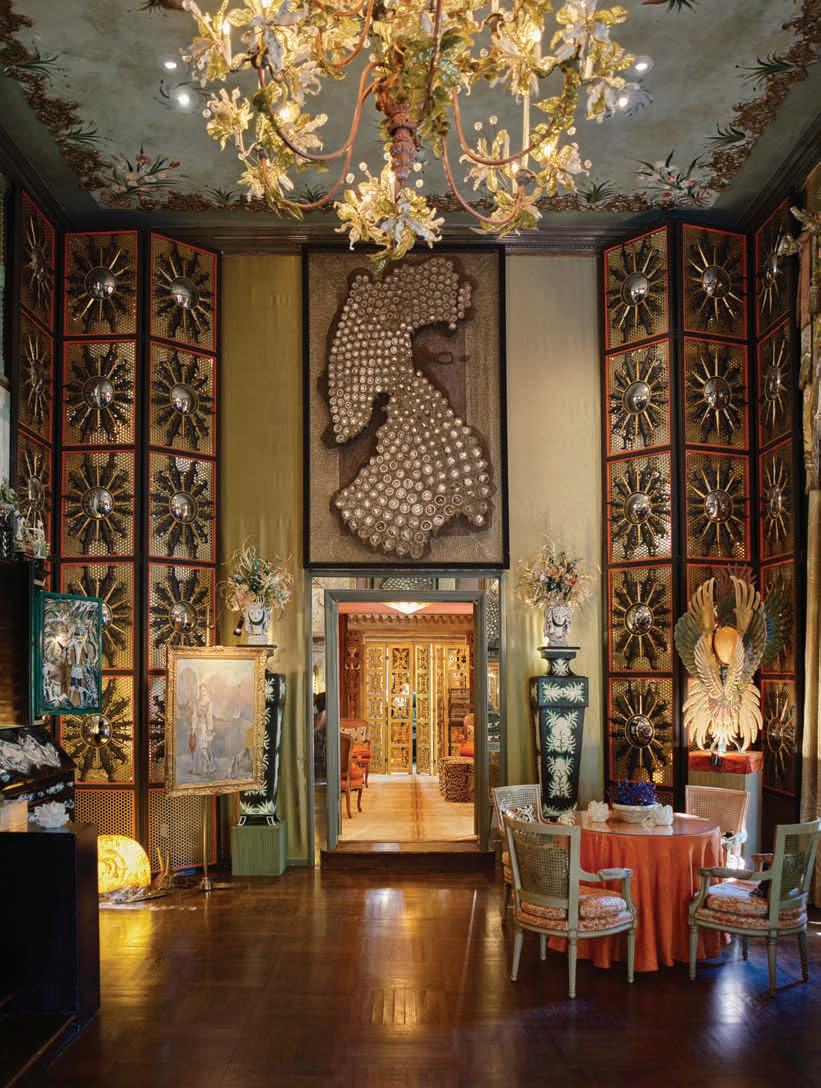
This page: The mirrored centers of the stars in this grand room are repurposed hubcap centers. Opposite, clockwise from top left: A narrow garden corridor unfolds like a sequence of outdoor rooms—little would anyone know that the circular lattice is an industrial system for organizing wires. Even the bath is fully composed, with cabinetry and surfaces treated as decorative extensions. A glimpse back into the salon reveals pattern layered on pattern, color on color. A tabletop still life of ceramics and textiles forms a jewel-like composition.
30-by-30-foot box. But over the next 50 years of his life, Duquette transformed Dawnridge, expanding and redecorating the home, building fantastical structures in the garden, and adding antiques and his own creations to each room. Duquette finished his final projects with the assistance of his business partner of 30 years, Hutton Wilkinson. While still a teenager, Wilkinson became entranced by the fairytale world of the designer. As he was reading an article in the Los Angeles Times, his eyes fell upon the fantastical interiors of Duquette’s studio-residence on North Robertson Boulevard, and he began to explore the designer’s life and career from the unique perspective of being his protege. He’s not just observing the work, but stepping inside and expanding the mythology of it.
Wilkinson purchased the home following Duquette’s death in 1999 and has continued expanding it from a tiny box house to an expansive estate, filled with unique baroque-style treasures picked and created by Wilkinson, original art, and unorthodox materials like takeout containers, vintage hubcaps, and trellises made of old wiring and screens. It’s a philosophy of beauty that collapses hierarchy between the precious and the discarded. The iron sunburst by Poillerat was discovered at a Paris flea market, and Wilkinson had 100 copied in Bali. Leaving the garden room, you cross a terrace with a roof
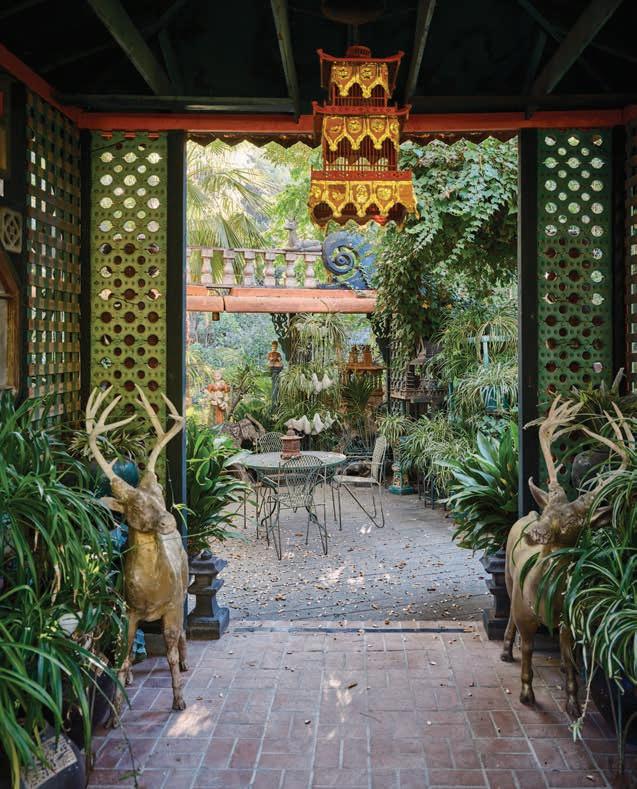
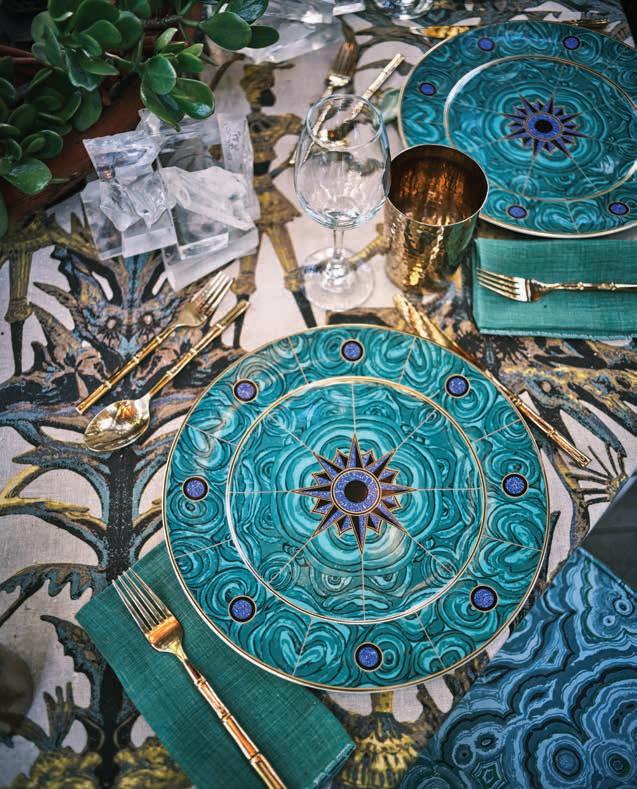
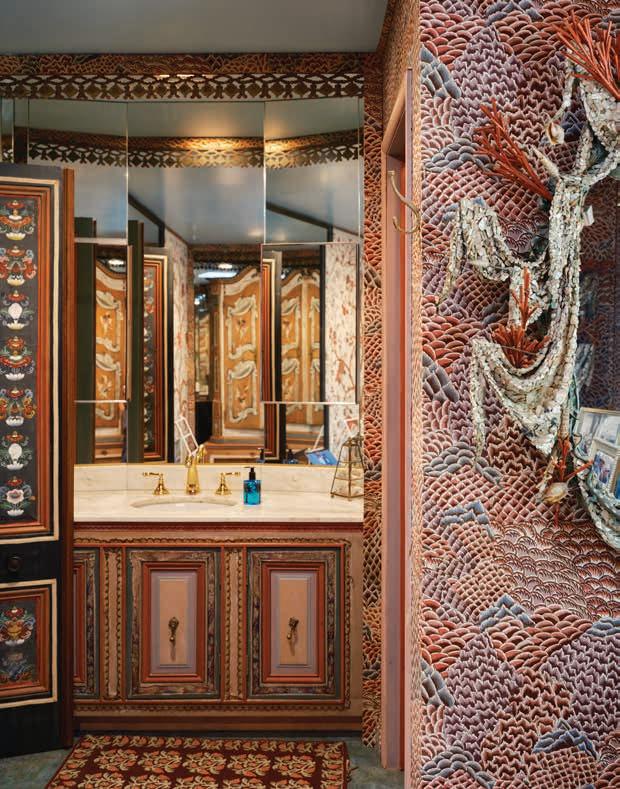
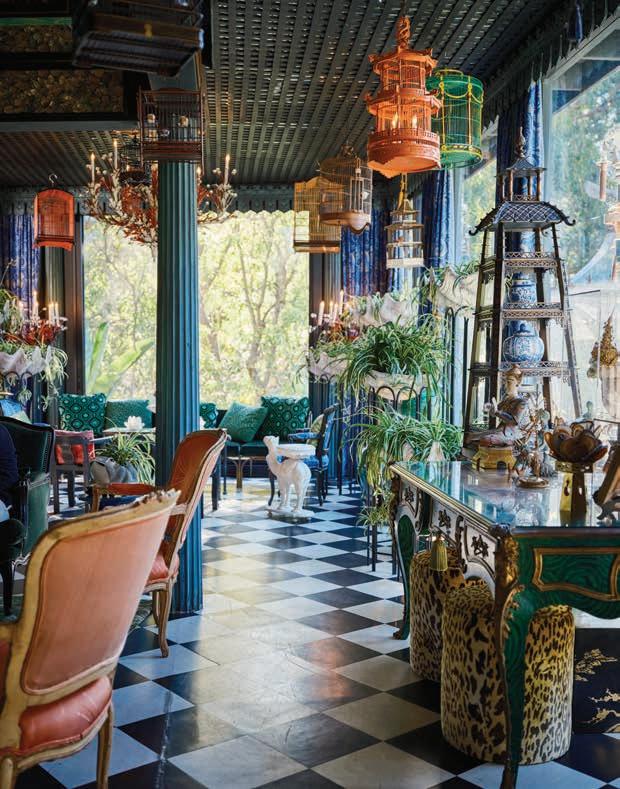
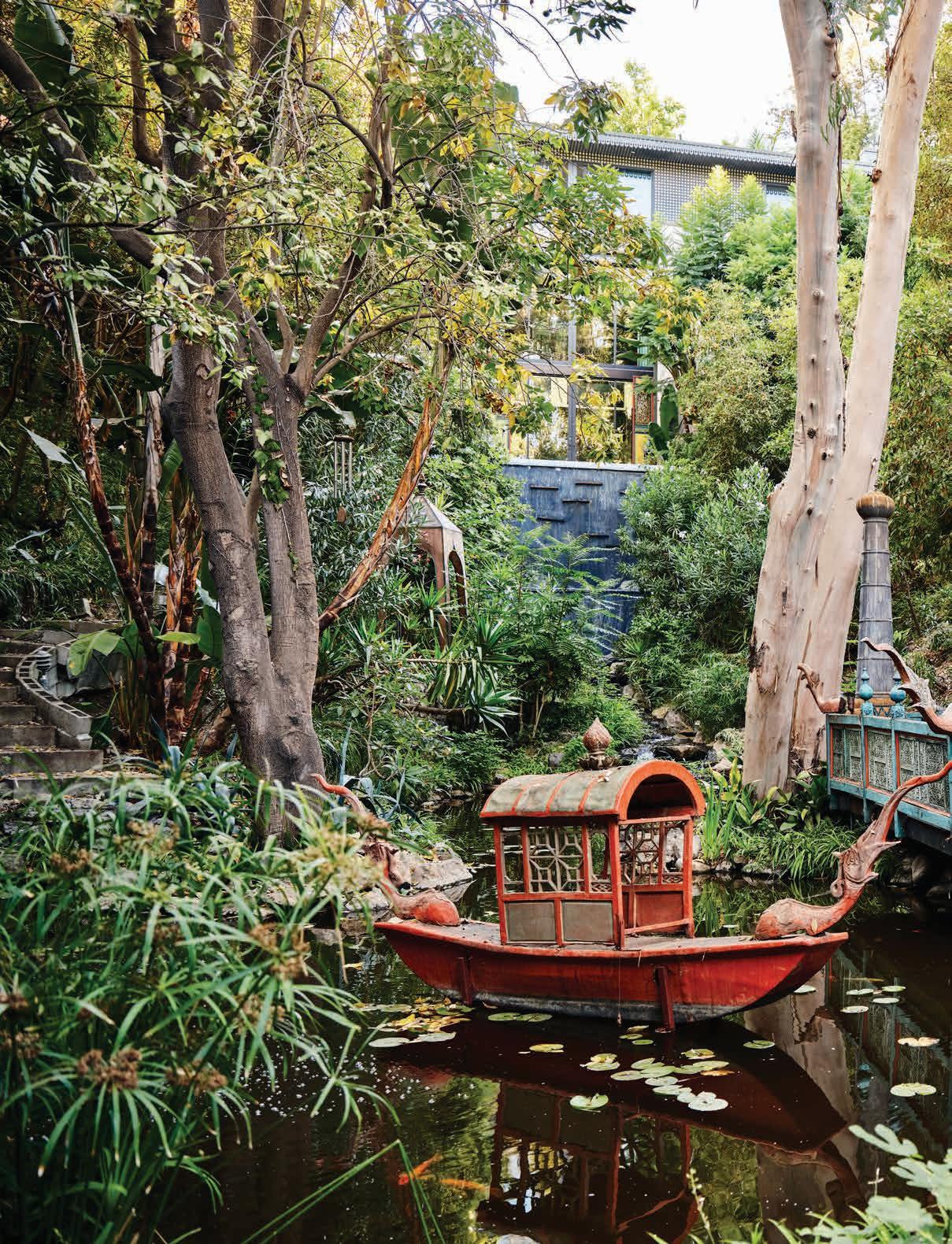
This labyrinthian wilderness of pathways, bridges, and waterfalls is as close to an exotic vacation as you can find in Los Angeles.
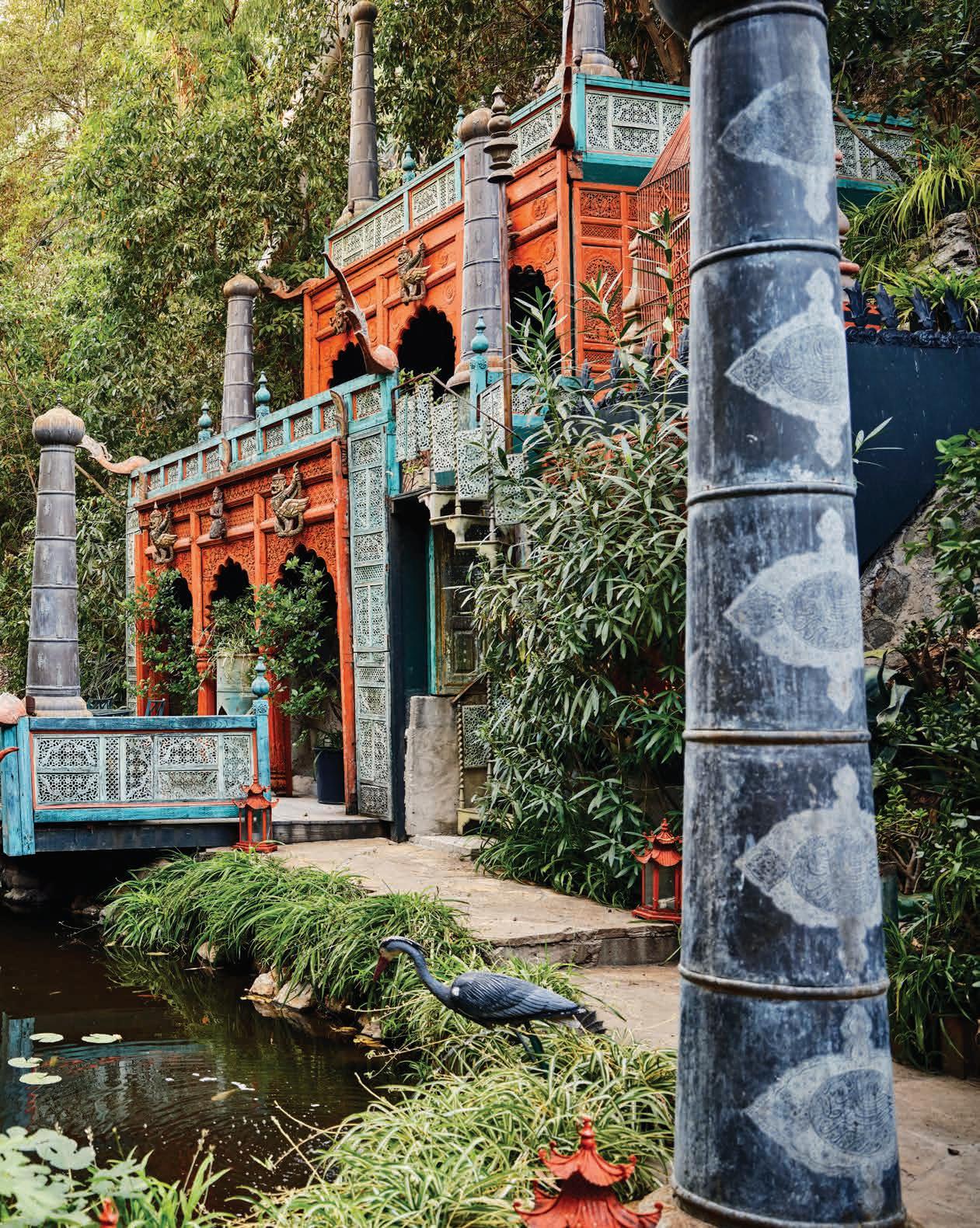
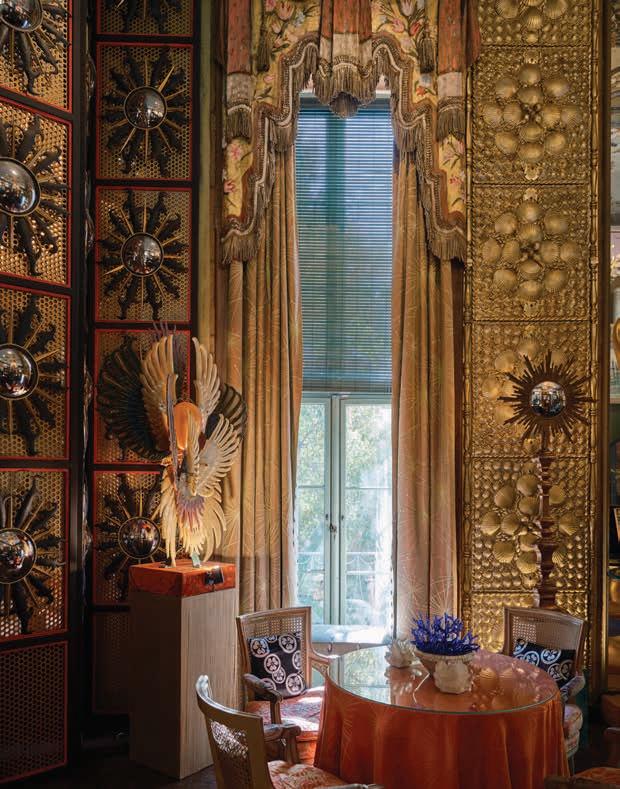
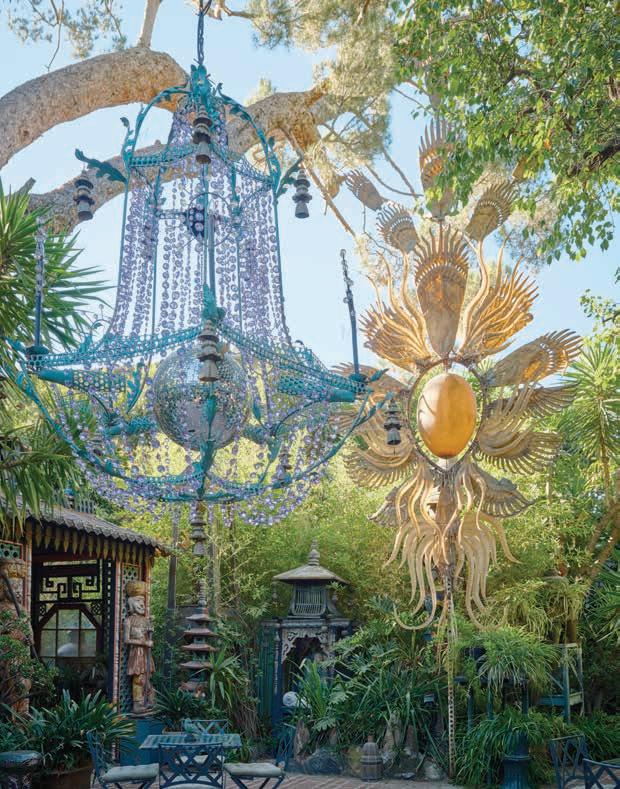
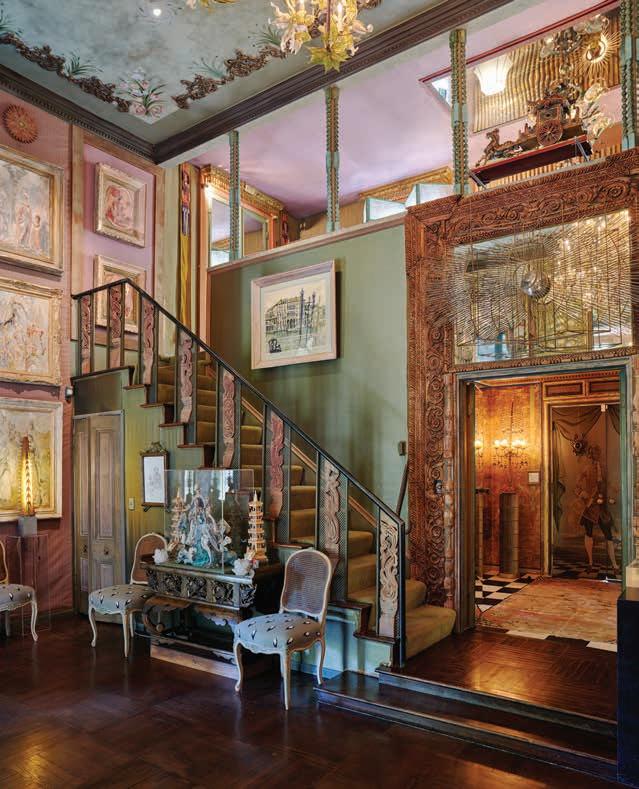
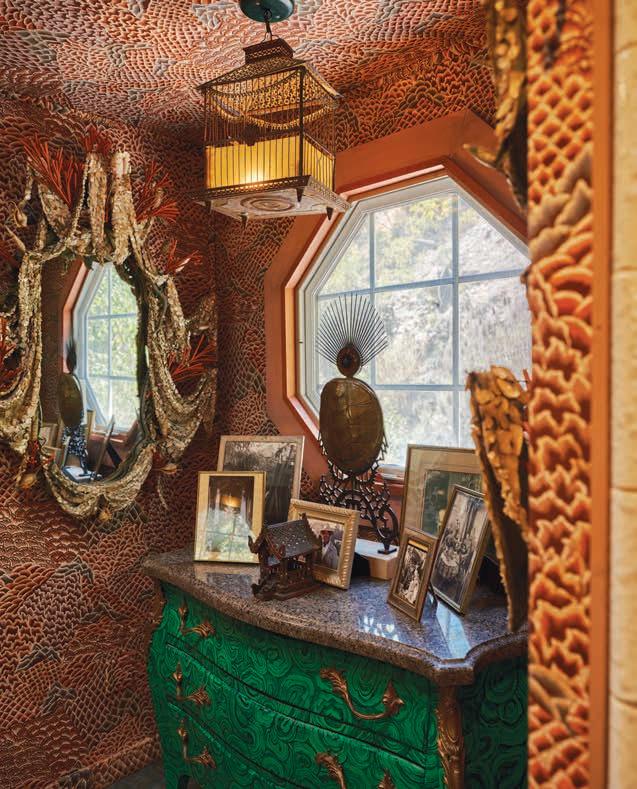
Opposite, clockwise from top left: Layers of drama surround an intimate dining table. The staircase is worthy of a stage set, true to Duquette’s career in the movies. A niche vignette transforms a transition point into a fully composed moment. Outdoor chandeliers and sculptural elements extend the interior language into the garden, turning it into an open-air salon. This page: With her fashion choice, author Alison Martino proves that the decor of this stunning home begs for guests to dress to the nines.
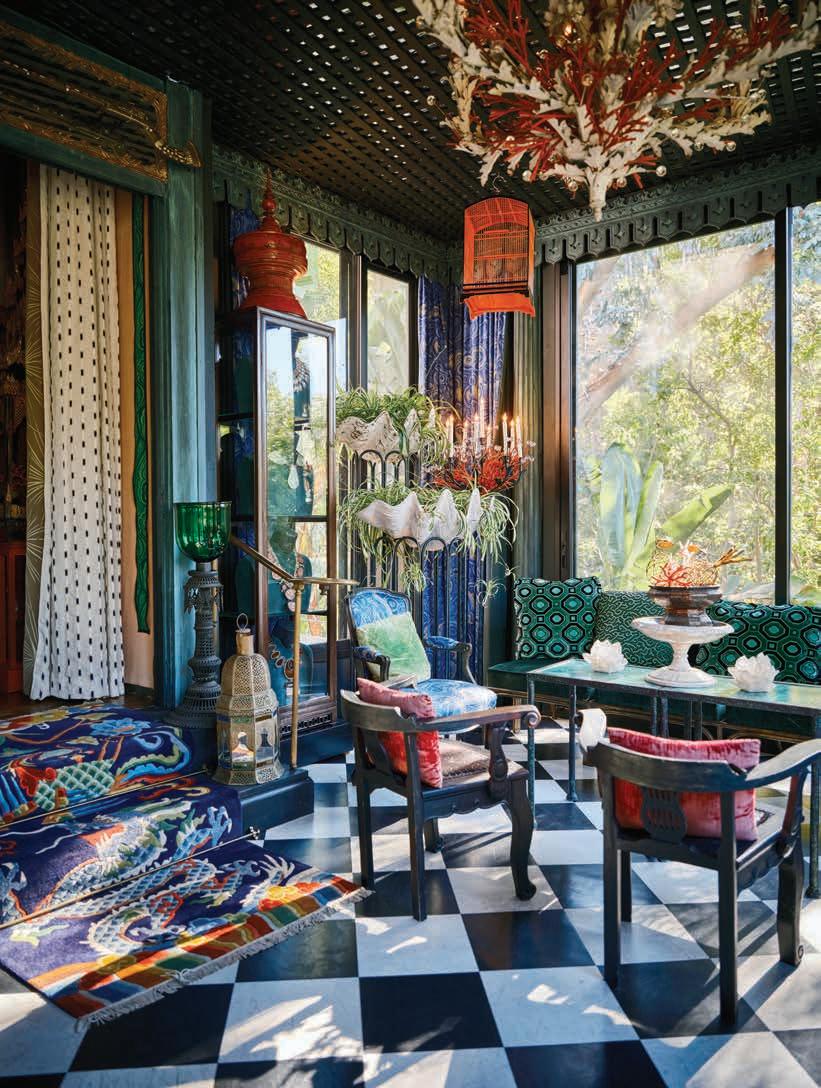
of lattice forming a shadowed checkerboard on the floor.
The lattice ceiling is held up by old Los Angeles verdigris copper streetlights. The staircase leads down to the middle terrace, where a series of pavilions lead to secret gardens and places to dine, and then more stairs lead down into the canyon (which is the only canyon left on the street).
Other properties nearby have filled in the canyon to create swimming pools and tennis courts, but Dawnridge’s original canyon has a manmade lagoon at the bottom with koi fish, an Indian pavilion, and a waterfall, with an old Vietnamese wedding boat painted red and green floating in the middle. The ornate garden is full of grown eucalyptuses, terraces, outdoor chandeliers, and pavilions. Beegle’s painting studio is off to one side and made to look like a Chinese house, with pagoda-style roofs and red- and green-painted architectural elements. This labyrinthian wilderness of pathways, bridges, and waterfalls is as close to an exotic vacation as you can find in Los Angeles, a private world that unfolds not so much room by room, but scene by scene.
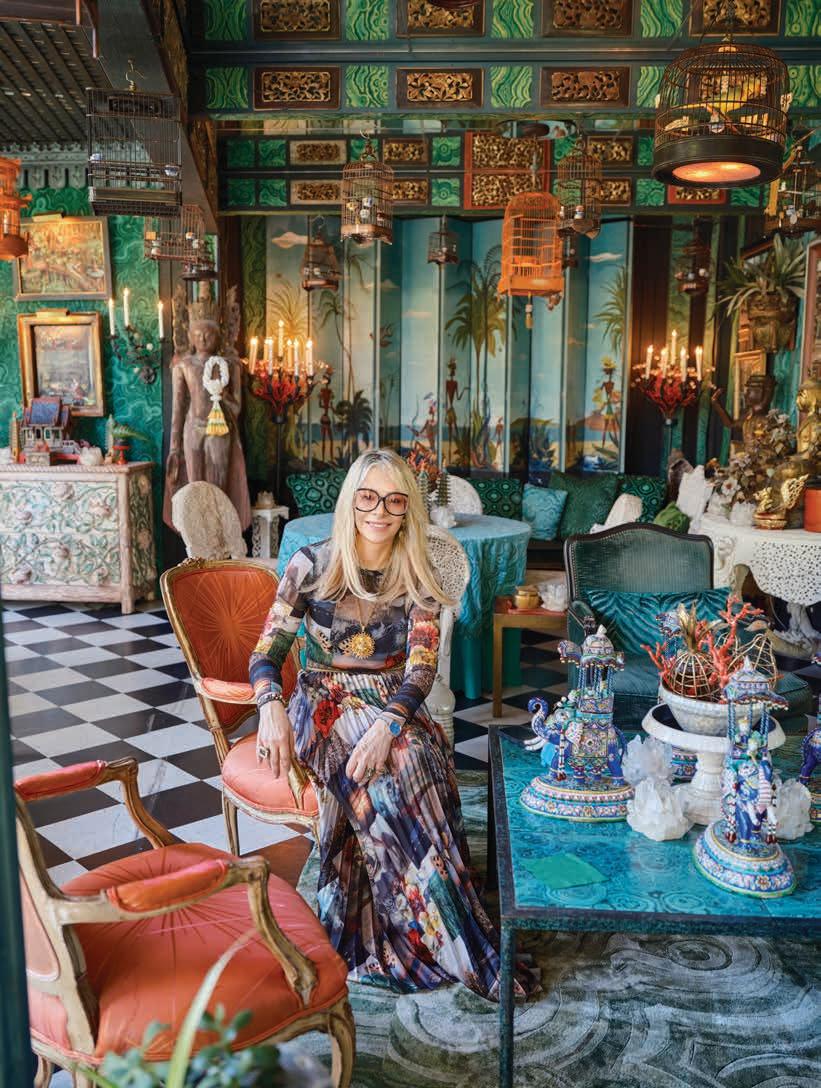
High-low has never been so haute, a wink that keeps the grandeur from ever taking itself too seriously.
Every area is eclectic, chic, and spectacular, such as the dining room dotted with monkey head sculptures. The ceiling is covered in embroidered Indian tent panels. The frieze of monkeys around the room still has the $1.50 price tags on them from when he purchased them at, wait for it, Cost Plus.
Other astounding features include paint-dipped plaster lambrequins over the windows, which are original to the house from 1949. The ceiling was painted by Tony and Elizabeth Duquette and is original to the house. The chandelier, by Tony, has Venetian glass flowers blown to look like pimento lilies. The artwork over the door leading into the library is called “A Fragment of a Priestess’ Robe” or, as Tony joked, “A Specimen of Rhinestone Disease,” from Tony’s 1972 exhibition at the municipal art gallery at Barnsdall Park. The curtains are Jim Thompson fireworks fabric, a Duquette-Wilkinson design. All of the paintings in the room are by Elizabeth Duquette, and the maquettes for the San Francisco Opera’s production of Der Rosenkavalier were designed by Tony Duquette and
made in 1952 for that production. The carved 16th-century Spanish doorway leading into the entrance hall was a wedding present from the Hellis sisters, who were the daughters of a Greek shipping tycoon. Wilkinson replaced the original Old Master painting overdoor with a sheet of mirror and Tony Duquette’s three-dimensional, 3/8 -inch scale model of his “Primal Sun” sculpture, which was at the University of California, Los Angeles, yet another layering of artifact and reinterpretation.
The garden room was actually a one-car garage in 1949. The sofa was repurchased from the Doris Duke estate Falcon Lair, which Tony decorated in the 1950s. And the folding screen showing “Island People” was from his first exhibition in 1947 at the Mitch Leisen Gallery, purchased by Elizabeth Arden’s niece and given back to Dawnridge in her will. These
A sunroom of lattice-filtered light layers geometry and ornament over a graphic checkerboard floor.
are objects circulating through time, only to return to their origin point.
Wilkinson uses the house as his headquarters for Tony Duquette Inc., where he meets clients, lays out projects, and displays designer jewelry. The house and garden can also be rented for special events, photoshoots, or filming. The property is a magical place by day and night, lending itself to any number of imaginative party themes—still functioning, as it always has, as a stage set for living. Since Wilkinson has no heirs, his dream is to leave the property to a museum, foundation, or university that will preserve it like a house museum.
There is no question that Wilkinson has brought Dawnridge to maximalist levels and is the keeper of the Duquette legacy. Without missing a beat, Wilkinson says, “More is more, as opposed to less is more.” There’s no surface left unembellished, making it nearly impossible to focus on just one object, and nearly impossible to recall all of it. And that may be the point. Dawnridge resists being fully seen, fully catalogued, or fully understood in a single visit. It is an environment built on accumulation, imagination, and continuation. It’s where Duquette’s original vision doesn’t end, but is expanded in the hands of Wilkinson. The result is not just a masterpiece of maximalism, but a rare continuity of creative authorship: teacher to student, fantasy to reality, past to present.
One might wonder whether the student has surpassed the master.
Author Alison Martino is a writer, producer, historian, and regular contributor to Sunset . She is the creator of Vintage Los Angeles and host of The SoCal Scene on Spectrum News.
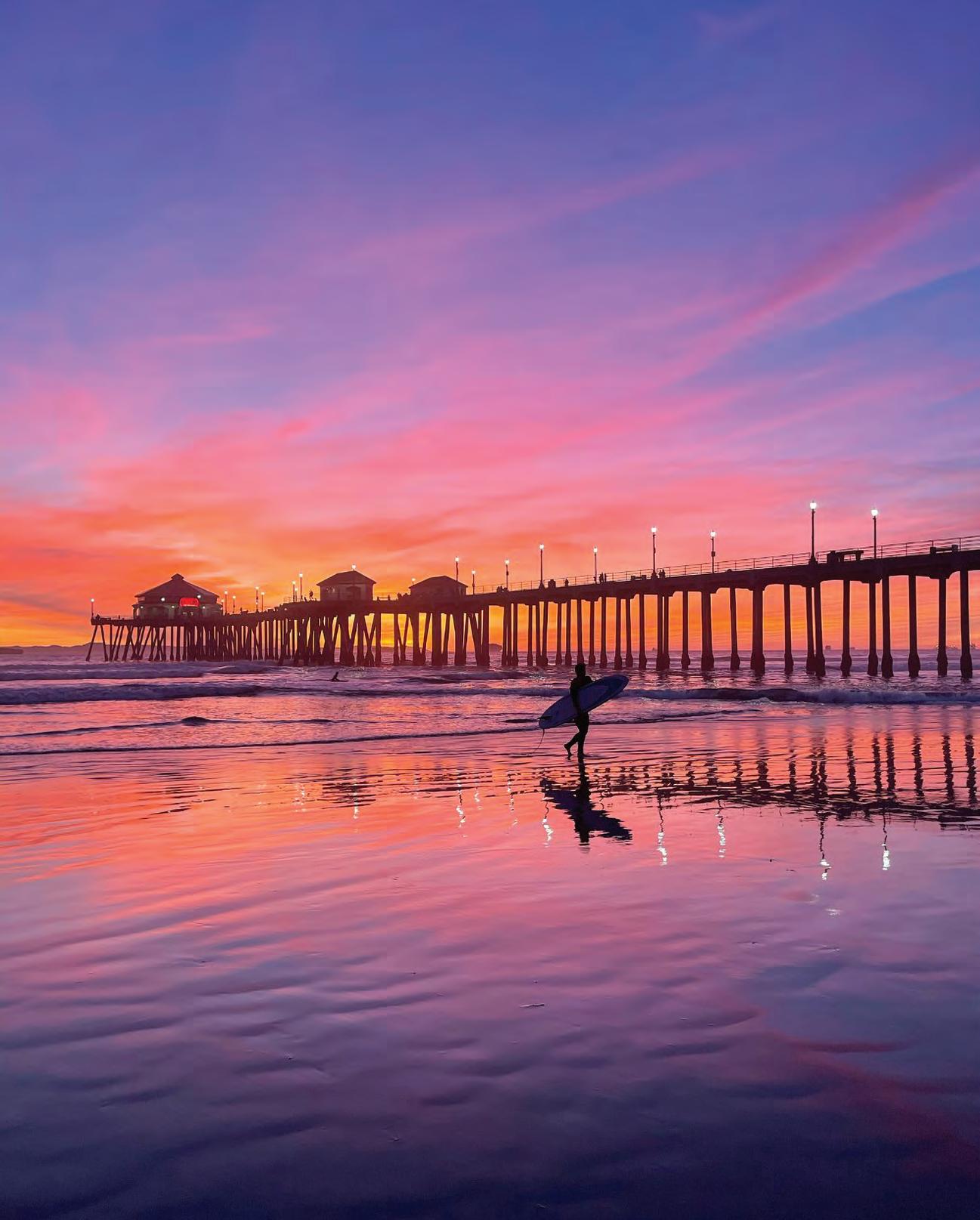
The West is calling—from secluded coastal hideaways to awe-inspiring desert retreats, these ultimate escapes redefine the art of getting away.
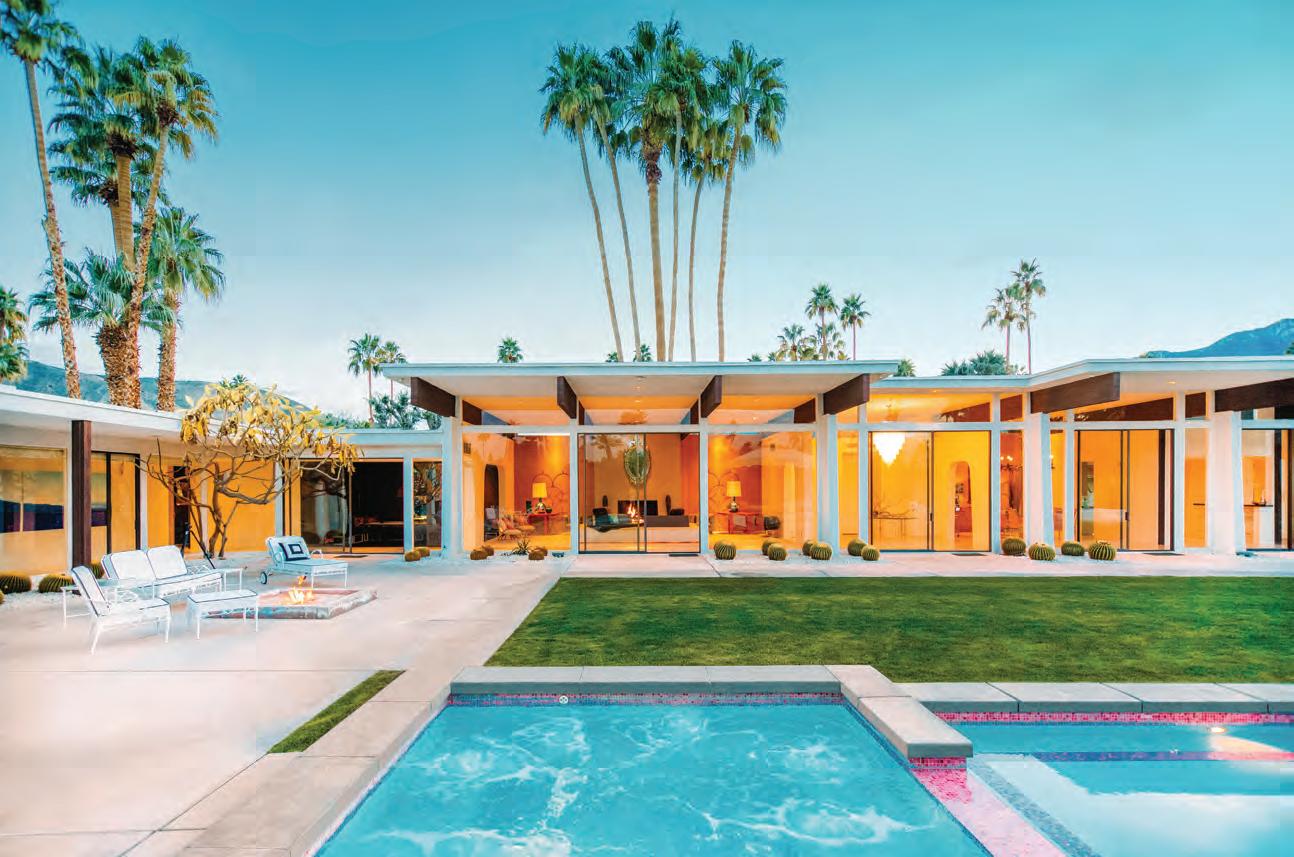
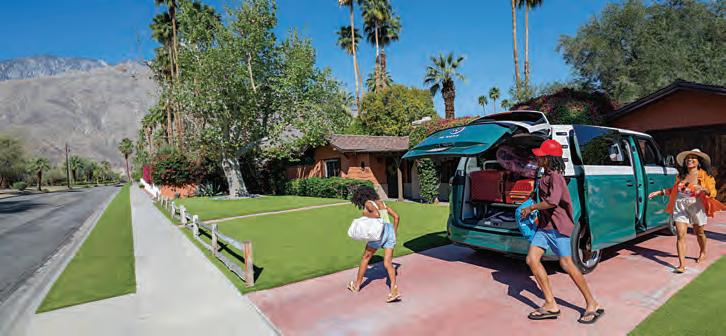
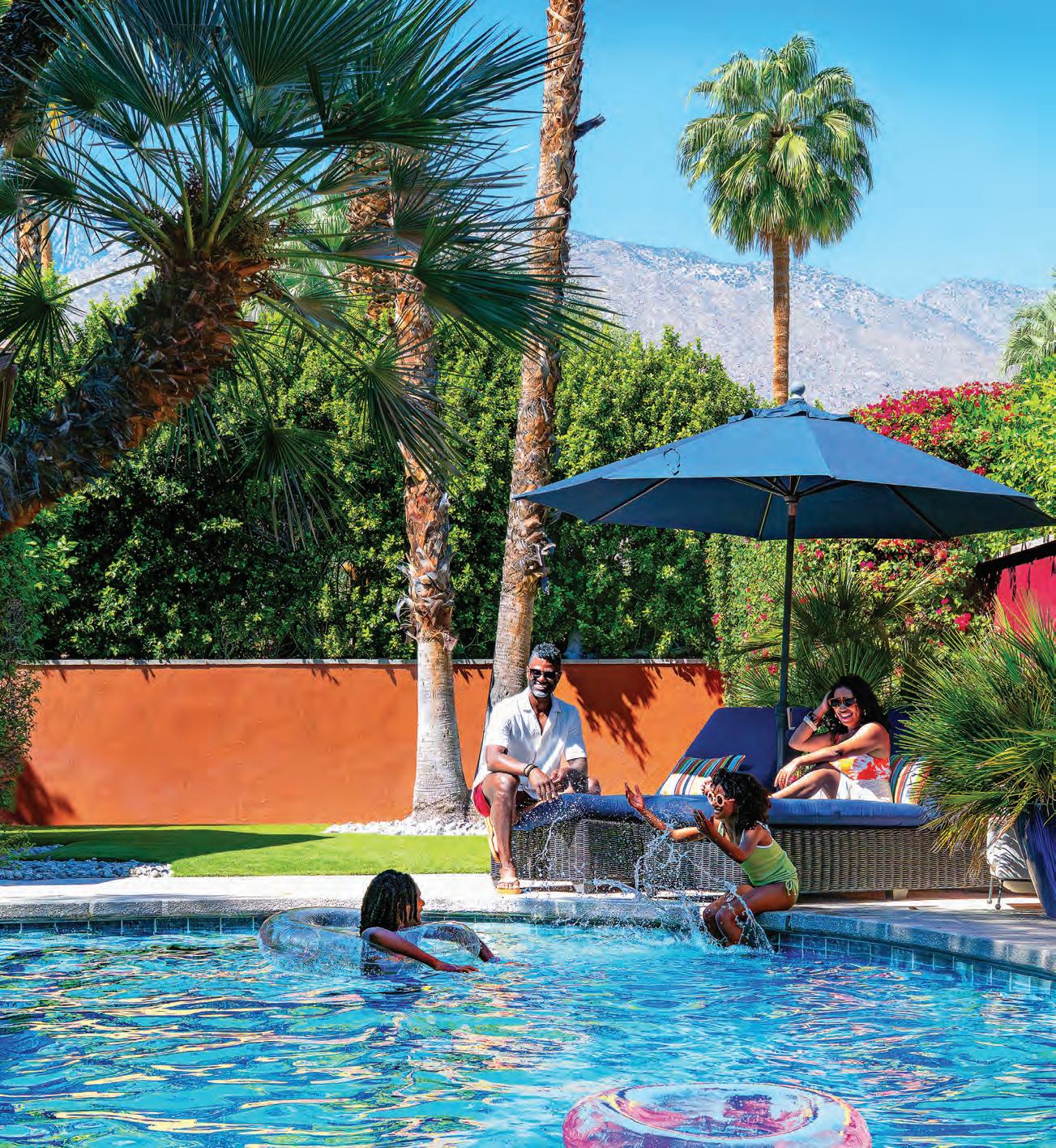
In Greater Palm Springs, the getaway begins the moment you step into a space that feels entirely your own. Maybe it’s a mid-century modern retreat with clean lines, sun drenched glass, and a pool that shimmers from morning to golden hour. Maybe it’s a Spanish Revival hideaway tucked behind swaying palms, with terracotta warmth, cool tiled floors, and evenings gathered beneath the glow of string lights. Or maybe it’s simply the home that fits your style, your pace, and the way you want to spend your days.
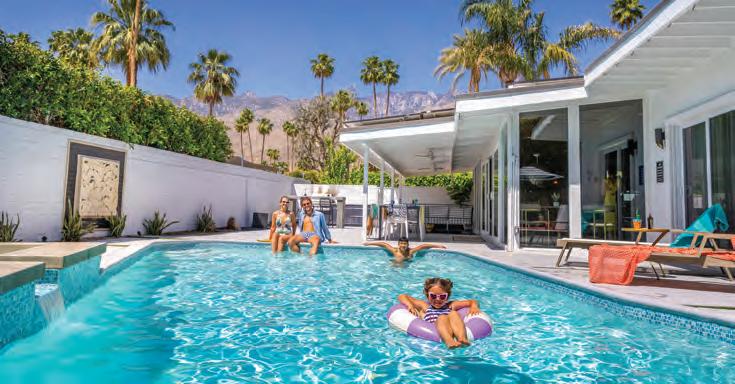
This is Where Vacation Plays Out Beautifully Mornings start easy with coffee by the pool and mountain views beyond the palms. From there, the day takes on a life of its own. Maybe it’s a chaise, a good book, and a little extra sun. Maybe it’s a wellness walk, a shopping stroll, local art, or just one more swim before lunch. Here, every day has the freedom to unfold exactly the way summer should.
Pool days stretch longer. Warm afternoons drift into golden evenings that linger just a little more. Time loosens. Plans soften. The day becomes whatever you want it to be, whether that means floating in the water, gathering around the table with friends, or slipping into the quiet comfort of a space that already feels like yours.
This is your private oasis. A place to play out summer your way, for days at a time. In Greater Palm Springs, every stay becomes more than a getaway. It becomes the kind of summer memory that stays with you.








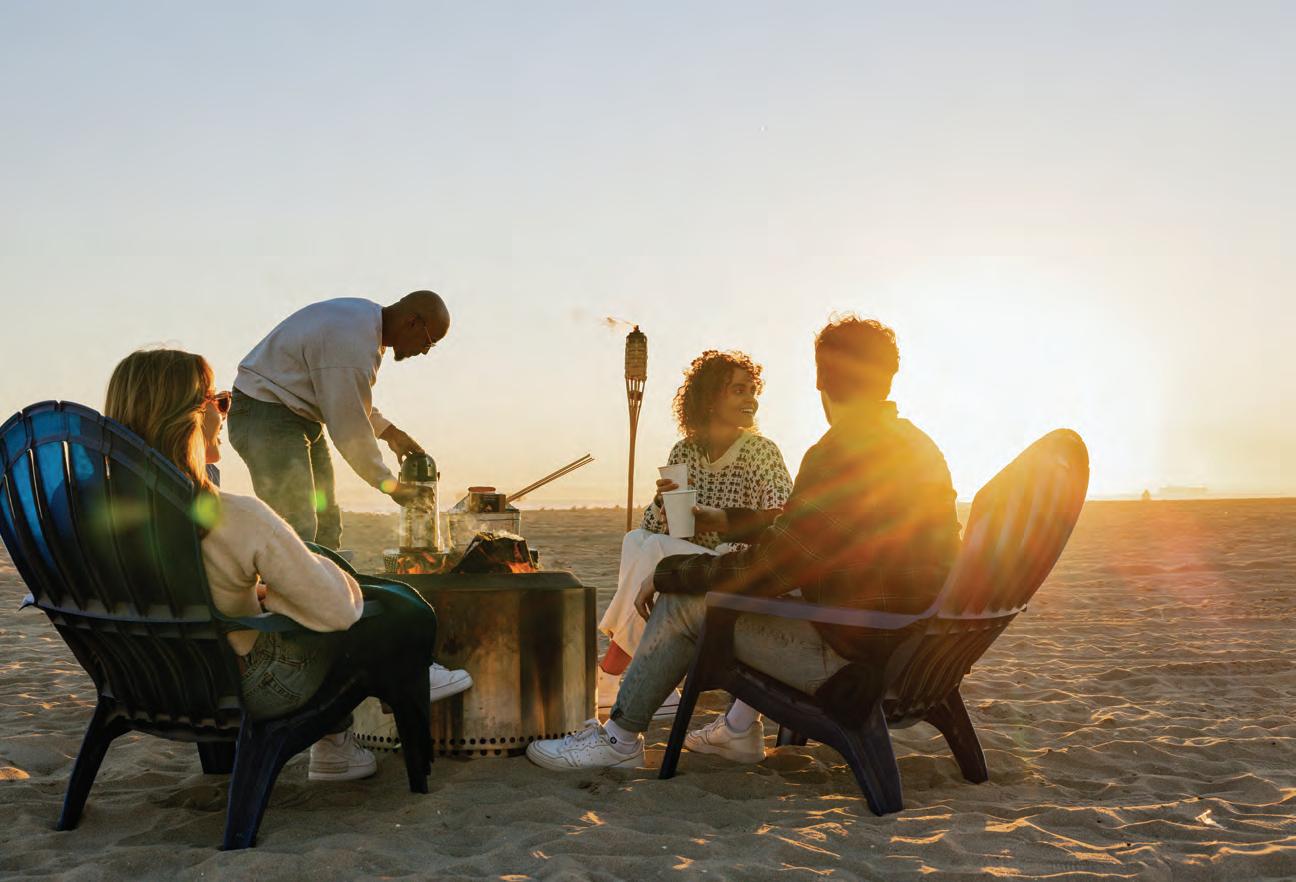
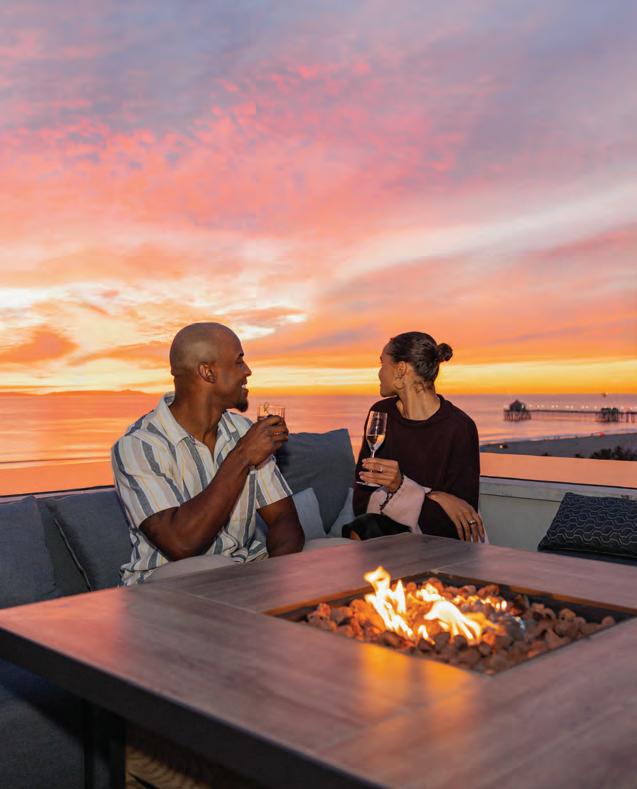
There’s a rhythm to life in Huntington Beach, one that unfolds not just on the water, but in the moments between. Known as Surf City USA®, this iconic stretch of Southern California coastline invites visitors to slow down and experience the lifestyle that flows between each wave. Mornings begin with salty air and coffee near the shore, while the sound of the ocean sets the pace for the day ahead.
Along the coast, the energy of the beach blends effortlessly with everyday adventure. Cyclists cruise along the oceanfront path, surfers paddle out beyond the break, and visitors wander toward the iconic Huntington Beach Pier for sweeping Pacific views. Whether you’re catching waves or simply catching your breath, this beach town’s laid-back atmosphere makes it easy to move at your own pace.
As the afternoon light softens, Huntington Beach shifts into golden hour mode. Locals and visitors gather along the sand to watch the sun melt into the horizon, while beach bonfires crackle nearby and oceanfront patios fill with conversation. It’s the kind of place where one sunset often leads to staying for another day.
That’s the spirit of living between the waves, finding balance between motion and stillness, adventure and ease. In Surf City USA®, the most memorable moments aren’t just on the water, they’re everything in between.
Visit Huntington Beach surfcityusa.com

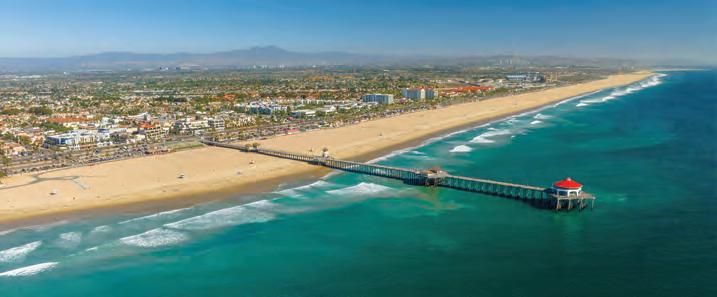























































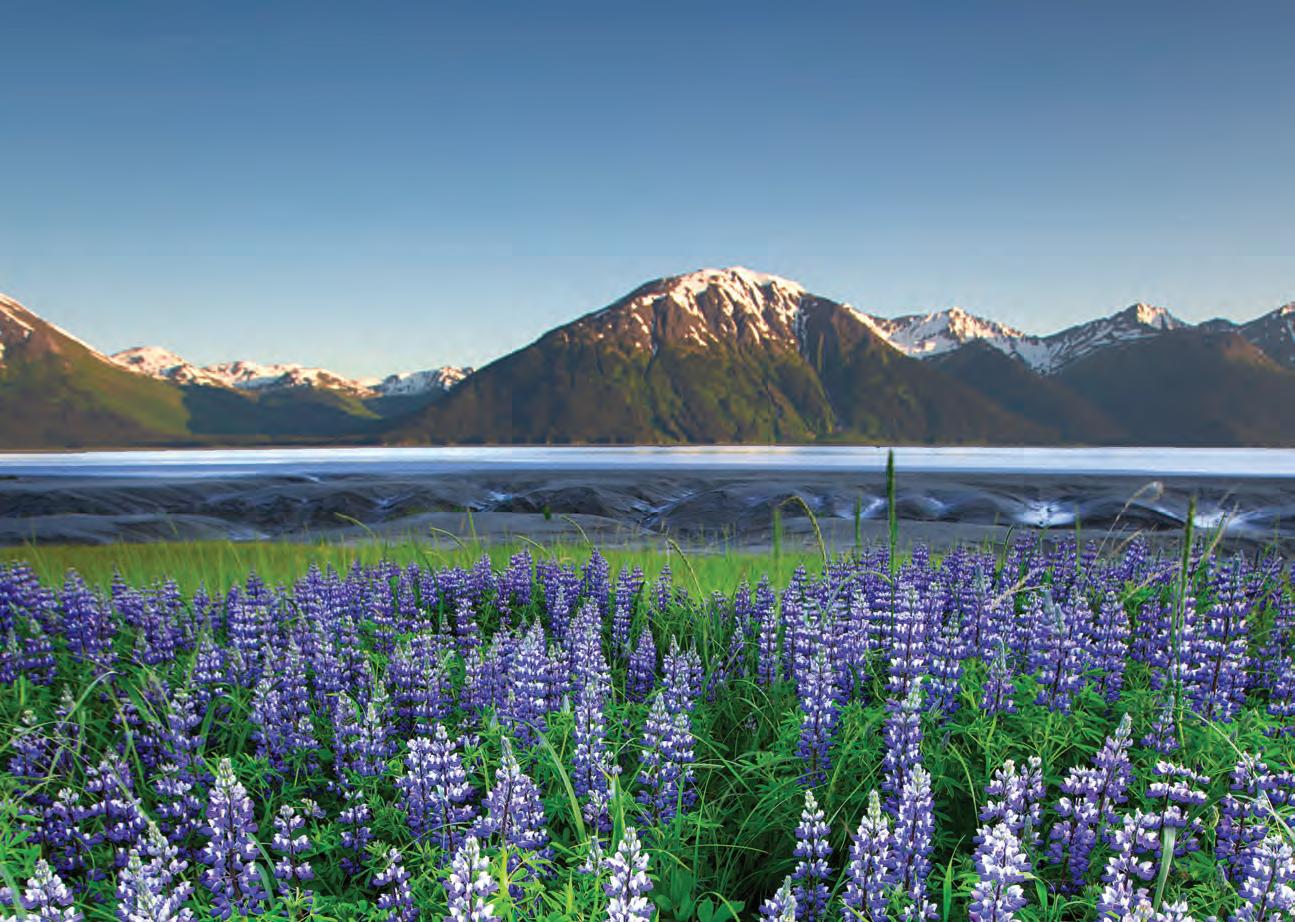
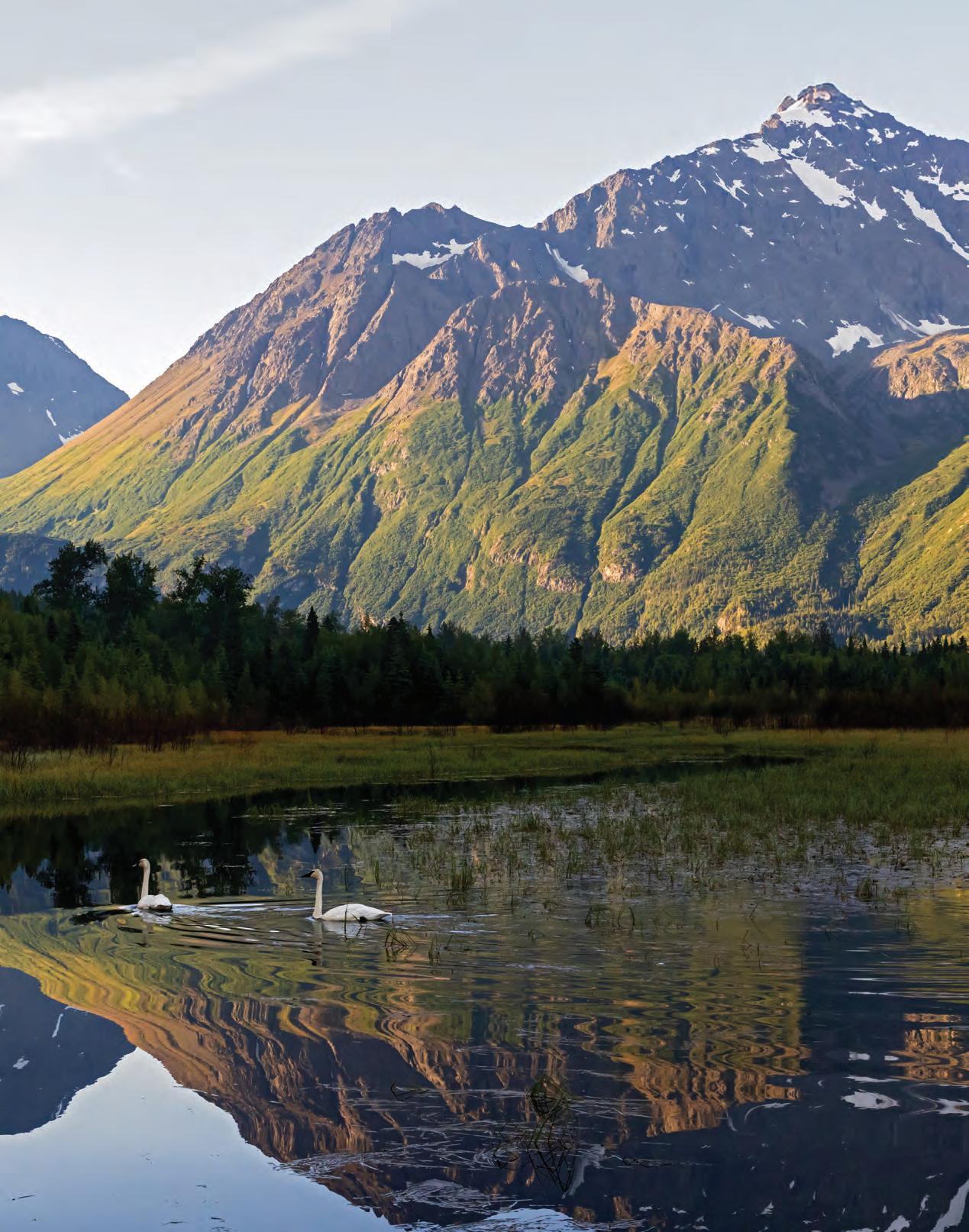
Scenic wonders abound on Turnagain Arm.
Anchorage is more than just a destination: it’s one of those trips that sticks with you. With nonstop flights from most major cities, getting here is easy. Summer invites exploration at your own pace with up to 22 hours of daylight.
A City Shared with Wildlife
Wildlife is part of everyday life here. Moose wander through neighborhoods and nearby parks. Beluga whales coast along the Turnagain Arm while Dall sheep spectate from above in the Chugach Mountains. Hundreds of bird species flock to places like Potter Marsh, Westchester Lagoon, and Cheney Lake. Even on a quick walk or drive, Anchorage offers unexpected wildlife sightings.
Anchorage’s Rugged Beauty Within Reach
That same sense of discovery lies within Anchorage’s landscapes. Multiuse trails weave through the city, offering breathtaking views just steps from your door. Venture slightly farther to experience stunning glacial landscapes on a scenic drive or aboard the Alaska Railroad with 60 nearby glaciers in reach.
Savor Bold Alaska Flavors
Epic adventures are amplified by an equally remarkable food scene. Unwind with a meal crafted from fresh, locally sourced ingredients such as wild salmon, cod, and halibut. Leafy, crisp greens and foraged berries can be found straight from the wild pantry. Home to a diverse blend of communities, Anchorage serves up a melting pot of flavor in every part of the city. Whether it’s kimchi burritos, gumbo, or pelmeni, there’s something here for every craving.
By pairing natural wonders with a dynamic city scene, Anchorage offers the best of both worlds: urban and wild. There’s no need to choose just one, it’s all right here. Make your dream excursion to Alaska happen and start planning today.
VisitAnchorage.net

With approximately 1,500 moose, wildlife sightings are a regular occurrence in the city.









everyday magic through the quiet power of flowers in her new book Flower Energy: Channeling the Healing Power of Blooms.
Design with golden hour in mind. Plant evening-leaning bloomers like nicotiana, four o’clocks, datura, moonflower, and white cosmos, and ground them with silver foliage—artemisia, lamb’s ear, and dusty miller— which catches and reflects the setting sun, keeping the garden luminous well into dusk.
Map out plantings with intention by creating microhabitats. Pair milkweed with low native grasses for monarch larvae, tuck elderberry or coffeeberry near fences for bird perches, and sow yarrow or native buckwheat to support beneficial wasps.
Sow fast annuals as climate tools. Sow sunflowers, climbing beans, or amaranth to create quick shade for young vegetables and cut flowers later in the season.
not the plate. Peak summer is the optimal time to dry herbs, freeze greens, or infuse oils, when flavors are strongest and before heat stress dulls aroma.
Cut flowers with intention. Snip zinnias, cosmos, and marigolds early in the morning for longer vase life, then let a few blooms go to seed to support birds and self-sowing
Think of summer pruning as an edit for air, not beauty. Lightly thin tomatoes, fruit trees, and dense ornamentals to improve airflow, reduce fungal pressure, and help plants stay resilient through summer heat.
Refresh mulch where soil shows stress. Add a thin layer of straw, leaves, or wood chips around vegetables and trees to cool roots and slow moisture loss during heat waves.
Tidy pathways, not beds. Focus summer cleanup on walkways and access points, allowing garden beds to stay a little loose and protective during heat
The sun is out, plants are flourishing, and it’s officially grow time. Here’s what you need to do to keep your garden gorgeous all season long.
Story by KRISTIN GUY
Practice a “soft harvest.” Gather tender, aromatic growth, such as grape and fig leaves, fennel fronds, bay leaves, and rosemary tips, and use them for wrapping, infusing, smoking, or scenting. Small cuttings can yield big flavor, from fig-leaf ice cream to bay-infused oil and fennel salt
Forage for the pantry,
Allow a little damage to signal balance. Minor pest feeding is part of a healthy garden. Step in only when plants stop growing, flowering, or setting fruit
Water for depth, not frequency. Shift to fewer, deeper soakings to encourage roots to grow down rather than hover near the surface.
Plan your summer garden for the flavors of Hawaii.
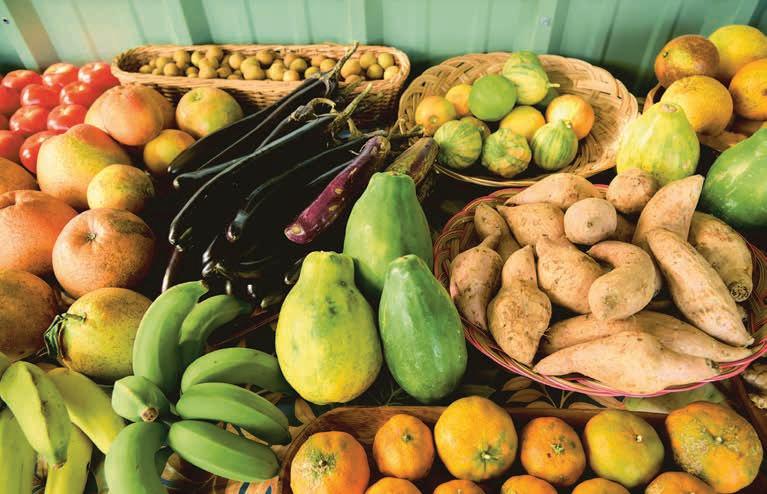
In Alana Kysar’s new book Aloha Veggies, Hawaii's vibrant local ingredients take center stage Part cookbook, part love letter to the Islands’ farms, it's a celebration of home gardens and farmers’ markets alike, with fresh summer produce that will transform everyday meals with a touch of island sunshine.
Peak Summer, Island State of Mind Summer is the season that Aloha Veggies is built for: abundant, accessible, and grounded in the idea that when produce is fresh, meals don’t need much else.
“Abundance and accessibility are at the heart of the book,” Kysar says. “Aloha Veggies is about taking the flavors and methods we all know and love here in Hawaii and applying them to the veggies.”
TIP: Choose one standout vegetable and build around it using familiar flavors like shoyu, ginger, or sesame oil. When produce is fresh and local, it already carries the complexity— your job is just to get out of the way.
Hawaiian Flavor Starts at the Farm … and in Your Garden Kysar spent time on farms of all sizes while developing Aloha Veggies. “The farms I visited all focused on producing the best crops they could, whether taro, carrots, or watercress,” she says. “When you center a dish on a vegetable, you are already starting with so much flavor and texture.”
Even a small backyard or container garden benefits from the same principles: thoughtful planting, attention to microclimates, and growing the best-quality produce possible. “All of these small practices help me grow the best crops I can, and that translates to more flavor on every plate,” she says.
TIP: Know your local climate. Kysar shares that while breadfruit thrives in lowland Hawaii , her high-elevation garden in Maui favors apples, stone fruits, and persimmons.
Summer Flavors, Defined by Place—and Reimagined on the Plate
Summer is a long, generous season in Hawaii, with constant harvests that make vegetables exciting year-round. Her approach is all about versatility: familiar dishes reimagined with vegetables at the center. A perfect example?
A light summer dinner might pair her recipe "Soft Tofu with Watercress Chinese-Style with umamirich "Mushroomy Rice" and "Tomato Poke"—hot and cold, soft and crunchy, all in one satisfying plate.
These standout vegetables and herbs capture Hawaii's vibrant summer flavors. Kysar encourages adding them to your garden or picking them up at the local farmers’ market and experimenting with their bright, island-inspired flavors.
Taro is central to Hawaiian culture— it symbolizes family and life itself. You grow new plants from the huli, the top half-inch of the corm, plus about 8 inches of stem. The whole plant is edible. I use the leaves in lau lau and luau stew, and the corm in taro mash or kimchi taro mac salad. Taro tubers (Colocasia esculenta) are available for purchase online and in specialty markets.
Plant an ‘ulu, and you can feed a community! Fast-growing and prolific, each tree can produce hundreds of pounds of fruit. Use it anywhere you’d use potatoes—lau lau filling, veggie loco moco patties, garlicky breadfruit mash, or breadfruit mac salad. Ripe fruit? Bake with butter and a sprinkle of cinnamon and sugar. In a pinch, frozen options are sometimes available online.

Green onions are one of the mostused finishing ingredients in local Hawaiian cooking. They’re easy to grow, too When in doubt, thinly slice some and sprinkle them over your dish before serving. You can even regrow them from supermarket scraps: Just save the white ends and push them into the soil
Aloha Veggies: VegForward Recipes Celebrating the Flavors of Hawai‘i, by Alana Kysar (Ten
TIP: Embrace seasonal variety. Try a produce subchapter from Aloha Veggies, like shoyu, and focus on the four recipes within. You’ll likely find a veggie in season at your local farmers’ market that fits perfectly.
Fresh ginger is one of my favorite ways to build flavor in a dish or to brighten it at the very end if finely julienned. You’ll find it in many dishes throughout Aloha Veggies. It’s also incredibly easy to grow at home using the fresh ginger you buy at the grocery store or farmers’ market— just pick roots with eyes and plant them shallowly in well-draining soil.
Fresh Herbs and Pantry Power-Ups
Small additions make a big difference. “In Hawaii, we love green onions, ginger, garlic, and even cilantro,” Kysar says. Pantry essentials like shoyu, toasted sesame oil, rice vinegar, miso, and short- or medium-grain
rice quietly shape everyday cooking.
Finishing touches elevate any summer dish. “If it’s something super savory, packed with umami, a hit of acid or a squeeze of lime or lemon brightens the dish,” she says. Chopped fresh herbs or scallions add lightness and aroma: “Adding fresh herbs to a dish is a lot like flipping on a light in a dark room.”
TIP: Cilantro is a quick win for mainland gardeners, offering peppery brightness, while julienned fresh ginger wakes up any dish. Even a single herb or aromatic can transform a summer harvest.
For readers outside Hawaii , Kysar encourages exploring farmers’ markets to find peak-season vegetables: “There’s likely a veggie that’s in season in each subchapter, and the farmers market is such a good place to find the freshest produce!” Start with a flavor subchapter from Aloha Veggies pick a recipe, and shop for what’s local and ripe.
TIP: Treat seasonal produce like inspiration, not a checklist. Let what’s fresh guide your menu, and don’t be afraid to try a new vegetable or herb—it’s the essence of Hawaiian cooking.
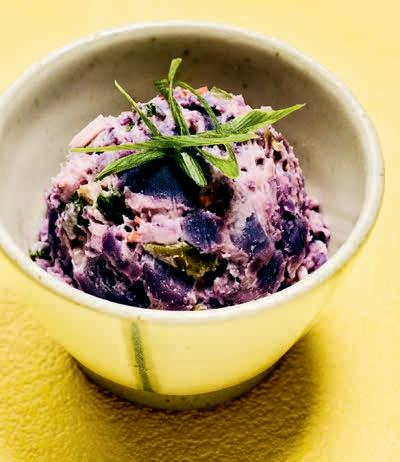
Creamy sweet potatoes meet bright, tangy pickled veggies in this effortless summer side. “The combination of the creamy sweet potato and the acidic, crunchy pickles really works,” Kysar says. Comforting yet punchy, it’s a fresh take on island flavors that will steal the show at any BBQ gathering.
SERVES 4
2 Tbsp. kosher salt, plus more as needed
1 lb. Okinawan sweet potatoes, peeled ½ cup namasu, pickling liquid gently pressed out 2 green onions, chopped, plus more for garnish ½ cup Kewpie mayonnaise, divided, plus more as needed
Freshly ground black pepper
1. Bring a large pot of water to a boil over high heat. Add the salt and sweet potatoes. Reduce the heat to medium and simmer until a knife can easily pierce the center of a potato, about 30 minutes. Drain and let cool on a cutting board to room temperature. Cut into ½-in. cubes and place in a bowl.
2. Coarsely chop the namasu and add it to the bowl. Add the green onions and toss until everything is well-distributed. Add ¼ cup of the mayo to the bowl and toss until everything is well-coated. Taste and season with more salt and pepper. Chill for at least 1 hour before serving. Mix in the remaining ¼ cup mayo, adding more if you want it creamier, and serve chilled, garnished with green onion.
This summer, let your garden and your arrangements do more than just bloom.
Inspired by Jenny Barker’s new book Flower Energy, we’re exploring how seasonal flowers can lift your spirit, spark confidence, and bring moments of joy and calm during summer’s most expansive months.
As the days stretch longer and routines loosen with the arrival of summer, the season carries a lightening energy. School lets out, travel begins, and there’s a collective sigh of relief as life slows just enough to invite ease, joy, and connection. “June and July carry a lightening, exhale-type energy. It’s the moment when the year loosens its grip,” Barker explains. In gardens and homes, this energy shows up in flowers that feel happy, open, and emotionally freeing. Peonies take center stage in June and early July. Barker calls them “emotional release flowers” that “help soften anger, melt frustration, and let the heart unclench.” As peonies fade, dahlias step forward, bringing the celebratory spirit of summer. “Dahlias are all about friendship, celebration, and shared joy. They’re social flowers, perfect for gatherings, long dinners, and summer nights that linger.”
For a calming, natural touch, Barker recommends adding daisies, chamomile, or wildflower-style blooms. “Chamomile especially brings a calming, soothing energy. It quiets anxiety and reduces worry, which feels important as families shift into summer schedules, kids are home, and routines change.”
For joy and confidence, Barker favors bold, expressive flowers. “Sunflowers are natural confidence amplifiers. Their scale, their posture, and especially that deep, dark center create contrast, which energetically ignites inner strength. They’re about standing tall, being seen, and trusting your own light.”
Red roses bring heart-led confidence. “They help you listen to your intuition and move from desire rather than doubt. When you’re feeling unsure or emotionally scattered, red roses reconnect you to your inner voice and personal power." Pairing bright yellows, reds, or hot pinks with sunflowers activates

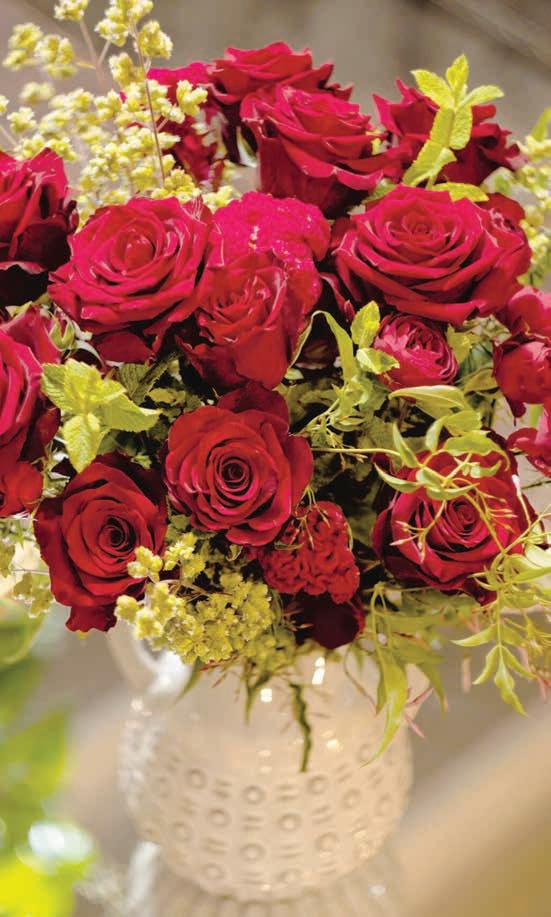
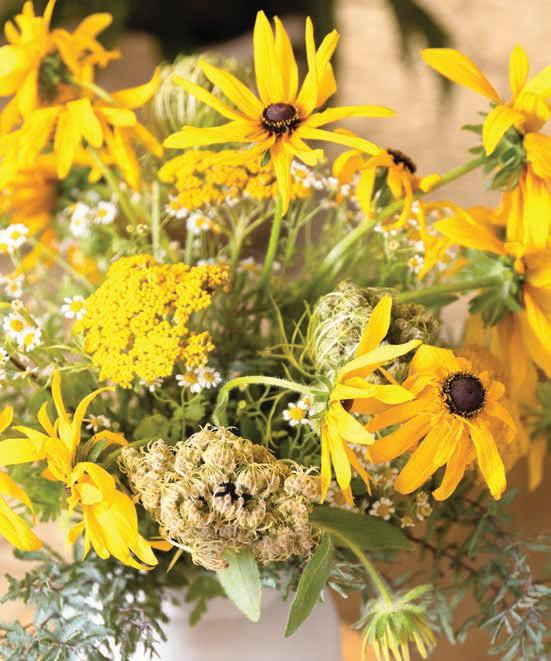
courage and joy, while eucalyptus softens and balances the arrangement. “The result is an arrangement that feels joyful, unapologetic, and emotionally empowering. It’s the kind of bouquet that quietly says, 'Stand in who you are and go for it.'"
Barker’s go-to long-lasting, steady blooms include carnations, chrysanthemums, and spray roses. “They’re durable, affordable, and emotionally stabilizing. They don’t wilt at the first sign of heat or stress, which matters when summer schedules are unpredictable.”
Lisianthus is a favorite for mental ease. “It’s elegant but resilient, and it offers both buds and open blooms on the same stem, which feels symbolic of growth and patience. Even a single stem in a vase feels intentional and calming.”
Barker encourages gardeners and arrangers to take the pressure off and trust their instincts. “The best advice I can give is to take the pressure off. Working intuitively with flowers isn’t about knowing meanings or doing it ‘right.’ It’s about letting your body lead before your mind does,” she says. Barker often mixes professionally grown flowers with clippings from the garden, herbs, branches, and even unexpected food blooms like celery. “Nothing beats the look and energy of garden meets grocery store meets farm.
Jenny Barker curates her go-to summer blooms that feel joyful, calming, and intuitively supportive.
How to use: Let them lead the arrangement. One to three stems in a simple vase feels intentional and bold. Balance with soft greenery or airy fillers. Energy they bring: Confidence, joy, and forward momentum. Activate courage and stand fully in your light.
How to use: Mix sizes and tones for a relaxed, garden-gathered look, or keep in one color family for quiet sophistication.
Energy they bring: Friendship, celebration, emotional openness. Support connection and shared happiness.
How to use: Include both buds and open blooms for movement and depth. Even a few stems anchor an arrangement and make it feel polished yet calm.

For Barker, arranging is more about relationship than perfection. “Let the garden participate. Let things change. Let it feel lived in. When flowers are allowed to be part of your everyday rhythm, their energy speaks for itself.” Staples such as sunflowers, dahlias, roses, mint, and rosemary provide grounding and emotional support, while light, airy fillers like green mist and Queen Anne’s lace add movement. By letting intuition guide your blooms, each bouquet becomes not just a decoration but also a reflection of summer’s joy, ease, and connection.
Energy they bring: Emotional balance and mental ease. Softens stress and supports grounded energy.
How to use: Weave throughout an arrangement or place a single stem in a small vase for airy movement. Softens bold flowers beautifully.
Energy they bring: Lightness, relaxation, and breath. Helps ease anxiety and creates spacious calm.
How to use: Use tight-headed blooms so they open slowly. Mix with garden clippings or branches for refined yet casual charm.
Energy they bring: Stability, comfort, and grounding. Perfect for high-energy summer environments.
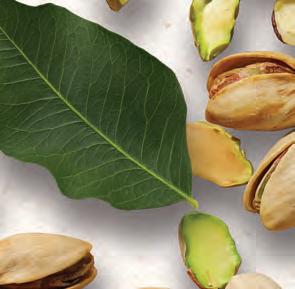
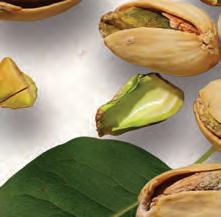

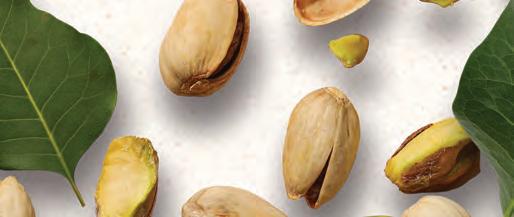



























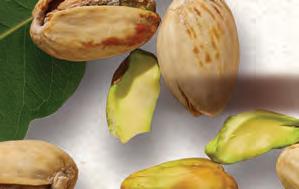
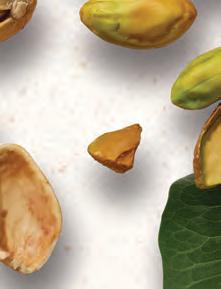
















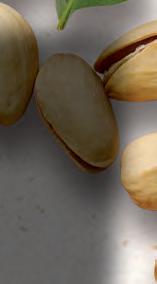
















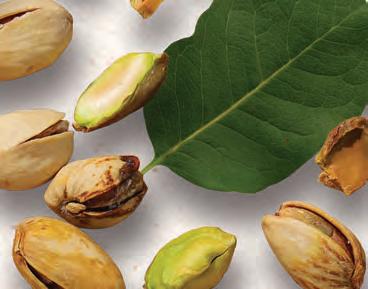










































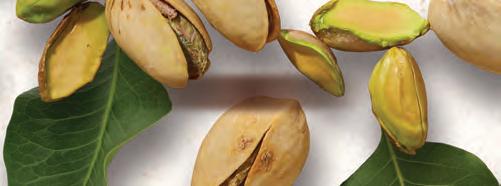
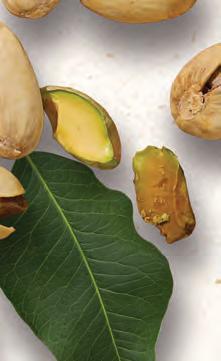
As a fourth-generation farming family that is built around community we know how important root systems are. Both trees and people need them to thrive, which is what sets Nichols Farms apart from any other pistachio grower. With your support, we will keep crafting our pistachios with quality...for generations to come.
California Grown Pistachios































In Cooking the Borderlands, Claudette Zepeda channels the swagger, smoke, and crosscultural genius of Tijuana into recipes that redefine what Mexican food can be.


SERVES 4
3 garlic cloves, minced
4 anchovy fillets packed in oil, minced
1 Tbsp. Grey Poupon Dijon mustard
In the borderlands, flavor doesn’t respect lines on a map. It travels by migration, by memory, by appetite. Few cooks understand that better than Claudette Zepeda who was raised between Tijuana and San Diego. Her work has made her one of the most compelling culinary voices of her generation. A Top Chef competitor and restaurateur known for fearless heat and intellectual depth, Zepeda cooks with the authority of someone who crossed the border daily as a child, absorbing dialects, ingredients, and identities along the way. For her, food is anthropology and autobiography at once.
In Cooking the Borderlands: Spice and Smoke Between Mexico and the States, she distills that lived experience into recipes that pulse with movement. Nowhere is her voice more electric than in the dishes rooted in Tijuana and greater Baja—a region shaped as much by Chinese and Japanese immigration as by ranch culture and street vendors firing up grills before dawn. This is not fusion for novelty’s sake. It’s cuisine born of proximity and exchange.
Consider her Carnitas Coloradas, a Mexicali riff on Cantonese char siu: pork shoulder glossed with piloncillo, five-spice, Shaoxing rice wine, and hoisin, roasted until lacquered and burnished red. It’s Chinatown by way of Baja—sweet, savory, mineral-rich, unapologetically borderland. Or, her grilled chicken with serrano ponzu, where charcoal smoke meets citrus and soy, sharpened with charred chiles. In Zepeda’s hands, ponzu is both import and part of the Baja pantry.
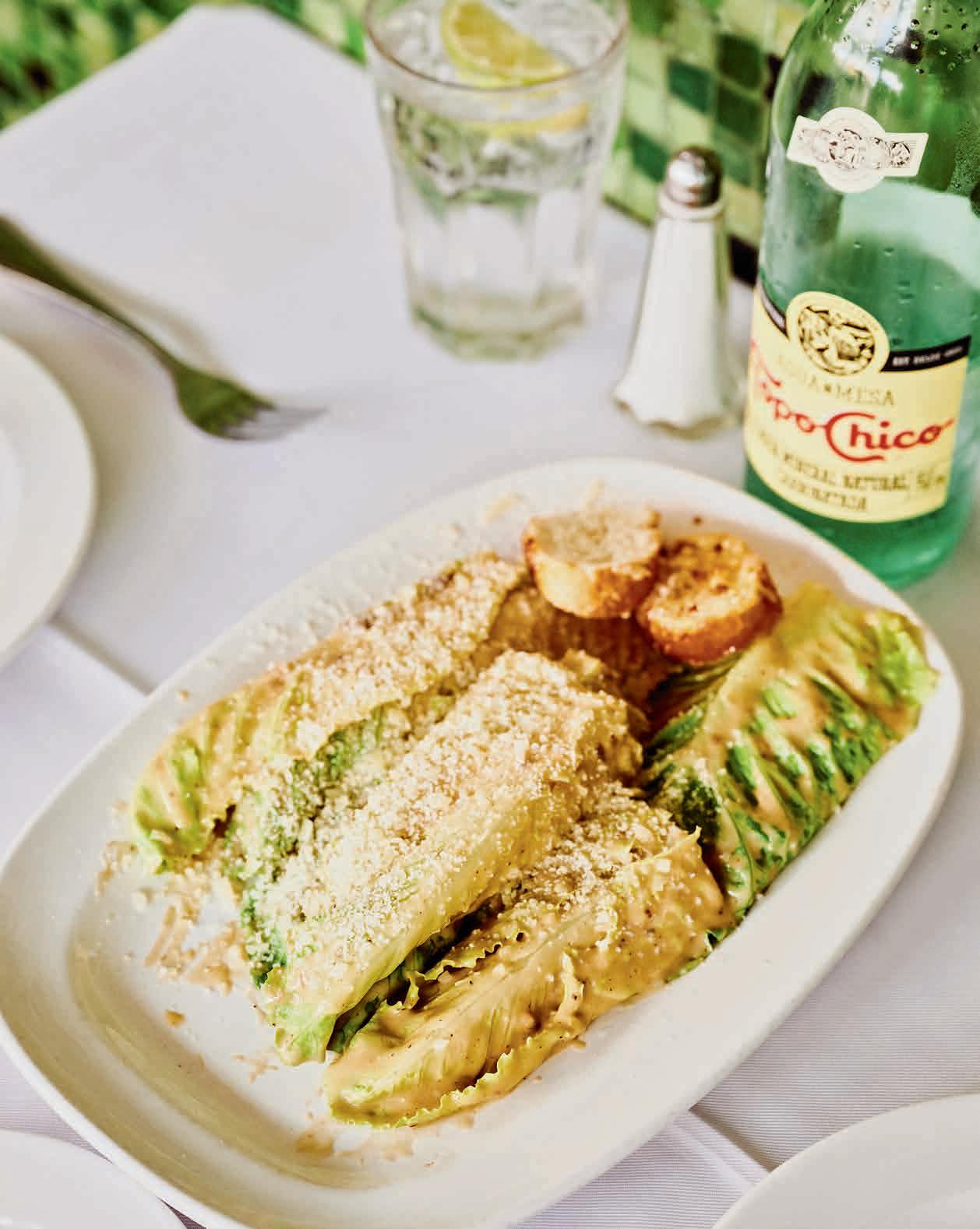
And then there’s the OG Caesar—born in Tijuana dining rooms and emulsified here with anchovy, lime, and Parmigiano-Reggiano cheese. Not a retro steakhouse relic, but a point of pride: proof that the border has long shaped the American table.
These recipes are more than instructions. They are testimony of trade routes, resilience, and cooks who refuse to choose between identities. In Zepeda’s Tijuana, the grill is hot, the salsa bites back, and every plate tells a story that stretches far beyond the border.
1 large egg yolk (pasteurized, if preferred; see note)
Juice of 1 lime (about 2 Tbsp.)
1 Tbsp. Worcestershire sauce
1 tsp. black pepper, freshly ground
¾ cup olive oil
¼ cup finely grated, high-quality, aged Parmigiano-Reggiano cheese, plus more for garnish
4 small romaine lettuce hearts, leaves separated, rinsed, and well dried
8 (¼-in.-thick) baguette slices, toasted until golden brown and crispy
1. In a large bowl, combine the garlic, anchovies, Dijon mustard, and egg yolk. Whisk to form a paste, breaking up the ingredients. Whisk in the lime juice and Worcestershire sauce, then add the black pepper and continue whisking.
2. While whisking continuously, add the olive oil little by little in a thin stream. Do not stop whisking—this is an important step to emulsify the dressing and prevent separation. Once the dressing is emulsified, whisk in ¼ cup of the grated Parmigiano-Reggiano.
3. Add the romaine leaves directly to the dressing in the bowl and toss gently to evenly coat them. Divide the salad among 4 plates and garnish each serving with the toasted baguette slices, plus more grated Parmigiano-Reggiano to taste.
Note: I have eaten raw yolk emulsions a thousand times, but if you would feel better pasteurizing them first, an immersion circulator (what people call a “sous vide machine”) is your best bet. “Cook” the eggs at 135°F for 90 minutes, then cool in an ice bath. The yolk will still be

Char Siu Pork, Mexicali-Style
When this beautiful culinary creation landed on our lazy susan, I was immediately smitten. If you’re familiar with char siu pork, the bright red, sweet-andsavory, honey-lacquered Chinese barbecued pork that hangs in the windows of butcher shops around Chinatown, this is the Mexicali version of it.
The bright red color in this dish actually comes from food coloring, so you can opt out of it if you’d like. To me personally, that signature red ring around the meat is sort of nostalgic, reminding me that the meal is going to be delicious, as dependable as Chinese mustard is hot. For my ode to char siu pork, I include Chinese five-spice powder and ground Sichuan peppercorns. You’ll also notice the use of unrefined piloncillo cane sugar here, which I prefer over regular brown sugar because it contains more minerals that give it a deeper flavor.
SERVES 4 TO 6
2 lbs. boneless pork shoulder ¼ cup ground or grated piloncillo
4 garlic cloves, minced
2 tsp. Diamond Crystal kosher salt (or 1¼ tsp. Morton salt)
1 Tbsp. Chinese five-spice powder
½ tsp. ground Sichuan peppercorns
1 tsp. sesame oil
½ cup plus 2 Tbsp. Chinese cooking wine (Shaoxing)
2 Tbsp. soy sauce
2 Tbsp. hoisin sauce
2 Tbsp. molasses
½ tsp. red food coloring (optional)
2 Tbsp. honey
1. Cut the pork shoulder into long strips, about 2 in. wide and 1 in. thick. You can trim off some of the fat if you want, but don’t trim it completely. Place the sliced pork in a 9-by-13-in. baking dish and set aside.
2. Make the marinade. In a small bowl, combine the piloncillo, garlic, salt, five-spice powder, ground Sichuan peppercorns, sesame oil, 2 Tbsp. of the Shaoxing, the soy sauce, hoisin sauce, molasses, and red food coloring (if using). Whisk until combined.
3. Pour the marinade into the baking dish with the pork and turn the pork to ensure it is fully coated with the marinade. Cover the dish with plastic wrap and place in the refrigerator to marinate for 24 hours, flipping
the strips of pork after 12 hours.
4. After 24 hours, remove the pork from the refrigerator and allow it to come to room temperature, about 30 minutes.
5. Preheat the oven to 475°F. Line a rimmed baking sheet with foil and place a wire rack on top.
6. Arrange the pork on the wire rack, leaving space between the pieces. Place the baking sheet with the pork on the middle rack of your oven. Pour the remaining ½ cup of Shaoxing and ½ cup of water into the baking sheet (below the wire rack), carefully close the oven, and roast the pork for 10 minutes.
7. While the pork is roasting, make the glaze: Combine the honey and 1 Tbsp. of hot water in a small bowl and whisk together. Set aside.
8. After 10 minutes, remove the pork from the oven and brush with the glaze. Reduce the oven temperature to 375°F and return the pork to the oven for 10 more minutes, or until the glaze is no longer shiny. If the cooking wine and water in the baking sheet have evaporated, replenish as necessary.
9. Remove the pork from the oven, flip the pieces, and brush with the glaze again. Put the pork back in the oven for another 10 minutes.
10. Repeat this process of glazing and roasting until you run out of glaze—about two more rounds. (Continue replenishing the cooking wine and water as needed.)
11. Cook the pork until it reaches an internal temperature of 145°F at the thickest part. Remove the pork from the oven, tent loosely with foil, and let the meat rest so the juices can redistribute for at least 10 minutes.
12. If the pork is still not browned or charred to your liking at this point, broil it on the highest oven rack for a few minutes with the door open. For serving, I like to slice it into thin strips and enjoy with steamed rice.

For many of us in the border regions, charcoal-grilled chicken is as beloved a food as tacos. The smell of the meat hitting the charcoal grill takes me back to my early-morning commutes across the border to our new school in San Diego: It’s the smell from the hundreds of food vendors starting their days.
The scene I just described is probably easy to imagine, but what you might not know is that Japanese ponzu sauce is a common staple at restaurants and in homes in Tijuana. Classic ponzu is made by simmering a mixture of soy sauce, mirin, vinegar, katsuobushi (smoked, dried, and shaved fish flakes), and kombu (kelp), then straining and adding citrus juice. It’s a personal favorite of mine, and an identifier for many Norteños or Tijuanenses.
Between 1920 and 1940, a large population of Japanese emigrants arrived in Ensenada, Baja California. From then, Japanese influence stayed relatively confined to the coast and down the Baja Peninsula, where the Japanese helped establish commercial fishing and farming. Japanese-Mexican cross-pollination still gave us some of the tastiest condiments and, importantly, battered fish. (Did you ever think about how the classic fried fish taco looks a bit like tempura? Well, that’s exactly what it is.)
But about this recipe. It’s a classic grilled chicken with a homemade ponzu, so you can have the experience of making your own. Of course, we wouldn’t be Mexican if we didn’t throw in some charred serrano peppers while we’re at it. You’ll probably have leftover ponzu sauce—I keep the extra
sauce handy in a mason jar in the fridge and use it to dress my steamed rice. It will keep for a week in the refrigerator, though in my house, it never lasts that long.
SERVES 4
FOR THE PONZU:
2 whole serrano peppers
3 green onions (white and green parts)
2½ cups soy sauce
½ cup rice vinegar
1 stalk lemongrass, smashed and cut into 2-in. pieces
2 Tbsp. ginger root, freshly grated
3 Tbsp. cornstarch
2 cups orange juice, freshly squeezed
FOR THE GRILLED CHICKEN:
2 lbs. boneless chicken thighs
2 Tbsp. grapeseed oil
Diamond Crystal kosher salt
Ground white pepper
FOR SERVING:
½ cup minced cilantro
Zest of 2 limes
2 limes, cut into cheeks
Steamed rice
1. Chargrill the veggies: Fill a coal chimney with charcoal, light it, and wait 20 minutes until the charcoals turn completely gray with ash. Dump the coals into the bottom of a charcoal grill and place a clean grill grate over them. (Alternatively, set a gas grill to medium-high heat.)
2. Place the serrano peppers and green onions on the grill. Grill them whole, using tongs to turn them so they char on all sides. Once they are charred, remove them from the grill, then set aside until cool enough to handle.
3. Remove the stems and seeds, then mince the peppers and reserve for the ponzu sauce. Mince the green onions and reserve for garnish.
4. Make the ponzu sauce: In a saucepan, whisk together the soy sauce, vinegar, and ¾ cup of water. Toss in the lemongrass and ginger. Place the saucepan on the stovetop and bring the mixture to a simmer over medium heat, then turn the heat off and cover the pot with a lid. Let the ingredients steep for 10 minutes to infuse flavor.
5. Strain the ponzu base through a fine-mesh sieve into a medium bowl. Discard the solids. Then, pour the strained liquid back into the same pot and place over medium heat to bring to a simmer.
6. Meanwhile, in a small bowl, whisk together the cornstarch and 2 Tbsp. of cold water to make a slurry. Pour the slurry mixture into the ponzu, whisking continuously until the sauce thickens. Once thickened, turn off the heat and set the pot aside to cool.
7. After the sauce cools, stir in the orange juice and the minced, charred serrano peppers and set aside.
8. Make the chicken: Now, we’re moving back to the grill. Pat the chicken thighs dry with paper towels and drizzle with the grapeseed oil to coat on both sides. Season the chicken all over with salt and white pepper, then transfer the thighs directly onto the hot grill. Cook for 5 minutes on one side, then turn each thigh and cook the other side for 5 more minutes, or until they reach an internal temperature of 165°F. Remove the thighs from the grill and allow them to rest for 5 to 10 minutes before serving.
9. To serve, spoon the ponzu onto a serving platter to cover and place the grilled chicken on top. Garnish the chicken with cilantro, lime zest, and the charred green onions. Serve with steamed rice and lime on the side, and drizzle with remaining ponzu.

Three share-worthy recipes from Sheldon Simeon’s Ohana Style, built for passing plates, second helpings, and relaxed nights in.
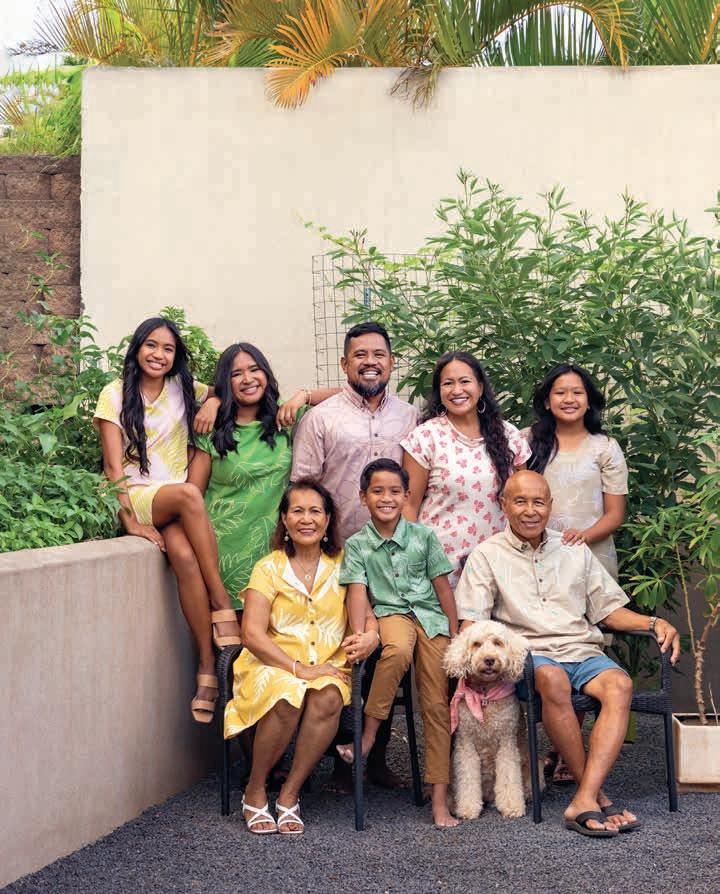
In his latest book, Ohana Style, Sheldon Simeon isn’t trying to teach you how to cook like a chef. He’s asking a simpler, more personal question: Who are you cooking for? That idea carries extra weight coming from Simeon, a Maui-based chef and restaurateur who first won over a national audience on Top Chef, where his unfussy, soulful food—and easy warmth—made him a fan favorite. A finalist in both his original season and Top Chef: All-Stars, Simeon now splits his time between running Tin Roof and Tiffany’s in Wailuku and cooking the way he always has: for family, friends, and whoever happens to be hungry.
Ohana, after all, isn’t just family in the narrow sense. It’s the people who show up—friends, neighbors, coworkers, kids’ friends, aunties and uncles by proximity rather than blood. The people you feel responsible for feeding well, even when you’re tired, even when the fridge looks bleak.
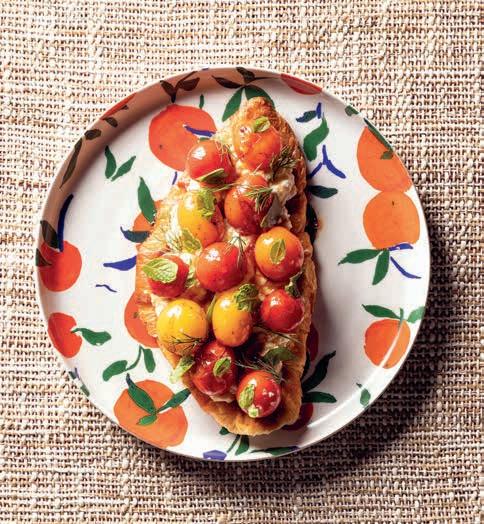
That spirit runs straight through the recipes in this excerpt, which feel less like a formal menu than the way a good night at home actually unfolds. You start with something snacky, comforting, and just clever enough to feel special. Croissant Toasts with Hot Honey Tomatoes and Whipped Ricotta were born of a familiar problem—leftover croissants no one wants the next day—and solved in the
Filipinos—especially Filipinos in Hawaii—love grilling anything they can get their hands on. The sight of meat or fish charring over hot coals and that intoxicating smell that clings to your hair or clothes stir something in us. There’s rarely an occasion, big or small, where cooking “Filipino barbecue” isn’t just a welcome activity but an expected one. So when I describe chicken inasal as “grilled chicken,” that might be underselling it a bit. This isn’t just any old grilled chicken.
My favorite style of inasal is a famous Ilonggo dish from the islands of the Visayas. It’s marinated with layers of citrus, vinegar, lemongrass, garlic, and ginger that infuse a sweet and tangy brine into the meat, then it’s slowly grilled over charcoal and basted with achuete (also known as achiote or annatto) oil, which adds a subtle earthiness and a ruddy red color to the charred skin, and then served with chilespiked toyomansi.
When firing up your grill (use charcoal for the best flavor), keep in mind the cooking surface will have hotter and cooler spots. I like to start over the hottest portion to develop some pleasant bits of char on skin, then transfer it to the cooler side and cover the grill so the meat cooks more quickly and evenly via oven-like indirect heat. That said, I always maintain there’s no such thing as turning and rotating your meat too much on the grill, so the important part is to watch your chicken,
move it around the hot spots as needed, and just make sure it doesn’t burn. The vinegar and citrus work to soften and break down all the connective bits and cartilage, and you’ll end up with a very succulent, juicy piece of grilled chicken. Feel free to serve a big bowl of rice on the side if you want—for me, though, the best partner for inasal is a cold beer.
SERVES 6
FOR THE MARINATED CHICKEN:
2 cups apple cider vinegar
Juice of 1 orange
½ cup shoyu (soy sauce)
½ cup packed light brown sugar
12 cloves garlic, smashed and peeled
1 Tbsp. kosher salt
1 tsp. freshly ground black pepper
4-in. piece fresh ginger, roughly chopped and smashed
2 stalks lemongrass, trimmed and smashed
6 skin-on chicken leg quarters
FOR THE BASTING OIL:
½ cup neutral oil
1 tsp. ground annatto or smoked paprika
2 Tbsp. salted butter
2 Tbsp. shoyu (soy sauce)
2 Tbsp. fresh lime juice
Grated zest of 1 orange
FOR THE DIPPING SAUCE: Toyomansi (recipe follows)
Small hot chiles, such as Thai or Hawaiian chiles, stemmed and lightly crushed (optional)
1. Prepare the basting oil: In a small pot, combine the oil and annatto and stir over medium heat until the powder has dissolved and the oil has turned a deep red color, about 1 minute. Add the
butter and stir until melted, then remove the pot from heat and let cool. Once cooled to room temperature, stir in the shoyu, lime juice, and orange zest.
2. Make the dipping sauce: In a small bowl, mix the toyomansi with a few whole chiles to taste. Set aside until ready to serve.
3. Prepare a grill for high indirect heat (for a charcoal grill, push the coals to one side; for a gas grill, leave one or two burners off). Using tongs and an oil rag or paper towels, oil the grates of the grill.
Chicken Inasal, continued Note: The key ingredient in an excellent chicken inasal marinade is acidity (in this case, milder-tasting apple cider vinegar and citrus), which helps tenderize the meat while adding a tangy flavor complement from the floral aroma of lemongrass and the punch of black pepper, ginger, and garlic. There is a sweet spot to the marinade time—I aim for at least 4 hours to ensure absorption, but after 12 hours, the vinegar can start to break down the fibers in the chicken and turn the meat mushy. Basting the chicken often with the annatto oil is crucial, too, as it ensures the meat stays moist and develops a gorgeous glistening skin. More basting is better in this case.
4. When the grill is hot, set the chicken skin-side down on the direct heat side of the grill. Once the chicken has some char and grill marks and releases easily from the grates, 2 to 3 minutes, move the chicken over indirect heat, still skin-side down. Cover the grill and cook, turning the chicken every couple of minutes and basting frequently with the annatto oil, until the juices run clear or a thermometer inserted into the thickest part of the thigh registers 160°F, another 8 to 10 minutes. The chicken should spend about three-quarters of its grilling time skin-side down, which will create a nice, browned crust. If the skin is browning too quickly, move it farther away from the heat source.
5. Transfer to a serving platter (or cutting board) and let rest for 10 minutes. Serve warm with the dipping sauce.
MAKES ABOUT ¾ CUP
½ cup shoyu (soy sauce), plus more to taste
2 Tbsp. fresh lime juice, plus more to taste
2 Tbsp. fresh lemon juice, plus more to taste
Grated zest of 1 orange Sugar (optional)
Freshly ground black pepper (optional)
In a small bowl, stir together the shoyu, citrus juices, and orange zest until combined. The ratio can vary depending on your taste, but I usually go with roughly 2 parts shoyu to 1 part juice. Adjust with more shoyu or juice to achieve your preferred balance of salty and tangy flavors. You can also add a touch of sugar or pepper for a boost of flavor, if desired. Store in a sealed container for up to 2 weeks in the fridge.
Everyone loves fresh croissants; nobody loves day-old croissants. That is, until I realized that leftover croissants are essentially pre-buttered toast, and they turn out great when you squish them down and griddle them in a hot pan until they’re flaky and crispy once more (look at the “flat croissant” trend on TikTok to see what I mean). Here, I’m pairing some crispy croissant toasts with a low-effort combination that would be just as good over any type of toasted bread: jammy roasted tomatoes in a sweet-spicy honey vinegar sauce with fluffy whipped ricotta. Great for impressing any friends invited over for brunch—no mention of leftover croissants necessary.
SERVES 4
1 pint cherry tomatoes 3 cloves garlic, minced 1/3 cup plus 2 tsp. extravirgin olive oil
heat. Using a rolling pin, flatten each croissant until it is as thin as you can get it, then spread a thin layer of butter on each side. Working in batches, toast the flat croissants in the skillet until browned and crispy, about 3 minutes per side, pressing them down to develop a nice crust. Remove from the pan and let cool.
4. In a medium bowl, whisk together the vinegar, honey, chili garlic sauce, and shoyu. Gently fold in the roasted tomatoes and any oil remaining in the pan. Season with salt and pepper to taste.
4 plain croissants
Softened salted butter
3 Tbsp. apple cider vinegar
2 Tbsp. honey
2 tsp. chili garlic sauce or sambal oelek
1 tsp. shoyu (soy sauce) Kosher salt
Freshly ground black pepper
1 cup whole-milk ricotta cheese
Grated zest of 1 lemon
2 tsp. fresh lemon juice ¼ cup chopped fresh herbs (any combination of mint, dill, or basil)
1. Preheat the oven to 400°F.
2. Arrange the tomatoes and garlic on a 9-by13-inch baking sheet or a similar-size baking pan and drizzle with 1/3 cup of the olive oil. Roast undisturbed until the tomatoes are blistered and soft, 15 to 20 minutes. Remove from the oven and let cool.
3. While the tomatoes are roasting, place a large skillet over medium
5. In a small bowl, combine the ricotta, the remaining 2 tsp. olive oil, the lemon zest, and the lemon juice. Blend with an immersion blender or electric mixer on low speed until the ricotta is light and fluffy, about 2 minutes. Season with salt and pepper to taste.
6. To serve, spread each croissant with a layer of whipped ricotta. Spoon the tomato salad on top and garnish with the chopped herbs. Serve immediately.

The first place I tried stir-fried lettuce was at 8 Fat Fat 8 Bar & Grille, a dive bar in Honolulu that not-so-secretly serves some of the best Chinese food on the island. It was at the end of a long, drink-filled night, and while questionable decisions were made (see: tequila shots), ordering the garlicky, tendercrisp, wok-kissed lettuce was not one of them.
The traditional Chinese version of this dish is made with iceberg lettuce, but 8 Fat Fat 8’s chef used romaine instead, cut into short spears and cooked with shoyu, plus an aggressive amount of minced garlic and chiles. That combination made me think of Caesar salad, and this lightning strike was the result: a savory romaine stir-fry with bold flavors and snappy crunch, set off with fragrant anchovy croutons, grated parmesan cheese, and a brightening squeeze of lemon. Much like you’d present a salad alongside an entrée, enjoy this as a side with rice and meat dishes.
SERVES 2 TO 4
FOR THE ANCHOVY CROUTONS:
¼ cup extra-virgin olive oil
4 slices white sandwich bread, cut into ¼-inch cubes (about 1½ cups)
6 anchovy fillets, or more to taste, roughly chopped Kosher salt
FOR THE STIR-FRY:
2 medium heads romaine lettuce
1 Tbsp. oyster sauce
1 tsp. shoyu (soy sauce)
1 tsp. sugar
1 tsp. Worcestershire sauce
1 tsp. toasted sesame oil
6 cloves garlic, minced
1 lemon, zested and halved Kosher salt
Freshly ground black pepper
½ cup grated parmesan cheese
1. Make the anchovy croutons: Line a plate with paper towels and have it near the stove. Place a large sauté pan or wok over mediumlow heat. Add the olive oil, bread cubes, and anchovies to the skillet and stir to combine, ensuring the bread cubes have soaked up the oil.
2. Cook, stirring as needed, until the croutons are golden brown and crisp on the outside and have released their oil back into the pan, 10 to 12 minutes. Adjust the heat if the croutons are browning too fast. Transfer the fried croutons to the paper towels and sprinkle with salt. Leave any remaining oil in the pan.
3. Make the stir-fry: While the croutons are cooking, trim the tops and bottoms of the lettuce heads. Halve them lengthwise, then cut them crosswise into 2-inch lengths.
4. Return the same pan or wok (with the reserved oil) to medium-high heat. While the pan is heating, in a small bowl, whisk together the oyster sauce, shoyu, sugar, Worcestershire sauce, and sesame oil. Set the stir-fry sauce aside.
5. When the oil in the pan
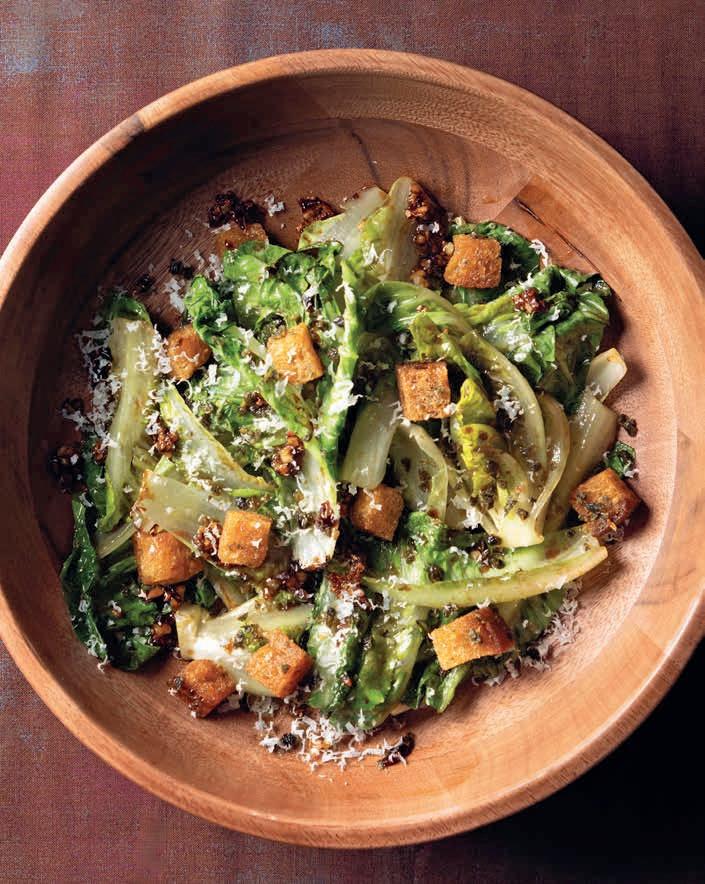
is shimmering, add the garlic and lemon zest and cook, stirring frequently, for 15 to 30 seconds, until fragrant. Add the lettuce and stir-fry for about 2 minutes, until it starts to wilt. Pour the stir-fry sauce over the lettuce and cook for another 1 to 2 minutes, until the lettuce is softened but still has some crunch. Taste and season with salt, if needed.
6. Transfer the lettuce (and all the pan juices) to a large plate or shallow bowl. Top with a generous amount of black pepper, the anchovy croutons, and grated parmesan. Squeeze the lemon halves over the top just before serving.
most Simeon way possible. Flatten them, griddle them, lean into what they already are. Top with jammy roasted tomatoes dressed in honey, vinegar, and heat, then cool it all down with whipped ricotta. It’s generous, a little indulgent, and exactly the kind of thing you put out when people are hovering in the kitchen, opening drinks, waiting for dinner to happen.
The Sautéed Caesar with Anchovy Croutons picks up that thread. It’s a Caesar, yes— but one that’s been nudged closer to the stove than the salad bowl. The romaine gets just enough heat to soften without losing itself, while anchovy-forward croutons bring crunch and salt and depth. Then comes Chicken Inasal, the dish that centers the meal. Marinated with citrus, vinegar, garlic, and spice, grilled until smoky and deeply flavorful, it’s the kind of food that feeds a lot of people without a lot of ceremony. Rice on the side, maybe something green, maybe not. Taken together, these recipes reflect the heart of Ohana Style: cooking that’s flexible, unfussy, and grounded in real life.
The Sunset Wine Club features the best bottles
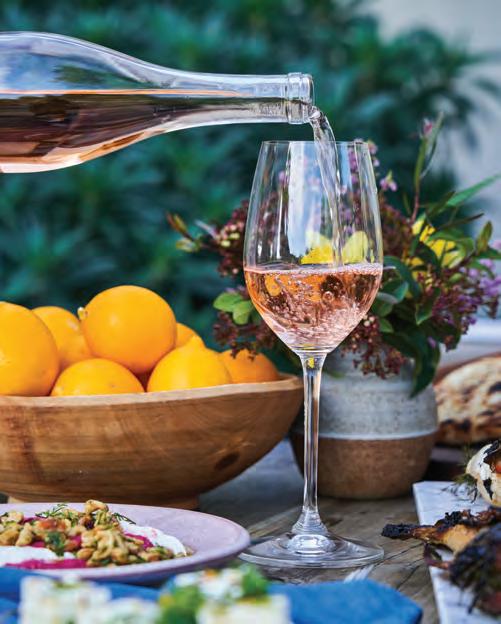
WINES IN OUR LATEST SHIPMENT

2022 Norris ‘Estate’ Riesling, Ribbon Ridge, OR
PAIRS WITH: Chicken Inasal (page 63). The Riesling’s bright acidity and ripe orange flavors balance the dish’s tangy vinegar and citrus marinade, while its floral and citrus notes echo the lemongrass and ginger, refreshing the palate against the smoky, umamipacked chicken.

2019 Iron Horse Vineyards Russian Cuvee Green Valley of Russian River Valley
PAIRS WITH: Croissant Toasts with Hot Honey Tomatoes & Whipped Ricotta (page 64).
The wine’s crisp acidity and fine bubbles cut through the buttery croissant and creamy ricotta, while its bright citrus and subtle toast notes complement the sweet-spicy tomatoes.

2019 Inizi Charbono, Calistoga, Napa Valley
PAIRS WITH: Carnitas Coloradas (page 64).
The wine’s dark fruit, firm structure, and savory edge stand up to the dish’s sweet, spice-laced glaze, while its acidity cuts through the richness of the pork and balances the interplay of sweet, umami, and aromatic spice.
here’s no easier way to drink well than the Sunset Wine Club, a selection of story-worthy wines produced by the top vintners in California, Oregon, Washington, and beyond— delivered straight to your door. We’ve partnered with the country’s premier online wine retailer, Wine Access, to curate a standout mix of reds, whites, bubblies, and rosés. Think of each deliveryas a box of aperitifs, party-ready bottles, and weeknight dinner solutions. Even better, they’ve been selected to go with the recipes and menus in the issue you’re holding in your hands. As a member of the Sunset Wine Club, you will receive the following exclusive benefits:
Each bottle is thoughtfully crafted by a group of diverse, environmentally responsible winemakers.
Sunset
Every bottle comes with exclusive tasting notes and suggested pairings for Sunset recipes, hand-picked by sommeliers.
First Shot at Rare Gems and Icons
You’ll be first in line to claim the newest, highly allocated wines. These are bottles Sunset editors stand behind and serve in their own homes.


Subscribe to the Sunset Wine Club and you’re not just getting wine shipments. You’re getting a taste of the magazine’s featured selections and the captivating story behind each bottle. It’s an invitation to sit and sip at the Sunset table. $120 per shipment.
2024 Cosmologist Sauvignon Blanc Napa Valley
PAIRS WITH: The OG Caesar salad (page 58). The wine’s vibrant acidity cuts through the richness of the creamy, savory dressing, while its citrus and green herbal notes mirror the lemon, garlic, and anchovy, enhancing the salad’s savory depth and keeping each bite feeling fresh and lifted.
2024 Omen Teroldego Lake County
PAIRS WITH: Sautéed Caesar with Anchovy Croutons (page 65).
The Teroldego’s dark fruit and subtle earthiness complement the umami depth of anchovy, Parmesan, and savory sauces, while its bright acidity cuts through the richness and refreshes the palate against the wok-kissed greens.
PAIRS WITH: Grilled Chicken with Serrano Ponzu (page 61). The Malbec’s ripe dark fruit and olive notes are balanced by fresh, green herbal notes that mirror the serrano, cilantro, and citrus elements of the ponzu, while its supple tannins and acidity complement the smoky grilled chicken and vibrant, tangy sauce.
The story of how one woman and one cougar inspired an experiment in reviving the wild within our cities.
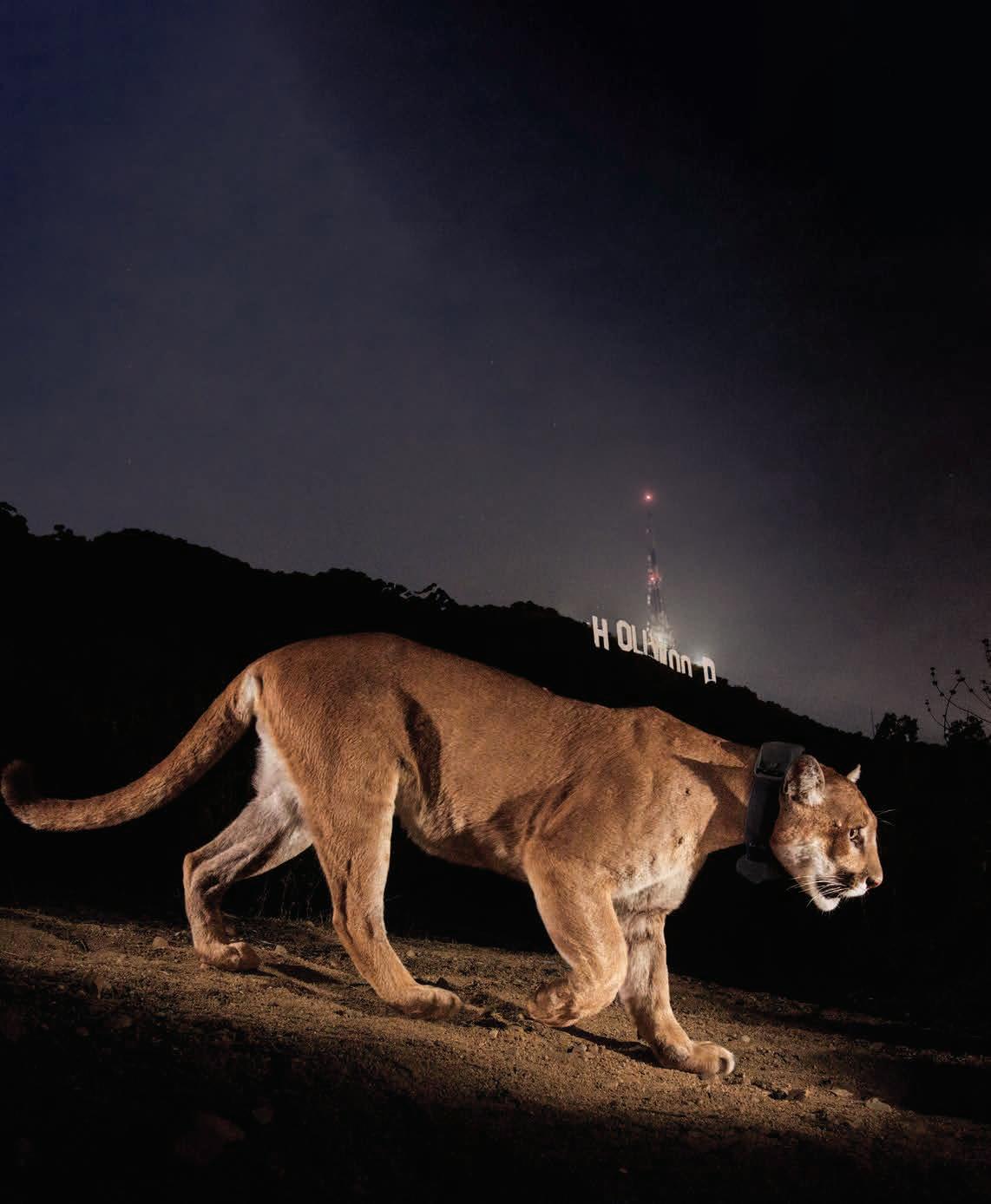
Beth Pratt and I meet for the first time at an Agoura Hills trailhead early on a Sunday morning. The one concealed by the monumental infrastructure project she’s spearheading. Which, as she gets out of her sensible all-wheel-drive SUV, stuffed with boxes of books, pamphlets, and life-size mountain lion cutouts, feels somewhat off-brand.
She lives near Yosemite National Park, is a staffer at the nonprofit National Wildlife Federation, and studies butterflies in her spare time. She’s published two books on Yosemite wildlife. She looks every bit the crunchy professional environmentalist, not exactly the type invited to hobnob with Leonardo DiCaprio and Southern California’s most powerful philanthropists. She leads me up a short, steep hike to an overlook in the Santa Monica Mountains. High enough for a proper view of what has become her life’s work: a nearly one-acre overpass unlike any other that spans the 101 Freeway. When it opens, currently set for late 2026, the Wallis Annenberg Wildlife Crossing will be the largest wildlife crossing in the world.
It’s a supersized overpass. Power, water, gas and communication lines had to be rejiggered and buried. That kind of thing is expensive and time-consuming, and not everyone is sold. What started as a back-of-the-napkin idea has grown into a roughly $114 million project, with rising costs fueling criticism. The timing and terrain have placed this earthy moonshot in the public eye at a pivotal moment in the city’s evolution. It is the West’s wide open spaces, laced with mountains and canyons, wildflowers and wildlife, that inspired so many to move here generations ago. Over the years, historic trails became roads that spread into highways and then freeways that truncated migration routes, shrunk gene pools, and allowed resilient native landscapes to give way to more combustible ones. Whatever your opinion, this will end up the most visible use case for how cities and suburbs across the West might begin to restore the very landscapes that made them worth living in to begin with, much like how The High Line in New York led to the botanical revitalization of neglected corners of cities around the world. But before looking ahead to what could become, it’s worth understanding how this experiment came to be.
“This is the only place in this entire region where there is protected space on both sides of the freeway,” Pratt says. “It’s the funnel in the hourglass.”
Peering down from above, it’s easy to see. On the north side of the 101, foothills connect to bigger mountains, home to the Los Padres National Forest, which runs north all the way through Big Sur. That’s over 1,000 square miles of wild space. Surrounding our promontory are more than 250 square miles of protected land, in the form of multiple state parks and the Santa Monica Mountains National Recreation Area. Not bad, considering it’s tucked between the upmarket suburbs and Malibu. These two distinct wild spaces share the same ecosystem, the complex and vibrant nature that helped give early Los Angeles its utopian reputation. It’s home to hundreds of native plants and animals, including the charismatic apex predator that drew Pratt down here from her gorgeous Yosemite perch years ago: the mountain lion.
Just a few of the animals native to Southern California that will benefit from the wildlife crossing.

The shallow depression that connects them— Liberty Canyon—has been severed by a roaring freeway. Meaning the flow of life has been cut off. Such a thing is disastrous for threatened species like the mountain lion and its habitat, which is why scientists have labeled this crucial quarter-mile a biodiversity hotspot. And it’s why, for the past 14 years, Pratt has been devoted to repairing this broken ecological link.
“We didn't know how important connected landscapes were to preserving ecosystems before,” Pratt says with a shrug. “Now we do.”
And yet were it not for one particularly precocious mountain lion, none of this would have happened. Pratt wouldn’t be here with me, and it is doubtful anybody else would have endured a decade and a half of 60- to 80-hour workweeks to help fix it.
You’ve probably heard P-22’s story before. Name another mountain lion that has been featured in newspaper spreads all over the world or profiled on 60 Minutes. But back in 2010, he was just another blind cub born around the Agoura Hills sagebrush, on the wrong side of the freeway.
His father, P-1, the so-called “King of the Mountains,” was the most feared mountain lion among his kind, and he had the largest territory in the Santa Monicas, but there is no nepotism among cougars. Once a juvenile is orphaned by its mother, which can happen as early as 15 months, it is on its own. Adult mountain lions kill young males that stray into their range, but P-22 was locked into the small half of the lopsided hourglass. Without a funnel, there was no safe place for P-22 to go. Crossing the 101 was suicide, so he headed for the city.
He wasn’t discovered there until 2012, when Miguel Ordeñana was a field biologist on an urban wildlife study in Griffith Park—home to the Los Angeles Zoo, the Griffith Observatory, and the Greek Theatre. Not that anybody expected much from the survey. Ordeñana placed camera traps along park boundaries and on an overpass above a stretch of the 101 known as the Hollywood Freeway, which provided a gateway into Hollywood Hills. He collected the SD cards and reviewed the footage before anyone


“We didn’t know how important connected landscapes were to preserving ecosystems before ... Now we do.”
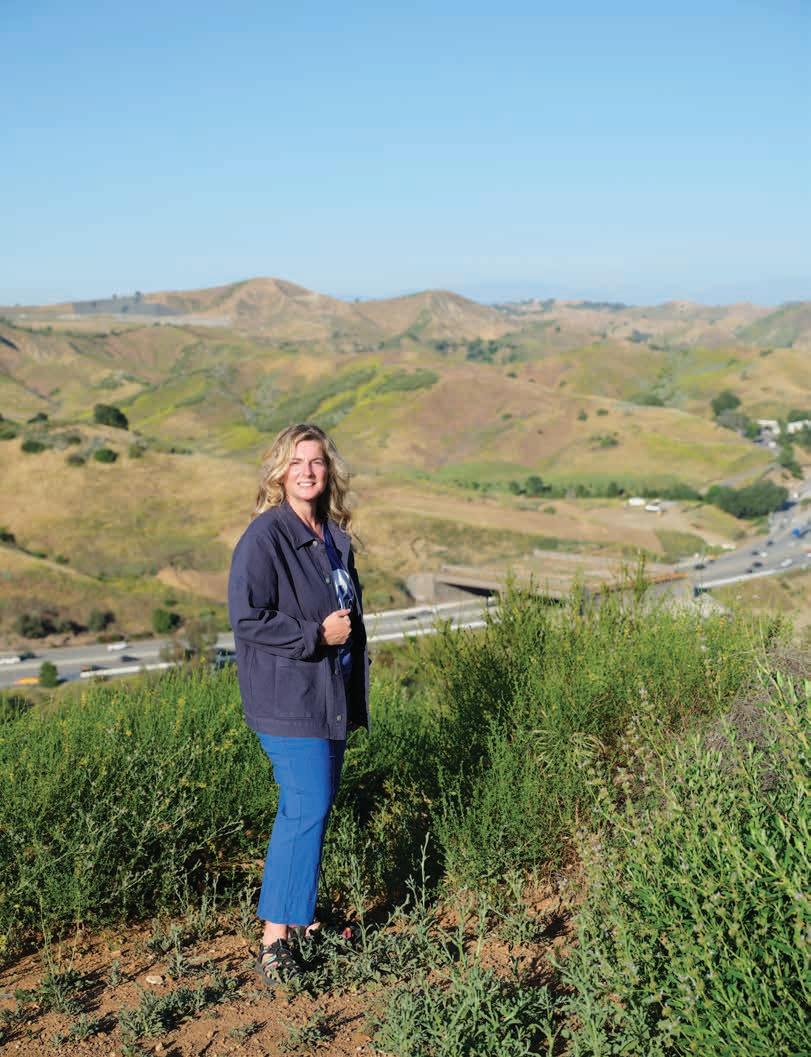
else, meaning he was the first to see the photo of an unmistakable feline posterior. The photo surprised even the local wildlife biologists who study mountain lions in Los Angeles County. They promptly tracked, collared, and tagged him as P-22. “P” for puma; “22” because he was the 22nd mountain lion collared in the county.


Genetic testing determined P-22 was born on the northern edge of the county, which meant he had to cross two of the busiest freeways in the country—the 405 and the 101—to reach the park. A first.
Beth Pratt could hardly believe what she read in the Los Angeles Times. She’d been in love with big cats since she was a kid, thanks to classics like Wild Animal Kingdom and Born Free, the true story about a lioness raised by conservationists, and she had just started work at the National Wildlife Federation. She promptly called Jeff Sikich, a wildlife biologist with the National Park Service, who invited her down to Griffith Park to track P-22. “My first reaction was, ‘Oh my god, get this cat out of here. There's merrygo-rounds and celebrities walking their dogs. It shouldn’t be here.’” Pratt says.
Even collared, P-22 proved impossible to locate that day, but the more Sikich talked about mountain lions and their challenges in such an urbanized environment, the more it sank in that these cats belong here. This was their domain long before the merry-gorounds and the celebrities walking their dogs, and Pratt was overcome with an urge to help. Over Thai food that evening, Sikich mentioned how useful it would be to build a wildlife corridor out where P-22 was born. Not that he expected much to come from it.
The next time Pratt and I talk, we are retracing P-22’s steps through the Hollywood Hills, something she’s been doing annually for a decade. Although the exact route the cat carved is unknown, she took a dreamer’s liberties and started her 50-mile hike at the wildlife crossing the day the first seedlings were planted on the overpass. We meet at midday on day three of her four-day trek in Coldwater Canyon Park, where we pick up a trail that winds past wrought-iron and chain-link fences that separate the wild and tangled oak-chaparral vegetation from tame



and immaculate rose gardens, swimming pools, and tennis courts. Our destination is the Hollywood Bowl Overlook, six miles away. Below us, Studio City hums.
“This walk really tells the story of what these animals have to navigate,” Pratt says when I ask her why she makes the annual trek. “Navigating these neighborhoods, there’s dogs barking, headlights, noise. He had to navigate these stressful urban settings.”
After Pratt’s initial meeting with Sikich in 2012, she spent a year researching wildlife crossings, a concept that took hold in France as early as the 1950s. At Banff in Canada from the 1970s to the mid-1990s, a series of 24 overpasses and underpasses were built to enable coyotes and bears, cougars and deer, elk and moose to cross the high-speed TransCanada Highway unharmed. In 2014, Pratt helped Caltrans apply for a federal grant that would cover a feasibility study to see if a similar wildlife crossing at Liberty Canyon was possible, and she organized a rally that marked the launch of her Save L.A. Cougars campaign.
“I thought 20 people would show up,” Pratt says. 400 people came, including a busload of students carrying signs demanding a wildlife corridor. “It was like, wow, we’re really onto something here.”

P-22 was out living his best L.A. life. When he wasn’t hunting neighborhood deer or feasting on the Canada geese that grazed the fairways on the public golf course, he was sleeping tucked away in the lush Forest Lawn cemetery.


Although his collar did ping in Universal Studios, and the cat certainly cruised Mulholland Drive. In 2013, National Geographic photographer Steve Winter captured a stunning remote portrait of P-22 strolling past the Hollywood sign. People all over the world saw that photograph and fell in love.



“And love,” says Pratt, “is the first step toward action.”
Of course, it takes more than love to build the world’s largest wildlife crossing. It takes cash, and lots of it. The feasibility study proved that Liberty Canyon was the ideal location for a crossing, but an underpass—the less expensive option—wouldn’t work. It had to be an overpass, with an original estimated cost of $30 to $40 million, and Pratt had never held a fundraising position. “I had no Rolodex,” she says. She started out by courting individuals, soliciting small donations. “I remember when we got our first $500 donation. I was so excited I went up onstage at a rally with one of those big checks.”
She wrangled about $1.2 million from the California State Coastal Conservancy to cover the engineering costs. Then in 2015, Pratt met with Leonardo DiCaprio and his foundation. He kicked in a big check, and his involvement opened doors. In 2016, the legendary philanthropist Wallis Annenberg met with Pratt and was intrigued by her intelligence and spirit. She ponied up $1 million and watched Pratt leverage it into 20 more.
“This is the only place in this entire region where there is protected space on both sides of the freeway ... It’s the funnel in the hourglass.”
Pratt came back to the Annenberg Foundation in 2021, once the design was finalized. By then, the construction budget had ballooned to over $80 million, which included burying Southern California Edison’s utility poles, mitigating future fire risk. Annenberg greenlit a $25 million challenge grant, which meant Pratt had to match it to earn the funds. Match it she did. Rising costs, some driven by tariffs, drove the project to its sizable price tag. Over the years, Pratt has continued to work her high-low game. She and DiCaprio remain in touch, and she moderates P-22’s Facebook and Instagram pages. She also hocks P-22 swag with the help of her mother, who stores it all in her house. You could find fault in that brand of fetishization. In fact, Pratt has been criticized for turning P-22 into a celebrity. Only P-22 never was a celebrity. He was a pioneer. Like a wolf venturing into new territories, expanding and strengthening the wild wolf population. “It’s not that individuals are everything in nature,” Pratt says, “but scientists are starting to see that individuals do drive change and adaptation, for the good of the whole population.”
As the sun casts its dusky glow over Mulholland Drive, Pratt and I close in on the Hollywood Bowl Overlook. We reach the easternmost end of Mulholland Drive. Below us, the Hollywood Freeway snakes through the canyon like a writhing anaconda. Pratt and I take a moment to imagine what P-22 must have thought of it. On the other side, we can see undeveloped hills: the promise, or at least the possibility, of safe haven.
Pratt did get to meet him in the end. The very end. She’d tracked him several


times and had come close, but it wasn’t until 2022, after he’d been hit by a car and was subsequently diagnosed with Stage 2 kidney disease, and after the euthanasia decision had been made, that she got her face-to-face.
“They let me spend 30 minutes with him. He had this whole room, but he came and lay down next to me. I could feel him breathe. It was probably the first time in history that a wild mountain lion had a blonde woman sob uncontrollably in front of him.”
Pratt spoke to him through a barred gate. He perked his head up and hissed, then he relaxed as she promised him she would see the project through. More than 5,000 donors have contributed to the crossing so far. A retired couple from the Midwest, who had only ever visited L.A. twice, donated $1 million. And $20 donations have tumbled in from Florida and Australia, too.
Without the crossing, some biologists believe that mountain lions will eventually die off in the Santa Monica Mountains, and without an apex predator around, mule deer would multiply, impacting vegetation. That’s how healthy and diverse chaparral habitat devolves into invasive fields of mustard grass, which has proven to be a tinderbox for destructive wildfires in drought-prone Southern California.
The overpass is built, but there is more to the crossing than brick and mortar. There are more than 50,000 seedlings to plant on the one-acre bridge and in the surrounding hills—produced from more than one million seeds collected by hand in and around Liberty Canyon. Once the utility lines are buried, berms will be built to connect the bridge with the mountains on either end. The native plant restoration and the buried power lines will further mitigate future fire risk in an area that has been blitzed by wildfires twice in eight years. Soon, freeway traffic won’t even see an overpass. It will feel like they are tunneling through a wild mountain. When the ribbon is cut later this year, the crossing will be open for native wildlife. “This is going to help wildlife for 100 years,” says Pratt, “and when I was a little girl, that's all I wanted to do.”
Journalist Adam Skolnick is the co-writer of David Goggins’s bestselling memoirs. His debut novel American Tiger is inspired by a true story about an escaped tiger that roamed the Southern California suburbs.



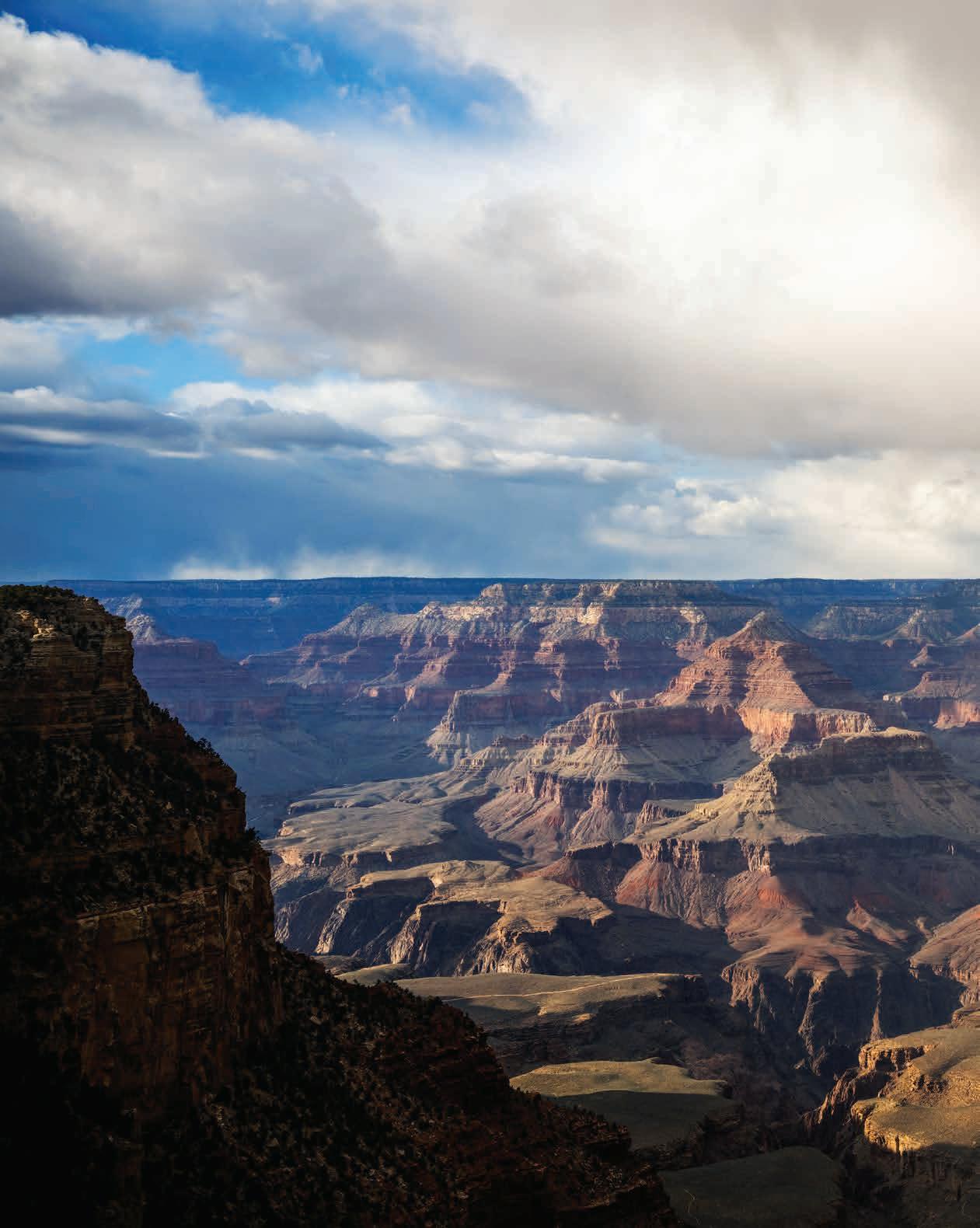
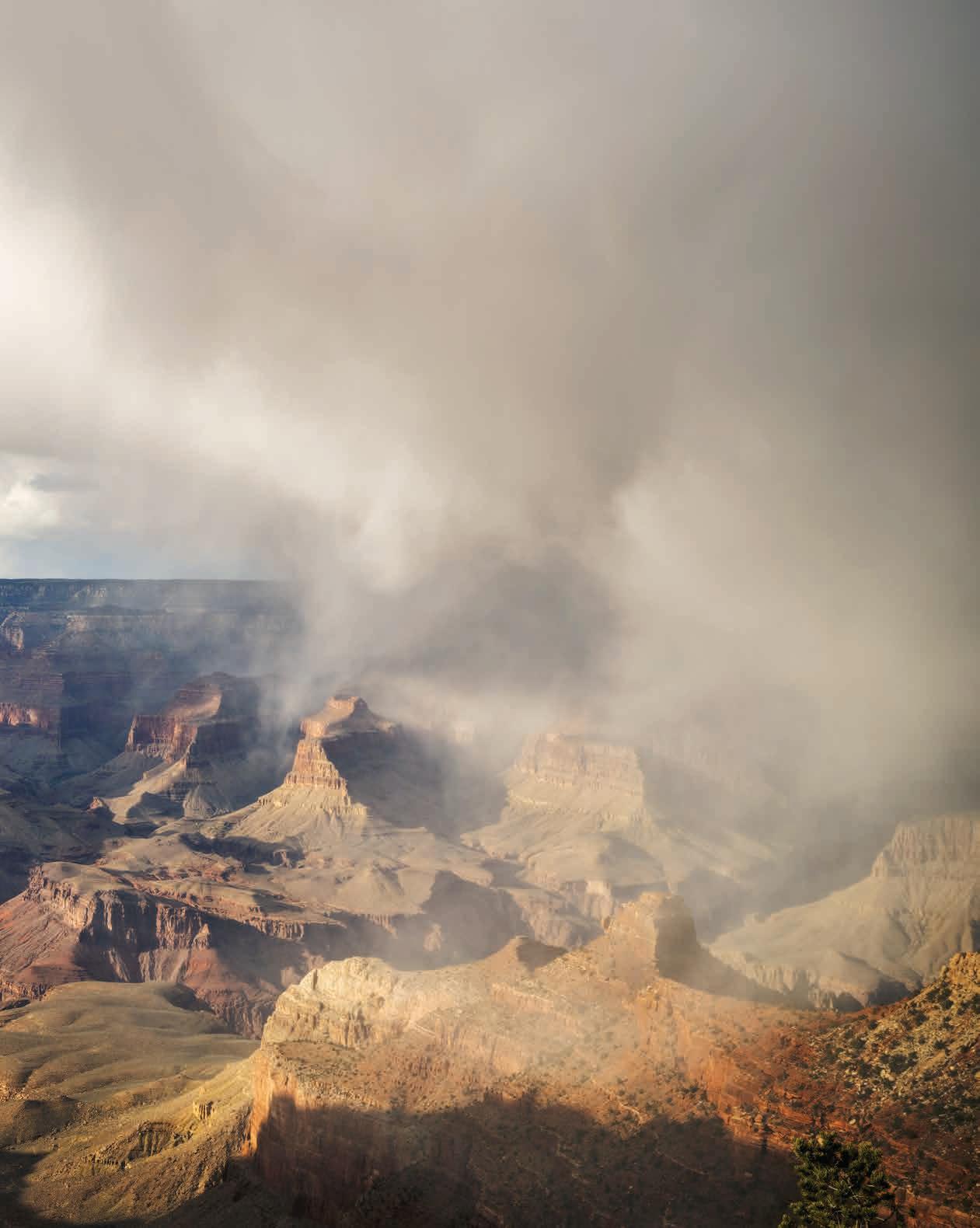
The eternal yet ever-evolving Grand Canyon is as mystical and awe-inspiring as ever. As we celebrate 250 years of America, 110 years of National Parks, and 100 years of Route 66, now is the time to make the pilgrimage to this wonder of the West and the world.
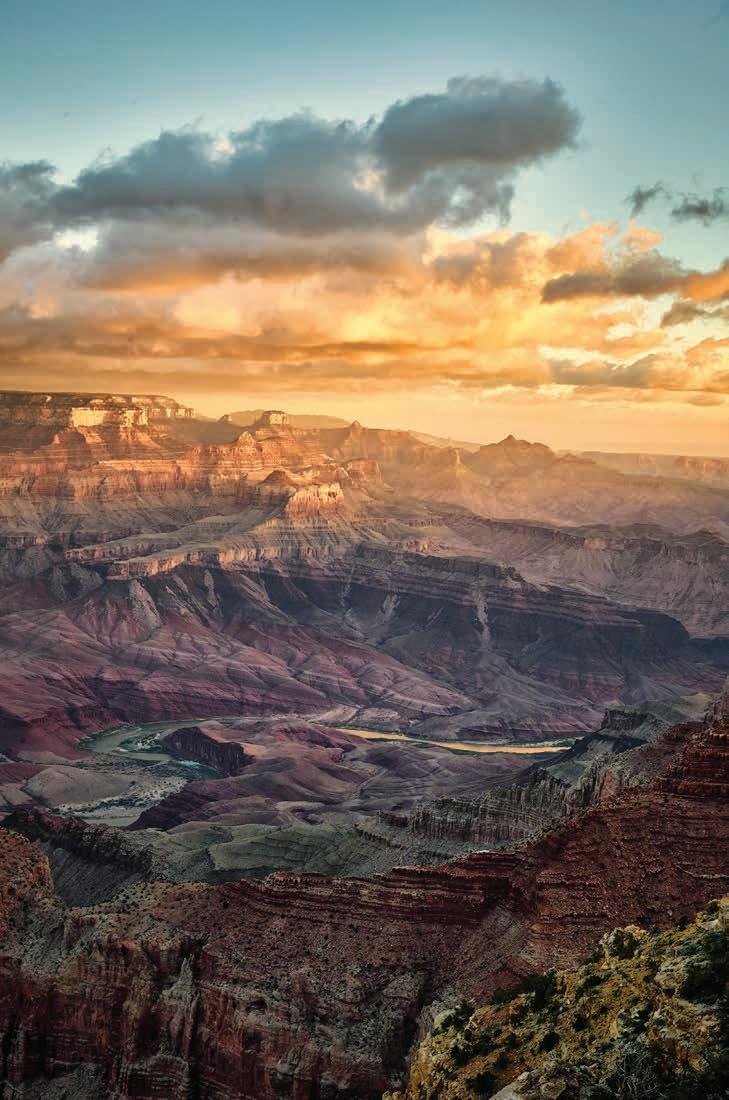
T“The sun, clouds, and sky changing constantly during the day make the colors deep red, orange, yellow, and all through to dark blue. I am not an artist, so I can’t describe it in words. You must go and see it for yourself … Words are weak things with which to picture Paradise Unknown. Even Milton would have been stumped. The camera does it best, but the rainbow colors are lacking, and then, too the rain is no respecter of photographers. There’s in nothing like your own trusty auto and your own enchanted eyes.” This was published in Sunset in 1931 in an article about taking a road trip to the Grand Canyon, and it still rings true today.
For over a century, Sunset has celebrated the Grand Canyon as one of the pinnacle experiences of the American West. That scale: a chasm stretching 277 miles long along the edges, 10 miles across at points, and more than a mile deep, revealing nearly two billion years of geologic history in layered bands of stone. From the rim, the view feels almost impossible to process—an immense sweep of mesas, buttes, ravines, and terraces carved by the Colorado River over eons. But stay long enough, and the immensity begins to resolve into detail. Juniper and piñon pine cling to ridges. Hawks spiral on thermals. In the late light, distant canyon walls glow copper and violet. It’s overwhelming, yes. But it’s also strangely intimate. You can absorb it minute by minute, overlook by overlook. And right now, timing is on your side. While the North Rim just began reopening after the devastating wildfires, the South Rim is thriving and offers an infinite array of experiences for travelers who come for a quick visit or linger and explore for days. With international travel still fluctuating, crowds at the Grand Canyon are a little lighter than usual. That means quieter overlooks, easier reservations at hotels, and space to experience the landscape the way it was meant to be experienced: slowly. It also happens to be a milestone moment. The National Park Service continues to celebrate more than a century of protecting America’s greatest landscapes. Route 66 turns 100 this year. And the United States approaches its 250th anniversary. There’s a kind of naturalist patriotism that unites all visitors who arrive gobsmacked as the canyon comes into view upon arrival, whether it’s their first or 15th visit. Few places bring those layers of history together like the Grand Canyon. Whether you approach from California, Nevada, or Arizona, the road to the rim feels like the ultimate Western journey.
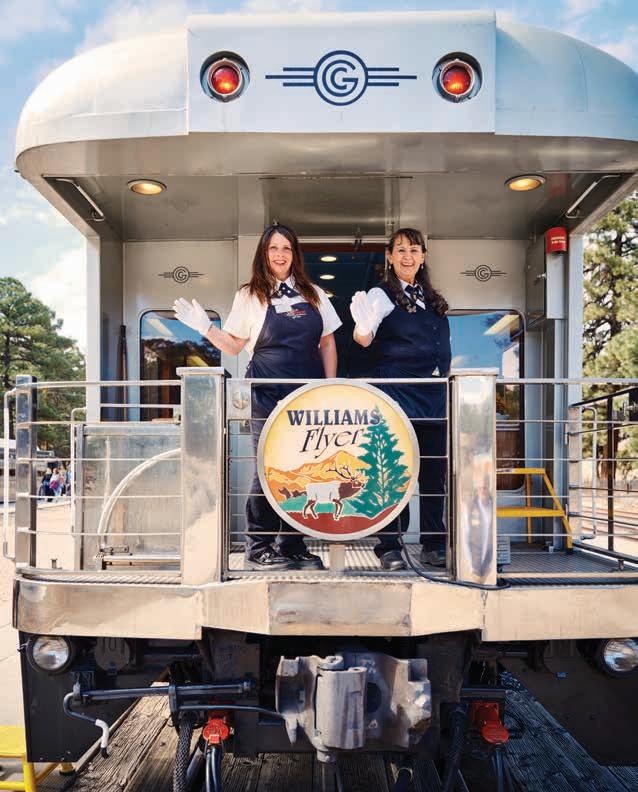
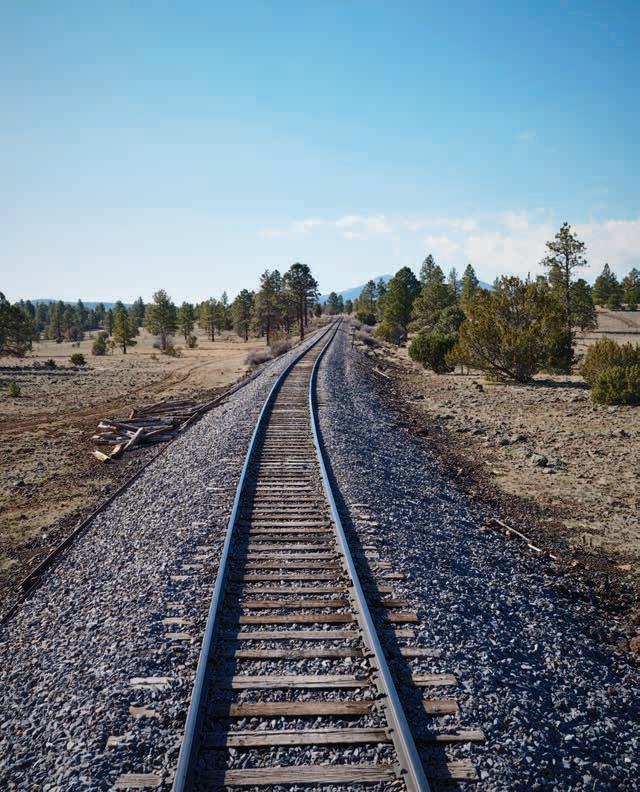
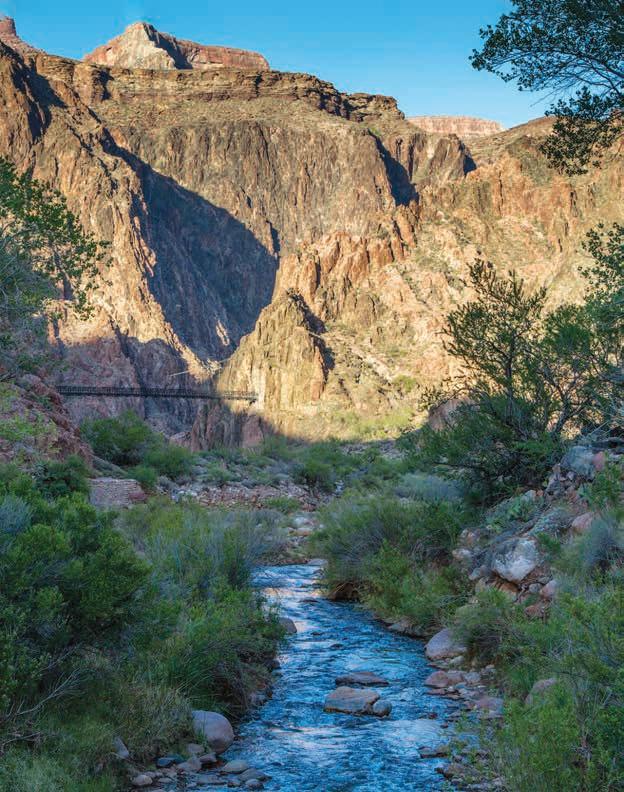
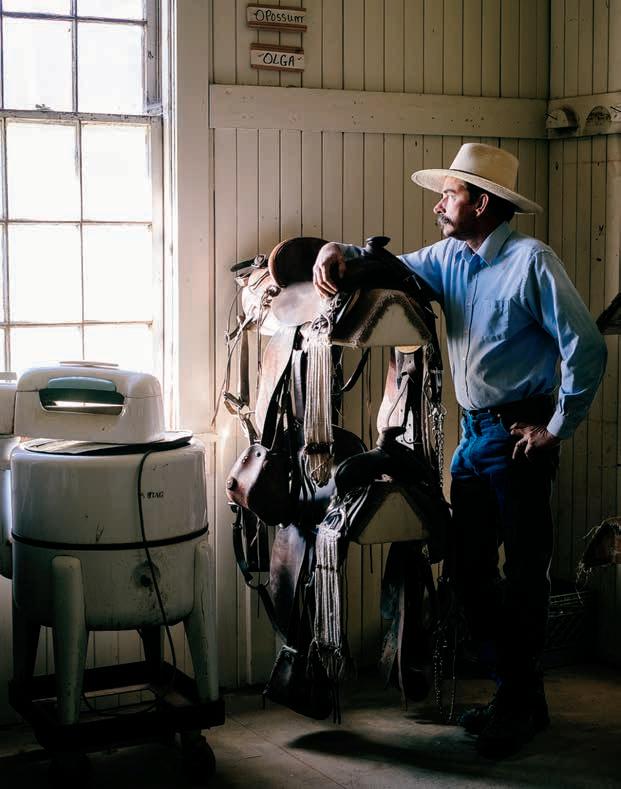

TThere is no more powerful way to get to the Grand Canyon than on the Grand Canyon Railway, which departs every morning from Williams, Arizona. Boarding the train, an amalgam of cars of various vintages—from classic Pullmans to luxurious lounge cars—is like stepping onto a two-hour time machine.
The experience begins at the Grand Canyon Railway Hotel in Williams, which serves as a base camp. Drive from Phoenix or Vegas, or points west or east, and stay the night. Guests can check in the night before, leave their bags at the hotel in the morning, and walk to the station (their bags will magically be awaiting them at the South Rim upon arrival). And on the train, the rhythm changes immediately. No highway speeds. No traffic. Just the gentle clank of couplings, a whistle blast, and a slow roll north toward the canyon.
The train moves deliberately across high desert and pine forest. Through wide windows, the landscape unfolds gradually: open prairie giving way to ponderosa forest as the elevation climbs toward the Kaibab Plateau.
The cars themselves feel lifted from another era of travel. Some are beautifully restored vintage coaches with polished wood and oversize windows. Others are more indulgent—luxury parlor cars where charcuterie boards appear on linen-covered tables and bartenders serve sparkling wine and mixed cocktails. A cafe car offers snacks and coffee, while an observation platform for those lucky enough to book the last car lets you step out and feel the high-country air. Along the way, musicians wander the aisles playing Western tunes, and actors portraying cowboys and bandits from the Wild West entertain passengers.
The arrival itself is one of the railway’s great pleasures. The train pulls directly into the historic depot at the South Rim, just steps from the canyon’s edge. From there, you’re free to explore however you like. Some passengers spend the day walking the rim and return on the afternoon train. Others stay overnight in the park’s historic lodges, letting the train simply be the beginning of a longer canyon stay.
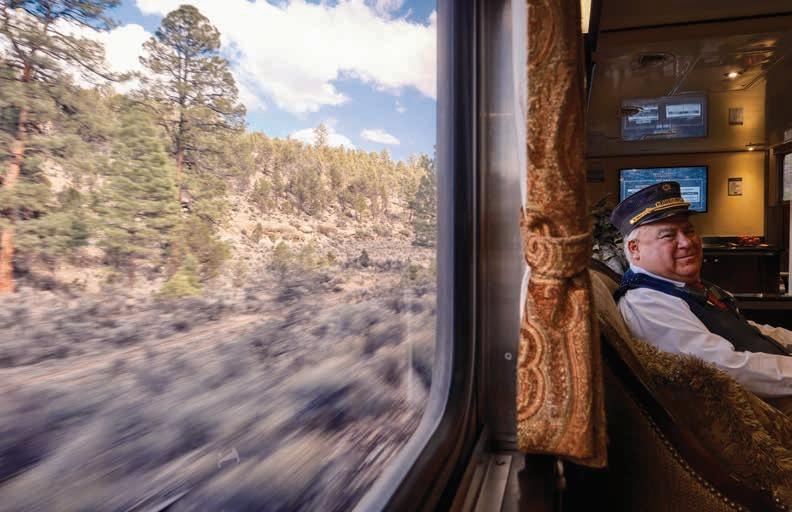
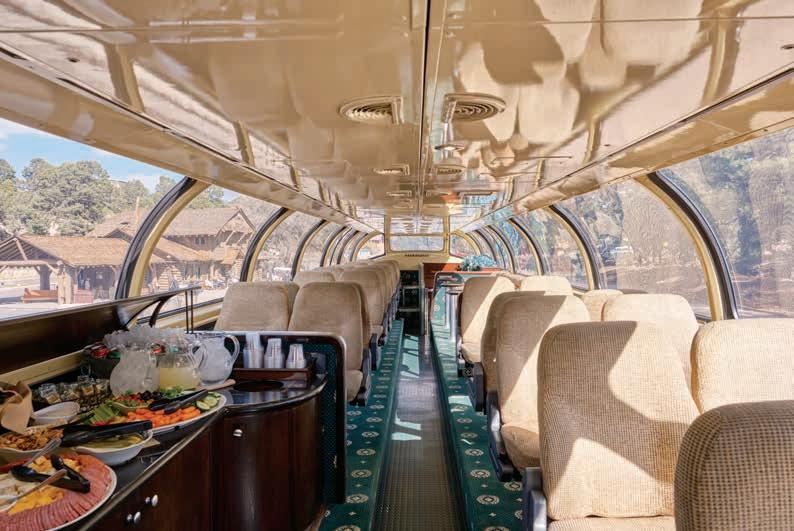
WHY THE WINTER IS A WONDERFUL TIME TO VISIT

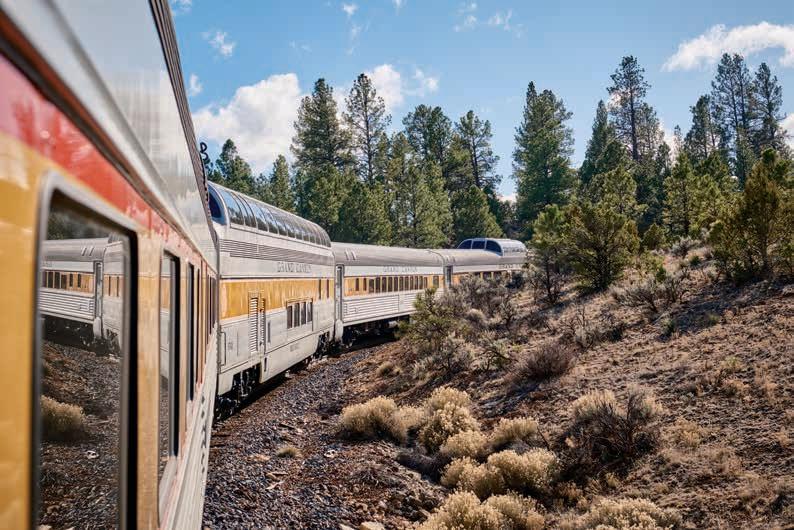
Each winter, the Grand Canyon Railway leans into nostalgia with its Polar Express package, a holiday experience that transforms the historic train into a rolling Christmas storybook. Departing from nearby Williams, Arizona, the evening ride recreates the beloved tale with hot chocolate, cookies, and readings from The Polar Express as the train rolls through the pine forests toward the “North Pole.” Families in particular love the theatrical touches—Santa boarding the train to greet children, carols sung along the route, and a festive glow that makes the journey feel like stepping inside the classic holiday book. Many visitors pair the ride with a stay at the Grand Canyon Railway Hotel, turning the experience into a full winter getaway. It’s a memory in the making: an old-fashioned train ride wrapped in holiday magic that taps into the canyon region’s railroad heritage.
The pioneering architect left an indelible mark on the Grand Canyon.
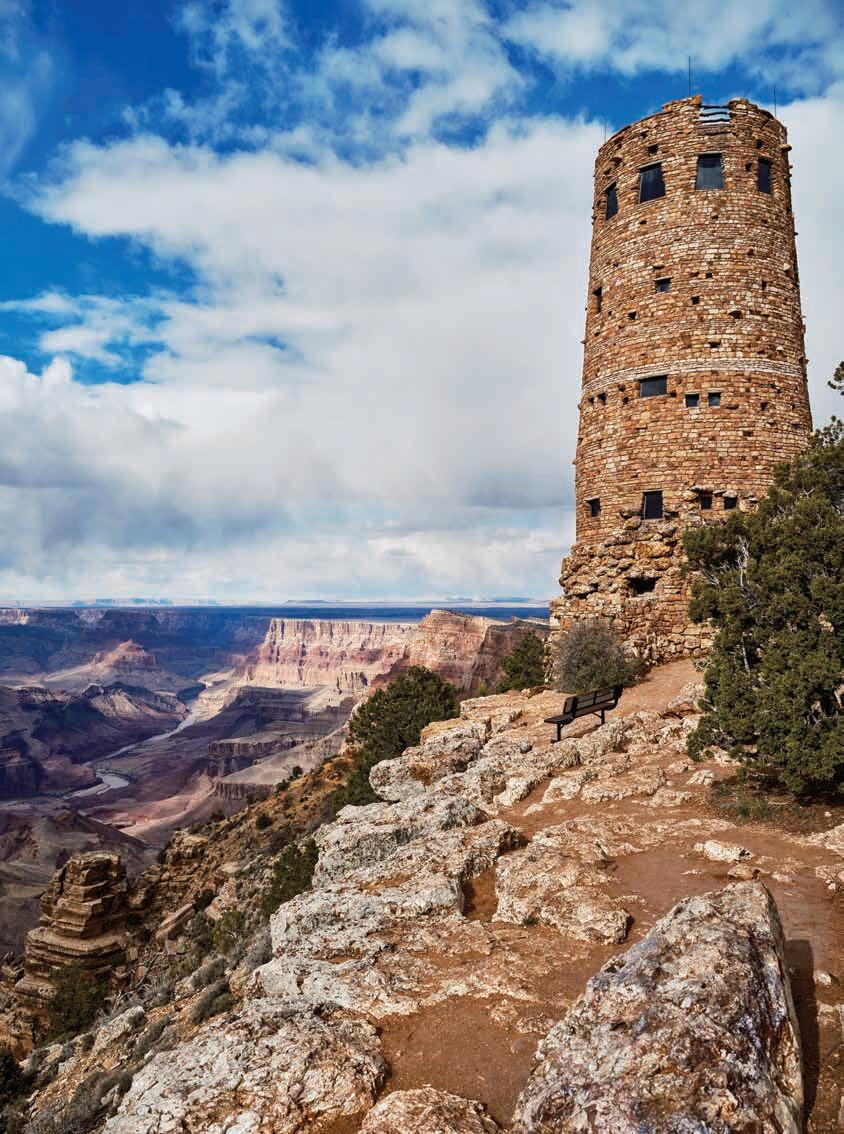
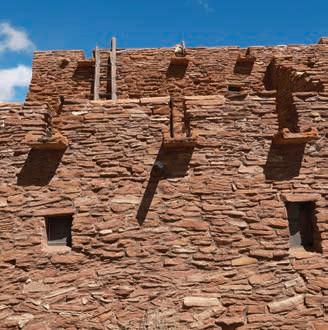
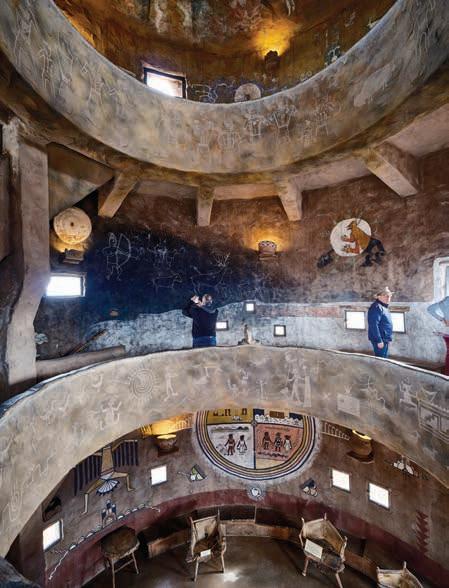

The Grand Canyon is famous for its natural architecture, but the buildings along the rim are nearly as legendary. Many were designed by Mary Colter, an architect whose vision helped define how visitors experience the park today. Working for the Fred Harvey Company in the early 1900s, Colter believed buildings should appear to grow naturally from the landscape. She studied Indigenous architecture and historic ruins to create her designs. She designed Hopi House, a structure modeled after a Pueblo village where Native artisans sold crafts; Hermits Rest, a rustic stone refuge at the end of Hermit Road; and Lookout Studio, a canyon-hugging building that seems carved from the rock itself. At a time when women rarely practiced architecture professionally, Colter became one of the most influential designers in the American West and still influences how people experience the canyon today. Her masterpiece is the Desert View Watchtower, a 70-foot stone tower perched on the canyon’s eastern edge. It appears to have stood there for centuries. Colter famously quipped, “You can’t imagine what it cost to make it look this old.”
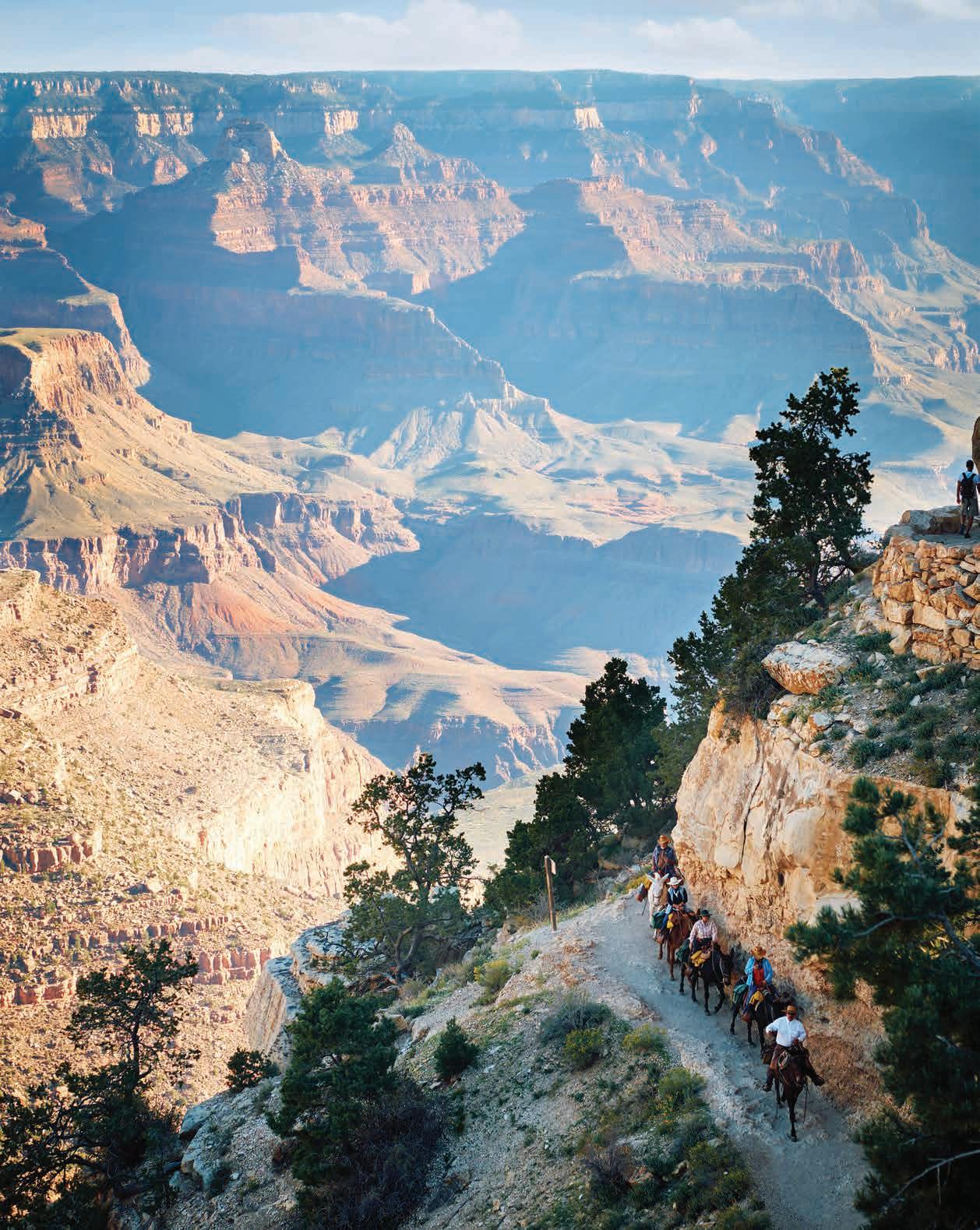
There’s no more iconic way to enter the Grand Canyon than on the back of a surefooted mule. These guided rides—operated by Xanterra Travel Collection—follow historic trails like Bright Angel, dropping you into the canyon at a pace that lets the scale truly register. You’ll ride nose-to-tail, led by seasoned wranglers who share geology, lore, and the occasional dry joke. Options range from half-day rim rides to overnight trips to Phantom Ranch. Book far in advance, expect early mornings, and know this: It’s equal parts thrill, history lesson, and unforgettable rite of passage.
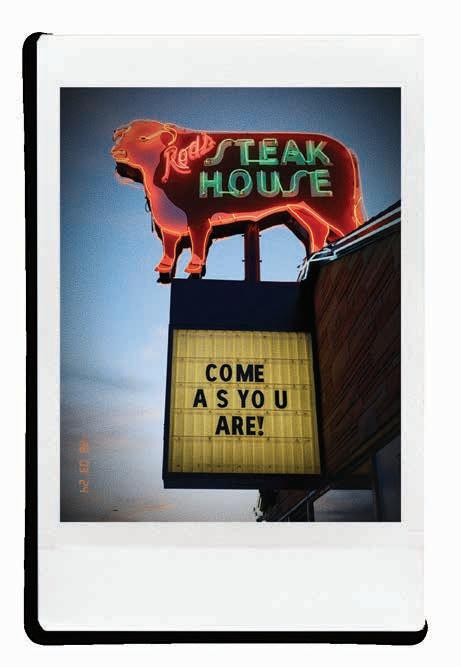


FFor travelers coming from California, there’s a classic way to approach the Grand Canyon: Historic Route 66, which is celebrating 100 years this year. This legendary highway once carried generations of Americans across the Southwest, linking desert towns, neon-lit diners, and roadside motels along a ribbon of asphalt that became a symbol of the open road.
Driving east across the Mojave Desert toward Arizona, you’ll pass through towns that feel suspended in midcentury Americana—places where vintage signage still glows at night, and diners still serve thick milkshakes beneath chrome counters. The journey eventually leads to Williams, Arizona, the last town bypassed by Interstate 40 when Route 66 was decommissioned. Known as the “Gateway to the Grand Canyon,” it’s also one of the best-preserved Route 66 towns in America. Classic cars line the streets. Neon signs flicker at dusk. Walking through downtown feels like stepping into a living postcard. Restaurants serve hearty Western fare while jukeboxes spin rock ’n’ roll classics. The town becomes even more festive during Route 66 celebrations marking the highway’s anniversary. Festivals, car shows, and historic reenactments bring the old highway roaring back to life.
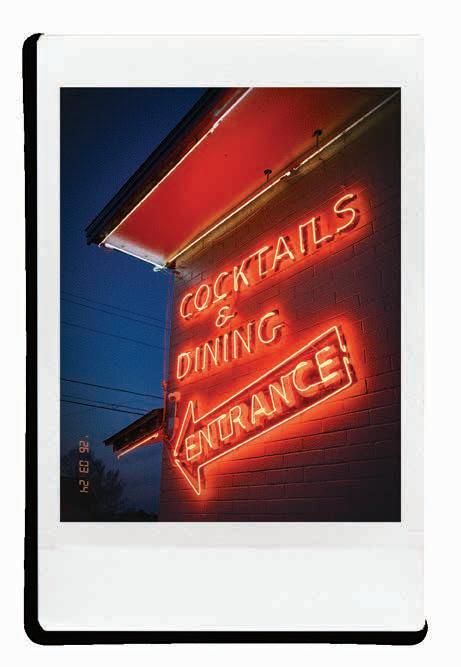
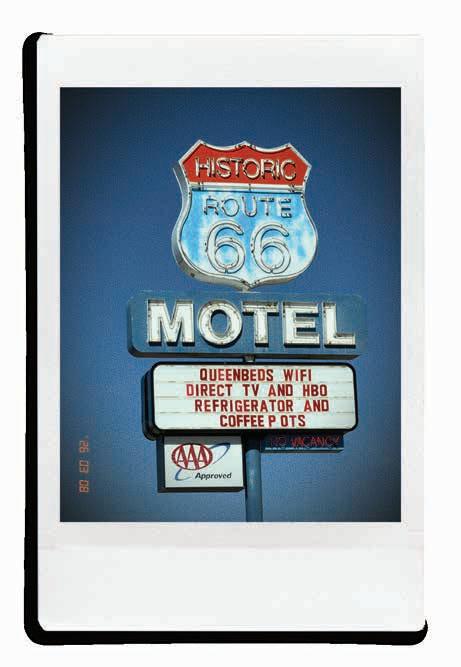
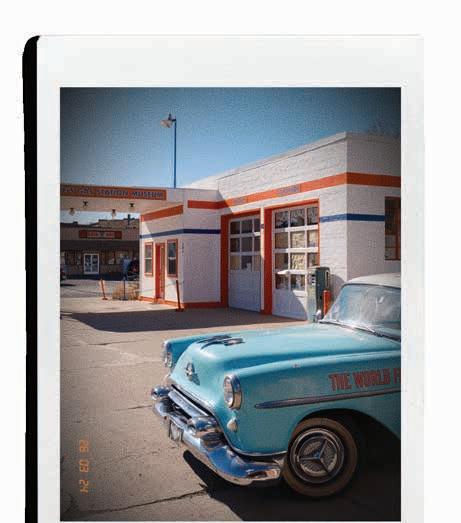

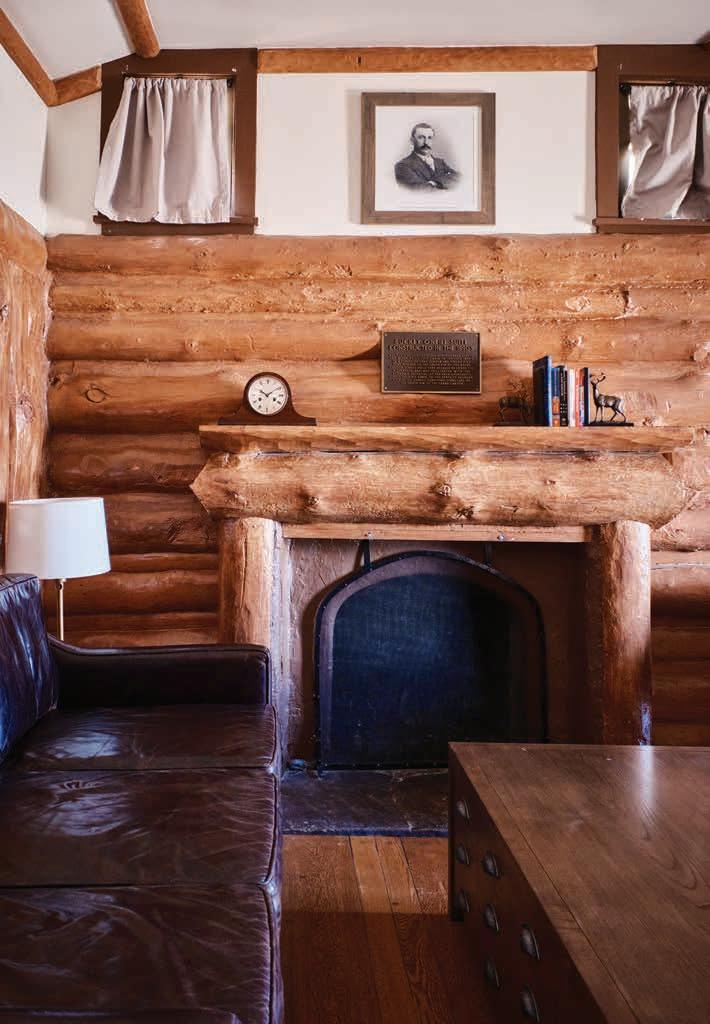
Staying overnight at the Grand Canyon transforms the experience. When evening settles across the canyon walls, the park becomes quieter and more contemplative. Lodges new and historic from the Xanterra Travel Collection offer visitors a variety of ways to rest and reset at the Grand Canyon.
The Buckey O’Neill Cabin is a rustic stoneand-log structure dating to the 1890s. Named for William “Buckey” O’Neill—an Arizona sheriff, prospector, and Rough Rider—the cabin is one of the oldest surviving buildings at the canyon. Two Adirondack chairs perch outside the door and let you peer out into the canyon rim mere yards away.
Named for the visionary designer who shaped much of the Grand Canyon’s architectural identity, the Mary Colter Suite at the El Tovar Hotel
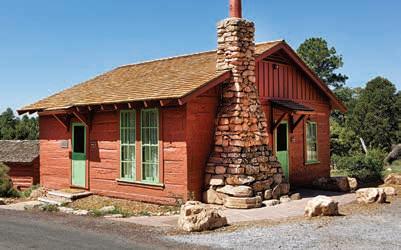
is one of the most distinctive stays on the South Rim. The spacious suite has a living and dining area that opens onto a second-floor balcony overlooking the South Rim. One of the best rooms at the canyon.
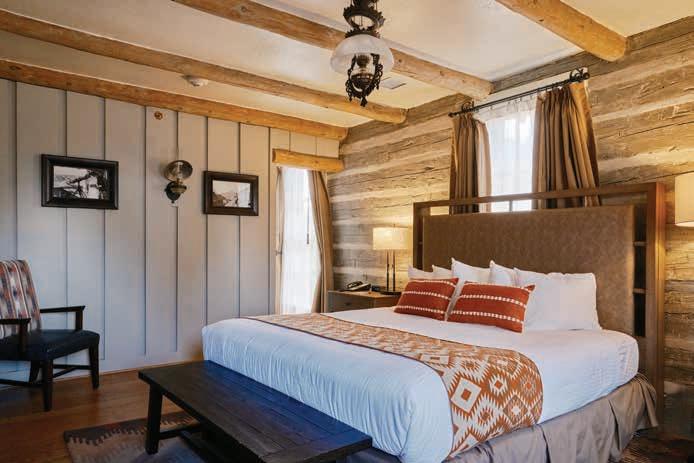
The most stylish roost at Bright Angel Lodge, the Red Horse Cabin features a cozy sitting area and separate bedroom—and operated as the Grand Canyon Village post office from 1910 to 1935. It has recently been updated with modern comforts, traditional Western textiles, warm wood tones, and a cozy fireplace.
Maswik Lodge offers apartment-style rooms at rates lower than rooms by the rim. Stop at the Grand Canyon Village Market and stock your room with breakfast supplies, snacks, and drinks. When you do want something hot and easy, Maswik’s food court and pizza pub offer casual, affordable options.
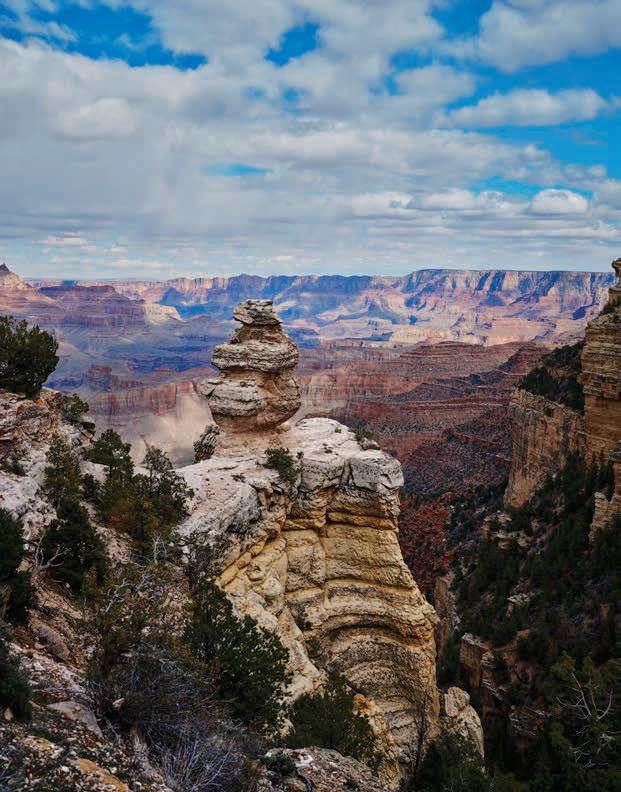
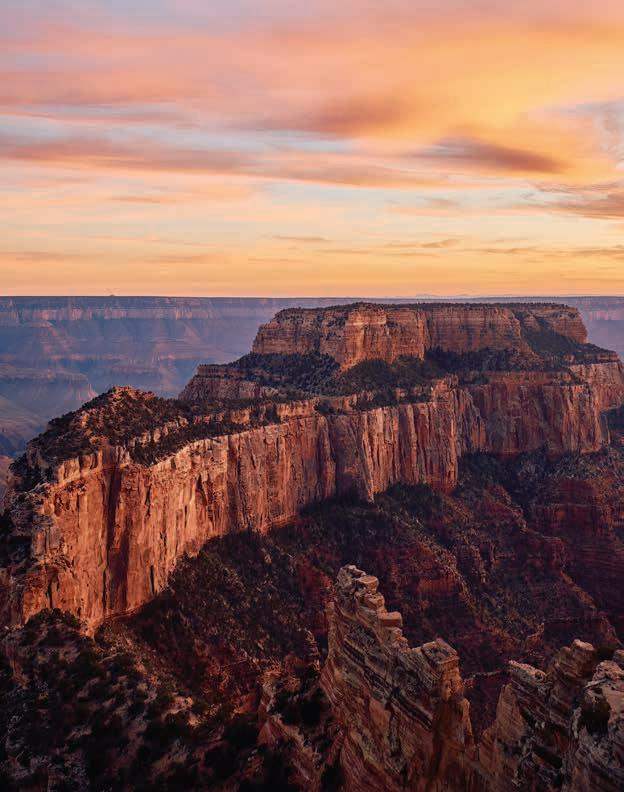
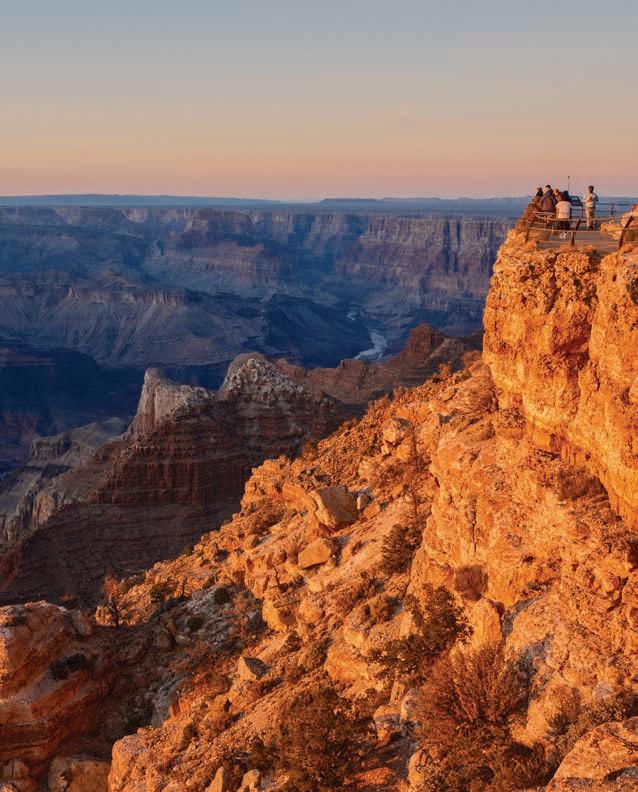
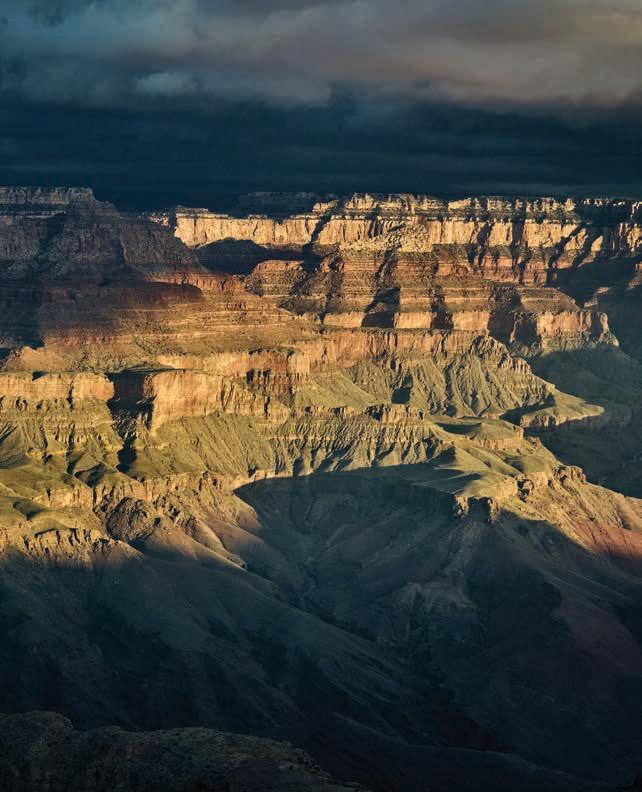
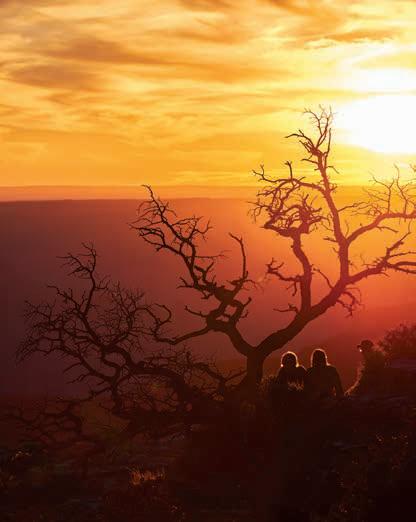
Yes, gazing wide-eyed into the unfathomable expanse of the canyon is an exquisitely powerful activity, but focusing on other facets of the location’s history, ecology, and culture can yield a much richer visit.
The Grand Canyon reveals itself differently from every overlook. Each vantage point emphasizes a different geological story—some highlighting the Colorado River, others the immense stair-stepped cliffs that descend toward the canyon floor. If you’re visiting for the first time, these viewpoints offer an unforgettable introduction.
Start with these five:
Perhaps the most celebrated sunset location in the park, Hopi Point offers a wide panorama where the canyon’s layers catch the evening light in dramatic bands of orange and crimson.
One of the best places to glimpse the Colorado River flashing through the canyon far below.
A sweeping view revealing distant side canyons and the winding path of the river.
With a rustic stone structure designed by Mary Colter, canyon views stretch endlessly toward the western horizon here.
Watchtower
Climb the tower for one of the park’s most expansive eastward vistas.



With gear like this, you’re going to be comfy at the canyon, too.
The most skilled trekkers know layering allows you to regulate your warmth depending on your effort. This toasty cardigan can be donned over a base layer and under a shell for just-right warmth, no matter the conditions. Covert Cardigan in Habitat Heather, $180; arcteryx.com
Get a Grip Insulated, soled with Arctic Grip compound to help you find footing on ice, and tricked out with a side-zip entry for easy on and off, this is your sure-footed foundation for hiking the rim. Arctic 600 Hiking Boots in Brown and Red, $280; danner.com
Stay Shady At 8,000 feet, that low winter sun can get glarey. Shade your eyes with these stylish and timeless aviators from legacy brand Vuarnet, favored by alpinists. Vuarnet Horizon 03 Sunglasses, $480; us.vuarnet.com
TThe Grand Canyon’s trails descend into the landscape rather than skimming its edges, which means even a short hike dramatically changes your perspective. The further you go, the more the canyon walls rise around you and the more the scale becomes real.
For first-time visitors, these three hikes offer memorable introductions.
Rim Trail (Easy)
A mostly level path connecting many of the park’s best viewpoints. It’s ideal for a relaxed stroll with constant canyon views.
South Kaibab Trail to Ooh Aah Point (Moderate)
A short descent that quickly reveals dramatic canyon perspectives. The name says it all.
Bright Angel Trail to Havasupai Garden (Challenging)
A classic canyon trek that reaches a shaded oasis deep within the canyon. One rule applies to every canyon hike: The journey down is optional. The climb back up is not.
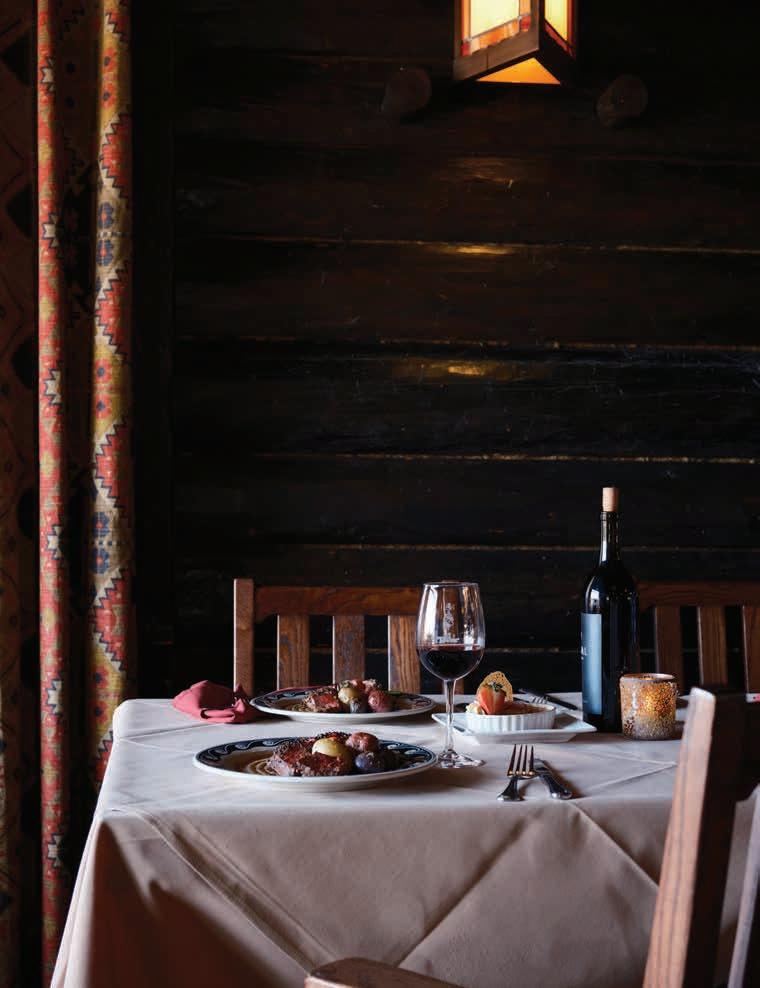
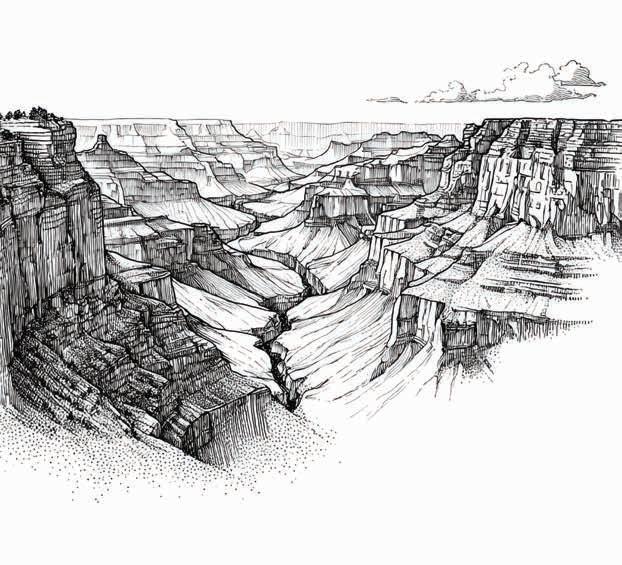
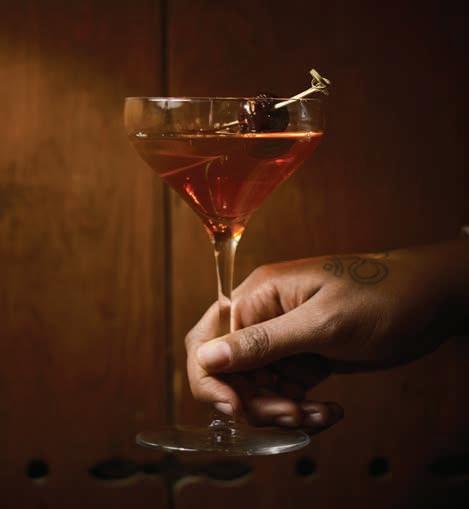
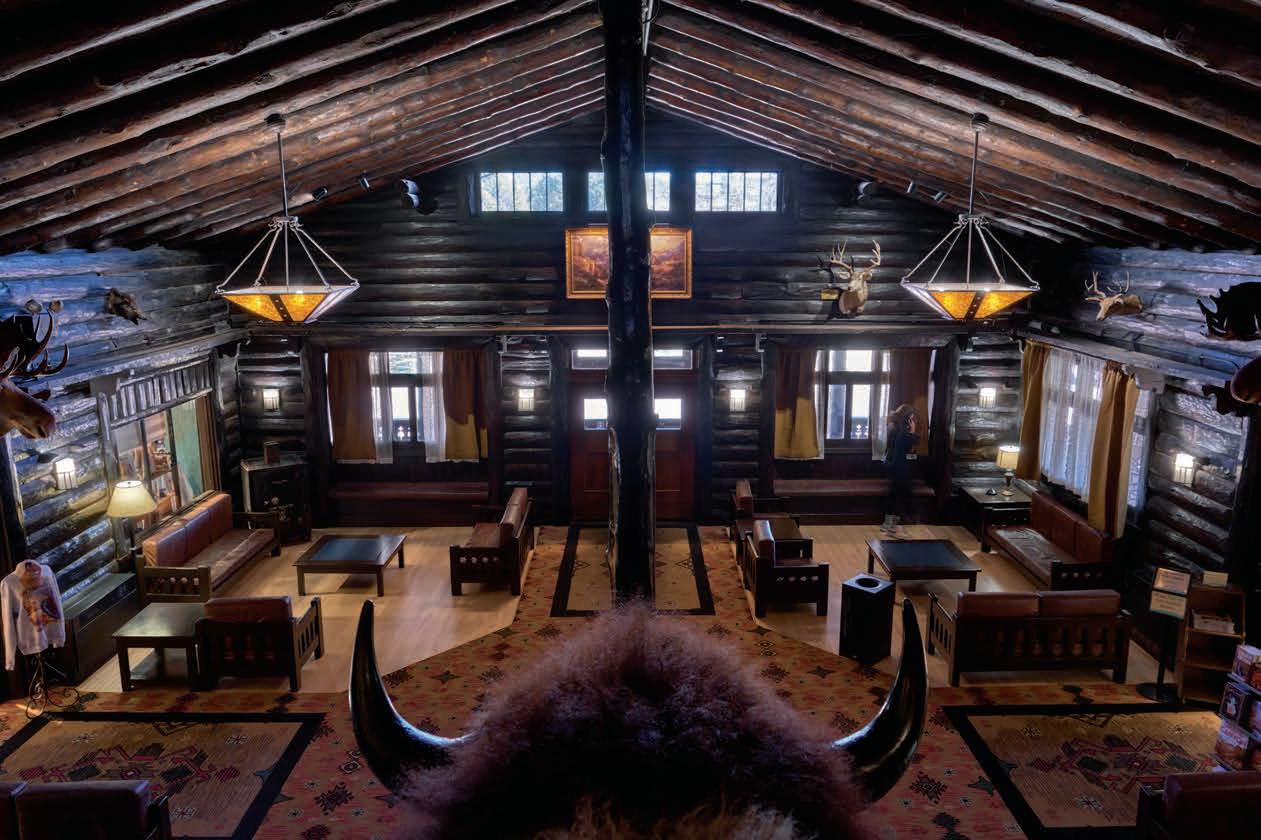
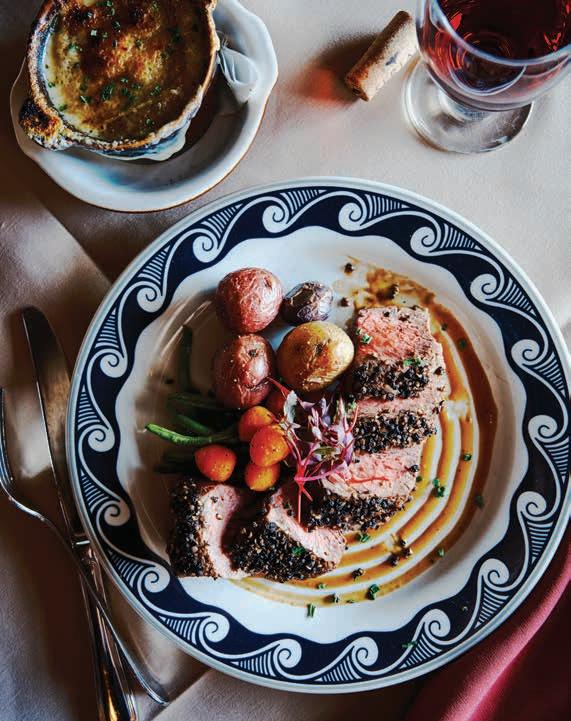
Dining at the Grand Canyon ranges from quick trail fuel to historic lodge elegance, and each option carries its own character.
TThe most iconic dining experience is El Tovar Dining Room, located inside the historic El Tovar Hotel, overlooking the canyon rim. Since opening in 1905, the restaurant has hosted presidents, explorers, and generations of travelers. Today, it serves refined Southwestern cuisine—think Arizona beef, regional trout, and seasonal ingredients—in a lodge dining room that still feels like the golden age of Western tourism. For a more contemporary option, Arizona Steakhouse pairs canyon views with modern Southwestern flavors and a relaxed atmosphere. And when the park is bustling, the Market Plaza food court offers the fastest route to a satisfying meal before heading back out to explore. Wherever you eat, the canyon itself tends to be the most memorable part of the meal.
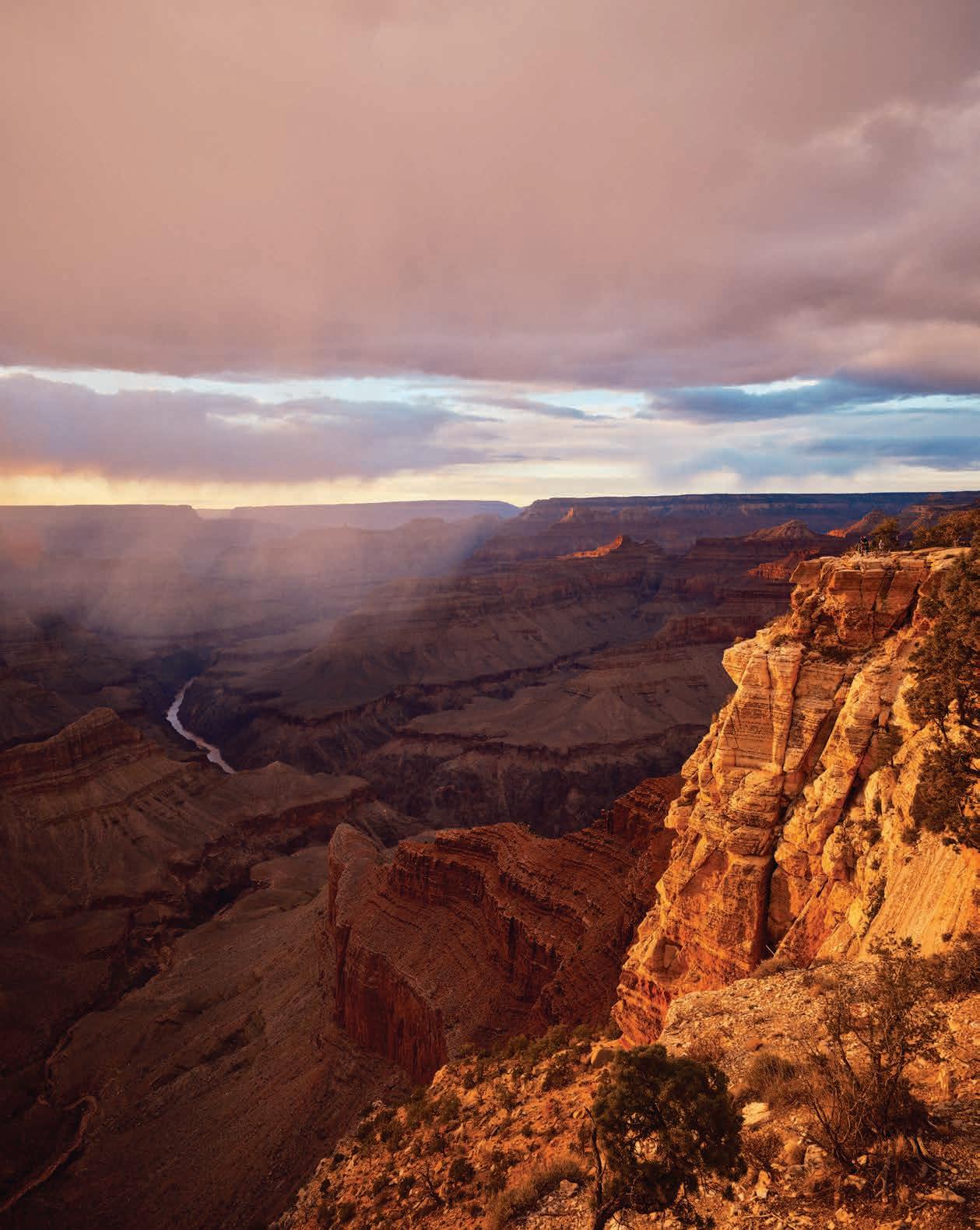
CHANGE YOUR PERSPECTIVE
Spend some time, linger, and keep looking. Here’s how to dive deep and value more than just the view.
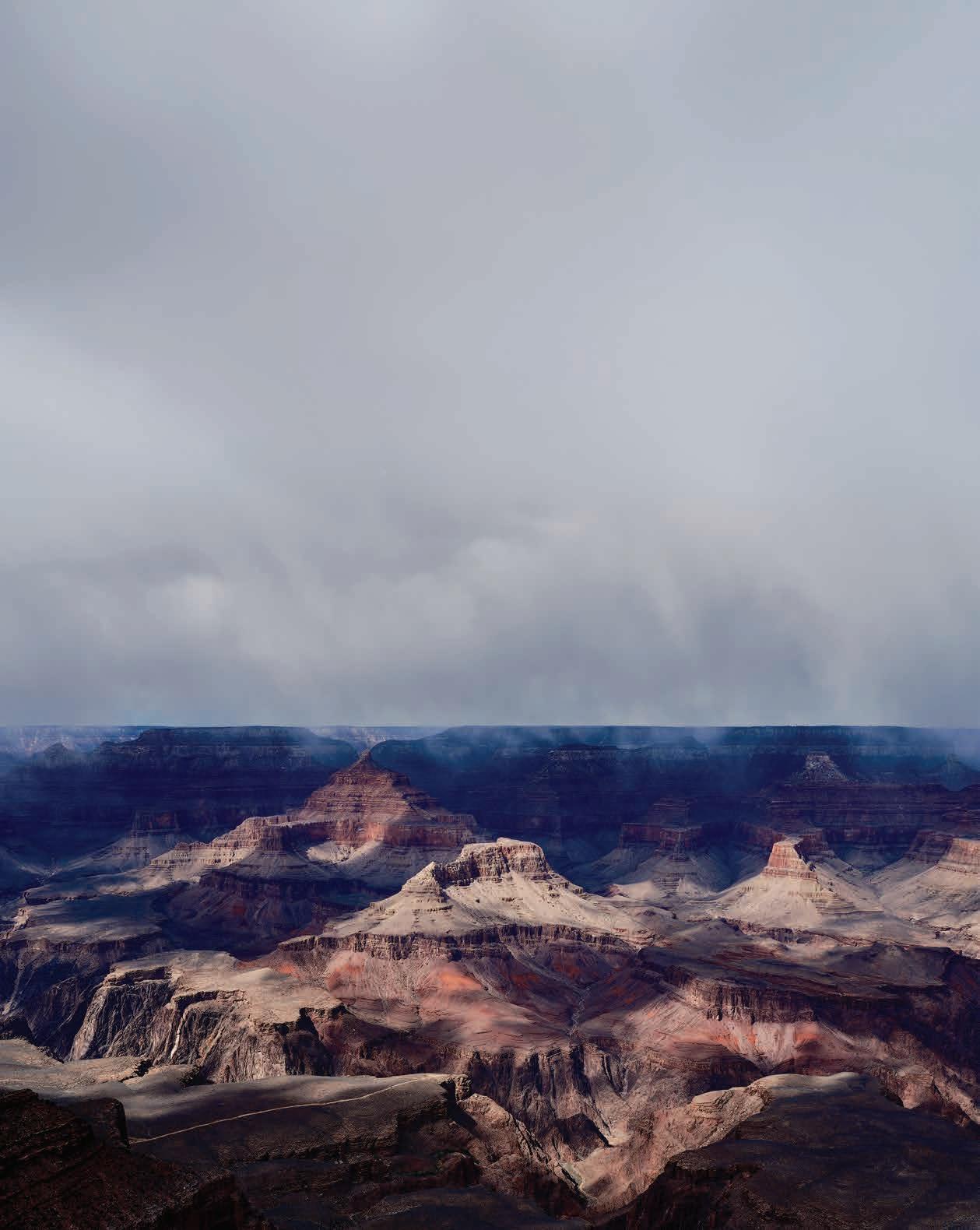
YYes, the Grand Canyon draws crowds to its greatest hits, but a short stroll along the Rim Trail at dawn often reveals empty overlooks and silent canyon views.
Desert View, located east of the main village area, tends to feel quieter while offering sweeping panoramas. Even the porch outside the El Tovar bar can feel surprisingly peaceful in the evening, when the light fades and the canyon turns shadowy blue. Beneath the sweeping panorama lies a dense layering of plant life, wildlife, Indigenous history, and thoughtful architecture that rewards curiosity.
At first glance, the canyon can appear stark, but it’s actually one of the most biologically diverse landscapes in the American West. Because the park spans more than 8,000 feet in elevation—from the river corridor to cool ponderosa forests on the rim—it contains multiple ecological zones stacked vertically.
Down in the inner canyon, hardy desert plants like brittlebush, Mormon tea, and claret cup cactus survive brutal heat and scarce water. Higher elevations support piñon pine, juniper, and Gambel oak, and in spring, slopes burst into color with Indian paintbrush, lupine, and primrose.
Wildlife thrives here, too. Bighorn sheep move with improbable grace along narrow rock ledges. Mule deer graze the rim forests. And if you’re lucky, you may spot the massive wingspan of a California condor, one of North America’s rarest birds, now soaring again over the canyon, thanks to a successful reintroduction program.
Long before the canyon became a national park in 1919, it was home to Indigenous peoples whose histories stretch back thousands of years. Today, 11 tribes maintain cultural ties to the canyon, including the Hopi, Havasupai, Hualapai, Navajo, Zuni, and Southern Paiute.
For the Havasupai, whose name means “people of the blue-green water,” side canyons remain home territory. The Hopi regard the canyon as part of their ancestral migration route and spiritual landscape. Archaeological traces—granaries tucked into cliffs, petroglyph panels, ancient pottery—hint at many centuries of habitation.
Understanding these connections shifts the canyon from a scenic destination to a place of deep cultural continuity.
Siouxzen Kang is all about connecting visitors with experiences that embody Taos, New Mexico’s creative, community-driven spirit. And while this ski haven is known for its wintertime magic, it’s just as magnetic in the warmer months, with hiking trails, river days, and a thriving arts scene. With deep local ties and a pulse on what’s happening beyond the main drags, Siouxzen shares what she gets into when she’s not behind the camera that makes Taos so special year-round.
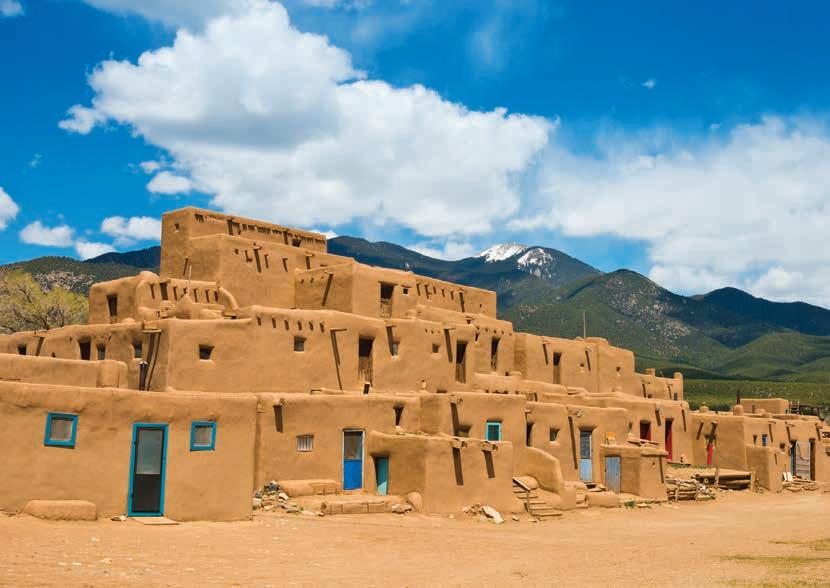
The insider: Siouxzen Kang, sales, event, and community manager at Hotel Willa

Hotel Willa is a brandnew, 1940s motor lodge turned design-forward boutique hotel that boasts a beautiful courtyard marked by a majestic 70-year-old cascading willow tree, firepits, hammocks, and a group-size dry sauna. Plus, it’s petfriendly. Hacienda del Sol is a 13-room bedand-breakfast, tucked away on the north side of town, that has the most beautiful views of El Salto. It’s such a beautiful, peaceful space, and it includes a lovely continental breakfast in the morning with such thoughtfulness in each of the rooms.
Within walking distance of the Hacienda is The Love Apple , where you can have a romantic, hyper-seasonal Northern New Mexican meal in an old chapel. At Medley, it feels like everybody knows your name. The food is fantastic and consistent, with an overall great neighborhood vibe. Grab a quick bite with your favorite bartenders, watch the hockey game, then pop next door to its wine shop to grab a bottle for later. I’m not a margarita fan, but the mezcal margaritas will make you a convert. And at Juliette , you’ll find a curious and imaginative menu, including an incredible
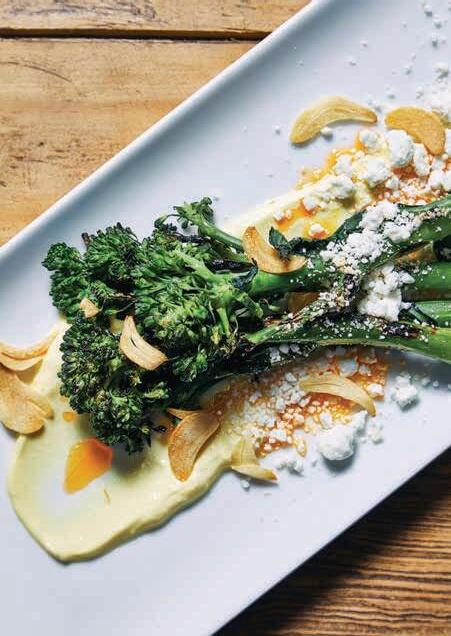
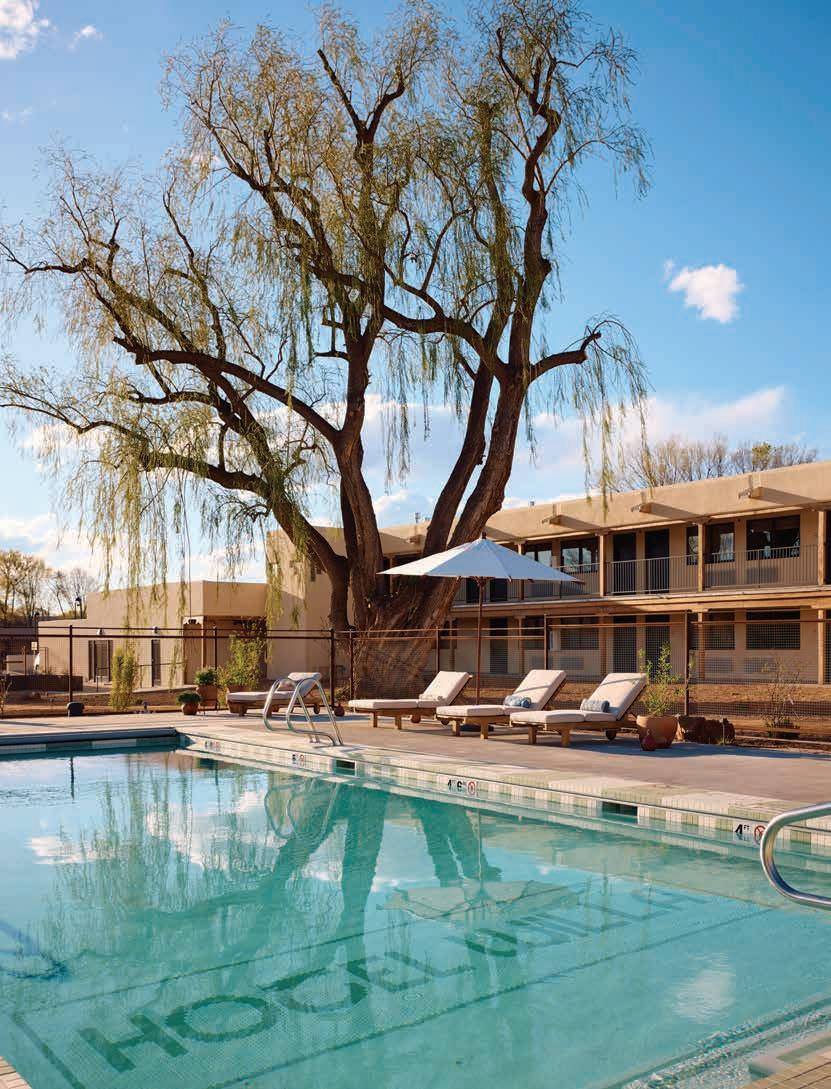
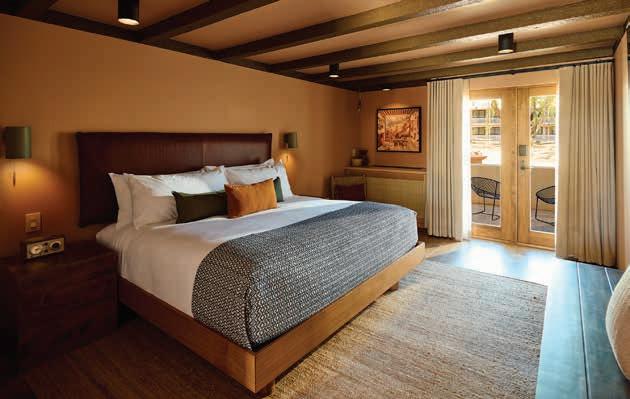

green chile burger that’s perfect with beef-fat-fried potatoes and aioli. Treehouse Bar is full of your good ol’ classics, and it’s a more casual version of the fine dining icon Lambert’s of Taos below.
Saddle up for an e-bike tour with Heritage Inspirations for a local’s view of Taos. And for a bit of a cultural insight, book with Whitefeather Cultural Tours , where you’ll learn about the Taos Pueblo firsthand from Kevin Whitefeather, visiting his family’s private land next to the El Salto climbing area and waterfall and feeding his buffalo herd.
Touring the Couse-Sharp Historic Site is like stepping back in time. And if you love contemporary Western art, Robert L. Parsons Fine Art is a must.
Elizabeth Cronin, creator of the beloved Asrai Garden in Chicago, brought her flair to Cabot Plaza at her space called Everywhere Taos where you’ll find fine jewelry, candles, and scents, too.
The Arc, anewera has a great luxury selection of vintage finds, restored furniture pieces, and a masterful tailor who creates custom bespoke suits in the back. Reneux Consignment has some incredible pieces, and right next door is its housewares department, where you might find just the rug or kitchen accessory you didn’t know you needed.
Ceb Barrs tapped into his passion for wellness, design, and community-centered hospitality for the recent renovation of the century-old Waucoma Hotel. The property now blends historic preservation with modern comfort, resulting in a restorative base camp that’s friendly for both travelers and their four-legged companions. Here are the outdoor enthusiast’s tips for exploring this magnificent corner of the Columbia River Gorge.
The insider: Carrington “Ceb” Barrs, founding partner of Lightwell Hotel & Spa

If being within walking distance to everything downtown Hood River has and having all the amenities is your jam, Lightwell Hotel & Spa is the spot. There are also some really nice Airbnbs in the surrounding area. I personally love a home in the woods with a view for a family getaway.
Celilo has been my favorite restaurant in Hood
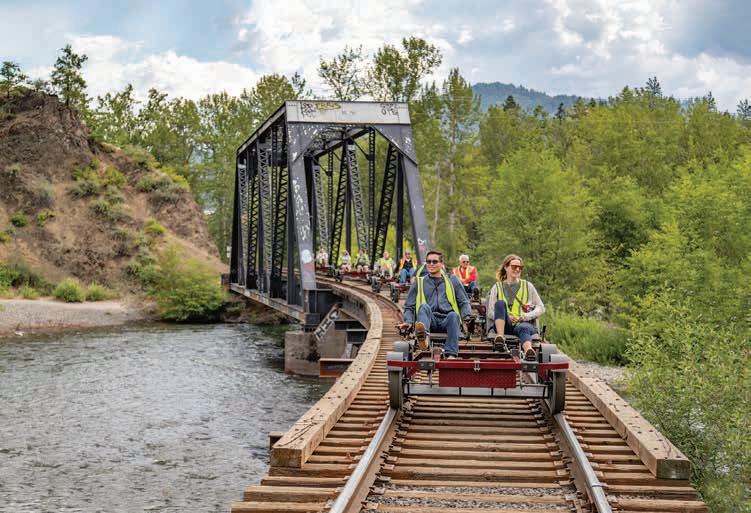
River for years. The food, service, bar, and vibe are consistently great. It has a solid, locally sourced menu with rotating seasonal specials that keep me coming back. Sushi Okalani (conveniently located right underneath Celilo) is my second go-to. The sushi is great, and the chefs nail the presentation. Be prepared: It doesn’t take reservations, and the wait can be long, as it’s a local favorite.
Hood River is definitely a beer town.
We have lots of great brewpubs, and Double Mountain Brewery is at the top of that list. Not only does it brew a large variety on site, but the location itself is super cool and funky with lots to look at, plus delicious woodfired pizzas. It has live music and trivia nights, too. Lightwell’s lobby bar, “The Bob,” has a nice vibe and is popular with both guests and locals. We have live jazz on Wednesday nights, piano on the historic baby grand on Thursdays, an upscale Mediterranean-
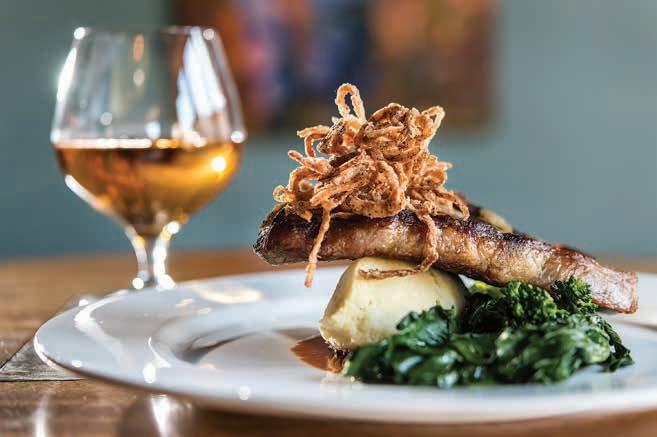
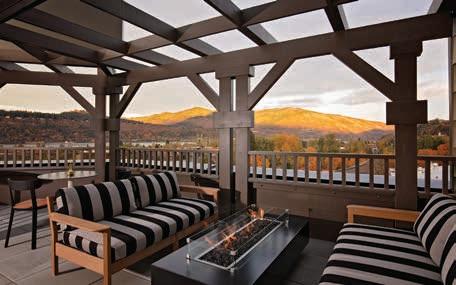
style bar menu, and really great cocktails!
Most people spend time in the Columbia River Gorge for the more adventure-forward activities, but there’s plenty to do in town, too. We have a great
local and regional music scene. The Ruins is an old fruit cannery that burned down in the 1930s and has been transformed into an amazing outdoor amphitheater that hosts great live music, comedy, and community events. Mount Hood Railroad is
now locally owned, and it has been transformed from a dilapidated tourist trap. The railbikes are an experience like no other!
Whether you’re in the market for upgrades or just curious about the outdoors, Big Winds, Pure Stoke, and Discover Bicycles have it all when it comes to “gorge sports” gear. Mountain bikes, gravel bikes, e-bikes, downhill skis, snowboards, backcountry gear, paddleboards—it’s why we live here. For apparel, I’d be eyerolled by my wife and daughter if I didn’t mention locally owned boutique The Ruddy Duck and the place with a little of everything, Doug’s
~ Our picks for what’s essential in the West ~
Play for Days in Greater Palm Springs
Make yourself at home in an oasis made for summer, where pool days, warm nights, and easy moments stretch just a little longer. gpsGetaway.com

Live Between Waves in Huntington Beach
In Huntington Beach, the rhythm of Surf City USA® comes naturally – where mornings start with ocean air and coffee by the shore, and days unfold with coastal adventure, ending in golden sunsets and a laid-back energy that lingers. surfcityusa.com

Unbox The West!
Sunset Subscription Box brings the Best of the West straight to your door! Every three months, you’ll get a box full of home, design, food, and gardening products curated by Sunset editors. Choose the box that fi ts your style and price point, then get ready to be surprised and delighted by what you fi nd inside! TheSunsetBox.com
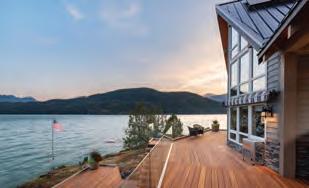
Redwood – Let’s Build Something Beautiful
Building with redwood is building something beautiful. Our Forest Stewardship Council® (FSC® C013133) certified timberlands are growing for the future. Visit your local lumberyard or building materials dealer for pricing and availability and start your dream redwood project today. GetRedwood.com
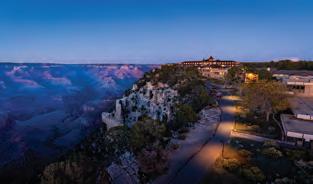
We’re not just close. We’re there.
Stay steps from the edge in historic lodges perched on the South Rim. Wake to sunrise over the canyon, unwind beneath vast night skies, and experience the Grand Canyon up close—not just nearby, but truly there. grandcanyonlodges.com
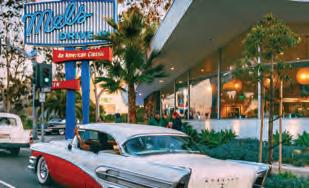
For 100 years, the most iconic US road trip has led through Downtown Santa Monica to Mel’s Diner and the Santa Monica Pier. Whether starting or ending here, one thing is certain: bright adventures are ahead. santamonica.com/route66
While it’s true that there’s no shortage of great winemakers in Sonoma County, Sam Bilbro shines in his own light, focusing on producing unique and esoteric Italian varieties not often seen amid the classics. Bilbro, a fourth-generation winemaker and Valley local, shares some of his favorite spots to enjoy in his hometown when he’s not busy managing the crushpad or overseeing the ever-expanding brand.
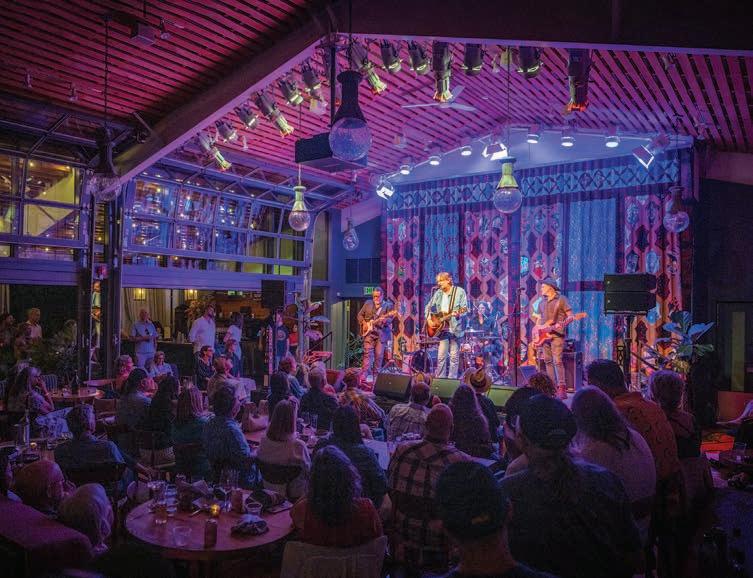
a fancy weekend, The Madrona is such an amazing property full of history and charm.
If you like things a little more rustic, AutoCamp Sonoma in Guerneville is a can’t-miss spot.
The insider: Sam Bilbro, managing partner and winemaker at Overshine Wine Co.

While this might be a bit of insider trading, the Overshine Collective’s small B&B Casa Comunità is about as beautiful, homey, and quaint as you can get. Don’t sleep on its stunning breakfast spread with house-cured bacon and French pastries. If you’re in town for
Located in the redwoods, it’s close to hiking, swimming spots, and all the best that nature has to offer.
DiAvola Pizzeria in Geyserville has long been a favorite. The menu is always changing, and I love the casual feel mixed with all the amazing food. You can’t miss the Sonja pizza! Guiso Latin Fusion is a rarity in our town.
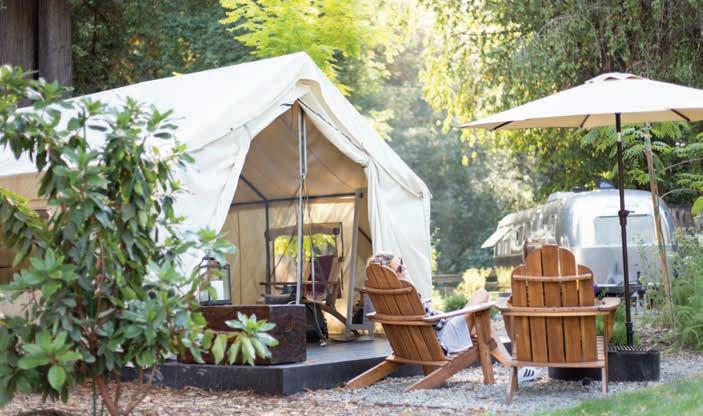
Chef Carlos does an amazing job showcasing his heritage in an innovative way through his Latin fusion menu. Bonus: The spot is so small and intimate in the best of ways.
Lo & Behold Bar + Kitchen in Healdsburg has fantastic cocktails, a great atmosphere, and an amazing team. The
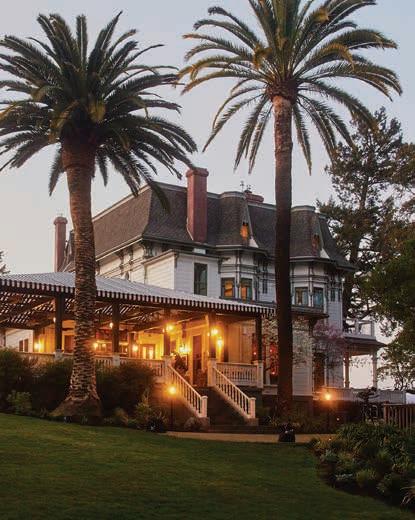
Geyserville Gun Club is my go-to spot for a drink and a great bite of food. I suggest a martini and the spicy tuna hand roll.
Besides visiting wineries and eating your way around town, be sure to check out Little Saint for a concert, and on Saturdays, be sure to stop by the new location of the farmers’ market located across the street at the recently built Foley Family Community Pavilion . Afterward, enjoy a hike out at Lake Sonoma , and stop for a beer at Dry Creek on the way back in.




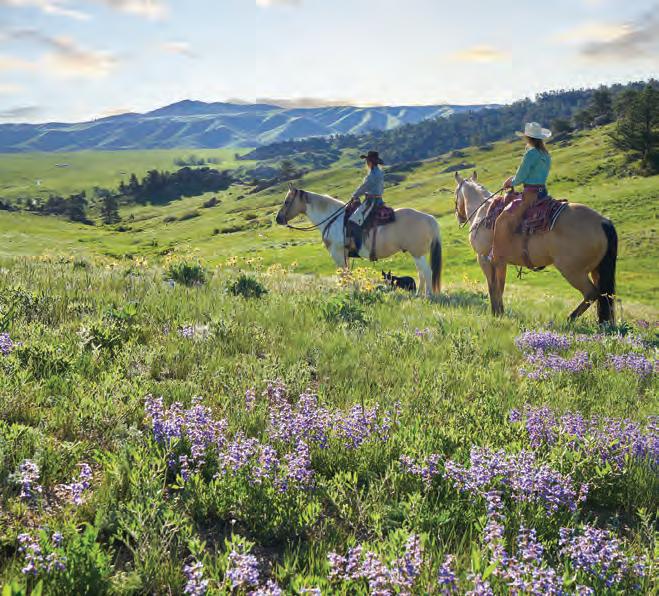


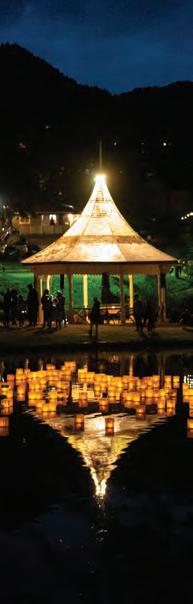
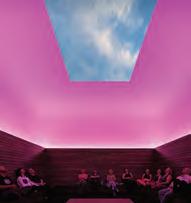

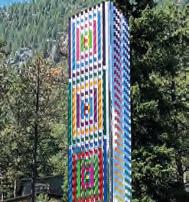
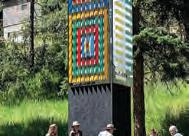












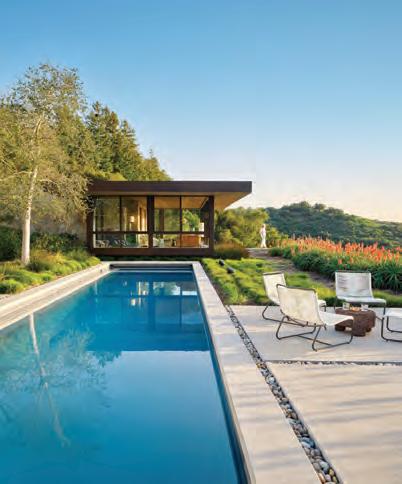





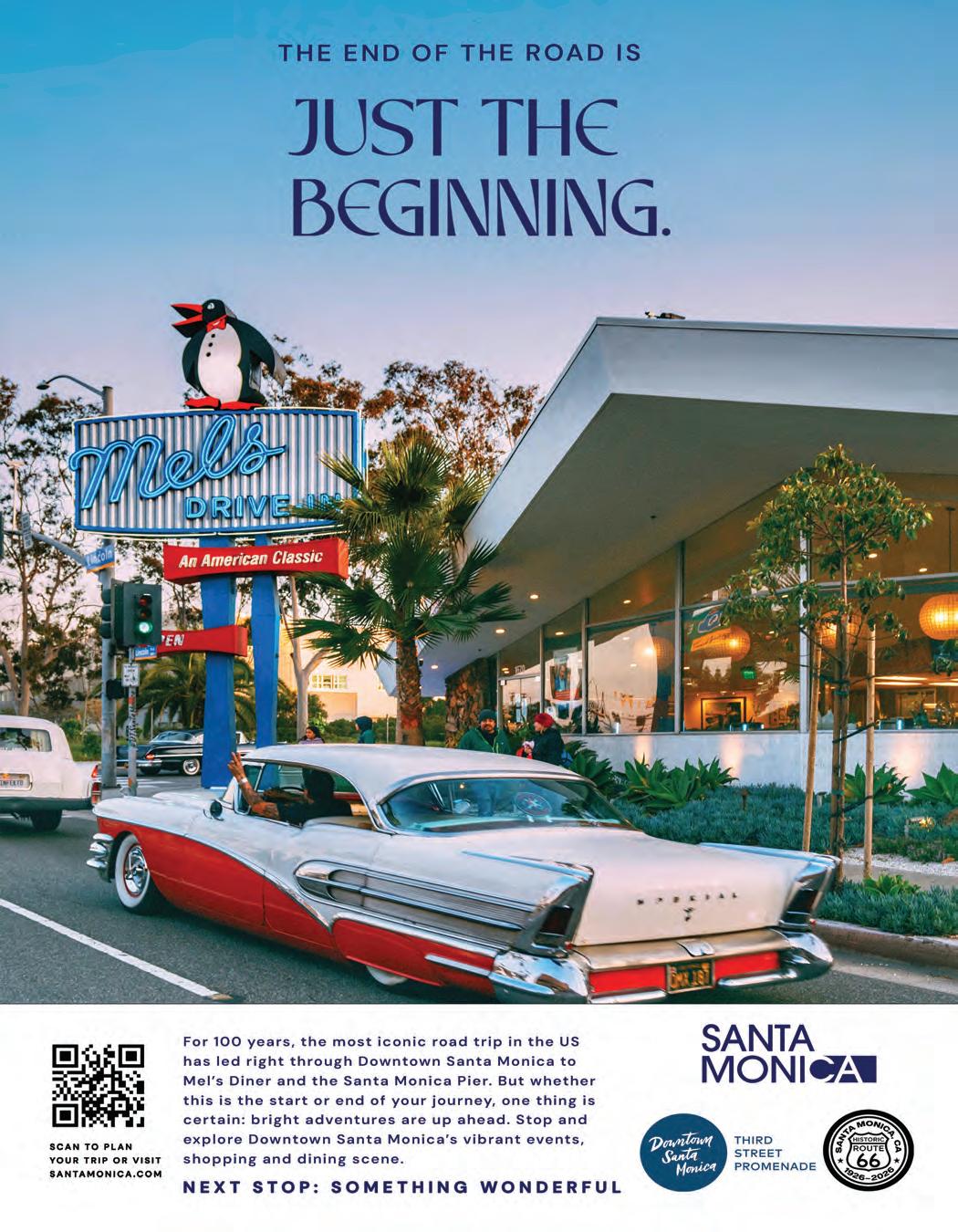
With no experience and a lot of nerve, a young couple learns the West, one nautical mile at a time.
Interview by KRISTA SIMMONS
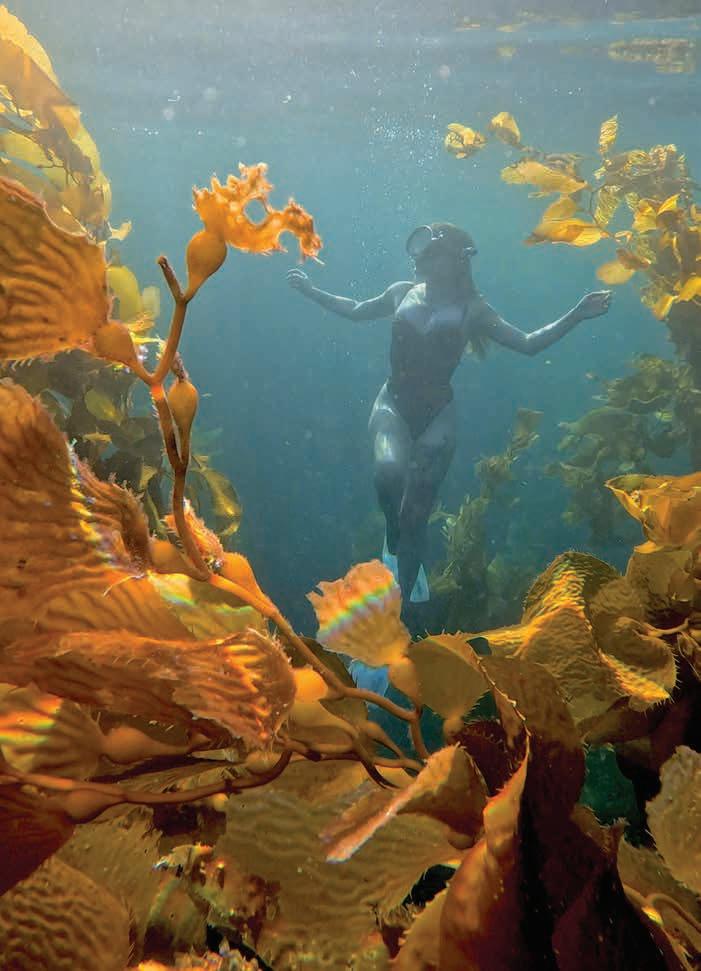
When Lindy Lenix and Jeremiah Bernheim untethered from their routines and set out on a 400-nautical-mile journey from San Francisco to Catalina with zero sailing experience, they had no idea they’d be so welcomed by the sailing community, let alone become social media sensations. Here, they share learnings with the hope of inspiring a life of exploration.
You moved onto a sailboat with no prior experience and have since navigated hundreds of nautical miles. How did you mentally prepare for that leap?
We live in a world where every risky hobby has extensive YouTube tutorials. Granted, I wouldn’t recommend anyone sail the ocean on that alone. But that’s how we prepared, as well as reading sailing manuals. I’m not going to lie and say I’m a “fearless” person. Good for those people, I’m jealous! But I made a promise to myself that no matter what, I’d stay calm and not give up. I’m proud to say I’ve pushed through. Things always get easier the more you do them.
“I CAN’T BELIEVE WE’RE STILL IN AMERICA.”
Why did you set sail in California, as opposed to somewhere more far-flung?
Two years ago, my fiance and I bought a 1989 Ford Econoline and decided we wanted to try van life out West. There’s a boating community out here like no other, and the water is so beautiful, it genuinely feels exotic! I love hearing people step off the ferry in Catalina and say,
“I can’t believe we’re still in America.” We’re living in paradise every day.
Living on a 40-foot sailboat is a huge lifestyle shift. What have been the most surprising challenges?
Our biggest goal is to become completely self-sustainable. You’re on anchor. You have to figure out how to have enough power to run a fridge, where you’re going to fill up water, where to get packages. So now we’re making energy using solar panels, using a desalination unit to make drinking water out of ocean water, and catching our own fish for dinner. The most rewarding moments come from being somewhere remote for a week and not needing anything else from the rest of the world to function.
How has being on the water changed the way you understand community and a connection to the West?
Sailing from San Francisco to Catalina made us feel extremely connected with California. We were getting a perspective of the state that’s very rare, seeing every inch of coastline without missing a beat. Sailors are a community of people who look out for each other, and that’s become clear to us. I imagined it as a bunch of lone wolves, and I couldn’t be more wrong! The community has taken us in with open arms. We’ve seen people’s outboard engines get flooded, and a random guy gave them his spare.
What dreams are you chasing with those future voyages?
Our biggest dream is to circumnavigate the world. We don’t have any timeline. It could be five years, it could be 20. I don’t know how long it’s going to take, and that’s part of the fun. I’ve always chased slow, intentional travel. I’m pretty Type-A, but the reality of sailing is that you can’t plan. Mother Nature is in charge. The tides control my life now!
What advice would you give someone who wants to embrace uncertainty and pursue a life less ordinary?
As someone who started with zero experience, if I can do it, so can you. And you’re allowed to do it scared! I’d rather live a life of “oh wells” than “what ifs.”
please email support@sunset.com.