In Daniel 4:1-4, Nebuchadnezzar was writing to all nations, to all languages, to all the people that dwell on earth to testify about what God had done for him.
In Daniel 4:4, he recounted that at one time in the past, “I Nebuchadnezzar was at rest in mine house and flourishing in my palace.” But then all of a sudden, a storm came upon him, he had a terrifying dream that turned everything upside down.
The first thing we need to note about Nebuchadnezzar is that storms are no respecter of Persons - anybody can get into trouble. Nebuchadnezzar was a very influential king and yet a storm came his way.
According to John 16:33, Jesus Christ even told us: “These things I have spoken unto you, that in me ye might have Peace. In the world ye shall have Tribulation: but be of good cheer; I have overcome the world”. He didn’t say you may; He said, “you shall.”
Fortunately, He added: “but be of good cheer; I have overcome the world.”
In Isaiah 43:1-2, He says, “when thou passest through the waters, I will be with thee; and through the rivers, they shall not overflow thee: when thou
walkest through the fire, thou shalt not be burned; neither shall the flame kindle upon thee”.
Not ‘if’ but ‘when’. In other words, Jesus Christ says, trouble can come anytime.
But I have Good News for you; He says when you are passing through whatever you are passing through; “I will be by you” - Amen. So those of you who are already passing through your own Storms, Congratulations, you will soon come out - Amen.
2. Some Storms don’t give Notice:
The second thing we notice in this story is that storms, most of the time don’t give notice. Because if you know that trouble is coming you might prepare for it; but at times problems, come suddenly. That is why a child of God must be ready all the time.
1 Thessalonians 5:3, “For when they shall say, peace and safety; then sudden destruction cometh upon them, as travail upon a woman with child; and they shall not escape”.
In Daniel 2, Daniel and his friends were sleeping in their own houses, king Nebuchadnezzar had a dream but woke up and forgot the dream. He decreed that if they didn’t tell him the dream which he had forgotten and the interpretation, all the so-called wise men would be
killed. You know we are now living in a world where we don’t even remember to say, ‘Thank You Lord when we wake up and there are no problems. Here, one decision from a Head of State turned their lives upside down because of something he did in his own house while they were sleeping in their own homes.
May I make a decree: any storm that is coming your way shall be diverted – Amen!
3. It is a terrible thing to be called an “ex”
Another thing we can learn from the story of Nebuchadnezzar is that it is a terrible thing to be called ‘ex’ this or ‘ex’ that - it is a terrible thing to have been great and then become nothing. Just think of it - one morning he was a king but by the evening he was eating grass with the animals.
Anything that is called:
• I was good once upon a time
• I was rich once upon a time
• I was great once upon a time It will never happen to you, in the Name of Jesus - Amen!
When you read the Story in Mark 8:22-25 about the man who was blind. They brought him Jesus and He spat on the ground and touched his eyes. He asked him, “can you see? He said, I see men as trees”. It tells you straightaway, this man used to see - He has seen trees before
and he has seen men before but then something happened and he couldn’t see anymore.
I decree in the Name that’s above every other name, anything that has gone missing in your body, my Father will give you brand new parts - Amen.
In the story of Job:
• He used to be rich, now he had nothing.
• He used to have ten children but suddenly not even one remained.
• He used to be a leader in the town but now people didn’t even want to call his name.
In the Name that’s above every other name, everything that killed your joy shall be reversed - Amen.
4. And then came the dream: God is rich in mercy, Nebuchadnezzar was an idol worshipper, but God out of His mercy decided to show him a glimpse of what is to come. I said earlier, many storms don’t give notice - but in the case of Nebuchadnezzar, God showed him in a dream.
The important point here is that: “The higher you are, the more you should be grateful to God for His mercy.” In Romans 9:17, the Bible says that the reason God made Pharaoh great was so that when He drowns him, the world will know. You are great for a reason, be careful!
Those of you who are great; in the mighty name of Jesus, you shall remain great - Amen.
Out of mercy, God showed Nebuchadnezzar what was coming. He showed him in a dream.
When Daniel appeared before the King, according to Daniel 4:19-27; he was so frightened that for a whole hour, he couldn’t open his mouth to speak.
At the end, Daniel said to the King, you are the tree; you are the only one that something terrible is about to happen to. But there may be a way out. If
you do this, do that - humble yourself, God might change His mind. He heard the warning, but he did nothing about it. Pride must go!
5. People who are sleeping don’t know they are sleeping Do you know that all the time Nebuchadnezzar was behaving like an animal, he didn’t know? He had lost his mind and didn’t know that what he was doing was abnormal.
Likewise, people who are sleeping don’t know they are sleeping until somebody, or something wakes them up.
Revelation 3:17-19 tells us that there are some of us who think we have everything and don’t need anything, whereas we are wretched, miserable, poor and blind.
Occasionally there are areas in our lives when we are fully asleep at a time when the Almighty God expects us to be fully awake.
I am praying for you today: In every area where you are asleep, the Almighty God would wake you up - Amen.
6. Nebuchadnezzar’s Kingdom was Preserved.
All the time Nebuchadnezzar had lost his mind; his Kingdom was preserved. In an era when kings would go to war with other kings to snatch their kingdom and add to their own; nobody touched the kingdom of Nebuchadnezzar.
I have Good News for you: I believe that up till this moment, your destiny is still preserved - Amen.
7. His Period of Humiliation was for a Season.
Those of you who have been going through one problem or the other; in the name that’s above every other name, a new season begins now - Amen!
You know, in Psalm 102:13, the Bible says, “Thou shalt arise, and
have mercy upon Zion: for the time to favour her, yea, the set time, is come”.
That the Almighty God chose to make this Year 2026, a year of brand new beginnings, is good news for all of us!
If you believe me, because the Bible says, “It shall be unto you according to your Faith:”, it doesn’t matter how long you have been suffering; don’t worry, you will sing a New Song - Amen.
8. God brought Nebuchadnezzar out of the deep hole.
It doesn’t matter how deep the hole the enemy has dug for you, God can still bring you out! According to Deuteronomy 33:27, “The eternal God is thy refuge, and underneath are the everlasting arms: and he shall thrust out the enemy from before thee; and shall say, destroy them”.
I don’t know how deep your hole is? The God we all serve, the God that we sing about, the God of all flesh, the One whose arms are underneath you, He will bring you out today - Amen!
9. God Restored the Kingdom of Nebuchadnezzar.
Our God is a God of Restoration. Not only was Nebuchadnezzar healed, his health came back, his brain began to work, his Kingdom was restored to him and nobody asked questions.
In the Name of the One who called us, everything you have lost shall be fully restored - Amen!
Editorial Notes
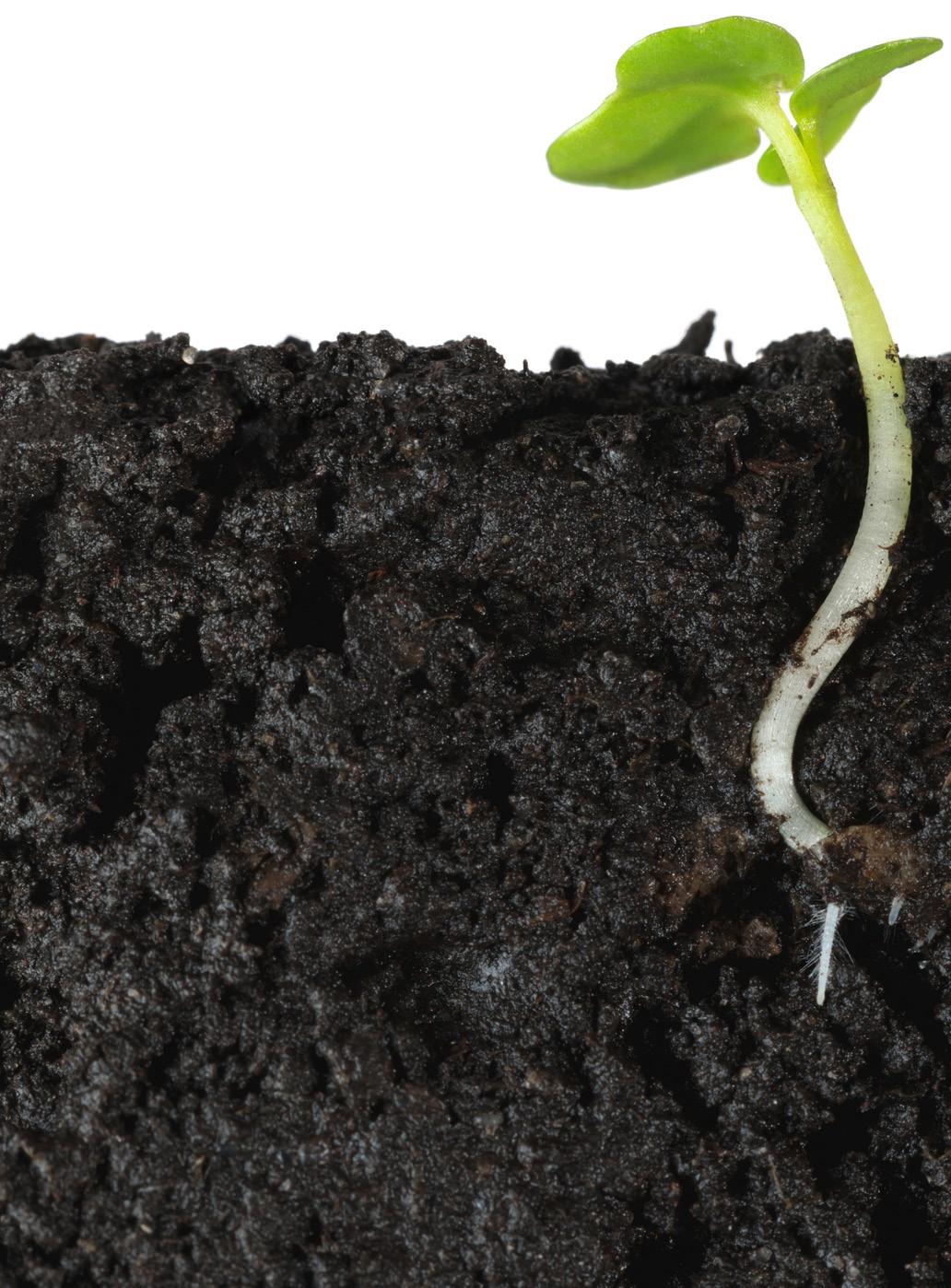
As the chill of winter gives way to the gentle warmth of spring, we are reminded of God’s enduring promise of renewal. The earth awakens, buds unfurl, flowers bloom, and light lingers longer, quietly proclaiming that new life is not only possible, but certain in God’s perfect timing. What once seemed lifeless begins to stir again, offering a visible testimony to the faithfulness of God, our creator.
Spring is more than a season; it is a reflection of spiritual truth. Just as the barren fields are restored, so too can our hearts be renewed. Scripture reminds us, “For I am about to do something new. See, I have already begun! Do you not see it?” (Isaiah 43:19) In moments when life feels dormant or uncertain, God is already at work beneath the surface, preparing something beautiful. Even when we cannot yet see the evidence, His purposes are quietly unfolding.
There is a invitation in this season to pause and reflect. What in our lives has grown weary or worn? What habits, thoughts, or burdens have we carried through the long winter that God is calling us to release? Spring encourages us to lay these things down and make room for His transforming grace. In doing so, we participate in the renewal that God is already bringing forth.
Through Christ, we are not bound to what was; we are invited into what can be. As 2 Corinthians 5:17 declares, “This means that anyone who belongs to Christ has become a new person. The old life is gone; a new life has begun”! New beginnings are not defined by our past, but by His redeeming love and mercy.
The rhythms of spring also remind us that growth is a process. Seeds do not bloom overnight; they require time, nurturing, and trust in conditions we cannot control. In the same way, our spiritual lives are cultivated through patience, prayer, and perseverance. Galatians 6:9 encourages us, “So let’s not get tired of doing what is good. At just the right time we will reap a harvest of blessing if we don’t give up” The harvest will come, often in ways far greater than we imagined.
In this issue, we are delighted to present a collection of inspirational articles designed to encourage and uplift you in this season of new beginnings. Within these pages, you will find testimonies of renewed faith, reflections on God’s promises, and practical insights to help you grow spiritually. Each piece has been thoughtfully prepared to inspire hope and remind you that God is actively at work in every season of your life.
As we witness the beauty of creation renewed, we are called to renew our own commitment to faith, hope, and love. This is a season to deepen our trust in God, to step forward in obedience, and to embrace the fresh opportunities He places before us. Whether it is restoring a relationship, pursuing a calling, or simply drawing closer to Him in quiet devotion, each step reflects the new life He offers.
Let us embrace new beginnings with hope, trusting that the same God who renews the earth is faithfully renewing our lives. And as we are renewed, may we become vessels of that same hope to others, bearing witness to the beauty of transformation that only He can bring.
“See, I am doing a new thing! Now it springs up; do you not perceive it? I am making a way in the wilderness and streams in the wasteland.”
Revelation 21:5 NIV
“He who was seated on the throne said, “I am making everything new!” Then he said, “Write this down, for these words are trustworthy and true.”
Isaiah 62:1-5 MSG
“Regarding Zion, I can’t keep my mouth shut, regarding Jerusalem, I can’t hold my tongue, Until her righteousness blazes down like the sun and her
salvation flames up like a torch. Foreign countries will see your righteousness, and world leaders your glory. You’ll get a brand-new name straight from the mouth of GOD. You’ll be a stunning crown in the palm of GOD’s hand, a jeweled gold cup held high in the hand of your God. No more will anyone call you Rejected, and your country will no more be called Ruined. You’ll be called Hephzibah (My Delight), and your land Beulah (Married), Because GOD delights in you and your land will be like a wedding celebration. For as a young man marries his virgin bride, so your builder marries you, And as a bridegroom is happy in his bride, so your God is happy with you.”
INTRODUCTION
We will address the topic in three sections.
A. WHAT IS A NEW THING?
B. GOD OF NEW THINGS
C. PRAYING YOUR WAY INTO NEW THINGS
A. WHAT IS A NEW THING? 1. A f resh thing
1. GOD IS PROMISING YOU NEW THINGS
Isaiah 43:19 NKJV
“Behold, I will do a new thing, Now it shall spring forth; Shall you not know it? I will even make a road in the wilderness And rivers in the desert.
God is not just a promise giver, He is a promise keeper. In fact, what He says He will do, He is already doing it or He has done it.
Isaiah 43:19 NIV
“See, I am doing a new thing! Now it springs up; do you not perceive it? I am making a way in the wilderness and streams in the wasteland.”
1 Samuel 16:1 NKJV
“Now the LORD said to Samuel…….Fill your horn with oil, and go; I am sending you to Jesse the Bethlehemite. For I have provided Myself a king among his sons.”
2. GOD IS DECLARING NEW THINGS INTO YOUR LIFE
Isaiah 42:9 NKJV
“Behold, the former things have come to pass,
And new things I declare; Before they spring forth I tell you of them.”
The DARK CLOUD of yesterday must not cover the sunshine of TODAY AND TOMORROW in your life. Isaiah 60:1-2.
A DECLARATION cannot be covered. IT IS CLEAR, LEGISLATED, DECREED, ESTABLISHED AND IRREVOCABLE.
GOD is saying He is decreeing and legislating new things into your life this year which will nullify or cancel out the former things.
Haggai 2:9 AMP
“‘The latter glory of this house will be greater than the former,’ says the LORD of hosts, ‘and in this place I shall give [the ultimate] peace and prosperity,’ declares the LORD of hosts.”
3. GOD IS SHOWING YOU NEW THINGS
Isaiah 48:6 KJ21
“Thou hast heard; see all this, and will not ye declare it? I have shown thee new things from this time, even hidden things, and thou didst not know them.”
FROM THIS TIME (TODAY), GOD says He will be showing you new things. What could this look like?
New Ministry opportunities; New territories, New businesses, new ideas, new and better ways of doing what you are doing, new strategies, new inventions, new instructions. Hidden things you did not know before, new trade, ministry and talent secrets. 2Kings 4:1-7.
Jeremiah 33:3 NKJV
“Call to Me, and I will answer you, and show you great and mighty things, which you do not know.”
Song of Songs 2:13 TPT
“Can you not discern this new day of destiny breaking forth around you? The early signs of my purposes and plans are bursting forth. The budding vines of new life are now blooming everywhere. The fragrance of their flowers whispers, “There is change in the air...”
4. GOD IS MAKING ALL THINGS NEW
Revelation 21:5 NKJV
“Then He who sat on the throne said, “Behold, I make all things new.” And He said to me, “Write, for these words are true and faithful.”
The whole essence of the ministry of our Lord Jesus Christ on earth is to make all things new beginning with You and I.
2 Corinthians 5:17 NKJV
“Therefore, if anyone is in Christ, he is a new
creation; old things have passed away; behold, all things have become new.”
Romans 6:4 NKJV
“Therefore we were buried with Him through baptism into death, that just as Christ was raised from the dead by the glory of the Father, even so we also should walk in newness of life.”
Romans 12:2 TLB
“Don’t copy the behavior and customs of this world, but be a new and different person with a fresh newness in all you do and think. Then you will learn from your own experience how his ways will really satisfy you.”
Ezekiel 11:19 NKJV
“Then I will give them one heart, and I will put a new spirit within them, and take the stony heart out of their flesh, and give them a heart of flesh,”
A call to New Things is a call to personal transformation, reformation, education, revival, reset, rethink, renunciation, revelation and revolution.
C. PRAYING YOUR WAY INTO NEW THINGS
1. Father, I thank You for this season and this year of new beginnings and new things.
2. Father, whatever belonged to my past that is attacking my present and threatening my future, destroy it now in the name of Jesus.
3. Embargoes on new things in my life, be lifted in the name of Jesus.
4. Invisible hands blocking new things in my life, family, ministry and business, wither by fire in the name of Jesus.
5. Every siege of darkness barricading new things in my life, be destroyed by fire in the name of Jesus.
6. I command the rain of new things, fall on me, my family, my ministry and my nation in the name of Jesus.
7. God of mercy, honour my destiny with new things in the name of Jesus.
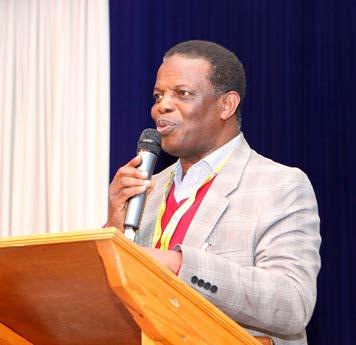
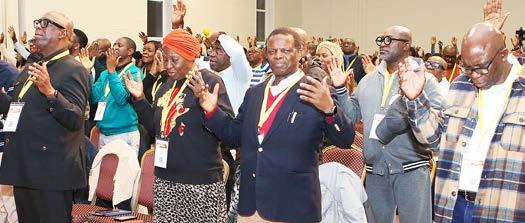
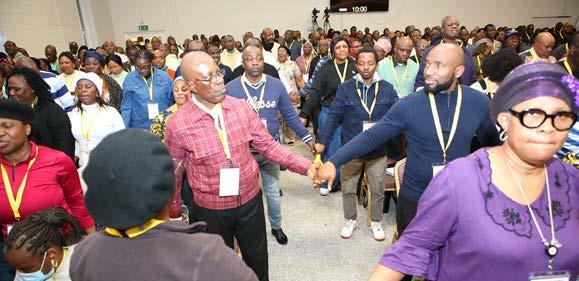
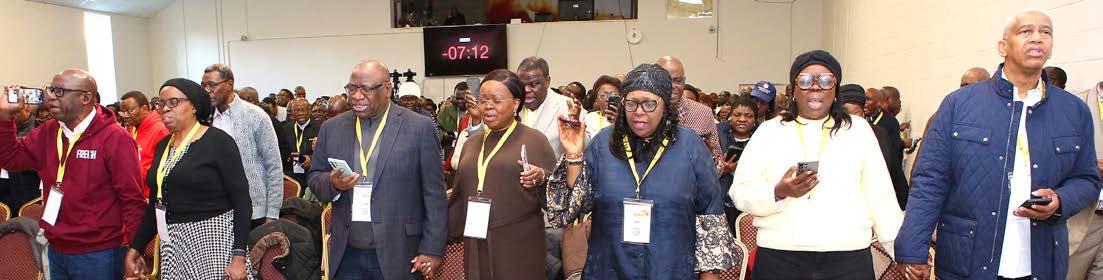
Excerpt from a booklet by Pastor Leke Sanusi used and distributed at the RCCG Continental Pastors’ Retreat 2026 held in the UK from 8th – 10th January 2026
• Pastor Leke Sanusi Continental Overseer, RCCG Europe Continent 9/Chairman, Board of Trustees, RCCG UK
7Brand New Things God Gives
• Pastor David Sola Oludoyi Deputy Continental Overseer, RCCG Europe
“He who was seated on the throne said, ‘Behold, I make all things new.’” Revelation 21:5
There are seasons in life when everything seems to draw to a close. Dreams stall, carefully laid plans unravel, and hope feels just out of reach. Yet right in the midst of such moments comes a striking declaration from heaven itself: “Behold, I make all things new.”
These words from Revelation 21:5 reveal something essential about God’s nature. He is not simply the God of the past; He is the God of renewal, of restoration, of fresh starts, and of entirely new beginnings.
Life, as we know, rarely follows a straight path. There are setbacks, disappointments, and chapters that feel like endings. But Scripture reminds us that, with God, what looks like an ending is often the doorway to something new.
He brings new wine
In passages such as Proverbs 3:9-10 and Joel 3:18, new wine symbolises abundance and joy. It reflects God’s provision, not merely enough, but more than enough, given generously.
He gives new songs
Psalm 40:3 and Isaiah 42:9 point to a change in worship when circumstances shift. When God moves, our response changes too. A new season often brings with it a fresh expression of praise.
He makes new promises
After the flood, God established a covenant with Noah in Genesis 8:20-22. Even after the most difficult seasons, He is faithful to speak again and to offer assurance, hope, and a future.
He gives a new name
Isaiah 62:2 speaks of God giving His people a new name. It is a picture of renewed identity, of purpose rediscovered and destiny reshaped.
He offers a new life
When God begins again in our lives, it does not always happen in obvious ways. Often, His renewal unfolds across different areas, sometimes quietly and sometimes with great clarity.
He shows us new things
Isaiah 48:6 speaks of God revealing what was once hidden. New beginnings frequently come with fresh understanding and a clearer sense of what He is doing beneath the surface.
He gives new ideas
In Judges 15:15, Samson used something as unlikely as a donkey’s jawbone to achieve victory. It is a reminder that God’s ways are not always conventional. At times, He brings insight and creativity we would never have imagined.
“
From the prophetic words of Isaiah to the declaration in 2 Corinthians 5:17, “If anyone is in Christ, he is a new creation”, the message is clear. God does not simply improve what was; He transforms it completely.
“Behold, I make all things new.”
Wherever you find yourself, whatever your past or present, God remains the one who brings fresh starts. What feels like an ending may only be the beginning of something new.
Ask God to make things new in your life. Trust that He is already at work, even in ways you cannot yet see. It shall be so, in Jesus’ name.
A BRAND NEW A-Z GUIDE FOR ADMINISTRATORS (SELF
ASSESSMENT)
1. Ask questions and do not assume.
2. Be Bureaucratic when you need to be: get the balance right.
3. Compliance is essential. Check that you are compliant with regulatory bodies.
4. Delegation - Do you delegate more than deferring or doing?
5. Emotional intelligence – have you taken time to develop how you relate with others?
6. Fervency in prayers is a requirement.
7. Gratefulness – how grateful are you as an administrator?
8. Hierarchy - Do you understand the hierarchical order of the organization you work for?
9. Insight into the stakeholder’s mind is key.
10. Jesus must be at the centre. Do you allow Him to walk with you? Do you follow His example?
11. Key Performance Indicators - Do you always meet up with your KPIs? Or do you make excuses? For those who make excuses accuse themselves.
12. Leadership matters. As an administrator you are expected to display leadership skills. How well are you doing?
13. Managerial abilities – how well are you managing your team? Do not micro manage.
14. Net Worth What qualities are you bringing to the team?
15. Openness - are you receptive to new ideas?
What is your rating?
Fair?
Good?
Excellent?
16. Paper, process and procedure must not prevail over people.
17. Quality control is very key for excellence.
18. Reports - executive summaries, research reports, weekly reports, annual reports, project reports? What’s your favourite? They are all needed at different times.
19. Strategy is articulating where you were, where you are, and how to get to the next level. Are you a good strategist as an administrator?
20. Team building, prayer is the back bone of strong team building.
21. Utilise resources effectively so that you do not burn out.
22. Vision - are you still running faithfully with the vision that was cast before you when you started?
23. Wisdom is the principal thing. As an administrator you need the wisdom of the ant for diligence and proactivity, wisdom of the serpent to know when to hide, hold, and have, and finally, above all the wisdom of God to excel.
24. Xenial – hospitality is essential to make those we work with feel at ease.
25. Yielding – how open are you to superior suggestions when you are fixated on an issue?
26. Zoning out – learn how to always zone out of toxicity and zone in tow positivity
It is a Brand New Beginning for you as an Administrator/ Leader/Pastor and with God’s help we shall exceed expectations in Jesus Name.
Pastor Modupe Afolabi Continental Executive Director, RCCG Europe Continent
•
A NEW AND DEEPER REVELATION
In the book of Exodus 6:2-3, the scripture says, “And God spoke to Moses and said to Him: “I am the LORD” I appeared to Abraham, Isaac, and to Jacob, as God Almighty, but my name “LORD” was not known to them”. The Hebrew name for the Almighty God is Elshaddai, which means the All-Sufficient One, it represents God’s omnipotence, sufficiency and His role as a provider and nourisher. We see this in the book of Genesis when God made a covenant with Abraham, Issac and Jacob regarding fruitfulness and multiplication. God Almighty also refers to God’s power at work in the lives of His people.
In Genesis 15: 13-14, God had spoken to Abram that his descendants would be strangers in the land that was not theirs and they would be afflicted for 400 years, afterwards, He would judge the nation that afflicted them and the Israelites would come out with great possessions. The people of God had cried and groaned for many years for deliverance under the captivity in Egypt. They knew God as Elshaddai, the All-sufficient God but the deliverance they needed from God was not forth coming in Egypt. They were a covenant people, they were heirs of the promises of God but slaves in Egypt. Their revelation of who God was, was
not sufficient to deliver them in the land of captivity. They were frustrated and resigned to fate until God sent Moses to them. When God was speaking to Moses in the above verses, He said He revealed Himself to His people as Elshaddai, the All-mighty God, but they were yet to know Him as LORD. The word LORD in Hebrew means Yahweh, the self-existent God, signifying God’s eternal selfsufficient nature, God’s active presence with His people. He is the I AM WHOM I AM. God in His infinite mercies unravelled this new revelation of Himself to His people to bring deliverance to them.
In our walk with God, we should cultivate an unquenchable desire to know Him. The more we know Him, the more we want to know Him. Paul was writing in Philippians 3:10, “That I might know Him and the power of His resurrection….” The knowledge here is not merely intellectual but an experiential knowledge of who He is, a revelation of Him, an encounter with Him in specific areas of life. Knowing God is seeking Him with the whole of our heart and soul (Deuteronomy 4:29). Our understanding of who God is shapes our experience with Him; the God you know is the God you will experience. Paul was speaking in another scripture in Philippians 4:19 “And my God will supply your
needs……”, a statement rooted in his personal encounter with God. In many instances in the scriptures, people often gave God names that reflected their encounters with Him. For example, someone healed by Divine intervention may call Him Jehovah Rapha, the Lord who heals. Yet, when faced with a different challenge, that same person must seek God anew for a fresh revelation of His nature to overcome that situation. In the same vein, the Israelites had cried to God and groaned for many years, God remembered them and sent His prophet Moses to bring them out of an extended captivity. In Exodus 6: 6-8, God introduced Himself as Yahweh to His people in 7 revelations of ‘I will’ statements. This is the ministry of Yahweh, as He is also speaking into our lives today:
1. I WILL BRING YOU OUT:
God is stepping into your situation to bring you out of every form of captivity that has held you bound. He is bringing you out from all unpleasant situations and circumstances. Psalm 66:12 says, “you have caused men to ride over our heads…but you brought us out to rich fulfilment”. Yahweh is lifting you from shame and humiliation, He is breaking limiting patterns that has hindered your growth and prosperity.
2. I WILL RESCUE YOU:
Yahweh has come to rescue you from that challenge that entraps you. He is the fourth man in that fire of affliction and that is why you cannot be consumed. He said in His word that He will make a way of escape so that you would not be overtaken by the temptation you’re facing (1Corinthians 10:13). He’s moved close in your direction to be your shield and defence from every arrow of the enemy.
3. I WILL REDEEM YOU:
Redemption means to reclaim at a price. He redeemed you with outstretched arms at Calvary. The scripture says in Galatians 3:13 “we have been redeemed from the curse of the law…” and a causeless curse cannot stand (Proverbs 26:2). You’re exempted from generational curses because you have been purchased by His blood. His mercy is rewriting your story, so that your life will begin to mirror the finished work of Christ in every facet of life. He is restoring your wasted years, and lost opportunities.
4. I WILL TAKE YOU AS MY PEOPLE:
Yahweh is declaring His ownership over you. Your identity is shifting and He is removing every label or stigma
that people placed on you. Your new identify shifts from been enslaved to a covenant heir so you can take your place in destiny. God is watching over you as His treasured possession. (Exodus 19:11)
5. I WILL BE YOUR GOD:
God will no longer seem far from you. He would no longer be a distant supervisor because Yahweh has come. God is calling you into an intimate relationship with Him. The Bible says He is the present help (Psalm 46:1). You begin to have a fresh awareness of His presence in the place of prayer and worship.
6. I WILL BRING YOU INTO THE LAND:
Yahweh has come to give you direction and clarity in every confusion. He will guide you to green pastures because He takes delight in your prosperity (Psalm 35:27). He will lead you to your inheritance and secure that which is your portion in Him (Psalm 16:5).
7. I WILL GIVE IT TO YOU:
Yahweh has come to give you tangible results beyond promises. Prophecies over your life are becoming your realities. The word of God is finding expressions in all areas of your life and you’re a light that can no longer be hidden. Your life is
a testament of God’s goodness and His faithfulness for all to see.
Each of the above declarations is a movement and a transition from captivity to liberty, from promises to possession. However, when Moses spoke to the people of God about this new revelation, the scripture says they did not listen to him because of anguish of spirit and the cruel bondage (Exodus 6:9). At this point, they had lost faith in God. Their life experiences had dulled their perception, leaving them unable to see any good ahead. Crushed by years of slavery, they had accepted their condition. Yet their weakened faith did not stop God’s plan. You may not feel strong in faith today, but Yahweh is faithful, He is committed to bringing you into fulfilment and establishing His purpose in your life. The resurrection of Christ demonstrates that Yahweh has fully stepped into history, restoring what was lost and inviting us into a new and deeper revelation of Him as Yahweh. You may have known God as your provider, as you seek him the more in this season, you’ll know Him as your deliverer, you may have known him as your teacher, now you’ll know Him as the intervener, a transition of the knowledge of Him as Elshaddai to Yahweh.
Healing Strings
God’s Healing Word
(Strings of Healing)
In the context of spiritual and physical healing, scripture often compares God’s word as medicine or slender threads that bind up wounds. The ultimate ‘Healing String’ is often seen as the stripes/wounds on Jesus’ back which brought healing and wholeness to humanity (Isaiah 53:5).
In Proverbs 4:20-22 God’s words are described as life, health and indeed medicine to all those who find them. Psalm 107:20 also affirms that God sent his word and healed us. Therefore, always engage with the Word of God. Find Bible verses that apply to your situation and use them in prayers. Remember that the Word of God is a lamp unto your feet and a light unto your path (Psalm 119:105).
Tzitzit (Strings of Commandment)
In the Old Testament, the strings or fringes (Tzitzit) attached to the corners of garments were intended to be a visual reminder of God’s commandments. Indirectly what this means is that healing can come through simple obedience and remembering God’s commandments.
The Israelites were commanded to wear tassels (strings) to help them remember to obey the commandments which kept them on a path of life and health (Numbers 1538-40). Healing comes by God’s commandment and
sustaining God’s healing comes by remembering and keeping his commandments.
Examples include:
• Naaman’s healing of leprosy (2 kings 5-1-14)
• The man born blind (John 9:1-7)
• The ten lepers (Luke 17:11-19)
• The Royal official’s son (John 4: 47-53)
• The man with the withered Hands (Matt 12:9-13)
These examples show that obedience is not intended to earn healing, but rather to position the believer to receive it by acting by faith, through God’s words, commands, and God’s servants.
Music (Strings of Worship)
David played his harp for Saul, causing an evil spirit to depart from him (I Samuel16:14-23), demonstrating the calming and healing power of powerful spirit filled songs in declaring your freedom from sickness, diseases and depression caused by demonic or satanic powers. Consistently listening and playing spirit filled worship songs at home, while driving, sleeping etc. disrupts the activities of demonic spirits presenting themselves in any form of medical condition.
Worship songs carry the presence of God, and demonic forces cannot dwell in God’s presence. Isaiah 68:2b says, as wax melts before the fire, so will the wicked perish at
the presence of God. Believe in the power of God Almighty for a brand-new beginning of Divine health.
Few closing points to note:
1. Repent and declare your past and present sins before Jesus and ask him to cleanse and make you whole again (1John 1:9).
2. To heal from past traumas, it is important to forgive everyone who once despised you and also ask for forgiveness from those you may have once treated badly (Col. 3:12-13)
3. Have an active prayer life. A poor immune system is prone to all kinds of sickness and diseases, so also a poor prayer life is prone to all kinds of demonic and satanic attack. Just as you keep your mobile phones fully charged daily, so keep your prayer life fully charged up (1Thess. 5:17).
4. Consistently live a life of holiness and righteousness through the grace of God which has been made available for you. Ask God for grace to overcome the works of the flesh (Gal. 5-19-21).
5. Eat healthy and rightly (1 Cor 10:31), Remember, wisdom is profitable to direct (Eccl.10:10).
I declare in the name of Jesus that your health is made perfect, and your journey to a brand-new beginning of Divine health has begun in Jesus Name. Stay blessed.
• Faith Benyeogor
The Nearness of God is my Good
“But as for me, the nearness of God is my good; I have made the Lord GOD my refuge, that I may tell of all Your works.”
Psalm 73:28 (NASB)
In a world filled with competing voices and endless options, we are constantly told what is ‘good’ for us. From health advice to lifestyle trends, the list is long - avoid stress, reduce sugar, stay away from harmful substances, and guard your relationships. While these are wise and necessary cautions, life also teaches us that even good things, when taken in excess or placed above their rightful place, can become harmful.
Yet there is one reality that stands apart, unchanging, pure, and eternally beneficial: the nearness of God.
Unlike anything else in life, drawing close to God never diminishes us. It never corrupts, exhausts, or disappoints. In fact, the more we seek Him, the more we are strengthened, renewed, and made whole. The psalmist declares with conviction, “the nearness of God is my good.” This is not merely a poetic statement; it is a lived truth, discovered through experience, surrender, and relationship.
Every generation faces the temptation to substitute God with something else. The world offers appealing alternatives - pleasure, success, relationships, status, promising fulfilment and escape from pain. These things often appear attractive, even convincing, presenting themselves as solutions to life’s deepest struggles. But they
cannot satisfy the longing of the human soul. David Yonggi Cho once rightly said: “There is a void that cannot be filled by anything but GENUINE COMMUNION WITH GOD. No matter what man acquires, it cannot replace the fellowship that fulfils the very essence of man’s being, giving purpose to life, nourishing the core of his soul.”
Many of us can testify to this truth. After pursuing education, building careers, forming relationships, and achieving personal goals, we may still sense that something is missing. It is often in those moments of reflection that we come to realize: what we truly need is not more of the world, but more of God.
The nearness of God is not just a spiritual idea, it is a lifeline. It is the quiet assurance that we are not alone, the steady presence that sustains us through every season. Through personal trials, uncertainties, and moments of weakness, it is God’s nearness that preserves, restores, and delivers.
However, many people misunderstand God’s desire for closeness. Some believe that God wants us near only to control or restrict us. Others feel unworthy of His presence, especially in times of failure or struggle. There is often a tendency to withdraw from God precisely when we need Him most.
This could not be further from the truth.
God’s invitation to draw near is rooted in His love, not in a desire to condemn or control. His presence is not a place of judgment for the believer, but a refuge, a safe dwelling where grace abounds and mercy is renewed daily. When we pull away from Him, we are not protecting ourselves; we are distancing ourselves from the very source of our help.
Psalm 73:28 reminds us with clarity and certainty: nearness to God is for OUR GOOD. Not occasionally, not conditionally, but always.
In seasons of joy, drawing near to God deepens our gratitude and anchors our hearts. In those seemingly endless seasons of despair, His nearness becomes our shelter and strength. The closer we remain to Him, the more we experience His covering like a shadow that shields and protects. His presence surrounds us, guiding our decisions, calming our fears, and restoring our souls. Scripture beautifully affirms this in Psalm 91:1–2 (TPT): “When you abide under the shadow of Shaddai, you are hidden in the strength of God Most High. He’s the hope that holds me and the stronghold to shelter me, the only God for me, and my great confidence.”
When we choose to remain near to God, even as the world pulls us in different directions, we begin to see life differently. Our priorities shift. Our desires are refined. Our hearts become
aligned with His. And from that place of intimacy, our lives become testimonies of His goodness.
We do not only experience God, we reflect Him.
The psalmist goes further to say that making God our refuge enables us to “tell of all Your works.” In other words, nearness to God produces a life that speaks, through words, actions, and character of His faithfulness and power.
This is the invitation before us: not just to believe in God from a distance, but to walk with Him closely, daily, intentionally.
Let it be a settled conviction in your heart: the nearness of God is your good.
When others drift away, choose to draw closer. When circumstances become overwhelming, choose His presence. When doubt arises, return to His truth. Let your posture remain firm and unwavering.
At the end of it all, it will not be the things we accumulated or the recognition we received that define us. It will be the depth of our relationship with God.
So make this your daily declaration, your personal anchor, and your lifelong pursuit:
“The nearness of God is my good.”
• Esther Ikeije
PURPOSEFUL NEW BEGINNING
Stepping into God’s Plan with Clarity and Conviction
There are moments in life when everything seems to pause, when one chapter quietly closes and another waits to be written. These moments often come disguised as change: a new season, a fresh opportunity, a difficult ending, or even an unexpected redirection. For a Christian, such moments are not accidents. They are invitations, divine invitations into a purposeful new beginning.
A new beginning is more than starting over. It is starting with God in focus.
God Is the Author of New Beginnings
Scripture reminds us in Isaiah 43:19: “Behold, I am doing a new thing…”
God is not only the Creator of the heavens and the earth—He is also the Creator of fresh starts. When He begins something new, it is never random or meaningless. It carries intention, direction, and purpose.
Many times, we pray for change, but when it comes, we struggle to recognize it. Why? Because new beginnings often require us to leave behind what is familiar. Yet God does not lead us forward to confuse us, he leads us forward to fulfil His purpose in us.
Purpose Gives Meaning to New Beginnings
Without purpose, a new beginning can feel empty. It becomes just another cycle, another job, another year, another routine. But when
purpose is understood, everything changes.
Jeremiah 29:11 reminds us: “For I know the plans I have for you…”
God’s plans are not vague or uncertain. They are intentional. That means wherever you find yourself right now, whether in a new job, a new city, a new ministry, or even rebuilding after a setback—there is purpose embedded in that season.
Purpose answers the questions: Why am I here?
What is God trying to do in me and through me?
Letting Go to Move Forward
One of the hardest parts of a new beginning is letting go of the old. Sometimes we carry past disappointments, regrets, or even past successes that prevent us from embracing what God is doing now.
Philippians 3:13 says: “Forgetting what lies behind and reaching forward…”
Letting go is not about denial—it is about trust, trust that God’s future for you is greater than your past, no matter how good or painful it may have been.
Walking Purposefully, Not Aimlessly
A purposeful new beginning requires
intentional living. It means asking daily:
• What would God have me do today?
• How can I grow in this season?
• Who am I called to impact?
Proverbs 3:5–6 encourages us to trust in the Lord and allow Him to direct our paths.
Purpose is not always loud or dramatic. Often, it is found in:
- Faithfulness in small things
- Consistency in daily obedience
- Serving others with sincerity
Grace for the Journey
Here is the beautiful truth: God does not just give purpose; He gives grace to walk in it
Ephesians 2:10 tells us we are created for good works, which God prepared in advance.
This means:
i. You are not unqualified ii. You are not too late iii. You are not alone
God has already equipped you for what lies ahead.
Living Out a Purposeful New Beginning
Here are simple but powerful ways to step into your new season:
1. Seek God First
Start your day with prayer and the Word. Clarity comes from His presence.
2. Be Open to Change
Don’t resist what God is shifting. Growth often comes through discomfort.
3. Take Small Steps
Purpose is fulfilled daily, not overnight. Progress matters more than perfection.
4. Stay Connected
Surround yourself with people who encourage
your faith and growth.
5. Reflect and Realign
Regularly ask yourself: Am I still aligned with God’s purpose?
A Final Thought
A purposeful new beginning is not about having everything figured out. It is about walking with the One who does
Every new season carries a promise:
• That God is not finished with you
• That your story is still being written
• That your life still has meaning
So, wherever you are right now, take that step, no matter how small, with confidence.
Because with God, every new beginning is full of purpose
• Olanrewaju Jogunosinmi (Larry)
The Error of the Blessed
Isn’t it interesting blessings are sometimes the very reason people drift from the One who gave them. Take the example of the prodigal son (Luke 15:11–32), He asked his father for a blessing, got exactly what he wanted, and then what was the first thing he did? He packed up and left. The blessing became the excuse for distance.
Sound familiar? We often do the same. We cry, pray, fast, and plead, “Lord, if You just give me this job, this marriage, this miracle, this breakthrough…” God answers and at first, we’re grateful really grateful. But then, little by little, we slip. Suddenly, prayer becomes negotiable, righteousness becomes excusable, and church becomes optional. The job we begged for becomes our excuse. The marriage we longed for becomes our distraction. The ministry platform we once called “God’s assignment” quietly turns into a stage for our own performance. The Giver gets sidelined!
That’s the error of the blessed.
“Be careful that you do not
forget the Lord your God…” (Deuteronomy 8:11). Funny thing is, people rarely drift when they’re in need. The real danger comes when we’re full. Hosea 13:6 puts it bluntly: “When I fed them, they were satisfied; when they were satisfied, they became proud; then they forgot Me.” What once felt like desperate dependence on God shifts quietly into selfsufficiency. Abundance can be more dangerous than scarcity.
Just look at Solomon; he needed wisdom, riches and influence. God answered (1 Kings 3), and Solomon became the wisest, richest, most influential man of his time. But in the end, his very blessings became his downfall and pulled his heart away from the Lord (1 Kings 11:9). Not because blessings are evil, but because he stopped seeking the One who gave them.
In seasons of plenty, the danger of forgetfulness grows. It is when we are full, not when we are hungry, that we are most at risk of pride: “You may say to yourself, ‘My power and the strength of
Blessings are meant to bring us closer to God, not further away “ “
my hands have produced this wealth for me’” (Deuteronomy 8:17). That is why Proverbs 30:8–9 pleads, “Give me neither poverty nor riches…otherwise, I may have too much and disown you and say, ‘Who is the Lord?’
So, how do we avoid the error of the blessed? We must fight to keep God first. Blessings are meant to bring us closer to God, not further away. They are reminders of His love, not replacements for it. They are signposts pointing us back to the Giver, reminders that “every good and perfect gift is from above” (James 1:17).
After your promotion, after your healing, after your answered prayer pause and ask: “Has my worship grown deeper, or weaker? Has my hunger for God intensified, or declined?” If the answer reveals drift, it’s time to return.
Blessings are temporary, but the Blesser is eternal. Never let the blessing replace the Blesser. “Return to your first love” (Rev. 2:4).
• Pastor Olatunde Akinbulumo
New Beginning Self-Awareness:And Parenting With Purpose
It takes self-awareness to step into a new beginning
To step into a new beginning and enjoy all that God has for you, you must come to the knowledge and awareness of your emotions, pain, thoughts, needs and motivations. This is what self-awareness is all about. Self-awareness is about understanding the nature of and reason for your feelings, thoughts and actions.
Psalms 139:23 (AMP) says, “search me [thoroughly], O God, and know my heart; test
me and know my anxious thoughts.”
Lamentations 3:40 (NKJV) says, “Let us search out and examine our ways, and turn back to the Lord.”
An example of someone who stepped into new beginnings in the Bible through self-awareness and became a role model in parenting is Hannah.
Hannah was a woman overshadowed by
emotion. She never understated nor hid her frustration and pain. She named them. In 1 Samuel 1:7-10, one could see tears, grief and weeping in the life of Hannah. The torment from her rival was so great that even her husband’s love could not remove the emotional pain and distress. The provocation and taunting, which were constant and intentional, went on year after year, leading Hannah to a state of despair and making her unable to eat.
Nevertheless, instead of letting the pain overshadow her, Hannah chose to pour her soul into God. She behaved maturely, choosing to depend on and entrust all her emotion in God rather than reacting:
She expressed her pain honestly.
She was not silent nor bitter.
How did Hannah’s new beginning start?
Hannah’s new beginning started when she became emotionally and spiritually aware of her pain and took it to God. She turned all the sorrow, pain and the weight of all she was carrying to God.
1 Samuel 1:10 NKJV
And she was in bitterness of soul, and prayed to the Lord and wept in anguish.
1 Samuel 1:15 The Message
Hannah said, “Oh no, sir please! I’m a woman broken hearted. I haven’t been drinking. Not a drop of wine or beer. The only thing I’ve been pouring out is my heart, pouring it out to God.
While Hannah was in the tabernacle praying at Shiloh, the intensity with which she poured herself out was so high that it was mistaken for drunkenness. Hannah had also visited the same temple previously, and the intensity of her pain and anguish was so different to the past that the priest, Eli, pronounced a word of peace on her.
Hannah subsequently shifted from desperation to trusting in God. Hannah’s self-awareness lies in an understanding that her focus on the problem she faced was consuming her. By letting go and giving it to God, she was set free and broke the power of that problem over her emotions. This obviously was the reason her “face was no longer sad” according to the 18th verse.
Hannah’s present state and circumstances were no longer dictated by what was going on around her.
1 Samuel 1:18 (New World Translation) “To this she said: “Let your maidservant find favour in your eyes.” And the woman proceeded to go on her way and to eat, and her face became self-concerned no more”.
This verse revealed that Hannah was no longer occupied by her own pain or the circumstances in which she found herself. She was no longer focussing nor dwelling on her needs since she believed and trusted that they had all been released to God. This resulted in Peninah no longer being able to upset her.
Hannah’s understanding of her needs, emotions and desires not only placed her on a trajectory to trusting in God and healing but also shaped her into an intentional and healthy parent. She no longer carried the pain, bitterness, grief and overwhelming emotions of parenting but was emotionally stable and grounded. She raised Samuel from a place of healing, not trauma or bitterness. Self-awareness gave Hannah a clarity of purpose in parenting. She was aware of her responsibility as a parent, and it was purpose driven. Children are influenced by their parents’ emotional states.
Hannah’s healing helped her raise Samuel in a peaceful and secure emotional environment, not with pain, which gave him a strong spiritual foundation.
Hannah demonstrated emotional maturity through self-control. She knew her role as a steward to raising Samuel for his God-given purpose. She was able to let go and hand him back to God as promised.
As you move ahead in this season of new beginnings, are you aware of your emotions and understand how they affect your role as a parent and even in relationships? Are you parenting from a place of pain or with clear vision and purpose? Are you ready and willing to trust God with your pain, ready to let go in exchange for peace and rest?
Matthew 11:28 (Easy to Read) “Come to me all of you who are tired from the heavy burden you have been forced to carry. I will give you rest.”
• Dr Adeola A. Obadina
A New Beginning in Children’s Discipleship:
Akey component of the Christian faith is the discipleship of children, which establishes the groundwork for spiritual development throughout one’s life. Families and churches frequently try to figure out how to properly introduce kids to Christ and strengthen their faith. This process sometimes necessitates a new beginning, a new strategy, a renewed dedication, or creative tactics that revitalise children’s discipleship.
A new beginning in children’s discipleship signifies more than just starting over or just starting again; it represents a renewed vision, fresh strategies, planning and a heartfelt commitment to nurture children in Christ. This may involve parents reassessing existing methods and attitudes, embracing innovative, biblically grounded approaches, cultivating an environment where children can experience Christ personally through personal learning and prioritizing relational discipleship over mere programmatic activities.
This fresh start is rooted in recognizing that children are not just future believers but current, active participants in God’s kingdom, deserving of intentional discipleship. We all know that whatever we want our children to become tomorrow starts from today. A room is not built in a day, preparation is essential.
Why is a New Beginning
necessary?
• Changing Cultural Contexts: Society evolves, and so do the challenges children face regarding faith. As cultural contexts change, they influence behaviours, communication styles, social roles, and perceptions within communities, impacting everything from individual identities to societal institutions.
• Engagement and Relevance: Traditional methods may no longer resonate; a fresh approach can reengage children for better result.
• Deeper Spiritual Formation: Moving beyond superficial activities toward genuine transformation. When genuine transformation is at the centre of our discipleship activities, we become more focused and intentional in our approach.
Practical Steps for a New Beginning in Children’s Discipleship
Step 1: Prayerfully Reevaluate Your Discipleship Approach
Sometimes we may think that we are doing everything right when it comes to raising our children in the way of the Lord. It will be helpful to reevaluate our approach regularly. It is important we go to God regularly for guidance at every stage of their faith journey. Children grow and their needs changes along with their growth. We need to remember that not all children are the same. Some methods may work for some children and
may not work for others.
Begin with prayer, seeking God’s guidance to assess current needs, attitudes, and methods. Ask God about their spiritual needs. Never assume that you know.
• Are children experiencing authentic encounters with Christ? Encounters with Christ should never be replaced with church attendance. Children going with you to church and engaging in some church activities does not automatically translate to knowing Jesus Christ.
• Is the discipleship environment welcoming and engaging? This involves cultivating a space where individuals feel valued, supported, and motivated to grow in their faith.
• Are spiritual growth and relational connections prioritized? This involves intentional practices and mindset shifts that nurture the inner development and meaningful relationships.
• Hold a prayer meeting dedicated to seeking wisdom for discipleship renewal.
• Gather feedback from the children without criticizing them.
• Identify areas needing change or revitalization and document them together. Proverbs 3:5-6 says trust in the Lord.
Step 2: Develop a Clear Vision and Mission for Children’s Discipleship
Embracing a Fresh Start for Lasting Faith.
• After seeking God’s face, write out plans as led by the Holy Spirit to action your findings.
• Define what effective discipleship looks like in your context.
• Clarify goals such as:
- Children knowing Christ personally
- Developing Christlike character
- Equipping children to serve others
- Engaging with evangelism (Matthew 28:19-The Great Commission applies to children as well).
These can be implemented by creating a vision statement emphasizing relationship, growth, and service.
• Communicate this vision consistently to every member of the family.
• Align all activities and vision statement with this purpose.
Step 3: Cultivate child-centred, biblically rich family activities
This involves using ageappropriate, engaging materials that focus on Christ-centred lessons, biblical stories, and life applications.
- Select activities that emphasize biblical truths and practical application.
- Incorporate storytelling, multimedia, and creative activities.
- Encourage children to ask questions and explore their faith.
Develop a thematic plan that integrates Bible memory, prayer, and worship into each session. This reminds us of the importance of family altar. This is where the word is shared to impact knowledge and everyone participate in the worship and prayer.
Deuteronomy 6:6-7 NIV
6These commandments that I give you today are to be on your hearts. 7 Impress them on your children. Talk about them when you sit at home and when you walk along the road, when you lie down and when you get up.
Teach the word diligently to your
children.
Step 4: Foster Relational Discipleship
This is a spiritual development approach that emphasizes the importance of building authentic, caring relationships as a foundation for growing in faith and following Jesus. Rooted in the teachings of Richard Foster, a prominent Christian writer and spiritual director, this approach highlights the significance of community, intentional mentoring, and mutual accountability in the discipleship process.
Key aspects of include:
1. Relationship-Centred Growth: Emphasizing personal connections over solely programmatic or doctrinal learning.
2. Authentic Community: Cultivating environments where individuals feel safe to share struggles, questions, and spiritual experiences. Be there to guide and not to judge.
3. Mentorship and Mutual Discipleship: Encouraging ongoing one-on-one or small group relationships where children both learn from and support one another.
4. Spiritual Practices: Incorporating disciplines such as prayer, scripture reading, service, and solitude within relational contexts. Do these together as a family and individually
5. Holistic Development: Addressing spiritual, emotional, and relational growth together. Overall, fostering Relational Discipleship advocates for a discipleship model that is relational, transformational, and rooted in genuine community, aiming to deepen faith through meaningful connections with others and with God.
Implement discovery activities that allow children to share their experiences and questions. Sharing life together fosters genuine discipleship.
1 Thessalonians 2:8 NIV So we cared for you. Because we loved you so much, we were delighted
to share with you not only the gospel of God but our lives as well.
Overcoming Challenges in the New Beginning
- Resistance to change. Some family members may want to resist the new beginning.
- Limited resources. Many couples became parents without adequate preparation.
- Negative parental engagement. This refers to behaviours or attitudes exhibited by parents that hinder or undermine a child’s development, learning, and emotional well-being.
- Consistency in discipleship. Lack of consistency brings setbacks in achieving goals.
Strategies:
- Communicate clearly the vision and purpose.
- Seek community partnerships if you need to do that to help achieve the aim of the family.
- Invest in training and development. Buy books and other materials that will help the spiritual growth of the children and attend seminars.
- Maintain patience and perseverance. The work of discipleship can be a tedious one. But the end results will eventually outweigh the stress that comes with it.
Conclusion
A new beginning in children’s discipleship is not merely a fresh start, but a transformational journey rooted in biblical truth, relational engagement, and intentional planning. By prayerfully reevaluating, setting clear visions, cultivating biblically rich environments, and partnering with families, we can foster a generation of children who not only know about Christ but genuinely follow Him. Remember, the goal is not just activity but transformation— leading children into a lifelong, vibrant relationship with Jesus Christ. Let this be your season of renewal, and trust that God will bless your efforts abundantly.
• Pastor Bola Owagbayegun
Your child is sitting quietly at the dinner table. The food is getting cold. You ask how his/her day went, and the child shrugs. Not impolitely, just distantly, as though something invisible is standing between both of you. You know something is off. You just cannot name it. And neither can the child.
This is not rebellion. It is not ingratitude. It is children carrying more than their words can hold.
The reality of unseen emotions: the anxiety, sadness, fear, loneliness, and anger that children and teenagers carry silently today is more real than ever before in the human race. Our call as parents, guardians, and mentors is not just to observe behaviour but to look deeper, as God reminded Samuel: “The Lord does not look at the things people look at. People look at the outward appearance, but the Lord looks at the heart.” (1 Samuel 16:7).
Guided not by parenting techniques alone, but by the
Reading the Signs, Releasing the Feelings
How to Recognise and Unlock the Hidden Emotions in Your Child
wisdom of the Holy Spirit, whom Jesus called our Advocate and Teacher (John 14:26). You ask: How do we read the signs? And once we see them, how do we help our children release what they are carrying into the hands of a God who already knows?
Reading the Signs
Before you observe your child, pause and pray. James 1:5 promises, “If any of you lacks wisdom, let him ask God, who gives generously to all without reproach.” Ask the Holy Spirit to show you what you might otherwise miss. Discernment is not only a parenting skill; it is a spiritual gift available to everyone who asks. Ask the Holy Spirit.
• Watch the Body Before the Words
The body speaks long before the mouth does. Persistent headaches and stomach-aches with no medical cause are often the physical language of anxiety. A child who suddenly has trouble sleeping, or sleeps far more than usual, may be processing something
emotionally heavy. Changes in appetite, eating too little or too much, can signal sadness or stress. These are not imaginary complaints. They are the body’s honest attempt to flag what the heart has not yet learned to say.
• Watch the Shifts in Behaviour and Friendships
When a previously social child begins to withdraw, or a typically calm child becomes irritable, something has shifted. Pay attention when your child loses interest in activities they once loved, or when a friendship they always mentioned goes suddenly quiet. Be equally alert to the opposite extreme: excessive busyness or relentless cheerfulness can also mask deep pain. As Proverbs 14:13 warns, “Even in laughter the heart may ache.” Not every smiling child is a settled one.
• The Heart Journal: A SpiritLed Observation Tool
Proverbs 4:23 instructs us to “guard your heart, for everything you do flows from it.” In that spirit, consider
keeping a simple Heart Journal for your child — a prayerful record of what you notice. Once a week, jot down:
1. Any changes in sleep, appetite, or physical complaints.
2. Notable shifts in mood or social behaviour.
3. Moments of unusual withdrawal or unusual hyperactivity.
4. Recurring themes in their conversations, worries, or reactions.
A Parent’s Prayer of Discernment:
“Lord, open my eyes to what my child cannot yet say. Give me Your wisdom to see their heart, Your patience to wait with them, and Your love to meet them where they are. Holy Spirit, be my guide. Amen.”
Releasing the Feelings
Seeing the signs is the first gift you give your child. The second is creating Spirit-filled pathways for what is inside to come out. When words fail, and for many children, they often do, creativity steps in. God, who made us in His image (Genesis 1:27), wired us to create. And in creating, we process, we heal, and we bring before Him what speech alone cannot carry.
• Art: Drawing as an Offering
Give a struggling child a blank page and some colours, and invite them to draw how they feel — not what they see. But go further: encourage them to offer that drawing to God. “Show Jesus what is in your heart today.” This simple reframe transforms a therapeutic activity into an act of worship and surrender. You do not need to be an art therapist to sit beside them and ask, “Tell me about this picture.” That question alone can open a door that no instruction could.
• Music: Where the Soul Finds Its Voice
Music has always been God’s gift to the burdened heart. David did not only fight Goliath
with a sling, he first soothed a tormented king with a harp (1 Samuel 16:23). Encourage your child to make music: to drum, hum, or write their own words to a tune. Listen with them to what they repeatedly play; the lyrics they love often reveal what they feel. Most powerfully, introduce them to worship as emotional release — teaching them that they can bring their anger, fear, and sadness directly to God in song, just as David did throughout the Psalms.
• Writing:
Many teenagers will sooner write their pain than speak it. Frame their private journal not merely as a diary, but as a personal book of Psalms where they pour out their honest hearts to God. Use prompts such as: “Today I felt…” “Something that hurt me was…” “God, I need You to know…” The act of naming a feeling on paper reduces its grip. And naming it to God transforms it into prayer.
• Movement: Praise as Emotional Release
For younger children, unstructured play is an emotional processing activity. For older teens, physical movement — sport, dance, or a long walk, which can help release what the mind cannot seem to let go. Encourage them to move in worship, too. David danced before the Lord with all his might (2 Samuel 6:14). There is something deeply biblical about a body in motion as an act of surrender. Remind your child: You can run, jump, and dance your feelings straight to God.
• The Family Altar Moment
Once a week, create a simple family altar moment where creative expression becomes communal worship. A child shares their drawing; a teen reads a journal entry; the family prays over it together. This is not a performance; it is spiritual formation. Colossians 3:16 calls us to “let the message of Christ dwell among you richly…
through psalms, hymns, and songs from the Spirit.” This is not just a Sunday instruction. It is a blueprint for the emotional culture of the Christian home.
Conclusion
See Them, Then Free Them
Our children do not need us to have all the answers. They need us to pay attention, to pray, and to create space. First, the space to be seen — where their quiet signals are noticed and met with Spirit-led compassion rather than correction. Then, the space to release — where they have Spirit-filled pathways to bring what is inside them into the light of God’s presence, whether through a paintbrush, a song, a lament journal, or an afternoon of praise-filled movement.
Jesus said, “Let the little children come to me, and do not hinder them.” (Matthew 19:14). Our role is to mirror that posture — making sure that in our homes, in our words, and in our daily rhythms, our children always have somewhere safe to come. And that somewhere, ultimately, is not just us. It is Him.
See them. Hear them. Free them — into His hands. This is the quiet work of Spiritled parenting. Not the loud, performance-driven kind but the kind that slows down, leans in, and listens. It means noticing the child who has gone silent. Catching the one whose restlessness is really a cry. It means building rhythms in your home that say: you are safe here, and God is here too. When we see our children the way God sees them: wholly, tenderly, without rushing their process — we become the soft landing they need before they learn to fly in faith.
Remember: every child is unique, and patience and understanding are key to helping them thrive.
• Pastor Onyekachi Amuchechukwu Uduku
STEPS TO LIVING YOUR BEST LIFE
The Almighty God is calling us into a fresh season. We are to recognise that every day provides an opportunity and chance to make changes to create that season and life we want. The Holy Scriptures in Isaiah 43:18-19 (NKJV) reminds us that: “Do not remember the former things, nor consider the things of old. Behold, I will do a new thing, now it shall spring forth; Shall you not know it? I will even make a road in the wilderness and rivers in the desert.” Life may have been hard for you, but no matter how hard the past has been, you can always begin again. Be willing to be a beginner every single day and trust God to begin today
Building your best life is a personalized process, centred on cultivating deep self-awareness, maintaining physical and mental alertness, and intentionally designing daily habits that align with your core values. It is not a destination, but a continuous, non-linear journey of selfdiscovery, growth, and purposeful action. The
Message Translation of Lamentations 3:22-24 states that: “God’s loyal love couldn’t have run out; his merciful love couldn’t have dried up. They’re created new every morning. How great your faithfulness! I’m sticking with God (I say it over and over). He’s all I’ve got left”. Too often, we allow our past, whether good or bad to dictate our future. We seem to easily ignore the fact that God’s mercies are new every morning. Living your best life now means embracing the present moment with gratitude, focusing on personal growth, letting go of past regrets and future anxieties, and taking intentional actions to create joy and purpose today.
What are some basic steps to attaining that desired best life?
1. Forget your past.
God’s grace allows us to walk in our purpose. A wise man said, “the past is a place of reference, not a place of residence; the past is a place of learning, not a place of living.” In most instances, the past would weigh you down. If you want to fly, you must give up what weighs you down.
The Apostle Paul admonishes in Philippians 3:1314 that: “Brethren, I do not count myself to have apprehended; but one thing I do, forgetting those things which are behind and reaching forward to those things which are ahead, I press toward the goal for the prize of the upward call of God in Christ Jesus.” He identified that we must focus on pressing forward with the mental and spiritual strength to overcome regret and embrace a fresh future. Focusing is about investing in
growth, setting boundaries, and prioritizing your mental wellbeing over external validation. It means choosing personal development over comparison, ensuring your energy is spent on your goals and inner peace, and remembering that self-care is not selfish, but necessary.
2. Know that life happens in seasons.
There is the old and the new. In life, if there is no struggle, there is no progress. The biblical woman with the issue of blood was determined to end her old season of twelve years of suffering an affliction to achieve a new season of wholeness. It is recorded in the Scriptures that: “When she heard about Jesus, she came behind Him in the crowd and touched His garment. For she said, “If only I may touch His clothes, I shall be made well.” Immediately the fountain of her blood was dried up, and she felt in her body that she was healed of the affliction (Mark 5:27-29). Be determined to live each day as if it were your last by making a deliberate effort and decision towards your desired brand-new life. You can create that new season today. Again, let me remind you that life happens in seasons, whether we are ready or not. We know from Ecclesiastes that, “There is a time for everything, and a season for every activity under the heavens” (Ecclesiastes 3:1, NIV). God chooses what to highlight in each season of your life. While we might want to stay complacent in our comfort zones, we need to be ready and willing to pivot when God calls us out of one season and into the next.
3. Put God at the centre.
There can be no other ‘god’ that conflicts with the attention and time you need to give to God. The Psalmist says, “Commit your way to the Lord, trust also in Him, and He shall bring it to pass” (Psalm 37:5). Trust and submit to God. Let him guide, protect and give you all the power you need to live your best life. Putting God at
the centre of everything means making Him the foundation of your life, ensuring He is the priority in your time, decisions, and heart to bring peace and purpose. This involves seeking His will through prayer, Scripture and trusting Him over your own understanding. Many times, people often trust their own, often biased, perspectives. We should be reminded by the wise saying that “there is a way that seems right to a man, but its end is the way to death”. This is a frequently repeated proverb (Proverbs 14:12, 16:25) warning that human judgment, intuition, or worldly wisdom can be deceptive, leading to destructive consequences despite appearing correct or righteous initially. There is a danger of humanity’s supposedly ‘right’ intentions. One may follow a path with good intentions, but still find it leads to destruction because it ignores higher wisdom or God’s counsel. Therefore, we must take decisions with all caution and frugality as we desire a brandnew life.
Putting God at the centre also means we must learn to get into God’s Word. To understand how to live your best life, you need to be in the word of God continually. Joshua 1:8 says, “This Book of the Law shall not depart from your mouth, but you shall meditate in it day and night, that you may observe to do according to all that is written in it. For then you will make your way prosperous, and then you will have good success.” As we meditate on Scripture, we focus on God’s faithfulness rather than our fears. It is said that the vigour of our spiritual life will be in exact proportion to the place held by the Bible in our life and thoughts. Anchor your life on the Word. Jesus is your best example. Read the gospels to understand the life of Jesus.
4. Use every opportunity to serve.
To accomplish that brand-new life, you can begin by serving in
your local church, community, at work, and even at home. The beauty and blessing of being a servant to others and building relationships is key to showing “Christ in us”. Our Lord Jesus Christ taught us a lesson with an instruction that the greatest among you must be your servant (Matthew 23:11). In His earthly ministry, He showcased the best of servant leadership. Serving others leads to greatness. Serving others is widely regarded as a profound source of purpose, joy, and personal growth. Your brandnew life is in serving others.
5. Share what God has done for you.
This could be your testimonies as a tool for advancing the kingdom. All that the young man David did to bring down the giant Goliath to achieve his best life was by testifying of the faithfulness of the Almighty God. King Saul had said to David that he is a young man and would be unable to fight Goliath. In 1 Samual 17:36, David replied, “Your servant has killed both lion and bear; and this uncircumcised Philistine will be like one of them, seeing he has defied the armies of the living God.” The story of David and Goliath is a narrative of faith overcoming overwhelming odds for a brand-new beginning to greatness.
Finally, I would say that as you grow and learn, make it a habit by taking time out to share your faith and the Word of God with others. This could be through small actions such as sharing tracts, mentoring younger folks or larger actions like teaching a Bible study. Be accountable for the Word that is preached. Preserve the holiness of the Word and you shall testify of the Lord’s faithfulness.
Shalom!
• Dr Akpo Onduku
WOMAN
(Spoken-Word Poetry)
’Woman’
Some say she is a ‘wow’ man. On this day, many regard and acknowledge the strength she possesses.
The sharp claws of the lioness that catch its prey. With the same, she cuddles her cubs and builds her home.
Let’s view her from this perspective.
‘Woman’
He has placed glories and treasures in earthen vessels. That the kings and princes of the earth may learn wisdom. He uses the meek things of this world to confound the wise.
‘Woman’
A weaker vessel, she may be Yet by wisdom, she conquers and preserves thrones and terrains. However, by misusing the powers of influence held in her soul and divinely crafted physique She can nevertheless function as a stranger who ensnares and leads many astray.
Instead, let her know her worth and value.
Understanding the hand by which she was hewn and made, how priceless she is. Till she possesses her vessel in honour, adorned in purple. A fountain of blessings Wearing her crown!
‘Woman’
She needs no title, no position and
no seat of power yet her influence is wide-reaching. It can be heard in a baby’s chuckle at the sound of her voice It is felt in the emotional fortress that shields her sons and daughters and many more she calls her own. Her grace, selfless sacrifice and love constitute pillars that uphold civilisation. Yes, it is a kind of love that keeps life going.
No, don’t put a stop to ‘Woman’! Praise this gift of God, the one that makes our lands plentiful and fruitful.
A pathway that births and aids the sustenance of our very existence. A woman needs no bows and arrows. Her smile, touch and the warmth of her nurturing heart and spirit Can melt the hardest of beings It can serve as a light and lifeline to hopeless souls.
Earthen she may be But the same is bone off ribs, A weaker vessel of inner strength. May these bones remain strong as pillars that uphold our homes and societies.
I have really been struggling lately to feel hopeful. I am carrying so many burdens, so many things have not gone the way I expected. When I look around at my life I am just disheartened. In my heart I know this is probably just a season and God has a plan in all this but I can’t really see a way through right now. Do you have any advice or encouragement?
Anon
Dear Reader,
Thank you so much for getting in touch. You are not alone. I know there are many others feeling like this because life can really be difficult, taxing and disappointing. But I want to encourage you with some scriptures and thoughts that I believe will speak into your situation and bring some hope.
Isaiah 61:3 (KJV) says, “To all who mourn in Israel, he will give a crown of beauty for ashes, a joyous blessing instead of mourning, festive praise instead of despair. In their righteousness, they will be like great oaks that the Lord has planted for his own glory”.
The Amplified version of the latter end of this verse says you are crowned so that you: “may be called oaks of righteousness [lofty, strong, and magnificent, distinguished for uprightness, justice, and right standing with God], the planting of the Lord, that He may be glorified”.
It may not seem like it now when you look around at the state of things, but the promise of God is that when you put your trust in Him and hold on, you will be strong, magnificent and distinguished for uprightness, justice, and right standing with God. You might not feel very strong or magnificent right now but be assured that your circumstances do not dictate who you are, rather your identity must be rooted in the Word of God.
If you can really grasp this, then everything in your life will turn around because you will have a different perspective! If you can understand who you truly are in Christ, you can begin to throw off every cloak of shame and put on the crown of beauty that Jesus died and won for you! God wants to turn around every situation in your life that looks like one of shame or reproach into one that glorifies Him because He has planted you for His glory. As you begin to walk in the Divine authority that God has given to you, God will beautify your life in Jesus’ name.
The Bible says that we should cast our cares on him because He cares for us (1 Peter 5:7). God gave me a visual picture of this many years ago where I was carrying big sacks of burdens up the hill to where Jesus was on the cross. It was so difficult to climb the hill, but when I got there, I was so relieved to put them down
at the foot of the cross. Jesus said ‘leave them here and you need not see them again’. But to my surprise, I heard myself saying, ‘but they are my burdens, I have to carry them’. So, after resting a little while I got up, picked up the sacks and went back down the hill with them. God showed me that this was what I was doing –instead of leaving them with Jesus I was picking them up again. What a tragedy! I wonder if that is what you are doing. God is saying today, lay your burdens down. He wants to crown you with beauty instead of ashes and for this there needs to be a Divine exchange.
Ashes represent the remnants of everything that has caused you pain, loss, or brokenness. To receive a crown of beauty, you must surrender these burdens to God.
Common examples include:
Emotional Pain: Grief, mourning, despair, depression, and a “spirit of heaviness” or bitterness.
Life Struggles: Past mistakes, regrets, betrayal, disappointment of dreams or hopes.
Habits and Sin: Destructive behaviours.
No matter what hopeless situation you are facing today, it may seem like life is over, but it is not over because you will triumph in Jesus Name. Put on the garment of praise today and leave the past behind. Leave offenses, hurts and heartache with Jesus. When you completely lay it down, I promise you that He will give you that diadem, that crown of beauty that you desire. With it will come peace, everlasting joy, success and prosperity.
As Paul said in Hebrews 12:1
“let us throw off everything that hinders and the sin that so easily entangles, and let us run with perseverance the race marked out for us”.
Be assured that you have the victory!
2 Corinthians 2:14 says, “Now thanks be to God who always leads us in triumph in Christ, and through us diffuses the fragrance of His knowledge in every place”.
But why? The Amplified Classic says, “Who in Christ always leads us in triumph [as trophies of Christ’s victory]”.
You are a trophy of Christ’s victory!! Be encouraged today!
Andrea Onduku
Send your problems or questions, which will be treated in the strictest confidence, to info@mattersofheart.org
Manna: The Seed Preserved by the Testimony
Imagine working on a single project for nine years. Not something you pick up and drop, not something you revisit when it’s convenient, but the kind of work that demands consistency, showing up again and again, even when it feels repetitive and the progress isn’t immediately visible. Nine years of building, nine years of trusting the process, nine years of holding a vision that you may not fully see yet. Recently, I reflected on this whilst admiring beautiful architecture that had taken exactly that long to create and wondered about the required level of commitment. For me, as a young person, nine years for one project feels weighty; it raises questions about what sustains that level of commitment, what someone must be seeing to remain that consistent and what kind of outcome worth such prolonged investment in a world is that is so used to immediacy.
In December 2025, I had the opportunity to participate in the Jubilee of Prisoners in Rome, supported by Churches Together in England through the Bill Snelson Fund, an initiative that enables young Christians to undertake experiences that foster unity across denominations.
The Jubilee itself broadened my understanding of ministry almost immediately, because it was not limited to those within custodial institutions, but extended to families, communities, and all those who carry the weight of incarceration in different
ways. It revealed something simple yet profound: that the Church is not merely called to reach people, but to walk with them, to accompany rather than exclude, and it is an experience I would strongly encourage more young people to step into.
During this time, I had the privilege of visiting St Peter’s Basilica, and there is honestly no other way to describe it than grand. The sheer scale, the towering structures, the intricacy of the baldachin, the symbolism of the papal seat, everything about it pointed to God’s glory.
Standing there, the only thought that kept running through my mind and the minds of those with me, was how much more glorious heaven must be. What struck me even more was learning that elements of what we were seeing had taken years—nine years of consistent, intentional labour to complete! It was built not in haste, but with precision and purpose, sustained by a vision of glory that extended far beyond the immediate work. It was in that moment, reflecting on what it means to build, to sustain, and to preserve something with intention, that I was brought back to a passage that had already been stirring in my heart weeks before, Exodus 16.
In my personal study, I had been drawn repeatedly to this account of manna in the wilderness, sensing that there was something deeper in it that I had not yet fully grasped. But standing in that space in Rome, the connection
became clear: both scenes were speaking, in different ways, about provision, process, and preservation, about what God gives, how He gives it, and what He expects us to do with it.
Exodus 16 opens with a tension that feels deeply human. The Israelites, though recently delivered, had already rejected God in their hearts, and this manifested itself in incessant grumbling and constant complaints (Exodus 16:4–8). Just a few months into their journey, they had lost sight of the glory ahead of them, becoming consumed instead by the discomfort of the wilderness. Yet even in this state, God, in His mercy, stretched forth His hands of loving kindness towards them; He did not withdraw, He did not retaliate, but instead He provided, setting a pattern for our relationship with Him that is both humbling and reassuring.
In that wilderness, God instructed them to gather for the day, establishing a rhythm of daily dependence. However, on the sixth day, He Himself multiplied a day’s portion to cover the time of rest until the next provision (Exodus 16:21–22; 25–26; 28–29).
What is particularly striking, especially in the Message translation, is the implication that even where the gatherer may not have been conscious to gather enough, or for any reason fell short, ‘it would still turn out to be twice as much as their daily ration’. This reveals something profound: that human insufficiency does not negate divine sufficiency, and even in seasons where we are uncertain or imperfect in our response, God remains faithful to honour His promise and provide sufficiently, even for the sabbath.
There is also a striking immediacy in the way God provides, captured in the phrase “this evening” (Exodus 16:10–18). From nowhere, with no human intervention, provision appears— quail in the evening and manna in the morning. It is abrupt, decisive, and entirely God-led, a reminder that God is not bound by human systems or timelines. He can provide gradually, but He can also provide instantly, supplying “meat for the evening and bread for the morning,” demonstrating that His provision is not only sufficient but timely, and often beyond what we could orchestrate ourselves.
Yet the most profound instruction in this passage is not about gathering or even about provision, but about preservation. God commands that an omer—one tenth of an ephah—be kept for future generations (Exodus 16:32–36), placed before the Testimony (Exodus 25:16, 21–23; Exodus 30:6; Hebrews 9:4). A tithe. This shifts the narrative entirely, because it
introduces the principle that not everything God gives is meant for immediate consumption.
Some things are to be set aside, honoured, and preserved, becoming a seed whose fruit is testimony. In the Ark, this preserved manna sits alongside Aaron’s budding staff and the tablets of the covenant (provision, evidence, and instruction) revealing a pattern in which what is preserved before God does not decay but speaks.
This is what I have come to understand as the principle of the seed that speaks. For a seed to be valid, it must produce fruit, and in this case, the fruit of the preserved manna is the testimony it carries, that God provided, that He sustained, and that He remained faithful. Before testimony comes preservation; before fruits comes the seed.
In that same space of preservation, we also find budding evidence, covenant instructions, and mercy speaking on our behalf. It is there, before the Testimony and the atonement cover (the mercy seat), that God meets us, reminding us that what we give to Him, our obedience, our remembrance, our honour, is never wasted but is instead held, multiplied, and made to speak.
However, the passage also carries a sobering warning. What should have taken a matter of months took forty years, not because of a lack of provision, but because of the posture of the people. Their grumbling did not stop God from providing, but it extended their journey, delaying what was already promised.
This reveals that in seasons of new beginnings, the wilderness itself is not the issue, but our response within it. The most powerful posture we can adopt is thanksgiving, because gratitude aligns us with God’s provision, while complaint prolongs the process.
And so, as we consider what it means to step into new beginnings, we are invited to gather daily, to trust deeply, and to preserve intentionally. For the God who provides is also the God who remembers, and what is placed before Him does not decay but becomes testimony. As Revelation 2:17 reminds us, to the one who overcomes, He gives hidden manna, not just provision, but Himself. And perhaps that is the greatest promise of all: that in every season, whether of abundance or wilderness, what God gives, and what we choose to preserve before Him, will always speak.
HALLELUJAH!
• Melody Orhunanya Amadi
Do These Things
2 Peter 1:10 (NLT) “So, dear brothers and sisters, work hard to prove that you really are among those God has called and chosen. Do these things, and you will never fall away”.
What are the ‘these things’ mentioned in the prior verses so we can do them?
2 Peter 1:5-7 says, “Supplement your faith with a generous provision of moral excellence, and moral excellence with knowledge, and knowledge with self-control, and self-control with patient endurance, and patient endurance with godliness, and godliness with brotherly affection, and brotherly affection with love for everyone.
The list is progressive, building one quality upon another. Each quality reinforces the next, creating a holistic character that this scripture says will stop us from falling or stumbling. This list of character qualities is not presented in a way that suggests a random order. Each quality builds upon the qualities before it. The sequence of qualities begins with faith and ends with love. These qualities are similar to the ingredients in a cake recipe where all ingredients are needed, but they should be added in the proper order.
Action Number 1 In view of all this, make every effort to respond to God’s promises.
This takes faith. It takes faith to believe His promises and respond to them.
Our faith is based upon the revealed word of God (Romans 10:17) Our faith is tested, proven, and strengthened by trials. (1 Peter 1:6-7).
Action Number 2. Supplement your faith (your response to God’s promises) with a generous provision of moral excellence
Supplement means a thing added to something else in order to complete or enhance it. So we can see that faith is the foundation that othee qualities should be added to or built upon.
The word for moral excellence (areté) is often translated “excellence,” “goodness” or “virtue.”
Moral excellence is a reflection of God’s character and is a standard to which believers are called to aspire. It encompasses a range of attributes such as integrity, honesty, purity, and uprightness. When we think of morals, we think of what is right and wrong. There are unbelievers who consider themselves very moral. But here we are not talking about worldly standards and appearances rather the moral character which emulates the excellencies of our God to His praise and glory. Our morals must be based on our faith which means doing the right thing even when it’s hard and not convenient. Our morals must also be based on the word of God and instructions from the Holy Spirit.
Action Number 3 - Supplement moral excellence with knowledge
We must know that the knowledge described here is not worldly knowledge but Godly knowledge. Anything outside of God is described in the Bible as ignorance (1 Peter 1:14) The solution to ignorance is having our minds transformed with knowledge that comes from the Scriptures (John 17:17, Romans 12:2, Ephesians 4:24, Colossians 1:910, 1 Corinthians 2:10-14 , Ephesians 1:17).
This is a knowledge revealed in Scripture with clear biblical support revealed to you by the Holy Spirit. We must grow in this knowledge to be all that God has called us to be (Hebrews 5:12-14, 2 Peter 3:17)
The knowledge of God is essential to our growth in Christian character and our ability to recognize and avoid those who teach what is false.
Action Number 4 - Supplement knowledge with self-control
Self-control is the opposite of self-indulgence. Living a godly life requires us to master the flesh and make it our servant, rather than our master. It requires a lot of discipline. You can have knowledge but if you don’t have self-control, you
won’t be able to adhere to what you know you should do. (1 Corinthians 9:24-27 AMP).
Satan and the world encourages us to live according to the flesh. But being a child of God requires intentionality so that we live no longer for the flesh or in the power of the flesh. Our flesh still has a strong attraction; it is only by God’s grace and disciplining ourselves that we can overrule the flesh (Romans 8:5-6).
Action Number 5 - Supplement self-control with patient endurance
Faith brings us into relationship with God through Jesus Christ. Moral excellence seeks the character of God as the standard and goal for our own character. Knowledge ensures we are not dissuaded by falsehood and can stand strong in our faith and moral excellence. Self-control enables us to curb our flesh and the next character trait, patient endurance/ perseverance enables us to persist in our pursuit of godly character, even when we suffer for doing so. Our natural tendency is to pursue pleasure and flee from pain but the gospel calls for us to identify with Christ, which includes identifying with Him in His suffering:
1 Peter 2:21 – “For God called you to do good, even if it means suffering, just as Christ suffered for you. He is your example, and you must follow in his steps”.
Perseverance is the frame of mind and character which persists in doing what is right even though doing so may produce difficulties, suffering, and sorrows. Perseverance is the commitment to suffer in the short term in order to experience glory for eternity.
Hebrews 12:a “We do this by keeping our eyes on Jesus, the champion who initiates and perfects our faith…”
Action Number 6 - Supplement patient endurance with godliness
Godliness refers to a life of reverence and devotion toward God that is demonstrated in practical everyday righteous living. It is when all that we have learnt so far moves from theory into practice. Godliness brings the presence of God into all the experiences of life and impacts how one lives at home, in church, and in society.
One of the ways you will know that you are walking in godliness is persecution. 2 Timothy 3:12 “Yes, and everyone who wants to live a godly life in Christ Jesus will suffer persecution”.
We live in a pleasure-seeking world that offers entertainment of every kind. Seeking after God is not found anywhere on the list of what most people want to do. We who belong to Christ are oftentimes influenced to do the same. On one
hand we know that we should seek after God and spend time with Him. But on their other hand, we don’t want to miss all the fun and excitement that the world enjoys. This is when we must remind ourselves of one very important difference between the pleasures of this world, and the pleasures that are found at God’s right hand.
Action Number 7 - Supplement godliness with brotherly affection
Brotherly affection is the love we should have for one another as fellow-believers. It is a love based in part on what we share in common with the One we love. We should be a blessing to our brother and sister in Christ, and they should be a blessing to us. It is hard not to get overwhelmed in our problems and so hurt that we just keep to ourselves but the relationships we have with others in the Kingdom is a key part of what God has called us to do. We have been created to be relational and if we don’t help our fellow believers then we are not fulfilling our duty. This love, based on a shared relationship with Christ, can be sensed immediately even among 2 people who may never have met before. A deep sense of brotherly love can be evident because we share a bond of love in Christ. This does not mean that brotherly love is easy, or that it is automatic. If it were, Peter would not have found it necessary to command us to pursue it with diligence (1 Peter 1:22) “You were cleansed from your sins when you obeyed the truth, so now you must show sincere love to each other as brothers and sisters. Love each other deeply with all your heart.”
Action Number 8 - Supplement brotherly affection with love for everyone.
This love is agape love. This is love that loves everyone whether believer or not, whether lovable or unlovable, this is the love that only God can pour through us as His vessels,
1 John 3:16 , “We know what real love is because Jesus gave up his life for us. So we also ought to give up our lives for our brothers and sisters”.
Agape love is not prompted by what the other person is or does, but by a love rooted in what God is. It is the love of God which flows through us.
“We love, because He first loved us” (1 John 4:19). Paul speaks of this love as the greatest of the Christian virtues (1 Corinthians 13:13). As we love others, we show the love and mercy of God to others (Matthew 5:43-48).
We end where we started: 2 Peter 1:10 (NLT) “So, dear brothers and sisters, work hard to prove that you really are among those God has called and chosen. Do these things, and you will never fall away”.
• Andrea Onduku
FESTIVAL OF LIFE PARTNERS & COVENANT PARTNERS
RECEPTION 2025
The Festival of Life Partners and Covenant Partners event was hosted at the RCCG Europe Central Office with the General Overseer, Pastor E.A. Adeboye and Mother in Israel, Pastor (Mrs) Folu Adeboye in attendance for a special evening set aside to appreciate all those who partner with the ministry.
ANNUAL GENERAL MEETING 2025
Atthe Annual General Meeting (AGM) on the 16th September, Parish Pastors and National Officers from all RCCG UK parishes from across the country came together to receive Mission Updates about what the Lord is doing in RCCG UK and globally under the leadership of the General Overseer, Pastor E. A. Adeboye.
CONTINENTAL WORKERS’ RALLY SEPTEMBER 2025
At the RCCG Workers’ Rally, Workers from all RCCG parishes from across the country assembled for an evening of Worship and the Holy Communion under the leadership of the General Overseer, Pastor Enoch Adeboye. The Workers’ Rally was organised as a multisite event streamed from the Central Office in Stevenage on the 16th September.
FESTIVAL OF LIFE SEPTEMBER 2025
The RCCG Festival of Life (FOL) UK 2025, themed “Divine Intervention,” took place on Friday, September 19, 2025, at the ExCeL London. Hosted by Pastor E.A. Adeboye, this major Christian gathering featured worship and prayer focusing on revival, transformation, and worship.
RCCG UK SCHOOLS GRADUATION CEREMONIES 2025
The RCCG UK Schools’ Graduation Ceremonies which saw hundreds of students graduate from Christ the Redeemer College took place at the RCCG Redemption Camp in Surrey, UK. The General Overseer, Pastor E.A. Adeboye and Mother in Israel, Pastor (Mrs) Folu Adeboye were in attendance.
RCCG UK ORDINATION SERVICE 2025
Ordination
Service took place on the 21st September at the RCCG Redemption Camp in Surrey, UK with the General Overseer, Pastor E.A. Adeboye and Mother in Israel, Pastor (Mrs) Folu Adeboye in attendance. Ordinands were ordained into the offices of Deacons, Deaconness, Assistant Pastors and Full Pastors.
CONTINENTAL PASTORS’ RETREAT 2026
The Continental Pastors’ Retreat 2026 was a time set apart to start the new year with worship, prayer, fellowship, and personal spiritual enrichment in the presence of God. The gathering was attended by all Parish Pastors and their spouses, Pastors assisting Parish Pastors in their parishes, Continental Officers and their spouses, and National Officers and their spouses. It was themed: New Things and held from Thursday 8th - Saturday 10th January 2026 at the RCCG Redemption Camp, Surrey UK