



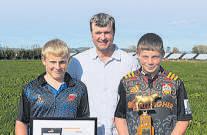
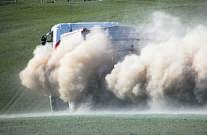
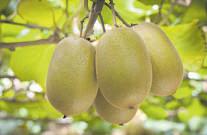



Former farmer Jamie Thomas transforms metal into striking sculptures, building a thriving business while creating meaningful works supporting community causes. Read more on page 4-5. Photo / Catherine Fry
Breeding Gypsy
June


I’ve often been asked about the hat that The Hat wore.
It was fairly nondescript, really Decidedly unremarkable. Its only distinction was its omnipresence – ever-present, everywhere, at all times Even when the occasion didn’t remotely call for it.
It was a brown wool felt trilby Or a fedora.
The Hat was in good company
I half expected him to burst into song – Fly me to the moon, let me play among the stars – Sinatra-style, trilby cocked just so But it’s hard to croon with a soggy stub in your gob
Sean Connery wore a brown trilby in the early Bond films. But The Hat hadn’t seen a movie since Gone with the Wind in 1939, back when he was wooing the missus in his Plymouth Coupe. What a tiger Leonard Cohen had his “Hallelujah” moment in a f fedora The Hat preferred 1950s musical soundtracks – Oklahoma! and Singin’ in the Rain He’d sit in the evenings with his Ovaltine, spinning LPs Never sang, never hummed, never whistled Just listened, hat firmly on
out among the ghastly cheese cutters and knitted pompom hats in rugby club colours. But unlike Sinatra, Connery or Cohen, the press ignored The Hat in his hat.
The hat served him well. He wore it while eating, emerging from the dunny, changing oil on the old flatbed and docking lambs. It was a hat for all purposes, all seasons. One moment his arm buried in the working end of a cow in calf; the next, cocking his hat with the same hand.
I struggled with that fedora. He wore it low, obscuring his eyes – dark abysses beneath the brim. You couldn’t read him. Were his eyes narrowed in suspicion, widened in fascination, or dulled with indifference? Hard to tell.
Editor: editor@coastandcountrynews co nz
Advertising: ads@thesun.co nz

Perhaps the trilby’s most notable outing was to a hydatids dog-dosing strip at Washdyke, before it became Phar Lap Raceway It stood
Still, he was a placid man. Even-tempered. Until the dogs got under his wick. Then came the boot, and a torrent of language that would’vve needed serious bleeping At that point, seeing his eyes hardly mattered Those outbursts were entertainment I even took a few new swear words back to school But that hat there must have been public health concerns It had been exposed to pesticides, industrial chemicals, heavy metals and some fairly ghastly bodily substances Truth be told, it probably required a HAZMAT team to remove it – and burn it

While recognising that local government reorganisation is inevitable, farming leaders say it must be well planned from the outset
The Government has given councils a threemonth window to put forward proposals to simplify and strengthen local government in their regions. Final decisions will be made by Cabinet next year, with changes expected to take effect for the 2028 local body elections. Bay of Plenty Federated Farmers president Brent Mountfort says there are some dysfunctional councils around the country, along with duplication of costs and functions
“But any mergers or amalgamations must be done with caution,” he says. “One size doesn’t fit all ”
Brent says this is particularly important in biosecurity and biodiversity, which are currently covered by regional councils
“This could be dialled back in a unitary authority,” he says.
His group, along with other agencies, has a strong relationship with Bay of Plenty Regional Council in areas including planting to protect waterways, erosion control, and coast care
Covering an area from Waihi Beach to Cape Runaway, Bay of Plenty Federated Farmers works with Bay of Plenty Regional Council, Tauranga City Council, and district councils in Western Bay of Plenty, Whakatāne, Ōpōtiki, Kawerau, and Rotorua (with Rotorua-Taupō Federated Farmers).
Brent says councils give communities a “ sense of self-determination”.
“We need to still have a genuine voice.”
He favours a local government reorganisation scenario that would see Tauranga City “ring-fenced”, with the rest of the Bay of Plenty governed by a combined district/regional council authority
Brent also says the Government’s threemonth deadline is unfair
“This is a really important junction for New Zealand It could easily go wrong if things are rushed ” Rotorua/Taupō Federated Farmers president Braydon Schroder says his region group supports local government reform, but only where the structure reflects genuin communities of interest and delivers for rural areas
“Any model that blends provincial and rural communities into a larger, urban-led authority would need strong structural protections to ensure rural priorities and representation are not diluted,” he says “The needs of our rural communities are materially different, and that needs to be recognised in how governance is set up ”
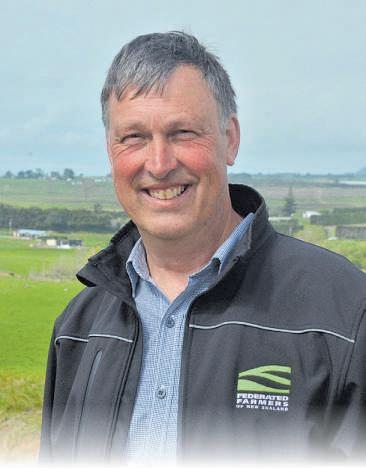
delivery realities, not just administrative efficiency”
He says unitary models could work - with Rotorua aligning within Bay of Plenty and Taupō within Waikato - but only if there is clear local representation and accountability for core services such as roads, water, and environmental management, alongside a fair approach to legacy debt and infrastructure funding across the region.
“The other concern is the timeframe,”
Braydon says “The current window is very tight to properly work through spatial options, funding implications and resource allocation
“Getting this wrong could lock in poor outcomes for a long time, so it needs to be carefully considered.”
Waikato Federated Farmers president Chris Woolerton says his region is extremely complex, with numerous councils and
“We have concerns with fragmentation of the catchment areas, as rural communities need consistency in environmental management across the region ”
Chris says urban areas have very different needs to rural areas, so the rural voice needs structural protection within governance models
“We will be advocating strongly on that point.”
Waikato Regional Council has signalled it favours a single unitary authority and wants to work with the Waikato Mayoral Forum to develop the option.
Chair Warren Maher described the Govt’s announcement of the Head Start pathway as “ a constructive step forward” in the wider local government reform programme
“Our council has always said change is needed in local government, and now there’s a pathway to join forces to do so ” Western Bay of Plenty District Council is talking with its communities about the issue.
Mayor James Denyer says the matter goes to the heart of how the district has grown, been represented, and made decisions for more than three decades. “Since local government reforms in 1989, the Western Bay has worked hard to build a council that reflects the distinct needs of our communities - from Katikati and Waihī Beach, through our rural heartland, to Te Puke and Maketū
“That’s why it would be untenable to make decisions on an issue this fundamental without first having a proper conversation with the people we ’ re here to serve. ”




Braydon says Rotorua and Taupō also present practical challenges, with districts sitting across regional boundaries and catchments
“That makes it important that any future structure reflects natural systems and service


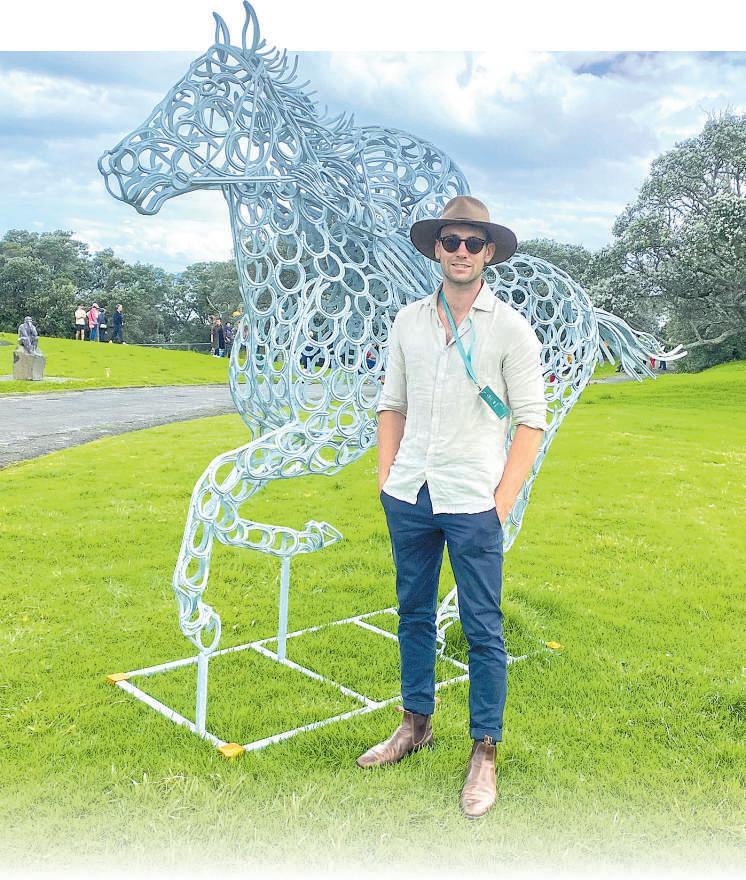
Although he describes himself as a “farmer at heart”, Jamie Thomas has moved away from farming to use his creativity to form stunning and thought-provoking sculptures from metal




“I spent a year helping run our family sheep and beef farm in Te Kūiti, but I found it too secluded I have lots of mates up in the Auckland ar and we all enjoy fishing, diving being out on the water
rea g and mbay e uilt for a any and pture m to go
“In 2021, I moved to the Bom Hills area and bought a lifestyle block with a friend, where I bu myself a large workshop ” He worked as a digger driver designer swimming pool compa saw a metal horseshoe ball scul on a client’s lawn, inspiring him home and make one for his mum.





sculpture, which led t for five stag heads horseshoes Th business and, in more tool













Jamie’s apprenticeship in mec engineering and his self-taught blacksmithing skills were sudde demand when he started receiv from his mum ’ s friends
hanical enly in ving orders ife-size and it sold king, but hing me in ge for m the sale hop with and take a
“In my spare time, I made a li charging bull from horseshoes, for good money I was still wor it felt like the universe was push another direction ” 2022 was a busy year of chang Jamie He used the money from of the bull to kit out his worksh a decent welder, build a forge, a leap of faith
“Things were a bit of a struggle that first year To get a name for yourself, you need to prove yourself and show people what you can do ” Jamie developed a love

He spent si corten steel s and a Hard P moving piece Award at the 2 Onshore, which Women’s Refuge, children affected “That sculpture sister’s experien violence while overseas with was caught be hard place, a encourage h The sculpt made from c despite carry With knowl is certainly powerful pie prize money
“That sculp lawn for a don
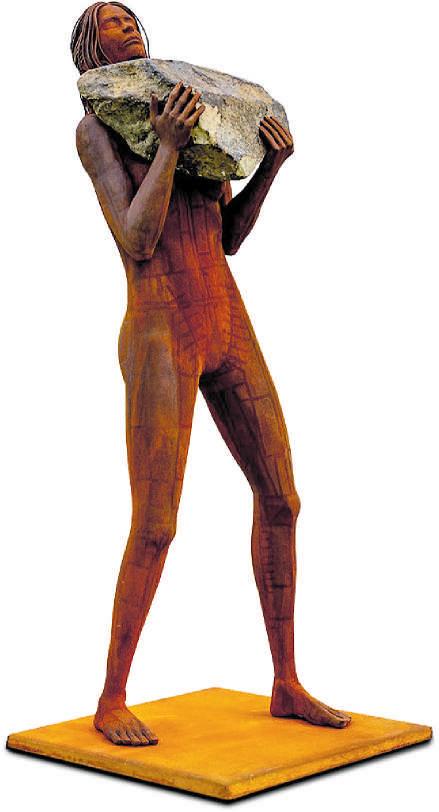
of working with corten steel and went door to door seeking commissions A pub commissioned a corten steel cowboy to a further commission s fashioned from This kick-started his , once again, he invested s x months building a sculpture titled Rock Place This striking and won the People’s Choice 023 NZ Sculpture raises money for supporting women and by domestic violence. e was inspired by my ce with domestic she was trapped a small child She really etween a rock and a and I hoped it would er to keep fighting ” ure depicts a woman corten steel, standing tall ying a large, heavy rock ledge of the backstory, it a thought-provoking and ece Jamie donated his y to Women’s Refuge pture sat on my mum ’ s year before we decided to nate it to the auction at the 2024 Rural Industry Leaders Dinner, which runs alongside the National Fieldays to raise funds for the Rural Support Trust

At auction, Rock and a Hard Place raised $85,000 for the Trust
“We’re a farming family, so it meant a lot to us that the sculpture was going to help rural communities.”
The raw materials
Jamie is particularly drawn to the challenges and possibilities presented by steel sculpting, and he enjoys exploring the various techniques that can be used to create different effects
He utilises a diverse range of materials, including corten steel, old horseshoes, farriers’ rasps, and stone, to craft sculptures that are unique and connected to New Zealand.
“I have a number of farriers who supply me with their old horseshoes and rasps, and a large sculpture can use hundreds of shoes ”
Using an LPG forge and an anvil, Jamie heats, beats, and bends the steel Horseshoe sculptures are sandblasted to clean them, with some left to rust naturally over time, while others are galvanised by acid stripping and dipping in zinc. This protects them for up to 200 years and gives a shiny, silvery finish. Jamie takes on projects that can take up to two full-time years to complete, but he balances them with smaller works to
Kiwifruit growers are being urged to register for a major biosecurity symposium in Mount Maunganui this August, with organisers offering prize incentives for early sign-ups
Those who register will go in the draw to win one of three grower prize packs, featuring a biosecurity-themed cooler bag stocked with practical on-orchard resources, treats and a $100 gift voucher
The two-day event will be held at Bay Oval on Wednesday, August 5, and Thursday August 6, bringing together growers, industry leaders, technical experts and Government representatives
The symposium will focus on strengthening

readiness for future biosecurity threats, with a programme centred on proactive planning, rapid response and collaborative action.
International guest speakers will headline the event, sharing global insights and lessons learned from real-world incursions Attendees can expect a mix of dynamic presentations, case studies and forward-looking discussions designed specifically for the kiwifruit sector
Organisers say the symposium is an opportunity for the industry to stay ahead of emerging risks while building connections across New Zealand and beyond
The full programme runs all day Wednesday and continues with a half-day session on Thursday


maintain income.
While interest in his sculptures is strong in New Zealand, there is also growing demand from the American market. Currently, his “big” project is a largerthan-life galloping horse, which has already been framed using steel rods.
“It will take many more months to build the outer layer from farriers’ rasps, which will flow over the contours of the horse’s body”
For the 2026 Rural Industry Leaders Dinner, Jamie is donating another sculpture - his 2023 2.6m-high, 300kg horseshoe creation of racehorse Phar Lap, ridden by Jim Pike.
Jamie admires Phar Lap’s distinctly New Zealand story and is pleased that another of his sculptures will help raise funds for the Rural Support Trust.
Catherine Fry
















Farmers are being urged to take a more strategic approach to herd performance, combining genetics, nutrition, and animal health to lift productivity
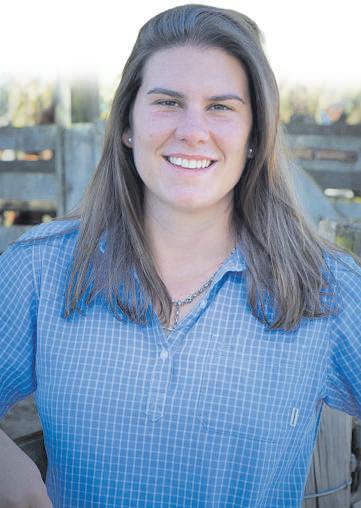
In April, a Beef + Lamb workshop was held at Tim and Kelly Brittain’s Storth Oaks Angus in Ōtorohanga, where Zoetis New Zealand Beef Genetics manager and veterinarian Amy Hoogenboom discussed how she uses her veterinary knowledge alongside DNA technologies to benchmark, problem-solve, and create workable on-farm solutions to improve beef herd performance.
“My role is to ensure that New Zealand farmers are using genetics as part of herd improvement,” says Amy “I also believe all beef herds should be aiming for a 100% in-calf rate in both their heifers and cow herd. There is no excuse not to target 100%.”
Three main factors contribute to the overall success of animal performance and productivity, including heifer mating: nutrition management, animal health, and genetics.
“Feeding is the number one key to ensuring heifers meet critical mating weight (CMW) This is the minimum weight at which all heifers should be mated to achieve a high pregnancy rate (85%+) when first joined CMW is about 60% of mature cow weight “We are told that the CMW is 300 kilograms, but I believe that is too light to set heifers up for a lifetime of successful pregnancies ”
Data from the most recent Beef + Lamb NZ Beef Progeny Test maternal performance report showed an average MCW of 544.4kg, so 60% of that would be closer to 327kg as the CMW. A study funded by Meat & Livestock Australia suggested that if heifers exceed 400kg at mating, this can also be detrimental to conception rates.
“Heifers must show consistent weight gain from weaning through their first winter, first mating, pregnancy, lactation, and re-mating Abrupt diet changes near mating or last-minute ‘cramming’ are not advisable ”
Statistics show that 45 to 50% of beef herds are actively infected with BVD (bovine viral diarrhoea), which results in poor conception rates, reduced bull fertility, and increased disease in calves.
“A PI (persistently infected) calf that was infected with the BVD virus in the womb remains infected for its entire life and is a major source of infection for pregnant cattle, continuing the cycle within a herd ”
Herd testing and monitoring, vaccination, strong biosecurity, and good fence lines help with BVD management.
“Leptospirosis (lepto) causes infertility or low conception rates, prolonged calving intervals, abortions, stillbirths, and weak calves, and is also a major human health risk as it can spread to people, making them very sick ”
Lepto prevention includes vaccination, good pest management (as pigs, deer, and rats are hosts), and preventing animals from drinking from stagnant water sources
“Copper and selenium are two key trace elements relating to reproductive performance in cattle, with iodine important in some regions or when crops are being grazed. Vets should be consulted when monitoring trace element needs and treatments, as trace elements can be toxic when overdosed.”
Parasites can cause growth checks pre-mating, and a post-winter drench in yearling cattle with a combination injectable/oral containing mectin is useful for clearing Ostertagia Amy recommends targeted treatments for animals not achieving liveweight (LW) targets or those that appear visually poorer
“We mustn ’ t forget that the bulls have the same animal health requirements. In addition to the other recommendations, bulls need to be in a moderate body condition score (BCS) of 5–6 at mating and have adequate bull power General recommendations are one yearling bull per 20–30 females and one mature bull per 35–50 females, depending on paddock contour ”
“Your genetic choices with your heifer mating set the scene for your future herd.”
Genetic reproductive traits (apart from gestation length) have low heritability, resulting in slow genetic gain.
Crossbreeding improves fertility through heterosis (hybrid vigour) Selection is important, but management is critical.
“Sires selected for heifers should have positive calving ease direct with low to moderate birth weight. Positive calving ease daughters is also an important
consideration when purchasing sires for mature cows if you run a self-replacing herd, and it’s important to ensure the structural soundness of bulls ”
Genomic tools are available for heifers, enabling more informed decisions when selecting replacements for a more functional cow herd over time, identifying strengths and weaknesses, and creating targeted genetic improvement plans rather than guessing “Farmers using heifer genomic selection tools are selecting sires that complement their females and genetic plan and are being more intentional with crossbreeding Some are using calf-related predictions to manage calving risk in replacements, reducing headaches during calving ” Amy recommends tracking the following KPIs: regular liveweight gain pre-mating, conception rates in first and second cycles, BCS at calving, pre-mating and weaning, calving spread and assistance rate, and first-calver re-conception rate. Catherine Fry




For a small-town, unhorsey girl who only started riding at 50, Maria Sharland now spends all her time caring for and breeding Gypsy Cob horses.
Maria and her husband
Andrew own a 450-acre sheep and beef farm in the Fencourt area of Cambridge.
The Gypsy Cob has an unwritten history, as no official records were kept Many different breeds and elements were brought together to create the horse it is today
It was used in nearly every aspect of Gypsy life, from pulling colourful house wagons called vardos to hauling work carts The horses were strong and kind, with a willing disposition, hardy nature, and soundness, and could be kept wherever camp was set up






The breed has long been considered an ideal family horse and is gentle with children. Maria says gypsy cobs are popular with women wanting to return to riding, but they are also very versatile and suitable for jumping, dressage, pony club, cowboy challenge and more.
When Maria first saw a photo of a Gypsy Cob, she thought it was photoshopped, as the horse had a beautiful long mane, long tail and feather from the knee down.
“I fell in love with the breed and bought my first one, a black and white pinto filly called Gypsy Royal Sweet
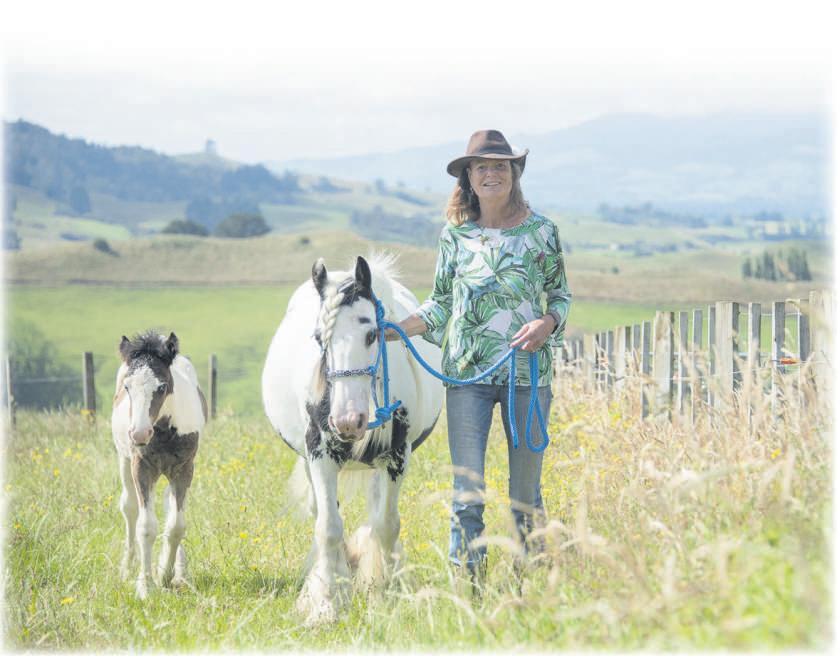
Georgia Peaches,” says Maria “Of course it kept going from there. I really enjoy the breeding side, and absolutely love the whole foaling and foal training process. ” Maria keeps around 25 Gypsy Cobs in three groups. The horses use about 50 acres of the farm, giving them plenty of freedom and space. Running up and down the rolling hills keeps them very fit. She has reached the stage where most of her horses are

homebred stock. While many people associate the Gypsy Cob with the pinto pattern (white and a colour), solid colours are also sought after Under the name Windsong Gypsy Cobs Stud, Maria breeds to introduce different colours and more height into her herd. She considers 15 hands a good riding size.
“When a new foal is born, I can see family traits come through from generation to generation I spend a lot of time with the foals and start halter, lead and tie work from a very young age. Doing everything by myself certainly has its challenges.”
“Handling from a young age creates mutual respect and makes life easier later on. It’s the old saying - you get back what you put in.”
Maria admits maintaining the manes, tails and feather on her horses is a lot of work.
“While they look glorious, this is New Zealand, and there is plenty of mud and rain. Each horse is washed approximately every three months, and I call it ‘salon day’. As their hair grows continually, it needs to be kept
tidy I love seeing them plaited up and looking stunning.” Feather care is important, as feather mite is a common problem for Gypsy Cobs, so regular treatment is needed. The breed is known for having very hardy feet, and Maria’s horses are always barefoot.
“I think the main thing about the Gypsy Cob is its sweet temperament, unflappable disposition and beautiful hair A person buying one for the first time needs to be aware they can be a little labourintensive, but they are worth every minute of your time. Once you have had one, you never go back.”
The first Gypsy Cobs arrived in New Zealand around 2005 and grew in number The New Zealand Gypsy Cob Association (NZGCA) allows for the registration of horses so that accurate pedigree and breeding records can be maintained.
DNA verification of parentage is required to ensure the integrity of the studbook NZGCA is affiliated with the Royal Agricultural Association as the recognised breed society for Gypsy Cobs, allowing Gypsy Cob sections at many A&P shows and at the Horse of the Year
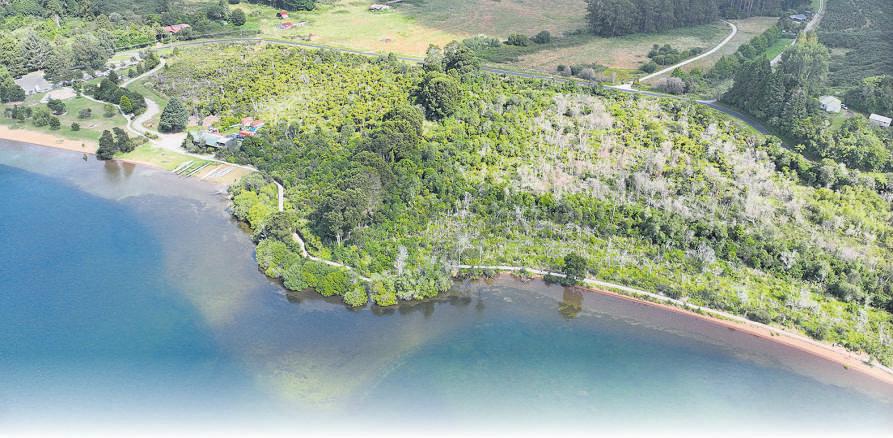
For more than two decades, the Lake Ōkāreka Landcare Group has been quietly transforming the landscape around their beloved lake
The dedication of the group is a shining example of long-term environmental restoration supported by strong partnerships with Bay of Plenty Regional Council, Department of Conservation, Rotorua Lakes Council, Te Arawa Lakes Trust and residents
Since its inception in 2003, the group has achieved significant milestones, including restoring 10ha of wetland, supporting threatened native species, such as matuku-hūrepo (wetland bittern), and sustaining a localised kōaro (freshwater fish) population
Brian Law and Mike Goodwin have been part of that journey from the beginning. Mike, along with his wife Sandra, were founding members of the group, while Brian started back in 2004, saying he has been “full time basically since”
For Mike, the motivation is simple: “Shouldn’t we all be leaving the place better than we found it?”
Both have focused much of their energy on restoring a significant wetland near the lake, a project many would shy away from because of its scale and the physical demands
“The wetland was always going to be the big one, ” says Mike. “It was the last project on the list because we knew what it would take.”
The wetland plays a crucial role in lake health. Like kidneys, Mike explains, “it purifies the water before it goes into the lake and helps improve water quality”
Importantly, the wetland was never drained or used for farming, meaning that it can recover if cared for properly
Over the past seven years alone, the group has planted more than 10,000 trees, replacing pest trees and invasive weeds with native vegetation
“Both Mike and I are weed people,” Brian says with a chuckle. “We were always in here, working on the pest plants, and we could see the potential of the wetland.”
Over time, that vision has become reality Willow trees, once dominant and overrunning the area, have largely been removed, allowing native reeds and plants to thrive
The work is slow and demanding, but deeply rewarding. Mike smiles and points to the birdsong all around him, just one reminder of how far the group have come in terms of restoration and the return of native species to the area
“Working all day among the birdsong has its perks.”
Beyond the focus on the wetland and improving water quality, the care group have put extensive efforts into biosecurity with both pest plant and animal control too Regular trapping has allowed for the return of native species, including miromiro (tomtits) and toutouwai (native robins) – absent
for years, but now their loud chorus is unmiissabble. P Popullatiions of f kōaro (native freshwater fish classified as a declining species) are establishing, only possible through enhanced water quality
The elusive matuku-hūrepo (native bittern) has also been observed in the area, indicating an improving ecosystem. With less than 1000 left in Aotearoa, their presence is dependent on ecologically diverse habitats and rich food supplies It’s a promising reminder of the mahi being done and paying off
Support from the Regional Council has been essential to making this possible, Mike explains “The council supplies plants, chemicals and practical support, and we work with DOC to ensure the restoration aligns with what the
ecosystem would have looked like beffore thhe T Tarawera eruptiion ”
It’s passionate communities like those at Lake Ōkāreka that make this work happen across the rohe (region), says Regional Council land management team leader Scott Kusabs
“Our care group programme enables us to fund incredible work for biodiversity for the region The results are due to volunteers like Mike, Brian and their caregroup who want to make a difference.”
Regional Councillor for Rotorua and Ōkāreka resident Anna Grayling says the impact goes far beyond the project itself “The multiplier effect from groups like this care group is enormous When we give them a dollar, the return on investment for the community is huge ”
The Care Group mahi complements the wider work in the catchment under the Lake Ōkāreka
Action Plan She describes the restoratiion as thhe resullt of f 15 to 20 years of collaboration through bringing together councils, Te Arawa Lakes Trust, notforprofit groups and residents.
“We’ve had input from the rural community and residents; everybody who lives out here loves this place and cares deeply about it People have put in the hard work, and now we can start to reap the rewards ”
Anna says community backing has been essential for the mahi done – not just around the lake, but the wider catchment.
“This is what good mokopuna decisionmaking looks like,” Anna says “It hasn’t happened overnight, but the results mean this lake will be clean and swimmable for future generations ”













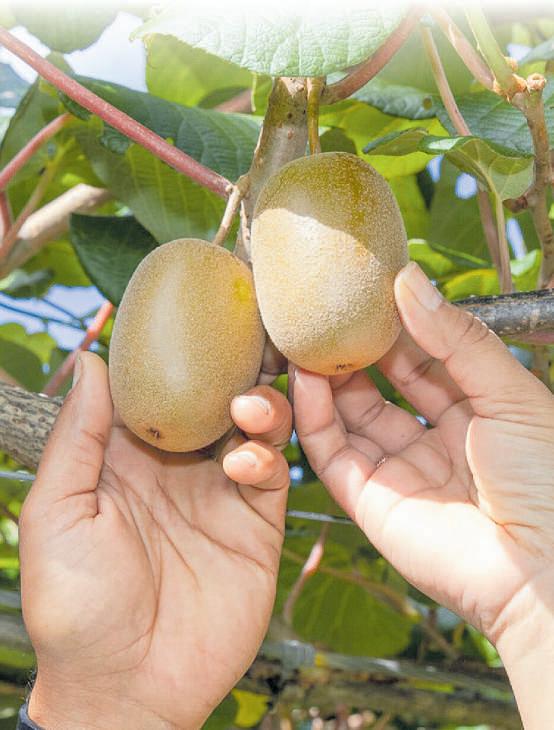
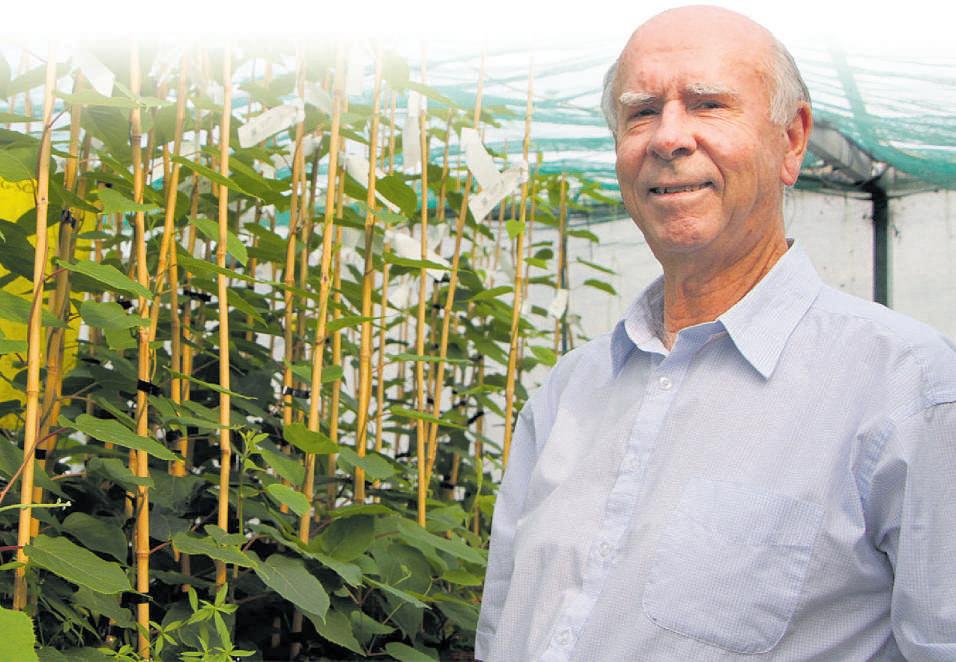
Two-thirds of New Zealand’s kiwifruit comes from varieties developed by Te Puke scientist
Russell Lowe – now an officer of the New Zealand Order of Merit.
Lowe has been named in the 2026 King’s Birthday Honours for services to horticulture and the kiwifruit industry
He pioneered significant innovations in the kiwifruit industry during his 51 years working with the Department of
Scientific Industrial Research and Crown Research Institutes
Russell was integral to the selection of the Hort16A vine and its polleniser cultivars.
Those cultivars created the first Zespri Gold kiwifruit
Zespri Gold launched overseas in 2000 and earned more than $3 billion in export earnings during its lifetime.
It established New Zealand as a world leader in the kiwifruit industry
However, the commercial crops
of Hort16A were wiped out by a bacterial canker – known as Psa –in 2010.
Russell led the development of two other cultivars (Zesy002 and Zes008) known by their household names: Zespri SunGold and Zespri RubyRed
He was also involved in selecting the Kaimai and Bounty 71 rootstocks, enabling SunGold to grow in a wider range of locations.
Zespri SunGold now accounts

for 60% of all New Zealand kiwifruit orchards
A total of 127.6 million trays were exported in 2025, earning $2.2b annually
Russell has received numerous awards over the years for his horticulture work.
These included the New Zealand Kiwifruit Industry Hayward Medal in 2012 and, most recently, an Associate of Honour of the Royal New Zealand Institute of Horticulture in 2021.
Russell says receiving the King’s Birthday honour is “rewarding and humbling”.
He says the award also congratulates the whole team
“You can ’ t do it all on
your own.
“You need a team of people to raise the seedlings, grow the plants in the orchard, and help with the assessment of the fruit ”
Russell moved to Te Puke with his wife and embarked on his kiwifruit breeding journey in 1972.
He previously worked at an apple research station in Nelson. There, he was approached about moving to Te Puke to start a new research department working on citrus and subtropical crops.
The rest was history
He moved into a breeding












scientist role in 1984, then stepped back to become an honorary fellow at Plant and Food Research in 2020. Lowe officially retired last year
The Blenheim-born man ’ s interest in horticulture began while he was studying for a Bachelor of Science at the University of Canterbury He worked on a mixedfruit orchard at the time in the Horotane Valley in Christchurch
When asked about spending half a century in horticulture, Lowe said the people kept him going
“That’s why we continue doing our job ”
Russell had no orchard of his own – only a home garden, in which he grew roses as a hobby He belonged to the Bay of Plenty Rose Society
Russell had citrus trees, an apple tree, and “feijoas, of course”.
He also grew camellias and roses.
Speaking about the kiwifruit disease Psa, which decimated the industry, Russell remembers how rapidly the disease spread

across the district.
“The impact on our plantings and the research station was immediate.
“Virtually all our susceptible seedlings were lost ”
However, some resistant material survived and helped support growers ’ transition from the Psa-affected vines to the new gold variant
“We had to keep focused,”
Lowe said.
“At the time, a huge new job for us was working on ways to combat the disease.”
He believed the kiwifruit industry would come back stronger
“Prices for gold fruit were better than for green There was higher production per hectare and better income.
“So once growers had got through the shock of losing their plants and re-grafting them, and having no income for several seasons, once their plants were established, they were getting quite a good income.”
Russell says breeding is a “continuous” and “innovative” process.
“There’s always something we ’ re looking forward to. ”
Reflecting on his career, Lowe said the success of Zespri SunGold was a highlight He says one of the challenges facing future kiwifruit breeders is climate change Warmer winters would impact flowering, creating pressure to develop a new material tolerant to mild winters

However, he says a challenge is the opportunity to evolve
Another future step he saw for New Zealand’s kiwifruit industry is to develop cultivars tailored to specific regions.
Now in his retirement, Russell starts every day completing the code cracker in the Bay of Plenty Times He also gardens, attends the Tauranga Organ and Keyboard Society, plays the organ for his local Methodist church, and writes newsletters for various Te
Puke clubs. His three children joined him for King’s Birthday weekend, where the family went out to dinner to celebrate his award.
While Russell has been living in Te Puke for 54 years, he still calls himself a “mainlander” from his time in Canterbury Russell was a Crusaders fan at heart – he says he backs Canterbury’s rugby union team whenever they face Waikato’s Chiefs.





































The general election in November looms large for Federated Farmers in its role advocating for agriculture and rural communities.
“It’s a great chance for us to promote our ideas for how the next government can help farmers lift production and improve environmental sustainability,” says Federated Farmers’ Bay of Plenty president Brent Mountfort.
“When farmers are doing well, provinces and rural towns also thrive, and export earnings from meat and dairy are the mainstay of how New Zealand earns its living in the world.”
With farmers in 24 provinces electing leaders like Brent to represent them at a national council, he says Federated Farmers is

truly a grassroots organisation.
“The fact that it has been around for more than 125 years speaks to its effectiveness ”
Brent says the future of farming lies in innovation, practicality, diversification and looking after the environment.
He and his wife Antonia run sheep and beef on 145ha of their 267ha property near Matata, with the balance in commercial pine trees and native bush.
Last year they took out the Beef + Lamb NZ Livestock Farm Award, the NZFET Biodiversity Award and the Bay of Plenty Regional Council Farming for the Future Award at the Bay of Plenty Ballance Farm Environment Awards
With a background of 25 years in banking, Brent oversees a Federated Farmers’ province stretching from Waihi Beach to Opotiki.
The bulk of the 500 members are in dairying, some including a mix of kiwifruit and avocados
As well as pressing central government on issues such as reform of the Resource Management Act and better funding for renewal of rural roads and bridges, Federated Farmers engages with local councils on a fairer system of rating and cutting red tape.
“The current government wants to see regional councils abolished, and amalgamation of smaller councils into new unitary authorities.
“We’re not against that, but we will not stand for strong rural representation being crowded out by city interests,” says Brent.
The Federated Farmers Bay of Plenty team has a wealth of experience that members can tap into when they are having difficulties with a council or government agency or want advice on a farming challenge
“We have fact sheets on all manner of topics and we also organise webinars and workshops ”


Brent takes a particular interest in conservation and pest control. He’s been in the national headlines for his advocacy for better funding for the Queen Elizabeth II (QEII) National Trust.
On the Mountfort farm, more than 80ha of native bush is fenced off, including 29ha protected by QEII covenants
Te Puke Young Farmers Club continues to be the flagbearer for YFC in the Bay of Plenty
and tug-of-war competitions at the annual Te Puke A & P Show, this year also taking out first place for the best trade site
Shanice says the club enjoys friendly competition, including battles with other regional clubs and striving for the WaikatoBay of Plenty YFC BOP Top Dog Trophy, which Te Puke won in the 2025 Waibop raft comp, which was the first time getting our name on the trophy




Covering an area from Tauranga to Ohope, Te Puke is the only Young Farmers Club in the province.
Te Puke YFC chair Shanice Young says when she first started with the club four years ago there were just six members, but this has now grown to more than 30.
At the Waikato-Bay of Plenty level, the Te Puke club members also take part in tournament days featuring clay bird shooting, fencing and stock judging, while attending the annual regional ball.
Shanice helped run the 2024 Waikato-Bay of Plenty FMG Young Farmer of the Year competition as part of the committee








The club runs a wide variety of events, from mental health awareness, skills days and backyard tours on-farm to fun social activities like beach trips, river floats, go-karting, and luge days.
The club also enters local sports events, including football and netball.
“We’ve hosted people like Tangaroa Walker from Farm 4 Life (a free online video learning platform), and have a close relationship with Rural Support, while helping local farmers with jobs like covering silage stacks,” says Shanice
Te Puke YFC also regularly engages with the local community through running gumboot


This year, she became regional convenor, bringing the 2026 Waikato-Bay of Plenty regional final to the Eastern Bay of Plenty
“I have had the opportunity to work with the MPI (Ministry for Primary Industries) to raise awareness of the wallaby identification/ eradication campaign in the region and appeared on a poster to promote it.”
“I have also been doing a podcast with Federated Farmers about my life from city to rural and my life today”
Te Puke Young Farmers Club meets on the last Tuesday of every month at 6.30pm at the Te Puke RSA.
Contact: tepuke@youngfarmers.co.nz
Steve Edwards







With around 40 active members spanning from Taupō to Rotorua and everywhere in between, Reporoa Young Farmers Club is proud to be a strong, connected community at the heart of the Central Plateau
Chair Georgia Bullock says the club has a relaxed, welcoming vibe and plenty of variety to keep members engaged yearround, from social events and farm tours to fundraisers and community involvement
“Over summer, we are busy fundraising with jobs like covering silage stacks and picking up hay bales, which helps us fund the events we put on during the rest of the year
“These fundraising jobs are also great opportunities to meet people in the community and get out for a social barbecue afterwards.”
Georgia says the club fundraises for popular annual events, including a Christmas party, mystery bus trips, bucking bull night, casual dinners, farm visits and social outings like bowling or mini golf
Members also get involved in seasonal sports, including netball, hockey, and business house competitions - giving everyone a chance to step off the farm and connect socially
Reporoa YFC holds its monthly meetings on the first Wednesday of each month at The Woolshed Tavern in Reporoa
“We try to keep things flexible and fun,” says Georgia. “Whether it’s a barbecue, an interclub event with our neighbors from Piarere and South Waikato, or a quick catch-up at the pub, it’s about giving people a reason to stay connected.”
She says the club draws from a wide geographic area - not just Reporoa township, but surrounding rural districts and communities like Broadlands, Waikite Valley, Wairakei, Ngakuru and through to Taupō and Rotorua.
“This central location helps create a real mix of people with different backgrounds and experiences, united by a shared interest in rural life.”
Georgia has been a Reporoa Young Farmers Club member for three years and was elected chair in May
Before stepping into the leadership role, she served on the committee as secretary for two seasons.
“I’ve met some of my good friends through the club and it’s a great excuse to get out and about and try new things,” says Georgia.
“I grew up in Reporoa and am excited
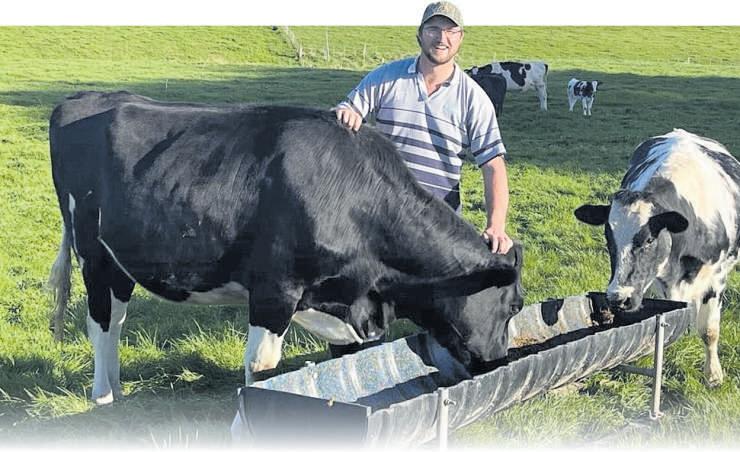
to be chair of an awesome club which is great for the community.”
To find out more, check out Reporoa Young Farmers on social media or email reporoa@youngfarmers.co.nz
The June 1 changeover is one of the busiest times of the year, but also a chance to reflect on progress and look ahead, says Rotorua-Taupo Federated Farmers’ president Braydon Schroder
Over the past 12 months, he says Federated Farmers has remained actively engaged across the region, working alongside ministers and industry organisations on issues that directly impact farming businesses
“A key focus has been ensuring on-farm realities are clearly understood in policy discussions.”
“At a provincial level, we have prioritised practical engagement, ” says Braydon “This has included a high-performance sheep field day and a contract milking seminar, both delivered with industry partners ”
“These events are designed to lift capability, share knowledge, and strengthen connections across the sector
“Encouragingly, we have seen growth in both membership and engagement across our province.
“This reflects a clear understanding that a strong, connected voice is increasingly important as the pace of change continues.”
Braydon says submissions and advocacy remain a core part of Federated Farmers’ work.
“Over the past year, we have contributed to a range of local and national policy processes on matters that have the potential to significantly influence how we farm
“Our role is to ensure new policy is practical, informed, and workable before


it is implemented
“We have also supported and sponsored several industry events, recognising the importance of maintaining a resilient and connected rural community.”
Despite only having 113 members, Ruapehu Federated Farmers has an executive that is very passionate and pro-active about protecting the rights and freedoms of farmers in its area.
“Agriculture continues to be the major contributor to our district, regional and national economy and we, as the Ruapehu executive, endeavour to assist however we can, ” says provincial vicepresident Mike Rogers
“This includes encouraging the next generation and helping them be more actively involved on the local executive.
“It places our province in a stronger and
healthier position to advocate and participate on numerous fronts, to make gains in industry efficiencies, oppose ridiculous compliance costs and support our local communities in the Ruapehu District ”
The Ruapehu District is predominantly hill country sheep, beef and some deer farming
Mike says dairying is well established on areas of easier contour and the southern area is famous for its vegetables.
Conservation, tourism, hospitality and adventure events feature strongly in the district, centred around the Tongariro and Whanganui River National Parks
Production and carbon forests are scattered throughout the district and come with issues that spill over into the Federated Farmers arena, says Mike
-
-
-
-
-














With a strong presence, Federated Farmers is a great “ go to ” for newcomers to the Waikato
The province has 10 branches: Cambridge, Hamilton, Matamata, Morrinsville, North Waikato, Otorohanga, Te Aroha, Te Awamutu, Tokoroa and Waitomo Provincial president Chris Woolerton says Waikato has just shy of 2000 members, which represents 16% of the national total
It actively engages with seven
councils on agricultural/farming issues, and assists members with various matters including farm plans, fresh water and NAIT (National Animal Identification and Tracing).
Chris says the proposed local government reform is a key focus for Federated Farmers to ensure provincial areas are fairly represented.
The long-running Waikato Regional Council Plan Change 1 case is nearing the final release of the outcome for Waikato farmers.
The plan change, first notified by the regional council in 2016,







would set regulations for point source discharges and agricultural land use to improve water quality in the Waikato and Waipa catchments
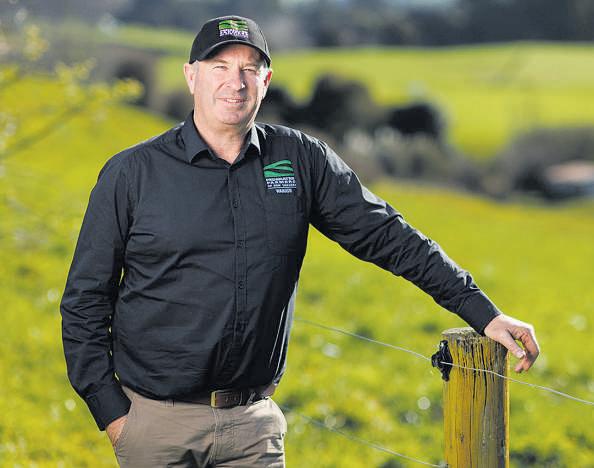
Chris and his family run a dairy business farming 370 hectares in Taupiri.
individual requirements. Contact president@waikatofeds.
org.nz
organisms, posing serious risks to productivity at the new farm.
Stock movement also needs careful planning, says the WRC. Standing cows off green feed before transport, while still providing water and roughage, can help reduce effluent on roads and improve safety
Finally, clear communication between farm owners, managers and staff is essential.
Visit the farmers’ hub for more information: waikatoregion.govt nz/ moving-farms
Another group welcoming newcomers to the area is Young Farmers, which similarly has a wide network across Waikato
Clubs include Hamilton, Morrinsville-Ngarua, North Waikato, Piarere, South Waikato and Te Kawa West
Young Farmers is open to anyone aged between 16 and 31 with an interest in the rural sector, including those not actually working on or involved with farms





“We’ve worked our way up through the traditional pathway of lower order sharemilker to 50/50 sharemilking to equity partners before owning our own farm
Chris has a long-standing connection with Federated Farmers, as his grandfather Ralph Woolerton was instrumental in building the Tower Building on London Street
“Following my time as a local Waikato District councillor, I decided to move my skill set across into Federated Farmers’ leadership
He was North Waikato branch chair before advancing to provincial vice-president, and then assuming the top job
The province has a wide reach from Raglan to the bottom of the Kaimai Range, north to the Maramarua Forest and south to Waitomo Valley Branches each have their own schedule, incorporating regular guest speakers
Chris says there are multiple avenues to sign up to Federated Farmers in the Waikato - 0800
Good planning and communication are key to a smooth and compliant June changeover for farmers and their stock, says Waikato Regional Council.
The Council says good preparation can make all the difference, particularly as thousands of cows, staff and machinery move between farms in a short window
Farmers are encouraged to have a clear plan in place, with effluent management one of the top priorities.
The WRC says effluent systems should be left in good working condition and meet regional rules before farmers leave the property
Failing to manage effluent correctly can lead to environmental harm and potential penalties.
Once on the new farm, checking and understanding the effluent system immediately is critical to avoid issues and nasty surprises
“And if you ’ re new to the region, check the regional rules to make sure things are compliant.”
The WRC says biosecurity is another major focus all year round, not just in June.
All machinery, vehicles and equipment should be thoroughly
Membership perks include NZYF merchandise, national partner discounts and the chance to earn club credit for pitching in at events and fundraisers.
Hamilton (city and immediate surrounding areas)
Chair: Alex Diprose
Meetings: First Wednesday of every month, 7pm, Cock & Bull, Te Rapa hamilton@youngfarmers co nz
Morrinsville-Ngarua
Chair: Sofie Adelaar
Meetings: First Monday of every month, 6pm, Top Pub, Morrinsville ngarua@youngfarmers co nz
North Waikato
Chair: Jamie McDowell
Meetings: First Thursday of the month, Te Kauwhata Tavern northwaikato@youngfarmers co nz
Piarere
Chair: Edward Roskam
Meetings: First Monday of every month, 7pm, Okoroire Hot Springs Hotel piarere@youngfarmers co nz
South Waikato
Chair: Kate Julian
Meetings: First Tuesday of the month, Tokoroa Club southwaikato@youngfarmers co nz









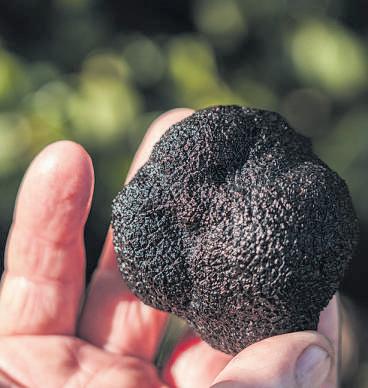
New Zealand’s truffle industry is celebrating a milestone year, with its first national awareness day set to launch alongside rapid sector growth and increasing global demand
The inaugural NZ Truffle Day will be held on Saturday, July 4, as growers and industry leaders look to raise the profile of one of the country ’ s most premium food exports. Industry body the New Zealand Truffle Association says the sector now includes about 400 truffières nationwide, ranging from small boutique orchards to larger commercial operations, reflecting steady expansion in recent years
Significant investment is also helping accelerate that growth, including a reported $10 million development in Canterbury, signalling rising confidence in truffles as a high-value niche within New Zealand’s primary industries.
Association president Dave Whalley says
Demand for New Zealand-grown truffles was strengthening internationally
demand for New Zealand-grown truffles was strengthening internationally, with interest from markets including Canada, Asia, Europe and the United States
“We’re seeing strong global demand in markets willing to pay for premium New Zealand–grown goods
“Over time, export is where we see the greatest growth.”
Domestically, the market is also developing, with top-grade black truffles fetching up to $2500 per kilogram, while average prices sit around $1000 per kilogram depending on quality
Dave says the figures reflected the time and expertise required to produce truffles, as well as growing consumer awareness
“Production is increasing, quality is high, and New Zealand is well-positioned to compete on the global stage ”
As more orchards reach maturity, output is expected to continue rising year-onyear, with truffle growing also offering landowners an opportunity to diversify income through agritourism and directto-consumer sales
Communications representative Ali Sundstrum says the focus is now on strengthening the sector ’ s brand and presence both locally and offshore.
“We see this as part of a broader premium New Zealand food story, ” she says “By working together, we can build a
For those living with osteoarthritis (OA), finding effective long-term relief can be a challenge.
Chondroitin, a naturally occurring compound found in cartilage, has emerged as a valuable supplement for supporting joint health and managing OA symptoms.
Over the years, scientific studies and clinical experience have highlighted several significant benefits of regular chondroitin use.
brand that reflects the quality of what’s being grown here and carries real weight internationally”
The newly launched Truffle Day is intended to connect growers, chefs and consumers, while providing a coordinated platform to promote the industry across retail and hospitality
Organisers say it will highlight the unique place of New Zealand truffles - particularly the prized black Perigord variety - within the country ’ s evolving culinary landscape, with the main harvest season running from June through August. The NZTA says the day marks a turning point for the industry, as it shifts from a small, emerging sector to one with growing scale, capability and international recognition.

Chondroitin works in multiple ways to protect and enhance joint function. One of its primary roles is to inhibit the enzymes that break down cartilage, helping to slow the progression of joint damage. This protective effect is crucial for maintaining joint structure and function as we age. Additionally,
chondroitin has antiinflammatory properties, which can help reduce pain, swelling, and tenderness, making daily activities less challenging.
Regular supplementation has been linked to improved flexibility and range of motion in affected joints. For many, this translates to a noticeable improvement in quality of life. The recommended daily intake for chondroitin sulphate ranges from 800 mg to 1200 mg, with higher doses sometimes used for more severe cases of OA. Most clinical studies have shown benefits at these dosages when taken consistently over several months.
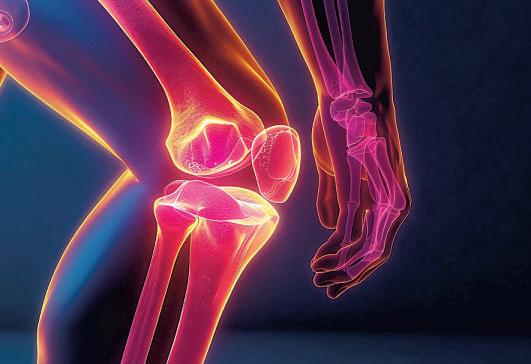
Personal experience also confirms these findings One client with severe hand pain due to OA reported an 80% reduction in discomfort after four months of chondroitin supplementation. Patience










is key, especially for small joint issues, as improvements may take time to become evident. Combining chondroitin with glucosamine and bioavailable turmeric extract with Omega 3 fish oil can further enhance its anti-inflammatory effects. For best results, a personalised supplement programme reviewed regularly is recommended.
John Arts (AdvDip Nut Med) is a qualified nutritional medicine practitioner To read more by John and the Abundant Health products, visit wwwhealthhouse co nz call 0800 140 141, or email john@healthhouse co nz
What is Bettaflex?
Bettaflex is the most popular supplement in the Abundant Health range because of its positive support for joints affected by wear and tear, helping Bettaflex users to support mobility and quality of life
How does Bettaflex work?
Bettaflex has been formulated to support joint comfort and mobility, making it an ideal supplement for those seeking support for joint comfort and stiffness Bettaflex combines high-grade chondroitin sulphate, glucosamine



sulphate and patented BioSolve®
Curcumin This combination supports the maintenance of healthy cartilage and other joint tissue by supporting the joint processes that protect, maintain and renew cartilage
Why use Bettaflex?
Bettaflex formulator John Arts comments,“I formulated Bettaflex with a single objective; that those concerned about joint health can support mobility and comfort helping them to enjoy better quality of life”
Dairy Women’s Network is bringing New Zealand’s dairy story to the table with a limited-edition Monopoly:
NZ Dairy Farming Edition, designed to showcase the people, regions and rhythms of the industry


The game will be sold exclusively through Farm Source stores, with stocks limited. Its release coincides with the DWN Conference 2026 and Moving Day, giving farmers and supporters a chance to pick up a copy as the new season begins DWN chief executive Jules Benton says the concept was driven by a desire to share the dairy story in a way that resonates across generations.
“Most of us have spent hours around the table playing Monopoly at some point,” she says “We wanted to take that familiar experience and make it our own, reflecting dairy life – the good days, the tough decisions, and everything in between ”
Rather than city streets, players move through well-known dairy regions and key moments in the farming calendar, including calving, mating, milk collection and community events Game cards draw on real-life farming scenarios, while custom tokens and artwork highlight the four seasons on the farm.
“It’s instantly recognisable as Monopoly, but the detail is
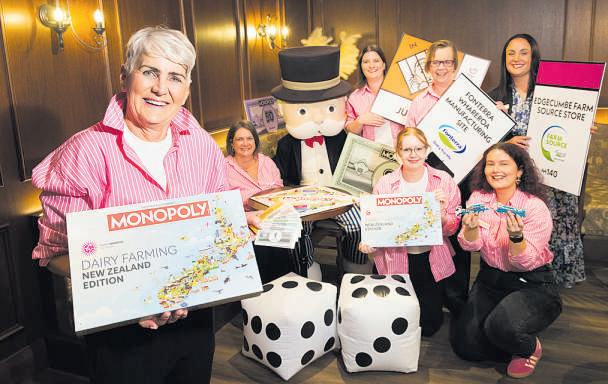
distinctly New Zealand dairy,” Jules says “People will see places and situations they know and hopefully share a few laughs along the way ”
Proceeds from the game will go to DWN’s work supporting those in the dairy industry through workshops, events and resources aimed at building skills, confidence and connection.
“Every board sold helps us strengthen the support available to farming businesses and their teams
“It’s a fun way to give back while investing in the sector ’ s future.”
The game was launched with Farm Source in Te Awamutu on May 1, alongside Pie Day Friday celebrations, where attendees could try a life-sized version of the board

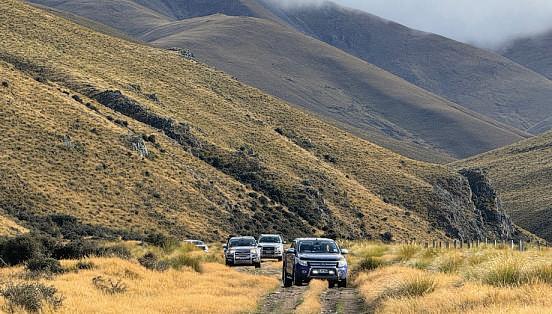


Drivers keen to explore some of New Zealand’s most remote and scenic backcountry have another opportunity to experience the South Island’s high country, with NZ Adventures opening bookings for its 2027 tours.
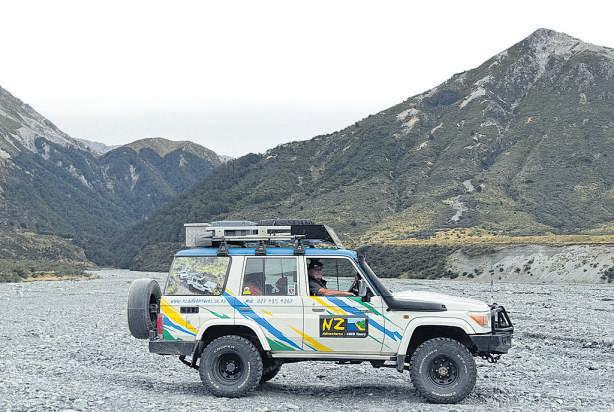
NZ Adventures runs guided fourwheel-drive tours across the South Island, taking participants along established high country tracks accessible to competent drivers in suitable vehicles
Organisers say vehicles with low-range transmission and allterrain tyres are sufficient, with no specialised preparation required
Accommodation is provided in hotels and motels throughout the journey, with most breakfasts and evening meals at on-site restaurants.
Lunches are either station-catered or picnic-style, depending on the location. One of the company ’ s longest-running and most popular offerings is the High Country Heritage tour, available in six-day and seven-day formats.
The six-day tour, scheduled for November, February and April, travels through Hanmer Springs,
Methven, Fairlie, Omarama and Cromwell before finishing at the Cardrona Hotel.
A seven-day option, offered in March, includes overnights in Hanmer Springs, Methven, Geraldine, Twizel, Omarama, Cromwell and Cardrona. The tour follows a route pioneered by NZ Adventures in the late 1990s, tracing the eastern alpine foothills from Blenhheim to C Central Otago – an itinerary that continues to attract strong interest
Both formats include access to high country stations
and conservation land, showcasing landscapes from North Canterbury hill country to the Mackenzie Basin and Central Otago ranges Highlights include a first-day drive through Molesworth Station, New Zealand’s largest high country station, followed by North Canterbury terrain on day two Mid-tour, travellers head west toward the Southern Alps, taking in inland valleys and d alpine vistas
For more information, see NZ Adventures’ advert on this page


With farming, a lot can change in a month.
In my last column, I mentioned that rainfall had reached a record-breaking 865mm by April 20. A month later, we ’ ve added just 21mm to that tally The ground has quickly turned dry and hard, grass growth has stalled, and dairy farmers across the district have suddenly had to dry cows off as pasture covers have fallen away
aggressively for market share
rising, then ends up overcorrecting The same pattern can occur on the way down, with rates remaining higher for longer than necessary, creating avoidable pain for households and businesses before eventually being cut further than would otherwise be required It can become a vicious cycle.
To be fair, I can understand why this latest decision was so finely balanced. While nobody wants to sound overly pessimistic, I suspect there may be more economic pain ahead before conditions improve. New Zealand has yet to fully recover from the challenges of the past
three years, and many businesses remain fragile. A meaningful rise in interest rates could quickly place further strain on already depressed business profitability Here’s hoping the Reserve Bank has judged the situation correctly this time. Fixed-term mortgage rates have moved considerably over the past six months. Those who secured a five-year rate at 4.99% may be feeling relieved, while anyone who hesitated could be kicking themselves, with the best five-year rate among the major banks now sitting around 5.79%.
Until next month, take care, stay safe, and if you need feed on farm or just want a chat, please give me a call.

As a maize grain grower and contractor, I couldn’t have asked for a better harvest season. The dry weather has meant very few rain delays, allowing us to harvest more within a compressed window Grain quality has also been excellent. On the flip side, annual grass crops grown for dairy grazing have underperformed. Rather than selling all the supplementary feed I have on hand, I will be feeding out a significant amount to meet grazing commitments
This month also brings the annual Fieldays at Mystery Creek, a highlight on many farmers’ calendars. With the strong Fonterra payout following the $4.22 billion sale of its consumer brands business to Lactalis, combined with generally favourable commodity prices, it will be interesting to see whether spending on machinery and farm equipment reflects that confidence.
One thing that occurs every Fieldays is the annual Palm Kernel Expeller (PKE) price war, as suppliers compete
However, with spot pricing recently sitting around $450 per tonne ex-store, it’s difficult to see prices falling back below $300 per tonne, as they have in previous years. As I’ve mentioned before, locally grown feed options such as maize silage, lucerne, and grass silage are becoming increasingly attractive for New Zealand farmers looking to reduce exposure to volatile imported feed markets
Despite recent falls in diesel prices, the ongoing conflict involving the United States and Iran continues to push up the cost of key farm inputs, particularly fertiliser Some of my clients are already storing fertiliser for spring application, concerned about further price increases
There is growing expectation that DAP, already trading around $1800 per tonne - about $400 higher than in September last year - could exceed $2000 per tonne. At present, only one fertiliser supplier I am aware of is prepared to lock in pricing now for product that won ’ t be uplifted until spring.
The Reserve Bank of New Zealand’s latest Official Cash Rate decision highlighted just how uncertain the economic outlook remains. The vote was split, requiring Governor Anna Breman to cast the deciding vote to leave the OCR unchanged at 2.25%.
I’ve long felt the Reserve Bank is often too slow to react when inflation starts





Nitrogen is essential for plant growth. It’s how best to ensure there is sufficient to maximise plant growth at all times.
At almost any time during the year, applied synthetic N will provide an increase in growth, after a short delay
The issue is that, based on much research, there is an almost corresponding drop in growth afterwards
Pasture farmers have responded by applying nitrogen every few weeks to overcome this lag, with a result that even under irrigation, 16 tonnes of dry matter/ha annually is the maximum
That’s a significant drop from the 18 – 18.5 tonne DM/ha recorded on non-irrigated land prior to 1990, when the use of urea from Taranaki became routine.
The reason for this reduction is the loss of soil carbon, a direct




Soil carbon in the form of humus provides storage of both nutrient and moisture Nitrogen and carbon are linked and synthetic nitrogen ‘burns’ carbon with a subsequent release of nitrogen available for plant uptake.

Which is why the first application provided the best response It’s an almost imperceptible decline, usually compensated for by applying a slightly higher rate, but the reduction is measurable over time And it doesn’t matter whether the crop is pasture or carrots
Some years back, the last of the town supply dairy farms near Gisborne was sold at a price several times greater




than pastoral land normally sold for It was sold for crop production, with the price justified by the extra production available in the first few years. With the loss of soil carbon, the cost of production rises. Cultivation becomes more difficult, more high-analysis fertiliser is required along with higher pesticide and weed control costs.
Eventually, costs rise to meet income and a change in land use is necessary. Permanent grazed pasture is the ultimate end for exhausted cropping country, as it is under pasture that carbon is most quickly sequestered
Thirty years of well-managed grazing and sufficient carbon will have been built back in for a short period of cropping to be viable.


We focus on improving how your soil works - not just what you add. CalciZest. Calcium, bio carbons and selected microbes to support soil biology, plant growth and long-term soil health DoloZest. A natural dolomite-based conditioner enhanced with Zest technology to improve magnesium availability and help build soil humus Many y soils already contain signficant nutrient reserves The key is unlocking them
• Immprove n nutrient efficiency • Suppoort t soil biology and sttruuctture
• Reduce reliannce on costly inputs Locally developed. Proven in New Zealand conditions.
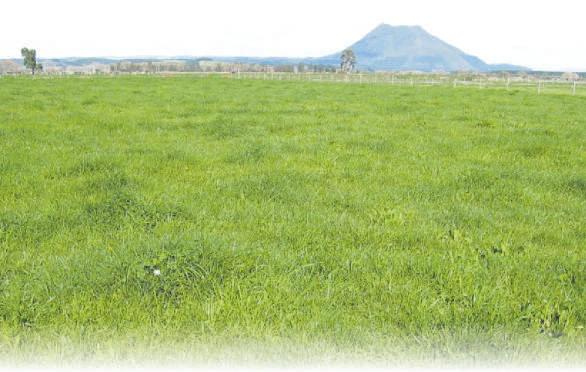
This brings us back to the very early settlers throughout the world, prior to the use of fertiliser, rotationally cropped land with a period of grazing was the cornerstone.
A reliance on synthetic nitrogen and water-soluble nutrients has allowed us to enjoy a lifestyle which we must now pay for
The benefits of carbon in the form of humus include: increased moisture retention with land less prone to flooding, cleaner water as carbon is the ultimate filter, and a lower
requirement for soluble nutrient.
There is no downside apart from maybe an increase in the price of out-of-season vegetables. It is also important to acknowledge the fact that low-lying, highly fertile land throughout the country benefited greatly from periodic flooding, which now, due to higher stop banks, occurs less frequently. There is always a consequence to changing natural systems; the know-how is available to benefit from unintended harm, as our clover-based pastoral farming expertise is second to none
For more information call Peter on 027 495 0041.
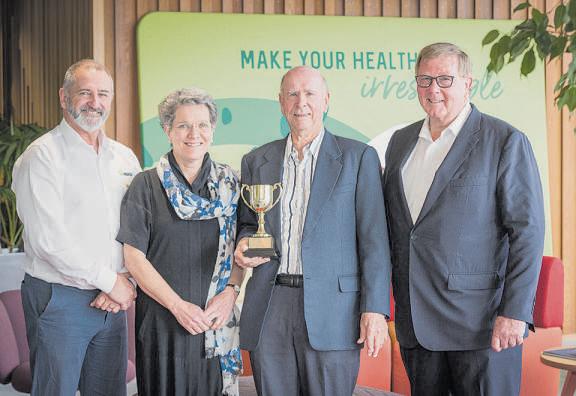
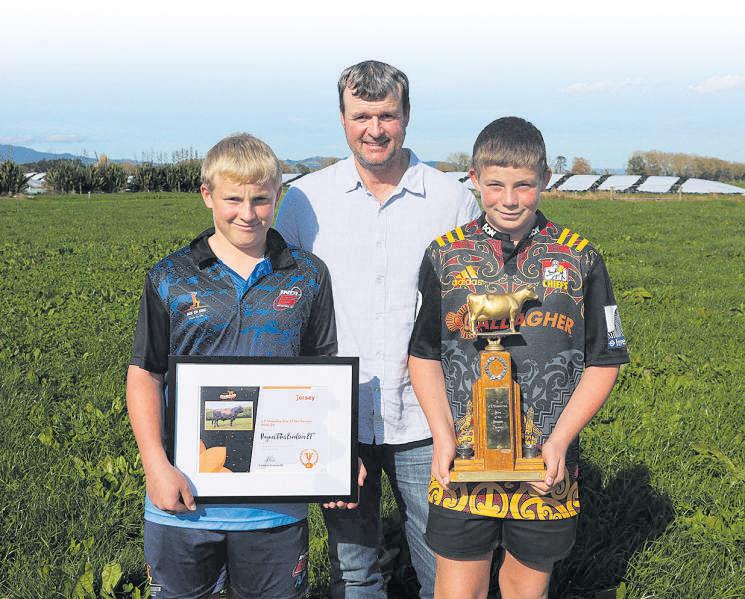
Years of careful breeding work have paid off for Waikato’s Brad Payne and Claire Brodie, with their LIC bull Paynes Titus Excelsior ET taking out the JT Thwaites Sire of the Season 2026 Award.











The annual award by Jersey New Zealand recognises outstanding New Zealand-bred Jersey sires whose daughters demonstrate exceptional production and conformation performance.
Brad Payne says it is a proud moment for the family
“We feel incredibly privileged to receive this award,” he says
“Looking at the trophy and seeing the calibre of bulls recognised over the years, it’s very special to know one of ours is now among them.”
Excelsior is currently the top-ranked Jersey bull on the industry’s Ranking of Active Sires (RAS) list.
enormous amount of dedication, care and hard work into breeding bulls of this calibre, and it’s a real privilege to work alongside breeders like them,” she says Kelli says Paynes Titus Excelsior ET is a great example of what’s possible when strong breeding decisions are backed by long-term commitment and attention to detail.
“To see that effort recognised nationally is hugely rewarding – not just for LIC, but for the Payne family and for Jersey farmers who will benefit from these genetics for years to come ”
Excelsior achieved the highest breeding worth (BW) of all qualifying new-proof Jersey bulls this season, while also meeting important criteria for management, fertility and conformation traits
Steve Ireland, Genetics Convenor for Jersey New Zealand, says Excelsior is likely to appeal to farmers focused on breeding replacement heifers
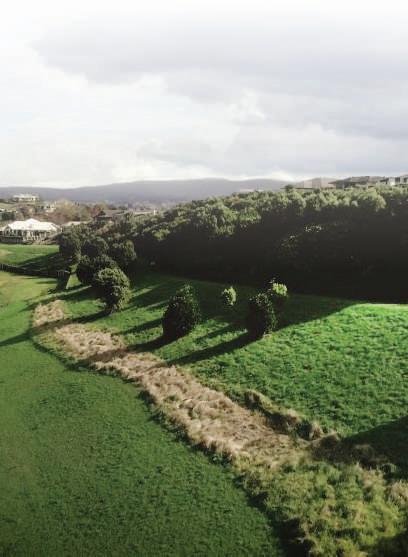
L LIC livestock selection manager Kelli Buckley says the recognition reflected the Payne family’s long-term breeding work and careful decision-making
“Brad and Claire have put an

“Excelsior stands out for his ability to breed daughters with exceptional, longlasting udders and top fertility,” he says
“This should ensure his daughters remain very productive well into maturity.”















Farmers should think carefully about fertiliser use at this time of year, says industry-good body DairyNZ.
Farm systems team manager Steve Veix says when it comes to fertiliser application, late autumn and winter is generally not the right time, particularly nitrogenbased fertilisers.
Cooler soil temperatures limit pasture response and wetter conditions significantly increase the risk of nutrient loss through leaching, he says.
“With global fertiliser prices elevated due to ongoing supply disruptions and increased costs associated with the Middle East conflict, it is now more important than ever that fertiliser applications are precisely timed to deliver maximum return on investment.”
should always be avoided on waterlogged soils or ahead of heavy rainfall.
“Targeted, well-timed applications under the right conditions ensure the best “bang for buck” while minimising environmental risk
“Farmers are encouraged to refer to DairyNZ Good Farming Practices for environmental management to support sound nutrient management decisions ”
Steve says farmers should prioritise soil testing and forward planning, targeting nitrogen applications once soil temperatures are consistently above 7°C and pasture is actively growing.
Other nutrients should only be applied where soil tests indicate a genuine deficiency, and fertiliser
This includes preparation of annual nutrient budgets, consideration of soil type, slope of land, and all nutrient sources, to guide fertiliser application and minimise environmental impact
DairyNZ says creating an annual plan for nitrogen fertiliser use can help maximise the response rate, improve efficiency of use and avoid compliance issues
“Recording and reporting your annual nitrogen use across your farm(s) is also required to ensure you are meeting nitrogen cap (N-cap) regulations ”
This rule is one of several implemented through the National Environmental Standard for Freshwater (NESF).
It controls the amount of synthetic
nitrogen fertiliser which farmers can apply to land in pastoral land use - the use of land for the grazing of livestock
It does not include the grazing on the stubble of a crop that has been harvested after arable land use.
On grazed pasture, a farmer cannot apply more than 190kg of synthetic nitrogen per hectare and as an average across the farms grazed area per year (190kg N/ha/year) without resource consent
Farmers can apply more than this to their annual forage crops, but only if offset by applying lower amounts of pasture.
The average across combined pasture, forage crops and other grazed pastoral land cannot exceed 190kg N/ha/year
The N-cap applies to synthetic nitrogen fertiliser that is more than five per cent nitrogen by dry weight (manufactured urea, diammonium phosphate and sulphate of ammonia)
The N-cap rule does not apply to:
• Land that is not grazed between fertiliser applications and harvest, e.g. ungrazed arable cropping, silage, hay, cut-and-carry forage, horticulture, and forestry land
• Biological nitrogen fertilisers, e g minimally processed pellets, compost, dairy effluent that has not had any manufactured nitrogen added, and chicken manure
DairyNZ says the N-cap rule controls the application of synthetic nitrogen fertiliser based on ‘contiguous’ landholdings
If the milking platform and support block are part of the
Can



same land area (adjoining or contiguous), the cap applies to both together However, if a farm has a milking platform with a separate support block, the N-cap applies separately
The N-cap rule requires all dairy farmers to report their synthetic nitrogen fertiliser use annually by July 31 for the previous 12-month period (ending June 30) One report per contiguous landholding is to be submitted
If a nutrient budget shows that a farmer will exceed 190kgN/ha/ year, they must either reduce use or apply for a resource consent from their local regional council.
DairyNZ recommends that before applying nitrogen fertiliser, farmers should consider pasture growth needs, soil and weather conditions, and the cost of growing and harvesting the extra pasture relative to milk price
The profitability of applying nitrogen depends on the extra feed grown (the response) being utilised for animal production
Nitrogen should be applied ahead of genuine feed deficits, recognising that pasture response
can take several weeks and depends on conditions such as temperature and soil moisture.
Profitable milk production responses from nitrogen rely on applying it ahead of a genuine feed deficit and when conditions support pasture growth.
Nitrogen should be applied ahead of periods when feed demand is expected to exceed pasture growth, such as around calving and leading up till balance date.
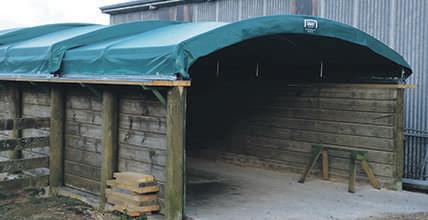
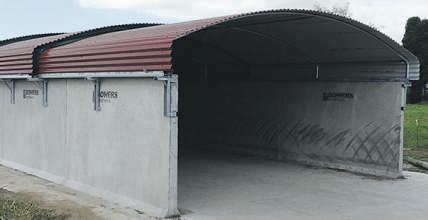
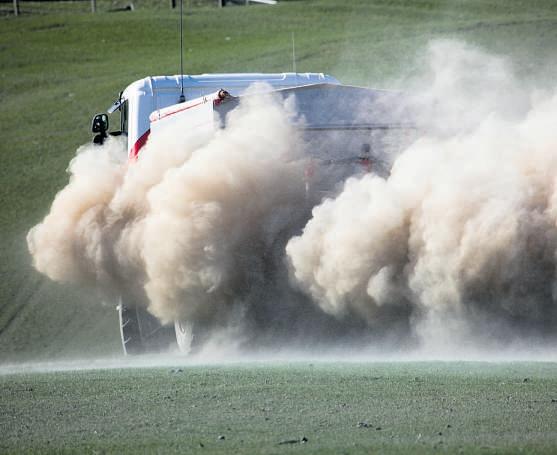
DairyNZ recommends that farmers store fertiliser at least 50m from waterways, with impervious floors, secondary containment and rain diversion. They should also maintain and calibrate fertiliser spreading equipment regularly, using accredited contractors when possible.
Good feed budgeting and soil testing allow fertiliser to be used efficiently, so that it will deliver the best benefit.
Dairy NZ says farmers should store and load fertilisers carefully to prevent spillage and groundwater contamination




























you might need to deal with in the coming season
Since many of us at Fertco have farming experience, we understand the upheaval that shifting farms can create.
If you were part of this year ’ s ‘ gypsy day’, then we hope that all went well and you ’ re beginning to settle into your new home
One of the major tasks involved in shifting to a new farm is to learn about its soil fertility since this is going to directly affect your income in the coming season and beyond
There are two ways to do this Firstly, by observation, and secondly, by accessing a number of different written records.
An immediate consideration after shifting is assessing the feed cover, since this is the time to act if it appears that there isn’t going to be enough to get through the winter and into early spring Measuring the grass cover and creating a feed budget is a great tool to help with this
If your feed budget shows deficits, common practice is to apply nitrogen (N) to boost growth to avoid these It’s also standard practice to continue N applications through calving time, whenever soil temperatures and moisture levels suit
While in theory this is simple enough, in practice, the time pressures and wet, muddy conditions typical of late winter and early spring can make this task
almost impossible
A proven solution is to choose a polymercoated urea (PCU) like Fertco’s 44 Magnum, or N Smart, and apply this early, before calving gets underway Because the nutrients in the PCU are protected from extreme wet weather and are gradually released over three months to match plant growth more closely than ordinary urea, a single application is all that you need to get you through the spring
Another useful, though not to be underrated strategy for assessing soil fertility, is to observe your paddocks
Which aren ’ t performing as well as they should? Are there paddocks that your stock don’t seem to like? Earmark these now for soil testing in the spring
When it comes to assessing soil fertility using written records, an obvious place to start is with previous soil tests. If you don’t have access to these, our Fertco Field Reps can request them from soil testing labs on your behalf Soil tests are excellent for studying the nutrient status of farm areas so you can identify nutrients that might be short, or alternatively, already within the ideal range to achieve maximum pasture production.
But don’t just look at levels of macronutrients like NPK Check the secondary elements like sulphur and magnesium, and the trace elements too Any shortage of these can indicate possible metabolic and animal health problems that

If previous soil tests aren ’ t available, book a test for spring so you don’t waste money applying the wrong fertiliser, or applying nutrients that your farm might not even need. Two areas where checking soil fertility is particularly important are effluent blocks and paddocks intended for cropping.

Because we know how important soil testing is, we at Fertco don’t charge for sampling your farm You only pay for the lab analysis which we send to NZ-based
labs who use methods developed for NZ soils and conditions.
Pasture analysis
Also worthwhile for learning about the soil fertility of your new farm is to book a herbage test for spring. Include a clover only test too since this is an excellent way to determine trace element requirements.
Another useful source of information is the annual nutrient report A report like Fertco’s detailed nutrient report helps you keep track of your N use and forms the basis of the next season ’ s fertiliser plan



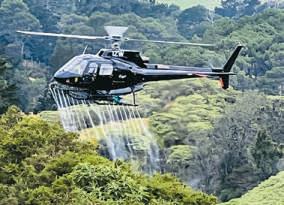

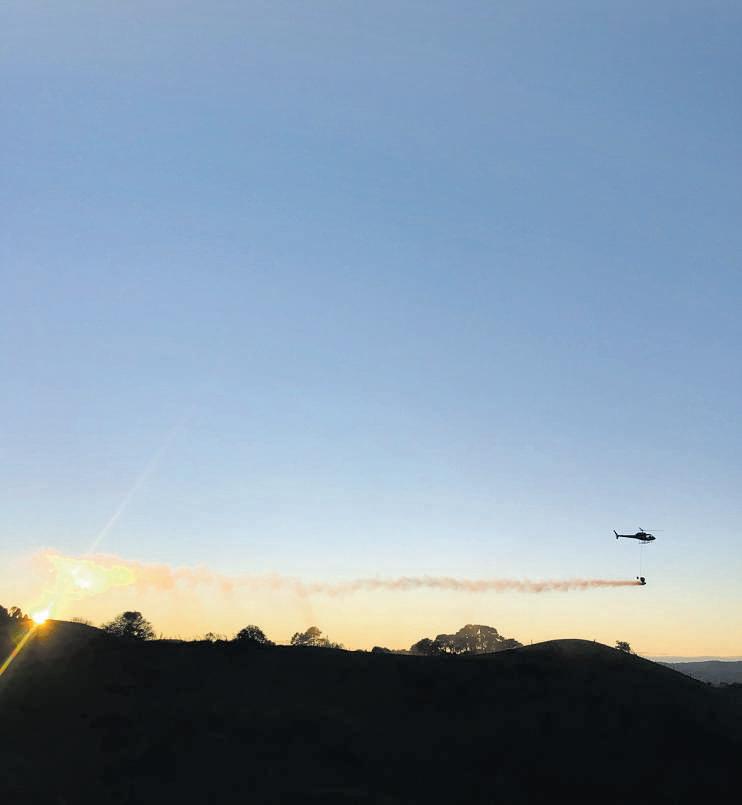
at 150kg per hectare, 44 Magnum delivers 44kg of N – 20kgs N immediately and 24kgs N over 3 months

In New Zealand’s avocado landscape, one variety stands comfortably above the rest: the Hass avocado Accounting for around 95% of all plantings, Hass is not just dominant - it is foundational to the country ’ s avocado industry, according to NZ Avocado Its success is no accident, but rather the result of a near-perfect alignment between grower practicality, export demand, and consumer preference

recognised by their oval shape and thick, pebbly skin (think crocodile) Unlike most varieties, they offer a very distinctive visual cue to ripeness, transitioning from green to a deep, almost purplish-black as they mature. This simple trait has proven invaluable across the supply chain, giving both retailers and consumers confidence in timing and quality
Distinctive in both appearance and performance, Hass avocados are easily

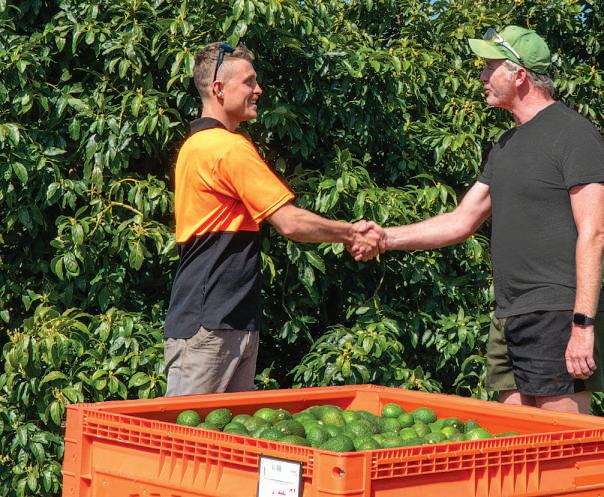
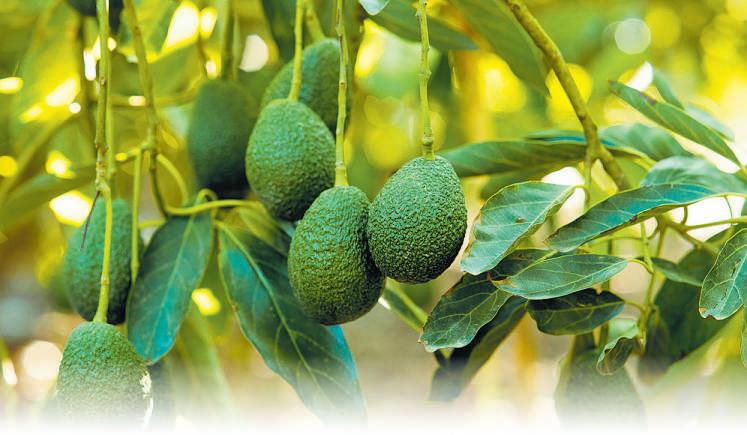


Out in the orchard, Hass avocado trees normally produce heavy crops, making them an efficient and commercially viable fruit choice Globally, Hass dominates for good reason The variety’s long shelf life and resilience in transit make it ideal for international shipping Fruit can be picked firm, stored, and transported in bulk before ripening closer to the point of sale - an essential characteristic for supply chains For retailers, this reduces waste and improves inventory control; for consumers, it ensures a reliable eating experience.
Despite producing only around 2% of the world’s avocados, New Zealand has carved out a strong position as the ninth
largest exporter W With over 4500 hectares planted in Northland and the Bay of Plenty, the industry punches above its weight, driven largely by the consistency and market appeal of Hass That appeal isn’t lost on New Zealanders either! Here at Trevelyan’s, our local market team at BayFarms delivers (literally to your doorstep) top-quality Hass avocados; after all, it is pretty much a staple in the kitchen for reliability, versatility, and an appeal that few other fruit varieties can match!
While the fuel crisis continues to bite, there is growing confidence in the avocado industry’s outlook.
NZ Avocado chief executive Brad Siebert says inclusion in the New Zealand–India Free Trade Agreement signals long-term export potential, with New Zealand’s reputation for trusted trade systems and counter-seasonal supply remaining a key advantage.
“The focus remains on being a hightrust, high-quality seasonal supplier where New Zealand fruit is ‘waited for’ as a preferred supply,” he says
An early-season milestone was the industry’s first coordinated presence at the Canadian Produce Marketing Association tradeshow in Toronto, where NZ Avocado joined four exporters under a New Zealand Trade and Enterprisesupported “Avocados from New Zealand” brand
Brad says the event marked a shift toward promoting a stronger countryof-origin story focused on quality and supply chain integrity
Around 70% of attendees were unaware avocados are commercially grown in New
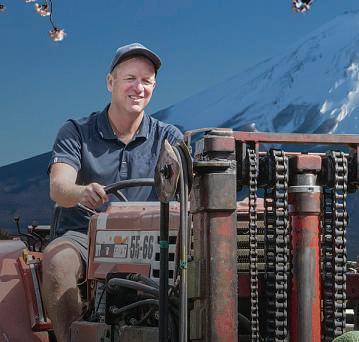
Zealand With about 90% of Canada’s supply sourced from Mexico, the market remains largely untapped.
“Once buyers understood our seasonal fit, conversations became highly positive,” Brad says
“There is genuine long-term potential to grow demand in Canada and North America.”
Despite challenges including weather disruption, shipping volatility and rising costs, the industry is preparing for a strong 2026–27 season, with production estimated at 7.8 million trays.
Of this, about 4.8 million trays are expected to be exported, returning volumes close to 2021 levels.
Australia is forecast to take around 55% of exports, up from 21% last season, while Canada, Korea, Hong Kong and China could account for about 30%.
Strong Australian demand is expected to support grower returns, while diversification across markets remains key to long-term resilience.
Locally, supply may tighten as more fruit is directed offshore, with timing and availability requiring careful management throughout the season.



Keeping the family farm in the family has proved a winning formula for Keith Barriball, allowing him and his wife Peggy to stay on the land they love while supporting both a working dairy operation and a growing vintage machinery collection.

The couple’s son Warren now runs the dairy farm they purchased in 1989, while Keith and daughter Wanda manage calves, yearlings and heifers across the run-off and lease blocks Peggy keeps the business on track behind the scenes, handling the accounts.
Alongside the day-to-day operations, Keith has built a long-standing reputation in the vintage machinery community He was the inaugural president of the Hauraki Vintage Machinery Club in 1998 and remains an active member today

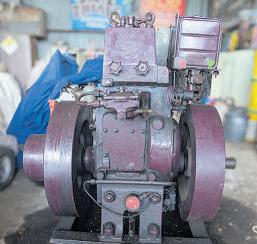
The engine would have been used to power milking machines, shearing plants and water pumps before electricity
The collecting starts Keith has been collecting for a while but didn’t consider it “collecting” at the time “Sometimes with tractors, it’s harder to change the implements than it is to do the actual job you ’ re t do It’s easier to buy a for each implement an it attached I bought q few secondhand tracto that purpose… and I still have the so I suppose that’s collecting,” says with a smile.
As time has passed, Keith has add several stationary engines to his co and has restored some of them wit diesel mate Graham Ware.
“I’ve got an early 1900s, EnglishRuston diesel stationary engine. In late 1990s, it was sitting in a paddo fellow Hauraki Vintage Machinery member Neil Fitzgerald’s paddock I acquired it.”
trying to tractor nd keep quite a ors for m all, Keith ded llection h his -made n the ock at y Club and
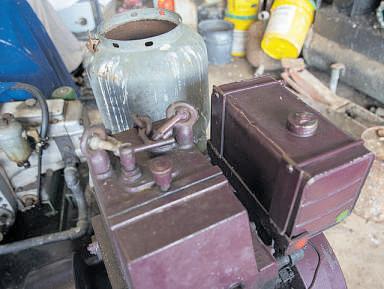

The Ruston came from the Mercer Quarry and needed to be taken apart and rebuilt using a mixture of new and original parts
“We used new rings, bearings and valves alongside old bits.”
Th l d
The one-cylinder engine is all cast iron apart from the pipes and tanks The engine has a water tank to feed the heat exchange cooling system It has flywheels on
either side and fabric belts, although leather was sometimes used in the old days
“It produces 3.5 hp with heaps of torque and would have been used to power milking machines, shearing plants and water pumps before electricity”
It has a crank start, which Keith says was much easier when he was younger, and now uses Neil Dalgety’s starting motor to start all his stationary engines
The machine is very heavy and is loaded onto the ute using a front loader on the tractor to go to the crank-up days
“The stationary engines always promote conversation when they are on display and I enjoy talking about them with younger generations ”


Farmers are being urged to take greater care when using two-wheeled motorbikes
In a post on its website, WorkSafe highlighted the vehicles as a significant cause of on-farm injuries nationwide The regulator says incidents frequently occur when riders fail to match their speed and technique to conditions, or when hazards such as uneven terrain are not fully assessed. Inexperience is also a common factor.
WorkSafe is promoting a series of bestpractice guidelines to reduce harm These include wearing helmets at all times, ensuring riders are properly trained and competent, and choosing the right vehicle
for the job and terrain



Operators should plan routes in advance, be aware of hazards and avoid carrying loads across their knees, instead using built-in carriers Towing trailers should only be done if both bike and trailer are designed to work together, while adultsized bikes must not be used by children
Riders are also encouraged to tell someone their location and expected return time, and carry communication devices where possible
WorkSafe reminds farm owners and managers they have a responsibility to provide safe equipment, training and protective gear, and to ensure vehicles are well-maintained to protect workers.
-Content from MPI


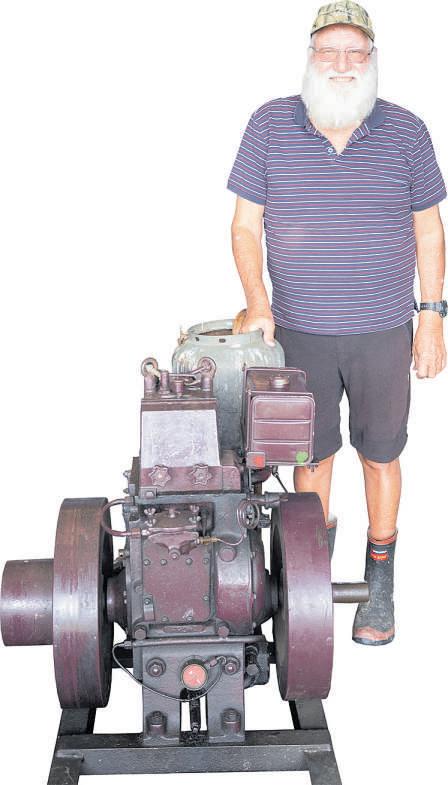



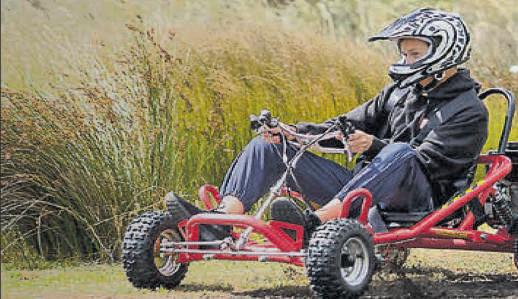






Proposed Governmentstrengthening of plant variety rights legislation aims to curtail cases like those experienced by Mount Maunganui-based kiwifruit marketer Zespri and bring more export value back to New Zealand for longer Trade and Investment and Agriculture Minister Todd McClay and Commerce and Consumer Affairs Minister Cameron Brewer have proposed changes to the Plant Variety Rights Act 2022 (PVR) to “ protect investments
underpinning highvalue exports, regional jobs and global demand for New Zealand produce”
“Highvalue horticulture relies on years, often decades, of breeding, testing and commercialisation,” Cameron says
“Strengthening the Plant Variety Rights Act 2022 gives New Zealand the intellectual property settings it needs to compete internationally, protect our investment and grow export returns ”
The proposed changes would extend protection for trees and vines to 30 years and restore effective provisional protection while applications are being examined
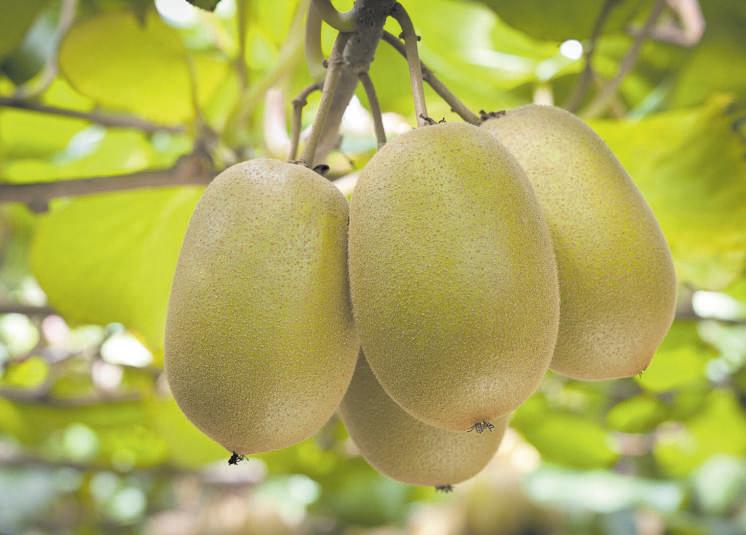
•
•
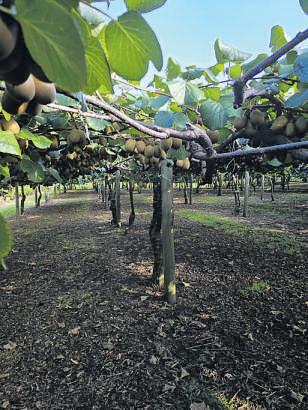
Last October, Zespri won a significant egal victory in China, successfully defending the intellectual property rights of New Zealand kiwifruit growers. The infringement involved the unauthorised planting of over 200 hectares of Gold3 kiwifruit in Hubei Province, with fruit then sold online Wuhan Intermediate People’s Court n China ordered the defendant to remove 260ha of infringing plant material and to pay compensation to Zespri of 5,246,200 Chinese Yuan (NZD $1 28 million (damages of 5

million Chinese Yuan and expenses of 246,000 Chinese Yuan)
Zespri chief executive Jason Te Brake says changes to the Plant Variety Rights Act 2022 will deliver real benefits for New Zealand by protecting growers, backing innovation, growing exports and supporting regional jobs and communities
“Innovation is critical to protecting and growing value for New Zealand,” he says
“In 2024/25, kiwifruit returned more than $3 billion directly to growers and their communities and supported tens of thousands of regional jobs

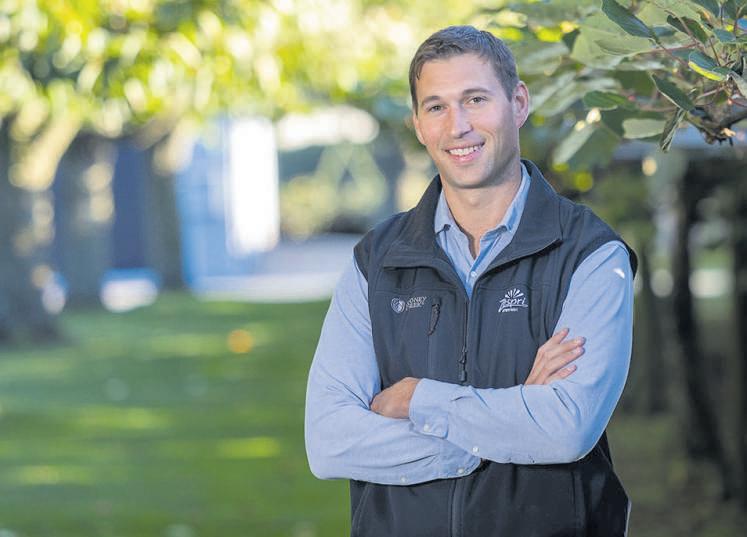
“Around 75% of kiwifruit export sales comes from Zespri’s PVRprotected varieties - sold under the Zespri SunGold and Zespri RubyRed trademarks - highlighting the importance of a strong and effective IP framework
“Through the Kiwifruit Breeding Centre (KBC), in partnership with the Bioeconomy Science Institute, we have invested for decades in developing highvalue new varieties to grow market demand and help growers respond to rising costs and climate change
“These varieties - alongside continued investment in our brand, supply chain and building demand - are delivering significant value back to New Zealand,” says Jason
“Stronger plant variety rights would help the industry invest with confidence, protect value, and bring more high-value varieties to market Kiwifruit Breeding Centre chief executive Dr Matt Glenn says the proposed changes would strengthen KBC’s ability to achieve its vision of ‘delivering the world’s most irresistible, healthy fruit for good’ while affording greater protection that leads to a positive primary sector innovation ecosystem
“Fewer than one per cent of the potential varieties in our breeding programme will result in a commercial cultivar, so maximising protection for these highly valuable varieties is critically important.”
Matt says developing a new kiwifruit variety requires millions of dollars of investment and can take up to 20 years of research, selection, field testing and commercial validation before it can be successfully released
“A clear and durable protection framework gives industry greater confidence that this long-term scientific and financial investment can be responsibly managed, and value returned to the kiwifruit growers ”
He says adjusting the PVR duration will also better align New Zealand with international settings, helping protect existing value, unlock future export growth, and maintain competitiveness in highvalue horticulture
New Zealand Kiwifruit Growers Incorporated chief executive Colin Bond says the vast majority of the New Zealand kiwifruit industry’s export value is attributable to kiwifruit protected by Plant Variety Rights
“The Government’s proposal to strengthen our Plant Variety Rights would reduce the risk of unauthorised copying or export during the application period
“It would also encourage new variety development, supporting New Zealand growers, ” says Colin
“The extension of Plant Variety Rights would help maintain the commercial settings that underpin our industry’s success and also help fund future research
“The government ’ s proposal is about the greater good,” he says “Stronger Plant Variety Rights protection will create long-term value, allowing our industry and the wider New Zealand economy to harvest the rewards.”
Horticulture New Zealand says the Government’s actions are positive for the horticulture sector and will drive innovation, investment and long-term productivity
“These measures will provide greater certainty for breeders, growers and investors making decisions over long production cycles,” says HortNZ chief executive Kate Scott
“They also better reflect the realities of how innovation is developed and adopted in horticulture
“New varieties take time, capital and sustained commitment to bring through to commercial use, ” she says “A policy framework that gives appropriate protection over that journey helps deliver the confidence needed for ongoing investment across horticulture ”
Kate says strong plant variety rights are an important part of maintaining New Zealand’s position in premium horticulture, helping ensure that the benefits of research, breeding and commercial uptake can be realised over an appropriate timeframe.























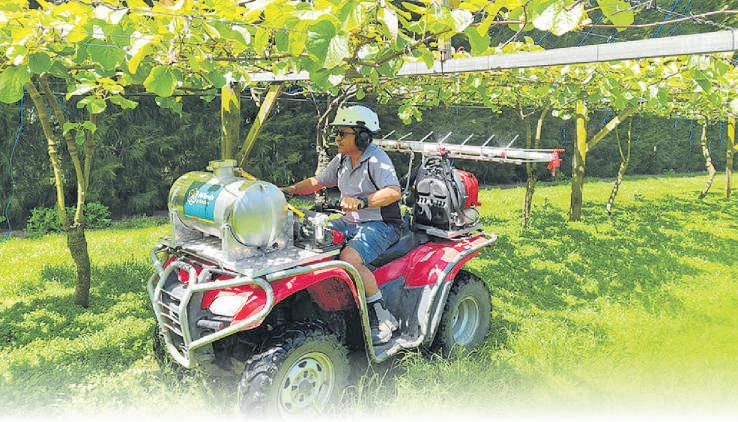


Time is of the essence in commercial kiwifruit pollination, and Katikatibased All Terrain Pollination has this covered.
All Terrain Pollination (2017) Ltd use a wet pollen application system for spraying pollen directly onto the flower and developed specifically for the New Zealand Kiwifruit industry to assist growers in achieving maximum results

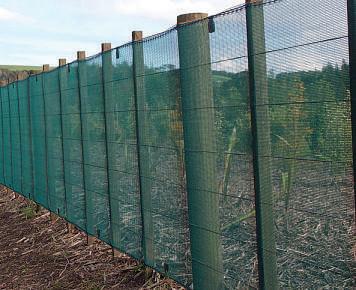



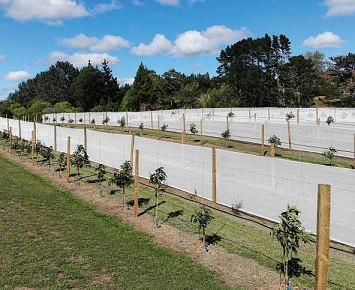

General manager Christopher Brown says wet pollination meets all requirements of kiwifruit growers in the tight pollination window - two-trhee days for a gold flower six-seven for green and about four days for the red variety “Wet kiwifruit pollination is advantageous because it increases yield and fruit quality, performs reliably in adverse conditions, and improves economic returns, ” he says. “It provides a more consistent and profitable pollination strategy than relying on bees or dry pollen alone.”
Christopher’s family used wet pollination in their own orchard before translating this to All Terrain Pollination - established in 2006 - in 2017.
“When the opportunity presented itself, we jumped at the chance to re-establish wet

pollination as the gold standard to mitigate the many variables that can affect quality pollination.”
“We pride ourselves on the process and delivering a quality service as and when it is optimal for our clients,” he says “Communication is king at this crucial part of the season and with 27 quad bikes (used for orchard application of wet pollen), we are primed to deliver with well-trained operators ” Pollen rates can be adjusted relative to individual orchard conditions, primarily related to bee activity
Christopher says this can be reflected in weather conditions, synchronisation issues, hive health, juvenile orchards and protracted flowering periods
“We can provide top-up passes when conditions are optimum through to multiple applications when conditions are unfavourable.”
For more information, see All Terrain Pollination’s advert on this page
Steve Edwards
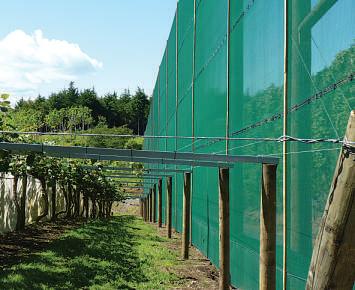
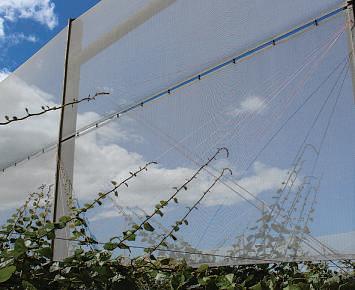











A collaboration between two Te Puke businesses has resulted in cutting-edge robotic automation being introduced into the kiwifruit industry.
Te Puke-based Electropack has developed a conveying and robotic pallet-stacking system for fellow local business DMS Progrowers Te Puke site, helping automate one of the most physically demanding areas of post-harvest operations
DMS Post-Harvest operations
manager Laurie Jarrett says the business identified stacking as a key area where automation could improve both efficiency and workplace wellbeing
“Stacking is a physically demanding role and increasingly difficult to staff
“It can create ongoing injuries and strains throughout a season, so we knew we needed to look at a smarter long-term solution ”
Laurie says discussions with Electropack founder Sean Carey began in 2025 and quickly evolved into a highly collaborative project
“I was excited from the outset, ” says Laurie “Sean had come up with something completely different to what the industry had traditionally seen Historically, robotic stacking systems required a very large footprint within a packhouse, but Sean’s concept was compact, flexible and fit-for-purpose ”
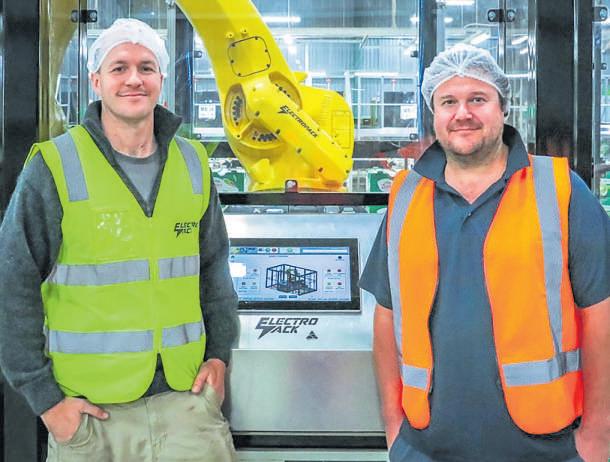
A prototype was initially tested at another Bay of Plenty kiwifruit operation before Electropack further refined the design, tailoring the automation and conveying for DMS
“We adapted the system for DMS, making it faster, more robust and tailored to their operation,” says Sean
The robotic stackers are capable of handling up to 48 boxes per minute, with boxes arriving in pre-arranged stacks from Electropack-designed upstackers that align with DMS’ automated box-filling units
Importantly, the system was also future-proofed to accommodate upcoming changes to Zespri gold kiwifruit packaging in 2027, when the industry transitions to a larger
From the initial concept through to commissioning, DMS remained heavily involved in the design process, regularly visiting Electropack’s Te Puke workshop to review progress and provide feedback
“Sean was incredibly open throughout the entire build,” says Laurie
“No challenge was too big or too small, and he was always willing to make changes as we pieced everything together”
Fit-out and integration of the robotics system was completed locally at Electrodip’s engineering workshop in Te Puke, with DMS Group engineering manager Chase Jarrett also playing a key role in

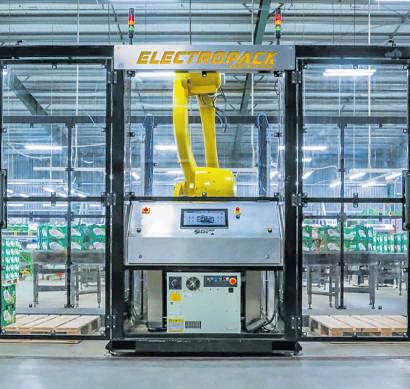
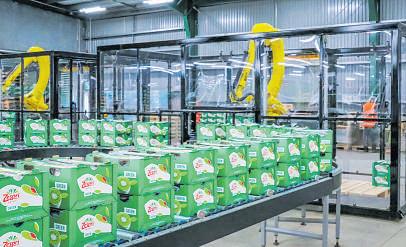
the project’s development and implementation
Installation at DMS’ Rimu packhouse began late 2025 and the technology was operational for the 2026 kiwifruit season in March Modular bulk boxes move through automatic box fillers before entering an Electropack-designed conveyor system, where they are labelled, upstacked and then palletised by the robotic equipment before transfer to coolstore
The system was also designed with operational contingency in

mind If one robot experiences an issue, it can quickly be removed and traditional manual stacking methods introduced while production continues uninterrupted
Laurie says the results have exceeded expectations
“This is world-class automation,” he says “The accuracy, consistency and reliability have been incredible ”
DMS expects its Te Puke Rimu shed to pack more than 10 million trays of kiwifruit this season, with more than three million trays handled through the robotic system
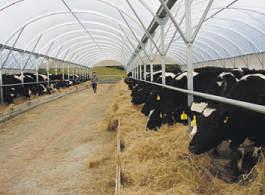

The “ greater good” of New Zealand must be front of mind when considering development proposals on prime farmland, says a former Federated Farmers leader-turned regional councillor.
Waikato Regional councillor Keith Holmes, who chairs the council’s Economic Growth and Resilience Committee, says submissions on a range of fast-track projects highlight a growing tension between protecting highly productive land and enabling housing, infrastructure and renewable energy development.
shouldn’t do anything, which has stalled economic activity and regional growth, and the growth of ideas,” he says. “We have got to be smart. Let’s be sensible about it.”
He believes New Zealand should adopt long-term resource planning similar to Japan, suggesting a 50- to 400-year outlook to ensure land use decisions optimise resources for future generations.
“We are always going to be a foodproducing nation,” Keith says, adding that urban growth should be directed upwards rather than outwards to avoid further encroachment on productive farmland - a model widely used in Europe and Japan.
to sites close to existing substations, where power can be efficiently fed into the national grid
Keith is a strong supporter of the fast-track process, saying it was necessary to unlock stalled economic activity
“We were regulating ourselves to a stalling economy This is a chance to kick-start things again,” he says, adding that decisions must still be made in a fair and measured way
“I’m absolutely adamant that a change in culture and attitude will help grow our regional economy We can then afford to pay for our dreams ”
A recent fast-track decision in Matamata has underscored the challenges involved.
sustainable design and mitigation measures, with construction of new homes expected to begin this summer
A separate solar farm proposal on rural land near Matamata has also entered the fast-track process.
The project has drawn strong community feedback, highlighting wider concerns about how fast-track developments align with council planning frameworks
Community concerns
Matamata-Piako Mayor Ash Tanner says local reaction to the proposal was clear
viously
Applications currently under consideration include th conversion of farmland boundaries into resident developments, as well as for solar farms on dairy These projects were prev assessed through standar processes guided by the National Policy Stateme for Highly Productive Land, which aims to prevent inappropriate subdivision and development of the country ’ s most versatile soils.
Keith describes the protection of high-quality soils as a “no-brainer”, but warns that an overly cautious approach has come at a cost.
“We have shrouded ourselves in the mentality that we
g Where rezonin says strict cond applied to con development should contin capacity rathe urban potential long-term zonin certainty for b
g is necessary, Keith ditions should be ntrol the scale of He argues land values ue to reflect productive r than speculative l, and that consistent ng would create greater both buyers and sellers. ut striking a y balance in urban lopment and not king damaging ad hoc cisions,” he says. The issue is particularly complex when it comes to renewable energy Keith admits he has “agonised” over proposals to replace dairy farms with solar generation, but recognises energy security as critical. He supports limiting such developments
g
elopment on highly d was declined, e residential less versatile th two solar roved nity , the parent pplicant
A proposal for a retirement village and residential deve productive land while a separat component on land, along wit farms, was app Developer Un Developments, company of ap Matamata Development Limited, says it will proceed with the approved housing projec and solar installations. The company maintains the development will deliver social and economic benefits backed by
g owt , wed something like thi up for it,” he says Ash notes that f outside council lo infrastructure str
“The fast-track p follow the same p so now it’s about m ahead is done who
“We know this proposal has stirred up plenty of feeling locally Council supports growth, but we’d have preferred to see s in a spot that’s better set fast-track projects often sit ong-term planning and ategies. panel doesn’t have to lanning principles we do, making sure whatever goes properly for the people e here.” says the decision-making el acknowledged some ncerns raised by submitters requiring larger lot sizes here developments border ural and lifestyle areas - a move that may help reduce impacts on neighbouring properties.
As pressure grows to balance food production, housing demand and clean energy generation, Keith says a pragmatic, long-term approach will be critical.