







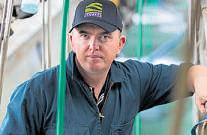

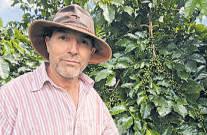








It was the day I drowned… again. Yes, a second time. If that sounds farfetched, it was - which was good news for me, and a big relief for The Hat, who, for a while, was sweating over the prospect of calling my mum to tell her I was missing in action again, believed drowned again.
I have already shared the story of me bedding down in the hay barn for a nap while a search party combed the farm for me, thinking I might have perished in a tsunami of irrigation water That all turned out for the best. So why the fuss this time?
I was mesmerised by the iridescent, turquoise-blue water in the big irrigation channel that flowed nearly three kilometres across the top of the farm A stunning colour Why was it so blue, so vivid, I asked The Hat one day? “Because it is,” he replied d profounddly
Glacier
It was actually glacial-fedglacial flour, tiny light-reflecting alpine sediment suspended in the water But because it didn’t affect his bottom line, The Hat didn’t really care
He saw the water simply as a resource, bringing sustenance to paddocks sucked dry and useless by a scorcher of a summer I, on the other hand, saw it as a challenge: my own personal Banzai Pipeline - the world’s deadliest surf break in Hawaii. A bit of literary licence there So, I decided this adventurer would surf the channel - or ride it - on a slab of styrofoam. A long, slow, waterborne wander Great fun Especially the three massive culverts that carried the channel under country roads. Adventure has to come with risk. So, one day, when I should have been doing something else f for The Hat, I dumped my y bike and clothes at the top of the farm and set sail on the good ship styrofoam
“Fair winds and following seas!” I cried out to no one
Sheep stared as I passed So did the magpies So did rabbits. “Weirdo,” they must have thought. “Dickhead,” thought a couple of horses
Search and rescue
Not once did I consider that I might have triggered another local search and rescue callout They had stumbled upon my bike and clothes and were thinking the worst
Meanwhile, I was sploshing my way down the channel, contemplating European riverboat cruises - or imagining I was Vasco da Gama, the Portuguese navigator, opening up a new sea route across mid-Canterbury A fertile imagination.
When I reached home about three and a half hours later, they were plotting the next stage of their search.
“Why am I sometimes so damned glad to see you, ” s said The Hat I worried he was about to hug me
“Do you want to hear about my surfing adventure?” I asked
Editor: editor@coastandcountrynews co nz
Advertising: ads@thesun.co nz


Industry leaders think common sense will prevail following the recent cash injection for Fonterra farmers
The dairy giant last month paid out $3.2 billion to its 8000 suppliers/shareholders, equating to an average $400,000 per farm ($2 per share, tax-free).
This was part of the proceeds of Fonterra’s $4.2 billion sale of its global consumer and associated businesses including the Mainland, Anchor and Kapiti brands to French-owned dairy multinational Lactalis.
Nearly 90% of Fonterra farmers voted in support of the sale last year
FarmWise consultant James Thomas says he is hearing that debt repayment and improvements to farm infrastructure are top priorities for recipients of the payout.
“They want to give their houses, and those of their staff, a little TLC,” he says. “They also want to tackle some fencing.”
James, a Fonterra supplier near Morrinsville, stresses the payout is a one-time opportunity
“It comes off the value of shares (held by Fonterra suppliers) It’s a redistribution ”
Because the sale was agreed to by Fonterra farmers last year, he says there has been a good lead-in time to plan how the funds are going to be used.
“It is important they make the most of it ” He says some will use part of the payout for discretionary activities such as holidays and new vehicles – private and on-farm.
A member of Matamata-Piako District Council, James says the payout will also have spin-offs for local communities, particularly tradies and contractors.
He notes that farmers are facing “ extra pressures ” at present through the fuel issue created by the conflict in the Middle East This will see “volatility” in the cost of imported fertiliser and its associated spreading by contractors.
DairyNZ economics head Mark Storey says Fonterra’s capital return represents a significant one-off payment of funds for many supplying farmers.
“For some, this will strengthen balance sheets, reduce debt, or provide flexibility to reinvest in their farm businesses.
“Others may use it to build resilience or meet upcoming regulatory and environmental requirements ”
At a sector level, Mark says this additional liquidity is likely to flow through to rural communities, supporting local businesses and regional economies.
“More broadly, New Zealand dairy farmers are currently in a period of relatively strong financial performance, with milk prices supporting positive cashflow across much of the sector, ” Mark says.
“However, the outlook is not without risk. Ongoing conflict in the Middle East and disruption to shipping are contributing to volatility in fuel and fertiliser markets
“These are key farm inputs, and sustained increases will put pressure on margins
“As a result, while current returns are strong, many farmers are likely to take a prudent, long-term approach, focusing on strengthening their financial position and building resilience in the face of ongoing global uncertainty”
Rotorua-Taupō Federated Farmers’ president Braydon Schroder says while it may feel like Christmas to many Fonterra suppliers, the reality is that a capital asset has been diverted for cash
“It is still significant and the economy will feel it in different ways. ”
Braydon, a Rotorua-based farm consultant and farm overseer for several Fonterra farmers, says debt servicing will be top priority Farm ownership succession planning will also come into the mix for some, he says Braydon has also been discussing with farmers planned purchases relating to “virtual fencing” (cow collars), solar panels, upgrades


to infrastructure and new farm vehicles
“Some are also looking at expanding their business by buying further farms and town rental properties.”
Braydon says the payout is tempered by rising costs, particularly for fuel.
“Every single line item on a farm budget is being affected.”
He says while exact costs have not come through yet, “farmers will feel the brunt of it all now and in the coming months”.
Bay of Plenty Federated Farmers’ president Brent Mountfort says Fonterra suppliers he had spoken to have different thoughts about
optimistic, given the “Trump factor” (possible tariffs) and the Middle East conflict with the resulting rise in fuel costs.
“It (the Fonterra payout) has come at a good time ”
Waikato Federated Farmers’ dairy section chair Matthew Zonderop says Fonterra famers deserve the win.
“It will go down in the history books,” he says. “It’s well-deserved there is no question.
“Generations of farmers have worked hard for this one; 4am starts for decades through wind, rain, flooding, droughts and disease outbreaks, and rock bottom farm gate milk prices






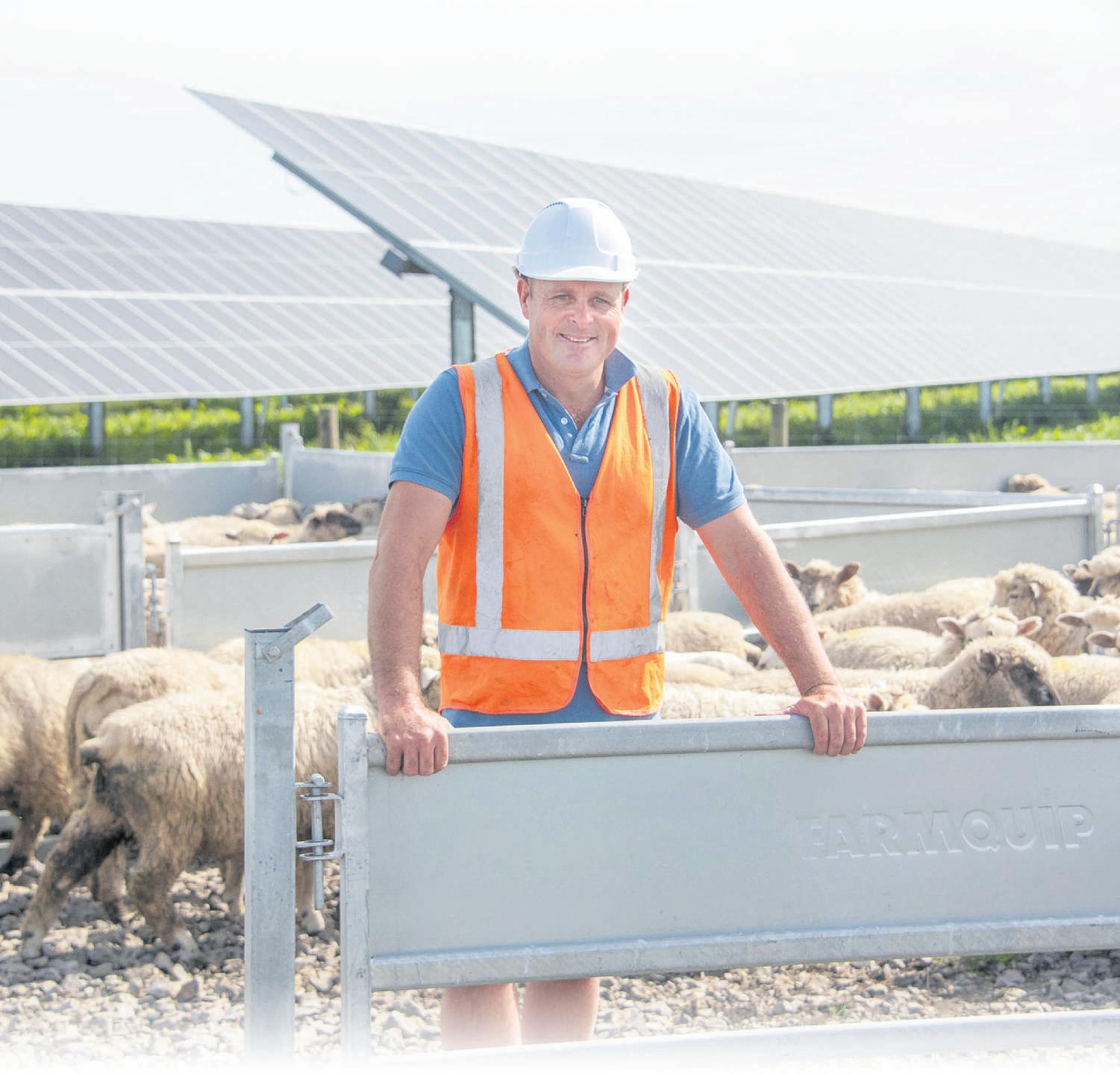
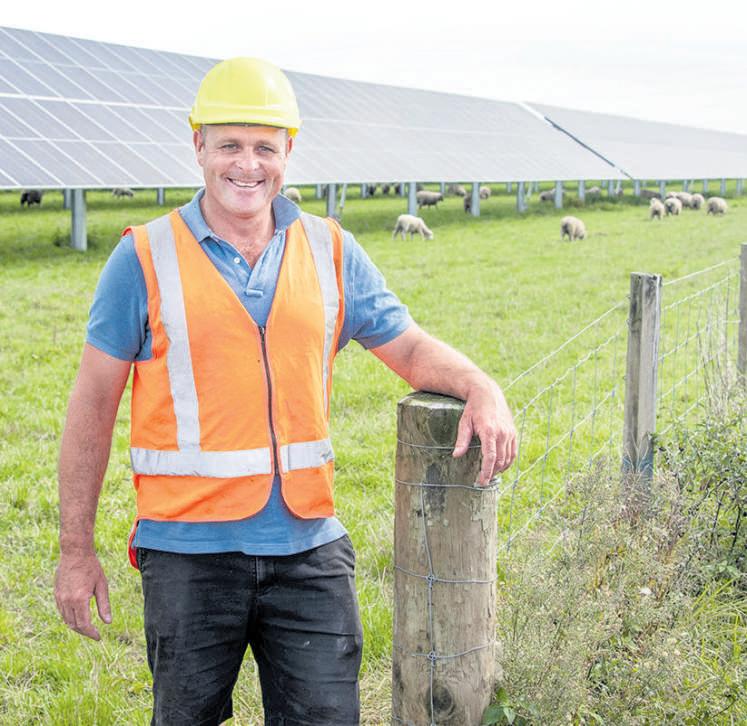
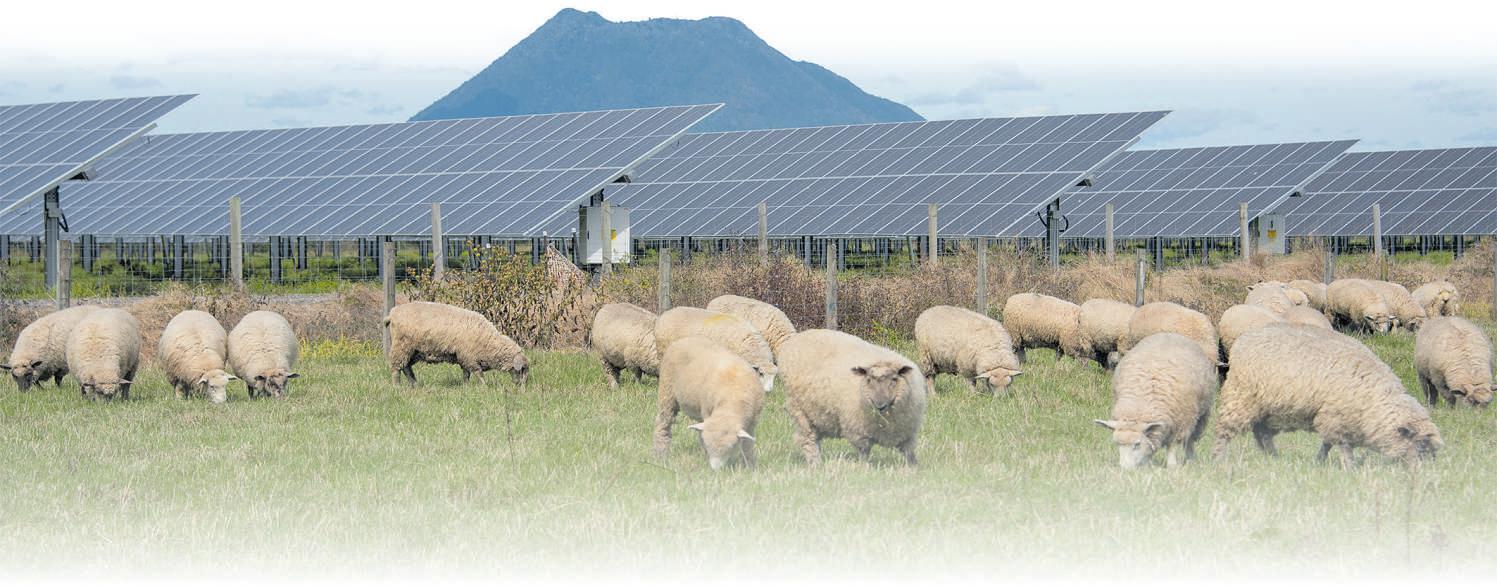
While standing in the middle of the 50-hectare Rangitaiki solar farm near Edgecumbe, the most noticeable thing is the peace and quiet
Sheep graze in the sunshine and snooze in the shade from the solar arrays, birds flit between the arrays and the hawks circle overhead, all against the magnificent backdrop of Pūtauaki (Mount Edgecumbe)
After acquiring the Rangitaiki site, Lodestone Energy started construction in 2023 with the first generation in March 2024.
It produces an average of 49 gigawatt-
hours of energy, enough to power 7000 residential properties a year
Electricity is contracted to several commercial customers, with future farms earmarked for a residential solarbacked offering
“The location choice for a solar farm is decided by a number of factors,” says Lodestone Energy chief operating officer
Richard Pearce.
Richard says flat or slightly undulating land in an area of great solar radiance, with stable soils, and close proximity to an existing electricity network with available capacity are top considerations.

Before building the farm, risk













assessments are carried out for earthquake and flood activity, hail and high-wind events.
The solar arrays, a collection of solar panels working as one system to produce power, have a life expectancy of 30 years and are sourced from China.
The solar panels are primarily made from polysilicon, glass, silver, aluminum, and other trace minerals Up to 95% of these materials are recoverable through dedicated recycling facilities in Australia.
Richard believes that by the time Lodestone’s panels are due for renewal, New Zealand may also have this capability “Solar technology is improving rapidly The panels installed at Rangitaiki in 2024



are rated at 545W each Just two years later, we can source panels of the same physical size delivering around 640W,” Lodestone Energy asset and operations manager Dave Smith says
“This means more solar electricity is generated from the same area of land.” Dave says the impact of solar farming is low, using no water or fuels, no runoff implications, no by-products, and minimal noise and visual impact.
“The soft whirring when the solar arrays self-adjust to track the sun goes unnoticed by the animals and birds, and it’s hard to believe you are amidst a power-producing facility”
The arrays use bifacial panels, generating electricity from both the front and back of the module. The front captures direct sunlight, while the underside captures reflected light from the ground, typically increasing energy yield by around 5-10%.

Mounted tracking systems follow the sun from east to west throughout the day, maintaining the optimal angle for generation
Bifacial technology and tracking systems can increase energy production by around 30% compared to traditional fixed rooftop installations
Rain washes most bird droppings and



pollen off, with spot cleaning maintenance required from time to time for damaged or heavily soiled panels.
“Thermal drones flown over the 50-hectare site carry out thermographic inspections much faster than manual inspections of the arrays and highlight any issues with the 59,000 panels by showing hotspots,” says Dave.
“Following successful trials of remote deployment at our Waiotahe Solar Farm, Lodestone is rolling out docked drone systems across its sites to inspect assets after weather events. ”
During high winds, the arrays automatically stow parallel to the ground minimising potential damage.
Dual use land
Dave explains that the site features agrivoltaic design, allowing machinery to operate and livestock to graze on the farmland underneath and this is one of the most exciting aspects of the farm.
“Maintenance of the vegetation under 50 hectares of arrays is a costly but essential exercise as out-of-control vegetation could present a fire hazard,” says Dave
“Grazing sheep on the site has proved to be a win-win solution for all concerned, especially because it keeps
good farmland in use ”
Farmer Ben Parsons leases 45 hectares of grazing under the Rangitaiki solar arrays.
He runs 850 to 1200 sheep, depending on the time of year, buying in lambs and finishing them, aiming for two cycles a season It is an opportunity for him to build a stockowning business without land ownership
“We initially let them loose on the whole 45 hectares, but they didn’t do a very good job keeping the vegetation down, so we fenced 10 fourhectare paddocks and rotate the paddocks. This effectively manages the vegetation and the effluent load from sheep is lower than cows, ” says Ben.
With the cost of owning land being so high, this is ideal for the farmer, the solar company and the environment, ensuring the land is looked after into the future.
Richard Pearce notes that solar farming is among the lowest environmental impact energy sources, delivering some of the lowest-cost electricity (LCOE) available today However, he emphasises that a mix of generation technologies, including solar, wind, hydro, geothermal and thermal is essential to keep New Zealand’s electricity system reliable and resilient.



Despite growing up in city life in Wellington, Brett Petersen had always been drawn to the countryside and spent many school holidays working on farms
His first attempt at studying agriculture failed dismally, but he didn’t give up He went on to complete four years of study, resulting in diplomas in horticulture, agriculture, and later valuation and farm management.
It was during his early years in the agricultural sector in the 1960s and
a commercial or corporate angle, with each company promoting its own fertiliser
“Within a few years of working, I’d burned my study notes about how agricultural land was supposed to be managed,” Brett says Soil health
“I spent 11 years working in the land division of Māori Affairs, followed by 12 years supervising Māori Trusts in a private capacity Since 2008, I ave focused on enhancing soil fertility and economic viability for farmers and growers ”
Most farms followed the aditional NPK fertiliser system. Soil tests were outinely carried out, but here was little real expertise in interpreting individual results, farmers tended to apply the same inputs year after year
“There was no one to discuss soil health with in those days. During a course near Brisbane on soil fertility, lots of pennies dropped for me. ”



During his time as a farm supervisor, Brett explored products and methods from six different companies in order to identify the best options
“Correctly balancing the soil should be the goal of any soil fertility programme, and we
a best return on investment (ROI) of 4 5% On one of the Māori Trust properties I supervised, our worst ROI was 4.6% and our average was 8 5%, using only 10% of the nitrogen applied at LUDF”





Kinsey Agricultural Services produced manuals showing how to calculate nutrient requirements from soil samples using specific formulae. These were based on the work of Dr William Albrecht, who authored more than 400 papers on soil fertility and developed the Albrecht System of Soil Fertility – an approach focused on feeding the soil and letting the soil feed the plants. These manuals and papers form the foundation of Brett’s soil management approach High-quality crop yields tend to share similar soil chemistry: calcium at 60-70%, magnesium at 10-15%, potassium at 5%, sodium at 1 5%, with defined levels of nitrogen, phosphate, sulphur and trace elements
“The Lincoln University Dairy Farm (LUDF) achieved
In 1980, Brett purchased four hectares on Ohakana Island in Ōhiwa Harbour, where he built a home and grew tamarillos and passionfruit, quickly gaining organic certification for the land
He continued advising on soil health and sharing his knowledge through agricultural publications, including writing a column for Coast & Country News for several years Now semi-retired, Brett continues to advise several





















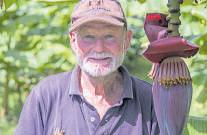
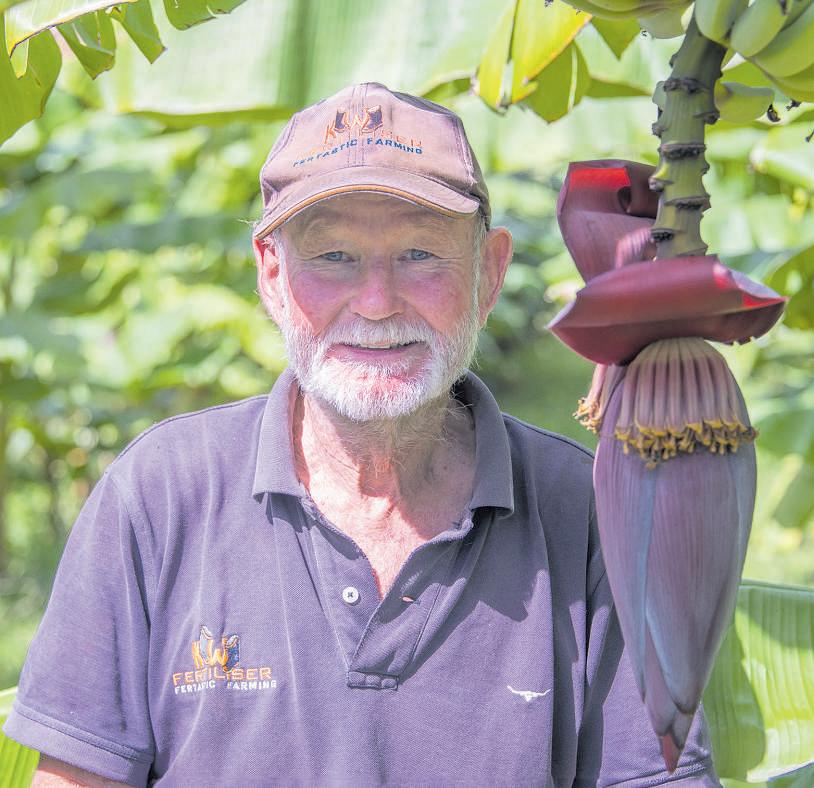
farms He has lived on a 5 5ha property near Awakeri since 1991, where he has established a banana plantation Bay bananas
“For the first two years, I grew canna lilies as a cash crop I planted my first bananas 30 years ago They were an inedible variety, but they didn’t seem to mind the climate ”
Today, Brett has a 30m by 50m area planted with edible banana varieties introduced in 2023, including Misi Luki, Dwarf Cavendish, Mons Mari and Goldfinger He says they prefer free-draining soil.
“I don’t look at what the plant wants – I look at what the microbiome beneath the plant wants Base saturation percentages are the key to
surrounding a soft core. Globally, banana pseudostems are used for human food, animal feed, fibre production, organic fertiliser and compost, mulch, and traditional medicines
Bees, moths and butterflies are attracted to the flowers, but the female flowers do not require pollination to produce fruit “When the flowers appear, it takes between 150 and 300 days – around 250 days on
average – for the bananas to form and ripen.”
Brett hopes to continue refining his banana-growing

Ripening bananas and a banana flower
getting things right ”
Brett aims for a soil structure that maximises drainage, consisting of 50% pore space (for air and water), 45% mineral content and 5% organic matter
He applies all of his soil expertise to the banana plantation While it is not a commercial venture and functions more like a test plot, he happily gives away the bananas he grows
Most of the banana plants thrive in the sunny Edgecumbe location, but some struggle regardless of the row they are planted in, leading Brett to suspect a climatic issue
Banana plants have a pseudostem – a trunklike structure composed of tightly wrapped leaf sheaths



techniques and gather longterm data that could be useful to others in the future





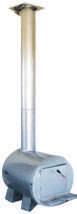
• Slashes your power account
• Heats hot water*
• Centrally heats your home (underfloor or radiators)
• Airs and dries your clothes
• Heats your spa pool
• Mains pressure (if required)
• PV & Solar Compatible
• 100% NZ owned and manufactured
• houses • Marae • wineries
• glass houses • swimming pools
• dairy sheds • camping grounds
• shearing quarters • restaurants
• sport complexes • spa pools • factories • packing sheds • motels • etc



Acosteffectiveinstallationofmilkingrobots
“Thebiggestadvantagewasthesavingofusingthe currentinfrastructure Itallowedustostepinto roboticmilkingwithouttheexpenseofbuildinga moderndairyfromthegroundup"
RobertandAllyArnold|Lilydale,Tasmania
Brightfarmingisyoursbychoice


It’s a milestone year for specialist hubs at Fieldays. Programme manager Steve Chappell says the hubs continue to go from strength to strength, and in 2026, it is fantastic to celebrate 10 years of the Hauora Taiwhenua Health & Wellbeing Hub and 5 years of the Forestry Hub
“Both have made great impact during their time at Fieldays so far, and we are very thankful to our collaborators Mobile Health and Te Uru
Rakau for their continued support, ” Steve says “All of our hubs and feature areas showcase key aspects of rural life, from careers and advocacy to innovation and technology such as drones.
“We’re excited to see the companies, products and ideas on show in June.”
The Fieldays’ Careers & Education Hub will be once again the focus for all visiting school groups and those with a desire to look at a career in the primary industries
Steve says the breadth and range of different careers is showcased in the hub and at more than 50 sites around Fieldays on the Careers Trail
“We have training providers, support organisations, and companies like Halter with more than 50 vacancies to fill, wanting to talk to our visitors.
“The opportunities for those with science, technology, environmental, political, health backgrounds, as well as those with experience in farming, growing, and support services will be even more plentiful that last year.


Liz Voorend p 027 755 6501 e farmsafety@wfssconz w workablefarmsafetyconz

Steve says automation, artificial intelligence (AI) and humanassisted robotic work continue to be at the forefront of the school visitors’ curiosity, and there is no shortage of opportunities on display at Fieldays this year
All the important farming advocacy groups will again be under one roof at the Fieldays Rural Advocacy Hub
It’s a one-stop-shop for grassroots farmers to discuss the big issues facing rural communities – and give them a platform to put their questions and suggestions to MPs of all stripes as election year campaigning heats up Federated Farmers’ president Wayne Langford says the
organisation will be announcing its 12 election priorities at the hub
“That’s what we did in the lead-up to the 2023 election and it proved a very successful exercise,”
Wayne says
“Our election priorities focused the political parties’ attention on what would really shift the dial for farmers, rural New Zealand, and the nation’s primary produce export-led economy
“We’ll do it again and we ’ re confident we’ll have plenty of ministers, coalition government
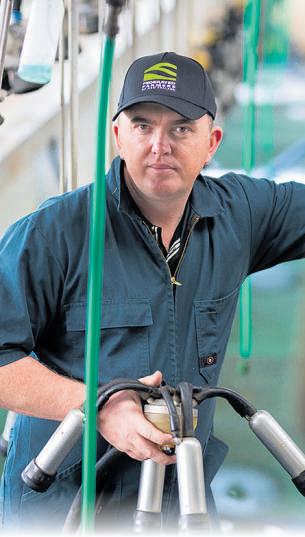
MPs and their current opposition challengers at the advocacy hub to rub shoulders with farmers and get some dialogue going.”
Confirmed stalls
Among the partners who have confirmed they will have stalls at the hub are Federated Farmers, Farmers Weekly, Rural Women NZ, DairyNZ and the Wilding Pine Network.
The Health & Wellbeing Hub started as a one-off at Fieldays. Mark Eager, chief executive of




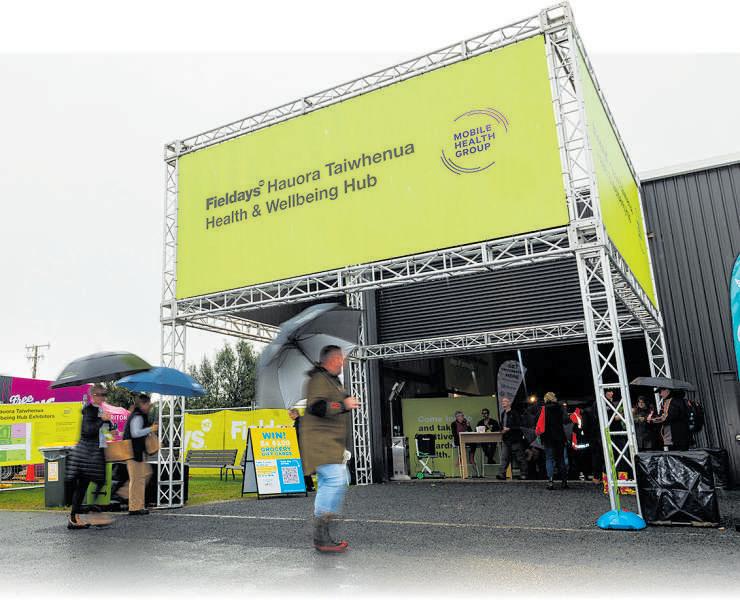
Mobile Health, which coordinates and sponsors the hub, says that before it was formed, associated sites were spread across Mystery Creek.
“They weren ’ t so visible ” A decade ago, the first Health & Wellbeing Hub was put together and asked to return after proving to be the second most popular attraction on its inaugural outing at Fieldays.
Mark says the hub regularly attracts 30,000 visitors at the four-day event.
This time around the hub will feature a variety of past participants and newcomers Returning are Rural Support, Bowel Cancer New Zealand and the Breast Cancer Foundation.







First-timers include Fertility Associates, Sexual Wellbeing NZ and Chemist Warehouse.
Mark says the Health & Wellbeing Hub is “ as big as it’s ever been”.
“Rural people don’t have a chance to access such services all under one roof ”
Bringing together forest growers and groups from across the forestry and wood processing sector, the Forestry Hub is a space to tell forestry’s story
The Hub will again highlight how trees produce vital fibre for communities, contribute to productive farms and resilient landscapes, and are paving the way
to New Zealand’s low-emissions future
A wide range of people from across the sector will be on hand to answer questions and share insights into forestry and wood processing in New Zealand, including forest growers, wood processors, farm foresters, scientists and not-for-profit groups
Innovation
The Innovation Hub will again feature contestants and finalists in the Fieldays Innovation Awards
These represent the innovation lifecycle in three categories: Prototype, Early-Stage, and Growth & Scale.
Special recognition is also given to younger innovators, with an award for the Fieldays Young Innovator of the Year.
All award participants are in the running for the People’s Choice Award
Also back is the Drone Zone, showcasing the exciting opportunities drones are opening up for agriculture.
Supported by the Agricultural Drone Association (ADA), the hub will feature the latest technology, plus advice on drone careers and information on certification and training.
Fieldays is on from June 10-13 at the Mystery Creek Events Centre near Hamilton
Steve Edwards



































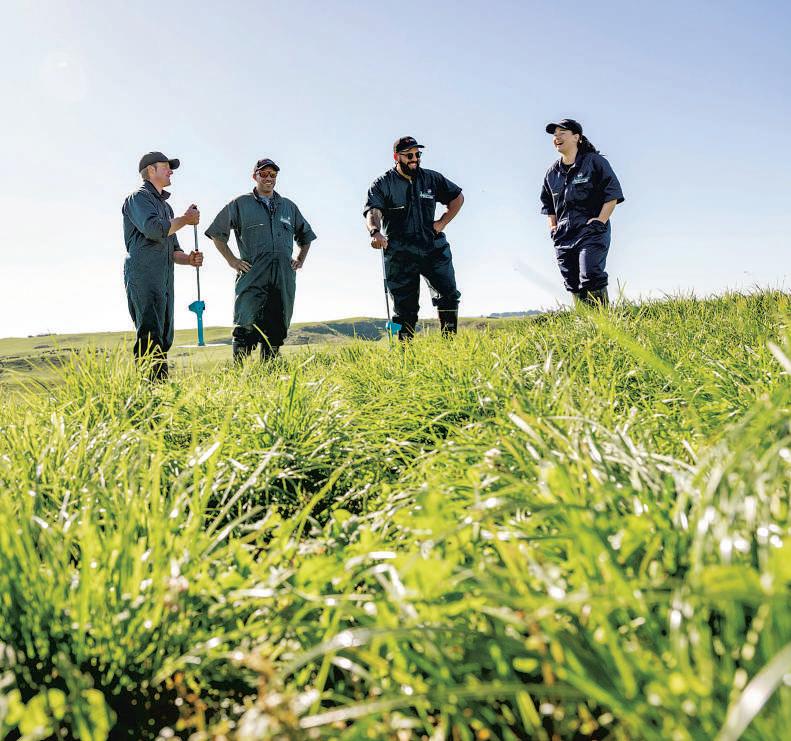
Primary ITO plays a vital role in building a skilled, capable workforce across New Zealand’s agriculture and horticulture sectors.
With farmers, growers and orchardists under pressure to lift productivity, meet environmental expectations, and adapt to market demands, investing in people has never been more important. Work-based training sits at the heart of this, allowing rural businesses to develop their staff, apply new skills in real time and deliver immediate value. From entry-level staff learning the fundamentals to
stepping into leadership roles, structured training helps lift capability across the operation For employers, the benefits go well beyond technical skills. Training supports better decision-making, improved animal health and welfare where livestock are involved, stronger crop, feed and orchard management, and more consistent performance. It also supports staff retention, as people are more likely to stay and grow with businesses that invest in their development. For learners, work-based training provides clear pathways and nationally recognised qualifications, helping build confidence and support careers
Primary ITO’s programmes are designed with industry, for industry, ensuring they remain practical, relevant, and aligned to what’s needed in workplaces.
In a sector where margins are tight and expectations are high, building a skilled team isn’t a “nice to have”, it’s critical to running a resilient, future-focused business
For more information visit www.primaryito.ac.nz, or if you ’ re attending this year ’ s Mystery Creek Fieldays, visit the Primary ITO team at Site PE43, The Pavilion –Agribusiness Indoor
For more information, see Primary ITO’s advert on
Teachers are being encouraged to register their school group(s) for Fieldays 10–13 June, at Mystery Creek Events Centre, with discounted student tickets available for groups of 10 or more at NZ$10 each, a 45% discount off the child rate.
Fieldays provides opportunities designed to connect classroom learning with real-world careers across New Zealand’s primary industries.
The New Zealand National Fieldays Society, owner and operator of the Fieldays event, says the Careers & Education Hub will again be the central starting point for school visits, supported by a Careers Trail on the Fieldays App that helps students explore training and employment pathways across the event. The Hub has engaging exhibitors and thought-provoking seminars and panel discussions, and acts as the perfect starting point for a school visit to Fieldays More than 70 sites across Fieldays are also part of the Careers Trail, bringing together training providers, support organisations and employers keen to connect with future talent.
Lily Foote-Caughey, Marketing and Events Specialist at Halter, said
of their inaugural participation in the Hub, “We’re so excited to be part of the Fieldays Careers & Education Hub this year At Halter, we believe the future of farming is being built right now, and we want students to know there’s a place in it for them.”
Steve Chappell, Programme Manager at the Society, expressed his gratification at the response from schools so far, saying, “Each year we see more schools choosing Fieldays because it gives their students a practical window into future careers and real-world learning. From hands-on pathways into agriculture and related industries, through to science, technology and sustainability-focused roles, students can meet the people behind the work and see what those jobs look like in practice.”
Alongside the Careers & Education Hub, points of interest for students include the Fieldays Forestry Hub, the Fieldays Innovation Hub, the Fieldays Drone Zone, and Fieldays Tent Talks in association with the University of Waikato, offering short sessions that support learning conversations around innovation, sustainability and future skills.
Schools can register on the Fieldays for school groups page to access their group booking discount and plan their visit
Content from Fieldays

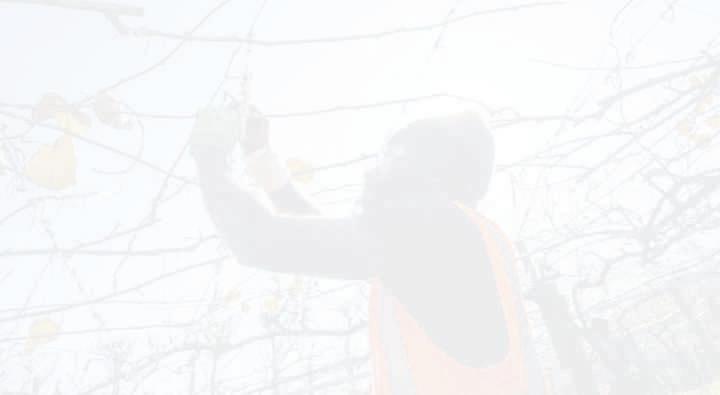
An international report into New Zealand’s seasonal worker scheme says reform is needed to bring down migrants’ costs and protect them from abuse.
The government says its own review of the Recognised Seasonal Employer (RSE) programme will consider the report ’ s recommendations, as well as the views of employers and Pacific partners.
The International Labour Organisation (ILO) report calls on the government and employers to cut migration costs to shoulder a more equitable share of costs, including transport, accommodation and set-up costs.
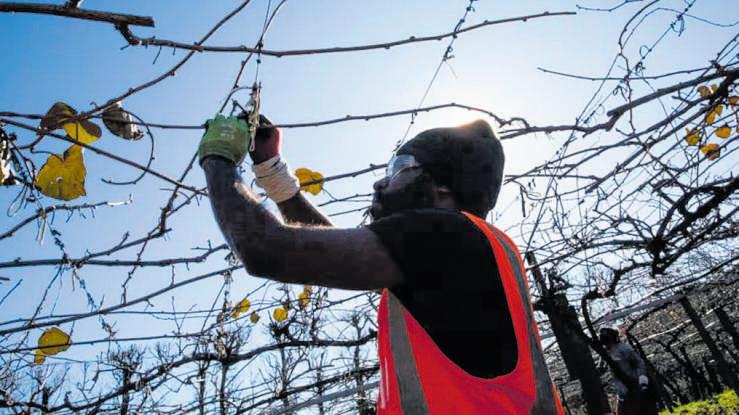
More than 20,000 workers arrive each year from the Pacific, filling jobs in horticulture and viticulture such as fruit-picking
The ILO report recommended that workers be allowed to change their Recognised Seasonal Employer (RSE) more easily and have free access to healthcare.
In particular, it highlighted that workers who raised issues were “vulnerable to blacklisting” when it came time for possible rehiring for another season.
It points to a previous study that found RSE workers were unlikely to make formal complaints because of fears of being perceived as troublemakers and out of cultural respect for authority
RSE workers who were dismissed from employment lost their right to remain in New Zealand, and the report-writers
found no information on being able to change employers in the material provided to RSE workers.
The Ministry of Business, Innovation and Employment (MBIE) says that transfers to new employers were possible on a case-bycase basis – if requested by an employer, the labour inspectorate, an engagement partner, or a Pacific liaison officer
The report questioned how accessible and effective those channels were for workers wanting to report exploitation or other grievances.
Following the release of the previous ILO report four years ago, Australia had adopted a recommendation to disincentivise employers from deducting unreasonable amounts from workers.
It now had a minimum take-home salary of A$200 per week
The latest report recommended New Zealand should adopt the same policy and also noted labour hire companies were not subject to a general licensing requirement
It called for a review of the participation of women and other under-represented groups in both work schemes.
“Further strengthening these schemes in line with international labour standards will help ensure their long-term success and benefit workers, employers and countries of origin and destination alike,” ILO Pacific office director Martin Wandera says
An unconnected survey conducted by MBIE and representing a quarter of RSE employers suggested many went beyond their legal and pastoral obligations to help staff
Of the employers who responded to the survey, more than half had helped fund





or organise full or partial containers sent back to workers’ home countries.
Supplies included building materials, tools, water tanks, solar panels, generators, school supplies and household goods – and assistance after disasters was also common.
The government-set cap on RSE worker numbers had risen from 5000 when the scheme started in 2007 to 20,750 last year
Most came from 13 Pacific countries, although the latest (pre-pandemic) figures show employers also recruited other nationalities, such as Filipinos and Malaysians.
In 2022, the then Equal Employment Opportunities Commissioner Karanina Sumeo said she witnessed slavery-like conditions and said the RSE scheme was
being run in a way that allowed modern slavery to take place.
In 2024, the Government removed the requirement that RSE workers be paid 10% above minimum wage. They must have worked at least two seasons before the additional 10% is applied.
However, the average number of seasons worked was below three, according to research by the Development Policy Centre’s Charlotte Bedford, who says New Zealand is languishing behind Australia in worker protections and wages for RSE workers.
MBIE says its review is considering the ILO’s report and recommendations, as well as input from employers and Pacific nations to ensure that the RSE scheme continues to benefit workers, their source countries and the horticulture and viticulture sectors.





Concrete New Zealand has welcomed the Sustainable Steel Council’s newly released roadmap which outlines the steel industry’s pathway to net-zero emissions by 2050, as another positive step for the construction and infrastructure ecosystem.
Concrete NZ chief executive Rob Gaimster says the steel industry roadmap reflects growing alignment across the built environment on the importance of co-ordinated, long-term emissions reduction strategies, and commended the Sustainable Steel Council on taking this strong, positive step “It’s encouraging to see another key construction material industry articulate a clear pathway to net-zero Achieving New Zealand’s climate goals will require contributions from across the entire value chain ” Concrete NZ published its own cement and concrete industry roadmap
in 2023 – A Net-Zero Carbon Concrete Industry for Aotearoa New Zealand: Roadmap to 2050 – setting out a comprehensive and measurable pathway aligned with both domestic and international commitments.
Rob points to how Concrete NZ’s Reinforcing Processors Group contributed to the steel industry roadmap through the Sustainable Steel Council’s stakeholder engagement process This involvement reflects the interconnected nature of concrete and steel supply chains, particularly in reinforced concrete construction
The steel and concrete industries play critical and complementary roles in delivering resilient, low-carbon infrastructure, from transport networks and water systems to energy and housing For instance, the increasing availability of lowcarbon, recycled steel reinforcing for use in structural concrete is a positive example of how
cross-material innovation is helping to reduce construction emissions.
“This is not about one material versus another It’s about ensuring the right material is used in the right application, supported by robust data, whole-of-life thinking and performance-based design,” Rob says.
“The cement and concrete roadmap outlines a practical transition, including reducing clinker content, increasing the use of supplementary cementitious materials, improving production efficiency and advancing carbon capture technologies.”
Rob i’s excited by the soon to be released Transformation to a
While many of us aren ’ t quite ready to say goodbye to a wonderful summer, you do need to be proactive and look ahead to winter You need to focus on preparation, protection and planning ahead.
Supplementary feed: Hopefully, you have organised adequate feed reserves over the summer months, such as hay, silage, or baleage. Calculate stock requirements carefully and allow a buffer for unexpected harsh weather Also, make sure you store it in a dry, secure area to protect it from the weather and interested stock!
Water leaks: Starting with water troughs and lines, make sure there are no leakages or broken pipes and replace parts if necessary Excess water around troughs will cause the ground to get badly pugged. Reliable access to clean water is essential.
Condition and health of stock: It is important to check body condition scores, particularly for young, pregnant, or older animals who find winter a little harsher Animals in good condition cope far
better with cold stress. Plan any necessary drenching, vaccinations, or mineral supplementation well in advance of winter
Shelter and infrastructure: Repair any fences or gates that are used regularly
Nothing is worse than getting out in a howling gale and having to drag a gate that won ’ t swing. Stock needs protection from wind and rain, so a natural or constructed shelter is important.
Drainage and track access: Check your tracks, races, and drainage systems Good access reduces stress on both stock and machinery and helps prevent paddock damage during wet conditions.
A good idea is to maybe bring in some metal and apply it to tracks that get hammered in the winter
Service machinery and equipment
Service tractors, feeders, and other essential equipment. Breakdowns in winter are inconvenient and often more difficult to fix in poor weather Who wants to have to walk home from the back of the farm!
Low-Carbon Concrete Industry report, which translates the roadmap into practical action. It confirms decarbonisation
is achievable and already underway, while identifying priorities including improving understanding of low-carbon concrete, strengthening supply data and providing clear specification guidance to support uptake.
Construction
Concrete NZ also notes the importance of consistent policy settings, materialsneutral procurement, and recognition of whole-of-
life carbon performance to support informed decision-making across the construction sector
“As more industry roadmaps emerge, the opportunity is to align efforts, share innovation and accelerate progress collectively”
Concrete NZ looks forward to ongoing engagement with industry partners to support practical, scalable solutions that contribute to NZ’s transition to a lowemissions future.



















Dr Jo Scott-Jones has known he wanted to be a doctor since he was 4.
“I never wanted to do anything else until I got to medical school when I wanted to drop out and become an actor ”
In his fifth year of study, he “ saw sense ” and “started to pass some exams ” , he says Originally from Liverpool in England, he and his wife Adrienne Scott-Jones moved to New Zealand with their two children in 1992.
He worked as a fulltime GP at Church Street Surgery Ōpōtiki - which he co-owns - for 25 years, which he says was “incredibly tough”.
He has since stepped back and taken on a number of leadership and advocacy roles
“I feel quite blessed in my career now that I’ve got a very varied working life ”
His decades of contribution to rural health have been recognised by being this year ’ s recipient of the John McLeod Oration
It is one of the highest international honours in rural health.
The award was presented at the 2026 World Organisation of Family Doctors rural health conference in Wellington in April, which brought together more than 900 experts from around the world, a Hauora Taiwhenua Rural Health Network statement says
Jo says it’s “ a great honour” to receive the award
When he found out a few months ago, “I was a bit stunned and initially thought I think they’re picking the wrong person ”
Jo says he would spend a lot of time after school at the local hospital, where his father worked as a nurse
As a Catholic, he’s been raised with a “vocational view of the world”.
“I definitely still see being a doctor as a vocation; it’s not just a job ”
Jo says he always saw himself as a doctor working in a “highneeds community”
Upon moving to New Zealand, he initially worked in Kawerau and did a few locums for an Ōpōtiki GP
“You realised it’s an incredibly high-needs community, you ’ re doing really valuable work
“As a rural doctor I was able to use all of the skills that I’d learned as a junior doctor”
This included delivering
babies, looking after sick babies, manning the emergency department and attending roadside rescues, as well as having a general practice
“It was an incredibly satisfying working life.”
The family also loved the New Zealand lifestyle, where their children could play at the beach.
After moving to New Zealand, he and Adrienne had four more children, one of whom died
“Having a child buried in the local cemetery does connect you with the land in a particular way, ” he says
His five children now live in Wellington and overseas He has two grandchildren and another “ on the way ”
Jo’s fulltime job is now as Pinnacle Midlands Health Network’s clinical director
He works one day per week as a GP, mainly in rural Pinnacle practices, including Tokoroa.
His leadership and advocacy roles include co-leading the rural health national clinical network, a member of the Minister of Health’s primary care advisory group, and board member of the New Zealand Physician Associate Society
Jo says these are important roles for “moving the key issues forward for rural communities”.
This includes workforce retention, recruitment and expansion, workload, and working conditions

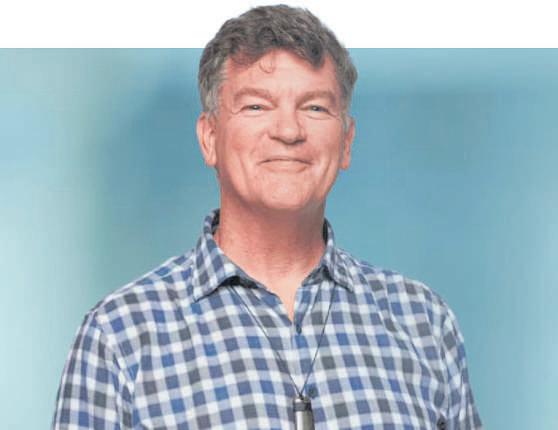
Jo says living in a smaller, “less well-resourced” community has “quite a big impact” on people’s health outcomes
“Your role is not just to address the presenting problem but to try and actually deal with the systematic issues that are impacting that.”
He says he travelled between the family home in Ōhope Beach and their Hamilton apartment, where a lot of his work is
In his spare time, he enjoys diving, surfing, kayaking and bushwalking.
A Hauora Taiwhenua Rural Health Network statement says Jo has combined frontline clinical practice with national and international leadership


He’s widely respected for his advocacy for equitable, culturally safe care and for strengthening the rural health workforce in Aotearoa
Jo has held key leadership roles, including inaugural chair of the Rural Health Alliance Aotearoa New Zealand and chair of the rural general practice network
He’s also a distinguished fellow of the Royal New Zealand College of General Practitioners and a fellow of the World Organisation of Family Doctors
The organisation welcomed Scott-Jones’ selection as this year ’ s recipient of the John McLeod Oration
“This honour reflects Jo’s lifelong commitment to rural communities and his belief that where you live should never determine the care you receive.”







The growth of a Bay of Plenty-based group providing food to the needy is extraordinary
Hunt for Good has increased output of its venison mince, made from wild deer culled from farms, by 10 tonnes in 18 months.
Founder Jasper Osborne says the non-profit was formed at the end of 2024, distributing with four tonnes of venison mince to food banks and community groups in its first year
“Now it’s up to 14 tonnes, ” he says “It’s got pretty out of hand pretty fast” This equates to 94,000 servings a year for families in need.
The group ’ s work was recognised at the recent Western Bay Community Awards, with Hunt for Good winning the Heart of the Community Award.
A keen hunter, Jasper says Hunt for Good provides a win/win scenario for all concerned.
“It helps out farmers by culling a native bush and pasture pest (deer), which is returned to the urban community as meals.”
Monthly weekend hunting missions on farms each bring in about 150 deer
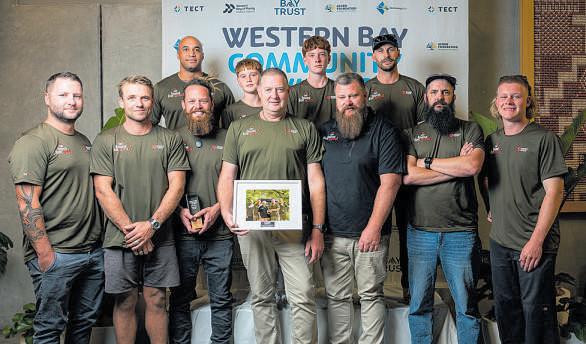
With divisions in the Bay of Plenty, Hawke’s Bay, Manawatu-Wanganui and South Waikato, Hunt for Good has 70 to 80 volunteers to call on.
These include hunters, those who help break down carcasses on-farm and people who provide transport
In the Bay of Plenty, the meat is taken to Hunt for Good’s Tauranga base, cut and minced by volunteer butchers, then packaged and sent to a blast chiller in Mount Maunganui to await collection and distribution.
For Jasper, the most rewarding part of Hunt for Good is not the recognition but sharing community feedback with his volunteer hunters
“It’s pretty cool being able to tell the guys the stories that come back from the groups we support, ” he says
“They all love doing it. For a lot of the team, it’s also about taking a break from busy, stressful lives
“Spending time out in the bush together does wonders for our mental health and knowing it’s helping people makes it even better”
A key partner in Hunt for Good’s Bay of Plenty programme is the Tauranga Community Foodbank
“They (Hunt for Good) are the
NZ Adventures has announced the return of its popular High Country Heritage Tours for the 2027 season, continuing a proud tradition as one of the South Island operator ’ s longestrunning 4WD experiences
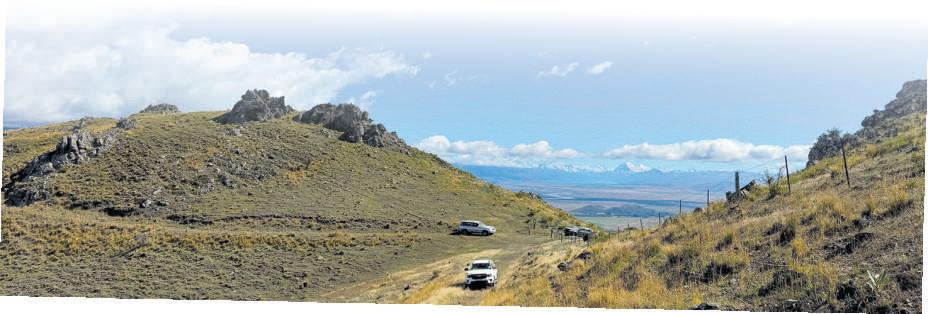
Renowned for its scenery, history and relaxed pace, the High Country Heritage Tour follows a journey along the eastern alpine foothills, travelling from Blenheim to Cardrona, covering about 1250km.
The route showcases iconic high country stations and conservation estate tracks, offering participants an immersive expperience througgh some of New Zealand’s most dramatic and storied landscapes
For 2027, NZ Adventures is offering the tour in two formats:
• Six-day tours running three times during the season
• One seven-day tour, providing a slightly more relaxed itinerary
Accommodation is in comfortable motels, with dinners in local restaurants Picnic lunches are a highlight, allowing travellers to dine outdoors amid expansive alpine vistas and high country landscapes
While the tour delivers an authentic off -road experience, the terrain is within the capabilities of competent drivers in suitable 4WD vehicles
Vehicles must have low -range transmission and all-terrain tyres in very good condition, with no additional special preparation required
The 2027 six-day tours are scheduled for February, April and November, while the seven-day tour will run in March For more information, see NZ Adventures’ advert on this page

saving grace for the community,” says foodbank general manager Nicki Goodwin “They have a special place in our heart” She says the foodbank is the biggest user of venison mince in
the Bay of Plenty, with the donated product contributing to more than 20,000 meals a month
The foodbank also organises distribution across the wider region
Suitable for any








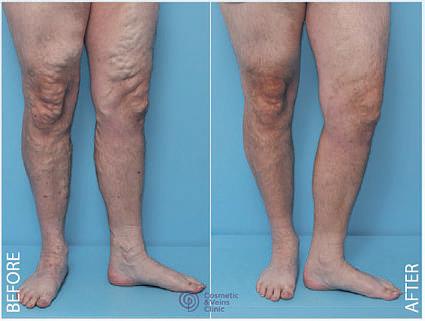
There are several ways doctors can treat large varicose veins, said Cosmetic & Veins Clinic medical director Dr Anuya Deshpande.
“They can cut them out surgically, close them with heat, either from laser or radio frequency, or glue veins shut using surgical glue
“Smaller veins left after initial treatments are usually closed using injections of foam sclerosant Spider veins can be treated with laser or intense pulsed light ” However, not all veins treatments are equal, Dr Deshpande said.
“Surgery carries greater risk from the general anaesthetic, and has a greater recurrence rate.
“Vein treatment using surgical glue is a relatively new and uncommon, with risks of deep vein thrombosis, heart issues, strokes, glue migration and allergic skin reactions.”
varicose vein treatment, Tauranga’s Cosmetic & Veins Clinic uses Radio Frequency Ablation (RFA) to close veins.
“It is virtually painless, has a lower complication rate, a higher closure rate and lower post-procedural inflammation,” Dr Deshpande said Treatments are supervised every step by Dr Deshpande, who founded Cosmetic & Veins Clinic on Tenth Ave, central Tauranga.

Dr Anuya Deshpande performing a nonsurgical varicose veins procedure using RFA.
Because international guidelines have heat ablation as the gold standard for
A fellow and board member of the Australasian College of Phlebology (varicose vein treatment), Dr Deshpande carries out an initial medical consultation using ultrasound to diagnose the cause of symptoms in legs She then explains treatment options to patients, and monitors progress across four-five post-procedural check-ups where she and her sonographer assess results and close any remaining leaky veins, and answer any questions
For more information, see Cosmetic & Veins Clinic advert on this page.
Varicose veins
Call to book an assessment with Dr Anuya to see what
be done non-surgically for your varicose or spider veins






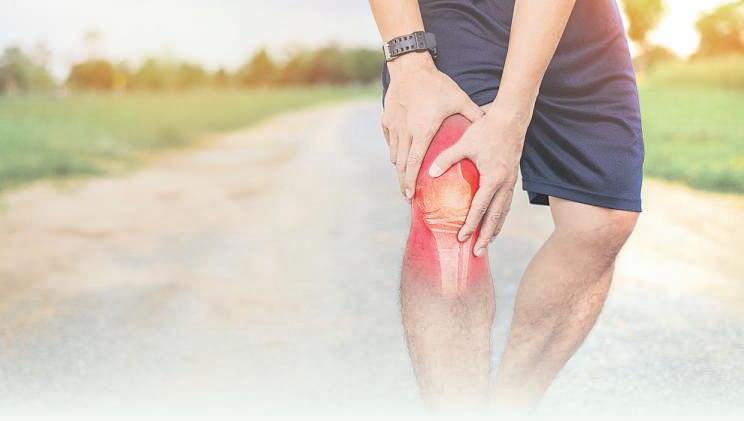
Osteoarthritis (OA) is characterised by the breakdown of joint cartilage leading to pain, stiffness, and decreased mobility
Glucosamine and chondroitin and are the most widely used ingredients in joint supplements However, recent research and clinical guidelines suggest that chondroitin is more important than glucosamine for managing osteoarthritis.
Chondroitin is a natural component of cartilage that helps retain water and maintain elasticity, which is essential for joint function. Supplementation with chondroitin has been shown to slow cartilage breakdown, reduce joint pain, and improve mobility in people with OA.
Several large-scale studies have found that chondroitin can significantly improve joint function and comfort. Glucosamine is also important, but evidence for glucosamine only is inconsistent. Many people who contact me have used high glucosamine supplements with little benefit. Adding therapeutic amounts of chondroitin alongside glucosamine
can make a significant difference
What is Bettaflex?



Bettaflex is the most popular supplement in the Abundant Health range because of its positive support for joints affected by wear and tear, helping Bettaflex users to support mobility and quality of life
How does Bettaflex work?


Last week I spoke to a client who first contacted me 6 months ago with significant discomfort from OA in his knees, wrists and back. As I expected, his knees started to respond within a few months. I explained that hand/wrist joints take longer and that backs can give variable results. However, he now has found his wrists are steadily improving and his back has become more comfortable
The key to such success is a personalised programme. In my client’s case we started with double the dose of my joint supplement giving him 1600mg of highgrade chondroitin and glucosamine with 400mg of the latest 100% water soluble Curcumin (from turmeric) extract
(Adv.Dip.Nut.Med) is a qualified nutritional medicine practitioner and founder of Abundant Health To read more articles by John and learn more about the Abundant Health products he has formulated visit www.healthhouse.co.nz or call 0800 140 141, or email john@healthhouse.co.nz




For many, joint health deterioration is the first obvious sign of aging Gradual erosion of cartilage, is by far the most common issue
Bettaflex has been formulated to support joint comfort and mobility, making it an ideal supplement for those seeking support for joint comfort and stiffness. Bettaflex combines high-grade chondroitin sulphate, glucosamine sulphate and patented BioSolve®
Curcumin This combination supports the maintenance of healthy cartilage and other joint tissue by supporting the joint processes that protect, maintain and renew cartilage
Why use Bettaflex?
Bettaflex formulator John Arts comments,“I formulated Bettaflex with a single objective; that those concerned about joint health can support mobility and comfort helping them to enjoy better quality of life”
It seems fashionable at present to be alarmist and critical of our government and longstanding institutions.
It’s easy to find fault, as nothing is perfect, and creating drama ensures readership; however, there is much in this country that should be treasured and protected.
Appreciating our history is the only way of understanding who we are and how we have arrived at this point.
I grew up in a dairy farming district where every cowshed had a separator, and cream was carted to the road gate in cans, with the skim fed to pigs. There were local blacksmiths capable of fashioning and fitting horseshoes as well as fixing farm equipment. That may seem irrelevant today; however, it marked the start of an era when New Zealand farmers became known - rightfully so - as the best in the world.
We knew the modest home where Bill Gallagher, the inventor of the first electric fence unit, walked to his workshop each day Fierce determination to move on from postwar austerity drove lowcost innovation The scientists and support staff of the internationally recognised
Ruakura Research Station on the outskirts of Hamilton were held in high esteem.
Farming was acknowledged as the primary income earner, and in the Waikato district, dairy production dominated.

Bulk butter and large round cheeses were sold to the United Kingdom, and an annual show provided locals with insight into the industry
Fast forward to today and the recent sale of Fonterra’s brands
Branding has long been recognised as a means of increasing not just sales, but also profit. People buy products they like and trust, and branding provides instant recognition Anchor butter comes in the same size and wrapper as it always has, and the quality remains consistent.
This allows an increase in margin and ultimately a better return to the farmer Brand establishment takes time and discipline, and once destroyed, it cannot be easily replaced. The immediate benefit to Fonterra shareholders
is a large lump sum The motivation appears to be an increase in shortterm income over longerterm earnings
That has not been the attitude of genuine longtime farmers, and one wonders what influence bankers may have had in the process
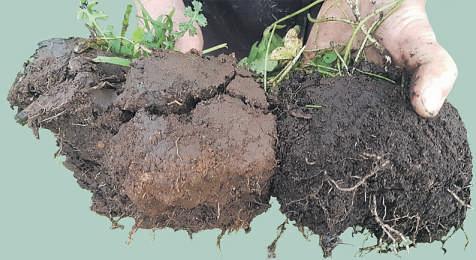
Farm profitability relies on the lowcost growth of pasture, with the most productive land being easily managed and naturally high in organic matter
There is a direct correlation between soil carbon levels and annual growth, and where carbon is lost, growth potential is lost as well
Work undertaken by Waikato University showed a steady loss of carbon from flat, intensively stocked areas in the Waikato There is no argument that pasture production prior to the regular use of synthetic nitrogen was significantly higher, and there is a school of thought that this loss is due to its excessive use.
If an incremental decline in farm profitability has influenced the sale of valuable brands, the benefit can
It’s fair to say we ’ ve had our share of rain lately
Te Puke has clocked up 865mm so far this year (as of April 20), which puts us right up there with 2017 - and more than double what we’d usually expect
Unsurprisingly, it’s made life tricky on farm for many The tail end of maize silage harvest was a slog, with machines battling their way across soaked paddocks A lot of maize grain crops will now need tracked combines just to get them off Some grain crops have also been blown flat following the cyclone I’ve been chatting to a few farmers, and it’s clear the constant wet is starting to wear people down a bit
It’s a good reminder that looking after yourself matters just as much as looking after the farm When it’s bucketing down for days on end, sometimes the best thing you can do is step away for a bit - grab a hit of squash, take your partner out for dinner, or get in the water for a surf And if things are getting on top of you, there’s some great support out there through Farmstrong, Rural Support Trust, and Surfing for Farmers
Around the traps, most dairy farmers are either drying off or weighing up when to It’s never a simple decision - trying to squeeze the last bit of production out while managing available feed and cow body condition scores, as it has a big impact on next season Moving Day is just around the corner too, with plenty of people on the move One thing I always enjoy is how welcoming rural communities can be, so if you ’ ve got new faces arriving nearby, make the effort to say g’day

iddle East
The war in Iran, along with the blockade of the Strait of Hormuz, continues to drive
challenges around elevated fuel prices, although they have eased slightly As contractors, we ’ ve had little choice but to pass on some of those costs
I’m genuinely grateful to those clients who’ve met us halfw f ay - it makes a real difference
only be shortterm. Time will tell; however, there is enough data to warrant investigation into existing systems with unrivalled profitability where
carbon is being continuously sequestered
For more information, talk to Peter on 0800 843 809 or 027 495 0041.

Stats NZ reported a 0 9% rise in inflation for the March quarter, with annual inflation holding at 3 1% Those figures don’t yet fully reflect the fuel price increases, so it’s something to keep a close eye on Ri R sing interest rates would be the last thing anyone needs right now Inflation, combined with ongoing geopolitical uncertainty and its impact on the global economy, has led rating agencies Moody’s and Fitch to downgrade New Zealand’s outlook to negative
Recently, a major end-user in the UK specified that they would now prefer to buy products from New Zealand that were grown or raised on reduced nitrogen and phosphate land



The Global Dairy Trade hasn’t offered much cheer either, slipping 2 7% on April 21 after a 3 4% drop earlier in the month Whether that’s the start of a wider softening or just a wobble tied to global tensions is anyone ’ s guess That said, Fonterra farmers do have a bit of a cushion following the $4 22 billion sale of its consumer business to Lactalis, which takes some pressure off if things ease back Feed costs are another one to watch PKE is well over $400/t ex-Mount, and DDG is pushing close to $700/t By the time you factor in freight and the fact these products are 90% dry matter, you ’ re looking at more than $0 50/ kgDM for PKE and about $0 80/kgDM for DDG That’s not cheap, and it’s making locally grown options like maize grain and barley look pretty attractive They could play a bigger role this season, especially if freight costs stay high As always, if you ’ re thinking about lining up feed, or need some dairy grazing, feel free to get in touch as I can provide a solution

We believe this is a start of a new trend that will be here to stay 0800 843 809 www.functionalfertiliser.co.nz admin@functionalfertiliser.co.nz




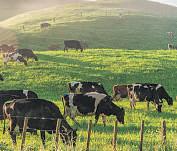
Putaruru dairy farmer Bryan Hayward didn’t immediately follow in his father’s footsteps and go farming.
His dad Barry wanted him to pursue an off-farm job before joining the family farm business Bryan worked in a Putaruru bank from 1981 to 1988 and says he really enjoyed the numbers side of things, especially when working as a teller “I returned to the farm as planned and in 1988 I bought my parents ’ herd of pedigree Jerseys and sharemilked on the family land,” says Bryan.
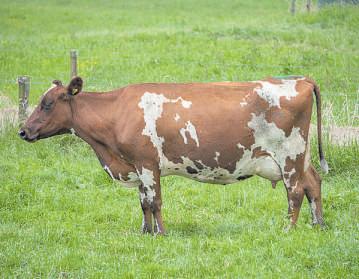
As a child, Bryan had seen Ayrshire cows at A and P shows and they appealed to him. Before he began sharemilking, he had already started breeding them and introducing them into the milking herd with very pleasing results.
The Ayrshire breed originated in Scotland in the 1700s when different strains of native cattle were crossed with other breeds.
Early breeders carefully crossed and
selected strains of cattle to develop what is now known as the Ayrshire, an efficient grazer noted for their vigour and efficiency of milk production. They are known for the quality and shape of their udders, and the high quality, their easily digestible milk.
The first Ayrshire bull, ‘Rob Roy’, arrived in New Zealand in 1848 on the immigrant ship ‘Philip Lainge’ which arrived at Otago in April 1848 carrying the main body of the first Scottish settlers to New Zealand and founding the settlement of Dunedin. The first cow arrived the following year.
Ayrshire New Zealand was founded in 1909 in Palmerston North. The first Herd Book (a record of all registered pedigree Ayrshires by year) was published in 1910 and the first magazine in 1937. Ayrshire New Zealand celebrated its Centenary in 2009.
Phasing out the Jerseys
In 2000, Bryan bought a second farm with his parents and they merged the two together He bought them out entirely in 2006
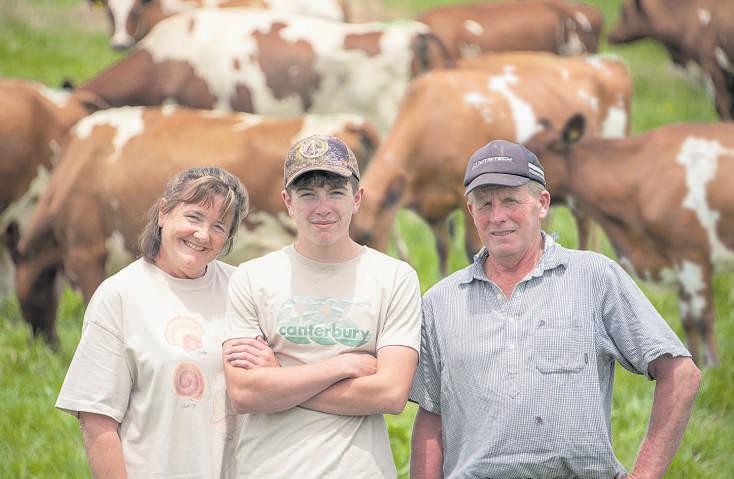
Today, he milks 230 to 240 cows on 85 hectares and has a 60-hectare support block for 200 young stock where dairy beef calves are grown to 600 to 700 kilogrammes and the replacement
heifers are raised
“I didn’t get rid of all the Jerseys in one go, it was a natural reduction over time, where I replaced Jerseys leaving the herd with Ayrshire heifers.”
a subdivision anoptionto reducedebt?
With interest rates still putting pressure on, farm input costs rising, and petrol prices continuing to impact everything from transport to fertiliser, many landowners are reassessing how their land can work harder for them.
If you are moving to a new farm or reviewing your current position, subdivision can be a practical way to unlock value and improve financial flexibility when approached with the right advice



A common misconception is that subdivision rules are consistent across the country While the framework sits under the Resource Management Act 1991, each district council applies these rules in its own way What may have worked in one area might look different in another, which is why understanding the local landscape is key With good guidance, however, there are often more options than first meet the eye
Subdivision policies have evolved, shaped by environmental considerations as well
as local planning priorities While it is true that rural subdivision has become more controlled, this has also led to clearer frameworks and, in some cases, more creative pathways for those willing to explore them properly Even with ongoing reform discussions, those who are proactive and well advised are often able to navigate the process successfully At the heart of rural subdivision rules are principles such as sustainability, land productivity, and maintaining rural character Councils apply these through district plans, which can sometimes feel rigid For example, the commonly used 40-hectare minimum lot size, originally based on traditional dairy farming, does not always reflect how land is used today That said, these rules can still present opportunities when approached strategically There are options outside the standard rules, including discretionary applications, environmentally based subdivision, limited lifestyle opportunities in some zones, and boundary adjustments While these can involve more time and cost, they can also open doors where a straightforward approach may not









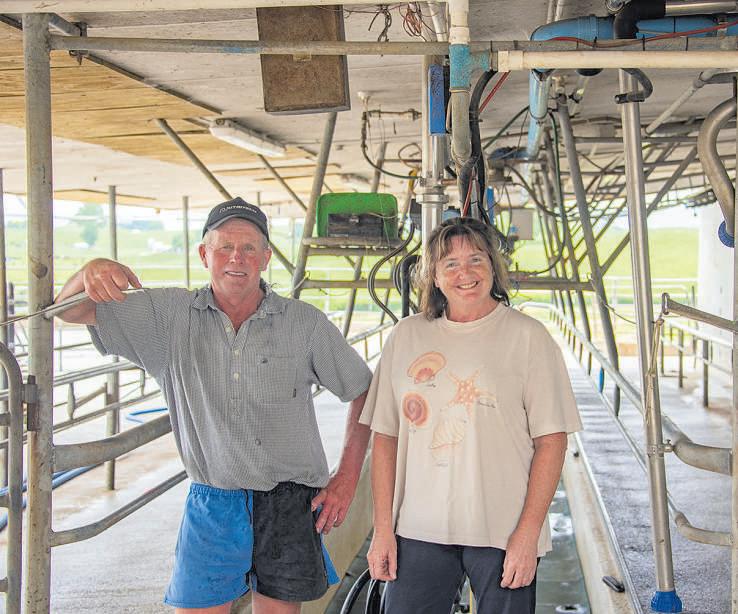
The current milking herd has 85 pedigree Ayrshire, four pedigree Jersey and 150 Friesians, including some Friesian/Jersey crosses. The farm runs a production system 4/5 using a feedpad with homegrown maize silage, PK and soya twice a day in spring and once a day at other times.
The Ayrshires are less fussy about what they eat and are well-suited to Bryan’s land They are also keen to get to the feedpad, eat and then be first through the shed and back to the pasture
“As the ratio of Ayrshires grew it was noticeable that they outperformed the Jerseys.
“The Ayrshires averaged 620 kgMS
Properties with existing multiple titles are particularly valuable, offering immediate flexibility and future options
If you are considering subdivision as part of a financial strategy, particularly in today’s higher cost environment, doing your homework is essential. Every property is different, but with the right
per cow last season, and our total herd average, including the Friesians, was 650 kgMS per cow ”
Milking cows usually leave the herd at eight to nine years old, whereas the Ayrshires stay up to 12 years of age
Some of Bryan’s individual Ayrshires have produced 800+ kgMS in a year
His Ayrshires have been the top milkproducing Ayrshire herd in New Zealand for the last three seasons
Bryan is committed to breeding quality pedigree Ayrshires and wants to increase the number of them in his herd but has
advice early on, you can make informed decisions and avoid costly surprises
Subdivision is not always simple, but it can be a powerful tool to create options, strengthen your financial position, and future-proof your land With a clear plan and experienced support, there is real potential to make it work in your favour
If you are thinking about what might be possible, it is worth having a conversation sooner rather than later
been left scratching his head the last two seasons
“Instead of the usual 50:50 ratio of heifer to bull calves, we ’ ve been getting 80% bull calves, which has thwarted me a bit
Some bulls are giving bull calves to early calvers but the same bulls are giving heifers in later calvers It’s very weird and I don’t know why it’s happening.”
The New Zealand gene pool for Ayrshires is limited but semen can be imported from the USA, Canada, and the UK who are moving more towards red Holsteins and Bryan prefers straight reds in his female line
It’s a family affair with Bryan and a full-time milker on the farm, with his wife
Lynley relief milking and raising all the calves, and son Thomas, 15, relief milking and doing tractor work
“It looks like Thomas is keen to take over one day, but he needs to finish his education first, and wants a couple of years driving tractors ”
In the meantime, to lighten costs and the workload on himself and Lynley, Bryan will reduce cow numbers to 160 to 180 and grow on the Ayrshire male calves until two years old for beef
“I would still like to have a completely Ayrshire milking herd and if we can manage to breed some heifers, I can keep going with that goal.”

Conflict in the Middle East has not stopped the new season ’ s kiwifruit from reaching foreign shores.
Jason Te Brake, chief executive of Bay of Plenty based kiwifruit marketer
Zespri, says that while it is a “dynamic geopolitical environment”, the 2026/27 season has started well, with the industry

Want to achieve maximum yield from your orchard?
All Terrain Pollination (2017) Ltd use a wet pollen application system for spraying pollen directly onto the flower and developed specifically for the New Zealand Kiwifruit industry to assist growers in achieving maximum results

making good progress with the harvest and supporting a fast start to another large crop of around 220 million trays to sell
“Despite heightened geopolitical uncertainty from the ongoing tension in the Middle East, fruit is moving steadily into market, with fruit to Europe shipped via the Panama Canal.
“We continue to work with our longstanding shipping partners to monitor the expected impact of freight costs.
changing environment
Its initial guidance reflects positive movements with the euro and Chinese yuan, offset by downward movement in its position with the US dollar, Japanese yen and Korean won.
The RubyRed harvest is now complete, with five million trays this season.
Christopher: 027 945 2993 • Robyn: 027 322 1332
Check out our website for more info pollination.nz




“Our initial guidance reflects positive demand for our fruit and the removal of US tariffs, while factoring in assumptions about the cost of bunker fuel and freight based on the latest information available, as well as the estimated impact from the conflict in the Middle East, including the potential for wider supply chain disruption ”
Zespri is also anticipating continued movement in its foreign exchange positions this season due to the

“With RubyRed volumes up from around three million trays last year, our sales programmes have extended to include Australia, Vietnam and Canada for the first time,” Jason says
The SunGold and Green harvests are also now under way
Jason says guidance for the 2026/27 season is a preliminary forecast, with updates provided throughout the year once there is a firmer view of fruit and market performance, as well as the scale and duration of the conflict in the Middle East
New Zealand’s kiwifruit industry is











horticulture’s largest export, with growers located from Kerikeri to Motueka.
There are about 2800 kiwifruit growers and 3200 registered orchards in New Zealand, with around 14,500 hectares of kiwifruit in production.
Almost 80% of New Zealandgrown kiwifruit comes from the Bay of Plenty Zespri International Limited is the world’s largest marketer of kiwifruit, managing about 30 per cent of the global volume
Orchard advice
Fuel issues relating to the Middle East conflict have seen police issue warnings and advice to rural landowners.
Tusha Penny, Assistant Commissioner: Road Policing and District Support, says police are starting to see an impact in reports of diesel theft and petrol driveoffs.
“Our districts have been watching closely, and we will continue to monitor what is happening
“We encourage people to report all suspicious behaviour to police, as this is how we catch offenders. We also need people to continue reporting these crimes so we have a full picture of what is happening and can respond accordingly”
Tusha says police will remain visible in communities, both urban and rural, and respond to incidents as they arise.
“We know many people feel more reassured when they understand what practical steps they can take to help keep themselves and their property safe ” Guidance from the police, FMG and Federated Farmers includes:
• Park vehicles with fuel caps close to the wall or another vehicle to restrict access to fuel tanks.
• Try to keep fuel out of sight and ensure fuel tanks are secured and locked to restrict theft and tampering.
• Install security lighting that lights up fuel tanks and fuelling areas.
• Keep an inventory of fuel consumption so any thefts can be identified quickly
With the kiwifruit harvest about to get underway across Bay of Plenty, electricity lines company Powerco is reminding orchard workers to stay safe around overhead power lines
The busy harvest period brings an increase in people, machinery and activity in orchards and, with that, a higher risk of serious electrical incidents.
Powerco’s electricity general manager Karen Frew is urging those working in orchards to stay alert and to take simple precautions to avoid potential life-changing accidents
“Electricity can kill. You don’t even need to touch a power line to be in danger Electricity can jump to your equipment and to you, ” she says.
Tall machinery such as hydraladas, cherry pickers, elevating work platforms or dump truck beds are commonly used during harvest and can easily come within unsafe distances of overhead lines if workers aren ’ t paying attention
Powerco is encouraging everyone working in orchards to look up and check for overhead lines before starting work, keep at least 4 metres away from power lines and plan ahead by identifying hazards to stay safe.
“We know harvest is a high-pressure time, but taking
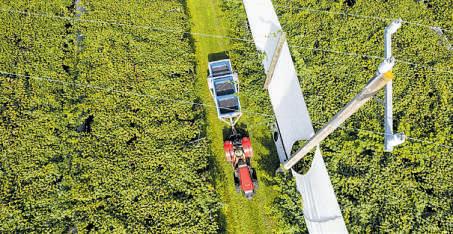
a moment to look up and check your surroundings can prevent a serious incident,” Karen says.
“Orchard owners, managers and contractors all have a role to play in making sure everyone goes home safely at the end of the day”
The look up message also applies when building structures in the orchard, such as artificial shelter belts or raising canopies – when you must be at least 8.5 metres clear of electrical equipment. By law, orchardists and builders must follow these regulations that govern safety when building near overhead power lines.

• Install fuel tank locking devices on all petrol and diesel tanks on your property
The advisory also noted that camera and alarm systems can be the difference between a burglar only having seconds in your property before they’re detected or having minutes or hours to ransack your property
Security cameras can also capture details of suspicious people and vehicles, providing crucial leads to Police.
• Position cameras at entry points to your property to allow early detection of unwanted visitors.
• Install cameras around buildings that contain high value farm property and assets.


While the unwanted yellow-legged hornet has not been seen in Bay of Plenty kiwifruit orchards, local and well-known pest wasps have been.
The hornets are not a pest of kiwifruit but do feed on bees - regularly used for pollination in kiwifruit, and were identified in Auckland late last year
Biosecurity New Zealand immediately launched an intensive response aimed at eradication, supported by Kiwifruit Vine Health and other industry groups, to minimise risk to New Zealand growers.
“We continue to urge vigilance for the yellow-legged hornet and any suspect nests – there have been over 17,000 public
notifications to date, reflecting significant community commitment to supporting the ongoing response, ” says KVH
The pollination schedule usually sees beekeepers drop off hives at kiwifruit orchards in late October, with 8-10 hives per canopy hectare.
Hives are usually left at orchards for at least a week before collection.
KVH says kiwifruit is particularly reliant on insect pollinators as its male and female flowers are located on separate plants ”
The yellow-legged hornet has distinctive dark legs with bright yellow tips and is much larger than honeybees and common wasp species seen in New Zealand.






In contrast, common wasp species in New Zealand, such as the German wasp, tyypically have uniformly yellow or y yellowstriped legs.
While the hornets are unlikely to directly target kiwifruit, KVH says they pose a biosecurity risk because of their potential impact on honeybee and wild bee populations and there may be indirect impacts through reduced numbers of pollinating insects.
KVH has also received several reports of potential hornets and nests through the response period from sites close to and beyond the Auckland response zone, including Tauranga, Te Puke and Katikati.
“All have been negative for YLH and not of a biosecurity concern, including German and Asian paper wasps and their nests, and one Australian paper wasp find ”
The yellow-legged hornet and paper wasps look similar, with the sightings all coming from reports made to KVH by growers or others within the kiwifruit industry
“We always encourage reports of new, unusual, or concerning pests or unusual symptoms on kiwifruit vines,” says KVH.
“These reports highlight the biosecurity awareness and vigilance of our industry
“This reporting demonstrates industry engagement and raises awareness of threats to our honeybee and wild bee populations.”
KVH says identification of unusual wasp presence is valuable on growers sites, as wasps pose health and safety risks for orchard staff and contractors, and place additional pressure on honeybee pollinators When observed, growers are encouraged to contact their beekeeper for advice
Recent Manaaki Whenua - Landcare Research projects indicate that 8-9 per
cent of honeybee
hives in New Zealand are destroyed or seriously damaged due to wasp p attacks on foraging g bees and hive robbing
Regional councils can also provide guidance on wasp management options.
Western Bay of Plenty Regional Council says while less aggressive than German and common wasps, Asian and Australian paper wasps prey on insects and chew weatherboards
They are classified as “advisory pests ” by the council – “established within the region and are known to negatively impact on environmental, production and/or public values”.
These pests are not the subject of programmes and rules in the Regional Pest Management Programme, but the regional council does provide control advice.
“It is landowner/occupier responsibility to manage these pests, ” says the council. Professional pest controllers are recommended.
The council says insecticide needs to be strategic and well-coordinated or results will be limited.
Wasp nests are sprayed at dusk when the majority of wasps are back at the nest.
KVH says reporting of potential yellow-legged hornets or their nests remains important
“If anyone sees any suspected hornets or large aerial or concealed nests, they should take photos and make a report. ” Call the Biosecurity New Zealand hotline on 0800 80 99 66 or email info@mpi govt nz
Tauranga Moana Biosecurity Capital, which KVH is part of, has organised a free yellow-legged hornet response update next month
As part of its Connect & Protect Series, TMBC will be hosting an online session on Thursday, May 21.
















A tractor born out of World War I food shortages is still grinding steadily along more than a century later, thanks to the dedication of Bay of Plenty farmer and engineer
John Couch
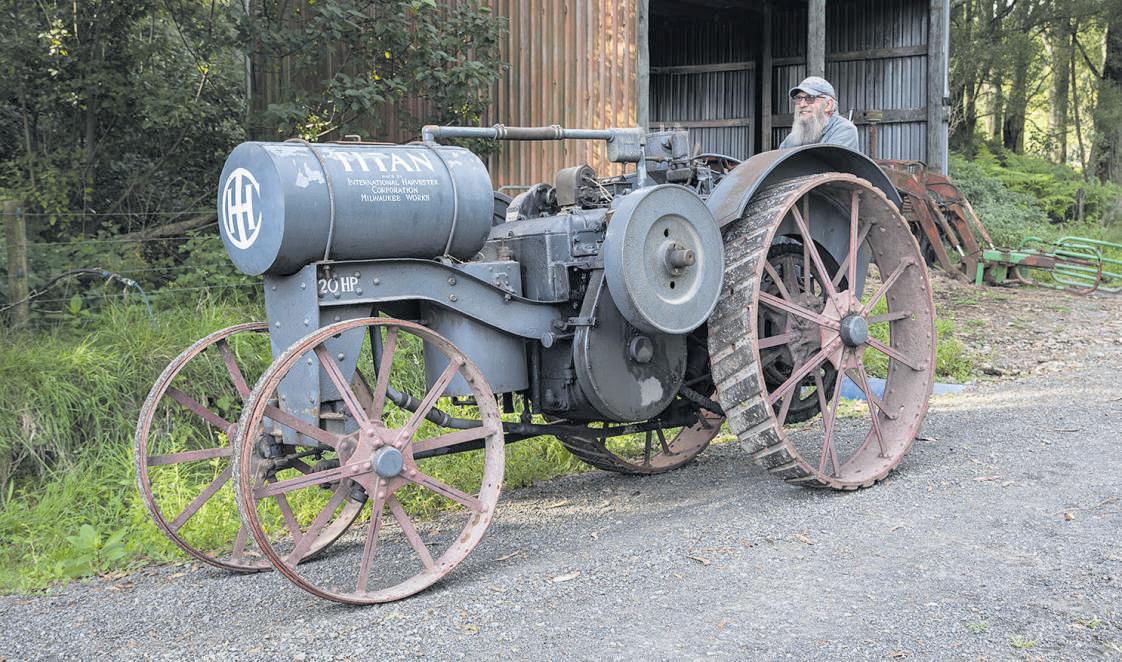
John owns one of just seven International Titan 1020 tractors in New Zealand, a 1917 machine originally shipped from the United States to the United Kingdom in the latter years of the war to help boost food production
Now 109 years old, the distinctive steel tractor – affectionately known simply as “the Titan” – regularly appears at vintage machinery and agricultural shows, where it continues to demonstrate the engineering ingenuity of its era
Raised on an arable farm in Hertfordshire, England, John trained as an engineer and later ran his engineering business He inherited the Titan at just 8 years old following the death of his father At the time, it was the family tractor and was lent out to neighbouring farms until he was old enough to take ownership
“The Titan has gone everywhere I’ve gone, ” John says “I grew up around it, restored it over many years, and now I just enjoy keeping it running ”
The tractor even made the long journey to New Zealand in 2006, when John and his Wellington-born wife, Gayle, emigrated from the UK and settled on a 100acre property near Matatā, where they now breed Red Devon cattle.
John says the Titan’s history is closely tied to global events Around 3000 machines were sent from International Harvester in the United States to the UK during World War I, when Britain faced severe labour shortages and pressure to increase domestic

food production.
“They were distributed around farming communities to replace draught horses,” he says “My grandfather’s farm received one to share between several properties ”
At a time when horses powered most farm work, the arrival of a 10horsepower, twocylinder, kerosenedriven mechanical alternative was revolutionary The Titan features two forward gears – described by John as “slow” and “ not quite so slow” – a reverse gear, and a top speed of about two miles per hour
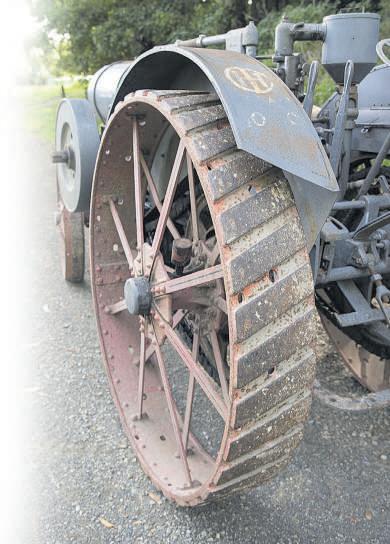
Fuelled by kerosene, which was cheaper during wartime, the tractor is manually started using petrol Its largely steel construction includes four solid wheels, with bearings housed in castiron hubs
Unlike modern machinery, the Titan has no radiator. A large cylindrical

drum mounted horizontally serves as a water tank, with the engine cooled by evaporation – a full day’s work could use up to 30 gallons of water
“It’s very simple, very robust,” John says “There’s no bonnet, so all the working parts are easily accessible, which makes maintenance straightforward ”
The tractor was eventually bought outright by John’s grandfather in the 1920s s rather than returned to the government, cementing its place as a family heirloom
Today, after extensive restoration, the Titan remains fully operational and continues to captivate crowds with both its mechanical presence and its remarkable story
“It’s one of those machines that reflects a moment in history,” John says “I’m just its s current caretaker.”






If biology wasn ’ t your favourite subject at school, nitrogen probably sits in your memory as that invisible gas that makes up most of the air we breathe; you can ’ t see it, smell it, or taste it
Step into an avocado orchard, however, and nitrogen suddenly becomes one of the most important players on (and in) the field.
In simple terms, if you want big, healthy, great-tasting avocados, nitrogen matters – a whole lot It’s the main ingredient in most fertilisers and is often called the “manipulator” nutrient because

of how quickly and visibly it affects plants Give a tree nitrogen, and you’ll see it respond – stronger growth and lush green leaves? Yep, that’s nitrogen doing its job Get it wrong, and the results can be just as obvious, but in the opposite direction
Behind the scenes, nitrogen does even more heavy lifting. It plays a key role in photosynthesis (how green plants make their own food) – now that’ll be a topic you do remember from school biology!
Despite being so abundant in the atmosphere, nitrogen is often the most deficient nutrient in agriculture, and
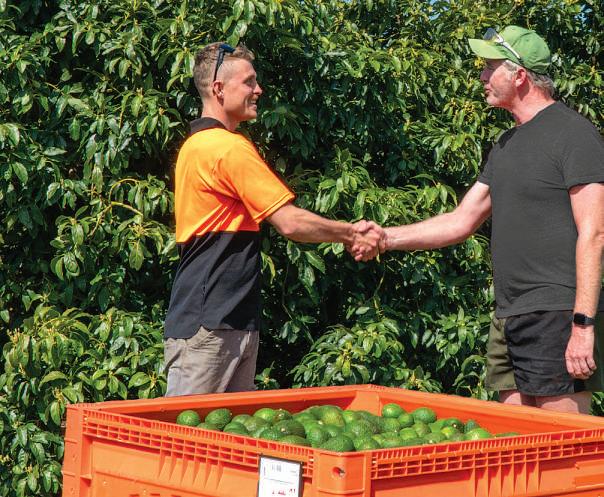


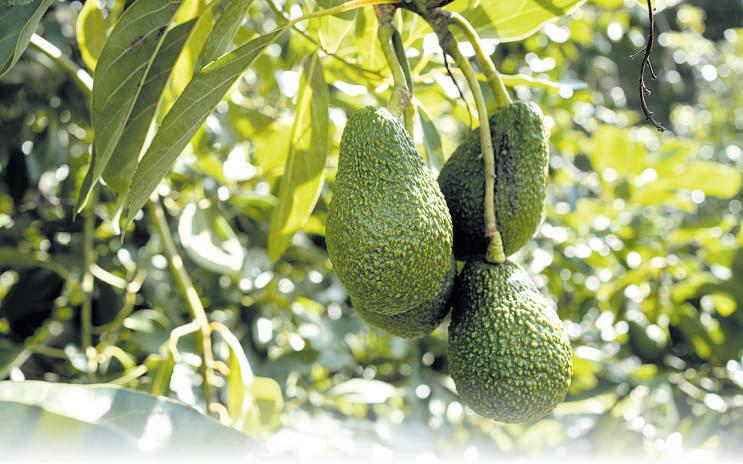
this is where things get interesting
Natural nitrogen in the soil comes from two sources, but the tree can ’ t use it directly from either It needs a “ converter ” The sources are 1 Organic matter (from plant and animal residues), and, 2 gas from the atmosphere

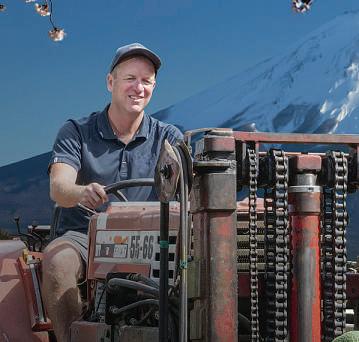

To convert from these sources of nitrogen, we rely on soil microorganisms (and also thunderstorms – but that’s for another time) These tiny organisms (bbasicallly bacteria – the small active squiggles seen under a microscope) capture nitrogen from the atmosphere or break down organic matter and convert it into forms that plant roots can absorb
However, this system is highly dependent on soil conditions – microorganisms want good working conditions; warm, healthy, well-aerated, free-draining soils When these workers need help, that’s where fertiliser comes in, topping up the nitrogen they can ’ t provide alone
Modern fertiliser programmes consider factors such as soil temperature, rainfall, crop p load, and tree health Tools like soil and leaf testing, typically done in late autumn in New Zealand, help avocado growers unnderstand exactly what their trees need and when.
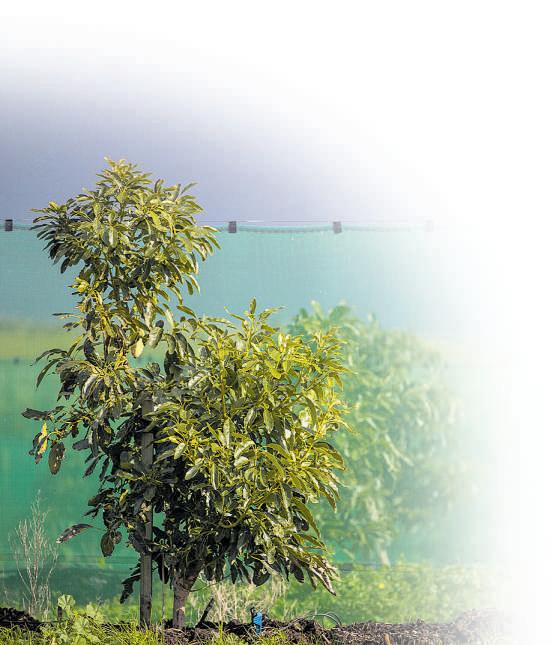
That is where technical advisers, like the Technical Team we have at Trevelyan’s, are worth their weight in n gold – they are ‘ tree whisperers’ and can quickly identify what your tree needs and w where the problems lie This tailored advice is crucial and more effective than one-size-fits-all solutions And the results are, well, obvious! At the end of the day, our avocado technical experrts deeply understand that nitrogen isn’t just another nutrient. It’s a tricky, premium “fuel”, and liike any fuel, it works best when used at the right time and in the right amount.
In the world of avocados, nitrogen may be invisible, but its impact is anything but Content brought to you by Trevelyan s

Hass continues to reign supreme among commercial avocado varieties grown in New Zealand.
Industry body New Zealand Avocado says Hass accounts for a whopping 95% of plantings across the country
Recognisable by their oval shape and thick, pebbly skin, Hass avocados undergo a remarkable transformation as they ripen, with the skin darkening to a deep, inviting hue
Alongside Hass, several other intriguing varieties thrive in New Zealand’s orchards, each offering distinct flavours and characteristics
AvoGrey Greenskins, which won a gold medal at the recent New Zealand Outstanding Food Producer Awards, are positioned as a true food lovers’ avocado
Bred by David Grey of Avogrey Orchard in Gisborne, they remain green when ripe, have firmer, denser flesh, and deliver a rich, nutty, smooth and creamy eating experience
The fruit is generally larger, with a smaller stone and easy-peeling skin, and maintains its fresh quality without browning.
With their distinctive characteristics and growing supply, AvoGrey Greenskins are set to become an increasingly important part of the New Zealand avocado category
Reed: The green giant In contrast to the darkening skin of Hass, Reed
avocados maintain their vibrant green colour even when fully ripe
This large, round variety boasts a thick, pebbly skin and is typically available from February to June
The distinct appearance of Reed avocados adds visual appeal to avocado displays, providing a refreshing alternative
Fuerte: The pear-shaped delight
Fuerte avocados showcase a distinctive pear shape and a thin, smooth green skin that lacks the glossy finish seen in some other varieties
Their unique shape and flavour profile make them a sought-after choice for those looking to diversify their avocado experience.
Carmen avocados bring a unique twist to New Zealand’s avocado landscape by producing two sets of fruit each year
The spring-set Carmen fruit closely resembles the classic Hass variety, with an oval shape and thick, pebbly skin that darkens upon ripening
In contrast, the autumn-set
Carmen fruit is larger, more rounded, and has smoother skin than its spring counterpart.
Both variations contribute to overall avocado availability, offering avocado connoisseurs options throughout the year
While Hass undeniably reigns supreme in New Zealand’s avocado orchards and international markets,

NZ Avocado says the presence of Reed, Fuerte and Carmen varieties adds a welcome diversity to the avocado experience
“As food enthusiasts become more adventurous with their culinary choices, exploring these lesserknown varieties promises a journey of flavours and textures that goes beyond the familiar appeal of the classic Hass avocado
“Whether you prefer the creamy allure of Hass or the unique characteristics of Reed, Fuerte or Carmen, New Zealand’s avocado orchards have something to offer every palate.”
NZ Avocado says the country ’ s avocado industry has witnessed significant growth in recent years, with New Zealand’s unique climate and soil conditions making it an ideal location for cultivating this creamy, nutrient-rich fruit
There are more than 1500 growers and 4400 hectares producing avocados in New Zealand, with about half located in the Bay of Plenty Katikati alone boasts around 500 orchards
Northland accounts for 45 per cent of production, featuring largerscale orchards, while Auckland, Gisborne and Taranaki also contribute to the industry
About 50 to 60 per cent of the New Zealand avocado crop is exported, primarily to Australia, with the remainder supplied to the domestic market
“ withelectrostatics,thesprayeddropletsarere-attractedbythe vegetationinducingsignificantlyhigherdeposits” *Reportavailableonrequest

ThankstotheirLowVolumetechnologycombinedwith ElectrostaticCharge,Martignanisprayersaretheonlyonesto guaranteeuniformdistributionandtotaleliminationofdriftlosses
Thesystemforthepropermicronisationofelectrostaticallychargeddropsisbased onatechnologythatbringstogetherseveralexclusive,cutting-edgeelements:
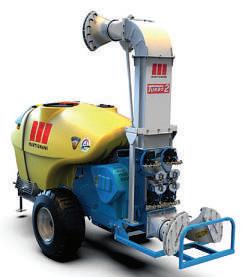

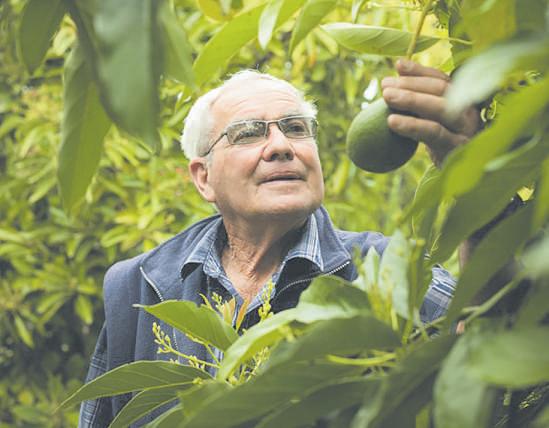
Avocados, with their creamy texture and versatile flavour, have become a kitchen staple for many However, achieving perfect ripeness can sometimes be a challenge.
This guide explores the art of selecting, ripening and storing avocados, along with tips to make the process easier Avocados continue to ripen after harvest, so select fruit depending on when and how
you intend to use them.
While avocados are known to ripen in a fruit bowl, those eager to enjoy them sooner can try this trick: place avocados in a brown paper bag with a banana or apple
These fruits emit ethylene gas, a natural ripening agent that speeds up the ripening process
For pre-ripened avocados treated with ethylene or another ripening agent, simply placing them in a fruit bowl for two to three days will usually complete the ripening process
Paulina González, winner of the 2026 Auckland Latin Fiesta Guacamole competition, has generously shared her acclaimed recipe.
Ingredients
2 ripe avocados
2 medium tomatoes, diced
½ medium white onion finely diced
Fresh coriander (cilantro) chopped to taste
30 ml apple cider vinegar
Freshly
Method
Cut the avocados in half remove the seed and scoop the flesh into a bowl.
Mash gently with a fork keeping the texture slightly chunky
Add the diced tomato, onion and chopped coriander
Add the apple cider vinegar salt and freshly ground black pepper
Mix gently until combined and adjust seasoning to taste.
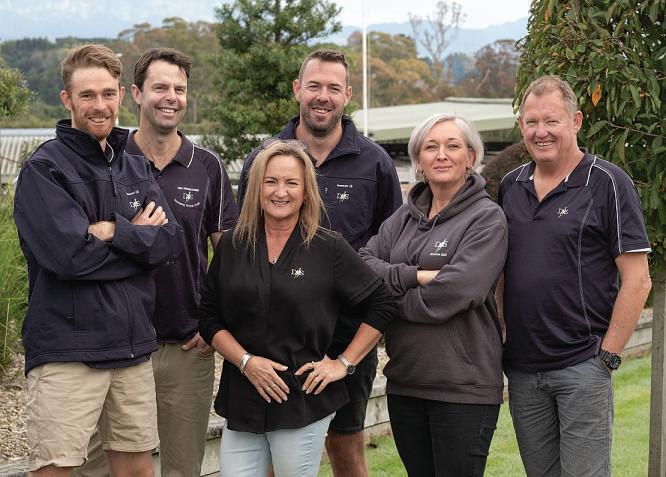




Good farming practice dictates that nutrients removed from the farm via meat, milk, or plant products must be replaced. However, for organic farmers and growers in NZ, this hasn’t always been an easy task due to a shortage of organically certified fertilisers
But with the value of the organic sector recently reported at over NZ$1.1 billion, and expectations that both domestic and export markets will continue to grow, the need for fertilisers aligned with organic agriculture and horticulture principles is more important than ever Fortunately, thanks to scientific and technological advancements, the range of organically certified fertilisers continues to increase. So, whether you already have organic certification, are transitioning to organic certification, or want to integrate organic practices into your operation, sourcing organic fertilisers needn’t be an issue
Organic fertilisers are those derived solely from natural sources. They must contain the nutrients that plants need to grow, such as the macronutrients nitrogen (N), phosphorus (P), and potassium (K). For organic producers, natural sources of BioGro-certified nitrogen can be found in products like Phosta N, a plant-based fertiliser with 10% N, recovered from the fermentation of vegetable matter Another great source of nitrogen is a product called Protamin N13, a by-product of the
leather industry with 13% N.
BioGro-certified phosphorus can be found in RPR (reactive phosphate rock) or guano, sourced from the natural deposits of seabirds
BioGro-approved potassium choices include sulphate of potash (SOP), mined from underground salt deposits, or Phosta K, a by-product of the sugarcane industry Apart from N, P, and K, these products often come with extra benefits that fit perfectly into an organic system.
One example of this is Protamin N13. It contains hydrolysed proteins and amino acids, which have a biostimulant effect on soil microbes, improving nutrient uptake and healthy plant growth. The granules are also high in organic carbon, which improves soil health.
Phosta K is another example. It’s not just a source of chloride-free potassium; it also contains plant-available forms of nitrogen, phosphorus, sulphur, magnesium, and calcium. Likewise, Phosta N delivers more than simply nitrogen - it contains phosphorus (P) and calcium as well.
Another characteristic these fertilisers possess is their reduced solubility
Fertilisers with reduced solubility release their nutrients gradually, helping to avoid losses to the environment and ensuring plants receive nutrients as they grow Protamin N13, Phosta K, Phosta N, guano, and RPR all deliver their nutrients in this way, albeit at different rates, with
some being slower than others.
An often overlooked but vital secondary element required by plants for healthy growth is sulphur (S) Fortunately, a BioGro-certified source is available in the form of elemental sulphur prills. Elemental sulphur is another fertiliser that releases nutrients gradually
A further source of natural sulphur can be found in Kieserite, although this fertiliser is usually applied as a BioGro-certified source of magnesium (Mg) Magnesium is essential for photosynthesis and, therefore, strong plant growth, so it needs to be applied where soil Mg reserves are low
Micronutrient, or trace element, deficiencies in NZ soils are well




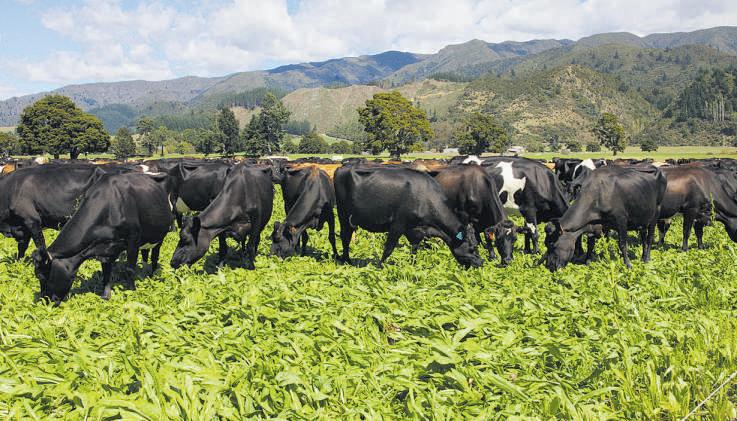
documented, with some having serious consequences for plants and animals. As with NPK and secondary nutrients like S and Mg, trace element levels in soil will decline over time when animal and plant products are removed. Organic farmers and growers, therefore, need access to natural sources of trace elements. Today, this is possible At Fertco, we can provide natural, BioGro-certified sources of boron, cobalt, copper, iron, manganese, molybdenum, selenium, and zinc, meaning most deficiencies can be addressed
With the wide range of BioGro-certified fertilisers available, nutrient deficiencies are one less thing for organic farmers and growers to worry about. As always, the best place to start is with a soil test.
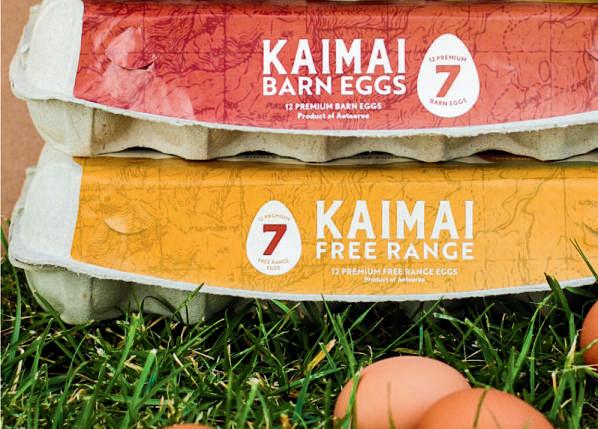


A cross-pollination of ideas, blending coffee growing in Africa with New Zealand horticulture, has germinated on the Hauraki Plains
Luke Powell, owner/operator of Kasama Coffee in Zambia, recently spent time at Turua with commercial fruit and vegetable grower and Environmental Fertilisers’ general manager Grant Paton
The pair had been communicating from across the world for the past five years, with Luke coming to New Zealand to seek out Grant and in particular to discuss their shared interest in Reams Biological Theory of Ionization (RBTI)
This is a holistic health approach developed in the mid20th century which views the human body not just as a collection of organs, but as a complex energy systemessentially, a living, breathing chemical battery.
“He talks my talk,” says Luke, of his association with Grant during the week-long visit
“It was great talking about soil stuff applicable to Zambia,” says Grant, who runs an eight-acre (3 2ha) property which features a 40m x 30m fruit and vegetable patch, with the balance hosting beef cattle
Back home, 55-year-old Luke runs Kansato Farms, the producer of Kasama Coffee, in the northern province of Zambia.
His father was gifted the 350ha property by a local tribal chief in the 1980s, developing a market garden of vegetables, plus poultry, and an acre (0 4ha) of coffee trees for home consumption
Luke took over the operation in 2000 and, seeking a high-value crop which neighbouring farmers were not growing, planted 30ha in coffee The balance is used for commercial timber and poultry
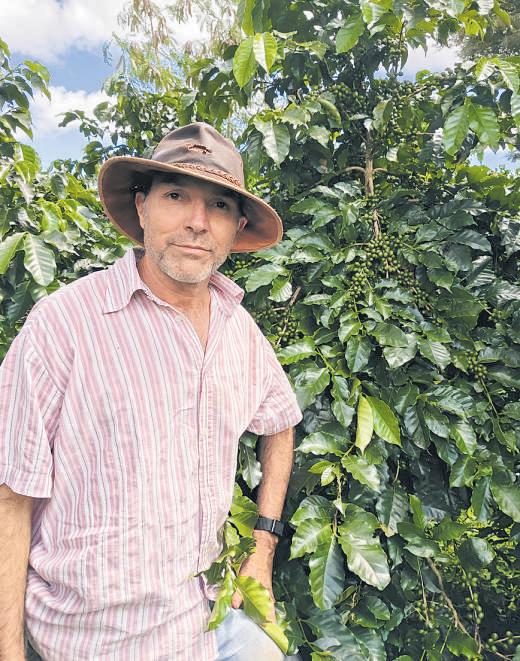
machinery, prioritising employment over automation
preserving biodiversity and reducing reliance on chemicals.
The finished product goes into local supermarkets, restaurants and cafes, and for export to South Africa and Germany
The export side of the business is handled by the Zambia Coffee Growers Association, selling the product via auction
A global recession saw many growers “pull out ” of coffee and go into wheat and soybeans, says Luke
“But it’s come back with more growers, predominantly in the north ”
When speaking to Coast & Country News from Turua, he joked that altitude – his property is 1350m above sea level - and frosts would prevent coffee growing in New Zealand
“It might work on the slopes of a volcano, maybe Tongariro ”
Luke was born in Zambia and went to university in England, studying mechanical engineering and business management
He then worked in Switzerland for 13 months in research on optimising gas turbine blades for electric power stations.
Returning home to Zambia, he sold tyres and steel before going on to the family farm
Kasama Coffee recently entered into a partnership with commercial airline Proflight Zambia
Coffee beans at Kansato Farms are picked by hand from May to September.
“When they are red they are ready,” says Luke They are washed and dried for up to 12 days, when the moisture content reaches 12%
Skin recycled
The skin is then removed and used for bedding for chickens in Luke’s commercial egg operation on the property
In return, chicken droppings help to fertilise the coffee plants
The coffee beans are hand-graded, then roasted for 17 minutes
Luke says they can be ground on site - in a stone flour mill - or sent away as whole beans
Packaging is also undertaken on the home farm Luke has 50 people on the payroll, which swells to more than 100 during the harvest season
“Kasama Coffee stands as a beacon of ethical farming and job creation.”
The coffee is grown using regenerative techniques and minimal

From handmade packaging to artisanal roasting, Luke says every aspect of Kasama Coffee embodies sustainability
“We’re not just growing coffee – we ’ re creating livelihoods and protecting the environment ”
The coffee’s cloth bags are sewn locally, a project that started with a single tailor supporting orphans and has now evolved into thriving small businesses
Kansato Farms also uses compost-based soil enrichment and integrates native tree species,
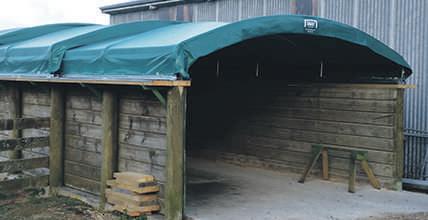
The collaboration marks a strategic move in aligning aviation with sustainability
“More than ever, travellers want to know that their journey has a positive impact,” says Josias Walubita, Director of Flight Operations at Proflight Zambia
“Kasama Coffee isn’t just any coffee – it’s a story of sustainability, community impact and Zambian innovation ”
He said the airline’s partnership with Kasama Coffee ensures that tourism benefits flow directly to rural communities.
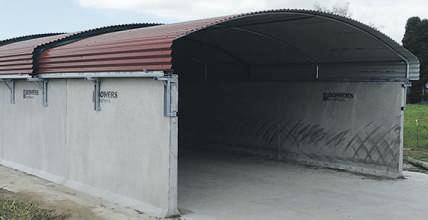
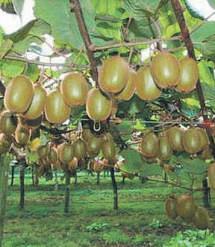

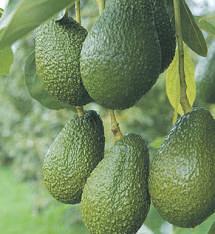



With the winter months coming up fast, Meet the Need, whose vision is that no one should go hungry or undernourished in New Zealand, is reaching out for assistance from the public.
For six years, this farmer-founded and farmer-led registered charity has been providing those affected by food insecurity access to New Zealand’s high-quality, nutritious protein
“Our country processes more than 26 million animals each year, providing billions of meals to people around the world. Yet, within our borders, many families are unable to afford mince and milk,” says Meet the Need general manager Zellara Holden.
“We believe that every New Zealander should enjoy the benefits of the quality produce we are so proud to share with the world ”
During the last 12 months, there has been a significant drop in donations while demand continues to rise.
Meet the Need board chair Nick Fisher says the situation has reached a critical point
“For years, farming families have been the quiet backbone connecting rural and urban New Zealand, donating livestock that helps put milk and mince on the tables of families doing it tough
“But right now, there are children who haven’t had mince for months
Families are stretching tins and toast, going without the protein many of us take for granted ”
While farmer support remains vital, Meet the Need is now urgently calling on all New Zealanders to get behind the cause, particularly through financial donations
“Meet the Need was started in early 2020, and was the vision of Wayne Langford and Siobhan
O’Malley,” says Zellara
“With the help of our founding partner, Silver Fern Farms, the first mince packs went out in June 2020 to foodbanks in the Canterbury region ”
Since then, Meet the Need has worked with milk suppliers to provide powdered milk, an important source of protein and calcium for children and the elderly Fonterra came on board in June 2022 which was exciting because it opened up milk donations from farmers nationwide
Meet the Need is governed by a Volunteer Board, run by a management team and has a team of Volunteer Champions who promote the organisation countrywide and liaise with farmers and donors
“At Meet The Need, we partner with companies, farmers and community organisations to provide essential food to New Zealand families in need ”
“We receive grants from various sources and we have a tier of sponsors We are very grateful to all of these for the support as every donation counts in making a difference,” says Zellara
For Fonterra or Synlait dairy farmers wishing to donate all you need to do is fill out a form and Meet the Need take care of the rest
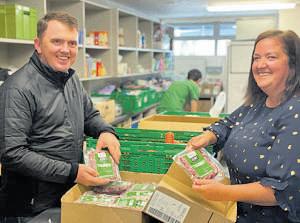
Zellara says that mince and powdered milk are the most useful and economic ways to provide food
“Mince is a versatile meat that can be bulked out to provide nutritious family meals Using powdered milk removes the complications of handling a product with a short shelf life that requires refrigeration ”
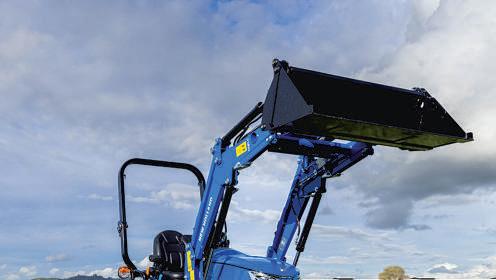
You can donate livestock virtually or directly through the partnered suppliers: Silver Fern Farms, Alliance and FreshPorkNZ
Other ways to donate include cash donations through Meet the Need website, Givealittle, payroll giving, bequests in a will, contributing your Farm Source rewards, and Cinta insights
Zellara says Meet the Need are always open to discussing other ways to support their work and can be
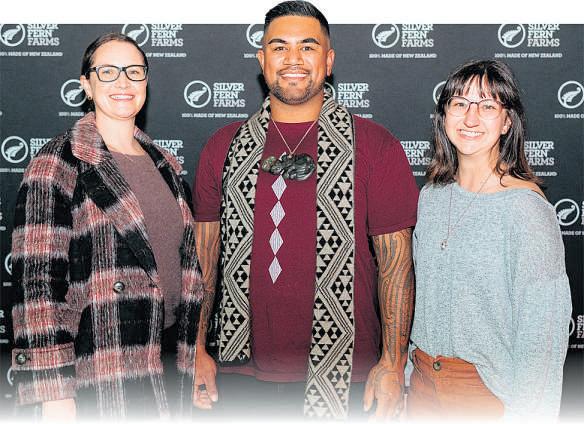
contacted by calling 0800 632 884
“Anyone can donate to us, and a donation of any amount is welcomed as it all helps supports families doing it tough ”
Meet the Need connects quality nutritious protein grown by New Zealand farming communities to those who need a helping hand
Four million mince and milk meals have been delivered since its launch in 2020
Every pack represents not just nourishment, but the care, compassion, and community spirit of so many
“We currently regularly supply over 140 community groups and food banks across New Zealand and we have more than 150 community
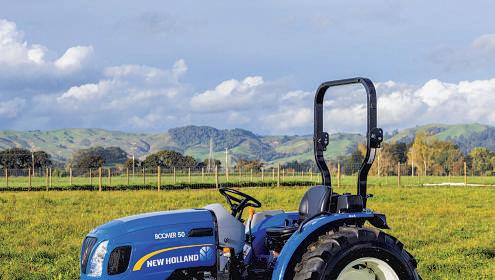
groups and food banks on our waiting list ”
In 2025, Meet the Need was proud to welcome award-winning South Waikato dairy farm manager Ben Purua as their inaugural ambassador Raised in Pukekohe and shaped by adversity, including time in prison as a teenager, Ben discovered a passion for farming on a prison farm That connection to the land sparked a journey of hard work, education, with renewed purpose and redemption
“I know what it’s like to go without,” says Ben. “Being able to give back through farming, to use what we grow to feed those doing it tough, is powerful. Meet the Need is real, it’s authentic, and it’s led by farmers. I’m proud to stand with them and help carry the kaupapa forward.”