



‘BILL’ CUMMING
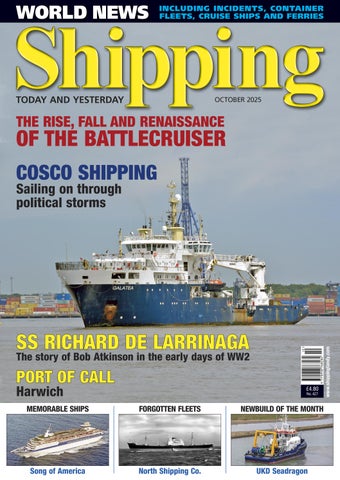
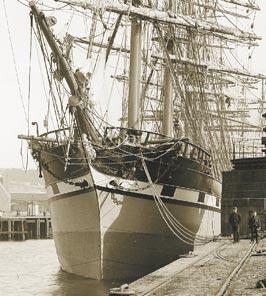
The advent of the 4-masted Iron sailing ship unexpectedly prolonged the usefulness of windjammers into the age of steam ships. It is the human story of events at the high point of merchant sail-power between 1870 and 1907. Here the careers of each of the twelve 4-masters are revealed in detail for the first time in one publication.
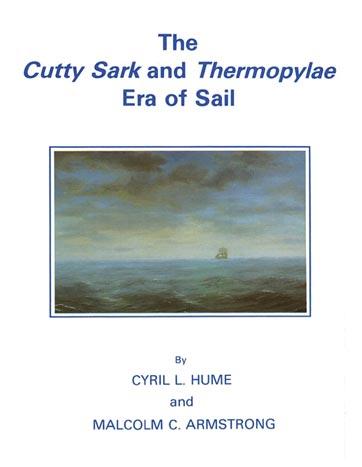

This is a book to be read for pleasure; true anecdotes take precedence over technical reference material. It will appeal to avid collectors and to newcomers alike.
A useful glossary of nautical terms has also been included.
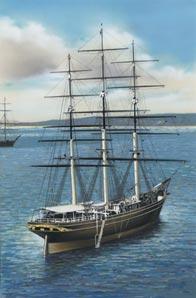

A history of the famous tea and wool clipper, Cutty Sark, considered to have been the fastest of all the clippers. Included are numerous illustrations, scale plans of her lines, mid-ship section and sail area.

BROWN, SON & FERGUSON, LTD.
NAUTICAL PUBLISHERS FOR OVER 180 YEARS
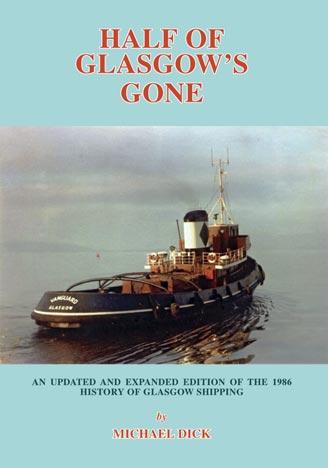

This updated second edition describes the heyday, decline and subsequent redevelopment of Glasgow’s Docks. The original photographs have been remastered with many new ones added. This book records an important part of Glasgow’s heritage and a similar pattern of change, redevelopment and regeneration can be seen in other British ports whose roots lay in the 19th century.
A free catalogue of our publications is available on request. Please write to: Brown, Son & Ferguson, Ltd. 426 Drumoyne Road, Glasgow G51 4DA You can also contact us by phone on: 0141 883 0141 or via e-mail at: info@skipper.co.uk All of our publications are also available from our website: www.skipper.co.uk
Our primary photo collection is from the ‘DON SMITH COLLECTION’ – a superb compilation containing many classic photographs from around the world, taken over the last 50 years! We also have other photographers collections included on our website. We hope you like the site and have made it even easier to order from us by opening a FREE account!
Don’t have access to the internet - then you can still send for a list at the address below.*
We are always looking for collections of good quality images either to purchase or use on a commission basis. Contact us if you are thinking of disposing of a collection.
•We have separate lists for Shipping and Railway Photos.
•Each list is £5.95*. Please specify which list you require and make cheques payable to Mr D Smith. Paypal option available, please email for details. Orders, lists and a sample print* is available from: Mr D Smith, 2 Briain Way, St Johns Road, Clacton-on-Sea, CO16 8LR. Email: mail@phototransport.com *UK & NI only. For overseas please enquire by email.
Published By:
Sundial Magazines Ltd.
Sundial House, 17 Wickham Road, Beckenham, Kent BR3 5JS
EDITORIAL
Editor: Nigel Lawrence
E: editor@shippingtandy.com
The Editor welcomes the submission of editorial material which should be accompanied by return postage and submitted to the address above. Sundial Magazines Ltd. accepts no responsibility for loss or damage to materials supplied.
If you have a question or query you wish to raise with the Editor they should be writing to the Sundial Magazines address. The Editor is not based at the Tandy Media offices and asks for all enquirers to appreciate this fact and be patient. Please understand that the staff at Sundial Magazines do not have access to the information you require and therefore cannot answer your questions on the phone. Sundial Magazines cannot undertake research into specific or general queries.
Picture Guidelines: Please do not send originals and ensure your name and address is on all material submitted. All digital images should be at least 300dpi and with a print size width of 21cm. They can be sent by email but only individually.
SUBSCRIPTIONS
Subscriptions, back issues and binders are available from Shipping T&Y.
Annual subscription rates:
UK £56 Europe £73, Rest of the World £78.50 We accept cheques and postal orders in Sterling made payable to Shipping T&Y and can also accept most credit/debit cards.
Shipping T&Y subs, Trinity House, Sculpins Lane, Essex CM7 4AY, UK
T; 01371 853638
E: shippingmag@ecosubs.co.uk
ADVERTISING
Advertising Manager: Simon Briant
T: 01273 594455
E: simon@sdbmarketing.co.uk
Shipping T&Y reserves the right to suspend or refuse any advertisement without giving reasons. Whilst every care is taken to avoid mistakes Shipping T&Y cannot be liable in any way for any errors or omissions. Nor can the publishers accept responsibility for the bona fides of advertisers.
COPYRIGHT
All articles, images and illustrations published in Shipping Today & Yesterday are strictly copyright of the authors and the publisher and may not be reproduced in any form without prior written permission. All photos are the property of the Editor unless otherwise stated.
© Shipping T&Y 2025


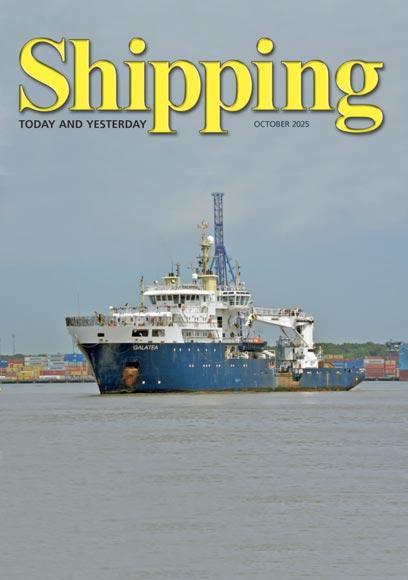
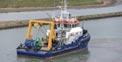
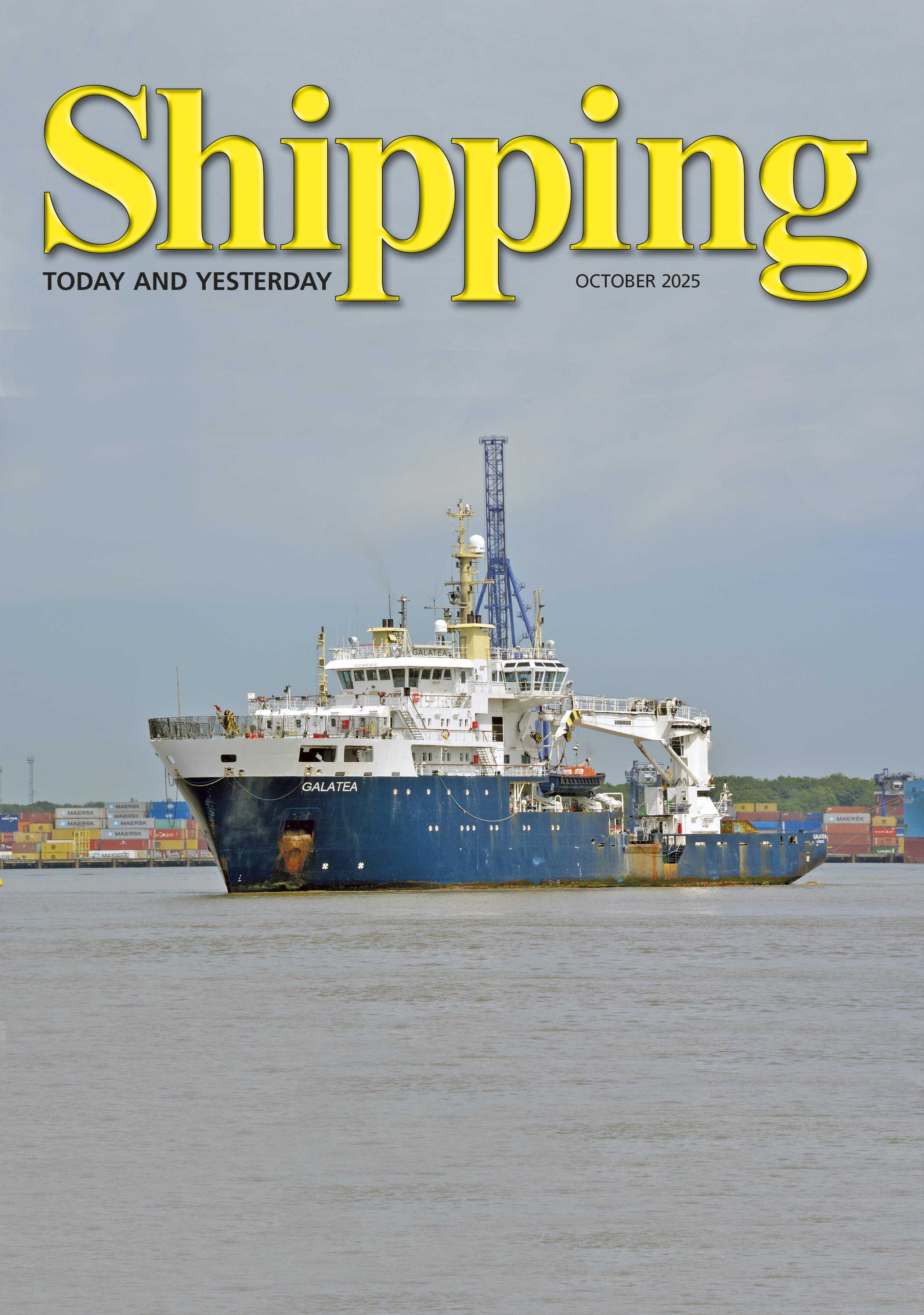
3,672gt Trinity House Buoy and Lighthouse vessel Galatea arriving at her home port of Harwich on 17th May 2022. She was built in 2007 by Remontawa at Gdansk. See article on page 58. Nigel Lawrence

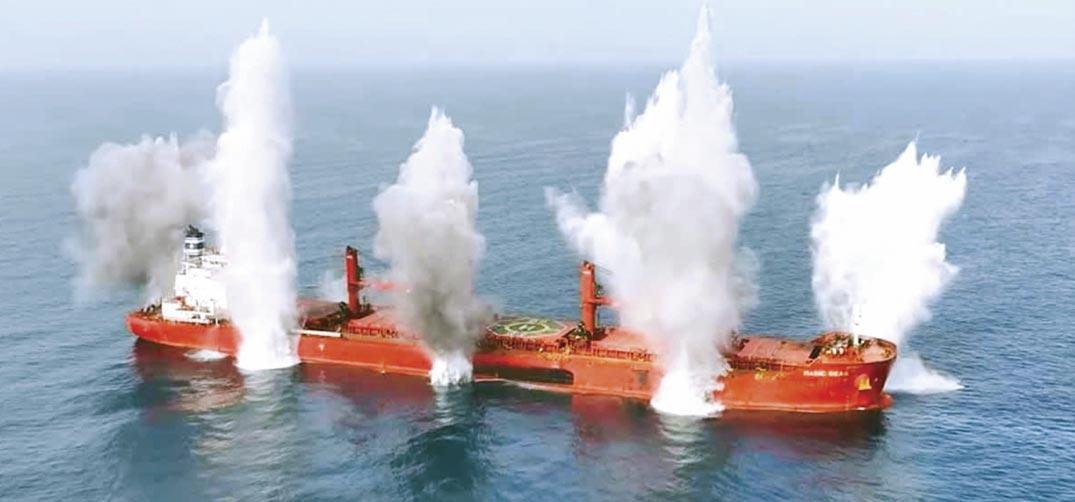
On 6th July the 35,812gt/2016-built and 63,301dwt bulk carrier Magic Seas (above) was severely damaged in a co-ordinated maritime assault off the coast of Yemen, marking the first Houthi attack on merchant ships in 2025, and setting back any plans for a significant return of the global merchant fleet to the Suez Canal. The crew of the vessel, owned by Allseas Marine, was forced to abandon ship after being hit by multiple sea drones.
The assault unfolded approximately 52 nautical miles southwest of Hodeidah, a port city in western Yemen, involving a multistage attack that began with 8 small boats firing gunshots and rocket-propelled grenades, followed by a barrage from four unmanned surface vehicles (USVs). Two of the drones reportedly struck the port side of the vessel, causing significant cargo damage and triggering a fire onboard.
Apparently, the ship met the Yemeni criteria for targeting ships. A private armed security team onboard returned fire during the initial small boat assault but could not prevent the drone strikes that followed. The ship later sank when mines placed on her hull were detonated, with the crew of 22 reportedly held by their aggressors “at a place of safety.” The following day the 22,683gt/2012-built bulk carrier Eternity C was attacked, with 3 mariners being killed and two others wounded.
The ship had been heading north towards the Suez Canal when she came under fire by men in small boats and by bombcarrying drones that night. Security guards on board also fired their weapons but to no avail. Around 16 crewmembers were stranded aboard but all had to evacuate when the 36,830dwt ship owned by Cosmoship Management began to sink. As sustained attack saw the deckhouse and bridge burnt out plus the ship was holed near the waterline. Around 11 personnel were reported missing with 10 survivors rescued, having spent between 24 and 48 hours in the water. Some of those missing crewmembers were thought to have been taken ashore by the military group.
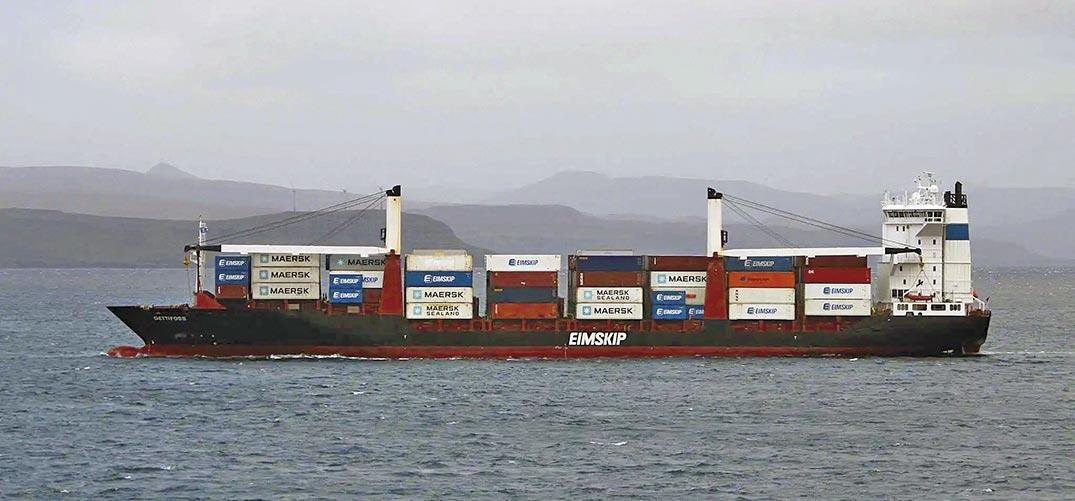
The 26,169gt/2020-built containership Dettifoss, (above) operated by Eimskip, suffered a main engine failure on 9th July and was adrift 390 miles southwest of Iceland whilst on a voyage from Reykjavík to Nuuk, Greenland. The Icelandic coast guard vessel Freyja attended the scene on 12th July to begin a tow back to port in Reykjavík. Luckily, the sea conditions were calm. The 180m long Dettifoss, an ice-classed 2,150 TEU capacity containership, was repaired and resumed her voyage the following week.
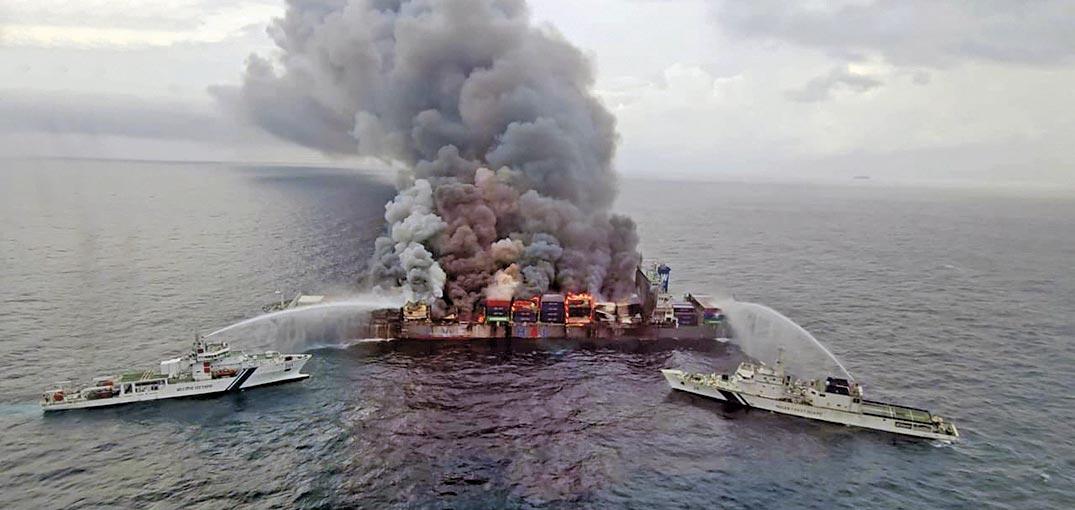
The burned-out shell of the 42,532gt/2005-built containership Wan Hai 503 (above) remained under tow and awaiting a confirmed port of refuge in late July. The ship suffered a cargo explosion and fire off Kerala on 9th June and few expected that the salvage effort for the small container ship would be so protracted. The fire burned through almost all cargo bays forward of the deckhouse with the last hot spots still not fully extinguished 39 days later. Salvage company T&T Salvage had stabilised the ship with flooding pumped out of 2 holds and lessened in the engine room. Six salvors were living aboard the ship temporarily as rough seas made personnel transfers too hazardous. Hydrogen sulfide gas was emanating from Hold 7 and the ship’s structure had been compromised, plus there was thought to be around 2,400 tonnes of fuel oil onboard.
In the August edition I expressed my concern about Flags of Convenience (FOC) and the fact that ships under some of these countries are not being subjected to the necessary checks to ensure their safety.
There is a further problem with unscrupulous shipowners registering their vessles under such flags and then suddenly abandoning them.
In 2024 there were over 1,500 seafarers left abandoned, unpaid, without food, water, or medical care, and in some cases denied access to port facilities for months. Over 2,280 seafarers have been abandoned aboard 222 vessels so far this year, a 30% inrease on last year. Stephen Cotton, the secretary of the Workers’ Federation (ITF), said, “Abandonment is a growing, systemic problem”.
The ITF further added, “ We’re dealing with owners who vanish, often protected by substandard registries that do nothing”.
According to the ITF, the (FOC) system lies at the heart of the crisis, allowing vessels to register under countries with weak regulatory oversight, minimal taxation, and limited transparency. Today, over 50% of the world’s merchant fleet is registered in FOC states, which account for more than 80% of known abandonment cases. These countries have been linked to shadow fleets that are carrying sanctioned cargoes.
Recently Tuvalu and Guinea Bissau have been added to the FOC list, bringing it to a total of 45 countries. The ITF have stated that there is a need for a total overhaul of vessel registration.
We must do something urgently in order to prevent the misery that have been caused to our seafarers. editor@shippingtandy.com
CMA CGM confirmed the diversion of some North Europe-East Coast South America Loop SAFRAN sailings to Southampton instead of London Gateway due to ongoing port congestion. Besides those in June, other sailings affected included the San Lorenzo Maersk (3rd July), San Marco Maersk (10th July), Maersk Londrina (17th July) and the Cap San Artemissio (24th July). The SAFRAN rotation includes Southampton-RotterdamHamburg-Antwerp-Tanger-Santos-Paranaguá-Buenos AiresMontevideo-Rio Grande-Paranaguá-Santos-Tanger.
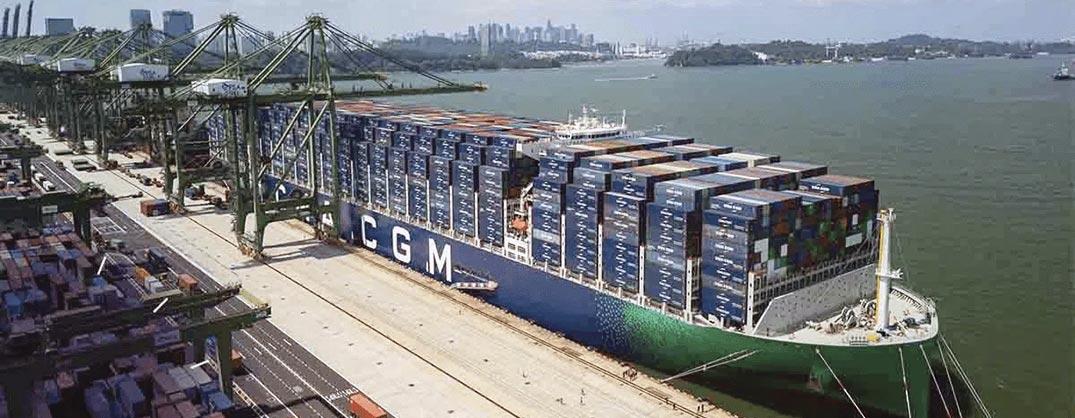
The 109,699gt/2013-built CMA CGM Phoenix (above) has been reflagged under the U.S. flag in Charleston, South Carolina. At 9,300 TEU capacity, the ship became the largest containership ever to sail under the American flag. The Neo-Panamax vessel was previously registered in Singapore and will employ 42 American mariners working in rotation, with 21 crew members onboard at any given time. The CMA CGM Phoenix represents the first of 4 such registered vessels CMA CGM will introduce in 2025, fulfilling 20% of its commitment to triple its U.S.-flagged fleet to 30 ships by 2029. This expansion is part of a broader $20 billion investment announced by CMA CGM in March in U.S. maritime, logistics, and port infrastructure.
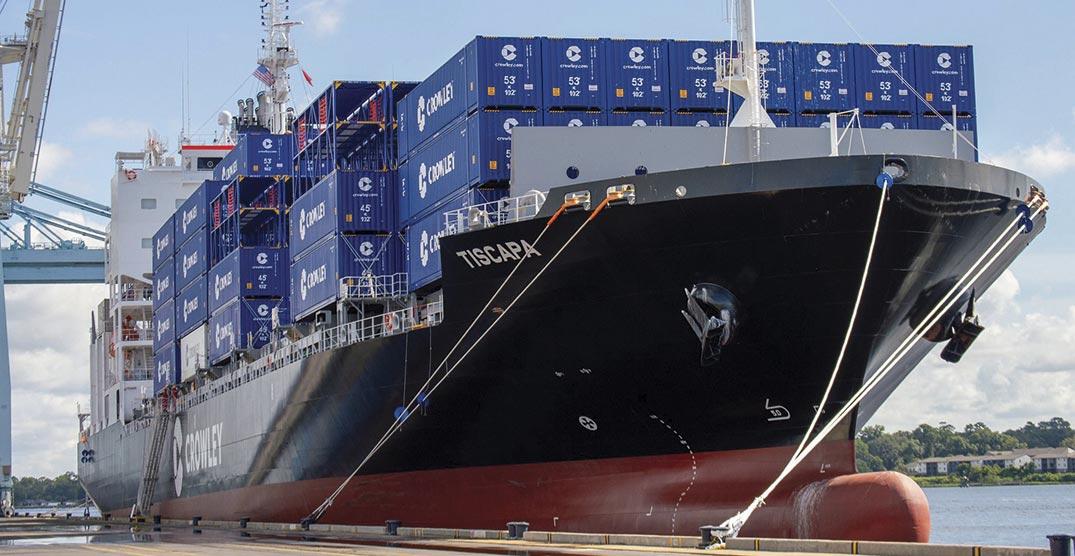
Crowley’s 19,866gt/2025-built and LNG-powered containership Tiscapa (above) joined the fleet on 11th July, marking a significant advancement in the company’s service capabilities across the U.S.A, Caribbean and Central America. The Avance Class ship offers a container capacity of 1,400 TEU, including space for 300 reefers. The vessel departed from Jacksonville, Florida on her inaugural commercial voyage serving the Caribbean Basin. Following a transition period, the Tiscapa will establish a regular service between the U.S., Dominican Republic and Central America, facilitating direct market connections for medical devices, household goods, food and perishables. The new ship joins sister Quetzal (19,866gt/built 2025) and Copán (19,866gt/built 2025), which serve El Salvador, Guatemala, Honduras and Nicaragua, supporting the growing trade between the U.S. and Central America. The Avance Class, operated under charter from Eastern Pacific Shipping, are named to honour Central American cultural elements, reflecting Crowley’s 60-plus years of shipping and logistics operations in the region. Tiscapa refers to a volcanic lagoon in Managua, Nicaragua, formed over
10,000 years ago, notable for its pre-Columbian remains and iconic Augusto Sandino statue. The fourth and final ship in this class, the Torogoz (named after El Salvador’s national bird) was scheduled to enter service in August 2025.
COSCO Shipping named its third methanol dual-fuel containership, the 155,000gt/2025-built Cosco Shipping Panama, at the Yangzhou Cosco Shipping Heavy Industry shipyard on 18th July. Ms. Xu Hui officiated the naming ceremony by christening the vessel. The 366m long and 51m beam ship has capacity for 16,136 TEU. She is equipped with an 11,000m3 methanol storage tank. The first of the series was the Cosco Shipping Yangpu in June, followed by the Cosco Shipping Carnation, with more to come. COSCO also continues its success with the world’s largest fully electric container ship, the Greenwater 01, introduced in 2024 and designed and constructed by China Ocean Shipping Group (COSCO). The ship is 119.8m long with a 23.6m beam, a moulded depth of 9m, a draught of 5.5m, a deadweight tonnage of more than 10,000dwt and capacity for 700 TEU. The main battery capacity is over 50,000kWh plus the ship features the ability to carry containerised battery boxes, each adding 1600 kWh. Up to 24 can be added for a total of 80,000kWh. The battery containers can be loaded or unloaded to scale power storage for longer voyages. The ship is operating between Shanghai and Nanjing, along the Yangtze River, covering 1,000 km without recharging.
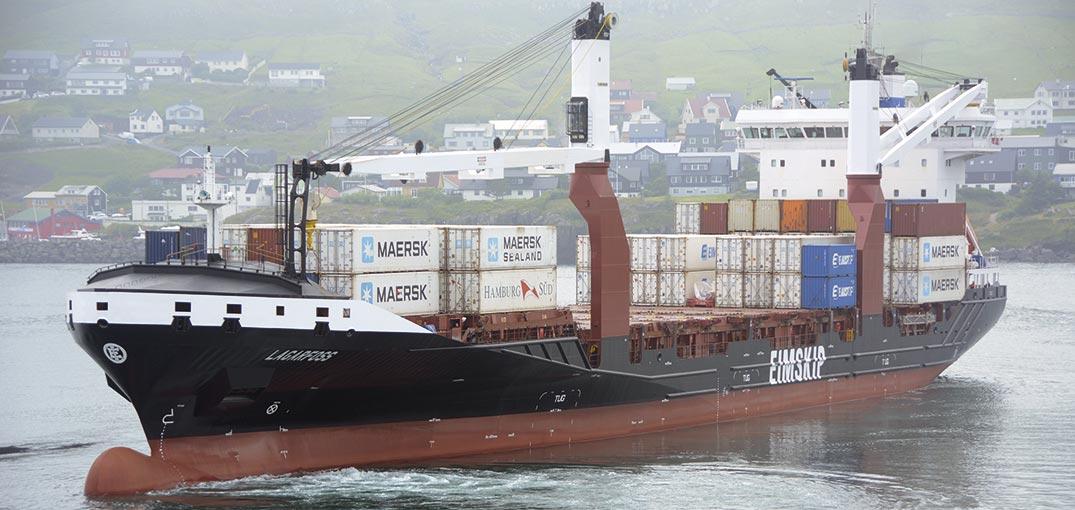
Eimskip has reached an agreement to sell the 10,119gt/2014built containership Lagarfoss (above) to Portuguese company Grupo Sousa. The company recorded a loss on the sale of approximately €3.4 million in the third quarter of 2025. The ship was expected to be delivered to her new owner in Reykjavík between August and September. Eimskip stated that the decision to sell was partly based on favourable market conditions for secondhand vessels and potential adjustments to its sailing operations. The sailings had been under review following the temporary shutdown by customer PCC Bakki, whose cargo volume was described as the "backbone" of Eimskip‘s specialised coastal shipping in Iceland. The company intended to offer the crew of the Lagarfoss employment on the company’s other vessels.
Jhonlin Marine Trans of Indonesia has acquired a trio of ultramaxes, the 33,990gt/2012-built Jhonlin 001 (ex-Sagar Kanta), 34,225gt/2018-built Jhonlin 002 (former Oakgate) and the 35,834gt/2019-built Jhonlin 003 (former Maplegate) from Zodiac Maritime and Tata NYK Shipping (Jhonlin 001). The company is part of the Jhonlin Group, led by tycoon Samsudin Andi Arsyad.
Matson surprised customers in July by the announcement that, effective immediately, it would suspend transporting batterypowered electric or plug-in hybrid electric vehicles due to the hazardous material classification of their lithium-ion batteries. The
ability to ship cars between the mainland of the United States, Hawaii, Guam, and Alaska was an important service both for individuals and car dealers. The Hawaii Electric Vehicle Association reported there were more than 37,000 electric vehicles registered in the state. Matson had reported in the past that it had developed a collaborative team approach to tackle the complexities of carrying lithium batteries. It established an Electric Vehicle Safe Carriage Working Group, and said it was participating in external working groups on electric vehicles and lithium batteries. Preventative measures included proper stowage, the use of new tools like thermal imaging cameras to see temperature spikes, and the deployment of the Viking HydroPen, a firefighting tool that replaces the traditional water mist lance and is designed to drill into containers and extinguish fires. There are plans to resume acceptance of these vehicles once appropriate safety solutions that meet requirements can be implemented. At least three major casualties 2022-2025 were partially attributed to EV fires. Matson is being extra cautious as the ships also carry containers and EVs are often shipped in containers where they cannot be monitored so easily. Matson continues to transport conventional cars.
MPC Container Ships (MPCC) placed a $228 million order for four 4,500 TEU capacity container ships in July with 3-year charters. The vessels, which are scheduled to be delivered from the second half of 2027, will be built by Chinese shipyard Taizhou Sanfu Ship Engineering. MPCC also holds several options for additional vessels. The new ships will feature the latest energyefficient technologies and have 50% lower costs per container slot compared to many similar vessels. They will be dual-fuel ready, enabling future conversion to ammonia or methanol, whilst a trio of older 1,300 TEU vessels are being sold, with existing charters attached.
MSC’s 16,799gt/1997-built MSC Elsa 3, which sank into the depths of the Arabian Sea off the Kerala coast, was the subject of a salvage operation from August by Smit Salvage. The company initially engaged to recover the sunken vessel, stopped operations on 12th June due to various concerns according to the local media. It was also reported in July that salvage crews had successfully removed approximately 85% of the heavy fuel from the grounded 25,407gt/2003-built containership MSC Baltic III. The vessel remained aground near Wild Cove, Newfoundland and Labrador, where she ran ashore on 15th February after losing power approximately 12 nautical miles from the Bay of Islands. Poor weather conditions prevented the crew from anchoring before the vessel grounded. Container removal operations were also progressing, with 208 of the 472 containers successfully removed from the grounded vessel at the time of the announcement. The 5,198gt/2012-built Eems Dublin remains in the area to facilitate the transfer of personnel and containers. The MSC Baltic III was en-route from Montreal to Corner Brook, Newfoundland, when the incident occurred.
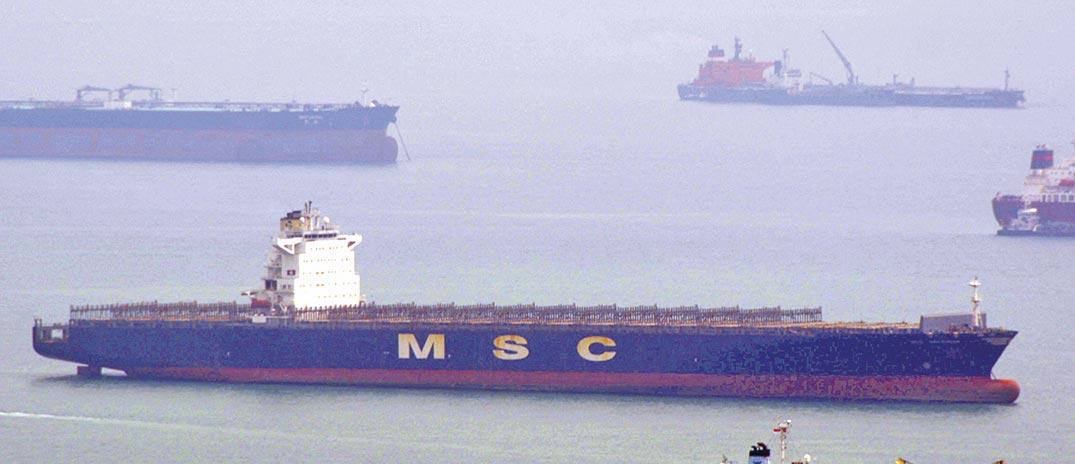
Former
89,941gt/2006-built and with capacity for 8,204 TEU, were released by the Maltese Government in July having been
detained at the Port of Valletta in 2022 for alleged links to Russian company STLC, sanctioned by the US Department of the Treasury, following their sale by MSC. The ships have now been re-sold to Trans Shipping Company (TSC), an affiliate of German ship management company Hammonia Reederei. The ships have returned to active service as the TSC Dorado and TSC London respectively.
ONE took delivery of the 140,233gt and 13,900 TEU ONE Singapore on 30th June from Imabari Shipbuilding's Hiroshima shipyard. Some features of the containership include the following: Loading capacity - This is a dedicated container ship with a container loading capacity equivalent to 13,932 TEU and is equipped with up to four lashing bridges on the deck. In addition to being able to load a large number of refrigerated containers in the hold and on the deck, it is also compatible with the loading of various dangerous goods subject to the IMDG Code; Environmental compatibility - Using the latest analysis technology, ONE has developed an optimal hull form that pursues high efficiency in accordance with the ship speed and draught that are frequently operated. The ship also achieves high fuel efficiency by adopting energy saving devices, twist rudders, and hull shell paint that reduces friction with seawater. As a result, the ship's carbon dioxide emission reduction index (EEDI) has been reduced by approximately 60% from the regulatory standard value, which is significantly higher than the latest requirements. In addition, the adoption of a Bow Wind Cover has improved performance at sea, and the ship is equipped with a hybrid exhaust gas cleaning system (EGCS) and an exhaust gas recirculation system (EGR). The 22-knot ship is 336m long with a 51m beam and a hull depth of 30.10m. The main engine is a single 7G95MEC10.6 marine diesel unit.
The Premier Alliance (formed by One Network Express, HMM and Yang Ming in February 2025) was welcomed at the Port of Felixstowe on 20th July for the first call of the Premier Alliance’s FE4 service between Asia and North Europe. The 232,311gt/2020-built and 24,000 TEU capacity HMM Southampton arrived from Singapore via the Cape of Good Hope. Felixstowe is the historical UK port of call for Yang Ming and the company was delighted to be returning within the Premier Alliance’s updated FE4 loop. The full port rotation of the FE4 service is Felixstowe-Rotterdam-Hamburg-Le HavreAlgeciras-Singapore- Kaohsiung-Shanghai-Ningbo-KaohsiungYantian-Cai Mep-Singapore-Felixstowe.
Transworld Group of Dubai has acquired two 2,478 TEU capacity sisterships, the 25,406gt/2006-built Seaspan Loga and 25,650gt/2006-built Seaspan Hannover, from Seaspan Corporation of Canada. The Feedermax ships boost the fleet to 16 vessels ranging in capacity from 650 TEU to 2,478 TEU. Becoming the company flagships, the ‘Loga was renamed OEL Varun (meaning god of the sea in Hindu) with the ‘Hannover becoming the OEL Surya (meaning sun god in Hinduism). Both remained on time charter to Maersk on services between the U.S east coast with Central America. Built for German shipowner Alfred Hartmann, Seaspan acquired the ships in 2018.
Yang Ming Marine Transport Corporation announced on 17th July that it had approved an order for seven 15,000 TEU capacity LNG dual-fuel containerships from Hanwha Ocean Co. Ltd. The vessels are scheduled for delivery between 2028 and 2029 and will replace ageing ships in Yang Ming’s fleet. Taiwan-based Yang Ming Marine Transport Corporation is the country’s second largest container carrier after Evergreen, with a fleet of approximately 100 vessels totalling 8.22 million deadweight and a capacity of around 724,000 TEU.
Amasus Shipping launched the new 13,154gt/2025-built Rotra Futura at Jiangsu Zhenjiang Shipyard in China in July. Once completed, the ship will be used primarily for the transport of large offshore wind turbine components. Delivery of the Ro-Ro to Amasus Shipping is scheduled for 2025. The turbine components can be loaded and offloaded via a ramp.
Clipper Bulk took delivery of the 25,003gt/2025-built Clipper Mallorca from Japanese shipbuilder Imabari Shipbuilding on 22nd July. The 40,313dwt bulk carrier is 182.90m long with a beam of 31m and is classed by Nippon Kaiji Kyokai (NK). Owned by STC Shipping PTE Ltd., the ship is powered by a single MAN 6G4G5ME-C9.7 main engine, giving a service speed of approximately 14 knots.
COSCO Shipping Specialised Carriers of China formally named its newest pulp carrier in a ceremony on 9th July. The 45,600gt/2025-built CSPC Pearl is the third ship in a series to be built by COSCO Shipping Heavy Industry for the same operator. The newbuild is 225m long with a beam of 36m, a deadweight of 85,000dwt and a range of 25,000 nautical miles. In addition to transporting wood pulp, the vessel's hold can accommodate other types of cargo such as offshore wind turbine components, steel bridge segments, rail vehicles, and electric vehicles.
Hartel Shipping is modernising its fleet with new state-of-the-art new coasters including the 2,783gt/2025-built Rijnvliet, which was delivered in May by Instalho BV in Werkendam based on a hull from Yizheng Yangzi Shipbuilding. The 3,870dwt vessel features two Ecowind Ventofoils providing additional propulsion. Sisterships completed since in 2025 include the Waalvliet, 2,829gt Maasvliet (modified for subsea cable work) and the 2,783gt Ijsselvliet.
Helikon Shipping Enterprises took delivery on 27th June of the 36,140gt/2025-built Handymax bulk carrier Rodopi from the Iwagi Zosen shipyard, a subsidiary of Imabari Shipbuilding Group. The vessel has a deadweight of 63,742dwt, 199.9m long with a beam of 32.2m and is classed by Nippon Kaiji Kyokai (NK). Power provided by one MAN 6S50ME-C9.7 main engine, giving a service speed of 14 knots. The ship's design complies with the common structural rules for bulk carriers and oil tankers plus she features 4 deck cranes and is designed to carry a wide variety of bulk cargoes, including those compliant with the international maritime solid bulk cargoes and dangerous goods codes.
James Fisher & Sons announced on 3rd July that China Merchants Industry Yangzhou Dingheng Shipyard had recently laid the keel of a new chemical tanker ordered by the UK-based shipowner, Yard No. CMYZ0148. The Orca Fisher will be the first in a series of 4 vessels that will be powered by alternative fuels. All four ships are scheduled to join the James Fisher fleet from early 2026. James Fisher said that several features that will be incorporated in the newbuildings have been carried over from the most recent additions to the company’s fleet, the 4,732gt/2022 and 2023-built Sir John Fisher and Lady Maria Fisher.
Kumiai Navigation took delivery of the 49,561gt/2025-built Crystal Odyssey on 29th June from Japanese shipbuilder Kawasaki Heavy Industries (KHI). The newbuild is an LPG and ammonia (NH3) carrier, is 229.9m long, has a beam of 37.2m, a hull depth of 21.9m, a deadweight of 56,331dwt, a cargo capacity of 86,700m3 and a crew of 29.
Louis Dreyfus Armateurs has been largely sold by the major shareholder, the Louis-Dreyfus family, to Paris-based InfraVia Capital Partners for an undisclosed sum in a deal that sees 80% of shares sold. The Louis-Dreyfus family retains a 20% share, with Edouard Louis-Dreyfus remaining president of the group. Samira Draoua assumed the role of CEO of LDA when the transaction was confirmed.
LDA has around 30 vessels and will be renamed LD Armateurs. With InfraVia support, the company plans to invest €1bn over the coming years to more than double its fleet and accelerate its growth in technological innovation, energy transition, and the development of next-generation maritime services and navigation modes. At the time of this announcement, the Louis-Dreyfus family was still in mourning from the loss of the previous head of the company, Philippe Louis-Dreyfus, who died aged 80. LDA was founded in 1893 as part of the Louis Dreyfus Group, originally handling grain shipments before expanding into dry bulk, offshore, and port logistics through the 20th century. The company had also diversified into specialised segments, including offshore wind support, submarine cable laying, ferry operations and maritime training.
Longship, a Dutch shortsea shipping company, welcomed its 4th diesel-electric E-Class general cargo ship, the 6,795gt/2025-built and 8,600dwt Longeden, on 17th July. The ship was built by Atlas Shipyard in Türkiye. The first ship in the series, the Longera, was handed over to Longship on 25th June 2024. The Dutch company has also ordered 8 eco-friendly 2,544gt/6,000dwt S-Class PMAX Eco Trader newbuilds, being constructed by both GS Projects and Ship and Steelbuilding at the Waterhuizen Shipyard in Holland. Delivery will commence in 2026.
Navigare Shipping marked the keel laying of Hull 379 in July, the second vessel in the pioneering GADUS series of 5600dwt dry cargo ships, being built by Royal T Shipyards. Following the lead vessel, the Hav Leiti, Hull 379 continues the roll-out of this GADUS series.
Stolt Tankers new series of 38,000dwt stainless steel tankers commenced construction at the Wuhu Shipyard, part of China State Shipbuilding Corporation (CSSC), on 30th June with a steel-cutting ceremony for the first in six ships. The vessels will be classed by Lloyd’s Register and fly the Liberian flag. The newbuilds will be 184.9m long and feature 30 duplex stainless steel cargo tanks and there is an option for an additional six tankers. Scheduled for delivery between 2026 and 2028.
UML and BAR Technologies confirmed on 22nd July a landmark order for BARTech’s WindWings® propulsion system to be installed on two new LR2 dual-fuel tankers, marking one of the first confirmed large-scale wind propulsion deployments on this critical vessel class. The decision builds on the successful integration of WindWings® aboard the UML-operated 62,730gt/ 2025-built tanker Brands Hatch, demonstrating growing industry momentum behind wind as a core alternative fuel.
Vertom Group’s 4,750gt/2025-built Vertom Tula was christened and launched on 24th July at Royal T Shipyards (formerly Thecla Bodewes Shipyards), the ninth vessel in the groundbreaking LABRAX series. This launch marked a special moment, as the Vertom Tula was the first ship in the series to be launched under the shipyard’s new name and Royal designation, awarded in celebration of the yard’s 100th anniversary in June 2025.
AIDA Cruises has evolved the AIDAEvolution initiative into the AIDAselection for 2025-2028. The drydockings for 4 ships, namely the 71,304gt/2010-built AIDAblu, 71,304gt/2011-built AIDAsol, 71,034gt/2012-built AIDAmar and 71,034gt/2013-built AIDAstella, are scheduled for this timeframe. The focus of the concept is on family togetherness, as well as land and onboard encounters. The company also noted the ships are smaller, enabling them to call at more ports. Two new ships of a new generation are also planned, to be built by the Fincantieri shipyards in Italy, with commissioning in spring 2030 and winter 2031-32.
Ambassador Cruise Line has launched its 2027/28 season, which will be the first where all of its itineraries will be adult-only. Following a decision to remove multigenerational cruises from the Ambassador product, the newly released itineraries total 75 with calls at 131 ports, 10 of which are new. From 24th March 2027 to 14th April 2028, the 70,285gt/1990-built Ambience will sail 32 itineraries and four Festive Events, while the 48,123gt/1999-built Ambition will offer 43 sailings.
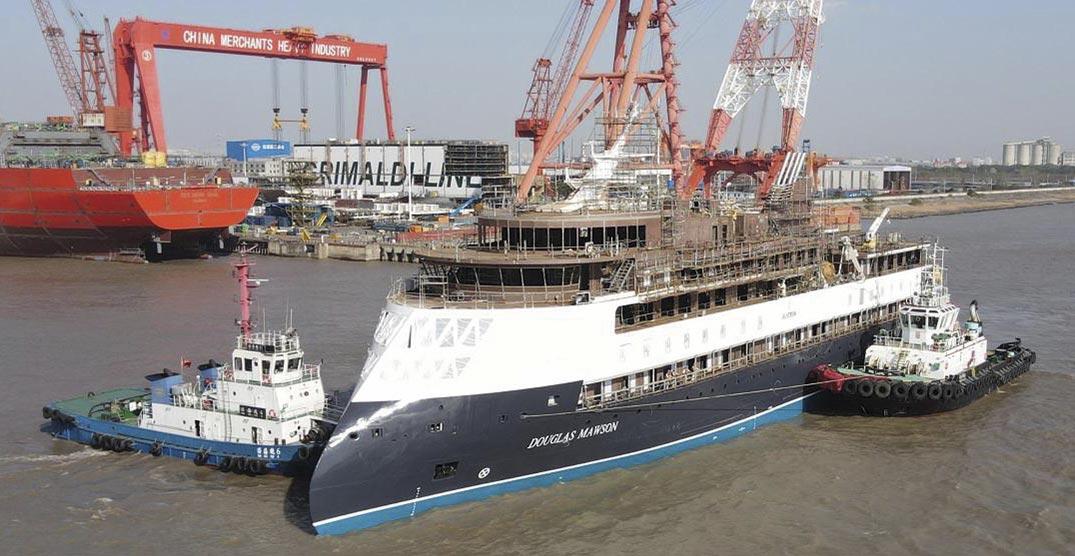
Aurora Expeditions’ final member of the Infinity Class of expedition cruise ship, the 8,200gt/2025-built Douglas Mawson (above), officially passed her sea trials in July. The vessel, owned by SunStone Maritime Group, will be operated by Australiabased Aurora Expeditions under a long-term charter. The Ulstein X-Bow profiled ship is Ice Class 1A and Polar Class 6 certified for operations in challenging environments and is equipped with a dynamic positioning system and zero-speed stabilisers. Aurora Expeditions stated the vessel can accommodate 130-154 guests and 102 crew. Onboard amenities include a pool, a bar, restaurants, a library, a gym, and a spa. The vessel was built by China Merchants Heavy Industry Haimen and launched in December 2024. She is a sister ship to the 8,228gt/2021-built Ocean Explorer and 8,181gt/2023-built Ocean Albatros, which were delivered to owner SunStone in 2021 and 2023, respectively.
Meanwhile, fellow SunStone Ships vessel, the 8,181gt/2021built Ocean Victory entered an extended layup at the port of Funchal, Madeira from 3rd July. The ship was to spend several weeks at the port while awaiting her next deployment. The situation arose after the demise of Alma Cruceros early in the charter period for the vessel.
The ship will resume her charter to Albatros Expeditions, to offer a series of expeditions to Antarctica and South Georgia, departing from the Argentine port of Ushuaia. The Ocean Victory belongs to the Infinity series of ships built for Sunstone.
Carnival Cruise Line has cancelled 5 cruises onboard the 128,052gt/2012-built Carnival Breeze that were scheduled to take place in January and March 2027. The sailings will no longer go ahead due to a change in the ship’s maintenance plans (drydock slot). Sailing from Galveston, the Carnival Breeze was set to offer short 4 and 5-night itineraries to the Western Caribbean and Mexico.
The affected sailings include departures on 11th January and 5/13/18/22 March 2027.
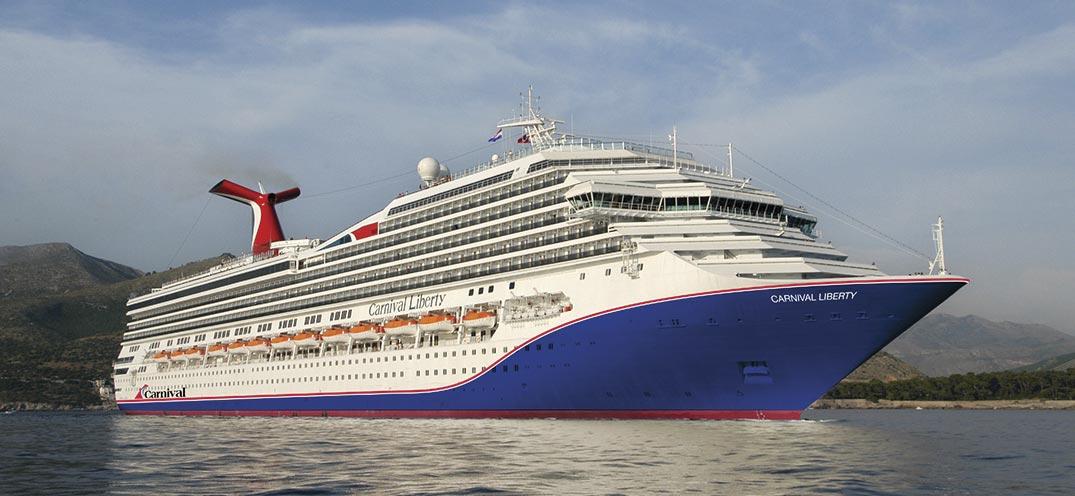
The 110,248gt/2005-built Carnival Liberty (above) was back at New Orleans on 13th July to welcome guests following a comprehensive dry dock that added new features to the ship. She joined sister ship Carnival Valor, which returned to the port last month with many enhancements after a similar dry dock. The first guests to experience the ship’s new features departed on a week-long Caribbean cruise.
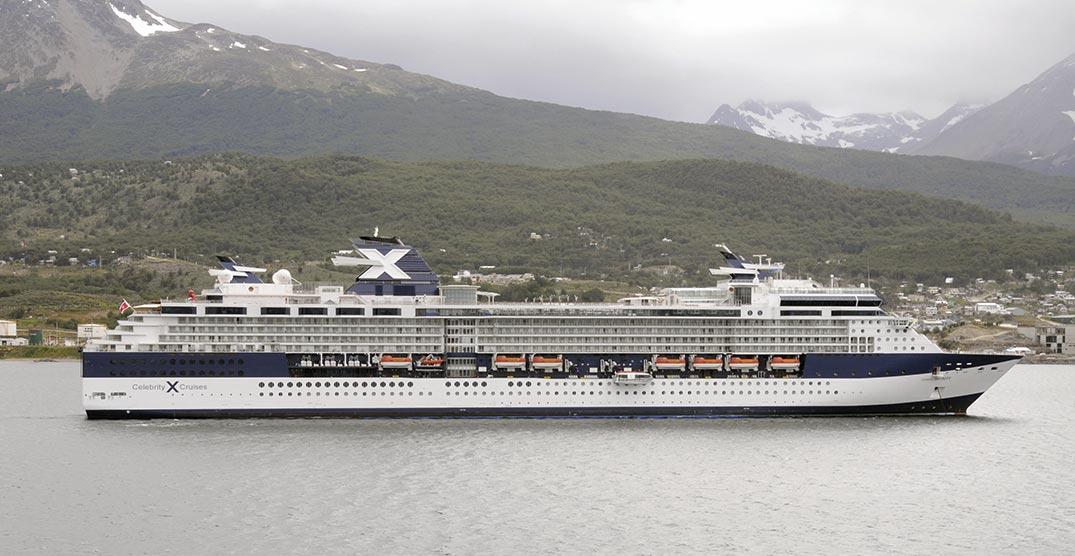
Celebrity Cruises’ 90,940gt/2001-built Celebrity Infinity (above) suffered an electrical fire and power failure in early July and then made for the Turkish port of Kuşadası on 5th July. Testing revealed additional technical faults and external specialists were flown in to assist. The ship remained alongside until 11th July when she departed once again for Piraeus to conclude the cruise as scheduled.
Guests saw much more of Turkey than anticipated and were compensated accordingly for the disrupted cruise. The 141,420gt/2022 Celebrity Beyond had an itinerary cancelled on 20th July due to technical issues. Propulsion problems were understood to be the cause.
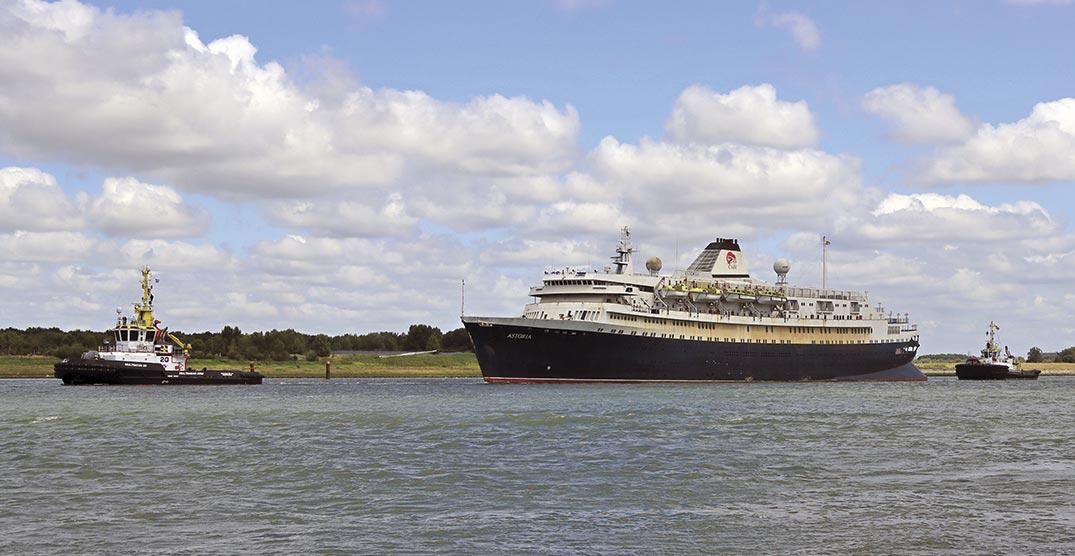
Cruising Veteran Astoria (16,144gt/built 1948), one of the most historic passenger ships still surviving, was towed away from her cold layup berth in the vast port of Rotterdam on 3rd July having been sold at auction on 17th June for €200,000 plus costs to Galloo, a Belgian recycling firm based in Ghent, the sole bidder with the minimum asking price.
The 463gt/2010-built Multratug 20 led the ship away from the Dutch port and arrived at Ghent on 4th July (above), the end of a final voyage and an impressive existence spanning 77 years. The world that she left is very different to that which she joined in 1948.
Crystal confirmed on 1st July that the company had finalised a SACE-backed ECA financing facility for two newbuild ships. SACE is the Italian Export Credit Agency. The company also acknowledged the essential contributions of Cassa Depositi e Prestiti and of Simest in structuring this comprehensive financing package. The two newbuild vessels will be 61,800gt each and will each accommodate 650 guests. The new ships will feature all-suite accommodations with private verandas, including single occupancy categories designed for solo travellers, not to mention one of the highest crew-to-passenger ratios in the luxury cruise segment. The company said that, with thanks to the commitment of Fincantieri and the 30-year relationship between the Italian shipyard and the Lefebvre family, construction has continued as planned. The first ship is expected to be delivered in May 2028, with the second expected in 2030.
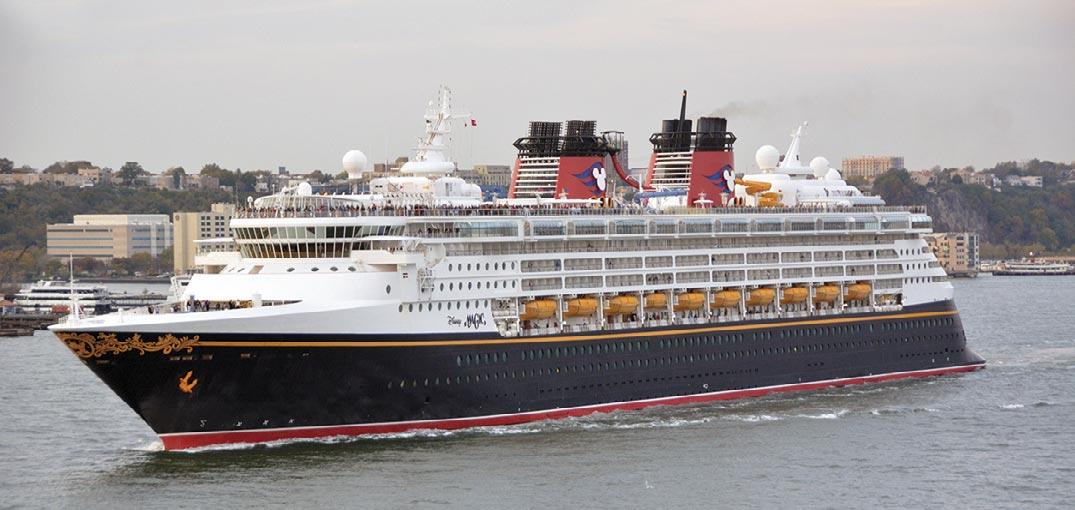
Disney Cruise Line has cancelled a cruise aboard the 83,969gt/1998-built Disney Magic (above) due to an adjustment in the ship’s drydock schedule. These forward planning issues appear to be affecting various operators. A four-night cruise that was set to depart from San Diego on 19th April 2026 is the victim. The drydock scheduled is now delayed so the ship will offer additional cruises on the West Coast before repositioning to Alaska. The ship will now undergo a two-week drydock in the Pacific Northwest before her summer season in Alaska. The season in Northern Europe concludes with a 7-night cruise that is set to depart from Southampton in late September prior to a 4-week drydock in Europe before embarking on a repositioning voyage to North America in early November.
Explora Journeys celebrated three pivotal milestones on 14th July which mark the next chapter in fleet development at Fincantieri’s shipyard in Genoa Sestri Ponente. The fleet, set to comprise six ships in total by 2028, is progressing on schedule.
The 63,621gt/2023-built Explora I and 63,621gt/2024-built Explora II are already welcoming guests to a new style of elegant ocean travel and are operating at near full capacity, reflecting the strong resonance of the brand’s offering.
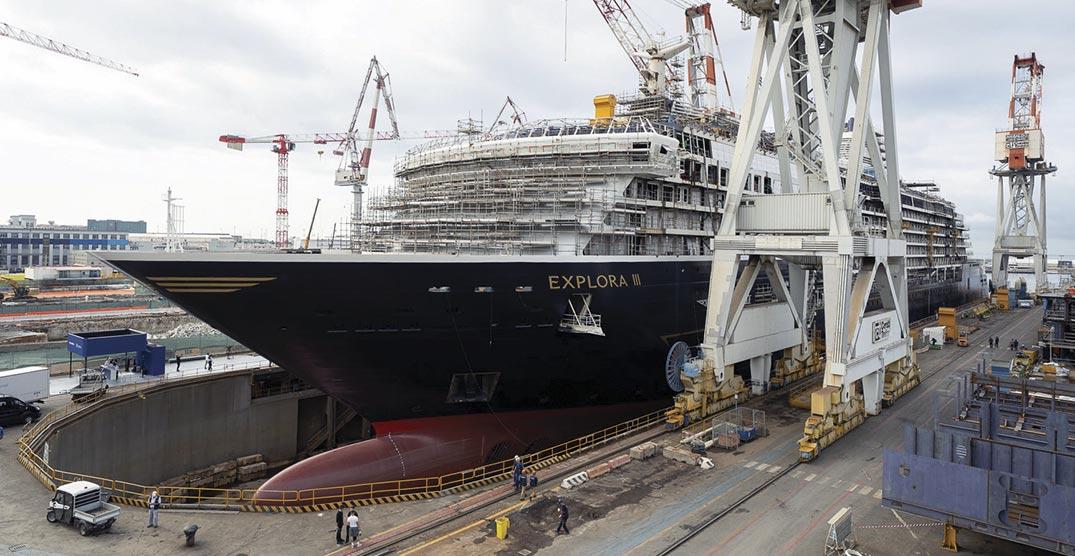
Caroline Cooney-Hurrell, Customer Journey Strategist at Explora Journeys, was honoured as godmother for the coin ceremony of the Explora IV in recognition of her commitment and
dedication to the brand over the past 5 years. Caroline played a key role in establishing the Explora Experience Centre operations, ensuring exceptional service and care for Explora Journeys` guests. From the Fincantieri team, Franca Parisi, Head of Quality and Performance Improvement, proudly served as the godmother for the Explora III’s float out ceremony. The third occasion was the steel cutting for the Explora V.
The €3.5 billion investment in Explora Journeys’ six-ship fleet, all of which are being built by Fincantieri, represents a longterm commitment not only to redefining ocean travel but also to the Italian shipbuilding industry.
On 17th July Explora Journeys announced that it will return to Port Hercule for the Formula 1 Grand Prix De Monaco 2026, 3rd-6th June 2026, with the Explora I serving as a luxurious sanctuary, elevating the experience of this iconic event. In May 2025, the brand redefined race hospitality in Monaco with the Explora II acting as a private-yacht-inspired sanctuary, hosting guests just a few steps from the circuit. Building on the glamour of 2025, where the ship played host to events such as the iconic Vanity Fair Club, the 2026 edition will raise the bar even higher. From exclusive events to curated luxury showcases, Explora Journeys will once again be the epicentre of Monaco’s most anticipated weekend. In 2025, the onboard experience featured everything from a VR race simulator to racing trivia and miniature tracks, appearances from Formula 1 legends like Sir Jackie Stewart and David Coulthard, and high-end jewellery showcases from Buccellati, Panerai, and Piaget. By night, the ship came alive with starlit soirées, themed cocktails, and champagne celebrations. This announcement continued the momentum of the MSC Group’s multi-year partnership with Formula 1, which was established in 2022 and renewed at the race in Monaco this year until 2030.
Holland America Line has resumed offering behind-the-scenes ship tours to guests, providing an insider’s look at areas that are typically reserved for officers and crew. These include the bridge, galley, engine control room, recycling centre, main laundry and more. During the tours, several of the ship’s senior officers will meet with guests to offer expert insights. Guests who book the tour will receive a unique ship-specific lanyard, a souvenir photo collection and a commemorative certificate. Tours will visit locations that showcase the breadth of operations onboard. Behindthe-scenes tours are available on select ships and were expected to be available fleetwide by the end of July. Behind-thescenes tours are available for booking onboard at Guest Services and cost $179 per person, with an accessible option also available. Hopefully other operators will follow suit as these tours were one of the victims of the Covid restrictions.
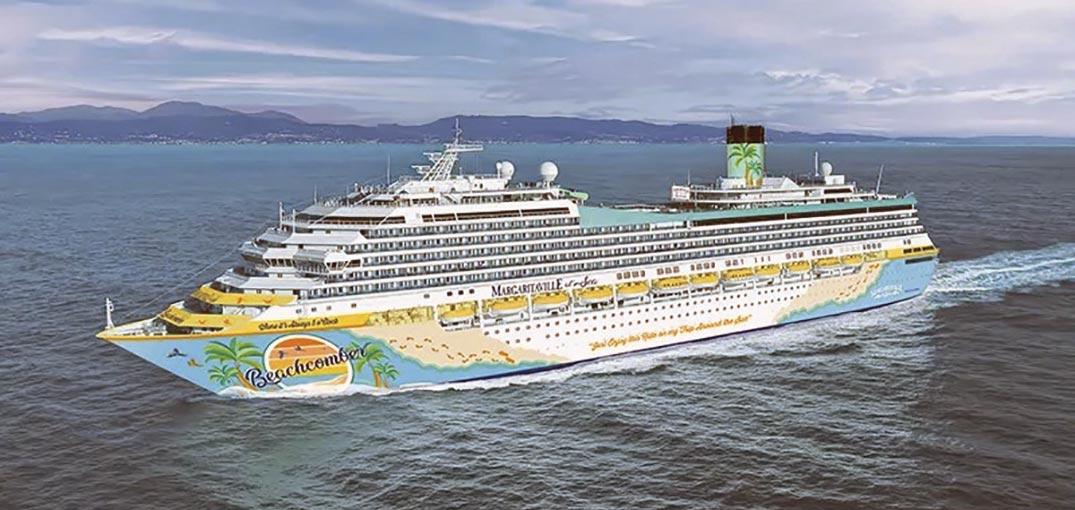
Margaritaville at Sea will expand its fleet with the 102,669gt/2003-built Costa Fortuna in late 2026 when she becomes the Beachcomber (above). The company said the ship will showcase the fleet’s free-spirited style, layering breezy blues, sunlit yellows, and warm beachy tones to create a carefree, sunsoaked design. Onboard, guests will discover a mix of iconic company favourites.
MSC Cruises has signed two new orders for their globally successful World Class ships with Chantiers de l’Atlantique of St. Nazaire, which will see the total number of World Class ships in the fleet expand to 6. The two new orders, currently referred to as World Class V and VI, will be delivered in 2029 and 2030 respectively. The highly successful World Class platform combines the very best in environmental technology with the latest advancements in guest experiences. The new ships will join the 215,863gt/2022-built MSC World Europa and 216,638gt/2025built MSC World America along with the 205,700gt/2026-built MSC World Asia and the 2027 newbuild MSC World Atlantic. All World Class ships are ready for a variety of alternative fuels including bio and synthetic LNG. Additionally, they will feature a new configuration of the latest generation dual fuel engines, which feature new technology to further reduce methane slip. The newbuilds also feature shore power plug-in connectivity to reduce carbon emissions in port, the most advanced wastewater treatment systems designed in line with the IMO, new advances in waste management, and a comprehensive range of onboard energy efficient equipment to optimise engine use and hotel energy needs to further reduce emissions. MSC Cruises has changed ships for the 2025-26 winter season in South America, swapping the 65,591gt/2003-built MSC Lirica for the 65,542gt/2002-built MSC Sinfonia.
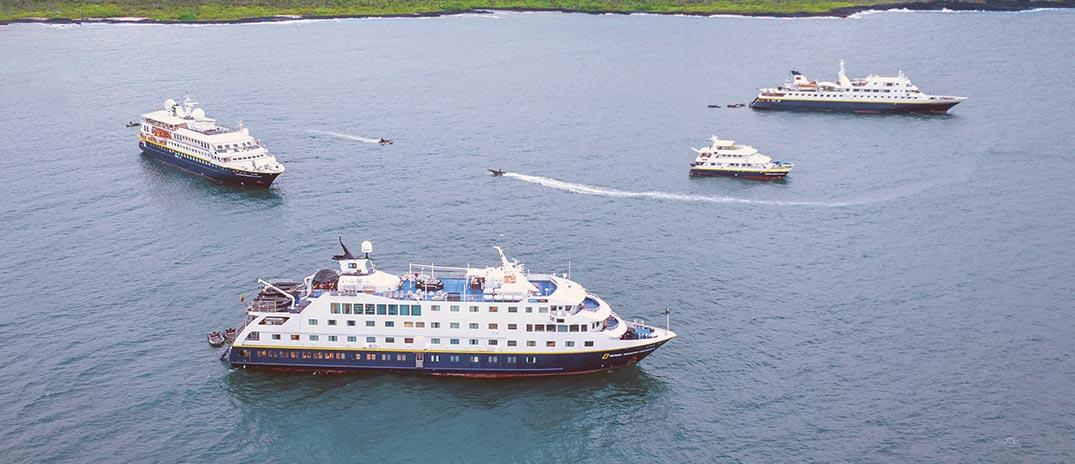
National Geographic-Lindblad Expeditions fleet members National Geographic Delfina, National Geographic Gemini, National Geographic Islander II and National Geographic Endeavour II assembled on 10th July in Academy Bay, Galapagos Islands to celebrate the official naming of the fleet’s two newest vessels (above), namely the 16-guest National Geographic Delfina and 46-guest National Geographic Gemini.
Nippon Yusen (NYK Line) newbuild, the 52,265gt/2025-built and 230m long Asuka III was officially named at her home port of Yokohama beside the Osanbashi International Passenger Terminal. The ship is Japan’s largest newbuild and the first Japanese-commissioned cruise ship in around 30 years. The maiden voyage departed on 20th July when the vessel officially joined the 50,444gt/1990-built Asuka II in the fleet. The Asuka III is the first Japanese-flagged cruise ship to have been fitted with both dynamic positioning and pod propulsion systems, as well as the nation’s first to be able to use shore power.
Norwegian Cruise Line announced in July that the 145,655gt/ 2013-built Norwegian Breakaway and 143,535gt/2022-built Norwegian Prima are to switch homeport for the 2026-27 winter season. After announcing the cancellation of over 40 sailings onboard the ships, the company said that the Norwegian Breakaway will now offer itineraries from New Orleans, while the Norwegian Prima will sail from Puerto Rico.
The period affecting the sailings was from 8th November 2026 to 29th March 2027. In her place, the Norwegian Prima will sail from San Juan, Puerto Rico, offering the Norwegian Breakaway’s original Southern Caribbean cruises during the same time frame. The Norwegian Prima was initially set to make her debut in New Orleans during the 2026-27 season.
Oceania Cruises’ 67,901gt/2025-built Allura was delivered on 10th July, the company’s 8th elegant boutique ship. The 1,200guest vessel, built at the world-renowned Fincantieri Shipyard in Genoa, is the second in Oceania Cruises’ Allura Class and heralds the evolution of Oceania Cruises’ legacy. The Allura follows her sister ship, the 67,817gt Vista, which was introduced in May 2023.
The Allura continues the brand’s heritage as the world’s leading culinary and destination-focused luxury cruise line. Many of the new menu items and elements debuting on Oceania’s Allura will also be rolled out across the fleet during the remainder of this year and into early 2026.
The Allura also sees the return of the line’s signature French restaurant, Jacques, named after legendary chef Jacques Pépin, the company’s first-ever executive culinary director. The Grand Dining Room onboard the Allura features more than 270 new recipes from the world-class culinary team at Oceania Cruises.
The Allura will be followed in summer 2027 by the first Sonata Class vessel, the Sonata, and then by her sister ship, the Arietta, in 2029, representing the dawn of a new generation of luxury cruising. Each 86,000gt Sonata Class vessel will carry approximately 1,390 guests. Two further Sonata Class ships will join the fleet in 2032/2035 having previously been options to the initial order.
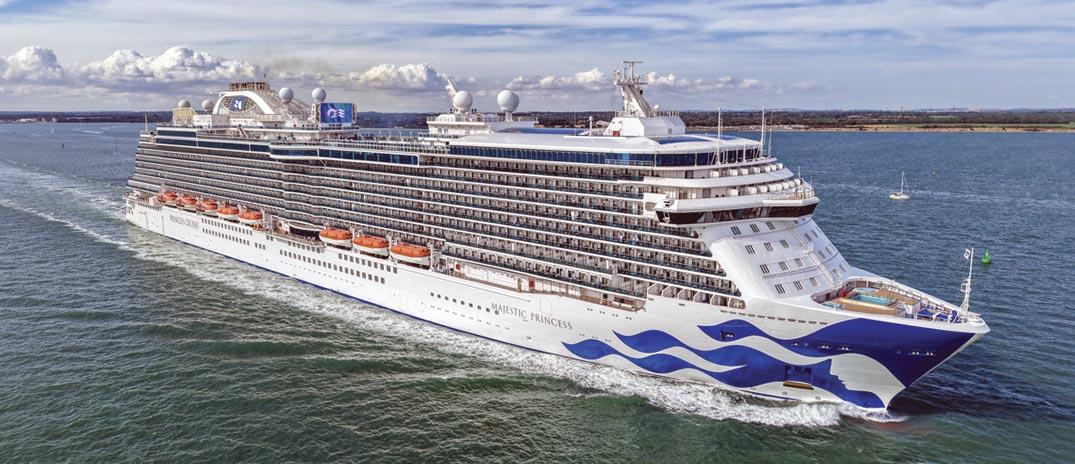
Princess Cruises’ 144,216gt/2017-built Majestic Princess (above) made her debut at Southampton on 18th July for British Isles and Northern Europe itineraries and will return for more of the same in 2026 and 2027. Onboard, and unique to the Majestic Princess, is her indoor Hollywood Pool Club and Conservatory, an indoor top-deck retreat offering a relaxing, all-weather space for guests. Following a recent extensive drydock, the ship now features a host of new and enhanced venues.
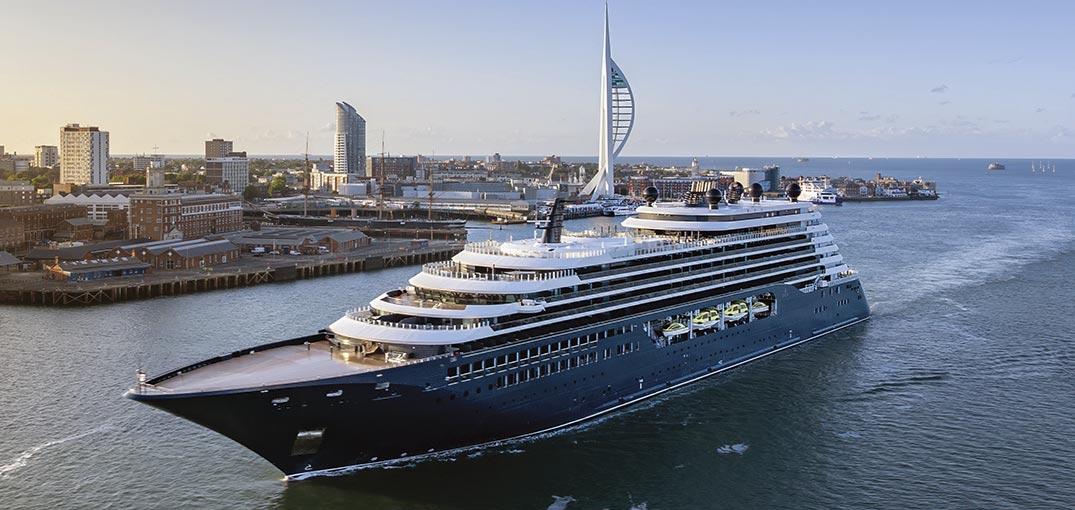
Ritz-Carlton Yacht Collection’s 47,435gt/2024-built Ilma completed her maiden call at Portsmouth on 8th July whilst making her debut in UK waters (above). The Ilma arrived with 386 guests and sailed that evening for Holyhead. This high-end boutique cruise ship is powered by LNG, making her the port’s first LNG cruise ship visitor. Ritz Carlton is set to return to Portsmouth in 2026, as part of a busy cruise schedule for the port. The 40,872gt/2025-built Luminara sailed from Monte Carlo on 3rd July 2025 on a seven-night itinerary maiden voyage. The event was attended by Muna Azab, General Manager of the Luminara. British actress Simone Ashley graced the stage to name and christen the yacht as the official godmother of the Luminara.
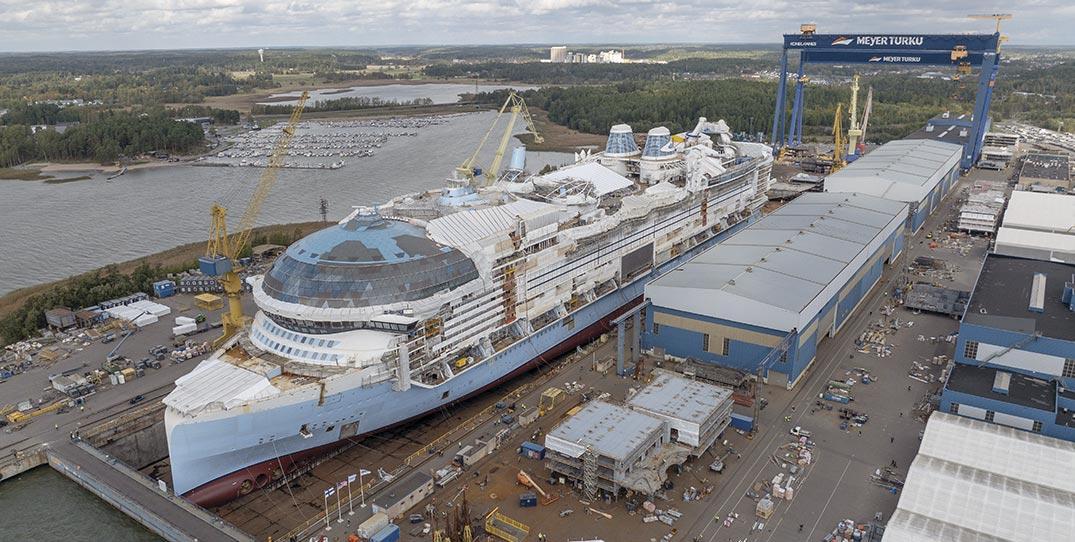
Royal Caribbean International’s 248,663gt/2025-built Star of the Seas (above) was delivered by Meyer Turku on 10th July. Alongside more than 1,250 crew members and partners, Royal Caribbean Group President and CEO Jason Liberty, Royal Caribbean President and CEO Michael Bayley, and Meyer Turku CEO Casimir Lindholm marked the moment just a few weeks ahead of the Star’s August debut in Port Canaveral, Florida. After nearly two years of construction at the shipyard in Turku, Finland, the keys to the next revolutionary Icon Class ship were officially handed over to Royal Caribbean. The ceremony took place in the ship’s AquaTheatre.
The delivery of Star of the Seas marks another bold step forward in Royal Caribbean Group’s journey to refresh the future of vacations. The ship departed Turku for Cadiz, Spain, on 17th July where Royal Caribbean put the finishing touches to the ship before she set sail on 7-night Eastern and Western Caribbean cruises from 31st August 2025, based at Port Canaveral. The Star of the Seas is the third LNG powered ship in the fleet as the company works towards introducing a net-zero cruise ship by 2035.
The next Icon Class, Legend of the Seas, will follow in 2026 and was to be floated out in autumn 2025. The Icon Class ships are 365m long with a 48.50m beam (waterline), a 57.80m beam (deckhouse) and a 65.80m beam including bridge wings. The ships can carry 7,600 passengers and 2,350 crew.
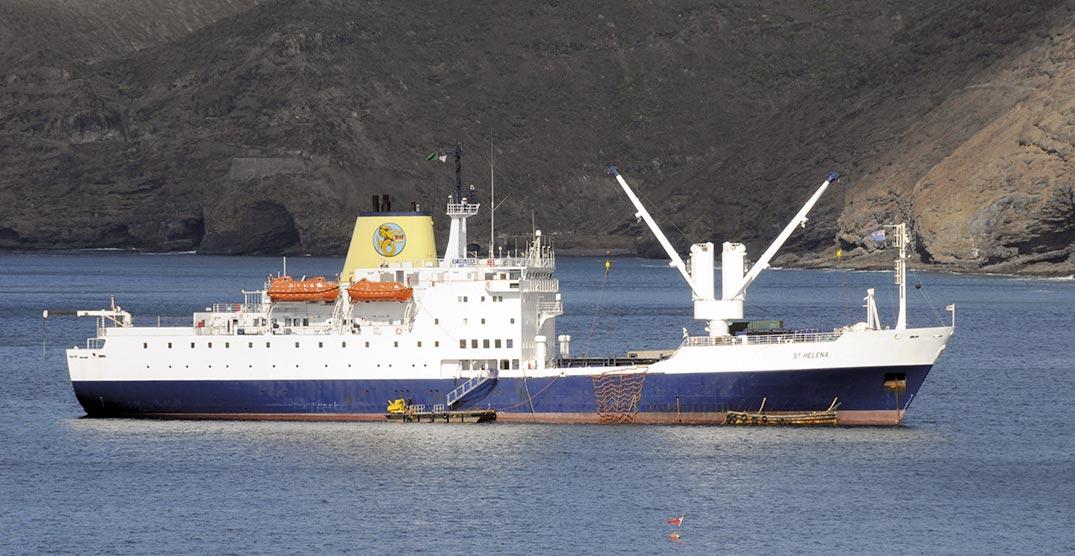
Terra Nova Expeditions is a new brand offering cruises to the polar regions and burst onto the scene in July. The brainchild Greg Carter, founder of Chlmu Adventures, the operation will use the 6,820gt/1990-built St. Helena (above) as from December 2026. The 98-passenger ship was taking bookings from July for what was described as “budget expedition cruises”.
The key to Terra Nova’s expeditions is claimed to be its “world-first” day sailing experience, which will offer guests the opportunity to explore Antarctica aboard a second, 8-passenger vessel called the Icebird. The day sailings will include lunch, activities, and landings separate from the rest of the St. Helena’s passengers.
The Icebird can be used as a platform for diving, skiing, and a host of other activities. Terra Nova is also introducing cruiseand-sail combinations aboard the Icebird, which will see passengers cross the Drake Passage aboard the St. Helena, before transferring to the smaller ship for six nights.
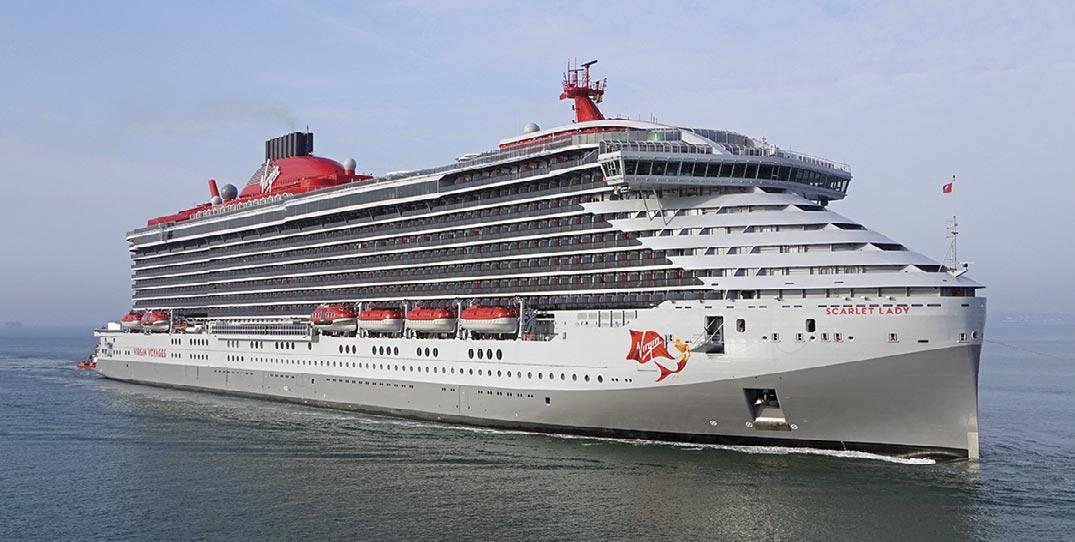
Virgin Voyages 108,192gt/2020-built Scarlet Lady (above) was once again welcomed by Portsmouth International Port on 27th July. It was thanks to Covid-19 striking just as this groundbreaking ship was introduced to the world in early 2020 that the ship ever came to the Hampshire port. In 2021 she arrived to offer Covid-safe cruises to nowhere, carrying her first fare-paying passengers, and in March 2022 sistership Valiant Lady undertook her maiden passenger voyage from the port. In August/September 2024 the 108,232gt/2022-built Resilient Lady offered sailings from Portsmouth and on 18th August 2025 the 108,232gt/2023-built Brilliant Lady arrived to do likewise. This was the latter’s first call at Portsmouth and made the port the first to host all 4 “Lady Ships.” Both the Resilient and Brilliant Lady have had their passenger debuts deferred due to the slow recovery post-Covid.
Since becoming the UK backdrop for the brand, more than 72,000 Virgin Voyages passengers are estimated to have travelled through Portsmouth, leading to significant cruise growth for the port. The Scarlet Lady was based here until 12th September whilst the Brilliant Lady’s presence was less, just 4 days this time.The ship was officially delivered to Virgin Voyages in early 2024 having spent over two years laid up in different ports in Europe, including Civitavecchia and Málaga.
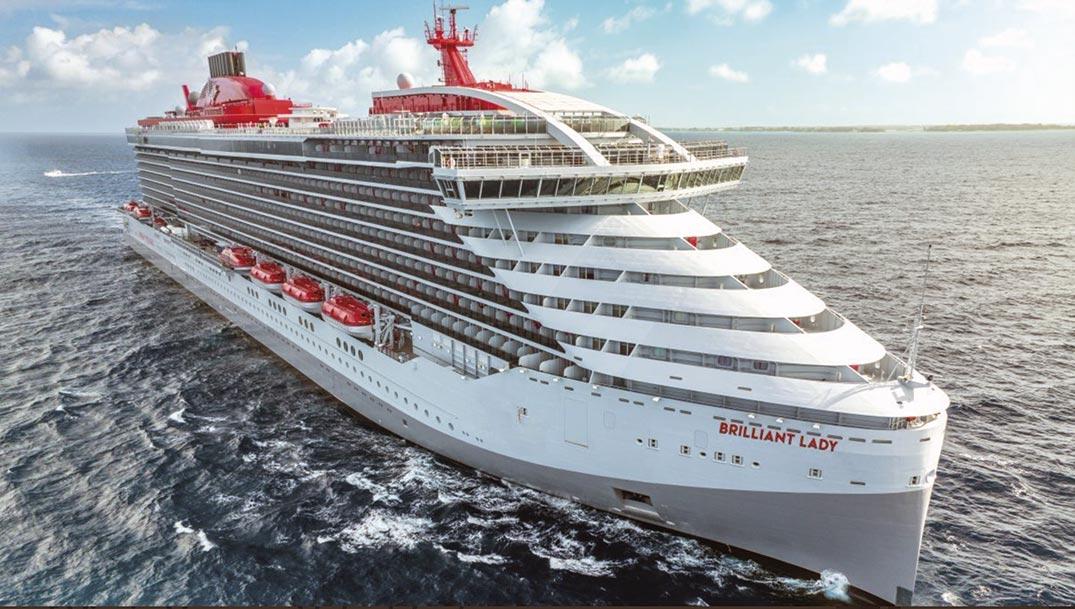
Following her initial season in Canada and New England, the Brilliant Lady (above) will offer itineraries in the Caribbean during the 2025-26 season. The ship is also expected to offer repositioning cruises via the Panama Canal and Central America, as well as itineraries to Mexico and California departing from Vancouver and Los Angeles.
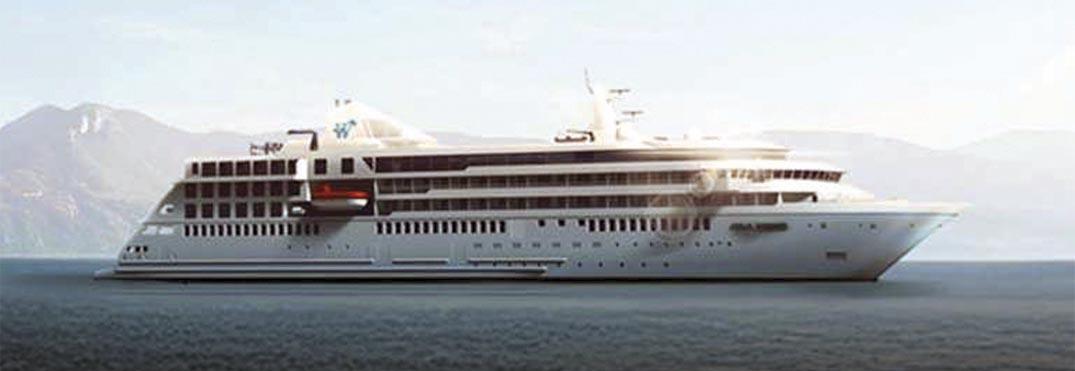
Baja Ferries of Mexico has acquired a Ro-Pax vessel for operation on the Gulf of California route between Mazatlan and La Paz in the form of the 30,678gt/2011-built and 193m long Cabo Star, formerly the Ro-Ro ship Eurocargo Savona of the Grimaldi Group. The vessel was sold to Baja Ferries in 2024 and underwent considerable upgrades and deckhouse modifications in Santander. The ship now has capacity for up to 400 passengers and more than 3,000 lanemetres for assorted vehicles. The crossing time is around 14 hours, and the ship was officially welcomed into the fleet on 17th July.
Brittany Ferries announced the 2026 schedule on 10th July with new timetables crafted following extensive customer feedback and analysis of demand patterns over the last 12 months. Novelties include a more robust winter schedule, with a service on Brittany Ferries shortest, fastest route to France from Poole to Cherbourg from November to March, operated by the 14,000gt/1999-built Commodore Clipper. Plymouth will also benefit from winter sailings linking the city directly with St. Malo. Overnight services from Rosslare in Ireland to Cherbourg increase from 5 per week in each direction to a daily, year-round service, adding a myriad of holiday and short break options for Irish holidaymakers heading south, as well, of course, as French holidaymakers heading north. And now that Condor Ferries is part of the Brittany Ferries family, routes from Portsmouth and Poole to the island of Guernsey and St. Malo also feature in the timetable.
Another invariable consequence of the timetable launch is an annual surge in bookings. In 2024 on the first day of new season bookings, 7,000 customers reserved a ticket making it the busiest day for reservations in Brittany Ferries’ history. The positive trend continued and overall bookings over the last year are 1.8% up on the previous year, and 6.5% up on 2019, the last non-Covid year. The company attributes much of this growth to the modern, greener additions to the fleet including the 36,965gt/2024-built Saint-Malo (Portsmouth-St. Malo) where bookings are up 4.4% in 2025) and the 36,965gt/2024-built Guillaume de Normandie (Portsmouth/Caen), up 3.6%, on the back of a 10% cent rise in 2024. Another star performer is Rosslare to Cherbourg (up 39.7% in 2025), making it an easy decision to increase the service frequency on this route in 2026. On 17th July, the new rail motorway terminal in Cherbourg was inaugurated, linking Cherbourg to Mouguerre (south-west France), enabling intermodal freight between Spain, Ireland, and the UK. Cherbourg handled 91,866 trailers in 2024, confirming its role as a key Ro-Ro hub postBrexit. The €11.2 million terminal, co-financed by local, national, and EU funds, is equipped with LOHR technology for fast trailer transfer.
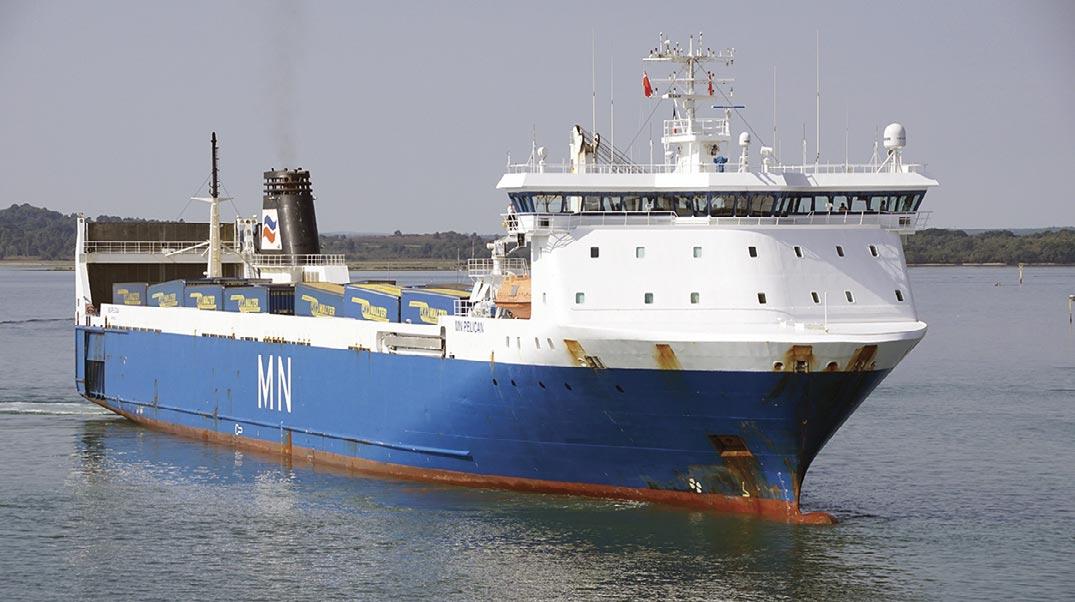
The new operation was expected to see the 12,076gt/1999-built MN Pelican (above) conclude her BilbaoPoole freight service in September 2025.
CalMac announced on 15th July that it had redeployed vessels and amended timetables across the ferry network for part of the summer period due to the continued absence of the 5,221gt/1993-built Caledonian Isles and the return of the 2,991gt/2019-built Alfred from essential maintenance.
The 7,272gt/2024-built Glen Sannox had operated a revised one-ship operation from Troon in the absence of the Alfred, with the 3,296gt/1986-built Isle of Arran running to Brodick-Ardrossan. As a return to Arran for the Caledonian Isles had not been confirmed, several vessels were temporarily moved across the network between Friday 25th July and Sunday 7th September. On Monday 8th September, Troon was also closed to vessels as preplanned essential maintenance work was carried out on the linkspan for 7 days. The port was scheduled to reopen on 15th September. Deployment plans for the remainder of the summer timetable which, ran from 8th September until 19th October, was to be confirmed in early August. The Alfred returned to service on 25th July, rejoining the Glen Sannox on the two-vessel service Troon-Brodick. There was no Ardrossan-Brodick service from 24th July onwards, with the Isle of Arran returning to the Islay run after operating the 09:45 Ardrossan-Brodick sailing that morning. This freed up the 3,504gt/1989-built Lord of the Isles to leave Islay and return to South Uist. The vessel operated services to and from Lochboisdale, freeing up 4,719gt/1988-built Isle of Mull to return to Oban-Craignure to operate alongside the 1,160gt/2015-built Loch Frisa. Finally, this meant that the 1,599gt/2003-built Coruisk departed Mull’s service and redeployed to Skye to operate alongside the 549gt/1991-built Loch Fyne on Mallaig-Armadale. For planning purposes and to give communities and customers certainty, the Caledonian Isles was not factored into the deployment plan. On 22nd July came the update that CalMac was drafting new plans for its winter timetable after confirming that the Caledonian Isles would return to drydock, meaning she would remain out of service for a period of 8-16 weeks, depending on the outcomes of two repair options which would run concurrently as of late July.
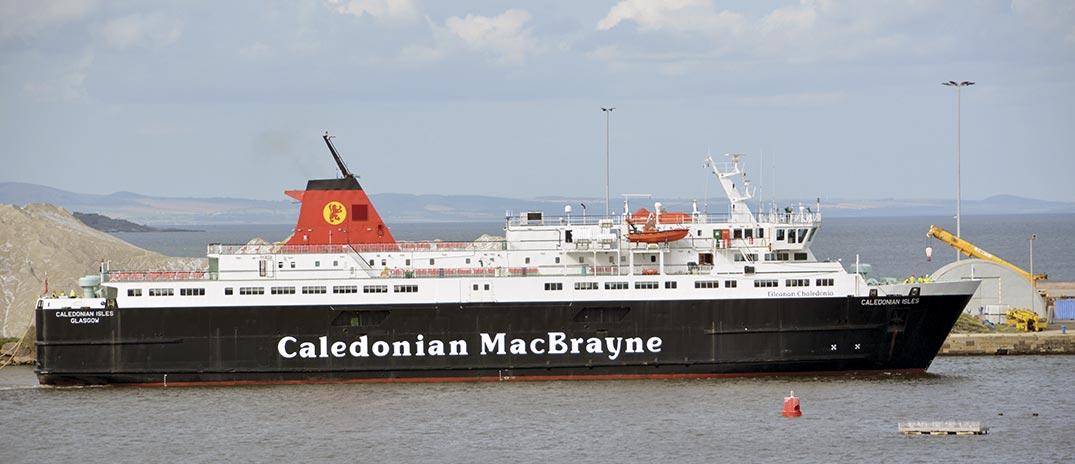
The Caledonian Isles repositioned to drydock in Leith for works to begin on 26th July (above). The ferry operator’s winter timetable runs from 20th October 2025 to 26th March 2026, and its entire fleet undergoes annual maintenance between September and May each year. The anticipated return of the Caledonian Isles, and the expected arrival of the Isle of Islay, will provide relief and resilience. The Caledonian Isles will operate Ardrossan-Brodick when she returns to service.
CMAL announced on 22nd July that a second set of sea trials for the 5,861gt/2025-built Isle of Islay had been carried out by Cemre Marin Endustri in Yalova, Turkey. The trials took place in the Sea of Marmara from 16th-20th July and were attended by staff from CMAL and CalMac. Included in the trials were the set-up and testing of the battery energy storage system (BESS), as well as the testing and optimisation of the power management system (PMS) and energy management system (EMS). The ship returned to the Cemre Marin Endustri quayside where she underwent further outfitting work ahead of delivery in the third quarter of 2025.
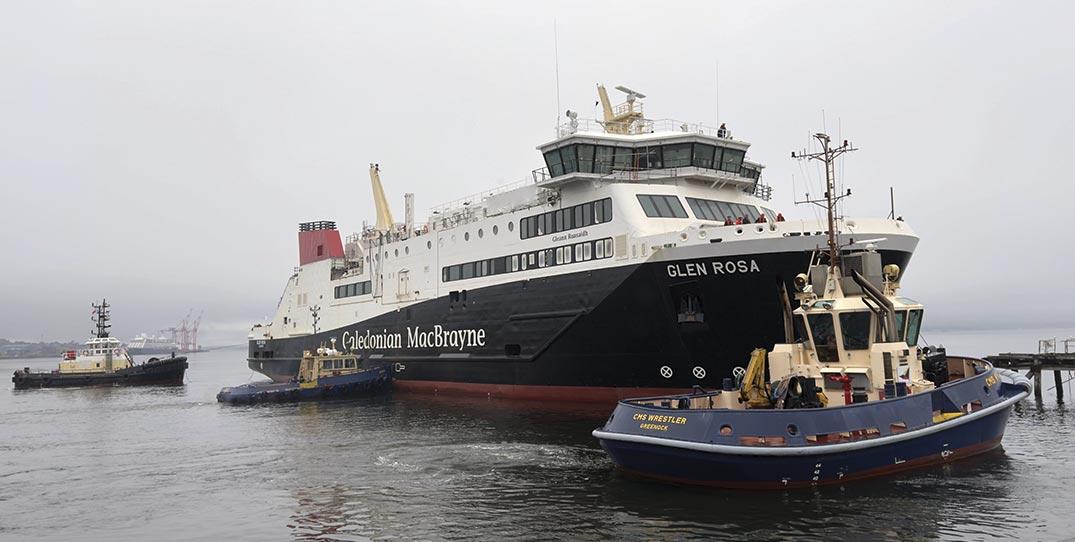
The 7,272gt Glen Rosa, incomplete sistership of the Glen Sannox, was moved to dry dock at Greenock on 21st July to enable Ferguson Marine to carry out essential maintenance, repairs and inspections (above). The package of planned work includes rudder and stabiliser inspections, welding work to the bow clam doors and painting repairs. The ship was expected to remain in dry dock until the beginning of August, at which point she returned to Ferguson Marine’s shipyard in Port Glasgow with vessel completion expected in the second quarter of 2026.
Corsica Linea’s second new E-Flexer, the 38,208gt-2026-built Capu Rossu, was launched at the CMI Jinling Weihai shipyard on 30th June and is destined for the Marseille-Corsica service.
DFDS confirmed on 22nd July that it had cancelled some of its weekly sailings to Guernsey from Jersey. DFDS began the service on 16th June using the 4,995gt/1997-built Tarifa Jet after calls for a reliable link between the islands. The service had operated each Monday, with DFDS saying it would consider putting on more sailings if there was demand.
The service only runs from Jersey and directly back, so no option for day trippers in either direction. DFDS said a lack of staff and problems with the tides meant some crossings were being cancelled to avoid an adverse knock-on impact on the St. Malo service from Jersey. Deputy Kirsten Morel said DFDS had prioritised the sailings between Jersey and France and, strangely, didn’t appear concerned at the more sporadic interisland service for vehicle traffic with the Minister for Sustainable Economic Development commenting that the tender was still "in the very earliest days of a new situation" from a long-term perspective.
Those affected by the lack of services, including those partaking in sports and whose businesses rely on inter-island vehicle ferries, were less positive about the situation forced upon them since March.
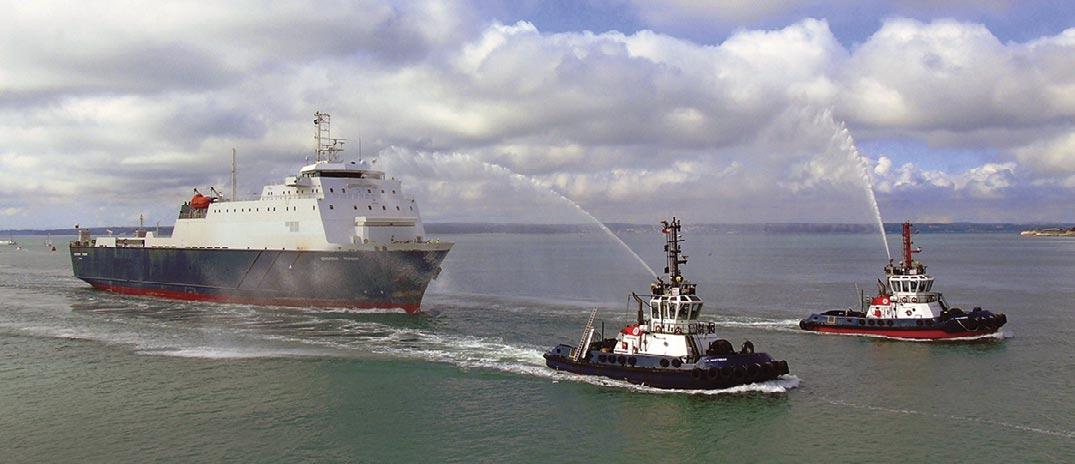
The 11,166gt/1996-built Commodore Goodwill was officially confirmed as joining the DFDS Jersey fleet in June and departed Le Havre under her new name of Caesarea Trader on 20th July, arriving in Portsmouth the next morning to a tug escort (above). The ship entered service on the Portsmouth-Jersey/St. Malo route that evening, replacing the 7,606gt/1998-built Arrow. The latter sailed to Vlaardingen from Portsmouth on 22nd July, presumably on further charter work as DFDS had signed a 12-month charter for her.
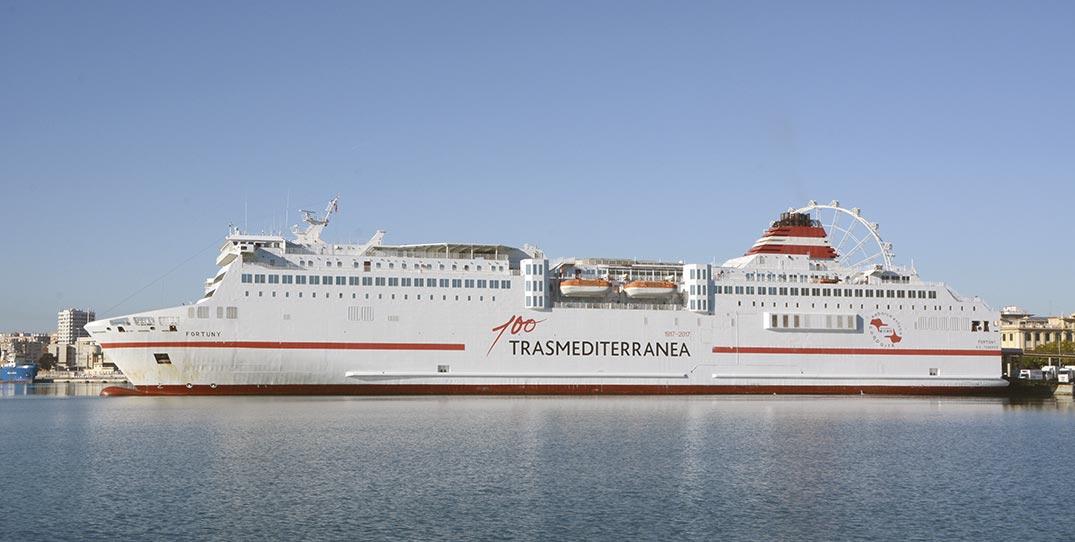
Fred. Olsen Express was, according to local reports, poised in early July to purchase the 26,916gt/2001-built Fortuny (above), ex-Ciudad A. Melilla and built as Fortuny. The ship was reportedly undergoing a 3-month refit at a cost of €9 million to modernise the vessel with a service debut of January 2026 suggested. The 172m long, 26m beam and 1,250 passenger/1,500 lanemetre capacity ship also served Portsmouth-Bilbao in 2006 on the short-lived AT Ferries route. On 30th July the company launched a new thrice-weekly freight route between Santa Cruz de La Palma and Santa Cruz de Tenerife using the 11,671gt/2001-built Bahía Cargo (ex-Finnhawk), 11,671gt/2000built Bentayga Cargo (ex-Finnkraft), and the 10,585gt/1998-built Breñas Cargo (ex-Akranes). The service will also facilitate connections with Gran Canaria, Fuerteventura, Lanzarote, and the Spanish mainland. If Baleària succeeds with its desire to acquire ARMAS Trasmediterranea, there have been concerns that a maritime monopoly could emerge with the Spanish company and Canary Islands based Fred. Olsen Express controlling the routes. Should this happen, the services being offered jointly by both companies would have to change in the first instance, but the precise impact on operations remains to be seen.
GNV’s 52,847gt/2025-built GNV Orion was christened on 4th July in Genoa whilst moored alongside her sistership, the 45,909gt/2024-built GNV Polaris. The fleet-wide modernisation and expansion plan will see the arrival of six more next-generation, LNG-powered ferries by 2030. During July came the news that the MSC Group, founded and controlled by Gianluigi Aponte, will sell back its 49% stake in Moby Lines to Onorato Armatori, the ferry company controlled by Vincenzo Onorato’s family. The move was disclosed by the Italian antitrust authority, following communications from SAS Shipping Agencies Services SARL, GNV (both part of the MSC Group), and Moby. This decision aims to preempt further action from the Autorità Garante della Concorrenza e del Mercato, which last year launched an in-depth investigation into possible anti-competitive agreements between GNV and Moby Line. The probe focused on four routes between mainland Italy and the islands of Sardinia and Sicily: CivitavecchiaOlbia/Genoa-Olbia/Genoa-Porto Torres and Naples-Palermo. The MSC Group originally acquired the 49% stake in 2023, investing €150 million to rescue Moby Line from bankruptcy and a “concordato preventive” process at the Court of Milan. The 49,642gt/2002-built ferry La Superba departed Palermo on a oneway voyage to Aliaga for scrapping on 23rd July under tow by the 4,604gt/2002-built offshore vessel MSC Dragon. The ship was declared a constructive total loss following a fire on 14th January 2023 whilst berthed in Palermo. When introduced, the ship was the largest passenger ferry in the Mediterranean.
Incat Tasmania revealed in July that it had secured a landmark contract to build world-leading electric ferries for Molslinjen of Denmark. The company has been selected to design and build two new 129m long state-of-the-art battery-electric ferries powered by approximately 45,000 kWh battery systems. They will serve the Kattegat route between Jutland and Zealand, form-
ing part of the world’s largest electrification project at sea. This significant international order further cements Incat’s position as the world leader in sustainable shipbuilding, with construction already well advanced on the 130m long Hull 096, China Zorilla (the world’s largest battery-electric ship to date) and Hull 100, a 78m next-generation hybrid ferry. Early-stage construction of the vessels will begin in the coming months, with delivery of the first vessel scheduled in late 2027. Once operational, the ferries will each carry up to 1,483 passengers and 500 cars, operating at speeds over 40 knots.
Islands Unlimited opened bookings for September/October in July for the Guernsey-Jersey service. The operator had purchased the 389gt/1990-built and 317 passenger capacity San Pawl from Virtu Ferries rather than charter her, so the operation deserves every success. The company hopes to include Alderney in the future and, considering the sporadic inter-island vehicle service, perhaps should seek backing for a vehicle ferry one day.
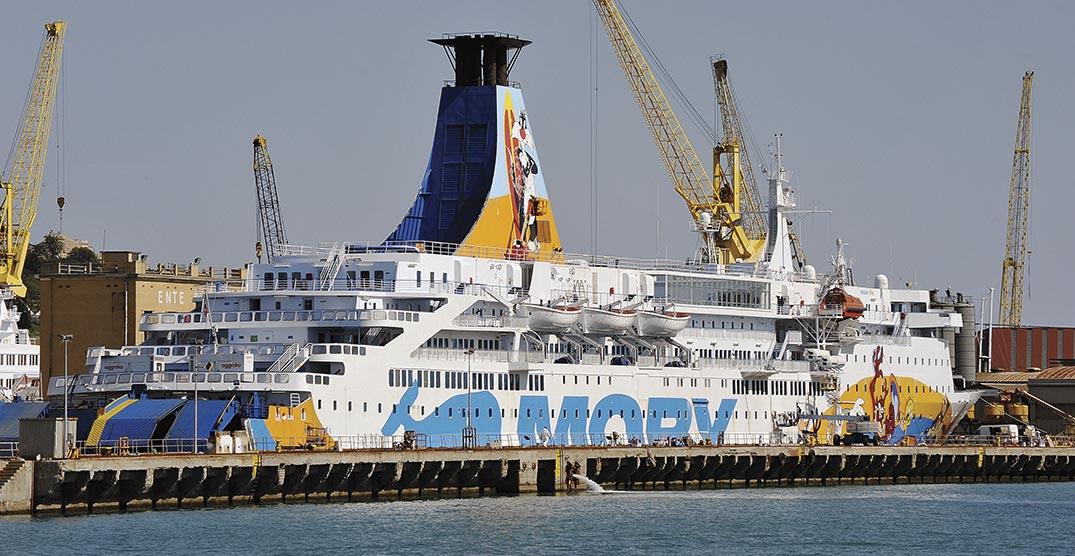
Moby Line’s Moby Drea (above) was disposed of by the company and left Genoa under tow of the 322gt/2011-built tug Sea Dream on 18th July. It was believed that the ship was destined for demolition at Aliaga, but the tug actually proceeded to Split in Croatia, arriving 27th July.
Once at the Brodosplit shipyard, the new owner, Med Fuel, based in Messina, Italy, confirmed that a first phase of work was to be carried out in Croatia to remove asbestos panelling. The ship was then expected to move to Piraeus for refurbishment of the cabins etc.
The exact outcome of this project is yet to be confirmed. The 22,528gt/1975-built ship began life as the Tor Britannia for Tor Line, passing to DFDS in 1981 before taking the name Prince of Scandinavia in 1991, which she carried until 2003 when sold to Moby. The cruise ship-like ferry was very popular on routes from Harwich and Newcastle for DFDS.
The Orkney Islands Council confirmed in July that it has awarded a contract to the firm Arch Henderson, in partnership with Leadship Design and Consulting, for phase two of its ferry replacement programme. This phase will see specifications developed for five new ferries, one large vessel for the South Isles, two smaller vessels for the Papa Westray and North Ronaldsay routes and the Graemsay and North Hoy routes, and two medium-sized vessels for the Rousay, Egilsay and Wyre, and Shapinsay routes.
As the ferry proposals require associated port upgrades, the contract also includes the design of harbour infrastructure works, such as new Ro-Ro ramps in North Ronaldsay and Papa Westray. Initial community consultation for this phase was expected to begin in August.
Work on phase one of the program continues, involving the design of three large ferries for the outer north isles by the Danish consultancy Knud E Hansen, and simulation testing of their designs has been taking place in Germany.
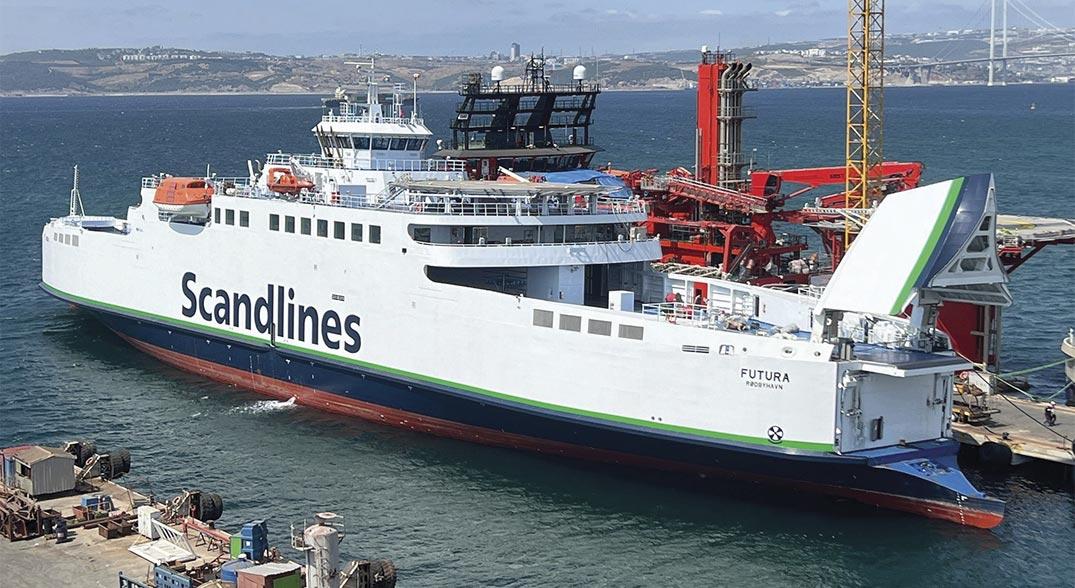
Scandlines announced on 21st July that the new emission-free ferry Futura (above) was preparing for departure for home after her second sea trial in the Sea of Marmara. The 147m-long ferry, which is equipped with a 10MWh battery system, was built by Cemre shipyard in Türkiye. Capacity will be for 140 passengers and 66 cars, and the vessel will serve on the Fehmarnbelt between Puttgarden, Germany, and Rødby, Denmark, increasing freight capacity by 23%, from the latter part of 2025. The ferry will initially be able to charge in 17 minutes in Rødbyhavn, Denmark. A charging system is also being installed in Puttgarden, Germany, which will take charging time down to 12 minutes in each port and enable the vessel to operate on battery power in both directions from the autumn, with a crossing time of 45 minutes. The Futura also has the option of hybrid operation and is equipped with 3 diesel generators to ensure flexibility and reliability during the delivery voyage from Turkey. The project represents an investment on €80 million.
SeaJets 19,763gt/1985-built Superstar II (ex-Color Viking, Stena Invicta, Pedar Paars) entered service on 2nd July from Piraeus to Mykonos, Ikaria, Samos, Patmos, Leros, Kalymnos and Kos for the 2025 summer season. She was purchased from Color Line in November 2022 and has been in Greece since March 2023.
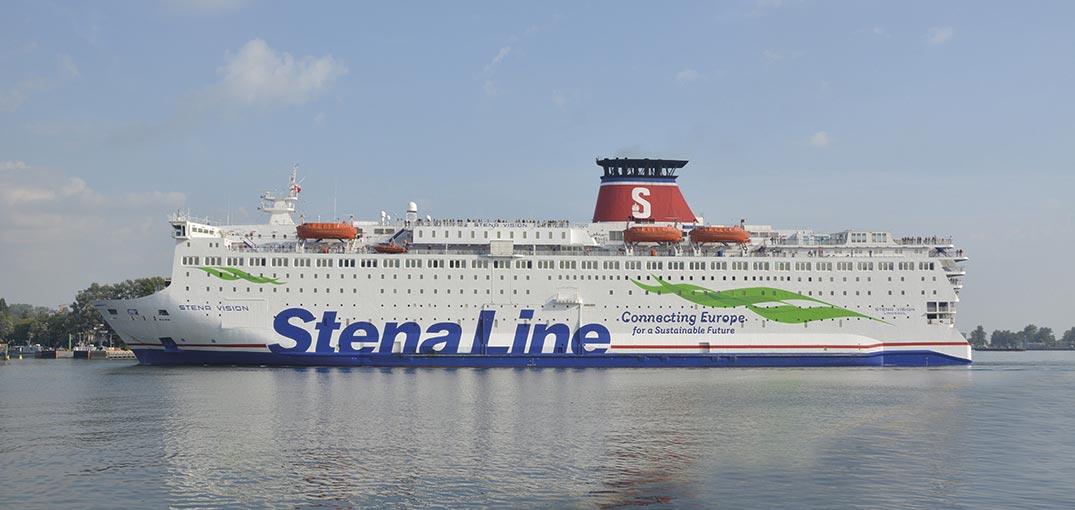
Stena Line announced that following a strategic route review, that from 30th September 2025, the 3-day Rosslare-Cherbourg service would be withdrawn. The last sailing departed Cherbourg on 29th September, arriving in Rosslare on 30th September. The ship, the 39,191gt/1987-built Stena Vision (above), looked likely to leave the fleet after this time.
In July Stena Line re-branded its famous Hygge Lounges on its Dublin-Holyhead route to underline the connections between Scandinavia and Wales and celebrate the Welsh Year of Croeso (welcome) in 2025. The Hygge Lounge became the Hwyl Lounge on both the 43,532gt/2003-built Stena Adventurer and 41,671gt/2019-built Stena Estrid. The 20,835gt/2025-built Stena Futura completed her sea trials in June and was handed over to Stena Ro-Ro prior to her departure from Weihai in China on 23rd July bound for her new home on the Irish Sea (Heysham-Belfast). The ship’s first call was Singapore on 31st July. A service debut was expected August/September. The return to normal schedules at Holyhead following berth repairs was slightly delayed until 18th July when the general timetable resumed.
The 77,678gt/2025-built Chaumine and Leonine (G9e class vessels) are the largest short sea ro-ro vessels in the world. The second example, the 234m long/8,000 lanemetre capacity Leonine, embarked on her maiden voyage from the Far East to Europe in early July. The ship also completed a short drydock at Changhong International Shipyard in Zhoushan, China, following delivery from Hyundai Mipo Dockyard to receive a low-friction silicone hull coating, and to install bow thruster grids engineered to reduce hull resistance.
COSCO Shipping introduced its first vehicle carrier powered by solar energy and LNG, namely the 68,252gt/2025-built Yuan Hai Kou, in May and the 7,000-vehicle capacity ship sailed to Piraeus from Nansha where she arrived on 24th June to a welcoming ceremony. The 199.9m long and 12 deck (four adjustable) ship is partly powered by the world’s largest photovoltaic system on a cargo ship (302.8 kWp, generating approx. 410,000 kWh annually). The photovoltaic system consists of over 500 Longi modules, built for maritime environments. These generate power for onboard services (lighting, systems and communications) thus reducing fuel use by some 111 tonnes per year. The delivery of the Yuan Hai Kou expands the Yuanhai Auto Carrier fleet to 20 ships, with plans to increase to 30 by 2026.
Grimaldi Group named the 93,145gt/2025-built Grande Shanghai on 21st July in Haimen (Jiangsu, China), marking the launch of the first of 10 next-generation PCTC (Pure Car & Truck Carrier) vessels commissioned by the Grimaldi Group from China Merchants Heavy Industries. The first 5 vessels will be capable of transporting 9,000 CEU (Car Equivalent Units), while the remaining five will offer an increased capacity of 9,800 CEU. The Grande Shanghai stands out as a true technological gem, combining high cargo capacity and environmental sustainability. Compared to the previous car carrier generation, she reduces fuel consumption per cargo unit transported by 50%. The ship’s design is the result of close collaboration between the Grimaldi Group and the naval architecture firm Knud E. Hansen. She is 220m long with a 38m beam and a service speed of 18 knots. Across her 14 decks, she can accommodate both electric and conventional vehicles. The Grande Shanghai is also the first vessel in the Grimaldi fleet to obtain the Ammonia Ready class notation from the Italian Shipping Registry (RINA), which certifies that she may be converted for the use of ammonia as an alternative, zero-carbon fuel, a key step toward energy transition and efficient, carbon-free maritime transport.
The ship integrates numerous green technologies including mega lithium batteries with a total power of 5 MWh, 2,500m2 of solar panels, and cold ironing with shoreside supply of electricity where available.
Additional innovations include an Air Lubrication System, optimised hull design, and an innovative gate rudder installed for the first time on a PCTC vessel. This rudder, featuring two foil blades positioned on either side of the propeller, improves propulsion efficiency and manoeuvrability.
Kawasaki Kisen Kaisha (K Line) has taken delivery of a new PCTC built by Shin Kurushima Toyohashi Shipbuilding. The 75,259gt/2025-built Tethys Highway belongs to a series of LNGpowered PCTCs that were built in compliance with ClassNK requirements. Like her sisters, the new ship is 199.99m long with a beam of 38m, a draught of 9m and capacity for 7,000 vehicles. Power is provided by a dual-fuel main engine giving a service speed of 19 knots. The LNG capacity is 2,439 m3. The engine is also capable of reducing emissions of methane slip and is fitted with an exhaust gas recirculation (EGR) system. Previous deliveries in this series were the Century Highway Green in 2021,
the 2024-built Nereus Highway and Poseidon Highway, and the 2025-built Oceanus Highway.
P&O Ferries announced in early July the closure of the Zeebrugge-Teesport route, upon which the 17,464gt/1994-built Norbay had been operating, meaning that P&O Ferries no longer has any sailings from Teesport. Previously, the company offered nightly sailings to both Zeebrugge and Rotterdam with the Zeebrugge route having been in existence for over 50 years. CLdN now serve Teesport. News of the ferry route closure came as a blow to the Northeast and followed less than two weeks after Sabic, a Saudi chemicals giant, revealed plans to permanently shut the Olefins 6 facility on Teesside, putting around 300 jobs at risk. PD Ports stated that the P&O closure would not affect jobs at the port.
The ship began her final week of service on 21st July and will be redeployed elsewhere in the network. The move is part of a strategic shift to focus operations on Tilbury and Hull. The Zeebrugge-Hull service is expected to return to Ro-Ro format by mid-August. Presumably the Norbay will serve this purpose, replacing the Lo-Lo service offered by the 5,067gt/2000-built feeder containership Freya.
Rederiaktiebolaget Eckerö (Eckerö Group) agreed in July to acquire Rederi Fjärdvägen, the operator of the Långnäs to Nådendal ferry route, from Rederi Lillgaard. The transfer of ownership was planned for 18th August. The transaction included the company, all personnel, and its assets, including the Ro-Ro vessel Fjärdvägen. Rederi Lillgaard had operated the route since 1994. The 6,040gt/1972-built Fjärdvägen is a real stalwart of the Ro-Ro scene in Europe and operated from Portsmouth to the Channel Isles 1989-1995 by P&O European Ferries as the Norman Commodore until replaced by new tonnage, The 11,166gt/1995-built Island Commodore is no longer a Ro-Ro ship having been converted into the cable layer Wave Sentinal in 2000.
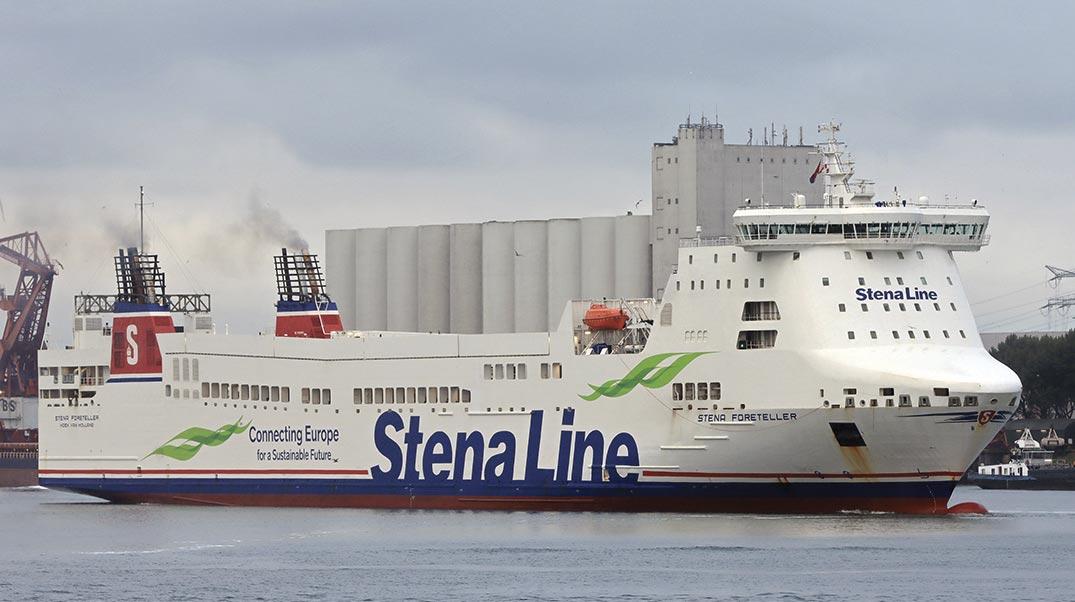
Stena Line’s rebuilt 30,238gt/2001-built Stena Foreteller (above) and 24,688gt/2003-built Stena Forerunner have been moved from the Harwich-Rotterdam route to the Immingham-Rotterdam route, swapping with the 25,609gt/2010-built Jutlandia Sea and 25,609gt/2009-built Fionia Sea. The Stena Foreteller arrived home in Rotterdam on 23rd July and returned to service on the Europoort (Rotterdam)-Immingham route two days later, following a major rebuild and renovation at CMI Jinling, Weihai where a new fourth vehicle deck was added, increasing capacity by 30%. The lanemetre capacity has risen from 3,000 to 4,000. The ship is also now equipped with a shore power connection system, upgraded bow thrusters, and additional mooring winches. Preventive maintenance and system upgrades were carried out, and the ship was repainted in full Stena Line livery. Sistership Stena Forerunner sailed to Harwich on 25th July for a brief call before departing for her rebuild in China, first stop Walvis Bay on 9th August.
FEATURE Newbuild of the Month
by Andrew Cooke

UK Dredging (UKD) was established in 1996 as a division of Associated British Ports (ABP). UKD vessels can be seen at work around the shores and ports of the UK and near continent with operations overseen from UKD's head office in Cardiff. The company is backed by the financial strength of ABP, the UK's largest and leading ports group, handling about a quarter of the country's seaborne trade. This strength has allowed UKD to maintain a programme of continued capital investment.
Vessels equipped with the latest dredge-monitoring and guidance systems allow UKD to provide efficient solutions to customers' dredging requirements. UKD's experience has evolved from the teams responsible for much of the maintenance dredging at Britain's ports since the 19th century. In days gone by, most ports had a dedicated dredger or fleet of dredgers to carry out the work required. Over the years, rationalisation and modernisation have created a sophisticated fleet of trailing suction, grab dredgers, and plough vessels using the latest technology to dredge millions of cubic metres of material each year. The 2025 UKD fleet consists of 3 Trailing Suction Hopper Dredgers (2,692gt/1993-built UKD Marlin, 4,171gt/1997-built UKD Bluefin and 3,087gt/2010-built UKD Orca), 1 Grab Dredger (1,081gt/1968-built Cherry Sand), 2 Damen Multicat support/plough vessels (206gt/2000-built UKD Seahorse and 224gt/2003-built UKD Sealion) plus a new arrival. Readers may also recall the 129gt/1976built Flat Holm, which used to serve as a support/plough vessel and was sold to Coastline Surveys of Falmouth just prior to the delivery of the UKD Seahorse. She still operates under the same name and is engaged in the same array of duties. UKD's combination of dredging plant has been specifically selected, designed and built to offer maximum versatility. Cutting Edge.
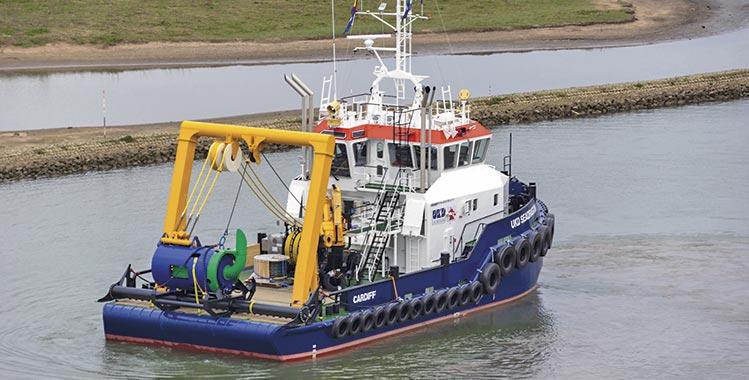
On 8th June 2023 UKD placed an order with Damen Shipyards at Hardinxveld in The Netherlands for a new instance of the Shoalbuster 2711 but not just any such example. The newbuild, Yard No. 571866, was ordered with the optional Water Injection Dredging capability. The vessel’s keel was laid down on 14th December 2023, the launch took
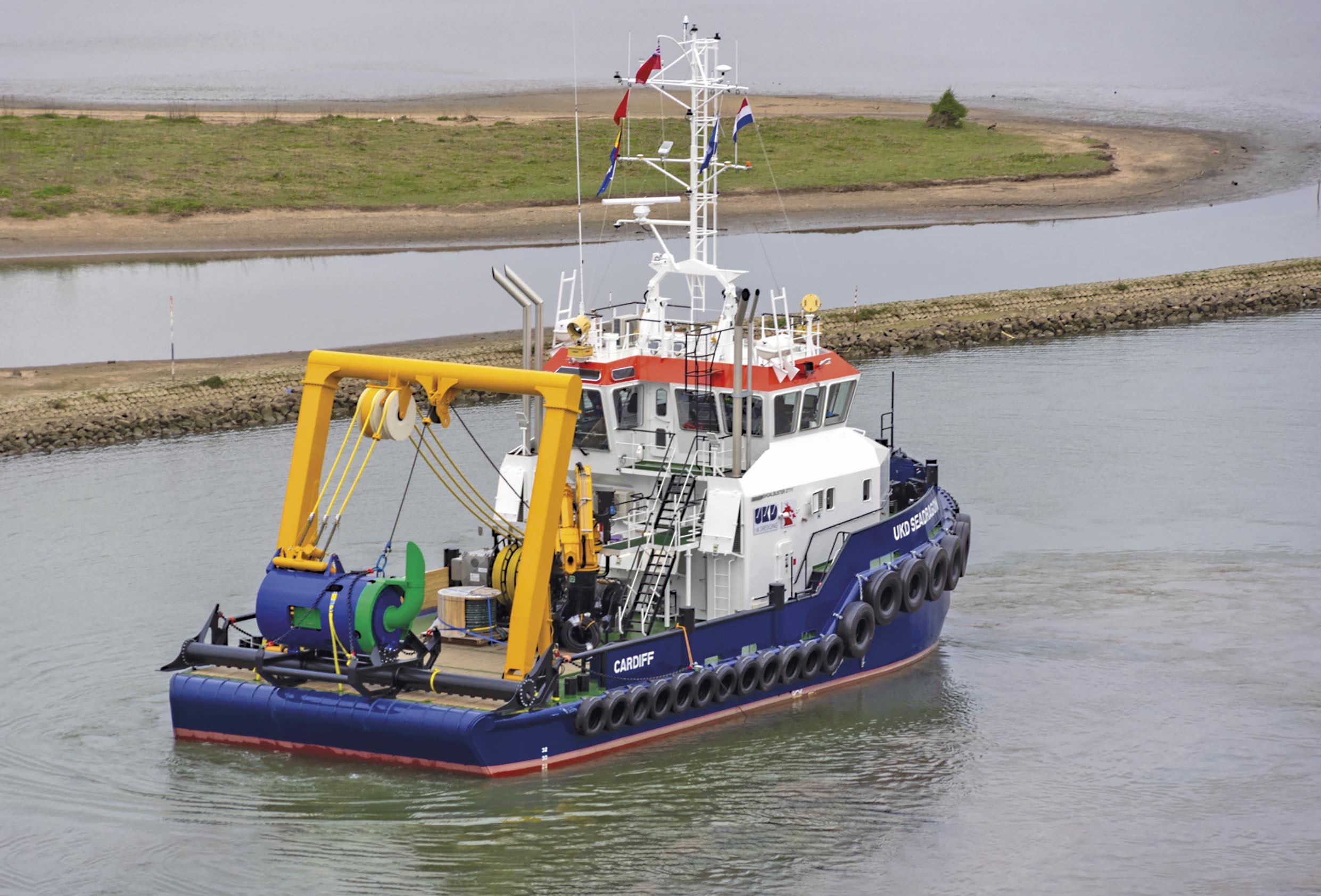
place on 17th January 2025 with delivery following on 25th March 2025. As with all Damen workboats, this Shoalbuster is renowned for its versatility and its capability to handle a vast range of tasks. The spacious accommodation is suitable for 7 persons and includes a large messroom and an independent galley. Featuring a large deadweight of 120 tonnes, the vessel is also equipped with a moonpool to accommodate transducers. On 31st March 2025, UK Dredging welcomed the arrival of its newest vessel, the UKD Seadragon, to Cardiff. The Shoalbuster 2711 Water Injection Dredger (WID) is equipped with a cutting-edge diesel-electric propulsion and power management system that optimises engine efficiency, significantly reducing emissions.
A maximum bollard pull of 43 tonnes for the 2711 established its towage credentials with the power being provided aboard the UKD Seadragon by two 750kW output Danfoss EM-PMI540-T4000 watercooled diesel generators. The bollard pull capacity for the UKD Seadragon is given as 25.30 tonnes whilst the service speed is 10.5 knots. The generators are linked to a pair of Reintjes AF 563 /5,947:1 gearboxes, which in turn drive a pair of 1,800mm diameter Promarin fixed pitch propellers in Optima nozzles. Manoeuvrability is aided by a 800mm diameter Veth VT-180, 145 bkW transverse tunnel thruster.
The UKD Seadragon is 27.02m long overall with a beam of 10.50m, a hull depth of 4.25m and a min/max draught of 2.80/3.00m. The 2711’s increased beam provides multiple benefits including space an extra crewmember if needed (a maximum of 7 depending on layout), increased stability plus increases in cargo deadweight and bollard pull. The main deck/tank top on the vessel offers cabin accommodation for the crew of 5, all areas being heated and air-conditioned, in accordance with MLC regulations. There are 4 cabins, sanitary spaces and a changing room all fitted at tanktop level. Above on the forecastle deck is the crew’s galley, a large mess/day room, stores plus a toilet, with the bridge deck one level above, with 360-degree visibility. Despite the robust and purposeful “large vessel” character, the 2711 is also still within the 24m load line length, a key point for operators working in U.K. waters or out of U.K. ports. This multipurpose, shallow draught workboat is defined
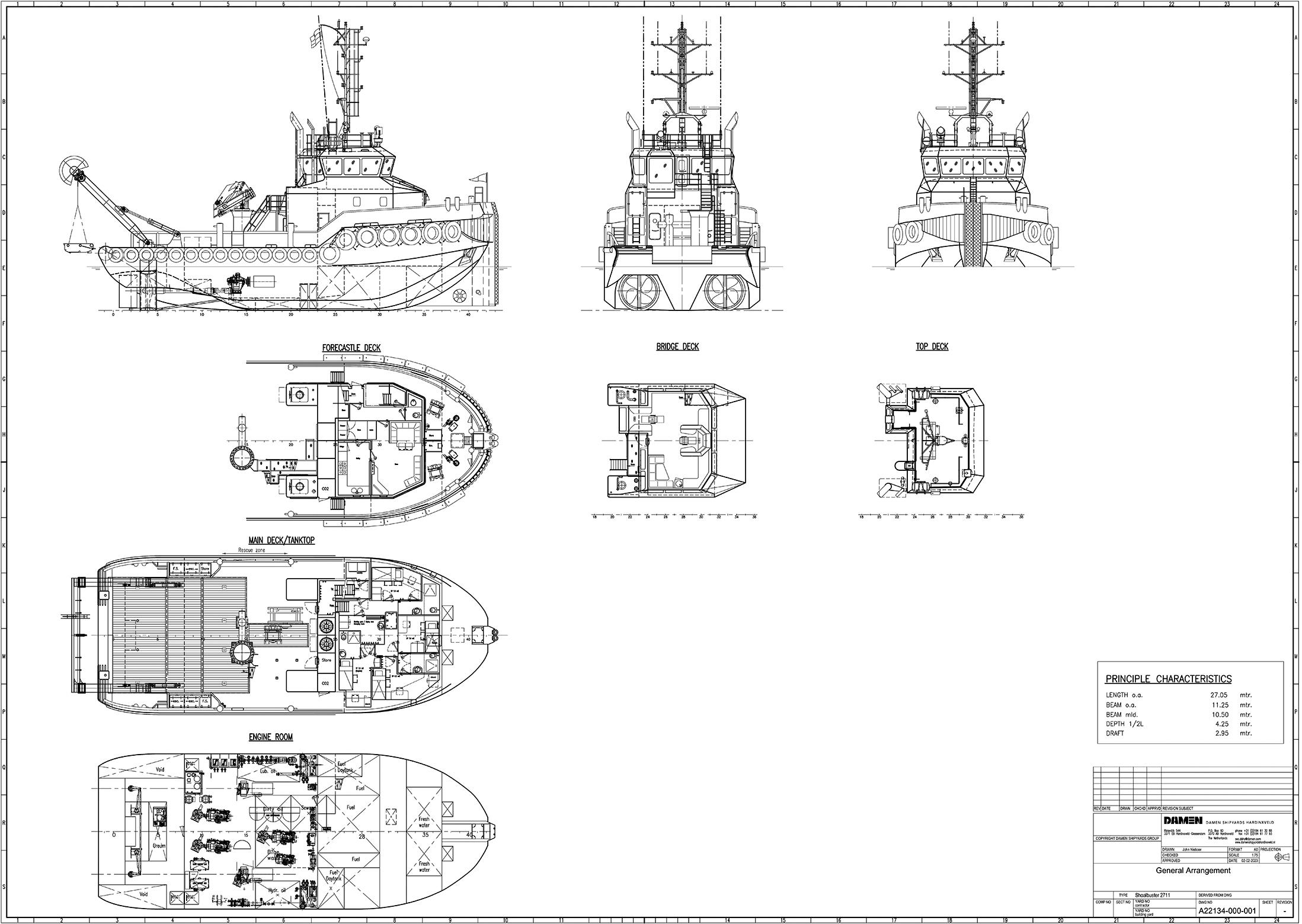
by a heavy-duty construction and large work deck as well as a broad scope of towing/anchor handling equipment.
Workhorse The Damen Shoalbuster 2711 was first introduced in 2019 as a broader version of the Shoalbuster 2709, providing extra space both on and below decks, as well as added stability. The present Shoalbuster family also includes the 2308, 2609, 2709 ICE, 3209, 3311, 3612 and 3815 SD. The first 2 digits relate to the length in metres and the second 2 digits refer to the beam of the vessel in metres. The prefixes SD and ICE are shallow draught and ice-class variants.
Damen has a rich pedigree of shipbuilding, and the story began with brothers Jan and Rien Damen opening a small yard on the River Merwede in Hardinxveld, The Netherlands in 1927. By the end of the 1930s, though still a small concern, Damen was nonetheless successful and had delivered its 100th vessel.
The second generation began in 1969 when Kommer Damen took over the company with a new vision of standardised shipbuilding and the HQ moved down the river from Hardinxveld to Gorinchem.
From 1978 Damen began to construct vessels outside The Netherlands and expanding, acquiring De Groot (1988), Amels (1992) and Royal Schelde (2000) and entering the dredging, yachting and naval markets. The Sea Axe Bow revolution began in 2006 and, in 2020, Arnout Damen, son of Kommer, became CEO. Arnout’s appointment came at an exciting time for the company as it aligned towards the future with a focus on sustainability, digitalisation and operational excellence.
The UKD Seadragon’s arrival into Cardiff Bay at the end of her delivery voyage saw her escorted by two Boluda tugs, which ceremonially sprayed their water cannons. The UKD Seadragon is the first commercial vessel to be registered in Cardiff for six years. After a brief stay at Queen Alexandra Dock, the new vessel commenced operations at the beginning of April. The UKD Seadragon then returned to the Port of Cardiff for her blessing and naming ceremony by ABP on 14th May 2025 in the Roath Basin. Mrs Rhian Lewis acted as the godmother (wife
of ABP Chairman Jon Lewis) and officially named the vessel UKD Seadragon. The vessel was also blessed by the Rev. Rufus Noy. By coincidence, Damen’s delivery prior to this Shoalbuster was the 297gt/2025-built ASD Tug 3010 ICE named Drake (Swedish for dragon). Of course, the UKD Seadragon follows the sealife themed naming policy, and, in this instance, the name comes from a present-day species of fish known as a Seadragon, which consists of only three recognised species, the Common Seadragon (Phyllopteryx taeniolatus), the Leafy Seadragon (Phycodurus eques) and the more recently described Ruby Seadragon (Phyllopteryx dewysea). They are more mobile than Seahorses and are closely related to both them and pipefish.
However, whilst researching the background for the chosen name, it also transpired that, in 2021 the fossilised remains of Britain’s largest ichthyosaur, colloquially known as a ‘Sea Dragon’, was discovered at Rutland Water Nature Reserve. It was thought to be the first ichthyosaur of its species, called Temnodontosaurus trigonodont, to be found in the UK. The Sea Dagon is approximately 180 million years old and, with a skeleton measuring around 10m long, and a skull weighing approximately one tonne, that found in Rutland is the most complete large ichthyosaur ever found in Great Britain. Ichthyosaurs first appeared around 250 million years ago and were extinct 90 million years ago. They were an extraordinary group of marine reptiles that varied in size from 1 metre to over 25 metres in length, and resembled dolphins in general body shape. As fascinating as that is, there is already a UKD Seahorse, so the link with the Seadragon species that live in the present is the applicable one.
Aft of the deck house is the 75m2 working deck with a 60m2 area for cargo. These vessels can carry a maximum of 2 TEU (subject to the installed deck equipment) and have a deckload of 15 tonnes per m2. The carrying capacity deadweight is 120 tonnes. Located forward of the clear deck area is a HS Marine AK 40 E3 electro-hydraulic knuckle boom crane with a maximum lift capacity of 2.30 tonnes at an outreach of
11.30m and 5.70 tonnes at an outreach of 5.20 metres. At the stern of the UKD Seadragon is sited a 30t SWL Huisman Equipment hydraulic Aframe that forms the working platform for both the 10 metres wide and 8 tonne dredge plough and the Damen E-DOP450L, the largest of a series of compact and multifunctional dredging pumps. This equipment is hoisted/lowered by a Kraaijeveld SA-25-H-TR winch, located aft of the deckhouse, midships (with the crane to starboard), to permit a subsurface working depth of 5-20 metres. Two Kooiman 60 tonne BHL towing wire winches are also installed. The main item of deck equipment is what makes the vessel a 2711 WID, the E-DOP450L multifunctional dredging pump, the largest (450 litres) of this series of water injection dredging pumps. As a low pressure submersed dredge pump it has a high production rate of solids and a big sphere passage of 9.9 metres. This highly efficient pump has low operating costs and is powered by a generator for silent and clean dredging. The direct electrical drive is integrated into the steel casing and the unit can operate at a maximum depth of 25 metres. The hydraulically driven pump can operate at 4000m3 per hour at a pressure of 2.50 bar via the umbilical deck winch and is suspended from the AFrame. The pipe diameter is 165mm and the E-DOP450L unit is 2,924mm high with a 1,915mm diameter. Each 400kW unit operates at 470rpm. The dredging action involves the submerged dredge pump supplying water that is injected into the built-up sediment (fluidisation), which is thus refloated and dispersed by the water currents instead of having to be extracted mechanically. Because this method of dredging minimises the risk of turbidity, it is ideal for use in environmentally sensitive areas. The UKD Seadragon is fully equipped with DGPS and digital mapping, making her survey equipment fully compatible with all of UK Dredging's fleet and is also able to act on a stand-alone basis. A Winch encoder accurately determines plough depth so that the combined package offers a complete survey and bed levelling service. The vessel was first put to work in April/May around ports in Wales prior to her naming ceremony.
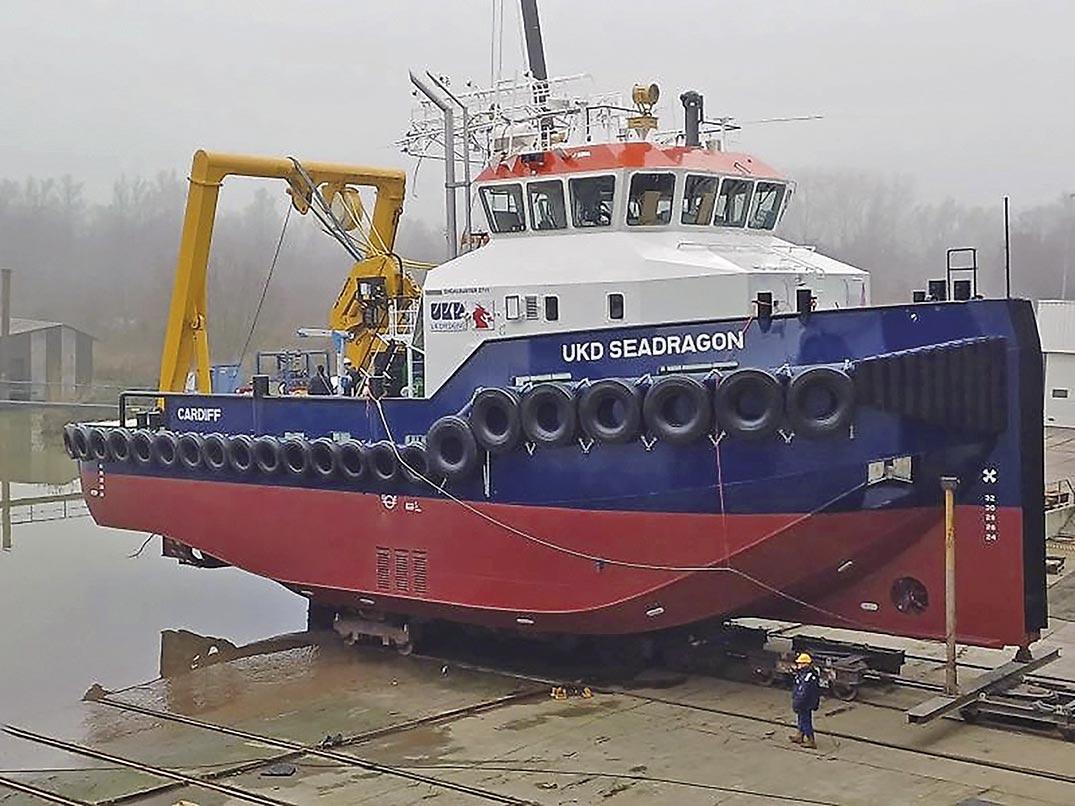
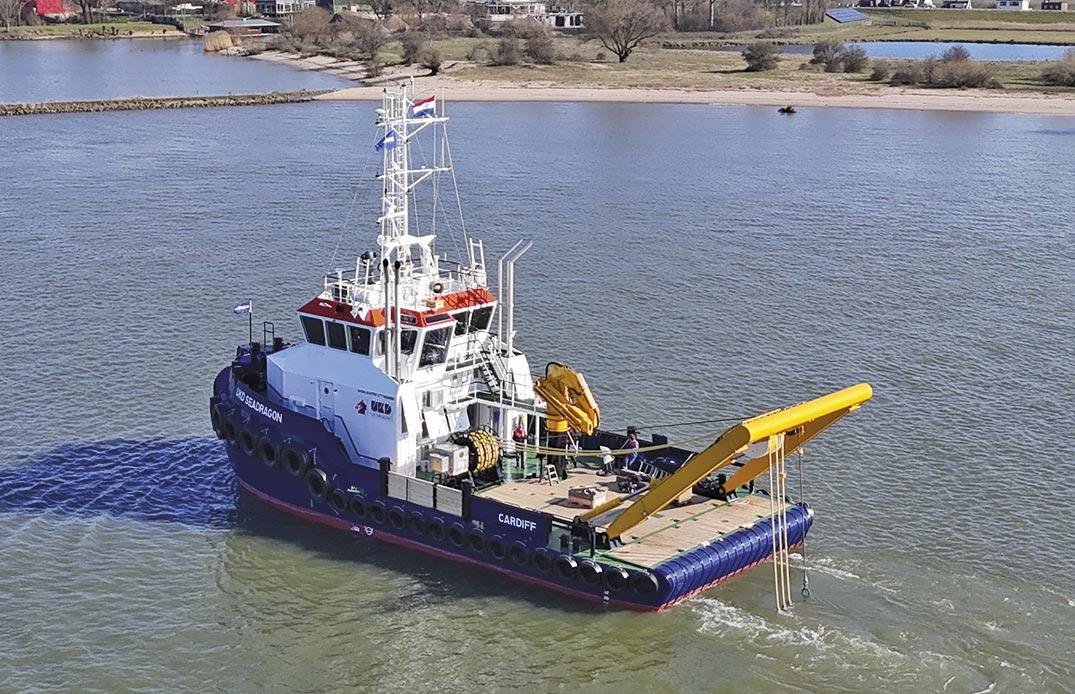
Vessel Design: Shoalbuster 2711 WID (Water Injection Dredging)
Basic Functions: Water Injection Dredging (WID), ploughing, pushing, support, supply
Emission Regulations: IMO tier III certified
Manufacturer: Damen Shipbuilding
Shipyard: Hardinxveld, The Netherlands
Yard Number: 571866
Order Date: 8th June 2023
Keel laying: 14th December 2023
Launch: 17th January 2025
Delivery Date: 25th March 2025
Registered Owner: Associated British Ports, Aldwych House, 71-91, Aldwych, London, WC2B 4HN, UK.
Operator: UK Dredging, Queen Alexandra House, Cargo Road, Docks, Cardiff, CF10 4LY, UK
IMO: 1020370
Port of Registry: Cardiff
Flag: United Kingdom
Classification: Bureau Veritas
Vessel Type: Offshore Support Vessel/Tug/Special Work Boat
Navigation: Unrestricted
Gross Tonnage: 232
Deadweight: 120dwt
Length Overall: 27.02m
Length Between Perpendiculars: 23.60m
Beam: 10.50m (11.60m maximum)
Hull Depth: 4.25m
Draught: 2.95m
Freeboard: 756mm
Hull Material: Steel
No. Watertight Compartments: 4
No. Continuous Decks: 1
Speed: 10.50 knots
Bollard Pull: 25.30 tonnes
Propulsion: Diesel Electric Generators:2x 765kW output Danfoss EM-PMI540-T4000 units, water-cooled
Propulsion Motors: 2x 777kW @ 1,760rpm Permanent Magnet Motors (Water Cooled) - Single power
Gearboxes: 2x Reintjes AF 563 / 5,947:1
Propellers: 2x 1,800mm diameter Promarin fixed pitch propellers in Optima nozzles - 269rpm
Bow Thruster: 1x Veth, VT-180, 145 bkW transverse tunnel thruster with 800mm propeller
Hydraulic A Frame: Huisman Equipment
A Frame SWL: 30 tonnes
Water Injection Dredging Pump: Damen SHB2711
Underwater Pump: Fully electric Damen E-DOP450 dredge pump 4,000m3/hr @ 2.5 bar capacity
Dredge Plough: 10m wide/8 tonnes
Cargo/Work Deck Area: 60m2
Anchor: 2x 315 kg HHP with chain (192,5m long/19 mm diameter)
Anchor Winch: 2x Kraaijeveld, KAB-1-H-19
Tank Capacities
Fuel Oil: 126.99m3
Fresh Water: 30.00m3
Sewage: 4.70m3
Dirty Oil: 4.90m3
Lubrication Oil: 5.20m3
Bilge Water: 4.90m3
Hydraulic Oil: 3.00m3
Urea Tank: 8.40m3




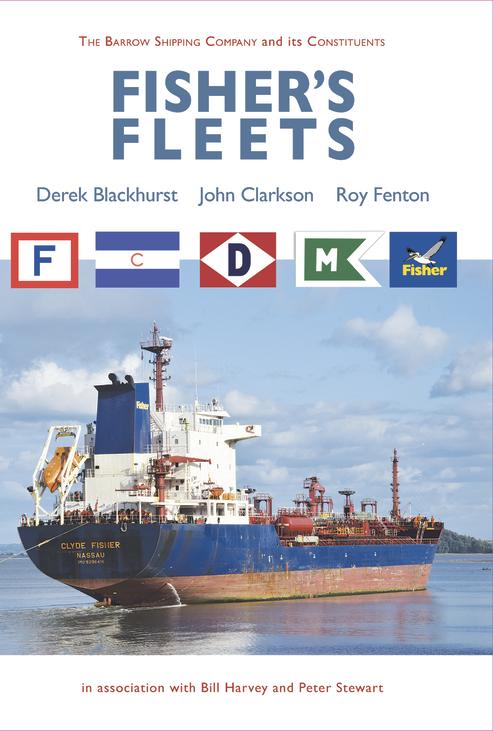



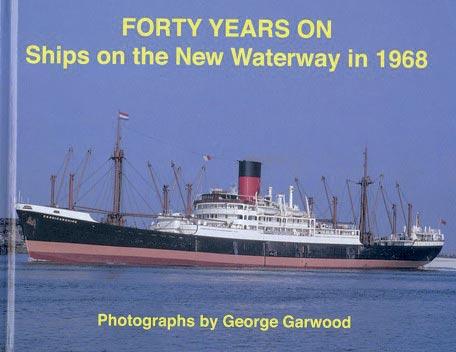

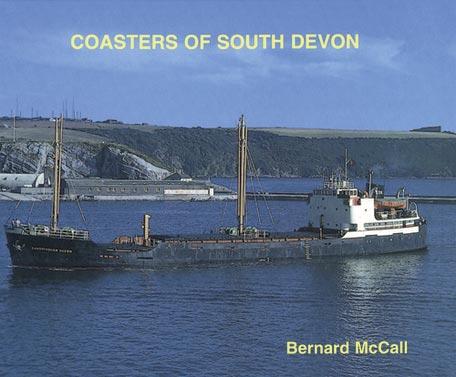






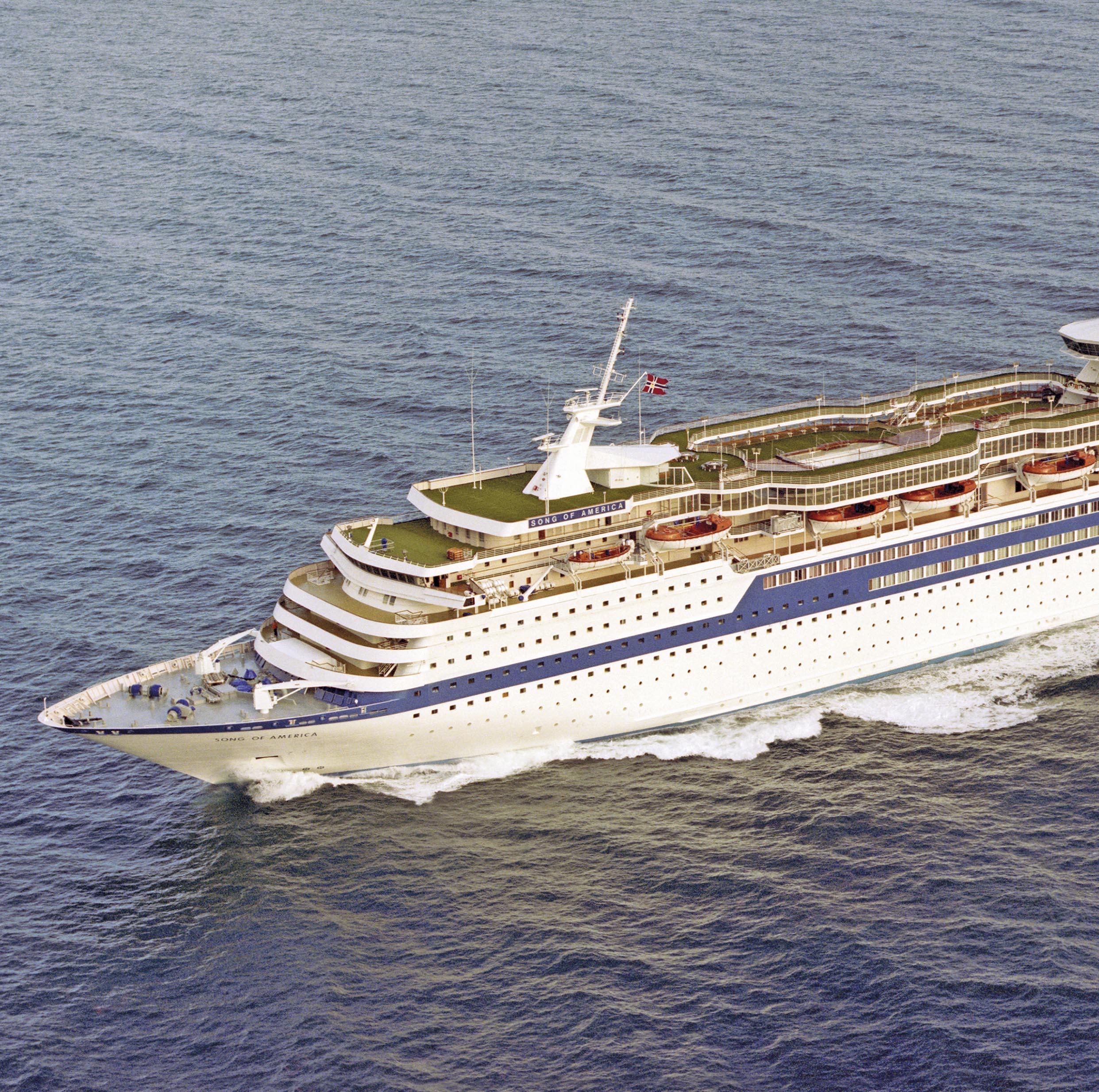

The sale of the former Song of America to shipbreakers in February brought to an end a long and successful career for what was probably the most influential of the cruise ships built in the early 1980s. They became known as the second generation of modern cruise liners, and were a natural progression between the small first generation cruise ships and the first giant cruise ships. As the 1960s came to an end traditional shipping companies were struggling to survive as passengers turned to jet aircraft to transport them across the oceans of the world. Some of these companies attempted to turn their liners into cruise ships, but they were not very successful in most cases. Then a trio of new cruise companies was formed with financial backing from the owners of various Norwegian cargo lines, which would revolutionise the entire industry. This ‘Viking Invasion’ was aimed at the major North American cruise market, the first company to begin operating being Royal Caribbean Cruise Line in late 1970 with Song of Norway, Nordic Prince and Sun Viking, which were 18,400 gross tons with accommodation for about 725 passengers, at
the time considered to be the ideal size for a cruise ship.
The enormous success of the Royal Caribbean trio was such that eventually they could not meet the demand for berths. Fortunately, the ships had been designed so they could easily be cut in two and have a prefabricated accommodation block inserted to increase capacity. The first to have this done at the Wartsila shipyard in Helsinki was Song of Norway in 1978, which resumed service at 23,005 gross tons with a capacity of 1,196 passengers. In 1980 Nordic Prince underwent identical treatment.
Sun Viking was also intended be lengthened, but the Wartsila shipyard had developed a concept design for a larger version of the original three ships. On 1st November 1979 Royal Caribbean placed an order for a larger ship instead of having Sun Viking converted.
Built as Yard No 431 in a large drydock, the keel was laid on 17th February 1981, and the ship was floated out on 26th November the same year. Fitting out the interior took another year, with the ship being completed on 9th November and handed over to Royal Caribbean on 11th November 1982. The lar-
gest ship to have been built in Scandinavia up to that time, at a cost of $US140 million, as completed, Song of America was 37,584 gross tons, with a length of 703.7ft/214.5m and a beam of 107ft/28.4m, being the sixth largest passenger ship operating in the world. In recognition of the Norwegian ownership of the line the ship was registered in Oslo with Norwegian officers and an international crew, Song of America was propelled by four Sulzer 8-cylinder, 4-stroke medium speed diesel engines, each developing 5,600hp at 530rpm, connected in pairs to twin input/single output reduction gears driving two highly screwed controllable pitch propellers with a diameter of 15ft/4.45m, a maximum speed of 21 knots being reached on trials. Two bow thrusters with controllable pitch propellers driven by 960hp electric motors and twin rudders were fitted to assist manoeuvrability in berthing, along with Sperry fin stabilizers and a pair of heeling tanks to make voyages smoother.
Song of America made a 14-day delivery voyage from Finland, arriving on 28th November in Miami, where a christening ceremony was held on 3rd December. The nam-

ing was conducted by opera star Beverley Sills, but after making five attempts to swing a bottle of champagne to break on the hull of the ship, the Managing Director of Wartsila, Martin Saarikangas, stepped forward, moved to the side of the vessel and broke the bottle beside the lower deck entrance.
In a promotional brochure issued while the ship was building it was stated that, “Every innovative maritime feature, every one of ‘tomorrow’s’ cruise concepts, will be part of Song of America today", and this proved to be true. While in appearance Song of America had a general similarity to the first trio built for Royal Caribbean, there were some major differences.
The most obvious external difference was the signature Viking Crown Lounge, which in the earlier ships had been a relatively small attachment to the after section of the funnel and was accessed by a narrow staircase and tiny two-person lift. In Song of America the Viking Crown Lounge was wrapped completely around the lower section of the funnel, 100ft/33ft above the waterline, with seating for 139 passengers and 360° views through large windows.
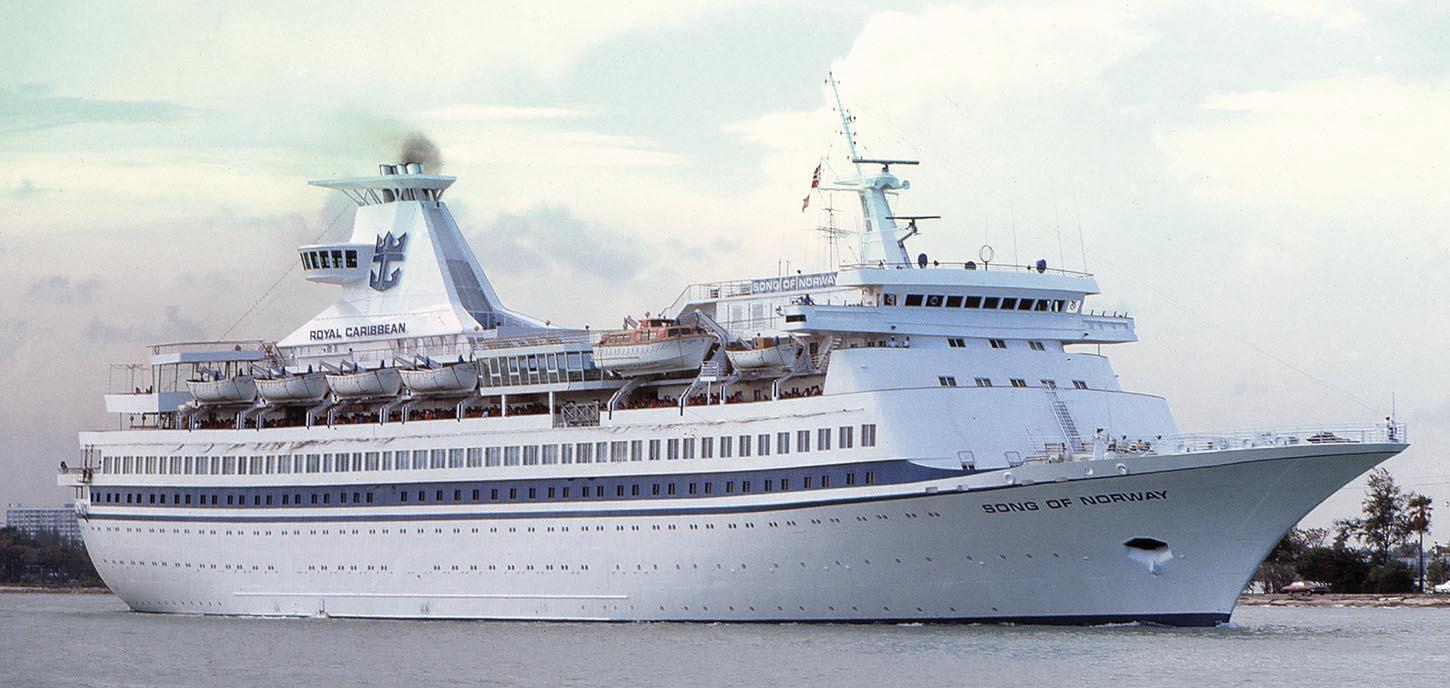
Left: The Song of America in the English Channel.
Above: The first RCI ship was the 18,416grt Song of Norway in 1976 before lengthening. She was built in 1970 by Wartsila at Helsinki. She joined Airtours as Sundream in 1997 and later sailed as Dream Princess (2004), Dream (2006), Clipper Pearl (2007), Festival (2009), Ocean Pearl (2009) and Formosa Queen (2012) before being broken up at by Yinhu Ship Breaking at Jiangmen where she arrived on 26th October 2013. (Don Smith/photo-transport.com)
Below: The second ship in the fleet was the Nordic Prince seen here in 1980 just after her lengthening. She was built in 1971 by Wartsila at Helsinki. She later sailed as Carousel (1995), Aquamarine (2005), Arielle (2006), Aquamarine (2008), Ocean Star Pacific (2010) and Pacific (2011) before being broken up by NBM Iron & Steel Trading at Alang where she arrived on 19th February 2015. (Don Smith/phototransport.com)
Bottom: The third ship in the fleet was the 18,416grt Sun Viking which was built in 1972 by Wartsila at Helsinki. She later sailed as SuperStar Sagittarius (1998), Hyundae Pongnae (1998), Pongnae (2003), Omar III (2003) and Long Jie (2007) before becoming Oriental Dragon in 2011. On 25th January 2022 she arrived at Gadani Beach to be broken up. (Don Smith/photo-transport.com)
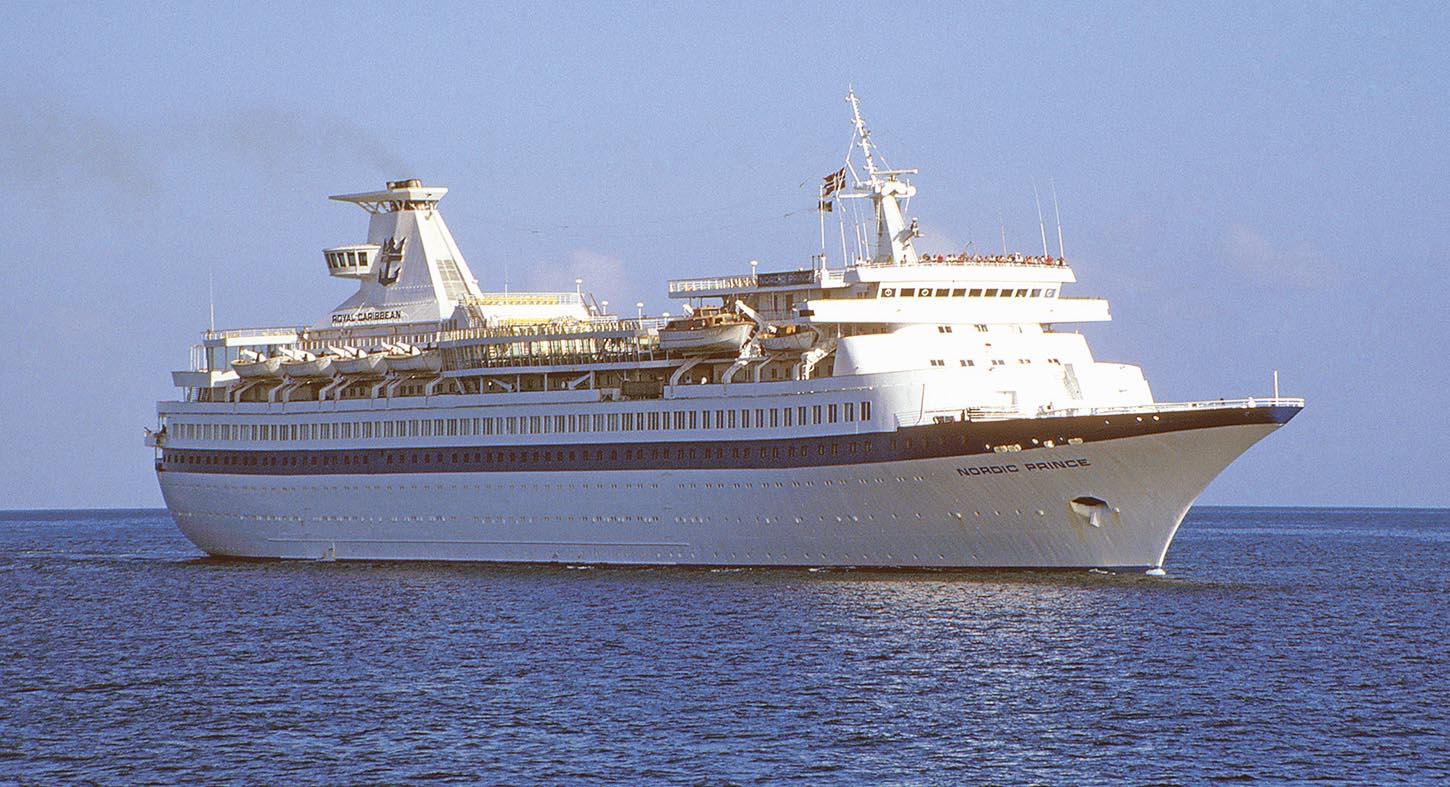
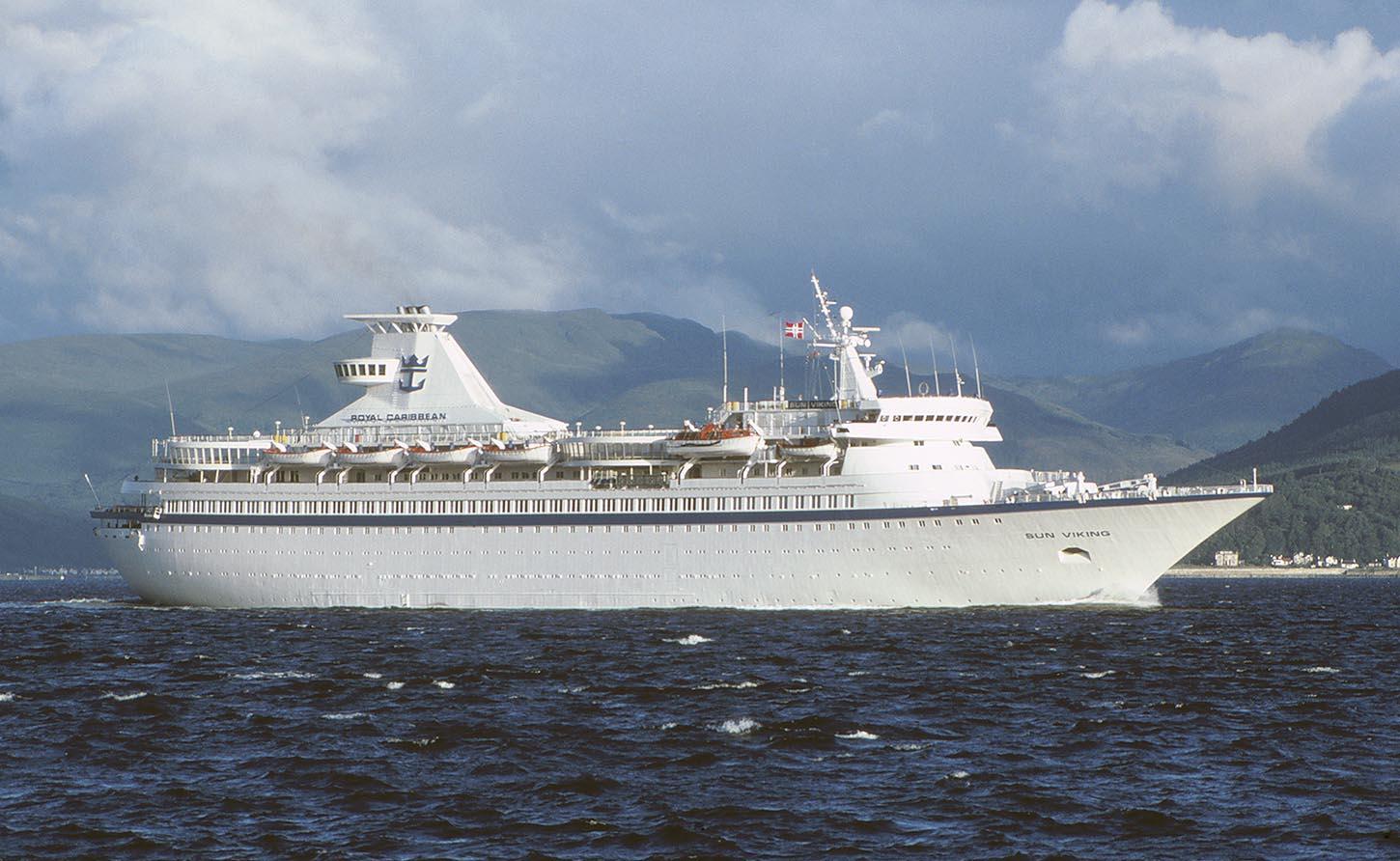
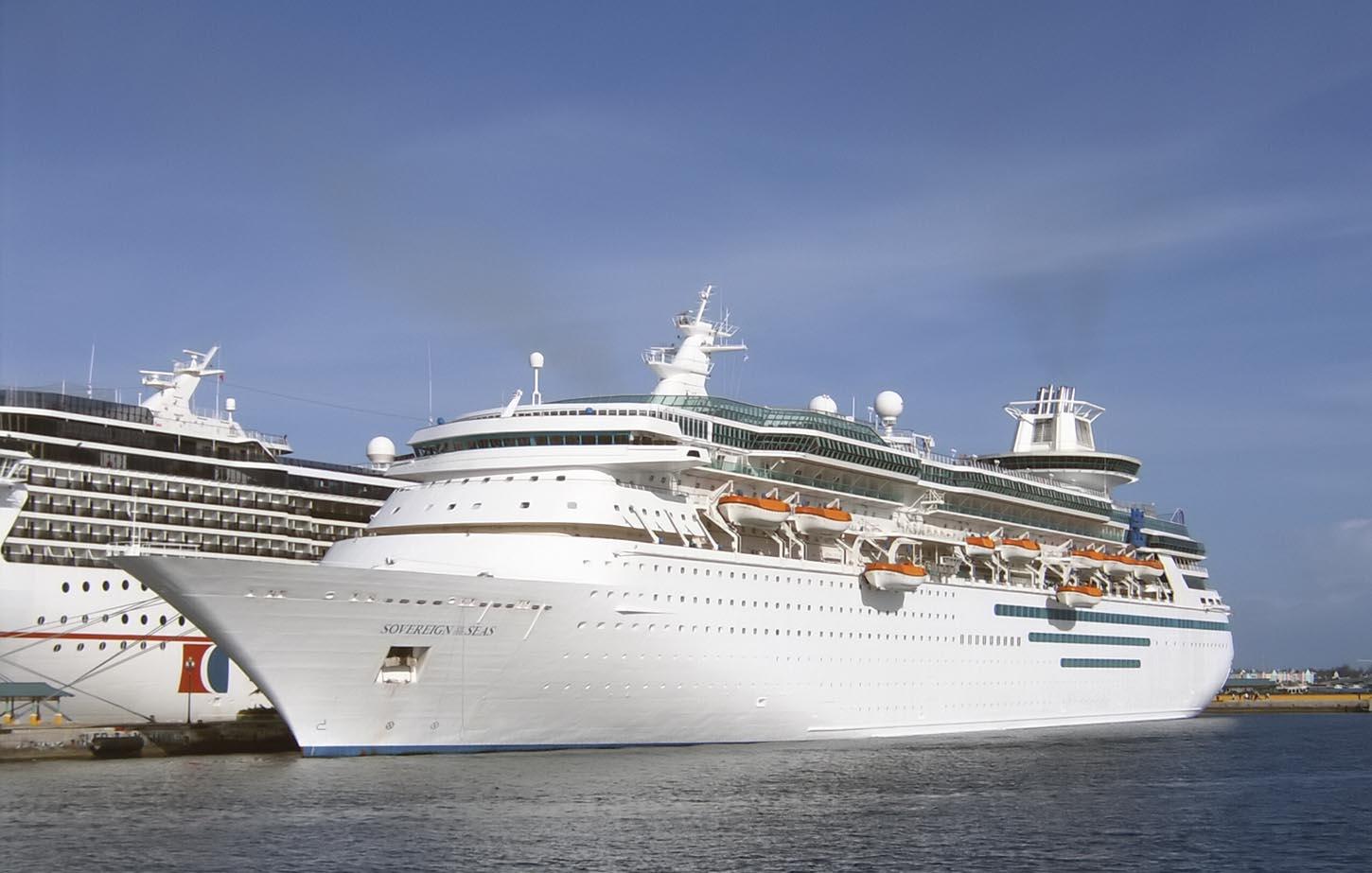
Internally, Song of America introduced a new design feature to the North American cruise trade, with all the largest public rooms being located over several decks in a single block at the aft end of the ship, while the best of the cabins were situated in a block of decks forward, well away from engine noise and vibration.
There were ten passenger decks, from the top being Compass, Sun, Bridge, Promenade, Upper, Cabaret, Main, A, B and C. However, the Upper Deck was only about 100ft/33m long at the forward end of the superstructure and only contained cabins, which enabled the major public rooms further aft to be two decks high.
Above: The 73,192gt Sovereign of the Seas was the largest cruise ship in the world when she was built in 1987. In 2008 she joined associate company Pullmantur and was renamed Sovereign and on 20th July 2020 she arrived at Alang to be broken up.
(Walter Maifarth)
Below: The Song of America arriving at Hamilton, Bermuda. (Peter Plowman)
Bottom: Another ship to join Airtours was the former Song of Norway seen here as Sundream leaving Southampton on 5th June 2004 in her My Travel livery. (Nigel Lawrence)
All the decks were connected by two staircases and two banks of three elevators, one forward connecting Sun Deck to C Deck, and another just aft of midships connecting Bridge Deck to C Deck. Another single elevator and staircase near the stern connected the Viking Crown Lounge to the Promenade Deck.
Accommodation was provided for 1,414 passengers in lower berths, with a maximum of 1,575 passengers when Pullman berths were added. There were 21 deluxe cabins with full bathrooms and 686 cabins with a shower and toilet, of which 117 were fitted with one or two Pullman berths. On A and B decks the cabins ran from bow to stern in the traditional manner, with 128 outside and 103 inside on A Deck, 126 outside and 96 inside on B Deck. These cabins, however, were basically the same standardised small boxes Stephan had originally envisaged to encourage passengers to spend their time on deck or in the bars and lounges, and from the start were a source of major complaints from passengers.
The major public rooms were spread over three decks and all had names with a musical theme. Aft on Main Deck was the Madame Butterfly Dining Room, which could seat 502 persons and was decorated in a Japanese style, as were the two adjoining rooms on either side, the Oriental Terrace and the Ambassador Room, each containing 162 seats. Located midships on the Cabaret Deck was the largest room on the ship and the main entertainment venue, the Can Can Lounge, rising through two decks to a domed ceiling, with a floor that gently sloped down towards the stage and dance floor, allowing full visibility from all 743 seats.
Further aft on Cabaret Deck there was a 202 seat movie theatre that was also used for lectures, and a card room. There was no casino, but a few slot machines were placed in a hallway leading to the intimate America’s Cup piano bar, with carpet that had a pattern of the wooden planking of the deck of a yacht. Right aft on Cabaret Deck was the 564 seat Oklahoma Lounge, which featured a glass wall overlooking the stern.
Midships on Promenade Deck was the Guys and Dolls Lounge with 310 seats, which was a popular gathering spot during the day
with its floor to ceiling bay windows providing unobstructed views over the sea. After dark the lounge was just as popular as the discotheque. The Promenade Deck also featured a broad planked walking area that completely circled the superstructure, it being noted that five times around almost equalled a mile. There were also numerous deck chairs provided for passengers who wanted a quiet place to enjoy some sea air under cover.
Aft on Promenade Deck was the elevator and staircase up to the Viking Crown Lounge, four decks higher, and when the elevator doors opened the view over the sea was spectacular. The outer glass walls were lined with bar stools, while inboard there were groups of tables and chairs. The forward windows overlooked the Compass and Sun Decks, where most passengers congregated during the day.
Song of America was the first cruise ship to have two large outdoor swimming pools on its open decks, which were bi-level with a step down in the middle and a pool on each level. At the forward end of Sun Deck was a bar, and a covered Verandah Café with open sides was located at the aft end. The Compass Deck above completely encircled the outer sections of the Sun Deck, and featured the Mast Bar, suitably located at the base of the ships’ mast. A popular feature was an open viewing deck area above the bridge.
Below Sun Deck was Bridge Deck, which also contained a modern gymnasium and saunas. Other facilities provided included a library, beauty parlour and shop, as well as a fully equipped and staffed hospital.
Song of America was programmed to operate Sunday departures from Miami to Nassau, San Juan and St. Thomas, and the 5th December maiden voyage passengers included the late former President Jimmy Carter and his wife. The ship soon became very popular and departed at full capacity on almost every voyage.
An unusual change to the regular routine came in August 1984, when Song of America was chartered by the Roman Catholic archdiocese of Philadelphia for a ten day cruise out of Miami, carrying 1,350 winners of a raffle involving members of their “Million Dollar Club”. The cruise included a visit to Bermuda on 29th August, when Song of America became the largest ship yet to enter Hamilton Harbour, berthing at No. 5 dock. This was also the first cruise ever to come to Bermuda from Miami.
In 1986, Royal Caribbean Cruise Line leased an area of farmland and jungle on the north coast of Haiti, near the isolated town of Labadee, which was converted into a private luxury resort and beach paradise, separated completely from the rest of Haiti by a high fence. Song of America began a new weekly route calling at San Juan, St. Thomas and Labadee.
The enormous success of Song of America soon had Royal Caribbean execu-
tives considering having a slightly larger 40,000 gross ton ship built with a 1,600-passenger load. However, a committee formed to oversee the construction of the new ship began favouring even greater expansion and eventually an order was placed with Chantiers de Atlantique at St. Nazaire in France for the construction of a ship that would be almost twice the size and more than double the passenger capacity of Song of America.
Laid down on 10th June 1986 and floated out of the building dock on 4th April 1987, the new ship was delivered to Royal Caribbean on 21st December 1987 as Sovereign of the Seas, introducing a new naming pattern for the company. The biggest passenger liner in service in the world, Sovereign of the Seas was 73,219 gross tons, 880ft/268.3m long and could accommodate a maximum of 2,850 passengers in 1,141 cabins. On 16th January 1988 Sovereign of the Seas departed Miami on its maiden cruise, replacing Song of America on the weekly cruise to Labadee, San Juan and St. Thomas. Song of America departed Miami on Sunday, 17th January, on a new itinerary to the western Caribbean, visiting Cozumel in Mexico, Georgetown in the Cayman Islands, Ocho Rios in Jamaica and Labadee.
On 8th November 1988, Song of America with 1,366 passengers on board, left Cozumel, but about 7.30pm a cylinder in one of four main engines seized, and started a fire, which was extinguished in about 45 minutes. Song of America limped back to Cozumel, where it remained throughout the day. Passengers were allowed to go ashore during the day, and it was decided to cancel the rest of the cruise. Song of America departed Cozumel on the Wednesday night using its three undamaged engines on the voyage back to Miami, where the ship docked early on the Friday morning.
After an inspection of the damaged engine room in Miami, a Royal Caribbean spokesman said, “It our intention to continue service with Song of America. It looks like the ship will not need to be taken out of service. We do know that one engine will have to be replaced, or most of it, and that will take about six weeks. That can easily be done when the ship is in service”. Song of America was able to continue operating on three engines until the necessary repairs were completed.
Meanwhile, Sovereign of the Seas had proved such an enormous success that plans were soon being completed for the construction of two slightly larger sister ships, the first being delivered in October 1991 as the 73,937 gross ton Monarch of the Seas, with accommodation for 2,744 passengers in 1,177 cabins, with the identical Majesty of the Seas entering service in May 1992. With these three large ships operating out of Miami, Song of America was transferred to San Juan for weekly cruises.
At the end of April 1993, Song of America made a positioning cruise from San Juan to New York, and on 9th May departed on the first of a summer season of 25 weekly cruises to Bermuda. Royal Caribbean had first entered the Bermuda summer market in April 1985 with Nordic Prince making Sunday departures from New York, which Song of America continued, with a day at sea before berthing in St George’s overnight, leaving early the next morning to move to Hamilton, staying at the No. 1 berth until Friday afternoon. When the Bermuda season ended in October, Song of America went back to San Juan for the winter months.
This pattern of winter Caribbean cruises from San Juan and weekly summer departures from New York to Bermuda was followed by Song of America until the end of the 1995 Bermuda season in October, following which the ship went through the Panama Canal to Los Angeles for a winter season of cruises to Mexico, departing San Pedro on Sundays, calling at Cabo San Lucas, Mazatlann and Puerto Valetta. In April 1996, Song of America returned through the Panama Canal to San Juan and on to New York to operate another season of summer cruises to Bermuda, this pattern being repeated in 1997 and into 1998.
Royal Caribbean Cruise Line announced early in 1998 that they were offering Song of America for sale, and in May it was reported the vessel had been sold for US$94.5 million to a British company, Airtours, who had previously purchased two of the initial Royal Caribbean ships, Nordic Prince in 1994 and Song of Norway in 1997. However, Song of America would be chartered back to Royal Caribbean until March 1999, so the ship was able to complete its 1998 cruise schedule to Bermuda.
Song of America departed San Pedro for the last time on 19th April 1998, arriving in San Juan on 2nd May, leaving the same day on a positioning cruise to New York with a two-night stopover in Hamilton, the first departure from New York for the regular Bermuda season being on 10th May.
On 30th August 1998, Song of America departed New York as usual, with 1,514 passengers on board. After a day at sea, the ship arrived off Bermuda on Tuesday, 1st September, but Hurricane Danielle was only a few hundred miles to the west and a reasonably strong wind was blowing, and expected to increase during the day. The captain of Song of America was not prepared to take his ship through the narrow Town Cut into St. George’s Harbour, and opted to proceed directly to Hamilton. However, there were already two cruise ships berthed there, Zenith at No. 1 and Norwegian Crown at No. 5, so the only available berth was No. 8, usually used by container ships, immediately astern of Norwegian Crown. To get Song of America berthed it was necessary for two tugs to assist in turning the liner around off
Below: The Song of America as My Travel’s Sunbird leaving Naples on 7th May 2003. (Nigel Lawrence)
Bottom: The Song of America as the Thomson Destiny in Gibraltar on 21st September 2009.
(Daniel Ferro)
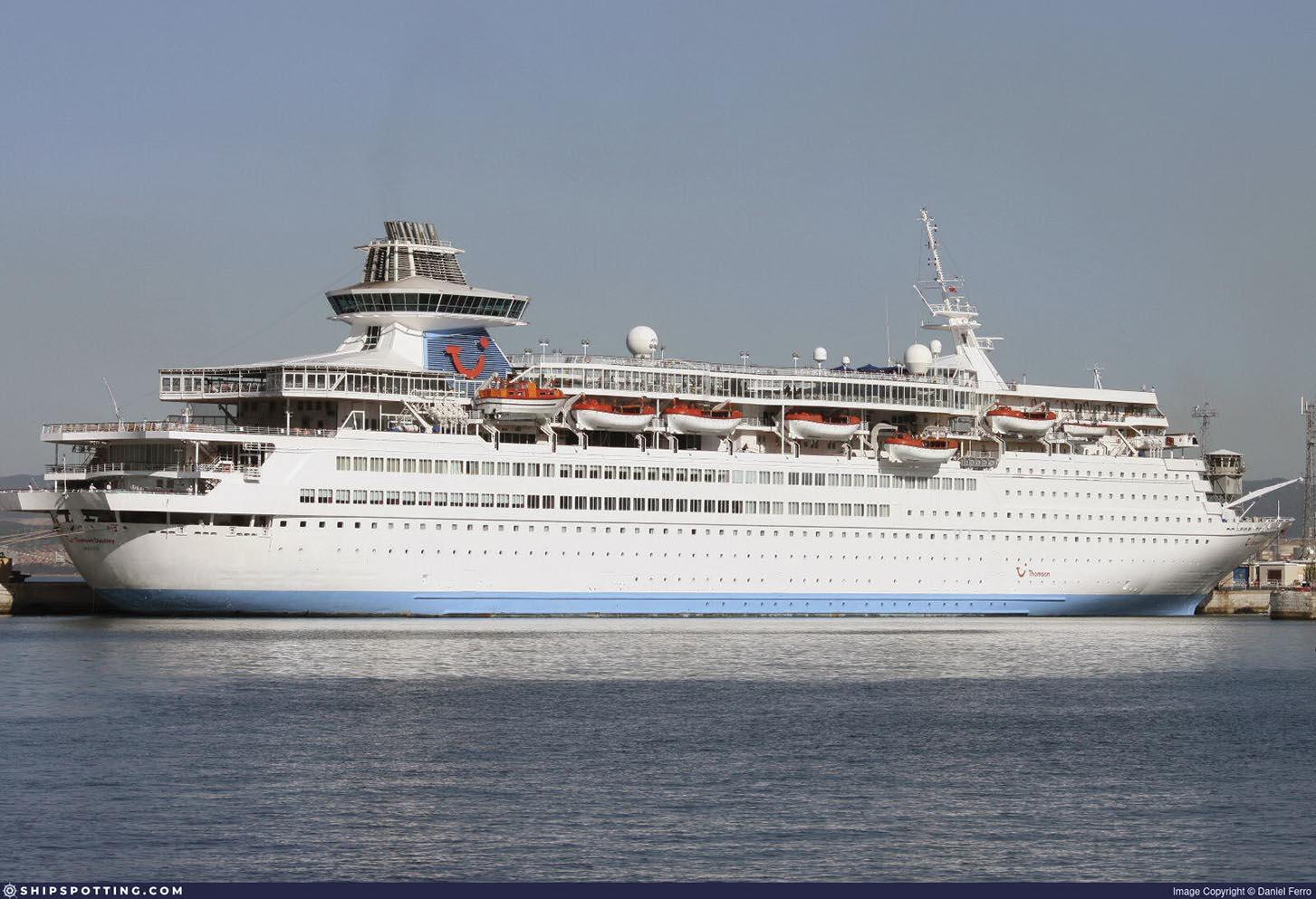
White’s Island, then pull it stern first into the dock, a procedure that took some time to complete. This was the first time in many years that three passenger liners had been berthed together in Hamilton.
The strongest winds from Hurricane Danielle whipped Bermuda during the Tuesday night, and it was still blowing quite strongly on the Wednesday morning. The captain of Zenith decided against moving his ship as scheduled from Hamilton to St George’s so Song of America could berth at No. 1, and the three liners remained tied up in Hamilton throughout the day. Early on Thursday morning Zenith did leave Hamilton, and Song of America was able to move to the No. 1 berth, leaving as scheduled on the Friday afternoon.
Song of America left New York on its last cruise to Bermuda on 18th October, leaving Hamilton on 23rd October and arriving in New York two days later. On 25th October, Song of America left New York for the last time, with 1,121 passengers on board, berthing in St. George’s at Penno’s Wharf on 27th October, moving to Hamilton the next morning and leaving on 29th October, heading south to San Juan on a positioning cruise. After a final visit to Miami, Song of America departed there for the last time on 14th March 1999, going without passengers to Norfolk, Virginia, for dry docking. When this was completed the ship was handed over to the new owners, Airtours, being renamed Sunbird and registered in Nassau.
The Airtours Group was founded in 1972 by David Crossland in Burnley, Lancashire, initially offering package holidays. In April 1994 a cruise division was formed as Sun Cruises, to offer air/sea package holidays at affordable rates, this being the introduction of mass marketed cruises to the United Kingdom. The operation started with one second hand vessel, Seawing, soon joined by Nordic Prince, purchased from Royal Caribbean and renamed Carousel. In 1996, Carnival Corporation acquired 29% of Airtours shares in 1996, and the next year Airtours acquired a 50% stake in Costa Crociere, while a third ship was added, Song of Norway being purchased from Royal Caribbean and renamed Sundream.
Having been the fourth ship to be built for Royal Caribbean, in 1999 Sunbird became the fourth ship to be owned by Airtours. When they had purchased Nordic Prince and Song of Norway, a stipulation in their sale was that the Viking Crown Lounge attached to the funnel had to be removed, but with the sale of Song of America this was not required.
Sunbird crossed the Atlantic to Liverpool, going into the dry dock at the Cammell Laird shipyard at Birkenhead on 31st March to have some extensive work done. As cabins with balconies were becoming more popular, a block containing nine suites with balconies was constructed above the bridge, with a viewing area on top, which increased the size of the
ship to 37,773 gross tons. At the stern the open deck area was partially enclosed with windows on each side and named the Lido Restaurant. The hull was white with a narrow blue line, and two new propellers fitted.
Most of the public rooms were retained intact, though some were renamed, the main dining room becoming the Seven Seas Dining Room, Guys and Dolls becoming Blakes Bar, and the America’s Cup Bar becoming the Schooner Bar, though with its maritime themed fittings still in place, while the Viking Crown Lounge was renamed the Chart Room. Additions included the large Casino Royale and Neptunes Disco, in keeping with current trends. Leaving the drydock on 12th May, Sunbird undertook a shakedown cruise to Dublin with Airtours employees on board, then made a positioning cruise from Liverpool, arriving on 17th May at Palma.
A gala naming ceremony was held in Palma on 28th May, with Pat Trickett, the sister of Airtours founder David Crossland, being godmother of the ship. Unfortunately the ceremony was an almost identical repeat of the naming ceremony for Song of America, as when it came time to release the bottle of champagne to smash against the hull of Sunbird, there was a dull thud, but no breakage. A member of the crew leant over the side of the ship, grabbed the bottle by the neck and swung it as hard as he could against the hull, but still it did not break. He tried again, hitting it even harder, but to no avail. Another member then grabbed the bottle, but he too could not smash it. Undeterred, he had a second swing and this time the bottle smashed, prompting rapturous applause. Airtours Group finance director Tim Byrne, joked that it was, “a deliberate ploy. We wanted one of the crew to be able to name the ship”.
With passengers being transported on Airtours own aircraft from several airports in Britain to join the ship, Sunbird was scheduled to operate 7-day cruises from Palma in the Mediterranean during the summer on two basic routes, one to Bizerte, Civitavecchia, Livorno, Villefranche and Barcelona, the other to Valetta, Messina, Naples, Olbia and Ajaccio, and the two could be made into a 14day holiday. Sunbird would go to the Caribbean in winter, being based in the Dominican Republic, again offering two 7day itineraries, one to Antigua, St. Kitts, Barbados and St. Thomas, the other going to St. Lucia, Barbados, Dominica, St. Maarten, and Tortola, that could be a 14-day cruise. Sunbird proved very popular, carrying over 72,800 passengers in its first year of operation, and these were the good times for Sun Cruises, with talks of new buildings of 50,000 tons being ordered for the line. However, the Airtours Group had begun to expand into European countries, but some of their acquisitions, especially in Germany, had not been successful, and by September 2000 they were in financial trouble.
In 2002, Airtours restyled themselves as My Travel, with Sunbird being given new funnel colours, but otherwise continuing to operate as before. However, the financial problems in other portions of the business continued to drag down the cruise operation. The company announced massive losses with £60 for every holiday sold being lost through a computer glitch, and in April 2003, Sunbird was sold for US$71 million to Louis Cruise Line, based in Cyprus. Sunbird was transferred to the Cyprus flag, and immediately chartered back to My Travel until January 2005.
On 16th April 2004, the announcement was made that My Travel, the parent company of Sun Cruises, was withdrawing from cruising and the three ships the company still owned would be sold. Sunbird continued offering Mediterranean cruises in summer and in winter went to the Caribbean. A longer cruise to South America at the end of 2004 included a call at Rio de Janeiro on 3rd December.
Early in 2005, the Louis Cruise Lines Group announced they had signed an agreement with the Norwegian company, Med Cruise A/S, for the sale and leaseback of Sunbird for US$90 mlllion, with the vessel to be repurchased by Louis Cruise Lines in ten years. Louis Cruise Lines had already organised a charter of the ship from May 2005 to November 2011 to Thomson Cruises, a subsidiary of TUI.
Sunbird continued operating under charter until 15th January 2005, when it was handed back to Louis Cruise Line. The ship then underwent a refit, during which the partially open Lido Restaurant aft on Deck 9 was fully enclosed with windows. Renamed Thomson Destiny on 3rd May 2005, the ship continued to offer Mediterranean cruises in the summer, based in Limassol, and itineraries in the Caribbean in the winter, aimed at the British market. Although the ship was quite successful, the small size of many cabins was a point of contention with many passengers, and attracted much negative comment in social media.
By 2012, Thomson Cruises wanted a newer and larger ship with bigger cabins, so it was arranged that Thomson Destiny would be handed back to Louis Cruise Line in April 2012, and Louis Majesty would be chartered to Thomson Cruises. This was the same vessel that as Royal Majesty had operated to Bermuda at the same time as Song of America.
On 24th May Thomson Destiny was renamed Louis Olympia, and soon after it was placed on the popular summer short cruise market from Piraeus to the Greek islands and Turkey, offering 3 and 4 day itineraries out of Piraeus to Mykonos, Santorini, Rhodes, Crete, Patmos and Kusadasi, the 3-day trip omitting Rhodes. This lasted until late October, when the ship was laid up for the winter.
In February 2013, Louis Olympia was chartered to the Fincantieri shipyard at Trieste to provide accommodation for some of the contractors and crew involved in the conversion of Carnival Destiny into Carnival Sunshine. When this ended in April, Louis Olympia returned to Greece and operated another summer of short cruises, again being laid up in October 2013, being reactivated to serve with six other cruise ships and ferries as a floating hotel at the Russian Black Sea port of Sochi during the 2014 Winter Olympics held there between 7th and 23rd February. Louis Olympia was one of three cruise ships that had to be berthed at the cargo wharves at the Seaport of Sochi in the mouth of the Mzymta River, while another cruise ship and three large ferries were in the Cruise Port. The ships provided accommodation for some athletes and many visitors who could not find hotel rooms ashore.
In early 2014, Louis Cruises announced a new livery, with Louis Olympia to be the first to be treated. The words Louis Cruises in blue capitals were painted beneath the company red logo midships on the hull, with a wide red and blue stripe at an angle further forward. Louis Olympia then operated another season of short cruises from Piraeus through the summer of 1914.
In September 2014, Louis Cruises announced they would be launching a new brand, Celestyal Cruises, to offer an authentic Greek-experience from 2015, and Louis Olympia would be one of the two ships to be transferred from the Louis to this operation, the other being Louis Crystal.
In the winter of 2014-15 Louis Olympia underwent an extensive refit, during which the decks were renamed, becoming from the top Zeus, Hera, Ouranos, Apollo, Venus, Dionyssos, Poseidon, Hermes and Athena. The original Viking Crown Lounge was renamed Horizons Lounge, while the restaurant aft on Hera deck became Leda Casual Dining. Blakes Bar became the Eclipse Lounge, with an area on the starboard side separated off as Kids Area 22. The former Can Can Lounge became the Muses Lounge, while the Schooner Bar was renamed the Argo Lounge and Bar, the Oklahoma Lounge became the Selene Lounge and Bar, and the main dining room was renamed the Aegean Restaurant.
The ship was renamed Celestyal Olympia, its first cruise from Piraeus departing on 13th March 2015, again offering short cruises. The 4-day itinerary was from Piraeus to Mykonos, Kusadasi, Patmos, Rhodes, Heraklion and Santorini, with Rhodes eliminated from the 3-day itinerary. As in previous years the ship was laid up in October for the winter.
This pattern was repeated in 2016, but in 2017 Celestyal announced they would be extending the Celestyal Olympia cruise season in Greece to 10 months, and introducing
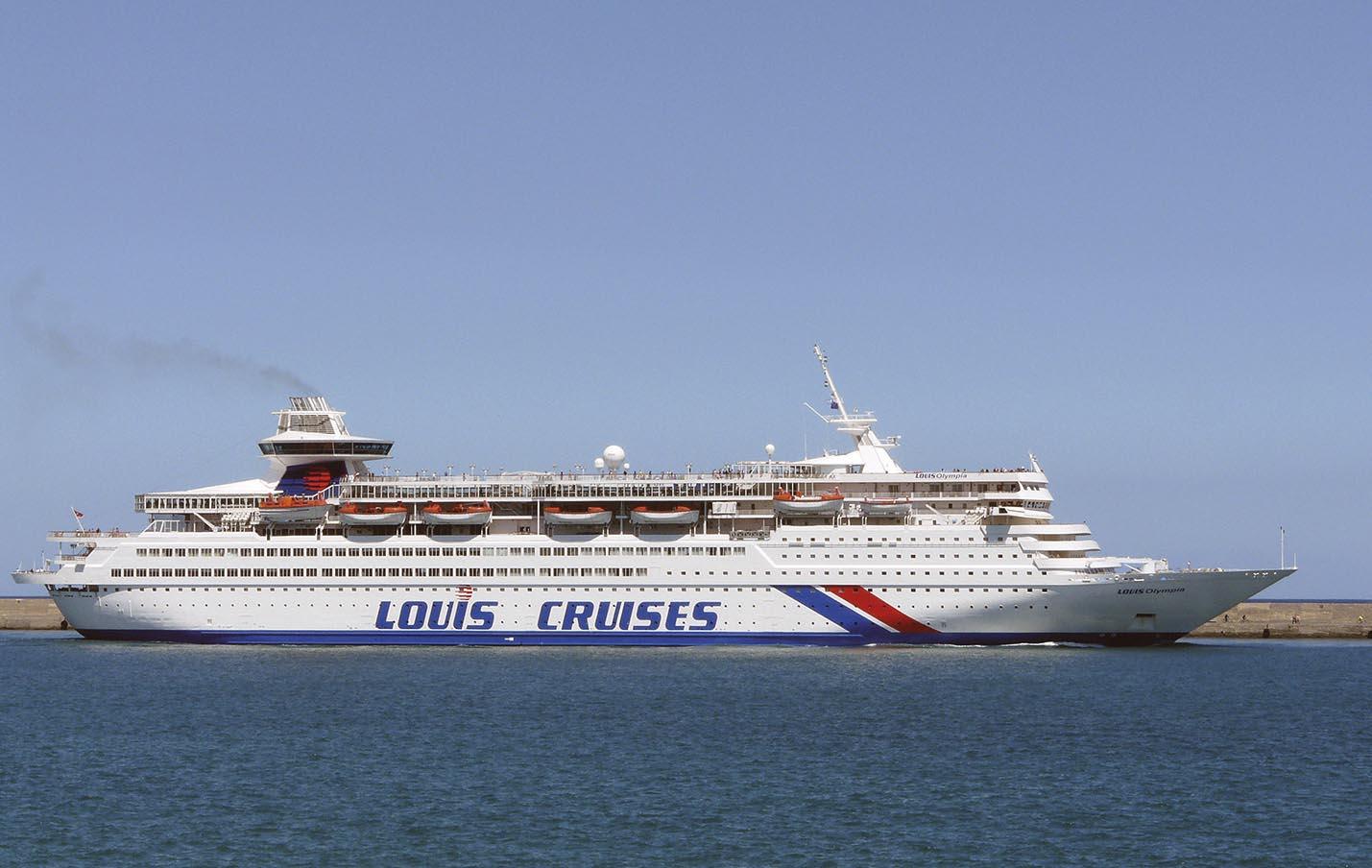
Below: The former Song of America as Celestyal Olympia for Celestyal Cruises. (Nektarios Papadakis)
Bottom: The end of a lovely ship. The Song of America at Alang in February 2025 under the name Fortu.
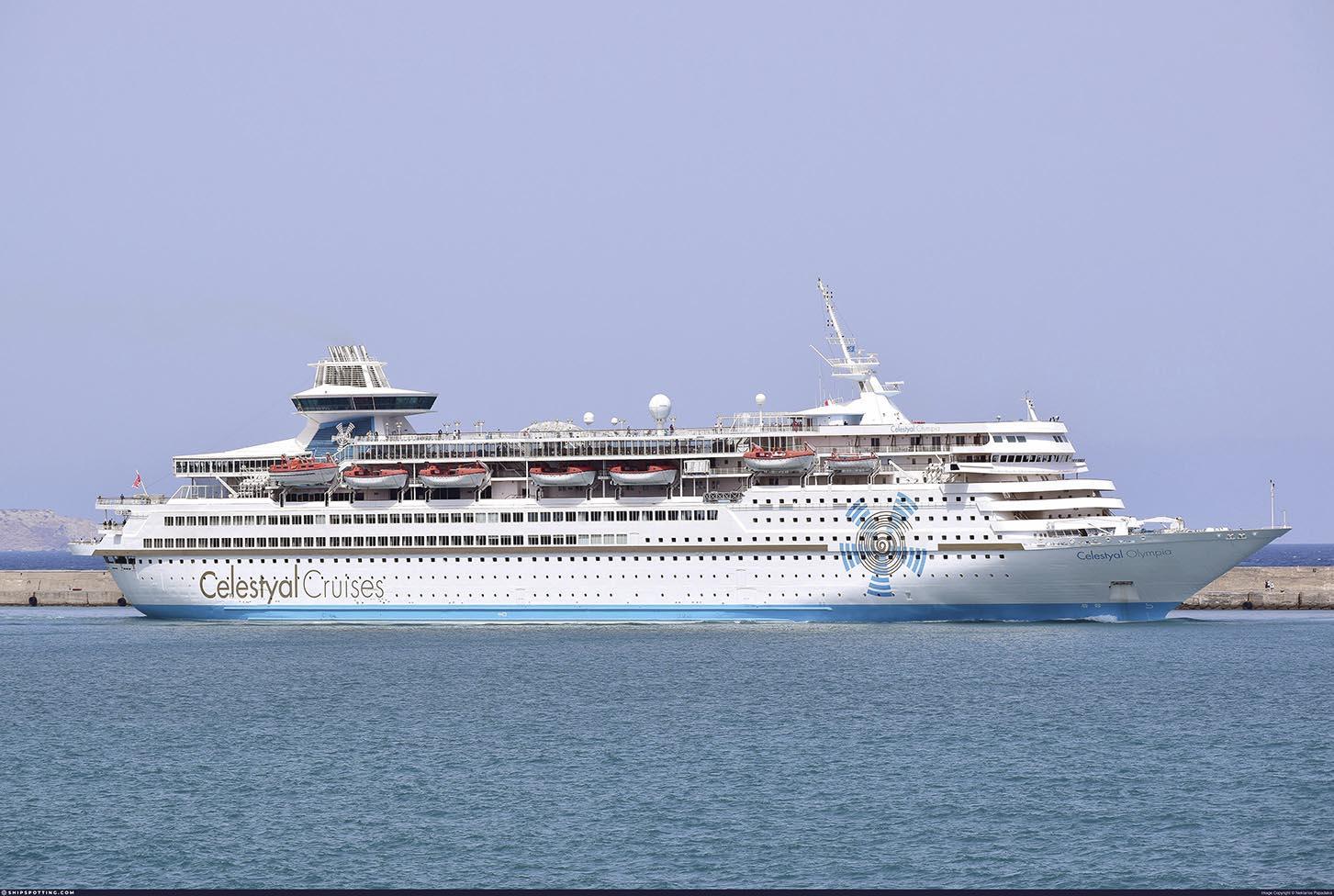
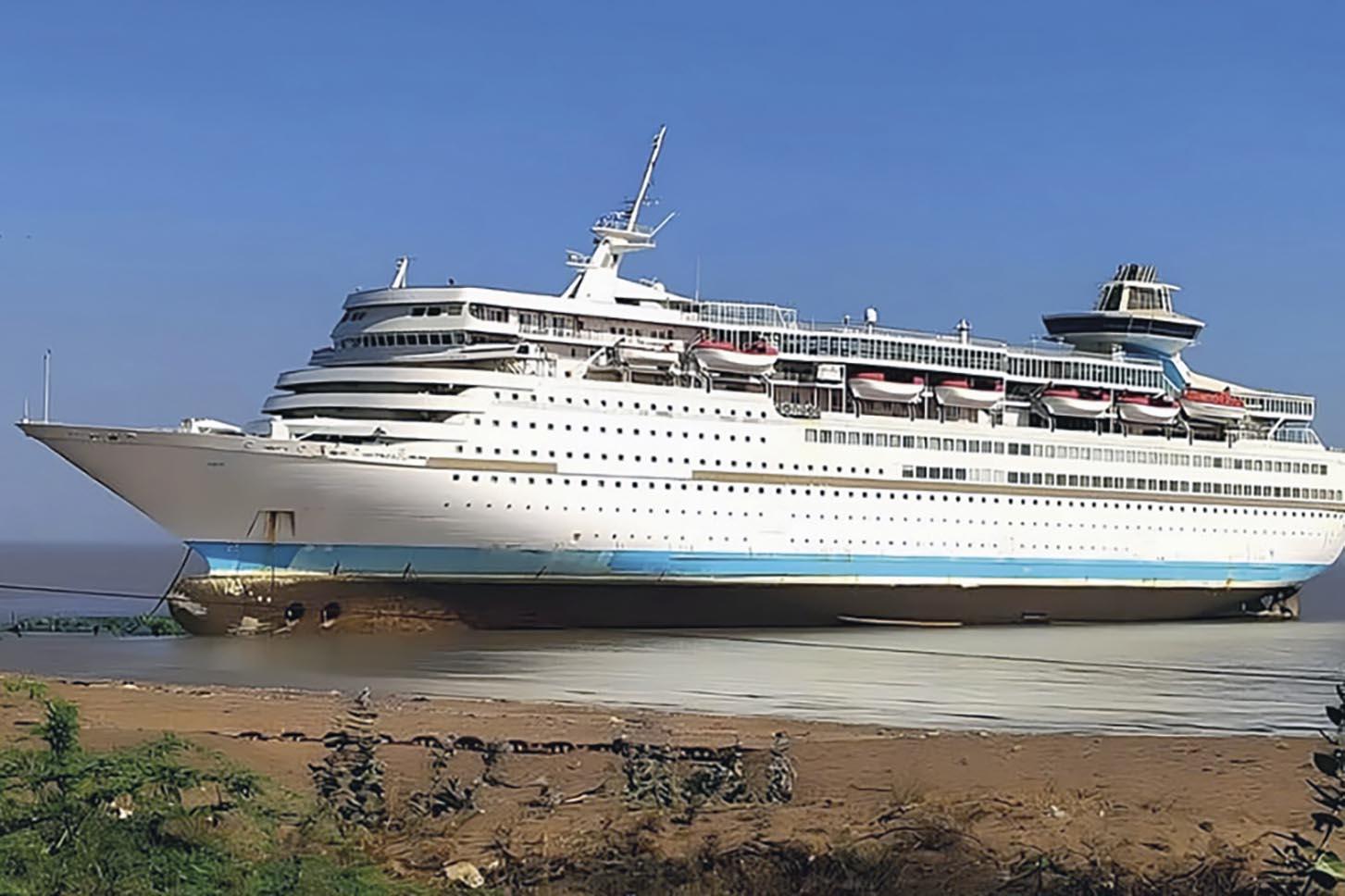
7-night Aegean cruises with overnight stays in Mykonos and Santorini. This proved so popular that for 2019 the Greek islands itineraries leaving from Piraeus would have longer stays in Mykonos, Samos or Kusadasi, Patmos, Heraklion, Rhodes and Santorini.
In April 2019, Celestyal announced that it would be extending its 2020 season with a new winter itinerary for Celestyal Olympia, a six-week season in the Adriatic homeporting at Venice from December 2020. However, as a consequence of the Covid pandemic, Celestyal Cruises suspended all cruises from 13th March 2020, and all their ships were laid up. Celestyal resumed cruises in June 2021, putting Celestyal Olympia on a new 7-day itinerary visiting Thessaloniki, Mykonos, Santorini, Agios Nikolaos, Rhodes and Limassol. In August 2021 Celestyal announced that it would stop cruises at the end of that month and suspend its autumn and winter seasons due to the increasing number of travel restrictions.
In October 2021, Celestyal Cruises announced that it would restart some cruises on 14th March 2022 with 3 and 4-night cruises followed by 7-night cruises from 30th April, but these would not be operated by Louis Olympia, which remained idle off Lavrio. In June 2022 the ship accommodated for free about 40 Ukrainian mothers with their children, refugees from the RussiaUkraine war, in a partnership with Ark of the World, a Greek charitable non-profit organization. Celestyal Olympia returned to service for the summer of 2023, again offering 3 and 4-day cruises out of Piraeus. On 17th November 2023, Celestyal Olympia arrived in Piraeus at the end of its final cruise for the season, and then was laid up.
A full season of cruises for the summer of 2024 had been scheduled for Celestyal Olympia, and bookings had been taken, but on 16th November Celestyal Cruises had purchased the newer and larger AidaAura from Aida Cruise Line. It was announced soon after that the ship was to be renamed Celestyal Discovery, and would take over the entire 2024 schedule that had been organised for Celestyal Olympia.
On 5th January 2024, Celestyal Olympia was sold to Voyage Shipping Inc., renamed Bella Fortuna, and registered at Monrovia, Liberia. On 8th January the vessel departed Lavrio and made the short overnight journey to Cesme in Turkey, where it was laid up until 26th April, when it departed for a voyage through the Suez Canal, arriving on 15th May at Ras Al Khaimah in United Arab Emirates. On 21st January 2025, Bella Fortuna was sold to Marine Line Ltd. of Singapore, being renamed Fortu and placed under the Comoros flag. Fortu left Ras Al Khaimah on 24th January bound for Alang in India, arriving there on 1st February and the next day being run onto the beach to be broken up.

Subscribe to Shipping Today & Yesterday by direct debit and save £10.60* on the normal shop price. Every month you will receive your personal copy usually before it’s on sale in the shops, offering you maritime news, historical articles & regular features from the world of merchant shipping.








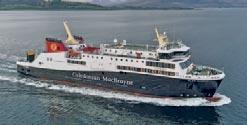



by Selwyn Parker
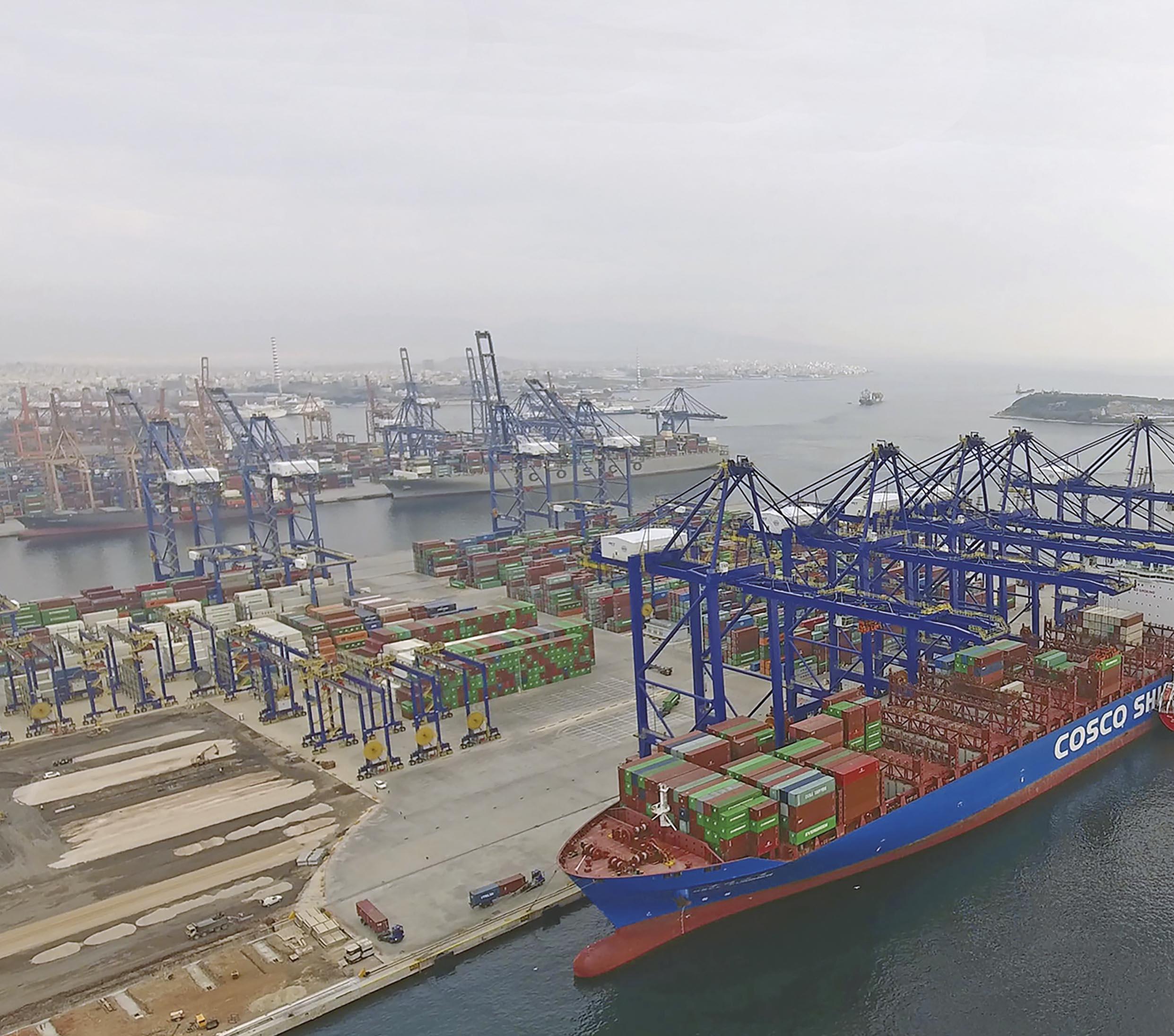
When China’s Cosco Shipping Ports snapped up two heavyweight equity stakes in Thailand’s biggest international container hub in late 2024, it boosted the Hong Kong-based company’s global tally of terminals to 39 and made it one of the biggest in the world.
But this latest acquisition on top of Cosco’s other maritime investments power rang alarm bells in Washington. In early January, sister company Cosco Shipping was added to the US military blacklist on the grounds, as the US Department of Defense put it, that it was a “Chinese military company” with ties to the People’s Liberation Army.
Cosco is not the only maritime Chinese company on the list by any means. Others include China State Shipbuilding and China Shipbuilding Trading. Nor does the blacklisting mean that much. No direct sanctions or penalties are attached, but it does attempt to discourage American businesses from engag-
ing with Cosco. But, as we will see, that’s easier said than done because of Cosco’s huge significance on the world trade routes including into North America.
As for Cosco, its largely anonymous board insists that it has no military ties and promises to “engage with US authorities to clarify this matter”.
Meantime the Chinese maritime giant sails on. Cash-rich Cosco paid US$110 million for 12.5 percent of Thai Laem Chabang terminal and 30 percent of Hutchison Laem Chabang to give it a powerful grip on the largest deep-water port in Thailand that accounts for roughly 80 percent of the country’s total container traffic.
And further cementing Cosco’s hold on the fast-growing China-Thailand trade, the investment is set to grow rapidly as more berths are added with the blessing of the Thai government. Once these new berths are fully operational, the port’s total annual capacity will hit 6.7 million TEU, giving Cosco’s
ship-owning parent full access to an extremely lucrative trade lane along what is known as the Thailand Eastern Economic Corridor.
Located to the south-east of Bangkok and about 60 nautical miles from the capital’s port, Laem Chabang will be converted into an even more valuable commercial hub along the same lines that Cosco is doing elsewhere. “[It] will accelerate the transformation and upgrading from a single port function to a comprehensive logistics supply chain hub”, says Cosco. “The company believes the acquisition is of great strategic significance and has good market growth prospects, helps improve the performance of existing global network services on a continuous basis, and enable Cosco to become the leading global port logistics service provider with a customer-oriented focus.”
And given the state-owned company’s progress so far, that is hardly an exaggeration.
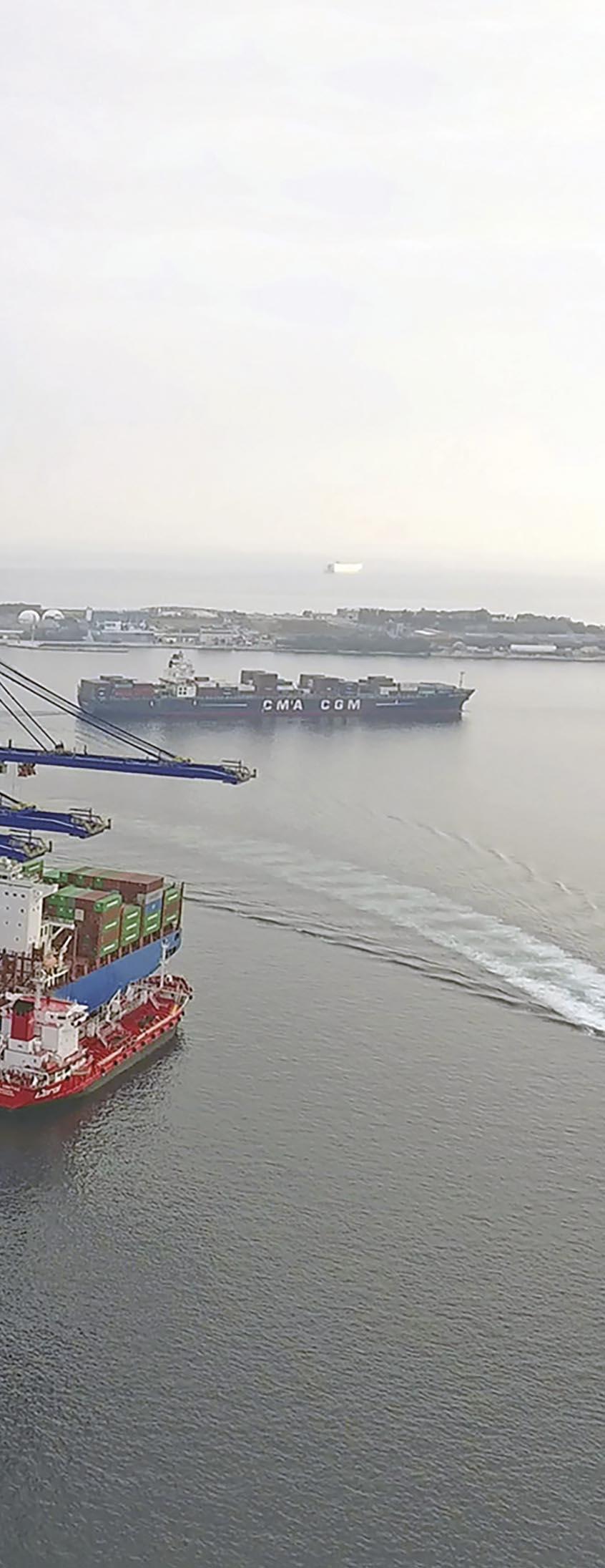
Acquisition-hungry Cosco is in a hurry. Its current portfolio of overseas terminals sits on strategic waterways stretching from the Aegean Sea to the Panama Canal. It covers Europe, the Mediterranean, Middle East, Southeast Asia, South America and Africa. Among its numerous assets are a 35 percent share of Hamburg’s Tollerort terminal, 51 percent of Valencia, nearly 40 percent of Bilbao plus holdings in the Panama and Suez Canals as well as the deep-water Red Sea Gateway.
Cosco is always looking for opportunities. In early 2024 it bought into Egypt’s Port of Sokhna, another deep-water terminal within the Suez Special Economic Zone that is expected in the long run to benefit greatly from its strategic position on the Red Sea, 40kms from the southern entrance of the canal.

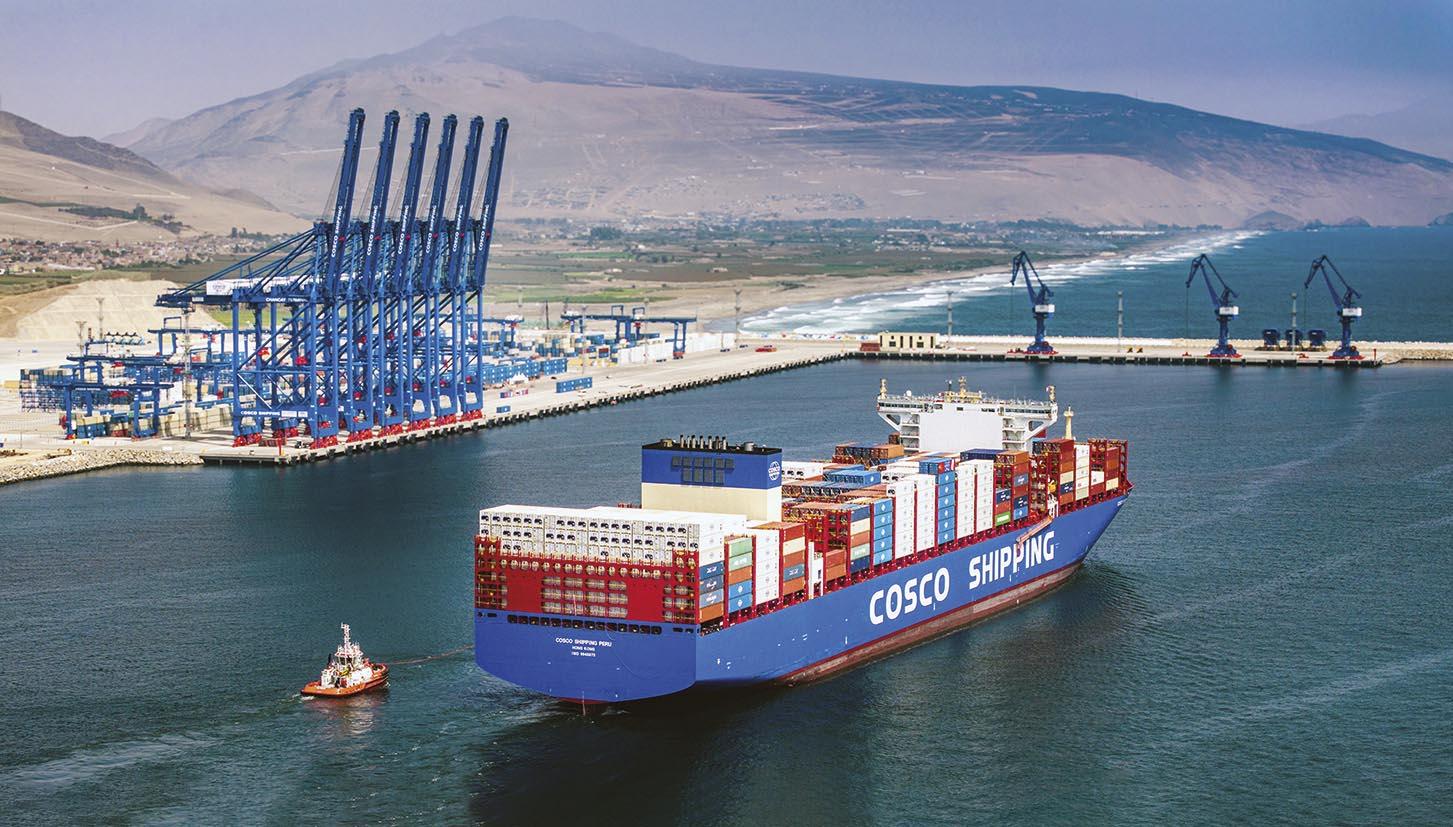
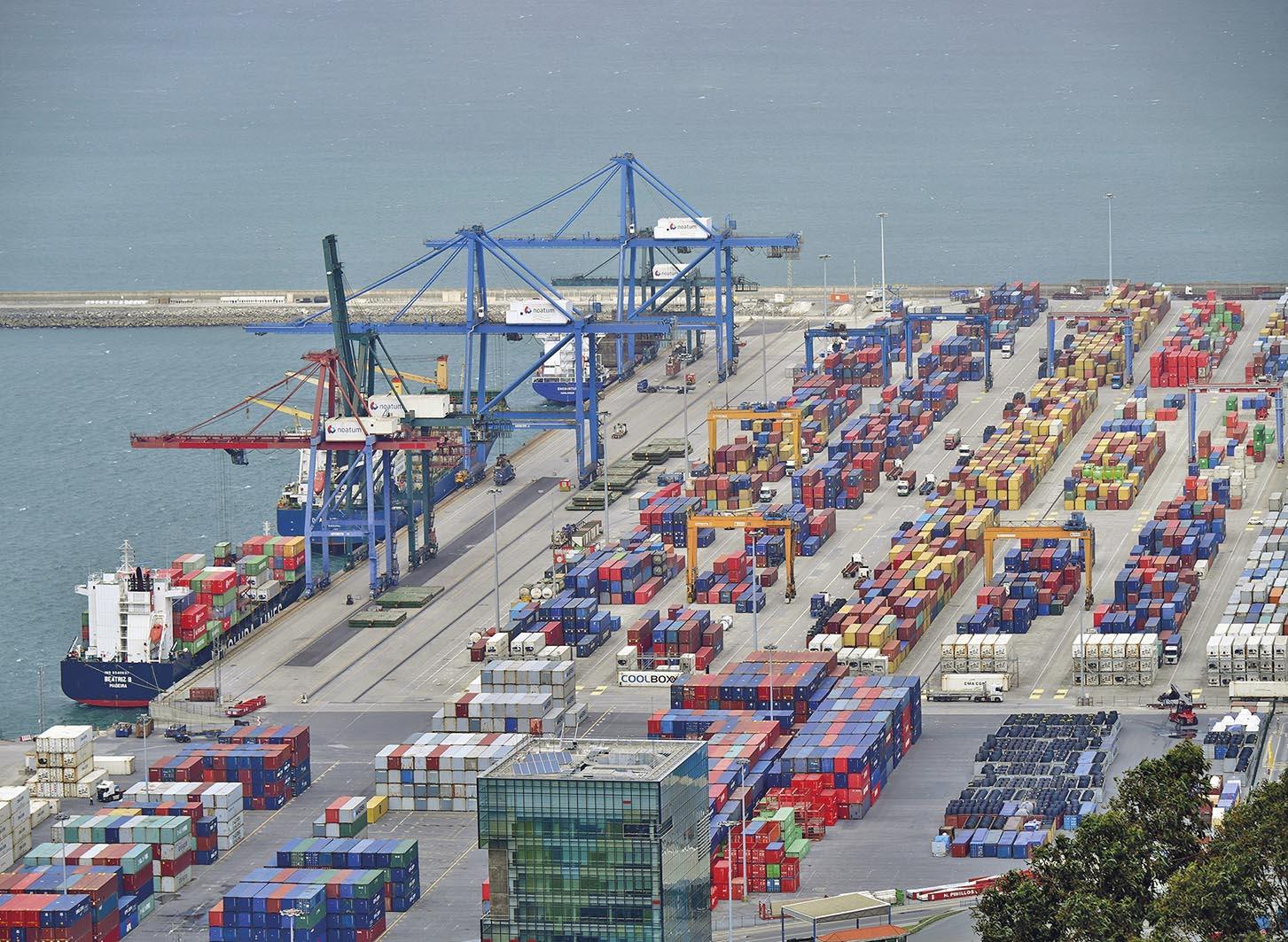
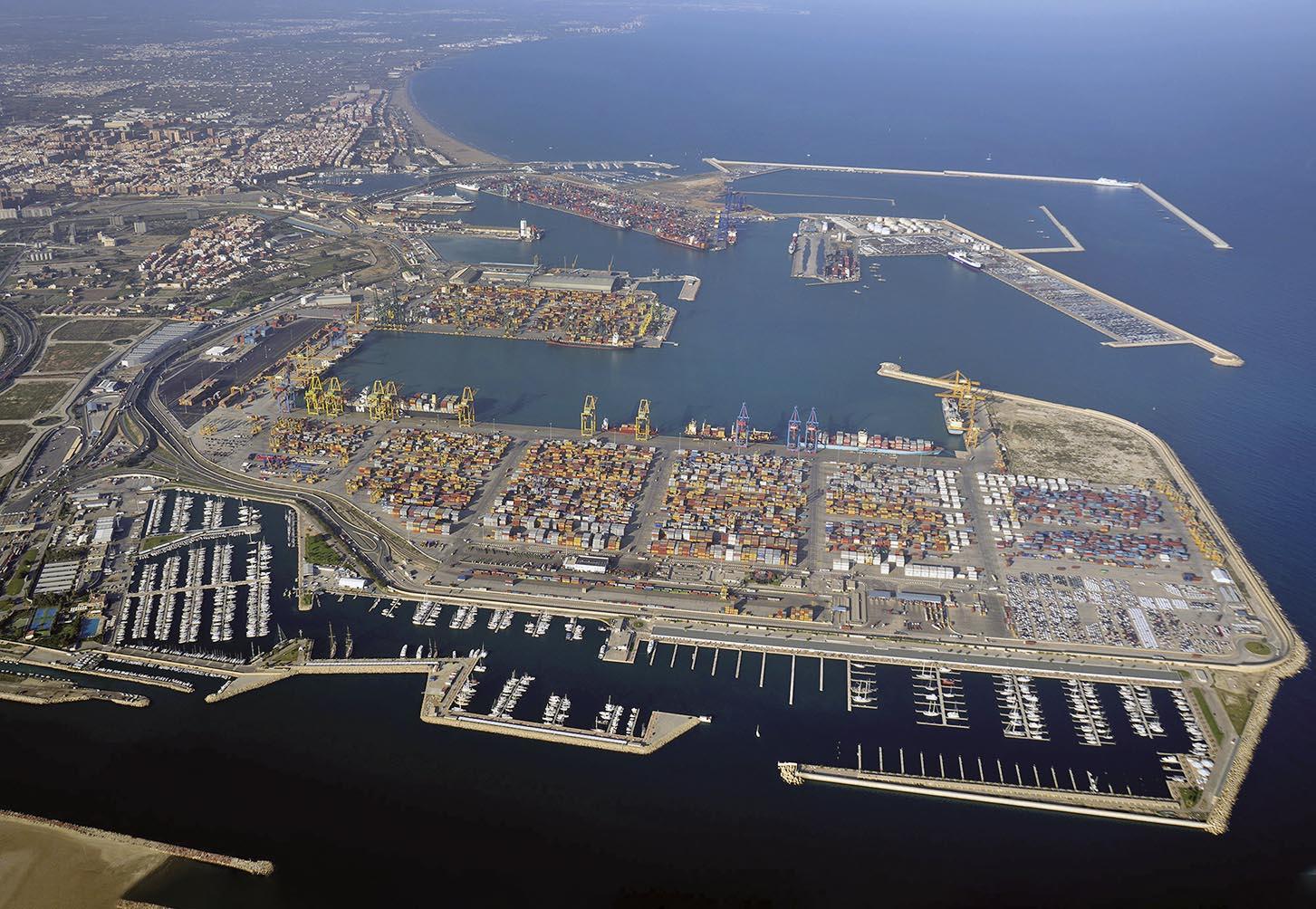
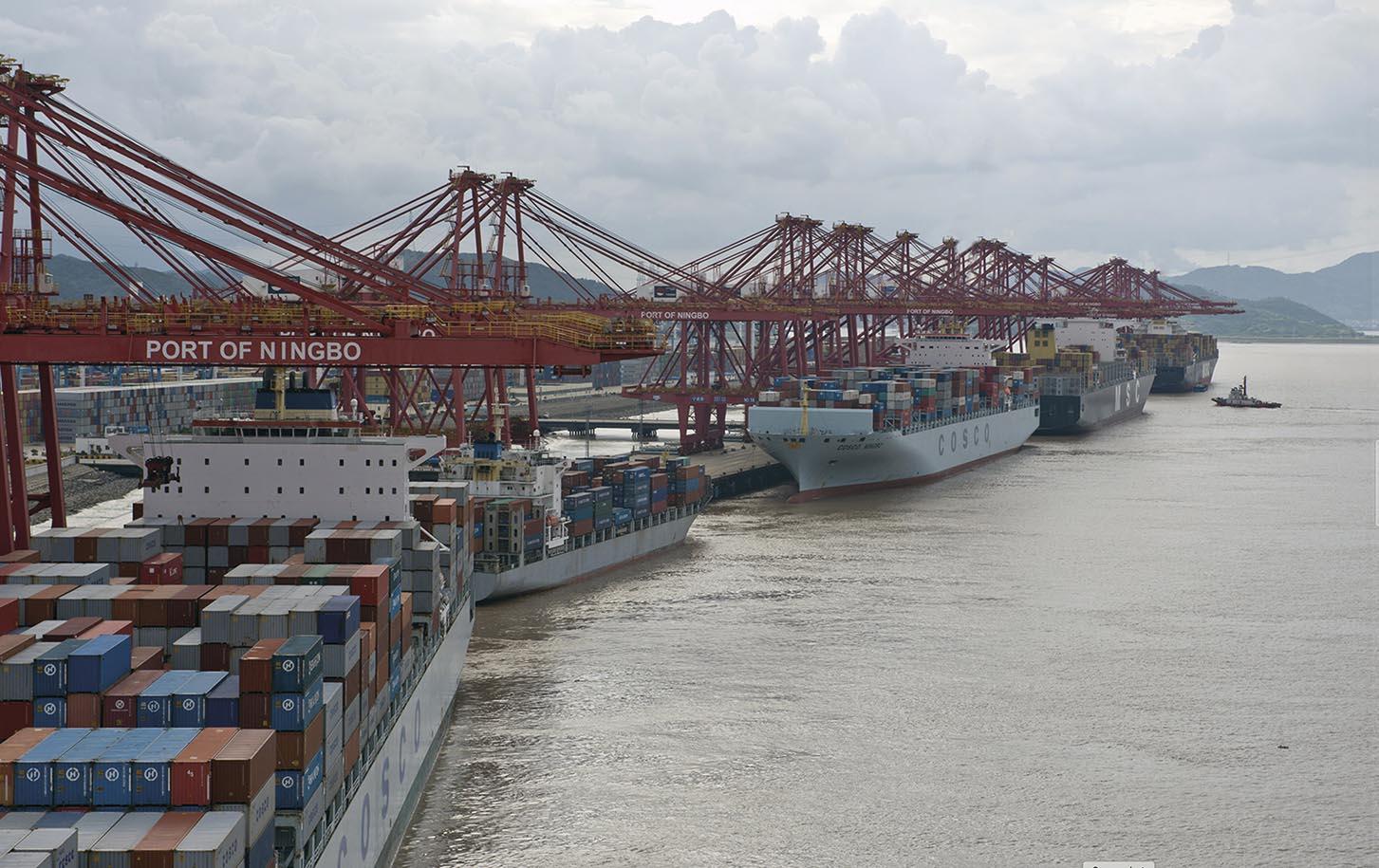
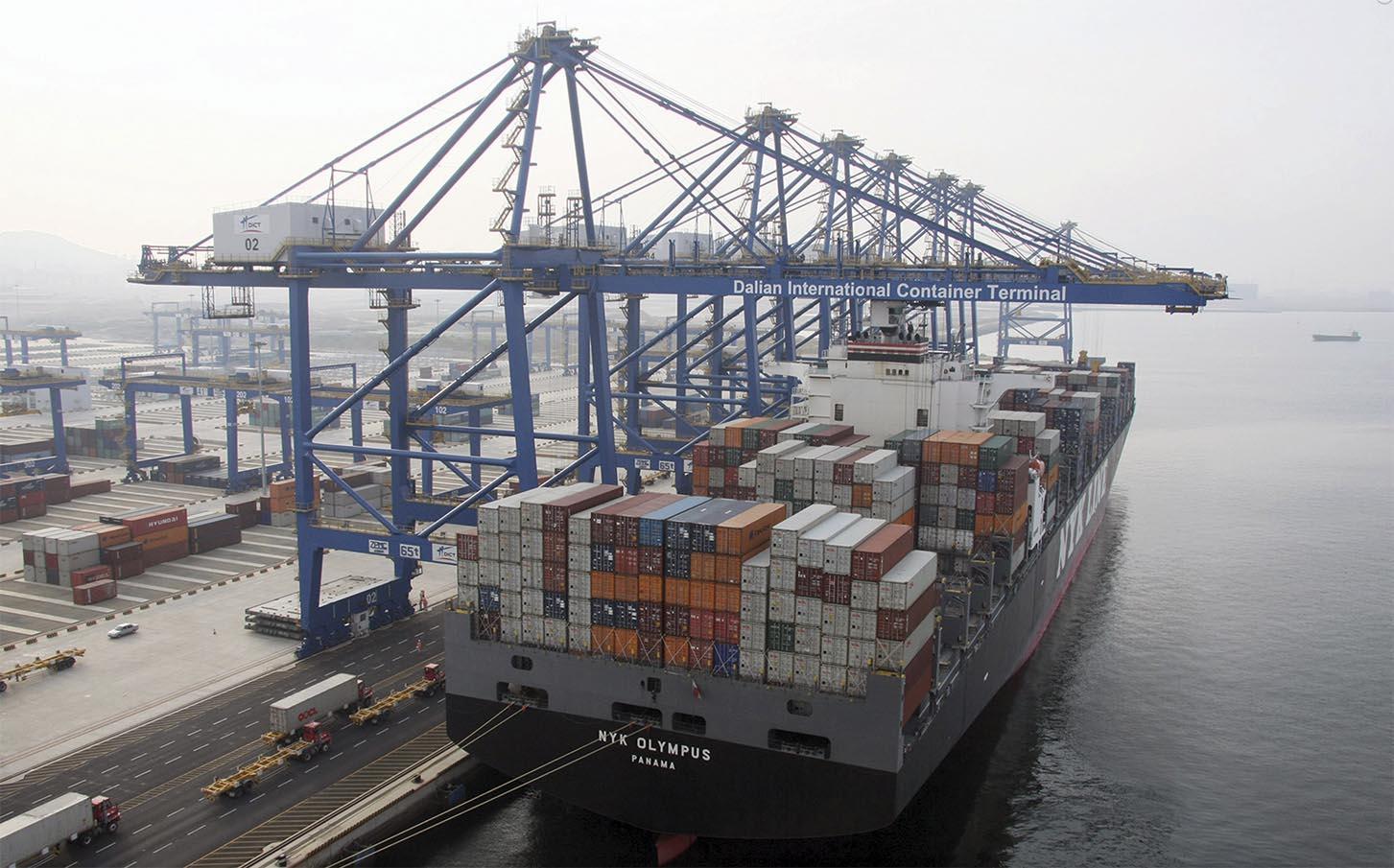
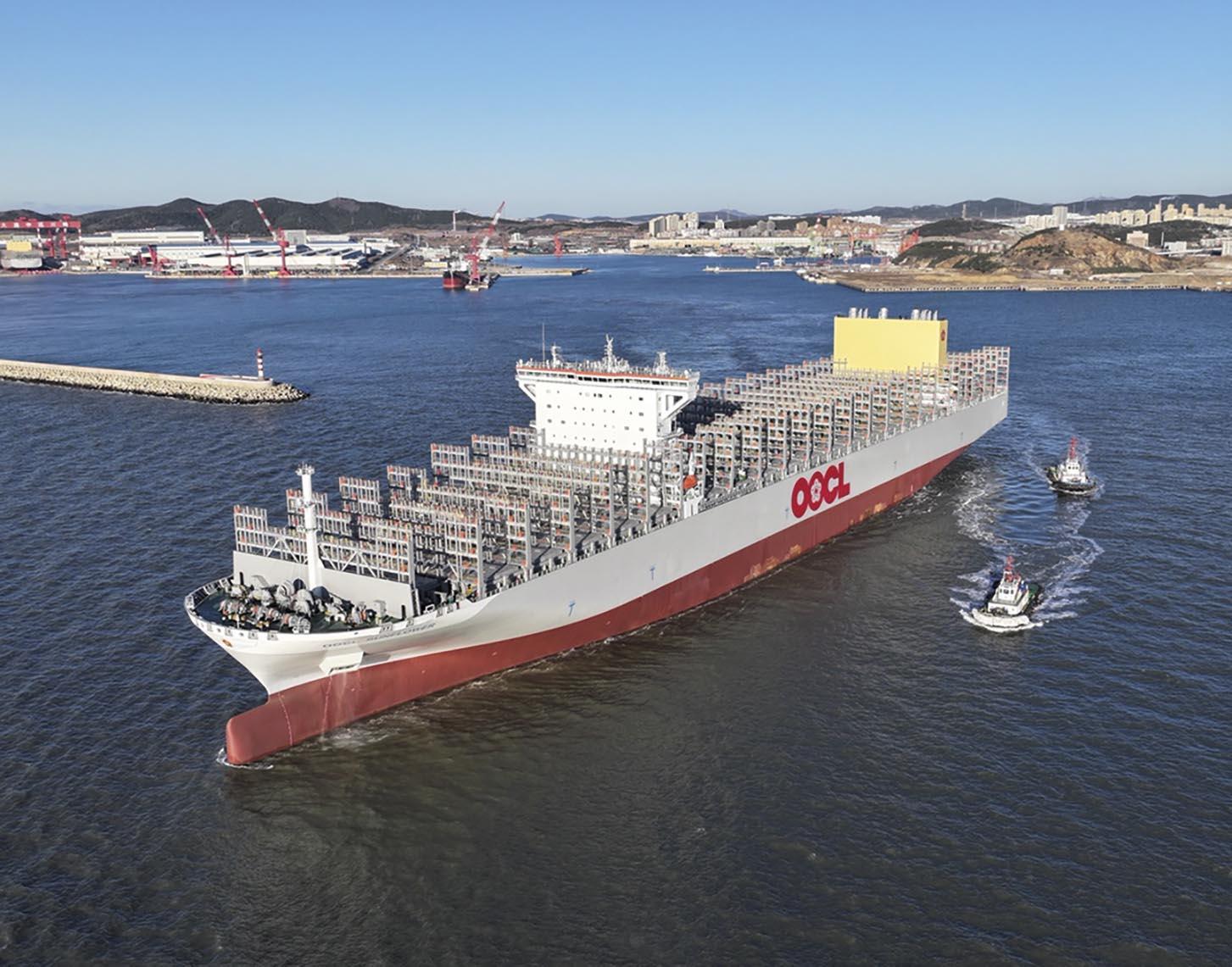
Some of these investments are controversial. Cosco’s 100 percent control of Athens’ Port of Piraeus was built up steadily from 2008, one of the first Belt and Road acquisitions made under a typically patient strategy. At first the Chinese company leased a trans-shipment terminal but steadily increased its stake and now Piraeus is managed entirely by China. It’s a plum investment for Cosco because the port sits at the maritime crossroads between Asia and Europe and provides shipping routes to Europe, the Middle East and Africa. Although Chinese control of Piraeus has attracted criticism about the EU failing to protect strategically important assets, it’s too late now. Also, Cosco has helped revive what was a moribund port.
Currently, Cosco also finds itself in the middle of a row over control of the Panama Canal. Its ships often transit the canal and Cosco has built a warehouse there. China also has interests in three terminals including one for cruise ships, which president Trump believes makes China too influential over the future of the waterway. He also argues that the Panamanian government is making too much money out of the canal since it was handed control in 1999. Rebuffing Trump, Panama president Jose Raul Mulino insists that relations with China are “excellent and respectful”.
He also rejects any suggestion that Panama is creaming profits, explaining that the entire infrastructure of the canal requires considerable investment, including a landbased pipeline for oil that would run alongside it. However there is no doubt that China has invested heavily in Panama and sees the hub as a vital future asset in Belt and Road.
Most of Cosco’s terminals are extremely profitable. According to company results for the 2024 third quarter, total revenue jumped by over 11 percent year-on-year to just shy of US$400 million, of which $81.8 million was profit. On the back of the Covid recovery, total throughput rose by over five percent to 37.4 million TEU. And that’s just for three months. Over the nine-month period revenue topped $1.1 billion which was up 5.8 percent, profit was $221 million and throughput exceeded 107 million TEU.
While the financials of China’s stateowned maritime companies with their complex system of government subsidies, soft loans and inter-company lines of credit are somewhat opaque, there’s no doubt that the ports group is awash with cash, wherever it comes from.
For instance, in late 2024 Cosco started operations at the brand-new deep-water Chancay megaport in Peru that it acquired for a total investment in cash, manpower and equipment of $1.6 billion. Backed by the
Peruvian government, the entire project cost $3.6 billion but the Hong Kong company has managed to book a 60 percent stake and sole operating rights for up to 60 years.
At one blow Cosco’s shipping line secured control of a trade route between China and Latin America that offers unlimited long-term potential, especially given America’s years-long failure to invest in the region’s shipping infrastructure. At Chancay, Cosco is also building warehousing and logistics facilities as well as direct road links into the region.
As ports rapidly assume geopolitical significance, the US military is increasingly nervous of the state-owned company’s growing presence in Latin America and elsewhere. “If a conflict were to break out in, for example, Taiwan or the South China Sea, this global network of 38 Cosco operated ports could pose a serious logistical challenge for foreign militaries looking to move ships or supplies to the Indo-Pacific”, warned the Atlantic Council, a US think tank. The warning was sounded before Cosco bought the stake in Thailand.
For the present though, most of Cosco’s business still originates in China. In the third quarter of 2024 the overseas terminals accounted for less than a quarter of total container traffic although they’re very much on the rise. Its Spanish and Belgian subsidiaries, the latter at Zeebrugge where Cosco’s operating rights run to 2055, boosted throughput respectively by over 23 percent and over 90 percent. Its Abu Dhabi port increased throughput by nearly 42 percent, largely on the back of new routes. By comparison Cosco’s total traffic in China, although swamping its overseas business in terms of sheer volume, grew by just 5.4 percent in a flat economy.
As official releases show, the combined Cosco ports and shipping groups make no bones of their ambition to conquer the world rather than rely on their Chinese roots. And of all its overseas territories, the ASEAN and Latin American nations figure high on the agenda. Citing a strategy of optimising its global network of terminals, “trade with these markets is becoming increasingly important”, Cosco says.
Cosco’s ports and the shipping business are closely intertwined, and they are leveraging off their long-term membership of the enlarged Ocean Alliance. To take as an example the Zeebrugge terminal, Cosco “grasped the shipping alliance reshuffle opportunity to strive for more mainline and feeder services”, it says.
In the latest reshuffle of alliances along the great trade routes, the Hong Kong group is joined with Orient Overseas Container Line (OOCL), a company it bought in 2018
after obtaining anti-trust and anti-monopoly approvals from China, the US and Europe, as well as Taiwan’s Evergreen shipping conglomerate and French behemoth CMA CGM. A formidable grouping, Ocean Alliance owns a third of market share on the Asia-North America trade lanes, comfortably ahead of second-placed 2M Alliance with a quarter share, while globally booking about 26 percent of total container capacity. In the fastgrowing trans-Pacific trades, Ocean Alliance dominates comfortably with 41.34 percent.
It's a measure of how comfortable the members are with the arrangement that they have agreed to continue their vessel-sharing agreements right through to 2032.
Each member of Ocean Alliance contributes synergies that make the arrangement bigger than the sum of its parts, for example shorter feeder routes. CMA CGM has just signed a sub-concession deal to develop and operate container terminals at France’s Lyon Edouard Herriot port for a period of 30 years. Based on a shift to multi-modal shipping, CMA CGM and its partners, mostly local authorities, aim to double river traffic as soon as 2032 on an overall investment of about €40 million.
But that’s peppercorn for CMA CGM. In December 2024 the French group opened a terminal at Khalifa Port that will, it promises, “become the regional hub headquarters for three of the world’s top five shipping companies”. Of course that includes members of the Ocean Alliance. The first phase of this project cost $845 million and boosted the port’s container capacity by nearly a quarter.
Although tensions between China and Taiwan run high, Cosco and Evergreen appear to work smoothly with each other as trade trumps politics. The Taiwan company boasts a fleet of 220 vessels with an operational capacity of 1.74 million TEU and it will soon expand that by nearly 610,000 TEU when 52 newbuilds are delivered in due course.
In yet another example of building on synergies, in late 2024 Evergreen and PSA Singapore signed a joint venture to operate a terminal at what is the world’s busiest port, starting almost immediately. The prospects for the partnership look good. As the port’s chief executive, Mr. Ong Kim Pong, remarked poetically, “Together we see immense opportunities to embark on initiatives that will not only enhance supply chain resilience but also reimagine how ports and shipping lines can work in unison, as part of our node-to-network strategy so as to ensure global trade flows as smoothly as water".
And as Evergreen chairman Mr. Y.I. Chang remarked, echoing exactly what Cosco often says, “We are always looking for likeminded partners to build high-efficiency terminals in important locations".
With 2024 fourth-quarter revenues up a whopping 55 percent and average revenue
per teu up by over 46 percent compared with the equivalent quarter in 2023, Orient Overseas Container Line also brings considerable heft to Ocean Alliance. During 2025 the line will launch six new trans-Atlantic services with its partners and other carriers.
Counting the Orient Overseas fleet, Cosco is the senior partner in the alliance. As of late 2024, it operates 1,535 vessels, big and small, with a total capacity of nearly 3.3 million teu across no less than 299 international routes including feeder services.
Domestically, its fleet runs 54 coastal routes and 83 up and down the Pearl River Delta and Yantze River. And it’s pushing deeper into the Far East to Africa routes with several feeder services between Kenya and Mozambique and across the Mediterranean to North Africa.
Ocean Alliance is building capacity almost monthly. Orient Overseas has just launched a new container ship, the OOCL Sunflower. The 16,828 TEU, Chinese-built vessel will be put on a 91-day run that also takes in the Cosco dominated Laem Chabang terminal in Thailand.
While Cosco builds its global trade, its domestic ports continue to underpin the business. The Bohai Rim, an economic area in northern China based on a large inlet of the Yellow Sea, accounts for over 34 percent of total throughput, while the great Yangtze River Delta delivers over 11 percent.
Cosco prides itself on port-side logistics, among other efficiencies it runs a fleet of autonomous container truck, and the terminals along the Yangtze are reaping the rewards. The Nantong Tonghai terminal, of which Cosco owns 51 percent, boosted total throughput by over 60 percent courtesy of investment in its network of mainline and feeder services. Similarly its Wuhan terminal, lying at the confluence of the Yangtze and Hanjiang rivers, leveraged its rail-to-water logistics and boosted traffic by 66 percent.
And in another indication of how trade beats politics, despite the tensions between the United States and China, Cosco’s Yantian container terminals in the Pearl River Delta had a good end of 2024 by virtue of rising demand from America and Europe for Chinese-made goods. However Trump’s recently launched tariff war may slow down US consumers’ voracious appetite for Chinese imports. The US president signed in a ten percent tax on imports from China, applying immediately. As Sam Chambers, an expert in the container trade, put it, “Container shipping is expected to be hit by a contraction in seaborne volumes as the tariffs take hold, leading to higher prices and a decrease in demand".
If that happens, Cosco can however fall back on its Southeast Asian terminals such as Laem Chabang. Citing a recent pick-up in trade along the South China Sea, the group attributed “the increase of total throughput mainly to the ongoing benefits brought by the Regional Comprehensive Economic Partnership and the rising demand for economic and trade co-operation between China and ASEAN that is driving trade volume in the provinces in the central and western China”.
Cosco has a vision that it calls “Ports for All”. This is based on an often repeated line, “We strive to ensure the stable and smooth operation of the industrial and supply chain, actively build a global and digital container supply chain service system, and create greater value for global customers and upstream and downstream partners".
The digital foundation for a “stable and smooth operation of the industrial and supply chain” is an e-commerce platform called SynCon Hub. Overhauled two and a half years ago, the platform now incorporates the four main elements of ocean-going deliveries, sea and land transportation, customs clearance and warehouse distribution.
The raison d’etre of the overhaul was visibility. All the documentation is available “any time and anywhere” while the cargo can be tracked in real time on sea and land. Since the launch of SynCon Hub it has been refined to incorporate different digital products for different industries.
The power in the ports and shipping group lies with 51 year-old Zhu Tao, an economist by training who came up through various roles in the company. He is listed as chairman, managing director and executive director, but there appears to have been an abrupt reshuffle in the executive in late 2024 when the deputy managing director and company secretary departed with the briefest of notices.
Apart from slogans about connecting the world, Cosco plays its cards close to its chest. Few press releases are issued (none so far in 2025) and Mr. Zhu doesn’t seem to issue statements or speeches, and is rarely quoted in the media. One of the few references to him came in mid-2024 when he reportedly refused to confirm or deny that he had come to a deal with the Houthi not to attack Chinese ships.
At the end of 2024, Cosco’s ports division operated and managed 371 berths at 39 ports globally. Of these 224 were container terminals with an annual handling capacity of approximately 123 million TEU.
It is however more than likely that at the end of 2025 Cosco will have added more berths and probably another port or two to its portfolio.




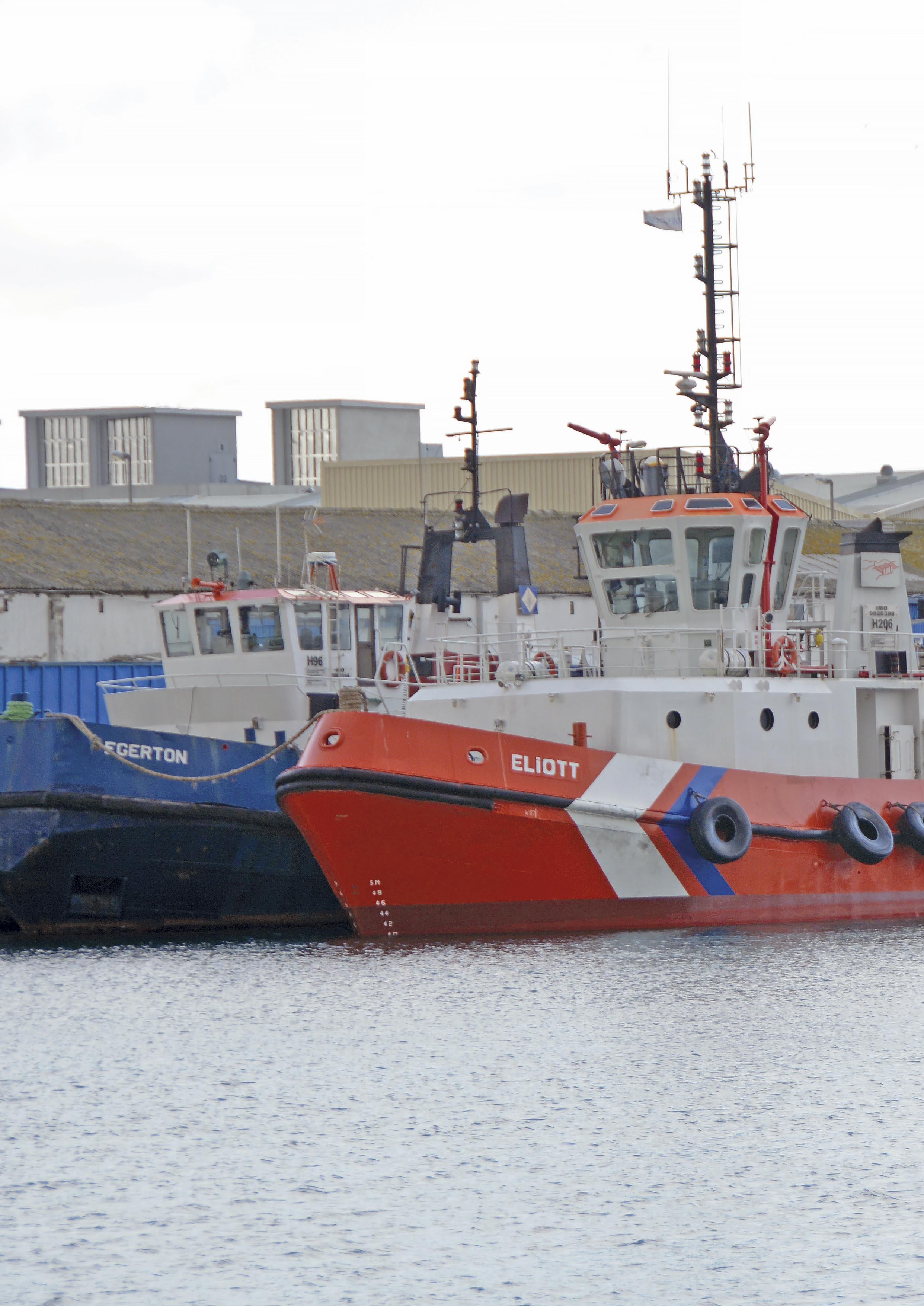
A fine array of tugs at Gibraltar in December 2016. From left to right are the Egerton Eliott, Rooke and Wellington of Resolve Towing Gibraltar Ltd.
The 193gt Egerton was built in 1969 by Ziegler Freres at Dunkirk as the Subtil for Soc. de Remorquage et de Sauvetage du Nord. She saw service at Swansea and Rochester under her original name with Howard Smith. She moved to Gibraltar in 2002 and in August 2022 she was broken up.
The 268gt Eliott was built in 1992 by McTay Marine at Bromborough as the Cluain Tarbh for Dublin Port moving to Gibraltar as Eliott in 2012.
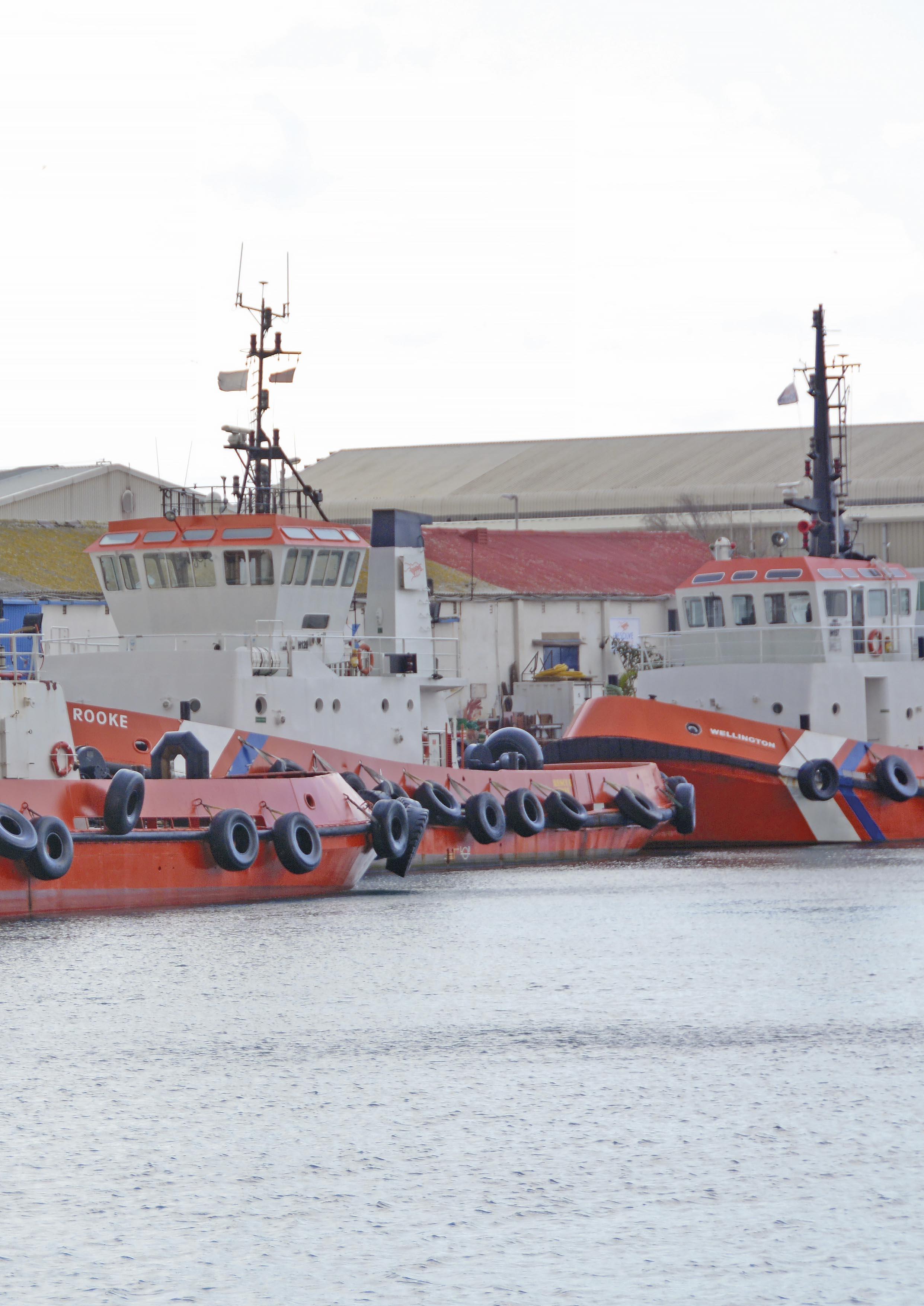
The 285gt Rooke was built in 1981 by Cochranes at Selby as the Lady Elizabeth for Humber Tugs Ltd. From 2005 to 2006 she worked for associated company Adsteam as Adsteam Elizabeth and then returned to Humber Tigs as HT Sabre. Following the takeover of Adsteam by Svitzer in 2008 she was renamed Svitzer Elizabeth and in 2009 she moved to Gibraltar.
The 282gt Wellington was built in 1980 by McTay Marine at Bromborough as the Canada for Alexander Towing. In 2007 she became Smit Canada of Smit International before moving to Gibraltar in 2008. In September 2024 all of the Resolve Towing tugs were sold to Boluda Towage and now sport their smart livery.

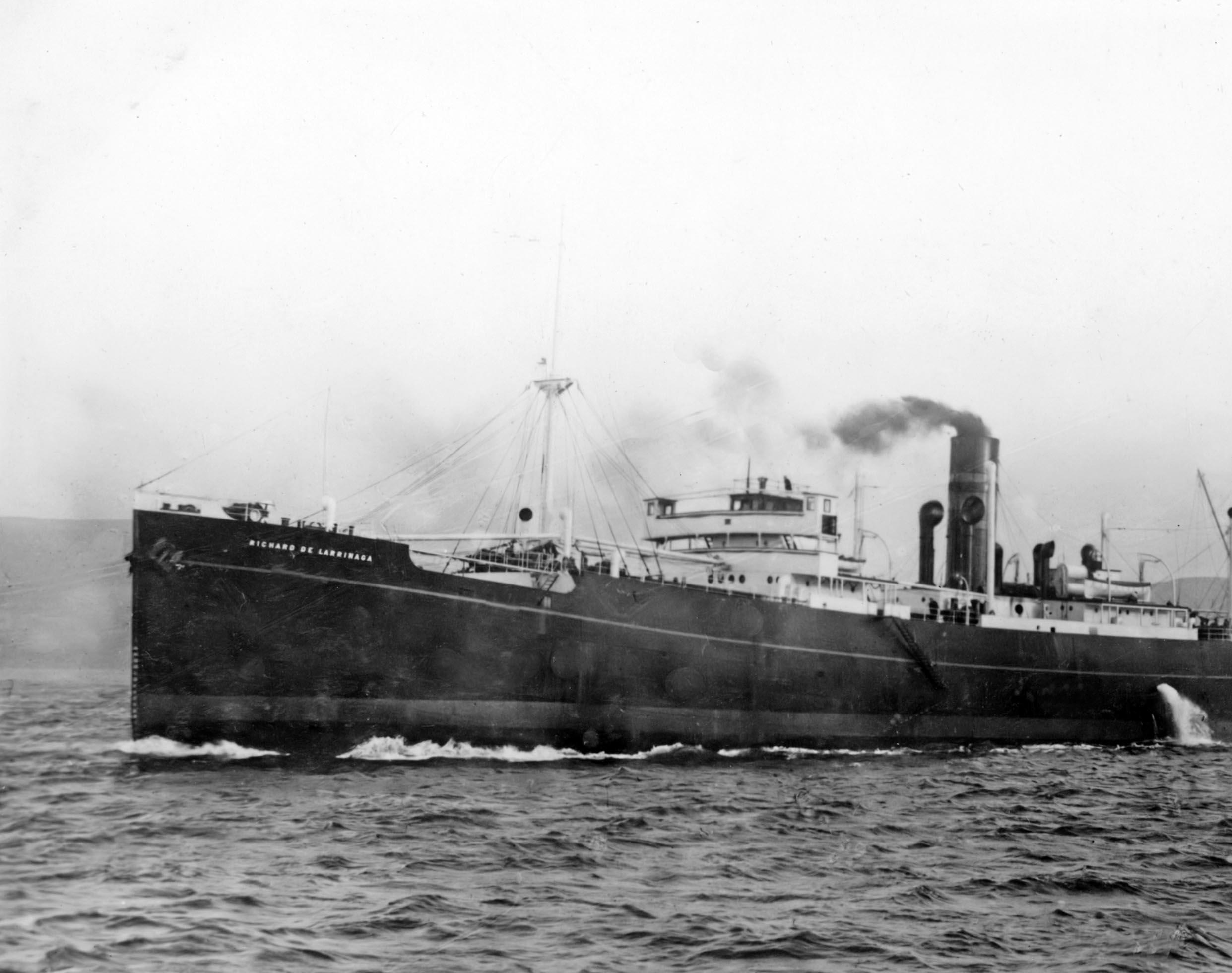
After a bit of leave, I started to look for another ship, from the position of having sailed as Third Engineer. There were plenty of ships to choose from, and it was just a case of getting one that suited, and on a decent voyage. I joined the Larrinaga Steamship Company, an AngloSpanish outfit based in Liverpool. They had miscellaneous crews of Malays, Chinese, Japanese, West Indian, Maltese, Portuguese, Spaniards and others but the engine rooms were in good condition and had simple triple expansion steam engines. They traded regularly to the Argentine with coal out and grain home. I was then appointed to the SS Richard de Larrinaga. and was instructed to join the ship at Hull where she was lying in wait for a cargo, and we laid there for three weeks signing articles on 7th July 1939. When loading a coal cargo, the wagons travel from the mines to the port and on the last stretch of their journey they are pushed up a steep incline to the top of the high coal staithes. Here the wagon is firmly gripped and turned upside down and the coal hurtles down a noisy steel chute and into the holds of the ship. It falls untidily, and in doing so it releases dense clouds of dust that float all
over the ship, over the harbour and more lightly over the adjoining streets and houses.
To tidy up the lumpy coal, squads of trimmers go down into the holds with their stubby heart shaped shovels to push and slide the coal into pockets and corners to give a level ship and an even trim. The dust arising from this arduous work falls freely on these coal trimmers, and they inhale a fair amount of it. To make their life more pleasant they partake of large quantities of beer to slake the dust, and they are allowed to buy it in bulk at any hour by special dispensation. As they grow older in their trade their bodily shape reflects their penchant for quaffing and laying the dust. They belonged to a small body of men who had the sole right of coal trimming in that port. They were well reimbursed for that hard and dirty work, and entry into that private association was severely restricted to their blood relatives, from father to son. One of their members was appointed Treasurer, and he controlled the fees collected from the shipowners, and the weekly payments to the men who did the dangerous and dirty work, in the holds where they are liable to be carried by
subsidence into an unseen pocket in a dark corner. For this reason, the men always worked in pairs and were always in contact with one another.
When the last crank and crosshead have been tightened,
When the Third Engineer is laid to rest, With his tools all rusted and broken, just divide what you think are the best.
No glands to pack, no nuts to slack, no firemen to frighten.
No rods to swing, no gear to sling, no bottom ends to tighten.
He is on that bright and happy shore beyond this vale of tears.
Where Seconds cease from troubling and there are no Chief Engineers.
No red-hot cranks, no Second’s pranks will there the Third annoy.
He's in robes of white - a shining lightsomebody's blue eyed boy.
We'll leave him alone in Gods Acre, he died in his old beliefs that heaven's reserved for juniors and Hell set aside for Chiefs.
I was by then one of those Thirds. The “threeo” to all except a very courteous Spanish Donkeyman who called me Mr. Turd. The ships I sailed in were generally up to 10,000 tons with four and at times five engineers. In those few years I saw some wonderful things and met some remarkable people. As 3rd I was an intermediate. Too experienced to be friendly with those I outranked, and yet not qualified to pass a firm opinion to the Second or the Chief.
As 3rd I was responsible for all the electrical equipment on the ship. One of the more arduous duties in this line was when we were approaching port and I had to climb up the masts to rig the cargo clusters. These were batteries of lamps that shone into the holds to help in discharging after dark. These clusters had to be in position for when we approached the dockside as there was no opportunity after that. While we were still at sea, I had to struggle up the vertical ladders on the masts lugging my loads over my shoulders and hook the clusters under the cross trees. I don't remember how many lamps there were in each cluster, but I know that it was a heavy load, and it was a perilous adventure. When we approached the land the ground swell
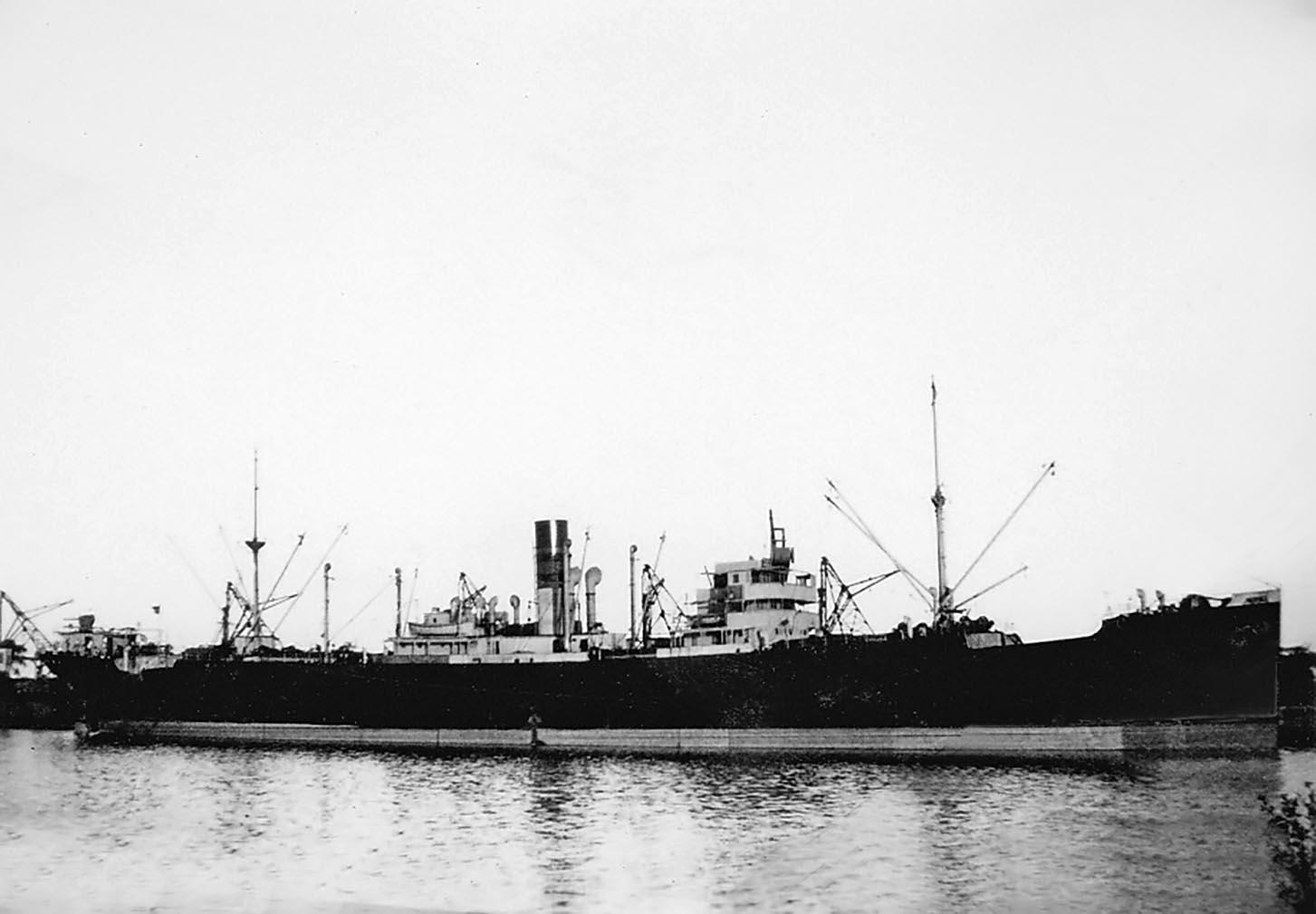
Left: The 5,358grt Richard de Larrinaga was built in 1929 by Lithgows at Port Glasgow. She
and sunk on 12th April 1941 as described in the text.
Above: The Richard de Larrinaga in the River Plate taken by Bob Atkinson.
Below: HMS Dauntless escorted the Richard de Larrinaga from Sierra Leone to Gibraltar. She was built in 1918 by Palmers at Jarrow. On 13th February 1946 she arrived at Inverkeithing to be broken up.
Bottom: Bob Atkinson was offered the position of Second Engineer on the 5,791grt Ramon de Larrinaga but declined and stayed as Third Engineer on the Richard de Larrinaga. (John B. Hill collection)
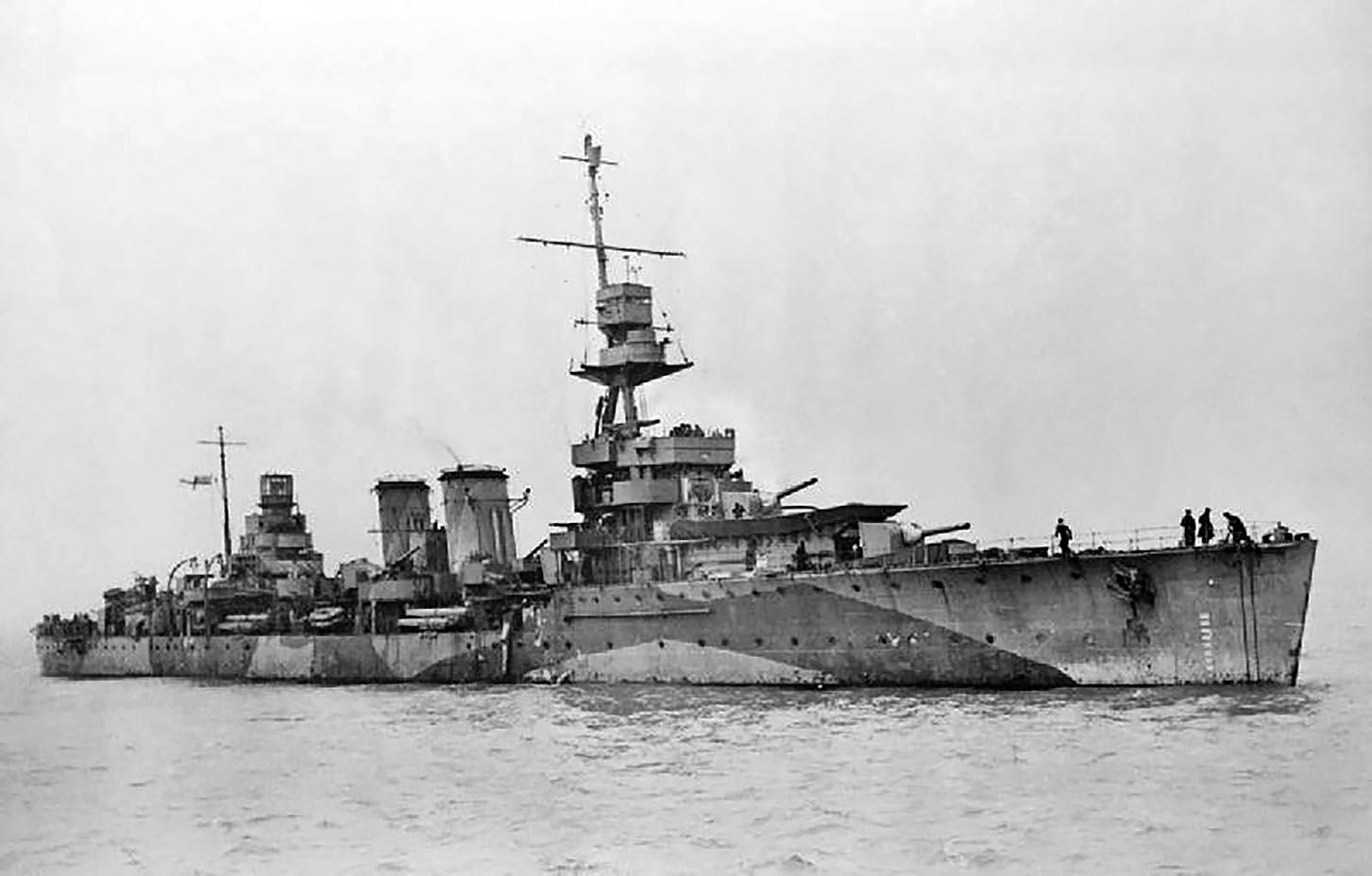
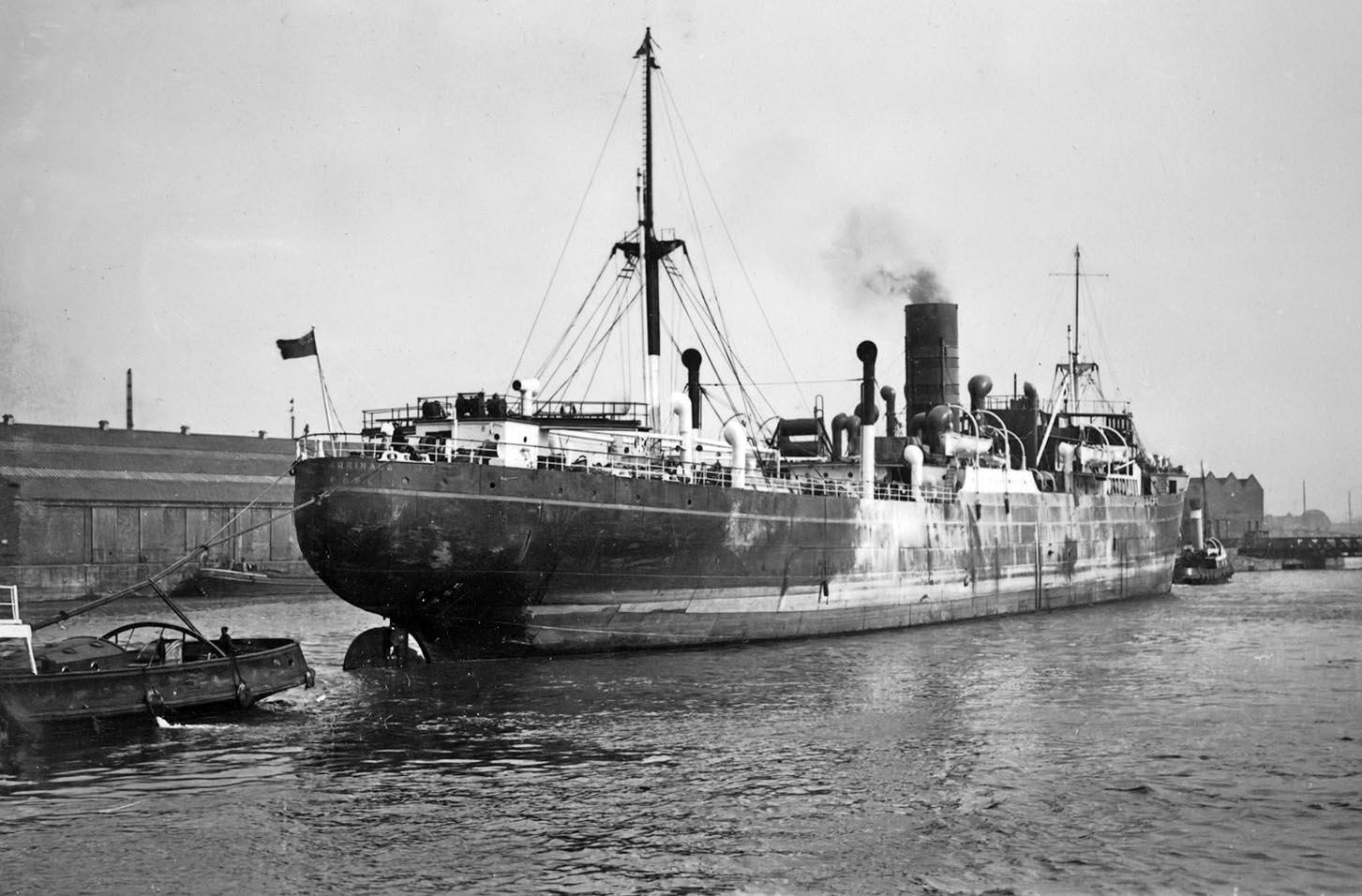
Above: The German armoured cruiser the 12,100grt Admiral Graf Spee.
Below: HMS Ajax together with HMZS Achilles and HMS Exeter were responsible for the disabling of the German warship. HMS Ajax was built in 1935 by Vickers-Armstrong at Barrow. On 13th November 1949 she arrived at Newport to be broken up by John Cashmore.
Bottom: The Achilles was built in 1933 by Cammell, Laird & Co. at Birkenhead. In 1948 she was transferred to the Indian Navy and renamed Delhi. She was stricken in May 1978.
made the ship roll widely from side to side. I was always pleased when that job was completed.
The crew were only signed on the day we were due to leave, so I did not know who were the firemen on my watch until we were out beyond the Outer Dowsing light vessel. I went into the boiler room primed with what I was going to say to my men, and maybe I would frighten them a little. I've got a cannibal on this watch and I promptly retreated to the safety of the engine room. In a passing thought I felt that with a proper top knot, and wearing a leopard skin kaross and carrying knobkerrie and a handful of assegais he could have passed for the leader of an impi of the Zulu King Cetewayo, and shouted "Bayete" with the best of them. I soon found out that I was not very keen on the outfit but decided to stick it out for a couple of trips. A frequent dish was salt fish which I had never liked and could never understand why some people did. We also had lots of curried dishes. The cook was a Spaniard.
We had a pleasant trip to Buenos Aires and the voyage lasted 33 days until we passed Cape Frio and ran into a thick fog which is always unpleasant at sea, and we had to reduce speed. We kept going steadily until about 2am on my watch when the telegraph clanged to Full Astern without any warning. I immediately flung over the reversing gear and opened out on the steam. The old Richard shuddered and bumped at this violent treatment, and all the off-duty engineers came rushing down below to help me. Later I was commended by the Captain for my promptness of action as they were only warned of the proximity of land when they heard the seals barking on the beach of Lobos Island, which seemed to have been a seal sanctuary. The pilot came aboard at Intercession light, and we docked after our river passage at Barracas just beyond the Boca. We soon started to discharge our cargo as Argentina always seemed ready for more coal. I took a tram uptown to Correos to post the letters I had written during the voyage, and then I had a stroll under the trees lining the road. At a place we knew as "Under the Arches" I was inveigled into a barber’s shop. I just wanted a haircut but I finished up with a mudpack, shampoo, vibro-massage and the full treatment only because I could not speak their language and came out of the shop 7/6 poorer when all I had wanted was a 1 shilling haircut.
I enjoyed Buenos Aires which is a fine city with broad streets, many of which are lined with trees and broad lawns and flowers. There are some fine avenues which are well illuminated in the evenings and they have names like Cordoba, Sarmiento, Florida and others. The Paseo has some pleasant gardens and a statue of Columbus. The buildings are pleasing to the eye, and are well maintained. Normally I did not go into the Flying Angel
Sailors Mission but here they had frequent boxing contests, with occasional shows of wrestling. The firemen from the Blue Star ships all seemed to be pugilists and I enjoyed some good bouts there. The Argentinos seem to have adopted all the British sports, and they do them very well. One afternoon I took a train from Retiro to Palermo where I had a walk in some pleasant gardens, watched a few events of a race meeting, and then a rugby match.
There were about five different types of policemen, and they all seemed to be of a violent disposition. They were liable to arrest anyone with only the slightest excuse, and I gathered that the gaols and treatment of felons was very severe, and to be avoided if at all possible. Buenos Aires it is reported, or reputed to have one of the most vicious underworlds anywhere. At night we avoided certain districts, but it was said that after dark two mounted police would ride down the noted streets with a rope between them, and anyone caught in the noose would automatically be thrown into the police go-down for sentencing the next morning.
The Opera Cinema was a luxurious place and it had refrigerated ventilation slightly scented. The screen surround was in the form of a shell, and when the auditorium was darkened stars and clouds showed in the night sky that was painted on the roof dome. In the interval people strolled around the patio or sat in basket chairs to smoke their cigarettes and cigarillos. Before the picture started attendants walked in the aisles saying, "Sombreros Senoritas, Sombreros Senoritas" over and over again so that the ladies would remove their hats and not obstruct the view of the people sitting behind them. No smoking was also enforced. The last performance was at 1.15am but the street cars ran all night and taxis were cheap.
The weather was very warm and it was not uncommon to see families walking in the parks, and on the riverside at midnight to try to obtain some relief from such extreme weather. At first, I was startled to see young children strolling along holding hands with their parents at such late hours just trying to keep cool. Others would be stretched out on the grass trying to sleep there while some would ride around in taxis to take advantage of the breeze created by the motion of the vehicles.
There was a cheaper and more popular transport starting from the Correos and running out to all the suburbs. Each little vehicle was called a Colectivo. In effect they were miniature buses only slightly larger than taxis. They had no schedule to stick to, and when they were filled with passengers or the driver thought that he had enough people he would speed off on his journey honking his horn. With all the windows open to the draught we had some pleasant excursions as the fares were ridiculously cheap. If anyone
wanted to enjoy the journey they had not to be of a nervous disposition as the Colectivo drivers took high speed short cuts at corners with flagrant disregard of the normal rules of the road, and the various types of policemen were too warm to be bothered. For a small extra fee these drivers would veer off their appointed routes and would run us, or any other passengers caught up in such illegal acts back to our ship, or any other destination, when it was thought that another attempt at sleep was indicated.
When we had finished discharging and cleaning the holds of coal dust, we sailed up river to Rosario which is well inland. We touched the river bottom crossing the bar of the Parana River as they let passing ships dredge the deposits. We loaded part cargo there to save road and rail freight costs, and then came back downstream again to load to our Plimsoll line in La Plata close to B.A. Rosario, a very simple town with nothing much to recommend it except that it was a transfer point for the grain harvested on the more remote pampas. Railroad branch lines radiated over the pampas and brought the grain to Rosario where it was stored in tall silos, and was just dropped into the holds of the ships that came to load. With such an unstable cargo we had partitions of rough wood and screens of burlap to prevent the grain shifting while we were under way.
We had a small fairly pleasant air attack at the mouth of the River Plate. Clouds of pale blue dragon flies hovered over the ship. They had wing spans of nine to twelve inches and they created quite a breeze when they fluttered close. We left the River Plate and headed for St. Vincent for final orders and the date we sailed was 1st September 1939 and War was declared two days later. Even though it was officially peacetime each night we darkened ship and took all wartime precautions. We sailed a most tortuous course away from the normal shipping lanes, as we knew that some German U-boats were anticipating the declaration of War and would have sunk us if we had been found. Two days after we had sailed the Captain decided to head for Sierra Leone in West Africa to see if there were any convoys homeward bound as we could not break radio silence to ask for instructions.
Sierra Leone although a British Protectorate, was then a very undeveloped country, and it exported small quantities of ivory, gold, palm oil and bauxite clay from which aluminium is extracted. It has a large anchorage enclosed on one side by mountain slopes, and on the other by mangrove swamps. The harbour extends well up the river and there was quite a number of other ships in the same predicament as we were. We were not allowed ashore so I know nothing of Freetown and here we stayed for ten days in the steamy heat coming from the mangrove swamps just across the water.
Being in what we knew as the “white man’s grave” we were daily dosed with quinine and the taste lingered over all other tastes until the next tablet to protect us from the miasma of the nearby jungle which seemed so green and pleasant.
The people we saw were a dark shade of black, and they came alongside in canoes hollowed out of buoyant logs, with hand carved wooden paddles with which they propelled themselves at high speed. Canoes came alongside paddled by semi-naked natives of both sexes. They tried to sell us, or barter for cane and raffia baskets which seemed to be of very good workmanship, and they seemed to prefer goods or clothing to our currency. They were dressed in the most startling fashions. One minor Chief had ear rings, a topee, a clay pipe, green/white football jersey and naval trousers. Uniform caps with badges were very popular and in great demand, and we had to make sure that nothing portable was left unattended.
With all our extra mileage wandering about the Southern Ocean we had to take bunkers before we could leave. A barge laden with coal came alongside and two planks were rigged between the two vessels, one for coming to us and the other returning to the barge. Each of the labourers, male and female had a woven straw basket which was filled with coal from the barge. Then the carrier ran up his plank to our deck and dumped his load into our bunkers and clouds of coal dust floated everywhere while the labourers ran by the other plank back to the barge. On deck was a tally man keeping count of the number of baskets being delivered. He would shout, “one go one”, “two go two”, “three go three” and on until it became “nine go nine, next be tally” and when the tenth basket load had been dumped he would shout “tally, tally goo-o” and mark it down on his slate. The natives used very few clothes and did not seem very bright. I understood that they still have Porroh men as their witch doctors are called and it is said that cannibalism still exists in the bush away from the authorities.
We were not sorry to leave such a place, and we sailed in a convoy of thirty-five ships escorted by the light cruiser Dauntless which took us as far as Gibraltar, and then we carried on North without escort until we were picked up by two destroyers in the Western Approaches of the English Channel and we detached ourselves to continue up the Irish Sea. We anchored within the Mersey Bar, and we swung at anchor with our homeland so near and unattainable but no one was allowed ashore. After waiting for three days, we were told that our cargo should have gone to Antwerp, and we picked up an outwardbound convoy as far as the Channel, and continued as far as Boulogne on our own hoping for some definite orders. We passed a West bound ship and signalled her, "Mine ahead", and she replied to us, "Mines ahead”. Which
Above: Bob Atkinson was given the opportunity to move to the 7,352grt Pilar de Larrinaga but turned it down. She was built in 1918 by Mitsubishi at Nagasaki as the War Nymph for the British Government having been launched as the Kuramasan Maru. She joined Larrinaga in 1919 and in 1949 she was sold to "I.N.S.A." Soc di Nav. of Genoa and renamed Delia. She then operated for two more Genovese companies V and Soc Armamento Marittimo nc & Cia de Nav. "Stella del Nord" SpA as Honestas from 1952 and Russula from 1956. On 7th December 1957 she arrived at La Spezia to be broken up by CN Santa Maria. Below: Another ship that Bob Atkinson was offered a position on was the 5,231grt Manuel de Larrinaga which was built in 1924 by Schichau at Danzig. In 1950 she was sold to Leonhardt & Blumberg of Hamburg and renamed Bernd Leonhardt and in 1954 she joined Cia de Nav Louteflodini Ltda of Costa Rica as Capetan Georgis. On 17th June 1959 she arrived at Osaka to be broken up by Yamamoto Kogyo.
Bottom: Bob Atkinson’s last ship was the 6,968grt tanker British Captain of British Tanker Co. She was built in 1923 by Palmers at Hebburn. On 2nd December 1941 she was mined and sunk off Cromer with the loss of two lives. (All photos from the John B. Hill collection)
was not very comforting. Next day we anchored off Dunkirk, and the following morning we sailed on and passed, with trepidation, several floating mines, which had apparently drifted on to the lee shore from the North Sea. At last, we entered the West Schelde with sighs of relief and steamed up to Siberia Dock in Antwerp.
While we were there, I saw the Barber of Seville performed in Flemish, which I understood as much as I would have done if it had been in its original language, but I still enjoyed it.
It was very pleasant in Antwerp, and we had some good evenings. One night all the officers of our ship had a party at a little Spanish restaurant, and the high spot of the evening was a casserole of baccalhao. Naturally I was not very keen, but fortunately where I was placed, I had the job of serving the helpings, and with cunning of low order I arranged that there was only a small helping left for myself. As it was even that was too much. By this time, I had discovered that baccalhao was the Portuguese for salt fish. The remainder of the evening was devoted to singing, dancing and similar frolics until it was time to return to the ship. In the meantime, the cargo of grain was being discharged ashore through chutes and powerful suckers, and also into clean and elaborately painted barges which took their cargoes along the tortuous networks of the canal system. There were almost uncountable numbers of these decorated barges, and they accommodated whole families who seemed to live a nomadic gypsy kind of life.
After discharge we sailed out of the River Schelde and dropped into an anchorage off Southend where we waited for a Channel convoy. As we passed through Dover Roads, we threaded our way through a vast array of Continental ships going through a thorough search by Contraband Control which was much more than the normal search for odd duty-free goods. A little further along the Channel we had an engine breakdown, and we just had to lie there until we repaired the damage and the convoy sailed on and left us. At last, we got on our way again and rounded the Longships light without an escort, and we arrived at Milford Haven before our friends in the convoy. When we were cleared for entry to the port we set off at high speed for Barry, trying to get there before another ship that started with us. As we cut across all the corners, we discovered later that we had cut across part of a minefield.
One evening two of us were walking ashore in our best civvies when we were approached by two girls who stuck a white feather in our buttonholes and said that we should be in uniform, presumably meaning that those men not in uniform were cowards. This movement seems to have started in South Wales and it caused quite a lot of ill feeling, and we started to use our uniforms
ashore whereas we had previously only used them on shipboard. Soon the authorities issued us with a neat little silver coloured metal badge with the initials M.N. inside a loop and knot of cordage. I had some leave coming from the 9th to 29th November 1939 and I travelled home from South Wales as there was a very convenient train each day right through to the North East. This train was very well used and I remember seeing one engineer dumped into a train compartment with a card hung round his neck saying, "Please deliver to West Hartlepool". On the assumption that by the time he reached there he would have sobered up enough to totter home if he reached the right town.
On the journey I met a girl and we became quite friendly. She was wearing a white angora jacket that was very becoming. I, of course, was wearing my best black officer’s doeskin uniform with the brass buttons in which I thought myself to be very smart, We got quite close together as our friendliness increased, and after an hour or so of getting to know each other, I could see that the hairs of the angora wool were spreading all over my black uniform, so that all the other passengers could see that the girl and I had been very close. Eventually I was released when she had to alight at some station near Birmingham, and I was left to pick off the hairs one by one to keep me busy for the rest of the journey, and before I reached home where I would have had to answer some embarrassing questions.
I had a week of leave and then re-joined the Richard. One day while I was the only engineer on the ship one of the Superintendents came aboard and asked me a lot of questions, much to my astonishment. At the close of the interview, he offered me the post of 2nd Engineer on the Ramon de Larrinaga, but as I was not too keen on the outfit, I turned it down. While we were in South Wales, they mounted a gun aboard. As we were deemed to be a peaceful organisation the gun was said to be only for self-defence, and it was mounted on the poop so that we could only fire it at any other ship that was pursuing us with hostile intent. With our polyglot crew there was difficulty in selecting a reliable gun crew. I was placed as gun trainer and the Chief Mate went to Cardiff for a two-day training course so that he in turn could teach us. There was no time to test the gun before we were outward bound again for Milford Haven, to join yet another convoy. We were off to sea again still with our "new" weapon untested. We found the date 1918 stamped into the barrel to show that it had been made for use in the last war and had never been fitted or used.
After we had our four days of escorted convoy the ships all parted company, and we all went our separate ways, and some went quicker than others and were soon over the horizon. When we were properly on our way
to the Southern hemisphere, we were able to set about testing the weapon of self-defence. The guns crew of the different nationalities had become familiar with what was supposed to be done, and after we had done another drill, we loaded a live shell into the breach. To be on the cautious side we connected the firing lanyard to an extended signal halyard and all hands retired to the other end of the ship. The Captain had a last sweep round all horizons with his binoculars and when he found no other ship in view he gave us the signal to fire which we did. All seemed to be successful. We decided to fire another shell off to prove that all things were well, and after the proper drill we re-loaded and the Mate put on an extra bit of elevation, and after retiring to our places of safety the Mate pulled hard on the signal halyards. The attached firing lanyard fired off the missile which went roaring through the upper air, but none of the watchers saw any splash of landing. We wondered if some innocent ship over the horizon would think that it was being attacked, or even whether our shell would go right round the earth to complete a circuit and catch up with us on its return.
By Christmas Day we were about level with Pernambuco in glorious weather. When we got a little further on, we got the good news that the pocket battleship Graf Spee had been defeated by our light cruisers Achilles and Ajax after a battle off the River Plate. Graf Spee ran for shelter into Montevideo where she was allowed to stay for only a few days in that neutral port while the British warships stayed outside on guard. We had to put into Montevideo to put ashore our gun before we sailed into the territory of a friendly country and we saw Graf Spee where she had been scuttled and blown up as they left port two days earlier by her Master, Captain Langsdorf. It was sad to see such a fine ship resting on the mud with her decks awash as the last time I had seen her was at Spithead for the Coronation Review where she had been greatly admired and previously during the Spanish Civil War. If we had been a few days earlier we could well have been mixed up in that battle, and we could have turned round and attacked them from our rear.
We went on up the river to Buenos Aires where we discharged our coal cargo. They always seemed to be needing coal there, as they did not seem to have any of their own. While we were in B. A. we travelled on the trams, and it was strange to see sitting just across the aisle our enemies, the German sailors who were billeted in comfort and out of the war on the island of Martin Garcia just a few miles up-river. At the Mission at B.A. I met an Argentinian girl called Cata Allen and she spoke very good English, and I think that her father was of our origin. I went out with her a few times and she started to teach me to speak Spanish, but I was not very good at it. She offered to get me a good job there, but I
thought that there might be some conditions hanging on so I declined.
The weather in Buenos Aires was so insufferably hot that it was reported that on one day 27 people died of heat stroke. My cabin seemed to stay at 140 degrees, and we all slept under an awning on the boat deck. It was an ordeal to get dressed to go ashore, but once on the beach we stayed in comfort in the air-conditioned cafes. I found a drink called limon esprimeda which was made from two crushed limes freshly picked into a tall glass filled up with iced soda water and sugared to taste. I could drink one now. This was equally as good as the fresh lime drinks we had in Trinidad and Sierra Leone.
After discharge of our coal cargo, we journeyed for two and a half days up the river Parana to Santa Fe which is a small pampas town past Rosario, well into the interior. Going so far up we found that the navigating channel was so close to the banks that we could almost pick leaves from the trees. It was astonishing that a deep-sea ship should be so far inland sailing through agricultural land and vast areas of pampas with vast herds grazing in the long grass. It is quite close to the big canning factories of Swifts and Armours, and the stench wafting across from them was nigh overpowering. One of the things that struck me most was the huge complex of corrals of animals going into the factories to be slaughtered. It was said that they could smell the blood of their old mates, and were reluctant to move into the factory. An old bull, who was apparently on the staff, would lead them through the gates and at the last minute this “Judas Bull” would slip off down a side alley, and the cattle that were doomed would walk straight down the main alley to be slaughtered.
We could look across the vast pampas and see the enormous herds of cattle grazing with only the odd vaquero to tend them. I remembered that if our Queen Victoria had granted her Admiral Brown the reinforcements for which he had begged, this vast productive country might now have been one of our Dominions, and we could have had free access to all of those natural resources.
Sante Fe was a town of 120,000 people and had shoe-shine boys, cinemas and cafes on a much smaller scale than in Buenos Aires. Due to the exceedingly hot weather most of the entertainments were out of doors. We were in one of these places when a pampero sprang up and it blew papers, hats, skirts and an assortment of lighter articles away at an amazing speed. It was so violent that everybody retreated indoors from the street in a matter of minutes the whole place was deserted. When we moved from the lowdown cafes near the docks, we found that there were some very high-class places near the town centre. They stayed empty until about 9.30pm when people had finished dinner, and then there was good
entertainment, good dancing, and good floor shows.
There was a pleasant walk along the river side path where there were discreet loudspeakers concealed within the branches of the trees all playing quiet music. An objection I had to this walk was the small, but vicious mosquitoes, and the four-inch-long green locusts that were not afraid to land on us as we walked. We found a good little cafe not far away, and here we ate as many of our meals as we could as the ships food was getting quite revolting, and we had made an official complaint. One evening the proprietor of the cafe, who was an Austrian, invited the 4th and I to go for a motor drive. On suspicion that he might be a German agent we were a little diffident but we decided that any Naval information they could extract from us would not greatly benefit the Axis powers.
After a pleasant cooling ride, we passed a school designed similar to the architecture of the Incas. The driver turned off the metalled road and took us along a secluded lane to the Rancho Grande on the banks of the River Parana. It was in a beautiful situation by the river with adobe buildings with thatched roofs. A full moon was shining on the water and fireflies flitted among the branches. Bull frogs with jewels for eyes croaked in the reeds of the river bank, and we sat with our cool drinks enjoying the cool breeze of the evening. We were presently joined by some vaqueros in their traditional dress with the flat hats and leathers. It was all very romantic until someone turned on the radio and out came the hit of the day "Jeepers Creepers where'd you get those peepers".
It was often more interesting to patronise the smaller local cafes instead of the bigger more elaborate places. At one of these one night we had a very interesting conversation with the Foreman of a Bovril cattle ranch. I don't know how much of the pampas their holding occupied but he told that in his charge he had quarter of a million head of cattle. I don't know how many vaqueros he would need to herd such a number of animals.
I remember once seeing a vaquero come into town driving a Model T Ford car. I first noticed the car as being a bit outside of the usual run as he parked it with a flourish. Out he stepped wearing a flat cowboy hat tied under his chin with a leather lace. He had a flashy necktie and he wore a poncho with a gaily decorated border. At his hip was a revolver and he wore chaparajos to protect his legs from the mesquite thorns. On his feet he had high heeled calf leather boots finished off with jingling spurs. It was not the kind of rig I would expect to see alighting from a Model T.
On one Sunday afternoon the 4th and I went down river by launch to Isla Paula, and we stayed until after nightfall and we had a good dinner in a cafe which was raised on poles into the branches of a great big tree.
While we were eating, we could see the fireflies winking their tail lights at each other in their love dance. In one of these outdoor cafes, we met our "Old Man" Captain Jones who had already had too much to drink. He insisted on recounting to us his early days at sea in sailing ships. He claimed to have sufficient sea lore that we need never be afraid to go to sea with him in his ship. He put his thumbs in the armholes of his coat and leaned back in his chair, and he leaned back further, still boasting, and he fell over the back of his chair to land on the floor.
In Santa Fe we loaded a part cargo of grain and coming back down completed our loading down to our Plimsoll mark in Buenos Aires. An enterprising dairyman brought chilled milk each day to the ship, and I placed a daily order for two litres which I found to be a good supplement to our poor class of victuals. The ship was so far from the sea that we were floating in fresh water, and there were quite a number of turtles swimming round us. We angled for them but were unable to catch any, and we heard that turtle soup was very tasty. Loading our grain cargo took a considerable time as obeying the timehonoured custom the Dockers had siesta from eleven in the morning until four in the afternoon. I think that in the six weeks we took discharging the first cargo and re-loading I was hardly ever onboard before two in the morning when it was beginning to cool a little. My metabolism was going to take a few long weeks to recover from such dissipation.
When we loaded grain to the maximum amount allowable draught in fresh water, we dropped down river again, and we touched the bottom as we passed over the shallow spots. We passed the island of Martin Garcia where the crew of the Graf Spee were living in comfort, and we went on to Buenos Aires in the River Plate where we finished our loading for the passage home. In the city it was strange to travel on the trams with German sailors sitting facing us across the aisle. They seemed a very smart set of men and they were always neatly dressed. Of course, we could not converse with them, although we felt nearer to them than we did to the Argentinos. For a few more evenings we danced at the Balearic and it got so hot that the perspiration showed through the back of my jacket. Our sailing was delayed when one of the cargo men dropped dead on our deck, but at last we got away, called at Montevideo, for our gun in case any of the enemy chased us, and then we shaped a zigzag course for Sierra Leone to join a convoy for home.
From the sparse news we could obtain we had the impression that the people at home were near starving, and we stocked up with cases of sugar lumps, cans upon cans of corned beef, tongue and other meats, and I even bought some tins of pate de foie gras which I knew my father would enjoy. Out in
the South Atlantic we zig-zagged our way to Sierra Leone again for convoy which was still not very exciting, but we did just a little bit of bargaining with the natives in their canoes for basket ware made from cane and raffia as the presence of the Americans had already started to inflate the prices.
We went again to Milford Haven and on to Avonmouth where we unloaded our grain cargo. Eventually we made our way home and left the convoy at Milford Haven and went on to Avonmouth. Bristol was quite near and I enjoyed seeing the old buildings and the docks which seemed to go right to the centre of the town. There was a church built into a commercial warehouse. An old theatre that I visited to see a pantomime still had a sevenday 24-hour licence for the bar. While I was there, I was again offered a Seconds job on the Pilar de Larrinaga, or the Miguel if I preferred it, but I was by then properly fed up with the company so I left them and went home on leave 8th March 1940.
I had a bit of leave to come and leaving Richard de Larrinaga, I visited my brother and his family at Wimbledon. While I was there, I had an interview with British Tankers, and was appointed 3rd of British Captain.
The Richard de Larrinaga was destroyed on 12th May 1941 when outward bound for the St. Lawrence, she was bombed by German aircraft, 4 cables north of 20R Buoy. She broke in two and sank in Frenchman's Bay, 500 yards east of Trow Rocks, off the Tyne. Her remains are spread over a wide area.
The line was first established in 1863 in Liverpool as an owner of three masted sailing ships under the Spanish flag operating passenger and cargo services from Liverpool to the Spanish colonies in the Philippines and Cuba. The managing partnership of Olano, Larrinaga & Company in Liverpool had as its principals the 35 year old Ramon de Larrinaga, a master mariner and the son of a wealthy Basque merchant, and Jose Antonio Olano, a fellow Basque master mariner.
Legend has it that the white Larrinaga houseflag bearing three red clasped hands dates from this period of the construction of the Suez Canal. Juan de Longa, a master mariner and the brother in law of Ramon de Larrinaga had joined the other two partners in the enterprise, and the three partners were uncertain whether to gamble on a new steamer using the shorter route to the Philippines through the new canal, or play it safe and remain in sail. They decided to let a toss of a coin decide the matter, and it came down in favour of building the first new steamer, Buena Ventura (Good Luck). The partners shook hands on it, and the three hands of the handshake were to form the houseflag for well over one hundred years until the demise of the company in 1974.
Publication to commemorate the 80 th Anniversary


In honour of the 80th Anniversary, Victory in Europe explores the crucial role the Allied Navies played in securing victory during WWII.
This 100-page commemorative issue delves into everything from the Allied strategies and the Battle of the Atlantic to the liberation of Europe and the surrender of German U-Boats. Offering a comprehensive overview of the key battles and achievements, this publication highlights the pivotal naval contributions that helped lead to the final triumph.
Don’t miss your chance to relive these historic moments – grab your copy today! Price: £9.99. Available at selected WHSmiths and newsagents in the UK as well as internationally including the USA, Canada and Australia. Overseas dates and price may vary.




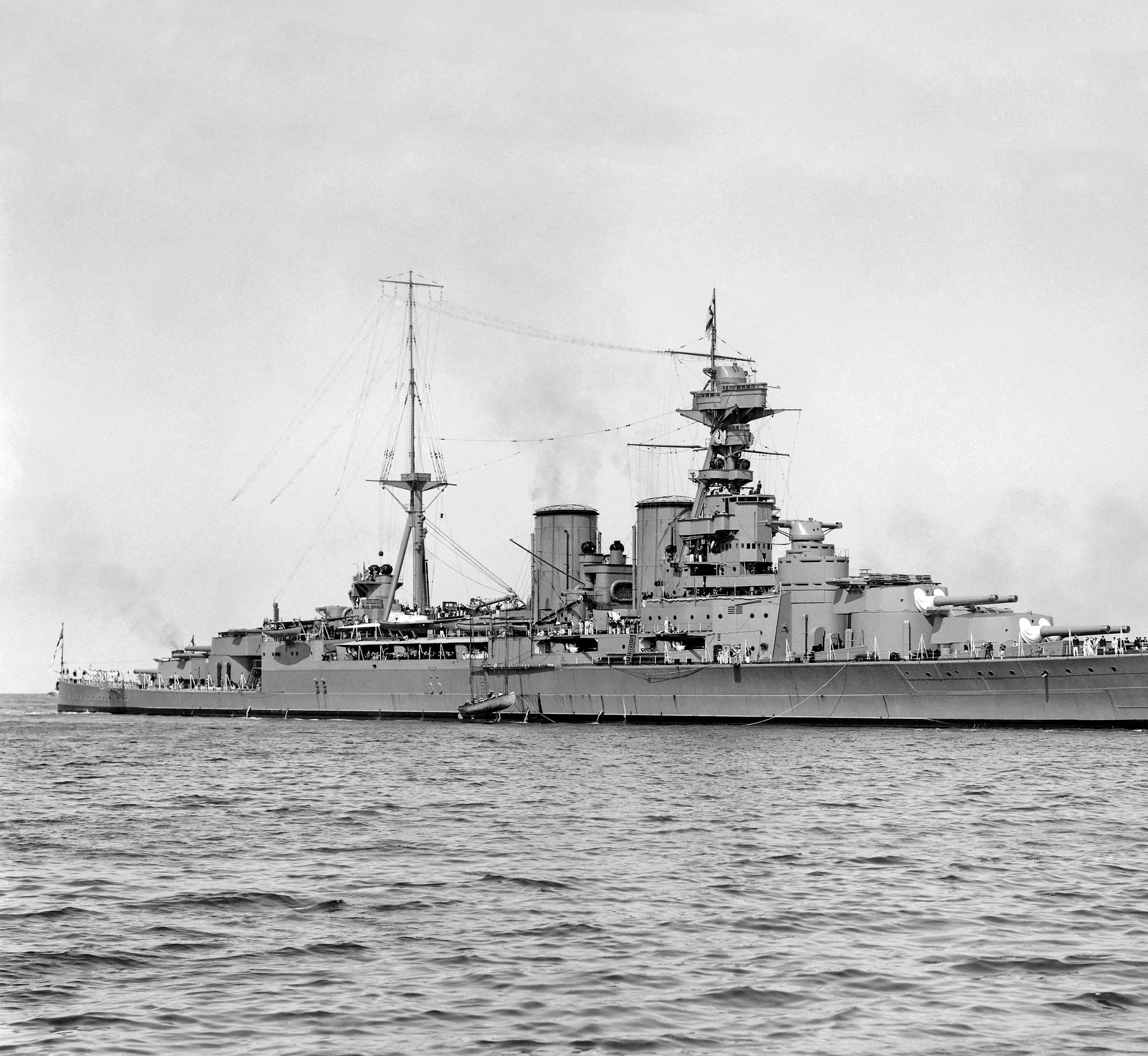
Described as “heavy weight boxers with egg shell skulls”, battlecruisers were built, initially, by the Royal Navy alongside contemporary battleships. They sacrificed armour plating for increased speed, the adage of Admiral “Jackie” Fisher, their promoter, was that “speed equals protection”. At times, however, they were used in unsuitable circumstances with horrific loss of life.
Other navies built battlecruisers, with more success, however unusually, against all odds the United States Navy waited until the day of the battleship and certainly the battlecruiser was almost over before new units entered the fleet. The Soviet/Russian Navy, however, was the last navy to deploy battlecruisers, and does so up to this day. With a renaissance of the type, a nuclear powered multi-armed vessel that caused the US Navy to bring four Iowa Class battleships out of reserve in the 1980s and refit them with surface to surface and cruise missiles.
As a last “hurrah” currently the Russian Navy has at least one heavy surface ship that is described in Jane’s Fighting Ships as a battlecruiser, although officially the vessels of the class are described as heavy cruisers.
The difference between the battleship and the battlecruiser is that the latter sacrificed armour protection for speed, and initially carried fewer guns.
The Royal Navy battleship HMS Dreadnought was the brainchild of Admiral
“Jackie” Fisher and with her ten 12 inch guns offering an eight-gun broadside, and steam turbine machinery driving the ship at 21 knots, all other battleships were rendered obsolete at a stroke. The name being attached to all modern big gun battleships.
Following this Fisher introduced a development of the armoured cruiser. The aims were that the ships could outrun any ship of greater armament, and chase down inferior ships, such as armoured cruisers probably engaged in commerce raiding. The new battlecruisers could engage lesser ships at a greater range thus avoiding damage to themselves.
However, as the battlecruiser developed becoming larger and more expensive, it would be hard for any admiral not to use such powerful vessels in an engagement, as was shown at the Battle of Jutland in 1916 and when HMS Hood faced off the German battleship Bismarck in 1941.
The Invincible Class of the 1905 Programme consisted of three ships, HM Ships Invincible, Inflexible and Indomitable, all completed in around two years and commissioned from March to October 1908. Displacing about 20,000 tons full load, carrying eight 12 inch guns in four double turrets. Two wing turrets gave the ships an effective broadside of six 12-inch guns. Steam turbines developing 41,000 hp gave them a speed of 25 knots, with Invincible reaching 26.2 knots on trials. However, armour belt was limited from
4 inches to 6 inches and turrets 7 inches and magazine screens to 2.5 inches.
The Germans were anxious to match the British battlecruisers, however misleading information had ben leaked that the Royal Navy battlecruisers would be armed with 9.2inch guns. A new German ship, built in response, SMS Blucher, was therefore completed with 8.2-inch guns in 6 double turrets, four wing turrets being situated two amidships port and starboard, offering a broadside of eight 8.2-inch guns. In addition she carried eight single 5.9-inch guns and sixteen single 3.4-inch guns. Although powered by reciprocating engines the warship still had a maximum speed of 24.5 to 26 knots, however 25 knots was her normal speed.
The next three British battlecruisers were an enlarged version of the Invincible Class with the same eight 12-inch armament but disposed so that the two wing turrets had limited fire across the deck making an eight 12-inch gun broadside possible. It is not known if this was actually carried out, but damage to the ship herself would have been highly likely.
These vessels, HM ships Indefatigable, New Zealand and Australia completed betwwen 1911 and 1913, were equally as poorly protected as HMS Invincible and her two sisters, with HMS Indefatigable sunk at Jutland with the loss of 1,017 lives. HMS Australia was in refit at the time whilst HMS New Zealand was hit once on X turret with no
casualties. HMS New Zealand had been a gift from that country and the government had to take out a loan to pay for the ship. This was not paid off until after the Second World War. The ship received a gift of a Maori piupiu, a warriors skirt made of rolled flax, which the captain wore for good luck when the ship went into battle. HMS New Zealand was involved in three actions, with only one hit at Jutland and no casualties.
The Germans followed with SMS Von der Tann, completed in 1910 by Blohm & Voss at Hamburg. This 21,200-ton ship armed with eight 11-inch guns in four twin turrets, two of which were wing turrets one port and one starboard. However, all the turrets could bear on a wide arc, making an 8-gun broadside possible. She was the first large German warship with turbines and quadruple screws, and was much better protected than the contemporary Royal Navy Ships. Designed for 26 knots, she made 27.75 knots on trials and 27.6 knots at the Battle of Jutland. At that battle she destroyed the British battlecruiser HMS Indefatigable with her opening salvo. However, as the battle progressed, she, herself suffered considerable damage from 13.5 inch and 15 inch shells, taking almost two months to repair following her return to Germany.
Two more German battlecruisers, 25,400 tons SMS Moltke and SMS Goeben which were enlarged versions of the SMS Von der Tann, now with five 11-inch turrets, two
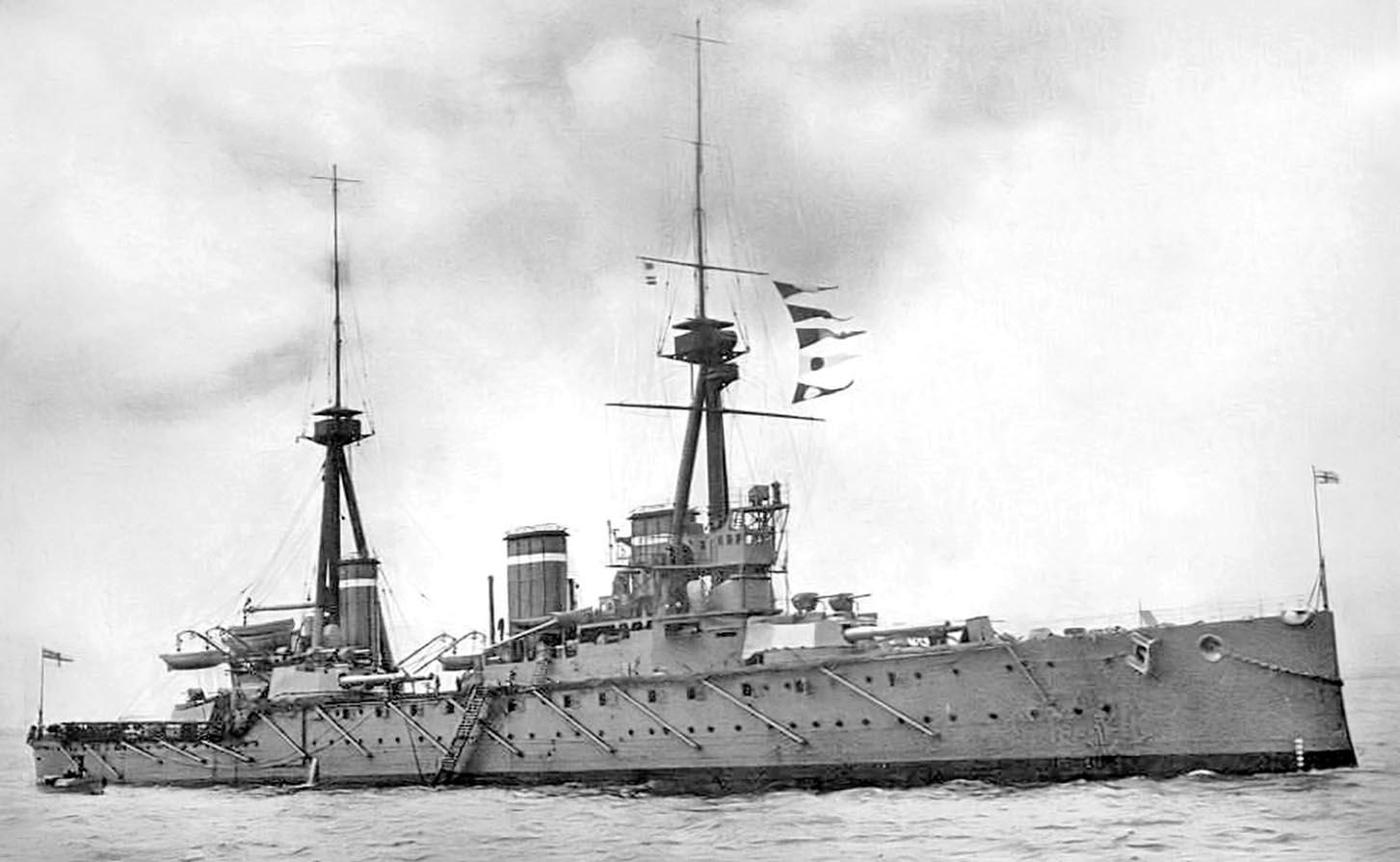
Left: HMS Hood was built in 1920 by John Brown at Clydebank. On 24th May 1941 she was sunk by the Bismark with the loss of 1,338 lives.
Above: HMS Invincible was built in 1908 by Armstrong, Whitworth at Elswick. She was sunk in the Battle of Jutland on 31st May 1916 with the loss of 1,026 lives.
Below: HMS Inflexible was built in 1908 by John Brown at Clydebank. In 1922 she was broken up in Germany.
Bottom: HMAS Australia was built in 1913 by John Brown at Clydebank for the Australian Navy. On 12th April 1924 she was scuttled 24nm east of Port Jackson Heads.
superimposed aft, but still with wing turrets with a wide arc making them capable of a ten gun broadside. The former was launched on the 4th July 1910 and the latter on the 28th March 1911, both being built by Blohm & Voss at Hamburg.
SMS Goeben was given to Turkey in August 1914 and renamed Yavuz Sultan Salim to replace the battleships Reshadieh (HMS Erin) and Sultan Osman I (HMS Agincourt) building in Britain and taken over forcibly by the Royal Navy.
She has been described as “the ship that changed the world” due to her presence in the Mediterranean, which tied up heavy allied units. It has also been suggested that the seizure of the battleships building in Britain for Turkey and the gift of the Goeben to Turkey by Germany caused that country to come in to the war on the side of Germany.
The ship was renamed Yavuz in 1936 and decommissioned in December 1950, stricken in 1954 and scrapped from 1973 to 1976.
The next, and final 11-inch gunned German battlecruiser was SMS Seydlitz of 28,550 (full load) tons, which was an enlarged Moltke Class with the same turret arrangements. She suffered the highest number of hits than any other ship at Jutland and just made it back to base with her forecastle awash.
Following the six 12 inch gunned battlecruisers of the Invincible and Indefatigable Classes the Royal Navy began the construction of four 13.5-inch gunned battlecruisers to serve alongside the eight 13.5-inch gunned Super Dreadnoughts of the Orion and King George V classes, to be followed by the four ships of the Iron Duke Class.
The four battlecruisers of the Lion Class, HM Ships Lion (Devonport Dockyard), Princess Royal (Vickers, Barrow), Queen Mary (Palmers, Jarrow) and Tiger (John Brown, Clydebank) were to be all built to the same design. However HMS Queen Mary was laid down 10 months after her two predecessors and was an improved version with an increase of 650 tons in displacement and in increase in the thickness of her horizontal armour.
These three funnelled ships were impressive looking vessels with two superimposed twin 13.5 inch gun turrets in front of the bridge, another twin 13.5 inch gun turret between the second and third funnels, and a fourth 13.5 inch gun turret aft. They had a displacement of about 30,186 tons (full load).
At the Battle of Helgoland Bight on the 28th August 1914 the Royal Navy battlecruisers HM Ships New Zealand, Invincible, Lion, Queen Mary and Princess Royal supported lighter forces and submarines resulting in the loss of the German cruisers, SMS Ariadne, SMS Coln, SMS Mainz and the destroyer SMS V187.
The design and purpose of the original battlecruisers, Invincible Class appeared to be completely justified, when, after the Battle of
Coronel and the costly defeat of Admiral Christopher Craddock on the 1st November 1914 when two of his armoured cruisers, HMS Good Hope and HMS Monmouth were sunk by the crack German East Asiatic Squadron including the German armoured cruisers, SMS Scharnhorst and SMS Gneisenau supported by light cruisers, SMS Nurnberg, SMS Dresden and SMS Leipzig
The two battlecruisers HM Ships Invincible and Inflexible left Devonport on the 11th November 1914, under the command of Admiral Archibald Peile Stoddart and sailed for the Falkland Islands via St Vincent and Cape Verde Islands.
The two battlecruisers joined the cruisers HM ships Cornwall, Kent, Carnarvon, Bristol and Glasgow and armed merchant cruiser HMS Macedonia near the Abrolhos Rock off the coast of Brazil under the command of Vice Admiral Sir Doveton Sturdee who took over command of the squadron, with Stoddart now being second in command. The cruiser HMS Glasgow had also been present at the Battle of Coronel but had managed to escape.
The squadron reached Port William in the Falklands on the 7th December 1914 and began to refuel from colliers the next morning. Later that day the German East Asiatic Squadron approached Port Stanley, passing Port William, apparently intent on landing a raiding party. The old battleship HMS Canopus (four 12-inch guns, 13,150 tons built in 1899) was grounded to provide a defence for Port Stanley
General Chase was ordered at 10.20 and the two battlecruisers left harbour in pursuit, and both the German armoured cruisers had been sunk by 18.02 with a heavy loss of life. The light cruiser SMS Nurnberg being sunk by HMS Kent and SMS Leipzig by HMS Cornwall and HMS Glasgow the same day. SMS Dresden managed to escape but was scuttled at Juan Fernandez Islands after action with HMS Glasgow and HMS Kent on the 14th March 1915.
HMS Invincible sustained 22 hits but suffered no casualties or serious damage. HMS Inflexible was undamaged. The two battlecruisers had been used to good effect and exactly for the purpose for which they had been intended.
Unfortunately, HMS Invincible blew up at the Battle of Jutland in 1916. About 18.20 on the 31st May after being engaged in a duel with the German battlecruiser SMS Derfflinger and inflicting considerable damage on that ship, HMS Invincible failed to live up to her name, and the British battlecruisers following astern sailed past the two halves of her hull, the middle sections resting on the sea bottom.
On the 16th December 1914 four German battlecruisers and a heavy cruiser supported by light cruisers and destroyers carried out hit and run raids on the east coast of England. The battlecruisers SMS Derfflinger, SMS
Seydlitz, SMS Von der Tann, SMS Moltke, and the heavy cruiser SMS Blucher bombarding Scarborough, Hartlepool, West Hartlepool and Whitby. This caused outrage in Great Britain as many civilians were killed and injured and churches and schools hit in the bombardment.
Pounded by shell fire from the new 13.5inch gunned HMS Lion, HMS Tiger and HMS Princess Royal, SMS Blucher was sunk at the battle of Dogger Bank in January 1915. However HMS Lion was also badly damaged by shell fire from the German battlecruiser SMS Derfflinger and had to be towed back to port by HMS Indomitable.
Eighteen months after the raid on Hartlepool and Scarborough, the German battlecruisers Seydlitz, Lutzow, Derfflinger, Moltke and Von der Tann bombarded Yarmouth and Lowestoft on the 24th April 1916. SMS Seydlitz struck a mine during the operation with a flooded torpedo compartment on the starboard side and taking on 1,300 tons of water. And she had to limp back to base.
On the other side of the world Japan was watching with interest the naval race in Europe between Great Britain and Germany, and in 1910 ordered a battlecruiser of a similar size to the Lion, from Vickers at Barrow in Furness.
The new battlecruiser, Kongo, was fitted with eight 14 -inch guns, laid down on the 17th January 1911 and completed on 16th August 1913. Three sisters, all built in Japan with the assistance from Vickers quickly followed. Haruna launched on the 14th December 1913 and built by Kawaski at Kobe. Hiei launched on the 21st November 1912 built by Yokosuka Naval Yard and Kirishima launched on the 1st December 1913 by Mitsubishi at Nagasaki.
All four ships were extensively rebuilt during the 1930s and served with distinction during World War II. Kongo being torpedoed by the US submarine USS Sealion on the 21st November 1944. Haruna was bombed by the US in Kure Dockyard on the 28th July 1945. Hiei was sunk by US aircraft at Guadalcanal on 13th November 1942 and Kirishima sunk by gunfire from US battleships, USS South Dakota and USS Washington also during the battle of Guadalcanal on 15th November 1942.
The design of Kongo was considered to be such an improvement on the original design of the Lion Class that HMS Tiger, built by John Brown on the Clyde, was altered with the 13.5-inch gunned No. 3 turret being moved aft behind the third funnel, whereas the three previous ships of the class had No. 3 turret between the second and third funnels.
A magnificent ship HMS Tiger was the heaviest ship in the fleet (33,677 tons full load) when delivered in October 1914 and the first to develop over 100,000 hp giving her a speed of up to 30 knots. Although hit 21 times by heavy shells at Jutland, suffering 24 killed
and 37 wounded she was repaired at Rosyth within a month.
HMS Tiger was the oldest battlecruiser retained by the Royal Navy after the tonnage limits of the Washington Naval Treaty came into effect in 1922. She was used as a training ship from 1924, and was still partly coal fired, but brought back into full service in 1929 to stand in for HMS Hood, which was in refit. The ship was sold for scrap in 1932 under the terms of the London Naval Treaty of 1930.
Of her half sisters, HMS Queen Mary blew up at Jutland after being hit by heavy shells from the German battlecruisers SMS Seydlitz and SMS Derfflinger, 57 officers and 1,209 rating were lost, only 3 officers and 6 rating survived. HMS Princess Royal was hit several times at Jutland with 22 killed and 78 wounded.
At the Battle of Jutland HMS Lion was hit by a 12-inch shell on No. 3 (Q) turret from the German battlecruiser SMS Lutzow. A rush of flames rose 200 feet in the air and had it not been for Royal Marine Major Francis Harvey in charge of the turret and ordering it to be flooded, it is likely that this ship too, would have been lost. Major Harvey was awarded a posthumous Victoria Cross for his actions. A total of 99 men were killed and 44 wounded in the action.
In 1920 both HMS Lion and HMS Princess Royal were put into reserve at Rosyth and placed on the disposal list in 1922. Lion was broken up in 1924 and Princess Royal in 1921 under the terms of the Washington Naval Treaty.
In order to counter the Lion Class the Germans built three more battlecruisers, SMS Derfflinger launched 12th July 1913 by Blohm & Voss, Hamburg, SMS Lutzow launched 29th November 1913 by Schichau, Danzig and SMS Hindenburg launched 1st August 1915 by Wilhelmshaven, Dockyard, displacing 28,000 tons full load and carrying eight 12-inch guns in twin turrets superimposed fore and aft, plus a secondary armament of 12/14 5.9-inch guns. They have been described as perhaps the best all round capital ships of their time.
With a speed of 28 knots, the ships were impressive, modern looking vessels, with only SMS Derfflinger and SMS Lutzow completed in time to take part in the Battle of Jutland.
After sustaining extreme damage SMS Lutzow was sunk by torpedoes from the German destroyer SMS G38 when she was unable to make the journey back to a homeport. She is credited with sinking HMS Invincible.
Both SMS Derfflinger and SMS Hindenburg, which entered service in 1917, were surrendered and then scuttled at Scapa Flow in 1919 being raised and scrapped in 1934 and 1930 respectively.
A further four battlecruisers of 31,000 tons, the 27 knot Mackenson Class carrying eight 14-inch guns were suspended in 1917,
Below: The
Bottom: The launch of the Scharnhorst at Wilhelmshaven Dockyard on 3rd October 1936. On 26th December 1953 she was sunk by gunfire off North Cape with the loss of 1,803 lives.
and what work had been carried out was broken up on the stocks in 1922.
Three more battlecruisers of 37,500 tons with a speed of 27.3 knots and carrying eight 15-inch guns, which were contemporaries of the Baden Class of battleship, were laid down in 1916 but not proceeded with. They were given names to replace cruisers lost, Ersatz Yorck, Ersatz Gneisenau and Ersatz Sharnhorst and were built in reply to the British battlecruisers HM Ships Repulse and Renown.
Four further capital ships were provided by Great Britain under the 1914/15 Estimates, three to be of an improved Royal Sovereign Class battleship and a fourth to be an improved Queen Elizabeth type battleship. However only two of the ships were proceeded with, HMS Renown and HMS Repulse and it was Admiral Fisher’s intention that they should be used in the “Baltic Project” the invasion of the Pomeranian Coast, some 80 miles form Berlin.
However, when Fisher left the Admiralty the project was abandoned, but the two ships were completed within 19/20 months, August 1916 for HMS Repulse (John Brown, Clyde) and September 1916 HMS Renown (Fairfield, Clyde).
Both ships were built under Fisher’s dictum that “speed equals armour”. Displacing 26,500 tons (Repulse 32220 and Renown 31,592 tons full load) with six 15-inch guns, in 3 double turrets, disposed two superimposed in front of the bridge and one turret aft. Quadruple screws with 120,000 hp gave them a speed of 31-33 knots using oil fuel only. When the ships entered service they caused quite a stir with two rows of scuttles extending almost the full length of the hull indicating a distinct lack of armour. The ships were known as Refit and Repair throughout their service and extra armour was worked into them to try to alleviate the deficiency, which became apparent after Jutland.
Although lack of armour protection has been attributed to the loss of the three Royal Navy battlecruisers at Jutland the absence of adequate magazine isolation, where bulkhead doors were left open, is also now believed to have been a significant contributory factor. This allowed the flash from exploding shells hitting a ship to pass from one turret compartment to another igniting cordite charges.
HMS Renown was rebuilt from 1936 to 1939 and served throughout World War II, being scrapped in 1948.
Although HMS Repulse had a lengthy refit from 1933 to 1936 it was not as extensive as her sister and Japanese aircraft sank her on the 9th December 1941 along with the modern battleship HMS Prince of Wales (35,000 tons. Ten 14-inch guns completed in 1941) off Singapore.
One bomb and three torpedoes hit HMS Repulse before she sank with the loss of 27 officers and 486 ratings.
Three more battlecruisers were completed before the end of World War I, HM Ships Courageous in December 1916 (Armstrong on the Tyne), Glorious in November 1916 (Harland & Wolff, Belfast) and Furious in July 1917 (Armstrong on the Tyne), less kindly known as Outrageous, Uproarious and Spurious. The first two displaced 22,560 and 22,360 tons respectively with four 15-inch guns in two twin turrets, one fore and one aft. With minimal armour and engines developing 90,000 hp gave them a speed of up to 32 knots.
HMS Furious displaced 22,890 tons and was completed as a partial aircraft carrier with a single 18-inch gun aft and runway forward her engines developed 94,000 hp giving her a speed of 31.5 knots.
All three were intended for Fisher’s abortive “Baltic Project” but HMS Glorious and HMS Courageous only took part in a number of “sweeps” towards the end of the war. In October 1917 both ships were in action with German units off the Kattegat, however were only to cause self damage when firing their 15-inch guns.
HMS Furious was converted to a full aircraft carrier, shortly after first commissioning, with flying decks fore and aft, but still with a central superstructure and funnel. The single 18-inch gun was such a devastating weapon on such a lightly built ship the firing of the gun caused considerable damage. It was said it was like a snowstorm when the gun was fired with the rivet heads being sheared off.
All three were successfully converted to full aircraft carriers in the 1920s. HMS Courageous was torpedoed by U29 off the Irish coast on the 17th September 1939, being the first warship lost to enemy action during the war.. HMS Glorious was lost to gunfire from the German battlecruisers Scharnhorst and Gneisenau on the 8th June 1940 with a high loss of life.
The loss of these two ships was a massive blow to the Royal Navy so early in the war, however HMS Furious continued to serve in the thick of it, until, worn out, she paid off into reserve in September 1944 before being scrapped in 1948.
The final battlecruiser built for the Royal Navy was HMS Hood, built by John Brown on the Clyde. She was one of four Admiral Class ships to counter the four German Mackenson Class battlecruisers. Early in 1917 when it became known that the construction of these four ships had ceased, the building of the three sisters to HMS Hood, Anson (Vickers Armstrong) Howe (Cammell Laird) and Rodney (Fairfield) was suspended in March 1917 the contracts being cancelled in October 1917 after £860,000 had been spent. What work had been carried out was scrapped on the stocks.
HMS Hood displaced 46,680 tons (full load) and carried eight 15-inch guns in four superimposed twin turrets (two foreward and
two aft) her engines producing 144,000 shp for 31 knots and carrying a crew of 1,341.
The ship was due to start an extensive refit/reconstruction on the 12th December 1938 that would have cost over £4 million and lengthened her service by 15 years. However the impending war prevented the start of this refit and she was lost in action with the German battleship Bismarck and heavy Cruiser Prinz Eugen on the 24th May 1941 in the Denmark Strait. There were only three survivors.
Following the end of the First World War, “The War to end all wars”, the three super powers, Britain, USA and Japan still had their minds on building new and massive battlecruisers.
In February 1916 (3 months before Jutland) the President of the Naval War College gave his opinion that the US should build no more battleships until eight battlecruisers had been added to the fleet.
However, although generally against the building of battlecruisers the USA saw some merit in the type, with British success at the Falklands, Helgoland and Dogger Bank, plus the hit and run raids by Germany on the east coast of England.
The battlecruisers seemed to be in the thick of the action, whereas the British Grand Fleet and German High Seas Fleet of Dreadnought battleships seemed to be resting on rusting bully beef and sauerkraut tins at their respective bases.
During 1917/18, six battleships of 43,200 tons, the South Dakota Class were authorised, carrying twelve 16-inch guns in four triple turrets, and were powered by turbo electric machinery for a speed of 23 knots. These ships were laid down in 1920-21.
In Japan four battleships of the Amagi Class were ordered, under the 1919 and 1920 building programmes, displacing 40,000 tons and carrying ten 16-inch guns in five double turrets with a speed of 34 knots. A further eight high-speed battleships four carrying ten 16-inch guns and four carrying eight 18-inch guns were ordered in 1921 the latter ships to be completed by 1927.
In 1921 the Royal Navy ordered four new 48,000 tons battlecruisers to carry nine 16inch guns in three triple turrets, one each from Swan Hunter, Beardmore, Fairfield and Clydebank. Four shaft-geared turbines would drive them at 32 knots. Although never officially named it was understood that they would be called, Invincible, Inflexible, Indomitable and Indefatigable.
Not content with these four monsters, they were to be followed by four even bigger battleships of 48,500 tons carrying nine 18 inch guns in three triple turrets at 23 knots.
The USA followed with six 43,500 ton battlecruisers carrying eight 16 inch guns in four double turrets with turbo electric engines developing 180,000 shp for 33.35 knots. The ships were fitted with two massive funnels
athwart ships, with cage masts fore and aft. Named Lexington, Constellation, Saratoga, Ranger, Constitution and United States. They would have been the first battlecruisers built by the US, however only two were completed, as aircraft carriers, Saratoga and Lexington.
Not to be outdone, both France and Italy planned battlecruisers.
In 1913-1914 France produced designs for a class of battlecruiser contemporary to the Normandie Class of battleships. They would have carried twelve13.4 -inch guns in three quadruple turrets, displaced about 27,000 tons and been driven by steam turbines with four shafts at a speed of 27 knots. However the ships were never ordered.
In 1914 Italy projected three battlecruisers of the Carraciolo Class. Displacing 34,000 tons and carrying eight 15-inch guns in four double turrets at 28 knots, Francesco Carraciolo was laid down on the 16th October 1914. Building was slow and she was launched on the 12th May 1920, but construction was suspended and the hull was sold for completion as an ocean liner. However this was not proceeded with and the ship and what work had been carried out was scrapped.
The two other ships, Cristoforo Colombo and Marcantonio Colonna were not completed with only the former being laid down on the 14th March 1915, not launched and what work that had been carried out scrapped.
The cost to the various navies was enormous, not only with the cost of building the ships, but the cost of the crews, fuel and subsequent refits, was a massive drain on the beleaguered economies after the Great War.
Consequently the powers got together at the Washington Naval Conference in 1921/22 where a treaty was signed limiting the number and size of heavy ships.
The terms were modified under the London Naval Treaty of 1930 and the Second London Naval Treaty of 1936.
Following the 1921/22 Treaty the four battleships and battlecruisers projected by Great Britain were cancelled, however the country was allowed to build two 23 knot 33950 tons battleships, HM ships Nelson and Rodney (nine 16-inch guns) launched in 1925, which was to bring the country up to par with the other navies. The battlecruisers Glorious, Courageous and Furious were converted into aircraft carriers.
The United States cancelled the battleship Washington (BB47) which was 75.9% complete leaving three sisters of the Colorado Class to be completed 1921/22. USS Washington was used for experiments and sunk as a target on the 25th November 1924. The six 43,200 tons battleships of the South Dakota Class were suspended on the 8th February 1922 and what work had been carried out was scrapped in 1923.
The six battlecruisers of the Lexington Class were cancelled, although two, Lexington (CC1) and Saratoga (CC3) were
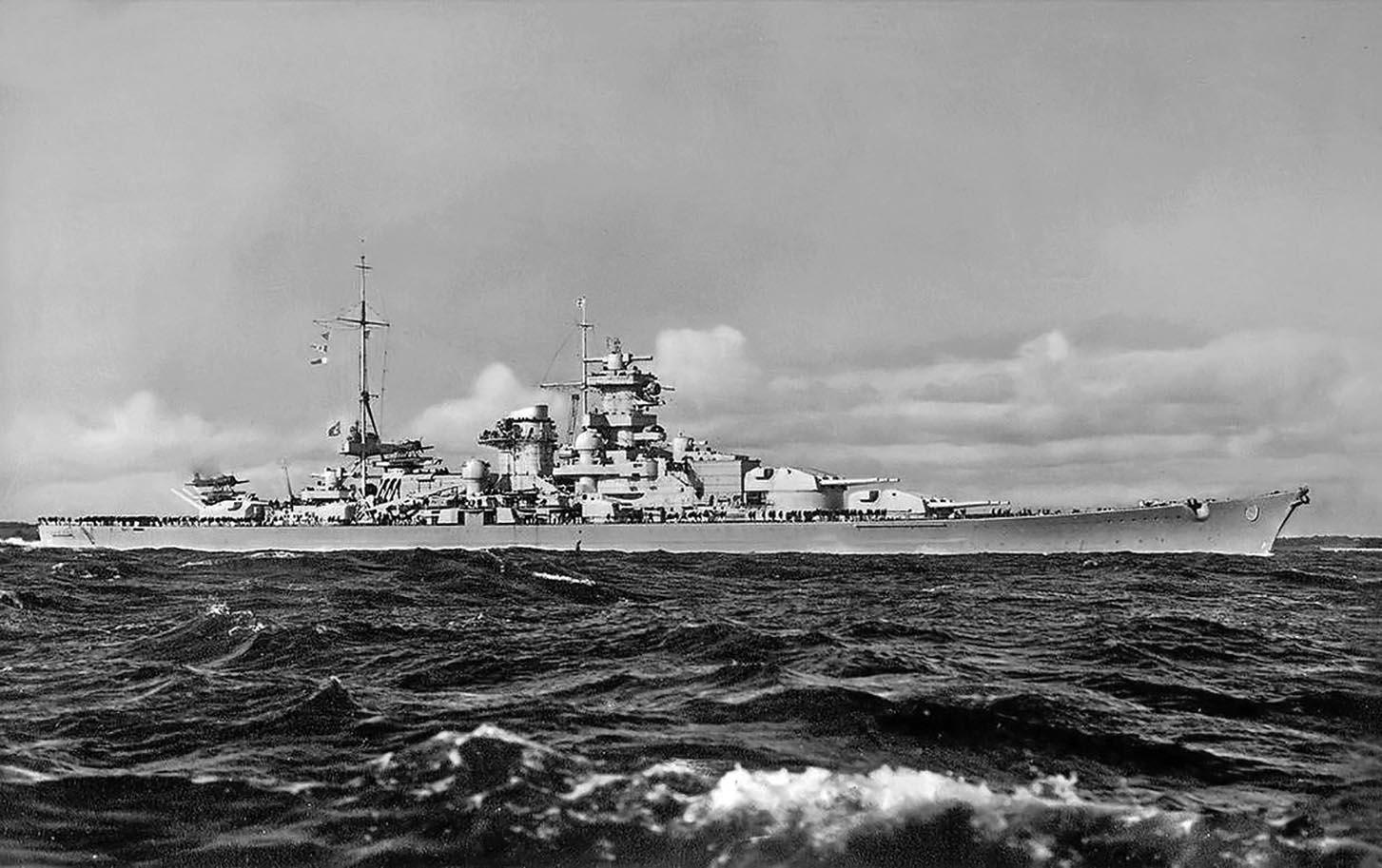
Above: The German Battlecruiser Gneisenau was built in 1938 by Deutsche Werke at Kiel. On 27th February 1942 she was bombed at Kiel and on 27th March 1945 she arrived at Gydnia to be broken up.
Below: The Japanese Battlecruiser Hiei was built in 1914 by Yokosuka Naval Arsenal. On 13th November 1942 she was disabled by hits from USS San Francisco during the battle of Guadalcanal. She was then sunk by torpedoes from US planes with the loss of 188 of her crew.
Bottom: The Japanese Battlecruiser Haruna was built in 1915 by Kawasaki at Kobe. On 28th July 1945 she was bombed and sunk off Eta Jima with the loss of 66 lives.
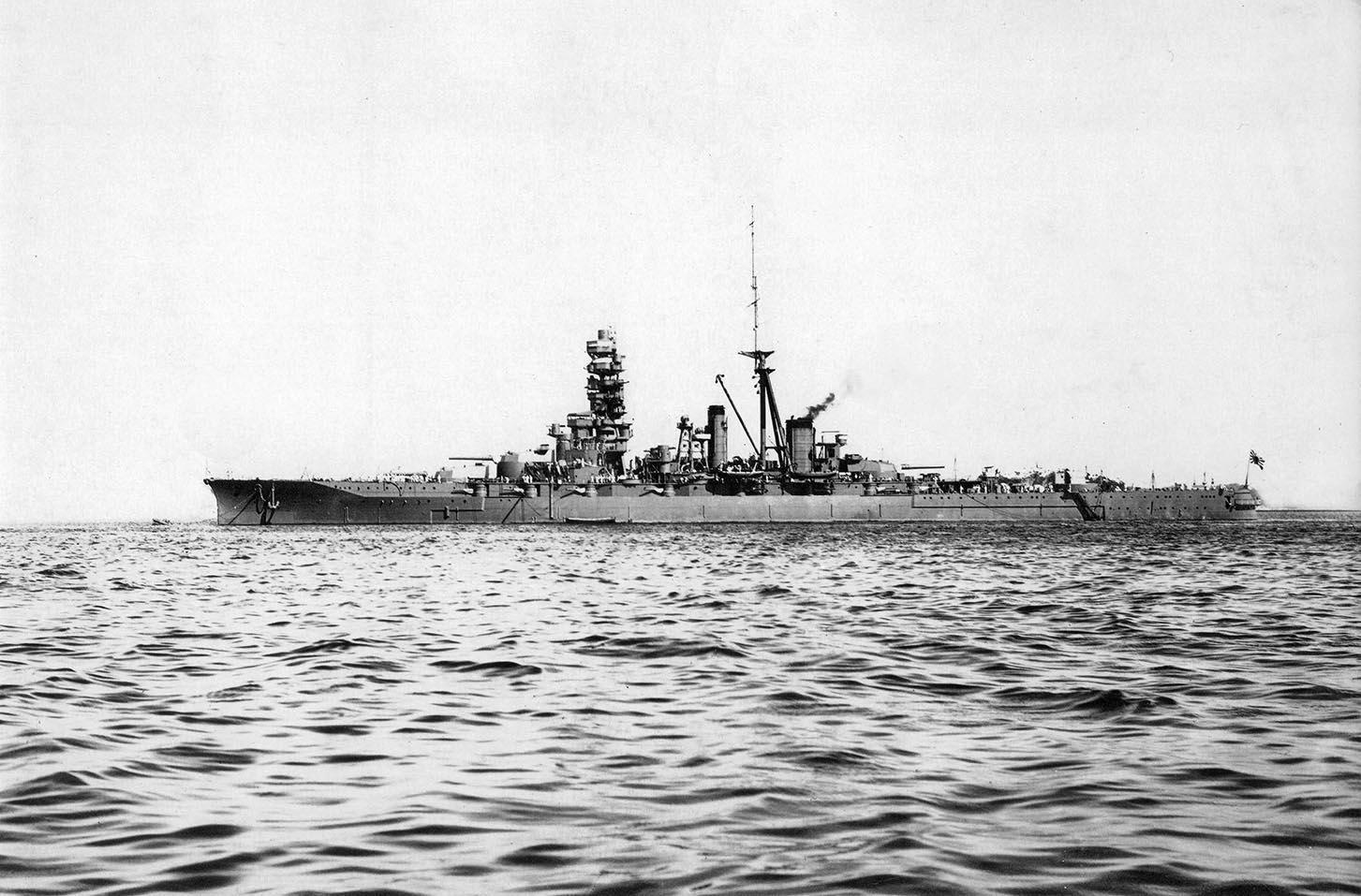
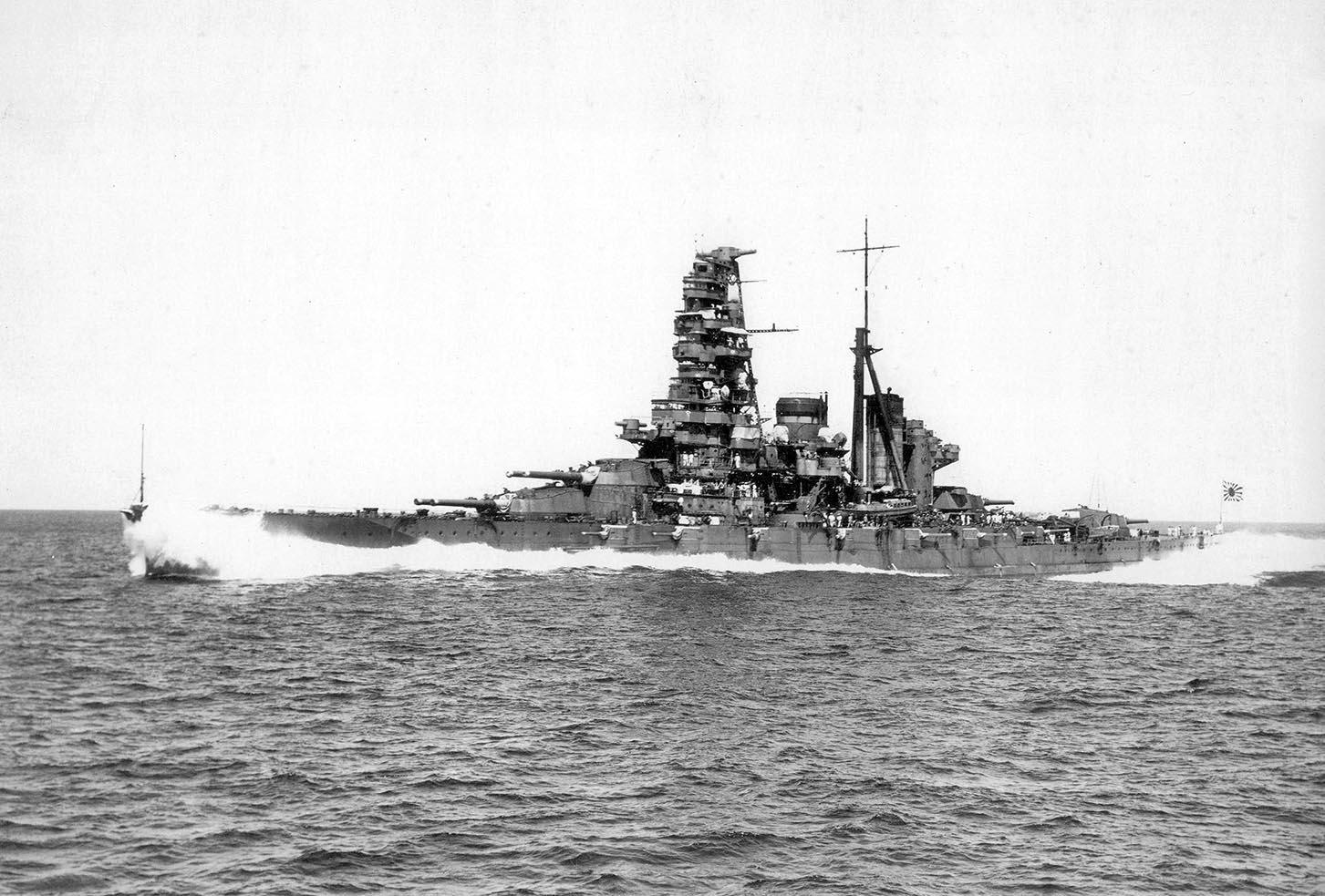
completed as aircraft carriers of the same name. USS Lexington (CV2) was lost at the Battle of the Coral Sea 8th May 1942, whilst USS Saratoga (CV3) had a distinguished war career being expended in the Bikini Atomic Bomb tests on the 25th July 1946.
In Japan, the two battleships of the 38,500 ton Kaga Class were also casualties of the Treaty, although Kaga was converted to an aircraft carrier and the hull of Tosa was expended as a target on the 9th February 1925. Kaga was sunk by American carrier based aircraft at the Battle of Midway on the 4th June 1942.
The four battlecruisers of the 49,000 ton Amagi Class were cancelled, although Akagi was completed as an aircraft carrier, but scuttled following damage caused by US Navy aircraft at the Battle of Midway 5th June 1942.
The eight high speed battleships, four of the 41,400 ton Kii Class, carrying ten 16-inch guns, and four of the 47,500 ton 13 Class carrying eight 18 inch guns were also cancelled.
By 1931 Great Britain possessed 3 battlecruisers, and 12 battleships. The USA - 15 battleships and Japan 4 battlecruisers and 6 battleships, all of which had been completed from 1914 to 1927.
The Washington Naval Treaty was signed on the 6th February 1922 and became effective on the 17th August 1923, expiring on 31st December 1936.
By the mid 1930s Japan had renounced the Treaties whilst Germany had also renounced the Treaty of Versailles imposed after the First World War. The parties relevant to the Treaty were, Great Britain and its Empire, USA, France, Japan and Italy.
From 1908 to 1917 the US Navy added 17 Dreadnought battleships to its fleet, followed by another two launched in 1919 and one more in 1920 and 1921.
The largest ever Dreadnought seriously contemplated was following an enquiry by the US, when the only limitation on size was that the ship should be able to transit the Panama Canal. The vessel would displace 80,000 tons, have an overall length of 975 feet, protected by armour 16 inches thick and carry fifteen 18-inch guns in five triple turrets at 35 knots! The ship was never built.
Up to 1920 in addition to the four British designed Kongo class battlecruisers, Japan had completed six very capable battleships.
The next stage in the development of the battlecruisers was by Germany and the two 32,000 ton battlecruisers, Scharnhorst and Gneisenau. Although the German navy had made tentative steps to introduce heavy ships into service with the three 12,000 ton “pocket battleships”, Deutschland, Admiral Scheer and Admiral Graf Spee from May 1931 to June 1934 the Scharnhorst Class were the first battlecruisers completed by the German Navy since World War I.
When built, they were announced as 26,000 tons, whereas in reality they were over 32,000 tons, and fitted with nine 11 inch guns in three triple turrets, to allow a greater proportion of weight to armour protection. Their turbine driven triple screws producing 160,000 shp giving them a speed of 31 knots.
Scharnhorst was built by Kriegsmarinewerft, Wilhelmshaven, and was laid down on the 15th June 1935, launched on the 3rd October 1936 and commissioned on the 7th January 1939.
Operating with Gneisenau for most of the early part of WWII she sank the British armed merchant cruiser HMS Rawalpindi in November 1939 as well as the Royal Navy carrier HMS Glorious in June 1940. The range at which she hit the carrier was one of the longest ranges in naval warfare where hits were scored.
After 1943 Scharnhorst operated without her damaged sister and was sunk in a fair fight at the Battle of North Cape with the British battleship HMS Duke of York (35,000 tons ten 14-inch guns 1941) on Boxing Day 1943. Only 36 of a crew of 1,968 survived.
Gneisenau was built by Deutsche Werke at Kiel and was laid down on the 6th May 1935, launched on the 8th December 1936 and commissioned on the 21st May 1938.
Operating with Scharnhorst, including a dash through the English Channel on the 11th February 1942 she was hit by a bomb dropped by the RAF on the 26/27th February 1942. At the time she was in dry dock at Kiel and repairs were halted early in 1943 when it was proposed to replace the three 11-inch gun turrets with three twin 15-inch gun turrets.
Hitler decided that all major surface warships were a liability and the work was stopped. The ship was never fully repaired and she was sunk as a block ship at Gotenhaven on the 27th March 1945. The hulk was gradually broken up after it was refloated on the 12th September 1951.
Under the German Z Plan, which anticipated that war would not take place until at least 1942 over ambitious plans to construct aircraft carriers, battleships and battlecruisers, plus cruisers, destroyers and submarines was put in place.
In addition to the two ships of the Scharnhorst Class, both launched in 1936, a further three of Type P was to be completed by 1943/44. Although none were laid down, their builders were allocated and they would have displaced 32,300 tons with both diesel and steam turbine engines developing a total of 170,000 shp for a speed of 33.5 knots. The ships would have carried six 15-inch guns in three double turrets.
The Japanese also projected another class of battlecruiser, Type B-65 of 32,000 tons with 4 shaft steam turbines for a speed of 33 knots. In appearance resembling the Yamato Class of battleship (nine18-inch guns) they carried nine 12.2-inch guns in three triple
turrets. Both were cancelled in 1942 and never laid down.
In the late 1930s with the introduction of the German Scharnhorst Class battlecruisers (1939), and the possibility of a further three battlecruisers and two more in Japan, the US Navy decided to introduce a class of “cruiser killers” and were classed as “large cruisers”. However, with a full load displacement of up to 34,800 tons and carrying nine 12-inch guns in three triple turrets, and a speed of 33 knots, they were battlecruisers in all but name.
The six ships planned were ordered on the 9th September 1940. All were to be built by New York Shipbuilding and four General Electric steam turbines providing 150,000 shp were to power them.
Alaska (CB1)
Laid down 17.12.41, Launched 15.8.43, Commissioned 17.6.44
Guam (CB2)
Laid down 2.2.42, Launched 12.11.43, Commissioned 17.9.44
Hawaii (CB3)
20.12.43, Launched 3.11.45
Construction suspended 17.2.47 when 82.4% complete and scrapped in 1960.
Philippines (CB4) Cancelled 24.6.43
Puerto Rico (CB5) Cancelled 24.6.43
Samoa (CB6) Cancelled 24.6.43
Because of the shortage of steel the building of the last four was suspended on the 20th May 1942 with Hawaii resuming on the 25th May 1943. The final three were cancelled the following month.
The main armament of 12-inch guns fired a 1,140 lb shell to a maximum range of 38,573 yards at an elevation of 45 degrees. Each triple turret weighed 930 tons. The secondary armament consisted of the standard US 5’/39 gun in twin turrets disposed two on each beam and two on the centre line. A total of 56-40mm and 34-20mm anti aircraft guns were also carried and with a crew of up to 2,200.
On speed trials USS Alaska was disappointing when she made only 32.71 knots on 33,148 tons with 154,485 shp. Typical to other battlecruisers the Alaska Class were susceptible to heavy fire from battleships and aircraft bombs with an armoured belt of only 9 inches. Another deficiency was a complete lack of a torpedo defence system making them vulnerable to submarine attack.
USS Alaska joined the Pacific Fleet at Pearl Harbour on the 13th January 1945 and
was in action off Iwo Jima and covered the raids against Tokyo and Yokohama.
In March 1945 she with TG58.4 carried out raids against the Japanese mainland, concentrating on target at Kyushu.
Afterwards USS Alaska covered attacks against Okinawa and in the final month of the war she covered raids into the East China Sea.
The ship was decommissioned on the 17th February 1947 and put into reserve at Bayonne, New Jersey, being stricken on the 1st June 1960 and scrapped in July 1961.
HSS Guam arrived in Pearl Harbour on the 8th February 1945 and covered raids on Kyushu and Shikoku with Tg58.4. Like her sister the ship was involved in raids off Okinawa and from 16th July to 7th August 1945 she was flagship of TF95 in the East China Sea.
USS Guam paid off on the 17th February 1946 and was laid up in the reserve fleet at Bayonne. The vessel was stricken on the 1st June 1960 and arrived at Newark to be broken up in August 1961.
USS Alaska was in service for 32 months and USS Guam just 29 months, although consideration was given to converting them to missile armed ships, as was the uncompleted USS Hawaii, this conversion was never carried out, and the two completed and one uncompleted ship ended up in the scrap yard without further service.
Initially developed during the Cold War by the Soviet Union for dominance over the US Navy and to disrupt supply lines, these ships were built primarily to counter the US Navy’s carrier battle groups, including submarines by carrying a large arsenal of SS-N-14 Star Fish anti submarine missiles
The Kirov Class of heavy cruisers displace 24,300 tons full load, and are powered by both oil fired boilers and nuclear reactors. Speeds of up to 30 knots are possible. The oil-fired boilers were fitted in case of a failure of the nuclear reactors.
Although classed as heavy cruisers, to all intents and purposes they are battlecruisers in all but name, and are classed as such by Jane’s Fighting Ships.
The United States re-activated the four units of the Iowa Class battleships, built during the Second World War, to counter the introduction of the Kirov Class.
These four battleships displaced 59,000 tons (full load) and carried nine 16inch guns at a speed of 33 knots. The ships were refitted to carry surface to surface and cruise missiles, and consideration was even given to removing the aft triple 16-inch gun turret and replacing it with an angled flight deck with hanger underneath for the operation of Harrier STOL aircraft.
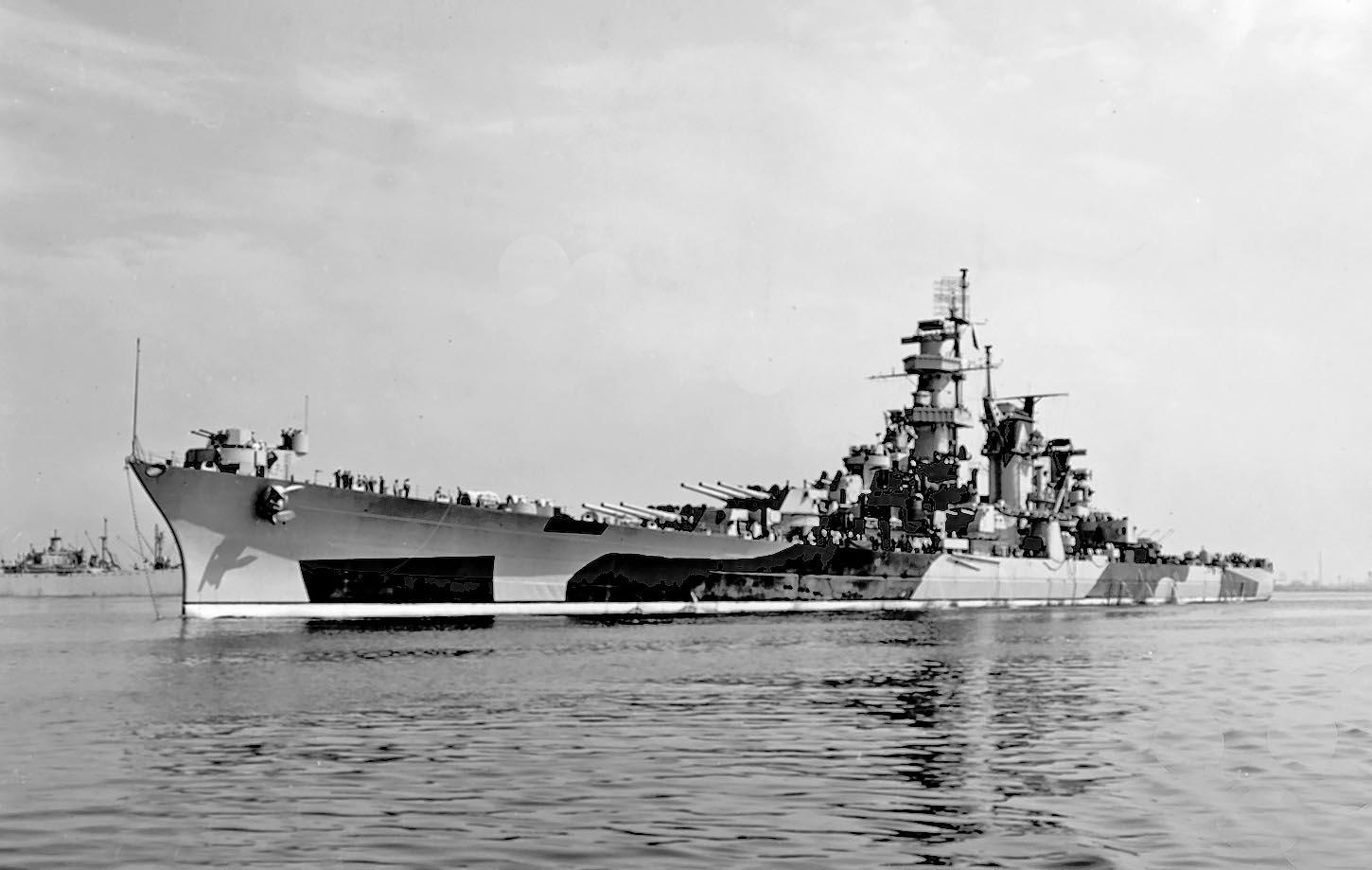
Above: USS Alaska was built in 1944 by New York Shipbuilding at Camden, New Jersey. She was stricken on 1st June 1960 and was sold for breaking up on 30th June 1961.
Below: USS Guam was built in 1944 by New York Shipbuilding at Camden, New Jersey. She was stricken on 1st June 1960 and was sold for breaking up on 20th June 1961.
Bottom: One of the last two Battlecruisers in operation is the Russian Pyotr Velikiy (Peter the Great) which was built in 1996 by the Baltic Shipyard as Yuri Andropov, becoming Pyotr Velikiy in 1998. She may be retired when her sistership Admiral Makhimov comes back into service following her sea trials in summer 2025 following a major refit in 2024.
The four Soviet/Russian ships were built at the Baltic Yard 189 Leningrad/St. Petersburg.
Admiral Ushakov (ex Kirov) - Commisioned
Admiral Lazarev (ex Frunze)7/80Commisioned 11/83
Admiral Nakhimov (085) - Commisioned 26.4.86
Pyotr Velikiy (099) - Commisioned 9.4.98 (Peter the Great), ex Yuri Andropov
The armament of the ships varied throughout their careers but typically they carried a mixed armament of surface-to-surface missiles, with a 350 kT nuclear warhead or 750 kg high explosive. Surface to air missiles, 30 mm Gatling guns firing 900 rounds per minute, 130 mm guns firing at 70 round per minute. Anti submarine missiles, SS-N-15 Starfish, fired from torpedo tubes in the superstructure with nuclear tips with a range of 45 km.
The ships also carried 3 Ka 27 Helix helicopters, and a crew of about 726 manned the vessels.
Very expensive and manpower intensive the first of the class Admiral Ushakov decommissioned in 2004 and is currently awaiting disposal with the second ship Admiral Lazarev inactive by 1994 and decommissioned in 1998 and is currently in the process of being dismantled which should be complete by the end of 2025.
Admiral Nakhimov was placed in reserve in 1999, and reactivated in 2006. The ship is currently under refit at Severodinsk Shipyard. It is possible that she will receive up to 60 3M22 Zircon hypersonic anti-ship missiles if the refit is completed.
Pyotr Velikiy is currently flagship of the Northern Fleet, and it was planned for her to enter refit when Admiral Nakhimov is recommissioned.
However the state of the Russian finances is so precarious since the Russian invasion of Ukraine it is possible that neither of the ships will actually re-enter service. However if either ship does come back into service, excluding aircraft carriers, they will be the most powerful surface warships in the world.
A further unit Admiral Flota Sovetskogo Soyuza Kuznetsov was cancelled on the 4th October 1990 and what work that had been carried out was scrapped on the stocks.
So ends an almost continuous line of battlecruisers lasting about 120 years, with the one major power (Soviet Union/Russia) without these mighty ships until the very end.
The last Dreadnought battleship to decommission was the USS Missouri on the 1st March 1992, six years before the last battlecruiser, Pyotr Velikiy entered service, the “Heavy weight boxer with an egg shell skull,” outlasting the larger and more heavily armoured Dreadnought battleship.
Name
Name Commisioned
Name Commisioned
Admiral Ushakov
(ex Kirov)
Admiral Lazarev
(ex Frunze),
Admiral Nakhimov
(ex Kalinin)
Pyotr Velikiy 4/98
In service 2024 (ex Yuri Andropov)
The speeds as shown are as designed when completed but were often exceeded in service.
Having made a slight detour to Ireland to appreciate the artwork of Letterkenny’s John Baird, this month we resume our quest to show the artwork Frank Mason provided in his work for the premier British coastal tramp firm of F.T. Everard. We shall also feature the work of local Dutch artists. Having covered Scandinavia and Ireland, we move to the Continent where Frank Mason portrays a nice collection of Everard steam tankers waiting to load edible oil (right), probably for delivery to Unilever factories at Purfleet, in the River/canal Zaan near Zaandam just off the North Sea Canal. Here the Zaanlandse Oil Refinery (ZOR) has been refining oils on site since 1930.
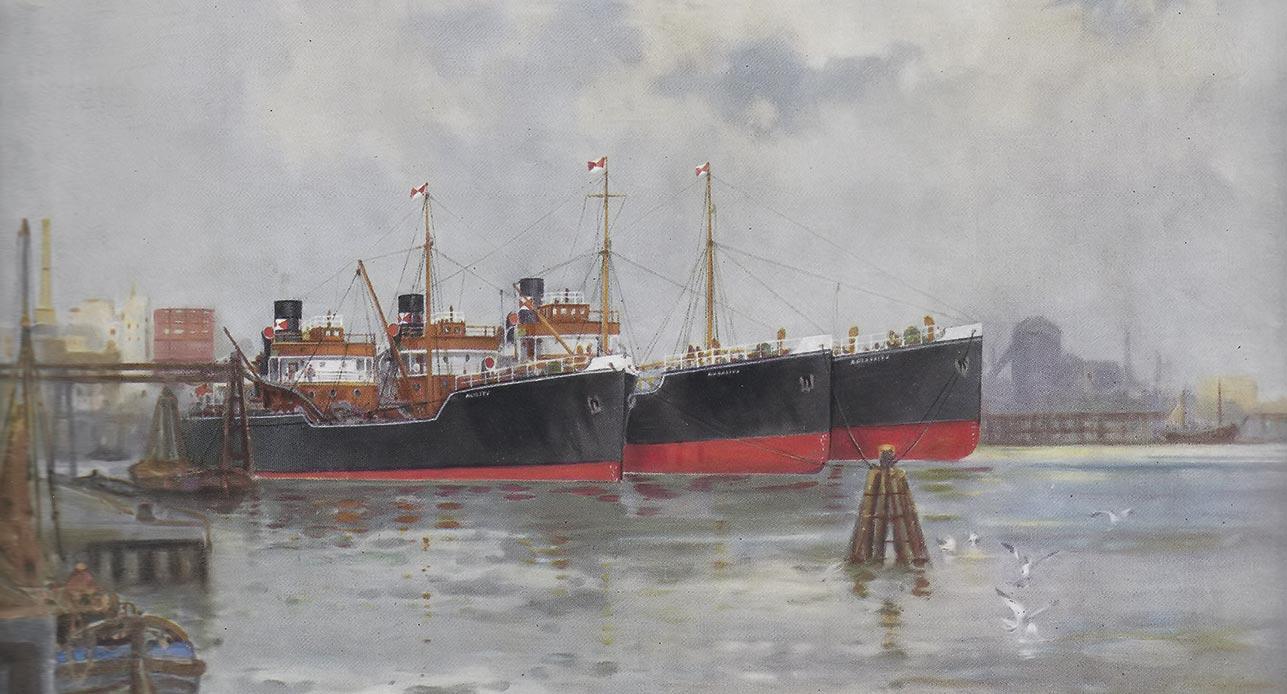
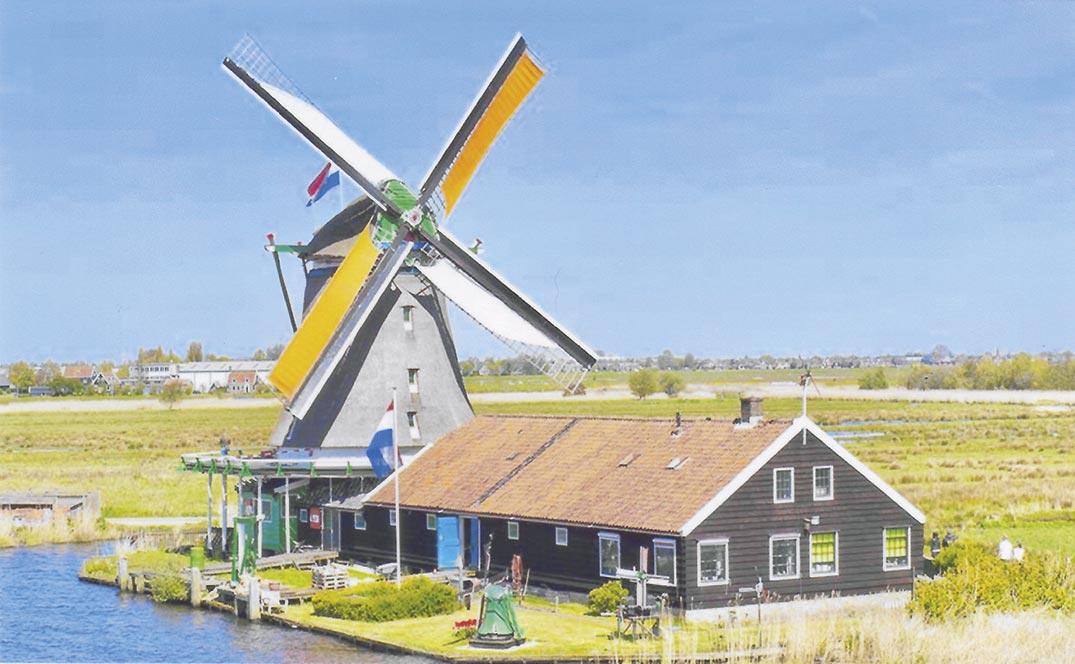
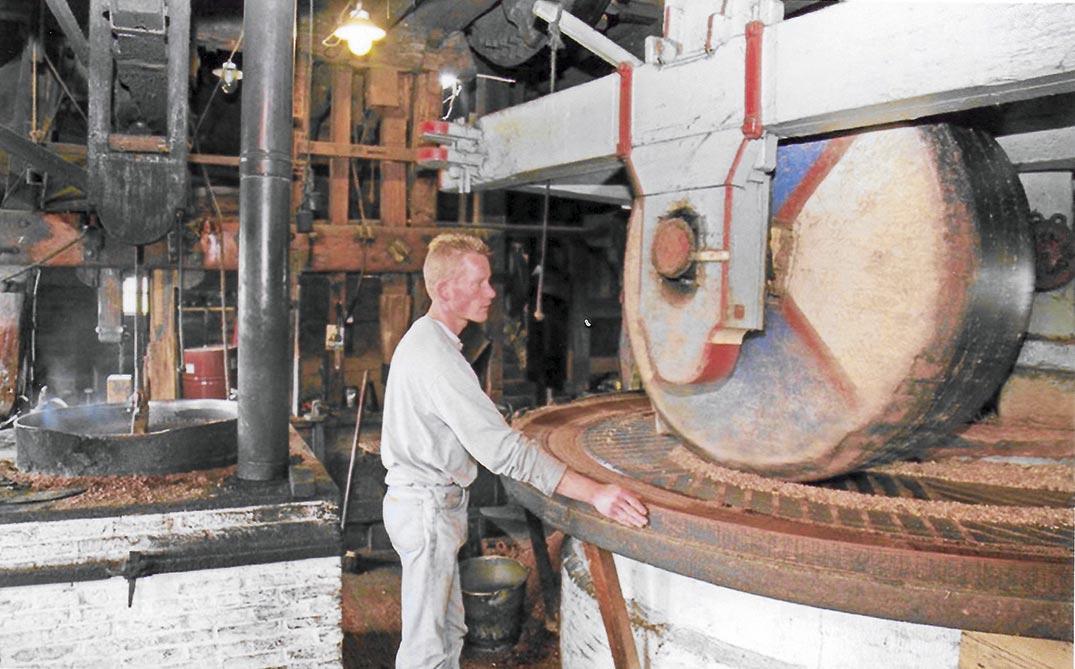
Historically an industrial region, windmills were originally used to crush grain, seeds and beans and to saw wood. Fortunately, through the concern of the locals, one of the mills that started an industry that grew into the giant Unilever group has been preserved, even though it had to be moved in 1968 to a nearby site. Known as De Zoeker (The Seeker) this mill was built in 1672 and now adorns a site on the River Zaan as can be seen above. The picture above right of the massive edge-wheel used to crush the oil seeds shows a remarkable similarity to those made in Devon to crush apples for cider! This district also played an important part in whaling until the middle of the 19th century.
As described earlier in this series, the Founder, Frederick Everard, had initiated a mini-revolution in bulk edible oil carriage by showing that tankers using steam coils in their deep tanks could replace the old method of shipping the oil in barrels much more economically, and in doing so created quite a nice niche market for his burgeoning fleet of coasters in the 1920s and 1930s. The publication by Chaffcutter Books of David Wood and Richard Walsh’s fascinating book The Prowess of Charlie Fielder has thrown a lot of light on the importance of the sugar beet, molasses and edible oil trade to the growth of the Everard enterprise. The first three tankers adapted for this trade were all steamers, the pioneering Alchymist (built in 1895 and sold to Everards in 1922), and the first two ships purpose-built for Everards by the John Brown yard at Greenock, the Ability (below left by Reuben Chappell) and the Audacity, completed in 1924 and 1925 respectively. However despite the success of these vessels the next vessel built for the trade, the little 206 grt Prowess of 1926 (below right, courtesy C. Hill) was given a diesel engine from Plenty and Son of Newbury, which meant she had to rely on shore-based sources of steam for her pumps, or other steamers. Tank cleaning with steam hoses was one of the least attractive and most dangerous tasks the crews of these vessels had to undertake. More problems were created for the long-suffering master, Capt. Fielder, and his Chief Engineer, by the unreliability of these early semi-diesel engines. Fortunately Plenty at Newbury had a very competent engineer as a troubleshooter, Mr. Edgar Wildsmith, who would fly around the country on his Harley Davidson motorbike fixing problems wherever they emerged.
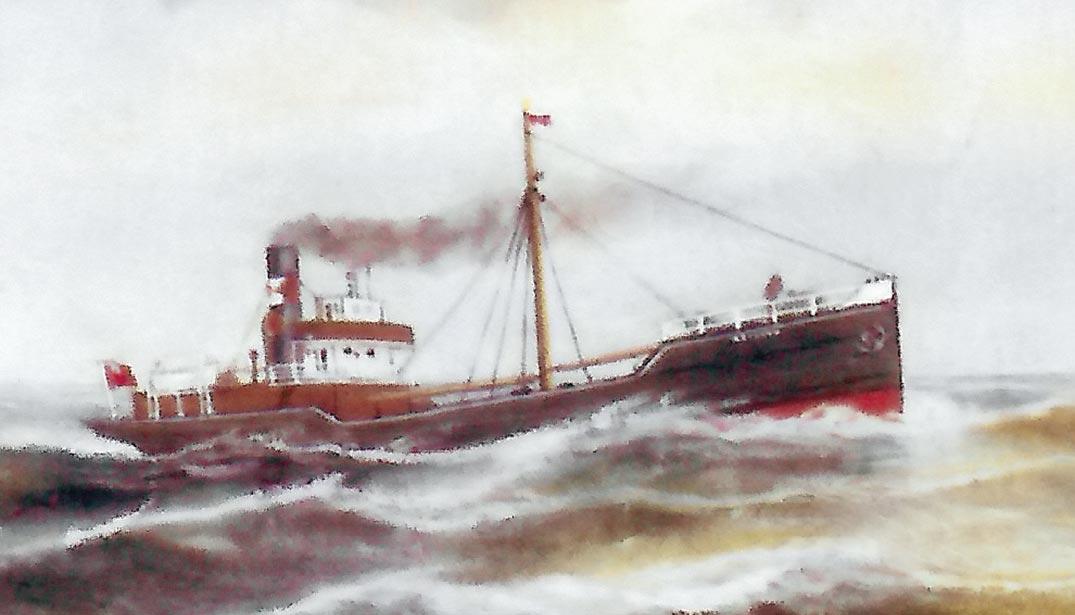
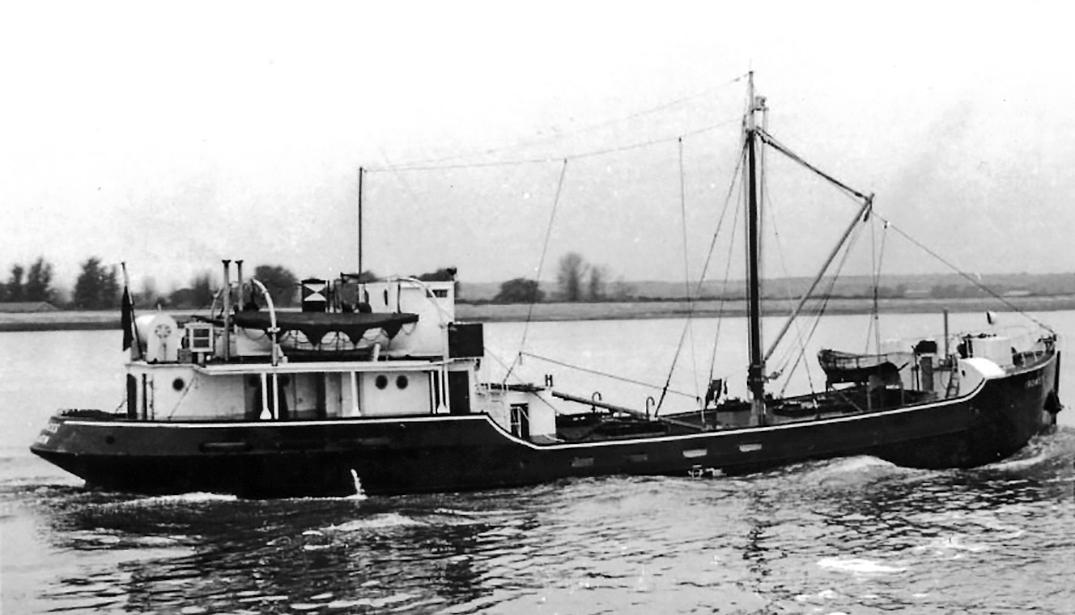
Despite the renown of famous Dutch masters such as Vincent van Gogh, Peter Breughel and Rembrandt, it seems the Dutch did not have a plethora of artists capable of recording the splendour of the Dutch merchant navy in its prime. So much so that the greatest Dutch fleet of all, the mighty Holland-America Line, had perforce to turn to foreign artists such as Charles Dixon, the German-American Fred Pansing and, you guessed it, our own Frank Mason, for their ship postcards. His portrayal of the 10,726 grt Noordam, completed by P. Smit Jr. at Rotterdam in 1938, is certainly one of his finest.
However at least one Dutch artist was not to be outdone by Mason, and I have found this rather nice painting of the Noordam by an artist whose name appears to be Rodan, but sadly I cannot find any further details of him. The Noordam certainly made her contribution to the success of the Allies in the war. Initially fitted out with 148 First class cabins, each with its own bathroom, in 1942 she was taken over by the U.S. War shipping Administration and at Los Angeles converted into a troopship capable of transporting 2,000 men. In 1942-3 she made seven voyages from the U.S. West Coast to Australia and the Pacific Islands conveying the troops who were going to bravely battle from island to island to defeat the Japanese. In 1945 she was back at New York where she trooped to Marseilles, then to South Africa, Malaya, Singapore and Colombo before returning via the Suez Canal to Rotterdam. Here she was converted back to her configuration of 148 First Class cabins and resumed commercial service from Rotterdam to New York in 1946. Her final sailing for Holland America was in 1963 but she had a new lease of life chartered by a Panamanian company to Messageries Maritimes as their Océanien until she was broken up in 1967.
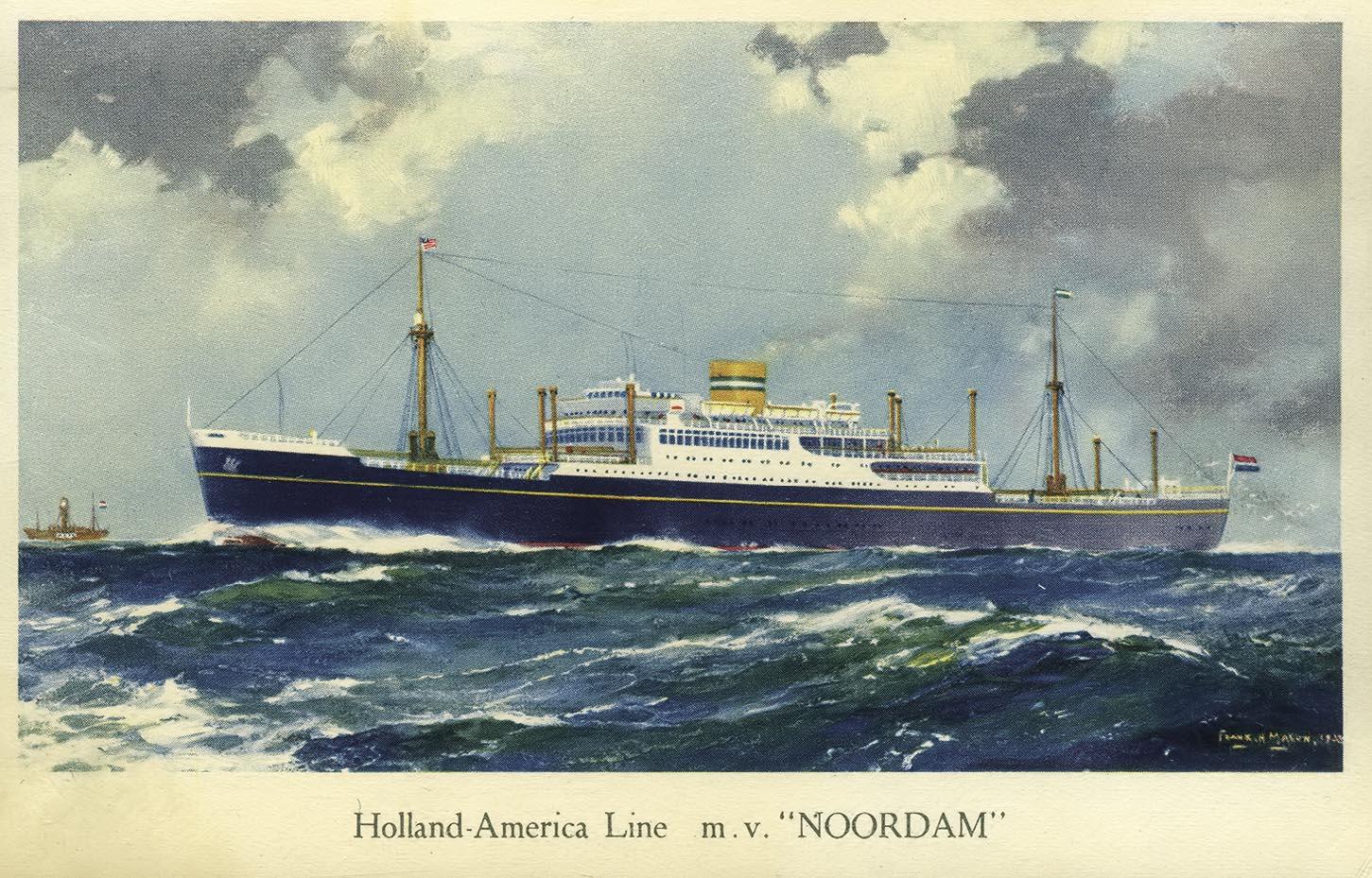
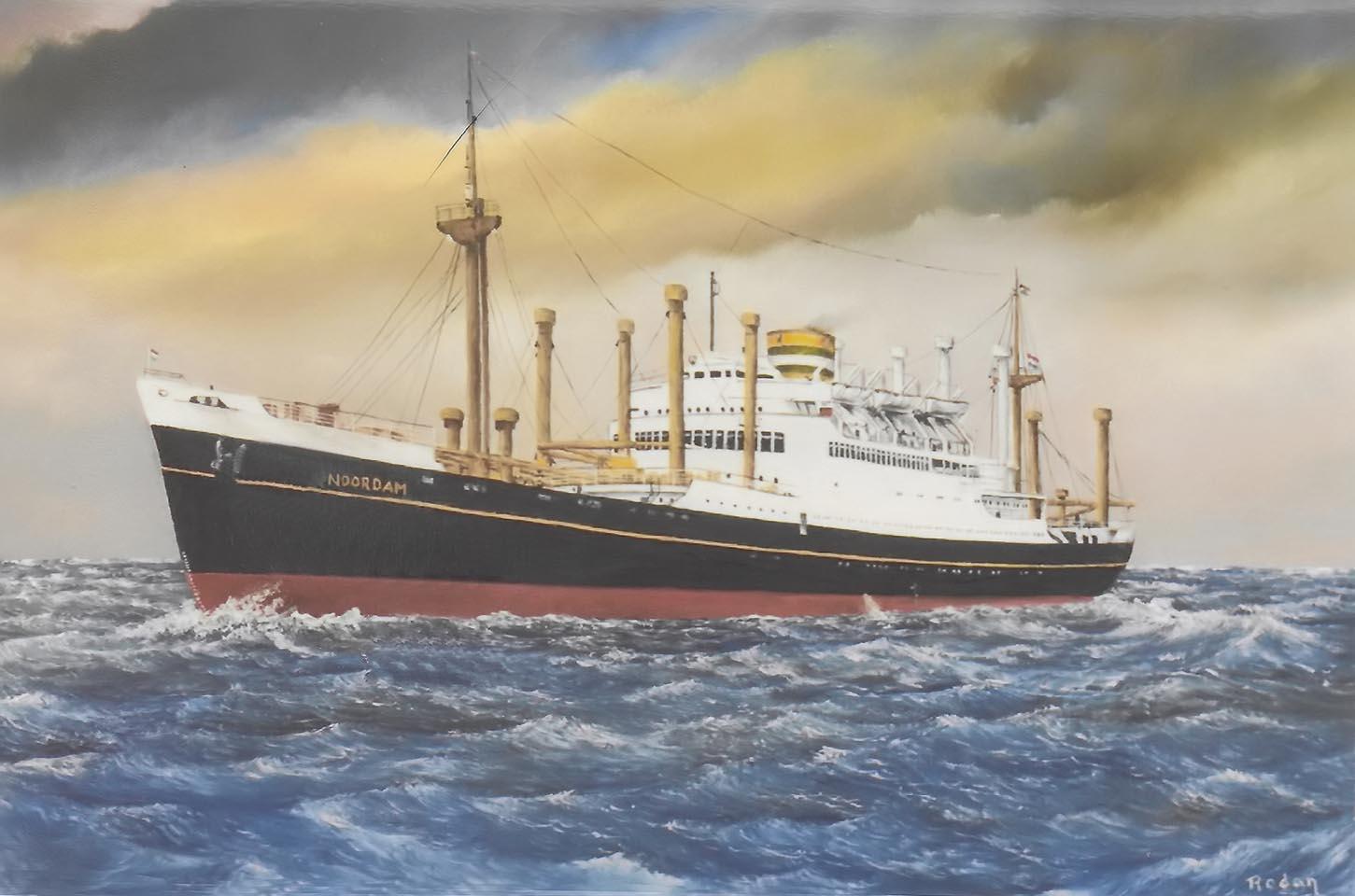
However, one Dutch liner company did manage to find an artist who evoked the greats of earlier times. The Netherland Steamship Co., Stoomvaart Maatschappij “Nederland”, used Ernst Marie Eden (1885-1969),who had studied art at the Rijksacadamie from 1902-1906 to illustrate some of their impressive inter-war liners such as the 1920-built Johan de Wit (below). This vessel was built in 1920 by the NSM at Amsterdam. In 1933 she was rebuilt with a Maierform bow and after surviving the war she was sold to Panamanian owners who renamed her Neptunia. She grounded at Cobh in 1957 and was scrapped afterwards. The SMN tended to name their vessels after famous names in Dutch history. De Wit was the politician behind Admiral De Ruyter’s famous raid on the Medway in 1666 which partially destroyed the British fleet. The 1915-built Jan Corneliszoon Hooft (below also by Eden) was the founder of Batavia and an officer in the VOC early in the 17th century. She met her end in 1940 when she was scuttled to block the entrance to Ymuiden.
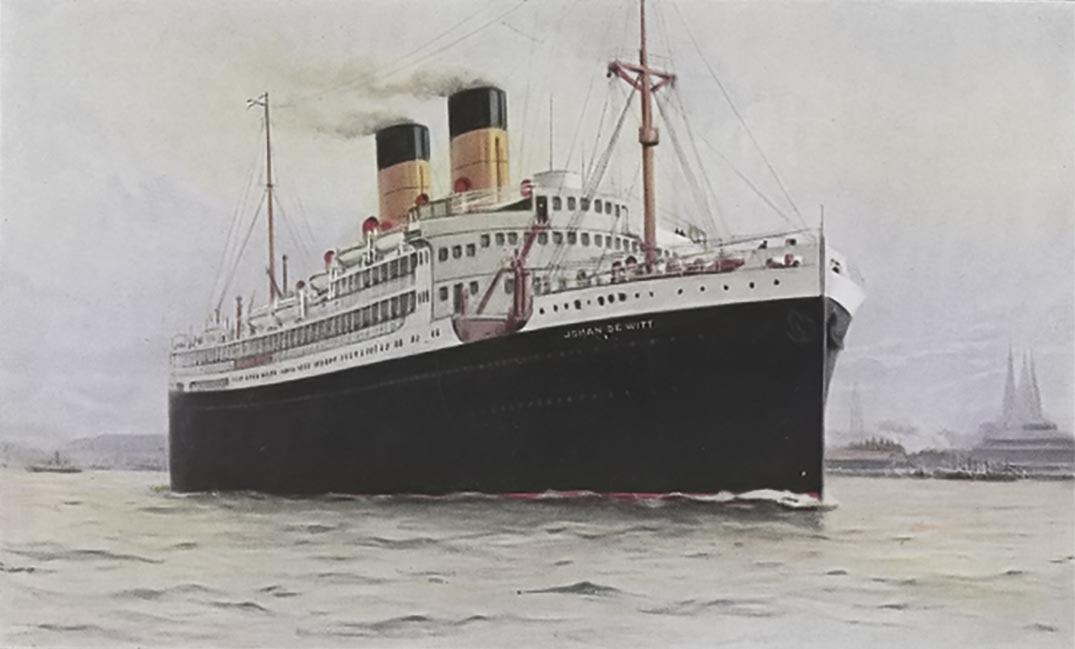
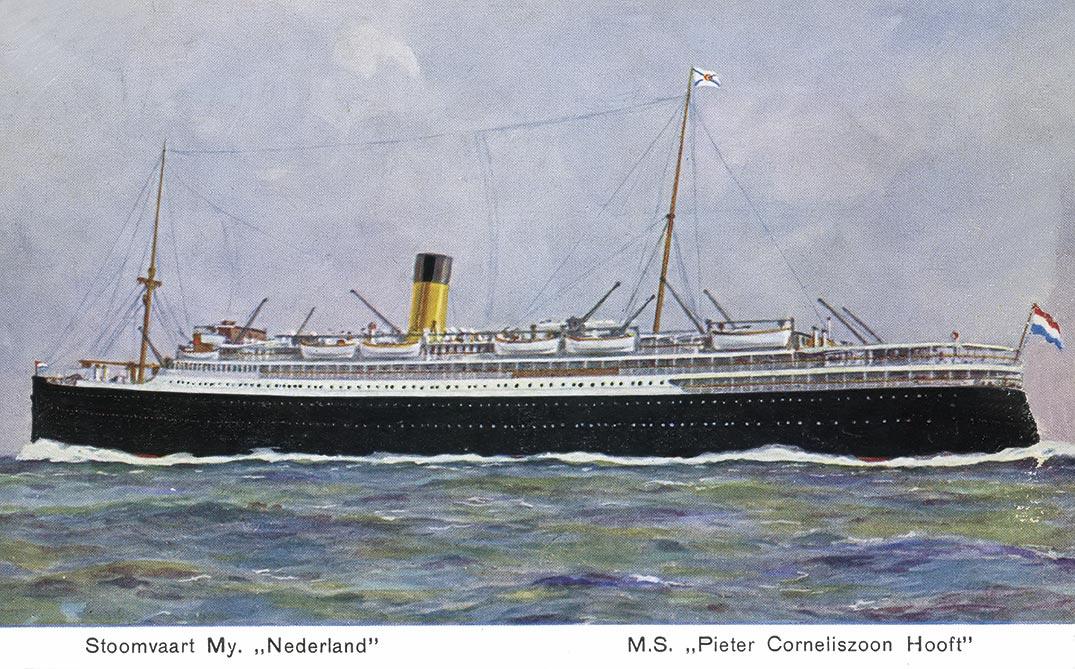
It would be remiss to feature the “Nederland” company without referencing their most famous liner, the extraordinary Oranje completed by the NSM at Amsterdam in 1939. She was fortunately in the East Indies when war broke out and served the Allies as a hospital ship. I remember seeing her at Southampton in the 1950s when she was on the Round The World service and being amazed by her remarkable tumble-home hull, like the Willem Ruys and the Turret ships designed to reduce tolls on the Suez Canal, which I had never seen the like of before. The card (right) of the Oranje allows me to introduce another post-war Dutch artist who was quite prolific, producing not only a series of postcards like this but also illustrating the cigarette card albums which have featured in this series before. Frans Naerebout was born in Rotterdam in 1915 and worked there from 1928 until 1943, then at Vlissingen where he was a teacher and encouraged many youngsters to take an interest in a maritime career.
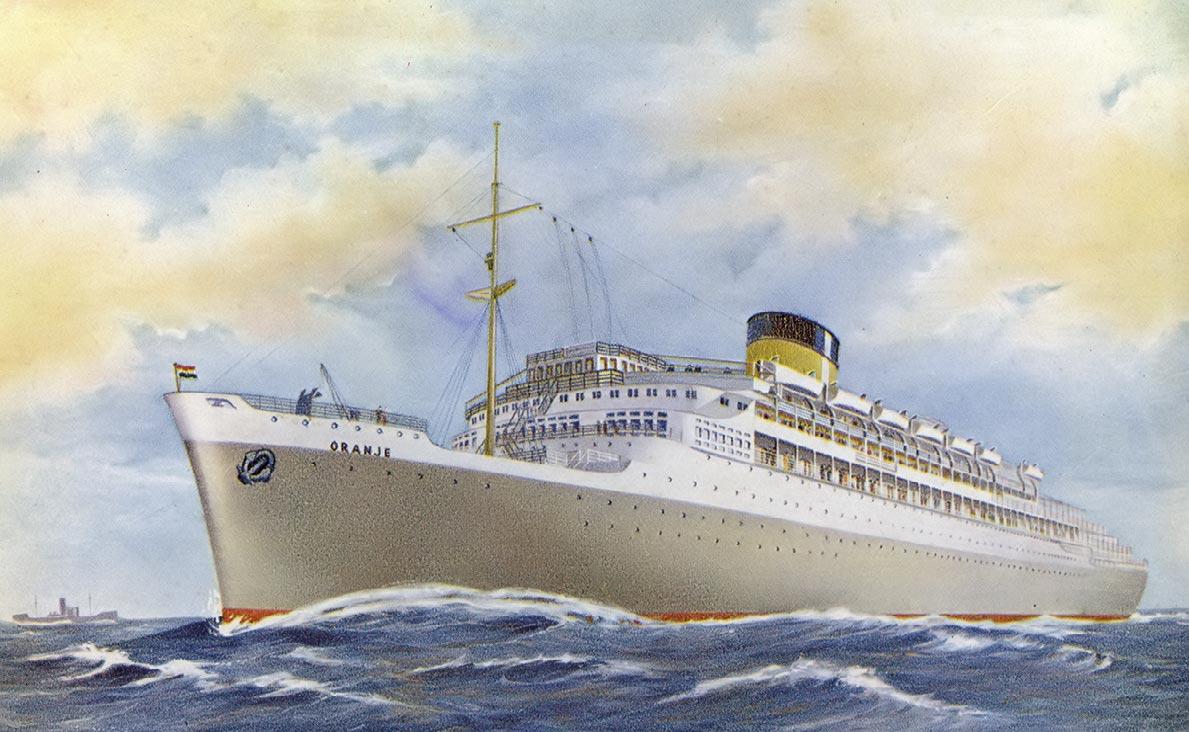
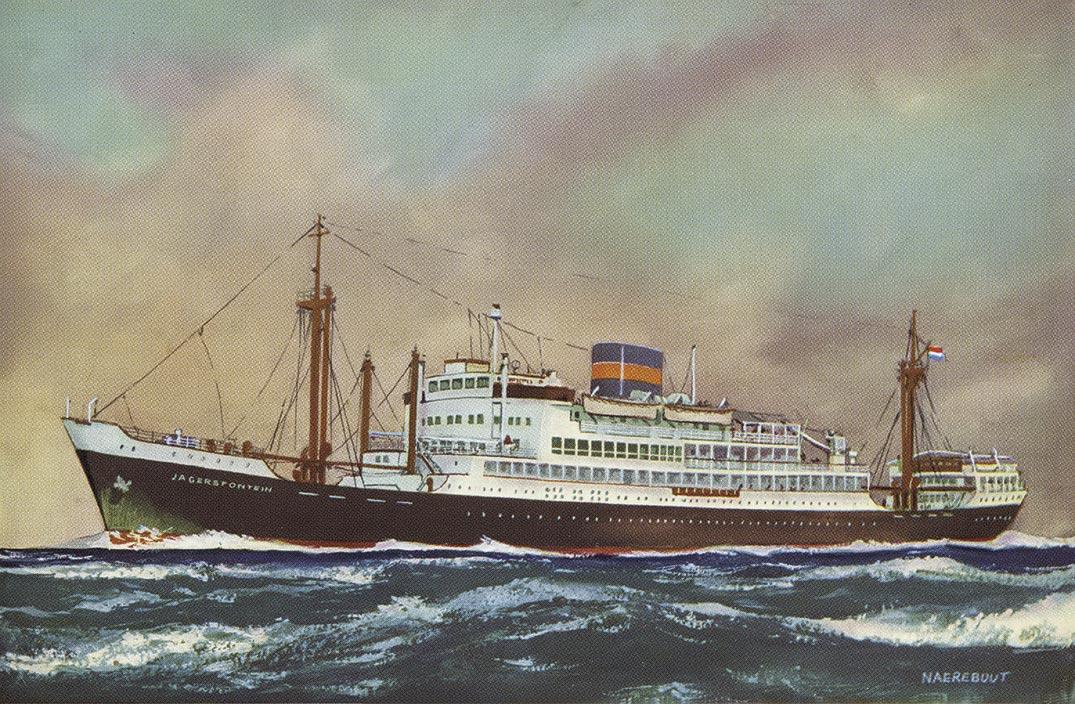
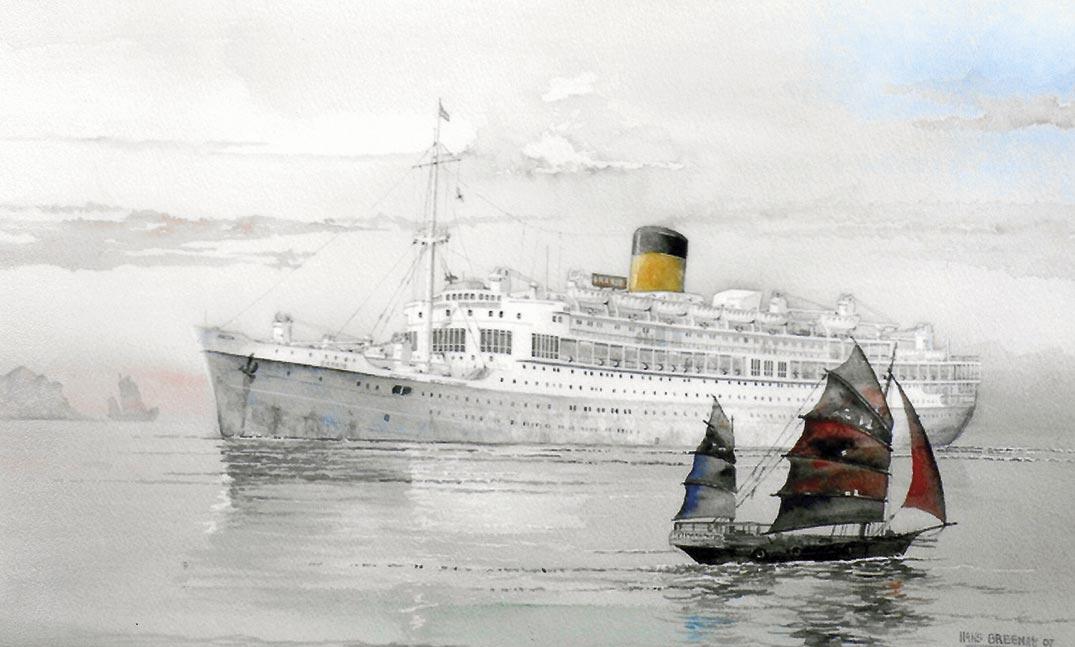
Above is another example of his art, the 10,083 grt Jagersfontein was built for the South African service of the VNS (United Netherlands Nav. Co.) but she had a protracted birth. Ordered before the war from the Schichau Werft at Ebing in what is now Poland, she was seized by the Germans and sunk in 1945. She was refloated and towed to the Royal Schelde yard in Flushing for eventual completion in 1950. She served on the South African route until 1967. By way of contrast with Naerebout we can feature another contemporary Dutch artist’s impression of the Oranje (above right).
Hans Breeman is a talented artist who was born in Ridderkirk but lives and works in Rotterdam. His rendition of the 1,529 grt Zwarte Zee, (right) completed in 1963, shows a tug that was, at the time, the largest and most powerful tug in the world. Built by J. & K. Smit at Kinderdyk, a yard that went on to become the well-known dredger specialist I.H.I. She is a good example of the renowned Dutch tug expertise, in this case of owners L. Smit, whose preserved tug Elbe can happily still be seen around Rotterdam on special occasions.
Another part of the great Dutch maritime tradition is the magnificent Nieuw Amsterdam of 1938, built just down the Maas from where Breeman has depicted her (below), at the Rotterdam Dry Dock yard at Schiedam. Despite the great reverence felt by all for this iconic vessel, she eventually went for scrap in 1974. Fortunately her successor, the famous Rotterdam (below right) of 1959 (right by Breeman), has fared better and admirers can even sleep onboard her at Rotterdam.
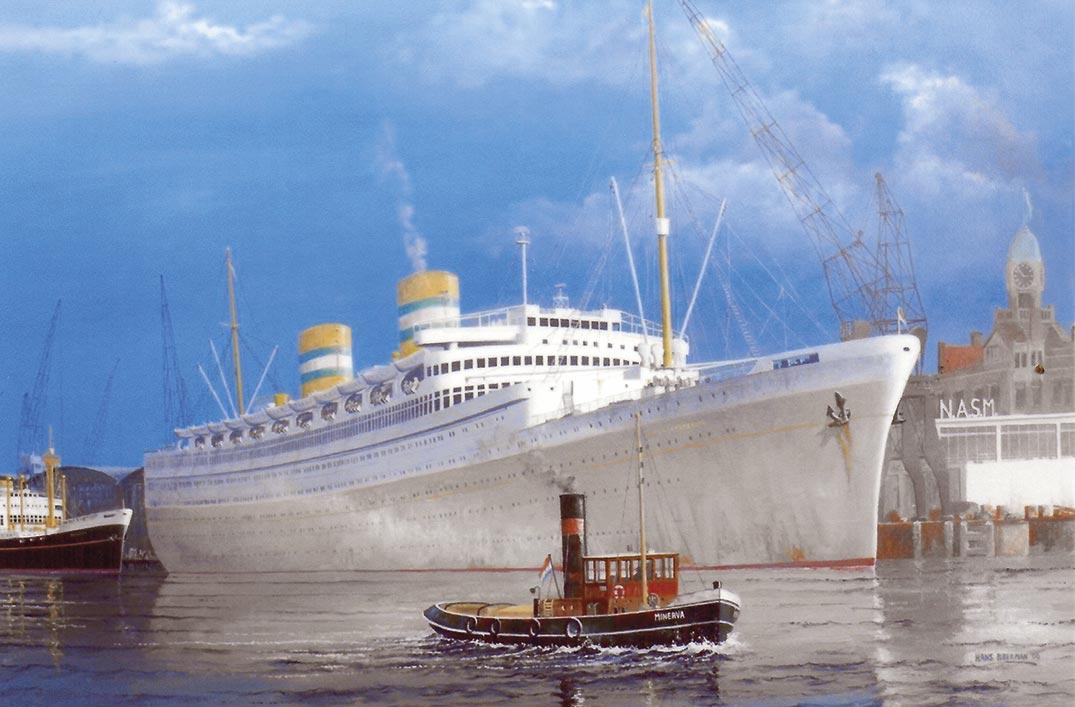
Good paintings of tankers are hard to come by, but as they played such an important part in the development of Rotterdam and are indeed a major part of both Rotterdam (Pernis and the terminals on the Caland Canal) and at Amsterdam it is good that thanks to the work of two Dutch artists we can feature them here. Victor Julian Trip was born in Indonesia in 1913 and died in 1975. He made this nice painting (right) of a moment that must have been a proud one for Rotterdammers, the brand-new 23,905 grt Dutch Esso tanker Esso Nederland passing the Euromast a couple of miles downstream from her birthplace at the Van der Giessen yard at Krimpen a/d Ijssel. Of course it was the part Dutch-owned Shell company that had been responsible for most of the early oil berths at Rotterdam, running as it still does Europe’s largest oil refinery at Pernis.
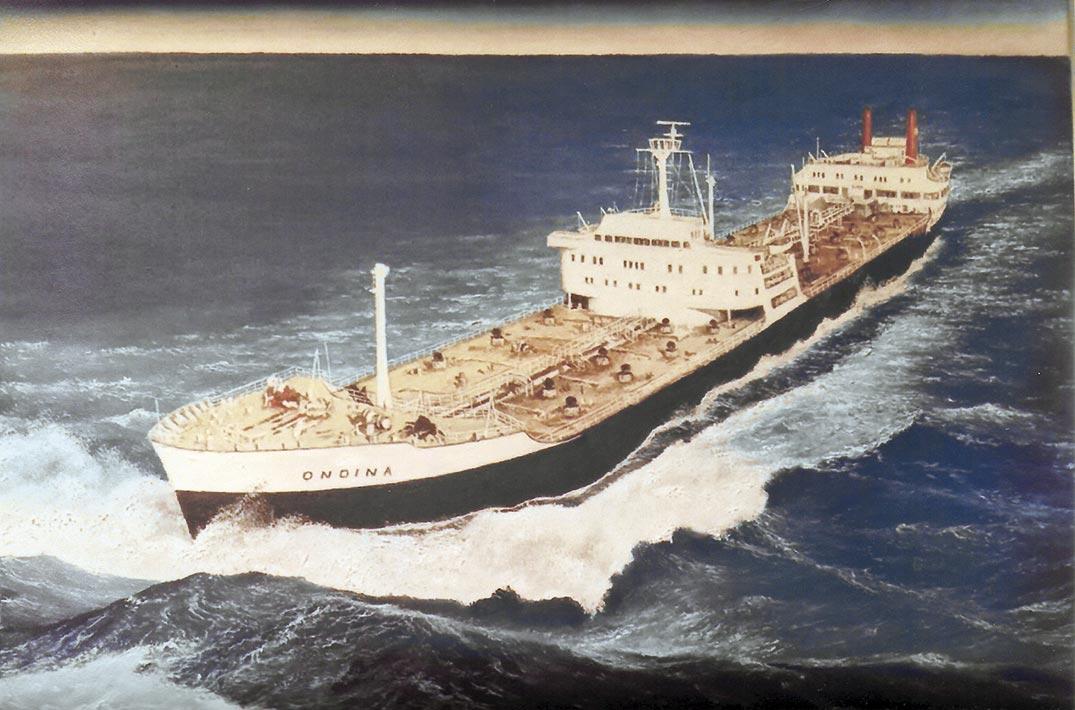
So Shell vessels were a familiar sight on the waterway and another Dutch artist, Rodan, has produced the rather nice images above. They show the classic 12,119 grt Shell tanker Kylix (above left), completed in 1955 at the Nederlandshe D. & S.B. at Amsterdam and broken up in 1984. The enormous changes in the naval architecture of tankers over only six years is illustrated by the streamlined profile of the 31,314 grt Ondina (above right), a product of the Rotterdam Dry Dock Co. in 1961. She was broken up in 1986.
My earliest memory of Rotterdam was arriving in the Waalhaven in the late 1950s as a teenager onboard the Comben Longstaff coaster Windsorbrook to pick up a cargo of Ruhr coal trans-shipped from a barge by a floating crane and destined for the Western Irish port of Galway. Sadly the only photograph I took was from the top of the Euromast but ever since I have always associated Rotterdam with busy trans-shipment scenes, which are happily still to be seen today, although not as much. Fortunately one Dutch artist has captured such scenes for posterity.
Herman Bosboom (1920-1993) dedicated a major part of his life to rendering the Rotterdam port activities in evocative watercolours which are wonderfully illustrated in the book A View from the Quay, Havenaquarellen van Herman Bosboom written by De Graaf and Oosterwijk and published in 1998 (available from Rotterdam Maritime Museum). Here are a couple of examples of his work.
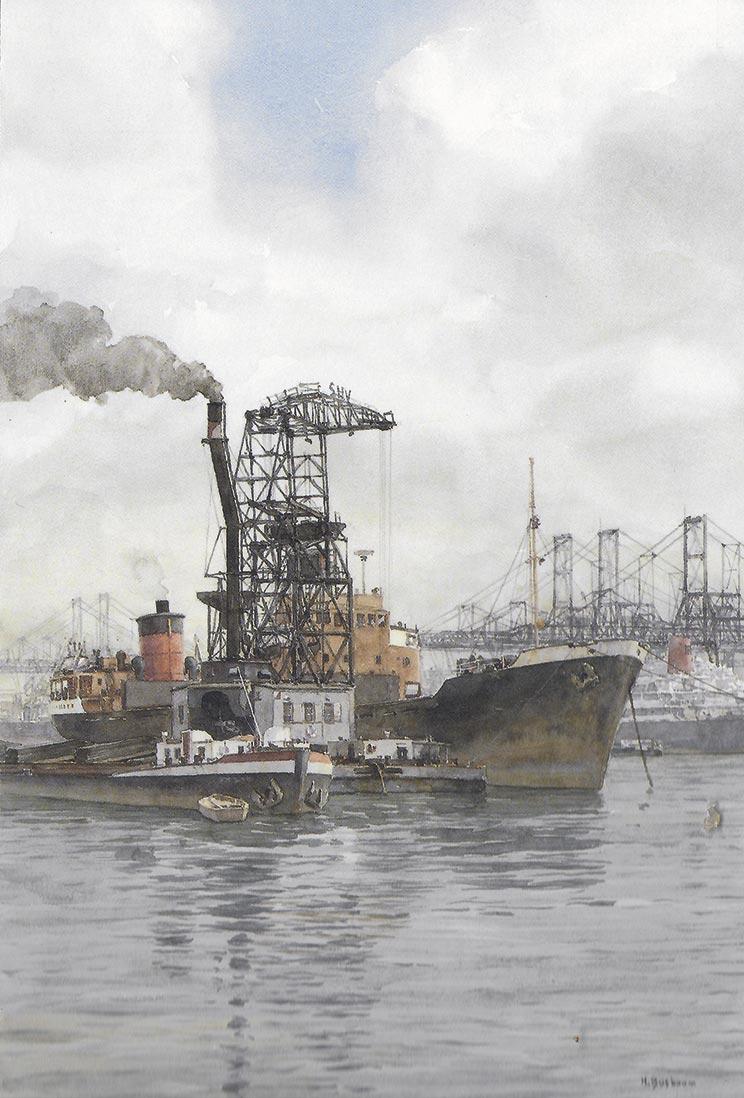
Left: ln a scene that must have been similar to the one I experienced on the Windsorbrook, Bosboom shows the 3,358 grt Sir Archibald Page, built in Sunderland in 1950, of the Central Electricity Authority presumably loading German coal for the London power stations. Below right Bosboom shows a typically eclectic group of freighters and bulk carriers lying at the buoys in the Rijnhaven in 1965.
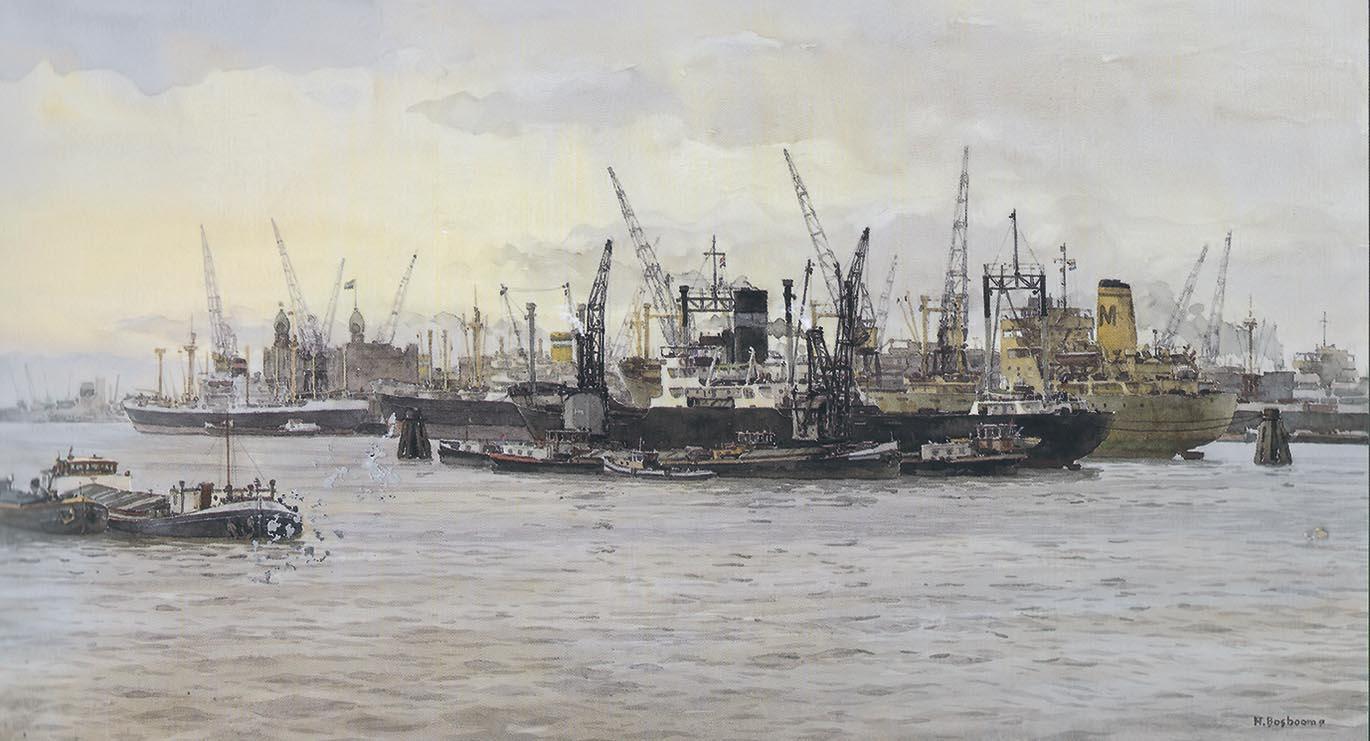
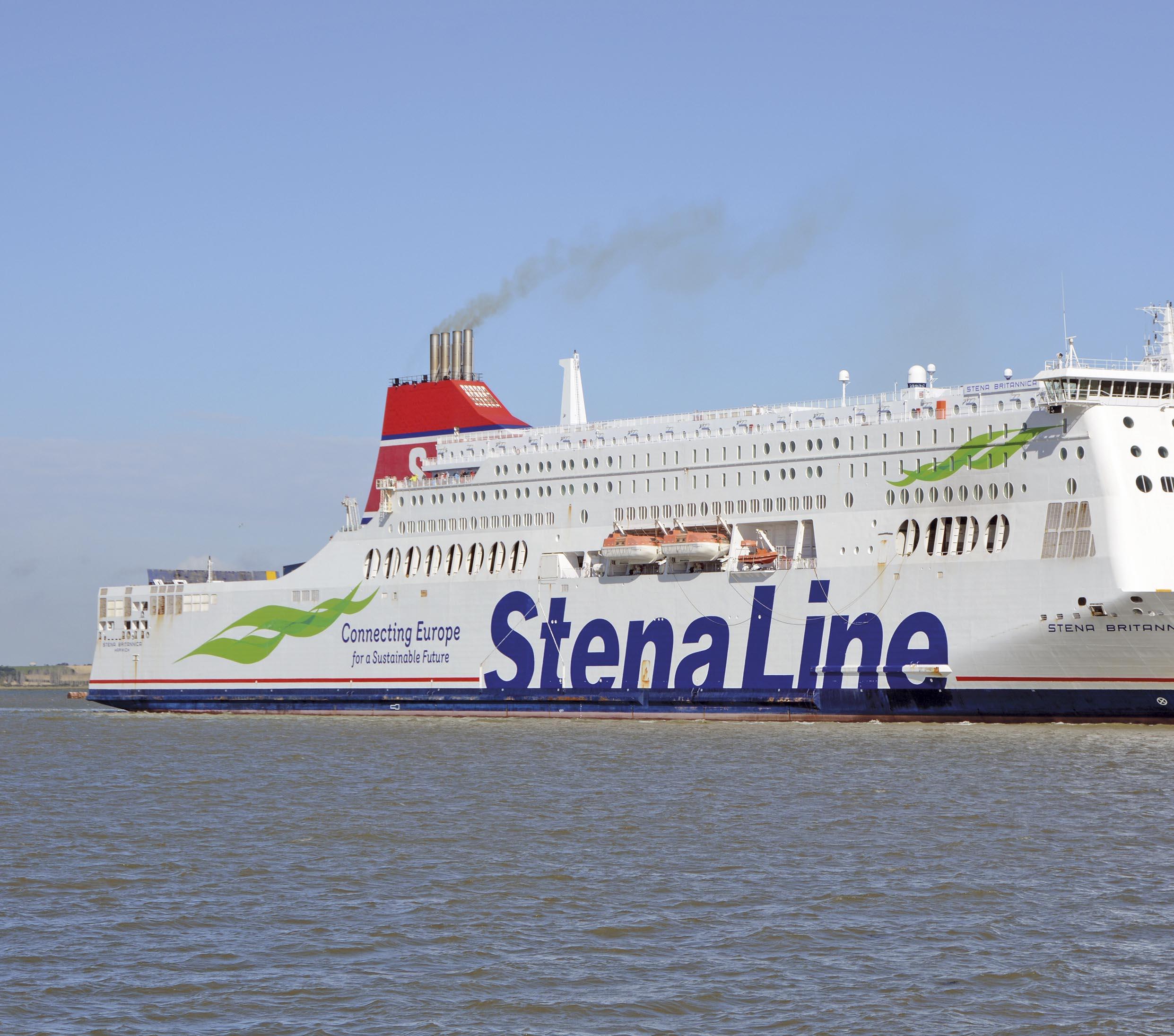
Historians speak fondly of Harwich. They tell of the natural deep water harbour and that Harwich and not Plymouth was the true home of the Mayflower that took the Pilgrim Fathers to the New World. Human activities have over the centuries shaped the character of the estuary at Harwich formed by the confluence of the Rivers Stour and Orwell. It was said, rather morbidly, that ‘if you cannot make Harwich there is nothing but death before you’, as it was the only deep water anchorage available to early ships between Essex and the Humber estuary. The shape of the harbour has been influenced by humans for centuries but in the early 1800s its characteristics were suddenly and irreversibly transformed when it was discovered that the local rock was suitable for building work and the manufacturing of cement. These deposits were plundered and transported away from the coastline exposing the area to nature. Shingle that once was transported away from the mouth of the estuary started to be deposited and silt up the harbour and also saw Landguard Point grow considerably.
A naval survey in the 1840s focused the minds of people in power and a Parliamentary Select Committee was established to look into the problems while keeping what was considered an essential naval and mercantile port open for sea traffic. The decision was
taken to ban the extraction of cement stone and to immediately start a series of deep dredging works to re-establish the depth and usability of Harwich as a commercial port. The Select Committee also heard that there were dozens of organisations and individuals within the harbour who all had vested interests, each making demands on the resources and access to the waters of the estuary. The decision was then taken to create a new overall Authority to ensure all aspects of the harbour were properly administered. In 1863 by Act of Parliament the Harwich Haven Conservancy Board was established.
Earlier during the 12th century, the port at Harwich started to become important both to maritime trade with the continent and also for the protection of the British Isles as a strategically located naval outpost. It was, however, the trade in wool and woollen products that kickstarted the port’s commercial success. The area around Flanders on the Continent was a key importer of wool from England and exports through Harwich quickly established the fledgling port facilities in Essex. By the Elizabethan era, the port had grown significantly and in 1604 Queen Elizabeth I had granted the town a royal charter in recognition of its importance to the crown and the country. The deep natural harbour was also useful for the construction and storage of naval vessels.
Harwich’s Royal Dockyard was established in 1657 and the area around the dockyard was heavily fortified. The 17th century saw Parliament take the threat from foreign invasion seriously and invested heavily in the dockyard at Harwich alongside those at Plymouth and Sheerness. The latter, together with Harwich proved to be useful as at that time in history Britain faced almost continuous threats from European neighbours including the Dutch and French so two naval bases facing towards the continent was seen as extremely beneficial.
Investment, however, seemed to be drip fed into Harwich whereas, by comparison, it flowed into both Plymouth and Sheerness where warehouses, wharves and dry docks were constructed. It came to a point during the first year of the reign of King Charles II that the dockyard at Harwich was closed to save money.
It was taken over by a private contractor but in 1664 it was repossessed by the Crown who appointed Anthony Deane as Master Shipwright and Captain John Taylor as commissioner. Deane was a man of considerable shipbuilding skills as he was credited with the design and construction of second rate ships of the line at both Woolwich and Chatham Dockyards.
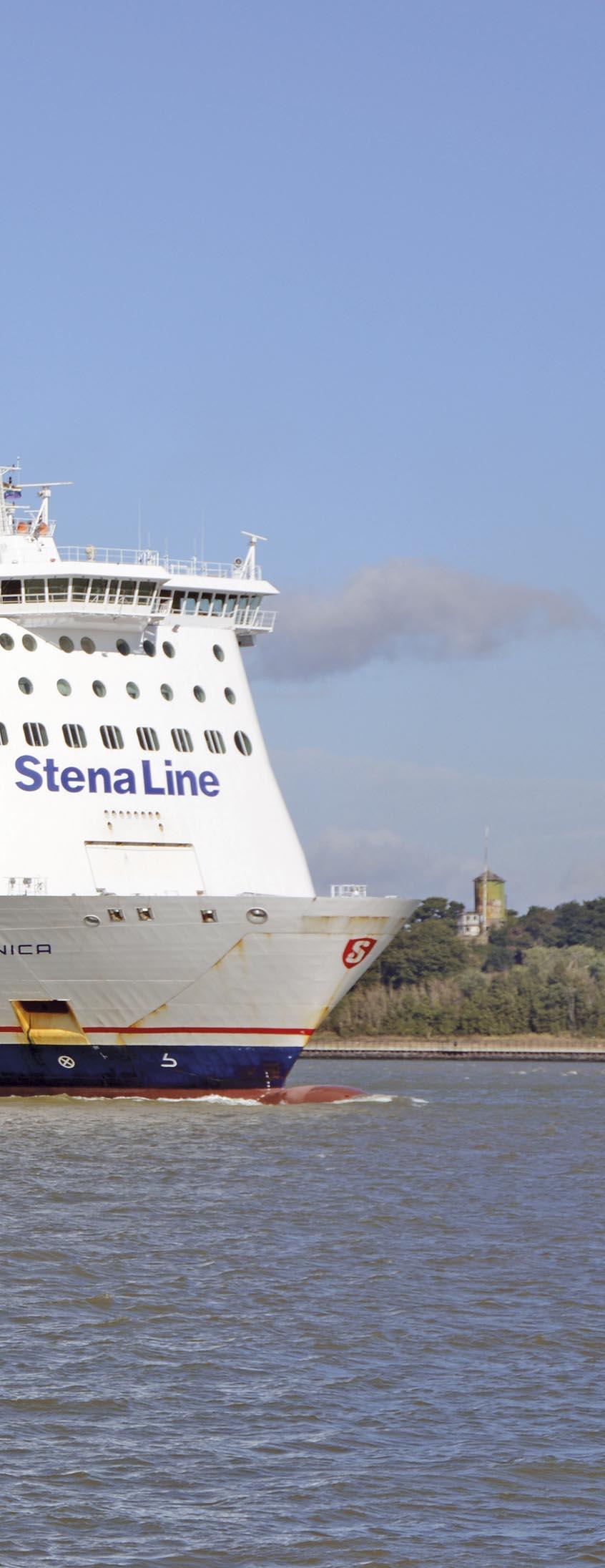
During the European Wars era Harwich proved to be useful as an assembly point for ships of the fleet as well as for the construction of several warships including the Third rate of 66 guns Rupert that was launched in 1666. The Rupert was the first major warship built at Harwich and was quickly followed by a number of smaller, less complicated vessels. By 1667 Harwich yard had been responsible for launching of two third rates and three sixth rates totalling some 2,050 tons.
The yard was always subject to the vagaries of political fortune and was soon idle except for serving as a supply base. During the reign of King William only three ships were built at Harwich.
By the 20th century it was widely thought that Harwich’s naval connections were a thing of the past, but the outbreak of the First World War changed all that. A floating dry dock was brought into the wide harbour, whilst a force of destroyers, light cruisers and submarines were home-ported at Harwich as it had excellent access into the North Sea where it was thought any seaborne action with Germany would take place. It was during the Great War that Harwich with its direct access to the North Sea would be the base for what was later called The Harwich Force, a flotilla of light cruisers, destroyers and flotilla leaders.
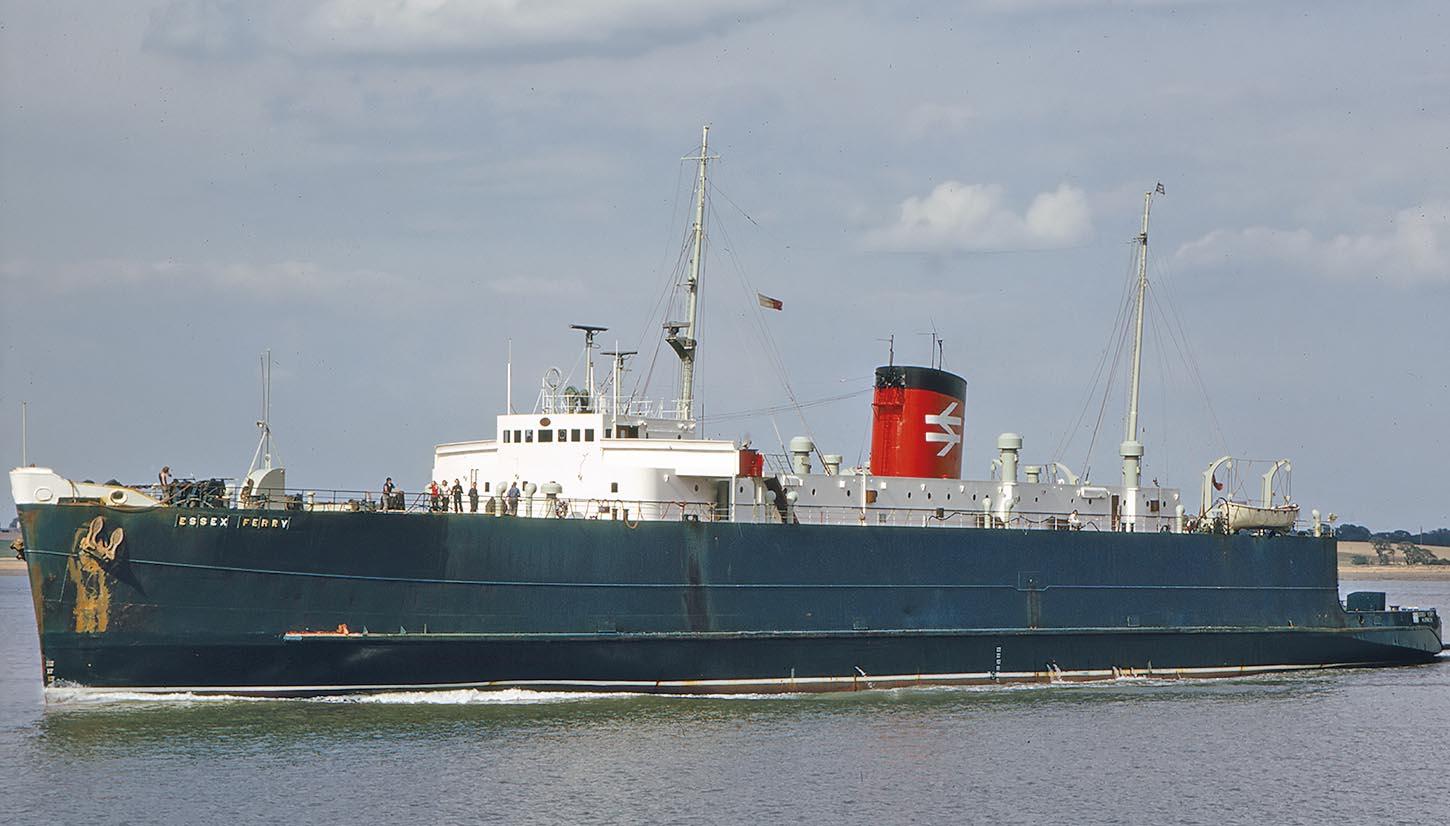
Left: The morning service to the Hook of Holland on 10th August 2018 was operated by the 64,039gt Stena Britannica which was built in 2010 by Nordic Yards at Wismar. (Nigel Lawrence)
Above: The 3,242grt train ferry Essex Ferry operated the service from Harwich to Zeebrugge. She was built in 1957 by John Brown at Clydebank. On 29th March 1983 she arrived at Rainham to be broken up but she was cut down into 2 pontoons and taken to Norway to assist the salvage of the capsized oil rig platform Alexander Kielland. She was broken up there. (Don Smith/photo-transport.com)
Below: The 4,135grt Koningin Emma of NV Stoomvaart Mij Zeeland served the Hook of Holland service. She was built in 1939 by Royal Schelde at Flushing. During WW2 she served as Queen Emma for the Royal Navy, then on 21st December 1968 she arrived at Antwerp to be broken up by J. de Smit. (FotoFlite)
Bottom: The 14,399grt Dana Anglia of DFDS was built in 1978 by Aalborg Vaerft. In 2002 they renamed her Duke of Scandinavia and in 2006 she joined Brittany Ferries as Pont L’Abbe. In 2009 she moved to Moby Lines as Moby Corse and In 2024 she was sold to Ferry Med SRL and renamed Santa Cruz. (Don Smith/photo-transport.com)
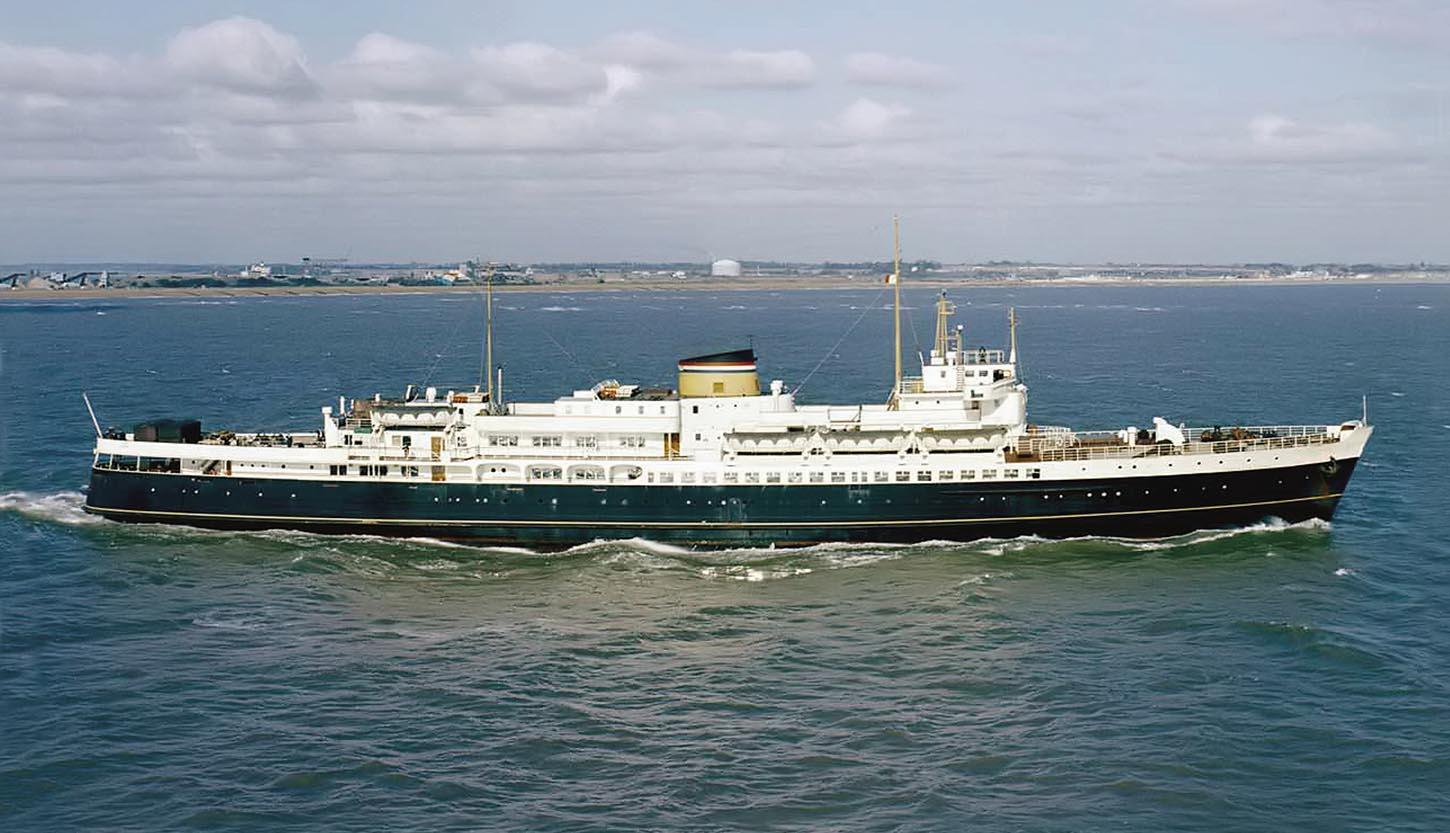
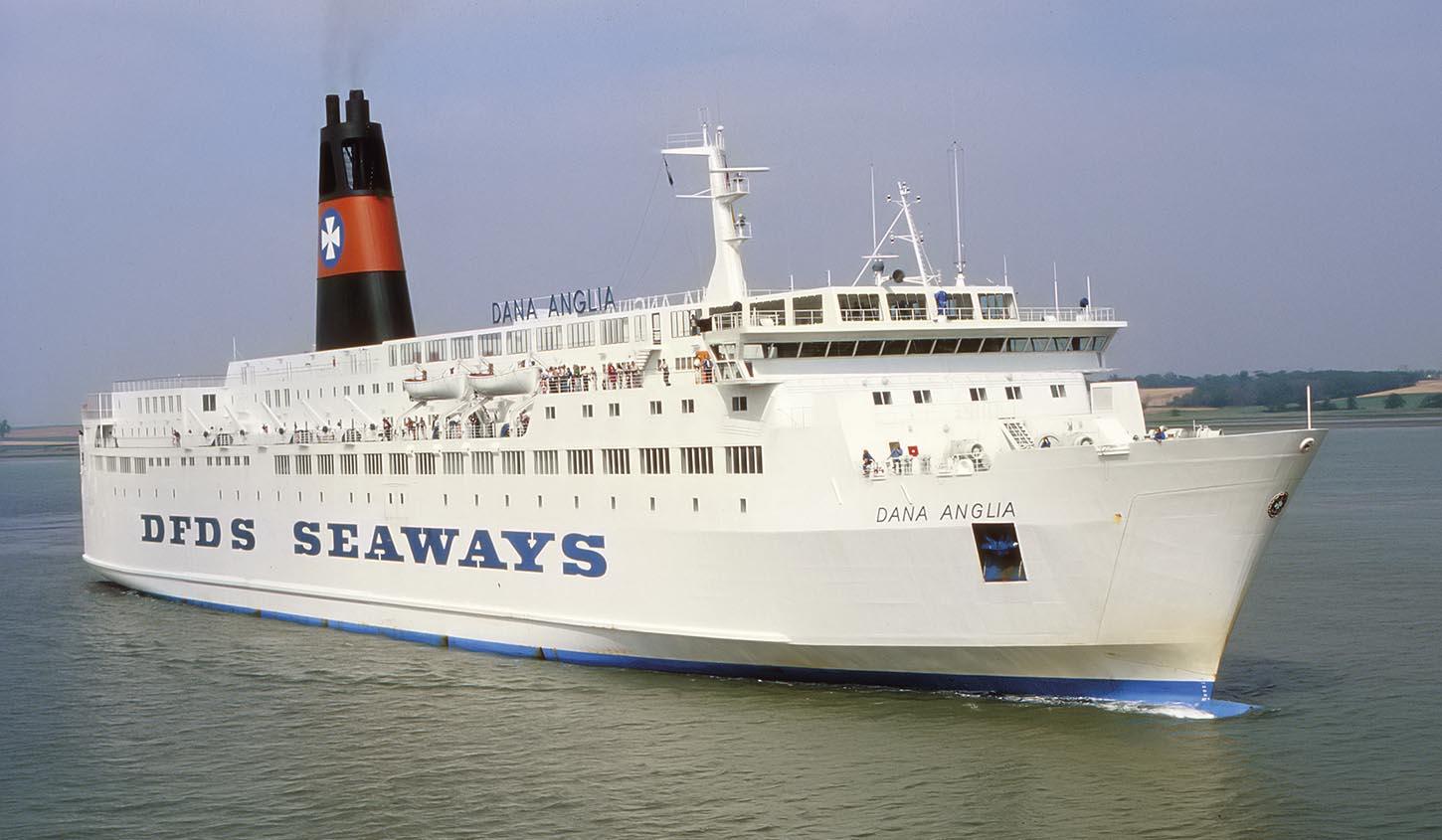
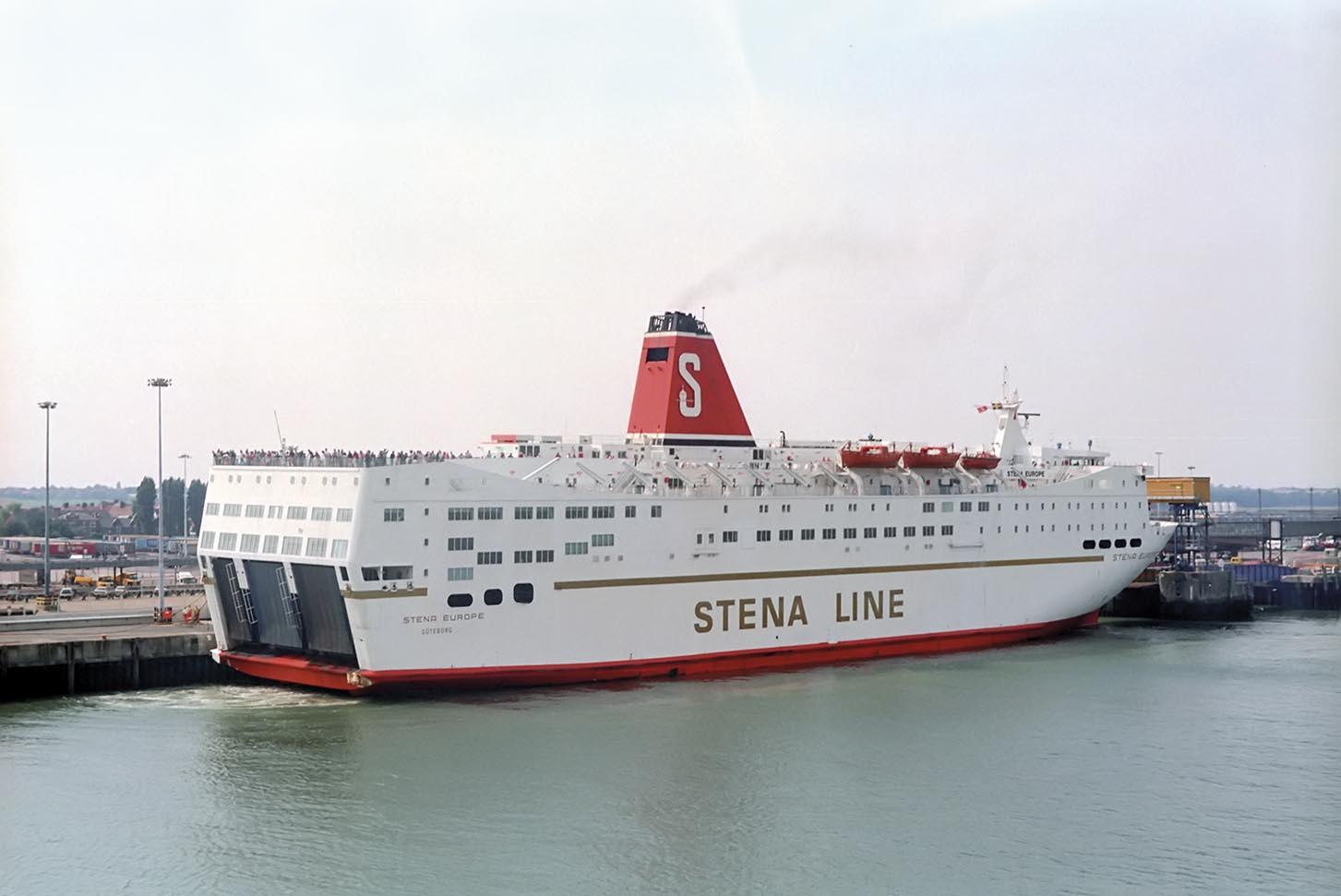
Above: The 24,828gt Stena Europe at the ferry terminal in August 1994. She was built in 1981 by Gotaverken Arendal at Gothenburg as the Kronprinsessan Victoria for Rederi A/B Gotland. In 1988 she became Stena Saga, then Stena Europe in 1994. In 1997 she sailed as Lion Europe for Lion Ferry Polska Co. Ltd. before reverting to Stena Europe in 1998. She is still in service.
Below: The 90,090gt Jewel of the Seas of Royal Caribbean at Harwich in 1994. She was built in 2004 by Jos. L. Meyer at Papenburg.
Bottom: Harwich is also the home port of Trinity House. Here we see the 2,639gt Buoy and Lighthouse tender Patricia which was built in 1982 by Henry Robb at Leith. She is seen here arriving at Harwich in July 2021. (All photos by Nigel Lawrence)
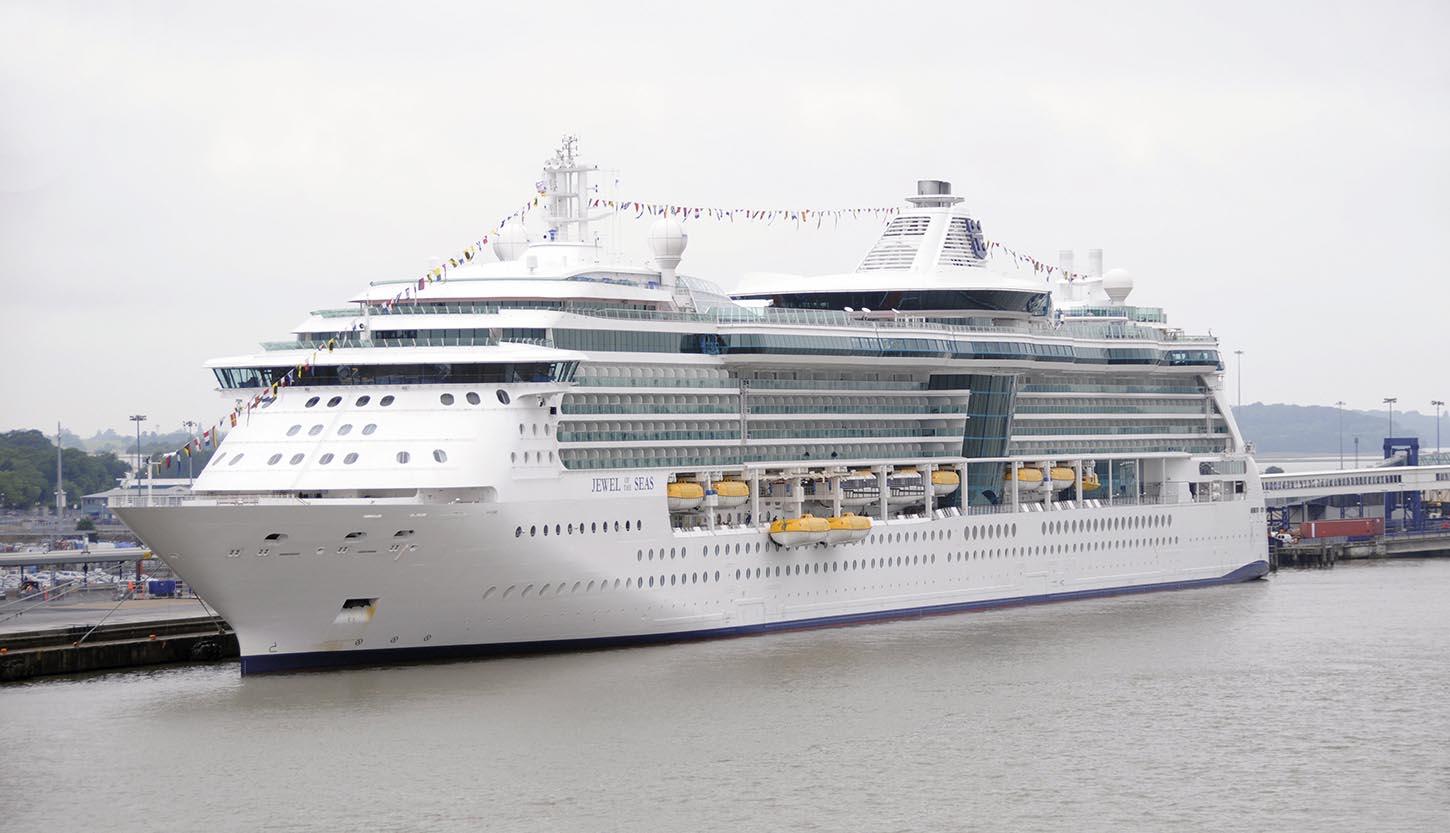
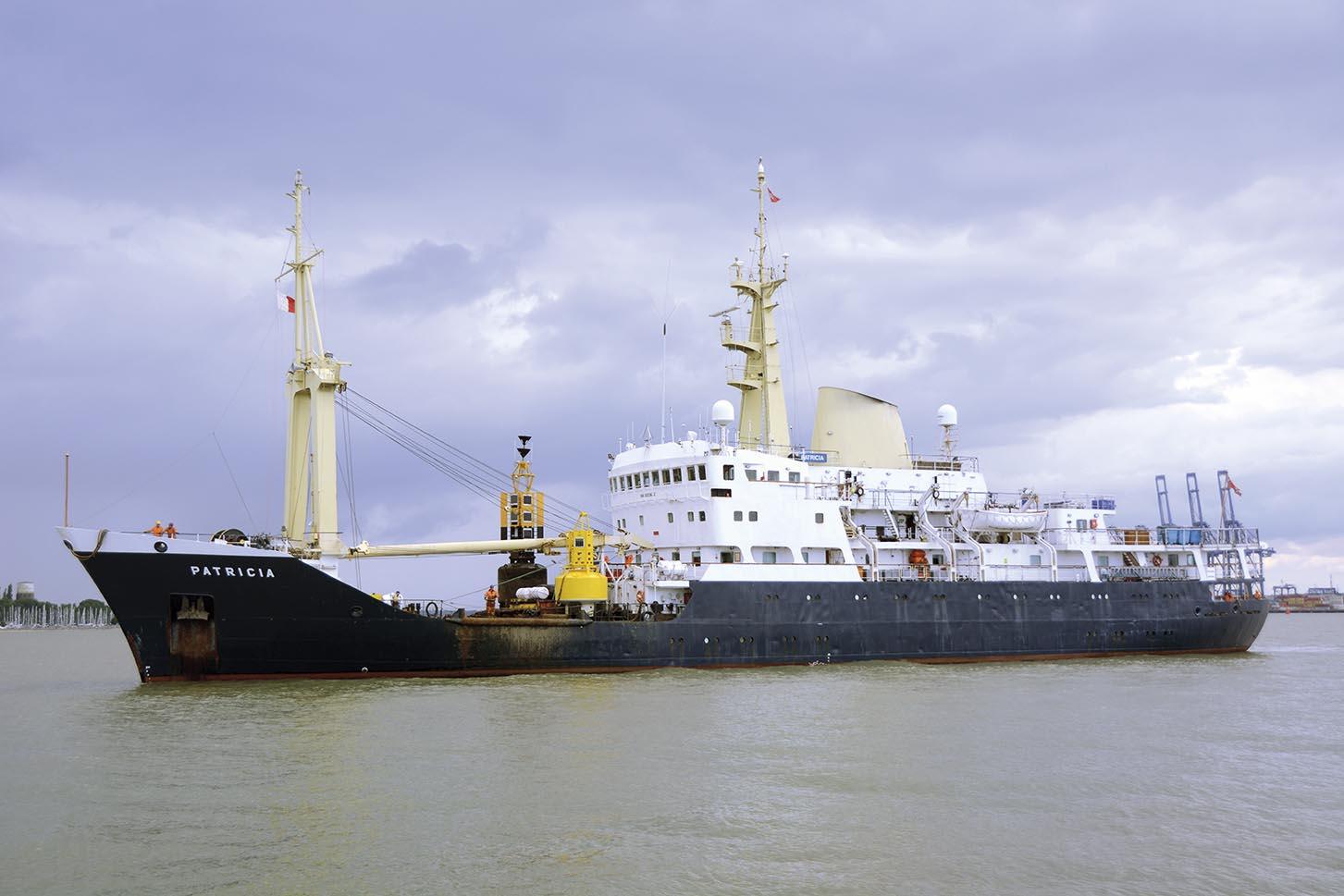
The force was tasked principally with scouting, reconnaissance and preventing German minelaying operations in the English Channel.
During the Second World War, parts of Harwich were again used in support of the Royal Navy with warships and auxiliaries based at HMS Badger, a shore establishment that is now the site of Harwich International Port. In 1946 HMS Badger was decommissioned but a naval presence remained at Harwich, in the form of the Royal Naval Auxiliary Service, until that too was closed in 1992.
Harwich’s geographical position meant that it was on a direct route to northern European ports in Belgium, the Netherlands, Germany and Denmark and in the early 18th century this proximity to the Continent was about to be fully exploited. A packet service, provided by the Great Eastern Railway, was established in 1924.
The packet ships gained a reputation for their speed and reliability and became a familiar sight in Harwich harbour. The packet service, however, only survived until the mid-19th century having been superseded by faster, more efficient and larger alternative vessels.
It was, however, the arrival of The Eastern Union Railway in 1854 that transformed the fortunes of what had, until this point, been a relatively quiet and small coastal community on the northern edge of Essex. The railway provided a direct route between Harwich and London allowing passengers and goods to be transferred between London, Harwich, ship and Continent in an almost seamless operation.
To facilitate this large scale influx of extra traffic, the port of Harwich itself went through a period of transformation with the construction of new port facilities including improved docks, wharves, warehouses and cargo handling equipment. With each new improvement commissioned into service the growth in trade through the port fostered ever greater profits and enhanced Harwich’s reputation. By 1883 Parkeston Quay was completed and had been named to honour the chairman of the Great Eastern Railway, Sir Edward Parkes. His descendant Charles H. Parkes, Chairman of the Great Eastern Railway Company in 1883 officially opened the quay. The quay provided shipping companies with access to a series of deep water berths allowing a raft of new, larger and greater displacement vessels to use the port of Harwich.
The early 20th century saw expansion at the port but in 1914 it was transformed by the needs of the Royal Navy into a major naval establishment.
In 1938 just before the outbreak of the Second World War the first Winton Train arrived at Harwich bringing 196 children from a Berlin Jewish orphanage to safety in Britain from Nazi persecution. This is a story of humanitarian courage and rescue led by British stockbroker Nicholas Winton. He organised a series of Kindertransports to save hundreds of Jewish children from Czechoslovakia.
In the aftermath of Germany's annexation of Austria in March 1938 (the Anschluss), and the subsequent Munich Agreement in September 1938, Nazi influence in Czechoslovakia expanded dramatically. The Sudetenland was ceded to Germany, and soon after, the remainder of Czechoslovakia faced occupation. As antiSemitic laws were enforced and the threat of deportation to concentration camps loomed, many Jewish families desperately sought ways to save their children.
In December 1938, Nicholas Winton, a young British stockbroker, was planning a skiing holiday in Switzerland when a friend, Martin Blake, urged him to visit Prague instead. Blake, involved with Jewish refugee organisations, introduced Winton to the dire situation facing Jewish families. Upon witnessing the desperate plight of Jewish children, Winton resolved to act.
Operating from a hotel room in Prague, Winton began organising an exodus. He compiled lists of children, arranged transport, and worked tirelessly to secure guarantees from British families willing to take in the children. Under British law, each refugee required a £50 guarantee to ensure they would not become a public financial burden.
The trains that carried the children, later known as Kindertransports, departed from Prague's Wilson Station. In total, eight trains successfully transported 669 children to safety in Britain between March and August 1939.
The trains followed a harrowing route. After departing Prague, they passed through Germany and the Netherlands. In the Dutch port of Hoek van Holland, children were transferred to ferries bound for Harwich. The ferry journey across the North Sea lasted several hours.
Among the vessels involved was the SS Bury, operated by the Great Eastern Railway, and SS Prague, both regular ferry services between the Netherlands and England. Upon arrival in Harwich, the children were processed by customs and met by volunteers who ensured their safe onward travel to foster families.
Tragically, a ninth train scheduled for 1st September 1939, with 250 children, was prevented from departing due to the outbreak of World War II. Many of those children perished in the Holocaust.
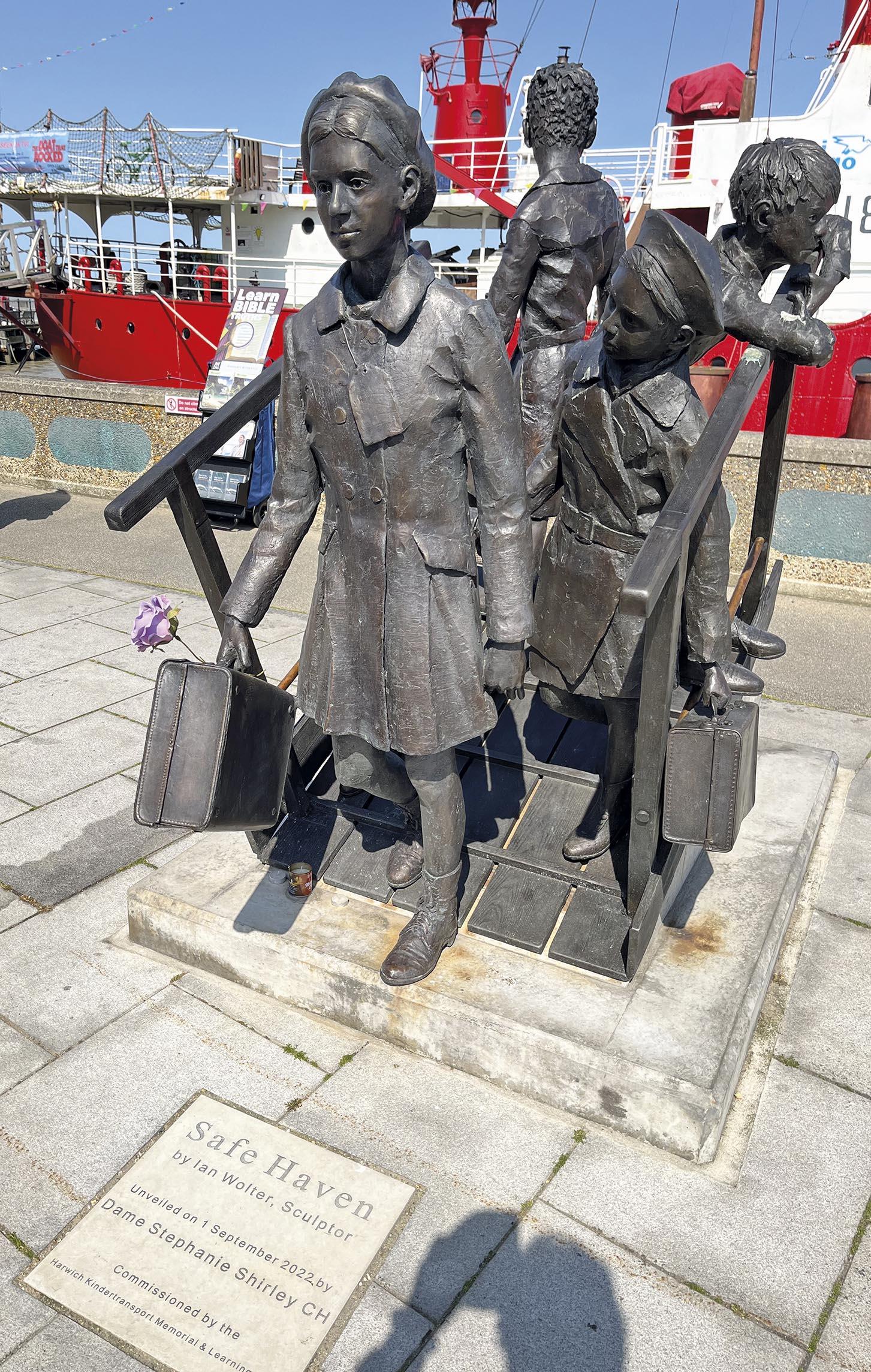
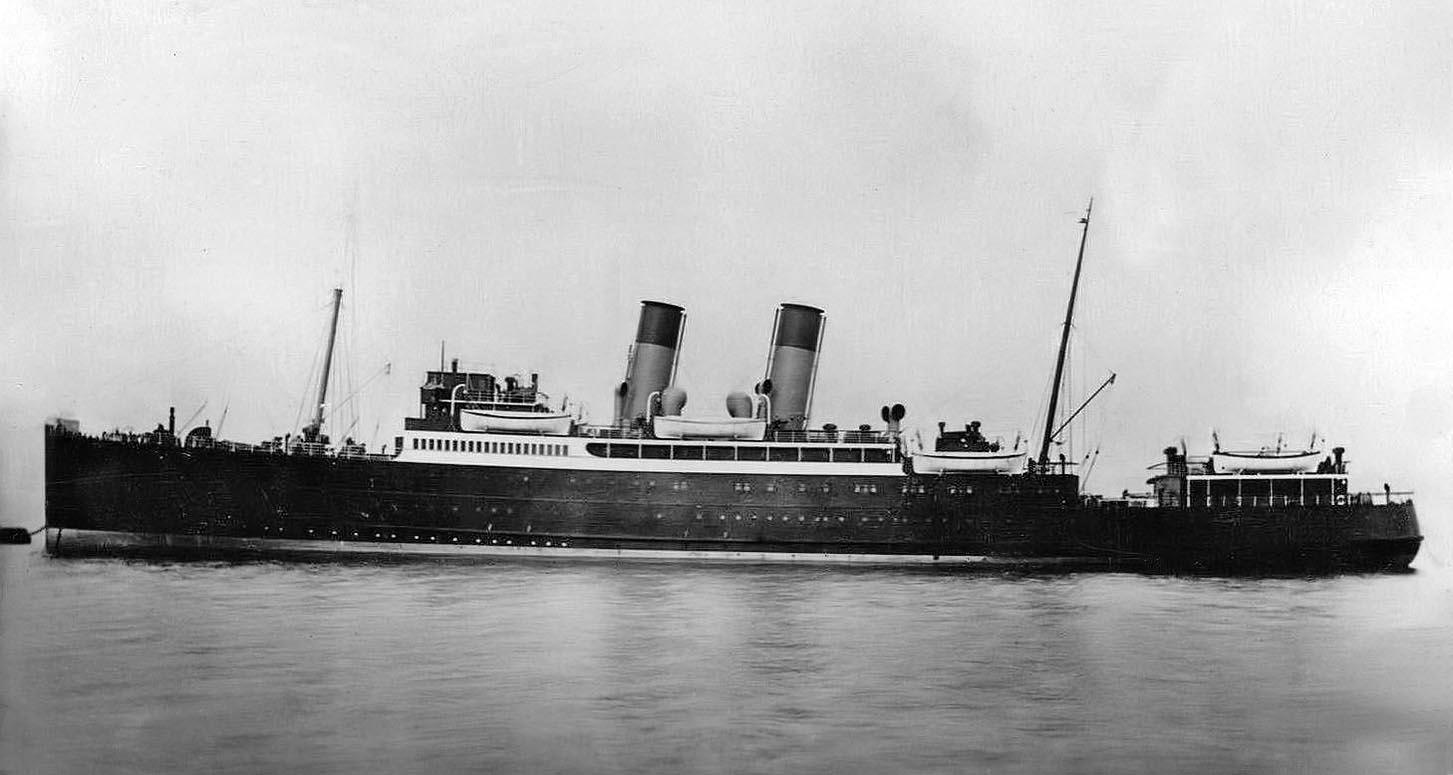
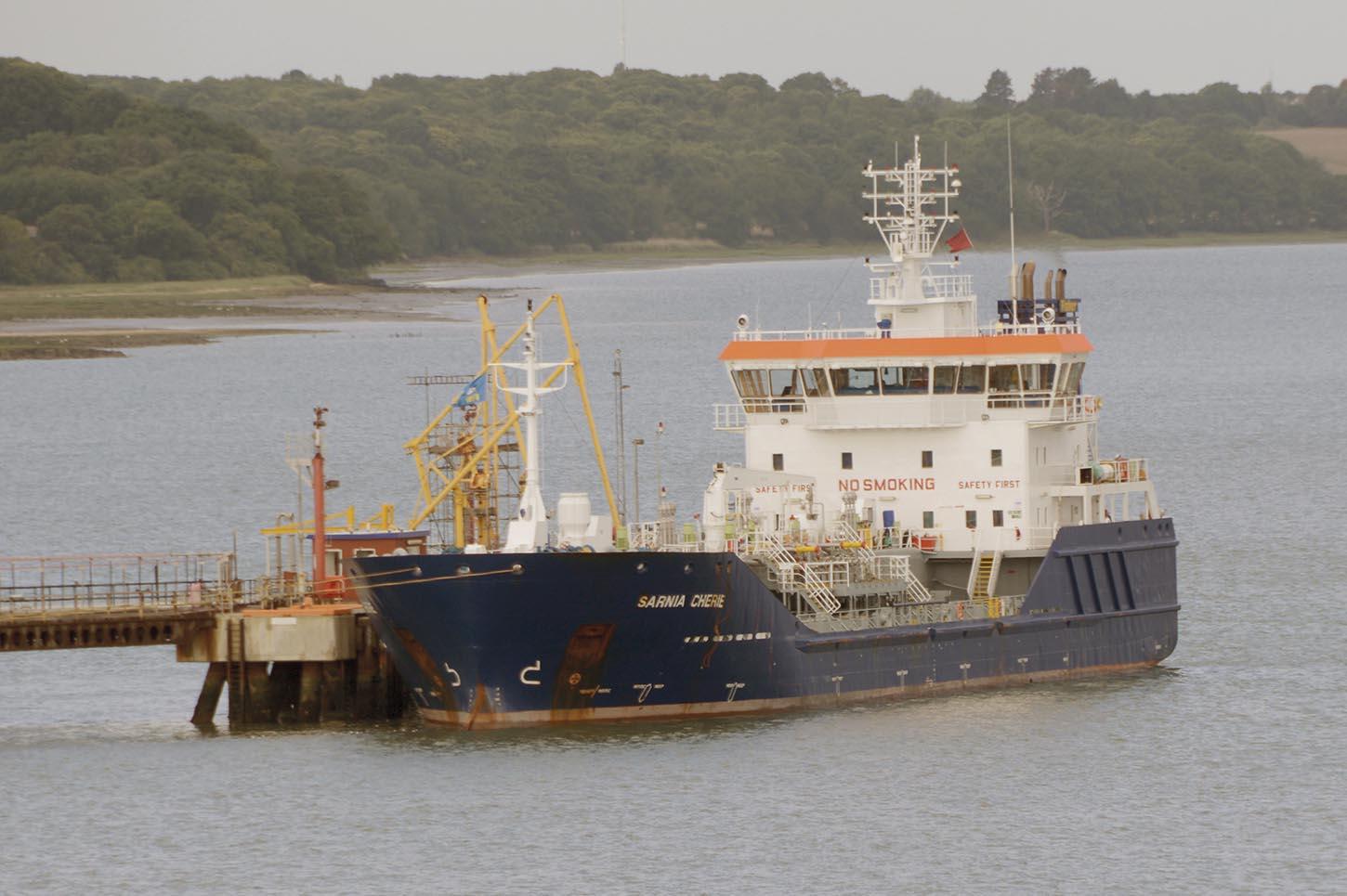
Above: The 3,512dwt tanker Sarnia Cherie at the Carless Oil Terminal. She was built in 2007 by 3rd International at Astrakhan as the Vedrey Tora before being purchased by the States of Guernsey. She is operated by James Fisher Shipping Services.
Below: The 24,688gt freight ro-ro Stena Forerunner leaving Harwich in July 2021. She was built in 2003 by Dalian Shipyard.
Bottom: Mann Lines of Harwich weren operating from the ro-ro facility at the old naval dockyard until earlier this year. One of their regular vessels was the 24,133gt ML Freyja of Mann Lines which was built in 2017 by Visentini at Porto Viro.
(All photos by Nigel Lawrence)
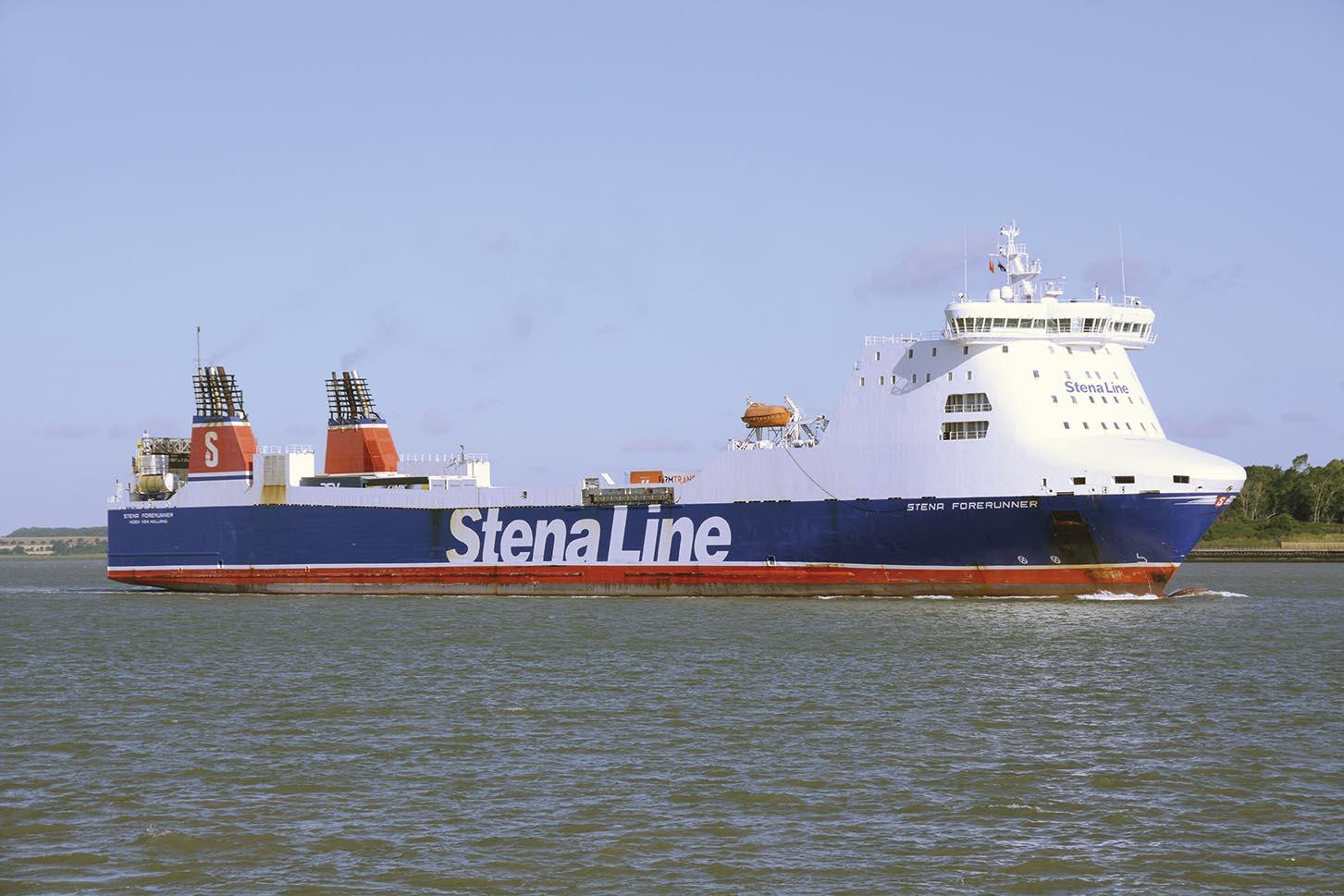
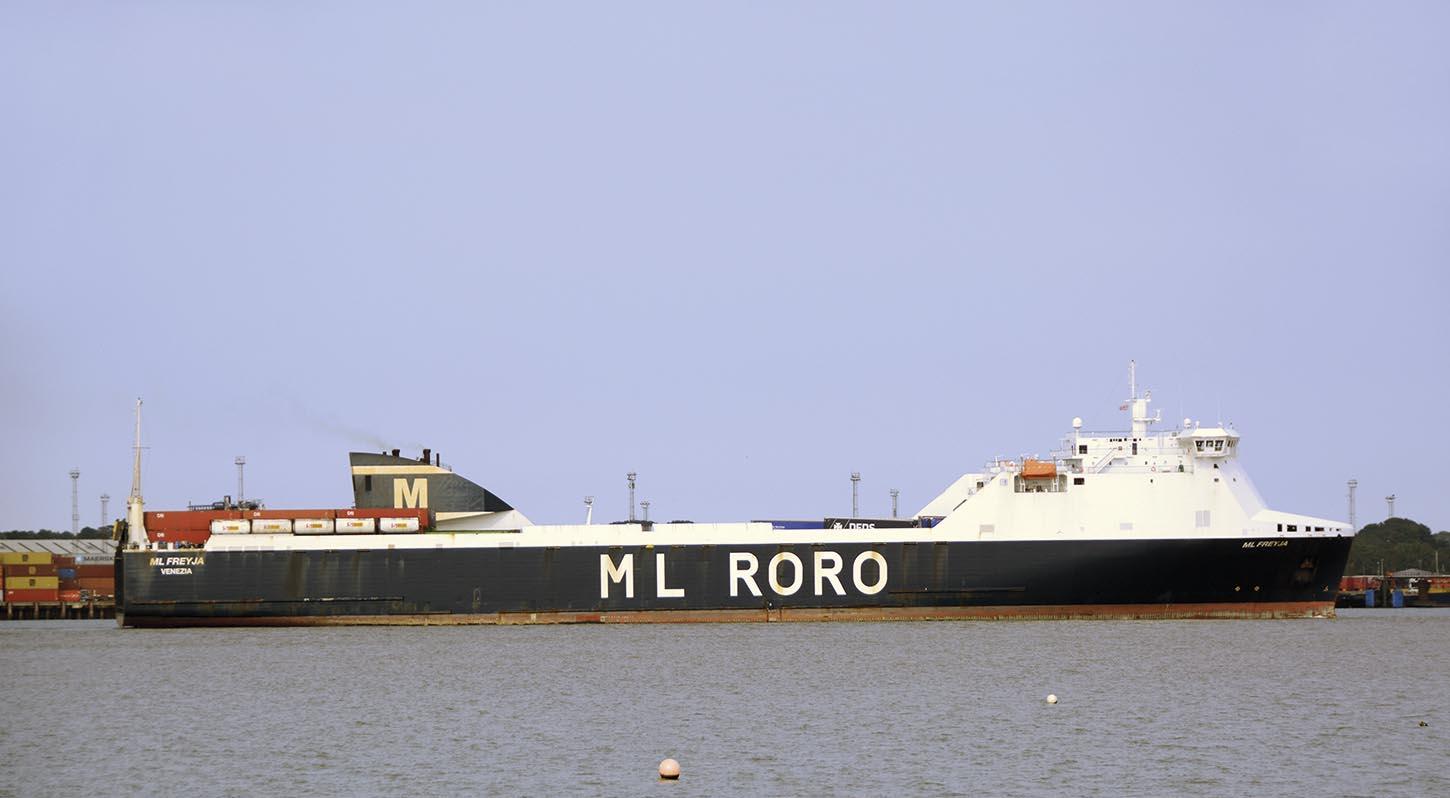
In 1939 the Admiralty requisitioned Parkeston Quay for naval use. During the war the port was frequently targeted by Luftwaffe aircraft and during several air raids they successfully destroyed and severely damaged lots of key infrastructure.
Post war the recovery was a long process of slowly re-establishing the links and connections to ports on the continent that, like Harwich, had been destroyed by the fighting and Allied bombing raids. In the 1950s and 1960s investment was ploughed into the port to upgrade its facilities in the name of efficiency.
Containerisation was a priority for the port operators, and it transformed the shipping industry worldwide. Specialist container terminals were built at Harwich and neighbouring Felixstowe which would go on to dwarf its near neighbour across the estuary.
In 1964 the Carless oil refinery was built on land adjacent to the port of Harwich, which also saw a great deal of diversification into other maritime sectors including the development of ro-ro terminals. In 1967 the MS Winston Churchill was introduced on the Harwich to Esbjerg route. The following year sister ships Koningin Emma and Prinses Beatrix which had served the Harwich to Hook of Holland route since the end of the Second World War were finally scrapped. This same year saw the route convert to a freight/passenger service with the introduction of the Koningin Juliana.
In 1972 Parkeston Quay Passenger Terminal was officially opened and two years later the 130 metre Ro-Ro ship St. Edmund came into service and remained on the Hook of Holland route until being requisitioned by the UK Ministry of Defence in 1982 during the Falklands conflict.
Four years later, in 1978, MS Dana Anglia of DFDS entered service on the Esbjerg route.
At the beginning of the 1980s the UK economy was in the doldrums but ferry services to the continent remained mostly active. In 1983 the largest ‘superferry’ working on the North Sea, St. Nicholas, began operating out of Harwich. Within the space of just three years the ship and the popularity of sailing from Harwich had seen the number of passengers passing through the port soar to 2 million annually in 1986. The success of the St. Nicholas saw other similarly large ferries brought to Harwich with the Koningin Beatrix with a capacity of up to 2,100 passengers began services to the Hook of Holland in 1987.
With such large numbers of passengers and cars the Passenger Terminal Building at Harwich was in 1989 refurbished and
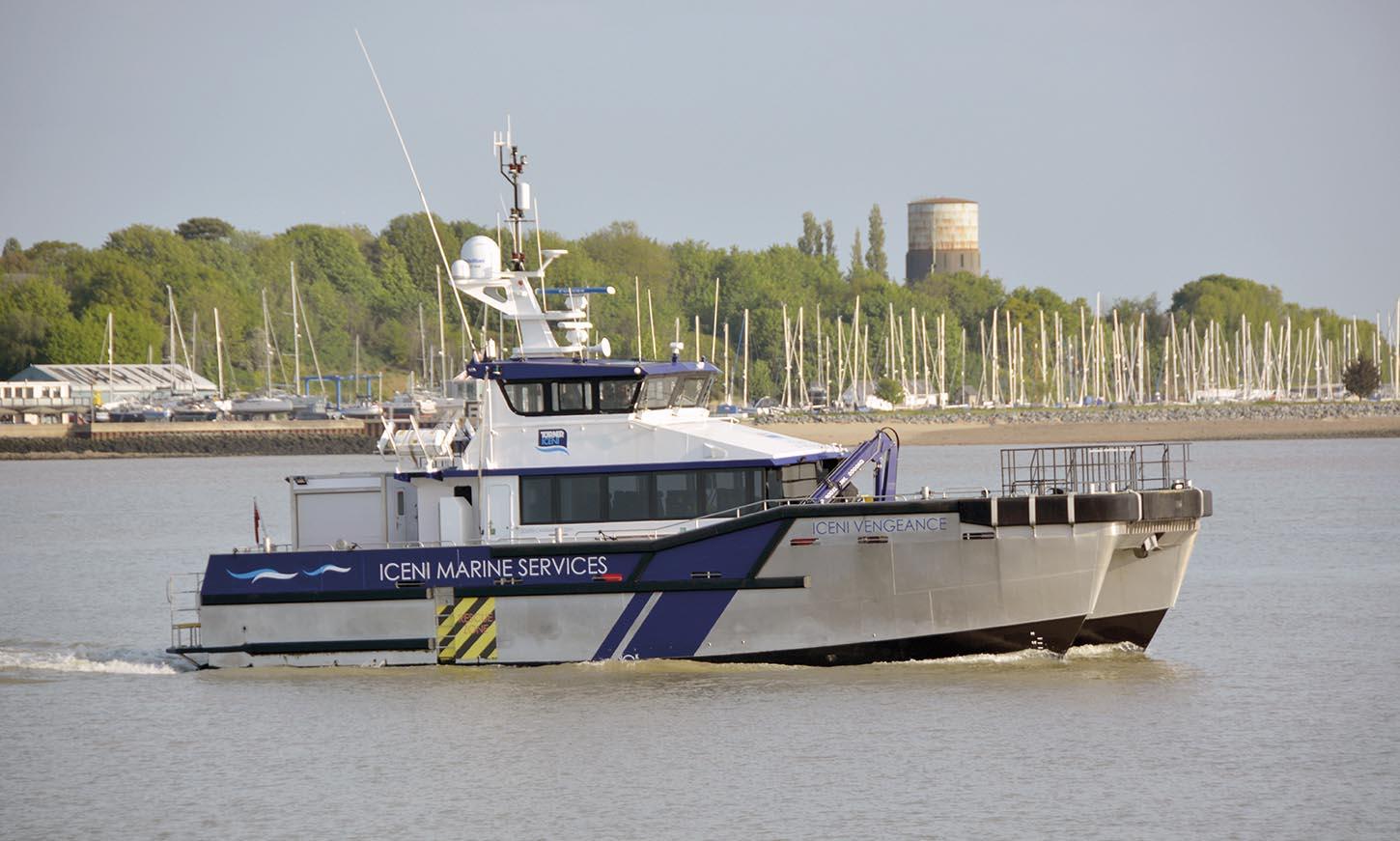
Above: The 106gt Iceni Vengeance of Iceni Marine Services is a crew transfer vessel serving wind farms off the coast of Suffolk. She is seen here leaving Harwich in May 2023. She was built in 2015 by Alicat Workboats.
Below: The Harwich Harbour Ferry operated from the Ha’penny pier in Harwich to Shotley and Landguard Fort. Since 2016 the service is provided by the simply-named Harbour Ferry. The boat was once a lifeboat on the P&O liner Canberra and is now licensed and equipped for 58 passengers.
Bottom: One of the dredgers that keeps the port from silting up is the 24,496gt Rotterdam of Van Oord Ship Management BV which was built in 2001 by Van der Giessen-de Noord at Krimpen a/d Ijssel She is seen here off Harwich in May 2023. (All photos by Nigel Lawrence)
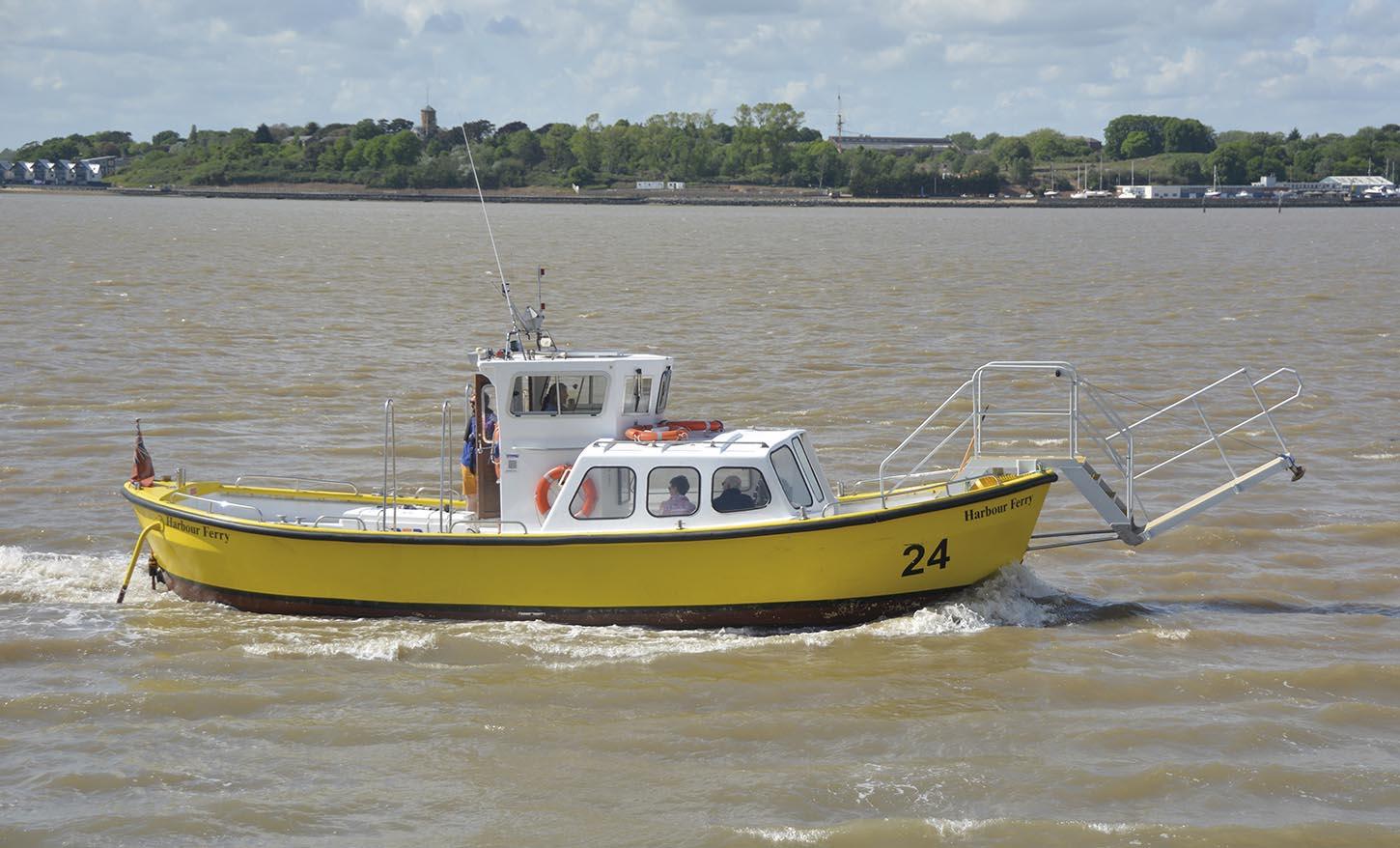
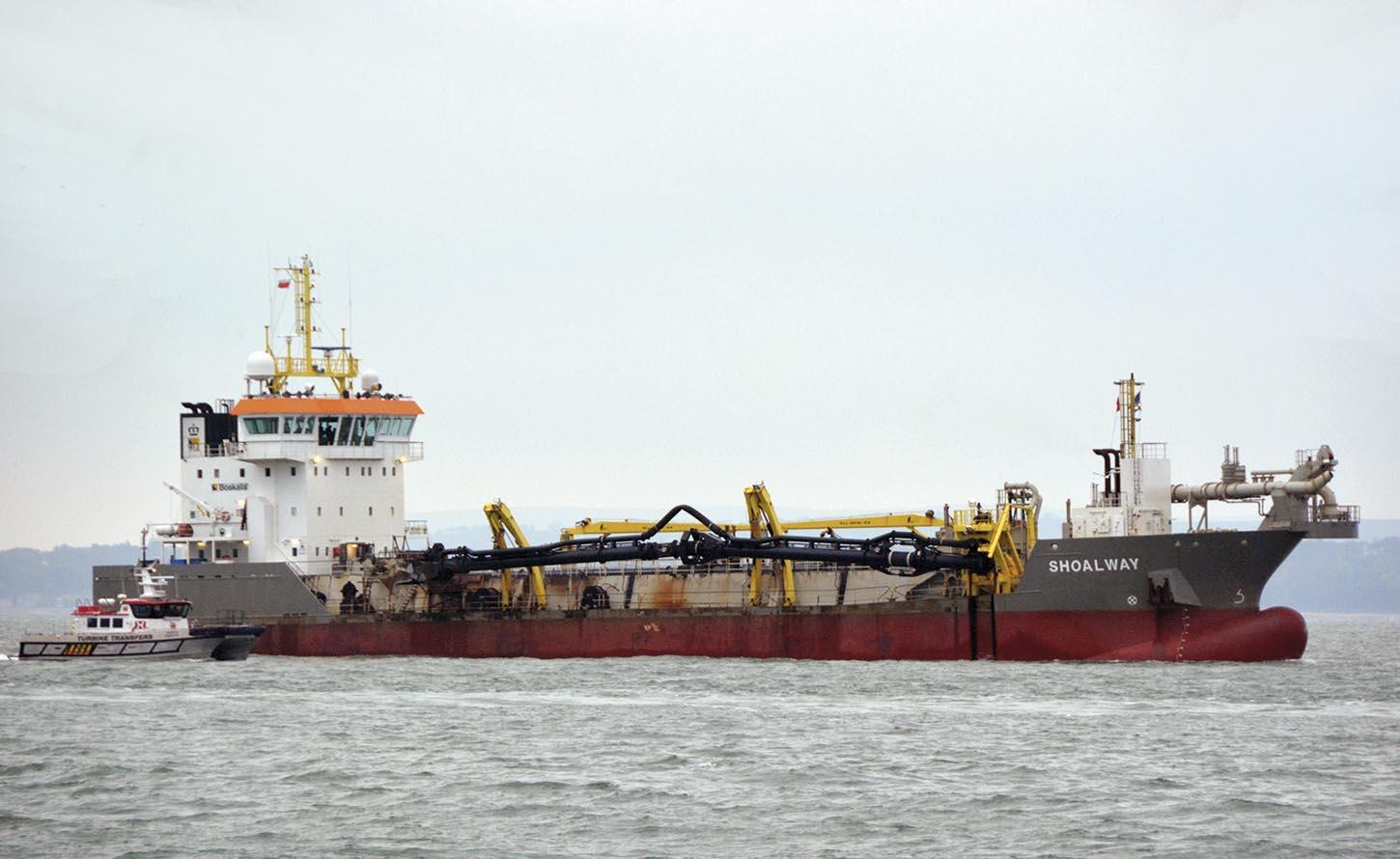
expanded. 1989 also saw the final call of Fred. Olsen Lines’s MS Braemar which, since 1967, had run summer services to Kristiansand in Norway.
The 1990s continued the investment profile at Harwich with the construction of the new No. 2 Linkspan completed in 1992 and 1997 £12 million investment in adapting the port facilities to accommodate the Stena Discovery fast ferry.
In 1998 came a change of ownership of the port when Hutchinson Ports (UK) Ltd. took over. They worked actively to encourage cruise ships to visit and on 29th August 1999 three large cruise ships were berthed simultaneously at Harwich for the first time.
The new Millennium was a period of considerable change for Harwich with the introduction of a new Stena Line freight service to Rotterdam in 2002 and the fond farewell of the last of the ‘white ships’ serving Harwich, as the Dana Anglia and Admiral of Scandinavia were replaced by modern ro-pax vessels. Any sadness was soon replaced when Dame Judi Dench visits Harwich International Port to christen Carnival Legend in 2002. Five years later in 2007 saw the end of the Stena Line HSS services out of Harwich and discussions started about using the port as part of the creation of the Greater Gabbard Offshore Wind Farm located in the North Sea.
A new pair of 64,039gt superferries, the Stena Britannica and Stena Hollandia were introduced on the North Sea in 2010 with Stena Line’s twice daily service from Harwich to the Hook of Holland.
Between 2010 and 2020 there was a great deal of activity at Harwich. In 2014 after 100 years of operation the DFDS Esbjerg service finally came to an end.
In May 2010, the port was the base for the installation of the offshore Greater Gabbard wind farm and Thanet Wind Farm in the southern North Sea, and has also been used for Gunfleet Sands Offshore Wind Farm.
The operations and maintenance base for the Galloper wind farm is housed in the port and is made up of a dedicated pontoon, warehouse and office space.
Harwich continues to be a major player in the North Sea with about 15,000 vessel movements every year including container ships, cruise liners, ferries and bulk cargo ships. The Harwich Haven Authority (HHA) maintains 42 miles of deepwater channels around the area in October 2024 dredging work to maintain these channels was carried out by the dredgers Shoalway, Cathy Anne and Rotterdam.
There are extensive railway sidings adjacent to and within the port with 40 acres of standing for cars including electric vehicle charging points. In total, there are over 105 acres of operational land with parking for over 1,000 trailers.
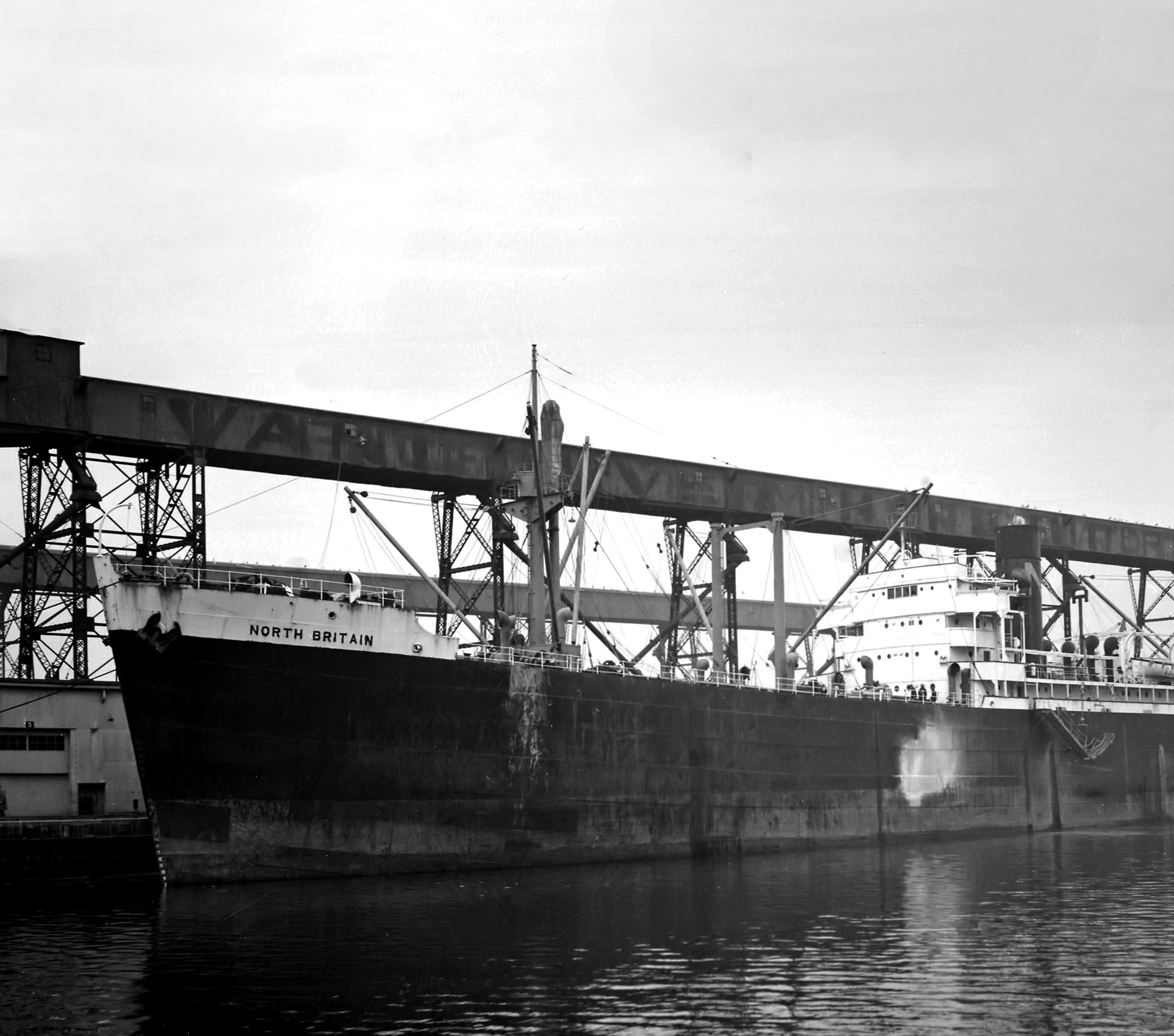

Hugh Roberts originated from North Wales and came to Newcastle in 1874 and established himself as an owner of small wooden sailing ships under the style of Hugh Roberts & Son. The first new sailing ship built to his order was the wooden brig Hugh Roberts completed in October 1875 by Williams at Portmadoc in Hugh's home area of North Wales. Two months later the large full-rigger North Wales was completed at Hull by Humphrys Pearson and established the nomenclature of the fleet under the new company North Shipping Co. Ltd.
North Britain of November 1877 was his first steam tramp and her sister North Durham came from the same Palmers yard in July 1880. A third tramp was also delivered that month from the Sunderland yard of Robert Thompson and was the only one not to receive a 'North' name, having been launched for other owners as Orsino and not renamed. Three more Palmer built tramps
North Cambria, North Anglia and North Erin joined the fleet between 1881 and 1883. However the market was glutted with new tonnage and the six tramps spent much time laid-up in the Tyne between 1883 and 1886.
The sailing fleet was sold off and as soon as trade began to move two new tramps were ordered from the Readhead yard at South Shields and completed with triple expansion engines as North Flint and North Gwalia in late 1888. The fleet had reached its largest numerical strength ever at eight.
Two were to become marine casualties, North Durham was lost without trace in the Bay of Biscay in December 1893 after her cargo of barley had shifted on a voyage from Fiume to Grimsby. Orsino was wrecked at Grampilieri in Sicily on a voyage from Stratoni to Philadelphia with manganese ore in March 1898.
North Britain was sold to Ditta C. Raggio of Genoa, North Erin to Austria and North Cambria to E. Hulin of Rouen.
At the turn of the century the fleet was down to three tramps, North Anglia, North Flint and North Gwalia.
The fleet was further reduced to two tramps in 1904 by the sale of North Anglia to Japan. Freight rates remained low but Hugh kept faith in tramp shipping and ordered a steamer of 5,000 dwt from John Readhead. Delivered in August 1905 the North Wales was twice as big as any other tramp he had owned. North Gwalia was sold to B.J. Sutherland but kept her North name until lost by collision off Great Yarmouth in April 1909.
Now freight rates started to rise and profits could be made and another 5,000 dwt tramp was purchased from London Exchange SS Co. Ltd. in 1908 and renamed North Britain. After the sale of the veteran North Flint to Greeks in 1910 the two large tramps North Wales and North Britain made good profits up to the start of WWI.
Shortly after the outbreak, North Wales left Cardiff with a cargo of coal for Valparaiso and was steaming down the Brazilian coast while the Battle of Coronel was being fought off Chile with the result a victory for Admiral von Spee. Three of his cruisers then entered Valparaiso, the maximum allowed by International Law, while the others anchored off the islands outside territorial limits. Cruiser Dresden sailed from Valparaiso on 15th November 1914 and steamed straight into North Wales the following day some 300 miles South West of Valparaiso. The tramp and her cargo of coal were sent to the bottom as the German fleet had plenty of colliers of their own. She was replaced by the 3,577grt Calcutta, the last tramp ever owned by Newcastle owner Nelson, Donkin & Co. and renamed North Cambria and the Harris & Dixon tramp Wakefield was purchased and renamed North Wales.
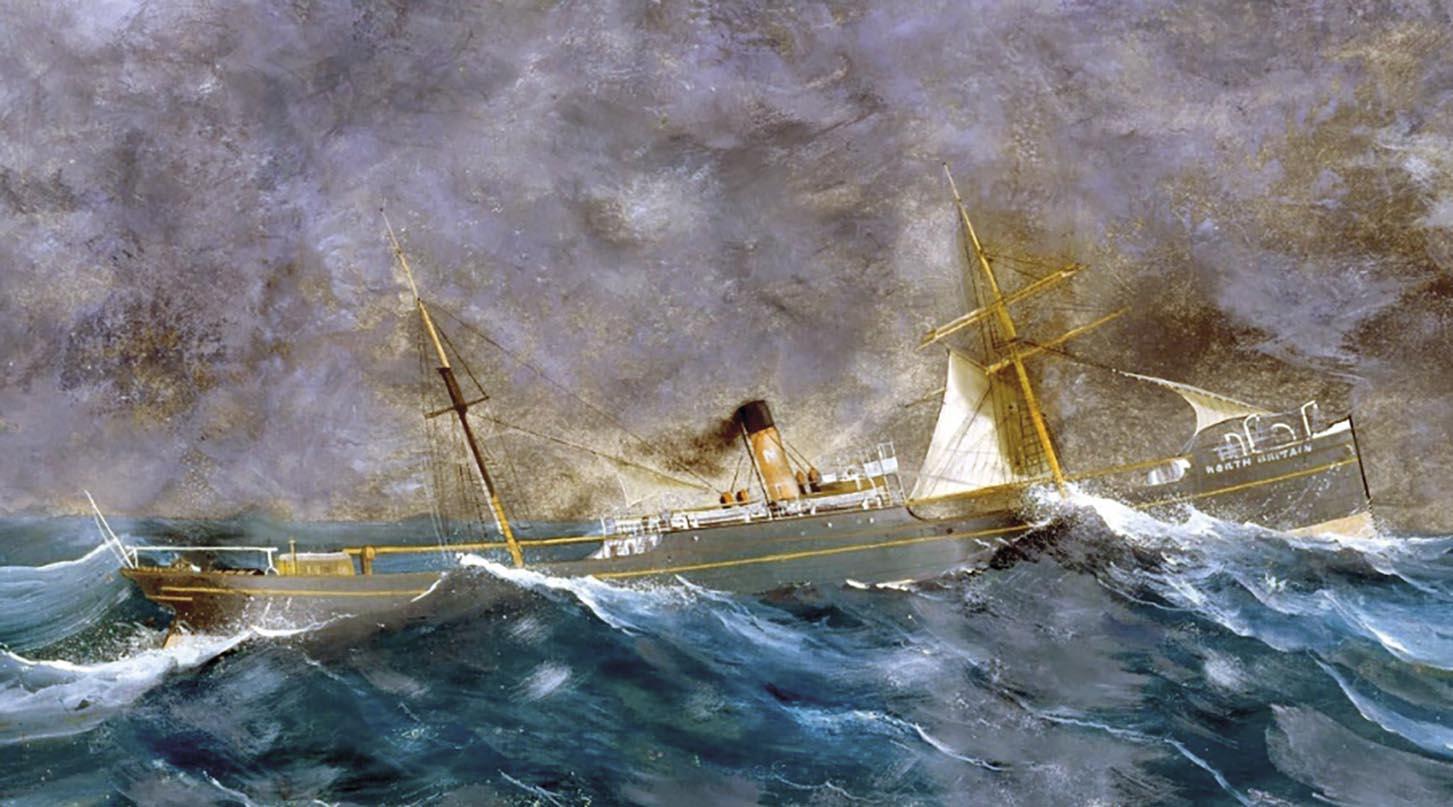
Left: The 7,200grt North Britain was built in 1945 by Lithgows at Port Glasgow as the Empire Cyrus for the British Government, joining Hugh Roberts in 1948. In 1962 she was sold to Kinabatangan Shipping of Newcastle and renamed Jesselton Bay. On 2nd April 1968 she arrived at Kaohsiung to be broken up. (Walter E. Frost)
Above: The 1,729grt North Britain in an evocative painting by Luigi Roberto. She was built in 1878 by Palmers at Jarrow. In 1896 she became Checchina R. of Ditta C. Raggio and in 1899 she joined Soc. Commerciale Italiana di Nav. as Diana. A further sale in 1910 to Angelo Parodi fu B. saw her renamed Avanti. On 22nd December 1916 she was torpedoed and sunk by U-70 with the loss of her entire crew. (Museum Wales)
Below: The 1,969grt North Cambria in another painting by Luigi Roberto. She was built in 1882 by Palmers at Jarrow. In 1899 she was sold to E. Hulin of France and renamed Saint Wandrille and in 1908 she became Gipuzkoa of Cia del Vapor Gipuzkoa, Uruguay. On 25th January 1910 she was wrecked at Algorta while heading for Bilbao in ballast. (Museum Wales)
Bottom: The 3,562grt North Anglia was built in 1910 by Craig, Taylor & Co. at Stockton as the Bideford for Tatem SN Co. She joined Hugh Roberts in 1922 and in 1933 she was sold to M.A. Embiricos as Corinthiakos. On 20th November 1942 she was torpedoed and sunk by U-181 while on a voyage from Lourenco Marques to Aden with a cargo of coal. 11 of her crew of 32 were lost. (John B.Hill collection)
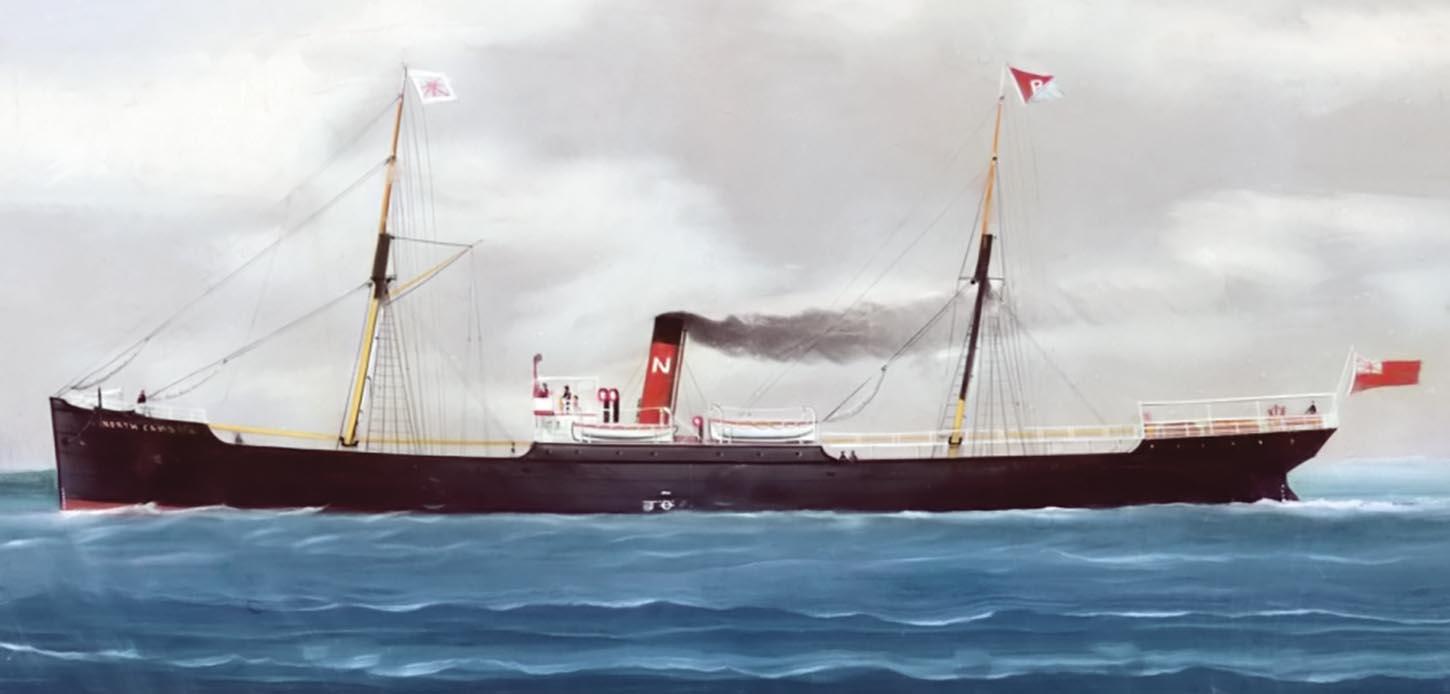
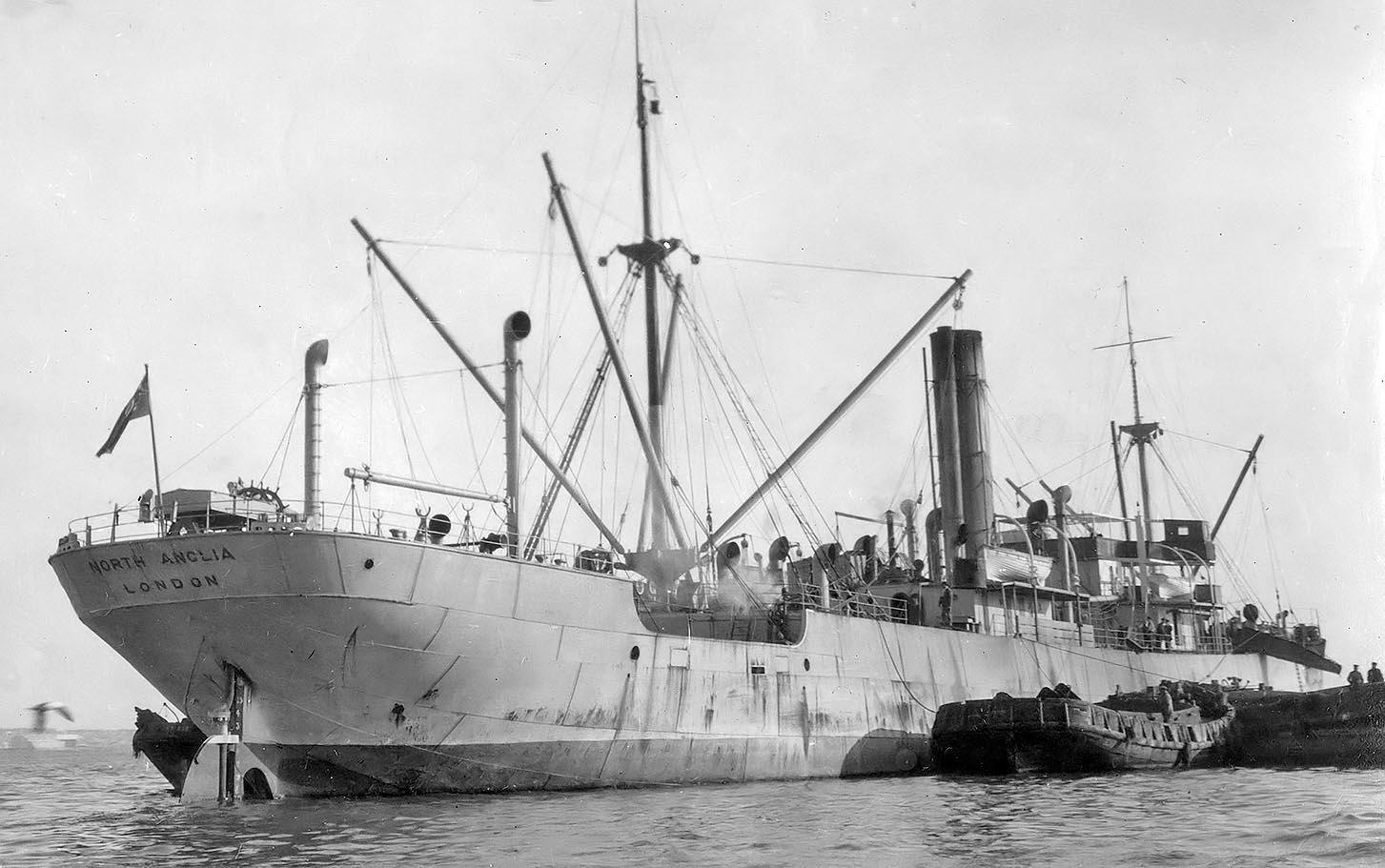
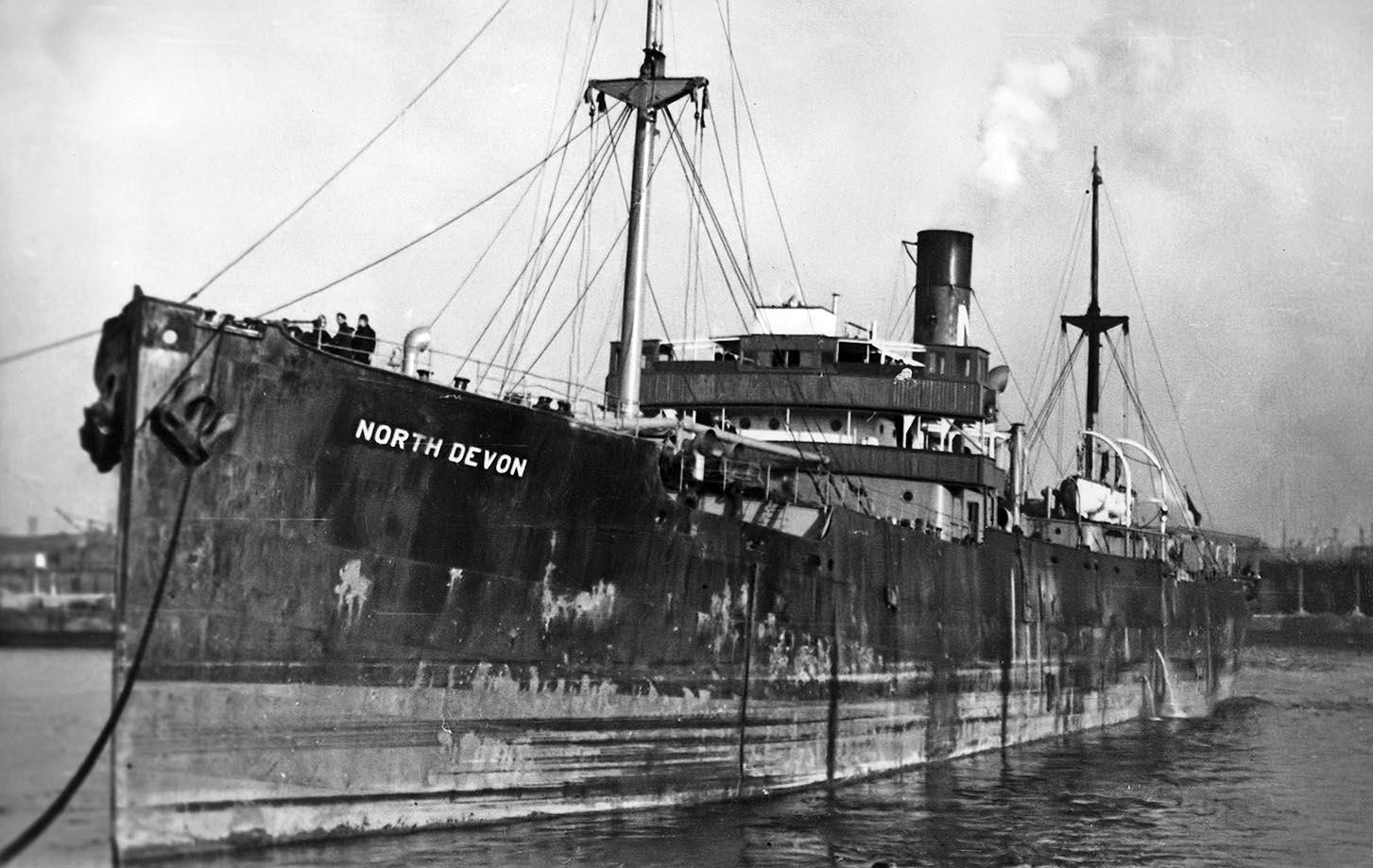
Above: The 3,658grt North Devon was built in 1924 by John Readhead & Sons at South Shields. In 1950 she was sold to George D. Chalkias of Chios and renamed Aghios Spyridon and in 1952 she moved to Cia Naviera Apostolpaul SA of Costa Rica as Theoforos. In 1956 she became Lenko of La Cruz SS Corp. SA, also of Costa Rica. In 1958 she joined Cia Maritima Sapap Ltda, another Costa Rican company and was renamed Ais Giannis. On 15th May 1960 she arrived at Yawata, Japan to be broken up.
Below: The 4,304grt North Cornwall was built in 1924 by John Readhead & Sons at South Shields. After being captured by the Germans at Narvik she was scutttled on 15th April 1940. She was raised in May 1953 and broken up at Stavanger a month later.
Both were lost:26.10.1916 North Wales
Torpedoed and sunk off Scilly Isles, 30 lost. 1.8.1918 North Cambria
Lost after colliding with the Port Stephens 75 miles West of Ushant on a voyage from New York to La Pallice with railway lines.
North Britain was the only survivor but the fleet was brought up to strength by the purchase of Bideford from Tatem SN Co. in 1919 and became North Anglia in 1922. In 1923 orders for two large but not identical tramps were placed with John Readhead. Both had well decks up forward and the larger North Cornwall was completed first in March 1924 with North Devon following in October, using West Country names for the first time. The company traded the four tramps satisfactorily during the 1920s but the depression of the 1930s proved too much for North Britain of 1907 and North Anglia of 1910. Both spent considerable time laid-up on the Tyne and they were sold to Latvian and Greek owners respectively. The newer pair were kept going until freight rates rose. An order for a new 7,000 dwt tramp was placed with John Readhead in 1939 but was still being built when war started and was not ready as North Britain until December 1940.
(All photos from the John B.Hill collection)
Bottom: The 6,966grt North Anglia was built in 1941 by Short Bros. at Pallion as the Empire Wycliff for the British Government. She joined Hugh Roberts in 1946. In 1960 she was sold to Mariner Shipping of Hong Kong and was renamed Happy Mariner. On 1st February 1967 she arrived at Hirohata to be broken up by Kanbara Kisen KK.
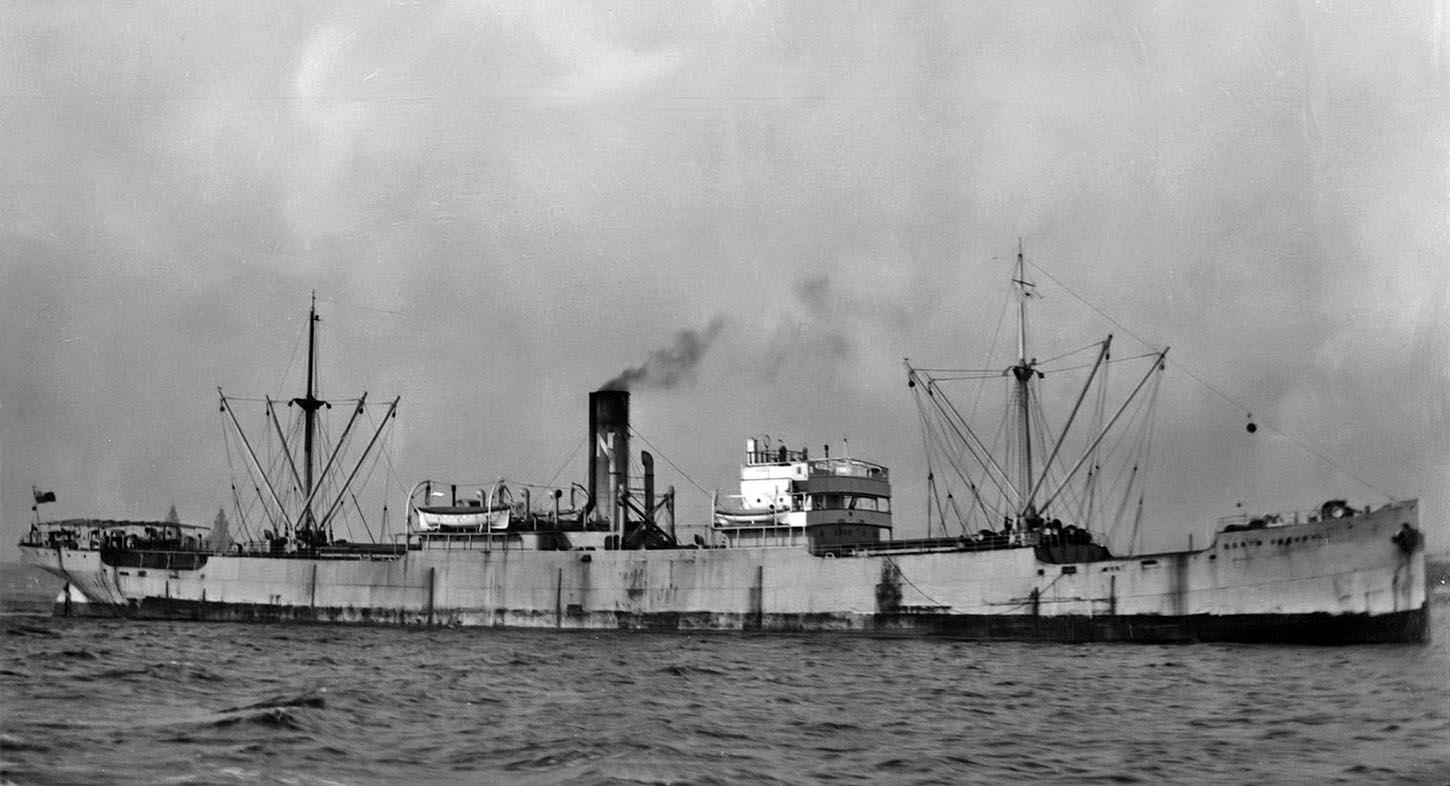
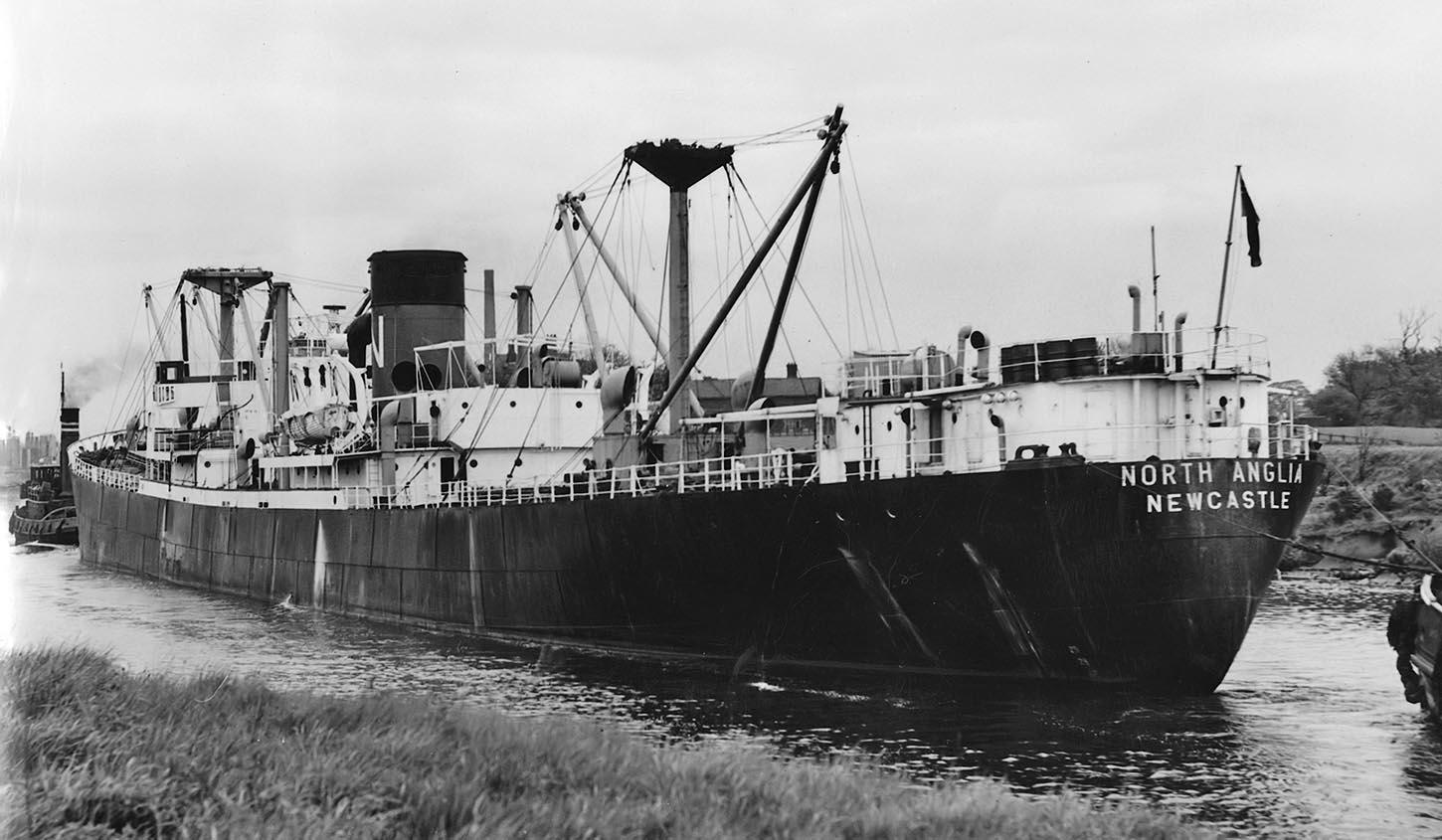
Meanwhile North Cornwall had sailed northwards on her last voyage to load iron ore at Narvik in April 1940 under Captain Evans. At 04.45 hours on the 9th April he was woken by gunfire from Narvik quay while lying at anchor, and was probably the first person to see a German destroyer glide in when he reached the bridge. All ships were quickly taken and prisoners were confined onboard a former whale factory ship acting as a tanker. Captain Evans and 47 seamen gave their German guard the slip and mingled with the crowd in the port. He led them through Ankenes and Emmenes down Oft Fjord to Skjomnes crossing by the ferry where they were given a free ride. They caught up with the survivors of HMS Hardy and were rescued by HMS Ivanhoe. North Cornwall was scuttled by the Germans on the 15th April.
The new North Britain was torpedoed and sunk on 5th May 1943 in the North Atlantic in convoy ONS5 outward bound with firebricks from Glasgow to Halifax. Weather conditions were appalling and the convoy became scattered over a wide area. As North Britain struggled to rejoin the convoy 6 miles ahead the brand new U-707 could not miss the opportunity of a kill, and the new tramp was almost split in two by the force of the explosion and only 1 of her crew of 42 survived. Only North Devon survived the war, and she had been joined by the standard Empire Wyclif and Empire Envoy in 1942 with the former being purchased in 1946 and renamed North Anglia.
Fort Albany and Empire Cyprus were managed between 1946 and 1948 and then
the latter was purchased and renamed North Britain. The veteran North Devon of 1924 was sold to George D. Chalkias of Chios in 1950 but shortly after her sale she put into the Tyne with a heavy list due to a shift of her timber cargo from Archangel. Her deck cargo for London was soon righted and after further sales to Costa Rican companies she was finally broken up in 1960 at Yawata in Japan. Fort Bell was purchased in 1950 while under the management of Maclay & McIntyre Ltd. and renamed North Cambria she was sold to Japan a year later. The two 'Empires' were joined by the new 10,121 dwt shelterdecker North Cornwall in 1954 from Bartram & Sons at South Dock. She had 5 holds with no. 3 being a deep tank suitable for cargo or water ballast forward of the engine room. She had telescopic topmasts for the Manchester Ship Canal and a total of 12 derricks on her two masts and sets of kingposts, the heaviest being a 30-tonner on the mainmast. She had a Doxford type oil engine giving a speed of 12.5 knots and could easily switch between fuel oil and diesel oil.
An order for a larger 11,450 dwt tramp was then given to the same yard and she was completed as North Devon in May 1958. Her hull had been redesigned after extensive tank testing and with only a third more power than her earlier sister she achieved 15.65 knots on trials. However she had cost 40% more to build and with running costs of £350 per day the big tramp could hardly pay for her depreciation in the bad freight rates. North Cornwall was sold to Nigerian Green Line as Oduduwa in 1959 and replaced by Scottish Trader from Trader Navigation Co. Ltd. in 1960 and renamed North Camria. She gave the company no end of bother and she was sold after only three years. The 'Empires' were sold off in 1960 and 1962, and in 1964 when only North Devon was owned, an offer was accepted from Common Brothers to purchase the company.
The white 'N' of North Devon was painted out for the last time and replaced with a white 'C'. Her subsequent 3-year career with Common Brothers was most eventful for in September of that year she was diverted to India with Australian grain to relieve famine at Bhavnagar.
In April 1965 she was in a multiple collision in the Mississippi while outward bound with grain for Manchester. She hit the Danish DFDS ship Melos which then collided with the appropriately named firefloat Deluge, and North Devon went on to damage the Norwegian Oakville and the wharf where she was lying. In February 1966 two members of her engine room staff died in an explosion at Cork. She was sold by Common for £285,000 to Liberian owners Argo Cia Naviera SA and renamed Armonikos and finally scrapped at Split in 1979, the same year in which her near sister North Cornwall was scrapped at Seville.
Above: The 7,328grt Scottish Trader of Trader Naviagtion Co. was built in 1948 by Lithgows at Port Glasgow. She joined Hugh Roberts as North Cambria in 1960. In 1963 she moved to Bond Shipping of London as Bannercliff and in 1970 she joined Silver Coast Shipping of Cyprus and was renamed Silver Coast. In 1973 she became Granikos of Lais Shipping, also of Cyprus. On 13th October 1973 she suffered a fire and explosion at Nuevitas and on 6th April 1974 she arrived at Santander to be broken up.
Below: The 7,905grt North Devon was built in 1958 by Bartram & Sons at South Dock. In 1964 Common Bros. purchased her, along with the owning company. In 1967 she was sold to Argo Cia Maritima S.A. of Liberia and renamed Armonikos. In 1971 she was sold to Empros Lines Shipping Co. Special SA of Cyprus without a change of name. 1977 saw her sold to Dashwood Shipping Co. SA of Greece and renamed Panagia S. On 11th October 1978 she was badly damaged by fire at Drapetzona and in 1979 she was sold to Brodospas for breaking up, arriving at Split on 19th June 1979. She is seen here at Avonmouth in July 1967. (Nigel Lawrence)
Bottom: The 5,571grt North Cornwall was built in 1954 by Bartram & Sons at South Dock. In 1959 she joined Nigerian National Line and was renamed Oduduwa and in 1974 was sold to Castrenza Cia Naviera SA of Greece and renamed Nanina. In 1977 she became Anastasia V of Stravon Cia Naviera SA. On 28th April 1979 she arrived at Seville to be broken up by Desguaces del Guadalquivir S.A. (Rick Cox)
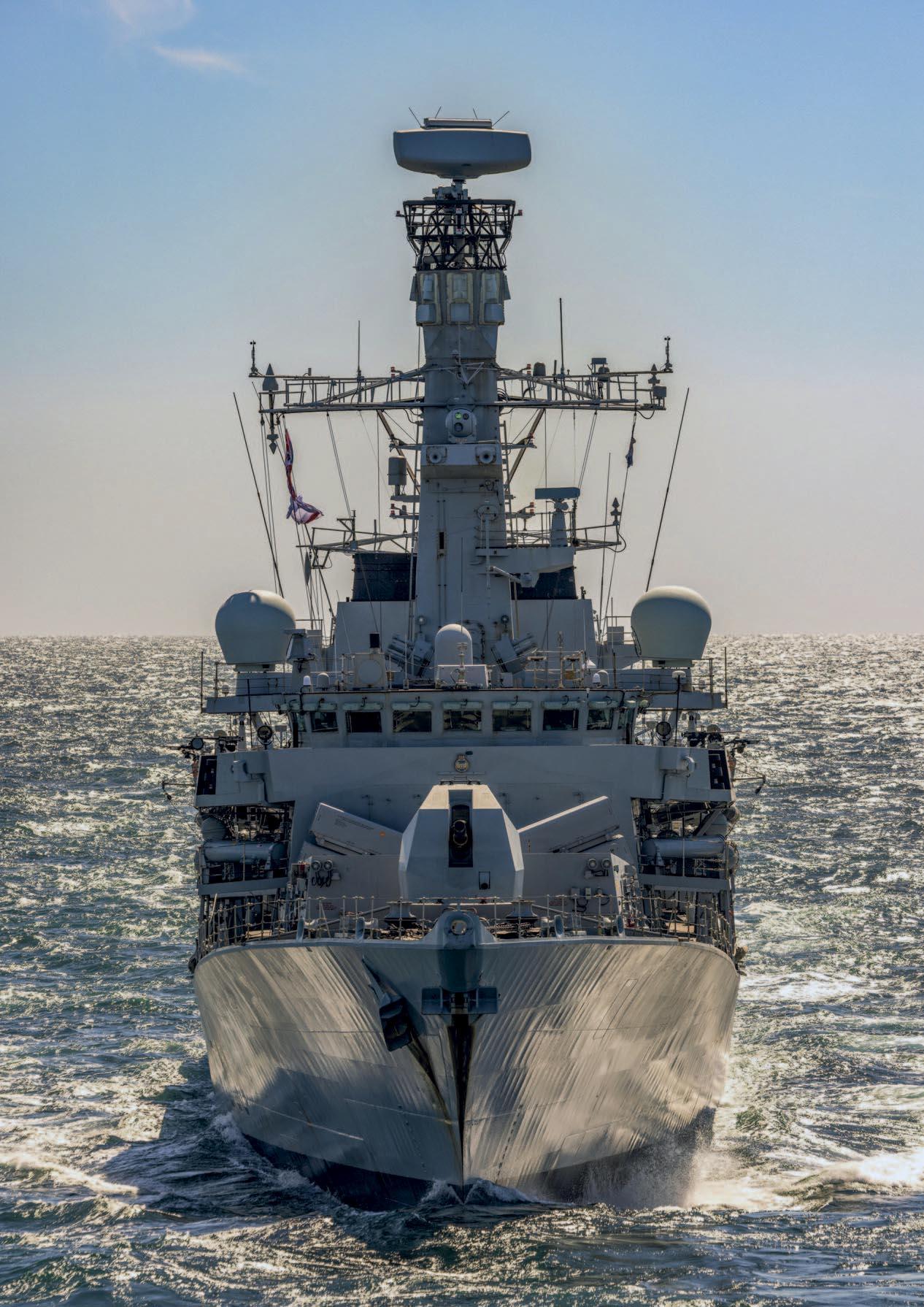



The GUIDE TO THE ROYAL NAVY 2026 with a mixture of ship type & unit profiles, commentary and analysis of the British fleet.
ON SALE in the UK from 18 September 2025.
Price £9.99
Available in the UK at all leading newsagents.
Also deploying overseas. Price and data shown above are for the UK only and will vary overseas.

The new GUIDE TO THE ROYAL NAVY will look at the importance of drones in current and future operations and assesses how the Royal Marines, Surface Fleet, Submarine Service, Fleet Air Arm and other elements are shaping up as the Navy regenerates for the future.
Now in its twelfth edition, our team of writers also consider the impact of current world events on the Royal Navy, including its role within NATO, and how it is responding to the Russian threat while also helping to safeguard freedom of the oceans in the Middle East and Indo-Pacific. And much more…