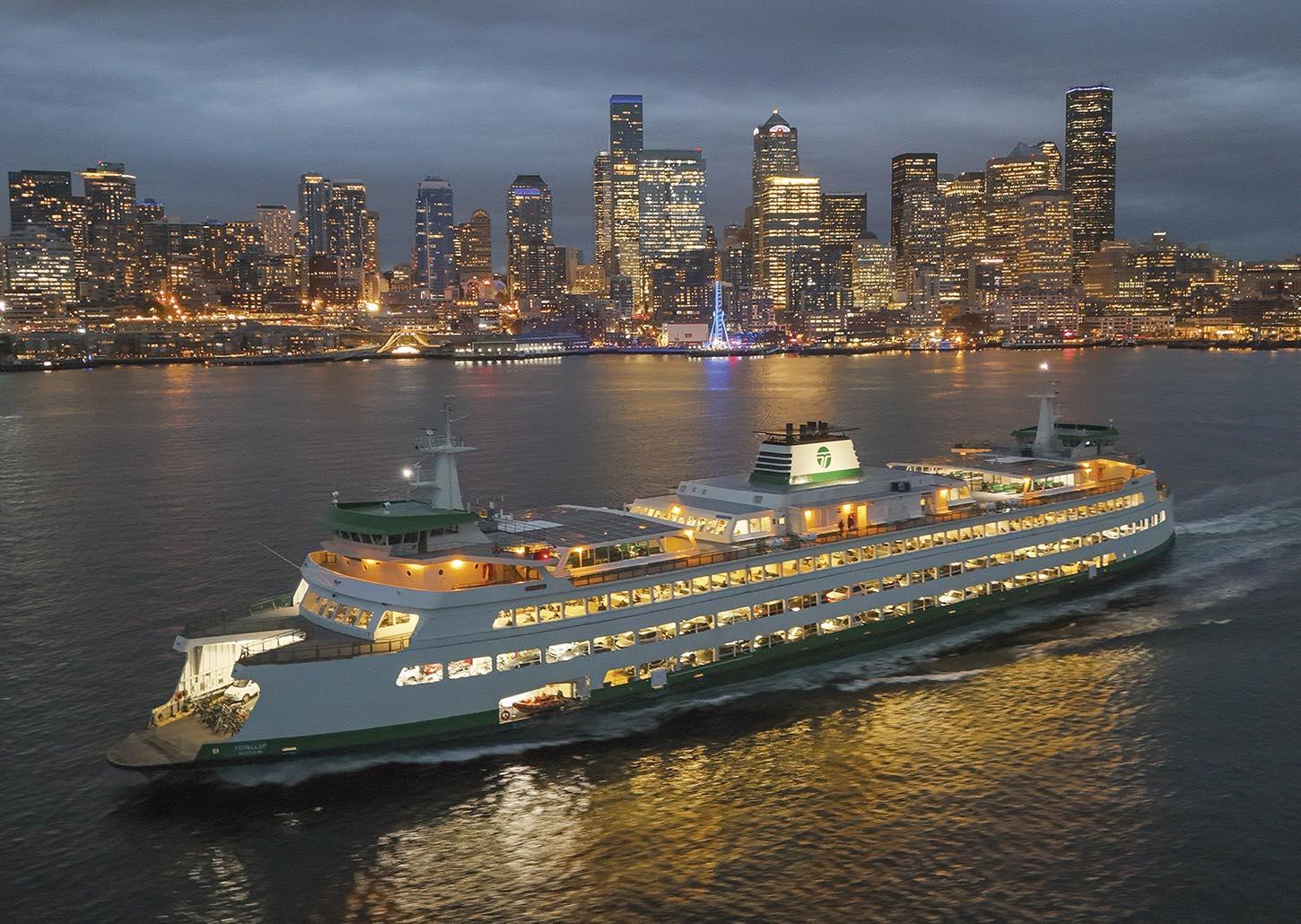
For more information on the Nautilus Welfare Fund, or to arrange a visit to Mariners’ Park, please contact us by phone or email, or complete the enquiry form online:
Nautilus Welfare Fund Trinity House Hub Webster Avenue
Mariners’ Park Wallasey CH44 OAE
Telephone: 0151 346 8840
Email: welfare@nautilusint.org
MARINERS’ PARK in Wallasey offers a wide range of services.
MARINERS’ PARK CARE HOME provides nursing, residential and respite care.
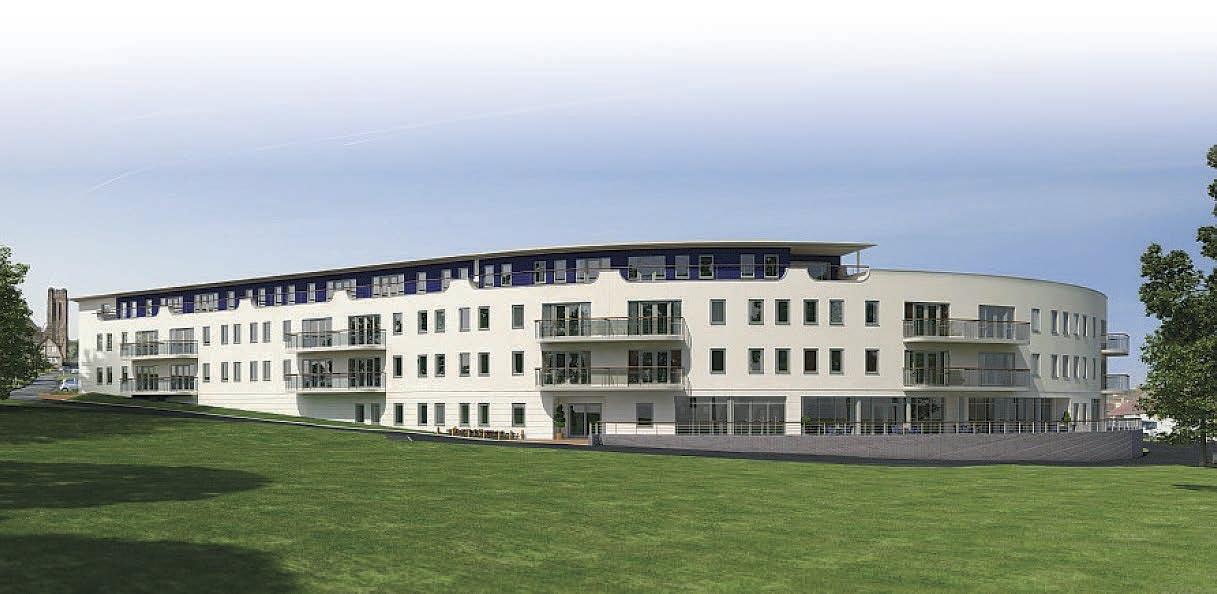
MARINERS’ PARK ESTATE offers a range of properties to rent: bungalows, apartments, houses, and our new extra care housing facility.
One off grants can be providedfor those in financial hardship.
Published By:
Sundial Magazines Ltd.
Sundial House, 17 Wickham Road, Beckenham, Kent BR3 5JS
EDITORIAL
Editor: Nigel Lawrence
E: editor@shippingtandy.com
The Editor welcomes the submission of editorial material which should be accompanied by return postage and submitted to the address above. Sundial Magazines Ltd. accepts no responsibility for loss or damage to materials supplied.
If you have a question or query you wish to raise with the Editor they should be writing to the Sundial Magazines address. The Editor is not based at the Tandy Media offices and asks for all enquirers to appreciate this fact and be patient. Please understand that the staff at Sundial Magazines do not have access to the information you require and therefore cannot answer your questions on the phone. Sundial Magazines cannot undertake research into specific or general queries.
Picture Guidelines: Please do not send originals and ensure your name and address is on all material submitted. All digital images should be at least 300dpi and with a print size width of 21cm. They can be sent by email but only individually.
SUBSCRIPTIONS
Subscriptions, back issues and binders are available from Shipping T&Y.
Annual subscription rates:
UK £56 Europe £73, Rest of the World £78.50 We accept cheques and postal orders in Sterling made payable to Shipping T&Y and can also accept most credit/debit cards.
Shipping T&Y reserves the right to suspend or refuse any advertisement without giving reasons. Whilst every care is taken to avoid mistakes Shipping T&Y cannot be liable in any way for any errors or omissions. Nor can the publishers accept responsibility for the bona fides of advertisers.
COPYRIGHT
All articles, images and illustrations published in Shipping Today & Yesterday are strictly copyright of the authors and the publisher and may not be reproduced in any form without prior written permission. All photos are the property of the Editor unless otherwise stated.
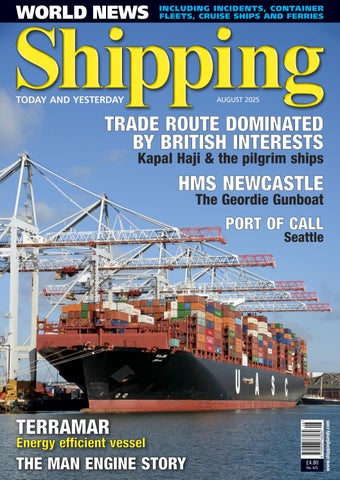
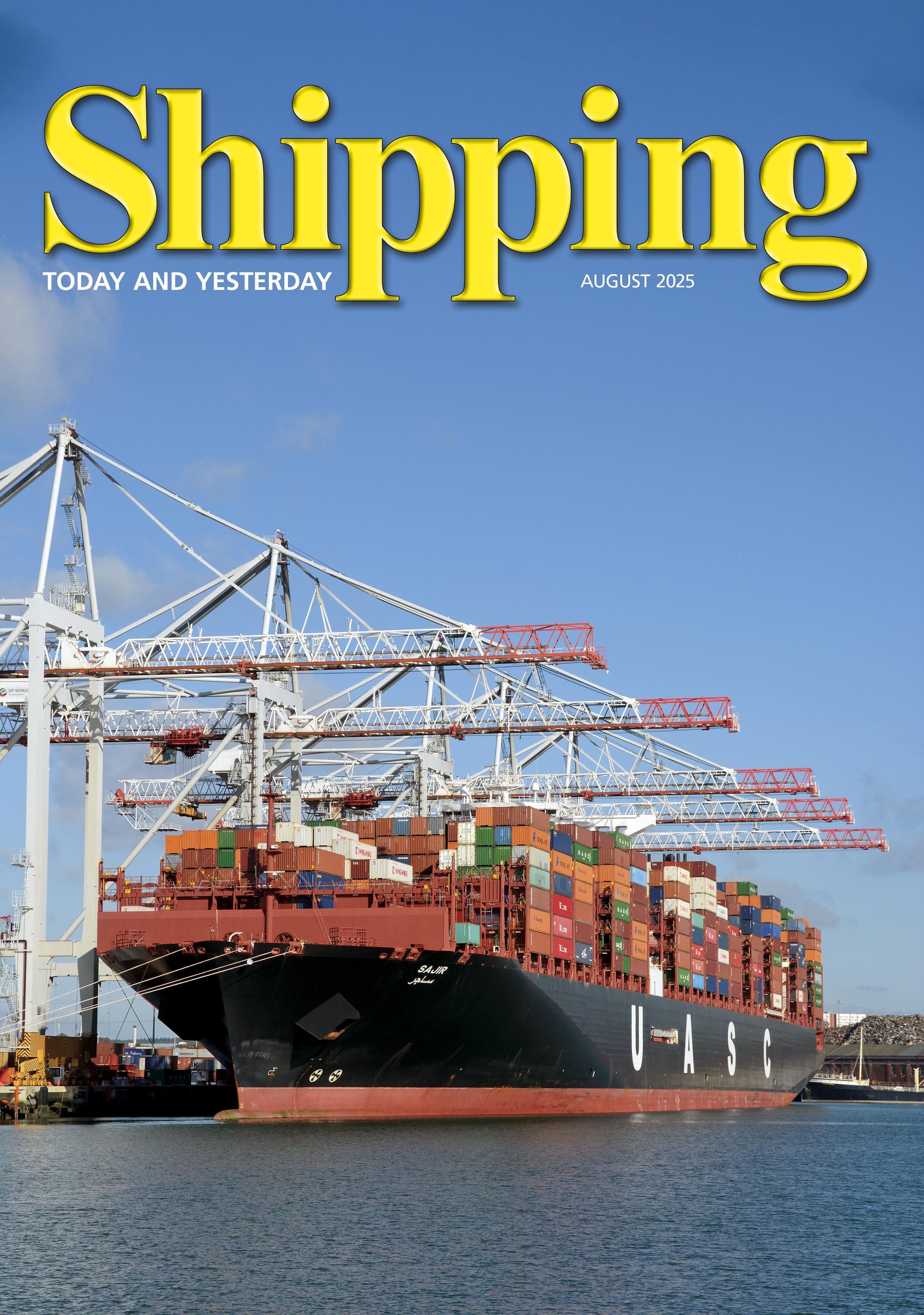
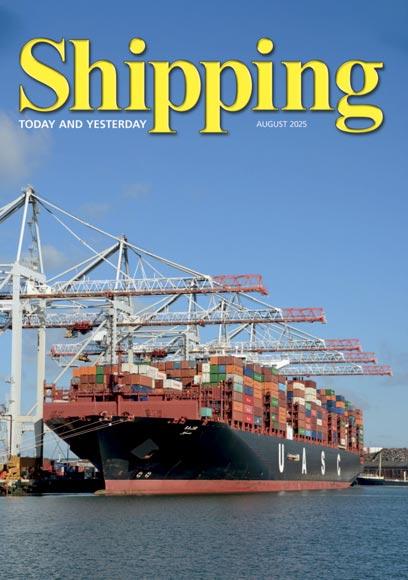
The 153,224gt Sajir of UASC at Southampton in October 2017. She was built in 2014 by Hyundai at Ulsan. In 2021 parent company Hapag Lloyd renamed her Brussels Express.
NOTABLE INCIDENTS
On 25th April the bulk carrier Glengyle and the containership KMTC Surbaya collided on the Long Tau River near Vietnam’s Ho Chi Minh City, resulting in the bulker partially sinking. The bow of the 28,736gt/2018-built KMTC Surbaya penetrated the hull of the 23,269gt/2015-built Glengyle and partially sank the bulk carrier, which was carrying 809 tonnes of gypsum. The two ships were interlocked, causing a complex salvage operation.
The 93,511gt/2004-built Maersk Sana suffered an incident aboard in the Atlantic on 28th April whilst 254 nautical miles east of Bermuda, which injured 3 crewmembers and left the ship drifting while teams worked to identify “operational contingencies”. One crewmember was in a critical but stable condition in a hospital in Bermuda while two others were treated for their injuries. The 8,450 TEU Maersk Sana had departed Newark, New Jersey, two days earlier bound for Singapore. Unconfirmed reports suggested an engine room explosion whilst the ship was approximately 354 nautical miles east of Bermuda. The Maersk Nomazwe, which had sailed from Algeciras on 22nd April, diverted to assist the stricken ship. One crewmember from the Maersk Sana received treatment onboard the ship while the others were first moved to the Maersk Nomazwe and evacuated on 30th April to Bermuda.
Whilst the Maersk Sana drifted off the coast of Bermuda, the Maersk Nomazwe resumed her voyage to Newark. The Maersk Sana was operating on Maersk’s Transpacific TP11 service and the 7,558gt/2010-built salvage tug Sea1 Ruby (operated by the former Siem Offshore) took almost two weeks to reach the stricken ship around 75 nautical miles west off the coast of Bermuda. The Sea1 Ruby, an anchor handling tug supply vessel (AHTS) from Sea1 Offshore, departed from Bergen, Norway on 4th May and arrived on scene on 16th May. The 28,000bph vessel has a bollard pull capability of 310 tons. The tow to a shipyard at Freeport in the Bahamas, a voyage of approximately 900 nautical miles, took around 7 days at 5 knots. Maersk faced criticism for not dispatching a salvage vessel from the U.S. East Coast or nearby ports and instead summoning a tug from more than 3,000 nautical miles away. Maersk justified the decision with the need to find the right vessel, rather than the closest one.
On 3rd June the 46,800gt vehicle carrier Morning Midas of Zodiac Maritime caught fire 300 miles off the coast of Alaska. She was carrying 3,159 vehicles, with 65 being fully electric and 681 hybrid. The crew of 22 were safely evacuated. It is not known at this stage whether the fire was caused by electric vehicles.
On 9th June the 42,532gt container ship Wan Hai 503 suffered a serious fire of the coast of Kerela. At the time of writing, four crew are missing. Five of the 18 rescued crew members were injured,
EDITOR’S LOG
one seriously. The fire was caused by an explosion in a container. As a result of the fire 40 containers fell into the sea and the ship had lost power and was drifting.
The 91m long/1982-built Mexican Tallship Cuauhtémoc suffered a collision with the Brooklyn Bridge in New York on 17th May which damaged her masts. Sadly, two crewmembers were killed, and 22 others were injured. The two young Navy cadets who were killed were standing on the masts when the crash occurred and were América Sánchez, 20, and 23-year-old Adal Jair Maldonado Marcos. According to Mexican media, Sánchez was one of the cadets who was standing on top of the rigging at the time of the accident. After departing from her berth at 20.24, the ship's astern manoeuvre saw her speed increase to 6 knots and assistance was requested. Some 45 seconds later the ship’s mast struck the underside of the bridge before coming to a stop at 20.27.
It appeared that a power failure of some sort saw the vessel carried astern by the current. The masts are 48m high whereas the bridge has a clearance of 41.1m. The Cuauhtémoc had originally departed from Acapulco, Mexico, on 6th April on a tour that included calls to New York and Aberdeen for the city's Tall Ships race in July.
The 9,990gt/2002-built and 886 TEU capacity containership NCL Salten ran aground in the early hours of 21st May overnight only a few metres from a house on the shore in Norway’s Trondheim fjord. Local media identified the owner of the house as Johan Helberg and he was apparently unaware that the incident had happened, sleeping through it as the 135m long ship grounded just 7 metres from his bedroom.
The North Sea Container Line (NCL) vessel was bound for Orkanger and remained grounded in Byneset, west of Trondheim, until tidal conditions permitted a successful salvage operation. A Ukrainian officer was later charged after admitting he fell asleep while navigating the ship.
The 16,799gt/1997-built MSC Elsa 3 developed a significant list and partially capsized approximately 38 nautical miles off the coast of Kochi on 24th May. She subsequently capsized, prompting an extensive rescue and environmental monitoring operation led by the Indian Coast Guard and Indian Navy.
The ship had departed from the port of Vizhinjam the previous day and was en-route to Kochi when she developed a 26degree list. Of the 24 crewmembers aboard, 21 were evacuated via liferafts whilst the Captain and Chief/Second Engineer remained on the ship to assist with salvage planning. Several containers were lost initially but the situation became somewhat worse and on 25th May and the ship sank.
There is growing concern in the freight business about thefts from cargo ships. According to Overhaul's Q1 2025 Cargo Theft Report, an overwhelming 81 per cent of all cargo theft incidents reported nationwide involved violence, highlighting the persistent danger facing drivers and supply chain operators.
The thefts are common between the hours of 6pm and midnight with the thieves gaing inside knowledge about crew shifts.
The most common items to be stolen are food and beverages but other items such as auto parts, electrical components, home appliances and household items..
To mitigate ongoing threats, Overhaul recommends transitting during daylight hours and implementing a multilayered security approach combining physical and electronic safeguards. Its platform, for example, provides real-time tracking, behavioural alerts and predictive analytics powered by GPS, weather and historical crime data.
This is yet another example of our seafarers being exposed to danger and every effort must be made to prevent these often violent attacks and make our seafarers lives safer. editor@shippingtandy.com
CONTAINER FLEETS
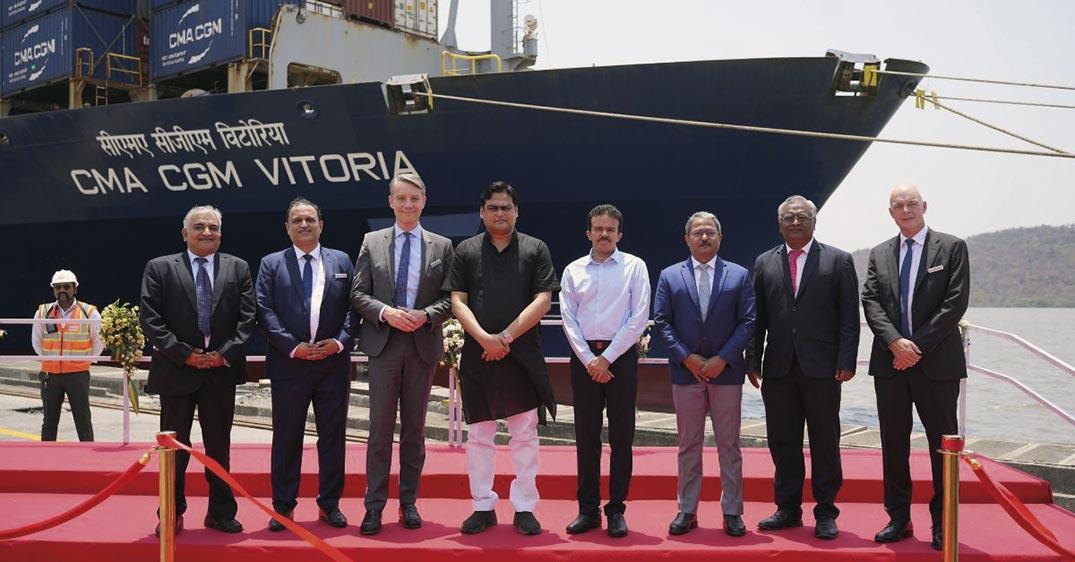
CMA CGM became the first large carrier to register a containership in India, supporting the Indian government’s ambitions to build the country’s role in international shipping. The company hosted Indian Prime Minister Narendra Modi at its headquarters in February and said it would explore registering ships in India. The company is also looking at India’s shipbuilding and repair operations and already has investments in terminals located at Nhava Sheva Freeport, near Mumbai, and Mundra Port. On 28th April the 26,836gt/2008-built CMA CGM Vitoria was officially entered into the India registry while the ship was docked at the Nhava Sheva Free Port terminal (above). The 33,434dwt and 2,592 TEU capacity vessel was previously registered in Malta.
CMA CGM also plans to transfer a second vessel, the 26,836gt/2009-built and 2,592 TEU capacity CMA CGM Manaus from the flag of Malta to India plus 2 others.
The 128,060gt/2025-built and 13,000 TEU capacity CMA CGM Argon was delivered on 15th May as part of a series of future-proof containerships ordered from South Korean shipyard HD Hyundai Samho. The 335m long and 51m beam vessel is part of the CMA CGM green fleet powered by methanol, a clean fuel that is projected to be able to reduce sulphur oxides by 99%, nitrogen oxides by 80%, and carbon emissions by 25% compared to conventional energy sources. The ship is also part of a 12-unit strong order that CMA CGM placed back in February 2023.
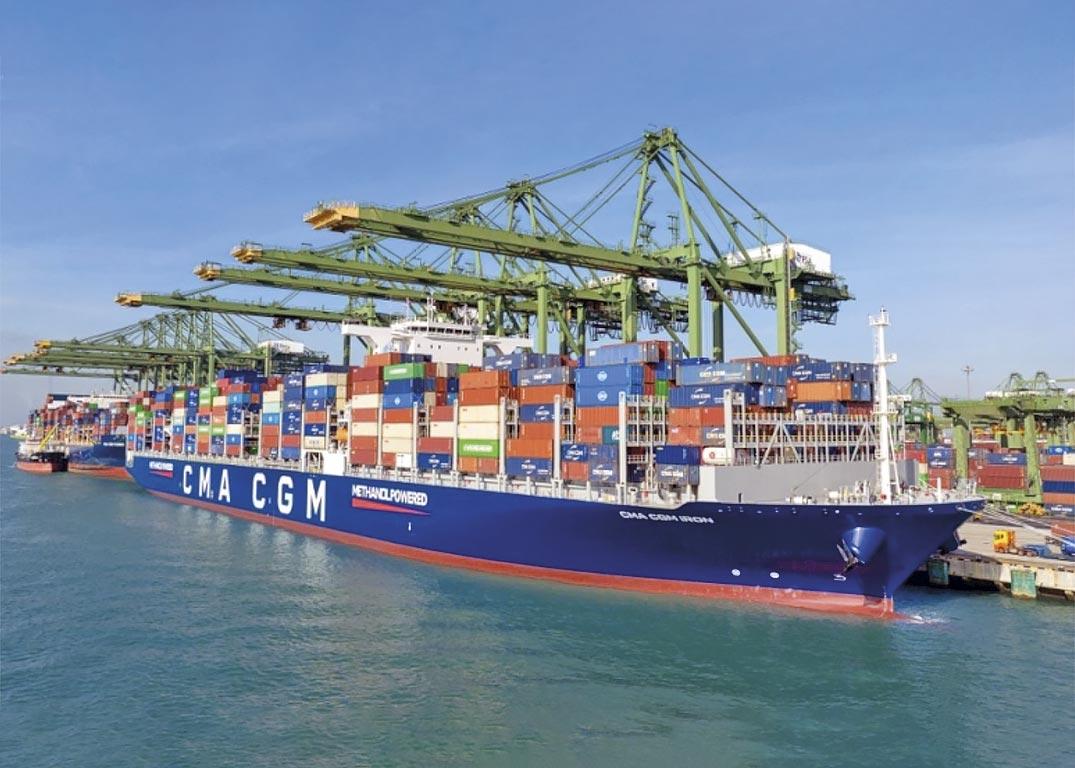
The inaugural newbuild of the dual-fuel methanol-powered ships, the CMA CGM Iron, was handed over in early March for the company’s CIMEX1 service, which connects Asia to the Middle East Gulf region.
The remainder of the vessels, all named after elements from Mendeleev’s periodic table, namely CMA CGM Cobalt, Platinum, Mercury, Helium, Krypton, Thorium, Osmium, Silver, Copper and Gold, are anticipated to be delivered throughout 2025 and 2026. This more unusual naming policy is certainly an inspired one.
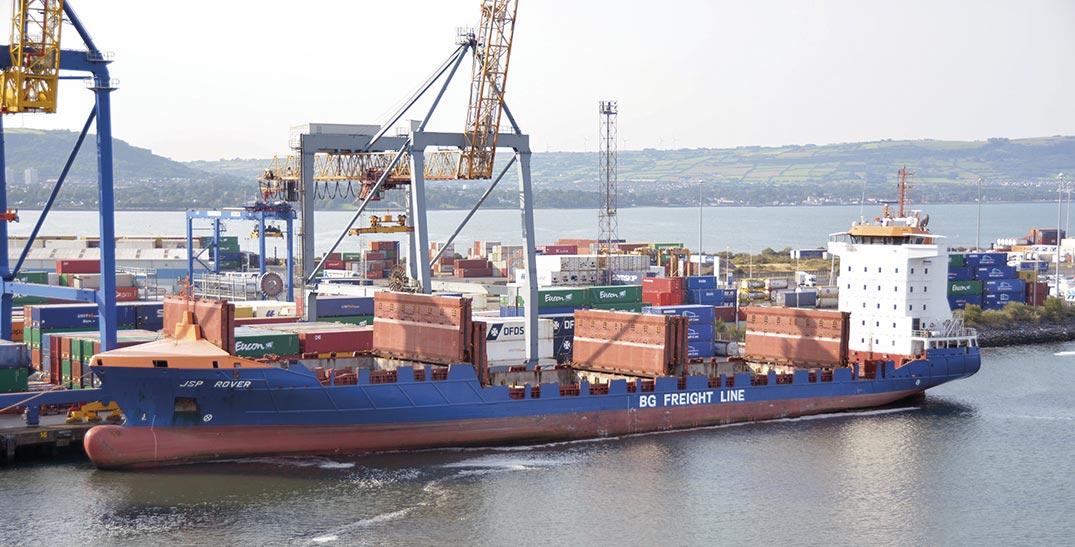
CLdN announced on 30th April the launch of a new weekly service between Zeebrugge and Ireland using the chartered 7,852gt/2006-built and 800 TEU capacity Lo-Lo ship JSP Rover (above), renamed Fine Schepers from 1st May. The ship operates from Albert II terminal in Zeebrugge to Cork/Dublin. The introduction of the new LoLo service also enabled a further optimisation of CLdN’s Ro-Ro fleet deployment, thereby increasing customer options on the routes between Zeebrugge and Ireland.
The new service responds to continuing growth in customer demand to move freight between mainland Europe and Ireland. CLdN’s broader Lo-Lo strategy includes the construction of newbuild container vessels for delivery as from January 2027. The additional Lo-Lo sailing complements the four Ro-Ro sailings each week from Zeebrugge to Ireland (two to Cork and two to Dublin). It brings to 14 the number of weekly return sailings between Ireland and CLdN’s main continental hubs of Rotterdam and Zeebrugge. The new service began on 10th May.
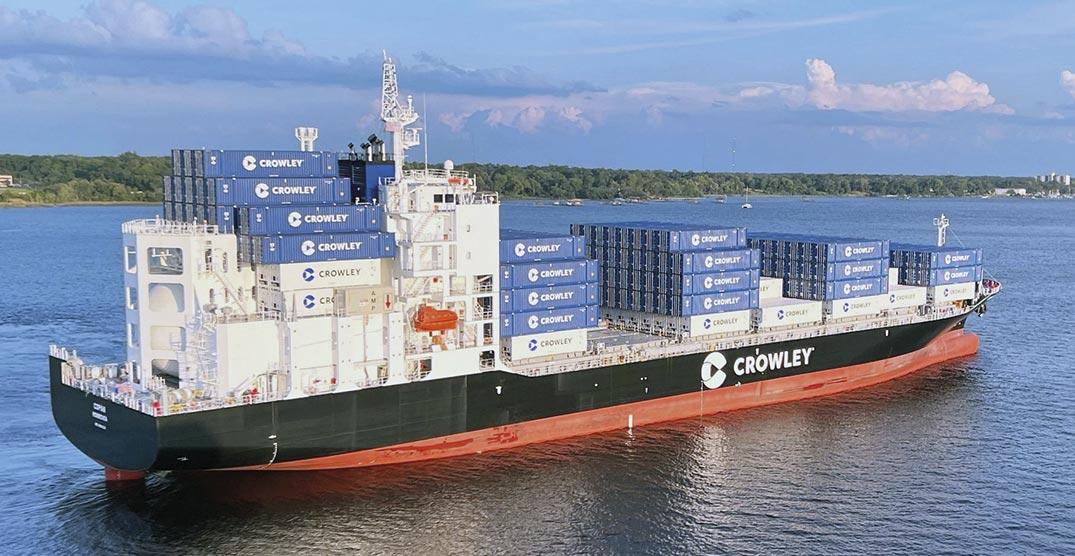
Crowley has put into operation the second Avance Class (pronounced in Spanish “ah-bahn-she,” the English meaning of advance) LNG-powered containership to expand its capacity in the Caribbean Basin. The 19,866gt/2025-built Copán (above) began her inaugural sailing on 12th May from the Port of Jacksonville (JAXPORT) in Florida. With a 1,400 TEU capacity, the ship was designed to quickly and frequently deliver cargo while using lower-emission LNG for fuel. The Copán is the second of a quartet of Avance Class ships built by Hyundai Mipo Dockyard in South Korea for Singapore-based Eastern Pacific Shipping. The first ship in the Avance Class was the Quetzal, which commenced operations in April. Each ship features a highpressure ME-GI engine by German manufacturer MAN Energy Solutions.
Folk Maritime Services Company, a subsidiary of the Public Investment Fund (PIF) and a provider of regional liner and feeder services, announced the acquisition of three container vessels during May to expand its fleet. The vessels, named Folk Dammam (1,868 TEU capacity), 7,464gt/2008-built Folk Yanbu (702 TEU capacity), and Folk Jubail (1,118 TEU capacity), are
CMA CGM Crowley
CMA CGM
Nigel Lawrence
registered under the Saudi flag at Jeddah Islamic Port. Deployment across the company’s services was scheduled to begin within four weeks.
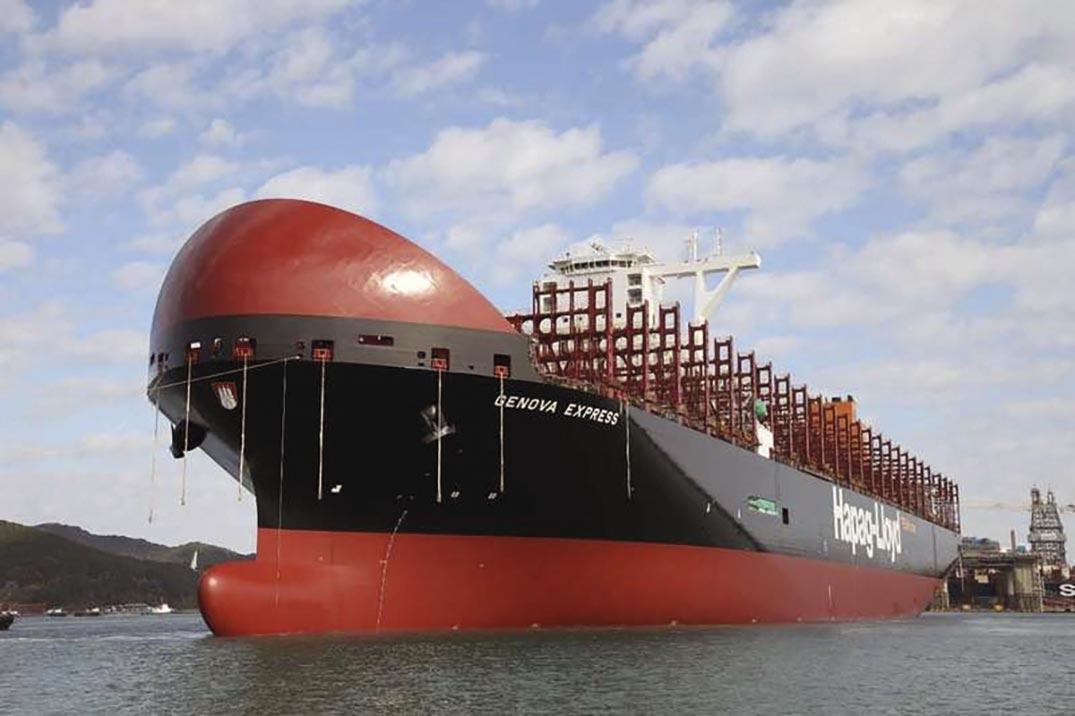
Hapag-Lloyd has added the eleventh Hamburg Express class containership to its fleet, namely the 229,376gt/2025-built and 24,000 TEU capacity vessel Genova Express (above). The ship was named at shipbuilder Hanwha Ocean’s shipyard Okpo, South Korea, and then joined the Far East-North Europe Service as part of the company’s new Gemini Co-operation. The Hamburg Express class is a series of 12 dual-fuel containerships powered by LNG and designed to run on future-ready alternatives like green methane. The eponymous flagship of this series, Hamburg Express, was christened at the Container Terminal Burchardkai in the Port of Hamburg on 4th November 2024.
Mediterranean Shipping Co. (MSC) has secured regulatory approval for the takeover of Brazilian port and maritime logistics operator Wilson Sons. Ocean Wilsons Holdings has sold its 56% interest in Wilson Sons to MSC subsidiary Shipping Agencies Services following acceptance by the Brazilian National Waterway Transportation Agency (ANTAQ). Wilson Sons operates the Tecon Rio Grande container terminal in Rio Grande, Rio Grande do Sul, and the Tecon Salvador container terminal in Salvador, Bahia. The company, whose assets are valued at more than $1bn, also operates one of the largest tugboat fleets in Latin America.
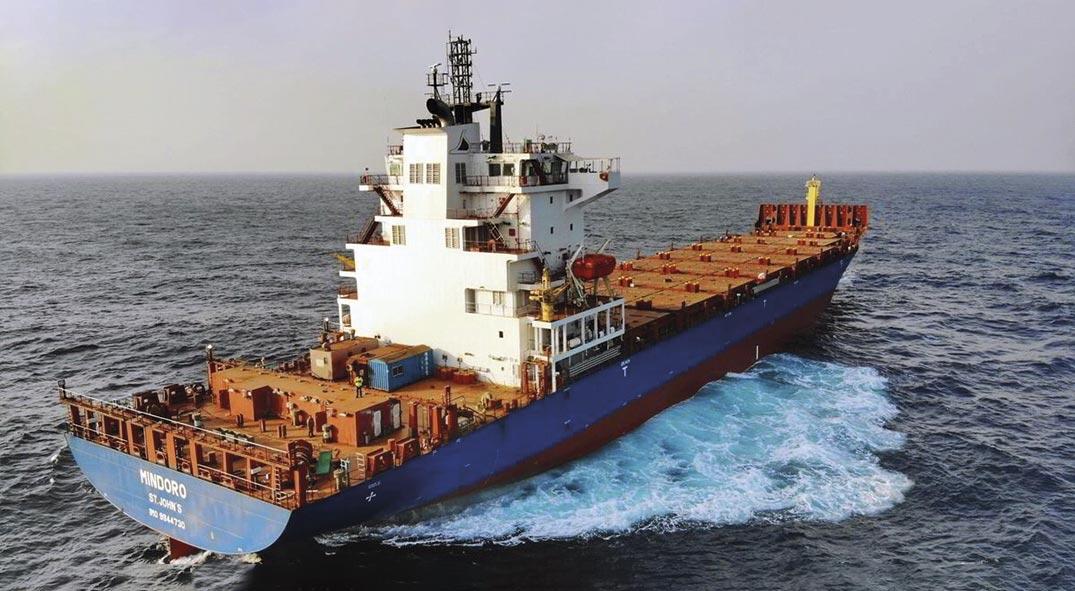
Minerva Dry acquired the 18,680gt/2022-built Little Symphony, a 1,781 capacity TEU container ship, on 8th May. The ship was previously named Mindoro (above). Minerva Dry entered the container vessel segment in October 2023 and has rapidly expanded its fleet to 7 ships, with an average age of just over two years. At that time, Minerva Dry had taken delivery of 3 ships in 2025. The company serves as the dry bulk and container shipping arm of Minerva Marine, overseeing a fleet of 17 vessels. Minerva Marine manages a fleet of 54 vessels tankers whilst Minerva Gas oversees 7 LNG carriers, including two under construction in South Korea.
Orient Overseas (International) Limited (OOCL) signed contracts for the construction of fourteen new containerships equipped with methanol dual-fuel engines at the end of April, marking a significant step in the company’s fleet expansion. The deal was valued at $3.08 billion, with each vessel costing $220 million. The vessels will be built by Nantong and Dalian shipyards, both connected to COSCO Shipping. Delivery of the vessels is scheduled between the third quarter of 2028 and the third quarter of 2029. The newbuilds will feature green fuel technologies, specifically methanol dual-fuel engines, supporting the company’s environmental initiatives and responding to growing customer demand for zero-carbon supply chain solutions.
Regional Carrier Lines is adding a pair of 11,000 TEU and 4,400 TEU capacity ships to the fleet in 2027 and 2028 respectively. RCL already has newbuilds contracted to Shanghai Waigaoqiao and Huangpu Wenchong Shipbuilding but did not disclose where the latest newbuilds will be built.
Seaspan Corporation, one of the world's largest independent containership owners, signed a Memorandum of Understanding (MoU) with Hudong-Zhonghua Shipbuilding for the construction of a series of next generation 8,300 TEU capacity container vessels in May. The newly designed ships are engineered for high fuel efficiency, smart routing flexibility, and compliance with upcoming decarbonisation regulations, making them suitable for both feeder and mainline operations. This MoU builds upon the longstanding relationship between Seaspan and HudongZhonghua, following previous successful deliveries of 15,000 TEU and 13,600 TEU capacity vessels. On a previous occasion, 29th April, Seaspan also entered into a separate agreement with Shanghai Waigaoqiao Shipbuilding (SWS) and China Shipbuilding Trading Co. for six ships exceeding 10,000 TEU capacity, intended for charter to COSCO Shipping Lines.
SITC International Holdings has exercised options at Huanghai Shipbuilding for two additional 1,800 TEU capacity vessels, with deliveries scheduled for March and May 2028. SITC had originally signed a shipbuilding contract with Huanghai for a series of 4 firm and 6 optional newbuilds in June 2024.
Wan Hai of Taiwan has commissioned two methanol dual-fuel ready 16,000 TEU newbuilds each at the HD Hyundai Samho and Samsung Heavy Industries shipyards. In October 2024 the world's 11th largest container operator contracted the same yards to build a quartet of 16,000 TEU capacity vessels for delivery in 2027/28, whilst in August 2024 Wan Hai set out to expand its fleet with up to 20 methanol dual-fuel vessels, signing orders for 12, and 4 optional 8,000 TEU capacity ships at CSBC Corporation and four 8,700 TEU capacity newbuilds at HD Hyundai Samho.
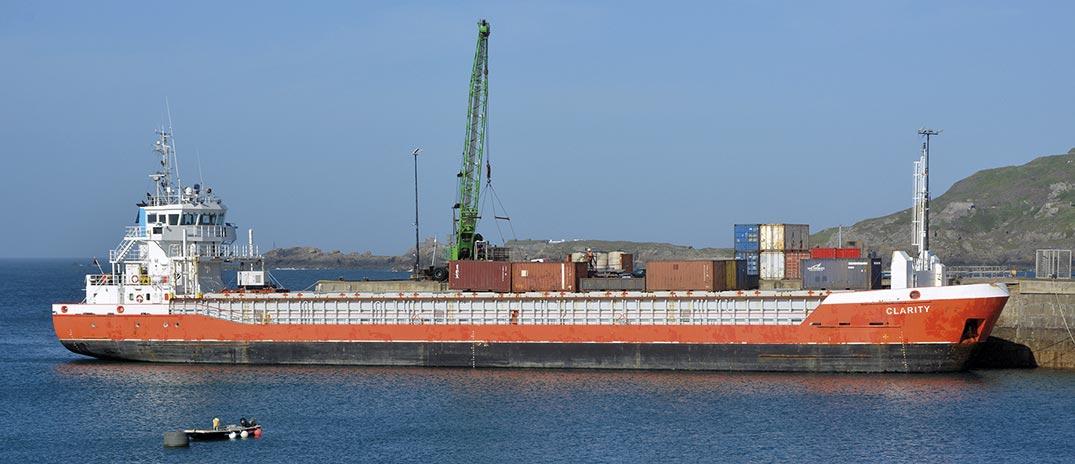
Channel Seaways’ 2,102gt/2007-built Trinity went for overhaul in Hull from Poole on 15th May with the chartered 2,545gt/2011built Clarity (above) arriving at Poole the day before to cover the lifeline Poole-Alderney/Guernsey-Jersey service. The latter is owned by Faversham Ships.
Hanwha Ocean Alphaliner
Briese Schiffahrts
Nigel Lawrence
BULK AND TANKER NEWS
Asyad Group says it has reintroduced the 201,757gt/2012-built and 400,000dwt ore carrier Sohar Max after being equipped with five 35m high and 5m diameter rotor sails. The sails were developed in collaboration with global leader Vale and Anemoi Marine Technologies. This equipment efficiently harnesses wind energy to enhance vessel propulsion and reduce fuel consumption by up to 6%. The innovative sails also curtail carbon emissions by 3,000 tons annually per vessel, positioning the Sohar Max as a “trailblazer” in sustainable maritime shipping. The Sohar Max is one of four ultra-large carriers, the others being Shinas Max, Liwa Max and Saham Max, invested in by Vale to support operations in Oman, with the Sohar Max being the first to incorporate wind technology.
Carisbrooke Shipping has ordered LABRAX 7680dwt Multipurpose series ships from Thecla Bodewes Shipyards and, on 20th May, construction of BN 375 began, the first of the initial pair. The milestone was marked with a traditional start of construction ceremony at the yard in Kampen.
Mrs. Greta Croucher-de Vries, spouse of one of Carisbrooke Shipping’s founding members, performed the symbolic first weld, highlighting the strong connection between both companies and celebrating the start of this significant fleet renewal project. Scheduled for delivery in 2026, BN 375, to be named Greta C, is a sister ship to the acclaimed LABRAX vessels currently under construction for the Vertom Group.
Originally active in the European 5,000 DWT coaster market, Carisbrooke Shipping has since expanded into global trade with a versatile fleet that includes geared bulkers and MP vessels up to 11,000dwt, capable of carrying everything from grain to project cargo like wind turbine blades.
Fast Lines (Belgium) witnessed the launch of its first-ever newbuild at Damen Shipyards’ Yichang facility in China in May. The 2,518gt/2026-built ship, named Fast Olivia, was then poised to undergo sea trials before her scheduled delivery. Part of the Fast Group, Fast Lines Belgium had placed an order with Damen Shipyards for two Damen Combi Freighter 3850 vessels in 2023. In addition to a newly optimised hull design and a fuel-efficient main engine, the new vessels will be equipped with Damen’s Triton Remote monitoring system.
This technology will provide real-time data on fuel consumption and carbon emissions to both the onshore management team and the vessel’s crew. Damen’s CF 3850 boasts the lowest Energy Efficiency Design Index (EEDI) within the shortsea cargo vessel market, highlighting its advanced design and environmental performance.
Meriaura of Finland marked a significant step in its fleet renewal program on 9th May with the official keel laying ceremony for its first Ecotrader newbuild, NB 832, at the Royal Bodewes Shipyard in Hoogezand, The Netherlands. Classification society Rina performed the official stamping, and Meriaura’s CTO Jyrki Hentula observed the maritime tradition of placing a coin under the keel for good fortune. This event signals the smooth progression of construction for the first of two 6,735dwt environmentally focussed vessels ordered by Meriaura from the established Dutch shipyard. The Ecotrader design prioritises sustainability and efficiency and Meriaura contracted the shipyard for two of these cargo ships with delivery in January and December 2026. The 105-metre-long design boasts a 1A ice class rating and a 6750dwt capacity and is specifically designed to achieve the lowest possible emission levels. Continuing Meriaura’s commit-
ment to sustainable operations, the Ecotraders, similar to their earlier 3,405gt EcoCoaster ships Eeva VG and Mirva VG delivered in 2016, will be capable of running on biofuel produced from recycled raw material by Meriaura’s subsidiary VG-Ecofuel. Notably, the Ecotrader ships offer approximately 30% more cargo capacity than the EcoCoaster vessels, enhancing economic efficiency, meeting evolving market and customer demands, and reducing the environmental impact of transport. The investment for these environmentally advanced vessels is being financed by Oma Säästöpankki Turku, LähiTapiola Keskinäinen Vakuutusyhtiö, and the Climate Fund, demonstrating the support of Finnish financial institutions for Meriaura’s green shipping ambitions.
NYK Group’s 38,300gt/2025-built Green Future, a methanol dual-fuel bulk carrier chartered by NYK Bulk & Projects Carriers from Kambara Kisen, was delivered and officially named at the Tsuneishi Shipbuilding yard in Japan on 13th May The ship is the first bulk carrier in the NYK Group to be equipped with a dual-fuel engine that can run on either methanol or conventional marine fuel oil. The 65,700dwt carrier has a capacity of around 81,500m3
Royal Wagenborg and INEOS Energy, a London-based E&P business, have launched and named ‘the first’ European-built offshore CO2 carrier to enable carbon capture storage across Europe. The launching and naming ceremony for the 8,800gt/2025-built Carbon Destroyer 1 took place at the Royal Niestern Sander shipyard on 14th May. Designed for the safe and efficient transport of liquefied CO2, the newly launched vessel is expected to play a crucial role in the Greensand project in the Danish North Sea, led by INEOS Energy. The project aims to store up to 400,000 tonnes of CO2 per year in the initial phase, with plans to increase capacity to up to 8 million tonnes annually by 2030.
The CO2 in the first phase of Greensand Future will be captured and liquified at Danish biomethane production plants, transported to the Port of Esbjerg, temporarily stored, and then transferred to the Carbon Destroyer 1. From there, the vessel will sail to the Nini Field, where the CO2 will be injected over 1,800m beneath the seabed into depleted oil reservoirs that have been certified for safe, long-term storage. The pioneering ship, developed in close co-operation with partners in the energy and shipbuilding sectors, is the first of its kind to be built entirely in Europe and tailored specifically for offshore CCS operations. Based on the EasyMax design, which was jointly developed by Wagenborg and the shipyard, the ship features a cargo capacity of approximately 5,000 tons of liquid CO2 and meets the latest standards for safety, fuel efficiency, and low emissions. Its design and DP2 capabilities ensure it can operate reliably and year-round under various offshore conditions, as per the shipping company. The Carbon destroyer 1 will transport captured CO2 from across Europe, creating a virtual pipeline between the point of capture and permanent storage deep beneath the seabed of the North Sea.
The delivery of the first dedicated offshore CO2 carrier is a prerequisite for commercial-scale CCS across the continent. Wagenborg has also introduced the next-generation series 5 EasyMax design, the upgraded 14,000 dwt general cargo vessel which will be able to operate on bio-MGO and be prepared for alternative fuels such as methanol, ammonia and LNG. The company has laid the keels for six 150m-long EasyMax 5 units to be built at Royal Niestern Sander.
CRUISE NEWS by Andrew & Donna Cooke
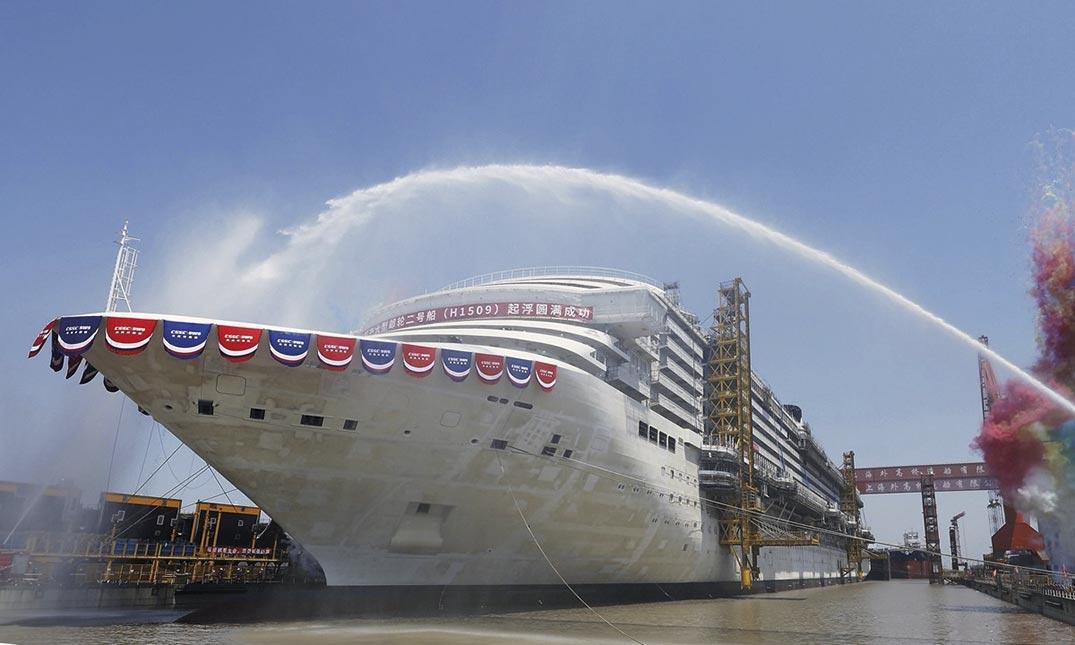
Adora Cruises announced at the beginning of May that its second newbuild, the 137,500gt/2026-built Adora Flora City, had been floated out at the Shanghai Waigaoqiao Shipbuilding Co. (above). The interior outfitting and system testing then got underway, with delivery of the ship expected by the end of 2026. The ship will receive upgrades in interior design and technology compared to the Adora Magic City. The new ship is 17m longer, has 2,130 cabins and will have a larger atrium. The interiors will blend artistic styles with elements of the Maritime Silk Road and the Lingnan culture. New cabin categories and upgraded dining and shopping spaces will also feature, as well as a new open multifunctional space, the Seaside Garden. The Adora Flora City will join the 136,201gt/2024-built Adora Magic City and the 85,619gt/2003-built Adora Mediterranea in the Adora fleet from Guangzhou in early 2027.
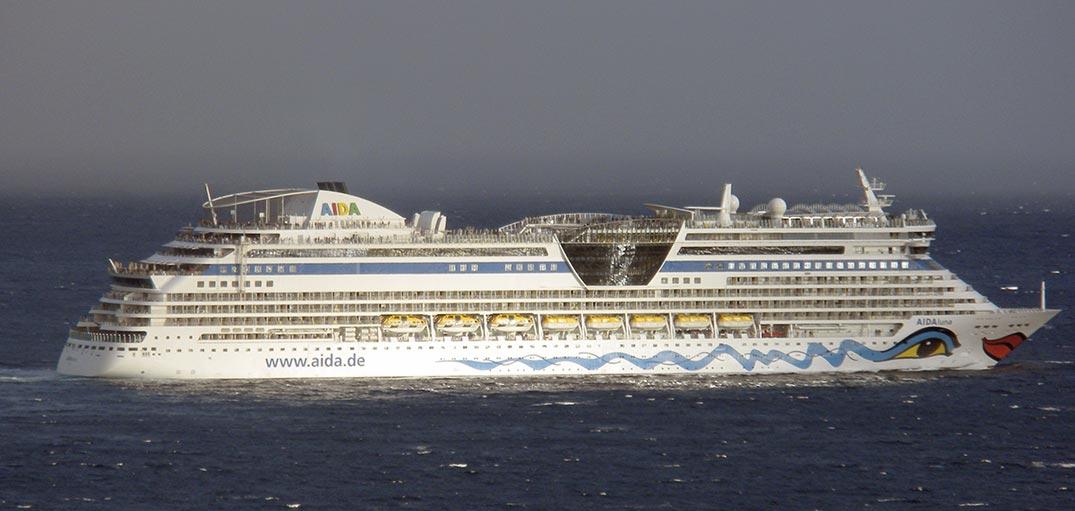
AIDA Cruises’ 69,203gt/2009-built AIDAluna (above) became the largest ship ever to berth on County Wharf at Falmouth on 14th May for a cruise call as part of her Hamburg-Round BritainHamburg cruise. The Sphinx Class ship is 253m long with a passenger capacity of 2,050. The AIDA artwork featuring those red puckered lips and blue eyes was inspired by an Egyptian opera named Aida by Verdi which started in Cairo back in 1871. The opera featured an Ethiopian Princess who was called Aida. The 71,304gt/2011-built AIDAsol called on 21st May but anchored off on Crossroads Buoy rather than using the wharf.
in April
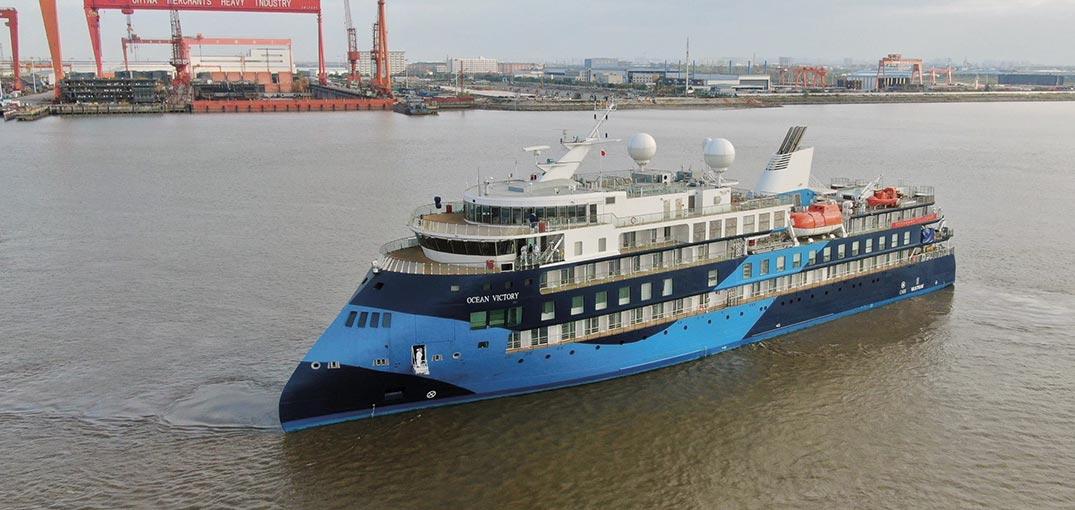
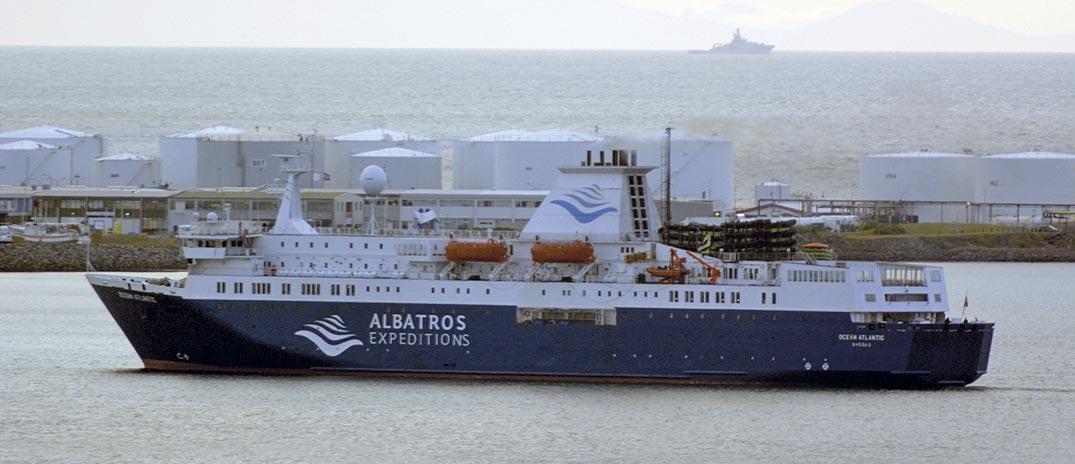
Malaga, with the maiden voyage taking place on 18th April 2025. The Ocean Victory was marketed as an elegant boutique ship and her first itinerary was an 8-day voyage from Las Palmas de Gran Canaria to Malaga. The man behind the new operation is Elisardo Sánchez who brought about the new brand that was committed to excellence and sustainability. The Infinity Class ship was on a long-term charter for itineraries to Spanish destinations in the Mediterranean, Northern and Western Africa and the Canary Islands. All elements of these cruises, including entertainment, cuisine and crew, were tailored to Spanish-speaking passengers. However, on 20th May came the news that the Ocean Victory had been detained in Malaga, a procedure initiated at the request of the vessel's general agent, Lantimar Group. The ship remained in port with all crew members aboard, awaiting further developments. Having completed just three voyages, the company abruptly halted sailings from 11th May with 2 days’ notice. Original fares for a week started at around €6,000 per passenger but these were reduced to nearer €2,000. Perhaps the luxury market proved too ambitious so an adjustment to the boutique cruise market appears to have taken place. The performance of the new operation may have fallen short, contributing to the situation leading to the ship’s detention. The Ocean Victory will continue to spend the southern hemisphere summers operating in Antarctica for Albatros Expeditions, which has no connection to Alma Cruceros. At the end of May, Sunstone confirmed that Nordic Marine Partner, Denmark, was the commercial manager of the ship and Anglo-Eastern continued to be the technical manager.
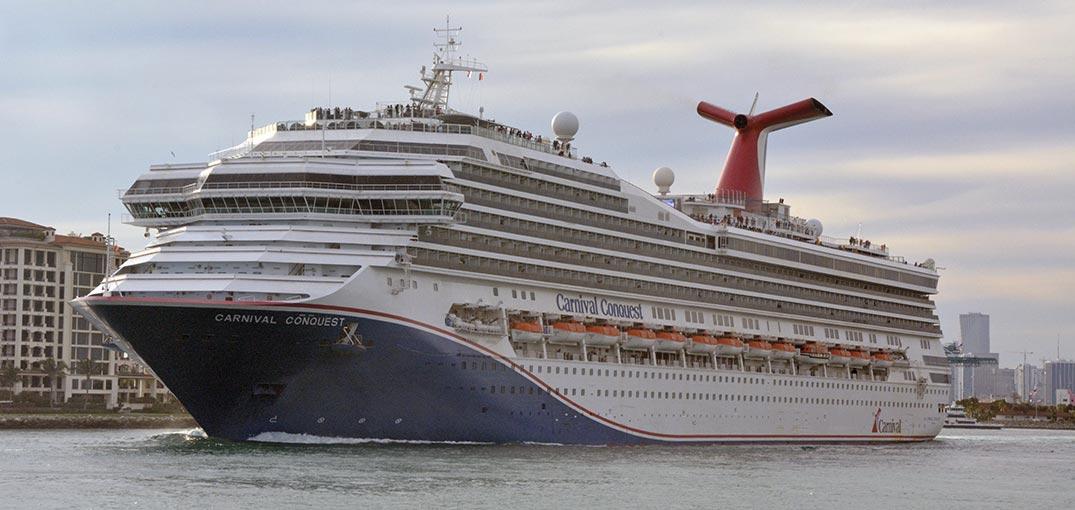
Carnival Cruise Line’s 110,475gt/2002-built Carnival Conquest (above) was badly flooded by a storm in the Bahamas on 13th May. Passengers reported water nearly entering cabins with balconies submerged and crew working nonstop to contain the flooding. The Bahamas had been hit hard that week by the same weather front that moved through Florida.
that
Ocean Victory (above) for northern hemisphere summers, sailing in the Mediterranean for the new Spanish cruise operator from April 2025. Alma
Lawrence
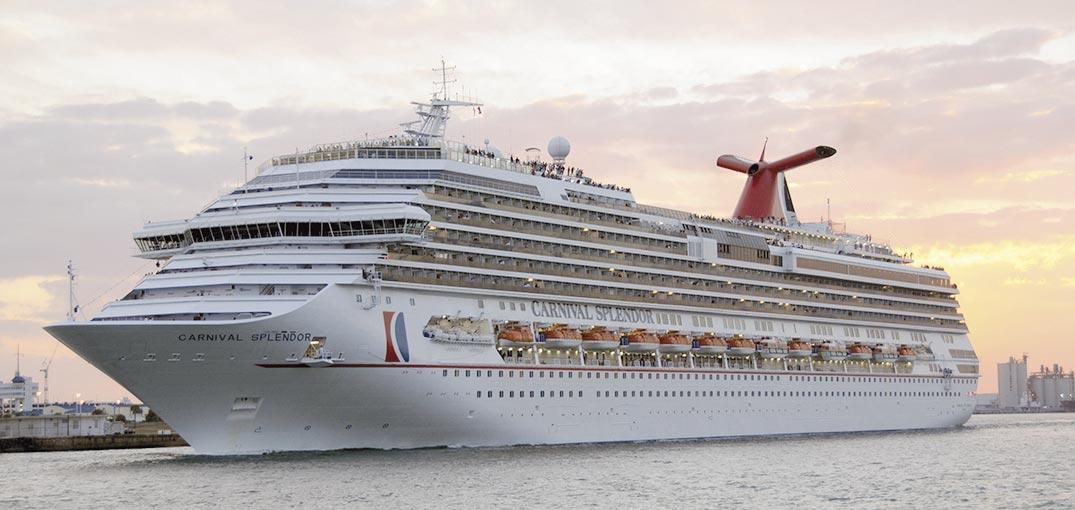
On 22nd May the 113,573gt/2008-built Carnival Splendor’s crew rescued 4 people, and 3 dogs stranded aboard a disabled catamaran in the South Pacific. The ship (above) was sailing off New Caledonia when the Maritime Rescue Co-ordination Centre in Noumea informed them of the catamaran’s distress call. The ship immediately headed towards the location and was able to reach the vessel 5 hours later to complete the rescue. The two couples and their dogs were safely welcomed aboard the Carnival Splendor and received food, water and medical assistance.
Alma Cruceros announced
2024
they would charter Sunstone Maritime Group’s 8,181gt/2021-built
Cruceros was the country’s first cruise line, based in
Nigel Lawrence Nigel Lawrence
Nigel
Adora Cruises
Albatros Expeditions
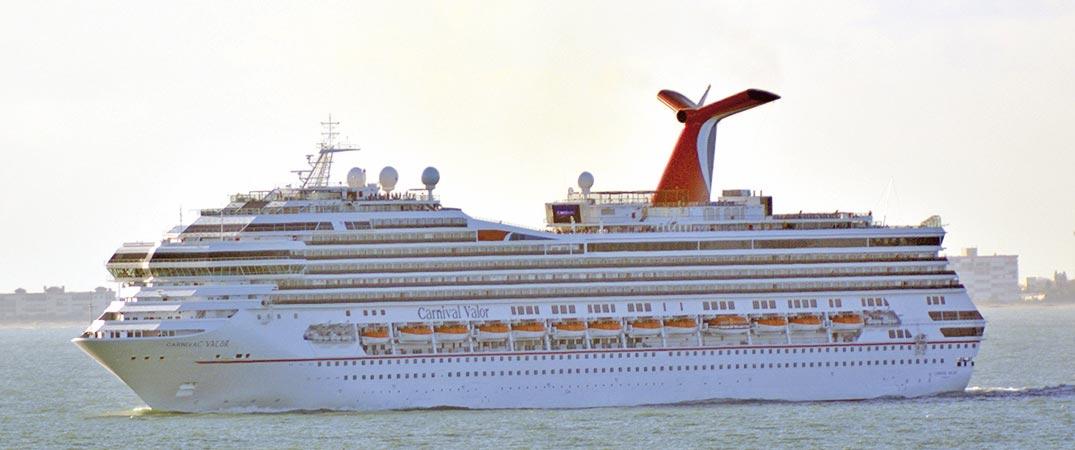
The 110,438gt/2004-built Carnival Valor (above) arrived in the Mediterranean in early May for a scheduled drydock at the Navantia Shipyard in Cadiz, having departed from New Orleans in late April. The ship received enhancements to public areas and cabins, with the replacement of carpets, upholstery and general upkeep. The Heroes Tribute Bar and Lounge was also installed. Following the drydock, the Carnival Valor was set to welcome guests back onboard in Barcelona on 11th June for a 15-night trans-Atlantic crossing to New Orleans before resuming her regular schedule of short cruises to the Western Caribbean.
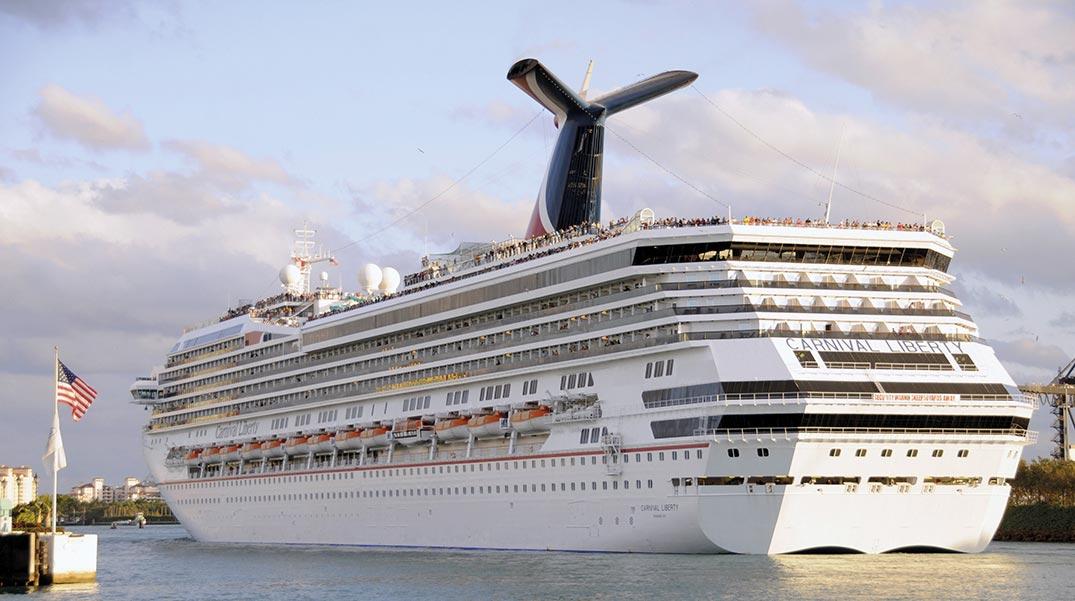
The 110,428gt/2005-built Carnival Liberty (above) was scheduled to arrive at the Spanish shipyard in late May for overhaul and, currently offering summer cruises in Europe, the 85,942gt/2004-built Carnival Miracle also visited the facility ahead of her fleetmates.
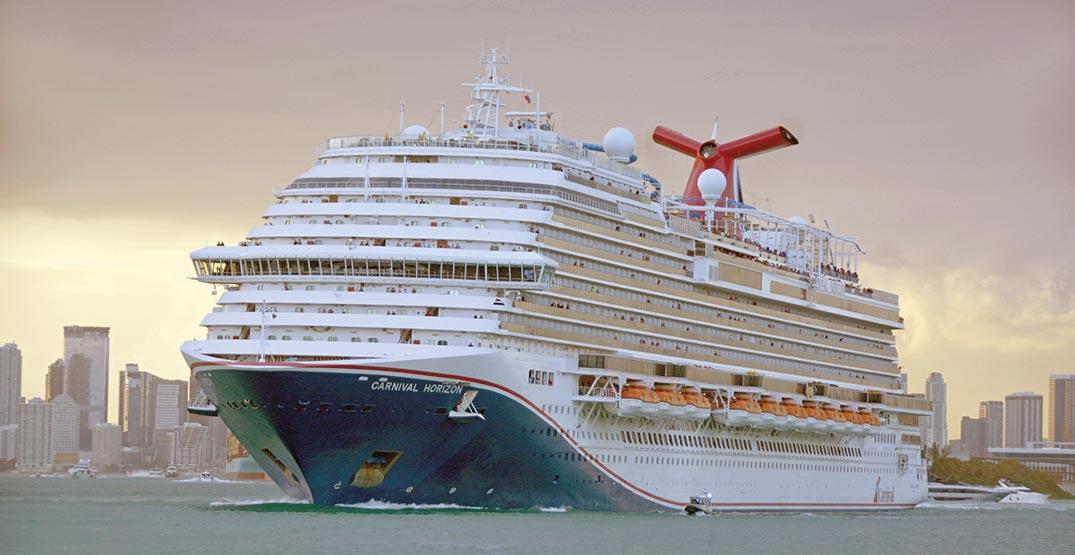
Meanwhile, a cruise onboard the 133,596gt/2018-built Carnival Horizon (above) has been cancelled due to a change in the ship’s drydock schedule. The trans-Atlantic crossing that was scheduled to take place on 15th June 2026, will no longer go ahead. The ship is now due to offer new itineraries departing from PortMiami in May and June 2026.
Celebrity Cruises’ next Edge-class ship, the 141,420gt Celebrity Xcel, was announced in May as entering service earlier than initially planned. The 3,260-guest ship will now offer a short 4-night preview cruise to Cozumel, Mexico on 9th November, ahead of her maiden voyage from Fort Lauderdale. Inaugural festivities are still set to take place during the ship’s 18th November 2025 maiden sailing. Passengers who booked the inaugural cruise are being offered a chance to change their res-
CRUISE NEWS
ervations to the new preview sailing if they wish. Currently under construction at the Chantiers de l’Atlantique shipyard in St. Nazaire, France, the Celebrity Xcel is the fifth ship in Celebrity’s Edge-class series. After her inaugurals, the vessel will offer a series of 7-night cruises to the Caribbean departing from Fort Lauderdale.
The 121,878gt/2010-built Celebrity Eclipse resumed service in Northern Europe with additional guest cabins following a drydocking at the Damen Shipyard in Brest, France. Her capacity is slightly increased with the creation of ten inside staterooms. According to the vessel’s new deck plans, additional cabins were added to areas on decks 6/9/12/15. The new staterooms replace the ship’s internet café and technology shop, which was originally created as part of a partnership with Apple, as well as a card room and a video arcade. The ship also saw other upgrades to public areas and staterooms, including replacement carpets, upholstery and furniture. Other work included upgrades to Celebrity’s ship-within-a-ship concept, the Retreat, with a new Retreat Lounge on deck 5, and a new exclusive solarium on deck 16. The ship had arrived at Southampton in late March from the U.S. before heading to Brest for 3 weeks. She welcomed guests back aboard on 27th April, sailing from Amsterdam. Her itineraries include the British Isles, Scandinavia, the Baltic and Iceland. The 2,850-guest ship is set to operate a short autumn season in the Mediterranean before repositioning to North America in early November. During the 2025-26 winter, the Celebrity Eclipse will offer 4 to 8 night cruises from Fort Lauderdale to destinations in the Bahamas and the Caribbean. The Celebrity Eclipse is scheduled to return to Europe again in 2026 for another summer season sailing from Amsterdam, Barcelona, Piraeus and Ravenna having begun her career at Southampton in 2010.
Celestyal Cruises’ 42,957gt/2003-built Celestyal Discovery became the first ship operating in Greek waters to be refuelled with a marine biofuel blend. This took place at the Port of Lavrion and was carried out by Coral Marine Products SA, part of the Motor Oil Group, in partnership with Celestyal. The fuel blend combines conventional marine fuel with a second-generation biofuel made from recycled cooking oils. Developed by Motor Oil subsidiary Verd, the blend complies with ISO 8217:2024 standards and is expected to reduce CO₂ emissions by approximately 21%. The initiative represents a key step in Celestyal’s sustainability efforts and supports the broader transition to cleaner fuels in the region. The 1,360-guest Celestyal Discovery joined the fleet in November 2023 and underwent an extensive refurbishment in early 2025. From April to November 2025, the ship is operating 3- and 4-night Iconic Greek Islands itineraries from Piraeus before repositioning to the Arabian Gulf for her first Iconic Arabia season, offering similar short cruises from Abu Dhabi.
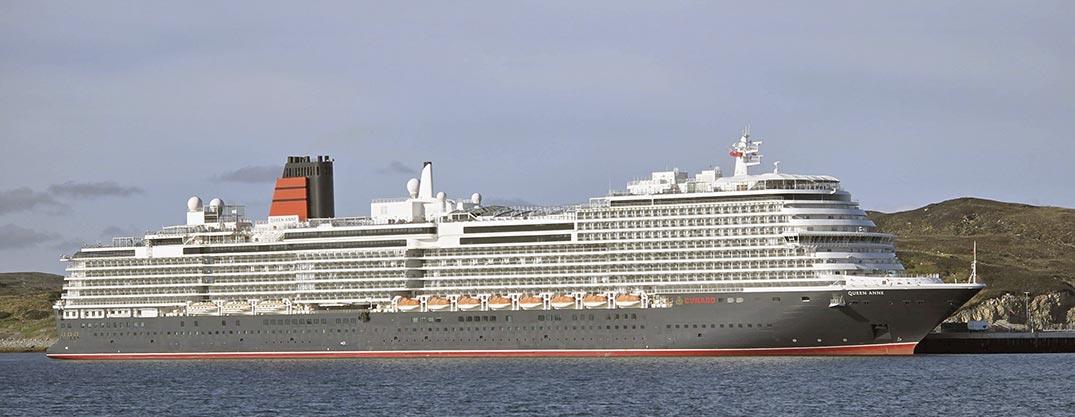
Cunard Line’s 114,188gt/2024-built Queen Anne became the largest cruise ship ever to dock at Stornoway on 22nd May (above). The arrival of the 323m long ship represented a significant milestone for the port, highlighting Stornoway’s expanding capabilities and establishing the port as a growing hub in the UK’s cruise tourism industry.
Nigel Lawrence
Nigel Lawrence
Nigel Lawrence
Mark Nicholson
CRUISE NEWS
Four Seasons Yachts, under Marc-Henry Cruise Holdings, has secured financing for the construction of a second ultra-luxury Four Seasons vessel to be built by Fincantieri. The order is worth more than €400 million, with a projected delivery date of 2027. The 34,044gt/2025-built Four Seasons I will therefore be joined by the Four Seasons II in service in 2028.
G Adventures will be introducing a new expedition vessel for the upcoming Antarctica season in the form of the 4,614gt/1975-built Ocean Adventurer, replacing G Adventures’ Expedition. The Ocean Adventurer has been chartered from SunStone and will take on the Expedition name in tribute to G Adventures’ “little red ship.” The “new” ship had been re-engined and will embark on her first G Adventures departure to Antarctica in October 2025.
Hurtigruten announced on 22nd May that the company is increasing capacity on its premium Signature offering in response to strong demand for Arctic and Norwegian coastal voyages. The 16,151gt/2003-built Midnatsol will join sister ship, the 16,140gt/2002-built Trollfjord, in the Signature fleet from summer 2026, following a comprehensive upgrade of the onboard facilities. At the same time, the 6,261gt/1983-built Vesterålen will return to full-time service with the Original Coastal Express fleet on the Bergen–Kirkenes roundtrip route, supporting the state contract. From summer 2026, the Midnatsol will offer regular sailings between Bergen and Longyearbyen on the Svalbard Line. In winter, she will alternate with the recently renamed 15,690gt/2002-built Finnmarken (formerly Otto Sverdrup) on the North Cape Line, departing weekly from Hamburg. Hurtigruten’s Signature voyages include longer port visits, all-inclusive dining, unique excursions and locally sourced ingredients from over 70 suppliers. As of early May 2025, global bookings for upcoming Signature voyages were up more than 40% year-on-year. Hurtigruten’s Signature concept has rapidly emerged as a key growth driver, particularly in the UK market. To support this fleet reshuffle, the Vesterålen will rejoin the Original Coastal Express fleet from spring 2026.
Sister company HX Expeditions welcomed back the 7,344gt/2015-built Spitsbergen in April to resume service in Northern Europe after undergoing a major refurbishment at the Astilleros de Santander S.A.U. drydock in Spain. The 220-guest vessel underwent a series of enhancements aimed at increasing guests’ comfort and accessibility, as well as operational efficiency. The updates include the addition of a new Science Centre, a refreshed design of the Explorer Bar, and the debut of the Brygge Bistro concept. Crew areas and dining facilities were also expanded plus the ship also received the new livery that features a palette inspired by marine wildlife, including Pearl, Sand and Arctic White.
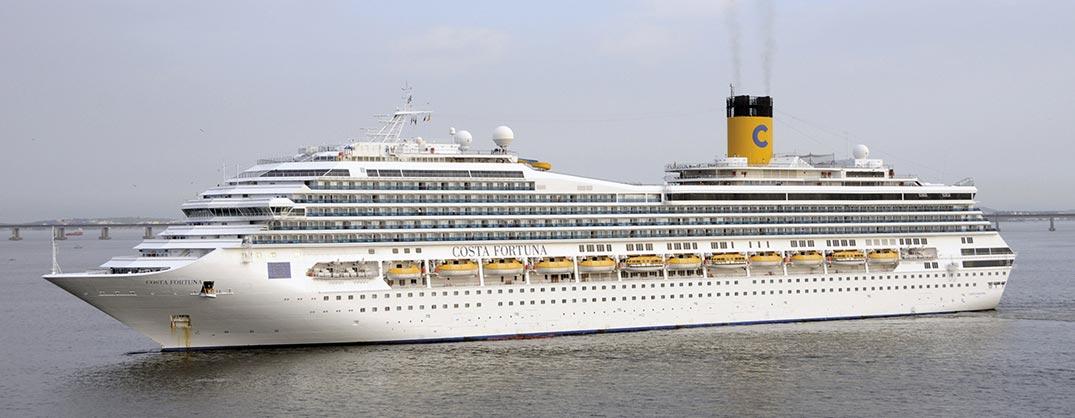
Margaritaville at Sea is expanding its fleet with a third ship joining the fleet in 2026 in the form of the Costa Fortuna (above). The second ship, the 85,861gt/2000-built Margaritaville at Sea Islander, has surpassed expectations since her debut in summer 2024. The 3,450-guest capacity Costa Fortuna will become the largest ship in the 3-strong fleet, which also includes the 53,015gt/1991-built Margaritaville at Sea Paradise. The cruise line celebrated its third anniversary in May 2025.
THE END FOR OLD FAVOURITES
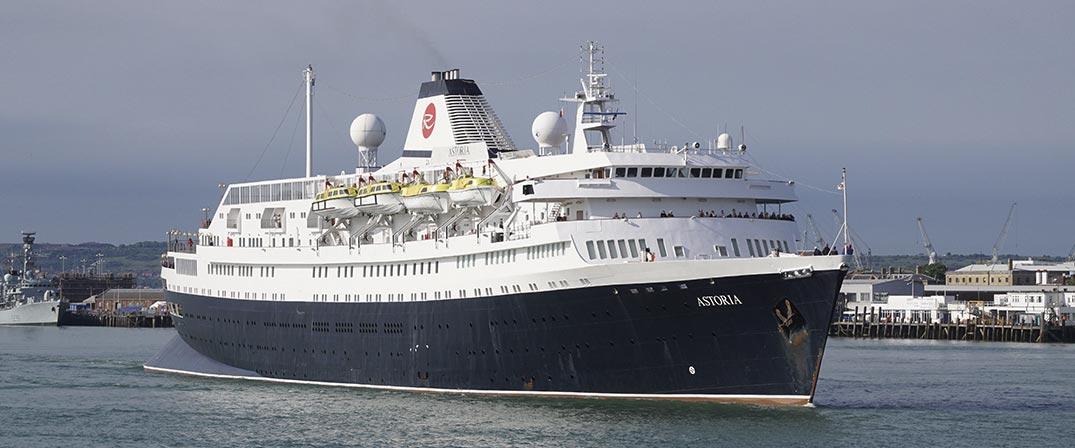
CMV’s 16,144gt/1948-built Astoria (above) was towed away from lay-up at Tilbury on 5th December 2020 after the pandemic caused the loss of the UK-based cruise operation earlier that year. The other members of the fleet had already been sold for further service or scrap. The ship was bound for Lisbon but only got as far as Falmouth Bay with the tug Brent in charge. A change of place then saw the ship towed to Rotterdam, where she arrived for lay-up on 13th December 2020. She has been there ever since, in cold lay-up and is in a rapidly deteriorating state. Unauthorised video tours of the ship have showed the awful condition of this historic vessel. One video on YouTube even shows a copy of Shipping Today & Yesterday on the bridge, which had the Astoria on the front cover. The ship has even broken free from her moorings in a storm and collided with another ship, causing damage. Well, on 17th June the 160m long ship was sold at Rotterdam District Court, Rotterdam. A very sad end.
Other veterans meeting their end include the 12,798gt/1986built Ocean Atlantic (above), which was towed to Aliaga for disposal in May following prolonged lay-up on the Caen Canal, Caen, Normandy. The ship’s rich history saw her begin life as the Russian ferry Konstantin Chernenko.
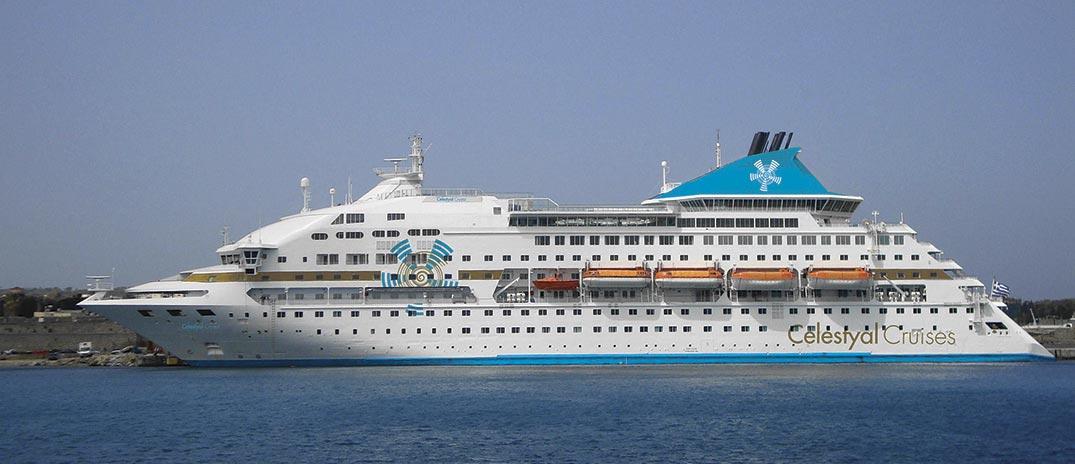
The 25,611gt/1980-built Right was sent to Alang for demolition having ended her career as the Celestyal Crystal (above)for Celestyal Cruises (2015-2023). She was then re-sold in March 2025 to Dubai-based Voyage Shipping. The ship was renamed Sun Bright and sold again in May to Prime Spot Trading. The Celestyal Crystal began life as the Ro-Pax ferry, the Viking Saga of Viking Lines. Conversion to a cruise ship followed, being renamed Sally Albatross. The ship did very well to survive for 45 years, including around 35 years in a very different form. She also sailed under the names Leeward, Superstar Taurus, Silja Opera, Opera, Cristal and Louis Cristal.
Nigel Lawrence
Nigel Lawrence
Andrew Cooke
Celestyal Cruises
MSC Cruises announced on 19th May that they have signed two new orders for their globally successful World Class ships. The order with French ship builder Chantiers de l’Atlantique, will see the total number of World Class ships in the MSC Cruises fleet expand to six. The two new ordered vessels, currently referred to as World Class 5 and 6, will be delivered in 2029 and 2030 respectively and demonstrates the Company’s ongoing commitment to France and European shipbuilding.
Oceania Cruises’ 67,700gt/2025-built Allura was due to welcome her first guests on 18th July following delivery by Fincantieri’s Sestri Ponente shipyard. The Allura underwent the final stages of construction in a dry dock in Genoa in May ahead of being delivered to the NCLH’s upper-premium brand. The Allura is a sistership of the 2023-built Vista and was successfully floated out in July 2024. The ship will relocate to PortMiami in September.
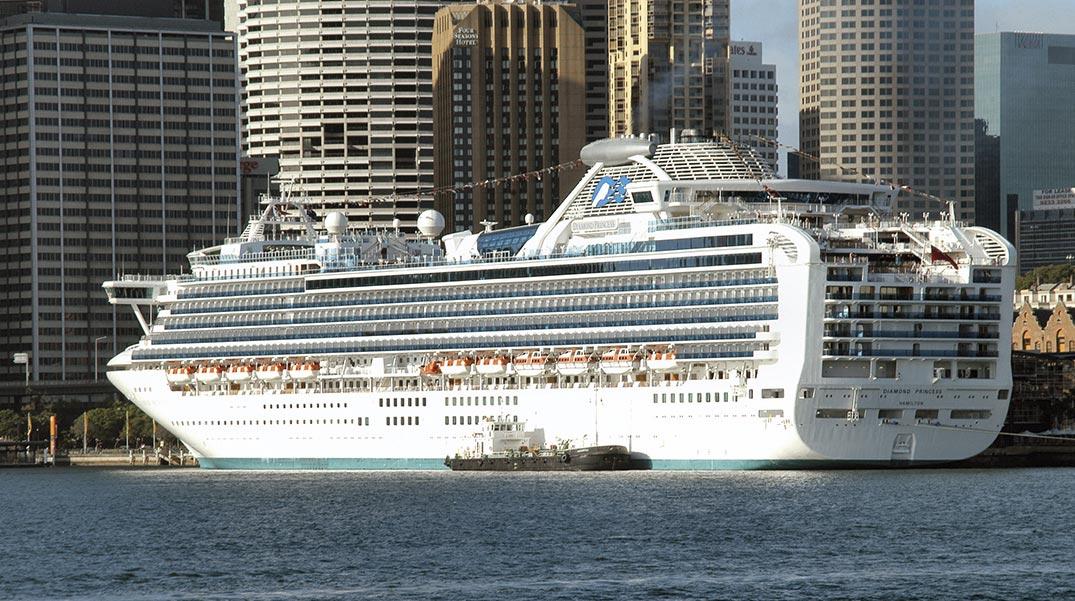
Princess Cruises informed guests aboard the 115,906gt/2004built Diamond Princess (above) on 19th May that the ship’s captain, Michele Bartolomei, had passed away onboard after a sudden medical emergency. Offering cruises to Japan and the Far East at the time, the Diamond Princess was subsequently under the command of Captain Salvatore Macera. Such a sad occasion with Princess Cruises expressing support for Captain Bartolomei’s family, as well as the team of the 2,600-guest vessel. Before repositioning to Singapore for a winter season in Southeast Asia, the ship continues to offer cruises to Japan and the Far East until late November. The 113,561gt/2007-built Emerald Princess commenced her 2025 season at Southampton in May, joining the 145,281gt/2019-built Sky Princess and 142,714gt/2014-built Regal Princess.
Regent Seven Seas Cruises, the world’s leading ultra luxury cruise line, unveiled detailed renderings and a spectacular “flythrough” video of select public spaces onboard the forthcoming 77,000gt and 822-guest Seven Seas Prestige on 8th May. The renderings focus on the Starlight Atrium and Galileo’s Bar. Drawing on inspiration ranging from classical and Renaissance architecture, both the Starlight Atrium and Galileo’s Bar were designed by Studio DADO, who were also the creative drive behind the cruise line’s highly successful Explorer-Class ships. The Seven Seas Prestige is Regent’s first new ship class in 10 years. Embodying a blend of old-world elegance and modern sophistication, the 2-storey Starlight Atrium recalls an era of quality craftsmanship and style, illuminated by a glass-enclosed ceiling that allows sunlight and starlight to grace the space. It features twin spiral staircases, beginning on deck 4, which combine on deck 5 and gracefully lead all the way up to deck 11. Galileo’s Bar is named in a nod to Regent’s beloved Seven Seas Navigator, which is leaving the fleet, and is strategically placed to serve both the Prestige Lounge and adjacent casino. The bar’s ceiling is a canvas displaying a contemporary masterpiece styled like an oil painting, framed by fretted metal detailing.
CRUISE NEWS
Royal Caribbean International’s 248,663gt/2025-built Star of the Seas embarked upon her sea trials on 15th May from the Meyer Turku Shipyard in Finland, marking one of the final construction milestones for the newbuild. The Icon Class vessel had 11 days of trials ahead of her debut in Florida in August. The 155,889gt/2008-built Independence of the Seas has returned to Southampton for the 2025 season, replacing the 168,666gt/2015-built Anthem of the Seas.
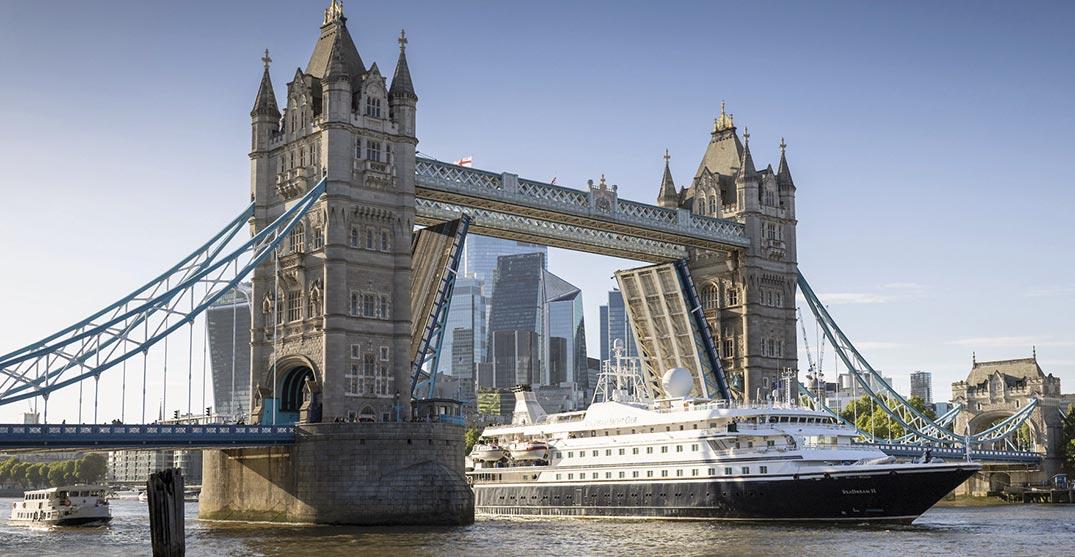
SeaDream Yacht Club’s 4,333gt/1985-built SeaDream II completed her maiden call in London on 21st May, sailing through Tower Bridge before berthing alongside HMS Belfast (above). The 112-guest yacht remained in London until 24th May when she began SeaDream Yacht Club’s Norway and Northern Europe season, setting sail on a 7-night Scandinavia and The Kiel Canal voyage to Oslo. Prior to this, the SeaDream II had called at St. Peter Port, Guernsey, and Honfleur. Family owned and operated, SeaDream Yacht Club has set the industry standard for boutique yachting experiences. The 4,333gt/1984-built SeaDream I and the SeaDream II are consistently ranked as the world’s best in several categories and were recently awarded the highest rated restaurant at sea. With one crew member for every guest, the company offers 7 to 15 day voyages to exclusive and secluded ports around the world.
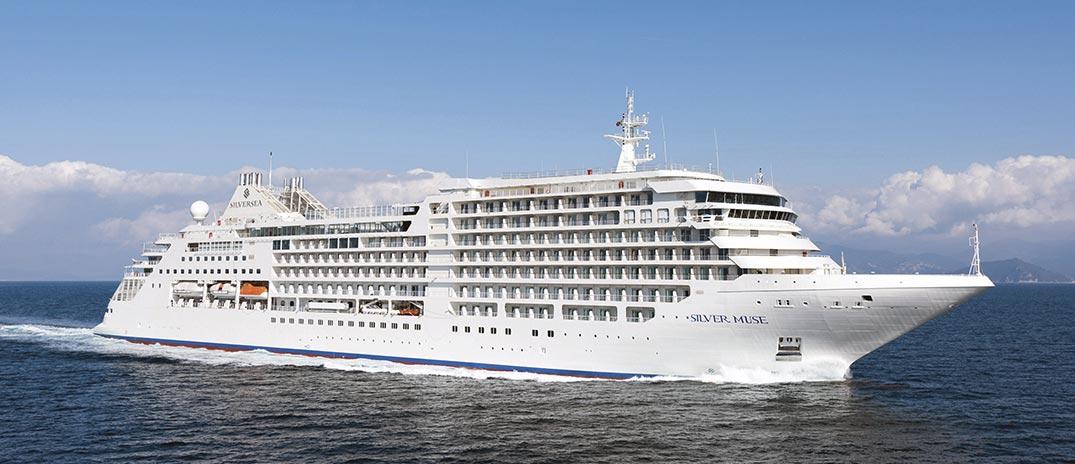
40,791gt/2017-built Silver Muse (above) is to receive a substantial increase in guest capacity during a European shipyard visit in November 2025. The double occupancy is expected to increase by approximately 7% percent, to 632 guests. Changes to the Silver Suites will contribute to this change with other new features including S.A.L.T. on Deck 4, Silversea’s pioneering culinary experience.
Sunstone Ships’ 2,183gt/1992-built Ocean Nova visited Poole on 29th April before proceeding to the Isles of Scilly the next day. Unfortunately, the ship went aground whilst anchored off St. Mary’s on a falling tide. However, she was refloated without issues and made her next scheduled call at Holyhead. However, she was at an anchorage off South Ronaldsay over the weekend of 24th-26th May and encountered difficulties during her departure from Orkney. Engine problems arose with the Maritime and Coastguard Agency’s emergency towing vessel Ievoli Grey being placed on standby close to the vessel. The Skandi Laser arrived from Aberdeen on 27th May to relieve the Ievoli Grey and take the Ocean Nova to Aberdeen for repairs.
Silversea’s
Nigel Lawrence
Silversea
Christopher Ison
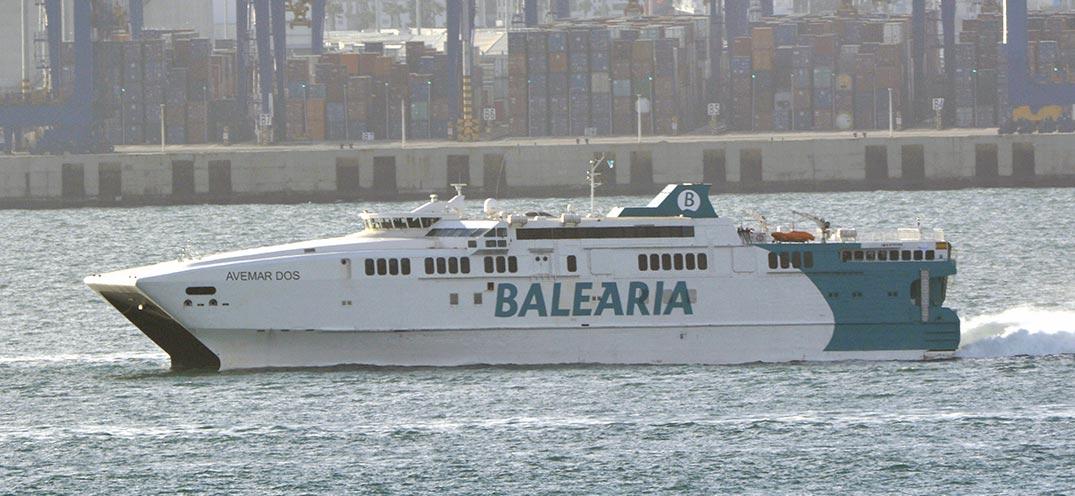
Baleària launched their Tarifa-Tangier Ville route on 8th May using the 5,517gt/1997-built Avemar Dos (above), ex-P&O Ferries Superstar Express, and, on 23rd May, the company introduced the Jaume I to the service, increasing daily departures from 4 to 6 in each direction. The 3,989gt/1994-built Jaume I (built as Stena Sea Lynx II) has a capacity for over 600 passengers and 150 vehicles. Baleària planned to further increase frequencies to 8–12 daily sailings in the following weeks, depending on demand. Baleària had secured a 15-year concession to operate this route, committing to invest in two zero-emission electric fast ferries by 2027, aiming to establish the first intercontinental green maritime corridor between Europe and Africa.
The DFDS contract for the service ended on 5th May. Baleària and Boluda Corporación Marítima submitted non-binding bids in May to acquire Naviera Armas. The sale process is being managed by investment funds including JP Morgan, Barings, Cheyne, Bain, and Tresidor, who took control of Naviera Armas after capitalising its debt. Baleària was bidding for two of the three main operational areas of Naviera Armas: the Canary Islands and the Alboran Sea routes. There is also an option to include the Strait of Gibraltar routes. Boluda has partnered with a group of Canarian investors, with their bid focusing on maintaining and strengthening maritime connections within the Canary Islands. Spanish media also stated that DFDS was interested in acquiring a smaller portion of Naviera Armas, the Strait of Gibraltar routes.
Following her overhaul in Cadiz, the 24,534gt/1989-built Rosalind Franklin (formerly Brittany Ferries’ Bretagne) entered service for Baleària on 7th May, serving Nador and Almería, replacing the 19,976gt/2008-built Ciudad de Mahon, which relocated to the Motril-Tangier Med link. The Rosalind Franklin’s former fleetmate, the 27,541gt/1992-built Normandie, departed Cherbourg as La Meridionale’s Massalia on 28th April, bound for refit in Marseille and the start of her new life in the Mediterranean.
Brittany Ferries announced on 20th May that it is taking DFDS to court over the aid it receives for the public service delegation (contract) to run the Dieppe-Newhaven route. It estimates losses of more than €150 million. The dispute between Brittany Ferries and DFDS has reached a new level. After losing its appeal in April against the award of a contract to serve the Isle of Jersey to DFDS, Brittany ferries is now taking the Danish shipowner to court over the “public service delegation” contract for the DieppeNewhaven route. Two complaints have been lodged. One with the Brest Commercial Court and the other at European level with the EU Directorate-General for Competition. Brittany Ferries cites the payment of public monies to DFDS over the past 12 years which unfairly subsidise the Dieppe-Newhaven route. According to Jean-Marc Roué, the company's chairman, ‘these subsidies granted by the Syndicat mixte transmanche (SMPAT) allow DFDS to levy artificially low fares that are out of touch with economic reality. This draws a significant proportion of traffic on Newhaven-Dieppe the detriment of Brittany Ferries' Normandy routes.” He estimates losses at more than €150 million since 2013, due to the loss of passenger and freight volumes caused by this market distortion.
CalMac’s 7,272g Glen Rosa, sister to the 2024-built and fully operational Glen Sannox, had her delivery put back by up to 9 months on 13th May. The cost of the ship has also risen, by up to £35 million, meaning the two ships will cost upwards of £460 million, more than 4.5 times the original contract price. Ferguson Marine said it now expected the Glen Rosa to be "substantially complete" in the first quarter of 2026 and delivered between April and June 2026.
The ship, which is to serve CalMac's Arran route, was originally due for delivery in July 2018. Delivery was previously hoped for in September 2025. Diverting resources to the Glen Sannox to get her finished is said to have added to the delay with the Glen Rosa. The shipyard advised that the cost to complete the Glen Rosa would rise from £150 million to £172.5 million plus a further £12.5 million for contingencies, taking the forecasted cost to £185 million.
Whilst not as significant as the Clyde-built ship delays, the four large ferries under construction in Turkey are also delayed, with the first of them, the 5,861gt Isle of Islay, due for delivery late summer 2025. She was originally expected in late 2024 but was noted out on sea trials in late May. Her predecessor, the 3,040gt/1985-built Hebridean Isles, was powered off for the last time on 9th May as the remaining crew left the ship. The vessel had been alongside KGV docks in Glasgow since mid-November 2024 and CalMac continued to crew the vessel, at minimum manning levels, under charter until CMAL finalised arrangements to tow the ferry, dead ship, to a recycling facility at Esbjerg in Denmark. The end of an era for many, a special memento was presented to John Angus MacDonald, Senior Catering Rating, who worked on the vessel for nearly 25 years. John was presented with the ship's inclinometer mounted onto a plaque by Chief Officer, Jamie O’Hara.
The new £3.9 billion contract to run Scotland's west coast ferry services for the next 10 years has been directly awarded to the state-owned operator CalMac Ferries Ltd. The Scottish government said the service would now be focused on a public service model instead of being run on a commercial basis.
The current contract for the Clyde and Hebridean Ferry Service, already operated by CalMac, had been due to expire last September but was extended by a year. The previous eight-year contract for the heavily subsidised ferry service was worth £975 million. GMB Scotland general secretary Louise Gilmour added that the government should now merge CalMac and CMAL to encourage a more joined-up approach focused on supporting both ferry services and Scottish industry. Besides the present newbuild projects for large ferries, a contract for seven electricpowered small ferries was awarded to the Polish firm Remontowa in March, with the first of them due for delivery in 2027. Procurement for three more small vessels is expected to begin later in 2025.
The 4,719gt/1988-built Isle of Mull finally arrived at the James Watt Dock in Greenock on 24th May to receive her new MES system. The ship had been limited to 45 passengers since January 2025 until this work could be done, and the project was delayed by extended refit periods for both the 5,626gt/2011-built Finlaggan and 5,506gt/2001-built Hebrides. It was hoped to have the Isle of Mull back in service on 29th June, so the Mull services continued to be affected.
CLdN’s 74,273gt/2018-built Delphine was confirmed on 9th May as having resumed operations following repairs after the fire incident on 16th April in Zeebrugge. Operating an overnight trip to Killingholme, the ship was authorised to sail at a reduced capacity of 6,000 lanemetres, down from the full capacity of 8,000 lanemetres. The official investigation into the fire's cause was ongoing but a car was identified as the source, albeit not a fully electric (BEV) vehicle.
Nigel Lawrence
The 50,455gt/2022-built Seraphine was officially named on 16th May at the Liverpool Cruise Port, marking CLdN’s longstanding partnership with Peel Ports Group to regenerate dock infrastructure. As part of the celebration, CLdN highlighted its ongoing partnership with Peel Ports Group to renovate Brocklebank Dock with the port redevelopment deliver 90,000m2 of new surfacing for 900 trailer bays and other upgrades. Enhancements to the quayside are designed to accommodate larger ships, with CLdN currently operating 24 sailings a week between Liverpool and Dublin. The service has recently been expanded by a further 25% with larger vessels being deployed.
The 77,678gt/2025-built Chaumine, a member of CLdN’s new G9e series, with capacity for 8,000 lanemetres of freight, arrived in Rotterdam week commencing 19th May on her delivery voyage from China. She discharged her consignment of vehicles at CLdN’s Rotterdam terminal before relocating to Zeebrugge ready for a scheduled sailing to Purfleet on 25th May, her first within CLdN’s network.
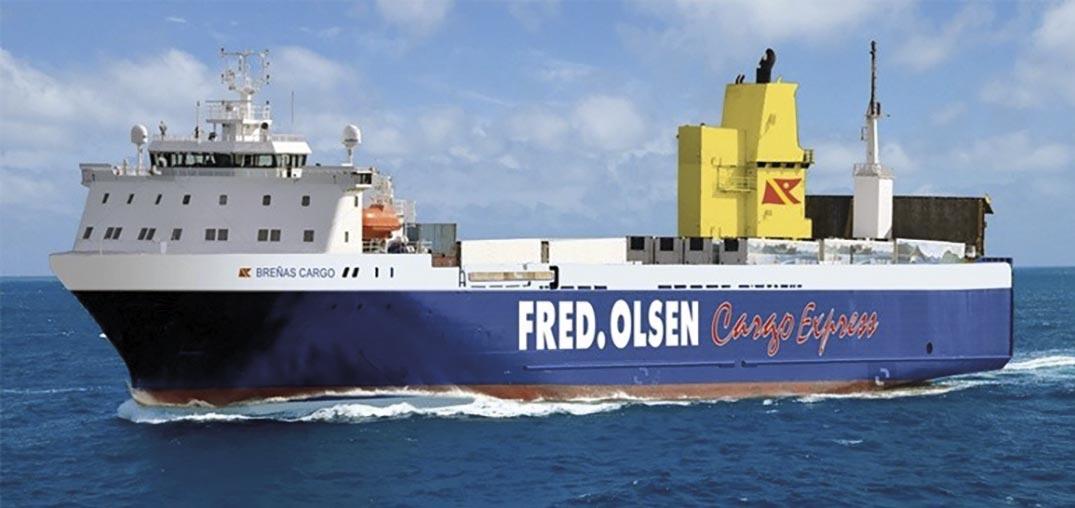
Fred. Olsen Cargo Express has acquired the 10,585gt/1998built Breñas Cargo (above) for operation from La Palma to Tenerife, Gran Canaria, Fuerteventura, and Lanzarote. The vessel was formerly known as Smyril Lines’ Akranes and can carry up to 1,500 lanemetres and 7,000 tonnes of cargo. The ship entered service in summer 2025 and operates on a regular schedule with three weekly rotations, optimizing the supply and transport of goods from La Palma. Fred. Olsen Cargo Express now has a fleet of 3 Ro-Ro ships with the 11,671gt/2000-built Bentayga Cargo (entered service May 2024) and 11,671gt/2001built Bahia Cargo (entered service November 2024). These ships were previously the Finnkraft and Finnhawk.
Grandi Navi Veloci (GNV) has ordered four new LNG-powered Ro-Pax vessels to expand and modernise the fleet by 2030. The ships will be built at Guangzhou Shipyard International in China with construction scheduled to commence in 2026, with the first ship expected to be delivered in early 2028, followed by the others at 6-monthly intervals. The new 71,300gt vessels will have a length of 237 metres and a beam of 33 metres. They will carry up to 2,500 people (passengers and crew) and will have 500 cabins and 3,500 lanemetres of vehicle deck space.
Guangzhou Shipyard International successfully delivered the second GNV 1,800-passenger/3,100lm Ro-Pax newbuild in May, 10 months ahead of the contract period. Ms. Maria Francesca De Leo, Financial Manager of GNV, named the 52,912gt/2025-built GNV Orion. The first ship, the 45,909gt/2024-built GNV Polaris, was delivered in October 2024. The second ship has been optimised and upgraded based on the first ship, with the number of cabins increased from 298 to 492 and the passenger capacity increased from 1,500 to 1,800. The ship has a total length of 218m, a beam of 29.6m, a hull depth of 10m, a design draught of 6.45m, a deadweight of 7,994t and a design speed of 25 knots. The 3,100lm capacity can accommodate over 600 cars or 200 40-foot container trailers. The ship is powered by four 9-cylinder medium-speed diesel engines, achieving a speed of 25 knots at 83.5% of the rated power, with a range of 3,500 nautical miles.
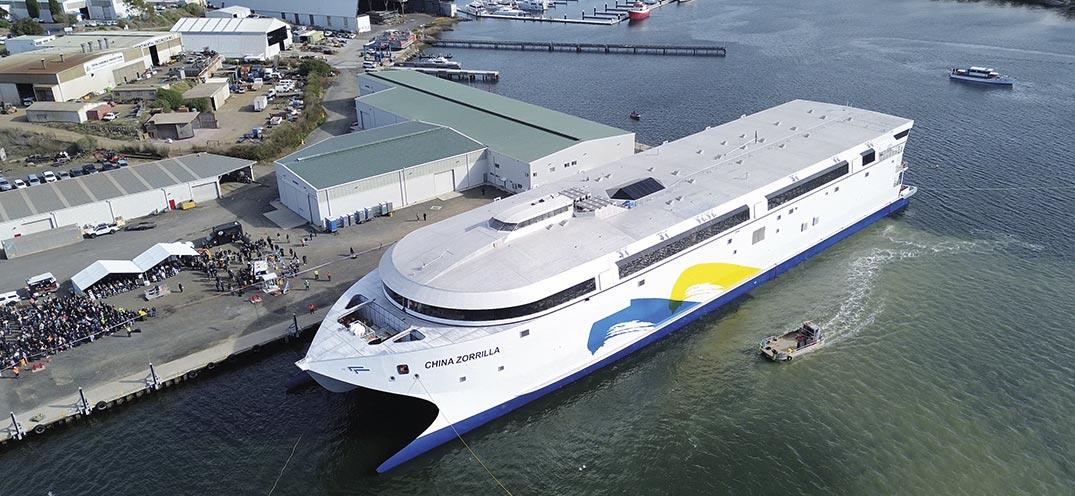
Incat Tasmania launched the 14,058gt/2025-built Hull 096 on 2nd May and made history as this was the launch of the world’s largest battery-electric ship, to be named China Zorilla (above).
Constructed for South American ferry operator Buquebus, Hull 096 is the most significant vessel ever built by Incat and represents a giant leap forward in sustainable shipping. When she enters service between Buenos Aires and Uruguay, she will operate entirely on battery-electric power, carrying up to 2,100 passengers and 225 vehicles across the River Plate. This true game changer is the ninth Incat-built vessel for Buquebus, continuing a proud and long-standing partnership between the two companies.
The China Zorrilla was originally planned to run on LNG, but the build was revised to a fully electric vessel. The ship is equipped with over 250 tonnes of batteries and an Energy Storage System (ESS) boasting more than 40 megawatt-hours of installed capacity. The ESS, which is four times larger than any previous maritime installation in the world, is connected to eight electric driven waterjets and supplied by leading technology partner Wärtsilä. This combination of technology sets a new global benchmark for the shipping industry. Work then continued to complete the vessel’s interior, which includes a 2,300m2 dutyfree retail deck, the largest shopping space on any ferry in the world. Final fit-out, battery installation, and energy system integration will take place ahead of sea trials later this year on the River Derwent. At 130 metres in length, Hull 096 is not only the largest electric ship in the world, but also the largest electric vehicle of its kind ever built - and one of the most significant single export items in Australia’s manufacturing history.
Irish Ferries’ 36,249gt/2007-built James Joyce sailed from the Fayard Shipyard at Lindoe, Denmark, for Rosslare on 28th April in preparation for resuming Dublin-Holyhead sailings on 5th May in tandem with the 50,938gt/2001-built Ulysses. The 22,152gt/2000-built Isle of Inisheer then switched to DublinCherbourg full time as second ship, offering pro-freight sailings alongside the 51,388gt/2018-built W. B. Yeats.
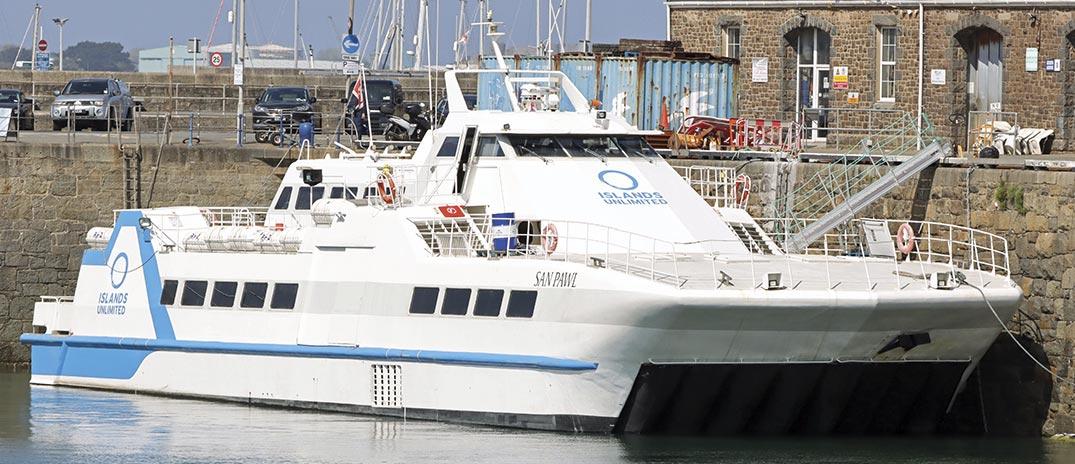
Islands Unlimited’s passenger vessel for the new GuernseyJersey passenger ferry, the San Pawl (above), arrived at St. Peter Port from Valetta, Malta, aboard the 5,460gt/2015-built Eemslift Hendrika on 17th May.
Readers may recall that on 5th April 2021, the Eemslift Hendrika ran into serious difficulties off the coast of Norway during a northwesterly storm. A cargo shift in the hold (a number of azimuth thrusters) punctured an anti-heeling tank and ballast
Fred. Olsen Cargo Express
Incat
Andrew Cooke
FERRY NEWS by Andrew Cooke
water tanks. The water then flowed from the tanks into the cargo hold. As a result of the shifting azimuth thrusters and the ballast water leaking into the hold, the vessel developed a starboard list. One work vessel on deck went overboard (later recovered intact) and the ship was eventually stabilised and taken to safety.
No such drama on the voyage from Valetta with the ferry travelling as deck cargo. The 389gt/1990-built San Pawl was acquired by Islands Unlimited from Virtu Ferries. Delivered in June 1990 from the Brødrene Aa shipyard in Nordfjordeid, Norway, the vessel is from the hovercraft family, namely a Surface Effect Ship or Air Cushioned Catamaran. She is 35m long with a 11.5m beam and can carry 316 passengers in standard class (main deck) and the upper deck Premium Class lounge. Service speeds are 35-40 knots for such craft usually. The Guernsey-based service was due to commence on 30th May with a crossing time of 1 hour.
To see one of these craft again was rather nostalgic as the Writer travelled on two sister craft that operated the short-lived Cowes Express service from Cowes to Southampton 1990-92. These were the Wight King and Wight Queen with a smaller example being the Wight Prince.
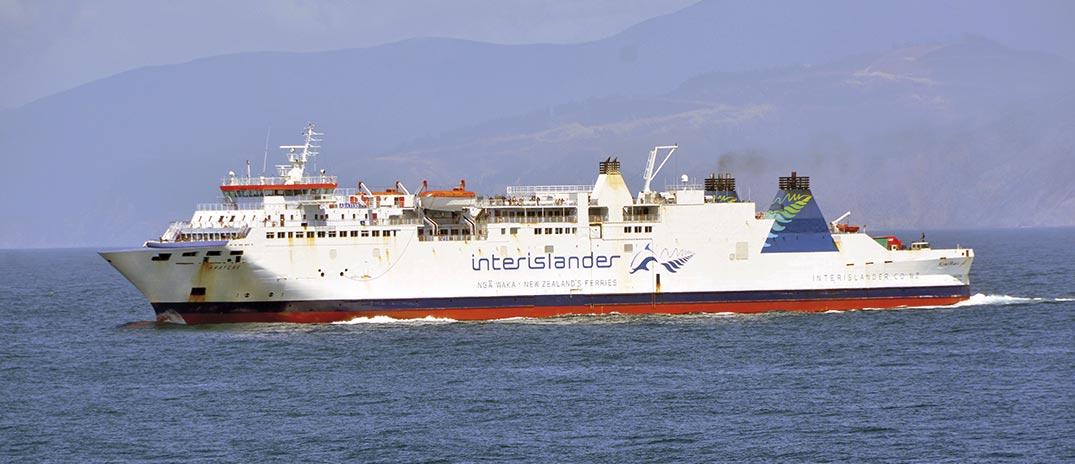
KiwiRail’s 17,816gt/1998-built Ro-Pax/ Trainferry Aratere (above) is to be retired from the Interislander fleet early, as announced on 30th April. The retirement will make way for the port re-development needed in Picton to prepare for the two brand-new ferries arriving in 2029. The trainferry berth in Picton needs to be demolished and the company says the ship cannot use the other Interislander wharf in Picton. Building a temporary berth for Aratere would be too expensive in a project where tight cost control is a priority, and risks delaying the necessary infrastructure work in Picton. The company conceded that moving from three ships to two will mean the loss of some roles, but the exact number will depend on the outcome of a consultation process across the Interislander workforce.
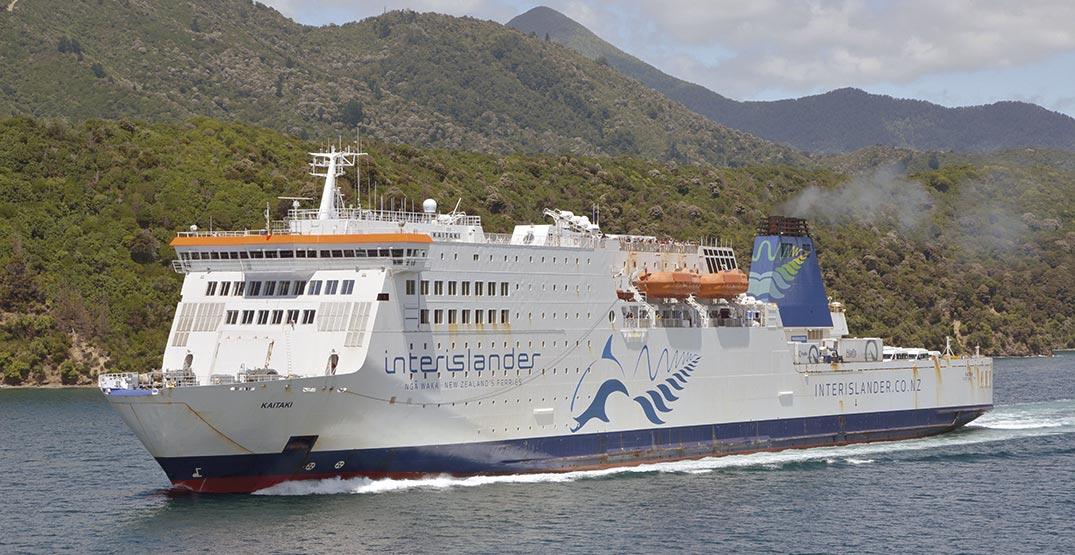
Operations will be left in the hands of the 22,365gt/1995-built Kaitaki (above), ex-Isle of Innisfree/Pride of Cherbourg III/Stena Challenger, and 22,160ft/1998-built Kai ā rahi (ex-Dawn Merchant/Norman Trader/Stena Alegra). The Aratere was due to leave Wellington in late June for drydocking in Singapore, but this would now be reviewed. Although the Aratere is currently Interislander’s only rail-enabled ferry, KiwiRail already carries rail freight on the Kaitaki and Kaiārahi using an effective road bridging process. There are however concerns at the future of the tra-
ditional rail ferry operation. The purpose-built Aratere was delivered from Spain and replaced the Aratika in 1999. In 2011 a 30m section was added to her length to increase capacity. The 183.69m ship can accommodate 600 passengers/ 30 trucks or 230 cars/28 rail wagons. Her career hasn’t been the smoothest, but the withdrawal does seem premature.
Seajets has deployed the 19,763gt/1985-built Superstar II (ex Color Viking) on the Piraeus-Mykonos-Ikaria-Samos route for the 2025 summer season, with an extension to Patmos-LerosKalymnos twice weekly. It began 14th June and was due to operate until 30th October. The ship was purchased from Color Line at the end of November 2022 and delivered in February 2023. The ship began life as the Peder Paars for DSB Rederi but became the Dover-Calais ship Stena Invicta in 1991 until 2000 when sold to Color Line.
Recent Incat addition, the former Max Mols of Molslinjen, now carries full Seajets colours and the name Eurochampion Jet. The 5,617gt/1998-built and 92m craft began life as the Cat-Link IV and also operated as P&O Ferries’ Caen Express in 2004 but served Molslinjen most of her career until 2024. Sister Cat-Link V was awarded the Hales Trophy (Blue Riband) in 1998 for the fastest transatlantic crossing by a passenger vessel. The delivery voyage without passengers achieved 41.3 knots (76.5 km/h). The latter is the 5,619gt Skane Jet, currently laid up and was previously the Fjord Cat.
Smyril Line disposed of the Ro-Ro ship Akranes (see Fred. Olsen news) and on 21st May celebrated the steel cutting of their first Ro-Ro newbuild, H616, at the CIMC Raffles Shipyard in China. The project involves two identical Ro-Ro ships, each 190m long with 3,300 lanemetres for trailers. These cargo ships will join Smyril Line’s network and are scheduled to begin sailing in 2026. Developed in close partnership with naval architects Knud E. Hansen, and leveraging Smyril Line's extensive North Atlantic experience, the ships are tailored for the route connecting Europe, the Faroe Islands, and Iceland. The vessels will be modern and environmentally friendly and equipped with a battery system and shore power capability.
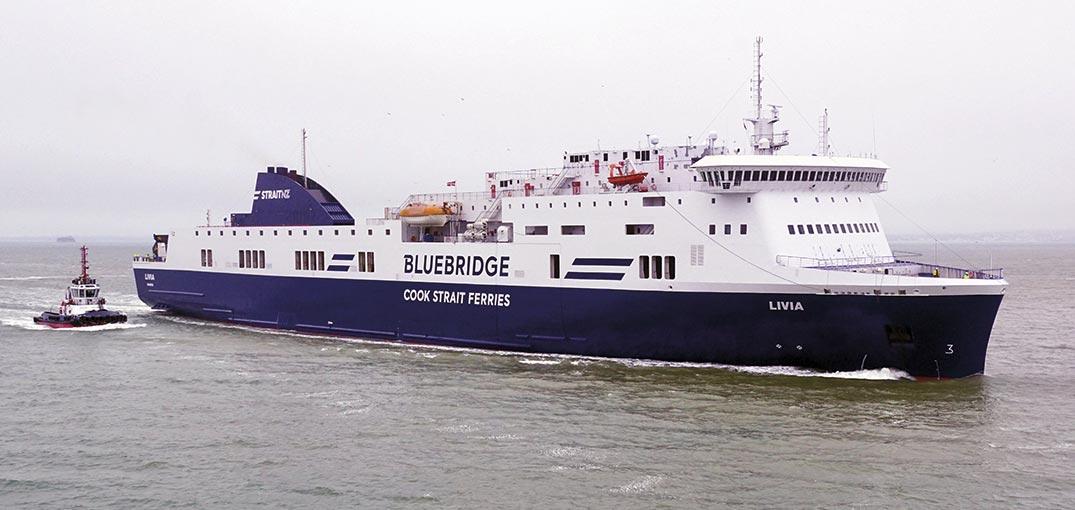
Stena Line’s 26,904gt/2008-built Stena Livia (ex-Etretat/Norman Voyager) has been renamed Livia (above) for her new life with Bluebridge Cook Strait in New Zealand. The ship was replaced on the Baltic services by the 27,522gt/2006-built Stena Horizon from Rosslare-Cherbourg. After a full repaint and dry docking at Fayard, Lindoe, Denmark, the ship emerged on 19th May, ready for her delivery voyage to join the 27,414gt/2007-built Connemara on Wellington-Picton, another ex-Brittany Ferries/LD Lines and Visentini-built ship. The Livia departed Denmark on 19th May but only went as far as the anchorage off Skagen. A scheduled call to Portsmouth for bunkers was cancelled and a revised call at Belfast on 25th May was missed as the ship was still at anchor. On 8th May Stena Line (UK) welcomed a statement from Holyhead Port that following the completion of necessary repairs, Terminal 3 (T3) at Holyhead Port was on schedule to be brought back into operation on 1st July.
Nigel Lawrence
Nigel Lawrence
Andrew Cooke
FEATURE Newbuild of the Month
by Andrew Cooke
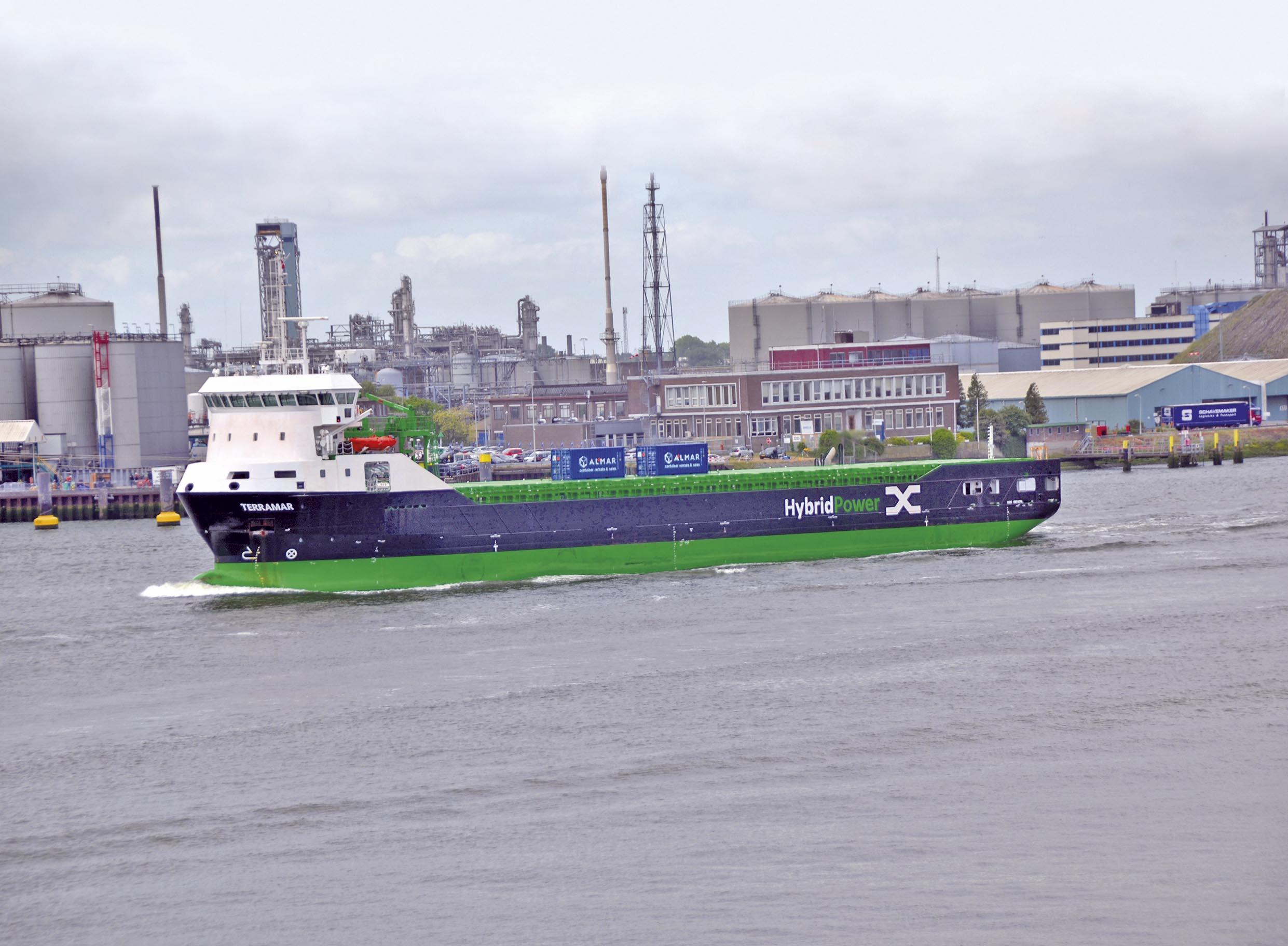
TERRAMAR
Anew series of 5,350dwt Ice Class 1A hybrid cargo vessels took to the world’s shipping stage on 21st June 2023 when the first example, the Electramar, was successfully launched at the Chowgule Shipyard. She was the first unit in a series of twelve highly energy-efficient plug-in hybrid vessels, dubbed the Electramar Class and ordered by ESL Shipping of Finland’s subsidiary, AtoB@C Shipping.
Delivery of the 4,135gt ship took place on 15th December 2023. The sisterships are identical, with this feature throwing the spotlight on the sixth newbuild in the series, the Terramar. Beginning life as Yard No. C-280, the ship was ordered on 21st September 2021, her steel cutting ceremony was on 29th June 2023, the keel was laid on 6th November 2023 and the launch took place on 3rd December 2024. The Electramar was christened in Helsinki on 15th May 2024 with her godmother being Paula Ojala, Chartering Manager at the global steel company SSAB, a long-term client of both AtoB@C Shipping and ESL Shipping. The Stellamar, the second vessel in the series, was delivered 5th April 2024 and the third, Ecomar, was handed over on 13th June. Ship number 4 followed on 17th September, the Aquamar, with the fifth vessel, Maximar, officially joined the fleet at the shipyard on 20th December 2024. Delivery of the Terramar followed on 14th March 2025 before the ship commenced her repositioning voyage to Northern Europe. Generally speaking, these voyages involve carrying cargo between certain points of the journey to enable the ship to earn her first revenue.
The Terramar sailed to Europe via the Cape of Good Hope, stopping for bunkers in Cape Town and Mindelo, Cape Verde. She also loaded a few containers from Cape Town to Rotterdam. The penultimate call before the shores of mainland Europe was Mindelo, departing there on 5th May and arriving at Rotterdam’s Waalhaven on 16th May. The naming policy follows the pattern of each name ending in “mar,” the Latin for sea, so the direct translation of Terramar can be assumed as “Earth Sea.”
The remaining ships of the dozen ordered are the Biomar, Venturmar, Fleximar, Astramar, Magamar and Luxomar. Three were expected to be delivered this year and three in 2026 to conclude the series. From the outset, the production line aimed to deliver one unit every three months. The newbuilds are coming from a part of the world
not so commonly associated with international shipbuilding, namely Chowgule and Company Private Ltd (Shipbuilding Division) near Borim Bridge, Loutulim, Goa, India. The Shipbuilder charts its history back to 1951 and was a pioneer in exploiting the inland waterways in Goa, building, operating, and repairing large river fleets.
The range of vessels produced includes ore-carrying barges, grab and suction dredgers, deep-sea fishing trawlers, tugs, pontoons, launches, hopper barges and coastal vessels. The yard has also pioneered the construction of all types of ocean-going vessels up to 7,000dwt and has constructed over 165 vessels for clients in India and abroad. An investment of approximately INR 110 Crores (INR 1,100 million) was made for creating today’s shipyard facilities, over and above the cost of land and other basic infrastructure that already existed. The company has two shipyards with a combined output of 9 ocean-going multi-purpose general cargo vessels per year of around 5,000dwt each.
SHORTSEA INNOVATION
AtoB@C Shipping of Sweden was founded in 2000 and is an innovative shortsea operator transporting bulk and breakbulk cargoes for industrial clients. Their success is based on operational excellence and long-term client contracts which form the backbone of operations. Their first ship was chartered in 2002 and their first ship, the Unimar, was acquired in 2006. In 2011 the 2,779gt newbuilds Calamar and Delamar were delivered. In 2013 the company took over Rederi AB Transatlantic’s short sea bulk division, which included 19 vessels, with Finnish company ESL Shipping acquiring AtoB@C Shipping in 2018. Three years later AtoB@C Shipping assumed control of five 3,000dwt ships from ESL Shipping and the Electramar Class order was submitted 2021-2022. The company operates a fleet of modern multipurpose vessels in the 4,000-6,000dwt segments.
The entire fleet is ice-classed, ensuring their ability to secure product and raw material transportation for clients all year around, even in difficult weather conditions. AtoB@C Shipping and ESL Shipping has a combined fleet of over 40 vessels, with cargo capacity ranging from 4,000 to 25,000dwt. In addition, the company provides harbour towage services in the Port of Raahe, Finland. Parent company, ESL Shipping of Finland, was founded in 1949, when Polttoaine Osuuskunta, a prede-
Nigel Lawrence
cessor of today’s Aspo Plc, purchased its first vessel, Arkadia, for a part-owning company called Laivanisännistöyhtiö Arkadia. Polttoaine Osuuskunta was a co-operative originally founded by housing companies in Helsinki with the task of purchasing coal and coke required for the central heating of apartment buildings. As Polttoaine Osuuskunta imported substantial amounts of coal and coke, there was a desire to own their own ship as it made financial sense. The acquisition of the Arkadia was successful, and in 1950, a second vessel was acquired, and shipping operations were transferred to a new subsidiary called Etelä-Suomen Laiva Oy.
Soon, the company was able to offer sea transportation services to other companies too. The company’s longest customer relationships date back to the 1960s and before, featuring the energy and steel industries. Having initially operated with second hand tonnage, the first newbuilds were ordered in the 1970s, of which the first was the 1971-built Eira. In 1980, the shipping company took delivery of the largest vessel in its history, the Kontula. On 21st December 1994, the company name was changed to the simplified ESL Shipping, an easier title for international trade.
The letters ESL paid tribute to the original name whilst the abbreviation was already in general use. In 1994, the company carried around 5.5 million tonnes of cargo, of which 80% was coal. In 2002 ESL acquired Travans, a transportation company mainly transporting limestone using two pusher tugs and two barges in the Baltic Sea area. In late 2003, ESL Shipping's operations took a significant step, when ESL Shipping and Rautaruukki signed a contract of the raw material transportation for Rautaruukki's steel mills. Rautaruukki was not a new client to ESL Shipping as it had previously transported cargoes to its mills in Raahe and Koverhar. As part of the agreement, ESL Shipping purchased two pusher tugs and five 13,500dwt barges from Rautaruukki for €23 million. The shipping volume of the contract was estimated to be 5-6 million tonnes annually, increasing the turnover of the company by €20 million.
Consisting mainly of iron ore pellets and limestone, the contract significantly reduced the company's dependence on the coal trade. The company expanded to the coaster sector in 2017, when four time-chartered 3,000dwt vessels were added to the fleet. Smaller ships became another significant business segment in 2018, when ESL Shipping
acquired AtoB@C Shipping, as mentioned above. Also in 2018, ESL took delivery of the 19,995gt Viikki and Haaga, a pair of eco-smart bulk carriers specifically designed for ESL Shipping's needs.
MODERNISE AND OPTIMISE
With almost 30% of European short sea tonnage being over 30 years old, there has been a pressing need to modernise the tonnage in Europe’s shipping fleets. To meet this challenge, AtoB@C Shipping adopted a new 5,350dwt plug-in hybrid vessel design that is the most efficient and environmentally friendly in the world for its size class. The Electramar Class is a state-of-the-art vessel that produces up to 50% less CO2 emissions compared to present generations of vessels, thanks to shore power connectivity, a large battery installation and improved cargo intake. The ships offer a quieter and cleaner operation while in port and are designed to carry a wide range of bulk and breakbulk products, such as steel, forest products, fertilisers and project cargoes. The vessel has a long unobstructed deck, which allows loading more deck cargo and longer project cargoes than the current vessels in the AtoB@C fleet.
The 4,135gt Terramar, like her sisterships, is engineered for efficient and sustainable year-round operations in the Baltic Sea and Northern Europe and provides optimal cargo intake for a ship of her dimensions. The vessel length overall is 89.95m with a moulded beam of 15.95m, a design draught of 5.60m (the ballast draught is 3.10m), a hull depth of 10.05m and an air draught (from the keel) of 30.835m. The net tonnage is 2,160 and the 5,350dwt figure for this design is also recorded as 5,400dwt and 5,399dwt, depending on the source.
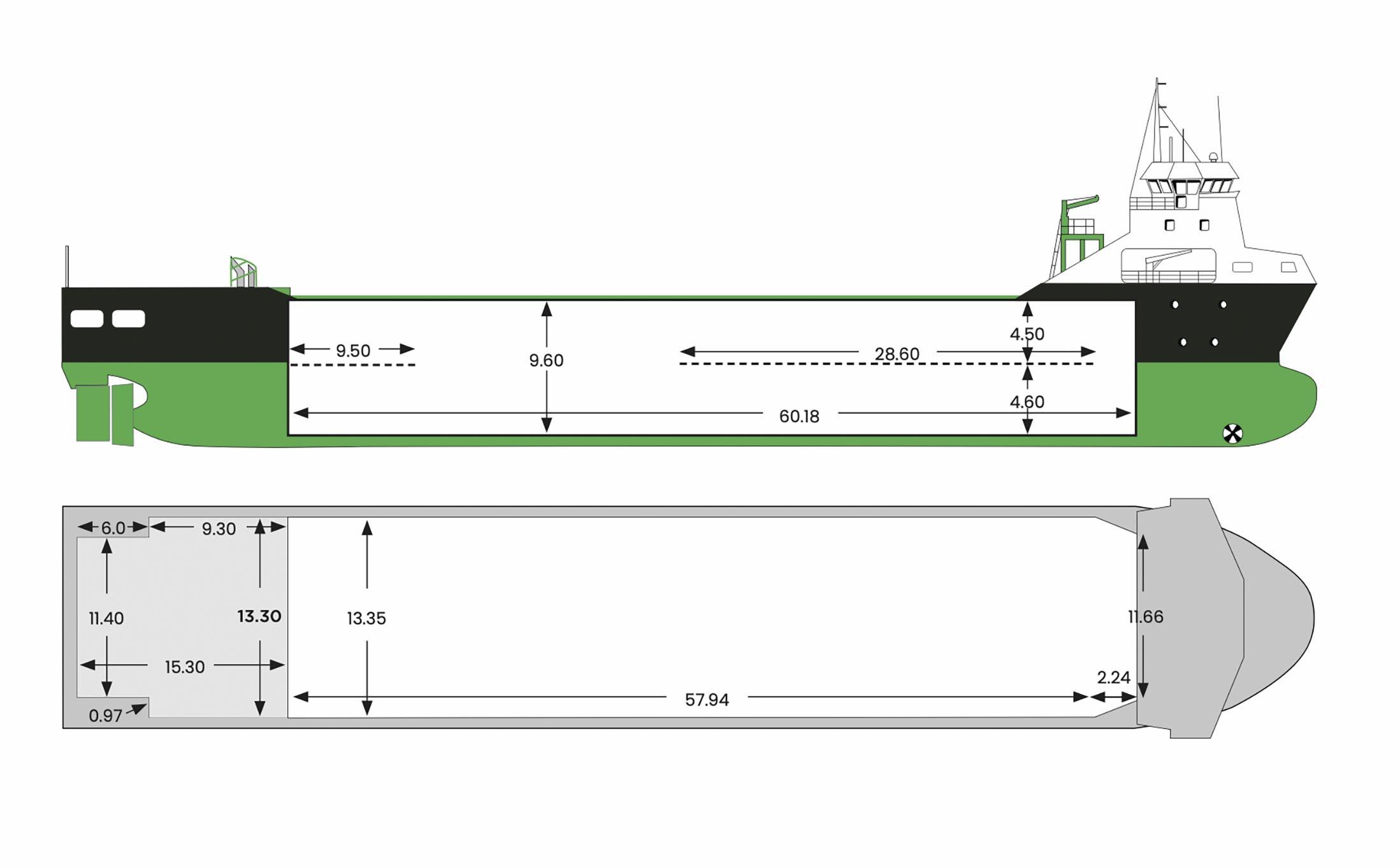
The Electramar Class can handle 5,071 tonnes of cargo and has a hold capacity of 7,650 m3. The cargo hold is 60.18m long overall (running from behind the deckhouse to the machinery spaces aft) with the general dimensions for cargo being given as 57.94m long as there is a slight narrowing of the hold 2.24m from the forward bulkhead. Here, the hold narrows from 13.35m to 11.66m.
The depth of the cargo space is 9.60m and 3 grain bulkheads can be fitted. Dangerous goods can be conveyed under SOLAS Regulation ll-2, Reg.19. A 6-part Tweendeck, measuring 28.60m in length, can be installed in the hold from the forward bulkhead, running aft. The clear height below this is 4.60m and 4.50m above. The Tweendeck deckload
NEWBUILD OF THE MONTH
is 2.5 tonnes/m2. The Tanktop strength in the hold is 15 tonnes/m2 overall and 20 tonnes/m2 in a loading pattern. The hold is covered by 10 hatch covers of the pontoon type, which are lifted/stowed/refitted using a deck-mounted gantry crane. These cranes are typically rail-mounted and run along the ship's hatch coamings. This method allows for the efficient and unobstructed loading and unloading of cargo. The ship’s design featured special attention to the arrangement of cargo spaces, resulting in a 20% increase in cubic capacity for the vessel’s size. The deck load for the hatch covers is 1.75 tonnes/m2 with a stacking load of 30 tonnes (TEU) and 45 tonnes (FEU). The ship’s container capacity is 100 TEU, 50 in the hold and 50 on the deck, or 50 FEU stowed on deck. The shipment of project cargo is made possible by the deckhouse being sited in the bow, so no loss of sight lines due to out-sized loads. Aft of the cargo hold is a deck cargo area above the machinery spaces. She is 15.30m long and 13.30m wide. The section furthest aft narrows for 6.00m by 0.97m to 11.40m. This area has a deck load of 1.75 tonnes/m2 and a stacking load of 50 tonnes (TEU) and 70 tonnes (FEU). There is no funnel casing etc. on deck, just a flat and unobstructed freight deck. The engine exhaust exists on the starboard side of the stern deck area. A 20 tonnes safe working load (SWL) crane is also mounted in a recess on the deckhouse, starboard side.
All cargo hold wash water is collected for re-use and is discharged using washing water reception facilities in port. The crew of 9 are housed in the accommodation located over 4 levels within the forward superstructure.
This includes cabins, day room, mess room, stores and galley. The wheelhouse is on the 5th level of the deckhouse and offers visibility allround.
DOLPHIN ENERGY
The Electramar Class of coastal vessel is propelled by a Yanmar 6EY26WS main engine with a 1,920kW output at 750rpm. These 6-cylinder units have a 260mm cylinder bore and a 385mm stroke. The dry weight of an engine is 18,500kg. Without marine gear attached, the engine is 4,271mm long, 3,112mm high and 1,804mm wide. The engine drives a single controllable pitch propeller, steering is via a full spade rudder and manoeuvrability is assisted by a 300kW transverse tunnel bow thruster. The service speed is 12 knots at a maximum continuous rating (MCR) of 85%. A 450ekw shaft generator is fitted plus there are two 350ekw @ 1,500rpm main generator sets and one 145ekw @ 1,500rpm emergency generator. The electric-hybrid powertrain can run on renewable fuels and shore power with an option for wind propulsion. The battery pack can be used for main engine peak shaving, powering the propulsion and allowing emission-free operation in port. The Power Take-Off (PTO) is 350ekw and the Power Take-In (PTI) is 400ekw. PTO/PTI refers to the ability of a ship's main engine to generate electrical power (PTO) and the ability of an electric motor to provide mechanical power to the propeller shaft (PTI). The 1,000kWh main battery system installed is of the Corvus Energy Dolphin NxtGen Energy type. This lithium-ion NCA system received type approval from Lloyd's Register prior to becoming a key component of AtoB@C Shipping's hybrid vessels.
The Orca ESS is also a widely used marine battery system, with more than 700 installations worldwide, including in Matson's LNGpowered, 3,600 TEU capacity and 260m long Aloha Class newbuild container ships, for delivery 2026-27. The Dolphin NxtGen Energy system is suitable for rapid charging and discharging, has a low weight, is designed for voltages up to 1200 VDC, has a low life cycle cost, is a very flexible and modularised design, is protected via a passive singlecell Thermal Runaway protection and is scalable in terms of capacity and voltage according to vessel requirements. The Corvus Dolphin NxtGen Power also offers high power density, reasonable energy density and the highest level of marine battery safety. The space-efficient, rack-free design enables flexible installation configurations to maximize the utilisation of available battery room space.
The age of hybrid energy ships is well and truly here, and the evolution of the associated technology is certainly gathering pace.
TECHNICAL SPECIFICATIONS
Design: 5,350dwt Plug-In Hybrid Coaster
Type: General Cargo Ship
Shipyard: Chowgule and Company Private Ltd. (Shipbuilding Division) near Borim Bridge, Loutulim, Goa, 403 718, India
Yard No.: C-280
Owner: AtoB@C Shipping AB. Hamntorget 2a, SE-27139 Ystad, Sweden
Operator: AtoB@C Shipping AB
IMO: 9951874
Flag: Cyprus
Port of Registry: Limassol
Class Notations: LRS 100 A1, Ice Class 1A FS ShipRight (ACS(B)), Bottom Strengthened for Loading and Unloading Aground, *IWS, LMC, UMS, ECO, BWTS, Hybrid Power Descriptive Note: ShipRight (IHM, SCM, SERS)
Ordered: 21st September 2021
Steel Cutting Ceremony: 29th June 2023
Keel Laid: 6th November 2023
Launched: 3rd December 2024
Delivered: 14th March 2025
Length Overall: 89.95m
Length Between Perpendiculars: 84.95m
Beam Moulded: 15.95m
Depth: 10.05m
Draught: 5.60m
Maximum Draught: 6.10m
Deadweight: 5,399dwt
Gross Tonnage: 4,135
Net Tonnage: 1,335
Main Engine: Yanmar 6EY26WS, 1920 kW x 750 RPM
PTO/PTI: 350ekw /400ekw
Shaft Generator: 450ekw
Main DG Sets: 2 x 350ekw @ 1500 rpm
Emergency DG Set: 1 x 145ekw @ 1500 rpm
Main Battery System: Corvus Energy - Dolphin NxtGen Energy system 1,000 kWh
Propeller: Controllable Pitch Propeller
Rudder: Full Spade
Bow Thruster: 1 x Transverse Tunnel Unit - 300 kW
Speed: 12 Knots (at 85% MCR)
Crew: 9 Persons
CAPACITIES
Cargo: 5,071 tonnes
Hold Capacity: 7,650m3
Container Capacity: 100 TEU
Hold Dimensions: 58 x 13.34 x 9.6 m
Tanktop Deckload: 15 tonnes/m2
Hatchcover Deckload: 1.75 tonnes/m2
Grain Bulkheads: 3 nos./11 stack positions
Dangerous Goods: SOLAS Regulation ll-2, Reg.19
Hatch Covers: 10 x Pontoon Hatch Covers
Crane: 1 x 20 T SWL
TANK CAPACITIES
Marine Gas Oil: 185 tonnes
Urea: 22 tonnes
Lubrication Oil: 5 tonnes
Fresh Water: 60 tonnes
Special thanks must go to Olli Tuominen, Communications & Sustainability Specialist at ESL Shipping Ltd./AtoB@C Shipping AB for their invaluable assistance with information and imagery, and Frida Rowland, Commercial Director and Head of BU Coasters, ESL Shipping and AtoB@C Shipping.
Save on the shop price & enjoy home delivery!
Subscribe to Shipping Today & Yesterday by direct debit and save £10.60* on the normal shop price. Every month you will receive your personal copy usually before it’s on sale in the shops, offering you maritime news, historical articles & regular features from the world of merchant shipping.
THE WAIRARAPA
The First Pacific Islands Cruise Ship
The Union Steamship Company of New Zealand had risen to a position of dominance in the trade across the Tasman within five years of being founded in 1875, and to consolidate their hold on the market they ordered two identical vessels to be built by Wm. Denny Bros. at Dumbarton. The first of the pair, yard No 252, was launched on 20th December 1881, being named Manapouri and notable in being the first merchant vessel in the world to have incandescent lighting installed.
Leaving Greenock on 31st March 1882 on its delivery voyage, mechanical problems forced Manapouri to divert to Lisbon on 7th April. After spending ten days there, the voyage resumed going without any further stops to Melbourne, arriving on 31st May. Leaving on 3rd June, with a brief stop at Bluff, Manapouri arrived at Port Chalmers, the port for Dunedin where the Union Line head office was located, at 8.15pm on 8th June. Despite the lateness of the hour, a huge crowd assembled on the wharf to see the ship arrive. On 10th June, Manapouri entered the
graving dock for maintenance, being refloated on 14th June and leaving Port Chalmers on 15th June for Auckland via Lyttelton, Wellington, Napier and Gisborne.
The second ship, yard No 259, was named Wairarapa when launched on 18th May 1882, being completed and handed over to the Union Line on 3rd July 1882. Built at a cost of £63,600, Wairarapa was 1,716 gross tons, having a steel hull 285ft. long with a 36ft. beam and powered by a single 2-cylinder compound surface condensing steam engine, the diameters of the cylinders being respectively 41in. and 70in., with a 4ft. length of stroke, 293 nominal horsepower, driving a single propeller for a maximum speed of 14½ knots, which was easily achieved on trials.
Accommodation for 147 passengers in saloon class and 100 in second class was fitted. In saloon class there were two 2-berth cabins, twenty-five 4-berth cabins, one 6berth cabin, and an 18-berth ladies deck cabin, along with a nursery with six berths plus convertible settees that could be made available for up to thirteen passengers. Second
class comprised a single 3-berth cabin, three 8-berth cabins, a ladies cabin with 13 berths, and 60 open berths in public spaces.
After being prepared for the delivery voyage, Wairarapa embarked a large number of passengers and, under the command of Captain H.W.H. Chatfield, left Greenock at 3pm on 18th July. A report of the voyage stated the ship experienced heavy SW winds and a head sea going down the Irish Sea Channel, with the pilot disembarking off Waterford at 8pm on 19th July.
Wairarapa encountered strong SW winds with a very choppy sea crossing the Bay of Biscay, and passed close to the west end of Madeira at 8am on 24th July. Light trade winds were experienced from there to St. Vincent, in the Cape Verde Islands, which was reached at 9pm on 27th July. Leaving at 10pm on 28th July, Wairarapa crossed the equator on 3rd August, and battled through strong south-east winds to the Cape of Good Hope, which was rounded on 13th August.
Crossing the Southern Ocean, Wairarapa was again assailed by strong winds and heavy
seas until past Amsterdam Island, after which the weather was fine. Cape Otway was passed at 8.30pm on 2nd September, and after a comfortable passage across the Great Australian Bight, the Port Phillip Bay pilot came onboard at 12.20am on 4th September. Having taken 43 days from Waterford Wairarapa anchored off Williamstown at 8.15am, and went up to Melbourne that afternoon, berthing on the south side of the Yarra River.
Wairarapa was immediately placed on the trans-Tasman trade, embarking passengers for New Zealand ports before departing Melbourne at 4pm on 9th September, calling at Bluff on the afternoon of 13th September. Next morning Wairarapa reached Port Chalmers, the arrival of the new ship creating considerable interest.
Wairarapa left Port Chalmers on 16th September for Lyttelton, Wellington, Napier, Gisborne, and Auckland, going up to Russell in the Bay of Islands to fill the bunkers with coal. The vessel then made a trip back to Melbourne, which included the first visit to Hobart.
MEMORABLE SHIPS - The Wairarapa
and sunk by US aircraft in the Mekong River.
(Hocken collection, University of Otago library)
Below A view of the Wairarapa docked in her prime. (The late Allan Green collection)
Wairarapa continued to Melbourne, departing there on its first full voyage on the ‘horseshoe’ service, leaving Auckland on 15th November and arriving in Sydney on 19th November, leaving on 23rd November on its first southbound trip on the horseshoe route.
The Union Line claimed Manapouri and Wairarapa were the fastest ships in Australia and New Zealand, which was not disputed until the Adelaide Steamship Company vessel Adelaide arrived to enter the Australian coastal trade in January 1884. At 1,711 gross tons with a length of 280 feet. Adelaide was slightly smaller than the Union Line pair, but had proved to be just as fast on trials in Scotland before making the long voyage to Australia.
The usual way of deciding such matters was for the ships to race each other, though it was frowned upon in official circles, but as Adelaide was going to join the Australian coastal trade while the Union Line pair was operating across the Tasman Sea to New Zealand, there would be limited opportunities for such a race. However, one did arise in
February 1884 for a race across Port Phillip Bay, when Wairarapa was due to leave for New Zealand and Adelaide was scheduled to depart for Adelaide. Having just come out of drydock after its delivery voyage, Captain Lockyer of the Adelaide was said to be not keen to race, as his ship was brand new with the engines still being run in, and a defeat could harm the reputation of the vessel.
A report supplied by a passenger on the Adelaide that was widely published started off as follows:-
The Adelaide was advertised to sail from Melbourne at 4 o'clock on the afternoon of Tuesday last, 19th February. This date was altered to Wednesday, the 20th, at 5 o'clock in the evening. We did not know the reason for this until we got aboard, when we learned that the Wairarapa, which was also announced to sail on Tuesday, had determined to have a race with the Adelaide, and that the agents, when they found our boat had deferred its sailing for a day to avoid the encounter, had postponed the sailing of the Wairarapa so as to bring
Left: The Wairarapa at Wellington. (Alexander Turnbull Library)
Above: The sistership of the Wairarapa was the 1,783grt Manapouri which was built by Wm. Denny at Dumbarton in 1882. In 1916 she joined Moller & Co. of Shanghai and in 1920 they renamed her Lindsay Moller. In 1924 she moved to Cheong On SS Co. as Fook Hong and in 1935 she became Tai Poo Sek. On 12th January 1945 she was bombed
about the contest. Innocent of what was in the wind, I took my place onboard the Adelaide at about a quarter to 5 and spent some time inspecting the beautiful vessel. Close by us was the Wairarapa getting up steam. Both vessels had a full complement of passengers.
The Wairarapa was the first to move off from her moorings She passed close to us as she went up into the basin of the Yarra to turn round. She turned round, and went on her way down the river. It was our turn next to go through the same process, but as we had not the assistance of the tug, it took us a long time to get our head towards the river mouth. We saw the Wairarapa making more rapid progress, and long before we were abreast of the sugar works she was steaming towards Williamstown.
Abreast of the pier at Williamstown we saw the other steamer not far off. She had evidently been waiting for us at least half an hour. Our captain might have gone down the bay at half speed, but it was more than flesh and blood could stand to have such a challenge thrown down, and then refuse to take it up. Anyway the challenge was given and accepted, and the two vessels prepared for action.
What followed was widely covered by Melbourne newspapers, and a graphic account appeared in The Age on 22nd February:-
The racing between the steamers Wairarapa and Adelaide, which left Melbourne on Wednesday, the first named for New Zealand ports and the latter for Adelaide, resulted in a collision the same evening. The Wairarapa started from the mouth of the Yarra, with a lead of nearly a length, after waiting for the Adelaide to come up. There was much talk onboard about the race, it being said that both skippers had made special preparations. Before starting Captain Lockyer, of the Adelaide, spoke of the approaching race with
confidence as to the result, and the passengers seemed disposed to regard the race as an agreeable diversion of the voyage down the Bay.
The Wairarapa kept her lead for some time, and there was very little noticeable onboard that vessel to indicate that anything unusual was proceeding; yet every nerve was strained, and the engines set going at full speed. Even the electric light was disconnected for the evening, in order that not a pound of steam might be wasted. The Adelaide, on the other hand, appeared to make tremendous efforts, which were shown presently by the funnel belching forth volumes of flame instead of smoke.
The Wairarapa had the advantage of the running, which she fully availed herself of. Captain Lockyer endeavoured to cut in on the right of the Wairarapa, and secure the inside running for the channel, but Captain Chatlield took care not to lose his advantage. The Adelaide steered across, again to the left of the Wairarapa, and was seen to be coaling up anew, with terrible effect. She appeared to make more steam than she could consume, the exhaust valves being opened to the fullest extent.
After passing the west channel lights the Adelaide came within a boat's length of the other steamer. Her appearance was terrifically grand, and the escaping steam roared loudly, and this, added to the heavy pulsations, snorting and deafening clatter of the engines, gave the two vessels the appearance of angry marine monsters engaged in a fierce contest.
The distance of 21 miles between the Gellibrand lightship and the west channel lights was accomplished in one hour and twenty-eight minutes. Up to this point the race created the utmost excitement. The passengers of the Adelaide seemed most affected, for they yelled and chaffed those on the other steamer, when abreast, at a great rate.
To the more timid, however, the race was beginning to assume a serious aspect. The steamers were getting very close to each other. The Adelaide, belching forth continuously flames from her funnel, made things look ugly, and taking into account the possibility of accidents to the machinery, the presentiment of many was that no good would come of the race.
When the steamers flew through the water abreast, and with not a couple of hundred yards between them, some of the passengers on the Wairarapa intended to interview the captain, to enter an emphatic protest against any further risk being run in the foolish contest; but at that moment the Adelaide dropped slightly astern, and it was hoped the race was over; but shortly afterwards she came on again with renewed force, and on a new course. Both steamers seemed to be running for some point a short distance ahead and a collision then appeared to be inevitable. The next few moments were those of intense excitement.
The Wairarapa closely skirted the right bank of the channel, indicating the Swan Spit light, and the Adelaide endeavoured to force her over to the right, which would have put the Wairarapa on the bank. Captain Lockyer, seeing that his rival would not be jostled out of the course, then slightly altered his own, and had he not done so, in the next few seconds the vessels would have cut into each other. They diverged at the head, but the stern of the Wairarapa was struck, and the iron plates bent in about 3 inches. Some damage was also done to the cook's berth, who would assuredly have been killed had he been in the berth. The damage the Wairarapa sustained altogether is estimated at £1,000.
At the moment of the collision some of the passengers were in a state of wild excitement. A few seized lifebuoys, others prepared for a rush, and some ladies were standing in their cabins, locked in each other's arms, in despair.
The yelling onboard the Adelaide ceased altogether, and the vessel dropped behind immediately after the collision, but not before one of her frantic passengers had jumped onboard the Wairarapa.
He states that all hands were turned out coaling on the Adelaide, and that he jumped on the Wairarapa because she looked the biggest and strongest vessel. The crisis, however, was now over.
The steamers had just reached a thick fog, and both vessels had to anchor off Queenscliff until half-past two, when the fog lifted, and the Adelaide and Wairarapa proceeded on their respective voyages.
Wairarapa arrived in Hobart early on 22nd February, leaving that evening and making the fastest passage yet from Hobart to Bluff, two days 20 hours, going on to Port Chalmers next day and on up the New Zealand east coast. At the subsequent inquiry into the collision, both masters were censured, but only Captain Lockyer of the Adelaide lost his ticket.
Above: The 1,711grt Adelaide of the Adelaide SS Co. was involved in a race with the Wairarapa in 1884. She was built in 1883 by D&W Henderson at Meadowside. She later sailed as Adelaide (1908), Sinten Maru (1915), Castlefield (1915), Ralph Moller (1919), Ho Fung (1925) and Hwah Yang (1927). On 21st April 1931 she was wrecked off Saddle Island, South Georgia. (Hocken collection, University of Otago library)
Later in 1884, the Union Line decided on a new venture, the first cruise to the islands of the South Pacific, to be operated from Auckland by Wairarapa.
However, it would be offered to passengers from both Australia and New Zealand, and in April an advertisement began appearing in Australian newspapers stating:-
EXCURSION TO SOUTH SEA ISLANDS
THE UNION STEAM SHIP COMPANY OF NEW ZEALAND
Purpose despatching their fine new steamer WAIRARAPA from Auckland on Wednesday 4th June on a cruise to Fiji, Samoa, Tonga and other islands of the South Pacific.
This steamer will be absent from Auckland exactly one month, half of which will be spent in voyaging and half in visiting and exploring the islands; and arrangements will be made for her connecting with Melbourne and Sydney steamers, both on leaving and arriving back from her excursion.
Only first class passengers will be taken, and the number will be limited to 100.
Passengers must book by 1st May, and unless 70 are booked by that date the excursion will not take place.
The attention of intending passengers is especially drawn to this provision, as it will be strictly observed.
To ensure the greatest comfort during the voyage; special arrangements will be made for berthing passengers, allowing liberal accommodation to each; while the date has been fixed with a view to the islands being visited at the best season of the year.
As indicated in the advertisement, the passages from Australia across the Tasman were not part of the cruise, and would be made on a different vessel. The reaction to the scheduling of this trip was overwhelming, and the Wairarapa ‘excursion’ was quickly fully booked. A report in the Auckland Evening Star stated:
The Union Company have hit upon many happy ideas. Their magnificent steamers have made a New Zealand tour the favourite summer recuperating course for the baked Australian, and their annual excursions to the West Coast Sounds of New Zealand are world famous; but nothing so entrancing had ever before emanated from the managerial brain as this picnic on the broad Pacific. No wonder, then, that applications poured in, and before the date fixed for closing the list the complement of one hundred was made up and proffered money had to be refused at all the Company's agencies.
MEMORABLE SHIPS - The Wairarapa
EXCURSION TO SOUTH SEA ISLANDS
As a number of intending passengers by the present trip of SS Wairarapa have been disappointed in securing berths, it has been decided, should sufficient inducement offer, to send the Wairarapa on A
SECOND TRIP
Leaving Auckland about SATURDAY, 5th JULY
Should 70 excursionists have booked and deposits paid by Tuesday, 3rd June, the trip will take place.
In fact, so many booking requests were received from both Australia and New Zealand that by the middle of May the above advertisement was appearing in New Zealand papers.
When Wairarapa departed Auckland on Wednesday, 4th June 1884, there were 102 passengers onboard, plus a reporter from the Auckland Evening Star, and extracts from his first report included:-
Auckland was the appointed rendezvous, and there were gathered on the 4th of June the happy company. Into its composition entered representatives of all the Australasian colonies, besides 6 excursionists who acknowledged England as their home, and ex-Lord Provost Ure of Glasgow, with wife and twa bairns, to represent North Britain. We were a decidedly Federal party, practically exemplifying how the colonists can all sail serenely in the same boat when their interests or their pleasures prompt them. 17 came from Victoria, 9 from New South Wales, and 2 from Adelaide, but the majority, 64 out of 102, hailed from New Zealand.
The programme of the excursion ran as follows:-
From Auckland to Fiji, calling first at Suva, the capital, thence to Levuka, Mango, Taviuni (Vuna Point), finishing possibly with a passing call at the hot springs of Savu Savu, on Vanua Levu. Thence to Samoa, 630 miles north coast of Levuka, with runs ashore here at Apia, the capital of Upolo, and at Pagopago, on the island of Tutuila. From there to Vavua and Tonga-tabu, completing the tour (a flying one withal) of three of the most celebrated and fertile groups of islands in the South Pacific - the Fijis, the Navigators, and the Friendly Islands.
A handy steam launch and extra boats, for the use of the excursionists bent on exploration, were provided, and nothing had been left undone that could contribute to the profitable occupation of every moment of the alltoo-brief time at their disposal.
At 3 o'clock on a lovely afternoon we cast off from Auckland Wharf, and steamed down the Waitemata Harbour. There is no finer sight in the South Pacific than Auckland viewed from the bay. Sydney harbour is prettier in its first aspects, but its smaller extent
gives less fullness and variety than are found in the enfolded inner and outer harbours of Auckland, which, with the island scenery of the Hauraki Gulf, are inexhaustible The Poor Knights, the last land we shall see before catching the first glimpse of Southern Fiji, disappeared in the hazes of the night before ten o'clock, and we were afloat on the broad ocean.
There was a splendid muster at the dinner table that night. The seats had been allotted for the voyage subject to exchanges between friends, and these were freely made. Our company caught the first collective glimpse of each other.
The decks were thronged in the evening, the passengers busy extending their acquaintances, and drawing largely in imagination on the pleasures in store. How little we can see ahead. Before ten o'clock at night the freshening wind from the north-east, and the rolling of the ship, gave a premonitory warning, and long before the hour for extinguishing lights there had been a general clearing of the saloon and social hall.
During the night the weather grew worse, and the first morning at sea saw very few of the passengers rising from their beds. All day the ship was battered by strong winds, heavy squalls and a high sea, the motion being so bad even the ship’s doctor succumbed, along with the ship’s barber. The poor weather continued throughout Friday, but Saturday dawned with a welcome warmth in the air, the Evening Star report stating:-
On Saturday there is a noticeable improvement. The wind has moderated slightly, and the passengers are getting their sea legs. The tables at meal times are better filled, and in the afternoon, on the hurricane-deck beneath the awning, there is a large muster, despite occasional showers of rain and a heavy sea. The fresh salt breezes, coming untainted over thousands of miles of ocean, invigorate the system and sharpen the appetit The muster in the saloon at night is once more respectable, and for the first time since leaving sounds of music and song are heard in the social hall. Sunday morning, steaming hot, ports still closed on account of the sea, thermometer registers 78 degrees in the cabins at daybreak. We wait three deep for our morning plunge in the salt-water baths aboard, which are voted too few by half. Land reported at six o'clock on the starboard, and Mount Washington, Kadavu, the most southerly of the Fiji group, is seen rising 3,800 feet sheer from the surface of the sea.
On the afternoon of Sunday, 8th June, Wairarapa dropped anchor in Suva Harbour, and soon the ‘excursionists’ were in launches heading for the shore, but Suva did not make a good impression, the Evening Star correspondent writing:-
A more badly laid-out town does not exist outside of Turkey, and whoever in these days is responsible for its crooked, ill-devised byways ought to be put in gaol for the balance of his life.
Returning to the steamer for dinner, we learned the programme for the following daya trip to the big sugar mill up the Rewa river, the boats to start at six o clock in the morning, breakfast at five.
At four o'clock the stewards began to rouse the people out of their berths, and we were soon discussing sundry grills at a most unaccustomed hour. The steam launch alongside was being stored with suspicious looking cases and hampers, and all the ship's boats, some very fine ones, were ready at the gangways.
By six all the excursionists had taken their seats in these, tow-lines were attached, and a procession of six boats astern of the launch filed away from the ship, the two end boats having powerful crews of Fijian oarsmen for service in case of emergency. The route to the river, a distance of about thirteen miles, is all inside the reef. The bay was beautifully calm, a pleasant breeze blowing, and the sun rose above the hills behind Suva in colours that gave promise of the lovely day which followed.
Like all picnics, this one met with its mishaps. The launch went aground with all the provisions aboard. The mill, which is 12 miles up the river, making about 25 miles from Suva, was not reached until half past two, when many of the passengers were very hungry, very thirsty, and in not the most amiable of moods. A tremendous onslaught on the provisions ensued, then followed an examination of the mill.
It is the property of the Colonial Sugar Company of Sydney, and is said to be the second largest in the world. The Company employ several large flat-bottomed tugs on the river to draw the punts from the river plantations to the mill. Mr. Robertson, the manager, kindly placed one of these at the disposal of the party to convey the boats down the river, and we went home by moonlight at the rate of seven miles an hour, arriving about nine o'clock at the ship, which was illuminated from the water-line to rigging, and presented a splendid appearance.
On Tuesday, the party scattered themselves in various excursions over the bay. Some accepted the invitation of Mr. McGregor, Acting Colonial Secretary, to a lawn tennis contest at his residence, and at night the whole of the passengers were entertained at a grand ball given in their honour, by the inhabitants of Suva. Getting aboard in the "wee sma” hours, many were in the land of dreams when the Wairarapa steamed out of Suva harbour at seven o'clock on Wednesday morning, en route for Levuka.
Wairarapa left Suva early on the morning of Wednesday, 11th June, for Levuka, which was reached the same afternoon, the ship again anchoring out for a two-day visit. There seemed to be little for the passengers to do, but, although Levuka was no longer the capital of Fiji, a number of Government and other officials still resided in the town and provided entertainment for the ‘excursionists’.
Wairarapa arrived in Apia, Samoa, on the morning of 18th June, but by then the whole future of the trip was in jeopardy, as a crew member was found to have measles. This was a deadly disease for Pacific islanders, as their immune system was not strong enough to combat it. Measles was unknown in the Pacific islands until 1875, when infected seamen from Australia started a measles epidemic in Fiji that ultimately killed about 40,000 of the population of 150,000, and subsequent outbreaks had also caused many deaths in other islands. As a result, the Wairarapa was put into quarantine and no one allowed ashore.
The Evening Star correspondent reported:-
The East Cape of Upolu in the Samoa Group was abeam at seven on Tuesday morning, and anchor was cast in Apia harbour before nine. Native boats swarmed off from the shore, and forty canoes were lying alongside within halfan-hour of the anchor being dropped. It then became known aboard that a seaman who had been unwell since shortly after leaving New Zealand had been isolated, the two doctors aboard pronouncing his case to be measles. The Health Officer was signalled for, and came aboard with the British Consul. After inspection and considering the case, a Consular Court, consisting of the British, American and German Consuls, decided to place the steamer in quarantine. The native boats were therefore ordered away, and the passengers prohibited from landing.
The captains’ first idea on issue of this mandate was to start next day for Tonga, and a notice was posted to that effect, but some of the passengers demanded that the ship should continue its advertised route, and it was notified that, after watering the vessel, she would sail for Pangopango Harbour, on the island of Tutuila. On this, becoming known ashore, the consuls refused clearance, and prohibited the steamer from going to Pangopango, stating that no arrangements existed there for enforcing quarantine.
After remaining at anchor at Apia till Thursday afternoon, the steamer sailed for Tongatabu, arriving on Sunday morning. Rev Shirley Baker, premier of Tonga, came alongside. On learning the state of affairs he went ashore and sent off Dr Buckland. The doctor came aboard the steamer, and on his returning to shore to report, Mr Baker refused him permission to land, on the ground that he had broken the quarantine laws by going onboard
an infected ship. The doctor offered to swim ashore opposite his own house and take a carbolic bath, but two native policemen with clubs in their hands ordered him into quarantine with the steamer, permission being given passengers to land on the uninhabited coral island of Fafaa which is set apart as a Quarantine station.
The passengers now held a meeting aboard to consider tho situation. The majority were favourable to return to Auckland as speedily as possible, the course recommended by Captain Chatfield. Some wished for an opportunity of exploring the reefs about Fafaa and adjacent islands. A resolution was finally carried to remain one day at Fafaa, and then proceed to Auckland via Bay of Islands. In pursuance of this resolution, the steamer left Tonga on Tuesday morning.
By this time the passengers had been stranded onboard the Wairarapa for ten days, the only break for some being a few hours spent on the uninhabited island of Fafaa. Wairarapa left Tonga on Tuesday, 25th June, and, after enduring bad weather for the last two days of the trip, arrived at Russell in the Bay of Islands on Saturday, 29th June. After two weeks stuck onboard the ship, the passengers were finally allowed to go ashore, and spent two days exploring the area, including a visit to the Waitangi Treaty House. On the Monday evening Wairarapa left Russell for Auckland, berthing there on 1st July.
Despite the misfortune that befell the first trip, Wairarapa departed Auckland on 7th July for the second cruise to the Pacific Islands. This time the ship had a clean bill of health and the full itinerary was followed. An extensive report was published in various newspapers in New Zealand and Australia after the ship returned to Auckland on 2nd August, which stated in part:-
The Wairarapa returned to Auckland on the 2nd inst from her second trip to the South Sea islands. The voyage was a complete success. The Wairarapa left Auckland on Monday, the 7th July, and the following report of the cruise is given.
A committee of general sports and amusements was formed, and their efforts to promote sociability and make the voyage pleasant were successful. Suva was reached at 2pm. on Friday, the 11th July, after a smart run of three days 21 hours from Auckland. Two days were spent very pleasantly. A successful trip was made up the Kewa River to the big sugar mill and to the coves. A cricket match took place between a team of native Fijians and the passengers, and resulted in an easy victory for the Fijians.
The steamer arrived at Levuka at midday on Sunday, 13th, and two days were pleasantly spent in visiting the town and its surroundings. It is estimated £150 was spent by passengers at Suva and Levuka in purchasing curios. Kuva
Point and Mango Island furnished two very enjoyable afternoons' ramblings through cane and coffee plantations. Much hospitality was shown by the managers at both places.
Saturday morning, 10th, found the Wairarapa safely moored off the township of Apia, in the island of Upolu. The pilot boarded outside the reef, and after receiving into his boat a signed indemnity by the captain that no contagious sickness existed on the ship, this did duty for a health officer's visit. The launch was lowered, and passengers, one and all, soon found themselves ashore.
As the day wore on the natives freely flocked about with native made baskets, also shells, fans and mats for sale, in addition to coral and a varied assortment of tropical fruit. Although 100 to 200 Samoans were freely parading all parts of the ship, even to the state rooms, not one article was missed. One party was formed to walk to the Sliding Stone, a distance of 8 miles, so designated because a delightful slide may be made down into a deep pool of water 25 feet below.
Having spent since early Saturday morning at Apia, a start was made at half-past four on Monday afternoon, 21st, for Vauvau, where we saw the prettiest scenery on the trip. The steamer was skilfully navigated through the inlets, and it was not until close up to the narrow entrance of the inner harbour that a boat was seen standing out towards the ship.
The occupant was Mr. Galloway, a boat builder, who acted as health officer. On learning that we were from Samoa, he ordered the Wairarapa to go into the quarantine ground, stating be held a document from the Consul of Tonga declaring Samoa an infected port.
On producing a clean bill of health from both Levuka and Apia, and signing tho Tongan Government form of indemnity, he allowed the vessel to anchor where she then was until he communicated with the Premier, the Rev. Shirley Baker, who, with King George and Prince Wellington, grandson and heir to the throne, were residing for the time being in the Vauvau district.
After a tedious suspense of over three hours, and brooding over the feeling that a valuable morning was being lost, the boat was seen approaching again. It was the bearer of a letter authorising our release from quarantine. The anchor was soon up again, and we dropped off the charming looking little village of Vauvau, The great sights of Vauvau are the caves, situated about 5 miles down the harbour. The launch was laid on to the chief one, and steamed with her wondering crew and a crowd of 85 people aboard, and two boats in tow, containing 25 persons. The entrance is 35 feet wide, and the height the same. The area inside is 100 feet in diameter, the’ height of the ceiling or dome would be up to 80 or 100 feet in the centre.
Beyond this some two miles, was Byron's Cave, referred to by him in "The Island" poem, to enter which one has to dive 15 to 18 feet,
and then swim through an entrance of some 15 feet before rising in the interior. Three of the passengers accomplished the feat with the assistance of natives. One cut himself slightly on the shoulder, owing to his rising too soon. Others took horses and rode across the island.
After spending all Friday and Saturday morning, on the 27th the steamer left for the last island of call. King George of Tonga received visits from several, and was invited to dinner on the Wairarapa, but through the Premier expressed regret at being obliged to decline. Prince Wellington placed his new schooner-yacht at the disposal of the passengers of the Wairarapa, and a fair number took a cruise round.
After steaming 60 miles, Tonga was reached on Monday, the 28th. About 40 passengers went in the launch to the village 10 miles from the landing place of Nukualofa. Next day the village of Bea was visited.
On Tuesday, the 30th ultimate, we raised anchor for the last time on this highly successful cruise. During the entire twenty-six days not a shower fell to damp the varied explorations. The Wairarapa made a good run of three days seventeen hours to Auckland.
Wairarapa returned to its usual service across the Tasman Sea, and with the second Pacific island cruise having been so successful, in May 1885 advertisements began appearing in Australian and New Zealand newspapers for Wairarapa to depart Auckland on 16 July and follow the same itinerary to Fiji, Samoa and Tonga. Apart from dates, the wording of the advertisements was identical to that of the previous year, indicating that the number of passengers would be limited to 100, and unless 70 were booked by 1st July the trip would not take place. There was also mention of a possible second trip.
Although advertising for the first cruise continued for a few days after the 1st July deadline, apparently there were insufficient bookings, so instead of leaving Auckland for the islands, on 14th July Wairarapa departed Sydney on its regular service to Melbourne via New Zealand ports. Despite this, advertising for the cruise to Tonga, Samoa and Tahiti, scheduled to depart Auckland on 12th August, continued to appear in newspapers in New Zealand and Australia, though the date by which at least 70 bookings were required was brought forward to 18th July. Again the number of reservations received did not reach the required number, and that trip was also cancelled.
Despite the failure to attract sufficient interest for their island cruises in 1885, the following year the Union Line again began advertising in newspapers in Australia and New Zealand for Wairarapa to depart Auckland on 14th July 1886 on a cruise to Fiji, Samoa and Tonga. Though most of the advertisement carried the same wording as previous years, it simply stated, “Passengers
must book by 22nd June. Should a sufficient number not offer for the Wairarapa a smaller steamer will be employed to make the excursion”. However, the number of bookings received was not even enough for a smaller vessel to make the cruise, which was cancelled. It would be another twelve years before the Union Line would again arrange for one of their ships to make a cruise to the Pacific Islands.
Wairarapa and Manapouri remained the major Union Line ships on the Tasman trade, but a confrontation in Australia between the Steamship Owners Association and labour unions in the shipping industry came to a head on 15th August 1890, when the Mercantile Marine Officer’s Association went on strike. Soon they were joined by seamen, stewards, cooks and wharf labourers, all of whom lodged claims for better working conditions and wages.
The strike effectively crippled the entire Australian shipping industry, and on 26th August it spread to New Zealand, with the seamen and firemen on Wairarapa being the first to walk off, when the ship was in Port Chalmers on 27th August. The Union Line began advertising for non-union firemen and seamen, so the New Zealand Seamen’s Union called all their Union Line members out on strike. On 29th August Wairarapa left Port Chalmers with its regular officers, engineers, stewards and cooks and a full complement of non-union firemen and seamen. The strike did not end until early October, but Wairarapa was able to continue operating with its nonunion crew. In November 1890 Captain Chatfield was succeeded by Captain John M’Intosh in command of Wairarapa, which continued to operate across the Tasman Sea.
Wairarapa arrived in Port Chalmers on 26th September 1894, and was withdrawn to undergo an overhaul at the Union Line facility. The work was completed on 9th October, and next day Wairarapa left Port Chalmers on a voyage up the New Zealand coast to Auckland. Leaving there full on 17th October, Wairarapa made the fastest passage yet to Sydney, setting a new record of 3 days 15 hours.
On 24th October 1894, Wairarapa left Sydney at 6pm bound for Auckland, having onboard 186 passengers, 65 officers and crew, 16 horses carried in the ‘tween deck, and a full load of cargo. The ship was due to arrive in Auckland early on the morning of 29th October, but failed to appear, and on 31st October numerous Australian newspapers included the following story:-
News was received last night from Auckland, to the effect that the Union Company's steamer Wairarapa, from Sydney, which was due there last Sunday, has not arrived, and some anxiety was felt in consequence. It is believed that the vessel broke down soon after leaving Sydney, and has drifted south, between the west coast of
MEMORABLE SHIPS - The Wairarapa
Above: When reports that the Wairarapa was missing other ships joined in the search. One of these was the 1,796grt Wakatipu of the Union SS Co. She was built in 1876 by Wm. Denny at Dumbarton. She was hulked in 1925 and broken up at Sydney in 1930. (Alexander Turnbull Library)
Below: Another ship in the search was the 2,003grt Waihora of the Union SS Co. She was built in 1883 by Wm. Denny at Dumbarton. In 1906 she was sold to Diederichsen, Jebsen & Co. of Hamburg and renamed Lysholt and was broken up at Shanghai in May 1911. (Alexander Turnbull Library)
Bottom: The 159grt Argyle picked up the survivors of the wreck. She was built in 1876 by McQuarrie & McCallum at Mechanics Bay, Auckland. She was broken up at Adelaide in 1915. (Hocken collection, University of Otago library)
New Zealand and Australia. A steamer will probably be sent from Wellington to search for her. If the steamer broke down between here and the North Cape of New Zealand, the mail steamer Mariposa, which left Sydney for Auckland on Monday last, will very likely pick her up.
Believing that Wairarapa was adrift, the Union Line arranged for some of their ships to start searching, including Manapouri, and on 1st November newspapers were reporting:-
Notices to the effect that the Wakatipu and Waihora had been ordered from New Zealand to search for the Wairarapa, and that Captain Anderson of the Manapouri, which left Sydney yesterday for Auckland, had also been instructed to keep a sharp lookout, were posted at the Merchants' Exchange, and considerably allayed the anxiety felt by the passengers' friends here.
Captain Anderson reported that he had passed the Wairarapa, apparently alright, on the run across from Auckland to Sydney at 6pm on 26th October, 691 miles from Auckland, about half-way between Auckland and Sydney. It is believed that the Wairarapa has met with a mishap to her machinery somewhere off the New Zealand coast, and Captain Anderson, of the Manapouri, thinks it likely that she will be picked up between the North Cape and Kalpura. The Manapouri will, if possible, intercept the steamer Waihora, and if she has no tidings of the overdue boat, Captain Anderson will shape a course to the southward, making for Kalpura Heads, with the hope of falling in with the Wairarapa and affording her any necessary assistance. The Wairarapa has plenty of provisions onboard, and as long as she has sea room, the company have no fears for her safety.
Sadly, confidence in the security of the ship and all onboard was soon to be dashed when news was received of a terrible disaster. Wairarapa had enjoyed moderate weather and winds while crossing the Tasman Sea and passing the Three King Islands at 7.45am on Sunday, 28th October, but soon after ran into a heavy mist. Cape Maria Van Diemen at the far north of North Island was passed at 10.30am, and at noon the ship was off North Cape, though it could not be seen. By 12.40pm a very thick fog had developed, obscuring everything, but Captain M'Intosh ordered a change of course to the south-west, to keep the ship clear of Cape Brett and Poor Knights Island, and that was followed until about 10pm, when the course was altered by several degrees to take the ship outside the Hen and Chickens Islands. Despite the heavy fog that was shrouding the northernmost parts of North Island, Captain M'Intosh kept his ship going at full speed, remaining permanently on the bridge and relying on his own judgement, doubtless considering his course to be the one he usually followed.
Ships going to Auckland could set a course to enter Hauraki Gulf that either took them between the mainland and the west coast of Little Barrier Island, or one that passed five miles east of Little Barrier Island and a similar distance west of Great Barrier Island. The latter course appears to be the one Captain M'Intosh had decided to follow, but he was unaware that a stronger current than usual was pushing to the east.
At the midnight change of watch, third officer William Johnston was replaced by second officer Joseph Clarke, joining the Captain, with Able Seaman Cherrie taking up the position of lookout on the bow. There was no wind, but a heavy swell was running and it was still very foggy so no one could see very far ahead. At eight minutes after midnight, Wairarapa, still travelling at full speed, crashed into rocks, coming to a violent stop that threw many people off balance.
Wairarapa had struck rocks at the base of 200 metre high cliffs one mile east of Miners Head at the northern tip of Great Barrier Island, which meant the ship was some fifteen miles west of the course the captain had thought he was following. Passengers who had been sleeping below ran up to the open decks, and Captain M'Intosh at once gave orders to launch the lifeboats as the ship had started to fill with water.
Wairarapa had six lifeboats, three on each side, those on the port side being quickly lowered and some female passengers placed in them with great difficulty. Some lifeboats were smashed as they were launched or swamped by the high waves when they hit the water. No sooner had those who remained onboard clambered onto the top deck than the ship suddenly tipped onto its port side, throwing many persons overboard, while horses, sheep and general cargo were swept by giant waves into the sea.
Passengers and crew who remained onboard clung to the rigging or climbed to the bridge, where the captain still remained, but about 3:30am a giant wave smashed into the bridge, sweeping it away along with the people sheltering there, including Captain M'Intosh. About an hour later the ship lurched again, sending more people into the sea. Some stronger swimmers were able to reach the rocks on Great Barrier Island, but many were smashed on the rocks or drowned.
It was not possible to launch any more lifeboats because of the rough seas and the angle of the ship, and those in the water had to swim for their lives, if they could swim. The ship also had four life rafts, and they were thrown into the sea, eventually saving a great many lives. The fourth officer, Mr. W.A. Tulloch, was able to launch No 5 lifeboat, but No 6 boat could not get clear owing to the heavy list to port. Tulloch set about picking up people in the water, and succeeded in picking up 19 persons, both passengers and crew. He came across another boat, commanded by the
MEMORABLE SHIPS - The Wairarapa
officer, which was stove in, and towed it until 4 o’clock in the morning, when the 10 occupants were taken onboard boat No 5, making 29 in all in the boat, and they were landed.
When daylight came there were still about 60 people onboard, some in the fore and main rigging and others clinging to the starboard lifeboat davits. When an attempt to throw a line ashore failed, a greaser and the second engineer tried to swim ashore with a rope, but owing to the heavy sea had to let it go to save themselves, reaching the rocks with difficulty. Shortly afterwards a steward, B.A. Kendall, volunteered to take a rope ashore, and succeeded, enabling those left onboard to be pulled through the water to safety, except two lady passengers who lost their hold on the rope and were swept away.
During the day the third officer and several members of the crew managed to climb to the top of the cliffs and made their way overland to Port Fitzroy, the only town on Great Barrier Island, to report the disaster. After being stranded for over 30 hours, with nothing more sustaining than a few cases of oranges
which had been washed ashore from the wreck, the other survivors were discovered by a party of Maoris in boats, and some were taken to Catherine Bay. The small steamer Argyle, which arrived at Port Fitzroy on the morning of 31st October, embarked the group who had walked there, then proceeded to the scene of the wreck to collect the survivors still there, and afterwards went to Catherine Bay, where the remainder of the survivors were taken onboard. They were taken to Auckland, arriving there on the morning of 1st November. A total of 121 persons, 107 passengers and 14 officers and crew, including the captain, lost their lives in the disaster.
The finding of the Court of Inquiry into the disaster was that the Wairarapa was lost “in consequence of the master and first and second officers failing to take the correct point of departure at the Three Kings, and to allow for the current which they should have known was running to the east and south-east. As Captain M'Intosh was in charge of the ship and on the bridge or deck at the time, the court found that he alone was to blame for the disaster.
third
Above: The scene onboard the Wairarapa after the accident. (Alexander Turnbull Library)
Below: The third day after the accident and the Wairapa is near her end. (Alexander Turnbull Library)
The Pilgrim ships and Kapal Haji
A profitable sea route dominated by British Shipping interests
The trade in the carriage of Islamic pilgrims from the Far East did not excite much attention in the United Kingdom until a truly dreadful incident occurred onboard a Singapore registered and British flagged vessel called the S.S. Jeddah in 1880.
With 953 pilgrims embarked from Singapore and bound for Jeddah, she ran into difficulties in a notorious stretch of water between the utterly inhospitable island of Socotra, and Africa’s Cape Guardafui, an area marking the proximity of the Gulf of Aden to the Indian Ocean. During the South West Monsoons and beset by severe gales and strong currents, the Jeddah had suffered engine failure and water ingress to the extent that her captain lost control of the situation, his crew and his passengers, and abandoned his ship, taking with him only some of his crew. Inexplicably and unforgivably, they left all others to their fate aboard an apparently sinking ship.
The story as it unfolded in the British press caused shock, revulsion and horror in equal measures, for the captain and his rescued crew had declared to the ship which picked them up that the Jeddah had indeed
foundered, with the loss of all 953 passengers. The sympathy they gained lasted only until they arrived in port at Aden, where they were eventually confronted with the sight of their own ship and all its passengers safely in port.
Shortly after they had abandoned their ship and passengers, the Blue Funnel steamship, the 1872 built Antenor, enroute from Shanghai also to Jeddah, also carrying pilgrims travelling from Singapore, came upon the distressed vessel and the imperilled passengers, and as was their duty, decided to render all assistance possible.
Given that the transfer at sea of all 953 passengers in bad weather would have beennigh on impossible, some of the crew from the Antenor boarded the Jeddah and succeeded in stabilising her condition to the extent that they were able to tow her safely into the port of Aden.
The master and chief officer of the Jeddah were especially vilified, but despite their acts of inhumanity, they were punished only by the temporary withdrawal of their certificates of competency. Nowadays in the same circumstances some time in jail would be expected.
In relation to the seaborne pilgrim trade, (the ‘Kapal Haji’), the incident had some benefit in that questions were raised regarding the safety and humanitarian treatment of those passengers, and some modest improvements to onboard standards began to occur.
In 1900, a rising author known as Joseph Conrad published his book ‘Lord Jim’, which again raised interest in the subject of the Haji. In his novel he wove the story of the S.S. Jeddah (the ‘Patna’ in his book) into a narrative concerning the redemption and fate of her chief officer. Mr. Podmore Williams, was thus fictionalised as the character Jim, in a stirring tale which demonstrated that despite terrible guilt and remorse, redemption could be found.
The faith of Islam asks that where possible adherents make a holy pilgrimage to the city of Mecca at least once in their lifetime, with no regard to the distance they may have to travel to get there. And so, as Islam spread ever Eastward from the Indian continent to the Malayan Archipelago, Indonesia and beyond, it became more apparent that a voyage by sea from a key point of departure
such as Singapore would in the first instance be less hazardous for the traveller.
With the advent of steamships in the nineteenth century and the opening of the Suez Canal, some dynamic British Shipping Companies realised that there was a profit to be turned in the carriage of Pilgrims to Jeddah on the Red Sea from the key port of Singapore. Feeder services from various Indonesian ports and elsewhere were crucial to the development of the trade, some of the more notable being the Straits Steamship Company and China Navigation. But initially the big British concerns such as the Blue Funnel Line and their associates dominated the long Indian Ocean route to Jeddah.
For those undertaking the pilgrimage, the journey was known as the ‘Kapal Haji’, and the ships themselves became known as ‘The Haji Boats’.
The Twentieth Century saw the seaborne Islamic pilgrim trade from Singapore flourish at times, then collapse again, due to such events as the First and Second World Wars. But from 1945 until the 1970s the Kapal Haji grew in significance until finally with the advent of mass travel by air it
FEATURE - The Pilgrim Ships and Kapal Haji
Left: The 11,347grt Tyndareus was built in 1916 by Scotts Shipbuilding at Greenock for Blue Funnel Line. On 9th September 1960 she arrived at Hong Kong to be broken up. (The late Allan Green)
Above: The infamous 1,451grt Jeddah was built in 1872 by Wm. Denny & Bros. at Dumbarton for James Guthrie of Glasgow, joining Singapore SS Co. in 1876 without changing her name. In 1886 she moved to Lee Phee Yeow as Diamond and in 1895 she became Shoho Maru of S. Ishida. She was wrecked off Japan in 1897.
Below: The 2,072grt Antenor of Ocean SS Co.which towed the Jeddah to safety was built in 1871 by Andrew Leslie & Co. at Hebburn. In 1894 she was sold to M. Baba of Japan and renamed Tateyama Maru before broken up in late 1929.
Bottom: The 7,797grt Ajax was built in 1931 by Scotts Shipbuilding at Greenock for Ocean SS Co. In 1957 she moved to Glen Line as Glenlochy before returning to Ocean SS Co. as Sarpedon in 1958. On 28th October 1962 she arrived at Hong Kong to be broken up by Shiu Wing Hong. (Walter E. Frost)
FEATURE - The Pilgrim Ships and Kapal Haji
Above: The 16,662grt Gunung Djati was built in 1936 by Blohm & Voss at Steinwerder as the Pretoria for Deutsche Ost-Afrika Linie. After the war finished she was taken over by the Ministry of Transport, initially as Empire Doon, then Empire Orwell. In 1959 she was renamed Gunung Djati and operated by Ocean SS Co. before being sold to Pan-Islamic Steam Ship Co. in 1962. In 1979 she was taken over by the Indonesian Government and renamed Tanjung Pandan. She was broken up at Kaohsiung in 1987.
(The late Peter Longhurst)
Below: The 6,319gt Tag Al Salam of Felfela Inc. at Safaga in 2003. She was built in 1969 by Gusto at Schiedam as the Free Enterprise IV for Townsend Car Ferries. In 1988 she joined Windspoint Shipping as Falster Link before becoming Tag Al Salam in 1998. On 27th January 2019 she arrived at Gadani Beach to be broken up. (Nigel Lawrence)
Bottom: The 6,262gt Tebah 2000 of Al Mahar Marine at Safaga in 2003. She was built in 1959 by NSW Government Dockyard at Dyke End as the Princess of Tasmania for the Australian Coastal Shipping Commission. She later sailed as Marine Cruiser (1975), Majorca Rose (1984), Equator (1984), Nomi (1984), Adriatic Star (1985), Lampedusa (1988), Shahd Fayez (1991) and Al Mahrousa (1992) before becoming Tebah 2000 in 2000. On 30th March 2005 she arrived at Alang to be broken up. (Nigel Lawrence)
petered out quite rapidly., Pilgrims were at last able to reach the holy city of Mecca rapidly, safely and at low cost, and so the ships engaged in the trade were repurposed or scrapped.
The trade itself during the 20th Century was dominated by the Liverpool shipping company of Alfred Holt & Co., its subsidiaries and associates, and included many famous names such as Straits Steamships (for feeder services from Borneo and Indonesian ports), Jardine Mathieson’s, China Steam and many others.
Ashore their agencies such as Mansfield’s in Singapore worked closely with the Islamic councils in Indonesia, Malaya and Borneo to whom the prospective pilgrims would approach to finance and organise what for them would be mostly a once in a lifetime experience.
In fact it was a ‘cosy’ arrangement, which saw every business involved in the trade turn a handsome profit, from the religious councils all the way through to the participating harbour authorities at Singapore and Jeddah. For most of the pilgrims, the price of their passage included nothing more than a small area on an open deck or in a tween deck hold, and a daily ration of fresh water.
They had to bring with them, or through the Islamic councils provide themselves with, enough food clothing and sleeping material for their whole time onboard ship. The local Islamic council where they had boarded the ship would have also have arranged basic transportation to and from Mecca from Jeddah, and often the very poor pilgrims were sorely taken advantage of.
The explosive growth in the numbers of pilgrims attending the Hajj from South East Asia was largely facilitated by two things in the 19th and 20th centuries, the opening of the Suez Canal and the change from sail to steam. Steam or motor ships were at last able to arrive or depart predictably from any port within reason, especially important for those who wished to attend the Hajj during a specific range of dates dictated by the lunar cycle rather than the calendar.
The Blue Funnel line of Liverpool, with its Dutch Associate and a large fleet of modern steam and motor ships trading to and from South East Asia at their disposal were amongst the first to recognise the possible profits that could be made in what became known as ‘The Haji Trade’. They noted that their homeward bound ships, setting off from Singapore, Port Swettenham or Penang could easily schedule a call at the Red Sea port of Jeddah, where pilgrims could disembark for Mecca, and then continue onwards through the Suez Canal towards their European ports of discharge.
Meanwhile, some other vessels of their large fleet would be making ready for sea in Europe, and where sufficient space was avail-
able, these ships would be scheduled to call at Jeddah on their way to South East Asia, where they would embark many hundreds if not thousands of the returning pilgrims who had newly completed ‘The Hajj’.
Initially, this ‘trade’ was carried out in nothing more than regular ‘no frills’ cargo ships, with no concession to their ‘human’ cargo other than to provide them with space onboard and a supply of fresh water. In fact during the 20th century, until the advent of jet travel for all in the 1970s and beyond, this remained the case with only modest improvements to safety and the bodily comfort of pilgrims.
After the interruption of World War two, when Alfred Holt and Co. and its subsidiaries lost nearly half its fleet to enemy action, a huge rebuilding programme was instigated, which included a standard class of cargo ships known as the ‘A’ Class. Many of those ship’s names began with the letter A after legendary heroic Greek figures, names such as Ajax, Aeneas and Antenor. At least 6 of them were built with the Pilgrim Trade in mind, although any difference in design from others of the class without pilgrim space was never apparent to the common observer.
A closer look however, would reveal port-holes into the cargo spaces known as ‘tween decks’, and a main deck and ‘well’ decks sheathed in tongue and grooved wood where bare metal would have been expected.
It might also have been noticed that the ship’s lifeboat davits were of a peculiar elongated design to allow for the placement of additional lifeboats should such be needed for pilgrims.
The logistics of the trade were thus. The pilgrim would have booked passage through their local Islamic Council, and thereafter all passage instructions and guidance would have come from only them. The actual shipping company would have dealt solely with the Islamic Councils and their agents, and would have had no prior contact with the pilgrim himself.
In the case of Blue Funnel’s Ajax in 1947, the late Ian Jackson of that company gave an excellent account of what one of those voyages would have looked like.
Homeward bound, the Ajax arrived at Keppel Harbour in Singapore, and as cargo loading neared completion, lorry loads of extra lifeboats arrived at the dockside. These were loaded onboard and placed above the existing lifeboats, where they could be launched using the extra tall davits installed for just that purpose.
Next came a supply of provisions for the pilgrims, some of which could be safely stowed inside the extra lifeboats. But much of the provisions came in the form of livestock for ‘Halal’ consumption during the voyage, and given the expected 1,200 passengers boarding between Singapore and Penang, the ships supply of fresh water had
FEATURE - The Pilgrim Ships and Kapal Haji
to be augmented by some empty fuel tanks being flushed out and refilled with fresh water. Not something that would ever be allowed today of course!
Preparations to receive the pilgrims continued at pace, as awnings were spread across the well decks to shelter the open deck passengers from sun and rain, and wind chutes were rigged into the tween deck spaces to provide a cooling breeze to those below. Portable wooden stairways for the tween decks and bunks arrived from more dockside lorries, meanwhile the ship’s carpenter was busy building and installing wooden livestock pens for the live sheep and goats which would be consumed by the pilgrims during the passage.
The Islamic council agents that were to travel with the pilgrims were left to supervise the feeding and general welfare of the travellers, and other than supplying fresh water and basic medical assistance (all pilgrim ships had to carry a qualified doctor onboard), for the next two weeks pilgrims and crew co-existed more or less peacefully.
However, the young midshipmen onboard had one important task to fulfil during the passage to Jeddah. On all the deck areas that the pilgrims had access to, wooden signs were erected, and had always to be aligned, pointing to the holy city of Mecca, so that during prayers the pilgrims knew the direction to which they directed their daily prayers. As each alteration of course occurred therefore, the midshipmen would adjust the bearing direction of each sign.
This voyage of the Ajax was fairly typical of many that occurred at that time. There were over one thousand pilgrims onboard, many of whom were elderly, and some with an acceptance that if they were to reach the ancient holy city of Mecca, their safe return homeward was not guaranteed.
Burials at sea were a common occurrence during those voyages, as the frail and elderly endured the spartan conditions onboard. Sea-sickness and disease took their toll.
With fuel low, Ajax bunkered at Aden before making the final run into the Red Sea and then navigating the tricky reef strewn passage between Perim Island and Jeddah. In those days (1947), port facilities at Jeddah were non-existent for large ships, and so the pilgrim disembarked onto none too safe looking dhows, on the next stage of their holy journey to Mecca.
Now Ajax continued her voyage north towards Port Suez and the entrance to the canal, where all the Pilgrim ship accoutrements were off loaded. The extra lifeboats, awnings, stairwells and bunks were safely stored to await the arrival of the company’s southbound ship. Scheduled on a regular sailing from the UK to the Far East, this ship had a planned arrival time to coincide with the needed uplift of the pilgrims that Ajax had
THE SPY CONNECTION
Interestingly, my uncle Neil Semple whose memoirs we have published, once told me an interesting tale of a British Plenipotentiary who travelled to Jeddah on his ship in the 1920s.
He was a fairweather convert to Islam, and wore full Arab flowing robes, and sent frequent diplomatic messages to London by ship’s radio.
According to Uncle Neil, he was a man of questionable morals.
The man (above) was in fact the spy Kim Philby’s father who was an advisor to King Abdulaziz ibn Saud, the founder of Saudi Arabia, so perhaps not much wonder the son turned towards Russia!
safely delivered into Jeddah for their return journey.
The voyage home to Singapore for the pilgrims was usually a time for quiet reflection on their journey, but for many of the travellers it did not cease at Singapore. Many thousands had to trans-ship for a final voyage to their actual homes in the likes of Borneo, Brunei or the vast archipelago of Indonesia, travelling with the likes of Straits Steamships and others. Little wonder then that often the elderly or frail did not live to see their home again, and were buried at sea in the Indian Ocean.
Anecdotal evidence would indicate that each homeward voyage would see the death onboard of up to 10 or more pilgrims.
By the 1950s Blue Funnel had concentrated their role in the Haji trade mostly onto the M V Tyndareus. At 14,000 deadweight tons, she was very much larger than A class ships, and capable of carrying upwards of 2,400 pilgrims.
Tyndareus sailed out of Singapore dedicated solely to the Haji trade for over ten years, until finally the company purchased the troopship ‘Empire Orwell’, and after some conversion work, she took over the duties of the Tyndareus as the Gungung Djati. This
FEATURE - The Pilgrim Ships and Kapal Haji
Above: A typical scene of pilgrim ships at Safaga on 4th December 2011. In the foreground is the 4,152gt Jamaa II of Yellow Star Navigation, and in the background is the 10,164gt Mawaddah of Namma International. The Jamaa II was built in 1972 by Jos. L. Meyer at Papenburg as the Diana for Rederi A/B Slite. In 1979 she became Botnia Express of Enzo-Gutzeit Oy and in 1992 she joined Eckero Line as Alandia. She became Jamaa II in 2006 and in 2015 she was renamed Rahal before being broken up at Alang where she arrived on 16th March 2021.The Mawaddah was built in 1972 by Kanasashi at Shimizu as the Erimo Maru for Nihon Enkai Ferry KK. In 1988 she was sold to Minoan Lines and renamed King Minos before becoming Mawaddah in 2004. On 27th January 2019 she arrived at Gadani Beach to be broken up. (Nigel Lawrence)
Below: The 4,771gt Salem Express in her original guise as the Fred Scamaroni of Cie Generale Transmediterranena. She was built in 1966 by Mediterranee at La Seyne. In 1980 she moved to Dunkerque Ramsgate Ferries as Nuits Saint Georges and in 1982 she became Lord Sinai of Lord Maritime, Egypt. In 1984 they renamed her Al Tahra before she joined Samatour Shipping as Salem Express in 1988. She was wrecked off Safaga on 14th December 1991.
Bottom: The 11,799gt Al Salam Boccaccio 98 was built in 1970 by Italcantieri at Monfalcone as the Boccaccio for Tirrenia. In 1999 she joined Pacific Sunlight Marine Inc. as Al Salam Boccaccio 98. She caught fire and sank on 3rd February 2006. (Wikipedia)
ship offered a much more comfortable travelling experience, without ever being luxurious in any way.
By 1962, Blue Funnel were no longer committed to the Haji trade, and with the sale of Gungung Djati to Indonesian interests, their long association with it came to an end. Historical records held at the Singapore maritime museum have interesting written evidence of what the actual journey by sea came to mean for the pilgrims themselves. Lifelong friendships were formed, and the long days at sea lent to them a time for religious contemplation. Feelings of hardship were tolerated as part of the experience, and the journey home allowed a time to fully appreciate the holiness of their experience.
In recent times plans have been laid to re-introduce the Kapal Haji, initially from Bangladeshi and Pakistani Ports, and utilising the growing oversupply of cruise liners. Government support has been hinted at, but so far, no major shipping concern has been willing to invest into the project, probably because the pilgrims, largely of modest means, will always require to ‘count the pennies’.
There does remain however, a reminder of times past with the continued survival of some short sea pilgrim routes to Jeddah and Mecca from ports in mainly Egypt and Sudan. The services from the likes of Safaga in Egypt, frequently carry over 1,000 pilgrims during the Hajj, the ships themselves often being older large ferries discarded by European companies as they near the end of their lifespan. The ships do provide a more or less reliable service, but for many decades their safety record has been appalling.
In December 1991, the Salem Express, an elderly ex French ro/ro ferry ran aground then capsized whilst sailing from Jeddah to Safaga, also with many pilgrims onboard. The loss of life was never clearly established, but it is thought between 500 and 1,000 perished.
In 2006, the ro-ro passenger ferry Al Salam Boccaccio 98 en route from the Saudi port of Duba to Safaga capsized and sank with the loss of over 1,000 passengers, most of whom were pilgrims.
The pilgrim trade from Port Sudan, once buoyant if somewhat inefficient in recent years has become infrequent and poorly scheduled if at all.
For decades the Muslim populations of the Far East has exceeded that of all the Arabic nations put together, and the enormous task of transporting hundreds of thousands of pilgrims on that holy journey by sea to Jeddah and then Mecca is worth remembe ring.
The Kapal Haji was a life defining journey for many Moslems, and a serious yet adventurous voyage with a difference for the largely British and Blue Funnel Line ships crews involved.
DIGITAL DOWNLOADS NOW AVAILABLE!
High quality transport photos on one feature-packed website! Over 20,000 Photos. Lots of NEW IMAGES regularly added!
Our primary photo collection is from the ‘DON SMITH COLLECTION’ – a superb compilation containing many classic photographs from around the world, taken over the last 50 years! We also have other photographers collections included on our website. We hope you like the site and have made it even easier to order from us by opening a FREE account!
Don’t have access to the internet - then you can still send for a list at the address below.*
We are always looking for collections of good quality images either to purchase or use on a commission basis. Contact us if you are thinking of disposing of a collection.
•We have separate lists for Shipping, Railway and Aviation Photos
•Each list is £3.95. Please specify which list you require and make cheques payable to Mr D Smith.
Orders, lists and a sample print* is available from:
Mr D Smith, 2 Briain Way, St Johns Road, Clacton-on-Sea, CO16 8LR.
Email: mail@phototransport.com
Please note that ANY pictures credited to PHOTOTRANSPORT in
Copyright: Don Smith Collection/www.Photo-Transport.com
PICTURE OF THE MONTH
PS 1165 Fred Scamaroni Arriving Marseilles July 1975 All of our high quality photo prints, featuring the different types of transport in one place!
•Spend £50 and get 10% discount when using our new website – enter the code SAVE10 on checkout
•Order either list and get a FREE Aviation list
PHOTO OF THE MONTH
An array of pilgrim ships at Suez on 27th April 2003. From left to right are the 3,335gt Lina Trader of El Salam Maritime, the 14,760gt Pride of Al Salam 2 and Pride 0f Al Salam 1 and on the right are the 11,779gt Al Salam Carducci 92 and the Al Salam Manzoni 94, sisters of the ill-fated Al Salam Boccaccio 98.
The Lina Trader was built in 1975 by Schichau-Unterweser at Bremerhaven as the European Trader for P&O European Ferries. In 2001 she briefly sailed for Taygran Shipping as Taygran Trader before becoming Lina Trader. On 6th October 2006 she arrived at Alang to be broken up.
The Pride of Al Salam 1 was built in 1975 by Aalborg Vaerft as the Viking Venturer for Thoresen Car Ferries. In 1989 she moved to P&O European Ferries as the Pride of Le Hampshire and in 2002 she joined her sister as a pilgrim ship. On 4th April 2010 she arrived at Alang to be broken up.
The Pride of Al Salam 1 was built in 1975 by Aalborg Vaerft as the Viking Valiant for Thoresen Car Ferries. In 1989 she moved to P&O European Ferries as the Pride of Le Havre. In 1994 they renamed her Pride of Cherbourg before becoming Pride of Al Salam 1 in 2002. In 2004 she was renamed Nador by her owners Seven Seas Maritime and they renamed her Mogador the following year. On 6th March she arrived at Alang to be broken up.
The Al Salam Carducci 92 was built in 1970 and the Al Salam Manzoni 94 in 1971 by Italcantieri at Castellammare as the Carducci and the Manzoni for Tirrenia. They became pilgrim ships in 1999. On 24th August 2006 the Al Salam Manzoni 94 arrived at Alang to be broken up and her sister followed her on 30th November.
Photo: Nigel Lawrence
HMS NEWCASTLE (D87) The Geordie Gunboat
The Type 42 Batch 1 Destroyer, HMS Newcastle (D87), also known as the “Geordie Gunboat”, was the 8th vessel in the Royal Navy to carry the name, and this is her story.
BACKGROUND
With the cancellation of the CVA01 aircraft carrier programme in 1966, along with three of the four accompanying escorting Type 82 Destroyers, this left the Royal Navy without an effective air defence. These destroyers were to introduce the Sea Dart anti aircraft missile system into the navy.
HMS Bristol (D23) was the only Type 82 that was proceeded with, and she was effectively used as a trials ship for the Sea Dart missile system. The destroyer entered service in March 1973 and was an “odd one out” throughout her career in service.
HMS Bristol was to be prone to mishaps during her service, suffering several incidents associated with her engines. The vessel suffered a serious fire in November 1974, which destroyed her steam plant, the damage was so extensive that consideration was given to scrapping the ship altogether. From the time of this incident until a refit 1976-1977 the destroyer was propelled solely by her Olympus gas turbines. The ship experienced a major explosion in the boiler room in 1984, seriously injuring three seamen, and in 1991 suffered a further boiler explosion making her uneconomical to repair.
In 1982 HMS Bristol led the “Bristol Group” of re-enforcement ships south to the Total Exclusion Zone associated with the Falklands conflict and joined the battle group in May of that year off the Falklands. Under the command of Captain A. Grose RN, in addition to HMS Bristol the group consisted of the two Type 21s HMS Avenger (F185) and HMS Active (F171), three Leander Class frigates, HM ships, Minerva (F45), Penelope (F127), armed with MM38 Exocet, and the newly converted HMS Andromeda (F57), armed with Seawolf and Exocet missiles, plus the fast fleet tanker RFA Olna (A123), also joined the group sailing on the 10th May 1982.
The particular attributes of HMS Bristol, in addition to her Sea Dart A.A. missiles, was her comprehensive command capability which would provide Admiral Woodward, the Task Force commander, with an alternative flagship should it be required. The Group reached Ascension Island on the 18th May and the Total Exclusion Zone on the 25th May 1982.
HMS Bristol was converted to a training ship in 1987, which came abruptly to an end in 1991, when, whilst part of the Dartmouth Training Squadron she suffered a boiler explosion making her beyond economical repair. The destroyer then became a harbour training ship at HMS Excellent, Portsmouth in 1993 taking over from HMS Kent (D12), which was placed in
reserve, before being scrapped in India in 1997. The training role of HMS Bristol ceased on the 20th October 2020 and her fate is currently to be decided.
The County Class of Guided Missile Destroyers entered service in March 1963, with HMS Hampshire (D06), and the medium range Sea Slug and short range Sea Cat anti aircraft missile systems. The final vessel, HMS Antrim (D18), was completed in July 1970.
Sea Slug had been under development since the late 1940s and although the Mk II introduced in 1965 was an improvement on the Mk I introduced in 1961 it was apparent the system was obsolete almost as soon as it entered service. The Royal Navy was the only navy to adopt the system, although the Chilean Navy continued to use it for a time with the four County Class destroyers they bought between 1982 and 1987. Another destroyer of the Class, HMS London (D16) was sold to Pakistan in 1982, with her Sea Slug being removed shortly after her sale and the space converted into classrooms.
HMS Hampshire (D06) the first of the Class was withdrawn from service in 1976 after only 13 years in the fleet, hastened by suffering some bottom damage. The vessel being scrapped at Britton Ferry in Wales three years later.
Sea Slug was fired without effect during the Falklands conflict, and ended up being used as a target for the replacement Sea Dart missile system.
by Ian Richardson
The Sea Dart anti aircraft missile system was developed in the 1960s and necessitated the design of a new type of destroyer to carry the weapon. Plus it was to enter service by the mid 1970s when it was anticipated the last of the aircraft carriers would pay off, removing air cover from the fleet.
TYPE 42 FRIGATES
Sea Dart was found to be an effective weapon and originally it was envisaged a frigate-sized vessel equivalent to the Leander Class would carry it. It was also suggested that some of the Leanders might be converted to carry Sea Dart, but losing their helicopter facilities and Limbo anti submarine mortar. However this conversion was not carried through to completion.
When the whole system, designated GWS30, comprising of launchers, magazines radars and fire control was evaluated it was found to be too large to fit into a frigate-sized hull, and it was apparent that a larger destroyer sized ship would be required.
The Labour Government at the time (1967) imposed a cost limit of £11 million for each ship, which resulted in an extremely cramped ship from an accommodation perspective, with little or no margin for future modernisation. This would be only too apparent following the Falklands conflict when it became necessary to fit extra armament and equipment to the class, which necessitated the removal of ships boats from the Class to save weight.
Left: HMS Newcastle at Portsmouth in January 1985.
(Chris Howell) Above: HMS Bristol laid up in Portsmouth in 2019. She was decommissioned in Portsmouth on 28th October 2020. (Nigel Lawrence)
Below: The HMS Newcastle of 4,800 diaplacement tons was built in 1910 by Armstrong, Whitworth & Co. at Elswick. On 3rd May 1923 she arrived at Lellant to be broken up by T.W. Ward.
(Imperial War Museum)
Bottom: The HMS Newcastle (C76) of 9,100 displacement tons was a member of the Southampton subclass of the Town-class light cruisers. She was commissioned on 5th March 1937 having been built by Vickers-Armstrongs at High Walker. She took part in the Coronation Fleet Review at Spithead in 1937. In 1959 she was decommissioned and on 19th August 1959 she arrived at Faslane to be broken up.
(Imperial War Museum)
FEATURE - HMS Newcastle
Above: HMS Sheffield was a Type 42 guided missile destroyer. She was commissioned in February 1975 after being built by Vickers at Barrow. On 10th May she sank under tow after an Exocet missile attack during the Falklands War. Twenty sailors lost their lives. (Chris Howell)
Below: HMS Coventry was another Type 42 destroyer. She was commissioned in November 1978 having been built by cammell, Laird at Birkenhead. On 25th May 1982 she was sunk by Argentine Air Force A-4 Skyhawks during the Falklands conflict with the loss of nineteen sailors. (Chris Howell)
Bottom: HMS Glasgow was another Type 42 destroyer. She was commissioned in May 1979. She was decommissioned on 1st February 2005 and was broken up at Aliaga in January 2009. (Marc Pichė)
The original design was for a ship with an overall length of over 460 feet, which was reduced to an overall length of 412 feet along with a reduced Sea Dart missile capacity. The lack of provision for future modernisation had serious repercussions in later service of the ships.
The reduced length resulted in a short forecastle making it very wet in rough weather and the 4.5 inch gun and Sea Dart launcher susceptible to damage. The ships often sailed with their 4.5 inch gun turret rotated 180 degrees to face aft to prevent water getting into the barrel. The writer was a visitor onboard HMS Coventry (D118) in 1981 during the vessel’s visit to Sunderland, and the 4.5 inch gun was inoperative at that time due to weather damage.
Post Falklands the four Batch 3 Type 42s were built with a longer (463 feet hull) plus additional missile stowage. This made them much better sea boats and more habitable.
A total of 14 Type 42s were built for the Royal Navy, 6 Batch 1, 4 Batch 2 and 4, of the lengthened Batch 3. In addition the Argentinean Navy received two Batch 1s, one being built by Vickers at Barrow and the second built locally with assistance from Vickers at Rio Santiago.
The first ship, HMS Sheffield ((D80) entered service on the 16th February 1975, and the final Type 42, the Batch 3 ship, HMS Edinburgh, (D97) was withdrawn from service on the 6th June 2013.
Two ships were lost during the Falklands conflict, HMS Sheffield was hit by an Exocet missile on the 4th May 1982, sinking 6 days later after being taken in tow by HMS Yarmouth (F101). Twenty of the crewmembers of HMS Sheffield lost their lives.
On the 25th May 1982 HMS Coventry (D118) was hit by three bombs, just above the water line on the port side, however only two of the bombs exploded. Within 20 minutes the destroyer had been abandoned and completely capsized. Nineteen of her crew were killed and a further 30 injured.
HMS Newcastle had entered a refit at the beginning of 1982 and was not available for the Falklands conflict. However after her 12month refit had been completed in seven months, in the autumn of that year she led a group of five vessels to the South Atlantic to help maintain the “status quo.”
Her helicopter, however, had been embarked on the RFA Fort Austin (A386) earlier in the conflict. The other destroyer in the group was HMS Glasgow (D88), which had already been damaged, but after repair was returning to the South Atlantic. The remainder of the group included the two Leander Class frigates HMS Sirius (F40) and HMS Phoebe (F42) plus the tanker RFA Olmeda (A124).
However, the story of HMS Newcastle begins on the 21st February 1973 at the yard of Swan Hunter on the Tyne, when the first section of the keel was laid down.
Armament: One Vickers Mk Automatic 4.5 inch gun. 2- single 20mm A.A. guns. Missiles: One Mod 1 twin Sea Dart missile launcher. Magazine capacity for 24 missiles. Torpedoes: 2 triple 12.75 inch torpedo tubes firing Mk 44 and Mk46 A/S torpedoes.
Aircraft: One Westland Lynx HAS2 helicopter. Various names were given to the helicopter including “Kev” after the Newcastle United football player Kevin Keegan, and “Wee Geordie.”
Machinery: 2 Rolls Royce Olympus TM3B gas turbines (25,000 shp each) 2 Rolls Royce RM1A gas turbines (4,250 shp each) (Combined Gas or Gas arrangement).
Speed: 30 knots. Fuel 600 tons range 4,100 miles @ 18 knots.
Complement: 253 - 24 officers and 229 ratings.
Radars: Type 965R – Double bedstead AKE(2) aerial, which rotated at 10 rpm and could detect aerial targets at a range of up to 280 nautical miles.
Type 992Q, on the mainmast and two Type 909 target illuminating radars, Type 1006 navigation and helicopter control radars.
HMS Newcastle was ordered from Swan Hunter Shipbuilder on the Tyne on the 11th November 1971. She was the 5th ship of the class ordered and the 3rd to enter service. The destroyer was built at Swan’s Neptune Yard and was initially known as Ship No 61 and the initial visible sign of the ship that was to be was when the first keel section was laid down on the 21st February 1973.
The first crewmembers joined in January 1975 and Mrs. Sylvia Rodgers, wife of the then Minister of State for Defence, launched HMS Newcastle on 24th April 1975. However, the bottle of champagne did not break, and a second attempt could not be made as the ship was speeding down the slipway. Consequently, Mrs. Rodgers had to catch up with the destroyer in a launch, managing to break the bottle and name the ship in the middle of the river Tyne.
By August 1976 the ship looked much as she would when ready for service. The 4.5 inch gun was in position plus the radar aerials and the ship was providing her own power from her diesel generators. By November of that year the computers had been installed as well as the laundry and galley and the main engines had been run for the first time.
Unfortunately the beginning of 1977 saw the start of a number of delays to the final completion of the destroyer. In January of that year “foreign bodies” were found in the hydraulic system, which caused a five-month delay before trials could be undertaken.
FEATURE - HMS Newcastle
The first Captain of the ship, Captain Julian Oswald RN, joined the ship in January 1977 only to learn that acceptance of HMS Newcastle was to be delayed until October 1977 due to problems with industrial relations at the shipyard.
HMS Newcastle put to sea for the first time on the 27th June 1977 and the ship underwent her sea trials, which were completed satisfactorily. Following the trials the destroyer returned to Swan’s yard for the final fitting out to be completed.
1978
The ship sailed for Portsmouth in February 1978, once the balance of the ship’s company had arrived at Newcastle on Tyne. The destroyer commissioned on the 23rd March 1978 as a half leader of the 6th Destroyer Squadron, and two verses of the “Blaydon Races” were sung during the ceremony to further strengthen the vessel’s ties with the North East.
Unfortunately following further trials the Marine Engineers found that the controllable pitch propellers were not working effectively, due to contamination of the hydraulic oil, which had to pass down through the rotary shaft to move the blades. For weeks, the ship operated with just one propeller shaft.
In June 1978 HMS Newcastle returned to her namesake city to receive The Freedom of the City for the first time. Unfortunately the port Olympus engine blew up en route, turbine blades passing through the funnel and landing on the deck.
A further mishap occurred in August 1978 whilst en route to Dartmouth, the port controllable pitch propeller became completely uncontrollable and the ship had to limp back to Portsmouth for repairs at the Vosper commercial shipyard in Southampton, these lasted until February 1979.
1979
Following work up the destroyer sailed from Portsmouth on the 5th March heading for Gibraltar, Freetown, St. Helena and Rio de Janeiro. On the passage HMS Newcastle passed a Soviet Squadron, including the carrier Minsk, en route from the Baltic to Vladivostok. The 10,000 mile deployment included the guided missile destroyer HMS Kent (D12) flying the flag of FOF1, the frigates, HMS Naiad (F39), HMS Eskimo (F119), HMS Ashanti (F117) and nuclear powered submarine HMS/M Warspite (S103).
The ship changed command at Rio, Captain Norman King taking over from Captain Julien Oswald and the ship headed for home via Recife (Brazil), which was in company with HM ships Kent (D12) , Eskimo (F119) and Warspite (S103). The ships headed for home calling at Madeira, Cape Verde Islands and Gibraltar.
Following a maintenance period HMS Newcastle took part in her first Sea Dart missile firing at the Aberporth Firing Range in June 1979. Three missiles were successfully fired.
During this period HMS Newcastle took part in Operation Highwood and on the 25th June rendezvoused with the carrier HMS Hermes (R12) the destroyers Kent (D12), Fife (D20), and frigates Lowestoft (F103) , Ashanti (F117), Ardent (F184) Sirius (F40), Scylla (F71) and Eskimo (F119). The exercise began in the South West Approaches and continued to the waters off Iceland.
HMS Newcastle then returned to Portsmouth where she remained until 20th August followed by a shakedown and visit to Campbeltown in Scotland.
Further Sea Dart firings were made in the September, and the ship was lucky not to be driven ashore off Fishguard when caught by a sudden strong wind. Her anchor chain snapped, but fortunately the engines were quickly started and she steamed safely into the Irish Sea.
In November 1979 the vessel underwent her first full period of Operational Sea Training, this being delayed due to the problems with the controllable pitch propellers. However, further problems necessitated a return to Swan Hunter on the Tyne. The plus side of this was that the crew were able to sample the hospitality of the city.
1980
The vessel took part in Exercise Springtrain from the 21st to the 23rd March off the coast of Scotland, where she fired her Sea Dart missile at a Sea Slug missile fired from the Group flagship HMS Kent (D12). Following these exercise the destroyer headed back to the Caribbean where she took on the duties of West Indies and Belize guardship.
On the 1st June, HMS Newcastle became leader of the 3rd Destroyer Squadron, (Other ships in the Squadron included her sisters HM ships, Sheffield, (D80) Birmingham (D86), Glasgow (D88), Coventry (D118) and Cardiff D108), following which the destroyer underwent her first docking period at Portsmouth from the 16th June to the 5th September.
During this time she took part in Portsmouth Navy Days and tied up alongside her was her sister the Argentinean Santisima Trinidad, which was in the UK for operational training and calibration.
Following trials, 8th to 10th September HMS Newcastle headed to the Baltic to visit Denmark and Finland. Whilst in Aarhus, Denmark, the ship was ordered to sea to intercept the brand new Soviet missile cruiser, Kirov. The cruiser was found steaming out of the Skagerrak with six escorts.
From 5th to 7th November she was part of NATO exercises in the North Sea with
sister HMS Cardiff (D108) and HMS Norfolk (D21).
A trip to Helsinki was followed by a return to Portsmouth, where Captain Derek Wallis took over from Captain King. A visit to the home city of Newcastle on Tyne followed 14th to 19th November, where the usual hospitality was afforded to the destroyer. The ship then sailed to Portsmouth for a maintenance period and leave.
1981
From 6th March 1981 until arriving back in Portsmouth on the 3rd August HMS Newcastle was involved in the Armilla Patrol, with HMS Rothesay (F107), relieving HMS Apollo (F70) and Ardent (F184). Following her return to the UK she took part in a mixture of maintenance and trials and another visit to Newcastle on Tyne from the 16th to 21st December before returning to Portsmouth for refit.
1982
The refit was completed seven months early on the 12th July. Following experience in the Falklands conflict it was highlighted for the need for more close in defence against aircraft. Additional platforms for four gun mounting were fitted, a twin 30mm Oerlikon/BMARC GCA03 each side in front of the funnel and a single 20 mm Oerlikon/BMARCGAM-B01 aft under the Type 909 director. The ship also had a thick black vertical stripe painted on either side from the top of the funnel to the water line. This was to differentiate her from the two Type 42 destroyers operated by the Argentinean Navy.
HMS Newcastle led a group of warships and auxiliaries south to the Falkland Islands to maintain a Royal Naval presence, whilst other vessels that had been in the area since the conflict returned home. Vessels included in the group were HM Ships, Glasgow (D88),
Sirius (F40), Phoebe (F42) and RFA Olmeda (A124).
For the rest of the year the ship was on the Falklands Islands Patrol, returning to Portsmouth on the 20th December 1982 arriving home in time for Christmas.
1983
From the 1st January to the 24th February the ship underwent an assisted maintenance period followed by weapons training, a visit to Newcastle on Tyne in March followed by a trip to Copenhagen.
During the summer months she was engaged in weapons training and visits to Corfu, Naples, and Gibraltar before returning to Portsmouth for maintenance and repairs to her hull.
The autumn deployment was to the South Atlantic, before returning to Portsmouth for Christmas leave.
1984
For the first five months of 1984 the destroyer underwent capability training and spent the rest of the year undergoing trials and training.
In September she lost her leader status, and the autumn was spent exercising off Norway prior to undertaking Operations Sea Training at Portland.
1985
The year started off with trials, and weapons training followed by Exercise ASWEX85 from 5th to 15th February and included HM Ships Invincible (R05), Fearless (L10), Fife (D20), Glamorgan (D19), Jupiter (F60), and Yarmouth F101, plus the RFA’s Olwen (A122), Fort George A388), Sir Bedivere (L3004) and Sir Caradoc (L3522). This was a NATO Exercise, which ranged from the Channel to the North Sea and the approaches to the Baltic. Warships from the Netherlands and Norway also participated. A visit to Hamburg from the 1st to 6th March followed.
At the end of June the destroyer participated in exercises in the Barents Sea, involving shadowing a large Soviet battle group with the aircraft carrier Kiev.
In October, Exercise HMS Newcastle took part in Exercise Autumn Train, and a deployment to the Gulf Region, where Christmas was spent in Doha.
1986
Whilst still in the Gulf Region, on the 14th January 1986 HMS Newcastle was sent to Aden to assist HMY Britannia (A00) in the evacuation of nationals following a coupe in that state.
On her return home the ship went into refit at Portsmouth on the 12th March, which
Above: HMS Newcastle at Portsmouth in April 2000. (Andrew Thomas, Wikipedia)
Below: HMS Newcastle in the North Sea in 2003. (Wikipedia)
FEATURE - HMS Newcastle
was to last until November of the following year.
The extensive refit including replacing the AKE(2) radar with the Type 1022. This was fitted to the Batch 2 and 3 ships of the class from the date of completion.
The Type 1022 Radar was a Long-range and Target Identification Radar, which allowed better target acquisition and low flying ground hugging targets. The aerial had a rotation speed of between 6 to 8 rpm and a range of 225 nm.
Twin 30mm Oerlikon was replaced by 20 mm Vulcan Phalanx CIWS, and the electronic counter measures equipment was also augmented.
1987
Her refit was completed on the 6th November. This was followed by trials which were completed by 12th December, the ship then stayed alongside and Christmas leave.
1988
The destroyers underwent a shakedown and trials and a period of assisted maintenance from the 15th to 28th February. This was followed by a trip to Amsterdam 9th to 14th March and Exercise Mallet Blow 15th to 17th March. A visit to Esbjerg followed before returning to Portsmouth for a families day on the 28th March.
A visit to Newcastle took place from 13th to 17th April followed by Exercise Elder Forest.
HMS Newcastle then underwent a period of training before visiting Antwerp 29th July to 2nd August and a return to Portsmouth where she stayed from the 3rd August to 3rd October. The ship then deployed to the West Indies for a short period as Guardship before arriving back at Portsmouth on the 12th December and emergency docking from the 13th December to the 19th February 1989.
1989
Following the period of emergency docking which was completed on the 19th February, the destroyer undertook trials and an assisted maintenance periods and weapon training before returning to Portsmouth 13th to 17th April
HMS Newcastle undertook another South Atlantic deployment sailing from Portsmouth on the 17th April 1989 and returning on the 12th September. The vessel then underwent maintenance and trials and exercises for the rest of the year.
1990
HMS Newcastle remained at Portsmouth until deploying to the West Indies on the 9th April 1990, returning to Portsmouth on the 2nd
August where she remained until the following year undergoing docking and capability updates from 10th September to the 31st December.
1991
She was alongside at Portsmouth until 20th May 1991, undergoing docking and capability updates followed by trials and defect rectification and an assisted maintenance period 22nd July to 2nd October.
From 8th to 13th October HMS Newcastle, under the command of Commander David Harbun RN, visited her affiliated City of Newcastle on Tyne where she exercised her Freedom of the City.
The writer was in charge of the Police Operation for the march through Newcastle on Tyne and afterwards was invited for a tour of the destroyer. During the tour it was noticed that many of the passageways and work areas were named after places in the city, Northumberland Street, Bigg Market, Haymarket etc.
It was found that the vessel was quite cramped, however the morale of the crew was very high. This was perhaps augmented by the hospitality afforded by the City including visits to Newcastle Brewery, Newcastle United Football Club, free entrance to Night Clubs, including the Tuxedo Princess (known locally as the Love Boat) moored on the Gateshead side of the river next to the HMS Calliope, the RNVR base, games night at Byker Police Club as well as football and rugby matches with local teams.
In addition, it being quite late in the year the crew would see that “real Geordie Lasses” never wear a coat even in the coldest of weather, thus differentiating them from the “soft southern students!”
It was with a heavy heart, some sore heads and promises to write, that the ship left the River as she headed for Basic Operational Sea Training at Portland.
1992
Following Basic Operational Training and a period of docking the ship took part in the Orient 92 Deployment in company with the carrier HMS Invincible (R05), HMS Norfolk (F230) (Type 23 frigate), HMS Boxer (F92) and RFAs Fort Austin (A386) and Olwen (A122).
The deployment departed on the 12th May and sailed to the Pacific via the Suez Canal and returned the same route arriving back in Portsmouth on the 27th November 1992 for Christmas leave. A highlight of the voyage was the visit to Hong Kong, 13th August to 1st September where the Governor Chris Patten visited the ships, and many wives made the journey and managed to “shop until they dropped” before waving their husbands goodbye.
1993
Following training and defect rectification the destroyer took part in Exercise Battle Griffin 93 (Arctic Circle) form the 25th February to 4th March returning to Portsmouth via Newcastle on Tyne (17th to 23rd March) and berthing alongside at Portsmouth 25th March to 20th April.
From then onwards the destroyer undertook a shakedown cruise, continued Operational Sea Training, Joint Maritime Course JMC932 and then alongside at Portsmouth in preparation for another South Atlantic Deployment.
The ship sailed for the South Atlantic on the 8th September and remained on this patrol until the following year.
1994
HMS Newcastle undertook another South Atlantic Patrol returning to Portsmouth on the 8th April 1994 after passing through the Panama Canal on the 12th March. For the rest of the year the ship was involved in navigational sea training and a visit to Newcastle on Tyne where the ship again enjoyed the hospitality of the City.
This was followed by a call at Zeebrugge in Belgium. At this time the destroyer embarked her first female crewmember, Lt. Claire Harriman, the Lynx helicopter flight observer.
A serious incident occurred when sea training staff were onboard and they discovered that Lt. Harriman’s teddy bear was found not to be wearing anti flash gear during an Action Stations Exercise. The errant bear was subsequently put on a charge.
HMS Newcastle took part in Exercise Bright Horizon from 12th to 22nd September a NATO Partnership for Peace exercise (PIP) in the Baltic. This included visits to Aarhus in Denmark and Kristiansand and Stavanger in Norway.
Following exercises off the coast of Scotland the ship was at Portsmouth undergoing an assisted maintenance period 21st November to 16th December followed by Christmas leave.
1995
In early 1995 HMS Newcastle was the Fleet Ready Escort, with Sea Dart firings and visits to Bergen, Liverpool, Swansea, Lisbon, Gibraltar and, of course, Newcastle on Tyne. The ship commenced her second major refit at Rosyth on the 7th August.
1996
The refit was completed on the 8th November 1996, when the opportunity was taken to inspect the inaccessible areas of the ship and update weapons and sensors. However, the
Above: HMS Newcastle with HMS Cardiff astern laid up in Fareham Creek, Portsmouth in 2007, having been decommissioned on 1st February 2005. On 3rd January 2009 she arrived at Aliaga to be broken up.
HMS Cardiff, another Type 42 destroyer, was commissioned in September 1979 after being built by Vickers at Barrow and served in the Falklands War where she shot the last Argentine aircraft of the conflict and accepted the surrender of a 700-strong garrison in the settlement of Port Howard. She was decommissioned on 14th July 2005 and on 22nd December 2008 she arrived at Aliaga to be broken up. (Griffiths 911)
Below: HMS Newcastle at the breakers yard in Aliaga.
Bottom: An artist’s impression of the new HMS Newcastle, a Type 26 Frigate, which is being built by BAE Systems at Govan. She is due for completion in January 2035.
ship was short handed for post refit trials, and female civilian cleaners had to be taken on board to supplement the crew. This did cause some difficulties as the vessel was one of the few Type 42s which remained a single sex ship, apart form Lt. Harriman and her Teddy Bear.
Newcastle Breweries sent a stock of Newcastle Brown Ale (known locally as “Lunatics Broth.”) with HMS Newcastle labels, where they were used to good effect to promote the ship as well as the brewery and North East.
1997
Post refit trials and shakedown lasted until 6th March, followed by a visit to Amsterdam and Basic Operational Sea Training.
The destroyer visited, Lisbon, Newcastle and Faslane before being involved in the Commanding Officer Training Course at the end of June. HMS Newcastle was alongside at Portsmouth from the 27th June to 1st September including an assisted maintenance period for the whole of July.
A visit to Rotterdam took place from the 4th to 8th September followed by weapons training and exercise, the ship being Commander of large task for Exercise Tapon. Following this the ship visited Agadir, Nouakchott in Mauritania, which was the first visit since Nelson. She then moved on to Funchal in Madeira and Villa Garcia in Spain before returning to Portsmouth.
On the 17th November HMS Newcastle sailed to the Caribbean to become the West Indies Guardship.
1998
The ship remained as West Indies Guardship until returning to Portsmouth on the 10th July, and undergoing assisted maintenance from 1st to 30th September.
This was followed by weapons training, shakedown and operational sea training. A visit to Newcastle on Tyne was fitted in from the 9th to 15th December prior to Christmas leave Portsmouth.
1999
HMS Newcastle sailed from Portsmouth on the 9th January as an escort for the carrier HMS Invincible (R05) to begin her Gulf deployment, passing through the Suez Canal on the 20th January 1999. The destroyer and aircraft carrier made a transit of the Canal in the opposite direction on the 11th April.
It was clear that there was a new crisis developing in Kosovo, and whilst en route home the carrier and destroyer were directed to the Adriatic. As this was unplanned it delayed the arrival home, and disrupted personal commitments such as holidays and weddings etc.
The two ships returned to Portsmouth on the 28th May to a rapturous welcome and HMS Newcastle stayed alongside until 26th July followed by trials and a families day on the 29th July.
The destroyer remained at Portsmouth until the 13th September before sailing to her affiliated city of Newcastle on Tyne where she exercised her Freedom of the City in front of large crowed on a fine and sunny day.
Following a return to Portsmouth on the 27th September the destroyer underwent navigational training, maintenance and trials, arriving back at Portsmouth on the 9th December 1999 where she remained until the following year.
2000
HMS Newcastle sailed for Devonport on the 25th February 2000. After trials she began to work up for Naval Task Group 2000 (NTG2000) around the world, managing a visit to Newcastle 25th to 29th March.
The destroyer deployed on the 2nd May joining HMS Cornwall (F99), HMS Sutherland (F81) and later the French frigate Aconit (F713) in the Mediterranean. The French frigate was a brand new La Fayette Class, and was named after the Flower Class corvette lent by the Royal Navy to the Free French Navy during World War II, in which she served with distinction sinking two German U-Boats.
This was the first circumnavigation of the globe the Royal Navy had undertaken since 1981.
The Panama Canal was transitted on 1st – 2nd November, the destroyer arriving back at Portsmouth on the 23rd November.
2001
HMS Newcastle underwent an assisted maintenance period from the 8th to the 26th January, then a docking period until the 26th June followed by trials in July. The ship remained alongside until the 4th September followed by a visit to Newcastle on Tyne 6th to 11th September.
For the rest of the year the destroyer underwent assisted maintenance until September/October followed by trials from Devonport before returning to Portsmouth on the 14th December.
2002
The destroyer remained at Portsmouth undergoing an assisted maintenance period and trials, followed by a visit to Edinburgh from the 15th to 17th February. Exercises off the north west coast of Scotland followed before returning to Portsmouth on the 2nd March.
HMS Newcastle departed from Portsmouth on the 15th March on Atlantic Patrol duties taking over from HMS
FEATURE - HMS Newcastle
Montrose (F236). After visiting Lagos the ship headed south to take part in the Falklands Patrol before heading north again calling at Montevideo 22/23rd June.
Anti drugs patrol in the Caribbean followed and the ship intercepted a vessel carrying £50 million of cocaine before arriving back at Portsmouth on the 23rd August. She remained at Portsmouth until the following year.
2003
The ship underwent weapons training from the 18th to 21st February, before returning to Portsmouth followed by more weapons training 3rd to 17th March.
For the 25th anniversary (23rd March 1978) of the ship she sailed to Newcastle on Tyne where she berthed from the 19th to 25th March, being afforded the usual hospitality of the City.
2004
HMS Newcastle deployed to the Mediterranean in January 2004 for a 7 month tour of duty, and it was announced in July that the destroyer would be decommissioned in January 2005.
THE END OF THE LINE
On the 1st February 2005 HMS Newcastle was placed in inactive reserve and laid up at Fareham Creek, Portsmouth. The ship was cannibalised to keep the remaining Type 42s running until, on the 21st November 2008 ”The Geordie Gunboat” was towed from Portsmouth for the final time en route to Aliaga, Turkey.
HMS Cardiff was berthed astern of Newcastle form 14th July 2005, also a source of spares, both ships leaving together for the breakers yard in 2008.
EPILOGUE
The Type 42 Destroyers were part of the backbone of the Royal Navy from the mid 1970s to the 2000s.
The first of them to be withdrawn was HMS Birmingham (D86) in 1999, and the final Batch 1/2 HMS Liverpool (D92) was formally decommissioned on the 30th March 2012 and scrapped 2 years later.
HMS Edinburgh (D97), Type 3 was decommissioned on the 6th June 2013 and departed from Portsmouth on the 12th August 2015 to be scrapped in Turkey.
HMS Newcastle cost £34.6 million to build and the most expensive Batch 1/2 –HMS Liverpool (D92) cost £92.8 million. The longer Batch 3 ships cost up to £130.6 million.
Although cramped, with little room for modernisation the ships served the Royal
Navy well, and outlived the contemporary Batch 1 Type 22 Frigates, which were sold to Brazil in the mid 1990s. The Batch 2s had also been decommissioned by 1999/2002.
Although the Batch 3 Type 42s needed hull strengthening during their careers the ships showed that they could take heavy punishment.
An Argentine Exocet missile, which failed to explode, hit HMS Sheffield (D80), making a hole in the hull roughly 1.2m x 3m on the starboard side 2.4m above the waterline.
The burning fuel from the missile caused a massive fire, but it was four hours before “Abandon Ship” was given. The destroyer remained afloat for 6 days and under tow until heavy seas entered the hole in the side and she turned over and sank.
Three bombs from Argentine aircraft, two of which exploded, hit HMS Coventry (D118), causing catastrophic damage, which no ship of the size of Coventry could survive.
The ship quickly rolled on her side and sank, nineteen of her crew were killed in the action, with another dying almost a year later, on the 29th March 1983, from his injuries
HMS Southampton (D90), a Batch 2 variant, on the 3rd September 1988 was in a collision with the new Overseas Containers Ltd. container ship the Tor Bay (34,004 gt/built 1982) whilst escorting the ship through the Straits of Hormuz. The destroyer was hit forward of the bridge sustaining considerable damage.
A ten metre hole was torn in the hull, and it was a tribute to her construction and damage control of the crew that the vessel survived. She was brought home on a heavy lift cargo ship and repaired on the Tyne, recommissioning in May 1991. She was decommissioned for the final time on the 12th February 2009 and scrapped in Turkey two years later.
The 8th HMS Newcastle is now no more, however a Batch 2 Type 26 Frigate is on the drawing board and has been ordered for delivery in 2030. Her sisters in the group will be HM ships Birmingham, Sheffield, Edinburgh and London.
Built by BAE Systems at Glasgow the next HMS Newcastle will carry the Pennant Number F93 and like a Phoenix from the ashes, there is little doubt that as the 9th “Geordie Gunboat” she will be welcomed back on the Tyne, The Big River, just like her predecessors.
Battle Honours of the HMS Newcastles
Porto Farina 1655, Santa Cruz 1657, Lowestoft 1665, Orfordness 1666, Schooneveld 1673, Texel 1673, Marbella 1705, Sadras 1758, Negapatam 1758, Porto Novo 1759, Spartivento 1940, Burma 194445, Korea 1952.
by Joseph Burrows
WILLIAM ADAMS
THE BLUE EYED SAMURAI AND JAPANESE SHIPBUILDER
On the foreshore of the small coastal town of Ito stands this monument to the first Englishman to set foot in Japan on 19th April 1600 with an inscription “To the Citizens of Ito” by Edmund Blunden, a pre WWII professor of English at the University of Tokyo, which reads:
“ Here then, while Shakespeare yet was with us, came An Englishman to win a different fame; And with his different skill, to find a place In the long chronicles of Nippon’s race; How gladly I, after three hundred years, Come where Will. Adams led the pioneers Of ship-design in ITO; still you praise, You men of ITO; his laborious days, And still, though Time has borne him so far hence, Name him the Pilot in pre-eminence, I know his home in England and I know At last his home by the Pacific’s flow, And am most happy, thinking of that man Who first united England and Japan; Happy, to find that spirit flowering still Which set your garland on the brow of Kentish Will”.
Who was this romantic seafarer who has monuments erected in his name plus annual festivals in his honour in the town of Ito and at the major naval port of Yokosuka. William Adams was born in Gillingham Kent during the reign of Good Queen Bess in 1564 and died in Hirado, Japan in 1620. When aged 12 young William’s father died and he was apprenticed to a Deptford shipbuilder. At 24 William was in command of a coastal vessel Richard Duffield providing supplies to Drake’s fleet engaged with the Spanish Armada. He was later employed by the Barbary Trading Company trading between London and North African ports. In 1589 he married a local Kentish girl Mary Hyn with whom he had a son and a daughter.
In 1598 William and his younger brother Thomas set out for Holland where they knew of a planned expedition of discovery to the Far East. They joined a fleet of five ships sailing from Rotterdam seeking fame and fortune. In translation the English names of the ships were Fidelity, Faith, Hope, Love and Merry Messenger. Regrettably little of these ideals were to be found in this fleet.
William who had been appointed pilot-major was embarked in Liefde (Love). The fleet suffered from severe storms, unfriendly natives and lack of supplies. With the fleet dispersed one was captured by the Spanish and another by the Portuguese with only a handful of the crews returning home.
William’s younger brother Thomas together with 20 others were killed by natives in the Magellan Straights and their ship was later lost with the remaining crew in a storm. Geloof (Faith) abandoned the voyage and returned to Holland with only 36 of the original crew alive. Only the Liefde in a very distressed state reached the eastern shores of the Japanese island of Kyushu on 19th April 1600. Of the original 110 crew only 24 were still alive and of these a further six died a few days after arrival. Being too weak to offer resistance all their cargo and possessions were looted.
At this time the Portuguese had already established a settlement in Japan and saw the Protestant Dutch and English as threat and encouraged the local authorities to treat them as pirates who should be hung. Japan was then divided into over 60 fiefdoms each with its own Daimyo or war lord. With much unrest the Emperor was a figurehead with real power vested in the strongest war lord known as the Shogun.
The local Daimyo being unsure of how to react to the Portuguese demands against fellow Europeans appealed to the Shogun the Lord Tokagawa Ieyasu who required the ship’s captain to attend his court then at Osaka Castle. This was the start of a change in William’s fortune as the captain Jacob Quakernak was too ill to travel, William took his place. The Shogun questioned Adams for 40 days and was much impressed by his knowledge of the world, trade and navigation. When Adams was released the Shogun ordered the return of stolen goods and a gift of silver as compensation. Liefde was then sailed with its own crew supplemented by Japanese sailors to Uraga (near present day Yokosuka) in Ieyasu’s own fiefdom. Here the ship was stripped of its 20 cannons and Adams then instructed Ieyasu’s soldiers in artillery skills which they later put to good use against another major uprising. By this time Liefde was in very poor state and after being driven ashore in a storm she was beyond repair.
William who had a smattering of Dutch and Portuguese learned Japanese and after a while adopted many local customs and readily accepted the Japanese way of life became a trusted advisor and interpreter to the Shogun and gradually supplanted other European influence at court.
As Ieyasu sought to expand his domain he instructed Adams to build him a western style ship. While Adams had studied shipbuilding he had never actually built a ship. With the assistance of Liefde’s shipwright Pieter Janszoon and local carpenters they created an 80 ton ship on the banks of a small river at Ito. Given the success of this venture a larger ocean going vessel San Buena Ventura of 120 tons was constructed. This ship San Buenaventura was able to return a shipwrecked Spanish envoy to Mexico. In repayment for his good works and in
acknowledgement that he was not to leave the country Adams was granted an estate at Hemi on the Miura Peninsula now overlooking the major naval port of Yokosuka. He also had a town house in Edo (Tokyo) to where the court had moved. William now became known by his Japanese name of Mirura Anjin meaning Mirura Pilot, in Edo he was known as the Blue Eyed Samurai. He was the first non Japanese to be granted a formal title with the status of samurai. He married Oyoki the daughter of a local official and they had two children Joseph and Susanna.
In 1613, Adams assisted in setting up an English factory for the British East India Company in Hirado. He secured broad trading privileges for the English from Ieyasu, on par with the Dutch. However, Adams advised against making Hirado the English trading base, arguing it was too remote from major markets like Osaka and Edo. He recommended Uraga near Edo instead, but was overruled.
From 1614-1619, Adams led a series of trading voyages throughout Southeast Asia as captain of Red Seal ships. He made several expeditions to Siam (Thailand) in 1616 to purchase raw silk, sappanwood and deerskins, returning with rich cargoes that netted handsome profits. In 1617 and 1618, Adams sailed to Cochinchina (Vietnam), chartering ships and transporting goods for both the shogunate and his own personal gain.
Later in his life Adams became involved with the British East Indian Company’s establishment of a trading depot or factory on the island of Harido. This allowed him to send funds to his English wife and if possible secure a passage for himself. His relationship with the Indiamen was uneasy as they considered Adams had gone native and become too closely aligned with Japanese interests, in turn Adams was unhappy with the manners and demeanour of the English which showed little respect for local culture and customs. Eventually Ieyasu did allow Adams to leave but by then his destiny was in Japan with most of his wealth tied to his estate so the opportunity was not taken. Adams after such an active life and now weakened, possibly from malaria, died on 16th May 1620 aged 55 at the British factory.
He lies buried together with his Japanese wife on land once part of his estate in a beautiful park overlooking Yokosuka (above). The Mirura Anjin family shrine is well tended by a temple priest with an “Anjin” festival held annually on the 8th of April and a further annual ceremony to honour his shipbuilding achievements held in Ito on 10th of August.
FEATURE - William Adams
The Shogunate becoming increasing concerned at the effects of foreign influence, especially the spread of Catholicism in the southern island of Kyushu, initiated a series of curbs on foreigners. This eventually led to the expulsion of all Catholics and the closure of all factories excepting a much reduced Dutch trading post which had to relocate to a small island in the port of Nagasaki. The Land of the Rising Sun now entered a period of isolation and it was another 200 years before an Englishman would again set foot on these Eastern shores.
William Adams was the inspiration for James Clavell’s famous novel Shogun which is loosely based on the life of Tokugawa Ieyasu as seen through the eyes of an English sailor based on William’s colourful exploits.
William was baptised in Gillingham Parish Church of St. Mary Magdalene which in latter years has given rise to a twin town relationship between Gillingham, now part of Medway City, and Yokosuka.
And so ends the story of this remarkable seafarer who despite the passage of over 400 years with half of this isolated from western influence and the enmity of world war is to this day revered by his adopted countrymen. In contrast this remarkable man who achieved so much, remains but a footnote in English maritime history. Possibly because of his lowly birth and lack of formal education his influence was not fully appreciated in his country of birth. If greater use had been made of his talents the relationship between the two great island nations of Britain and Japan may have taken a different path and changed the course of history.
William Adams, along with other British and Japanese nationals integral to the history of Japan-British relations, and to encourage tourism to any city, town or other place which has a historical connection with William Adams. To support research into William Adams, promote knowledge about his extraordinary life to the wider public both in Japan and overseas, and to expand and strengthen the worldwide network of those interested in him. Above is a statue commemorating him in his town of Hirado.
The MAN Story
FUELLING CHANGE
The era of new fuels is here, and MAN Energy Solutions, with a heritage that includes Rudolf Diesel’s first engine, is paving the way forward.
Rudolf Diesel’s combustion engine design was laid out in patent number 67207 dated 28th February 1892. His collaboration with Maschinenfabrik Augsburg began shortly after when director Henrich von Buz recognised its potential. Unlike some other manufacturers at the time, he was willing to support its development technically and financially, and with the ultimately successful production of a first engine in 1897, the MAN factory in Augsburg, Germany, is considered the birthplace of the diesel engine.
After shaping the propulsion systems of the last century, MAN Energy Solutions, arising from Maschinenfabrik Augsburg, is now working on the power systems expected to shape the rest of this century.
The successful sailing of Selandia, reputed to be the first large ocean-going ship with diesel engine propulsion, set the stage for the company’s subsequent engine technology developments. On its maiden voyage in
1912, Selandia sailed 22,000 nautical miles from Copenhagen to Japan and back via London and the Suez Canal. Selandia was ordered by Denmark’s East Asiatic Company from shipyard and engine builder Burmeister & Wain (B&W) in Copenhagen. The 8,400dwt ship was 112 metres long, 16 metres wide, and propelled by two eight-cylinder, four-stroke, 1,250hp diesel engines which provided a speed of 11 knots.
BURMEISTER & WAIN
B&W’s own history dates back to 1843. In 1852, it opened Denmark’s first shipyard for building iron ships, and the first vessel Hermod was delivered in 1854. From 1912, most deliveries had diesel engines. Selandia’s successful voyage had heralded the end of shipping’s reliance on coal-powered steam engines. By the early 1950s, diesel engines prevailed.
In 1930, B&W supplied its first twostroke engine for the M/S Amerika, delivered to the East Asiatic Company. The vessel was fitted with one B&W 662WF-140 engine. Then in 1931, MAN delivered the engines for the German Navy’s Panzership “pocket
battleship” Deutschland. The nine-cylinder, high speed engine system was reportedly the largest built for a ship at that time and was also installed on sister ships Admiral Scheer and Admiral Graf Spee.
In 1952, B&W delivered the first turbocharged, two-stroke diesel engine for installation on the Dorthe Maersk. The six-cylinder 740mm-bore/1,600mm-stroke 74-VTBF-160 engine achieved an output of 5,515kW at 115rpm. The engine debuted on global trade routes, and the turbocharger increased engine output by 35% compared to existing engines. Lubricating oil consumption was reduced by 25% and fuel oil consumption by 3%. The six-cylinder engine had an output slightly better than an eight cylinder engine without turbocharger, so engine weight on Dorthe Maersk was 25% less.
MAN
In 1971, B&W’s engine operation was split from the shipyard into a separate company. MAN acquired B&W Motor in 1980, and by 1982, it had developed the MAN S80ME-C7, the first large two-stroke diesel engine with over 50% efficiency.
In 1987, MAN engines replaced the steam power system on the passenger liner Queen Elizabeth 2. According to MAN archives, the nine MAN 9L58/64 nine-cylinder, medium-speed diesel engines, each weighing approximately 120 tonnes became part of the biggest diesel-electric drive system in a passenger ship at the time.
Two-stroke engine manufacturing activities in Copenhagen stopped in the 1980s, and the focus there became research and development. Mitsui of Japan has held a licence to build B&W engines since 1926 and is the oldest of MAN’s two-stroke licencees. While initially European manufacturers were well represented, Korea and China now dominate engine licencing agreements.
MAN’s research centre in Copenhagen developed the company’s first mechanically controlled MC engines that use a camshaft to actuate the fuel injection pumps and exhaust valves in 1992. They were followed by electronically controlled ME engines in 2002. These engines use electronic actuators to control the fuel injection and exhaust valves. In 2015, MAN supplied the engines for the world’s biggest offshore construction vessel, Pioneering Spirit.
Left: The 54,116dwt LPG tanker BW Gemini of BW Gas became the world’s first commercial vessel to be propelled by a two-stroke LPG dual-fuel engine. She was built in 2015 by Hyundai at Ulsan. (BW Group)
Above: The 4,964grt Selandia of East Asiatic Co. was the first ocean-going ship with diesel engine propulsion. She was built in 1912 by Burmeister & Wain at Copenhagen. In 1936 she was sold to Rederi A/S Norseman and renamed Norseman and in 1940 she became Tornator of Ab Finland-Amerika Linjen Oy. On 26th January 1942 she was wrecked at Omaisaki, Japan.
Below: The 10,110grt Amerika of East Asiatic Co. had a two stroke engine. She was built in 1930 by Burmeister & Wain at Copenhagen. On 22nd April 1943 she was torpedoed and sunk by U-306 while on a voyage from Halifax to Liverpool while operating for the Ministry of War Transport. (Walter E. Frost)
Bottom: The 16,660dwt tanker Dorthe Maersk had the first turbocharged, two-stroke diesel engine. She was built in 1952 by Staalskibs at Odense. In 1962 she was converted to a bulk carrier of 18,660dwt. She later sailed as Dauphine (1968), Tien Hong (1969), Space King (1972) and Wokam (1976), then on 11th August 1976 she was beached after leaking off Bangladesh. (Walter E. Frost)
The vessel is powered by eight 20V 32/44CR engines and one 9L 32/44CR engine. These diesel gensets, with a total installed power of 95,000kW, drive 13 azimuth thrusters used for dynamic positioning and propulsion. Pioneering Spirit set a new world record for the heaviest lift ever performed in July 2024 when it removed the last platform of the Shell Brent field in the North Sea, Brent Charlie, with topsides weighing 31,000 tonnes.
SCR
Above: The 403,342gt Pioneering Spirit of Allseas Engineering lifted 31,000 tonnes in 2024 setting a new world record. She was built in 2014 by Daewoo at Okpo.
(Robbie Cox)
Below: The 58,977gt wind turbine installation vessel Les Alizés of Dredging & Maritime has a selective catalytic reduction system. She was built in 2023 by China Merchant Heavy Industries.
(Andrzej Otrębski)
Bottom: The 228,283gt HMM Algeciras of Hyundai Merchant Marine was fitted with MAN’s most powerful engine. She was built in 2020 by Daewoo at Okpo. (Nigel Lawrence)
In 2020, China Merchant Heavy Industry ordered six MAN 12V32/44CR main engines for a new 5,000 tonne floating installation crane vessel Les Alizés delivered to Jan De Nul Group in 2023. Delivering a cumulative output of 43,200 kW, the common-rail engines featured an enhanced selective catalytic reduction (SCR) system to ensure the vessel met IMO Tier III NOx emission standards as well as the stricter Euro Stage Vcompliant NOx-emission limit. The common rail system’s flexibility permits an engine to be programmed to run along different fuelconsumption-versus-power characteristics, each having its efficiency optimum at a different load point.
Another key 32/44CR characteristic is that high engine output is available even at high ambient temperatures, as well as at the high exhaust-gas back-pressures resulting from the SCR.
In 2024, MAN produced its largest SCR to date, a massive ammonia-ready Cluster 5 Double Layer catalytic converter. The Cluster 5 Double Layer has a diameter of 3,900mm and a total weight of 28 tonnes. Such systems are typically used onboard both cruise ships and cargo ships to reduce nitrogen oxide emissions by 90%.
MAN SCR control systems are integrated into the overall engine control system and adapted to the fuel injection system and turbocharger, enhancing the efficiency and reliability of the entire system. Up to 2.5 g/kWh of fuel-oil consumption can be saved with the integration of a MAN SCR and optimised control strategies compared to the use of an SCR system provided by a third-party supplier. Besides reducing NOx emissions by up to 90%, the MAN SCRs also deliver IMO Tier III compliance and increased efficiency in fuel and urea consumption.
CO2
In 2020, a MAN B&W 11G95ME-C engine, MAN’s most powerful, was delivered to the largest container ship at that time, the 24,000teu HMM Algeciras. The vessel was built by Daewoo Shipbuilding and Marine Engineering (DSME) and measured 400 metres in length and 61 meters in beam. It was part of an order for 12 ultra-large contai-
nerships. While the engine’s power delivery was adjusted downwards to achieve an optimal fuel consumption, it can deliver 6,870 kW per cylinder. Physically, it measures almost 22 metres in length, 18 metres in height and weighs 2,230t.
The MAN B&W 11G95ME-C engine was built on a Mk 10.5 platform, representing an update of its Mk 9.5 predecessor with improvements in performance, fuel consumption, emissions, and cylinder condition. Among other features, the platform/engine came equipped with MAN Energy Solutions’ new fuel-booster injection valve and top-controlled exhaust valve. This gave HMM Algeciras a reduction of 51% in CO2 emissions compared with previous generations of container vessels.
The IMO’s first resolution to address CO2 emissions from international shipping was adopted in 1997. Then in July 2011, the IMO adopted mandatory measures to improve the energy efficiency of international shipping through resolution MEPC.203(62), representing the first-ever mandatory global energy efficiency standard for an international industry sector, the first legally binding instrument to be adopted since the Kyoto Protocol that addresses GHG emissions and the first global mandatory GHG-reduction regime for an international industry sector.
The latest IMO GHG Strategy laid out in 2023 envisages a reduction in carbon intensity of at least 40% by 2030. It also includes a new level of ambition relating to the uptake of zero or near-zero GHG emission technologies, fuels and/or energy sources which are to represent at least 5%, striving for 10%, of the energy used by international shipping by 2030.
The goal is to reach net zero GHGs by or around 2050, with about 64% of the total amount of CO2 reduction from shipping in 2050 expected to be achieved using alternative low/zero-carbon fuels.
DUAL-FUEL
Increasingly demanding regulatory developments regarding CO2 emissions has led to a rise in interest for dual-fuel engines. MAN’s LNG dual-fuel journey began in 2011 with a full-scale demonstration of the ME-GI engine at its research centre in Copenhagen, followed by the first engine delivery in 2014. The Diesel principle provides the ME-GI engine with high operational stability and efficiency and ensures 100% reliable operation during load changes on gas with normal amounts of pilot oil added. Furthermore, the ME-GI features a seamless change-over between gas and diesel operation. The ME-GI engine has extremely low levels of unburnt fuel release (methane slip). It also has high fuel efficiency and is capable of operating on bio-methane and synthetic natural gas. This can therefore render it net-zero and provide a viable decarbonisation pathway for shipowners.
FEATURE - The MAN Story
RETROFITS
To meet the IMO emission goals, the footprint of the world’s existing commercial fleet will need to be reduced. In 2017, the Wes Amelie, a 1,036 TEU container ship that was originally fitted with a MAN 8L48/60B diesel engine was converted to dual-fuel MAN 51/60DF engine, pioneering retrofits that enabled existing vessels to convert to LNG fuel. Using LNG, the shipping industry could reduce CO2 emissions by 15-20% and sulphur dioxide (SOx) and particulate matter by more than 90%.
In 2018, the Samuel de Champlain became the first European diesel-powered dredger to be converted to dual-fuel operation. Retrofitting the dredger demonstrated the feasibility of using LNG as a cleaner fuel on smaller vessels, making them more energy-efficient and cost-effective by reducing fuel and engine maintenance budgets while simultaneously reducing particulate matter, CO2 and NOx emissions.
Another notable conversion two years later involved the Hapag-Lloyd 15,000 TEU container vessel Sajir which was converted from a heavy fuel oil burning MAN B&W 9S90ME-C engine to a dual-fuel MAN B&W ME-GI (Gas Injection) prime mover capable of running on heavy fuel oil and LNG. It was the world’s first mega-container ship retrofit to LNG.
MAN Cryo installed the gas handling system on Sajir. MAN Energy Solutions took over the fuel-gas specialist co. Cryo AB in 2015 and fully integrated it into its business.
LPG
In 2019, MAN unveiled the ME-LGIP dualfuel LPG engine, building on its success with the ME-GI dual-fuel engines. Interest in using LPG as a fuel, within and outside of the LPG carrier segment, was growing due to it is sulphur-free nature, widespread availability and ease of bunkering. The Diesel principle provides the ME-LGIP engine with high operational stability and efficiency, including during load changes, while the defining properties of the ME-GI engine, such as a stable change-over from one fuel type to another with no fuel-penalties, were maintained.
MAN Energy Solutions also reported that the ME-LGIP engine has achieved an up to 18% reduction in CO2 and 90% reduction in particulate matter when running on LPG, compared with heavy fuel oil.
The world’s first LPG-retrofit was announced in October 2020. The main engine on the LPG carrier, BW Gemini, was converted from an MAN B&W 6G60ME-C9.2 type to an MAN B&W 6G60ME- LGIP dualfuel engine capable of operating on heavy fuel oil and LPG. The vessel became the world’s first commercial vessel to be propelled by a two-stroke LPG dual-fuel engine.
METHANOL
The first engine tests of the dual-fuel MELGI (Liquid Gas Injection) platform began in 2015, followed by the first sea-trial for the ME-LGIM (methanol) engine in 2016.
In 2023, MAN received the world’s first methanol-fuelled engine order for a very large crude carrier (VLCC). China Merchants Energy Shipping (CMES) ordered a MAN B&W 7G80ME-LGIM main engine for a vessel due to be delivered in 2026.
The order followed CMES’s order for six small-bore, seven-cylinder 21/31DF-M, methanol-burning gensets for two 9,300 ceu PCTCs.
By October 2024, MAN was reporting multiple orders for MAN B&W G95MELGIM Mk 10.5 methanol engines to power a series of very large container ships. Over 90 G95ME-C10.5-LGIM methanol engines had by then been ordered since the engine’s market introduction in 2021.
A.P. Moller-Maersk has pioneered methanol for both newbuildings and retrofits, and in October 2024 it celebrated the naming of its latest dual-fuel methanol container ship Alexandra Maersk, the sixth vessel in Maersk’s owned fleet able to sail on methanol in its main and auxiliary engines and is the fifth ship in a series of 18 large dual-fuel methanol vessels scheduled for delivery in 2024 and 2025. Each can carry over 16,000 TEU.
The first large container ship to be converted to dual-fuel methanol operation was the Maersk Halifax. The retrofit operation was conducted at the Zhoushan Xinya Shipyard in China. It took 88 days and was completed in October 2024. Besides replacing machine parts and thereby making the engine able to operate on methanol, the retrofit operation at the yard has involved adding new fuel tanks, a fuel preparation room and a fuel supply system. The hull has also been expanded to accommodate the fuel tanks. With this change, the length of the ship was extended by 15 meters to 368 meters, increasing the capacity from around 15,000 to 15,690 TEU.
The new methanol powered ships are a key part of Maersk’s ambitious decarbonisation plans as low emission methanol can reduce the GHG emissions by 65% to 90% compared to conventional fossil fuels. The exact emission reduction of green methanol depends on the production process and how feedstock and produced methanol is transported.
While methanol made from biogenic feedstock reaches around 65-70% GHG emission reduction on a life cycle basis compared to conventional fossil fuel, the synthetically produced green methanol, e-methanol, aims to reach much up to 90%.
In December 2024, Maersk diversified its newbuilding fuel choices by finalising
FEATURE - The MAN Story
Above: The 8,332gt dredger Samuel de Champlain of Dragages-Ports became the first European dieselpowered dredger to be converted to dual-fuel operation in 2018. She was built in 2002 by IZAR at Gijon. (Alexandre Prevot)
Below: The 172,093gt Alexandra Maersk is Maersk’s latest dual-fuel methanol container ship She was built in 2024 by Hyundai at Ulsan. She is seen here on her maiden voyage at Felixstowe where her naming ceremony took place. (Dave Smith/photo-transport.com)
Bottom: In 2024 the 161,540gt Maersk Halifax was the first large container ship to be converted to dualfuel methanol operation. She was built in 2017 by Hyundai at Ulsan.
orders for 20 new dual-fuel LNG vessels, highlighting its diverse strategy for reducing CO2 emissions. The first vessels will be delivered in 2028, and the last in 2030.
AMMONIA
MAN’s dual-fuel portfolio has matured over time and now achieves running times of more than 95% on alternative fuels. They switch seamlessly between fuels, and use of the Diesel combustion principle ensures that they easily adapt to whatever fuels the industry may prefer in the future, including ammonia. Ammonia engines have the potential to reduce greenhouse-gas emissions by 90-95%. Having designed and commenced testing its first full-scale two-stroke ammonia engine, ME-LGIA, MAN Energy Solutions is now continuing its research with industry and research partners to develop a four-stroke, medium-speed, dual-fuel test engine that runs on ammonia.
MAN sees the future application of ammonia-powered, four-stroke engines primarily in newbuild projects without passengers, such as cargo or special vessels, or as an auxiliary genset for large ammonia-powered two-stroke vessels. For passenger ships such as ferries and cruise liners, MAN Energy Solutions is instead currently focusing on methanol.
HYDROGEN
In March 2024, MAN licensee Mitsui E&S announced that it has successfully tested a 50-bore MAN B&W two-stroke engine up to 100% load while running on hydrogen, a world-first for the maritime industry. In collaboration with MAN Energy Solutions, Mitsui converted one of the four cylinders of a MAN B&W ME-GI engine to hydrogen operation. Stable operation was achieved at various loads and operating conditions, including successful hydrogen combustion up to 100% load. Mitsui also confirmed GHG reductions of up to 95%, with the remaining fraction originating from the pilot-fuel employed during testing.
TOWARDS ZERO
MAN’s products and expertise range wider than marine engines. It’s history in complete propulsion packages dates back to 1902, when it produced the first Alpha controllable pitch propeller. The company also supports the stationary power and process industries with a range of technology, and now MAN’s future holds the promise of even more emission-free technology. Under the slogan “Moving big things to zero” the company is further expanding its focus to include developments in hydrogen electrolysis, industrial heat pumps and carbon capture, usage, and storage.
THROUGH THE EYES OF THE ARTIST Ireland with John Baird
This month we continue our look at the Irish shipping scene in the post-war period using the extraordinary talents of Letterkenny born artist John Baird. As described last month, at a young age John was fascinated by the sight of the small coasters, most of them Dutch, which made the long journey up the lough to the River Swilly. At the head of the navigable river two quays at Port Ballyraine, a suburb of Letterkenny, served the extensive hinterland of Donegal mainly with cargoes of timber and coal. Typical of the Dutch boats that were regular visitors was the Frida Blomeul of Delfzijl in North Holland (right, with the bridge to Londonderry in the background).
For the last two issues we have looked at the cargo ships that have been familiar sights around the Irish coast, but most people are likely to be more familiar with the ferries that provide an introduction to either Ireland or Great Britain. John Baird’s drawing (above left) illustrated one of the best known of these, the 4,973 grt Hibernia of 1947. She was built by Harland & Wolff at Belfast for the Holyhead to Dun Laoghaire service and had the honour of being the first vessel commissioned for the newly nationalised railways under the banner of the British Transport Commission. She may also have had the dubious honour of being the first ship that ever caught my eye as an 8 year old on the way to school in Dublin during a brief spell in my life living in Killiney and so kindled a life-long love of ships! She and her sistership Cambria provided an overnight service in later years with a special train, the “Emerald Isle Express”, leaving Euston at 5.15pm and arriving at Holyhead at 10.30pm. This allowed a good night’s sleep onboard during a leisurely crossing. The Hibernia ended up being sold to Greeks in 1976 and scrapped in 1981. By way of contrast one of the current vessels used on this route is the rather larger 43,536 gt Stena Adventurer, completed by Hyundai in South Korea in 2002 and pictured above right by Andrew Pasquale.
However, if we look back at the history of this route we can find wonderful examples of artistic endeavour and rather more pleasing profiles.
After the First World War the London and North-Western Railway made a determined effort to capture the mail contract across the Irish Sea from Holyhead to the Dublin area, held by the Dublin Steamship Co. for as long as most could remember. However the latter had suffered grievous losses during the war, and the quartet of turbine steamers ordered from William Denny were to change the picture when they were delivered in the 1920s. The two-funnelled Hibernia and the Cambria in particular became much loved steamers on the route, and formed the subject of iconic postcards by the renowned Liverpool artist Norman Wilkinson (right). As Christopher Deakes explains in his definitive book A Postcard History of the Passenger Liner, the young Wilkinson caused a sensation with the realism of his cards, and because they were so different from the ship postcards that had gone before, which tended to make the ship the centre of attention in often exaggerated proportions.
FEATURE - Through the Eyes of the Artist
The postcard (above left) is also by Norman Wilkinson, but it has a softer feel to what is a more traditional representation of the night steamer going about its business.
I cannot resist this superb chromolithographic postcard (above right) of one of the ships of the City of Dublin company that was the predecessor of the L. & N.W. Company on the Irish Sea routes. The 1,316 grt Kilkenny was delivered by the Clyde Shipbuilding Co. in Port Glasgow to the City of Dublin Steam Packet Co. in 1903 and placed on the Liverpool to Dublin service. In 1917 she could be found on the East coast as the Frinton operated by the Great Eastern Railway. By 1928 she was owned by Greeks and was bombed and sunk by the Luftwaffe in 1941.
John Baird has illustrated (above left) a more humble member of the Irish Sea fleet, the little 710 grt Dundalk, completed in 1939 for the Dundalk and Newry Steamship Co. She was a livestock and general cargo ship with moveable gates in her bulwarks and hull which can be seen in Baird’s drawing. She was shallow-drafted and built to a size that would allow passage through the locks of the Newry Canal. In 1939 the Dundalk company was subsumed into the British and Irish Steam Packet Co. which had become part of the Coast Lines group in 1917, but their ships were flagged with the Irish tricolour. The Irish drovers must have known that they must always keep the livestock on deck in pens because when she was sold to the Greeks. In 1966 she had capsized within a year with the loss of four lives due to the goats onboard all moving to one side of the ship. To provide passenger services between Dublin and Liverpool the B+I Line had two 4,302 grt motorships built by Harland & Wolff at Belfast after the war to replace the 1937/8 Munster and Leinster which had been war losses. They reprised the Irish county names and John S. Smith (19212010), a very talented maritime artist who lived near Basildon in Essex but was in the Royal Navy in the war including escorting on the Russian convoys, has captured the Munster (above right) in an atmospheric postcard produced for the company.
It would be remiss not to illustrate the steamers that linked Liverpool with Ireland’s other great city, Belfast. Fortunately we have two superb postcard images, sadly not signed by an artist, to illustrate the three sisters built in the early 1900s by Harland & Wolff for the overnight service from Liverpool to Belfast operated by the Belfast Steamship Company. These steamers were powered by reciprocating engines as for overnight services they did not need the faster speed that turbines would have given. The 1,870 grt Magic was delivered in 1893 followed by the other two in 1906, and they reached new standards of speed and luxury. The Belfast S.S. Co. had been founded in 1824, and from 1859 held a virtual monopoly on the Liverpool to Belfast route. In 1919 the company became part of the Coast Lines group.
FEATURE - Through the Eyes of the
BRITISH FLAG IRISH SEA COASTERS
Right is one of John Baird’s later drawings and it shows the Jacinth, one of William Robertson’s coasters, approaching the quay at Belfast. In the 1930s there was hardly a quay or port around the British Isles where the tall black funnel and rather exotic names, like Essonite and Sagenite, of Robertson’s Gem Line steamers could not be seen plying their trade. Robertsons had taken notice of the success of Dutch and other motor coasters, and the 650 grt Jacinth was a motorship completed in 1937 at the Leith yard of William Robb. She survived the war and further service under the same name until she went to the scrapyards at Dalmuir in 1970. It is a little sad to recall those times when shipbuilding and shipbreaking, as well as ship operation, were so much part of the Clyde scene that now mostly offers only flattened sites and deserted cranes.
Typical was the 799 grt Felspar, seen right painted by Edward Paget-Tomlinson from a photo taken in Torquay Harbour in the 1930s. She was completed in 1908 at Rodgers yard at Port Glasgow (later part of Lithgows) and she nearly lasted a half-century being scrapped at Troon in 1955 as the Holdernab
Another British coaster company with strong Irish Sea links was the Zillah Shipping Co. Ltd. The origins of this company go back to the Warrington area where George Savage was the skipper of a Mersey flat in the 1860s. As an aside, Dr. Roy Fenton, in his excellent Mersey Rovers (WSS,1997), notes that another well-known firm of Mersey-based coasters, Joseph Monks, also had its origins amongst the Mersey flatmen. George’s son William, born in 1856, became the skipper of a flat at the remarkable age of 17, and he was one of the first to order a steam flat from Tranmere builders. She was launched in 1891 and named Zillah (short for Priscilla). William was soon trading his steamers to the quarries near Llandudno and by the time William died in 1918 a large fleet of mainly Scottish built steamers were operating all around the Irish Sea, almost all with the suffix ‘field’. By 1948 the managers of the company, there were no more Savages to drive it, had become old and their steamers with them. The time was ripe for a takeover and the ubiquitous Coast Lines stepped forward. This company had been amongst the first to embrace the motor coaster, and when the ageing fleet of Zillah steamers finally wore out the parent company authorised the purchase of a fleet of mostly Dutch-built motor coasters.
The 561 grt Fernfield, illustrated by John Baird (right), was one of these, having been built by van Diepen at Waterhuizen in 1954 as the Haaksbergen for the Rotterdam based Zuid-Hollandsche Scheepvaart. She was acquired by Zillah in 1958 and renamed Fernfield. In 1971 she became even more involved in Irish trade as she was sold to James Tyrell of Arklow and became their Shevrell. However she was quickly sold on to Canadian owners in 1972 when her end came in the St. Lawrence River where she sank after a collision in 1988. The South Rock lightship illustrated in Baird’s picture was situated off the coast of County Down.
FEATURE - Through the Eyes of the Artist
The London firm of Comben Longstaff, later owned by Everards, also had trading patterns that served Ireland, as I know from my own experience. John Baird has drawn the 960 grt Londonbrook (right) probably in her more usual environment of the English South Coast. She had been built by the pre-eminent coaster building firm of John Lewis at Aberdeen in 1946 and served the company until 1963 when she was sold to Cardiff owners as the Rudry. Almost inevitably in those days she moved on to Greek owners in 1966, where Lloyd’s Register lost track of her in 1995.
Comben Longstaff must have been impressed by the performance of the Londonbrook, for in 1952 they took delivery of another steamer from John Lewis, the 1,780 grt Cardiganbrook (right by Paget-Tomlinson) although you would have been hard pressed to recognise her steamer credentials from her profile, which was more akin to that of a motorship, as indeed her otherwise identical sistership Cardiffbrook was.
My first voyage on her as galley-boy took us from Greenwich, where she had discharged stone from the West Country, to Ghent where we loaded coal for Waterford. I think her master must have been new to her as we took ages to come alongside as he learned that steam reciprocating engines do not react as quickly to commands as motorships do. Later we did another trip to Ireland as we loaded machinery (a Doxford engine I think) at Sunderland for the Belfast shipyard and took a trip through the picturesque Scottish sounds on the West coast where pretty burns cascaded down the mountain sides and white distilleries could be seen a stone’s throw away from the hurrying ship. By luck I found that renowned Cowes artist Tony Westmore had also painted a picture of this ship in heavy seas (right) that reminded me of a less attractive part of my job, carrying trays of food from the galley above the engine room across the treacherous and slippery hatch covers in a gale to the officers’ accommodation amidship where their steward served it, especially if you were feeling a little queasy yourself, as I was!
I also sailed on that company’s 1965 Dutch built motorship Windsorbrook, (right by Paget-Tomlinson) where we did a memorable voyage from Rotterdam to Galway with coal trans-shipped in the Dutch port. Atlantic gales kept us weather bound in that delightful place for days and I sampled the craich for the first time.
For the last picture this month we return to Baird’s favourite scene, a Dutch timber ship up a muddy, winding river (right), only this one is at Sandwich in Kent not Northern Ireland. He kindly painted this scene for me as a reminder of my own youth, when a sight of a Dutch coaster unloading timber for Felton’s sawmills was always a highlight of a visit to my grand-parents’ house in the lovely old town.
The Nanny was a regular visitor, but the other vessel was before my time. She takes us back to the Irish Sea, for the little Fleurita had been built at Queensferry on the Dee near Shotton in 1913 for the Summers Steelworks there. Although mainly trading in the Dee and Mersey estuaries, she apparently also made trips to Belfast while under Coppack ownership. However, she saw out her final years as a ballast carrier for an aggregates company, Civil & Marine, which regularly used a Wingham Aggregates crane to discharge at Sandwich. Sadly she foundered in heavy weather en route to London from Felixstowe with sand, near the Barrow Deep, in January 1965 after being abandoned by her crew.
NEXT MONTH: the last in the Baird tribute series
SEATTLE
Way before Tom Hanks was Sleepless in Seattle the city at the heart of Puget Sound was well established as a major port. The Sound, naturally formed at the end of the last ice age boasts numerous perfect harbours and inlets for shipping of all sizes and types with the US Navy staking a large claim at Bremerton, Naval Station Everett and Naval Station Bangor. But what most people don’t realise is that all the cities that call this area home are a relatively modern creation with the first white settlers arriving at Puget Sound as recently as 1851 in the central basin of Elliott Bay.
Seattle is the largest of the cities of the Puget Sound with Tacoma, Olympia and the Canadian Victoria coming in behind. The city lies on a series of hills. Lake Washington, twenty miles long and two miles wide keeps it from expanding eastwards. Rolling back towards the east of the city are a series of undulating foothills ending sixty miles away in the grandeur of the Cascade Mountains. To the west and after crossing the blue waters of Puget Sound rise the high Olympic Mountains providing protection for Seattle from the blustery winds of the northwest Pacific Ocean.
Seattle surrounds Elliott Bay, a saltwater harbour which is lined by wharves. To get to the sea ships must traverse the waters of Puget Sound, Admiralty inlet and finally the Juan de Fuca Strait that separates the United States from Canada’s Vancouver Island. Large lakes are a prominent feature in the
state of Washington and their usefulness was increased by the construction of large deep water ship canals. Lake Washington and Lake Union are connected to Seattle by the Lake Washington Ship Canal.
In the 1930s the two freshwater lakes together formed a harbour fifty square miles in area with 101 piers for commercial ships, ferries and fuel docks. Seattle in 1936 was a thriving port city with 81 steamship lines and over 3,000 vessels using the harbour annually. Principal trades in the 1930s were timber, fisheries, fruit and vegetables and dairy products. In many respects Seattle’s trade profile has changed little in nearly 100 years all very different from the scene in November 1851 when the first white settlers landed at Alki Point (West Seattle). The party of seven men, five women and twelve children had landed from the schooner Exact. They were homesteaders determined to fashion a life out of the area. In 1852 they moved to Elliott Bay and laid the foundations of today’s mega city Seattle. In the coming years sawmills and heavy industry moved into the area as did gold diggers seeking their riches amongst the mountains and streams. Before long Seattle gained a reputation as the Mecca for those who had the money to spend on having a ‘good time.’
In 1889 Seattle seafront was ablaze after a carelessly thrown match caught among wood shavings in a cabinet makers shop. Before night-time, the whole of the business section of the seafront was on fire that raged
for several days before finally being extinguished. In the aftermath Seattle had almost been completely wiped out. But while Seattle burned news reached them of the devastating floods in Johnstown, Pennsylvania.
Forgetting their own plight, the residents of Seattle, sent contributions to a city 3,000 miles away and refused aid for themselves. They chose instead to rebuild, bigger and better than before. The fire cleared the area and made it easier for city planners to design a city of the future. Seattle’s primary shipping business was coastal although Captain James Griffiths, backed by Jim Hill of the Great Northern Railroad, had successfully negotiated with the Nippon Yusen Kaisha for regular steamship services between Seattle and the Orient. There were also a handful of steamers on the Seattle to Alaska run. One of these, the Portland, in the summer of 1897, pulled into Seattle with a ton of freshly dug gold extracted from Bonanza Creek in the Klondike. The news of a gold strike of this scale travelled fast and thousands of men from Europe, South America, Australia and India descended on Puget Sound to try and discover their own fortunes.
The existing piers were inadequate for the hundreds of ships that had been drawn to Seattle. A new program of infrastructure improvements was quickly put in place. Even condemned ships were pressed back into service with scant attention paid to health and safety and sent all the way to Skagway, Alaska. Between 1897 and 1900 Seattle’s
population had exploded from 45,000 to 80,000 people.
The opening of the Panama Canal opened up huge new prospects for the Port of Seattle and the fruit and timber of Washington State was in high demand across America and the Pacific.
In 1907 a bill was introduced in the legislature providing for the foundation of port districts in the State of Washington. A fighting Welshman by the name of Robert Bridges, backed by a group of public spirited citizens, attempted to put a bill through. He was defeated. The bill was presented again in 1909 and again defeated but by 1911 the bill got the support it needed and was passed into law. With $1milllion in bonds the Port of Seattle was organised to buy property and build suitably modern terminal facilities.
At Hanford Street Terminal, the port installed a 1,500,000 bushel grain elevator, the first of its type in America’s northwest. A concrete liquor warehouse was created at Stacy Street Terminal while 7,500 acres of cold storage warehouses were erected at Bell Street. At Piers 40 and 41 on Smith’s Cove Terminal some of the first experiments in cold pack storage took place while the terminal also was home to the world’s largest canned salmon concentration warehouse. At the Spokane Street Cold Storage Warehouse experimentations in cold pack preservation of fruit and vegetables took place. Later the US Department of Agriculture Bureau of Plant Industry
Left: The 115,933gt Cosco Taicang arriving at Seattle. She was built in 2009 by Cosco at Nantong. (Port of Seattle)
Above: The East Waterway Lander Street Terminal in July 1914. (Seattle Municipal Archives)
Below: The 1915 dedication ceremony for the opening of the rooftop park in the Port of Seattle headquarters at Bell Street Pier. (Port of Seattle)
Bottom: Longshoremen unloading a freighter at the port in October 1926.
(Washington State Historical Society)
PORT OF CALL - Seattle
Above: The 10,006grt Anthemios at Pier 86 grain terminal in November 1970. She was built in March 1970 by Ishikawajima-Harima at Tokyo for Hymettos Shipping of Greece. In 1986 she was sold to Evia Marine of Cyprus and renamed Golden Sea and in 1994 she joined Progress Shipping of The Maldives as Progress Excellence. On 3rd May 1999 she arrived at Alang to be broken up by Arti Shipbreaking. (Port of Seattle)
Below: The 52,571dwt bulk carrier Angela of Portline Transportes Maritimos at Pier 68 in 2010. She was built in 2004 by Tsuneishi Cebu at Balamban. In 2020 she was sold to Hongcheng Shipping and renamed Ji Hong. (Wikipedia)
Bottom: The 66,278gt container ship Hanjin Ottawa and the Washington State Ferry Walla Walla leaving the port. The Hanjin Ottawa was built in 2000 by Hanjin Heavy Industries at Busan as the Conti Melbourne for NSB Group becoming Hanjin Ottawa soon after launching. In 2015 she reverted to Conti Melbourne and on 20th July 2016 she arrived at Chittagong to be broken up by SN Corporation. The 3,246gt Walla Walla was built in 1973 by Todd-Pacific at Seattle. (Port of Seattle)
established a Frozen Pack Laboratory at Spokane Street Terminal.
Robert Bridges together with Hiram M Chittenden and Fremont banker Charles E Remsberg were appointed as the first Port Commissioners with the creation of the port of Seattle occurring on 5th September 1911. There initial plans included the creation of new large piers at Smith Cove, on the East Waterway near Bell Street, a small marina for private craft known locally as the Mosquito fleet, which would eventually become Fishermen’s Terminal on Salmon Bay. The first of these projects to commence was Fishermen’s Terminal with the first sod being turned on 15 February 1913 and completed just under a year later on 10th January 1914. The first cargo to be landed after the creation of the port district was 25 tons of Salsoda (sodium carbonate) on 28th October 1913. Construction of the warehouses and stores progressed speedily as did the Port’s new headquarters building complete with a rooftop park area.
Between 1914 and 1917 as war raged across the Atlantic in the Pacific maritime business boomed and Seattle’s fortunes grew with it becoming briefly in 1918 America’s second busiest port behind New York. Throughout the 1920s trade ebbed away and during the Depression years of the 1930s the port’s fortunes were at an all time low. Unemployed and destitute people gathered at a vacant port property south of downtown where they created one of America’s numerous Hooverville shanty towns. The situation was only resolved during Franklin Delano Roosevelt’s New Deal program to get America back on its feet again. The outbreak of World War Two however propelled the city and its port back into a boom economy with the creation of dozens of shipyards and Boeing building warplanes. The site of the Hooverville shanty town was cleared, and Pier 42 was built in its place. When America entered the war most of the port was under military control and Piers 36-39 became the US Army’s Port of Embarkation for the Pacific Campaign against the Japanese.
After the Allied victories in Europe and the Pacific some ports in America rebounded into commercial trade successfully, Seattle was an exception. Trade was slow to return and wasn’t properly addressed until the late 1940s when a ten year plan to revitalise the port was initiated to halt the decline. The Port bought and re-equipped Piers 43 to 49 and modernised the East Waterway Dock, rebuilt Fishermen’s Terminal and constructed a new Shilshole Marina for private boats. Yet despite these efforts Seattle’s decline continued. In November 1960 $10million of extra funding was approved to give Seattle the ability to oversee the newly emerging concept of containerised shipping creating Terminal 18 and Terminal 5. The gamble of investing huge sums into building new
cranes, terminals and other facilities, especially along the Duwamish Waterway, would eventually pay off handsomely as Seattle was one of the first US ports to welcome the new concept.
The 1970s saw increased traffic from the Far East, especially from Japan and China with Japanese cars being one of the largest commodities imported, while American fishermen exported their seafood back to Japan and China. The neighbouring city of Tacoma was slow in recognising the transformation containerisation would bring to shipping and port operations, but they eventually in the 1980s invested in the cranes and other infrastructure necessary to compete with Seattle. Seattle in response expanded Terminal 5 to keep APL shipping line from shifting to its rival.
By 1993 the Port of Seattle had outgrown its 1915 built headquarters at Bell Street Pier and moved into a purpose built new building on Pier 69. It was part of a program of restoration for a much neglected area of the port’s seafront that saw the area transformed and the creation of the Bell Street Pier Cruise Terminal for the burgeoning Alaskan cruise market.
The 1990s and 2000s saw significant technological advancements at the Port of Seattle. The port invested in state-of-the-art cargo handling equipment, information systems, and security measures to enhance operational efficiency and safety. Tay Yoshitani, CEO of the Port of Seattle between 2007 to 2014 was instrumental in modernising the facilities and made Seattle one of the world’s premier entry ports on the west coast of America.
The early years of the 21st century saw both Seattle and Tacoma ports post record levels of business with higher than expected container trades. In 2004 and 2005 Seattle saw the greatest growth in container traffic of any American port. The economic slump of 2008 put a dent in these numbers but two years later trade had returned to pre slump levels. In 2009 a new dedicated two-berth cruise ship terminal was created at Smith Cove Cruise Terminal replacing the previous temporary facility at Pier 30, which resumed its commercial activities.
The long running rivalry between Tacoma and Seattle to attract trade was selfdefeating for both and in 2014 the two ports agreed to work together to attract shipping companies and to set fair rates and in 2015 created the Northwest Seaport Alliance to formalise the agreement. In 2019 the Alliance announced the building of Seattle’s Terminal 5, that was large enough to accommodate the world’s largest 20,000 TEU capable container ships.
This facility has given the port the capacity to manage 7 million containers by 2050. This at the same time as the Port of Seattle’s three cruise ship berths saw 1 mil-
PORT
Above: Two container ships in the East Waterway of the Duwamish in 2022. On the left is the 66,677gt OOCL San Francisco and on the right is the 93,511gt Maersk Seville. The OOCL San Francisco was built in 2000 by China Shipbuilding at Kaohsiung and the Maersk Seville was built in 2006 by IHI Marine United at Kure. (Wikipedia)
Below: The 148,667gt Thalassa Axia of Enesel SA arriving at Tacoma in 2018. At that time she was the largest ship ever to visit the port. She was built in 2014 by Hyundai at Ulsan and in 2024 she joined Hapag Lloyd as Vancouver Express. (Port of Tacoma)
Bottom: The 78,491gt Royal Caribbean cruise ship Rhapsody of the Seas at Smith Cove Cruise Terminal, Pier 91. in 2012. She was built in 1997 by Chantiers d’Atlantique at St. Nazaire. (Wikipedia)
PORT OF CALL - Seattle
Below: The 12,689gt Tacoma of Washington State Ferries at Seattle. She was built in 1997 by Todd-Pacific at Seattle. ((Washington State Ferries)
Bottom: The 12,689gt Puyallup of Washington State Ferries at Seattle. She was built in 1998 by ToddPacific at Seattle. ((Washington State Ferries)
lion passengers pass through. A fourth cruise berth is being created at Terminal 46.
In 2023 the Port of Seattle set a new record for the number of cruise passengers while simultaneously working towards world leading sustainability standards with a new First Mover Commitment for exploring the feasibility of a cruise led Green Corridor to Alaska. The Northwest Support Alliance also announced a feasibility study into developing a Green Shipping Corridor to Busan in South Korea.
SHIPBUILDING IN SEATTLE
The native tribes that called the area around Puget Sound home were brilliant boatbuilders making their craft out of the abundant natural resources and timber they found around the Sound. Modern shipbuilding, however, started in Seattle in the late 19th Century. One of the earliest shipyards being Moran Brothers Company founded in 1882 who built tugs, barges and small cargo ships.
World War One fuelled the need for new ships and Seattle saw significant growth in the sector around this time. The short lived Skinner and Eddy Corporation started building ships in 1916. They churned out ships in very quick order including the cargo ship SS Klamath in 1917 and SS West Gambo which was built as part of the US Government’s Emergency Fleet Corporation program to build relatively simple ships for wartime service quickly. In 1920 Skinner and Eddy Corporation closed shop on their shipyard. In 1916 Todd Pacific Shipyard was founded.
One of their most significant early projects was to convert the collier USS Jupiter into the US Navy’s first aircraft carrier USS Langley. Peak production was reached during World War Two as the shipyard produced hundreds of vessels ranging from merchantmen to specialist warships including the Mahan class destroyer USS Cushing and the Forrest Sherman destroyer USS Turner Joy. After passing through several owners the yard finally closed in 1986.
Seattle was also, for a while, home to the construction of submarines at Lake Union Drydock Company (LUDD) that had been founded in 1919. The shipyard was located on the southeast corner of Lake Union and carved out a niche for boat building. By 1929 the company had built five dry docks the largest capable of accommodating vessels up to 3,500 tons. One of their submarines was the USS Puffer, a Gato class submarine that served in the Pacific Theatre during World War Two that was commissioned on 27th April 1943. USS Puffer would go on to sink eight enemy vessels totalling over 36,000 tons. The company closed in 1968.
In the post war era shipbuilding in Seattle innovated. 1959 saw the creation of Lockheed Shipbuilding and Construction Company that would build many notable warships for the US Navy including the Knox class frigate
Above: The 168,028gt Norwegian Bliss of NCL arrives at Bell Street Pier Cruise Terminal on it's maiden voyage on 30th May 2018. She was built by Meyer Werft at Papenburg. (Port of Seattle)
USS Lang and the missile range instrumentation ship USNS Twin Falls. The company owned two sites in Seattle. Yard 1 was located on Harbor Island and Yard 2 at what is now Jack Block Park at Seattle Terminal 5. Yard 1 can trace its history back to 1898 when it opened as the Puget Sound Bridge and Dredging Company that had actually built Harbor Island. Yard 2 was founded in 1943 during the height of the Second World War and specialised in warship construction.
The formation of the Alaska Marine Highway called for the construction of a series of coastal ferries which Lockheed Shipbuilding built in the 1960s. Warship construction, however, was the yards speciality and in the 1960s and 1970s it would build many Knox class frigates including USS Rathburne, USS Reasoner, USS Stein, USS Bagley and USS Robert E. Peary. Large warships were also constructed at Seattle with Lockheed building seven landing platform docks (LPDs) of the Cleveland and Trenton classes: USS Denver, USS Juneau, USS Coronado, USS Shreveport, USS Nashville, USS Trenton and USS Ponce. Two Polar class icebreakers were built for the US Coast Guard between 1971 and 1977, while in 1974 the shipyard won the contract to build a trio of submarine tenders for the US Navy named USS Emory S Land, USS Frank Cable and USS McKee. More amphibious transport docks were ordered from 1978 as part of the Whidbey Island class. USS Germantown and USS Fort McHenry were the last ships to leave the yard. The shipyard was permanently closed in 1988, Yard 2 was sold in 1989, and Yard 1 was sold in 1997, both to Port of Seattle.
The decline in shipbuilding in Seattle had set in by the late 1980s, but smaller yards persist including Kvichak Marine Industries that have built patrol boats for the US Coast Guard and Vigor Industrial established in 2011 that acquired the assets of the former Todd Pacific Shipyard and continue to build and maintain the ferries of Washington State Ferries. Another interesting vessel constructed at Vigor Industrial is RV Sikuliaq an advanced research vessel designed to study Arctic conditions and environment that was delivered in 2014.
WASHINGTON STATE FERRIES
To many Americans who live and work on Puget Sound the quickest, easiest and most convenient way to get around is on Washington State Ferries. The ferries run directly whereas road transportation has to follow the coastline as it twists and turns. Washington State Ferries is the largest and most complicated ferry system in the whole of the United States.
The Washington State Ferries (WSF) system has a fascinating history dating back to the late 19th century. Its origins are rooted in the "Mosquito Fleet," a collection of pri-
PORT OF CALL - Seattle
vately owned passenger and freight vessels that navigated the waters of Puget Sound. The fleet operated from the 1850s to the early 1900s. In the early 20th Century there came a need to properly structure the ferry services across Puget Sound and the Puget Sound Navigation Company (PSN) was established.
Labour disputes and financial difficulties eventually led to the Washington State Department of Transportation (WSDOT) stepping in and buying out the Puget Sound Navigation Company in 1951 and changing its name to Washington State Ferries.
With new owners came new investment and the construction of newer, larger and more capable ferries such as the Klahanie (1951) Evergreen State (1954) and Tillikum (1959). By the 1970s passenger numbers had swollen to such an extent that Jumbo class ferries such as Spokane (1972) and Walla Walla (1973) were put into service. These in turn have been replaced over the years and in recent times with the ports strategy of achieving net zero carbon emissions by 2040 new hybrid-electric ferries such as the Kwa-di Tabil class ferries Chetzemoka and Kennewick and the Olympic Class ferry Tokitae (2014) have been introduced.
Washington State Ferries prides itself on its punctuality and good safety record but there have been three notable incidents over the last forty odd years. The first was in 1983 when the Nisqually ran aground near Orcas Island due to a navigational error. There were no fatalities. Seven years later the Elwha struck a reef in the San Juan Islands, causing significant damage to the vessel. The most recent incident involved the Cathlamet in 2021 when the ferry collided with a structure near the Fauntleroy terminal, resulting in damage to the ferry and the terminal. An investigation revealed human error as the primary cause.
WSF currently operates 21 ferries across 10 routes, serving millions of passengers annually. The fleet includes a mix of vessel classes designed to meet the varying needs of different routes. The key routes for the service include Seattle to Bainbridge Island: A vital connection for commuters, this route features frequent sailings throughout the day, typically every 45-60 minutes during peak times. Edmonds to Kingston: Another popular route with regular service, connecting the northern suburbs of Seattle to the Kitsap Peninsula. Mukilteo to Clinton: Serving Whidbey Island, this route operates frequent crossings, approximately every 30-60 minutes during peak periods. Anacortes to San Juan Islands - a scenic route providing access to the San Juan Islands, with multiple daily sailings to different islands, including Friday Harbor and Orcas Island.
Washington State Ferries has been reliant on ferry terminals that in many cases have been in situ since the creation of Puget Navigation Company at the turn of the 20th
Century. In recent years a large effort to modernise these facilities has been undertaken including the renovation of Colman Dock in Seattle which was completed in 2023.
CRUISE LINES
Cruise Lines first explored the opportunities available at Seattle in the 1980s when its close proximity to Alaska was first exploited commercially. In 1984 The Port of Seattle launched a dedicated marketing campaign promoting Seattle as a gateway to America’s least populated state. The initial offering was rather ad hoc, but over time Seattle has become the principal port for Alaskan cruises with Princess Cruises becoming one of the first to use the port in 1987. Twelve years later in 1999 the Bell Street Pier Cruise Terminal at Pier 66 was completed with state of the art facilities for cruise ships and passengers. In 2003 Norwegian Cruise Lines (NCL) began offering scheduled services and in 2009 to cope with the rapidly expanding market The Smith Cove Cruise Terminal at Pier 91 was opened. The 2000s also saw Disney Cruise Line commence family oriented cruises and by 2012 the one-millionth cruise passenger had used the cruise terminals.
Norwegian Bliss, one of the world’s largest cruise ships called at Seattle in 2018 highlighting the potential to handle mega ships at its cruise terminals. The cruise market in Seattle shows no signs of slowing down and in 2023 the port announced further plans to upgrade its cruise terminals and to provide shore power connections and offer green energy solutions.
At the time of writing these cruise lines operate out of Seattle: Princess Cruises with Star Princess and Emerald Princess providing 7 day Alaskan cruises. Norwegian Cruise Line (NCL) similarly operate Norwegian Bliss and Norwegian Joy on another weeklong Alaskan cruise. A fortnight cruise from Seattle is offered by Holland America Line on the Eurodam and Oosterdam or a 7 day round trip. Carnival Cruise Line offer similar packages on their Carnival Spirit and Carnival Miracle as do Royal Caribbean International onboard Ovation of the Seas and finally Celebrity Cruises have 7 day Alaskan scruises onboard Celebrity Solstice.
THE FUTURE
The Port of Seattle has set itself ambitious plans for the future including the key project to modernise its cargo terminals, the expansion of intermodal facilities and the introduction of new innovative logistical infrastructure through the use of machine learning and artificial intelligence. On the ground these improvements will see an even greater move towards automation and a reduction in the CO2 emissions generated in the port. The aim being to achieve net-zero greenhouse gas emissions by 2040.
DENE SHIPPING Co. Ltd.
This is the story of the Hinde family of tramp shipowners. William E. Hinde was born in 1877 in Portland but moved as a young man to Cardiff to learn the tramping trades in the offices of the Chellew Steam Navigation Co. Ltd. He set-up in business with Capt. Robert McNeil in 1903 to trade the new tramp Portland completed in July of that year at the Blumer yard at Sunderland. McNeil, Hinde & Company prospered and the second-hand tramp Rustington was soon purchased and renamed Portsmouth. The new Portreath, named after a Cornish port, sailed from the Blumer yard in November 1907 followed by her sister tramp Portloe from the same yard in October of that year.
However the two partners went their separate ways in 1914, William E. Hinde taking the tramps Portreath and Portloe. Robert McNeil & Sons ordered a new tramp for delivery in 1916 as Portrush but completed as Portrushton by the Blumer yard. A further McNeil tramp was delivered in February 1920 as Portscatho, having been launched on 11th November 1919 at Hartlepool as a standard 'C' type. However the McNeil family
abandoned tramping after the severe slump in freight rates in 1921 and diversified into a series of coasters with names with a prefix 'Hill'.
The only war loss suffered during the Great War was the Portloe which was torpedoed and sunk to the west of the Fastnet on 20th April, 1917 while on a voyage from Bougie to the Clyde with phosphates, 24 of her crew including the Master being sadly lost. The William E. Hinde fleet was expanded at the end of the war with the purchase of Scatwell from Harris & Dixon, Nigaristan from Strick Line, Amicus from Seager, as well as the older tramps Twilight and Simoom. The latter three were given 'Port' names of Portloe (2), Portreath (2) and Portgwarra, however the Portgwarra foundered 11 miles WSW of Maas L.V. on the last day of 1921 while on a voyage from Blyth to Rotterdam with coal. All of the surviving fleet including the new tramp Portfield of 1919 were then transferred to the ownership of the Portfield Steamship Co. Ltd.
Anglesea of 1917 was purchased in 1922 and renamed Portgwarra (2) and the new tramp Portcurno was delivered in 1924 from
the Stockton yard of Craig, Taylor for worldwide trading from Cardiff. In 1924 the Portfield Steamship Co. Ltd. (W.E. Hinde) owned five tramps, and Walter Stanley Hinde had now entered shipowning with the purchase of the McNeil tramp Portrushton which he renamed Portvale. He operated from the same office of Portfield House, Adelaide Street, Cardiff.
The voyage position of the fleet in June, 1927 was:-
Portloe On passage Colachel, Cape Comorin (lndia) to New Orleans
Portreath On passage Newport to Buenos Aires with coal Portgwarra On passage Cardiff to Port Said with coal Portcurno On passage Penarth to Pernambuco with coal Portvale On passage Havre to Port Talbot in ballast
Three new tramps were then ordered by the family from North East Coast yards for delivery in 1929 as Portfield and Portregis for
William E. Hinde, and Glendene for Walter S. Hinde. The severe freight rate slump of the early 1930s caused the bankruptcy of William E. Hinde, with the Portfield Steamship Co. Ltd. then managed by C.A. Lensen of Cardiff. Portcurno of 1924 was sold to Walter S. Hinde who renamed her Holmdene. However she was wrecked at Goapnath Point, Gulf of Cambay (India) on 9th September 1934 while on a voyage from Bhavnagar to London with oilcake. Portfield (2) was then purchased as a replacement at half her construction cost of £69,000 and renamed Grovedene.
Walter S. Hinde had also set-up the Dene Shipmanagement Co. Ltd. in 1934 to own the new tramp Eskdene completed at the Sunderland yard of Bartram & Sons Ltd. She was of the long bridge deck type of tramp and featured improvements to her rudder and propeller. Walter S. Hinde weathered the financial Depression and expanded the fleet in 1935 via the 'Scrap & Build Scheme', gaining a new tramp Cressdene in 1936 with a 100% loan of £61,000 to cover her construction in return for scrapping two old purchased ships.
FORGOTTEN FLEETS - Dene Shipping Co. Ltd.
The 4,928grt Hallindene was built in 1952 by Wm. Gray at
SN Co. of Bombay and renamed
In 1968 she
In 1958 she was sold to
Ltd., also of Bombay, and renamed Prabhu Puni. In 1975 she became Tasneem of Indoceanic Shipping before being broken up in India in 1977.
Above: The 4,412grt Glendene was built in 1929 by W. Gray at West Hartlepool. On 8th October 1942 she was toepedoed and sunk by U-125 off the coast of Sierra Leone with the loss of 5 crew.
Below: The 3,829grt Eskdene was built in 1934 by Bartram & Sons at South Dock. On 8th April 1941 she was torpedoed and sunk by U-107 SE of the Azores.
Bottom: The 4,271grt Tordene was built in 1936 by Wm. Gray at West Hartlepool. In 1947 she was sold to A/S Kristiansands Tankrederi of Norway and renamed Polyana and in 1955 she joined Rederi A/B Rex of Stockholm as Saltaro. On 29th November 1956 she was wrecked off Walney Island and subsequently broken up by T.W. Ward of Barrow.
(All photos from the John B. Hill collection)
Left:
West Hartlepool.
Scindia
Jalamudra.
joined Tolani Pvt.
FORGOTTEN FLEETS - Dene Shipping Co.
Above: The 4,255grt Oakdene was built in 1936 by Wm. Gray at West Hartlepool. On 6th May 1941 she was torpedoed and sunk by U-105 in the South Atlantic. (John B. Hill collection)
Below: The 4,853grt Elmdene was built in 1939 by Wm. Gray at West Hartlepool. On 8th June 1941 she was torpedoed and sunk by U-103 off Sierra Leone. (Walter E. Frost)
Bottom: The 4,860grt Riodene was built in 1947 by Wm. Gray at West Hartlepool. In 1951 she was renamed Silvertarn when she moved to associate company Silver Line. In 1954 she was sold to Bharat Line of Bombay and renamed Bharatbhushan and in 1967 she joined Phoenix Enterprise of Singapore and was renamed Fortune Trader. On 4th January 1970 she was wrecked while on a passage from Moji for Chinwantao in ballast. (John B. Hill collection)
The voyage position of the fleet in October, 1936 was as follows:-
Glendene On passage Wilmington (Delaware) to Liverpool
Eskdene On passage Braila (Black Sea) to Belfast with grain
Cressdene On passage Rosario to Lota (Chile) via the Magellan Straits
Tordene On passage Rosario to San Francisco and Vancouver with grain
The Dene Shipping Co. Ltd. was formed in 1937 to take-over the various singleship companies managed by the Dene Shipmanagement Co. Ltd. and Walter S. Hinde. This company owned the tramps Glendene of 1929, Eskdene of 1934, Cressdene of 1936, Tordene of 1936, Oakdene of 1936 and Felldene of 1937 on formation. Frederick Cresswell Pyman, grandson of the Hartlepool tramp owner George Pyman (1822-1900) was a director and major investor in the company, which had a capitalisation of £312,500. He was also Managing Director of William Gray & Co. Ltd., which built all but one of the dozen tramps owned by the company. Felldene was launched by Mrs. Howard M. Lund, wife of another major investor in the company.
The voyage position of the fleet in August 1938 was:-
Glendene On passage Rotterdam to Montreal in ballast Eskdene On passage Valparaiso to Buenos Aires, Montevideo and the UK Cressdene On passage Sabang (Sumatra) to the Clyde Tordene On passage Charleston to Santos
Oakdene On passage Port Pirie to UK via Durban and Las Palmas for bunkers
Felldene On passage Cardiff to Fray Bentos with coal, aground in Parana River
After only two years service Felldene was sold to Swiss owners in 1939 and renamed St. Cergue. Elmdene of 1939 was the last tramp to join the company before the outbreak of war, and was one of the first tramps to have the 'boilers-on-deck' configuration, a concept used to fuller effect in post-war years by her builder William Gray & Co. Ltd. of Hartlepool.
The following tramps were lost to enemy action:-
8.4.1941 Eskdene
Torpedoed/sunk to SE of the Azores on a voyage from Hull and Oban to Buenos Aires with coal and general.
6.5.1941 Oakdene
Torpedoed/sunk mid-way between Cape Verde Islands and Pernambuco on a voyage from Cardiff to Buenos Aires with coal.
8.6.1941 Elmdene
Torpedoed/sunk to WSW of Freetown on a voyage from Tyne & Freetown to Alexandria with coal, Government stores and 20 aircraft. 16.3.1942 Cressdene
Mined/sunk 2.3m from Sunk L.V. on a voyage from London to Methil and Rosario in ballast.
8.10.1942 Glendene
Torpedoed/sunk to SW of Freetown on a voyage from Buenos Aires to Freetown and the Mersey with grain and general, 5 lost.
On 2nd December, 1939 Eskdene was heavily damaged at the stern by a mine 54 miles East of St. Abbs Head while on a voyage from Archangel with timber, and was abandoned by her crew. Two Tyne tugs, Hendon and George V, towed her for 70 miles with her poop accommodation under water and only her timber cargo keeping her afloat. Six days later she was beached on the Herd Sands at South Shields, despite another loud explosion as she came through the Tyne Piers. Most of her cargo was saved, and she was later refloated and towed to Albert Edward Dock for cargo discharge, and then was repaired in a Tyne dry-dock. The fleet was heavily engaged during the war years in the coal out, grain home trade to the Plate, and three of the fleet were torpedoed and sunk in the Freetown area, which was the convoy assembly port for the leg to and from Freetown and Britain.
The sole survivor Tordene was sold in 1947 to Norwegian owners and renamed Polyana. The main event that year however was the sale of the Dene Shipping Co. Ltd. by Walter S. Hinde to the Barraclough family, with Henry as Chairman and William and David as directors. Three new tramps joined the fleet during 1947/48 as Riodene, Mardene and Avondene from the Gray yard at Hartlepool, followed by an identical pair in 1951/52 as Exedene and Hallindene from the same yard, all with 'boilers-on-deck'.
The Barraclough family had secured control also of Silver Line at the same time, and were to expand the Silver Line fleet as a tramp fleet rather than as the previously liner route operation. Consequently Riodene was transferred to Silver Line in 1951 to become Silvertarn. Silver Line later became a fullyowned subsidiary of Dene Shipping Co. Ltd. in 1957, the funnel colours of Silver Line then became those of Dene. The last pair of tramps with 'Dene' names, Exedene and Hallindene, were sold in 1958 to Indian owners. The Head Office of the company was in St. Mary Axe, London but the Marine Superintendent and other staff were in Portfield House, Cardiff, a reminder of the earlier tramp fleet of William E. Hinde.
FORGOTTEN FLEETS - Dene Shipping Co. Ltd.
Above: The 4,882grt Mardene was built in 1947 by Wm. Gray at West Hartlepool. In 1952 she joined Bueies Markes as La Quinta and in 1954 she moved to Metcalfe Shipping and was renamed Fidentia. In 1966 she was sold to Maritime Transport Corporation of Liberia and renamed Ionia before being broken up by Radice & Co. at Bombay in August 1970. (John B. Hill collection)
Below: The 4,968grt Avondene was built in 1948 by Wm. Gray at West Hartlepool. In 1956 she was sold to Malabar SS Co. of Bombay and renamed Januda and on 9th March 1971 she arrived at Bombay to be broken up by Great Steel Corporation. (Walter E. Frost)
Bottom: The 4,908grt Exedene was built in 1951 by Wm. Gray at West Hartlepool. In 1958 she was sold to Scindia SN Co. of Bombay and renamed Jalamatsya. In 1968 she moved to Taiwan Maritime Transportation Co. and was renamed Tai Fong. On 6th November 1969 she arrived at Kaohsiung to be broken up by Keun Hwa Iron Steel Works. (Walter E. Frost)
BOO K REVIEWS
TITANIC
The Greater Manchester Connections
by James W. Bancroft
This is the only book ever published which concentrates on Titanic people from one particular region – Greater Manchester. The RMS Titanic disaster, which occurred on the night of 14/15 April 1912, is one of history’s most catastrophic human tragedies, which resulted in a terrible sacrifice of life. The people on board were proud to be part of the ship’s maiden voyage, but what they didn’t know was that it was destined to be its only voyage.
The county of Greater Manchester in the north-west of England is made up of the Metropolitan boroughs of Bolton, Bury, Manchester, Oldham, Rochdale, Salford, Stockport, Tameside, Trafford and Wigan. More than 30 people from the region had connections with RMS Titanic - they being a mixture of passengers and crew, and the majority of them lost their lives. This is the story of who they were, what happened to them during the disaster, and what the future held for those who survived. Some of them left detailed accounts of the horrific incident.
This is a well researchedbook and I would highly recommend it to our readers.
Published by: Pen & Sword Books, 47 Church Street, Barnsley, South Yorkshire, S70 2AS pen-and-sword.co.uk
ISBN: 978-103612-467-0
Hardback: 235mm x 154mm, 160 pp illustrated
Price: £17.60
THE SURRENDER OF THE U-BOAT FLEET 1945
by Derek Waller
In the weeks after the end of the War in May 1945, 156 Uboats surrendered to the Allies. Some of these either surrendered at sea or directly in a variety of ports
The author begins by describing the development of Allied policy in 1943, 1944 and early 1945 for the surrender and disposal of the German Navy and its surviving U-boats. This book explains the surrender arrangements, as well as the discussions concerning U-boats at the Potsdam Conference in July 1945 and by the Tripartite Naval Commission (TNC) in Berlin between August and December 1945. The uses and fates of all the surrendered U-boats are then described, particularly those which were formally allocated to the UK, the USA and the USSR. It includes the story of the capture of U-505, before concluding with a schedule showing the final disposal details of each of the U-boats which surrendered.
This is a fascinating book with comprehensive details of the history of the U-Boats that surrended at the end of World War 2 and I would very highly recommend it to anyone with an interest in this area.
Published by: Seaforth Publishing, 47 Church Street, Barnsley, South Yorkshire, S71 1HN
seaforthpublishing.com
ISBN: 978-1-0361-3549-2
Hardback: 234mm x 156 mm, 316pp illustrated
Price: £25
THE COASTAL EXPRESS AT WAR 1939-1945
by John Bryant and Mike Bent
This book was released eighty years after the occupying German forces formally surrendered in Norway (7th May 1945) and charts how the Coastal Express managed to continue serving all those who endured unspeakable hardships along the ‘long coast’ of Norway during the occupation.
No less than 17 Coastal Express ships would be wrecked during the war and whilst many losses were the result of attacks by German planes, a significant number of vessels would fall victim to the Allied war machine.
The book is divided into 6 chapters plus biographies of each ship from the period covered. The captivating accounts of events affecting the coastal services whilst Norway was occupied take the Reader right into life at the time. Vivid descriptions of how the likes of a calm, clear passage aboard a steamer can suddenly change to passengers being blown clear of a sinking and ablaze ship and fighting for survival really bring home the challenges faced by the ships and their crews.
This book is a recommended addition to any maritime-themed home library.
(Review by Andrew Cooke)
Published by: Lily Publications Ltd, Ballachrink Beg Jurby East, Ramsey, Isle of Man, British Isles, IM7 3HD ferrypublications.co.uk
ISBN: 978-1-91126-886-4
Softback: 295mm x 210mm, 112 pp illustrated
Price: £19.95
NEVER TO RETURN Convoys to Russia in the Second World War
by Roderick G. MacLean
Between August 1941 and May 1945, 78 convoys comprising some 1400 merchant ships completed what Winston Churchill called, “The worst journey in the world” to deliver vital war supplies to Soviet Russia under a lend-lease agreement with the United Kingdom and United States.
The book tells the story of the Russian convoys and the heroes who sailed in them with particular focus on HMS Achates.
It gives a detailed analysis of the Russian Convoys including the commodores who came out of retirement, risking their lives to navigate convoys to Murmansk and Archangel and the doctors who diced with death, jumping from one ship to another in rough seas to administer crucial medical aid.
It also covers the astonishing behaviour of Adolf Hitler in belittling his Kriegsmarine admirals and captains, making them reticent to engage with the Royal Navy in December 1942.
Never to Return shares the story of those who, despite their fears, sailed in these convoys.
This is an excellent book and I would very highly recommend it to our readers.
Published by: Whittles Publishing, Dunbeath, Caithness, Scotland, KW6 6EG
whittlespublishing.com
ISBN: 978-1-0369-0326-8
Softback: 234mm x 156mm, 224 pp illustrated
Price: £18.99
Code: BO1EAZMT18
Tel: 01473 421742
Email: dick.brooks@hotmail.co.uk
John S. Smith (British, 19212012), The Ellerman Line’s ‘City of Oxford’ lying off the Gateway to India at Bombay, circa 1948 , watercolour & gouache. 13 x 19in. (detail) Sold for £1,612
Charles Miller Ltd
11TH NOVEMBER 2025
Open for consignments until 12th September with free UK collections until 15th August *
1-11TH DECEMBER 2025
BRITOMART 4—Timed Collector’s Sale Open for consignments until 14th November