THANDO THABETHE
AFTERNOON DRIVE’S WINNING VOICE
MONEY BEHIND THE MIC: RADIO ADSPEND ROCKS
DIGITAL AUDIO GROWS UP
SA’S FIRST CROSS-MEDIA MEASUREMENT GOES LIVE



AFTERNOON DRIVE’S WINNING VOICE
MONEY BEHIND THE MIC: RADIO ADSPEND ROCKS
DIGITAL AUDIO GROWS UP
SA’S FIRST CROSS-MEDIA MEASUREMENT GOES LIVE

John Berks. Jeremy Mansfield. Rofhiwa Ndou (DJ Fire). Kevin Savage. DJ Sumbody. Lumko Johnson. Joshua Mbatha (DJ Jorontinah). Pearl Shongwe. Anthony Duke. All radio people. All died this year. Some from illnesses. Others were killed in violent incidents. Some were older. Some still youngsters. All were mourned by their people, and the wider South African public. Such is the intimate power of radio that we felt we knew them through their voices, their familiarity, their opinions, their laughter. Radio audiences feel the loss of those voices. They travelled Jeremy Mansfield’s journey with cancer. Twice. And they’re on the road with Mark Pilgrim – winner of the Commercial: Weekend Radio Show for his programme on HOT 102.7FM – as he bravely battles cancer, sharing his fight –wins and losses – with listeners.
It’s that power, that intimacy that keeps audiences tuned into radio. It’s also that trust in the medium that advertisers turn to so as to connect with those consumers.
PricewaterhouseCoopers, in its Media and Entertainment Outlook 2019-2023, estimates advertising revenue for 2023 to reach R4.8-billion next year. Certainly a number not to be sniffed at. A number that says that, while Generation Z might not be a huge radio audience, there are a massive number of listeners out there to whom radio is part of daily life.
Listening habits might have changed after the Covid-19 pandemic. With more people working from home, either for good or on a hybrid basis, is drive time still the be all and end all it has been until now? Could it be that with many of us in home offices, we keep the radio on for company? That we might be listening to more morning and lunch shows than we might have in the past? That with constant load shedding, a battery-operated transistor suddently takes its place among all our digital devices again? (I know it has in my home office.)
Certainly the Broadcast Research Council of South Africa is preparing for new ways of measuring audiences. “We find ourselves in an exhilarating period for radio. One filled with opportunity but also immense challenge,” says its CEO, Gary Whitaker. More on the new methodology inside this magazine, along with fascinating insights from judges, thoughts from Hall of Fame and Bright Stars inductees, and thought leaders from those working in this exciting medium.
This year’s Radio Awards, live and in person for the first time since 2019, celebrates the people who make radio, excellently.
We congratulate you all.
The Media.
Got to love it.
Glenda
INDEPENDENT INDUSTRY
www.themediaonline.co.za
PUBLISHED BY
Arena Holdings (Pty) Ltd
Hill on Empire, 16 Empire Road (cnr Hillside Road) Parktown Johannesburg 2193
Postal Address: PO Box 1746 Saxonwold Johannesburg 2193
Telephone: +27 11 280 3000
EDITORIAL
Editor: Glenda Nevill
glenda.nevill@cybersmart.co.za
Content Manager: Raina Julies rainaj@picasso.co.za
Sub-Editor: Lucinda Jordaan
Content Co-ordinator: Vanessa Payne
Contributors: Nadia Bulbulia, Delia Conde, Talitha Counter, Candy Dempers, Gareth Grant, Hennie Koortzen, Amy Leibrandt, Aaron Masemola, Mitch Matyana, Benjy Mudie, Asakhe Ngxonono, Kina Nhlengethwa, Siphelele Nzuza, Dylan Pepler, Maggie Pronto, Patricia Saunders, Jon Savage, Andrea Slater, Trish Taylor, John Walls, Gary Whitaker
DESIGN
Head of Design: Jayne Macé-Ferguson Designer: Bulelwa Sotashe
Cover image: Supplied
Sales Manager: Tarin-Lee Watts wattst@picasso.co.za +27 79 504 7729
Sales Administrator: Neesha Klaaste
Production Editor: Shamiela Brenner
Advertising Co-ordinator: Johan Labuschagne
MANAGEMENT
General Manager, Magazines: Jocelyne Bayer
04 CONTEXT AND CONTENT
How we communicate to audiences on audio platforms will drive engagement, writes DELIA CONDE.
06 THE AUDIO PLAYBOOK
Drive more relevance and make your ad placement memorable, not just wallpaper, says M AGGIE PRONTO.
10 A STOUNDING NUMBERS
In a nutshell, writes JON SAVAGE, podcasts attract the most affluent audience of all digital media t ypes measured.
12 A ROBUST ECOSYSTEM
Audio transcends the terrestrial radio offering, says PATRICIA SAUNDERS.
15 A SIMPLE TRUTH
T he answer is not to try and beat digital, says JOHN WALLS. The answer is to integrate and amplify.
16 CROSS-MEDIA MEASUREMENT
G ARY WHITAKER sheds light on the Broadcast Research Council of South Africa’s moves on audience measurement.
20 THE STATE OF RADIO SALES
Four radio sales specialists share their thoughts on the current environment. By INA NHLENGETHWA, CANDY DEMPERS, AMY LEIBRANDT and G ARETH GRANT.

MASHING B2B PODCASTS
C ontent specialist ANDREA LATER has sound advice on he basics of a brilliant usiness-to-business podcast.
32 GREAT RADIO IS A TEAM SPORT
Judges NAVEEN SINGH and TRISH TAYLOR share their thoughts on the 2023 Radio Awards entries.
34 THE WISDOM OF THE HALL OF FAME
We hear from veteran talent BENJY MUDIE, HENNIE KOORTZEN, NADIA BULBULIA and TRISH TAYLOR.
36 ILLUMINATING THE BRIGHT STARS
Introducing the vibrant Radio Awards 2022 Bright Star winners: TALITHA COUNTER, AARON MASEMOLA, A SAKHE NGXONONO, MITCH M ATYANA, SIPHELELE NZUZA and DYLAN PEPLAR.
39 THE RADIO AWARDS WINNERS
A ll the winners of the 2022 Radio Awards
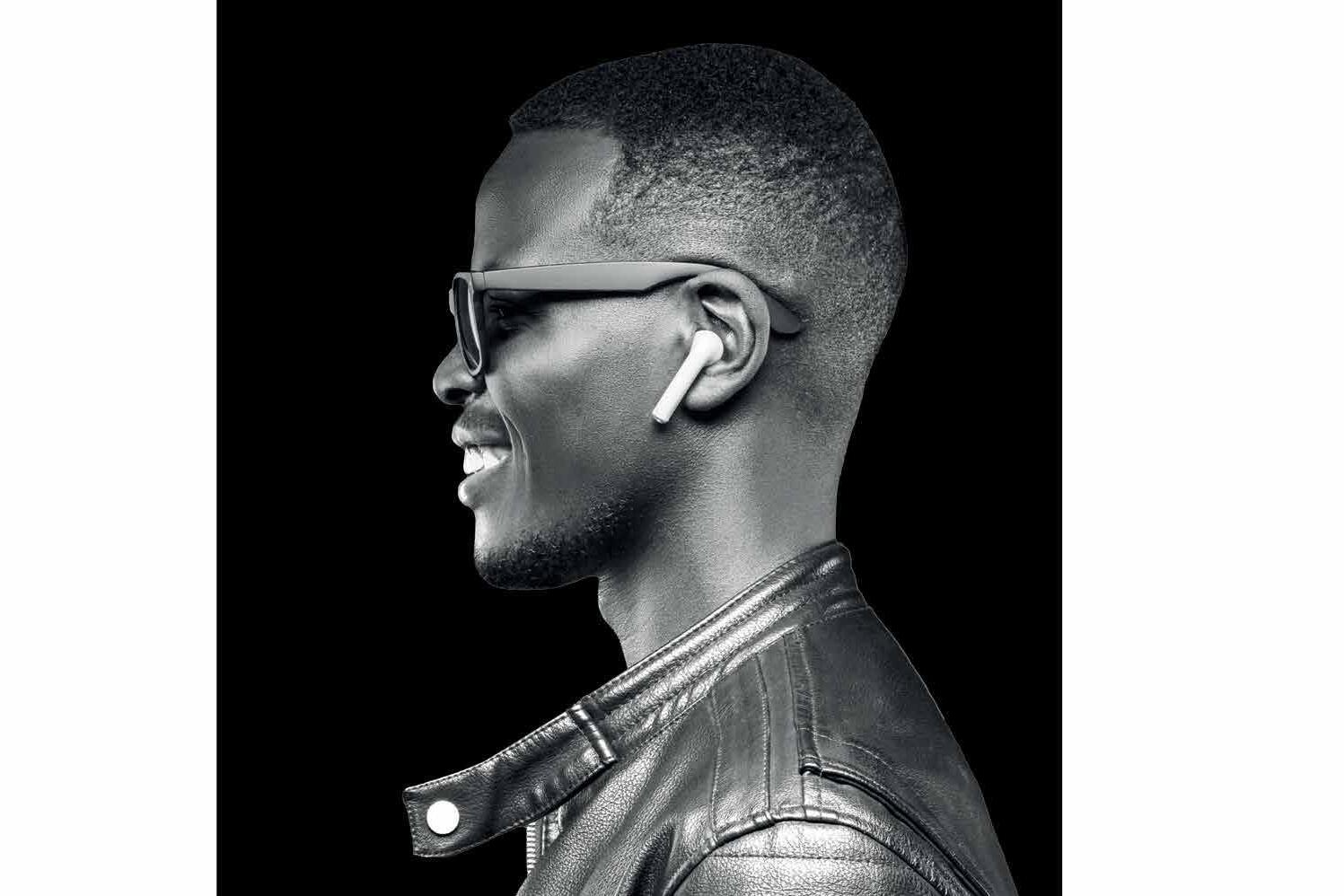
On the cover Thando Thabethe 947’s winning Afternoon Drive presenter

Once
advertisers understand that context is as relevant as content, they’ll realise the true value of audio for all platforms,
writes DELIA CONDE.

Words – be they in songs, stories, announcements, declarations, opinions or conversations –have the power to uplift, provoke emotion, educate, inspire and inform our daily lives. According to BRC RAMS Aug 2021-July 2022, audio platforms enable many ‘words’ to be communicated to 35.4 million South African adults (81%) on a weekly basis. Audio is therefore an important reach channel in our market, and the revenue generated, is substantial. The recent PwC outlook estimates total radio revenue to grow by almost 2% in 2023. While we can’t
comment on the data itself, we can confirm that we are seeing similar trends in our actual client spend data.

GroupM accounts for a third of the industry’s total adspend and therefore our trended data is representative of industry demand. A trended analysis showed that radio adspend for October 2019-September 2020 (period covering Covid-19) declined by 8%. The period thereafter showed an increase of 8%, with this maintained for the current period. This indicates that advertiser demand still exists – and that PwC’s estimation of 2% growth in 2023 is feasible.
“THE AUDIO LANDSCAPE HAS EVOLVED AND ADVERTISERS NEED TO CONSIDER THE REACH POTENTIAL OF NEWER, DIGITAL AUDIO PLATFORMS – AS WELL AS THE ROLE THAT AUDIO PLAYS IN THE OVERALL STRATEGY.”
But where and how should this revenue be spent?
The audio landscape has evolved and advertisers need to consider the reach potential of newer digital audio platforms as well as the role that audio plays in the overall strategy. Our proprietary consumer and media research – Audience Origin –provides valuable insight into this.
In homes with internet access, the reach through music streaming services surpasses that of radio for listeners aged 18-34. Daily podcast listening is more prevalent among that audience too, spilling over into the 35-44 age group, while older audiences are more likely to listen to traditional radio. These differences in listening behaviour will inform how to plan an optimal audio strategy.
Through Audience Origin we know that noticeability and influence of audio platforms vary by category. For example, ads on radio are more influential for family and household categories such as medium household appliances and insurance brands. Ads in podcasts are more influential for categories that are more personal in nature like personal electronic devices, and online travel booking services.
Ads served while listening to streaming music are influential for more luxury type categories such as cars, subscription-based TV services and personal electronic devices and accessories.
This data confirms that audio platforms each have a unique and relevant role


to play in the audio landscape in South Africa. Agencies and advertisers who understand this can truly create impactful campaigns for their brands.
On a deeper level, how we communicate to audiences on audio platforms will drive engagement.
Audience Origin reveals that advertising on streaming platforms is noticed; however, 61% want the ad to be tailored to them – and if they can relate to the people in the ads, their attention is further piqued.
The power of audio as an advertising platform is undeniable. It has the ability to uplift, connect and inspire. As a media agency responsible for ensuring that our clients’ advertising is effective, we obviously balance the numbers and the impact.
The numbers speak for themselves: Covid-19 made acceptance, trial and usage of all things digital more mainstream; audio has moved into that space. But to successfully reach consumers across these platforms requires that clients and strategists embrace the new and different, and not default to what they know, or default to the ‘safe space’ that generic radio offers.
Irina Vlad
At Wavemaker, we believe that data helps to ease the uncertainty of exploring new and different platforms and options, and gives clients the confidence to embrace the full reach and impact potential of audio platforms as a whole.
Delia Conde is head of analytics and insights at Wavemaker SA. She has worked in advertising for 26 years, and is experienced in media strategy and implementation, market and consumer research, client service and project management.


The audio playbook has changed – and radio that isn’t agile and adaptive will lose out to the digital revolution, writes MAGGIE PRONTO.
Radio has been a longstanding and trusted companion; a friend you catch up with every day, with radio presenters being the original influencers – before influencers were a thing.
The audio space is exciting – it allows brands to tap into more than just radio and extend beyond ‘traditional’ audio, allowing consumers access to more than the theatre of the mind – a traditional selling point – and into an all-encompassing experience.
Some stations have come on board and want to create different spaces and moments for their listeners (and advertisers) – and to those I say thank you! Thank you for taking risks and for being
open to new ideas and for some great proactive proposals.
But not everyone is ready to accept change, which is why it has been easier to eliminate some radio platforms when budget cuts were needed – because the overall media impact is minimal when compared to the other media types (this is obviously category and spend dependent whereas the financial giveback in substantial (comparable with TV).
This is where we are getting stuck.
The biggest challenge, I would say, has been some stations’ inability to adapt and be agile. They are leaving themselves behind due to red tape and the inability to manage changing situations – and losing control of once-sizable audiences. I’m sure
they can see that their listeners are moving onto other radio frequencies.
Another challenge –and from a different perspective, a great opportunity – is the blurring of where and how people listen and how these listeners are being accounted for.

I, for one, have a very different listening repertoire, even when compared to just 12-months ago – and the research shows usage of the likes of Spotify, podcasts and listening through other devices have increased substantially. Yet only a handful of stations are taking this into account and building it into their playbook.
Some may see this as a threat to radio, but just because I listen to Spotify does not mean that I no longer listen to the radio –my occasion and mindset is just different – and this is true for many other listeners. But yet again, only a few stations have tapped into this.
The same can be said for many brands –environment and context is key, of course – although I can think of a few tactical placements that could change the game. Think of ways that you can drive more relevance and make your placement more memorable, instead of it just being wallpaper.
There are so many opportunities for radio stations to build lasting connections with their listeners and ensure that they stay on their dial, and some stations have grabbed them with both hands and jumped in with both feet! These are the consumers we are after: the ones who are open to connecting with your brand because of the association you have made.
Maggie Pronto is business unit manager at The MediaShop. She has been in advertising since the age of 20 when Doc Martens, Buffalo and stovepipe jeans were cool. She started off as a suit and worked her way from AE to account director before making her way into media, which is her greatest passion.
Broadcast
In the radio business, there’s never any shortage of creative enthusiasm on top of the serious demands of making connections with audiences and revenue from advertisers.
There’s no doubt it’s this energy that has drawn me to, and will keep me in, the radio business. But, increasingly, the challenge for media executives will be to harness this energy constructively and not fall prey to the myriad distractions it can conjure up.
Traditional broadcast media – radio in particular – still aggregates audiences daily at significant levels. Digital has shifted the mode of listening to some degree and influenced time spent with radio in some age demos, but the future of the medium from an audience perspective is sound.
What is under pressure is the traditional media business model. A broad analysis of 10 listed media companies globally – cconducted by Kagiso Media Radio with the aid of graduate students at the University of KwaZulu-Natal, the University of the Witwatersrand, and the University of Cape Town – shows that only one group (Bell Media in Canada) has demonstrated a positive revenue and profit trajectory over the

last 10 years. Despite all the industry buzzwords and claims of deep digital innovation, Bell Media achieved this through market consolidation – buying other valuable broadcast assets.
Not one to downplay the value of digital or innovation as a core pillar of business, my point is that in the current operating landscape, I think the media operators that will win are those that keep breathing oxygen into the small fires of their innovation projects, but keep a very steady eye on fuelling the flames of their day-to-day business. As Rassie Erasmus is famously quoted as saying, “Keep the main thing the main thing”. By way of illustration, how many times have you clicked to read a compelling article on a reputable website on your mobile browser, only to be disrupted by ads between every paragraph loading at different times, and other pieces of ad inventory adorning the experience in every conceivable space, rendering the entire objective of reading the article useless (at worse) or irritating (at best)?
Publishers are under pressure from low CPMs of competitor global platforms – I get it. But the answer is not the shortterm overexposure of inventory to make quarterly targets, it’s about a much bigger
effort to drive up CPMs for local publishers by co-ordinating and organising, engaging marketers, and influencing regulation where possible and relevant.
In the radio industry, there are many examples of similar short-term profit-taking initiatives that disrupt the audience experience, and many more of poorly thought-through zeitgeist-grabbing projects disguised as innovation. As an industry, we need to do better if we hope to have a proper chance of putting the industry into a sustainable growth position. There are a few things that I think should occupy the headspace of ambitious radio companies in South Africa at the moment.
1. Reclaim our obsession with audience experience
It’s tempting to allow an interview on a music station about a brand that listeners hardly care about if there’s a ready sale to be made. All personnel should be commercially oriented, but the listener must always come first. It is foot-shooting on a monumental level if we let short-term revenue considerations override the longterm sustainability of the trust and enjoyment that listeners derive from our brands.
More than that, radio needs to continuously re-engage with every platform and content piece that it broadcasts to optimise the quality of the experience. Digital streaming platforms are notoriously unable to compete with the finesse that a great producer or in-studio presenter can achieve with great effects mixing or by
creating forward momentum with a wellthought-through segue.
2. Pay more attention to the category
We are all accountable for the performance of our individual businesses, but competition for ad spend is increasing from other media categories. Industry bodies need deliberate engagement with the right people with the right mandates, and
Established in 1997, Kagiso Media (KM) is a black-managed company, wholly-owned by Kagiso Tiso Holdings, with interests in new media, content production, facilities hire, specialised publishing, radio broadcasting and television. Diversity is an essential part of the company’s corporate culture. Treating others with respect and offering equal opportunity regardless of race, gender or sexual orientation allows KM to take full advantage of an available talented, experienced and creative workforce. Many of the company’s accomplishments result from the collaboration of diverse individuals whose varying perspectives complement one another as they work together to achieve strategic goals.

budget to commit to building the sector. Failing that, we will all be boats similarly affected by a receding tide.
Radio has incredible stories to tell –it needs to find a unified voice.
3. Enable market consolidation
The pace of legislative reform is painfully slow, and without the ability to consolidate, the sector risks erosion of investment because shareholders will rightly question the long-term sustainability of stand-alone stations with relatively consistent fixed costs against very disparate revenue
4. Regulate and deregulate in the right areas
To the above point, never has the need for co-ordinated engagements between sector CEOs, the National Association of Broadcasters, ICASA, and the government been more pressing.
Regulation around ownership and control needs to be relaxed, regulatory parity between media types and between local and international platform operators needs to be achieved, and the role of the regulator clearly mandated.
5. Wrap the ‘main thing’ in showbiz
My firm belief is that to succeed in radio we need to get our product right for our designated audience, wrap it in showbiz, and market it to the max.
Of course, we will be quick to respond to the new buzzwords and bandwagons around an increasingly dynamic audio landscape – I do believe that digital audio, for example, will be a major advertising option in a year or two. But in the meantime, the core content that radio stations produce every day across an increasing number of platforms needs to maintain a central place in the minds of potential consumers.
The way we market radio can be so much bigger than we often allow it to be. Great radio stations capture attention with ‘showbiz’, and they keep the relationships through the authentic and personal content that radio embodies.
Tempting as it is to chase every new fad, if we keep the “sizzle” on the right ‘sausage’, radio will be the fuller for it. This is sponsored content.
RADIO HAS INCREDIBLE STORIES TO TELL –IT NEEDS TO FIND A UNIFIED VOICE
Early adopters are proving digital audio’s incredible reach – now it’s time for brands to fully take the plunge, writes JON SAVAGE.

It’s hard to believe we started the Eye Radio – an independent digital radio station – six years ago.
Yet, despite the exciting DJ roster that includes Kwesta, Jack Parow, Gigi Lamayne and even Mos Def, you’ve probably never heard of the station.
That’s because The Eye failed to grow fast enough for profitability in its original format. While there was an audience for the content, there wasn’t an audience for the format.
We weren’t alone: CliffCentral launched a full two-and-a-half years before us, in May 2014, pioneering the digital airwaves as a lone spaceman out on the moon bouncing around looking for water.
“IN THE PODCASTING WORLD, YOU HAVE SO MUCH MORE CONTROL OVER YOUR SPEND, YOUR AUDIENCE AND YOUR CONVERSION RATE.”
There wasn’t any.
But, I’m happy to report both businesses are trucking along well. The Eye, especially, is a whole new version of itself, as I will explain.
Looking back on those archaic years, so much has happened in the digital
audio environment, and a lot of learning has paved the way for a healthy and powerful online audio community.
Digital radio hasn’t always taken the format that the traditional radio industry is familiar with. But it has embraced podcasting. And the retail space. And, in 2022, podcasting and retail radio are pumping.
While most brands are still slow to adopt these two powerhouses – due mainly to mistrust or misunderstanding of these unregulated digital audio media – others are taking full advantage of the vacuum and seeing massive wins – with very little competition.
Podcasting has grown exponentially across Africa over the past 18 months and with that, there are premium audiences being completely ignored by the commercial sector that are, in some cases, bigger and stronger than some traditional radio stations.
The issue driving this trend is, in most cases, that traditional radio is measured on a ‘reach’ metric that is not only inaccurate (due to the way radio listenership is measured) but applies a shotgun approach to its audiences. This works well if you are a big company selling products to the widest possible audience and hoping a percentage of the listeners will stick. But the truth is you have no idea who is – or how many are – actually listening to your ad.
In the podcasting world, you have so much more control over your spend, your audience and your conversion rate.

Not only do you have a lot more data around who the audience is, how many of them there are and if they are interested in your product, you only need pay for the actual audience who listened to your specific ad.
If they didn’t listen far enough in to the podcast or even skipped your ad, you don’t pay. That means you are paying per actual ear.
Further, in terms of targeting, there is a much deeper range of conversion tactics, benefitting brands that have different, or niche products. This enables them to target different specific audiences with each product, exponentially increasing their ROI on conversion rates.
Not only is this 100% times more efficient and reliable, Nielsen recently reported a figure that should knock your socks off: its Podcast Ad Effectiveness Insights report revealed that podcast ads drive an aided brand recall rate of 71%. Also, 56% of podcast listeners say they pay more attention to ads read by the hosts. These are astounding numbers.
In addition, IPSOS recently reported that the more affluent the person, the more likely it is that they listen to podcasts. High earning affluents of all ages, particularly those who travel, are avid listeners.
In a nutshell, podcasts attract the most affluent audience of all digital media types measured.
In terms of mass-market adoption, even though the podcasting space is still relatively fledgling, it is seeing some incredible ability to reach
– MacG’s podcast is currently smashing nearly one million per episode audiences each week across YouTube and his audio-only environment. PS: Look out for the Africa Podcast Network launching soon.
So, what have we learned?
Two major learnings from navigating the podcasting space are:
1. Just because you are a big influencer with a large social media following, doesn’t mean your podcast is going to be big
2. The more specific a podcast is, the better it performs.
This is a major role reversal from the traditional radio approach that aims to be as broad as possible to grow the reach metric. This is why the traditional radio output model has not worked particularly well online yet – well, not in South Africa – and, as the not-so-silent digital revolution unfolds, there is still a seeming national comfort zone that keeps on doing it the same broken way for as long as possible.
The second area of great opportunity is in the retail radio space. The technology we developed for The Eye Radio has been seamlessly reconfigured to service this cool opportunity space.
Along with many other forward-thinking retail brands, we launched Sportscene Radio with the TFG group in 2019 – both in-store and through the app – and built a swat army of digital ninja experts that
“IN TERMS OF MASS-MARKET ADOPTION, EVEN THOUGH THE PODCASTING SPACE IS STILL RELATIVELY FLEDGLING, IT IS SEEING SOME INCREDIBLE ABILITY TO REACH.”
focused on audience growth through powerful content strategies, sleuth programming (often undercutting major radio stations with speed-to-airwaves for new music) and a new local music focus, which focused on engaging with new artists – not just playing their music. Apart from winning numerous awards, including this year’s Gold at the New Media Awards, and Sportscene receiving an SA Hip-Hop Award for biggest brand contribution to hip-hop, we have helped grow Sportscene’s listenership to over 600 000 listeners per month. This is purely online and excludes people listening in store. This makes the station bigger than some traditional stations. Again, due to technology, our analytics for digital radio are extremely detailed –including what regions the listeners are in, and exactly how long they listened for. We even deliver daily growth charts to track which shows performed well and which shows are decreasing listenership. There is so much space for opportunity for brands willing to take the plunge.
I’m excited about the speed of the growth and the opportunities arising as a result of what is possible. And, even though the digital audio environment has been completely transformed, and even though it is still the wild wild west of wests, it is a great time to involve yourself in this space.
Content strategist, podcaster, musician and self-described general all-round trouble maker, Jon Savage is a director at InBroadcasting. He is so passionate about what he does, he mostly cannot remember which of it is work and which of it is play. Check out his TEDx talk here
Radio is the best-loved media, with almost eight in 10 people listening every week. Radio attracts the highest reach penetration of all media consumed across traditional outlets including TV, print newspapers and magazines, and digital channels including social media and internet usage.
Loyalists spend an average of five hours 15 minutes a day with radio brands that they trust, on-air content that resonate and on-air personalities that connect with them as individuals.

Strategies to draw in listenership within the under-25 age segments should be implemented to attract the GenZ cohort to radio, writes PATRICIA SAUNDERS.
Strategies are needed to attract Gen Z to the radio medium.


According to PwC’s Global Entertainment & Media Outlook, the South African radio advertising revenue segment is forecasted to grow by 1.6% to R4.8 billion, while the music and podcast sector is estimated to increase by 7.1% to R842 million by 2023.
With more and more options entering the fray, competition for a consumer’s time and attention is fierce. A key challenge facing the broader radio broadcast industry is ensuring that overall listenership levels are maintained.
Another is increasing reach in youth segments where radio consumption underperforms below the average.
A third challenge that broadcasters are faced with involves the rapid shifts in digital technology and ensuring that they have a presence not just in the traditional terrestrial space but also digitally through live streaming platforms and on-demand audio.
Opportunities are created if radio station role-players stand together through independent associations –such as the National Association of Broadcasters (NAB) and the Broadcast Research Council of South Africa (BRCSA) – to deliver unified messages advocating the strengths and benefits of radio to the broader media industry and commercial advertiser brands. This, to reinforce the message that radio is a trusted medium that attracts audience segments that are relevant, engaging and commercially viable.
Strategies to draw in listenership within the under-25 age segments – who typically over-index in the usage and consumption of digital offerings such as podcasting, live streaming, social media and chat – should be implemented to ensure the medium of radio continues the next generational cohort of Gen Zs.
Additional opportunities need to be created in the digital tech and audio content creation spaces – giving consumers what they want, when they want, on easily accessible platforms that
“opportunities are created iF radio station role-players stand together to … reinForce the message that radio is a trusted medium that attracts audience segments that are relevant, engaging and commercially viable.”

enhance their overall user experience with the radio brand.
From a threat perspective, increased media offerings may mean that consumers spend less time with radio and audio, as their attention is diverted elsewhere. From a commercial aspect, the fragmentation of media provides advertiser brands a plethora of options on which to place their advertising budgets.
“additional opportunities need to be created in the digital tech and audio content creation spaces … that enhance their overall user experience with the radio brand.”
In a contracted environment not only are local broadcasters having to compete against each other for advertising spend, but also fighting against the international big tech giants for a slice of the advertising pie.
Many of the radio brands who are part of the Mediamark portfolio have a robust ecosystem that transcends the terrestrial radio offering, providing multiple touch points for audiences to engage with the radio brand. These touch points include the ubiquitous digital platforms on which vast amounts of live streaming, podcasting, online website and social media engagement takes place.
Attendance at events and performances is another way stations connect with audiences. Finally, opt-in consent allows stations to build personalized databases of their audiences from which bespoke first party surveys are conducted.
The trick is for broadcasters to continually find compelling ways to keep the audience engaged while executing strategies to monetise the audience.
“radio advertising revenue segment is Forecasted to grow by 1.6% to r4.8 billion,
while the music and podcast is estimated to increase by 7.1% to r842 million by 2023.”
Patricia Saunders is head of insights and analytics at Mediamark. She has has over 20 years’ experience within the dynamic world of media marketing. She is multi-skilled with extensive experience in various disciplines of marketing including strategy formulation and implementation, integrated analytics and insights, and corporate communication.
Overseas, planning is largely agnostic of station brands and time channels. Your spend goes where your audience goes. Simple as that, writes JOHN WALLS.

There’s no doubt that we in the South African radio industry missed an opportunity to grow market share significantly when print adspend fell out of bed a decade or so ago.
Instead, it was TV that mopped up, increasing its share of spend to around 60% while radio made a modest jump from 14% to 18%. We never managed to pierce that ceiling thereafter and now, as TV experiences its own challenges due to competition from streaming services and load shedding, it is digital, not radio, that appears to be better positioned to mop up any decline in TV spend.
“RADIO CAN OFFER A CPM OF R71 TO REACH SEM 8-10 – THAT’S A PROPERLY COMPETITIVE RATE.”
How does a medium with nearly 80% penetration and a widespread reputation for generating response miss that same open goal twice?
We asked that question to a number of strategists and senior figures in media agencies and they identified two main reasons:
1. Radio is perceived to be more expensive vs digital and even vs TV
2. Planning and buying radio is schleppy and complicated; there are no aggregated platforms or packages to help simplify the t ask
These obstacles to growth stem directly from our archaic fixation on station brands and time channels. The notion that only AM and PM drive are worth buying has driven the price of those channels through the roof over a prolonged period.
In an age of hyper-targeting based on data, radio planning is stuck in an age of assumption and gut feel. Planning of
digital in South Africa, and even TV to a growing extent, focuses on audience buys. Likewise in developed radio markets overseas, where planning is largely agnostic of station brands and time channels. Your spend goes where your audience goes. Simple as that.
The answer is not to try and beat digital. The answer is to integrate and amplify. As a client recently said to me: “Radio makes my digital sexy.”
If we adopt the same metrics to chase the same objectives, we make it easier for planners to consider radio and get eyeballs on their digital. If generic radio could adopt a station agnostic CPM approach to their audience buy, overnight, they could become super price-competitive with digital and TV.

We’ve run the numbers extensively here at Ultimate Media and I can tell you that, through a well-considered audience buy, radio can offer a CPM of R71 to reach SEM 8-10 – that’s a properly competitive rate.
And, once we take that agnostic approach to buying radio, all of a sudden, it becomes easy to create aggregated buying platforms that will take the schlepp out of planning this wonderful and powerful medium.

The imminent launch of the country’s first cross-media measurement pilot will ultimately prove the Holy Grail for marketers, writes GARY WHITAKER.
We find ourselves in an exhilarating period for radio; one filled with opportunity – but also immense challenge. Media habits have changed significantly over the past three years and continue to do so as South Africans adapt to new ways of working and living amid new records for load shedding, an impending analogue switch-off (ASO) for the television sector, and increased fragmentation due to new media/content/ platform entrants into the media market.
In terms of radio audience measurement, moving away from a seven-day manual entry diary to a multi-methodology currency, incorporating day-after-recall (DAR) computer-aided telephone interviews (CATI) interviews (CATI-DAR) and a passive listening panel (MediaCell), was a bold step. We have operated in an environment in flux predominantly due to Covid-19, lockdown protocols and changes in habits and behaviours as well as national population migrations.
Radio remains healthy with a Past 7 Day (P7D) reach of 76%, according to the latest Radio Audience Measurement Survey (RAMS) Amplify figures. At home listening remains the key listening location, with 75% of the radio universe claiming this location followed by in car (23%), and at work (10%). It stands to reason that the device of choice is still the transistor radio (43%), followed by cellphones (26%), car radios (26%) and DStv (14%)
Radio remains one of the most trusted mediums in South Africa. The association with trusted news broadcasts is unquestionable, not to mention the radio presenters serving as companions in the home, in the car and in the office.

The Infinite Dial 2022 Africa study, commissioned by the National Association of Broadcasters South Africa (BRC), shows sponsored by Triton Digital and produced in association with The Broadcast Research Council of South insert: Africa (BRC), shows tremendous growth in online audio and podcasting. Online listening grew to 61% compared with 39% in the 2019 study, an increase of 56%. Monthly podcast listening is
“FOR THE FIRST TIME IN OUR HISTORY, WE WILL BE FOLLOWING A PANELIST’S RADIO, TELEVISION AND DIGITAL USAGE – EVERY MINUTE OF EVERY DAY.”
up 26%, compared with 10% of the population in the prior study. Listening to traditional radio remains strong: 69% of the sample is weekly radio listeners, consistent with 68% from the prior survey.
Data is still too expensive here. Research from 6 148 mobile data plans in 230 countries, gathered and analysed by Cable.co.uk between 8 December 2020 and 25 February 2021, ranks South Africa 136th worldwide for affordable mobile data pricing.
Unfortunately, the recent Constitutional Court ruling to delay the ASO will not result in spectrum being released to bring data prices down and improve coverage and quality.
This is however only a delay and not a dead end. Once data prices improve, we will see further increases for online
“ONCE DATA PRICES IMPROVE, WE WILL SEE FURTHER INCREASES FOR ONLINE LISTENING AND PODCASTING.”
listening and podcasting, which bring further opportunities for audio in South Africa.
RAMS Amplify data has, for the first time, been incorporated into the Fusion22 study. Fusion22 will provide the industry with free access to the most comprehensive 360° consumer view of all people, products, and platforms/ mediums, as well as segmentations including Socio-Economic Measure and Neighbourhood Lifestyle Index.
The BRC is on the verge of initiating the first cross-media measurement pilot using MediaCell technology in South Africa. In this pilot we will track radio, television (top channels only) and digital (defined site list) consumption for one longitudinal passive panel.
For the first time in our history, we will be following a panelist’s radio, television and digital usage – every minute of every day. This data will be shared with the broadcasters only, as it is a pilot. Nevertheless, it is a giant leap in the right direction. Tracking campaigns and return on investment across media types is essentially the Holy Grail for any market.
Since achieving a full 12-month dataset the BRC has conducted testing on reach and frequency (R&F) data. As RAMS Amplify relies on a methodology of DAR via CATI (CATI), the R&F data was initially based on yesterday recall. The ideal scenario, however, is to achieve R&F data based on longitudinal data, or Past P7D data. This requires innovative modelling.
To this end the BRC and Ipsos have secured the services of Ian Garland to design a model for R&F data that is based on P7D listenership for the local market, to ensure effective media planning in the sector.

Four radio advertising sales specialists share their thoughts on the current environment.
Pre-Covid-19, my commute to work was filled with familiar voices, local flavour and the odd surprise of an excellent radio ad that cut through the chatter and caught my attention. I could recite the station promos and the regular features from memory.
Nowadays I, like many South Africans, have adopted a more hybrid model of working, often choosing my home office over traffic, and my pets over my co-workers.
This shift has resulted in a change in my audio consumption; I no longer know what time the traffic report is, or when to expect a funny prank call over the airwaves. And so, with this lack of familiarity, if I find myself in the car, I switch to podcasts – something I can choose, control and focus on.
That said, almost 40% of South Africans still listen to the radio daily, and this number bounces up to 75% if
looking at weekly data. With almost half of listening being done through traditional hi-fi systems, I find myself in the minority of a typical South African’s listening habits.
I think, however, with the growth of radio listenership on mobile devices, and the ongoing media shift to digital platforms, that even more opportunities will continue to open up for brands and advertisers – ones that are more targeted, contextually relevant and engaging with the subject at hand.
However, I don’t believe traditional radio is going anywhere quickly. The connections people have to their favourite radio stations and DJs add credibility and stature to brands that want to leverage that listener loyalty.
And with stations embracing the shift to digital, we are seeing campaign proposals that go beyond the FM transmitter to include audio, digital, endorsements, and events. Coupled with a more desirable
When looking at the state and health of local radio, for the most part the commercial and PBS stations are in good nick, as are a number of the community stations.
We expect the usual suspects to boast listenership figures into the millions, and Ukhozi FM’s 7 689 (‘000) P7D listenership as per the last release from the BRC is something to behold. So then, what seems to be the problem?

Firstly, radio, like a hotel bed, is a time-sensitive product. If I do not sell today’s inventory it is gone. Seems obvious right? Well, no, not really – and that is where point number two comes into play. From
my vantage point, most stations get their pricing strategies wrong: mornings and afternoons are overvalued and other time bands completely undervalued – despite some of these outperforming the former.
Interrogate some quarter-hour data and this is instantly clear. Some would argue that it is based on simple economics of supply and demand. Well, I don’t think sell-out rates are what they used to be either, so I don’t completely buy that theory.
This leads to my third point: the below average service levels that we on the agency side have come to experience all too often.
By this, I mean that very few ‘sales execs’ make it their business to fully understand the media landscape and how
production cost (compared to TV for example), our clients are embracing the creative opportunities that radio stations have to offer.

Creative here is key, and I think there is a fine line between falling into a sea of sameness, or standing out and creating impact.
Like in any media strategy, radio has a time and a place – and we as an agency will continue to ensure that if audio is right for our clients strategically, then we will find innovative and interesting solutions, whether those be traditional stations, or in the digital audio streaming space.
their offering fits into the bigger picture, particularly that of the clients they service – we need real sales executives, not order takers.
Also, proactivity goes a long way, so make it your mission to break the mould in terms of how and what you sell and package. I like to think that most agencies out there will encourage this and be more than willing to engage in the process.
So, while radio is in a healthy space, we, as a collective need to ensure that we continue to plan for the future and its longevity, taking the full audio ecosystem into account; flip the sales and pricing approach on its head, and who knows, it may keep audiences and advertisers coming back for more.
METRO FM adapted to the digital age by extending its reach and availability across multiple platforms and devices. It also altered formats, responding to consumer demand for more than just music to listen to, and incorporating music-related features, like unplugged sessions and streaming live events on our channels.
Essentially, radio is one of the few remaining mediums that allow advertisers to reach a wide audience, and to target that audience at a time when they are most likely to be in a position to make a purchase.
Digital presents an opportunity for listeners to take radio anywhere with them and never miss any of the experience. Radio is a mobile medium that travels and influences listeners
before purchase.
METRO FM actively encourages listeners’ interaction and leverages this on a variety of platforms, from our website and social media pages to SMS and WhatsApp lines – a leap forward from the past, when interaction was limited to calling in, or at activations and events.

Digital audio advertising provides METRO FM advertisers with targeted audio ads in prestigious environments. We are also exploring various possibilities within the space, and future prospects for METRO FM include voice control moving into other locations (in-car and wearables).
METRO FM’s greater digital accessibility increases the positive prospects for our audiences, advertisers and sponsors.
The rise in radio listenership, on radio and other audio services on connected devices, is also creating new commercial opportunities in the form of digital audio advertising in streaming services, or downloaded audio content including radio.
I’ve worked in the radio space for more than 20 years and if there’s a theme song for my time in the industry, it would be Queen and David Bowie’s Under Pressure. From video supposedly killing the radio star, to the birth of the internet, the rise of mobile phones, social media, fake news, subscription content, influencers and the new normal, radio has always been under pressure. Yet, radio remains. If I could write a theme song it would be called Tenacity and it would be a number one hit for audiences and advertisers!
There is no doubt the audio landscape is a fast-changing environment that requires outright agility. Practitioners that seek to rely on year-year percentagebased revenue increases as a measure of success are quickly being left behind the revenue curve. Changes in consumption behaviour, technology and online platforms have had a direct impact on the way in which we need to approach advertising.
Budgets are no longer expense targets but a measure of value, efficiency, and calculated messaging. Despite tighter
budgets, there are more options to create value for both creators and consumers. The connected world has created a more valuable listener who, when engaged, becomes an active participant in the music and messaging on their radio station. Radio doesn’t suffer from the ‘second-screen’ concept; it’s intrusive in a non-intrusive manner and is a primary or secondary companion to a single listener or a group of people.
It is because of this sense of authentic connection that radio is the perfect platform for multi-layered messaging. Classic 30-second adverts, promotions, competitions, sponsorships, and presenter endorsements remain vital elements in creating successful audio campaigns. Radio is, however, a re-invented audio space – and the opportunity it offers to integrate meaningful content and messaging into listening experiences and spaces creates an amplified brand opportunity.
At MediaHeads 360, our approach to audio messaging seeks value beyond ‘ad breaks’ by embracing content
METRO FM realises the imperative to stay at the forefront of trends to remain relevant and competitive, especially in such a saturated and innovative radio market. The inception of a ‘behind the lyrics’ feature on our Top 40 chart show – accessible both on-air and via our social media platforms proves the station is cognisant of the way listening habits and methods are changing – and meeting our audiences’ needs where it matters most.

opportunities with our radio partners. Content that captivates audiences creates real value because the information and entertainment forms part of the active listening experience and gives the listener more reason to continue listening. Programme Managers seek to create continuous listening opportunities to build audiences, and advertisers that can build time spent listening using curated content, create synergy with radio stations and benefits to audiences.
Our approach to audio and advertising has changed. Previously we might have been tempted to shout louder than other brands by purchasing more inventory, sponsorships, competition moments and power spots during campaigns. In an evolving media landscape money and messaging matters. The radio advertising landscape can get noisy; to break through the clutter make your audio message clearer, not louder!

Monday to
from 06:00 - 09:00
Drive

ANDREA SLATER unpacks the winning strategies for outgunning the competition in this lucrative fledgling sector.

Oer the past year, at least 21.8% of South Africans have spent an average 46 minutes listening to podcasts each day. This is an increase of almost 10% from last year – and the numbers are set to rise.
Jacaranda FM, the powerful purple station rallies around social issues weekly, inviting those who need assistance to reach out, in turn connecting them to “Angels” who want to help make a deliberate and positive change to people’s lives.
Big or small, one or some, and sometimes even furry – Jacaranda FM listeners rally around their fellow community members with all manner of need. The station captivates such a large audience who are different in so many ways, but tune into the same radio station and want to listen to a weekly reminder of heart-warming humanity.
Jacaranda FM has been changing lives for 17 years, every week, without skipping a single week. This aspect of purpose allowed the station to raise Jacaranda FM connects with one of the most loyal and engaging communities in South Africa. Many are exclusive Jacaranda FM listeners who prefer to consume the station’s imaginative content and music selection throughout the day
THE JACARANDA FM LISTENER IS EMOTIONALLY INVESTED AND CONNECTS WITH THE BRAND ON A VERY PERSONAL LEVEL LISTENERS DON’T ONLY HAVE THE RADIO ON – THEY LISTEN, PARTICIPATE, TRUST, AND SUPPORT THE STATION
R2.5 million at a Good Morning Angels Golf Day last month and raise R250 000 through a donation-led digital music concert such as SPAR’s Carols by Candlelight concert last year.
SPAR will partner with Jacaranda FM for the 20th year this December for SPAR’s Carols by Candlelight. Two decades of consistency that has evolved from a humble community event, to a
Jacaranda FM broadcasts in English and Afrikaans with a footprint that covers Gauteng, Limpopo, Mpumalanga and the North West Province. It boasts a listening audience of over three million people and a digital community of more than 1.1 million people. The station’s format is mainstream with programming constructed around a playlist of hit music from the 1980s, 1990s and now. It is the home of top talent, award-winning content and has expanded its reach nationally through its digital stream and App offerings, which attract audiences from culturally diverse backgrounds, life stages and consumer segments.

globally streamed digital concert, and now a hybrid digital and live music event that highlights the station’s purposedriven approach to community.
ENGAGING AND RELEVANT CONTENT
Jacaranda FM attracts habitual listers who not only consume daily content, but also engage passionately with the station’s presenters. Community is at the centre of everything they do. Content is curated to provide locals with highly trusted news relevant to their needs. Research is conducted to provide music that reflects the community’s preference, and events are centred around activities commonly shared by families. The Jacaranda FM listener is emotionally invested and connects with the brand on a very personal level; listeners don’t only have the radio on – they listen, participate, trust, and support the station. Alongside the award-winning Breakfast with Martin Bester and popular Workzone shows, Jacaranda FM offers dynamic news shows such as The Drive with Rob and Roz, The CTM Top 40 with Danny Painter, and The SA Music Show with Thabiso Khambule. This is sponsored content.
“PODCASTS ARE NOT ONLY UPPING THEIR GAME IN TERMS OF THEIR POPULARITY WORLDWIDE, THEY’RE ALSO PROVING TO BE AN EASY WAY TO MONETISE YOUR THOUGHT LEADERS”
According to Oberlo, there are over two million active podcasts and almost 50 million episodes currently available worldwide, which tells me that podcasts are hot right now. Research tells us they’re only getting hotter.
Here in South Africa, as well as globally, people are opting to listen, rather than to read, in increasing numbers.
One reason for this may be that it’s simply easier to listen today. After two years that saw us transition from sitting in our cars listening to the radio on our way to work – where we engaged with others face to face – to spending our time in largely remote situations that suddenly required additional tech such as headphones and second monitors; it’s no surprise that people are increasingly opting to listen.
In fact, while 60% of podcast content is consumed from the comfort of the listener’s home, in the case of commuters,19% say they prefer podcasts over radio in transit.
Podcasts are not only upping their game in terms of their popularity worldwide, they’re also proving to be an easy way to monetise your thought leaders. In fact, TechCrunch tells us that, in the US, podcast revenue is projected to reach $2-billion this year, and to top $4-billion by 2024.
So what makes for a good B2B podcast
– and how might a very busy person go about setting things up?
To answer the first question is easy, because a good B2B podcast (actually, any good podcast) does four things:
• It educates
• It entertains
• It informs
• It inspires
People listen to podcasts to learn something new. If what you have to say achieves this – while you come across as

“CONTENT SPECIALISTS CAN ALSO HELP YOU REACH YOUR TARGET AUDIENCE BY CONTRIBUTING TO THE PROMOTION OF YOUR PODCAST.”
being human at the same time – you’re onto a good wicket.
Like I said, easy.
The ‘how’ is a bit more challenging. But only a smidgeon...
As a start, you’ll have to decide what type of podcast yours will be. Is it a solo podcast? Will you look at multi-hosts – or adopt an interview-style format? How often will you post a new episode? What format suits your niche best?
For the purposes of a business-focused cast, the solo podcast is the best option for those wishing to position themselves as thought leaders. This personal approach lets you delve deeply into your topics, sharing insights and learnings that establish you not only as an authority on your topic of choice, but also as someone willing to educate, share knowledge and, hopefully, inspire your audience.
As usual, it’s best to start with the considered ideal: publishing a 22-minutelong podcast weekly on a Tuesday or a
Wednesday morning. As your podcast grows in audience and popularity, you can engage your audience to offer suggestions on the frequency and length of your podcast.
Running a podcast involves more than just buying a cool microphone and watching your click rate record – it takes a dedication to deliver what audiences want: to learn new things, to be entertained, to stay informed and to be inspired. Competition is stiff and podcast fans aren’t sticking around – unless you make an impact and give them the respect they deserve.
To check these boxes takes planning and time. Whether you plot a six-month podcast content calendar – which includes an overview and speaking points for each podcast – or employ the services of a content team to assist you in doing so, these two things are vital to success in the podcast world.
Content specialists can also help you reach your target audience by contributing to the promotion of your podcast; either by writing blogs that should ideally follow each broadcast, or by creating social content that helps drive listeners to your podcast.
Look out for an upcoming blog on how to monetise your soon-to-be highly popular podcast!
• Apple Podcasts
• Spotify
• BuzzSprout
• iono.fm
• PodBean
• Spreaker
and as senior account director at Epic MSL Group.


Using a data-driven strategy to determine a radio advertising campaign will ensure it connects and resonates with the target audience.
In a world where the average person’s attention span keeps dropping, executing radio sales campaigns that speak directly to your target audience is getting harder by the second. One of the best ways to overcome this obstacle is by using data to create personalised advertising content that connects with your target audience.
Jane Ruinard, commercial and trade marketing manager at Jacaranda FM, says building a data-driven strategy creates empowered solutions for clients. She explains the cut-throat world of radio advertising demands that clients get the best return on investment (ROI).
The station encourages utilising data in its sales pitches as data-driven strategies are key to informing the sell.
“They are not necessarily the sell, but data will inform the sell and the approach to a specific commercial campaign solution,” she says.
Kagiso Media Radio has strong data capabilities within the organisation to allow its brands – including Jacaranda FM – to understand the key areas of focus.
“We use data to understand radio spend and audience trends. Further to this, we have first-party data, which allows us internally to understand how to maximise opportunities and also enables us to share insights regarding our

unique audiences while better serving our clients. The data essentially guides our market intelligence and, in turn, our commercial strategies,” says Ruinard.
She adds that data assists Jacaranda FM with determining the approach to take and how best to approach the target audience to drive the most effective responses.
“We have data solutions within Kagiso Media Radio’s insights department referred to as Sound Insights. Sound

Insights is a suite of data-orientated products – allowing us to create dataempowered solutions for clients and the business,” Ruinard explains.
“This can be done by utilising first-party data insights to understand our listeners and their needs by creating products that deliver the best ROI. Our data solutions include lead generation through the likes of our WhatsApp Bot and PinPoll, as well as first-party data surveys to shed light on client-specific questions,” she adds.
Finding the balance between the art of radio and the science of data is an important skill to master in the sales and radio process – especially if you want the most effective solutions.
“Sometimes in radio we need to balance our ‘radio gut’ with the science of the data. At times this means we need to use a bit of our radio intuition and our understanding of our listeners. For instance, if I have a client who wants to flight a campaign to create leads during morning drive, we know they’ll get significant reach, but the entry mechanic may dictate the level of engagement and conversion of leads,” says Ruinard.
“As much as the science indicates that we should get the leads, we need to consider several human factors to come up with the best campaign for the client with the most impactful ROI,” she concludes.
Contact melodie.cohen@mediamark.co.za for more details about Kagiso Media Radio’s data-driven solutions.
This is sponsored content.
Kagiso Media Radio’s Melissa McNally breaks down the process of researching and analysing data.
RAMS Amplify data shows us that radio still has the highest past-seven-day media consumption in South Africa and the ability to reach significant audiences. Building those audiences and radio is a priority for all broadcasters.
DATA AND RESEARCH IS USED TO CREATE AN AGILE AND PROACTIVE ENVIRONMENT
Due to the pandemic and accessibility to data and cheaper mobile devices, radio and digital audio have experienced rapid transformation, with many listeners using radio apps and alternative means to access their favourite radio stations
Analysing and tracking these audio trends became pivotal to address the changing needs of the listener. The data can be used to create relevant content that appeals to audiences, both on-air and online.
Within Kagiso Media Radio (Jacaranda FM and East Coast Radio), we believe in using data to empower advertisers while developing products that speak to the evolving behaviour of our listeners. As a result, we’ve developed our Sound Insights product suite, which allows us to examine first-party data solutions for clients to maximise their return on investment (ROI) while providing listeners with a product that resonates. We are also able to co-create content with our listeners to ensure that the right message is delivered. KMR is currently preparing to launch a panel which will be at a scale that will excite marketers and programmers alike. In addition to this, we’re currently
WE CAN CO-CREATE CONTENT WITH OUR LISTENERS TO ENSURE THE RIGHT MESSAGE IS DELIVERED
rolling out innovative data solutions in response to market needs - providing clients with effective and measurable ROI solutions.
We conduct research on a continuous basis within KMR to understand the performance of our stations and examine key strategic levers. A large part of the research involves music testing to make sure that our listeners get exactly what they’re looking for. These primary research studies provide KMR with the ability to understand where the growth opportunities within our audiences are.
In Africa, we have significant data gaps, which hinder growth. Research and data have become significant building blocks to unlock untapped opportunities.
However, as a radio business, it’s our role to understand our audiences and provide first-party data solutions to assist our clients to make informed decisions. Further to this, we’re able to understand our audiences beyond a demographic perspective as we can delve into their headspace and behaviour from a neuroscience point of view and qualitatively.
By investing in research and analytics, we’re able to empower our teams by taking the guesswork out of the process. However, we can’t forget that we’re in radio, and often have to balance the art and the science of the medium.

WANTED: Radio lovers! Your voice matters. Sign up for Sound Insights’ surveys to win R4000 in Takealot vouchers! Check it out on the Sound Insights website.
This is sponsored content.

The Radio Awards recognises the excellence behind radio’s status as a trusted, reliable, much-loved medium, writes TARYN WESTOBY.

Today, radio remains an integral part of everyday life for South Africans – it is a source of news, information and entertainment. While it has come a long way since its early days, radio is still evolving and changing to meet the needs of its listeners.
This year saw The Radio Awards returning to an in-person gala dinner and celebration for the first time since it was converted to online as a result of the Covid-19 pandemic. As an industry, radio can stand proud in knowing the important role it has played in lifting the spirits of so many South Africans as we rebuild and push forward to a post-Covid-19 era.
We respect the achievements of the many talented professionals in the radio industry and are proud to continue
recognising and honouring this country’s outstanding radio talent, from in-front-of-the mic presenters to behind-the-scenes producers.
Congratulations to all the 2022 winners, finalists, Bright Star and Hall of Fame inductees for their hard work, resilience, and dedication to the medium.
A vote of thanks to the high calibre of judges from the broadcast media industry, who have once again been so generous with their time, and for lending their ears to listen and score this year’s entry submissions.
We must also thank our advisory board for the valuable insights, passion and expertise they provide to keep The Radio Awards fair and relevant. BDO, the company that reviewed the results, have once again done excellent work in ensuring
all the numbers have been accurately tallied and are reliable.
And to the passionate Arena Events team – Melissa De Agrela, Michelle Rodrigues, Philantu Nkanunu, Zandi Nhlapo and Marcia Minnaar – that put these awards together, thank you for your ongoing loyalty to this imperative awards programme for South Africa.
In this 12th edition of The Radio Awards, we take pleasure and pride in celebrating the voices that keep South Africa informed, entertained and inspired.
Taryn Westoby General Manager: Events Arena Holdings, owners of
The Radio
Awards


GLENDA NEVILL caught up with Smile FM’s Naveen Singh and Primedia Broadcasting’s Trish Taylor to gauge their impressions of The Radio Awards’ 2022 submissions.

New youthful voices on air (and behind the scenes) are revitalising radio. The use of social media and technological evolution has inspired a new sense of confidence in, and over, the airwaves.
Naveen Singh, programming manager at regional Cape Town station, Smile 90.4FM, says young talent coming through is, “… less restricted by the old paradigms in radio, and much more in touch with themselves.” This confidence, he adds, has impacted on subject matter too – evident in the submissions received. “Content, in some cases, was delivered with more of an opinion … even if it wasn’t a popular one. This was refreshing and the subject matter was far more pertinent,” says Singh.
“What was interesting to me was the way the creativity was initiated. As an old

Naveen Singh
school radio guy, it was great to see social media and new technologies being used in creative ways to elicit and maintain
conversations. I thought a lot of the new talent to radio brought new ways of engaging audiences,” he adds.
Trish Taylor, Primedia Broadcasting’s chief broadcasting officer for Africa, was “blown away” by some campus radio submissions. “The calibre of content, presenters and overall production elements was stand out and gives me tremendous hope for future talent entering into the broader industry,” she says. “Having said that, I was disappointed in many campuses not bothering to enter the radio awards; this is a major missed opportunity to celebrate their talent and expose their craft to the broader industry.”
“CommerCial radio must be Commended on making radio/ audio exCiting, engaging, Caring and relevant to the audienCe.” – naveen singh

While the radio business is emerging from the Covid-19 pandemic, its after-effects linger. Singh says overall, innovation was not as “emphatic” as it has been. “The pandemic certainly created innovative ideas but most were linked to that and, to be fair, not much outside that. I am sure as life changes post-pandemic, we will see a lot more,” he says.
Taylor, on the other hand, thought creativity and innovation in this year’s submissions was “outstanding”.
“Creating great radio is a team sport,” she says. “While we hear and see the end-result primarily driven by presenters, I can really appreciate the craft that has gone into the whole production, which involves far more than just the presenter. More and more stations and presenters are integrating multiple platforms as part of their transmedia storytelling – which amplifies and extends the magic created on-air,” she explains.
In a world of misinformation, disinformation and straight up fake news, trust in radio is vital. “This has always been the backbone of radio,” says Singh. “Trusting the talent, and the audience trusting the talent, is extremely important in delivering content – especially content that affect the lives of the community within which they broadcast. As we saw with the pandemic, it was radio as an institution that was trusted with unpacking what is correct, debunking fake news and myths and giving the audience the truth.”
Taylor agrees. “Now, more than ever, radio needs to stand its ground in terms of trust and credibility. In the current dire news cycle, which is further agitated by fake news, credible radio needs to be that
“a new breed of visual produCers is emerging and Combining their skills with audio produCtion teams makes for outstanding entertainment.” – trish taYlor
beacon of trust. Click bait, sensationalistic headlines, and a rush to break stories without the facts is a major problem, and radio has a role in providing a level of safety and trustworthiness,” she says.
Beyond music and talk, news beats at the heart of most radio stations. As Singh says: “Credibility in the news sphere is paramount. We absolutely have to ensure that our facts are accurate and that our reporting of said facts is easy to understand, with no ambiguity. This gives most radio stations the credibility within which they build the audience’s trust. This allows the presenters a bit more freedom to innovate, create and be more entertaining.”
That said, radio is no longer confined to a single challenge. It spills into social media, digital media and even has visual elements. This requires producers to have new and broad skills.
Taylor stresses that transmedia storytelling requires a new set of skills. “This is largely driven by producers. I have seen great innovations in this space as radio entrenches its relevance and longevity. A new breed of visual producers is emerging and combining their skills with audio production teams makes for outstanding entertainment,” she says.
Singh believes producers now have more opportunities to “see what content is working, how they can pick up on trending topics, which angles work and then still have the ability to test it with their audience before committing to the subject matter”. This has the advantage of keeping their shows relevant and engaging with the audience, he adds. “It has probably made life a lot more dynamic for producers as there are a range of ideas and concepts being considered at any one time.”
The Radio Awards, says Singh, are as relevant now as they’ve ever been. By their very nature, they challenge talent to do better, to compete against their peers and to showcase how far they’ve come, and where they’re going.
“It was sad that many of the stations struggled to get their best content out due to the pandemic but overall, they tried new things, new ideas, new angles and new ways of doing things and that in itself should be commended,” he says. “Excellence with certain stations did shine through and we need to create more opportunities for this excellence to be shared, noticed and applauded so we can generate more excellence.”
He thinks, from some of the submissions he judged, that the basics of an idea was there. But, “I think they needed to plan it better, scrutinise all angles of it and work out what that perfect plan could be! And that does not mean throwing money (or more money) at it!”
Campus radio is an example. “There is raw talent in these radio segments but somewhere along the line there has to be an opportunity for them to be schooled in some of the basics of radio and professionalism that could make them radio stars,” Singh adds.
Singh was impressed with commercial radio entries. As he says, “Commercial radio continues to push the boundaries and try new ways of doing things adding in every element of interaction that is available which is spectacular. Commercial radio must be commended on making radio/audio exciting, engaging, caring and relevant to the audience.”
Taylor believes community radio is on the up and up. “Community radio has elevated itself over the past five years and this is very evident in this year’s entries. I have been so impressed by the content and commercial innovation these stations have demonstrated. You can hear and see the creativity and passion for the medium,” she comments.
And she has the last word: “The South Africa radio industry has a global reputation of being innovative and cutting edge and this year proved that. The standard of content preparation and delivery on multiple platforms is extremely high, as radio teams push their creative boundaries. It’s a very exciting time for radio!”
TRISH TAYLOR is chief broadcasting officer at Primedia Broadcasting. Her radio career began at the tender age of four, when she when she voiced a radio commercial.
What been the most significant development in radio since your start in the industry?
Technology, and its ongoing advances, has been a major enabler for radio. Social media has really enabled a live, dynamic feedback loop during a broadcast, which makes radio even more instant, relevant, and connected than ever before. The developments in actual broadcasting technology have also been a game-changer, as radio stations can use this tech for research, instant polls and developing their own data lakes. The explosion of audio through podcasting has positioned radio very strongly too, – as we are the audio experts – and the innovations around podcasting has allowed content to express itself through various audio formats.
Technology has also shifted radio from an audio-only medium to multi-media, with video a central role player. This enables dynamic trans-media storytelling that can be co-created with radio audiences through crowd sourcing, offering an immersive broadcasting experience. Since its inception, the heart of great radio has always been compelling storytelling. This hasn’t changed, it now multifaceted and very exciting!
What is the sector’s biggest challenge right noW?
A major challenge for all media currently is the fight for audience attention. The proliferation of advertising platforms has meant the consumer is surrounded by brand messages, coming at them from every angle 24/7.
What been the most significant development in radio since your start in the industry?
The advent of community stations; they not only play a critical role in keeping the audience informed of local issues but also act as an alternative to corporate radio. I am also excited about the digital radio space as this allows for so much musical diversity instead of rigid genre programming. If your thing is San Throat Metal then you`ll be able to find it!
What is the sector’s biggest challenge right noW?
In this age of streaming, I think that it`s convincing the audience that music radio
This is very taxing and leads to ad fatigue and avoidance.
As media owners, we need to innovate at a faster rate and ensure we deliver on clients’ commercial objectives without audiences tuning out because of ad avoidance. Radio has developed super-smart immersive ways to integrate client messages into the content of the broadcast, which makes the listening experience seamless while delivering on clients’ expectations.

What does hall of fame recognition mean to you?
I feel privileged and overwhelmed at being included in the Hall of Fame. This has been my industry for the longest time and a medium I am so passionate about. I have worked for various radio groups and have made many friends along the way. A little-known fact: I voiced a radio commercial for Vicks Medinite when I was four-years-old, which was aired for over a year. Little did I know at that young age, that radio would be a life-long career!
Former A&R man BENJY MUDIE is the owner of Vinyl Junkie record store, founder and owner of Fresh Music and Sunday night DJ on HOT 102.7FM.
is still relevant. It`s about keeping them entertained, upping the feel-good factor... Do that, and the loyalty comes into play.
What does hall of fame recognition mean to you?
I`m absolutely stoked and honoured by this induction. I never planned to be a radio voice; my career took me into the A&R and artist development side of the music industry, but somehow I landed behind a mic courtesy of a radio

friend, Richard Jones. What`s the secret to being a successful DJ? I guess it’s that if you don’t have anything interesting to say then it’s best to just let the music do the talking. That said, it’s the great voices of the legendary Chris Prior, Rafe Lavine, Treasure Tshabalala, Alex Jay, the late Kevin Savage and Alan Pearce, Shado Twala and others that inspired me and I am so grateful to them for showing me the way.
HENNIE KOORTZEN is the outgoing chief executive officer of PretoriaFM. He believes radio roleplayers must stay involved to benefit the future of radio.
What been the most significant development in radio since your start in the industry?
The most significant change over the years is the number of stations on air. When I got involved in 1979 there was only the SABC and a few campus radio stations. The commercial stations followed followed, then came community radio. Radio world became more competitive.
This opened the door for a lot more people to get involved in the industry. There has also been a vast improvement in technology, resulting in enormous strides towards better quality radio for listeners and at the same time making it easier for stations to broadcast from basically anywhere in the world.
With all the changes and developments, the essence of radio will
always be the same: to inform and to entertain – and that will never change! Radio will always be be first with the latest news and developments. Most importantly, radio as the theatre of mind will never be replaced!
Radio will have to become more visible and will have to stay in touch with the need of especially younger listeners, as they are important for the future of this very important medium!
Radio executives will have to think differently about the future. Radio will have to interact with other media platforms and need to look at what they provide and how they package it to be in line with the need of the community –their listeners.

The lack of quality education and learning the necessary practical skills to be good announcers in the radio industry is another major challenge!
What is the sector’s biggest challenge right noW?
The biggest challenge for radio in my opinion is a competitive social media with a huge variety of options. Radio will have to adapt and become a more important roleplayer on social media platforms and use their news and sound bites as marketing tools to covert social media users into regular listeners.
NADIA BULBULIA is executive director of the National Association of Broadcasters. She’s recognised for her behind the scenes work in research and advocacy.
What been the most significant development in radio since your start in the industry?
The sheer growth, not only in the number of community and commercial radio services but, more importantly, in the plurality of views and opinions, in language and content diversity, and in serving the needs and interests of communities that were once marginalised and excluded from the sector. Developments in technology have also enabled an integration of online platforms through streaming, podcasting and social media – and these advances
What does h all of fame recognition mean to you?
Words cannot describe this feeling! Radio was part of my life since I can remember and I grew up with icons like Fanus Rautenbach, Charles Fortune, David Gresham, Heinrich Marnitz, John Berks, Robin Alexander and many more. I still cannot believe that I have the privilege to part of the Hall of Fame together with these legends of the radio industry! What an honour!

have pushed the boundaries of what radio was just a couple of decades ago. It’s also incredibly encouraging to observe greater inclusion, participation and agenda setting by women and youth in the sector – calls to ‘free the airwaves’ in the late eighties have, thankfully, been realised in our democracy!
What is the sector’s biggest challenge right noW?
Regulatory parity between regulated and unregulated audio content services has been under consideration for some time.
But consistent delays by the policy maker in addressing this, and in easing draconian ownership restrictions, remain a key challenge that impacts directly on opportunities for growth and innovation. The sector is also not insulated in any way by the ongoing vandalism of infrastructure, and consistent power outages.
What does hall of fame recognition mean to you?
It’s an honour and immense privilege to be recognised in this way. I’m also delighted that the ‘behind the scenes’ work in public policy development, industry research and advocacy toward building and strengthening a vibrant, diverse and sustainable sector is acknowledged and valued.
Describe your current role.
I am currently a presenter and producer for 5FM. I present the #5WeekendBreakfast Show and I’m also the producer for the Roger Goode Show. In addition, I’m the content producer for the Vision View Sports Radio breakfast show.
Where Do you see yourself in five years?
Firstly, hosting my own sports show on both TV and radio. Secondly, producing great content for my online community (unfortunately traditional platforms like
Describe your current role.
I present a show called Iscamto Teen Zone on Umhlobo Wenene FM every Saturday. I am also a full time student studying towards a Bachelor of Arts in Dramatic Arts at Wits.
Where Do you see yourself in five years?
I will be taking up space within the entertainment industry. I see myself anchoring a prime time show on radio, and I want to be on people’s screens, as both an actor and presenter. This is why I am using the time I have now to grow my talents and make mistakes – because by then, I want to have taken the industry by storm. I am not just doing many things, at the same time, at an average
TV and radio can be quite limiting so tapping into online platforms will be vital). Ultimately, working with campus and community radio stations to help discover more talent.
What is the most innovative trenD in raDio right noW anD Why is it exciting?
The most innovative trend in radio at the moment is simply harnessing the power of social media. Social media allows your audience to continuously engage with your content and your brand even when they aren’t listening to the radio.

level – I want to do everything and be great at it.
What is the most innovative trenD in raDio right noW anD Why is it exciting?
I am most excited about two trends. The first, podcasting, is on the rise because it offers freedom of speech, discussions on topical issues and some have well-known people as guests. This appeals to the new generation especially, because people love authenticity and knowing they aren’t alone in something even if it’s just an opinion. Radio is tapping into the podcast world because they see the impact it has and the numbers on it. More importantly they see how much of the youth listen to
What Do you think of being recogniseD as a bright star? Being recognised as one of the Bright Stars will most certainly open doors for my broadcasting career. This award will give me greater exposure to the South African broadcasting industry as well as allowing me to stand out from other candidates when engaging with potential employers, brands and corporations.

it and then understand that if they want to reach this generation, they have to go to them directly.
The second exciting trend is seeing the change in status quo. For instance the 9-12 slot on Monday to Friday has, for generations, across stations, been a woman-led or woman-driven show. Now, some stations are giving men the lead here, and women are hosting prime time shows. This is testament to how we are trying to change as an industry and giving people jobs because they fit it perfectly and deserve to be there – and not because of their gender.
Do you think of being recogniseD as a bright star?
The Bright Star Award recognition will help my career in so many ways. It will take me 10 steps further in the direction I want to go. It is a form of affirmation for me, telling me to keep going, keep working hard because my dreams are valid and the work I have been putting and will be putting into my craft is not in vain. Above all, it is a door opener that gives you an edge within this very competitive industry. The Bright Star award is more than just a form of recognition – it is a career starter and booster.
Describe your current role.
As head of production at HelderbergFM 93.6, I am responsible for overall content and production, including the technical operations of the station.
W here D o you see yourself in five years ?
This, my dream job – but in the commercial radio space.
What is the most innovative tren D in ra D io right no W an D W hy is it exciting?
I think the broadcasting technology that is available has changed the way radio stations broadcast, especially
after the Covid-19 pandemic. Presenters can broadcast from practically anywhere over a digital internet connection. This technology and method of broadcasting existed before the pandemic. However, I feel it only became a mainstream trend in the industry during the pandemic as we had to work from home.
What D o you think of being recognise D as a b right s tar?
I definitely think it puts my name out there, and shows the industry what I am capable of, even though I am young and don’t have years of experience.
Describe your current role.
I am a presenter on KFM 94.5; I host the Saturday 2 to 6pm slot, and serve as regular stand-in presenter.
Where Do you see yourself in five years?
I see myself in the daytime line-up, hosting one of the flagship shows like a breakfast or afternoon drive.
What is the most innovative trenD in raDio right noW anD Why is it exciting?
I think the most innovative trend in radio now is the merging of on-air content and social media. I am excited by this because it increases the reach of what we do, and it drives conversations.

What Do you think of being recogniseD as a bright star?
Being selected as a bright star is an incredible honour as a young person in this industry. It helps by showcasing the future of broadcasting and giving those who are still new to this industry a platform for their skills and talents.
Describe your current role.
I am the content producer on current affairs show ‘Indaba with Alex’ on Gagasi FM.
Where Do you see yourself in five years?
I would love to host my own current affairs talk show – to use my advanced production skills as an advantage for my dream role: hosting a show that addresses topical issues and informs and educates – this is one of my most fundamental aims, one I want to achieve in less than five years.
What is the most innovative trenD in raDio right noW anD Why is it exciting?
The most innovative trend right now is engaging listeners through radio and digital. This increases reach and interaction as most people use their phones for information. Gagasi FM created an app to do exactly this, and listeners can subscribe to our content wherever they are.
What Do you think of being recogniseD as a bright star?
It’s a stepping stone to winning an award. This will increase my profile as it shows my potential to bring great content.
Describe your current role.
I am an 18-year-old reporter for RX Radio, based at the Red Cross War Memorial Children’s Hospital in Cape Town.
Where Do you see yourself in five years?
In the next five years I see myself with a degree in film and media, working at KFM as a junior radio presenter.
What is the most innovative trenD in raDio right noW anD Why is it exciting?
The most innovative trend I have noticed is how times have changed from back in the days when listeners had to call in; now, technology has evolved in a such a way that listeners are able to stream live using Facebook or Instagram, and that gives an intimate feeling.

What Do you think of being recogniseD as a bright star?
Being selected a Bright Star will help me further a career in radio because it will show other people that I did not let my condition stand in the way of dreams
and that everything is possible if you put your mind to it. I am also grateful for this opportunity to tell my story and share my love of radio and hopefully, I can inspire someone else to follow their dreams, regardless of anything.
STATION OF THE YEAR
CAMPUS STATION
CUT FM
PUKFM 93.6
TUKS FM 107.2
UJFM 95.4
VOW FM
COMMUNITY STATION
FINE MUSIC RADIO
GROOTFM 90.5
MIX 93.8 FM
HELDERBERGFM
RADIO KHWEZI
TYGERBERG 104FM
PBS STATION
LOTUS FM
MUNGHANA LONENE FM
RADIO 2000
SAFM
UMHLOBO WENENE FM

COMMERCIAL STATION
702 947
EAST COAST RADIO
HOT 102.7FM
JACARANDA FM
KAYA 959
AFTERNOON DRIVE PRESENTER
CAMPUS STATION PRESENTER
CUT FM
TUKS FM 107.2
TUKS FM 107.2

ELIZABETH MAOELA
TSHEPI MOJI
JODELL TANTIJ
TUKS FM 107.2 MIKE BOWER
VOW FM JUNIOR MALINGA
VOW FM BOIPELO HLAPANE
COMMUNITY STATION PRESENTER
BOK RADIO
MARTIN VAN DER MERWE
GROOTFM 90.5 NINA COETZER
GROOTFM 90.5 JACQUES DU PREEZ (DOEPIE)
HELDERBERGFM ANELE DU PLESSIS
RADIO KHWEZI SIMTHANDE MYEZA
STAR 91.9 FM
UNATHI NKAYI
PBS STATION PRESENTER
PHALAPHALA FM SHANDUKANI LUKHWARENI
RADIO 2000 GLEN LEWIS
SAFM ALDRIN SAMPEAR
THOBELA FM MANKOKO BABY
UMHLOBO WENENE FMAMAZA NTSHANGA
COMMERCIAL STATION PRESENTER
947
THANDO THABETHE
EAST COAST RADIOJ SBU
GOOD HOPE FM KHANYA ‘KYEEZI’ SIYENGO
JACARANDA FM RIAN VAN HEERDEN
KFM 94.5 CARL WASTIE
AFTERNOON DRIVE SHOW
CAMPUS STATIONSHOW NAME
PUKFM 93.6 PUKFM DRIVE
TUKS FM 107.2 THE TUKS FM DRIVE SHOW
UJFM 95.4 UJFM DRIVE
VOW FM VOW FM DRIVE
COMMUNITY STATION SHOW
GROOTFM 90.5 DIE GROOT TREK
HELDERBERGFM CRUISE CONTROL
IMPACT RADIO IMPACT AFTERNOON DRIVE
KC 107.7 FM KC DRIVE
STAR 91.9 FM ALL STAR DRIVE
TYGERBERG 104FMKORTPAD
PBS STATION SHOW NAME
LESEDI FM REAKUBELETSA AFTERNOON SHOW
PHALAPHALA FM DZIAOROWA
RADIO 2000 THE GLENZITO SUPERDRIVE SAFM BEYOND THE HEADLINE
THOBELA FM NTSHIROGELE UMHLOBO WENENE FMMASIGODUKE
COMMERCIAL STATION SHOW NAME
702 AFTERNOON DRIVE 947 947 DRIVE WITH THANDO
HOT 102.7FM THE BIG JOBURG DRIVE
JACARANDA FM THE SCENIC DRIVE WITH RIAN KAYA 959 KAYA DRIVE
BREAKFAST SHOW PRESENTER
CAMPUS STATION PRESENTER
TUKS FM 107.2 LEBO SEPENG
TUKS FM 107.2 KIRSTEN DICKINSON
TUKS FM 107.2 VENITA ENGELBRECHT
UJFM 95.4 BOLELE POLISA
VOW FM KGOMOTSO MONYAI
VOW FM GOITSE LELAKA
COMMUNITY STATION PRESENTER
CAPE PULPIT BRAD KIRSTEN FINE MUSIC RADIORODNEY TRUDGEON
GROOTFM 90.5 JENNIFER MYBURGH
MIX 93.8 FM TONY BLEWITT
RADIO AL ANSAARNICHAL SARAWAN
TYGERBERG 104FMROUCHELLE LIEDEMANN
PBS STATION PRESENTER
LIGWALAGWALA FMMADUMANE
LOTUS FM O’NEIL NAIR
MOTSWEDING FM AMON MOKOENA
PHALAPHALA FM TERRY THE BIG DUDE
SAFM STEPHEN GROOTES
TRUFM REGGIE SOLANI
UMHLOBO WENENE FM SISANDA PHIWE NOZEWU
COMMERCIAL STATION
702
PRESENTER
BONGANI BINGWA 947
ANELE MDODA
JACARANDA FM MARTIN BESTER
KFM 94.5
DARREN SIMPSON
POWER 98.7 THABISO YFM DJ ANKLETAP
BREAKFAST SHOW
CAMPUS STATION SHOW
TUKS FM 107.2 THE TUKS FM BREAKFAST SHOW
UJFM 95.4 UJFM BREAKFAST
UJFM 95.4 UJFM DAYBREAK
UJFM 95.4 THE UJFM BREAKFAST WITH BOLELE POLISA
VOW FM THE MAIN SWITCH
COMMUNITY STATION SHOW
ALEX FM THE KICK START
BOK RADIO BOK BREKFIS FINE MUSIC RADIOCLASSIC BREAKFAST
IZWI LOMZANZI FM IMBIZO BREAKFAST SHOW
MOTHEO FM THE LIT BREAKFAST SHOW
PBS STATION SHOW
IKWEKWEZI FM SIVUKILE BREAKFAST SHOW
2000 THE TAKE OFF
SUNRISE
ANELE AND THE CLUB ON 947
EAST COAST RADIODARREN, KERI & SKY
HOT 102.7FM JOBURG’S HOTTEST BREAKFAST SHOW
JACARANDA FM BREAKFAST WITH MARTIN BESTER METRO FM THE MORNING FLAVA YFM Y MORNINGS
BEST INTERNET RADIO SHOW
COMBINED STATION SHOW
EAST COAST GOLD
EAST COAST GOLD
WEEKEND BREAKFAST WITH GUY MCDONALD ON EAST COAST GOLD
MORE MUSIC BREAKFAST SHOW ON EAST COAST GOLD
HOT 102.7FM LATE NIGHT LOVE SONGS WITH TREASURE HOT 102.7FM CLUB CLASSICS WITH SHANE ‘THE DUKE’ WELLINGTON HOT 102.7FM EVENINGS WITH BENJY MUDIE
BUSINESS AND FINANCE SHOW
COMBINED STATION SHOW 702 THE MONEY SHOW EAST COAST RADIOBUSINESS WATCH KAYA 959 KAYA BIZ RSG RSG GELDSAKE MET MONEYWEB
SAFM MARKET UPDATE WITH MONEYWEB
COMMUNITY PROJECT CAMPUS
HOOKAH AND VAPING: COOL OR DANGEROUS? VOW FM VOW FM YOUNG ENTREPRENEURS SUMMIT COMMUNITY
VERSORG DIE VERSORGER (CARING FOR THE CAREGIVER)
BABY BLESSINGS
ROL
PBS STATION PROJECT
LOTUS FM BREAKFAST EXPRESS: MAKING LIVES BETTER
LOTUS FM THE OFFICIAL DRIVE: HATS ON FOR CHILDREN’S PALLIATIVE CARE
UKHOZI FM UKHOZI FM BACK TO SCHOOL CAMPAIGN
UKHOZI FM #HOPEISPOWER BUSINESS RESCUE
UMHLOBO WENENE FM #UWFMBACKTOSCHOOL
UMHLOBO WENENE FM #UWFMPRESENTERSEARCH
CONTENT PRODUCER
COMMERCIAL STATION PROJECT
EAST COAST RADIO THE BIG FAVOUR
JACARANDA FM
JACARANDA FM
JACARANDA FM
KFM 94.5
GOOD MORNING ANGELS: HELPING SINGLE MOM NKAMI BACK ON HER FEET
GOOD MORNING ANGELS: MAKES A TERMINAL CANCER PATIENT’S DYING WISH A REALITY
GOOD MORNING ANGELS: YOUTH DAY - DJ LAMIEZ HOLWORTHY AND THE GARALETSANG CHILDREN’S HOME
KFM YOUR MONTH OF MILLIONS
SMILE 90.4FM SMILE TIP JAR
CAMPUS AND COMMUNITY COMBINED STATION SHOW PRODUCER
INKONJANE COMMUNITY RADIOMASAKHE SIKHULE MABHINCIAYABONGA NTSENTSELELE
RADIO KHWEZI SAKHA ISIZWE DOCUMENTARYSIMTHANDE MYEZA
RADIO KHWEZI
SAKHA ISIZWE WITH SAZISO DLAMINITERESA VILAKAZI
RADIO KHWEZI 120 DRIVE SAZISO DLAMINI
TUKS FM 107.2 THE TUKS FM DRIVE SHOW TSHEPI MOJI
VOW FM THE MAIN SWITCH NEO KOAHO PBS STATION
LIGWALAGWALA FM
TFOKOMALA NAMI CHARLES MNISI LOTUS FM THE BREAKFAST EXPRESS YASHIKA RAMAUTAR
RADIO 2000 BETTER TOGETHER NTHABISENG MAMABOLO
RSG RSG GELDSAKE MET MONEYWEBCHRISTELLE VAN TONDER
SAFM LIVING REDEFINED BOHLOKWA MATLOSA
SAFM
SAFM MARKET UPDATE WITH MONEYWEB KALDORA NAIDOO TRUFM TRUMORNINGS LWAZI MPOFU
UMHLOBO WENENE FM
VUKA MZANTSI
LUCKEEZ MATYHOLWENI
COMMERCIAL STATION SHOW
702 MIDDAY REPORT CAMAGWINI MAVOVANA
702 THE AUBREY MASANGO SHOW NTHATENG KEOGOTSITSE AND LEE WOOLF
947
JACARANDA FM
KAYA 959
KAYA 959
ANELE AND THE CLUB ON 947 RYAN JANSE VAN RENSBURG
BREAKFAST WITH MARTIN BESTERMEGAN MITCHELL
KAYA DRIVE MASEGO TLHAKANYE
THOMAS & SKHUMBA IN THE MORNING DJ KEYEZ
DAYTIME SHOW
CAMPUS STATION SHOW
PUKFM 93.6 FLASHBACK FRIDAY
PUKFM 93.6 PUKFM INTERNATIONAL TOP 40
TUKS FM 107.2 THE TUKS FM TOP 40
TUKS FM 107.2 THE TUKS FM LUNCH SHOW WITH TSHEPANG
TUKS FM 107.2 THE TUKS FM LUNCH SHOW WITH NELISWA VOW FM AREA CODE
COMMERCIAL STATION SHOW
5FM 5 LUNCH
702 THE CLEMENT MANYATHELA SHOW 947 AYANDA MVP ON 947
CAPETALK 567 AM/MW LUNCH WITH PIPPA HUDSON
CAPETALK 567 AM/MW THE MORNING REVIEW WITH LESTER KIEWIT
EAST COAST RADIOCAROL OFORI
HOT 102.7FM THE MARK PILGRIM SHOW
DRAMA PROGRAMME
COMBINED STATION SHOW MOTHEO FM INTIMATE VIBES
PRETORIA FM MALCHUS
RADIO KHWEZI UMPHUMELA ONJANI?
THOBELA FM MAHLAKUNG DRAMA UMHLOBO WENENE FM INENE APHEL’EMQALENI
COMMUNITY STATION SHOW
FINE MUSIC RADIOBOOK CHOICE
GROOTFM 90.5 LUNCH PUNCH WITH FRANCOIS VAN RENSBURG
GROOTFM 90.5 BRUNCH MET ANNELIE
GROOTFM 90.5 KOM ONS PRAAT DAAROOR (LET’S TALK ABOUT IT)
INANDA 88.4FM TEEN EXPRESSION
MIX 93.8 FM THE MORNING SHOT
PBS STATION SHOW
MUNGHANA LONENE FM DZUMBA NAMINA
SAFM THE TALKING POINT
SAFM UPDATE@NOON SAFM LIVING REDEFINED
UKHOZI FM KANYE NAWE UMHLOBO WENENE FMSIJIK’ILANGA
FIELD NEWS REPORTER
COMBINED STATION SHOW 702 MASECHABA SEFULARO EYEWITNESS NEWSMIA LINDEQUE
KAYA 959 NOSIPHO RADEBE
VOW FM NKOSIKHONA MALINGA-MNISI
COMBINED STATION SHOW
947 THE PERFECT PROPOSAL WITH ANELE AND THE CLUB
EAST COAST RADIOEVERY CALLER WINS
KFM 94.5
KFM YOUR MONTH OF MILLIONS
POWER 98.7 THE CHAIRMAN’S CONVERSATION
SMILE 90.4FM
SMILE 90.4FM
MUSIC SHOW
CAPE TOWN’S LOUDEST SNORER
TRADING UP ON SMILE BREAKFAST
CAMPUS STATION SHOW
PUKFM 93.6 FLASHBACK FRIDAY
PUKFM 93.6
PUKFM INTERNATIONAL TOP 40
TUKS FM 107.2 THE TUKS FM TOP 40
TUKS FM 107.2 THE HIP HOP SHOW VOW FM RECRUITMENT AGENCY
COMMUNITY STATION SHOW
FINE MUSIC RADIO COMPOSER OF THE WEEK
GUGS FM THE SUNDAY CHILL
HELDERBERGFM OLD SCHOOL WITH HANLÉ BARNARD
KC 107.7 FM DEREK’S CLASSICS
MIX 93.8 FM THE MUSIC GURU MIX
RADIO KHWEZI 2021 NEW YEAR’S EVE CROSSOVER TOP 10
RAINBOW COMMUNITY RADIO RAINBOW FM TOP 20
PBS STATION SHOW
LOTUS FM BOLLYWOOD BILLBOARD
LOTUS FM THE LUNCH BREAK
RADIO 2000 BETTER TOGETHER RSG INTUNE
SAFM THE ART OF EVERYTHING UMHLOBO WENENE FMIQONGA LABATSHA
COMMERCIAL STATION SHOW
947
947 TOP 40 POWERED BY CTM
947 THE 947 BLOC PARTY
KAYA 959
KAYA 959
THE ULTIMATE KAYA 959 TOP30 WITH DJ KEYEZ
BEST T IN THE CITY
METRO FM TOP 40
POWER 98.7
POWER WEEKEND WITH AB DACOSTA
NEWS AND ACTUALITY SHOW
CAMPUS AND COMMUNITY COMBINED STATION SHOW GROOTFM 90.5 GROOTTRAUMA
PRETORIA FM KLANKKOERANT OGGEND
RADIO KHWEZI SAKHA ISIZWE WITH SAZISO DLAMINI
TUKS FM 107.2 THAT’S ON PERIOD! VOW FM LOCAL VOICES & BREAKING GROUND
PBS STATION SHOW
LOTUS FM NEWSBREAK TALK
MUNGHANA LONENE FM AFRIKA WA VULAVULA
UKHOZI FM EZISEMATHENI
UMHLOBO WENENE FM ISIKHOKELO KWEZEMFUNDO
UMHLOBO WENENE FMEZORHWEBO
COMMERCIAL STATION SHOW
702 THE MIDDAY REPORT WITH MANDY WIENER
702 THE AUBREY MASANGO SHOW
METRO FM METRO TALK
POWER 98.7 POWER LUNCH
SMILE 90.4FM THE HONEST TRUTH
NEWS BULLETIN READER
CAMPUS STATION NEWSREADER
CUT FM ORAPELENG POLORI
MFM 92.6 WILNE VAN ROOYEN
TUKS FM 107.2
SULEYMA MUSTAFA
TUKS FM 107.2 NAOMI KOBBIE
VOW FM
NKOSIKHONA MALINGA-MNISI
COMMUNITY STATION NEWSREADER
EMALAHLENI FMKARABO MPOLOKENG
GROOTFM 90.5 NINA COETZER
IMPACT RADIO KGOSI RANKHUMISE
PRETORIA FM ANTON MEIJER
STAR 91.9FM NKOSIKONA MALINGA-MNISI
PBS STATION NEWSREADER
MUNGHANA LONENE FM VONGANI MALULEKE
RSG ESTE GROSS
SAFM NOMSA MDHLULI
SAFM ANNE MOOSA
TRUFM BONGISWA BALITI-MANTAKANA
COMMERCIAL STATION NEWSREADER
5FM YANGA MJOLI 702 SIFISO ZULU 947
THEMBEKILE MROTOTO
METRO FM LINDI SIRAME METRO FM KGOPEDI LILOKOE METRO FM MELANIE BALA
NIGHT-TIME SHOW
CAMPUS
PUKFM 93.6 THE ULTIMATE TURNUP
TUKS FM 107.2 NIGHTS WITH LENNOX
TUKS FM 107.2 THE HIP HOP SHOW
VOW FM THE CLOSE-OFF
VOW FM RECRUITMENT AGENCY
COMMUNITY STATION SHOW
GROOTFM 90.5 VANAAND MET ANELMA
HELDERBERGFM WEEKNIGHTS WITH LINDI
MIX 93.8 FM
TRAVEL TUESDAYS WITH MIKE AND SAM
MIX 93.8 FM LATE NIGHTS WITH CLIVE
MIX 93.8 FM THE SEX SHOW
TYGERBERG 104FMAANKLANK
PBS STATION SHOW RSG RSG COUNTRYKLANKE
SAFM THE ART OF EVERYTHING
SAFM FACTS OF FAITH
TRUFM HLALANI KUM, MNA NDIHLALE KUNI
UKHOZI FM ULIBO LOKUQALA
COMMERCIAL STATION SHOW 947 NIGHTS WITH ZWELI ON 947
EAST COAST RADIO MIKE V HOT 102.7FM EARLY MORNINGS WITH MZI
JACARANDA FM LOVE SONGS WITH DANNY PAINTER
METRO FM THE 4AM CLUB OFM THE BOOM BOX
PODCAST
COMBINED STATION SHOW
CHRIS JORDAN MEDIA THE SOUNDTRACK OF MY LIFE
CONVERSATIONS WITH PIONEERS PODCAST CONVERSATIONS WITH PIONEERS
HOT 102.7FM
HOT BUSINESS WITH MICHAEL AVERY
LOTUS FM THE OFFICIAL DRIVE
MONEYWEB RADIO MONEYWEB CRYPTO PODCAST
TRANSAFRICARADIO.COM ROOM 912
CAMPUS STATION CAMPAIGN
TUKS FM 107.2 FRESHERS 2022
TUKS FM 107.2 PUMP UP THE MUSIC
TUKS FM 107.2 VACCINATION DRIVE
VOWFM AFRICA HOUR
COMMUNITY STATION CAMPAIGN
GROOTFM 90.5 JOU MENSE, MY MENSE
GROOTFM 90.5 SONET STOFBERG
GROOTFM 90.5
MANDELA DAY: VAT VYF VIR VOEDSELSEKERHEID
TYGERBERG 104FM#NUWESTEM
TYGERBERG 104FMBRAAIDAG 2021
TYGERBERG 104FMTYGERRUN 2022
PBS STATION CAMPAIGN
LOTUS FM BREAKFAST EXPRESS BATTLES RADIO 2000
MOTSWEDING FM LESEDI FM AND MOTSWEDING FM BIRTHDAY SIMULCAST
MUNGHANA LONENE FM SATURDAY LINE UP LAUNCH
MUNGHANA LONENE FM SUNDAY LINE UP LAUNCH
MUNGHANA LONENE FM NEW LINE UP 2022/23
UMHLOBO WENENE FM #UWFMPRESENTERSEARCH
RADIO DOCUMENTARY
COMBINED STATION SHOW
CAPETALK 567 AM/MW WHERE WERE YOU WHEN...THE OCEANOS SANK
EYEWITNESS NEWS INSIDE EWN: MIA LINDEQUE
EYEWITNESS NEWS INSIDE EWN: ORKNEY’S SITTING RESENTMENT OF ILLEGAL MINERS
POWER 98.7 ARCHBISHOP DESMOND TUTU TRIBUTE DOCUMENTARY
RADIO KHWEZI SAKHA ISIZWE DOCCIES: MALE RAPE
SMILE 90.4FM CAPE TOWN’S LOUDEST SNORER
RADIO INNOVATION
COMBINED STATION SHOW
947
EAST COAST RADIOV FOR VALENTINE’S
EAST COAST RADIO ECR PRESENTER SEARCH
SMILE 90.4FM TRADING UP ON SMILE BREAKFAST
ANELE AND THE CLUB ON 947: LOTTOSTAR SUMMER OF MILLIONS WITH 947
947 ANELE AND THE CLUB ON 947: FRANKIE’S TOMBOLA
HOT 102.7FM THE BIG SWITCH
JACARANDA FM BREAKFAST WITH MARTIN BESTER
JACARANDA FM JACARANDA FM
SPORTS PRESENTER
COMBINED STATION PRESENTER
EAST COAST RADIOSKY TSHABALALA HEART FM JEREMY HARRIS
JACARANDA FM JOE MANN
LESEDI FM SEBILI MOLEFE
RADIO KHWEZI SIPHIWE NGEMA
RADIO TURF NICOL MAIMELA
SPORTS SHOW
CAMPUS AND COMMUNITY STATION SHOW
ALEX FM
BARBERTON
COMMUNITY RADIO
SPORTS AVENUE
SPORTS COMPLEX
MAHIKENG FM GAME TIME
TSHWANE FM THE SPORT’S CENTRE
TUKS FM 107.2 WOMEN IN SPORT
PBS STATION SHOW
RADIO 2000
SPORTS NIGHT LIVE WITH ANDILE
RADIO 2000 THE WEEKEND FLAVOUR
RADIO 2000 THE TOUCHLINE WITH ROMY TITUS
SAFM SAFM SPORT ON WITH THABISO MOSIA
UKHOZI FM PRIME TIME SPORT
COMMERCIAL STATION SHOW
EYEWITNESS NEWS EWN SPORT: EXTRA TIME WITH LENNOX
GAGASI FM EXTRA TIME
HEART FM SUPER SATURDAY
HEART FM FEINBERG ON FOOTBALL
HEART FM TOP 10 SPORTING MOMENTS OF THE YEAR WITH JEREMY HARRIS
METRO FM THE ULTIMATE SPORTS SHOW
STATION IMAGING
CAMPUS AND COMMUNITY STATION
BOK RADIO
GROOTFM 90.5
HELDERBERGFM
KINGFISHER FM
MAHIKENG FM
MIX 93.8 FM
PBS STATION
IKWEKWEZI FM
MOTSWEDING FM
MUNGHANA LONENE FM
PHALAPHALA FM
UMHLOBO WENENE FM
COMMERCIAL STATION 947
EAST COAST RADIO
HEART FM
KAYA 959
KFM 94.5
TRAFFIC PRESENTER
COMBINED STATION PRESENTER
702 KARABO TJALE 947 FRANKIE DU TOIT
GAGASI FM NOMFUNDO CLARISSA
KAYA 959 JULIET JOSEPH
KAYA 959
TYROLINE G FRANKS
KFM 94.5 ZOE BROWN
CAMPUS STATION SHOW
CUT FM THE DROP OFF
PUKFM 93.6 PUKFM INTERNATIONAL TOP 40
TUKS FM 107.2
WEEKEND LUNCH WITH LEBO
TUKS FM 107.2 THE WEEKEND BREAKFAST SHOW
VOW FM POETRY CIRCLE
VOW FM THE KILLER JOINT
COMMUNITY STATION SHOW
KUMKANI FM STREET VIBES
MIX 93.8 FM THE BREAKFAST CRUNCH
RADIO KHWEZI AZIBUYE EMASISWENI
RADIO KHWEZI UMKHUMBI KANOAH
STAR 91.9 FM
THE ALL STAR SUNDAY CHILLOUT
PBS STATION SHOW
LIGWALAGWALA FM
TEMAKWAYA: CHORAL CLASSIC AND OPERA MUSIC
RSG BRAAITYD (BRAAI TIME)
SAFM JET SET BREAKFAST
THOBELA FM MELODI YA BOIKETLO
TRUFM TRUFM TOP 30
UMHLOBO WENENE FMVUKA MZANTSI
COMMERCIAL STATION SHOW
HOT 102.7FM THE MARK PILGRIM SHOW
KAYA 959 G’S UP
OFM OFM’S THE SUPERMIX
SMILE 90.4FM THE SMILE WEEKEND TOP 200
MY STATION – MOST VOTES
STATION
ALGOA FM
EAST COAST RADIO
GROOTFM 90.5
HOT 102.7FM
RISE FM
MY STATION – MOST LOYAL LISTENERS
STATION
GROOTFM 90.5
HELDERBERGFM
HOT 102.7FM
KINGFISHER FM
RISE FM
STATION MANAGER’S CHOICE
STATION PERSON
CAPETALK 567 AM/MWCONLEY FIFE
KFM 94.5 KESHIA JORDAAN
MALUTI FM CHRISTA MOSTERT
BURSARY AWARD
RORISANG MKHUMBENI
BRIGHT STAR INDUCTEES
AARON MASEMOLA
ASAKHE NGXONONO
DYLAN PEPLER
MIHLALI MATYANA
OWEN CRAFFORD
SIMTHANDE MYEZA
SIPHELELE NZUZA
TALITHA COUNTER
TSHEGOFATSO SELEKE
HALL OF FAME INDUCTEES
BENJY MUDIE
HENNIE KOORTZEN
MARK JENNINGS
NADIA BULBULIA
SIPHIWO MAGODA
TRISH TAYLOR

From ecommerce, community commerce and social commerce to the role of artifcial intelligence in media and on to the opportunities inherent in the metaverse and programmatic advertising. From NFTs and the rise of streaming to the revival of in-person events and entertainment, the media business is on fast forward.
The Media Yearbook 2023 is taking a deep dive into the near future, and what it might look like at home and abroad. What are YOU doing to confront the future of media head-on? Fast forward…
“The media and entertainment industry, embedded in the business of imagination, is riding a wave of tremendous opportunity amid the turbulence that attends times of signifcant change like the one we’re in.” ~ Deloitte

INCREASING BUSINESS COMPLEXITIES CAN EASILY CHANGE THE PACE OF BUSINESS. PARTNER WITH A TEAM THAT DOESN’T MISS A BEAT.
BDO’s Financial Services Audit, Advisory and Technology team.


