











































































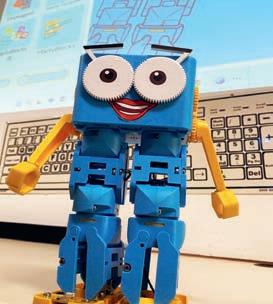
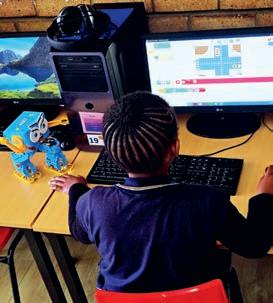
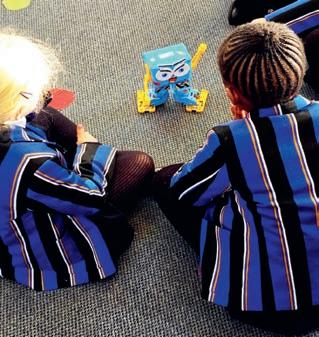
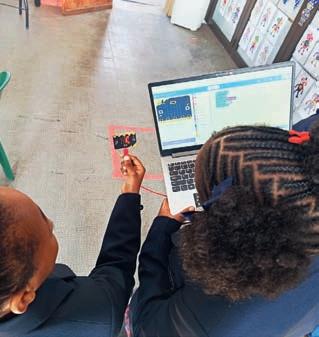
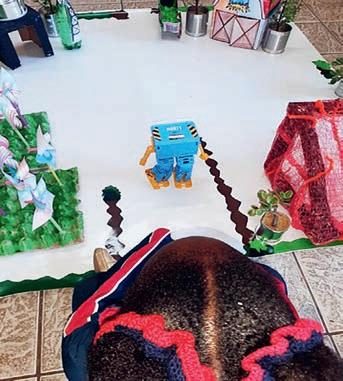
This is Marty. Marty can talk, walk, dance, translate, sense and learn. We use Marty to test code already learned through Knowledge Network for unplugged, ScratchJr, Scratch and Python, and we progress from there. We do machine learning, add microcontrollers and use AI like text-to-speech. Progression per grade is built in.

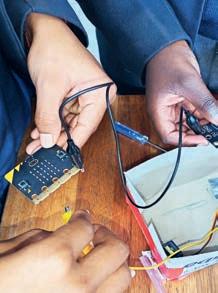
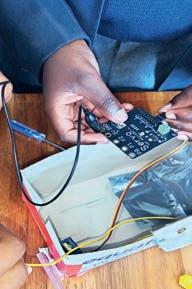
This is a microcontroller.
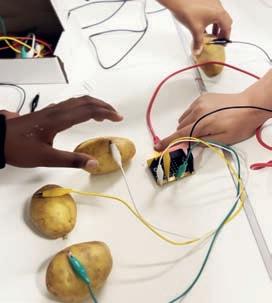
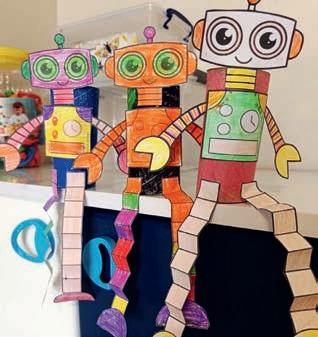
A micro:bit – a great starter tool to teach how circuits work, how to connect different robotic elements, how electricity flows through materials, coding and robotics for indoor and outdoor use. We use it for AI, machine learning, to use with robots like Marty, and for creating DIY robotics like windmills, fans, turtles and other. Extensions like sound, recording, servos and microturtle grids are excellent teaching tools for little learners too.
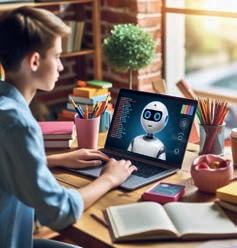
This looks like AI. A companion for students and teachers learning Skills for Schoolwork. AI is a valuable study companion and research assistant. AI can help with full APA-style referencing and proper citing.
AI can support writing, provide math help and study guides, and assist students with revision by helping with translations, grammar checks and language conversational practice.
Let’s teach students how to use it correctly and safely. Teachers also use it during class to make learning easier.
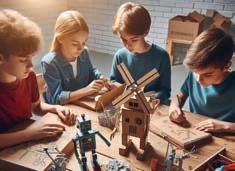
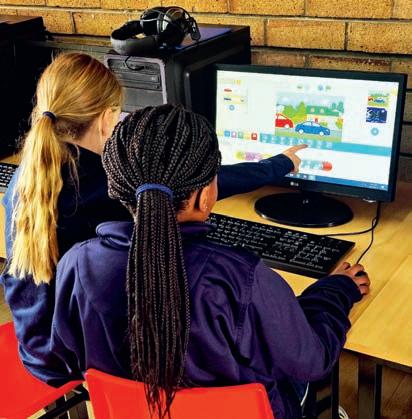
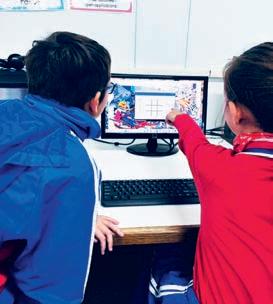
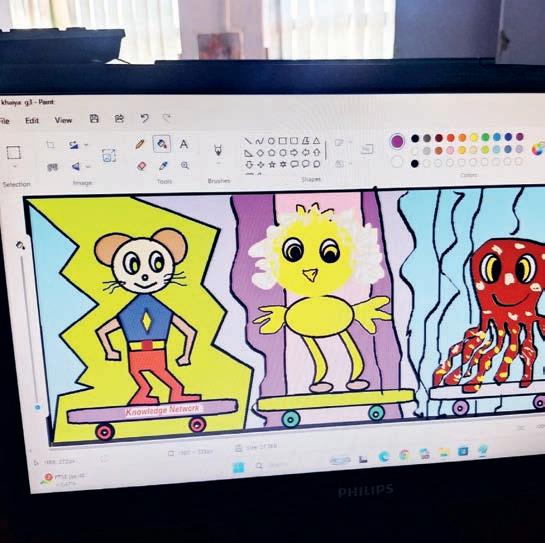
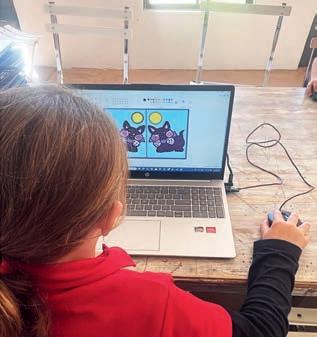
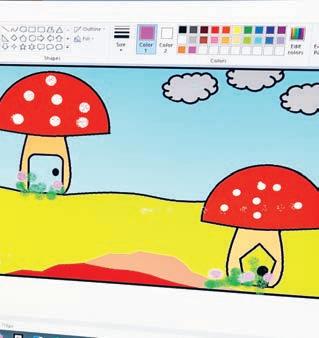
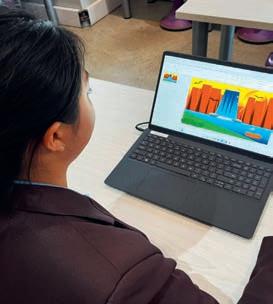
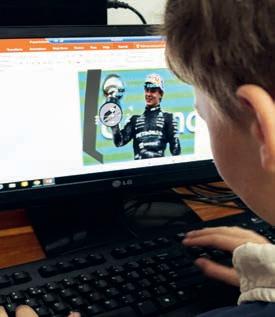
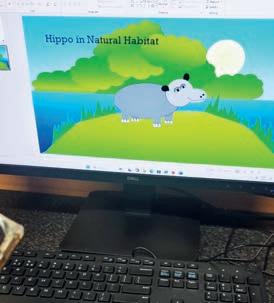
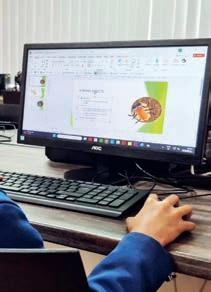
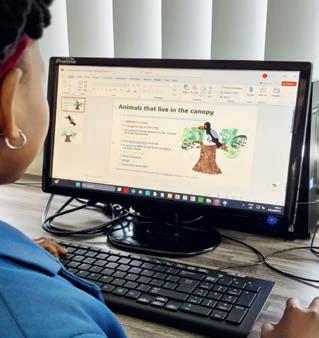
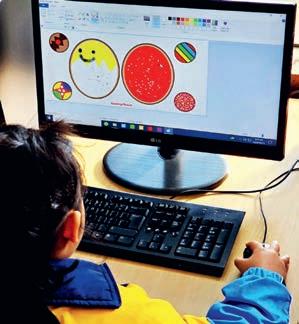
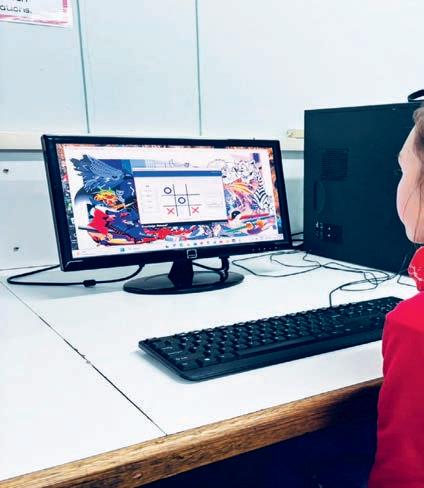
Coding. We integrate all the different learning areas into coding. Students code stories, games, shape drawing, animation, calculations and data storage like game scores. They design characters for animation, use art and graphics to create backgrounds, game interfaces and develop websites. They do research for photos and images, make music for stories and games, edit sound and record voice. They make videos, invent new games and code apps. They learn how to manage their files. Little learners improve their vocab, communication and thinking skills through storytelling coding

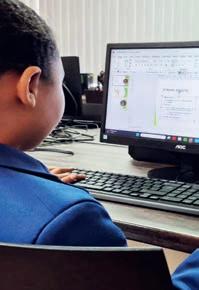
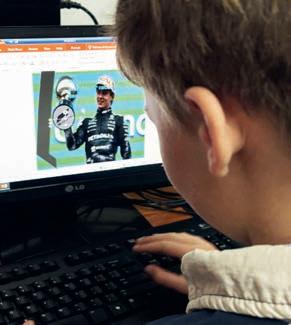
Skills for schoolwork: we all need excellent skills in all areas of computer use, from writing, drawing, layout, research and referencing to charting, number crunching, animation, sound, video, presenting data for projects using business-standard and newly released tools. Integrating technology in teaching and learning is the key to mastering all these new skills for schoolwork, coding and robotics. It also develops computational thinking, creativity, problem-solving, teamwork and collaboration - key abilities students also need to prosper in the digital age.




































































































































Blending
The
From BookTok to old favourites, the books children are loving right
Practical
Money
Creating
Preparing for
how to know if your child is
Inclusive
Building

Thriving in the final year – matric hacks to guide you through a stressful year.
Exploring alternative pathways to success – university is not the only option.


Facing
Learning
This year’s SA Schools Collection feels a little different – that’s by design. Our theme, “Raising Resilient Minds, the new era of South African Education”, goes beyond marks and report cards. It’s about helping young people think for themselves, adapt to change and navigate the world around them with con dence.
When putting this edition together, what struck me most is just how quickly classrooms are changing. Gami cation, for example, has moved from “nice idea” to something genuinely effective, turning lessons into experiences that appeal to and engage students. At the same time, hybrid and microlearning are starting to reshape how learning happens, offering more exible, bite-sized approaches that feel far more in sync with how kids absorb information today.
Of course, all of this and raising kids in the digital age come with a new set of parenting questions. How much screen time is too much? How do you support mental wellbeing when everything feels “always on”? Is homework ever going to be less of a negotiation? Our parent toolkit leans into these realities with practical, honest guidance for families guring it out as they go.


There’s also something reassuring in what hasn’t changed. Children are still loving and reading old favourites, and it’s heartening to see local publishers continuing to champion South African stories – helping build a love of reading that feels personal and familiar.
We also look at school safety, where the shift is towards smarter, more proactive solutions that protect without overwhelming the environment. And, running through all of this is a bigger change: a growing understanding that education can’t be one-size- ts-all. From neurodivergent learning to more exible ways of thinking about success, schools are slowly adapting to meet each child where they are.
Moving beyond marks, towards meaning Copyright:
It’s not just parents grappling with this. Globally, there’s growing momentum to rethink the role of smartphones in schools, with some countries moving to restrict or even ban them during the day. At the same time, parents are increasingly pushing for more say in how their children engage with digital spaces.
If there’s one thing I took away from this edition, it’s this: education is changing and, in many ways, for the better.
Vukani Magubane Editor
Picasso Headline, a proud division of Arena Holdings (Pty) Ltd Hill on Empire, 16 Empire Road (cnr Hillside Road), Parktown, Johannesburg, 2193 PO Box 12500, Mill Street, Cape Town, 8010 www.businessmediamags.co.za
Content Manager: Raina Julies rainaj@picasso.co.za
Editor: Vukani Magubane
Contributors: Annelize Clark, Herman Gibbs, Glynis Horning, Itumeleng Mogaki, Thando Pato, Anthony Sharpe, Robyn Shepherd, Rodney Weidemann, Lisa Witepski
Content Co-ordinator: Vanessa Payne
Copy Editor: Brenda Bryden
Content Co-ordinator: Natasha Maneveldt
Online Editor: Stacey Visser
Head of Studio: Jayne Macé-Ferguson
Senior Designer: Mfundo Archie Ndzo
Project Manager: Merryl Klein merrylk@picasso.co.za
Tel: +27 21 469 2446 | +27 82 895 7260
Production Editor: Shamiela Brenner
Advertising Co-ordinators: Shamiela Brenner and Deidre Musha
Subscriptions and Distribution: Fatima Dramat fatimad@picasso.co.za
Printing: CTP Printers, Cape Town
Business Manager: Lodewyk van der Walt lodewykv@picasso.co.za
Management Accountant: Deidre Musha General Manager: Magazines: Jocelyne Bayer

C
CORE SCHOOL – CENTRE OF REMEDIAL EDUCATION
Grades: 1–7
Tel: 011 445 3941
Address: 48 Johannesburg Road, Lyndhurst, Gauteng
Email: core@edenschools.co.za
Website: www.coreschools.co.za
F
FOOTPRINTS SPECIAL NEEDS SCHOOL
Ages: 2–18 years
Tel: 011 791 0062
Address: 20 and 24 Jan K Marais Street, Malanshof, Randburg, Gauteng
Email: admin@footprintschool.co.za
Website: www.footprintschool.co.za
C
CAMBRILEARN ONLINE SCHOOL
Grades: Levels R–12
Tel: 010 020 8570
Website: www.cambrilearn.com
CURRO ONLINE
Grades: 5–12
Tel: 021 140 1790/087 330 4971
Email: info.online@curro.co.za
Website: www.curro.co.za/curro-online
W
WINGU ACADEMY
Grades: Stages R–9, iGCSE, iAS/A Levels, CAPS
Tel: 087 147 1668
Address: online
Email: admissions@wingu-academy.com
Website: www.wingu-academy.com
B
BALDERSTONE SPORTS INSTITUTE
Grades: 8–12
Tel: 011 485 1067/1068
Address: 121 Club Street, Huddle Park and Recreation, Linksfield, Gauteng
Email: info@bsisports.com Website: www.bsisports.com
E
ESCA SCHOOL WANDERERS
Grades: 4–12
Tel: 010 035 3600
Address: 21 North Street, Illovo, Sandton, Johannesburg
Email: hello@esca.org.za
Website: www.esca.org.za/
ALMA MATER INTERNATIONAL SCHOOL
Grades: 3 months–Grade 12
Tel: 011 660 7532
Address: 1 Coronation Street, Paardeplaats
177 IQ, Krugersdorp, Gauteng
Email: admissions@almainternational.co.za
Website: www.almamaterinternationalschool.co.za www.almamaterprimaryschool.co.za
ASHTON INTERNATIONAL COLLEGE BALLITO
Grades: 0000–12
Tel: 032 946 2096
Address: 1 Albertina Way, Ballito, KwaZulu-Natal
Email: admin@ashtonballito.co.za
Website: www.ashtonballito.co.za
ASHTON INTERNATIONAL COLLEGE BENONI
Grades: 0000–12
Tel: 011 395 2070
Address: 47 Beryl Street, Goedeburg, Benoni, Gauteng
Email: admin@ashtonbenoni.co.za
Website: www.ashtoncollege.co.za F
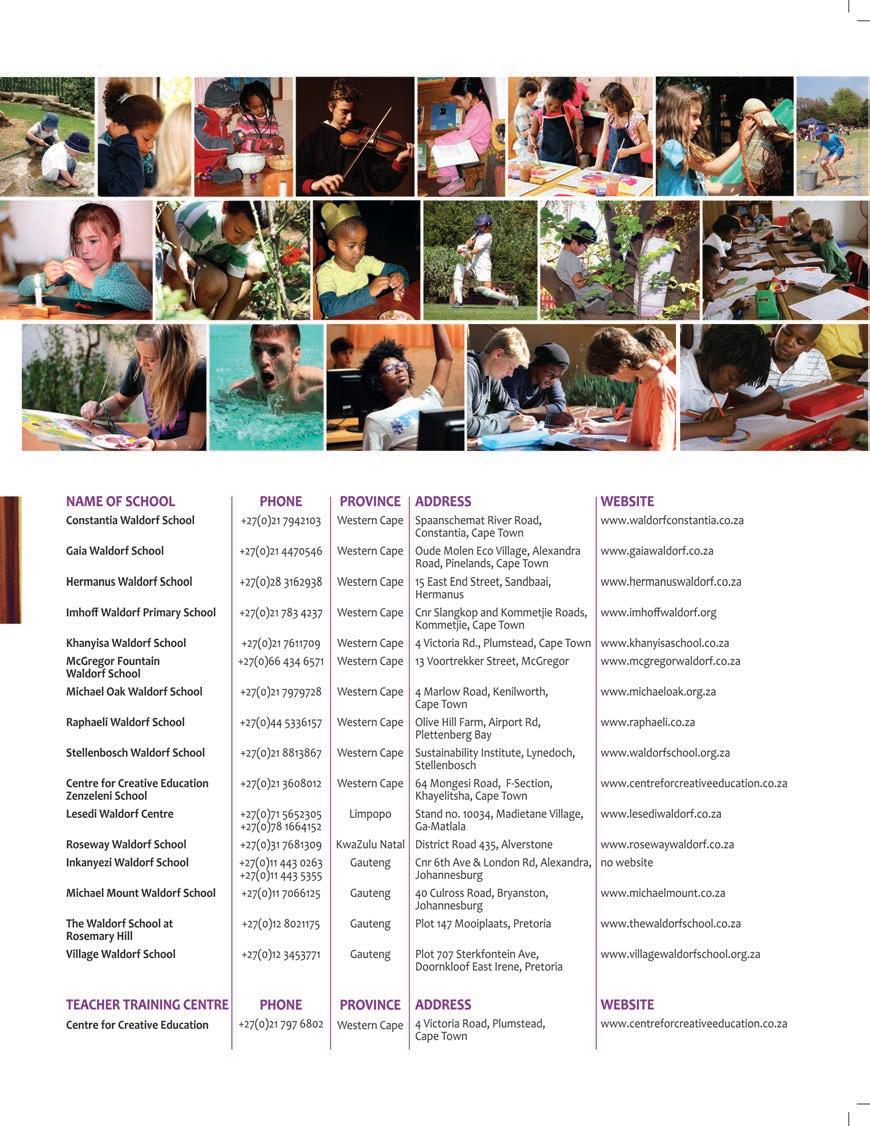
FEDERATION OF WALDORF SCHOOLS
(Association of 16 independent schools)
Grades: 2 years–matric Tel: 011 706 8545
Address: 40 Culross Road, Bryanston, Gauteng
Email: info@waldorf.org.za
Website: www.waldorf.org.za
COLLEGIATE GIRLS’ HIGH SCHOOL
Grades: 8–12
Tel: 041 373 7705
Address: Kestell Street, Parsons Hill, Gqeberha
Email: collegia@cghs.co.za
Website: www.collegiatehigh.co.za
CURRO WESTBROOK
Grades: Group 1–Grade 12
Tel: 041 396 6300
Address: 1 Burchell Road, Westbrook Estate, Port Elizabeth
Email: info.westbrook@curro.co.za
Website: www.curro.co.za/schools/currowestbrook-primary-school
M
MERRIFIELD PREPARATORY SCHOOL AND COLLEGE
Grades: 000–12
Tel: 043 748 6094
Address: Cnr Bonza Bay Road and N6, Beacon Bay, East London
Email: info@mpsc.co.za Website: www.merrifieldschool.co.za
S
SELBORNE COLLEGE
Grades: 8–12
Tel: 043 722 1822
Address: Dawson Road, Selborne, East London
Email: info@selborne.co.za Website: www.selborne.co.za
ST GEORGE’S PREPARATORY
Grades: Group 3–Grade 10 (Grade 11 in 2027)
Tel: 041 585 4825
Address: 8 Park Drive, Gqeberha
Email: info.stgeorges@curro.co.za
Website: www.curro.co.za/schools/stgeorge-s-preparatory
CURRO BLOEMFONTEIN
Grades: Group 3–Grade 12
Tel: 087 284 7300
Address: Curro Crescent, Groenvlei, Bloemfontein
Email: info.bloemfontein@curro.co.za
Website: www.curro.co.za/schools/currobloemfontein-primary-school
AMERICAN INTERNATIONAL SCHOOL OF JOHANNESBURG
Grades: Pre-Kindergarten–Grade 12 Tel: 011 464 1505
Address: Two campuses: Johannesburg and Pretoria
Email: admissions@aisj-jhb.org
BELLAVISTA SCHOOL
Grades: R–7
Tel: 011 788 5454
Address: 35 Wingfield Avenue, Birdhaven, 2196
Email: secretary@bellavistaschool.co.za
Website: www.bellavista.org.za
BRESCIA HOUSE SCHOOL
Grades: 000–12
Tel: 011 706 7404
Address: 14 Sloane Street, Bryanston, 2021
Email: admissions@brescia.co.za
Website: www.brescia.co.za
C
CONCORD COLLEGE HIGH SCHOOL
Grades: 8–12
Randburg campus: Tel: 087 088 4898
Address: Cnr Malibongwe and Republic Road, Randburg
Email: info@concordcollege.co.za
Mulbarton campus: Tel: 010 900 0291
Address: 69 True North Road, Mulbarton Email: info@concordcollege.co.za
COOPER COLLEGE
Grades: Reception year–AS/A Levels
Tel: 087 087 7947
Address: 226 Pritchard Street, Johannesburg North Email: info.coopercollege@curro.co.za
Website: www.curro.co.za/schools/coopercollege-primary-school
COURTNEY HOUSE INTERNATIONAL SCHOOL
Grades: Reception year–AS/A Levels
Tel: 087 087 7979
Address: 47 Charles Bramley Street, Bailey’s Muckleneuk, Pretoria
Email: info.courtney@curro.co.za
Website: www.curro.co.za/schools/ courtney-house-international-school
CURRO AURORA
Grades: Group 3–Grade 12
Tel: 087 087 0355
Address: Taurus Road, Sundowner, Randburg
Email: info.aurora@curro.co.za
Website: www.curro.co.za/schools/curroaurora-primary-school/
CURRO BARLOW PARK
Grades: 8–10 (Grade 11 in 2027)
Tel: 087 284 7141
Address: 180 Katherine Street, Barlow Park, Sandton
Email: info.barlowpark@curro.co.za
Website: www.curro.co.za/schools/currobarlow-park-high-school
CURRO BRYANSTON
Grades: Group 1–Grade R
Tel: 087 286 8275
Address: 87 Cambridge Road, Bryanston, Johannesburg
Email: info.bryanston@curro.co.za
Website: www.curro.co.za/schools/currobryanston-preschool
CURRO CHARTWELL
Grades: Group 1–Group 5
Tel: 011 023 5010/072 332 5668
Address: 119 Third Road, Chartwell
Email: info.chartwell@curro.co.za
Website: www.curro.co.za/schools/currochartwell-preschool
CURRO CLAYVILLE
Grades: R–12
Tel: 087 288 0315
Address: 7262 Drakensberg Steet, Valumax Residential Estate, Clayville
Email: info.clayville@curro.co.za
Website: www.curro.co.za/schools/curroacademy-clayville-primary-school
CURRO DOUGLASDALE
Grades: R–7
Tel: 087 286 8274
Address: 101 Hornbill Road, Douglasdale, Johannesburg
Email: info.douglasdale@curro.co.za
Website: www.curro.co.za/schools/currodouglasdale-primary-school/
CURRO EDENVALE
Grades: R–12
Tel: 087 087 7551
Address: Cnr Tech and Beukes Avenue, Highway Gardens, Edenvale
Email: info.edenvale@curro.co.za
Website: www.curro.co.za/schools/curroedenvale-primary-school/
CURRO FOURWAYS
Grades: Group 1–Group 5
Tel: 011 027 5010
Address: 32 Swallow Drive, Norscot
Slopes, Fourways
Email: info.fourways@curro.co.za
Website: www.curro.co.za/schools/currofourways-preschool
CURRO HAZELDEAN
Grades: Group 2–Grade 12
Tel: 087 287 9380
Address: 1 Silver Lakes Drive, Hazeldean, Pretoria
Email: adminhazeldean@curro.co.za
Website: www.curro.co.za/schools/currohazeldean-primary-school
CURRO HELDERWYK
Grades: Group 3–Grade 12
Tel: 087 097 0844
Address: 46 Tandelsberg Street, Helderwyk Estate, Helderwyk, Brakpan
Email: info.helderwyk@curro.co.za
Website: www.curro.co.za/schools/currohelderwyk-primary-school
CURRO JEWEL CITY
Grades: 8–12
Tel: 087 087 7960
Address: 248 Commissioner Street, Jewel City, Johannesburg
Email: info.jewelcity@curro.co.za
Website: www.curro.co.za/schools/currojewel-city-high-school
CURRO KRUGERSDORP
Grades: Group 1–Grade 12
Tel: 010 492 2988
Address: Norden Road, Rangeview, Krugersdorp
Email: info.krugersdorp@curro.co.za
Website: www.curro.co.za/schools/currokrugersdorp-primary-school
CURRO MIDRAND HALFWAY GARDENS
Grades: R–7
Tel: 087 232 1383
Address: 48 Harry Galaun Drive, Halfway Gardens, Midrand
Email: info.midrand@curro.co.za
Website: www.curro.co.za/schools/curromidrand-halfway-gardens-primary-school
CURRO MIDRAND SAGEWOOD
Grades: Group 3–Grade 12
Tel: 087 723 3130
Address: Sagewood Avenue (off Liebenberg Road), Noordwyk, Midrand Email: info.sagewood@curro.co.za
Website: www.curro.co.za/schools/curromidrand-sagewood-primary-school
CURRO NEW ROAD
Grades: 8–12
Tel: 087 087 7600
Address: 223 Alexandra Avenue, Halfway House, Midrand, Johannesburg
Email: info.newroad@curro.co.za
Website: www.curro.co.za/schools/curronew-road-high-school
CURRO OAKDENE
Grades: Group 5–Grade 7
Tel: 087 086 4632
Address: Cnr Rifle Range Road and Oakdene Parks Drive, Oakdene, Johannesburg South
Email: info.oakdene@curro.co.za
Website: www.curro.co.za/schools/currooakdene-primary-school
CURRO RIVONIA
Grades: Group 3–Grade 12
Tel: 087 287 9551
Address: 43 Homestead Road, Rivonia, Sandton
Email: info.rivonia@curro.co.za
Website: www.curro.co.za/schools/currorivonia-primary-school
CURRO ROODEPLAAT
Grades: 18 months–Grade 12
Tel: 087 287 2568
Address: Kameelfontein Road, Kameeldrift, Pretoria
Email: info.roodeplaat@curro.co.za
Website: www.curro.co.za/schools/curroroodeplaat-primary-school
CURRO SERENGETI
Grades: Group 1–Grade 12
Tel: 087 284 7170
Address: Serengeti Golf and Wildlife Estate, Cnr R21 and R23, Kempton Park
Email: adminserengeti@curro.co.za
Website: www.curro.co.za/schools/curroserengeti-primary-school
CURRO THATCHFIELD
Grades: Group 1–Grade 12
Tel: 087 286 8268
Address: Cnr Barbet Street and Brakfontein Road, Thatchfield Hills, Centurion
Email: info.thatchfield@curro.co.za
Website: www.curro.co.za/schools/currothatchfield-primary-school
CURRO VANDERBIJLPARK
Grades: Group 5–Grade 12
Tel: 087 087 7533
Address: 1174 Hendrik van Eck Boulevard, Vanderbijlpark
Email: info.vanderbijlpark@curro.co.za
Website: www.curro.co.za/schools/currovanderbijlpark-primary-school
CURRO VICTORY PARK
Grades: 8–11 (Grade 12 in 2027)
Tel: 087 284 7070
Address: 53 Ley Road, Victory Park, Randburg
Email: info.victorypark@curro.co.za
Website: www.curro.co.za/schools/currovictory-park-high-school
CURRO WATERFALL
Grades: Group 3–Grade 12
Tel: 087 287 9469
Address: Waterfall Country Village, Waterfall Drive (opposite gate 4), Midrand
Email: info.waterfall@curro.co.za
Website: www.curro.co.za/schools/currowaterfall-primary-school
CURRO MAMELODI
Grades: R–7
Tel: 087 086 4525
Address: 7260 Tsamaya Avenue, Mahube Valley, Pretoria
Email: info.mamelodi@curro.co.za
Website: www.curro.co.za/schools/curroacademy-mamelodi-primary-school
CURRO PARKDENE
Grades: Group 5–Grade 12
Tel: 087 087 7494
Address: Spring Close (off Riverbend Road), Parkdene, Boksburg
Email: info.parkdene@curro.co.za
Website: www.curro.co.za/schools/curroacademy-parkdene-primary-school
CURRO PRETORIA
Grades: R–12
Tel: 087 287 9492
Address: 146 Baviaanspoort Road, East Lynne, Pretoria
Email: info.pretoria@curro.co.za
Website: www.curro.co.za/schools/curroacademy-pretoria-primary-school
CURRO PROTEA GLEN
Grades: R–12
Tel: 087 087 7569
Address: Cnr Sagewood and Wild Chestnut Street, Protea Glen, Soweto
Email: info.proteaglen@curro.co.za
Website: www.curro.co.za/schools/curroacademy-protea-glen-primary-school
CURRO RIVERSIDE
Grades: R–12
Tel: 087 086 4645
Address: Blue Crane Drive, Riverside View (off William Nicol Road), Riverside View, Diepsloot
Email: info.riverside@curro.co.za
Website: www.curro.co.za/schools/curroacademy-riverside-primary-school
CURRO SAVANNA CITY
Grades: R–12
Tel: 087 087 7512
Address: Central Boulevard, Savanna City, De Deur, Vereeniging
Email: info.savannacity@curro.co.za
Website: www.curro.co.za/schools/curroacademy-savanna-city-primary-school
CURRO SOSHANGUVE
Grades: R–12
Tel: 087 285 4700/087 286 8265
Address: 6238 Palladium Street, Block VV, Extension 6, Soshanguve East, 0152
Email: info.shoshanguve@curro.co.za
Website: www.curro.co.za/schools/curroacademy-soshanguve-primary-school
CURRO THE BLYDE
Grades: Group 4–Grade 7
Tel: 087 087 7970
Address: Tropical Road, off Bronkhorstspruit Road (next to The Blyde Estate), Pretoria
Email: info.theblyde@curro.co.za
Website: www.curro.co.za/schools/curroacademy-the-blyde-primary-school
CURRO WILGEHEUWEL
Grades: Group 3–Grade 12
Tel: 087 087 0083
Address: Vintage Road, Wilgeheuwel, Roodepoort
Email: info.wilgeheuwel@curro.co.za
Website: www.curro.co.za/schools/curroacademy-wilgeheuwel-primary-school
D
DAINFERN COLLEGE
Grades: 0–12
Tel: 011 469 0635
Address: 96 Broadacres Drive, Dainfern
Email: enrol@dainferncollege.co.za
Website: www.dainferncollege.co.za
DEUTSCHE INTERNATIONALE SCHULE
JOHANNESBURG
Grades: 18 months–Grade 12
Tel: 011 726 6220/1
Address: 11 Sans Souci Road, Parktown, Johannesburg, 2093
Email: dsj@dsjmail.co.za
Website: www.dsj.co.za
DEUTSCHE INTERNATIONALE SCHULE
PRETORIA
Grades: 3 months–Grade 12
Tel: 012 803 4106
Address: Simon Vermooten Road, The Willows, Pretoria, 0041
Email: dsp@dsp.gp.school.za
Website: www.dspretoria.co.za
E
EAGLE HOUSE SCHOOL
Grades: 8–12
Tel: 011 660 7597
Address: 73 Lawrence Road, Poortview
AH, Johannesburg
Email: admissions@eaglehouse.co.za
Website: www.eaglehouse.co.za
EDEN SCHOOLS
Johannesburg campus
Grades: RRRR–12
Tel: 011 445 3900
Address: 48 Johannesburg Road, Lyndhurst
Email: info@edenschools.co.za
Website: www.edenschools.co.za
EDEN SCHOOLS
Chartwell campus
Grades: RR–3
Tel: 011 445 3905
Address: Cnr Cedar Road and Romney Avenue, Chartwell
Email: info@edenschools.co.za
ESCA SCHOOL WANDERERS
Grades: 4–12
Tel: 010 035 3600
Address: 21 North Street, Illovo, Sandton, Johannesburg, 2196
Email: hello@esca.org.za Website: www.esca.org.za
GGREENSIDE HIGH SCHOOL
Grades: 8–12
Tel: 011 646 0113
Address: Geers Avenue, Greenside, Johannesburg, 2093
Email: admissions@greensidehigh.co.za Website: www.greensidehigh.co.za
HHOLY ROSARY SCHOOL
Grades: 0000–12
Tel: 011 457 0900
Address: 113 Horwood Street, Edenvale
Email: admissions@holyrosaryschool.co.za
Website: www.holyrosaryschool.co.za
J
JAN CELLIERS LAERSKOOL EN PREPRIMÊR
Grades: Playschool–Grade 7
Tel: 011 646 3336
Address: Lower Park Drive, Parkview, Randburg, South Africa, 2122
Email: bemarking@jancelliers.co.za Website: www.jancelliers.co.za
K
KRUGERSDORP HIGH SCHOOL
Grades: 8–12
Tel: 011 954 1009
Address: Cnr Cornelius Moll, Monument Extension, Krugersdorp
Email: info@krugersdorphigh.co.za
Website: www.krugersdorphigh.co.za/ contact
KYALAMI SCHOOLS GROUP (NPC)
Grades: 0000–12
Tel: 010 591 5004
Address: Midrand, Johannesburg
Email: admissions @kyalamischools.org
Website: www.kyalamischools.org
LLORETO SCHOOL QUEENSWOOD
Grades: RRR–7
Tel: 012 333 4384
Address: 1161 Woodlands Drive, Queenswood
Email: info@loretoschoolqueenswood.co.za
Website: www.loretoschoolqueenswood.com
M
MAGIC BEINGS
Grades: Birth–Group 5
Tel: 011 023 8821/2/3/4
Address: 211 Church Street, Northriding, Randburg
Email: info.magicbeings@curro.co.za
Website: www.curro.co.za/schools/magicbeings-preschool
MERIDIAN COSMO CITY
Grades: R–12
Tel: 087 285 4690/1
Address: Cnr South Africa Drive and Tennessee Road, Cosmo City, Roodepoort
Email: info.cosmocity@curro.co.za
Website: www.curro.co.za/schools/ meridian-cosmo-city-primary-school
MERIDIAN RUSTENBURG
Grades: R–12
Tel: 014 565 5723/087 285 2150
Address: 3588 Monareng Street, Tlhabane, Rustenburg
Email: info.rustenburg@curro.co.za
Website: www.curro.co.za/schools/ meridian-rustenburg-primary-school
MICHAEL MOUNT WALDORF SCHOOL
Grades: 4 months–matric (IEB)
Tel: 011 706 6125
Address: 40 Culross Road, Bryanston, Johannesburg
Email: admissions@michaelmount.co.za
Website: www.michaelmount.co.za
N
NATIONAL SCHOOL OF THE ARTS
Grades: 8–12
Tel: 011 339 6539
Address: 17 Hoofd Street, Braamfontein, Johannesburg
Email: admin@artschool.co.za
Website: www.artschool.co.za
NORTHCLIFF HIGH SCHOOL
Grades: 8–12
Tel: 011 476 1544
Address: Mountainview Drive, Northcliff, Johannesburg
Email: info@northcliffhigh.co.za
Website: www.northcliffhigh.co.za
NORTHRIDING COLLEGE
Grades: Group 2–Grade 12
Tel: 087 087 7586
Address: 358 Valley Road, Northriding AH, Randburg
Email: info.northriding@curro.co.za
Website: www.curro.co.za/schools/ northriding-college-primary-school
NORTHSIDE COLLEGE
Grades: 8–9
Address: Mountainview Drive, Northcliff, Johannesburg
Tel: 076 505 5522
Email: info@northside.co.za
Website: www.northside.co.za
P
PRETORIA HIGH SCHOOL FOR GIRLS
Grades: 8–12
Tel: 012 430 7341
Address: 949 Park Street, Arcadia, Pretoria
Email: info@phsg.org.za
Website: www.phsg.org.za
PRIDWIN PREPARATORY SCHOOL
Grades: 0–7
Tel: 011 788 1116
Address: St Andrew Street, Melrose, Johannesburg, 2196
Email: admin@pridwinprep.co.za
Website: www.pridwin.co.za
R
RUIMSIG ACADEMY Grades: 0000–10 (2025) Tel: 010 109 5009
Address: 4b Chestnut Road, Tres Jolie, Roodepoort, 1732
Email: admissions@ruimsigacademy.co.za
Website: www.ruimsigacademy.co.za/
S
SAHETI SCHOOL
Grades: Playschool–matric
Tel: 0861 724 384
Address: Civin Drive, Senderwood, Bedfordview, 2007
Email: admissions@saheti.co.za
Website: www.saheti.co.za
SHARONLEA CHILDCARE AND PRE-PRIMARY Grades: Group 1–5
Tel: 087 087 7570
Address: 73 Ebbehout Street, Sharonlea, Randburg
Email: info.sharonleachildcare@curro.co.za
Website: www.curro.co.za/schools/ sharonlea-childcare-and-pre-primary
ST ALBAN’S COLLEGE
Grades: 8–12
Tel: 012 348 1221
Address: 110 Clearwater Road, Lynnwood Glen, Pretoria
Email: marketing@stalbanscollege.com Website: www.stalbanscollege.com
ST ANDREW’S PRESCHOOL AND ST ANDREW’S SCHOOL FOR GIRLS
Grades: 3 months–Grade 12
Tel: 011 453 9408
Address: St Andrew’s Avenue, Senderwood, Bedfordview, 2145
Email: admissions@standrews.co.za Website: www.standrews.co.za
ST DAVID’S MARIST INANDA
Sandton campus Grades: 00–12
Address: 36 Rivonia Road, Inanda, Sandton
Alexandra campus Grades: Grade 8–12
Address: Cnr Selborne Street and 2nd Street, Alexandra, Johannesburg Tel: 011 215 7600
Email: admissions@stdavids.co.za Website: www.stdavids.co.za
ST DOMINIC’S CATHOLIC SCHOOL FOR GIRLS, BOKSBURG
Grades: 2 years–Grade 12
Tel: 011 917 5150
Address: Kruger Street, Boksburg
Email: marketing@stdominics.co.za
ST DUNSTAN’S COLLEGE
Grades: 0000–12
Tel: 011 746 6500
Address: 54 Millburn Street, Rynfield, Benoni
Email: admissions@stdunstans.co.za Website: www.stdunstans.co.za/
ST JOHN’S COLLEGE
Grades: 000–post-matric
Tel: 010 492 0300
Address: St David Road, Houghton
Email: communications@stjohnscollege.co.za Website: www.stjohnscollege.co.za
ST JOHN’S SIXTH FORM
Grades: Cambridge AS and A Levels Tel: 010 492 0300
Address: St David Road, Houghton
Email: sixthform@stjohnscollege.co.za Website: www.stjohnscollege.co.za
ST MARTIN’S SCHOOL
Grades: 000–12
Tel: 011 435 0380
Address: 4 East Road, The Hill, Johannesburg South
Email: marketing@stmartin.co.za or secretary@stmartin.co.za
Website: www.stmartin.co.za
ST MARY’S SCHOOL, WAVERLEY
Grades: 000–12
Tel: 011 531 1800
Address: 55 Athol Street, Waverley, 2037
Email: admissions@stmary.co.za
Website: www.stmarysschool.co.za
ST PAULUS PRE-PRIMARY AND PRIMARY SCHOOL
Grades: 00–7
Tel: 012 804 9670
Address: 23 Boekenhout Street, Brummeria, Pretoria
Email: admissions@stpaulus.co.za Website: www.stpaulus.co.za
ST PETER’S BOYS PREP SCHOOL
Grades: 0–7
Tel: 011 706 3423
Address: 105 Witkoppen Road, Paulshof, Sandton
Email: admissions@stpeters.co.za Website: www.stpeters.co.za
ST PETER’S COLLEGE
Grades: 8–12
Tel: 011 807 5315
Address: College Lane, off Maxwell Drive, Sunninghill, Sandton
Email: admissions@stpeterscollege.co.za Website: www.stpeters.co.za
ST PETER’S GIRLS PREP SCHOOL
Grades: 0–7
Tel: 011 706 3423
Address: 105 Witkoppen Road, Paulshof, Sandton
Email: admissions@stpeters.co.za Website: www.stpeters.co.za
ST PETER’S PRE-PREP
Grades: 000–00
Tel: 011 705 3423
Address: 105 Witkoppen Road, Paulshof, Sandton
Email: admissions@stpeters.co.za Website: www.stpeters.co.za
ST TERESA’S SCHOOL
Grades: 000–12
Tel: 011 442 6235
Address: 14–18 Keyes Avenue, Rosebank
Email: stteresas@stteresas.co.za Website: www.stteresas.co.za
STEYN CITY SCHOOL
Grades: 000–12
Tel: 010 597 1250
Address: Cnr Douw Steyn Drive and Cedar Road, Fourways, Johannesburg
Email: info@steyncityschool.co.za Website: www.steyncityschool.co.za
SUMMERHILL SCHOOL
Grades: IEB 0000–12 and Cambridge
IGCSE-A LEVEL
Tel: Nursery and Preparatory: 011 468 1414/College: 011 468 5986
Address: Cnr 8th Road and 10th Road, Erand, Midrand
Email: info@summerhill-school.co.za, college@summerhill-school.co.za
Website: www.summerhill-school.co.za
T
THE KING’S SCHOOL LINBRO PARK
Grades: Group 4–Grade 12
Tel: 010 443 3395
Address: 133 First Road, Linbro Park, Sandton
Email: info.kingsschool@curro.co.za
Website: www.curro.co.za/schools/thekings-school-primary-school
W
WATERSTONE COLLEGE
Grades: Group 2–Grade 12
Tel: 087 285 4740
Address: Main Service
Road, Kibler Park, Johannesburg
Email: info.waterstonecollege@curro.co.za
Website: www.curro.co.za/schools/ waterstone-college-primary-school
WOODHILL COLLEGE
Grades: Group 3–Grade 12
Tel: 087 288 4289
Address: De Villebois Mareuil Drive, Pretoria East
Email: info.woodhill@curro.co.za
Website: www.curro.co.za/schools/ woodhill-college-primary-school
C
CRESTON COLLEGE
Grades: Group 3–Grade 12
Tel: 087 106 8150
Address: Hillside Crescent, Oslo Beach, Port Shepstone
Email: info.creston@curro.co.za
Website: www.curro.co.za/schools/ creston-college-primary-school
CURRO HERITAGE HOUSE
Grades: Group 1–Grade 12
Tel: 087 286 5976
Address: 119–160 Lilian Ngoyi Road, Morningside, Durban
Email: info.heritagehouse@curro.co.za
Website: www.curro.co.za/schools/curroheritage-house-primary-school
CURRO HILLCREST
Grades: 8–12
Tel: 087 285 2148
Address: Cnr Inanda Road and JF Bailes Drive, Hillcrest
Email: admin.hillcresths@curro.co.za
Website: www.curro.co.za/schools/currohillcrest-high-school
CURRO HILLCREST CHRISTIAN ACADEMY
Grades: Group 2–Grade 7
Tel: 087 287 9374
Address: 2 Blessing Ninela Road, Belvedere Ext 1, Hillcrest
Email: admin.hca@curro.co.za
Website: www.curro.co.za/schools/currohillcrest-christian-academy-primary-school
CURRO SALT ROCK
Grades: Group 1–Grade 12
Tel: 087 285 1671
Address: 1 New Salt Rock Road, Salt Rock, Ballito
Email: info.saltrock@curro.co.za
Website: www.curro.co.za/schools/currosalt-rock-primary-school
D
DURBAN GIRLS’ COLLEGE
Grades: 00–12
Tel: 031 268 7200
Physical address: 586 Musgrave Road, Berea, Durban
Email: marketing@dgc.co.za
Website: www.dgc.co.za
G
GRANTLEIGH
Grades: Group 2–Grade 12
Tel: 035 580 1581
Address: District Road P386, Mposa, Mbonambi, KwaZulu-Natal
Email: info.grantleigh@curro.co.za
Website: www.curro.co.za/schools/ grantleigh-primary-school
K
KEARSNEY COLLEGE
Grades: 8–12
Tel: 031 765 9600
Address: 25 Old Main Road, Botha’s Hill
Email: marketing@kearsney.com
Website: www.kearsney.com
M
MARIS STELLA
Grades: 000–12
Tel: 031 209 9426
Address: 558 Stephen Dlamini Road, Essenwood, Berea, Durban
Email: ms@marisstella.co.za
Website: www.marisstella.co.za
MARITZBURG COLLEGE
Grades: 8–12
Tel: 033 342 9376
Address: 50 College Road, Pietermaritzburg
Email: marketing@mcollege.co.za
Website: www.maritzburgcollege.co.za
PPIETERMARITZBURG GIRLS’ HIGH SCHOOL
Grades: 8–12
Tel: 033 386 9271
Address: 186 Alexandra Road, Scottsville, Pietermaritzburg
Email: marketing@ghspmb.co.za
Website: https://ghspmb.co.za/
S
ST DOMINICS NEWCASTLE
Grades: Group 2–Grade 12
Tel: 034 312 8316
Address: 148 Murchison Street, Newcastle
Email: info.stdominics@curro.co.za
Website: www.curro.co.za/schools/stdominics-newcastle-primary-school
T
TREVERTON
Grades: 000–12
Tel: 033 263 1251
Address: R103 Mooi River
Email: admin@treverton.co.za
Website: www.treverton.co.za
CURRO HEUWELKRUIN
Grades: Group 2–Grade 12
Tel: 015 263 8903/4
Address: Plot 8 Myngenoegen, Polokwane, 0699
Email: kruinies@curro.co.za
Website: www.curro.co.za/schools/curroheuwelkruin-primary-school
N
NORTHERN ACADEMY
Grades: R–12
Tel: 087 087 7668/011 014 1810
Address: 103 Romulus Drive, Bushveld Lifestyle Estate, Bendor, Polokwane
Email: admin@northernacademy.co.za
Website: www.curro.co.za/schools/ northern-academy-primary-school S
STANFORD LAKE COLLEGE
Grades: 8–12
Tel: 015 276 6103
Address: A22 off the R71, Magoebaskloof Email: info@slc.co.za
Website: www.slc.co.za
CURRO BANKENVELD
Grades: Group 1–Grade 12
Tel: 087 285 6265
Address: Silver Avenue, Reyno Ridge, Emalahleni
Email: adminbankenveld@curro.co.za
Website: www.curro.co.za/schools/currobankenveld-primary-school
CURRO MBOMBELA
Grades: Group 4–Grade 11
Tel: 087 087 7888
Address: Cnr Nyalaberry Boulevard and Wildberry Road, Riverside, Mbombela
Email: info.mbombela@curro.co.za
Website: www.curro.co.za/schools/curroacademy-mbombela-primary-school
CURRO NELSPRUIT
Grades: Group 1–Grade 12
Tel: 087 087 7812
Address: The Rest Nature Estate, Johanna Drive, Sonheuwel, Nelspruit
Email: info.nelspruit@curro.co.za
Website: www.curro.co.za/schools/curronelspruit-primary-school
CURRO SECUNDA
Grades: Group 1–Grade 12
Tel: 087 285 3642
Address: Cnr Nelson Mandela Drive and Coen Brits Street,Secunda
Email: info.secunda@curro.co.za
Website: www.curro.co.za/schools/currosecunda-primary-school
M
MERIDIAN KARINO
Grades: R–12
Tel: 087 285 1661
Address: Cnr Ka Nyamazane Road and Everlasting Street, Karino Lifestyle Estate, Mbombela
Email: info.karino@curro.co.za
Website: www.curro.co.za/schools/ meridian-karino-primary-school
U
UPLANDS COLLEGE
Grades: 00000–12
Tel: 013 751 3141
Address: Danie Joubert Street Extension, White River, Mpumalanga,1240
Email: admissions@uplands.co.za
Website: www.uplands.co.za
C
CURRO KATHU
Grades: Group 1–Grade 12
Tel: 087 285 4755
Address: Umgeni Road, Kathu
Email: info.kathu@curro.co.za
Website: www.curro.co.za/schools/currokathu-primary-school
C
CURRO KLERKSDORP
Grades: Group 3–Grade 12
Tel: 087 087 7738
Address: 22 Elm Street, Flamwood, Klerksdorp
Email: klerksdorp@curro.co.za
Website: www.curro.co.za/schools/curroklerksdorp-primary-school
CURRO MAHIKENG
Grades: RR–12
Tel: 087 285 4731/087 285 2102
Address: Cnr Nelson Mandela Drive and Sekame Street, Mmabatho, Mahikeng
Email: info.mahikeng@curro.co.za
Website: www.curro.co.za/schools/curroacademy-mahikeng-primary-school
INTERNATIONAL SCHOOL OF SOUTH AFRICA
Grades: 00–A Level
Tel: 018 381 1102
Address: William Dick Avenue, Libertas, Mahikeng
Email: admin@issa.co.za Website: www.issa.co.za
AMERICAN INTERNATIONAL SCHOOL OF CAPE TOWN (AISCT)
Grades: Age 2–Grade 12
Tel: 021 713 2220
Address: 42 Soetvlei Avenue, Constantia, 7806
Email: admissions@aisct.org
Website: www.aisct.org
BBRAMBLE HILL INTERNATIONAL SCHOOL
Grades: R–12
Tel: 044 050 5254
Address: 233 Moeras Rivier, Geelhoutboom, George, Western Cape
Email: admissions@ bramblehillinternationalschool.co.za
Website: bramblehillinternationalschool. co.za/
BRIDGE HOUSE SCHOOL
Grades: Playschool–matric
Tel: 021 874 8100
Address: Off Waterfall Farm, off R4, Franschhoek, 7690
Email: stebou@bridgehouse.org.za
Website: www.bridgehouse.org.za
CCANNONS CREEK INDEPENDENT SCHOOL
Grades: RR–Grade 12
Tel: 021 531 0912
Address: 2 Nursery Way, Pinelands, Cape Town, 7405
Email: marketing@cannonscreek.co.za
Website: www.cannonscreek.co.za
CURRO BRACKENFELL
Grades: Group 1–Grade 10 (Grade 11 in 2027)
Tel: 087 285 4710
Address: 67 Vredeveld Way, Sonkring, Brackenfell
Email: info.brackenfell@curro.co.za
Website: www.curro.co.za/schools/ curro-brackenfell-primary-school
CURRO BURGUNDY
Grades: Group 3–Grade 4
Tel: 087 087 7519
Address: Cnr Burgundy and Carmine Drive, Burgundy Estate, Cape Town
Email: info.burgundy@curro.co.za
Website: www.curro.co.za/schools/curroburgundy-primary-school
CURRO CENTURY CITY
Grades: Group 3–Grade 12
Tel: 087 285 2101/021 492 1442
Address: Socrates Way, Century City, Cape Town
Email: info.ccity@curro.co.za
Website: www.curro.co.za/schools/currocentury-city-primary-school
CURRO DELFT
Grades: 8–12
Tel: 087 087 7700
Address: Cnr Delft Main Road and Emporium Street, Delft, Cape Town
Email: info.delft@curro.co.za
Website: www.curro.co.za/schools/currodelft-high-school
CURRO DURBANVILLE
Grades: Group 2–Grade 12
Tel: 021 975 6377
Address: 1 Memento Drive, Sonstraal Heights, Durbanville
Email: enrolmentscdv@curro.co.za
Website: www.curro.co.za/schools/currodurbanville-primary-school
CURRO FORESHORE
Grades: 8–12
Tel: 087 087 7597
Address: 60 Sir Lowry Road, Foreshore, Cape Town
Email: info.burgundy@curro.co.za Website: www.curro.co.za/schools/curroburgundy-primary-school
CURRO GEORGE
Grades: Group 4–Grade 6
Tel: 087 087 7917
Address: Cnr Victoria and Merriman
Street, George
Email: info.george@curro.co.za
Website: www.curro.co.za/schools/currogeorge-primary-school
CURRO HERMANUS
Grades: Group 1–Grade 12
Tel: 028 316 4911
Address: 1 Curro Road, Sandbaai, Hermanus
Email: hermanus.primaryschooladmin@ curro.co.za
Website: www.curro.co.za/schools/currohermanus-primary-school
CURRO LANGEBAAN
Grades: Group 1–Grade 12
Tel: 022 772 0116
Address: Long Acres Way, Langebaan
Email: info.langebaan@curro.co.za
Website: www.curro.co.za/schools/currolangebaan-primary-school
CURRO MOSSEL BAY
Grades: Group 1–Grade 12
Tel: 044 693 3488
Address: Seemeeu Street, Heiderand, Mossel Bay
Email: mbay@curro.co.za
Website: www.curro.co.za/schools/curromossel-bay-primary-school
CURRO ROSEN CASTLE
Grades: Group 1–Grade R
Tel: 021 914 2690/1
Address: 12 Twist Street, Rosenpark, Bellville, Cape Town
Email: info@rosencastle.co.za
Website: www.curro.co.za/schools/currorosen-castle-preschool
CURRO SANDOWN
Grades: Group 3–Grade 12
Tel: 087 086 4675
Address: Cnr Sandown Road and Discovery Drive, Sandown, Cape Town
Email: info.sandown@curro.co.za
Website: www.curro.co.za/schools/curroacademy-sandown-primary-school
CURRO SOMERSET WEST, SITARI ESTATE
Grades: 1–12
Tel: 087 285 2142
Address: 1 Sundarbans Road, Sitari Country Estate, Somerset West
Email: info.somersetwest@curro.co.za
Website: www.curro.co.za/schools/currosomerset-west-sitari-estate-primary-school
CURRO UITZICHT HIGH SCHOOL
Grades: 8–12
Tel: 087 284 7270
Address: Cnr Schubert Avenue and Verdi Boulevard, Sonstraal Heights, Durbanville
Email: info.uitzicht@curro.co.za
Website: www.curro.co.za/schools/currouitzicht-high-school/
CURRO UITZICHT PRIMARY SCHOOL
Grades: 1–7
Tel: 087 087 4760
Address: Cnr Wildebeest and Springbok Road, Uitzicht, Durbanville, Cape Town
Email: info.uitzicht@curro.co.za
Website: www.curro.co.za/schools/currouitzicht-primary-school
MMERIDIAN PINEHURST
Grades: Group 1–Grade 12
Tel: 087 087 7711
Address: 6 Campus Way, Pinehurst, Durbanville
Email: info.pinehurst@curro.co.za
Website: www.curro.co.za/schools/ meridian-pinehurst-primary-school
O
OAKHILL SCHOOL
Grades: 000–12
Tel: 044 382 6506
Address: Uitsig Street, Heuwelkruin, Knysna
Email: info@oakhill.co.za
Website: www.oakhill.co.za/
RONDEBOSCH BOYS’ PREPARATORY SCHOOL
Grades: 1–7
Tel: 021 686 4635
Address: 78 Campground Road, Rondebosch, 7700
Email: info@rondebosch.com
Website: www.rondebosch.com
RONDEBOSCH BOYS’ HIGH SCHOOL
Grades: 8–12
Tel: 021 686 3987
Address: Canigou Avenue, Rondebosch, 7700
Email: infoline@rondebosch.com
Website: www.rondebosch.com/high
RUSTENBURG GIRLS’ HIGH SCHOOL
Grades: 8–12
Tel: 021 686 4066
Address: 44 Campground Road, Rondebosch
Email: info@rghs.org.za
Website: www.rghs.org.za
S
ST CYPRIAN’S SCHOOL
Grades: 000–12
Tel: 021 300 6517
Address: Gorge Road, Vredehoek, Cape Town
Email: admissions@stcyprians.co.za
Website: www.stcyprians.co.za
S
SOS SCHOOL IN THE WILDS
Tel: 087 550 1220
Address: SOS Camp, Bundu Farm, R321, Villiersdorp
Email: info@soswild.org.za Website: www.soswild.co.za
SOUTH AFRICAN ADVENTURE INDUSTRY ASSOCIATION NPC Tel: 076 601 4997
Address: Diep in Die Berg, Wapadrand, Pretoria
Email: info@saaia.org.za Website: www.saaia.org.za
T
TRUE ADVENTURE
Tel: 081 434 5115
Address: The Forge, Grange Road, Tongham, Farnham, Surrey, GU10 1DW, GBR
Email: caseys@true-adventure.co.za
Website: www.true-adventure.co.za
A
AAA SCHOOL OF ADVERTISING
Tel: JHB campus: 087 804 3796
Tel: CT campus: 021 422 1800
Email: info@aaaschool.ac.za
Website: www.aaaschool.ac.za
B
BOSTON CITY CAMPUS
Tel: 011 551 2000 (National Call Centre)
Address: 50 Support Centres Nationwide
Head Office: 247 Louis Botha Avenue, Orchards, Gauteng
Email: info@boston.co.za
Website: www.boston.ac.za
C
CAMBRIDGE UNIVERSITY PRESS & ASSESSMENT
Tel: Cape Town 021 100 6375/ Pretoria 087 808 6080
Address: Cape Town: 3rd Floor, Old Warehouse Bldg, Black River Park, 2 Fir Street, Observatory, Cape Town
Pretoria: Corporate Park 66, Block A, Office 03, Ground Floor, Cnr Lenchen and Von Willich Avenue, Centurion
Email: Cape Town: orders@cup.co.za
Pretoria: info@cambridgeinternational.org
Website: www.cambridge.org/ internationaleducation
M
MY STUDENT HOUSE
Private and tertiary student accommodation
Tel: 084 575 1000
Address: 5 Iona Street, Avondstil, Cape Town
Email: getinfo@mystudenthouse.co.za
Website: www.mystudenthouse.co.za
R
RICHFIELD GRADUATE INSTITUTE OF TECHNOLOGY
Tel: 0861 321 321
Address: 193 Bryanston Dr Bryanston, Johannesburg
Email: info@richfield.ac.za
Website: www.richfield.ac.za
Y
YENZA CAREER TECH
Tel: 069 154 6391
Address: Unit 2B Ocean View, 237 Beach Road, Sea Point, Cape Town
Email: hi@yenzacareers.com
Websites: www.yenzacareers.com www.yenzaacademy.com

Recognising early warning signs helps schools and parents support children before learning challenges escalate later, writes ANNELIZE CLARK , head of professional awards department at Bellavista School
Early childhood development (ECD) is a foundational stage of life that sets the trajectory for a child’s future. It’s a period of rapid brain growth and development when children acquire the cognitive, social, emotional and physical skills essential for later learning and success. During these formative years, billions of neural connections are established, providing the architecture for all future learning and behaviour. Learning opportunities, positive experiences and responsive relationships with caregivers directly contribute to healthy brain development, while docile activities, neglect and other negative experiences can have a lasting detrimental impact.
While a formal diagnosis of a learning disability is typically made after a child enters formal schooling, early indicators can often appear in the preschool years (ages 0–6). It’s important to remember that all children develop at different rates, but certain persistent challenges may signal a need for closer observation.
Some of the early indicators to watch for include:
• Language and speech delays: a child may struggle to pronounce simple words, have a limited vocabulary for their age, or nd it dif cult to form phrases or sentences. Children who are at risk for reading dif culties may show a lack of engagement in rhyming songs and poems, or they may have a dif cult time playing with words, such as breaking them up into syllables or identifying the rst sound in a word. In reception year, they may have dif culty matching sounds and symbols or understanding the concept of the alphabet.
• Motor skill difficulties: issues with ne motor skills like holding a crayon

or using scissors, or gross motor skills like hopping or buttoning clothes, can be a sign of motor planning or general motor dif culties. This may result in poor writing and/or sitting posture and endurance for schoolwork later.
• Memory and attention problems: trouble remembering the names of colours, letters or numbers, or a very short attention span for age-appropriate activities like listening to a story may be a red ag for future learning.
• Number sense delays: children who struggle with an intuitive sense of numbers are at risk for mathematics learning dif culties. This may include the inability to identify “more” or “less” or counting forwards and backwards with the rest of the peer group. Early identi cation and intervention are paramount for a child with a learning disability. Research consistently shows that the sooner a child receives support, the better their long-term outcomes. The young brain is highly plastic, meaning it’s more adaptable and responsive to remediation. By addressing learning
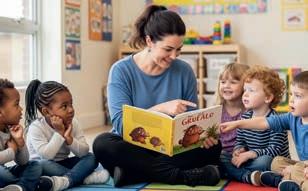
challenges early, educators and parents can prevent secondary issues from taking hold, such as low self-esteem, anxiety or behavioural problems that often arise from academic frustration. Early intervention provides children with the necessary tools and strategies to succeed, building a strong foundation for both academic and social-emotional development.
Early learning educators are often the rst to notice signs of a learning dif culty. To support children effectively, they need to be empowered with professional development and resources for early identi cation. They can use multisensory teaching techniques, break down complex tasks into smaller steps and create an inclusive, supportive classroom environment.
It is a myth that children will “grow out of” their learning disabilities. While a child can learn to manage and cope with their challenges, the underlying neurological differences are lifelong. A shift in awareness is needed to move away from these stigmas and towards an understanding that the earlier identi cation and intervention take place, the better for the learner’s future success.
Professionals working in early childhood development most often include occupational therapists, often for sensory dif culties, motor development, visual perception development and motor planning, and speech language therapists, often for language development, phonological awareness and oral motor development such as articulation development. Other professionals may include psychologists, paediatricians and physiotherapists.
Children’s reading habits are being shaped by a mix of nostalgia, screen culture and a growing push for local stories, writes Vukani Magubane
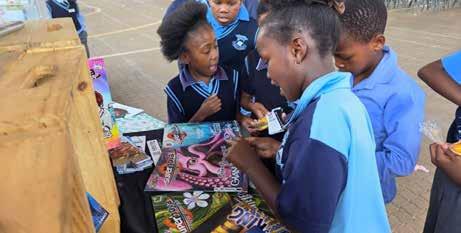
What South African children are reading right now tells a familiar story with a few fresh twists. From long-standing global favourites to the growing influence of social media, their choices reflect both nostalgia and change, as local publishers work to ensure homegrown stories remain part of the mix.
At the top end of the market, the dominance of tried-and-tested series remains clear, with the Diary of a Wimpy Kid and the Harry Potter books continuing to anchor children’s reading habits across age groups.
According to NielsenIQ BookScan, which tracks South Africa’s book sales across a panel covering around 35 000 ISBNs and more than 13 000 copies sold weekly, fiction continues to lead among young readers.
“The children’s market, from pre-learning through to young adult, is currently being driven by fiction,” says Dewald van Wyk, BookScan manager for South Africa. The data also shows a steady balance between long-standing favourites and newer titles.
“We’re seeing about a sixty/forty split between older titles and newer ones gaining momentum,” he explains.
Topping the popularity list is the Harry Potter box set, boosted by renewed interest
“Diary-style and illustrated books are especially popular because they feel quick and accessible, rather than overwhelming.”
–Grattan Kirk
ahead of the end-of-year debut of a new television series. Partypooper, the latest Diary of a Wimpy Kid release, comes in at second place.
Among newer titles, social media is shaping what older children and teens are picking up. Platforms like TikTok are driving demand for books such as the Powerless trilogy, by Lauren Roberts.
“Young adult bestsellers are increasingly driven by BookTok,” says van Wyk, noting that Roberts’ titles are performing strongly in South Africa, in line with global trends.
This mix of old favourites and trending titles is clearly visible in-store at Exclusive Books, where the children’s section brings together global bestsellers and social media-driven favourites.
“Right now, the biggest winners are series like Diary of a Wimpy Kid, Lottie Brooks and Dork Diaries,” says Grattan Kirk, CEO of Exclusive Books. “They’re
funny, relatable and easy to read – kids tend to start one and then move on to the whole series.”
He adds that format plays a big role in what children choose. “Diary-style and illustrated books are especially popular because they feel quick and accessible, rather than overwhelming.”
Screen adaptations and streaming are also drawing readers in. “We’re seeing a resurgence in Percy Jackson, largely driven by the Disney+ series, while classics like The Very Hungry Caterpillar continue to perform steadily with younger, parent-led readers,” he adds.
For teens, what they watch often influences what they read. “The 13-plus reader’s choices are strongly shaped by what they’re seeing on TikTok, TV and film,” he says, pointing to titles like Powerless and A Good Girl’s Guide to Murder as current favourites.
While global titles dominate much of the market, local publishers are working to build a stronger book-buying and reading culture, while broadening what’s available to young readers.
Benoit Knox, founder of BK Publishing, says much of their focus is on meeting children where they are, particularly those who may not yet see themselves as readers.
“We spend a lot of time at schools and community events, putting books directly into children’s hands,” he says.
Accessible formats are key. Their Supernova magazine, for example, offers a visual, low-commitment way into reading, particularly for children who might feel intimidated by longer books. Knox also highlights This Book Is Boring, a playful, highly visual title that introduces different genres and helps engage reluctant readers.
“For us, variety matters,” he says. “Some children want quick, illustrated reads, while stronger readers are looking for longer, more immersive stories. You need a range to meet them where they are.
“Building a reading culture often starts with something simple: choosing a book as a gift, a small act that helps pass on the habit of lifelong reading and a love of literature,” he adds.
Lisa Witepski shares
Gen Alpha children tend to be adaptable and independent. Their worlds have been shaped by phenomena like social media and growing up during COVID-19, but although they’re tech-savvy, they have also inherited their parents’ emotional awareness and social conscience. This means their parents will face some new battles, while others remain unchanged.
Encouraging your child to do their homework on time is one of these. You’ll nd this much easier if you rst create structure, says psychologist Agnes Jooste: set up a quiet, organised place where your child can work with minimal distraction (ideally not in the bedroom), and build a consistent homework routine. “This makes it easier for the brain to shift into ‘schoolwork mode’,” Jooste explains.
complete avoidance. So long as they are still spending time on activities that build connections or provide stimulation, like board games, crafting or outdoor play, some screen time is ne, provided it is within the recommended time guidelines for your child’s age, says Demartinis. Be consistent with limitations and provide alternative activities.
Modelling is especially important here, so be aware of how you use your phone: set aside time when you disconnect from all devices during meals or outings, for example, demonstrating that your time with your family is your priority and teaching healthy screen habits.

Educational psychologist Meagan Demartinis says you should ask your child to complete their homework on their own rst, before offering help. If they’re struggling, they should ask speci c questions, and it’s a good idea for them to explain their teacher’s tactics. This will clarify their thinking and reasoning.
It’s also advisable to remain near by while they’re working, so you can answer their questions. You can also support emotional regulation by keeping work periods brief and allowing short breaks. “Homework can be quite challenging for both children and parents. If you’re struggling to remain patient, it might be best to ask a tutor or family member to help,” Jooste says.
Anyone who has tried to wrestle their child away from Roblox will know how dif cult and frustrating the screen time struggle can be. The good news? A little screen time isn’t the end of the world – as Jooste says, balance is more important than
Jooste points out that screen time isn’t inherently ‘bad’; it’s when devices replace face-to-face connection, physical activity or downtime (all of which help keep emotions regulated) that problems arise. Dangers also surface when children are exposed to online predators or inappropriate content, so Demartinis advises having a frank, age-appropriate conversation about online safety. “Create

“You should ask your child to complete their homework on their own first, before offering help.” – Meagan Demartinis

opportunities for your child to talk about what they are watching or playing online, connecting with their interests while maintaining family values. Curiosity with regards to their online interests will also make it easier for your child to approach you if they have seen something inappropriate online.”
Global issues and early exposure to technology all contribute to concerns around Gen Alpha’s mental wellness.
Demartinis notes that stress in children manifests in various ways, depending on their age, gender and personality. “However, remember that all behaviour is communication, and changes in mood, your child’s availability or behaviour can indicate they are experiencing stress,” she says. Big reactions to small demands are another giveaway sign.
Her tips for handling this? Try to connect with the underlying feeling expressed and provide solutions to speci c concerns. Model stress management techniques like exercise, spending time outdoors or connecting with a pet. Jooste, meanwhile, advises maintaining predictable routines (especially around bedtime) and encouraging open conversations about your children’s feelings, helping them to normalise their emotions by pointing out that everyone feels worried sometimes. This will help your child feel less alone – but, if anxiety and stress are interfering with their daily functioning, it’s best to seek support from a psychologist.
Follow: Agnes Jooste www.linkedin.com/in/agnes-jooste-281994138
Gifted children are those who demonstrate signi cantly higher intellectual capabilities than their peers. Few parents would baulk at learning their child could be described as gifted, but the truth is that, like many gifts, this can be a bit of a curse if not identi ed and managed appropriately.
Identifying it is the rst step. Gifted children often have a deep need to understand the world, and “why” really matters to them, says Nebula College head Ronél Smit. “This often leads to them questioning authority, decisions, systems and so forth as they truly try to gure things out. This can easily be interpreted as being naughty, ‘wise’ or de ant.”
It’s a sentiment reinforced by Philip Kokot, principal of Radford House, who cites intense curiosity, perfectionism and a strong sense of justice as common traits in gifted learners. “They easily become frustrated at surface-level, super cial lessons, poorly constructed rubrics, and authoritarian, group-oriented management structures. These traits can make them appear argumentative, overly sensitive or disruptive in environments that prioritise compliance over inquiry.”
“People tend to make the mistake of expecting that gifted kids will excel in everything, and in this way, often children’s exceptional abilities are dismissed as a fluke or oddity.” – Ronél Smit
Giftedness typically manifests between the ages of four and eight, says Kokot. “This is typically when children enter formal schooling, and the mismatch between their intellectual pace and the expectations of the standard curricula becomes obvious.
“Look out for an advanced vocabulary, enjoyment of abstract concepts, sophisticated sense of humour (compared to peers), emotional intensity, physical
Gifted children brim with potential, but need careful
guidance to realise this, writes Anthony Sharpe

sensitivities (they don’t like getting their hands dirty) and unusually good memory.”
However, Smit cautions that some children are unfortunately only identi ed once things “go wrong” in later years. “Important red ags to look out for are a child who used to be naturally curious and inquisitive starting to disengage or ‘shut down,’ heightened anxiety levels and underperformance. An objective assessment by an educational or counselling psychologist – preferably one who has experience with gifted children – is very helpful in understanding your child’s pro le and can assist in gaining entrance to specialised schooling or in discussions with the child’s mainstream school.”
A common critique of mainstream schools is that they give gifted children more work rather than more stimulating work. Kokot says this is awed and that instead the work should be deeper or more meaningful.
“Intellectual challenge comes from complexity, open-ended thinking and
conceptual depth – and certainly not from repetition. A well-designed curriculum allows students to explore ideas at increasing levels of sophistication. Instead of completing twenty similar exercises, a gifted learner might tackle a single problem that requires multiple strategies, creative thinking or interdisciplinary knowledge.”
He also strongly cautions against the belief that a gifted child can be accommodated in the classroom by allowing them to help fellow students with their academic development, as this can contribute to othering, unwarranted responsibility being placed on them and the potential for their academic development to suffer.
Gifted children often develop asynchronously, their intellect outpacing their emotional maturity. Smit says asynchrony is often the characteristic of giftedness that most baf es adults and could even contribute to burnout-type symptoms in parents struggling to make sense of apparent contradictions.
“People tend to make the mistake of expecting that gifted kids will excel in everything, and in this way, often children’s exceptional abilities are dismissed as a uke or oddity. Many gifted children, for example, struggle with writing essays or paragraph-style answers in their schoolwork, often because their thoughts are very complex and they nd it hard to transform all they are thinking into a linear form of output, such as writing.”
IF YOU SUSPECT YOUR CHILDREN OR LEARNER MIGHT BE GIFTED, TAKE THIS QUICK SCREENING QUESTIONNAIRE TO GIVE YOU SOME GUIDANCE
Follow: Ronél Smit www.linkedin.com/in/ron%C3%A9l-smit-67615a294 Philip Kokot www.linkedin.com/in/philip-kokot-794351a5
Popular culture glamourises boarding school life, but the real experience is about independence, emotional adjustment, friendship, pressure and personal growth, writes Vukani Magubane
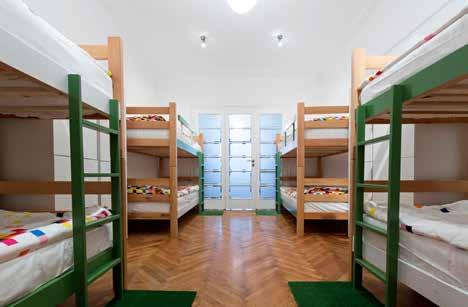
From Hogwarts to Spud, boarding schools in popular culture are cast as places of adventure, with eccentric teachers and midnight escapades. These portrayals spark the imagination, but only skim the surface. Behind the drama lies a more layered reality: opportunity, pressure and a very distinctive kind of growing up.
In South Africa, boarding school carries a certain weight. It is often linked to tradition, strong academics and sporting excellence, and for many families, it represents structure and opportunity. For children, it can mean early independence, living with routines and balancing schoolwork, sport and social life without parents close by. That transition is not always simple.
attachment to cope with being away from home.”
She believes the most suitable age is generally around 13, or Grade 8, when children begin to move towards independence. “At that stage, they want privacy, start questioning rules and are forming their own identity,” she says. “Boarding school matches that developmental stage quite well.”
Educational psychologist Tshidi Maseko says readiness is often more important than the school itself. “What matters most is emotional wellbeing and attachment,” she explains. “A child needs a secure
She explains that common emotional challenges during adjustment include anxiety, fear and depression.
Anxiety often centres on fitting in and coping academically and socially; fear may relate to discipline or embarrassment; while depression can arise when a child feels overwhelmed or disconnected from home.
“These responses are not unusual,” she adds, “but they vary depending on the child and their support system.”
Former Michaelhouse student Reily Elliot, who matriculated in 2025 and is now studying actuarial science at Stellenbosch University, says those early emotions are very real.
“The biggest adjustment was learning to be independent at a much younger age,” he says. “You suddenly have to manage your own time, academics, sport and social life. It can feel overwhelming at first.”
He says the first few weeks are often the hardest, not because of schoolwork, but because of the emotional shift. “It is the first time you really feel the distance from home. You realise you are responsible for yourself in a different way.”
What helped, he says, was leaning into the structure rather than resisting it. “Once you settle into the rhythm, you feel more in control.”
Friendships, he adds, quickly become central. “The people around you become your support system. That is what gets you through the tough days.”
He also challenges the idea that boarding school removes freedom. “There is structure, yes, but it teaches you how to manage freedom responsibly. No one is there to force you. You have to decide how you show up.”
Looking back, he says the experience shaped more than discipline. “You grow into your own identity. Being away from everything familiar forces you to figure out who you are.”
For students preparing to go, his advice is simple: “Do not expect it to feel like home immediately. The first few weeks are uncomfortable for almost everyone.”
He also stresses involvement. “The worst thing you can do is isolate yourself. Sport, activities and house events are how you find your place.”
“What matters most is emotional wellbeing and attachment. A child needs a secure attachment to cope with being away from home.” – Tshidi Maseko

REILY ELLIOT
“There is structure, yes, but it teaches you how to manage freedom responsibly. No one is there to force you. You have to decide how you show up.” – Reily Elliot
The most important thing, he says, is that students should talk about how they feel. “Everyone struggles at some point. Talking about it makes a huge difference.”
Maseko says for parents, preparation is key. She encourages families to talk through what the experience may feel like, not only practically, but also emotionally. “It helps to establish a baseline,” she explains, “so when they come home, you can understand what has changed.”
From there, parents are better able to identify adjustment patterns. Warning signs may include withdrawal, increased anxiety, physical complaints or loss of interest in previously enjoyed activities. “You need to know what is normal for your child first,” she says. “Then you can see when something shifts.”
Positive signs are just as important. Growing independence, better organisation and a willingness to share stories about friends, teachers and daily life often indicate healthy adjustment. Choosing the right school is another crucial factor. “It is about culture,” she says. “Are children seen and heard? Is there emotional support? Is there zero tolerance for bullying? Does the school balance structure with care?”
She adds that strong boarding schools offer predictability without rigidity, helping children feel secure while still encouraging independence. Visiting the
school often gives parents and learners the clearest sense. “You feel it,” she says. Boarding schools may be a natural setting for popular culture, not only for stories of fun, mischief and adventure, but also for coming-of-age narratives shaped by authority, rivalry and the
search for identity and belonging. In reality, they are less about cinematic moments and more about everyday experiences: learning independence, navigating relationships and slowly finding your place in a world away from home.
Before choosing boarding school, parents should look beyond academics and reputation. The most important question is whether your child is emotionally and practically ready for life away from home.
Emotional readiness
Can your child cope with being away from home for extended periods?
Do they manage change and new environments reasonably well?
Are they able to talk about feelings such as anxiety, sadness or stress?
Do they recover well after setbacks or disappointments?
Independence skills
Can they manage personal hygiene and dressing, and adhere to daily routines independently?
Do they keep track of belongings and responsibilities?
Can they organise schoolwork and meet deadlines with guidance rather than constant supervision?
Are they able to solve small problems on their own?
Social readiness
Can your child make friends and build relationships?
Are they comfortable asking teachers or adults for help?
Can they manage conflict and work with others respectfully?
Do they show confidence in group environments?
Academic and routine readiness
Can they cope with a structured timetable and busy schedule?
Are they able to balance schoolwork, sport and activities?
Do they adapt well to rules and shared expectations?
Family readiness
Has the decision been discussed openly as a family?
Is your child positive about the move, rather than feeling forced?
Are parents prepared to stay emotionally involved through regular check-ins and visits?
School-fit checklist
Does the school have strong pastoral care and emotional support?
Is there a clear anti-bullying culture?
Does the environment feel caring as well as disciplined?
Can you picture your child thriving there socially and emotionally?
Bottom line
Boarding school works best when a child is ready for greater independence, supported emotionally and placed in a school culture where they feel seen, safe and encouraged.

From adaptive teaching strategies to tailored resources, schools are reimagining education to celebrate differences and unlock each student’s potential.
By Glynis Horning
The traditional one-size- ts-all classroom was all today’s parents knew, but ideas have evolved, and today, learners’ differences are not just being accepted, but increasingly appreciated and empowered in an inclusive “neurodiverse” classroom.
Neurodiversity refers to the idea that differences in how people think, learn and process information are part of natural variation. “There’s a wide spectrum associated with diversity that can be accommodated or alternatively lead to dif culties in interacting in conventional settings,” says Durban educational and child psychologist Dr Caron Bustin. “The concept of being neurodiverse is essentially seeking to accommodate people who vary more than usual, but retain the capacity to interact constructively with supportive structures.”
In education, it includes learners with ADHD (attention de cit hyperactivity disorder), dyslexia, ASD (autism spectrum disorder), sensory processing differences

“By adopting a more inclusive framework, conventional teaching can be more supportive of ways of achieving in the classroom.”
– Dr Caron Bustin
and other learning pro les. In traditional classrooms, these children often struggle with rigid teaching structures, standardised assessments and large classes, affecting


their con dence, participation and academic progress. “By adopting a more inclusive framework, conventional teaching can be more supportive of ways of achieving in the classroom,” Dr Bustin says. Alternative schools are now providing smaller classes, with more exible learning structures and personalised learning plans in supportive, inclusive school cultures. What does this look like practically?
In Gauteng, the pioneering Bridge School Lonehill, which opened in 2018, caters to Grades R to 11, and a second school, The Bridge School Morningside, opened in 2024. Both provide pathways to an IEB matric, with specialised support for learning barriers, including ADHD, dyslexia, anxiety disorders and ASD.
“We are committed to customising our curriculum, teaching strategies and resources to support our kids’ needs and different learning styles,” explains Rauiri Maarman, principal of The Bridge Lonehill. “It improves academic performance and helps children prepare for a more inclusive society. It’s achieved by a multidisciplinary team with specialist teachers, educational psychologists and speech and occupational therapists.”


RAUIRI MAARMAN



The new classroom centres on adaptability, providing a variety of way for engagement and expression, Maarman says. These can include exible seating and sensory-friendly spaces, such as wobble stools (that allow rocking and tilting) and oor cushions. Visual schedules and routines use pictures, symbols or objects to communicate the sequence of daily activities to reduce anxiety and promote independence.
“Teachers are encouraged to cultivate curiosity, empathy and high expectations,” says The Bridge Morningside principal, Renie Sutherland. “It’s our job to not simply accommodate learners, but truly empower them.”
The focus is on children’s strengths, interests and capabilities, using multiple modalities. Lesson content may be delivered through visuals (colour-coded ashcards, highlighting), audio (rhyming games, singing), movement (writing in the air, tracing letters while sounding them), and hands-on experiences to help understanding. Activities can include sensory play (sand/water), multisensory literacy tools (sandpaper letters), interactive science experiments, hands-on workshops like woodworking or pottery, and collaborative project-based learning.
“Instruction can be tailored to individual learning styles, and technology can provide support with text-to-speech and audiobooks,” says Sutherland.
When it comes to assessments, oral presentations, portfolios and creative projects are used in place of traditional written tests and exams for continuous evaluation without stress.
“We see neurological differences not as de cits, but as natural variations in the human mind,” she says. “Neurodiverse learners often have exceptional talents in areas such as art, music, technology, storytelling and pattern recognition.”
Neurodivergent individuals are now being seen as offering a strategic advantage in an AI-driven world due to their unique mindsets and cognitive differences. Alex Karp, CEO of Palantir Technologies, told a TBPN interviewer in March 2026: “There are basically two ways to know you have a future. One, you have some vocational training. Or two, you’re neurodivergent.”

RENI SUTHERLAND
“We see neurological differences not as deficits, but as natural variations in the human mind.”
– Reni Sutherland

He credits dyslexia with powering his success as an innovator. Peter Thiel, co-founder of PayPal, credits Asperger’s syndrome, and South African-born Elon Musk, who heads up Tesla, SpaceX, X, and xAI, credits autism.
“Creating inclusive classrooms for neurodiverse youngsters is a necessary evolution,” says Sutherland. “Schools that embrace inclusion report bene ts for all students, not just those who are neurodiverse. Inclusive education fosters empathy, collaboration and creativity, bene tting all students by creating a sense of belonging and normalised diversity. It promotes stronger social skills and improved academic outcomes.”
“NOT
Neurodiverse education can look different at each of the schools providing it, and perhaps nowhere more different than at Malaika House, on a farm outside Durbanville. Founder Noëline de Goede and husband Jaco call it “not a school”. Focus is particularly on learners with autism spectrum disorder, and it began in 2023 with their daughter Marli, now 16, who had been homeschooled.
Marli has pathological demand avoidance (PDA), a profile in the spectrum, characterised by an intense need to resist everyday demands and feel in control, so even a set mealtime meets resistance. Today, Malaika House has 24 learners aged 10 to 18. Apart from guidance from a psychologist, art classes and lessons in life skills and gardening, they do as they choose, without being pushed.
“We believe some neurodivergent young people need a fundamentally different approach, that moves away from the pressures and structures of traditional schooling and centres on experiential, self-directed learning in a safe and supporting environment,” says Malaika House manager and senior facilitator Amarta Myeza.
“Using online platforms, learners can engage with three curricula – the British International, South African CAPS and US GED. They follow individualised learning plans that may take the form of psychosocial development, employability and life skills, or formal academics. Our approach is grounded in the HEART programme – Hope, Empower, Awareness, Resilience and Thrive.”
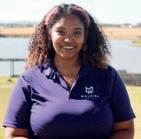
She adds that Marli epitomises the results of this “classroom-free” learning: “She is learning Japanese and several other skills online and loves swimming in the dam!”
Follow: Rauiri Maarman www.linkedin.com/in/rauiri-maarman-90915996
Renie Sutherland www.linkedin.com/in/renie-sutherland-88b33a94
Dr Caron Bustin www.linkedin.com/in/caron-bustin-31079353
It’s not always easy to recognise a mental health problem or learning disability in a child, but the earlier you do, the better you can help them manage it.
By Glynis Horning
An estimated 17 per cent of children in South Africa have a diagnosable and treatable mental health disorder, yet only 1 in 10 are able to access care, notes a 2025 study in the South African Health Review
Half of all mental health conditions start by age 14, and 75 per cent by age 24, making early intervention critical. “Not noticing them or ignoring them can result in their going untreated for a long time, affecting the child’s development, social relationships and school performance,” says Durban educational psychologist and neuropsychologist Dr Shireen Mohamed
Early intervention can improve long-term outcomes, helping them build coping skills, manage symptoms and avoid later issues such as self-harm, substance abuse or dropping out of school.
Red flags for mental health
• Changes in mood or behaviour.
“Children can experience mood swings as a normal part of development while they learn to regulate emotions,” says Brakpan educational psychologist and remedial teacher Patricia Tau. “However, persistent, intense or recurring mood swings and behavioural changes –prolonged sadness, loss of interest in activities they once enjoyed, withdrawal, isolating in their room, neglecting personal hygiene, worrying


“If physical complaints persist, always get your child checked by your healthcare provider, and if no physical problem is found, consider emotional and mental factors.”
– Patricia Tau
excessively, having severe tantrums or extreme aggression – often indicate underlying mental health conditions.” The changes can disrupt daily functioning, schoolwork and relationships, and signal depression,
anxiety disorders, ADHD, autism spectrum disorder, sensory processing issues or dyslexia. “These conditions make children feel emotionally vulnerable,” she says. “They feel they are not smart.”
•Difficulties with school or social interactions. These can indicate underlying anxiety, depression, bullying or learning struggles, says Dr Mohamed. They frequently present as school avoidance (feeling “sick” on school mornings), social withdrawal (from family, friends or activities) or a sudden drop in academic performance (linked to lack of motivation or an inability to focus).
• Physical complaints. Stomachaches, headaches or constant complaints of tiredness may indicate mental health problems, as the mind and body are intricately connected, with the brain directly in uencing bodily functions through the nervous, hormonal and immune systems. “If physical complaints persist, always get your child checked by your healthcare provider, and if no physical problem is found, consider emotional and mental factors,” says Tau.
•Changes in sleep or appetite. Trouble falling asleep, frequent waking or sleeping excessively can also be
signs of emotional distress, as can changes in appetite, due to the deep brain-body connection. Anxiety, depression or chronic stress directly disrupt the biological systems responsible for regulating energy, repair and mood.
Apart from mental health problems, 5–15 per cent of school-age children struggle with a learning disability, limiting their ability to read, write and do maths, according to the fth edition of the Diagnostic and Statistical Manual of Mental Disorders
A learning disability is not a mental health problem. “It is a lifelong neurological condition affecting how they receive and process information in the brain, whereas a mental health problem is a condition affecting emotions and psychological wellbeing,” says Tau.
Although the two are distinct, the frustration and challenges of a learning disability can increase the likelihood of developing mental health issues such as anxiety or depression, says Dr Mohamed. “If learning disabilities are not detected and addressed, the child can have a challenging time at school, affecting their self-esteem, motivation, behaviour and ability to interact with peers and socialise.”
Red flags for a learning disability
From preschool age, dif culties with:
•Pronouncing words or nding the right ones (poor vocabulary).
•Learning numbers, the alphabet, colours, shapes or days of the week.
•Following directions and keeping to routines.
• Handling crayons or scissors.
•Dealing with buttons or zips, or tying shoes.
From around age ve, categories of learning disability may be recognised:
• Dyslexia: problems reading and spelling.
• Dyscalculia: problems understanding the way numbers work and doing maths.
• Dysgraphia: problems writing, drawing lines and copying shapes.
• Dyspraxia: problems with movement and physical co-ordination.
• Speech and language disorders: problems using and understanding spoken or written words or following directions.
“If you suspect your child has a mental health problem or a learning disorder, listen to that gut feeling and get professional help,” says Dr Mohamed. Speak to their school about having them assessed there. The evaluations typically begin with your healthcare provider, preferably a paediatrician, to rule out any vison, hearing or underlying medical problems. The child can then be referred to an educational psychologist, psychiatrist, special education teacher, occupational therapist or speech and language therapist for specialist diagnosis, treatment and support. Whatever the diagnosis, read up on their problem to help them get the best help you can. “The most important thing is to support your child and show that you care and understand that they are struggling emotionally and/or academically,” says Dr Mohamed. “Talk, connect and listen actively to them. Focus on their strengths, encourage interests that build their con dence and promote a healthy lifestyle to support them being the best they can be.”
• A child is at higher risk of a learning disorder if they have a blood relative with one, were born premature, had very low birth weight, were exposed to nicotine, alcohol or drugs in the womb or experienced physical trauma such as a head injury or illness such as meningitis.
Source: Dr Shireen Mohamed
• Remind your child that many people with learning disorders lead successful lives, including Tom Cruise (dyslexia), Daniel Radcliffe (dyspraxia), Justin Timberlake (ADD and OCD), Solange Knowles (ADHD).
Source: https://www.special-educationdegree.net/25-famous-people-withlearning-disorders
• Many celebrities have also spoken about having mental health problems, including Billie Eilish, Megan the Stallion, Kylie Jenner, Justin Bieber, Hailey Bieber, Zayn Malik and Lili Reinhart.
Source: https://www.tutorsandexams. co.za/team/jordan-joubert
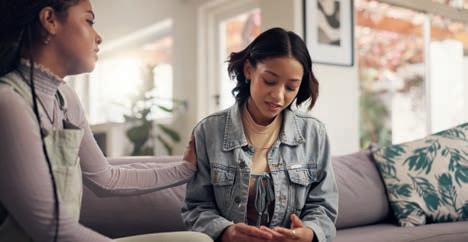




Itumeleng Mogaki explores how hybrid and microlearning are reshaping South Africa’s education system for a more flexible, future-ready generation
South Africa’s education system is undergoing a quiet but signi cant transformation. As technology continues to in uence how people learn and work, traditional classroom models are being challenged by more exible, personalised approaches. Among these, hybrid and microlearning models are gaining traction, particularly within private, alternative and online education spaces.
These models are not just a response to technological advancement, but also to shifting learner expectations. Today’s students increasingly demand exibility, relevance and engagement, elements that conventional education systems have struggled to deliver consistently.
while microlearning focuses on short, focused bursts of content designed to improve retention and engagement. Together, these approaches allow learners to access education in ways that better suit their individual needs.

Hoosen Essof, chief innovation and student experience of cer at Regent Business School, says the rise of these models re ects broader generational shifts in how young people engage with information.
He explains that hybrid and microlearning are being driven by learners who have grown up in highly digital environments. These students are accustomed to short-form, interactive content and often prefer self-directed exploration over traditional lecture-based methods.
In South Africa, several institutions are experimenting with hybrid and microlearning formats, offering alternatives to traditional schooling.

Stefan Botha, CEO at Optimi Group, says there is a clear increase in demand for nontraditional learning models, mentioning the growth of teacher-led online schools and home education platforms as evidence of this trend.
He says these models are supported by a mix of learning tools, including printed materials, e-books, digital platforms and interactive content, such as short videos, quizzes and revision exercises.
“Importantly, the shift is not just about technology, but also exibility in how content is delivered. Learners are no longer limited to a single teaching method but can engage with the same curriculum in different formats that suit their learning preferences,” explains Botha.
He adds that this approach is also evident in tertiary education, where short courses and skills-based programmes are becoming increasingly popular. “Students are seeking targeted learning opportunities that allow them to gain relevant competencies quickly without committing to lengthy programmes.”
At the same time, while these innovations show promise, their adoption within the public education system remains uneven, shaped by deep-rooted structural, economic and policy challenges.
Hybrid learning combines in-person instruction with digital tools,
Essof says this signals a need for education systems to evolve. “Educators must meet learners where they are, by leveraging technology, exibility and personalised pathways. Hybrid and microlearning offer a compelling way to blend classroom engagement with digital accessibility, and this shift is already visible across various parts of the education ecosystem.”





Agreeing with Botha about exibility, Dr Darius Sangari, director of Sangari Education, says learners bene t from greater exibility, improved engagement and exposure to practical, hands-on learning through simulations and modular content.
“From an educator’s perspective, these models provide valuable insights into learner progress. Data-driven tools enable teachers to track performance more effectively and tailor their support to individual needs,” Dr Sangari says. “These approaches encourage active participation and self-directed learning, helping students take greater ownership of their education.



There is clear alignment among experts that these models can enhance the learning experience when implemented effectively. However, their bene ts are not without limitations.”
Despite their advantages, hybrid and microlearning models are not without challenges.
“Unequal access to devices and connectivity remains a signi cant concern. In addition, digital fatigue and an over-reliance on technology can undermine learning outcomes if not carefully managed, warns Dr Sangari.
He also points out that educators may require additional training to effectively manage hybrid environments, particularly when balancing in-person and digital instruction. “These concerns are echoed across the sector, highlighting that while innovation can improve education, it must be implemented thoughtfully to avoid unintended consequences,” says Dr Sangari.
signi cant barriers to widespread adoption. Northmore explains that when schools and households lack stable devices, affordable data or reliable connectivity, hybrid learning risks deepening existing inequalities.
“In the South African context, mobile- rst strategies are important, as smartphones are often the most accessible devices for learners. However, that access alone is not enough. Learning must be meaningful and engaging, requiring more than passive consumption of content,” says Northmore. There is some alignment among experts on this issue, particularly around the importance of designing solutions that work within existing constraints.

However, there is also a subtle difference in emphasis.
While Dr Sangari focuses more broadly on systemic and structural challenges, Northmore places stronger emphasis on practical implementation, such as ensuring platforms and tools are suited to the realities of South African classrooms, putting a spotlight on the need for both high-level policy reform and ground-level innovation.
She adds: “Innovation, meanwhile, allows for continuous improvement in how education is delivered, enabling institutions to adapt to changing learner needs. When these elements work together, they create an environment where more learners can access education in ways that truly work for them.”
At its core, the rise of hybrid and microlearning re ects a broader shift in how education is understood. It is no longer about a single, standardised pathway, but about creating exible, inclusive systems that accommodate diverse learning styles and circumstances.
There is strong consensus among experts that these models have the potential to improve engagement, accessibility and outcomes. However, realising this potential will require addressing signi cant structural challenges, particularly within the public education system.
This includes investing in infrastructure, supporting teacher development and creating policies that encourage innovation while maintaining quality and equity.
While hybrid and microlearning models are gaining ground in private and alternative education spaces, scaling them within the public system presents a more complex challenge.
Colin Northmore, executive principal at Evolve online school, emphasises that the barriers are not purely technological, but systemic. He says while access to devices and connectivity is important, equally critical are factors such as teacher development, planning time and student support structures.
Public schools, he says, require learning platforms designed for real-world conditions, including affordability, multilingual support and reliable functionality in low-connectivity environments.
“Without these considerations, hybrid learning becomes dif cult to sustain.”
It’s general knowledge that access to technology remains one of the most
To unlock the full potential of hybrid and microlearning, collaboration across the education ecosystem will be essential. This is, according to Jordan Joubert, growth and relationships manager, Tutors & Exams SA, who emphasises the importance of policy, partnerships and innovation in expanding access to these models.
She says partnerships between learning providers, exam centres and education bodies can create more cohesive support systems for learners.
“Policy also plays a critical role in legitimising alternative pathways, ensuring they are recognised as valid and valuable options rather than secondary choices.”
Ultimately, the future of education in South Africa will depend on its ability to adapt. Hybrid and microlearning are not a complete replacement for traditional models, but they offer valuable tools for building a more responsive and inclusive system.
As Joubert concludes, the goal is to meet learners where they are, recognising that there is no single path to success and that education should evolve to support individual needs. If approached with collaboration, innovation and care, these models could play a meaningful role in shaping a more effective and equitable education landscape for South Africa.


Follow: Hoosen Essof www.regent.ac.za/authors/hoosen-essof Stefan Botha www.linkedin.com/in/stefanbotha Dr Darius Sangari www.linkedin.com/in/darius-sangari-610371bb Colin Northmore www.linkedin.com/in/colinkn Jordan Joubert www.tutorsandexams.co.za/team/jordan-joubert


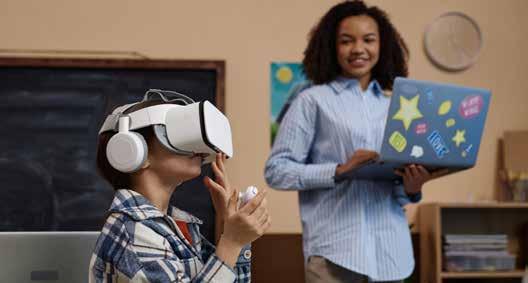
In the 21st century, gamification – the use of games to educate learners – drives greater student engagement and effective learning than the traditional methods of the past, writes Rodney Weidemann
Gamified learning in South Africa is transforming education by integrating game design elements, such as leaderboards, badges and instant feedback, into curricula. The goal is to boost student engagement, motivation and critical thinking. It is increasingly used in higher education and schools to move beyond traditional chalkboard teaching methods, improving interaction and fostering a growth mindset.
Omashani Naidoo, executive director of SchoolNet, says gamification like many things technology-related – has risen from a niche marketing tactic to a mainstream pedagogical strategy over the past decade. In education, she says, gamification typically means applying game design elements, such as points, narratives, quests

and immediate feedback, to nongame learning environments.
“The exponential rise in gamification as a pedagogical concept is driven by two converging forces. First, a growing recognition that traditional, passive instruction fails to engage many of today’s learners, and second, the so-called ubiquity of digital devices and platforms that make real-time gamification feasible.
“From a South African perspective, perhaps the most valuable benefit is that gamification can work with or without high-end technology. We have seen nondigital gamification, such as treasure hunts, role play and point cards, succeed in under-resourced schools, while digital gamification accelerates learning in connected schools. This dual applicability is crucial for a country as diverse as ours,” explains Naidoo.
Glenn Gillis, MD at educational game creator Sea Monster, notes that gamification is about people’s time and experience, so it expresses itself through aspects like playful design or visual cues, explaining that it can deliver a lot of information to students, provided it keeps them interested.
“Games are basically stories that you have agency in, as, rather than just reading about a subject, you are actively

“Games are basically stories that you have agency in, as, rather than just reading about a subject, you are actively participating.”
– Glenn Gillis
participating. In addition, the game must have a goal – as well as rules and a feedback option – and student participation must be voluntary. In other words, students must choose to engage with the game,” he says.
“A good example of how effective it can be is looking at something like entrepreneurship, which cannot really be learned from a book. Instead of trying to teach aspects of entrepreneurship the traditional way, we can now put learners into a game where, for example, they have to operate a retail establishment and make all the required decisions around running such a shop.”
There are, of course, particular challenges South Africa has to overcome for gamification to be truly effective, such as handling power outages or multiple children having to use a single device. Overcoming these requires the developer to clearly understand the different types of users to make learning through it as simple as
Gamification is not limited to the classroom; it can be used in learning outside the classroom – a good way to get involved in your child’s education at home.
Source: https://ssec.si.edu/stemvisionsblog/5-benefits-gamification
possible and to find the balance between reward and effort.
“Adopting gamification requires a fundamental shift from the traditional learning approach. Unfortunately, the Department of Education is still trying to teach content in isolation, using the traditional content-led approach, whereas gamification is essentially experience-led learning. So, we need to upgrade the current curriculum to meet the advancing needs of technology-driven education,” Gillis says.
“A content-led approach is all about getting good marks, but getting marks has nothing to do with the love of learning. Gamification aims to inculcate a love of learning among those students exposed to it.”
Dr Sherylle Calder, a sports scientist and founder and creator of EyeGym, suggests that there are some areas where developers need to be more focused when designing such games.
“It is important to remain true to the science of what you do, but, at the same time, to ensure you don’t overdesign or ‘overgamify’ your solution. You want to be able to refine it to the point where it provides the necessary education. If it is ‘overgamified’, this can dilute its effect on the learner because it is too focused on entertaining and not focused enough on performance,” she says.
“When it comes to science, technology, engineering and mathematics subjects, gamification is key.” – Dr Sherylle Calder
Naidoo adds that many parents and teachers view games as frivolous and distracting, so educator mindset and professional development are important to demonstrate the value and how, when implemented correctly, it can deliver all the 21st century and beyond skills that today’s children require to succeed.
“In disadvantaged schools, infrastructure constraints, such as unreliable electricity, limited devices and high data costs, make digital gamification impractical.
Even in well-resourced schools, network congestion during peak hours can upset real-time game mechanics,” she says.
Gamification versus game-based learning: gamification adds game elements – like point systems, leaderboards or badges – to existing curricula, whereas game-based learning uses specific games, such as Minecraft or Duolingo, to teach students.
Source: https://uwaterloo.ca/centre-forteaching-excellence/catalogs/tip-sheets/ gamification-and-game-based-learning
“Furthermore, leaderboards can demoralise learners who are already behind, especially if the game rewards prior knowledge or home access to technology. This can widen, rather than narrow, achievement gaps and highlights potential equity concerns that must be considered more deeply.”
Gillis feels that the cost of data needs to be reduced and all schools need to be connected if gamification is to lead the way forward.
“Fortunately, both connectivity and the cost of data are solvable problems. At the same time, Sea Monster is able to design experiences that are data-light and work in both the online and offline contexts.
“We must also remember that from a device perspective, Africa is a mobile-first continent. Therefore, by leveraging smart web technology, we can deliver the same experience as an app through a smart browser. This means that students won’t require a high-end device and can instead use a cheaper smartphone,” he explains.
Dr Calder notes that when it comes to science, technology, engineering and mathematics (STEM) subjects, gamification is key.
“With the Eye Gym solution, maths is one of the subjects where the most improvement is witnessed, both at school and university level. The beauty of this solution is that it can improve individuals of any age – we have even worked with older people, who have used it to improve their memory and co-ordination,” she adds.
Gillis agrees, saying that gamification is vital in the teaching of STEM subjects, as although it has four separate components, they are all interrelated.
“This makes them ideal for gamification. If the game is about, for example, building a bridge over a river, this will require aspects of all four subjects. By getting students to do this, you expose them to all four disciplines in a way that enables them to understand how they are all interrelated and how critical it is for them to all work in sync with one another.
“Ultimately, gamification is about giving students autonomy in their learning, while enabling them to stand on their own two feet and become more confident and balanced adults. Gamification takes learning beyond the simple ‘pass or fail’ metric – helping develop individuals that demonstrate self-expression, awareness and autonomy in their thinking,” he concludes.
Schoolnet’s Omashani Naidoo indicates that for nondigital gamification, the core requirement is a teacher’s willingness to use alternate pedagogies to guide and support learning.
On the other hand, for digital gamification, the core requirements are a reliable learning management system (LMS), such as platforms like Moodle, Google Classroom or Microsoft Teams, which can host quizzes, badges and progress tracking. An LMS should provide the data backbone of tracking learning, content, assessment and certification.
“It must also be noted that many gamified tools require periodic connectivity to sync progress. This makes zero-rated educational sites like Siyavula, MTN Online School or Vodacom’s e-school important for those learners without home data,” she says.
Follow: Omashani Naidoo www.linkedin.com/in/omashani-naidoo SchoolNet South Africa www.linkedin.com/company/schoolnet-south-africa Glenn Gillis www.linkedin.com/in/gillisglenn Dr Sherylle Calder www.linkedin.com/in/dr-sherylle-calder-7850336

As device misuse rises, South African schools need clear policies balancing discipline,
By Robyn Shepherd, SchoemanLaw Inc
Smartphones have become ubiquitous in South African society, and schools are no exception. While these devices offer educational opportunities and facilitate communication, their misuse during school hours presents signi cant challenges. Some learners use smartphones to engage in cyberbullying, sexting, academic dishonesty, unauthorised recording of teachers and peers and other disruptive behaviour. In more serious cases, smartphone misuse may constitute criminal conduct, placing both learners and schools at legal risk. Schools are therefore compelled to regulate smartphone use within their environments, balancing learners’ constitutional rights with their duty to maintain safe and effective learning conditions.
The legal framework governing smartphone misuse is multifaceted. The Cybercrimes Act 19 of 2020 criminalises unlawful access to or distribution of data, including the sharing of intimate images without consent. The Films and Publications Amendment Act 11 of 2019 prohibits the creation, possession and distribution of child pornography, an offence that may be committed where learners create or share sexual images of themselves or peers. The Protection of Personal Information Act 4 of 2013 (POPIA) introduces obligations to protect personal information, making it unlawful to record or distribute data without proper consent. At the institutional level, the South African Schools Act empowers governing bodies to adopt and enforce codes of conduct to regulate learner behaviour, which provides the legal basis for regulating smartphone use in schools. It is within this framework that schools must exercise their authority through carefully drafted and enforceable policies. A comprehensive smartphone policy should set out clear rules on the circumstances under which devices may be brought onto school premises and used

A comprehensive smartphone policy should set out clear rules on the circumstances under which devices may be brought onto school premises and used during the school day.
during the school day. Schools may, for instance, impose outright bans on device use during class time or restrict access to speci ed periods such as break times. Policies should also articulate disciplinary consequences for misconduct, including con scation, suspension and referral to the governing body for more serious breaches. Importantly, these provisions must be applied consistently and fairly to withstand legal scrutiny.
Beyond restriction and discipline, policies should also address preventative and educational measures. Incorporating digital literacy and online safety education into the curriculum ensures learners understand the risks and responsibilities associated with smartphone use. This approach recognises
that while smartphones pose risks, they are also an integral part of learners’ lives and can be used constructively. Schools must therefore balance prohibition with education, preparing learners to navigate the digital environment responsibly.
The absence of a clear and enforceable smartphone policy leaves schools vulnerable. Without a formalised framework, disciplinary action may appear arbitrary and lead to disputes with parents or learners. Moreover, schools that fail to act proactively may be exposed to liability should foreseeable harm occur under their supervision. South African law increasingly places emphasis on institutions taking reasonable steps to prevent harm, and schools are not exempt from this expectation.
Each school community faces unique challenges, and a one-size- ts-all approach is unlikely to succeed. For this reason, schools should seek legal assistance in drafting and reviewing their policies. As legal practitioners, we advise schools on developing codes of conduct that are not only practical and enforceable, but also aligned with the Schools Act, POPIA, the Cybercrimes Act and constitutional principles. Properly constructed policies ensure schools are equipped to address smartphone-related risks in a way that protects learners, supports educators and upholds legal compliance.
In conclusion, smartphones in schools represent both an opportunity and a threat. While learners may misuse these devices in ways that cause disruption or even criminal liability, South African law empowers schools to regulate their use through codes of conduct. Robust, legally sound policies are essential to mitigating risks, safeguarding learners and ensuring schools meet their legal and ethical obligations. The responsibility lies not in ignoring the challenges, but in addressing them directly through effective governance and policy development.
For further assistance, consult an attorney at SchoemanLaw. Anastacia Willemse | SchoemanLaw Inc Attorney: Tech and Family Law https://schoemanlaw.co.za/our-services/family-law
Here’s how to equip your child with money skills that ensure security, writes Lisa Witepski
Whether you like to save or splurge, it’s likely your own habits around money were forged during childhood.
That’s why helping your child feel comfortable with money and understand concepts like budgeting and delayed gratification can have a lasting impact.
How to do this? Gugu Sidaki, founder of My 3 Piggies, says one of the earliest lessons should be that effort equals reward. This teaches children that it takes hard work to earn money. A good way to do this is by assigning chores – not day-to-day tasks like making the bed, which they should do anyway, but areas where you need extra help.
“One of the earliest lessons should be that effort equals reward. This teaches children that it takes hard work to earn money.” –Gugu Sidaki


Kathryn Main of Money Savvy Kids agrees that earning in this way teaches both responsibility and discipline. Her own approach, which she employed when her children were four, eight and twelve, was to create a “pocket money jar”, filled with up to R200 in R2 and R5 pieces. If they failed to do homework or got into trouble, some of those coins were removed, but they could earn them back by doing chores like washing the car. Main also encouraged her children to earn money through a budgeting exercise: before grocery shopping, she would show them which items she needed and tell them her budget. They would then try to find the cheapest item, and if they were able to buy below budget, they could keep the “change”.
One of the reasons the rewards system is so effective is that earning money is addictive, says Sidaki. You can capitalise on this, while helping your children nurture their entrepreneurial spirit, by encouraging them to start their own fledgling business. Start by helping them harness their passions: maybe they’re especially good at arts and crafts, for example, or perhaps they are great bakers. Invite friends and family to
support them, and once they are a little more confident, you can expand their network by advertising on Instagram or starting a YouTube channel.
Main says when discussing business ownership with children, she breaks the issue into small, unintimidating steps: first, you need to come up with an idea for a product or service. You then need to identify your customers. “This is important because a business does not exist until it has someone to sell to. You therefore need to make sure you are selling something people actually want,” she explains. “Think about what you will need to get started – like muffin tins for a baking business – then think about how you’ll secure the funds to buy those items. Children will either have to save or borrow money to purchase their business essentials, so they also have to think about how they will do this.”
Once they’re earning, they need to learn that they cannot spend all their money at once. Sidaki advises using a glass jar as a piggy bank, so they can visualise their money accumulating.
“Set targets, like saving R10 by the end of the month, and celebrate with a little incentive (like paying them a little interest),” she says.
For older children, it’s a good idea to set up a bank account that gives them control over their own funds, says Main. You could also set up a tax-free savings account, which will grow over time so they have enough for a down payment on a car or house by the time they are adults.
Above all, says Sidaki, model the habits you would like your children to emulate.
Follow: Gugu Sidaki https://www.linkedin.com/in/gugu-sidaki-cfp%C2%AE-a384836b Kathryn Main www.linkedin.com/in/kathryn-main-sa

The need for digital security solutions in schools must be balanced with the importance of keeping the educational environment welcoming to the student, writes Rodney Weidemann
Modern security solutions in South African schools are critical to combat high rates of crime, violence and vandalism, moving beyond traditional, reactive methods to proactive, technology-driven protection.
Security in schools is no longer optional, says Merice Roopram, MD for Trinityhouse Schools; it is essential to creating an environment where students feel safe, supported and able to reach their full potential.

“The key challenge lies in balancing strong protection with a warm and welcoming environment. Schools need to ensure safety without creating spaces that feel restrictive. This is why we take a layered approach that combines physical infrastructure, clear policies, appropriate use of technology and a shared culture of awareness,” she adds.
According to Dr Siza Majola, MD at Crawford International, digital technologies play a pivotal role in modern school security by enabling proactive, rather than reactive responses. Schools can now monitor situations in real-time, respond more quickly and identify potential risks before they escalate.
“Our ability to manage cameras, access control and incident response from a single platform enhances both efficiency and responsiveness. This is particularly valuable in our pre-primary schools, where controlled access is critical.”
Trinityhouse, meanwhile, uses innovations such as AI-powered CCTV and biometric access systems, which have significantly enhanced the effectiveness of school security.
“Modern camera systems can identify unusual behaviour in real-time, while biometric technologies, such as fingerprint or facial recognition, help ensure that only authorised individuals can access school premises. This shift allows schools to move beyond manual monitoring to more intelligent and responsive systems,” explains Roopram.

“Of course, digital security solutions introduce new considerations that schools must actively manage. These include cybersecurity risks, data privacy, system reliability and ongoing maintenance costs. We address these challenges through careful planning and infrastructure investments like dual fibre connectivity across campuses to ensure continuous and uninterrupted security coverage.”
“Crawford focuses on collecting only the necessary information, safeguarding it appropriately and communicating openly with parents and learners. Our approach is always proportionate, ensuring security measures protect without becoming intrusive, and that trust remains at the centre of the school’s community.”
Carine Marais, an attorney and founder of Civitas Strategic Regulatory Advisory, suggests that fostering a positive school culture is perhaps the most underappreciated dimension of school security design.
“A school that feels like a prison, with turnstiles, fingerprint readers at every door, cameras in every corner, does not create safety. It creates anxiety and erodes the trust between learners, staff and the institution,” she says.
Schools should involve learners and parent communities in security decisions, adds Marais, communicate openly about what measures are in place and why, and ensure that security technology is framed, truthfully, as a tool for protecting the school community, not monitoring it.
“Unfortunately, many of the challenges that exist outside the school find their way inside. Technology can harden the perimeter, accelerate the response and create accountability where none existed before. However, it cannot, by itself, address the structural conditions that make so many South African schools unsafe,” she concludes.
In 2022, South African educational premises recorded:
• 258 cases of assault.
• 22 cases of attempted murder.
“We make use of integrated systems such as smart camera networks, controlled access points, visitor management platforms and emergency alert systems. These technologies work together to improve visibility and co-ordination, supporting a secure environment that allows learning and growth to take place with confidence,” notes Dr Majola.
Balancing safety with privacy is essential in any modern school environment, she says, adding that it requires transparency, accountability and a clear understanding of how data is collected and used.
• 411 gang-related incidents. By 2025, there was a 35.4 per cent increase in reported cases of abuse and sexual harassment of pupils by teachers, and over 500 bullying incidents were reported in the first school term.
Source: Civitas Strategic Regulatory Advisory
Follow: Merice Roopram www.linkedin.com/in/merice-roopram-16477970
Carine Marais www.linkedin.com/in/carine-marais-cipm-cipp-e-408432a0
Dr Siza Majola www.linkedin.com/in/dr-siza-majola-250b7b34

THANDO PATO asks the South African Depression and Anxiety Group for tips for learners navigating matric
One of the biggest mistakes learners make in matric, says Roshni Parbhoo-Seetha , project manager for education at the South African Depression and Anxiety Group (SADAG), is confusing hours at the desk with actual progress. “Cramming for long stretches without rest, sacrificing sleep and comparing yourself to classmates are habits that do far more harm than good. The shift in thinking needs to start with the goal itself,” she explains.
through past papers. Ask classmates which study methods work for them. You might discover something you’ve never tried.”

The goal, she says, “is not to just study harder, but to study in a way that feels manageable and sustainable.”
She recommends breaking work into smaller, manageable chunks with a flexible study plan. This will reduce anxiety and replace it with a sense of progress. “If you create a flexible plan and you can keep to it, you feel like you’re achieving something. When you create a very rigid one, and you don’t stick to it, you will feel like a failure.”
She also recommends active study methods. “Summarising content in your own words, teaching a concept to a friend or family member or working
Sleep, food and movement are not rewards. According to Parbhoo-Seetha, they are non-negotiables.
“Sleep, nutrition and movement are not extras. They are essential for both mental health and academic performance. Sleep is when your brain consolidates everything you’ve studied. A tired brain struggles to absorb and recall information. Aim for seven to eight hours a night. On the food front, irregular meals and high-sugar intake lead to energy crashes and poor concentration,” she says.
Incorporate exercise, like a 30-minute walk, into your daily routine. Consistent habits enhance performance and overall wellbeing.
Exam anxiety is incredibly common. When anxiety spikes, says Parbhoo-Seetha, practical techniques can help shift your brain out of panic mode: try slow, deep breathing and grounding exercises. “Say things like, ‘I’ve prepared as best as I can. I can do this.’ These little words of affirmation are so important.”
Preparation also reduces morning anxiety. Reduce stress levels by prepping – bags, travel, snacks and any meals – the night before. Avoid last-minute cramming as it can increase feelings of panic. “If anxiety becomes constant or overwhelming, or is accompanied by physical symptoms like panic attacks or disrupted sleep, seek counselling. SADAG’s toll-free crisis line is available 24 hours a day, 365 days a year.”
Final matric results can feel like a life-defining moment for many learners, especially when they don’t achieve the desired marks. While disappointment, sadness and anger are all valid responses, perspective is important.
“Your results reflect the exam that you wrote. They are not a reflection of your worth, your intelligence or your potential,” says Parbhoo-Seeta.
It’s important to reframe the narrative from failure to redirection. This might involve rewriting subjects, exploring different tertiary options, looking at work or learnership opportunities, or doing some introspection to discover new interests or passions.
Parents and educators play an important role in supporting matric learners, says Parbhoo-Seeta. “Young people do best when they feel supported, understood and valued — regardless of what their results are.”
What options do young South Africans have post-matric? Thando Pato shares what learners should consider when planning their future

Throughout her high school career in East London, Zenande Koka aspired to study medicine. She took the required subjects – maths, biology and physics. However, in 2024, during matric, her aspirations shifted. When her exam results didn’t meet her expectations, and the universities she applied to didn’t respond to her medicine and nursing applications, Koka realised she had to make a pivot to rescue her future. She considered retaking her matric STEM (science, technology, engineering and mathematics) subjects to improve her marks. A gap year, she says, was out of the question. However, after some soul-searching and research, she

applied to and was accepted at Buffalo City TVET (technical and vocational education and training) College in East London for electrical engineering. “I decided life after matric doesn’t mean only university,” she says. Today, having completed her N6 certificate, she’s pragmatic and thankful that she considered a TVET education. In the second half of the year, she’s hoping to start her in-service training.
“I feel positive about my future, and I really enjoy electrical engineering; it’s something I was never exposed to at school.”
For many learners, the pressure to attend university begins long before matric. Koka describes a career guidance environment at her former high school where the messaging was geared toward university. “Our teachers didn’t really dwell on life after matric. The message was to study hard, pass well and then go to university. There was no advice outside of that message, at least not where I went to school,” she says.
Dr Kgabo Mmekwa, a career guidance practitioner and executive director of Career In Mind, has spent years confronting this reality. “Our school career guidance system is not really preparing young people towards pursuing their interests and continuous learning so they can adapt to the changing world of work,” she says.
Alice Msibi-Nyembe, founder and managing director of Sithelo Africa, says that applying to university without a clear sense of purpose can set learners up to struggle before they’ve begun, though she is careful not to dismiss the value of a degree in the South African job market. “University graduates are far less likely to be unemployed than those with only a matric qualification. The real question is whether degrees are sufficient on their own?”
“I don’t think employers have been adequately informed about the value of a TVET education. Not enough has been done to promote the value of the people with a TVET qualification.”

– Dr Kgabi Mmekwa

A career is not a single decision; it’s a series of choices, adjustments and intentional moves over time.”
–Alice Msibi-Nyembe
“TVET has always had a stigma in my community and among my friends. They see it as being for people who are slow learners, who are not ‘book smart.’ I always thought that way, but that changed when I enrolled,” explains Koka.
She says what she has experienced is a rigorous, practical and focused environment. “A TVET education is practical; everything is geared towards getting you ready to work. When your course is done, you’re eligible for in-service training to practice what you’ve been taught and to gain experience and learn more. University is theoretical, from what my former school friends have shared.”
Dr Mmekwa says TVET’s practical orientation is precisely its strength. “If you’re studying mechanical engineering, when you finish, you can actually go and work in the automotive industry or at the service centre workshop. You don’t have to acquire skills; you already have them.”
However, she is candid about the lukewarm perception surrounding TVET. “I don’t think employers have been adequately informed about the value of a TVET education. Not enough has been done to promote the value of the people with a TVET qualification.”
Some of the challenges and criticisms aimed at TVET colleges include complaints around outdated equipment for students, a structural issue that undermines an otherwise capable system, says Dr Mmekwa.
Msibi-Nyembe says employers’ perceptions are less about bias and more about familiarity, and she sees significant potential in strengthening partnerships. “Where TVET institutions have strong links with employers, graduates tend to transition more successfully into work.”
Thinking of taking a gap year or pursuing entrepreneurship? Dr Mmekwa advises the following: “The most important thing with entrepreneurship that young people don’t realise is that you don’t wake up and say, ‘I’ve got this idea’ and then it happens. A sustainable business solves or addresses an issue. To succeed, and this is not about making money, but getting your business off the ground and building it, you need discipline. You also need financial management skills and a mentor. If you are interested in entrepreneurship, find people who will assist and support you.”
She also stresses the importance of continuous learning, no matter your chosen career path. In an era of rapid change and technological advancement, thanks in part to artificial intelligence, not updating your skills and knowledge is a form of regression.
If you are considering a gap year, she offers the following advice: “Be clear about your intention. Have a clear purpose. A gap year is only valuable when it’s planned and intentional. Do your research, develop a passion or do a short course.”
Koka says she steered away from a gap year: “My cousin’s brother took a gap year after matric. He planned to go to university afterwards, but that never happened. I didn’t want that for myself.”
As for learnerships, Dr Mmekwa says: “Learnerships provide important life skills related to the working world, as well as on-the-job training, but they are not permanent. While they do provide a stipend, which is important, the challenge is that they do not guarantee permanent employment at the end of the tenure. So again, it’s about having a bigger plan and intention.”
Msibi-Nyembe’s work sits at the intersection of education and employment, and her message to learners in high school is: “A qualification is now a baseline rather than a differentiator. What sets candidates apart are competencies: strong communication, collaboration, critical thinking and resilience.”
These, she says, are skills that any pathway can develop if learners are intentional. “The world of work rewards those who can learn continuously, adapt quickly and take ownership of their growth.”
She pushes back against the idea that a single post-school decision determines everything. “Careers have become more fluid. It is entirely possible to pivot, reskill and redirect over time. A career is not a single decision; it’s a series of choices, adjustments and intentional moves over time. You are always building your career.”
For learners and parents, Alice Msibi-Nyembe and Dr Kgabi Mmekwa share the following tips to work towards a post-matric future.
• Don’t put pressure on finding the perfect career path or field of study right away.
• Rather, focus on the following: your passions, what you enjoy and what you’re good at.
• Work on getting to know yourself – what are your values and interests? What kind of personality do you have? What are your strengths and weaknesses?
• What excites you? What is your personal mission statement? When a learner uncovers these fundamental things about themselves, a career path can be carved. “You don’t need to have it all figured out from the start. Your first step isn’t your destination,” says Msibi-Nyembe.
Follow: Dr Kgabo Mmekwa www.linkedin.com/in/drkgabommekwa-07b8751b Alice Msibi-Nyembe www.linkedin.com/in/alice-anu-msibi-43b03513


As competition for local medical school places continues to intensify, more South African families are considering international options to help aspiring doctors achieve their goals, writes Crimson Education
Medicine has long been one of South Africa’s most competitive degree programmes. Each year, thousands of high-achieving students compete for a limited number of places at the country’s leading medical schools, leaving many quali ed applicants without an offer.
“Medicine is one of the few programmes where exceptional marks still don’t guarantee admission,” says
Many students intend to return home after graduation, with established pathways available for recognising international medical qualifications and entering professional practice locally.
Brad Latilla-Campbell, Country Manager for Africa at Crimson Education. “With more strong candidates than available places, students are increasingly exploring international pathways.”
While the United Kingdom remains a popular destination, entry into undergraduate medicine programmes is highly competitive for international students. As a result, many South African students are looking to Europe, where universities offer internationally recognised medical degrees taught in English.
Institutions such as the University of Nicosia in Cyprus and UMCH University in Germany have become attractive options for students seeking a direct route into medicine. These universities maintain rigorous academic standards while often taking a more holistic approach to admissions.
Importantly, studying abroad does not necessarily mean leaving South Africa permanently. Many students intend to return home after graduation, with established pathways available for recognising international medical quali cations and entering professional practice locally.
“The perception of studying medicine abroad has changed signi cantly,” says Latilla-Campbell. “Today, many of the students pursuing this route are among the strongest applicants we work with.”
For more information about international medical pathways, visit www.crimsoneducation.org/za

For many students, the end of matric can feel less like a graduation and more like stepping off a cliff. Tertiary education choices, career paths, parental and societal pressure, and the general uncertainty of life beyond the structured con nes of school can be daunting and, in many cases, overwhelming.
Dr Daphney Mawila-Chauke, associate professor and educational psychologist at the University of Johannesburg, says this is because this period is framed as a high-stakes turning point, where the future seems to depend almost entirely on nal results. “This view leaves little space for exploration of alternative pathways or gradual transition into adulthood.
“Instead of feeling like a clear transition into adulthood, many learners experience it as a sudden shift from a highly structured school environment into a world where expectations are less de ned.”
This lack of de nition requires emotional maturity that students, as academically prepared as they may be, might lack.
Shifting perspectives can help make the matric year less daunting and more exciting – as it should be, writes Anthony Sharpe
“The gap between strong academic ability and limited emotional maturity can intensify anxiety about life after matric because learners may feel intellectually capable, but psychologically unready to handle uncertainty,” says Dr Mawila-Chauke. “While they are trained to succeed in structured, predictable exam environments, they may have fewer opportunities to develop emotional regulation, adaptability and independent decision-making.”
According to government information, more than 900 000 students (a record) wrote the national senior certificate last year, achieving an 88 per cent pass rate.
A lot of pressure learners feel stems from nal exams and results, with poor performance negatively impacting self-worth. “Schools and families need to emphasise that exam performance is only one measure of ability and not a de nition of personal value,” says Dr Mawila-Chauke. “Encouraging a growth mindset, recognising effort and improvement and celebrating nonacademic strengths helps learners see themselves as capable beyond marks.”
While much of the matric year focuses on preparing students for their nal exams, Dr Mawila-Chauke believes schools can make the matric year a more meaningful culmination of their academic journey by focusing on holistic development rather than only exam performance.
“This can be done by integrating real-world, practical learning experiences and encouraging re ection on learners’ overall growth to build self-awareness and direction. While focusing on paving future pathways for learners, it is critical to celebrate effort and growth, along with promoting wellbeing. This helps shift the
emphasis from pressure to hope, con dence, resilience and personal mastery.”
Mentorship can go a long way in demystifying some of the uncertainties that face matric learners. This is the thinking behind Wesbank’s Movers & Mentors initiative, which connects students from three distinctly different schools with executives and professionals.
Wesbank learning and development manager Nevin Narraidu says talking to successful leaders within industry exposes youth to unusual or varied pathways to what is perceived as success. “Parents and society may have preconceived ideas regarding what to consider as academic or career routes, whereas leaders within industry have practical and real-world work experiences that may alleviate some of this pressure.”
Diversity is key to the programme, says Narraidu. “The engagement with learners breaks down barriers of misconception among learners that working in the banking industry is not a realistic prospect. Through engagement with our employees and leadership, learners realise that our staff’s stories may have started from the same environments in which they currently nd themselves.”
Moreover, with job and skills requirements changing rapidly, Narraidu says a key aspect of the mentorship journey is addressing traditional quali cations versus scarce and critical skills. “Youth in our programme are given a lens into small to medium enterprises and leaders from various environments, including legal risk and compliance, data and analytics, credit, pricing, information technology, marketing and human capital. These environments offer learners insight into which academic and skills pathways are required both now and in the future.”
Follow: Dr Daphney Mawila-Chauke www.linkedin.com/in/prof-daphney-mawila-chauke-66578817 Nevin Narraidu www.linkedin.com/in/nevin-narraidu-69b77776





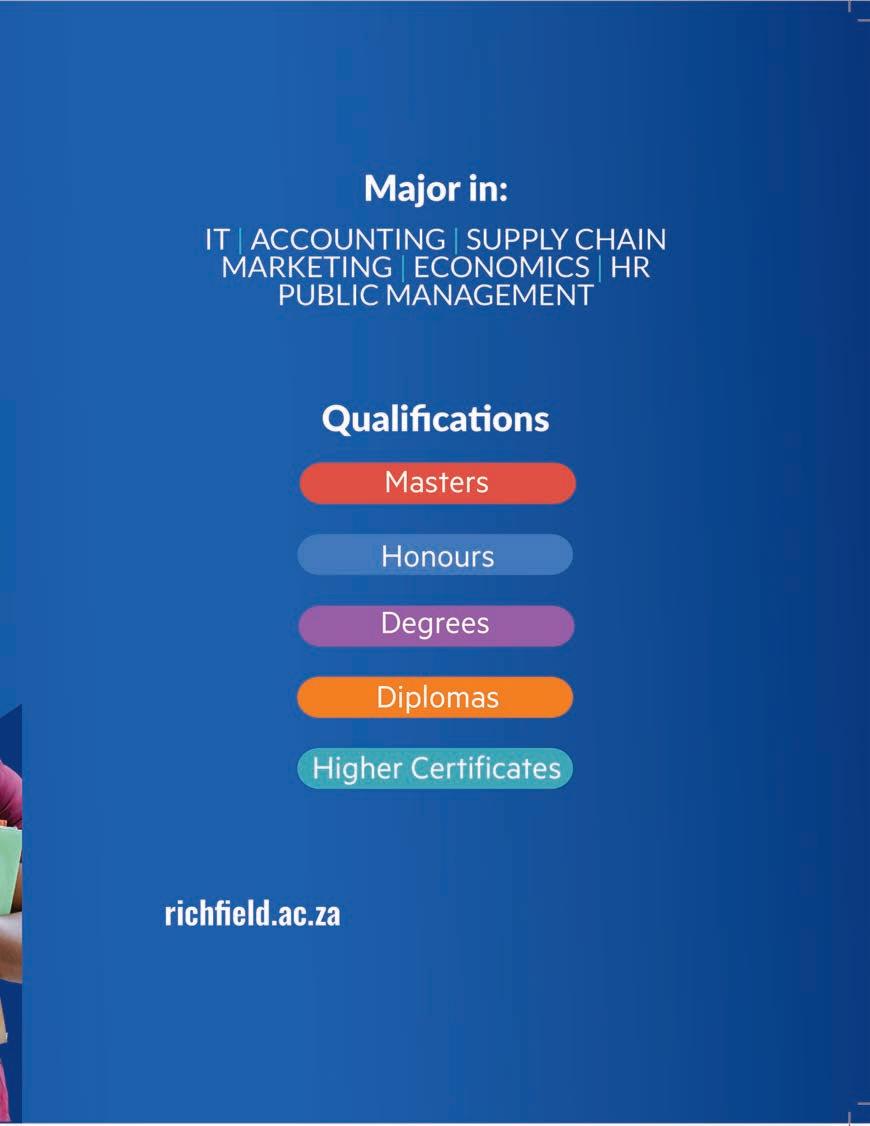

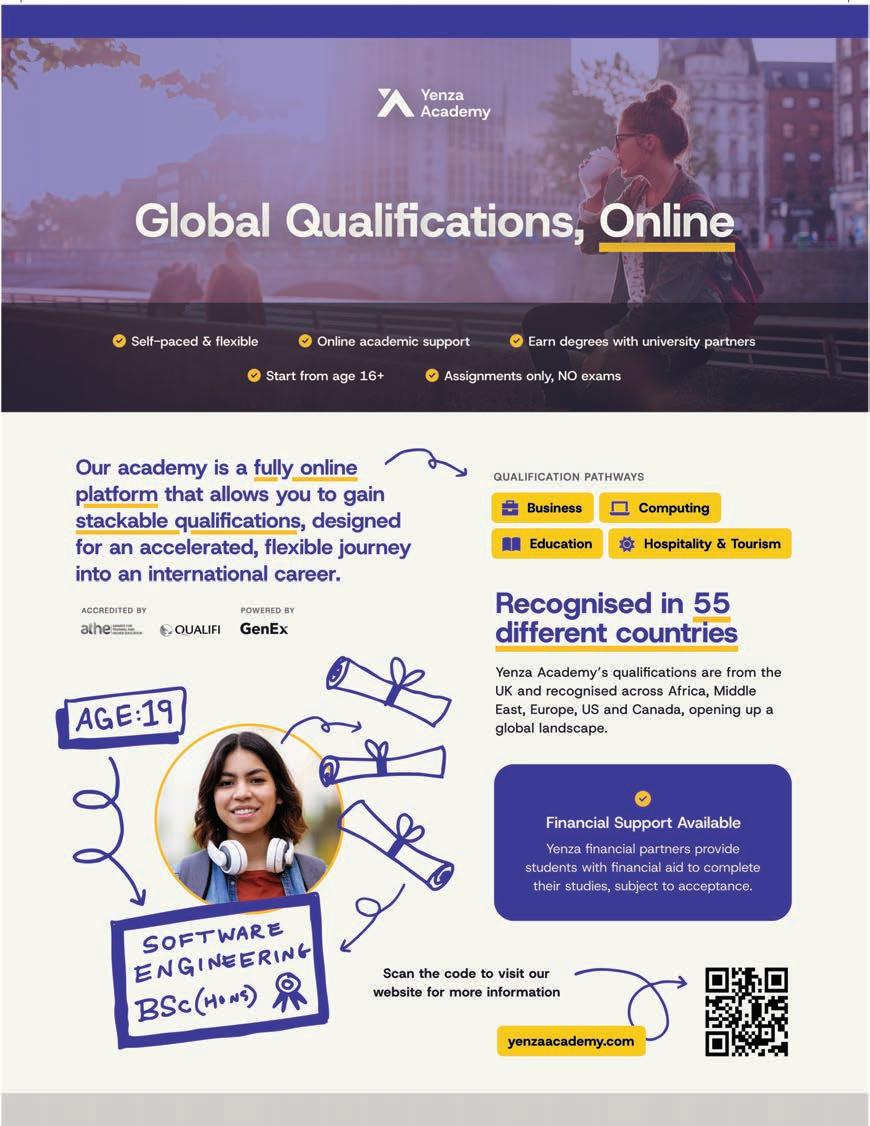
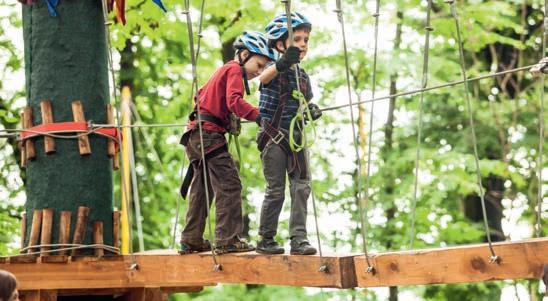
Outdoor education and adventure-based learning are gaining momentum in South African schools, not as extracurricular add-ons, but as essential components of holistic education.
From structured school programmes to informal, curriculum-linked activities, these experiences are helping learners build resilience, leadership and real-world skills that cannot easily be taught within four walls.
Outdoor education is rooted in experiential learning, where learners engage directly with their environment to deepen understanding and develop practical skills.
Ryan Dewey, director of outdoor education at St Andrew’s College, says that at both St Andrew’s College and Diocesan School for Girls (DSG), outdoor learning is embedded in the broader educational journey rather than treated as a once-off experience.
“Outdoor learning gives pupils the opportunity to discover who they are when the usual structures fall away. At DSG, learners participate in a progressive, year-by-year programme that includes
regular excursions and structured outdoor experiences. The school also bene ts from a dedicated facility, The Monastery, which supports immersive learning.”
Similarly, St Andrew’s College integrates outdoor education through leadership camps, environmental programmes and multiday expeditions, supported by facilities such as its Bush Camp.
A standout example is the John Jones Fish River Journey, a 21-day, device-free expedition in the Eastern Cape that brings together Grade 10 pupils from both schools. Through hiking, cycling, canoeing and camping, learners are placed in environments that demand resilience, teamwork and adaptability.
Across schools, there is strong alignment on the value of outdoor education in developing critical life skills.
Dewey points out that these programmes cultivate resilience, leadership, teamwork, problem-solving and self-awareness. “As these skills are developed through lived experience rather than theory, they tend to be deeply internalised. “It is often the unpredictable elements, that is, harsh weather, physical fatigue and changing conditions, that become the most powerful teachers.”
This view is echoed by Barbara Bartosch, deputy principal and head of outdoor education at Cannons Creek Independent School, who emphasises the wide range of personal and social skills learners gain.
“When it comes to the key skills learners gain from outdoor education, many of them can’t be taught in the classroom.
“Outdoor programmes play a crucial role in social development, helping learners build friendships and connect with peers and teachers in more meaningful ways,” she explains.
She also highlights the importance of basic life skills, often overlooked in traditional education. “Being able to pack up, clean up and take responsibility for themselves are all important skills that many pupils do not develop at home.”
Beyond this, outdoor environments provide educators with deeper insights into learners’ abilities and challenges, revealing aspects of development that may not be visible in a classroom setting.
While some schools focus on large-scale expeditions, others are integrating outdoor learning into everyday teaching.
Cam Solarsh, a Grade 4–6 educator at a private school in Sandton, Johannesburg, speaking in her personal capacity, says outdoor learning is also being used to enhance curriculum delivery in more accessible ways.
“Subjects like natural sciences and geography are increasingly taught through hands-on exploration, where learners engage directly with their surroundings. These experiences allow learners to move beyond abstract concepts and develop a deeper understanding by making connections to their everyday lives,” Solarsh says.
She adds that these environments also cater to different learning styles, particularly kinaesthetic learners who bene t from movement and interaction.
Solarsh concludes that outdoor learning does not require extensive resources. “In many cases, the environment itself becomes the primary teaching tool, making it a practical option for a wide range of schools.”
Despite its bene ts, introducing outdoor education is not without challenges.
Bartosch focuses our attention on several practical and social barriers, starting with parental concerns and costs.
“These trips are often expensive, backpacks, hiking boots and transport all add up. Logistical challenges, such as accessing remote locations, also complicate planning. For example, transport into areas like the Cederberg can be dif cult, requiring specialised vehicles.”
Another growing concern is learner readiness. Bartosch says many pupils today are more sedentary, spending signi cant time on screens and less time engaging in physical activity, which means “ tness is a huge problem, there’s a lack of co-ordination and not enough time spent outdoors,” she says.
Solarsh also raises a different set of challenges in the classroom context. She highlights curriculum pressures and classroom management as key barriers. “The curriculum is already demanding, which can make it dif cult to incorporate outdoor learning regularly.” However, she adds, with careful planning and structured activities, these challenges can be effectively managed.
A key issue across the sector is ensuring outdoor education is accessible to all learners, not just those in well-resourced schools.
Dewey emphasises the importance of integrating outdoor learning into the curriculum, rather than limiting it to optional programmes. “This ensures that all learners bene t from these experiences. This is where partnerships with landowners, community organisations and programme providers become important, helping to expand access and enrich learning opportunities for those who may not otherwise be able to afford them.”
Emphasising the importance of inclusivity and designing outdoor learning to accommodate diverse learner needs, Solarsh says: “Accessibility goes beyond physical spaces; it also requires thoughtful lesson design that caters to different learning styles and abilities. This includes
“Outdoor education is far more than adventure or recreation; it is a transformative approach to learning that drives holistic student development beyond the classroom.” –Garry Townsend
ensuring learners with disabilities can participate, and creating exible, adaptable programmes.”
While approaches may differ, from large-scale expeditions to simple outdoor lessons, there is a shared understanding that outdoor education plays a vital role in preparing learners for the future.
The combination of physical challenge, social interaction and real-world problem-solving creates a powerful learning environment that goes far beyond academic achievement.
Garry Townsend, head of outdoor pursuits at Treverton College in the Midlands, believes outdoor education should be seen as a foundational element of modern education rather than an optional extra.
“Outdoor education is far more than adventure or recreation; it is a transformative approach to learning that
drives holistic student development beyond the classroom.
“Activities such as hiking, camping and multiday expeditions push learners beyond their comfort zones, helping them build resilience, con dence and decision-making skills in real-world contexts.”
He adds that outdoor environments naturally foster leadership and teamwork, as learners must rely on one another to succeed. “The success of these experiences depends on mutual support, communication and shared responsibility.”
Beyond personal development, Townsend highlights the broader bene ts of outdoor education, including improved physical health, reduced stress and stronger environmental awareness.
He also says direct engagement with nature helps learners develop a deeper understanding of sustainability and their role in protecting the environment. Ultimately, Townsend encourages schools to view outdoor education as a core part of holistic development, “One that prepares learners not only academically, but also emotionally, physically and socially.”
As South Africa’s education continues to change, one is poised to think that outdoor learning offers a powerful way to bridge the gap between theory and real-world experience.
From building resilience and leadership to fostering independence and environmental awareness, these programmes are shaping learners who are better equipped to navigate complexity and uncertainty.
The challenge now lies in expanding access and embedding these approaches more deeply across all schools. If done effectively, outdoor education has the potential to transform not just how learners are taught, but how they grow, connect, and prepare for the future.
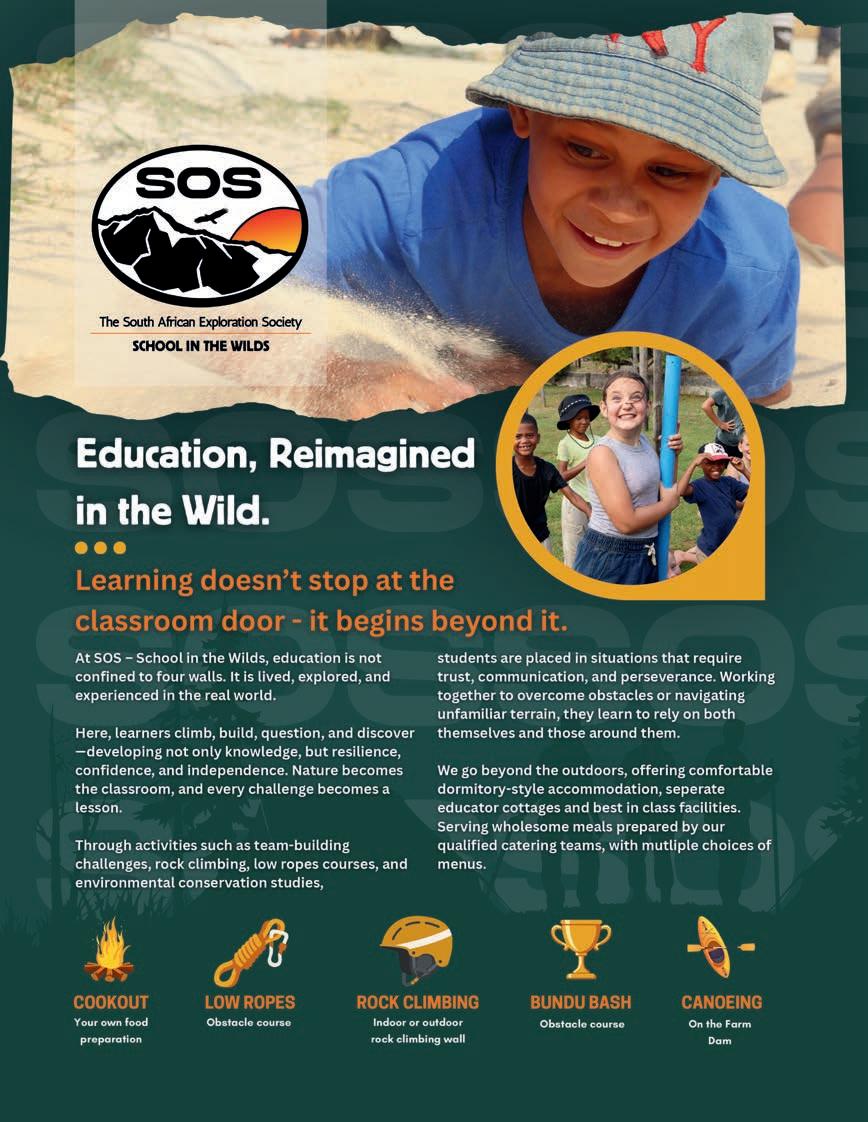
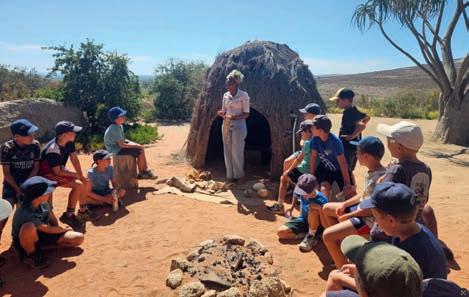
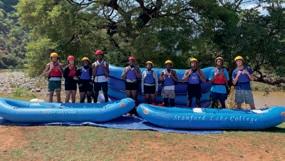



The South African Adventure Industry Association unpacks what schools need to know when selecting an outdoor learning service provider to ensure a safe and meaningful learning experience
School excursions, camps, outdoor learning programmes and adventure-based education experiences can be some of the most meaningful parts of a learner’s school journey. These opportunities help children build con dence, independence, teamwork, resilience and a deeper connection with the world around them.
However, choosing the right venue or service provider is not only about nding a beautiful setting, exciting activities or a good price. It is also about asking the right questions before the booking is made.
For many schools, planning an excursion can feel overwhelming. Teachers and school leaders need to consider
educational value, parent expectations, budgets, transport, accommodation, meals, supervision, medical needs and safety. In many cases, they are also working with external providers who may explain their systems, documents and responsibilities in different ways.
Schools do not need to become adventure specialists or risk managers overnight. However, they do need to know what to ask, what evidence to request, and what responsible practice should generally look like.
A common mistake is thinking that safety is covered once parents have signed
indemnity or consent forms. These documents are important, but they are only one part of a much bigger picture.
A well-managed school trip starts long before the bus leaves the school gate. It begins with choosing a suitable provider, understanding the risks linked to the venue or activity, con rming who is responsible for what, and ensuring proper systems are in place.
A professional provider should be able to explain how they manage risk. They should be able to show that their staff are competent, their equipment is maintained, their emergency plans are realistic, and their activities are appropriate for the age, ability and needs of the learners.
Good providers should not be offended when schools ask questions. In fact, credible providers should welcome them.
Before choosing a provider, schools should be clear about the purpose of the excursion. Is the trip mainly educational, recreational, developmental, environmental, spiritual, cultural or adventure-based? Is the aim leadership development, curriculum enrichment, team building, outdoor learning or personal growth?
The purpose matters because it helps determine whether a provider is suitable. A venue with beautiful facilities may not necessarily have the systems needed for higher-risk activities. A fun activity provider may not be equipped to deliver a structured leadership or learning programme. A camp with excellent accommodation may still need to show how it manages supervision, safeguarding, rst aid, transport and emergencies.
When the purpose is clear, schools can ask better questions and make better decisions.
Most providers will say that safety is important to them. The real question is whether they can show how safety is managed in practice.
Schools should feel comfortable asking for evidence. This does not need to be confrontational. It can simply be part of a professional booking process.
Useful evidence may include public liability insurance, staff quali cation records, rst-aid certi cates, activity risk assessments, emergency response procedures, equipment inspection records, transport documentation, safeguarding policies and accommodation safety plans.
The goal is not to create unnecessary paperwork. It is to con rm that the provider has thought through the foreseeable risks and has reasonable measures in place to manage them.
A provider’s programme is only as strong as the people delivering it. Staff competence is one of the most important areas for schools to check.
A provider’s programme is only as strong as the people delivering it. Staff competence is one of the most important areas for schools to check.
Schools should ask: Who will be leading the activities? What training they have? How is their competence assessed? Do they have experience working with school or youth groups? For adventure activities, competence should also be relevant to the speci c activity and environment.
Supervising a group on a low-level obstacle course is very different from managing a river activity, hike, abseil, mountain environment or wilderness experience. Each activity requires its own knowledge, judgement and safety awareness.
Schools should also ask about rst aid. Who is trained? What level of training do they hold? Where are rst-aid kits located? What happens if a learner needs urgent medical care?
Supervision is not just about having adults present. It must be active, preventative and continuous.
Before the trip, the school and provider should agree on supervision responsibilities. Teachers should know where they are expected to be, what they are expected to monitor, and how they will communicate with provider staff. Provider staff should be clear about their roles during activities, transitions, free time, meals and emergencies.
Some of the most vulnerable moments on school trips happen outside the main activity: arrival and departure, moving between areas, swimming or free play, night-time routines, bathroom breaks, meals and unstructured social time.
A good provider should be able to explain how these moments are managed, not only how the advertised activities are run.
It is easy to focus only on the exciting activity, but transport, accommodation and catering are also part of the risk picture.
For transport, schools should check driver licensing, vehicle roadworthiness, passenger liability cover and seatbelt arrangements.
For accommodation, schools should ask about re safety, evacuation routes, security, sleeping arrangements and night-time supervision.
For catering, schools should check hygiene practices, drinking water, food storage, allergies and the ability to cater for medical, religious or cultural dietary needs.
A safe excursion depends on the whole system, not only the activity programme.
The answer to risk is not to stop offering meaningful outdoor learning and adventure-based experiences. Children need opportunities to explore, grow, work with others, solve problems and experience the world beyond the classroom.
The answer is to choose better, plan better and communicate better.
The South African Adventure Industry Association supports the professionalisation of outdoor education, adventure-based learning, learning outside the classroom and adventure-tourist guiding. As the sector grows, schools should not have to rely only on glossy brochures, social media pages or word-of-mouth recommendations. They should be equipped to ask informed questions and select providers that take learner safety seriously.
Every school trip carries responsibility. With the right preparation, the right questions and the right partners, learning outside the classroom can remain one of the most powerful and rewarding parts of education.

School sports are incubators of discipline, resilience and leadership. Herman Gibbs reflects on how the sports field shapes young people for life beyond the classroom
In the heart of every school, beyond the classrooms and textbooks, lies an arena of development often overlooked: the sports eld. School sports are far more than games; they are laboratories of character, resilience and leadership. In South Africa, where concerns about childhood obesity and sedentary lifestyles are mounting, the role of school sports in shaping healthy, capable and con dent young people has never been more urgent.
The most obvious bene t of school sports is physical tness. At a time when screens dominate children’s lives, the sports eld offers a vital antidote. Regular participation in athletics helps combat obesity, improves cardiovascular health and instils lifelong habits of movement. Schools are uniquely positioned to make tness accessible to all learners, ensuring that exercise is not a privilege, but a shared experience.
Yet the true power of school sports lies beyond physical health. On the eld, students learn to collaborate, communicate and trust one another. Coaches often identify emerging leaders, giving them opportunities to inspire and guide their peers. These lessons in teamwork and leadership are transferable to every sphere of life – from the classroom to the workplace, and ultimately, to society at large.
Sport demands discipline in ways that textbooks cannot. Athletes must commit to practice, manage their time and balance academic responsibilities with athletic pursuits. They learn that success is not instant, but earned through repetition and perseverance. Equally important, they
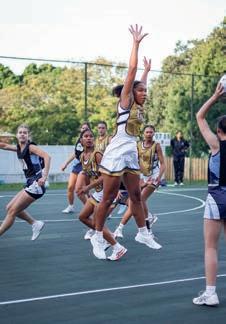
confront failure. Losses teach humility, resilience and the ability to bounce back – qualities essential for navigating life’s inevitable setbacks.
School sports also serve as a scouting ground for talent. For gifted athletes, the school eld can be the rst step toward regional, national and even international competition. However, talent identi cation is not only about producing elite athletes. It is about giving every child the chance to discover their strengths, build con dence and grow as individuals.
Of course, the bene ts of school sports must be balanced against academic
demands. As Clement du Plessis, a seasoned teacher and coach, notes, time management is the linchpin of this equilibrium. Structured schedules help learners juggle studies and sports effectively. Yet challenges abound, social media distractions, inconsistent teaching expectations and unequal resources across schools complicate the picture. Du Plessis argues for a clear framework from the education department to ensure consistency, while acknowledging that no universal solution can address the disparities between af uent and underprivileged schools.
Pieter Rademeyer, principal of Jan van Riebeeck High School, offers six insights into holistic schooling. He reminds us that education is not just about academics or sports, but about nurturing the whole child. Sports impart discipline, resilience and teamwork, but they must complement – not overshadow –academic achievement. Families must evaluate commitments carefully to avoid burnout, recognising that each child’s path is unique. Open conversations, realistic expectations and continuous support are essential to fostering thriving learners.
The transformative power of school sports is best illustrated through lived experience. I spent 17 years teaching and coaching, saw my own children excel in four different sports codes, earning South African Schools colours and later representing the nation internationally. Their journey underscores how dedication to both education and sport can yield extraordinary outcomes, shaping not only athletes, but also leaders.
School sports are not a luxury; they are a necessity. They cultivate tness, discipline, resilience, teamwork and leadership – the very qualities South Africa needs in its future citizens. As educators, parents and policymakers, we must ensure that the sports eld remains central to schooling. For in nurturing athletes, we are also nurturing leaders, innovators and change-makers. The whistle that starts a school match may well be the rst note in the symphony of tomorrow’s leadership.
Follow: Clement du Plessis www.linkedin.com/in/clement-du-plessis-99633b399 Pieter Rademeyer www.linkedin.com/in/pieter-rademeyer-733470359


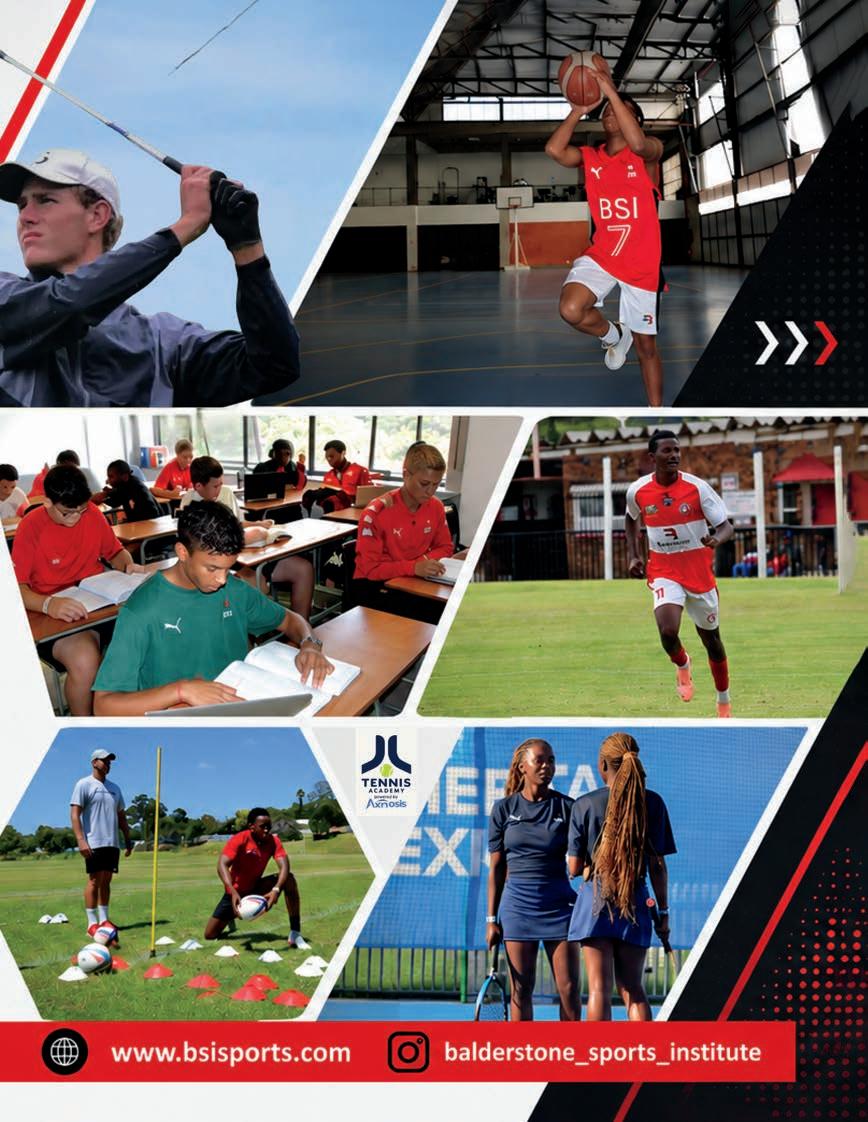
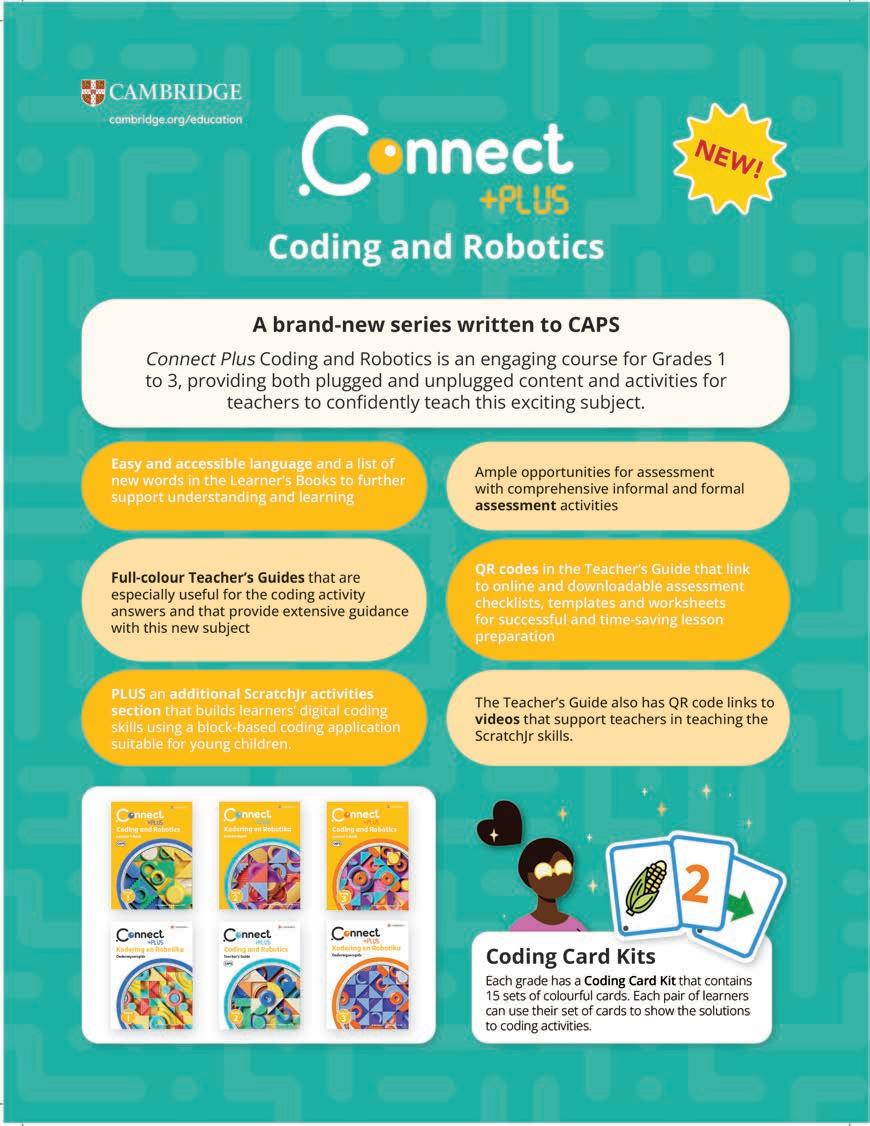





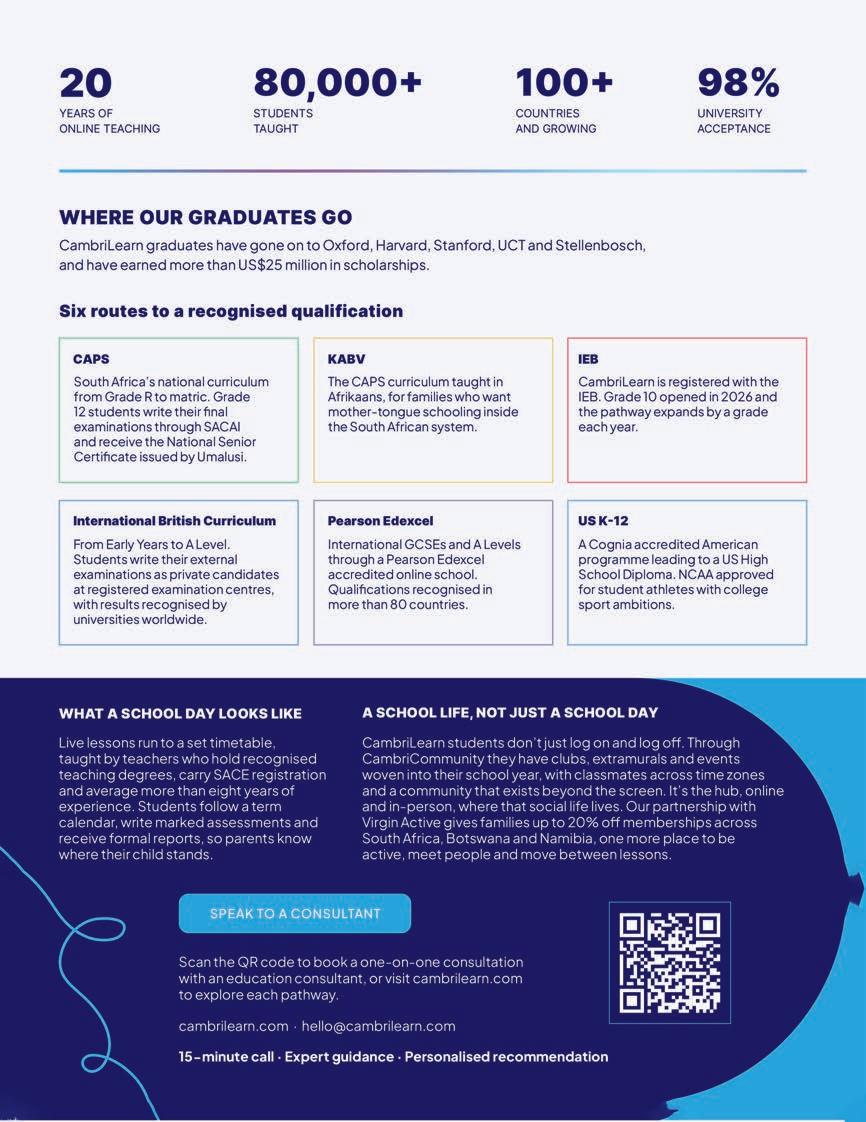
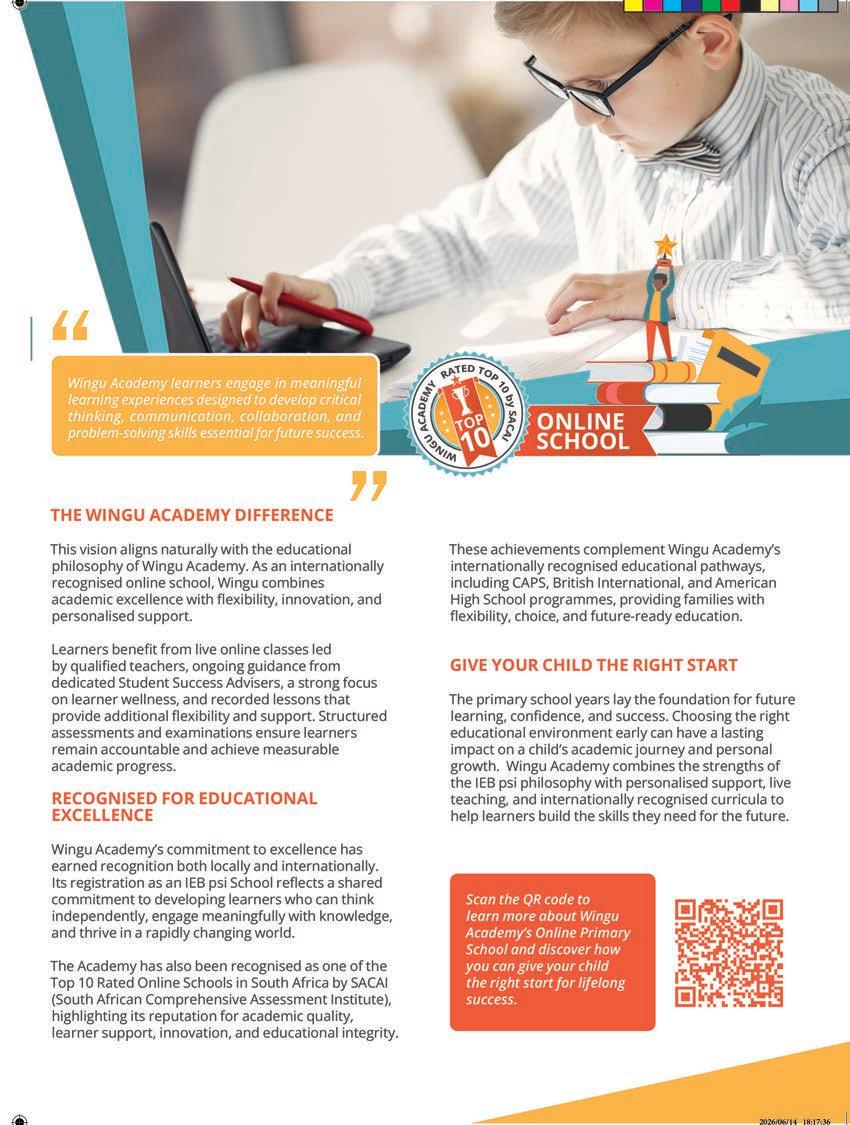



69 Marist South Africa
70 Alma Mater International School
72 Ashton International College
74 Curro
76 Eden Schools



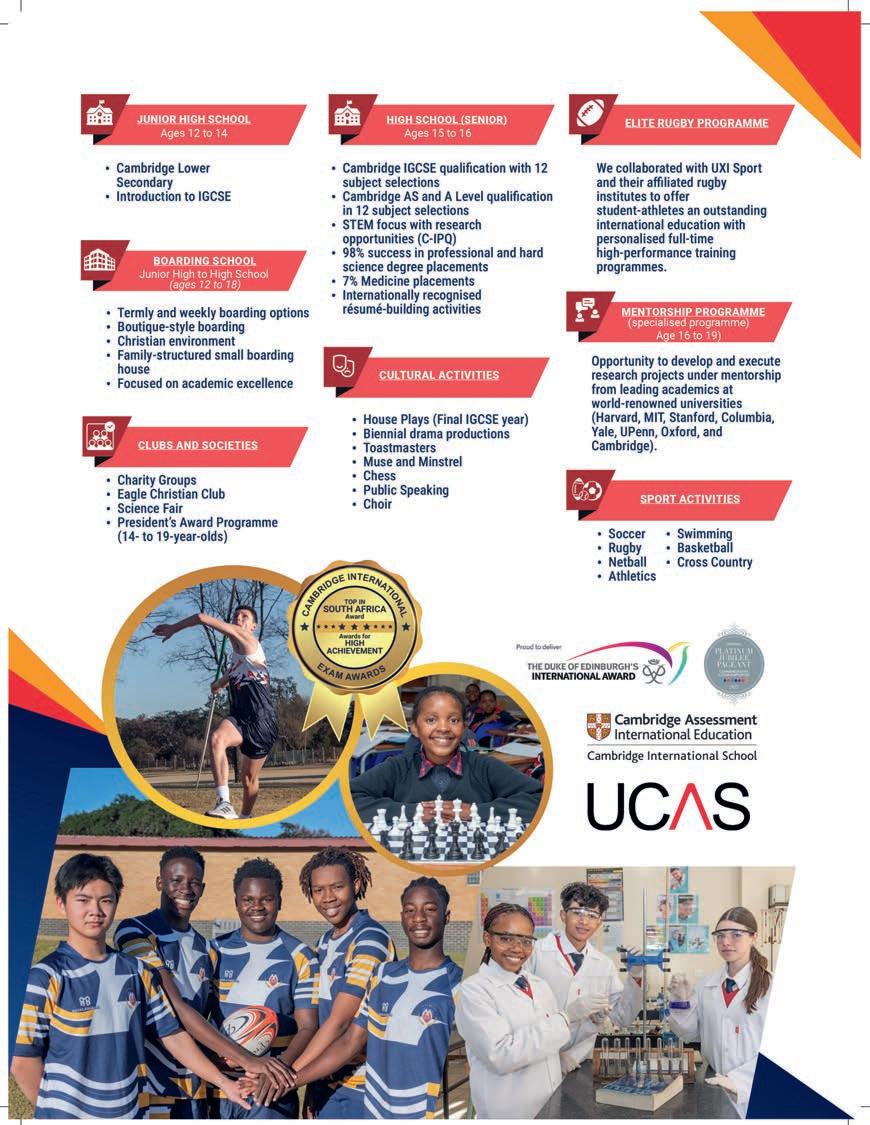




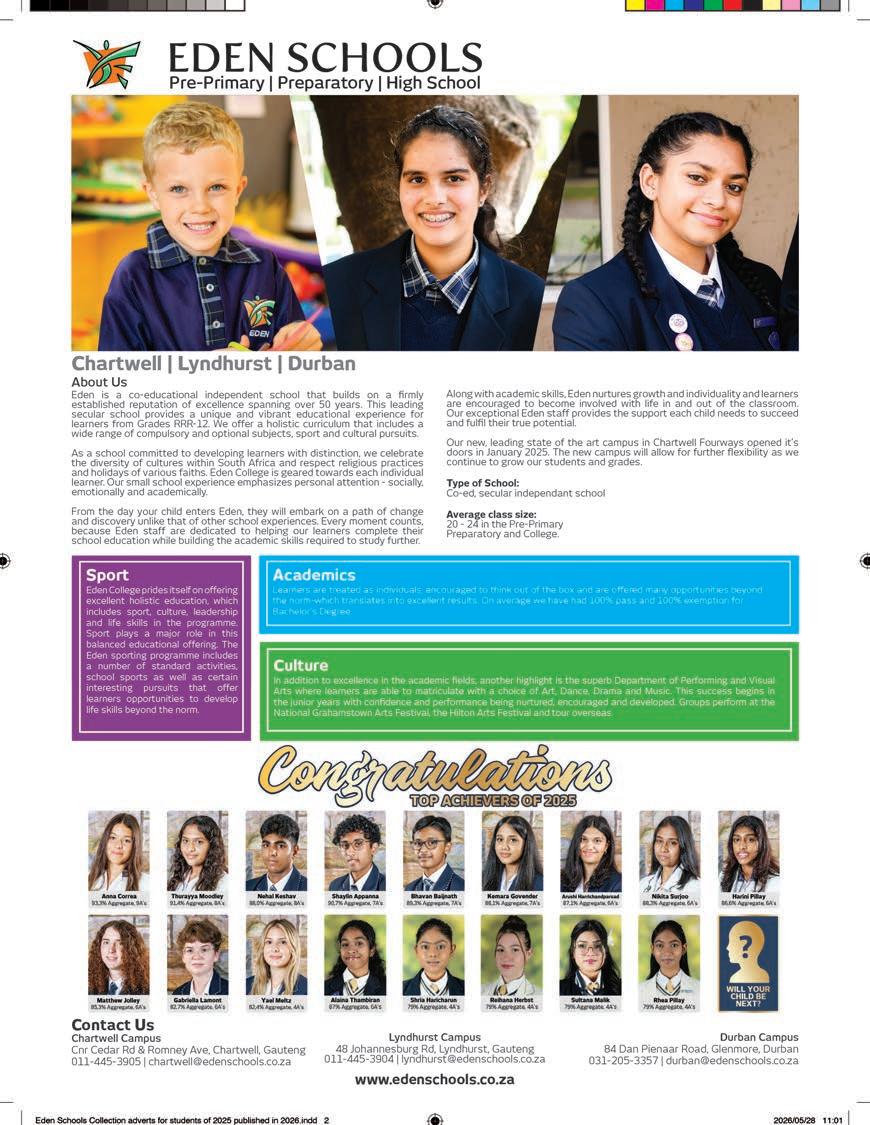
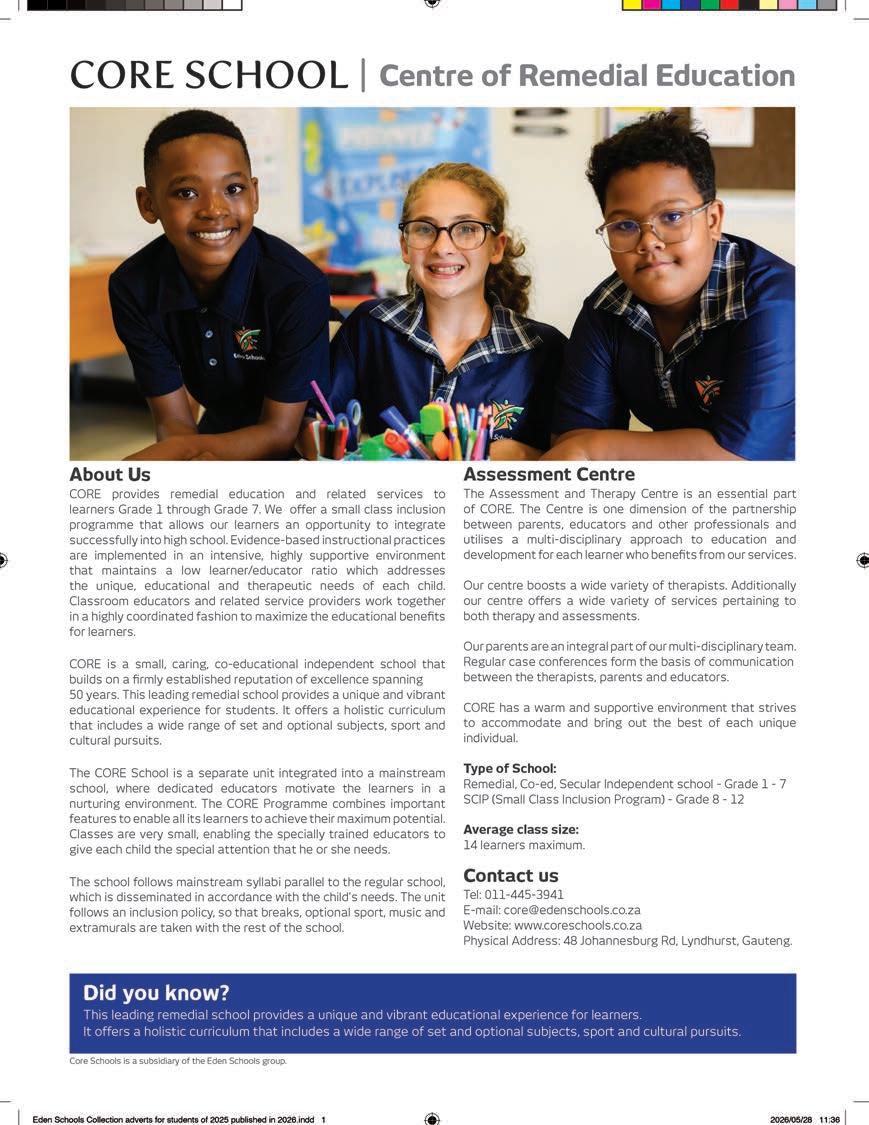
80 Collegiate Girls’ High School
81 Merrifield Preparatory School and College
82 Selborne College
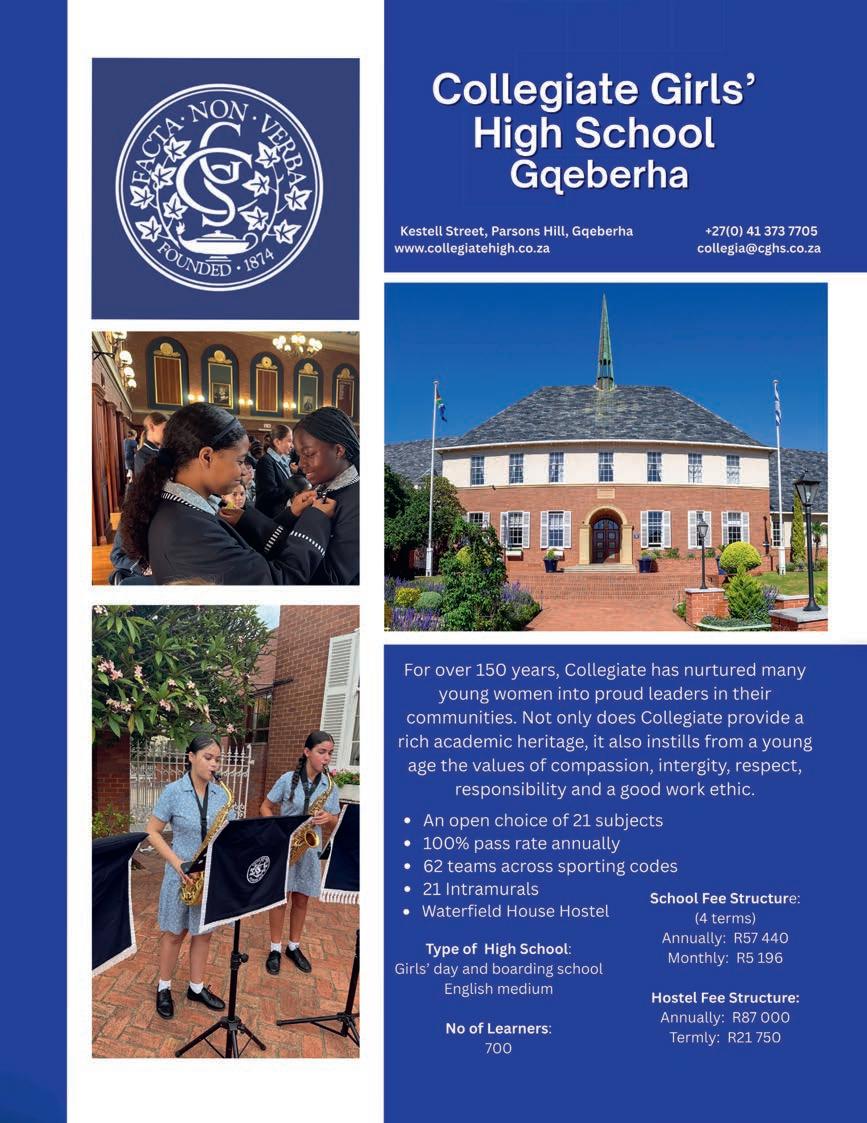


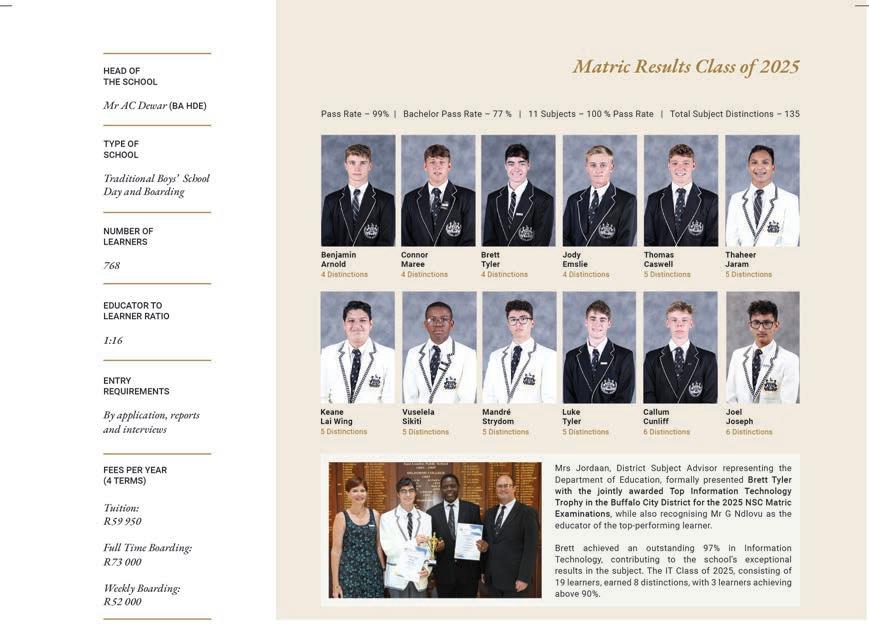
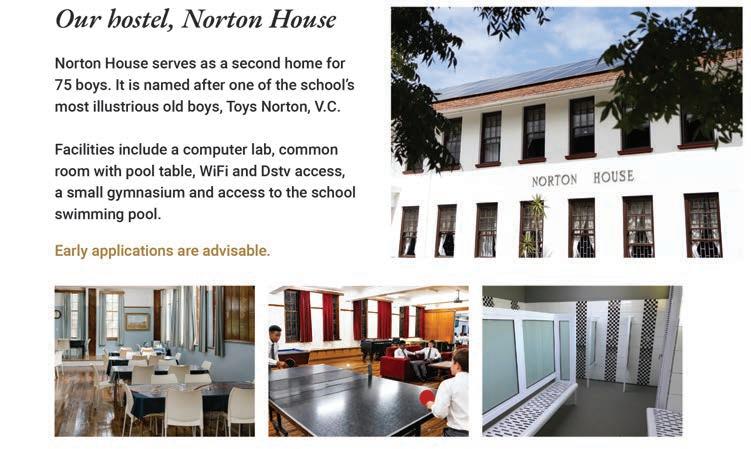
85 Brescia House School
86 American International School of Johannesburg
88 Bellavista School
90 Dainfern College
92 Deutsche Internationale Schule Johannesburg
94 Deutsche Internationale Schule Pretoria 96 Eagle House School 97 Eden – Concord College
98 Greenside High School
Holy Rosary School
Jan Celliers Laerskool en Preprimêr 102 Krugersdorp High School 104 Kyalami Schools Group
Pridwin Preparatory School
Alban’s College
Andrew’s School for Girls
David’s Marist Inanda
St Dominic’s Catholic School for Girls
Dunstan’s College
John’s College
John’s Pre-Preparatory
John’s Sixth Form
Martin’s School
Mary’s School, Waverley
Paulus Pre-Primary and Primary School
Peter’s School
City School
The National School of the Arts
Pretoria High School for Girls
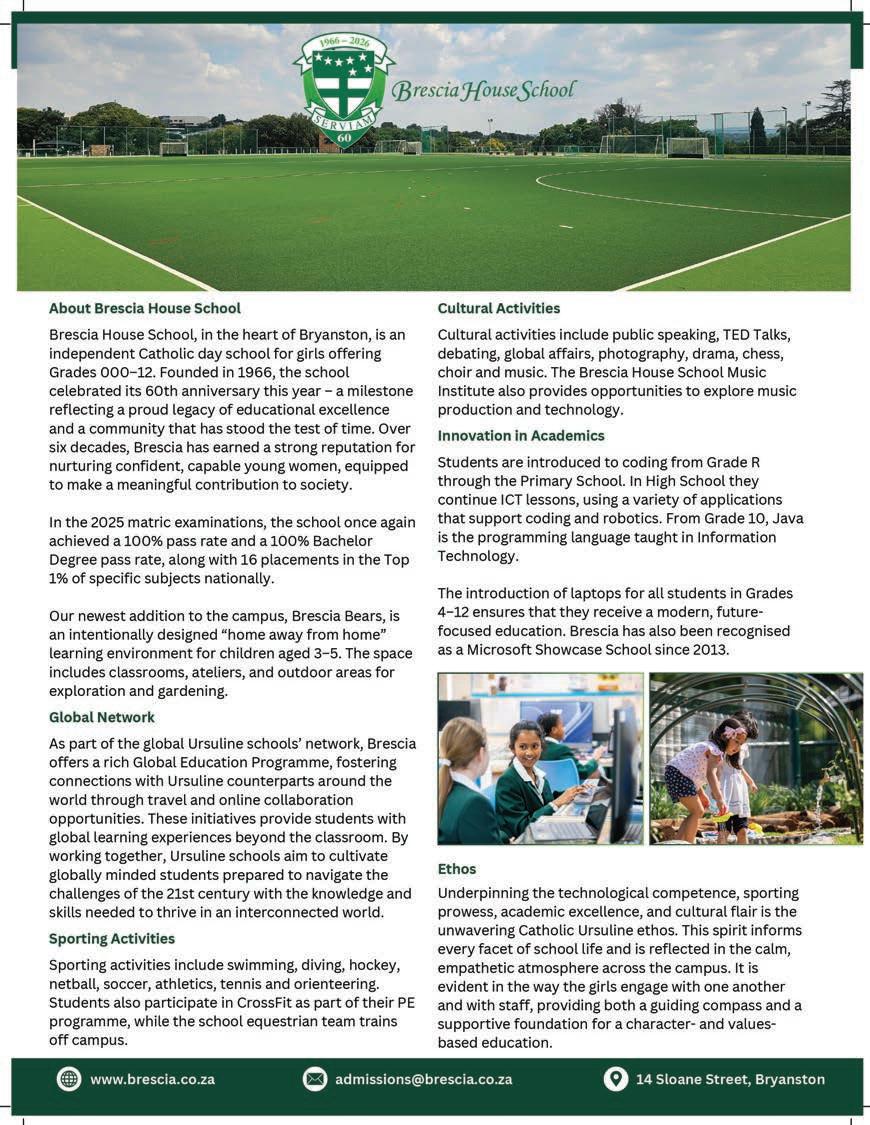
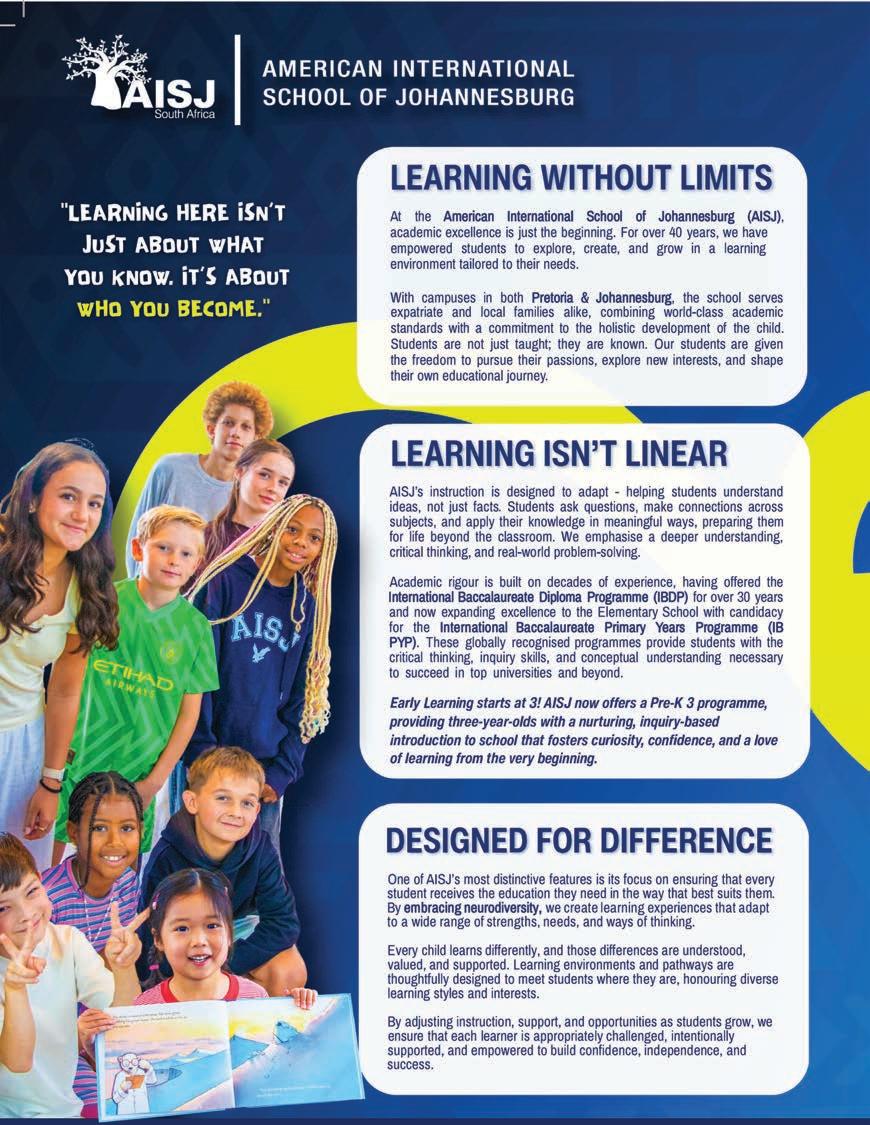





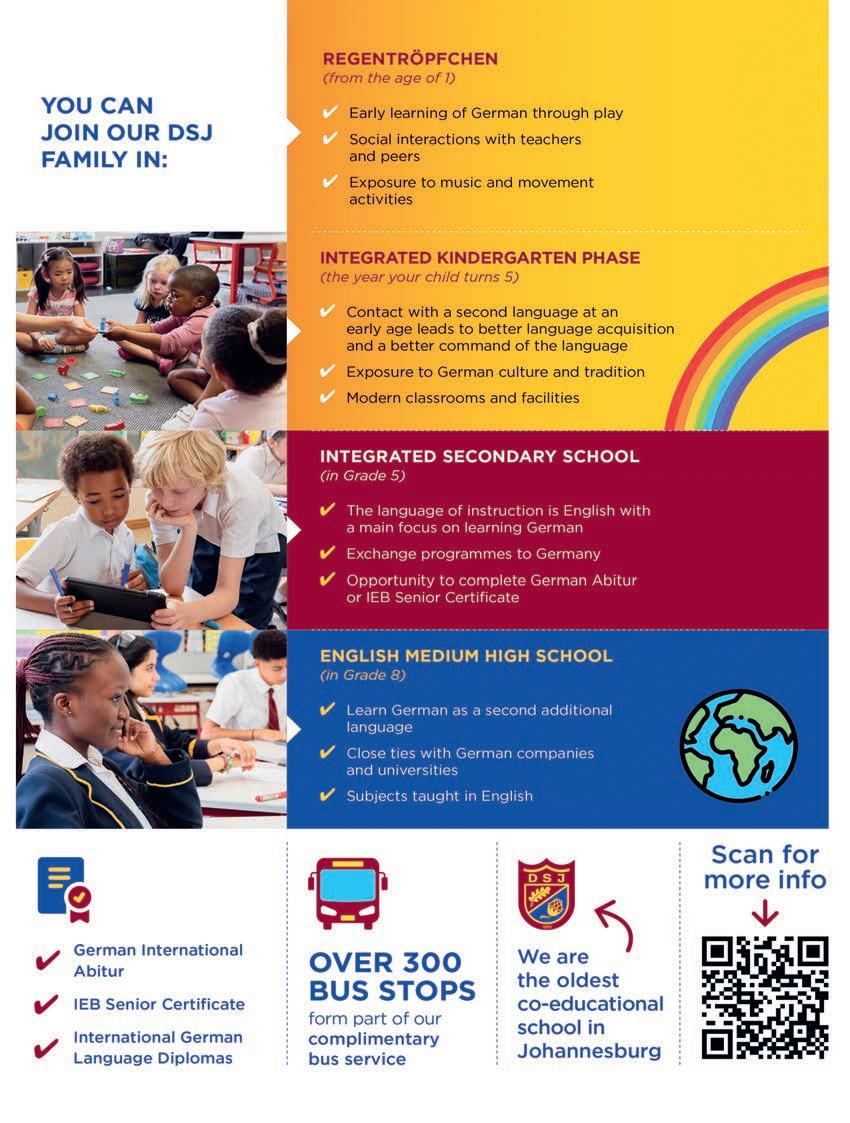


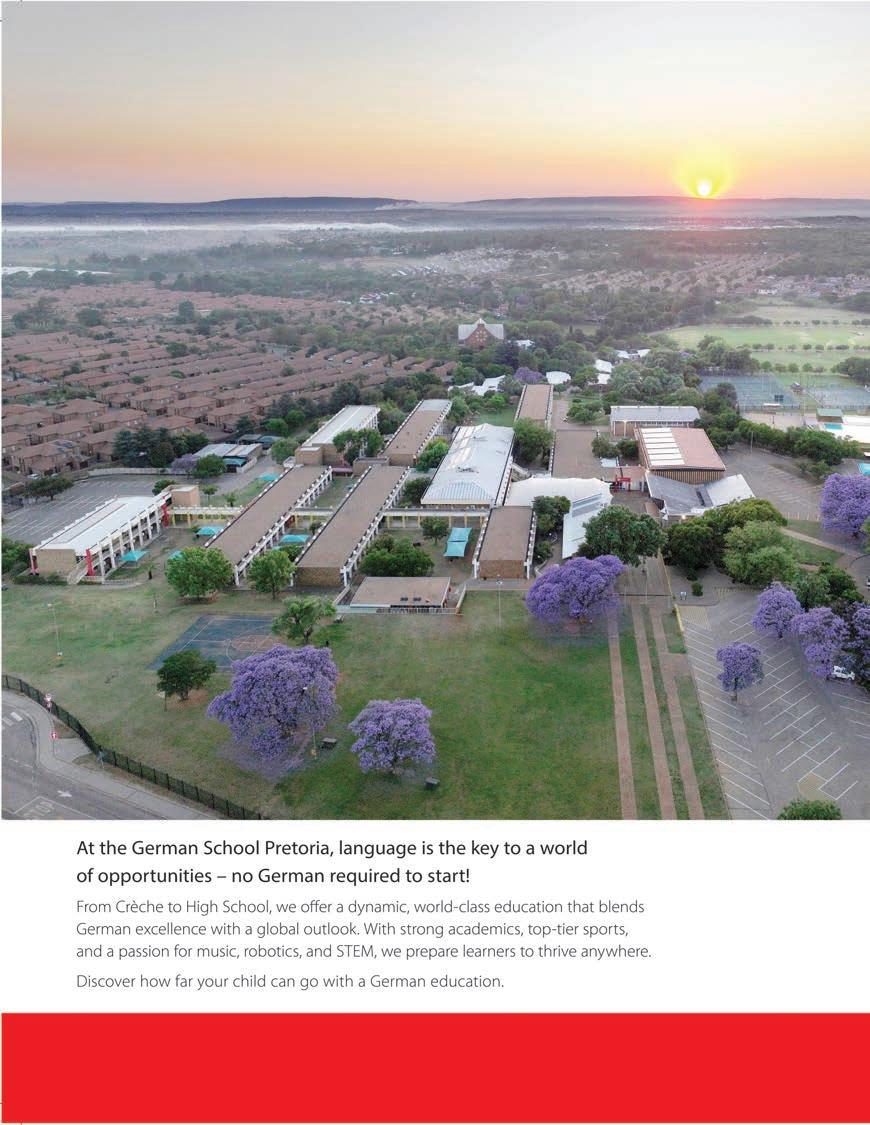


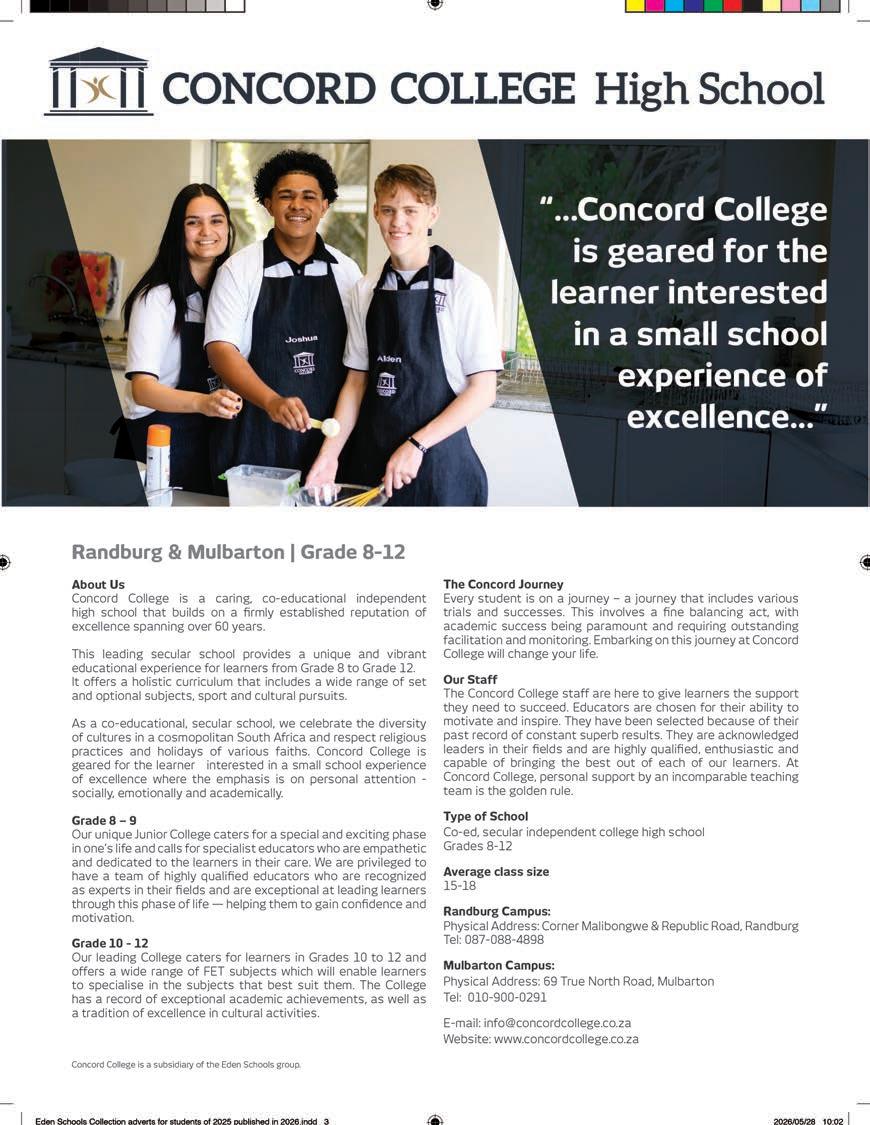



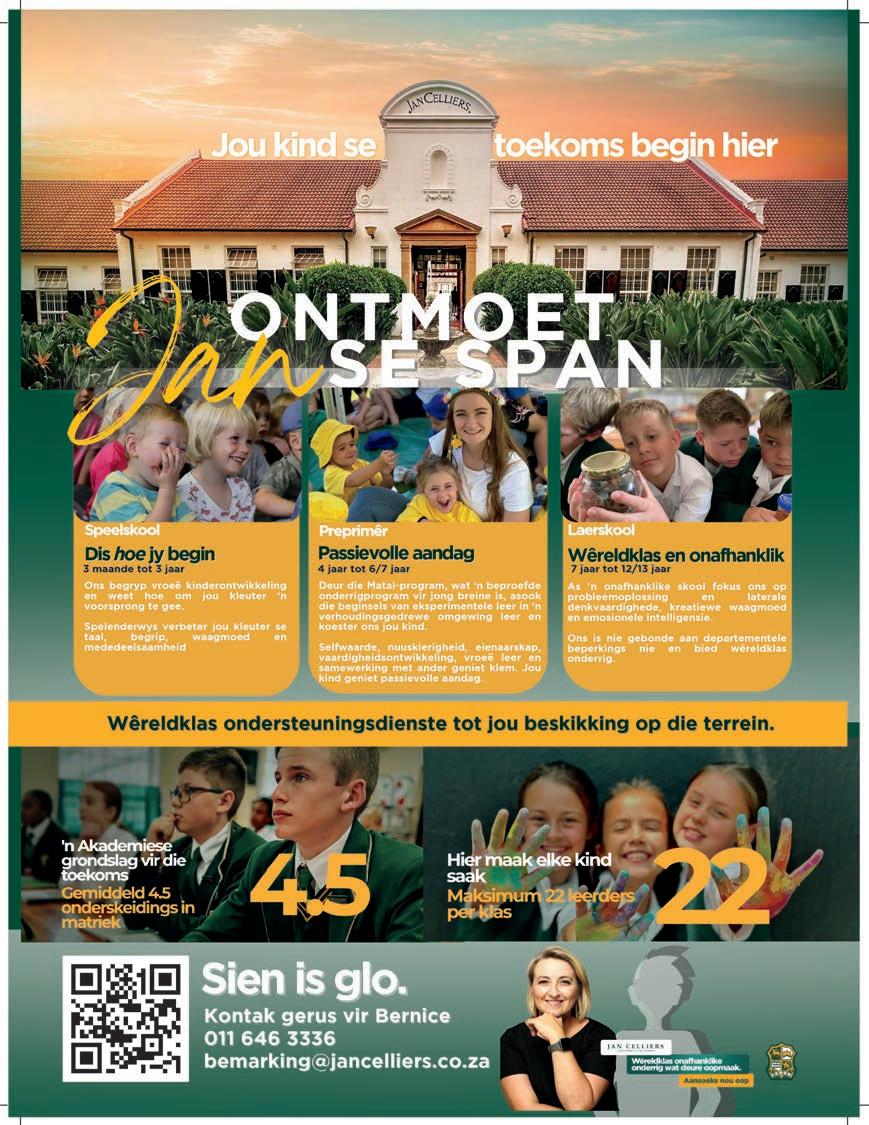
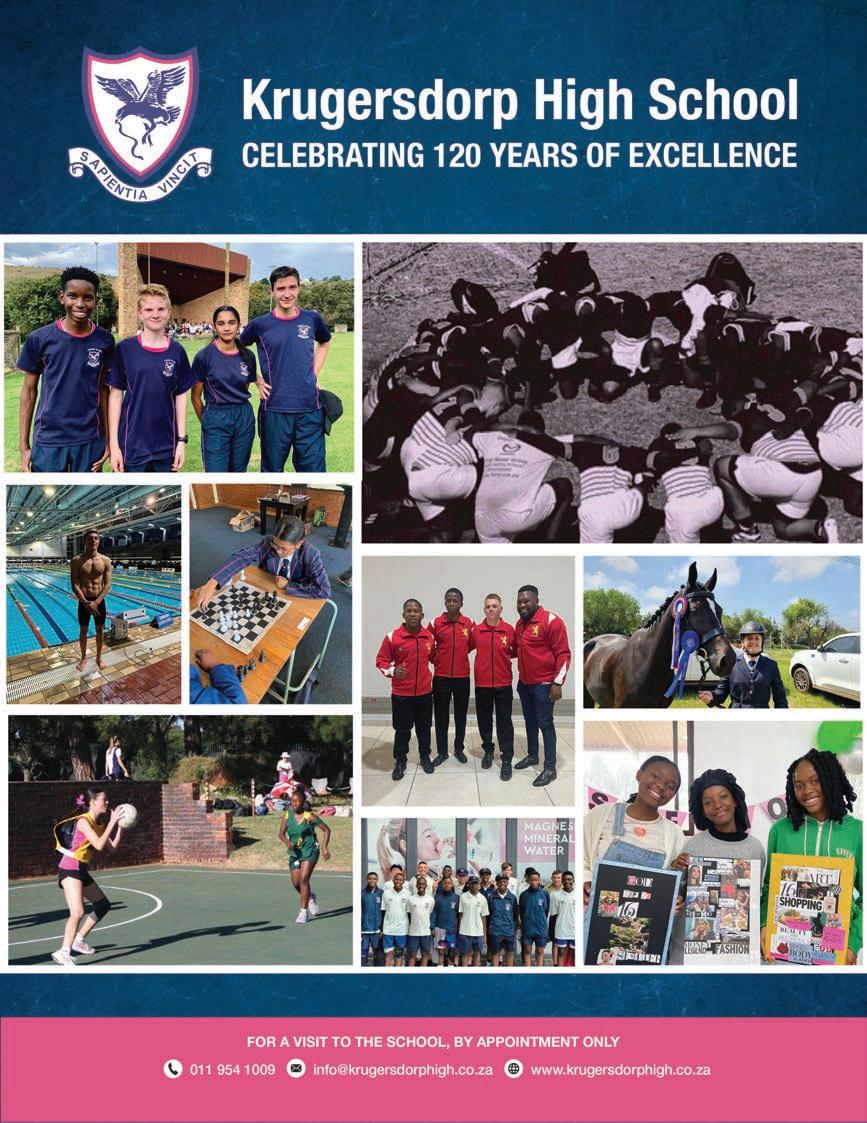
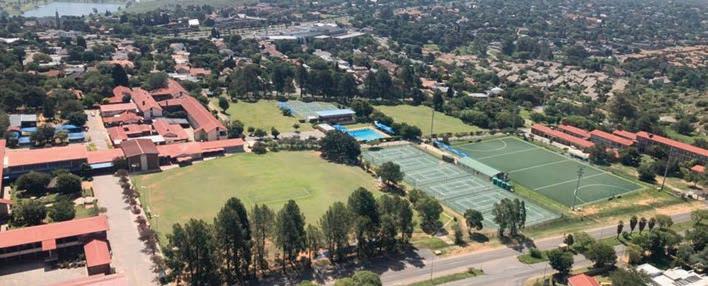
Krugersdorp High School is of the firm belief that a child not only learns in the classroom, but also on field trips, the sports field and the stage.
Through state-of-the-art technology and innovation, Krugersdorp High School ensures that no learner is left behind during the COVID-19 pandemic. The school has been identified as a leader in the government education system with infrastructure and online systems that were introduced in 2020 providing all learners with equal opportunities to continue to learn. The school boasts five laboratories, two computer labs, a wellused media centre and more than fifty classrooms where learning takes place. However, what takes place in the school’s great facilities is what is most important: it is here where we provide the grounding for our learners to flourish and later enter tertiary educational institutions. Over the years, the school has received multiple accolades for excellence within the classroom – the school is known for its mathematics, science, art and economics departments, which constantly produce top achievers from Grade 8 through to Grade 12.
Krugersdorp High School is synonymous with excellence and its greatest vision is to ensure that all learners are provided with an equal opportunity for holistic growth.
With 17ha of land and pristine sporting facilities, it is no surprise that the school was identified as a Sports Focus School by the Department of Sports and Recreation, Cricket South Africa and the Central Gauteng Lions. The cricket programme at the school is in its fourth year and has seen
phenomenal results in this short space of time. The U/14 Boys’ team is the current winner of the league, and the U/15 Boys’ team are the runners-up.
There is great anticipation as the school enters the Boys School league in 2021. The school offers 17 sporting codes including girls cricket, girls rugby, girls soccer – our diversity is our strength.
Over and above this, the school has learners who continuously make provincial sides in netball, rugby and hockey. For the first time in the school’s history, our 2021 head boy, Tebogo Maseko, has national colours in hockey, and one of the deputy head boys, Darian Pretorius, has achieved national colours in baseball.
As we navigate our way through 2021, we look forward to the new challenges for the school and know that our educators are always prepared to go the extra mile for our learners. We will continue to strive for excellence, whether it is in the classroom, on the stage or on the sports field.
Should you wish to experience KHS’s excellence, families are welcome to set up an appointment to view the school while the educators are in action with their children in the classroom.
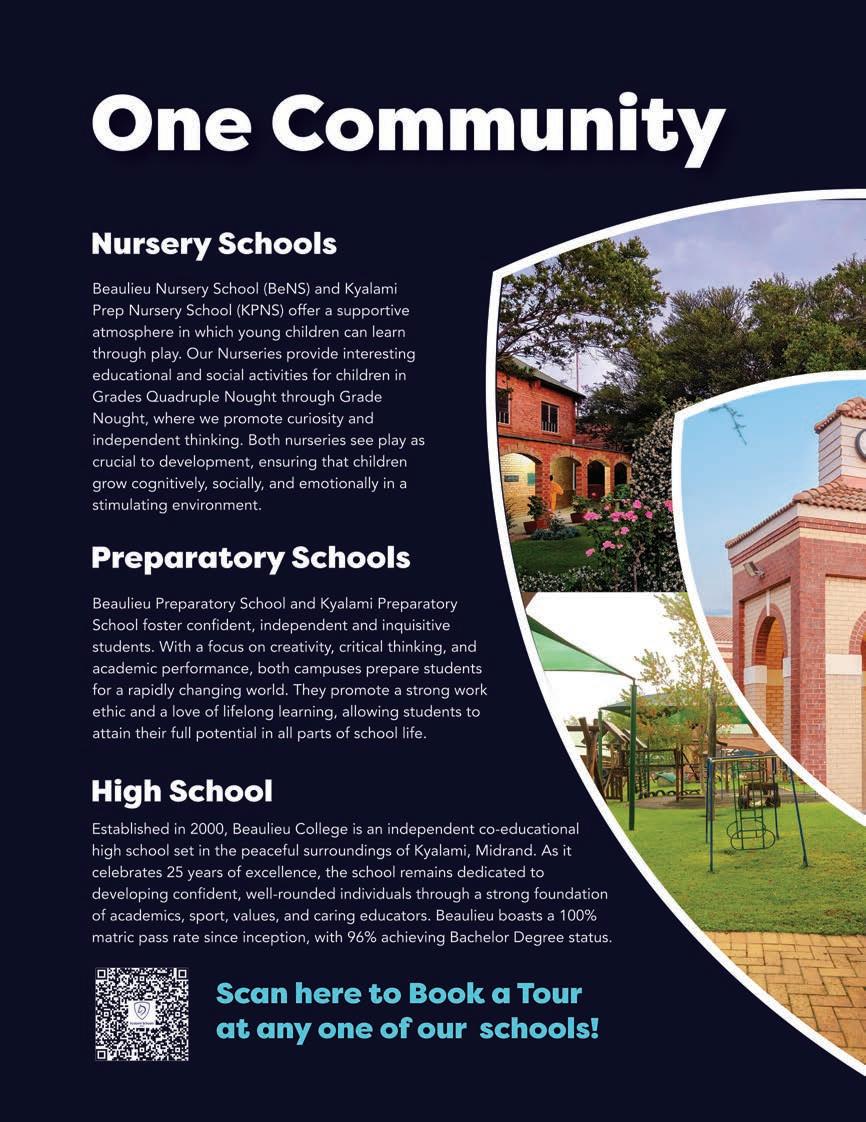
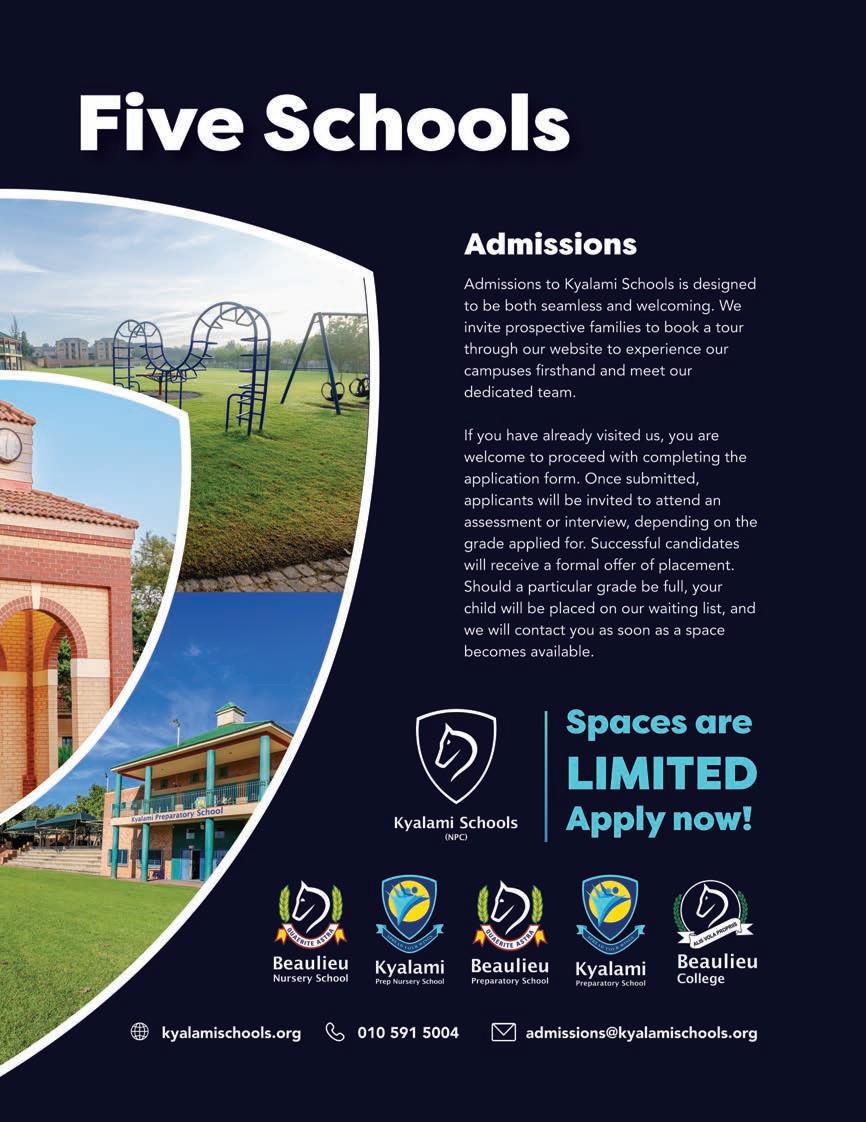


History
Established in 1960, Michael Mount Waldorf School is a mainstream school with the unique and distinctive approach to education that is practised in Waldorf schools worldwide. The aim of Waldorf schooling is to educate the whole child, “head, heart and hands”.
Academic programmes
Baby care (4 months – 2 years): a loving, gentle space run on Waldorf principles caring for babies from 4 months to 2 years. Pre-primary (2 – 6 years): daily activities focus on rhythm, language development through artistic expression, development of social skills, free play, storytelling, cooking and baking, singing, movement games, circle time and painting.
Primary school (Grades 1 – 7): the Waldorf curriculum balances academic
Head of school: Mr William Bester
Type of school: Co-educational day school. After care and holiday care available up to age 13
subjects with artistic and practical activities and is designed to be responsive to the various phases of a child’s development. The main subjects, such as English, mathematics, history and science, are taught in two-hour main lesson blocks, lasting from three to four weeks. The teacher presents the subject matter and the children make their own individual books including recording and illustrating the lessons, for each subject taught. By creating their own lesson books, Waldorf students come to “own” the information and ideas that they study.
High school (Grades 8 – 12): in combination with Waldorf main lessons, students work through the National Senior Certi cate (NSC) curriculum and write the Independent Examination Board (IEB) matricexam in Grade 12.
Number of learners: 450
25
Academic subjects are complemented by a programme of arts, crafts, drama and music. Teacher quali cations: our teachers are required to have a relevant degree in addition to a two-year Waldorf education certi cate. They undergo mandatory biennial appraisals and enjoy many training opportunities.
Note: Michael Mount matriculants have achieved a 100% IEB pass rate since the high school’s inception in 1987.
Sports include: Athletics, basketball, cricket, volleyball, soccer, swimming and netball. Cultural activities include Art, Drama, Music, and Debating, to name a few.


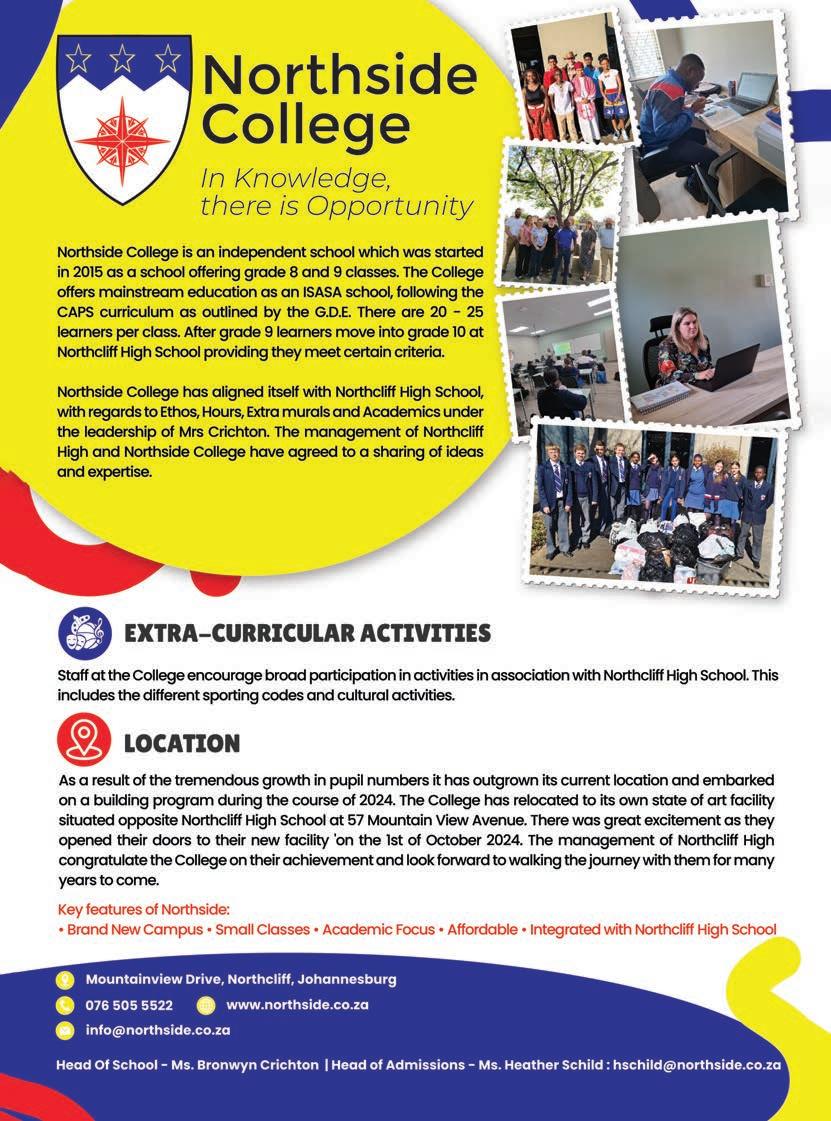

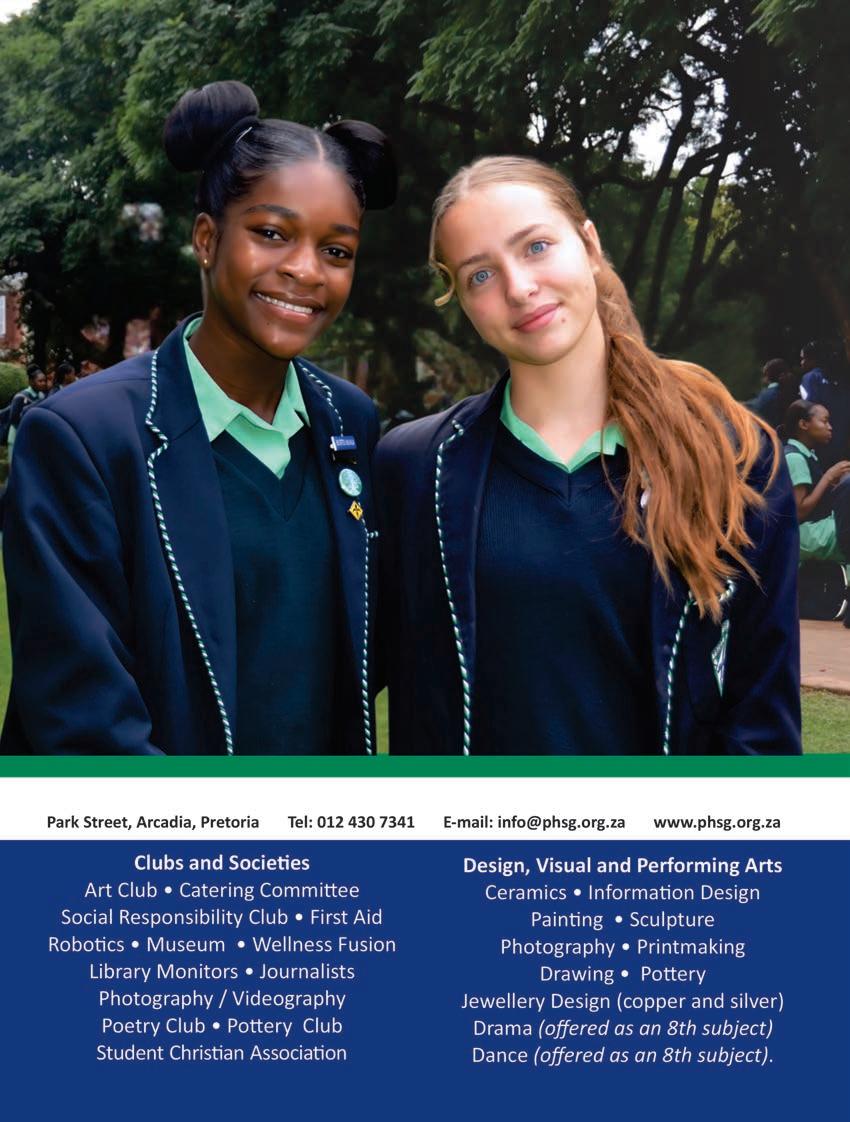

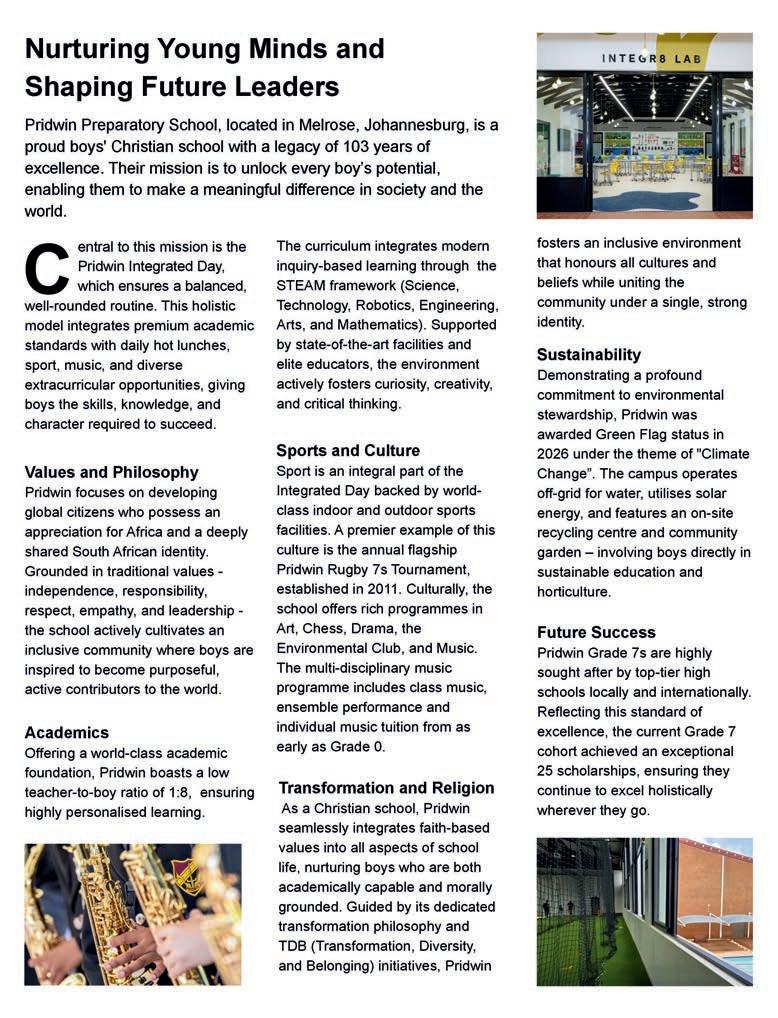



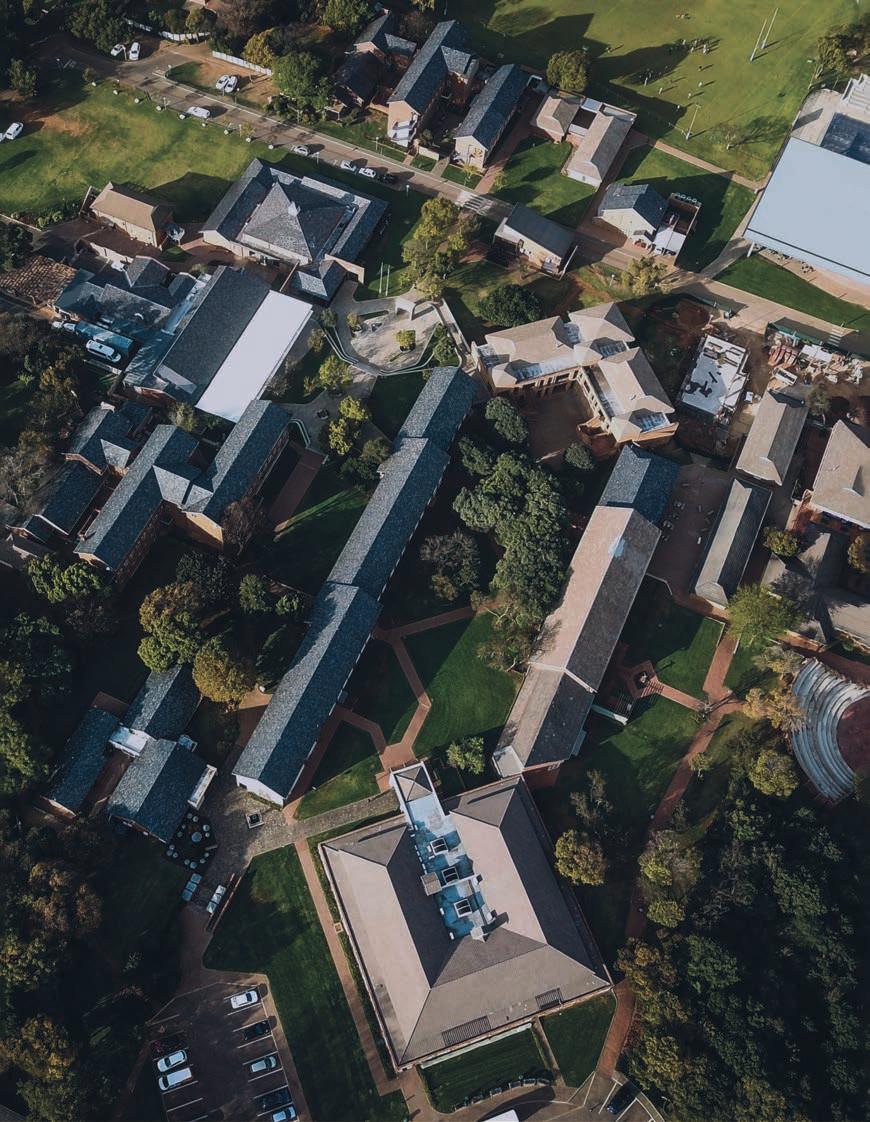





St John’s College is where boys find their identity, develop resilience and cultivate a global mindset, writes Dale Jackson, executive head, St John’s College
The ve years a young man spends in St John’s College, from Grade 8 through to matric, are among the most formative of his life. He arrives as a boy. He leaves as someone ready to take on the world. What happens in between is the work of the College.
St John’s College offers young men a comprehensive educational programme built on a genuine commitment to excellence across every dimension of school life. The IEB curriculum provides a rigorous academic framework that challenges students to think critically, perform consistently and develop the kind of intellectual con dence that serves them well beyond the nal examination. However, academic results, as important as they are, tell only part of the story.
At the College, it is admirable to excel in the classroom, and equally admirable
to excel everywhere else. Brilliant musicians, debaters and public speakers are celebrated alongside outstanding sportsmen because the measure of a young man across these ve years is not a single achievement but the full breadth of who he becomes. Boys discover what they are good at, are pushed further than they imagined possible, and leave with a sense of identity that no university application form can fully capture.
The College years are also where character is forged. St John’s is invested in developing inquiring, resilient young men who know the difference between right and wrong and who have the courage to act on that knowledge. The aim is deliberate: to prepare students for the road ahead, not the road for them. By the time a St John’s young man reaches matric, he has learnt discipline and commitment not as abstract virtues, but as lived habits.


Through membership of the International Boys’ Schools Coalition and the G30 Schools group, College students benchmark themselves against young men at the nest schools in the world. They think with a global mind and an African heart, leaving St John’s with an internationally connected education and a rm sense of where they come from and what they stand for.
The College does not exist in isolation from the world beyond its gates either. Situated on the edge of Johannesburg’s inner city, St John’s takes its responsibility to the broader community seriously. Through the Centenary Scholarship programme, talented young South Africans who could not otherwise afford the fees take their place in College classrooms. The community reach of the school is part of what shapes the young men within it, ensuring they understand that their education carries an obligation to others.
These ve years at St John’s College are where boys become young men of character, ready to make their mark on the world.

At St John’s Pre-Preparatory, the early years of schooling shape far more than academic skills. This is where boys begin to understand who they are, how they relate to others and how they engage with the world.
The Pre-Preparatory is for boys in Grades 0, 1 and 2. These years are the foundation of an educational journey that extends through the Preparatory and College, grounded in our Anglican values and a commitment to knowledge and skills for a purposeful life.
Tucked away from the bustle of the main College campus, the Pre-Preparatory is a purpose-built space designed for little boys. It is calm and nurturing, offering them a place to belong and room to grow.
We want your son to look back on these years with joy. We understand that early experiences shape a child’s con dence and sense of capability. When boys feel safe to try, to fail and to try again, they develop resilience that serves them throughout their lives.
Learning is rarely linear. Your son will make progress through attempt and discovery, not through getting everything right the rst time. Here, children take risks, make mistakes and experience both achievement and the patience of “not yet.” Each boy has his own gifts, and each will discover them in his own time.
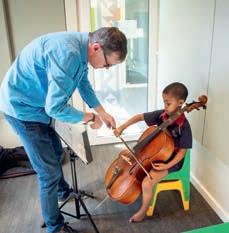
Noluthando Nkuna, headmistress of St John’s Pre-Preparatory, writes that the school focuses on nurturing thoughtful, empathetic and inquisitive young boys to equip them for a purposeful life
Boys need structure, but they also need freedom within it. They need to know the boundaries so they can colour outside the lines with con dence. We focus on progress, not perfection, and we honour the energy and spontaneity that characterise how boys learn best. The best lessons are sometimes the ones that don’t go as planned.
Your son’s day will follow a rhythm of work and play that gives him security and consistency. The curriculum is broad and engaging. He will learn from specialist teachers in Afrikaans, art, drama, isiZulu, music, physical education and technology. As he moves into Grades 1 and 2, the day becomes more structured, preparing him gently for the transition to preparatory school.
Creativity is not separate from learning. When your son plays, draws, tells stories or invents games, he is building skills that support everything else he does. These activities enhance his academic understanding, strengthen his emotional resilience and help him engage meaningfully with new ideas.
Our classrooms celebrate each child’s uniqueness. Your son will be encouraged to approach the world with curiosity, to ask questions freely and to understand that learning is about being thoughtful and open-minded, not about always being right.
Respect is at the heart of what we teach: respect for knowledge, for others, and for the environment. We guide boys towards patience and stillness, building their capacity for careful thought and the empathy needed to understand perspectives different from their own.
We encourage families to be active in school life and to look beyond the school gates to engage with the broader community. Your son will learn that he is part of something larger than himself.
At St John’s Pre-Preparatory, we are not simply preparing your son for Grade 3. We are nurturing a thoughtful, empathetic and inquisitive young person, equipped for a life of learning and service. These years matter, not just for what he learns, but for how he comes to see himself.
This is where the St John’s journey begins.


St John’s Sixth Form

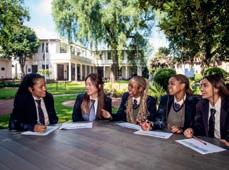
St John’s Sixth Form offers learners a Cambridge International Education –AS and A Levels – with a strong focus on academic excellence, writes Paul Emant , head of St John’s Sixth Form
For more than ve decades, St John’s Sixth Form has offered one of South Africa’s leading Cambridge International Education programmes, spanning AS and A Level, with Cambridge IGCSEs joining the programme from 2027.
Founded in 1932 and welcoming young women when it aligned academically with Cambridge International Education in 1972, St John’s Sixth Form is situated on the historic St John’s College campus in Houghton, Johannesburg. It provides a co-educational environment where academic rigour and intellectual curiosity are cultivated with genuine care.
Students from South Africa, Africa and across the world join our community to pursue Cambridge International
quali cations recognised by leading universities globally. Whether following the AS and A Level pathway or an accelerated post-matric programme, students are challenged to think critically, work independently and prepare seriously for university life.
Academic excellence at St John’s Sixth Form is paired with the qualities students need beyond school. They learn to manage their time, take ownership of their work and develop the con dence and maturity that university demands.
Our classes are intentionally small, allowing students to be known individually by experienced teachers who value depth of understanding over surface performance. The culture is one of mutual respect: students are encouraged to
question, take intellectual risks and hold themselves to high standards.
As part of the wider St John’s College community, Sixth Form students bene t from strong academic, cultural, sporting and pastoral opportunities. Graduates leave with internationally respected quali cations and the resilience, adaptability and con dence to contribute wherever life takes them. Many remain deeply connected to the College through a global alumni network spanning ve continents.
Whether you are considering entry after Grade 9, Grade 10, or as a post-matric student, St John’s Sixth Form offers a distinctive academic community with a clear sense of purpose.
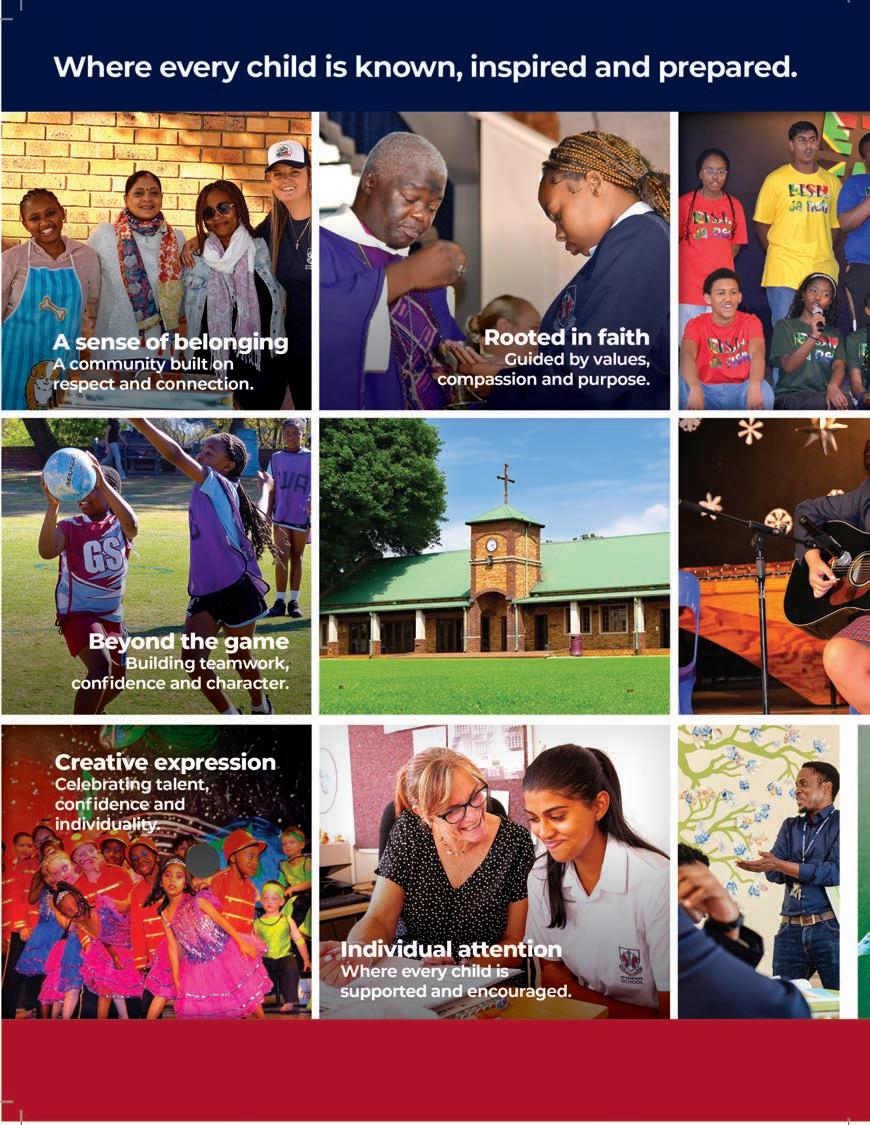
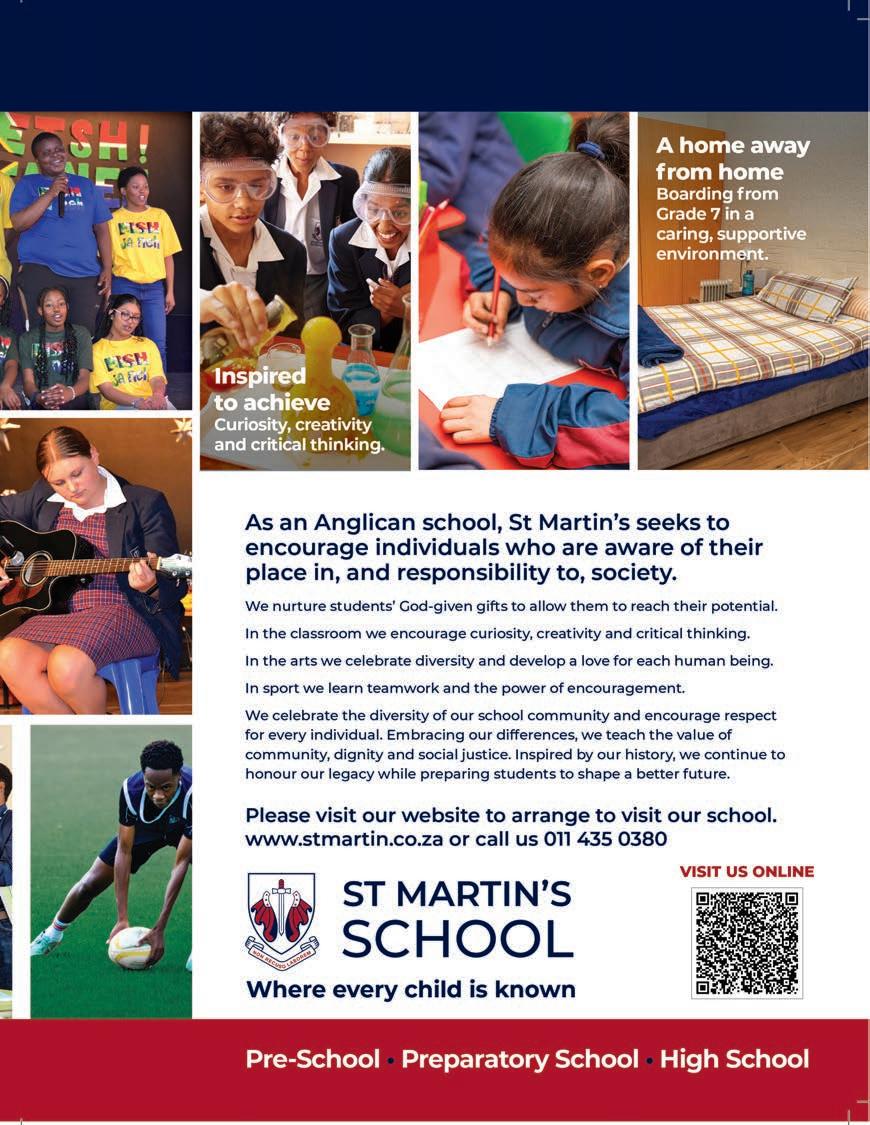
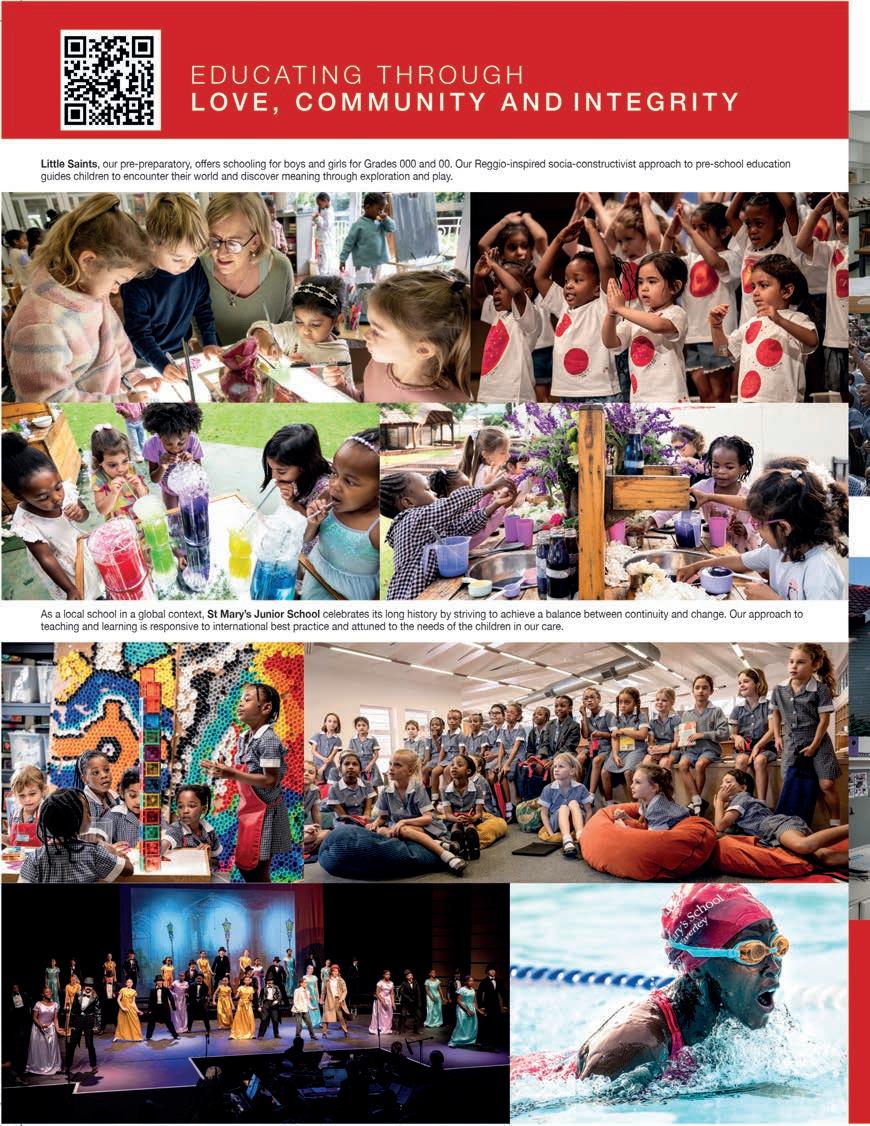
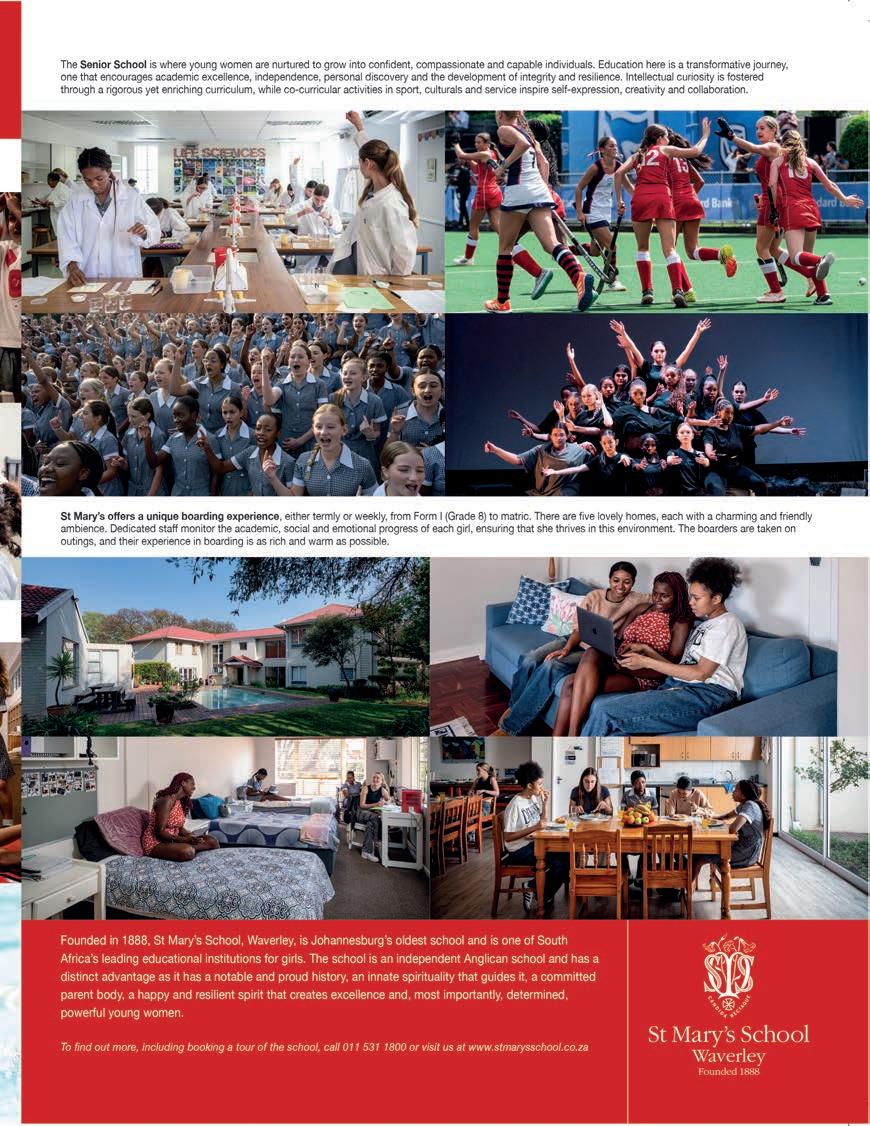

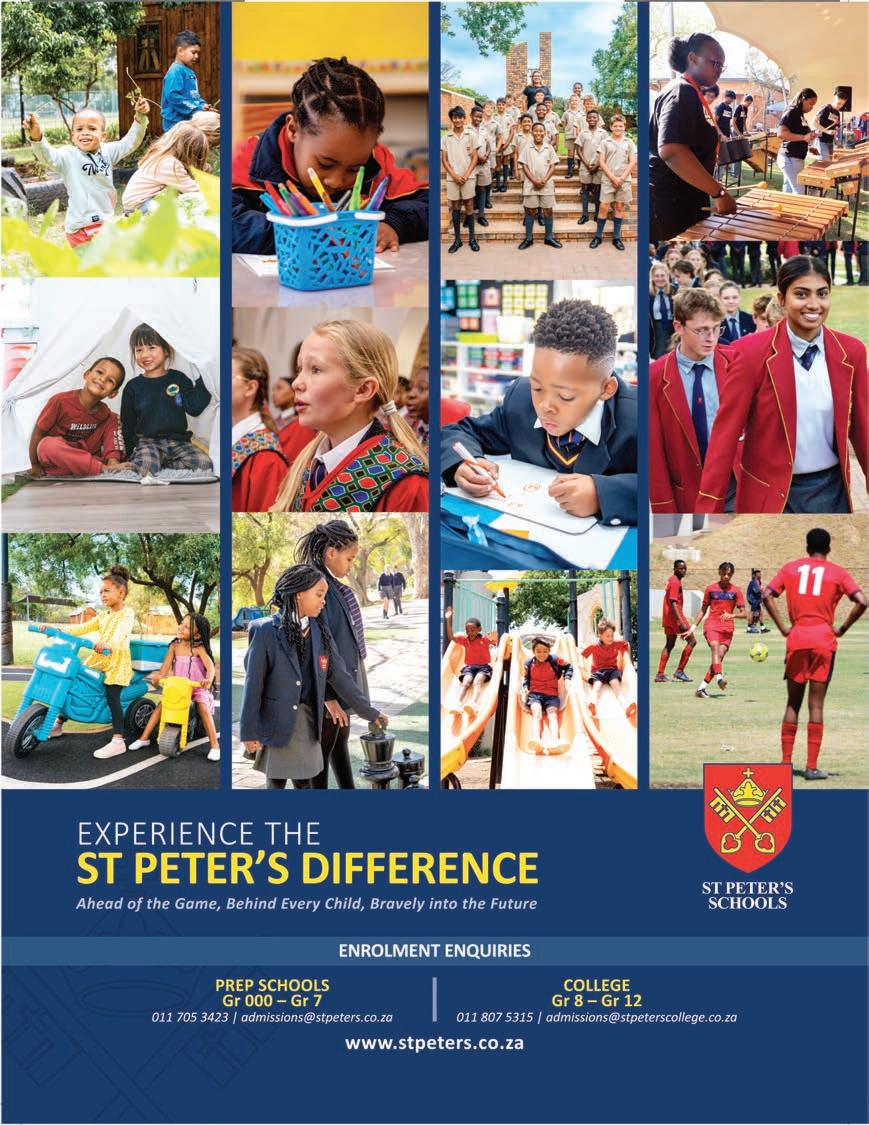


141 Durban Girls’ College
142 Kearsney College
143 Maris Stella
144 Maritzburg College
145 Pietermaritzburg Girls’ High School
146 Treverton Prep

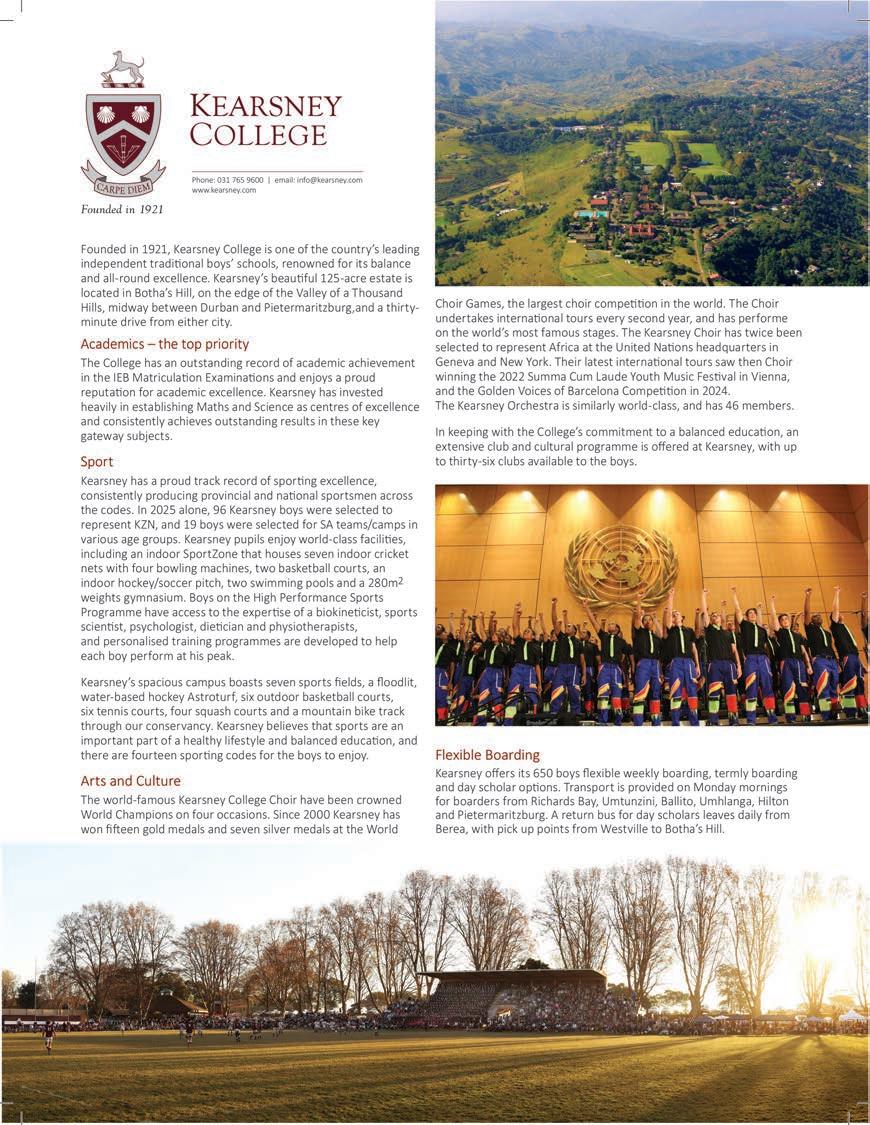




152 American International School of Cape Town
153 Bramble Hill International School
154 Bridge House School
155 Cannons Creek Independent School
156 Oakhill School
157 Rondebosch Boys’ Schools
158 Rustenburg Girls’ High School
160 St Cyprian’s School





CampgroundRoad,Rondebosch,7700