Subscriptions and Distribution: Fatima Dramat fatimad@picasso.co.za
Printer: CTP Printers, Cape Town
MANAGEMENT
Management Accountant: Deidre Musha Business Manager: Lodewyk van der Walt General Manager, Magazines: Jocelyne Bayer
COPYRIGHT: Picasso Headline. No portion of this magazine may be reproduced in any form without written consent of the publisher. The publisher is not responsible for unsolicited material. RENEWABLE ENERGY SOLUTIONS is published by Picasso Headline. The opinions expressed are not necessarily those of Picasso Headline. All advertisements/advertorials have been paid for and therefore do not carry any endorsement by the publisher.
The Western Cape has, for some time, been leading the pack in terms of building sustainable energy resilience, with a plan to achieve effective independence from Eskom by 2035. Behind this drive is proactive policy, municipal empowerment and signi cant collaboration with the private sector. It’s hoped that other provinces can replicate this approach in one form or another – provided the political will is there. Find out more on page 6.
Proactive policy is also crucial to the development of a local battery manufacturing industry, which could anchor Southern African demand and take advantage of our abundant reserves of valuable minerals, as we see on page 12.
Money – and the market – is what will drive South Africa’s green hydrogen evolution, too, with practical fuel cell power systems opening the door to an industry beyond mere fuel production (page 8). Speaking of fuels, South Africa has the potential to boost energy security through sustainable aviation fuels (page 16), while biomethane is just one valuable byproduct of deploying anaerobic digestion – aside from keeping organic waste out of our land lls, of course (page 15).
As for saving money, the latest advancements in solar have the potential to increase ef ciencies and lower costs – check them out on page 19. Because money doesn’t just fall from the sky, but sunshine does, thankfully.
Anthony Sharpe Editor
SHOW ME THE MONEY CONTENTS
6 INVESTMENT
The Western Cape’s R37.4-billion public-private partnership is leading the country’s charge towards sustainable energy resilience.
8 HYDROGEN
Moving the hydrogen needle in South Africa requires technology that solves practical local energy problems.
11 GEOPOLITICS
The current oil crisis is a symptom of a much larger supply/demand imbalance across the energy sector.
12 STORAGE
A local gigafactory is not only technically viable, but commercially essential for South Africa’s industrial future.
14 WASTE TO ENERGY
Anaerobic digestion can turn waste from over owing land lls into reliable baseload power and more.
16 BIOFUELS
Sustainable aviation fuels could help mitigate harm in this high-carbon industry.
19 SOLAR
Perovskite cells and smart inverters are driving ef ciencies in solar power.
TAKING WIND POWER TO A NEW LEVEL
ENEL GREEN POWER RSA has recently completed construction of its Impofu wind farm project in the Eastern Cape. The project will deliver both energy and socioeconomic benefi ts to the region
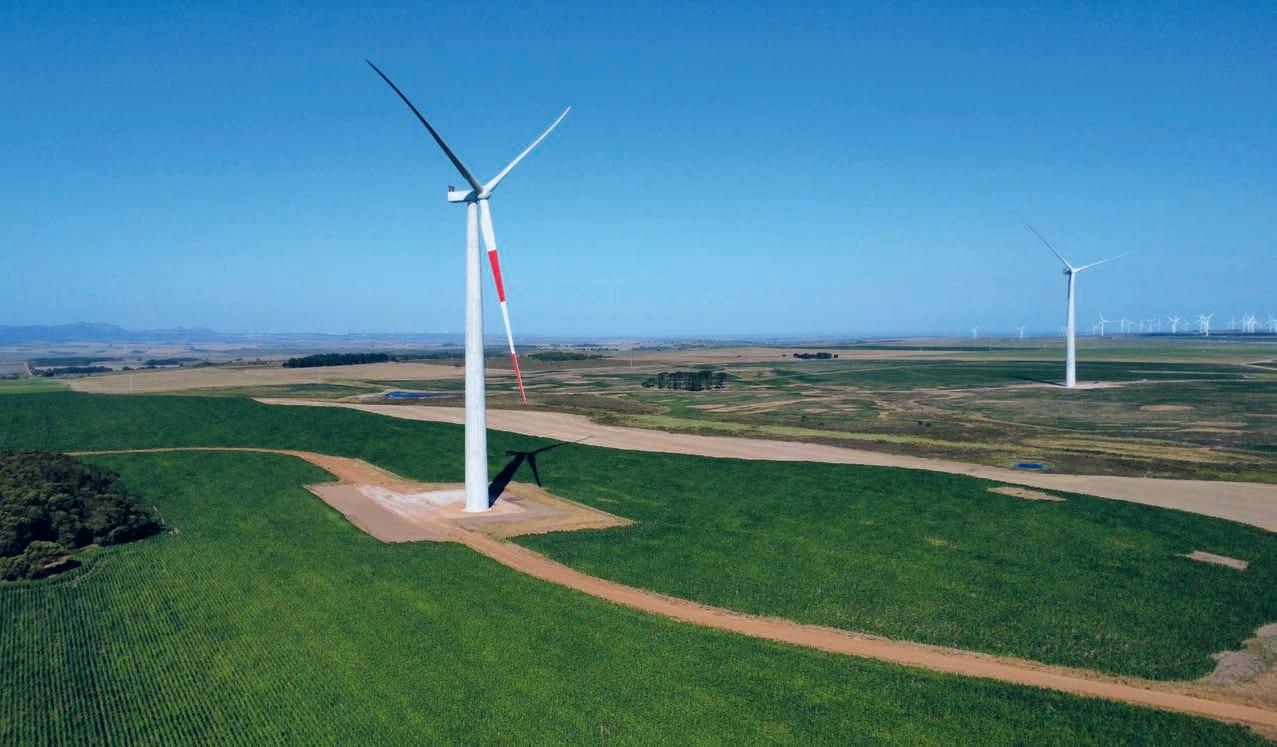
Enel Green Power RSA has completed construction of its Impofu project – three new wind farms in South Africa’s Eastern Cape province. Impofu East, Impofu West and Impofu North will now provide energy to Air Liquide Large Industries South Africa and Sasol South Africa.
The project consists of 57 turbines, 8 high-voltage substations and 120km of 132kV high-voltage overhead electricity lines. It will provide up to 330MW of renewable energy via a wheeling framework agreement with Eskom to Sasol’s Secunda site in Mpumalanga, where Air Liquide operates one of the world’s largest oxygen production facilities.
According to Enel Green Power RSA, the projects will complement the company’s existing platform of over 1.2GW of renewable energy already in operation in South Africa.
“It is clear that South Africa requires access to cheaper and more reliable electricity alternatives, and considering the country possesses some of the highest solar irradiation levels in the world and strong, consistent coastal winds, renewable sources are the obvious way forward,” the company explains.
“We have found that wind power tends to be more effective for large-scale power production, compared to solar, which being modular by de nition can be equally effective for smaller, residential-type systems.”
In addition, wind is the more effective option because it tends to blow in the afternoon and evening, meaning energy production from wind matches the country’s typical consumption.
OVERCOMING CHALLENGES
Describing the challenges the company faced in implementing such a large wind power project, Enel Green Power RSA notes that it presented several unique conditions. The project’s sheer size created its own challenges, while the need to connect via a 120km transmission line meant that several stakeholders – from communities to municipalities – had to be consulted during construction.
“The line was challenging because it passed through main roads, rural communities, and even mountains, before arriving in Nelson Mandela Bay. This created complications, but thanks to a good relationship with all the local communities, the company was able to complete the project on time and within budget.
THE PROJECT’S SHEER SIZE CREATED ITS OWN CHALLENGES, WHILE THE NEED TO CONNECT VIA A 120KM TRANSMISSION LINE MEANT THAT SEVERAL STAKEHOLDERS – FROM COMMUNITIES TO MUNICIPALITIES –HAD TO BE CONSULTED DURING CONSTRUCTION.
“Constructing some 57 wind turbines – with large towers of 120m in height and a rotation diameter of 163m – in parallel to the 120km-long transmission line also created quite a complex challenge for us,” Enel Green Power RSA explains.
“The latter part of the construction also presented a unique challenge, building the 120m towers necessary to access the wind power we are after, but the higher one builds, the more dif cult it becomes. The wind that is supposed to be your friend transforms into the enemy, as high wind speeds can make construction much more dangerous,” adds the company.
Furthermore, the company points out that the project’s impact on the surrounding communities has been huge, with around 2 000 people working on-site during the construction phase – mostly sourced from these communities.
“Wind power projects in the Eastern Cape have begun unlocking many opportunities for local communities. We already operate two other wind projects in this region, while there are also other energy providers involved with similar constructions.
“This means there is an increasing number of job opportunities, as well as additional downstream options that we have helped to create through our enterprise development (ED) and socioeconomic development initiatives.”
JOB CREATION AND OTHER BENEFITS
Enel Green Power RSA indicates that direct employment is only one of the bene ts to locals, adding that the main job-creation bene ts arise from the rest of the value chain, as well as via indirect job creation through the hiring of various contractors.
“There are many peripheral services the project requires, from vegetation management to civil works and general maintenance. These are all provided via third-party contractors – most are sourced from the surrounding communities.
“This, in turn, enables us to implement our ED efforts, helping to develop such contractors into self-sustaining businesses that can not only provide services to us, but also to some of the other independent power producers developing similar projects in the region.”
Enel Green Power RSA also places a strong focus on socioeconomic development –undertaking projects within the communities to support them. This is in the form of bursaries for students, support for speci c activities like school refurbishment, and a variety of other projects that the community asks the company to assist with.
One of the efforts the organisation is especially pleased about involved bringing together the communities, nearby schools and street artists to participate in beautifying the concrete wind towers.
“By involving artists and local school children to participate in painting these towers, we were able to bond with the community in a unique way. This art has actually become a symbol of the project, so much so that the Impofu towers
are not only recognised by virtue of the art, but people now visit the site simply to view this art,” Enel Green Power RSA says.
“We are also proud of our efforts – in conjunction with Bird Life South Africa and the University of Cape Town – to create better protection for birds that could be threatened by wind turbines.”
A GREEN FUTURE
While all wind power providers have obligations to protect the environment, the company went beyond those, conducting a study to improve protection for birds and bats.
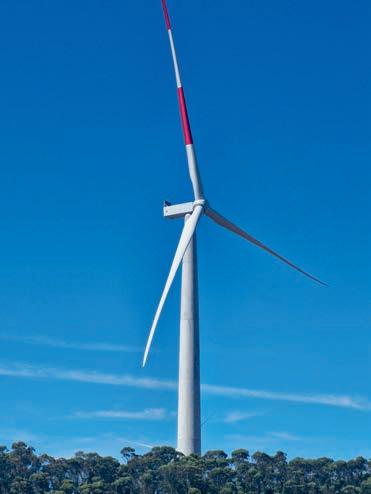
“Along with our partners, we launched a study related to blade painting, whereby one of the turbine blades is painted a different colour, with a view to studying whether this can reduce avian and bat deaths.”
Describing the overall importance of the Impofu project, Enel Green Power RSA suggests it demonstrates that a project of such complexity can not only be implemented, but also completed on time and within budget.
“For us, Impofu – on top of adding 330MW of capacity, which is huge for a single project
“IMPOFU – ON TOP OF ADDING 330MW OF CAPACITY, WHICH IS HUGE FOR A SINGLE PROJECT AND INCREASES ENEL GREEN POWER RSA’S OWN CAPACITY BY 25 PER CENT – IS PROOF
and increases Enel Green Power RSA’s own capacity by 25 per cent – is proof that these large-scale energy projects can succeed in their stated aim of supplying additional power into a grid that desperately needs it.
“Moreover, it shows that wind power can be one of the more effective types of renewable energy and can signi cantly impact the broader energy picture in South Africa. For the company, this project represents our rst step into the private commercial space in South Africa, and sets us up for further growth over the next few years, as we develop additional projects of this nature,” the company concludes.
PROJECT OVERVIEW
The Impofu cluster is one of the largest private renewable energy-to-private sector plants in South Africa, designed to decarbonise one of the world’s largest oxygen-production facilities in Mpumalanga.
• Location: Humansdorp, Eastern Cape. •Capacity and output: 330MW total, generating up to 1 030GWh annually, powering the equivalent of 490 000 households.
• Commercial operation: the Impofu North and Impofu East wind farms achieved commercial operation in mid-2026, marking a major milestone for the cluster.
• Infrastructure: the project features 57 wind turbines, 8 substations and 120 km of overhead lines.
•Off-takers: provides renewable energy to Sasol and Air Liquide through a long-term Power Purchase Agreement.
REGULATING RESILIENCE
The Western Cape’s localised energy resilience strategy is driven by whole-of-government and whole-of-society approaches, characterised by proactive policy, municipal empowerment and heavy private-sector collaboration. TREVOR CRIGHTON explores what’s working
The Western Cape’s Energy Resilience Programme set targets of achieving Eskom-independent generation of 5 700MW by 2035.
“Between ourselves and the private sector,
Implementing transparent wheeling frameworks has been crucial in enabling private producers to feed power into the grid, while standardising the registration and compensation for simpli ed small-scale embedded generation (SSEG) across all local municipalities has been essential to reducing administrative burdens.
“WE’RE NOT AIMING FOR FULL SEPARATION FROM THE NATIONAL GRID, BUT GREATER INDEPENDENCE, LOWER EMISSIONS AND REDUCED EXPOSURE TO NATIONAL SUPPLY AND PRICE VOLATILITY OVER TIME.”
– ALDERMAN XANTHEA LIMBERG
Alderman Xanthea Limberg, City mayoral committee member for energy, explains why the City of Cape Town (CoCT) is the only local municipality in the Western Cape to have received a licence to buy back electricity from SSEG. “The Municipal Finance Management Act and the Preferential Procurement Policy Framework Act 2000 (PPPFA) are not amenable to the purchase of SSEG and wheeling surpluses up to 10MW, in that they require complex procurement processes and awarding to a single bidder.
“The city applied to the minister for an exemption, and the minister granted an exemption from the requirement to award to a single appointee for projects under 10MW.” CoCT has run a bilateral wheeling programme for a year and is currently open in the market, which allows for one-to-one wheeling within the city network. A pooled wheeling pilot is currently underway, allowing third-party aggregators or generators – both within and outside the city network – to sell energy to city network-connected off-takers. This pilot allows for one generator to many off-takers and many generators to one off-taker.
Alderman Limberg says the CoCT’s Energy Service Applications Online SSEG Application Portal has signi cantly streamlined applications and improved turnaround times. “In terms of SSEG export, the city has allowed for SSEG credit offsets for 10 years. Thus far,
1 649 households have received credits for feed-in energy, totalling approximately R8.4-million, including incentives.”
1 649 households have received
“REPLICATION IS POSSIBLE, DEPENDING ON NETWORK ACCESS, THE TYPE OF ENERGY AVAILABLE AND THE PROVINCIAL GOVERNMENT’S RELATIONSHIP WITH THE MUNICIPALITIES.” – ALWIE LESTER
Alderman Xanthea Limberg
Alwie Lester
A MODEL FOR MUNICIPALITIES
The Western Cape is leading the country’s charge towards sustainable energy resilience under a public-private partnership to the value of R37.4-billion. What’s stopping the other eight provinces from following suit?
The Western Cape Provincial Government has put in place an Energy Resilience Programme to reduce the impact of load shedding on businesses and citizens in the Western Cape and reduce reliance on Eskom supply in the province.
Approved by parliament in 2024, the plan seeks to “mitigate and manage energy-related disasters in the Western Cape and facilitate improved energy resilience in the Western Cape that is secure, decarbonised and affordable and nancially sustainable through establishing a decentralised, democratised, diversi ed and decarbonised energy system that is accessible to all”, according to a presentation on the programme shared during a meeting of the
THE BLUEPRINT
Alwie Lester, special advisor in the Department of the Premier in the Western Cape Provincial Government, says the province’s Energy Resilience Programme has been building towards success in the province for two reasons. “Firstly, we have a very willing and able private sector that wants to be in the green space. Secondly, we have a local and provincial government that wants to look at ways to get this done, particularly by lessening bureaucracy to open up the energy space for everyone.”
PREMIER POWER
Lester says a key aspect has been a direct link between the energy team and the premier. “Due to that, when we set out a plan or go speak to people, we’re speaking from the same page. If our team were under a different department or
Standing Committee on the Premier and Constitutional Matters, on 22 August 2025.
COMMITMENT TO RESILIENCE
“I told the premier in 2023 that this will not happen overnight,” says Alwie Lester, special advisor in the Department of the Premier in the Western Cape Provincial Government. “At the time, the shortest window was eighteen months to build a solar farm, so our plans needed to be clear, but for the medium and long term. Short-term gains are possible, but if you want to build resilience, then it’ll take more than a year.”
Lester says that 80 per cent of what’s been implemented in the Western Cape is highly replicable in the rest of the country.
“We have the advantage of renewables, but we have other sources of energy – not just fossil fuel. Gauteng has access to gas power, and there’s an opportunity in a small modular reactor in Gauteng or Mpumalanga, pending Eskom’s decision around decommissioning existing plants.”
He says the provincial government reached out to seven other provinces in 2023/24 but didn’t receive an enthusiastic response. “The provinces I felt could get the most out of a transition were KwaZulu-Natal and the Northern Cape. The challenge in Gauteng was the three-metro system, where leadership kept changing, and it was hard to pin down decisions.”
Lester says the Northern Cape has kicked off a programme and KwaZulu-Natal has created a “nice base”, using its experience and knowledge of disaster management to set up an energy team. “Replication is possible, depending on network access, the type of energy available and the provincial government’s relationship with the municipalities.”
part of local government, we’d have to battle it out with other departments for airtime, budget and mandates,” he says. “Under the premier, it carries weight, which has helped our internal team. Our private sector in the Western Cape is a very open, committed energy community that shares our aims, including lower emissions and cheaper energy. Those points of alignment make it easier.”
Key to the success of fast-tracking projects was the creation of a “red tape reduction team”. “We don’t take shortcuts, but we have reduced the time taken to complete an environmental impact assessment to between ninety-two and ninety-seven days, down from two hundred, for example,” explains Lester.
“We’ve gone back and looked at what’s critical to help move things forward and where we can remove time
bottlenecks. The sooner we get these things approved and into the system, the sooner the private sector can develop facilities, provide jobs and improve energy resilience.” He adds that he constantly explains to municipalities that they need to understand energy demand and consider how to create less dependence on Eskom.
SUSTAINABILITY THROUGH UNITY
Alderman Xanthea Limberg, City mayoral committee member for energy, says that, taken together, the CoCT strategy mirrors the provincial government’s ambitions to progressively have a more self-sustaining and resilient local energy system. “We’re not aiming for full separation from the national grid, but greater independence, lower emissions and reduced exposure to national supply and price volatility over time.”
FROM HYDROGEN HYPE TO PRACTICAL IMPACT
Moving the hydrogen needle in South Africa requires technology that solves local energy problems,
writes NIELS LUCHTERS , co-founder and CEO of HYENA
South Africa’s hydrogen debate often starts with familiar themes: export potential, green hydrogen projects and the possibility of building an industrial sector around cleaner fuels. Those are important conversations, but they don’t tell the whole story.
If hydrogen is to make a real difference in South Africa, the country will need more than ambitious production plans. It will also need practical technologies that can convert hydrogen into reliable power. Local innovation plays an essential role here.
MAKING HYDROGEN WORK FOR YOU
CNN’s series Tomorrow Transformed recently highlighted HYENA’s work in this space. This re ects a broader shift in the sector: the question is not only how hydrogen may be produced at scale in future, but how fuel cell power systems can solve energy problems in South Africa today.
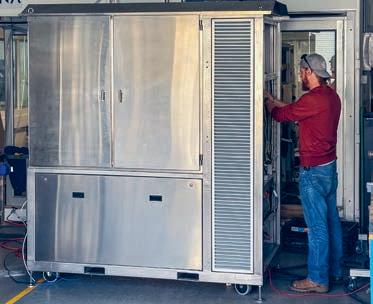
One example is HYENA’s POWER POD. It uses lique ed petroleum gas (LPG) as the hydrogen carrier, but can also operate on natural gas or locally available biogas. It then converts that fuel into electricity through a hydrogen fuel cell system.
This matters in a country where energy resilience is a daily challenge. Many sites require dependable electricity despite grid instability, remote location or dif cult operating conditions. In those environments, technologies that can reduce dependence on conventional diesel-fuelled generators, while delivering cleaner, quieter operation, deserve serious attention.
Practicality matters because technologies are not adopted in theory; they are adopted in operating environments with real constraints. Solutions that align with existing fuel distribution and infrastructure, and can be deployed where
SOUTH AFRICA
DOES NOT NEED TO WAIT FOR A FULLY MATURE GREEN HYDROGEN MARKET BEFORE IT BEGINS DEPLOYING BETTER POWER TECHNOLOGIES.
resilient power is already needed, are more likely to gain traction than those that depend on entirely new systems from the outset. Reliability of fuel supply is part of that equation; without dependable fuel availability, even the most promising power technology cannot deliver dependable energy.
FROM INNOVATION TO ADOPTION
This is one reason why local innovators like HYENA have focused on making fuel cell systems workable in real deployment settings, rather than treating hydrogen as a distant future concept. The practical opportunity lies not only in technical performance, but also in reducing the gap between innovation and adoption.
South Africa does not need to wait for a fully mature green hydrogen market before it begins deploying better power technologies. In the right applications and implemented practically, fuel cell power systems can create value now while helping to build the skills, service capability and operating experience that will support cleaner fuels as they become more available.
This applies to local innovation, too. Technologies will not succeed in every environment in the country simply because they have succeeded elsewhere. They must be adapted to local realities, including infrastructure constraints, site conditions, service needs and cost pressures. South African innovation has a real role to play in system design, integration, deployment models, maintenance and technical support.
CHALLENGES REMAIN
Even so, there are real barriers to wider adoption. Cost remains a challenge, particularly in cautious markets. Equally, fuel availability and supply certainty will shape how quickly different solutions can scale. Many businesses and public-sector buyers still have limited experience with fuel cell systems. Regulatory clarity, standards, nancing and procurement models will also need to keep pace.
Yet these challenges also point to economic opportunity. A practical hydrogen economy is not created by fuel production alone. It also creates demand for engineering, integration, local assembly, maintenance, technical training, software, monitoring and support services. The opportunity is to build the technology, know-how and industrial capability that make cleaner fuels useful in practice.
South Africa’s hydrogen opportunity should be understood as more than a production story. It is also a technology, capability and innovation story. By supporting practical fuel cell power systems, local engineering expertise and real-world deployment, the country can begin creating value now while preparing for cleaner fuels over time. That is how South Africa can move hydrogen from headline ambition to practical impact and turn it into a source of resilience, industrial capability and long-term economic opportunity.
The power pod comprises a hydrogen generator and a fuel cell.
SUPPLY AND DEMAND
The current oil crisis is a symptom of a much larger supply/demand imbalance across the energy sector. By MARK LACEY , head of thematic equities and portfolio manager for global resource equities, and ALEX MONK , global energy resource equities portfolio manager, at Schroders
For South Africa, energy is not an abstract global theme. It feeds into our in ation, household budgets, business con dence and ultimately our economic growth.
Heightened geopolitical tensions in the Middle East, especially around the Strait of Hormuz, have underscored the fragility of global energy supply chains. In a country highly sensitive to imported energy costs, global energy dynamics matter far beyond the energy sector itself, and are a critical macro variable affecting all asset classes, particularly in emerging markets like our own.
CEASEFIRES AND PEACE TALKS A DISTRACTION FROM A DEEP STRUCTURAL ISSUE
Even in the event of a successful agreement between the United States and Iran that leads to full opening and transit through the Strait of Hormuz, there is a 400 million barrel (mb) shortfall of oil supply, assuming the Strait returns to normal running by the end of this month. And there is every risk that the stand-off will be longer.
Even when the tankers start moving again, oil elds and oil re neries may remain shut. Currently, around 2.2mb/day, roughly 2 per cent of global re nery output, is damaged and of ine, while 3–4mb/day of production capacity is shut in, with both Kuwait and Iraq stating that it will take 3–4 months to resume production once the region is stable.
The global gas market has an even greater structural problem. Around 17 per cent of Qatar’s lique ed natural gas output is damaged, and it will take 3 to 4 years to bring it back online.
However, the real risk goes deeper than just the outcome of current geopolitical
tensions – there is a structural supply/demand imbalance across all sectors of the energy market. Firstly, the oil market was going into a de cit anyway in 2027, even under normal circumstances. By 2027, United States shale production will go into decline. In previous crises where we’ve needed an urgent supply response, shale oil production has come to the rescue, as it can come to market in three to six months.
Any oil now that needs to match this supply de cit in 2027 will require long-lead development – three to four years. Thus, there is no instant supply x.
ENERGY DEMAND ON THE RISE
It isn’t just that there was a supply-demand mismatch on the oil side. There is also a broadening supply-demand mismatch across the energy landscape as a whole.
Energy demand is not only about oil, which is essentially a transportation fuel. The biggest
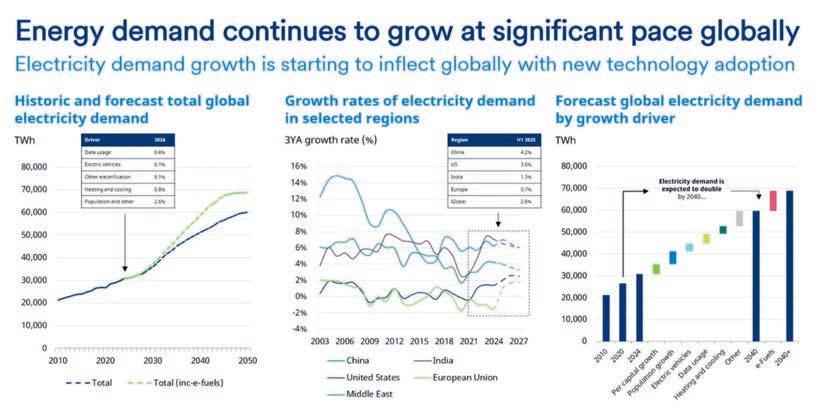
energy constraints are in the form of power. Global electricity markets have grown by 10 000 terawatt hours in the last 15 years. In the next 15 years, they’re forecast to grow by 30 000 terawatt hours, three times the growth rate.
Several factors are driving growth in energy demand. Data centres are a huge driver, but also population growth, growth in heating and cooling needs, and other growth drivers as well.
Interestingly, government attempts globally to soften the impacts of the current energy crisis and energy in ation on consumers have actually had the reverse effect. Releasing strategic reserves, removing fuel taxes, subsidising energy and putting price caps on what can be charged at the pump have actually supported demand, not destroyed it through long-term switching. The only areas we have seen rationing or demand destruction policies have been on speed limits, public transport promotion, speci c rationing of LPG in Asia and some reduced lighting of cities. However, this is not enough to solve the level of demand destruction that would be required to balance the lost oil and oil products’ supply over the remainder of the year.
Follow: Alex Monk www.linkedin.com/in/ajmonk
Mark Lacey
Alex Monk
POWERING THE FUTURE
Two landmark feasibility studies have confirmed that a gigafactory manufacturing lithium iron phosphate batteries is not only technically viable, but also commercially essential for South Africa’s industrial future. By
ANTHONY SHARPE
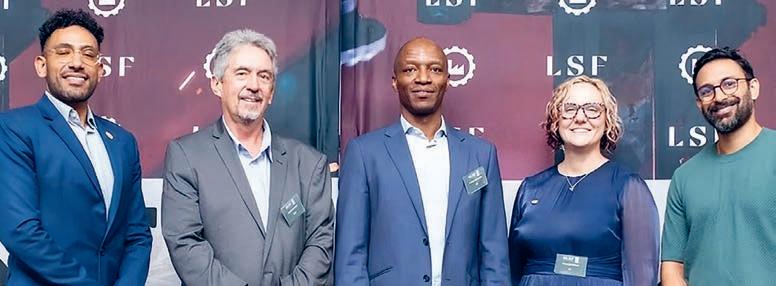
The second of two studies published by the Localisation Support Fund (LSF) examined six strategic factors, including addressable market size, value chain viability, ecosystem suf ciency, cost competitiveness and operational feasibility, to determine the ideal scale for such a facility. “We found that a 5–10GWh plant is suf cient to achieve the economies of scale required for commercial viability,” says LSF CEO Irshaad Kathrada . Crucially, this range remains within the infrastructure constraints of available Special Economic Zone (SEZ) land, says Kathrada, with a phased plan starting at 1.5GWh before scaling to 10GWh. “A larger initial footprint would outpace near-term demand, while a smaller one would fail to achieve cost competitiveness against Chinese imports. This phased ramp-up approach also manages capital risks, enabling investors to test the market assumptions and operational performance before deploying the additional capital required to scale.”
FINDING ATLANTIS
Kathrada says the study scored ve SEZs against a weighted framework that covered proximity to off-takers, port access, incentives, talent appeal, available space, grid reliability and water supply. “Atlantis scored highest and was rated a ‘differentiator’ on four of the seven criteria. Critically, it hosts South Africa’s densest cluster of battery pack assemblers and
integrators, providing immediate anchor demand for locally produced cells; it offers reliable grid access with renewable energy integration options; it is backed by stable City of Cape Town municipal water supply; and its proximity to Cape Town gives it superior global talent appeal and safety ratings relative to alternatives.”
However, the study also points to the strategic importance of other regions, says Kathrada.
The Coega Industrial Development Zone in the Eastern Cape remains a strong contender for export-oriented facilities due to its deep-water port access. Meanwhile, locating a gigafactory in the coal-dependent regions of Mpumalanga could align with national Just Energy Transition goals, repurposing existing infrastructure and creating new industrial pathways for workers affected by the coal phase-out.
“WE FOUND THAT A 5–10GWH PLANT IS SUFFICIENT TO ACHIEVE THE ECONOMIES OF SCALE REQUIRED FOR COMMERCIAL VIABILITY.”
– IRSHAAD KATHRADA
LOCAL SAVINGS
The LSF estimates that lithium iron phosphate (LFP) packs could be produced locally at R1 100–R1 172/kWh by 2030, up to 40 per cent cheaper than global peers. “This could primarily be attributed to local re ning and bene ciation of iron ore (Kumba), phosphate (Foskor) and copper (Palabora), which would underpin competitive cathode and conductor production,” says Kathrada. “Tariff protection is a secondary lever, while SEZ incentives, such as customs duty suspension, VAT zero-rating on imports and potentially a reduced fteen per cent corporate income tax rate, improve operational economics.”
Irshaad Kathrada
The Localisation Support Fund says South African-produced lithium iron phosphate cells can achieve price competitiveness with imported alternatives, including those from lower-cost East Asian producers.
BUILDING THE BATTERY VALUE CHAIN
South Africa’s battery ambitions rely on more than just assembly, writes ANTHONY SHARPE
The proposed lithium iron phosphate battery gigafactory presents the opportunity to counter the country’s largely extractive economy. South Africa has an abundance of minerals like manganese and lithium that are crucial to building energy storage, but capturing the full value of these depends on local bene ciation and manufacturing.
The critical bottleneck in South Africa’s battery value chain is midstream processing, says Localisation Support Fund CEO Irshaad Kathrada, noting that South Africa currently lacks battery-grade re ning for lithium and graphite, as well as electrolyte and separator manufacturing. “Without progress on these fronts, a gigafactory remains viable, but South Africa would be assembling cells from imported components rather than capturing the deeper value that an integrated domestic value chain could generate.” To bridge this, Hiten Parmar of The Electric Mission suggests aggressive local
bene ciation through export quota limits on raw minerals, which he says could encourage the industrial development of the full value chain.
ENERGY SOVEREIGNTY
The con ict in Iran has highlighted the growing importance of energy sovereignty. “South Africa is a net importer of energy, heavily dependent on foreign sources, with oil being the single largest energy import at nearly 80 per cent,” says Parmar. “The National Energy Regulator of South Africa reported that by December 2025, private-sector renewable energy projects alone had reached an 18GW milestone, with solar accounting for 68.3 per cent of that.
Parmar says that locally produced battery energy storage systems coupled to renewable energy can further leverage energy sovereignty. “Moreover, using battery-powered, zero-emission vehicles represents an advanced and more resilient way to move people and the goods.”
SKILLS, SUPPLY CHAINS AND STUMBLING BLOCKS
The most immediate constraints are regulatory and infrastructural ones, says Localisation Support Fund (LSF) CEO Irshaad Kathrada. “Environmental impact assessments (EIA), water-use authorisations and governance registrations can each take six to twelve months. While some run in parallel, delays in any single stream can cascade. Environmental approvals alone can take up to a year under a basic assessment, and longer for a full EIA. Critically, moreover, there are no fixed timelines for incentive applications: each is assessed on individual merit, meaning financial planning must accommodate significant uncertainty on the fiscal support side.”
From a Southern African Development Community regional perspective, the infrastructure network is already providing export routes for Africa’s key energy transitional minerals used in battery production to supply world markets, says The Electric Mission executive director
Hiten Parmar.
THE CHINESE CONNECTION
To accelerate this transition, South African companies are exploring partnerships with leading Chinese players. “With the growth of battery innovation internationally, South Africa must secure inbound licence technology agreements for local battery cell manufacturing,” says Parmar. While cell manufacturing is currently a gap, assembly of the remaining value chain – including battery management systems and cooling components – is already active in the country.
“A balanced partnership,” says Kathrada, “involves co-developing solutions rather than simply licensing intellectual property, investing in local research and development partnerships and modular technology platforms that allow future chemistry upgrades, and structuring agreements to build domestic chemical engineering capability over time rather than locking South African operations into a partner’s research and development roadmap. This can help to mitigate potential technology obsolescence.”
THE HUMAN FACTOR
Skills gaps present another silent threat. Kathrada says that for a 5GWh gigafactory, the largest employee category is equipment operators, followed by quality inspectors and maintenance technicians. “These are roles that technical and vocational education and training colleges can develop with focused, battery-specific curricula. The smaller but critical cohort of professionals, such as chemical and manufacturing engineers, and electromechanical engineering technologists, requires tertiary qualifications and, in the near term, international expertise.”
Kathrada notes that South Africa currently lacks accredited battery-specific training programmes and recommends establishing these in co-operation with international institutions.
“In rough terms, the majority of the job creation opportunity is in technically upskillable roles, but the facility’s performance will hinge on a smaller core of specialist chemical and process engineers, which remains the most constrained pipeline.”
POLICY PERMITTING
The LSF study also flags structural gaps in the policy landscape, says Kathrada. Several attractive Special Economic Zone sites for a gigafactory have yet to be formally promulgated by the Minister of Finance, meaning essential tax incentives remain out of reach. Furthermore, a lack of domestic testing and certification infrastructure means local cells cannot yet be registered as supplier-ready for major off-takers.
READ
The Commercial Feasibility of LFP Battery Cell Manufacturing in South Africa
“South Africa needs to strengthen its regional and international trade agreements to empower the beneficiation of battery production minerals.”
TURNING WASTE INTO WATTS
Anaerobic digestion has the potential to turn South Africa’s waste from overflowing landfills into reliable baseload power, biomethane and fertiliser, driving a circular energy economy. By
BUSANI MOYO
South Africa’s land ll crisis and its energy de cit are two sides of the same coin. Every single day nationwide, staggering volumes of organic material are buried, taking up precious municipal space and worsening environmental decay. However, anaerobic digestion and localised waste-to-energy projects are emerging as a compelling,
multifaceted solution. By converting agricultural, commercial and municipal waste, including the targeted capture of methane from municipal sewage and human waste, into reliable corporate power, these decentralised initiatives are actively driving the country’s green revolution forward, one facility at a time. At the forefront of this transition are pioneering commercial facilities
like Cape Town Biogas, a prime example of operational circularity, which successfully processes 250 tonnes of organic waste daily to produce biomethane, green CO2 and organic fertiliser.
CONSTANT POWER AND ON-DEMAND BACKUP
Keeping organic waste out of land lls is vital for reducing pollution, although they see slightly different roles for the biogas they produce. Derek de Bres, MD of Sustainable Tech, points out that, unlike weather-dependent solar or wind, a well-fed biogas plant generates constant, round-the-clock electricity. “It’s one of the few renewable technologies that can credibly replace diesel gensets or supplement grid supply as baseload.”
On the other hand, James Reeler, senior climate technical specialist at the World Wide Fund for Nature South Africa, views biogas as the perfect on-demand backup as it can be activated exactly when needed to plug gaps when the sun isn’t shining or the wind isn’t blowing, keeping power supplies stable.
VALUABLE BYPRODUCTS AND BIOMETHANE
Beyond generating electricity, the byproducts of anaerobic digestion create a lucrative commercial revenue stream. Upgraded biomethane offers a signi cantly lower total cost of ownership for transport eets compared to diesel. Furthermore, nutrient-rich digestate serves as a potent agricultural fertiliser, closing the nutrient loop. Reeler cautions, however, that while food waste compost is bene cial, fertiliser derived from municipal wastewater and sewage carries risks of residual toxins, such as heavy metals and forever chemicals, which require careful management away from food production. Avoiding land ll emissions also generates veri ed carbon credits.
NAVIGATING STRUCTURAL AND FINANCIAL ROADBLOCKS
Despite clear environmental bene ts, structural constraints hinder rapid scaling.
“The technology works. The constraints are structural, not scienti c,” asserts de Bres. Navigating inconsistent grid access, complex wheeling agreements and cross-boundary feedstock aggregation remain immense
hurdles for developers. Reeler adds that building localised waste-to-energy plants is highly capital-intensive compared to solar photovoltaic, making it challenging to secure investment. De Bres suggests that blended nance instruments and green guarantees are needed, alongside addressing a corporate awareness gap in which large waste-generating companies fail to recognise the energy value of their waste.
Ultimately, waste-to-energy operationalises the circular economy today. While Reeler notes that consumptive energy use is the nal step in the mitigation hierarchy, trailing behind diversion for animal feed and composting, he acknowledges its undeniable value. Capturing fugitive methane from municipal sewage prevents an incredibly potent greenhouse gas from warming the atmosphere, protecting surrounding communities while creating skilled green jobs.
As de Bres concludes:; “When organic waste enters a digester, it ceases to be
Fast fact
The Western Cape Government mandates a 100 per cent organic waste diversion from landfills by 2027, with a 50 per cent target already active. Supported by strict national legislation and Cape Town regulations, pioneering facilities like Cape Town Biogas help producers safely comply, shifting from costly dumping to champion a truly circular regional economy.
Source: Cape Town Biogas
waste. It becomes feedstock.” By decentralising energy production, recovering resources and alleviating extreme land ll pressure, these transformative projects prove that South Africa’s waste crisis is ultimately a powerful renewable energy opportunity.
Follow: James Reeler www.linkedin.com/in/james-reeler Derek de Bres www.linkedin.com/in/derek-de-bres-000b9721
DECARBONISING AVIATION
The need to reduce fossil fuel usage in transport industries has led to a growing focus on sustainable aviation fuels, writes RODNEY WEIDEMANN
Aviation accounts for ~2.5 per cent of global emissions – lower than many other sectors – but it remains one of the hardest sectors to decarbonise due to its reliance on energy-dense liquid fuels.
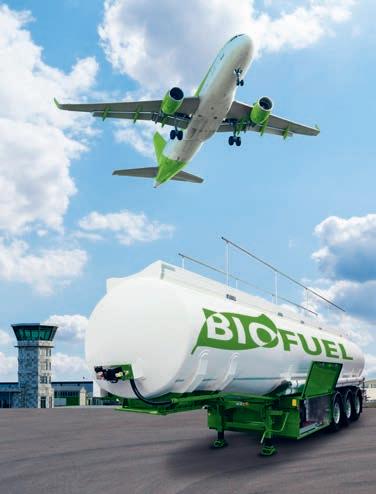
According to Sasol, sustainable aviation fuel (SAF) is critical to decarbonising aviation. Currently, long-haul ights require high-energy-density liquid fuels, making electri cation or direct hydrogen use impractical at scale.
“Sasol’s work on SAF spans the full value chain: successfully producing green hydrogen in Sasolburg and developing the HySHiFT project as a rst step towards integrating green hydrogen into existing Fischer-Tropsch operations,” says the fuel giant’s vice president of asset transformation, Vimal Bhimsan. “This enables the site’s gradual transformation towards lower-carbon and sustainable fuels, including synthetic SAF (eSAF). For eSAF, Fischer-Tropsch synthesis using green hydrogen and sustainable carbon is currently the only approved technology capable of producing large volumes of drop-in aviation fuel. The main challenges remain feedstock availability at scale, technology maturation, regulatory certainty and cost competitiveness, relative to conventional jet fuel.”
Zama Duma, executive of the Catalysis Society of South Africa, notes that another challenge to developing SAF is that it will have to be produced in small-scale plants, given the limited availability of a sustainable carbon source. “Their usage in the SAF production value chain will depend on collaboration with small- and large-scale farmers to ensure
THE GLOBAL CARE-O-SENE PARTNERSHIP
Sasol’s Vimal Bhimsan says CARE-O-SENE is a German-South African research partnership focused on developing next-generation catalysts for the Fischer-Tropsch process, which is central to producing sustainable aviation fuel at scale.
The work includes catalyst development, techno-economic modelling, life-cycle analysis and strong capacity-building elements, training the next generation of South African and European researchers. These advances are essential for scaling SAF production, while improving economics and reducing emissions.
suf cient yield. The utilisation of carbon sources, either from energy crops or invasive alien plants, thus needs to be considered.
“In the case of SAF as an e-fuel made using renewable energy, our abundance of solar energy, in conjunction with industrial development zones, can be used to export renewable hydrogen for the aviation sector, in addition to renewable ammonia and other e-fuels. However, the cost of seawater desalination or treatment of water sources for low-carbon hydrogen production still needs to be optimised.”
Fast fact
Sustainable aviation fuel (SAF) is produced through two main pathways:
•Bio-SAF: made from biomass matter such as waste oils, agricultural waste and animal oils.
•e-SAF: made using renewable electricity to produce green hydrogen, which is then combined with captured carbon via the Fischer-Tropsch process.
POLICY AND GEOPOLITICS
Tariq Allie-Ebrahim, project leader at Boston Consulting Group (BCG) in South Africa, says when it comes to policy, the long-term direction is becoming less certain, as governments shift focus toward cost-of-living pressures and energy security amid rising geopolitical tensions. “The core challenge is therefore not just the level of support, but the lack of long-term policy certainty. SAF projects require signi cant upfront capital and long investment horizons, making predictable policy frameworks critical to unlock investment. As a result, the most durable pathway for scaling SAF may lie in aligning it with energy security objectives, providing a more stable and long-term basis for policy support.”
David Brooke, another BCG project leader, adds that although SAF has historically been driven by climate policy, rising geopolitical tensions and oil price volatility are increasing the focus on cost stability and supply resilience. “For example, recent tensions in the Middle East have contributed to tighter jet fuel supply, just ahead of the European summer travel season, when demand will be elevated. In this context, SAF is being reframed, not only as a decarbonisation solution, but also as a way to reduce reliance on fossil fuel imports and exposure to volatile oil markets. This broadens its value proposition beyond emissions reduction, potentially supporting more durable investment and scale-up,” he concludes.
David Brooke www.linkedin.com/in/david-brooke-474201177
Zama Duma
BRIGHTER AND BRIGHTER
Advancements in solar tech are lighting the way for South Africans, writes ANTHONY SHARPE
Perovskite solar cells have attracted signi cant global attention because they offer a unique combination of high ef ciency, low-cost fabrication and material versatility that conventional silicon struggles to match, says Professor Edson Meyer, director of the Fort Hare Institute of Technology.
What makes these solar cells quite special is that they can be printed onto exible materials and wrapped around things, allowing for a far more dynamic range of applications.
This could fundamentally transform how solar energy is deployed in remote and underserved regions, says Professor Meyer.
“While traditional silicon panels remain highly effective, they are comparatively heavy, rely on rigid glass structures, require energy-intensive manufacturing processes, and often involve higher transportation and installation costs, particularly in areas with limited infrastructure and dif cult logistics.”
• Ultra-lightweight solar modules: printable perovskite lms can drastically reduce module weight, which lowers transport costs to remote regions where logistics are dif cult and expensive.
• Roll-to-roll manufacturing potential: like newspaper or exible electronics printing, roll-to-roll processing could enable very high-throughput manufacturing at signi cantly lower capital expenditure than traditional silicon wafer fabrication plants.
• Reduced installation complexity: lightweight exible modules may not require heavy mounting structures, making deployment easier in rural clinics, schools, temporary shelters and off-grid communities.
• New energy access models: printable photovoltaics could enable portable charging systems, solar-integrated roo ng sheets, wearable electronics and rapidly deployable energy kits for remote communities.
• Lower embodied energy: since fabrication temperatures are much lower than silicon processing, the energy payback time of perovskite modules could be signi cantly shorter.
For African contexts, including South Africa and broader sub-Saharan regions, this could improve the economics of rural electri cation projects where transport infrastructure is limited.
One drawback of perovskites, however, is that they are unstable in high-heat and high-UV environments. Professor Meyer says this is a crucial area of research, particularly for countries like South Africa, where solar modules are exposed to intense UV radiation, elevated temperatures and large thermal uctuations. “Encouragingly, signi cant breakthroughs have emerged in both material engineering and encapsulation strategies, including mixed-cation and mixed-halide perovskites, 2D/3D hybrid perovskite architectures, advanced encapsulation technologies and interface engineering lead sequestration approaches.”
Fast fact
Solar energy deployment across South Africa continues to grow, with 2.8GW currently operational through the Renewable Energy Independent Power Producer Procurement Programme and an estimated 2.5GW through distributed and rooftop solar.
a cohesive, self-optimising system. “This required connecting real-time data from all system components, inverter, battery, panels, smart meter and geyser, into a uni ed platform called AI Mode, which makes autonomous energy-routing decisions in real-time, without lag or con ict, across households that each differ in phase con guration, consumption patterns and roof orientation.”
He also notes that in the current context, silicon bene ts from massive manufacturing scale and proven durability, while printable perovskite technologies are still transitioning from laboratory-scale optimisation toward industrial-scale reliability.
SMARTER INVERTERS
Arti cial intelligence (AI) is enabling big ef ciency jumps in solar systems, with smart inverters adjusting base loads based on real-time data analysis.
Wetility is one local company offering smart solar and storage solutions. Co-founder and group president Ikenna Oguguo says the company’s goal was to take discrete solar components and orchestrate them into
Follow: Professor Edson Meyer www.linkedin.com/in/edson-meyer-phd-46aa9644 Ikenna Oguguo www.linkedin.com/in/ikenna-oguguo-56283419
Using predictive algorithms and physics-based solar modelling, AI Mode learns each household’s unique energy behaviour and continuously optimises settings without any manual input, explains Oguguo.