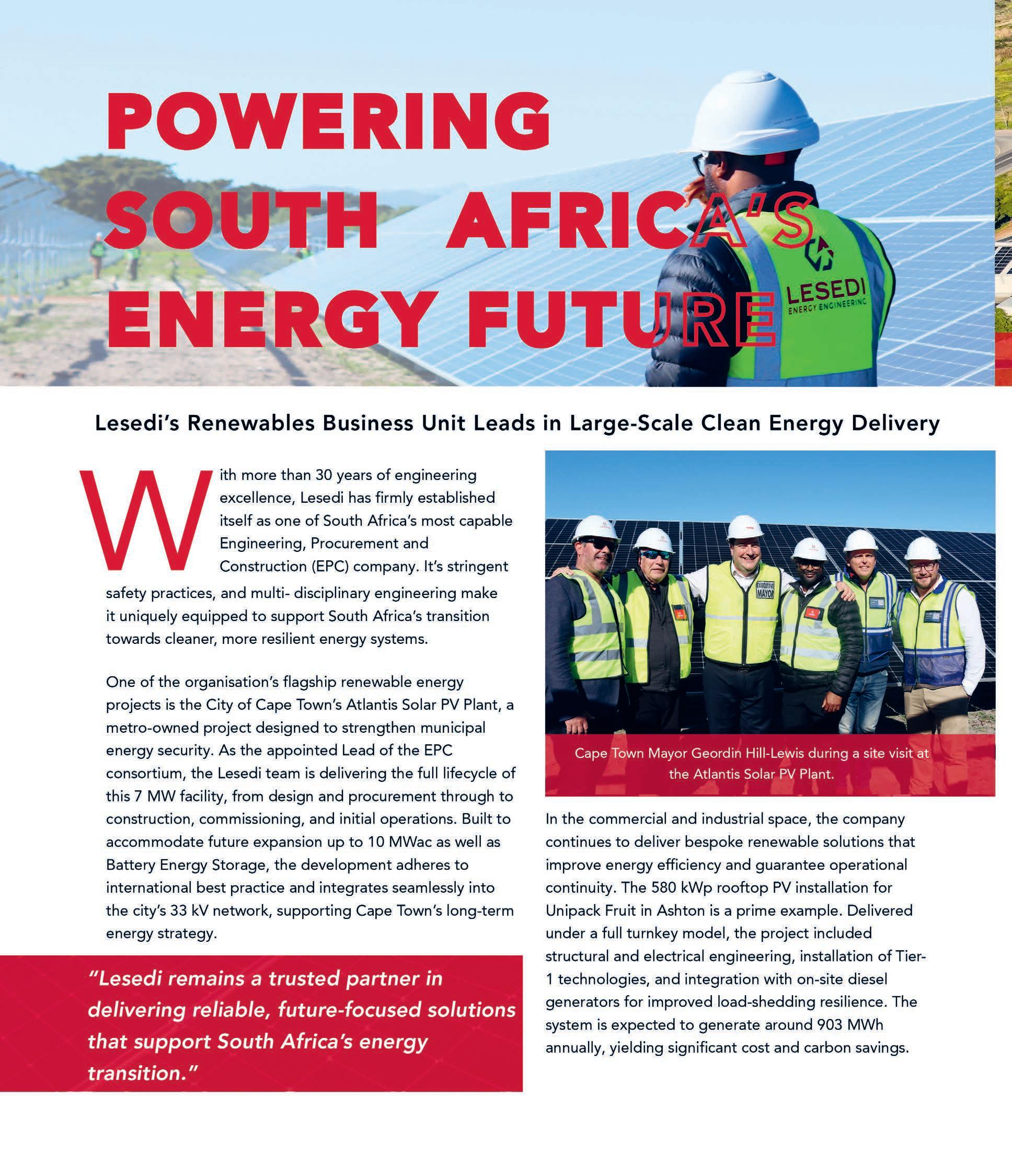
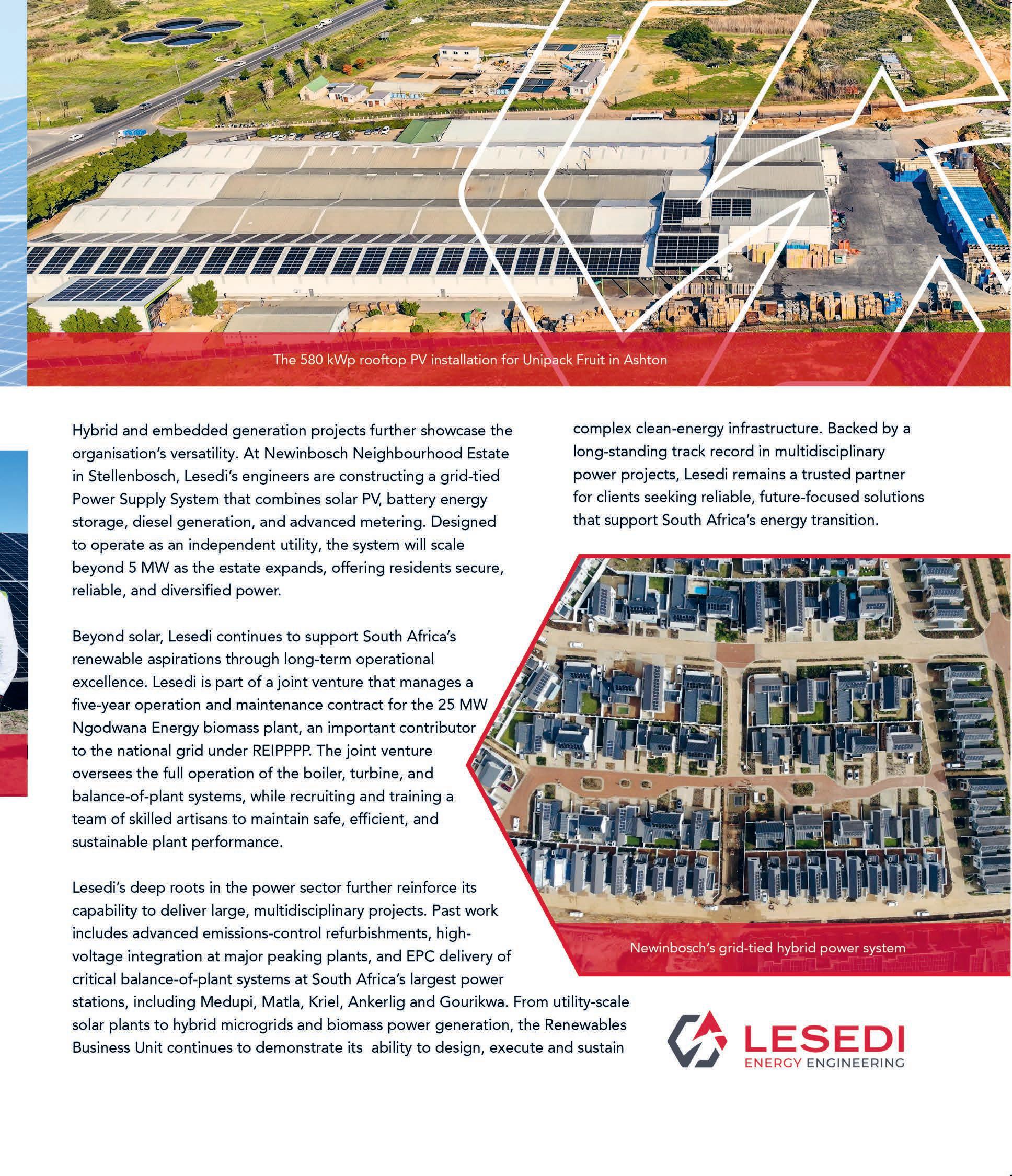
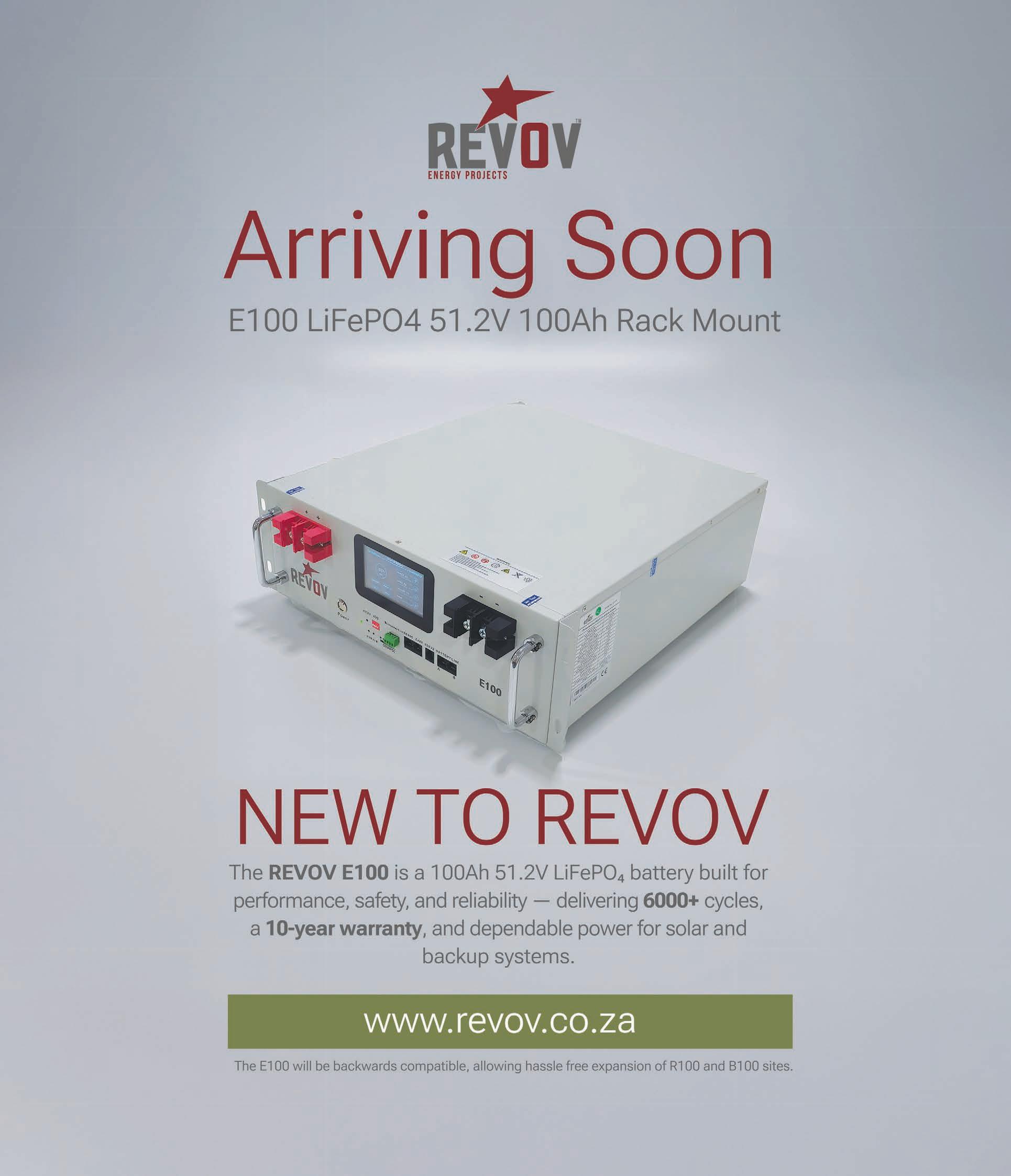
INSIDE: Is new nuclear generation a feasible option for South Africa? |
Pharma-compliant electric vehicles closing the last mile | Battery energy storage systems | Municipalities and alternative power sources
WHY SMART BUSINESSES ARE TURNING SUSTAINABILITY INTO STRATEGY
INVESTEC SUSTAINABLE SOLUTIONS helps South African
businesses unlock value through energy, mobility and water resilience
South African businesses are operating in a different landscape. Energy procurement is no longer a simple monthly expense. Mobility is being reshaped by electri cation. Water risk is accelerating faster than most decision-makers realise. These shifts are already altering operating models and long-term competitiveness − and early movers will de ne the next decade.
However, beneath the pressure points lies something far more powerful: opportunity.
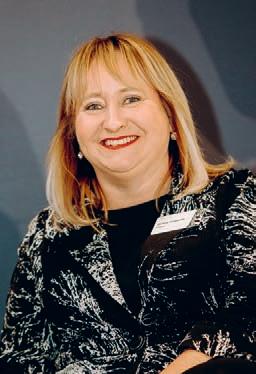
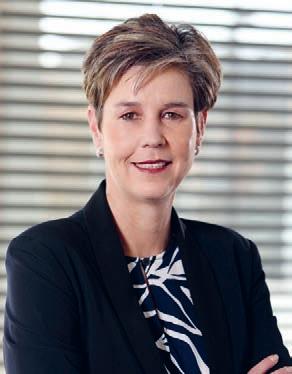
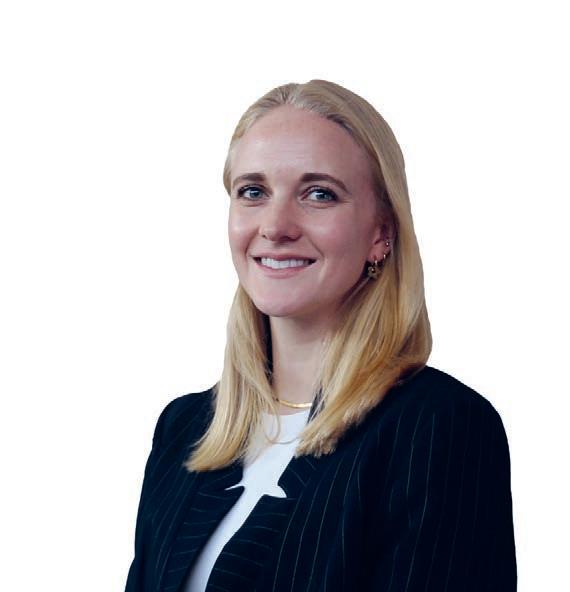
As Melanie Humphries, head of Investec Sustainable Solutions (ISS), puts it: “Commercial returns and sustainability outcomes are not mutually exclusive – they are complementary. When clients integrate sustainability into day-to-day operations, the real ef ciencies, cost savings and growth opportunities emerge.”
This is the foundation of ISS – a multidisciplinary advisory and nancing capability within Investec Private Bank, helping clients make informed choices and unlock commercial value.
ENERGY PROCUREMENT: A SECTOR TRANSFORMED
Few areas of business have shifted as quickly as energy. Businesses now face options that didn’t exist a decade ago:
• Embedded generation through on-site solar photovoltaic (PV) and batteries.
• Wheeling, which transports energy across the grid from remote generators.
• Energy trading where electricity is bought and sold through licensed traders. Costs have changed just as rapidly. Solar prices have fallen more than 77 per cent and wind by 93 per cent since the early 2010s, while exible, shorter-term Power Purchase Agreements have opened opportunities for businesses previously hesitant to lock into 15 to 20-year contracts. Put simply, renewable energy is now the cheapest source of electricity available at scale – and for many businesses, the savings against Eskom tariffs are signi cant. However, with opportunity comes complexity. The expansion of technologies, nancing models and regulatory considerations makes energy procurement one of the most technically demanding decisions a business can make.
THIS IS WHERE INVESTEC SUSTAINABLE SOLUTIONS DIFFERENTIATES ITSELF
As De Wet Taljaard, ISS technical adviser, explains: “Our role is to help clients nd that in exion point where the renewable energy investment makes sense – commercially, technically and operationally – and then design a solution to unlock that value.” ISS brings together engineers and bankers. The team uses its client knowledge and
sustainability specialisation to provide the most suitable solutions for a client’s long-term growth strategy. The result is an integrated view of the most suitable procurement pathway –not just for today, but for the longer term as technologies, tariffs and regulation evolve.
This approach has already supported transformative client outcomes. For example, ISS played a key role in enabling the Clicks Group and United Pharmaceutical Distributors (UPD) refrigerated EV (electric vehicle) eet, supplied by Everlectric. This was a rst-inmarket initiative that dramatically reduced diesel consumption and operating costs while boosting ef ciency and creating social impact through an owner-driver scheme.
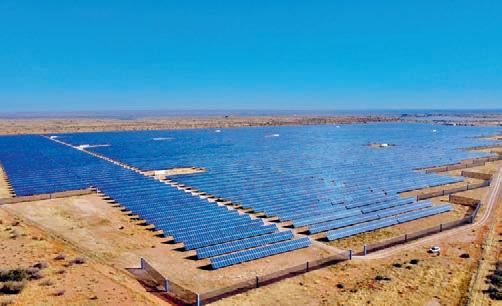
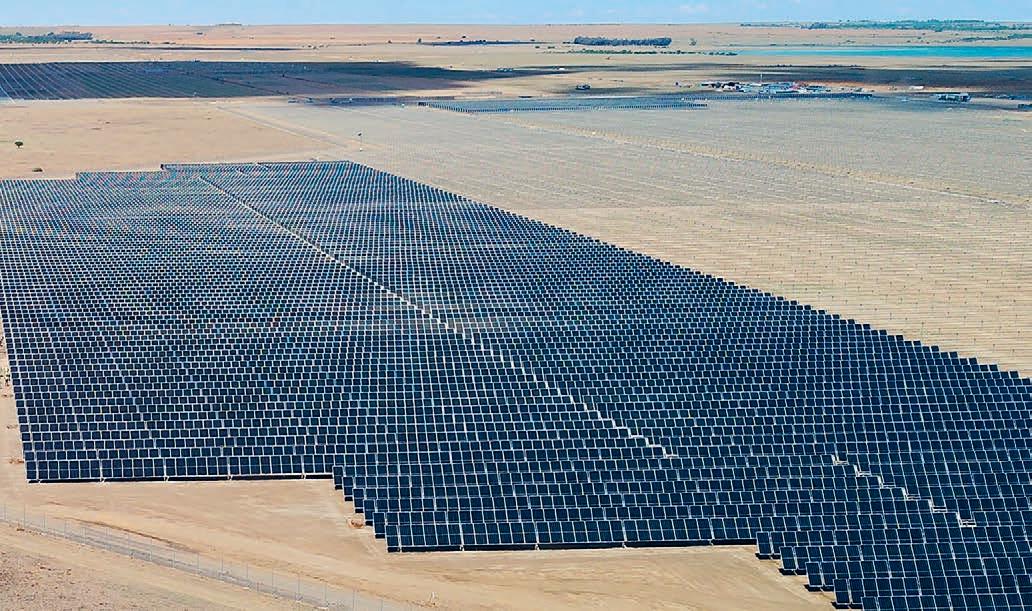
For another client, ISS partnered with an industrial park in Mpumalanga to reduce its reliance on Eskom by up to 30 per cent, through the funding of a 3.6MW embedded solar PV system. The strategy has proved successful enough to warrant an expansion of the system to almost triple the PV capacity and add a 4.5MWh battery to further increase savings for the client.
These success stories demonstrate a truth that is reshaping boardroom thinking: energy strategy is now business strategy.
“WHEN CLIENTS INTEGRATE SUSTAINABILITY INTO DAY-TO-DAY OPERATIONS, THE REAL EFFICIENCIES, COST SAVINGS AND GROWTH OPPORTUNITIES EMERGE.” – MELANIE HUMPHRIES
Electric mobility: Rethinking cost, efficiency and operations
EVs are no longer a far-off consideration −they are a commercially viable option for both households and logistics eets. The economics are compelling: at-home charging costs roughly 70 per cent less per kilometre than petrol, and EV logistics eets can reduce operating costs by up to 75 per cent compared with diesel.
For business owners, the real shift happens when electric mobility decisions are linked to energy procurement. As Taljaard says: “If you look at your Eskom or municipal electricity spend versus your diesel spend separately, you may be missing a big part of the real opportunity. When renewable energy procurement and eet strategy are viewed together, that’s where signi cant savings, operational ef ciency and sustainable impact come through.”
The UPD refrigerated EV eet illustrates this vividly. By electrifying delivery vehicles and pairing them with solar-powered charging, Clicks Group unlocked a new level of ef ciency: lower running costs, reduced emissions and greater predictability across one of its most operationally sensitive functions.
Passenger EV adoption is also accelerating. While many consumers grasp the basics, it’s the downstream economics – cleaner, cheaper kilometres – that are shifting behaviour. Businesses with dual needs (company eets plus household vehicles for founders and executives) increasingly pursue integrated solutions: renewable energy at the business, at-home charging infrastructure and strategic eet electri cation.
ISS acts as the bridge between these components, ensuring energy and mobility decisions support each other rather than compete for resources.
WATER SUSTAINABILITY: SOUTH AFRICA’S SILENT EMERGENCY
If energy has dominated headlines, water is the crisis that has been building quietly in the background – and the consequences for business continuity are profound.
South Africa has already allocated 98 per cent of its available water resources. Up to 50 per cent of urban water supply is lost through leaks and inef ciencies in some
“OUR ROLE IS TO HELP CLIENTS FIND THAT INFLEXION POINT WHERE THE RENEWABLE ENERGY INVESTMENT MAKES SENSE –COMMERCIALLY, TECHNICALLY AND OPERATIONALLY – AND THEN DESIGN A SOLUTION TO UNLOCK THAT VALUE.” – DE WET TALJAARD
municipalities, and more than a third of water systems are classi ed as high-risk.
Taljaard issues a stark warning: “Where we were with load shedding two to three years ago is where we’re heading – and in certain municipalities, have already arrived – with water. The crisis is real – and preparation is essential.”
Fortunately, water resilience and ef ciency measures are often simpler to implement than energy solutions. Businesses can take critical steps now by:
• improving ef ciency through monitoring, equipment upgrades and leak detection,
• recycling wastewater for nonpotable uses,
• diversifying supply via rainwater harvesting or managed aquifer recharge.
ISS helps businesses understand their exposure, evaluate practical options and secure nancing to implement long-term water strategies that create savings and resilience before disruption forces reactive decisions.
WHY OPPORTUNITY, NOT CRISIS, MUST LEAD THE CONVERSATION
A central theme has emerged repeatedly in stakeholder discussions: the businesses
achieving the greatest success are those that treat sustainability as a pro t lever, not a defensive expense.
As Humphries explains: “ISS isn’t just about providing sustainable nance. It’s about identifying the opportunity that sustainability creates through the right solutions – the moment where investment becomes a catalyst for growth, ef ciency and long-term value.”
This opportunity mindset is echoed across Investec.
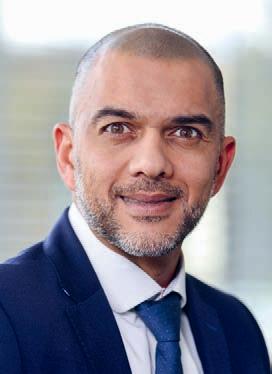
Itumeleng Merafe, head of Private Banking, highlights the philosophy behind ISS: “Private Banking has always been about more than transactions. It’s about relationships and shared purpose. We provide nance for both individuals and businesses to implement solar and water resilience solutions, because we understand the ‘how’ and the ‘why.’ The ‘how’ is through bespoke funding structures and access to trusted partners. The ‘why’ is simple: sustainability is no longer a luxury; it’s a necessity.”
This integration of technical expertise, strategic advisory and tailored nancing is the hallmark of ISS’s multidisciplinary approach –and one of the reasons demand for these solutions continues to accelerate.
THE TIME TO ACT IS NOW
Investment is no longer driven by sustainability goals only. It is a strategic growth drive that improves ef ciency, reduces risk, strengthens balance sheets and positions businesses for long-term success.
ISS exists to help clients seize that opportunity. Whether you’re evaluating your energy procurement options, exploring eet electri cation or preparing for water scarcity, Investec Sustainable Solutions offers insight, technical expertise and nancing capacity to future-proof your operations.
To explore how sustainability can unlock commercial value in your business, contact Investec Sustainable Solutions.
PUBLISHED BY
Picasso Headline,
A proud division of Arena Holdings (Pty) Ltd, Hill on Empire, 16 Empire Road (cnr Hillside Road), Parktown, Johannesburg, 2193 PO Box 12500, Mill Street, Cape Town, 8010 www.businessmediamags.co.za
Contributors: Kiera Bracher, Aadil Cajee, Richard Flamand, Christo Kok, Vanessa Rogers, Jason van der Poel, Rentia van Tonder, Rodney Weidemann, Lisa Witepski
Business Manager: Lodewyk van der Walt General Manager, Magazines: Jocelyne Bayer
for unsolicited material. RENEWABLE ENERGY SOLUTIONS is published by Picasso Headline. The opinions expressed are not necessarily those of Picasso Headline. All advertisements/advertorials have been paid for and therefore do not carry any endorsement by the publisher.
IT (MOSTLY) COMES DOWN TO MONEY
Last year, renewables overtook coal in terms of global power generation – a historic milestone. While this bodes well for a future where we’re not all squeezed into increasingly shrinking islands of inhabitable land, ghting over scant resources while trying to live solely off drought-resistant crops, we’re still not quite on track.
Policy shifts under Donald Trump’s regime have seen the United States’ projected new renewable builds halve, while changes in China’s energy market have impacted project affordability, slowing things down from the breakneck pace that has characterised recent years.
A lot of this is about money, where it comes from and where it ows. This is very apparent on local shores. Just look at our ageing transmission infrastructure, a product of decades of underinvestment by Eskom and compounded by the withdrawal of United States funding for the Just Energy Transition Investment Plan. With the World Bank considering a considerable loan to help develop this crucial infrastructure, we look at what sort of conditions need to be met to secure this much-needed funding. We also examine the evolving role of banks in this ecosystem, moving from being just lenders to becoming long-term strategic partners.
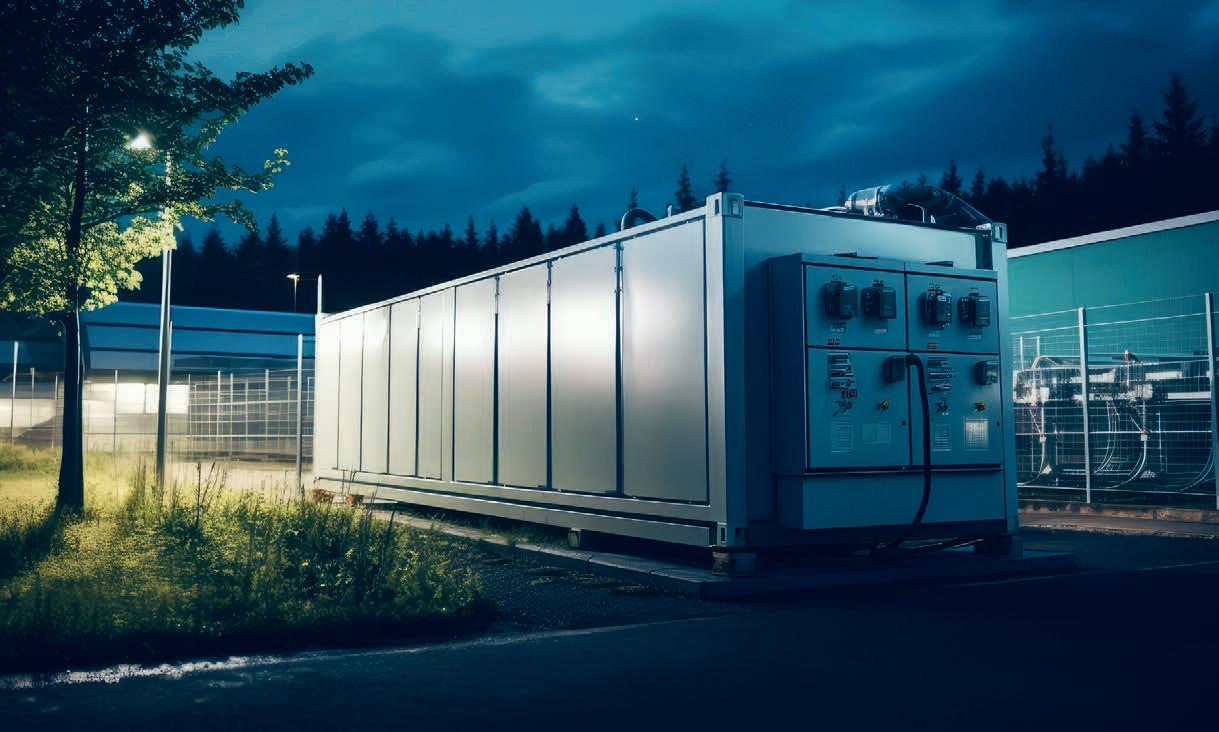
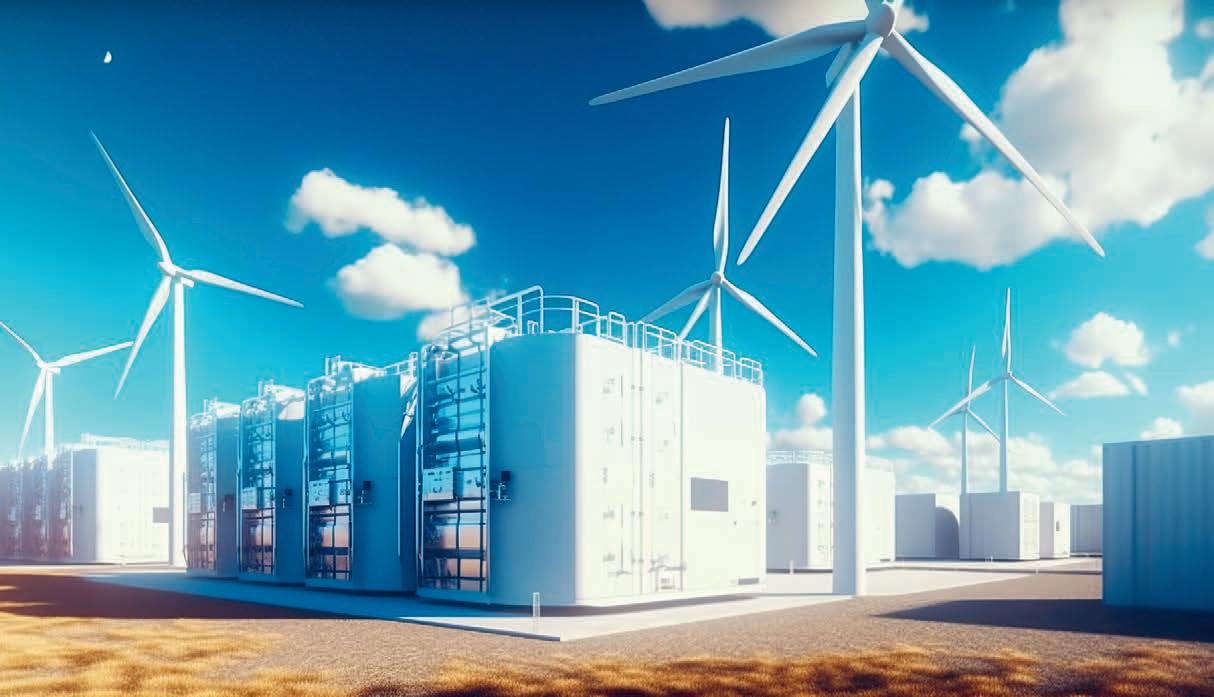
Battery energy storage systems are driving an evolution in the wholesale electricity market, offering both critical risk mitigation and diversi ed revenue generation capabilities, while providing tangible cost savings for businesses through energy arbitrage.
Municipalities are taking advantage of these and other developments to offset power availability issues, particularly in Cape Town, which we examine in terms of its energy-resilience measures. Cape Town also continues to rely on Koeberg, Africa’s only nuclear power station – but with plans still afoot to build new nuclear capacity, we ask if this is really feasible (or affordable).
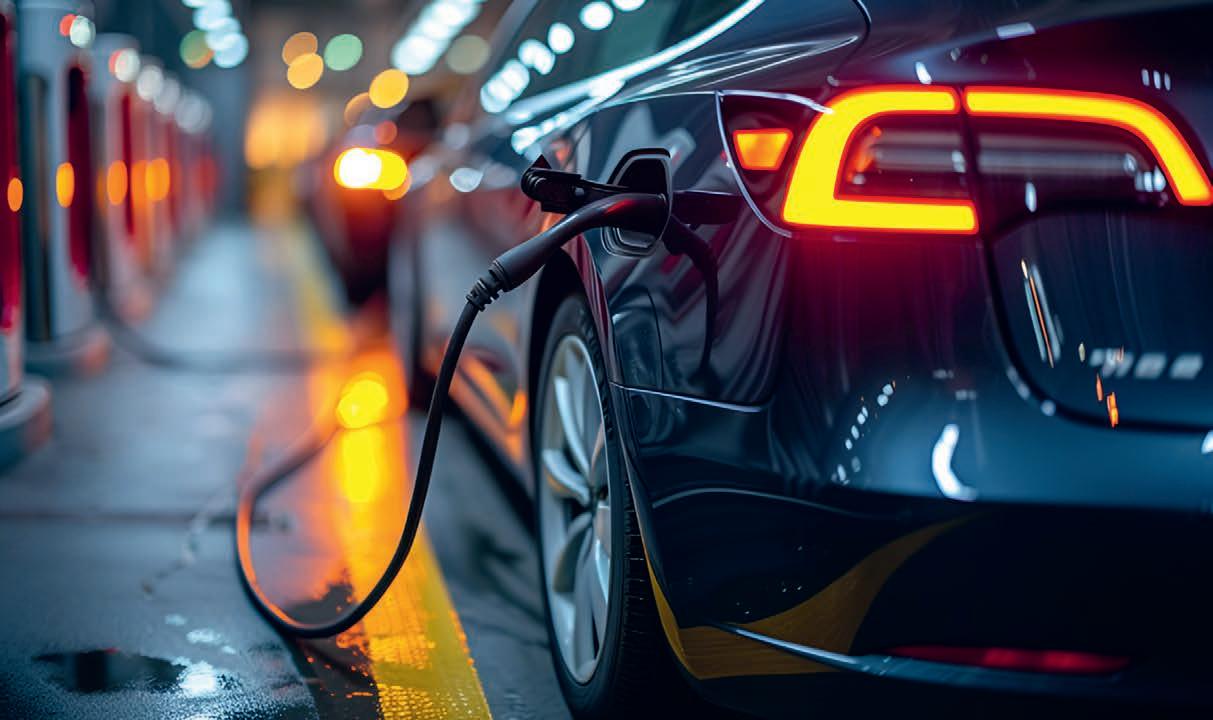
Finally, we check out a new eet of pharma-compliant electric vehicles operating in the last-mile space, where cost and emissions savings can really be realised.
So yes, most of this is really about money. Hopefully, we can keep it owing into renewables, because it won’t be much use in a world on re.
Anthony Sharpe Editor
Contents
7 NUCLEAR
Is new nuclear generation a feasible option for South Africa, given the growing uptake of wind and solar options within the renewable energy space?
10 ELECTRIC VEHICLES
A partnership between different industry stakeholders is seeing pharma-compliant electric vehicles closing the last mile.
14 SOLAR
South African businesses face three common hurdles when adopting solar solutions, but these can be overcome.
15 STORAGE
Battery energy storage systems designed for time-of-use tariff optimisation can maximise energy savings.
16 TRANSMISSION GRID
Why the World Bank is weighing up a nancing deal to unlock a transmission-grid expansion plan for South Africa.
17 FINANCE
Africa’s journey toward a sustainable and affordable energy future hinges on a fundamental shift in how nancial institutions engage with the energy sector.
18 MUNICIPALITIES
How South African municipalities have stepped up to help citizens nd alternative power sources.
19 ENERGY MARKET
Battery energy storage systems are emerging as a strategic imperative for South Africa’s wholesale electricity market.
Sturdee Energy, which began as an independent power producer, has evolved into a regional independent electron provider focused on delivering power where and when it is needed most.
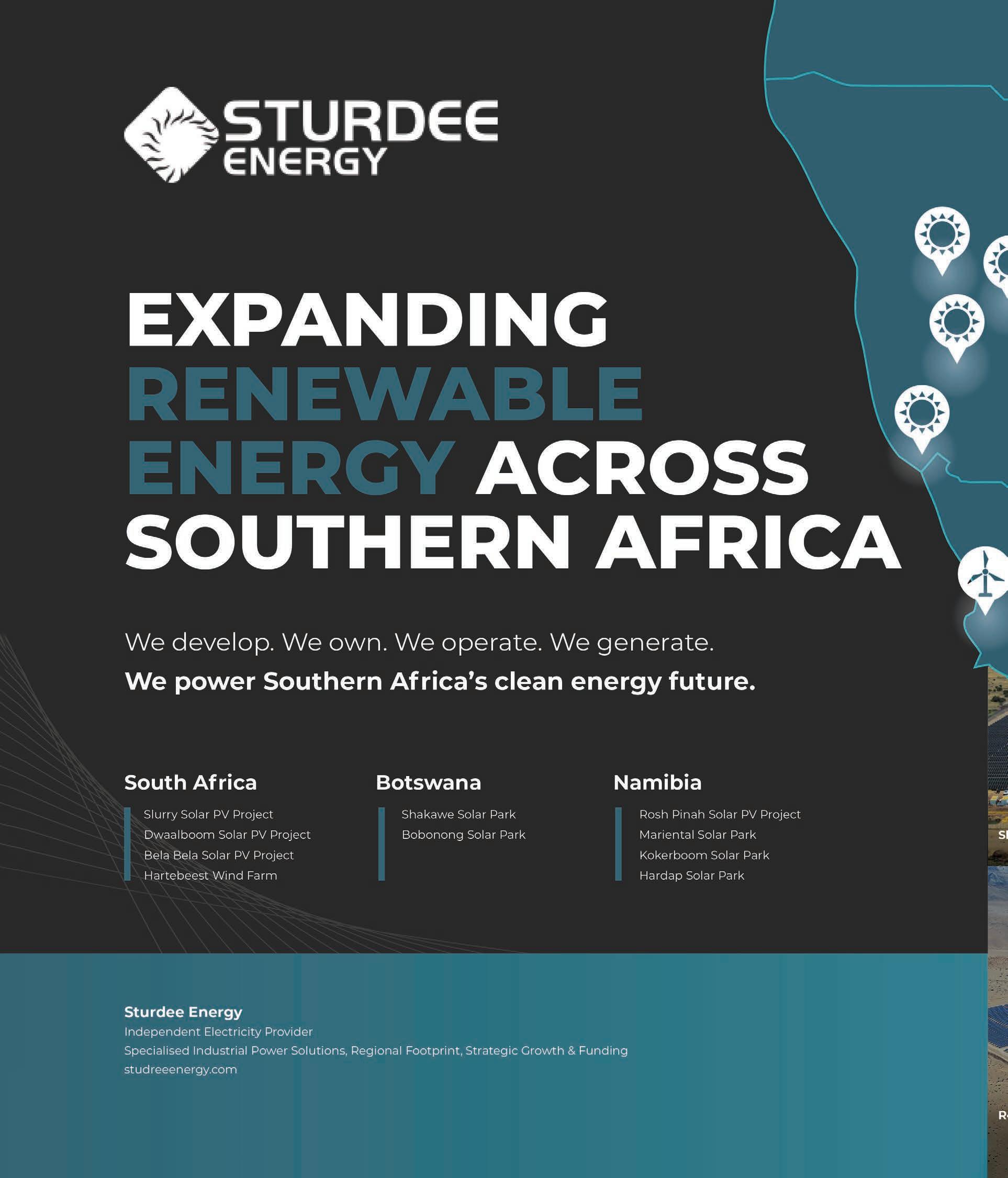
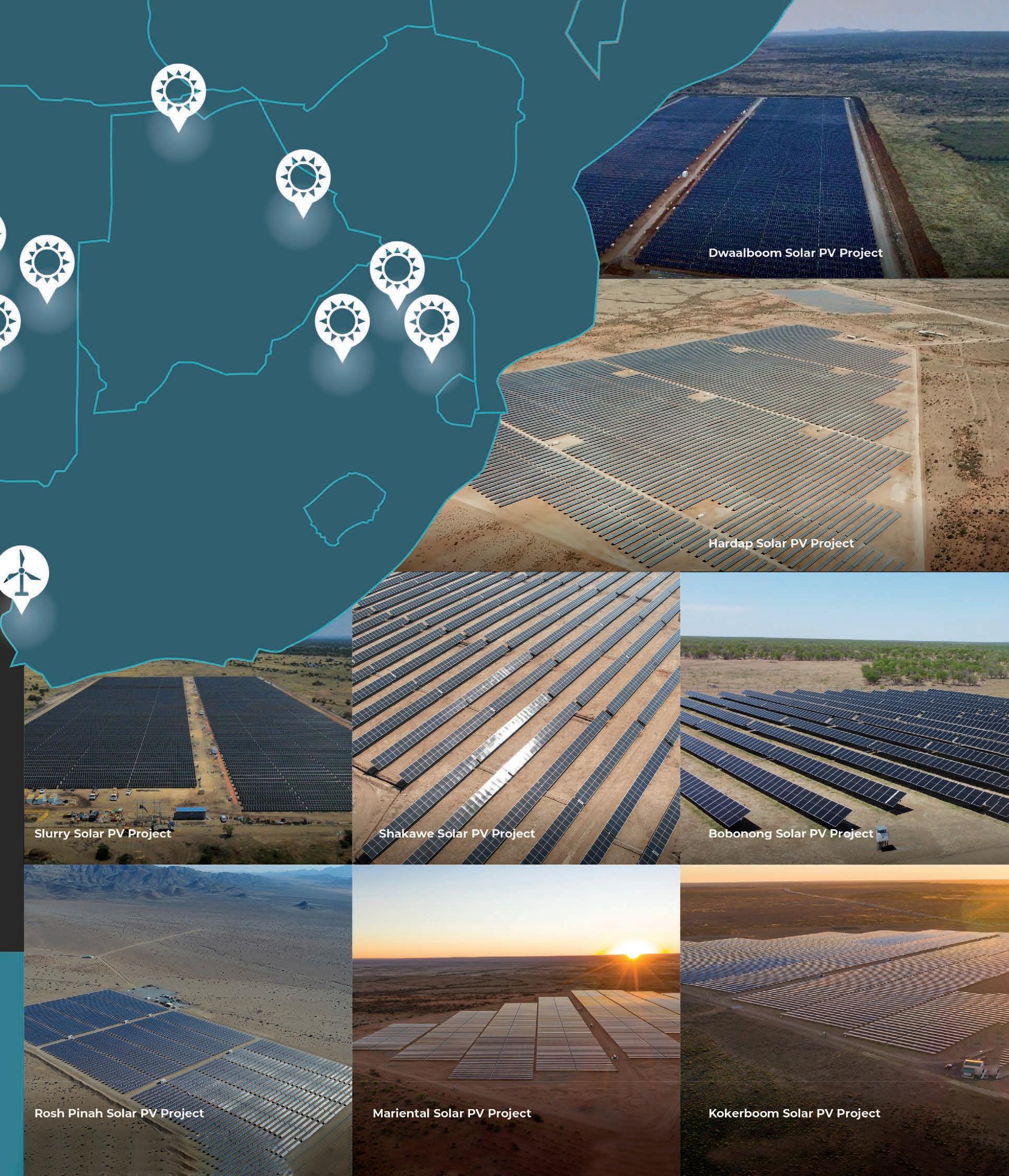
This approach focuses on adapting the business model of renewables to the realities of our clients’ business needs. With operations in South Africa, Namibia and Botswana, and a portfolio exceeding 200MW, Sturdee is scaling quickly and deliberately across the SADC region.
DESIGNING FOR CLIENT NEEDS
This year marks another signi cant year of growth as Sturdee rolls out projects aimed at adding value for clients, regulators and contractors. In South Africa, a key highlight has been the delivery of early energy from two embedded solar plants to supply PPC Cement. Sturdee Energy developed the sites, engineering around the load pro le and the unique operational environment. Dust fallout risks were modelled, prevailing wind patterns were assessed and the topography was analysed to accommodate future mining and plant expansions. Equipment con gurations were adapted to protect the panels from the abrasives commonly found in cement production. The result is a long-term renewable solution sized precisely for on-site consumption and structured to reduce energy costs and generate savings.
Sturdee also expanded its wheeling portfolio by bringing the Bela Bela Solar Plant to nancial close. The plant will supply power to Harmony Gold. Mining and other industrial sectors are cyclical, and their investment horizons are often shorter therefore long-term power purchase agreements do not always align with their planning needs. Sturdee structured a bespoke ve-year agreement that matched the mine’s business cycle rather than locking the customer into a twenty-year commitment. This demonstrates the company’s ability to tailor commercial structures to very different sectors while maintaining bankability and long-term performance obligations.
Given the constraints in grid availability and rising construction costs, Sturdee expects continued demand for renewable energy solutions across the region. With a growing eet of generation assets, the company is well-positioned to offer competitive products directly to clients. The response from lenders has been strong and re ects con dence in Sturdee’s ability to deliver electrons through multiple routes to market, including trading, Southern African
POWER MOVES
STURDEE
ENERGY is rewriting
Southern Africa’s energy map with a growing portfolio of utility-scale renewable projects
Power Pool participation, bilateral wheeling and behind-the-meter solutions.
EXPANDING HORIZONS
Sturdee continues to grow its presence across SADC. In Namibia, the company recently added the 47MW Hardap Solar Plant to its portfolio. Hardap is the largest grid-tied solar plant in the country, contributing directly to local economic activity while supplying clean power to the national grid, with Nampower, the local
utility, as its off-taker. Sturdee also owns and operates three other solar projects in Namibia and currently stands as the largest independent supplier of renewable energy to the national utility. In Botswana, Sturdee brought the rst two independent power producer projects into commercial operation in 2023 and is active with generation projects that help diversify the region’s supply base and support longer-term integration into wider power markets.
These developments are supported by a shift in strategy from a traditional independent power producer model to an independent electron provider. As the market opens to new trading environments, behind-the-meter solutions, wheeling structures and cross-border agreements, the focus is no longer only on how electrons are produced, but if and how they can be delivered. Sturdee will leverage its eet, third-party generation and trading arm, Sturdee Electron Market, to move electrons to each client.
Our team applies years of experience across the project life cycle to operate renewable energy assets throughout the SADC region. Sturdee’s green eld projects are designed with long-term performance at their core. This means prioritising Tier 1 solar and wind equipment, strong engineering design and disciplined construction management to ensure each project is delivered on time and within budget.
Our mission is clear: to become a regionally diversi ed energy company, building generation that delivers for years and moving electrons through the channels that serve customers best. Sturdee remains committed to a future where Southern Africa has a reliable supply of clean, regionally integrated energy systems.
For more information: info@sturdeeenergy.com www.sturdee-energy.com
Will South Africa go nuclear?
Plans are afoot to add nuclear power to South Africa’s renewable energy mix, but is this a feasible option? By
RODNEY WEIDEMANN
As part of its new Integrated Resource Plan (IRP) for 2025, and in line with its plans to move away from coal and towards cleaner options, such as wind, solar and gas, the Department of Electricity and Energy recently announced plans for 5 200MW of new nuclear capacity to help stabilise the grid and address chronic power cuts. The question is whether nuclear is a feasible solution, given the growing uptake of wind and solar options within the renewable energy space.
James Mackay, CEO at the Energy Council of South Africa, says the challenge with nuclear is the length of time such a project runs.
“Essentially, you are engaging with a partner for around 60–80 years, and the only recent new builds for nuclear have been undertaken by Russia and China.
are less likely to nance such lengthy projects, given how quickly they could be overtaken by developments in other renewable technologies. “Other challenges here relate to the depleted state of the local construction industry and the lack of nuclear skills in South Africa, with many of our scientists having taken their expertise to other nations.”
From a security of supply perspective, though, nuclear would be bene cial, as diversifying the energy mix would ensure we don’t place all our energy eggs in one basket.
“The more traditional large-scale pressurised water reactors are clearly unaffordable for South Africa, although – given China’s aspirations to build 40–50GW of nuclear by 2040 – the likelihood of them utilising and commercialising small modular reactors (SMRs) is high, and these may feasibly work for our grid.”
Chris Yelland, energy analyst and MD at EE Business Intelligence, agrees on the challenges of a large-scale build, noting that it is a massive long-term commitment that runs counter to the rapid development occurring elsewhere in the energy space. Even banks
“Nuclear is, of course, also a low-carbon and ef cient way of generating power that eliminates water, ground and particulate pollution,” says Yelland. “Yes, nuclear has its own issues with waste, but these can be managed. Nevertheless, I believe the business case for new nuclear power remains quite weak, chie y due to skills, nancing and construction issues.”
Fast Fact
Koeberg, the only nuclear power station in Africa, has a pressurised water reactor design, and boasts the largest turbine generators in the Southern Hemisphere. Once the life extensions for units 1 and 2 are fully implemented and approved, Koeberg is anticipated to operate safely and reliably until at least 2044/2045.
Source: Eskom
DECLINING DEMAND
Mackay agrees that traditional nuclear tends to be a rigid and clunky method of energy delivery, as any outage removes the option from the grid. “Compare this to wind and solar, which are widely distributed, meaning that some power should always be available, as there will always be somewhere in South Africa that the sun is shining or the wind is blowing. However, utilising SMR technology might afford more exibility.”
He suggests the biggest risk we face is a decline in demand due to a lack of industrial investment, which is leading to South Africa facing an oversupply challenge. “We need the economy to pick up to secure greater investment in South Africa. Electricity demand is a strong indicator of gross domestic product growth, and the lack of demand is thus an indicator of a poor economy.”
Yelland adds that many hurdles remain for a nuclear implementation, from public scepticism to National Treasury’s wariness about committing such a large amount of funds to such a long-term project. “Ultimately, we must remember that just because this has been added to the IRP doesn’t mean it will happen. In both the 2010 and 2019 IRPs, there was a nuclear component – and both times it failed to happen,” he concludes.
“I BELIEVE THE BUSINESS CASE FOR NEW NUCLEAR POWER REMAINS QUITE WEAK, CHIEFLY DUE TO SKILLS, FINANCING AND CONSTRUCTION ISSUES.” – CHRIS YELLAND
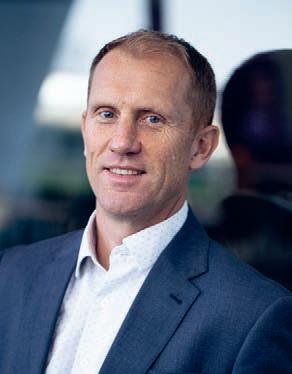
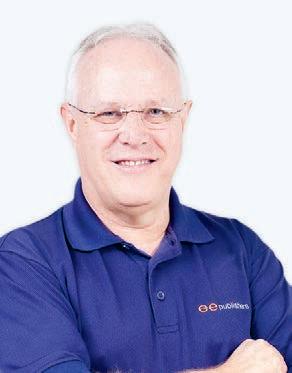
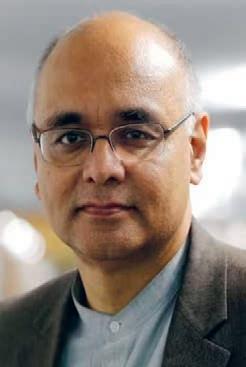
Chris Yelland
James Mackay
THE PHARMACEUTICAL FLEET OF THE FUTURE
A partnership between different industry stakeholders is seeing pharma-compliant electric vehicles closing the last mile, writes ANTHONY
Transporting pharmaceutical goods is a specialised, delicate process. Many pharmaceuticals, especially vaccines and specialty drugs, require a speci c temperature range, creating a demanding cold chain requirement. Moreover, the specialised equipment, careful packaging and need for properly quali ed personnel result in higher transport costs on average.
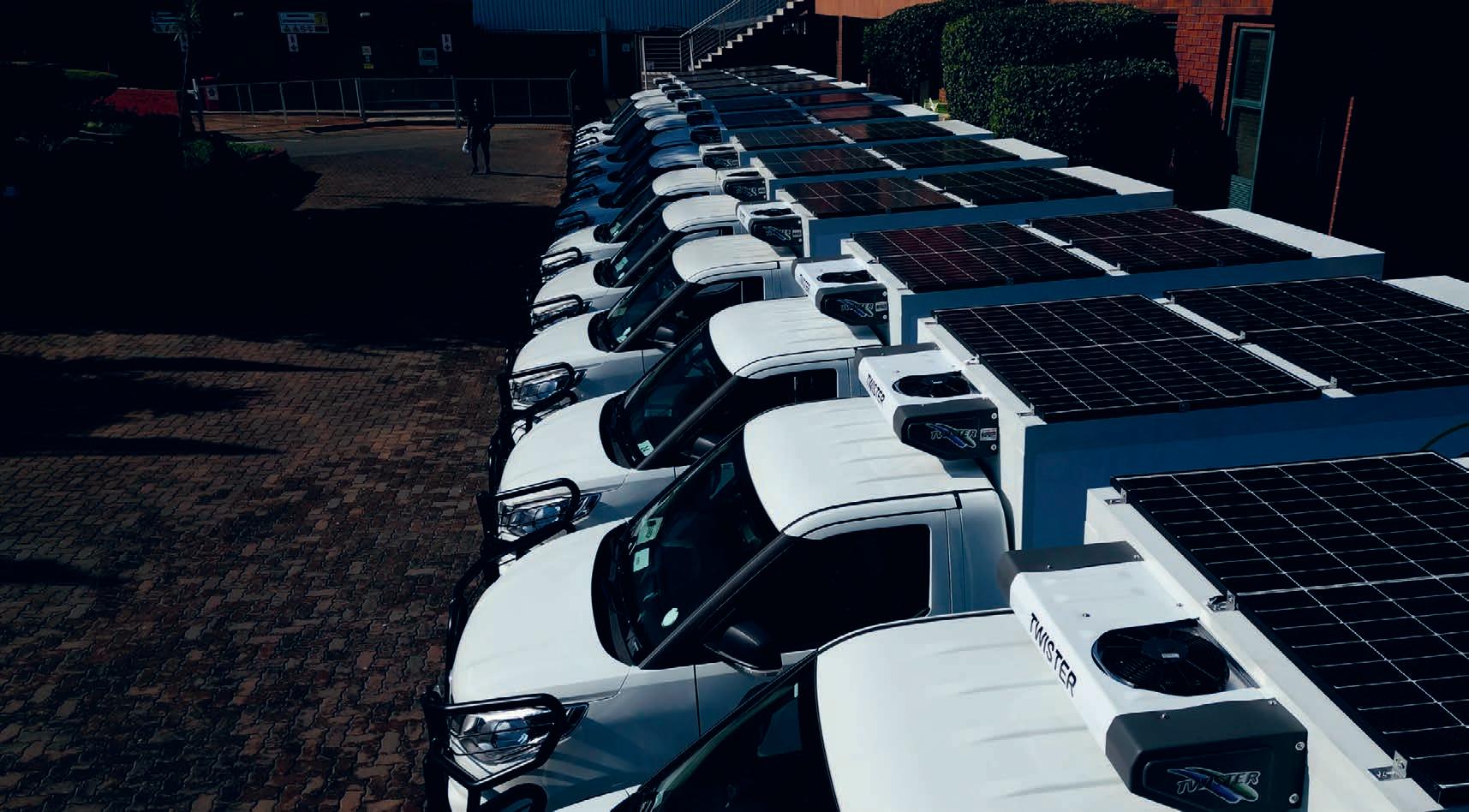
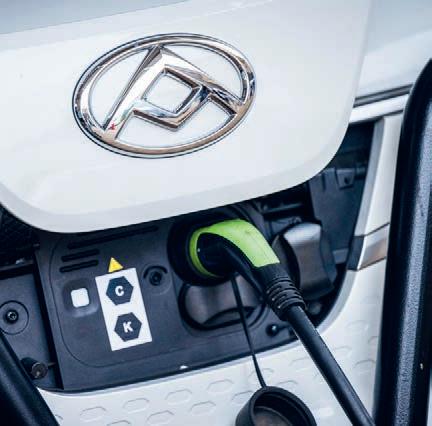
At the same time, pharmaceutical producers, wholesalers and retailers are under pressure to meet environmental, social and governance (ESG) requirements, which has necessitated careful planning and resourcefulness across the board. One cogent example of this is Clicks Group and United Pharmaceutical Distributors’ (UPD) recent partnership with Everlectric and Investec Sustainable Solutions to introduce South Africa’s rst eet of zero-emission, pharma-compliant electric vehicles (EVs) with solar-powered refrigeration.
Earlier this year, UPD introduced 42 Everlectric Maxus eDeliver three-panel vans in Gauteng and the Western Cape, with further plans for another 36 in the near future.
COOL OPERATORS
Melanie Humphries, head of Investec Sustainable Solutions, says the vehicles are equipped with custom-designed refrigeration units, which are essential for maintaining the integrity of the cold chain.
“These units were retro tted locally in South Africa, with solar panels installed on top to power the refrigeration unit.
This enables both zero tailpipe emission operation and pharma compliance. At night, the vehicles return to the UPD sites, where they are charged using off-peak Eskom power.
Vehicle charging during the day uses renewable solar energy.”
Humphries says, despite the advantages of electric light delivery vehicles, logistical and technical challenges remain. “Vehicle range and availability in South Africa remain limited as the industry is still in its infancy, constraining eet operators’ options. From an operational standpoint, real-time vehicle monitoring and maintenance systems, such as Everlectric has provided to UPD, are critical, allowing eet operators to track battery life, receive real-time noti cations and access central fast-charging DC hubs intra-day to prevent delivery delays. Maintenance is generally more cost-effective than for internal combustion engine vehicles, as EVs have fewer moving parts.”
THE LAST-MILE FIT
While limited charging infrastructure means EVs have made less of an impact in the passenger or long-haul transport spaces, Humphries says the last-mile logistics sector is well-suited to the capabilities of EVs. Typically, last-mile EVs cover up to 250km per day, allowing vehicles to return to a distribution hub for charging overnight. When coupled with high transportation costs and the environmental impact of conventional fuel, there is a strong incentive for logistics providers to transition to electric eets.
SOUTH AFRICA’S LAST-MILE DELIVERY SECTOR IS POISED FOR CONTINUED INNOVATION AND INVESTMENT, DRIVEN BY INCREASING URBANISATION, DIGITAL ADOPTION AND CONSUMER EXPECTATIONS FOR SAME-DAY DELIVERY.
Humphries believes South Africa’s last-mile delivery sector is poised for continued innovation and investment, driven by increasing urbanisation, digital adoption and consumer expectations for same-day delivery. “The industry includes a mix of global participants, local logistics rms, retail-led and e-commerce delivery services and corporates for their own and contracted deliveries.”
FINANCING THE TRANSITION
When considering the bene ts of an investment in EVs, Humphries advises companies to take a total cost-of-ownership view of the opportunity. “The upfront cost of EVs is typically greater than that of internal combustion engine vehicles, but they are cheaper to operate in the long run. Investors should take an integrated approach to energy management, which includes smart monitoring of vehicles, route optimisation and the use of solar photovoltaic and battery systems. The operational plan should extend beyond the investment in the actual eet of electric vehicles to include overall energy supply management.
“Finally, there are important considerations from a nancier’s perspective, including the long-term value (second-hand market) and battery replacement lifecycle of EVs. Financial institutions, including Investec, play a key role in developing the funding models that make it possible for corporates to transition con dently to a greener, more ef cient eet.”
Fast Fact
The market for electric micromobility, which includes two- and three-wheeler vehicles, is projected to grow at 20 per cent per year until 2030.
A modern electricity market needs more than new generation capacity, it needs traders, aggregators, investors and market participants, writes
KAREL CORNELISSEN , CEO, NOA Group
After years of incremental regulatory change, 2026 is expected to accelerate the shift toward a liberalised electricity market anchored by a functional wholesale trading system. The anticipated launch of the South African Wholesale Electricity Market (SAWEM) in April will mark a decisive step toward a more transparent, competitive and modern power sector. It will transition the market from a single-buyer model to a competitive, multibuyer environment, improving transparency, ef ciency and the attractiveness of private investment. It will support a more diverse generation mix, mostly renewables, and introduce clearer price signals. While the market will initially operate through bilateral trading, we expect to follow global markets, such as the United Kingdom or the Nordic Pool, as we evolve toward real-time markets. When we established NOA Group in 2022, this future market did not yet exist. What we had were early policy signals, rising demand from large energy users for credible decarbonisation trajectories and a clear recognition that our country’s energy challenges required new models of participation and investment. We built NOA
not only as a generator, but as an aggregator and trader capable of operating in a liberalised energy system. In three years, this foresight has positioned us at the centre of the private-power landscape that South Africa is now transitioning into.
competitive discipline into a system long de ned by structural in exibility. Customers will shift from being passive consumers to active market participants, with new responsibilities such as demand forecasting and, in some cases, balancing. This is precisely where NOA shines: we absorb that complexity on their behalf, providing the forecasting, optimisation and balancing capabilities required, so our customers can stay focused on their core business.
NOA’s trajectory since then has been de ned by investment and a rapidly expanding pipeline of renewable assets. Today, we have 895MWp of generation under construction across several provinces and an initial portfolio that’s expected to generate nearly 3 200GWh per annum. A major evolution for us in 2026 will be the integration of energy storage. Our rst utility-scale battery energy storage system is scheduled to enter construction, marking an important shift toward more exible, responsive and resilient operations. Storage is critical for system modernisation, enabling higher renewable penetration and enhancing stability for the grid and end users alike.
A SUCCESSFUL SAWEM DEPENDS ON SUPPORT
If implemented effectively, SAWEM will introduce transparency, liquidity and
SAWEM will create signals that encourage investment, allow power to move more freely between buyers and sellers and support modernisation of the grid. However, SAWEM is not a cure-all; it must be matched by broader reforms, including Eskom’s unbundling, clarity on tariffs and vesting contracts, a credible capacity market and signi cant expansion of transmission infrastructure. While a major milestone, SAWEM will only deliver its full potential if supported by investment in grid infrastructure, policy certainty and institutional capacity. As we shift from a centralised model to a market-based one, the role of aggregators and traders becomes indispensable – serving as the bridge between independent power producers and end users, translating system complexity into practical, reliable commercial outcomes. NOA is purpose-built for this. Through a portfolio that blends our own generation assets with those of selected independent power producer partners, we manage risk across technologies and geographies, helping smooth variability and strengthen reliability for our customers.
Karel Cornelissen
MAKING THE MOST OF SOLAR
South African businesses face three common hurdles when adopting solar solutions, but these can be overcome. By RICHARD FLAMAND, country lead at Candi Solar
South African businesses operate in one of the most challenging energy environments in the world. Unreliable supply, rising tariffs and limited access to exible nance place increasing strain on pro tability. These pressures are being felt across all sectors, from manufacturing and logistics to retail and commercial property. Our interactions with clients across South Africa have highlighted three major energy hurdles – and the innovative solar solutions already available to overcome them.
UNRELIABLE AND EXPENSIVE ENERGY
From production lines and refrigeration systems to IT infrastructure and security, most business operations rely heavily on a stable power supply. Yet grid instability and escalating electricity costs continue to disrupt operations and drive up expenses.
Diesel generators, once considered backup power, have become a cripplingly expensive necessity. At the same time, electricity tariffs are set to continue rising well above in ation. These increases are unsustainable, and businesses face mounting pressure to control costs while maintaining operations.
Hybrid solar systems are increasingly being seen as a strategic solution, offering greater control, predictable costs and long-term energy security. These solutions can be custom-designed to each business’s operational requirements and managed by experts at every stage – from design and nance to installation, maintenance and round-the-clock monitoring. Such systems can reduce energy costs, freeing up cash for reinvestment and stabilising
operations. Innovative nancing models can also ensure repayments are linked to system performance, providing con dence that every rand spent re ects measurable results.
LIMITED ACCESS TO FLEXIBLE FINANCE
Historically, nancing options for solar energy systems were limited to self-funding, bank loans or traditional power purchase agreements (PPAs), each with its own challenges.
Self-funding requires signi cant upfront capital, often diverting funds away from growth initiatives. Bank loans typically come with xed repayments, collateral requirements and the risk that businesses must bear the full cost if systems underperform.
There are alternatives, however, such as Candi Solar’s Performance-Linked Instalment Sale model. This allows businesses to own their solar system from day one, with zero upfront cost and no nancial risk. Payments are linked directly to system performance, while exible repayment structures, including quarterly or seasonal options, are tailored to align with a company’s cash ow cycle. Because ownership
is transferred immediately, businesses can also take advantage of South Africa’s section 12B, which offers a 100 per cent write-off in the rst year on the system cost, signi cantly improving the project’s return on investment and shortening the payback period.
For companies that prefer not to own their system, there are options to remove the need for upfront investment while ensuring predictable energy costs. Candi Solar offers the option, for example, to take full responsibility for performance. If a system is damaged, underperforms or requires maintenance, the client doesn’t carry that burden; we do.
UNDERPERFORMING SOLAR ASSETS
Many businesses that have already adopted solar still struggle to realise its full potential. Subpar installation, inef cient design or inadequate performance monitoring can quietly erode energy output and nancial returns over time.
This is where performance-protection and asset-management solutions come in, ensuring solar systems consistently deliver to speci cation. These offer various bene ts, with our Solar Protect+ programme compensating businesses for every lost kilowatt-hour if a system underperforms, while handling all maintenance and optimisation directly.
We also offer buyout and re nancing options for businesses that already have solar systems but want better terms or improved reliability. If you’ve paid for your system or nanced it through a bank, we can buy it out, freeing up cash and transferring all performance responsibility to us. Even existing PPAs can be re nanced with improved structures and a more reliable partner.
These solutions illustrate the need for businesses to look beyond just hardware when choosing a renewable energy partner, with ancillary services helping to guarantee long-term value from every solar investment.
Follow: Richard Flamand www.linkedin.com/in/richard-flamand-b947708
Richard Flamand
ENERGY ARBITRAGE THROUGH STORAGE
Battery energy storage systems designed for time-of-use tariff optimisation can maximise energy savings, writes CHRISTO KOK,
With electricity tariffs rising rapidly and signi cant price gaps between peak and off-peak periods, battery energy storage systems (BESS) offer a proven solution to reduce energy costs for commercial operations through time-of-use (TOU) tariff optimisation or energy arbitrage.
WHY BESS FOR COMMERCIAL ENERGY SAVINGS?
BESS can signi cantly reduce electricity costs by minimising reliance on expensive energy during peak periods through energy arbitrage –charging your battery when electricity is cheaper, either during off-peak periods or using excess solar photovoltaic (PV) to charge batteries – and then discharging that stored energy when tariffs are high.
South Africa’s TOU tariffs, which are becoming increasingly entrenched, charge signi cantly higher rates during peak hours (early morning and late afternoon) compared to off-peak periods. Peak tariffs can be four to ve times higher than off-peak rates, which means that when production schedules cannot be shifted to off-peak times, businesses are locked into paying a heavy premium for power. For example, in Ekurhuleni under the E-tariff, peak rates can reach R10.18/kWh during high-demand seasons, while off-peak rates drop to R1.52–R1.71/kWh.
By charging a BESS during off-peak hours and using this stored energy during peak periods, businesses can manage their grid electricity usage patterns and dramatically reduce energy costs. BESS solutions can be tailored for businesses to provide exibility, scalability and seamless integration with existing solar PV systems. Whether you’re operating a factory, warehouse, retail complex, hospitality venue or commercial of ce park, a well-managed and con gured BESS solution can help in several ways:
• Cut electricity costs: shift consumption from peak to off-peak tariffs, leveraging the price differential for maximum savings.
technical director of One Energy
• Operate off-grid: BESS solutions can be designed to function independently of solar panels, eliminating the need for landlord approvals or complex grid-tied integrations.
• Enhance existing systems: for businesses with grid-tied solar, AC-coupled upgrades to integrate BESS will optimise both solar and grid power usage.
• Boost reliability: mitigate the impact of power outages and grid instability with reliable backup power.
KEY BENEFITS
• No solar or landlord approval required: an off-grid BESS system charges exclusively from low-cost grid power during off-peak hours, bypassing the need for solar panels or landlord permissions. This simpli es deployment and reduces regulatory hurdles.
• No inverter size restrictions: unlike grid-tied systems, where inverter capacity is limited to installed capacity, an off-grid BESS solution faces no such constraints, allowing maximum exibility in system design.
• AC-coupled upgrades for existing systems: if you already have a grid-tied solar system with solar generation, you can do AC-coupled BESS upgrades to maximise savings without replacing existing infrastructure. If you couple the BESS with solar panels, your return on investment and savings increase exponentially, as any excess PV energy generated during the day can be stored for later use, increasing the consumption of PV energy versus drawing from the grid.
HOW MUCH CAN YOU SAVE?
By charging a BESS during off-peak hours and discharging stored capacity during peak periods, businesses can signi cantly reduce electricity costs.
As a simple example: (based on Ekurhuleni Tariff E, Peak season TOU):
• Charge BESS during low-TOU tariff at R1.71/kWh. (If you have installed solar and charge batteries from your excess PV generation, then effectively this cost is R0/kWh).
• Discharge 80 per cent of batteries during peak TOU of R10.18/kWh), saving R8.67/kWh, signi cantly lowering your overall energy spend over time.
These calculations are based on a 200kWh BESS based on Ekurhuleni’s E-tariff rates for high season (R10.18/kWh peak/R1.71/kWh off-peak) and low season (R3.09/kWh peak/ R1.52/kWh off-peak), with 85 per cent round-trip ef ciency and two daily cycles (morning and evening peaks).
Rising electricity costs and grid unreliability don’t have to hurt the bottom line. Whether starting fresh or upgrading an existing solar system, BESS for energy arbitrage is a powerful antidote for TOU tariffs, dramatically reducing energy costs and securing energy supply.
BY CHARGING A BESS DURING OFF-PEAK HOURS AND DISCHARGING STORED CAPACITY DURING PEAK
In June 2025, word went out that the World Bank was weighing up granting a financing deal to unlock a transmission-grid expansion plan for South Africa. Here’s a look at what this could entail.
By VANESSA ROGERS
The World Bank credit enhancement facility is arguably the most useful form of development nance institution (DFI) support South Africa could receive. This is according to Yusuf Coovadia, director at Maverick Energy Consulting, who says creditenhancement support lowers debt costs and makes it easier and more attractive for the private sector to participate in independent transmission project (ITP) procurement.
“Mechanisms to reduce congestion on the network and allow for additional renewable capacity are already being deployed.”
Coovadia says such mechanisms include the National Energy Regulator of South Africa’s approval for the National Transmission Company South Africa to implement a congestion-curtailment framework (1 April 2025 to 31 March 2028). This transitional mechanism should unlock immediate grid capacity for new renewable projects in constrained areas, while network-expansion projects are being completed.
Another is the Department of Mineral Resources and Energy’s Battery Energy Storage Independent Power Producers Procurement Programme, which integrates large-scale battery systems into the national grid to reduce congestion and improve stability.
DECARBONISATION GOALS
New transmission infrastructure will complement these initiatives, notes Coovadia, “allowing us to connect and generate more renewable energy in regions with strong solar and wind resources”.
According to the World Bank’s report on Eskom’s Just Energy Transition Investment Plan (JET IP), cutting greenhouse-gas emissions
Did you know?
Infrastructure earmarked for the independent transmission project’s inaugural procurement plan encompasses 1 164km of powerlines and 2 630MVA of transformation capacity across seven corridors. Private investment will pay for 14 500 new lines, together with enhanced transformer capacity, unleashing a whopping R437-billion over the next decade to curtail future power shortages.
Source: Engineering News, Reuters
aligns with South Africa’s goal of building a low-carbon, resilient economy by 2050. The plan – championed by the Presidential Climate Change Commission and endorsed by cabinet in 2022 – aims to retire 12GW of coal capacity and add 18GW of new wind and solar by 2030.
Energy analyst Chris Yelland, MD of EE Business Intelligence, calls the planned Credit Guarantee Scheme “an innovative initiative to shift Eskom’s credit risk off the balance sheet of Eskom and its shareholder – the state – and onto a new private-sector, short-term insurer”.
Premiums for this new credit-guarantee vehicle, supported and funded by the World Bank and other international and local DFIs, would be paid by successful ITP bidders, with costs ultimately recovered through Eskom’s tariffs for using the new transmission corridors, says Yelland.
FILLING IN WHERE THE UNITED STATES LEFT OFF
Despite the withdrawal of US funding, South Africa’s JET IP continues advancing in 2025, targeting at least R600-million in grant funding for 20 projects. The country remains committed to transitioning towards a low-carbon economy and is engaging other partners to ll the gap.
“It’s clear that energy ows in South Africa are increasing from areas with high solar and wind potential,” says Coovadia. “Support for stronger networks and expanded grid capacity in these regions will help realise the JET IP’s decarbonisation goals – and ensure end-consumers bene t from our excellent local renewable resources.”
With dynamic renewable-energy ventures ourishing across the sun-baked Northern Cape and the windswept Western and Eastern Cape regions, the proposed World Bank credit guarantee is expected to help overcome long-standing transmission bottlenecks that have so far kept an estimated 20GW of renewable energy from connecting to the national grid.
RISK VERSUS REALITY
“The perception of risk in Sub-Saharan Africa is often much higher than the reality,” says Junaid Ahmad, vice president of operations at the Multilateral Investment Guarantee Agency (MIGA), part of the World Bank Group.
Speaking on The Development Podcast, Ahmad explained: “We try to bridge that perception gap. After several years, when investors see that projects face no major issues, they realise they may not even need MIGA – and our exit then becomes a sign of success.”
Follow: Yusuf Coovadia www.linkedin.com/in/yusuf-coovadia-71204147
Chris Yelland www.linkedin.com/in/chrisyelland
Junaid Ahmad www.linkedin.com/in/junaid-ahmad-997696b0
Yusuf Coovadia
Junaid Ahmad
RETHINKING FINANCE FOR AFRICA’S ENERGY FUTURE
Africa’s journey toward a sustainable, secure and affordable energy future hinges not just on policy or capital, but also on a fundamental shift in how financial institutions engage with the energy sector. By RENTIA VAN TONDER, head of power, and AADIL CAJEE, head of energy and infrastructure finance at Standard Bank Corporate Investment Banking
In this new paradigm, banks must evolve from being lenders to becoming long-term strategic partners, actively shaping the continent’s energy ecosystems. This transformation demands more than nancial expertise. It requires sector knowledge, regulatory insight, local presence and a commitment to supporting emerging market structures. Encouragingly, this shift is already underway, with tangible progress across various African markets.
SOUTH AFRICA: A CASE STUDY IN TRANSITION
South Africa is a great example of this transformation. The country’s recent regulatory reforms, such as lifting licensing thresholds and liberalising grid access, have opened the doors for private sector participation. We are seeing an increase in corporate power purchase agreements, embedded generation and energy trading platforms, marking a signi cant departure from traditional models of energy production and consumption.
BANKS SHIFT FROM LENDERS TO CO-CREATORS
Energy projects typically begin not with a funding request, but with a challenge, be it unreliable supply, volatile tariffs or environmental pressures. A bank’s role is not only to evaluate a proposal, but also co-create a workable solution, helping shape the structure, navigate regulation and build resilient nancial solutions and products. Many successful projects today were initiated ve to seven years ago, beginning with strategic discussions around business models, technology and policy feasibility. These early-stage engagements, once seen as speculative, now underpin some of Africa’s most innovative energy ventures, many of which rival those in developed markets.
THE POWER OF LOCAL EXPERTISE
Standard Bank has been at the forefront of this evolution, participating in more than 10 000MW of energy deals to date. These include large-scale projects under South Africa’s Renewable Energy Independent Power Producer Procurement Programme and Risk Mitigation Independent Power Producer Procurement Programme, as well as distributed generation and battery storage initiatives across the continent. These achievements re ect not only the bank’s internal capabilities, but also the growing opportunities in Africa’s energy landscape.
Africa’s energy potential is vast but highly localised. Regulatory environments and execution risks vary widely, making local knowledge and relationships critical. Understanding national utility frameworks, engaging with regulators and structuring deals within country-speci c contexts are essential for success.
Standard Bank’s presence in 21 African countries provides it with the local insight needed to overcome regulatory challenges and connect investors with viable opportunities. This has enabled the bank to close complex,
rst-of-their-kind deals in countries like Zambia, Namibia, Kenya and Eswatini, transactions that required tailored solutions and close collaboration with public and private stakeholders.
AGGREGATION: UNLOCKING SCALE AND FLEXIBILITY
One of the most promising developments in Africa’s energy sector is the rise of aggregation models. These allow multiple independent power producers to supply electricity to a range of off-takers, creating economies of scale and improving access to clean energy.
Aggregation is especially bene cial for corporate users who lack the resources to develop their own generation capacity. It also diversi es the off-taker base, spreads risk and enhances bankability. In markets like South Africa, where grid limitations and regulatory fragmentation persist, aggregation is not just innovative; it’s essential.
Standard Bank partners with clients and plays a central role in enabling this model, supporting aggregators and crafting the nancial frameworks needed to make such deals viable. This success stems from early policy insight, strategic planning and a deep understanding of client needs.
INTEGRATING FINANCIAL STRATEGY WITH DEVELOPMENT GOALS
Ultimately, energy nance in Africa must align commercial goals with broader developmental outcomes. It’s not just about meeting environmental, social and governance criteria. It’s about fostering industrial growth, economic resilience and climate sustainability.
To remain relevant, banks must move beyond transactional roles and embrace long-term, sector-driven strategies. They must be involved from the earliest planning stages through to execution and implementation. Those that do will help shape Africa’s energy future and drive sustainable growth across the continent.
Follow: Rentia van Tonder www.linkedin.com/in/rentia-van-tonder-611a0947 Aadil Cajee www.linkedin.com/in/aadil-cajee-70698a97
Rentia van Tonder
Aadil Cajee
SECURE CITY POWER
When load shedding reached crisis proportions, South African municipalities stepped up to help citizens find alternative power sources. LISA WITEPSKI takes a closer look
Dr Silas Mulaudzi, sustainable energy specialist at the South African Local Government Association (SALGA), explains that local municipalities started exploring alternative options for power in 2022, when load shedding was at its highest. One of the most important actions undertaken by municipalities was investigating avenues to procure electricity from independent producers and entering partnerships with investors that would enable them to obtain additional capacity, thus making them self-reliant. Several municipalities installed embedded generators on the rooftops of municipal buildings. These powered the buildings, while municipalities also harnessed power from embedded generators to feed the residential network. Dr Mulaudzi notes that permission was granted for these generators to be connected to the network, so any excess power generated could be added to the grid. This was then sold on to residential and commercial buildings.
solar), Dr Mulaudzi notes that nding alternatives has not been an easy process for many municipalities. “Obviously, some have greater resources than others. While the metros are well capacitated, rural municipalities face more signi cant challenges.”
SALGA provided assistance and support to these municipalities, offering training and capacity building where necessary, while also compiling independent producers’ procurement guidelines to make it easier to navigate the space.
CITY IN FOCUS: CAPE TOWN
Xanthea Limberg, mayoral committee member for energy at the City of Cape Town, says the city is investing in energy security by diversifying its energy sources and facilitating private- and public-sector investment into grid-connected energy generation. She notes that the city has, even during the toughest times of load shedding, mitigated up to two stages to help its customers when possible, and more work continues.
“Guided by the 2050 Energy Strategy for the City of Cape Town, the focus is on renewable and dispatchable technologies, with an emphasis on new generation and energy storage,” explains Limberg. This includes making use of the Steenbras Pumped Storage Scheme (which will soon undergo extensive life-extension upgrades) to mitigate load shedding, as well as the Load Curtailment Programme, which allows large power users to be exempted from load shedding, enabling essential machines and production lines to remain operational while nonessential equipment is switched off.
The city has installed small-scale embedded generation (SSEG) systems at various city facilities, from key of ce blocks, such as the Gugulethu Electricity Depot, to critical loads like the Goodwood Transport Management Centre and the Kraaifontein Wastewater Treatment Works.
“The city was one of the rst in South Africa to allow SSEG over a decade ago and, since then, approximately 200MW of rooftop photovoltaic (PV) has been installed,” Limberg says. To continue enabling SSEG uptake, Cape Town has implemented a standardised application system and introduced the Cash for Power programme, where customers can offset against their municipal rates account and are then paid for any excess electricity they feed back to the grid.
The city has, moreover, launched South Africa’s rst municipal-owned, utility-scale solar PV plant. The 7MW ground-mounted plant, located in Atlantis, will be completed in early 2026. This programme will be expanded with the development of an up to 70MW solar PV plant on city-owned land in Paardevlei, outside Somerset West.
“In March, the city introduced one-to-one wheeling for MV and HV customers across our electricity network,” says Limberg. “As of September 2025, a total of 861 162kWh has been wheeled across the city’s network. Early uptake is promising, showing that the framework the city has developed and the investments made are working.”
Furthermore, some municipalities made it possible for large power users to procure power from generators located in other areas through wheeling. This power was transported to the facilities via the municipality’s network, providing an extra revenue stream for the municipality, which charged for use of the network. While the exploration of independent power producers has opened the door to cleaner, more sustainable power sources (like wind and
“THE CITY IS INVESTING IN ENERGY SECURITY BY DIVERSIFYING ITS ENERGY SOURCES AND FACILITATING PRIVATE- AND PUBLIC-SECTOR INVESTMENT INTO GRID-CONNECTED ENERGY GENERATION.” – XANTHEA LIMBERG
Follow: Dr Silas Mulaudzi www.linkedin.com/in/silas-mulaudzi-83849a1ab
Dr Mulaudzi
The South African electricity sector is undergoing its most profound transformation in a century. The implementation of the South African Wholesale Electricity Market (SAWEM), enabled by the Electricity Regulation Amendment Act (ERAA), which came into effect on 1 January 2025, marks a de nitive shift from a state-dominated, single-buyer model to a liberalised, competitive multimarket system. Within this transformed landscape, battery energy storage systems (BESS) have emerged as essential strategic assets for market participants navigating the new regulatory regime, offering both critical risk mitigation and diversi ed revenue generation capabilities.
SAWEM AND BALANCE RESPONSIBILITY PARTIES
The ERAA establishes a ve-year transition period leading to a fully operative, open and competitive energy market by May 2031. The National Transmission Company South Africa will assume the role of market operator, system operator, transmission operator and central purchasing agency, managing a multimarket platform comprising day-ahead, intra-day, day-ahead reserve and real-time balancing markets.
Central to this transformation is the Balance Responsible Party (BRP) framework. A BRP is de ned as “a licensed or registered generator, distributor or trader that is responsible for balance responsible activities, and which is accountable through the balancing mechanism for deviations”. The market code will impose signi cant nancial penalties on BRPs for deviations between forecasted and actual energy production and consumption, with speci c penalties provided for variations exceeding a ve per cent threshold, or metering accuracy band, for independent power producers. This threshold transforms forecast accuracy from an operational metric into a critical nancial driver with direct pro t and loss implications.
BESS AS RISK MITIGATION INFRASTRUCTURE
For intermittent renewable energy producers, imbalance risk represents a fundamental challenge to project bankability and pro tability. However, with its rapid, bidirectional power control, BESS can “smooth” the output of intermittent renewables, ensuring compliance and effectively converting a potential penalty liability into
MITIGATING RISK THROUGH STORAGE
Battery energy storage systems are emerging as a strategic imperative for South Africa’s wholesale electricity market. By JASON VAN DER POEL, partner, and KIERA
BRACHER, associate at Webber Wentzel
a predictable operational cost. Compared to mitigation strategies, such as intra-day market trading and portfolio bidding, BESS provides the most direct and controllable mechanism for managing imbalance risk.
The defensive value proposition of BESS operates on multiple levels: real-time output smoothing to match forecasted pro les, compliance assurance by maintaining deviations within the metering accuracy band, cost predictability by replacing variable penalty exposure with known operational costs and bankability enhancement through greater cash ow certainty.
REVENUE DIVERSIFICATION
Beyond penalty avoidance, BESS can unlock multiple value streams in a liberalised market. This “revenue stacking” approach, proven in mature international markets, involves co-optimising the asset across energy arbitrage (buying low, selling high), ancillary service markets (frequency regulation, reserves) and capacity markets. Markets in the United Kingdom, Australia and the United States have demonstrated that BESS economics depend critically on accessing multiple revenue streams, with risk in relying on a single revenue stream.
Co-located renewables plus BESS enable the sale of “ rmed” or “shaped” renewable power, providing a competitive advantage and cost control. Firmed power provides dispatchable renewable energy, transforming intermittent generation into a baseload supply. Shaped power enables generators to deliver energy according to off-taker demand pro les rather than renewable resource availability patterns, commanding premium pricing in power purchase agreements.
BESS represents the de nitive solution to the new market challenges introduced by SAWEM. The defensive imperative –avoiding imbalance penalties through enhanced forecast accuracy – provides immediate, quanti able value. The offensive opportunity – revenue stacking across multiple markets – creates upside potential that transforms BESS from a cost centre to a pro t centre.
As South Africa progresses toward May 2031, market participants must recognise BESS not as future technology, but as a present necessity for competitive success in the transformed electricity sector.