


































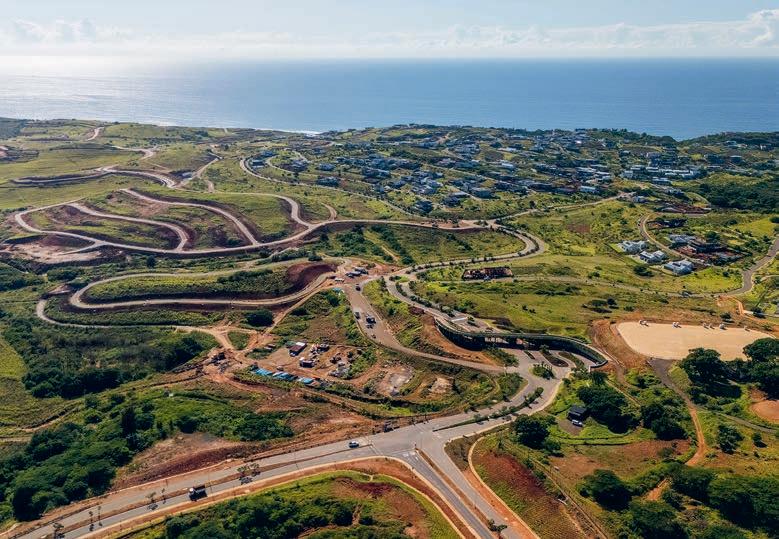
Burgundy Estate, one of Cape Town’s most in-demand residential precincts, has grown into a mature, fully integrated multigenerational neighbourhood, writes RABIE PROPERTY DEVELOPERS
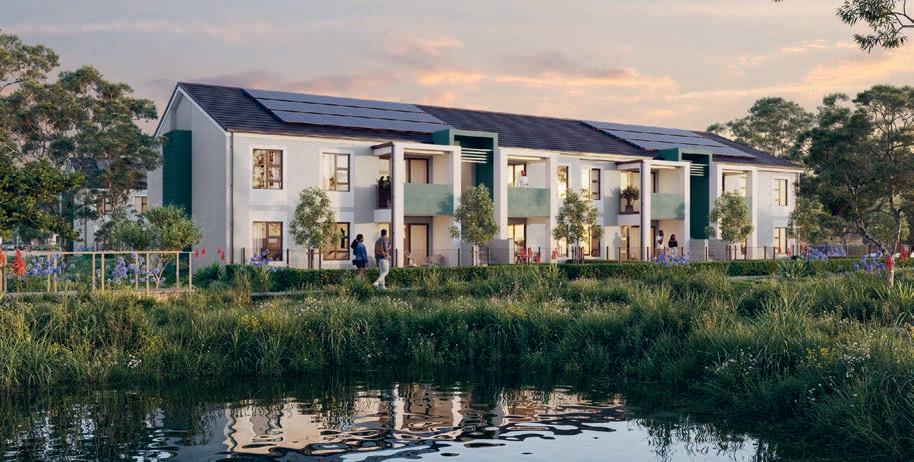
Burgundy Estate’s story did not begin as the success it is known as today. Like many large-scale developments, its early years were marked by ambition, but also slower momentum than initially envisioned. While the location and long-term potential were clear, it had yet to fully realise the vibrant, thriving community it aspired to become. The foundation had been laid, but the transformation into a sought-after residential destination was still to come.
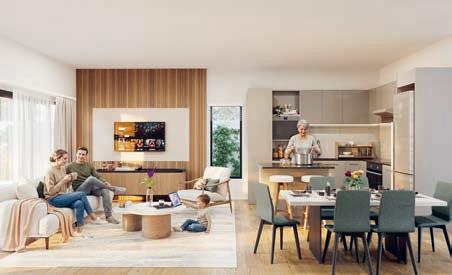
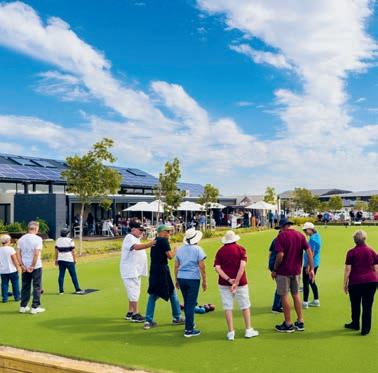
That turning point came in 2015, when Rabie Property Developers took over the development of Burgundy Estate. Since then, its trajectory has shifted signi cantly. Through a focused and consistent approach, Rabie has delivered a series of high-demand, sell-out developments that have reshaped both the pace and perception of the precinct. Over this period, more than 4 000 homes have been completed, steadily transforming Burgundy Estate into the established, multigenerational community it is today. With only a limited number of developments still to be released, it is now entering its nal chapter, marking the culmination of a carefully executed vision more than a decade in the making.
From the outset, the vision was clear: to create more than just a place to live. Burgundy Estate would become a fully integrated multigenerational neighbourhood, designed to meet the needs of residents at every stage of life. Today, that vision is evident throughout the development.
RABIE HAS APPROACHED BURGUNDY ESTATE AS A COHESIVE ECOSYSTEM
WHERE EACH PHASE CONTRIBUTES TO THE OVERALL EXPERIENCE OF LIVING IN THE AREA.
Estate has grown into a mature and established community. Tree-lined streets, thoughtfully designed public spaces and a strong sense of identity have replaced what was once open land at the edge of the city. Yet, despite its growth, it has retained a sense of cohesion and accessibility that is often dif cult to achieve at scale. One of the de ning characteristics of Burgundy Estate is its ability to cater to a wide range of lifestyles. For rst-time buyers, it offers an accessible entry point into the Cape Town property market, with modern apartments and family homes designed for convenience and ease of living. For investors, it presents a compelling proposition, supported by consistent demand, strong rental returns and a location that continues to bene t from Cape Town’s ongoing expansion. Families are drawn to its three top schools, including Curro, as well as the range of amenities available within and around the area. From convenient shopping centres and restaurants to recreational facilities and green spaces, residents can enjoy a lifestyle that balances urban convenience with a sense of openness and community.
For those considering retirement, it offers a different kind of opportunity. Developments such as Oasis Life Burgundy Estate have introduced a secure, lifestyle-oriented approach to retirement living, allowing residents to remain connected to a broader community while enjoying the bene ts of a dedicated environment.
BURGUNDY ESTATE’S TRACK RECORD SPEAKS FOR ITSELF. OVER TIME, IT HAS GROWN INTO A SOUGHT-AFTER ADDRESS, SUPPORTED BY STRONG DEMAND AND A REPUTATION FOR QUALITY.
This multigenerational appeal is intentional. It is the result of careful planning and a long-term commitment to creating a place that evolves with its residents. Rather than developing isolated projects, Rabie has approached Burgundy Estate as a cohesive ecosystem where each phase contributes to the overall experience of living in the area.
Location has also played a signi cant role in its success. Situated just 20 minutes from Cape Town’s central business district, Burgundy Estate offers convenient access to major business hubs, while still maintaining a sense of calm away from the intensity of city living. This balance has become increasingly valuable, particularly as more buyers seek environments that support both work and lifestyle.
Over the years, Burgundy Estate has continued to adapt to changing market dynamics. Shifts in buyer behaviour, increased demand for secure living and a growing emphasis on lifestyle have all in uenced its evolution. Through each phase and development, Rabie has responded by re ning product offerings, introducing new concepts and ensuring that it remains relevant in a competitive property landscape.
Now, as Burgundy Estate enters its nal phase of development, there is a growing sense of completion and maturity. The foundational elements are rmly in place, and what remains is a limited number of nal opportunities to become part of this established and evolving community.
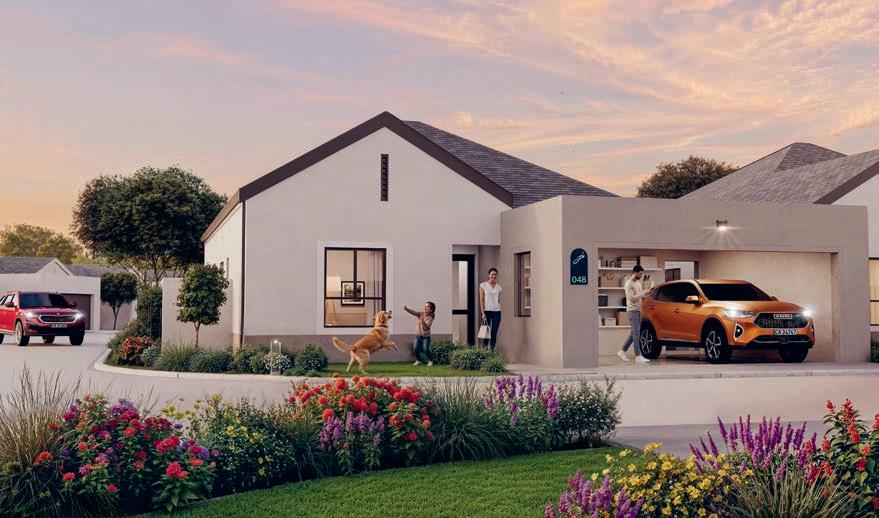
Among these upcoming releases is Ashmere, one of the nal freestanding
home developments within Burgundy Estate. Representing one of the remaining opportunities to secure a freestanding three-bedroom home, Ashmere is expected to attract signi cant interest from buyers seeking both space and long-term value.
Alongside this, Phase 2 of Finwood will be introduced, offering a modern lock-up-and-go lifestyle appealing to both investors and rst-time buyers. These apartments are designed with practicality and contemporary living in mind, re ecting the evolving needs of today’s property market.
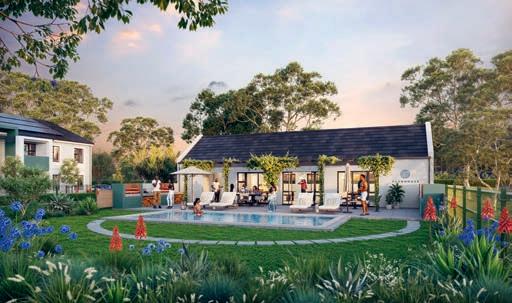
Oasis Life Burgundy Estate is also introducing its nal release of homes within this well-established retirement community. As one of the most distinctive developments, it has rede ned retirement living by combining security, lifestyle and community, and has already become home to over 400 residents.
Together, these nal developments mark the closing stages of a journey spanning more than 11 years. For Rabie, it represents the culmination of a long-term commitment to Burgundy Estate, and a re ection of what can be achieved through consistent vision and execution.
For buyers and investors, it presents a unique moment in time. Opportunities within established developments are often limited, and the nal phases of development tend to carry a different kind of value. There is certainty in what has been built, clarity in what is on offer, and con dence in its future trajectory.
Burgundy Estate’s track record speaks for itself. Over time, it has grown into a sought-after address, supported by strong demand and a reputation for quality. As it reaches completion,
this reputation is likely to become even more signi cant, particularly for those looking to invest in areas with proven performance.
This sustained growth and consistent delivery have positioned Burgundy Estate as one of Cape Town’s most reliable and in-demand residential precincts.
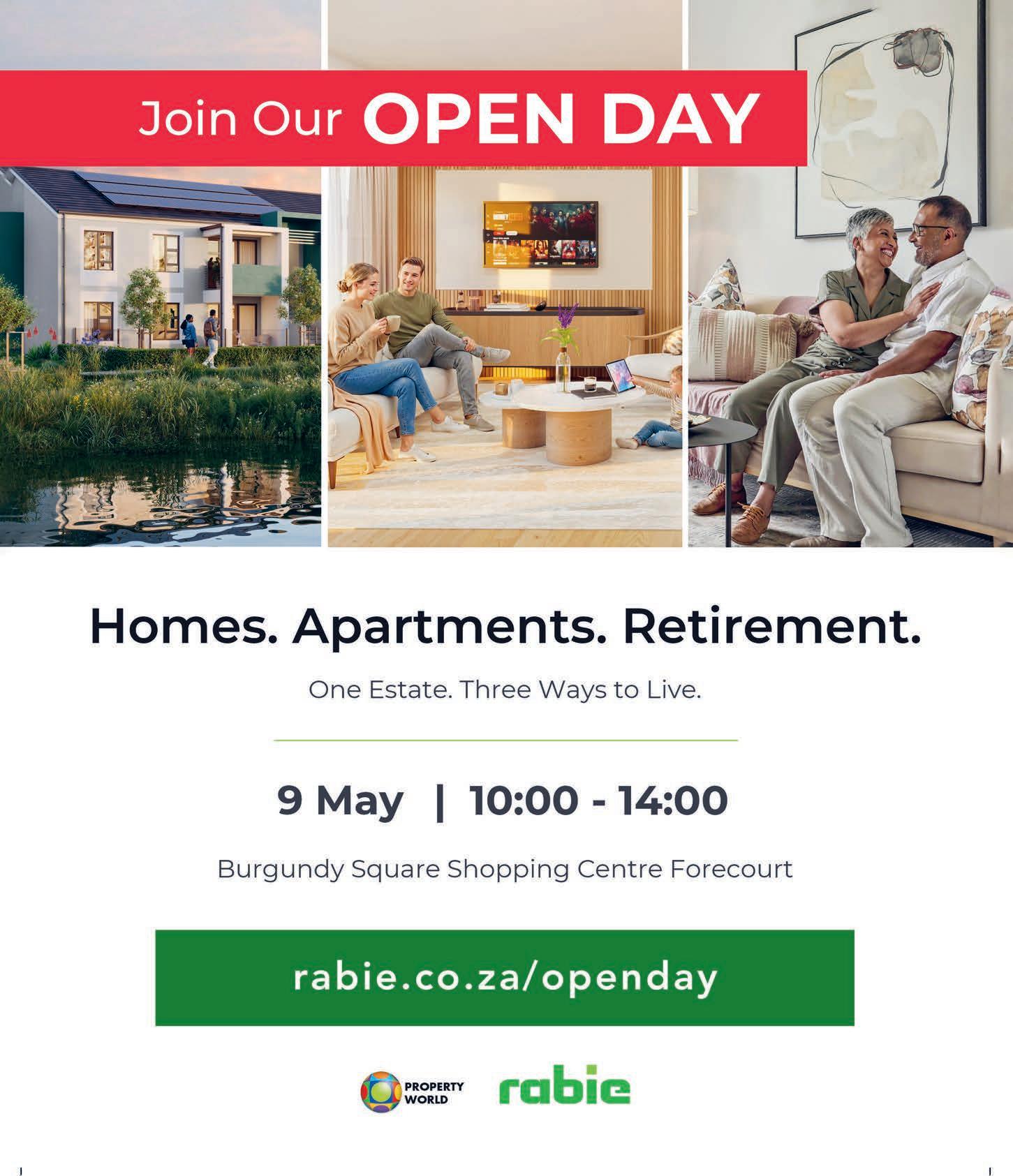
To mark this next chapter, Rabie will host a Burgundy Estate Open Day on 9 May. This event offers a unique opportunity to experience the estate rst-hand, explore the new developments and gain early access to the upcoming releases. Visitors will have the opportunity to engage with the various sales teams, walk through show units and homes and better understand what makes Burgundy Estate such a distinctive offering within the Cape Town property market. For those interested in Ashmere, Finwood or Oasis Life, the Open Day provides a rst look at what is to come.
As Burgundy Estate moves into its nal phase, a story more than two decades in the making continues to unfold. For many, it has already become home. For others, it may represent a nal opportunity to be part of something that has been carefully built, thoughtfully developed, and rmly established as one of Cape Town’s enduring residential destinations.

For more information: www.rabie.co.za/openday
BY
Picasso Headline, A proud division of Arena Holdings (Pty) Ltd, Hill on Empire, 16 Empire Road (cnr Hillside Road), Parktown, Johannesburg, 2193 PO Box 12500, Mill Street, Cape Town, 8010 www.businessmediamags.co.za
EDITORIAL
Content Manager: Raina Julies rainaj@picasso.co.za
Contributors: Tersia Booyzen, Thando Pato, Vanessa Rogers, Anthony Sharpe, Elriza Theron, Lisa Witepski
Copy Editor: Brenda Bryden
Content Co-ordinator: Natasha Maneveldt
DIGITAL
Online Editor: Stacey Visser vissers@businessmediamags.co.za
DESIGN
Head of Design: Jayne Macé-Ferguson
Senior Design: Mfundo Archie Ndzo
Cover Images: Supplied
SALES
Project Manager: Merryl Klein merrylk@picasso.co.za | +27 21 469 2446
PRODUCTION
Production Editor: Shamiela Brenner
Advertising Co-ordinator: Fatima Dramat
Subscriptions and Distribution: Fatima Dramat fatimad@picasso.co.za
Printer: CTP Printers, Cape Town
MANAGEMENT
Management Accountant: Deidre Musha
Business Manager: Lodewyk van der Walt General Manager, Magazines: Jocelyne Bayer
COPYRIGHT: Picasso Headline.
No portion of this magazine may be reproduced in any form without written consent of the publisher. The publisher is not responsible for unsolicited material. Property is published by Picasso Headline. The opinions expressed are not necessarily those of Picasso Headline. All advertisements/advertorials have been paid for and therefore do not carry any endorsement by the publisher.

South Africa’s property sector is changing. Shifting economic realities, technological disruption and evolving lifestyle patterns are rede ning how assets are developed, nanced and managed.
In this issue, we explore several of the forces reshaping the market. Self-storage, on page 14, once seen as a simple lock-up solution, is rapidly emerging as a sophisticated asset class. Driven by urban densi cation, e-commerce growth and the expanding small and medium enterprise economy, the sector is attracting investors while property technology (page 4) – from smart access control to AI-enabled surveillance – is enabling scalable, remotely managed portfolios.
We also examine the growing appeal of agricultural land as an investment (page 23), where farmland is increasingly viewed as both a hedge against in ation and a platform for diversi ed income streams, from agribusiness and eco-tourism to renewable energy projects. Alongside this, our feature on offshore property (page 28) unpacks why South African investors are diversifying beyond local markets in search of currency protection, residency pathways and long-term portfolio stability.

Closer to home, the built environment itself is evolving. Our look at the future office (page 7), highlights how design-and-build rms are reimagining workplaces for the hybrid era, integrating wellness, energy ef ciency and exible space planning. At the same time, adaptive reuse (page 18) is gaining momentum as developers transform underutilised buildings into hotels, student housing and mixed-use precincts that breathe new life into urban spaces. We unpack what’s new in the live-work-play ecosystems (page 24) in South Africa, and ask if it is really possible to enhance asset resilience and long-term value by buying into one of these self-sustaining environments.
Finally, we assess the industrial property surge (page 13), fuelled by the continued expansion of e-commerce and the growing need for logistics infrastructure, alongside emerging financing models (page 5), including green bonds, REIT structures and private equity, that are enabling large-scale, sustainable developments.
Taken together, these trends point to a property sector that is becoming more diversi ed, technology-enabled and globally connected. For investors and developers alike, adaptability, innovation and strategic thinking will de ne the opportunities ahead.
Raina Julies

As utility costs soar and environmental, social and governance mandates tighten, property managers are turning to smart building technologies to improve efficiency, control energy use and protect their bottom lines, writes TERSIA BOOYZEN
Across South Africa’s commercial property sector, digital technologies are reshaping how buildings are managed. From smart energy monitoring to integrated tenant platforms, property managers are increasingly relying on data-driven systems to improve ef ciency, reduce costs and meet rising environmental, social and governance (ESG) expectations.
Engelbert Binedell, chief operating of cer of Growthpoint Properties, explains:
“Growthpoint integrates sustainability with clear commercial goals, targeting carbon neutrality by 2050. Over more than a decade, it has invested R1-billion in solar energy, and now operates over eighty plants, and counting, with a combined capacity of 61.7MWp.
“The company manages its solar portfolio through a central command centre that monitors more than eighty systems across South Africa. Real-time data allows the team to track performance and quickly identify issues, such as dirty panels or malfunctioning strings.”
“About half of its solar installations are registered for Renewable Energy Certi cates (RECs) on either the I-REC or zaREC registries,” Binedell says. “Growthpoint uses internet of things sensors, blockchain and AI-driven veri cation to ensure every megawatt hour of electricity from these registered sites is time-stamped, source-veri ed and permanently recorded as renewable. This process aligns with international frameworks, including IFRS sustainability protocols, I-REC and South Africa’s national REC registry, zaRECs.”
Binedell adds that a key milestone came in October 2025 when Growthpoint began receiving certi ed green electricity through its 195GWh power purchase agreement with Etana Energy. The agreement, covering hydro, wind and solar generation, is expected to supply nearly 32 per cent of the group’s energy consumption based on 2023 demand, the year the deal was signed.
The rst renewable electricity was wheeled through the national grid from the Boston Hydroelectric Plant in the Lesotho Highlands Water Scheme, which came online in October 2025. Growthpoint can supply twenty-one of its buildings on the Eskom direct grid, and three on the City of Cape Town’s grid, with certi ed green energy. Nine of these buildings form part of Growthpoint’s e-co2 initiative, which offers tenants predictable, cost-saving escalations. Every megawatt hour is independently veri ed as renewable.
“Scaling wheeling across a large portfolio adds operational complexity,” Binedell elaborates. “Growthpoint manages around three hundred and fty buildings and processes one thousand one hundred municipal invoices each month. Energy wheeling increases renewable energy across the portfolio, but requires additional trader invoices and reconciliation processes.”
To manage this, Growthpoint partnered with 1ai to build a digital platform using robotic process automation, machine learning for data extraction and automated anomaly detection. The system supports scalable administration and strengthens audit and carbon reporting.
“These combined initiatives increased Growthpoint’s veri able renewable energy penetration from 8.7 to 14.5 per cent by the end of the 2025 calendar year, reinforcing the role of data-driven property management in delivering measurable sustainability outcomes,” Binedell concludes.
Scott Thorburn, from the national asset manager of ce of Rede ne Properties, adds: “As commercial buildings become more intelligent, property management is increasingly shifting from reactive processes to proactive, data-led decision-making.

At Redefin Properties, digital platforms like the GoCity tenant ecosystem streamline access, security and visitor management while giving property teams real-time operational insights.
At Rede ne Properties, digital platforms like the GoCity tenant ecosystem are helping to streamline access, security and visitor management while providing property teams with real-time operational insights. By consolidating building interactions into a single digital interface, landlords can improve security oversight, optimise parking and space utilisation and enhance the tenant and visitor experience while reducing administrative burdens.”
Upfront costs for smart renovations can be 20 to 30 per cent higher than standard refurbishments. The challenges are uniquely South African: older structures often lack the ducting for bre-optic backbones or the electrical capacity for massive solar-battery hybrids.
Thorburn elaborates: “While the upfront investment in smart-building technologies can be signi cant, the long-term bene ts outweigh the initial costs. For both new developments and retro tted assets, digital infrastructure enables better building performance, lower operating costs and improved transparency around how spaces are used. Over time, these ef ciencies contribute not only to stronger asset management and tenant satisfaction, but also to broader sustainability goals, as smarter buildings allow property owners to make more informed decisions that support energy ef ciency, operational resilience and long-term portfolio value.”
Follow: Engelbert Binedell www.linkedin.com/in/engelbert-binedell Scott Thorburn www.linkedin.com/in/scott-thorburn-0890aa32
WATCH
More about Growthpoint’s e-co2 initiative.
Private equity and bank loans are slowly giving way to new forms of funding as property developers seek to meet the needs of a market increasingly focused on inclusiveness and sustainability, writes LISA
WITEPSKI
Where once property developers fretted over factors like available resources, market demand and construction costs, today’s players have even more complex considerations, including a call for greater sustainability, data transparency and long-term resilience.
This explains the growth of new and innovative funding models, says Kagiso Mahlangu, director: head of real estate & conveyancing at CMS South Africa, adding that many developers are favouring models that allow them to meet these new needs.

Mahlangu cites sustainability-linked funding as one such innovation. Appetite for this model is driven by the fact that sustainability is, increasingly, viewed as “an economic imperative, rather than an ethical choice”. This explains the new emphasis nancial institutions are placing on environmental, social and governance performance, with lower interest rates offered for energy-ef cient developments. Green bonds are another spin on this theme, typically offered to developers who have agreed to retro t energy-saving measures.
Inclusiveness is being addressed through new funding models. Mahlangu notes that more small and medium enterprises have been able to enter the industry, thanks to the increase in alternative lenders and ntech partnerships. She explains that these options are “bridge- ning the gap left by the traditional credit appetite”.
“These platforms leverage alternative data for credit scoring and streamlined digital application processes so they can provide quicker, more agile funding solutions,” she adds. Entities (and individuals) previously underserved by conventional mortgage
structures now have a new entry point to the industry.
Mahlangu further points to the rise of hybrid nancing and mezzanine structures as a response to a shifting market where “one-size- ts-all” equity models no longer make sense. These models are a particularly good t for developers looking to address funding gaps in large-scale developments, as they make it possible to optimise capital stacks. “This results in a lower barrier to entry for ambitious projects,” Mahlangu says, noting that risk-adjusted returns for institutional investors are a further advantage.

friendly, high-quality of ce, retail warehouse and industrial warehouse developments. “This approach has helped the company grow while enabling it to access funding and complete projects we otherwise would not have been able to pursue,” Whall says.
Private market lenders are also beginning to make their mark, according to Jason Green, partner: alternative asset management at Fedgroup.
Another exciting trend is the development of deeper collaboration within the real estate nancial ecosystem. Entities like development nance institutions, private equity and commercial banks are increasingly working together, Mahlangu says. These partnerships spell good news for developers, especially those focused on large-scale infrastructure or initiatives like social housing projects, because they reduce risk. “They also ensure the projects remain attractive to private capital, even in the current turbulent economic environment,” she notes.
At the same time, companies are nding their own solutions to funding challenges. For instance, John Whall, CEO of Heartwood Properties, explains that the company shifted from raising debt funding to listing – rst on the Cape Town Stock Exchange, then a secondary listing on the A2X Markets – as a means to fund its projects; typically, environmentally
“Private capital tends to thrive in worlds where capital is scarce, but opportunities are real,” Green says. Small wonder, then, that many private market lenders have been “quietly growing their books” in recent times: “Tailwinds in the private lending market, supported to some extent by tighter lending criteria at traditional lenders and related bureaucratic hurdles, has seen rising demand for solutions in the private lending space. Developers are looking for access to the right capital solutions at the right time that enable them to seize opportunities and mitigate risks,” Green observes.
Other models coming to the fore, according to Attacq Limited, are REITs (real estate iInvestment trusts). “A key feature of the REIT model is the requirement to distribute a signi cant portion of earnings to investors. In South Africa, REITs must distribute at least seventy- ve per cent of their distributable income annually. Due to this requirement, REITs are generally best suited to owning completed, income-generating properties,” says Jackie van Niekerk, Attacq CEO.
Mahlangu predicts that the call for more innovative models will increase, especially now that South Africa’s real estate industry has been bolstered by lower interest rates. “We are likely to see even more creative solutions that allow developers to address critical issues while taking advantage of a market set for growth,” she concludes.
Follow: Jason Green www.linkedin.com/in/jasoncarlgreen Kagiso Mahlangu www.linkedin.com/in/kagiso-mahlangu-44bb956a John Whall www.linkedin.com/in/john-whall-68252423 Jackie van Niekerk www.linkedin.com/in/jackie-van-niekerk-5a140876

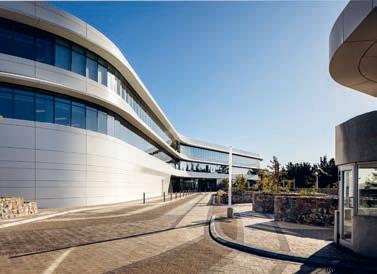
Commercial workspaces are shifting from simply being functional to becoming agile environments, driven by technology and sustainability, with a stronger emphasis on boosting employee performance and wellbeing. These elements are now integral rather than afterthoughts, forming the basis of modern and future workspaces. THANDO PATO speaks with architecture and interior design firms about how South African companies are adapting
South African of ce spaces are undergoing their most signi cant transformation, driven by remote work, a stronger focus on work-life balance, the expectations of a younger workforce and challenges around energy and water supply.
Increasingly, companies are reassessing not only the design of their of ces, but also their core purpose, aiming to create workplaces that integrate agility, wellness, smart technology and sustainability.
In the past, of ce design was often guided by a single measure: how many people could t per square metre. That approach is now being replaced by a more thoughtful framework centred on how effectively people can work within a space.

Kimmi Kloes, head of design at Turnkey Interiors Johannesburg and Green Building Council of South Africa accredited professional, explains the change in attitude.
“Pre-pandemic, when we proposed fewer desks in favour of collaborative space, it was often met with spreadsheets and concern.
Now clients ask, ‘Do we really need this many desks?’ It represents a complete reversal of priorities; it’s no longer just about bums in seats.”

Lisa Bridgeford, principal at dhk Interior Design, describes the same shift in terms of both architecture and interior design, noting an increasing demand for spaces with sensory and tactile qualities.
“The workplace remains vital for sharing knowledge, making connections and fostering culture, all of which require social proximity. While hybrid working continues, the emphasis is shifting towards creating environments that support meaningful interaction and reinforce a sense of purpose and belonging at work.”
One of the most commercially persuasive arguments in modern workplace design is the life cycle cost difference between traditionally delivered projects and those created through an integrated model, where design, construction and technology are co-ordinated from the outset.
Bridgeford says collaboration impacts costs in the long term. “The most expensive decisions are the ones made too late. By prioritising early alignment, including identifying potential clashes and detailed planning of systems and processes, the project can transition more smoothly from design into construction, with clearer accountability and a lower risk of costly changes later.”
This point is supported by Faye Simpson, head of business development at Giant Leap Workspace Specialists.
“Integrated delivery reduces rework, improves ef ciency and ensures systems like lighting, heating, ventilation and air conditioning (HVAC), and smart technology are optimised, which lowers ongoing energy and maintenance costs.
Employers often start seeing return on investment within three to ve years.”

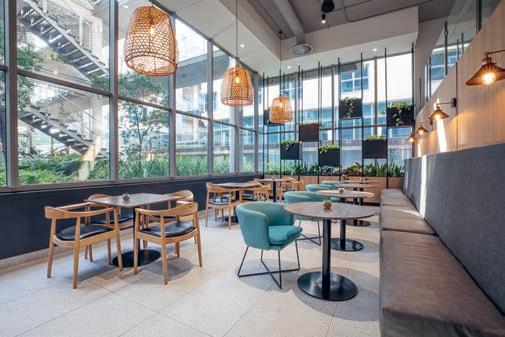
“WHILE HYBRID WORKING CONTINUES, THE EMPHASIS IS SHIFTING TOWARDS CREATING ENVIRONMENTS THAT SUPPORT MEANINGFUL INTERACTION AND REINFORCE A SENSE OF PURPOSE AND BELONGING AT WORK.” – LISA BRIDGEFORD
Simpson says an agile workplace is often misunderstood, and what de nes it is how it meets employees’ needs. “An agile space is designed to adjust to the way people actually work. It can feature quiet zones for focused work, collaborative hubs for team brainstorming and social spaces for informal interaction.”
Bridgeford emphasises that exibility cannot simply be added later as a plug-in. “Decisions made early, particularly those relating to layout, services and structure, can lead to a more effective design that can respond to future needs.”
She highlights raised access oors as a practical example, allowing power points and cabling to be repositioned as layouts change, thereby preventing expensive rebuilds.
Stephanie Eichhoff-Meyer, head of design, Turnkey Interiors Cape Town, recalls a project that tested a client’s comfort with agile principles. “When snagging one site, which really pushed some of the agile typologies, we used swings in a more social space. The client wouldn’t sit on it until the site supervisor and I had tested it out. Now they are an irreplaceable and always-used piece of the design furniture.”

Both Kloes and Eichhoff-Meyer say that ultimately the greatest value comes from thoughtful spatial planning, good acoustics and access to natural elements. “These are not headline-grabbing interventions, but they shape the daily experience of a workspace. When those fundamentals are well-resolved, everything else performs better. It’s often the quiet decisions, the ones people don’t immediately notice, that have the most profound impact,” says Kloes.
The lesson is as much about change management as physical design; people need to understand a space before they will use it effectively.
Smart building technology is evolving from a luxury into an essential operational tool, especially in South Africa, where energy resilience remains a critical business

concern. All three practices indicate a growing client demand for systems that provide measurable, rapid returns.
“Smart building systems, such as advanced building management systems, automated lighting and HVAC optimisation, create an environment that responds dynamically and intelligently to how the space is used. Intelligent systems monitor energy use and adjust output based on occupancy and demand. They detect water leaks early, manage CO2 levels to prevent fatigue and adapt energy consumption to behavioural patterns in the building,” says Bridgeford.
She also emphasises the growing importance of building information modelling and digital twins as essential tools for large corporations managing complex, multisite assets.
Kloes says South African clients prefer solutions focused on real problems and describes smart metering for electricity and water as a typical starting point for managing utilities, collecting data and resolving issues.
Bridgeford maintains that sustainability has shifted from a certi cation exercise to a foundational design principle.
“The built environment is responsible for nearly forty per cent of carbon emissions. The foundation of a more sustainable built environment lies in making more thoughtful design choices. Good design integrates passive principles that naturally complement decisions about where glazing is placed, how overhangs are shaped, how sunlight is managed and how the building is oriented, even before considering what mechanical or technological systems can be implemented to reduce energy consumption.”
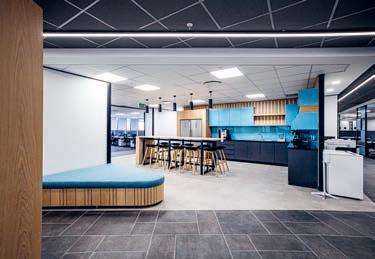
Tenants, she says, are increasingly demanding energy-ef cient buildings, and providing this reduces vacancy rates.
Regarding certi cation, Bridgeford observes that while Green Star and EDGE are gaining strong momentum locally, WELL is less widely adopted, although many of its principles are being implemented in practice regardless of formal accreditation.
Kloes echoes this sentiment, noting that Green Star benchmarks are continually raising the bar. “Yesterday’s innovations are quickly becoming today’s baseline. The moving goalposts can be challenging, but they de nitely point to real progress.”
Looking ahead, Simpson anticipates a world where AI will underpin everyday operations, demanding digital infrastructure that seamlessly integrates physical and virtual work.
Bridgeford believes organisations should not worry about predicting every detail of the future, but focus on designing spaces agile enough to adapt to it.
Eichoff-Meyer advises employers to understand their principles and goals before embarking on a building project or making changes to a space. “Before touching the space, start with data-driven workplace analysis and strategy. You need to see how people actually work, where the friction points are, and sometimes the assumptions are fundamentally wrong about the real problem.”
Most organisations, she says, “overspend on space and underspend on strategy.”
The message is clear: the most effective workplace is not the most spectacular one. It is the one designed with intention, informed by evidence and built to adapt.
Follow: Kimmi Kloes www.linkedin.com/in/kimmikloes
Stephanie Eichhoff-Meyer www.linkedin.com/in/stephanie-eichhoff-meyer-b14b2a74
Turnkey Interiors www.linkedin.com/company/tkisouthafrica
Faye Simpson www.linkedin.com/in/faye-simpson-8459237a
Giant Leap Workspace Specialists www.linkedin.com/company/giant-leap-workspace-design
Lisa Bridgeford www.linkedin.com/in/lisa-bridgeford-09643833
dhk Interior Design www.linkedin.com/company/dhkinteriordesign
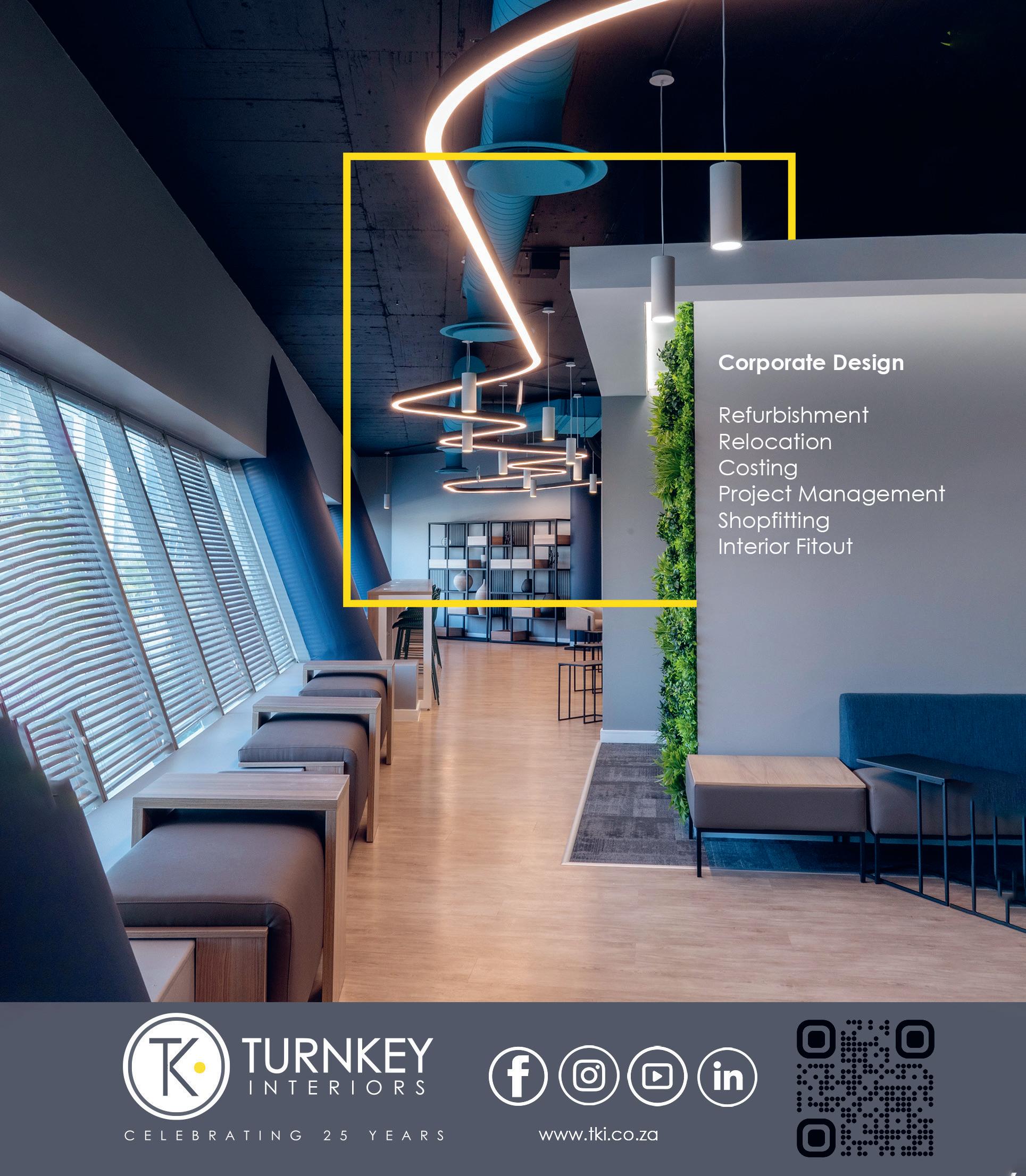



Turnkey Interiors is a leading design-and-build specialist, delivering intelligent, high-performance environments across corporate, retail, hospitality and industrial sectors. With over 25 years of proven expertise, the company has evolved beyond traditional fit-out to become a strategic partner in shaping spaces that drive business success.
Operating from Sandton and Century City, Turnkey executes projects across South Africa and sub-Saharan Africa, offering an integrated, end-to-end solution – from concept design and cost planning through to construction, regulatory approvals and final delivery. This ensures precision, efficiency and confidence throughout the project life cycle.
Turnkey is committed to creating environments that are functional, commercially effective and deeply aligned with each client’s brand, culture and operational needs.
A key differentiator is its dedicated joinery and manufacturing facility in Kyalami, enabling full control over quality, customisation and lead times. From bespoke interiors to large-scale roll-outs, this capability ensures consistency and craftsmanship at the highest level.
Long-standing client relationships, built on trust, delivery certainty and a collaborative mindset, remain central to the business. Whether delivering a workplace transformation, a flagship retail environment or a complex refurbishment, Turnkey Interiors brings clarity, accountability and design intelligence to every project.
For more information: Call 0861 TURNKEY or visit www.tki.co.za
Giant Leap designs and builds corporate interiors that go beyond functionality, spaces that inspire, encourage innovation and have the wellbeing of the people who use them at the core of every decision. It all starts with people. Giant Leap creates spaces that feel comfortable, inspiring and easy to be in – think natural light, ergonomic furniture and thoughtful amenities to make the workday better. It also ensures the space reflects a company’s brand and helps build a positive, connected culture.
Experiential design is all about how people move through a space and how it makes them feel. It’s about creating immersive environments that tell a story, spark connection and leave a lasting impression.
By integrating wellbeing elements into the design from the start, the office becomes a space that genuinely supports people’s health, comfort and happiness. A thoughtfully designed environment can make a real difference to how employees feel daily, supporting their physical, mental and emotional wellbeing.
A well-designed workspace helps people feel motivated, stay creative and connect with one another, so teams can do their best work, and the company culture thrives.
For more information visit: www.giantleap.co.za
dhk Architects is a design-focused multidisciplinary studio, incorporating architecture, urban design and interior design. Since 1998, we have helped shape city skylines, urban environments and building interiors into exceptional places that support the wellbeing and prosperity of occupants, while improving the environmental, social and economic sustainability of the contexts within which they exist. We are curious, inquisitive and innovative, not afraid to experiment and explore new perspectives and environmentally responsible, innovative design solutions.
Our portfolio of projects spans multiple sectors, scales and geographies. Operating from offices in Cape Town and Johannesburg, our design-led approach is underpinned by our technical implementation expertise and a deep commitment to sustainable design. The projects we deliver are benchmarks for design excellence, incorporating international influences and technical advancements, balanced with economic realities to ensure fully grounded designs.
We are part of 10N, a collective created by Egis, which is a leading force in architecture, engineering, consulting, operations and mobility solutions. As part of the collective, our teams can extend their horizons by contributing their significant expertise globally. As a studio, we can take the next leap forward in our expansion, in conjunction with world leaders in our industry.
For more information visit: www.dhk.co.za
Phase 4 of the prestigious Knysna Lifestyle Estate is attracting strong interest from buyers wanting to secure a residence boasting sweeping views of the Knysna lagoon, the iconic Knysna ‘Heads’ and the beautiful natural surroundings.
Set within 52 hectares of landscaped serenity, Knysna Lifestyle Estate offers discerning active adults space, security, sophistication and an enviable lifestyle.
The architecture blends contemporary elegance with charm, set among green belts, quiet lanes and walking paths. The atmosphere is calm, welcoming and timeless – a place where every day feels like a reward well-earned.
Here, time slows down so you can enjoy what matters most: an early morning walk with a view, an afternoon at the heated pool or a sunset drink with neighbours at the clubhouse bar. The facilities are designed for comfort, convenience and community. An on-site healthcare facility can cater to your specific needs – whether within your own freehold home, a life-right assisted living unit or the estate’s dedicated healthcare centre – providing peace of mind.
This is your opportunity to make the Knysna Lifestyle Estate your home – and live every day as life’s reward.
For more information: Tel: 044 382 2139
Email: janey@kle.co.za | Visit: www.kle.co.za

South Africa’s burgeoning e-commerce market is changing how logistics operators and retailers think about warehousing, writes ANTHONY SHARPE
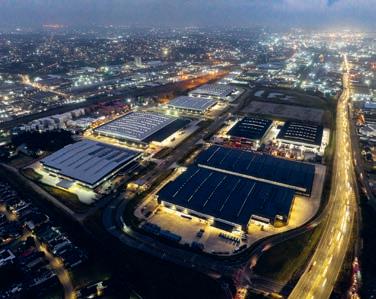
The e-commerce boom in South Africa continues apace. A report by Ecommerce Forum South Africa shows that e-commerce in the country is more mature than emerging markets like India, Brazil, Kenya and Nigeria, with a potential R900-billion township market waiting to be unlocked.
This is reshaping industrial property demand, with modern, well-located warehouses and ful lment centres required to meet the dynamic, fast-paced needs of the sector.
The surge has fuelled a supply-demand imbalance, driving prime logistics rental growth of 7.3 per cent year-on-year, with modern warehouse occupancy hitting historic highs of 83 per cent as retailers prioritise high-spec distribution hubs.
Jason Cooper, head of development at Fortress Real Estate, says the node around Eastport and along the R21 freeway has become one of the key logistics nodes in South Africa. “This is where we are seeing most of the demand. There is also an increased need in and around Cape Town, along the R300 and N7 in particular. For example, Takealot has expanded on the N7 site, and other operators are looking at this area as well.”
Cooper says he has observed some repurposing happening in warehousing distribution areas. “However, major e-commerce players still prioritise large facilities that are close to
major highway networks to ful l their customer needs. Some fast-moving consumer goods operators use their retail network for the dispatching of last-mile logistics.”
This makes sense for retailers, as storage space near residential areas is limited and comes at a premium. For this reason, says Equites Property Fund CEO Andrea Taverna-Turisan, basement space in old retail shopping centres and similar properties is being repurposed. “These are often areas that cannot be utilised effectively. In some of these old retail centres that were developed in residential areas, this underutilised space is now being adapted to support growing e-commerce demand.”
Taverna-Turisan says that as logistics and warehousing needs have evolved, so too has the minimum standard of what is considered institutionally acceptable product. “We are seeing a move towards higher eaves, with 15.5m now viewed as the entry level for meaningful warehouse space. Similarly, FM2 ooring is increasingly regarded as a minimum requirement because you need the atness to work at these heights. Specialised ooring is not just for robots, but is also equally critical for ef cient material handling.”

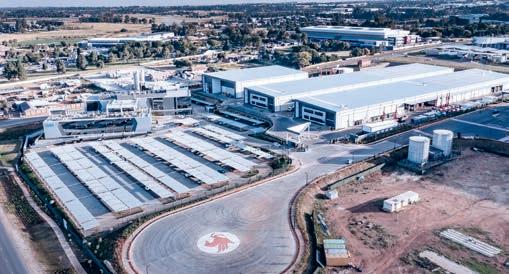
The immediacy of e-commerce is also changing the technology requirements for warehouses, says Taverna-Turisan. “To operate in a world that demands this level of immediacy, businesses require advanced technology. This cannot simply be retro tted into old buildings; it requires purpose-built facilities designed to accommodate it. The newer buildings being delivered by various developers are certainly equipped to meet these evolving standards. However, the vast majority of buildings that were built ten years ago would no longer meet today’s requirements.”

Cooper says Fortress designs its buildings to be able to accommodate the specialised mezzanine racking that online retailers require. “E-commerce operations also tend to have more staff on-site, who need to be accommodated by design. Third-party logistics providers require additional ablutions and canteen facilities to meet their needs. The movement of staff into the warehouse with regard to operational health and safety becomes an important factor in designing the space.”
Taverna-Turisan says Equites is designing warehouses with a keen eye on the future. “Automation will come, particularly as arti cial intelligence continues to drive ef ciencies and reshape operations. However, we do not expect full automation to be adopted quickly in South Africa, because the cost of labour is still affordable for one not to invest in automation. Instead, we expect a phased approach with targeted automation, such as conveyor belts and certain scanning and picking systems. However, in our view, there will always be a manual component within warehouse operations for some time to come.”
EFSA e-commerce report
Follow: Jason Cooper www.linkedin.com/in/jason-cooper-/ Andrea Taverna-Turisan www.linkedin.com/in/andrea-taverna-turisan-b2a7a026


Once a simple lock-up solution, self-storage is evolving into a tech-enabled property asset class, driven by urban densification, e-commerce growth and flexible demand, writes ELRIZA THERON
Self-storage is emerging as one of the most dynamic niche sectors in South Africa’s commercial property market. What was once considered a secondary real-estate category is increasingly attracting investors and developers, thanks to strong demand drivers such as urban densi cation, e-commerce growth and the expanding small-business economy. At the same time, advances in digital infrastructure are completely transforming how these facilities are built, operated and scaled.
Smaller living spaces across major metros and fast-growing towns are reshaping how South Africans store their belongings. Many people are now turning to self-storage as an extension of their living space as household downsizing and apartment living becomes more common, particularly in urban nodes where space is limited.
“Continued growth in demand for self-storage is being driven by people choosing to live in smaller homes, which increases the need for additional storage,” explains Marc Bromhall, chief executive of cer of StorageBuddy.
Bromhall notes that this structure creates signi cant pricing exibility. “Instead of a three-to- ve-year lease on commercial property, self-storage operates month-to-month, meaning operators can leverage dynamic pricing mechanisms.”
The asset class also bene ts from strong operating margins due to its relatively low staf ng and utility requirements. Sean Heckler, managing director at BizCom, says this diversi ed income model is one of the sector’s biggest strengths. “You can get bulk storage with smaller units, which makes the capital outlay versus return quite lucrative. The fact that you can spread your risk across multiple tenants rather than relying on a handful of large leases also adds to the appeal,” he explains.
Technology is playing a critical role in accelerating the sector’s growth and ef ciency. The most signi cant transformation has occurred in access control, where traditional keys and staffed reception areas are increasingly being replaced by digital systems.
“More progressive facilities have rolled out remote access control where customers can access both the facility and their storage unit through a digital key on an app,” says Bromhall.
He explains that app-based access platforms allow customers to open gates, enter buildings and unlock units using their smartphones. While still emerging in the South African market, these systems are becoming more common as operators seek to streamline operations and improve customer convenience.
Alongside access systems, automated booking platforms and digital management tools are rapidly becoming standard features in modern storage facilities. Bromhall says that automated booking systems are already widely used by new entrants into the market. The adoption of remote management technology is particularly important for operators seeking to expand their portfolios across multiple locations, as it signi cantly reduces costs while improving scalability.
Arti cial intelligence is also beginning to shape the next generation of storage facilities. The industry is moving toward increasingly autonomous facilities, says Bromhall. Future sites could include AI-driven customer onboarding, biometric entry, smart locks integrated with mobile apps and automated payment enforcement that locks units if accounts fall into arrears.
Beyond residential users, the rise of e-commerce and small businesses is also fuelling demand for exible storage space. Many small to medium enterprises and online retailers use storage units as micro warehouses, inventory hubs or distribution points, particularly in areas where industrial space is scarce or expensive.
From an investment perspective, the broader commercial property market also contributes to the sector’s momentum. Heckler notes that commercial property typically delivers stronger yields than residential assets. “Commercial properties still yield approximately eight to ten per cent returns compared to about ve or six per cent for residential,” he says.
Although supply is gradually increasing, Heckler cautions that this could lead to an eventual plateau in the next ve years or so. For now, however, demand remains strong in growing towns and coastal areas where commercial property investment has rebounded following the COVID-19 pandemic.
Looking ahead, the combination of digital technology, exible leasing models and structural demand drivers suggests that self-storage will continue to evolve into a high-yield, tech-enabled property asset class. As autonomous operations and AI-driven management systems become more widespread, the sector could offer investors a scalable model that blends real estate with smart infrastructure.

Property financing is undergoing a fundamental shift with greater emphasis being placed on how it enables and enhances value.
By JASON GREEN , partner: alternative asset management at Fedgroup
For years, the conversation around property nance in South Africa has followed a familiar script. Interest rates uctuate, demand shifts, and capital ows to where the market appears strongest. However, beneath that cycle, something more fundamental is changing. The next frontier in South African property nance is not simply funding assets, but funding the infrastructure, amenities and execution pathways that make those assets valuable in the rst place. In short, property is no longer just about buildings. It is about places.
At a surface level, property nance still looks unchanged. Lenders provide capital against properties, and returns are generated through rental income or capital growth.
In reality, what is being funded has evolved.
Modern properties are not merely stand-alone assets. They are integrated environments. Residential estates depend on roads, utilities and social infrastructure. Retail centres are shaped by behavioural patterns, not just location. Mixed-use assets generate value across multiple income streams, often over different timelines.
This shift is increasingly re ected in both public and private sector priorities. Government’s focus on integrated and sustainable human settlements signals a move towards developments that combine housing with infrastructure, services and community amenities.
For capital providers, this changes the equation. In modern property nance, social infrastructure is not adjacent to the deal. It’s part of the collateral logic.
Elements like schools, transport networks or even the addition of reliable utilities are no longer “nice to have”. They directly
in uence absorption, pricing and long-term resilience. Without them, even well-located properties struggle to deliver value.
South Africa is not short of capital in the property sector. Banks remain active and, in some areas, highly competitive. Institutional investors continue to allocate to real assets. Yet projects still stall.
The reason is increasingly clear: the constraint is not capital; it’s execution.
In South African property, execution capacity is becoming more valuable than nominal access to capital.
Although this is a challenge across the industry, it is particularly relevant in the development phase. Developments today require co-ordination across infrastructure delivery, planning approvals, construction and market timing. Delays in any one of these areas can materially impact returns.
This is where the nature of capital matters.
Developers need funding partners that can engage at the pace of the project, structure around real-world timelines and make decisions close to the transaction. The ability to move quickly is not simply a convenience. It can determine whether a project captures its market window or misses it entirely.
Across large-scale developments, such as Seaton and Lalela Estates, Fedgroup’s role has extended beyond traditional funding. By structuring capital to enable the roll out of core infrastructure and community amenities alongside residential expansion, the focus shifted from nancing units to enabling an entire development ecosystem.
That distinction is becoming increasingly important.

If execution is one side of the equation, timing is the other. One of the least discussed dynamics in the property market is how unevenly trends are recognised. By the time an opportunity is widely accepted, pricing has already adjusted and returns have compressed.
The real advantage lies in identifying structural shifts early.
The evolution of convenience retail is a case in point. Changes in how people live and work have driven a move towards localised, high-frequency shopping. Neighbourhood centres anchored by essential services have become more relevant to daily life than large destination malls.
Fedgroup identi ed this shift early, partnering with developers to nance the repositioning and expansion of mid-sized convenience centres in high-density suburban nodes. At the time, these assets were often overlooked. Today, they are recognised for their resilience and stable cash ows.
The lesson is not about retail. It’s about timing. The most valuable property capital is deployed before a trend becomes a category.
These shifts are also challenging how risk is understood. Traditional property nance relies heavily on historical data and standardised models. That works well for established asset classes with predictable income streams, but the constraint in traditional property nance is not capital. It’s the reliance on backwards-looking models.
Many of the most compelling opportunities today do not have long track records. They sit in emerging segments, hybrid developments or evolving behavioural trends. Assessing them requires a different approach, one that combines data with experience, sector understanding, and proximity to the market.
During the height of the COVID-19 pandemic, when travel restrictions and lockdowns brought the hospitality sector to a near standstill, Fedgroup provided funding to The Capital Zimbali. At the time, funders avoided the sector – understandably so. However, the decision was based on a clear view that the disruption was cyclical rather than structural. By understanding the asset’s underlying resilience and the inevitability of a recovery in travel and leisure patterns, we chose to deploy capital when few others were willing to engage. As the market normalised, that conviction proved well placed.
This is where human judgement, not in opposition to data but in interpretation of it, becomes critical. It also explains why the most interesting opportunities are often found in unexpected places.
Another de ning feature of the current market is the role of complexity.
Historically, complex assets were avoided. Multiple income streams, phased developments or mixed-use formats were seen as adding risk. Today, they are often where the opportunity lies.
The next generation of property opportunities sits between traditional asset classes, not within them.
Assets such as Blaauwklippen Estate, with its combination of hospitality, agriculture and residential components, illustrate this shift. Rather than tting neatly into a single category, value is created across multiple layers, each contributing to the asset’s overall performance.
For capital providers, this requires a willingness to engage with nuance. It also creates an advantage.
Fewer participants are equipped to operate in this space, reducing competition and allowing for more considered, disciplined deployment of capital.
While certain regions, particularly the Western Cape, continue to attract strong demand, the market is becoming more nuanced.
Fedgroup is a specialist financial service provider with over 30 years of experience in originating, structuring and deploying capital across real asset sectors. Since 1990, the group has evolved into a specialist provider of private capital, with capabilities spanning property, agriculture, renewable energy and bespoke financing solutions. By aligning funding with how value is actually realised, Fedgroup enables projects, assets and businesses to move from concept to completion.
Broad narratives about growth are less useful than they once were. Performance varies signi cantly across nodes, price points and asset types. Affordability constraints, infrastructure capacity and local dynamics all play a role.
At the same time, other regions are gaining traction, where strong fundamentals and integrated planning underpin developments.
This reinforces a key point: property is no longer just a macro story; it’s also a micro one. Success depends on understanding speci c locations, speci c partners and speci c opportunities, rather than relying on broad market momentum.
Taken together, these dynamics point to a clear shift.
Property nance is moving away from standardised lending towards something more deliberate, more adaptive and more closely aligned to how value is created.
Fedgroup sits at the intersection of property capital, infrastructure enablement and execution-led structuring. That positioning re ects a broader evolution in the market, where capital is expected to do more than fund. It must enable.
The most effective capital will be the capital that can identify opportunity early, structure around complexity and execute with precision. It will be the capital that understands not just what an asset is, but what it can become.
Follow: Jason Green www.linkedin.com/in/jasoncarlgreen Fedgroup www.linkedin.com/company/fedgroup
With urban populations growing rapidly, housing shortages are becoming increasingly common. The solution, as found in cities like Copenhagen, London and New York, lies in repurposing older buildings – and South Africa is now following suit, writes LISA WITEPSKI
Consider the constraints on urban land, the rising cost of development and the migration of companies from traditional of ce buildings to newer, greener premises. These trends have created new challenges; notably, housing shortages (especially among people looking for accommodation close to work), along with underutilised buildings as old tenants move away.
The repurposing of existing buildings for residential, mixed-use or commercial developments provides a solution for both issues.
Landseer Collen of BPAS Architects says the trend is not entirely new, having started overseas. Here, it is not only about design innovation, but also “making better use of existing infrastructure and reducing environmental impact and capital investment, compared with new developments”.
Adaptive reuse began to gain momentum in South Africa during the early 2000s, with areas like Stellenbosch experiencing a revitalisation of older of ce and industrial buildings as they were redeveloped for residential and commercial use. Collen says smaller-scale adaptive reuse projects, such as conversions into micro apartments, became more common around 2020, which brings us to today, when the trend has gained even more momentum. “Older of ce buildings are increasingly being converted into residential units in response to workplace changes and growing demand for housing near urban centres,” he notes. Key examples in the Western Cape include nodes like the Golden Acre precinct, the Cape Town CBD, Cape Town station and the Voortrekker Road corridor.


In Gauteng, meanwhile, Siya Jele, TUHF regional manager for KwaZulu-Natal, reports that there is extensive interest in C-grade of ce conversions, while well-located light industrial warehouses close to central business districts (CBDs) are also attractive, especially as some of the original building designs lend themselves to easy conversion for residential purposes. Underutilised hospitality buildings have also attracted attention because their existing infrastructure lends itself to high-density housing conversions.
Africrest Properties stands as an example of a developer that has developed an extensive portfolio comprising repurposed buildings. At present, it owns more than 6 000 apartments, with plans to increase this to 10 000 within the next 12 months. The company’s Justin Blend explains that there has been signi cant demand from residents who desire an address close to work.

“We have had to overcome the perception that we are creating low-cost housing. In reality, our buildings include premium facilities, such as full-service gyms and cinemas, and residents are young professionals, typically degreed and working at major corporates,” says Blend. Attracting tenants of this nature brings about several bene ts for the surrounding community, Blend points out. Businesses in the area that may otherwise have been stagnating due to a lack of foot traf c are revitalised once the residents move in. Added to this, the




“CONVERSIONS BRING ABOUT MODERNISED INFRASTRUCTURE AND PLAY A SIGNIFICANT ROLE IN ATTRACTING NEW CAPITAL INVESTMENT INTO THE CITY.”
– SIYA JELE
conversion of low-value buildings, which brought in little in the way of rates and taxes for local councils, transforms them into more valuable assets for the area.
In Cape Town, BlackBrick Gardens is a recent example of adaptive reuse. Launched in November 2025, the apartment hotel is located within a mid-century hat factory and now features restaurants, co-working spaces, a Pilates studio and a rooftop terrace in addition to its accommodation offering.
Collen reveals that BPAS Architects has also been involved in several conversions, with a strong focus on adapting existing commercial buildings into affordable housing and student accommodation.
“While these developments are still in the nal design stages, they re ect a broader market shift, where older buildings that are no longer viable as of ces are being repurposed to meet growing demand for residential

“OLDER OFFICE BUILDINGS ARE INCREASINGLY BEING CONVERTED INTO RESIDENTIAL UNITS IN RESPONSE TO WORKPLACE CHANGES AND GROWING DEMAND FOR HOUSING NEAR
– LANDSEER COLLEN

Remington House: TUHF has transformed an abandoned, hijacked office building in Johannesburg’s CBD into an EDGE-certified mixed-use development.
accommodation close to universities, public transport routes and economic hubs,” he informs, adding that from a development perspective, these projects are particularly attractive because they allow developers to unlock value in existing buildings while addressing the housing needs of expanding urban populations.
“From a developer’s perspective, the nancial outcome depends on the acquisition cost of the building. Unlike green eld developments, where land may represent only ten to twenty per cent of the project value, adaptive reuse projects carry signi cant costs in the existing structure itself. The existing structure, services upgrades and compliance work must be carefully factored into development feasibility,” Collen continues. “When done correctly, adaptive reuse can unlock attractive long-term yields, particularly in well-located urban areas where housing demand remains strong,” Collen says.
He warns that adaptive reuse does not automatically guarantee higher pro tability, however. Even so, there are several other advantages to this practice, including time. “In many cases, zoning rights and the structural framework of the building already exist. This can signi cantly reduce development timelines, compared to starting from scratch.”
There is also a clear environmental bene t: reusing existing buildings reduces demolition waste and lowers the carbon footprint associated with new construction.
Then there’s the impact on inner city rejuvenation, alluded to by Blend. Collen, too, remarks on the ability of converted buildings to bring residential life back into
a previously underutilised CBD, creating activity beyond traditional working hours as residents support retail, restaurants and cultural spaces. “Without adaptive reuse, many key transformations (like the District Six regeneration project in Cape Town) would have been far more dif cult or signi cantly slower. Reimagining existing buildings allows cities to evolve while preserving infrastructure and urban character. It also enables development in areas that are already well connected to transport, employment and public amenities.”
Jele also comments on the rejuvenating effects of conversion. “Conversions bring about modernised infrastructure and play a signi cant role in attracting new capital investment into the city.” He says that precinct approaches are especially popular because they allow entrepreneurs to in uence the upkeep of the broader node, improving services like security and cleanliness and also introducing valuable shared social amenities to the community.
That said, adaptive reuse may come with challenges, especially related to technical and regulatory issues and often involving matters like re compliance, accessibility requirements and upgrading building services
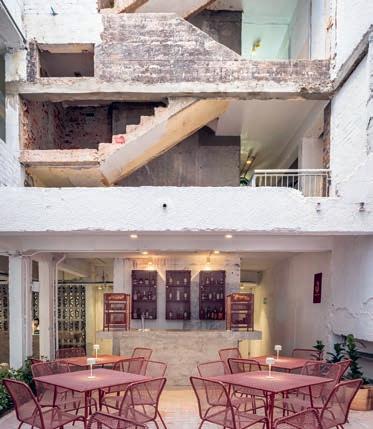

infrastructure. “Most buildings were originally designed for a speci c use, such as of ces or light industry. When they are converted into residential buildings, they need to comply with current building regulations, which may have changed signi cantly since construction,” Collen says. Often, features like re escape routes, ventilation, access for people with disabilities and plumbing systems require redesign. The key to overcoming these challenges is a collaborative approach between architects, engineers and developers early in the feasibility stage. “When the design team understands both the limitations and opportunities of the existing structure from the start, creative solutions can be developed that comply with regulations while keeping the project nancially viable.”
Jele notes that redevelopment can become complicated if cities have special planning commitments, such as industrial development zones. “Though rezoning has become easier to achieve in certain markets, the challenge often lies in the surrounding buildings. A residential development surrounded by industry may nd it harder to attract tenants.” In such cases, it may help to adopt a precinct approach and to work with partners who understand the vision and are willing to invest in it.
“Overcapitalisation can be a risk, as it can be challenging to balance upfront capital investment against long-term returns,” Jele continues. “For smaller entrepreneurs, getting this balance right is critical to the project’s long-term success.”
These potential stumbling blocks should not dim the potential of adaptive reuse, Collen insists. “In many ways, this is becoming one of the key tools for creating more resilient, sustainable and vibrant South African cities,” he concludes.
Follow: Landseer Collen www.linkedin.com/in/landseer-collen-56ab9219
Siya Jele www.linkedin.com/in/siya-jele-74729a19
Justin Blend www.linkedin.com/in/justin-blend-b67451ba


The retail landscape is transforming to meet the changing needs of consumers who are seeking mixed-use destinations, writes AMELIA BEATTIE , head of Property, Business Efficiencies and Sustainable Impact at the Insurance and Asset Management business unit of the Standard Bank Group

The most successful retail assets today are those that have transformed into vibrant, experience-led destinations. Consumers increasingly expect more than a transactional shopping trip – they seek environments that seamlessly combine retail, lifestyle, entertainment and convenience.
Market data underscores this shift: dominant centres are consolidating their position, with footfall becoming concentrated in fewer, higher-quality destinations. Shoppers are gravitating toward centres that deliver convenience, strong tenant mixes and a differentiated experience that goes beyond the ordinary. Flagship destinations exemplify this evolution. Sandton City, for instance, continues to strengthen its reputation as South Africa’s premier hub for international fashion and luxury. The recent arrival of Marc Jacobs adds to an already impressive portfolio of global brands, reinforcing the centre’s position as a leader in experiential retail and a magnet for discerning consumers.
In this new era, retail is no longer just about shopping; it is about creating destinations that inspire, entertain and connect.
SHOPPERS ARE GRAVITATING TOWARD CENTRES THAT DELIVER CONVENIENCE, STRONG TENANT MIXES AND A DIFFERENTIATED EXPERIENCE THAT GOES BEYOND THE ORDINARY.

For more information:
@liberty2degrees
@libertytwodegrees
@libertytwodegrees
@libertytwodegrees

Agricultural land is increasingly being viewed not only as a farming asset, but also as a strategic property investment that combines long-term capital appreciation, income potential and diversification opportunities. By
ELRIZA THERON
Unlike many traditional private property investments, agricultural land is both a real estate asset and a productive economic platform. Its value is supported by scarcity and rising demand for food and agricultural products. Pieter Horn, agricultural property practitioner at Seeff, explains that agricultural properties offer investors several potential income streams. They could generate direct operational income through crop production, livestock farming or forestry; however, many investors increasingly adopt diversi ed business models, including leasing land to farmers, developing value-added agribusiness operations or integrating hospitality and tourism into working farms.
“In regions like the Cape Winelands, farms often combine agriculture, hospitality and brand value,” Horn notes. Wine estates that integrate vineyards, accommodation and tourism facilities are a well-known example of how farms can evolve into vertically integrated agribusiness platforms that strengthen investment resilience.
Agricultural land can also provide stable passive income when leased to experienced operators. As productive land remains in constant demand, lease agreements can deliver predictable returns while allowing investors to bene t from long-term land appreciation. In many cases, the property itself generates stronger long-term returns than the underlying farming business.
Beyond income generation, farmland also serves as a nancial anchor within the broader agricultural economy. Jolanda Andrag, chief operating of cer of Agri SA, highlights that agricultural property underpins a signi cant portion of the sector’s nancing system. Mid-2025 data from the Banking Association of South Africa reveals that total nancing in South Africa’s agricultural sector amounts
to roughly R257.4-billion, with more than R100-billion linked to long-term loans typically used for land acquisition, irrigation infrastructure and xed improvements.
In this context, land functions as more than a passive asset. “Agricultural land is the primary security against which credit is created,” Andrag explains. “Financial institutions base lending decisions on land valuations, water rights and production potential, while sustainability data is increasingly considered when assessing credit risk.”
This nancial leverage adds to farmland’s appeal as an in ation hedge. Investors effectively acquire a productive platform capable of generating income, while simultaneously acting as collateral that can unlock further development nancing. The land can support infrastructure expansion, renewable energy installations or value-added processing operations. “Agricultural land is not simply land; it is capital, it’s collateral and productive infrastructure,” says Andrag, adding that, in a world facing growing food insecurity, agricultural land remains strategically important.
However, agricultural property investment is not without risk. Ockert Schoonraad from FNB Agricultural Evaluations cautions that farmland values are in uenced by multiple factors, including commodity prices, seasonal conditions, soil quality and water availability.
“Farmland is a scarce resource, and, like any scarce commodity, its value tends to increase over time,” he says. “But as with any investment, there are cycles and uncertainties investors must consider.”
Schoonraad further notes that certain farm types have historically performed particularly well. Irrigation farms, for example, have

“AGRICULTURAL LAND IS NOT SIMPLY LAND; IT IS CAPITAL, IT’S COLLATERAL AND PRODUCTIVE INFRASTRUCTURE.”
– JOLANDA ANDRAG
generally demonstrated strong capital growth due to reliable production capacity, while high-potential dryland soils often attract strong lease demand. Farms with permanent crops, such as orchards or vineyards, can also represent sound investments, provided they are properly maintained and replanted in line with industry cycles. Grazing farms follow similar value dynamics and are heavily in uenced by factors such as weather cycles, meat prices, diseases and game prices. A unique advantage is that smaller or more scenic grazing farms will attract what is known as “weekend farmers”, increasing demand in certain areas, such as in the Kalahari, where the demand and increase in land value are driven by corporates and weekend farmers as opposed to traditional producers.
Regulatory and environmental considerations are also becoming increasingly important. Issues such as water licensing, climate variability and land stewardship practices can in uence both land value and nancing conditions.
Financial institutions are paying increasing attention to soil health, biodiversity protection and responsible water management as indicators of long-term asset quality, meaning potential investors should consider these key value drivers as they can signi cantly in uence both nancial performance and resale value.
Follow: Jolanda Andrag www.linkedin.com/in/jolanda-andrag-067452107
What’s the scoop on live-work-play ecosystems in South Africa, and is it really possible to enhance asset resilience and long-term value by buying into one of these self-sustaining environments? VANESSA ROGERS finds out
The evolution of mixed-use developments locally appears to have travelled through three unique stages.
The early phase, from the late 1990s to the early 2000s, was marked by landmark projects such as Century City (Cape Town), Menlyn Maine (Pretoria) and Melrose Arch (Johannesburg). This was followed by the 2000s–2010s shift towards urban regeneration and lifestyle precincts as cities densi ed and mobility costs increased. And since around 2015, developments have evolved into fully integrated, complex urban ecosystems.
This evolution, taking place over more than three decades, has seen property projects rolling combined residential, retail and of ce use into data-informed, mobility-aware, human-centred urban ecosystems that can now function as integrated “live-work-play” environments, responding to changing lifestyles, sustainability demands and technological possibilities.
Wayne Berger, joint chief executive of iShack Ventures, says the concept of mixed-use developments is evolving into something far more integrated. The most successful live-work-play precincts are no longer simply collections of residential, of ce and retail buildings, but connected environments designed to function as urban ecosystems.
“A key enabler of this shift is fast, reliable internet connectivity and the greater acceptance of remote and hybrid working conditions, following the COVID-19 pandemic. Equally important is the growing role of integrated proptech systems. Property billing, leasing, facilities management and tenant engagement platforms increasingly need to work together to create a single source of truth for property data. Without clean, connected data, applying technologies, such as internet of things monitoring, AI tools, advanced





analytics and real-time operational management, across a precinct becomes dif cult.”
Berger stresses that these digital layers enable developers and asset managers to better understand how buildings and shared spaces are being used, while providing tenants and owners with a more seamless and integrated living and working experience.

“At the same time, changing mobility patterns – from ride-hailing, ride-sharing and delivery services to reduced reliance on private vehicles – are lowering traditional parking requirements and encouraging more walkable, community-focused precincts that support vibrant local economies and long-term asset resilience.
Megan Copley, director and partner at LIO Global, advises that design-led urban development is shifting toward lifestyle-focused, resilient environments because biophilic architecture, shared amenities and mixed-use planning are how people want to live after an era of being homebound.
“Certain developments are a vision of what future cities will likely look like, blending natural and urban elements seamlessly. Biophilic features (vertical gardens, natural light and vegetation integrated into buildings) can improve wellbeing while lowering environmental impact.


“We’ve seen an undeniable surge in demand for homes that incorporate shared spaces,” Copley says, with tenants and buyers increasingly
prioritising coworking areas, communal lounges, rooftop amenities and parks because these features build community and convenience in dense urban environments and offer residents the opportunity to enjoy these features within the privacy bounds of just other residents.
Projects combining residential, retail, leisure and workspace functions within a single development often include coworking facilities and social spaces to create vibrant urban precincts. These integrated spaces help attract tenants (and rental income) and foot traf c (for small businesses), as they deliver everyday amenities within walking distance.
“CERTAIN DEVELOPMENTS ARE A VISION OF WHAT FUTURE CITIES WILL LIKELY LOOK LIKE, BLENDING NATURAL AND URBAN ELEMENTS SEAMLESSLY.” – MEGAN COPLEY
The result? Design approaches like these help property owners:
• Attracting tenants by offering lifestyle-oriented buildings rather than purely functional ones.
• Boosting foot traf c through mixed-use, community-centric precincts.
• Future-proo ng assets by improving sustainability, resilience and adaptability to rapidly altering work and living patterns. Successful developments in South Africa increasingly prioritise people-centred design – car-lite, green, shared and exible, over traditional single-use buildings – for excellent reason.

Follow: Wayne Berger www.linkedin.com/in/wayneberger Megan Copley www.linkedin.com/in/megan-copley-56360143



For almost three decades, the OOBA GROUP has been at the forefront of bond origination, helping South African families become proud homeowners
Today, a signi cant share of home loans in South Africa are secured through mortgage originators – a transformative development that has reshaped the way consumers access nance and banks compete for home loan business. However, this evolution was in fact sparked (and shaped) by one pioneering organisation: ooba Home Loans, formerly known as MortgageSA.
The ooba Group has helped some 850 000 South African families realise the dream of homeownership. Beyond facilitating home loans, the company’s mission is centred around helping South Africans make one of the most important nancial decisions of their lives – con dently and conveniently.
Rhys Dyer, CEO of the ooba Group, explains that prior to 1999, the home loan process was “fragmented and frustrating”. “Each bank needed to be approached separately, and every application required duplicated paperwork. Interest rates were largely non-negotiable, and consumers weren’t able to ‘shop around’ for the best deal,” he says.
“The proposition we put forward was simple, but revolutionary,” Dyer continues. A single application submitted to multiple banks not only meant faster approval times and the ability to secure competitive rates, but also signi cantly improved a customer’s chances of approval with multiple banks assessing and vying for the application – all at no cost to the homebuyer.
“The ability for homebuyers to conveniently access a choice of nancing options through an independent and free home loan comparison service signalled a radical shift in the home loan market, where banks had to compete for business.”
Recognising the importance of consumer protection and ethical standards, the company also co-founded the National Association of Mortgage Originators and helped establish the rst industry code of conduct.

“THE ABILITY FOR HOMEBUYERS TO CONVENIENTLY ACCESS A CHOICE OF FINANCING OPTIONS THROUGH AN INDEPENDENT AND FREE HOME LOAN COMPARISON SERVICE
SIGNALLED A RADICAL SHIFT
THE HOME LOAN MARKET.” – RHYS DYER
ooba Home Loans consistently negotiates some of the most competitive lending rates in the market. In February 2026 alone, it achieved an average interest rate of prime less 0.68 per cent for its customers, translating into tens of thousands of rand in savings.
Even in times of economic turbulence, bank lending and support for homebuyers remain resilient. “The banks see the true value of homeownership in building nancial security for individuals and driving the property market locally,” comments Dyer.
The ooba Group also pioneered an innovative mortgage switch system designed to facilitate the entire process between lenders and
originators seamlessly. Today, SwitchX is broadly used in the industry.
ooba’s ecosystem of complementary homeownership services includes:
•Digital tools: easy-to-use online home loan calculators, pre-quali cation tools and digital home loan applications requiring no physical paperwork.
•ooba Insure: homeowners and bond protection insurance designed to safeguard homeowners and their assets. To date, ooba Insure has issued nearly 300 000 bond protector and building protector policies.
•ooba Solar: nancing solutions that enable homeowners to invest in solar and futureproof their properties.
• Buyer’s Trust: a secure, bank-hosted deposit solution safeguarding funds during property transactions.
• evo Home Loans: a home loan platform for independent originators offering tools and technology to optimise the success of their business.
Additionally, ooba Home Loans helps broaden access to property ownership through the government-run Home Finance subsidy (formerly FLISP).
In 2024, ooba Home Loans unveiled a refreshed brand strategy, anchored in its resonant tagline: Home Sweet Home Loan.
“Our refreshed brand re ects a renewed internal energy as we celebrated our 25-year milestone. Most of our home loans team members have been with ooba for years and speak the customers’ language; that human connection puts the ‘heart’ into a home loan.” Dyer concludes.

For more information: www.ooba.co.za

South African investors are increasingly turning to offshore property for currency diversification, residency opportunities and long-term wealth preservation, with Europe emerging as a key destination, writes THANDO PATO
Offshore property addresses a structural vulnerability many South African investors carry: heavy concentration in a single currency and a single jurisdiction. Investing offshore “allows investors to balance exposure to the local economy with assets in stronger global currencies” and “can help preserve wealth while reducing concentration risk linked to the Rand and domestic policy uncertainty,” says Mikayla Morkel-Brink, offshore property specialist. Beyond currency, international markets bene t from structural supply constraints. In the United Kingdom, “new housing delivery has fallen short of the level required to meet population growth and household formation,” notes Morkel-Brink. The result is that “rental demand has remained strong, with many areas experiencing rising rents and low-vacancy rates,” she adds. Mauritius presents a complementary case, offering “proximity to South Africa, favourable tax structures and stable regulatory environment”, making it appealing for both investment and lifestyle purposes.
The residency dimension of offshore property has taken on greater urgency as global mobility becomes a higher priority for South Africans. With Portugal’s Golden Visa having shifted to “higher-cost fund and strategic investment options”, demand has migrated toward more accessible alternatives.
“Cyprus is currently one of the most practical pathways for South Africans,” says Jenny Ellinas, founder and CEO of Cypriot Realty.
Permanent residency is accessible through a property investment of approximately €300 000. Holders need to visit only once every two years to maintain status, and the programme covers spouses and dependent children up to age 25, providing what Ellinas describes as “permanent residency for life, not temporary status that must be renewed annually”. With Cyprus’s expected Schengen accession approaching, “demand for the Cypriot programme has grown signi cantly as investors seek stable, ef cient access to EU mobility,” she notes.
strength inside the EU banking system.” A fully owned property “can later be used as positive collateral” to nance subsequent acquisitions on more favourable terms, she adds.

For South African investors whose income remains rand-denominated, nancing offshore property in euros introduces compounding risk. “The currency mismatch is often the single biggest risk factor. A long-term euro liability funded by South African Rand income can become onerous if the exchange rate moves unfavourably,” says Ellinas.
European lenders are cautious towards nonresident borrowers. In Cyprus, qualifying for permanent residency requires transfer of the full investment from abroad – no local nancing permitted for this purpose. For other purchases, a minimum 50 per cent deposit usually applies. Given these conditions, Ellinas advocates for a cash- rst approach: “Instead of importing long-term currency risk into the rst purchase, the investor builds a euro asset base rst, then gears from a position of
THE RESIDENCY DIMENSION OF OFFSHORE PROPERTY HAS TAKEN ON GREATER URGENCY AS GLOBAL MOBILITY BECOMES A HIGHER PRIORITY FOR SOUTH AFRICANS.
Follow: Mikayla Morkel-Brink www.linkedin.com/in/mikaylamorkelbrink
Jenny Ellinas www.linkedin.com/in/jennyellinas
Cyprus carries a meaningful advantage for legacy planning, with no inheritance tax and personal income tax only beginning at approximately €22 000, with the top marginal rate applying to income above €72 000. However, tax ef ciency is only part of the picture. “It is critical that an investor has a valid will in the country where they hold assets”, covering immovable property, local bank accounts and any other nancial interests in that jurisdiction, says Ellinas. Without a local will, estate administration can take several years. With a will, the process is typically concluded within six to eight months.
Both experts point to assumptions as the most expensive mistake rst-time offshore investors make. “A common mistake is assuming that overseas property markets operate the same way as the South African system, both in terms of pricing and the legal transfer process,” says Ellinas. Morkel-Brink reinforces the value of proper infrastructure, recommending investors insist on reliable property managers, sound legal frameworks and secure title deed protections before committing capital offshore.