





Sail away for an ocean state of mind
Discover the healing power of awe




Sail away for an ocean state of mind
Discover the healing power of awe




The face of African art’s incredible RESILIENCE on the global stage


Winning wines, wellness tips and clever ways to save
















PUBLISHED BY
Picasso Headline,
A proud division of Arena Holdings (Pty) Ltd, Hill on Empire, 16 Empire Road (cnr Hillside Road), Parktown, Johannesburg, 2193 PO Box 12500, Mill Street, Cape Town, 8010 www.businessmediamags.co.za
EDITORIAL
Editor: Keith Bain
Content Manager: Raina Julies rainaj@picasso.co.za
Contributors: Katie Bigelow, Bianca Coleman
Copy Editor: Brenda Bryden
Content Co-ordinator: Vanessa Payne
DESIGN
Head of Design: Jayne Macé-Ferguson
Senior Designer: Mfundo Archie Ndzo
Cover Images: Zanele Muholi, courtesy of the artist SALES
Project Manager: Merryl Klein merrylk@picasso.co.za +27 21 469 2446
PRODUCTION
Production Editor: Shamiela Brenner
Advertising Co-ordinator: Natasha Manneveld
Subscriptions and Distribution: Fatima Dramat fatimad@picasso.co.za
Online Editor: Stacey Visser vissers@businessmediamags.co.za
Printer: CTP Printers, Cape Town MANAGEMENT
Management Accountant: Deidre Musha
Business Manager: Lodewyk van der Walt General Manager, Magazines: Jocelyne Bayer




Dacher Keltner, UC Berkeley psychology professor and author of Awe: The New Science of Everyday Wonder and How It Can Transform Your Life, says that awe is both a mood booster and an immunity booster. Keltner’s research demonstrates that awe – connecting with something larger than ourselves, like the wonder and magni cence of nature – helps reduce pro-in ammatory cytokines, which are responsible for putting our immune systems on alert.
By contrast, spending time in nature boosts antioxidant activity in the body. Being in the bush, paying attention to the wonder of the world, giving ourselves over to awe – these are ways of detoxing both body and mind.
Despite what doomscrolling suggests, there’s plenty of that awe to go around, and these days nature’s healing bene ts are being ampli ed and enhanced at a growing number of lodges with dedicated wellness activities. In our safari story on page 18, we look at places where nature’s healing energy is harnessed and offered to guests in the form of retreats, spa treatments and holistic programmes where a sizeable part of the bene t comes directly from the environment itself.
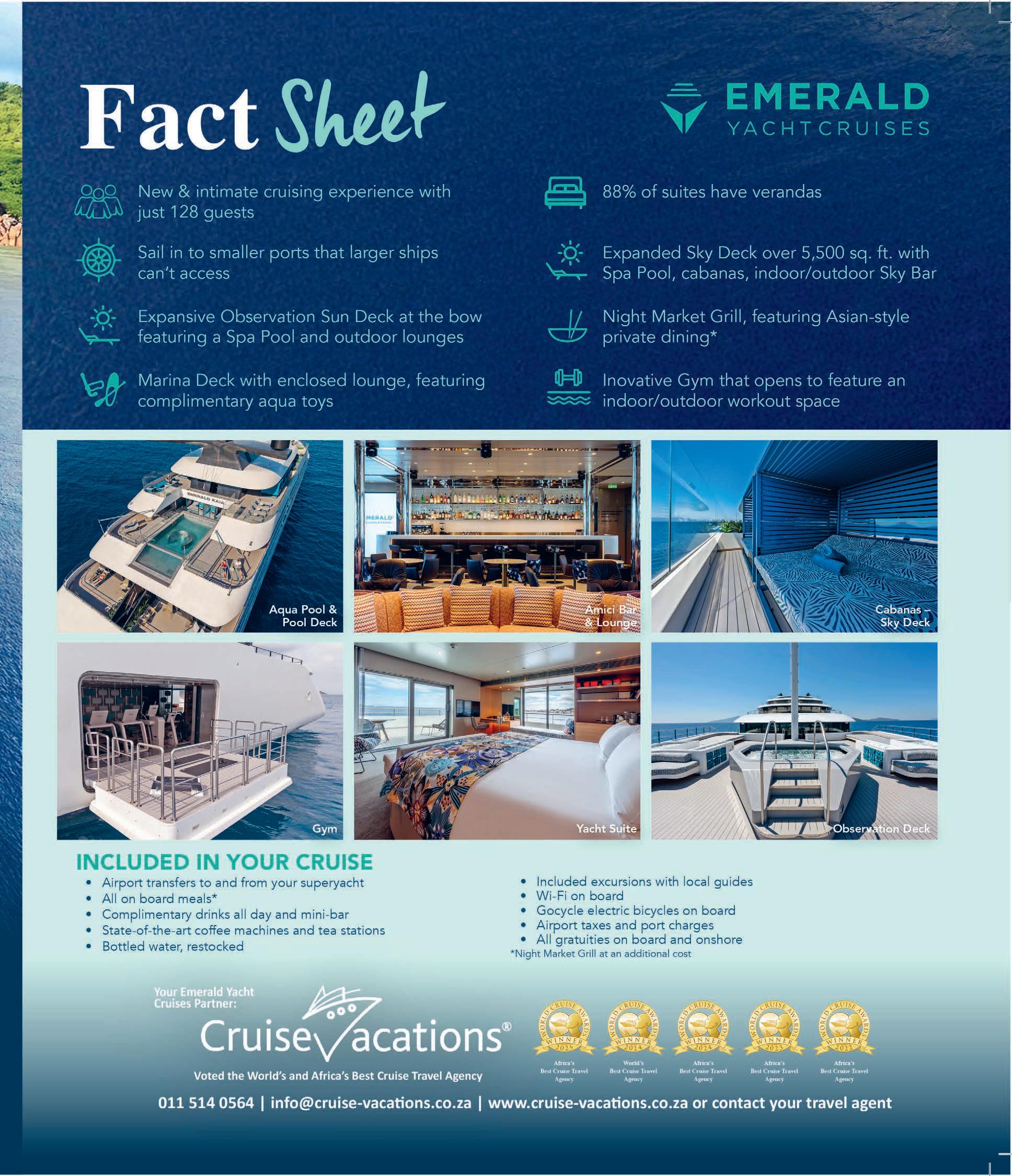
Another travel story looks at a new generation of luxury cruises (page 16), with more ships rebranding as “yachts”, a term being used to describe awe-inspiring oating palaces operated by high-end hotel chains.
For landlubbers, we have an alternative source of freedom: a road trip to Sutherland in the new mild-hybrid Suzuki Across GLX (page 19). Though we saw no snow, we experienced awe both on the road and up in the night skies.
And, if winter’s making you feel antsy about your tness regimen, we have a story all about how you can x that. In our piece on mental and physical wellbeing (page 4), we provide some top advice on how to feel your best – now and well into the future.
Our nance story (page 6) suggests a few sound savings tips
On page 12, we introduce you to Van Loveren Family Vineyards, a wine business you’ll doubtless have encountered in some form or another – it’s one of the country’s most successful, with a growing portfolio under its belt.
And, if you’re wondering why we have the great Zanele Muholi on our cover, turn to page 13 and read about the resilience of African art in the face of the current instability being felt in cultural spheres globally. Muholi is not only a great investment, but someone who has, for more than two decades, produced awe-inspiring work that serves as a form of social activism.
There’s real power in engaging with such work and being reminded of humanity’s creative potential. It’s a reminder we can do with right now, so even if you’re not travelling anywhere awesome this winter, pop into your local gallery or museum or head outside and gaze around you – the majesty of creation and creativity is everywhere, so prepare to be awed. We need only put away our phones for a bit and open our eyes to the world.
Nature’s healing power, page 18


Mobility. Balance. Loss of skin elasticity and weakened pelvic floor muscles, which can lead to incontinence. Not a pretty picture – and no one warns you; it happens when you’re not paying attention – but early intervention can prevent many of these issues as you age.
By BIANCA COLEMAN
Human experts are pretty much in agreement about the importance of exercise to the best of your ability and – oh boy! – do we have some bad news for introverts. “They” want you to go outside and mingle. With people. Apparently, this is good for the brain.
Reporting on the science of human connection, The New York Times highlights that socialising – even having brief, casual chats with strangers – yields profound bene ts. Engaging with others boosts overall wellbeing, increases a sense of belonging, reduces anxiety and directly bene ts your physical health. To scare you into this, The Times says lacking social interaction carries mortality risks comparable to smoking.
“Here’s the truth about the brain: it stays adaptable your whole life,” says Liezel van der Westhuizen, a neuroscience-driven burnout and mental tness coach. “But like the body, it needs consistent training to stay that way.”
Van der Westhuizen spends much of her professional life helping sales teams, founders and leaders increase performance without sacri cing wellbeing. So, she sees the bene ts of the science in real-time.
“Mental tness as we age is not just about avoiding decline,” she says. “It is about protecting your energy, emotional resilience, memory, con dence, and your quality of life. The good news is that it does not require an
overhaul. It is built in the small daily decisions you make. How you manage stress. How connected you stay to people who matter. How curious you remain. How well you recover when life gets hard.”
Van der Westhuizen’s non-negotiables: regular movement, strength training, quality sleep, meaningful relationships and learning something new often. These are not wellness trends. They are neuroscience basics.
Exercise deserves a special mention. It is one of the most powerful brain health tools we have. Better mood, sharper focus, stronger memory and regulated stress. “The shift I encourage people to make is this: stop seeing movement as punishment and start seeing it as protection for your future self,” van der Westhuizen says. “For me, ageing well has nothing to do with staying young. It is about staying sharp, emotionally grounded, physically capable and fully in the game for as long as possible.”
Even traditional medical practitioners agree that there’s a vital correlation between body health and mental wellbeing. “Keeping t as we age is about so much more than just physical health; it’s about maintaining independence, energy, con dence and quality of life,” says GP Dr HR Abrahams-Crocker. “Regular movement can help reduce the risk
of chronic disease, keep our joints and muscles functioning well and has huge bene ts for mental health, too.”
Dr Abrahams-Crocker says “the brain loves exercise as much as the body does” and “we can keep our bodies strong and active while improving mood, energy, memory and concentration simply by keeping active”. Movement is known to reduce the rate of cognitive decline as we age, she says. “The South African Journal of Psychiatry found that higher levels of physical activity in older South Africans are associated with overall mental cognitive functioning and quality of life.”

“STOP
SEEING MOVEMENT AS PUNISHMENT AND START SEEING IT AS PROTECTION FOR YOUR FUTURE SELF.”
– LIEZEL VAN DER WESTHUIZEN

Also worth exploring are the bene ts of resistance training – at all ages, says Dr Abrahams-Crocker. “It is never too late to start. As we age, we naturally start to lose muscle mass and strength, which can impact our mobility and balance as well as our ability to carry out the activities of daily living independently.”
She cites the South African Sports Medicine Association, which has found that resistance training signi cantly improves strength, balance and functional independence while maintaining bone density and reducing the risk of serious falls. Resistance training has even been shown to improve executive function, memory, processing speed and mood in older adults, with some studies suggesting it may help slow aspects of brain ageing.
“I’m also a huge believer that exercise should be encouraged at all levels – not just for elites,” says Dr Abrahams-Crocker. “Movement should add to your life, not feel like punishment. Consistency over time is what really makes the difference when it comes to ageing well.”
Justine Seymour, a former Pilates instructor who taught for 24 years and was a personal trainer for 29 years, says it doesn’t always have to be high-impact exercise; some of us who already have joint pain just can’t do all that.
“I believe that as we get older, we need to change how we move,” says Seymour. “Take any day of the week and watch the runners on the Sea Point Promenade. The young runners still have signi cant bounce in their joints and legs and seem to lift off the ground.
The older runners seem to sink in as they land. The younger runners have a long stride, and the older runners shuf e more. This is a generalisation, of course, but there comes a time when high-impact exercise is not the best we can do for our bodies and joints.”
As we age, lower-impact sports allow us to keep moving for longer, and that should be the goal: moving and breathing into our 80s. Swimming, walking, hiking, weight training and Pilates all fall into this category.
“I stopped teaching traditional Pilates, which often focuses too much on exibility, many years ago,” says Seymour. “I started incorporating more strength work with my clients, within the Pilates session.”
She says that women, especially, need to work harder to maintain muscle mass as they age and as their hormones change. “I am often bewildered as to why you would want to be exible like a ballerina, unless of course you practise ballet.”
It’s important to maintain a good range of motion around the joints, but it’s more essential to maintain muscle mass and stability than being able to touch your toes. The greatest risk to anyone over 80 is a fall. That fall will most likely result in an extended period of recuperation, leading to muscle loss, weakness, and even the use of a walking frame.
“Our focus from fty should be strength over cardio, mobility over exibility and practising balance every day! That’s not to say a brisk walk on the Promenade is not a very good idea, but lifting some weights for twenty minutes a day is, in my mind, better for our long-term health,” says Seymour.
“It’s about acknowledging where we are on our tness journey and accepting what is actually going to give the best result for our body as we age.”
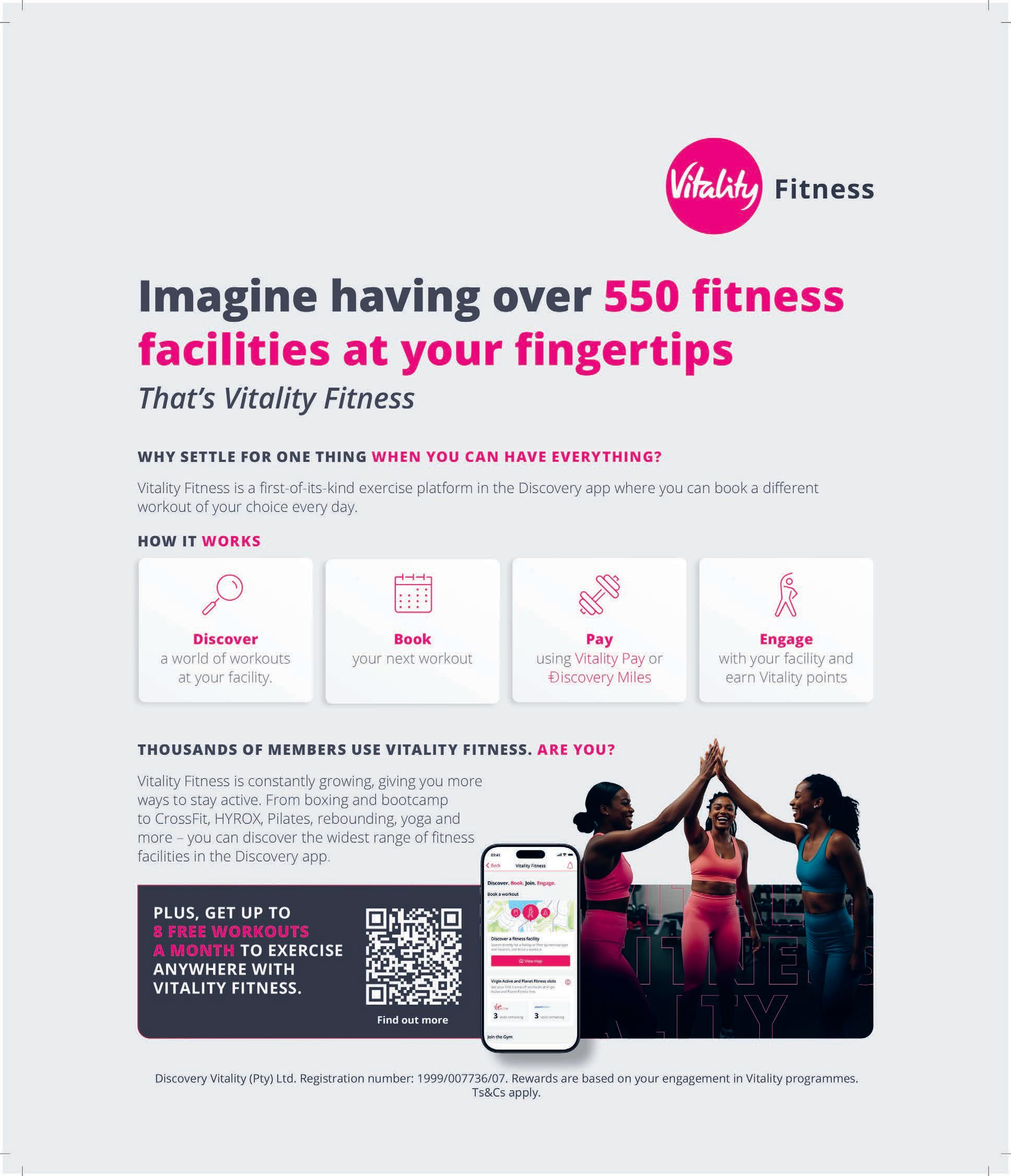
Saul Smith (our friendly nancial advisor over on page 14) has been a member of Discovery’s Vitality Health programme for years. “There is no doubt that being t and exercising regularly enhances one’s health, physically and mentally,” he says. “Discovery Vitality encourages this by incentivising regular exercise, good money management and good sleeping patterns.”
He adds: “The whole ecosystem works incredibly well for my family, as we exercise regularly, eat healthier, and our paybacks and discounts reduce expenses.”
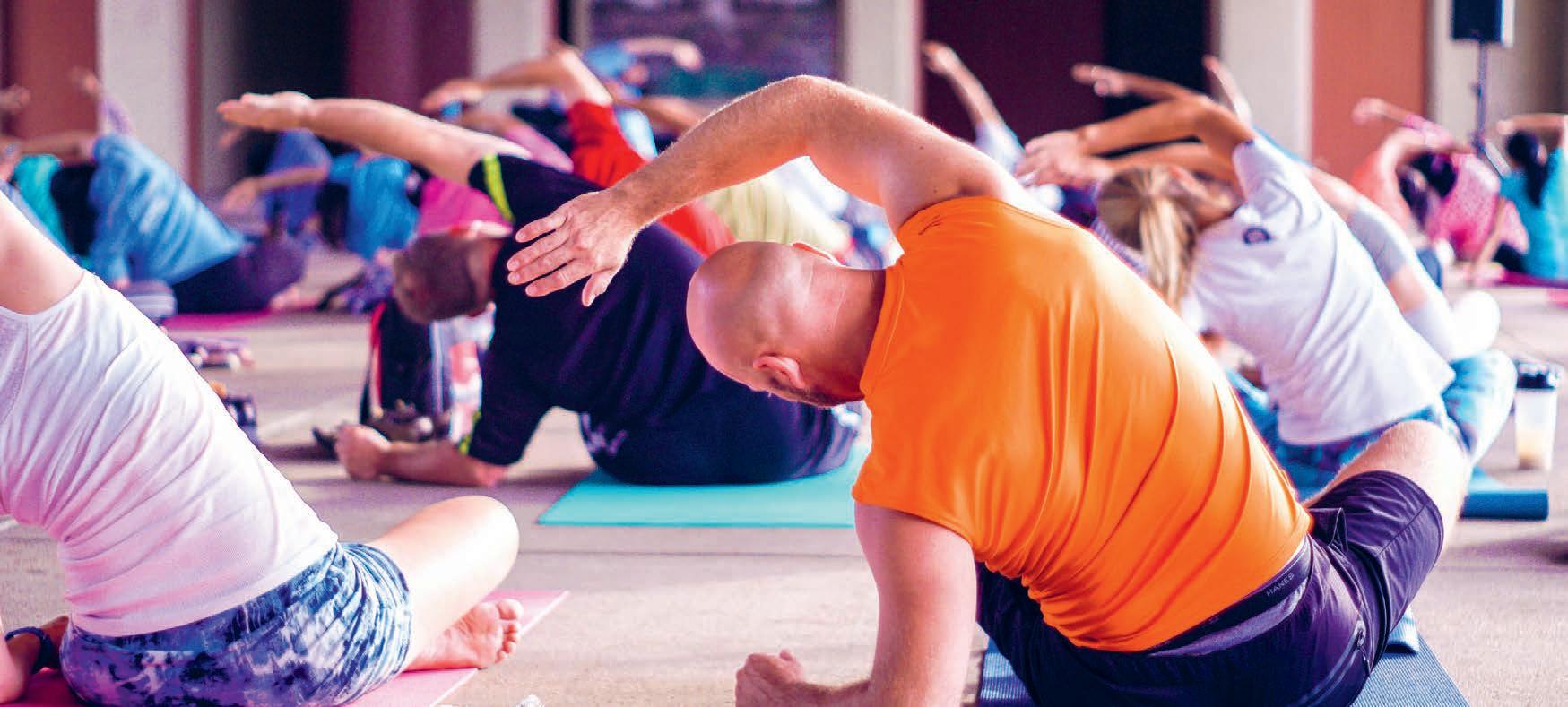
Incentives and rewards are great motivators, but the carrot of better health and brain function should be enough to get you off the couch. Plus, there is the often-unmentioned reward of getting to the gym, joining a yoga studio and meeting once a week to play padel: you get to spend time with other people. It is purposeful socialising, with the goal of moving, staying strong and keeping mentally and physically active.



Can careful planning remove uncertainty from your financial future? BIANCA COLEMAN is no fortune teller, but she knows when to enlist experts and follow their sound advice
Having money to retire comfortably is unfortunately unlikely to happen by itself, unless you come into a nice inheritance from a wealthy old great-aunt on your father’s side, whom you never knew.
Planning for the nancial future is on you, and the sooner you begin, the better. Start saving as early as you can – at least 10–15 per cent of your salary – suggests Saul Smith, a wealth manager and nancial therapist.
Tax-free savings accounts have zero per cent tax on interest, dividends and capital gains, but they do have an annual limit of R46 000 and a lifetime limit of R500 000. This is an example of a “tax-ef cient wrapper”, a place for your investments that reduces or eliminates the taxes you’d normally pay on investment returns. By holding assets in these wrappers, more of your money stays working for you rather than going to SARS, which makes your savings grow more ef ciently over time.
“Set solid nancial goals – like a route map,” says Smith. Just as it sounds, it’s a clear path from where you are now to your destination: nancial security. Having this plan in place, with steps and goals along the way, removes guesswork and emotional decisions during market swings.
You can decide now when you want to retire and how much you’ll need to live as you’ve become accustomed to by allocating a certain sum each month towards that and adjusting for in ation.
If this sounds like confusing hard work –we are not all nancially savvy – a nancial advisor is a good investment. As we age, we naturally become risk-averse, so a bit of hand-holding and encouragement won’t go amiss. It also means the relief of handing over the money management to someone else, so you don’t have to worry about it and can get on with living your best life.
However, it’s not just about you. Adequate life and disability cover should be maintained to protect dependants and to avoid forced liquidation of investments.
Along with this, experts advise having a sum set aside in an accessible fund, usually two to three months’ income, for emergencies. This will protect you from having to sell your investments if there’s a downturn in your fortunes.
“Have some kind of medical aid,” says Smith. Unexpected doctor’s fees or hospital costs can wipe out savings overnight. Discovery Health Medical Scheme offers a wide choice of health plans with unlimited private hospital cover and a range of bene ts to suit your needs and your pocket.
Invest in solid and reputable funds, advises Smith, and diversify your investments into stocks, bonds, property and cash. There’s a good reason for diversifying, pretty much along the lines of eggs and baskets: it reduces single-market or single-currency risk.
Speaking of baskets, an ETF (Exchange-Traded Fund) is a basket of securities – like stocks, bonds or commodities – that you can buy or sell on a stock exchange just like a single regular share. It allows you to invest in a wide variety of assets at once, offering instant diversi cation at a low cost.
Smith has some practical everyday advice about handling your money. If you cannot pay cash for it, don’t buy it. If the return sounds too good to be true, it’s most likely a scam. Also worth remembering: only lend money if you don’t expect it back; “You’ll worry forever and probably lose the friendship if you do,” Smith says.
If you have excess, invest it, don’t spend it. Austerity now, prosperity later.
Even so, we all need treats and rewards. This is science. When we achieve something that the brain likes, dopamine is released, and we want to do it again. If you’ve been working hard on your savings plan, it’s all right to buy yourself something pretty. You deserve it.
“INVEST IN SOLID AND REPUTABLE FUNDS AND DIVERSIFY YOUR INVESTMENTS INTO STOCKS, BONDS, PROPERTY AND CASH.” – SAUL SMITH
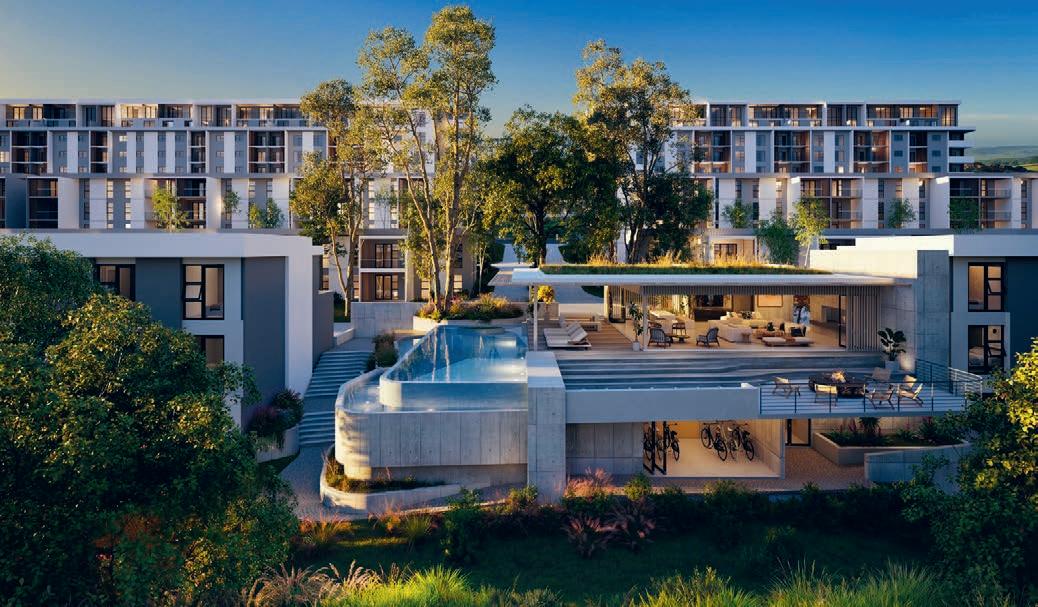
This shift to an enhanced quality of life is one of the reasons lifestyle estates continue to appeal to South African buyers. Beyond security, they offer convenience, connection and wellbeing in one curated environment.
The enduring appeal of the Upper Highway area is reflected in its property performance, with Hillcrest recording a 33 per cent increase in sectional title median prices between 2016 and 2025. This steady growth highlights the area’s resilience and increasing desirability among buyers seeking both lifestyle and long-term value.
As an upcoming residential development within the rapidly evolving Westown precinct, Kaleido is positioned to benefit from the area’s continued growth. Alongside its own green spaces, walking routes and lifestyle amenities, residents will enjoy access to a precinct set to introduce new retail, commercial, healthcare, educational and recreational offerings over time.
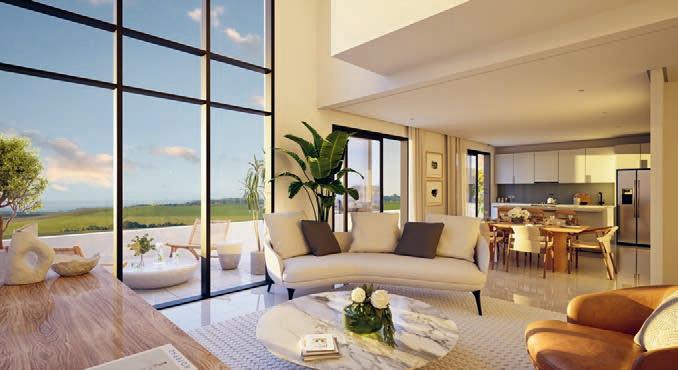
“THE REAL VALUE PROPOSITION IS THAT BUYERS ARE INVESTING IN A LIFESTYLE ECOSYSTEM, NOT SIMPLY A RESIDENTIAL ESTATE.”
– JAN JANSEN VAN VUUREN
Kaleido is designed to cater to a broad spectrum of buyers, offering a variety of homes from studio apartments to spacious four-bedroom duplexes. With prices starting from R849 000, the development is an accessible entry point for first-time buyers and appeals to young professionals, growing families, retirees seeking a secure lock-up-and-go lifestyle, and investors pursuing long-term value within one of KwaZulu-Natal’s fastest-growing lifestyle destinations.
The development is complemented by amenities that extend the living experience beyond the home itself. Residents will have access to a landscaped central courtyard with a swimming pool, a clubhouse and direct pedestrian access to walking and cycling trails, encouraging an active, outdoor lifestyle. Practical features, such as a bicycle wash bay
The definition of luxury is changing. While prestige was once measured by the size of a home or the exclusivity of its address, today’s homebuyers are increasingly placing value on something less tangible but far more meaningful: quality of life, writes JAN
JANSEN VAN VUUREN , development manager at KALEIDO
and service centre, a dedicated Uber pick-up zone and electric vehicle charging stations, add everyday convenience, while shared facilities, including indoor padel courts and the Training Science Gym, reinforce Kaleido’s focus on health, wellbeing and community.
“People want more from where they live today,” says Jan Jansen van Vuuren, development manager at Kaleido. “They’re looking for places that reduce the friction of daily life. The ability to walk to amenities, enjoy access to open spaces, connect with a growing community and spend less time travelling has become a significant driver of purchasing decisions.
“The real value proposition is that buyers are investing in a lifestyle ecosystem, not simply a residential estate,” says Jansen van Vuuren. “Kaleido offers the rare opportunity to be part of a precinct from the beginning and benefit from the growth, convenience and lifestyle it will continue to deliver over time.”
In a world where time and quality of life have become the ultimate measures of success, that may be the greatest luxury of all.
For further details, visit www.kaleidowestown.co.za











BIANCA COLEMAN on how Van Loveren
Family Vineyards combines visionary leadership and something akin to magic to make big dreams come true

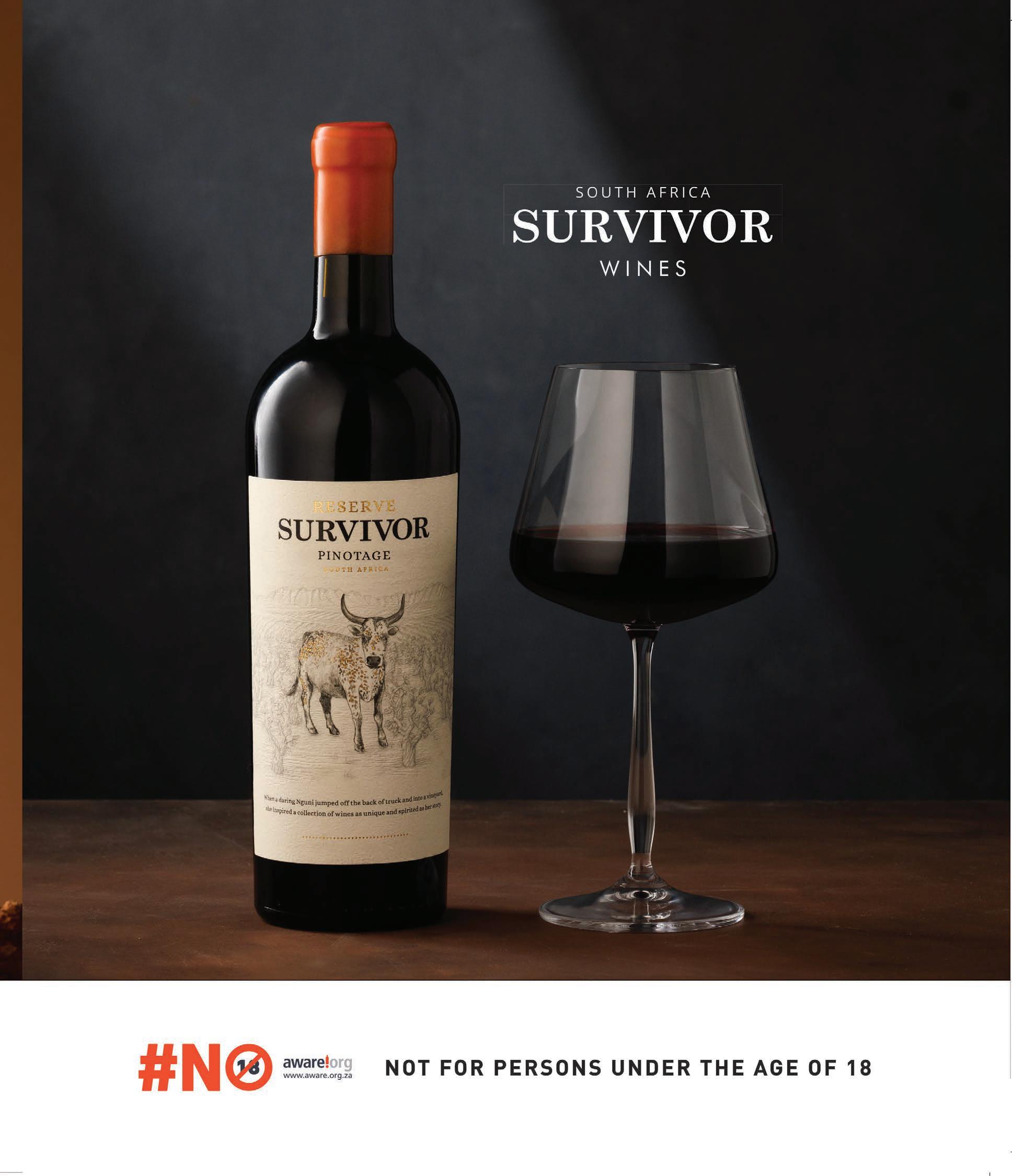
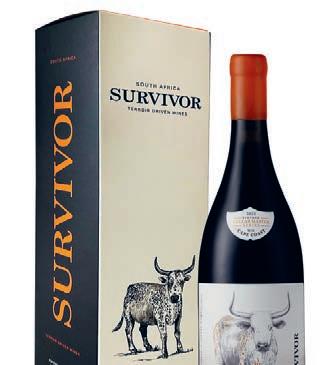
Every wine begins with a good story. In the case of the Survivor label, established in 2015, it is the tale of a Nguni cow that leapt from a moving truck on its way to auction. She was found, somewhat battered and bruised, and the resilient beast was named Survivor. It’s this spirit that became the foundation of the brand, which has vineyards primarily in the Swartland, and also Darling and Tradouw.
Survivor wines share a place in Van Loveren Family Vineyards, along with Landskroon, Neil Ellis Wines and Overhex Wines, acquired in 2025. These “are merely the latest steps in a carefully calibrated long-term strategy to nurture, sustain and grow individual specialty brands, each with its own identity,” says CEO Philip Retief. Van Loveren has been in the Retief family since 1937, over three generations.
years, has led to us being in a position to expand strategically over time.”
The Survivor story is fun and light, with the focus being Chenin Blanc and Pinotage: Wahl is an acclaimed member of the Cape Winemakers Guild and affectionately known as the “Pope of Pinotage”, being widely respected for his expertise with South Africa’s signature varietal.

“We also make some unique blends and varietals such as Cabernet Franc as part of the range,” says Wahl. Cabernet Franc has historically been used primarily as a blending component, but there has been a noticeable global shift toward enjoying it as a single varietal. Consumers are increasingly drawn to its freshness, vibrant acidity, ne tannin structure, and distinctive perfumed aromatics, which offer notes of violets, graphite and red berries.

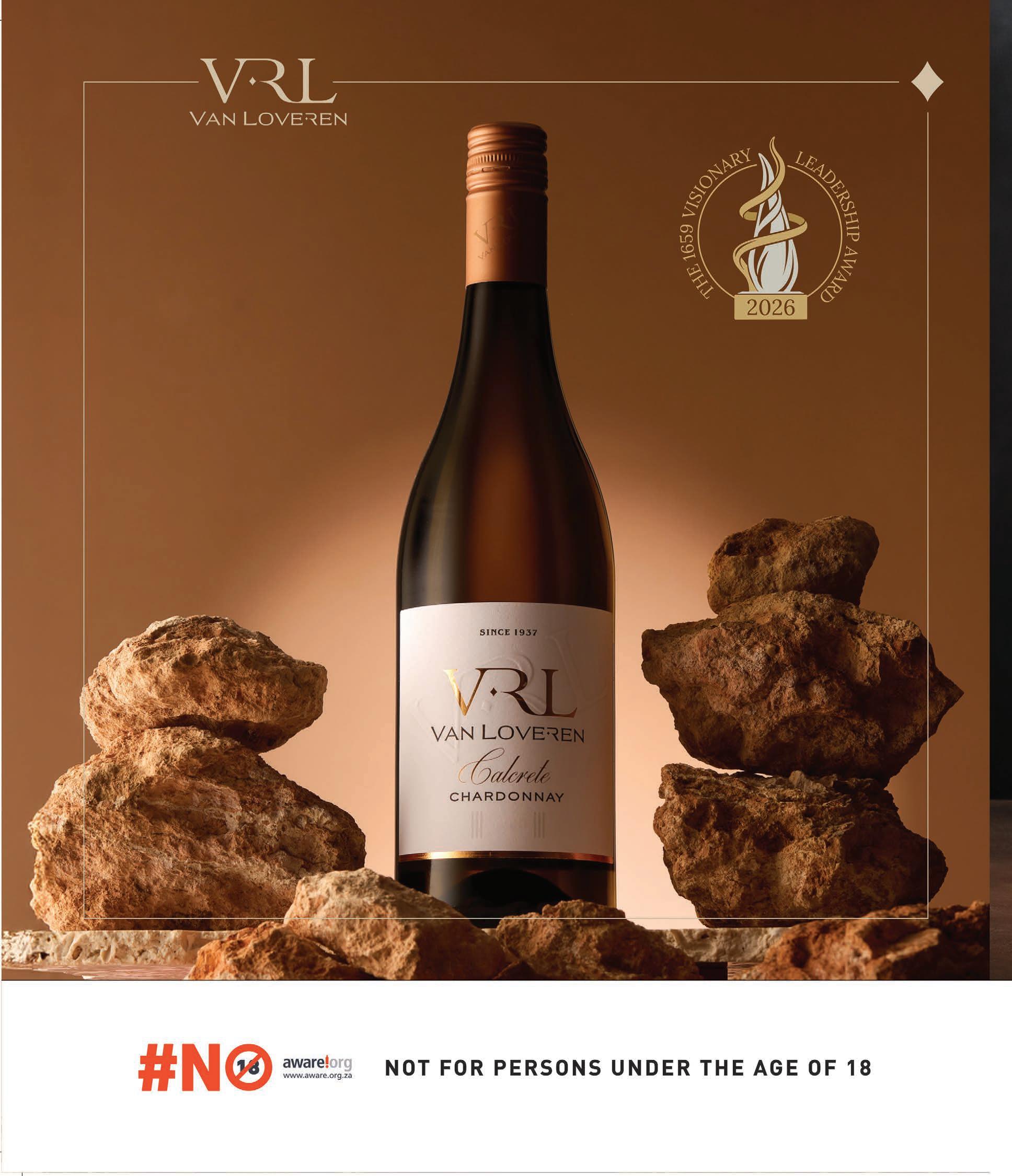
Well-known for Four Cousins, the Almost Zero de-alcoholised collection and Tangled Tree wines, the company has been amassing awards for its prestige labels such as Christina, the eponymous Van Loveren Family Vineyards (VLFV) and Zandvliet.


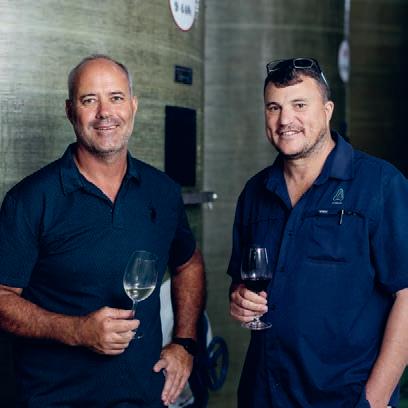
The coveted 1659 Award for Visionary Leadership was bestowed upon the Retiefs. The 2026 honour, conferred by the organisers of South Africa’s annual Wine Harvest Commemorative Event, recognises the family’s extensive and ongoing contribution to the economic, environmental and social sustainability of the local industry.
As to the ongoing success of VLFV, taking into account these acquisitions, Survivor winemaker Pierre Wahl says he wishes they could call it magic. “However, we de nitely did some things well over a very prolonged period. We also think generationally, not short term, which is important in any agricultural business. This, combined with building reserves in the good years and protecting losses in the bad

Wahl says this evolution “aligns perfectly with Survivor’s philosophy of producing expressive, terroir-driven wines with individuality and elegance”. And, alongside this, Survivor continues to push boundaries through experimentation with cultivars such as Albariño and Malbec in the Tradouw appellation. There’s tremendous bene t to having diverse labels under one umbrella. Survivor and Landskroon, in southern Paarl, were both acquired by VLFV last year, providing the opportunity for the two winemakers – Wahl and Landskroon’s Fanie Geyser – to share a cellar in Paarl. “There’s a real energy in this space,” says Wahl. “We’re sharing ideas, experience and infrastructure, but also enthusiasm. It’s ef cient, yes. But it’s also inspiring. We push each other in the best possible way.”
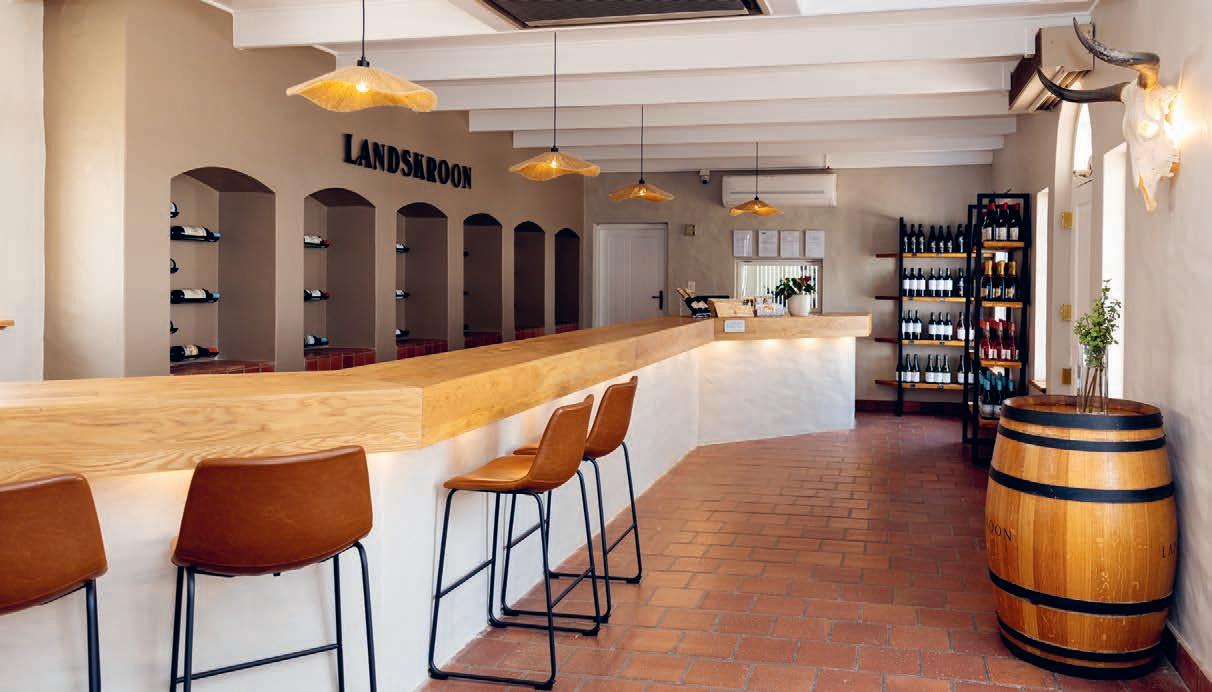
A revamped and now combined Survivor/ Landskroon tasting room reopened late last year, replete with sleek new interiors underscoring both brand identities. “We want it to feel personal,” says Geyser. “Not crowded or rushed. A place where people can connect with the wines, the stories and with us.”
The Survivor dream is to become one of South Africa’s iconic premium brands, while the Van Loveren business continues to add value to the community. This it hopes to achieve by thinking long term and being assertive in its expansion. Ultimately, like that brave Nguni cow, it’s about dreaming big and taking the leap.
Contemporary African art is being championed by Southern Guild, a heavyweight gallery with international presence and a willingness to back artists who push material, form and cultural perspective. By
KEITH BAIN
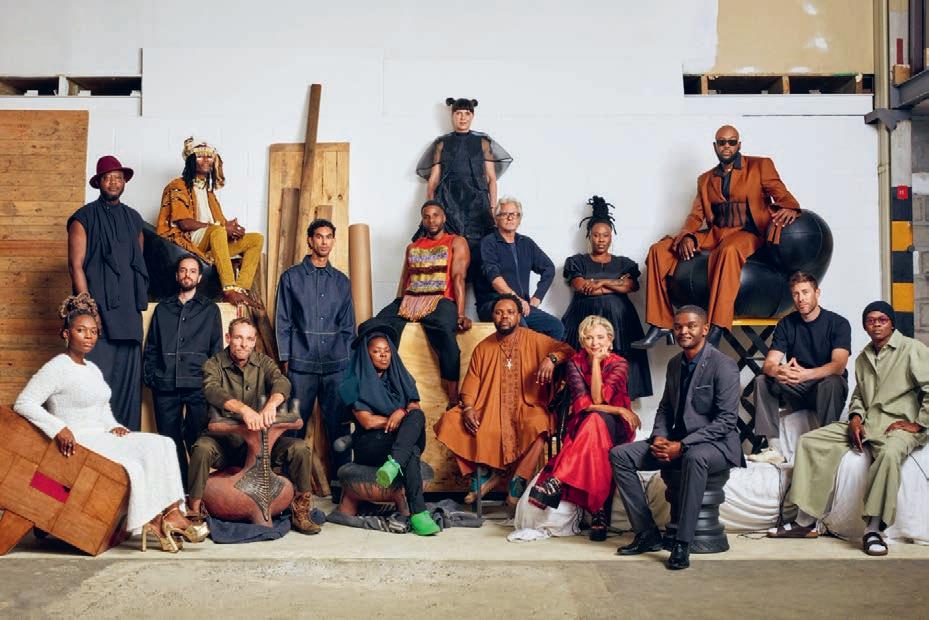
It’s a turbulent time for the art world. In South Africa, controversy followed the politically motivated cancellation of Gabrielle Goliath’s participation in the Venice Biennale.
In Venice itself, the prize jury for the so-called “art world Olympics” resigned over the inclusion of countries accused of war crimes, while several pavilions have been boycotted. The US also drew criticism for a diversity-, equity- and inclusion-free sculpture exhibition, described by The Atlantic as “a very pretentious form of propaganda”.
While such disputes may feel distant, they ripple through the market – affecting gallery sales and prompting collectors to question the stability of artworks’ value and worth.
The resilience and creative force of artists offer hope. Their role is to question the status quo and expand how we see the world. In Venice, Goliath appears alongside the of cial programme in a space offered after her dispute with South Africa’s Minister of Sports, Arts and Culture.
Also in Venice, Zanele Muholi presented an independent, city-wide activation featuring more than 200 black-and-white portraits from the ongoing Faces and Phases series, now in its 20th year.
It is a landmark year for Muholi, who has been named the 2026 Hasselblad Award laureate. The world’s most prestigious photography prize not only af rms Muholi’s global standing, but also signals growing recognition of Africa’s position within the art world.
Muholi’s Venice presentation preceded a major solo exhibition opening at Southern Guild Cape Town on 18 July, followed by a solo show at the Hasselblad Center in Gothenburg (10 October 2026–4 April 2027).
Southern Guild, which represents more than 30 leading artists across the African continent, has also had a landmark year. In May, it opened Southern Guild New York – an ambitious expansion for founders Trevyn and Julian McGowan, who established the gallery in 2008 and have built it into a leading international platform for contemporary African art.
CEO Trevyn McGowan believes the current uncertainty in the art world re ects wider political and social instability. “There’s huge polarisation globally, and you can feel that tension ltering directly into the cultural sphere,” she says.
“At moments like this, clarity of purpose becomes essential. While the market feels more cautious and selective, it’s not stagnant. Collectors are looking more carefully and building collections with greater intention, which is ultimately healthier than speculative growth.”
She adds that international interest in Southern Guild’s African artists has been strengthened by recent platforms such as the Investec Cape Town Art Fair, Frieze Los Angeles and Frieze New York, which “reaf rm a strong appetite for work with real cultural, material and emotional resonance”.
McGowan believes potential collectors should rst immerse themselves in artists’ practices – visiting exhibitions and studios, asking questions and taking time to look closely. “Buy work that genuinely moves you. That emotional connection is what makes collecting meaningful over the long term.”
While emotion is important, she adds that “reputable galleries play an important role in authenticating and contextualising an artist’s practice”, as well as helping maintain pricing consistency and supporting long-term careers. She says, too, that “South Africa has exceptional auction houses that contribute meaningfully to preserving the history and value of art on the continent.”
If you’re looking for emotionally resonant work with strong investment potential, Muholi is a compelling place to start. Early works available through leading auction houses such as Strauss & Co can be found from around R20 000, while key photographic works now sell for between R200 000 and R500 000 – re ecting the growing value of Muholi’s practice.
Strauss & Co chairperson Frank Kilbourn reiterates the challenges of the global climate against which the art world has recently had to operate, but explains that the auction house in 2025 “delivered another year of steady growth, driven by an expanded auction programme, strong demand for exceptional works, and the continued diversi cation of our collecting categories”.
He says that there’s a visible “vibrancy” in the public art market, and that Strauss & Co has entered the year not only “well-positioned” to take advantage, but with “a focused and well-motivated team, a broadened audience and sustained momentum across all facets of the business”. All of which has helped cement the auction house as the unmitigated leader in the secondary market on the continent.
If you’re looking for evidence of African art’s resilience in the face of global challenges and you can’t get to New York or Venice, be sure to join the collectors and investors placing bids at one of Strauss & Co’s vibrant auctions.
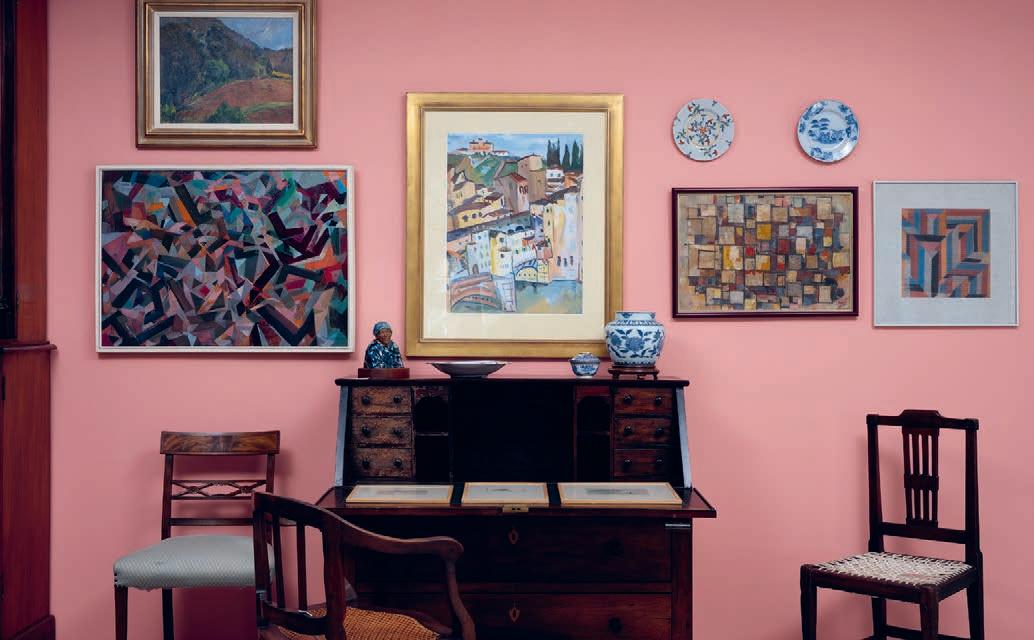
Strauss & Co’s art advisory support ranges from guiding clients in strategically building and managing an art collection, providing support in key acquisitions at auction, offering professional valuations for estate and insurance purposes, and advising on stewardship involving future generations.
Drawing on decades of experience managing blue-chip private collections and estates, Strauss & Co has an established track record of providing discrete advice to emerging and established collectors.
With its well of specialist knowledge, both in-house and within its partner network, Strauss & Co also offers bespoke white-label services.
These extend from the assessment of existing collections to the identification of strategic collecting goals, including the diversification of holdings across artists, eras and geographies.
In addition to these services, the company has a network of experts skilled in environmental and conservation issues, insurance guidance and emergency planning involving loss and damage. Strauss & Co continues to demonstrate its specialist expertise in the stewardship and sale of important single-owner collections. In the first quarter of 2026, the company achieved excellent results at auction for private individuals and families looking to dispose of large collections tactfully.
In February, Portway to Cohen: A Collector’s Legacy and Other Properties, a sale of 73 lots from an esteemed private collector, offering a focused survey of modern and contemporary South African art, realised R4.2-million/ $261 115, with 81 per cent of the lots offered sold.
In March, Generations of Collecting: An Important Collection of Cape Silver, Oriental Ceramics, Furniture and Art, a two-part sale composed of diverse collectables acquired by three generations of a single family, attracted bidders from 29 countries and ultimately earned
Art collections are increasingly significant assets within private estates and portfolios, as well as important assets for corporates.
STRAUSS & CO, a leading African auction house, has for many years offered art advisory support for estate planners and leading South African companies
R12.6-million/$740 000 from 242 lots sold, with an 89 per cent lot sell-through rate.
Strauss & Co’s traditional autumn programme in Johannesburg was bookended by two single-owner sales reflecting the distinct collecting interests of Durban arts patron Dr Vera Dubin and legendary auctioneer, founder and managing director of Strauss & Co, Stephan Welz, and his wife, Carmen Welz. The two-part sale Deep Roots: Selected Works from Stephan and Carmen Welz featured modern and contemporary art, Cape furniture, ceramics and a library of books selling at an 87.5 per cent sell-through rate and a total of R2.7-million. Meanwhile, 100 Years: Lalique, Silver and Art from the Collection of Vera Dubin comprising Lalique glass, finely worked silver and art, earned R1.4-million from 84 lots, with an 80 per cent sell-through rate.
Heading into the second half of 2026, there is a definite sustained mood of optimism among collectors that drove strong results for modern and contemporary art at Strauss & Co’s flagship Johannesburg auction on 26 May 2026, with record prices achieved for important paintings by Penny Siopis and Gerard Sekoto. The combined day and evening art sales earned R49 524 342.
For further details, visit www.straussart.co.za






Whether you’re searching for a sun-soaked destination or crave passage to see the Northern Lights, luxury cruises are taking opulence and adventure to oceanic heights.
KATIE BIGELOW identifies a handful of game-changing sailing opportunities




It might be the most seductive phrase in travel marketing: “Ocean state of mind” is a reference to that soothing, restorative, synergistic calm that washes through you when surrounded by the in nite blue of the sea on a perfect day. Think of lying on an island beach or lounging at the pool aboard Explora III, the newest in a line of luxurious ocean liners promising “a sanctuary of unparalleled comfort and space”.
Among the ship’s maiden outings? A ve-night, six-port Mediterranean voyage tracing the sun-drenched French and Italian Rivieras. Commencing in Genoa and ending in Rome and – for a brief spell – welcoming Jannik Sinner aboard, the late-July cruise includes an opportunity to attend a Q&A with the tennis champion and join a coaching session on the ship’s padel court.
Interacting with Sinner is merely one detail in a reimagined cruising experience. Despite its large inventory of 463 water-facing suites and residences, Explora III – along with ve heated indoor and outdoor pools, 7 restaurants and 13 bars and lounges – includes expansive outdoor space and prioritises natural light and engagement with the surrounding ocean.
Cruise ship design in recent years has shifted substantially – vessels increasingly look and feel like boutique hotels, and many are being branded as “yachts” or “superyachts”. Several luxury hotel chains – Four Seasons, Ritz-Carlton, Aman and Orient Express, among them – are using this shift as a way of differentiating their offerings.
Consider the Ritz-Carlton Yacht Collection’s 242-metre Luminara. While it has a fairly
expansive 226-suite cabin inventory, it’s being designated “the world’s largest luxury sailing yacht”. Its SolidSail rig comprises three 100-metre masts and about 4 505 square metres of sail – so, technically, there can be actual wind-powered sailing. Passengers can even man the helm. They also have their pick of seven restaurants (some menus are by Michelin-starred chefs) and there’s a full spa and a “marina” at the stern for water sports and diving directly into the sea.
CRUISE SHIP DESIGN IN RECENT YEARS HAS SHIFTED SUBSTANTIALLY – VESSELS INCREASINGLY LOOK AND FEEL LIKE BOUTIQUE HOTELS, AND MANY ARE BEING BRANDED AS “YACHTS” OR “SUPERYACHTS”.
If it’s genuine downsizing you’re after, river cruises are always a good bet. Last year, AmaWaterways launched the rst luxury cruises on Colombia’s Magdalena River. It now has two ships, the AmaMagdalena (3 storeys with a rooftop sun deck, balconies off each of its 30 cabins and 2 dining options – including an alfresco Chef’s Table experience) and the 32-cabin AmaMelodia. They sail between Cartagena and Barranquilla, with riverside
village stops, including the colonial city of Mompox and Palenque, the rst free town in the Americas to be founded by formerly enslaved people. The ships don’t just get you there in style, but prioritise cultural immersion and regional cuisine.
Then there’s Pure Amazon, a new expedition-style riverboat from Abercrombie & Kent, which explores the remote heart of the Peruvian Amazon. On offer are various itineraries into the biodiverse wetlands of the Pacaya-Samiria National Reserve. Italian architect Adriana Granato of Studio Ibsen has kitted the ship out to feel like a oating sanctuary, with a wellness centre, spa treatments, hot tub and spa pool, daybeds on the sundeck and a lovely light- lled lounge and restaurant (with Peruvian and Amazonian menu options). It’s incredibly exclusive, with just a dozen tailored suites and cabins.
Another rare opportunity is an EYOS book-by-cabin Greenland adventure aboard Aqua Lares, a luxury expedition yacht sailing in August to witness the solar eclipse with NASA astronaut Kathy Sullivan (the rst American woman to walk in space) aboard. The cruise will explore Scoresby Sund, the world’s largest and longest fjord system – it’s considered one of the best places to be when the total blackout of the sun happens. You’ll share the ship with just 21 fellow passengers. Originally built as an icebreaking tug in 1974 before becoming the world’s rst Class 1 icebreaker superyacht, it now offers a cinema, Balinese spa, gym and 11 luxurious cabins. How’s that for instant access to an ocean state of mind?


Five cruise trends defining luxury travel in 2027. By CRUISE VACATIONS

Luxury cruising continues to evolve, with travellers seeking experiences that are more immersive, personal and destination-focused.
The Cruise Vacations portfolio sits comfortably within this evolving guest experience, offering access to five of the biggest trends shaping the industry today: luxury, boutique, yacht, river and expedition cruising.
With access to more than 1 000 destinations across all seven continents, Cruise Vacations features smaller, classic vessels – some of which offer the highest space-to-guest ratios at sea – focusing on authentic experiences, destination immersion and personalised service.
AS TRAVELLERS INCREASINGLY PRIORITISE EXPERIENCES OVER POSSESSIONS, THESE STYLES OF CRUISING OFFER SOME OF THE MOST REWARDING WAYS TO EXPLORE THE WORLD.

ships, bigger experiences
Boutique yachts such as Emerald Cruises offer access to secluded bays, smaller ports and destinations inaccessible to larger vessels.
Expedition cruising goes mainstream
Silversea Expeditions and Scenic Eclipse are taking travellers to Antarctica, the Arctic and remote regions in unrivalled comfort.
Authentic sailing experiences return
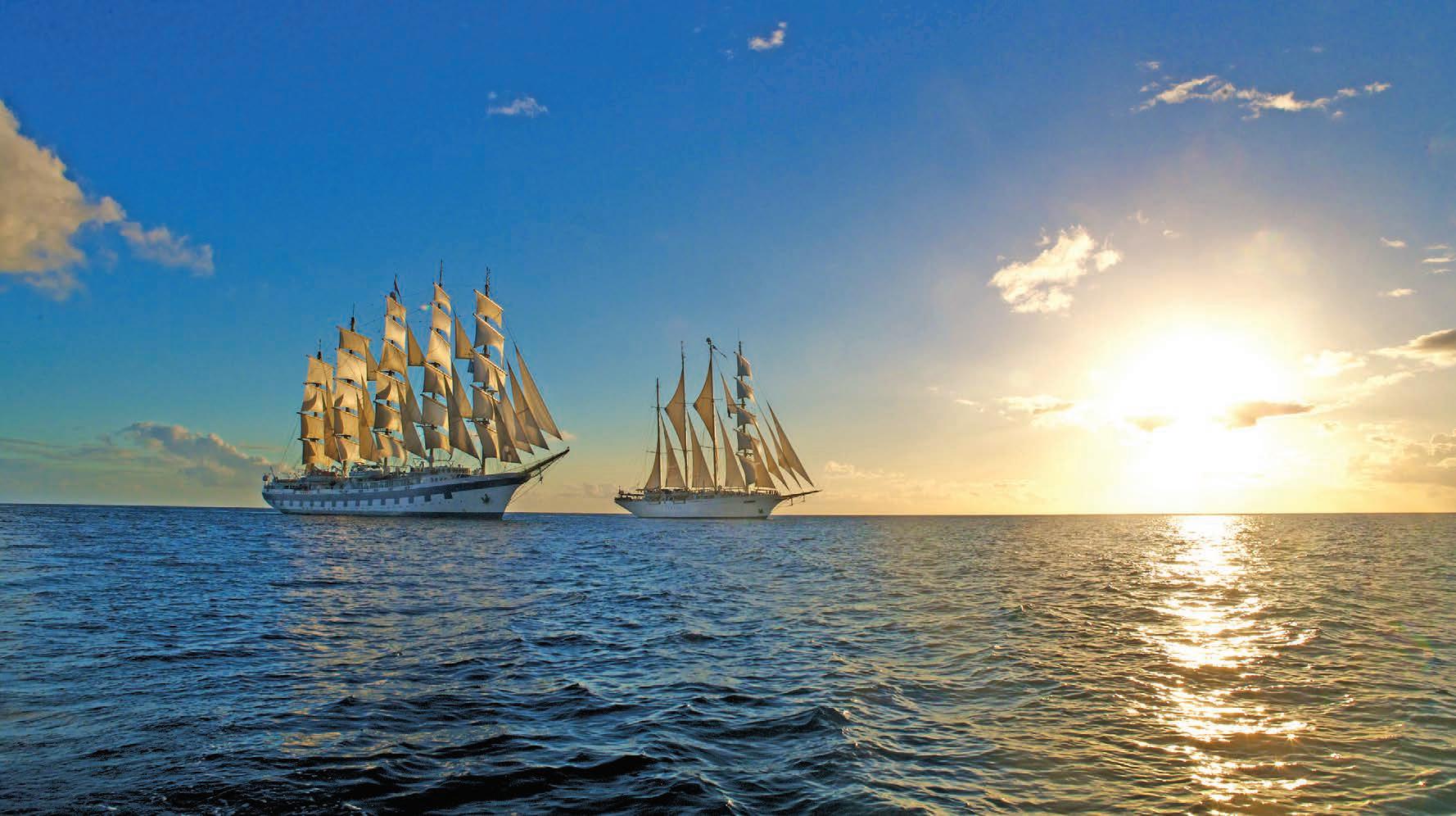
Star Clippers’ magnificent tall ships combine traditional sailing with modern luxury and a genuine connection to the sea.
River cruising continues to evolve
Today’s river travellers are exploring the Rhine, Danube, Douro, Rhône and Mekong through immersive cultural experiences.
Personalised luxury matters more than ever
Silversea continues to set the benchmark for all-inclusive luxury, while Scenic Eclipse redefines ultra-luxury discovery travel.
As travellers increasingly prioritise experiences over possessions, these styles of cruising offer some of the most rewarding ways to explore the world.
SCAN THIS QR CODE TO GO TO THE CRUISE VACTION WEBSITE

For more information:
+27 (0)11 514 0564 info@cruise-vacations.co.za www.cruise-vacations.co.za
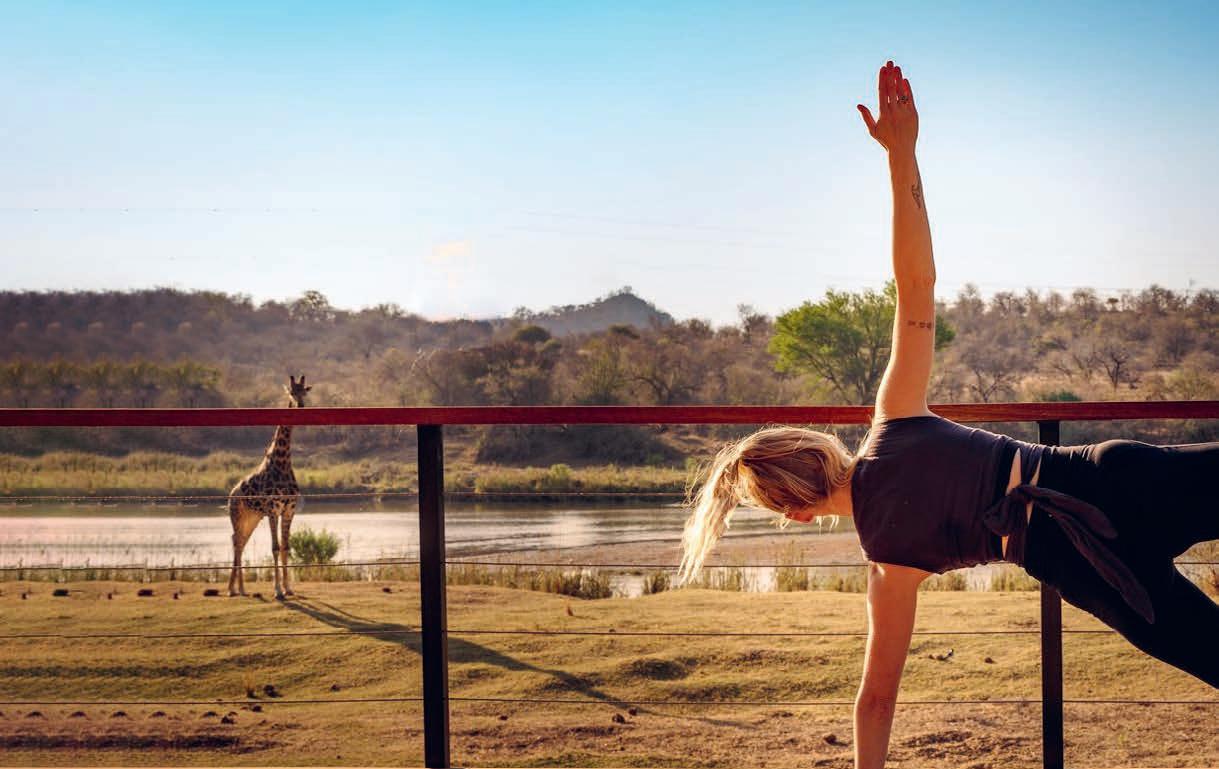

THE SETTING ALONE IS BALM FOR THE SOUL, THE WILDERNESS BOTH A MIRROR AND A MENTOR.
the Timbavati Private Nature Reserve offers what owner Marion Geiger Orengo calls a programme to “restore mind-body harmony and deepen your connection to nature” by enabling you “to unplug from life’s demanding rhythms”.

What’s up with the proliferation of health and wellness programmes, alternative healing sessions and yoga classes in the bush? KEITH BAIN surveys the wellness safari phenomenon

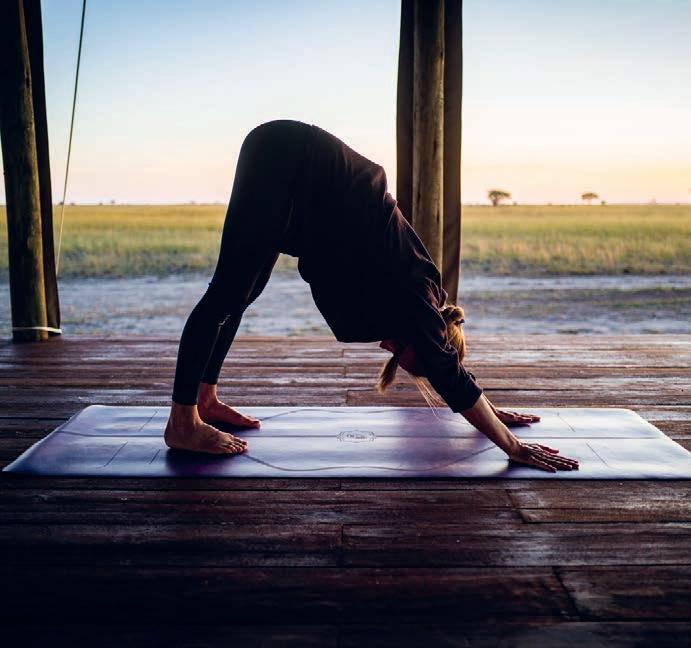
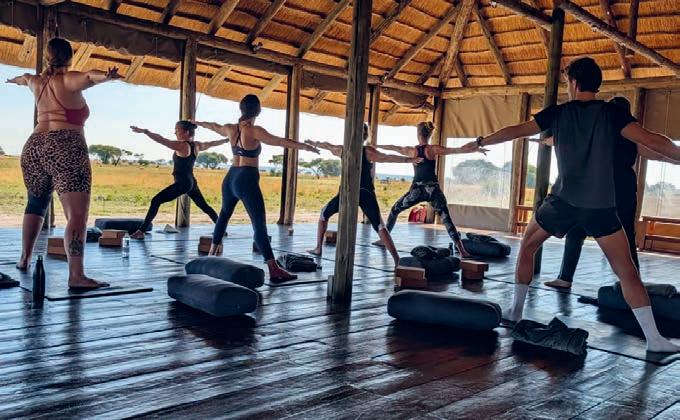
Situated on the ancestral land of the Basubiya people within Chobe National Park in Botswana, Munga Plains is a safari lodge with a dedicated yoga shala, open to the elements, allowing guests to gaze across the unfolding savannah while practising downward dog and high mountain pose.
And, just across the border in far-northern Namibia’s Bwabwata National Park, Nambwa Tented Lodge is the one-of-a-kind setting for Retreats in the Wild, a series of immersive multiday experiences developed by healing practitioner Tinolla Rodgers. These retreats-in-the-bush, where participants are surrounded by nature, space and a genuine sense of distance from modern-day routines, are designed to help attendees “transform, transcend and upgrade”. The setting alone is balm for the soul, the wilderness both a mirror and a mentor. Activities include conscious connected breathwork, traditional sweat lodge ceremonies, yoga overlooking a river teeming with wildlife, and even the simple joy of heartfelt conversations around the bon re.
Rodgers believes these retreats offer something city folk are craving. “We’re
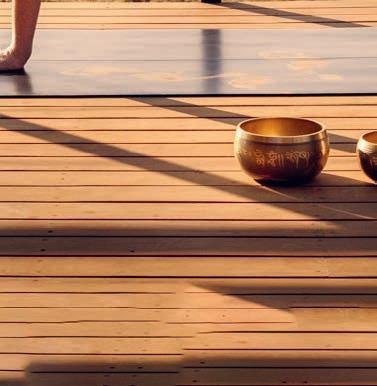
addressing one underlying common thread,” she says, “which is the disconnect we feel.” Whether it’s physical, emotional, mental or spiritual, she says we’re all struggling to nd connection.
Which might be why similar offerings –holistic wellness packaged alongside wilderness safaris – are in such demand at lodges across Southern Africa.
In the Eastern Cape, Kwandwe Private Game Reserve offers winter wellness retreats with daily yoga, guided meditation and mindfulness activities designed to help you rest and recalibrate, restore balance and re ect on life in an unfettered environment. The retreats include breathwork, holistic nutrition and guidance by a yoga teacher and Ayurvedic therapist. Plus, there’s the nonstop majesty of the setting and game drives to heighten guests’ sense of awe.
Awe’s what you get in Limpopo’s Klaserie Private Nature Reserve, too. At Kateka, guests get “a holistic wilderness-meets-wellness experience” – infrared Himalayan salt saunas, ice plunges or yoga on the spa roof follow safari activities. Meanwhile, the intimate four-bungalow African Retreat by Motswari in
World-famous Londolozi lets guests design their own “wellness safari” and, in the “Healing House”, there’s bodywork, sound therapy, meditation and massage on offer. That’s between game drives and yoga classes on the deck overlooking the Sand River. There’s no monkeying around, either: wellness safaris are facilitated by life coaches, expert practitioners and shamans.
In Greater Kruger, directly on the Olifants River, there’s off-grid, solar-powered Sashwa River of Stars, where – along with meditations in the wild and sound journeys in the bush – Kristi Tate, among others, lends her expertise in combining mindfulness, yoga and holistic tness
Tate, a yoga instructor who, among other things, leads training workshops with Singita spa staff, says being in the bush helps “eliminate background noise”, enabling the “underlying anxiety associated with the hustle and bustle of the city” to fade away. Like any properly integrated wellness safari destination, Sashwa provides the means to escape the relentless chatter of daily life, to tune out, unplug, and go through an entire day without being besieged by emails, meetings, schedules, deadlines, and attention-stealing distractions.
Tate believes there’s a “spiritual side” to nature and that being in the bush is a way of “down-regulating your nervous system”. Nature, in other words, is an awesome source of calm.
It’s all there in the name: Suzuki Across.
Whether you’re heading across the city or the country, this new SUV from the Japanese manufacturer with a penchant for creating affordable cars is a tenacious explorer with plenty of bells and whistles.
From looking and feeling the part to performing extremely well for fuel ef ciency, the Across is not only a punchy urban get-around (thanks to its mild-hybrid battery boost that helps save fuel), but on a long-weekend winter getaway, proved to be precisely the kind of sturdy, reliable, commanding vehicle you want when mixing highways with backcountry roads.
Our destination, in search of legendarily extreme cold and in hopes of seeing snow, was Sutherland, a wonderful place to mix adventure, local culture, rugged farmlands and rolling hills that stretch for miles across a beautiful and expansive Karoo landscape.
The rst part of the trip from Cape Town (around 391km from Sutherland) is all straight, uncomplicated highway tar. However, once there, there were plenty of backcountry roads to navigate and far-out estates to explore. The terrain enfolding Sutherland put us in mind of the Wild West, with the famous SALT observatory situated some distance out of town, surrounded by beautiful emptiness.
The rst thing you notice though, is the car itself. I’d call its design sleekly muscular rather than butch, its contemporary handsomeness much to do with those LED headlamps and taillamps, and the strip of lights across the bootlid. It’s a vehicle with character, a nip and a tuck bestowing minimalist re nement.


Sensible, yet handsome. Affordable, yet brimming with unexpected efficiencies and smart surprises. A cold-weather escape to Sutherland in the new Suzuki Across GLX confirms it as the Japanese SUV you want as a long-term investment. By
Inside, it’s wonderful: we were in the top-tier automatic GLX, which, at R464 900, is less than R100 000 more than the mid-level automatic GL, yet comes with a range of enhanced specs and add-on conveniences. There’s a sleekness to the cabin architecture, thoughtful console design and ambient lighting that lters in via patterning on the dashboard. For our trip to Sutherland, where we undertook lots of side excursions and relied heavily on digital maps to navigate, my co-pilot-in-chief loved the generously proportioned 10.1-inch touchscreen infotainment system with its lag-free wireless screen mirroring (it syncs easily with Apple CarPlay and Android Auto); as the driver, I loved the quality of the video relay from the rear-view parking-assist camera.

We had an especially great time on the longer stretches listening to our favourite road-trip playlist via the onboard eight-speaker Harmon In nity audio system. There’s also a wireless charging cradle with
KEITH BAIN
cooling vents to prevent phones from overheating; USB Type-C ports (two in the back and two in the front), and a panoramic glass sunroof that will come in handy come spring.
The car just handles so beautifully, a smooth ride ensured by its 1.5-litre mild-hybrid powertrain and highly capable suspension. I enjoyed the grippiness of the wheels, felt safe and enjoyed the car’s adaptive cruise control – the onboard computer steps in when trouble’s detected, otherwise, it’s barely perceptible. This makes it a godsend on those long, straight roads. Also a godsend? The quiet cabin – there’s little vibration, minimal noise, ideal for restful driving.
And, another bonus: great fuel ef ciency. It’s made to be economical rather than asking to be raced, so it’s actually lighter on fuel than expected – we arrived in Sutherland with more than a half a tank of petrol, enough to explore the surrounding area and make two trips to SALT, once for the daytime tour and once for the after-dark stargazing experience. Tar was a breeze, of course, but I found the Across also took the bumpier bits – some gravel roads and a few dustier ones, too – in its stride, smoothed them out with ease. And, each time we arrived somewhere new (including at the historic hotel in Matjiesfontein where we spent the night on the way home), someone was sure to remark on the car’s good looks. De nitely a bit of a irt, but we got used to it.