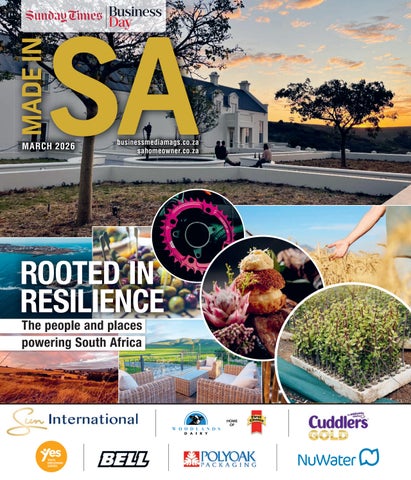
Few people know it, but large parts of the Eastern Cape were once covered with dense, subtropical thicket that supported a multitude of birds, animals and insects. This micro forest disappeared as the land was transformed for agriculture, leaving vast plains covered in little more than low shrubs.
It’s not exactly something to be proud of, but here’s something that is: in December last year, the United Nations Environment Programme and the Food and Agriculture Organization of the United Nations recognised the restoration of this ecosystem as a World Restoration Flagship.
Communities, various organisations and partners are coming together to boost soil resilience, trap carbon, restore habitat for animals and create jobs in rural areas. In this issue of Made in SA, we proudly pro le one such organisation, Return to Thicket, and the impact it is having in restoring this land.
Another surprising sustainability champion is Cape Town’s FYN Restaurant, which recently partnered with the United Nations Educational, Scienti c and Cultural
Contents
4 TRAVEL
Discover why the Swartland is bursting with food, wine, hospitality and … penguins?
9 LANGUAGE
Meet the people working to preserve South Africa’s endangered languages.
12 FOOD
It’s been named one of the world’s best restaurants, but what makes FYN Restaurant so ne?
Organization on a pilot project to transform the global culinary industry. If you haven’t visited one of the world’s nest restaurants yet, check out our photo essay to be lled with pride – and hunger.
Another crucial preservation effort is to save South Africa’s endangered languages, including N|uu. We also explore the wonders of the Swartland, dive into local bicycle manufacturing and discover Discovery’s arti cial intelligence partnership with Google. It’s all a reminder that there are plenty of things – and hard-working people – to be proud of here in South Africa.
Anthony Sharpe Editor
IF YOU HAVEN’T VISITED ONE OF THE WORLD’S FINEST RESTAURANTS YET, CHECK OUT OUR PHOTO ESSAY TO BE FILLED WITH PRIDE – AND HUNGER. FIND IT ON PAGE 12.
18 HEALTH
COPYRIGHT:
necessarily those of Picasso Headline. All advertisements/advertorials have been paid for and therefore do not carry any endorsement by the publisher.
16 ECOSYSTEMS
Restoring the Eastern Cape’s landscapes through the wonders of spekboom.
South Africa’s bicycle manufacturers are making a splash internationally. 12
A partnership between Discovery and Google aims to transform health recommendations from reactive advice to proactive strategies.
19 CYCLING
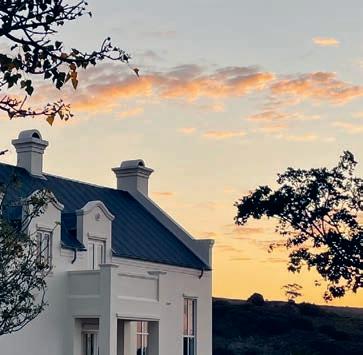
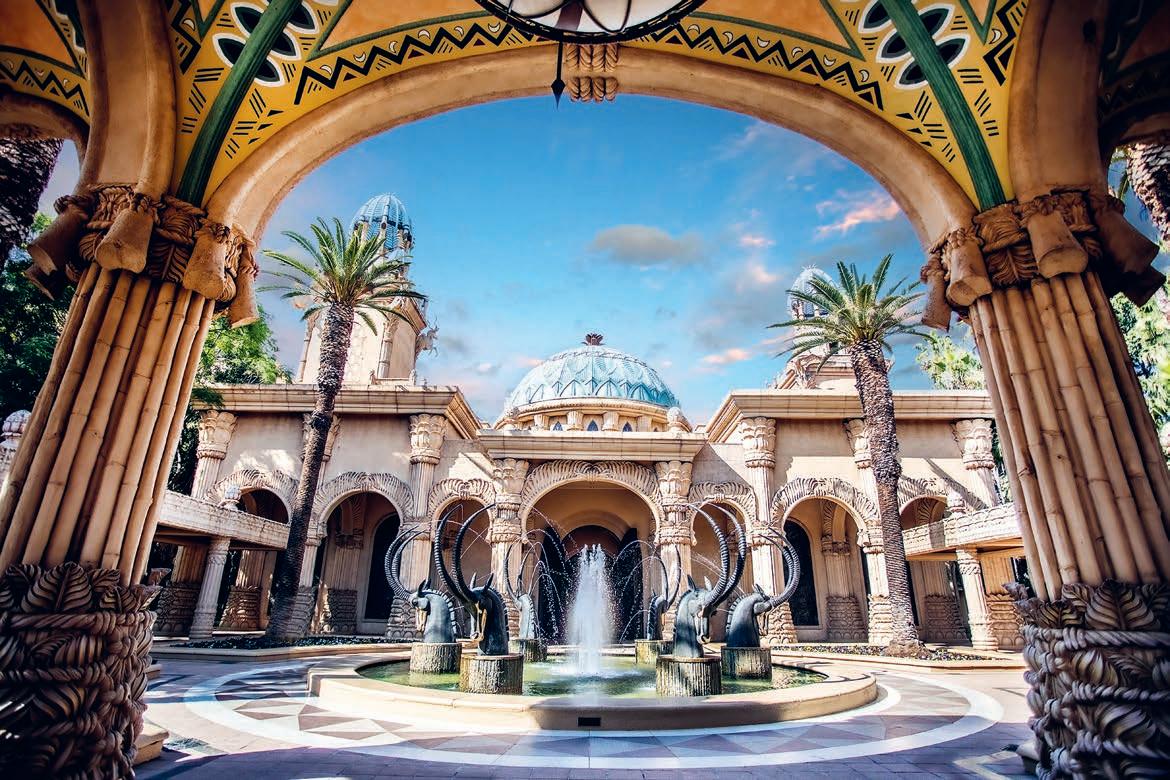
THE PALACE OF THE LOST CITY: AN ICONIC LUXURY ESCAPE
SUN INTERNATIONAL’S The Palace of the Lost City is rooted in heritage and designed with flair, providing a luxury retreat where guests are treated like royalty
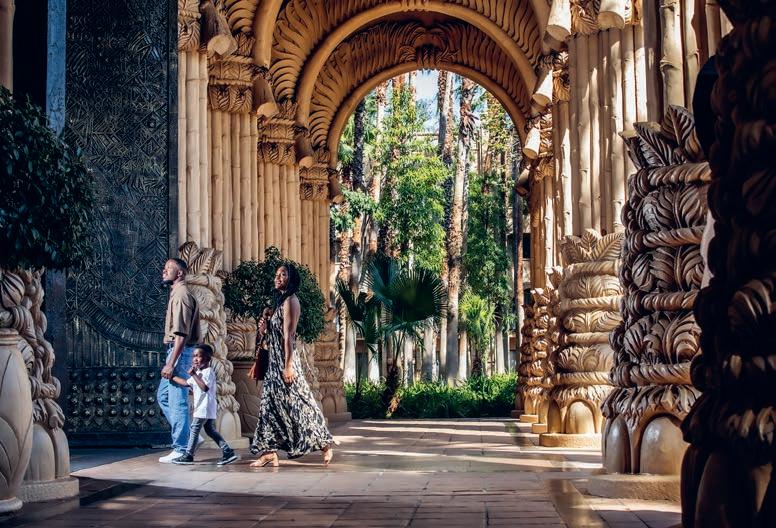
From the moment you arrive, you’re drawn into the legend. The untold tale of a lost African kingdom, rich in culture and wisdom, now rediscovered. However, The Palace of the Lost City (The Palace) is no relic of the past. It’s a grand celebration of Africa’s potential, designed with regal air and a reverence for tradition. Dome ceilings soar above mosaic oors, bronze animal sculptures guide you along marbled corridors and African patterns are etched into wood, stone and fabric.
Nestled on an extinct volcanic site in the Pilanesberg mountains, The Palace has captivated visitors since 1992 with its legendary beauty and grandeur. This icon of African luxury offers an unforgettable escape for lovers of opulence.
THE PALACE OF THE LOST CITY IS NO RELIC OF THE PAST. IT’S A GRAND CELEBRATION OF AFRICA’S POTENTIAL, DESIGNED WITH REGAL FLAIR AND A REVERENCE FOR TRADITION.
With handcrafted furniture and balconies that overlook the lush gardens, tropical forest or cascading waters, each of the 326 rooms and suites feels like a royal hideaway. Every space is designed for indulgence, ensconced in plush textures with golden hues paying homage to the landscapes of Africa. While the décor is rooted in heritage, modern conveniences ow effortlessly: high-speed Wi-Fi, international plug points and in-room dining worthy of a ve-star establishment.
A FEAST FIT FOR ROYALTY
Dining at The Palace has always been an experience, from high teas under crystal chandeliers to ame-grilled fare beneath starlit skies. The Palace’s Crystal Court now offers a re ned dining experience that takes guests on a journey through South Africa’s culinary roots, thanks to the partnership with South Africa’s rst Michelin-starred chef, Jan Hendrik van der Westhuizen. He is the founder of the acclaimed JAN restaurant in Nice, France, and now brings his signature blend of nostalgia and innovation home to the Crystal Court.
Jan Hendrik’s expressive interpretation of local cuisine re ects his culinary philosophy, which is rooted in culture, storytelling and a love of the land. His “Lost Ingredients” concept celebrates sustainability, heritage and avour.
Even breakfast is a regal affair, served with sparkling wine and views of the palms and fountains that frame the resort.
Guests can choose between two breakfast experiences:
• The Circular Buffet Station: a visual and culinary centrepiece, offering a carefully curated selection of seasonal produce, heritage-inspired recipes and international classics.
•The Curated Tray Menu: for those seeking a personalised, à la carte experience, the plated tray menu delivers artistry and storytelling. Each dish is inspired by Jan Hendrik’s childhood, Africa’s landscapes and traditions reinterpreted with global air.
Dining at The Palace is a celebration of South African identity, told through taste, texture and time.
EVERY SPACE IS DESIGNED FOR INDULGENCE, ENSCONCED IN PLUSH TEXTURES WITH GOLDEN HUES PAYING HOMAGE TO THE LANDSCAPES OF AFRICA.
OPULENCE IN EVERY DETAIL
The Palace doesn’t whisper luxury, it sings it. The grand atrium with its painted dome, the life-sized elephant fountain, the hand-carved murals and the mosaic-tiled swimming pool all come together to create an iconic destination.
Guests can unwind at the Royal Spa, a sanctuary tucked in lush botanical gardens and trickling streams. Designed to soothe the senses and restore the body, mind and soul, the spa experience draws on South Africa’s rich heritage of healing, hospitality and wellness.
Blending traditional therapies with the latest international treatments and products, the Royal Spa offers a bespoke sensory journey for every guest, where every treatment beckons a reconnection with your most balanced self.
AFRICA’S CROWN JEWEL
Whether you’re planning a romantic escape, a dream wedding, a corporate summit or a once-in-a-lifetime retreat, The Palace welcomes you to opulence and unforgettable grandeur. It’s where ancient African spirit meets modern-day splendour.
Here, in the mythical kingdom rediscovered, every guest is treated like royalty, and every moment is made to be loved.
For more information: +27 11 780 7855 crobook@suninternational.com https://www.suninternational.com/palace/
MADE IN THE SWARTLAND
ANTHONY SHARPE meanders, munches and chills his way through the Swartland to discover what this region has to offer
Less than an hour from Cape Town lies the Swartland, a patchwork quilt of landscapes and experiences that encompasses the Riebeek Valley, Malmesbury, Moorreesburg, Koringberg, Darling and Yzerfontein, all united by a sense of calm and slowness of life. Just as varied as its landscapes are the things it produces. From the nest of wines to the wheat that lls our breadbaskets, take a journey through the produce of the Swartland.
HOSPITALITY
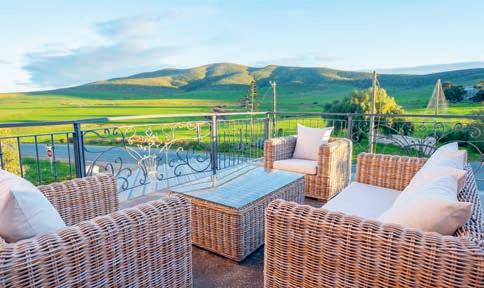
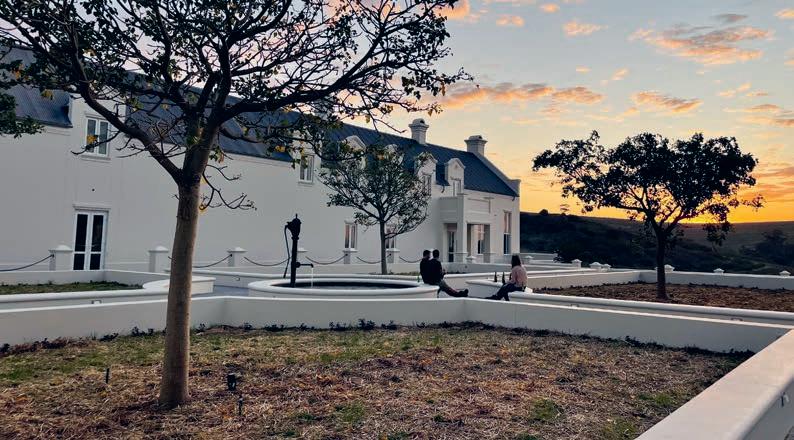
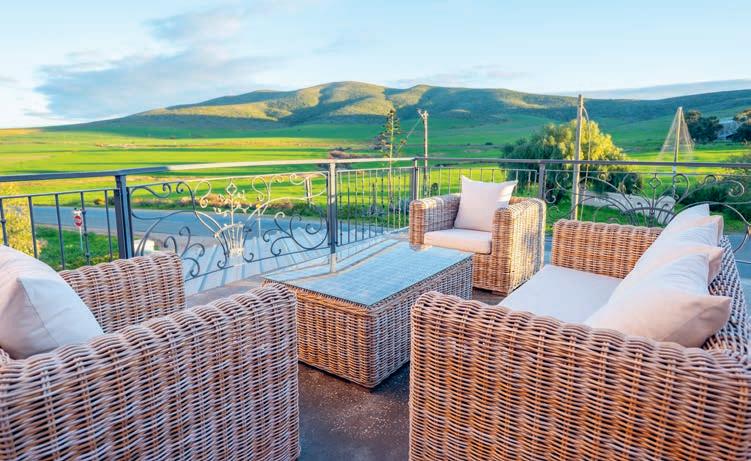
Koringberg has been quietly building a reputation among those in the know as a quiet, charming and beautifully kept little town – quite off the beaten track and seemingly happy to remain as such. Renovated from the former wine cellar of Wildehurst Wines, the Marrian George Hotel is a welcoming oasis, the pool and veranda commanding stunning views across to the Groot Winterhoek mountains, its ve quirkily decorated rooms a testament to owner Joanne Hurst’s creative passions.
RENOVATED FROM THE FORMER WINE CELLAR OF WILDEHURST
WINES, THE MARRIAN GEORGE HOTEL IS A WELCOMING OASIS.
WINE
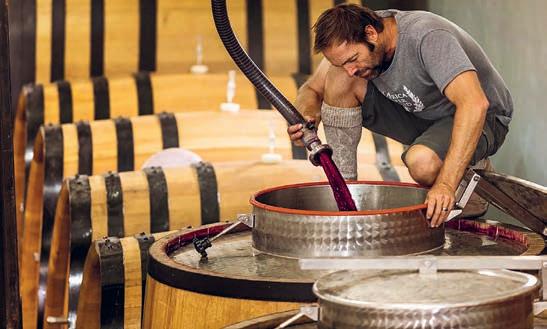
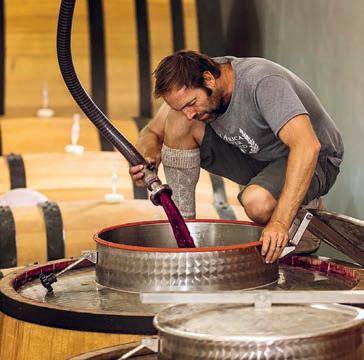
“A wine should be an ambassador for its region, which is why I always strive to bottle to truth about what the Swartland is.” So says Eben Sadie, whose single-minded focus on expressing the terroir of the Swartland has earned Sadie Family Wines a host of accolades. Its Columella red blend has been voted the country’s best wine several times, with a price tag hovering around R2 000 to match.
WHEAT
The Swartland is the breadbasket of the Western Cape, producing roughly one-fifth of the country’s wheat. Koringberg (“Wheat Mountain”) is a major logistical hub for the industry, housing one of the primary depots for Overberg Agri, which operates a network of silos in the region with a total storage capacity of approximately 385 000 tonnes.
RUSKS
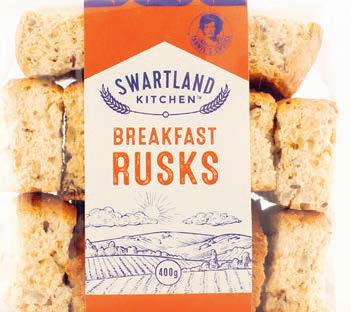
The method of baking bread until hard to preserve it has its roots in ancient times, but the rusk or beskuit that we know and love to dunk in our tea/coffee/brandy was brought over by the Dutch settlers, evolving from their twice-baked biscuits into a cultural icon. But while it may not have been invented in the Swartland, it quite possibly has been perfected by Swartland Kitchen, which bakes ve delicious avours of rusks at Pieter Dirk-Uys’s museum-cum-theatre, Evita se Perron, in Darling.
OLIVES
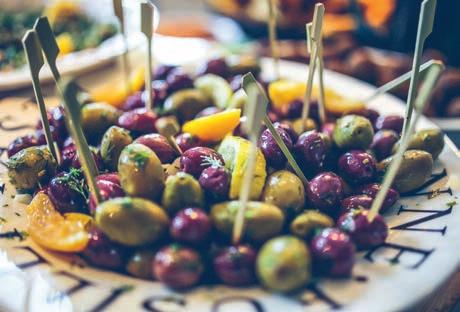
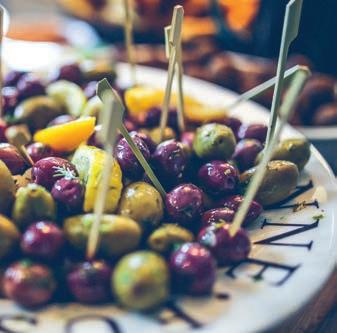
The Riebeek Valley is ground zero for olive production in South Africa, with a range of cultivars grown in the area for oil and table purposes. Kloovenburg Wine & Olive Estate and Riebeek Valley Wine Co are common names, but just outside town lies Goedgedacht, whose record 2024 harvest has helped further its social mission. All olive product sales contribute to Path Onto Prosperity, a long-term community development model designed to break the cycle of generational poverty for rural children in the Swartland.
PENGUINS
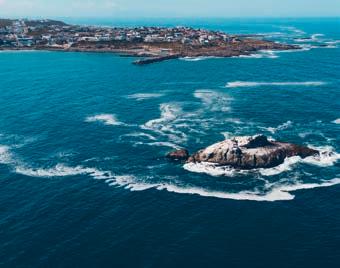
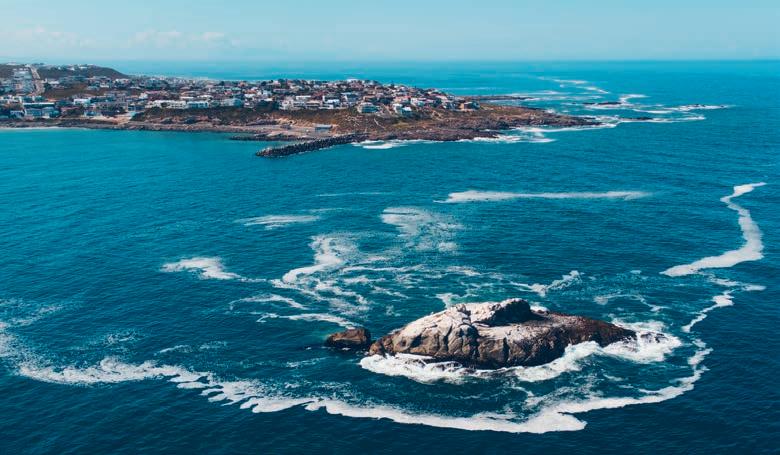
Penguin eggs were once a major product of Yzerfontein. In the 1960s and 1970s, hundreds of thousands of penguin eggs were taken from Dassen Island, which lies 10km off the Swartland’s only coastal town. Today, fewer than 2 000 of the birds remain on the island, with climate change and over shing having decimated the sardines on which they live.
SPACE, SKY, STARS
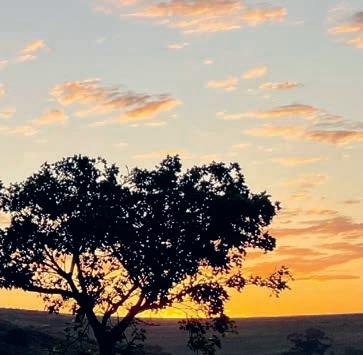
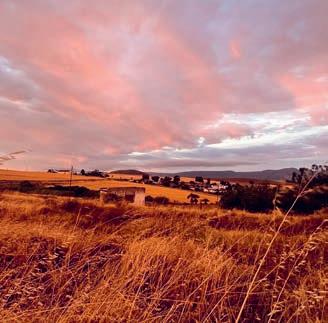
You can’t put a price on space. The vastness of the Swartland can be overwhelming beneath the glare of the unforgiving summer sun, but that feeling fades as dusk approaches, its paintbrush sweeping intoxicating hues of gold, orange and purple across the sky and those endless elds of wheat. And, when night falls, the lack of light pollution makes for a sky absolutely bursting with stars.
LOCAL KNOWLEDGE
Swartland Tourism is a great resource for activities across the region. Check out swartlandtourism.co.za for more information, including a nifty interactive map, and scan the QR code below to download its Visitor’s Guide.
HERITAGE ON A PLATE
How RAINBOW CHICKEN is rethinking convenience, nutrition and packaging for
today’s kitchens
There’s something quietly powerful about a brand that has fed a nation for more than six decades.
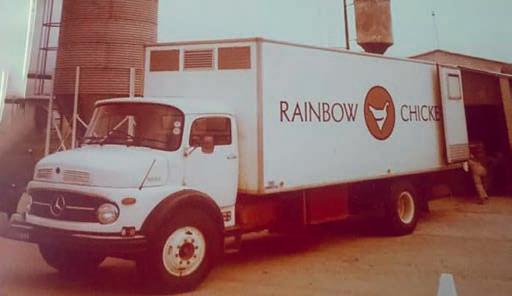
Since 1960, Rainbow Chicken has helped shape South Africa’s food story. Born on Stanley Methven’s family farm in Hammarsdale, it grew from a single processing plant into one of the country’s most recognisable poultry producers. Generations have gathered around Rainbow for Sunday lunches, braais, inkukhu nepapa and quick weeknight curries; and chicken has always been there.
However, heritage is not static. It evolves.
FROM FARM TO FORK – AND FORWARD
Rainbow is more than a freezer-aisle label. It is a fully integrated poultry producer with over 100 farms, processing plants and feed mills across KwaZulu-Natal, the Inland region and the Western Cape – overseeing every stage from farm to fork.
With this scale comes responsibility. Chicken accounts for more than 60 per cent of animal protein consumed in South Africa, making it an accessible and affordable source of protein. In an economy where households are stretching every rand, what lands on the dinner table matters. Rainbow’s purpose – to nourish the nation – is not a tagline. It is a
commitment carried out daily across farms, factories and family tables.
Yet, feeding a nation in 2026 looks very different to feeding one in 1986.
THE MODERN PLATE HAS CHANGED
Today’s South African consumers are informed, intentional and time-conscious. They want value without sacri cing quality, convenience without compromise and trusted brands that still feel relevant.
Air fryers are common. Smaller households are rising. Nutrition matters more. Shoppers read labels. Time is tight.
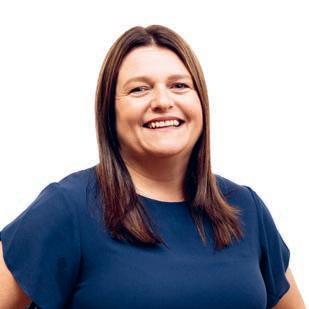
Under the guidance of Claire Mundell, technical director, Rainbow has responded with practical innovation. Product development is no longer just about new SKUs (stock-keeping units). It is about solving real mealtime pressures.
Portion-controlled 400g nugget and burger packs cater to smaller households and waste reduction. Value-added ranges, such as pre-crumbed steaklets and sausages, cut preparation time without cutting corners. Air-fryer-friendly, ready-to-cook formats speak directly to modern kitchens. Packaging innovations, including individually quick-frozen portions and resealable bags, allow families to cook only what they need while preserving freshness.
Nutrition sits at the centre of that thinking. The Farmer Brown Nourish range, endorsed by the Heart & Stroke Foundation of South Africa, offers heart-smart, low-sodium options with 100 per cent full-muscle chicken, making balanced eating simpler and still satisfying.
Innovation extends behind the scenes, too. Investments in feed optimisation, processing technology and operational ef ciencies help Rainbow deliver consistent quality and value, keep products accessible and contribute to a more sustainable food system.
This is not reinvention for novelty’s sake. It is evolution with intent.
DEEPLY LOCAL, UNDENIABLY RELEVANT
South Africa has a deep affection for its iconic brands. Names like Nando’s and Chicken Licken endure because they are woven into cultural memory. Rainbow belongs in that conversation.
As a stand-alone JSE-listed business, Rainbow blends deep poultry expertise with FMCG agility to create a consumer-focused, innovation-driven South African company.
Heritage is the foundation. Relevance is the mandate.
THE NEXT CHAPTER
Chicken adapts across cultures, budgets and cooking styles, tting easily into anything, from a potjie to an air fryer. Rainbow’s journey mirrors that adaptability.
From a Hammarsdale farm to a modern integrated food business, Rainbow carries its history forward, not as nostalgia, but as momentum.
In South Africa, food is more than sustenance. It is comfort, culture, gathering and resilience. The true legacy lies in blending tradition with a clear vision for what comes next. Rainbow is doing both.
Heritage, served with pride for today’s South African table.
Claire Mundell
VOICES FROM THE KALAHARI
From Ouma Katrina’s N|uu clicks to children’s books, educators and filmmakers are preserving South Africa’s endangered languages as living heritage. By BUSANI MOYO
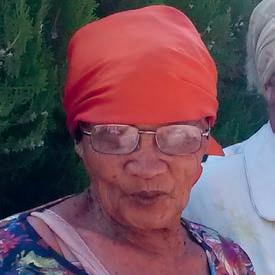
From the mesmerising clicks of N|uu to the melodic tones of isiZulu, South Africa’s linguistic landscape tells a story of resilience, loss and hope. While some languages thrive with millions of speakers, others teeter on the brink of extinction, kept alive by dedicated elders like 93-year-old Ouma Katrina Esau, the last uent speaker of N|uu.
THE RACE AGAINST TIME
Dr Kerry Jones, director of Africa Tongue, a linguistic consultancy working with Ju, Tuu and Khoe languages, has witnessed rst-hand the urgent reality facing South Africa’s most endangered tongues. “From the 1990s, when approximately 25 speakers of N|uu collaborated with various linguists, we now only have one remaining uent speaker, Ouma Katrina Esau,” she explains.
At 93, Ouma Katrina represents both triumph and tragedy: she is a living repository of ancient knowledge, yet carries the weight of being possibly the last person on earth to speak N|uu uently. Dr Jones describes her collaboration with Ouma Katrina as a race against time: “We are blessed to collaborate with such a strong woman. We are racing against the clock, simultaneously documenting the language where we can and providing support resources for the classroom.”
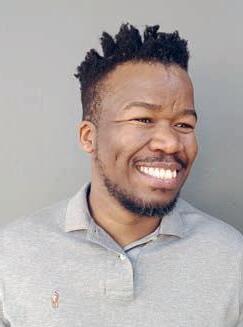
Gregory Molale
FROM SHAME TO CELEBRATION
Filmmaker Gregory Molale discovered Ouma Katrina’s story in 2019 and was drawn to its profound contradictions.
“Learning that, for decades, she had abandoned her mother tongue and lived as an Afrikaans-speaking person of mixed race immediately pulled me into her story.”
This transformation – from a woman once ashamed to speak her native tongue to one now celebrated globally for preserving it – represents a larger narrative about linguistic colonialism and cultural reclamation.
Molale’s documentary Language of My Soul approaches her story with sensitivity. Rather than positioning himself as the primary narrator, he chose to “work as a vessel, creating space for Ouma, her community and the quieter, often unheard histories they carry to be represented with care, dignity and sensitivity”.
THE POWER OF PUBLISHING AND MEDIA
Children’s books and educational materials play a crucial role in language preservation, though challenges abound. Dr Jones explains that “with minoritised languages having small speaker populations, most publishing houses do not see publishing of stories in endangered languages as a pro table endeavour”. This forces communities and linguists to pursue self-publishing routes, requiring dedicated funding for printing and distribution. However, success stories emerge. Dr Jones highlights the Ju|’hoan Children’s Picture Dictionary, published in 2014: “This publication is still used in Namibia today and is sold out. It’s a wonderful example of a community-guided publication with multiple uses and encapsulates local knowledge, not only in text, but via illustration, too.”
The intersection of traditional publishing with modern media offers new possibilities. Molale sees immense potential in combining different platforms: “Children’s books allow a language to enter the imagination early through play, repetition and storytelling. Television and lm then reinforce that visibility at scale, placing the language in
“WITH MINORITISED
LANGUAGES HAVING SMALL SPEAKER POPULATIONS, MOST PUBLISHING HOUSES DO NOT SEE PUBLISHING OF STORIES IN ENDANGERED LANGUAGES AS A PROFITABLE ENDEAVOUR.”
– DR KERRY JONES
contemporary contexts where it can be heard, valued and normalised.”
LIVING HERITAGE IN ACTION
The preservation efforts surrounding N|uu demonstrate what living heritage looks like in practice: Ouma Katrina’s school, where she teaches the language, the rst N|uu children’s book, created with the Puku Children’s Literature Foundation, and documentary lms sharing her story globally. These initiatives work together to shift perception of the language “from being treated as an artefact to being experienced as something alive, expressive and relevant”, says Molale.
The work continues despite signi cant nancial and institutional challenges. Yet through the dedication of educators, communities and artists, South Africa’s endangered languages continue to nd new ways to survive and even ourish.
Khoe and San Language Report
Follow: Dr Kerry Jones www.linkedin.com/in/dr-kerry-jones-3b0a9413
The YOUTH EMPLOYMENT SERVICE (YES) offers more than just business support; it’s creating sustainable pathways for youth-owned businesses
When COVID-19 devastated South Africa’s tourism industry, it didn’t just take the sector’s revenue; it also decimated its workforce as thousands of experienced workers ed to other sectors.
Today, as the industry slowly recovers, a talent crisis threatens to stall growth. On the one hand, tourism companies are wary of large payrolls after the trauma of pandemic retrenchments; on the other, they desperately need skilled workers so they can capitalise on recovery opportunities.
What’s been an important part of the solution? Youth Employment Service (YES). Yes is transforming how the sector thinks about youth employment through innovative co-funding models that turn traditional incentives into job multipliers.
YES has already created over 216 000 youth work experiences across South Africa’s economy since its inception. Of the 43 000-plus youth jobs it facilitates annually with more than 1 952 corporate partners, about 6 000 are strategically curated into sector development initiatives. The YES-Sanlam Youth4Tourism initiative, delivered in partnership with the Tourism Business Council of South Africa, exempli es this targeted approach.
A CO-FUNDING MODEL
However, YES isn’t simply placing young people in jobs. It’s pioneering a co-funding model that ips the employment equation: when one company sponsors a youth position, YES leverages that commitment to secure additional sponsorships from other partners,
generating two to three permanent positions from every youth job sponsored.
The 2024 Youth4Tourism initiative garnered R75-million in corporate funding to equip young people with gig-economy skills, while supporting small businesses in the tourism sector. This model gave youth viable capabilities to compete globally while addressing the industry’s immediate capacity needs.
Tsholo Mogotsi, YES’s chief partnerships of cer, argues that the solution lies in “creating an employment multiplier effect through leveraging and consolidating existing resources and youth programmes across the industry”. Instead of multiple fragmented youth placement programmes operating without co-ordination, YES offers a single, well-funded model that simultaneously addresses talent development, security concerns and employment expansion.
The numbers tell a stark story. International visitor spend remains 23 per cent below pre-COVID-19 levels – or 45 per cent when accounting for in ation. Only the Western Cape and Kruger National Park have seen full recovery since the pandemic. While domestic tourism has shown more resilience, with 2024 spend nally matching pre-COVID-19 levels, pro tability remains squeezed by cost in ation.
The industry already employs 1.7 million people, and consensus suggests this could grow signi cantly, given South Africa’s natural endowments. The constraint isn’t demand potential – it’s the nancial risk tourism companies perceive in signi cantly expanding their workforce.
INSTEAD OF MULTIPLE FRAGMENTED YOUTH PLACEMENT PROGRAMMES OPERATING WITHOUT CO-ORDINATION, YES OFFERS A SINGLE, WELL-FUNDED MODEL THAT SIMULTANEOUSLY ADDRESSES TALENT DEVELOPMENT, SECURITY CONCERNS AND EMPLOYMENT EXPANSION.
YES’s model addresses this directly. By consolidating resources, leveraging corporate partnerships and creating multiple permanent positions from each sponsored youth role, it makes expansion nancially viable for cautious operators.
Ravi Naidoo, CEO of YES, frames this as “more than just business support; it’s about creating sustainable pathways for youth-owned businesses to become active participants in South Africa’s formal economy.”
The tourism industry’s post-COVID-19 recovery demands exactly this kind of innovative thinking. Traditional approaches to youth employment aren’t scaling fast enough. Co-funding models that leverage youth employment to drive broader skills development and job creation offer a pathway that bene ts youth, businesses and the broader tourism economy.
For an industry that prides itself on hospitality and human connection, embracing models that simultaneously develop youth, support existing workers and manage business risk isn’t just sound economics; it’s essential for sustainable recovery.
For more information: www.yes4youth.co.za
EAST MEETS SOUTH
FYN Restaurant’s heady fusion of Japanese techniques and local ingredients has seen it consistently voted one of the best restaurants in South Africa – and the world. By
ANTHONY SHARPE
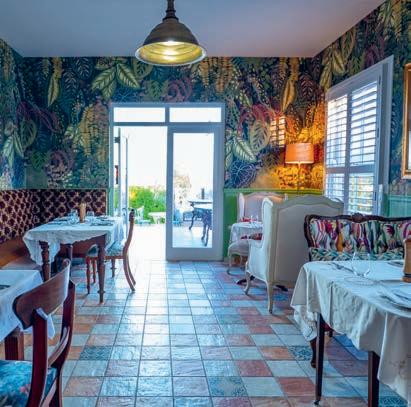
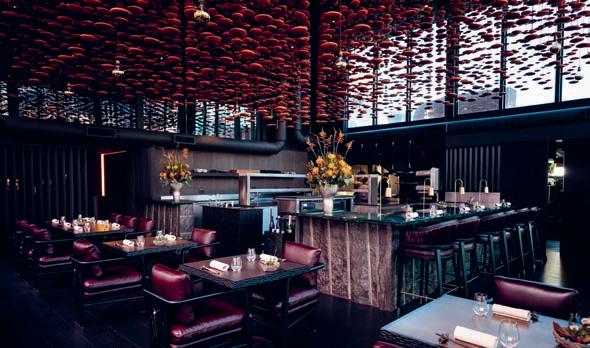
The ceiling installation by Tristan du Plessis – inspired by the Japanese abacus and traditional African beadwork – symbolises two cultures converging. It re ects FYN’s culinary identity, where Japanese technique meets South African ingredients, and has become an iconic visual signature of the restaurant. The open kitchen was designed to disrupt traditional ne-dining boundaries, removing the divide between front and back of house. This transparency allows guests to experience the rhythm and precision behind service, creating a more immersive and memorable meal.
Springbok katsu and milk bread crust, made in-house, meet spekboom and sour g chutney, lifted with karashi mayo. Ostrich tsukune – a yakitori-style meatball – is nished with furikake and rich ostrich egg mayonnaise, balancing avour and texture with a distinctly South African touch.
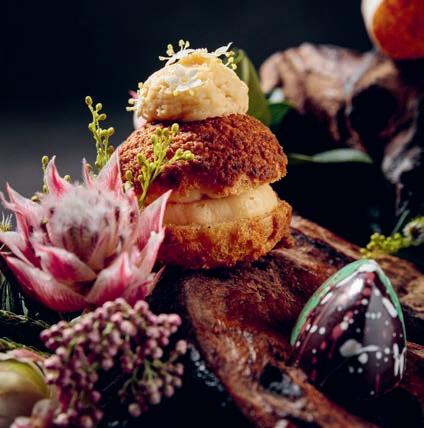
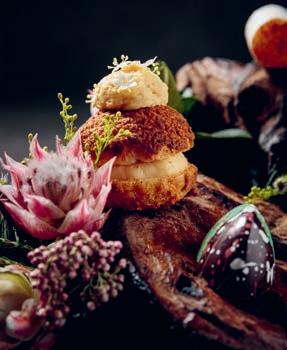
The Crack/choux bun is a mebos gel and amarula diplomat cream. Set beside it is a dark chocolate bon bon with pistachio and katai lling, with a pineapple, Durban chilli and lime spice taffy at the back.
“Being seasonal is not about the four seasons of the year found in children’s geography books – or copy and pasting another region’s seasonal cycle. It is rather about observing the land and using indigenous ingredients at the right time, when they are at their best. This is what seasonality is and this is the essence of kaiseki cuisine.” –
FYN culinary director Ashley Moss
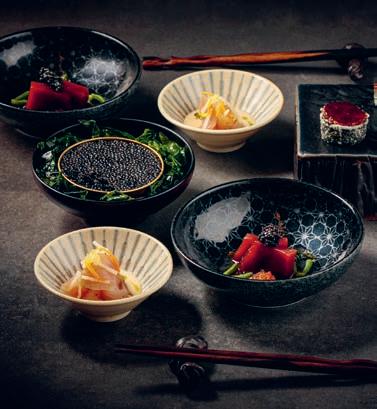
A seafood medley comprising akami cut of tuna loin, an interpretation of gunkanmaki meets Korean bugak and yellowtail loin cured for 8–10 hours in kosho (a Japanese condiment of fermented citrus and chilli).
From indigenous botanicals to ancient grains, each cocktail is inspired by the Cape’s landscapes: wild and unforgettable. Shaped by both land and sea, the Elemental menu creates a true sense of place, offering guests something distinctive with every sip.
Ashley Moss
RICHARDS BAY’S HEAVY EQUIPMENT HEAVYWEIGHT
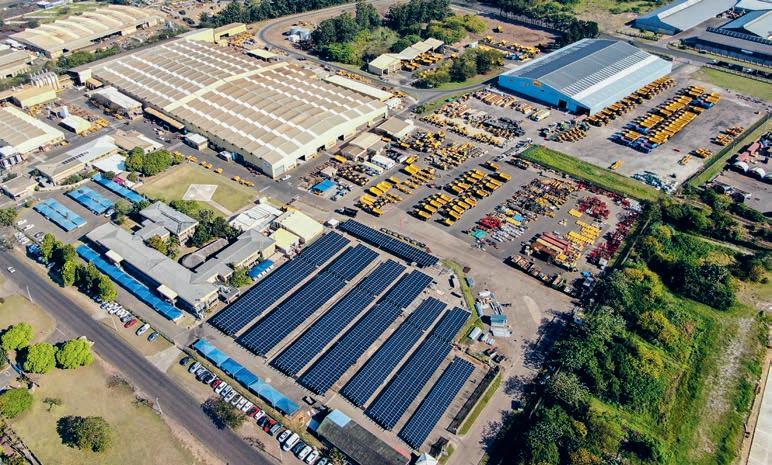
Hidden in plain sight in the industrial hub of Richards Bay, KwaZulu-Natal, is the remarkable manufacturing success story of BELL EQUIPMENT
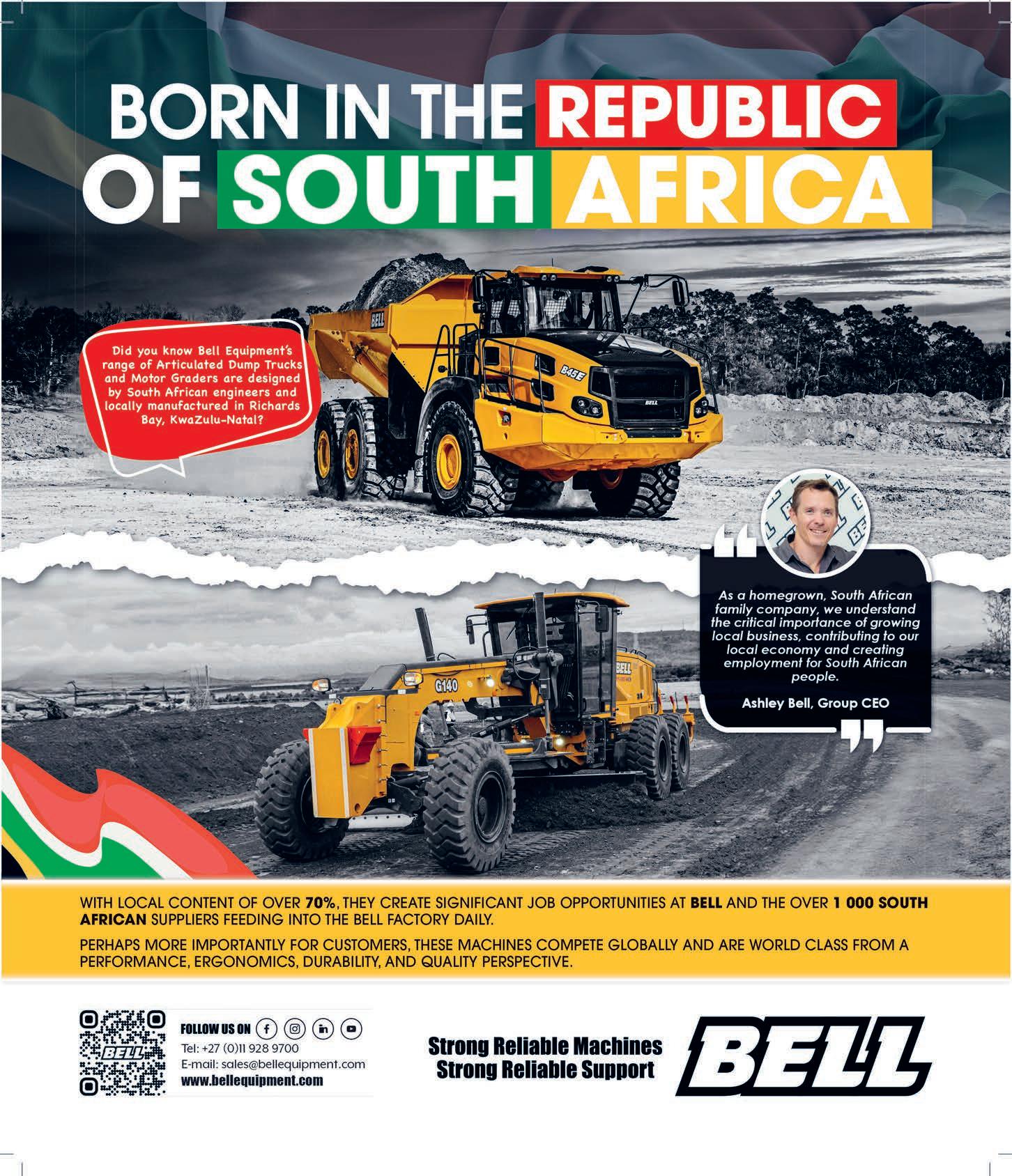
Bell Equipment’s machines operate around the world, yet few realise they are designed and manufactured on home soil.
Bell Equipment was founded 72 years ago as a small agricultural engineering workshop on a sugarcane farm in northern KwaZulu-Natal. The founders, Irvine and Eunice Bell, and Eunice’s brother, Malcolm Campbell, ran a tight ship based on family values. Today, the Bell’s grandson, Ashley Bell, does the same with what is now a JSE-listed global company, with nearly 70 different products distributed and supported by a worldwide dealership network to over 100 countries.
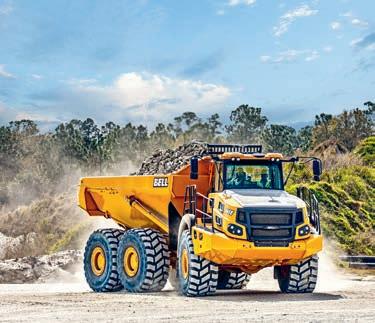
Its core product, the Bell ADT range, is among the largest and most advanced globally. As an innovation leader, Bell has designed its own telematics system, Fleetm@tic®, and pioneered numerous features to improve productivity and safety.
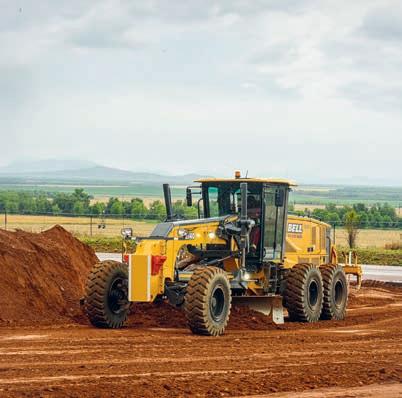
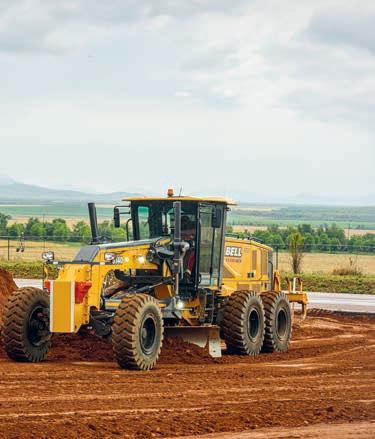
The Bell Motor Grader range – the next major export product for mining and construction –went into production last year and shares the same innovation, performance and durability DNA as the Bell ADTs.
Staying true to its roots, Bell remains active in forestry and agriculture, where founding products, such as the Bell Tri-wheeler and
assemblers, among the best in the country, thanks to the company’s training centre, which develops world-class skills from the surrounding community.
Haulage Tractor, continue to be popular choices. Listening to customers’ needs, new mechanised solutions have been developed, such as the UltECO 6 Cane Slew Loader for sugarcane farmers and the Skogger, a hybrid cross between a logger and a skidder, for the forestry industry, among others.
DRIVING ADVANCED ENGINEERING AND SKILLS DEVELOPMENT
The magic happens at the company’s impressive 45 000m2 undercover manufacturing facility. Equipped with specialist equipment, such as robotic welders and CNC (computerised numerical control) machining centres, the factory follows lean manufacturing principles, latest technologies and innovations to meet the highest international quality standards.
About 2 500 people work on-site, of which over 800 are machinists, welders and
The team of over 180 South African research, engineering and product testing specialists has the thrilling job of continuously innovating existing and new products so Bell remains a pioneer and market leader in terms of productivity, ef ciency and safety, with close focus on emissions requirements and low-carbon footprint.
GROWING A SUPPLY CHAIN THAT SUPPORTS JOB CREATION
While the company’s engineering expertise and product quality are comparable with global players in the industry, Bell has had to nd inventive ways of overcoming the challenges of manufacturing in South Africa to remain competitive with imported products.
Bell localises its supply chain as much as is economically possible. With local content of over 70 per cent, Bell machines create signi cant job opportunities at Bell and at the over 1 000 South African suppliers feeding into the Bell factory daily, creating a meaningful impact on local, provincial and national economies. This also helps to improve the company’s exibility and reduce exchange rate risk.
Pietermaritzburg-based Global Composites, for example, builds Bell cabs, jointly designed with Bell. This company also spreads its workload, outsourcing cab components to smaller companies to create spinoff for other local manufacturers.
Bell proves that a South African manufacturer can compete at the highest level in an industry dominated by global giants – all while supporting local skills and supply chains.
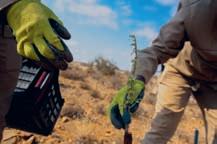
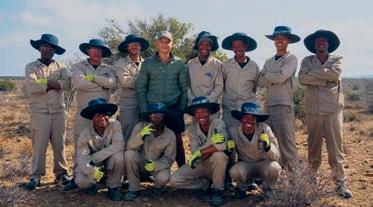
Return to Thicket is part of a growing movement restoring the Eastern Cape’s landscapes through one remarkably resilient plant – spekboom.
By NICK HAMP-ADAMS, general manager at Return to Thicket
Across the Eastern Cape, a quiet but ambitious restoration project – one of the largest ecological restoration initiatives of its kind globally – is taking root. Known as Return to Thicket, the project forms part of a broader national movement to revive subtropical thicket ecosystems transformed by decades of intensive animal agriculture by using spekboom, a hardy indigenous plant with an outsized impact on climate resilience, biodiversity recovery and rural livelihoods. Return to Thicket has completed restoration work across 600 hectares and is set to begin work on a further 1 600 hectares this year. It operates within the wider thicket restoration movement in South Africa, with an ambitious target of restoring 800 000 hectares of spekboom thicket by 2030. This movement was recently recognised by the United Nations as a World Restoration Flagship.
WHY SPEKBOOM MATTERS
Spekboom occurs naturally in warm, relatively dry environments across the eastern parts of South Africa, from the Eastern Cape northwards into KwaZulu-Natal, Eswatini, Mpumalanga and Limpopo and into Mozambique. It thrives in subtropical thicket, succulent Karoo scrub, bushveld and dry river valleys, often on rocky slopes where few other plants can persist.
The Eastern Cape is home to the subtropical thicket biome – unique to the province. In many parts of this biome, spekboom is both a dominant and pioneering species, making it central to restoration efforts.
Spekboom can switch between two different photosynthetic pathways: one that works like most plants, taking in carbon dioxide mainly during the day, and another water-saving pathway in which it takes in carbon dioxide mostly at night when it is cooler. This exibility helps it survive in areas with low and unpredictable rainfall. Intact spekboom-dominated thicket can store more than 20kg of carbon per square metre in the plant itself and the soil, a gure unusually high for a semi-arid ecosystem and comparable to far wetter systems.
FROM CUTTING TO CANOPY
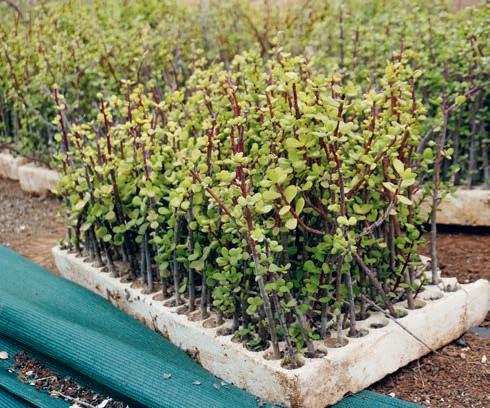
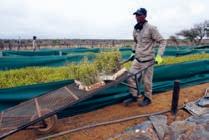
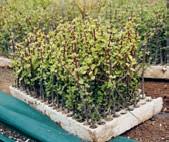
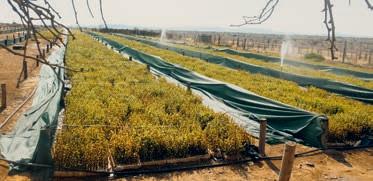
One of spekboom’s greatest strengths is its ease of propagation. The plant can be grown from cuttings, known as truncheons, which are often planted directly into the ground without the need for intensive nursery processes.
Large-scale restoration programmes have relied on simple spacing-based planting protocols, making it relatively practical to train planting crews and plan inputs. Large-scale spekboom planting has already been implemented across more than 10 000 hectares, showing that restoration at scale is achievable when strong operational systems are in place. These include reliable cutting supply, transport, quality assurance, monitoring and ongoing maintenance.
Even before the cuttings take root, planting begins to make a difference. The cuttings and planting microsites slightly roughen the soil
surface, reducing bare ground exposure. This helps slow run-off and trap sediment around planting points, offering immediate bene ts in these landscapes.
RESTORING ECOSYSTEMS OVER TIME
As restored plant cover establishes, the bene ts multiply. Reduced bare ground slows run-off, traps sediment and lowers erosion, contributing to improved soil structure and long-term ecosystem function.
Spekboom planting supports biodiversity recovery by improving habitat quality and enhancing ecological connectivity across affected areas. As the canopy develops, shading and leaf litter moderate soil temperatures, improve water in ltration and support better soil moisture retention when compared to exposed, transformed sites. Over time, these changes help landscapes regain their resilience, allowing natural processes to reassert themselves.
PEOPLE AT THE CENTRE
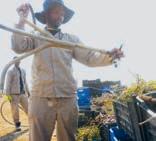
Beyond environmental gains, thicket restoration has a strong human dimension. Nurseries, cutting collection, planting, maintenance and monitoring create opportunities for rural employment and skills development.
Return to Thicket has created more than 100 jobs, with over 70 of these in rural areas. Across the broader thicket restoration movement, the aim is to create more than 1 000 rural jobs, with project bene ts reaching over two million people. Many programmes prioritise training and inclusive participation, strengthening local ownership of natural resources and supporting long-term maintenance. Return to Thicket actively engages with schools in surrounding communities, raising awareness around ecosystem protection, climate change and environmental stewardship.
Who’s involved?
Thicket restoration brings together nongovernmental organisations, landowners, scientists, local communities and carbon market partners.
About Return to Thicket.
HEALTHCARE, EVOLVED
A South African innovation is shaping the future of global health.
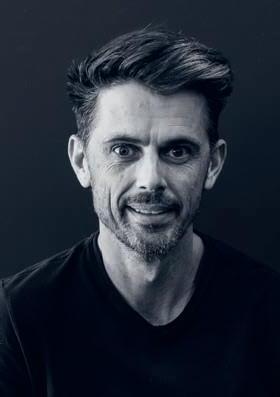
By EMILE STIPP , CEO of Vitality AI
The global health landscape is undergoing rapid transformation. Rising chronic disease, ageing populations and the escalating costs of care are placing intense pressure on health systems. At the same time, arti cial intelligence (AI) and advanced analytics are creating unprecedented opportunities to shift from reactive treatment to proactive, preventive health management.
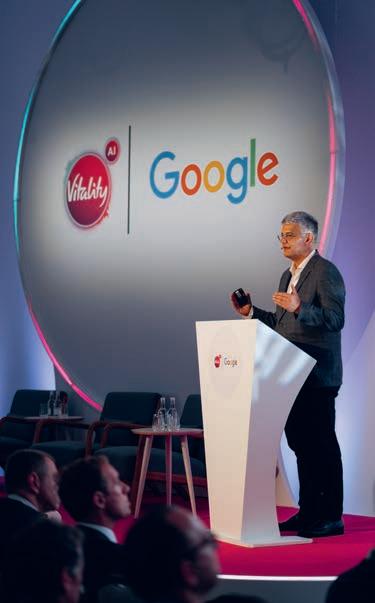
The launch of Vitality AI, a partnership between Vitality and Google, represents a pivotal moment in this shift. The platform integrates Google Cloud’s technology and advanced AI and data analytics capabilities – including the Vertex AI platform and Gemini models – with Vitality’s unique health and behavioural datasets to deliver hyper-personalised, actionable health guidance at global scale.
A LOCAL FOUNDATION FOR GLOBAL TRANSFORMATION
A point of national pride is that the foundation of Vitality AI was built in South Africa. Discovery Health’s Personal Health Pathways (PHP) – a precision-guided engine that delivers real-time, personalised health recommendations – has demonstrated how targeted behavioural nudges and tailored clinical prompts can meaningfully improve health outcomes. The innovation supports Discovery Health Medical Scheme (DHMS) members in developing and sustaining improved health habits, adapting to new health data and information as individuals engage with the platform’s guided engine.
PHP, developed with Discovery’s data science partner, Quantium, and hosted on Google Cloud Platform, is fully integrated with Vitality and provided hyper-personalised recommendations to more than 510 000 South Africans in 2025, prompting 3.8 million exercise actions, 654 000 health actions and over R48-million in rewards.
Initial data indicates measurable behaviour change and improved population-level health outcomes. Comparing DHMS member behaviour between 2023 and 2025, members who activated PHP demonstrated a 1.4x higher completion rate of recommended health actions compared to those who did not activate their pathways. This translated into an additional 110 000 health actions completed in 2025 that would not have occurred without access to PHP.
The increase was particularly pronounced in key preventative and early detection interventions, including a 1.36x increase in colon cancer screenings, a 1.24x increase in mammogram completions and a 2.9x increase in pneumococcal vaccinations among high-risk members, an intervention known to reduce avoidable hospital admissions. These trends con rm PHP’s role in closing critical care gaps and enabling earlier detection and prevention.
EVOLVING WITH AI
Vitality AI builds directly on this success. While PHP validated the model, AI vastly enhances its speed, intelligence, precision and scalability. Google’s technology, together with the AI skills in Vitality in partnership with Quantium, enables Vitality to integrate 60 million life years of data and 80 distinct data sources covering 2 800 dimensions into a single, secure and longitudinal understanding of an individual’s health, supporting hyper-personalisation –something historically impossible at scale.
For members, the experience remains user friendly and intuitive: personalised insights, tailored actions and rewards delivered through personalised communications in the Vitality app, supported by a suite of leading global rewards and reinsurance partners.
IMPLICATIONS FOR PREVENTATIVE HEALTH AND INSURANCE
The implications extend far beyond individual behaviour change. Chronic diseases drive the majority of global healthcare costs, and improving even a handful of daily habits can have a causal, outsized effect on mortality and morbidity. Vitality’s data shows that the effect is most pronounced for older or sicker individuals, reinforcing the fact that meaningful improvement is possible at any stage of life.
For health systems and insurers, this is transformative, shifting models from paying for illness to rewarding preventative behaviours and incentivising members to live healthier, longer lives through shared-value insurance.
A PROUDLY SOUTH AFRICAN INNOVATION GOING GLOBAL
Vitality AI will begin rolling out across the United Kingdom, United States, South Africa and other partner markets this year.
For South Africa, this milestone reinforces the country’s ability to develop world-class health innovation. Vitality’s purpose has always been to make people healthier and enhance and protect their lives. A platform conceived locally is now poised to in uence global health management, with the potential to extend healthy life expectancy by up to eight years and reshape the global insurance industry.
Emile Stipp at the launch of Vitality AI.
THE WINNING CYCLE
While South Africa has a relatively small cycling market, its products fare well internationally. RODNEY WEIDEMANN looks at what gives these local companies an edge
South Africa, like many nations globally, is gradually waking up to the bene ts of cycling. Between the growing need for faster and greener modes of transportation and the recreational demands of road and mountain biking enthusiasts, the local bicycling industry is poised for take-off.
Pyga Industries and cSixx Components are closely aligned South African cycling brands that share a common philosophy: designing high-performance products engineered around meeting real riding demands.
Essentially, Pyga Industries focuses on bicycle design and development, while cSixx Components complements this by designing and manufacturing premium bicycle components locally, explains CSixx founder and owner Mark Hopkins
“Our cycling manufacturing industry is minuscule in global terms, but it is relatively specialised, and we compete in terms of design, engineering and niche manufacturing,” says Hopkins. “Our focus on superior design and quality translates into stronger international partnerships and increased recognition of the local industry’s technical capability, leading to growth in our export markets, particularly in higher-end segments.”
Lyne Components, a local designer of wheels, hubs, saddles and other components for the industry, has set itself the task of offering the best products it can at the most attainable price point. While designing everything locally, the company does manufacture its products elsewhere.
“We feel designing locally is important as we can tailor products to our needs and riding conditions, rather than using something
Fast fact
The bicycle market in South Africa is expected to see a compound annual growth rate of 7.4 per cent, reaching projected revenue of nearly R40-billion by 2033.
Source: Grand View Horizon
off-the-shelf,” notes Lyne co-founder and industrial designer Dayle Holmes. “It also makes our brand unique in the look and feel of the products.
“DESIGNING LOCALLY IS IMPORTANT AS WE CAN TAILOR PRODUCTS TO OUR NEEDS AND RIDING CONDITIONS, RATHER THAN USING SOMETHING OFF-THE-SHELF.”
– DAYLE HOLMES
THE LOCAL EDGE
Hopkins says most local manufacturers design with global markets in mind from day one. The primary export destinations tend to be Europe, the United Kingdom and increasingly parts of Asia-Paci c, as these value innovation, ride quality and durability. “Our international customers are drawn to the combination of careful manufacturing control and competitive pricing, relative to equivalent European Union or United States products.
“Our goal is not to offer very niche or overpriced products, aiming instead for great value – and we feel this is only possible by using suppliers in the East as they have re ned production to offer incredible quality at reasonable pricing and great additional expertise to draw on.”
Export growth is built on long-term relationships and repeat customers.
“They’re also aware that South African riding environments are demanding: long distances, rough terrain, high temperatures and limited access to support in many riding areas. Therefore, if a product works well here, it generally works anywhere.”
Hopkins believes local products have a unique edge. “We are rider-driven, totally hands-on and deeply involved in testing and re nement. For international cyclists, that translates into equipment they can trust. That authenticity is dif cult to manufacture, and it’s something our local industry offers naturally,” he concludes.
Follow: Mark Hopkins www.linkedin.com/in/mark-hopkins-1aa918211 Dayle Holmes www.linkedin.com/in/dayle-holmes-8576191a
Dayle Holmes
Mark Hopkins
FROM SOUTH AFRICA TO THE WORLD
NUWATER’s original equipment manufacturer, original design manufacturer, and engineering and manufacturing exports water treatment systems are making a global impact
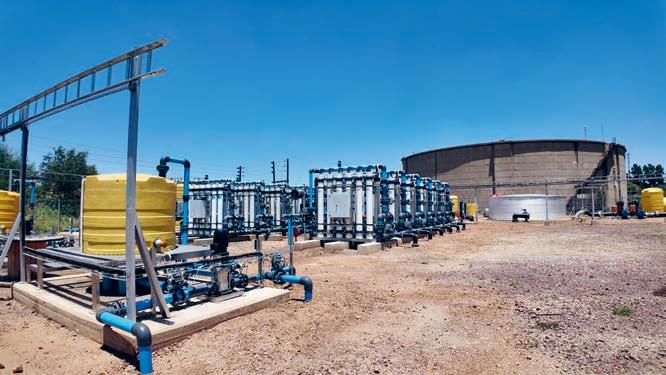
South Africa has long been recognised for its eengineering ingenuity and problem-solving resilience. In the water sector, few companies embody this spirit more clearly than NuWater, a South African water and wastewater treatment specialist that designs, manufactures and exports OEM, ODM and EME solutions to clients across Africa, Latin America and Asia.
At a time when water scarcity, industrial growth and environmental compliance are converging globally, NuWater works with clients across multiple markets, delivering modular and cost-effective water treatment systems built for real-world conditions. Beyond technology, NuWater’s growth story re ects a commitment to job creation, skills development and meaningful economic contribution through local manufacturing and exports.
DESIGNED, ENGINEERED AND BUILT IN SOUTH AFRICA
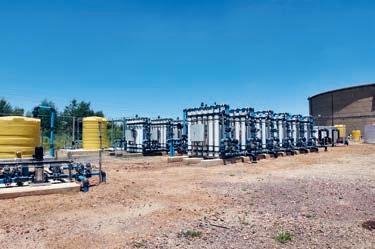
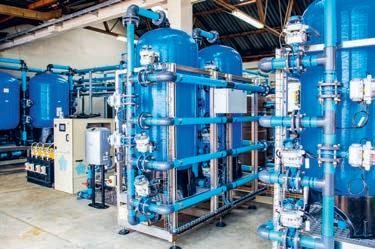
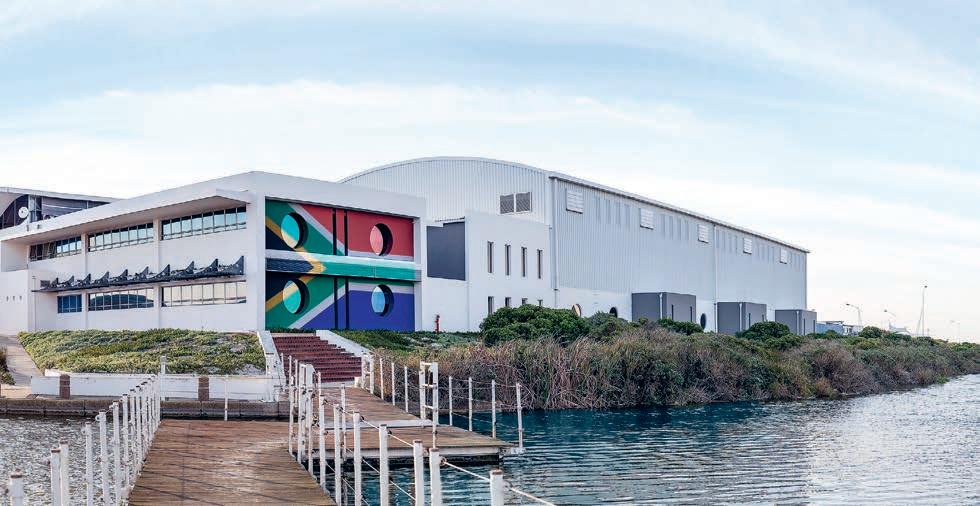
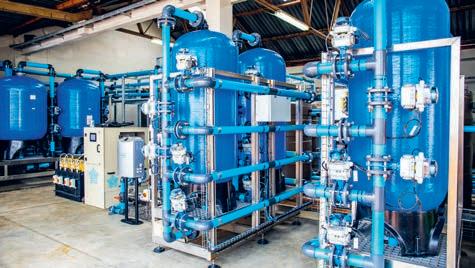
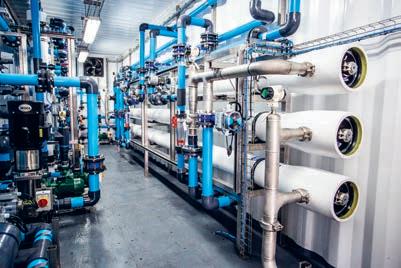
NuWater’s operations are rmly anchored in South Africa, where local teams perform engineering, design, fabrication, assembly and testing. From containerised treatment plants to skid-mounted process units, every system re ects hands-on operational experience gained in demanding environments.
Local manufacturing enables strict quality control while supporting South African suppliers, fabricators, electricians, panel builders, automation specialists and project professionals. This approach keeps value within the country while strengthening the broader industrial ecosystem.
“Our mission is not just to supply advanced water treatment systems; it is to build them
here at home,” says Billy James, managing executive at NuWater. “Every system we export represents South African engineering capability, labour and a commitment to creating sustainable economic value through technology.”
OEM, ODM AND EME SOLUTIONS FOR GLOBAL MARKETS
NuWater’s strength lies in its integrated OEM, ODM and EME capabilities.
As an OEM partner, NuWater manufactures high-quality water treatment systems under client brands, meeting precise technical and branding requirements. As an ODM provider, NuWater designs complete, market-ready treatment solutions from the ground up, integrating process engineering, mechanical design, automation and controls into a single deployable package.
EME capability ensures end-to-end project delivery, from concept design and detailed engineering to manufacturing, commissioning and operational support. This single-point accountability reduces project risk and improves delivery certainty for clients.
Exporting African Engineering Capability
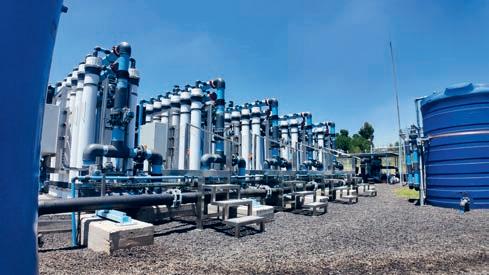
NuWater’s systems operate across Southern, East and West Africa, as well as in Latin America and parts of Asia. These regions often share challenges, including remote locations, limited technical resources, variable feedwater quality and a strong demand for reliability.
Designed in South Africa, a country familiar with water scarcity and infrastructure constraints, NuWater’s plants prioritise durability, ease of operation and minimal
downtime. Modular and containerised designs reduce civil works and enable rapid deployment, expansion or relocation as needs evolve.
“Our international clients value that we deliver solutions designed for reality, not just theory,” says James Morisse, head of sales at NuWater. “We build systems that perform in tough environments, are simple to operate and are supported by a team that understands long-term operational success.”
TECHNOLOGY WITH PURPOSE
NuWater’s OEM and ODM portfolio spans ultra ltration, reverse osmosis, nano ltration, dissolved air otation, membrane bioreactors, media ltration, advanced oxidation processes, disinfection and water reuse systems. These technologies are delivered as integrated solutions aligned with sustainability objectives, operating budgets and long-term water security strategies.
A PROUDLY SOUTH AFRICAN EXPORT STORY
NuWater’s success demonstrates what is possible when South African manufacturing strength, engineering skill and global ambition align. By exporting locally designed and built systems, the company delivers clean water solutions worldwide while reinforcing South Africa’s position as a competitive exporter of advanced industrial technology.
As global demand for reliable and sustainable water treatment continues to grow, NuWater re ects how South African manufacturers are competing in international markets.
For more information:
South African Excellence in Global Water Treatment
South Africa has long been recognised for its engineering ingenuity and problem solving resilience. In the global water sector, few companies embody this spirit more clearly than NuWater. As a proudly South African water and wastewater treatment specialist, NuWater focuses on designing, manufacturing, and exporting advanced OEM, ODM, and EME solutions to a diverse clientele across Africa, Latin America, and Asia.
At a time when water scarcity, ageing infrastructure, rapid industrial growth, and strict environmental compliance are converging on a global scale, NuWater has positioned itself as a trusted partner. The company delivers robust, modular, and cost-effective water treatment solutions specifically engineered for real world conditions. Beyond the technology itself, NuWater’s growth story reflects a deep seated commitment to local job creation, skills development, and meaningful economic contribution through specialised manufacturing and international exports.
Designed, Engineered, and Built in South Africa
NuWater’s operations are firmly anchored in South Africa, where every stage of the lifecycle engineering, design, fabrication, assembly, and rigorous testing is performed by local teams.
This "homegrown" approach ensures that from large-scale decentralised treatment plants to specialised skid mounted process units, every system reflects the hands on operational experience gained in various countries most demanding environments. Local manufacturing does more than just ensure quality; it
strengthens the entire industrial ecosystem. By keeping production local, NuWater maintains strict quality control while actively supporting a network of South African suppliers, fabricators and other technological suppliers. This strategy ensures that value remains within the country while showcasing South African expertise to the rest of the world.
“Our mission is not just to supply world class water treatment systems,it is to build them here at home,” says Billy James, Managing Executive at NuWater. “Every system we export represents South African engineering capability, South African labor, and a commitment to creating sustainable economic value through technology”
Versatile Solutions for Global Markets: OEM, ODM, and EME By offering Original Equipment Manufacturing (OEM), Original Design Manufacturing (ODM), and Equipment Manufacturing Services (EME), NuWater provides the flexibility required by modern global markets. This versatility allows us to partner with international firms to provide bespoke solutions that meet specific regional regulatory standards and unique environmental challenges.
As NuWater continues to expand its footprint, it remains a testament to the fact that South African innovation is not only competitive on the global stage but is leading the way in solving some of the world’s most pressing resource challenges.