
Managing long Covid is to go on waters as yet uncharted
• Employers have no obligation to provide extra sick leave but fair treatment of
Pareen Rogers & Naa ilah Abader ENSafrica
Among the challenges facing employers during the Covid-19 pandemic isthe increasing prevalence of “long Covid” Althoughnot muchisknown about ityet, thereare proactive measuresemployers can take toidentify andmanage long Covid in the workplace. Atpresent,thereisnoofficial medical definition of long Covid.What wedo knowis some people experience Covid-19 symptoms for weeks ormonths afterthey have contractedit. Recent research hasindicated that 10% to 30% of those individuals whohave sufferedfrom
staff needs to prevail
acute Covid-19 will go on to suffer from long Covid. There are almost 200 different symptomsassociated with long Covidthat may affectan employee’s ability to perform their duties. To adequatelydeal with long Covid, employers will need tounderstand itand create appropriate levels of awareness of the condition in the workplace.Awareness campaigns utilising internal and possible external service
INFORMATIONSHARING SESSIONS WITH ALL EMPLOYEES AND GUIDELINE DOCUMENTS FOR MANAGERS ARE KEY
providerscould providea good basis
Someissuestoconsiderin relation to accommodating employeeswho sufferfrom long Covid in the workplace:
● LongCovid doesnotplace anobligationonemployersto provideemployees withany additional sick leave and neitherdoes italter thecurrent legal positionrelating toill health/incapacity processes. However, employers should review their sickleave and otherapplicable policiesto ensurethey caterfor instances of long Covid, albeit in a generalsense. A condition thatdiffers fromperson to person can only be properlymanaged throughflexible policies and procedures;
● LongCovid mayalso requirefrom employersto carefullyconsider therea-

sonable accommodationof employees whohave contractedthecondition,particularly inthe contextof remote working where physical interaction withcolleagues is limited andthe workplace has become anebulous concept. Employeewellness programmes will become increasingly importantin this context;
● There may be instances of long Covid that persist for longperiods oftimeand employers shouldtherefore engage with theirinsurers or with anyrelevant pension/ provident fundto determine whether such casesmay be considered a temporary or a permanent disability;
● From a legal perspective, it may be possiblefor certain instancesoflong Covidtobe considered a disabilityfor the purposes ofthe Employment Equity Act 1998 and the code of good practice on the employment ofpeople with disabilities. Thisdepends on whether thecondition results in employeeshaving aphysical ormental impairment overthe longterm orthat recurs andsubstantially limitstheir prospectsofentry into, oradvancement in, employment. Employers wouldthen needtoconsider the reasonableaccommodationof theseemployeesand toensure thattheseemployees are not unfairly discrimi-
nated against;
● While eachcase maybe different, andtherefore need differing approachesto the condition, it is important for employers toput general processes in placeto ensure that they actfairly and objectivelyand toavoidthe riskof unfair discrimination
PRACTICAL GUIDANCE FOR EMPLOYERS
The difficultywith managing instancesoflongCovidisthat employers and employees maybe unawareof thiscondition and/or notknow how todeal withit.In ourview, information-sharing sessions
IN IT FOR THE LONG HAUL
How we are riding 4IR wave
• Business Day Law & Tax editor Evan Pickworth speaks to Ashlin Perumall, partner in the corporate/MA practice at Baker McKenzie in Johannesburg and fellow of the World Economic Forum’s Centre for the Fourth Industrial Revolution (C4IR)
Perumall speaks about hisexperiences atthe C4IR, what helearnt duringhistimeasa fellow at thecentre in San Francisco whatthe fourth industrial revolution (4IR) means for thecontinent, the development ofdigital currencies inAfrica, andhow laws andpolicies areslowly evolving toadapt torapid advances in digitisation.
EP: Can you tellme a bit about yourexperiences at C4IR?
AP: This hasbeen an exceptionally rewardingexperience.Ihave metandnetworked with individuals. This includes countryleaders, business CTOs[chief technology officers]and CEOs, andacademicexperts,whose visionsof thefuture areboth interesting andeye-opening. Ithasalsoprovidedaninsidelane experiencewith various fintech marketrole-players, who allowa glimpseinto the cutting-edge developments. Thiswill havealong-lasting impact on my outlook, both as a professionalas well as my perspectiveon worldwide 4IR developments.
EP:How didthisfellowship comeabout?
AP:I amatransactional lawyer whofocuses ontechnology acquisitionand tech advisory work. Being close to emerging technology projects makesyou keenly aware of how quickly new developments continue to impact the world,but most acutely in developing economies. WhenI readthe World EconomicForum’s (WEF) 2018 paperon the impact in 4IR inSA, I realised there wasa direneed for insight intothe developing market ecosystem,and the fellowshipattheC4IRoffered just thatopportunity. Baker McKenzie haspartnered with theWEFfor anumberof years and works closely with the internationalorganisations itco-ordinates to address global,regional and
industryissues all inthe spiritof globalcitizenship.As part ofthis, thefirm isable to senda fellowtothe C4IRin San Franciscoevery six months, and Idecided to apply for this opportunity and was selected.
EP:Is yourfellowshipover orisitongoing?
AP: I began working on projects remotelyin October 2020 due tothe Covid-19 lockdown, andbegan myonsite fellowshipin January
MY AIM IS TO USE THIS KNOWLEDGE TO NAVIGATE THE FUTURE OF AFRICAN IMPLEMENTATION OF DIGITAL CURRENCIES
2021 in San Francisco. This cameto anendin Julythis year. However,your fellowship never really ends, as even onceyour on-site involvement has completed, you remain a partof the fellow alumniand network.I am also still working on the papersIwas aco-authorof whileat theforum, whichI am due to complete this October.
EP: What did you do during yourtimethere?
AP:I waspartof theDigital Currency Governance Consortium(DCGC) attheWEF, which focusedon assessing
thefuture ofdigitalcurrencies.I specificallyworkedon consumer protection,regulatory gaps and privacy-related aspectssurrounding (1)centralbank digitalcurrencies (CBDCs)and (2)price stabilised cryptocurrency (stablecoins). With China’s digital yuan, officially the DigitalCurrency ElectronicPayment,pushing ahead,many governments and central banksare engaginginpilots to test thepossibility, benefits andchallenges aroundissuingdigital currencydirectly fromcentral banks.Simultaneously,the privatesector hasbeen experimentingwith the notion of “stablecoins” in the wakeof thecryptocurrency boom. Stablecoins enablethe paymentsand financialservice promiseof decentralisedmoney tobe realisedby “stabilising” the volatilityof value,typicallyby usinga reserve,algorithmic or other “peg” to a real world assetorcurrency,suchasthe US dollar. Thebenefit of stablecoins is farreaching, and theyare quicklybecoming thebedrock ofa newmovementknownasdecentralised finance(DeFi). Thiscomes with substantial consequences and risks and my work is to identify these so as toassist governmentsand regulators understandand developappropriatelawsand regulations.
EP:What experiencesand knowledge haveyou broughtbackwithyou?
AP:Inrespect ofmywork,it wasa life-changingexperiencetobe abletoworkwith some of theworld’s leading mindsand regulatorson these issues and receive an inside lane view of collaborative multinational thought leadership.My assessmentof new technologieshas expanded as a result, especially inhow theWEF serves governments and policymakersto lookbeyondthe hypeof newtechnologies through to the core fundamentals. Outside ofwork, I

will never forgetthe view of theBay Bridgeduringmy morning runsor mytrips to Silicon Valley!
EP: How willyou apply this totheAfricancontext?
AP: Myaim is touse this knowledgeto navigatethe futureof Africanimplementationof digitalcurrencies, andhowthis willimpactthe rapidly developingfinancial technologyindustry. Ioperatebothasalegaladviserand asan enthusiastin thisspace, andstrongly believeAfrica hashad someamazinginnovations in the fintech space.
EP: Is Africaready for the 4IR?
AP: Africais invarying degreesof “nacent readiness” for the 4IR. Using the WEF’s Readiness Diagnostic Model Framework, readinesscould beconsidered as “the ability to capitalise onfuture production opportunities,mitigate risk andchallenges and beresilient andagilein responding tounknown future shocks”. Thedifferent levels,from bestto worst,are leading, legacy, high-potential and nascent.
EP: What stillneeds to happen inAfrica toensure we can take full advantage of theopportunities the4IR willprovide?
AP: Keyfeatures thatare needed in an economy to be able to move up this ladder are:(1)infrastructurefortechnology and innovation, including connected ICT infrastructure,so newinnovations can be adopted, commercialised anddeveloped; (2)human capitalandthe
ability to respond to shifts in production andlabour inthe near andlong term;(3) connection in globaltrade and theabilityto deploycapitalin theproduction ofknowledge and technology; (4)a reliable and effective government and institutionalframework; (5)sustainable resourcesand (6)accessto foreignandlocal demandfor scaledproduction. Some Africancountries havesome ofthesefeatures, but almost all are far behind in most, if not all.
EP:Which countriesin Africa are aheadof the pack?
AP: SA andKenyacertainly bearmany ofthesefeatures, and with the introduction of theAfCFTA, thenecessary corridorsfor 4IRproduction may start to open up.
EP: How willthe 4IR/digitalisationchange thingsin Africa?
AP:Oneofthemajorshiftsfor me wouldbe the shiftinto a knowledge economy.There isagood storyhereanda negativeone. Thegoodstory is Africais able toutilise 4IR technologies suchas blockchain intrade orprecision medicine touplift its communitiesand bridgethe wealthdivide. Thenegative oneisthattechadvancesonly those withaccess anddigital literacy,and increasesthe divide. A lot of money and
MONEY AND EFFORT IS NEEDED NOW … TO DEVELOP A WORKFORCE OF THE FUTURE THAT CAN WITHSTAND THE LABOUR SHIFTS
effort is needednow in education and skills development, particularly maths and science, to developa workforce of the future that can withstand the labour shifts.
EP: Youwere focusingon the legaland policyconsid-
Managing long Covid is to go on waters as yet uncharted
CONTINUED FROM PAGE 1
with allemployees (inthe form of “frequently asked questions” documents and the like) and guideline documents for managersare key
mechanisms tomanage the process goingforward, given that employersand employees areeffectively navigating uncharted waters. Creating an awareness that long Covid exists may
result inemployees approaching their medical practitioners for assistance and beingproperly medically diagnosed. Froman employer’s perspective,line managers,withguidancefromthe
human resources department, will bebetter placed to identify employeeswho are sufferingfromlongCovidand toencouragethemtoobtaina proper medicaldiagnosis. Advice canthen besought
frommedicalpractitionerson treatment plans.
Employers will needto be agile and flexiblein considering reasonableaccommodation for employeesand, ultimately, aphased returnto
erations surrounding CBDCs and stablecoins in Africa (regulatorygaps, consumer protectionand privacy). Where does Africa standinthisrespect?
AP:Countries suchasKenya, Ghana, Egypt, Morocco and SA have all announced plans to explore thefeasibility of CBDCs,with some,suchas SA, creating collaborative efforts between its regulators for a co-ordinated approach. Theoutputhas beenslowbut very positive and aligned with global trends in the policies adopted
EP: Regarding thelack of oversight overcryptocurrencies in SA, which haveledtosignificantlosses in some cases following scams like Mirror Trading, how canwe beginto close compliance gaps here and improvetrust?
AP: Cryptocurrencies are risky and, to me, that has to be accepted and understood. I feelregulators havemade many pronouncements on this. For thecrypto industry, as well asthe stablecoin industry, we need better rules and requirements for the custodial holding of crypto assets, which are indeed on their way. Until such a time, this remains a risky space for investment.
EP: Whatlegal adviceare your clients looking for in this regard, and where are theopportunities?
AP: Thishas shiftedover time. Right now,much of the African focus is on tax and exchange controls in the cryptospace,andpaymentor settlement systemlicensing and rules inthe stablecoin space. For obvious reasons, I decline any requests for investment advice, save to say thereare alot ofinnovations needed ata micro level in the African payments and remittances space,where therearealreadymanyexciting home-growncompanies looking forcapital. Thatis an area that is worth paying some attention to.
work.WherelongCovidpresentsitselfto bemorepermanent innature, employers will need toutilise their incapacity processesand consider thepossibility ofmedical boarding.







heavyweight firm with a highly acclaimed tax practice, offering a broad range of expertise










BUSINESS LAW & TAX
IP action plan is needed to net VC funding
• Why a clear intellectual property strategy is critical to securing venture capital funding
Dina Biagio Spoor & Fisher
Intellectual property(IP) is not an end in itself.
Nobodyever neededIP to make, market or sell a productor serviceand, in fact,many businesses compete in themarket on the basisof price,serviceand quality withoutever registering or enforcing any IP right.
Thatbeing said,thereare significant benefitsto be gained from having an IP portfolio, evenduring early start-up years. It’s no wonder then thatventure capitalists will seek tounderstand not only what IPyour business hasbut alsoifyou knowhow touse it.A well-managedIP portfolio willlikely addvalue to yourbusiness caseand increase yourprospects of obtaining venturecapital (VC) funding.
Tounderstand theimportance of IP andhow it can benefit yourbusiness, you must firstunderstand these unassailable truths:
● Copying isnot necessarily unlawful,but itis unlawfulto infringetheIPrightofanother person or to compete unlawfully with them.Also, you can’t own “a technology”, but itis possibletoown IPrights associated withthat technology.Theowner ofthoseIP rights isentitled toprevent others fromperforming certainactsin relationtothat technology.
● Different commercial mechanisms and strategies
are better suited to different types of IP.
LAWFUL AND UNLAWFUL COPYING
When itcomes tocopying, thereis afine linebetween lawfulandunlawfulcompetition. In the firstplace, the SA Copyright Actprovides a “reverse engineering” exceptionorexemptionfromcopyright infringement, if: (i) 3D articles according to an artistic work are already available to thepublic; (ii)the articles primarily havea utilitarian purpose; and(iii) thearticles are made byan industrial process. Acompetitor will notinfringe thecopyrightin that article bymeasuring i up and making itsown identical 3D articles for use or sale.
Sofor example,if yousell a clever widget or softwareimplemented subscription service, whichis easily reverse engineeredor independently redeveloped once itentersthe market,itmay notbe possibleto preventa competitor frommaking and selling thesame widgetor offering thesame service under a different trademark.
In these instances,if you
THAT TRADEMARK BECOMES YOUR BRAND PROMISE; IT OFFERS A MEANS OF COMMUNICATING DIRECTLY WITH CUSTOMERS
are firstto market,you may benefitfromregisteredpatent or design protection. You should alsouse adistinctive trademark to market and distribute your product. That trademark becomesyour brand promise; itoffers a means ofcommunicating directly with customers on bothan emotionalandfunctional level.
Though it may be only one or twowords, yourtrademarkwill createanexpectationfor yourproduct inthe minds of your customers against which all competition will be compared.
COMMERCIAL STRATEGY
Beforeinvestinginyourbusiness, a venture capitalist will want tosee thatyour IPportfolio supports your commercial strategy. For example:
● If youplan tomake your fortune as apassive licensor, you must have a protectable interest.If alicenseewould lawfully beentitled tocopy yourproduct intheabsence of the licence, then you don’t have licensable subject matter. Iflicensing isyour strategy, you must have IP that would beinfringed in the absence of the licence.
● Itis possibletogrant licences under copyright and know-how but these forms of IPdon’t preventindependent redevelopment, so it might notbe longbefore a licensee investigates the alternative ofindependently redeveloping source code, materials or information

which he needsinstead of paying alicence feeto use yours. If copyright works and know-how arenot constantly evolved by the licensor,they areoftenuseful to alicensee onlyas a “legup”.They willenable himto getto marketmorequickly andmorecheaplybutwillnot provide long-term licensing security.
● Ifyour businessprovidesa service then your expansion plans might involve franchising.Isyourtrademarksowell known and your business get-up so appealingthat a franchisee would want to use them to attract trade?
Are yourbusiness processes so evolved, documented and repeatable that you could teach someone else to do the same thing?
● If yousell acommodity product (suchas atoy, foodstuffs or sports equipment) your trademarkmay beyour
biggest asset. Is it distinctive? Does your business plan allocate investmentinto brand building?
● Ifyour businessisto licence software for ongoing licenceroyalties,areyousure the open source you used in
IF YOU PLAN TO MAKE YOUR FORTUNE AS A PASSIVE LICENSOR, YOU MUST HAVE A PROTECTABLE INTEREST
the development doesn’t obligeyou topublishyour modified code?
Even though thevalue of intellectual property rights (IPRs) is hard to quantify, a studyrecently publishedby theEuropean PatentOffice
showed thereis apositive linkbetween IPRownership and economicperformance, withrevenue peremployee being 55% higher for IPR owners than for nonowners. The analysisfurther showedSMEs thatownIPRs havea 68%higherrevenue per employeethan thosethat donotown IPRsatalland thatSMEs whichowned patents,registered designsor trademarkswere morelikely thanother firmstoachieve high growth in turnover in subsequent years. If used and managed properly,an IPportfoliois undoubtedly valuablein creating or boosting a competitive advantage.
Venture capitalists won’t befooledby thesizeofyour IP portfolio theywill want to ensure you know how to use it properly.Unlike with mostother things:it’s the “how”, not the “how much”
How to cater for staff if a firm is destroyed
Joon Chong & Nina Keyser Webber Wentzel
The recentlooting and damage tobusinesses in KwaZulu-Natal and Gauteng has had adevastating impact on manybusinesses, both small and large.
Insome cases,thedamage is so severethat the business cannotcontinue toproduceorsell,andvaluabledata may have been lost, including employee and tax records.
If anemployer’s premises are so severelydamaged that employees cannotwork and there isno work-from-home alternative, the “no work no pay”principlewithnoaccrual ofbenefitsislikelytoapply,as theemployeris notableto perform in termsof the employment contractdue to supervening impossibility. Where employersare severely cashconstrained, theymay notableto paytheir employees at all.Ideally, the employer and employee
consultandagreetoatemporary lay-offwhile thebusiness isrebuilt. Theemployees may receive no or minimal remunerationduring this period.In thiscase,employees would qualifyto receive reduced worktime (RWT) benefits fromthe Unemployment Insurance Fund (UIF).
The UIFrecently enabled a bulk applicationprocess for Covid-affected employers to apply for RWTbenefits for their employees.RWT benefitswill bepaidby theUIF
directly tothe employees. These paymentsare conditional onthe employees being contributors tothe UIF and havingsufficient UIF
IDEALLY, THE EMPLOYER AND EMPLOYEE CONSULT AND AGREE TO A TEMPORARY
LAY-OFF WHILE THE BUSINESS IS REBUILT
credits; andon employers being up to date with their UIF complianceobligations, including thesubmission of monthly reports to the UIF.
Thereareindustrydiscussions to provide for the normal RWTbenefit tobe calculated in the same manneras theRWT benefitis calculated inthe Covid-19 Temporary Employer/ Employee Relief Scheme (Ters)directive. Thisismore beneficialasitprovidesforan employeeto bepaid thefull
value calculated in terms of the formula in the Unemployment InsuranceAct. Any amount paid bythe employer to top up the payments will not reduce thebenefit calculated in termsof the formula as long as, in total, employees do not receivemore than their normal remuneration. These discussions further hopetoprovide foranefficient processfor employers with destroyedbusinesses to applyfor relieffortheir employees as well.
BUSINESS LAW & TAX
How to apply for new trade accreditation
• Customs and duty rules have been tweaked
Virusha Subban Baker McKenzie
The rules under section 64Eof the Customs and Excise Act that provided for accredited clientstatus have been repealedand replaced bya newsetof rules,which became effectiveon July23 2021.
Section64E dealswithSA Revenue Service(Sars) client accreditation rules andis of interest toimporters and exporters who wishto apply for accredited client status in SA.Theconceptofanaccreditedclient orpreferredtrader is similar to the authorised economic operator concept found in other countries.
The newrules setout what thelevels ofaccredited clientstatus are,theapplication process, thevalidity of the personapplying, the renewal ofaccredited client status, criteriafor levelsof accredited clientstatus, the benefits of the two levels of accredited clientstatus, as well asmiscellaneous and transitional matters.
The amendments include planstoformanaccreditation committeethatwilldecideon matters fallingwithin the customsandexciseauthority, including theconsideration andapproval orrefusalof applications, andthe cancellation orsuspension of accredited client status.
HOLDERS OF ACCREDITED CLIENT STATUS MUST APPLY FOR RENEWAL NO LATER THAN 30 CALENDAR DAYS BEFORE EXPIRY
Thetwo levelsofaccredited clientstatus referredto in thenew rules are Level1
AuthorisedEconomicOperator (Compliance) andLevel 2
Authorised Economic Operator(Security). Aperson whoisregisteredforcustoms and exciseactivities inSA mayapplyfor level1or2 accredited client status. According to the new rules,all customsactivities
forwhichan applicantisregistered or licensedunder the provisionsofthe actwillbe takeninto accountwhen assessing applications for bothlevels ofaccredited client status.
Application for accredited clientstatusmustbemadeon formDA186 andcanbesubmitted at anycustoms and excise officewhere aclient relationship manager is located,or emailedtothe emailaddress on the Sars website
The applicationfor accreditedclient statusmust includea customsaccreditation self-evaluation questionnaire,a systemsquestionnaire,an accreditationagreement, anapplication tomake a booking for the competencyassessment andany other supporting documents necessary to proving compliance with the criteria.
Applicants have to establishsufficient knowledgeof customslawsandmustapply foracompetencyassessment ona bookingformpublished on theSars website.The competency assessment must be completed by the
NEW SET OF RULES

applicantpersonally orby persons inthe employof the applicant,who havebeen nominated toadminister accredited client requirements.
The AccreditationCompetency Assessment Certificateisissued inthenameof the person whotook the assessmentifa scoreofat least 70%is achievedduring theassessment. Thecertificateis validfor fiveyears from date ofissue. However, the newrules statethat if thereare anysignificant changesto customsand exciselegislation, theholder ofthe certificatemaybe requiredto takeanadditional assessmentto proveknowledge of such changes.
INVESTIGATIONS
Toverify anystatements made byapplicants, thenew rulesnote thatapplicants mustmake availableany books,accounts andother documentsand anyother information(foraperiodofup tofive years)as requiredby the commissioner.
CONSUMER BILLS
What values does international
Ineed to declare at the outset that I act for Caster Semenya in challenging the World Athletics regulations that kept her out of the 2020 Olympic Games; but I invite you to consider these issues independently of her particular case.
You will find on Wikipedia a cartoon from the 1936 Olympics which imagines the year 2000 when spectators will have been replaced by television and radio, their cheers coming from loudspeakers. 2020 saw exactly that happening in sports events. Since most of us as consumers of sport get our viewing and therefore our exposure to values from televised events, it is worth examining what those values have come to.
The founder of the modern Olympics was impressed by the saying “ a sound mind in a sound

body”. That is a fine sentiment except that it was based on what has been called “the ethos of the aristocracy as exemplified in the English public school” Although women started to compete in a small number of events in the second modern Olympics in 1900 (a far cry from the ancient Olympics where the penalty for women attending was death), 35 countries still fielded all-male delegations by 1992. The Olympics started as an amateur event but when US and Western European athletes were
disadvantaged on the medal table by Russian athletes who were nominally students, soldiers or working in a profession but paid by the state to train on a fulltime basis, professional athletes were allowed to compete from the 1990s. That has exaggerated the fact that success at the Olympics is dominated by money, and genetic advantage often triumphs only to the extent that the money permits.
I am ignoring the fact that the 2020 Olympics cost about $15bn to host because we all gain from that, except perhaps the host nation. If you compare the Olympic medal count with economic advantage the point becomes obvious. The first 10 places are taken by the US (113 medals), China (88), Japan (58), Russian Olympic Committee (65), Great Britain
According to the new rules,approval ofapplicationsforaccreditedclientstatusissubject tothefollowing general conditions:
● The holder ofthe accreditedclient statusmust remaincompliant withthe criteriaprescribed forthe particularlevel ofaccredited client status.
● If they do not remain compliant,they mustpromptly notifythe commissionerof the noncomplianceor change,by submittingapplicationform DA186 andthe required supportingdocuments.
● The holder ofthe accredited client status may not, withoutthe priorpermission ofthe commissioner,make any change inrespect of his or hercomputer system.This includesany changesmade to the systemor changing to or from a third-party computer system, for example.
VALIDITY OF ACCREDITED CLIENT STATUS
The validity takeseffect on
sport
(71), Australia (46) and European nations (146). You will get to number 19 before you come across the first African nation, Kenya with 10 medals, and the next one at number 36 (Uganda) with four medals.
The question is: what does the money buy?
What it buys is a healthy set of medals for a wealthy country. You only have to listen to commentary on a sporting event where the commentators represent a particular competing nation to understand what chauvinism is behind the Games.
If Von Clausewitz said that war is politics by other means, it is equally true that international sport between countries has become politics by other means.
Everyone loves the sight of the genetically advantaged
thedate specifiedand remains validfor five years. The applicationlapses ifit is cancelledby thecommissionerorif holdersnotifythe commissionerthat theyno longer intend toretain the status.
Holders ofaccredited clientstatus mustapplyfor renewalno laterthan 30calendar days before expiry of the status.
The rules statethat any holderof accreditedclient status whowishes tobenefit fromthe mutualrecognition ofaccredited clientstatus providedfor byinternational agreements orarrangements shouldnotethatsuchbenefits are to the extent provided for inmemoranda ofunderstandingbetween Sarsand suchagencies, andprovided that consent toshare informationhasbeen givenbythe holder.
TRANSITIONAL MATTERS
Thesection ontransitional mattersincludes guidanceon accreditedclient statusthat wasapplied forandgranted beforethenewrequirements. The rulesnote thatan application that had already commenced on the effective date of the new rules must be finalisedin accordancewith the repealed rules. Further, accredited client statusgranted pursuantto suchapplication mustbe regarded as alevel 1 accreditedclientstatus.Anycertificate issued before the effective date remains valid for purposes of theserules until its expiry date. Thenew ruleswill allow a muchmore efficientand cost-effective movement of goodsacross SA’s borders. Parties tradingwith SAare encouraged to apply for such status.
espouse?
Kenyans winning the long -distance races and Jamaicans winning the sprints. Newcomers are not so welcome.
When a young Namibian sprinter came second in the women’s 200m final, what was the reaction of the white male head of the world athletics body? Not a celebration of a medal for a young African person and young African nation. He sourly threatened to change the existing doubtful and scientifically unsupported regulations to prevent her running. Knowing, of course, that the young athlete does not have the millions needed to challenge any new discriminatory regulations.
WHAT IT BUYS IS A HEALTHY SET OF MEDALS FOR A WEALTHY COUNTRY
If you add to that the bigotry in the many worldwide remarks regarding the contribution of transgender athletes to modern sport, and indeed to modern anything, you can see how our values, and healthy minds, can be distorted by this kind of thinking if we are not vigilant. If, as is the case, many people in former colonised countries see sport as colonialism by other means then we have some re-evaluation to do. We need to look at sporting bodies thatare run from places such as Monaco and Switzerland (numbers 3 and 11 on the world’s GDP per capita list) to ask what they are doing to bring about real fairness in sport.
PATRICK BRACHER
● Patrick Bracher (@PBracher1) is a director at Norton Rose Fulbright.
BUSINESS LAW & TAX
BEE after Burger King deal
• Does competition regulator’s stance spell doom for deals in which black shareholding falls?
Heather Irvine Bowmans
The Competition Commission recently decided to prohibit a proposed transaction in whichGrand Parade Investments, oneof SA’s prominent empowerment investment holding companies, attempted to sell its investment inBurger King (SA) and GrandFoods Meat Plant to twoprivateequity funds, ECP Africa,ECP Africa Fund IV and ECPAfricaFund IV (ECP).
Althoughit hassince reversed itsdecision, the commission’s defenceof its stance ontransactions that feature a reduction in ownership byblack shareholders hascaused localandforeign investors towonder whether it will be possible to gain clearance for mergersof this kind in SA in future.
The commissioninitially prohibited the transaction because theshareholding by black individuals inthe target companies would reduce frommorethan68%to0%.In doing so,the commission relied on afairly recent amendment tosection 12A(3) oftheCompetitionAct,which requires thatwhen determining whethera merger “canorcannot”bejustifiedon substantial publicinterest grounds, thecompetition authorities must consider, alongwithvariousotherpublic interest factors, the effect a mergerwillhaveon“thepromotion of a greater spread of ownership, inparticular to include thelevel ofownership byhistorically disadvantaged personby firms in themarket” (section 12A(3)(e) of the act).
This, the commissioner was quoted assaying,means the commissionmust ensure that “in theend, thestructural profile ofthe SAeconomy reflects thedemographics of the country” (Sunday Times, August 1 2021).
However,as theCompetition AppealCourt (CAC) recognised inthe Wal-mart/ Massmart decision, the public interestassessment contemplatedby section12of the CompetitionAct isa far more nuanced(and challenging) task.
Public interest concerns arise atthe intersectionof competition lawand industrial policy,and soour competition authorities need to exercise “caution in respect ofcompetition law being employedas asurro-
gate for acoherent industrial policy which byits very natureinvolves aseriesof polycentric decisionsill-suited to judicial interventions”
Theamendment tosection12A(1)of theactnow requires thatthe commission assesswhether amergercan “or cannot” be justified on “substantial” public interest grounds.This makesitclear that amerger whichhas adverse publicinterest consequences canbe prohibited based on that alone.
Thereisalsonowanadditional public interest factor to be takeninto account,as a result ofthe additionof the “greater spreadof ownership” criteriain section 12A(3)(e) of theact. However, these amendmentshave not
BEE INCENTIVISES AND REWARDS COMPANIES THAT UNDERTAKE MEASURES TO FOSTER EMPOWERMENT
fundamentally changedthe complex balancing act required by theact. Nor have they removedthe needfor ourcompetitionauthoritiesto exercise caution when approaching this task.
AstheAppealCourtpointed out, whenattempting to formulate suitable conditions toaddress publicinterest concernsarising fromthe entryofWalmartintoSA,“s12 A (3) should not be seen as a substitutefororevenasignificant componentof acomprehensive policy designed by the state”
SAhas suchapolicy framework, in the form of its broad-based BEE (BBBEE) legislation. Thisincentivises andrewards companiesthat undertakemeasures tofoster empowermentbut doesnot make it mandatory for all firmstradingin SAtobe partlyblack-owned, orfocus exclusivelyon ownershipas the main criteria for empowerment.Rather, thislegislation recognisesownership alongside various other potential commitments to empowerment, suchas enterprise development, management control, skills and socioeconomicdevelopment.Against thisbackdrop, itwould beinappropriatefor thecommission tofocus solelyon blackownership when it regulates mergers. Requiring companies that

mergeto implementdifferent empowerment commitments which arelimitedto blackownership would force these firms to make morecostly andburdensome commitments thantheir competitors. Thisis afundamentally inappropriateway to enforce industrial policy.
A fixedrule thatany merger that leadsto areduction inownership byhistorically disadvantagedpersons orworkersshouldbeprohibitedwould thusbe opento challenge on a number of grounds.The amendedsection 12does not createa positive obligation onall merging parties to retain (or indeed to introduce) black shareholders.It simplyrequiresthe commission to consider whethera proposedtransaction “promotes” a greater spread ofownership, ornot. Moreover,this particularfactorisnotidentifiedbythelegislationasthemostimportant
THIS LEGISLATION RECOGNISES OWNERSHIP ALONGSIDE OTHER POTENTIAL COMMITMENTS TO EMPOWERMENT
consideration, and so it has to be investigated by the commission,but mustultimately be weighed against the other publicinterest factors.This wouldinclude, forexample, the impact ofa proposed merger on employment.
If a proposedmerger preservesor createsemployment, this has to be balanced againstthe reductioninblack ownershipin thetargetfirm. Subsection(c) alsorequires theauthorities toconsider whethera proposedmerger will impact onthe ability of firmsowned andcontrolled by historically disadvantaged persons to enterand participate in markets.
The commission thus also hasto considerthebroader negativepublic interestconsequencesof makingitmore difficultor expensivefor blackshareholders tosell their shares, and the need for BBEEE investors to exit their investmentsatanappropriate timeinorder toremaincompetitive.
A sweeping prohibition of dealssimply becausethey leadto areduction inblack shareholding mightimpact negatively on theability of blackinvestors toparticipate inthe privateequity andventurecapitalmarkets.Thelikely impact on local and foreign investmentinto thesemarkets is thusalso relevant to the assessmentrequired undersubsection (a),which requiresan evaluationof whethera proposedtransactionwillimpact onaparticularsector orregion, andsubsection (d),which refersto the ability of national industries to competein international markets.
The amendments to section12A(3) havealso notfundamentallychangedtheanalysis which is the commission is requiredto undertakein terms ofsection 12A(1),which
is to evaluate whether a mergercan orcannot bejustifiedon “substantial” public interestgrounds. Towarrant aprohibition, atransaction must belikely to havea “substantial”negativeeffectonthe publicinterest. Theremight conceivablybecaseswherea reductionin blackownership islikelytoresultinasubstantialpublic interesteffectin
PUBLIC INTEREST CONCERNS ARISE AT THE INTERSECTION OF COMPETITION LAW AND INDUSTRIAL POLICY
andofitself for example, in marketsin whichthetarget accountsfor asubstantial proportionof theoverall empowermentin awhole industryorsector,orisavery large supplieror customer.In most cases,however, itis hardto seehow areduction inblackownershipinasingle targetfirm wouldhave “substantial”effect“levelsofownership” by historicallydisadvantaged persons in SA. However, mergingparties needto recognisethatthe preamble tothe actmakes specific reference tothe fact that itwill play a rolein the “transferof economicownership in keepingwith the publicinterest”.Thecommissionaccordinglyhastoinvestigatetheimpact ofanyproposedtransactiononallofthe public interestfactors inlist-
ed insection 12 of theact factors, and deal with these impacts.Once thecommissionhasidentifiedprimafacie concerns,including abouta reductionin blackownership,itis uptothemerging parties to address these concerns.
This might involve presenting additionalevidence aboutthe natureandcircumstancesoftheirproposedsale forexample, aproposed transactionmay allowexisting historically disadvantaged shareholdersin thetarget firm toexit andrealise value; or it maysalvage a distressed firmina sectoroftheeconomywhich isnotcurrently attractiveto localinvestors. Alternatively,it mightrequire thatmergingpartiespresenta packageof publicinterest conditions whichpositively addressthe variousdifferent factorscontemplated bysection12,in awaythatoverall, offsets areduction inthe spread of ownership. Merging partiesshould accordingly considerthe potentialimpact oftheir transactions at anearly stage ofplanning theirtransaction, andif necessary,engage proactivelywiththecommissionand otherstakeholders liketrade unionsandthe departmentof trade,industry & competition to address any potential concerns. Proactive and creative commitments maybe requiredto achievepublic interestoutcomes whichfosterthe effectiveparticipation of historically disadvantaged persons, as wellas small and medium businesses.
MERGER MINEFIELD
/123RF ROBWILSON39
BUSINESS LAW & TAX
Liability when uploading others’ videos
•
Two Court of Justice of the European Union cases provide guidance for copyright infringements
Delene Bertasso ENSafrica
The liability of online platforms when infringing intellectual property (IP)material appears ontheir platformsis an interestingtopic. Whois liable the person who posts thematerial ortheonline platform?
Thiswas recentlyconsideredby theCourtof Justiceof theEuropean Union in two separate cases.
Copyrightnews inSA these daysis scant.There tends tobe fewcourt judgmentsin theareaand, asfor legislation, well,there is interminable stasis.This relates tothe proposed amendments that introduce fair useexceptions toreplace the existingfair dealing exceptions thathave always formed part of SA law.
So, a judgmentthat pertainstoan issuethatalmost everyonecan relateto,given that we all spend a significant
amountoftimevisitingonline platforms, is welcome.
THE PARTIES TO THE CASES
TheCourtof Justiceofthe European Union cases involved YouTubeand Cyando, whichis thecompany behind theUploaded platform. The casesarose from complaints of unauthorised music uploadson YouTube and unauthorisedtextbook uploads (whichhad been produced bypublisher Elsevier) on Uploaded. The courtacknowledged the importantrole online platforms playin modern society. The court also recognised thatthe materialis
THE
COURT ACKNOWLEDGED THE IMPORTANT ROLE ONLINE PLATFORMS PLAY IN MODERN SOCIETY
uploaded by users acting independently, whodecide whether or not the content should be available to others. It istherefore theuser who effectively communicates the material to third parties.
LIABILITY FOR ONLINE PLATFORMS
Thecourt heldthatonline platforms are generally not responsible forinfringing content that users have uploaded. In thewords of the court, the platform operators have notthemselves madea “communication to the public” ofthe copyrightprotected material.The merefactthat the operator may be aware that protected content is availableonitsplatformisnot enough to hold it liable.
Yet, there may be situations where the platform operator is liable for infringing material that appears on itsplatform. Indecidingthis, thefollowing factorsneedto be considered:
● Doestheplatformoperator implement the sortof tech-
PLENTY OF PLATFORMS

nological protectionmeasures that couldbe reasonably expected ofa diligent operator?
● Does the operator, through its business model, encouragethe illegalsharingof material protected by copyright?
● Does the operator provide toolsthat enableorfacilitate illegal sharing?
● Does the operator actually participate inthe selectionof copyright protected material for illegal communication to the public?
The protectionthe platformoperatorenjoysmayfall awaywhenitdoesmorethan simply make the platform available whenit adoptsa financial model that encourages the illegal communication of protected material, provides the tools that facilitate illegal sharing or when it
participatesintheselectionof the protected materialthat is communicated to the public.
The protectionthe platform operator enjoys may alsofall awayby default when the platform operator fails to expeditiously delete the infringing material, or where the platform operator fails to install appropriate technological measures, the sort of copyright protection measures that could be expected from a reasonably diligent platform operator.
SPECIFICITY
The court madethe point that the platformoperator willnot incur liability whenit has no more than a general sense that infringements are taking place.Norwillitincurliability when there isnothing more specific thanthe claimthat the platform operatoraims to
make a profit.
SAFE HARBOUR
Thecourtalso dealtwiththe safe harbour exemption created by the e-commerce directive. This directiveprovides that a platformoperator is exempt fromliability ifit has noactualknowledgeofillegal conduct taking placeon its platform. The Court of Justice of theEuropean Unionmade the pointthat generalor nonspecific knowledge about infringing material on the platform does not invalidate this defence.
CourtofJusticeoftheEuropean Union judgments tend to be persuasive in SA. This judgment, whichdeals witha current and significant issue, is likely to be relevant to SA and may befollowed by our courts.
Business rescue can be good for all parties
Dr Eric Levenstein Werksmans
Continued pressureon business andworld economies dueto thebattle withthe Covid-19 pandemic continues into thesecond half of 2021 and looksset to continue into 2022. With recent unrest inparts ofthe country, many businesseshad toshut down, and manyof them failed to reopen.
Creditors andsuppliers of goodsand servicestocompanies indistress oron the cuspof insolvencyhavedifficult decisionsto make. Defaulting companiesmay already be struggling to pay existing debtand without linesof creditbe unableto continue trading.
Management and credit controllers willneed tokeep acarefulwatchoncustomers and establishwhether there areany warningsignalsof looming insolvency. Chapter 6oftheCompaniesActNo.73
of 2008introduced mechanisms torescue thosecompanies tradingin financial distressandby wayofthe business rescue process.
Suppliers and creditors that do notunderstand chapter 6 of the act and the intricacies ofthe businessrescue mechanism, place themselves undersevere riskin theeventthat oneoftheir major customers(debtors) filesfor thebusinessrescue process andwhere the rescue legislation intervenes and complicates ongoing business andtrading relationships.
In SA, 2021has seen several companies goingout of business andwith many turning to thebusiness rescue process.
South Africancreditors should realisethat business rescue(asarestructuringtool for severelydistressed companies) generallyprovides a “better” outcomethan liquidation, and thus should seri-
ouslyconsidersupportingthe process. Unsecuredsuppliers/creditors facingthe liquidation ofits customerwould inalllikelihoodreceiveazero (or negligible)dividend after all securedand preferent creditors have been paid in liquidation. Generally,business rescuedividends should result in ahigher return for creditors than would result in a liquidation.
It has,however, been recently reportedthat certain suppliers/creditors are becoming increasingly unhappy with the level of pay-outs/dividends thatare generally beingmade available in theformal business rescue process.
An exampleof thisis the recent courtaction instituted by 10Edgars suppliersin order to improvetheir low pay outand furtherto obtain clarityas towhy theclothing retailer collapsed. Suppliers are unhappy with the business rescue div-
idend currently onoffer and where they are owed a collective R109m andwhere the plan offersabout R7mto them as apay-out. Secured creditors suchas landlords and bankswill receivea business rescuedividend of 19 cents inthe rand, whereas clothing andproduct suppliersreceive apay-out ofsix cents in the rand.
Thecompanyanditsbusiness rescuepractitioners have defendedtheir position and where they reiterate that thebusiness rescueplanwas approvedby80%ofcreditors votinginaccordancewiththe valueoftheir claimsasfar
THE SOUTH AFRICAN BUSINESS RESCUE PROCESS IS ROBUST AND EFFECTIVE AND CAN RESULT IN POSITIVE OUTCOMES
backasJune2020.Asthislitigation hasjust commenced, onewillhave tofollowthe outcome in due course.
Overall, theSouth African business rescueprocess is robust andeffective andcan result inpositive outcomes for allstakeholders. In 2021/22, we expect to see continuedsupportonthepart of suppliersand creditorsfor the businessrescue process andwhichshouldcontinueto see companies being rescued and where there is a sustainable businessmodel for ongoing trading.
Ultimately, a company which isrescued providesan ongoing sourceof revenue for those suppliers that have supported arescue process andwhichresults inthesurvivalofitstradingpartnerinto the future.
Examples of successful business rescues include Pearl ValleyGolf Estate, Advanced Technologiesand Engineering Company(ATE),
Meltz Success,Moyo Restaurants,SouthGoldExploration, Ellerines, SouthAfrican Calcium Carbide,Edcon, Group 5, BasilRead, Consolidated Group, New House of Busby, SAA and Comair. These rescueprocesses have all contributed to a renewed vigour inthe businessrescue spaceandin renewed confidencein the possibility of successful outcomes.
Many ofthese companies haveexitedfromthebusiness rescue processwith new owners andthe opportunity to continue trading. It appearsthat, generally, SouthAfricanshaveaccepted business rescue isa viable alternative toliquidation and one whichsupports job preservationandtheabilityto bring distressedcompanies back fromthe brinkof liquidation,and toaposition where suchcompanies can continue to contributeto the SA economy.
/
BUSINESS LAW & TAX
When your bitcoin gets a nasty tax bite
• Sars is closing in on cryptocurrencies here’s a guide to when you might have to fork out
Joon Chong & Lumen Moolman Webber Wentzel
TThe SA Revenue Service (Sars) is tightening tax collection on cryptocurrency transactions, whichmakes it important to distinguish between events that will triggerincome taxrates orcapital gains tax (CGT) rates.
Have you (i)sold your cryptocurrencies (crypto);(ii) exchanged onecrypto for another crypto;(ii) purchased goods andservices using crypto;(iii) minedorforked for crypto;(iv) receivedstaking rewardsin crypto;(v) then soldyour staking rewards; (vi)received airdropsof crypto;or (vii)used crypto as collateral for loans? Ifyou answeredyesto anyof these questions, remember your taxes!
Sarsis increasinglyauditing taxpayers’ crypto holdingsand tradingactivities.It has alsorequested information from certainSA crypto exchanges, includingLuno, about users onthe platform and their transactions.
Sars has not issued an interpretation note onthe tax
implications ofcrypto assets. Crypto isdefined asa “financial instrument” in the Income Tax Act 58 of 1962(ITA), asopposedto “ currency ” that would have excluded cryptogains from the ambitof CGT.This means the intentionof thetaxpayer, supported byobjective factorssuch aslength ofholding and frequencyof trades, would determine whether the cryptogains arerevenue (taxed at a maximum of 45%) orcapital innature(taxed ata maximum of 18%).
DISPOSAL OF CRYPTO
Thedisposalof cryptoasa financial instrument is a taxable event. It may, however, be hard for taxpayers to prove theircrypto investmentgains fallwithinthe CGTnet, asthereare nocapital deeming rulesin the ITA for crypto,such asthe three-
IN DETERMINING THE INTENTION OF THE DISPOSAL, SARS MAY BE GUIDED BY CASES INVOLVING THE DISPOSAL OF KRUGERRANDS
year rule for equity shares.
In determiningthe intentionof thedisposal, Sarsmay beguided bycasesinvolving the disposal of Krugerrands. In ITC1525, thetaxpayer held Krugerrands for 12 years and the purchasewas madewith theintention toprovidefunds fora rainyday. TheKrugerrandsweresoldtoinjectcapitalinto anew business.In ITC 1526, the taxpayer held Krugerrands from eight months to nine years. They werepurchased to provide astore ofwealth for the taxpayer’s children and protection frominflation. They were soldfor various reasons, including to make improvements on and purchase properties. The tax court held in both these cases that the Krugerrands were held on revenueaccount and subject to income tax rates.
It may thus be practical to usedifferent walletsfortradingcryptosandholdingcryptos for long-term gains.
BARTER TRANSACTIONS
Thegain whenone crypto(A) is exchanged foranother (B) is the difference between the market valueof Band the acquisition cost of A. If A was heldor acquiredonrevenue

account, the difference will be taxed as income (45%). Otherwise, if heldon capital account, the difference will be subject to CGT (18%).
It can be difficult to determine themarket valueand acquisition costof cryptoin rand.Wesuggestthespotrate should be used for the transactions. Schedules of rates and transactions should be compiled on the calculated gainsor losseson thetax return.
The same principles wouldapply wherethetaxpayer has purchased goods or services withcrypto. The difference between the market value of the goods or services andthe acquisitioncost ofthecrypto wouldbesubject to income tax (45%) or CGT (18%), depending on whether the cryptowas held on revenue or capital account.
Assessed lossesfrom trading in cryptomay be ring-fenced. It might not be possibleto offsettheselosses againstany otherincomeof thetaxpayer ifthetaxable incomeandlossesofthattaxpayer (adding back assessed losses fromthe currentand
prior year) are more than R1,577,300 for the 2021 tax year. There are, however, exceptions to thisrule (Section 20A (2)(b)(ix)).
STAKING/MINING/ FORKING/ AIRDROPS
If a taxpayer derived crypto from mining or forking, then the gains wouldbe subject to income tax (45%),since they are derived from conducting a trade. If the taxpayer’s intentionwas toholdthe crypto as along-term investment,then theywill besubject to CGT(18%) on any gains. Staking rewardsare also taxedatincometaxrates,and are, for now,unlikely to meet thedefinition of “interest” in the ITA. This means the annual interest exemption for individuals cannot be set off against staking rewards. Further complexities arise when staking rewards are sold. For example,assume a taxpayer receivedstaking rewards witha marketvalue of 80 at the time of receipt. That80 wouldbe subjectto income tax as it is akin to interest (without the annual interest exemption). Assume
next that the staking reward issoldfor450afterfiveyears. The difference between 450 and80isthe gainonthedisposal. This gainmay be taxed atCGT rates(18%),not income taxrates (45%),again dependingon theintentionof the taxpayer at disposal. If thetaxpayer receives new crypto through airdrops on existing crypto held, this is akin toa distributionof new financial instruments based on existing financial instrumentsheld. Onceagain,the taxpayer’s intention in holding the existing crypto, frequency of trading, how long they were heldand so on would be taken into account to determine whether the new airdroppedcrypto would beheld onrevenue or capital account. If heldon revenue account, themarket valueof the new airdropped crypto would be subjectto income tax (45%),and ifon capital account, CGT (18%).It is irrelevant that thevalue of the crypto airdropped was not converted to rand.Income is subjectto taxwhenreceived or accrued,and thereis accrualwhen thereisan unconditional entitlementto the crypto/income.
CRYPTO AS COLLATERAL
In our view,when crypto is usedascollateral foraloan, there isno disposalof the crypto and notaxing event. Wherethe taxpayeristhe lender and receives interest in crypto, then the market value ofthe cryptowould be subjectto incometax(45%). In this situation, we would argue that the annual interest exemption should apply. We recommendtaxpayers seek advice to ensuretheir cryptogainsare reported correctly intheir tax returns. The volatility and high-risk nature of this asset class should notbe compounded by an unexpected tax bill.
IPPs’ eyes fixed on water licence process
Laura Wilson CDH
The misalignmentbetween timing ofenvironmental permit processingand project development has created challenges for independent power producers(IPPs) and the projectsthey develop, especially inattempting to meetbid criteriaandthe prescribed deadlines for financial closeand commercial close.
In particular,water use licence (WUL) applications have beenassociated with extensive processing periods and unanticipated delays, largely attributableto the capacity constraintssynonymous with thedepartment of water & sanitation. For companies bidding asIPPs in
power procurement programmes suchas the ongoingbid window5(BW5) of the RenewableEnergy IPP Procurement Programme (REIPPPP), thesetiming concerns riskprojects not meeting the bidding criteria. The risk isexacerbated by the moratoriumthe department has placedon processing WULapplications until preferred bidderstatus is awarded, which, together with timingdelays, prolongs the waitfor WULsto be granted. Whatthis may encourage, however,is project developers’ initiation of WUL applicationprocesses through thedepartment’s online applicationportal, EWulaas, and pre-application meetingswell inadvanceof bid submission deadlines.
The importance ofdoing so is now reflected in the REIPPPP BW5 requestfor proposals which requiresthat, asat bid submission date,the bidder must haveproof thatan integrated WUL application or WUL applicationhas been made. Together, earlyapplication submissions andthe department’s reductionof theWUL application processto 90 days from theprevious 300day period mayalleviate the timing constraintscharacteristic ofWUL applications.It is understood thatthe expedited process wasapplicable to applications as of April. However, formalamendments to the regulationsdealing with applications havenot been finalised as yet.
The finalisationof WUL
applications withinthis shortenedtimeperiodissubject to the department being providedwithalltherequisite administrative andtechnical information neededto enable the necessaryscreening and assessment ofthe application. This is partof a threestep processthat isnow catered for on the E-Wulaas portal,specifically: (i)apreapplication engagement meeting betweenthe applicant andthe department, following the compilation of a technical report by the appli-
THESE STEPS ARE VITAL IN ENCOURAGING INFRASTRUCTURE DEVELOPMENT
cant’s specialist;(ii) the screening ofthe technical report bythe departmentand the acceptanceor rejection thereof;and (iii)thedepartment’s assessmentof an accepted technical report.
From communications fromthe departmentitis understood that,together withthe initiationofexpedited processing timeframes, additional officialswill be recruited tofast-track applications toaddress thehistorical capacityconstraints of the department.These steps are vitalin encouraging infrastructure development, and particularlyfor ensuring alevelof alignmentwiththe time framesassociated with the developmentof energy generation projects. Although itis stillthecase thatWUL
applications will notbe processed bythe department until projectsare awarded preferred bidderstatus, the expediated timeframe will nonetheless assist in BW5 of REIPPPP, andfuture IPPprocurement programmes, as pending WUL applications willbelesslikelytoimpacton commercial close, financial close orimplementation of the projects. With theBW5 REIPPPP bid submissiondate having passedonAugust16,itwillbe telling whetherthe departmentabides bythe90-day limit inprocessing theWUL applications ofpreferred bidders. The riskremains on the bidders toensure material consentssuchas aWULare in place by commercial close and financial close.
COINING
/123RF MEHANIQ
BUSINESS LAW & TAX
Getting health and safety right
• The regulatory environment is fraught with red tape and cumbersome proposed amendments
Jonathan Goldberg & John Botha Global Business Solutions
No-one would argue against the principle of prioritising the health and safety of workersin the workplace.
Thisis reflectedinthe numerous lawsand regulations addressingoccupational healthand safety (OHS), includingthe OccupationalHealth andSafetyAct (OHSA), theCompensation for OccupationalInjuries and Diseases Act (Coida)and the Mine Health and Safety Act. The department of employment &labour commissioned researchinto the profileof OHSinSA andthe findings recommendsome significant changesto this landscape, including:
● Developing anational OHS policy and strategy; and
● Prioritising and fast-tracking thelegislative review, whichincludescurrentonerous amendmentsto the OHSA under negotiation.
From a costbenefit, service deliveryand prioritisation point of view, it is becoming ahot topic between thesocial partners, especially when business contemplates theeffect on their already-fatigued operations. Threeof thelargest concerns are briefly set out.
First, there isa tsunami of current andpending legislative amendmentsand new statutes that willhave to be addressed bybusinesses that have inmany instances barely survived Covid-19.
Theseinclude theProtection ofPersonal Information Act (Popia),the amendments to the Coidaand the assessment rates,the pending amendments tothe Employment Equity Act,the pending
POOR SERVICE DELIVERY AND DELAYS IN IMPLEMENTATION OF OTHER STATUTES AND STRUCTURES DO NOT BODE WELL
amendments to the Promotionof EqualityandPrevention of Unfair Discrimination Act (Pepuda)and, ofcourse, the AartoAct, whichwill be phased in between now and July1 2022.Adding thecomprehensive review of the OHS legislation to this might create the perfect storm.
Second, thepoor service delivery and delaysin implementation of other statutes and structures donot bode well for amendments to the OHS landscape.
The Aarto Act was unable tobe implementedas aresult of various factors including unpreparedness ofstakeholders, suspension of staff and alleged irregular expenditure. Popia has had a lessthan-favourable startwith regard to various extensions of timeframes, including the information officer registration portal,which isstill experiencing technical “glitches”. There are large areas of poor compliance and enforcement in SA’s economy, thereby creating different participants in the economy (compliantand
CAUSE FOR CONCERN

noncompliant).
Third, andmore specifically, the substantive amendments contained inthe proposed amendments to the OHSA areenough tokeep businesses awake at night:
● Prescriptive workplacespecific riskassessments replace the general obligation forthebusiness tomaintaina
LABOUR PAINS
healthy and safework environment.
● The fact that these risk assessments must be performedby peoplewhoare competent to pronounce on all risks, which means there will probably be additional certifications required.
The explosion of social media platforms, and their usage, has unsurprisingly spawned a fast-growing plethora of workplace social media “e-misconduct” cases.
Put simply, this primarily involves cases in which employees insult and/or offend their employer and/or its management on social media platforms such as Facebook, Twitter, LinkedIn and WhatsApp groups. This clearly has reputational consequences for employers, which is linked to the universal right to dignity.
The employment law cases which have thus far dealt with the apparent, at face value, conflict between the right to freedom of expression and the right to protection of one’s reputation and dignity have trended in favour of curbing the right of freedom of expression when it undermines reputational rights.
Key to the right of employers to take disciplinary steps against employees in such cases is the fact that after-hours employee conduct does indeed fall within the ambit of an employer’s disciplinary code if such after hours,

off-duty misconduct is work related.
In Radebe v JD Group (Pty) Ltd [GAJB12297-14], the employee was dismissed for having posted insulting statements on his Facebook page after having been confronted by management regarding his poor time keeping and tardiness.
The commissioner noted that “the applicant had submitted no formal grievance, against anyone, for the company to deal with but chose to vent himself on the social media”, and that “the employee constituted the face and voice of the company and his conduct on social media showed no regard for possible risks he exposed the company to with his comments” The dismissal of the employee was upheld.
Similarly, in Motloung v The Market Theatre Foundation [GAJB4458-11],
● The requirement that the CEO develops, implements and continuously reviews the health and safety management system, thoughthis can be delegated downward on one occasion.
● The requirement to establish an OHScommittee if thereismorethanonerepresentative (used to be two or more).
● Additional statistical reporting obligations by businesses, even inrespect of their contractors.
● Administrative fines, penalties and criminal liability in specified instances. If one adds the comprehensive and complex review of OHSpolicy, legislationand structuresto theabove atthis juncture, itcould beseriously prejudicial to the muchneeded growth required to claw back to pre-Covid-19 levels of economic and employment.OHS isabig priority and if itis to be fasttracked some other legislative amendments, which are onerous, needto bescrapped or slowed down.
● The removal ofthe phrase thatbusinesses needtotake steps that are “reasonably practicable” to ensure health and safetyand replacingthis with “ensuring that” this is achieved.
E-misconduct is a growing blight for workplaces
the employee had been dismissed for what the commissioner described as “a hate speech statement on Facebook” which “impacted negatively on the employer”
As far as the employee’s purported right to freedom of speech was concerned, the commissioner noted “I do not accept the argument that the employee’s constitutional right to free speech entitled him to act as he did”
Numerous Commission for Conciliation, Mediation and Arbitration (CCMA) and bargaining council arbitration awards and labour court judgments concur that employees may not slander their employees on social media and that ifthey do so, they commit a dismissible act of misconduct.
In the Motor Industry Bargaining Council arbitration case of Arthur Leach v Suzuki Johannesburg South [MIBCO DRC 44570D], it was held that “the DRC accepts that the CCMA had held in recent cases that employees may be dismissed for having posted false derogatory remarks about their employers or even the employer’s clients on Facebook, Twitter and other social networks or
blogs, as these posts may have had the effect of harming the ongoing employment relationship, or have brought the employer’s name into disrepute”
The arbitration award added that “in aforesaid regard, there had been recent cases where employees had been dismissed for social media misconduct. Cases such as Sedick & another/Krisray (Pty) Ltd (2011) 8 BALR 879 (CCMA); Fredericks /Jo Barkett Fashions (2012) 1 BALR 28 (CCMA) and Media Workers Association of SA obo Mvemve v Kathorus Community Radio (2010) 31 ILJ 2217 (CCMA) are examples where the cause of dismissal/disciplinary sanction had been related to social media misconduct”
Of importance in such cases is whether or not the employees had restricted their Facebook privacy settings, as this talks to the right of employers to access employee Facebook pages.
In a recent KZN CCMA arbitration award in BEMAWU obo Thulani Msimang (KNDB 14983-16), it was held that “in two cases heard at the CCMA where the employees had not
restricted their Facebook privacy settings (Sedick and another v Krisray (Pty) Ltd (2011) 8 BALR 879 (CCMA) and Fredericks v Jo Barkett Fashions [2011] JOL 27923 (CCMA), the commission took the view that the employer was entitled to intercept the posts in terms of the Regulation of Interception of Communications and Provision of Communication-related Information Act 70 of 2002”
In a recent UK social media related case, it was held that the employee “ was aware of the [social media] policy and one assumes she read it, she must have been aware what was and what was not allowed .... it may be seen as harsh but the [employers] taking into account of the [employee’s] long service and clean record nevertheless dismissed for a clear breach of the policy and
WHAT IS BECOMING ABUNDANTLY CLEAR IS EMPLOYERS
WOULD DO WELL TO ESTABLISH SOCIAL MEDIA POLICIES
that would fall within the range of reasonable responses open to an employer”
WHAT CAN WE LEARN?
What is becoming abundantly clear is employers would do well to establish social media policies, designating it an offence to post content which brings the good name and reputation of the employer into disrepute, and to supplement this with reference to such misconduct in the employer’s disciplinary code. What’s more, this policy should be a key component of an employer’s induction process.
Employer social media policies should include a reminder not to rely on Facebook’s privacy settings, as comments can be copied and forwarded on to others without permission.
Employees would do well to exert considerable care when tempted to slag off their employer on social media.
● Tony Healy is content director at the SA Labour Online Academy www.saloa.co.za
TONY HEALY
Tokyo Games not quite so green after all
• Organisers needed to consider the global as well as local effects and consequences of their actions
Lloyd Christie & Njabulo Mchunu ENSafrica
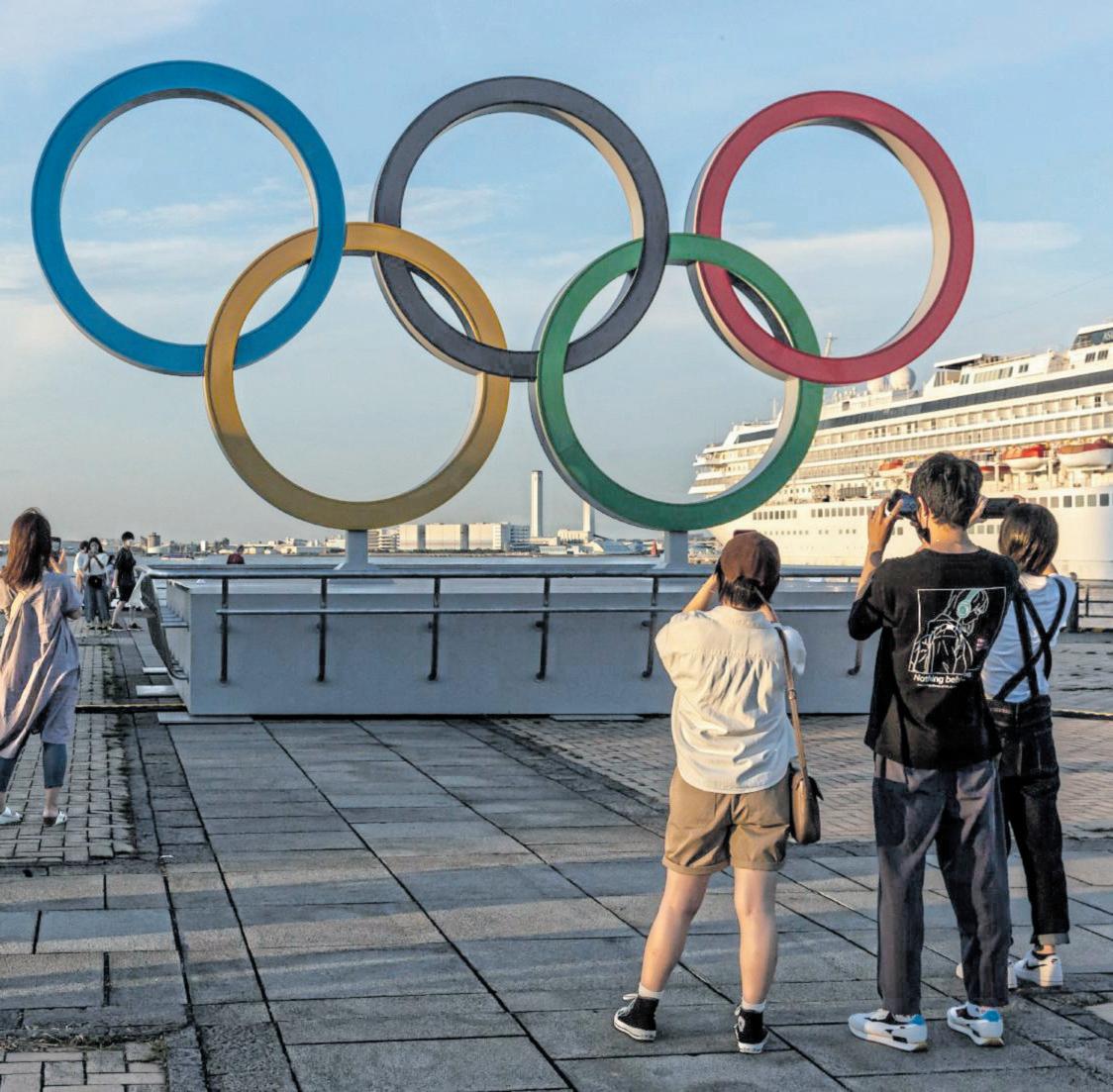
TheTokyo Olympic Games have been called thegreenest Games to date.
Despite some criticism levelledagainst the claims oftheir eco-friendly nature,itis notablethatthe Tokyo OlympicsOrganising Committee hasmade significantstrides tominimisethe Games’ carbon footprint.
However, thelong-term sustainability ofthe Games, as well asthe possibility of sustaining, duplicating or improving onthe eco-friendlyefforts oftheorganising committee ofthe 2021 Games, remains to be seen.
Tokyo hascommitted itself topromoting energy savings and theuse of renewable energyas much as possible. According to the organisers, thenumber of carbon creditspurchased to offset the Games’greenhouse gas emissionsactually rendered theOlympics “carbon negative” Electricityusedincompetition venues and the athletes’ village was100% renewable. Transportation withlower environmental loadwas promoted byutilising public transport and fuel cell vehi-
cles.During theGames,the organisers, deliverypartners and everyoneattending was requiredto aimfor “ zero waste”throughthethree“Rs”: reduce, reuse and recycle.
Interestingly, a 3D-printed podium madeof recycled, donated plasticwaste was used.
Organisers saidsustainable materials were used in the buildingof stadiums, accommodation andthe medals to be awarded. These sustainable materialswere madefromraw
HYDROGEN, WHICH EMITS NO CARBON DIOXIDE WHEN BURNED, WAS USED AS FUEL FOR THE OLYMPIC TORCHES AND CAULDRONS
materials harvestedfrom “urban mines”,such ascellphones. TheOlympic medals are madefrom recycled metals and the trays used to holdthem weremadefrom recyclable thermoplastic polymer.
Theathletessleptoncardboard beds,which were recycled after the event. The mattresses werealso fully
recyclable. Hydrogen,which emits nocarbon dioxide when burned, wasused as fuel for the Olympic torches and cauldrons.
Theevent organisersalso devised asustainable sourcingcodeforproducts(suchas timber,paper, fishandpalm oil) andservices tobe procured for the Games.
Sustainability ofthe Games
Although the eco-friendly effortsoftheorganisersofthe Games aretruly commendable,itdoes bringintoquestiontheissue ofthesustainability of the Games.
Thishas drawnmixed reactions. Someenvironmental groupsapplaud the efforts undertakenby the organisers tolighten the impactthat suchanenormous eventwould haveon the planet.
However, other groups are of theview that the organisers of theGames are simply greenwashingthe true impactthe Gameshave had on the environment.
Arecent studyon Olympic sustainability conducted bya researcherfrom the University ofLausanne in Switzerland showsthat sustainability inall dimensions has beendecreasing over time from 1992to 2020, despite thefact thatenviron-
RINGING IN THE CHANGES
mentalism and sustainability are some of the core pillars of the Olympicmovement. The study suggeststhe concerns over sustainabilityoften take second preferenceto corporateprofits andthe desireto consistently puton bigger and more impressive Olympic spectacles.
Despitethe effortsmade bythe organisers,theGames will inevitablyproduce some harmful gas emissions.
Flyingout thousandsof athletesfrom variouspartsof the worldand sourcing seafoodto feedathleteswill certainly contributeto the Games’ carbonfootprint and the ecologicaldegradation of marine wildlifeand the marine environment.
Although theorganisers havegone togreat lengthsto purchase carboncredits to offset theGames’ carbon emissions, some critics argue thisis insufficient.Thisis
because, despitethe purchase ofcarbon credits, harmful carbon gas is still being emitted into the atmosphere and tree-planting somewhereelse ontheglobe will notnecessarily eliminate
THE STUDY SUGGESTS THE CONCERNS OVER SUSTAINABILITY OFTEN TAKE SECOND PREFERENCE TO CORPORATE PROFITS
theemissions thathave already been produced.
To thisend, anenvironmentalgroup namedthe Rainforest Action Network has said ittraced tropical plywoodfrom theconstruction of an Olympicstadium in Tokyoto Indonesianforests,
wheredeforestationhasbeen arampant issue.As such,the argument is thateven though theGames consideredtheir sustainabilityfrom theperspective of Japan,they failed to consider their global sustainabilitywith respectto other parts of the world, wheresome ofthematerial was sourced.
Despite this,we canagree theissueof sustainabilityisa difficultsubject. Theorganisersof theGames aredoing many things right, but there arecertainlyareasthatcanbe improvedon. Ultimately,the sustainabilityof the2020 Games, and indeed all other Olympic Games to come, is one that remains to be seen.
In the end,the most sustainableGames willbethose that consider not only the domesticeffects oftheir actions, butalso theglobal effectsand consequencesof their actions.
Companies hit by looting can seek Sars relief
Joon Chong & Nina Keyser Webber Wentzel
Theemployer’sEMP201fora month andpayroll taxesare usuallydueby theseventhof the following month. Late paymentsof payroll taxesafter theduedates resultin a10% latepayment penalty andinterest calculatedfromthefirstofthefollowing month at the current rate of 7% per annum.
In PresidentCyril Ramaphosa’s addressto the nationon July25, he announced thedeferral of “PAYE taxes” for three months toprovide businesses withadditional cash
flow, and an automatic deferral of 35%of “PAYE liabilities” for employerswith revenue below R100m.
The employment tax incentive (ETI)would alsobe expanded toinclude any employees earning below R6,500 andthe incentive amount wouldbe increased by up to R750 a month.
National Treasuryin the media briefing on July 28 confirmed thatthe deferralof the PAYE liabilitiesand ETI amendments willbe from August 12021 forfour months. A more detailed note onall thetaxrelief willbe published.
Employers thatare still unable tomeet theirpayment
obligations afterthe four monthsof reliefshouldapply to the SARevenue Service (Sars)for deferralofthese obligationsoracompromise/ waiver oftax debts,to avoid collection measures.Those collection measurescould include debitingthe taxpayer’s bank account for the amounts due.The Sarswebsite containsemail addresses for the variousregions which taxpayers canapproach to apply for deferral of payment obligations.
Where the10% late payment penaltyhas been triggered, itmay bepossible for the employer to justify the late paymenton thebasis of exceptional circumstances.
The TaxAdministration Act provides forSars toremit the latepaymentpenalty ifit is satisfied that one of the following exceptional circumstances preventedthe taxpayer from complying with its payment obligations:
● Human-made disaster;
EMPLOYERS STILL UNABLE TO MEET THEIR PAYMENT
OBLIGATIONS AFTER THE FOUR MONTHS OF RELIEF SHOULD APPLY TO SARS FOR DEFERRAL
● Civil disturbanceor disruption in services;
● Seriousemotionalormental distress;
● Serious financial hardship in the caseof a business, whichis animmediatedanger that thecontinuity of business operationsand the continued employmentof its employees are jeopardised;
● Any othercircumstance of similar severity.
In our view,the violence, looting and destruction of an employer’s businessshould fall withinone ofthe exceptional circumstances above.
Inapplyingforthedeferral or write-off of tax obligations, the employershould submit supporting documents such
asphotos,insuranceorpolice reports, andbank statements to Sarsdemonstrating the direct linkbetween these circumstances andthe late payment.
Interest canbe remitted on the basis of circumstances beyond thetaxpayer’s control, whichare limited to:
● A naturalor human-made disaster;
● A civildisturbance or disruption in services; or
● A seriousillness or accident.
Sars is likelyto adopt a case-by-case consideration of whether to remit the penaltiesand interestandwe hope that itwilladopt a sympathetic approach.
/
BUSINESS LAW & TAX
The ultimate crossover
• The potential of what the metaverse could create could be an end-game for the internet
Ashlin Perumall Baker McKenzie
Theworldhascome a longway since 1983. OnJanuary 1 that year,the US military switched on thepacket switching TCP/IP protocolin its Advanced Research Projects Agency Network (Arpanet) and theinternet receiveda birth date.
Co-creatoroftheprotocol, Vint Cerf, hasbeen quoted as saying there was no fanfare or celebration, noteven a photograph, to commemorate the event.
Forwardalmost 40years, andthepicture isvastlydifferent. From technology scholars toventure capital firms, itsometimes seems weare eternallyat theprecipiceof thenext bigthing, where celebrationand media bustle precedesconcrete use casesorevengenerallyaccurate understanding.
THE INTERNET IS CURRENTLY NOT TRULY SYNCHRONOUS, BUT CREATED VIA SERVER-TO-SERVER COMMUNICATIONS
Youmay beforgiventhen if, when FacebookCEO Mark Zuckerberg announced his organisation’s plans tobuild a “metaverse”, the techyattractiveness ofthe title aloneelicited asigh,followed byaquickbrowsersearchfor “what on earthis a metaverse?”.But thistimeit’s worthpayingcloserattention. Let me explain.
Thescience fictionconceptof themetaverseis somethingmany ofuswill have cometo appreciate intuitively by now. From pop culture referencesto alternate virtual realities such as The Matrix, Tron and Ready Player One,to themuch earlier cyberpunkmovement of William Gibson’s1984 novel Neuromancer, the notionof a persistent virtualreality has achieved a level of ubiquity.
Theterm “metaverse” is actually liftedfrom Neal Stephenson’s book Snow Crash,consideredbymanyto besatire ofthecyberpunk movement. InStephenson’s book, thisterm ismeant to describe aconvergence ofan augmented physical reality and aphysically persistent virtual space a virtual world accessiblethrough special technology.One may therefore assume thisis all
that the metaverse is, yet another promise ofa 3D virtual or augmented reality, reservedfor therealmof gamers andearly adoptersof smart eyewear. But when seen as an evolutionary convergence of current technologies, rather than a predetermined destination, its promise is much clearer.
First, there are those who claim it to be the successor of theinternet. Thisisimmediately confusing. You are requiredto makethemental leap between the user experienceof theinternetof today to theexperience of virtual reality,which foranyonewhohasusedaVRheadsetin2021isnotyetanenticing prediction.
Then there arethose who liken it to the digital theme parks of the2000s such as SecondLife, or another VR game or chatroom space, whichishardlyworthwriting home about.
Thisismuch likeaskinga person usingthe Arpanetin 1983 to predictthe emergence of social media, the gig economy or thelatest videosharingplatforms.Rather,itis better to thinkof the metaversein termsof itsconverging properties, forwhich we thankfully have the guidance of Matthew Ball’s Metaverse Primer, which sets out criteria for what will likely be the features of a metaverse.
Persistence: Meaning that a metaverse will neverend or be reset.It isa persistentand no instantaneousvirtual environment.
Synchronous and live: The internet is currentlynot truly synchronous, but created via server-to-server communications, as and when required (such as when you log onto awebsite). The metaverse’s existence will be more like always-on multiplayergames orvideochats, where the experience continueswhetherornotyouare logged in, and which were not created as instances of individual experience but a synchronous experienceof many users.
Uncapped users with presence: Therewillbenolimitto those whocan enterthe metaverse, and each person has a representation or persistent identity.
Incorporate a robust economy: It willpossiblyincorporate thefuture iterationsof the distributed ledger rails already built for recognising fungible cryptocurrencies(or otherforms ofdigitalcurrency) and nonfungible tokens or digitalassets, and the ability to earn from providing goods or services, governed by smart contracts.

Operate across virtual and digital worlds: The metaverse will seamlessly integrate experiencesacross open and closed platforms and real-world and virtual spaces.
Be incredibly interoperable: This isimportant. Inthe real world, your car does not ceasetoexistwhenyoucross stateborders. Youstilllook the same,possess thesame features andhave thesame identity in different physical spaces. On theinternet, this picture is verydifferent. The internet, for example, still lacks a basic interoperable identity layer in its technology stack. Your data is hardly portable from platform to platform, let alone digital assetssuch asyourflowerbox in Animal Crossing.
THE INTERNET, FOR EXAMPLE, STILL LACKS A BASIC INTEROPERABLE IDENTITY LAYER IN ITS TECHNOLOGY STACK
Themetaversepromisesa fully interoperablevirtual world, where between platforms there isfreedom of movement. This has already started, to lesserdegree, with the multiplatformenabled gaming universes.
Arguably, it is this last fea-
turethat unlockstheconcept most clearly. The first websites createda “walled garden” of theinternet, where content and experience existed inan enclosedand limited environment.These wallsarestillcomingdown your user experience still varies across web platforms, mobile apps, games and streaming services,from your identitymanagement (how long is your list of account and password details?)to yourdigitalassets or content.
Since the creation of bitcoin, digital currencyis one keyareawhere wearestarting to experience the genesis offreedom inadecentralised and persistent digital experience.Another isthegaming industry, which has cottoned on toa convergenceof the features mentioned above.
Many gaming platforms are seekingcross-platform interoperability (forexample, in various “battle-royale” titles). Multiplayer spaces are synchronous and live, and (to a lesser degree) persistent. Withoutgoingtoo farintothe esoteric, consider what these features could achieve when applied to nongaming environments such as social spaces, working environments orpublic spaces,and whatthiscouldbewhenintegrated in anaugmented way with the real world.
Due to thepandemic, we are already primedfor what this could mean where
digital reality and connectionsstarttobecomethebase reality of experience. Importantlythis maybewholly independent of 3D virtual reality technologies,fully accessible via mobile phones,
NEW ETHICAL QUESTIONS MUST ALSO BE ASKED IN THE CONTEXT OF EQUALITY, DIVERSITY AND INCLUSION
PCs and other non-VR/AR “ onramps”,and couldbea space that can be accessed, experienced andinteracted with in different ways.
This is still far from becoming areality we are only atthe dawnof themetaverse. However,significant multinational technology firms are already placing some weightbehind this,and it is worth keeping an eye on these developments.Many issues, ranging from the remaining inequality in data speeds, theenvironmental impact of distributed ledger technology, to the sheer work needed toachieve true interoperability, still have to be overcome.
New ethical questions mustalso beasked inthe context of equality, diversity andinclusion andhowcreating such digital spaces may
be coming too soon before we have solvedbasic issues such as digital inclusion and digital literacy. Realistically, we’re still waiting for a minimum viable product here,and therewill besometimebeforeitarrives and policy and legal issues canbereliablyunpacked.Just like theinternet, thisconvergence could result in microbenefits along theway, and ubiquitous interoperability is the one that stands out.
Different content producers and existing platforms may need to start finding legally sound and commerciallyviable waystoshare data and IP to enable these environments. Muchlike whatisoccurring intheopen banking industry, new APIs, protocols and technical standardswill beneededto cross-wire and bridge the islandsof theinternet.We mayfinallybe forcedtosolve the problem of digital identity in a collective way. The metaverseis essentiallythe“ultimatecrossover”, andthe potentialof whatthat couldcreatecouldbeanendgame for the internet.
THE SCIENCE FICTION CONCEPT OF THE METAVERSE IS SOMETHING MANY OF US WILL HAVE COME TO APPRECIATE
BUSINESS LAW & TAX
Patents: inventors can be inhuman
• SA patent is a world first, while an Australian court allows AI to be listed as the inventor
Hugo Biermann ENSafrica
Weareboth created and create. Why cannot our own creations also create?”
First we heardan SA patent foran inventionthat lists artificialintelligence (AI) asits inventorhadbeen issued aworld first.Then weheard anAustraliancourt had handed down a judgment allowing AIto be listed asthe inventorof acorresponding patent in Australia. The Australianjudgment, StephenThalerandCommissioner ofPatents, delivered byJudge Beach,istechnical yet very readable.
Theapplicant forthe patentis DrStephenThaler. The inventor,however, is listed asan AIsystem described as “a device for the autonomous bootstrapping of unified sentience (DABUS).” Dr Thaler ownsthe copyright inthesourcecodeforDABUS and the computer on which DABUS operates.
THE LEGAL QUESTION
Can an “inventor” be an AI system in termsof the Australian patentlegislation, the Patents Act 1990?
Thejudge feltheshould explainAI: “AI systems may incorporate, orbe constituted by, artificialneural networks artificialneural networks are a subfieldof machine learning artificial neural networksarebasedonmathematical modellingdesigned to mimic natural neural networks”
DABUS
The judge said “DABUS is a form ofneurocomputing that allows amachine togenerate new conceptswhich are encoded aschained associative memorieswith theartificial neural networks” Hewent onto sayDABUS “generates novelpatterns of information ratherthan simplyassociatingpatterns it is capable ofadapting tonew scenarios without additional human input itis notjust a human-generated software program thatthen generates a spectrumof possible solutionstoa problemwitha
THERE IS NOTHING IN THE LEGISLATION THAT EXCLUDES AN INVENTOR FROM BEING A NONHUMAN AI DEVICE OR SYSTEM
filtering algorithm to optimise theoutcome [it] inone sense can be said to mimic aspects of human brain functions”
OWNERS AND INVENTORS
The judge made the point that ownership of apatent is limitedto theinventor orthe personwhoderivestitlefrom the inventor.But theterm “inventor” is notdefinedin the legislation.There isnothing in the legislation that excludes an inventor from being a nonhuman AI device or system. There’snothing in the PatentCo-operation Treaty either.
AI CAN BE AN INVENTOR
The judge felt that the Deputy Commissioner of Patents had beenwrongto fixateonthe dictionary meanings of the word“inventor”,whichstress that an inventor is a human.
The judge saidthe word “inventor” is an “agent noun”, wherethesuffix “ or ” or “ er ” “indicates the noun describes theagentthat doestheact referred to by the verb to whichthe suffixisattached” Examples includecomputer controller, regulator and dishwasher.
Thejudge wenton tosay: “The agent can be a person or thing that invents. According-
NEW WORLD INVENTIONS

ly if an AI system is the agent whichinvents, itcanbe described as an ‘inventor’”
PATENT LAW NEEDS TO EVOLVE
The judge suggested “ a widening conception of ‘mannerof manufacture’ is a necessary feature of the development of patent law in the 20th and 21st centuries as scientific discoveries inspire new technologies I see no reason why theconcept of ‘inventor’ should not also be seen in an analogously flexible and evolutionary way.”
He went on tosay this: “In my view itis consistent with the object of the act to construethe term ‘inventor’ in a manner that promotes technological innovation by rewarding it, irrespective of whether the innovation is made by a human or not”
According tothe judge, “machines havebeen autonomously orsemiautonomously generating patentable results for some time now. So you are simply recognising the reality by according artificial intelligence the label of ‘inventor’”
The judgesaid “recognis-
ing computer inventions and patents oncomputational inventions couldpromote disclosure andcommercialisation without theabilityto obtain patentprotection, owners of creative computers might choose to protect patentableinventionsastrade secrets without any public disclosure”
The judge made the point thatthelaw isonlyreally
OWNERSHIP OF A PATENT IS LIMITED TO THE INVENTOR OR THE PERSON WHO DERIVES TITLE FROM THE INVENTOR
concernedwith theinventive step: “Thefocus oftheact isnot reallyon theinventor at all.”
The judge said the applicant, Thaler, “as the owner andcontroller ofDABUS wouldown anyinventions made by DABUS when they came into his possession”
He went on to say that “Dr
Thaleris apersonwho derivestitlefromtheinventor DABUS byreason ofhis possessionof DABUS,hisownershipof thecopyrightin DABUS’ssource code,and hisownership andpossessionof thecomputeron which it resides.”
The judge concluded by saying that “aninventor as recognised underthe actcan bean artificialintelligence system or service.
“But such a nonhuman inventor canneither bean applicant fora patentnor a grantee of a patent.”
MORE TO COME
Thisis fascinatingstuff.But we don’t thinkwe’ve heard the final word.
In SA,it shouldbe noted that the DABUS patent application wasnot subjectedto substantive examinationby the SAPatent Officeand we doubt the Patent Office criticallyconsidered theissueof whethera nonhumancanbe namedas theinventorbefore granting the SA patent. Ultimately, there will be some uncertaintyin SAuntil a courtis called on tomake a judicialdetermination. Asin Australia,neither theSA Patents Act northe Patent Regulations stipulatean inventor must be a human.
SA LAW
However, interms ofSA law, ownership ofa patentcannot be “derived” from the inventoras underAustralianlaw. Instead,onlytheinventorora person “acquiring” the right fromthe inventormayapply forapatent. Inourview,this requirementmay wellmake it more difficultto convince a SA court thata valid patent can beobtained foran inventioncreated byan AIsystem. What is abundantlyclear is patentlaws needto evolveto stay relevant and meet the objectiveof rewardinginnovation.
● Reviewed by Rowan Forster, an executive in ENSafrica’s IP department.