
Corporate tax cut welcome
• SA
rate
is higher
than
global
average, must come down faster
Evan Pickworth Business Law & Tax Editor
Oneofthewelcome surprises in the 2021 budget was aloweringinthe corporatetaxrate from 28% to 27% from next year.
Ahealthy debatehadbeen raging priorto thebudget whetherthisratemayneedto be increased to 30% to make up for thegrowing revenue shortfalls. However, sanity prevailed. Evenwith thecut, SA’srateisstillfarhigherthan a global averageof about 23% and needs tocome down even faster in the future.
SAneeds morecompetitivecompany taxestoensure other jurisdictionsdo not become moreattractive in the desperatesearch for investment and growth.
Thecorporate ratewill only be loweredfor companies with years of assessment starting on or after April 12022. Butnotably thiswill be done alongside a broadening ofthe corporate income taxbase bylimiting interest deductionsand assessed losses.
TaxexecutiveatENSafrica
Kazi Mbangeleli who correctlypredictedthecorporate taxcut aheadofthe budgetin
a Business LawFocus podcast saystax changesindicate a clear, targeted and well thought-out strategyof broadening the SA tax base.
“Securing additionalforeign investmentfor economic recoveryis apriority for SA.Thisis whyanyincrease to thealready high28% corporate income taxrate would surely haveneutralised these good intentions,” she says.
Finance minister Tito Mbowenigave anearlyindicationof theintent togrow the taxbase andeconomy in his 2020budget speech, when he spokeof an intention tobroaden thecorporate income tax baseto create additionalrevenue tobeused to reducethe corporatetax ratein thenearfuture, tohelp SA businesses grow.
AJM directorsAlbertus Maraisand DeWet deVilliers saythe keybenefitsof lowering thecorporate rate include making SA a more attractive economyand a
SECURING ADDITIONAL FOREIGN INVESTMENT FOR ECONOMIC RECOVERY IS A PRIORITY FOR SA


A REVIEW OF DEVELOPMENTS IN CORPORATE AND TAX LAW Heavyweight

hub into the rest of Africa.
“Our corporatetaxes were a little high compared with otherjurisdictions in Africa,while ourVAT rateis actually fairly competitive, compared tosome peers.So the move to lower the corporaterate fromApril nextyear and to hold VATsteady is an important signal thatSA is open forbusiness. These moves shouldalso help broaden the tax base, which willbe crucialto gettingthe overall economicrecovery moving forward.”
Nazrien Kader, group headoftax forOldMutual,



says Mbowenireiterated his commitment tothe policy change for companies.
Partial reliefin theform of a deferral to 2022 of changes such as thering-fencing of deductions forinterest expenses ofcompanies that form part ofa multinational group(to 30%of earnings),a limitation onthe set-offof assessed lossesagainst taxableincome(to 80%oftaxable income)announced in the 2020 budget,is also welcomed. Companiesin the regulated financial services sector were cautionedthat a financialsector levywillbe
tabled indue courseto fund theregulation ofthefinancial sector.
Head of tax in ENSAfrica’s Johannesburg office, Andries Myburgh, sayswhile the reduction incorporate taxes and other partial relief is welcome, the details about the future treatmentof assessed losses andinterest exemptions were in short supply.
“Forinstance, thisseems to bea nodto theneed to clamp down on base erosion and profitshifting broadly. This isin linewith similar moves globally and in accordancewith directivesofthe OECD.If youbreakthat down, however,then itcould mean theywould needto focus onthin capitalisation andtransfer pricingrules,as these would relate to funding and interest deductibility. But wedo nothave the details, so we don’t know which ofthe corporaterelief measureswill betakenaway and when.”
Myburghsays ifbroadening the tax baseis the aim, it may be important for the Treasury notto messwith incentives whichencourage investment bylimiting costs for investors.According to Myburgh, itwas disappointingthat thebudget didnot mention incentivisingforeign direct investment in mining.
Wesley Grimm, Joon Chong andCor Kraamwinkel from WebberWentzel say thatuncertaintyregardingthe scopeand contentofthe
interest deductibilityrules remains a concern and proposedrefinementstothecorporate reorganisation rules will have to be carefully consideredwhentherelevantbill is published.
NtebalengSekabate,alsoa tax executiveat ENSafrica, says while the budget did not directly addresswealth taxes,itwas madeclearthe SA RevenueService (Sars) would belooking intothe affairs ofhigh-net worth individuals.
THE KEY BENEFITS OF LOWERING THE CORPORATE RATE INCLUDE MAKING SA A MORE ATTRACTIVE ECONOMY AND A HUB INTO THE REST OF AFRICA
“Whether the wealth tax shouldbe introducedshould largelydependontheefficacy of collectingsuch taxes,and the determination of the basis onwhich thewealth taxwill beimposed. Questionsthat still need to be answered are: howis “wealth” determined? Will certain assets be excludedin thedeterminationof ‘wealth’?For instance,are pensionsincluded, andhow






CLEARING HURDLES TO GROWTH
/123RF ELNUR AMIKISHIYEV
wouldoffshore stocksand bonds be treated? Who will ultimatelybear theburdenof thewealthtaxandtheopportunitiesfor evasionbytaxpayers? Considering that wealthtaxes alreadyexistin theform ofcapital gainstax, estate duty and so on,” Sekabate says.
“These are still open questions after thebudget speech, and it seems the can was kicked down the road. The reality is SAalready has high taxesand theimpactof wealth taxes oncapital flight remains,” she says.
In anod tothe benefitsof lowertaxes toencourage growth,Mboweni saidconsideration would begiven to furtherrate decreasesto make the taxsystem more attractive.These changesare expectedto enhanceefficiency, transparency and fairness inthe businesstax system, whilefacilitating economic growth through improved investmentand competitiveness.
However, Grimm, Chong and Kraamwinkelcaution thatone ofthe hardesthit groupswill beindividualtaxpayers who propose to emigrate for taxpurposes and havepension orprovident funds in SA.
BUDGET
Positive budget supports growth
• Government has realised it must address structural issues
Dr Albertus Marais AJM Tax Director
Finance minister
Tito Mboweni tabled asurprising yet resoundingly positive budgeton February 24.
Clearly, thegovernment has realised thereare serious structural problemswhich existin theSA economy:a bloatedpublic sectorwage billwhich reliestooheavily on a shrinking tax base. In the result,thegovernmenthason theexpensesidereconfirmed thatthe currentpublicsector wage bill is not commercially feasibleand needstobe addressed urgently.
politically inconvenient.
On theincome side,the realisation isthat taxhikes cannotbereliedontoprovide increasedtax revenues.An increase intax rateswill, in
WHAT IS DISAPPOINTING IS THE SLOW PROGRESS IN IMPLEMENTATION OF EXCHANGE CONTROL REFORM

withthemakingprovisionfor so-called “fiscal creep” not to havean effectontaxpayers thisyearby allowingfortax bracketsto beraised by5% across the board.
bluntinstruments suchas tax ratesand whichthe publichave sadlybecome accustomed to over the past few years.
There are many unsurprisingmatters containedin the budget, such as the average8% increasein dutieson alcohol-related products (no doubt driven bythe recent lockdown experience drawn fromwhat aSouthAfrican society will look like that absorbsless alcohol),aswell as increased leviesinsofar as fueland tobaccoproducts are concerned.
Leaving exchangecontrol mattersaside, thebudget tabledshould beapplauded asonethatwillnotonlyserve to encouragelong-term growthin SA,stimulate growthand departfrom structural problems, but it is also bound to make SA a more competitive investment destination internationally.
● Albertus previously worked for the Titan Group as its head of tax, whereafter he established the AJM tax consultancy business.
The wage bill, which absorbs ahuge 47%of total revenue year onyear, has become a clearand present dangerto SA’s fiscal position whichcan nolongerbe ignored,no matterhow
thecurrent overtaxedSA environment, ultimately leadto decreasedtaxrevenues over the medium to long term.
Instead of increasing tax rates,the governmenthas ratherresorted torely onthe considerable(yet oflate neglected)intellect whichit hasatitsdisposalinTreasury, and optedto resortto enactingmore focusedand nuancedmeasures tobolster tax revenues through reviewingexisting taxincentiveswhich areinefficient, addresstax abuserelated schemes,and decreasethe ability of entities to rely on assessed tax losses
The proposal to include retirement fundsin theexit taxnetmay causepanicand increasewithdrawals ofsuch funds prematurely. IT IS ENCOURAGING TO SEE THE GOVERNMENT TAKING A FINESSED APPROACH TOWARDS TAX REVENUES
It isfor thisreason thatthe governmenthas proposeda cut inthe corporateincome tax rate from28% to 27%, effectiveApril 2022,coupled
These measures will lead to increased taxrevenues on afocused basisand itis encouraging tosee thegovernmenttaking afinessed approachtowards taxrevenues as opposedto yielding
What is somewhat disappointingis theslow progress in implementation ofexchange controlreform withscant detailmadeavailablein thisbudget onfurther relaxation,perhaps evensignalling a rethinkof some of the generousrelaxations anticipated and announced over the past year.
Tax proposals that will add to hardships
Wesley Grimm, Joon Chong & Cor Kraamwinkel
Webber Wentzel
Finance ministerTito Mboweni treadsa pragmatic path between overspending and toomuch austerityin the budget,astheeconomygrapples with the impact of Covid-19 and lockdowns.
The ministerclearly listened to widespread calls to avoid raising taxesbut also to allocate more funds to rolling out vaccines. Overall,it was an optimistic budget, but with some stings in the tail.
INFLATION-RELATED
INCREASES IN THE FUEL LEVY AND THE ROAD ACCIDENT
FUND LEVY WERE EXPECTED
The budget delivered good news for taxpayerson a number offronts. However, herearetheproposalsnecessary toraise taxrevenue or increase thetax basethat will be less welcome
Oneof thehardesthit groups willbe individualtaxpayerswho proposetoemigrate for tax purposes and have pensionor provident fundsin SA.The proposalto include retirementfunds in the exittax netmay cause panic andincrease withdrawalsof suchfundsprematurely.
The increasein excise duties on alcohol and tobacco products isabove inflation, and whilethe governmentis commendably determined to tacklethe abuseofalcohol, which costs the economy billions, it will have unfortunate consequences. It mayfuel the

illicit tradethat flourished under thealcohol and cigarette bansduring lockdowns. Thiswill ultimately resultin lessrevenuebeing collectedthan thetaxesare intended to raise. Itwill hit a rangeof companies not
only large onesbut also small craft brewerswho have struggled torecover fromthe lossof revenueduringthe bans.
Though the intentionis to cut corporatetaxes, Mboweni saidto maintain
revenue neutralitythis hasto be accompaniedby measures suchas limiting assessed lossesand interest expense deductions. This proposalis deferredfora year and willgive corporate taxpayers some breathing space, asafter thatmany businesses will be unable to fully utilise lossesthat they could before.
Uncertainty regardingthe scopeand contentofthe interest deductibilityrules remains a concern and proposedrefinementstothecorporate reorganisation rules will have to be carefully consideredwhentherelevantbill is published.
The announcementthat the Section12J incentive available toventure capital companies will ceaseon the sunset dateof June30 2021 reflects the Treasury’s find-
ingsthat thetaxdeduction available for investing in Section12Jcompaniesisnothavingthedesired effectinpromoting smallbusiness and job creation.This meansthe 2022 yearof assessmentwill be thelast yearin which investors can put money into a Section12J company/fund and claim a tax deduction.
TRANSPORT COSTS
Inflation-related increases in the fuel levy and the Road Accident Fund(RAF) levy were expected,because of the RAF’scontingent liability, but will affecttransport costs for consumers.
The announcementthat a bill willbe introducedto impose levieson regulated companies inthe financial sector willalso contributeto increasedregulatorycostsfor affected entities.
/123RF ZHUDIFENG
BUSINESS LAW & TAX
BUDGET
2021
Speech signals taxing times
• Mboweni’s budget zeroed in on sunset clauses for incentives and limitation of interest on deductions
By ENSafrica s Tax Department
The 2021 budget speech,whichwas delivered bythe finance minister on February24, hit the rightnotes inpreferring economic growthover raising taxes as ameans to hike tax revenue.
Thiscontinued aconsistent themefrom previous budget speeches that acknowledged SA’s relatively hightaxrates,andtheinverse relationship betweenhigher ratesand increasedtaxrevenues. Arguably,the budget announcements prioritise individuals aheadof businesses, whichcould leadto a longer roadto economic recovery and amore gradual increase in tax collections.
Not only wasthere a recognition thatraising taxes may notincrease revenues and is anathema to economic growth, but therewas also complete silence regarding any formof whatmay crudely betermed “wealth taxes”, whichwere widely expected tomake anappearance. However,a small mention was made of continuingevaluation anddatacollectionin thisregard,so wealthtaxesare notoffthe table completely.
Therecognition ofthe economic devastationof
Covid-19 (and efforts to contain it) wasclear. What taxpayerswillbe lookingforis the pathway out of these current difficulties.
The game plan appears to be the following:general corporatetaxrates canonlybe reduced ifoverall effective tax rates are increased. As such, certaintaxpayers must paymore taxintheform ofa reduction oftheir particular beneficial treatmentif the majority areto obtaina general reduction.The minister
THE MINISTER SHELVED MEASURES THAT HAD PREVIOUSLY BEEN ANNOUNCED TO INCREASE THE TAX TAKE
mentioned in his speech a forthcoming 1% cutin the corporate tax rate.
The budgetspeech commented on many initiatives to reinvigorate the SA Revenue Service (Sars), including reinstating the Large Business Centre (LBC) and initiatives to improve data collection, digital technology and artificial intelligence
Enforcement and compliance measures were also mentioned. In addition, based
on our interactions with Sars andin courtdecisions,this seemsto indicateatrend (anecdotallyat least)thatis pro fiscus. All of this signals a tougher taxenvironment, even if theheadline rates remain the same.
The minister shelved measures that had previously been announced to increase thetaxtake. Inaddition,and worrying for the industries affected, he zeroedin on the sunset clauses for a number of specific tax incentives (whichare aform offiscal subsidyforqualifyingtaxpayers). Section 12J will therefore expire without extension, whileothers suchasthe Urban DevelopmentZone regime continue for now, but are under review. Taxpayers should follow developments inthisregard andtakeup opportunities to make their case to the Treasury.
This harkens back to a decadeormore agowhena concerted effortwas madeto limitor eliminatethenumber of taxincentives tospecific industries, but which have slowlycrept backintothe system to facilitate policy initiatives. The minister explicitly referred to vested interests and lobby groups thatariseinresponsetothese incentives.
Over andabove thesunset clauseswas aclear focus ontwoareasinparticular:the
offset of assessedlosses, and the limitation of interest deductions. Each of these limitations had previously been announced,and ifit weren’t for the pandemic probably would have been introduced already. They are postponed to2022. Itis fairly obviousthat aneffect ofthe pandemic for many taxpayers will have been to increase orgenerate losses,and many will have had to gear up their balance sheets with debt.
As such, it will be particularlyworryingfortheaffected
End of venture capital company regime
Dries Hoek CDH
Theventure capitalcompany (VCC)tax incentivewas introducedinto theIncome Tax Act in 2008.
The regime wasaimed at raisingequity fundingfor small,medium andmicro enterprises which would otherwisehave struggledto attract funding due to their sizeand inherentrisk.
Investorsinvestinginventure capital companiesare allowedan upfrontdeduction fortheir investmentwhich comparedfavourablytoother equity investments.
The2008 rulescontained strictinvestor criteriaand deductionswere limitedto R750,000 pertax yearwith individualinvestors alsosubjectto alifetimededuction limit of R2.250m.
Changeswere madeto the venture capital regime in
taxpayersthattheseareasare in thespotlight. Theinterest limitation will seemingly be expanded further on introduction,and wewillpay close attention to the draft legislation on both topics. Individuals willbe happy that some (overdue) attention will begiven tothe taxrules for working from home, but no specificswere given.It maybea minortaxwindfall for Sars that employees are using their after-tax earnings to pay expensesthat would ordinarily be deductible by their employers. There did notseemtobeanyurgencyto address thetax rulesrelating tothis fundamentalshiftin the business landscape. We hadexpected some attention to thetax treatment of bad and doubtful debts, both because of technical uncertainty and because the pandemicmust havehada significant effect on irrecoverable debts and recovery rates of previously written offdebts.However,therewas no mention of this in the budget speech.

CHANGE OF PLAN /123RF ARTUR SZCZYBYLO
2011 tomake itmore attractive whichresulted innatural personsand legalentities securingfull deductionsfor investments withoutany
monetary thresholdlimitation. In2015 furtherchanges were made tobroaden the scopeof theregime,which
resultedin asignificant uptake inthe regimeand makinga tellinginvestment into the economy.
In2019, amonetary threshold of R2.5mper venturecapital investorwas reintroduced inorder tobalance the benefit and perceivedeffectiveness ofthe regime.
National Treasury again reviewedthe VCCregimeas partof alarger processof monitoring andevaluating taxexpenditures andconcluded that theincentive did not achieve its objectives.
The2021 budgetindicates Treasuryfound thatthe incentiveraised capitalfor relatively low-riskinvestmentswhich couldhave attractedfunding withoutthe incentive. Therefore,no upfrontdeduction willbe allowed in terms of this incentivefor sharesacquired on or after June 30 2021.
Dedicated unit tasked with tax enforcement
Professor Emil Brincker CDH
Consistentwith theapproach ofthe revenueauthoritiesto bolstertax enforcement,it has been decided that a dedicated unitwill beestablished toimprove complianceof individualswith wealthand complex financialarrangements.
High-net worthindividualsarecertainlytobetargeted incircumstances where,for the2020 fiscalyear,6,554 individuals reflectedtaxable
6,554 INDIVIDUALS REFLECTED
TAXABLE INCOME IN EXCESS OF R5M
income in excess of R5m. Mostly high-networth individuals make use of complex financial structures, including truststructures which may be located within SA and overseas. The extent ofmanagement andcontrol of these entities will also be considered. It hasbeen indicated the first group of taxpayershave beenidentified and they willreceive their notices during April 2021. One can expect that the enforcementconduct ofthe SouthAfrican RevenueService (Sars) will be bolstered substantially and inthis contextan additionalspending allocation of R3bnto Sars over the mediumterm has been approved.
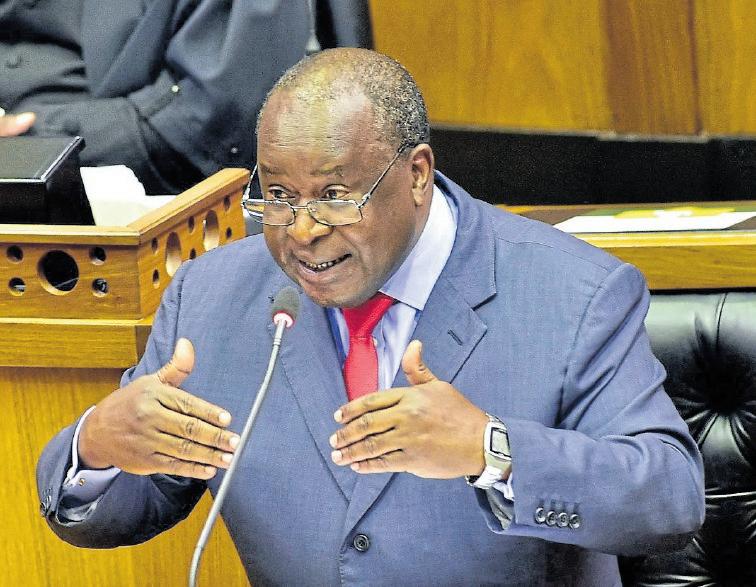
Finance minister Tito Mboweni delivers his 2021 budget speech in parliament in Cape Town. /Esa Alexander/Sunday Times
BUSINESS LAW & TAX
Share repurchases explained
• A recent court judgment cleared up confusion around when a buyback is a scheme of arrangement
Kevin Trudgeon, Brian Price & Raquel Goncalves Werksmans
Since the promulgation ofthe Companies Act No17 of 2008 therehas been a debate as to whetheror noteveryrepurchase by a company of more than5%of itsownshares constitutes ascheme of arrangement.
Thegenesis ofthisdebate is the wording of section 48(8)(b) ofthe act.That section stipulates a decision by theboardof directorsofa company toacquire more than 5% of the company’s own shares, whetherin one transaction orthrough a series ofintegrated transactions (qualifying repurchase), is subject to the requirements of sections 114 and115 of the Companies Act.
In light of the fact that section114dealswithschemesof arrangement, itwas argued that aqualifying repurchase must automatically be regarded as ascheme of arrangement.
On February 52021, the Gauteng divisionof thehigh court, Johannesburghad the opportunity toconsider, inter alia,thisissueinFirstNational Nominees (Pty) Ltd and others vsCapital Appreciation Limitedand another(caseno 19/41679).
The actdoes notcontain a definition of a “scheme of arrangement”, sothe court was left to consider this question. Thecourt concluded that “theobjective of an arrangement in terms of section 114[that is,a scheme of arrangement] isto affect therespectiverightsandobligations inter seof the companyandits holdersofsecurities in a manner which cannot otherwisebe conveniently achievedby independent agreementbetween the companyand eachholderof securities”
THE ACT DOES NOT CONTAIN A DEFINITION OF A ‘SCHEME OF ARRANGEMENT’, SO THE COURT WAS LEFT TO CONSIDER THIS QUESTION
It isapparent thatthe function ofa schemeof arrangement isto providea mechanism to affect the respective rights and obligations between a company and its shareholders and shareholders interse incircumstances where doing so by a conventional agreement betweenall partiesis notan
option. Axiomatically, a share repurchase pursuant to an agreement between a companyandcertain ofitsshareholders thatdoes notseek to bind other shareholders who have not agreed thereto is not a scheme of arrangement.
An arrangementthat seeks tobind allshareholders, assumingall ofthe applicable statutory requirements are met and regardless of whether ornot suchshareholder/s voted in favour thereof (thatis, agreedthereto), is by its nature a scheme of arrangement.
The court wenton to deal with the wordingof section 48(8)(b)oftheactitself,saying it clearlydoes notstate that thequalifying repurchaseisa scheme of arrangement, but rather that every qualifying repurchaseis subjecttothe requirements setout insections 114 and 115
The courtacknowledged that,though a share repurchase may be implemented by means ofa scheme of arrangementin termsofsection 114,not everyqualifying repurchase automatically falls to be classified as such.
A qualifying repurchase thatis notintrinsically ofthe nature of a scheme of arrangementis nomorethan a share buyback subject to the further conditions found insections114and115.Aqualifying repurchase will only be
INVESTOR STATUS

a schemeof arrangementif, by itsnature, it seeksto bind all shareholderswhether they agree thereto or not.
According to the court, the rationalebehind theapplication of theadditional requirementsto qualifyingrepurchases is that “such transactionsmerit additionalprotectionbecause theypotentially affect minority shareholders moreradically asthey amount to a restructuring of the shares ofthe company”. It was the view of the court that the legislature accordingly sawitfit toimposeonqualifyingrepurchasestheprotections that arealready containedin sections114 and115 of the act and not to render all qualifying repurchases as schemes of arrangement.
LABOUR PAINS
/123RF BAVORNDEJ PRAKIT
The additionalrequirementsapplicable toqualifying repurchases include, inter alia,the appointmentofan independentexpert ascontemplatedin section114(2), the adoption ofa special resolutionas contemplatedin section115(2)(a) and,importantly,the entitlementfor shareholders toexercise appraisal rightsin termsof section 115(8) (read with section 164) of the act.
Disciplinary procedures are, first and foremost, a process to attempt to correct unacceptable employee behaviour.
There are, of course, many occasions when dismissal for a first offence is fair and justified, such as in cases of gross dishonesty, breaches of safety protocols and assault. However, as a general observation, employers tend to utilise disciplinary action more for dismissal than correction.
As a rule of thumb, alleged unfair dismissal cases are easier to defend at the CCMA and bargaining councils if there is a history of progressive discipline, than is the case when the employee, at face value, has no history of progressive discipline.
Item 3 (2) of Schedule 8 of the Labour Relations Act (Code of Good Practice:

TONY HEALY
Dismissal) states that “the courts have endorsed the concept of corrective or progressive discipline. This approach regards the purpose of discipline as a means for employees to know and understand what standards are required of them”
Importantly, it continues that “efforts should be made to correct employees’ behaviour through a system of graduated disciplinary measures such as counselling and warnings”
We see in practice that less serious, and occasionally regular, acts of relatively
minor misconduct are frequently overlooked by employers. Yet, as we see all too often, an employee may commit the same act of relatively minor misconduct once too often in the eyes of the employer, who then seeks dismissal of the employee for repetition of the minor act of misconduct over time.
Such an example could include habitual late-coming. The employee may have a poor time-keeping record, but if no prior, timeous corrective or progressive disciplinary sanctions were applied in those instances, this employee with a poor time-keeping record has an unblemished disciplinary record, when they ought to have, for example, had a final written warning for this offence on file.
All too often we see employers rue the fact they did not apply prior
progressive discipline.
Item 3(3) of the Code of Good Practice: Dismissal confirms that “repeated misconduct will warrant warnings, which themselves may be graded according to degrees of severity. More serious or repeated misconduct may call for a final warning, or other action short of dismissal.”
Item 3(4) of the Code of Good Practice: Dismissal emphasises the importance of progressive discipline even further in stating that “generally, it is not appropriate to dismiss an employee for a first offence, except if the misconduct is serious and of such gravity that it makes a continued employment relationship intolerable”
The issuing of progressive disciplinary warnings is relatively simple. There are typically three levels of disciplinary warnings: verbal
Furthermore, the judgmentarguably providesclarity onan additionalaspect, namelywhether aqualifying repurchase constitutesan “affected transaction” that is subjectto thetakeoverregulations.
Since there was a view thata qualifyingrepurchase is a scheme of arrangement, qualifying repurchases were thereforeconsidered “affected transactions” by virtue of section 117(c)(iii) of the act,which statesthat an affectedtransaction means “ a scheme ofarrangement betweena regulatedcompany and itsshareholders, as contemplatedin section114, subject to section 118(3)” Accordingly, since the courthasruledthatqualifying repurchasesare notalways schemesof arrangement,it seems only logical that a qualifying repurchasewill notconstitute an “affected transaction” unless it is a schemeof arrangementby nature.
In conclusion, a qualifying repurchase thatis nota schemeof arrangementwill thereforenotbesubjecttothe takeover regulations.It should,however, benoted thatthe implementationofa qualifying repurchasemay giveriseto adifferentkindof affectedtransaction suchasa mandatoryoffer oracomparable offer.
Itremains tobeseen whetherthis judgmentwill be appealed.
Thepurposeofthelegislature inmaking theadditional requirements applicableto qualifying repurchaseswas nottoconvert asimpleshare buyback contemplated in section48of theactintoa schemeof arrangement,but ratherto protectshareholdersagainst potentialabuses thatcould accompanyqualifying repurchases.
Dealing with unacceptable employee behaviour
warnings (typically valid for three months), written warnings (typically valid for six months) and final written warnings (typically valid for 12 months). Before any warnings are issued, the employee should be given an opportunity to explain themselves, before the employer decides whether the employee is “probably” guilty of the misconduct, prior to selecting an appropriate sanction (warning).
No formal disciplinary hearings are necessary before issuing a disciplinary warning.
In the final analysis,
ALL TOO OFTEN WE SEE EMPLOYERS RUE THE FACT THEY DID NOT APPLY PRIOR PROGRESSIVE DISCIPLINE
disciplinary warnings are an attempt to bring an employee’s attention to unacceptable conduct, in the hope they will correct their conduct. While most employees will correct unacceptable conduct with simple counselling and informal measures, other employees will not do so until such time as disciplinary steps are taken against them more formally. It is generally accepted that employers should develop a disciplinary procedure and code which outlines the employer’s in-house disciplinary procedures and establishes a company disciplinary code which as appropriate for the nature of the employer’s business.
● Tony Healy is CEO at Tony Healy & Associates Labour Law Consultants, www.tonyhealy.co.za.









Novartis / South Africa and Kiara Health
in the transformation of South Africa’s Pharmaceutical sector breaking new ground
ENSafrica | Africa’s largest law firm

2020
B-BBEEdealoftheyear





BUSINESS LAW & TAX
Uber drivers are ruled ‘workers’
• UK Supreme Court says ride-hailing firm’s drivers should not be classified as independent contractors
Sandile July Werksmans
The UK Supreme Court was called on to determine whether ornot the Uber drivers (claimants) wereemployees of Uber BV andif the answer was to the affirmative, the employees wouldhave a right to be covered by the National Minimum Wage Act. TheSupreme Courtdelivered its judgment on February 19 2021.
Thereare basicallythree partiesinvolved inthisrelationship,namely UberBV,a Dutch company;Uber London Ltd, a subsidiary of Uber BV based in London; and the drivers. In theservice agree-
ments concludedbetween Uberand thedrivers,the driversare referredtoas independent contractorsand not employees.
TheSupreme Courtheld that the questionof whether Uber driverswere workers or employees ofUber within the meaningof legislation designed toprotect employees isnot determinedby applying ordinary principles of contract law to the contractual terms ofthe agreements betweenthe parties. Those contractual provisions wereinserted (byUber)with theintention ofexcludingthe operation ofemployment legislation.
The SupremeCourt investigated the relationship between Uber BV and the
drivers and found that because of the degree of control Uber exercised over the drivers,Uber BVwasthe employer.
In comingto theconclusion, the court considered some of the following factors:
● Thattheprivatehiredvehicle licence usedby the drivers wasin thename of Uber London;
● The passengercontacts Uber for transportation, in turnUber engagesthedriver to ferry the passenger;
● The fare amount is fixed by Uber;
● The driver undergoes Uber training at Uber’s premises;
● The driver is subjected to the performance standards set by Uber; and
● There is nodirect contact
Finance minister Tito Mboweni delivered his budget speech on February 24, one of the more challenging budgets in years, considering the pandemic, lack of growth and high unemployment.
Main budget revenue is projected at R1.35-trillion (25.3% of GDP) in 2021/22. This increases to R1.52trillion in 2023/24. Noninterest spending will remain relatively constant at R1.56-trillion over the next three years but will decrease as a ratio of GDP from 29.2% in 2021/22 to 26.2% in 2023/24.
Government allocated R10bn to purchase and deliver vaccines over the next two years. The contingency reserve is increased from R5bn to R12bn to provide for more vaccine purchases and cater for other emergencies.
A primary surplus on the main budget will only be achieved in 2024/25. Government debt will be stabilised at 88.9% of GDP in 2025/26 and will decline thereafter. Total spending amounts to R2-trillion a year over the medium term, the majority allocated to social services.
Global economic growth is expected to increase to 5.5% in 2021 before decreasing to 4.2% in 2022. China is expected to grow at 8.1% in 2021, and India at 11.5%. Sub-Saharan Africa is expected to grow at 3.2%. SA is expected to grow by 3.3% this year, after a 7.2%

contraction in 2020. SA is progressing implementation of its economic structural reform which aims to remove growth inhibitors. Operation Vulindlela accelerated the pace of implementation of high impact structural reforms. Government aims to alter the economic structure through lowering barriers to entry, raising productivity and lowering the cost of doing business. Government committed R791.2bn to infrastructure investment, partnering with private sector and others. Expanded infrastructure could be funded through the end user paying a costreflective usage tariff. The budget supports economic transformation and job creation. Government allocated close to R100bn for public employment programmes and the Presidential Youth Employment Initiative. Government plans to finalise 1,409 restitution claims at R9.3bn over the next three years to achieve equitable access to land. Some R7bn is allocated to the Land Bank which will assist to resolve its current default and re-establish the development and

between the passenger and the driver.
This decision,in ourview,
DUES DATE
transformation mandate. Support to state-owned companies and public entities will be done through budget reprioritisation as outlined in the 2020 medium-term budget policy statement (MTBPS). The Department of Small Business Development allocated R4bn over the medium term to township and rural enterprises, including blended finance initiatives.
SA’s public finances are stretched. Borrowing requirements will remain well above R500bn in each year of the medium term. Gross loan debt will increase from R3.95-trillion in the current year to R5.2-trillion in 2023/24.
Government expects to collect R1.21-trillion in taxes during 2020/21 R213bn less than the 2020 budget projection the largest tax shortfall yet. In 2021/22 government expects to collect R1.37-trillion. Mboweni announced the corporate income tax rate will decrease to 27% for companies with years of assessment commencing on or after April 1 2022, while the corporate base will be broadened by limiting interest deductions and assessed losses. Further rate decreases will be considered to make the system more attractive, but in a revenueneutral manner.
Personal income tax brackets will increase by 5%, which exceeds inflation, and provide R2.2bn tax relief mostly to lower and middle-
sion arenot onlyfor Uberbut also extend tothose companiesthatoperatesimilarbusinesses to Uber.
might be followedby other courts in other jurisdictions. The implications ofthis deci-
Itis goingtobe agame changer, not just for Uber but also for other businesses that have owner-drivers. A similarmatter came before the Labour Court. Because ofthe failureto join UberBV totheproceedings, the courtwas constrainedto deal with the relationship between UberBV andthe drivers. The Labour Court cameto theconclusionthat the drivers had concluded contracts with UberBV and their claim potentially lay against Uber BV. According tothe Labour Court, the commissioner ought to have upheld the jurisdictional challenge raised byUber SAbecause there was no contract between Uber SAand the drivers.
Structural reform aims to remove growth inhibitors
income households. Fuel levies will increase by 27c/l, comprising 15c a litre for the general fuel levy, 11c a litre for the Road Accident Fund levy and 1c a litre for the carbon fuel levy.
Excise duties on alcohol and tobacco products will increase by 8%.
Provinces will be allocated R3.5bn to improve access to early childhood development services. The special Covid-19 social relief of distress grant will receive R6.3bn for extension until April 30. Social assistance grants will also be adjusted.
Government remains committed to support deserving students through higher education. Treasury is working with the department of higher education & training on policy and funding options
Payments to the Sacu have been increased to R137.3bn over the medium term. The African Renaissance and International Cooperation Fund will over the MTEF support projects that enhance African trade, economic development and integration and is also supported.
The Africa Continental Free Trade Agreement presents the opportunity to deepen SA’s trade and financial linkages with the continent. The Treasury continues to work with industry bodies to promote SA as a financial hub for Africa. From March 1 , companies with a primary listing offshore will be
aligned to current foreign direct investment rules, which the Reserve Bank will oversee. The six busiest border posts will be upgraded and expanded.
The SA Revenue Service (Sars) is deepening its information technology capability and specialised audit and investigative skills in the tax and customs areas to address abuse of transfer pricing, tax base erosion and tax crime. This fiscal year,
THE DEPARTMENT OF SMALL BUSINESS DEVELOPMENT ALLOCATED R4BN OVER THE MEDIUM TERM TO TOWNSHIP AND RURAL ENTERPRISES ALONG
Sars will establish a dedicated unit to improve compliance of individuals with wealth and complex financial arrangements. The first group of taxpayers have been identified and will receive communication in April 2021.
The Treasury is fasttracking the finalisation of the Public Procurement Bill. It is finalising a framework to implement zero-based budgeting across government, done through spending reviews used internationally to achieve efficiencies.
Government announced in the MTBPS the historic agreement with all Nedlac constituencies for the annuitisation of provident funds. The constituencies agreed to accelerate the introduction of autoenrolment for all employed workers, and the establishment of a fund to cater for workers currently excluded from pension coverage, as an urgent intervention towards a comprehensive social security system.
Annuitisation of provident funds took effect from March 1 2021, and provident fund members will continue to enjoy a tax deduction on their contributions.
SA’s economy has a long road to recovery. If government can put the infrastructural building blocks in place, focus on creating employment, reduce foreign debt and debt cost, and seriously reduce government expenditure, SA will find itself on that road. The engine fuelling this needs to be growth in GDP.
The department of justice & constitutional development is ready to improve business processes and support the fight against crime and corruption. Sars, the Reserve Bank and the Financial Intelligence Centre (FIC) are working jointly on combating criminal and illicit cross-border activities through an interagency working group.
● Dr Ferdie Schneider is CEO of Sta Konsult.
FERDIE SCHNEIDER
BUSINESS LAW & TAX
When staffers refuse to be vaccinated
Silindokuhle Magagula & Lesego Ralekoa ENSafrica
With the rollout of the Covid-19 vaccine in motion,many employers want toimpose mandatory vaccination as part of their health andsafety protocols. The question is: can they fairly dismissemployees for refusing to take the vaccine?
In this articleof the series, we deal withthe legal position relevant to this question. Is thedismissal automatically unfair?
Section187(1)(f) oftheLabour RelationsAct provides that, if the reason for the dismissal is that theemployer unfairly discriminated against an employee on grounds set out in the act, this dismissal is automatically unfair. These grounds includeage, religion, conscience andbelief and “any other arbitrary ground”
Anemployee whorefuses to be vaccinated, for example, on religiousor similar grounds, could arguethat a dismissal wasautomatically unfairon thisbasis.It willbe fortheemployer toshow the reasonfor thedismissalwas not one of these (or other discriminatory) grounds.
have to showthat the dismissalwasnotunfair.Section 188of theactprovides thata dismissalis unfairifit isnot effected for afair reason fallingwithin oneof thethree categories of dismissal recognisedby theact, andin accordance with a fair procedure. Thesethree categories of dismissal are:
● Theconduct oftheemployee;
● Thecapacity oftheemployee; and
● The operational requirements ofthe employer’s business.
We deal with dismissal for each of these reasons below.
MISCONDUCT
Item7 oftheCode ofGood Practice: Dismissal requires any persondetermining whether a dismissalfor misconduct isunfair toconsider whetheror nottheemployee contravened a rule or standard regulating conductin, or relevant to, the workplace. Accordingly, employers could formulatetheir vaccinationpolicy insuch amanner that it createsa rule or
• Dismissals over vaccines are usually unfair, but employer can sometimes act within their rights IN CERTAIN CIRCUMSTANCES, THE TERMINATION OF EMPLOYMENT COULD BE JUSTIFIED ON THE BASIS OF INCAPACITY
requirement foremployees to take the vaccine. However, the code provides that a disciplinary actmust bevalid or reasonable. It isentirely possible employees could challenge the reasonableness of this rule,for example,on the basis that it constitutes a serious infringement of various constitutional rights such as privacy or bodily integrity.
But it is also possible an employer may beable to justify the rule on the basis that vaccination is required to enablethe employertocomply with itsobligations (and those of itsemployees) in terms of the Occupational Health and SafetyActor the Mine Health andSafety Act. Thecode alsorequiresthe employer toshow thedisciplinary sanction of dismissal is fair.
The failure or refusal to be vaccinatedcould alsobecast as a formof insubordination. However, anemployer would haveto showthe instruction to be vaccinated was reasonable and lawful and the arguments mentioned above would also be applicable in this scenario.

its employees. In addition, the increasing number of deaths from thecoronavirus andthe hardship suffered by businesses satisfy the requirement of reasonableness.
The facts of each failure or refusalto takethevaccine ought tobe consideredas there may be valid grounds for the employee’s failure or refusalthat willnotjustify his/her dismissal.
INCAPACITY
Even if it is established that thedismissal wasnot for an automaticallyunfair reason, the employerwill still
Althoughthereisnolawin SA makingit mandatoryfor citizens to take the vaccine, employers are still required by theoccupational andmining safety actsto provide and maintain,asfar asisreasonably practicable, a working environmentthat issafeand without risk to the health of
In certain (probably limited) circumstances, the termination of employmentcould be justified on thebasis of incapacity. Thiscould, forexample,bethe casewhena statute or regulationis enacted that requires an employee to be vaccinated as a precondition to do the job. An examplemaybe employeesona cargo vessel who are required to enter and exit other countries to deliver and collectgoods.Theseindividuals may be required in terms of thelaws ofother jurisdictions to presentproof of the vaccination on entry and exit.
In some cases, where employees are required to interact witheach otherand/ or where interaction with the general public is necessary for employees tocarry out their duties, risk assessments performed by the employer may make it mandatory for
employees to be vaccinated forthemto rendertheirservices safely. Arguably, employees whodo nottake the vaccine could be dismissed onthebasis thattheyare unableto rendertheirservices safely or adequately.
OPERATIONAL REQUIREMENTS
These are definedin section 213oftheactasrequirements based on the economic, technological, structural or similar needs of an employer. Similarneeds arenotdefined intheact. However,indecisions such as SA Transport and Allied Workers Union and Others vG4S Aviation Secure Solutions, the labour court andthe LabourAppeal Court have accepted that this concept is broadenough to include factors that generally have economic consequences for the enterprise.
A plausible argument could be made that an employer, in atleast certain circumstances, may be able to justify adismissal on the grounds of its operational requirements.
CONSTRUCTIVE DISMISSAL
In terms of section 186(1)(e) of the act,a constructivedismissaltakesplace ifanemployee terminatesemployment withor withoutnotice
because the employer made continued employmentintolerable for the employee.
An employee confronted by ademand froman employer thatthey bevaccinated could conceivably argue this demand makes continued employmentintolerableand resignfromtheir employment and claim they have been constructively dismissed.However,evenifit is acceptedthere wasa constructive dismissalan employer could in specific instances, justify the fairness of such dismissal on the basis ofitsobligationintermsofthe occupational and mine health and safety acts.
The key takeawayin this article is that the question whether or not employees canbe dismissedforrefusing totake thevaccine canonly be answeredon acase-bycase basis. Dismissal might notbejustified inallcircumstances andemployers should guard against hastily terminating employment without fully exploring whether itis necessaryto require vaccination and why employees have failed or refused to be vaccinated.
● Reviewed by Peter le Roux (Executive Consultant) and Lauren Salt (Executive) of ENSafrica’s Employment department.
Kickbacks: your Swiss bank may owe you money
Daniel Macqueen
Faucon International Services
In spite ofthe practice being outlawed throughout the European Union, many Swiss banks, asset managers, trustees andfinancial service providers continuedto earn and keepcommissions and kickbacks oninvestments such asfunds, obligations, structured productsand so on inagreements madewith distributors ofthese products on themonies heldfor their wealth management clients.
Retrocessions area form of inducement thathave for
manyyears beenawellestablished lucrative income forSwiss banksandother financial service companies.
While thepractice of expecting andreceiving such inducements hasbeen highly regulated bymany countries in the EU, and even banned in some, the Swiss banks have continuedtokeepthesekickbacks, claimingthat without themtheirclientswouldhave topay morefor theirservices.
The argumentagainst the receipt of thesekickbacks is that theyare nottransparent inmostcasesandconstitutea
potential conflictof interest, withthe losersbeingthe clients themselves.
Although thebanks have triedto remedytheirposition with regardsto theseretrocessions byissuing revised “waivers” for theirclientsto sign,the courtshaveruled thesearenotsufficienttofully informtheirclientsofthetrue quantum ofthe retrocessions being earned.
However, thepractice began tocome underthe legal microscopein 2006, when itwas ruledthe kickbacksbelonged totheclient and,therefore,had tobefor-
warded to them.
Further, in a Swiss Federal Supreme CourtRuling in 2012, it wasdecided the banks were notallowed to keep theretrocessions oninhouse productsfor such client portfolios.
Then,in 2017,thesame court madea clarification regarding thetime period over whichthese retrocession claims could be made; clients couldnow claim retrocessions retroactively for the past 10 years.
In 2018, thecourt held the failure toadequately disclose the retrocessionscould con-
stitute an act of criminal mismanagement.
In May 2020, the Swiss Federal Supreme Court questioned thevalidity of certain banks’ “retrocession waivers”, furtheropening up, substantially, thenumber of legal claims thatcould be made byaffected clients, even openingup previously rejected claims.The banks were not,however, ordered totrackdownandrepaytheir clients.It isestimated upto Sf15bn ($15.4bn)could be reclaimable from the banks.
While bankingin Switzerland may have been seen as a
way of avoiding taxation or generally hiding one’s wealth, the vastmajority ofclients invested therefor legitimate reasons, with the skills and results ofSwiss assetmanagers being highly regarded. Regardless ofwhether the clientstill holdsanaccount with a Swissbank, or whether held by a company, trustorfoundation,theclaims would remainvalid and actionable.
Assuming allthe provided information iscorrect, the recoveryof theclaimswould generally takebetween six and nine months.
/123RF CHOKNITI KHONGCHUM
BUSINESS LAW & TAX
Digital platforms to be probed
• Competition Commission to conduct market inquiry as world increasingly heads online
Jac Marais & Misha van Niekerk Adams and Adams
On February19 2021 theSA Competition Commission announced it willbe conductingamarket inquiryintoonlineintermediationplatformsandpublished the draft termsof reference for the inquiry,with calls for public commentto be receivedbynolaterthan4pm on March 12 2021.
THE WHAT
A market inquiry is one of the toolsavailable tothecommission tolook atcompetition within a specific market. Thecommission mayinitiate such aninquiry where it believes that themarket in question hascertain features that impede, distort or restrict competition and undermine

thepurposes oftheCompetition Act, 89 of 1998. Digitalmarkets have been placed underthe microscope by competitionauthorities in various jurisdictions owing to the growth in importance of such markets(particularly in light of the pandemic and the concomitant effectit hashad on theglobal economyand thewaysinwhichbusinessis conducted) aswell asthe high levelsof concentration inherent therein.
The commission’s inquiry followsfrom itscalls forpublic commentand stakeholder involvement in respect of its September 2020 strategic view onregulating competition in the digital economy the report inrespect hereof is duetobepublishedthisweek and concludesthat amarket inquirywould bethemost suitable meansby whichto consider andaddress potential competition concerns within the market.
THE WHO
As digitalplatforms covera wide range ofplatform types each ofwhichgives riseto its own competition and publicinterest concerns the commission hasrestricted its inquiry into a particular set of digital platformswith common competitionissues, namely online intermediation services.
Thisissaid tobeonline intermediation service platform marketsthat intermediate transactions between business usersand consumers (or “B2C” platforms), including thegeneration of transactions leads(such as the case withonline classifieds and travel aggregators).
The onlineintermediate services marketincludes the following platforms:
● E-commerce with specificreference beingmadeto Takealot and Superbalist being substantiallylarger than otheronline platforms, with manybusiness users depending on them as a route to market.
● Service delivery platforms most of whichis said to have one or two dominant players, withspecific reference being made to MrD, UberEats, Airbnband TravelStart.
● Online classifieds which the commissionargues typically have twoplatforms that dominate salesleads and market revenuesuch as Autotrader andcars.co.za in respect ofautomobile sales and Property24and Private Property as anexample of property listings.
● Software appstores where Google Playandthe Apple App store are said to have dominant positions.
TERMS
OF REFERENCE
The commission’s draft terms of referencelists the followingfeaturesofthemarket as being of concern:
● Price parity clauses.
● Exclusive contracts.
● Predation concerns.
● Conglomeration (such as with theNaspers Group, which is said to be involved across various platforms).
● The platformprovider’s “dual role” as the platform
THE INQUIRY WILL FOCUS ON THE AREAS OF CONCERN SET OUT IN THE DRAFT TERMS OF REFERENCE
operator forthe marketplace and a seller.
● Ranking ofsellers and conduct associated therewith.
● The platform’s importance to accessingonline customers/route tomarket may resultin dependencybysellers.
● Other potentialbarriers to entry.
THE HOW
Theinquiry willfocus onthe areasofconcernsetoutinthe draft terms of reference.
Thecommissionwill,inter alia,evaluatetrendsintheuse of the different online intermediation platform markets; evaluate themarket features, contracts and core terms of use toconsider whether theseraise anybarriersto entry and/orreduce competition amongthe platforms domestically orcould besaid to bediscriminatory or unfair;evaluateotherbarriers toentryand,whereitisfound to result inadverse effects, determine appropriate remedies.
As such, it is important to ensurethatifafirmislikelyto beimpacted bytheinquiry, representations aremade to the commissionduring the inquiry.
Two case studies of Covid retrenchment
Jonathan Goldberg Global Business Solutions
Section 22 ofthe constitution affordsall SA citizens the right tochoose theirtrade, occupation orprofession freely. However, italso says the practice of a trade, occupation orprofession maybe regulated by law.
A great many people were retrenched in2020. While numbersstilllookedstrongin thefirstquarter,inthesecond quarter thenumber of employed people decreased to 14.1-million.According to the QuarterlyLabour Force Survey, thenumber of employed people increased slightly to14.7-million inthe third quarter. It is hoped the upward trendwill continue into 2021 as the economy recovers and learnshow to navigate the newway of doing business.
Here, wewill examine two cases thathave been through ourcourts that highlightretrenchmentissuesthat have arisen as aresult of the Covid-19 pandemic.
THE EMPLOYEE REFUSED ALL THESE ALTERNATIVES AND, AS A RESULT, WAS DISMISSED FOR OPERATIONAL REQUIREMENTS
Inthis case,as analternative toretrenchment, the employee wasoffered a transfer fromGqeberha (formerly Port Elizabeth)to East London, whichhe refused. The employerthen offered other alternatives,including an increase in the employee’s rentalsubsidyortheoptionof early retirement, with a cash settlement tohelp himcon-
1. Lemleyvs Commission for Conciliation, Mediation and Arbitrationand others (2020) 29 LAC 1.11.27 If areasonable alternative to retrenchmentsis offered but rejected thenno severanceispayable.Thebigquestioniswhat isareasonable alternative? What percentage differential onthe package will bereasonable? The answer must lie in the circumstances at thetime. If the employee refusedto accept the changeto remuneration, thiscould in certaincircumstances amount toan unreasonable refusalof the alternative.
tinue to contribute to his pension funduntil thedate ofhis retirement.
The employee refused all these alternatives and, as a result, was dismissed for operational requirements without a severance package.
A commissioner and the Labour Court, on review, found theemployee wasnot entitled to severance pay because hehad refuseda reasonableofferofalternative employment. On appeal to the Labour AppealCourt, the employee argued the commissioner had erred by disregarding his age and personal circumstances, which made itimpossible for him to relocate.
The Labour Appeal Court confirmed that,in termsof the Basic Conditions of EmploymentAct 75of1997, employees dismissedfor operational requirementsare entitledto oneweek’s severance payper yearof service, unless they have unreasonablyrefused anoffer ofalternative employment.
The employee had not provided anyreasons forhis refusaltoaccept theofferto relocate.The courtfoundthat the purpose ofstatutory severance payis tolimit job
SIGN OF THE TIMES

losses throughretrenchment by incentivising employers to provide alternativeemployment. The employer had taken steps to avoid retrenching the employee and hehad madeno effortto engage with management.
The commissioner’s finding thatthe employeehad unreasonably refused an alternative was reasonable and the LabourCourt had correctly declined to review the award.
The appeal was dismissed.
/123RF GAGARYCH
2.In CWIU& othersvs Latex SurgicalProducts (Pty) Ltd (2005) 14 LAC 7.1.3
As the courts will generally not second-guess a business decision made by a company,theywillassessthe fairness ofa decisionto retrench owing to operational reasonsand notthe correctness thereof.These principles weredemonstrated in this case.
The individualemployees were members of a union and weredismissed bythe respondent companyin
February 1999.
The Labour Court found thedismissal wasbothprocedurally and substantively fair but allowed them leave to appeal to the Labour Appeal Court
The appeal court found thatthe reasonsfordismissal wereunfairon thebasisof the selection criteria used:
● They were not fair nor objective asrequired bysection 189(7)(b) of the LRA;
● Immediately after the dismissal, theemployer employed 80 casual workers whowere nomorequalified thanthose whoweredismissed; and
● The company did not take into account the dismissed employees’ proposal that theyall workshifts andshare the availablework toavoid anyone being retrenched.
The Labour Appeal Court foundthere wasno fairreasonfor thedismissaland ordered reinstatement with retrospective effect.
Retrenchments are not easy. The operational reason for theretrenchment hasto meet the benchmark of being objective. Though courts will not intervene in employer’s decisions, they will if the evidenceisclear therewasnot justifiable rationale.
/123RF THANEE HENGPATTANAPONG
BUSINESS LAW & TAX
The standout trademark won’t confuse
• Good trademarks need not have anything to do with the product, as long as they are distinctive
Gerard du Toit ENSafrica
It’snoteasykeepingtrack of Elon Musk the one week he’s therichest man on theplanet, the next he’s ameresecond. It really would benice if he could keep his eyeon the ball a bit: weSouth Africans don’t get manyopportunities to claim a number one!
We have alllong known Musk isvery goodat making money.Whatwedidn’tknow wasthat hecan make others very rich too all he needs to do is drop the odd word.
A few weeksback, Musk tweeted the words “Use Signal” and thishad amost remarkable effect within twodays, theshares ofa smallUShealthcaretechnology companycalled Signal Advance soared from 60 US centsto$7.19, andthecompany’s market cap rose from $55m to $660m.
Thisenormous boostin valuewas,however,anunintended consequence investors hadthe wrong company. In fact,what Musk wassuggestingwasthatpeo-
ple use the Signal messaging app. As anonprofit company it hasan interestingadvertisingmessage, onethatis clearly related to the current privacy concernssurroundingits muchbiggerrival WhatsApp: “We don’t care aboutyou yourpets the gossip your lovelife All we care about is to make Signalmore private,secureand fastwithnew features We reallydon’thavetimetolisten to your conversations.”
So,whathas anyofthisto do withintellectual property (IP)? Wellit does,of course, bring uson toan issuethat is close toour hearts confusion betweennames or trademarks. Themain difference being thatin our world,
THE ISSUE THERE WAS WHETHER BOOKING.COM., A TRADEMARK USED AND REGISTERED FOR HOTEL BOOKING SERVICES, WAS A VALID TRADEMARK
theconfusiontendstoinvolve consumers (consumers buying thegoods orservices of one company in the mistaken belieftheyarethoseofanother) rather than investors.
So,how doyouavoid trademark confusion? It’s an odd thing but most entrepreneurs are convinced the best kind oftrademark is one that describes what the productis, orperhapsdescribes what theproduct does,how good it is, where it comes from. They seemto believe if a producthas sucha nameit becomesaneasier sell,asthe consumer already gets a degree of information.
But trademarkslike these have seriousdrawbacks. They don’t distinguish, they don’t stand outfrom the crowd, they are easily confused with similar competing brands, andthey aredifficult ifnot impossibletoregister. What youneed isa standout trademark.
But what makes a standout trademark? Ask any trademark attorney and they’ll tell you your best bet is acoinedword, awordwith no meaning.Portmanteau

words (combinations), they’ll say, canalso begood. Evena word witha meaningcan work if it isused for goods or services to whichit has no relevance. Any of these categories of trademarks can generally be registered and they can be enforced.
Wehave,ofcourse,looked at these issues in previous articles. We’ve discussed the 2017 SupremeCourt of Appeal (SCA) judgmentin the Twist case, where the issue was whether the trademark Twist was distinctive (and therefore registrable) for soft drinks.
The SCA decided it was. The court madethe point that a trademark doesnot always needtobe coinedorfanciful, but that arbitrary (out-ofcontext) usage of a known word might also work.
The court said this: “Like a made-up word a common word which is arbitrary when appliedto aparticular productis theexemplar ofa mark inherently capable of distinguishing.” It wentonto
CONSUMER BILLS
say thateven ifthe wordhas a meaningin relationto the particular product it might still beregistrable ifit isallusive or metaphorical: “If ‘twist’ has anymeaningas appliedtosoft drinks,itis ‘allusive or metaphorical’”
ASK ANY TRADEMARK ATTORNEY AND THEY’LL TELL YOU YOUR BEST BET IS A COINED WORD, A WORD WITH NO MEANING
Wehave alsodiscusseda more recent judgmentin the US Supreme Court,one that may have surprised some. The issue there was whether booking.com., atrademark usedand registeredforhotel booking services,was avalid trademark.
ThelatejusticeRuthBader Ginsburg held that the trade-
mark was distinctive. In her view, much rode on the fact the mark was used on the internet: “Only oneentitycan occupy a particular internet domain name at a time ... a consumer who is familiar withthat aspectofthe domain-name systemcan infer that Booking.com refers to some specific entity.”
Another relevant factor, saidthejudge,wasthesurvey evidence, which proved that consumers believebooking.com isthe trademarkof a particular company: “Whether any given ‘generic.com’ term is generic, we hold, depends on whether consumersin factperceivethat term as the name of a class or, instead, asa term capable of distinguishing among members of the class.”
Trademark creation should notbe takenlightly. If you needhelp, callus or send a signal.
● Reviewed by Ilse du Plessis, an executive in ENSafrica’s IP department.
Life is a beach if you can figure out what it is
Every cabinet minister and every judge should have section 36 of the constitution framed and put on their wall. The section deals with the circumstances under which our rights in the Bill of Rights may be limited, which includes consideration of the nature and extent of the limitation, its purpose and less restrictive means to achieve the purpose. The closure of the beaches in December and January demonstrated an unreasonable and unjustifiable limitation of rights resulting in the further destruction of jobs.
In a judgment that gave total deference to the government and only made a passing reference to section 36, the high court in beachless Pretoria found

nothing wrong with the December 15 gazette which prohibited gatherings at beaches on most of the SA coastline. The court refused to deal with the issue as administrative action despite the Constitutional Court’s remarks years ago that the right to challenge such action is an important part of the constitution’s commitment to open and transparent government.
In its judgment the court in Pretoria said, “I do not agree that no-one knows
what a ‘beach’ is” and proceeded to give its own definition as “that stretch between the low and high water mark although sand may extend beyond that” Whatever that may mean.
The ordinary meaning is “the sandy stretch up to the high water mark where people are accustomed to gather for a swim”. We saw extraordinary sights such as people at Nature’s Valley crowding onto a small sandy beach next to a lagoon within metres of an empty beach about 2km long. Then we found out that the government did not know what a beach was.
By January 5 2021 this became “all beaches, dams, lakes and rivers”. On January 11 a beach became a “sandy, pebbly or rocky shore between the high-water
mark and low-water mark adjacent to the sea or an estuary mouth or within 100m of the high-water mark excluding private property including the sea and the estuary themselves”, which in the Western Cape alone is a coastline of more than 1,000km long. Up until then you could jump into the sea off a rock and have a happy swim. From that date if you got out of your car on a gravel road next to the sea you were unlawfully on the shore.
You would also have been greeted by the absurd sight of reluctant members of the police walking slowly along a beach kilometres long to stop any beach recreation. Or you may have seen people swimming with a fishing rod and permit at hand because the restrictions did not apply
to a fisherman on the beach for fishing purposes in possession of a permit.
The police themselves did not understand the law because, until January 11 at least, a gathering did not include walking across the beach to have a swim, and yet that was prevented. From January 11 we had a law which in many places prevented anyone swimming in the sea “at all” Was that 100m from the shore or did we have to go out to swim 12 nautical miles
THE HIGH COURT IN BEACHLESS PRETORIA FOUND NOTHING WRONG WITH THE DECEMBER 15 GAZETTE
from the shoreline where the territorial limits end?
The real question is whether it was worth interfering with healthy activities and destroying livelihoods on the basis of hopeless regulations which bear no relationship to the extent of the limitation required, its purpose, nor whether any less restrictive means could have achieved the purpose. On every one of those grounds the regulations failed dismally and so did the courts that protected them.
We all understand the need for precautions during a pandemic. But we also need to understand the rationality of the precautions.
● Patrick Bracher (@PBracher1) is a director at Norton Rose Fulbright.
SORT THROUGH THE MAZE
/123RF ALEXSKOPJE
PATRICK BRACHER
BUSINESS LAW & TAX
Can firms enforce staff jabs?
• Employers should acquaint themselves with the legal rights and obligations
Danie Pretorius Fluxmans
Despite health minister Zweli Mkhize remaining tight-lipped on whereour Covid-19 vaccinesare coming fromand concerns around the quantity of vaccines expected,many are poised to do whatthey can to securethislifelinethatshould dramatically helpto reignite economic andsocial activities throughout the country. Whilemost seethevaccine as a positive and necessary steptowards normalcy, thequestionwillsoonariseof whether anemployer can insist on its staff being vaccinated against a virus such as Covid-19
Thiswill inallprobability become aburning issue,particularly inrespect oflarge workforces wherework is conducted inconfined spaces,such asinmanufacturing andmining. However, it will alsoaffect any employerwhois desiroustohave their employees return to the workplace.
Though detailsremain sketchy as to what payment requirements there willbe, if any, to acquirethe vaccine, one wouldassume payment willbeneededfromindividuals whowish tobe vaccinated. And,therefore, asa matter of general proposition, one wouldexpect thatany employer insistingits workforce isvaccinated would offer to pay.
AFFECTED RIGHTS AND OBLIGATIONS
There are variouslegal rights and obligationsthat come into play.Obligations include the obligation of an employer to provide a workplace that is safeand withoutrisk,as requiredinSection 8(1)ofthe Occupational Health and SafetyAct,Act 85of1993 (OHS act), and not to discriminate againstemployees in terms ofthe Employment EquityAct,Act55of1998,and therights enshrinedinthe constitution, including the right tohuman dignity,life, bodily integrity,freedom of religion, beliefand opinion andto anenvironment thatis notharmful totheir healthor wellbeing.
Withreference tothe rightsenshrinedin theBillof Rightscontained intheconstitution(Sections7to39),itis
SAFETY IN NUMBERS

important toremember that such rights are subject to the limitation clause(Section 36) which indicatesthat those rightsmaybelimitedinterms ofLaws ofGeneralApplication to the extent that the limitation isreasonable andjustifiableinan openanddemocratic societybased on human dignity,equality and freedom, takinginto account
ONE WOULD EXPECT ANY EMPLOYER INSISTING ITS WORKFORCE IS VACCINATED WOULD OFFER TO PAY
all relevant factors, including the nature of the right, importance ofthe purposeof the limitation, nature and extent of the limitation, relation between the limitation and its purpose, and less restrictive means to achieve the purpose.
In light of the obligation on employers in termsof the OHS act, as read with the Bill of Rights regarding a safe environment, employers wouldbe obligedtocarefully consider their obligations towards their workforce when it comesto vaccinations. Should it become apparent there are individuals ora groupwho refuseto be vaccinated, the question of whether a remedyexists for the employeron howto treat them should be examined. The legalposition is somewhat different with a smaller workforce that is
nonunionised, as opposed to large highly unionised environments,with theriskfor employers with large workforces also being exponentially greater.
In smallworkforces, the employer could more often than notchange theterms and conditions of employment byamending themto reflect that governmentapproved and available vaccines during a pandemic mustbe takenby theworkforce. Ordinarily,should someone be aggrieved at such a unilateral change, they can invoke Section64(4) of theLabour RelationsAct,Act 66of 1995(LRA), andhave the implementation of the variation tothe termsand conditions ofemployment halted for 30 days, after which thechanges canbe implemented by the employer.At thatpoint, theonly remedy available to the aggrieved employeewould beto embarkonprotected strike action.
However, it isclear that in small workforces that are not unionised, the strikethreat is far less meaningful as a result of these employees not being able to make a significant impact on thebusiness by withholding their labour.
CONSULTATIONS AND PERSUASIONS
When it comesto large unionised and/or organised workforces, a unilateral variationto termsandconditions of employment means the workforce wouldbe ableto go onstrike almostimmediately if theemployer refuses to withdraw the variation. Obviously one can assume
most employees would want to be vaccinatedand, in that context, the number of employeeswhorefuseavaccinationmay notbesignificantly meaningful tohave a real impact onthe business, even if they decide to strike.
The employercan also adopt another approach. It can embark on a consultative process in which it attempts to persuade its workforce to acceptthe variationtothe terms and conditions of employment that would compel them to be vaccinated.Should theyrefuse,the employer may referthe issue to the CCMAin accordance with Section 64(1)of the LRA. This would entitle the employerto initiateaprotected lock-out should the employees not capitulate. In a protected lock-out, the employer may refuse the recalcitrant employeesentry
TO MOST IT IS APPARENT THAT VACCINATIONS IN TIMES OF PANDEMICS ARE FOR THE GREATER GOOD OF SOCIETY
tothe workplacewith nopay until they acceptthe obligation to be vaccinated.
The purposeof alock-out can,however, beunlawful.If it is unlawful, it could be interdictedinthelabourcourt andsetaside. Inthisregard, complex questions will arise, particularly if someone insists they cannotbe vaccinated because of religious or
culturalbeliefs. Obviously,if an employee cannot be vaccinatedfor medicalreasons (if thereare in factany), and producesa medicalcertificate to that effect, different considerationswould haveto be applied.
It isat thispoint thatthe limitationclause referredto abovein theconstitution (Section 36) wouldcome into play, and aweighing-up of thevarious interestswould have tooccur asto which rightsshould takeprecedence in this scenario.
GREATER GOOD
To most it is apparent that vaccinations in times of pandemicsare forthegreater goodof society.Added tothis isthe specificobligationcontained in the OHS act that obliges an employer to provide a safeworkplace. In my view, ifone weighsup these conflicting rights and/or interests,the greatergood shouldoverride religiousor culturalconsiderationsorany otherreason profferednotto bevaccinated(exceptspecific medicalreasons, asalluded to above).
Section 36 of the constitution would then allow the greater goodof societyto prevaildespite itencroaching onotherrights intheBillof Rightsin theconstitution. Therefore, an employer’s insistence its workforcebe vaccinatedwould notbe unlawful.
The last question that remains relates towhat to do withemployees whostill refuse tobe vaccinated,or who are left locked out in terms of a protected lockout.
Obviously, if the employers ’ terms andconditionsof employment have been amendedto compelemployees to be vaccinated, a refusal to do so would constitute insubordination that could leadtodisciplinaryactionand ultimately to dismissal. Itwouldalso notbea defenceto suggest the employee who refuses to be vaccinatedcan performhis or her duties from home. It remainsthe managerialprerogative for an employer to decidehow,whereandwhen anemployee shouldtender his or her services.
SEVERANCE BENEFITS ENTITLEMENT
Theemployer couldalso adopt another approach, namelyto considerthe retrenchment of employees refusingto bevaccinated, basedon itsoperational requirementsto ensurethe wellbeing and health of its workforce. Given thata reasonable alternativeexists, namely to be vaccinated and continueto beemployed, evenif employeesrefusing vaccination wouldbe retrenched,they wouldnot be entitled toany severance benefits.
Finally, should an employee who refuses to be vaccinated elect to resign and thenclaim constructivedismissal, this would also be defeated as itis not the employer’sconduct that rendersthe employmentrelationship intolerable. It is rather the presence of adeadly andcontagious pandemic that iscapable of being defeated by the taking of a vaccine.
/REUTERS
BUSINESS LAW & TAX
How to start Popia journey
• Appointment of an information officer is a good first step, although clarity is needed on some issues
Nicole Gabryk, Rakhee Dullabh & Jessica Steele ENSafrica
With the Protection of Personal Information Act2013 (Popia)closing in on the deadlineof July 1 2021, manyorganisations are starting to feelthe mounting pressure ofbecoming compliant with Popia.
A good startingpoint in any Popiacompliance journeyis theappointment ofan information officerfor your organisation. Who is the information officer?
Popia, bydefault, designates theheadof anyprivatebody as theinformation officer. However, therehas been somedebateastowhetheror not the role of information officer can be delegated to another person(either internally or externally).
Section 1 ofPopia defines the “information officer” in relationtoa privatebodyas “the head of aprivate body as contemplated in section 1 of the Promotion of Access to Information Act” (Paia). The act,inturn,definesthe“head”, in relation toa private body andin thecaseof ajuristic person,to be “the CEOor equivalent officer ofthe juris-
ticperson orany personduly authorisedby thatofficer;or the person whois acting as such or anyperson duly authorised by such acting person ”
As such, ourview is that the relevant legislation allows for theCEO ofa juristicperson to authoriseor appoint someother personto actas the information officerfor the purposes of Popia.
Clarity on thisaspect is awaitedand neededfromthe officeof theinformationregulator, wellahead ofJuly 1 2021, so that organisations can ensure the correct personis appointedasinformation officer.
What are the responsibilities andliabilities ofthe information officer?
● Encouraging the body’s compliance with the conditions for the lawful processing of personal information;
● Dealing with requests made to thebody pursuant to Popia;
● Working with the informa-
THE INFORMATION REGULATOR HAS PREPARED DRAFT GUIDELINES ON THE REGISTRATION OF INFORMATION OFFICERS
tion regulator in relation to investigations;
● Otherwise ensuring compliance by thebody with the provisions of Popia;
● Ensuring acompliance framework is developed, implemented, monitoredand maintained;
● Conducting personal information impact assessments to ensure adequate measuresandstandardsexist tocomplywiththeconditions for the lawful processing of personal information;
● Developing, monitoring, maintaining and making available the manual as prescribed by Paia;
● Ensuring internalmeasures are developed together with adequate systems to process requests for information or access; and
● Conducting internal Popia awareness sessions.
The informationofficer, once appointed, does not have to ensure compliance alone. While the information officer remains ultimately responsible for the fulfilment of the responsibilities, section 56 of Popiapermits the information officer to delegate their powersand dutiesto one ormore deputyinformation officers.
There isscope forpersonal liability being imposed on the information officer underPopia. Bywayof
IT’S GETTING PERSONAL

example, section93 ofPopia, which deals with the functions of the enforcement committee, states that the enforcement committee:
● Must consider all matters referredtoit bytheregulator in terms of Popia or the Paia andmakea findinginthis respect; and
● May make any recommendation to the regulator necessaryorincidentaltoany action that shouldbe taken against:
Aresponsible partyin terms of Popia; or
Aninformation officer or headof aprivate body,as the case may be, in terms of Paia.
What should an organisation do once it has appointed
an information officer?
The informationofficer must takeup theirduties in termsofPopia onlyafterthe responsible party has registered them withthe information regulator.
The information regulator has prepared draft guidelines on theregistration ofinformation officers.
These guidelineshave not
SECTION 56 OF POPIA PERMITS THE INFORMATION OFFICER TO DELEGATE THEIR POWERS AND DUTIES
yetbeen finalised,butwe anticipate the regulator will be prepared to receive information officer registrations in March 2021.
Organisations should ensure their Paia manuals complywithsection51ofPaia by including thepostal and street address, phone and fax number and, if available, electronic mail addressof the head of the body (which would,ofcourse, bethehead of the organisation unless such authority was delegated toanother personwhothen becomes the headfor purposes of Paia.)
We notethat noexpress mention is madefor the provision ofthe nameof therelevant officer.
Sars gets bite back after ‘rogue unit’ debacle
Evan Pickworth Business Law & Tax Editor
The rogue unitnarrative that brought theonce powerful South AfricanRevenue Service(Sars) toitsknees wasa tragedy ofShakespearean proportions. Infact, itis debatable whetherthe Bard himself couldhave conjured up a fiction quite as large. Sparked by fake news and a manipulatednews agenda, and comingnot insingle spiesbut battalions,it wasa taleof woebest relegatedto the dustbin of history. It wastherefore pleasing to seesome important updateson whatisbeing doneto fixSarsto ensureit canregain itslustreas oneof the foremosttax institutions intheworld amantleitwas proud towear priorto a coterie ofnefarious actors working hardto destroyits legacy.
We arealready seeing positive results as the taxman getsits bark andeven alit-
tle bite back.In a positive development, it was announced in the 2021 budgettherecoveryinconsumption andwages between October andDecember 2020,and aboost tocorporate income tax receipts from the miningsector, saw 2020/21 revenue collections R99.6bn abovethe 2020 medium-term estimate.
An additional spending allocation of R3bn to modernise technologyinfrastructureandsystems,expandand improve the use of data analytics andartificial intelligencecapabilities,andparticipate meaningfullyin global tax complianceinitiatives, will bemoney wellspent. And all taxpayerswill rejoice at the prospect of a digitalised andmoreefficientSars,especiallyifthis lowerscostsof compliance, simplifies tax administration andimproves collections.
Someof theinitiativeswill helpfixsome ofthemajor damage done by the rogues.

Sarsisfirmly ontrackto establish adedicated unitto improve complianceof individuals withwealth and complex financial arrangements. This first group of taxpayers havebeen identified and will receive communication during April 2021.
The Commissionof Inquiry intoTax Administrationand GovernancebySars (the NugentCommission) made 27 recommendations
to addressgovernance failures at the institution. In a follow-up itwas announcedthe commissioner forSars has implemented 14 of these recommendations, including reestablishing theLarge BusinessCentre, andunitsfocusing onlitigation, compliance and integrity.The performanceof thepreviousexecutive committeewas reviewed, andoperational policies relatedto VAT
refunds, settlementsand debt collection contractsare being amended.
This year, Sars has also started legalprocesses to recover unwarranted expenditure and handedover case fileson personsidentifiedin the Nugent report.The interagency workinggroup on criminal andillicit economic activities completed117 investigations, yieldingrevenue ofR2.7bn. Customsand excise operationsare reducing theillicit movementof goods acrossborders, assisted byspecialised cargoscanners, resultingin 3,393 seizures valued atR1.5bn for thefiscal yeartoJanuary 2021
Following the recommendations of theDavis Tax Committee, Sarswill also focusonconsolidatingwealth data fortaxpayers through third-party information.This will assist inbroadening the tax base, improving tax complianceandassessingthefeasibility of a wealth tax.
As noted in the 2020 budgetreview,thefinanceminister is responsiblefor implementing NugentCommission policy recommendations.A National Treasurydiscussion document proposing legislative amendmentsto Sars governance, delayed by Covid-19,will soonbepublished. Thedocument outlines processesto appoint and removea commissioner, and theestablishment ofat least twodeputy commissioners andan executive committee. Italso considers measures toimprove governance andintegrity oversight processes, includingthe feasibilityofagovernanceboard, an inspector-general and mechanisms toaccount to the finance minister. It is time plotting,spying and stratagem arekept for readers of Hamlet to untangle.Sarsneedstofocusonthe job at hand and the 2021 budgetgave astrongindication significant, positive moves are afoot to do just that.
TOOTHY TAXMAN
/123RF MR FAKHRURROZI
Why SAA can lock out pilots
• Just as employees can embark on industrial action to break a deadlock, employers also have options
Ari Soldatos Fluxmans
Battered, bruised and somewhat beleaguered but still soldiering on mightbe afair wayto describeournational airline carrierplaced into business rescueduring December 2019.
The troubled relationship between SAA(in business rescue) and theSAA Pilots’ Association (Saapa)recently becamethe matterofsome public andjudicial scrutiny and brought tothe fore an established principalof law employers haveoften overlooked or,at thevery least, been reluctant to resort to.
Armedand nodoubt exhorted with a controversial and oftenmaligned bailout, the businessrescue practitioners(BRPs)had,intheprecedingperiod,beenlabouring to limit the financial exposure of SAA.Employers will appreciate thatsalaries are, inevitably, a considerable component ofany balance sheetand, often,termsand conditions ofemployment and established practices needtobe revisitedforthe purposes ofensuring business sustainability.
Thebusinessrescuepractitioners wererequired to revisit certainconditions of employment andother matterswith aview to,among other things,reducing the remuneration payable in terms ofpreviously concluded agreementsand to re-assess certainpractices and policies thathad been fairly longstanding.
The detail of the proposed
variationis notofimportance in the contextof this discussion; however,in short,the business rescue practitioners and Saapa wereunable to agree onthe wayforward and somedrastic actionwas required tobreak the impasse that had arisen.
Most employerswould have readand understood, particularly inthe aftermath of Covid-19 and the unfortunate effect thishas had on businessand labour,thatto simply changeterms and conditions ofemployment withoutthe consentofthe employees wouldnot only pose employmentchallenges but, essentially,be unlawful and arepudiation ofthe
RETRENCHMENT IS THE REMEDY MOST EMPLOYERS HAVE IMMEDIATELY RESORTED TO IN THE CURRENT ENVIRONMENT
employmentcontract,affording customarycontractual (and other) remedies to aggrieved employees and trade unions.
This optionwas wisely avoided bythe businessrescue practitioners. They rather sought(as theemployer)to channel internal disputeresolving mechanisms and, in the absenceof any resolution, proceeded to “lock out” the employees forming the subject matter of the dispute once they had followed appropriate proceduresin that regard.


WINGS CLIPPED
What is a lock-out?
Simply put,this formof industrial action is the employer’s equivalent of a strike. Employees are precluded from rendering their services and the employer is notrequired topaythe employees foras longas the lock-out persists.
Likeastrike, this action is aimed at placing pressure on the employeesto inducea settlementon thetermsproposedbythe employeroron such other conditions as may be agreed uponultimately. It is a perfectly legitimate course available to employers finding themselves in such difficulty.
Of course,the lock-out option is not without its criticism.When thisisinstigated at the instance of the employer, noreplacement labourmay beengaged inthe placeof the “locked out” employees and, one would appreciate, fairlyconsiderable industrial tensions arise in the process thereof.
Returning to SAA, the representatives of the pilots approached the Labour Court to declare the lock-out unlawful and unprotected. They failed. The court concluded that all procedures and prerequisites for the implementation of the lockouthad beencompliedwith and that nothing, in law or equity, prohibited the business rescue practitioners from executing and implementing the lock-out Applying the lock-out in current employmentcircumstances
The dispute in question raised, once again,a significantly topicalissue asto the




manner in respectof which employers facedwith dwindling turnover and concomitant reduction in profitability maybe ina position to change termsand conditions of employmentin a manner thatis lawful,proper and without committing any formofunfairlabourpractice, so to speak.
Retrenchment, ofcourse, is the remedy most employers have immediately and, somewhat spontaneously, resorted to inthe current environment. This course of
EMPLOYEES MAY BE LOCKED OUT, IRRESPECTIVE OF THE CATEGORY OF EMPLOYMENT IN WHICH THEY ARE ENGAGED
action, in many instances, may alleviate the employer’s financial exposure and predicament. Job losses, nonetheless, are not always the answer. Aside from attracting considerableexposure in terms of severance packages, an employer may, indeed, needto retainthe workforce and the number of employees involved but not on the conditions of employment that have prevailed.
In such circumstances employers may, compellingly, through following appropriate procedures, engage upon alock-out process and endeavour to induce, through the process of collective bargaining, the amendment to the conditions ofemployment they seek to achieve. This theydo by precluding the employees from rendering their services until the deadlock is resolved.
Employees maybe locked out, irrespective of the category of employment in which theyare engaged, and until suchtime asresolution of the dispute is attained, the employmentrelationship is,for practicalterms,suspended.
Strikes are aimed at compelling employers to comply withthedemandsofemployees. Nothing precludes the employers from engaging on asimilarcourseofactionand, providedsuch anoptionis effectively and properly planned and executed, employers might be well advised toconsider sucha course ofaction overthese troubled times inseeking to change and vary conditions of employment.
This,however,needstobe meticulously prepared and executed fromboth alegal and operational perspective.






ENSafrica
While SAA’s lock-out move has been deemed legal, critics might point to the current economic climate as the real reason for the action. /Waldo Swiegers/BLOOMBERG