












Women















By Cheryl Rosa
Let me introduce you to the new generation of beautiful, confident, and successful women. We are pushing the boundaries in wealth advisory. We dominate and shine in every key component of our business, from leadership, operation, investment, and administration. We share the same goal: a relentless obsession with being the best and doing the work to get to the top.
I believe we are in an era where women have proven and claimed their worth in the world of wealth advisory. For the past four years, Holborn’s top global advisor has been a woman. Within our particular team, we are 16 women out of a team of 20. This is incredible to me as when I qualified back in 2014, out of 100 newly qualified financial planners, only 4 of us were women. In what has traditionally been a maledominated industry, our women perform identically in close ratios and in many cases, outperform the men. Our clients want their money managed by us, by women. They seek our advice as we prioritise safety and security over unnecessary risk. We are the women who are trusted to ensure the protection and growth of our client’s assets.
To witness females rising in wealth advisory and the expansion of our team over the past few years is remarkable. There was a time when it was intimidating to be in a room and tell clients how to invest their money. It was never a question of whether I had the knowledge or skills to be in that room, it was just that clients were always going to the older man to invest. One of the top advisors in our team used to think that clients would not listen to her or invest with her because she was a girl. That noise is now gone. She pitches million-dollar clients regularly, walks them every step of the way, and closes with ease. There’s the rise of Michelle Pierucci, who came into the team as a graduate and has grown from shadow advisor to actual advisor to becoming Africa’s compliance manager. Each woman in our team has her own story. All of them have enormous amounts of confidence and success which extend into every avenue of their lives. This is true power, this is real power, in the hands of women who have worked hard to gain the confidence, trust, and skills to manage wealth.
It took me a while to understand what I want and what I deserve in my life. It took me a while to find myself. Through working with this team, I’ve managed to find my voice, to stand on my own, to
be unapologetically myself. I am turning 33 this year, with my second child on the way. At my age to be running the entire African finance function of our business, overseeing operations, owning property overseas, driving an Aston Martin, and living in a beautiful, topclass estate in South Africa is achievable because of my dedication and drive to be successful and move up in life. I really do enjoy hearing “if she can do it, I can do it!” I hope that I can be a mentor to young women in wealth management. I hope my daughter can come into the world and say “My mom inspires me to be better and to accomplish the unthinkable”. I hope you look at this new generation of women wealth advisors and say “I want to invest my money with her…”
Cheryl Rosa is the Operations Director in Africa for Holborn, one of the largest, independent wealth advisories in the world.
Talk to Cheryl
To share your wealth goals with Cheryl, please contact her at cheryl.rosa@holbornassets.com

Understanding that gender parity at board level is critical, has, according to Deloitte’s Dan Konigsburg and Sharon Thorne, contributors to the Deloitte Global Boardroom Program’s Seventh Edition of Womenintheboardroom:Aglobal perspective report, become something of a movement. This surely should be no surprise as women still fight for equal rights to opportunities within corporate South Africa, and globally. This movement, though, needs more momentum as we begin to understand that the shifts that are needed from a mindset to a physical perspective are critical if we are to realise real change and diversity in our lifetime. The statistics are shifting in favour of gender diversity, but as the Deloitte report points out, it’s at a very slow pace.
Today, according to Deloittes report, “a global average of just under 20 per cent (19.7 per cent) of board seats are held by women, an increase of just 2.8 percentage points since our last report, published in 2019. If this rate of change were to continue every two years, we could expect to reach something near parity in 2045.”
I hope this slow pace isn’t a future trend and that gender intelligence (read more about this on page 3) at least begins to help corporate South Africa come to grips with why diversity across the board makes business sense.


PUBLISHED BY
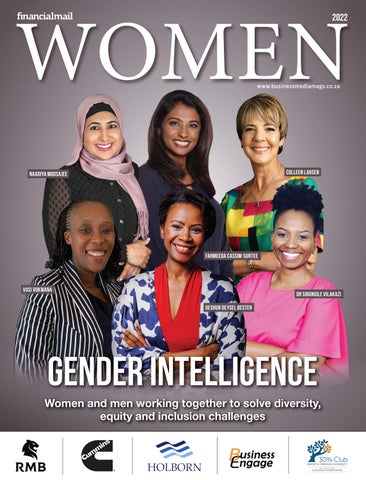
3 GENDER INTELLIGENCE
If gender diversity pertains to bringing more women into boardrooms, gender intelligence is about making sure women (and their male counterparts) work together to solve problems and create more robust organisations.
6 LEADERSHIP
The workplace needs courageous leaders who face challenges head-on so that they can shatter stereotypes, inspire innovation and entrepreneurship, spearhead change within their sectors, and create opportunities for women leader advancement.
8 ENTREPRENEURSHIP
Women leaders share why investing in women matters and how encouraging entrepreneurship will change the trajectory of the economy and the power with which women can facilitate change within the economy.
11 DIVERSITY
Research shows that only 10 per cent of women in South Africa are involved in decision-making executive roles within the finance sector, a staggering number considering that men and women enter the financial sector on an equal footing.
16 THOUGHT LEADERSHIP: GENDER IMBALANCE
Naadiya Moosajee, co-founder of the South African Women in Engineering (WomEng), unpacks the still prevalent gender imbalance within the sector.
A proud division of Arena Holdings (Pty) Ltd
Hill on Empire, 16 Empire Road (cnr Hillside Road), Parktown, Johannesburg, 2193
PO Box 12500, Mill Street, Cape Town, 8010 www.businessmediamags.co.za
EDITORIAL
Content Manager: Raina Julies rainaj@picasso.co.za
Contributors: Jermaine Craig, Denise Mhlanga, Naadiya Moosajee, Tiisetso Tlelima, Lisa Witepski
Copy Editor: Brenda Bryden
Content Co-ordinator: Vanessa Payne
Digital Editor: Stacey Visser vissers@businessmediamags.co.za
DESIGN
Head of Design: Jayne Macé-Ferguson
Senior Design: Mfundo Archie Ndzo
Advert Designer: Bulelwa Sotashe
Cover images: Supplied
SALES
Project Manager: Merryl Klein merrylk@picasso.co.za | +27 21 469 2446
Production Editor: Shamiela Brenner
Advertising Co-ordinator: Shamiela Brenner
Subscriptions and Distribution: Fatima Dramat, fatimad@picasso.co.za
Printer: CTP Printers, Cape Town
MANAGEMENT
Management Accountant: Deidre Musha
Business Manager: Lodewyk van der Walt
General Manager, Magazines: Jocelyne Bayer

We highlight why it is now critical that we move from one-off diversity initiatives to integrating diversity, equity and inclusion into a company’s mission and purpose while driving out implicit bias at a systemic level.















COPYRIGHT: No portion of this magazine may be reproduced in any form without written consent of the publisher. The publisher is not responsible for unsolicited material. FM Women is published by Picasso Headline. The opinions expressed are not necessarily those of Picasso Headline. All advertisements/advertorials have been paid for and therefore do not carry any endorsement by the publisher.
Understanding the dynamics and aptitude involved in building a case for gender mainstreaming.
If gender diversity pertains to bringing more women into boardrooms, gender intelligence is about making sure that women (and their male counterparts) are adept at working together to solve problems and create more robust organisations.
This is the understanding that Business Engage and Rand Merchant Bank hoped to foster through the second Corporate Gender Intelligence Conference, hosted earlier this year.
“Business Engage defines corporate gender intelligence as ‘the aptitude of an organisation to acknowledge the business case for gender mainstreaming and the ability to apply the necessary knowledge, skills and processes to harness such qualities,’” explains the organisation’s CE Colleen Larsen. She points out that South African companies are getting at least some of this right: Business Engage’s research, as reported in its Status of Gender on JSE Listed Boards, shows that local organisations are starting to think seriously about gender balance. And why wouldn’t they, given that the benefits of gender diversity – including enhanced competitiveness –are well documented.
More difficult, though, is what Larsen calls “acquire and apply”. “Understanding that you need to take action is one thing; implementing a plan of attack quite another,” she says. “This requires a concerted effort, which involves enlightened leadership, group buy-in, expenditure of resources (sometimes at the expense of other critical resources), and a whole lot of energy.”
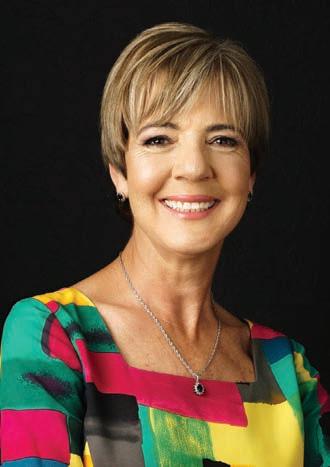
“UNDERSTANDING THAT YOU NEED TO TAKE ACTION IS ONE THING; IMPLEMENTING A PLAN OF ATTACK QUITE ANOTHER.” – COLLEEN LARSEN
It all starts with having the right conversations because inclusivity is impossible without dialogue. This is one of the key messages conveyed at this year’s conference where speakers included Cecilia Akintomide, chairperson of the Sanitation and Hygiene Fund, talking about gender mainstreaming and sustainability in Africa; Helen Nicholson, CEO and founder of The Networking Company, discussing mindfulness; and Catherine
“WE NEED TO LEVERAGE TYPICAL MASCULINE STRENGTHS – INCLUDING MEN’S ABILITY TO CHAMPION A CAUSE THEY BELIEVE IN, AND THEIR DETERMINATION TO SUCCEED – TO MOVE FROM CONVERSATION TO ACTION.” – CATHERINE MUSAKALI
Musakali, an advocate of the High Court in Kenya and chair of The Women on Boards Network, explaining the link between sustainability and corporate governance. Also on the agenda was an exploration of authenticity, delivered by Kearney senior advisor Jo-Ann Pohl while Dr Nik Eberl and Yathin Soni of The LinkedIn Dealmaker shed light on building a personal brand online. Mountaineer Deshun Deysel Bester, CEO of GoPeak International, spoke about personal strategy; Beth Rivett-Carnac, transactor: sustainability and ESG advisory at Rand Merchant Bank, invited delegates to consider finance through a gender lens; and Flux Trends’ Bronwyn Williams provided insight into the future of work in a post-pandemic world.
Musakali believes that gender parity is an integral part of the pillars of sustainability: environment, society and governance (ESG).
Take the environment, for example, which may be impacted by the actions of either gender. Any policies aiming to protect the environment must take both genders into account.
The same applies to the social pillar. “Gender is a particularly pertinent consideration here, as we are far from achieving gender parity in institutions,” says Musakali. She advises that organisations must adopt a gender lens when putting in place policies, processes and programmes that ensure safe working conditions, employee health and wellbeing, fair pay, safeguarding, diversity and inclusion, CSR/CSI programmes, and equity and equality programmes.

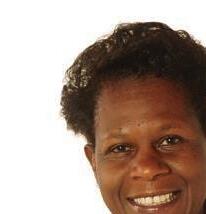



Governance, meanwhile, relates to the pillars of governance that not only include purpose, values, policies, procedures and other governance structures (including decision-making), but also board composition and diversity. This has long been an issue for proponents of gender inclusiveness. The case for gender diversity on boards has already been made clear; what is important now, according to Musakali, is turning attention to other issues related to gender diversity. It’s not enough simply to set targets in this regard; companies should also be clear on the action that will be taken if they fail to meet these goals, and they should then make this information widely available to all stakeholders so that they can be held accountable for monitoring any progress and remedying failures. Musakali maintains that if gender mainstreaming is to become a reality, men need to be as much a part of the conversation as women. “This is about inclusion, after all. We will not achieve buy-in by imposing policies. Trying to swing the pendulum in the opposite direction will only result in resistance and create yet another imbalance. Rather, we need to leverage typical masculine strengths – including men’s ability to champion a cause they believe in, and their determination to succeed – to move from conversation to action,” she says.
Bester is fond of remembering her first Everest expedition: “I always say that 26 years ago, I celebrated turning 26 at the peak of the world’s highest mountain.” Many more women have joined the mountain climbing community since those days, she notes, and yet they continue to face similar challenges to their mothers and grandmothers in the office.




Her advice? “If I were to apply a mountain climbing analogy, I would say that it’s important for women in corporates to plot their mountain and visualise what it will take to reach their summit. Just as we have to reach Base Camp One, then Two and Three when we’re climbing a peak, we have to map our goals,” Bester says.
She notes that when you’re about to reach a summit, gender makes little difference – each person, whether male or female, is carrying the same equipment and facing the same challenge. That’s not to say that everyone climbs the same way, though. “I am often told that I climb ‘like a woman’ – and it’s true, men and women do tackle peaks differently. Men tend to be very results-driven. They don’t necessarily think about what happens between two points – they’re more focused on reaching that peak. Women, on the other hand, pay attention to the process itself – they think about what they are experiencing, look at the colour of the sky, note the pain they feel.” This tendency may be perceived as a weakness in maledominated contexts – but the reality is that the rules and behaviours that are welcomed in such contexts don’t necessarily come naturally to women.
sees young people deciding to opt out of a system that doesn’t work for them. So says Bronwyn Williams of Flux Trends, noting that this pattern has evolved as people who should have been starting on the career ladder failed to gain entry into the corporate world. Rather than playing catch-up with their more fortunate peers, they are saying no to an economic system that has failed to accommodate them.
This disaffection is affecting the employed, too, as demonstrated by The Great Resignation: having had ample time to examine their priorities during lockdown, a vast number of people the world over are choosing to spend less time at work and more time pursuing their passions. This is strongly linked to issues around mental health: stress is no longer viewed as an inevitable part of a job. Obviously, all of this is having a significant impact at a macro level. If no one goes to work, economic slowdown cannot be avoided.
Another issue with far-reaching consequences is that remote work means that staffers are less engaged than ever before. Although online meetings may make for greater efficiency, they remove those chance coincidences that often lead to innovations.




We can’t forget that the modern-day organisation was modelled around the military, Bester points out – a very male domain indeed. “The good news is that our current world is all about change. With technology coming to the fore, we have a very real opportunity to build empathy into our experiences in the workplace. Digitisation may prove to be the enabler that levels the playing fields.”
One of the most striking trends to emerge out of the COVID-19 pandemic
The solution? “If there is one learning we can take out of this, it’s that human relationships are paramount – as is investing in them,” Willliams concludes.
In a world where your meeting is as likely to take place digitally as in a physical boardroom, your online presentation is paramount. Eberl and Soni of The DealMaker System point out that this is even more true given that online content engagement has doubled over the past 12 months. “In this digital economy, it’s not what you know that counts. Rather, it’s how you show up online,” states Eberl.
“THE GOOD NEWS IS THAT OUR CURRENT WORLD IS ALL ABOUT CHANGE. WITH TECHNOLOGY COMING TO THE FORE, WE HAVE A VERY REAL OPPORTUNITY TO BUILD EMPATHY INTO OUR EXPERIENCES IN THE WORKPLACE.”– DESHUN DEYSEL BESTER
Soni agrees: “A long with content engagement, online noise has also doubled. This means that you have to try harder to stand out in the digital environment.”
This is where executive branding has a critical role to play. Central to this is the LinkedIn profile because, as Eberl informs, 92 per cent of all senior decision-makers are on LinkedIn – which means that your profile is certain to be viewed by the right people.
How to ensure that your profile stands out? “It’s about leading with value. The minute someone takes time to read your profile, they have already invested with you – so you need to make that investment worthwhile,” Soni says.
He adds that your profile should be structured as a story, rather than a resumé. “Most profiles are egocentric, listing the individual’s experience and accomplishments. Bearing in mind that your goal is to add value for the client, tell your story with an eye to how it may encourage the reader to connect with you,” Soni advises.
“Remember that one of the first things people do after meeting you is Google your name. If your LinkedIn profile is complete, this is the first item shown in the search, which is why everything, from your profile pic to the 30-second animated intro – needs to be on point,” Eberl says.
BUSINESS ENGAGE: www.businessengage.africa
COLLEEN LARSEN: colleen@businessengage.co.za
RESOURCES: Gender Intelligence Conference

The Deloitte Global Boardroom Program’s Seventh Edition of Womenintheboardroom:Aglobalperspective report reveals that under-representation of women on boards remains a key area of focus for organisations globally, but overall progress remains slow, and for women in leadership positions, even slower.
The report includes updates from 72 countries on gender diversity in the boardroom, exploring insights into the political, social, and legislative trends behind these numbers.
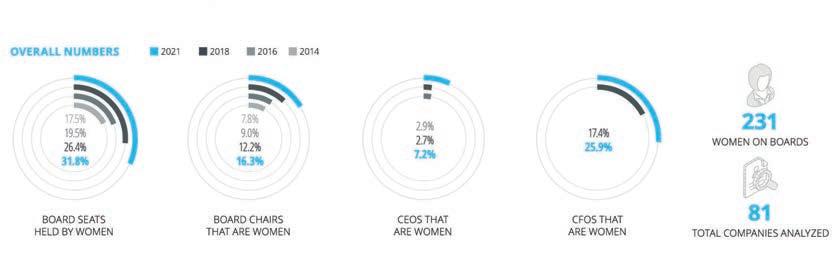
Colleen Larsen, CE Business Engage and president of the 30% Club Southern Africa, and Delia Ndlovu, chair, Deloitte Africa, share their views around South Africa’s performance in terms of gender transformation on boards.
“According to the fourth Status of Gender on JSE Listed Boards report released on 28 October 2021 by Business Engage and the 30% Club Southern Africa, the progress of women on boards is being maintained in South Africa. The report notes that not only are there
fifty-seven new positions becoming available on boards in the foreseeable future, but many of those positions noted in previous editions of the report have in fact been filled.
“Of interest is that for overall board changes between the 2019 and 2020 reporting periods, women appear to be doing reasonably well compared to the men in relation to both new appointments and board members no longer serving for whatever reason.” –Colleen Larsen.
“Given the history of our country, diversity on boards has been on the agenda for some time. We can celebrate the notable strides we
have made, but we know we have much more to do. In South Africa, we have seen the conversation shift from compliance to diversity being a business imperative that will build resilience in the organisation. There is a direct link between a company’s performance and the diversity of its board. Encouragingly, there is growing sentiment that 30 per cent female representation on boards is not good enough. Chairs recognise that part of their responsibility is to mentor, sponsor, and invest in the next generation of boardroom talent, and they are committed to making lasting change.” – Delia Ndlovu.
Denise Mhlanga shares why we need to transform the face of leadership in South Africa today so that shattering stereotypes and inspiring innovation and entrepreneurship are encouraged
Globally, the COVID-19 pandemic was a real test for many leaders who already had to deal with other organisational challenges.
The Development Dimensions International’s annual 2021 Global Leadership Forecast revealed that many companies were faced with a leadership crisis, with only 10 per cent reporting having a very strong leadership bench according to rankings. The organisation said this is the lowest ranking score in 10 years.
The report also showed that the leadership crisis results from companies’ failures to provide adequate leadership development and transition training for newly hired and current executives.
For many South African women leaders especially, this is a challenge that begs the question of whether a new kind of leadership is needed to keep pace with the changing world.
Avonisha Parsotham, business transformation director for Cummins Africa and Middle East, says today’s business world needs agile, outward-looking leaders who consider market dynamics, industry changes and evolving customer needs. “Leading by example and inspiring change by creating a culture where radical thinking is encouraged and mistakes welcomed as learning opportunities is what’s needed of leaders,” says Parsotham.
She says Cummins has various leadership programmes that develop business skills and soft skills like self-awareness. She is invested in coaching other leaders, particularly women.
The workplace needs courageous leaders who face challenges head-on,
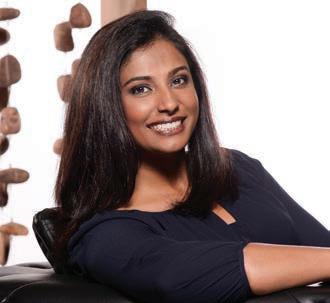
says Fahmeeda Cassim-Surtee, CEO at Dstv media sales and Multichoice Women’s Forum chairperson.
Ebehijie Momoh, country manager and area head for Mastercard West Africa, says the company champions the people, businesses and innovations transforming the way the world works – because a world that works better for women creates limitless possibilities for everyone.
She believes leaders who inspire innovation and entrepreneurship in the workplace have a sense of urgency to make decisions and execute, have good listening skills and are courageous enough to take “thoughtful risks”.
The world of business is constantly changing, and leaders are expected to change or align their strategies accordingly to remain relevant. This becomes even more challenging for countries that operate globally or across various African countries, as Parsotham has found out.
“LEADING BY EXAMPLE AND INSPIRING CHANGE BY CREATING A CULTURE WHERE RADICAL THINKING IS ENCOURAGED AND MISTAKES WELCOMED AS LEARNING OPPORTUNITIES IS WHAT’S NEEDED OF LEADERS.” – AVONISHA PARSOTHAM
“The biggest challenge is creating a sustainable strategy in Africa in the short- to medium-term, and remains relevant in the changing continental macroeconomic and political landscape,” says Parsotham.
Cassim-Surtee says understanding technology is a necessity in the changing business environment.
“Technology enables us to transform our business through upskilling our teams and making the right investments to ensure profitability. Efficient operations and being customer-centric are key to the success of our business,” says Cassim-Surtee.
Financial inclusion remains a huge challenge says Momoh. According to the Global Financial Inclusion survey, only 37 per cent of women report access to financial services in sub-Saharan Africa compared with 48 per cent of men. Momoh says women face many barriers to accessing the financial ecosystem, including legal or societal restrictions, lower levels of education, financial literacy and lack of a regular income.



Many women say these products do not work for them or they are unsatisfied with these products, hence Mastercard has introduced Women by Design, aimed at addressing women’s financial priorities and how to best cater to their financial needs at every stage of their life or business.














Momoh says the products are designed to fit the needs of women, impact and uplift lives. “We also ensure that women’s needs are reflected in the

innovation and engineering process by having women form part of our product and design teams.”
Momoh says in 2020, Mastercard expanded its global commitment to financial inclusion and pledged to bring 1 billion people and 50 million micro and small businesses into the digital economy by 2025.
She says part of this will be a direct focus on providing 25 million women entrepreneurs with solutions that can help them grow their businesses.
For Parsotham, the challenge provides an opportunity to demonstrate to fellow female leaders that women are capable of grasping the realities of a changing business environment through developing, coaching and mentoring others to adjust to a new normal.
She says the Middle East and Africa regions are full of untapped opportunities that can be unlocked with practical or innovative strategies, so it is imperative to always look out for such opportunities.
Women leaders concur that the workplace environment must be transformed, especially since the onset of COVID-19. The pandemic has forced many organisations to relook at the way they work and how to enhance or increase productivity.
Parsotham feels the flexibility to work from home has transformed how teams collaborate, adding that technology tools like Zoom and Teams have brought teams together regardless of geographies.
Cassim-Surtee says digital transformation has changed the way people work, adding that the pandemic made the business evaluate its internal processes to remain productive.
Women were also the most affected by the pandemic, with many women leaving the workforce. On top of having flexible work policies, Mastercard offers flexible work hours to further support women, and help them navigate home and work responsibilities.
Momoh says for many, the lines between work and life blurred during the pandemic. “We have initiatives that
address the wellbeing of our employees as well as meeting-free days to combat Zoom fatigue among others.”
Recruitment of new employees has also changed, as is leading and managing teams. It is no longer limited to geographies, rather a new pool of diversified, experienced and skilled workers is entering the workplace, says Parsotham.
“There’s a shift towards effective delegation, accountability and the active support of individuals and teams where needed,” she says, adding that teams are now more empowered to self-manage.
For businesses to succeed, diversity should be a business imperative and not about attaining quotas, says Parsotham. “Diversity promotes better decision-making, leads to innovation, better risk management and stronger connections in a rapidly changing global economy. A diverse board and organisation is better equipped to thrive,” she says.
At Cummins Africa Middle East, 50 per cent females are represented at executive committee level with diversified and inclusive leaders who drive accountability within the organisation.
Parsotham works with business teams to develop sustainable, innovative strategies and policies. These initiatives allow women to talk openly about their vulnerabilities and share their career journeys. The company has introduced an innovative programme called Business AccuWomen, aimed at upskilling and supporting women across the organisation – from shop floor to professional roles – in defining their career paths.









Cassim-Surtee says diversity starts with intentional recruitment of leadership talent, which begins at CEO level. The company has mandatory education initiatives for employees, as well as a Women’s Forum to tackle issues around gender parity. She says the forum has launched an initiative for Women in Tech and a mentorship programme for high




performers and women with potential. As a result, women have a much bigger voice in areas of business that were previously male-dominated.
“The problem-solving process is more interrogative because of team diversity,” says Cassim-Surtee.
Momoh says Mastercard’s management goals and key performance indicators are linked to diversity and inclusivity, thus creating accountability. “It is important to get more women into senior roles and have a series of initiatives to help achieve the ultimate goal of a balanced workforce at all levels.”
She says Mastercard has set a global precedent for maternity leave where men and women get equal time which helps to level the playing field. She says progressing to equal pay is another way of ensuring equality in the workplace.
Momoh says by intentionally embedding diversity and inclusion into business strategy at Mastercard, they have created teams that have more diversity of thought and tend to achieve far much better results.
“This diversity of thought in a team is what drives creativity and innovation and we genuinely believe it makes us more successful as a company,” says Momoh.
“We need leaders who are unafraid to change direction or put in the work to test quality or retest their hypotheses,” says Avonisha Parsotham, business transformation director for Cummins Africa and Middle East.
“The changing workplace needs leaders that nurture talent and enable employee growth,” says Fahmeeda Cassim-Surtee, CEO at Dstv media sales and Multichoice Women’s Forum chairperson.
“Leaders need to embrace an inclusive mindset to widen the field of vision and drive innovation,” says Ebehijie Momoh, country manager and area head for Mastercard West Africa.

“IT IS IMPORTANT TO GET MORE WOMEN INTO SENIOR ROLES AND HAVE A SERIES OF INITIATIVES TO HELP ACHIEVE THE ULTIMATE GOAL OF A BALANCED WORKFORCE AT ALL LEVELS.” – EBEHIJIE MOMOH

Research conducted by Development Economics shows that women-owned businesses established between 2018 and 2022 may generate an annual R175-billion and create close to 1 million jobs. Yet only 19.4 per cent of businesses are owned by women.
Lelemba Phiri, an award-winning educator and gender lens investor, says that the reasons for this disparity range from cultural norms to the limitations women face in the home when they want to set up their businesses or become entrepreneurs. As a result, the majority of women are not keen on formalising their businesses. “When they finally formalise their businesses, they face so much hostility from the business world, especially in industries like technology and engineering, and they get resistance in their homes from men who don’t want to support them by sharing household duties,” explains Phiri. Many women are still expected to cook and clean, even though both men and women work during the day.
then you will not be counted and you will have no services and infrastructure. So, that 19 per cent is simply an indicator that the majority of female businesses are running in the informal space.”
She adds that these women are not in the informal sector by choice, but because of the financial exclusion and infrastructural oppression that came with apartheid. “If it was just the registration, we could do that, but the problem for township-preneurs is that we experience infrastructure problems that we have no control over.”
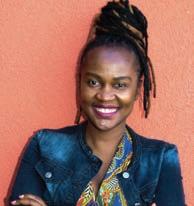

Township-preneurs, for instance, have to spend money fi xing municipal problems such as sewage spillages in front of their businesses and have no money left for CIPC registration.
Africa is the only region in the world where more women than men choose to become entrepreneurs. Expanding the opportunities for female entrepreneurs through policies that foster gender equality would have a tremendous impact on Africa’s growth.
Source: www.worldbank.org
Former banker and director of Kasi Catalyst Vusi Vokwana takes it further, saying that the tool used to measure the number of women in business in South Africa is flawed as it only looks at formal businesses and doesn’t consider that there are thousands of women running successful microbusinesses, for example, vendors at taxi ranks who are not registered on the CIPC system. Vokwana loosely quotes Charles Darwin, saying that if a fish is judged by how well it climbs a tree, the fish will always be a failure. “That’s what’s happening to black women entrepreneurs operating in townships,” says Vokwana. “They want to fit a square peg into a round hole. If you are not registered with CIPC,
However, both Phiri and Vokwana agree that more investment in women-owned businesses is needed. Phiri says that if South Africa doesn’t invest in women, it risks leaving a huge developmental gap. “The continent’s gross domestic product could increase by 5 to 10 per cent by 2030 if we invest in women,” says Phiri. “In addition, we all know that women entrepreneurs will invest 90 per cent back into their families and communities, so the economic impact is huge.”
Vokwana agrees that uplifting women means uplifting communities. Unlike men, women plough back into their
homes and communities because they realise that raising their children in an optimal environment is not enough if they still need to walk the streets with the poor neighbour’s children. “In South Africa, the black woman is the most impoverished; the highest level of unemployment and poverty is among black women, and we are the least educated, yet we are the most likely to uplift everybody and raise the class average.”
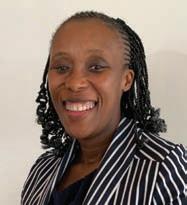
Women entrepreneurs face a myriad of challenges, including access to financing, markets, business education and science education for those who want to go into more specialist fields. Moreover there is gender bias from both government and the corporate sector in developing female talent. When asked if there’s political will to change the status quo, Phiri says there isn’t because the government doesn’t recognise the economic benefit. “Meanwhile, there’s a low hanging fruit that investing in women can help government improve economics and sustain socioeconomic development.”

“THESE WOMEN ARE NOT IN THE INFORMAL SECTOR BY CHOICE, BUT BECAUSE OF THE FINANCIAL EXCLUSION AND INFRASTRUCTURAL OPPRESSION THAT CAME WITH APARTHEID.” – VUSI VOKWANA

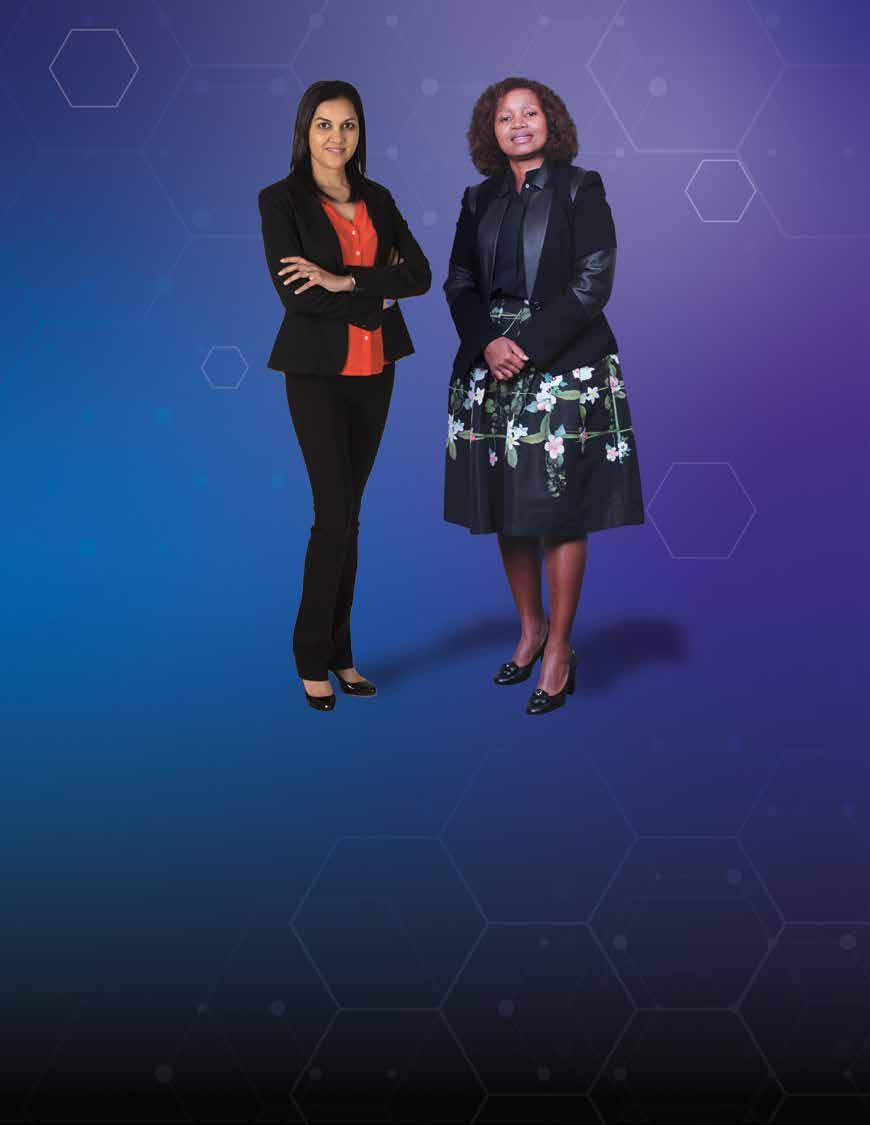
The lack of regard for diversity by big business is a pressing issue, Jermaine Craig takes a look at what’s needed to change the status quo
It was back in 1985 when Aretha Franklin and Annie Lennox belted out their iconic anthem “Sisters are doing it for themselves”.
In a country that remains the world’s most unequal and where the light at the end of the tunnel is seldom more than a flicker, South Africa’s sisters may well feel they’re on their own and that only they can change their fortunes.
The World Bank again recently ranked South Africa first in the world on its global poverty database, based on Gini coefficients of consumption (or income) per capita.
Expanding access to finance and eradicating the grinding cycle of the millions of South Africans born into poverty with no way out – the World Bank says – is at the heart of inequality in South Africa.
been most resistant to change and to the promotion of women in top leadership positions. Only around 11 per cent of South African fund managers are women, according to global investment researcher, Morningstar Investment Management.
“It has been widely published that the representation of female-run funds, financial advisors and investment teams over the past decade has been relatively consistent in that women continue to be under-represented. This is, of course, a serious issue that deserves attention and we need to work harder to continue to attract women to the financial industry,” says Victoria Reuvers, managing director of Morningstar Investment Management SA.

“Factors associated with where people are born and grow up have a relatively larger effect on their life chances than their gender,” the World Bank’s recent inequality report says.
There is absolutely no doubt, however, just how unfairly women are treated in the South African workplace, especially so at companies’ upper echelons. Recent data indicates that of the top 40 JSE-listed companies, only four have female CEOs.
The financial sector is one of those that has
While it might be known for being male-dominant, Reuvers says the women in the financial industry are proud to support and empower each other. She adds that there are several Women in Finance groups that aim to facilitate growth, partnership and collaboration between women in the industry.
There certainly is no shortage of evidence of the importance and value of greater gender parity, more so for a company’s bottom line.
The World Economic Forum estimates that economic gender parity could increase GDP by $5.3-trillion by 2025, while worldwide research by PwC says that companies that value and invest in the development of female talent are 45 per cent more likely to report improved market share.
While it’s tough at the top for women in finance, it’s becoming increasingly difficult to attract young women to choose the industry as a career too.
“Improving diversity will take time. We need to start paying more attention to the industry’s graduate recruitment, and the perception of the financial industry. Firms need to look at how they can support the recruitment and retention of more women; the number of applications for junior roles remains low,” says Reuvers.
Ensuring diversity, equity and inclusion in its large workplace of over 50 000 employees is something Transnet chief executive officer Portia Derby says the rail, port and pipeline parastatal is working extremely hard to inculcate into its mission and purpose, while driving out implicit bias at a systemic level.
“Bias is often more times than not unconscious. The real task is to ensure that we all challenge our own internal biases, especially when new information is presented. Representation, at its very core, is about recognising each other’s humanity. As a transitional generation where the importance of representation has become almost mandatory for any business to truly realise future value, we, at Transnet, have also had to look at assessing whether – given South Africa’s context – all who live here are equally represented,” Derby adds.
She says that while Transnet’s diversity challenges may not be what is typically experienced in businesses today, the company is ensuring serious changes in the representation of minority groups in the leadership structures. “We have
“LANGUAGE INCLUSIVITY DIMINISHES BIAS, ESPECIALLY IN THE WESTERNISED IDEALS OF INTELLIGENCE, THAT CAN EXCLUDE PEOPLE FROM PARTICIPATING MEANINGFULLY IN THE SUCCESS OF THE BUSINESS AND ADVANCING THEIR CAREERS.” – PORTIA DERBY
made great strides in making changes not only at management level, but also in the recruitment and enablement of women in operational functions previously occupied by men. Considering this, inclusion requires enablement for it to truly succeed and be sustainable; and that begins with how we ensure language inclusion is taken seriously across the organisation. Language inclusivity diminishes bias, especially in the westernised ideals of intelligence, that can exclude people from participating meaningfully in the success of the business and advancing their careers,” says Derby.
The importance of recognising the country’s official languages and the simple process of ensuring Transnet translates its messages or standard operating procedures (SOPs) into the languages everyone in the company is comfortable with, has already begun.
“In building language inclusivity, we create a comfort in people being able to find allies to support their growth and understanding of the Transnet business so they can grow in it. This is how we ensure the sustainability of diversity and inclusion, not only at the top level of management, but through every aspect of our operations. Embedding this in our operations through our communications structures ensures that this commitment to inclusivity is embedded and understood by all our employees,” says Derby.
Former Airports Company of South Africa (ACSA) chief operations officer Fundi Sithebe is a business leader who has constantly sought to challenge the status quo and ensure greater diversity, equality and inclusion in her business career.
After leaving her role managing the country’s major airports, she has taken on the challenge of leading a male-dominated industry and bringing her business acumen, energy and ideas to the sport of horseracing, as she seeks to steer the fortunes of the country’s biggest horseracing operator as CEO of 4Racing.
“Every single career decision I’ve made is to challenge and test the status quo
Six key pieces of advice that C-suite leaders can follow to make Diversity, Equity and Inclusion (DEI) happen:
1. Make DEI a priority CEO-level agenda item—and a genuine business-wide imperative. When diversity roles are created they can only generate real change if they are underpinned by the right level of resources and authority.
2. Develop a cohesive vision that joins together all DEI efforts across the organisation. Draw on a clear strategy and vision to accelerate impact across programmes and initiatives, rather than implementing reactive, one-off initiatives.
3. Align public recognition of DEI with internal reality. Broadcasting DEI awards and initiatives can result in activity being mistaken for progress. Instead, leaders need to be accountable for improving outcomes.
4. Take a comprehensive approach both to internal and external DEI responsibilities. DEI issues extend far beyond the boundaries of organisations themselves, so taking responsibility for the approach followed by suppliers is just as crucial to success.
5. Establish—and stick to—internal benchmarks and best practices. Relying on external metrics to track improvement on DEI objectives without first understanding the landscape can lead programmes to fail.
6. Look beyond a standard, global approach to DEI. DEI is a global topic, but different regions are at different levels of maturity. An issue that is a top priority in one country may not resonate in another.
Source: Kearney
and show that women can be capable of successfully running organisations. I also want to make it easier for the next generation of black females in business to succeed. We must instil and cultivate a culture of confidence in all the upcoming young women with great business leadership ambitions. Women are as equally, if not more capable of becoming astute and successful businesswomen based on their education, aptitude skills, smarts and expertise,” says Sithebe.
Ensuring transformation and inclusion she believes should not be regarded as a government-mandated scorecard that companies must adhere to, but must be central to the way they drive their business and engage both their staff and customers.

WOMEN ARE AS EQUALLY, IF NOT MORE CAPABLE OF BECOMING ASTUTE AND SUCCESSFUL BUSINESSWOMEN BASED ON THEIR EDUCATION, APTITUDE SKILLS, SMARTS AND EXPERTISE.” – FUNDI SITHEBE


“We must see transformation and diversity as a critical step in developing a quality racing product that can be appreciated and enjoyed by all spheres of society in South Africa. The power of diversity cannot be derived from simply hitting arbitrary targets. The true benefits only arise when each of us can truly empathise equally with all those we work with and all those who enter in and participate in the horseracing industry,” says Sithebe.


For Reuvers, it is important to “think more broadly about diversity and as such especially the diversity of thought.


“We often view diversity through a gender or race lens, but true diversity is an expression of different cultures, thoughts, energy and ideas,” says Reuvers.


Fundi Sithebe


Cummins Inc., a global power leader, is a corporation of complementary business segments that design, manufacture, distribute and service a broad portfolio of power solutions. The company’s products range from diesel, natural gas, electric and hybrid powertrains and hydrogen power solutions, including filtration, after-treatment, turbochargers, fuel systems, controls systems, air handling systems, automated transmissions, electric power generation systems, batteries, electrified power systems, hydrogen generation and storage, and fuel cell products.
Headquartered in Columbus, Indiana in the United States of America since its founding in 1919, Cummins employs approximately 59 900 people committed to powering a more prosperous world through three global corporate responsibility priorities critical to healthy communities: education, environment and equality of opportunity.
Cummins serves customers in approximately 190 countries and territories through a network of approximately 10 600 Cummins certified dealer locations and 500 distributor locations. In 2021, the corporation made about $2.1-billion in profit on its sales of $24.0-billion.
Environmental protection is always top of mind and Cummins has invested heavily in research and development to ensure its products meet global emissions standards with fi t-for-market solutions required by its customers. People are of the utmost importance to the company and Cummins believes in walking the talk through living the company values of integrity, diversity and inclusion, caring, excellence and teamwork.
EVERYTHING WE DO IS FOR A WORLD THAT’S ALWAYS ON

Women are looking to business leaders to solve the gender equality challenges they face, writes
SHARMLA CHETTY, CEO Duke Corporate Education
Trust in business remains higher than trust in government, the media and nongovernmental organisations, reports the recently released 2022 Edelman Trust Barometer. Researchers canvassed over 36 000 respondents in 28 countries between 1 November and 24 November, 2021.
“We see an even greater expectation of business to lead as trust in government continues to spiral. But this is not a job business can do on its own. Business must work with all institutions to foster innovation and drive impact,” it reports.
However, leaders can’t necessarily achieve these results alone.
At a time when distrust is a default emotion, business leaders must enable change. This means shaping conversations around gender equity, diversity, inclusion, climate change and environmental, social, and corporate governance.



Business leaders can no longer focus solely on the bottom line. Truly progressive and authentic societal leadership starts on the inside by focusing on the long-term sustainability of the business rather than on short-term profits.




Sharmla Chetty



In South Africa, this means accelerating the advancement of women. According to Stats SA, female unemployment remains higher than men, and only 32.2 per cent of women are in managerial occupations. Black African women remain the most vulnerable with an unemployment rate of 38.3 per cent. Black women are still vastly under-represented in leadership positions, despite the efforts in recent years on diversity, inclusion, and equity.
There is a disconnect between our intentions and our results. The importance of allyship to provide access to leadership positions for black women must be intentional.
During the COVID-19 pandemic, businesses were challenged to think differently, and leaders had to take on a broader scope of responsibility. As COVID laid bare our shared humanity. It saw leaders and employees engage in conversations on ways of work, social challenges and wellbeing that were unprecedented in previous decades.

Leaders must act with the same speed and agility they did during the pandemic to transform their companies to reflect societal priorities and progression.
Employees will see through empty words and promises, and talent retention will continue to be a pain point for those who do not put words into action.

The old models of leadership must be replaced with new models. We need leaders to care about society, we need leaders who show up differently and are people-centric. We need to focus on people as possibilities, not as resources to help businesses succeed.
Women’s rights should not be relegated to a day or even a month, but must remain central to every business’ strategy.
Sharmla Chetty is the chief executive offi cer of Duke Corporate Education (Duke CE).
In 2022, the Financial Times ranked Duke CE the secondbest custom education provider worldwide, and the top provider based in North America, Africa, Asia, and the United Kingdom. Chetty is driven to transform organisations and society through leadership. Her areas of ongoing research include board leadership, the future of work, humanity and technology and people practices and processes.
Before joining Duke CE, she was head of Human Capital Development at Nedbank for over 19 years, where she focused on building the nextgeneration leadership pipeline.

The finance sector is lagging in female representation at leadership level. Tiisetso Tlelima finds out why this needs to change
Research, as reported in the 2017 Grant Thornton International Business Report, shows that only 10 per cent of women in South Africa are involved in decision-making executive roles within the finance sector, a staggering number considering that men and women enter the financial sector on an equal footing.
“The number of new entrants is the same for men and women, but when you start moving to middle and senior management, women start dropping off,” says the Black Management Forum’s Gauteng provincial chairperson, Dr Sibongile Vilakazi. Citing biases in promotion as one of the reasons that there are fewer women in executive positions, Vilakazi points out that when women realise that their chances of being promoted are low, they naturally start to self-eliminate. “When you see that the people being promoted don’t look, sound or behave like you, you see no point in working harder,” she explains.
RCS deputy chief financial officer Tonia Pavlou shares these sentiments, stating that individuals often identify that they can do something by seeing those who look like them do it.
A 2017 Mckinsey Women in the Workplace study showed that women who receive advice from managers and senior leaders on career advancement are more likely to be promoted. “Yet at the same time, women starting their careers in finance receive less encouragement and support from managers and senior leaders compared to their male counterparts,” says Pavlou. Pavlou further notes that a network of sponsorships
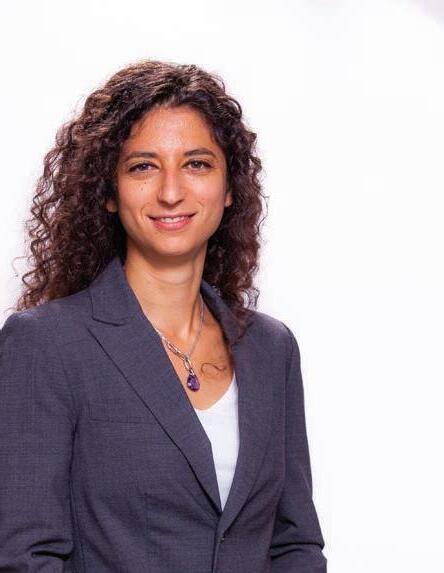
from individuals in leadership roles is key to anyone’s career progression, and there are steps the industry can take to improve women’s progression into leadership roles. “The current leadership must provide the same level of sponsorship for both men and women from early in their careers and, through that process, encourage women to take risks just as men are encouraged to,” says Pavlou.
Pavlou says that the financial sector directly makes up about 25 per cent of South Africa’s economy, with women contributing around 48 per cent to the gross domestic product. A person’s day-to-day transactions flow through the financial sector. They fund their homes and lifestyles with credit through the financial sector. They save cash, make investments, take out insurance and receive funding to start a business through the financial sector.
“The financial sector’s customer base is not one gender, so its future is not one gender,” says Pavlou. “Female leadership is key in the financial sector because women can’t be a major driver on only one side of this transaction.”
Vilakazi agrees that women need to be more visible in senior leadership positions across the board and not just in the financial sector. “Research shows that organisations with women at the top tend to perform better because of women’s characteristics such as collaboration, which are essential in growing businesses.” She encourages companies to promote more women into leadership positions instead of just one because the space becomes lonely for women. “A woman who is alone among men has to speak louder to get a point across because there’s no one like her next to her who can validate a point she’s making.”
Kearney‘s Gender Equality 2021 Report assessed nine countries on their public sector and private sector women representation.
South Africa leads the way in public sector gender diversity with 44 per cent female Members of Parliament. The second closest country is Spain at 42 per cent, and then Australia and France at 38 and 37 per cent respectively. However, these numbers drop off notably for South Africa’s private sector, where it ranks seventh at 28.5 per cent for female board-level representation.
In trying to achieve gender parity, South Africa can take lessons from countries such as Norway, where the government has enforced quotas that demand companies to have 40 per cent women in leadership positions. Pavlou says that in Norway, any company breaking the gender quota rules is denied registration as a business enterprise and will be subject to forced dissolution. “Despite opposition at the beginning, this has shifted over time to almost unanimous support,” she says.
While quotas are important and a start towards gender parity, Vilakazi thinks that men must shift their mindset and start seeing women as collaborators instead of competitors. “Men need to challenge the stereotype that they need to earn more than women and realise that if we share responsibilities the load actually becomes less.”
“WOMEN STARTING THEIR CAREERS IN FINANCE RECEIVE LESS ENCOURAGEMENT AND SUPPORT FROM MANAGERS AND SENIOR LEADERS COMPARED TO THEIR MALE COUNTERPARTS.” – TONIA PAVLOU
Dr Sibongile Vilakazi
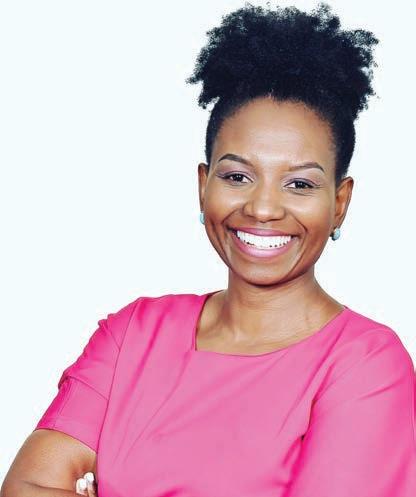
Naadiya Moosajee, co-founder of South African Women in Engineering (WomEng), unpacks the still prevalent gender imbalance within the sector across all management levels
Three years into my engineering degree, I still had not met a single female engineer to offer me guidance. As I applied for engineering jobs, the narrative was: “Join us, we have no women engineers,” rather than because I was an excellent engineering student. I wanted to be employed based on merit, not as a statistic to bolster a company’s gender equality ratio.
After a terrible work experience where I faced harassment and found out that all other interns, except me, were paid, I wanted to leave engineering. However, I realised that if all women left, nothing would change. This was the driving force behind establishing the South African Women in Engineering (WomEng) in 2005, a nonprofit organisation to assist women in engineering throughout their career pipeline.
skills shortage. STEM skills are criticial, especially in terms of engineering, coding, software development and biological research, if South Africa is to be ready for Industry 4.0.
Despite the urgent need for these skills, only one in five engineers in South Africa is female.

According to ECSA, 70 per cent of women who graduate with engineering degrees are “lost” once they start working because of the isolation and pressure they experience. To put this in an international context, UNESCO reports that globally female engineering graduates are at 28 per cent.
of an increase in STEM by girls are beyond gender equality in the sector. The diversity of perspectives, different problem-solving and solution capabilities is what the world needs now.
According to the South African government, women are still looked down upon in the workplace because they are likely to take maternity leave at least twice in their working careers, with some employers seeing this as lost time and productivity. Gender discrimination is likely to live on in some form, so as women climb the corporate ladder, there is an ever greater need to pull up more women with them.
It is against this backdrop that WomEng and Zutari, a leading consulting engineering and infrastructure advisory firm, have announced a new partnership. Zutari believes that to create a diverse workforce, we must first invest in diversity. The company will support the WomEng Fellowship programme. The programme provides employability, innovation, and entrepreneurial skills for female engineering students across South African universities and universities of technology. It immerses students in the real world of work, preparing them to be up and running from the first day they are hired.
Only six per cent of registered professional engineers in South Africa are women, according to the 2020-21 Annual Report of the Engineering Council of South Africa (ECSA). This equates to 1 188 women out of 197 772 engineers and compares to 23 per cent of registered candidate engineers being women (2 282 out of 9 785). It indicates a significant drop-off in the number of women professional engineers who should be registering.
Compounding the problem is that only 13 per cent of graduates in South Africa leave tertiary institutions with qualifications in science, technology, engineering and mathematics (STEM). These future-critical disciplines are already experiencing an acute
However, the number of women in the industry remains low. The challenge is not just attracting girl learners into the sector, but ensuring that the sector has transformed to retain them once they’ve entered the field. In Africa, the numbers are still much lower, as girls have few visible role models and do not have access to much information about engineering careers.
Entrenched gender roles and norms remain a barrier to entry for many girls, and the stereotypes around jobs persist. New research conducted in Spain showed that when girls were exposed to role models in the sector, STEM interest increased by between 20 and 30 per cent above that of the control group.
Similar evidence is found across several of our programmes to create more awareness of STEM careers for girls. The positive effects
THE CHALLENGE IS NOT JUST ATTRACTING GIRL LEARNERS INTO THE SECTOR, BUT ENSURING THAT THE SECTOR HAS TRANSFORMED TO RETAIN THEM ONCE THEY’VE ENTERED THE FIELD.
The UN Sustainable Development Goals are a global commitment to creating a better world. However, when one breaks down many of these goals, they are fundamentally complex engineering problems. The reason the engineering community has not yet solved them is that we require a diverse and inclusive sector to do so. We need more women in the sector to meet the challenges posed by these essential goals.
RESOURCES:
www.womeng.org/

ECSA Annual Report 2020/21 Women in STEM


MPAMOT, a proudly black women-owned and managed consultancy, has been empowering women and providing just energy transition, ESG and engineering solutions for 25 years
This year MPAMOT celebrates its 25th anniversary as a 100 per cent black women-owned and led energy, engineering, advisory and development consultancy committed to impacting Africa.
When Malani Padaychee-Saman, as founder and chief executive officer, established MPAMOT in 1997 as the first black women-owned civil engineering firm of the size and capabilities in South Africa, she spearheaded gender mainstreaming in the built environment.
During the past 25 years, Padayachee-Saman and MPAMOT have won several awards. The most prominent being:
• CESA Award: Engineering excellence King Shaka Airport;
• SAPOA winner in the stadium category: Soccer City;
• LEAF International Award: Soccer City, best public building;
• Africa Women in Construction –Industry Transformation Award;
• SAICE-SIKA 2016 Award for Environmental Engineering;
• SAICE National Engineer of The Year Award;
• Annual Oliver Top Empowerment Entrepreneur of the Year;
• SAICE International Project of the Year 2020; and the
• Gender Mainstreaming Award for empowering young women.
Under Padaychee-Saman’s leadership and with the support of Ipeleng Mkhari, chairperson of the MPAMOT board, the company has grown and expanded to more than 150 engineers and specialists who provide a range
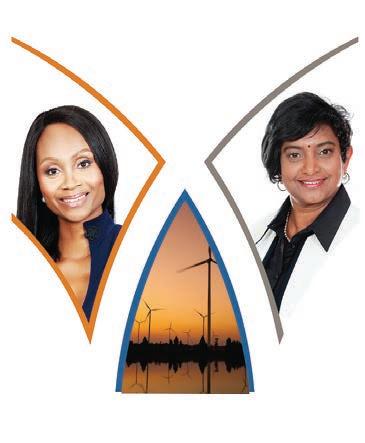
THE COMPANY HAS GROWN AND EXPANDED TO MORE THAN 150 ENGINEERS AND SPECIALISTS WHO PROVIDE energy, advisory, infrastructure and transport engineering services.
of multidisciplinary services in four portfolios: energy, advisory, infrastructure and transport.
In line with the aims of the Paris Agreement, most public and private sector clients are committed to enhancing energy efficiencies and environmental social and governance (ESG) performance, with a special focus on decarbonising and ensuring a social licence to operate.
This marks the growing recognition of the materiality of ESG risks and the need for a just transition to renewable energy.
We are well-positioned to tailor-make solutions for our clients.
As a strategic risk, ESG and the just energy transition must be addressed at the board and executive levels.
To properly manage and mitigate environmental impacts and enhance social impact, ESG must be integrated into the overarching business strategy with sound corporate governance and ethical business practices that support sustainable development.
Increasingly clients are navigating the ever-changing energy transition and ESG landscape and exploring ways to enhance ESG performance and energy effi ciency beyond regulatory obligations and retain a social license to operate.
With the integrity that characterises MPAMOT, our local homegrown female talent and global experience, as well as linkages to our alliance partners and international specialists, we are well-positioned to tailor-make solutions for our clients.
We look forward to learning more about your work and challenges and assisting you in designing tailor-made solutions.

Driving career growth for women and creating an equitable workforce is a vital part of Cummins’ vision, writes AVRIL CAMPHER , Transformation Leader, Cummins South Africa
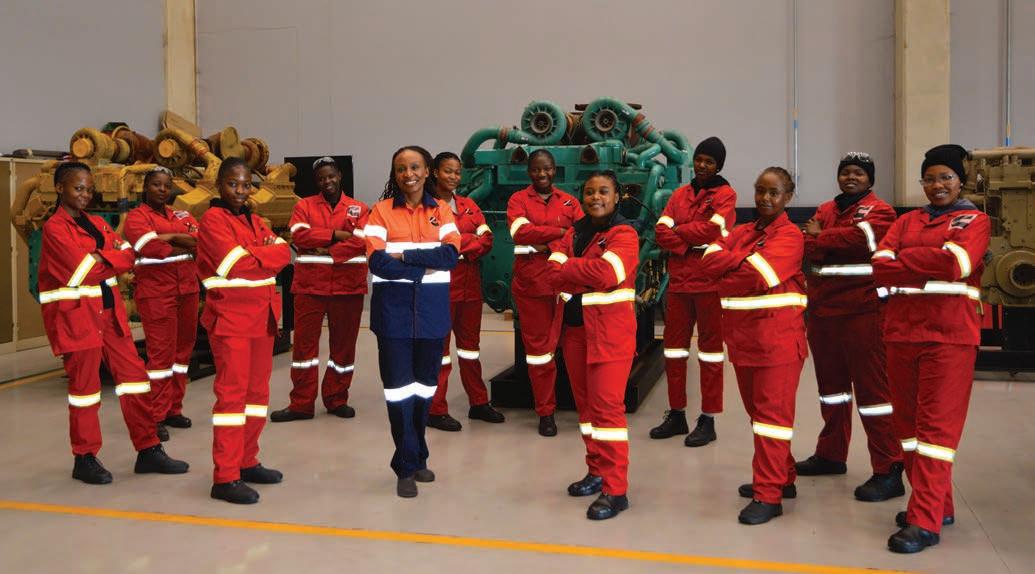
Cummins employees come from diverse backgrounds and contribute their unique skills and talents to “win with the power of difference”. Our diversity, equity and inclusion vision is to create an equitable workforce for under-represented groups. Developing and advancing women is critical to this vision, and the results of this focus are seen across the business.
An inspirational example is Racheal Njoroge, managing director for Southern Africa, who progressed from an IT intern in Indiana in the United States of America to the first female managing director of Cummins Southern Africa. She was recently ranked in the second publication of 100 Most Influential African Women by Avance Media.
Njoroge highlights that gender representation goals across employee types ensure a steady pipeline of female talent from technician to the boardroom.
Board roles are an area of success. Cummins South Africa’s board now has 50 per cent female representation. Having this gender balance enhances our business decision-making, Njoroge says.
“We are extremely fortunate to work for an organisation that believes in equity, diversity, and inclusion. This combination
of values is critical to achieving good results. Employees are encouraged to bring their authentic selves to work every day. We appreciate the visible and invisible differences and leverage the uniqueness of our workforce.
“We aim to embrace differences in the work environment so that employees can achieve their full potential. There is no reason an employee cannot progress from technician to the boardroom. While there is committment involved, it is
“WE AIM TO EMBRACE DIFFERENCES IN THE WORK ENVIRONMENT SO THAT EMPLOYEES CAN ACHIEVE THEIR FULL POTENTIAL. THERE IS NO REASON AN EMPLOYEE CANNOT PROGRESS FROM TECHNICIAN TO THE BOARDROOM.” – Racheal NJOROGE
possible. Employees need to put in the necessary effort and surround themselves with the correct people to help them along that journey; then it is very feasible.”
Operating in a historically male-dominated industry, the biggest gap in female representation was in technician roles. “After implementing an annual apprenticeship programme focused on including females, we have steadily increased female representation in our technician workforce. We have also developed an external talent pipeline through our TEC (Technical Education for Communities) programme, a community responsibility programme providing technical education for communities by partnering with TVET colleges.
“The TEC programme allows us to reach more females and support their development in the technician career path. It also demonstrates our commitment to improving and contributing to the local communities where we operate,” adds Njoroge.
Mandy Hunt oversees the apprenticeship programme. She explains that, currently, there are 29 apprentices in various stages of the three-year programme, located as far afield as the Northern Cape, Middelburg in Mpumalanga and the regional Master Rebuild Centre (MRC) at Waterfall Park in Johannesburg.
Both the theoretical classroom training and the hands-on training have been designed to give the women more practical experience to ensure they are well-rounded apprentices ready to step into qualified technical roles. This includes what Hunt calls “soft skills”, ranging from how to work as a team in the first year to interviewing skills in the third year.

“We go beyond caring for their wellbeing to empowering them through robust personal development that will stand them in good stead for their future careers. We coach and develop each apprentice individually through oneon-one sessions and talent management, clearly mapping out their aspirational goals and career journey with Cummins,” says Hunt.
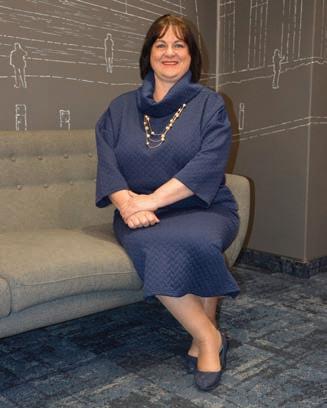
One of these successful apprentices, Nelisiwe Kabini, is an on-site service technician manager in Middelburg, overseeing key mining clients in the region. She responds to any concerns related to Cummins products and supervises all technicians doing equipment repairs, ensuring that customer service levels are maintained and optimised. “It is challenging because I deal internally with employees and externally with customers, so I liaise with a broad team,” Kabini says.
Kabini joined Cummins in 2014 as an apprentice at the MRC, focusing on product familiarisation training and qualified as a diesel fitter in 2016. She








was then seconded to the Middelburg distribution centre, a position that challenged and stretched her. “I had the advantage of understanding the products from a technical point of view, which also gave me insight and equipped me to resolve customer issues as speedily as possible.”
Challenges and biases do still exist, she says. “Even though Cummins has all the necessary policies and procedures in place, we still deal with gender stereotyping in the mining industry – mainly the belief that a woman is not capable of performing in this arduous environment. I had to confront my own doubts and insecurities and stand up for myself. I knew I had to work twice as hard to prove my capabilities, which I am proud to say I have done.”
Cummins Inc., a global power leader, is a corporation of complementary business segments that design, manufacture, distribute and service a broad portfolio of power solutions.








The company’s products range from diesel, natural gas, electric and hybrid powertrains, hydrogen power solutions including ltration, after-treatment, turbochargers, fuel systems, controls systems, air handling systems, automated transmissions, electric power generation systems, batteries, electri ed power systems, hydrogen generation and storage, and fuel cell products.
Headquartered in Columbus, Indiana in the United States of America since its founding in 1919, Cummins employs approximately 59 900 people committed to powering a more prosperous world through three global corporate responsibility priorities critical to healthy communities: education, environment and equality of opportunity.
Cummins serves customers in approximately 190 countries and territories through a network of approximately 10 600 Cummins certi ed dealer locations and 500 distributor locations. In 2021, the corporation made about $2.1-billion in pro t on its sales of $24.0-billion.


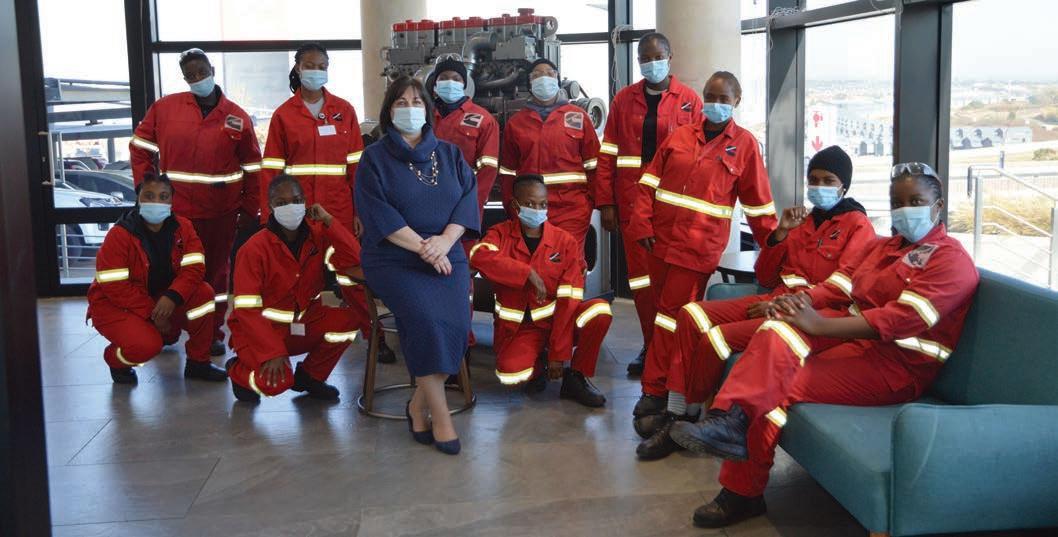
Kabini adds that the mining industry is embracing change, with many companies promoting gender balance and diversity. “The ball is now in our court as women to continue the drive towards education and empowerment for all.”


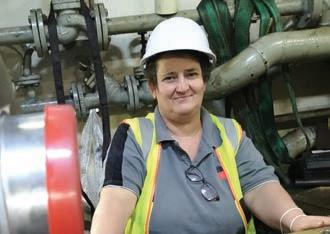
The MRC is a crucial training ground for successful apprentices such as Kabini. Marissa Kotze oversees the MRC production team from start to finish and has various team leaders reporting to her. The only woman in Cummins South Africa to hold such a role, Kotze says that the MRC, the hub of Cummins manufacturing and rebuilding operations in the region, is ideal for enabling the successful training of female technicians.


to think that one’s skills and talents can only be used in one’s full-time role.”
Team liaison. “Serving the communities where we operate as a business is very meaningful,” she says.
From female apprentices to women such as Kabini and Kotze, who are already in significant roles, Goosen notes that the initiatives focused on empowerment and development mean that the number of women in leadership serves and motivates other women to reach for the top. “Cummins drives career growth and advancement for women. You need to be strong and willing to learn as the environment we operate in is dynamic and pressurised. I want to thank Cummins for making it easier for women to excel and grow within the company,” she concludes.
“If ample opportunities to get “I


“If you are willing, the sky is the limit. There are ample opportunities to get involved in other areas of the business,” says Kotze. She points to her role as the South Africa site leader for the Women’s Empowerment Network. “I gladly said yes to this additional responsibility as I wanted to break the tendency


Another Cummins employee who has not been deterred by barriers and biases is Merechia Goosen, customer service advisor, Cape Town. “When I started in my role as a female in a male-dominated industry, winning the trust of customers took longer for me than for my male counterparts. As I grew in my role, gaining knowledge about technical issues and parts was one of the challenges I had to overcome. I needed to communicate the root cause of engine issues with customers, and this explanation needed to be technically sound.”
With a management style inclusive of all stakeholders and team members, Goosen says it is important for her to be equally approachable to team members to support and guide them and strengthen relationships. “My approach is simply based on open communication and collaboration.”
Like Kotze, Goosen has also extended her responsibilities within Cummins by acting as a Community Involvement

Scan this QR code to go directly to the Cummins website.