


We provide tailored advice and structured finance solutions.
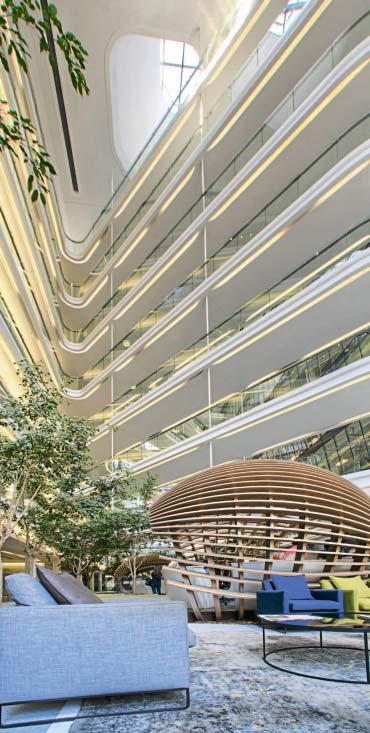
Converting commercial spaces into residential property requires visual inspiration and identifying hidden opportunities.

Reviews of listed property companies
Attacq ................................................................
Capital & Counties Properties ................
Emira Property Fund .................................
EPP .....................................................................
Equites Property Fund .............................. Fairvest .............................................................
Fortress Reit ...................................................
Growthpoint Properties ............................
Hammerson ...................................................
Hyprop Investments ...................................
Investec Property Fund .............................
Irongate Group ..............................................
Liberty Two Degrees ..................................
MAS Real Estate ...........................................
Nepi Rockcastle ............................................
Redefine Properties ....................................
Resilient Reit ..................................................
SA Corporate Real Estate .........................
Sirius Real Estate .........................................
Stenprop ..........................................................
Stor-Age Property Reit ..............................
Vukile Property Fund .................................
Financial Mail editor: Rob Rose
Property Handbook editor: Joan Muller
Sub-editor: Danni Marais
Cover design & layout: Colleen Wilson
Sales: Lyn Hill
Production: Jamie Kinnear
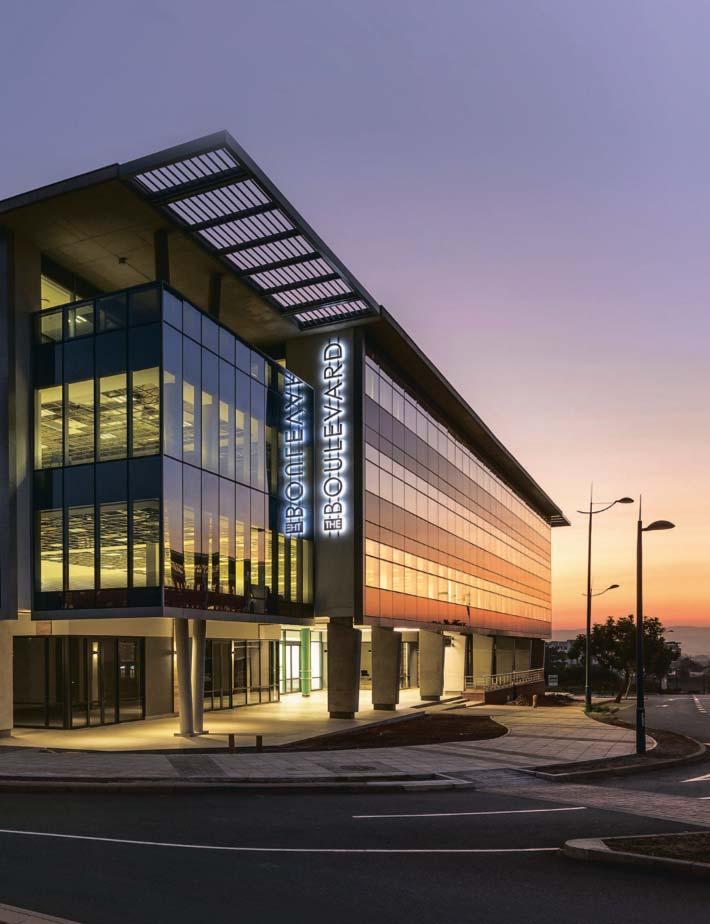
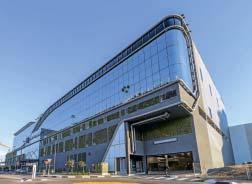
Cover photo: 115 West Street, Sandton
(Picture supplied by Redefine Properties)
Ironically, while the Covid pandemic has devastated so many sectors, it has helped revive SA’s housing market and has set the scene for a boom that looks likely to continue for several months yet.
Last year’s five consecutive repo rate cuts, which took the prime lending rate to 7% —the lowest it has been in 55 years — sparked renewed interest in a somewhat sluggish property market.
Despite forecasts of marginal interest rate hikes in 2021, the recently announced rise in SA’s inflation rate to a 30-month high means it’s likely that rates will remain unchanged for the rest of the year. This bodes well for a revitalised property market that is already reaping the benefits of the SA Reserve Bank’s bold steps to normalise interest rates during challenging economic times.
The momentum that record-low interest rates has generated within the housing market over the past year shows no sign of slowing. After several months of continued growth, BetterBond recorded an increase of almost 60% in bond applications for the 12 months to end-May 2021 year on year.
What’s especially encouraging has been the increase in bond
applications from first-time homebuyers. Buyers can now afford up to 30% more than what was the case in January last year, when the prime lending rate was at 10%. Rising demand for entry-level homes pushed the average purchase price for first-time buyers over the R1m threshold in October last year —a clear indication that home ownership has become more accessible.
The average size of home loans approved by BetterBond was up 15% in May year on year. While the overall number of first-time bond applicants may have eased off in recent months, their spending power has clearly strengthened. This will go a long way to sustaining the residential property market over the next few months.
Furthermore, the willingness of banks to finance properties has remained steady, with more than 55% of BetterBond’s applicants securing 100% loans.
House prices, always a solid indicator of the general state of the residential property market, increased by a healthy 4.5% in April year on year, according to Lightstone. This is a significant improvement on the 2.52% increase Lightstone recorded in December 2020.
Though FNB’s latest Property Barometer for June suggests property demand is moderating after last year’srebound, house price inflation nationally is well above pre-pandemic levels. It is noteworthy that house price inflation for almost all nine provinces is at a five-year high. Also positive is that the FNB Property Barometer reports the average time homes are on the market has nearly halved in the past year from 14 to eight weeks. Demand for property is still outpacing supply, with property portals reporting as much as a 16% drop in listings, as houses are selling quicker.
While much of the activity in the past year has been at the lower end of the market, buyers across all price bands are starting to make the most of the lower interest rates.
We have seen a 36% rise in approved bonds for homes priced between R2.5m and R3m, and a 31% rise in bonds for homes of more than R3m.
Covid has affected housing preferences, with buyers opting for larger properties that have gardens rather than sectional title properties. This trend will continue, as more people work remotely from areas usually considered holiday destinations.
We are seeing a marked shift in buying activity from metros to coastal or country regions, as quality of life becomes more important, and the ability to work from home makes living beyond the city possible.
The SA Reserve Bank’s decision in May to hold the repo
rate steady at 3.5% sent a strong signal to aspirant homebuyers and homeowners that there’s still time to invest in property, while the prime lending rate remains at single digits.
This is not to say interest rates won’t go up in the near future. The Monetary Policy Committee (MPC) previously forecast two 25 basis point
increases this year. But we are already in the third quarter and the repo rate has held steady.
Should the MPC increase rates at the next meeting in July, and again in the fourth quarter as initially forecast, these modest adjustments will still keep rates comfortably below 10%, maintaining ideal lending conditions for aspirant property buyers.
We predict the unexpected, but welcome, property boom is likely to prevail for the next 12-24 months, as property prices increase to keep pace with the growing demand, and property buyers across price bands make the most of historic low interest rates.
Carl Coetzee, CEO, BetterBond






The SA office market was in trouble even before Covid hit our shores. Persistently low economic growth meant the demand for office space has been subdued for years. As economic pressure weighed on companies, regional and satellite offices were either closed or consolidated into central head offices.
The oversupply of office space was worsenedby a pipeline of new developments coming online, particularly in Sandton, Waterfall and Rosebank. Advancing technology, including the rollout of fibre connectivity, meant that the remote working trend was gathering momentum. As a result, vacancy rates have been trending upwards for some time now, reaching 11.6% by March 2020.
Then the pandemic hit and its devastating impact on lives and livelihoods fed through to the office market, exposing already-weak fundamentals. This has led to some questioning the office market’s very survival. We are not in this camp. While the office market has undoubtedly been dealt a serious blow, we don’t believe the death knell has sounded.
That said, things could get worse before they get better.
For example, vacancy rates could increase from 14.2% (as at March 2021) to breach 20%.
Businesses that have been irreparably damaged by Covid will close shop, while others
will permanently embrace working from home and hold client meetings at coffee shops. Big corporates may reduce their space requirements.
This vacancy effect will be felt more in the older B- and C-grade buildings, where leases tend to be shorter compared with the newer P- and A-grade buildings. Given widespread availability, tenants will likely opt to trade up to better-quality space in new builds, albeit at discounted levels.
But the industry will adapt, evolve and reorientate towards a new normal, which will present its own opportunities.
exhibition centres, hospitals, daycare clinics, boutique hotels, schools, or even urban farms and churches.
As buildings are converted or become redundant, they will be taken off the office property database to the benefit of the overall office vacancy rate.
Offices won’t be rendered totally obsolete. The benefits of in-person collaboration, seeing people face-to-face, and being physically present will keep the office market alive.
We believe the new normal will be a hybrid model that takes advantage of the best of these two worlds: people will split their working week between the office and their homes.

In this new normal,tenant leases will become shorter and more flexible in terms, so that tenants can expand or reduce space without penalties.
Excess office space will be repurposed entirely. Vacant space will be converted into residential properties, which will bring with it a need for grocery stores, coffee shops, laundromats and self-storage.
Surplus office space can also be turned into small distribution centres, wellness centres, gyms,
What will this do to office rents and values? Using Growthpoint Properties as an example, rents declined 14% in the six months to December 2020 year on year, while valuations fell 5%. Both have further to fall, but we have probably already experienced most of the pain.
Office rents and values will stabilise on an effective vaccine rollout, the return of economic growth, increased business confidence and conversion of excess space into alternative uses. Experience and deep knowledge will be required to navigate the road ahead, with all its associated opportunities and risks.
Keillen Ndlovu, head of listed property funds, Stanlib
their business processes and practices also gain a
“We are guided by principles of humanity and people engagement because we understand that the sustainability and impact of our ² all stakeholders,” ² Beattie.
interests. Managing and reducing our portfolio’s communities in which it operates, while upholding
²
society and guides our business practices in our endeavour to achieve operational excellence,” continues Beattie. systems.
• Integration into strategic planning. impact.
and socially responsible manner.
Environment: L2D determined its NetZero 2030 targets in 2018. Since then, the company has made substantial progress in implementing real change on the ground, including:
• Implementing a no-plastics policy to combat plastic waste.
a circular economy for plastics.
a world-leading 6-star rating.
Social sustainability: communities through meaningful and sustainable
promote physical distancing, mask-wearing and hand sanitising and washing.
of remaining close to employees while gauging the needs and interests of employees during the
• Holding quarterly forum meetings on the issues of transformation throughout the organisation.
“We remain bold and on track to deliver our sustainability targets of net-zero waste by 2021, netzero water by 2025 and net-zero energy by 2030,” adds Beattie.
Governance: legitimacy through ethical leadership, reputation
This is an approach that runs across the business including policies and processes.
“We are committed to growing a sustainable business that addresses environmental, societal and governance challenges while simultaneously creating value for our stakeholders. We will therefore continue to drive a purpose-led strategy and perform an analysis on our ESG elements to determine material matters, while benchmarking and reporting on ESG factors against quality standards and policies. This will enable us to continue to make an IMPACT by building tomorrow, together,” concludes Beattie.
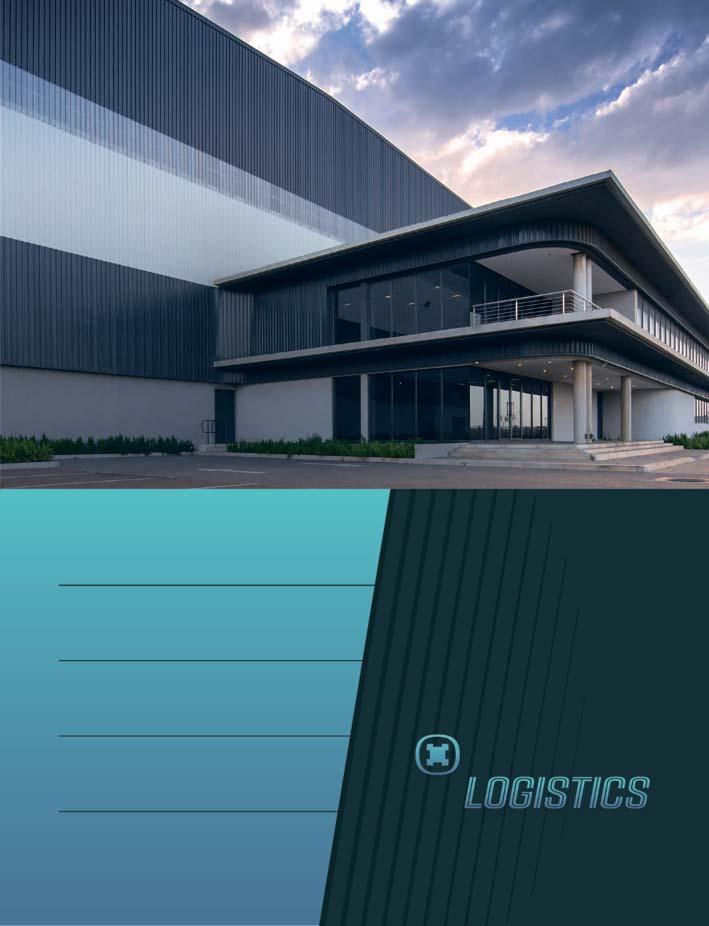
The pandemic has led to a surge in e-commerce globally, and property investors across the world have thronged into the logistics real estate space. Investors are clearly betting on a permanent change in consumer habits.
While global real estate investment has historically been dominated by large office and retail deals, logistics is making up the bulk of demand today.
Though the move online is not new — Amazon first started selling books online in 1995 and now has a market cap of $1.7-trillion, with warehouses in every major global market —the pandemic has caused a three- to five-year acceleration in the shift in how people consume goods.
Online shopping now accounts for up to 35% of total US and UK retail sales. In SA, online retail trade has more than doubled in just two years and is now estimated to represent 5% of retail sales. Furthermore, e-commerce in SA is expected to grow anywhere between 30% and 50% in 2021. Another factor that
will underpin the sector’s future investment case is that online retailers require three times more space than traditional bricks-and-mortar retail channels. That, coupled with rising e-commerce, will no doubt create sustained demand for warehouse space.
largest owners of logistics property, has had plenty of new demand for warehouse space as clients now require more facilities in or near town and city centres.
After the onset of the Covid pandemic, we are also seeing some of our clients looking to consolidate their distribution and hold more stock in support of their e-commerce and omnichannel evolutions.

The short-term trends of working from home —or working from anywhere —will start to moderate once we get through the pandemic. But the trend to increased flexibility and demand for a wider range of products, accessible through varied retail channels including online, will remain. In an SA context, this can only increase from the present relatively low base. Recent trends show just how fast demand for logistics space is increasing in tandem with growth in e-commerce. For instance, every extra £1bn spent online in the UK has meant the addition of almost 900,000 square feet of new logistics
space, according to real estate service firm CBRE. New York-listed Prologis, the world’s largest real estate logistics company, estimates that 1.2-million square feet of space (about 110,000m²) is needed for every $1bn that is generated in e-commerce sales in the US.
While this number has not been calculated for SA, the trend is clear, and growth in demand for quality logistics space is inevitable.
It is also pleasing to see that the recent momentum in global logistics and industrial real estate demand has supported further rental growth in 2021 after a surprisingly positive performance in 2020. According to CBRE, industrial rentals

globally and in Europe, Middle East and Africa (EMEA) rose 2.3% and 3% respectively in the first quarter of 2021 year on year. In contrast, retail rentals globally and in EMEA dropped 10% and 12% respectively. Office rentals simultaneously fell 3% and 0.3% respectively.
Growth for premium-grade space in technology-rich, purpose-built logistics parks that offer globally compliant fire safety features in secure and easily accessible prime supply chain nodes, is underlined by the low vacancy of about 4% in Fortress Reit’s logistics portfolio.
In addition, we have introduced more flexible lease and part-ownership arrangements to enable our clients to scale up.






During the six months to March 2021 alone, we let a record 340,000m²of the 1-million square metres development pipeline we are rolling out across SA over the next three to five years.
This includes a 160,000m² deal in which we are partnering with Pick n Pay to develop a new inland distribution centre for the group.
This was double the take-up we had forecast for our interim period, and underlines the fact that our strategic focus to pivot the business to a two-thirds exposure to logistics property and a one-third exposure to convenience retail centres, is paying off.
Steve Brown, CEO, Fortress Reit


Until recently, investment in health-care real estate has been largely inaccessible to South Africans. But this has changed with the May 2018 launch of Growthpoint Healthcare Property Holdings, a specialised healthcare property investment fund, which has already assembled a R3.2bn portfolio.
The fund comprisesseven investment assets —a medical chamber and six hospitals — and has attracted funding from the likes of the International Finance Corp. It plans to add laboratories, day clinics and biotechnology manufacturing and warehousing facilities to its portfolio in future.
The fund is the first of its kind primarily because large health-care groups have traditionally owned their properties. But this is changing.
More and more big names in health care are selling their buildings to unlock value for their shareholders, leaving the property ownership to specialists, while freeing up resources for health-care groups to focus on their core operations.
health-care facilities have much longer leases than, for instance, office properties, they can withstand short-term economic shocks.
While Covid-19 did not spare any economic sector, including health care, where elective procedures were paused for a few months during the pandemic’s first wave, the fund’s hospitals made a quick recovery and performance was relatively unscathed by the second wave, which bodes well for similar future scenarios.
Then, there’s also our ageing population. People are living longer and lifestyle-related diseases are on the rise. This phenomenon is not unique to
its scope for growth, supported by the supply-and-demand dynamic of SA’s health-care market. With an average of 2.3 hospital beds per 1,000 people, SA lags substantially behind comparable countries.
Nontraditional centres and townships are generally underserved, and there’s an emerging opportunity to develop facilities to meet this rising demand. The state’s licensing programme encourages new, smaller and empowered players in the sector.
Growthpoint health-care fund’s growth pipeline has both development and acquisition projects. To help finance its early-stage growth, it partners with local and international development finance institutions, institutional investors, asset consultants and pension funds. An opportunity for broader investor participation is on the cards in coming years, with a planned IPO and stock exchange listing.
There are several reasons it makes sense for investors to put their money in health-care assets. These properties are generally resilient, tend to maintain their performance in downturns and quickly bounce back in upturns. Because
the US and Europe, but also emerging in SA, which is adding to health-care demand.
There’s also an industry shift to day hospitals at lower price points than in-hospital day procedures, and rising demand for more specialist facilities.
Health-care property’s resilience is surpassed only by
Less than three years after launch, the fund is already showing growth in earnings. It delivered half-year (to end-December 2020) distribution growth per share of 7.5% to 40.8c, and is guiding similar growth for the full year to end-June 2021 —an undeniably good result in the current market.
Dr Linda Sigaba, fund manager, Growthpoint Healthcare Property Holdings









There’s no doubt that 2020 was a watershed year for listed property. The onset of the pandemic and the lockdowns and trading restrictions that followed in its wake severely affected retail and office markets.
However, the listed property sector’s response was swift and appropriate, as most companies proactively engaged with their tenant base to offer rental relief and deferments. The quantum of rental relief given to tenants by the sector since end-March 2020 when SA first went into a hard lockdown, amounts to a material R3bn.
In 2021, we expect to see less financial relief provided for tenants, given that rental collection levels have already returned to between 90% and 100% for most real estate investment trusts (Reits).
The restrictions on retail trading in nonessential categories and resultant reduced footcount across shopping centres resulted in net operating income coming under significant pressure in 2020.
Distributable earnings growth for the past year was down nearly 22%, which has become a fundamental proxy for dividend health, with most Reits deferring or withholding dividends, changing payout
ratios or issuing scrip in lieu of dividends.
The SA property index (Sapy) posted a total return of -35.5% for 2020, the worst annual performance since 2003. But the sector then entered a strong rebound in the fourth quarter of 2020, which was driven by news of vaccine efficacy and the ensuing vaccine euphoria.
And it has to be said that the sector has not wasted a good crisis. The pandemic prompted management teams to focus much of their efforts over the past 12 months on resetting their earnings base to more sustainable levels, preserving
disposal programmes. The year ahead will see further simplification of offshore operating structures, which will position more defensive SA portfolios for sustainable growth in the years ahead.
Balance sheet risk-management will continue to be a focus for the rest of 2021. LTV ratios have risen over the past three years, with the sector now averaging 38%. Factoring in higher LTVs on offshore assets, the sector’s“see-through”LTV is closer to 48%.
We are starting to see the tail-end of large valuation impairments. The majority of the larger Reits that have exposure to super-regional retail centres havealready written down assets between 8% and 12%.
capital, improving their debt liquidity profile and ensuring debt levels vs asset values — or loan-to-value (LTV) ratios — were brought down to more manageable levels. Companies have also ramped up their noncore asset
Given the significant writedowns in the sector in 2020, coupled with the deterioration of LTV ratios, there has been concern about companies potentially breaching debt covenant levels. But, fortunately, SA banks have adopted a more accommodative stance by allowing greater LTV ratio flexibility, which meant few companies have been forced to sell assets at deep discounts.
The property sector’s equity capital raises in 2020 was an aggregate R12bn, which is not much lower than 2019’s
R12.7bn. Much of last year’s R12bn can be attributed to sector heavyweight Growthpoint Properties raising R4.2bn.
Last year’s successful capital raising underlines the return of general equity investors and specialist fund managers to the sector in the fourth quarter on the back of positive news regarding the global vaccine rollout. Capital raises have been used to reduce expensive debt, which was close to maturity in certain instances.
Year to date (to mid-June 2021), the sector has raised a further R2.9bn in new equity, which includes some companies implementing a dividend reinvestment programme as a way to further shore up capital reserves.
Though real estate as a sector has been under pressure in its entirety, the performance of various subsectors has varied tremendously. For instance, large super-regional shopping centres noticeably lagged that of rural and township malls as well as smaller, community centres.
Shopping centres that cater to lower-income shoppers have proved defensive, due to their high exposure to food and grocery anchors. These centres have also benefited from the continued stimulus from the government’s social grants to poor households.
In the office category, the sector last year had an rise in vacancies of almost 2% to new multiyear highs. The move to a hybrid working model in future may also lead to some corporates reducing existing footcount, as they optimise office configurations to account for

more “work-from-home”staff.
Listed companies have had some success in disposing of noncore office assets, mostly to private entities. In the industrial category, the logistics market has been a standout performer over the past 12 months. Rental collections have remained in the high 95% range, which has seen logistics-focused Reits maintain their dividend payout ratios through 2020/2021.
SA-focused Reits continue to look for recycling opportunities offshore. We estimate that about 45% of the investment earnings generated by Sapy comes from offshore holdings, including Central and Eastern Europe (CEE), Western Europe, the UK and Australia. Global diversification has protected and buffered those with offshore exposure against a relatively weak SA market.
CEE countries were in a much stronger economic position than SA before the pandemic’s onset. As such, retail portfolios in CEE markets will emerge from the pandemic with better trading densities and footcount. Favourable stimulus policies given by governments in CEE countries have also lifted these real estate markets.
As we enter July 2021, SA is experiencing a third wave of
Covid infections that has led to the reintroduction of lockdown measures, which will further affect trading, especially in restaurants and other hospitality assets.
The income of SA-focused companies has been further eroded by increasing property expenses on the back of higher municipal charges over the past five years, which have been well in excess of inflation.
Impending new legislation to allow independent power providers to produce up to 100MW of power may provide a welcome reprieve in the medium term. The country’s vaccine rollout is expected to pick up pace in the second half of the year, which will go a long way to support a recovery in trading densities (sales per m²) and increase footcount in shopping centres.
We are expecting the wide divergence in share price performance between individual property stocks to continue into the next six-month to 12-month period. But we are optimistic on the total return prospects for the sector as a whole.
Valuations are attractive on normalised yields and many companies continue to trade at significant discounts to underlying net asset value. Future value unlock will come from better capital positions, derisked balance sheets and potential corporate action in the sector.
Despite the macro headwinds facing SA, the sector has used the Covid crisis to deliver a stronger operational and earnings base from which to sustainably grow in the future.
Nesi Chetty, senior fund manager, Stanlib

cib.absa.africa/cpf


Local investors looking for choice, diversification and sector specialisation as well as an inflation and rand hedge can no longer afford to ignore offshore real estate markets.
In fact, global real estate investment trusts (Reits), as measured by the FTSE/EPRA Nareit developed rental index, are having their best performance so far this year with a total return of 17.6% in US dollars (as at June 22 2021).
The global Reit sector has outperformed global equities by 5.6%, and bonds by a hefty 22.2%. Looking back at 2020, global Reits delivered a negative return of -8.8% in dollars. But averages mask the true picture: it was a year of “haves and have nots”or “Covid beneficiaries and Covid casualties”.
Beneficiaries included data centres (+20.7% total return in dollars) and industrial property (+15.7%), while the casualties weremalls (-30.8%) andhotels (-23.3%), which significantly underperformed the index.
Tenant and investor demand for data centres and industrial property surged as we moved our meetings to Zoom and Microsoft Teams, binged series on Netflix, and bought more products online. As a result, rental collections in these two subsectors remained firm at 85%-100% last year.
On the casualty side, malls and hotels bore the brunt of pandemic-induced lockdowns

and changes in consumer patterns. These two subsectors achieved the lowest rental collection rates last year: about 50% and 20% respectively. This year there has been some sort of reversal in the trend, as share prices of many “Covid casualties”beat 2020’s winners.
The global Reit universe offers plenty of choice, both from a geographical and sector perspective. Investors can choose from eight developed market regions (including the US, Europe and Asia Pacific) and more than 16 subsectors.
Traditional sectors such as retail, office and industrial (which comprise 95% of the SA market) make up only 40% of the global Reit investment universe, allowing investors to choose the sectors they want to be exposed to or avoid through different economic cycles, or in times of crisis as was the case in 2020.
The fundamental question is: how will property perform in a rising inflation and interest rate environment as the global economic recovery gathers pace? From an earnings perspective, Reits are a great inflation hedge —global inflation has averaged below 2% annually over the past
decade, while earnings from global Reits grew 5.5% annually.
With respect to share prices, global property tends to underperform in the short term as bond yields spike, but it outperforms significantly between three and six months later, because rental growth often accelerates as soon as demand starts to overtake supply.
During this stage of the cycle, it can be advantageous to up your exposure to shorter lease-duration sectors such as hotels, rental apartments and self-storage, where rents (or room rates) can be adjusted almost instantaneously. In contrast, sectors with longer leases such as health care, which have 10-year-plus lease expiry profiles, could underperform at this point in the cycle.
Global Reits offer investors a forward dividend yield of 3.1%.
Driven by improving tenant health, we can expect earnings growth of 5% in 2021 and 6%-7% in 2022 —more than double even the most hawkish of inflation expectations. Over the medium term, investors can expect high single-digit annual returns in US dollars.
Anil Ramjee, investment analyst,
Sesfikile Capital
Attacq, an SA-based real estate investment trust (Reit), has a premier portfolio of retail-dominant properties and mixed-use development opportunities at Waterfall City near Midrand.
The company, which was founded in 2005 and listed on the JSE in October 2013, converted to a Reit mid-2018.
Attacq has a total asset value of more than R24bn, including commercial and retail property assets and developments. The company’s strategic focus has been on four drivers:the SA portfolio, developments at Waterfall, investments in MAS Real Estate and retail investments in the rest of Africa.
The SA portfolio is the backbone of the company’s operations and consists of mixed-use properties, which include Attacq’s flagship super-regional Mall of Africa.
Its property portfolio was recently revalued downwards due to revisions to valuation inputs, current macroeconomic conditions and the negative impact of Covid-19.
The company has more than 1.1-million square metres of undeveloped bulk within the Waterfall node. Its ongoing projects include the joint development of a 20,000m² Cotton On warehouse within the Waterfall logistics hub and residential properties, including the 17,000m² The Mix (403 units) and 15,000m² Ellipse Waterfall, Cassini Tower (185 units).
Attacq’s management has
communicated its intention to exit the Africa (excluding SA) retail investments and will continue talks to dispose of its indirect shareholding and shareholder loans in Gruppo Investment Nigeria, which owns Ikeja City Mall in Nigeria.
Attacq has exposure to the Central and Eastern European retail market through its MAS investment. It previously held a 20.7% (June 2020) stake in MAS but sold down the position to strengthen its balance sheet.
As at end-June 2021, the shareholding in MAS was reduced to 6.5%. Proceeds from the share disposals were used to reduce euro and rand debt.
The company’s gearing at end-December 2020 was 46.3% and is expected to fall on a pro-forma basis to 39% due to

proceeds from recent disposals. These disposals, including the newly developed Deloitte head office at Waterfall, have placed Attacq in a healthy liquidity position, with R1.7bn of available cash balances and facilities as at May 31 2021.
It was encouraging to see R5.4bn of debt refinancing being approved in the period, with banking covenants related to group net asset value (NAV) falling to R7bn (from R10bn). The last reported interest cover ratio of 1.5 times is one of the lowest in the sector.
Attacq’s recent operational performance was significantly affected by Covid’ssecond wave of infections and national lockdowns. Attacq did not pay a final dividend for the year to end-June 2020 or for the six months to end-December 2020 and opted to preserve cash given market uncertainty.
Management also hasn’t provided any dividend guidance for the full year to June 2021 given uncertainty related to MAS resuming dividends and the extent of the impact of further Covid-19 lockdowns.
Attacq is trading at R7.15 per share (as at June 28 2021), which represents a 56.6% discount to last reported NAV.
Mvula Seroto,
portfolio manager, Catalyst Fund Managers
Capital & Counties Properties Plc (Capco) is a London-focused real estate investment trust (Reit) that was demerged from former Liberty International in 2010. At the time it was listed on the LSE and simultaneously conducted an inward listing on the JSE.
Capco owns a portfolio of 75 prime property assets representing 1.1-million square feet of lettable space across retail (75%), residential (10%) and office (15%) uses in London’s West End. Most of its portfolio is located at iconic retail and leisure precinct Covent Garden.
The company has had a rollercoaster ride since listing, with the portfolio changing significantly over time and the share price following suit, falling back to its original listing price in 2020. In particular, the sale of more than £1bn of legacy assets —including Empress State, London Olympia and Lillie Square —in and around Earl’s Court over the nine years to 2019, were strategicmoves, allowing the company to have a simplified structure and focus on its core estate in and around Covent Garden.
To strengthen its presence as a dominant landlord in this area, Capco acquired a 26% stake in Shaftesbury, a fellow LSE-listed Reit, in 2020. This should add to its appeal for both tenants and investors.
Capco’s £1.8bn investment portfolio and £565m stake in Shaftesbury provide investors with exposure to a well-located, West-London portfolio with
enduring appeal thanks to its rich cultural heritage and global brand recognition, supporting long-term income growth prospects. Capco’s central and highly frequented High Street retail portfolio regularly attracts many world-first concepts in retail, restaurant and hotel brands, such as London beauty week, Tiffany’s concept store and Peloton pop-up store.
These assets combined with Capco’s development of “niche quarters”and its focus on “experiential retail”at Covent Garden estate should continue to drive footcount, rental values and tenant attraction in the area for many years to come.
Though the lockdowns knocked 22% off rental values (and 26% off capital values) in the year to December 2020, the portfolio’s estimated rental value remains well above passing rents, providing investors with a cushion should

Source:
values fall further in 2021. Managing occupancy and supporting tenants will continue to be a priority in 2021. As a result of this and continued lockdowns in the first half of 2021, a dividend may not be declared but a share instead of cash option may be offered.
There should be a return to income and capital value growth in the 2022 financial year as the vaccine-induced recovery translates into a rise in mobility, including office-based working and the resumption of global leisure and business travel. Combined with a leaner cost structure, earnings growth should be significant in 2022.
With a net debt-to-asset ratio of 28% as at end-2020 and only £30m in debt maturities due in 2022, the company is defensibly positioned against any further potential rental and/or capital value reductions in the first half of 2021. It has sufficient liquidity to take advantage of bolt-on acquisition opportunities that should increase the portfolio’s relatively low 3.1% passing rental yield. But a mandatory offer (required if a stake goes over 30%) for the rest of its larger peer Shaftesbury, is likely to need a capital raise from shareholders.
Nicolas Lyle, senior equity analyst, Stanlib
Emira Property Fund is a real estate investment trust (Reit) with investments in SA and the US. It listed on the JSE in November 2003 and by mid-June 2021 had a market cap of R4.83bn. The fund owns a well-diversified portfolio with exposure to the office, retail, industrial and residential subsectors.
Emira has a combination of directly held assets as well as co-investments into other listed companies. Its sectoral split is: SA industrial at 14.7%, SA urban retail at 44.1%, SA offices at 24.9%, SA residential at 5% and US retail at 11.3%.
As of December 2020, the company’sdirectly held assets are valued at R9.9bn, while its minority stake in 10 open-air, convenience retail centres in the US are worth R1.4bn.
Covid has created challenges for the broader property sector, but especially for companies with exposure to the office and retail subsectors. Emira has not been spared, with revenue for the six months to December 2020 falling 2.8%to R748.1m as a result of rental concessions provided to tenants as part of the company’sCovid response.
Distributable earnings for the December 2020 interim period decreased 13.9% to R333.7m and the board declared an interim dividend of 52c a share, which was down from the 74.1c a share reported in December 2019. This came after 5.09c of the available cash dividend per share was deferred to the second half of the year, which
the board viewed as prudent due to uncertainty about future operational performance.
Emira’s retail portfolio is made up of directly held urban shopping centres across SA, exposure to rural retail centres through a 49.9% joint venture in Enyuka Property Holdings, and a 49% minority stake in 10 US open-air power centres.
The fund’s US investment strategy, which it runs with Texas-based Rainier Companies as its strategicUS partner, is focused on grocery-anchored convenience centres in states including Ohio, Florida and Texas.
Rural retail has been one of the best-performing property subsectors in SA in the past 12 months. The office sector was already facing many challenges pre-pandemic, with vacancies on the rise.
Emira’s office vacancy as of

the last reported results rose from 6.9% to 14.9%, with rental reversions at -15.4%, largely due to a few major office tenants not renewing their leases in the six months to December 2020.
Emira is cautious to make long-term decisions, given that businesses are reconsidering their office strategies. Rental escalations for the portfolio as a whole are at 7.2%, with offices at 7.5%, urban retail at 6.9% and industrial at 7.3%. The weighted average lease period is 2.6 years.
As of December 2020, the company’s loan-to-value (LTV) ratio decreased to 42.5% as a result of a drop in investment properties, which was offset by improvements in the value of derivatives. The interest cover ratio was reported at 3 times.
So far in 2021, Emira has been one of the top-performing SA-focused Reits with a total return of 54% for the five months to end-May.
Emira trades at a dividend yield of 8.8% and offers good earnings growth potential due to its exposure to convenience retail centres in SA and in the US, where there is a positive market outlook on Reits that own strip centres.
EPP listed on the JSE in August 2016 as the only property company with an exclusive focus on Poland. The company’s portfolio has a retail bias and consists of 29 retail properties, six offices and one mixed-use development with a total lettable area of over 1-million square metres.
The Polish real estate market is one of the largest and most liquid in the Central and Eastern Europe (CEE) region. In a tough operating environment, where economies across the globe were hit by the onset of Covid, Poland’s GDP declined by 2.8% in 2020.
But that figure is compared with an average 6% reduction in GDP across the eurozone, which indicates the resilience of the Polish economy. The low unemployment and consistently rising wages have supported the country’s retail market.
When the pandemic started, the Polish government imposed lockdown restrictions promptly, as infection rates increased in the country. Poland is one of the few countries that had legal regulations excusing tenants affected by the lockdowns from paying rentals and service charges in exchange for lease extensions with landlords.
The weighted average lease term in the portfolio improved from 4.7 years in May 2020 to over five years at year-end on the back of such extensions. On average, about 30% of EPP’s gross lettable area was in operation during the lockdown periods and as of June 26 2021,
all shopping centres in itsportfolio are fully operational.
With a significant drop in infection rates and nearly 42% of Poles vaccinated with at least one dose (as of June 17), EPP has had a significant rebound in footcount and turnover growth at its malls as trading restrictions were relaxed.
In May 2021, turnover grew 13% compared with the same (pre-Covid) 2019 period, while footcount recovered to 82% of 2019 levels.
It is interesting to note that e-commerce as a percentage of total retail sales increased to a record high of 11.9% in April 2020, but retracted after each lockdown as customers started returning to physical shopping centres. Retail occupancy levels remain consistently high in the portfolio at 96%, though that’s off from peak levels of 99% in 2019.
EPP’sloan-to-value (LTV) ratio is sitting at 54.8%. The
management’s main objective is to reduce the LTV over the next 18-24 months. The company aims to achieve this through the disposal of investment properties and by introducing new equity through joint ventures to maintain its dominant shopping centres, while reducing debt levels.
Management believes the investment market will be supportive of its strategy as soon as stability in retail trading can be showcased to investors. Though the company’s LTV is relatively high, EPP remains well within bank covenants of 67%, and can comfortably service all financial obligations.
For the year to end-December 2020, distributable earnings per share were €5.56c which exceeds management’s guidance range of €4.75c-€5.25c. EPP is not a real estate investment trust and is not obliged to distribute a dividend.
The fund elected to preserve liquidity in the present environment, declaring no dividend at year-end.
EPP’s net asset value per share decreased to €1.09c (2019: €1.32c) on the back of property valuations declining 8.4% on a like-for-like basis.
Madibana Letsoalo, property analyst, Momentum Investments
Equites Property Fund is a JSE-listed specialist real estate investment trust (Reit) with exposure to worldclass logistics properties in SA and the UK.
It significantly outperformed the SA listed property sector in 2020, primarily on the back of high rental collection rates of more than 99%, a relatively low loan-to-value (LTV) ratio of 31%, and no tenant defaults.
Equites has established a high-quality logistics portfolio across key nodes, with a focus on modern, well-located assets with A-grade tenants on longdated leases. It has a market capitalisation of about R11.8bn.
Though the SA portfolio’s rental collection rate was maintained at 99%, it experienced a 5.2% like-for-like decline in valuation to R10.6bn, as valuers adopted a more conservative approach.
Equites’UK portfolio’s value inreased 9.7% on a like-for-like basis, due to a weaker rand as well as a 5% uplift in property valuations in pound terms, consistent with the broader UK logistics market.
Despite an already tough economic environment, made even tougher by the pandemic, Equites has managed to achieve exceptionally high occupancy rates and a healthy lease expiry profile.
For the year to end-February 2021, vacancies improved to 0.1%, while the lease expiry profile was extended to 15.5 years (from 10.2 years in the previous full year period),
which remains the longest in the SA listed property sector.
Despite pandemic-related lockdowns, Equites achieved like-for-like net property income growth of 6.7% and 8% respectively in the SA and UK portfolios (in rand terms).
The company’sLTV rose to 31.2% (from 26.2% the previous year), albeit still well below the strictest group covenant of a 50% LTV ratio. The increase in LTV was mainly as a result of the increase in unsecured debt, and to a lesser extent, the sale of the UK assets and related repayment of debt at year-end.
The increase in the LTV ratio was also due to the acquisition of a 50.1% stake in the Shoprite portfolio with an initial portfolio value of R3.2bn, as well as a R2.2bn investment in the SA and UK development pipelines.
Equites has also managed to generate capital internally by disposing of two assets in the UK at a 6% premium to book
value and 24% higher than the initial acquisition value, which released net proceeds of £24m (about R500m). Its weighted average cost of SA- and UKdenominated debt is 6.85% and 2.61%, respectively.
We expect to see significant value creation from the UK development pipeline, with further developmentagreements on the cards.
Two properties are under development, which will be let to Hermès and Amazon on 20- and 15-year lease terms respectively. The company’s management has guided to a potential development pipeline of £800m, which should underpin shareholder returns.
As of end-February 2021, Equites reported a -1.7% drop in net asset value (NAV) per share to R17.25, This was due mainly to the decline in SA property valuations, implying a historical premium to NAV per share of 5% (as at June 10 2021).
Distributable income per share increased 2.4%. Equites is one of only a few Reits to retain a 100% distribution payout ratio. Management has guided distribution growth of 5%-6% for the year to end-February 2022.
Ryan Eichstadt, head of research, Meago Asset Managers
Fairvest is aretail real estate investment trust (Reit) listed on the JSE, with an SA-focused portfolio worth R3.4bn. The company is well diversified,covering eight provinces, with KwaZulu-Natal, Western Cape, Free State and Gauteng contributing about 76% of its revenue.
In addition to Fairvest’s 95% exposure to the retail sector, the portfolio also has a negligible exposure to the office sector (about 5%).
Fairvest’s retail portfolio is weighted towards rural and nonmetropolitan shopping centres, including convenience and community shopping centres which predominantly target the lower LSM consumer market.
This subsector has been tremendously resilient despite the tough trading environment imposed by the pandemic and various stages of lockdowns. The target consumer base is furthermore supported by grants provided through various government programmes.
In a climate of declining valuations, Fairvest has been one of the few SA-focused property counters to report upward valuations in its investment portfolio.
For the year to end-June 2020, Fairvest disclosed like-for-like valuation uplift of about 1%, with an additional like-for-like positive revaluation of 3.4% reported for the six months to end-December 2020. This was due largely to a rise in contractual rentals as well as
higher valuations on completed solar installations.
Its property fundamentals have held up considerably better relative to its SA peers. The company’s vacancies are at about 3%, while positive rental reversions of 1.6% have been reported on renewals. Escalations are also robust at about 7%, with gross rentals trending upwards across the portfolio.
Fairvest’s recent disposal, Tokai Junction, was sold for R180m, at a 10.5% premium to its June 2019 valuation, which provides further support for its valuations. This disposal allowed its loan-to value (LTV) ratio to be reduced from about 36% in June 2020 to 32% in December 2020. This is one of the more conservative LTV ra-
tios in the sector, well within the market’s preference of an LTV below 40%.
Fairvest is also one of few counters that has continued to provide earnings guidance to the market as well as maintained a payout ratio of 100%: many counters have reduced their payout ratios below 100% but above the 75% minimum imposed by SA Reit regulation. Fairvest has provided guidance of distribution growth of 0%-2% for its full year to June 2021.
During April 2021, Fairvest announced that it’s looking to acquire Arrowhead B ordinary shares in exchange for newly issued shares in Fairvest. In June 2021, the independent board appointed by Arrowhead to oversee the transaction was of the view that more value would be unlocked via a merger than an acquisition of Arrowhead by Fairvest. Negotiations are still in progress.
While the merger would dilute Fairvest’sexposure to the resilient nonmetropolitan and rural subsector, it would also result in a larger, diversified and more liquid company with the prospect of a potential addition to one of the major property indices in time.
Pranita Daya, real estate analyst, Anchor Stockbrokers
Fortress Reit is an internally managed, hybrid fund with investments in direct and listed property securities. It listed in October 2009 with a market cap of R1.8bn; this has now grown to R20.2bn. The portfolio spans 2.7-million square metres of gross lettable area.
The capital structure (through the A and B share structure) caters to investors with different risk appetites. The shares trade independently, under the codes FFA and FFB, and are equal in voting rights but have different entitlements to distributions.
FFA shares have a preferential claim on distributions in any period a distribution is declared, with growth being capped at the lower of 5% or consumer price index. They have a preferential right to capital participation in a winding-up scenario. Residual income distribution would then pass to FFB shareholders.
The board embarked on a process to optimise the capital structure in 2020, but given the uncertainty created by Covid, and after engagements with shareholders, this process was discontinued, and the structure remains unchanged.
Fortress has rebalanced its physical property portfolio in recent years by disposing of its direct office and industrial assets (worth R6bn), choosing to specialise in the retail and logistics sector. The company’s direct portfolio totalled R28bn, with retail and logistics assets making up about 79%.
Fortress prides itself on its in-house capabilities to develop and own premium-grade logistics real estate across SA. Its medium-term plan is to expand its logistics portfolio to about two-thirds of its total portfolio. It has logistics developments at Clairwood Logistics Park in Durban, Eastport Logistics Park (65% interest) in Kempton Park, and Louwlardia Logistics Park in Centurion, to name a few.
Demand for modern large-box logistics has risen as distribution channels change and online retail sales play a bigger role in distribution. These developments are estimated to yield 8% and are looking more attractive given lower funding rates in SA.
Fortress bought two logistics parks in Poland for €40m in the
six months to December 2020, with both offering development capacity. It plans to grow its offshore logistics portfolio in Central and Eastern Europe.
The company’s core logistics portfolio is complemented by a retail portfolio of more than 50 commuter-orientated shopping centres in SA. Large assets include Evaton Mall (Gauteng), Weskus Mall (Western Cape) and a 25% stake in The Galleria (KwaZulu-Natal). The retail portfolio has rebounded from the pandemic’s impact, with retail sales in the six months to December 2020 recovering to 100% of the figure for the same period of the previous year.
Fortress holds a 23.6% stake in Eastern European-focused Nepi Rockcastle, representing about 30% of total assets. This helps to diversify its SA income stream by offering shareholders hard-currency returns. The company’s 11% stake in Resilient Reit was considered noncore and was settled by way of an in-specie distribution to FFA and FFB shareholders in 2020.
Liquidity and the balance sheet have been prioritised during the pandemic, with the loan-to-value ratio at 38.1%, well within bank covenants.
Ridwaan Loonat,
equity analyst, Nedbank CIB
Growthpoint has a fairly long history —it was founded in 1987 and initially owned only SA property assets. The company grew through mergers & acquisitions, the most notable being a 50.1% stake in Growthpoint Properties Australia (GOZ) in 2009.
In 2011, it continued its SA acquisition story, buying a 50% stake in the V&A Waterfront, before acquiring JSE-listed Acucap and Sycom in 2015.
Recently, Growthpoint has diversified its income streams even further. The company launched a health-care property fund in 2017 and invested in Poland and Romania in 2016 through LSE-listed Globalworth. In 2019, Growthpoint acquired a controlling stake in UK mall owner, Capital & Regional.
Growthpoint also seeded a pan-African property fund, Growthpoint Investec African Properties, with $50m, which has since increased its assets to over $600m and was recently renamed Lango Real Estate.
At December 2020, the SA portfolio comprised 41% offices, 36% retail, 18% industrial, 4% health care and 1% other. On an earnings before interest and tax basis, 74% of income is derived from the SA portfolio (including 4% from its 50% stake in the V&A Waterfront), 20% from GOZ, 5% from Globalworth and 1% from Capital & Regional.
In 2020, many property companies elected to defer dividend decisions, given the negative impact of Covid. Growthpoint was one of few
property companies with the balance sheet flexibility and income-generating capacity to continue paying cash dividends. Growthpoint’s income stream has remained of a sustainable and recurring nature, with little nonrecurring income forming part of its earnings.
Covid has, nevertheless, led to asset impairments and lower rental income due to relief granted to tenants and higher vacancies. The SA portfolio was particularly negatively affected, with GOZ providing an offshore buffer, protecting the overall income stream and mitigating the scale of asset impairments.
As of December 2020, rental collections had returned to near 99% of rebased rental levels across the SA portfolio. Reduced portfolio valuations now appear at more appropriate levels.
As a constituent of the top 40
index, Growthpoint is a bellwether of the SA property market and offers reasonable liquidity and diversification across more than 400 property assets and various subsectors. Management has, over time, demonstrated conservative balance sheet management and a prudent approachto capital allocation. Globalworth and the GOZ acquisitions stand out in this regard. Other acquisitions will take time before they can fully deliver on expectations. Given the scale of operations and contributions to the bottom line, Growthpoint remains a property play focused on SA, Australia and Central and Eastern Europe. After its R4.3bn accelerated bookbuild in late 2020, the company is well capitalised. Rental income has largely been rebased to more sustainable levels after the knock from Covid.
We believe management will be disciplined in future capital allocation and will focus on operational improvements. We see little wrong and much right with its strategic direction. It remains a suitable investment for those targeting income growth and capital over the short and long term.
Ahmed Motara, property analyst, Stanlib
Hammerson is listed on both the LSE and JSE and owns and manages a portfolio of 20 shopping centres in the UK, France and Ireland. It has a 25% investment in Value Retail, a premium outlets retail property business that owns nine assets outside major Western European cities.
Hammerson was founded in 1942 by Lewis Hammerson, a residential developer. The company went public in 1954 and was the first to develop and own a covered mall in the UK, with the opening of Brent Cross in north London in 1976.
Since then it has assembled a diversified portfolio in various countries extending to Australia and the US. In 2010, it refocused to become a pure UK and Western European retail play.
The company has maintained a relatively aggressive balance sheet management approach throughout its history. This has led to heavily dilutive rescue rights issues and disposals in 2009 and again in 2020. It’s therefore no surprise that the company’s CEOs have resigned after both events.
Hammerson owns eight of the top 50 UK shopping centres (GlobalData ranking) and top centres in Ireland and France. Its Value Retail investment, however, is the highest returning portfolio in the group.
It also owns a 100-acre land bank that has potential for residential and/or mixed use developments.
Though still carrying too much debt, the company’s
balance sheet was recapitalised with £532m of fresh equity and £328m of disposals in 2020. A further £330m of disposals were concluded in April 2021. While dilutive to prospective earnings, these disposals should give it enough covenant headroom to reposition the portfolio for growth after a decade of under-management.
The company’s first female CEO, Rita-Rose Gagné, and the new CFO, Himanshu Raja, were appointed in the past nine months. They are tasked with restoring growth prospects through strategic portfolio repositioning and cost-cutting. It’s important to remember that after hotels, shopping centres were the property sector that was hardest hit by pandemic-related lockdowns. As a result, lower rental values
led capital values down 21% for the group in 2020 (UK shopping malls were down 36%).
Also, UK uptake of online shopping as a proportion of total retail sales is the second highest in the world after China, which makes the UK’sretail property owners more vulnerable to rental income and capital value drops than retail property owners in continental Europe.
Rental collections should, however, improve in 2021, providing Hammerson with enough cash to meet its debt service obligations and its committed capex of £115m. As aresult, any dividend will take the form of shares in 2021as recovery concerns linger and the company tries to retain as much cash as it can to cut debt.
Hammerson remains a risky investment given its high debt and exposure to a sector facing secular headwinds. However, it is a typical property recovery play as its tenants, and thus portfolio, are likely to benefit disproportionately from a bounce-back in consumer spending.
Furthermore, its prime portfolio and new management team should be able to manage these risks relatively well.
Nicolas Lyle, senior equity analyst, Stanlib
Hyprop Investments is one of SA’s oldest specialist real estate investment trusts (Reits). At listing back in 1988, Hyprop’s portfolio comprised only Hyde Park Corner in Joburg, Boksburg Hypermarket on the East Rand and two office buildings with a total value of R94m.
The company significantly increased the number of assets it owned in 2011 by acquiring Attfund Retail, and also entered Ghana, Zambia and Nigeria. In 2016, the company diversified into Eastern Europe through Hystead, of which it owns 60%. Hystead acquired two shopping centres, one in Belgrade, Serbia and the other in Podgorica, Montenegro. Hyprop’s Eastern European exposure has since grown with further acquisitions.
Today, Hyprop owns a R45.4bn portfolio of high-quality regional and super-regional shopping centres in major metropolitan areas across SA, the rest of Africa and Eastern Europe. The SA portfolio is dominated by Canal Walk in Cape Town, Clearwater Mall on the West Rand and Joburg’s The Glen and Rosebank Mall. With a gross lettable area of 158,581m², Canal Walk is Hyprop’s flagship super-regional centre.
The company is internally managed by an experienced asset management team led by industry veteran Morné Wilken as CEO and Brett Till as financial director. Management has taken strategic steps over the past 24 months to stabilise the portfolio. Large rental rever-
sions were already taken pre-Covid, which will ensure a sustainable tenant outlook.
As at December 2020, the independent valuation of the SA portfolio stood at R24.4bn, down R283m from June 2020. Discount and capitalisation rates remained largely unaltered from June 2020 levels. The primary reason for the revaluation was the decrease in income due to Covid-related rental reversions.
Hystead’s Eastern European portfolio comprises six retail properties, the largest of which is The Mall Sofia in Bulgaria at 61,621m². As at December 2020, Hyprop’s Hystead portfolio was valued at close to €786m, down 4.4% from June 2020. Hyprop is exploring its options regarding the financing of the Hystead structure.
The company is right-sizing its African operations. The sale of Ikeja Mall in Nigeria has been completed while disposal dis-
cussions of its stakes in three Ghanaian Malls are under way. We expect a complete African exit will take some time as the market normalises.
For the six months to endDecember 2020, the company reported an 83c decrease in distributable income to 161c per share due to the impact of the pandemic.
Hyprop continues to strengthen its balance sheet with the loan-to-value (LTV) ratio declining from 41.1% to 38.8% in the six months to end-December 2020.
In January 2021, Hyprop settled the dividends payable for the financial year to June 2020, of which R777m (82%) was invested in the share reinvestment alternative, and R182m (18%) paid out in cash.
Hyprop’s recovery is well under way, with management’s asset recycling and debt repayment initiatives starting to pay off. The share is up about 50% in the eight months since October 2020.
Hyprop continues to trade at a significant discount to net asset value and is still a suitable long-term investment for those wanting quality retail exposure in SA and offshore.
Nesi Chetty, senior fund manager, Stanlib
Investec Property Fund (IPF)
is an SA real estate investment trust (Reit), which listed on the JSE in 2011. It has an investment portfolio valued at R22.1bn, comprising direct and indirect real estate investments in SA and Europe.
The SA portfolio is valued at R15.5bn and includes a 35% stake in Izandla worth R0.3bn. IPF has an effective 65% interest in a Pan-European logistics property portfolio valued at R6.6bn, which owns 47 logistics properties in seven European countries, valued at €1bn.
IPF is externally managed by a wholly owned subsidiary of Investec Property, which isa subsidiary of Investec Group. Investec remains an anchor shareholder, with a 24.3% stake in the company.
The 2020 financial year was a transformative year, with IPF increasing its exposure to the European logistics sector with the buyout of its investment partner, Ares Management.
In the 2021 financial year, the company adopted a bi-regional diversification strategy, simplified its balance sheet, and narrowed its focus by exiting investments in Investec Australia Property Fund (now Irongate Group), the UK Argo Fund and the Pan-European light industrial investment.
These transactions have resulted in a rise in the trust’s exposure to the fast-growing European logistics sectors that comprised 44% of total gross asset value as at March 2021.
Covid has accelerated the
adoption of e-commerce across the world, which has increased demand for warehouses and logistics space. The streamlining of companies’supply chains has compounded demand.
High demand, coupled with a structural undersupply, has led to record low vacancies in the logistics sector and strong yield compression, rental growth and above-average capital growth.
The portfolio delivered like-for-like distributable income growth of 9.2% for the year to March 2021. Collection rates remained strong at 99%, and the portfolio continued to capture rental growth, with rental reversions of 8.5%.
The SA portfolio has not been immune to the pandemic, with net property income from the local portfolio down 21.2% for the year to March 2021.
The decrease was mainly due to rent-free concessions,
income loss from regearing of notable long leases (48,600m²), and negative rental reversions of 17.7% on lease renewals.
Ordinary fixed expenses were well contained, rising only 3.5%.
Despite a rental collection rate of 96%, vacancies rose to 11.4%, up from 3.5% in March 2020, with 57% of vacancies concentrated in four industrial properties. The balance sheet position has been enhanced by the disposal ofassets, exiting minority positions in several investments, and refinancing euro debt. The loan-to-value (LTV) ratio decreased from 47.5% to 38.3% in the 12 months to March 2021, with an average debt expiry of 3.2 years.
Management declared a dividend of 92.23c per share, representing a payout ratio of 95%. Net asset value (NAV) per share decreased by 8.5% to R16.65, driven by a 5% downward revaluation of the SA portfolio, which was offset by 7.6% upward revaluation of its European logistics portfolio.
IPF trades at a 37% discount to NAV and forward yield of 10%, providingan attractive entry point to an investment with solid fundamentals.
Bongwa Mthembu, research analyst at Meago Asset Managers
Irongate Group (IAP) listed on the JSE in its former guise as Investec Australia Property Fund in October 2013, with a mandate to invest in quality properties in Australia or New Zealand. IAP, therefore, affords local investors a direct investment opportunity into the Australian real estate market.
Before the company’s listing, local investors were only able to gain indirect exposure to the Australian property market through Growthpoint Properties or Investec Property Fund.
IAP was initially externally managed by Investec Group until management capabilities were internalised in 2020 after a dual listing on the Australian Stock Exchange in 2019.
The company’s focus is on the metropolitan office and industrial markets. IAP has eschewed the retail market from the outset. The company’s strategy of acquiring properties with medium- to long-term leases, in good locations, with limited development risk, has been consistently applied since its listing.
In the seven and a half years since listing, IAP’s property portfolio has grown from eight properties valued at A$130m to 32 properties worth A$1.237bn.
IAP has created value for shareholders over the same time as the net asset value (NAV) per share has increased from about A$1 to A$1.49 per share (as at end-March 2021).
The NAV per share of most of IAP’slocal JSE-listed peers have declined or stagnated over the
same period, particularly due to the pandemic’s impact.
While not entirely immune to the Covid crisis, the company has outperformed the SA listed property index (Sapy) in the past 12 months. In 2020, its property portfolio’s value rose about 15%, while the SA listed property index was devalued at close to -8%.
IAP looks set to emerge from the crisis with a strong balance sheet with a loan-to-value ratio of 27.8%, which isone of the lowest in the Sapy.
In addition to Australia being regarded as a world leader in terms of its quick and prudent response to the pandemic, IAP management also deserves credit for its unwavering capital allocation discipline, both before and after the pandemic.
Metropolitan offices and industrial buildings have been two of the best-performing subsectors of Australia’s property market through the pandemic.
IAP’s exposure to these two sectors, coupled with zero exposure to the riskier retail sector, has seemingly not been coincidental but by design.
IAP launched a third-party fund management business, TAP, in December 2019, which provides a growth opportunity for IAP that is capital-light and has a high return-on-equity strategy. The idea is for TAP to source capital from third-party investors, which IAP will invest and manage for a fee. TAP is planning to raise up to A$300m in capital. The company has already raised A$140m.
IAP management’scapital allocation track record should bode well for TAP’s planned capital raising and management initiatives. Managing third-party capital is a standard practice in the Australian listed property market, where property giants such as the Goodman Group manage about A$48bn, which then generates a fee of about A$200m.
To put this in context, total distributable income generated by IAP from its properties in 2021 was A$57m. The market and the investment opportunity for the TAP strategy are vast. Lawrence Koikoi, senior property portfolio manager, Momentum Investments
Liberty Two Degrees (L2D), an SA real estate investment trust (Reit), co-owns a property portfolio of predominantly retail assets. The portfolio is precinct-focused and includes offices, hotels and specialised real estate assets across major SA cities.
L2D holds a 25%-33.3% share in its assets, some of which form part of the Liberty Property Portfolio (LPP), with the Liberty Group owning the balance. L2D manages both the listed and unlisted LPP assets, for which it earns an asset management fee. The Liberty Group is the controlling shareholder in L2D, holding just shy of 60% of the shares in issue.
The flagship assets include Sandton City, Nelson Mandela Square, Eastgate Complex and Melrose Arch. L2D also owns the Promenade Mall in Mitchells Plain, Cape Town; the Midlands Mall in Pietermaritzburg; and the Botshabelo Mall close to Bloemfontein.
Sector exposure is skewed towards retail at 85.3% by value, followed by office at 7.7% and specialised at 7%. The latter includes minority holdings in the Sandton Convention Centre, Garden Court, InterContinental Towers and Sandton Sun hotel.
The portfolio took writedowns of 16.3% in the 2020 financial year due to Covid’s impact on rentals, revised growth assumptions and negative rental reversions.
The pandemic and resultant lockdowns had a significant impact on L2D’s portfolio. The
hotels were still closed at the end of April 2021, with only Sandton Sun trading throughout most of 2020. The company gave R112m relief to its tenants for the year to end-December 2020, mostly to restaurants and small businesses.
While the relief gave tenants some support during the tough period, there were still business failures, which contributed to the higher vacancies in the retail portfolio. Occupancies for the overall portfolio were 93% as at April 2021, while retail occupancies were 95.3%.
The office sector remains under pressure, with occupancies at 86.4%. L2D maintained a 100% payout ratio for the year to December 2020, declaring a dividend of 32.33c per share, supported by a healthy balance sheet, with gearing at 23.6%.
Though Covid and further potential lockdowns still cast a shadow over the sector, there
are some encouraging signs of an improvement in trading and a recovery in the retail portfolio. Footcount, measured across the portfolio as a percentage of 2019 levels, improved from 82.4% in January 2021 to 101.6% in April 2021 compared to 2019.
L2D recently implemented customer count software to analyse shopping behaviour. Initial results show the highest customer count is in apparel, food service and electronics. Turnover metrics have shown a similar trend of improvement.
Quarterly turnover was down 54.2% in the second quarter of 2020 (year on year), which in the first quarter of 2021 improved to 3.9% below that of the first quarter of 2020.
Higher adoption of online retail is expected to have a larger impact on super-regional and regional centres than on neighbourhood centres, and even less so on rural retail. This poses a risk to larger-format retail in metropolitan areas, but the recovery in footcount and turnover from the first and second wave indicates that shoppers are returning to malls. The company is trading at a 36% discount to net asset value, with a forward yield of 9%.
Saneh Memela, investment analyst, Meago Asset Managers
MAS Real Estate, listed on the main board of
the JSE, is a property owner, developer and operator. Its primary focus is on retail assets in Central and Eastern Europe (CEE).
The company, which was incorporated in 2008, also invests indirectly into the CEE market through residential and commercial developments through a joint venture with developer Prime Kapital. As at end-December 2020, MAS’s diversified portfolio was spread across multiple jurisdictions in Western and Eastern Europe, with a staff complement of 200 professionals.
The strategy is to divest out of the Western European assets with proceeds earmarked for expansion in CEE. The portfolio tilt to CEE accelerated following a transaction with Prime Kapital in 2019. This deal involved the acquisition of stakes in assets jointly owned with MAS, the purchase of its CEE property management platform, and the appointment of Prime Kapital’s founders as executive directors of MAS.
As at end-December 2020, the company had exposure to 11 operational malls (open-air and enclosed) and seven strip centres, with 15 in Romania, two in Bulgaria and one in Poland.
MAS has a strong balance sheet, with a loan-to-value (LTV) of 26% as at end-December 2020. This ratio didn’tfactor in the Western European asset sales which were contracted but not concluded as at the
reporting date. Including these disposals, the LTV would be 12%. Subsequent updates have indicated that the disposal programme is on track.
In May 2021, MAS issued its inaugural unsecured five-year green bond with a size of €300m, carrying a 4.25% fixed coupon. Though the coupon is higher than the in-place cost of funding, we are encouraged that the issue was over subscribed. The bond further diversifies the sources of capital available to the company.
MAS reported distributable earnings per share for the six months to end-December 2020 of €3.12 cents. This was a 26% drop on the comparative, pre-Covid year-on-year period and is a 0.3% improvement on the six months to end-June 2020. The decline was due to
rental discounts provided to tenants and the cash drag due to the disposal programme.
The company did not declare adividend for the interim period due to Covid uncertainty, and is likely to give an update when it reports full year results in the third quarter.
As at end-December 2020, management and employees of MAS and Prime Kapital owned about 17% of MAS shares, with further acquisitions of MAS shares being made in 2021. Management’s substantial shareholding helps improve the alignment of interest with shareholders.
MAS has a strong balance sheet, exposure to attractive CEE regions which areforecast to benefit from long-term consumption growth, and access to a healthy development pipeline. At present, value centres are being developed in Romania, and the joint venture’s first residential projects are being developed in Bucharest.
As the vaccination rollout accelerates and consumer spending recovers, MAS is well positioned to take advantage of the opportunities available in the CEE region.
Imdaad Nana, senior investment analyst, Catalyst Fund Managers
Nepi Rockcastle, which was established in Romania in 2007 as New Europe Property Investments (Nepi) and merged with then Polish-focused Rockcastle in 2017, has created significant value for shareholders over the long term.
The company has a track record of positive dividend and capital growth, driven in part by positive revaluations in its asset base in the earlier years and equity capital raises, allowing for operational expansion and helping it become dominant in its retail catchment areas.
Today, Nepi is the largest mall owner in Central and Eastern Europe (CEE) by gross asset value. The company has exposure to nine CEE countries, all of which are EU countries except Serbia, with Romania and Poland dominating.
The property portfolio’s aggregate value is €5.8bn, with 2-million squaremetres of rentable space on a net initial yield of 6.7% and occupancy levels near 95%. The strategy is to own high-quality, dominant retail assets that have exposure to large catchment areas. This precludes competitor assets from entering these catchment areas without significant investment on their part.
In its operational markets, Nepi has continued to seek out capital or primary cities, to ensure its footprint remains supported by higher population densities and strong wage and demographic growth. As a relatively early investor in the
CEE markets, the company has built a defensive footprint that’s increasingly hard to duplicate by competitors.
The nature of Nepi’s portfolio meant the impact of Covid-19 has been somewhat mitigated. It has, however, not been entirely immune. Rental concessions were provided to tenants where necessary, with the lockdowns and retail trading restrictions of April and May 2020 affecting the company’s operations.
As of May 2021, nearly 96% of gross lettable areais fully operational again, with further easing of restrictions expected and rental deferrals becoming less evident. The pandemic’s impact on Nepi Rockcastle was less stressful than many of its competitors, given its balance sheet flexibility, conservative
debt management and proceeds from the 2020 disposal of its Romanian office portfolio. However, Nepi didn’t pay a cash dividend for the year to June 2020, opting instead for a capitalisation issue. Dividend payments were resumed for the December 2020 reporting period and it’s likely that the company will be in a financial position to pay cash dividends for the rest of 2021 and beyond.
Nepi ticks the boxes on many fronts for investors who are seeking sustainable and consistent income and capital growth with a high degree of predictability over both the short and long term. It offers exposure to euro-denominated income streams and an asset base that is not excessively valued compared to its peers. Organic growth from its exposure to emerging markets is becoming increasingly evident, with a macro underpin provided by material consumption growth, robust GDP growth and low unemployment in its CEE markets. Management is conservative and Nepi’s track record of more than a decade in the region demonstrates a deep focus and understanding of the markets in which it operates.
Ahmed Motara, property analyst,
Stanlib
Redefine Properties is one of the JSE’s largest real estate investment trusts (Reits) and has a market capitalisation of about R23bn. The company was founded by the late Marc Wainer in 1999. Today, Redefine has R75.3bn of assets under management, of which 82% islocal commercial property (39% retail, 37% offices and the balance industrial and other), 2% alternative assets and 16% international assets.
Since the onset of Covid-19 in March 2020, Redefine has provided about R425m of rental relief to its tenants. The level of rental discounts provided has slowed in the past six months as the collection rate increased —to about 98% in April 2021.
As the third wave continues to curtail shopping and further lockdowns are implemented, one can expect more discounts to selected tenants.
Despite the impact of lockdowns, Redefine has contained vacancies in its retail portfolio at 5.5%. But weaker trading densities led to negative rental reversions of 13% in the six months to end-February 2021. With the space oversupply, weak business confidence and poor economic conditions, the office sector’s vacancy rose to 14.6%, while negative reversions of 24.5% were recorded. The industrial sector has had strong demand from tenants seeking to optimise supply chains, and even though vacancies have risen to 7%, industrial rentals have been stable.
Redefine’s alternative assets
comprise various investments, the largest of which is a 53.4% holding in student housing company Respublica. While the sector holds some appeal given the shortage of student accommodation in SA, Redefine has prioritised its balance sheet health and has thus agreed to sell its interest in Respublica.
International exposure is mainly through a 46.5% stake in European Logistics Investment (ELI) and a 45.4% stake in Polish retail company EPP. Redefine is disposing of its investments in Australia and the rest of Africa, having exited the UK via its investment in RDI Reit.
While vacancies in the ELI portfolio have increased due to speculative developments, strong demand is expected to reduce themin the near term.
Source: Redefine
E-commerce and distribution expansion haveresulted in an exeptional year for leasing and investment activity in Poland’s logistics property market.
The ELI pipeline comprises about 117,000m²(20% of the portfolio) and should experience a steady uptake due to lower cap rates, strong investor and tenant demand, low financing costs and limited number of prime assets, which should lead to a further strengthening of asset values.
Given the lockdowns in Poland, EPP has experienced significant pressure on earnings and now faces the risk of asset devaluations, which has led to its management withholding dividends to preserve financial flexibility and bolster liquidity. EPP is not a Reit and is not obligated to pay a dividend. This has had a material impact on Redefine’s dividend payouts.
While asset valuations fell by about 13% since the onset of the pandemic, Redefine’s current loan-to-value (LTV) ratio of 44.3% has fallen sharply over the past 18 months on the back of UK and Australian disposals. The company’s LTV is expected to settle at 40% in its financial year to August 2022.
Naeem Tilly, head of research,
Sesfikile Capital
Resilient Reit, a specialist retail-focused company, has been listed on the JSE since 2002. The company invests primarilyin dominant retail centres with at least three anchor tenants, and mostly lets to national retailers. Resilient’s income-producing assets were valued atR30.5bn as at endDecember 2020, with its listed portfolio making up 25%.
Most of the SA directly held portfolio is in nonmetropolitan areas (25% in Gauteng, 27% in Limpopo and 18% in KwaZuluNatal). Resilient owns 27 retail centres covering a total gross lettable area of 1.1-million square metres as well as some land holdings. Resilient Africa has exposure to three retail centres in Nigeria, which is marginal in the total portfolio.
Resilient’s top 10 investment properties make up about 50% of the portfolio, with the five largest assets being Boardwalk Inkwazi (Richards Bay), Galleria Mall (Amanzimtoti), I’langa Mall, Mall of the North (Polokwane) and Highveld Mall (Witbank).
Resilient’s shopping malls have historically enjoyed low vacancy rates (2.5% at present), with retail sales growth at its centres above the national average.
Resilient holds a 5.9% stake in Nepi Rockcastle (NRP) and a 40% stake in Lighthouse Capital (LTE). Its investment portfolio in European developed and emerging markets provides a decent hedge against lacklustre economic conditions in SA.
It upped its stake in LTE in
2020 by actively participating in a rights issue and equity raising (swapping NRP for LTE shares) that raised ownership to 40% as of December 2020, from 18.6% in 2019. As a result, Resilient’s ownership in NRP has declined from the 12.9% held in 2019 as it sold more shares in the open market in 2021.
Resilient’s policy is to hold enough interest in investments to provide it with significant influence over its investments.
Proceeds from disposals have been used to strengthen the balance sheet and could potentially be used to fund acquisitions locally or overseas.
Resilient had engaged with the Government Employees Pension Fund to dispose of seven assets valued at about R5.7bn. Negotiations ended in May 2021 and, given the satisfactory performance of the local portfolio, management
does not intend to dispose of further assets at this stage.
Collection rates before discounts for the 11 months to May 2021 were admirable at 96.7%. Despite operating in a Covid-stricken, depressed environment, the portfolio achieved comparable retail sales growth of -0.2% for the nine months to March 2021.
Resilient has continued to support its entertainment and leisure tenants, with R58m in rental discounts for the financial year to date. This is down sharply from R166m in the 12 months to June 2020, which equates to about 6% of total rental income.
The company’sloan-to-value (LTV) ratio and interest cover ratios remain well within bank covenants at 33.7% and 3.3 times, respectively, and are better than the sector averages. These provide a sufficient buffer to increase borrowing for acquisitions and alleviate any short-term liquidity pressure if the need arises.
The use of cross-currency interest rate swaps has been terminated, reducing treasury risk and making Resilient’snet asset value more positively exposed to a weaker rand. Ridwaan Loonat, equity analyst, Nedbank
SA Corporate Real Estate is a JSE-listed real estate investment trust (Reit) that owns a diversified portfolio of industrial, retail, commercial and residential properties across SA with exposure to a secondary node in Zambia.
As of December 2020, SA Corp had a total asset value of R17.1bn. The SA portfolio is made up of 188 properties valued at R16bn, an 80% joint venture in The Falls Lifestyle Estate in Roodepoort valued at R141.8m, and listed investments valued at R112.8m. It also has a 50% joint venture in three Zambian properties worth R879.6m.
SA Corp’s SA retail portfolio consists mainly of community and neighbourhood centres contributing 40.9% of the fund’s total portfolio value. In a tough operating climate, vacancies and trading densities remained at comfortable levels of 4.6% and 3.2% respectively, proving the portfolio’s defensiveness.
Contrary to the SA portfolio, retail vacancies in the Zambian portfolio rose significantly to 17.3% during the period, affected by the liquidation of Edcon stores and a casino closure. Negotiations are under way for the Edcon space which, if successful, may reduce retail vacancies in the near term.
SA Corp has limited exposure to the office sector, owning only a handful of properties (2.7% of the portfolio). However, the fund is not immune to the pressures faced in this sector as business closures, downsizing and the work-from-home shift
have contributed to an office vacancy rate of 16.9%.
The financial strain felt by lower-income tenants in the residential portfolio (26.9% of the portfolio) has also led to vacancies increasing to 15.4% (8.2% in 2019).
After the disposal of five properties in the industrial portfolio, vacancies decreased to an impressive 1.5% at the year to end-December 2020 (3.2% in 2019).
The industrial portfolio is now of better quality with increased exposure to the logistics sector. The fund has also negotiated longer-term leases, increasing the weighted average lease expiry profile from 2.5 to three years.
SA Corp has made significant progress in its disposal programme from January 2020 to
March 2021 with noncore asset sales amounting to R1.6bn, executed at a 2.6% discount to book values.
Proceeds from the disposals have kept the loan-to-value (LTV) below the 40% mark at 38.6% (excluding derivatives), despite like-for-like property values declining7.7% during the period. The fund’s current net interest cover ratio sits at 2.3 times, with the group’s strictest funding covenant at a 45% LTV and 2 times interest cover ratio.
SA Corp’s distributable income fell 37.4% at year-end on the back of Covid-related tenant relief and deferments, negative reversions and rising vacancies. Like-for-like net property income dropped 16.8%.
The board declared a dividend of 17.93c a share based on a 75% payout ratio in December 2020 (2019: 38.04c based on a 100% payout ratio).
After market uncertainty about the pandemic, there has been no distribution guidance provided for the current year.
SA Corp’s share price is up 25% year to date, outperforming the SA listed property index’s 13.5%. The counter currently trades at a 46% discount to net asset value (as at June 22 2021).
Madibana Letsoalo, property analyst, Momentum Investments
Sirius Real Estate was established in 2007 and was listed on the LSE alternative investment market (AIM) the same year. It obtained a secondary listing on the JSE AltX in 2014, before moving to the main boards of the LSE and JSE in 2017.
The company owns and operates a portfolio of business parks exclusively in Germany, which provide conventional and flexible workspace.
Germany’s attraction lies in its large, autonomous markets, well-diversified economy and an SME market that accounts for 50% of the economy. By end-May 2021, nearly 45% of the population had received at least one dose of the vaccine, and Covid-related restrictions are due to end by end-June 2021. The economy is forecast to grow 3.5% this year, and a further 4% in 2022.
One of Sirius’s major strengths is its operational platform with asset, property and development management functions performed in-house. Marketing and sales are conducted centrally through the Sirius Facilities platform.
Sirius’s portfolio consists of 68 light business parks, office buildings and industrial units valued at €1.7bn. The space is used primarily for office (36%), storage (32%), production (24%) and other (8%) needs. While there are more than 5,500 tenants in the portfolio, the top 50 anchor tenants account for 53% of revenue.
Over the years, management
has employed an intensely active and proven business model to acquire, transform, manage and recycle assets in this niche market.
Its track record has been underpinned by strong capital growth, generated through accretive “transformation” capex on vacant space in the core portfolio, and on newly acquired space from its pipeline of opportunistic acquisitions.
The business has weathered the impact of the pandemic remarkably well, with cash collection rates at 98.2% in the Covid-related trading period. This reliance can be attributed to its well-diversified portfolio (in terms of industry type and tenants), and extensive and encouraging fiscal support from
the German government to the SME sector.
In 2019, Sirius completed the formation of a joint venture with AXA Investment Managers (known as the Titanium JV), which is 35% held by Sirius and 65% by AXA. The JV’s profile of assets is stable and mature, with less active management opportunities but reliable cash flows for investors. There is a management contract in place to continue to operate the assets in exchange for a fee (0.5% of gross asset value).
Sirius’s net loan to value (LTV) was 31% at end-March 2021. Covenants vary between 65% and 75% on the LTV ratio. The strictest interest cover ratio covenants allow for a 40% decreasein net operating income before breaching, so the risk of solvency issues or covenant breachesis minimal. The company is not a real estate investment trust, but aims to pay out 65% of its funds from operations (FFO) annually. While no guidance is provided, Sirius aims to increase its FFO 30% over the next three to five years, largely owing to its capex programme, letting of vacant space, rental uplifts and further accretive acquisitions.
Naeem Tilly, head of research, Sesfikile Capital
UK multilet industrial play Stenprop has posted an exceptional share price performance over the past 12 months, with the stock already surpassing pre-Covid levels.
Its outperformance has been driven by demand from small and medium-sized businesses for multilet industrial space which, Stenprop highlighted in its results for the year to end-March 2021, has jumped from about 25 inquiries a week last year to more than 150 a week, year to date.
This demand is driven by several issues. First, the UK has become a service-driven economy with an estimated 5.98-million SMEs. Further, Stenprop’s multilet industrial properties offer cost-effective space for distribution, wholesale, retail and offices.
Lastly, the e-commerce rise is one of the biggest drivers, as all tenants are able to offer a shopfront to the world through an online e-commerce platform. Though the e-commerce surge has hurt conventional retail property, it has benefited Stenprop enormously.
Limited supply of multilet industrial properties in the UK is also supporting Stenprop’s investment case. And there’s unlikely to be any new build activity in this sector until rentals reach at least £7 a square foot, which is 28% more than current average rates a square foot.
New builds are forecast to cost about £125 a square foot
against the current value of £68 a square foot.
The combination of rental and net asset value (NAV) uplift provides a long runway of potential outperformance for the UK’s multilet sector, which is why Stenprop’s management has targeted an annual total accounting return of 10% plus.
In the recent reporting period, Stenprop achieved an 11.4% total accounting return, made up of a 5.6% like-for-like rental increase and a 6.5% NAV uplift. The company’s multi-let industrial assets delivered NAV uplift of more than 10%, but this was dragged down by its Swiss property portfolio, which will be sold shortly.
Many retail property companies have found themselves with falling property values and rising debt levels, which can become toxic to shareholders when loan-to-value (LTV) ratios
rise above 50%. But Stenprop has rising rents and falling debt, with LTV at a low 28.1% and average debt costs at 1.93%.
Stenprop’s rotation out of its old, diversified portfolio into multilet industrial is likely to be completed by March 2022. The company recently said it will move to the premium segment of the London Stock Exchange and will rebrand its operating platform as “Industrials Hive”.
The new operating platform will allow potential tenants to search for properties online, view properties with interactive videos, and sign digital leases without expensive solicitor costs and in half the time that a conventional lease takes.
The Industrials Hive platform will enable Stenprop to grow its business, expand its offering, and achieve future economies of scale with little extra costs.
The company trades at a premium to NAV, which reflects high rental and NAV growth potential. But the NAV does not yet capture the most significant asset —the operating platform. Value unlock via the platform will become quantifiable only when it starts to manage third-party assets and generate its own income stream. Brendon
Stor-Age is a specialised real estate investment trust (Reit) focusing on self-storage units. Its customer base is primarily individuals (between 70% and 80%) and small businesses.
The Reit has R7.6bn in assets, of which 62% are in SA’s larger cities and 38% in the UK via wholly owned Storage-King. It listed in November 2015 and is the only self-storage property counter on the JSE. It is one of only 11 self-storage Reits listed globally, with six in the US, three in the UK and Europe, one in Canada and one in Australia.
Despite being among the global best-performing property sectors for more than 10 years, self-storage as an asset class has remained misunderstood by investors. Besides congested cities such as New York, Hong Kong, London and Cape Town where space is limited, many investors wonder why people have so many goods that they require extra space outside their houses and garages for storage.
But research has shown that the drivers of demand for the sector are what is often termed the “four Ds”: death, divorce, dislocation and downsizing. Over the long run, these life-changing events occur in both bear or bull markets, which make self-storage quite resilient to economic shocks such as that caused by Covid.
For the financial year to end-March 2021, Stor-Age’s final dividend was 4% up on the interim dividend due to sector-leading like-for-like
rental income growth of 13.1% due to higher occupancies, which rose from 83.8% to 90%. Rentals increased 5.1% in SA and 2.3% in the UK.Rental collections remained robust at 98% in SA and 99% in the UK.
In response to the Covid pandemic, Stor-Age introduced e-sign capabilities to allow contactless digital leases. Client move-ins rose rapidly after the initial lockdown in March last year, as people downsized and relocated to take advantage of the work-from-anywhere trend. Demand also increased from business clients needing storage facilities as they temporarily shut some of their premises.
Stor-Age’s transaction and development activity in the past year included the acquisition of a self-storage property in Blackpool (UK) for £3.6m, and the completion of developments in Sunningdale and Tyger Valley (Cape Town) for a combined
R153m. The company’s loan to value (LTV) ratio stood at a strong 24.1%, giving the team sufficient headroom to capitalise on growth opportunities.
In October 2020, the Reit formed a joint venture with UK fund manager Moorfield (25:75 in Moorfield’s favour) to develop a portfolio of self-storage assets focused on London and southeast UK. The target portfolio value is £50m, with potential to double this over time.
The group has secured five development sites, including three in SA and two in the UK. Management has guided 3%-4% dividend growth for the full year to end-March 2022.
Afundamental aspect of self-storage is the inextricable link between the physical real estate and operating platform. Stor-Age continues to invest in its operating platform to improve its “hotel-style”revenue management, marketing, online and data analytics capabilities.
In line with its US peers, Stor-Age is able to scale this platform to manage self-storage assets on behalf of third parties, giving the company long-term access to data, acquisition pipelines and ancillary asset management fees.
Kundayi
Munzara, portfolio manager, Sesfikile Capital
Vukile Property Fund, a retail-focused real estate investment trust (Reit) led by CEO Laurence Rapp, is listed on the JSE and Namibian Stock Exchange.
The portfolio exposure is split between Southern Africa (49%) and Spain (51%) through an 82.5% stake in Castellana Properties, listed on the junior board of the Bolsa de Madrid Stock Exchange in Spain.
Assets were worth R33.6bn at end-March 2021. The assets in Southern Africa include a direct retail portfolio of R14.7bn, listed investments in Fairvest Property Holdings (R538m) and Arrowhead Properties (R309m). Arrowhead is set tomerge with Fairvest soon in a transaction supported by Vukile.
The direct Southern African retail portfolio consists of 45 assets with a total gross lettable area (GLA) of about 893,000m². For the year to end-March 2021, valuations increased 1.4%, with an average exit capitalisation rate of 9.1%. Rent collection rates improved to 98%, while vacancies are at 3.2%. Retention rates are high at 90% and rental reversions a manageable -3.3%. Footcount has recovered close to pre-Covid levels.
The Spanish portfolio is made up of 18 retail assets, valued at €987m. Valuations decreased 1.6% for the year to end-March and the average exit capitalisation rate is 6.2%. National tenants make up 94% of GLA and the top 10 tenants account for 40%. The vacancy rate stands at 1.7%, with rental
collection rates exceeding 95%.
Spanish portfolio sales have recovered to 98% compared with March 2020. The portfolio has a weighted average lease expiry of 13.4 years. Spain’s e-commerce penetration is low relative to its European peers.
Vukile gave its tenants relief of about R467m during Covid, with Southern Africa providing about R141m and Spain the rest (€18.8m). About 70% of the Spanish population is expected to be vaccinated by end-August 2021, which will support the country’s economic recovery. Spanish GDP fell 10.8% in 2020, but is forecast to rebound by more than 6% in 2021 and 7% in 2022.
Vukile’s debt reduced by R3.1bn inthe year, mainly due to the sale of its R1.1bn stake in UK-focused Atlantic Leaf, asset

sales (R231m), and a stronger rand against the euro (R1.8bn).
Debt repayments brought the loan-to-value (LTV) ratio down 3.3% to 42.8% and the balance sheet has been restructured to repay or convert euro debt to rand. That will expose Vukile’s net asset value (NAV) more positively to a weaker rand, thereby boosting its rand hedge proposition.
Interest cover ratio (ICR) is healthy at 3.3 times. The portfolio would need to undergo a 40% reduction in group earnings before interest, taxes, depreciation and amortisation reaches two times banks’ICR level. Castellana’s portfolio valuations would need to drop 27% (€264m) before Spanish banks’LTV covenant level of 65% is breached.
Vukile announced that the cash dividend to be paid from the financial year to March 2022 onwards could potentially amount to 60%-70% of total group funds from operations, allowing for greater cash retention, while still complying with Reit legislation.
As at June 18 2021, Vukile was trading at a 40% discount to NAV compared with the sector average of about 30%.
Keillen Ndlovu, head of listed property funds, Stanlib