ADFOCUS 2023
FINANCIAL MAIL EDITOR
Rob Rose
ADFOCUS PROJECT DIRECTOR
Jadi Tillim
SPECIAL PROJECTS MEDIA EDITOR
Les Tilley
ADFOCUS PUBLICATION
Lynette Dicey
SUB-EDITOR
Danni Marais
ART DIRECTOR
Thinola Pillay
LAYOUT
Colleen Wilson, Thinola Pillay
SALES MANAGER
Kay Naidoo
SALES
Debbie Montanari
PHOTOGRAPHER
Ruvan Boshoff, Paul Elliott
COVER DESIGN
Thinola Pillay
CONTRIBUTORS
Musa Kalenga, Kerushan Govender, Dean Oelschig, Fran Luckin, Peter Khoury, Sydney Mbele, Ana Carrapichano, Chris Botha, Ivan Moroke, Herman Manson
ADFOCUS AWARDS
CO-ORDINATOR
Danette Capper
ADFOCUS JURY
PAGE
Foreword
The robots are coming! (Should we panic?)
PAGE
12-33
Awards/winn
ers
This year’s winners have set the bar high, inspiring us to reclaim our confidence
PAGE
53
Recma rankings
OMD continues to dominate, followed by PHD Media and The Media Shop
PAGE
62-66
Rankings
All the industry award tables and revenue rankings for 2022/2023
PAGE
6 -8
Cover story
Client-agency relationships: What’s the secret to a lasting partnership?
PAGE
34 -38
Jury
comments
Jurors share their thoughts on the state of the industry and where it’s heading
PAGE
54 -55
Creative challenge
Demographica takes first prize for a series of punchy print ads for SANBS
PAGE
10-11
Research
It’s been a year of recovery, and an upbeat industry is showing strong growth
PAGE
39-52
Commentary & insight
The experts weigh in on this year ’s hot (and bot) topics
PAGE
56 -59
Corporate profiles
Key information on some of South Africa’s top agencies
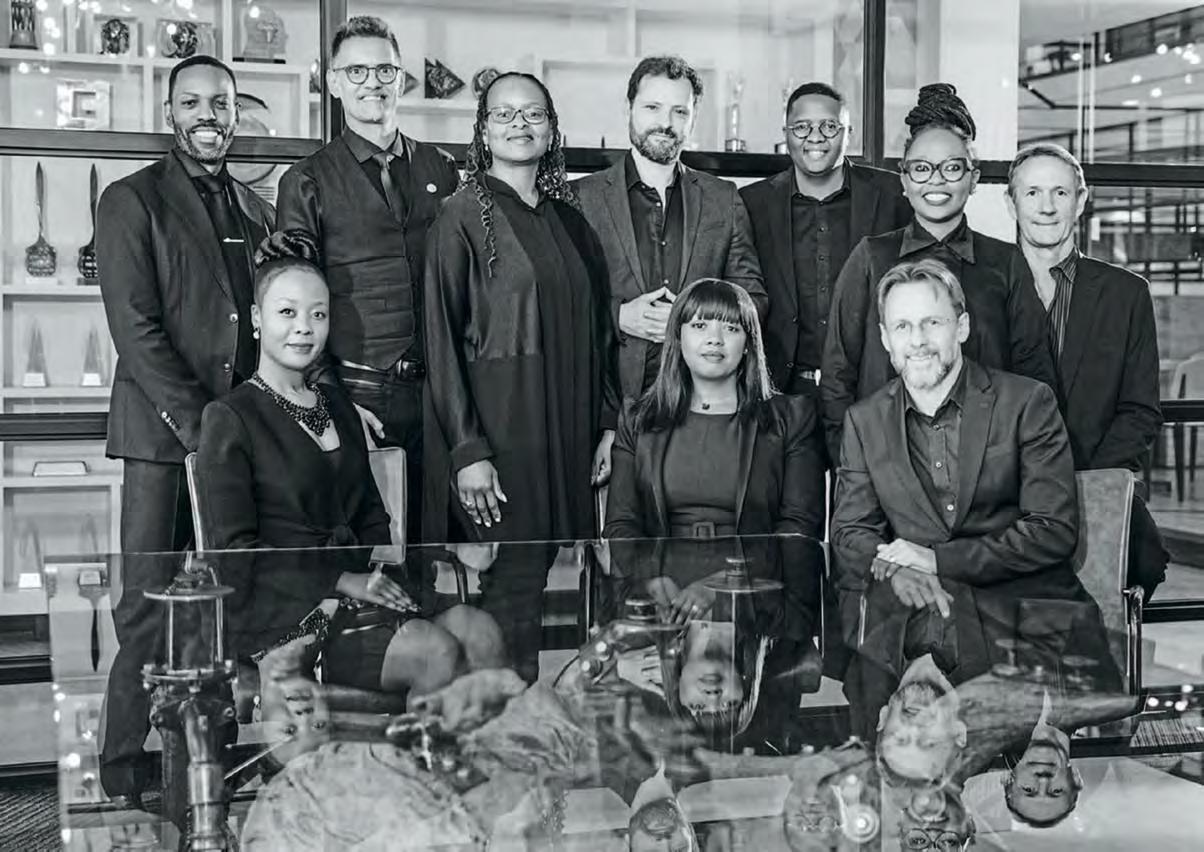
Luca Gallarelli, group CEO TBWA\SA and 2023 FM AdFocus Awards chair; Firdous Osman, MD, Saatchi & Saatchi SA; Wandile Collis, founder, BlackSwan; Ana Carrapichano, founder and CEO, Mediology; Merissa Himraj, CEO, Wavemaker SA & SSA; Nimay Parekh, director, Accenture Song; Dean Oelschig, MD and founder, Halo; Vicki Buys, MD, Ogilvy CT; and Sadika Fakir, executive: digital marketing and paid media, Absa; Pepe Marais, co-founder and chief creative officer, Joe Public; Nicole Ravenscroft, group executive creative director, Rapt Group; Zanele Zwane, MD, HaveYouHeard
STUDENT JURY
Luca Gallarelli, group CEO TBWA\SA and 2023 FM AdFocus Awards chair; Thule Ngcese, executive creative director, Boomtown; Raphael Kuppasamy, art director, Joe Public; Tian van den Heever, film director at boneshaker.co.za, ex-ECD; Kagiso Tshepe, executive creative director, Grid Worldwide; Nicole Ravenscroft, executive creative director, Rapt Creative; Noelle Hardy, creative director, commercial, Tukio Media/Arena; Suhana Gordhan, independent; Pepe Marais, co-founder and chief creative officer, Joe Public
PFK AUDITOR
Byron Mitchley CA (SA)
The industry has always been an early adopter of machine thinking, says Rob Rose, but this is on steroids
THE ROBOTS ARE COMING! (SHOULD WE PANIC?)
Thespectre ofAI,it seems,is coming for us all. Journalism, academia andadvertising are all fair gamefor a scary technology thatthreatens to wipe out millionsof jobs as fastas it’smeant to “revolutionise” all these industries.
It doesn’t reallyhelp to point out that AI, as it exists now, is deeplyimperfect andisas likely to get it wrong as right, because thosekinks willbe ironed out infuture. So, in something of a twist, I asked the face of AI ChatGPT to explain how it thinksAI will change the advertising industry.

Withinananosecond, itspurtedoutan anodyne answer, rich in slack-jawed jargon. Phrasesincluded “audience targeting and personalisation” , “ad content optimisation” , “content generation” , “customer insights” and “voice search optimisation”
“Overall”, ChatGPTconcluded, “AIis transformingthe advertisingindustry byenablingmore efficient,data-driven andpersonalisedadvertising strategies.AsAI technologies continue toadvance, advertisers needto adapt toremain competitive and ethical in their practices.”
That’s nothing youdon’t already know. Within thataxiomatic, murkyMBA-style blurb, thatnear-sentient bot hasdistilled a criticalmoment inthetrajectoryof anentire industry to a tepid, grey diagnosis.
Needless to say, ChatGPT didn’t capture the mood:designersawake at3am,panicking about beingoutsmarted byLeonardo AI, assistantsstressing aboutXemblyreplacing them andcopywriters fretting about being run out of town by Writecream.
This year, the AdFocusteam had an advanced lookat dataon thetopic coming outofAgency Scope2023/2024.Thisresearch foundthat AI appeared tobe the third-most mentioned challenge for marketersinSouth Africa,withmasteringthe technology the biggest challenge agencies willface.And53% ofthemarketersthink their currentagencies are notsuitably ad-
vanced digitallyto tackle this challenge.
The risk, of course,is that it will be beguilingfor marketers to buildin-house digital skills rather than relying on agencies.If savvyclients can do the work themselves, quickly,to ahighstandard and at a lower cost, it’s surely a temptation.
But while it’seasy to catastrophise, this databy no means indicateswe should all just shut upshop. If anything, there are manyways the industry could use AI to become more relevant and more indispensable than ever. Provided we actquickly,anddo ittherightway.The important question is how to do this.
Toprovideanswers, thisyear’s AdFocus publication is themed around the topic. On thefollowing pagesyouwill find,besides this year’s award winners,some rather divergent takes on the subject. But one thing is clear: as The New York Times said: “It really doesn’t matter if you are fearful or not: The tools are here, so what do we do? ”
Or put another way:stand still and get washedawaybythe wave,orlearnhowto ride it.
The advertising industry has always been an early adopter of machine thinking, such as programmatic advertising. This moment is like that, but on steroids.
Watching our FMdesigners trial Photoshop’sGenerativeFill onourcovers shows there’s reasontobelieve thisnew frontier canbe anenabler, notjust adestroyer. Our designers already have the skills tocreateprovocative, powerfulvisuals;AI just lets them do this faster, easier, and with greaterfinesse. Itfreesthemto bemore creative, less administrative.
And,asusingAI onourFMcoversillustrates, there’s muchthe technology can’t replicate, like humour.Qatalog, and other “intelligent” machine systems,aren’t (yet) up to replacing the “soft knowledge” and intuition you get after working for years.
Take, for example, the judging of this year’s AdFocus awards.Luca Gallarelliand the panelofindustrytop brasswhosatinthe FM’s boardroom discussingthe entries musttogether havemorethan 200years’ worth of industryand client experience. Sure, thiscomes withsome flaws,but it’s also packaged with asensibility about the ways in which advertising businesses work, what can be improved and what should be celebrated.
The judges asked tough questions, skirted noissues andcouldflip betweenquantitative and creativereasoning with dexterity. They bought a level of skill and heart that no robot has yet mastered.
Likewise with this year’s Creative Challenge entries. In several cases the teams that put these engaging print ads together used AI, but it was the sense of context, topicality, funand braverythat gavethe winnersthe edge.
In the FM’s 33 years of producing AdFocus, this isn’t thefirsttimea newdevelopment has shakenup theindustry. Computers, the internet, streaming, even influencers, have required adaptation. (Hand-rendered Peter Stuyvesant back page, anyone?)
But your endurance illustrates the essential characteristic that has allowed South Africans to prevailthrough everything from blackouts to state capture and water-shedding: a quite remarkable resilience. And for that we are thankful your support is why the FM still exists, inour 65th year, and is even enjoying an upswing in circulation.
As terrifyingas theincremental riseof the robots is,you canbe surethey’ll neverbe able to replicate that extraordinary resilience,which continuestomake yourindustry one of the best.
❒ Rob Rose, editor of the FM



Client-agency
relationships
often start out strong, but tensions creep in as misunderstandings and money get in the way
WHAT ’S THE SECRET TO A LASTING PARTNERSHIP?
working, red flags tend to be overlooked in the hope that by thetime we get to the ‘performing’ stage,these issueshave resolved themselves.”
The relationship betweenthe ad agency and its clientis often key tothe quality of work produced. Whenthe relationship is fraughtwith challenges,it’s unlikelythat the work coming out of the agency moves theneedlein ameaningfulway.AdFocus asked agencieswhere thebiggest challengeslie andwhattheirstrategies areto ensure good working relationships with their clients.
Manyclient-agency relationshipsbecame transactional in the wake of the pandemic, saysMike Abel,co-founder andexecutive chairofM&C SaatchiGroupSouthAfrica. Virtual meetingsreplaced in-personcollaboration andrelationships suffered. More businesses became riskaverse, choosing short-termtacticsat theexpenseoflongterm brand building.
“In aworld where clientswere becoming increasinglyconservative andrelationships were increasinglytransactional, the abilityof agenciesto createmeaningful impact subsided,” says Abel.
The biggestproblem with settlinginto a transactional relationship, he explains, is that itwaters down the impactan agency can have on a client’s business.
There’s also a risk with some client-agency relationships thatmarketing is seenas an execution arm fordecisions made elsewhereinthe businesswhichcancause both clientand agencyto settleinto a holding pattern where little tangible value can be unlocked, he adds.
The OddNumber CEO XolaNouse defines the evolution ofthe client-agency relationshipas the “forming, storming,norming and performing” stages.
“The ‘forming’ stage of therelationship is the exciting phase with high expectations from both parties. But, in the haste to get
It’s the “storming” phase which is the most challenging,says Nouse. “Poor orinadequate briefs[and feedback],misaligned expectations, lack of clear and honest communication, and unworkable timelines are just some of the hallmarks of a relationship that willbe in troublebefore ithas an opportunityto morphinto the ‘norming’ phase.”
Culturalmisunderstandings canalsobecomean issueif theyare notaddressed quicklyand sensitively,drivinga lackof trustand respectinthe agency-clientrelationship.
Revolvingindividualsin thepositionof chief marketing officer is one of the biggest challenge, says Vicki Buys,MD of Ogilvy South Africa Cape Town.
“Many client organisationsare structured with specific lengths of service in key roles. Ambitious clients are rightfully working thesystem, which means thatagencies oftenwork withkey clientsfor between18 months and three years at a time. Re-establishing relationships and proving one’s worth become critical aspects ofthe relationship.”
Another challenge isthe threeyear procurement contract cycle. Buys saysit can take18 months for a client-agency partnership to really hit its stride, leaving little time tocapitalise onthat investment. While theagency may retainthecontract inthenext cycle, the disruption to the head space ofboth the clientand the agencynavigating theprocurement process isdetrimental to both sides. And if the incumbent agency is not successful, the client has to takeon board a new agencyand startthe cycleall over again.
Clients now tend to instruct agencies about what they want rather than letting agencies deliver a sound creative resolve. This affects the morale, the tone and the essence of the relationship – and ultimately, the outcome of the work
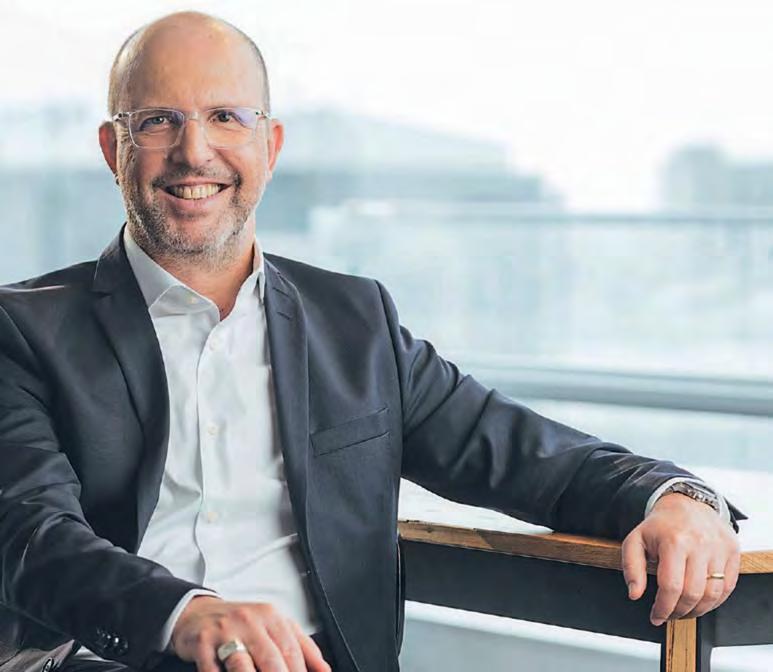
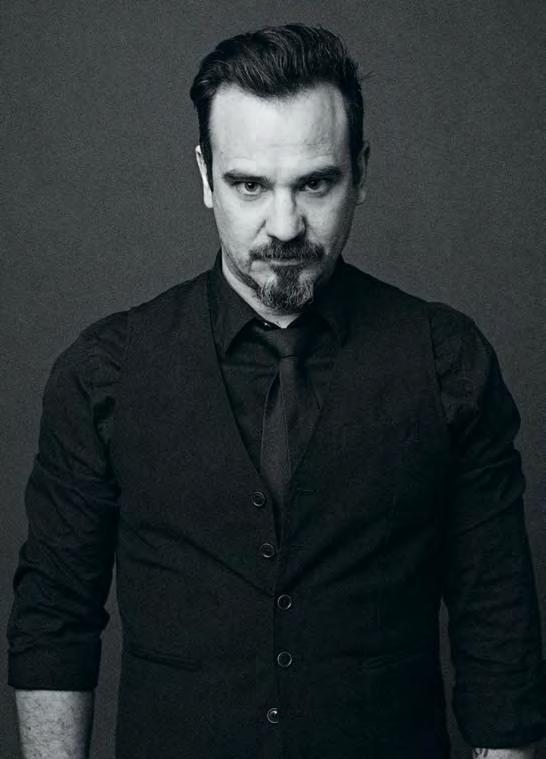
Mike Abel, co-founder and executive chair, M&C Saatchi Group South Africa

ForAdam Byars,Grid Worldwideco-CEO, one of the biggest issues is the commercial valueof anagency-clientrelationship.
“While bothclient andagency gointo a relationship with the right intentions and in the spirit of partnership, the relationship getsderailed whenoutsidestakeholders suchasprocurement orfinanceteamson both sides getinvolved to try tofind an amicablecommercial agreement,devaluing the core essence of bringing an agency on board.”
The problem, he says, is that agencies don’t stand upfor theirwork orfight forwhat they believein. He doesn’tbelieve clients appreciate or value great creative work anymore. “While agenciesthrive onbuild-

ing acompelling creativeoffering, agencies,at theendof theday,are abusiness with specific targets to meet.”
Mzamo Xala, group CEO of Avatar Agency, says a successfulagency-client relationshipis whenboth partiesare alignedwith the need to achieve measurable results. To achieve that requires that clients provide a clear and well-defined brief, with the right key performance indicators (KPIs) in place. The agency’s responsibility is then to reimagine the brief in a way thatmeets expectations and also surprises the client.
Problems, he says, arise when the skills and expertise within either the client or agency group don’t align properly. The challenge is to not allow a single mistake to jeopardise the partnership. “Both partiesneed tobe able to distinguishbetween short-term errors and the overarching partnership goals. But if you allow the issue to affect the relationship dynamic, there will soon be a gap between what is expected and what is being brought to the table.

These challenges can be overcome if there is opencommunication, asense offlexibility,aswellas asharedcommitmentto achieve meaningful results.
JohannaMcDowell, MDof theIndependent Agency Search& Selection Company (IAS) andpartner in Scopen Africa,is not convincedthese moretransactionalrelationshipsbenefit eitherclient oragency when what both parties need is the time to focus oncreating reallybig brandideas. “I’mhoping thatthe needfora returnto bigger ideaswill seea returnto agreater emphasis on thecloseness and chemistry within the relationship that is essential to drive creativity all around,” she says.
Agencies havehad littleoption butto accept these more transactional relationships, says Byars. “Fewer big pitches and less clientswho valuethe contributionof an agency means that agencies are forced to accept any jobson offer to keep their offices open and businesses running. When a ‘desperate’ deal is done, it’s almost impossible for agencies to make a small margin, employ credible talent or maintain a credible creative product,” he says.
Client-agency relationships often start out with astrong connection,but thenbecome more transactional when it comes to day-to-day deliverables, says Xala.
Project-based work,on theother hand, tends to start out withmore of a transactionalbent butthe relationshipcan evolve, particularlyif thework isstrategically important, he maintains.
“In ourexperience thedegree towhich relationships evolve oftendepends on the specific contextand strategicimportance of the work we’re doing. The key lies in finding the right balance that best serves the objectives and needs of both parties.”
RAPT Creative founderand CEO Garreth van Vuuren says the biggest challenges his agency has encounteredwith client relationshipsare whenclients findthemselves out of theirdepth, they don’t trust the agency’scapabilities, theyare being micromanaged bysenior staffor theyattemptto takecontrolofthe creativeprocess themselves.
“Each party needs to understand their respective roles and the reasons why the client and agencyare working together. When these rolesand expectations are clear,theyfoster strongerpersonalconnections and ultimately lead to better outcomes,” he says.
McDowell saysthe biggestgripe clients have withagencies concernsthe high volume of agency staff changes and a lack of an efficient handover process to new
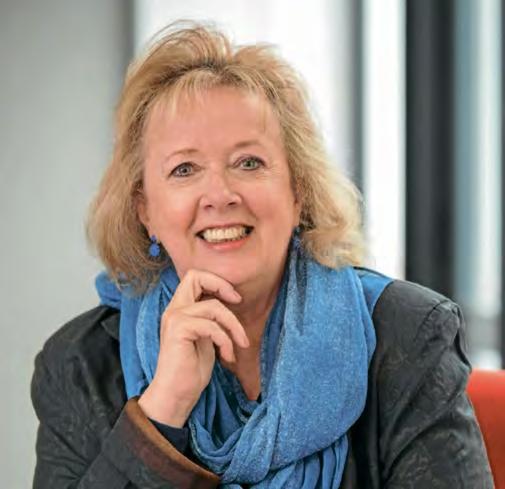
Adam Byars, co-CEO, Grid Worldwide
Vicki Buys, MD, Ogilvy South Africa Cape Town
Johanna McDowell, MD, the Independent Agency Search & Selection Company (IAS) and partner in Scopen Africa
Xola Nouse, CEO, The Odd Number
agency staff. Other complaints include the outdated agency billing model which is focusedonmanaging time,hoursand rates. “Clients don’twant tobelookingat thesekindsofthings. Atthesametime, they want their agencies to spend time understanding theirbusiness andto regard that as an investment.”
From anagency perspective,she says,the biggest complaints are around client budgets, with agencies expected to deliver more for less. Other complaints include the fact thatmarketers havebecome more junior, resulting in slower decision making, andthe waysomeofthese juniorclients are allowed to abuse their agency.
There has beena shift in theway clientagencyrelationshipsare managedinrecent years, says Byars. “Clients now tend to instructagencies aboutwhat theywant rather thanletting agenciesdeliver a sound creativeresolve. Thisaffects the morale,thetoneand theessenceofthe relationship and ultimately, the outcome of the work.”
Clients have biggerexpectations of their agencies, maintainsXala. Whilethey still value the creativity and marketing communications expertise offered by agencies, they also expect data-driven insights and a bigger return on investment.
Buys disagrees, saying that clients still want the same things from their agencies they’ve always wanted, which are creative solutions to solve realbusiness problems.Sheconcedes,however, thatthelandscape of communications has changed vastly.
“If you overlaythis changed landscapewith consumersbeingmore complex than everto target, let alone understanding whatit is they want frombrands, it’snot aseasy a problem tosolve todayas itwas a decade ago. Some agencies and clients arerising tothe challenge while othersare findingit trickyto navigate.”
THE SECRET SAUCE TO SUCCESSFUL RELATIONSHIPS
A strong agency-clientrelationship and wherethebestwork isdelivered says Byars, relies on absolute trust, honesty and a spirit of partnership, aligned to a common vision.
The key to enduring client relationships, he adds,isknowing whatkeepsyourclients up atnight, making theirbusiness problemsyourproblem, foragenciestotake themselvesandtheir workmoreseriously, not being afraid to think outside the box of

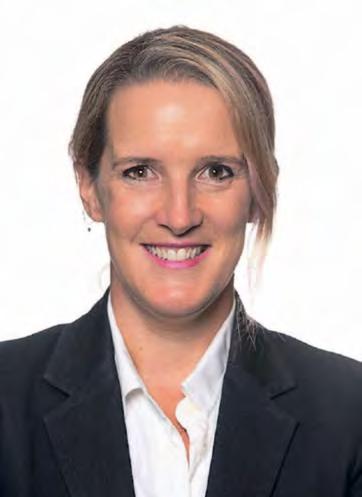
Bridget Harpur, head of marketing at Volkswagen South Africa, says a working agency and client partnership is based on deep trust,as well asa beliefthat consistentcreativity candrive businessresults.
“Most people recognise the value proposition in their personal lives and the same is true for human capital. Clients need to understand that you ‘get what you pay for’ While we all want to be more efficient, your agency teamneeds tobe adequatelyresourced to meet your expected delivery or outcome.”
succeed. It’s an approach, she adds, that sets asideall egoand personalambition, servingthebrandand, inturn,itsconsumers best.
“At Ogilvy, we have a saying, ‘do the right thing’. If you do right by the brand, then everything else falls into place. These relationships are special; they’re bigger than us,and we’refortunateto beapart ofthe tapestry of their story. It’s our responsibility to hand that brand over to the next person in the best and healthiest position.”
Byars’ advice toagencies is to getclose to clients. “Understand theirbusiness, ask questions and,most of all, ensurethat the work youput on thetable willdeliver the desired businessimpact.” Heradvice to clients is to take their agency into their confidence. “Let themunderstand the whole picture. Let them help you and your brand succeed.”
Successful client-agency relationships depend on the intentions and qualities of the peopleinvolved,says VanVuuren. “Create an environmentof opencommunication and growth and encourage a solutionsdriven mindset. People seek validation and gainmotivation inmany ways.Understanding this and modifying your behaviour appropriately fosters a work environment that benefits everyone.”

traditional advertising, and being prepared to take risks.
Communication failures anda misalignment of expectations can be disastrous, whichiswhy buildingstrong,trust-based relationshipswith clientsis soimportant, maintains Abel. “The courageto makebig decisions is possible only when there is anauthenticand trustedrelationshipin place.”
Buys believes the relationships that place thebrand atthe centrearethe onesthat
Nouse says the most successful relationships are thosethat adopt a long-term perspective from the outset, unlikethose thatscramble and ultimately fumble for short-term wins thatcan’t besustained. “Relationships that don’t work are often theresult ofa mutuallack oftrust,” he says.
The secret sauce to a strong, enduring relationship between an agencyand client,he believes,is about going aboveand beyond the scope ofwork andproactively solving the client’s problems. “Agencies with a goodunderstanding of their client’s businesswill alwaysstand out,” he says.
McDowell’s advice to both agencies and their clients is to focus on the business of thebrand andproviding businesssolutions. “Beprepared toshare highsand lows, positives and negatives. Don’t wait for the six-monthly relationship review tick box processdesigned toreport onthe quality of the relationship. The relationship has to be worked on every day.”
Buildingbrandsgoes waybeyondclients, building economies anddriving employment, saysByars. “Asan industry,we should not lose the core essence of why we do what we do and what we love doing.”
Garreth van Vuuren, CEO, RAPT Creative
Mzamo Xala, group CEO, Avatar Agency
Bridget Harpur, head of marketing, Volkswagen SA
From 2022 AdFocus Small Agency of the Year to 2023 AdFocus Medium Agency of the Year Finalist*
Whilst our agency has grown and evolved remarkably in the last 12 months, our commitment to our people and our partners has remained the same. Delivering industry-leading data, insights, creativity, passion and return on investment.
Cutting edge creativity underpinned by strategic intellegence
*We made this ad before they announced this year’s winner. But for us, growing into a new category is a win on its own.
Despite the economic pressures of the past year, the advertising industry is positive, with most respondents reporting growth and more than half saying that’s been helped along by AI
UPBEAT INDUSTRY STILL MOVING FORWARD
If2022 wasthe yearof thebounce-back, that positivetrajectory hascontinued in 2023 withthe majority ofrespondents in this year’s AdFocus survey reporting that business has continued to improve (77%). A total of 53% of respondents said business is much betteror somewhatbetter compared with the past18 months and 73% reported that they’re feeling positive about the advertising industry.
These positives are despite the significant obstacles facingbusinesses ingeneral this year. Respondents said the biggest impacts on theirbusinesses in the pastyear have been pressure on spending power (91%), load-shedding (70%), soaringinterest rates (66%), political uncertainty (56%) and talent loss due to emigration (47%).
Asked toprovide one reasonfor business improvingthisyear, 54%attributingitto building positive client relationships. Other reasons cited were continued good service
delivery (45.8%), resilience (33.3%), a flexible business model (27%), an accelerated digital transformation(18.75%) andkeeping the brand visible (18.75%).
Whilethe overalltake-outfrom thisyear’s AdFocusresearchis positive,noteveryone is feeling the samedegree of optimism. Compared with the past 18 months, 22.95% of respondents said businessis the same, while 25% said it’s worse, 17% said business has not improved this year and just over 4% said they believed further ground has been lost. A total of 13% of respondents said they are feeling negative about the industry.
When it comes totransformation, 78% of respondentssaid theyareon targetand only 12% said they are not.
Three-quarters of respondentssaid they had recruitedjunior staffin thepast year, with 34% reporting that the calibre of these junior staff members was good. Of concern, however,isinthe areaoftoptalent,with 56% of respondentsbelieving the industry is not attracting highly skilled talent.
Just over a thirdof respondents said their companieshave anAIstrategy inplace, while 56% don’t have one. Encouragingly, more than half the respondents (51.79%)

Clients need to view it [AI] as a way of becoming more agile, creating efficiencies and ensuring speed to market
saidAI isalreadyhavinga bigandpositive impactonbusinesses andcompanyoutput. AI is most commonly being used for research(58%), copywritingandediting (42%), brainstorming(30%), andillustrations and design work (24%).
Themost commonlyusedAI programis ChatGPT,followed byMidJourney.Others reported using Fliki tocreate audio and video contentwithout cameras,microphonesor astudio,GPTZero todistinguish between plagiarised and original work, and Dale, Stable Diffusion, Bard, Perplexity and Notion, among other programs.
One respondent reported that their businesses areinvesting intheir ownAI research and development inan effort to disrupttheirbusiness modelandcreate additionalvaluefor clientsandpartners. Many respondents said theyhave tried a number of programs for creative as well as operational tasks and to formulate insights on reports.
A thirdof respondentssaid AIcan onlybe used for small tasks.
Respondents providedsome interesting commentsabout AI.One respondentsaid agencies need to embraceAI and similar toolsto enhanceperformance,insights and efficiencies for clients. “We need to

Source: Market Intelligence research & insights team

cementthestance ofhumancapital empoweredby AIand theadvantages this bringsrather than tryingto replace that capital. Creative needs to remain at the forefront.We can’t think thatAI can replacehuman capitalandcreatives. Clients need to view itas a way of becoming more agile,creating efficiencies and ensuring speed to market.”
Butthe respondentsacknowledged that agencies need to bring clients with them onthis journey ofbetter understanding the advantages and limitations of AI. The industryneeds to remember that despite the advent of AI, human relationshipscontinue tobe a priority. More than ever before, brands needtobe relevant.Thatrequiresconstantly aligningthe brandwith consumer expectations. While speed and efficiencyare important,meaningful workthatmakes adifferenceremains the biggest priority.
One suggestion isfor agencies to change theirremuneration modelto allow AI toplay a role inthe initial concept design,which wouldsave creatives time, allowing them to spend
more time on better work and creating ideas.
To fortify their place in the client’s world, agencies need to remember to provide top-notch customer service, share positive reviews and testimonials, be honest and transparent,ask for andact on feedback, be reachable.
Another respondent said agencies need toadapt, introduce new ways to consult and advise, be open to new models and fee structures, immerse themselves in client businesses, train their client teams and upskill them on media literacy.
Other suggestions include being more accountable, delivering results, providing insights to enhance a brand’s position, payingattention todetail andservicedelivery whichseems tobe getting sloppyin somecases, being an extension of the client’s marketing team, offering value with every deliverable and adding to clients’ bottom line.
This year’s survey respondents consisted primarily of people working for advertising agencies (34%) ormedia houses (23.4%), withthe balancemade upof peopleworking forconsultancies, in public relations or self-employed. More thanhalf the respondents have workedin the advertisingandmarketing industryformore than 20 years.
A totalof 42%of respondentswork for businesses employing more than 50 people, while30% workfor businesses employing up to 10 people.
We need to cement the stance of human capital empowered by AI and the advantages this brings rather than trying to replace that capital
The advertising industry has lost confidence in its ability to make a difference: it’s time to take it back
LESSONS FROM THE GIANTS OF THE PAST
Whenoneof theworld’s most respected marketers says: “Agencies areforever” , doubtersshouldfind solaceandtakenotice. Tor Myhren, the vice-president of marketingcommunications atAppleand formerglobalchief creativeofficeratGrey, probably knows what he’s talking about.
Ifagencies embracethe purposethey’ve always had and adjust with the times, they will thrive. Why, then, do so many choose to adjusttheirpurpose tosurvive,instead?It smacks of insecurity, and if that’s what you feel, perhaps it’s time to close shop.
On hisreturn to thehelm ofApple, Steve Jobs announced: “What we’re going to do in ourfirst brand marketingcampaign in severalyearsistoget backtocorevalue.A lot of things have changed … The products, thedistribution strategy,manufacturing, aretotally different Butvalues andcore values, those things shouldn’t change.”
Soundsfamiliar. Ifearthatas anindustry we’veforgottenthis. Advertisinghaslost confidence inits ability tocreate value, changeperceptions andgrow brandsand businesses. It’snow arace tothe bottom, and it’s a race many are tired of running. It’s time to get serious about it again.
It’stime tomove pastthe caricatureof advertising professionals aspeople more intent on hedonism than interested in creating value. Given how desperate we are to disassociateourselves fromad peopleof that era, it’satad ironicthattheywerea generation ofadvertising andmarketing greats who arguably had a far greater effect ontheworld ofproducts,marketingand brands than the present generation has.
Many of the world’s greatest brands, as well as “advertising” thinkers and businesses, were established in atime many now look down on.Bill Bernbach, DavidOgilvy, Jay Chiat,John Hegarty,Shelley Lazarus,Dan Wieden,MaryWells Lawrenceandothers believed they could make a difference.
They grew the world’s greatest brands, and took that responsibility seriously. They did it knowingthatbig brandsgrowbigbusinesses and big businesses drive economies and, ergo, the wheel of capitalism. They did it bydeploying a combinationof uncom-
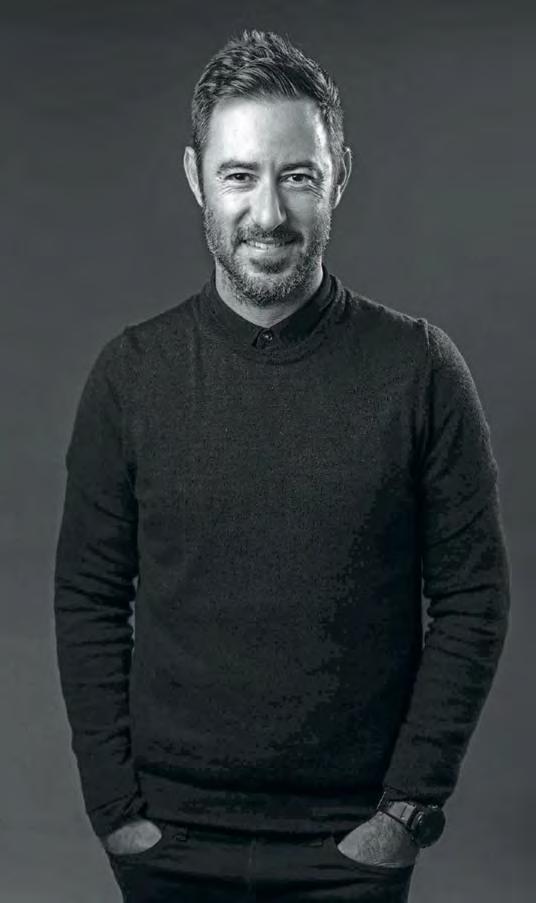
Luca Gallarelli, CEO of TBWA\South Africa
promising talent anddiligence, using the best toolsavailable at the timeto produce work that had an impact.
Ogilvy once said: “If itdoesn’t sell, it’s not creative.”
AndBernbach said: “Word ofmouth isthe best medium of all.”
Sounds pretty relevant to me.
Atthe IntegratedMarketing Councilconference, Doug Place, Nando’s chief marketing officer for Africa, Middle East & India, said that as marketers “we matter”. I’m glad he said it. But I’m sad he felt the need to say it. When did welose confidence in our abilitytoaffectthe worldofcommerceso profoundly? Creativity haspower, as I’m reminded when I see its impact on clients.
I believe we are entering a period of greater certainty.Forthefirst timeindecadeswe
Mastery of the talent resident in our industry, combined with the power of AI, will propel us beyond the realms of what we thought possible
have the opportunity toleverage an incredible new tool formaking our product better artificial intelligence (AI).
The themeof this year’s AdFocusis the alchemy of human and AI. It’s a proposition in which I believe wholeheartedly. The masteryof thetalent residentin ourindustry, combined with the power of AI, will propel us beyondthe realmsof whatwe thought possible, in terms of both creativity and the impactthat creativitycanhave onour clients, brands and businesses.
That’snottosay thatweshouldnowdisregard everything that hasmade us relevant,but ratherthatwe shoulddouble down on those aspectswhile growing our appetite for rapid change. And we need to do it without a hintof insecurity with a real and fundamental belief in what we do while reimagining how we do it.
All the winners, acrossall categories, have demonstrated an ability to do this. Without exception, they have set the standard for an industry in desperateneed of confidence and examples of excellence.Look to the winners and cast youreyes beyond. We have work to do: best we get going. But let’s do it from a position of confidence that takes seriouslyour collectiveresponsibility to move business and society forward.
❒ LucaGallarelli, 2023AdFocus jurychair and CEO of TBWA\South Africa
It’s about finding an angle. And having the right partner to guide you.
Now, more than ever, it’s imperative to collaborate with a rm that will help steer you in the right direction. At PKF, we consider ourselves more than accountants. We are partners with you on your business journey and we measure our success by yours.
With over 450 of ces, operating in 150 countries worldwide, the PKF network enables the sharing of knowledge and experience, and underpins our ability to offer you globally relevant advice grounded with local insight.


OVERALL WINNER OF THE YEAR
It believes its ownership structure is an optimum one, serving as a solid foundation on which to build an authentically transformed South African advertising agency group
Joe Public United is 2023’s Agency of the Year, winning the Large Agency of the Year category and the Transformation Award.
TheAdFocusLarge AgencyoftheYear categoryis alwaysa tightlyfought space, andthis year wasno exception.
Giving back has long been a core pillar of Joe Public ’ s philosophy
Joe Publicstood out forits continued creative success, its growth on the back of the Nedbank digital account win, and for its strong transformation story.
The agencyhad a robustyear, improving18%fromthe yearbeforeandretaining all its clients. Its biggest client is Nedbank and, in 2022, it was appointed the bank’s digital agency partner, mak-
ingitresponsible forabovetheline, below theline anddigital creative, whichstrengthened andconsolidated its morethan a decade-long partnership with the bank.
Otherlarge clientsinclude SAB,Cell C, Chicken Licken and Assupol. In the past year,it launched UberOne in SouthAfricaand Engen’s new Café 365,andpicked upnewbusinessin the form of Hippo and a Woolworths positioningcampaign. Aftersetting itself agoal of attractinga global company in 2023,the agency acquired the Grant’s Whisky account andistasked withtakingthebrand forward in India,Poland, Colombia and South Africa,with further territories to be added over time.
The agencydoesn’t takeits agency relationships for grantedand conductsformal relationshipsurveys with 14of itstop clientson aregular basis.Theseclients accountfor90% of the agency’s revenue. Its average agency score inthe AdFocus review period was above 80%, scoring in the excellent relationship range. Scopen ratesJoePublic asthenumberone agency in SouthAfrica in several areas, including contributing to business growth,integrated serviceoffering, good working processes, strategicplanning, seniormanagement involvement on theaccount, and account service.
Theagency hadan excellentyear from acreative perspective.It was rankedthe ninth-mostcreative agency in the Drum’s World Creative Rankings, the number one agency in Africainthe 2022WARCCreative Rankings, the number one agency at the2022 PendoringAwards, and forthefifth consecutiveyear the numberoneagency inAfrica&the Middle East in 2022’s Loerie Awards. Two ofits youngdigital creatives, Bernice Mosala andRaphael Kuppasamy, were awardedgold in the Cannes Young Lions film category.
JoeMotion, theagency’s in-house motiongraphics animationand post-productionstudio, grewrevenueby100% comparedwiththeprevious year.
Joe Public executive team
But ithasn’t allbeen plainsailing. The agencysays itexperienced morebudget revisions and costnegotiations in 2023 thanit hasinthe pastfiveyears asclients focused on savings, efficiencies and optimising budgets.In response,the agency changed internal team structures twice as oftenasinprevious yearsasitlookedto create optimal team mixes to achieve cost efficiencies while still delivering high-quality output.
The agency has implemented a permanent hybrid working policy that allows staff to work from home on Monday and Friday and fromthe officeon Tuesdays,Wednesdays and Thursdays. This approach has lowered its monthly operating costs, which allowed the agency to increase the salaries of all staff and employ six more creatives to provide more resources for faster turnaround times.
Giving backhas longbeen acore pillarof Joe Public ’s philosophy.The agency founded its own NGO, One School at a Time, in 2010,which supportstwotownship schoolsin thegreaterJoburgarea. Inaddition toproviding theschools withfunding, theagency assistswith schoolmanagement, facility improvement, teacher support and leadership coaching.
One of the schools it supports is Forte High in Soweto, which has maintained its ranking as the number one township school in Gautengforthree consecutiveyears.In 2022, the school achieveda 96% pass rate, including159 distinctions,while 57%of learners obtained entrance into university. During theyear, the agency alsodid probono workfor AmnestyInternational, the Apartheid Museum andPeople Opposing Women Abuse.
BENCHMARK FOR TRANSFORMATION
Adecade ago,Joe Publicsetout totransform its business into a shining example of what an authenticallydiverse and transformedorganisation lookslike. Itstransformationjourney continuesto setthe benchmark in the industry.
Central to its vision is the transformation of ownership. In2021, 60%of thecompany was acquired by black shareholders. Senatla Capital, a100% black-owned private equity investmentcompany, acquireda 34% stake in the agency while the remaining 26% allocation was acquired via a management buyout.
Threelong-standing agencyexecutives KhuthalaGala Holten,MpumpeNgobese and XolisaDyeshana bought themajority of the26% stake in theagency via Ikamva Lakusasa, anewly created management company. From the outset, the planwas foradditionalequityto bemade
available within the management company to allow more employees to be added in time.Three more have comeon board since inception, with two of them becoming shareholdersin JoePublic viaIkama Lakusasa in the AdFocus review period.
The structure of the agency’s shareholding wasdesignedto createanauthentically transformed entity from an ownership perspective that’s majority black-owned while still retainingthe agency’scherished independence and ensuring a high level of ownership (66%) in the leadership team.
It believes this ownership structure is an optimum one, serving as a solid foundation on which to build an authentically transformed South African advertising agency group. It’s alsoone that plays into its formidable creative reputation.
The agency says that creativity thrives on unexpected relationships between diverse ideas,people andpointsofview. Ithas systematically set and met its annual diversity target.Today, it’sstaff contingent represents the South African landscape.
Its diversity is also reflected in its leadership profile, with black individuals (40% women and 20% men) making up 60% of the agency’s board.The majorityof itssenior management are black (64%, of which 68% are black women). Of the new staff hired in the AdFocus review period, 70% are black.
Joe Public ’s focus on transformation extends to its suppliers, with 51% of its spend on level 1 and 2 BBBEE suppliers and 42% of its spend withqualifying small enterprise and exempted microenterprise suppliers. Overall, 48% of its totalspend is with businesses that have more than 51% black ownership.
The agency achieved 42.6 points of the targeted 46points onits latestBBBEE scorecardrating,meaning ithasachieved 93% of the targeted points in the enterprise and supplierdevelopment pillar.This isa 75% improvement from five years ago.
Joe Public ’s enterprisedevelopmentprogramme supports three black-owned companies, oneof whichhas becomea suppliertosomeof itskeyclients.The agency achieved 1.54 out of a possible 2 on itsmarketing, advertising&communication BBBEE level 1 scorecard, scoring 77% of the targeted points.
The agencyfosters partnershipswith likeminded companies. One of these companies is IAF Brands, an exempt micro enterprise witha BBBEElevel 1status, providing township and suburban creative solutions.Basedin Tembisa,IAFemploys 10 people. Owner Bulelani Balabala is the founder of the Township Entrepreneurs
Alliance, having received financial support from FNB in 2019.
The agency regardsskills development as a criticalcomponent inthe sustainable transformation of the industry. In the past year, it invested more than R7m in training programmes. Basedon abelief thatan organisation will only ever be as big as its leaders, it launched the Ubuntu Conscious Leadership Programme in February.
A nine-month leadership transformation journey,the customisedtrainingprogramme is designed to raise the consciousness ofthe agency’stop 18leaders and foster greater levels of responsibility to help it deliver on its growth purpose.
Joe Public established its School of Growth in 2018. Boastingmedia, information & communication technologies Seta accred-
Creativit y thrives on unexpected relationships between diverse ideas, people and points of view
itation asa traininginstitute, itfacilitates the personal and professional development of the agency’s staff and clients, with a long-term view to extend it externally.
A fundamental focus of the school is to driveoverallskills developmentwithinthe agencyand upskillyoung, largelyblack talentinpreparation forfuturemanagement roles. The agency also has its own inhouse growth coach.
STRONG CONTENDERS
Ogilvy SouthAfrica ismaking animpressive comebackunder CEOPete Case,and it’sgreat tosee theagency enteringthe AdFocus Awards again. Creatively, it is also returning toits formerform, havingwon two gold Cannes in the past two years.
TBWA\Hunt\Lascaris Joburg hada really strong year,despite losingcreative giant Peter Khoury.The 40-year-oldagency is not resting on its laurels and has won some impressive new big business and continues to feature creatively.
GROUP OF THE YEAR AND AFRICAN IMPACT AWARD
Working with TBWA will always be a robust experience; we’re not always the easiest and we don’t always do what we’re told … We believe in the power of our collective and the collective talent and experience that resides in it
Last year was a phenomenal year for TBWA\South Africa, culminating in spectacularwins atthe 2022AdFocus Awards: the agency won a total of five awardsand was namedthe overall AdFocusAgencyof theYear.Maintaining that trajectory was never going to be easy. But it’s clear that this is an agency groupwhose starcontinues toshine brightly.This year,TBWA\SouthAfrica winsboth theGroup ofthe YearAward and the African Impact Award.
TBWA\South Africais uniquein Africa, consisting of acollective of leading agenciesthat specialiseineverything frombrandstrategy anddesigntoproduction. Structured to house expert-led specialist agenciesthat epitomisethe top tier in their respective categories, thegroupaims tofocusonfirepower and eliminate duplication.
TBWA\South Africaconsists ofYellowwood Future Architects(business, marketing and brandstrategy), Grid Worldwide (brand experienceand design, including through-the-lineexecution), TBWA\Hunt\Lascaris (a full-service mar-
keting communicationagency), MagnaCarta (corporatereputation management and PR), Sting Content Production (audioand visual contentproduction) andtheOmnicomPrecision MarketingGroup (data services, media, social and a combination of first- and third-party data).Thelatter twowerespawned fromwithinthe collectivetogive high-potential individualsleadership opportunities.
The collectiveis based ona foundation ofshared valuesand identity, respecting that each business in the groupisunique andhasitsown reason for being,culture and role. The “connective tissue” holding themtogether isa unifiedvision, shared perspective,standardised operating systems, cohesive training platforms and a common language.
Countering criticism that the collective iscomplicated, thegroup says the modelprovides leadership depthand greaterefficiencies.The ace up itssleeve, it says, isa senior leadershipteam empoweredwith bothautonomy andaccountability. It’s anapproach that hashelped it attract,retainand promotesomeof the best talent in the industry.
The agency is particularly proud of its ability to grow industry giants, with a number of TBWA alumni now global industry players. PeteKhoury, previously CCO of TBWA\South Africa, is themostrecent exampleofthis, havingtakenon theroleofglobal CCO at Adidas.Khoury has been replaced byCarl Willoughby.If its strong performance at the Creative Circle Ad of the Month Awards since Willoughby took overis anything to go by,the agency remainsin good hands from a creative perspective.
Last year, the judges were impressed withsignificant newbusinessgains thatdrove realrevenue growthand increased efficiencies, which led to less wasted time and higher margin growth. The group doubled down on all theseareas in2023 and,over the past year,it has onceagain collectivelygrown top-linerevenueby adding a number of new clients to its
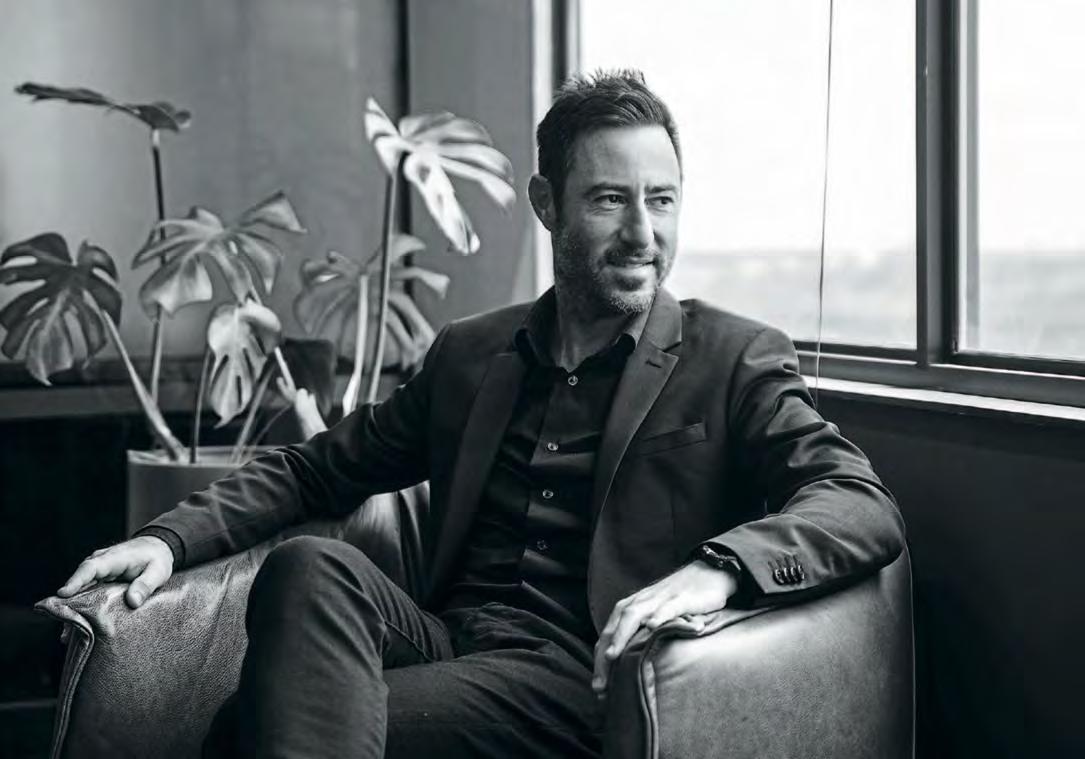
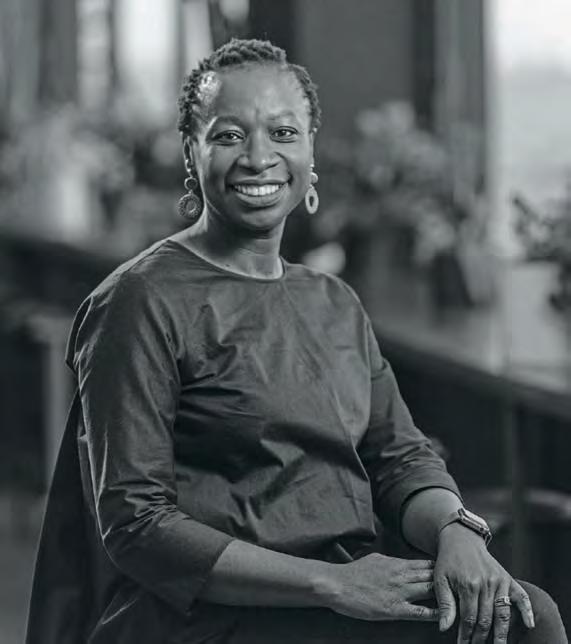
Luca Gallarelli, TBWA\South Africa CEO
roster andincreased efficiencieseven further.
Ithas long-standingand healthyrelationships with clients including Spar, Nissan, MTN, City Lodge, Absa and South African Tourism.In 2022, the TBWA\SouthAfrica andMTNpartnership won AdFocus Partnership of the Year, with the TBWACoastal and Spar partnership coming in as a finalist. TBWACoastal is again afinalist in the partnership category this year.
Theethos ofthegroup isinherently “open source”, whichmeans itlooks for nontraditional partnerships. It recently formed partnershipswith specialistagenciesoutside thegroup,including PlusNarrative,Helm andEXP, affiliatesthatoffer evenmorediverse and specialist skills tobenefit its clients and teams.
Thegroup catersto clients’ unique needs by seamlessly integrating its teams’ diverse talentsandcapabilities. It recently incorporated what could be calledthe “sixteenth man” , artificial intelligence (AI).
Its collective approach is dedicated to finding the optimal solution for each client’s challenge. To make this a reality, thegroup has set upa system where specialist talentin respective agencies can bemarshalled to tackle a client’sproblem anddeployedas needed. This notonly eliminates duplication,butalso helpsunlockvalue andefficiencyfor clients.Theagency says itsees thisas thenext stepin bringing “open source” collaboration
to life.
A mental wellnessprogramme created specifically for the group also acts asaplatformfor theentiregroupto connect, discuss,learn andgrow. The agencyrecognisesthat toshowup cohesively, it needs each individual to want todo so.It thereforeacknowledges that personalsuccess is inextricably linked to collective success.
“Working with TBWA will always be a robust experience;we’re notalways the easiestand wedon’t alwaysdo what we’retold.We takeapointof view andwill debateit fiercely.We believe in the power of our collective andthecollective talentandexperience that resides in it. We don’t believe indogmatism. Webelieve that our clientscome tous fora reason: they arehunting fora strongpoint of view that leveragesthe intellectual horsepower and creative talent that we offer,” says the agency.
Finalists forGroup ofthe Yearare OgilvySouthAfrica, whichhasbeen producing someincredible workand hasgreatclient retention,andM&C SaatchiGroup,with itsstrongspecialists such as Levergy and Razor PR.
AFRICAN IMPACT
TBWA has been operating across the continentsince2001, whenitestablished its first affiliations with agencies in Nigeria, Botswana and Mauritius. That network hassince expanded to 34affiliates, spanning24 countriesin Sub-Saharan Africa.

TBWAmanages theMTN andNissan accountsacrossAfrica and,inApril 2023, added Absa’sAfrica business to its client roster, making the agency responsible for the brand across nine countries beyond SouthAfrica’s borders. This acquisition arguably entrenchesTBWAas Africa’s most connected agency network, partnering with someof thecontinent’s largest and most prestigious brands.
Eachagency inthenetworkis acontractedaffiliate withaccess toTBWA tools, resources and training, as well as access to globalplatforms, sources of best practice andinformation. Strategic toolkits, reportingportals and information-sharing platforms enable more effectiveperformance onregional clients. While TBWA\South Africa is the network hub for TBWA in Africa, the group operates across Omnicom agency brands, working equitably across TBWA,DDB and BBDO networksand,on occasion,otherindependent Omnicom agencies.
Thecornerstone philosophyofTBWA network operationsis auniversal approach thatallows forgreater diversity in client solutions, but also a wider spectrum forshared learning. While client structures dictate centres from whichbusinesses arerun, there is anunderstanding thatthis inno way creates a monopoly on the knowledge needed for that business to be run successfully. Proofthat the structure worksis thefact thatTBWA has never hadan affiliateleave theAfrica collective because of deficient value.
Monthly discussions witheach affiliate covera rangeof topicsincluding new business,finances, personnelissues, creative work,local challenges andopportunities.A seriesofAfricabased and globaltraining and skills development platforms are available to allagency affiliates,while bespoke trainingis typicallyfocused onglobal strategic or creative priorities.
An example is the evolution of TBWA’s disruption process — “DisruptionX”— whichwas introducedby theglobal team througha seriesof live,multicountry presentations. This continues across Africa throughbespoke country sessions,which uselive briefsto workshop process understanding and deliver everyday client solutions.
Weber Shandwick,a finalistin the African Impact category,is doing someexcellent workforMastercard onthe continent.The judgeswere pleased to see a PR agency operating strongly in Africa.
Siphokazi Chivizhe, TBWA\South Africa group CFO
Graham Cruikshanks, TBWA\South Africa director of Africa operations
MEDIUM AGENCY OF THE YEAR
Grid’s continueddetermination toevolveits productoutsideof brands and design and its focus onhow consumersengagewith brandsatevery touchpointareimpressive, said the judges. Its insatiable thirstto constantlypush forwardis also what makes Grid stand out in the medium-size agency category.
Not only did Grid increase its revenue by 27% in the AdFocus reporting period, but itwas one of itsbest awards years ever, ranking as the most awarded agency in the medium-sized category. This was a year, said the judges, that it all came together for Grid.
Its largest clients also happen to be its longest-lasting clients.FNB, aclient for the past 14 years, tasked Grid with refreshing itsbrand. Thisled toFNB beingvoted theStrongestBanking Brand inthe World by theBrand Finance Banking 500 2023 report, with a brand strengthindex scoreof 93(out of 100), and increasing its brand value by 30% to $3.5bn (about R64bn).
Grid’s work with MTN had similar results,with thetelecom giantnamed the country’smost valuablebrand by the Brand Finance SA 100 2023 report, up 24% in brand value to R74.3bn.
Grid’s creative work for Inverroche gin isgetting globalrecognition.Inver-
roche Bee&Bee,an innovativepackagingsolutionthat doublesasahotel forsolitary bees,is reimaginingpackaging in anentirely new, sustainable way. It has become one of Grid’s most awarded pieces,including atthe ADC Awards,Cannes,The OneShowand Fast Company’sInnovation byDesign Awards. Pernod Ricard Global will be usingBee&Bee asa benchmarkfor sustainableand consciouspackaging across their global portfolio.
South African Tourism is another longstanding client forwhom Grid developed “TheBest ofUs” campaign. It worked on Spur’s brand evolution and continued its partnership with MTN on the launch ofMoMo. Grid’s relationship with Marble has also garnered accolades: its latest endeavour saw
It ’ s not magic, but a careful blending of elements nurtured for years
Pantry byMarble and Sasolcreate an upscale fuel stationexperience that redefinesconvenience, winningBest Forecourt Storein the 2022Best of Joburg Readers’ Choice Awards.
Grid wasoriginally establishedto create meaning for brands. The agency says it builds brands to help give them
this meaning in a time and place that is dynamic, chaoticand ever-changing, playingin cultureand beingat one withthe peoplethey serveand the world in which they operate.
Ona constanttrajectory tochange based on market needs, its concept of “Investment Creative” builds brands and takes them to places they need to be togrow. Aunique understanding of brand strategy, communication, experience and human-centred design allows theagency toredefine the rules by whichbrands interact with customers inall spaces,allowing itto build valuable brand equity.
The agency says it isall too aware of the X factor that occurs when you get all the elements just right. It’s not magic, but rather a careful blending of elementsthatGrid hasbeennurturing for years.
Grid’s culture is as much a part of the agency’s success as its business model, growth platforms,and structure are.Nurturing that culture takes a great deal of hard work, says the agency, andcreating aspace where peoplefeel inspired,excited andempowered to pushthe boundaries of their own minds is what it does best.
Giving back has long been a big part of Grid’s value system. The agency worked with The Loeries to design the campaign “Blood, Sweat and Tears” to highlight the immensetime, talent and tenacityit takesto createawardwinning work.
It also partneredwith SheSays, an action-based global advocacy group for women in the creative industry, to amplify their Mentorship Moments initiativeby mentoringandinspiring 10 young women students and committing toongoing mentorshipfor the rest of 2023.
Finalists Rapt Creative and Two Tone Global werealso strongentries this year, saidthe judges.Rapt hascatapulted itselfout ofthe SmallAgency category and shown tremendous growth. Two Tone Global, on the other hand, has a fantastic story to tell about how it has redefined its offering postpandemic .
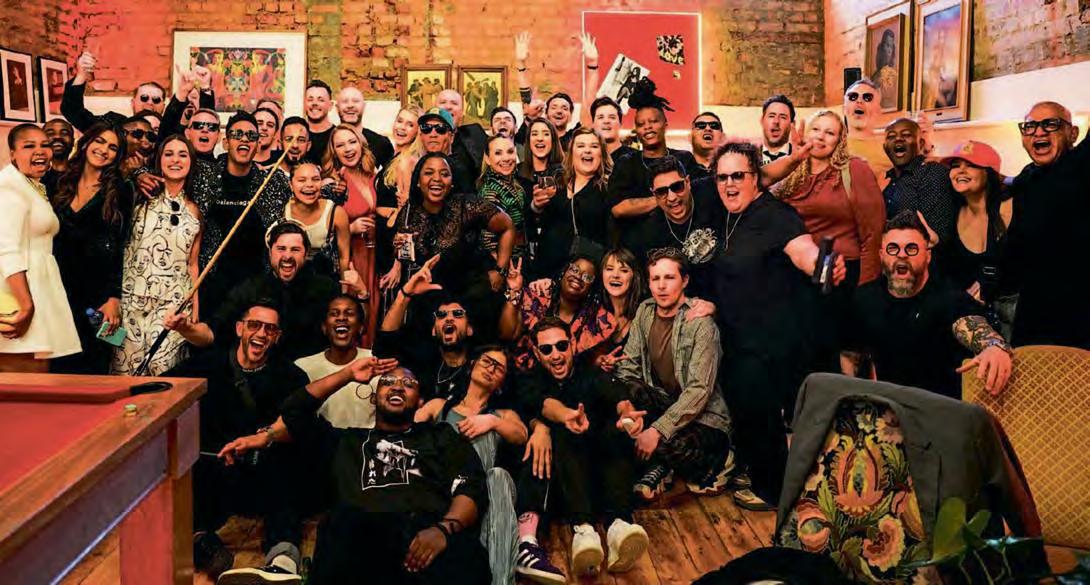
The Grid team, who ’ve had one of their best awards years ever
SMALL AGENCY OF THE YEAR
Describing itself as a challenger agency for challenger brands, Retroviral thrives on delivering thought-provoking work that plays in the realm of discomfort
ents mergeto createexceptional outcomes.
It describes itselfas a challenger agencyfor challenger brands, thriving on delivering thought-provoking work that playsinthe realmofdiscomfort. Thisalso plays outin its culture, with its people constantly challenging each other todeliver ideasandcontent that cut through the clutter. Though it doesn’taim to be controversial,it doesstriveto produce work thatresults in questions beingasked and hires with this ethos in mind.
Its insights-driven approach transformed a Discovery Black Friday negative sentiment challengeinto apowerhouse Twitter campaign with #HackBlackFriday.
Challenger boutique agency Retroviral is the well-deserved Small Agency of the Year for 2023. Having built a reputation forconsistently deliveringqualityandclever workthatleavesthe viewer smiling, it wasan obvious winner in this category, said the judges.
Notonly hastheagencyhad itsmost financially successfulyear everwith more than 26% growth over the previous year,but time and againit has demonstratedcommitment todeliveringexceptional resultswith anumber ofgroundbreaking campaigns that exceeded client expectations.
A multispecialist agency, Retroviral has a vision to be the best storyselling a term it defines as branded storytellingthatconverts tosales agencygroup inAfrica. Theagency believes its success isrooted in a collaborative culturewhere diversetal-
The agency’s strategic content marketing initiatives led to over R1m in revenue generated for LilLets’ newDrylock range.Its edgein creating entertaining viral content led toover15-million viewsforRCLFoods’ campaigns for Nola mayonnaise, Ultra Pet, Ultra Cat, Fry’s and Yum Yum with total paid media spendof less than R50,000 combined.A campaignfor Ultra Pet led to a surge in social media engagement, with more than 2.5-million viewsand 80,000new, unique click-throughs to the brand’s website.
Renownedfor itsability toflex itscreative muscleon leanbudgets, Retroviralproduces cut-throughcontent that generates maximum earned media and has adirect impact on the bottom line through sales conversions. Usingthisapproach, ithasproduced multi-award-winning campaigns, including thePrism Campaignof the Year for twoconsecutive years for Kreepy Krauly (My Kreepy Teacher) and
Checkers Sixty60 (Tinder Swindler). These successes were underscored by a 95% client retention rate.
That’snot tosaytheagency didnot experienceits shareof challenges:a campaignforBB Bakeriesfacedunexpected regulatory hurdles, resulting indelays andadditional resourceallocation.
It increased its staff complement to 17, up from 12 theprevious year, and boasts a BBBEE level 2 score and 51% blackownership. Fourstaffleft inthe year,including theagency’s creative director,who emigrated.Ratherthan source a new creative director externally, theagency establisheda resultsdriven vision overa 12-month period for its head of design to grow into the role. This initiative was communicated withclients, resultingin bothinternal and external support forthe new creative director.
The agency iscommitted to growth, withagraduate programmeinplace toconsistentlybring innewminds, diversity and fresh ideas.In 2023, the Retroviral graduates wereexposed to all facetsof the agency,from client service to creative copy to design. The agency recruited two of the three participantsinthe programmetofulltime creative positions.
A mentorship programme fosters and grows talentinternally. Staffare encouraged to pitch advancements in education and skills training, based on their professional missions and passions. To date, every request has been supportedby financialbackingof some description.
Looking ahead, the agency is poised to expand its offering, solidify its position asanindustry leader,andcontinue delivering value to clients. Its roadmap includes further integration of artificial intelligence andimmersive technologies to drive campaign personalisation and engagement.
Runner-up Happy Friday Creative last year’swinner ofthe Adaptability Award also delivered a strong entry. The judges commented that it’s encouraging to see an agency that prioritises its people doing so well.
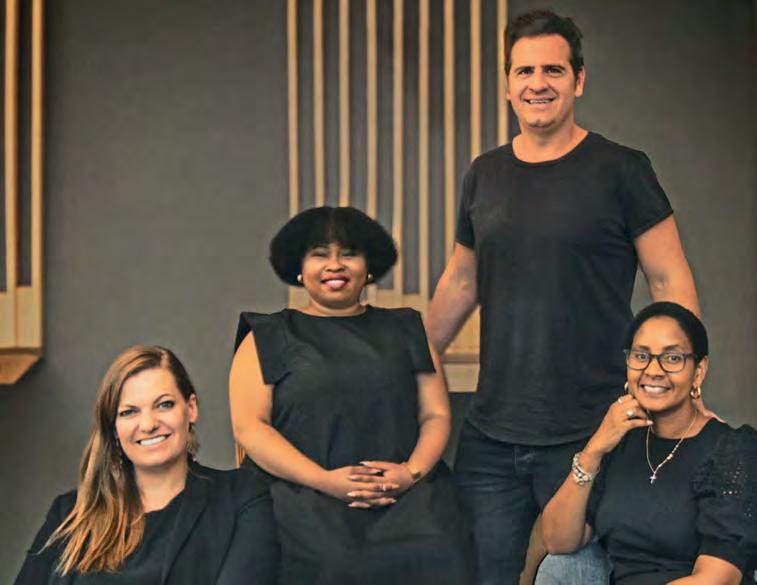
Retroviral executive team, left to right: Pippa Misplon (MD); Koketso Masisi (associate creative director); Mike Sharman (co-founder and CCO); Didi Nchabeleng (financial director)
MEDIA AGENCY OF THE YEAR
Both The MediaShop and the finalist in thiscategory, PHD, stand tall as modernmedia companies. Butitwas TheMediaShopthatstood outthisyear afteranincrediblystrong year of growth, particularly impressive given its size, said the judges.
“Despite being a real powerhouse in the South African medialandscape, it’s clear that The MediaShop has not rested on its laurels,” said AdFocus jury chair Luca Gallarelli. “After an absence of several years from AdFocus, it’s good to see this agency back.”
South Africa’soldest, andarguably one of its largest, media agencies celebrated its35thbirthday thisyear.Asmiddleage creepsup on TheMediaShop, it’s understandably hardto “remain impressive”,particularly whenyou’re operating at the scale at which this agency does. But this past yearis likely to go down as one of its most successful.
The standout highlights of the past year included growingbilling 21%and revenue 14%, animpressive increase given atougheconomy andconsideringthe agency’s billingbase of nearlyR4bn. In fact, The MediaShop’s growth exceeds many other agencies’ total billing.
Despite being a real powerhouse in the South African media landscape, it’s clear The MediaShop has not rested on its laurels. After an absence of several years from AdFocus, it’s good to see this agency back
Duringtheperiod underreview,itwon the Nedbankdigital account,one of South Africa’s largest digital advertisers with anannual digital spendof more than R200m. This accountwin is a vote of confidencefrom Nedbankthat the agency can successfullyhandle both digital and traditional media. It also won theJägermeister account,together with its partner IntiMedia. In addition to
L’Oréal, Sasol, the Western Cape government and MultiChoice.In total, more than R1bn was recommitted to thebusinessduring theperiodin question.
The MediaShopbelieves inbuilding sustainable relationships, so it’s perhaps nosurprise it has anumber of long-standing partnerships with key clients.Shoprite, arguablySouth Africa’s biggest advertiser,has been its clientfor 23 years,while Nando’s, one ofthe country’smost loved brands, has been a client for 19.
Both Nando’s and Shoprite gave The MediaShop oneof theirhighest relationship scores everlast year, illustrating thestrength ofrelationships that have blossomed into highly successful partnerships.
Together with itsholding company, ParkMedia, theagency launcheda performancedigital businesscalled Lucid Media,which has grownto 30 staffmembersin justtwoyears.It alsolaunched amarketingintelligence hub which employs data scientists and business analysts to consolidate research, data and analytics across the business.
Diversity,inclusion andtransformationcontinue tobeafocus atThe MediaShop.Alevel 1,majorityblackowned(55%) andmajority blackfemale owned (42%) organisation, in the past yearthe agency increased its black female ownership through staff-owned shares. It also partners with the MaharishiInvincibility Institute, funding studiesfor underprivileged black women.
addingbig clientsto itsroster, italso secured several mediumand small clients.TheRegent BusinessSchoolaccount,forexample, isamidsizedpiece of business where the agency believes it can make a difference.
Another highlightwas receivingcontract extensionsfrom long-termclients suchas FamousBrands,Nedbank,
On the awards front, The MediaShop has alsohad a stellaryear, winning an award for effectiveness at the Marketing Achievement Awards, doingwellat theMOSTAwardsand receivingScopen recognitionwhere itwasvoted thenumberonemedia agencyto workfor byits peers,and thenumberone mediaagencyto work with by its clients.
PHD, last year’s winnerinthiscategory, also delivereda strong entry this year,leaning into theworld of digital.
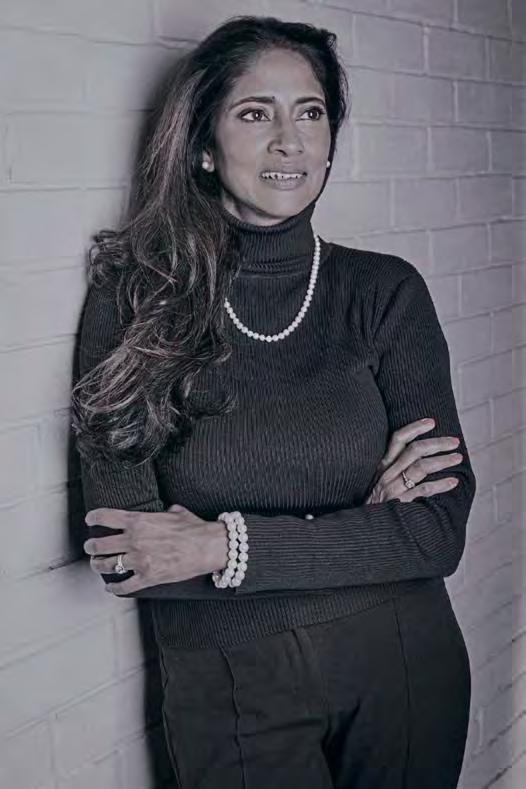
Dashni Vilakazi, MD of The MediaShop
SPECIALISED AGENCY OF THE YEAR
‘Collaborative, inquisitive and deeply passionate about delivering ideas that work,’ Levergy’s paradigm shift away from being a pure sponsorship agency has yielded impressive results
This isthe third consecutiveyear that Levergy has been an AdFocus winner. In 2022, it won this same award and in 2021, it took the Adaptability Award.
Partof theM&CSaatchi AbelGroup, Levergy hasundergone asignificant paradigm shift in the past year from a pure sport sponsorship and entertainment agency to what it calls a “passion agency”— anagency that specialises increatingbrand connectionswitha target audience in a bid to attract new business more broadly.
An important message in this repositioning was that connecting through passion doesnot needa significant sponsorship and it does not need to be a sport. The engagement can be created,owned, partneredor lentbecause opportunities around passion come in many shapes and guises.
Levergy’s goal in its repositioning was to cement the simple, but highly compelling, premise thatpassion is a powerful solution for resonating more profoundly with adesired audience. As discipline-neutral sector specialists, theagencyplans tocontinuetolead
creatively and land onthe most appropriate executionfor eachbrief to deliver hard-working solutions.
The results of thisshift soon spoke for themselves: animpressive year-onyear revenueincrease, fournew client wins, theretention of its sixcore clients, andbeing themost awarded agency across sport,sponsorship, entertainment and activation in the period under review.
The AdFocusjudges wereimpressed with these remarkable results and said the agency’sexcellent growthisnot surprising considering it takes the role of creativity seriously.
Levergy grew its talent pool by 11%, witheight promotions,and boasteda staff turnover rate of just 15%. This is no small achievement given the industrywidechallenge ofattracting andretaining talent.Instead ofcompeting againstother agenciesonremuneration and benefits, itfocused on the mostimportantfactor injobsatisfaction: the actual nature of the work.
The agency’s trump card is that it is the

recipient of some of the most exciting briefs inthe industry,many ofwhich arecentred onconnectingcreatively with people through sport, entertainment, gaming, musicand lifestyle platforms.It deliberatelylandedthis message as a hookto lure the best marketingtalent. Tohelp withretention, the agencyencourages them to do what they love.
Ahighlightofthe pastyearwasthe globalcampaignfor the2023International Cricket Council Women’s T20 World Cup. Thecampaign’s objective was to drive interest and engagement across multiple markets globally, with a focus on turningaround the underwhelming performance associated with women’s sport in South Africa. Besidesbeing aprestigious piece of work, it was also lucrative.
When itcomes to itsclient relationships, Levergy’spartner modelisto “getunderthe skin” of businesses. Its executive management team works actively with clients across all briefs, with the result that powerful relationships are forged.
Because the agency didnot have any existing client-agencyperformance metrics in place, this year it commissioned the Relationship Radar tool to track its performanceand assess it against industry benchmarks.
Levergy has beenTelkom’s sponsorship agency since 2020, with a mandateto createmeaningful impactfor itsbrand andbusiness throughconsumer passions. Telkom chief marketing officer Gugu Mthembu says the team operates at an exceptionally highlevel, despitethe agency’s relativeyouth,and arecollaborative,inquisitive and deeply passionate about delivering ideas that work.
“They take the time to understand our business challenges, themarket and our consumer strategy.They have redefined how we view ‘sponsorship’ ”
Therewere threefinalistsin thiscategory this year.PlusNarrative and MakeReign are newagencies to the AdFocusAwards, andbothprovided strongentries asdidthe thirdfinalist, Mscsports.
Melissa Daniels, Levergy MD
Struan Campbell, Levergy CEO
PARTNERSHIP OF THE YEAR
Ogilvy South Africa’s collaboration with Carling Black Label powerfully repositioned the brand by reframing the value and role of masculine strength
This was the most popular category in this year’s AdFocusAwards,which speaks volumes about the importance ofagency-client relationships.This year’s winner is a relationship that has endured for more than four decades, anddespitesome lowmoments,its strength has never wavered.
Whatmakes theOgilvy SouthAfrica and Carling Black Label relationship stand out, agreed the judges, is that it’s bigger than any one person, with agency and client sharing a common understanding ofthe brandand how to continue evolving the brand proposition.
CarlingBlack Labelwas originallypositioned as US beerbrewed in South Africa. But the brand struggled to developitsown identity,trailingsignificantly behind CastleLager, Hansa and Lion Lager for popularity.
Ogilvy South Africa’s partnership with Carling Black Label goes back 41 years whentheagency wastaskedbythe brand’s owner, South African Breweries (SAB), tosecure a meaningful place for the iconic brand in the hearts of South Africans.
In 2011, Carling Black Label and Ogilvy
launchedthe highlysuccessful Carling BlackLabel Cupwith the “Be theCoach” campaign, which ran successfully for eight years.
Butby 2018,changingconditions andsentiments about masculinity wereputting pressure on sales volumes. A 14% loss in sales volumes signalled a slowbut steadydecline.The brand was losingrelevance as younger beer drinkers turned tomore innovativeandprogressive brands.
Halting the brand’s decline was key to the company’sdefence ofits share and profitability in the South African beer market.
Despite decades of commitment to building atraditional viewof masculinity, Carling Black Label agreed to reposition the brand with a more progressive viewby reframingthe value androle ofmasculine strength.The reposition risked the brand losing its core audience, whilealso potentially not attracting a new one.
Ogilvy inspiredthe client teamto live theirnewbrand platformbycommitting tocreative work that could improve the lives of South Africans and tackle thescourge ofgenderbased violence (GBV) that follows alcohol abuse.
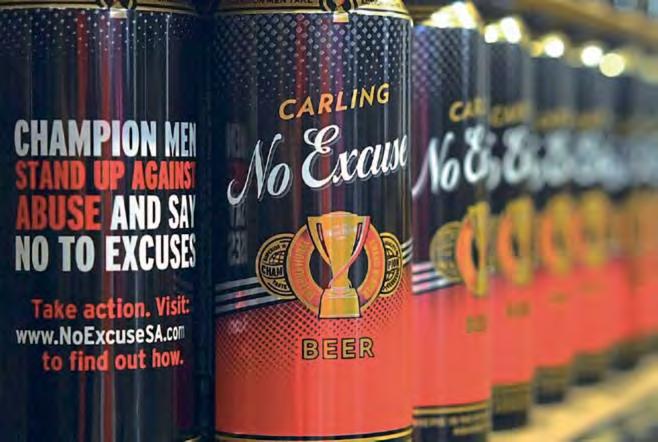
The agency designed and launched the#NoExcuse platform,which igniteda new connection with modern masculinity. This was activated by the “Soccer Songs for Change” stunt, which managed toreach alarger audience thanthe Soccer WorldCup openingcere-
mony and match in 2010.
Ogilvy’s efforts, whichincluded using nontraditional channelssuch as rebranding the physical beer with the #NoExcuse message and marching with NGOsto parliamentto petition for change,were instrumentalin giving Carling BlackLabel a refreshed, highly relevant and meaningful place in society.
In2019,a changeofleadershipwithin SAB threatened the momentum of the campaign. The leadership shift meant that the highly awarded brand team on the client side was moved to other divisions.
Ogilvy, as brand custodian, stepped in to support the new leadership team during the transition. The agency felt deeply accountablefor thework that had comebefore and wantedto ensure thehigh standardand strong purpose of the work continued.
By putting the brand at the centre, the agency wasable tobuild aclose relationship with thenew client team based on trust and collaboration.
And then came 2020, accompanied by apandemic,lockdowns, abanonthe sale of alcohol and no Carling Cup. The lockdowns led to a greater prevalence of GBVas womenwere nowconfined in proximity with men struggling with mental health issues.
The agency, clientand partner teams workedunder hugetime,resource and financialconstraints duringa difficult period to create a highly effective way of using thebrand’s platforms to reach both the victims and perpetrators of GBV with offers of help.
The demonstration ofa real commitment to work that attempted to solve societalissuesgave theagencyand the client team anincreased sense of purpose. The close relationship that


was developed created a high-trust, cross-disciplinary team thatwas able to strategically andcreatively manoeuvrethe brandthrough thiscritical time.
To avoid bad behaviour by consumers when alcoholwent backon sale,an additionaldigital campaignwascreated, teachingpeople howto adhere to the Covid restrictions.
Understanding thatmany menwere unemployedinthe wakeofthepandemic, Ogilvyrealised theyno longer felt like champions. Anew brand line, “There’sGold Inside”,was createdto inspiremen tofindaway outoftheir challenges. This reappraisal unlocked a more positive approach to men’s issues, whichhas led togreater creative opportunities for the brand.
The new brand line was launched with the sponsorship of a matric education for a number of men — “A Class of Their Own”— whohad failed to complete their schooling. At the same time, on-the-ground workin townships with #FatherANation was aimed at supporting men through their daily struggles towardsdeveloping healthier masculinity.
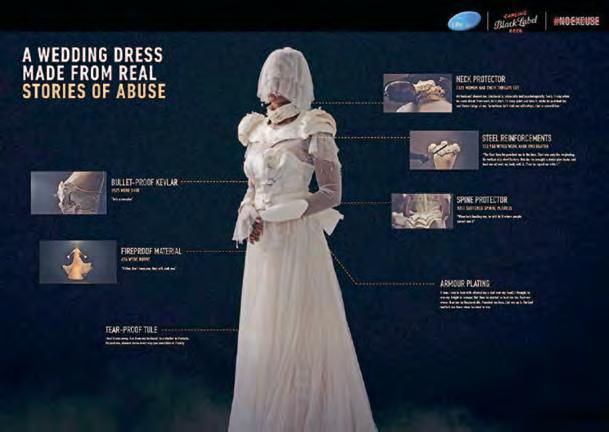
The agencyalso found newways to extend the#NoExcuse message. Facedwiththe prospectofthefirst summerintwo yearswithoutalcohol restrictions, Carling Black Label continued tolean into#NoExcuse with the powerful “Bride Armour” activation, which included a short film on the horrorsof GBV.The #NoExcuse messagehas reacheda globalaudience with its simple call to end GBV. It is a messagethat sits at thecentre of the brand’s purpose.
In 2020, the agency proposed evolving the CarlingBlack LabelCup a oneday, four-team football tournament through “Change the Game”, with the idea ofgiving fansmore controlover thegame, includingusing Twitterto vote livefor substitutions.The refreshed platformdeveloped overtwo
yearsresultedin themostprogressive formatyet: “My Game, My Way” in 2022withtheinclusion of two more teams, voted for by the fans.
Close partnershipsbetween multiple stakeholders,partner agencies and Carling Black Label have enabled this huge annual event to maintain its spark for more than a decade.
Frombeinga laggardinthe beer market in2018, Carling Black Label became the most powerful beer brandin thecountryin2022, witha power scoreof 16.8 fromKantar, the highestbrand equityscoreit hasever had. Between 2018 and 2022, Carling Black Labelincreased itsequity bya remarkable 84%.
Also in2022, itexperienced historic sales volumes despite a midyear price hike, an admirable feat which demonstrated the perceivedincreased value attached to the brand.
Thecampaignalso hadasocialimpact, resulting in a 50% decrease in the numberof womenwhoaccepted spousalabuse anda15% increasein men whosaid they wouldnow stand up against GBV.
Itsbusiness impactwasno lesssignificant, resulting in volume growth of 83.1% for the brand between 2018 and 2023, and giving Carling Black Label a 42.7% share of the local beer market.
The campaign has been highly awarded both locally and internationally, winning a Grand Effie as well as a Gold and SilverEffie; and Goldawards at Cannes, theAssegais, theNew Generation Awards, the Loeries, the Bookmarks; and Silvers at the Clios; and a Bronze at The One Show.
JohannaMcDowell, themanaging partnerof ScopenAfricaand CEOof the Independent Agency Search & Selection Company (IAS), the sponsor of the Partnershipof theYear Award, says winningthe Grand Effiein 2022 was the ultimate demonstration of the continued successof thislong partnership.
“A client that is willing to take risks and be controversial for a very good cause shows great faith in the ability of their agency who, in turn,was willing to workreallyhard toimplementsucha strongidea. Theleveloftrust inthis relationship is unmatched.”
The three finalist entrieswere all im-
pressiveintheir ownway.Nedbank’s relationship withJoe Publichas yieldedincredibleresults forbothclient and agency.Joe Publichas become invaluableto Nedbank every agency wishes they hadthis kind of relationship, said the judges.
McDowell says this partnership was alsoastrongfinalist in2022. “This is a relationship willing to review and renew itselfon asystematic basis.Consistent and strongbrand building work illustratesthe seriousnesswith whichboth partiescommit tothis partnership,” she says.
Savannah and GreyAdvertising have created an entirelynew standard when it comes to the quality of work in theircategory. Theagency’s workfor Savannah continues towin awards both locally and globally.
“Thismust bequitea funrelationship between agency and client, as they’ve been able to generate consistently quirky advertising, which has certainly resulted in brand building and awareness,” says McDowell,adding thatthe collaborative nature ofthis relationship is to be applauded.
Last, butnot least, isthe partnership between TBWA\Hunt\Lascaris Durban andBuild It.This partnership,says McDowell, has resulted in a fast-growingbrand awarenessforabrand ina categorythat traditionallyis notthat interesting. It’s also not a category that spends a greatdeal. However, both parties have worked collaboratively to ensure success.
The AdFocusPartnership ofthe Year Award is sponsored by IAS.
This award is sponsored by


PUBLIC RELATIONS AGENCY OF THE YEAR
Earning strategic communications a place at the business decision-making table, Weber Shandwick has successfully evolved to meet the changing needs of post-Covid businesses
All three finalists in this category Magna Carta, Razor and Weber Shandwick were incrediblycloseand theawardcould havegone toanyoneof themina different year. However,it was Weber Shandwick that took top honours this year, by a slim margin, delivering a strong entry acrossthe board with agency growth,excellent clientrelationships,andmaking apositiveindustry contribution.
Many publicrelations agencieshave struggled to recover to pre-pandemic levels. Weber Shandwick has evolved to meetthe changingneeds ofpostCovid businesses by extending its services beyond traditional PR into a consultingpractice thatinfluencesbusiness and drives growth.
One ofthe agency’sofferings, called Leaders Transformed, is designed to champion new business leaders, support leadership transitions, and ensure staff engagement and business stability. It has also developed services thatleverage itsexpertise inreputation management,organisational development, coaching and sponsoring, to deliver cutting-edge consulting atthe highestlevels ofbusiness decision-making.
Theresultsspeak forthemselves:in the past year, the agency has retained all its clients and signed on several newones, ensuringgrowth andhigh profit margins of between 25% and 30%, year on year.
Weber Shandwick South Africa is part of a global network of agencies. Each office operates autonomously with separate clientsand billings.In South Africa, theteam consistsof adiverse
team of strategic thinkers and creative storytellers with a strong competence in C-suite engagement, strategy and analysis, media andpublicity, organisational transformation, and reputation and leadership.
The agency believes businesses today exist in a reputation economy with strategic communications an increasingly important risk area to safeguard. It alsomaintains thatit hasearned strategic communicationsa placeat the business decision-making table. This, it says, has been a critical move in the changing business landscape.
The agency has won the Best Up-andComing PR ProfessionalAward at the Prism Awardsfor fourconsecutive years.
People area priorityat WeberShandwick. The agencyis laser-focused on its employee experience.From middle managers to senior leadership, there’s a developmentprogramme thatensures holistic personal growth. Four high-potential individuals participated in the agency’s Leadership Incubator inthe pastyear, ayear-long programme focused on building leadership expertise and a leadership succession network.
Its staffretention activitiesare ledby “Find-me Grow-me Know-me Keepme”, an approach that reflects the talent journey within the business. It includes a continuous review of hiring practices, creating strong pipelines and new talent pools.
Once talenthas beenonboarded, the agency is intentionalabout growing them and compensatingthem competitively.
Ipelegeng Thibedi, CEO of Weber Shandwick Africa
Its client mix isdiverse, covering corporate affairs,technology, financial services, public affairs, health care and the consumer. Its workfor clients is focused on itsimpact on businesses and communities. In the past year, the agency helped Nestlé pilot a blueprint for sustainabilityengagement and communications inresponse tothe government’s extendedproducer responsibility policy.
The campaign won Gold at the Prism Awardsand receiveda Certificateof Excellence at the Sabre Africa Awards. Itwon awardsatPrismfor workwith Mastercard anda certificateof excellence at Sabre for work with IBM.
A level 1 BEEand majority blackowned agency,Weber Shandwick’s diversity, equity and inclusion values are evidentacross itsshareholding, talent,work andculture. Itsbusiness ecosystem is diverse, with suppliers that boastgreat potentialto contribute to society.
Magna Carta also hada strong year from a new business perspective and is clearly making areturn to being a PR powerhouse.The agencyhas doubled down on its reputation management offering,including crisis communication.
Razor PR, at only four years old and havingalready wonthis awardtwice, isa forceto bereckonedwith inthis category. Theagency continuesto delivera strongbodyof workand enjoys excellent relationships with its clients.
ADAPTABILITY AWARD OF THE YEAR
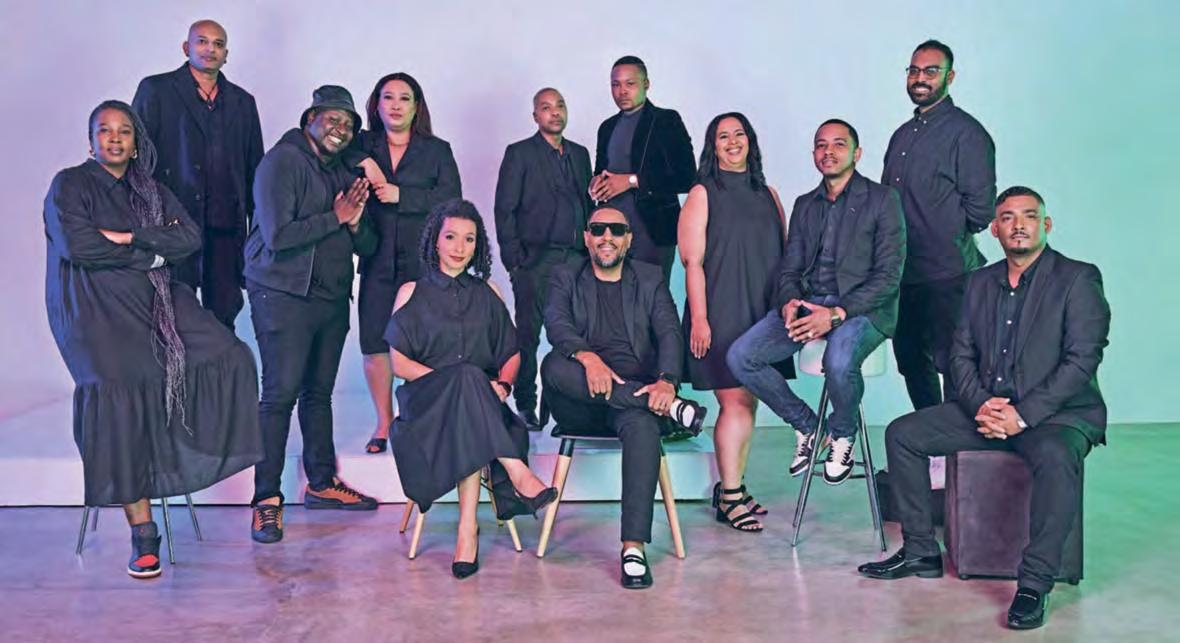
This time two years ago, Two Tone Global was stillreeling from the commercial impact ofthe pandemic. Before Covid, the agency employed22people andgenerated60% ofits billingfrom brandexperiences. Bymid-2020, theagency hadbeen forced to reduce its staff count to just six people.
The only reason it didn’t cut back even more was that it had started re-engineering and reinventing itself in 2019 to be more digitally focused. The key appointments madein 2019 allowed theagency torespond and adapt to pandemic restrictions.
Falling backto itscore offeringof being a creativelyled agency with strong digital capabilities, Two Tone Global began todevelop digital experiencesand tradecampaignsfor clients such asNestlé, Diageo and Telkom,allowing themtoengage with and activate consumers virtually whenphysical engagementwasnot possible.
Its shiftfrom whatwas aprimarily activation-based agencyto aniche digital engagement agency soon paid dividends,allowing thebusinessto
grow revenue by 135% between March 2022 and May 2023. A 98% success rate asfar aspitches wereconcerned helped, winningthe agencybrands such as Telkom, African Bank, SABC 1, 2 and 3 and Pernod Ricard.
That’s not to say it has all been smooth sailing for Two Tone Global. Like many ofitscompetitors, theagencyhas struggledtoupscale itshumanresources talent in tandem with the rate it has won newbusiness in the past twoyears. Itwasalsorequired tocreate more office space for its additional people and find the necessary capital to fund its new business acquisitions.
Revenue grew by 135% between March 2022 and May 2023
Theagency,which is100%blackowned, has also struggled to adapt to a hybrid working model post-pandemic. Oneof thebiggestinsights forthe agency coming out ofthe past two years is that the hybrid model is not optimal for collaboration or creativity. It alsofound thatitspeople weremore
motivated when theywere able to engageface-to-face, withresilience resulting from thecamaraderie that developed among team members.
To mitigate staff burnout, the agency engaged reputable talentscouts to assist with human resources appointments.It redesigneditsexisting officeto create morespace, includingfor productionfacilities,and approached afunding andfinancial grant agencyto capitaliseits new projects. Thisfunding wasapproved in late 2022.
Staff were provided with incentives to workfrom the office,including a commuter budget toease the financialpressure oftravelling intothe office, whilea hybridenergy backup systemmitigated downtimeresulting from load-shedding.
As part of its strategy to gear itself for growth, the agency conducts regular high-focus sessions with its staff on business strategy as well as talent developmentprogrammes. Itstalentacquisition strategy,whichprioritises finding employeeswith the rightcultureand visionfitforthe agency, continues. Its human resourcesstrategyis tobuildahighperformance team withhigh levels of creativity.
The agency has also expanded its footprintbyopening anofficein Kenya.
TheAdaptabilityAward wasfirstintroducedin2020 torecognisean agency that has successfully adapted to a new paradigm, demonstratingthat ithas embracedflexibility andmanoeuvrability, andhassuccessfully risenabove thedisruption of an unusual period.
The judges saidTwo Tone Global’s turnaroundnot onlydemonstrated tenacity andresilience, butsuccessfullyestablishedthe agencyasa meaningful industry player that deliversa sustainableandrelevant product, making it a worthy winner.
The runner-upin thiscategory was Weber Shandwick.
Two Tone Global’s executive and management team
SHAPESHIFTER OF THE YEAR
What I loved about Grid — and what I think sets it apart — is that it trains its people to change the world, whereas so many other agencies train their people to win awards
Ashapeshifter isdefinedas afictional being that can transform itselffrom onephysical formto another. Zeus, god of the sky and thunder, was apparently a fantastic shapeshifter, taking many unexpected forms.
This year’s Shapeshifter aptlyembodies the term.Yatish Narsitrainedandpractisedas anarchitectfor15 years,before movinginto advertisingas chiefexperience officer at the multi-award-winning agency, Grid Worldwide. He is now the chief marketing officer (CMO) at MultiChoice.
Narsigraduated witha bachelor’s degree in architecture from the University
I’m not a huge fan of disciplines. I prefer to look at it as problem-solving
of KwaZulu-Nataland then joined Design Partnership, an international architectural firm.
It’squitea jumpfromarchitecture to advertising to running whatis arguably one ofthe mostdemanding marketingportfolios in South Africa.Narsi doesn’t see it that way.
“I’m not a hugefan of disciplines,” he says. “I prefer to look at it as problem-solving.WhatI loveaboutarchitecture and what drewme toit was its combination of engineering and design aesthetic in service tohumanity and the creationof something that would beused every day.”
Design Partnershipwas involved in a number of retail redesigns, includingfor Wimpy, Steers,Edgars and Mugg & Bean, during which time Narsi realised how important the roleof the brand is in a consumer brands’ retail offering. Aftera chancediscussion withGrid Worldwidefounderand chief creative officer Nathan Reddy, Narsiaccepted theoffer ofbecomingthe agency’s chief experience officer, working on some of the country’s most admired businesses and brands, including MTN and FNB.
Narsi learnta great dealat Grid. “What I loved about Grid and what Ithink setsit apart isthat ittrains its people to change the world, whereas so many other agencies train theirpeople to winawards. It hasa verymaverick andentrepreneurialculture andencouragesfreedom of expression. I like to think that what I helped bring to the table was nontraditional category thinking.”
It waswhile working onthe rebrand of Showmaxwith MultiChoicethat Narsi met Marc Jury, the SuperSport CEOwhotook overasMultiChoice South Africa’sCEO earlierthisyear.
Yatish Narsi, chief marketing officer at MultiChoice
I keep hearing agencies saying that the big trend right now is for brands to be customer-centric. If that’s the case, why are agencies not better at understanding the issues facing their clients?
Jury offered Narsi the long-vacant position of CMO.
Before acceptingthe position,Narsi warned Jury he was not a career CMO. “I said I’d accept the position and stay for as longas I think I’mbeing useful and addingvalue. Ratherthan trying tokeep thisjob, IsaidI’d tryto doit. What was remarkableabout Marc ’s people vision is how much he valued curiosityandattitude overyourCV and qualifications,which madethis opportunity an absolute no-brainer for me.”
Another thing thatappealed to him was the ability to influence more than just the brand, but also other business levers that affect the customer.
Narsi’smandate asMultiChoiceCMO is two-fold: the first is to rebuild belief that the best days of MultiChoice are still ahead of it and, second, to play an authentic,meaningful roleinadding value to the lives of its customers.
“There are very few businesses on the continent that have the scale and credibilityto genuinelychangethe narrative andharness untappedpotential, withthe exceptionof ahandful of banks and telecom companies,” he says.
“As a brand, MultiChoice is very close to culture and continues to have the content that people love.”
He’s adamant that MultiChoice needs to get back to its core business, which is entertainment. Even its marketing needs to be entertaining. The fact that it’s not entertaining is a travesty, he says.
Against all conventional metrics, Narsi is anunexpected choiceas theCMO for MultiChoice. He doesn’t have a CV and hasbeen toldthat hisLinkedIn profile is notparticularly good. (His response tothat wasthat theonly people whohave updatedLinkedIn accounts have a great deal of time on their hands.)
He has neither the inclination nor the patienceto discussawareness,consideration and conversion.
But perhaps that’s why he is exactly what MultiChoice needs: someone who does not come from a traditional marketing background, has no formal academicmarketing trainingand,as a result,thinks outsidethe boxof conventional marketing thinking.
He’s the first toadmit that he doesn’t think likea marketer.In fact,he doesn’t even know what a CMO is supposed to do. “But does that really matter? I’m part ofa team of incredibly talented and smart people at MultiChoice tryingto solveproblems and add value to customers.”
The rise of AI is not a sign that creativity is losing
Andeventhough Narsisatonthe agency side of the table for six years, as a client,he gets exasperatedwith his ad agencyand can’tunderstand why, after discussing thebusiness challengesfacingMultiChoice foranhour withtheagency team,theystillrequest a brief.
“Whyrequesta briefwhenI’ve just spent thepast hourexplaining the challenge and the problems we need solved? ”
It’s these kindsof experiences that have himshaking his headwhen he hearsagencies complainingthatthe client doesn’t get it. “I’m discovering that it’s actuallyagencies that don’t get itand don’t understandthe challenges that the business needs to solve.
“Ikeephearing agenciessayingthat the big trend right now is for brands to
be customer-centric. If that’s the case, why are agencies not better at understanding theissues facingtheir clients? ”
That’s not to say that marketers always get it right. For too long, he says, marketinghas focusedon beinga discipline rather than understanding thatit hasarole toplayin linkingthe customer and the business together.
“Marketingasa disciplineinSouth Africahas lostitsseatat thetable.It’s not close enough to its customers or the business and tends to mark its own homework,” hesays. “The fact that I was able to step into a CMO role is symptomatic of the problem. It says something about the state of the industry thata businesssuch asMultiChoice has had to take a chance on an architect who used to do some branding and made some logos.”
Far fromartificial intelligence(AI) being a threat to the advertising industry, he insiststhat the biggest threat isnot usingmodern technology. “Over time, new technologies get absorbedinto ourday-to-day lives, at which point they’re no longer a new technology, but rather one of many tools we use tohelp us live our lives more efficiently,” he says.
Ratherthan fearingthese newtechnologies,the industryneeds toembrace them.At thesame time,it needs tobe lessfocused onprotectingdisciplines suchascopywriting and art direction and more focused on solving their clients’ problems.
“Marketinglessons haveit thata brand such as Kodak is about memories rather than film. Translated into the contextof thead industry:the businessofcopywriters andartdirectors is not to create commercials but to solve business problems.
“The ad industry can be quite myopic about some things,and currently it’s being myopic about the perceived threat of AI. The rise of AI is not a sign that creativity is losing. In fact, it’s quitetheopposite, becausewhatit representsis thedemocratisationof creativity.”
Narsihas atattoo ofa Sanskritverse, whichepitomiseshow hefeelsabout life. Loosely translated, it says that the path to true happiness is to be wise, to be wise is to be useful, to be useful is to be wealthy, and tobe wealthy is to make life betterfor others. Making livesbetter forothers, isultimately, the life mission of this shapeshifter.
INDUSTRY LEADER OF THE YEAR
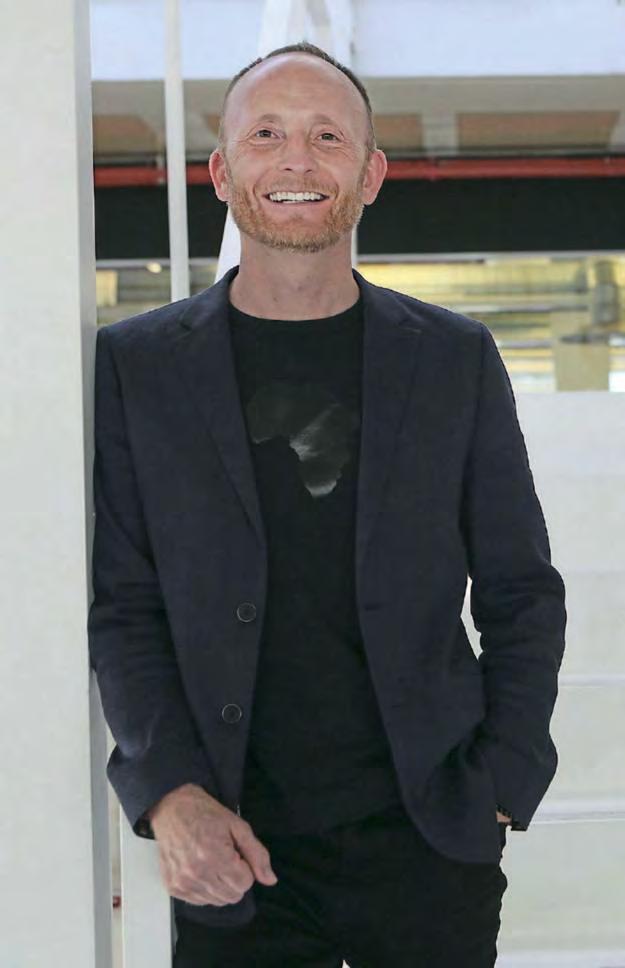
AdFocus Industry Leaderof the Year is someone whohas made a significant contribution to the industry. This year’s recipient is Pete Case, CEO of Ogilvy South Africa.
TheAdFocus judgessaid OgilvySouth Africa’s returnto its formerheyday is largely attributableto Case andthat it wasamasterstroke onthepartof Ogilvy’s boardto gethim backas CEO. His determination to return Ogilvy to the A league, they said, speaks volumes about his determination and talent.
Pete Caseis one of theindustry’s most awarded leadersand previouslyranked in the top 10 best-performing CEOs globally by theWorld Advertising Research Center. He was also voted one of thetwo mostadmired agencyleaders for 2022 in the annual MarkLives poll.
Aleaderwithan unusualblendofboth creative and businessskills, Case never intended to conquerthe ad industry. His school results were certainly no early predictor of his later career success, and itwas onlyafter he’dleftschool thathe discovered hewas severelydyslexic. Embracing this asa superpower rather than ahindrance, he went onto attain an honours degreein graphic design andbecamefascinated withfilmand technology.He taughthimself howto code and developed askill for film, typography and motion graphics.
At 22, he took a small business loan and
When you’re creating things that have never been done before, the people you surround yourself with are so critical
startedhisown company,basedinhis bedroom.Armedwith oneofthefirst mobilephoneson themarket,hedirected and produced music videos, short films, commercials and motion graphics. He developed a good reputation in a tough market, even winning two Emmy awards for design and directing.
After being headhunted, he spent two
years creating andredesigning the brand identities of television stations around the world.
He then fell in love with a South African and followed her back home, expecting tocarry on withhis blossoming directing career. What he hadn’tfactored intohis movewas thathis reputationintheUK asan up-and-comingfilm directormeant nothing in South Africa.
Pivoting into adifferent industry, he established a digital design business in1999,which was,heconcedesin hindsight, way before its time for the local market. “We created some industry-leadingwork forlocalbut mostly globalclients, and itwas an important businesslesson intiming,” he says. Several years later, after hisbusinesspartner diedinacar accident,hedecided toclosethe business for a fresh beginning.
Ameeting withNet#workBBDO founderMikeSchalit ledtoajoint venture with Network to establish a new digital agency called Gloo. “Again, we were still too early, but the establishment of Gloo was the start of an incredible journey,” says Case.
The business grew from seven staff members tomore than 140and, to all intents and purposes, pioneered the digital agency category in South Africa. Forseven consecutiveyears, Gloo wasnamed AdFocusDigital Agency of the Year.
Case attributesmuch ofGloo’s success tothe people hehired. “When you’re trying tomake things that havenever beencreated before,the people you surround yourself with are socritical. They believedin what weweretrying togrowandreally helped push theboundaries of our industry forwardat thetime,” he says.
Someof hisproudest momentsto this day, he says, are when he meets up with people who used to work for
Pete Case, Ogilvy South Africa CEO
him and he learns that they have gone on to do even more impressive things with their careers.
In 2014, Case decided to merge Gloo withOgilvy,assuming thepositionof chief creative officer, helping the agencyevolve itscreative productto meet the needs of more digitally enabled consumers.
He dived into the full through-the-line capability, leading Ogilvy South Africa throughone ofits brightestperiods, during which time it won four Grands PrixatCannes,five GrandsPrixatthe Loeries, and some of the top awards for creativity and effectiveness around the globe. OgilvySouth Africa frequentlytopped thelocalcreative rankings and was voted the most integrated agency by its peers for five consecutive years.
Case left the agency at the end of 2019, intending totake abreak fromthe industry. “I’d been commuting weekly between Joburg and Cape Town for years, and with a young family at home,Iwanteda breakandareset,” he says.
Choosing to work with a few start-ups, Casewas theninvited totake ona temporary creativerole forthe global Ogilvy network toassist with implementing its latest strategy across various offices. A fully remote position, the mix suited Case perfectly.
My leadership style is as much about ensuring we have a good creative product as it is about trying to create the best working environment ... Motivated people are a very powerful differentiator for any agency
But while Casewas thriving, some industryanalysts feltOgilvySouth Africa was losing its spark and its way. Hewas subsequentlyapproachedby Ogilvy’s boardto comeback asCEO and reset the tone, culture and course of the agency.
“Whilemy previousrole focusedon the agency’s end product, there were times wherethis limitedfocus was frustrating because I was actually just as interested in the more holistic business discussions.This timearound, my focus would allow me to apply the business skills andexperience I had acquiredwhile buildingmyprevious businesses, as well as implementing the strategies I’dbeen helping the Ogilvy country offices put in place.”
We
Case returned toOgilvy South Africa as CEO and creative chair in early 2022 witha goalto attract,grow andnurture talent and unlockvalue. His priority, he says, was to listen.
“The ingredient I knew we already had was great people. What I helped bring to the table was a new and clearer ambition of what we could all achieve together. Myagency leadershipstyle is asmuch about ensuring wehave a goodcreative productasit isabout tryingto createthebest workingenvironmentfor everyoneacrossthe business.Motivated peopleareultimately avery powerfuldifferentiator for any agency.”
This focus on the people aspect of the businesswas partofthe reasonfor Gloo’s phenomenal success. Staff productivityand creativity,says Case,is inextricably linked to how happy people are in theirjobs. The Ogilvy agency culture has recently been boosted by more timein the office. Thisyear, allstaffwererequired tobe in the office for three out of five days.
Case firmly believesthat great work requires teamsto becollaborating in person alongside the flexibility of working virtually. “There’s no question thatmoretime togetherhasresulted in better work, which promotes the growth of our people and clients.”
The results of some of Case’s initiatives andenergy havebeenapparent. Ogilvy South Africa won the Agency of theYear Awardatthe 2023Loerie Awards, including two Grands Prix and
four golds.It wasthe mostawarded agency at Cannes for creativity for the secondyear inarowand themost awarded South African agency at The One Show, where it won 16 awards.
It has been just as successful when it comesto effectivenessawards,winning the Grand Effie, three golds and four silversat the2023 EffieAwards across fourof itsbiggest clients:KFC, Volkswagen, Mondelez and Carling Black Label.
“Winning awards for both creativity and effectiveness iscentral to our ambition: creatingbig impactfor big brands,” says Case.
Admitting he believed the agency’s turnaround would take longer than it has, and knowing there’s plenty still to do, Case says he is delighted at how quicklyit hashappened. Comingout of the challenging pandemic years andgiven atough localeconomy whereclientbudgets areunderpressure, these achievements are nothing to sneeze at.
Case is determinedto position the agencyforeven moresuccess.Far from seeing artificialintelligence (AI) as a threat, he says its potential needs tobe embraced.Ogilvy isputting every employee through AI training to ensure the entire team understands how to use it as a tool to create greater efficiencies and opportunities.
“This is a hugely fascinating time to be partof theadvertising industryand, increasingly, technology will be part of the creative process to create maximum impact for our clients.”
He’s also passionate about their talent pipeline. Ogilvy is one of the biggest industry contributors to developing newindustry talent,fullyfunding more than 40 graduates for its graduate programmeeach year.This year’s graduate intakehas overindexedon copywritersand digitaltalent,given the market shortageof these skills. Graduates arenot tiedto Ogilvyon completion of the programme, which underlines the open ambition to help the industry and not just the agency itself.
If every agency could create a version of this kind of internship programme, says Case, the industry wouldn’t have such alarge skillsshortage. “As an industry, I believe we need a more generousattitude tobuilding apool of industrytalent,” hesays. “It’s every agency’s responsibility to grow the next generation of talent.”
LIFETIME ACHIEVEMENT AWARD OF THE YEAR
‘I believe in paying it forward and giving back,’ says ad industry doyenne Ann Nurock as she redefines client-agency relationships, inspiring the next generation
The AdFocusLifetime Achievement Awardis giventoan individualwho hasmadea profoundlypositiveimpactonthe industry.Thisyear’s recipient is, without question, one of the most passionate proponentsof the advertising industry in the country.
Ann Nurock is theAfrica partner of Relationship Audits & Management, a global consultancy that measures and optimises strategic business relationships with a primary focus on clientagency relationships.Its proprietary Radartoolis usedbycorporatesand agencies, assisting them to get the most out of their key strategic relationshipsby providinganin-depth understandingof theserelationships to optimise their potential.
Before joiningRelationship Audits, Nurock spentmore than25 yearsin the communications industry, primarilywithGrey Advertising,movingup the ranks until she was appointed MD ofGrey SouthAfricain2000 andCEO andheadofthe Africaregionin2003. Underher leadership,theagency doubledits sizein threeyears and,in 2007,wasrankedone ofthetopperforming newbusinesses andcreative agencieswithin theGrey Globalnetwork and one of the top three in South Africa.
If
they want great work, they need to inspire their agency
After graduating from Wits with a BA, she startedher career asan account executive on the OK Bazaars account atMortimer Tiley,which mergedwith BBDO.She thenjoined Grey,where
she had the opportunityto work on numerous multinationalaccounts. Managing the Procter & Gamble account, she says, was her “university of marketing”
The relationship withProcter & Gamble, on the launch of Pantene, was, she says, as close to a perfect client-agency relationship asit’s possible to get. “It worked so well because the client inspired us. The relationship wasbasedon absolutetrust.What someclients seemto haveforgotten today is if theywant great work, they need to inspire theiragency and give them ambition. Every agency aspires to creategreat work; ifthey’re inspired, theywill go beyond thecall of duty to deliver beyond expectations.”
In2007,Nurock wasrecognisedas one of the three most influential women in the communications industry, aswellas receivingtheFinWeek Long-Term Achievement Award.
Shefeltthat she’d reached the pinnacleof successinSouth Africa,and when anopportunity arosefor an international secondment,Nurock jumped at it and, in 2008, relocated to Toronto to take upthe position of president and CEO of Grey Canada.
But heading Grey Canada turned out tobe thelowpointof hercareer. “I didn’t understand the Canadians, and they didn’t understand me,” she says. “My mandatein Canadawas tobe a change agent,but mydefinition ofa changeagent differedfrom thatof the Canadians. Lookingback, I made mistakes. I should have spent the first six months just listening and learning before trying to implement any changes.Iwas theinterloper,soI
Ann Nurock, Africa partner, Relationship Audits
should have adapted to the Canadians rather thanexpecting themto adapt to me.”
But, astough as theexperience was, she doesn’tregret it. “It taught me humility andmade me abetter person. I went from beinga big fish in a smallpond toa verysmallfish inan enormous sea and there are lessons inthat. AndwhileIcontinue toconsidermystintin Canadaasacareer failure,what cameout ofit waslifechanging.”
Sheopted toreturn toSouth Africain 2011and liveinCapeTown, andatthe age of50 (ish), sheestablished the Africanarmof RelationshipAudits,in the processcompletely re-inventing herself,something she’s really proud of as it proves ageis just a number. Removed from Joburg’s business hub, shespentthe firsteightyearstravelling back frequently to see clients. It tookher sixlongmonths toacquire herfirstclients,she says,butherpassion, tenacity and hard work paid off.
More than a decade later, the business isverysuccessful andworkswith25 local andglobal companies,resulting in interaction with morethan 80 advertising agencies,enabling moreeffective client-agency relationships.
Relationship Audits has been contracted torun surveys forPernod Ricard globally, as well asfor MTN across Africa and the MiddleEast, SAB and most ofthe banks, toname justa few of her corporateclients. By helping agencies better understandwhat clientswant fromthem, includinghow to future-proof themselves, Nurock has become a trusted adviser.
Nurock says whatgives her immense satisfaction isthe feeling thatshe is giving back to anindustry that has served her so wellfor so many years. “I’m passionate about advertising and marketing and,through Radar,I’m able tohelp businessesand their agencies have better relationships.”
Her workwith clientsis nottransactional,and shedoesn’t consulton pitches. Instead, she’s focused on adding value. “I don’t do a survey and disappear. Rather, Ido regular checkinsand builddeep relationshipswith all my clients.”
Inaddition, forthepast eightyears, shehas representedSouthAfrica’s CreativeCircle andBizcommunityat Cannes Lions and reports back on the marketing and creative trends she has picked up. What shecalls her “side-
line” job helps keep her at the forefront of what’s happeningin the industry globally. These trends are also infused into her Radar presentations.
The local industry, shesays, was good toheron herreturnfromCanada. “Despite being away for almost five years,thespirit ofgenerositywithin this industrywas veryevident whenI returned,and soI believein payingit forward andgiving back, so ifI can help somebody, I will do it.”
That giving back has taken the form of both formal andinformal mentoring to help small agencies grow.
Where client-agency relationships go from good to great, is when agencies focus on the behavioural KPIs and deliver real value
RAPT Creative,the recipientof the 2022AdFocus SmallAgency ofthe Year Award and a finalist in the categoryin2023,is oneofthemany agencies Nurock has worked with in recent years. CEO Garreth van Vuuren has onlypositive things tosay about Nurock, calling her a true powerhouse in the advertising industry.
“Personally, I’ve had the privilege of beingmentored byAnn,and ithas been anabsolute game-changerfor me. Asan agency,RAPT hasalso had an amazing relationship with her,” Van Vuuren says.
“Working withAnn and herteam has brought immense benefitsto our agency. Her expertiseand guidance have helped us identify crucial issues throughthe useofthe Radarsurvey, which has been instrumental in highlighting areas where we can improve and implement effectivestrategies to overcome challenges. I can’t emphasize enoughhow importanther contribution has been to our growth.”
What sets Nurock apartis her selfless nature,hesays. “Ann genuinely cares about theindustry andis alwayswilling to share her knowledge and support us. Her dedication and generosity make hera truegiver tothe industry. We are incredibly grateful for her continued guidance.”
Nurock talks fondly of the current crop of agency leadersand marketing heads. “The local advertising and marketingindustryis veryunique,made up asit isof reallysmart anddecent people. There’s a definite camaraderie within the industry, which I enjoy.”
Based onher Radarbenchmarks, she believes that, overall, the South African industry isin pretty goodshape. To ensure good client-agency relationships, she says that, at the least, agenciesneedto adheretotransactional key performance indicators, which she refers to as “brilliant basics”
“The difference, and where clientagency relationships gofrom good to great, iswhen agencies focuson the behaviouralKPIs anddeliverreal value,” she says.
Ultimately, she says, it all boils down to trust: When agencies genuinely understand the client’s business and the challengesit facesandare ableto address thosechallenges through strategically soundcreativity, anenvironment of trust is created.
“Clients want theiragency to challenge them, but they can only do that if theyunderstand thebusiness and areable tospeakthe samelanguage as clients. Agencies need to talk about the sameobjectives andmetrics as the businessdoes to givetheir clients the tools to sell ideas to the C-suite.”
She’s less concerned about the impact ofartificial intelligence(AI)on theindustry than she is about the impact of performance marketingon brands, which, she believes, is often happening atthe expenseof brandbuilding. “Too many marketersthese days are focused on short-termpromotions in otherwords, ‘short-termism’. That fixationwith instantgratificationis startingtobefelt tothedetrimentof brands.”
There is a place for both, she says.
Calling Nurocka doyenneof theadvertising andmarketing industry,the AdFocus judgessaid she is oneof the mostrespected andadmiredpeople in the sector and a deserving recipient of the Lifetime Achiever Award.
STUDENT OF THE YEAR
This year’s AdFocus winner is Jané Louw , who is in her final year of a BA in visual communication at the Cape Town Creative Academy. The judges said her body of work is astounding, showing unbelievable versatility and a level of craft and execution seldom seen from a student. Cape Town Creative Academy’s Clayton Sutherland says Louw deftly avoids anything resembling a style trap. “Jané is one of those students who tries for a unique visual solution to the problem. It means moving out of her comfort zone and exploring an unfamiliar style. Jané is bright, a little quirky and adventurous.”
Louw loves creating things that feel like they live and breathe with people instead of just existing within their own confines. Motivated by the beauty she sees in the world and the power in consciously choosing a positive perspective, she says: “The ability to create an experience for someone that can induce joy, disgust or even confusion is what excites me about design. I want to share the joy I find in mundane things. There are lots of awful things happening in the world and sometimes it does feel absurd to be ruminating over type sizes and colour combinations. But cool design can make people happy and have a major impact on their experience of the world around them.”

‘THE ABILITY TO CREATE AN EXPERIENCE FOR SOMEONE THAT CAN INDUCE JOY, DISGUST OR EVEN CONFUSION IS WHAT EXCITES ME ABOUT DESIGN’
JANÉ
LOUW, STUDENT OF THE YEAR
Philippa Scholtz is in her final year of a BA in visual communication, majoring in illustration. She’s loved illustrating for as long as she can remember. “To me, illustration, as a medium, is an opportunity for engaged looking, connection, appreciation for the depth and detail of our world and the people in it; fostering love rather than fear. By training as an illustrator, I hope to be able to help people find a new way to see.”
Her lecturer, Stephanie Simpson, says: “Pippa is an exceptionally creative student whose work consistently exudes a playful nature and is executed with impeccable craftsmanship. Her illustrations possess a whimsical charm that invites the audience into a magical world. What sets her apart is her ability to tackle challenging topics, often speaking from the perspective of marginalised individuals. She consistently goes the extra mile and is a genuinely kind and considerate individual.”

Winner: Jané Louw, Red & Yellow Creative School of Business
Xolisa Tamarana is completing a one-year higher certificate in graphic design and has already secured an internship with Ogilvy. He describes his creative style as a combination of minimalism with organic shapes and forms.
Passionate about serving and contributing, he loves being challenged. “I like the idea of building something together. I often compete in hackathons and I’ve even won three times.”
His lecturer, Nini van der Walt, describes him as a thoroughbred creative who lives for his craft. “Xolisa eats, breathes and sleeps design and illustration. His work ethic and creative process are admirable. He sees the world in just a little more detail than the rest of the world; seeing the reality of life in people's faces and behaviour, but always sprinkling it with a bit more colour and magic. A true talent who never surrenders, and creates with integrity."
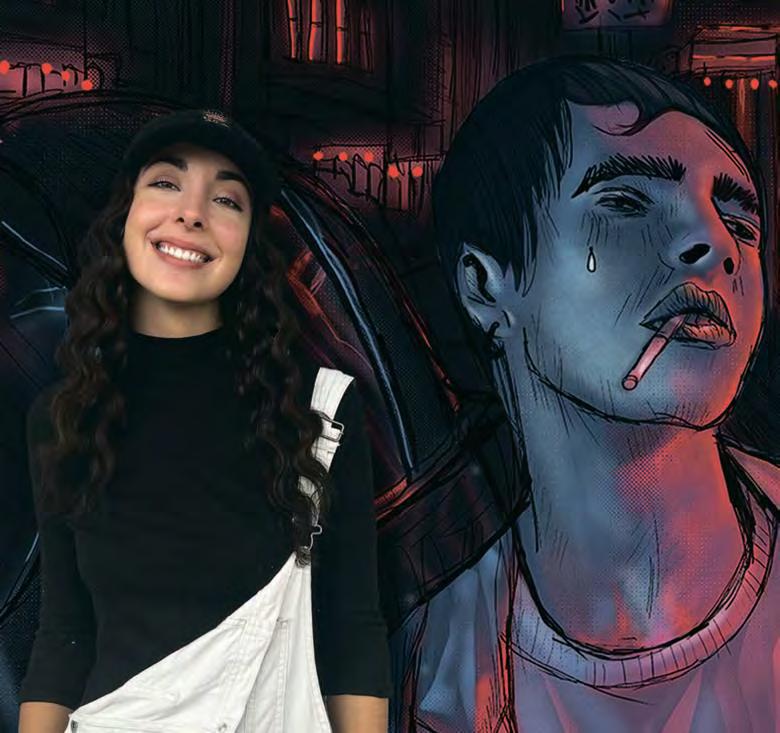
Natalie Ray is in her third year of a BA in visual communication. She already has a higher certificate in graphic design under her belt. She describes her current illustration style as comic-inspired surrealism with a touch of tattoo culture, and her design style as minimal with a touch of controlled chaos — while trying to shout inclusivity and diversity one illustration and design at a time. After matriculating, Ray lived in Asia for two years, which allowed her to grow and learn about herself. Not surprisingly, it’s also influenced her style of art.
“I’m a mega art nerd and I’m constantly learning new things through online courses.” Her lecturer, Stephanie Simpson, says Ray has constantly excelled, even amid a full-blown pandemic. “Her work consistently carries a rebellious edge, addressing current issues with profound insights. She delves deep to challenge her own preconceptions, resulting in unique and compelling visuals. This year she had the distinction of being a finalist in both the Loeries and the Pendoring Awards with her fantastic rebranding of Twizza.”

HELPING STUDENTS BE AMAZING.
We, at Park Advertising, are committed to nurturing and advancing the next generation of industry leaders. That is why we are the proud sponsors of this year’s “STUDENT OF THE YEAR AWARD” at the 2023 AdFocus Awards. We believe that this sponsorship will provide hopeful students with a valuable stepping stone in their professional journey towards contributing to making companies and industries be amazing.
3rd Place: Natalie Ray, Red & Yellow Creative School of Business
Merit Award: Xolisa Tamarana, Red & Yellow Creative School of Business

THIS YEAR'S HARDWORKING ADFOCUS A WARDS PANEL SHARE THEIR THOUGHTS ON THE STATE OF THE INDUSTRY
We asked them about the biggest challenges facing the industry, whether it’s up to the task of addressing these challenges, and how optimistic they are about the direction the industry is heading in

Luca Gallarelli Group CEO TBWA\South Africaand AdFocus jury chair
“The magic of human creativity and ingenuity can never be replicated by machines. Machines and AI will augment, not replace. The biggest challenge the industry faces is understanding and creating that perfect balance. Many will overcorrect and, conversely, many will be too conservative in their adoption of technology. The challenge is that the balance is not finite; it will continue to shift with every year. Creating the capacity in one’s environment to keep adapting and adjusting to optimise will be an ongoing challenge. And one not all will get right or have the endurance for.
“Our industry has always had an incredible capacity for early adoption and adjustment. More so than many client environments. Agencies need to shake off any lethargy that may creep in as a result of the constant questioning, change and uncertainty this brings.
THE INSIDE SCOOP.
“I’m incredibly excited about where the industry is heading. In our pursuit for better, more innovative and creative solutions, any tools that help us get there quicker can present opportunity. Unlike the questions presented by Web 2.0 or Web3, we’re seeing the emergence of the greatest asset the industry has ever benefited from since the introduction of the computer.
“This is not about channel or the proliferation as such, but rather the quality of the output itself. And anything that helps make that better, is something that gets me excited.”

“The biggest challenge facing our industry is the outflow of creative talent and our struggle to attract new talent. I attribute this to two factors.
“The first is that globalisation has resulted in agencies focusing on delivering financial returns to their investors, hence there has been a decline in real concern about delivering outstanding creative solutions for our clients.
“Second, agencies have become sweatshops, being paid for their time rather than for their thinking, sinking under ‘busyness’ in the absence of making creativity their core business. And as creative people can make more money creating wallpaper on a freelance basis, they are exiting our industry as fast as the ideas they once conceived.
“We can start to bring change only once we become conscious of this level of incompetence in our industry. The few agencies that are aware of what it takes to create work that succeeds will start to bring about the cultures needed to cultivate great work. And, in time, these lighthouse agencies will show the way for the rest to follow.
“As an industry, we are in the dark and have lost our way. We’ve become revenue obsessed and have put our product on the back burner. We’ve forgotten that we are in the business of creativity.
“However, I remain optimistic as I have always believed that to see the light, you have to experience the dark first.”
Pepe Marais Group integrated chief creative officer Joe Public


“It’s clear the South African advertising industry is facing significant challenges, driven primarily by economic factors. The loss of talent to countries with higher financial incentives is a concern. The reduction in budgets, made worse by the pandemic, has further strained our ability to produce impactful work.
“The economy has also put pressure on clients, agencies and individuals to be financially stable. But it’s important to recognise the crucial role the industry plays in the economy. Marketers of major brands and corporations contribute greatly to shaping the country’s finances.
“Our industry can play an integral role in a thriving economy, considering that we represent the biggest brands and corporations that shape the financial market in South Africa. Through strategic ingenuity, innovation and human resonance we can rebuild and grow, while attracting a pan-African and global audience to invest in this country and retain those who have made it.
“We’re in ‘the age of the creators’. Evidence is in the incredible creativity brought about through AI, user-generated content and gamification. There could not be a more exciting time to be in the field of creativity.”

Merissa Himraj CEO Wavemaker
“The biggest challenge facing the industry is the advancement of AI and technology. This is creating a perception for clients that, somehow, machines will start doing the work, and that they will save costs as we reduce the number of full-time equivalents on their business. Nothing could be further from the truth. We have to scale up to harness the power of AI, and that means more costs, not fewer, initially.
“I do think the industry is up to the task of addressing these challenges. A lot of work is being done to blend a machine-learning/AI environment with our own very manual way of doing things. We’re already employing AI to do a lot; it’s just hard to manage marketers’ expectations against the technical reality of our need for more programmers to get to smarter solutions.
“I’m very optimistic to be in the industry now, at a time which is likely to be one of significant change in the way we do things creatively, as well as the way we automate lower-order tasks. This will free us to think, create, and solve bigger problems, build better partnerships and change the face of communication forever. It is both scary and exciting the reasons why most of us joined advertising anyway!”


“The biggest challenge is the different way the industry operates. Covid has changed its landscape and it’s becoming more challenging to retain and attract good talent. The greater number of people deciding to freelance has put a drain on the agency resource pool and brought pressure on staff cost ratios. The shift to hybrid ways of working has brought a unique set of challenges in building an agency culture, which ultimately affects the creative product.
“The second challenge is that consumers are less interested in engaging with brands. A radical shift away from traditional media channels and the fragmentation of digital and social media means it’s a lot harder for brands to cut through the clutter.
“The third challenge is keeping up with the rapid pace of technology disruption.
“The industry has acknowledged these challenges and is trying hard to adapt. The rapid surge of technology presents us with opportunities to be more innovative in the way we operate, think and execute on brands. We are working hard to nurture young talent. Change is inevitable, but we are resilient as an industry, and up to the task of meeting any challenges that come our way.”
“Challenges abound in the advertising, creative and media industries. Privacy regulations are reshaping targeting strategies, while ad blocking and content saturation demand more engaging approaches.
“Diversity and ethical concerns call for inclusive and responsible advertising. Shifting consumer behaviour post-Covid and talent competition pose hurdles. Priorities are adapting to evolving technology, addressing sustainability, improving measurement and attribution, and coping with economic fluctuations. Adaptability, innovation and consumer understanding remain essential for success in this everchanging landscape.
“The advertising industry is brimming with brilliant minds, and many of the sharpest talents are found in agencies. Our industry consistently leads the way, meeting clients’ evolving needs. South Africa proudly hosts numerous world-class agencies.
“My optimism stems from our nation’s inherent strength and resilience. Overall, we need to prioritise our country’s wellbeing, which starts with our own people. Cultivating a contented and harmonious workforce is a cornerstone of our industr y’s achievement.”
Nicole Ravenscroft Group executive creative director
Rapt Group
Firdous Osman MD Saatchi & Saatchi SA
Ana Carrapichano Founder and CEO Mediology




“The biggest challenges facing the industry include retaining top talent, dealing with diversity and inclusion, and meeting changing skill requirements.
“Retaining top talent in a competitive industry where talented individuals are in high demand is challenging, especially when other industries offer attractive perks and greater security.
“Advertising has historically struggled with diversity and inclusion, with the underrepresentation of certain groups in senior positions. This limits the industry’s ability to connect effectively with and understand diverse consumer demographics.
“The industry is dynamic and constantly evolving, with ever-changing skills requirements. Keeping up can be challenging for both individuals and organisations, leading to a talent gap.
“One of the biggest challenges is technological disruption, which introduces opportunities and challenges. Agencies must stay abreast of technological advancements to remain competitive, and should invest in nurturing and safeguarding the creative talent pool of humans.
“Another issue is that the industry can be highly competitive, and agencies face pressures to adjust pricing structures while maintaining service quality.
“And, finally, the need for genuine transformation and diversity needs to be faced. There’s a growing awareness of the importance of diversity and inclusion. Some agencies are addressing fundamental representation imbalances.
“One of the things to keep tracking is the continuing rise of social media and its influence. It’s a powerful tool for e-commerce and a place to enable brands to deliver hyperpersonalised communication to people where they express themselves and their identities freely.
“Another is the necessity for brands to continue to express a compelling, consistent idea. With the rise of digital and social channels, too many brands (and their agencies) have fallen into the trap of the technology or the channel being the idea.
THE INSIDE
“The industry is certainly aware of the challenges it faces, and many organisations are actively working to address them. But I’m optimistic about the direction the industry is heading in. We need to be adapting continuously. This can be done by embracing innovation, fostering a culture of learning, prioritising diversity and inclusion, and attracting and retaining top talent.”
“With the rise of digital and social media, so too has disposable content risen. The world is littered with content that should really rather be in the bin.
“The evolving role of marketing has had a profound impact on the industry after the Covid pandemic. Marketers today are far more informed, demand more of their agencies, and play a pivotal role between sales and operations to remain agile and act quickly in a unified way to meet their customers’ rapidly changing needs.
“The industry is up to the task of addressing these challenges: the solution is in the way brands and agencies show up for consumers and build relationships by, for example, being distinctive across all touchpoints.
“Agencies are investing in technology and in talent to harness its power. They’re also starting to explore innovative pricing models and value-added services to differentiate themselves in a competitive market. But more needs to be done if we want to provide a unique value proposition.
“Talent pressures persist despite a high unemployment rate. The demand for skilled, mid-senior talent requires agencies to truly live their employee value propositions.
SCOOP.
“I’m optimistic about the industry’s ability to adapt to a rapidly changing landscape, the resilience it’s demonstrating, and its commitment to innovation.”
“This industry thrives on solving issues, and I’m excited to see which new shops spring up as a result of this need to look at things differently. I feel highly optimistic about the industry’s investment in graduate programmes, bursaries and school-level interventions. Would I love to see more? Heck, yes. Especially from the big agencies.”
“If we continue to invest in transformation, ESG programmes and remain conscious of our environmental impact on the planet, then, yes, I feel optimistic that our industry will mature and grow.”
Zanele Zwane MD DUKE
Wandile Collis Founder and head of strategy BlackSwan
Vicki Buys MD Cape Town Ogilvy South Africa
Nimay Parekh Director Accenture Song




“One of the biggest concerns is the dwindling number of students opting for copywriting as a specialisation. Without proactive measures, there’s a risk of facing a severe shortage of skilled writers in the advertising sector down the line.
“The industry has taken some steps to address this by offering scholarship programmes to get more young people to choose copywriting as a profession. But the challenge goes deeper than that. I don’t think the industry has fully grasped the gravity of the issue, which requires a more comprehensive and inclusive strategy that goes beyond scholarship initiatives.
“I have always been incredibly optimistic about the trajectory of the advertising industry in South Africa. We have some of the brightest minds at the helm, steering us towards innovation and creativity. The passion and dedication in our industry are undeniable, and it’s inspiring to see the great work being produced.
“But, I must admit a hint of concern. Technology is advancing at an unprecedented pace, transforming the landscape and offering exciting opportunities. If we fail to familiarise ourselves with these tools, there’s a risk of our being left behind.”
“The biggest challenge facing the industry is the continued lack of black talent. Ensuring quality work is also a challenge. Though the industry is trying to address these issues, the problem remains at a grassroots level, with few black candidates making it through.
“South Africa has the necessary talent, and the industry is in good hands, but more needs to be done to develop young talent from the grassroots.”
“A challenge in our industry is that, more and more, creative input is not as valued or remunerated as it should be. Many creatives aren’t paid enough, and many creative departments are run like sausage factories, indiscriminately burning out rare and valuable talent often with poor management and moronic processes.
“Fortunately for all of us, advertising is a necessary evil and the dinosaurs will die. If so-called traditional agencies aren’t up to moving with the future, the industry will organically change around them and leave them behind.
“There’s probably never been a better time to be in a creative industry. We are at the coalface of the future. Creativity is key to surviving the future. It’s the essence of our humanity, which an algorithm won’t easily replace. We may not be able to see what is coming next, but I’m pretty sure it’s not a bunch of accountants or anyone else in an industry that’s five minutes away from technological destruction.”
“In the student category, we once again had a shortage of the skill that is the backbone of our industry, and so central to it: conceptual thinking. We didn’t see many entries in this category, whether as writers or art directors. As an industry, we again need to pay attention to this and address it quickly.
“I believe we’ve got what it takes to revive excitement at the sheer joy of being part of our industry; to bring back the romance of ideas, the way the creatives, the clients and our audience can fall in love with what we do. And we can do this through the work, and through the process of getting the work done.
“Looking at some of the work we’ve seen this year, you can see that the bar is getting higher and higher. There were some student portfolios that looked world class. It was work that seemed to have a team of superstar creative directors behind it. So I feel optimistic about where we’re headed, if this is where we’re starting.”
Raphael Janan Kuppasamy Integrated art director Joe Public
Thule Ngcese Executive creative director Boomtown
Tian van den Heever Ex-ECD, film director boneshaker.co.za
Kagiso Tshepe Executive creative director Grid Worldwide



Oelschig
“We are heading to a new era of agencies offering an integrated approach to business and communication problems; a space where online meets offline to drive omnichannel marketing communications solutions. This will take bravery on both the agency and client sides. Agencies will continue to be strategic partners for clients, but they have the potential to drive deeper meaning and engagement by offering strategic solutions.
“The biggest challenge is the skills gap. While the industry boasts a small, well-established senior group, there is a gaping gap in middle and junior management. Though many agencies are offering workplace experience programmes, including further education for their employees, these programmes are inconsistent and more needs to be done to grow, shape and retain skills.
“Despite these challenges, I’m optimistic about the direction the industry is heading in. A challenge for clients is to become braver. We need to provide our agency partners with the ability to provide solutions without inhibiting the creative process. With technology, such as AI, I predict increased speed to market, and agencies and clients needing to approach communications in an agile manner.”
“We’re on the cusp of a creative evolution. An AI toolbox at our fingertips will allow us to dream and create on a scale we previously only imagined. But that AI toolbox is just that a tool. We still need the human element of ideas, heart, emotion, connections and insights. These tools should be embraced as another member of the creative team one who can help free up time, speed up the process and help magic to happen.
“A weak economy has meant leaner advertising budgets, resulting in less ads being made and increased pressure to give more ‘bang-forbuck’. This, however, has also meant that the industry has become more innovative with channels, strategies and tactics.
“What I love about this industry, specifically the ‘young bloods’, is the passion and creativity around social and political causes: the innovative, creative ideas that deliver both business and societal value.”
“The industry is in a tough place. Clients are finding it harder and harder to justify a decent marketing budget, marketers are not empowered, and few brands are brave enough to go after big ideas. But despite this, our creative people still produce amazing work, our voices are getting stronger, our stories better, and our belief in creativity remains unwavering.
“So, where we are as an industry matches where we are as a country hopeful, despite everything against us and everywhere we find pockets of excellence and reasons to believe.
THE INSIDE SCOOP.
“The biggest challenge is the rise of performance marketing. Brands see this as the only marketing weapon worth banking on, and this couldn’t be further from the truth. There is huge power in slowly, steadily building a brand that people can love and want to engage with. If you just talk ‘at’ your audience and focus squarely on how many clicks your little ad gets, that’s not impact. That’s thinking that advertising is just science.
“ I think as South Africans, we have created work that holds its own on a global stage. We’re not going anywhere just yet, and we’re still hellbent on producing the kind of creativity that really tells the world who we are.”
“Our industry continues to be in a state of change. There’s loads of opportunity that comes with change, but we need to be bolder in our conviction, especially with our product. This involves taking risks, being original and paving the way. Controversially, I think our industry is focused on the wrong things. Most of them are distractions to our product and why we, as agencies, exist.
“We need to be more confident about our creative product, much more disciplined in protecting and selling it for the right value, and less concerned with trends. For an industry meant to be blazing a path, we obsess about trends. It was big data, then the metaverse, then social platforms and now it’s AI. Purpose is hanging around against empirical advice. A lot of trends are tools to empower creativity but, at the heart, big, bold ideas still win.
“There are obvious challenges we face as an industry, the most significant of which is our ability to hold onto talent. Previously, agencies would fight for clients, but now we’re fighting for each other’s talent. We’ve lost a huge amount of IP with a brain drain to bigger agencies around the world. We need to be exporting our services rather than losing talent.”
Sadika Fakir
Executive: digital marketing and paid media
Absa
Noelle Hardy Creative director: commercial Tukio Media/Arena
Suhana Gordhan Executive creative director and chief aunty of young creatives Independent
Dean
partner
Only humans can captivate your heart
The quality of neutrality is AI’s Achilles heel in the world of persuasion, writes Kerushan Govender
And just like that, machines and algorithms are expanding their roles, blurring the lines between the tasks they perform and the ones once reserved for humans. AI systems, from chatbots to article generators, are becoming more adept at evolving.
ate content. As AI models are trained on existing data, any inherent biases in this data can be amplified, leading to misguided marketing strategies or misrepresented information.

However, we must pause and ponder. In fact, let me say it more forcefully: we need to stop in our tracks and think hard. Is AI capable of changing hearts and minds like we do?
The answer is, unequivocally and emphatically, no.
But to be fair, let’s look at both sides of the argument.
The integration of AI into the marketing realm has myriad benefits. One of the most significant is improved efficiency. Traditional marketing methods, which relied heavily on manual labour and time-consuming analysis, have been streamlined, with AI allowing businesses to get more done in less time. Additionally, AI provides fast and accurate customer data processing.
This rapid data analysis allows companies to gain insights into customer behaviours, preferences and trends almost instantaneously. As a result, marketers can execute optimised campaigns tailored to the specific needs and preferences of their target audience, ensuring a more effective reach and engagement.
However, the incorporation of AI into marketing is not without its drawbacks. A pressing concern is data privacy. As AI systems process vast amounts of consumer data to derive insights, there’sa looming risk of misuse or breaches. Furthermore, while AI can analyse vast data sets swiftly, there are concerns about biases and the propagation of inaccur-
Another point of contention is the perceived lack of creativity in AI-driven marketing initiatives. While AI can optimise campaigns based on data, it lacks the human touch the ability to think outside the box, evoke deep emotions or craft compelling narratives. This absence of genuine creativity might lead to marketing strategies that, while data driven, might not resonate deeply with the audience.
I recently addressed an audience at Content Marketing World in Washington and highlighted two distinct classifications of copywriting:
The first is copy that changes hearts and minds. The primary goal here is to persuade readers to adopt a particular standpoint or take a specific action. It’s akin to those memorable mailers or gripping advertisements that stay with you. It’s “mouse on the steering wheel” stuff and lines like “Just Do It” and “I’m Lovin’ It” .
The second kind of copywriting consists of bog-standard thankyou notes, automated e-mails and regular blog posts.
In scenarios where conversion is the endgame, the irreplaceable human touch becomes paramount. While AI’s prowess is undeniably expansive, it remains intrinsically neutral. Built to accommodate a vast demographic without leaning too heavily in any direction, this quality of neutrality is AI’s Achilles heel in the world of persuasion.
Real persuasion demands more than simple agreeability. It re-
quires staking a claim, evoking genuine emotions and inspiring a shift in perspective. It needs the charisma, finesse and emotional intelligence inherent in human communication attributes often beyond AI’s grasp.
Advertisers of the future might be lured by the idea of relegating all their copywriting chores to AI. Many are doing that now. Yet this is a pitfall. It signifies a lack of understanding and appreciation for the nuanced art of persuasion.
Resonating deeply with an audience is a task steeped in the understanding of their emotional tapestry, their individual needs and their unique life stories. AI, despite its advancements, cannot fathom the multifaceted nature of human emotion.
Moreover, the business implications of an overreliance on AI in advertising can’t be ignored. Every piece of content is, in essence, a stake in the ground, a bet placed on the efficacy of the conveyed message. Why risk our resources on AI-driven content that misses the human essence?
I’ve observed this phenomenon first hand. Human-crafted copy consistently trumps AI-generated content in conversion rates. Often, AI ends up recycling tired, clichéd phrases, rendering its content predictably bland.
Yet therein lies the silver lining for human writers. In the vast sea of AI-generated content, our authenticity is the beacon. The delicate dance of persuasion, the timeless art of changing hearts and minds, will forever remain a human prerogative.
❒ Kerushan Govender is CEO and founder of Blacfox
“In the vast sea of AIgenerated content, the authenticit y [of human writers] is the beacon”
Creativit y’ s a process, and that takes time
Agencies are under such pressure that pitching for free is a stretch on their talent, writes Dean Oelschig
Pitching, the practice of clients asking several agencies to present free (or minimally paid for) creative work for them to decide which agency to work with, has been a contentious issue for years. While I’m not averse to requests for proposals, credential presentations or any other form of chemistry, it’s the demand for free strategic and/or creative thinking that I don’t believe works for either agency or client.
Let’s discuss clients first. One of the key misunderstandings of creativity is its process. I mean, even creative agencies aren’t sure of the mythical voodoo of the creative process. But having been a keen, diligent student of creativity for 18 years now, I can tell you the one thing creativity needs more than anything else is time. As an example, the fantastic annual Christmas work from John Lewis that hits it out of the park year in, year out, is briefed to its agency in January. Yes, it takes 11 months to consistently produce work of that calibre.
Most pitches are done in two to three weeks. For strategy and creative.
It is possible to produce a good, or even a great, idea in two weeks, but I can assure you that is more down to luck than to process. You simply cannot realistically ask an agency to know everything there is to know about your business, your industry, your problem and your consumer and to come up with a gamechanging creative idea in two weeks.
Judging agencies on this ability is like picking a Springbok prop based on a 40m sprint. Add to this that agencies are
running lean as it is with their existing client base and workload so that they don’t really have the capacity or resources to work for free without completely stretching their talent. The team that works on a pitch is not the team that will work on the account. So, the best you can hope for is a lucky idea from a group of stretched and overworked people which is not how the account will function.
The goal of any pitch should be to select the best agency for the business. The process should begin by finding agencies with the capability, skill set and experience to deliver on your brand. This is all clearly visible in agencies’ recent work, people, culture and positioning. Most of this information can be found on the agency’s website. Get any additional information with a few credential presentations.
What agencies fear right now is AI. It can do the job of most mediocre agencies. And it can do it far quicker, and for free. Critically, however, it can’t do it well. Creativity is the differentiator between us and the machine. And we know it to be of immense value. A recent UK study by Peter Field believes the cost of uninteresting and dull advertising to be £10m. In other words, to receive the same effectiveness, marketers need to spend £10m more on media from a dull and boring campaign than from a creative and interesting one.
As an industry, we’ve forgotten how to market creativity, how to sell its true worth and how to charge for it at a rate that’s fair to both parties. The challenge is that if one agency won’t pitch for free, they know that others will. Agencies are
undercutting each other, destroying margin and, in the end, cheapening the core value proposition of our industry.
I was once told by a client: “If you don want to pitch for free, you’re in the wrong industr y.” Well, no, I am in the right industry, but our industry has f**ked things up a bit. It’s only when the majority of agencies in our industry including the industry leaders take a stance against this that the problem will begin to fix itself.

At Halo, the best way, we have found, is for the agency to host the prospective client’s core marketing and brand team for a three- to four-hour workshop. Either give the objectives of the workshop or allow the agency to set the agenda. In that workshop the client receives a vivid understanding of the chemistry, culture, thinking, belief, process and experience of the agency and judges whether it can work with the agency. Creative ideas can be pitched, but it’s very hard to pitch methods and expertise. Those need to be experienced.
Great work takes time and is built off a human connection and partnership. Pitches don’t give either party the benefit of human connection or partnership. The goal of a pitch process is to hire the right agency for your brand, not to get the best pitch work.
❒ Dean Oelschig is the managing partner of Halo
“You cannot realistically ask an agency to ... come up with a game-changing creative idea in two weeks”
The alchemy of the creative clash
An e-mail is easy, but when we argue face to face we build better work, better creatives and better clients
Next year, I’d like to have more arguments.
Let me explain.
A few years ago, I proposed a total ban on e-mail debriefs. I’ll give my fellow board members credit for at least attempting to laugh at this politely. (They failed.)
But I still believe e-mail debriefs should be banned, and this is one of the few hills I’m willing to die on. (Another is the urgent need for child-free flight options, but that’s a conversation for another time.)
It’s just too easy to send an email to an agency with a laundry list of points to be addressed, which the agency then all too often reads with various levels of resignation, bemusement or downright distress. Often for good reason.
Let me be clear: this is not a “clients are the enemy” rant. I’ve had great suggestions from many of my clients that made the work better.
But as Ogilvy UK’s Rory Sutherland so concisely puts it: business has a bias. In business, creative people always have to get approval from rational people. The opposite is never true.
But two people can understand the same thing very differently. Especially when one is on the rational side (or is in the unenviable position of having to sell the creative idea to a rational organisation). And especially when an idea is still at concept stage and probably exists in sketch form across slides of a Keynote deck. And which may, ahem, contain some typos.
Sometimes it only becomes clear to the agency how different the two perspectives are when the e-mail debrief arrives. Which is when it’s vital to get into a room and talk about it. Not purely for the purpose of “rescuing the idea.” But also, and maybe more importantly, to come to a better understanding of each other, which will make the relationship better, which will make the work better.
I might walk out of that room having lost the argument. But if I sit across a table from you and we talk about something we disagree on, I get to hear your point of view and you get to hear mine.Maybe I come to agree with you, maybe I don’t. But I’ve learnt something. And that makes me better and more valuable to you.
One of the best things about judging awards shows is how often a disagreement over a piece of work has changed my mind about it. I have a perspective I didn’t have before. And that makes me reconsider. I love those moments.
This isn’t just about building great work. It’s about building better creative people and better clients.
Covid made us all retreat to behind our screens and we haven’t really emerged properly. We need to. We need to get into rooms and debate, as agencies and marketers. Not just get an e-mail from someone anonymous higher up in the organisation with a list of changes to be made.
I know it can be much more intimidating making those suggestions in a face-to-face meeting. I know that client teams often feel creatives are
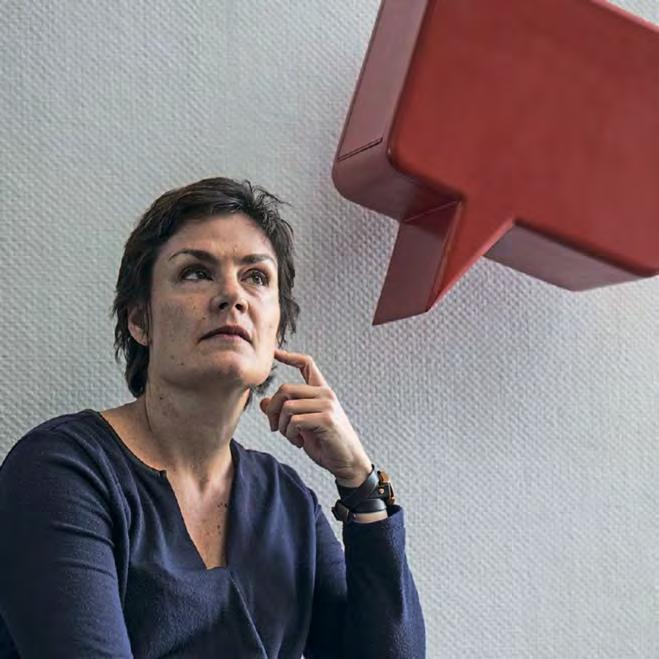
giving them the side eye when they make a creative suggestion. Of course we are. We do it to each other all the time. That’s the creative process. Do you know how often we argue with each other in agencies? Every single one of us creatives has prefaced a million sentences with “This might be really terrible, but what if ” I’ve died a million deaths at the hands of various art directors when I’ve spoken out about a half-formed idea that is more than a little rough around the edges. But just as many times someone took that idea and went “Ah, but if we” and suddenly it was a rough diamond.
My point is alchemy works only when we’re together, not over e-mail.
The philosopher Hegel said ideas shape society through the clash of the contradictions inherent in those ideas, out of which emerges a new, better idea, in which those contradictions are resolved. I may be oversimplifying, but to me it means that when you oppose each other over an idea, with different points of view, and you resolve those points of view together, you get a better idea. But the alchemy only comes from the clash.
And that’s why, next year, I think we need to argue more.
Fight me.
❒ Fran Luckin is the executive creative director of Grey South Africa and the 2022 AdFocus Industry Leader of the Year.
“Often a disagreement over a piece of work ... has led to me changing my mind about it”
Jozi to Amsterdam: Navigating ad landscapes
South Africa’s unmatched cultural diversity is the secret weapon of our home-brewed brands, writes Peter Khoury
Howzit. Goedemorgen.
I made a huge transition to leave Jozi just under a year ago to move to Amsterdam and lead adidas creatively for TBWA. Since making the move, I’ve also been exposed to other global clients, including but not limited to McDonald’s, Philips, ING and Optimum Nutrition. I’ve also been involved in regional projects and pitches across the world.
So, what’s my take on the European advertising landscape compared with South Africa’s? Film is still king in comms here in all its formatting and versioning, but, refreshingly, so are bigbudget briefs asking for something different, a fame moment or distinctive experience.
By comparison, our local industry may be small but is hugely innovative. Scrambling for budget and opportunities means there are more interesting paths to take. South Africa has plenty of standout cases that prove our work is true to its origins, and has intangible originality to it. This comes from the simplicity of a distinctive viewpoint or from a hack to an existing platform or service. We are hustlers. We make a plan, we zig and zag. Our lo-fi innovations consistently win big globally on a small budget.
But budget aside, globally, the truly disruptive ideas have innovation at their core.Generally, big South African brands are conservative and risk-averse, consistent with most global brands I am exposed to.
Unfortunately, on some of my more recent global projects, the overarching complexity, process of alignment, and worldwide integration have proven more important than the bravery and
standout nature of the work. You see the soul getting sucked out of it. At home and abroad, the only remedy to this is the trust you can build through the influential relationships you have with like-minded individuals on the client team. You take the leaps of faith together, iterate on the fly together, and share the success or failure together.
Things happen here in Amsterdam and surrounds all the time. Culture is in your face. It ’s a melting pot and a proudly openminded city, drawing people from across the globe. Artists, musicians, businesspeople and the like all travel here, which has a huge impact when it comes to feeling connected to the world and being inspired by people and places far and wide.
South Africa, by comparison, feels largely disconnected from the natural flow of the world that happens from east to west. It doesn’t feel like it is meaningfully considered by many brands when it comes to their global campaigns; it’s kind of an afterthought or given assets to just reshoot with a local cast.
No-one knows our stories; we have seen so many stories from the rest of the world that it’s difficult to do something fresh. How many stories has the world seen or experienced from Africa?
Most of the work we do is not linked to global campaigns but rather to home-brewed brands making their place in our world. This work resonates in much deeper ways than a global or regional campaign ever will. South Africa’s diversity of culture is so far ahead of a lot of the countries I have travelled to. It’s a superpower.

South Africans generally are straight and humble. We share our real opinions on something without offence; there’s a natural flow that happens. With local clients in Amsterdam, it’s the same. The Dutch are even straighter than us and don’t waste time being polite, but that doesn’t mean they are rude either. I know, confusing, but when you experience it, you’ll understand.
There’s a definite lack of industry bodies such as the Creative Circle in many countries, which brings competitors together in the interests of bettering our people and industry. In the rest of the world, it’s dog-eat-dog.
Creatively, South Africa’s firepower is up there with the best in the world. We join dots quicker and cross over into other job functions if needed because we just get on with it. Our strategy and account teams are also super impressive, but the country needs to drive the lighter and medium weights to take more ownership and drive projects.
Both locally and abroad, there’sa definite shift from changing minds to changing behaviours by using the brand to positively shift consumer actions around societal issues. When you create tangible utility, the brand is showing that it genuinely cares.
❒ Peter Khoury is chief creative officer (CCO) of adidas worldwide at TBWA\Neboko based in Amsterdam. He was previously the CCO at TBWA\Hunt\Lascaris and was the AdFocus Industry Leader of the Year in 2020
“South Africans generally are straight and humble, regardless of position or influence. We share our real opinions on something without of fence; there’sa natural flow that happens”
The power of the comfort zone
A purely logical message is not as convincing as when it also ‘feels’ right, says Sydney Mbhele
Strategically planned advertising maximises the “mental availability” of brands in the minds of consumers. As US writer Daniel Kahneman once said: “Human beings are to independent thinking as cats are to swimming. We can do it, but we prefer not to.”
An article published by World Advertising Research Centre concurs, saying that human beings have an amazing capacity for rational thinking, but often don’t apply that logic when it comes to making decisions. Given a choice between several options, people tend to prefer the one that comes to mind easily meaning that brand positioning is most powerful when it drives top-of-mind awareness and message recall.
This builds on the principle of foundational saliency. People or businesses do not buy what they don’t know, and given the choice between the known and the unknown, will gravitate to their comfort zone: what they know best. Awareness is the foundational lever for a potential trading process that ultimately leads
to brand resonance and equity.
Awareness strategies tell the brand story, its features and its values (unique selling points), and thus builds an imagery about it. This educates the current or prospective customer about the brand: advertising is a powerful tool to not only acquire new customers but also reinforce primacy in the minds of existing ones. Advertising for retention is critical, as the cost of acquisition outweighs the cost of retention, and expansion of services is easier once a customer is in your ecosystem.
When done correctly, advertising builds the intrinsic value of the brand in the minds of the targeted audience. Is the brand worth buying? Is it worth the price? There must be an emotional resonance that convinces the customer they are making the right decision, and not just logically. It must “feel” right too.
Advertising also has the ability to build relevance and associations. Is the brand relevant to me or to where I am in my
life? This helps build brand stature, recognition, credibility and trust.
Advertising is used to drive sales, such as when a brand or product may be running a promotion. But strategic advertising also considers brand building outside a direct sales cycle. It could be leveraged to raise awareness of other products or services, thereby deepening relationships with customers and building ever stronger brand ambassadors.

A good advertisement goes beyond an existing need and should tell a user they need something even before they think they do. It offers customers a look into possibilities and future offerings, or even just primes a thought for the future.
For the believer and previous user, these advertising principles act as a reminder of the brand and therefore, we could argue, plays an important role in building loyalty for it.
In an omnichannel ad era, advertising is indeed everywhere whether it’s a pop-up cam-
paign across platforms from TV to the web, traditional brand advertising or a homevideo commercial posted on YouTube. It must exist within this convoluted construct of always-on messaging reaching the customer.
A by-product, often unintended, is that it gives the employees of the brand’s company pride in their organisation, brand or product. Organisations would do well to consider their internal marketing opportunities in parallel with external drivers as a proactive strategic consideration, not just an afterthought.
❒ Sydney Mbhele is Absa’s group chief marketing and corporate affairs officer

Future fusion: AI power meets human purpose
In a world craving authenticity, brands maximise impact by merging tech-enhanced advertising with genuine commitment to causes, writes Musa Kalenga
A modern marketplace isn’t just about the exchange of goods and services; it’s about the exchange of values, beliefs and aspirations. South Africa is no different.
As global challenges intensify, consumers are becoming more discerning about the brands they buy and support. In this new era, AI is set to play a pivotal role. Brands that recognise the power of AI in advertising, and align with sustainable practices and meaningful causes, are in a prime position to resonate deeply with their audiences. The use of AI changes the input, process and outcomes of traditional advertising.
A 2021 Nielsen report highlighted that products with sustainability claims on their packaging sold faster than those without. The message is clear: consumers are voting with their wallets.
But the picture in developing economies such as ours is different. For many, the immediate challenge is to lift their populations out of poverty. Governments and businesses in these countries often prioritise rapid economic growth over long-term sustainability. The appeal of quick profits from resource-intensive industries, such as mining or deforestation, outweighs the perceived benefits of sustainable practices, especially when the latter comes at a higher initial cost.
Sustainable marketing thrives where there’s consumer demand for ecofriendly products and practices. In many developing economies, widespread consumer awareness about the benefits of eco-products is still in its nascent stages. The priority for a significant portion of the population remains basic survival, making it challenging to prioritise purchasing decisions based on sustainability over cost. Without a significant consumer base demanding sustainable
goods and practices, businesses may lack the incentive to adopt such marketing strategies.
Sustainable marketing also relies on technologies that allow for cleaner production, eco-friendly packaging or efficient distribution. Many developing countries face infrastructure challenges that make the adoption of these technologies difficult. Inadequate power, transport systems or access to advanced machinery can hinder efforts to implement responsible environmental practices in production and distribution.
Adopting balanced marketing strategies also requires upfront investment. Developing economies may find it challenging to allocate resources to such marketing initiatives. The immediate pressures of competing in the market, coupled with tighter budgets, can often lead businesses to opt for cheaper, nonsustainable marketing practices.
But I’m starting to sense a useful way of circumventing the hurdles. With minimal investment, AI-driven advertising can help brands identify and target audiences that are more likely to resonate with purpose-driven initiatives. This level of personalisation ensures the right messages reach the right people. For instance, a brand promoting eco-friendly products can use AI to determine which demographics are most passionate about environmental issues.
The integration of marketing automation tools, coupled with AI-driven analytics, is streamlining campaigns more effectively than ever. These platforms allow brands to understand consumer behaviour, predict trends and optimise campaigns in real time. As brands increasingly align with sustainability and social causes, these tools ensure their marketing efforts are not just impactful, but also cost-effective. The efficiency

gains can be invested back into the brand’s core values, be they sustainability, social justice or any other cause.
However, to quote a popular superhero, “with great power comes great responsibility”. The capabilities of AI mean brands can hyper-target their audiences, but authenticity remains paramount. As consumers become more informed, brands need to ensure their use of advanced tech doesn’t drift into manipulative or disingenuous territory.
The marriage of AI-driven advertising and commitment to sustainability and social causes presents a bright future for local brands. In an era where information is abundant and consumers are discerning, the brands that integrate cutting-edge technology with genuine purpose are the ones that will lead the way and make a lasting impact.
So where do we start? By understanding and targeting the emerging conscious consumer segment, local brands can resonate more deeply and authentically. And by investing in AI-powered advertising platforms and undergoing training to ensure ethical, transparent and authentic deployment of AI in marketing strategies.
Home-grown brands must also find innovative ways to balance immediate economic pressures with longterm, sustainable goals. Even small steps can make a difference in consumer perception. Add to your next budget line a sustainability audit to identify areas for immediate improvement and set long-term sustainable marketing goals.
❒ Musa Kalenga is the group CEO at The Brave Group
Two tracks: What’s on the horizon — a merge or mirage?
Ad people are the first and the fastest to jump on the “new shiny thing” bandwagon. Last year, we were all opening offices in the metaverse, and this year we are replacing all our employees with AI. Years of research and information have been replaced by “big data” (a rose by any other name ). Who knows what next year will bring?
Despite the bandwagon, media and marketing people still invest mostof their advertising spend on good old television, a medium that has been around for 85 years. It’s still measured more or less the same way; ratings and CPPs are still around, and as much as things change, they stay the same.
Meanwhile, the metaverse is sinking somewhere at the bottom of the ocean, long forgotten, joining a long trail of dwang wrapped up in a shiny wrapper, including QR codes, USSD codes and virtual reality (VR).
The traditional media vs digital media debate sometimes appears like two parallel tracks.I worry that our job is to talk about the latest shiny thing (the one track), while implementing the old, tried-and-tested (the other track). While we all keep talking the hybrid game, it is only on the horizon that the two tracks truly merge into one. And even that can be an illusion.
So, what’s happening on each track? When do they merge?
The reality is that the horizon of merging is getting closer and closer especially for successful media owners. Truly hybrid platforms are increasingly the norm.
On the TV front, we see media
owners like MultiChoice aggressively rolling the dice on streaming iterations and overthe-top (OTT) platforms, while being smart enough to know where most of their advertising revenue is coming from.
The SABC and e.tv have followed suit by launching their own streaming services and the race for audiences is on. Meanwhile, Netflix is monetising and the streaming platforms (which all, by the way, actually still make a loss ...) lookat their traditional partners to see how they stay financially afloat. On the other end of the scale is a consumer who just wants to sit down and watch some cool content. They don’t care where they are watching that content or on what platform.
On the radio front, we’ve had podcasts and streaming stations for many years and we are slowly starting to see actual investment being placed on these platforms. It feels like the podcast industry is getting its act together and is now coming to agencies and clients with a compelling offer. Cross-platform audience targeting on audio is likely to start gaining traction now.
What does that mean for traditional radio? Who knows? I suspect it will start costing them in the short term, as it’s always made its money out of being a “mass medium”
The one “traditional platform” that I believe has seen the most drastic change is out-of-home (OOH) advertising. Outdoor (the digital kind) is now available to be bought through a demandside platform (DSP) like you would any other programmatic advertising, and digital screens While
are going up all over the country.
We’re seeing that OOH can actually start competing with any other streaming service. As media people, we now have to weigh up a cost per view on television, OOH and digital video.
Meanwhile, the traditional side of OOH good old billboards is still doing a roaring trade. The latest numbers seem to indicate that OOH occupancy is back to pre-Covid levels. The two tracks running parallel soon to hopefully meet.
And then there’s print. Ironically, print was the very first “traditional media owner” to embrace the digital world. News24 was built off the back of print journos placing their printed stories on digital platforms. Print, I believe, will move in two directions.
First, we will find free newspapers (community newspapers) growing and reaching more suburbs that have never had community papers. Second, the rest of print will become absolute niche content.
So, the two tracks are actually coming closer to each other and it’s just a matter of time before they meet. Maybe 15 years from now all ad campaigns will be run in the metaverse. But one thing is for certain: 15 years from now, traditional television will still be around and will be doing quite OK for itself.
❒ Chris Botha is the group MD of Park Advertising
“Despite the band wagon, media and marketing people still invest the over whelming majority of their adver tising spend on good old television, a medium that has been around for 85 years”
The demand for diversity
Brands must not just reflect a reality that’s not mainstream, but consciously reinforce positive stereotypes, says Ivan Moroke
Within the UN’s 17 sustainable development goals, adopted in 2015, are calls to action to “achieve gender equality and empower all women and girls” and to “reduce inequality within and among countries”. This latter goal calls for inclusion regardless of age, sex, disability, race, ethnicity, origin, religion, economic or other status.
What does this have to do with advertising and, by implication, brands? A lot! More than being a mirror on society, advertising and marketing has the power to shape society. The call to do no harm harm being creating and reinforcing negative stereotypes encourages the industry to not only reflect a reality that might not be mainstream, but to consciously reinforce positive stereotypes. Brands and businesses live in people’s lives, not the other way around.
The best creative not only sells products and builds brand equity, but also has the potential to change behaviour.
Just as there is the inconvenient truth that not all effective advertising is creative and, conversely, not all creative advertising is effective, we also need to embrace inclusion and diversity to make money. At least in the short term.
In Kantar’s “The 5 habits of highly effective advertisers”, we made the point that inclusion and diversity is one of the ingredients, or creative devices, used by brands to make their ads both creative and effective. Back in 2021, we predicted this ingredient will be elevated to a habit for more advertisers in the future. That’s because it’s also good for brand return on investment so, if you can’t embrace diversity and inclusion for the ethics, do it for the money.
According to Kantar Global Monitor, 65% of consumers say it’s important that the companies they buy from actively promote diversity and inclusion in their own
business or society as a whole. Kantar’s Global Monitor surveyed the attitudes of people in 26 countries worldwide, with an eye to identifying micro and macro trends. We asked this sample population to describe how they perceive their country in terms of creativity and inclusion.
We found that, globally, the proportion of consumers who believe their society is very inclusive is only 22%. Nearly 40% of those surveyed said their country is diverse. Clearly there is a gap between perceived diversity (the demographic trend of different people coexisting) and perceived inclusion (the cultural norm of welcoming and supporting difference). The inclusion imperative can be found in this gap.
Brands have largely moved past whether to be inclusive, to the how, both within their own organisations as well as how they engage externally with agencies, suppliers and consumers. One of the themes at this year’s Cannes Lions was how creativity helps make brands more inclusive. Though progress has been made, the industry needs to do more.
Marc Pritchard, the chief brand officer at P&G, advocates for brands to move away from “narrowly defined target groups” to ensure they serve all people and each person. So, who is seen and who is invisible in advertising today?
There is an opportunity for brands to increase the visibility of underrepresented groups and to expand their audiences by showing they understand the complex identity of people today.
According to the World Health Organisation, 16% of the world’s population have some form of disability, yet they feature in less than 2% of ads. LGBTQI+ people have been nearly invisible in advertising, accounting for only 1% of ads globally.
Another population group that’s growing in size yet not in visibility in advertising is people over the age of 65, with only 3.5% of ads featuring them.

Inclusion can be explicit or implicit, as Kantar’s Creative Effectiveness Awards clearly illustrate. Heineken has explicitly addressed gender stereotypes about drinks choices, while SheaMoisture has promoted products specifically for black women while supporting a fund for black female entrepreneurs. Among the less explicit portrayals, there is a female postal worker in an eBay ad and a black father and daughter in a Hershey’s Kisses ad. These ads could have happened with men or white people in the roles, but the brands deliberately chose to cast in the way that they did. And clearly, the brand’s choices work for viewers as they rated these ads highly in terms of creativity and effectiveness.
Our data reveals it’s not enough to just include underrepresented groups in ads. This alone has no impact, with ads that feature underrepresented groups having almost identical short-term sales likelihood and contribution to long-term brand equity than the average ad. What makes the difference is when it depicts underrepresented groups positively, boosting short-term sales likelihood and long-term brand equity.
Consumers are demanding that the brands they support prioritise diversity, inclusion and equality. More than half of consumers tell us that it’s important to them to buy from businesses that actively support diversity and inclusion. Millennials and Gen Z consumers display even higher aspirations for inclusion, suggesting that inclusion isn’t going away as a business imperative any time soon.
❒
Ivan Moroke is CEO of Kantar’s Insights Division, South Africa
“If you can’t embrace diversit y and inclusion for the ethics, then do it for the money”
Women in advertising: what the numbers say
How well represented are South African women on the boards of the country’s largest ad agencies? What about ownership? Do women own a substantial stake in agencies that produce the bulk of South Africa’s advertising?
To answer these questions, industry news site MarkLives surveyed South Africa’s largest 13 agencies by revenue, according to its 2022 revenue rankings. A total of 10 agreed to participate and submitted ownership and leadership data.
It’s estimated that together, these 10 agencies represent more than R5bn in revenue and employ more than 3,500 people in South Africa in their businesses. Four of the 10 agencies are independents, with the other six owned by global networks. This skew towards networks has influenced ownership data.
MANAGEMENT AND BOARD REPRESENTATION
At board level, the 10 participating agencies averaged female representation of 51.6%. Black female representation at board level stood at 35.4%. Two of the participating agencies reported 100% female representation at board level; two reported 50%; and two reported 40% female representation. One agency reported no female representation at board level, bringing down the average representation. One agency reported 100% black female representation at board level, and one reported 50% representation, while everyone else stood at 40% or less black female representation. Two agencies reported no black female representation at board level.
In terms of senior management teams, women made up an average of 59%, but black women made up only 22%. Four agencies reported female representation of more than 60% in senior management teams, and another four reported a figure over 50%. In terms of black female representation at senior management level, only one agency reported a figure over 50%. For the majority of agencies, black female representation at senior management level stood at 20% or less.
When it came to middle management teams, women again made up 60%, and black female representation increased to 37% of the total, with five agencies coming in above 60%. However, only three agencies reported black female representation at middle management level above 40%, with another six agencies reporting a number between 30% and 40%.
In terms of total staff count, women made up 60% of the agencies’ staff component, and black women 40%. Five agencies reported female representation in their total staff component at less than 60%, with the other five setting at 60% and above, topping out at 69% for one international network. Six agencies reported total black female representation above 40% as a total for their workforce.
LEADERSHIP AND OWNERSHIP
Seven out of the 10 agencies reported employing women in group CEO/CEO or MD roles (this would include agency brands/verticals within the broader networks). Two agencies reported employing a female executive creative direct-
or (ECD), and one other agency reported it was led by an ECD identifying as nonbinar y.
Women owned an average of only 24% of the agencies surveyed, and only 11% of their shareholdings were in the hands of black females. The highest reported ownership figure for women among participating agencies stood at 47%, and the lowest at 0%. Four agencies reported female ownership above 30%.

Three agencies reported black female ownership above 30%, with the highest number being 35.68%.
REGRESSION IN TOP LEADERSHIP ROLES
Gillian Rightford, Adtherapy MD, points to the last SheSays survey (conducted in 2020) that found the overall percentage of women in the industry was 61%, mostly in account management, media and production jobs. “There are a few women MDs, very few CEOs, and a handful of ECDs,” she says. “It’s regressed from the time when I ran Lowe Bull, where six of the top 10 agencies were run by women.”
She ponders that perhaps there have been more male founders of agencies, and they don’t want to give up power, especially to women. “The industry also has an ageism issue and another big matter ... is sexual harassment.”
❒ Herman Manson is the publisher and editor of advertising and marketing industry newsletter marklives.com
“Women owned an average of only 24% of the agencies surveyed, and only 11% of their shareholdings were in the hands of black females”
The big dilemma: how to charge
Advertising agencies typically bill according to hours spent on a task a remuneration model that is criticised for being outdated and said to encourage agencies to work inefficiently. Despite this, the industry has made little progress in changing the model. The reason may be that there is no single one-size-fits-all way of assessing payment.
Originally, the mark-up-based agency remuneration model was seen as fair for agency deliverables in relation to what was predominantly media and production spend.
However, as Jacques Burger, co-founder and group CEO at M&C Saatchi Group South Africa says, a decrease in traditional media spend and an increase in creative volume to support more cost-effective digital media platforms meant the mark-up-based model was challenging. Clients felt the model didn’t always reflect the efforts of the agency accurately, particularly in cases of high media investments and low production periods.
This heralded the start of the hours-based model, described by Burger as a “relatively accurate model in terms of rewarding inputs, but often flawed in linking quality of inputs, and ultimately outputs, to remuneration.”
He adds: “The model also feels strangely counter-agile, in that the agency is rewarded more for spending hours on a task than for doing it quicker. It presents a challenge to both agency and client in measuring and rewarding quality and impactful ouputs” .
Finding a way to assess payment that’s fair to both parties has long been contentious “Very few of us have the luxury of being able to turn down ... work — especially if the client happens to be a much-admired global multinational at which fixed rate cards are the norm”— Vanessa Bosman
Vanessa Bosman, group MD at Just Design, says that if success is measured in business results, it makes no sense for agencies to bill in hours.
“We’re becoming the architects of our own demise. Relying on a time-based remuneration model not only reduces our skills base, diminishes our expertise and devalues our products and services, it also damages the clientagency relationship,” she says.
Instead of working together to create solutions that drive brand growth, Bosman says, clients get involved in an unhealthy tug of war with their agencies, who relentlessly try to maximise their time spent on a project while trying to shorten deadlines to save costs. No-one wins in this scenario.
“The death of the agency won’t be caused by the rapid advancement of AI, but rather by agencies and their dogmatic loyalty to time-based remuneration,” Bosman says.
“Agencies need to adapt and adopt. AI has merely accelerated this trajectory by being able to perform the more time-consuming tasks, such as
image searching and top-line research, almost instantaneously.
“For many agencies, this could have a detrimental effect on their revenue. It will be their willingness to embrace new and innovative approaches that will determine their success and survival.”
David Cohen, co-CEO of Grid Worldwide, agrees that the current time-based remuneration model is not sustainable,
particularly as clients want things faster and for less. “It’s been proven time and again that the best creative also achieves the best business results which is why fair remuneration for value delivered is vital to both business and agency success over the long term.”
The problem, says Cohen, is that there is a disconnect between the way procurement departments and the Csuite view remuneration. The
former typically see the creative product as a commodity and the latter understand that it is value-based and that brand value is reflected on the balance sheet.
“Every client expects a return on investment and wants to turn cents into many rands earned. As an industry, we have to find a way to educate and connect these two sides of the business. The cheapest is not necessarily the most effective,” he says.
THE CHALLENGES
Gareth Leck, co-founder and group CEO of Joe Public, believes the biggest challenge in the way of changing the remuneration model is the insistence of procurement departments to use input-based remuneration models charging for the resources required to get the job done.
“Because of this, all the focus and energy in the remuneration negotiation is spent on fine-tuning what is fair and viable for both parties in terms of how much is charged for the required resources to service the account. On paper, one could argue that this makes sense but in practice, the irony of this model is that it provides incentives for agencies to be less efficient, because and apologies for stating the obvious the longer it takes to get a job done, the more the agency makes.”
What is equally, if not more, concerning, says Leck, is that in almost all negotiations, quality measures relating to the output are not factored into the remuneration agreements.
Bosman believes four primary obstacles get in the way of changing the remuneration model.
The first, she says, is a lack of understanding on the side of the client, coupled with a poor explanation by the agency of the creative process. “I would even go so far as to say that not much effort has gone into trying to educate clients which leads back to the issue
of agency transparency about fees and time spent,” she says.
The second obstacle lies in poor communication and the inability to demonstrate the value and worth of the creative product, particularly the inability of agencies to articulate clearly the value the creative adds to brand growth and transformation to the client.
“This is often simply a case of creatives not communicating the value within the context of the brand or the client’s business objectives. But it can also point to skirting around the fact that the creative is simply not delivering on those needs.”
The third obstacle is about challenges in measuring the efficacy of a creative solution and objectively measuring design in general. “The creative process doesn’t exist in isolation, and naturally there are many external factors at play that are separate from the creative [aspect] but will still affect the results of the project such as price, distribution and availability, for example.”
The fourth obstacle, in Bosman’s opinion, is about procurement policies and enforced-rate cards. “To reduce the issue to an extreme example: time-based billing is akin to paying the same price for a McDonald’s burger and a wagu steak based exclusively on the time it takes to prepare them. To add insult to injury, sticking to hourly rates has opened the door for cost consultants and procurement staff to dictate not only ‘appropriate’ and acceptable agency rates, but also the appropriate amount of time each deliverable should take.
“With limited budgets come limited amounts of work, but we sit with an overflow of agencies and freelancers. Very few of us have the luxury of being able to turn down that work especially if the client happens to be a much-admired global multinational at which fixed-rate cards are the norm.”
True brand growth and transformation, she argues, comes from innovative creative think-
“Solving the remuneration debate relies on a solid relationship of mutual respect and open two-way communication between agency and client”— David Cohen
ing, not cost cutting. “Clients should be asking their agencies for better work, not more work.”
In Cohen’s opinion, a one-sizefits-all approach is not appropriate, because each client and agency relationship has its own dynamics.
“A percentage of the cost that is placed, and risk with an upside, is a good motivator on both sides if there are clear targets linked to what the agency delivers and an equitable and fair way to evaluate what’s delivered. An outputbased model, vs a cost-perresource model, can succeed if there are agreed ways of working and a clear brief and scope per stage,” he says.
He says Grid Worldwide has
experimented with profit share in business. For this to work requires a simple measurable model to be adopted.
Cohen says solving the remuneration debate relies on a solid relationship of mutual respect and open two-way communication between agency and client. It’s about a true spirit of partnership in which, if the client does well, so will the agency.
His advice to agencies is to know what keeps their clients up at night, and to appreciate their world. “Understand their moon shot that one thing the whole business can rally behind that is true to what they do. To ensure the relationship is more than a mere transaction, have a shared ambition and genuinely push
every project to be greater than the brief suggests.”
There is no point swimming against the tide, he adds. Agencies need to pivot to more value-adding services and to automate everything that can be automated. To remain sustainable, agencies need to do the things that clients and AI can’t do themselves.
Burger says that if agencies want to be valued more by clients and if their ambition is elevation from supplier to partner a value-based remuneration model involving key success metrics becomes an important element, not just of fair remuneration, but of mutually beneficial, long-term relationships.
“Measuring the success of agency outputs can be tricky in terms of causality linking communication outputs to, for
example, sales, especially in the longer term as a result of the brand equity that is built and finding the right measures and weighting often becomes so complex that both partners end up abandoning this ideal in favour of a more traditional approach, which is a pity.”
Burger adds that the ongoing monitoring, adjusting and optimising of this more dynamic remuneration model requires time and focus. “Worsening the challenge is that to measure communications effectively, you also need to review various client deliverables, such as the marketing strategy, which not all organisations are comfortable doing.”
Leck agrees that agency fees should be based on outputs, not inputs, and the greater the quality of the output, the more the agency should be paid.
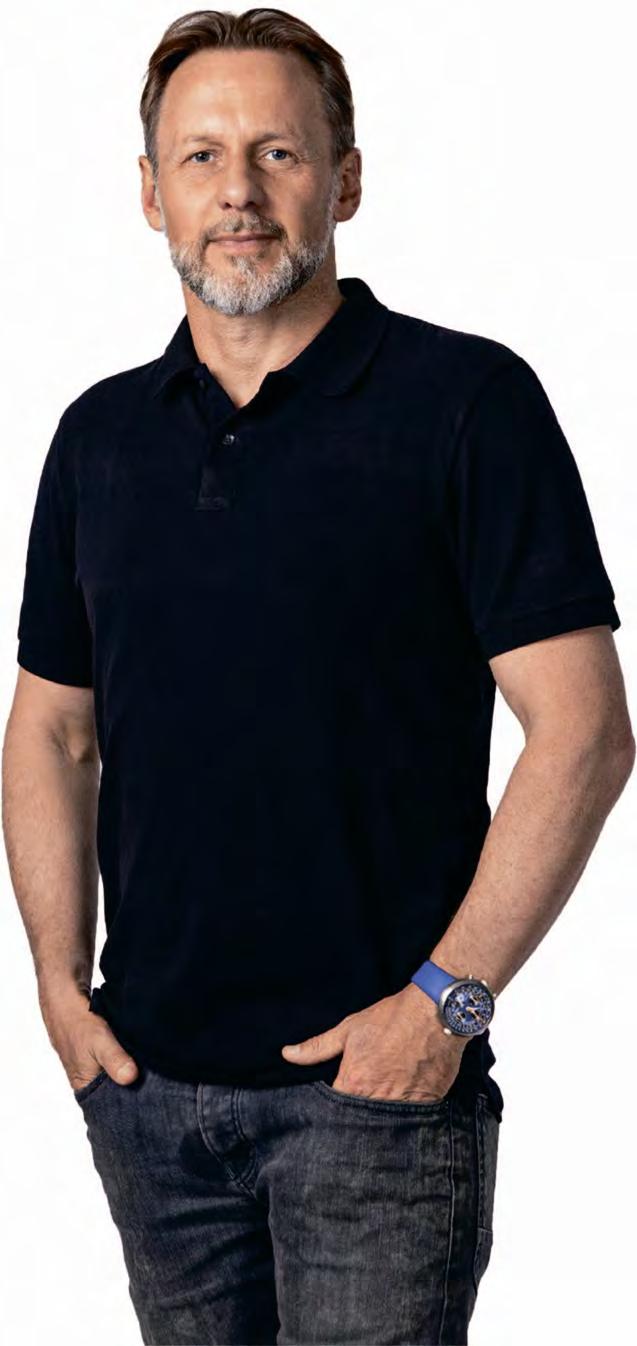
“This would be a win for everyone, because everyone would be correctly motivated to produce great output that grows the entire ecosystem through the power of creativity.”
Just Design has already implemented a different approach to remuneration. Instead of justifying costs by number of hours, it demonstrates measurable results for its designs during the creative process. Once launched, it can verify the final product’s inmarket performance for its clients and invoice based on outcome, irrespective of the number of reverts or the hours captured in time sheets.
Bosman says an efficacy-based cost model can work only if the

“We need to establish radical collaboration between agency and client teams … and be open to adjusting what and how we measure as we go”— Jacques Burger
agency achieves results each time. “With subjectivity embedded in most design decisions, the results can be out of your control. Our new process eliminates client-agency bias by allowing the consumer to drive the design direction.”
Shifting to performance or outcomes-based billing turns the agency-client relationship from supplier to partner again, as both parties are invested in the product’s success, she says. It also provides the creative team with the freedom to devote time to innovative solutions and problem-solving without being bound by the
“In practice, the irony of this [input-based] model is that it provides incentives for agencies to be less efficient”— Gareth Leck
number of hours costed for, while client service staff no longer need to spend the bulk of their time on the tedious administrative tasks related to time tracking.
In Burger’s opinion, agencies need to build a culture that embraces learning, rather than punishing failure. “We need to establish radical collaboration between agency and client teams, back a success strategy focused on balancing shortterm wins with longer-term ambitions, and be open to adjusting and optimising what we measure and how we measure, as we go.
“As long as you build remuneration principles off mutual respect and interest, whatever model you end up designing will underpin what is most important: a long-term, happy, powerful and mutually beneficial relationship between client and agency.”
Amid
the digital surge, the timeless art of crafting compelling copy beckons
a new generation
to harness its transformative power
Reviving the magic: the industry ’ s call to rediscover the value of copywriting
low substance that lives for just 20 seconds comes to mind is brand making up only 5% of the current mix, with 95% of what we do adding no real value to long-term brand growth.”
Boomtown CEO Glen Meier says that while there isno shortage ofcopywriters who can write for social media, writers who can think ofand craftbeautiful, captivating copy are in short supply.
The adindustry isbattling askills shortage and strugglingto attract andretain talent.Adearth ofcopywritingskills,in particular, is being felt by many agencies.
Pepe Marais, co-founder and group chief creative officer at Joe Public, attributes the talent struggleto the industrylosing its lustre. “Most of what we do is not worth the paper or pixelsthat it adorns. Therewas a timewhen theindustry, includingCEOs, MDs, strategists,producers andcreatives were united behind outstanding campaigns that truly built brands. Think back to BMW, Toyota, Nando’s, M-NetandCellC, among others. Compare those campaigns with what the majority of brands are doing today, where our obsession with digitisationand bigdatahaseroded thevalueof the big idea.”
Theproblem, hesays,isthat ifcreative racehorses areexpected tofocus primarily ondonkey work,don’texpectthem tobe stimulatedthrough small-scale “proactive” campaigns that don’t really affectbrands or expect to retain that talent.
The shortageof copywriters,he adds,is a by-product ofan industrythat’s overinvesting in “short-termism”, whichrelates to work that’soften morevisualandwithout substance also known as “wallpaper”
“Just afew shortdecades ago,a healthy marketingmixwould haveincluded30%40% of a campaign focusing on brand advertising, while60%-70% wouldhave been focused on short-term sales via more retail communication.
“What I’mnowseeing and here the digital landscape of creating work with very
Tracy Wasserman,partner andhead of group HRat M&C SaatchiGroup South Africa, saysthe competition fortalent is from both the local industry and attractive propositions abroad. “Asan industry, we need to build a reputation for offering fair remuneration, providing job satisfaction, a work-life balance, career development op-
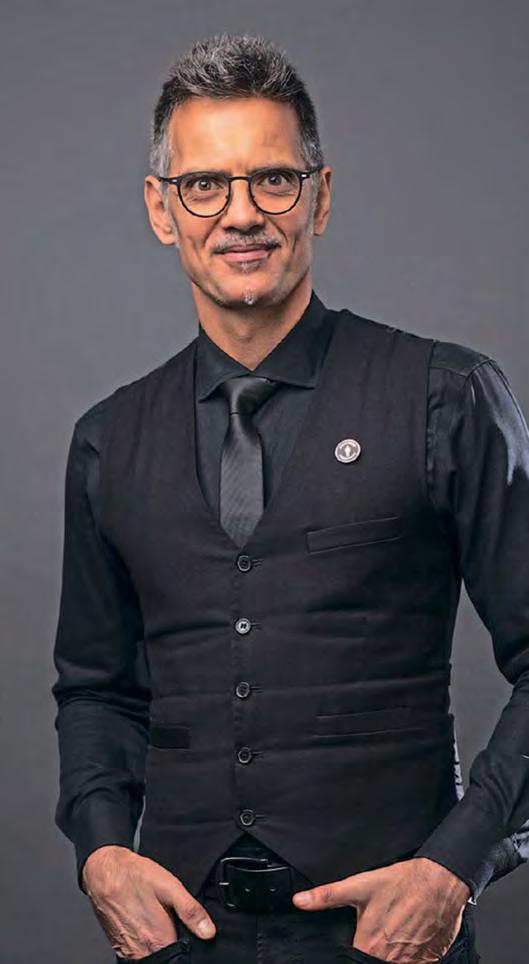
Young wordsmiths and creative thinkers are not aware that they can turn their creative writing skills into a viable career
portunities and being inclusive and diverse in our hiring practices.”
WeaskedSouth Africa’s advertising colleges how much demand there is for copywritingprogrammes. TheIIE-Vega BAin copywritingis theonlydegree inSouth Africathat specialisesincopywriting. Itis also positioned to prepare students for the fluxof specialistskillsassociated withdigital communication.
Otherprivate institutionsofferone-year courses, or qualifications thatform part of broader creativebrand communication. There are also severalonline short courses availablein differentformsof digitalcontent writing and copywriting.
Copywritingused toexist aspartof atwoyear diploma at both the AAA School of Advertisingand Red&Yellow. Thatwas thenphasedoutand shiftedintoaoneyear postgraduate advanced diploma.
Clayton Sutherland, a design lecturer at the Cape Town Creative Academy,says a oneyearcontent creationdiploma typicallyattractsadifferent targetmarket. “Unfortunately,copywriting asa professionis evenmore threatenednowwith theadvent of ChatGPT, which provides you with a veritable writingassistant though you can’t bounce ideas off them.”
MandySpeechly, lecturerandhead ofthe
Pepe Marais, co-founder and group chief creative officer of Joe Public
copywriting programme at IIE-Vega, says the demand to study copywriting has been droppinginrecent years. Having been a copywriting lecturer for more than 15 years, she recallshaving classesof morethan 25 studentsandfrequently havingtoreject applications from strong candidates.
She believesnot many schoolleavers are aware that copywriting is a potential career option.Neither theirparents norteachers are familiar with this field.
“Young wordsmithsand creativethinkers are not aware thatthey can turn their creativewriting skillsinto aviable career.Learners withthese interestsand competencies typically studya humanitiesdegreein Englishliterature orjournalism. And,because they are not familiar with thefield, theyare reluctantto committoa specialist degree for three years,” she says.
Anotherreason, shesuggests, couldbe thatthe job of the copywriter has evolved into a range of differentskills androles.
“Contentcreation andsocialmedia writingdon’t involve the same complex conceptual thinkingand persuasive communication skillsthat areintegral tocompelling copywriting.As aresult, it becomes easier to learn the basic skills and find related work without studying a formal degree.”
isnoguaranteed returnoninvestment,” she says.
She wouldlike to exploremore opportunitiesofworking withtheindustryto promote copywriting as a viable career option by providing insight into the role of the copywriter as well as the many rewards of the actual job.
In theSouth African context,she says, there’s alsoa need formore non-English speaking writersto considercopywriting asa careerto createmore authenticlocal communication.
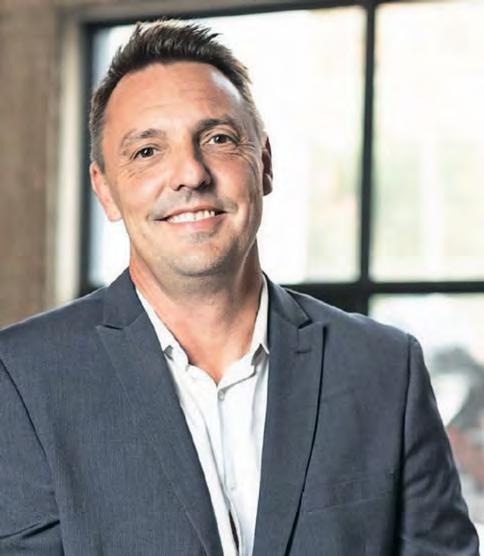
Thetrendcan bereversed,she argues, butit willrequire aconcerted effortfrom boththe industry and advertising colleges.
“We need tobe promoting the rewards of thisexciting career and make schoolleavers awarethat copywriting isan aspirationaljob that is respected and valued.”
IIE-Vega has implemented various initiatives to promote copywriting as a career, including a series of roundtable discussions that were conducted aroundthe countryto establish whyyoung peopleare not applying to study copywriting.

lecturer
“Whatwediscovered isthatteachersare not providing meaningful guidance or inspiration,” says Speechly.
Butthere isonlysomuch advertisingcolleges cando given theirlimited marketing budgets. “It’shard to dedicatea marketing budget to a single qualification when there
ability to think creatively. “In reality, paintings and drawings havelittle to do with insights,” he says.
Speechlysays thereisa perceptionthat copywritingrequiresan excellentlevelof Englishcompetence, whichdetersmany aspirantcreative thinkersandintelligent communicators from this field. There’s also a perception that salaries are low.
Mostagencies havestrategiesin placeto attract talent, and manyare working with tertiary institutions and offering internship programmesto graduates.But Maraisbelieves the industryis still notdoing enoughtoattract talent, but says that’s not anyone’s fault: everyone is just too busy trying to get by.
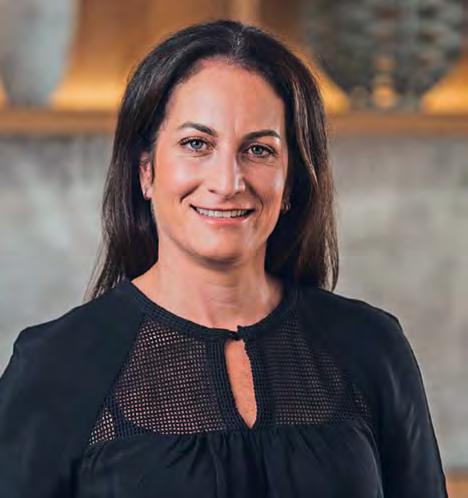

Mandy Speechly, senior copywriting lecturer and national head of programme at IIE-Vega
Sutherlandagrees. “Youhave towonder how manytalented individualsthe industry is missing out on given that the high cost of tuition at private colleges acts as a barrier for many people.”
The solution,he believes,is toaward more bursaries based on a year-by-year performance withthe selection ofsuitable candidates done on a portfolio basis that does not emphasise artistic skills, but rather the
What the industry needs, he argues, is to get back to being a creative industry. “Creativity is not the responsibility of the creative department, it’s the responsibility of the CEO,” he says.
“As [Tesla CEO} Elon Musk hasbeen quotedassaying, ‘If youare not improving your product, whatare youdoing? ’ This is a business problem and, as such, should become the top priority of the ACA [Association for Communication & Advertising] to solve.” Meier agrees that the industry needs to do moreto attracttalent. “Weneed toreestablishthe magicofthecraft andthe value ofwhat we doto buildbetter businessesand brands.Weneedto makeit exciting again and showcasethe magic of great workand the impact itmakes in moving brands and sales forward. The better ourwork is,the morepeople willshare, and themore they willfall inlove with design and advertising,” he says.
Ratherthan criticisewhatis beingdone, says Wasserman, a more prudent approach is for collaboration and more creative ideas toposition theindustryfavourably inthe minds of young people.
Deliberate internshipprogrammes, active involvement in tertiaryeducation and attractive employee value propositions will all go a long waytowards positioning our industry favourably in theminds of young, talented people, she adds.
“Mostimportantly, wemustbe boldand audacious,because playingit safeleaves agencies and the industry at a competitive disadvantage.”
Clayton Sutherland, design
at the Cape Town Creative Academy
Glen Meier, Boomtown CEO
Tracy Wasserman, partner and head of group HR at M&C Saatchi
Group South Africa
OMD continues to dominate, accounting for 19.4% of the industry, ahead of PHD Media and The Media Shop, in a year the industry experienced strong overall growth
THE SA MEDIA AGENCY LANDSCAPE
TheSouth Africanmedia industryexperienced significant growth last year, growing 12.6% according to Recma’s 2022 ranking of media agenciesbased ontheir activity volume.
TheRecmareport isareferencequantitative ranking that includes traditional mediaspendas wellasnontraditionalmedia, the latter of which includes digital, data and analytics, content, marketing and international co-ordination.
OMDcontinues todominate, accounting for 19.4% of theindustry, ahead of PHD Media and The Media Shop.
Recma recorded no significant loss in 2022 forOMD.Its growthisprimarilyattributed to the agency’s wins, including Dotsure and Kimberly-Clark, whichare recognisedproportionally in 2022 andwill have a full impact in 2023.
OMD’sgrowthis drivenbytheorganic increase of existing clients, including McDonald’s and PepsiCo. The agency won threesignificantnew piecesofbusinessat theend of2021whichboosted activityin 2022, aswell asseveral smalleraccounts in
2022 such as Sportingbet, ClearScore, and Chanelin 2021,and Essity,Stellenzicht, Gumtree and Ekaterrain 2022. However, the departureof Pernod Ricard atthe end of2022 isexpected toaffect theagency’s performance in 2023.
The MediaShop grewsignificantly during the post-Covid recoveryperiod, achieving notable success, particularlyin securing theprestigious digitalcontract withNedbank.A numberofclients, includingFamous Brands, L’Oréal, SABCandDouglas, experienced substantial organic growth.
EssenceMediacom hasshown remarkable 21% growth, thanks to an increase in spend by Distell and the positive impact of the Old Mutual account gain in mid-2021. The merger of MediaCom andEssence drove the agency’s staff expansion.
Carat achieved 8% growthin 2022, with a significant boost from the Pep account win. Itlostnobusiness in2022,contributingto its positive score.
In addition to theactivity volume ranking, Recmahasbeen establishingamarketing index that goesbeyond volume considerations. Theindex is basedon an 18-criteria qualitativeevaluation, whichisbasedon twosetsofcriteria: vitality (nine criteria) and structure (nine criteria).

The vitalityranking evaluatesthe dynamism ofan agencyand is affected byits competitivenessin pitches, new business balance and participation inpitches orawards. Inthisspecific setofcriteria,PHD takesthe lead,byfar,thanks toa highly positive momentum driven by the acquisition of key clients.

In the structure ranking (ninecriteria evaluating resources and client profile), the size of the agency and the number of experts affect thescores. This year, OMDhas been ranked as the leading agency according to
The vitality ranking evaluates the dynamism of an agency and can vary more quickly than structure
the structure criteria, followed by PHD and EssenceMediaCom.
Vitality scores vary more quickly than structure. Several years of success in vitality lead to anincrease in a structurescore. Conversely,a majordeparturedoes notharm an agency’s structure score.
The qualitativeevaluation providesa different ranking comparedwith the overall activity volume, thoughsome players appear in both rankings. Havas, not present in the top five agencies in volume, is fourth in qualitativeevaluation,notably thankstoa strong score in vitality (eight points).
Omnicom Media Group is robust, with PHD rankednumberone followedbyOMD ranked numbertwo. EssenceMediaCom, rankednumber fourinthe overallactivity volume report, is rankedthird in the qualitativeevaluationahead ofHavasMedia (number four). The MediaShop, which held the third position inthe overall activity volume report,is ranked fifth inthe qualitative evaluation.
❒ Recma isan independentresearch company focused on the media agency industry. The company, which collects and analyses data from more than 1,000 media agencies in70countries,publishes awiderangeof global, regional and local reports that provide strategic intelligence to the media industry. For more information and analysis on theSouth Africanmarket, contact Mylena Abbouche (mylena@recma.com)
Demographica
takes first prize for a series of three powerful print ads created for SANBS
WINNING CAMPAIGN HAS A WORTHY CAUSE: TO INSPIRE MORE BUSINESS BLOOD DRIVES
“Thesecond ad, ‘Inflation’,is alsofocused on somethingthat isfrequently discussed and included in manyheadlines, while the term ‘interest rates’ tendsto make everyone shakein their boots rightnow given the frequent increases.In our opinion, there is huge interestin these topics, and they are frequently included in headlines and articles.”
Lessingsaysthe Demographicteamwoke uplate totheFMCreative Challenge. “We love an opportunity to think proactively for our clients, andwe had a numberof ideas. The biggest challenge isgetting the idea made over and above our day jobs.
Let’s be honest, the simple sight of a needle gets most of us running for the hills. Giving blood takes it to the next level
FM’sCreativeChallenge isanannualcompetitionthatinvites adagenciestocreate an impactful, full-page tactical print ad for a client basedon anarticle fromthe fastpaced news cycle.
This year’swinner is Demographica,for a seriesof threeprint adscreated forblood services organisation SANBS.
The agency’srelationship withthenonprofit organisationbegan in2020 during theCovidpandemic andresultedin “the good hood” project, andthey’ve enjoyed a good relationship since then.
“SANBS reallydoes have a hugecalling: to save lives,” saysGareth Lessing,executive creative director at Demographica. “Let’s be honest, thesimple sight of aneedle gets most of us running for the hills. Giving blood takesittothenext level.Soyes,SANBSis always watching the blood stock levels.
“The challenge, however, is that less than 1% of South Africans are active blood donors. A five-day supplyis stable. Theirstocks are frequently below that, so pleading for blood donations is a never-ending campaign. As a nonprofit organisation,it doesn’thave the luxuryof campaignbursts.So,the FMCreativeChallengebrief wasanexcellentopportunity for them.”
It wasn’t just onearticle that inspired this campaign, says Lessing. “The FM as a whole focuses on or touches on challenges facing ourcountryand businesses.The ‘being in the red’ ad was inspired by the fact that many businesses and even our country are facing financial challenges.
“We shared some ideas with the client, who liked them and gave them the green light. Fortunately they werenot complicated to execute. That’swhyprint isstillafantastic medium for communication. I like to call it ‘still pictures’.The challengeofgrabbing


Team who created the ads: clockwise: Marloe Wise, Gareth Lessing and Dhasagan Pillay

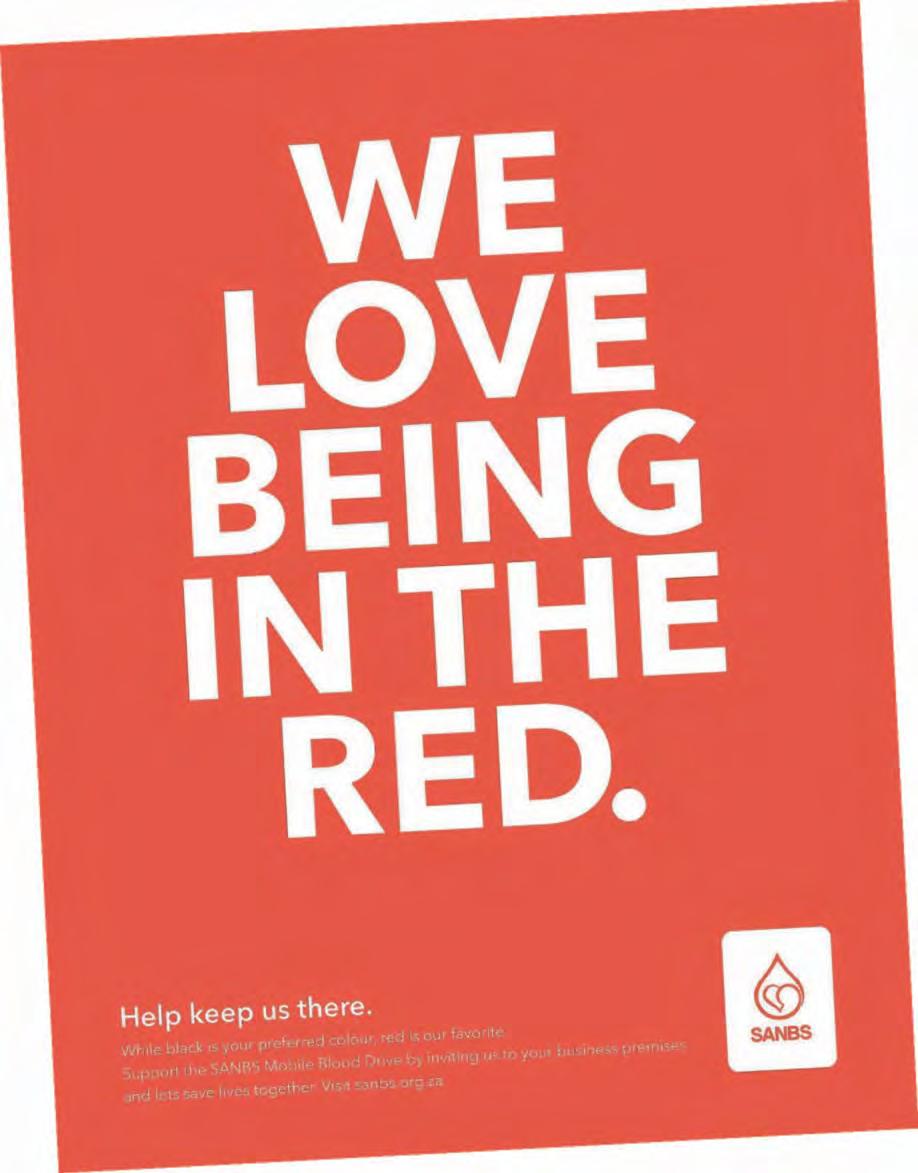
attention with a simple yet convincing ideais oneofthereasons welovethis thing called advertisingwe do every day andtwice onSundays.Sokeep the briefs coming, FM!”
Adding that the agency’s creative team hitthe jackpotwhenitcame tothis particular brief, successfully marrying SANBS insights and financial terms that frequently make it into the FM’s articles, Lessing sayshe hopesthat thecampaign encouragesmore businessesto host blooddrives tohelp SANBSsave more lives.
The team responsible for this campaign included MarloeWise, headof commercial growth, Gareth Lessing, art director andexecutive creativedirector, and DhasaganPillay, creativedirector fromthe Demographicateam,and Rethabile Melato, Thandi Mosupye and Simphiwe Cele from SANBS.
The othertwo finaliststhis yearwere Dentsu Creative with a print ad created for People OpposingWomen Abuse (Powa), andCBR Marketingwith anad forbreastcancer awarenessonbehalf of Bidvest McCarthy.

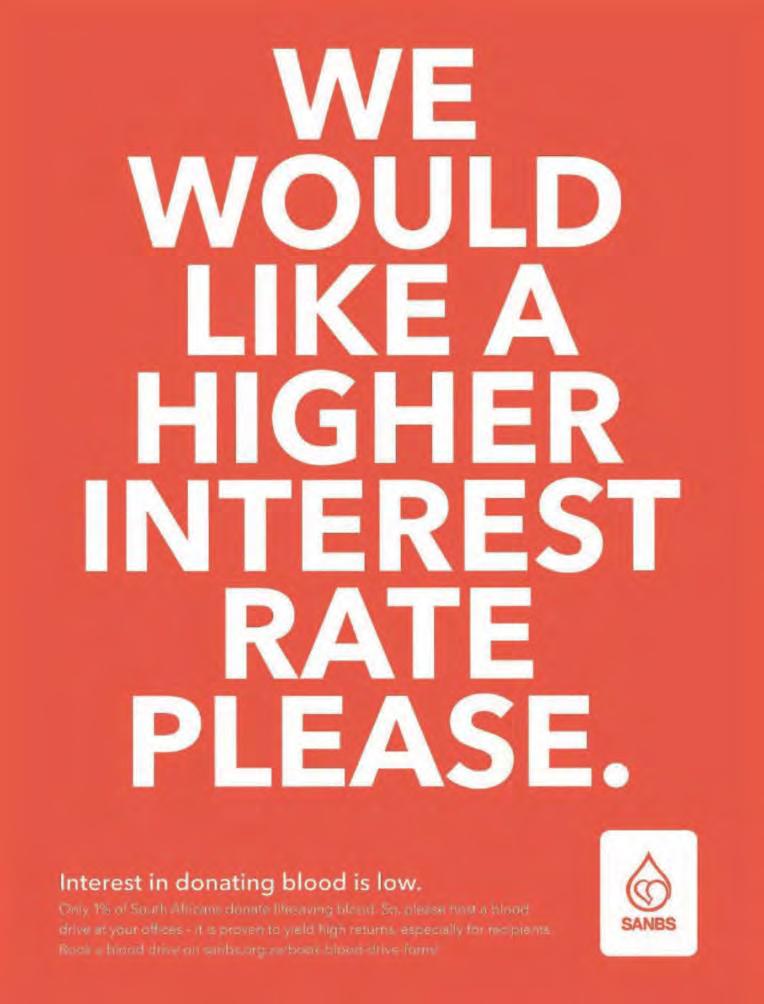
C ORPORATE PROFILE
JOE
PUBLIC
WE GO BY THE NAME OF
Joe Public
OUR CORE SPECIALITIES ARE
Integrated through-the-line brand and communications
OUR BIGGEST BRAG IN PAST 12 MONTHS
Chicken Licken winning 2023 Loeries Brand of the Year for the seventh consecutive year; MarkLives’ 2022 Most Admired Agency of the Year; ranked ninth Independent Agency in The Drum World Creative Rankings
OUR BIG CLIENTS
AB InBev, Cell C, Chicken Licken, Nedbank
OUR OLDEST ACCOUNTS
Clover (20 years); Nedbank (10 years); AB InBev (9 years); Chicken Licken (8 years); Cell C (4 years)
ACCOUNTS WON OVER PAST 12 MONTHS
The UK-based Grant’s Whisky global account for which we will be the lead strategic and creative agency in 20 markets
ACCOUNTS LOST OVER PAST 12 MONTHS
None
WHO OWNS US
We are a proudly South African independent agency that’s 63% black-owned.
OUR BEE RATING
Level 1
OUR REVENUE BAND
R300m-R350m
NUMBER OF EMPLOYEES
285
WHO’S THE BOSS
Khuthala Gala Holten, Mpume Ngobese, Gareth Leck, Laurent Marty, Xolisa Dyeshana, Pepe Marais
OUR BUSINESS IN 140 CHARACTERS
Serving the growth of our people, clients and country through the power of creativity.
OUR KEY MOMENT IN PAST 12 MONTHS
Being awarded Nedbank’s digital business, which helped us hone our digital capabilities.
SO YOU LIKE US, GET IN TOUCH WITH US
CallKhuthala orMpume on+27 (0)10-591-7770 or send an e-mail to khuthalag@joepublic.co.za or mpumen@joepublic.co.za.
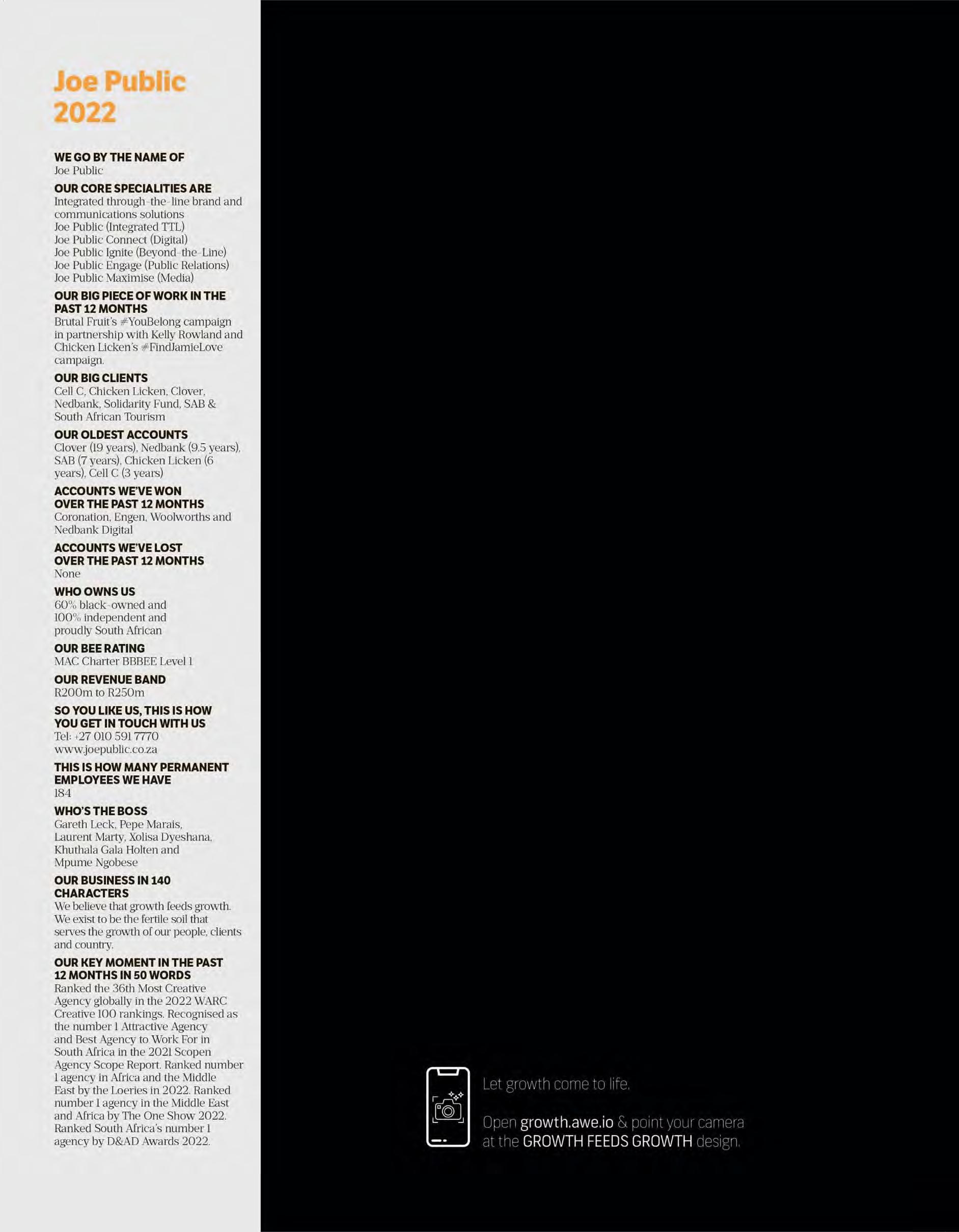

C ORPORATE PROFILE
M&C SAATCHI GROUP SA
WE GO BY THE NAME OF
M&C Saatchi Group South Africa
OUR CORE SPECIALITY IS
Creating beautifully simple solutions for an increasingly complex world.
OUR BIGGEST BRAG IN PAST 12 MONTHS
Launching Standard Bank CIB’ s “We Believe in Here” campaign; building Anglo American’ s sustainability credentials; returning the LiquiFruit brand to its iconic status.
OUR BIG CLIENTS
Standard Bank; Astron Energy; Takealot; PepsiCo; Heineken
OUR OLDEST ACCOUNTS
AVI; MWeb; Takealot; Nando’s; Lexus ACCOUNTS WON OVER PAST 12 MONTHS
Pepsi; Spur; JSE; MultiChoice ACCOUNTS LOST OVER PAST 12 MONTHS
None
WHO OWNS US
51% locally owned. M&C Saatchi Plc owns 49%. 26.13% black partner and staff ownership.
OUR BEE RATING
Level 1
OUR REVENUE BAND
R350m-R400m
NUMBER OF EMPLOYEES
More than 350 across Cape Town and Joburg. WHO’S THE BOSS
The partners, a federation of entrepreneurs.
OUR BUSINESS IN 140 CHARACTERS
An unwavering belief in the Brutal Simplicity of Thought the power of creativity to cut through, to be concise, precise and clear.
OUR KEY MOMENT IN PAST 12 MONTHS
Our PR agency Razor recognised as the most awarded agency in Africa and ranked PRovoke Media’s fifth-most creative agency in the world.
SO YOU LIKE US, GET IN TOUCH WITH US
Tel (Joburg): +27 (0) 11-268-6388
Tel (Cape Town): +27 (0) 21-421-1024
E-mail: info@mcsaatchigroup.co.za
Website: www.mcsaatchigroup.co.za
LinkedIn: M&C Saatchi Group South Africa

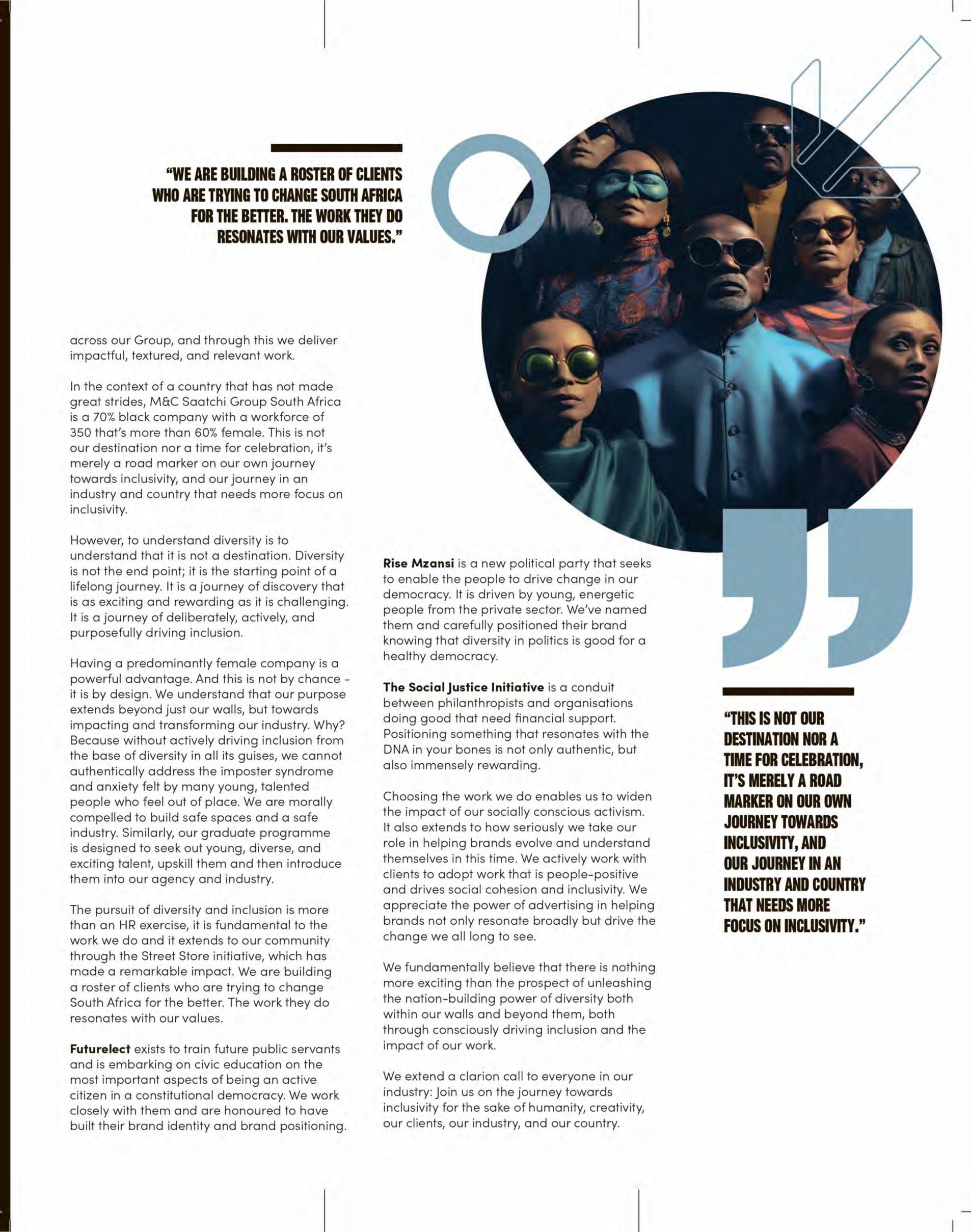





Volkswagen Etisalat The Coca-Cola Company
Distell
Burger King
Vodacom
AB InBev
Chantal Sombonos van Tonder — Chicken Licken
Khaled AlShehhi — UAE Government Media Office
Bridget Harpur — Volkswagen
Jesus Ferreira — The Coca-Cola Company
Yasmeen Al Mallah — Etisalat
Meredith Kelly — Volkswagen South Africa
Natasha Maharaj — Distell
Heril Bangera — Roto
Sonia Bangera — Roto
Zeinab Najjar — Burger King
Marais
Xolisa Dyeshana
Pete Case
Tseliso Rangaka
Fran Luckin
Ryan McManus
Ryan Reed
Ogilvy South Africa
Grey/Team Liquid
FCB Africa
VMLY&R
M&C Saatchi Abel
Song
Song
Liquid VMLY&R
Creative M&C Saatchi Abel
Ogilvy South Africa Promise
FCB Africa
Grey/Team Liquid
VMLY&R
Grid Worldwide
Accenture Song