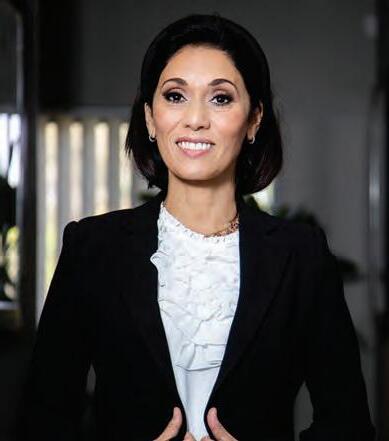






Tasneem Fredericks
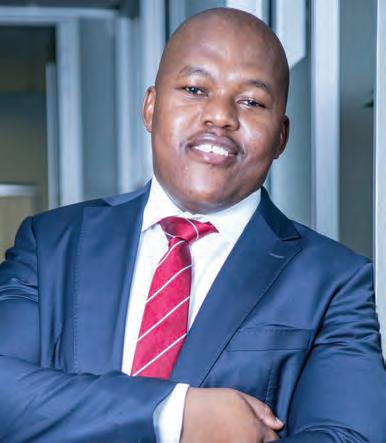
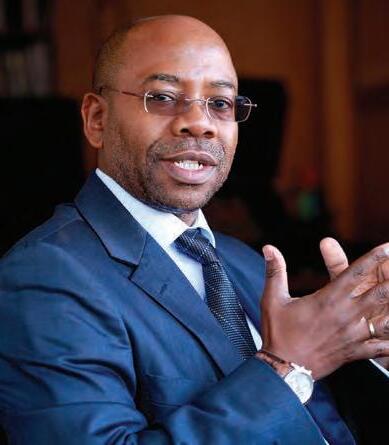
Skhumbuzo Macozoma
Bonang Mohale
Busi Mavuso
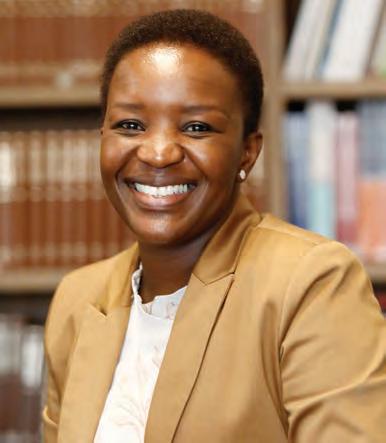
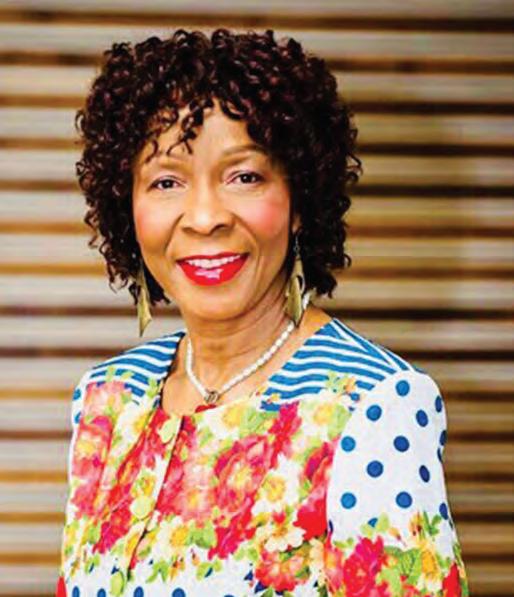
Dr Snowy Khoza
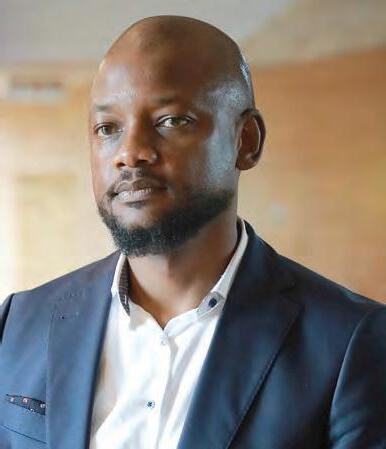
Andile Nomlala

How can organisations ensure that their policies and practices genuinely meet the needs of female staff DURING the COVID-19 pandemic?
Many women, particularly those with young children and/or ageing parents, have borne the brunt of working through the COVID-19 pandemic. This is no surprise – women have traditionally borne more than their fair share of caregiving responsibilities and the pandemic has just highlighted this. Societal norms need to change to enable a more equal world – a much bigger challenge. All organisations can play an important part in this shift though, by actively making workplaces more inclusive and flexible and adopting policies to allow all their people (including working parents) to balance competing demands in a more gender-neutral way. This may include adopting flexible working practices (and a hybrid working model), instilling values of collaboration and teamwork, and ensuring teams are properly resourced and work is evenly allocated. This is also important generally for enabling good mental health through better work-life balance and allowing people the time and space to recharge.
What is the best way to ensure accountability on a gender strategy?
Buy-in and commitment of time and resources from the most senior levels are vital. The Gender Strategy Working Group (GSWG), which I chair, oversees our formal, multipronged gender strategy, adopted in 2015, so it receives attention at the highest level. Structure and process are also important. Each year, we set targets and initiatives in various focus areas and regularly map and report back on our progress. A dedicated talent manager and transformation manager support us with the day-to-day operational work necessary to meet our objectives. These structures and processes facilitate accountability and ensure we are action-oriented and keep things moving forward.
What progress has been made in retaining and promoting women lawyers?
For some time, we have been a South African “Big Five” law firm with the highest proportion
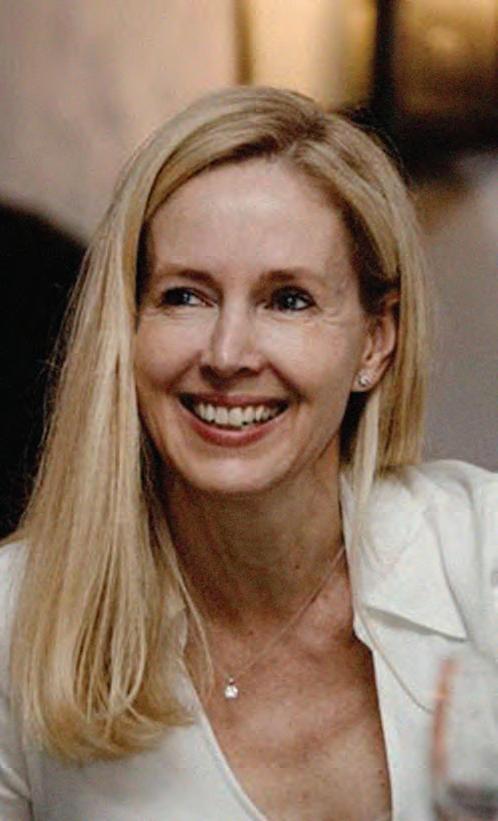
of women partners. We aim for a 50/50 split of our total partner body by 2025 and have made significant progress already. Currently, 44 per cent of all our partners are women – a 26 per cent increase since 2015 – and 39 per cent of our equity partners are women – a 26 per cent increase since 2015. We have a strong pipeline too: 55 per cent of our legal services team are women. We have deliberately increased diversity in all our leadership structures over several years and women now comprise more than 40 per cent of our senior leadership team. We can see the positive impact of this in our decision-making and in the firm’s success – diverse teams find more robust and creative solutions.
How important is role modelling?
Role modelling is critical to organisational change – and we all need role models at all stages of our careers. As Sonia Sotomayor,
the first Hispanic woman to become a US Supreme Court Justice, said “a role model … provides more than inspiration; [their] very existence is confirmation of possibilities one may have every reason to doubt, saying ‘Yes, someone like me can do this’.” As the first woman elected to a senior leadership role in a major South African law firm in 2015, I felt the absence of female role models in leadership roles keenly. This is all changing – several large South African law firms now have senior women leaders, and in only six months, four major global firms (Ashurst, Freshfields Bruckhaus Deringer, Herbert Smith Freehills and, most recently, our alliance partner Linklaters) have appointed women to senior partner or chair roles for the first time.
We were the first South African firm to introduce parental transitional coaching in 2016 (for which we were awarded the African Legal Awards Diversity Award) – this has been very successful. We introduced a flexible working policy three years ago and recently a hybrid working policy for the post-COVID-19 world. We conduct regular pay analyses and have reviewed all the firm’s policies (including our parental leave and bonus policies) to eliminate any gender biases. Every quarter, the GSWG compiles a transformation profiling report, focusing on the business development and profiling of women feeearners. We are making a deliberate effort to be more inclusive in the way we pitch for work and profile our lawyers. We regularly conduct unconscious bias workshops and awareness sessions, including on race, gender, gender identity, sexual orientation and related issues. Most importantly, we have a values-based culture, which forms the backdrop for everything we do. Respect, transformation and diversity, collaboration and teamwork are all core firm values, which we insist are lived by all of our people.

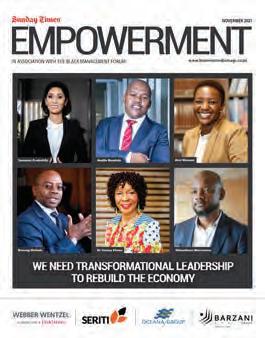
7 BMF president Andile Nomlala on the need for transformational leadership, especially given the country’s current economic situation
8 Tasneem Fredericks, deputy president of the BMF, calls for demonstrable action and inspiring leadership at grassroots level
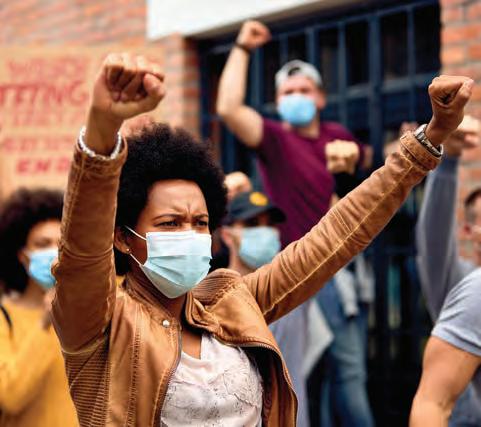
13 The triple challenges of unemployment, poverty and inequality, together with social unrest, are deepening South Africa’s socioeconomic crisis
14 We take a deep dive into the progress and state of South Africa’s macroeconomic policies over the 27 years since democracy

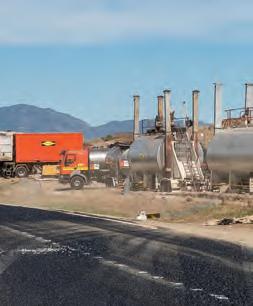
16 Is SOE procurement spend bene tting local development and black empowerment? We explore the transformation policies of Eskom and SANRAL
20 A proponent of empowerment, Bonang Mohale discusses mentorship, transformation and how to cultivate a culture of progressiveness
25 Plans to sell Burger King SA and its meat plant companies were subjected to strict conditions from the Competition Commission and the Competition Tribunal to ensure BEE shareholding was not negatively affected
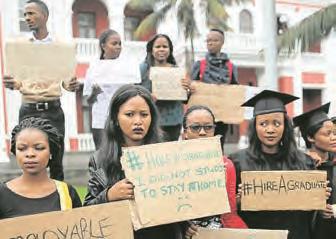
26 The country’s high unemployment rate, particularly among the youth, remains critical. We look at possible ways to improve the situation










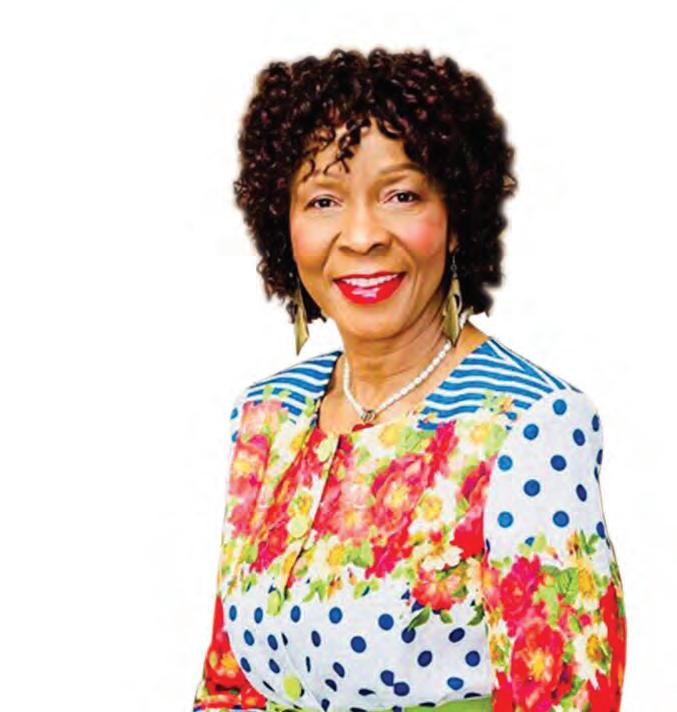
28 Seasoned executive and a champion of empowerment Dr Snowy Khoza talks about the challenges facing black women in business, making it in a man’s world and emphasises the importance of resilience



PUBLISHED BY
Picasso Headline,
a proud division of Arena Holdings (Pty) Ltd, Hill on Empire, 16 Empire Road (cnr Hillside Road), Parktown, Johannesburg, 2193
Postal Address: PO Box 12500, Mill Street, Cape Town, 8010 www.businessmediamags.co.za
Editor: Ryland Fisher
Content Manager: Raina Julies rainaj@picasso.co.za
Contributors: Jermaine Craig, Duma Gqubule, Caiphus Kgosana, Thando Pato, Tiisetso Tlelima, Rodney Weidemann
Copy Editor: Brenda Bryden
Content Co-ordinator: Vanessa Payne
Digital Editor: Stacey Visser vissers@businessmediamags.co.za
DESIGN
Head of Design: Jayne Macé-Ferguson
Senior Designer: Mfundo Archie Ndzo
Advert Designer: Bulelwa Sotashe Cover Images: Supplied
Project Manager: Jerome van der Merwe jeromem@picasso.co.za | +27 21 469 2485 I +27 082 668 1496
Sales: Jackie Bezuidenhout, Frank Simons
Production Editor: Shamiela Brenner
Advertising Co-ordinator: Johan Labuschagne
Subscriptions and Distribution: Fatima Dramat, fatimad@picasso.co.za Printer: Novus Print
Management Accountant: Deidre Musha
Business Manager: Lodewyk van der Walt
General Manager, Magazines: Jocelyne Bayer

Copyright: Picasso Headline. No portion of this magazine may be reproduced in any form without written consent of the publisher. The publisher is not responsible for unsolicited material. Empowerment is published by Picasso Headline. The opinions expressed are not necessarily those of Picasso Headline. All advertisements/ advertorials have been paid for and therefore do not carry any endorsement by the publisher.
There is still some reticence among certain leaders in the business community about empowerment and transformation. Bonang Mohale is not one of them.
In this issue of Empowerment, we speak to Mohale, one of South Africa’s most accomplished businessmen who is not afraid to speak out in favour of transformation and against corruption. We look at what it takes to be a transformative and inclusive leader and why he will never tire of waging the transformation battle.
We also look at how the government is trying to use infrastructure spending to rebuild the economy and, in the process, also empower impoverished communities. Government is finally flexing some of the muscle it has in its state-owned enterprises.
But we also look at where things have gone wrong in our economy. Our unemployment rate is
spiralling out of control, and in some areas of the economy, such as the oceans economy, it appears there is not much transformation, but a lot of fronting. We attempt to find out the reasons behind this.
South Africa is a beautiful country, but we will never be able to realise our full potential as a nation while there is so much inequality, unemployment and poverty.
Proper empowerment and transformation of the economy and society will ensure that we become the great nation we all know we can be. We hope you enjoy the read and feel inspired to join the struggle to improve our country for all who live in it.
Ryland Fisher Editor









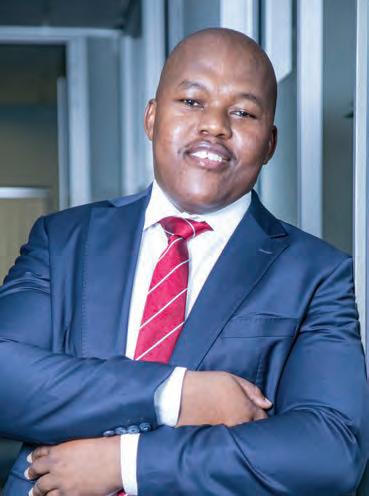
We need inspirational and committed leaders to institute focused and entrenched transformation that will drive economic empowerment, aid an ailing economy and change people’s lives, writes ANDILE NOMLALA , president of the Black Management Forum
The greatest tragedy of leadership in South Africa is that it refuses to use its legitimate power to change the lives of ordinary people in our country. This mindset has given other leadership spaces the explicit permission to behave selfishly, advance their interests and not act in the best interest of the country. The crisis South Africa is currently in needs us all to reimagine the true purpose of transformation, and the role of leadership in driving the agenda.
The transformational landscape of the country remains highly questionable and contestable. The roles of different stakeholders in society are not clearly defined. Transformation is also being seen as a costly exercise that takes away from real business activity.
Professionals and key commentators in the economic space, deliberately separate the project of transformation from economic growth and inclusion. The detractors place transformation outside of the economy, and they make compelling arguments against its relevance. This mindset and unfortunate level of reasoning against transformation explains why empowerment has not become institutionalised by government and the private sector. Empowerment works on the terms of business and behaves like a prodigal son seeking acceptance.
The B-BBEE Commission’s National Trends on Black Economic Empowerment Report states that compliance in both the private and public sectors is not satisfactory. Section 13(g), which deals with compliance, is not fully understood and embraced. Compliance with B-BBEE in the public sector is less than 10 per cent, and less than 50 per cent in the private sector.
These levels of compliance are a clear indication that empowerment has not been institutionalised by both government and private business. Without the government’s leadership in entrenching transformation as a system, the private sector will adopt the same attitude and not institutionalise transformation for the survival of the economy.
The Procurement Bill, which has not been promulgated, is touted as a key game-changer in developing black business in the country. What needs to be clarified is that government procurement alone will not transform the economy, but will create shadow competition and a long queue for black business.
Without the government’s leadership in entrenching transformation as a system, the private sector will adopt the same attitude and not institutionalise transformation for the survival of the economy.
Government procurement is a lever, but not the most effective lever to drive economic empowerment. The value chains of established businesses have greater potential for economic empowerment, through supply and enterprise development of the B-BBEE elements.
The private sector contributes 70–75 per cent of the country’s gross domestic product, and real and sustainable transformation is possible by unlocking the potential of empowerment in the private sector. The value chains of established businesses are driven by long and old relationships, skewed towards white businesses because the unchecked mental model of white business is to perpetuate itself and entrench its dominance in the economy.
Regulation 28 of the Pension Fund Act is another lever that can bring about progress in empowerment. Currently, 45 per cent of assets under management can be invested offshore; this was amended by former finance minister Malusi Gigaba upon engagement with business. This decision was not made in the interest of transformation, and if these assets were invested in the country with a focus on organic black businesses, it would move the empowerment needle in the right direction. Therefore, developing black businesses needs greater focus and a decisive government that will entrench empowerment in every sector of society.
The truth about being human is that economic participation and its accompanying freedoms preserve human dignity. The majority of black people have not reached this level of freedom and economic liberation. Black professionals that have escaped the clutches of poverty still have not been liberated mentally, because they assimilate into the system, which has subdued the majority of black people.
Empowerment in the country needs to be entrenched and systematic. The political leadership must take centre stage in leading our collective empowerment efforts, and the private sector must embrace transformation for the survival of the economy and prospects of all South Africans.
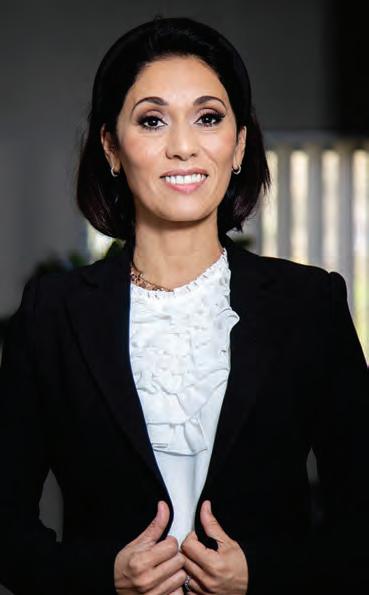
It’s time for feet-on-the-ground action from leaders who address the issues as they flare up, writes TASNEEM FREDERICKS, deputy president of the Black Management Forum
Legend has it that while a fire was ravaging Rome, the emperor Nero was playing his violin, thereby revealing his total lack of concern for his people and the empire. However, it could also have been that he believed the situation to be so dire that he chose to occupy himself with an unimportant activity to distract himself from having to lead during a crisis and face Rome’s challenges head-on.
South Africa is experiencing fires more regularly, the likes of which equate to when Rome was burning in 64 AD. The difference in the outcome will be in the leadership style we employ to extinguish the flames. To allow everything to burn to the ground is as viable as playing the fiddle when you should be beating out the flames – it will amount to naught.
What has become quite clear is that the challenge in this country is from a grassroots level. Job opportunities and upward mobility for the majority of South Africans can only happen if there is proper service delivery, infrastructure, small, medium and micro enterprise support and political stability within their geoeconomic spaces. Taxi violence, recurring load shedding and sporadic episodes of xenophobia only add fuel to the already blazing fire.
Government, labour, business and civil society are all critical partners and key drivers in achieving the South Africa we want and deserve, and, like any recipe, require measured and calculated doses of honesty, frankness and collaboration. Not an all-or-nothing approach, but one that preserves integrity and authenticity on matters of national import like transformation across all sectors of the
economy and the advancement of women in both the economy and politics in particular.
It cannot be a case of the one capitulating to the other, or a staunch adherence to ideology in the face of a flailing economy, continued unemployment and a slow flow of investments into the country. Corruption has not ceased, it continues unabated, and the reward for whistle-blowers remains in the after-life only.
Pulling all stakeholders together to create solutions will demand that we hold leaders
We urgently need to build trust and hope and meaningfully change the plight of the poor, uneducated and vulnerable in our society.
We need leaders who make well-thought-out and researched responses in consultation with industry experts to ensure best practices and advice.
accountable at regular intervals. We need leaders who make well-thought-out and researched responses in consultation with industry experts to ensure best practices and advice. Leaders who listen and activate outcomes. Leaders who understand that bigger picture thinking is more important than short-lived promises around times of local elections.
An important aspect of extinguishing the flames is to understand the crisis in its entirety and its refined detail before executing a response. While our democracy may be young, and slow to mature, we ought to be much farther down the path than we currently are. COVID-19 has undoubtedly exacerbated the urgency to mature, as the luxury of time is not on our side.
As a near-hopeless nation with little to no confidence and trust in its leaders across both public and private spheres, we urgently need to build trust and hope and meaningfully change the plight of the poor, uneducated and vulnerable in our society.
When leaders do not lead through action it becomes difficult to bounce back and restore. Young people need basic decent education; women and children need a safe environment to work, live, play, and breathe; and every citizen needs to feel part of this country and contribute to its ultimate recovery and restoration.
Will our leaders be on the forefront and coalface of fighting the fire, or will they be home in their mansions overlooking their rose gardens and listening to Carl Orff’s Carmina Burana while watching the masses take to the street and set everything alight.
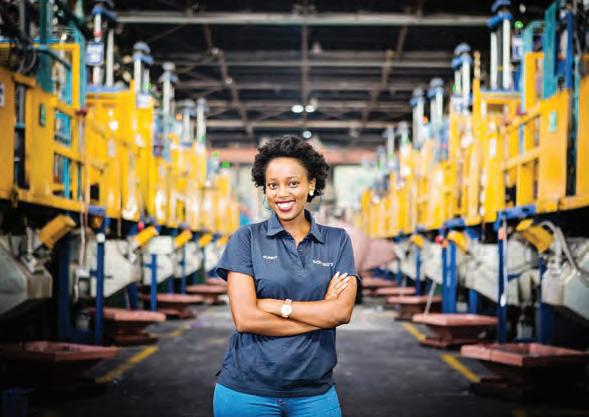
Sanelisiwe Jabane - Wela Inspirational Woman.







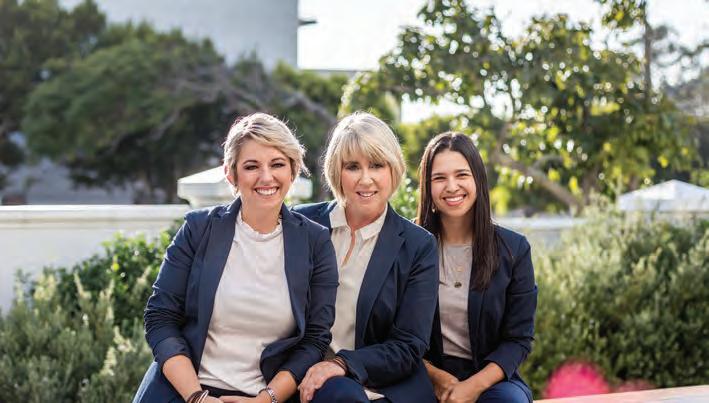
The Women in Engineering Leadership Association is one of five projects initiated and managed by the merSETA Chair in Engineering Development. It is committed to the development of women and facilitating transformation in the sector
The Women in Engineering Leadership Association (Wela), was founded in 2012 to support female students in the School of Engineering at the Nelson Mandela University to enhance their academic experience and assist them in completing their studies.
Wela fulfils the university’s mandate of being of service to society through its focus on the academic, professional and personal development of women in engineering. This includes various developmental workshops, outreach, guest lecturers, academic support, meetings and gatherings, and a mentorship programme where senior Wela members are trained to mentor junior Welamembers.
Wela is managed by Professor Ann Lourens, head of the Industrial Engineering department, along with project co-ordinator Nicole Truter.
“Wela strives to create a culture of inclusion, equality and innovation,” says Lourens. “The needs of our female engineering students and practising female engineers are met through programmes and workshops, designed to complement their academic skills.”
“Engaged engineering means taking responsibility for fostering a sense of leadership that is centred around innovation, change and forward-thinking,” Lourens explains. “It means that we focus on the development and support of women operating in traditionally male-dominated environments and create opportunities to grow female engineers and attract more females to the field.”
Over the past 12 months, Wela has continued to present online events and workshops to members to enhance their self-confidence and ability and improve female
student retention rates. These events and workshops included:
• mentorship meetings and activities;
• international Women Engineering Day celebration;
• true colours workshop;
• team building and Ubuntu workshops;
• wellness and strength assessment workshops;
• unleashing the brain potential webinar in collaboration with Emthonjeni Student Wellness;
• choices of a successful woman webinar;
• forgiveness workshop webinar; and
• emotional intelligence webinar.
In 2020, Wela developed an animated promotional video for school learners promoting engineering as a study and career opportunity for girls. The association is also compiling members’ stories into a storybook for primary school learners to encourage and educate them about the role of women in engineering.
Throughout the lockdown, Wela and the Learning and Teaching Collaboration Cluster at the university, under the guidance of Ronelle Plaatjes, provided academic and emotional support to the Wela students.
The association also designed the ninth edition of the Inspirational Women and Inspirational Students publication that introduces new Wela members to readers. The publication is distributed at marketing events and in the manufacturing industry. Due to the pandemic, the 10 th edition was distributed electronically, and some of the featured new members profiles were posted to the associations social media platforms.
The association also offers an Early Career Development programme for both women and men working in the science, technology, engineering and production field. This
programme features a workshop series focusing on leadership styles, inclusivity, diversity and teamwork. Participants are also provided with practical production line training.
WELA continues to grow and evolve and aims to be at the forefront of gender mainstreaming within the science, technology and engineering fi elds.
Ready to change the world? Use these links to explore the study possibilities and to learn more about the Faculty of Engineering, the Built Environment and Technology.

Electrical Engineering: https://eleceng.mandela.ac.za/

Industrial Engineering: https://industeng.mandela.ac.za/

Mechanical Engineering: https://mecheng.mandela.ac.za/

Mechatronics: https://mechatronics.mandela.ac.za/

Marine Engineering: https://marineengineering.mandela.ac.za/

Civil Engineering: https://civileng.mandela.ac.za/



➔ Scan this QR code to go directly to the entity website.
For more information: +27 (0) 41 504 1111 info@mandela.ac.za www.wela.mandela.ac.za www.facebook.com/MandelaUni www.twitter.com/mandelauni https://www.linkedin.com/school/nelson-mandela-university
In a trade as old as time, innovation is essential. Roelof van den Be Rg , CEO and founder of Barzani Group, a turnkey implementation agent specialising in engineering, design, procurement and project management, explains why
Innovation has become crucial in the construction industry with increasing pressure from clients to improve quality, reduce costs and speed up construction processes. This is especially true in South Africa. The sector has faced numerous challenges in South Africa over the last decade. Some of the biggest players had to close their doors because the traditional way of operating simply won’t suffice anymore. Today, technology is essential to do more with less, increasing the bottom line.
On top of that, the local industry is an extremely challenging environment by nature. Projects are located very far apart, as opposed to more densely populated countries, and some are in rural areas with restricted access. The so-called “construction mafia” is a newer challenge that also has to be dealt with; these groups extort construction projects and cause havoc if their demands aren’t met. By March 2019, the South African Forum of Civil Engineering Contractors estimated that construction projects worth a minimum of R25.5-billion had been violently disrupted and halted.
Today, proper project management processes are vital to execute projects on time and within budget. Better systems and processes lead to better results. We’ve always strived to be one step ahead of our competitors. Barzani plans to become the first local construction company to automate its processes by July 2022. Through our system, we’ll have access to instant live information on all our constructions sites. This enables management to identify problems before they impact production or quality.

However, innovation must be an ongoing process. We are constantly looking at new systems and software solutions to enhance our performance. Technology changes daily, and organisations must be open to this change to remain competitive.
This, in turn, benefits the entire industry. Competition is necessary for the evolution of any market. The more individual players innovate, the more their competitors do the same to keep up. That makes the entire industry more sustainable.
But technology alone won’t create the necessary changes for the South African industry to grow and thrive. Human partnerships are critical too. There should be a joint effort between the government and the private sector to find solutions to the country’s infrastructure challenges. The private sector has a vital role to play in this regard and government needs to be more open to these partnerships.
For example, our mega projects consist of informal infrastructure development to bring basic services like water, sewers, and roads to millions of South Africans through partnerships with various provincial departments. Through such partnerships, we’ve been able to deliver over R6-billion worth of basic infrastructure services to rural communities countrywide over the past three years.
Barzani has also diversified into other fields, including mining and capital, creating additional avenues to innovate and improve the turnkey solution it provides. Our offering starts with infrastructure development including township establishment and concept, as well as engineering designs that extends to the implementation and financial management thereof through to close-out. Our subsidiaries complement this offering.
Barzani Capital, for example, gives us the capacity to finance infrastructure projects in partnership with our clients and provide them with favourable repayment terms. It also enables us to provide financial support to big or small contractors, while ensuring that general contractors, small, medium and micro enterprises can access capital.
Radical transformation is not the answer to South Africa’s problems; sustainability is, says OLEBOGENG MANHE , Chairman of Barzani Group, a Level 1 BEE company
The B-BBEE Commission’s latest National Status and Trends Report published in 2020, showed that the construction industry is faring incredibly well when it comes to black ownership – almost 44 per cent of large entities were black-owned. This is the highest rate of any of the 10 sectors included in the report.
However, industry insiders need to ask themselves whether this rate translates to their everyday practices and is similar in the industry at large. We believe transformation is a key element in addressing the inequality in our country. We also believe that transformation will play a critical role in addressing some of the bigger issues we face, especially looking at the current unemployment rate.
But the key to growing the country’s economy is not merely empowerment –only through sustainable transformation programmes can industry leaders enable economic growth and create more jobs. We don’t believe in a radical transformation programme for compliance purposes, but rather in a sustainable transformation programme driven by our transformation policy. It is important to develop leaders within the local business landscape. These local businesses drive the economy, and by developing them, we contribute to a more sustainable country. Leadership development is a fundamental part of our vision to grow and empower our business partners, local contractors, small, medium and micro enterprises through financial support, training and skills development. Our focus is also not only on developing our business partners and contractors, but our employees as well so that they can acquire the necessary skills and knowledge to develop into better individuals and leaders.
Transformation only for the sake of ticking the required compliance boxes is not

WE BELEIVE THAT TRANSFORMATION IS ONE OF THE KEY ELEMENTS IN ADDRESSING THE INEQUALITY IN OUR COUNTRY. WE ALSO BELIEVE THAT TRANSFORMATION WILL PLAY A CRITICAL ROLE IN ADDRESSING SOME OF THE BIGGER ISSUES WE FACE.
sustainable. Though it might look like it’s making a difference on paper, this does not in fact benefit the industry, and the country, at large. Without putting in the effort to train people to become productive, you’re not changing lives in the long-term. Our training changes people’s lives permanently – whether they stay with us or not. That’s the only way to change the lives of South Africans and to change the country.
Our dream is to create passionate young leaders in various sectors in our industry who can contribute positively to our beloved country. We believe that the future of this country lies with our youth, and we are committed to developing these individuals into leaders who will drive our country through innovative solutions.
There is another side to the coin, he says. Those who desire empowerment must have the right attitude if they want to reach their goals. Skills development is important, but
without the right attitude from beneficiaries, such programmes have little meaning. Without the correct attitude, it is impossible to develop skills. Often, there is a sense of entitlement, of expecting results without putting in the necessary work. But if someone wants to work and learn, they can take full advantage of any help they receive, and permanently change their future.






The triple challenges of unemployment, poverty and inequality, together with the mid-year social unrest, have South Africa teetering on the edge of socioeconomic collapse, writes DUMA
South Africa is facing what is probably its deepest-ever crisis after 27 years of poor economic performance that has resulted in soaring levels of unemployment, poverty and inequality and the worst social unrest since 1994.
South Africa now has unemployment rates of 74.8 per cent for youth, 48.7 per cent for black Africans, 53.2 per cent for black African females, 53 per cent in the Eastern Cape, 50.3 per cent in the Northern Cape and 49.9 per cent in Limpopo, according to Statistics South Africa’s Quarterly Labour Force Survey for the three months to June 2021. After a technical rebound off a low base – primarily because the lockdown in 2021 was not as severe as the one during the previous year – all forecasts point to a return to pre-pandemic levels of low gross domestic product (GDP) growth from 2022. Despite a government economic recovery plan, which focuses on infrastructure investments and structural reforms in energy, transport, telecommunications and water, Nedbank has forecast GDP growth of only 2.1 per cent in 2022 and 1.6 per cent in 2023. The time has come for the government and other stakeholders, including the business, labour and community constituencies, to show leadership and guide the economy onto a new path of rapid growth until 2030 and beyond.
In his response to the unprecedented violence that occurred during July 2021, Black Management Forum (BMF) president Andile Nomlala said: “These unfortunate scenes of looting and the destruction of infrastructure are exposing the socioeconomic conditions of our people. The exceptionally high levels of unemployment, poverty and inequality, and the rampant corruption by those in power, call for serious programmes of economic transformation and the review of our systemic challenges that need to be addressed speedily.

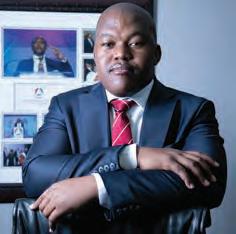
“The country has been a ticking time bomb, and this kind of revolt was always possible under the current socioeconomic conditions. If our people have nothing else, they will eventually protest in different forms. Our leaders need to take these protests with the seriousness that they deserve because the socioeconomic conditions of our people and unfulfi lled promises have returned to haunt us. Both government and business need to use all available resources to focus on transformation, and for it to be central to every activity of government and business. Government needs to ensure that a conducive environment for business is created so that business can thrive and reduce our triple challenges of poverty, unemployment, and inequality,” Nomlala said.
“We need an economy that is expanding fast enough to create more jobs than there are new entrants to the labour force, year after year.” – Busi Mavuso, Business Leadership South Africa
Business Leadership South Africa (BLSA) executive director Busi Mavuso says: “While our immediate recovery from last year’s COVID-19 devastation is on track, we’re still lagging behind other emerging markets. The IMF’s medium-term forecasts have alarming implications for our unemployment situation. Even taking into account recent reforms, it expects next year’s growth to dip to 2.2 per cent before subsiding further to average only 1.3 per cent from 2023 to 2026. That is likely to be negative growth in per capita terms as population growth will outpace economic growth.” Mavuso, a former managing director of the BMF, says this means our already critical unemployment situation will worsen because, in tandem with the overall economy, the labour market will simply not be expanding enough to absorb the waves of new entrants every year. “We need an economy that is expanding fast enough to create more jobs than there are new entrants to the labour force, year after year. And it’s urgent. It is clear that the policies and measures adopted to address a vast range of problematic issues, as well as the infrastructure development programme to act as a stimulus, are not enough. Too many have stalled because they’re stuck in legal issues, while others have yet to be implemented.”
She says the country needs another “big bang” moment similar to the recent lifting of the cap for private companies to develop their own electricity generating plants. “BLSA has collated a list of priorities for CEOs. Three of these are to ensure a reliable energy supply, to address South Africa’s rigid labour laws, and to deliver an accelerated infrastructure roll out.” Whether the government can deliver on such priorities and chart a new path towards economic development remains to be seen.
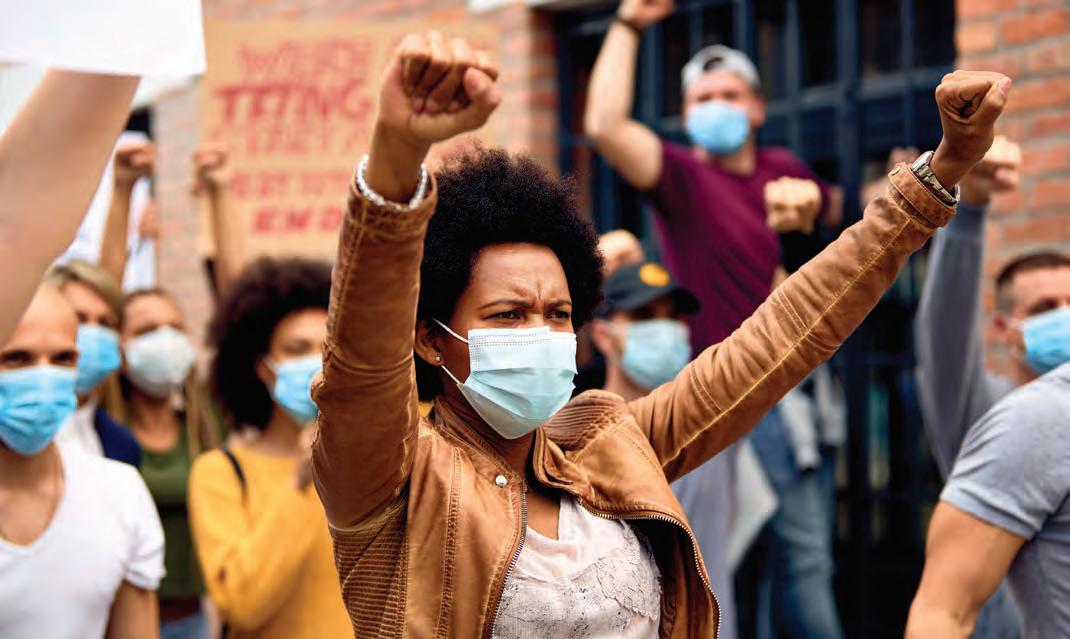
In terms of deracialising business ownership and control, the government’s BEE policies have stalled since the global financial crisis and Great Recession of 2007–2009.


DUMA GQUBULE takes a long hard look at how South Africa’s macroeconomic policies have fared some 27 years since democracy
In 1994, the African National Congress (ANC) went to the elections with a bold blueprint for a post-apartheid economy called the Reconstruction and Development Programme (RDP), which stated: “The domination of business activities by white business and the exclusion of black people and women from the mainstream economic activity are causes of great concern for the reconstruction and development process. A central objective of the RDP is to deracialise business ownership and control completely through focused policies of black economic empowerment.”
Economist Asghar Adelzadeh says: “Politically, the document represented both a consensus across different interests and a compromise between competing objectives. Economically, the RDP was successful in articulating the main aspirations of the movement for post-apartheid South Africa: growth, development, reconstruction and development in a consistent macroeconomic framework, using the Keynesian paradigm.”
Two years after the election, the government ditched the RDP and replaced it with the
Growth, Employment and Redistribution (Gear) policy. Adelzadeh says Gear represented an adoption of policy recommendations of the neoliberal framework advocated by the International Monetary Fund in its structural adjustment programmes.
Almost three decades later, most South Africans would agree that the government has failed to meet most of the objectives of the RDP. At the macroeconomic level, gross domestic product per capita, an international measure of average living standards, increased by only 16.1 per cent between 1994 and 2020.
In the wake of the pandemic-induced recession in 2020, South Africa has intersecting public health, humanitarian and economic crises. The economy created 173 000 jobs between December 2008 and June 2020, but the number of unemployed people increased to 11.9 million. During April and May 2021, 10 million adults and 3 million children went hungry. South Africa is now an unviable society.
At the macroeconomic level, gross domestic product per capita, an international measure of average living standards, increased by only 16.1 per cent between 1994 and 2020.
The unemployment crisis is a national disgrace, the most heart-breaking betrayal of the promises and dreams of our liberation.
In terms of deracialising business ownership and control, the government’s BEE policies have stalled since the global financial crisis and Great Recession of 2007–2009. The project to transform ownership of the commanding heights of the economy is on its last legs due to policy design and implementation failures that saw the government cave in to bullying by powerful companies in the mining and banking sectors over the critical issue of the “once empowered, always empowered” issue and agreed to fatal compromises that killed its policy. It may never recover. At the end of December 2020, there was black ownership of R245-billion within the JSE’s top 50 companies, which accounted for 91.9 per cent of the R15.5-trillion market capitalisation of the 339 companies listed on the exchange. The black ownership was equivalent to 1.7 per cent of the total market capitalisation of the JSE top 50 companies.
In the area of employment equity, there has been no progress for more than a decade. Between 2008 and 2020 the percentage of African people (80.9 per cent of the population) in top management in the private sector has barely increased to 12.7 per cent, from 12.5 per cent. The representation of African women (41.4 per cent of the population) increased to 4.6 per cent from 3.8 per cent.
During the same period, the percentage of African people in senior management rose from 15 to 18 per cent. The representation of African women, the most marginalised group at all levels of management in the private sector, grew from 5.2 to 6.7 per cent. Due to patriarchy, women of all races accounted for only 23.4 per cent and 34.3 per cent of people in top and senior management respectively. But white women (four per cent of the population) accounted for 58.5 per cent and 57.7 per cent of all women in top and senior management respectively.
Reading through the RDP is a depressing exercise that reminds one of a time when we had dreams of a new South Africa. Every page has a long list of failed promises. The time has come to chart a new development path that ditches the failed neoliberal macroeconomic policies of the past 27 years.

CAIPHUS
KGOSANA
finds out more about the
transformation policies
of state-owned
enterprises Eskom
and Sanral and the extent to which they support small business and draw from the local labour pool
The cranes have gone up, the trucks are carrying payloads, the graders are digging and levelling, and construction workers in overalls and hard hats are on the job.
After the economy almost came to a standstill at the height of the hard lockdown at levels 4 and 5, South Africa has picked up the shovel and is hard at work again. Last year, President Cyril Ramaphosa announced that R340-billion would be spent on infrastructure projects over the next five years. This money is buying us new roads, bridges, railway tracks and dams. It is erecting mega housing developments and refurbishing power stations so the country can put load shedding behind it once and for all.
Driving much of the infrastructure progress are our state-owned enterprises (SOEs). They are the ones building the roads and bridges, expanding and modernising our rail network, fixing and operationalising the power stations. But how much of this sizeable SOE expenditure on infrastructure is benefitting entities owned by historically disadvantaged individuals?
PER CENT TO BLACK-OWNED
In line with its transformation policy and preferential procurement regulations, SA National Roads Agency SOC Limited
(SANRAL) sets aside 30 per cent of the value in all projects to be subcontracted to targeted black-owned enterprises.
“These include women-owned businesses, youth-owned businesses, military-veteran-owned businesses and businesses owned by or which benefit persons living with disabilities,” Vusi Mona, SANRAL general manager: communications and marketing, said in response to questions.
Between April 2020 and September 2021, at least 832 entities that are 51 per cent or more black-owned were beneficiaries of road construction projects undertaken by SANRAL.
The number of small, medium and micro enterprises (SMMEs) benefitting from the agency’s project participation varies from one region to the next, depending on the size and scope of the project.
Subcontracting criteria are applied. A project worth R100-million will have to subcontract R30-million to the following targeted entities:
1. Youth owned – minimum of R5-million
2. Women owned – minimum of R5-million
“As
3. Military veteran owned – minimum of R1-million
4. Disabled owned – minimum of R500 000
5. CIDB* 1&2 – minimum of R2-million
6. CIDB* 3&4 – minimum of R2-million
(*A Construction Industry Development Board (CIDB) ranking is given to a construction company based on the value and experience of its past construction projects.)
Over and above that, the roads agency stipulates that at least six per cent of the contract value has to be spent on labour sourced locally where the job involves either reseal, special maintenance or on plant-intensive projects. On new construction, rehabilitation and road improvement projects, at least eight per cent of the labour must be sourced locally.
“Our commitment to genuine transformation that changes lives has created 13 293 job opportunities for local labour, where SANRAL roads are located,” said Mona.
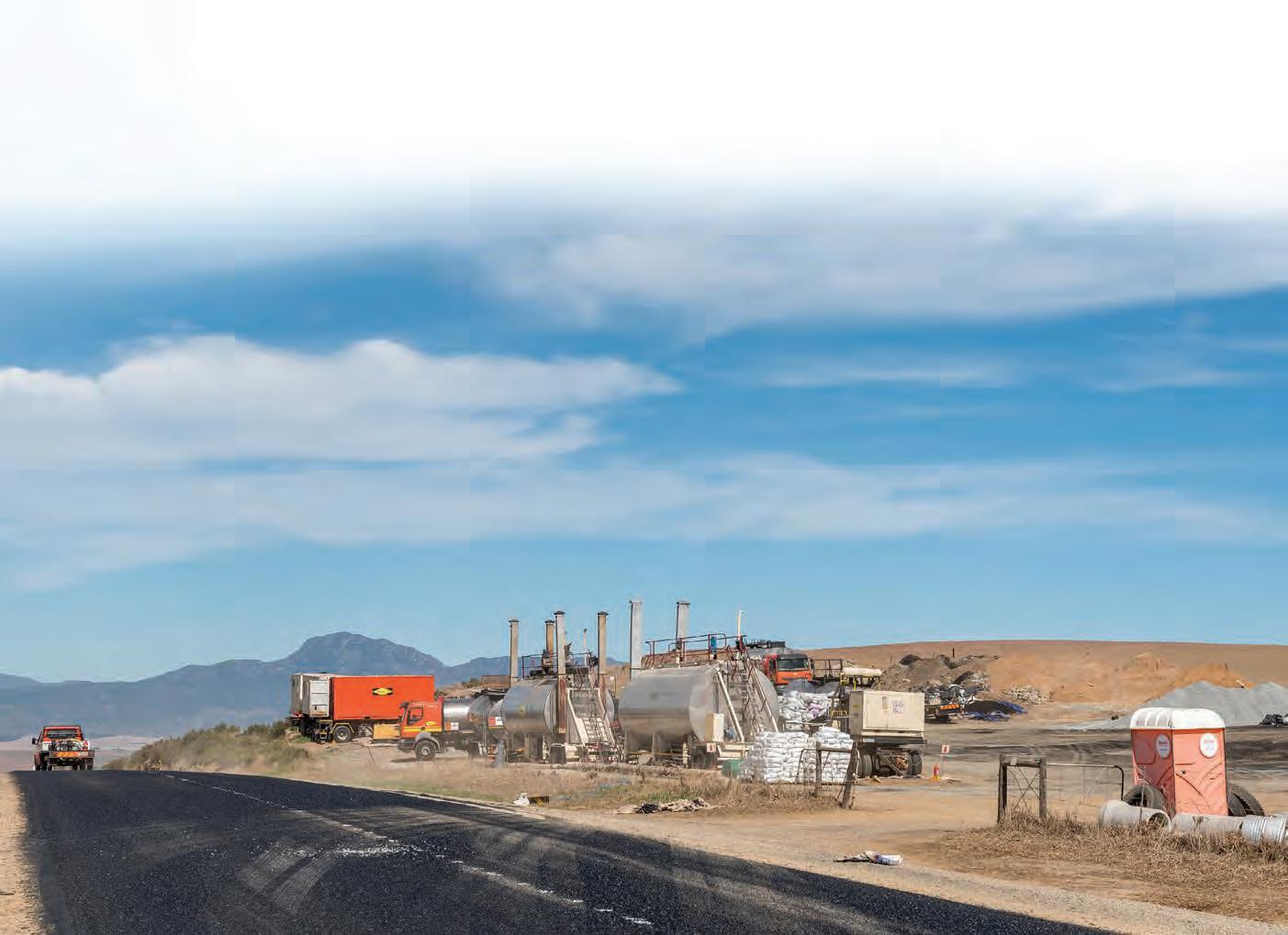
“As per SANRAL’s Transformation Policy and 14-point plan, the agency is committed to expanding the net of economic inclusion for emerging black businesses, and as such procures local services wherever possible, for example, at events, service providers for catering, cleaning and audiovisual service, among others, are sourced from local communities as far as possible.”
Once SANRAL has concluded the tender process and identified the main contractor, clauses are inserted that make it the responsibility of that company to subcontract as per the 30 per cent requirements.
per SANRAL’s Transformation Policy and 14-point plan, the agency is committed to expanding the net of economic inclusion for emerging
black businesses, and as such procures local services wherever possible.” –Vusi Mona, South African National Roads Agency SOC Limited
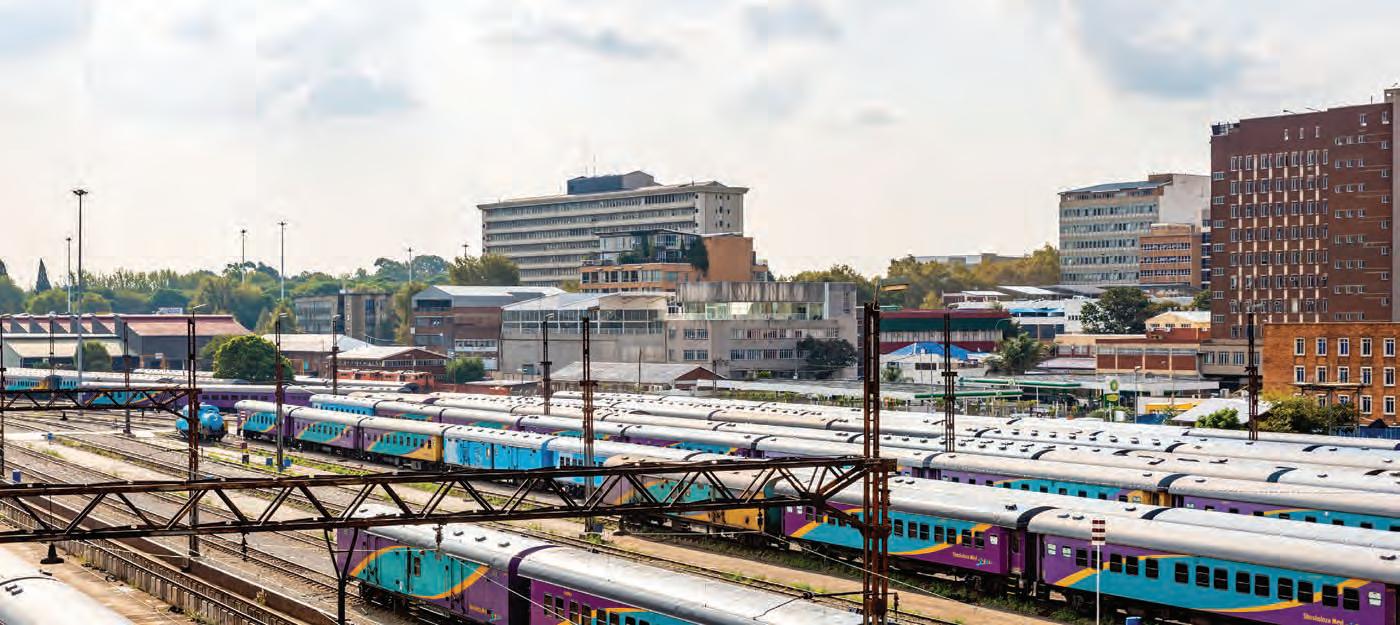
As stipulated in its [Eskom] Supplier Development, Localisation and Industrialisation policy, the subcontracting process must be in line with government policies on black economic empowerment, job creation, localisation, skills development, industrialisation and supplier development.
Eskom spends a whopping R86.2-billion on black-owned entities. These are broken down as follows:
• Black owned – R50-billion
• Black women owned – R17-billion
• Emerging micro enterprises – R10-billion
• Qualifying small enterprises – R5-billion
• Black youth owned – R4-billion
• Black people with disabilities – R230-million In the 2020/21 financial year, over 4 700 enterprises in these categories were paid. In the financial year 2017/18, the projects
Reflecting on the transformation achievements under the leadership of Skhumbuzo Macozoma, whose five-year term as the chief executive officer of the SA National Roads Agency SOC Limited (SANRAL) ends in November 2021, the roads agency says he not only prioritised transformation within the organisation, but also in the greater public sector infrastructure development space.
Macozoma believes that the work of SANRAL as a state-owned enterprise (SOE) is about more than just bitumen and asphalt – it’s about lives and livelihoods. “SOEs are but one part of a very important suite of entities and stakeholders that are going to help South Africa achieve
employed 39 277 people. The following financial year, the employment figures were slightly down at 38 111. By the financial year 2019/20, the projects were employing 23 982 people. In the 2021/22 financial year, employment figures are at 13 480.
“The employment statistics are reducing due to projects approaching completion,” said Eskom spokesperson Sikonathi Mantshantsha in a written response to questions.
Eskom added that the hierarchy of suppliers indicated the subcontracting steps to be followed once contracts have been entered
success with regard to transformation,” Macozoma says.
“Government is the centre that should hold all initiatives that relate to transformation because, on behalf of all its citizens, it is the custodian of this country. SOEs are a delivery arm of government that, theoretically, have been created and equipped to be more agile and move a lot quicker than government.
“There is also this misconception that transformation is only important for black people, and that it is irrelevant for white people. This is an incorrect notion, and it really affects the progress we are making in achieving the democratic society that we want,” Macozoma explains.
To this end, SANRAL, under the leadership of Macozoma, created an internal division that is solely dedicated to monitoring and evaluating the
into with larger firms. Local manufacturers must be given preference, but there are no rules in terms of which supplier group must be given preference at the informal tendering level.
As stipulated in its Supplier Development, Localisation and Industrialisation (SDL&I) policy, the subcontracting process must be in line with government policies on black economic empowerment, job creation, localisation, skills development, industrialisation and supplier development.
“The SDL&I mandate is, therefore, to achieve maximum and sustainable local development impact through leveraging Eskom’s procurement spend in a manner that allows flexibility within the business to accommodate government’s local development initiatives and policies.”
implementation of transformation policies across all SANRAL projects.
SANRAL and its operations remain a key industry benchmark, influencing road engineering in countries on the African continent and much further afield,” the roads agency says.
There is enormous potential for South Africa’s fishing sector to drive sustained, inclusive economic growth
The Department of Forestry, Fisheries and Environment (DFFE) says that the fisheries sector currently contributes about R8-billion a year to the gross domestic product and employs some 28 000 people.
For the Oceana Group, unlocking the sector’s potential informs every aspect of its business. So much so that its deceptively simple, but determined brand positioning is: “Positively impacting lives.”
Group CEO Imraan Soomra explains that the approach stems from the belief that with the right to fish in national waters comes the responsibility to deliver tangible, inclusive social and economic benefits. “South Africa’s fishing industry is ideally placed to do this because the fishing value chain and associated sectors continue to offer huge opportunities for growth, dignified employment and enterprise development.”
This is not to suggest that there hasn’t already been considerable progress. During apartheid, black South Africans held only 1 per cent of fishing rights compared to over 75 per cent today.
Since 2004, Oceana has been actively advancing broad-based black economic empowerment and has performed well in terms of measurable transformation criteria.
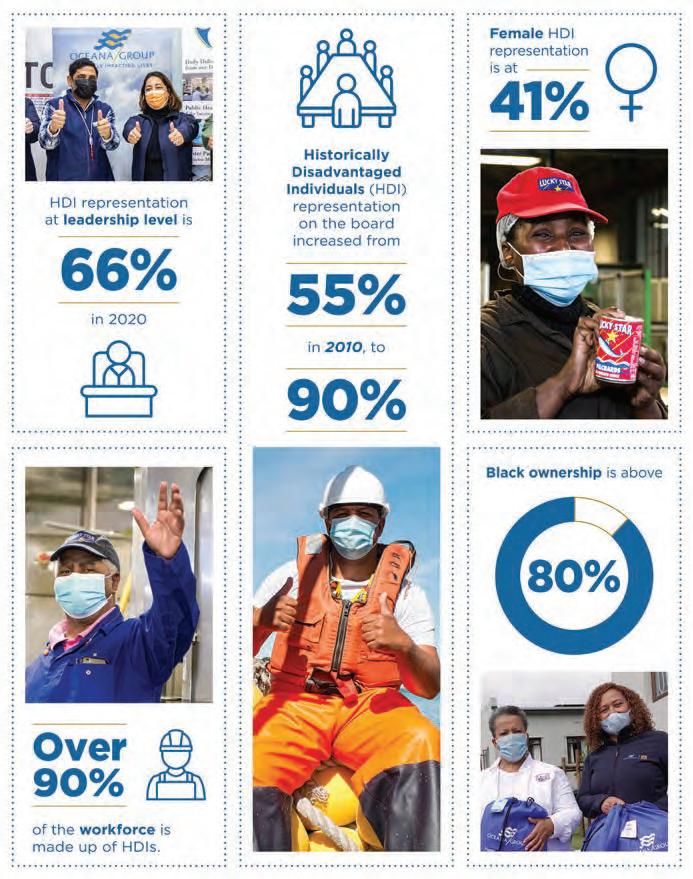
Black ownership is currently over 80 per cent and the representation of historically disadvantaged individuals on the board has increased from 55 per cent in 2010 to 90 per cent.
The pioneering Oceana Empowerment Trust (OET), vested in 2020, represented over 2 400 historically disadvantaged South Africans. The trust held 13.3 million shares in the Oceana Group, making OET the largest black-owned fishing entity in South Africa, with a market value of just under R1-billion. Of the current workforce, over 90 per cent are historically disadvantaged individuals – 41 per cent of whom are female.
The group has created over 35 000 employment opportunities and invested R60.9-million in skills development initiatives to accelerate workforce transformation.
The Oceana Maritime Academy in Hout Bay Harbour is testament to this investment in
people. The skills and training programmes are designed to provide opportunities for employees, address skills shortages in the small-scale fisheries sector, and assist new entrants to the industry.
The company has committed a further R35-million a year to developing sectorspecific skills and training. As the academy grows, the intention is to offer more specialist training courses and forge international alliances to provide global best practice exchange opportunities.
As Soomra points out, the benefits of investing in the sector aren’t limited to the fishing value chain. The number of BEE Level 1 and Level 2 suppliers to Oceana increased by 600 and 397 per cent respectively, between 2010 and 2020.
The group has spent R19.6-billion with South African suppliers at an average of about R1.8-billion a year since 2011. Some R5.6-billion of this was directed to black-owned businesses and R2.2-billion to female-black-owned businesses. The number of black-owned businesses and black-female-owned suppliers also increased by 589 and 1 589 per cent respectively.
Perhaps though it is in the communities where Oceana operates where the potential of the oceans economy to deliver tangible, inclusive economic benefits is most obviously demonstrated.
“These are communities that have depended on the sea for sustenance and income for generations; that must be acknowledged and respected,” says Soomra.
About 64 per cent of Oceana’s total workforce is in St Helena Bay and Velddrif. The area has a total household income of R787-million of which Oceana provides R412-million, over 52 per cent (Statistics sourced from an independent assessment by Genesis Analytics). Importantly, these are sustainable, year-round jobs rather than seasonal work. The company’s desalination plants at St Helena Bay and Laaiplek generate 88 per cent of the fresh water required for its factories, limiting its impact on these communities. These are part of an ambitious environmental sustainability project that will include implementing large-scale renewable energy projects, particularly along the West Coast.
“Hopefully, the transformation, skills development and economic opportunities the sector has provided so far will positively impact many more lives in future,” concludes Soomra.
Food security is at the heart of Oceana’s commitment to positively impact lives and its Lucky Star business embodies this
Lucky Star is much more than an iconic brand. For over four million South Africans it is a daily, cost-effective and healthy source of protein Due to the cyclic shortages of pilchards in South African waters, only five per cent of Lucky Star pilchards are fished locally. The rest is imported.
By supplementing the local supply with frozen pilchards Oceana can keep providing millions of South African homes with a secure food source, rich in omega-3 fatty acids, vitamins and minerals.
Importing pilchards also ensures that Oceana is able to provide year-round employment for its cannery employees. This is an important consideration as the cannery and associated operations provide vital income and employment in West Coast towns where economic opportunities are limited.
Zodwa Velleman, Oceana group executive for regulatory and corporate affairs, says providing a reliable source of healthy protein is more than just feeding hungry mouths, it also contributes to better learning.
“It’s commonly known that a child can’t learn on an empty stomach, but there’s more to providing school meals than that. For some children, the meal they get at school is the one meal they can rely on and consequently, it becomes an incentive to attend school and learn.”
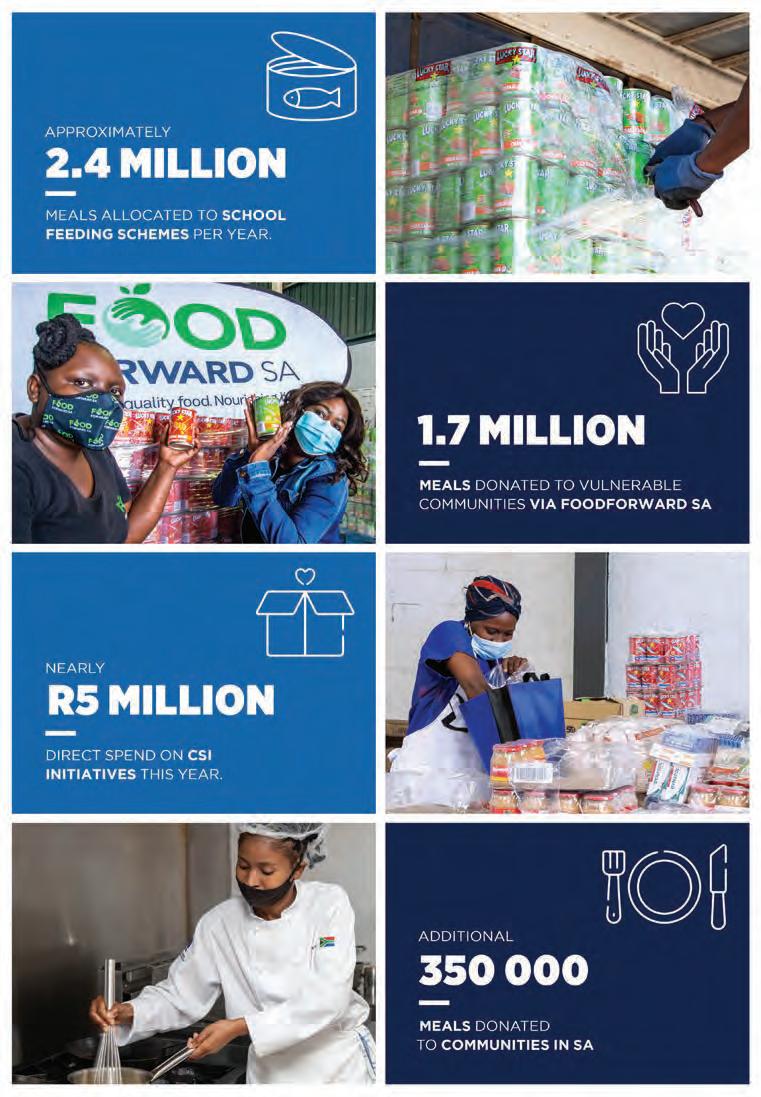
Together with nongovernmental organisation (NGO) partners, Oceana provides some 2.4 million meals to school feeding schemes each year. It also works with organisations such as FoodForward SA to identify community needs and respond to these. In addition to the 1.7 million meals donated to vulnerable communities through this initiative, Oceana also donates an additional 350 000 meals through other NGOs.
“We don’t adopt a one-size-fits-all approach, but aim to adapt our interventions to best suit the needs of the communities. Nor do we implement a programme and walk away. We’re constantly monitoring and evaluating to fi nd ways of improving what we do and make it more effective,” says Velleman.


One of South Africa’s foremost business leaders, committed to the social and economic transformation of South African society, Bonang Mohale, speaks to RYLAND FISHER about transformation, mentorship and how to cultivate a culture of progressiveness
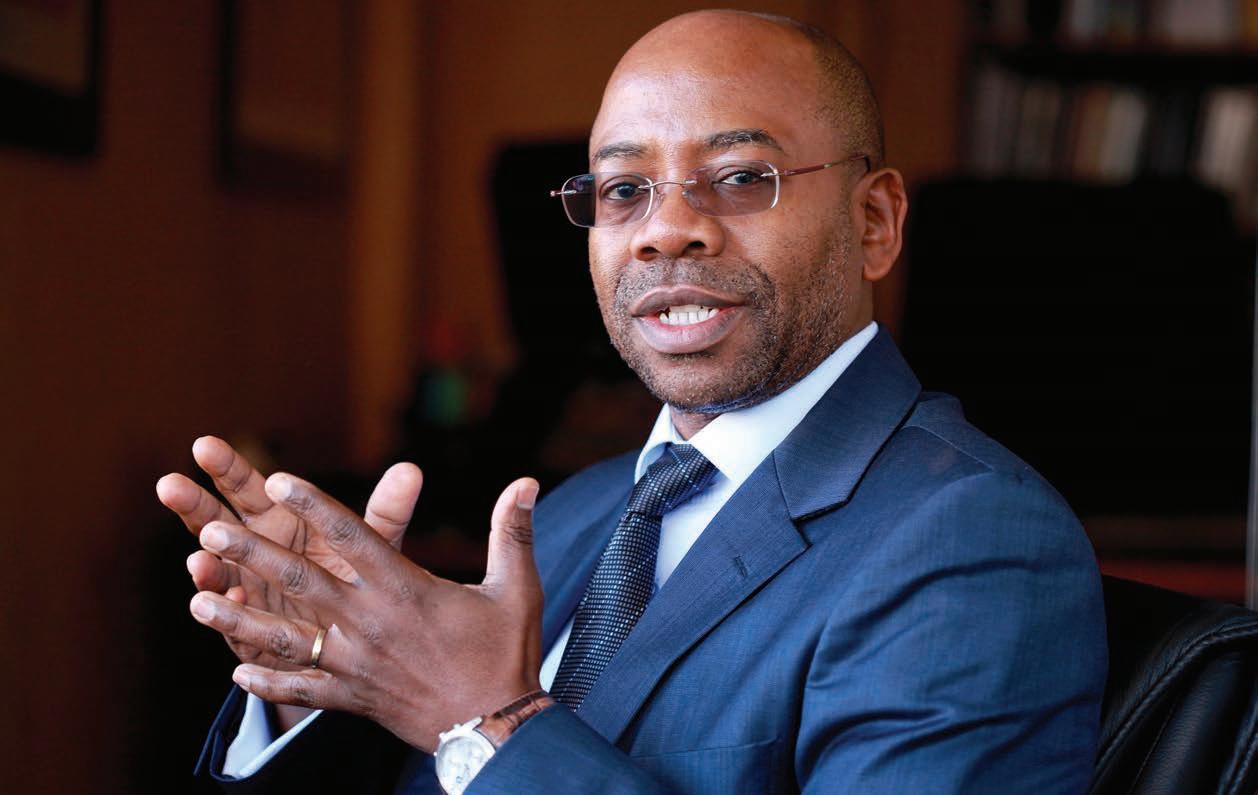
Bonang Mohale has done it all in business, from being CEO of some of South Africa’s top companies, president of the Black Management Forum, and CEO of Business Leadership South Africa (BLSA). He has just been appointed chairman of Business Unity South Africa (BUSA), while remaining the chairman of the Bidvest Group and the chancellor of the University of the Free State, among others.
“The intention of transformation was always about trying to get the economy to be broadly reflective of the demographics. Blacks
“You also can’t be a progressive company when your own industrial relations or employee relations are not healthy; when you see labour as the enemy, and not as part of the family. Where black people, in general, and women, in particular, are not in the C-suite.”
(Africans, coloureds and Indians) are more than 90 per cent of the population, while white men still occupy 74 per cent of the leadership of companies,” Mohale said.
“Affirmative action is not anti-white, as some people suggest. It is pro-black and pro-women.
“We should all be concerned about affirmative
action and transformation because when your neighbour is hungry, you are the one that cannot sleep at night.
“Poverty still has primarily a black and feminine face in South Africa. South Africa is the most unequal society in the world,” he continued.
“Poverty still has primarily a black and feminine face in South Africa. South Africa is the most unequal society in the world.”
Mohale said South Africa needs more progressive companies and managers.
“A progressive manager will say, if I am a man, I am a beneficiary of patriarchy. How do I open the doors for gender participation, gender equality, so that society is surviving?
“Our current system does not recognise the creation of any other value other than economic value. Shareholders don’t see when I have employees who are happy, challenged and engaged, who feel needed and wanted, and are free to speak their mind. They only see the balance sheet,” Mophale said.
“There is something wrong and that is what we need to fix. We need to have these conversations about transformation, so we can inform the type of agreements we need to change the outcomes. One of the outcomes should be that no one must be hungry because there is more than enough in the world.”
Mohale said there were basic requirements for progressive companies and managers.
“You can’t say you are a progressive company if you don’t have a BEE policy, or an employee development programme, or equity or profit participation by employees.
“But you also can’t be a progressive company when your own industrial relations or employee relations are not healthy; when you see labour as the enemy, and not as part of the family. Where black people, in general, and women, in particular, are not in the C-suite.
“For instance, if you don’t have women in leadership in your company, you will never be sensitive to policies that are gender supportive to women,” Mohale explained.
He said it is important for business to be concerned about national and societal issues.
“Companies should be saying, we are 27 years into democracy, and we are in a spot of bother. Why did it happen and why on our watch? Why were we silent. Why didn’t we do something?
“We should not be silent about state capture and corruption. We should not be silent when people steal personal protective equipment money. We should not be silent when the vaccine rollout is woefully slow,” Mohale stated.
Many companies saw transformation as a cost when it is not, he said. People should always be the number one priority for any business.
“If your employees are happy, they are engaged, energised and well looked after, if they know that you put them first, productivity doubles, and you make more money.”
Mohale said he was proud of his track record in empowerment in the companies where he worked.
“I can take my right hand and put it on my heart and say, I left competent black people behind in every one of the companies where I was responsible. I left an African woman as the CEO of BLSA. At Shell, where I was for eight-and-half years, many of the top people are black. Now, at Bidvest, a 32-year-old company, the group CEO is an African woman, Nompumelelo Thembekile Madisa. She looks after the whole Bidvest Group, with 135 000 employees, 350 companies, six divisions, in the top 40 of the JSE and with a market cap of R67-billion.
“They have just released the results and Bidvest was more profitable in 2021 than in 2020. But the 2021 results are higher than 2019, which was before we got into COVID-19. That’s when you know you’re building a robust underlying business.”
Mohale said he is mentoring 18 people, among them 16 CEOs and MDs, and continues to use his influence in business to promote transformation, but he still feels, “all the time”, that he could do more.
“When you change something, we say it is up to you. A revolution is never started by a stadium full of people. It’s personal. You ask, what can I do, albeit in a small way, in my circle of friends to bring about change.”
He said it was important not to lose hope around the transformation battle.
“It is too important a task to be left to just one group of people or business. It must be tackled by government, labour and civil society. It is so important that unless we do it right, we risk the success and the continuance of South Africa Inc, this unfinished project.
The proof is the two weeks in July of rampant riots. That was a manifestation of the genuine desperation of our people.”
Mohale said that young people needed to embrace the battle for transformation.
“They are younger, more clever, more educated than us and much more exposed. And they don’t have to deal with many of the obstacles we dealt with. They need to focus on humanity and being human.”
“We should not be silent about state capture and corruption. We should not be silent when people steal personal protective equipment money. We should not be silent when the vaccine rollout is woefully slow.”
Colleagues of Bonang Mohale have spoken positively about his qualities as a transformative leader.
Mogomotsi Comfort Poole, a diversity and inclusion associate at Breakout Communications, said Mohale “has been a mentor and confidant for the past 13 years. His leadership style is decisive, participative, consultative and, most importantly, people-centred. He allows team members to create their own values, then implements a shared vision on the strategic direction of the organisation. He intentionally delegates a certain level of decision-making to team members.
“Mohale demonstrates strong emotional intelligence built on the values of respect and humility. These are the qualities that draw other people towards him as a leader. He is stimulating, obsessed with the development of others and a true personification of black excellence.”
Tasneem Fredericks, deputy president of the Black Management Forum (BMF), said that Mohale “is a leader par excellence. He gives generously of his time, energy and personal resources in advancing the compact of transformation. Having served alongside him as one time president at the BMF, we have benefitted immensely from his ethical leadership and wisdom and continue to do so. We wish to see this reflection of ethical values, true grit and determination to make South Africa a better place for all permeate throughout BMF and South Africa at large.”
Tshepo Phakathi, who describes himself as “Bonang’s mentee/protégé, entrepreneur and CEO of Phakathi Holdings”, said Mohale is passionate about bringing people along on his journey.
“He is very generous with his time, mentorship, coaching and supporting the next layer of leaders. A lot of people look up to him because he epitomises that simple value of people-centricity, wanting to see people develop and become better versions of themselves. But I think what is absolutely standout about him is how there is an alignment between the things he says and the things he does, which is the first key proponent of any leader.”
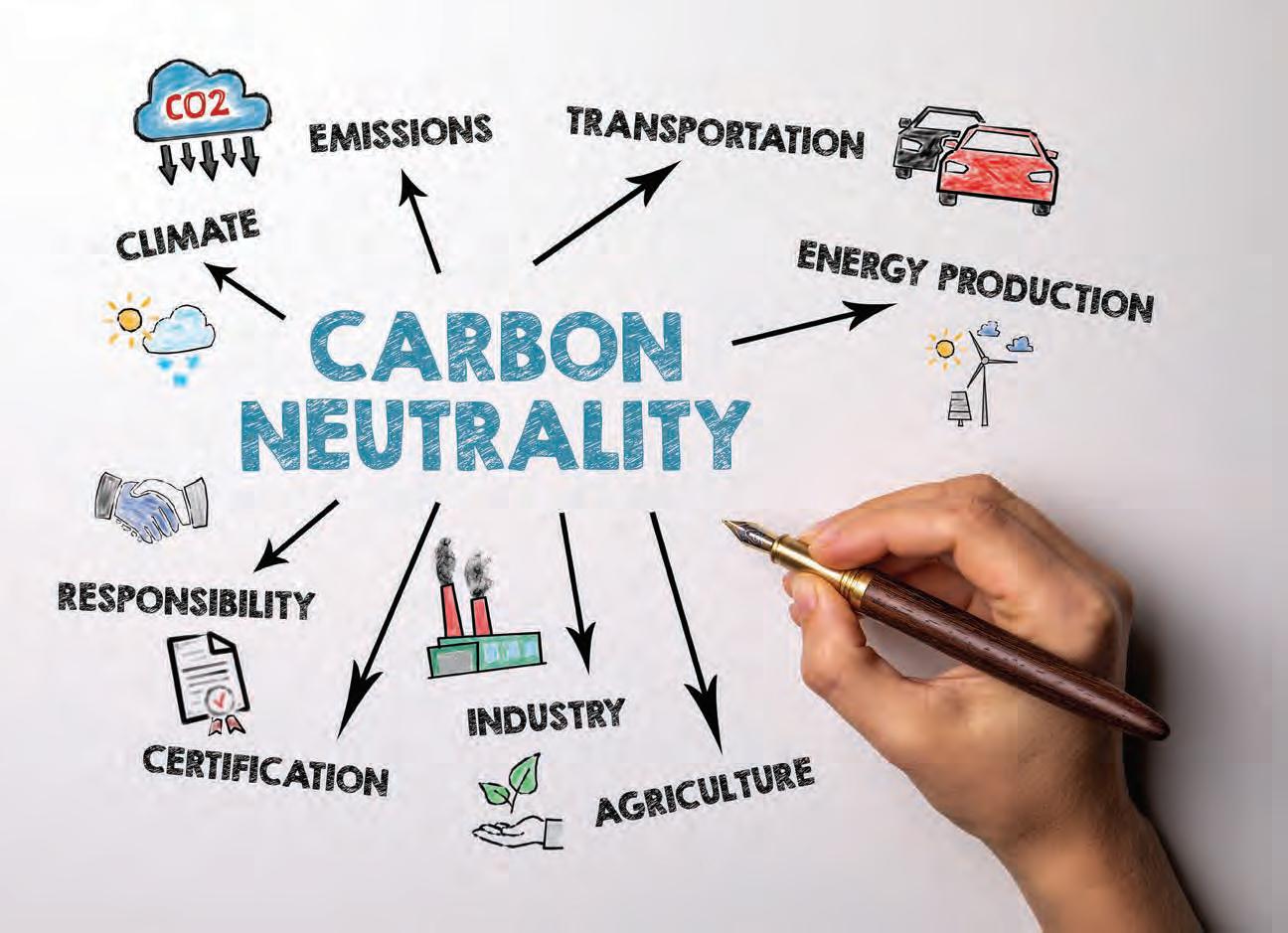
To reduce and keep global warming within acceptable levels, additional policies and action are urgently needed
We live in an interconnected world: what happens in the south, is directly infl uenced by events in any other part of the world. If this is a theory that was previously too vague for us to comprehend, the COVID-19 pandemic has provided us with clarity through some devastating lessons. Perhaps, the most important lesson is the realisation that our adaptative capacities to such occurrences differ remarkably. Linked to this, would be a new understanding that the wealth of a country does not necessarily determine how responsive it can be when tragic events happen.
When it comes to global connectedness, we accept that the developed countries have perhaps more to answer in terms of their contribution to greenhouse gases, but the consequences, as far as climate change matters are concerned, are a collective impact. The discussion on climate justice is perhaps warranted, but does not take away the immediate threat of adverse impact on marginalised and impoverished communities resulting from increased extreme weather patterns and conditions.
The United Nations Environment Programme Emissions Gap Report 2021, The Heat Is On states: “The new or updated Nationally Determined Contributions (NDCs), combined with other mitigation pledges, give a 66 per cent chance of the world hitting a global temperature rise of 2.7°C by the end of the century, even if all new unconditional commitments are met. Additional implementation of net-zero targets could reduce global warming by 0.5°C, but these plans are currently ambiguous and not fully reflected in NDCs. To keep global warming below 1.5°C this century, the world needs to urgently put additional policies and action in place to almost halve annual greenhouse gas emissions in the next eight years”.
Perhaps the most signifi cant word in this is urgently. Post the United Nations Framework Convention on Climate Change‘s Conference of Parties (COP26), we now speak of a the urgency for a net-zero transition to green and clean technologies because of the imminent danger we face as a society.
If we are to apply urgency to both the imperatives of climate adaptation and a just transition, then eco-inclusive innovation needs to accelerate.
While climate science has been rolling out study after study to enhance our knowledge and understanding of climate change, political systems have not made it an urgent priority.
If we maintain our current pace, we face the risk of being unable to reverse the damage caused by greenhouse gas and CO 2 emissions. The displacement and forced migration of already vulnerable communities would result.The need for urgent action to facilitate an adaptive capacity and just transition to a greener economy cannot be placed solely on government, it requires fundamental institutional reform of social, environmental, and economic systems.
No one can stand on the sidelines or remain impassive on this issue. If we decide to postpone and postpone again, it simply means that the consequences will affect all of us. Again, drawing a comparison with our responses to COVID-19, society needs to adapt, and our adaptive capacities are and will be tested.
Perhaps it is time that we recognise we are dealing with a double whammy! – on one hand as we move into the future with an urgency for a net-zero transition, we face the reality of technological leapfrogging, which will leave many behind and lead to job and livelihood losses. On the other hand, we deal with the past and adapt to what we are currently experiencing due to climate change.




At Indalo Inclusive South Africa, we endeavour to contribute towards both climate adaptation and a just transition through marketdriven approaches, which primarily support and promote eco-inclusive entrepreneurship as a vehicle through which both the challenges of adaptation and a just transition, resulting in equitable triple bottom line impact (planet, people, and profit), can be created.
With support from the Flanders’ government, Indalo has, for the past three years, been implementing a project that seeks to reap the potential of climate-smart and ecoinclusive entrepreneurship for the green economy in South Africa (ECSIGE). The ECSIGE Programme aims to ensure that the climate resilience of South African vulnerable rural and township communities is sustainably enhanced through an approach of strengthening innovative, economically viable, climate-smart enterprises that provide solutions for climate change adaptation.






As a not-for-profit company and with the support of the Flanders’ government, we have been able to support and train 288 early-stage enterprises and 18 growth-stage enterprises. A total of R980 000 in grant funding has been given to the enterprises, and another R600 000 is committed for the current financial year. The enterprises that Indalo support are not supported by other investors at this stage. However, we believe we are building a robust pipeline for future commercially viable entities, which are founded on the fundamentals of ecological and inclusive impact.
From an entrepreneurship perspective, our observation so far points to the reality that while nascent entrepreneurship is on the rise in South Africa, the pace of innovation in the green space is still at its lowest levels. This poses the challenge that if we are to apply urgency to both the imperatives of climate adaptation and a just transition, then eco-inclusive innovation needs to accelerate.


This requires a combination of factors. Firstly, an increase in exposure to what is possible. At Indalo, we believe that people can only innovate to the level of their exposure. Secondly, fi nancial investment to support the development and mentorship of entrepreneurial ideas is critical.
We acknowledge upfront that mistakes might be made and perhaps the amount of money we spend may not be proportionate to possible returns, however, it is a choice between moving at


Indalo Inclusive refers to entrepreneurship that integrates social, environmental and economic impacts around the core value proposition of the enterprise as ndalopreneurship
This term is derived from the isiZulu word indalo, which interprets as environment and encompasses everything around you, literally meaning that everything around us is connected.
a slow pace and running the risk of either not being able to cope with the impact, or spending a lot now so we increase our abilities to cope and be resilient.
One thing we know for sure, an increased effort in assisting communities to cope with the current impacts of climate change will result in productive economies and an improvement in livelihoods. In addition, a transition to a cleaner and greener economy is the only viable option for both economies and society.

Achieving societal and environmental impacts through economic means is seen as equally important as the economic returns itself, which help sustain and grow the business to create an even greater impact on society and the environment. ➔ DOWNLOAD A COPY OF THE HEAT IS ON





more information: 012 844 0135 info@indaloinclusive.org.za www.iisa.org.za



It wasn’t quite the whopper of a deal Grand Parade Investments was hoping for, but in the end, its Burger King deal was done, writes JERMAINE CRAIG
Grand Parade Investments (GPI) announced plans to sell the Burger King SA (BKSA) and meat plant companies in 2020, as part of the group’s strategy to focus on operations that would unlock value for shareholders.
However, a deal a year in the making with international equity fund manager Emerging Capital Partners (ECP) was initially blocked by the Competition Commission in June. The commission said the proposed merger would have a “substantial negative effect on the promotion of greater spread of ownership” and would effectively reduce the BEE shareholding in Burger King South Africa from 68 to 0 per cent.
After being referred to the Competition Tribunal, the acquisition was eventually given the green light on 21 September – albeit with a string of caveats.
The initial R670-million price for the franchise was revalued at R570-million, due to the impact of the COVID-19 pandemic, while the meat plant carried a revaluation of R23-million, down from R27-million.
According to GPI, BKSA would – as condition of the approved deal – have to meet several requirements within fi ve years of the deal going through.
• Procuring investment of no less than R500 000 000 in aggregate capital expenditure.
• Establishing at least 60 new Burger King outlets in South Africa (increasing the total number of outlets to at least 150).
• Increasing the number of permanent BKSA employees in South Africa by at least 1 250 historically disadvantaged persons.
• Increasing the total value of all payroll and employee benefits in respect of the
1 250 BKSA employees by not less than R120 000 000.
• Improving its rating for the Enterprise and Supplier Development element under its B-BBEE scorecard.
In addition, BKSA must establish an employee share ownership programme for an effective five per cent interest in BKSA, and ECP Africa Fund will have to dispose of Grand Foods Meat Plant. BKSA would have to conclude a supply agreement with Grand Foods Meat Plant and/or the purchaser of Grand Foods Meat Plant.
Academic and activist Khaya Sithole says the Competition Commission’s “remarkably arbitrary decision” would be difficult to implement going forward.
“Regardless of the underlying motivation, it is still an economic transaction under free-market fundamentals.
Senior researcher for the Helen Suzman Foundation Christopher Fisher, in a brief for the foundation, said the Competition Commission’s initial reticence to the deal on legal grounds could be problematic and detrimental down the line for majority black-owned companies.


What happens at the end of the day is that the deal matters to companies. Whether they are BEE companies or not, they will look for a way of getting the most favourable deal,” he says.
Sithole adds that while it was hoped that South Africa would by now have been sufficiently economically transformed, this was not the case. Placing restrictions, however, on which BEE companies they could dispose their business shareholding to was a “nonstarter”.
BEE companies, he believes, would continue to fi nd loopholes to dispose of their shares at the best possible conditions for their shareholders.
“If the commission takes a hard-line view of the historically disadvantaged persons (HDP) level of ownership not being allowed to decrease substantially in an acquisition, then the obvious problem for the HDP shareholders who want to exit is that their exit is dependent on finding an acquiror with an equivalent HDP status. This may well narrow the field of potential acquirors, with a real danger that the offered price may be lower than one would expect in a market without these limitations. An equivalent HDP-owned acquiror may even offer a lower price, knowing that the existing HDP shareholders have little option if there are no other interested HDP-offerors,” said Fisher. While the motivation for the Competition Commission’s actions, in terms of its interpretation of the law pertaining to section 12A(3)(e) of the Competition Act, is fully understood, Fisher says “the problem is that it could well have a very perverse effect in certain situations, which can work to the detriment of existing HDP shareholders and the HDP investor base in the market as a whole”.
The profit motive, says Fisher, is after all the basic driver for investors, and applies to HDP and non-HDP investors alike.
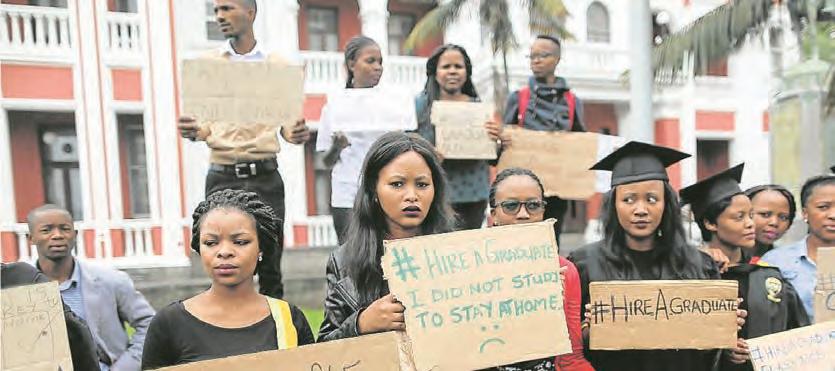


Youth unemployment was identified as a national priority by President Cyril Ramaphosa during the 2020 State of the Nation Address, However, since the advent of COVID-19, the situation appears to have worsened. There are now 9.1 million people between 15 and 34 years of age who are not in employment, education or training.
Ann Bernstein, executive director at the Centre for Development and Enterprise (CDE), says the only way to break this cycle is to rapidly expand the economy.

“South Africa must implement a range of structural reforms to accelerate economic growth, allow growth to become more labour-intensive and fix the training, skills and education systems,” she explains.
“Government needs to prioritise the most affordable, implementable interventions, which will have the biggest impact on the scale of the crisis. The private sector must also play a more positive and strategic role,” Bernstein says. “However, the most important way to
SA has one of the highest unemployment rates in the world. RODNEY WEIDEMANN considers some ways we might impact this
connect young people to the world of work at a large scale, as the minister of finance has recognised, is to get them into better skills development programmes.”
Speaking to small business owners at a Business Engagement in Buffalo City in mid-October, the minister of Small Business Development (DSBD), Stella Ndabeni-Abrahams, noted that small and medium enterprises (SMEs) play an important role in South Africa, both as a driver of the economy and in the employment opportunities they can create.
“The DSBD’S mandate is to lead and co-ordinate an integrated approach towards the development of small business. For the economy to be transformed, we need to invest in small businesses and an innovation-driven economy,” she says.
“The department is facilitating an integrated approach to increase the number of competitive SMEs, focusing on township and rural economies. Entrepreneurs are recognised as a critical sector that will contribute significantly to the transformation of the economy, as well as economic growth and job creation.”
Lara Hodes, an economist at Investec, indicates that the unemployment crisis remains
“Collaboration between public and private entities is essential in this country if we are to improve efficiencies. Combining resources and knowledge will enable the creation of more opportunities.” – Laura Hodes, Investec
Since South Africa’s manufacturing industry – traditionally one of the largest employers of low-skilled workers – has experienced an annual growth rate of less than one per cent between 2010 and 2018, alternatives need to be found, says the Brookings Institution.
“Industries without smokestacks” (IWOSS) may have the potential to address South Africa’s high levels of inequality and unemployment, says the institution, pointing out that IWOSS sectors have the potential to absorb low- and medium-skilled labour.
The IWOSS sectors with the most potential, based on their ability to create several types of jobs across the skills spectrum in South Africa, include tourism, horticulture, agro-processing and transit trade (logistics).
Source: https://www.brookings.edu
a key priority area for government, with various initiatives constantly reiterated.
“Access to high standards of education remains essential, starting from the Foundation Phase. Moreover, training centres offering opportunities to upskill, and innovation hubs are vital to encourage entrepreneurship,” she says.
“Collaboration between public and private entities is essential in this country if we are to improve efficiencies,” says Hodes. “Combining resources and knowledge will enable the creation of more opportunities.”
South Africa’s economy needs to grow at a suitable pace, she adds, and structural inefficiencies must be corrected. Regulatory burdens also need to be further reduced, making it easier and more efficient to do business in the country.
“While steps have been taken, dealing with the country’s electricity supply constraints is also essential to allow for optimal economic activity. Upgrading infrastructure and reducing policy uncertainty also remains imperative. These measures along with myriad others, are essential to improve South Africa’s competitive position, boost confidence and drive investment.
Bernstein agrees, suggesting that we need a faster-growing economy that is more labour-intensive, one that requires the kinds of young inexperienced job-seekers South Africa has in far too much abundance.
“This will, by necessity, pull young people into work and companies will have to devise ways to find and train workers. In this way, the enormous challenge we face will lessen, as the pace of growth and demand for labour multiplies,” she concludes.
used this opportunity to prioritise women empowerment not only within our employee and leadership ranks, but also on every infrastructure development project we undertook across Africa.”
This approach has led to many awards and accolades for both Khoza as a driver of gender empowerment across Africa and the Bigen Group. “When we were afforded a Level 1 B-BBEE rating locally, it added lustre to being recognised as a Top Gender Empowerment Company in the infrastructure space,” she adds.
Khoza says the COVID-19 pandemic has highlighted how far women’s empowerment still has to go. “It seems as if the gender gap has widened again with women gains in the areas of human capital and economic empowerment being reversed. The pandemic has underlined the reality that for women across the world the struggle for equality is not over but has just begun!”
Internationally renowned businesswoman Dr Snowy Khoza has over 40 years’ experience working in leadership positions in government, state-owned enterprises (SOEs), and the private sector. She will retire as group CEO of the Bigen Group at the end of the year. As a seasoned executive, Khoza understands acutely the challenges facing women in leadership and says that in her experience the glass ceiling is more prevalent in SOEs and the private sector, and black women have even more challenges than their counterparts. “Black women have a double whammy; people judge you because you are a woman and because you are black,” she says.
Khoza says part of the reason the glass ceiling is still firmly in place – despite progressive equal opportunity employment legislation – is because the boardroom environment is cut-throat. “As a leader and person who had to overcome severe poverty and had to fight every step of the way to achieve the success I enjoy today, I always endeavour to empower women to become the best they can be not only in the corporate business world, but also in society in general. It saddens me immensely when I see highly competent women lacking the resilience to persevere in the face of intimidation and pressure put on them by men,” she explains.
THANDO PATO
On the cusp of her retirement, outgoing Bigen Group CEO Dr Snowy Khoza talks about the challenges of being a black woman in business, her achievements and why resilience is important. By
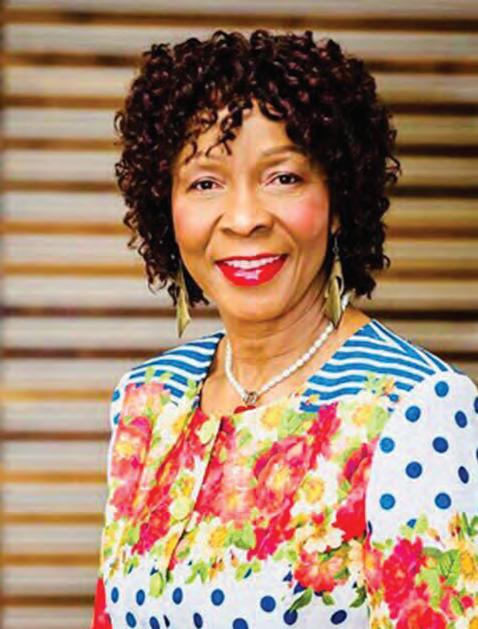
One of the biggest challenges in her career, says Khoza, was entering the male-dominated engineering and infrastructure development sector as group CEO of the Bigen Group.
“This appointment saw me becoming the first woman in South Africa to lead an engineering company and, not being an engineer, it challenged me on many different levels. Despite the daunting challenges, I
“It saddens me immensely when I see highly competent women lacking the resilience to persevere in the face of intimidation and pressure put on them by men.”
Khoza advises women who want to follow in her footsteps to “understand that there will be lots of challenges. Prepare yourself mentally for them. You need to have the resilience to stick it out, no matter what the challenges. Have a goal, one that is bigger than you and your needs, and focus on it so that no matter how hard things get, you have a goal. Also, make sure that you have the necessary education, skills, and competencies; gone are the days of jobs for favours.”
SOUTH AFRICAN WOMEN ARE DISENFRANCHISED
A recent report by UN Sustainable Stock Exchanges reveals that women in South Africa only hold 29 per cent of board seats in the top 100 listed companies in the country and only 11 per cent of board chairs. Both these figures are ironically higher than those of major G20 exchanges, which average 20 and 5.5 per cent respectively.
On the other end of the spectrum, first quarter stats for 2021 released by Stats SA show that unemployment rates were higher for women (34 per cent) compared to men (31.4 per cent). Of these, African women ranked the highest with an unemployment rate of 38.3 per cent. Among those who are employed, only 31.2 per cent occupied managerial positions.
Source: Gender equality on corporate boards: analysis of 2 200 issuers on 22 stock exchanges in G20 countries (UN Sustainable Stock Exchanges) and Stats SA.



An accurate, convenient, and secure way to apply and track your cross-border permits online.
The Cross-Border Road Transport Agency supports the South African economy by facilitating the seamless movement of goods and passengers, through the reduction of operational constraints, regulating market access and issuing permits.
The C-BRTA has developed Cross-Easy, which is a new self-service system that will allow Operators to apply for permits online.
• Accessible 24/7
• Convenient
• Quick online registration process
• Improved operator satisfaction and experience
• Improved Accountability
Enhanced Operator Service Experience
• Verify tax compliance
• Verify Vehicle Roadworthiness & registration
• Monitor status of permit application
• Email or SMS notifications on the status of permit applications
• Apply or renew permits from anywhere at anytime
• Allows for the uploading of required documentation
• Easily accessible on any device, such as tablet, computer or cell phone
• Available online customer support
• Access the system on www.CrossEasy.co.za or from the C-BRTA website
• Register to create login details
• Follow the step-by-step instructions on the permit application and payment process
• Get notification of your application status
• Collect permit/s from the C-BRTA permit office or have them delivered via registered mail or courier service
Digital transformation enables an understanding of Operators and it is at the core of enhancing the C-BRTA service delivery to cross border road transport Operators.
Track and trace your application online
Perform online payments
Monitor current permit status
Renew, duplicate or amend permit routes online