


Encouraging digital innovation is the foundation on which our brand was built. As such, our inaugural Digital Innovation Report 2022 was formulated to highlight many opportunities for large-scale transformation.
The report provides lucrative insights for digital innovation and how this innovation can propel us forward.
Download a copy of our Digital Innovation Report here.

The past two years have been challenging ones for SA with the Covid-19 pandemic highlighting and exacerbating the stark economic divide between the haves and have-nots. The post-pandemic period has been characterised by constrained supply chains, rising interest rates, growing in ation and soaring commodity prices, all of which have been worsened by the war in Ukraine. As a result initial projections around how quickly the economy would recover have had to be revised. At the same time there is a growing recognition that rebuilding the economy requires a greater focus on social responsibility.
This year, the annual Sunday Times Directors Event, in partnership with BCX, was focused on reigniting the sense of Ubuntu. Not in its eighth year, The Directors Event, dubbed SA’s largest board meeting, has become an important platform for dialogue and debate.
Welcoming delegates to the event, Sunday Times editor S’thembiso Msomi pointed out that The Directors Event brings together the public and private sectors, as well as civil society, to discuss and debate the most effective path to SA’s economic recovery as it focuses on the major issues of the day including climate change, rising food and fuel prices, fragile supply chains and growing inequality.
Jonas Bogoshi, CEO of BCX said The Directors Event is a platform for leaders to listen and re ect. Critically, it’s also an opportunity to ask a fundamental question: what can we do to make things better? “The Fourth Industrial Revolution is real and is impacting how we live, learn and work,” he said.
While most successful, developed countries have succeeded despite constraints and challenges, he said SA tends to focus too much on the challenges and constraints. Change and progress needs to be a given and there should be nothing stopping us from developing solutions at scale.
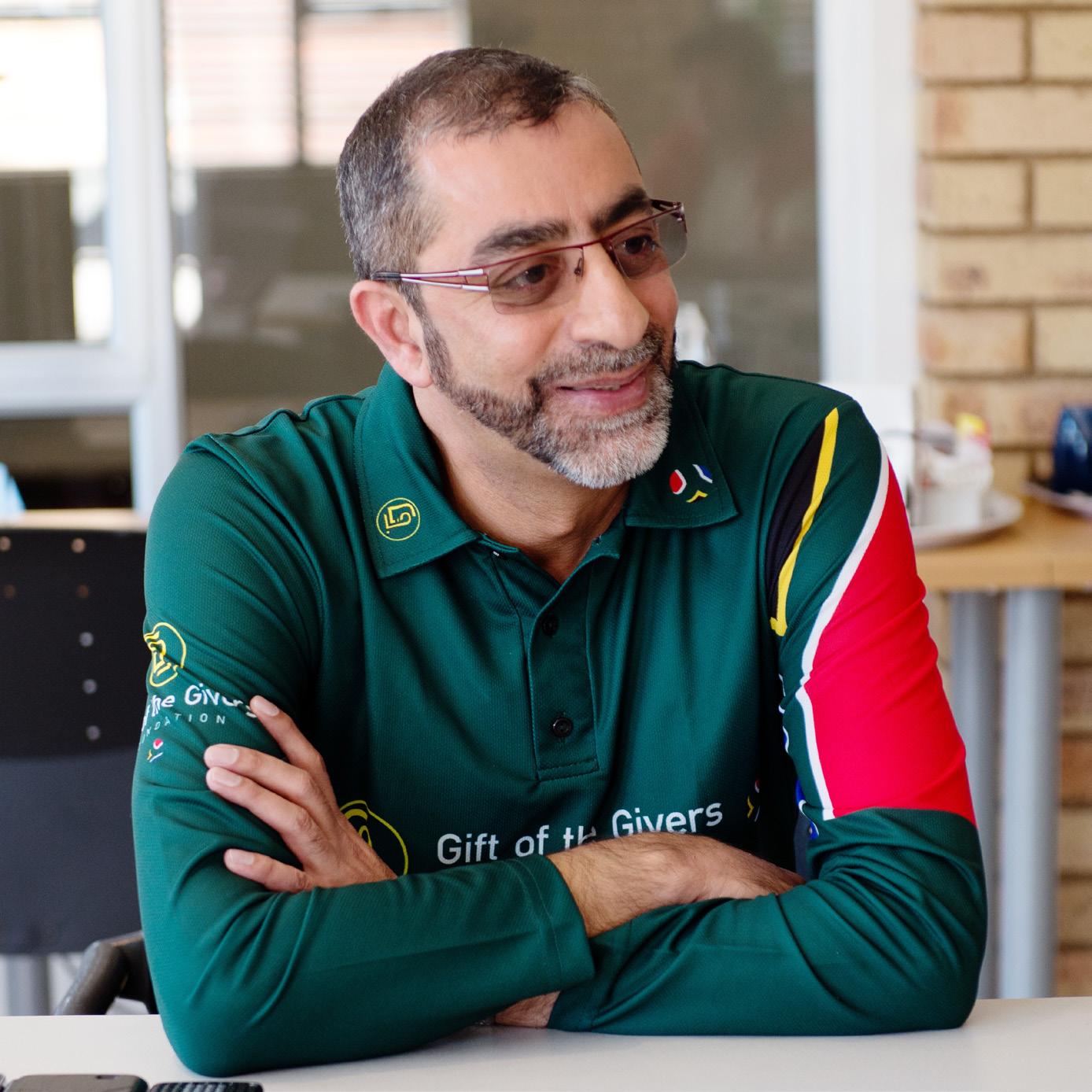
The inspirational Dr Imtiaz Sooliman, founder and chairman of Gift of the Givers delivered this year’s keynote address. Previously a medical practitioner in private practice, he said he was instructed to establish the organisation 30 years ago by a spiritual teacher in Turkey.
Today, Gift of the Givers is the largest and most comprehensive disaster response organisation globally. It provides assistance unconditionally, assisting the needy, irrespective of race, religion, colour, class, political a liation or geographic location.
Since its establishment it has been responsible for delivering life-saving goods and on-the-ground support in more than 43 countries around the world including Bosnia, Zimbabwe, Somalia, Yemen, Malawi, Palestine, Syria, Ukraine and SA.
Locally, it provided support in Knysna in the aftermath of the 2017 res both to people affected by the res as well as to save bee populations in the area; in Sutherland to save Merino sheep; it drilled boreholes in Beaufort West and Makhanda (Grahamstown) to provide communities with water; provided support in Cape Town as the city approached day zero in terms of its water supplies; and throughout the country during the Covid pandemic. Amongst other initiatives, Gift of the Givers also provided support in KwaZulu-Natal after the July 2021 civil unrest and after the April 2022 ooding.
Explaining that most corporate social responsibility initiatives “don’t have a clue” and “don’t address the real issues”, Sooliman said it was only once CEOs started dealing directly with Gift of the Givers that things really started to happen for the better.
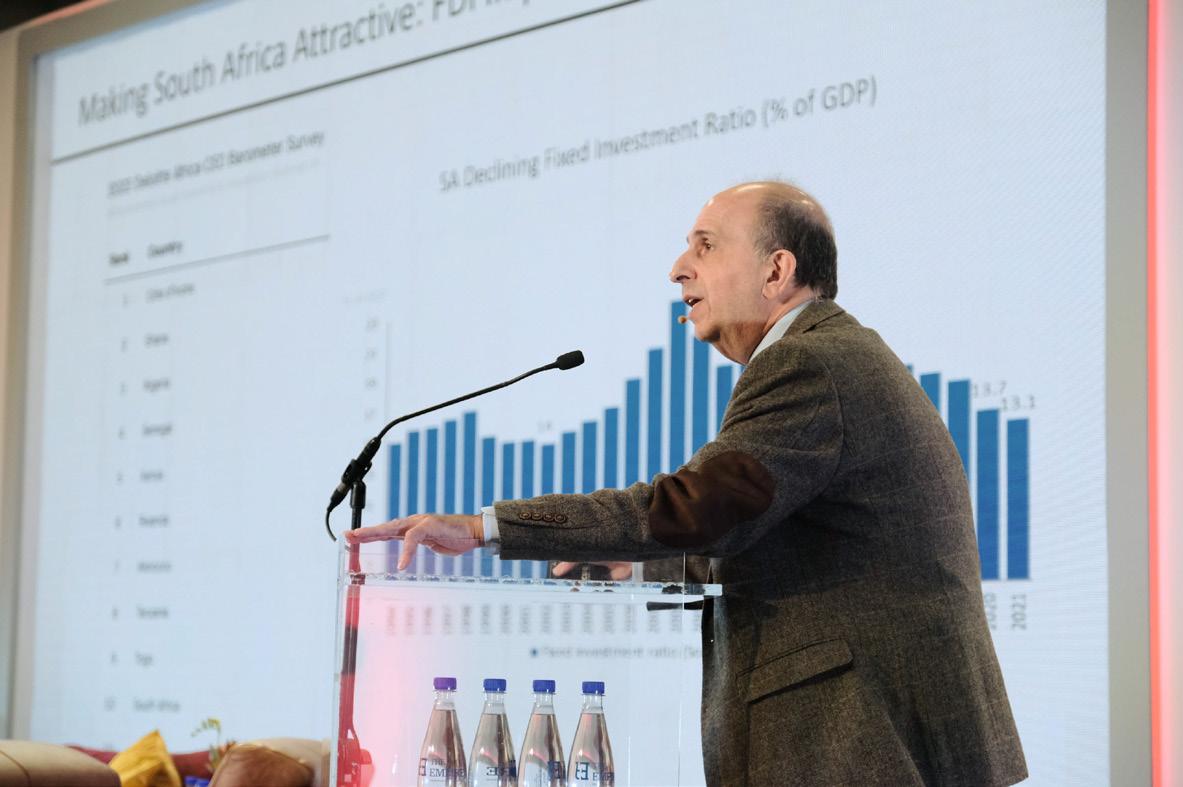
Political analyst and director of Political Futures Consultancy, Daniel Silke delivered the keynote analysis. Irrespective of whether you live in SA or another part of the world, the macro environment has become increasingly di cult, said Silke.
Supply chain disruptions will remain a challenge for some time to come, he predicted, but also offers opportunities. The war in Ukraine is exacerbating challenges created by the Covid pandemic and has global rami cations. The World Bank recently cut the global GDP forecast to 2.9% from 4.1%.
Silke predicted a frozen con ict in Ukraine and a potential for the con ict to escalate given Russia’s desire for expansion. The global economy and world order will be impacted, in ation will spike and rising food prices will hit poorer countries the hardest. While Europe will be the hardest hit, commodity exporters like SA will fare better.
The unilateral world we’ve become accustomed to is giving way to competing blocks and a potential redrawing of the world’s borders, he said.
SA is currently faced with a moral dilemma with the ruling ANC aligning itself with Russia and Ukraine despite the fact that it has far more trade and economic ties to the West. “SA is caught between its economic ties to the West and an emotional and ideological connection to Russia,” he said, adding that SA needs to bear in mind that it needs foreign direct investment from all countries. As such, neutrality, might be an advantage in the long term.
While SA’s tax windfall as a result of the commodity boom was welcome, it’s not likely to be sustainable, said Silke. “Tellingly, while commodity values have risen, volumes have not, primarily due to logistical constraints.”
Food insecurity has become a very real problem, he insisted. “Right now in the Eastern Cape children are dying of hunger,” he said, adding that when people have no dignity and are hungry, they lose all hope.
If leaders want to make a real difference then they need to give people hope. This requires that businesses and the economy grows in order to create and support more jobs for more people.
He reminded the audience that SA does not belong to the government but rather to its citizens. Therefore, “it’s our responsibility to x SA.”
Ubuntu, he added, is about everybody doing their bit to save SA. “We lost too much through state capture and corruption which means we now all need to step in until SA has been rebuilt,” he concluded.
If leaders want to make a real difference then they need to give people hope.
SA’s biggest challenge, he maintained, is its disgruntled and largely unemployed youth population. Only 25% of SA’s youth population believe the country is going the right way.
To attract investment it is critical that SA creates an environment which enables businesses to grow and prosper. The country only just made it into the top 10 of Deloitte’s 2022 Africa Investment Attractiveness Index released this month. The survey identi ed Côte d’Ivoire, Ghana and Nigeria as the three most attractive African investment destinations.
As global supply chains slow down even further SA needs to look at the opportunities offered by the African Continental Free Trade Agreement (AfCFTA) and put the right building blocks in place – an enabling environment and an ethical government - in order to grow the economy and ensure an improved GDP, said Silke.
He ended his presentation with the following advice for SA: As Winston Churchill said, ‘Never let a good crisis go to waste’; from a foreign policy perspective, SA needs to be careful of not nding itself on the wrong side of history; it’s time for action from a beleaguered government and corporate SA; and nally that business and government need to work together.
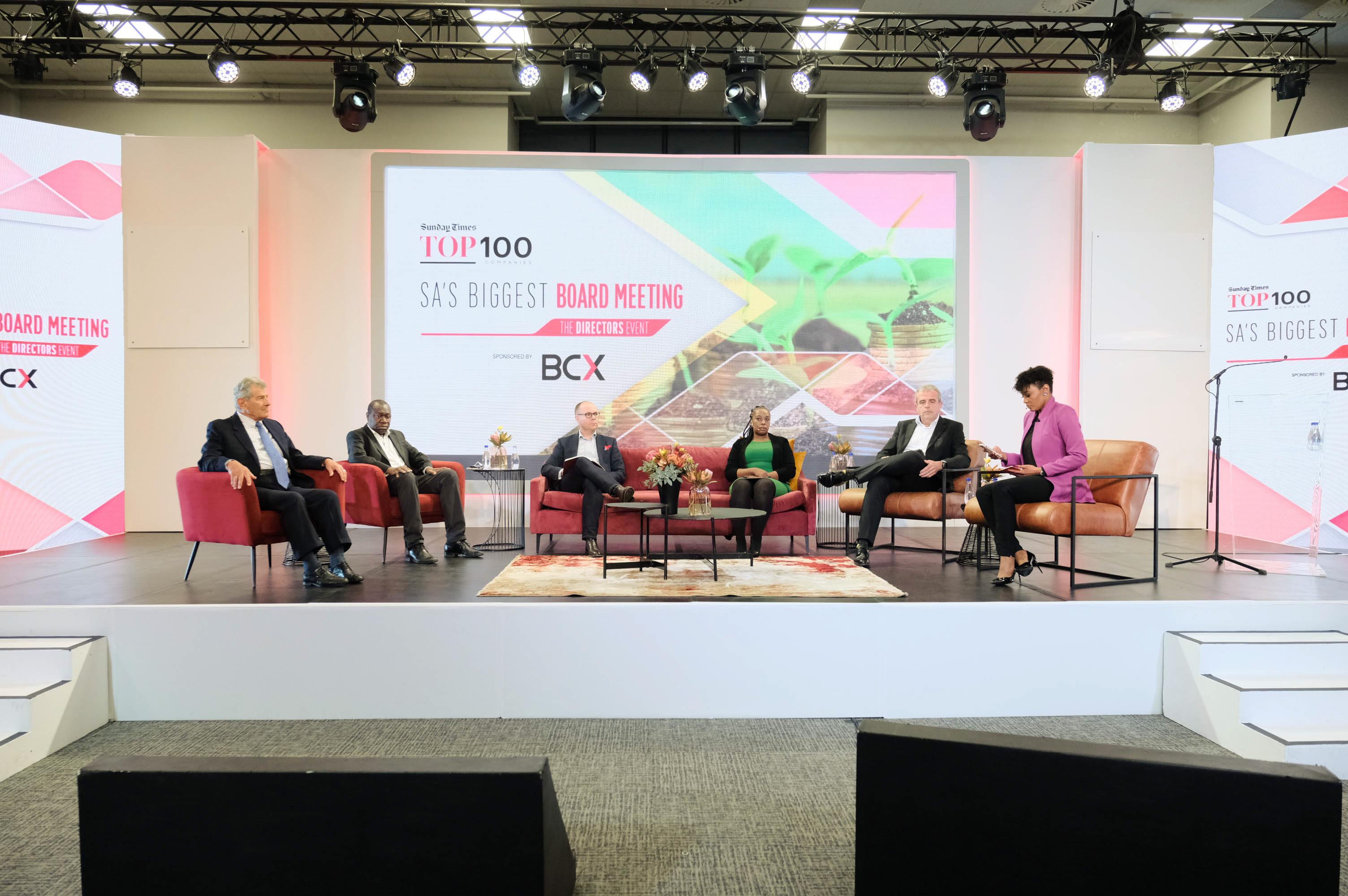
ongoing government funding. In this environment, how can business step up to deliver real social impact?
Chief economist at Econometrix, Dr Azar Jammine said he was concerned about the impact of the global environment on SA given the rise in the country’s borrowings and high debt levels. As liquidity is withdrawn from the global economy and interest rates increase, the global economy could be faced with a signi cant downturn exacerbated by the war in Ukraine. In this environment, SA is not the worst off, he revealed, explaining that a struggling local economy and low demand may ironically help to mitigate against some of the global risks.
Nontobeko Hlele, a researcher for the SA O ce of the Tricontinental Institute for Social Research said unemployment is a massive problem in SA that is not receiving the attention it deserves. It is not ideal that so many people have no stake – or hope – in the country. She disagreed with the president’s comment that government is not a job creator, pointing out government employs teachers, nurses and doctors. It also needed to employ people to x our infrastructure including roads and bridges. “Give those jobs to the unemployed,” she said.
Hlele called on government to invest in the economy, particularly in infrastructure. “If government is not investing in the economy, why should foreigners be investing,” she questioned. She also called on business to work more closely with government, particularly the Department of Higher Education, to ensure that tertiary education institutions are teaching the skills that businesses actually need.
CEO of the Small Business Institute, John Dludlu, said SA is in a crisis situation as far as the SME sector was concerned.
B-BBEE legislation has led to a rise in ‘tendertrepeneurs’ and
To address the socioeconomic issues facing SA we need to grow the entrepreneurial sector and small businesses, agreed Hendrik Malan, CEO of research and consulting rm Frost & Sullivan Africa. Critically, everybody needs to have a stake in SA’s future.
He believes the war in Ukraine has opened up opportunities for SA and Africa. To realise these opportunities will require making better use of arable land, a move away from extractive economies to focus on bene ciating to a greater extent, as well as taking advantage of modern technologies to tap into the global economy.
Jan Bouwer, chief of Digital Platform Solutions at BCX agreed that there were huge opportunities in the IT space.
“Technology can help us to fast-track innovations,” he said, pointing out that there are opportunities for South Africans to provide global services to multinational companies. However, this requires that we build up our skills base.
He called on government to embrace technology in order to reduce the red tape facing businesses and to make it easier to do business in SA.
SA is no longer the gateway into Africa and in a slow growth economy, capital is becoming more cautions, said Bouwer. He agreed with Malan that SA needs to take advantage of opportunities in Africa to create economies of scale and larger markets.
Eustace Mashimbye, CEO of Proudly SA agreed that it is important for SA to embrace technology in order to remain competitive. In particular, he said, it’s important not to divorce localisation from competitiveness.
The second panel discussion, moderated by Uveka Rangappa, focused on feeding the nation. Approximately 2.3 million households reported child hunger in 2021. Currently, more than 40% of South Africans are affected by hunger. Climate change is likely to exacerbate this situation. Unpredictable
The war in Ukraine has revealed the weaknesses inherent in the current global food system and the fact that the world is dependent on fewer and fewer food exporting countries.
From a health perspective, SA is dealing with two distinct groups of people: those who don’t have enough food and, at
climate, sustainability and inequality, University of the
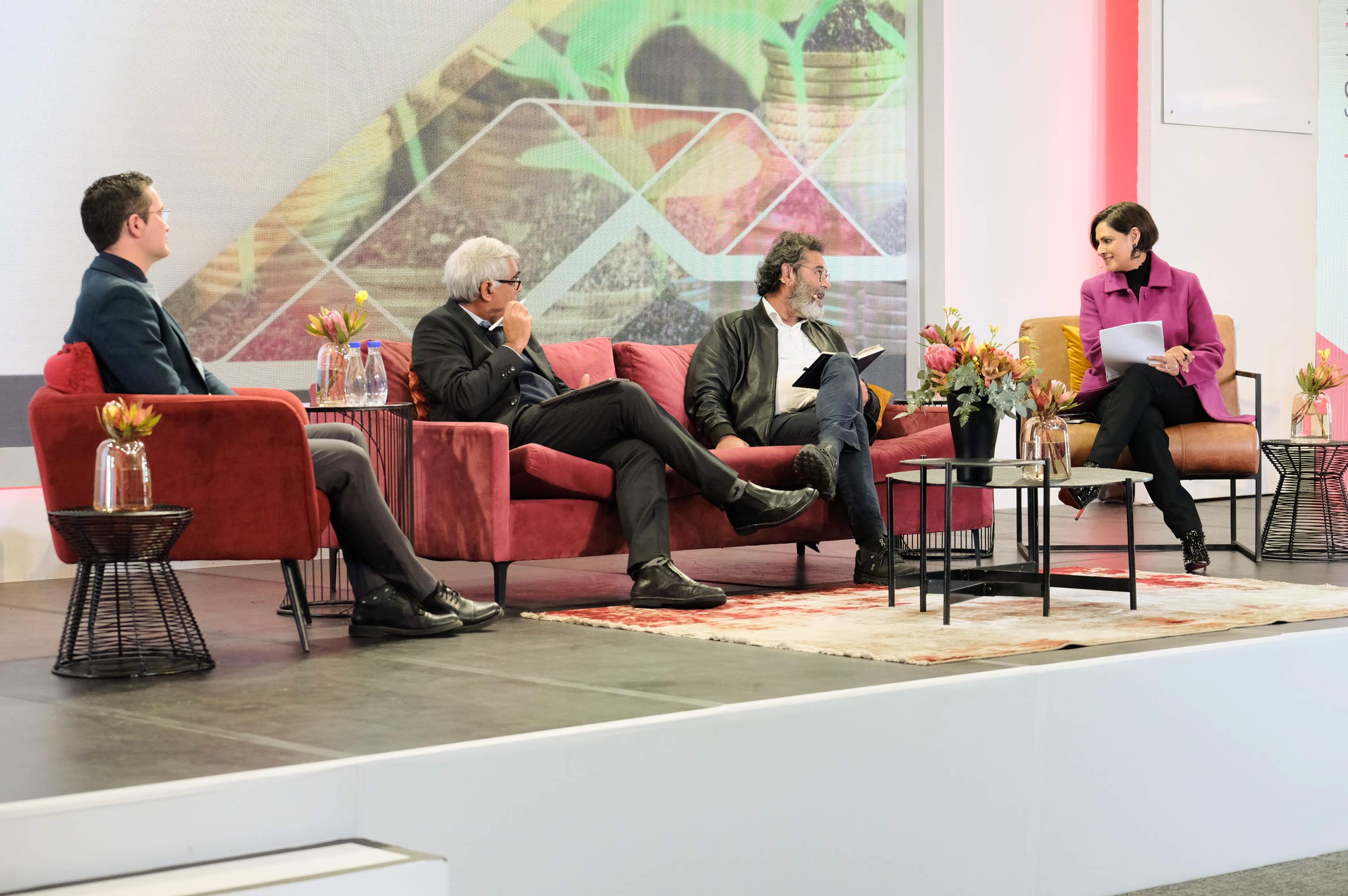
more urgent than ever that SA doubles down on securing food supply chains and makes sure that these supply chains are resilient. She called for a structural and systemic approach to link various initiatives and activities that currently operate in isolation.
“Food waste and food loss, for example, mostly happens upstream of the consumer. We need better education, identify where the loss is occurring and ensure surplus food is donated to hungry people. To achieve this requires an enabling environment, and a practical and tangible approach,” said Rajput.
Professor Mark Swilling, co-director of the Centre for Sustainability Transitions at the University of Stellenbosch, explained that SA produces enough food. The problem is that the available food supplies are not evenly distributed. Affordability and accessibility have become a growing issue with the result that close to 40% of South Africans suffer from nutrient de ciencies.
“Our food system is embedded in an environmentally unsustainable global food system. We urgently need to transition away from an industrialised food system towards more ecologically friendly agricultural methods,” argued Swilling.
edible surplus food from the consumer goods supply chain and distributes it to community organisations that serve the poor.
He agreed that the pandemic has exacerbated the situation and explained that when people can’t afford healthy food, they resort to less healthy food options. Civil society, he explained, has taken it upon itself to address hunger because government has failed to take action. He agreed with Rajput that government needs to implement regulation to regulate food donations to ensure less food is wasted.
Professor Francois Engelbrecht, director and professor of Climatology, Global Change Institute at the University of Witwatersrand, said the climate risks for the sub-Saharan African region will be increasing in the years ahead. He warned that the region is likely to become warmer and drier with the risk of extended droughts lasting for up to six years. An increase in the frequency and duration of droughts will put even more pressure on food security as sustained droughts will make it more challenging for farmers, he said.
Even though Africa accounts for only a fraction global carbon emissions, it is in the continent’s interest to curb its emissions given that it will suffer the biggest risks from climate change and a rise in the earth’s temperature, he warned.
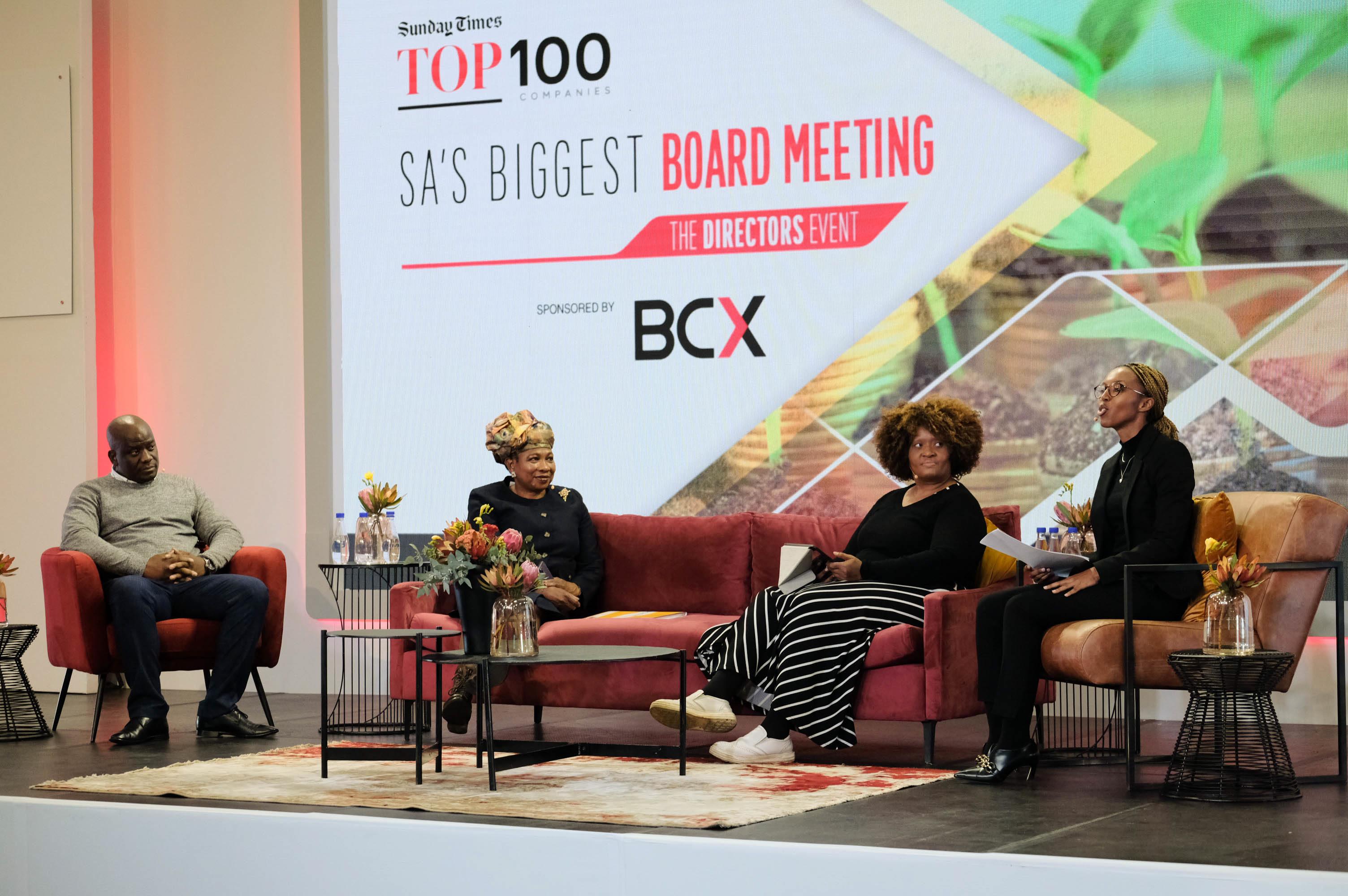
The third – and nal – panel discussion, moderated by Nompumelelo Runji, put the spotlight on new ways of tackling inequality. The World Bank ranks SA as the most unequal country in the world with one of the highest Gini coe cients – a measure of income distribution that highlights the stark gap between the country’s richest and poorest – globally. SA’s level of inequality is worsened by slow GDP growth, increased household debt, political polarisation and increased levels of poverty.
The big question put to the panel was what actions need to be taken to improve the circumstances of those most affected by poverty? And how should the public and private sectors work together to remove SA from its classi cation in the ‘fragile ve’ of emerging economies?
High levels of inequality are underpinned by inherited lack of opportunity, explained Precious Zikhali, senior economist in the Poverty and Equity Global Practice at the World Bank. She correlated poor economic opportunity to poor access to credit and jobs and pointed out that women and the youth are disproportionately affected by unemployment. Women also experience a substantial wage gap compared to men. Despite a high rate of social spending by government this does not mitigate against extreme inequality, she said.
Phelisa Nkomo, development economist and chairperson of Oxfam South Africa agreed that these were all signi cant issues. She added food insecurity and poor access to land to the list of issues exacerbating inequality. Government’s social security net is a fragile initiative, she said, adding that nobody can survive on social grants alone.
Pointing out that two million people lost their jobs during the pandemic, Nkomo stated that a staggering 40% of black South Africans don’t lead productive lives. “We’re building a society which is perpetually dependant on the scus to support it which is not sustainable.”
She argued that the macroeconomic tools at government’s
Government expected the private sector to address the unemployment problem which it has not. The ruling ANC party inherited an unequal system but have not had the political will to address the problem and do what needs to be done, he argued, adding that government has made poor choices and has not su ciently used the levers available to it.
Pamla criticised government’s procurement policy which gives tenders to entities that are already large in size rather than developing rural and township economies. He also criticised banks and development nance institutions which, he said, have not supported SMEs or done enough.
He argued that while Nedlac was a good platform, it needed to be based on principles of solidarity.
Professor Murray Leibbrandt, MRF chair in Poverty and Inequality Research and director of the Southern Africa Labour and Development Research Unit at UCT says high rates of inequality and high unemployment limits our productivity as a country. He agreed that SA is not addressing the problem adequately and said that SA urgently needs to move towards a social compact that breaks down structural impediments. Achieving this, he argues, requires mutual accountability, including business holding government to account.
Tackling inequality, said Leibbrandt, needs to start with a vision and credible leadership focused on creating an inclusive economy. This requires seeing the productive potential of all people. “We have the solutions but we need political will to implement them.”
Busisiwe Memela-Khambula, CEO of the South African Social Security Agency (SASSA) revealed that the organisation is effectively disbursing R200 billion to the most vulnerable in the country, including the elderly, the disabled and children.
Of concern is that a growing number of people are falling into the social security net. A total of four million people have
Hybrid events are an exciting avenue for brands to connect with their audience.
How we connect and do business has changed, but the need for connection hasn’t.
Arena Events offers a complete solution to support your hybrid event journey. Connect in person and through digital channels at the same time resulting in maximum engagement and expanding geographic reach.
We create hybrid event experiences that change how you do business.
To collaborate with us, contact Melissa de Agrela at deagrelam@arena.africa www.arenaevents.africa