THE
CVS DICTIONARY 2026
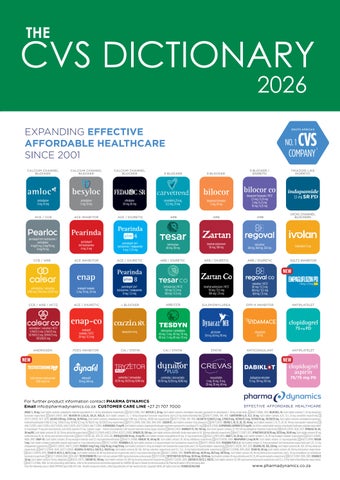
EXPANDING EFFECTIVE AFFORDABLE HEALTHCARE SINCE 2001 CALCIUM CHANNEL BLOCKER
CALCIUM CHANNEL BLOCKER
SOUTH AFRICA’S
1
CALCIUM CHANNEL BLOCKER
ß BLOCKER
besyloc
ß BLOCKER
bilocor
ß BLOCKER / DIURETIC
THIAZIDE-LIKE DIURETIC
bisoprolol fumarate / HCTZ 2,5 mg / 6,25 mg 5 mg / 6,25 mg 10 mg / 6,25 mg
amlodipine 5 mg, 10 mg
amlodipine 5 mg, 10 mg
nifedipine 30 mg, 60 mg
carvedilol 6,25 mg, 12,5 mg, 25 mg
bisoprolol fumarate 5 mg, 10 mg
ACE / CCB
ACE INHIBITOR
ACE / DIURETIC
ARB
ARB
ARB
(HCN) CHANNEL BLOCKERS
perindopril tert-butylamine / amlodipine 4 mg/5 mg, 4 mg/10 mg, 8 mg/10 mg CCB / ARB
Pearinda
Pearinda
perindopril tert-butylamine 4 mg, 8 mg
perindopril tertbutylamine / indapamide 4 mg / 1,25 mg
telmisartan 40 mg, 80 mg
losartan potassium 50 mg, 100 mg
valsartan 80 mg, 160 mg, 320 mg
ivabradine 5 mg
ACE INHIBITOR
ACE / DIURETIC
ARB / DIURETIC
ARB / DIURETIC
ARB / DIURETIC
SGLT2 INHIBITOR
enap
NEW
Pearinda
amlodipine / valsartan 5/80 mg, 5/160 mg, 10/160 mg
enalapril maleate 5 mg, 10 mg, 20 mg
perindopril tertbutylamine / indapamide 8 mg / 2,5 mg
telmisartan / HCTZ 40 mg / 12,5 mg 80 mg / 12,5 mg
losartan potassium / HCTZ 50 mg / 12,5 mg 100 mg / 25 mg
valsartan / HCTZ 80 mg / 12,5 mg 160 mg / 12,5 mg 160 mg / 25 mg
CCB / ARB / HCTZ
ACE / DIURETIC
α BLOCKER
ARB/CCB
SULPHONYLUREA
DPP-4 INHIBITOR
doxazosin 4 mg
telmisartan / amlodipine 40 mg / 5 mg, 40 mg / 10 mg, 80 mg / 5 mg, 80 mg / 10 mg
gliclazide 30 mg, 60 mg, 90 mg
vildagliptin 50 mg
CAI / STATIN
CAI / STATIN
STATIN
ANTICOAGULANT
enap-co amlodipine / valsartan / HCTZ 5/160/12,5 mg, 5/160/25 mg, 10/160/12,5 mg, 10/160/25 mg,
10/320/25 mg
ANDROGEN
enalapril maleate / HCTZ 20 mg / 12,5 mg
PDE5 INHIBITOR
Dynacaz MR
NEW
testosterone undecanoate 1000 mg/4 mL
ANTIPLATELET
ANTIPLATELET
NEW
sildenafil 50 mg, 100 mg
ezetimibe / simvastatin 10/10 mg, 10/20 mg, 10/40 mg
clopidogrel aspirin
ezetimibe / atorvastatin 10/10 mg, 10/20 mg, 10/40 mg
rosuvastatin 5 mg, 10 mg, 15 mg, 20 mg, 30 mg ,40 mg
dabigatran etexilate 75 mg, 110 mg, 150 mg
75/75 mg PD
For further product information contact PHARMA DYNAMICS Email info@pharmadynamics.co.za CUSTOMER CARE LINE +27 21 707 7000 AMLOC 5, 10 mg. Each tablet contains amlodipine maleate equivalent to 5, 10 mg amlodipine respectively. S3 A38/7.1/0183, 0147. BESYLOC 5, 10 mg. Each tablet contains amlodipine besylate equivalent to amlodipine 5, 10 mg respectively. S3 A41/7.1/0560, 0561. BILOCOR 5, 10. Each tablet contains 5, 10 mg bisoprolol fumarate respectively. S3 A38/5.2/0053, 0051. BILOCOR CO 2,5/6,25, 5/6,25, 10/6,25. Each tablet contains 2,5, 5, 10 mg bisoprolol fumarate respectively and 6,25 mg hydrochlorothiazide. S3 A44/7.1.3/1010, 1011, 1012. CARVETREND 6,25, 12,5, 25 mg. Each tablet contains 6,25, 12,5, 25 mg carvedilol respectively. S3 A37/7.1.3/0276, 0277, 0278. CALSAR 5/80 mg, 5/160 mg, 10/160 mg. Each tablet contains amlodipine/valsartan 5/80 mg, 5/160 mg, 10/160 mg respectively. S3 A51/7.1.3/1106, 1107, 1108. CALSAR CO 5/160/12,5 mg, 5/160/25 mg, 10/160/12,5 mg, 10/160/25 mg, 10/320/25 mg. Each tablet contains amlodipine/valsartan/ hydrochlorothiazide 5/160/12,5 mg, 5/160/25 mg, 10/160/12,5 mg, 10/160/25 mg, 10/320/25 mg respectively. S3 A57/7.1.3/0101, 0103, 0102, 0104, 0105. CARZIN XL. Each tablet contains 4 mg doxazosin. S3 A41/7.1/0557. CREVAS 5, 10, 15, 20, 30, 40 mg. Each tablet contains 5, 10, 15, 20, 30, 40 mg rosuvastatin respectively. S4 A46/7.5/0313, A46/7.5/0314, A55/7.5/0453, A46/7.5/0315, A55/7.5/0454, A46/7.5/0316. CLOPIDOGREL 75 mg PD. Each tablet contains clopidogrel hydrogen sulphate equivalent to clopidogrel 75 mg. S3 A42/8.2/0128. CLOPIDOGREL ASPIRIN 75/75 mg PD. Each film coated tablet contains clopidogrel hydrogen sulphate equivalent to clopidogrel 75 mg and acetylsalicylic acid (ASA) (aspirin) 75 mg. Contains sugar – lactose monohydrate 2,80 mg and mannitor 64 mg (sugar alcohol). S3 A58/8.2/0137. DABIKLOT 75, 110, 150 mg. Each hard capsule contains 75, 110, 150 mg dabigatran etexilate respectively. S4 A55/8.2/0325, 0326, 0327. DYNACAZ 30, 60, 90 mg MR. Each tablet contains 30, 60, 90 mg gliclazide respectively. S3 A42/21.2/0249, A48/21.2/1194, A53/21.2/0083. DYNAFIL 50, 100 mg. Each tablet contains sildenafil citrate equivalent to 50, 100 mg sildenafil respectively. S4 A42/7.1.5/1071, 1072. DYNATOR PLUS 10/10 mg, 10/20 mg, 10/40 mg. Each tablet contains 10 mg ezetimibe and 10, 20, 40 mg atorvastatin respectively. S4 A54/7.5/0330.326, 0331.327, 0332.328. EMPAGLIFLOZIN 10 mg, 25 mg PD. Each tablet contains empagliflozin 10 mg, 25 mg respectively. S4 A56/21.2/0973,0974. ENAP 5, 10, 20 mg. Each tablet contains 5, 10, 20 mg enalapril maleate respectively. S3 A34/7.1.3/0085, 0086, 0087. ENAP-CO. Each tablet contains 20 mg enalapril maleate and 12,5 mg hydrochlorothiazide. S3 A34/7.1.3/0088. FEDALOC 30, 60 mg SR. Each tablet contains 30, 60 mg nifedipine respectively. S3 A37/7.1/0302, 0303. INDAPAMIDE 1,5 mg SR PD. Each tablet contains 1,5 mg indapamide. S3 A42/7.1/0790. IVOLAN 5 mg. Each tablet contains Ivabradine oxalate equivalent to 5 mg Ivabradine base. S3 A51/7.1.4/0921. PEARINDA 4, 8. Each tablet contains 4, 8 mg perindopril tert-butylamine respectively. S3 A41/7.1.3/0649, 0650. PEARINDA PLUS 4, 8. Each tablet contains 4, 8 mg perindopril tert-butylamine respectively and 1,25, 2,5 mg indapamide respectively. S3 A41/7.1.3/0633. A49/7.1.3/0013. PEARLOC 4 mg/5 mg, 4 mg/10 mg, 8 mg/10 mg. Each tablet contains 4, 8 mg perindopril tert-butylamine respectively and 5, 10 mg amlodipine respectively. S3 A50/7.1.3/0230, 0231, 0233. REGOVAL 80, 160, 320 mg. Each tablet contains 80, 160, 320 mg valsartan respectively. S3 A43/7.1.3/0548, 0549, A47/7.1.3/0693. REGOVAL CO 80/12,5, 160/12,5, 160/25 mg. Each tablet contains 80, 160, 160 mg valsartan respectively and 12,5, 12,5, 25 mg hydrochlorothiazide respectively. S3 A44/7.1.3/0018, 0019, 0020. TESAR 40, 80 mg. Each tablet contains 40, 80 mg telmisartan respectively. S3 A45/7.1.3/0978, 0979. TESAR CO 40/12,5, 80/12,5 mg. Each tablet contains 40, 80 mg telmisartan respectively and 12,5 mg hydrochlorothiazide. S3 A48/7.1.3/0106, 0107. TESDYN 40/5 mg, 40/10 mg, 80/5 mg, 80/10 mg. Each tablet contains 40, 80 mg telmisartan respectively and 5, 10 mg amlodipine (as amlodipine besylate) respectively. S3 A55/7.1.3/0668, 0669, 0670, 0671. TESTOSTERONE PD. Each 4 ml vial contains 1000 mg testosterone undecanoate. S5 57/21.7/0452.TRYZETOR PLUS 10/10 mg, 10/20 mg, 10/40 mg. Each tablet contains 10 mg ezetimibe and 10, 20, 40 mg simvastatin respectively. S4 A51/7.5/1007, 1008, 1009. VIDAMACE 50 mg. Each tablet contains 50 mg vidagliptin. S3 A56/21.2/0772. ZARTAN 50, 100 mg. Each tablet contains 50, 100 mg losartan potassium respectively. S3 A41/7.1.3/0287, 0289. ZARTAN CO 50/12,5, 100/25. Each tablet contains 50, 100 mg losartan potassium respectively and 12,5, 25 mg hydrochlorothiazide respectively. S3 A42/7.1.3/1068, 1069. For full prescribing information, refer to the professional information approved by SAHPRA. 1) Source: Based on internal analysis by Pharma Dynamics (Pty) Ltd using data www.pharmadynamics.co.za from the following source: IQVIA TPM MAT April 2026 ATC1 A1A - Brands measured in Units, reflecting estimates of real-world activity. Copyright IQVIA. All rights reserved. CVSRQ1353/06/2026
cardiometabolic
CARDIO-RENAL-METABOLIC PORTFOLIO Fibranix 2,5 / 5
Stroke
Hypertension
Ciplavasc 5 / 10
Apixaban 2,5 mg; 5 mg
Amlodipine besylate 5 mg; 10 mg
TREXEVA PLUS 5 / 1,25 Rivaroxaban 10 mg; 15 mg; 20 mg
Perindopril tosilate 5 mg and Indapamide 1,25 mg
KKardotel
Heart failure Dapagliflozin 5 mg; 10 mg
Telmisartan 40 mg; 80 mg; Amlodipine 5 mg; 10 mg
Teprilam 5/5; Teprilam 5/10; Teprilam 10/5; Teprilam 10/10 Perindopril tosilate 5 mg; 10 mg and Amlodipine 5 mg; 10 mg
Carvedilol 12.5 mg
5/1000 10/1000 Dapagliflozin 5 mg; 10 mg and Metformin hydrochloride 1 000 mg (extended release)
Tensoforj 5 / 160, 10 / 160 Carvedilol 12.5 mg
Amlodipine 5 mg; 10 mg and Valsartan 160 mg
Chronic Kidney disease Type 2 diabetes Dapagliflozin 5 mg; 10 mg Dapagliflozin 5 mg; 10 mg
Dyslipidaemia
Giliptra
EZETIMIBE 10 TEVA Ezetimibe 10 mg
Liraglutide 6 mg / mL
ROSUZET
5/1000 10/1000 Dapagliflozin 5 mg; 10 mg and Metformin hydrochloride 1 000 mg (extended release)
METFORMIN TEVA ER 1000
Rosuvastatin 5 mg; 10 mg; 20 mg; 40 mg and Ezetimibe 10 mg
VUSOR 5 / 10 / 20 / 40 OD Rosuvastatin 5 mg, 10 mg, 20 mg, 40 mg
Metformin hydrochloride 1000 mg
Sitagliptin 50 mg and Metformin hydrochloride 1000 mg
Atrial fibrillation Rivaroxaban 10 mg; 15 mg; 20 mg
DVT & Pulmonary Embolism
Fibranix 2,5 / 5 Apixaban 2,5 mg; 5 mg
Rivaroxaban 10 mg; 15 mg; 20 mg
Fibranix 2,5 / 5 Apixaban 2,5 mg; 5 mg
S3 Reg. No. 50/7.1.3.0513. KARDOTEL 40 / 5 mg. Each tablet contains 40 mg Telmisartan and 5 mg Amlodipine base (as besylate salt). S3 Reg. No. 50/7.1.3/0514. KARDOTEL 40 / 10 mg. Each tablet contains 40 mg Telmisartan and 10 mg Amlodipine base (as besylate salt). S3 Reg. No. 50/7.1.3/0515. KARDOTEL 80 / 5. Each tablet contains 80 mg Telmisartan and 5 mg Amlodipine base (as besylate salt). S3 Reg. No. 50/7.1.3/0516. KARDOTEL 80 / 10. Each tablet contains 80 mg Telmisartan and 10 mg Amlodipine base (as besylate salt). S4 Reg No. 56/21.2/0280, 56/21.2/0281 Stenit 10 / 25. Each film-coated tablet contains 10 mg; 25 mg Empagliflozin. S4 Reg No. 58/21.13/0001. Giliptra. Each pre-filled pen contains liraglutide 18 mg in 3 mL. Preservative: Phenol 0,55 % w/v. S3 Reg No. 54/21.2/0498. SITUVIAMET 50 mg / 1000 mg. Each film-coated tablet contains sitagliptin phosphate monohydrate equivalent to 50 mg of sitagliptin and 1000 mg metformin hydrochloride. S4 Reg. No. 56/8.2/0026, 0027. Fibranix 2,5 / 5. Each film-coated tablet contains 2,5 mg; 5 mg Apixaban. S4 Reg. No. 56/8.2/0951.947, 0952.948, 0953.949. Medpralto 10 / 15 / 20. Each film-coated tablet contains 10 mg; 15 mg; 20 mg Rivaroxaban. S4 Reg. No. 53/21.2/0720. Sagalatin 5. Each film-coated tablet contains dapagliflozin propanediol equivalent to 5 mg dapagliflozin. S4 Reg. No. 53/21.2/0721. Sagalatin 10. Each film-coated tablet contains dapagliflozin propanediol equivalent to 10 mg dapagliflozin. S4 Reg. No. 53/21.2/0651. Synglutra 5 / 1000. Each film-coated tablet contains the equivalent of 5 mg dapagliflozin (as dapagliflozin propanediol) and 1 000 mg of metformin hydrochloride. S4 Reg. No. 53/21.2/0652. Synglutra 10 / 1000. Each film-coated tablet contains the equivalent of 10 mg dapagliflozin (as dapagliflozin propanediol) and 1 000 mg of metformin hydrochloride. S4 Reg. No. 55/7.5/0224, 0225, 0226, 0227. Rosuzet 5 / 10 / 20 and 40 mg. Each film-coated tablet contains 5, 10, 20, 40 mg rosuvastatin (as calcium) and 10 mg of ezetimibe. S3 *METFORMIN TEVA ER 1000 (extended-release tablets). Reg. No. 53/21.2/0229. Each extended-release tablet contains 1000 mg Metformin hydrochloride. S4 *Ezetimibe 10 Teva (tablets). Reg. No. 50/7.5/0760. Each tablet contains 10 mg ezetimibe. S3 *TREXEVA PLUS 5/1,25 (film-coated tablets). Reg. No. 48/7.1.3/1169. Each film-coated tablet contains 5 mg perindopril tosilate and 1,25 mg indapamide. S3 Reg. No. 50/7.1.3/0518. Tensoforj 5/160 mg. Each tablet contains amlodipine besylate equivalent to amlodipine 5 mg and valsartan 160 mg. S3 Reg. No. 50/7.1.3/0519. Tensoforj 10/160 mg.Each tablet contains amlodipine besylate equivalent to amlodipine 10 mg and valsartan 160 mg. S4 *Vusor 5 / 10 / 20 / 40 OD (film-coated tablets). Reg. No. 53/7.5/0268, 53/7.5/0269, 53/7.5/0270, 53/7.5/0271. Each film-coated tablet contains rosuvastatin calcium equivalent to 5 mg, 10 mg, 20 mg or 40 mg rosuvastatin, respectively. S3 *TEPRILAM 5 / 5 (tablets). Reg. No. 55/7.1.3/0809. Each tablet contains Perindopril Tosilate 5 mg and Amlodipine 5 mg. S3 *TEPRILAM 5 / 10 (tablets). Reg. No. 55/7.1.3/0810. Each tablet contains Perindopril Tosilate 5 mg and Amlodipine 10 mg. S3 *TEPRILAM 10 / 5 (tablets). Reg. No. 55/7.1.3/0811. Each tablet contains Perindopril Tosilate 10 mg and Amlodipine 5 mg. S3 *TEPRILAM 10 / 10 (tablets). Reg. No. 55/7.1.3/0812. Each tablet contains Perindopril Tosilate 10 mg and Amlodipine 10 mg. For full prescribing information, refer to the Professional Information approved by the Medicines Regulatory Authority. *TEVA PHARMACEUTICALS (PTY) LTD. Co. Reg. No. 2000/025840/07. Maxwell Office Park, Magwa Crescent West, Waterfall City, Midrand, 2090. Tel: +27 11 055 0200, Fax: +27 86 680 8988. Marketed by CIPLA MEDPRO (PTY) LTD. Co. Reg. No. 1995/004182/07. Building 2, Junxion Park, 10 Elephant Lane, Century City 7441. Website: www.cipla.co.za Customer Care: 080 222 6662. [4485312047] [EZE-ZA-00008-07-2026]
1
CONTENTS
THE
CVS DICTIONARY VOLUME 17
2026
How to use The CVS Dictionary.......... 1 Algorithms........................................... 2 Product listings.................................... 8 Alphabetical product index.............. 103
Business manager: Silke Friedrich Medical editor: Dr Jaco Lotriet Production manager: Mercy Baloyi GM Magazines: Jocelyne Bayer
Advertising sales: Loren Chimes Cell: 083 489-5558 chimesl@mims.co.za
Charissa Piek Cell: 081 032 9115 piekc@mims.co.za
Additional copies: Sean Samson Tel: 011 280-5533 samsons@mims.co.za
Publisher: MIMS, a division of Arena Holdings PO Box 1471, Saxonwold 2132 Tel: 011 280-5873
HOW TO USE THE CVS DICTIONARY Relevant active ingredients are listed alphabetically. A succinct summary of indications, dosages and safety profiles for each active ingredient has been compiled in line with the respective package inserts. Under each active ingredient, trade-name products are listed alphabetically in a table. For each product, single exit prices, MPL, MMAP, and MRP prices, where applicable, are stated. Should prescribers be unaware of the active ingredient of a particular product, all products are crossreferenced in the alphabetical product index on Page 103. Prescribers and dispensers are advised to refer to the manufacturers' package inserts for complete prescribing information. Active ingredient/s
All prices are in South African Rands (ZAR)
MIMS pharmacological classification
AMILORIDE, HYDROCHLOROTHIAZIDE 16.1. Diuretics Trade Name
Supplier
S
Presentation
Strength
Pack Size
SEP incl
MPL
MMAP
MRP
780618017 Adco-Retic
Nappi
AI Pharm
S3
TABS
5 mg (50 mg)
1 000
Rxxxx
Rxxxx
Rxxxx
Rxxxx
Nappi code
Brand name
Manufacturer or supplier
Dosage form
Mediscor price* (the Mediscor maximum allowable reimbursement SEP inclusive of 15% VAT for a pack size of 1 000 5 mg/50 mg AdcoRetic tabs)
Pack size
Scheduling status (Medicines Control Act 101 of 1965) Available strengths of Adco-Retic. In the case of combination products, the strength of the second, and third, if applicable, ingredient is bracketed. Single Exit Price* (price inclusive of 15% VAT, of a single unit to any authorised purchaser of a pharmaceutical product in the private sector)
*Note: All prices are reflected exclusive of any mark-up, professional or dispensing fees which may be chargeable. Prices are supplied by the manufacturer and are subject to change.
MMAP price* (the MediKredit maximum allowable reimbursement SEP inclusive of 15% VAT for a pack size of 1 000 5 mg/50 mg AdcoRetic tabs)
MPL price* (the Medscheme maximum allowable reimbursement SEP inclusive of 15% VAT for a pack size of 1 000 5 mg/50 mg AdcoRetic tabs)
2026 Copyright MIMS – a division of Arena Holdings (Pty) Ltd. All rights reserved. This book is copyright. Apart from any fair dealings for the purpose of private study, research, criticism or review as permitted under the Copyright Act, no part may be reproduced by any process without written permission from the publisher. This publication is an index of information and reference supplied by various sources. The publisher and its employees, agents or editors cannot accept responsibility for the currency of the information, or for any errors or omissions, contained therein. The publisher shall not be liable, under any circumstances, for any damages suffered as a result of any such errors or omissions, or from the information generally. Medical professionals are urged to rely on their medical knowledge and experience when treating a patient, and to consult with the relevant manufacturer should they have a query relating to the usage of a particular medicine.
2
ALGORITHM: GOALS OF TREATMENT Universal goal of antihypertensive treatment is <140/90 mmHG regardless of CV risk and underlying comorbidities. n The only exception is that in patients over 80 years of age, therapy should be initiated if SBP is >160 mmHG and the goal is between 140 and 150 mmHG. n It is also essential to control hyperlipidaemia and diabetes through lifestyle and drug therapy. n Aspirin should not be routinely prescribed to hypertensives (especially if BP is not controlled), and should mainly be used for secondary prevention of CVD (transient ischaemic attack, stroke, myocardial infarction). n
HYPERTENSION MANAGEMENT DEFINITION AND GRADING OF HYPERTENSION The target blood pressure (BP) for antihypertensive management is systolic <140 mmHG and diastolic <90 mmHG, with minimal or no drug side effects. Stage
Systolic BP ( mmHG)
Diastolic BP ( mmHG)
Normal
<120
<80
Optimal
120-129
80-84
High normal
130-139
85-89
Grade 1
140-159
90-99
Grade 2
160-179
100-109
Grade 3
≥180
≥110
Isolated systolic
≥140
<90
BP should be categorised into the highest level of BP whether systolic or diastolic. OVERVIEW OF APPROACH TO TREATMENT
MAJOR RISK FACTORS Levels of systolic blood pressure (SBP) and diastolic blood pressure (DBP) l Smoking l Dyslipidaemia: - Total cholesterol >5.1 mmol/l, OR - LDL >3 mmol/l, OR - HDL men <1 and women <1.2 mmol/l l Diabetes mellitus - Men ≥55 years - Women ≥65 years l Family history of early onset of CVD: - Men aged <55 years - Women aged <65 years l Waist circumference - abdominal obesity - Men ≥102 cm - Women ≥88 cm - The exceptions are South Asians and Chinese: men >90 cm and women >80 cm
Measure BP on at least three occasions
l
BP 140-159/90-99 mmHG with <3 risk factors, no TOD or complications
BP 140-159/90-99 mmHG with ≥3 risk factors, diabetes, TOD or complications
BP ≥160/100 mmHG*
Lifestyle modification for 3-6 months
Lifestyle modification and commence monotherapy, review in 4-6 weeks
Lifestyle modification and commence two drugs, preferably in fixed-drug combination, review in 4-6 weeks
Not at goal
Not at goal
Not at goal
TARGET-ORGAN DAMAGE (TOD) LVH: based on ECG - Sokolow-Lyons >35 mm - R in aVL >11 mm - Cornel >2 440 (mm/ms) l Microalbuminuria: albumin creatine ratio 3-30 mg/mmol preferably spot morning urine and eGFR >60 ml/min l
COMPLICATIONS Coronary heart disease Heart failure l Chronic kidney disease: - macroalbuminuria >30 mg/mmol - OR eGFR <60 ml/min l Stroke or TIA l Peripheral arterial disease l Advanced retinopathy: - haemorrhages OR - exudates - papilloedema
Add third drug/ Optimise doses of drugs *BP >190/110 mmHG refer to section 9 If the SBP is ≥180 mmHG or the DBP is ≥110 mmHG then refer to section on severe (grade 3) HTN, as this section does not apply.
l l
Based on the European Society of Hypertension/European Society of Cardiology guidelines.
RECOMMENDED LIFESTYLE MODIFICATION Modification
Recommendation
Approx ↓ SBP( mmHG)
Weight reduction
BMI 18.5-24.9 kg/m2
5-20 per 10 kg
Dash diet
↓ saturated fat and total fat, ↑ fruit and vegetables
8-14
Dietary Na+
<100 mmol or 6 g NaCl/day
2-8
Physical activity
Brisk walking for 30 minutes per day most days
4-9
Moderation of alcohol
No more than two drinks per day
2-4
Tobacco
Complete cessation
–
Reference: Seedat YK, Rayner BL, Veriava Y. South African hypertension practice guideline 2014: review article. Cardiovascular Journal of Africa. 2014;25(6):288-294. Southern African Hypertension Society.
3 HYPERTENSION MANAGEMENT (CONTINUED) INDICATIONS AND CONTRAINDICATIONS FOR THE MAJOR CLASSES OF ANTIHYPERTENSIVE DRUGS (adapted from the ESC/ESH guidelines) Contraindications Class Diuretics (thiazide; thiazide-like) Diuretics (loop) Diuretics (antialdosterone) CCB (dihydropyridine) CCB non-dihydropyridine (verapamil, diltiazem) ACEI
Conditions favouring the use Heart failure (HF); Elderly hypertensives; Isolated systolic HTN (ISH); Hypertensives of African origin Renal insufficiency HF HF; Post-myocardial infarction; Resistant hypertension Elderly patients; ISH; Angina pectoris; Peripheral vascular disease; Carotid atherosclerosis; Pregnancy Angina pectoris; Carotid atherosclerosis; Supraventricular tachycardia HF; LV dysfunction; Postmyocardial infarction; Non-diabetic nephropathy; Type 1 diabetic nephropathy; Prevention of diabetic microalbuminuria; Proteinuria
ARB
Type 2 diabetic nephropathy; Type 2 diabetic microalbuminuria; Proteinuria; LVH; ACEI cough or intolerance
β-blockers
Angina pectoris; Postmyocardial infarction; HF (carvedilol, metoprololol, bisoprolol, nebivolol only); Tachyarrhythmias
Compelling Gout
Possible Pregnancy; β-blockers (especially atenolol) Pregnancy
Renal failure; Hyperkalaemia
AV block (grade 2 or 3); HF Pregnancy; Hyperkalaemia; Bilateral renal artery stenosis; Angioneurotic oedema (more common in blacks than in Caucasians) Pregnancy; Hyperkalaemia; Bilateral renal artery stenosis Asthma; Chronic obstructive pulmonary disease; AV block (grade 2 or 3); Pregnancy (atenolol)
Tachyarrhythmias; HF, especially with reduced ejection fraction Constipation (verapamil)
Peripheral vascular disease; Bradycardia; Glucose intolerance; Metabolic syndrome; Athletes and physically active patients; Non-dihydropyridine CCBs (verapamil, diltiazem)
ROUTINE MANAGEMENT OF UNCOMPLICATED HYPERTENSION All patients with HTN should receive lifestyle counselling as a cornerstone of management. Before choosing an antihypertensive agent consider cost, patient-related factors, conditions favouring use and contraindications, complications and target-organ damage (TOD). Classes of antihypertensive agents used as monotherapy or combination therapy in absence of compelling indications: l Diuretics (thiazide-like or thiazide) l Angiotensin-converting enzyme inhibitors (ACEI) l Angiotensin II receptor blockers (ARB) l Calcium-channel blockers (CCB )
Initial choices of antihypertensive treatment or combinations ACEI or ARB Thiazide or thiazide-like
CCB
Consider combination therapy if clinically appropriate ab initio if BP is ≥160/100 mmHG as this is associated with better clinical outcomes and earlier achievement of goal BP. l Fixed-drug combinations are preferred because of better patient adherence and control of BP. l If the SBP is ≥180 mmHG or the DBP is ≥110 mmHG then refer to section on severe (grade 3) HTN, as this section does not apply. l
MANAGEMENT OF SEVERE HYPERTENSION (BP ≥180/110 mmHg) Patients with severe HTN may fall into one of three categories. Patients should be managed or referred in accordance with local resources. Sustained, severe HTN requires immediate drug therapy and lifestyle modification, and close follow up. Asymptomatic severe HTN l Keep patient in care setting and repeat BP measurement after resting for 1 hour. l If BP still ↑ start oral therapy using two first-line drugs. l Follow-up within a week or earlier, with escalation of treatment as needed. l Early referral advised if BP not controlled within 2-4 weeks.
Hypertensive urgencies Hospitalise l Commence Tx with 2 oral agents and aim to ↓ DBP to 100 mmHG slowly over 48-72 hours. l BP ↓ can be achieved with use of long-acting CCBs, ACEIs, β- blockers or diuretics. l
Hypertensive emergencies l Pts need rapid ↓ of BP to safe levels. l Hospitalise, ideally in ICU. l IV therapy with labetalol, nitroprusside or nitroglycerin is standard of care. l 25% BP ↓ recommended in the first 24h (avoid overzealous BP ↓). l Start oral therapy once BP more stable.
Resistant HTN l Therapeutic plan to ensure adherence to therapy and lifestyle changes. l Unsuspected causes of secondary HTN less common, but need to be considered l Essential to exclude pseudo-resistance by performing SBPM/24-h ABPM. l Referral often indicated. l Consider 4th- and 5th-line drug if compliance and lifestyle suitably managed. l Currently spironolactone, β-blockers and/or long-acting doxazosin is recommended. Other options include direct-acting vasodilators or centrally acting drugs.
ALGORITHM:
4
DYSLIPIDAEMIA
MANAGEMENT AND CHOLESTEROL GOALS ACCORDING TO FRAMINGHAM RISK SCORE CATEGORY 1 Subjects considered to be at very high or high risk of CV events who DO NOT require Framingham risk scoring Very high risk 1. Established atherosclerotic disease* n Coronary artery disease n Cerebrovascular disease n Peripheral arterial disease 2. Type 2 diabetes plus one or more other risk factors (smoking, hypertension, dyslipidaemia) or age >40 years 3. Type 1 diabetes with micro-albuminuria or proteinuria 4. Genetic dyslipidaemia, e.g. FH, dysbetalipoproteinaemia, individuals with TC >7.5 mmol/L and/or LDL-C >5 mmol/L 5. S evere CKD (GFR = <30 ml/min/1.73 m2) = Asymptomatic individuals with arterial plaque demonstrated on imaging modalities High risk 1. Markedly elevated BP (systolic BP ≥180 mmHg and/or diastolic BP ≥110 mmHg) 2. Uncomplicated type 1 diabetes and type 2 diabetes aged <40 years without other risk factors 3. Chronic kidney disease (GFR 30-59 ml/min/1.73 m2) CV = cardiovascular; FH = familial hypercholesterolaemia, TC = total cholesterol; LDL-C = low-density lipoprotein cholesterol; CKD = chronic kidney disease; GFR = glomerular filtration rate; BP = blood pressure. *Documented cardiovascular disease on imaging is what has been shown to be strongly predisposed to clinical events, such as plaque on coronary angiography or carotid ultrasound. [Catapano AL, Graham I, De Backer G, et al, The Task Force for the Management of Dyslipidaemias of the European Society of Cardiology (ESC) and European Atherosclerosis Society (EAS). 2016 ESC/ EAS guidelines for the management of dyslipidaemias. Eur Heart J. 2016;37:2999-3058. https://doi. org/10.1093/eurheartj/ehw272]
CATEGORY 2 Risk scoring required – use the Framingham risk tables§ Use correct gender table: 1. Age 2. Total cholesterol* 3. Non-smoker/smoker 4. HDL-C 5. Systolic BP
Score: 1. ________ 2. ________ 3. ________ 4. ________ 5. ________
Total Framingham CVD risk (%) <3% ESC Low risk
Total Framingham CVD risk (%) 3-15% ESC Moderate risk
Total Framingham CVD risk (%) 15-30% ESC High risk
Total Framingham CVD risk (%) >30% ESC Very high risk
Initial CVD risk <3% • Institute lifestyle changes • Consider statin if LDL-C persistently >4.9 mmol/L
Initial CVD risk 3-15% • Institute lifestyle changes • Consider statin if LDL-C persistently >3.0 mmol/L
Initial CVD risk 15-30% • Institute lifestyle changes • Consider statin if LDL-C >2.5 mmol/L
Initial CVD risk >30% • Institute lifestyle changes • Start statin immediately
Goal: <2.5 mmol/L and a reduction of at least 50% if the baseline* is between 2.5 and 5.2 mmol/L
Goal: <1.8 mmol/L and a reduction of at least 50% if the baseline* is between 1.8 and 3.5 mmol/L
Goal: LDL-C <3.0 mmol/L
CVD = cardiovascular disease; ESC = European Society of Cardiology; *Baseline LDL-C refers to the level in a subject who is not taking any lipid-lowering therapy.
Recommended intervention strategies as a function of Framingham total CVD risk score and LDL-C levels* LDL-C levels (mmol/L) Total CVD risk score† <1.8 1.8 - <2.5 2.5 - 4.9 <3% No lipid intervention No lipid intervention Lifestyle intervention Low risk 3-15% Lifestyle intervention Lifestyle intervention Lifestyle intervention, consider Moderate risk drug if uncontrolled 15-30% Lifestyle intervention, consider Lifestyle intervention, consider Lifestyle intervention and High risk drug‡ drug‡ immediate drug intervention >30% Lifestyle intervention, consider Lifestyle intervention and Lifestyle intervention and Very high risk drug‡ immediate drug intervention immediate drug intervention
>4.9 Lifestyle intervention, consider drug if uncontrolled Lifestyle intervention, consider drug if uncontrolled Lifestyle intervention and immediate drug intervention Lifestyle intervention and immediate drug intervention
CVD = cardiovascular disease; LDL-C = low-density lipoprotein cholesterol *Adapted from Catapano et al. (Table 5) † Based on the Framingham CVD risk tables alongside ‡ In patients with myocardial infarction, statin therapy should be considered regardless of LDL-C levels
Adapted from: Klug E, Raal FJ, Marais AD, Smuts CM, Schamroth C, Jankelow D, Blom DJ, Webb DA. South African dyslipidaemia guideline consensus statement: 2018 update. A joint statement from the South African Heart Association (SA Heart) and the Lipid and Atherosclerosis Society of Southern Africa (LASSA). SAMJ. 2018 Nov;108(11b).
5 DYSLIPIDAEMIA (CONTINUED) CARDIOVASCULAR RISK STRATIFICATION Framingham 10-year risk assessment chart for patients without diabetes or severe monogenic disorders Risk of CVD: coronary heart disease, stroke, peripheral artery disease, or heart failure
Estimate of 10-year risk of CVD for women Age (yrs) Points 30-34 0 35-39 2 40-44 4 45-49 5 50-54 7 55-59 8 60-64 9 65-69 10 70-74 11 75 years or older 12 Total cholesterol (mmol/l) Points <4.10 0 4.10-5.19 1 5.20-6.19 3 6.20-7.20 4 >7.20 5 HDL-cholesterol (mmol/l) Points ≥1.50 -2 1.30-1.49 -1 1.20-1.29 0 0.90-1.19 1 <0.90 2 Systolic BP – untreated (mmHG) Points <120 -3 120-129 0 130-139 1 140-149 2 150-159 4 ≥160 5 Systolic BP – on antihypertensive Points treatment (mmHG) <120 -1 120-129 2 130-139 3 140-149 5 150-159 6 ≥160 7 Smoker Points No 0 Yes 3
Estimate of 10-year risk of CVD for men Age (yrs) Points 30-34 0 35-39 2 40-44 5 45-49 6 50-54 8 55-59 10 60-64 11 65-69 12 70-74 14 75 years or older 15 Total cholesterol (mmol/l) Points <4.10 0 4.10-5.19 1 5.2-6.19 2 6.20-7.20 3 >7.20 4 HDL-cholesterol (mmol/l) Points ≥1.50 -2 1.30-1.49 -1 1.20-1.29 0 0.90-1.19 1 <0.90 2 Systolic BP – untreated (mmHG) Points <120 -2 120-129 0 130-139 1 140-159 2 ≥160 3 Systolic BP – on antihypertensive Points treatment (mmHG) <120 0 120-129 2 130-139 3 140-159 4 ≥160 5 Smoker Points No 0 Yes 4
Individuals who do not fall into the very high-risk category Risk scoring is especially important in individuals with the following: n Hypertension and/or on antihypertensive medication n Smoking: Cigarette smoking is defined as any cigarette smoking in the past month or a history of 20 cigarettes per day for 10 years (10 pack years) n BMI ≥30 kg/m2 or waist circumference >94 cm for men, >80 cm for women n Family history of premature CVD (male before 55 years of age, female before 60 years) n Auto-immune chronic inflammatory disease, e.g. rheumatoid arthritis, systemic lupus erythematosus, psoriasis
Points total for men Points total -3 or less -2 -1 0 1 2 3 4 5 6 7 8 9 10 11 12 13 14 15 16 17 18 or more
Points total for women Points total -2 or less -1 0 1 2 3 4 5 6 7 8 9 10 11 12 13 14 15 16 17 18 19 20 20 or more
10-year risk (%) <1 1.1 1.4 1.6 1.9 2.3 2.8 3.3 3.9 4.7 5.6 6.7 7.9 9.4 11.2 13.2 15.6 18.4 21.6 25.3 29.4 >30 10-year risk (%) <1 1.0 1.1 1.5 1.8 2.1 2.5 2.9 3.4 3.9 4.6 5.4 6.3 7.4 8.6 10.0 11.6 13.5 15.6 18.1 20.9 24.0 27.5 >30
Point totals indicate the 10-year risk of cardiovascular disease (coronary, cerebrovascular and peripheral arterial disease, and heart failure). Low risk Moderate risk High risk Very high risk
6 DYSLIPIDAEMIA (CONTINUED) Practical guide to initiating statins depending on baseline LDL-C and target LDL-C values*† Starting LDL-C (mmol/L)
% Reduction required Statin dose
Goal: <1.8 mmol/L
% Reduction required Statin dose
Goal: <2.5 mmol/L
% Reduction required Statin dose
Goal: <3.0 mmol/L
>6.2
>70‡
Rosuvastatin 40 mg Atorvastatin 80 mg
>60†
Rosuvastatin 40 mg Atorvastatin 80 mg
>55
Rosuvastatin 40 mg Atorvastatin 80 mg
5.2-6.2
65-70‡
Rosuvastatin 40 mg Atorvastatin 80 mg
50-60
Rosuvastatin 20 mg Atorvastatin 40 mg
40-55
Rosuvastatin 10 mg Atorvastatin 20 mg
4.4-5.2
60-65‡
Rosuvastatin 40 mg Atorvastatin 80 mg
40-50
Rosuvastatin 10 mg Atorvastatin 20 mg Simvastatin 40 mg
30-45
Rosuvastatin 5 mg Atorvastatin 10 mg Simvastatin 20 mg Lovastatin 40 mg Fluvastatin 80 mg
3.9-4.4
55-60
Rosuvastatin 40 mg Atorvastatin 80 mg
35-40
Rosuvastatin 5 mg Atorvastatin 10 mg Simvastatin 20 mg Lovastatin 40 mg Fluvastatin 80 mg
25-30
Rosuvastatin 5 mg Atorvastatin 10 mg Simvastatin 10 mg Lovastatin 20 mg Pravastatin 40 mg Fluvastatin 80 mg
3.4-3.9
45-55
Rosuvastatin 10 mg Atorvastatin 40 mg
25-35
Rosuvastatin 5 mg Atorvastatin 10 mg Simvastatin 10 mg Lovastatin 20 mg Pravastatin 40 mg Fluvastatin 80 mg
10-25
Any statin at lowest dose
2.9-3.4
35-45
Rosuvastatin 5 mg Atorvastatin 10 mg Simvastatin 20 mg Lovastatin 40 mg Fluvastatin 80 mg
10-25
Any statin at lowest dose
<10
Any statin at lowest dose
2.3-2.9
22-35
Rosuvastatin 5 mg Atorvastatin 10 mg Simvastatin 10 mg Lovastatin 10 mg Pravastatin 20 mg Fluvastatin 40 mg
<10
Any statin at lowest dose
-
1.8-2.3
<22
Rosuvastatin 5 mg Atorvastatin 10 mg Simvastatin 10 mg Lovastatin 10 mg Pravastatin 20 mg Fluvastatin 40 mg
-
-
-
LDL-C = low-density lipoprotein cholesterol. *Adapted from 2016 ESC/EAS guidelines for the management of dyslipidaemias. Eur. Heart J. 2016 and Weng T-C., et al. J.Clin.Pharm.Ther. 2010;35:139-151. † Based on weighted average of pooled analysis at starting dose. Dose should be titrated according to response. ‡ Maximum LDL-C reduction achievable with high-dose statin monotherapy is 50-60%. To achieve a reduction in LDL-C of >60%, another cholesterol-lowering agent in addition to statin therapy may be required. Addition of ezetimibe can increase lipid-lowering by ~20% and addition of a PCSK9 inhibitor can increase lipid-lowering by ~50-70%.
Scheme for introducing statin treatment: • First evaluate the Framingham risk in primary prevention, or identify the patient as deserving of secondary prevention. • Involve the patient in CV risk management decisions. • Identify the appropriate LDL-C target. • Calculate the percentage reduction in LDL-C required to reach target. • Choose the statin (and dose) able to achieve the desired reduction (Table). • The choice of statin should also be appropriate, considering comorbidities, concomitant drug therapy, tolerability and affordability • The dose of statin should be up-titrated to achieve the LDL-C target (and a 50% reduction in LDL-C if baseline LDL-C is between 1.8 and 3.5 mmol/L in individuals at very high risk or between 2.5 and 5.2 mmol/L in those at high risk, unless adverse effects prohibit further dose modification. • If target is not reached at maximal dose, consider a more potent statin or add a lipid-lowering drug from another class. Classes of drugs: • Statins • Ezetimide: cholesterol absorption inhibitor • PCSK9 inhibitors: The proprotein convertase subtilisin/kexin type 9 (PCSK9) inhibitors are a new class of lipid-lowering drugs • Fibrates • Bile acid sequestrants Patients who may be appropriate for a PCSK9 inhibitor 1. Patients with atherosclerotic CVD (CAD, symptomatic PAD, ischaemic stroke) at very high risk who have substantially elevated LDL-C levels despite maximally tolerated statin with or without ezetimibe therapy, and thus are considered at particularly high risk of an adverse CV outcome.
A) LDL-C >3.6 mmol/L B) LDL-C >2.6 mmol/L and with additional indices of risk severity, including: • FH • diabetes mellitus with target organ damage or a major risk factor (e.g. marked hypertension) • severe and/or extensive atherosclerotic CVD (e.g. severe polyvascular disease or extensive coronary disease*)
2. FH patients without clinically diagnosed ASCVD, at high or very high cardiovascular risk, and with substantially elevated LDL-C levels despite maximally tolerated statin plus ezetimibe therapy
A) No additional indices of risk severity and LDL-C >4.5 mmol/L. B) LDL-C >3.6 mmol/L with additional indices of risk severity: • diabetes mellitus with target organ damage or a major risk factor (e.g. marked hypertension) • Lp(a) >50 mg/dL (>125 nmol/L) • major risk factors: smoking, marked hypertension • premature CVD in first-degree relative • imaging indicators of extensive atherosclerosis (e.g. carotid artery ultrasound; CTA*)
3. Patients with atherosclerotic CVD and at very high risk who do not tolerate appropriate doses of at least three statins and who have elevated LDL-C levels despite alternative lipid-lowering therapies, such as ezetimibe. PCSK9 = proprotein convertase subtilisin/kexin type 9; CVD = cardiovascular disease; CAD = coronary artery disease; PAD = peripheral artery disease; LDL-C = low-density lipoprotein cholesterol; FH = familial hypercholesterolaemia; ASCVD = atherosclerotic cardiovascular disease; Lp(a) = lipoprotein(a); CTA = computed tomography angiography *Markers of high risk with coronary computed tomography angiography (CTA): 1. Global high-risk markers: left main disease, proximal left anterior descending disease, 3-vessel coronary disease 2. Focal high-risk markers: stenosis severity >50% luminal obstruction, lesion composition: mixed or non-calcified (reflecting earlier, unstable atherosclerosis)
7
ALGORITHM: CHRONIC HEART FAILURE (diagnosis and treatment) 2020*
t
adapted from ESC HF guideline 20161
ALGORITHM FOR THE DIAGNOSIS OF HEART FAILURE WITH REDUCED EJECTION FRACTION (HF-REF) OR LVEF <40 %*
Suspected HEART FAILURE/LV DYSFUNCTION because of signs and symptoms
GENERAL ASSESSMENT n Risk factor profile (hypertension, etc.) n Family history
n Recent pregnancy <1 year n Previous chemotherapy
SYMPTOMS n Shortness of breath - on effort - lying flat - during the night n New cough n Ankle swelling n Irregular or fast palpitation n Effort fatigue n More frequent nocturia SIGNS Signs of congestion: n raised JVP n peripheral oedema n (tender) hepatomegaly n ascites Chest signs: n inspiratory crackles n pleural effusion Signs of heart disease: n tachycardia n displaced apex beat n presence of cardiac murmur n presence of S3 n cool peripheries
HF-REF unlikely
Assess presence of cardiac disease by ECG, CXR and/or NT-ProBNP/BNP
Normal
Any abnormalities
HF-REF excluded
Imaging by echocardiography
Normal
LVEF <40%
Referral to specialist for, e.g., CT coronary angiogram, cardiac catheterisation, MRI, endomyocardial biopsy
Additional diagnostic tests in selected cases
Assess aetiology, precipitating factor(s) and NYHA functional class
Choose THERAPY
MANAGEMENT OF HF-REF
HOLISTIC CARE n Fluid restriction ≤1,5 L
n Salt restriction (in hypertensives only) n Exercise (once stabilised)
n Heart failure management programme n Avoid: NSAID, glitazones, CCB
(except amlodipine, felodipine)
n Palliative care
PRECIPITATING FACTORS n Mandatory: U & E and creatinine,
glucose, TSH, FBC
n Possible: LFT, iron study, calcium, hs-
troponin T, trop I
SPECIAL CONSIDERATION n Digoxin (AF, resistant symptomatic
heart failure)
n Warfarin (AF, LV clot)
n NOAC (non-valvular AF)
n Amiodarone (sustain sinus rhythm and
reduce VT in ICD patients)
n Aldosterone antagonist (early post-MI
heart failure)
n ACE-I + ARB if aldosterone antagonist
(MRA) cannot be used
Therapy that reduces: Mortality ARNI ACE-I/ARB ß-blocker Aldosterone antagonist (MRA) Hydralazine + nitrate SGL2 inhibitor Cardiac resynchronisation therapy (CRT-P/D) ICD
Hospitalisation Ivabradine Digoxin
Symptoms Diuretic IV iron AF management Cardioversion AF RF ablation Pulmonary vein isolation
Surgical CABG Valvular intervention LV assist device Heart transplant
LVEF = left ventricular ejection fraction; LV = left ventricular; ECG = electrocardiography; CXR = chest X-ray; NT-proBNP = N-terminal pro-B-type natriuretic peptide; BNP = brain natriuretic peptide; JVP = jugular venous pressure; S3 = third heart sound; CT = computed tomography; MRI = magnetic resonance imaging; NYHA = New York Heart Association; NSAID = nonsteroidal anti-inflammatory drug; CCBs = calcium-channel blockers; U & E = urea and electrolytes; TSH = thyroid-stimulating hormone; FBC = full blood count; LFT = liver function tests; hs-troponin T = high-sensitivity troponin T; trop I = troponin I; ARNI = angiotensin receptor-neprilysin inhibitor; ACE-I = antiotensin-converting enzyme inhibitor; ARB = angiotensin receptor blocker; B-blocker = beta blocker; MRA = mineralocorticoid receptor antagonists; SGLT2 = sodium/glucose transporter-2; CRT-P = cardiac resynchronisation therapy by implantation of a biventricular pacemaker without an ICD; CRT-D = cardiac resynchronisation therapy by implantation of a biventricular pacemaker with an ICD; ICD = implantable cardioverter defibrillator; IV = intravenous; CABG = coronary artery bypass graft; AF = atrial fibrillation; RF = radiofrequency; NOAC = non-vitamin K antagonist oral anticoagulants; VT = ventricular tachycardia; MI = myocardial infarction.) †Patients with heart failure with mid-range ejection fraction (HFmrEF; EF 40-49%) can be treated similarly. *Adapted from European Society of Cardiology (ESC) heart failure 2016 guidelines. ESC Guidelines for the diagnosis and treatment of acute and chronic heart failure 2016. European Heart Journal. 2016. 37;2129-2200.
Reference: Heart Failure Society of South Africa - Jens Hitzeroth, Martin Mpe, Eric Klug, Darryl Smith, Nash Ranjith, Karen Sliwa, Len Steingo, Tony Lachman, Makoali Makotoko, Nqoba Tsabedze and Ntobeko Ntusi (info@hefssa.org)
A
8
adenosine - alfuzosin
A ADENOSINE 7.2. Anti-arrhythmics NAPPI
Trade Name
Supplier
S
Strength
Pack Size
SEP incl
818259019
Adenocor
Sanofi
S4 INJ
Presentation
6mg/2ml
6x2ml
R1 475,62
3004278001
Adenosine 6mg/2ml PS Fresenius
Fresenius Kabi
S4 INJ
6mg/2ml
10x2ml
R2 330,35
MPL
MMAP
MRP
Indications: Rapid conversion to a normal sinus rhythm of paroxysmal supraventricular tachycardias, including those associated with accessory bypass tracts (Wolff-Parkinson-White syndrome). Contraindications: Second- or third-degree AV block or sick sinus syndrome, unless a functional artificial pacemaker is present. Asthma. COPD. Long QT-syndrome. Severe hypotension. Decompensated HF states. Safety and efficacy in pregnancy and lactation not established. Concomitant dipyridamole. Dosage: Adults: Initial dose: 3 mg given as a rapid intravenous bolus (over 2 seconds). Second dose: If the first dose does not result in the elimination of supraventricular tachycardia within 1 or 2 minutes, 6 mg should be given also as a rapid intravenous bolus. Third dose: If the second dose does not result in the elimination of supraventricular tachycardia within 1 or 2 minutes, 12 mg should be given also as a rapid intravenous bolus. Children: No controlled paediatric studies have been undertaken Side effects: Headache. Dizziness. Lightheadedness. Transient and spontaneously rapidly reversible worsening of intracranial hypertension. Apprehension. Blurred vision. Metallic taste. Nausea. Facial flushing. Bradycardia. Asystole. Sinus pause. Atrioventricular block. Cardiovascular disorders. Atrial or ventricular fibrillation. Torsade de pointes. Severe bradycardia requiring temporary pacing. Dyspnoea. Bronchospasm. Hyperventilation. Feeling of thoracic constriction or oppression. Chest pains or pressure. Burning sensation. Head pressure. Arm heaviness. Back. Neck and arm pain. Sweating. Feeling of general discomfort. Injection-site reactions. Special warnings and precautions: Possible increased conduction down anomalous pathway in patients with atrial fibrillation or flutter. ECG abnormalities at time of conversion last generally only a few seconds. Do not administer concomitantly with dipyridamole. Use in pregnancy and lactation only where absolutely necessary. Compatibility with other medicines unknown. QT-interval prolongation. Bronchospasm possibly precipitated or aggravated in patients with severe chronic obstructive pulmonary lung disease. Interactions: Dipyridamole may potentiate action. Theophylline and other xanthines are strong adenosine inhibitors. Adenosine may interact with drugs that tend to impair cardiac conduction. Higher degree of heart block possible in presence of carbamazepine. Possible torsade de pointes risk in patients with prolonged QT-interval, whether congenital or acquired as a consequence of drug-induced or metabolic sequelae.
ALFUZOSIN 7.3.2. Alpha-receptor blockers NAPPI
Trade Name
Supplier
S
Presentation
Strength
Pack Size
SEP incl
MPL
MMAP
MRP
716113001
Alfuwin XL
Winthrop
S4
XL TABS
10mg
30
R509,28
R509,28
R509,30
R509,57
715829001
Rantral MR 10
Sun Pharma
S4
MR TABS
10mg
30
R350,84
R509,28
R509,30
R509,57
701590001
Xatral XL
Sanofi
S4
XL TABS
10mg
30
R682,96
R509,28
R509,30
R509,57
Indications: Treatment of the functional symptoms of benign prostatic hyperplasia (BPH). Adjunct therapy with urethral catherisation for acute urinary retention related to BPH. Contraindications: Orthostatic hypotension. Other concomitant alpha1-adrenoceptor blockers. Hepatic insufficiency. Severe renal insufficiency. Children. Dosage: Swallow whole. Take immediately after a meal for best absorption. Benign prostatic hyperplasia: 1 tablet daily. Acute urinary retention: 1 tablet daily taken from 1st day of catheterisation. Side effects: Angina pectoris with pre-existing coronary artery disease. Angio-oedema. Asthenia. Chest pain. Cholestatic liver disease. Dizziness. Drowsiness. Dry mouth. Faintness. Flushes. Gastrointestinal disturbances. Headache. Hepatocellular injury. Intra-operative floppy iris syndrome. Malaise. Oedema. Palpitations. Postural hypotension. Priapism. Pruritus. Rash. Rhinitis. Syncope. Tachycardia. Urticaria. Vertigo. Special warnings and precautions: Symptomatic orthostatic hypotension. Do not prescribe as single-drug therapy in coronary patients. Continue coronary insufficiency treatment. Discontinue therapy if angina pectoris reappears or worsens. Administer carefully to patients who have had a pronounced hypotensive response to another alpha1-blocker. Advise ophthalmic surgeon of current or past alpha1-blocker therapy to prevent possible increased procedural complication risk. Take combination with nitrates into account. Warn patients of possible orthostatic hypotension. Interactions: Possible postural hypotension with antihypertensive medicines and alpha1-adrenoceptor blockers. Decreased blood pressure with general anaesthesia. Blood levels increased with potent CYP3A4 inhibitors. Concomitant nitrates.
All prices are in Rands and include 15% VAT. Please refer to Page 1 for further information
9
alirocumab - alteplase ALIROCUMAB 7.7.4. Hypolipidaemic agents (Others) NAPPI
Trade Name
Supplier
S
Presentation
Strength
Pack Size
SEP incl
3002315001
Praluent
Sanofi
S4
SOL FOR SC INJ
75mg
1x2ml
R7 311,51
3002316001
Praluent
Sanofi
S4
SOL FOR SC INJ
150mg
1x2ml
R7 311,51
MPL
MMAP
MRP
Indications: Primary hypercholesterolaemia/mixed dyslipidaemia in adults as adjunct to diet modification and statin therapy/ statin with and other lipid-regulating agents in patients unable to reach LDL-C goals with maximum tolerable statin dose or alone or in combination with other lipid-lowering therapy where statin not tolerated/contra-indicated. Safety and efficiency not demonstrated beyond 18 months of use. Contraindications: Safety and efficiency not established in paediatric patients younger than 18 years. Dosage: Self administration possible. Administer at room temperature. Time out of refrigerator not to exceed 24 hours at 25 degrees Celsius. Usual starting dose: Initially, 75 SC mg once every 2 weeks, may increase to maximum 150 mg once every 2 weeks. Assess lipid level 4 weeks after initiation/titration and adjust dose accordingly. Do not inject into areas of active skin disease/injury and do not co-administer with other injection at same injection site. Side effects: Common: local injection-site reactions including erythema/itching/swelling/pain and tenderness, upper respiratory tract symptoms, pruritus. Rare: hypersensitivity, urticaria, nummular eczema. Special warnings and precautions: Discontinue and initiate appropriate symptomatic treatment if serious allergic reactions occur. Severe renal impairment. Severe hepatic impairment. Fructose intolerance. Glucose-galactose malabsorption. Sucrose isomaltase insufficiency. Possible effect on diabetic glycaemic control. Not recommended during pregnancy. Expected to cross placental barrier. Excreted in breast milk. Interactions: No pharmacokinetic effects on other medicines anticipated.
ALPROSTADIL 7.5. Other vasodilators NAPPI
Trade Name
Supplier
S
Presentation
Strength
Pack Size
SEP incl
757802028
Prostin VR
Pfizer
S4
INJ
0,5mg/ml
5x1ml amps
R23 088,78
MPL
MMAP
MRP
Indications: Palliative therapy to temporarily maintain the patency of the ductus arteriosus until corrective or palliative surgery can be performed in neonates who have congenital heart defects and who depend upon a patent ductus for survival. Contraindications: Hyaline membrane disease. Dosage: Infusion should begin with alprostadil 0.1 microgram/kg body weight/minute. Doses above 0.1 microgram/kg/minute do not appear to offer additional benefits. When an effect is achieved, decrease the infusion to the lowest possible dose while maintaining the desired effects. The preferable route of administration for Prostin VR is by continuous intravenous infusion into a large vein. Side effects: Flushing. Bradycardia. Hypotension. Tachycardia. Cardiac arrest. Oedema. Congestive heart failure. Hyperaemia. Pneumopericardium. Second-degree heart block. Shock. Right ventricular infundibulum spasm. Supraventricular tachycardia. Ventricular fibrillation and ventricular hypertrophy. Fever. Apnoea. Seizures. Cerebral bleeding. Neck hyperextension. Hyper-irritability. Hypothermia. Jitteriness. Lethargy. Microcephaly. Stiffness. Bradypnea. Bronchial wheeze. Hypercapnea. Hypoplastic lungs. Pneumothorax. Respiratory depression or distress. Tachypnoea. Diarrhoea. Biliary atresia. Gastric regurgitation. Hyperbilirubinemia. Disseminated intravascular coagulation. Hypochromic anaemia. Thrombocytopaenia. Bleeding. Anuria. Haematuria. Renal failure. Polycystic kidney. Sepsis. Peritonitis. Hypo- or hyperkalaemia. Hypoglycaemia. Tachyphylaxis. Special warnings and precautions: Bleeding tendencies. Monitor arterial pressure. Facilities for intubation and ventilation must be immediately available. Cortical proliferation of long bones (long-term infusion). Gastric outlet obstruction secondary to antral hyperplasia.
ALTEPLASE 8.3. Fibrinolytics NAPPI
Trade Name
Supplier
S
Presentation Strength
Pack Size
SEP incl
863548008
Actilyse
Ing Pharm
S4
INFUS
1
R12 286,77
50mg
MPL
MMAP
MRP
Indications: Fibrinolytic therapy in acute MI within 6 hours of symptom onset, thrombolytic treatment in patients with acute massive pulmonary embolism and haemodynamic instability, thrombolytic treatment of acute ischaemic stroke initiating within 4,5 hours after onset of stroke symptoms and after excluding intracranial haemorrhage by appropriate imaging techniques. Dosage: Alteplase should be used by physicians experienced in thrombolytic treatment and with the facilities to monitor its use. Standard resuscitation equipment and medicines to be available. Evaluate benefit vs risk. Administer ASAP after symptom onset. Dilute to a concentration of 1 mg/ml with provided solvent. Do not mix with other drugs. Administration with perfusor/ pump preferred. Myocardial infarction: 90 Minutes (accelerated) dose regimen for patients with myocardial infarction, in whom treatment can be started within 6 hours after symptom onset: 15 mg as an intravenous bolus; 50 mg as an infusion over the first 30 minutes,
All prices are in Rands and include 15% VAT. Please refer to Page 1 for further information
A
10
alteplase (continued)
followed by an infusion of 35 mg over 60 minutes, until the maximal dose of 100 mg; in patients with a body weight below 65 kg, the total dose should be weight-adjusted with 15 mg as an intravenous bolus, and 0.75 mg/kg body weight over 30 minutes (maximum 50 mg), followed by an infusion of 0.5 mg/kg over 60 minutes (maximum 35 mg). 3 Hours’ dose regimen for patients, in whom treatment can be started between 6 and 12 hours after symptom onset: 10 mg as an intravenous bolus; 50 mg as an intravenous infusion over the first hour, followed by infusions of 10 mg over 30 minutes, until the maximal dose of 100 mg over 3 hours; in patients with a body weight below 65 kg the total dose should not exceed 1.5 mg/kg. The accepted maximum dose in acute myocardial infarction is 100 mg alteplase. Adjunctive therapy: Antithrombotic adjunctive therapy is recommended according to the current international guidelines for the management of patients with ST-elevation myocardial infarction. Pulmonary embolism: A total dose of 100 mg should be administered in 2 hours. The most experience available is with the following dose regimen: 10 mg as an intravenous bolus over 1-2 minutes; 90 mg as an intravenous infusion over two hours. The total dose should not exceed 1.5 mg/kg in patients with a body weight below 65 kg. Adjunctive therapy: After treatment with alteplase, heparin therapy should be initiated (or resumed) when aPTT values are less than twice the upper limit of normal. The infusion should be adjusted to maintain aPTT between 50-70 seconds (1.5- to 2.5-fold of the reference value). Acute ischaemic stroke: The recommended dose is 0.9 mg/kg (maximum of 90 mg) infused over 60 minutes with 10% of the total dose administered as an initial intravenous bolus. Treatment should be initiated as early as possible within 4.5 hours of symptom onset. The treatment effect is time-dependent; therefore earlier treatment increases the probability of a favourable outcome. Adjunctive therapy: The safety and efficacy of this regimen with concomitant administration of heparin and acetylsalicylic acid during the first 24 hours after the symptom onset has not been investigated sufficiently. Therefore, administration of acetylsalicylic acid or intravenous heparin should be avoided in the first 24 hours after treatment with Actilyse. If heparin is required for other indications (e.g. prevention of deep vein thrombosis), the dose should not exceed 10 000 IU per day, administered subcutaneously. Contraindications: As with all thrombolytic agents, and generally, in all indications alteplase should not be used in cases where there is a high risk of haemorrhage such as: significant bleeding disorder at present or within the past 6 months, known haemorrhagic diathesis; patients receiving effective oral anticoagulant treatment; any history of central nervous system damage (i.e. neoplasm, aneurysm, intracranial or spinal surgery); history or evidence or suspicion of intracranial haemorrhage including sub-arachnoid haemorrhage; severe uncontrolled arterial hypertension; major surgery or significant trauma in the past 10 days (this includes any trauma associated with the current acute myocardial infarction), recent trauma to head or cranium; prolonged or traumatic cardiopulmonary resuscitation (>2 minutes), obstetrical delivery, within the past 10 days, recent puncture of a non-compressible blood-vessel (e.g. subclavian or jugular vein puncture); severe hepatic dysfunction – including hepatic failure, cirrhosis, portal hypertension (oesophageal varices) and active hepatitis; bacterial endocarditis, pericarditis; acute pancreatitis; documented ulcerative gastrointestinal disease during the last 3 months; arterial aneurysms, arterial/venous malformations; neoplasm with increased bleeding risk. In the indications of acute myocardial infarction and acute pulmonary embolism, the following Contraindications apply, in addition: haemorrhagic stroke or stroke of unknown origin at any time; ischaemic stroke or transient ischaemic attack (TIA) in the preceding 6 months, except current acute ischaemic stroke within 4.5 hours. In the indication of acute ischaemic stroke, the following Contraindications apply, in addition: symptoms of ischaemic attack began more than 4.5 hours prior to infusion start or when time of symptom onset is unknown; symptoms of acute ischaemic stroke that were either rapidly improving or only minor before start of infusion; severe stroke as assessed clinically (e.g. NIHSS >25) and/or by appropriate imaging techniques; seizure at the onset of stroke; history of previous stroke or serious head-trauma within three months; a combination of previous stroke and diabetes mellitus; administration of heparin within 48 hours preceding the onset of stroke with an elevated activated partial thromboplastin time (aPTT) at presentation; platelet count of less than 100 000/mm3; systolic blood pressure >180 or diastolic blood pressure >110 mmHg, or aggressive management (IV medication) necessary to reduce blood pressure to these limits; blood glucose <2,78/>22,2 mmol/L. Acute stroke in children and adolescents under 18 years. Patients above 80 years of age. Side effects: Bleeding at any site possibly life-threatening/causes permanent disability/death (i.e. superficial bleeding – e.g. from recent puncture sites/damaged blood vessels or, internal bleeding at any site/body cavity) cholesterol crystal embolisation. MI indications: Reperfusion dysrhythmia. MI/pulmonary embolism/acute ischaemic stroke: IC haemorrhage. MI/pulmonary embolism and acute ischaemic stroke: Anaphylactoid reactions, eye/pericardial/hepatic/pulmonary/ pharyngeal/GI/rectal haemorrhage, haematoma, embolism, haemoptysis, epistaxis, haematemesis, melaena, mouth haemorrhage, nausea and vomiting, retroperitoneal haematoma, gingival bleeding, ecchymosis, haematuria, UT haemorrhage, injection/puncture site haemorrhage, BP decrease, body temperature increase, fat embolism, transfusion, IC haemorrhage may be associated with neurological symptoms including somnolence/aphasia/convulsions. Special warnings and precautions: Discontinue infusion if anaphylactoid reaction occurs. Increased risk of bleeding. Recent IM injection or small recent traumas – e.g. biopsies, puncture of major vessels, cardiac massage for resuscitation; conditions with increased haemorrhagic risk; patients on oral anticoagulants. Acute MI and pulmonary embolism: Systolic BP >160 mmHg; increased risk of intracerebral haemorrhage in advanced age and elderly. Acute MI: Arrythmias, thrombo-embolism. Concomitant use with glycoprotein IIb/IIIa antagonists. Acute ischaemic stroke: High risk of haemorrhage; small asymptomatic aneurysms of cerebral vessels; late time-to-treatment onset; greater risk of intracerebral haemorrhage in patients pre-treated with acetylsalicylic acid; extensive infarctions. Monitor BP during treatment and up to 24 hours. Not to be initiated treatment >4.5 hours after the onset of symptoms and within first 24 hours following thrombolysis. Pregnancy and lactation. Interactions: No formal interaction studies with medicines used during acute MI performed, but medicines affecting coagulation/those altering platelet function may increase bleeding risk prior to/during/after therapy, concomitant ACE inhibitor therapy enhances anaphylactic reaction risk.
All prices are in Rands and include 15% VAT. Please refer to Page 1 for further information
11
ambrisentan - amiodarone AMBRISENTAN 7.5. Other vasodilators NAPPI
Trade Name
Supplier
S
Presentation Strength
Pack Size
SEP incl
MPL
MMAP
MRP
723036001
Volibris
GlaxoSmithKline
S4
TABS
30
R8 500,60
R4 106,99
R4 107,00
R4 107,23
5mg
723038001
Volibris
GlaxoSmithKline
S4
TABS
10mg
30
R8 500,60
R4 106,99
R4 107,00
R4 107,23
3004117001
Volmaro
Cipla Medpro
S4
TABS
5mg
30
R4 106,99
R4 106,99
R4 107,00
R4 107,23
3004119001
Volmaro
Cipla Medpro
S4
TABS
10mg
30
R4 106,99
R4 106,99
R4 107,00
R4 107,23
Indications: To improve exercise capacity/decrease pulmonary arterial hypertension symptoms and delay clinical worsening in pulmonary arterial hypertension. Contraindications: Pregnancy and lactation. Severe hepatic impairment. Idiopathic pulmonary fibrosis with or without pulmonary hypertension. Dosage: Treatment by experienced physicians only. Initial dose: 5 mg once daily. Dosage may be increased to 10 mg once daily if tolerated. Concomitant ciclosporin A: Limit dose to 5 mg once daily. Side effects: Anaemia possibly requiring transfusion. Hypersensitivity. Headache. Palpitations. Flushing. Nasal congestion. Sinusitis. Nasopharyngitis. Abdominal pain. Constipation. Fluid retention. Peripheral oedema. Heart failure associated with fluid retention. Dyspnoea with worsening from unclear aetiology. Nausea and vomiting. Increased hepatic transaminases. Hepatic injury. Auto-immune hepatitis. Special warnings and precautions: Evaluate hepatic function before initiating treatment and monitor for aminotransferase elevation. Discontinue if signs and symptoms of hepatic injury present. Auto-immune hepatitis and hepatic injury reported. Concomitant medicines known to be associated with hepatic injury. Optimise auto-immune hepatitis management prior and during therapy – discontinue if hepatitis signs and symptoms observed or if existing anto-immune hepatitis exacerbated. Monitor haemoglobin prior to initiation, after 1 month and periodically thereafter, manage pre-existing fluid overload prior to initiating therapy. If fluid retention develops, determine cause. Consider possible pulmonary veno-occlusive disease if acute pulmonary oedema develops. Lactose intolerance. Teratogenic in animal studies. Exclude pregnancy before initiating therapy and practise reliable contraceptive methods. Testicular tubular atrophy observed in male animals with chronic administration, but effect on human fertility not known. Not recommended in patients under 18 years. Hepatic impairment. Interactions: Ciclosporin A increases exposure.
AMILORIDE 2,5MG, HYDROCHLOROTHIAZIDE 50MG 16.1. Diuretics NAPPI
Trade Name
Supplier
S
Presentation Strength
Pack Size
SEP incl
702811009
Amiloretic HS
AI Pharm
S3
TABS
30
R59,49
2,5mg (50mg)
MPL
MMAP
MRP
AMILORIDE 5MG, HYDROCHLOROTHIAZIDE 50MG 16.1. Diuretics NAPPI
Trade Name
Supplier
S
Presentation Strength
Pack Size
SEP incl
MPL
MMAP
MRP
780618009
Adco Retic
AI Pharm
S3
TABS
100
R47,88
R50,78
R51,00
R48,30
5mg (50mg)
780618017
Adco Retic
AI Pharm
S3
TABS
5mg (50mg)
1000
R478,76
R507,80
R510,00
R483,00
702803006
Amiloretic
AI Pharm
S3
TABS
5mg (50mg)
30
R15,23
R15,30
R15,30
R14,49
702803014
Amiloretic
AI Pharm
S3
TABS
5mg (50mg)
100
R50,77
R50,78
R51,00
R48,30
702803022
Amiloretic
AI Pharm
S3
TABS
5mg (50mg)
1000
R507,77
R507,80
R510,00
R483,00
719984001
Dezretic
Dezzo Trading
706531001
Spec-Co-Amiloride Specpharm
S3
TABS
5mg (50mg)
1000
R432,79
R507,80
R510,00
R483,00
S3
TABS
5mg (50mg)
500
R81,48
R253,90
R255,00
R241,50
Indications: Oedema of cardiac decompensation/associated with hepatic cirrhosis and corticosteroid therapy. Essential hypertension. Contraindications: Pregnancy, severe renal/hepatic insufficiency, lithium therapy, hyperkalaemia, lactation, children, porphyria. Dosage: Oedema: 1-2 tabs/day, once diuresis achieved attempt reduction for maintenance. Hypertension: ½-1 tab daily. May be used as adjunctive to other antihypertensive medicines. Side effects: Hypo/hyperkalaemia. Skin rash. Photosensitivity. Dizziness. Headache. Weakness. Paraesthesia. GI upset. Blood disorders. Hypochloraemia. Cholestatic jaundice. Acute pancreatitis. Orthostatic hypotension. Low-salt syndrome. Glycosuria. Hyperglycaemia. Gout. Special warnings and precautions: Renal/hepatic impairment. Diabetes mellitus Interactions: Potentiates other antihypertensive drugs. Increased response to tubocurarine.
AMIODARONE 7.2. Anti-arrhythmics NAPPI
Trade Name
Supplier
S
Presentation
Strength
711776001
Adcorone
AI Crit Care
S4
INJ
150mg/3ml 3
Pack Size
R855,98
SEP incl
R1 349,30
3009762001
Amiodarone 150mg/3ml Oethmaan Biosims S4 Oethmaan
INJ
150mg/3ml 10
R1 150,00
R1 349,30
All prices are in Rands and include 15% VAT. Please refer to Page 1 for further information
MPL
MMAP
MRP
A
12
amiodarone (continued)
NAPPI
Trade Name
Supplier
S
Presentation
Strength
3009554001
Amiodarone IV Activo
Activo Health
S4
INJ
150mg/3ml 5
Pack Size
R603,75
SEP incl
MPL
MMAP
MRP R674,65
711183001
Amiotach
Aspen Pharmacare S4
INJ
150mg/3ml 10
R1 349,24
R1 349,30
716162009
Cordarone
Sanofi
S4
INJ
150mg/3ml 6
R837,38
703515001
Arycor 100
Sanofi
S4
TABS
100mg
30
R338,96
R261,79
R339,00
R261,86
703513001
Arycor 200
Sanofi
S4
TABS
200mg
30
R592,02
R301,37
R313,00
R297,05
707851001
Bio-Amiodarone
Biotech Labs
S4
TABS
200mg
30
R294,70
R301,37
R313,00
R297,05
863157009
Hexarone
Sandoz
S4
TABS
100mg
30
R258,00
R261,79
R339,00
R261,86
863165001
Hexarone
Sandoz
S4
TABS
200mg
30
R297,00
R301,37
R313,00
R297,05
3008677001
Myorythm
iPharma
S4
TABS
100mg
30
R261,79
R261,79
R339,00
R261,86
3008679001
Myorythm
iPharma
S4
TABS
200mg
30
R301,37
R301,37
R313,00
R297,05
R809,58
Indications: Tablets: Severe cases of tachyarrhythmias (e.g., Wolff-Parkinson-White syndrome. Supraventricular, nodal and ventricular tachycardias. Atrial flutter and fibrillation. Ventricular fibrillation) not responding to other therapy. Injection: Where rapid response required to control severe cases of tachyarrhythmias (e.g., Wolff-Parkinson-White syndrome. Supraventricular, nodal and ventricular tachycardias. Atrial flutter and fibrillation. Ventricular fibrillation) not responding to other therapy. Cardiopulmonary resuscitation in adult cardiac arrest caused by ventricular fibrillation resistant to external electric shock. Contraindications: Sinus bradycardia, sino-atrial heart block, severe conduction disturbances or sinus node disease (unless in conjunction with pacemaker). Thyroid dysfunction. Iodine hypersensitivity. Breastfeeding. Pregnancy. Sunlight exposure. Acute porphyria. Concomitant sotalol. Paediatrics. Injection also: Severe respiratory failure. Circulatory collapse. Severe arterial hypotension. Congestive heart failure when used as bolus injection. Class 1A anti-arrhythmics and bepridil. Combination therapy with agents which may induce torsade de pointes. Prophylactic use in pre-operative period of cardiopulmonary surgery. Dosage: Tablets: Individualise. Adults. Initial stabilisation. Treatment should be started with 200 mg three times daily and may be continued for one week. The dosage should then be reduced to 200 mg twice daily for a further week. Maintenance: After the initial period, the dosage should be reduced to 200 mg daily, or less if appropriate. Rarely, the patient may require a higher maintenance dose. The maintenance dose should be regularly reviewed. Injection: Only use when facilities exist for cardiac monitoring and defibrillation. The standard recommended dose is 5 mg/ kg body weight given by intravenous infusion over a period of 20 minutes to 2 hours. When repeated or continuous infusion is anticipated, administration by a central venous catheter is recommended to avoid thrombophlebitis. Repeated or continuous infusion via the peripheral veins may lead to local discomfort and inflammation. This may be followed by repeat infusions up to 1 200 mg, i.e., 15 mg/kg body weight in up to 500 ml 5% dextrose per 24 hours, the rate of infusion being adjusted on the basis of clinical response. In extreme clinical emergency, the drug may, at the discretion of the clinician, be given as a slow injection of 150-300 mg in 10-20 ml 5% dextrose over a minimum of 3 minutes. Patients treated in this way must be closely monitored, e.g., in an intensive care unit. Side effects: Acute or chronic liver disorders. Anaphylactic shock. Arrhythmia possibly exacerbated. Ataxia. Benign raised intracranial pressure. Bradycardia. Bronchospasm. Central nervous system effects. Chronic liver disease during long-term therapy. Conduction disturbances. Corneal micro-deposits (with continued therapy). Diffuse pulmonary alveolitis. Dyspnoea. ECG changes. Epididymo-orchitis. Erythema during courses of radiotherapy. Fatigue. Haemolytic anaemia. Local reactions with injection. Heart block or sinus bradycardia. Hyper- or hypothyroidism. Hypersensitivity reactions. Impaired visual acuity. Impotence. Metallic taste. Nausea and vomiting. Nausea with rapid IV-administration. Ophthalmic abnormalities including optic neuropathy. Peripheral neuropathy (reversible) and/or myopathy. Possible photosensitivity and other skin reactions. Potentially fatal toxicity, especially pulmonary toxicity. Reversible blue skin discolouration. Severe pulmonary toxicity including fibrosis and interstitial pneumonitis. Sinus arrest. Sweating. Temporary hot flushes. Transient blood pressure reduction and circulatory collapse. Tremor. Vertigo. Special warnings and precautions: Acute respiratory distress after cardiovascular surgery. Dyspnoea and non-productive cough onset possibly related to pulmonary toxicity. Elderly. Excessive dosing during maintenance therapy related to excessive tissue retention of drug and/or its metabolites. Excessive sunlight exposure. Existing heart failure possibly worsened by therapy. Frequent prothrombin monitoring with concomitant anticoagulants. Latent or manifest heart failure. Monitor liver function during and after treatment. Patients should be regularly monitored for clinical signs of overdosage and the dosage should be adjusted accordingly. Patients to be hospitalised while loading dose is given. Possible arrhythmia during withdrawal period. Potential severe complications in patients undergoing general anaesthesia. Pro-arrhythmic effect usually occurs in combination with other precipitating factors – particularly other anti-arrhythmic agents or digoxin and hypokalaemia. Regular ophthalmic examinations advised during long-term therapy. Severe thyroid hyperactivity or hypofunction can be treated with concomitant suitable therapy. Thyroid function tests before start and during therapy (also for some months after discontinuing treatment – especially in elderly). Too high a dose may lead to severe bradycardia and conduction disturbances with appearance of idioventricular rhythm – particularly in elderly or during digitalis therapy. Utilise alternative agents first due to possible life-threatening adverse effects. Withdraw if hyperthyroidism develops. Interactions: Effect of warfarin, other anticoagulants and clonazepam possibly enhanced. Plasma concentration of ciclosporin, digoxin, flecainide, phenytoin, procainamide and quinidine possibly raised. Increased risk of torsade de pointes with drugs which directly or indirectly prolong QT-interval, or with agents inducing hypokalaemia. Phenytoin decreases plasma concentration. Cimetidine and other inhibitors of metabolic enzymes, including HIV protease inhibitors increase plasma concentration. Negative chronotropic and dromotropic properties of ß-blockers and calcium-channel blockers potentiated. Concentrations of highly protein-bound medicines altered.
All prices are in Rands and include 15% VAT. Please refer to Page 1 for further information
13
amlodipine AMLODIPINE 7.3.7. Calcium-channel blockers/7.4.1. Calcium-channel blockers NAPPI
Trade Name
Supplier
S
Presentation
Strength Pack Size
SEP incl
MPL
MMAP
MRP
708142001
Almadin
AI Pharm
S3
TABS
10mg
R173,64
R83,58
R75,90
R80,04
30
708141001
Almadin
AI Pharm
S3
TABS
5mg
30
R67,32
R57,63
R52,80
R52,79
703917001
Amloc
Pharma Dynamics
S3
TABS
10mg
30
R74,70
R83,58
R75,80
R80,04
703916001
Amloc
Pharma Dynamics
S3
TABS
5mg
30
R51,90
R57,63
R52,70
R52,79
708051001
Amlodac
Zydus Healthcare
S3
TABS
10mg
30
R74,75
R83,58
R75,90
R80,04
708050001
Amlodac
Zydus Healthcare
S3
TABS
5mg
30
R51,75
R57,63
R52,80
R52,79
3004709001
Amlodipine 5 Biotech
Biotech Labs
S3
TABS
5mg
30
R66,98
R57,63
R52,70
R52,79
3004710001
Amlodipine 10 Biotech Biotech Labs
S3
TABS
10mg
30
R100,51
R83,58
R75,80
R80,04
3010912001
Amlodipine 10 PharmC
S3
TABS
10mg
30
R101,36
R83,58
R75,90
R80,04
Pharmacorp
3008321001
Amlodipine 10 Unimed Unimed Healthcare
3009647001
Amlodipine 10 mg Alkem
S3
TABS
10mg
30
R75,80
R83,58
R75,90
R80,04
Ascend Laboratories S3
TABS
10mg
30
R80,00
R83,58
R75,90
R80,04
3010913001
Amlodipine 5 PharmC
Pharmacorp
S3
TABS
5mg
30
R51,75
R57,63
R52,80
R52,79
3008327001
Amlodipine 5 Unimed
Unimed Healthcare
S3
TABS
5mg
30
R52,66
R57,63
R52,80
R52,79
3009646001
Amlodipine 5 mg Alkem
Ascend Laboratories S3
TABS
5mg
30
R51,00
R57,63
R52,80
R52,79
708648001
Amlodipine Ascendis
Ascendis
S3
TABS
5mg
30
R98,71
R57,63
R52,80
R52,79
3008867001
Amlodipine Hetero
Hetero Drugs
S3
TABS
10mg
30
R74,70
R83,58
R75,90
R80,04
3008761001
Amlodipine Hetero
Hetero Drugs
S3
TABS
5mg
30
R51,90
R57,63
R52,80
R52,79
3005114001
Amlodipine Kiara
Unichem SA
S3
TABS
10mg
30
R81,29
R83,58
R75,90
R80,04
3005113001
Amlodipine Kiara
Unichem SA
S3
TABS
5mg
30
R52,44
R57,63
R52,80
R52,79
707377001
Amlodipine Oethmaan
Oethmaan Biosims
S3
TABS
10mg
30
R205,41
R83,58
R75,90
R80,04
707375001
Amlodipine Oethmaan
Oethmaan Biosims
S3
TABS
5mg
30
R131,73
R57,63
R52,80
R52,79
723784001
Amlodipine Unicorn 10 Accord Healthcare
S3
TABS
10mg
30
R74,70
R83,58
R75,90
R80,04
723783001
Amlodipine Unicorn 5
Accord Healthcare
S3
TABS
5mg
30
R51,90
R57,63
R52,80
R52,79
3006502001
Amlovasc
Macleods Pharma
S3
TABS
10mg
30
R74,70
R83,58
R75,90
R80,04
3007847001
Amlovasc
Macleods Pharma
S3
TABS
5mg
30
R51,90
R57,63
R52,80
R52,79
713972001
Amtas
Accord Healthcare
S3
TABS
10mg
30
R74,70
R83,58
R75,90
R80,04
713971001
Amtas
Accord Healthcare
S3
TABS
5mg
30
R51,90
R57,63
R52,80
R52,79
714311001
Aprate
Aurogen
S3
TABS
10mg
30
R74,70
R83,58
R75,90
R80,04
714310001
Aprate
Aurogen
S3
TABS
5mg
30
R51,90
R57,63
R52,80
R52,79
708095001
Austell-Amlodipine
Austell Labs
S3
TABS
10mg
30
R74,70
R83,58
R75,90
R80,04
708094001
Austell-Amlodipine
Austell Labs
S3
TABS
5mg
30
R51,90
R57,63
R52,80
R52,79
710238001
Besyloc
Pharma Dynamics
S3
TABS
10mg
30
R83,59
R83,58
R75,90
R80,04
710236001
Besyloc
Pharma Dynamics
S3
TABS
5mg
30
R57,63
R57,63
R52,80
R52,79
708152001
Ciplavasc
Cipla Medpro
S3
TABS
10mg
30
R74,70
R83,58
R75,90
R80,04 R52,79
708150001
Ciplavasc
Cipla Medpro
S3
TABS
5mg
30
R51,90
R57,63
R52,80
712954001
Gulf Amlodipine 10
Gulf Drug Company
S3
TABS
10mg
30
R79,07
R83,58
R75,90
R80,04
712953001
Gulf Amlodipine 5
Gulf Drug Company
S3
TABS
5mg
30
R54,46
R57,63
R52,80
R52,79
712216001
Keysal
Novagen Pharma
S3
TABS
10mg
30
R75,80
R83,58
R75,90
R80,04
712215001
Keysal
Novagen Pharma
S3
TABS
5mg
30
R52,76
R57,63
R52,80
R52,79
708162001
Klodip-5
Teva
S3
TABS
5mg
30
R84,97
R57,63
R52,80
R52,79
708353001
Lomanor
Viatris Healthcare
S3
TABS
10mg
30
R102,64
R83,58
R75,90
R80,04
708352001
Lomanor
Viatris Healthcare
S3
TABS
5mg
30
R68,43
R57,63
R52,80
R52,79
708191001
Norcard
Pharma-Q
S3
TABS
10mg
30
R131,54
R83,58
R75,90
R80,04
708190001
Norcard
Pharma-Q
S3
TABS
5mg
30
R109,00
R57,63
R52,80
R52,79
799122009
Norvasc
Viatris Healthcare
S3
TABS
10mg
30
R399,51
R83,58
R75,90
R80,04
791245004
Norvasc
Viatris Healthcare
S3
TABS
5mg
30
R284,58
R57,63
R52,80
R52,79
707980001
Pendine
Activo Health
S3
TABS
10mg
30
R74,70
R83,58
R75,90
R80,04
707979001
Pendine
Activo Health
S3
TABS
5mg
30
R51,90
R57,63
R52,80
R52,79
3010589001
Presno
Macleods Pharma
S3
TABS
10mg
30
R73,60
R83,58
R75,90
R80,04
3010588001
Presno
Macleods Pharma
S3
TABS
5mg
30
R51,75
R57,63
R52,80
R52,79
3006409001
Vasloc
Smart Pharma
S3
TABS
10mg
30
R74,68
R83,58
R75,90
R80,04
3006408001
Vasloc
Smart Pharma
S3
TABS
5mg
30
R51,88
R57,63
R52,80
R52,79
Indications: Mild to moderate hypertension. Angina pectoris. Contraindications: Dihydropyridine hypersensitivity. Safety and efficacy in children not established. Safety in porphyria not established. Safety in pregnancy and lactation not established. Dosage: Initial dose: 5 mg once daily, may be increased to maximum dose of 10 mg, depending on individual response after 10-14 days. Side effects: Increased pulmonary oedema reported in heart failure. Blood dyscrasias. Hyperglycaemia. Central nervous system effects. Hypertonia. Paraesthesia. Peripheral neuropathy. Tremor. Mood changes. Flushing. Dry mouth. Increased sweating. Visual disturbances. Taste perversion. Tinnitus. Pulmonary or peripheral oedema. Palpitations. Hypotension.
All prices are in Rands and include 15% VAT. Please refer to Page 1 for further information
A
14
amlodipine (continued) - amlodipine, losartan
Syncope. Vasculitis. Myocardial infarction. Arrhythmia. Chest pain. Cough. Dyspnoea. Gastrointestinal disturbances. Gingival hyperplasia. Pancreatitis. Hepatitis. Jaundice. Alopecia. Arthralgia or myalgia. Back pain. Muscle cramps. Increased urinary frequency. Impotence. Gynaecomastia. Fatigue. Weight increased or decreased. Allergic reactions including angio-oedema and erythema multiforme. Special warnings and precautions: Elderly. Severe renal impairment. Impaired hepatic function. Possible negative inotropic effects. AUC increased in heart-failure patients. Gradual withdrawal. Interactions: Additive effects with sublingual nitroglycererine, long-acting nitrates, beta-blockers or other anti-angina agents.
AMLODIPINE, ATORVASTATIN 7.3.7. Calcium-channel blockers/7.3.10. Other antihypertensives (single agents and combinations including diuretic combinations)/7.7.2. HMG-CoA reductase inhibitors (statins) NAPPI
Trade Name
Supplier
S
Presentation Strength
Pack Size
SEP incl
705835001
Caduet
Pfizer
S4
TABS
10mg (10mg)
30
R438,79
708835001
Caduet
Pfizer
S4
TABS
10mg (40mg)
30
R697,32
705836001
Caduet
Pfizer
S4
TABS
10mg (20mg)
30
R577,05
705837001
Caduet
Pfizer
S4
TABS
5mg (10mg)
30
R397,26
MPL
MMAP
MRP
Indications: Increased CV risk due to concomitant hypertension and dyslipidaemia and/or angina and concomitant dyslipidaemia. Contraindications: Active liver disease. Persistent unexplained elevated serum transaminases exceeding 3 times the upper limit. Myopathy. Pregnancy. Breastfeeding. Women of childbearing potential not using appropriate contraceptive methods. Safety and efficacy in children not established. Dosage: Initiate and continue appropriate non-pharmacological measures, including diet/exercise therapy, before and during treatment. Monitor effect 2-4 weeks after initiating treatment and adjust accordingly. Individualise starting and maintenance dose on the basis of both effectiveness and tolerance for each individual component in the treatment of hypertension/angina and hyperlipidaemia. Primary hypercholesterolaemia and mixed hyperlipidaemia: Majority of patients controlled on 10 mg atorvastatin once daily. Homozygous familial hypercholesterolaemia: Most respond to 80 mg atorvastatin once daily. Side effects: Myalgia. Myopathy. Rhabdomyolysis with acute renal failure. Leukopaenia. Thrombocytopaenia. Allergic reactions including anaphylaxis. Hyperglycaemia. Central nervous system effects. Peripheral neuropathy. Visual disturbances. Palpitations. Myocardial infarction. Arrhythmia. Flushing. Hypotension. Vasculitis. Dyspnoea. Rhinitis. Cough. Gastrointestinal disturbances. Pancreatitis. Hepatitis. Jaundice. Alopecia. Purpura. Skin discolouration. Increased sweating. Pruritus. Angiooedema. Erythema multiforme. Stevens-Johnson syndrome. Toxic epidermal necrolysis. Arthralgia or myalgia. Myositis. Muscle cramps. Back and chest pain. Micturition disorder. Increased urinary frequency. Impotence. Gynaecomastia. Oedema. Fatigue. Asthenia. Weight increased or decreased. Hyper- or hypoglycaemia. Special warnings and precautions: Impaired hepatic function. Monitor liver function before and during treatment. Discontinue therapy if ALT or AST larger than 3 times the upper limit of normal persists. Heavy alcohol ingestion. Discontinue if CPK levels are markedly elevated, or if myopathy is diagnosed or suspected. Withdraw in acute or serious conditions suggestive of a myopathy or having a risk factor predisposing to renal failure development secondary to rhabdomyolysis. Measure CPK before initiating therapy in renal impairment, hypothyroidism, muscle disorder history, or history of muscle toxicity with statins or fibrate medicines. Liver disease or substantial alcohol consumption. Monitor concomitant warfarin. Concomitant cytochrome P450 3A4 inhibitors – e.g., ciclosporin, macrolide antibiotics, nefazodone, azole antifungals and/or HIV protease inhibitors. Interactions: Atorvastatin: Myopathy risk increases with concomitant ciclosporin, fibric acid derivatives, erythromycin, niacin or azole antifungals. Oral antacids containing magnesium and aluminium decrease plasma concentration. Plasma concentration decreased with colestipol, although LDLC reduction was greater in combination than when either medicine was given alone. Steady-state plasma concentration of digoxin increased. Erythromycin or clarithromycin increases plasma concentration. Itraconazole increases plasma concentration. AUC values of norethindrone and ethinyl oestradiol increased. Ciclosporin or macrolide antibiotics, nefazodone, azole antifungals and/or HIV protease inhibitors possibly increase plasma levels. P-glycoprotein inhibitors possibly increase bioavailability.
AMLODIPINE, LOSARTAN 7.3.7. Calcium-channel blockers/7.3.9. Angiotensin receptor antagonists NAPPI
Trade Name
Supplier
S
Presentation
Strength
Pack Size
SEP incl
3000160001
Amzaar
MSD
S3
TABS
5mg (50mg)
30
R270,51
3000161001
Amzaar
MSD
S3
TABS
5mg (100mg)
30
R270,51
MPL
MMAP
MRP
Indications: Essential hypertension in patients stabilised on same dose of individual components. Contraindications: Angio-oedema with previous ACE inhibitor/angiotenson receptor blocker. Hereditary/idiopathic angiooedema. Hypertrophic obstructive cardiomopathy. Severe renal function impairment. Bilateral and unilateral renal artery stenosis. Aortic stenosis. Concomitant K-sparing diuretic (e.g. spironolactone, triamterene, amiloride)/lithium therapy. Porphyria. Pregnancy and lactation. Concomitant renin antagonist - e.g. aliskiren. Hepatic impairment. Dosage: May be administered with other classes of antihypertensive medicines. Recommended dose: 1 tablet/day. Usual dose: 5/50 mg daily. Maximum dose: 5/100 mg daily Side effects: Common: dizziness, headache, asthenia. Uncommon: somnolence, palpitations, flushing, orthostatic hypotension, dyspnoea, cough, abdominal discomfort/pain, diarrhoea, dyspepsia, nausea, reflux oesophagitis, pruritis,
All prices are in Rands and include 15% VAT. Please refer to Page 1 for further information
15
amlodipine, losartan (continued) - amlodipine, perindopril, atorvastatin urticaria, pollakiuria, fatigue, chest discomfort, back/chest pain, early satiety, peripheral/pitting oedema, oedema, swelling, tachycardia, vertigo, muscle cramps/weakness, insomnia, pharyngitis, sinus disorders, URTI, leukopaenia, purpura, thrombocytopaenia, angio-oedema, hyperglycaemia, thirst, increased appetite, sexual dysfunction, nervousness, depression, abnormal dreams, anxiety, depersonalisation, amnesia, hypoaesthesia, peripheral neuropathy, paraesthesia, tremor, dry mouth, increased sweating, agitation, abnormal vision, conjunctivitis, diplopia, eye pain, abnormal visual accommodation, xerophthalmia, tinnitus, vertigo, dysrhythmia, bradycardia, cardiac failure, pulse irregularities, extrasystole, hypotension, peripheral ischaemia, syncope, postural dizziness, postural hypotension, vasculitis, epistaxis, rhinitis, parosmia, anorexia, constipation, dysphagia, flatulence, pancreatitis, vomiting, gingival hyperplasia, gastritis, taste perversion, erythema multiforme, rash/rash erythematous/rash maculopapular, skin discolouration, skin dryness, alopecia, dermatitis, cold and clammy skin, arthralgia, arthrosis, myalgia, twitching, ataxia, hypertonia, micturition frequency/disorder, nocturia, dysuria, polyuria, allergic reaction, malaise, pain, rigors, weight increase/decrease, migraine, apathy. Unknown: anaphylactic reactions, angio-oedema, vasculitis including Henoch-Schönlein purpura, anaemia, thrombocytopaenia, dysgeusia, hepatitis, liverfunction abnormalities, erythroderma, photosensitivity, gynaecomastia, jaundice. Special warnings and precautions: No re-challenge after angio-oedema reactions. Safety and efficiency in children <18 years not established. Therapy to be discontinued if pregnancy confirmed and patient to be switched to alternative class of antihypertensive. Dual blockade of RAAS with ARBs/ACE inhibitors/aliskiren associated with higher frequency of hypotension/ hyperkalaemia and decreased renal function. Correct intravascular volume depletion before initiating therapy. Renal and hepatic impairment. Address electrolyte imbalance in renal impairment with/without diabetes. Hyperkalaemia with concomitant medicines increasing K+ level. Possible deterioration of renal function in susceptible individuals as a consequence of reninangiotensin system inhibition. Angina/MI worsening after start/dosage increase. Foetal toxicity. Neonatal exposure in utero. Monitor for adequate clinical efficiency with concomitant CYP3A4 inducers. Monitor for symptoms of hypotension/oedema with concomitant CYP3A4 inhibitors. Interactions: Possible reduced levels of active metabolite with rifampicin/fluconazole. Increased serum K+ level with K-sparing diuretic/K- supplement or K- salt substitute/other medicines that may increase K+ level. Reduced lithium excretion. Antihypertensive effect possibly attenuated by NSAIDs, including selective COX-2 inhibitors. Possible increased amlodipine plasma exposure with CYP3A4 inhibitors.
AMLODIPINE, PERINDOPRIL, ATORVASTATIN
7.3.10. Others NAPPI
Trade Name
Supplier
S
Presentation
Strength
Pack Size
SEP incl
3005329001
Triveram
Servier
S4
TABS
10mg (5mg) (5mg)
30
R168,88
3005330001
Triveram
Servier
S4
TABS
20mg (5mg) (5mg)
30
R170,46
3005331001
Triveram
Servier
S4
TABS
20mg (10mg) (5mg)
30
R228,02
3005332001
Triveram
Servier
S4
TABS
20mg (10mg) (10 mg)
30
R238,78
3005333001
Triveram
Servier
S4
TABS
40mg (10mg) (10 mg)
30
R251,11
MPL
MMAP
MRP
Indications: Essential hypertension and/or stable coronary artery disease in association with primary hypercholesterolaemia/ mixed hyperlipidaemia in adult patients who have adequate control on individual components at the same dosage level. Contraindications: Hypersensitivity to dihydropyridines/ACE inhibitors/statins. Active liver disease. Persistent unexplained elevation of serum transaminases exceeding 3 times the upper limit of normal. Pregnancy. Breastfeeding. Women of childbearing potential not using appropriate contraceptive methods. Severe hypotension. Shock including cardiogenic shock. Obstruction of the outflow tract of the left ventricle. Haemodynamically unstable heart failure after acute myocardial infarction. Hereditary/idiopathic angio-oedema. Hypertrophic obstructive cardiomyopathy. Severe renal function impairment. Bilateral renal artery stenosis. Renal artery stenosis in patients with a single kidney. History of angio-oedema related to previous therapy with ACE inhibitors/ARBs. Porphyria. Concomitant lithium therapy. Concomitant aliskiren-containing products in patients with diabetes mellitus/renal impairment. Concomitant sacubitril/valsartan. Extracorporeal treatment leading to contact of blood with negatively charged surfaces. Concomitant fluoroquinolones in patients with moderate to severe renal impairment and elderly patients. Dosage: 1 tablet once daily. Not suitable for initial therapy. Use individual components if dose titration is required. Side effects: Atorvastatin. Common: Nasopharyngitis. Hypersensitivity. Hyperglycaemia. Headache. Pharyngolaryngeal pain. Epistaxis. Nausea. Dyspepsia. Diarrhoea. Constipation. Flatulence. Joint swelling. Pain in extremities. Arthralgia. Muscle spasms. Myalgia. Back pain. Abnormal liver function tests. Blood creatine kinase increase. Uncommon: Hypoglycaemia. Anorexia. Insomnia. Nightmares. Dizziness. Dysgeusia. Hypo-aesthesia. Paraesthesia. Amnesia. Visual blurring. Tinnitus. Vomiting. Abdominal pain. Pancreatitis. Eructation. Hepatitis. Rash. Pruritus. Urticaria. Alopecia. Neck pain. Muscle fatigue. Asthenia. Fatigue. Chest pain. Malaise. Peripheral oedema. Pyrexia. Increased weight. White blood cells in urine. Rare: Thrombocytopaenia. Peripheral neuropathy. Visual impairment. Cholestasis. Angio-oedema. Stevens-Johnson syndrome. Toxic epidermal necrolysis. Erythema multiforme. Myopathy. Myositis. Rhabdomyolysis. Tendinopathy. Very rare: Anaphylaxis. Hearing loss. Hepatocellular failure. Gynaecomastia. Unknown: Immune-mediated necrotising myopathy. Perindopril. Common: Dizziness. Headache. Dysgeusia. Paraesthesia. Visual impairment. Tinnitus. Vertigo. Hypotension. Cough. Dyspnea. Nausea and vomiting. Abdominal pain. Dyspepsia. Diarrhoea. Constipation. Rash. Pruritus. Muscle spasms. Asthenia. Uncommon: Eosinophilia. Hypoglycaemia. Hyponatraemia. Hyperkalaemia (reversible). Mood alteration. Sleep disorders. Somnolence. Syncope. Tachycardia. Palpitations. Vasculitis. Bronchospasm. Dry mouth. Urticaria. Hyperhidrosis. Angio-oedema. Pemphigoid. Photosensitivity reactions. Arthralgia. Myalgia. Renal failure. Erectile dysfunction. Chest pain.
All prices are in Rands and include 15% VAT. Please refer to Page 1 for further information
A
16
amlodipine, perindopril, atorvastatin (continued)
Malaise. Peripheral edema. Pyrexia. Increased blood urea. Increased blood creatinine. Falls. Rare: Aggravation of psoriasis. Increased liver enzymes. Increased blood bilirubin. Very rare: Rhinitis. Thrombocytopaenia. Leukopaenia/neutropaenia. Agranulocytosis/pancytopaenia. Haemolytic anaemia in patients with congenital deficiency of G-6PDH. Confusion state. Possible stroke/MI secondary to excessive hypotension in high-risk patients. Angina pectoris. Dysrhythmia. Eosinophilic pneumonia. Pancreatitis. Hepatitis. Erythema multiforme. Acute renal failure. Decreased haemoglobin/haematocrit. Unknown: Raynaud’s phenomenon. Amlodipine. Very common: Oedema. Common: Somnolence. Dizziness. Headache. Visual impairment. Diplopia. Palpitations. Flushing. Dyspnea. Nausea. Abdominal pain. Dyspepsia. Diarrhoea. Constipation. Change of bowel habit. Ankle-swelling. Muscle spasms. Asthenia. Fatigue. Uncommon: Rhinitis. Insomnia. Mood alteration. Depression. Tremor. Dysgeusia. Syncope. Hypo-aesthesia. Paraesthesia. Tinnitus. Dysrhythmia. Hypotension. Cough. Vomiting. Dry mouth. Rash. Pruritus. Urticaria. Purpura. Skin discolouration. Hyperhidrosis. Exanthema. Alopecia. Arthralgia. Myalgia. Back pain. Micturition disorder. Nocturia. Pollakiuria. Erectile dysfunction. Gynaecomastia. Chest pain. Pain. Malaise. Increased or decreased weight. Rare: Confusion state. Very rare: Thrombocytopaenia. Leukopaenia/neutropaenia. Hypersensitivity. Hyperglycaemia. Hypertension. Peripheral neuropathy. Possible MI secondary to excessive hypotension in high-risk patients. Vasculitis. Pancreatitis. Gastritis. Gingival hyperplasia. Hepatitis. Jaundice. Angio-oedema. Exfoliative dermatitis. Stevens-Johnson syndrome. Photosensitivity reactions. Erythema multiforme. Increased liver enzymes. Unknown: Extrapyramidal disorders. Toxic epidermal necrolysis. Special warnings and precautions: Renal/hepatic impairment. Safety and efficacy not established in children and adolescents under 18 years. Do not rechallenge after angio-oedema. Discontinue therapy or switch to different medications if pregnancy occurs or if pregnancy is being contemplated. Monitor liver function before and during treatment. Reduce dosage or discontinue therapy if ALT/AST is persistently greater than 3 times the upper limit of normal. History of liver disease. Discontinue therapy if CPK levels are significantly elevated or if myopathy is diagnosed or suspected. Patients should report muscle pain, weakness, tenderness, or cramps, especially if accompanied by malaise and fever. Withdrawal in acute or severe conditions suggestive of a myopathy or having risk factors predisposing to renal failure secondary to rhabdomyolysis. Predisposing factors for rhabdomyolysis. Measure CPK before initiating therapy in renal impairment/hypothyroidism/muscle disorder history/history of muscle toxicity with statin/fibrate. History of liver disease/substantial alcohol consumption and in elderly individuals over 70 years. Do not initiate therapy if CPK levels are greater than 5 times the upper limit of normal at baseline, but re-measure after 5-7 days to confirm the result. Do not measure CPK after strenuous exercise or if an alternative cause of CPK elevation is possible. Consider discontinuation if muscle symptoms are severe and cause daily discomfort. Discontinue therapy if CPK is greater than 10 times the upper limit of normal or if rhabdomyolysis is diagnosed or suspected. Monitor concomitant use with warfarin/digoxin. Concomitant use with cytochrome P450 3A4 inhibitors (e.g., ciclosporin, macrolide antibiotics, nefazodone, azole antifungals, HIV protease inhibitors). Increased risk of myopathy with concomitant use of gemfibrozil/erythromycin/niacin/ezetimibe/telaprevir/tipranavir plus ritonavir. Concomitant use with fusidic acid or within 7 days of discontinuation. Interstitial lung disease. Diabetes mellitus. Cardiac failure. Hypotension. Aortic/mitral valve stenosis. No experience in recent kidney transplantation. Renovascular hypertension. Monitor potassium and creatinine routinely in renal impairment. Haemodialysis. Discontinue in case of allergic reaction. Compare benefits versus risks before initiating treatment with NEP inhibitors. Increased risk of angio-oedema with concomitant mTOR inhibitors. Anaphylactic reactions during LDL apheresis/desensitization treatment. Patients with collagen vascular disease/immunosuppressive therapy/treatment with allopurinol/procainamide or a combination of these factors, especially in pre-existing impaired renal function. Higher rate of angio-oedema in black patients. ACE inhibitors may have less effect in lowering blood pressure in black patients. Discontinue therapy 1 day prior to surgery. Increased risk of hyperkalaemia with concomitant medications associated with increased serum potassium levels. Dual blockade of RAAS with concomitant use of ARBs/ACE inhibitors/aliskiren may increase the risk of hypotension/hyperkalaemia and decrease renal function. Assess renal function before initiating treatment and during treatment with fluoroquinolones. Primary aldosteronism. Lactose intolerance. Interactions: High frequency of adverse effects with concomitant use of ARBs/aliskiren. Increased risk of hyperkalaemia with concomitant use of aliskiren/potassium salts/potassium-sparing diuretics/ARBs/NSAIDs/heparins/ciclosporin/tacrolimus/ trimethoprim/co-trimoxazole. Concomitant use of fluoroquinolones may precipitate acute kidney injury. Increased risk of angio-oedema with concomitant use of sacubitril/valsartan. Possible lithium toxicity. Increased plasma concentration of atorvastatin with potent/moderate CYP3A4 inhibitors. Increased steady-state plasma concentration of digoxin. Risk of myopathy including rhabdomyolysis with concomitant use of fusidic acid. Increased risk of atorvastatin-induced myopathy with gemfibrozil/fibric acid derivatives. Increased risk of myopathy with niacin. Inhibition of transport proteins (e.g., ciclosporin) may increase systemic exposure of atorvastatin. Increased adverse effect risk with estramustine. Increased bioavailability with grapefruit juice. Ventricular fibrillation/cardiovascular collapse/hyperkalaemia with concomitant intravenous dantrolene. Baclofen potentiates antihypertensive effects. NSAIDs and high-dose salicylates may attenuate antihypertensive effects. Increased hypoglycaemic effects of insulin and hypoglycaemic agents. Increased risk of angio-oedema with concomitant use of recedo-contril/mTOR inhibitors (e.g., sirolimus, everolimus, temsirolimus)/gliptins (e.g., linagliptin, saxagliptin, sitagliptin, vildagliptin). Possible excess blood pressure reduction with diuretics. Increased risk of hypokalaemia with medications that induce torsades de pointes. Increased risk of low potassium levels with intravenous amphotericin B/glucocorticoids/ mineralocorticoids and stimulant laxatives. Digoxin toxicity effects favoured by low potassium levels. Increased hypersensitivity reactions to allopurinol. Possible increased amlodipine plasma exposure with CYP3A4 inhibitors. Increased risk of orthostatic hypotension/increased antihypertensive effects with alpha blockers/tricyclic antidepressants/antipsychotics/anaesthetics. Enhanced antihypertensive effects by other antihypertensives. Reduced effects with corticosteroids/tetracosactide. Increased effects with nitroglycerin/other nitrates/vasodilators. Increased risk of myopathy with concomitant use of allopurinol/cytostatics/
All prices are in Rands and include 15% VAT. Please refer to Page 1 for further information
17
amlodipine, perindopril, atorvastatin (continued) - apixaban immunosuppressants/systemic corticosteroids and procainamide. Increased risk of leukopaenia with allopurinol/cytostatics/ immunosuppressants/systemic corticosteroids and procainamide. Reduced antihypertensive effects with sympathomimetics. Nitritoid reactions with concomitant injection of gold. Lactic acidosis with metformin. Increased risk of acute renal insufficiency with iodinated contrast media in the presence of dehydration. Reduced urinary calcium elimination may increase calcium levels with calcium salts. Ciclosporin may increase creatinine levels. Increased blood levels with concomitant use of tacrolimus. Increased exposure to simvastatin. Increased risk of myopathy with concomitant use of colchicine.
APIXABAN 8.2. Anticoagulants NAPPI
Trade Name
Supplier
S
Presentation
Strength
Pack Size
SEP incl
MPL
MMAP
MRP
3007599001
Apixaban 2,5 Accord
Accord Healthcare
S4
TABS
2,5mg
60
R369,55
R426,17
R375,20
R369,84
3007954001
Apixaban 2,5 DRL
Dr Reddys Labs
S4
TABS
2,5mg
60
R369,15
R426,17
R375,20
R369,84
3007602001
Apixaban 5 Accord
Accord Healthcare
S4
TABS
5mg
60
R369,55
R426,17
R375,20
R369,84
3007955001
Apixaban 5 DRL
Dr Reddys Labs
S4
TABS
5mg
60
R369,15
R426,17
R375,20
R369,84
3009111001
Clotixar
Zydus Healthcare
S4
TABS
2,5mg
60
R369,60
R426,17
R375,20
R369,84
3009612001
Clotixar
Zydus Healthcare
S4
TABS
5mg
60
R369,60
R426,17
R375,20
R369,84
724018001
Eliquis
Pfizer
S4
TABS
2,5mg
60
R369,60
R426,17
R375,20
R369,84
724019001
Eliquis
Pfizer
S4
TABS
5mg
60
R369,60
R426,17
R375,20
R369,84
3007626001
Eplipix
Ranbaxy
S4
TABS
2,5mg
60
R369,60
R426,17
R375,20
R369,84
3007627001
Eplipix
Ranbaxy
S4
TABS
5mg
60
R369,60
R426,17
R375,20
R369,84
3007476001
Fibranix
Cipla Medpro
S4
TABS
2,5mg
60
R369,60
R426,17
R375,20
R369,84
3007477001
Fibranix
Cipla Medpro
S4
TABS
5mg
60
R369,60
R426,17
R375,20
R369,84
3008861001
Innoklod
Innovata Pharma
S4
TABS
2,5mg
60
R375,11
R426,17
R375,20
R369,84
3008863001
Innoklod
Innovata Pharma
S4
TABS
5mg
60
R375,11
R426,17
R375,20
R369,84
3007280001
Pixeclot
Austell Labs
S4
TABS
2,5mg
60
R365,99
R426,17
R375,20
R369,84
3007281001
Pixeclot
Austell Labs
S4
TABS
5mg
60
R365,99
R426,17
R375,20
R369,84
3008898001
Xarpix
Sandoz
S4
TABS
2,5mg
60
R369,60
R426,17
R375,20
R369,84
3008899001
Xarpix
Sandoz
S4
TABS
5mg
60
R369,60
R426,17
R375,20
R369,84
3005375001
Zyquis
Zydus Healthcare
S4
TABS
2,5mg
60
R358,06
R426,17
R375,20
R369,84
3005376001
Zyquis
Zydus Healthcare
S4
TABS
5mg
60
R358,06
R426,17
R375,20
R369,84
Indications: Venous thrombo-embolic event prevention in adults who have undergone elective hip/knee replacement surgery. Stroke/systemic embolism and death prevention in patients with non-valvular atrial fibrillation(NVAF) with one or more risk factors. Contraindications: Clinical significant active bleeding. Severe renal disease(CrCl <15 ml/min). Hepatic disease with associated coagulopathy and clinical bleeding risk. Concomitant antiplatelet medicine other than aspirin. Dosage: Converting from or to parenteral anticoagulants can be done with next scheduled dose. Discontinue warfarin/ other vitamin K antagonists (VKA) and start therapy when INR is below 2,0. When converting to warfarin/other vitamin K antagonist therapy, continue Eliquis for 48 hours after first warfarin/VKA therapy dose. VTE prevention in elective hip/knee replacement surgery: 2,5 mg orally 2x dly. Initial dose 12-24 hours after surgery. Recommended duration of treatment: Hip replacement surgery: 32-38 days. Knee replacement surgery: 10-14 days. Stroke/systemic embolism and death prevention in NVAF: 5 mg orally 2x dly. In patients with at least 2 of following characteristics namely ≥80 years/body weight ≤60 kg/serum creatinine clearance ≥1,5 mg/dL administer 2,5 mg orally 2xdly. Side effects: Occult/overt bleeding in presence of associated risk factors. Anaemia. Haemorrhage, contusion, nausea, thrombocytopaenia. Hypersensitivity. Ocular haemorrhage including conjunctival haemorrhage. Vaginal and urethral haemorrhage, hypotension, epistaxis, haemoptysis. GI haemorrhage. Haematochesia. Rectal haemorrhage. Gingival bleeding, abnormal LFT. Muscle haemorrhage. Haematuria. Post procedural haemorrhage including haematoma/wound haemorrhage/ vessel puncture/catheter site haemorrhage. Wound secretion. Incision-site haemorrhage. Brain haemorrhage. Intracranial/ intraspinal haemorrhage. Intra-abdominal haemorrhage. Respiratory tract haemorrhage. Haemorrhoidal haemorrhage. Mouth haemorrhage, retroperitoneal haemorrhage. Application-site haemorrhage. Traumatic haemorrhage. Special warnings and precautions: Conditions with increased risk of haemorrhage – e.g. congenital/acquired bleeding disorders/active ulcerative GI disease/bacterial endocarditis, thrombocytopaenia, platelet disorders/haemorrhage. Stroke history. Uncontrolled severe hypertension. Recent brain/spinal/ophthalmological surgery. Discontinue if severe haemorrhage occurs and initiate appropriate treatment. Consider recombinant factor VIIa therapy if surgical haemostasis/fresh frozen plasma transfusion unsuccessful, but no experience with use of recombinant factor VIIa. No reversal medication for Eliquis. Discontinue in presence of increased haemorrhage risk, restarting 12-24 hours after risk ceased. Not recommended with dialysis/creatinine clearance <15 ml per min/severe hepatic impairment. Mild to moderate hepatic impairment. Not recommended with concomitant azole-antimycotics/HIV protease inhibitors. Concomitant strong CYP3A4 and P-gp inducers. Increased bleeding risk with antiplatelet medicines. Concomitant platelet aggregation inhibitors/other antithrombotic medicines not recommended following surgery. Concomitant NSAIDs including aspirin. Risk of epidural/spinal haematoma with neuraxial anaesthesia/spinal puncture which is increased with post-op indwelling epidural catheter/concomitant medicines affecting haemostasis. Discontinue 48 hours before planning use of indwelling epidural/intrathecal catheter. Remove epidural catheter at least 6 hours prior to administering. Monitor patients for signs and symptoms of neurological impairment. Evaluate risk vs benefit in anticoagulation. Safety and efficiency not evaluated in patients undergoing hip-fracture surgery/patients under 18
All prices are in Rands and include 15% VAT. Please refer to Page 1 for further information
A
18
apixaban (continued) - atenolol
years. Lactose intolerance. Not recommended in pregnancy/lactation as safety not established. Safety and efficacy in patients below 18 years not established. Discontinue 2-3 days before elective surgery/invasive procedures and if not possible weigh up bleeding risk vs urgency of intervention . Interactions: Increased exposure with strong CYP3A4 and P-gp inhibitors. Reduced exposure with strong CYP3A4 & P-gp inducers – e.g. rifampicin/phenytoin/carbamazepine/phenobarbitone and St John’s Wort. Medicines associated with serious bleeding – e.g. unfractioned heparin/heparin derivatives/direct thrombin II inhibitors/thrombolytic agents/GPIIb/IIIa receptor antagonists/dipyridamole/dextran/sulfinpyrazone/vitamin K antagonists and other oral anticoagulants – not recommended. Indications: Venous thrombo-embolic event prevention in adults who have undergone elective hip/knee replacement surgery. Stroke/systemic embolism and death prevention in patients with non-valvular atrial fibrillation (NVAF) with one or more risk factors.
ASPIRIN 8.4. Platelet aggregation inhibitors NAPPI
Trade Name
Supplier
S
Presentation
Strength
Pack Size
SEP incl
MPL
MMAP
MRP
3010650001
Aspirin 81mg Clicks
Forrester Pharma
S2
TABS
81mg
30
R38,00
R40,80
R40,80
R40,71
R40,80
R40,71
R40,80
R40,80
R40,71
R272,00
712608001
Aspirin Teva
Teva
S2
TABS
80mg
30
R33,62
3008682001
Azpamin
Forrester Pharma
S2
TABS
81mg
30
R40,70
3008682002
Azpamin
Forrester Pharma
S2
TABS
81mg
200
R271,35
R272,00
706930010
Bayer Aspirin
Bayer
S2
TABS
300mg
10
R6,74
R11,16
706930029
Bayer Aspirin
Bayer
S2
TABS
300mg
30
R38,87
R33,48
862304008
Bayer Aspirin Cardio
Bayer
S2
TABS
100mg
30
R51,12
R36,58
R271,40 R13,69 R41,06
R32,00
R40,71
3007818002
Cancard
Aspen Pharmacare
S2
TABS
81mg
30
R40,69
R40,80
R40,80
R40,71
3007818001
Cancard
Aspen Pharmacare
S2
TABS
81mg
100
R135,66
R272,00
R136,00
R135,70
R32,00
3006399001
Coprin
Smart Pharma
S2
TABS
100mg
30
R31,48
R36,58
720577004
Disprin
Reckitt Benckiser
S2
TABS
300mg
12
R25,85
R13,44
R40,71 R16,42
720577012
Disprin
Reckitt Benckiser
S2
TABS
300mg
24
R48,90
R26,88
R32,84
720577020
Disprin
Reckitt Benckiser
S2
TABS
300mg
48
R86,32
R53,76
R65,69
720577039
Disprin
Reckitt Benckiser
S2
TABS
300mg
96
R38,63
R107,52
R131,38
720577047
Disprin
Reckitt Benckiser
S2
TABS
300mg
1000
R393,20
R1 120,00
R1 368,50
847283003
Disprin Cardiocare
Reckitt Benckiser
S2
TABS
100mg
30
R53,93
R36,58
807206009
Disprin Melts
Reckitt Benckiser
S2
TABS
300mg
6
R5,52
R6,72
R32,00
R40,71
807206008
Disprin Melts
Reckitt Benckiser
S2
TABS
300mg
30
R22,09
R33,48
823481027
Ecotrin
Litha Pharma
S2
TABS
81mg
30
R50,84
R40,80
R40,80
R40,71
823481026
Ecotrin
Litha Pharma
S2
TABS
81mg
100
R169,60
R272,00
R136,00
R135,70
721258001
Myoprin
iPharma/Brunel
S2
TABS
100mg
30
R36,57
R36,58
R32,00
R40,71
722806001
Soluspirin CV
Resmed Healthcare S2
TABS
100mg
30
R29,59
R36,58
R32,00
R40,71
3008160001
Trinprin
Trinity Pharma
TABS
100mg
30
R31,50
R36,58
R32,00
R40,71
S2
Indications: To reduce the risk of myocardial infarction in patients with unstable angina or in patients who have had a previous myocardial infarction. To reduce the risk of recurrent transient ischaemic attacks or stroke in men who have had transient ischaemia of the brain due to fibrin platelet emboli. To reduce the risk of graft occlusion following aortic coronary bypass surgery. Contraindications: Haemorrhagic disorders. Gout. Peptic ulcer. Aspirin-sensitive asthmatics. Severe renal impairment. Oral anticoagulants. First- and third-trimester pregnancy. Lactation. Dosage: 81-300 mg daily, preferably at the same time daily. Side effects: Dizziness. Gastric mucosa irritation or bleeding, including melaena. Blood dyscrasias. Peptic ulceration and renal papillary necrosis with prolonged or high-dose use. Skin eruptions. Angio-oedema. Rhinitis. Paroxysmal bronchospasm and dyspnoea. Increased bleeding time. Hepatotoxicity – particularly in juvenile arthritis and other connective tissue disorders. Special warnings and precautions: Withdraw one week before surgery. Asthma. Dyspepsia. Anaemia. Dehydration. Reye’s syndrome. Impaired hepatic or renal function. Interactions: Enhanced action of coumarin anticoagulants, oral antidiabetics, sulphonamides, methotrexate, phenytoin, valproic acid. Diminished effect of anti-gout preparations. Barbiturates and other sedatives may enhance toxicity and mask respiratory symptoms of aspirin overdose.
ATENOLOL 7.2. Anti-arrhythmics/7.3.3. Beta-receptor blockers/7.4.2. Beta-receptor blockers NAPPI
Trade Name
Supplier
S
Presentation
Strength Pack Size
SEP incl
MPL
MMAP
MRP
786586001
Adco Atenolol
AI Pharm
S3
TABS
100mg
R27,44
R34,16
R29,96
R43,79
28
786578017
Adco Atenolol
AI Pharm
S3
TABS
50mg
30
R18,00
R22,42
R21,00
R22,43
3005042001
Atenolol 100 Arya
Arya Pharma
S3
TABS
100mg
28
R27,39
R34,16
R29,96
R44,44
3005041001
Atenolol 50 Arya
Arya Pharma
S3
TABS
50mg
28
R20,94
R21,00
R19,60
R20,93
704651001
B-Block
Ranbaxy
S3
TABS
100mg
30
R29,41
R36,67
R32,10
R47,61
All prices are in Rands and include 15% VAT. Please refer to Page 1 for further information
19
A SHIELD OF CONSISTENCY & RELIABILITY As Myoprin 100 mg joins the Brunel portfolio, healthcare professionals can continue to prescribe with confidence - assured of the same formulation, same registration, and same reliability. Our legacy of trust continues in your hands.
MY HEART, MY LIFE, MYOPRIN To reduce the risk of myocardial infarctions in patients with unstable angina or in patients who have previous myocardial infarction.1 Scheduling status: Reg. No.: B/2.7/1117. Proprietary name (and dosage form): Myoprin 100 mg Tablets. Each tablet contains 100 mg Aspirin. Class: 2.7 Antipyretics or antipyretic and anti -inflammatory analgesics. Applicant: iPharma (Pty) Ltd. 124 Elevation Avenue, Randjesfontein, Midrand, 1683, South Africa Tel: (011) 314 2366. Email: info@ipharma.co.za. Co. Reg. No.: 2010/000192/07; Marketed by: Brunel Laboratoria (Pty) Ltd. Co. Reg. No.: 1974/003981/07. 1 Van Tonder St, Sunderland Ridge, Centurion. Tel: (012) 666 8994. Email: info@brunel.co.za. For full prescribing information refer to the package insert approved by the medicines regulatory authority.
All prices are in Rands and include 15% VAT. Please refer to Page 1 for further information Reference: Indication source: Myoprin Package Insert (9 June 2022). 1
B0777 11/12
A
20
atenolol (continued) - atenolol, chlorthalidone
NAPPI
Trade Name
Supplier
S
Presentation
Strength Pack Size
SEP incl
MPL
MMAP
MRP
704653001
B-Block
Ranbaxy
S3
TABS
50mg
R18,00
R22,42
R21,00
R22,43
30
826901034
Bio Atenolol 100
Biotech Labs
S3
TABS
100mg
30
R31,58
R36,67
R32,10
R47,61
826898025
Bio Atenolol 50
Biotech Labs
S3
TABS
50mg
30
R20,52
R22,42
R21,00
R22,43
715626001
Gulf Atenolol 100
Gulf Drug Company
S3
TABS
100mg
28
R28,63
R34,16
R29,96
R44,44
715625001
Gulf Atenolol 50
Gulf Drug Company
S3
TABS
50mg
28
R17,72
R21,00
R19,60
R20,93
806897007
Hexa-Blok
Sandoz
S3
TABS
100mg
30
R86,89
R36,67
R32,10
R47,61
806889004
Hexa-Blok
Sandoz
S3
TABS
50mg
30
R43,42
R22,42
R21,00
R22,43
787914002
Sandoz Atenolol
Kiara Health
S3
TABS
100mg
30
R62,18
R36,67
R32,10
R47,61
787892009
Sandoz Atenolol
Kiara Health
S3
TABS
50mg
30
R32,90
R22,42
R21,00
R22,43 R47,61
705873001
Tenopress
Austell Labs
S3
TABS
100mg
30
R29,40
R36,67
R32,10
705872001
Tenopress
Austell Labs
S3
TABS
25mg
30
R17,68
R17,67
R17,70
705874002
Tenopress
Austell Labs
S3
TABS
50mg
28
R16,80
R21,00
R19,60
R20,93
705874001
Tenopress
Austell Labs
S3
TABS
50mg
30
R18,00
R22,42
R21,00
R22,43 R47,61
769576001
Tenormin
AstraZeneca
S3
TABS
100mg
30
R564,41
R36,67
R32,10
797693009
Tenormin
AstraZeneca
S3
TABS
25mg
30
R208,61
R17,67
R17,70
769584004
Tenormin
AstraZeneca
S3
TABS
50mg
30
R347,12
R22,42
R21,00
R22,43
719657001
Zetenol
Activo Health
S3
TABS
100mg
30
R47,63
R36,67
R32,10
R47,61
719656001
Zetenol
Activo Health
S3
TABS
50mg
30
R27,89
R22,42
R21,00
R22,43
Indications: Angina pectoris, hypertension Contraindications: Second- and third-degree heart block. Anaesthetic agents such as ether, chloroform, cyclopropane and trichloroethylene should be avoided. Atenolol should never be given to patients with phaeochromocytoma without concomitant alpha-adrenoceptor-blocking therapy. Atrioventricular block. Bradycardia (less than 50 beats per minute). Bronchitis. Cardiac failure (unless signs of failure controlled with digital and/or diuretics). Cardiogenic shock. Chronic respiratory disease. Heart failure refractory to digitalis. Hypoglycaemia. Hypotension. Lactation. Metabolic acidosis. Myocardial-depressant agents such as quinidine. Procainamide or lignocaine which may enhance the effects of atenolol. Peripheral vascular disease. Pregnancy. Prolonged fasting. Raynaud’s phenomenon. Reversible obstructive airway disease. Safety during long-term administration not established. Severe peripheral arterial circulatory disturbances. Sick sinus syndrome. Uncontrolled heart failure. Uraemia. Verapamil therapy. Dosage: Angina pectoris: 50-100 mg daily as single/divided dose. Hypertension: Initially, 50 mg daily. This may be increased to 100 mg after a few weeks if adequate response not evident. Side effects: Alopecia. Blood dyscrasias. Bradycardia. Bronchospasm in bronchial asthma patients. Cardiovascular effects including heart block. Central nervous system effects. Cold extremities. Congestive cardiac failure. Deterioration of heart failure. Dry eyes. Dry mouth. Excreted in breast milk. Fatigue. Floppy infant syndrome if given shortly before birth or during labour. Fluid retention. Gastrointestinal disturbances. Hepatic toxicity. Hypoglycaemia. Hypotension. Impotence. Increased intermittent claudication. Mass gain. Skeletal muscle weakness and cramps. Paraesthesia. Peripheral vascular disease exacerbation including gangrene precipitation. Psoriasis exacerbated. Raynaud’s and paraesthesia. Skin reactions. Visual disturbances. Special warnings and precautions: Asthma. Avoid anaesthetic agents causing myocardial depression. Bradycardia (fewer than 50 beats per minute). Bronchitis. Chronic respiratory disease. Consider discontinuation if inexplicable skin reactions occur. Discontinue gradually. Elderly. Evaluate risk-to-benefit ratio before administration in pregnancy, especially during first and second trimester. First-degree heart block patients. Floppy infant syndrome (if given shortly before birth or during labour). Give only to fully digitalised congestive cardiac failure patients. Hepatic or renal impairment. Lactation. Limit the extent of physical activity during the period that the medicine is being discontinued. May aggravate less severe peripheral arterial circulatory disturbances and severe peripheral vascular disease. Patients being transferred from clonidine. Patients with history of anaphylactic reactions may have more severe reactions on repeat challenge and be unresponsive to adrenaline. Peri-operative period. Phaeochromocytoma requires concomitant alpha-adrenergic blocker therapy. Poor cardiac reserve. Possibly masks hyperthyroidism and hypoglycaemia symptoms. Precipitates gangrene. Prinzmetal’s angina. Interactions: Antihypertensive effect reduced by prostaglandin synthetase inhibitors – e.g., ibuprofen and indomethacin. Cardiac effects of digitalis enhanced or diminished. Concomitant hypoglycaemic agents. Effects counteracted by sympathomimetics. Effects enhanced by adrenergic neurone-blocking agents and diuretics. Effects of myocardial-depressive agents possibly enhanced. Hypotensive effects possibly reversed, and peripheral vasoconstrictor effects enhanced by alphaadrenergic-stimulating agents. Increased hypotensive risk with certain anaesthetic agents and dihydropyridines. Interactions with phenothiazines and various anti-arrhythmic agents may possibly have life-threatening consequences. Negative inotropic effects possibly exaggerated by verapamil and diltiazem.
ATENOLOL, CHLORTHALIDONE 7.3.3. Beta-receptor blockers NAPPI
Trade Name
Supplier
S
Presentation Strength
Pack Size
SEP incl
MPL
MMAP
MRP
807591017
Tenchlor-HS
Aspen Pharmacare
S3
TABS
50mg (12,5mg)
30
R105,41
R103,89
R105,50
R87,98
769592007
Tenoret-50
AstraZeneca
S3
TABS
50mg (12,5mg)
30
R329,18
R103,89
R105,50
R87,98
Indications: Mild to moderate hypertension. Contraindications: Atrioventricular block. Bradycardia (fewer than 50 beats per minute). Bronchial asthma. Bronchitis. Bronchospasm. Cardiogenic shock. Chronic respiratory disease. Heart failure refractory to digitalis. Hypoglycaemia.
All prices are in Rands and include 15% VAT. Please refer to Page 1 for further information
21
atenolol, chlorthalidone (continued) - atorvastatin Hypotension. Lactation. Metabolic acidosis. Not recommended for children. Partial heart block. Peripheral vascular disease. Phaeochromocytoma without concomitant alpha-adrenoceptor-blocking therapy. Pregnancy and lactation. Prolonged fasting. Raynaud’s phenomenon. Sick sinus syndrome. Uraemia. Verapamil therapy. Dosage: 1 Tablet daily. If necessary, increase to 2 tablets daily. Side effects: Acute pancreatitis. Alopecia. Blood dyscrasias including aplastic anaemia. Bradycardia. Bronchospasm in bronchial asthma patients. Calcium urinary excretion reduced. Congestive cardiac failure. Central nervous system effects. Cold extremities. Deterioration of heart failure. Development of Raynaud’s. Dry eyes. Dry mouth. Electrolyte imbalance. May exacerbate peripheral vascular disease. Fatigue. Fluid retention. Gastrointestinal disturbances. Heart block. Hepatic toxicity including hepatic cholestasis. Hyperglycaemia in diabetics. Hyperuricaemia. Hypochloraemic alkalosis. Hypokalaemia. Hyponatraemia. Hypotension. Impaired glucose tolerance. Impotence. Increased intermittent claudication. Jaundice. Lowsalt syndrome. Mass gain. Muscle cramps. Paraesthesia. Photosensitivity. Pneumonitis. Postural hypotension. Psoriasis exacerbation. Purpura. Salivary gland inflammation. Skin reactions. Vision disturbances. Special warnings and precautions: First-degree heart block. Adrenal disease. Anuria. Asthma. Bradycardia of less than 50-55 beats per minute. Bronchitis. Cardiac failure to be first controlled with digitalis or diuretics. Chronic respiratory disease. Patients being transferred from clonidine. Concomitant sympathomimetic agents. Consider discontinuation in case of inexplicable skin reactions. Diabetes. Elderly. Electrolyte imbalance. Floppy infant syndrome if given shortly before birth or during labour. Gradual withdrawal. Hepatic or renal impairment. IV-administration of calcium-channel blocker or atenolol-chlortalidone combination within 48 hours of discontinuing the other. May aggravate less severe peripheral arterial circulatory disturbances and severe peripheral vascular disease. Peri-operative period. Phaeochromocytoma requires concomitant alpha-adrenergic-blocking therapy. Physical activity should be limited during withdrawal period. Poor cardiac reserve. Possible masking of hyperthyroidism and hypoglycaemia symptoms. Precipitates gangrene. Prinzmetal’s angina. Patients with history of anaphylactic reactions may have more severe reactions on repeat challenge and be unresponsive to adrenaline. Interactions: Possible increased hypotensive risk with nifedipine. Effects diminished by sympathomimetics. Antihypertensive effects reduced by prostaglandin synthetase inhibitors – e.g., ibuprofen and indomethacin. May reduce the renal clearance of lithium. Digitalis toxicity enhanced. Enhances neuromuscular-blocking action of competitive muscle relaxants. Antihypertensive agent effect possibly enhanced. Postural hypotension enhanced by central nervous system-depressants. Increased hypotension risk with certain anaesthetic agents. Effect of calcium-channel blockers with negative inotropic effects exaggerated. Concomitant hypoglycaemic agents, phenothiazines and various anti-arrhythmic agents can be life-threatening. Effects enhanced by adrenergic neurone-blocking agents and diuretics.
ATORVASTATIN 7.7.2. HMG-CoA reductase inhibitors (statins) NAPPI
Trade Name
Supplier
S
Presentation
Strength Pack Size SEP incl
MPL
MMAP
MRP
3003467001
Alipto
Unimed Healthcare
S4
TABS
10mg
30
R29,87
R35,95
R30,40
R32,09
3003468001
Alipto
Unimed Healthcare
S4
TABS
20mg
30
R31,91
R37,75
R32,00
R33,81
3003469001
Alipto
Unimed Healthcare
S4
TABS
40mg
30
R40,32
R61,83
R40,40
R56,93
708121001
Aspavor
Viatris Healthcare
S4
TABS
10mg
30
R29,39
R35,95
R30,40
R32,09
708122001
Aspavor
Viatris Healthcare
S4
TABS
20mg
30
R31,50
R37,75
R32,00
R33,81
710912001
Aspavor
Viatris Healthcare
S4
TABS
40mg
30
R39,52
R61,83
R40,40
R56,93
720211001
Aspavor
Viatris Healthcare
S4
TABS
80mg
30
R110,19
R123,83
R110,20
R116,61
719185001
Astor
Cipla Medpro
S4
TABS
10mg
30
R32,02
R35,95
R30,40
R32,09
719186001
Astor
Cipla Medpro
S4
TABS
20mg
30
R33,63
R37,75
R32,00
R33,81
719187001
Astor
Cipla Medpro
S4
TABS
40mg
30
R55,10
R61,83
R40,40
R56,93
719189001
Astor
Cipla Medpro
S4
TABS
80mg
30
R123,83
R123,83
R110,20
R116,61
3009648001
Atorvastatin 10 mg Alkem
Ascend Laboratories
S4
TABS
10mg
30
R30,00
R35,95
R30,40
R32,09
3010179001
Atorvastatin 10 mg Cospharm
Cospharm Investment
S4
TABS
10mg
30
R30,00
R35,95
R30,40
R32,09
3009649001
Atorvastatin 20 mg Alkem
Ascend Laboratories
S4
TABS
20mg
30
R32,00
R37,75
R32,00
R33,81
3010180001
Atorvastatin 20 mg Cospharm
Cospharm Investment
S4
TABS
20mg
30
R32,00
R37,75
R32,00
R33,81
3009650001
Atorvastatin 40 mg Alkem
Ascend Laboratories
S4
TABS
40mg
30
R40,00
R61,83
R40,40
R56,93
3010181001
Atorvastatin 40 mg Cospharm
Cospharm Investment
S4
TABS
40mg
30
R40,00
R61,83
R40,40
R56,93
3009651001
Atorvastatin 80 mg Alkem
Ascend Laboratories
S4
TABS
80mg
30
R108,00
R123,83
R110,20
R116,61
3010182001
Atorvastatin 80 mg Cospharm
Cospharm Investment
S4
TABS
80mg
30
R108,00
R123,83
R110,20
R116,61
723710001
Atorvastatin LHC 10 LHC Pharmaceuticals
S4
TABS
10mg
30
R29,90
R35,95
R30,40
R32,09
723712001
Atorvastatin LHC 20 LHC Pharmaceuticals
S4
TABS
20mg
30
R31,40
R37,75
R32,00
R33,81
723713001
Atorvastatin LHC 40 LHC Pharmaceuticals
S4
TABS
40mg
30
R65,62
R61,83
R40,40
R56,93
All prices are in Rands and include 15% VAT. Please refer to Page 1 for further information
A, B
22
atorvastatin (continued)
NAPPI
Trade Name
Supplier
S
Presentation
Strength Pack Size SEP incl
MPL
MMAP
MRP
716615001
Atorvastatin Winthrop
Sanofi
S4
TABS
10mg
30
R36,70
R35,95
R30,40
R32,09
716616001
Atorvastatin Winthrop
Sanofi
S4
TABS
20mg
30
R38,95
R37,75
R32,00
R33,81
716617001
Atorvastatin Winthrop
Sanofi
S4
TABS
40mg
30
R68,24
R61,83
R40,40
R56,93
3003434001
Cholmin
Trinity Pharma
S4
TABS
10mg
30
R31,96
R35,95
R30,40
R32,09
3003435001
Cholmin
Trinity Pharma
S4
TABS
20mg
30
R31,50
R37,75
R32,00
R33,81
3003436001
Cholmin
Trinity Pharma
S4
TABS
40mg
30
R55,11
R61,83
R40,40
R56,93
3003437001
Cholmin
Trinity Pharma
S4
TABS
80mg
30
R115,34
R123,83
R110,20
R116,61
3001254001
Dezzolip 10
Unicorn Pharma
S4
TABS
10mg
30
R29,41
R35,95
R30,40
R32,09
3001255001
Dezzolip 20
Unicorn Pharma
S4
TABS
20mg
30
R31,50
R37,75
R32,00
R33,81
3001256001
Dezzolip 40
Unicorn Pharma
S4
TABS
40mg
30
R39,53
R61,83
R40,40
R56,93
718218001
Dynator
Pharma Dynamics
S4
TABS
10mg
30
R32,58
R35,95
R30,40
R32,09
718219001
Dynator
Pharma Dynamics
S4
TABS
20mg
30
R34,21
R37,75
R32,00
R33,81
718220001
Dynator
Pharma Dynamics
S4
TABS
40mg
30
R56,05
R61,83
R40,40
R56,93
718221001
Dynator
Pharma Dynamics
S4
TABS
80mg
30
R116,61
R123,83
R110,20
R116,61
719366001
Lestavor
Activo Health
S4
TABS
10mg
30
R33,60
R35,95
R30,40
R32,09
719367001
Lestavor
Activo Health
S4
TABS
20mg
30
R34,89
R37,75
R32,00
R33,81
719368001
Lestavor
Activo Health
S4
TABS
40mg
30
R56,87
R61,83
R40,40
R56,93
719369001
Lestavor
Activo Health
S4
TABS
80mg
30
R121,49
R123,83
R110,20
R116,61
831484006
Lipitor
Viatris Healthcare
S4
TABS
10mg
30
R351,27
R35,95
R30,40
R32,09
831492008
Lipitor
Viatris Healthcare
S4
TABS
20mg
30
R545,59
R37,75
R32,00
R33,81
886015008
Lipitor
Viatris Healthcare
S4
TABS
40mg
30
R546,03
R61,83
R40,40
R56,93
704186001
Lipitor
Viatris Healthcare
S4
TABS
80mg
30
R545,59
R123,83
R110,20
R116,61
714071001
Lipogen 10
Ranbaxy
S4
TABS
10mg
30
R30,95
R35,95
R30,40
R32,09
714072001
Lipogen 20
Ranbaxy
S4
TABS
20mg
30
R33,15
R37,75
R32,00
R33,81
714073001
Lipogen 40
Ranbaxy
S4
TABS
40mg
30
R41,67
R61,83
R40,40
R56,93
714074001
Lipogen 80
Ranbaxy
S4
TABS
80mg
30
R83,35
R123,83
R110,20
R116,61
711621001
Orbeos
Viatris Healthcare
S4
TABS
10mg
30
R38,88
R35,95
R30,40
R32,09
712170001
Orbeos
Viatris Healthcare
S4
TABS
20mg
30
R41,43
R37,75
R32,00
R33,81
713522001
Orbeos
Viatris Healthcare
S4
TABS
40mg
30
R72,69
R61,83
R40,40
R56,93
3005418001
Vasmak
Macleods Pharma
S4
TABS
10mg
30
R29,41
R35,95
R30,40
R32,09
3005419001
Vasmak
Macleods Pharma
S4
TABS
20mg
30
R31,00
R37,75
R32,00
R33,81
3005420001
Vasmak
Macleods Pharma
S4
TABS
40mg
30
R39,59
R61,83
R40,40
R56,93
3005421001
Vasmak
Macleods Pharma
S4
TABS
80mg
30
R79,20
R123,83
R110,20
R116,61
Indications: Adjunct to diet for reduction of elevated total cholesterol, LDL-cholestrol, apolipoprotein-B, triglyceride levels and to moderately increase HDL-cholesterol in patients with primary hypercholesterolaemia/mixed dyslipidaemia. To reduce total-C and LDL-C in homozygous familial hypercholesterolaemia as adjunt to other lipid-lowering treatments or if such treatments unavailable. Adjunct to diet to reduce total-C, LDL-C and apolipoprotein-B levels in boys and postmenarcheal girls >10-17 years with heterozygous familial hypercholesterolaemia if after an adequate trial of diet therapy LDL-C remains >190 mg/dL (4,98 mmol/l) or LDL-C remains >160 mg/dL (4,04 mmol/l) and positive family history of premature CV disease or two or more other CVD risk factors present in paediatric patients. Reduces risk of ischaemic CV and cerebrovascular disease in patients without clinically evident CV disease and with/without dyslipidemia but with multiple risk factors for coronary heart disease. Secondary prevention of cardiovascular events in patients with clinically evident coronary heart disease and increased cholesterol levels. Contraindications: Active liver disease or unexplained persistent elevations of serum transaminases. Breastfeeding. Concomitant rifampicin. Diltiazem or grapefruit juice. Hereditary galactose intolerance. Lapp-lactase deficiency or glucosegalactose malabsorption. Pregnancy and lactation. Patients with Child-Pugh B and C (liver cirrhosis). Safety and efficacy in children not established. Women of childbearing potential unless adequate contraceptive precaution taken. Dosage: Initiate and continue diet therapy before and during treatment. Initially 10 mg once daily. Adjust dose only after 4 weeks or more. Maximum recommended dose: Depends on indication. Primary hypercholesterolaemia and combined (mixed) hyperlipidaemia: 10 mg once daily. Therapeutic response within 2 weeks and maximum response achieved within 4 weeks. Heterozygous familial hypercholesterolaemia in paediatric patients (>10-17 years): Initially 10 mg daily. Maximum recommended dose 20 mg/day. Homozygous familial hypercholesterolaemia: Most patients respond to 80 mg. Prevention of CV complications: Dosage range 10-80 mg once daily. Side effects: Abdominal or chest and back pain. Allergic reactions including anaphylaxis. Alopecia. Amnesia. Anorexia. Arthralgia. Asthenia. Bullous rash. Cholestatic jaundice. Dizziness. Dysgeusia. Erythema multiforme. Fatigue. Gastrointestinal disorders. Headache. Hepatitis. Hypo- or hyperglycaemia. Hypoaesthesia. Impotence. Infections. Insomnia. Malaise. Muscle cramps. Myalgia. Myopathy. Myositis. Pancreatitis. Paraesthesia. Peripheral neuropathy. Peripheral oedema. Pruritus. Rash. Rhabdomyolysis with or without renal impairment. Stevens-Johnson syndrome. Tendon rupture. Thrombocytopaenia. Tinnitus. Toxic epidermal necrolysis. Urticaria. Weight gain.
All prices are in Rands and include 15% VAT. Please refer to Page 1 for further information
23
atorvastatin (continued) - bisoprolol Special warnings and precautions: Allow one-month interval after discontinuing therapy before planning pregnancy. Discontinue if CPK levels are markedly elevated, or if myopathy is diagnosed or suspected. Exclude secondary causes prior to initiating therapy. Patients with haemorrhagic stroke on entry appeared to be at increased risk for recurrent haemorrhagic stroke. Use lipid-lowering agents in addition to dietary restriction in saturated fat and cholesterol only when response to diet and other non-pharmacological measures inadequate. Liver disease history. Monitor concomitant warfarin. Monitor liver function before and during treatment. Oral contraceptives. Substantial alcohol consumption. Therapy with lipid-altering agents should be a component of multiple-risk-factor intervention in those individuals at significantly increased risk for atherosclerotic vascular disease due to hypercholesterolaemia. Withdraw if ALT and AST above 3 times upper limit of normal persists. Withdraw in acute or serious conditions suggestive of a myopathy or having a risk factor predisposing to renal failure development secondary to rhabdomyolysis. Interactions: AUC values of norethindrone and ethinyl oestradiol increased. Increased AUC with diltiazem. Increased plasma concentration with protease inhibitors, cytochrome P450 3A4 inhibitors, erythromycin or grapefruit juice. Myopathy risk increases with concomitant immunosuppressive agents – including ciclosporin, fibric acid derivatives, nicotinic acid, azole antifungals, erythromycin and cytochrome P450 3A4 inhibitors. Plasma concentration decreased with colestipol, although LDL-C reduction was greater in combination therapy than when either medicine was given alone. Reduced plasma concentration with P450 3A4 inducers and oral antacids containing magnesium and aluminium. Steady-state plasma concentration of digoxin increased.
B BEZAFIBRATE 7.7.1. Fibrates NAPPI
Trade Name
Supplier
S
Presentation
Strength
Pack Size
SEP incl
MPL
MMAP
MRP
710337001
Bezachole SR
Aspen Pharmacare
S3
RETARD TABS
400mg
30
R377,64
R271,69
R246,90
R243,57
779644018
Bezalip Retard
Teva
S3
RETARD TABS
400mg
30
R243,31
R271,69
R246,90
R243,57
710122001
Dyna Bezafibrate
Pharma Dynamics
S3
SR TABS
400mg
30
R267,75
R271,69
R246,90
R243,57
828300003
Sandoz Bezafibrate
Sandoz
S3
SR TABS
400mg
30
R243,30
R271,69
R246,90
R243,57
Indications: Primary hyperlipidaemia type 11a, 11b, 111, 1V and V (Fredrickson class) when diet and lifestyle improvement not adequate. Persistent secondary hyperlipoproteinaemia after treatment of underlying disorder. Contraindications: Children. Dialysis. Patients undergoing dialysis and with impaired renal function. Gallstones and gallbladder disorders. Hypoalbuminaemic states such as nephrotic syndrome. Concomitant monoamine oxidase inhibitors with hepatotoxic potential. Other fibrate hypersensitivity. Concomitant HMG CoA reductase inhibitors in patients with myopathy predisposing factors. Pregnancy and lactation. Primary biliary cirrhosis. Severe hepatic impairment. Severe renal dysfunction. Dosage: 200 mg 3 x daily with/after food. Maintenance: 400 mg daily. Side effects: Alopecia. Anaemia. Blood dyscrasias. Cholecystitis. Central nervous system effects. Cardiovascular disorders including cardiac arrhythmia. Dizziness. Fatigue. Gallstones. Gastrointestinal disorders. Glucose metabolism alterations. Headache. Hepatomegaly. Impotence. Leukopaenia. Mass gain. Myositis. Myopathy and rhabdomyolysis associated with elevated creatine phosphokinase. Pancreatitis. Photosensitivity. Pruritus. Skin rash. Thrombocytopaenia. Vertigo. Special warnings and precautions: Two-hour interval between cholestyramine and bezafibrate administration. Adjust dose according to serum creatinine levels in renal insufficiency. Increased myopathy risk if administered concomitantly with statins. Therefore monitor combination carefully, if required. Institute dietary measures. Monitor liver function and triglyceride levels 3 times during first 8 weeks (discontinue if no significant reduction). Dosage of oral antidiabetic medication may need adjusting. Reduction in dosage of concomitant anticoagulants may be required. Patients to consult doctor if muscle pain, tenderness or weakness develops. Renal impairment. Interactions: Action of insulin and sulphonylureas possibly potentiated. Cholestyramine impairs absorption. Ciclosporin concentration increased. Possible increased lipid levels with oestrogens. Warfarin action potentiated.
BISOPROLOL 7.3.3. Beta-receptor blockers/7.4.2. Beta-receptor blockers NAPPI
Trade Name
Supplier
S
Presentation
Strength
Pack Size
SEP incl
MPL
MMAP
MRP
703914001
Adco Bisocor
AI Pharm
S3
TABS
10mg
30
R81,31
R111,77
R82,60
R108,68
703913001
Adco Bisocor
AI Pharm
S3
TABS
5mg
30
R47,10
R63,95
R47,90
R64,17
706179001
Betacor
Winthrop
S3
TABS
10mg
30
R112,23
R111,77
R82,60
R108,68
706178001
Betacor
Winthrop
S3
TABS
5mg
30
R64,89
R63,95
R47,90
R64,17
3006404001
Biloblok
Smart Pharma
S3
TABS
10mg
30
R81,19
R111,77
R82,60
R108,68
3006403001
Biloblok
Smart Pharma
S3
TABS
5mg
30
R47,04
R63,95
R47,90
R64,17
All prices are in Rands and include 15% VAT. Please refer to Page 1 for further information
B
24
bisoprolol (continued)
NAPPI
Trade Name
Supplier
S
Presentation
Strength
Pack Size
SEP incl
MPL
MMAP
MRP
704373001
Bilocor
Pharma Dynamics
S3
TABS
10mg
30
R81,30
R111,77
R82,60
R108,68
704372001
Bilocor
Pharma Dynamics
S3
TABS
5mg
30
R47,10
R63,95
R47,90
R64,17
720660001
Bisbeta
Aurogen
S3
TABS
10mg
30
R92,72
R111,77
R82,60
R108,68
3005905001
Bisbeta
Aurogen
S3
TABS
2,5mg
30
R128,32
R128,33
R52,00
R128,34
720659001
Bisbeta
Aurogen
S3
TABS
5mg
30
R53,72
R63,95
R47,90
R64,17
719155001
Bislo
Activo Health
S3
TABS
10mg
30
R81,29
R111,77
R82,60
R108,68
719154001
Bislo
Activo Health
S3
TABS
5mg
30
R47,09
R63,95
R47,90
R64,17
704133001
Bisohexal
Sandoz
S3
TABS
10mg
30
R136,47
R111,77
R82,60
R108,68
704132001
Bisohexal
Sandoz
S3
TABS
5mg
30
R80,86
R63,95
R47,90
R64,17
722056001
Bisoprolol 10 Kiara
Unichem SA
S3
TABS
10mg
30
R111,76
R111,77
R82,60
R108,68
722055001
Bisoprolol 5 Kiara
Unichem SA
S3
TABS
5mg
30
R64,50
R63,95
R47,90
R64,17
707393001
Bisoprolol Hexal
Sandoz
S3
TABS
10mg
30
R161,18
R111,77
R82,60
R96,95
707391001
Bisoprolol Hexal
Sandoz
S3
TABS
5mg
30
R95,50
R63,95
R47,90
R64,17
716166001
Bisoprolol Unicorn 10
Pharma Dynamics
S3
TABS
10mg
30
R81,30
R111,77
R82,60
R108,68
716167001
Bisoprolol Unicorn 5
Pharma Dynamics
S3
TABS
5mg
30
R47,10
R63,95
R47,90
R64,17
720044001
Bisozyd 10
Zydus Healthcare
S3
TABS
10mg
30
R110,27
R111,77
R82,60
R108,68
720043001
Bisozyd 5
Zydus Healthcare
S3
TABS
5mg
30
R63,95
R63,95
R47,90
R64,17
704441001
Cardicor
Merck Biopharma Div.
S3
TABS
10mg
30
R276,21
R111,77
R82,60
R108,68
704439001
Cardicor
Merck Biopharma Div.
S3
TABS
2,5mg
30
R165,99
R128,33
R52,80
R128,34
704440001
Cardicor
Merck Biopharma Div.
S3
TABS
5mg
30
R174,66
R63,95
R47,90
R64,17
818437006
Concor
Merck Biopharma Div.
S3
TABS
10mg
30
R268,56
R111,77
R82,60
R108,68
818429003
Concor
Merck Biopharma Div.
S3
TABS
5mg
30
R169,82
R63,95
R47,90
R64,17
3003793001
Emcor
Merck Biopharma Div.
S3
TABS
10mg
30
R81,31
R111,77
R82,60
R108,68
3003790001
Emcor
Merck Biopharma Div.
S3
TABS
2,5mg
30
R51,99
R128,33
R52,80
R128,34
3003792001
Emcor
Merck Biopharma Div.
S3
TABS
5mg
30
R47,15
R63,95
R47,90
R64,17
3003544001
Presicard
Accord Healthcare
S3
TABS
10mg
30
R81,31
R111,77
R82,60
R108,68
3003484001
Presicard
Accord Healthcare
S3
TABS
2,5mg
30
R52,57
R128,33
R52,80
R126,62
3003543001
Presicard
Accord Healthcare
S3
TABS
5mg
30
R47,10
R63,95
R47,90
R64,17
720821001
Retocar
Unimed Healthcare
S3
TABS
10mg
30
R132,78
R111,77
R82,60
R108,68
720820001
Retocar
Unimed Healthcare
S3
TABS
5mg
30
R78,05
R63,95
R47,90
R64,17
715276001
Ziapro
Aspen Pharmacare
S3
TABS
10mg
30
R132,91
R111,77
R82,60
R108,68
715274001
Ziapro
Aspen Pharmacare
S3
TABS
5mg
30
R78,97
R63,95
R47,90
R64,17
Indications: Mild to moderate hypertension, angina pectoris Contraindications: Second- and third-degree heart block and bradycardia. Concomitant calcium-channel blockers and antiarrythmic agents not recommended. Hyperthyroidism. Metabolic acidosis. Phaeochromocytoma. Pregnancy and lactation. Safety and efficacy in children not established. Sinus bradycardia. Uncontrolled cardiac failure excluding that due to hypertrophic obstructive cardiomyopathy. Uncontrolled asthma. Dosage: Adults: Individualise. 5-10 mg once daily in the morning. Maximum recommended daily dose: 20 mg. Severe renal impairment: 10 mg. Side effects: Alopecia. Blood disorders. Bradycardia. Bronchoconstriction in patients with pulmonary disease. Central nervous system effects. Cold extremities. Cardiovascular effects including congestive cardiac failure. Heart block. Peripheral vascular disease. Exacerbation of Raynaud’s phenomenon. Floppy infant syndrome if administered shortly before birth or during labour. Fluid retention. Gastrointestinal disturbances. Hypercholesterolaemia. Hypersensitivity reactions. Hypoglycaemia. Hypotension. Increased uric acid. Mass gain. Metabolic disturbances. Muscle cramps. Myopathy. Overt psychosis. Paradoxical hypertension. Paraesthesia. Perspiration. Respiratory disorders. Sexual impotence. Skeletal muscle weakness. Skin reactions. Stomatitis. Transient hearing loss. Visual disturbances. Special warnings and precautions: Second- and third-degree heart block. Alpha-adrenergic blocker treatment in phaeochromocytoma. Anaesthesia or surgery. Asthma. Bradycardia (fewer than 50 beats per minute). Bronchitis. Chronic respiratory disease. Patients being transferred from clonidine. Concomitant IV calcium antagonists and anti-arrhythmics not recommended. Concomitant Class 1 antidysrhythmic agents. Myocardial depressants or atrioventricular conduction inhibitors. Concomitant verapamil in patients with impaired ventricular function. Diabetes mellitus. Digitalisation of patients receiving long-term beta-blocker therapy may be necessary if congestive cardiac failure is likely to develop. Elderly. Gradual withdrawal. Limited physical activity during withdrawal period. May mask symptoms of hyperthyroidism. Perioperative period. Peripheral vascular disease. Raynaud’s phenomenon. Renal dysfunction. Tachycardia associated with hypoglycaemia modified. Interactions: Concomitant hypoglycaemic agents. Effects may be antagonised by beta-adrenoceptor-stimulating agents. Effects may be enhanced by adrenergic neurone-blocking agents such as guanethidine and reserpine. May enhance the effects of myocardial depressants such as lignocaine, procainamide and quinidine. Half-life of bisoprolol can be
All prices are in Rands and include 15% VAT. Please refer to Page 1 for further information
25
bisoprolol (continued) - bisoprolol, hydrochlorothiazide slightly shortened by the simultaneous administration of rifampicin. Hypotensive effect possibly dangerously reversed and vasoconstrictor effects possibly dangerously enhanced by alpha-adrenoceptor stimulants. Concomitant phenothiazines and various anti-arrhythmic agents possibly dangerous.
BISOPROLOL, AMLODIPINE 7.3.3
Beta-receptor blockers
NAPPI
Trade Name
Supplier
S
Presentation Strength
Pack Size
SEP incl
3008517001
Emcor FDC
Merck
S3
TABS
5mg (5mg)
30
R124,32
3008518001
Emcor FDC
Merck
S3
TABS
5mg (10mg)
30
R157,02
3008519001
Emcor FDC
Merck
S3
TABS
10mg (5mg)
30
R167,41
3008520001
Emcor FDC
Merck
S3
TABS
10mg (10mg) 30
R200,11
MPL
MMAP
MRP
Indications: Substitution therapy for hypertension in adults whose blood pressure is adequately controlled with bisoprolol and amlodipine given at the same dose. Also indicated for the treatment of hypertension in patients whose blood pressure is not adequately controlled with monotherapy. Contraindications: Acute heart failure or heart failure requiring intravenous inotropic therapy. Obstruction of the outflow tract of the left ventricle (e.g. high-grade aortic stenosis). Cardiogenic shock. Second- or third-degree atrioventricular block without a pacemaker. Sick sinus syndrome. Sinoatrial block. Symptomatic bradycardia. Hypotension. Severe bronchial asthma. Peripheral arterial occlusive disease. Raynaud’s syndrome. Untreated phaeochromocytoma. Metabolic acidosis. Dosage: Usual dose: One tablet once daily. Side effects: Very common: Oedema. Common: Somnolence, dizziness, headache, visual disturbances (including diplopia), palpitations, bradycardia, flushing, dyspnoea, abdominal pain, nausea and vomiting, dyspepsia, constipation, diarrhoea, ankle-swelling, muscle weakness or cramps, fatigue, asthaenia, cold or numb extremities. Uncommon: Depression, altered mood, insomnia, tremor, dysgeusia, syncope, hypoaesthesia, paraesthesia, tinnitus, cardiac dysrhythmias, hypotension, cough, rhinitis, dry mouth, alopecia, purpura, skin discolouration, hyperhidrosis, pruritus, rash, exanthema, urticaria, arthralgia, myalgia, back pain, micturition disorders, nocturia, increased urinary frequency, erectile dysfunction, gynaecomastia, chest pain, general pain, malaise, weight increase or decrease, sleep disorders, atrioventricular conduction disturbances, worsening heart failure, bronchospasm. Rare: Confusion, elevated triglyceride levels, nightmares, hallucinations, decreased tear secretion, hearing impairment, hepatitis, increased hepatic enzymes (ALAT, ASAT). Very rare: Leukopaenia, thrombocytopaenia, hypersensitivity reactions, angio-oedema, hyperglycaemia, hypertension, peripheral neuropathy, myocardial infarction, vasculitis, pancreatitis, gastritis, gingival hyperplasia, hepatitis, jaundice, elevated liver enzymes, erythema multiforme, exfoliative dermatitis, Stevens-Johnson syndrome, Quincke’s oedema, photosensitivity, conjunctivitis, alopecia. Unknown frequency: Toxic epidermal necrolysis. Warnings and special precautions: Use with caution in patients with heart failure, impaired renal function, uncontrolled diabetes mellitus, or those undergoing strict fasting. Caution is also advised in patients with first-degree atrioventricular block. In patients with Prinzmetal’s angina, treatment may increase the frequency of angina episodes. Symptoms of peripheral arterial occlusive disease may be aggravated. Psoriasis may worsen. Signs of thyrotoxicosis may be masked. In patients with phaeochromocytoma, alpha-receptor blockade should be initiated. Use with caution during general anaesthesia. In patients with asthma, airway resistance may increase. Safety and efficacy in children have not been established. Drug interactions: Atrioventricular conduction time may be prolonged when combined with calcium-channel blockers. Centrally acting antihypertensives may increase the risk of rebound hypertension and cause pronounced reductions in heart rate and cardiac conduction. Concomitant use with hypoglycaemic agents, phenothiazines, or various antiarrhythmic agents may be dangerous. The risk of hyperkalaemia may increase with verapamil or intravenous dantrolene. Strong or moderate CYP3A4 inhibitors can significantly raise amlodipine plasma levels, while CYP3A4 inducers may reduce them. Amlodipine may increase plasma concentrations of simvastatin and tacrolimus. May potentiate the myocardial-depressant effects of lignocaine, procainamide, and quinidine. Hypotensive effects may be enhanced by other class III antiarrhythmic drugs, such as amiodarone. Parasympathomimetics may increase the risk of bradycardia. Bisoprolol can intensify the glucose-lowering effects of antidiabetic drugs. Hypoglycaemic symptoms may be masked. Anaesthetic agents may lead to attenuation of reflex tachycardia and increased risk of hypotension. Concomitant use of digitalis glycosides may possibly decrease heart rate and increase atrioventricular conduction time. The antihypertensive effect may be reduced by NSAIDs and sympathomimetics. The blood pressure-lowering effect may also be decreased with tricyclic antidepressants, barbiturates, phenothiazines, and other antihypertensive agents. The risk of bradycardia may be increased with mefloquine. Monoamine oxidase inhibitors may increase the antihypertensive effect. Peripheral circulatory disturbances may be exacerbated with ergotamine derivatives.
BISOPROLOL 2.5MG, HYDROCHLOROTHIAZIDE 6.25MG 7.3.3. Beta-receptor blockers NAPPI
Trade Name
Supplier
S
Presentation
Strength
Pack Size SEP incl
MPL
MMAP
MRP
719200001
Bilocor Co
Pharma Dynamics
S3
TABS
2,5mg (6,25mg)
30
R112,52
R126,17
R125,00
R120,41
718082001
Bisozyd Co.
Zydus Healthcare
S3
TABS
2,5mg (6,25mg)
30
R113,19
R126,17
R125,00
R120,41
All prices are in Rands and include 15% VAT. Please refer to Page 1 for further information
B
26
bisoprolol, hydrochlorothiazide (continued)
NAPPI
Trade Name
Supplier
S
Presentation
Strength
Pack Size SEP incl
MPL
MMAP
MRP
3003503001
Tevacard Co
Cipla Medpro
S3
TABS
2,5mg (6,25mg)
30
R126,17
R125,00
R120,41
R120,14
720031001
Ziabeta
Merck Biopharma Div.
S3
TABS
2,5mg (6,25mg)
30
R134,82
R126,17
R125,00
R120,41
840300018
Ziak
Merck Biopharma Div.
S3
TABS
2,5mg (6,25mg)
30
R248,37
R126,17
R125,00
R120,41
717986001
Zirinak Co
Ranbaxy
S3
TABS
2,5mg (6,25mg)
30
R198,59
R126,17
R125,00
R120,41
BISOPROLOL 5MG, HYDROCHLOROTHIAZIDE 6.25MG 7.3.3
Beta-receptor blockers
NAPPI
Trade Name
Supplier
S
Presentation
Strength
Pack Size
SEP incl
MPL
MMAP
MRP
719201001
Bilocor Co
Pharma Dynamics
S3
TABS
5mg (6,25mg)
30
R116,39
R132,57
R117,00
R117,99
721588001
Bisoprolol Co Unicorn
Pharma Dynamics
S3
TABS
5mg (6,25mg)
30
R118,17
R132,57
R117,00
R117,99
718086001
Bisozyd Co.
Zydus Healthcare
S3
TABS
5mg (6,25mg)
30
R113,19
R132,57
R117,00
R117,99
3003504001
Tevacard Co
Cipla Medpro
S3
TABS
5mg (6,25mg)
30
R118,00
R132,57
R117,00
R117,99
720032001
Ziabeta
Merck Biopharma Div.
S3
TABS
5mg (6,25mg)
30
R134,82
R132,57
R117,00
R117,99
840319002
Ziak
Merck Biopharma Div.
S3
TABS
5mg (6,25mg)
30
R248,37
R132,57
R117,00
R117,99
717987001
Zirinak Co
Ranbaxy
S3
TABS
5mg (6,25mg)
30
R198,59
R132,57
R117,00
R117,99
BISOPROLOL 10MG, HYDROCHLOROTHIAZIDE 6.25MG
7.3.3
Beta-receptor blockers
NAPPI
Trade Name
Supplier
S
SEP incl
MPL
MMAP
MRP
719202001
Bilocor Co
Pharma Dynamics
S3 TABS
Presentation
10mg (6,25mg) 30
Strength
Pack Size
R119,07
R134,82
R134,00
R121,10
721589001
Bisoprolol Co Unicorn
Pharma Dynamics
S3 TABS
10mg (6,25mg) 30
R120,86
R134,82
R134,00
R121,10
718087001
Bisozyd Co.
Zydus Healthcare
S3 TABS
10mg (6,25mg) 30
R113,19
R134,82
R134,00
R121,10
3003506001
Tevacard Co
Cipla Medpro
S3 TABS
10mg (6,25mg) 30
R120,78
R134,82
R134,00
R121,10
720033001
Ziabeta
Merck Biopharma Div.
S3 TABS
10mg (6,25mg) 30
R134,82
R134,82
R134,00
R121,10
852929005
Ziak
Merck Biopharma Div.
S3 TABS
10mg (6,25mg) 30
R248,37
R134,82
R134,00
R121,10
717988001
Zirinak Co
Ranbaxy
S3 TABS
10mg (6,25mg) 30
R198,59
R134,82
R134,00
R121,10
Indications: Hypertension Contraindications: Other sulphonamide-derivative agent hypersensitivity. Uncontrolled CF/during episodes of HF decompensation requiring IV inotropin therapy. Cardiogenic shock. Metabolic acidosis. Symptomatic bradycardia/pulse rate less than 50 bpm. Second- and third-degree AV-block. Sick sinus syndrome. Sino-atrial block. Bronchial asthma/chronic obstructive airway disease. Peripheral arterial occlusive disease/Raynaud’s syndrome. Phaeochromocytoma until full alpha blockade has been achieved. Pregnancy and lactation. Severe renal/hepatic impairment. Refractory hypokalaemia. No paediatric experience. Concomitant lithium therapy/IV-administration of Ca agonists/antidysrhythmic agents/centrally-acting antihypertensive agents/clonidine not recommended. Dosage: Adults: Initially one 2,5/6,25 mg tablet daily. Subsequent dosage adjustment as appropriate up to maximum recommended dose of one 10/6,25 mg daily. Side effects: Thyrotoxicosis symptoms possibly masked. Photosensitivity reactions. Possible fluid/electrolyte disturbances during long-term use, especially hypokalaemia/hyponatraemia/hypomagnesaemia/hypochloraemia/hypercalcaemia. Blood disorders. Metabolic alkalosis. Hyperglycaemia. Hyperuricaemia. Dizziness. Headache. Reduced tear flow. Visual disturbances. Conjunctivitis. Hearing disorders. Bradycardia. Atrioventricular conduction disturbances. HF. Coldness/ numbness in extremities. Orthostatic hypotension. Syncope. Bronchospasm in bronchial asthma/obstructive airway disease history. Rhinitis. GI disturbances. Pancreatitis. Hepatitis. Jaundice. Hypersensitivity/skin reactions. Alopecia. Cutaneous lupus erythematosus. Muscle weakness/cramps. Potency disorders. Fatigue. Asthaenia. Chest pain. Sensitivity to allergens increased/increased severity of anaphylactic reactions and desensitisation therapy. CCF and marked bradycardia. Neuropsychiatric disorders including psychosis. Peripheral vascular disease exacerbation. Raynaud’s phenomenon development. Impotence. Hypoglycaemia. Skeletal muscle weakness. Peripheral gangrene precipitation. Special warnings and precautions: Do not withdraw abruptly, especially in ischaemic heart disease. At least 48 hours to elapse between last dose and surgery if therapy to be withdrawn before anaesthesia. During anaesthesia. Maintain usual dose peri-operatively. Tachycardic response possibly obscured. Diabetis mellitus as hypoglycaemia signs and symptoms possibly masked. Strict fasting. First-degree AV-block. Prinzmetal’s angina. Hypovolaemia. Accompanied HF of any degree. Psoriasis/ history thereof. Alpha-adrenergic blocker pre-treatment usually required in phaeochromocytoma. Protect exposed areas from sun-/ UVA light if photosensitvity reactions occur. Severe dysrhythmia development possible, especially torsade de pointes resulting from hypokalaemia. Monitor serum electrolytes/lipids/uric acid/blood glucose during long-term therapy. Increased gout attack risk in hyperuricaemia. Possible metabolic-alkalosis-worsening. Cholelithiasis. Clonidine transfer. Withdraw gradually. Patients to limit physical activity during withdrawal period. Possible life-threatening reactions with concomitant hypoglycaemic agents/phenothiazine/ various antidysrhythmic agents. Renal/liver function impairment. Increased rebound hypertension risk with abrupt withdrawal of centrally-acting antihypertensive agents. Renal decompensation. Monitor pulse rate and individual patient response in CCF patients with digoxin. Discontinue clonidine several days after β-blocker withdrawal if given concurrently. Pre-existing sodium depletion, especially in renal artery stenosis. Angina pectoris exacerbation in ischaemic heart disease on abrupt withdrawal.
All prices are in Rands and include 15% VAT. Please refer to Page 1 for further information
27
bisoprolol, hydrochlorothiazide (continued) - bisoprolol, perindopril Interactions: NSAIDs reduce antihypertensive effects. Attenuation of reflex tachycardia/increased hypotension risk with anaesthetic agents. AV-conduction time increased/heart-rate reduction with digoxin. Reduced effect with betasympathomimetics. Possible increased K+-loss with K+-wasting agents. Haemolysis with methyldopa. Increased effect of uric-acid-lowering agents. Reduced hydrochlorothiazide absorption with cholestyramine/colestipol. Increased bradycardia risk with mefloquin. Enhanced hypotensive effect/hypertensive crisis risk with MAOIs. Reduced antihypertensive effect with corticosteroids. Slight half-life reduction with rifampicin. Peripheral circulatory disturbance exacerbation with ergotamine derivatives. Possible increased AV-conduction time/bradycardia risk with parasympathomimetic agents. Increased systemic effects with topical β-blockers. Increased blood-glucose-lowering effect with antidiabetic agents. Possible intensified lithium cardiotoxicity/neurotoxic effects through lithium excretion reduction. Concomitant use of centrally-active antihypertensive agents possibly leads to further heart-rate reduction/cardiac output/vasodilation. Possible extreme hypotension and AVblock with concomitant IV verapamil. Possible increased hypotension risk/further ventricular pump function deterioration in HF patients with concomitant Ca antagonists of dihydropyridine type. Negative inotropic effect increased and effect on AV-conduction time possibly potentiated with Class 1 antidysrhythmic agents. Increased hypotension risk with other antihypertensive agents/medicines with BP-lowering potential. Potentiated effect on AV-conduction time with Class-111 antidysrhythmic agents. Certain antidysrhythmic agents possibly induce torsade de pointes.
BISOPROLOL, PERINDOPRIL 7.3.8
ACE inhibitors
NAPPI
Trade Name
Supplier
S
Strength
Pack Size
SEP incl
3005321001
Cosyrel
Servier
S3
Presentation
5mg (5mg)
30
R123,97
3005322001
Cosyrel
Servier
S3
5mg (10mg)
30
R207,16
3005323001
Cosyrel
Servier
S3
10mg (5mg)
30
R175,52
3005324001
Cosyrel
Servier
S3
10mg (10mg)
30
R259,02
MPL
MMAP
MRP
Indications: Substitute therapy for hypertension, coronary artery disease in patients with a history of myocardial infarction and/or revascularisation, stable chronic heart failure with reduced systolic left ventricular function in adults controlled with bisoprolol and perindopril at the same dose. Dosage: The usual dose is 1 tablet daily. Fixed-dose combination is not suitable for initial therapy. For patients stabilised on 2.5/2.5mg, use half of the 5/5mg tablet. Titrate with individual components. Side effects: Very common: Bradycardia. Common: Headache. Dizziness. Vertigo. Dysgeusia. Paraesthesia. Visual impairment. Tinnitus. Worsened heart failure. Hypotension. Cold/numb extremities. Cough. Dyspnoea. Abdominal pain. Constipation. Diarrhea. Nausea and vomiting. Dyspepsia. Rash. Pruritus. Muscle cramps. Asthenia. Fatigue. Uncommon: Altered mood. Sleep disorders. Depression. Atrioventricular conduction disturbances. Orthostatic hypotension. Bronchospasm. Dry mouth. Angio-oedema. Urticaria. Hyperhidrosis. Renal insufficiency. Erectile dysfunction. Muscle weakness. Rare: Rhinitis. Nightmares. Hallucinations. Reduced tear flow. Hearing disorders. Hepatitis. Hypersensitivity reactions. Potency disorders. Increased hepatic or blood bilirubin enzyme/triglyceride levels. Very rare: Agranulocytosis. Pancytopaenia. Leukopaenia. Neutropaenia. Thrombocytopaenia. Haemolytic anaemia in congenital G-6PDH deficiency. Confusion. Conjunctivitis. Dysrhythmia. Angina pectoris. Myocardial infarction. Stroke. Eosinophilic pneumonia. Pancreatitis. Erythema multiforme. Alopecia. Worsened psoriasis. Acute renal failure. Decreased haemoglobin/haematocrit. Post-market: Eosinophilia. Hypoglycaemia/hyponatraemia. Hyperkalaemia. Somnolence. Syncope. Palpitations. Tachycardia. Vasculitis. Raynaud’s phenomenon. Photosensitivity. Pemphigoid. Aggravated psoriasis. Arthralgia. Myalgia. Chest pain. Malaise. Peripheral oedema. Pyrexia. Increased blood urea/creatinine. Falls. Special warnings and precautions: Stop treatment and switch to different medications if pregnancy occurs. Not to be used in breastfeeding. Symptomatic hypotension in volume-depleted or severe renin-dependent hypertension, heart failure, renal impairment, ischaemic heart or cerebrovascular disease patients. Discontinue if angio-oedema occurs. History of angiooedema or concomitant use of mTOR inhibitors (e.g., sirolimus, everolimus, temsirolimus) or concomitant use of NEP inhibitors (e.g., racecadotril). Sacubitril and valsartan increase the risk of angio-oedema. Discontinue if jaundice or marked elevation of hepatic enzymes develops. Increased angio-oedema rate in black patients. Consider ACE inhibitor-induced cough. Monitor concomitant use of potassium-sparing diuretics, potassium supplementation, potassium salt substitutes, and medications associated with increased serum potassium levels in patients at risk for hyperkalaemia. Not recommended with aliskiren due to dual blockade of the renin-angiotensin-aldosterone system (RAAS). Not recommended in patients with diabetic nephropathy. Assess renal function with concomitant use of fluoroquinolones. Concomitant use with calcium antagonists, class I antidysrhythmics, or centrally acting antihypertensives is not recommended. Gradually withdraw or downtitrate, using individual components in bradycardia (<50-55 beats/min), first-degree atrioventricular block, mitral valve or aortic stenosis, hypertrophic cardiomyopathy. Increased angina episodes in Prinzmetal’s angina patients. Adjust dose according to creatinine clearance in renal impairment. Possibility of further renal impairment in heart failure or hypotensive patients. Increased blood urea and serum creatinine in renal artery stenosis patients or with concomitant diuretics. Anaphylactic reactions in haemodialysis with high-flux membranes or during LDL apheresis with dextran sulfate/desensitisation treatment. Possibility of increased infection risk in collagen vascular disease, immunosuppressive therapy, or treatment with allopurinol/procainamide, especially if renal function is impaired. Increased airway resistance in asthma, uncontrolled diabetes mellitus, strict fasting. Aggravation of symptoms of peripheral arterial occlusive disease. General anaesthesia. Aggravation of psoriasis. Give alpha-receptor blocker in phaeochromocytoma patients. Masked hyperthyroidism symptoms. Hyperaldosteronism patients will not respond.
All prices are in Rands and include 15% VAT. Please refer to Page 1 for further information
B, C
28
bisoprolol, perindopril (continued) - candesartan
Interactions: Increased hyperkalaemia risk with aliskiren, potassium-sparing diuretics, potassium salts, angiotensin receptor blockers (ARBs), NSAIDs, heparin, immunosuppressants, co-trimoxazole. Increased angio-oedema risk with estramustine, racecadotril, gliptins, mTOR inhibitors. Interaction with sacubitril and valsartan and history of angio-oedema. Interactions with lithium, leading to increased blood glucose and reduced effectiveness of antidiabetic medications. Antihypertensive effect reduced by NSAIDs and sympathomimetics. Hypotensive effect increased by other antihypertensives, vasodilators, tricyclic antidepressants, antipsychotics, barbiturates, phenothiazines, anaesthetics, calcium antagonists (e.g., amlodipine, felodipine), class III antidysrhythmic medications (e.g., amiodarone). Increased effect on atrioventricular conduction time with calcium antagonists and digoxin. Increased antihypertensive effect with baclofen and non-potassium-sparing diuretics, MAOIs. Topical beta blockers (eye drops) may add to the systemic effects of bisoprolol. Nitritoid reactions with injectable gold. Kidney damage with fluoroquinolones. Increased bradycardia risk with mefloquine. Centrally-acting antihypertensives worsen heart failure. Increased risk of anaphylactic reactions in dialysis with high-flux membranes or during LDL apheresis with dextran sulfate.
BUMETANIDE 16.1. Diuretics NAPPI
Trade Name
Supplier
S
Presentation Strength
Pack Size
SEP incl
711152005
Burinex
AI Pharm
S4
TABS
1mg
30
R243,57
711152004
Burinex
AI Pharm
S4
TABS
1mg
100
R812,04
MPL
MMAP
MRP
Indications: Oedema associated with CHF/renal disease/acute pulmonary oedema/hepatic ascites. Contraindications: Anuria. Hepatic coma. Moderate to severe liver failure. Electrolyte depletion. Children. Dosage: Most require daily dose of 1 mg given as single morning dose. Second dose may be given 6-8 hours later, depending on response. May be increased until satisfactory response obtained in refractory cases. Dose to be titratated individually according to response and required therapeutic activity. When control on lower dose inadequate, initiate 5 mg daily then increase by 5 mg increments 12-24 hourly until required response or side effects appear. Consider 2 times daily dose. Side effects: Skin rash. Leg-muscle cramps. Abdominal discomfort. Thrombocytopaenia. Gynaecomastia. Pancreatitis/severe general musculoskeletal pain sometimes associated with muscle spasm in high doses. Injection possibly aggravates pre-existing electrolyte imbalance. Uric acid increased. Hearing disturbances, especially in renal insufficiency. Increased K+ excretion. Special warnings and precautions: Sudden changes in CV pressure/possible circulatory collapse with excessively rapid oedema mobilisation. Pre-existing electrolyte imbalance. High doses/prolonged periods of use. Low-salt diet. Monitor blood glucose periodically in diabetics/suspected latent diabetes. Avoid in 1st trimester of pregnancy. Concomitant antihypertensive medicines. Periodic serum electrolyte advised in depletion-risk patients. High K+ diet in long-term therapy. KCl supplement indicated in patients where dietary K+ possibly inadequate. Low K+ levels. K+-sparing diuretics possibly beneficial. Discontinue therapy in oliguria development. Hepatic cirrhosis. Conditions associated with K+ depletion. Interactions: Effects of antihypertensive medicines possibly potentiated.
C CAFEDRINE, THEODRENALINE 7.1.2. Other positive inotropic agents/7.6. Vasoconstrictors NAPPI
Trade Name
Supplier
S
Strength
Pack Size
SEP incl
701513004
Akrinor
AI Pharm
S3
Presentation
100mg (5mg)
30
R311,45
701513012
Akrinor
AI Pharm
S3
100mg (5mg)
100
R1 038,16
MPL
MMAP
MRP
Indications: Circulatory weakness/collapse. Primary-/secondary- and orthostatic hypotension Contraindications: Mitral stenosis. Glaucoma. Beta-blocker therapy. Dosage: Swallow whole. Adults: 1-2 tablets 1-2 times per day. Reduce dose after 5-10 days. Children: 1 tablet in morning. Side effects: Palpitations. Anginal complaints may be intensified. Special warnings and precautions: Angina patients. IV-administration for acute critical cases only. Pregnancy. Interactions: Possible major fall in heart rate with beta-blockers.
CANDESARTAN 7.3.9. Angiotensin receptor antagonists NAPPI
Trade Name
Supplier
S
Presentation Strength
Pack Size
SEP incl
MPL
MMAP
MRP
721630001
Abecard
Activo Health
S3
TABS
16mg
30
R179,68
R188,47
R179,70
R188,72
721631001
Abecard
Activo Health
S3
TABS
32mg
30
R179,68
R179,68
R179,70
R179,75
721629001
Abecard
Activo Health
S3
TABS
8mg
30
R179,68
R188,47
R179,70
R188,72
856118002
Atacand
Equity Pharma
S3
TABS
16mg
28
R363,69
R175,84
R167,60
R176,13
711287001
Atacand
Equity Pharma
S3
TABS
32mg
28
R405,22
R167,72
R167,60
R167,76
856096009
Atacand
Equity Pharma
S3
TABS
8mg
28
R317,11
R165,27
R167,60
R176,13
All prices are in Rands and include 15% VAT. Please refer to Page 1 for further information
29
candesartan (continued) - candesartan, hydrochlorothiazide NAPPI
Trade Name
Supplier
S
Presentation Strength
Pack Size
SEP incl
MPL
MMAP
MRP
723124001
Aterwin
Zentiva
S3
TABS
16mg
30
R160,51
R188,47
R179,70
R188,72
723125001
Aterwin
Zentiva
S3
TABS
32mg
30
R160,51
R179,68
R179,70
R179,75
723123001
Aterwin
Zentiva
S3
TABS
8mg
30
R160,51
R188,47
R179,70
R188,72
720319001
Candagen 16
Ranbaxy
S3
TABS
16mg
30
R184,23
R188,47
R179,70
R188,72
720318001
Candagen 8
Ranbaxy
S3
TABS
8mg
30
R184,23
R188,47
R179,70
R188,72
719210001
Mylacand
Viatris Healthcare
S3
TABS
16mg
30
R188,47
R188,47
R179,70
R188,72
719209001
Mylacand
Viatris Healthcare
S3
TABS
8mg
30
R188,47
R188,47
R179,70
R188,72
3005847001
Ranepres
Macleods Pharma
S3
TABS
16mg
28
R167,56
R175,84
R167,60
R176,13
3005848001
Ranepres
Macleods Pharma
S3
TABS
32mg
28
R167,56
R167,72
R167,60
R167,76
3005846001
Ranepres
Macleods Pharma
S3
TABS
8mg
28
R167,56
R175,84
R167,60
R176,13
Indications: Mild to moderate hypertension alone or in combination with other antihypertensives. Reduces mortality and hospitalisation due to HF and improves symptoms in left ventricular systolic dysfunction. Contraindications: Severely impaired renal or hepatic function. Pregnancy and lactation. Bilateral renal artery stenosis, or stenosis in presence of single kidney. Aortic valve stenosis or hypertrophic obstructive cardiomyopathy. Angio-oedema related to previous exposure. Angiotensin receptor blocker or ACE inhibitor exposure. Galactose intolerance, Lapp-lactase deficiency or glucose-galactose malabsorption. Dosage: Hypertension: Recommended initial dose: 8 mg once daily. Usual maintenance: 8-16 mg once daily. Possible additive benefit by increasing dose to 32 mg once daily. May be used as monotherapy or in combination with other antihypertensives. Heart failure: Recommended initial dose: 4 mg once daily. Up-titration to target dose of 32 mg once daily or highest tolerated dose is done by doubling dose at intervals of at least 2 weeks. May be administered in combination with other HF treatments. Side effects: Respiratory infections. Dizziness. Headache. Hypotension. Hyperkalaemia. Renal impairment. Blood dyscrasias. Hyponatraemia. Liver enzymes increase. Abnormal hepatic function. Hepatitis. Angio-oedema. Rash. Urticaria. Pruritus. Back pain. Renal impairment. Special warnings and precautions: Monitor serum potassium and creatinine levels in severely impaired renal function. Antihypertensive effect less in black patients. Discontinue immediately in pregnancy. Safety and efficacy in children not established. Correct intravascular volume depletion before initiating therapy. Renal artery stenosis. No experience in recent kidney transplants. No experience in severe hepatic impairment or cholestasis. Haemodynamically relevant aortic or mitral valve stenosis. Obstructive hypertrophic cardiomyopathy. Anaesthesia or surgery. Monitoring serum lithium levels with concomitant use. Excessive reduction of blood pressure in patients with ischaemic cardiopathy or ischaemic cardiovascular disease could result in a myocardial infarction or stroke. Interactions: Increased serum potassium with potassium-sparing diuretics, potassium supplements, potassium-containing salt substitutes or other drugs increasing potassium levels. Possibly increases serum lithium concentration. Antihypertensive effects enhanced by other antihypertensives.
CANDESARTAN, HYDROCHLOROTHIAZIDE 7.3.9. Angiotensin receptor antagonists NAPPI
Trade Name
Supplier
S
Presentation
Strength
Pack Size
SEP incl
MPL
MMAP
MRP
3006250001
Abecard Co
Activo Health
S3
TABS
16mg (12,5mg)
30
R194,10
R191,22
R191,70
R209,07
898635005
Atacand Plus
Equity Pharma
S3
TABS
16mg (12,5mg)
28
R363,69
R178,36
R179,00
R195,13
719453001
Candepres Plus
Sandoz
S3
TABS
16mg (12,5mg)
30
R191,22
R191,22
R191,70
R209,07
719506001
Mylacand Plus
Viatris Healthcare
S3
TABS
16mg (12,5mg)
30
R209,03
R191,22
R191,70
R209,07
3005947001
Ranepres Plus
Macleods Pharma
S3
TABS
16mg (12,5mg)
28
R167,55
R178,36
R179,00
R195,13
Indications: Essential hypertension in patients stabilised on same dose of individual components. Contraindications: Hypersensitivity to sulphonamide-derived medicines. Pregnancy and lactation. Moderate to severe renal or hepatic impairment. Hypokalaemia. Hypercalcaemia. Bilateral renal artery stenosis. Stenosis in presence of single kidney. Aortic valve stenosis. Hypertrophic obstructive cardiomyopathy. Angio-oedema from previous angiotensin receptor blocker or ace inhibitor exposure. Gout. Addison’s disease. Porphyria. Dosage: Recommended dose: 1 Tablet daily. Antihypertensive effect generally attained within 4 weeks. Side effects: Blood dyscrasias. Hyperkalaemia. Hyponatraemia. Increased liver enzymes. Abnormal hepatic function. Hepatitis. Angio-oedema. Rash. Urticaria. Pruritus. Back pain. Renal impairment. Hyperglycaemia. Hyperuricaemia. Electrolyte imbalance. Lightheadedness. Vertigo. Glycosuria. Weakness. Cholesterol, triglyceride or serum creatinine increase. Postural hypotension. Gastrointestinal disturbances. Photosensitivity. Anaphylactic reactions. Sleep disturbances. Depression. Restlessness. Paraesthesia. Transient blurred vision. Cardiac arrhythmia. Necrotising angiitis. Respiratory distress. Pancreatitis. Jaundice. Toxic epidermal necrolysis. Cutaneous lupus erythematosus-like reactions. Reactivation of cutaneous lupus erythematosus. Muscle spasm. Interstitial nephritis. Fever. Exacerbation or activation of systemic lupus erythematosus. Special warnings and precautions: Monitor potassium, creatinine and uric acid in severely impaired renal function. No experience in patients with a recent renal transplantation. Treatment to be stopped and changed if pregnancy occurs. Prolongation of INR and bleeding complications with concomitant warfarin therapy may occur. Lithium toxic. Periodic
All prices are in Rands and include 15% VAT. Please refer to Page 1 for further information
C
30
candesartan, hydrochlorothiazide (continued) - captopril
monitoring of serum potassium with concomitant diuretics which induce hypokalaemia and hypomagnesaemia. Safety and efficacy in children not established. Possible adjustment to insulin or oral antidiabetic dose. Allergy or bronchial asthma history. May increase blood urea and serum creatinine in patients with bilateral renal artery stenosis, or stenosis of the artery to a solitary kidney. Possible hypotension during anaesthesia and surgery requiring additional intravenous fluids and/or vasopressors. Volume- or sodium-depleted patients. Special caution is indicated in patients suffering from haemodynamically relevant aortic or mitral valve stenosis, or obstructive hypertrophic cardiomyopathy. Serum electrolyte monitoring. Marked hypercalcaemia possible sign of hyperparathyroidism. Concomitant potassium-sparing diuretics, potassium supplements, potassium-salt substitutes or medicines that increase or may increase serum potassium levels. Impaired glucose tolerance. Possible manifestation of latent diabetes mellitus. May precipitate gout in susceptible patients. Concomitant medicines that affect renin-angiotensin-aldosterone system. Excessive blood-pressure decrease in patients with ischaemic heart disease or atherosclerotic cerebrovascular disease may result in a myocardial infarction or stroke. Interactions: Prolonged INR and bleeding complications with concomitant warfarin. Increased effect of other antihypertensives. Hypokalaemic effect increased by concomitant medicines associated with potassium loss or hypokalaemia. Diuretic-induced hypokalaemia and hypomagnesaemia predisposes to the potential cardiotoxic effects of digitalis glycosides and anti-arrhythmics. Increased lithium serum concentration and toxicity. Antihypertensive and diuretic effect weakened by NSAIDs. Colestipol or cholestyramine decrease absorption. The effect on non-depolarising skeletal muscle relaxants (e.g., tubocurarine) may be potentiated. Vitamin D or calcium salts possibly increase serum calcium levels. Enhanced hyperglycaemic effect of ß-blockers and diazoxide. Anticholinergic agents increase bioavailability. Increased adverse effects of amantadine. Reduces the renal excretion of cytotoxic agents (e.g., cyclophosphamide, methotrexate) and potentiates their myelosuppressive effects. Steroids increase hypokalaemia risk. Postural hypotension may become aggravated by simultaneous intake of CNS-depressants. Glucose tolerance impaired. Decreased arterial response to pressor amines (e.g., adrenaline). Increased risk of acute renal insufficiency with high doses of iodinated contrast media.
CAPTOPRIL 7.3.8. ACE inhibitors NAPPI
Trade Name
Supplier
S
Presentation
Strength
Pack Size
SEP incl
MPL
MMAP
MRP
852333005
Bio Captopril 25
Biotech Labs
S3
TABS
25mg
60
R30,01
R30,02
R30,10
R30,36
852341008
Bio Captopril 50
Biotech Labs
S3
TABS
50mg
60
R36,70
R34,47
R34,50
R36,57
795267002
Capace
Aspen Pharmacare
S3
TABS
25mg
60
R131,52
R30,02
R30,10
R30,36
852619006
Mylan Captopril
Mylan Pharma
S3
TABS
25mg
60
R25,63
R30,02
R30,10
R30,36
899429009
Mylan Captopril
Mylan Pharma
S3
TABS
50mg
60
R34,48
R34,47
R34,50
R36,57
850896002
Sandoz Captopril
Sandoz
S3
TABS
25mg
60
R44,18
R30,02
R30,10
R30,36
850918006
Sandoz Captopril
Sandoz
S3
TABS
50mg
60
R84,53
R34,47
R34,50
R36,57
Indications: Mild to moderate hypertension. Congestive heart failure. Left ventricular dysfunction after MI. Contraindications: Angio-oedema or history thereof. Hypersensitivity to other ACE inhibitors. Pregnancy and lactation. Renal artery stenosis. Safety in children under 18 years not established. Dosage: Administer 1 hour before food. Individualise. Hypertension: 25-50 mg 2-3 x daily. Maximum: 150 mg daily. Heart failure: Initially 6,25-12,5 mg 3 x daily, increased gradually over 1-2 weeks to 75-300 mg daily. Left ventricular dysfunction after MI: Initially 6,25 mg, then 12,5 mg 3 x daily as tolerated. Then increase to 75 mg/day as tolerated in divided doses over next few days with final target of 150 mg/day in divided dose over next few weeks. Side effects: Angio-oedema. Blood dyscrasias. Cholestatic jaundice. Central nervous system effects. Cardiovascular effects, including angina or myocardial infarction. Dry cough and upper respiratory tract symptoms. Dysgeusia. Elevated blood urea or serum creatinine, especially in volume-depleted patients or renovascular hypertension. Gastrointestinal disturbances. Gynaecomastia. Hepatitis. Hyponatraemia. Hypotension. Impotence. Lymphadenopathy. Musculoskeletal effects. Nephrotic syndrome. Neutropaenia, especially with pre-existing impaired renal function. Paraesthesia of hands. Photosensitivity. Proteinuria. Raynaud’s syndrome and congestive heart failure. Renal impairment. Severe first-dose hypotension in patients on loop diuretics. Skin or anaphylactic reactions. Stomatitis. Tachycardia. Taste disturbances. Special warnings and precautions: Agents with vasodilating activity or that affect sympathetic activity. Anaesthesia. Anaphylactic reactions possibly induced by polyacrylonitrile membranes used in haemodialysis and desensitisation therapy with wasp or bee venom. Aortic stenosis. Atherosclerosis. Concomitant diuretics. Concomitant potassium-sparing diuretics, potassium-containing salt substitutes or other medicines associated with increased serum potassium. During surgery. Hypersensitivity-like reactions during haemodialysis with high-flux dialysis membranes. Impaired renal function. Jaundice. Lowsalt diet. Monitor for infection during initiation phase of therapy and do white blood cell count during infection. Patients with existing renal disease or those taking high doses should be monitored regularly for proteinuria. Nonsteroidal anti-inflammatory drugs. Peripheral or collagen vascular disease, or immunosuppressive therapy. Proteinuria seen with doses larger than 150 mg daily. Report any signs and symptoms of angio-oedema and discontinue treatment. Volume depletion due to diarrhoea. Interactions: Additive hyperkalaemic effect with ciclosporin. Antihypertensive effect reduced by nonsteroidal antiinflammatory drugs. Bioavailability reduced with concomitant antacids. Excessive hypotensive effect possibly enhanced by other antihypertensive medications. Effect augmented by agents increasing plasma renin activity or those altering sodium balance. Increased serum digoxin or lithium levels. Potassium-sparing diuretics increase serum potassium. Leukopaenia with concomitant azathioprine. Risk of lithium toxicity increase with concomitant diuretics. Passes through placenta.
All prices are in Rands and include 15% VAT. Please refer to Page 1 for further information
31
carvedilol CARVEDILOL 7.3.4. Alpha- and beta-receptor blockers NAPPI
Trade Name
Supplier
S
Presentation Strength
Pack Size
SEP incl
MPL
MMAP
MRP
700168001
Carloc
Cipla Medpro
S3
TABS
30
R74,40
R89,16
R75,60
R84,87
12,5mg
897117006
Carloc
Cipla Medpro
S3
TABS
25mg
30
R96,90
R110,50
R98,40
R110,75
705459001
Carloc
Cipla Medpro
S3
TABS
6,25mg
30
R71,10
R81,08
R72,20
R81,08
3000330001
Carvedilol 12,5 Oethmaan
Oethmaan Biosims
S3
TABS
12,5mg
28
R83,20
R83,16
R70,56
R79,21
3000330002
Carvedilol 12,5 Oethmaan
Oethmaan Biosims
S3
TABS
12,5mg
30
R89,15
R89,16
R75,60
R84,87
3000329002
Carvedilol 6,25 Oethmaan
Oethmaan Biosims
S3
TABS
6,25mg
30
R103,53
R79,91
R72,20
R81,08
716743001
Carvedilol Unicorn Pharma Dynamics
S3
TABS
12,5mg
30
R74,40
R89,16
R75,60
R84,87
716744001
Carvedilol Unicorn Pharma Dynamics
S3
TABS
25mg
30
R96,60
R110,50
R98,40
R110,75
716742001
Carvedilol Unicorn Pharma Dynamics
S3
TABS
6,25mg
30
R71,10
R81,08
R72,20
R81,08
705770001
CarvedilolHexal
S3
TABS
12,5mg
30
R128,21
R89,16
R75,60
R84,87
Zydus Healthcare
705767001
CarvedilolHexal
Zydus Healthcare
S3
TABS
25mg
30
R166,76
R110,50
R98,40
R110,75
705749001
CarvedilolHexal
Zydus Healthcare
S3
TABS
6,25mg
30
R117,13
R81,08
R72,20
R81,08
704671001
Carvetrend
Pharma Dynamics
S3
TABS
12,5mg
30
R84,84
R89,16
R75,60
R84,87
704672001
Carvetrend
Pharma Dynamics
S3
TABS
25mg
30
R110,50
R110,50
R98,40
R110,75
704670001
Carvetrend
Pharma Dynamics
S3
TABS
6,25mg
30
R81,07
R81,08
R72,20
R81,08
836354001
Dilatrend
Pharmaco
S3
TABS
12,5mg
30
R253,13
R89,16
R75,60
R84,87
788856006
Dilatrend
Pharmaco
S3
TABS
25mg
30
R253,13
R110,50
R98,40
R110,75
833428004
Dilatrend
Pharmaco
S3
TABS
6,25mg
30
R242,77
R81,08
R72,20
R81,08
705443001
Dilocet
Trinity Pharma
S3
TABS
12,5mg
28
R70,54
R83,16
R70,56
R79,21
705445001
Dilocet
Trinity Pharma
S3
TABS
25mg
28
R91,32
R103,04
R91,84
R103,36
705439001
Dilocet
Trinity Pharma
S3
TABS
6,25mg
28
R58,76
R75,60
R67,48
R75,67
3000278001
Rubitrend 12,5
Activo Health
S3
TABS
12,5mg
30
R75,49
R89,16
R75,60
R84,87
3000281001
Rubitrend 25
Activo Health
S3
TABS
25mg
30
R98,32
R110,50
R98,40
R110,75
3000276001
Rubitrend 6,25
Activo Health
S3
TABS
6,25mg
30
R72,15
R81,08
R72,20
R81,08
710959001
Vediblok
Teva
S3
TABS
12,5mg
30
R100,34
R89,16
R75,60
R83,84
710960001
Vediblok
Teva
S3
TABS
25mg
30
R130,36
R110,50
R98,40
R109,02
710958001
Vediblok
Teva
S3
TABS
6,25mg
30
R85,57
R81,08
R72,20
R81,08
Indications: Treatment of mild to moderate essential hypertension. Treatment of mild or moderate stable symptomatic heart failure of ischaemic or cardiomyopathic origin in conjunction with standard therapy. Adjunctive in long-term treatment following uncomplicated MI with left ventricular dysfunction. Contraindications: Second- or third-degree atrioventricular block. Allergic conditions involving airways. Asthma or chronic obstructive lung disease. Bronchitis. Bronchospasm. Cardiogenic shock. Impaired hepatic function. Pregnancy and lactation. Metabolic acidosis. New York Heart Association Class IV decompensated heart failure requiring intravenous inotropic support. Peripheral vascular disease. Raynaud’s. Safety in children not established. Severe bradycardia. Severe hypotension. Sicksinus syndrome including sino-atrial block. Dosage: Hypertension: Adults: 25 mg once daily. Initially: 12,5 mg as single dose for 1st 2 days. Combination with diuretic may also give desired response. Elderly: 12,5 mg once daily. If inadequate, it may be titrated at 2-weekly intervals up to 25 mg once daily/in divided doses. CHF: Take with food. Individualise. Initially: 3,125 mg 2 x daily for 2 weeks. If tolerated, dose may be increased at 2-weekly interval to 6,25 mg 2 x daily, folllowed by 12,5 mg 2 x daily and thereafter 25 mg 2 x daily. The dose should be increased to the highest dose tolerated by the patient. Maximum 25 mg 2 x daily in patients <85 kg and 50 mg 2 x daily in those >85 kg. Left ventricular dysfunction following MI: Individualise. Initiate treatment when patient haemodynamically stable. Patient to receive ACE-inhibitor x 48 hours at stable dose during preceding 24 hours. Start treatment between day 3-21 post MI. Initial recommended dose: 6,25 mg, keeping patient under close supervision for 3 hours. Increase subsequent dose if 1st dose well tolerated to 6,25 mg 2 x daily for 3-10 days. Reduce dose to 3,125 mg 2 times daily if intolerance develops (i.e., bradycardia <50 bpm/systolic BP <80 mm Hg/fluid retention). Subsequent up-titration: If 6,25 mg 2 x daily well tolerated increase at 3-10 day intervals to 12,5 mg 2 x daily and then 25 mg 2 x daily. Maximum recommended dose: 25 mg 2 x daily. Side effects: Acute renal failure and renal abnormalities. Allergic skin reactions. Alopecia. Angina pectoris. Angiooedema. Arthralgia. Atrioventricular block or cardiac failure during up-titration. Back pain. Blood dyscrasias. Bradycardia. Bronchoconstriction in patients suffering from asthma. Bronchitis or other chronic pulmonary disease. Congestive cardiac failure. Chest pain. Central nervous system effects. Cold extremities. Decreased tear production. Depression. Renal function may deteriorate in patients suffering from congestive cardiac failure. Dizziness. Dry eyes. Dyspnoea. Ejaculatory failure. May exacerbate peripheral vascular disease. Exacerbation of symptoms in patients suffering from intermittent claudication or Raynaud’s phenomenon. May exacerbate psoriasis. Fatigue. Fever. Flu-like symptoms. General oedema. Gastrointestinal disturbances. Haematuria. Hallucinations. Headache. Heart block may be precipitated in patients with underlying cardiac disorders. Hepatic injury. Hypercholesterolaemia. Hypo- or hyperglycaemia. Hypotension. Impotence. Increased sweating. Induction or deterioration of symptoms of psoriasis. Leukopaenia. Metabolic disturbances. Micturition disturbances. Muscle
All prices are in Rands and include 15% VAT. Please refer to Page 1 for further information
C
32
carvedilol (continued) - cholestyramine
weakness and cramps. Myopathies. Ocular pain. Overt psychosis. Paraesthesia. Peripheral neuropathy. Pharyngitis. Pleurisy. Pneumonitis. Postural hypotension. Pulmonary fibrosis. Sleep disturbances. Stomatitis. Stuffy nose. Syncope. Thrombocytopaenia. Transient hearing loss. Visual abnormalities. Weight gain. Wheezing. Special warnings and precautions: First control phaeochromocytoma adequately with alpha-adrenoceptor-blocking agents. Control congestive heart failure first. Exercise caution when transferring a patient from clonidine. Digitalisation of patients receiving long-term beta-blocking therapy may be necessary if congestive cardiac failure is likely to develop. Avoid with concomitant cardiodepressant calcium-channel blockers – e.g., diltiazem and verapamil. Digoxin levels should be monitored when carvedilol dosages are changed. Patients receiving digitalis, diuretics and/or ACE inhibitors to be stabilised before initiating therapy. If therapy discontinued for longer than 2 weeks in heart failure, initiate treatment from starting point. Reduced diuretic dose may assist in management of vasodilatation symptoms. Do not increase dose until symptoms of worsening heart failure or vasodilatation are stabilised. Discontinue 48 hours prior to anaesthesia. Peri-operative period. Renal impairment. Elderly. Discontinue gradually, particularly in ischaemic heart disease. Prinzmetal’s angina. Pulse rate lower than 55 beats/minute. Early signs and symptoms of hypoglycaemia possibly masked. A dose reduction of antidiabetic medication or insulin may be necessary. Hyperthyroidism symptoms masked. Contact-lens-wearing due to reduction in lacrimation. Where anaphylaxis history present, patient possibly more reactive to repeat challenge with antigen. Interactions: Life-threatening consequences with concomitant hypoglycaemic agents, phenothiazines and various antiarrhythmic agents. Hypotensive effects antagonised by nonsteroidal anti-inflammatory drugs. Effect of antidiabetic agents such as insulin and sulphonylureas may be potentiated. Myocardial-depressant agents, including anti-arrhythmic agents, e.g., disopyramide, procainamide, lignocaine and phenytoin, may have a negative inotropic effect on the heart and there may be a potentiation of the AV-conduction time when used concurrently. Metabolism and pharmacokinetics possibly affected by quinidine. Severe bradycardia with medicines depleting catecholamines or adrenergic neuron-blocking agents such as guanethidine and bethanidine. Effect diminished by beta-adrenoreceptor-stimulating agents. Hypotensive effect reversed and peripheral vasoconstrictor effect enhanced by alpha-adrenoreceptor-stimulating agents or those with mixed alpha- and beta-adrenoreceptor-stimulating properties. Rifampicin decreases systemic availability. Cimetidine increases systemic bioavailability. Hydralazine and alcohol increase plasma concentration.
CHOLESTYRAMINE 7.7.4. Others NAPPI
Trade Name
Supplier
S
Presentation
Strength
Pack Size
SEP incl
3010354001
Tyrachol Powder
Ascend Laboratories
S2
SAC
4g
50
R399,00
836559002
Questran Lite
Equity
S2
POWD
4g
50
R544,80
MPL
MMAP
MRP
Indications: Serum low-density cholesterol and lipoprotein level reduction in primary hypercholesterolaemia in conjunction with appropriate diet or as an adjunct to diet when response is not adequate. Lowering of elevated cholesterol in combination with hypercholesterolaemia and hypertriglyceridaemia, pruritus in partial biliary obstruction. Diarrhoea associated with bile acid malabsorption. Contraindications: Complete biliary obstruction. Phenylketonuria. Safety in pregnancy and lactation not established. Exudative/bloody diarrhoea. Dosage: Mix with fluid. Cholesterol reduction: Adults: 4 g. Recommended dosage schedule is twice daily but may be administered in 1-4 doses/day, may be increased to 8 g in the morning and evening. Increase if necessary to maximum 24 g/day. Increase dosage gradually with periodic assessment of lipid/ lipoprotein levels at intervals of not less than 4 weeks. Pruritus: 4-8 g daily. Bile acid malabsorption diarrh: Initially 4 g three times daily adjusted as needed. Side effects: More common: Constipation is the major single complaint and may be severe and occasionally accompanied by faecal impaction and/or haemorrhoids with or without bleeding. Predisposing factors for most of these complaints in patients treated to lower cholesterol levels are high dose (more than 24 g colestyramine daily) and old age (more than 60 years). Most instances of constipation are mild, transient and controlled with standard treatment. Some patients require a temporary decrease in dosage or discontinuation of therapy. Less common: abdominal discomfort (pain and distension), flatulence, nausea, vomiting, heartburn, diarrhoea, anorexia, dyspepsia and steatorrhoea. Bleeding tendencies (hypoprothrombinaemia) due to vitamin K deficiency, as well as vitamin A (one case of night blindness reported), and D deficiencies. Rash and irritation of the skin, tongue and perianal area. Hyperchloraemic acidosis, osteoporosis. Rare reports of intestinal obstruction. Rectal bleeding, black stools, haemorrhoidal bleeding, bleeding from known duodenal ulcer, dysphagia, hiccups, ulcer attack, sour taste, pancreatitis, rectal pain, diverticulitis, eructation. Increased or decreased prothrombin time, ecchymosis, anaemia. Claudication, xanthomas of hands and fingers, angina, arteritis, thrombophlebitis, myocardial infarction, myocardial ischaemia, increased postprandial angina. Urticaria, asthma, wheezing, shortness of breath. Backache, muscle and joint pains, arthritis. Headache, anxiety, vertigo, dizziness, fatigue, tinnitus, syncope, drowsiness, femoral nerve pain, paraesthesia. Arcus juvenilis, uveitis. Haematuria, dysuria, burnt odour to urine, diuresis. Weight loss, weight gain, increased libido, swollen glands, oedema, dental bleeding, dental caries, chest pain. Special precautions: Before instituting therapy with Questran Lite, diseases contributing to increased blood cholesterol such as hypothyroidism, diabetes mellitus, nephrotic syndrome, dysproteinaemias and obstructive liver disease should be looked for and specifically treated. In addition, prior to instituting therapy with Questran Lite, an attempt should be made to control serum cholesterol by an appropriate dietary regimen, weight reduction and the treatment of any underlying disorder which
All prices are in Rands and include 15% VAT. Please refer to Page 1 for further information
33
cholestyramine (continued) - clopidogrel might be the cause of the hypercholesterolaemia. Serum cholesterol levels should be determined frequently during the first few months of therapy and periodically thereafter. A favourable trend in cholesterol reduction should occur during the first month of Questran Lite therapy. The therapy should be continued to sustain cholesterol reduction. Serum triglyceride levels should be measured periodically to detect whether significant changes have occurred. Cholestyramine may produce or severely worsen pre-existing constipation. In patients with constipation, dosage of cholestyramine should be reduced to avoid the possibility of impaction. In patients for whom Questran Lite is to be used as a cholesterol-lowering agent, gastrointestinal dysfunction should be evaluated before using this preparation. In these patients, efforts should be made to avert severe constipation and its inherent problems, especially in those with clinically symptomatic coronary artery disease. Because it sequesters bile acids, cholestyramine resin may interfere with normal fat absorption and may prevent absorption of fat-soluble vitamins such as A, D and K. If cholestyramine is to be given for a long time, supplementary vitamins A and D should be given daily in a watermiscible form or parenterally. Cholestyramine resin should not be taken in its dry form. It must always be mixed with water or other fluids before ingesting. Take concomitant medicines 1 hour before or 4-6 hours after Questran Lite. On discontinuation, adjust dose of digitalis patients, peptic ulcer, seek alternative therapy in diarrhoea induced by bile acid if no response within 3 days, consider folic acid treatment where reduced serum/red cell folate reported, fluid and electrolyte depletion in patients with diarrhoea. Interactions: Since cholestyramine is an anion exchange resin, Questran Lite may have a strong affinity for acidic materials; it may also absorb neutral or basic materials to some extent. Therefore, cholestyramine resin may delay or reduce the absorption of concomitantly dosed medicaments such as phenylbutazone, warfarin, chlorothiazide (acidic), as well as tetracycline, phenobarbitone, thyroid and thyroxine preparations, digitalis and inorganic iron. Discontinuation of cholestyramine resin could be hazardous to health if a potentially toxic drug such as digitalis had been titrated to a maintenance level while the patient was taking cholestyramine resin. Questran Lite may interfere with the pharmacokinetics of drugs (e.g. oestrogens) that undergo enterohepatic recirculation.
CLOPIDOGREL 8.4. Platelet aggregation inhibitors NAPPI
Trade Name
Supplier
S
Presentation
Strength
Pack Size
SEP incl
MPL
MMAP
MRP
719884001
Acticlop
Activo Health
S3
TABS
75mg
30
R196,74
R179,09
R99,30
R197,00
3005262002
Aviolix
Macleods Pharma
S3
TABS
75mg
28
R91,28
R167,16
R92,70
R183,86
3006181001
Beclop
LHC Pharmaceuticals
S3
TABS
75mg
30
R173,00
R179,09
R99,30
R197,00
722438001
Clopidogrel Unicorn 75
Unicorn Pharma
S3
TABS
75mg
30
R190,99
R179,09
R99,30
R197,00
711593001
Clopivas
Cipla Medpro
S3
TABS
75mg
30
R280,95
R179,09
R99,30
R197,00
720749001
Clopiwin
Sanofi
S3
TABS
300mg
4
R192,32
711440001
Clopiwin
Sanofi
S3
TABS
75mg
28
R280,02
R167,16
R92,70
R183,86
711440002
Clopiwin
Sanofi
S3
TABS
75mg
30
R300,04
R179,09
R99,30
R197,00
721326001
Closolve
Sun Pharma
S3
TABS
75mg
30
R238,77
R179,09
R99,30
R197,00
3003631001
Clovexa
Accord Healthcare
S3
TABS
75mg
30
R97,80
R179,09
R99,30
R197,00
3001355001
Deplatt
Trinity Pharma
S3
TABS
75mg
30
R179,09
R179,09
R99,30
R197,00
714293001
PD Clopidogrel
Pharma Dynamics
S3
TABS
75mg
30
R97,80
R179,09
R99,30
R197,00
711423001
Plagrol
AI Pharm
S3
TABS
75mg
30
R99,24
R179,09
R99,30
R197,00
3000177001
Zyklot 75
Zydus Healthcare
S3
TABS
75mg
30
R215,42
R179,09
R99,30
R197,00
Indications: Reduction of atherosclerotic events in patients with history of symptomatic atherosclerotic disease defined by ischaemic stroke from 7 days until <6 months. MI from a few days until <35 days or established peripheral artery disease. Contraindications: Active bleeding. Platelet dysfunction. Pregnancy and breastfeeding. Safety and efficacy in children under 18 years not established. Severe liver impairment. Thrombocytopaenia. Dosage: 75 mg as single daily dose. Side effects: Acute liver failure. Aplastic anaemia. Arthralgia. Arthritis. Asthenia. Atrial fibrillation. Back pain. Blood dyscrasias. Bronchitis. Bronchospasm. Bruising. Chest pain. Central nervous system effects. Cough. Dyspnoea. Epistaxis. Eye. Musculoskeletal or respiratory tract bleeding. Fatigue. Fever. Flu-like syndrome. General pain. Gastrointestinal disturbances. Gastro-intestinal. Intracranial or operative wound and retroperitoneal haemorrhage. Glomerulopathy. Gout. Haematoma. Haematuria. Haemorrhagic disorders. Haemorrhagic ulcer. Haemothorax. Hepatic and biliary disorders. Hepatitis. Hyper- or hypotension. Hypersensitivity reactions. Interstitial pneumonitis. Leg cramps. Myalgia. Oedema. Palpitations. Pancreatitis. Pruritus. Purpura. Rhinitis. Severe neutropaenia. Skin rash including erythema multiforme. Stevens-Johnson syndrome and toxic epidermal necrolysis. Thrombotic thrombocytopenic purpura (TTP). Tooth disorder. Upper respiratory tract infection. Urticarial. Urinary tract infection. Vasculitis. Special warnings and precautions: Patients at risk of increased bleeding. Discontinue 7 days prior to surgery if antiplatelet effect not desired. Medicines (e.g., acetylsalicylic acid and NSAIDs) that may induce lesions with propensity to bleed. Patients to be aware that bleeding may take longer than usual to stop and to advise other medical practitioners accordingly. Moderate hepatic disease. Not recommended in unstable angina, percutaneous transluminal coronary angioplasty (stent) or coronary artery bypass grafting. Renal impairment. Concomitant warfarin not recommended. Concomitant aminosalicylates. Heparin and thrombolytics. Interactions: Effect of acetylsalicylic acid on collagen-induced platelet aggregation potentiated. Increased bleeding risk with heparin. Possible increased level of drugs metabolised by CYP2C9 enzyme. Warfarin increases bleeding intensity.
All prices are in Rands and include 15% VAT. Please refer to Page 1 for further information
C, D
34
clopidogrel, acetylsalicylic acid - dabigatran
CLOPIDOGREL, ACETYLSALICYLIC ACID 8.4. Platelet aggregation inhibitors NAPPI
Trade Name
Supplier
S
Presentation Strength
Pack Size
SEP incl
MMAP
MRP
3009495001
Aclobis
Viatris Healthcare
S3
TABS
75mg (75mg)
30
R215,40
MPL
R215,50
R215,63
3010451001
Clopidogrel Aspirin 75/75mg PD
Pharma Dynamics
S3
TABS
75mg (75mg)
30
R212,18
R215,50
R215,63
720916001
Clopiwin Plus
Sanofi
S3
TABS
75mg (75mg)
30
R268,05
R215,50
R215,63
Indications: Reduction of atherosclerotic events in adults already taking both clopidogrel and acetylsalicylic acid in acute coronary syndrome. Patients with non-ST-segment elevation acute coronary syndrome (unstable angina/non-Q-wave MI), including medically managed patients/those to be managed with percutaneous coronary intervention with/without stent or CABG and in patients with ST-segment elevation acute MI. Contraindications: Active bleeding or history thereof. Safety and efficiency in children <18 years/pregnancy and lactation not established. Severe hepatic insufficiency. Thromboctopaenia. Platelet dysfunction. NSAID allergy. Asthma. Rhinitis. Nasal polyps. Severe renal impairment. Heart failure. Previous NSAIDs-GI-related bleeding history/ulceration/perforation. Dosage: One tablet as single daily dose following initial loading dose of clopidogrel in combination with ASA. In ST-segment elevation acute MI initiate therapy as soon as possible after symptoms start and continue for at least 4 weeks. Initiate therapy without clopidogrel loading dose in patients >75 years. Side effects: Thrombotic thrombocytopaenic purpura (TTP). Fluid retention. Oedema. Heart failure. Bleeding time prolongation. Skin reactions including Stevens-Johnson syndrome/toxic epidermal necrolysis/exfoliative dermatitis/lichen planus. Bleeding sometimes fatal, especially GI/retroperitoneal/arterial puncture sites/skin/eye/musculoskeletal/respiratory tract. Leukopaenia. Eosinophilia. Neutropaenia. Aplastic anaemia. IC bleeding. Headache. Dizziness. Paraesthesia. Vertigo. Haematoma. Epistaxis. GI disturbances including exacerbated colitis/Crohn’s disease. Haematuria. Anaphylactic reactions. Serum sickness. Psychiatric/CNS/hepato-biliary disorders. Vasculitis. Hyper-/hypotension. Bronchospasm. Interstitial pneumonitis. Stomatitis. Pancreatitis. Acute liver failure. Hepatitis. Arthritis. Arthralgia. Myalgia. Glomerulonephritis. Fever. Infection. Anaphylaxis. Allergic symptom aggravation. Hypoglycaemia. Gout. Hearing loss. Tinnitus. Operating wound haemorrhage. Special warnings and precautions: Patients to be advised of TTP signs and symptoms. Recent TIA/stroke/those at high risk of recurring ischaemic events. Hypertension and/HF history. Elderly. Asthma/allergic disorder history. Gout. Reye’s syndrome. Bleeding tendencies, especially GI/intra-ocular. Patients to be aware bleeding may take longer to stop and to advise medical practitioner/dentist accordingly. Mild to moderate hepatic/renal impairment. Contains hydrogenated castor oil. ASA excreted in human milk. Possible myelotoxicity. Discontinue 7 days before elective surgery. Spinal/epidural anaesthesia/lumbar puncture during treatment/7 days thereafter. Increased bleeding risk from trauma/surgery/other pathological conditions associated with bleeding diasthesis and concomitant NSAIDs/heparin/glycoprotein IIb/IIIa inhibitors/ thrombolytics. Carefully monitor for bleeding, especially but not limited to during first weeks of treatment and/after invasive cardiac procedures/surgery. Discontinue therapy if GI bleeding/perforation/ulceration occurs/when rash appears. Mucosal lesions and hypersensitivity. GI disease history/peptic ulcer/GI haemorrhage/minor upper GI symptoms. Concomitant thrombolytic agents/proton pump inhibitors. Concomitant strong/moderate CYP2C19 inhibitors/oral anticoagulants not recommended. Lactose intolerance. Interactions: Increased GI bleeding risk with SSRIs. Increased PUBs risk with corticosteroids. Methotrexate renal clearance inhibited at doses >20 mg/wk. Possible interactions with heparin. Ibuprofen possibly inhibits aspirin effect. Effect of uricosuric agents possibly inhibited by ASA. Increased effect with concomitant NSAIDs. Reduced effect with medicines inhibiting CYP2C19 activity. Possible increased plasma levels of certain medicines metabolised by CYP2C9, e.g., phenytoin/tamoxifen/torsemide.
D
DABIGATRAN
8.2. Anticoagulants NAPPI
Trade Name
Supplier
S
Presentation Strength
Pack Size
SEP incl
MPL
MMAP
MRP
3007952001
Dabigatran 110 DRL
Dr Reddys Labs
S4
CAPS
60
R366,85
R426,18
R640,00
R369,84
110mg
3007953001
Dabigatran 150 DRL
Dr Reddys Labs
S4
CAPS
150mg
60
R366,85
R426,18
R640,00
R369,84
3007951001
Dabigatran 75 DRL
Dr Reddys Labs
S4
CAPS
75mg
60
R366,85
R426,18
R640,00
R369,84
3007438001
Dabiklot
Pharma Dynamics
S4
CAPS
110mg
30
R484,47
R213,09
R320,00
R184,92
3007438002
Dabiklot
Pharma Dynamics
S4
CAPS
110mg
60
R968,94
R426,18
R640,00
R369,84
3007439001
Dabiklot
Pharma Dynamics
S4
CAPS
150mg
60
R968,94
R426,18
R640,00
R369,84
3007436001
Dabiklot
Pharma Dynamics
S4
CAPS
75mg
30
R484,47
R213,09
R320,00
R184,92
3007436002
Dabiklot
Pharma Dynamics
S4
CAPS
75mg
60
R968,94
R426,18
R640,00
R369,84
3008202001
Dabitrin
Hetero Drugs
S4
CAPS
110mg
60
R369,60
R426,18
R640,00
R369,84
3008203001
Dabitrin
Hetero Drugs
S4
CAPS
150mg
60
R369,60
R426,18
R640,00
R369,84
3008201001
Dabitrin
Hetero Drugs
S4
CAPS
75mg
60
R369,60
R426,18
R640,00
R369,84
714547001
Pradaxa
Boeh Ing
S4
CAPS
110mg
30
R702,55
R213,09
R320,00
R184,92
All prices are in Rands and include 15% VAT. Please refer to Page 1 for further information
35
dabigatran (continued) - digoxin NAPPI
Trade Name
Supplier
S
Presentation Strength
Pack Size
SEP incl
MPL
MMAP
MRP
714547002
Pradaxa
Boeh Ing
S4
CAPS
60
R1 405,10
R426,18
R640,00
R369,84
110mg
712919001
Pradaxa
Boeh Ing
S4
CAPS
150mg
60
R1 405,11
R426,18
R640,00
R369,84
714548001
Pradaxa
Boeh Ing
S4
CAPS
75mg
30
R702,55
R213,09
R320,00
R184,92
714548002
Pradaxa
Boeh Ing
S4
CAPS
75mg
60
R1 405,10
R426,18
R640,00
R369,84
Indications: Venous thrombo-embolism prevention in patients undergoing hip and knee replacement surgery. Reduces stroke and systemic embolism risk in patients with atrial fibrillation. Treatment of acute and prevention of recurring DVT and/or pulmonary embolism. Contraindications: Severe renal impairment. Haemorrhagic manifestation. Bleeding diathesis. Spontaneous or pharmacological impairment of haemostasis. Moderate to severe hepatic impairment. Organ lesions at risk of clinically significant bleeding (including haemorrhagic stroke within the last 6 months. Indwelling spinal or epidural catheter and during first hour after removal. Concomitant warfarin. Unfractionated heparin. Heparin derivatives. Low-molecular-weight heparin. Fondaparinux. Desirudin. Thrombolytic agents. GPIIb or IIIa receptor antagonists. Clopidogrel. Ticlopidine. Dextran. Sulfinpyrazone or vitamin K antagonists. Safety in pregnancy and lactation not established. Not recommended in children. Dosage: Delay treatment if haemostasis not secured. Adults: Venous thrombo-embolism (VTE) prevention following hip and knee replacement surgery: 220 mg once daily. Moderate renal impairment: 150 mg once daily. Concomitant strong P-glycoprotein inhibitor (i.e., amiodarone/ quinidine): 150 mg once daily. Venous thrombo-embolism (VTE) prevention following knee replacement surgery: Initiate within 1-4 hours of completed surgery with 110 mg, thereafter continue with 2 caps once daily for 10 days. If treatment is not started on the day of surgery, then treatment should be initiated with 2 capsules once daily. Moderate renal impairment: Use 75 mg caps instead of 110 mg caps. Venous thrombo-embolism (VTE) prevention following hip replacement surgery: Initiate within 1-4 hours of completed surgery with 110 mg, thereafter continue with 2 caps once daily for 28 days. If treatment is not started on the day of surgery then treatment should be initiated with 2 capsules once daily. Moderate renal impairment: Use 75 mg caps instead of 110 mg caps. Reduction of stroke and systemic embolism risk in patients with atrial fibrillation: Recommended daily dose: 300 mg as 150 mg 2 x daily. Treatment should be continued life-long. Moderate renal impairment: No dosage adjustment necessary. Patients 80 years or above and those with potential risk of major bleeding: Daily dose of 220 mg given as 110 mg 2 x daily. Treatment of acute DVT and/or pulmonary embolism: Recommended daily dose: 300 mg as 150 mg 2 x daily following treatment with a parenteral anticoagulant for at least 5 days. Continue therapy for up to 6 months. Moderate renal impairment: No dosage adjustment necessary. Patients with potential risk of major bleeding: Benefit to outweigh bleeding risk. Prevention of recurring DVT and/or pulmonary embolism: Recommended daily dose: 300 mg as 150 mg 2 x daily. Continue therapy life-long depending on patient risk factors. Moderate renal impairment: No dosage adjustment necessary. Patients with potential risk of major bleeding: Benefit to outweigh bleeding risk. Side effects: Bleeding or signs of bleeding, anaemia, haematoma, wound or catheter site haemorrhage. Haemarthrosis. Thrombocytopaenia. Epistaxis. Rectal haemorrhaging. Ecchymosis. Abnormal liver function tests. Special warnings and precautions: No tests to monitor coagulation currently available, although aPTT tests may help determine excessive anticoagulant activity in patients who are bleeding. Risk of epidural or spinal haematoma increases in cases of traumatic or repeated puncture and prolonged postoperative epidural catheter use. One-hour interval after catheter removal before administering first dose, and frequent neurological signs and symptoms observation required. Observe for bleeding with concomitant NSAIDs administration as experience limited with long-term or regular treatment. Increased bleeding risk in moderate renal impairment. Assess renal function of elderly before initiating therapy. Wait 24 hours after last dose before switching to parenteral anticoagulant. When switching from parenteral anticoagulants, do not initiate therapy before the next scheduled parenteral dose. Monitor for bleeding in situations where there is an increased haemorrhagic risk (e.g., recent biopsy or major trauma, bacterial endocarditis). Interactions: Exposure increase in presence of amiodarone. Increased bleeding risk with treatment acting on haemostasis or coagulation, including vitamin K antagonists. Decrease in area under plasma concentration curve with pantoprazole.
DIGOXIN 7.1.1. Cardiac glycosides NAPPI
Trade Name
Supplier
S
Presentation
Strength
Pack Size
SEP incl
735744009
Lanoxin
Aspen Pharmacare
S3
PAED/GERIATRIC ELIXIR
0,05mg/ml
50ml
R111,88
735744010
Lanoxin
Aspen Pharmacare
S3
PAED/GERIATRIC ELIXIR
0,05mg/ml
60ml
R134,26
735760004
Lanoxin
Aspen Pharmacare
S3
PAED/GERIATRIC TABS
0,0625mg
100
R111,03
735760005
Lanoxin
Aspen Pharmacare
S3
PAED/GERIATRIC TABS
0,0625mg
120
R133,24
735752030
Lanoxin
Aspen Pharmacare
S3
TABS
0,25mg
30
R18,04
All prices are in Rands and include 15% VAT. Please refer to Page 1 for further information
MPL
MMAP
R18,00
MRP
D
36
digoxin (continued) - diltiazem
NAPPI
Trade Name
Supplier
S
Presentation
Strength
Pack Size
SEP incl
735752001
Lanoxin
Aspen Pharmacare
S3
TABS
0,25mg
100
R60,12
MPL
MMAP R60,20
735752029
Lanoxin
Aspen Pharmacare
S3
TABS
0,25mg
120
R72,15
R72,00
735752028
Lanoxin
Aspen Pharmacare
S3
TABS
0,25mg
500
R300,61
R300,00
MRP
Indications: Heart failure. Atrial fibrillation/flutter. Supraventricular arrhythmia. Contraindications: Second-degree atrioventricular block. Arrhythmia caused by cardiac glycoside intoxication. Calcium salt therapy. Hypertrophic obstructive cardiomyopathy. Intermittent complete heart block. Supraventricular arrhythmias associated with an accessory atrioventricular pathway. Ventricular tachycardia. Dosage: Tablets/Elixir: Adults and children over 10 years: Rapid oral load: 0,75-1,5 mg in a single dose. Slow oral load: 0,25-0,5 mg daily for 1 week then maintenance dose. Choice between rapid and slow dose depends on patient’s clinical condition. Maintenance dose: Based on % of peak body stores lost each day through elimination, usually 0,125-0,25 mg daily or 0,0625 mg daily in sensitivity to digoxin. Reconsider dose in elderly and reduced renal clearance. Neonates, infants and children up to 10 years: Oral loading dose: Serum digoxin level is the basis of dosing. If cardiac glycosides were given in preceding 2 weeks, optimum loading dose will be less than those recommended. Administer loading dose in divided doses with approximately ½ total dose given as 1st dose and further fraction of total dose given 4-8 hourly. Assess clinical response before each additional dose. Dose per 24 hours: Premature neonates: <1,5 kg: 25 µg/kg. Premature neonates 1,5-2,5 kg: 20-30 µg/kg. Term neonates to 2 years: 35-60 µg/kg. 2-5 years: 30-40 µg/kg. 5-10 years: 20-35 µg/kg. Maintenance dose: Premature neonates: 20% of 24-hour IV or oral loading dose as daily dose. Term neonates and children up to 10 years: 25% of 24-hour IV or oral loading dose as daily dose. Injection: Dosage: Administer loading dose in divided doses with approximately ½ total dose given as 1st dose and further fraction of total dose given 4-8 hourly. Assess clinical response before each additional dose. Administer as IV infusion over 10-20 minutes according to dilution instructions. Emergency load: Patients not having received cardiac glycosides in previous 2 weeks. Loading dose: Adults: 0,5-1 mg depending on age, body mass, hepatic and renal function. Neonates, infants and children up to 10 years: Loading dose based on 24-hour period. Premature neonates <1,5 kg: 15-25 µg/kg. Premature neonates 1,5-2,5 kg: 20-30 µg/kg. Term neonates up to 2 years: 30-50 µg/kg. 2-5 years: 25-35 µg/kg. 5-10 years: 15-30 µg/kg. Side effects: Arrhythmia and conduction disturbances. Central nervous system effects. Gastrointestinal disturbances. Gynaecomastia. Hypermagnesaemia and hypercalcaemia increase myocardial sensitivity. Patients with severe respiratory disease may have an increased myocardial sensitivity to digitalis glycosides. Intestinal ischaemia and necrosis. Chronic digoxin toxicity is associated with hypokalaemia and adverse reactions to digoxin may be precipitated if there is potassium depletion such as may be caused by the prolonged administration of diuretics. Sino-atrial disorders. Skin rash. Tachycardia. Thrombocytopaenia. Vasoconstriction with rapid IV injection. Visual disturbances. Special warnings and precautions: Doses larger than 0,50 mg/day need blood level determination. Elderly. Avoid hyperkalaemia. Important factors in patient monitoring are ECG, hepatic and renal function, and serum electrolytes – especially potassium, calcium and magnesium. Concentrations. Thyroid disease. Intra-muscular injection not recommended. Acute myocardial lesions. Partial heart block and patients receiving parathyroid extract therapy or large doses of vitamin D renal impairment. Interactions: Increased sensitivity with agents causing hypokalaemia – e.g., diuretics, lithium, corticosteroids, carbenoxolone. Increased serum levels with verapamil, amiodarone, captopril, flecainide, prazosin, propafenone, quinidine or quinine, spironolactone, tetracycline, erythromycin and possibly other antibiotics, indomethacin, propantheline. Reduced serum level with antacids, kaolin/pectin, some laxatives, cholestyramine, diphenoxylate, sulphasalazine, neomycin, rifampicin, cytostatics, phenytoin, metoclopramide, penicillamine and St John’s Wort. Calcium-channel blockers, nifedipine and diltiazem possibly increase serum levels. Reserpine enhances bradycardia and arrhythmia.
DILTIAZEM 7.3.7. Calcium-channel blockers/7.4.1. Calcium-channel blockers NAPPI
Trade Name
Supplier
S
Presentation Strength
Pack Size
SEP incl
839183003
Adco Zildem
AI Pharm
S3
SRC
30
R393,51
180mg
839191006
Adco Zildem
AI Pharm
S3
SRC
240mg
30
R395,04
822213029
Adco Zildem
AI Pharm
S3
TABS
60mg
60
R259,52
824364007
Adco Zildem
AI Pharm
S3
TABS
90mg
60
R626,57
MPL
MMAP
MRP
R259,80
Indications: Prophylaxis of angina pectoris, including Prinzmetal’s angina, mild to moderate hypertension. Contraindications: Pregnancy and lactation. Decompensated cardiac insufficiency. Sick sinus syndrome. Conduction disturbances (sino-atrial or atrioventricular block). Bradycardia (pulse rate <55 per min). Severe liver or kidney impairment. Porphyria. Safety in children not established. Women of childbearing age. Dosage: Angina and hypertension: Using 60 mg tablets: 30-60 mg 3-4 times daily, may be increased by 30-60 mg increments in 3-4 divided doses/day. Using 90 mg tablets: 90-180 mg 2 times per day. Doses may be increased by 90 mg increments in 2 divided doses/day.
All prices are in Rands and include 15% VAT. Please refer to Page 1 for further information
37
diltiazem (continued) - dopamine Dosage SR Caps: To meet patient needs, titrate with an immediate-release preparation and substitute with SR capsules once daily dose is optimised. Swallow intact with liquid. Dose: 180 mg (1 capsule) 1-2 times per day. 240 mg (1 cap) once daily. Side effects: Gastrointestinal disturbances. Dizziness. Confusion. Headache. Hypersensitivity. Bradycardia. Erythema multiforme. Ankle oedema. Malaise. Hypotension. First-degree atrioventricular block. Flushing. Gynaecomastia. Hyperactivity with associated psychiatric symptoms. Rash. Special warnings and precautions: Elderly. Impaired liver or kidney function. Pre-existing hypotension. Impaired left ventricular function. Decrease dose in bradycardia and discontinue if persists. Other concomitant antihypertensive agents. Interactions: Beta-receptor-blocking agents or digitalis glycosides have additive effect on depression of atrioventricular conduction. Bioavailability of propranolol significantly enhanced – producing elevated propranolol serum levels. Digitalis glycoside metabolism inhibited. Blood levels of carbamazepine, ciclosporin and theophylline increased. Cimetidine increases diltiazem plasma concentration. Possible synergistic hypotension in combination with alpha blockers.
DOBUTAMINE 7.1.2. Positive inotropic agents (Others) NAPPI
Trade Name
Supplier
S
Presentation Strength
Pack Size
SEP incl
707559001
Cardiject 250
Ranbaxy
S4
INJ
250mg/20ml
1x20ml
R189,70
898697006
DobutamineFresenius
Fresenius Kabi
S4
INJ
250mg/20ml
1x20ml
R252,93
898697014
DobutamineFresenius
Fresenius Kabi
S4
INJ
250mg/20ml
5x20ml
R1 264,67
720771005
Dobutrex
Sandoz
S4
INJ
250mg
20
R272,93
860360008
Posiject
Biotech Laboratories
S4
INJ
250mg
5
R313,63
MPL
MMAP
MRP
Indications: Inotropic support in treatment of heart failure due to cardiomyopathy, MI, cardiac surgery. Contraindications: Marked cardiac ejection obstruction. Safety in pregnancy and lactation or children not established. Not to be added to 5% sodium bicarbonate injection or any strongly alkaline solution. Not to be used in conjunction with other agents or diluents containing sodium bisulphite and ethanol. Uncorrected ventricular tachycardia or ventricular fibrillation. Hypertrophic obstructive cardiomyopathy. Dosage: The rate of infusion needed to increase cardiac output usually ranges from 2.5 to 10 micrograms/kg/minute. On rare occasions, infusion rates up to 40 micrograms/kg/minute have been required to obtain the desired effect. However, the possibility of intensifying myocardial ischaemia should be borne in mind and the lowest effective dose infused. Side effects: Anginal or chest pain. Central nervous system effects. Ectopic heart beats. Exaggerated pressor response in pre-existing hypertension. Excessive tachycardia. Gastrointestinal disturbances. Headache. Hypersensitivity reactions. Hypoor hypertension. Hypokalaemia. Increased heart rate. Increased systolic blood pressure. Leg cramps. Nausea and vomiting. Nervousness or restlessness. Non-specific chest pain. Palpitations. Paraesthesia. Possible increased ventricular rate with preexisting atrial fibrillation. Shortness of breath. Ventricular arrhythmia. Special warnings and precautions: Patients with atrial fibrillation should be given a cardiac glycoside before treatment to reduce the risk of enhanced atrioventricular conduction leading to ventricular fibrillation. Hypovolaemia should be corrected with suitable volume expanders before treatment. Anaesthesia. Decrease dose gradually. Halogenated anaesthetics. Idiopathic hypertrophic subaortic stenosis. Ischaemia induced and worsened if rapid ventricular rate occurs in presence of obstructive coronary artery disease. Myocardial infarction, especially with widespread coronary artery disease. No improvement observed in presence of marked mechanical obstruction. Reduce infusion or temporarily discontinue if any serious ventricular arrhythmia is not controlled by lidocaine. Temporarily discontinue or reduce dose in case of adverse effects. Vasoconstriction observed in patients treated with beta-blocking agents. Interactions: Physically incompatible with furosemide. Hydrocortisone sodium succinate. Cefazolin. Cefamandole nafate. Cephalothin. Penicillin. Sodium bicarbonate. Sodium ethacrynate and sodium heparin. Risk of severe arrhythmia possibly increased with certain anaesthesia. Inotropic effects possibly antagonised with beta-blockers. Possible potentiation of cardiovascular and pressor effects with tricyclic antidepressants or maprotiline. MAOIs possibly prolong or potentiate effect.
DOPAMINE 7.1.2. Positive inotropic agents (Others) NAPPI
Trade Name
Supplier
S
Presentation
Strength
Pack Size
SEP incl
899027007
Dopamine HCl Fresenius
Fresenius Kabi
S4
INFUS
200mg/5ml
10x5ml
R793,29
704945001
Pharma-Q Dopamine
Pharma-Q
S4
INJ
200mg/5ml
10
R539,96
MPL
MMAP
MRP
Indications: Shock unresponsive to fluid-loss replacement – especially in impaired renal function. Correction of haemodynamic imbalance associated with MI, trauma, septic shock and cardiac surgery. Chronic refractory congestive heart failure. Contraindications: Phaeochromocytoma. Monoamine oxidase inhibitors. Uncorrected tachyarrhythmias or ventricular fibrillation. Safety in pregnancy and lactation not established. Dosage: IV infusion only. Must be diluted before administration to concentration of 200 µg/ml by adding 1 ampoule of 200 mg/5 ml in 1 L of diluent or 1 amp of 50 mg/10 ml in 250 ml of diluent.
All prices are in Rands and include 15% VAT. Please refer to Page 1 for further information
D, E
38
dopamine (continued) - enalapril
Initial rate: 2-5 µg/kg body mass/minute gradually increased by 5-10 µg/kg/minute according to patient’s blood pressure, cardiac and urine output. Up to 20-50 µg/kg/minute in serious cases. Side effects: Central nervous system effects. Gastrointestinal disturbances. Complex cardiovascular effects. Difficult micturition. Urinary retention. Dyspnoea. Altered metabolism. Sweating. Hypersalivation. Special warnings and precautions: Concomitant halogenated anaesthetics. Always infuse into large lumen vein to avoid tissue necrosis. A reduction in urine flow, without hypotension, may indicate a need to reduce the dose. Diabetes mellitus. Closed-angle glaucoma. It is recommended that, on gradual discontinuation of dopamine, care should be taken to avoid undue hypotension associated with very low dosage levels where vasodilation could predominate. Interactions: Concomitant monoamine oxidase inhibitors prolong and potentiate effect. Tricyclic antidepressants. ß-blockers. Ergot derivatives. Intravenous phenytoin. Vascular collapse with abrupt discontinuation. Do not add to 5% sodium bicarbonate or any alkaline intravenous solution.
DOXAZOSIN 7.3.2. Alpha-receptor blockers NAPPI
Trade Name
Supplier
S
Presentation
Strength
Pack Size
SEP incl
701626001
Adco Doxazosin
AI Pharm
S3
TABS
1mg
30
R68,78
701628001
Adco Doxazosin
AI Pharm
S3
TABS
2mg
30
R74,55
701631001
Adco Doxazosin
AI Pharm
S3
TABS
4mg
30
R86,90
701425001
Cardugen
Mylan Pharma
S3
TABS
1mg
30
R73,04
MPL
MMAP
MRP
R73,10 R72,48
R72,50
R190,10
R73,10
701426001
Cardugen
Mylan Pharma
S3
TABS
4mg
30
R72,45
R72,48
R72,50
R190,10
3000184001
Urodoxa 4
Aurogen
S3
TABS
4mg
30
R71,43
R72,48
R72,50
R190,10
R189,94
R190,00
R190,10
R189,94
R188,00
R190,10
869856006
Cardura XL
Viatris Healthcare
S3
XL TABS
4mg
30
R429,32
869864009
Cardura XL
Viatris Healthcare
S3
XL TABS
8mg
30
R593,90
714292001
Carzin XL
Pharma Dynamics
S3
XL TABS
4mg
30
R189,94
Indications: Mild to moderate hypertension Contraindications: Any degree of decreased lumen diameter of the gastrointestinal tract. History of gastrointestinal or oesophageal obstruction. Impaired renal or hepatic function. Quinazoline hypersensitivity. Safety in pregnancy, lactation and children not established. Dosage: Patients established on conventional tablets of 1-4 mg daily may be controlled on XL 4 mg and those established on conventional 8 mg may be controlled on XL 8 mg. Swallow whole. Hypertension: 4 mg Once daily, increased if necessary to 8 mg once daily according to response. Use in combination with thiazide diuretics/ß-blockers, if necessary. Side effects: Abnormal liver function tests. Abnormal vision. Agitation. Allergic reactions. Alopecia. Angina pectoris. Anxiety. Arthralgia. Asthenia. Back pain. Blurred vision. Bradycardia. Bronchospasm aggravated. Cardiac arrhythmia. Chest pain. Cholestasis. Central nervous system effects. Cough. Cerebrovascular accident. Depression. Diaphoresis. Dizziness. Dry mouth. Dyspnoea. Epistaxis. Fatigue. Gastrointestinal disturbances. Gynaecomastia. Headache. Hepatitis. Hot flushes. Hypoaesthesia. Hypotension. Impotence. Insomnia. Jaundice. Leucopaenia. Malaise. Myocardial infarction. Muscle cramps or weakness. Myalgia. Nervousness. Oedema. Palpitations. Pancreatitis. Peripheral oedema. Plasma concentration of triglycerides. Total and LDL-cholesterol reduced and HDL cholesterol increased. Postural hypotension. Priapism. Pruritus. Purpura. Rhinitis. Respiratory tract and urinary tract infections. Sexual dysfunction. Skin rash. Somnolence. Syncope. Tachycardia. Thrombocytopaenia. Tinnitus. Tremor. Urinary incontinence or disorders. Urticaria. Vertigo. Weight increase. Special warnings and precautions: Concomitant PDE-5 inhibitors as symptomatic hypotension possible. Continue coronary artery disease treatment. Discontinue if angina pectoris reappears or worsens. Impaired hepatic or renal function. Warn patients of possible orthostatic hypotension. Where previous pronounced hypotension response to other alpha1-blocker experienced. Interactions: Hypotensive effect potentiated by diuretics, other antihypertensive medicines and alcohol. Possible postural hypotension with antihypertensive medicines and alpha1-adrenoceptor blockers. Concomitant nitrates. Decreased blood pressure with general anaesthesia. Sympathomimetics and nonsteroidal anti-inflammatory drugs reduce hypotensive effect.
E ENALAPRIL 7.3.8. ACE inhibitors NAPPI
Trade Name
Supplier
S
Presentation
Strength
Pack Size
SEP incl
MPL
MMAP
MRP
881481009
Alapren 10
Ranbaxy
S3
TABS
10mg
28
R41,86
R57,12
R50,12
R56,35
881503002
Alapren 20
Ranbaxy
S3
TABS
20mg
28
R55,01
R82,88
R54,60
R83,08
881473006
Alapren 5
Ranbaxy
S3
TABS
5mg
28
R26,74
R39,20
R31,36
R39,28
721626001
Austell-Enalapril
Austell Labs
S3
TABS
10mg
30
R60,38
R61,27
R53,80
R60,38
721627001
Austell-Enalapril
Austell Labs
S3
TABS
20mg
30
R87,74
R88,74
R58,50
R89,01
721625001
Austell-Enalapril
Austell Labs
S3
TABS
5mg
30
R41,40
R42,04
R33,50
R42,09
All prices are in Rands and include 15% VAT. Please refer to Page 1 for further information
39
enalapril (continued) NAPPI
Trade Name
Supplier
S
Presentation
Strength
Pack Size
SEP incl
MPL
MMAP
MRP
894324008
Ciplatec 10
Cipla Medpro
S3
TABS
10mg
30
R77,73
R65,62
R53,80
R60,38
894316006
Ciplatec 5
Cipla Medpro
S3
TABS
5mg
30
R52,65
R41,42
R33,50
R42,09
3004847001
Enalapril 10 Arya
Arya Pharma
S3
TABS
10mg
28
R37,50
R57,12
R50,12
R56,35
723157001
Enalapril 10 Biotech
Biotech Labs
S3
TABS
10mg
30
R54,48
R61,27
R53,80
R60,38
3010392001
Enalapril 10mg Unimed
Unimed Healthcare
S3
TABS
10mg
28
R39,56
R57,12
R50,12
R56,35
3004848001
Enalapril 20 Arya
Arya Pharma
S3
TABS
20mg
28
R50,57
R82,88
R54,60
R83,08
723159001
Enalapril 20 Biotech
Biotech Labs
S3
TABS
20mg
30
R88,73
R88,74
R58,50
R89,01
3010393001
Enalapril 20mg Unimed
Unimed Healthcare
S3
TABS
20mg
28
R53,35
R82,88
R54,60
R83,08
3004846001
Enalapril 5 Arya
Arya Pharma
S3
TABS
5mg
28
R25,29
R39,20
R31,36
R39,28
723156001
Enalapril 5 Biotech
Biotech Labs
S3
TABS
5mg
30
R42,03
R42,04
R33,50
R42,09
886843001
Enalapril Unicorn 10 Unicorn Pharma
S3
TABS
10mg
28
R41,65
R57,12
R50,12
R56,35
886851004
Enalapril Unicorn 20 Unicorn Pharma
S3
TABS
20mg
28
R57,93
R82,88
R54,60
R83,08
3000716001
Enalapril Unicorn 5
Unicorn Pharma
S3
TABS
5mg
28
R25,27
R39,20
R31,36
R39,28
891279005
Enap
Pharma Dynamics
S3
TABS
10mg
30
R52,90
R61,27
R53,80
R60,38
891290008
Enap
Pharma Dynamics
S3
TABS
20mg
30
R101,85
R88,74
R58,50
R89,01
891272005
Enap
Pharma Dynamics
S3
TABS
5mg
30
R33,35
R42,04
R33,50
R42,09
3009274001
Enpresil
Unicorn Pharma
S3
TABS
10mg
30
R41,06
R61,27
R53,80
R60,38
3009275001
Enpresil
Unicorn Pharma
S3
TABS
20mg
30
R57,10
R88,74
R58,50
R89,01
3009273001
Enpresil
Unicorn Pharma
S3
TABS
5mg
30
R24,91
R42,04
R33,50
R42,09
712763002
Envas
Pharma-Q
S3
TABS
10mg
28
R67,17
R57,12
R50,12
R56,35
712763001
Envas
Pharma-Q
S3
TABS
10mg
30
R71,97
R61,27
R53,80
R60,38
712762001
Envas
Pharma-Q
S3
TABS
5mg
30
R50,57
R42,04
R33,50
R42,09
862622034
Hypace
Pharmaceutical Contractors
S3
TABS
5mg
200
R176,01
R280,00
R224,00
R280,60
3006415001
Natrapress
Smart Pharma
S3
TABS
10mg
30
R39,56
R61,27
R53,80
R60,38
3006414001
Natrapress
Smart Pharma
S3
TABS
20mg
30
R53,36
R88,74
R58,50
R89,01
868914002
Pharmapress
Aspen Pharmacare
S3
TABS
10mg
30
R60,38
R61,27
R53,80
R60,38
868922005
Pharmapress
Aspen Pharmacare
S3
TABS
20mg
30
R112,33
R88,74
R58,50
R89,01
708109001
Pharmapress
Aspen Pharmacare
S3
TABS
5mg
30
R50,40
R42,04
R33,50
R42,09
867853018
Tenezil 10
Trinity Pharma
S3
TABS
10mg
30
R39,60
R61,27
R53,80
R60,38
867861002
Tenezil 20
Trinity Pharma
S3
TABS
20mg
30
R53,40
R88,74
R58,50
R89,01
867845007
Tenezil 5
Trinity Pharma
S3
TABS
5mg
30
R33,29
R42,04
R33,50
R42,09
Indications: Hypertension. Symptomatic CHF in combination with diuretic and digoxin when appropriate. Asymptomatic left ventricular dysfunction. Contraindications: Angioneurotic oedema history related to previous ACE inhibitor/ARB treatment. Hereditory/idiopathic angio-oedema. Bilateral renal artery stenosis and hypertrophic cardiomyopathy. Severe renal function impairment. Aortic stenosis. Concomitant potassium-sparing diuretics/lithium therapy. Concomitant calcium antagonists not recommended. Lactation. Paediatric use not studied. Porphyria. Pregnancy. Lactose intolerance. Dosage: Hypertension: Initially 10-20 mg daily. Mild hypertension: Initial dose 10 mg daily. For other degrees of hypertension initial dose is 20 mg daily. Maintenance: Individualise. Usually 20 mg daily. Concomitant diuretic therapy in hypertension: Initially 5 mg or less, adjusted according to patient’s needs. HF/asymptomatic left ventricular dysfunction: Initially 2,5 mg increased gradually to usual maintenance dose of 20 mg as single dose/2 divided doses as tolerated. Side effects: Angioneurotic oedema. Arthralgia. Arthritis. Asthenia. Blood disorders. Blurred vision. Central nervous system effects including paraesthesia. Cardiovascular disorders including myocardial infarction or cerebrovascular accident possibly secondary to excessive hypotension in high-risk patients. Dizziness. Fatigue. Fever. Flushing. Gastrointestinal disturbances. Glossitis. Headache. Hepatitis. Hepatic failure or pancreatitis. Hyperkalaemia and hyponatraemia. Hypersensitivity. Hypotension. Impotence. Muscle cramps. Myalgia. Nervous disorders. Oliguria. Orthostatic hypotension. Persistent non-productive cough. Photosensitivity. Positive anti-nuclear antibody. Rash. Renal dysfunction. Respiratory disorders including dyspnoea and pulmonary infiltrates. Serositis. Skin reactions including Stevens-Johnson syndrome. Syncope. Taste disturbances. Tinnitus. Vasculitis. Vertigo. Special warnings and precautions: Angio-oedema history unrelated to ACE inhibitors. Collagen vascular disorders. Concomitant ganglion or adrenergic-blocking agents. Concomitant loop diuretics. Concomitant potassium supplements, potassium-sparing diuretics and potassium-containing salt substitutes. Rarely, patients receiving ACE inhibitors during desensitisation with Hymenoptera venom have experienced a life-threatening anaphylactoid reaction. Diuretic therapy. Heart failure or renal insufficiency. Hypertension. Hyponatraemia. Immunosuppressive therapy. Ischaemic heart or cerebrovascular disease. Monitor blood pressure and renal function. Oestrogen-induced fluid retention possibly increases blood pressure. Possible anaphylactic reactions in patients undergoing dialysis with high-flux membranes. Renal insufficiency and diabetes mellitus risk factors for development of hyperkalaemia. Surgery or anaesthesia. Volume- or salt-depleted patients. Interactions: Alcohol potentiates effects. Anti-inflammatory agents and sympathomimetics reduce effects. Increased leucopaenia risk with allopurinol, cytostatics, immunosuppressive agents, systemic corticosteroids or procainamide. Lithium elimination reduced. Other antihypertensive medicines or diuretics increase antihypertensive effects. Postural hypotension with concomitant narcotics and antipsychotics. Beta-adrenergic agents, methyldopa or calcium entry blockers potentiate hypotensive effect.
All prices are in Rands and include 15% VAT. Please refer to Page 1 for further information
E
40
enalapril, hydrochlorothiazide - enoxaparin
ENALAPRIL, HYDROCHLOROTHIAZIDE 7.3.8. ACE inhibitors NAPPI
Trade Name
Supplier
S
Presentation Strength
Pack Size
SEP incl
MPL
MMAP
MRP
3005236001
Acenten
Austell Labs
S3
TABS
20mg (12,5mg)
30
R79,50
R101,92
R100,50
R102,12
787035009
Co-Renitec
Organon South Africa
S3
TABS
20mg (12,5mg)
28
R145,41
R95,20
R93,80
R95,31
891287008
Enap-Co
Pharma Dynamics
S3
TABS
20mg (12,5mg)
30
R101,91
R101,92
R100,50
R102,12
3008603001
Enlapril Co 20/12,5 Biotech
Biotech Labs
S3
TABS
20mg (12,5mg)
30
R98,25
R101,92
R100,50
R102,12
3009277001
Enpresil Co
Unicorn Pharma
S3
TABS
20mg (12,5mg)
30
R79,00
R101,92
R100,50
R102,12
885019005
Pharmapress Co
Aspen Pharmacare
S3
TABS
20mg (12,5mg)
30
R131,47
R101,92
R100,50
R102,12
Indications: Hypertension requiring combination therapy. Contraindications: Angioneurotic oedema history related to previous ACE inhibitor therapy. Anuria. Concomitant lithium. Pregnancy and lactation. Renal insufficiency. Safety in children not established. Sulphonamide sensitivity. Dosage: 1 Tablet daily. May be increased to 2 tablets daily. Side effects: Asthaenia. Alopecia. Anaphylaxis. Angio-neurotic oedema. Arthralgia. Arthritis. Blood disorders. Blurred vision. Central nervous system effects. Cough. Cardiovascular effects, including myocardial infarction or cerebrovascular accident. Decreased libido. Dizziness. Dry mouth. Dyspnoea. Electrolyte imbalance. Fatigue. Fever. Flushing. Gastrointestinal disturbances. Glucose tolerance impaired. Glycosuria. Gout. Headache. Hepatitis. Hoarseness. Hyperglycaemia. Hyperuricaemia. Hypokalaemia. Hyponatraemia. Hypotension. Impotence. Increased cholesterol and triglyceride levels. Muscle cramps. Myalgia. Pancreatitis. Photosensitivity. Possible precipitation of gout. Renal dysfunction or failure. Respiratory distress. Rhinorrhoea. Serositis. Sialadenitis. Skin reactions. Systemic lupus erythematosus activated or exacerbated. Sore throat. Symptomatic hypotension. Tinnitus. Vasculitis. Special warnings and precautions: Patients with a history of angio-oedema unrelated to ACE-inhibitor therapy, may be at increased risk of angio-oedema while taking an ACE-inhibitor. Bilateral or single renal artery stenosis. Concomitant ganglionic or adrenergic-blocking agents. Concomitant diuretics. Diabetes. Impaired hepatic function. Infants whose mothers have taken this medication should be closely observed for hypotension, oliguria and hyperkalaemia. Ischaemic heart or cerebrovascular disease as excessive fall in blood pressure could result in myocardial infarction or cerebrovascular accident. Monitor fluid and electrolyte balance. It may be required that dosage of antidiabetic agents, including insulin, is adjusted. Possible anaphylactic reactions in patients undergoing dialysis with high-flux membranes. Possible life-threatening anaphylactic reactions in patients being desensitised with Hymenoptera venom. Progressive liver disease. Renal impairment. Surgery or anaesthesia. Interactions: Alcohol, barbiturates and narcotics may potentiate orthostatic hypotension. Corticosteroids and adrenocorticotropic hormone intensify electrolyte depletion. Potassium-losing effect of thiazide diuretics attenuated by enalapril effect. Potassium-sparing agents, potassium-containing salt substitutes or potassium supplements may increase serum potassium. NSAIDs may reduce diuretic, natriuretic and antihypertensive effect. Reduced lithium renal clearance. Response to pressor amines possibly decreased. Thiazide increases responsiveness to tubocurarine. Thiazide may decrease urinary calcium excretion. Thiazide therapy may impair glucose tolerance.
ENOXAPARIN 8.2. Anticoagulants NAPPI
Trade Name
Supplier
S
Presentation
Strength
Pack Size
SEP incl
851167004
Clexane
Sanofi
S4
PREFILL SYR
100mg/ml
10
R2 154,59
707095001
Clexane
Sanofi
S4
PREFILL SYR
20mg/0,2ml
10
R530,07
859710009
Clexane
Sanofi
S4
PREFILL SYR
300mg/3ml
1 Multidose vial
R610,18
788767003
Clexane
Sanofi
S4
PREFILL SYR
40mg/0,4ml
10
R749,03
R711,62
851140009
Clexane
Sanofi
S4
PREFILL SYR
60mg/0,6ml
10
R1 072,61
R1 019,02
851159001
Clexane
Sanofi
S4
PREFILL SYR
80mg/0,8ml
10
R1 320,60
R1 254,65
3006745001
Crusia 20
Adcock Ingram
S4
INJ
20mg/0.2ml
10
R530,64
R530,15
3006746001
Crusia 40
Adcock Ingram
S4
INJ
40mg/0.4ml
10
R749,83
R711,62
3006747001
Crusia 60
Adcock Ingram
S4
INJ
60mg/0.6ml
10
R915,38
R1 019,02
3006748001
Crusia 80
Adcock Ingram
S4
INJ
80mg/0.8ml
10
R1 127,03
R1 254,65
3009471001
Ivenoxin 20
Kahma Biotech
S4
INJ
20mg/0.2ml
10
R495,00
R530,15
3009472001
Ivenoxin 40
Kahma Biotech
S4
INJ
40mg/0.4ml
10
R699,00
R711,62
3009473001
Ivenoxin 60
Kahma Biotech
S4
INJ
60mg/0.6ml
10
R875,00
R1 019,02
3009474001
Ivenoxin 80
Kahma Biotech
S4
INJ
80mg/0.8ml
10
R999,00
R1 254,65
3001997001
Noxfibra
Sandoz
S4
INJ
20mg/0.2ml
10
R503,56
R530,15
3002000001
Noxfibra
Sandoz
S4
INJ
40mg/0.4ml
10
R711,59
R711,62
3002001001
Noxfibra
Sandoz
S4
INJ
60mg/0.6ml
10
R1 018,98
R1 019,02
3002002001
Noxfibra
Sandoz
S4
INJ
80mg/0.8ml
10
R1 254,57
R1 254,65
All prices are in Rands and include 15% VAT. Please refer to Page 1 for further information
MPL
MMAP
MRP R530,15
41
enoxaparin (continued) Indications: Prevention of post-operative venous thrombosis and embolism in high- and moderate-risk patients. Venous thrombo-embolism prophylaxis in bedridden patients due to debilitating medical illness. Treatment of deep-vein thrombosis with/-out pulmonary embolism. Prevention of ischaemic complications of unstable angina or non-Q-wave MI within 24 hours of onset combined with aspirin (100-325)mg. Prevention of thrombus formation in extracorporeal circulation during haemodialysis. Treatment of acute ST-segment elevation myocardial infarction (STEMI), including patients to be managed medically/with subsequent percutaneous coronary intervention (PCI). Contraindications: Heparin or its derivatives, including other low-weight heparin hypersensitivity/heparin-associated thrombocytopaenia. Active bleeding. Patients at risk of haemorrhaging, including peptic ulcers. Haemorrhagic blood disorders. Thrombocytopaenia. Cerebrovascular disorders or infection. Endocarditis and severe or uncontrolled hypertension. Safety in pregnancy, lactation and children not established. Safety for treatment of venous thrombosis and embolism at home not established. Safety and efficacy with prosthetic heart valves not established. Dosage: Post-op venous thrombosis and embolism prophylaxis: Orthopaedic surgery (high-risk): 40 mg (0,4 ml) daily SC with 1st injection 12 hours pre-op. Continue for 7-10 days after surgery/as long as patient not ambulatory. Continue with 40 mg daily for 3 weeks in total hip replacement. General surgery (moderate risk): 20 mg (0,2 ml) daily SC with 1st injection 2 hours pre-op. Continue for 7-10 days after surgery/as long as patient not ambulatory. Venous thrombosis prophylaxis in medical patients: 40 mg SC once daily for minimum 6 days and continue until fully ambulatory. Maximum 14 days. Deep-vein thrombosis: 1 mg/kg SC 12-hourly. Continue until a therapeutic anticoagulant effect achieved. Usually 5-10 days’ treatment. Initiate oral anticoagulant therapy when appropriate. Prevention of ischaemic complications of unstable angina or non-Q-wave MI: 1 mg/kg 12-hourly SC together with 100-325 mg aspirin once daily for 2-8 days. Prevention of extracorporeal thrombus during haemodialysis: 1 mg/kg. For patients at a high risk of haemorrhage, the dose should be reduced to 0.5 mg/kg for double vascular access or 0.75 mg/ kg for single vascular access. Enoxaparin should be introduced into the arterial line of the circuit at the beginning of the dialysis session. The effect of this dose is usually sufficient for a 4-hour session. If required, a further dose of 0,5-1 mg/kg may be given, if necessary. Treatment of acute ST-segment elevation myocardial infarction: Single IV bolus of 30 mg plus 1 mg/kg SC dose followed by 1 mg/kg SC every 12 hours (maximum 100 mg for 1st 2 doses only, followed by 1 mg/ kg dose for remaining doses). Elderly patients >75 years: No initial IV bolus. Initiate dosing with 0.75 mg/kg SC every 12 hours (maximum 75 mg for each of the first two SC doses only, followed by 0.75 mg/kg dosing for the remaining doses). When administered in conjunction with a thrombolytic (fibrin-specific or non-fibrin-specific), enoxaparin should be given between 15 minutes before and 30 minutes after the start of fibrinolytic therapy. All patients should receive aspirin as soon as they are identified as having STEMI (100 to 300 mg once daily, unless contra-indicated). The recommended duration of enoxaparin treatment is 8 days or until hospital discharge, whichever comes first. Patients with percutaneous coronary intervention (PCI): Last enoxaparin SC dose <8 hours before balloon inflation: No additional dosing needed. Last SC dose >8 hrs before balloon inflation: Administer IV bolus of 0,3 mg/kg. Side effects: Bleeding in presence of associated risk factors. Fatal retroperitoneal and intra-cranial bleeding reported. Intraspinal haematoma reported with concurrent anticoagulant use and spinal or epidural anaesthetic, resulting in longterm or permanent paralysis. Haematoma risk increased with high-dose regimens or postoperative in-dwelling catheters or concomitant agents affecting haemostasis, e.g., NSAIDs and traumatic or repeated neuraxial puncture. Possible thrombocytopaenia with or without arterial thrombosis which may be complicated by organ infarction or limb ischaemia. Local reactions. Cutaneous or systemic allergic reactions. Hepatitis. Blood dyscrasias. Special warnings and precautions: Failed therapy and consequent clot formation and obstruction reported in presence of prosthetic heart valves. Avoid neuraxial techniques when pre-operative dose administered. Delay placement or removal of catheter for 10-12 hours after deep-vein thrombosis prophylaxis administration and for 24 hours in patients receiving high doses. Administer subsequent dose 2 hours after catheter removal. Extreme vigilance and monitoring for signs and symptoms of neurological impairment required if anticoagulant in context of epidural or spinal anaesthesia given. If signs and symptoms of spinal haematoma suspected, diagnose urgently and initiate spinal cord decompression treatment. Do not use lowmolecular-weight heparins interchangeably. As antibody-mediated, heparin-induced thrombocytopaenia risk exists, monitor platelet count at initiation of therapy and regularly during treatment. Allow vascular access sheath used in percutaneous coronary revascularisation procedures to remain in place for 6-8 hours after subcutaneous administration, then administer next dose no sooner than 6-8 hours after sheath removal and observe site for bleeding or haematoma formation. No IMI administration. Standard clotting tests cannot be done to monitor treatment. Severe liver or kidney insufficiency. Conditions with increased bleeding potential. In elderly, attention should be given to dosing intervals, concomitant medicines (especially antiplatelet medicines), or low-body-weight geriatric patients and those predisposed to decreased renal function advised. As increased exposure with non-weight-adjusted prophylactic dosages observed in low-weight patients (women less than 45 kg and males less than 57 kg) increases bleeding risk, careful monitoring recommended. Interactions: Discontinue agents that may affect haemostasis prior to therapy unless strictly indicated.
All prices are in Rands and include 15% VAT. Please refer to Page 1 for further information
E
42
eplerenone - ezetimibe
EPLERENONE 16.1. Diuretics NAPPI
Trade Name
Supplier
S
Presentation
Strength
Pack Size
SEP incl
706121001
Inspra 25
Viatris Healthcare
S4
TABS
25mg
30
936,21
706121002
Inspra 25
Viatris Healthcare
S4
TABS
25mg
28
873,78
706135001
Inspra 50
Viatris Healthcare
S4
TABS
50mg
30
936,21
MPL
MMAP
MRP
Indications: Reduces CV death risk in stable patients with left ventricular dysfunction and clinically evident HF after acute MI. Contraindications: Hyperkalaemia/conditions associated with hyperkalaemia. Concomitant K+-sparing diuretics. Strong CYP3A4 inhibitors. Not recommended in paediatrics as data insufficient. Pregnancy. Lactation. Dosage: Recommended dose: 50 mg once daily. Initially 25 mg once daily, titrate to target dose of 50 mg once daily, preferably within 4 weeks as tolerated. Side effects: Hyperkalaemia. Hypotension. Dizziness. GI disturbances. Asthaenia. Back pain. Malaise. Left-sided cardiac failure. Leg cramps. Headache. Atrial fibrillation. Dehydration. Hypercholesterolaemia. Hypertriglyceridaemia. Hyponatraemia. MI. Insomnia. Pharyngitis. Pruritus. Sweating. Eosinophilia. Special warnings and precautions: Monitor K+ when initiating therapy/changing dose and periodically during therapy where hyperkalaemia risk possible. Dose reduction shown to decrease serum K+ level. Impaired renal function. Diabetic microalbuminuria. Monitor electrolytes in mild to moderate hepatic impairment. Not evaluated in severe hepatic impairment. Interactions: Significant interactions reported with CYP3A4 inhibitors, e.g., ketoconazole/erythromycin/saquinavir/verapamil and fluconazole. Other K+-sparing agents with NSAIDs have shown severe hyperkalaemia in impaired renal function. Lithium toxity reported with other diuretics.
ETILEFRINE
7.6. Vasoconstrictors NAPPI
Trade Name
Supplier
S
Presentation Strength
Pack Size
SEP incl
722359004
Effortil
Pharmaco
S2
INJ
5x1ml
R260,84
10mg/ml
MPL
MMAP
MRP
Indications: Hypotension in circulatory failure, during anaesthesia/postoperative. Contraindications: Phaeochromocytoma. Narrow-angle glaucoma. Thyrotoxicity. Prostate hypertrophy with urinary retention. Hypertension. Coronary heart failure. Hypertrophic obstructive cardiomyopathy. First trimester pregnancy. Lactation. Dosage: Adults: 3-6 amps daily. Children under 1 year: ½-1 amp daily. 4 years: up to 1½ amps daily. 8 years: 1-2 amps daily. 13 years: 1½-3 amps daily. Administer IVI, IV infusion, IM, SC. Side effects: Palpitations. Tachycardia. Anxiety. Sweating. Insomnia. Nausea. Tremor. Pressure sensation in head. Anginal pain in hypersensitive patients. Cardiac arrhythmia and unwanted blood pressure increase. Special warnings and precautions: Exclude heart valve or central arterial stenosis as cause of hypotension first. Cardiac arrhythmia. Tachycardia. Severe cardiovascular disorders. Safety in second and third trimester of pregnancy not established. Interactions: Effect enhanced by guanethidine. Mineralocorticoids. Sympathomimetics or substances with sympathomimetic activity. Halogenated aliphatic hydrocarbons may enhance effect of sympathomimetic agents on the heart. Effects partially or completely abolished by adrenergic-blocking agents.
EZETIMIBE
7.7.3. Cholesterol absorption inhibitors NAPPI
Trade Name
Supplier
S
3004104001
Ezentia
Activo Health
S4 TABS
Presentation
Strength
Pack Size
SEP incl
MPL
MMAP
MRP
10mg
30
R233,45
R235,46
R231,00
R235,64
3003403001
Ezetimibe 10 Teva
Teva
S4 TABS
10mg
30
R235,45
R235,46
R231,00
R235,64
3003866001
Ezetimibe Unicorn
Sandoz
S4 TABS
10mg
30
R238,46
R235,46
R231,00
R235,64
704378001
Ezetrol
Organon South Africa S4 TABS
10mg
30
R281,59
R235,46
R231,00
R235,64
3005749001
Ezorb
Austell Labs
10mg
30
R192,89
R235,46
R231,00
R235,64
S4 TABS
3006551001
Ezotak
Aurogen
S4 TABS
10mg
30
R233,80
R235,46
R231,00
R235,64
3003378001
Mezibe
Ranbaxy
S4 TABS
10mg
30
R235,43
R235,46
R231,00
R235,64
3004792001
Mibitez
Trinity Pharma
S4 TABS
10mg
30
R232,19
R235,46
R231,00
R235,64
3004783001
Nitasol
Trinity Pharma
S4 TABS
10mg
30
R215,64
R235,46
R231,00
R235,64
3003423001
Tactus
Sandoz
S4 TABS
10mg
30
R267,51
R235,46
R231,00
R235,64
3003893001
Trezecol
Accord Healthcare
S4 TABS
10mg
30
R232,05
R235,46
R231,00
R235,64
3004468001
Tryzetor
Pharma Dynamics
S4 TABS
10mg
30
R193,61
R235,46
R231,00
R235,64
3003902001
Zytezo
Zydus Healthcare
S4 TABS
10mg
30
R243,47
R235,46
R231,00
R235,64
Indications: In primary hypercholesterolaemia as adjunctive therapy to diet administered with reductase inhibitors or alone to reduce elevated total cholesterol and low-density lipoprotein cholesterol. With statins to reduce elevated total cholesterol and low-density lipoprotein cholesterol in homozygous familial hypercholesterolaemia. Contraindications: Pregnancy and lactation. Children under 10 years. Moderate to severe hepatic impairment. Safety and efficacy with concomitant fibrates other than fenofibrate not studied.
All prices are in Rands and include 15% VAT. Please refer to Page 1 for further information
43
ezetimibe (continued) - ezetimibe, atorvastatin Dosage: Lipid-lowering diet and weight-loss programme where indicated to continue during therapy. Recommended dose: 10 mg once daily alone/with statin or fenofibrate. Side effects: Headache. Fatigue. Gastrointestinal disturbances. Myalgia. Increased alanine transaminase or aspartate transaminase. Viral infections. Upper respiratory tract infection. Arthralgia. Back pain. Myalgia. Cough. Chest pain. Dizziness. Paraesthesia. Depression. Thrombocytopaenia. Hypersensitivity reactions including angio-oedema. Pancreatitis. Hepatobiliary disorders. Myopathy. Rhabdomyolysis. Erythema multiforme. Special warnings and precautions: International Normalised Ratio (INR) increase when added to warfarin or other coumarin anticoagulants. Monitor International Normalised Ratio (INR) when added to warfarin or other coumarin anticoagulants. Administer bile acid sequestrants 2 hours before or 4 hours after. With concomitant statins, liver function tests should be performed at initiation of therapy and according to the recommendations of the statin. Patients to report signs and symptoms of myopathy, and statins (if applicable) to be discontinued if confirmed. Consider gallbladder studies or alternative lipid-lowering therapy if cholelithiasis suspected. Concomitant ciclosporin. Interactions: International Normalised Ratio (INR) increased with warfarin. Mean AUC decrease with cholestyramine. Ciclosporin increases mean AUC for total ezetimibe.
EZETIMIBE 10MG, ATORVASTATIN 10MG 7.7.4. Hypolipidaemic agents (Others) NAPPI
Trade Name
Supplier
S
Presentation
Strength
Pack Size
SEP incl
MPL
MMAP
MRP
3006351001
Dynator Plus
Pharma Dynamics
S4
TABS
10mg (10mg)
30
R231,04
R231,05
R240,00
R227,70
3004078001
Liptruzet
Organon South Africa
S4
TABS
10mg (10mg)
30
R341,08
R231,05
R240,00
R227,70
EZETIMIBE 10MG, ATORVASTATIN 20MG 7.7.4. Hypolipidaemic agents (Others) NAPPI
Trade Name
Supplier
S
Presentation Strength
Pack Size
SEP incl
MPL
MMAP
MRP
3006352001
Dynator Plus
Pharma Dynamics
S4
TABS
10mg (20mg)
30
R231,04
R231,05
R231,10
R227,70
3004079001
Liptruzet
Organon South Africa
S4
TABS
10mg (20mg)
30
R341,47
R231,05
R231,10
R227,70
EZETIMIBE 10MG, ATORVASTATIN 40MG 7.7.4. Hypolipidaemic agents (Others) NAPPI
Trade Name
Supplier
S
Presentation
Strength
Pack Size
SEP incl
MPL
MMAP
MRP
3006353001
Dynator Plus
Pharma Dynamics
S4
TABS
10mg (40mg)
30
R249,55
R259,02
R249,80
R246,33
3004080001
Liptruzet
Organon South Africa
S4
TABS
10mg (40mg)
30
R368,37
R259,02
R249,80
R246,33
Indications: Reduces risk of CV events in patients with coronary heart disease (CHD) and a history of acute coronary syndrome (ACS) either where previously treated with a statin or not. Adjunctive therapy to diet in primary (heterozygous familial and nonfamilial) hypercholesterolaemia where use of a combination product is appropriate in those patients not adequately controlled with atorvastatin or ezetimibe alone; or already treated with atorvastatin and ezetimibe. Adjunctive therapy to diet in adults with homozygous familial hypercholesterolaemia (HoFH) who may also receive adjunctive treatments. Dosage: Hypercholesterolaemia and/or CHD with ACS history: patient to be on appropriate lipid-lowering diet which is to be continued during treatment. Dosage range: 10/10 mg-10/40 mg/day. Typical dose 10/10 mg/day. Consider patient’s LDL-C level/ risk status and response to current therapy. Adjust dose at intervals of 4 weeks or more. Homozygous familial hypercholesterolaemia: Dosage range:10/10 mg-10/40 mg daily. May be used as adjunct to other treatments (e.g. LDL apheresis) in these patients or if such treatments are unavailable. Other co-administered medicines: Administer 2 hours before or 4 hours after bile acid sequestrant. Do not exceed dosage of 10/20 mg/ day with hepatitis C antiviral agents elbasvir/grazoprevir. Contraindications: Hypersensitivity to any component of this medication. Myopathy secondary to other lipid-lowering agents. Active liver disease or unexplained persistent elevations of serum transaminases. Pregnancy and lactation. Women of childbearing potential, unless on an effective contraceptive and highly unlikely to conceive. Ezetast in combination with fenofibrate is contraindicated in patients with gallbladder disease. Concomitant use with fusidic acid or the hepatitis C antiviral agents glecaprevir/pibrentasvir. Side effects: Common: diarrhoea; myalgia. Uncommon: influenza; depression; insomnia; sleep disorder; dizziness; dysgeusia; headache; paraesthesia; sinus bradycardia; hot flush; dyspnoea; abdominal discomfort/distension/pain; constipation; dyspepsia; flatulence; frequent bowel movements; gastritis; nausea; stomach discomfort; acne; urticaria; arthralgia; back pain; muscle fatigue/spasms/weakness; pain in extremities; asthenia; fatigue; malaise; oedema; ALT and/or AST increased; alkaline phosphatase increased; blood CPK; increased; gamma-glutamyl transferase increased; hepatic enzyme increased; liver function test abnormal; weight increased. Not known: nasopharyngitis; thrombocytopaenia; hypersensitivity including anaphylaxis; angio-oedema; rash; urticaria, decreased appetite; anorexia; hyperglycaemia; hypoglycaemia; nightmares; hypoesthesia; amnesia; peripheral neuropathy; blurred vision; visual disturbances; tinnitus; hearing loss; hypertension; cough; pharyngolaryngeal pain; epistaxis; pancreatitis; gastro-oesophageal reflux disease; eructation; vomiting; dry mouth; hepatitis; cholelithiasis; cholecystitis; cholestasis; fatal and non-fatal hepatic failure;
All prices are in Rands and include 15% VAT. Please refer to Page 1 for further information
E
44
ezetimibe, atorvastatin (continued) - ezetimibe, rosuvastatin
alopecia; skin rash; pruritus; erythema multiforme; angioneurotic oedema; dermatitis bullous including erythema multiforme; Stevens-Johnson syndrome; toxic epidermal necrolysis; myopathy/rhabdomyolysis; muscle rupture; tendinopathy, sometimes complicated by rupture; neck pain; joint swelling; myositis; lupus-like syndrome; immune-mediated necrotizing myopathy; gynaecomastia; chest pain; pain; peripheral oedema; pyrexia; white blood cells urine positive; adverse effects with some statins: sexual dysfunction; interstitial lung disease especially.with long-term therapy; diabetes mellitus depending on risk factors. Special precautions and warnings: Other concomitant medicines known to be associated with increased rhabdomyolysis. A creatine phosphokinase (CPK) level should be measured before starting treatment to establish reference baseline value. If CPK levels are significantly elevated (>5 times ULN) at baseline, treatment should not be started. CPK should not be measured following strenuous exercise or in the presence of any plausible alternative cause of CPK increase as this makes value interpretation difficult. If CPK levels are significantly elevated at baseline (>5 times ULN) levels should be remeasured within 5 to 7 days later to confirm the results. Advise patients to report signs and symptoms of myopathy and measuse CPK if present. Consider discontinuation if myopathy occurs or is suspected. Discontinue if CPK level >10xULN, Avoid concomitant medicines with potential CYP3A4-inhibiting effect or consider lower starting dose with close monitoring. Increased myopathy risk with gemfibrozil/other fibric acid derivatives/hepatitis C antivirals/erythromycin or niacin; Atorvastatin must not be co-administered with systemic formulations of fusidic acid or within 7 days of stopping fusidic acid treatment. In patients where the use of systemic fusidic acid is considered essential, statin treatment should be discontinued throughout the duration of fusidic acid treatment. Statin therapy may be re-introduced 7 days after the last dose of fusidic acid. In exceptional circumstances where prolonged systemic fusidic acid is needed, co-administration of fusidic acid should only be considered on a case-by-case basis and under close medical supervision; Concomitant daptomycin. Liver function tests should be performed before the initiation of treatment and periodically thereafter. Patients who develop any signs or symptoms suggestive of liver injury should have liver function tests performed. Patients who develop increased transaminase levels should be monitored until the abnormality(ies) resolve. Should an increase in transaminases of greater than 3 times the ULN persist, reduction of dose or withdrawal is recommended. Use with caution in patients who consume substantial quantities of alcohol and/or have a history of liver disease. Not recommended in moderate to severe hepatic insufficiency. Concomitant fibrates not recommended. Concomitant ciclosporin concentrations should be monitored. Monitor INR with concomitant warfarin/another coumarin anticoagulant/fluindione, increased risk of haemorrhagic stroke in patients with prior haemorrhagic stroke or lacunar infarct in stroke prevention by aggressive cholesterol reduction study initiated on atorvastatin 80 mg. Discontinue with evidence of interstitial lung disease. Monitor patients at risk of diabetes mellitus. Congenital anomalies following intrauterine exposure. Ezetimibe secreted in rat breast milk. Safety and efficacy in children not established. Interactions: Inhibitors of certain enzymes (eg CYP3A4) and/or OATP1B1 transport may increase atorvastatin plasma concentration and increase myopathy risk. The risk might also be increased at concomitant administration with other medicinal products that have a potential to induce myopathy, such as fibric acid derivatives and ezetimibe. Mean ezetimibe AUC decreased with cholestyramine. Mean ezetimibe AUC increased with ciclosporin. BCRP inhibitors (e.g. elbasvir/grazoprevir) increase atorvastatin concentration. Delayed atorvastatin administration after rifampicin reduces atorvastatin plasma concentration significantly. Inhibitors of transport proteins (e.g. ciclosporin) increase atorvastatin systemic exposure. Colestipol lowers atorvastatin plasma concentration. Myopathy reported with colchicine. Increased myopathy risk with daptomycin. Atorvastatin exposure increases with boceprevir therefore dose not to exceed 10/20 mg/day. Digoxin steady states slightly increased with atorvastatin. Norethisterone and ethinyloestradiol plasma concentration increased with atorvastatin. Atorvastatin decreases prothrombin time slightly with warfarin.
EZETIMIBE 10MG, ROSUVASTATIN 5MG 7.7.4. Others NAPPI
Trade Name
Supplier
S
Presentation Strength
Pack Size
SEP incl
MPL
MMAP
MRP
3007286001
Reguchole
Aspen Pharmacare
S4
TABS
10mg (5mg)
30
R218,86
R218,86
R216,00
R219,08
3007066001
Rosuzet
Cipla Medpro
S4
TABS
10mg (5mg)
30
R231,05
R218,86
R216,00
R219,08
EZETIMIBE 10MG, ROSUVASTATIN 10MG 7.7.4. Others NAPPI
Trade Name
Supplier
S
Presentation Strength
Pack Size
SEP incl
MPL
MMAP
MRP
3008870001
Lypstaplus
Abbott Laboratories
S4
TABS
30
R229,86
R218,86
R216,00
R230,12
10mg (10mg)
3007287001
Reguchole
Aspen Pharmacare
S4
TABS
10mg (10mg)
30
R218,86
R218,86
R216,00
R230,12
3007207001
Rosuzet
Cipla Medpro
S4
TABS
10mg (10mg)
30
R231,05
R218,86
R216,00
R230,12
EZETIMIBE 10MG, ROSUVASTATIN 20MG 7.7.4. Others NAPPI
Trade Name
Supplier
S
Presentation Strength
Pack Size
SEP incl
MPL
MMAP
MRP
3008871001
Lypstaplus
Abbott Laboratories
S4
TABS
30
R245,02
R236,55
R233,50
R245,30
10mg (20mg)
3007288001
Reguchole
Aspen Pharmacare
S4
TABS
10mg (20mg)
30
R236,55
R236,55
R233,50
R245,30
3007208001
Rosuzet
Cipla Medpro
S4
TABS
10mg (20mg)
30
R249,72
R236,55
R233,50
R245,30
All prices are in Rands and include 15% VAT. Please refer to Page 1 for further information
ROSUZET
45
Rosuvastatin 5 mg; 10 mg; 20 mg; 40 mg and Ezetimibe 10 mg
TANDEM TRIUMPH. UNLEASHING THE POWER OF 2 Rosuzet, Cipla’s single-pill combination (SPC) of Rosuvastatin and Ezetimibe for targeted lipid lowering to reduce the risk of cardiovascular disease (CVD)1,2 .
• • •
The greater the LDL cholesterol (LDL-C) reduction, the better the clinical outcomes2. In a randomised clinical trial, SPC of Rosuvastatin 40 mg / Ezetimibe 10 mg reduced LDL-C by 69,8 % and 94 % of patients achieved the LDL-C goal (<100 mg/dl)². A SPC like Rosuzet can improve compliance to treatment³.
S4 ROSUZET 5 mg/10 mg / 10 mg/10 mg / 20 mg/10 mg / 40 mg/10 mg (film-coated tablets). Reg. No. 55/7.5/0224, 55/7.5/0225, 55/7.5/0226, 55/7.5/0227. Each film-coated tablet contains rosuvastatin calcium equivalent to 5 mg, 10 mg, 20 mg or 40 mg rosuvastatin, respectively and 10 mg of ezetimibe. For full prescribing information, refer to the Professional Information approved by the medicines regulatory authority. References: 1. Rosuzet film-coated tablets, Professional Information, 22 November 2022. 2. Ballantyne CM et al., Am J Cardiol 2007;99:673– 680. 3. EAS Lipid Guidance: Start High-risk Patients on Combo Drug - Medscape - Jun 29, 2021. CIPLA MEDPRO (PTY) LTD. Co. Reg. No. 1995/004182/07. Building 2, Junxion Park, 10 Elephant Lane, Century City, 7441, RSA. Website: www.cipla.co.za. Customer Care: 080 222 6662. [4486244254]
All prices are in Rands and include 15% VAT. Please refer to Page 1 for further information
E, F
46
ezetimibe, rosuvastatin (continued) - ezetimibe, simvastatin
EZETIMIBE 10MG, ROSUVASTATIN 40MG 7.7.4. Others NAPPI
Trade Name
Supplier
S
Presentation Strength
Pack Size
SEP incl
3007209001
Rosuzet
Cipla Medpro
S4
TABS
30
R300,35
10mg (40mg)
MPL
MMAP
MRP
Indications: Substitution therapy in adults adequately controlled on individual medications. Adjunct therapy to diet for reduction of elevated total cholesterol (tot. C) and low-density lipoprotein cholesterol (LDL-C) in primary (heterozygous familial and non-familial) hypercholesterolaemia. Reduction in increased risk of cardiovascular disease based on cardiovascular markers. Reduction risk of non-fatal stroke, myocardial infarction, and need for arterial revascularisation. Contraindications: Active liver disease, including unexplained persistent serum transaminases elevation exceeding 3 times the upper limit of normal. Pregnancy. Breastfeeding. Women of childbearing potential not using adequate contraception. Severe renal impairment (CrCl <30 ml/min). Myopathy. Concurrent ciclosporin. Moderate-severe hepatic impairment (Child-Pugh ≥7). Patients taking fucidic acid. 10/40 mg contraindicated in patients predisposed to factors for myopathy or rhabdomyolysis, including: Moderate renal impairment (CrCl <60 ml/min). Hypothyroidism. Personal or family history of hereditary muscular disorders. Previous muscular toxicity history with another statin or fibrate. Alcohol abuse. Where increased plasma level of rosuvastatin may occur. Asian patients. Concurrent fibrates. Dosage: Patient to be on appropriate lipid-lowering diet and to be continued during treatment. Not suitable for initial therapy. Recommended dose: 1 tablet daily. Primary hypercholesterolaemia: Usual starting dose 10/10 mg once daily. Patients with severe hypercholesterolaemia: consider 20 mg rosuvastatin daily. Cardiovascular events prevention: Usual dose 10/20 mg once a day. Other medication co-administration: Administer 2 hours before or 4 hours after bile acid sequestrant. Concurrent atazanavir, ritonavir, lopinavir and ritonavir or simeprevir: Initiate 5/10 mg once daily; do not exceed 10/10 mg daily. Concurrent elbasvir and grazoprevir: Do not exceed 10/10 mg daily. Elderly: Initiate 5 mg rosuvastatin for patients over 70 years. Asian patients: Recommended starting dose 5 mg rosuvastatin. Side effects: Frequent: Diabetes mellitus, headache, dizziness, constipation, nausea, abdominal pain, diarrhoea, flatulence, myalgia, fatigue, increased ALT and/or AST. Less frequent: Thrombocytopaenia, hypersensitivity including angio-oedema, decreased appetite, paraesthesia, polyneuropathy, memory loss, hypertension, hot flush, cough, dyspepsia, gastro-oesophageal reflux disease, dry mouth, gastritis, pancreatitis, increased hepatic transaminases, jaundice, hepatitis, pruritus, rash, urticaria, arthralgia, muscle spasms, back or neck pain, muscle weakness, extremity pain, myopathy including myositis, rhabdomyolysis, lupus-like syndrome, arthralgia, muscle rupture, haematuria, gynaecomastia, chest pain, asthenia, peripheral oedema, blood creatine phosphokinase increase, increased gamma-glutamyl transferase, abnormal liver-function tests. Frequency unknown: Depression, sleep disturbances including insomnia and nightmares, dyspnoea, cholelithiasis, cholecystitis, erythema multiforme, Stevens-Johnson syndrome, immune-mediated necrotising myopathy, tendon disorders, oedema. Special warnings and precautions: Patients to report unexplained muscle pain, tenderness, or weakness. Discontinue if myopathy occurs or suspected. Do not measure creatine kinase after strenuous exercise if significant increase. Repeat test and if over 5 times the upper limit of normal do not start treatment. Predisposed rhabdomyolysis or myopathy risk factors, including renal impairment, hypothyroidism, personal or family history of hereditary muscular disorders, previous muscular toxicity history with other statin or fibrate, alcohol abuse, patient over 70 years, where increased plasma level may occur, concurrent fibrate. Reports of immune-mediated necrotising myopathy. Monitor carefully if serum transaminase levels elevate and if progress to 3 times the upper limit of normal; in this case, reduce dose or discontinue therapy. Treat underlying disease prior to therapy. Not recommended in hepatic insufficiency. Assess renal function in patients on 40 mg. Discontinue if interstitial lung disease suspected. Monitor patients at risk of diabetes. Parasomnias reported. Monitor international normalised ratio with concurrent warfarin or another coumarin anticoagulant or fluindione. Concurrent protease inhibitors. Safety and efficacy in children and adolescents under 18 years not established. Contains lactose. Interactions: Protease inhibitors increase rosuvastatin plasma level. Concurrent OATP1B1 & BCRP transport inhibitors (e.g., elbasvir, grazoprevir) increase rosuvastatin concentration and myopathy risk. Increased ezetimibe and rosuvastatin concentration with gemfibrozil. Fenofibrate increases ezetimibe concentration and risk of myopathy, cholelithiasis, and gallbladder disease. Fucidic acid increases rhabdomyolysis and myopathy risk. Decreased absorption with concurrent antacids containing aluminium and magnesium. Erythromycin decreases rosuvastatin level. Concurrent vitamin K antagonist increases international normalised ratio. Increased ethinyl estradiol and norgestrel with concurrent oral contraceptives. Mean ezetimibe area under the curve decreases with cholestyramine. Myopathy reported with colchicine. Increased myopathy risk with daptomycin. Rhabdomyolysis reports with ticagrelor. Adjust dose of medications that increase rosuvastatin exposure.
EZETIMIBE 10MG, SIMVASTATIN 10MG 7.7.2. HMG-CoA reductase inhibitors (statins)/7.7.4. Hipolipidaemic agents (Others) NAPPI
Trade Name
Supplier
S
Strength
Pack Size SEP incl
MPL
MMAP
MRP
3003965001
Ezesim
Activo Health
S4 TABS
Presentation
10mg (10mg)
30
R199,35
R199,34
R197,00
R199,41
3007921001
Ezetimibe Simvastatin Alkem
Alkem Laboratories
S4 TABS
10mg (10mg)
30
R195,02
R199,34
R197,00
R199,41
3003344001
Ezimva
Alkem Laboratories
S4 TABS
10mg (10mg)
30
R199,29
R199,34
R197,00
R199,41
715237001
Inegy
Organon South Africa
S4 TABS
10mg (10mg)
30
R273,21
R199,34
R197,00
R199,41
3003826001
Mezibe Plus
Ranbaxy
S4 TABS
10mg (10mg)
30
R199,32
R199,34
R197,00
R199,41
3003518001
Tryzetor Plus
Pharma Dynamics
S4 TABS
10mg (10mg)
30
R192,00
R199,34
R197,00
R199,41
All prices are in Rands and include 15% VAT. Please refer to Page 1 for further information
47
ezetimibe, simvastatin (continued) EZETIMIBE 10MG, SIMVASTATIN 20MG 7.7.2. HMG-CoA reductase inhibitors (statins)/7.7.4. Hipolipidaemic agents (Others) NAPPI
Trade Name
Supplier
S
Strength
Pack Size SEP incl
MPL
MMAP
MRP
3003966001
Ezesim
Activo Health
S4 TABS
Presentation
10mg (20mg)
30
R199,35
R199,34
R197,00
R199,41
3007922001
Ezetimibe Simvastatin Alkem
Alkem Laboratories
S4 TABS
10mg (20mg)
30
R195,02
R199,34
R197,00
R199,41
3003345001
Ezimva
Alkem Laboratories
S4 TABS
10mg (20mg)
30
R199,29
R199,34
R197,00
R199,41
715238001
Inegy
Organon South Africa S4 TABS
10mg (20mg)
30
R273,21
R199,34
R197,00
R199,41
3003828001
Mezibe Plus
Ranbaxy
S4 TABS
10mg (20mg)
30
R199,32
R199,34
R197,00
R199,41
3010365001
Simezyd
Zydus Healthcare
S4 TABS
10mg (20mg)
30
R187,45
R199,34
R197,00
R199,41
3003530001
Tryzetor Plus
Pharma Dynamics
S4 TABS
10mg (20mg)
30
R192,00
R199,34
R197,00
R199,41
EZETIMIBE 10MG, SIMVASTATIN 40MG 7.7.2. HMG-CoA reductase inhibitors (statins)/7.7.4. Hipolipidaemic agents (Others) NAPPI
Trade Name
Supplier
S
Strength
Pack Size SEP incl
MPL
MMAP
MRP
3003986001
Ezesim
Activo Health
S4 TABS
Presentation
10mg (40mg)
30
R199,35
R199,34
R197,00
R199,41
3007923001
Ezetimibe Simvastatin Alkem
Alkem Laboratories
S4 TABS
10mg (40mg)
30
R195,02
R199,34
R197,00
R199,41
3003347001
Ezimva
Alkem Laboratories
S4 TABS
10mg (40mg)
30
R199,29
R199,34
R197,00
R199,41
715240001
Inegy
Organon South Africa S4 TABS
10mg (40mg)
30
R273,21
R199,34
R197,00
R199,41
3003897001
Mezibe Plus
Ranbaxy
S4 TABS
10mg (40mg)
30
R199,32
R199,34
R197,00
R199,41
3010366001
Simezyd
Zydus Healthcare
S4 TABS
10mg (40mg)
30
R187,45
R199,34
R197,00
R199,41
3003632001
Tryzetor Plus
Pharma Dynamics
S4 TABS
10mg (40mg)
30
R192,00
R199,34
R197,00
R199,41
Indications: Adjunctive therapy to diet to reduce elevated total cholesterol (total C)/low-density lipoprotein cholesterol (LDL-C)/ apolipoprotein B (Apo B)/triglycerides (TG) and non-high-density lipoprotein cholesterol (non-HDL-C) and to moderately increase high-density lipoprotein cholesterol (HDL-C) in primary (heterozygous familial and non-familial) hypercholesterolaemia or mixed hyperlipidaemia. Reduce elevated total -C and LDL-C levels in homozygous familial hypercholesterolaemia. Contraindications: Active liver disease. Unexplained persistent elevations of serum transaminases. Moderate to severe hepatic impairment. Pregnancy and lactation. Safety and efficacy in children not established. Dosage: Cholesterol-lowering diet before initiation and during therapy. Individualise dose according to baseline LDL-C levels, recommended therapeutic goal and response. Administer as a single daily dose in the evening. Recommended initial dose 10/20 mg/day. Dosage range: 10/10 mg through 10/80 mg/day. Analyse lipid levels 2 weeks after initiating or titratation of dose and adjust dose as required. Homozygous familial hypercholesterolaemia: Recommended dose 10/40 mg/day or 10/80 mg/day in the evening. Adjunctive to other lipid-lowering treatments/if such treatments are unavailable. Side effects: Headache. Myalgia. Upper respiratory tract infection. Limb pain. Gastrointestinal disturbances. Pancreatitis. Hypersensitivity syndrome or reactions including anaphylaxis, angio-oedema and erythema multiforme. Fatigue. Thrombocytopaenia. Hepatitis. Cholelithiasis. Cholecystitis. Arthralgia. Myopathy. Rhabdomyolysis. Depression. Dizziness. Paraesthesia. Anaemia. Peripheral neuropathy. Memory impairment. Asthenia. Alopecia. Skin reactions. Insomnia. Muscle cramps. Special warnings and precautions: Dose not to exceed 10/10 mg daily with concomitant ciclosporin, danazol or niacin (in doses greater or equal to 1 g/day). Combination use should preferably be avoided. Dose not to exceed 10/20 mg/day with concomitant amiodarone or verapamil, and combination of these agents with higher doses should be avoided. Avoid concomitant potent CYP3A4 inhibitors unless combination therapy benefits outweigh risk. If treatment with itraconazole, ketoconazole, erythromycin, clarithromycin or telithromycin unavoidable, suspend ezetimibe/simvastatin therapy during course of treatment. Advise patients of signs and symptoms of, and monitor for, myopathy and discontinue if myopathy occurs or is suspected. Concomitant fibrates not recommended. Congenital abnormalities following HMG-CoA intra-uterine exposure have been reported. Doses above 10/10 mg/day in severe renal insufficiency. Administer 2 hours before or 4 hours after bile acid sequestrants. Monitor liver function when initiating therapy and during therapy, especially if patient titrated to 10/80 mg dose. Monitor carefully if serum transaminases levels elevated and if the transaminase levels show evidence of progression – particularly if they rise to 3 times the ULN and are persistent, the drug should be discontinued. Substantial alcohol consumption. Liver disease history. Monitor International Normalised Ratio (INR) with concomitant warfarin or another coumarin anticoagulant or fluindione. Interactions: Potent CYP3A4 inhibitors reduce simvastatin elimination, thereby increasing myopathy risk. Myopathy risk increased by fibrates and niacin (at doses greater than or equal to 1 g/day). Myopathy risk increased by ciclosporin, danazol, amiodarone, verapamil, diltiazem and fusidic acid. Mean ezetimibe AUC decreased with cholestyramine. Fenofibrates and gemfibrozil increase ezetimibe concentration. Simvastatin modestly potentiates coumarin anticoagulant effects. Mean ezetimibe AUC increased with ciclosporin.
All prices are in Rands and include 15% VAT. Please refer to Page 1 for further information
F
48
felodipine - flecainide
F FELODIPINE 7.3.7. Calcium-channel blockers NAPPI
Trade Name
Supplier
S
Presentation
Strength
Pack Size
SEP incl
703902001
Felodipine 10 Kiara
Kiara Health
S3
SR TABS
10mg
30
R188,22
703221001
Felodipine 5 Kiara
Kiara Health
S3
SR TABS
5mg
30
R151,56
MPL
MMAP
MRP
R185,60 R151,64
R149,50
R151,80
Indications: Hypertension Contraindications: Acute myocardial infarction. Cardiogenic shock. Felodipine is detected in breast milk of lactating mothers. Uncompensated heart failure. Unstable angina pectoris. Pregnancy or women of childbearing potential. Dosage: Swallow whole with water. Do not administer after meals rich in fat/carbohydrates. Individualise. Initial recommended dose: 5 mg once daily in morning. Maintenance: 5-10 mg once daily. Elderly and impaired liver function: Dose not to exceed 10 mg daily. Safety and efficiency in children not established. Combination with ß-blocker/ACE-inhibitor/diuretic may be used, in which case effect will be additive. Side effects: Abnormal liver function. Ankle swelling. Arthralgia. Cerebral or myocardial ischaemia, or transient blindness as a result of excessive drop in blood pressure. Depression. Dizziness. Eye pain. Fatigue. Fever. Flushing. Gastrointestinal disturbances. Gingival hyperplasia or enlargement. Gynaecomastia. Headache. Hypersensitivity reactions. Hypotension. Impotence or sexual dysfunction. Increased micturition frequency. Lethargy. Leucocyclastic vasculitis. Myalgia. Palpitations. Paradoxical increase in ischaemic chest pain at start of treatment. Paraesthesia. Periodontitis. Peripheral oedema. Photosensitivity reactions. Pruritus. Skin reactions. Syncope. Tachycardia. Special warnings and precautions: Avoid hypotension with combination therapy. Interactions: Enzyme inhibitors (e.g., cimetidine, erythromycin, itraconazole, ketoconazole or certain flavonoids in grapefruit juice) increase plasma concentration. Possible decreased plasma concentration with enzyme inducers (e.g., phenytoin, carbamazepine, rifampicin and barbiturates). Tacrolimus concentration increased. Felodipine may precipitate significant hypotension with tachycardia. In susceptible individuals this may result in myocardial ischaemia.
FENOFIBRATE 7.7.1. Fibrates NAPPI
Trade Name
Supplier
S
Presentation Strength
Pack Size
SEP incl
MMAP
MRP
705708001
Lipanthyl
Abbott Laboratories
S3
CAPS
200mg
30
R445,03
MPL
R375,00
R380,54
3007866001
Lipfeno
Austell Labs
S3
CAPS
200mg
30
R380,23
R375,00
R380,54
Indications: Hyperlipoproteinaemia type IIa, IIb, III and IV when appropriate diet not sufficient and associated risk factors present. Contraindications: Pregnancy. Lactation. Renal lithiasis. Impaired renal or liver function. Dosage: 1 capsule daily during main meal in conjunction with individual dietary measures. Discontinue therapy if adequate response not achieved within 3 months. Side effects: Gastrointestinal disorders. Skin reactions. Headache. Vertigo. Fatigue. Alopecia. Sexual asthenia. Muscle cramps including myositis or myopathy and marked creatine phosphokinase elevation. Rhabdomyolysis. Gallstones reported but causal relationship inconclusive. Hepatitis. Special warnings and precautions: Reduce dose according to creatinine clearance in renal dysfunction. It is recommended that serum transaminase should be monitored every three months during the first 12 months of treatment. Treatment should be interrupted in the event of SGPT elevation of more than 100 international units. Reduce concomitant anticoagulant dose by one-third when initiating therapy and then gradually adjust, if necessary. Monitor patients at risk of muscle toxicity. Discontinue if myopathy suspected or if creatine phosphokinase rises to 10 times the upper limit of normal. Concomitant HMG-CoA reductase inhibitors and other fibrates increase risk of serious muscle toxicity. Monitor glucose tolerance. Interactions: Possible interaction with drugs metabolised by microsomal mixed-function oxidases. Possible interaction with oral hypoglycaemic agents. Anticoagulant action potentiated.
FLECAINIDE 7.2. Anti-arrhythmics NAPPI
Trade Name
Supplier
S
Presentation
Strength
Pack Size
SEP incl
MPL
MMAP
MRP
3008656001
Tempacin
Forrester Pharma
S4
CR CAPS
100mg
30
R344,86
R349,93
R350,00
R345,00
3008657001
Tempacin
Forrester Pharma
S4
CR CAPS
200mg
30
R640,00
R649,41
R649,50
R784,53
717802001
Tambocor
iNova
S4
CR CAPS
100mg
30
R442,19
R349,93
R350,00
R345,00
R649,41
R649,50
R784,53
717803001
Tambocor
iNova
S4
CR CAPS
200mg
30
R884,42
813869005
Tambocor
iNova
S4
INJ
10mg/ml
1x5ml
R1 110,18
813915007
Tambocor
iNova
S4
TABS
100mg
60
R884,49
All prices are in Rands and include 15% VAT. Please refer to Page 1 for further information
49
CONTINUITY MATTERS 1
2
ST TH U R
...of restoring and maintaining sinus rhythm in patients with paroxysmal atrial fibrillation, and minimal or no structural heart disease.1,3
DYSRHYTHMIA 4
•
ATRIAL FIBRILLATION 4
T
E
Tambocor
...demonstrating significant reduction in the frequency of atrial fibrillation recurrences and associated symptoms.3
®
Flecainide acetate L EG CY A
•
PREMATURE VENTRICULAR COMPLEXES 4
References: 1. Van Gelder IC, Rienstra M, Bunting KV, et al. 2024 ESC Guidelines for the management of atrial fibrillation developed in collaboration with the European Association for Cardio-Thoracic Surgery (EACTS). European Heart Journal 2024;45: 3314-3414. 2. Tambocor 100 mg tablets, Tambocor Injection 10 mg/ml approved Professional Information, 20 September, 2020. 3. Aliot E, et al. Twenty-five years in the making: flecainide is safe and effective for the management of atrial fibrillation. Europace 2011;13:161-173. 4. TAMBOCOR CR 50, 100, 150, 200 professional information, 2021. Scheduling status: Proprietary name and dosage form: Tambocor Tablets. Composition: Each tablet contains flecainide acetate 100 mg. Reg. No.: S/6.2/17. Scheduling status: Proprietary name and dosage form: Tambocor CR 100 Capsules. Composition: Each controlled release capsule contains flecainide acetate 100 mg. Reg. No.: 37/6.2/0199. Scheduling status: Proprietary name and dosage form: Tambocor CR 200 Capsules. Composition: Each controlled release capsule contains flecainide acetate 200 mg. Reg. No.: 37/6.2/0201. Scheduling status: Proprietary name and dosage form: Tambocor Injection. Composition: Each ampoule contains 15 ml of solution of flecainide acetate 10 mg/ml, for intravenous use only. Reg. No.: S/6.2/16. Name and business address of the holder of the certificate of registration: iNova Pharmaceuticals (Pty) Ltd,. Co. Reg. No. 1952/001640/07, 15e Riley Road, Bedfordview. Tel. No.: 011 087 0000. www.inovapharma.co.za. For full prescribing information, refer to the Professional Information as approved by the SAHPRA (South African Health Products Regulatory Authority). Further information is available on request from iNova Pharmaceuticals. 27475L. IN5694/26
All prices are in Rands and include 15% VAT. Please refer to Page 1 for further information
F
50
flecainide (continued) - fluvastatin
Indications: Sustained ventricular tachydysrhythmia, AV nodal reciprocating tachycardia, Wolff-Parkinson White syndrome and similar conditions with accessory pathway and antero/retrograde conduction, paroxysmal atrial fibrillation in patients with disabling symptoms, premature ventricular contractions and/or asymptomatic non-sustained ventricular tachycardia causing disabling symptoms, maintenance of normal rhythm following other conversion. Contraindications: Cardiac failure. Recent myocardial infarction or history of myocardial infarction with asymptomatic ventricular ectopics or asymptomatic non-sustained ventricular tachycardia. Pregnancy and lactation. Longstanding atrial fibrillation. Haemodynamically significant valvular heart disease. Cardiogenic shock. Unless pacing rescue available in sinus node dysfunction, atrial conduction defects, second-degree or greater atrioventricular block, bundle branch or distal block. Children under 18 years. Concomitant class I anti-arrhythmics or calcium-channel blockers with anti-arrhythmic activity not recommended. Dosage: Tablets: Supraventricular dysrhythmias: Initially 50 mg 2 times daily, most patients controlled at this dose, however may be increased to maximum 300 mg daily. Ventricular dysrhythmias: Initially 100 mg 2 times daily with maximum of 400 mg daily, progressively reducing dose after 3-5 days to lowest controlled level. Initiate treatment in hospital. Injection: IV use only. Bolus inj: In emergencies/for rapid effect: Slow IVI of 2 mg/kg over not less than 10 minutes, or in divided doses. IV infusion: When prolonged parenteral administration required. Initiate therapy by slow injection of 2 mg/kg over 30 minutes then continue with IV infusion at 1,5 mg/kg per hour for 1st hour and at 0,1-0,25 mg/kg/hour during 2nd and later hours. Infusion should not exceed 24 hrs. Maximum cumulative dose in 1st 24 hours not to exceed 600 mg. Side effects: Pro-arrhythmic effects. 1:1 atrioventricular conduction following initial atrial slowing. Photosensitivity. Nausea and vomiting. Jaundice. Dizziness. Lightheadedness. Peripheral neuropathy. Vision disturbances. Paraesthesia and ataxia during long-term therapy. Corneal deposits. Pneumonitis. Special warnings and precautions: Elderly. Correct pre-existing hypo- or hyperkalaemia. Use only in hepatic impairment if potential benefits outweigh risks, with plasma monitoring recommended. Permanent pacemakers or temporary pacing electrodes. It may be difficult to obtain ventricular thresholds of less than 1 volt at initial implantation. Predisposition to cardiac failure. Acute onset of atrial fibrillation following cardiac surgery. Postmyocardial infarction patients with asymptomatic ventricular arrhythmia. Continuous ECG monitoring is recommended in all patients receiving a bolus dose. Administer more slowly to patients in sustained ventricular tachycardia. In patients with a cardiac failure history who may become decompensated, it is recommended that initial dose is given over 30 minutes. Plasma-level monitoring with intravenous infusion and for patients receiving the upper end of the dosage range. Interactions: Plasma digoxin levels rise. The possibility of additive negative effects of beta-blockers and other cardiac depressants with flecainide should be recognised. Increased elimination rate with known enzyme inducers. Increased plasma levels and half-life with cimetidine. Two-fold or more increase in plasma levels with amiodarone.
FLUVASTATIN 7.7.2. HMG-CoA reductase inhibitors (statins) NAPPI
Trade Name
Supplier
S
Presentation
Strength
Pack Size
SEP incl
MPL
MMAP
MRP
700963002
Lescol XL
Novartis
S4
XL TABS
80mg
28
R385,34
R317,28
R313,00
R317,49
718208001
Vaticol XL
Aspen Pharmacare
S4
XL TABS
80mg
28
R317,27
R317,28
R313,00
R317,49
Indications: Adults: Adjunctive to diet for reduction of elevated total-C, LDL-C, apo B and TG levels and increase of HDL-C in primary hypercholesterolaemia and mixed dyslipidaemia. Slowing of coronary arterosclerosis progression in primary hypercholesterolaemia and concomitantant coronary heart disease patients who do not respond adequately to diet. Reduces risk of coronary revascularisation procedures in patients with multi-vessel disease. Children and adolescents 9 years and older: Adjunctive to diet in reducing elevated total-C, LDL-C and apo B in heterozygous familial hypercholesterolaemia. Contraindications: Pregnancy. Lactation. Women of childbearing potential not taking adequate contraception. Active liver disease. Persistent unexplained elevated serum transaminases. No data available in homozygous familial hypercholesterolaemia. Severe renal impairment. Safety and efficacy not studied in patients under 18 years for treatment period longer than 2 years. Only investigated in children 9 years and older with heterozygous familial hypercholesterolaemia. Concomitant HMG-CoA reductase inhibitors or fibrates. Dosage: Administer in the evening and swallow whole. Initiate and continue cholesterol-lowering diet therapy before and during treatment. Adults: Individualise. Starting dose: 40-80 mg once daily. Mild cases: 20 mg possibly adequate. Maximum effect with given dose is achieved within 4 weeks. Adjust dose according to response at intervals of 4 weeks or more. Additional effect when combined with bile acid sequestrants, therapeutic effect maintained with prolonged administration. Paediatrics: Start standard cholesterol-lowering diet 6 months prior to initial therapy and continue during treatment. Individualise. Starting dose: 40-80 mg once daily. Mild cases: 20 mg possibly adequate. Side effects: Gastrointestinal disturbances. Insomnia. Headache. Thrombocytopaenia. Anaphylactic reactions. Paraesthesia. Dysaesthesia. Hypoaesthesia. Vasculitis. Pancreatitis. Hepatitis. Hypersensitivity and other skin reactions. Myalgia. Muscle weakness. Myopathy. Rhabdomyolysis. Myositis. Lupus erythematosus-like reactions. Potential drug accumulation in hepatic insufficiency. Special warnings and precautions: Possible foetal harm if given during pregnancy. Discontinue therapy if a woman becomes pregnant. Monitor liver function before and during treatment. Liver disease history. Heavy alcohol ingestion. Discontinue if
All prices are in Rands and include 15% VAT. Please refer to Page 1 for further information
51
fluvastatin (continued) - fondaparinux creatine kinase levels are markedly elevated or if myopathy is diagnosed or suspected. In predisposing rhabdomyolysis factors and complications, measure creatine kinase levels before initiating therapy. Withhold temporarily in acute or serious conditions predisposing to renal failure development secondary to rhabdomyolysis. Concomitant immunosuppressive agents, ciclosporin, gemfibrozil, nicotinic acid and erythromycin increase myopathy risk. Concomitant fluconazole. Administer 4 hours after cholestyramine. Myotoxicity, muscle pain, weakness or rhabdomyolysis with concomitant colchicine. Frequent monitoring with concomitant warfarin or other coumarin derivative. Periodic lipid determination and dosage adjustment according to response. Efficacious in monotherapy or in combination with bile acid sequestrants or other resins. Use in combination with nicotinic acid, cholestyramine or fibrates in children and adolescents not investigated. Monitor patients on concomitant glibenclamide if fluvastatin dose increased to 80 mg/day as safety with this combination not established. Interactions: Bioavailability reduced with rifampicin. International normalised ratio increased with warfarin. Ciclosporin increase AUC and Cmax 2-fold.
FONDAPARINUX 8.2. Anticoagulants NAPPI
Trade Name
Supplier
S
Presentation
Strength
Pack Size
709669001
Arixtra
Pharmacare
S4
INJ
2,5mg/0,5ml
10 x prefilled syringe R1 481,21
SEP incl
719320001
Arixtra
Pharmacare
S4
INJ
5mg/0,4ml
10 x prefilled syringe R1 805,05
719321001
Arixtra
Pharmacare
S4
INJ
7,5mg/0,6ml
10 x prefilled syringe R2 707,58
719322001
Arixtra
Pharmacare
S4
INJ
10mg/0,8ml
10 x prefilled syringe R3 610,11
MPL
MMAP
MRP
Indications: Solution for Injection: Reduce risk of venous thrombo-embolic events (VTE) in patients undergoing major orthopaedic surgery of lower limbs (e.g., hip fracture/major knee/hip replacement surgery)/patients undergoing abdominal surgery who are at risk of thrombo-embolic complications, treatment of unstable angina/non-ST segment elevation MI (UA/ NSTEMI) acute coronary syndrome for prevention of death/MI and refractory ischaemia, treatment of ST segment elevation MI (STEMI) acute coronary syndrome for prevention of death and MI in patients managed with thrombolytics or who initially are to receive no other form of reperfusion therapy. Pre-Filled Syringe: Treatment of adults with acute deep-vein thrombosis (DVT) and treatment of acute pulmonary embolism (PE), except in haemodynamically unstable patients or patients who require thrombolysis or pulmonary embolectomy. Contraindications: Active major bleeding. Severe renal impairment. Infective endocarditis. Pregnancy and lactation. Body weight less than 50 kg. Patients who have undergone surgery of the brain, eye, ear, spinal cord or who have injuries of the brain, eye, ear or spinal cord. Intra-muscular administration. Safety and efficacy in heparin-induced thromboctopaenia type II not formally studied. Safety and efficacy in paediatric patients not studied. Dosage: Solution for Injection: Administer by SC/IV injection. The initial dose should be given 6 hours following surgical closure, provided that haemostasis has been established. Administration before 6 hours has been associated with increased bleeding risk. Do not mix with other medicines. See product literature for detailed administration information. Orthopaedic/abdominal surgery: Recommended dose: 2,5 mg SC once daily post-op for 7 ± 2 days and for as long as VTE risk persists. Unstable angina/non-ST segment elevation MI (UA/NSTEMI): Recommended dose: 2,5 mg SC once daily. Initiate treatment as soon as possible and continue for up to 8 days/hospital discharge. Do not give during 24 hours prior to CABG surgery. May be re-started 48 hours post-op. Treatment of ST segment elevation MI (STEMI): Recommended dose: 2,5 mg once daily with 1st dose administered IV and subsequent doses SC. Initiate treatment as soon as possible and continue for up to 8 days/hospital discharge. Do not give during 24 hours prior to CABG surgery. May be re-started 48 hours post-op. Pre-filled Syringe: Administer by SC injection only. Treatment of DVT and PE: Body weight <50 kg: 5 mg SC 1 x daily. Body weight 50-100 kg: 7,5 mg SC 1 x daily. Body weight >100 kg: 10 mg SC 1 x daily. Continue treatment for at least 5 days and until adequate oral anticoagulation established (INR 2-3). Usual treatment duration: 5-9 days. Initiate concomitant treatment with vitamin K antagonist as soon as possible (usually within 72 hours). Side effects: Post-operative wound infections. Anaemia. Bleeding. Purpura. Thrombocytopaenia. Thrombocythaemia. Abnormal platelets. Coagulation disorders. Allergic reactions. Hypokalaemia. Insomnia. Headache. Anxiety. Confusion. Dizziness. Somnolence. Vertigo. Gastrointestinal disturbances. Hypotension. Dyspnoea. Cough. Abnormal liver function tests. Increased hepatic enzymes. Bilirubinaemia. Urinary tract infection. Urinary retention. Rash. Pruritus. Local bullous eruptions. Wound secretion. Oedema. Peripheral oedema. Fever. Injection site reactions. Chest or leg pain. Fatigue. Flushing. Syncope. Special warnings and precautions: Epidural or spinal haematoma resulting in long-term or permanent paralysis cannot be excluded with concurrent use and spinal or epidural anaesthesia or spinal puncture. Risk of epidural or spinal haematoma higher with post-operative use of indwelling epidural catheters or concomitant medicines affecting haemostasis, including nonsteroidal anti-inflammatory drugs, acetylsalicylic acid and other platelet inhibitors. Remove epidural and spinal catheter at end of surgical procedure. Cannot be used interchangeably unit for unit with heparin, low-molecular-weight heparins or heparinoids. Not recommended prior to or during percutaneous coronary intervention in ST-elevation myocardial infarction patients undergoing primary percutaneous coronary intervention for reperfusion. Not recommended as sole anticoagulant
All prices are in Rands and include 15% VAT. Please refer to Page 1 for further information
F, H
52
fondaparinux (continued) - furosemide
during PCI in unstable angina or non-ST-elevation myocardial infarction and ST-elevation myocardial infarction patients undergoing non-primary percutaneous coronary intervention. Limited data on unfractioned heparin use during non-primary percutaneous coronary intervention in fondaparinux-treated patients. Increased risk of guide catheter thrombus in patients treated solely with fondaparinux for anticoagulation during percutaneous coronary intervention. Major bleeding episodes and venous thrombo-embolism risk increased with renal impairment. Assess renal function periodically during treatment and discontinue immediately if severe renal impairment or labile renal function develops. Anticoagulation effect persists after discontinuation. Elderly or patients under 50 kg. Severe hepatic impairment. Conditions or concomitant medicines with increased haemorrhagic risk. Strictly adhere to time of first dose. Administration before 6 hours post-surgery has been associated with increased bleeding risk. Discontinue if unexpected changes in coagulation parameters, if major bleeding occurs or if platelet count falls below 100 000/mm3. Moderate renal impairment. Patients with history of heparin-induced thromboctopaenia. Monitor closely for any degree of thrombocytopaenia.
FUROSEMIDE 16.1. Diuretics NAPPI
Trade Name
Supplier
S
707421002
Austell Furosemide
Austell Labs
S3 TABS
Presentation
Strength
Pack Size
SEP incl
20mg
28
R98,66
MPL
MMAP
MRP
707423001
Austell Furosemide
Austell Labs
S3 TABS
40mg
30
R33,74
R9,00
R8,90
R20,70
857769031
Defulide
Trinity Pharma
S3 TABS
40mg
56
R12,03
R16,80
R16,80
R38,64
857769022
Defulide
Trinity Pharma
S3 TABS
40mg
250
R53,72
R74,41
R75,00
R172,50
716048003
Dino-Retic
Pharma-Q
S3 TABS
40mg
30
R8,93
R9,00
R8,90
R20,70
839469098
Dino-Retic
Pharma-Q
S3 TABS
40mg
250
R74,41
R74,41
R75,00
R172,50
716048001
Dino-Retic
Pharma-Q
S3 TABS
40mg
1000
R297,76
R300,00
R300,00
R690,00
705967001
Diuresix
Innovata Pharma
S3 TABS
40mg
250
R72,03
R74,41
R75,00
R172,50
727687018
Frusemide Fresenius
Fresenius Kabi
S3 INJ
20mg/2ml
10x2ml
R61,89
799955019
Frusemide Fresenius
Fresenius Kabi
S3 INJ
250mg/25ml 10x25ml
R780,62
821845012
Furobe
Ranbaxy
S3 TABS
40mg
250
R70,84
R74,41
R75,00
704377004
Furosemide 40 Biotech Biotech Labs
S3 CAPS
40mg
30
R20,46
R8,40
3004521001
Furosemide 40 Unimed Unimed Healthcare
S3 TABS
40mg
250
R66,51
R74,41
735981019
Lasix
Sanofi
S3 INJ
10mg/ml
5x2ml
R106,86
735930007
Lasix
Sanofi
S3 TABS
20mg
30
R187,88
735949018
Lasix
Sanofi
S3 TABS
40mg
30
R224,87
R9,00
R8,90
R20,70
735949026
Lasix
Sanofi
S3 TABS
40mg
250
R1 874,07
R74,41
R75,00
R172,50
825298008
Litha Furosemide
Litha Pharma
S3 INJ
20mg/2ml
10x2ml
R33,23
899127002
Pharma-Q Furosemide
Pharma-Q
S3 INJ
20mg/2ml
10x2ml
R31,85
703589001
Pharma-Q Furosemide
Pharma-Q
S3 INJ
50mg/5ml
10x5ml
R141,87
758272006
Puresis
Aspen Pharmacare
S3 TABS
40mg
30
R33,74
R9,00
R8,90
R20,70
758272014
Puresis
Aspen Pharmacare
S3 TABS
40mg
250
R281,26
R74,41
R75,00
R172,50
801623006
Sabax Furosemide
AI Crit Care
S3 INJ
20mg/2ml
10x2ml
R39,82
R172,50 R20,70
R75,00
R172,50
Indications: Injection: Oedema of cardiac, hepatic/renal origin. Acute pulmonary oedema. Cerebral oedema. Forced diuresis. Tablets: Adjunct in acute pulmonary oedema, cardiac oedema with other cardiac therapy, mild to moderate hypertension, renal oedema in nephrotic syndrome, cerebral oedema, ascites due to liver cirrhosis/mechanical obstruction/ cardiac failure, forced diuresis in hypercalcaemia and certain poisoning treatment, in burns to reduce local oedema and prevent oliguria progression to anuria. Contraindications: Renal impairment, shutdown. Anuria. Increased azotaemia, oliguria. Severe hypokalaemia, hyponatraemia, hypovolaemia, dehydration, hypotension. Conditions producing electrolyte depletion. Hepatic coma, precoma. Sulfonamide hypersensitivity. Pregnancy, lactation. Newborn infants with jaundice. Infants with conditions inducing hyperbilirubinaemia, kernicterus. Dosage: Injection: IV or IM. IV rate not to exceed 4 mg/minute. Adults: 20-50 mg slow IVI or IM, repeat if necessary after 2 hours. Pulmonary oedema: 40 mg slow IVI followed by 2nd dose 1 hour later depending on response. May be increased to 80 mg. Children: 0,5-1,5 mg/kg. Tablets: Adults: Usual dose: 20-80 mg as single dose, preferably in morning. Oedema: Initially 40 mg once daily adjusted according to response. Mild cases: 20 mg daily or 40 mg on alternate days. Some require 80 mg or more daily as 1-2 doses daily/intermittent. Dosage up to 600 mg daily by gradual titration possibly required in severe cases. Hypertension: 40-80 mg daily. Forced diuresis: 20-40 mg in addition to infusion of electrolyte solution. Children: Usual dose: 1-3 mg/kg bm daily up to maximum 40 mg daily. Side effects: Dermatitis. Pruritis. Paraesthesia. Blurred vision. Postural hypotension. Nausea and vomiting. Diarrhoea. Allergic reactions. Blood dyscrasias. Hyperuricaemia. Liver damage. Lower serum Ca-levels. Tetany. Ca deposits in renal tissue in premature infants. Excessive diuresis. GI disturbances. Anaphylactic shock. Gout precipitation in predisposed patients due to increased uric acid concentration. Pancreatitis. Dehydration and reduction in blood volume with circulatory collapse and with the possibility of vascular thrombosis and embolism – particularly in elderly patients. Excessive loss of
All prices are in Rands and include 15% VAT. Please refer to Page 1 for further information
53
furosemide (continued) - hydralazine potassium in patients receiving cardiac glycosides may precipitate digitalis toxicity. Electrolyte disturbances. Reversible deafness and tinnitus with parenteral use. Increased risk of persistence of patent ductus arteries in premature infants. Aggravation of pre-existing metabolic alkalosis. CNS effects. Symptoms of existing conditions of obstructed micturition such as ureterostenosis or hydronephrosis may be triggered or aggravated by pronounced diuresis. Special warnings and precautions: Elderly. Pregnancy and then only for short periods. Impaired hepatic/renal function. Diabetes mellitus. K-rich diet advisable. K-depleting steroid therapy, correct shock before commencing high-dose therapy. Concomitant cisplatin due to hearing damage risk. Concomitant chloral hydrate not recommended. Do not infuse/combine in same syringe with other medicines. Monitor for excessive BP decrease. Possible increased K+ loss with laxative abuse. Monitor serum creatinine, urea and electrolytes regularly during long-term treatment. Interactions: Excessive loss of potassium in patients receiving cardiac glycosides may precipitate digitalis toxicity. Cephalosporin- and aminoglycoside-associated nephrotoxicity potentiated. Ototoxicity of aminoglycosides and other ototoxic drugs increases. May diminish/potentiate effects of other medicines. Action of other hypotensive medicines possibly potentiated. NSAIDs may antagonise action. Sucralfate decreases intestinal absorption.
H HEPARIN SODIUM 8.2. Anticoagulants NAPPI
Trade Name
Supplier
S
Presentation Strength
Pack Size
SEP incl
730599019
Heparin Sodium Fresenius
Fresenius Kabi
S4
INJ
1 000IU/ml
10x1ml amps
R251,68
MPL
MMAP
MRP
782254004
Heparin Sodium Fresenius
Fresenius Kabi
S4
INJ
1 000IU/ml
10x5ml vials
R376,00
782270026
Heparin Sodium Fresenius
Fresenius Kabi
S4
INJ
25 000IU/ml
10x5ml vials
R739,42
730602001
Heparin Sodium Fresenius
Fresenius Kabi
S4
INJ
5 000IU/ml
10x1ml amps
R485,76
R773,95
782262007
Heparin Sodium Fresenius
Fresenius Kabi
S4
INJ
5 000IU/ml
10x5ml vials
R863,15
R773,95
Indications: Thrombo-embolic disorders, extracorporeal circulation in open heart surgery, haemodialysis procedures, acute MI treatment adjunctive, long-term treatment where warfarin contra-indicated, selected cases of disseminated intravascular coagulation. Contraindications: Active or suspected haemorrhaging. Advanced renal or hepatic disease. Aneurysm. Gastric or duodenal ulcers. Haemophilia. Haemorrhagic blood disorders. Jaundice. Post-operative oozing. Purpura. Recent severe heparin-induced thrombocytopaenia. Subacute bacterial endocarditis. Threatening abortion. Dosage: Do not administer IMI. Regulate/control dose according to coagulation studies. Full-dose heparin therapy contraindicated when suitable blood coagulation tests not available. Acute venous thrombosis and pulmonary embolism: Intermittent IV-administration: 40 000-70 000 U in 4-6 divided doses/24 hours. Continuous IV infusion prefered at 25 00040 000 U/24 hrs. DVT prophylaxis: Administer initial dose 12 hours before surgery and maintain until patient fully mobilised. High risk: 5 000 U SC 8-hourly. Low to intermediate risk: 5 000 U SC 12-hourly. Extracorporeal circulation in open heart surgery: Recommended dose: 2 000 U in each 500 ml unit blood and 150 U/ kg bm at same time as arterial cannula insertion and dose must be repeated when infusion starts. Haemodialysis procedures: Recommended dose in regular repeat dialysis patients: Total heparin dose on each occasion: 10 000-15 000 U delivered by infusion pump adjusted to ensure continuous heparin infusion rate through dialysis. Long-term management of patients in whom warfarin therapy is contra-indicated: Administer 7 500 U to 15 000 U SC 12-hourly or 250 U/kg bm 12-hourly, adjust to coagulation tests. Side effects: Aldosterone suppression. Allergic, anaphylactic or local reactions. Alopecia. Haemorrhaging. Osteoporotic or spontaneous compression fractures following long-term administration. Rebound hyperlipaemia. Thrombocytopaenia. Special warnings and precautions: Allergic reaction history. Anticoagulant therapy and agents affecting platelet function. Elderly. Monitor PTT with concomitant intravenous nitroglycerine. Pregnancy. Recent cerebral thrombosis. Severe hypertension. Severe renal or hepatic insufficiency. Interactions: Anticoagulants. Digitalis, tetracycline, nicotine or antihistamines may counteract action.
HYDRALAZINE 7.3.6. Direct-acting vasodilators NAPPI
Trade Name
Supplier
S
Presentation
Strength
Pack Size
SEP incl
761400001
Hydralazine HCl 25 Kiara
Kiara Health
S3
TABS
25mg
30
R34,55
761400029
Hydralazine HCl 25 Kiara
Kiara Health
S3
TABS
25mg
56
R64,49
761400030
Hydralazine HCl 25 Kiara
Kiara Health
S3
TABS
25mg
100
R114,85
All prices are in Rands and include 15% VAT. Please refer to Page 1 for further information
MPL
MMAP
MRP
H, I
54
hydralazine (continued) - indapamide
NAPPI
Trade Name
Supplier
S
Presentation
Strength
Pack Size
SEP incl
761400028
Hydralazine HCl 25 Kiara
Kiara Health
S3
TABS
25mg
500
R575,84
761419004
Hydralazine HCl 50 Kiara
Kiara Health
S3
TABS
50mg
30
R41,88
761419014
Hydralazine HCl 50 Kiara
Kiara Health
S3
TABS
50mg
56
R78,17
761419015
Hydralazine HCl 50 Kiara
Kiara Health
S3
TABS
50mg
84
R117,21
761419013
Hydralazine HCl 50 Kiara
Kiara Health
S3
TABS
50mg
100
R139,59
761419012
Hydralazine HCl 50 Kiara
Kiara Health
S3
TABS
50mg
500
R697,99
MPL
MMAP
MRP
Indications: Hypertension Contraindications: Tachycardia. History of coronary disease. Safety in pregnancy not established. Dosage: Usual dose: 100-200 mg daily, starting with 10-20 mg 2-4 x daily increased gradually until desired effect obtained. Maximum 300 mg daily. Side effects: Acute rheumatoid state and disseminated lupus erythematosus syndrome with chronic high doses. Angina. Blood dyscrasias. Chills. Central nervous system effects. Conjunctivitis. Cutaneous vasculitis. Cardiovascular effects. Drug fever. Dyspnoea. Fever. Flushing. Gastrointestinal disturbances. Gastrointestinal haemorrhaging. Hepatitis. Lacrimation. Local oedema. Lymphadenopathy. Malaise. Muscle cramps. Nasal congestion. Numbness and tingling of extremities. Palpitations. Paralytic ileus. Polyneuritis. Postural hypotension. Pruritus. Severe headache. Skin reactions. Sweating. Tachycardia. Urinary retention. Vertigo. Special warnings and precautions: Anaesthesia. Coronary disease history. Concomitant monoamine oxidase inhibitors or tricyclic antidepressants. Reduce dose in slow acetylators. Interactions: Adrenaline enhances cardiac-accelerating effects. Thiazide diuretics and beta-adrenergic-blocking agents enhance hypotensive effects. Beta-blockers diminish cardiac-accelerating effects. Concomitant monoamine oxidase inhibitors or tricyclic antidepressants. Antihypertensive effects possibly reduced with NSAIDS, especially indomethacin.
HYDROCHLOROTHIAZIDE 16.1. Diuretics NAPPI
Trade Name
S
Presentation Strength
Pack Size
SEP incl
MPL
MMAP
MRP
3001173001
Gulf Hydrochlorothiazide 25 Gulf Drug Company
Supplier
S3
TABS
25mg
30
R18,24
R18,30
R18,00
R18,29
3001173002
Gulf Hydrochlorothiazide 25 Gulf Drug Company
S3
TABS
25mg
100
R60,79
R60,88
R60,00
R60,95
3001173003
Gulf Hydrochlorothiazide 25 Gulf Drug Company
S3
TABS
25mg
500
R303,96
R304,40
R300,00
R304,75
710437001
Ridaq
Aspen Pharmacare
S3
TABS
12,5mg
30
R19,39
R15,90
R19,50
R16,22
880949007
Ridaq
Aspen Pharmacare
S3
TABS
25mg
500
R703,67
R304,40
R300,00
R304,75
3010353001
Unizide
Unimed Healthcare
S3
TABS
25mg
100
R59,00
R60,88
R60,00
R60,95
3007409001
Zidaflo
Austell Labs
S3
TABS
12,5mg
30
R15,90
R15,90
R19,50
R16,22
3007410001
Zidaflo
Austell Labs
S3
TABS
25mg
100
R60,00
R60,88
R60,00
R60,95
Indications: Oedema associated with CCF/hepatic cirrhosis and nephrotic syndrome. Hypertension as single/combination therapy. Contraindications: Renal/hepatic failure, Addison’s disease, hypercalcaemia, lactation, pregnancy. Dosage: Individualise dose. Initiate and maintain at lowest effective dose. Oedema: 25-50 mg/day. Maximum recommended daily dose 100 mg. Hypertension: Initial dose: 12,5 mg. 12,5-25 mg daily as single dose. Maximum recommended daily dose 100 mg. Side effects: Metabolic disturbances. Hyperglycaemia. Hyperuricaemia. Electrolyte imbalance. Hypochloraemic alkalosis. Hyponatraemia. Hypokalaemia. Reduced urinary Ca excretion. Hypomagnesaemia. GI disturbances. CNS effects. Photosensitivity reactions. Postural hypotension. Paraesthesia. Impotence. Yellow vision. Hypersensitivity reactions including skin reactions. Cholestatic jaundice. Pancreatitis. Blood dyscrasias. Special warnings and precautions: HF, restrict dietary salt, impaired renal/hepatic function, diabetes, monitor fluids/ electrolyte balance, elderly, possible exacerbation/activation of SLE, crosses placenta, distributed into breast milk, possible K+ ion loss with prolonged use requiring supplementation. Interactions: Toxicity of digitalis glycosides enhanced. Enhances neuromuscular-blocking action of competitive muscle relaxants. Potentiates action of other antihypertensives. Alcohol, barbiturates, opiates aggravate postural hypotension. K+-depleting effect enhanced by corticosteroids, corticotrophin and beta2-agonists. Diminishes response to pressor amines. Increased lithium toxicity.
I INDAPAMIDE 16.1. Diuretics NAPPI
Trade Name
Supplier
S
Presentation
Strength
Pack Size
SEP incl
MPL
MMAP
MRP
819417009
Adco Dapamax
AI Pharm
S3
TABS
2,5mg
30
R18,30
R19,50
R20,50
R19,67
819417017
Adco Dapamax
AI Pharm
S3
TABS
2,5mg
600
R365,95
R389,81
R408,00
R393,30
700820005
Catexan
Servier
S3
TABS
2,5mg
30
R20,49
R19,50
R20,50
R19,67
All prices are in Rands and include 15% VAT. Please refer to Page 1 for further information
55
indapamide (continued) - indapamide, amlodipine NAPPI
Trade Name
Supplier
S
Presentation
Strength
Pack Size
SEP incl
MPL
MMAP
MRP
710313001
Cipla Indapamide
Cipla Medpro
S3
TABS
2,5mg
30
R18,30
R19,50
R20,50
R19,67
833045008
Daptril
F.D.C. SA
S3
TABS
2,5mg
30
R19,49
R19,50
R20,50
R19,67
833045016
Daptril
F.D.C. SA
S3
TABS
2,5mg
600
R389,81
R389,81
R408,00
R393,30
716962001
Indapamide 1,5mg SR PD
Pharma Dynamics
S3
SR TABS
1,5mg
30
R57,51
R57,57
R56,80
R57,62
831023006
Indapamide 2,5 Kiara
Kiara Health
S3
TABS
2,5mg
30
R21,98
R19,50
R20,50
R19,67
891531003
Lixamide
Cipla Medpro
S3
TABS
2,5mg
30
R9,68
R19,50
R20,50
R19,67
891531011
Lixamide
Cipla Medpro
S3
TABS
2,5mg
600
R132,89
R389,81
R408,00
R393,30
703329001
Mylan Indapamide
Mylan Pharma
S3
TABS
2,5mg
30
R18,57
R19,50
R20,50
R19,67
830836004
Natrilix SR
Servier
S3
SR TABS
1,5mg
30
R57,56
R57,57
R56,80
R57,62
Indications: Mild to moderate hypertension. Oedema associated with CHF. Contraindications: Addison’s disease. Concomitant thiazide diuretics not recommended. Hypersensitivity to other sulphonamide-type medicines. Pre-existing hypercalcaemia. Safety and efficacy in children not established. Safety in pregnancy and lactation not established. Severe renal or hepatic dysfunction. Dosage: Hypertension: 1 Tablet daily, preferably in the morning, may be increased to 2 tablets after 4 weeks. In more severe cases may be combined with other categories of antihypertensives. Oedema: 1 Tablet daily, may be increased to 2 tablets after 1 week. Side effects: Altered laboratory test values. Blood dyscrasias. Cholestatic jaundice. Dizziness. Electrolyte imbalance. Gastrointestinal disturbances. Giddiness. Headache. Hypersensitivity or allergic reactions. Hyperuricaemia. Hypochloraemic alkalosis. Hypokalaemia. Hyponatraemia. Hypotensive effects. Impotence. Metabolic disorders. Pancreatitis. Paraesthesia. Photosensitivity. Pneumonitis. Postural hypotension. Pulmonary oedema. Skin reactions. Yellow vision. Special warnings and precautions: Consider benefit-to-risk ratio in severe renal impairment, anuria, gout history, diabetes mellitus, hepatic impairment, hyperuricaemia or sympathectomy. Discontinue treatment if azotaemia or oliguria occurs. Elderly patients particularly susceptible to electrolyte imbalance. Impaired renal or hepatic function. Potassium supplements or potassium-sparing diuretics may be required. Monitor serum potassium in patients prone to hypokalaemia. Monitor uric acid level, especially in patients with gout history. No experience of use in children. Systemic lupus erythematosus may be exacerbated or activated in susceptible patients. Interactions: Potassium-depleting effect enhanced by corticosteroids. Corticotropin and carbenoxolone diminish response to pressor amines. Could potentiate other diuretics. Effect of antihypertensive agents possibly enhanced. Enhanced neuromuscular-blocking action of competitive muscle relaxants. Lithium may lead to toxic blood concentrations. Nonsteroidal anti-inflammatory drugs may interfere with efficacy and enhance risk of renal insufficiency. Postural hypotension possibly enhanced by concomitant alcohol, barbiturates or opioids. Thiazide diuretics may enhance toxicity of digitalis glycosides.
INDAPAMIDE, AMLODIPINE 7.3.7
Calcium-channel blockers
NAPPI
Trade Name
Supplier
S
Presentation Strength
Pack Size
SEP incl
3003635001
Natrixam
Servier
S3
TABS
1,5mg (5mg)
30
R90,14
3003636001
Natrixam
Servier
S3
TABS
1,5mg (10mg)
30
R123,97
MPL
MMAP
MRP
Indications: Substitution therapy for treatment of essential hypertension in adult patients already controlled with indapamide and amlodipine given concurrently at the same dose level. Dosage: One tablet per day as single dose, preferably to be taken in the morning, to be swallowed whole with water and not chewed. The fixed-dose combination is not suitable for initiation therapy. Contraindications: Hypersensitivity to the active substances, to other sulfonamides, or to dihydropyridine derivatives. Severe renal failure (creatinine clearance below 30 ml/min). Hepatic encephalopathy or severe impairment of liver function (ChildPugh C). Hypokalaemia. Lactation. Safety in pregnancy has not been established. Severe hypotension. Shock (including cardiogenic shock). Obstruction of the outflow tract of the left ventricle (e.g. high-grade aortic stenosis). Haemodynamically unstable heart failure after acute myocardial infarction. Safety and efficacy in children and adolescents ≤18 years of age have not been established. Side effects: Very common: oedema. Common: hypokalaemia; somnolence; dizziness; headache; visual impairment; diplopia; palpitations; flushing; dyspnoea; abdominal pain; nausea; dyspepsia; diarrhoea; constipation; maculopapular rash; ankle-swelling; muscle spasm; fatigue; asthenia. Uncommon: rhinitis; insomnia; altered mood; depression; tremor; dysgeusia; syncope; hypo-aesthesia; paraesthesia; tinnitus; dysrhythmia; hypotension; cough; vomiting; purpura; alopecia; skin discolouration; hyperhidrosis; pruritus; rash; exanthema; urticaria; arthralgia; myalgia; back pain; micturition disorder; nocturia; pollakiuria; erectile dysfunction; gynaecomastia; chest pain; pain; malaise; weight increase/decrease. Rare: confusional state; vertigo; dry mouth. Very rare: leukopaenia; thrombocytopaenia; agranulocytosis; aplastic anaemia; haemolytic anaemia; hypersensitivity; hyperglycaemia; hypercalcaemia; hypertonia; peripheral neuropathy; myocardial infarction; vasculitis; pancreatitis; gastritis; gingival hyperplasia; hepatitis; jaundice; abnormal hepatic function; angio-oedema; toxic epidermal necrolysis; Stevens-Johnson syndrome; erythema multiforme; exfoliative dermatitis; Quincke’s oedoema; photosensitivity; renal failure. Frequency unknown: hyponatraemia with hypovolaemia; extrapyrimidal disorders; hepatic encephalopathy;
All prices are in Rands and include 15% VAT. Please refer to Page 1 for further information
I
56
indapamide, amlodipine (continued) - irbesartan
myopia; blurred vision; torsade de pointes; worsening of systemic lupus erythematosus; ECG QT-prolongation; blood glucose/ uric acid increase; hepatic enzymes increased. Special warnings and precautions: Mild to moderate hepatic impairment. Discontinue if hepatic encephalopathy/ photosensitivity occurs. Safety and efficacy not established in patients with a hypertensive crisis. Plasma sodium must be measured before starting treatment, then at regular intervals subsequently. Plasma potassium should be measured before initiating treatment and in the first week of treatment and frequently thereafter. Correct hypokalaemia. Hyperparathyroidism should be excluded as a cause of hypercalcaemia. Monitoring of blood glucose is important in diabetics, in particular in the presence of hypokalaemia. Patients with congestive heart failure. Renal impairment. Elderly. May increase gout attacks in hyperuricaemic patients. Patients with rare hereditary problems of galactose intolerance (e.g. galactocaemia), Lapp lactase deficiency or glucose-galactose malabsorption. Ensure adequate hydration. Monitor renal function during first weeks of treatment with concomitant ACE-inhibitors. Hypokalaemia increases the risk of digoxin toxicity. Use non-stimulant laxatives. Monitor plasma potassium and ECG with concomitant digoxin/potassium-sparing diuretics. Increased risk of metformin-induced lactic acidosis. Avoid in patients susceptible to malignant hyperthermia and in the management of malignant hyperthermia. Concomitant grapefruit juice not recommended. Increased hypotension risk with concomitant clarithromycin. Limit dose of concomitant simvastatin to 20 mg/day. Interactions: Concomitant use with lithium may increase the blood-lithium concentration to toxic levels. Consider alternatives to medicines associated with the risk of ventricular dysrhythmias and torsades de pointes (including quinidine, hydroquinidine, disopyramide, amiodarone, sotalol, dofetilide, ibutilide, some antipsychotics., phenothiazines, benzamides, bepridil, cisapride, diphemanil, erythromycin IV, halofantrine, mizolastine, pentamidine, sparfloxacin, moxifloxacin, vincamine IV). NSAIDs and high-dose salicylic acid possibly reduce antihypertensive effect. Increased hypokalaemia risk with concomitant amphotericin B (IV)/ gluco- and mineralocorticoids (systemic route)/tetracosactide/stimulant laxatives. Baclofen/imipraminelike antidepressants/neuroleptics may potentiate antihypertensive effect. Possible increased hypersensitivity to concomitant allopurinol. Increased hypercalcaemia risk with concomitant calcium salts. Reduced effect with corticosteroids/tetracosactide. Grapefruit juice increases bioavailability. Increased amlodipine exposure with concomitant CYP3A4 inhibitors. Reduced amlodipine plasma concentration with CYP3A4 inducers. Effect of other antihypertensive medicines possibly potentiated. Blood levels of concomitant tacrolimus possibly increased. Exposure of concomitant simvastatin possibly increased.
IRBESARTAN 7.3.9. Angiotensin receptor antagonists NAPPI
Trade Name
Supplier
S
Presentation Strength
Pack Size
SEP incl
MPL
MMAP
MRP
720582001
Antosart
Brimpharm
S3
TABS
28
R125,43
R119,91
R73,00
R120,11
150mg
720583001
Antosart
Brimpharm
S3
TABS
300mg
28
R143,93
R126,85
R73,00
R126,87
837814006
Approvel
Sanofi
S3
TABS
150mg
28
R421,90
R119,91
R73,00
R120,11
837822009
Approvel
Sanofi
S3
TABS
300mg
28
R413,06
R126,85
R73,00
R126,87
717793001
Dynarb 150mg
Pharma Dynamics
S3
TABS
150mg
30
R128,47
R128,40
R78,30
R128,69
717794001
Dynarb 300mg
Pharma Dynamics
S3
TABS
300mg
28
R135,89
R126,85
R73,00
R126,87
712385001
Irbewin 150
Winthrop
S3
TABS
150mg
28
R149,07
R119,91
R73,00
R120,11
712385002
Irbewin 150
Winthrop
S3
TABS
150mg
30
R159,84
R128,40
R78,30
R128,69
712384001
Irbewin 300
Winthrop
S3
TABS
300mg
28
R170,97
R126,85
R73,00
R126,87
712384002
Irbewin 300
Winthrop
S3
TABS
300mg
30
R183,27
R135,90
R78,30
R135,93
718506001
Irtanel
Brimpharm
S3
TABS
150mg
28
R157,64
R119,91
R73,00
R120,11
718507001
Irtanel
Brimpharm
S3
TABS
300mg
28
R157,64
R126,85
R73,00
R126,87
719163001
Isart
Zydus Healthcare
S3
TABS
300mg
28
R117,29
R126,85
R73,00
R126,87
723194001
Jubitan
Activo Health
S3
TABS
150mg
28
R71,23
R119,91
R73,00
R118,17
723203001
Jubitan
Activo Health
S3
TABS
300mg
28
R71,23
R126,85
R73,00
R125,26
3005399001
Trobet
Macleods Pharma
S3
TABS
300mg
28
R72,80
R126,85
R73,00
R125,26
3005389001
Trobet
Macleods Pharma
S3
TABS
150mg
28
R72,80
R119,91
R73,00
R118,17
Indications: Essential hypertension alone or in combination with other antihypertensives, diabetic nephropathy associated with elevated serum creatinine and proteinuria in type 2 diabetes and hypertenson. Contraindications: Safety in pregnancy and lactation not established. Safety and effectiveness in paediatric patients not established. Dosage: Recommended initial and maintenance dose: 150 mg once daily, but consider an initial 75 mg in haemodialysis/ volume-/sodium-depleted patients. If control insufficient, dose may be increased to 300 mg or other antihypertensive may be added. Hypertensive type 2 diabetes patients: Initially, 150 mg once daily increased to maintenance dose of 300 mg once daily. Side effects: Chest pain. Cough. Diarrhoea. Dizziness. Dyspepsia. Fatigue. Headache. Hyperkalaemia. Hypersensitivity reactions. Hypotension. Increased liver function tests. Jaundice. Nausea and vomiting. Oedema. Orthostatic dizziness or hypotension. Sexual dysfunction. Tachycardia. Special warnings and precautions: Monitor patients at hyperkalaemia risk closely. Renal function changes in susceptible individuals. Treatment to be stopped and changed if pregnancy occurs. Volume or sodium depletion which must be corrected before initiating therapy. Interactions: Potassium-sparing diuretics, potassium supplements or salt substitutes containing potassium may lead to increased serum potassium.
All prices are in Rands and include 15% VAT. Please refer to Page 1 for further information
57
irbesartan, hydrochlorothiazide - isosorbide mononitrate IRBESARTAN 150MG, HYDROCHLOROTHIAZIDE 12.5MG 7.3.9. Angiotensin receptor antagonists NAPPI
Trade Name
Supplier
S
Strength
Pack Size
SEP incl
MPL
MMAP
MRP
3004677001
Arbin Co
Austell Labs
S3 TABS
Presentation
150mg (12,5mg)
30
R212,81
R258,50
R255,00
R258,75
712386001
Co-Irbewin
Winthrop
S3 TABS
150mg (12,5mg)
28
R288,39
R241,36
R238,00
R241,50
712386002
Co-Irbewin
Zentiva
S3 TABS
150mg (12,5mg)
30
R308,83
R258,50
R255,00
R258,75
891353004
CoAprovel
Sanofi
S3 TABS
150mg (12,5mg)
28
R392,45
R241,36
R238,00
R241,50
718571001
Isart Co
Zydus Healthcare
S3 TABS
150mg (12,5mg)
28
R100,86
R241,36
R238,00
R241,50
3005381001
Trobet Co
Macleods Pharma
S3 TABS
150mg (12,5mg)
28
R241,26
R241,36
R238,00
R241,50
IRBESARTAN 300MG, HYDROCHLOROTHIAZIDE 12.5MG 7.3.9. Angiotensin receptor antagonists NAPPI
Trade Name
Supplier
S
Strength
Pack Size
SEP incl
MPL
MMAP
MRP
3004676001
Arbin Co
Austell Labs
S3 TABS
Presentation
300mg (12,5mg)
30
R212,81
R258,50
R255,00
R258,75
712387001
Co-Irbewin
Winthrop
S3 TABS
300mg (12,5mg)
28
R288,39
R241,36
R238,00
R241,50
712387002
Co-Irbewin
Winthrop
S3 TABS
300mg (12,5mg)
30
R308,83
R258,50
R255,00
R258,75
898597005
CoAprovel
Sanofi
S3 TABS
300mg (12,5mg)
28
R421,88
R241,36
R238,00
R241,50
718573001
Isart Co
Zydus Healthcare
S3 TABS
300mg (12,5mg)
28
R115,71
R241,36
R238,00
R241,50
3005382001
Trobet Co
Macleods Pharma
S3 TABS
300mg (12,5mg)
28
R241,26
R241,36
R238,00
R241,50
Indications: Essential hypertension in patients stabilised on same dose of individual components. 300/25 mg tablets: Essential hypertension in patients not adequately controlled by 300/12,5 mg strength. Contraindications: Hypersensitivity to sulphonamide-derivative drugs. Anuria. Safety in pregnancy and lactation not established. Safety and effectiveness in paediatric patients not established. Severe renal or hepatic impairment. Dosage: 1 Tablet daily. If BP not adequately controlled another antihypertensive may be added. Doses higher than one 300/25 mg tablet/day not recommended. Side effects: Acute gout attacks in susceptible individuals. Activation or exacerbation of systemic lupus erythematosus. Anaphylactic reactions. Blood dyscrasias. Chest pain. Cough. Dizziness. Electrolyte imbalance. Fatigue. Fever. Gastrointestinal disturbances. Glycosuria. Headache. Hyperglycaemia. Hyperuricaemia. Hypotension. Increased serum calcium levels. Interstitial nephritis. Jaundice. Muscle spasms. Necrotising angiitis. Oedema. Orthostatic dizziness. Pancreatitis. Paraesthesia. Photosensitivity reactions. Renal dysfunction. Respiratory distress. Restlessness. Sexual dysfunction. Sialadenitis. Tachycardia. Toxic epidermal necrolysis. Transient blurred vision. Urticaria. Vertigo. Weakness. Xanthopsia. Special warnings and precautions: Activation or exacerbation of systemic lupus erythematosus. Administer one hour before or 4 hours after cholestyramine resin and colestipol hydrochloride. Bi- or unilateral renal artery stenosis. Correct sodium- and volume-depletion before initiating therapy. Hypersensitivity reactions more likely in allergy history or bronchial asthma. Latent diabetes mellitus evidence. Monitor serum calcium with concomitant calcium. Monitor patients at risk of electrolyte and metabolic disturbances. Not recommended in severe renal or hepatic impairment. Possible increased insulin requirements in diabetes. Possible dose adjustment to antidiabetic and antigout medicines may be needed as thiazide elevates blood glucose and uric acid levels. Progressive liver disease. Severe congestive heart failure. The antihypertensive effect of thiazide diuretics may be enhanced in the post-sympathectomy patient. Thiazide increases magnesium urinary excretion. Thiazide crosses placental barrier. Where renal function depends on activity of renin-angiotensin-aldosterone system. Interactions: Alcohol, barbiturates and narcotics may potentiate orthostatic hypotension. Cholestyramine resin and colestipol hydrochloride delay or decrease hydrochlorothiazide absorption. Diuretic-induced hypokalaemia may accentuate cardiac arrhythmias. Increased risk of lithium toxicity. Potassium-sparing diuretics, potassium-supplements or salt substitutes containing potassium may lead to increased serum potassium. Non-depolarising muscle relaxants, pre-anaesthetic and anaesthetic effects potentiated. Nonsteroidal anti-inflammatory drugs reduce thiazide’s diuretic effect. Other antihypertensive drugs may increase antihypertensive effect. Thiazide diuretics decrease calcium salt excretion.
ISOSORBIDE MONONITRATE 7.4.3. Organic nitrates NAPPI
Trade Name
Supplier
S
Presentation
Strength
Pack Size
SEP incl
793418003
Elantan
GSK
S3
TABS
20mg
60
R231,99
793418011
Elantan
GSK
S3
TABS
20mg
500
R1 933,38
860115003
Elantan LA
AHN Pharma
S3
CAPS
50mg
30
R129,31
734055005
ISMO
Pharmaco
S3
TABS
20mg
60
R380,60
734055013
ISMO
Pharmaco
S3
TABS
20mg
500
R3 171,76
710251001
Monicor
Pharma Dynamics
S3
SR TABS
60mg
30
R200,83
MPL
MMAP
MRP
Indications: Long-term angina pectoris prophylaxis. Contraindications: Acute myocardial infarction. Acute circulatory failure. Cardiac tamponade. Cardiogenic shock. Concomitant phosphodiesterase type 5 inhibitors, e.g., sildenafil and others. Constrictive pericarditis. Hypertrophic obstructive
All prices are in Rands and include 15% VAT. Please refer to Page 1 for further information
I, L
58
isosorbide mononitrate (continued) - isosorbide dinitrate
cardiomyopathy. Impaired left ventricular function. Not for acute angina attack. Safety in pregnancy and lactation not established. Severe hypotension. Shock. Dosage: 20 mg tablets: Administer 1 tablet 2-3 times per day. Dose may be increased to 2 tablets 2-3 times per day or more, depending on individual response. Collapse manifestation/nitrate headache may be avoided in patients with circulatory lability if treatment initiated with ½ a tablet in the morning and evening. 50 mg long-acting capsules: Swallow whole with fluid. Administer 1 capsule daily in the morning/evening. 60 mg controlled-release tablets: Tablets may be broken in half. Do not chew/crush. As monotherapy or in combination with chronic beta-blocker therapy. Not indicated for relief of acute angina attacks. Recommended dose: 60 mg daily in the morning which may be increased to 120 mg once daily in the morning. May be initiated at 30 mg during 1st 2-4 days. Sublingual tablets: Dosage: 1-2 tablets sublingually 2-3 hourly. Side effects: Allergic skin reactions or rash. Central nervous system effects. Collapse. Dizziness. Drowsiness. Fatigue. Flushing. Gastrointestinal disturbances. Headache. Heartburn. Hypotension. Hypoxaemia. Myalgia. Myocardial hypoxia. Nausea. Pruritus. Reflex tachycardia. Vomiting. Weakness. Special warnings and precautions: Aortic or mitral stenosis. Diseases accompanied by elevated blood pressure. Hypotension. Increased intracranial pressure. Not for acute angina attack. Orthostatic disturbances of circulatory regulation. Patients prone to postural hypotension. Severe cerebral arteriosclerosis. Tolerance and cross-tolerance to nitro compounds possible. Interactions: Concomitant intake of alcohol, antihypertensive agents, other vasodilators, neuroleptics and tricyclic antidepressants may potentiate hypotensive effect. Enhanced hypertensive effect of dihydroergotamine. Phosphodiesterase type 5 inhibitors potentiate hypotensive effects.
ISOSORBIDE DINITRATE 7.4.3. Organic nitrates/7.5.1. After-load reducers NAPPI
Trade Name
Supplier
S
Strength
Pack Size
SEP incl
MPL
MMAP
MRP
784192006
Isosorbide Dinitrate 5 Kiara
Kiara Health
S3 SUBLING TABS
Presentation
5mg
50
R61,81
R61,89
R61,00
R50,03
784206007
Isosorbide Dinitrate Kiara
Kiara Health
S3 TABS
10mg
50
R54,75
R54,00
784206016
Isosorbide Dinitrate Kiara
Kiara Health
S3 TABS
10mg
84
R91,94
R90,72
784214018
Isosorbide Dinitrate Kiara
Kiara Health
S3 TABS
30mg
50
R131,61
Indications: Angina pectoris. CCF as adjunct to conventional diuretic/ACE inhibitor. Contraindications: Acute angina pectoris symptoms. Acute coronary thrombosis. Cardiogenic shock. Cerebral haemorrhaging. Constrictive pericarditis. Head trauma. Increased intracranial pressure. Increased intra-ocular pressure. Marked anaemia. Only under strict medical supervision for myocardial infarction. Pregnancy (unless cardiac emergency when low dose to be administered). Safety and efficacy in children not established. Severe hypotension. Shock. Uncorrected hypovolaemia. Vascular collapse. Within 48-hour period after taking phosphodiesterase 5 inhibitors. Dosage: IV solution: Initially: 1-2 mg/hour adjusted individually. Maximum dose not to exceed 8 -10 mg/hour. Heart failure patients may require doses up to 10 mg/hour and in individual cases up to 50 mg/hour. 5mg sublingual tab: Angina pectoris attack/prophylaxis: Half to 2 tablets 2-3 hourly. CCF: Individualise. Maximum 5-15 mg 2-3 hourly. 10mg/30mg tabs: Angina: 5-30 mg 4 times daily. CCF: 30-160 mg daily in divided doses. 40 mg tembids tabs: Angina pectoris attacks including nocturnal angina: Should not be chewed. 1 tablet every 6-12 hours acording to need. Side effects: Allergic skin reactions. Bradycardia. Cold skin. Cyanosis. Dizziness. Drug rash. Enhanced angina symptoms. Exfoliative dermatitis. Facial flushing. Headache. Heartburn. Hypotension. Impaired respiration. Increase or decrease in intraocular pressure of patients with closed-angle glaucoma. Methaemoglobinaemia. Myocardial hypoxia, especially in coronary artery disease. Nausea. Paradoxical side effects. Postural hypotension. Rash. Restlessness. Symptoms of cerebral ischaemia. Syncope. Tachycardia. Tolerance. Transient dizziness. Weakness. Special warnings and precautions: Acute myocardial infarction. Aortic or mitral stenosis. Hypertrophic obstructive cardiomyopathy. Increase dose gradually. Increased intracranial pressure. Tendency to orthostatic disturbances of circulatory regulation. Pericardial tamponade. Possible ischaemic cardiac pain or peripheral ischaemia with rapid withdrawal. Postural hypotension. Severe renal or hepatic impairment. Tolerance. Interactions: Alcohol may enhance hypotensive effect. Action of antihypertensive medicines is intensified. Isosorbide dinitrate can act as a physiological antagonist to adrenaline, acetylcholine, histamine and other agents. Enhanced hypotensive effect with phosphodiesterase type 5 inhibitors and possibly neuroleptics and tricyclic antidepressants. Increased hypertensive effect with dihydroergotamine. IV solution: In cases with initial hypotension and low filling pressures, isosorbide dinitrate infusion should, when absolutely needed, be used simultaneously with either positive inotropic drugs or assisted circulation (balloon pump). Continuous haemodynamic monitoring is required during the infusion.
All prices are in Rands and include 15% VAT. Please refer to Page 1 for further information
59
ivabradine - labetalol IVABRADINE 7.4.4. Anti-anginal agents (Others) NAPPI
Trade Name
Supplier
S
Presentation Strength
Pack Size
SEP incl
MPL
MMAP
MRP
3010211001
Bradhet
Hetero Drugs
S3
TABS
60
R315,60
R341,00
R336,60
R341,55
R336,60
R341,55
R318,08
R314,00
R318,78
R314,00
R318,78
R318,08
R314,00
R318,78
R314,00
R318,78
5mg
3010211001
Bradhet
Hetero Drugs
S3
TABS
7,5mg
60
R315,60
710620001
Coralan
Servier
S3
TABS
5mg
56
R385,85
710621001
Coralan
Servier
S3
TABS
7,5mg
56
R385,85
3004756001
Ivabradine 5 Unicorn
Unicorn Pharma
S3
TABS
5mg
56
R307,60
3004757001
Ivabradine 7,5 Unicorn
Unicorn Pharma
S3
TABS
7,5mg
56
R307,60
3003702001
Ivacor
Activo Health
S3
TABS
5mg
60
R341,00
3003703001
Ivacor
Activo Health
S3
TABS
7,5mg
60
R341,00
3003505001
Ivolan
Pharma Dynamics
S3
TABS
5mg
56
R294,44
R341,00 R318,08
R336,60
R341,55
R336,60
R341,55
R314,00
R318,78
Indications: Chronic stable angina pectoris in patients with normal sinus rhythm as monotherapy or in combination with betablockers (also indicated in patients already treated with beta-blockers), to reduce CV events in adults in sinus rhythm with mild to moderate symptomatic HF and heart rate of ≥77 bpm in combination with standard therapy, including beta-blockers or when beta-blockers contra-indicated or not tolerated. Contraindications: Not studied with abrupt conduction disorders (i.e., Wolff-Parkinson-White syndrome). Cardiac dysrhythmia. Sick sinus syndrome. Sino-atrial block. Pacemaker. Resting heart rate below 60 bpm. Severe hypotension (lower than 90/50 mm Hg). Severe liver dysfunction. New York Heart Association (NYHA) class III-IV heart failure. 3rd-degree atrioventricular block. Cardiogenic shock. St John’s Wort. Concomitant strong cytochrome P450 inhibitors. Unstable angina pectoris. Acute coronary syndrome. Pregnancy and lactation. Medicines prolonging QT-interval. Immediately after stroke. Second-degree atrioventricular block. Galactose intolerance. Lapp lactase deficiency or glucose galactose malabsorption. Efficacy and safety not established in children or adolescents. Dosage: Coronary artery disease: Recommended starting dose: 5 mg 2 times per day. May be increased after 2-4 weeks to 7,5 mg 2 times per day, depending on therapeutic response. Titrate dose downwards if heart rate decreases below 50 bpm at rest/symptoms related to bradycardia experienced. Chronic HF: Recommended starting dose: 5 mg 2 times per day. May be increased after 2 weeks to 7,5 mg 2 times per day if resting heart rate persistently above 60 bpm or decrease to 2,5 mg 2 times per day if resting heart rate persistently below 50 bpm/bradycardia symptoms experienced. Side effects: Transient visual symptoms (mainly phosphenes) of mild to moderate intensity. Sinus bradycardia. Blurred vision. Bradycardia. Atrioventricular 1st-degree block. Ventricular extrasystoles. Palpitations. Supraventricular extrasystoles. Gastrointestinal disturbances. Central nervous system effects. Vertigo. Dyspnoea. Muscle cramps. Hyperuricaemia. Eosinophilia. Elevated creatinine. Special warnings and precautions: Not recommended in moderate liver dysfunction. Teratogenic in animal studies and excreted in breast milk. Control heart failure first. Asymptomatic left ventricular dysfunction. New York Heart Association (NYHA) class II heart failure. Heart rate below 50 bpm. Concomitant heart rate-reducing calcium-channel blockers not recommended. Discontinue if heart rate below 50 bpm persists. Additive efficacy in combination with dihydropyridine calciumchannel block not established. Avoid with congenital QT-syndrome as QT-prolongation possibly exacerbated. Ivabradine is not recommended in patients with atrial fibrillation or with other cardiac arrhythmias that interfere with sinus node function. Regular clinical monitoring for atrial fibrillation. Conditions where sudden variations in light intensity may occur. Concomitant antipsychotics and tricyclic antidepressants. Concomitant amiodarone. Possible downward dose titration of ivabradine with moderate CYP3A4 inhibitors. Interactions: CYP3A4 inhibitors increase plasma concentration. CYP3A4 inducers decrease plasma concentration. Grapefruit juice increases exposure. QT-prolongation of quinidine, disopyramide, bepridil, sotalol and ibutilide exacerbated.
L LABETALOL 7.3.4. Alpha- and beta-receptor blockers NAPPI
Trade Name
Supplier
S
Presentation
Strength
Pack Size
SEP incl
3007612001
Adco Labetalol
AI Crit Care
S3
INFUS
5mg/ml
1x40ml
R716,94
MPL
MMAP
MRP R366,14
771643004
Trandate
Aspen Pharmacare
S3
INFUS
5mg/ml
5x20ml
R1 830,65
R1 830,69
Indications: Rapid control of BP in severe hypertension, including use in halothane anaesthesia where hypotensive technique is indicated. Contraindications: Jaundice. Atrioventricular block. Digitalis-resistant heart failure. First 20 weeks of pregnancy. Pregnancy. Asthma. Following acute myocardial infarction where peripheral vasoconstriction suggests low cardiac output.
All prices are in Rands and include 15% VAT. Please refer to Page 1 for further information
L
60
labetalol (continued) - lignocaine
Side effects: Postural hypotension. Nasal stuffiness. Vivid dreams. Ejaculatory failure. Epigastric pain. Prickly scalp. Headache. Nausea. Lethargy. Tiredness. Cramp. Slight bradycardia. Dosage: Dilute 200 mg to 200 ml with NaCl/dextrose to = 1 mg/ml. Administer via volume control infusion pump to facilitate accurate dosage. Rate of infusion 2 mg (2 ml infusion solution) per minute until satisfactory response and then stop. Effective dose usually 50-200 mg. Doses of up to 300 mg may be required in phaeochromocytoma. Hypotensive anaesthesia: Induce anaesthesia with standard agents and maintain anaesthesia with halogenated inhalational anaesthetics. Recommended starting dose 10-20 mg IV, depending on age/condition of patient. If satisfactory response not achieved after 5 minutes, administer increments of 5-10 mg until desired blood pressure attained. As halogenated inhalational anaesthetics and labetalol act synergistically, the halogenated inhalational anaesthetic concentration should not exceed >1-1,5% as profound falls in blood pressure may be precipitated. Following injection, the blood pressure can be easily adjusted by altering halogenated inhalational anaesthetic concentration and/or adjusting table tilt. Mean duration of hypotension following 20-25 mg is 50 minutes. Hypotension is readily reversed by atropine 0,6 mg and discontinuation of altering halogenated inhalational anaesthetic. Non-depolarising muscle relaxants may be used when assisted/controlled ventilation required. IPPV may further increase hypotension. Special warnings and precautions: Jaundice (discontinue). Asthma. Diabetes mellitus. In patients on therapy requiring anaesthesia administer atropine prior to induction. Close supervision in pregnancy essential. Observe respiratory function. Monitor blood pressure throughout infusion. Monitor heart rate after injection and during infusion. Monitor respiratory function, particularly in patients with known impairment. Hypovolaemia. Physiological response to haemorrhage possibly masked during anaesthesia. Interactions: Insulin or oral antidiabetic agents. Labetalol may enhance the hypotensive effects of halothane.
LERCANIDIPINE 7.3.7. Calcium-channel blockers NAPPI
Trade Name
Supplier
S
Presentation
Strength
Pack Size
SEP incl
MPL
MMAP
MRP
3005493001
Lerblok
Abex
S3
TABS
10mg
30
R195,85
R233,40
R193,80
R195,96
Abex
3005494001
Lerblok
S3
TABS
20mg
30
R243,11
R310,80
R240,00
R243,23
723574001
Lercanidipine Cipla Medpro Teva 10
S3
TABS
10mg
28
R233,46
R217,70
R181,00
R182,90
723575001
Lercanidipine Cipla Medpro Teva 20
S3
TABS
20mg
28
R311,10
R290,13
R224,00
R227,01
3004293001
Lertens
Ranbaxy
S3
TABS
10mg
30
R233,23
R233,40
R193,80
R195,96
3004294001
Lertens
Ranbaxy
S3
TABS
20mg
30
R310,82
R310,80
R240,00
R243,23
3004306001
Lerzan
Activo Health
S3
TABS
10mg
30
R171,94
R233,40
R193,80
R195,96
3004184001
Lerzan
Activo Health
S3
TABS
20mg
30
R214,93
R310,80
R240,00
R243,23
704035002
Zanidip
Litha Pharma
S3
TABS
10mg
28
R291,67
R217,70
R181,00
R182,90
708037001
Zanidip
Litha Pharma
S3
TABS
20mg
28
R388,90
R290,13
R224,00
R227,01
3005908001
Zercap
Macleods Pharma
S3
TABS
10mg
30
R181,43
R233,40
R193,80
R195,96
3005907001
Zercap
Macleods Pharma
S3
TABS
20mg
30
R224,05
R310,80
R240,00
R243,23
Indications: Mild to moderate hypertension. Contraindications: Dihydropyridine hypersensitivity. Pregnancy and lactation. Left ventricular outflow tract obstruction or untreated congestive cardiac failure. Unstable angina pectoris. Severe renal or hepatic dysfunction. Within one month of myocardial infarction. Patients under 18 years. Concomitant grapefruit juice or CYP3A4 inhibitor and ciclosporin. Alcohol. Dosage: Administer at least 15 minutes before a meal. Starting dose: 10 mg daily. May be increased to 20 mg depending on individual response. Titrate gradually as maximum effect may take 2 weeks. Side effects: Central nervous system effects. Mental depression. Eye pain. Flushing. Peripheral oedema. Hypotension. Palpitations. Precordial pain. Angina pectoris and increased frequency in patients with pre-existing angina. Myocardial infarction. Gastrointestinal disturbances. Hepatic transaminase serum levels increase. Rash. Gingival hyperplasia. Myalgia. Polyuria. Increased micturition frequency. Asthaenia. Special warnings and precautions: Sick sinus syndrome if pacemaker not in situ. Moderate to severe left ventricular dysfunction. Increased cardiovascular risk in patients with ischaemic heart disease. Elderly. Renal or hepatic dysfunction. Women of childbearing potential unless using effective contraception. Monitor for digoxin toxicity with concomitant digoxin. Concomitant cimetidine, or CYP3A4 inducers or substrates. Interactions: Increased hypotensive effect with ß-adrenergic blockers and alcohol. Anticonvulsants reduce antihypertensive effects. Grapefruit juice inhibits metabolism.
LIGNOCAINE 7.2. Anti-arrhythmics NAPPI
Trade Name
Supplier
S
Presentation
Strength
Pack Size
SEP incl
709414001
Lignocaine-HCl B Braun 1% 20ml
B. Braun Medical
S4
INJ
10mg/ml
20x20ml
R227,29
709418001
Lignocaine-HCl B Braun 2% 5ml
B. Braun Medical
S4
INJ
20mg/ml
20x5ml
R98,64
All prices are in Rands and include 15% VAT. Please refer to Page 1 for further information
MPL
MMAP
MRP
61
lignocaine (continued) - lisinopril NAPPI
Trade Name
Supplier
S
Presentation
Strength
Pack Size
SEP incl
709420001
Lignocaine-HCl B Braun 2% 20ml
B. Braun Medical
S4
INJ
20mg/ml
20x20ml
R355,81
782300006
Lignocaine HCl Fresenius 2% 5ml Amp
Bodene
S4
INJ
100mg/5ml
10x5ml amps
R59,24
898674007
Lignocaine HCl Fresenius 2% 20ml Vial
Bodene
S4
INJ
20mg/ml
10x20ml vials
R238,69
898666004
Lignocaine HCl Fresenius 1% 20ml Vial
Bodene
S4
INJ
10mg/ml
10x20ml vials
R144,01
759635005
Remicaine
AI Pharm
S4
INJ
20mg/ml
5x5ml amps
R112,46
MPL
MMAP
MRP
Indications: Ventricular arrhythmia, during open-heart surgery, acute MI, after digoxin OD. Contraindications: Hypovolaemia, heart block, other conduction disturbances, hypotension, cardiac decompensation, myasthenia gravis. Dosage: Emergency acute MI: 300 mg IMI, then 0,1%-0,2% IV infused at a rate of 1-4 mg/minute according to patient’s needs. Cardiac arrhythmia: 50-100 mg slow IV injection over 2 minutes. Side effects: CNS excitation followed by depression and simultaneous cardiovascular system depression. Allergic reactions. Drowsiness. Feeling cold, heat or numbness. Foetal intoxication if used during labour. Methaemoglobinaemia. Special warnings and precautions: Severe side effects – i.e., CNS or cardiovascular are indicative of overdosage. Not to be used if risk of asystole, shock, congestive heart failure, bradycardia, respiratory depression. Dose reduction in cardiac disease. Hepatic insufficiency. Conditions which reduce hepatic blood flow may prolong half-life. Renal impairment. Epilepsy. Myasthenia gravis. IM injection may increase creatine phosphokinase concentration which may interfere with acute myocardial diagnosis. Interactions: Reduced clearance with ß-blockers and cimetidine. Additive cardiac-depressant effect with other antiarrhythmics and IV phenytoin.
LISINOPRIL 7.3.8. ACE inhibitors NAPPI
Trade Name
Supplier
S
Presentation
Strength
Pack Size
SEP incl
MPL
MMAP
MRP
862053005
Adco Zetomax
AI Pharm
S3
TABS
10mg
30
R27,68
R32,14
R31,70
R32,43
862061008
Adco Zetomax
AI Pharm
S3
TABS
20mg
30
R27,68
R35,95
R31,70
R36,23
862045002
Adco Zetomax
AI Pharm
S3
TABS
5mg
30
R27,68
R32,15
R31,70
R32,43
712598001
Austell-Lisinopril
Austell Labs
S3
TABS
10mg
30
R32,14
R32,14
R31,70
R32,43
708189001
Austell-Lisinopril
Austell Labs
S3
TABS
20mg
30
R35,91
R35,95
R31,70
R36,23
703645001
Cipla Lisinopril
Cipla Medpro
S3
TABS
10mg
30
R95,47
R32,14
R31,70
R32,43
703646001
Cipla Lisinopril
Cipla Medpro
S3
TABS
5mg
30
R66,69
R32,15
R31,70
R32,43
715938001
Lisinopril 20 Strides
Strides Pharma
S3
TABS
20mg
30
R132,19
R35,95
R31,70
R36,23
3000547001
Liso 10
Unicorn Pharma
S3
TABS
10mg
30
R31,33
R32,14
R31,70
R32,43
3000548001
Liso 20
Unicorn Pharma
S3
TABS
20mg
30
R31,33
R35,95
R31,70
R36,23
3000546001
Liso 5
Unicorn Pharma
S3
TABS
5mg
30
R31,33
R32,15
R31,70
R32,43
716794001
Lysin 20
Ranbaxy
S3
TABS
20mg
30
R119,70
R35,95
R31,70
R36,23
716792001
Lysin 5
Ranbaxy
S3
TABS
5mg
30
R67,97
R32,15
R31,70
R32,43
707310001
Simayla Lisinopril
Zydus Healthcare
S3
TABS
5mg
30
R48,40
R32,15
R31,70
R32,43
700692001
Sinopren
Sun Pharma
S3
TABS
10mg
30
R32,13
R32,14
R31,70
R32,43
700694001
Sinopren
Sun Pharma
S3
TABS
20mg
30
R32,13
R35,95
R31,70
R36,23
700691001
Sinopren
Sun Pharma
S3
TABS
5mg
30
R32,13
R32,15
R31,70
R32,43
781703018
Zestril
AstraZeneca
S3
TABS
10mg
30
R53,61
R32,14
R31,70
R32,43
781711002
Zestril
AstraZeneca
S3
TABS
20mg
30
R101,40
R35,95
R31,70
R36,23
781681001
Zestril
AstraZeneca
S3
TABS
5mg
30
R46,20
R32,15
R31,70
R32,43
Indications: Mild to moderate hypertension alone/with concomitant thiazide diuretics. Adjunctive treatment in CHF. Within 24 hours after acute MI in haemodynamically stable patients. Contraindications: Angioneurotic oedema history with previous ACE-inhibitor use. Aortic stenosis, hypertrophic cardiomyopathy or outflow tract obstruction. Hereditary or idiopathic angio-oedema. Pregnancy and nursing mothers. Safety and efficacy in children not established. Dosage: Mild to moderate hypertension: Initially 10 mg with usual maintenance 20 mg/day as single dose. Maximum 40 mg/day. Dose can further be increased to maximum 40 mg/day. Patients on diuretic: Initially 2,5-5 mg/day then adjust according to response. CHF: Patients not adequately controlled by digitalis and/or diuretic: Initially 2,5-5 mg once a day. Usual effective dosage range is 10-20 mg/day administered in 1-2 doses. Acute MI: Initiate within 24 hours. 5 mg once daily x 2 days then 10 mg once daily. In case of hypotension administer 5 mg daily as maintenance dose, reducing temporarily to 2,5 mg if necessary. Continue for 6 weeks. Side effects: Abdominal pain. Acute renal failure. Agranulocytosis and haemolytic anaemia. Alopecia. Angioneurotic oedema. Asthenia. Blood dyscrasias including bone marrow depression. Bronchospasm. Cough. Diaphoresis. Diarrhoea. Dizziness.
All prices are in Rands and include 15% VAT. Please refer to Page 1 for further information
L
62
lisinopril (continued) - lisinopril, hydrochlorothiazide
Dry mouth. Fatigue. Headache. Hepatic failure. Hepatitis. Hyperkalaemia. Hypersensitivity reactions. Hypoglycaemia. Hyponatraemia. Impotence. Indigestion. Jaundice. Mental confusion. Myocardial infarction or cerebrovascular accident possibly secondary to excessive hypotension in high-risk patients. Mood alterations. Muscle cramps. Nausea and vomiting. Oliguria or anuria. Orthostatic effects. Palpitations. Pancreatitis. Paraesthesia. Photosensitivity. Pruritus. Psoriasis. Rash. Renal dysfunction. Rhinitis. Severe skin disorders or uraemia. Sinusitis. Symptom complex. Tachycardia. Taste and sleep disturbances. Uraemia. Urticaria. Vertigo. Special warnings and precautions: Acute renal failure or impairment. Anaesthesia. Anaphylactic reactions in dialysis patients receiving ACE inhibitors or during desensitisation treatment. Concomitant diuretics. Diabetes mellitus. Elderly. If possible, discontinue diuretics 2-3 days before starting treatment. Impaired renal function. Increased angio-oedema risk in angio-oedema history unrelated to ACE inhibitors and in black patients. Major surgery or during anaesthesia. Myocardial infarction patients at risk of further serious haemodynamic deterioration after treatment with a vasodilator. Possible myocardial infarction or CVA with ischaemic heart or cerebrovascular disease. Renal artery stenosis. Renovascular hypertension. Symptomatic hypotension in volume-depleted patients and congestive cardiac failure with or without renal insufficiency. Volume- or salt-depleted patients. Interactions: Hypotensive effect enhanced by diuretics and other hypotension-producing medicines. Indomethacin diminishes action. Lithium-elimination diminished. Potassium supplements, potassium-sparing diuretics or potassium-containing salts, particularly in renal dysfunction, may increase serum potassium. Further deterioration in renal function of patients with compromised renal function receiving nonsteroidal anti-inflammatory drugs.
LISINOPRIL 10MG, HYDROCHLOROTHIAZIDE 12.5MG 7.3.8. ACE inhibitors NAPPI
Trade Name
Supplier
S
Strength
Pack Size SEP incl
MPL
MMAP
MRP
704597001
Adco-Zetomax Co
AI Pharm
S3 TABS
Presentation
10mg (12,5mg)
30
R55,64
R63,97
R60,00
R60,72
716120001
Auro-Lisinopril Co
Actor Pharma
S3 TABS
10mg (12,5mg)
30
R113,53
R63,97
R60,00
R60,72
716943001
Lisinopril Co Unicorn
Pharma Dynamics
S3 TABS
10mg (12,5mg)
30
R60,68
R63,97
R60,00
R60,72
704437001
Lisoretic
Pharma Dynamics
S3 TABS
10mg (12,5mg)
30
R58,01
R63,97
R60,00
R60,72
707292001
Lisozide
Austell Labs
S3 TABS
10mg (12,5mg)
30
R63,99
R63,97
R60,00
R60,72
817848002
Zestoretic
AstraZeneca
S3 TABS
10mg (12,5mg)
30
R71,57
R63,97
R60,00
R60,72
LISINOPRIL 20MG, HYDROCHLOROTHIAZIDE 12.5MG 7.3.8. ACE inhibitors NAPPI
Trade Name
Supplier
S
Presentation
Strength
Pack Size
SEP incl
MPL
MMAP
MRP
704598001
Adco-Zetomax Co
AI Pharm
S3
TABS
20mg (12,5mg)
30
R85,94
R111,08
R104,50
R111,09
716121001
Auro-Lisinopril Co
Actor Pharma
S3
TABS
20mg (12,5mg)
30
R175,89
R111,08
R104,50
R111,09
710978001
Diace Co
Zydus Healthcare
S3
TABS
20mg (12,5mg)
28
R130,58
R111,08
R97,44
R103,69
716945001
Lisinopril Co Unicorn
Pharma Dynamics
S3
TABS
20mg (12,5mg)
30
R105,52
R111,08
R104,50
R111,09
704438001
Lisoretic
Pharma Dynamics
S3
TABS
20mg (12,5mg)
30
R100,70
R111,08
R104,50
R111,09
707291001
Lisozide
Austell Labs
S3
TABS
20mg (12,5mg)
30
R111,08
R111,08
R104,50
R111,09
797685006
Zestoretic
AstraZeneca
S3
TABS
20mg (12,5mg)
30
R121,67
R111,08
R104,50
R111,09
708260001
Zestozide 20
Mylan Pharma
S3
TABS
20mg (12,5mg)
30
R173,06
R111,08
R104,50
R111,09
Indications: Mild to moderate hypertension in patients stabilised on individual components given in same proportions. Contraindications: Anuria. Aortic stenosis or hypertrophic cardiomyopathy. Bi- or unilateral renal artery stenosis in presence of single kidney. Hereditary or idiopathic angio-oedema. History of angioneurotic oedema with ACE-inhibitor. Pregnancy and lactation. Safety and efficacy in children not established. Sulphonamide sensitivity. Dosage: One tab (of 10/12,5 mg OR 20/12,5 mg strength) once daily. Maximum: 2 tablets (of 10/12,5 mg OR 20/12,5 mg strength) once daily. Side effects: Alopecia. Anaphylactic reactions. Angio-oedema. Angioneurotic oedema. Arthralgia or arthritis. Asthenia. Blood disorders. Bone marrow depression. Bronchospasm. Chest discomfort. Central nervous system effects. Diaphoresis. Dizziness. Dry cough or mouth. Electrolyte imbalance including hyponatraemia. Exacerbates or activates systemic lupus erythematosus. Fatigue. Fever. Gastrointestinal disturbances. Glucose tolerance possibly impaired. Glycosuria. Gout. Gout or hyperuricaemia. Headache. Hepatic failure. Hepatitis. Hyperglycaemia. Hyperuricaemia. Hypo- or hyperkalaemia. Hypoaesthesia. Hypotension. Impotence. Increased triglycerides or cholesterol levels. Interstitial nephritis. Intestinal angio-oedema. Jaundice. Mental confusion. Myocardial infarction and cerebrovascular accident secondary to excessive hypotension in high-risk patients. Mood alterations. Muscle cramps and weakness. Myalgia. Palpitations. Pancreatitis. Paraesthesia. Photosensitivity. Pruritus. Psoriasis and severe skin disorders. Rash. Renal failure or dysfunction. Respiratory distress including pneumonitis, pulmonary oedema or pulmonary infiltrates. Restlessness. Rhinitis. Sensitivity or anaphylactic reactions. Sialadenitis. Sinusitis. Skin rash. Symptom complex. Symptomatic hypotension. Tachycardia. Taste or sleep disturbances. Transient blurred vision. Uraemia or oliguria and anuria. Urinary calcium excretion decreased. Urticaria. Vasculitis. Vertigo. Xanthopsia. Special warnings and precautions: Anaphylactoid reactions experienced in concomitant haemodialysis procedures using high-flux membranes and desensitisation treatment. Cerebrovascular disease. Discontinue if increased blood urea and serum creatinine occur with no apparent pre-existing renal disease. Fluid or electrolyte imbalance. If possible, discontinue diuretics
All prices are in Rands and include 15% VAT. Please refer to Page 1 for further information
63
lisinopril, hydrochlorothiazide (continued) - losartan 2-3 days before starting treatment. Impaired hepatic function or progressive liver disease. Increased incidence of angiooedema in black patients. Initial therapy in renal insufficiency. Ischaemic heart disease. K-sparing or -containing agents. Major surgery or anaesthesia. Monitor serum potassium frequently. Possible dose adjustment of antidiabetic medicines. Safety in children not established. Symptomatic hypotension. Volume- or salt-depleted patients. Interactions: Additive effect with other antihypertensive agents. Alcohol, barbiturates and narcotics may potentiate orthostatic hypotension. Corticosteroids and adrenocorticotropic hormone intensify electrolyte depletion. Further deterioration in renal function of patients with compromised renal function receiving nonsteroidal anti-inflammatory drugs. Increased responsiveness to tubocurarine. Indomethacin may diminish antihypertensive efficacy. Potassium decrease from thiazide diuretic attenuated. Potassium supplements. Lithium clearance reduced. Nonsteroidal anti-inflammatory drugs may reduce effect. Possible decreased response to pressor amines.
LOSARTAN 7.3.9. Angiotensin receptor antagonists NAPPI
Trade Name
Supplier
S
Presentation
Strength
Pack Size SEP incl
MPL
MMAP
MRP
716495001
Annin
Aurogen
S3
TABS
100mg
30
R89,28
R88,00
R105,57
R67,58
716494001
Annin
Aurogen
S3
TABS
50mg
30
R67,58
R80,08
R75,50
R92,12
3008243001
Arbilo
Jubilant Pharma
S3
TABS
100mg
30
R87,90
R89,28
R88,00
R105,57
3008242001
Arbilo
Jubilant Pharma
S3
TABS
50mg
30
R75,00
R80,08
R75,50
R92,12
717069001
Austell Losartan
Austell Labs
S3
TABS
100mg
30
R67,58
R89,28
R88,00
R105,57
717068001
Austell Losartan
Austell Labs
S3
TABS
50mg
30
R67,58
R80,08
R75,50
R92,12
716644001
Ciplazar
Cipla Medpro
S3
TABS
100mg
30
R105,32
R89,28
R88,00
R105,57
716643001
Ciplazar
Cipla Medpro
S3
TABS
50mg
30
R89,87
R80,08
R75,50
R92,12
710079001
Cozaar
Organon South Africa
S3
TABS
100mg
30
R165,15
R89,28
R88,00
R105,57
818739002
Cozaar
Organon South Africa
S3
TABS
50mg
30
R165,15
R80,08
R75,50
R92,12
709788001
Lepitrin
AI Pharm
S3
TABS
50mg
30
R76,30
R80,08
R75,50
R92,12
709924001
Los-ARB 50
Sandoz
S3
TABS
50mg
30
R136,79
R80,08
R75,50
R92,12
3003797001
Losartan Accord
Accord Healthcare
S3
TABS
100mg
30
R85,34
R89,28
R88,00
R105,57
3003796001
Losartan Accord
Accord Healthcare
S3
TABS
50mg
30
R75,00
R80,08
R75,50
R92,12
3000575001
Losartan Biotech
Biotech Labs
S3
TABS
50mg
30
R91,84
R80,08
R75,50
R92,12
3000542001
Losartan Macleods Pharma Macleods 100 mg
S3
TABS
100mg
30
R87,00
R89,28
R88,00
R105,57
3000541001
Losartan Macleods 50 mg
S3
TABS
50mg
30
R75,00
R80,08
R75,50
R92,12
Macleods Pharma
709845001
Losartan Strides
Cipla Medpro
S3
TABS
100mg
30
R173,00
R89,28
R88,00
R105,57
709844001
Losartan Strides
Cipla Medpro
S3
TABS
50mg
30
R166,82
R80,08
R75,50
R92,12
721260001
Normoten
Activo Health
S3
TABS
100mg
30
R87,90
R89,28
R88,00
R105,57
721259001
Normoten
Activo Health
S3
TABS
50mg
30
R75,00
R80,08
R75,50
R92,12
717296001
Rasol
Unimed Healthcare
S3
TABS
100mg
30
R114,19
R89,28
R88,00
R105,57
717295001
Rasol
Unimed Healthcare
S3
TABS
50mg
30
R114,19
R80,08
R75,50
R92,12
715871001
Renicard
Trinity Pharma
S3
TABS
50mg
30
R80,07
R80,08
R75,50
R92,12
713254001
Spec Losartan
Specpharm
S3
TABS
100mg
30
R130,80
R89,28
R88,00
R105,57
713255001
Spec Losartan
Specpharm
S3
TABS
50mg
30
R115,79
R80,08
R75,50
R92,12
3000513001
Zaario 100
Unicorn Pharma
S3
TABS
100mg
30
R87,89
R89,28
R88,00
R105,57
3000512001
Zaario 50
Unicorn Pharma
S3
TABS
50mg
30
R75,00
R80,08
R75,50
R92,12
709964001
Zartan
Pharma Dynamics
S3
TABS
100mg
30
R87,90
R89,28
R88,00
R105,57
709225001
Zartan
Pharma Dynamics
S3
TABS
50mg
30
R75,00
R80,08
R75,50
R92,12
Indications: Hypertension Contraindications: Angio-oedema related to ACE-inhibitor or angiotensin receptor antagonists. Aortic stenosis. Bilateral renal artery stenosis. Concomitant potassium-sparing diuretics. Hepatic impairment. Hypertrophic obstructive cardiomyopathy. Left ventricular outflow track obstruction. Pregnancy. Renal artery stenosis with single kidney. Safety and efficacy in children not established. Safety in lactation not established. Safety in porphyria not established. Severe renal impairment. Dosage: Initial and maintenance dose: Usually 50 mg once daily. Maximum effect attained 3-6 weeks after initiating treatment. May be increased to 100 mg once daily. Starting dose for patients with intravascular volume depletion: 25 mg daily. May be administered with other antihypertensives. Side effects: Abdominal pain. Acute pancreatitis. Anaemia. Anaphylactic reactions – some of which in patients previously treated with ACE inhibitor or angiotensin receptor blocker. Angio-oedema. Arthralgia. Asthaenia. Atypical cutaneous lymphoid infiltration. Back and leg pain. Chest pain. Cholestasis. Cough. Decreased haemoglobin. Dizziness. Dysgeusia. Elevated alanine aminotransferase. Erectile dysfunction. Erythroderma. Fatigue. Gastrointestinal disturbances. Headache. Hepatitis. Hyperkalaemia. Impaired renal function. Impotence. Insomnia. Malaise. Migraine. Muscle cramps. Myalgia. Nasal congestion. Neutropaenia. Oedema. Orthostatic hypotension. Palpitations. Pharyngitis. Photosensitivity. Pruritus. Rash. Severe acute hepatotoxicity. Sinus disorders. Swelling. Symptomatic anaemia. Symptomatic hypotension. Tachycardia. Taste disturbances or loss thereof. Thrombocytopaenia. Upper respiratory tract infection. Urticaria. Vasculitis. Vertigo.
All prices are in Rands and include 15% VAT. Please refer to Page 1 for further information
L, M
64
losartan (continued) - losartan, hydrochlorothiazide
Special warnings and precautions: Adequate contraception for women of childbearing age. Aortic valve stenosis. Compromised renal function. Correct electrolyte or fluid imbalance before initiating treatment. Hepatic impairment. Hypertrophic obstructive cardiomyopathy. Monitor serum potassium levels regularly. Renal artery stenosis. Teratogenic in experimental animals. Volume depletion. Where renal function dependent on renin-angiotensin-aldosterone system, e.g., severe congestive heart failure. Interactions: Effects attenuated by nonsteroidal anti-inflammatory drugs, including COX2-inhibitors. Lithium excretion reduced. Medicines blocking angiotensin II or its effects. Possible hyperkalaemia with potassium-sparing diuretics, potassiumcontaining medicines or potassium supplements. Sympathomimetics may reduce effect.
LOSARTAN 50MG, HYDROCHLOROTHIAZIDE 12.5MG 7.3.9. Angiotensin receptor antagonists NAPPI
Trade Name
Supplier
S
Pack Size
SEP incl
MPL
MMAP
MRP
3007075001
Annin Co 50/12,5
Aurogen
S3 TABS
Presentation Strength 50mg (12,5mg)
30
R79,30
R84,49
R79,50
R84,53
3008244001
Arbilo Co 50/12,5
Jubilant Pharma
S3 TABS
50mg (12,5mg)
30
R79,20
R84,49
R79,50
R84,53
717070001
Austell Losartan Co
Austell Labs
S3 TABS
50mg (12,5mg)
30
R79,20
R84,49
R79,50
R84,53
716612001
Ciplazar Co 50/12,5
Cipla Medpro
S3 TABS
50mg (12,5mg)
30
R151,94
R84,49
R79,50
R84,53
3000158001
Co-Normoten 50/12,5
Activo Health
S3 TABS
50mg (12,5mg)
30
R79,20
R84,49
R79,50
R84,53
828181004
Cozaar Comp
Organon South Africa
S3 TABS
50mg (12,5mg)
30
R181,04
R84,49
R79,50
R84,53
3005295001
Hylokat 50/12,5
Macleods Pharma
S3 TABS
50mg (12,5mg)
30
R79,20
R84,49
R79,50
R84,53
716476001
Hytenza Co 50/12,5
Abex
S3 TABS
50mg (12,5mg)
30
R88,03
R84,49
R79,50
R84,53
716058001
Lohype Plus 50/12,5
Ranbaxy
S3 TABS
50mg (12,5mg)
30
R164,83
R84,49
R79,50
R84,53
715856001
Losaar Plus
Accord Healthcare
S3 TABS
50mg (12,5mg)
30
R79,20
R84,49
R79,50
R84,53
716274001
Losacar Co
Zydus Healthcare
S3 TABS
50mg (12,5mg)
30
R108,08
R84,49
R79,50
R84,53
718367001
Losartan Co Unicorn
Unicorn Pharma
S3 TABS
50mg (12,5mg)
30
R112,51
R84,49
R79,50
R84,53
3000576001
Losartan Comp
Biotech Labs
S3 TABS
50mg (12,5mg)
30
R94,80
R84,49
R79,50
R84,53
715848001
Netrasol Co
Specpharm
S3 TABS
50mg (12,5mg)
30
R114,82
R84,49
R79,50
R84,53
715064001
Sartoc Co
Aspen Pharmacare
S3 TABS
50mg (12,5mg)
30
R84,50
R84,49
R79,50
R84,53
3006575001
Zaario Plus
Unicorn Pharma
S3 TABS
50mg (12,5mg)
30
R76,09
R84,49
R79,50
R84,53
716216001
Zartan Co
Pharma Dynamics
S3 TABS
50mg (12,5mg)
30
R79,20
R84,49
R79,50
R84,53
LOSARTAN 100MG, HYDROCHLOROTHIAZIDE 25MG 7.3.9. Angiotensin receptor antagonists NAPPI
Trade Name
Supplier
S
Presentation Strength
Pack Size
SEP incl
MPL
MMAP
MRP
3007076001
Annin Co 100/25
Aurogen
S3
TABS
100mg (25mg)
30
R89,40
R95,47
R90,00
R95,57
3008246001
Arbilo Co 100/25
Jubilant Pharma
S3
TABS
100mg (25mg)
30
R89,40
R95,47
R90,00
R95,57
716613001
Ciplazar Co 100/25
Cipla Medpro
S3
TABS
100mg (25mg)
30
R151,94
R95,47
R90,00
R95,57
3000159001
Co-Normoten 100/25
Activo Health
S3
TABS
100mg (25mg)
30
R89,40
R95,47
R90,00
R95,57
887096005
Fortzaar
Organon South Africa
S3
TABS
100mg (25mg)
30
R192,77
R95,47
R90,00
R95,57
3005296001
Hylokat 100/25
Macleods Pharma
S3
TABS
100mg (25mg)
30
R89,40
R95,47
R90,00
R95,57
717084001
Hytenza Co 100/25
Abex
S3
TABS
100mg (25mg)
30
R97,66
R95,47
R90,00
R95,57
716059001
Lohype Forte Plus 100/25
Ranbaxy
S3
TABS
100mg (25mg)
30
R167,37
R95,47
R90,00
R95,57
715857001
Losaar Plus
Accord Healthcare
S3
TABS
100mg (25mg)
30
R89,40
R95,47
R90,00
R95,57
3006840001
Losartan Co 100/25 Austell
Austell Labs
S3
TABS
100mg (25mg)
30
R95,48
R95,47
R90,00
R95,57
718368001
Losartan Co Unicorn
Unicorn Pharma
S3
TABS
100mg (25mg)
30
R125,71
R95,47
R90,00
R95,57
3000577001
Losartan Comp
Biotech Labs
S3
TABS
100mg (25mg)
30
R106,65
R95,47
R90,00
R95,57
715849001
Netrasol Co
Specpharm
S3
TABS
100mg (25mg)
30
R123,03
R95,47
R90,00
R95,57
716515001
Sartoc Co
Aspen Pharmacare
S3
TABS
100mg (25mg)
30
R95,47
R95,47
R90,00
R95,57
3006576001
Zaario Plus
Unicorn Pharma
S3
TABS
100mg (25mg)
30
R76,09
R95,47
R90,00
R95,57
716217001
Zartan Co
Pharma Dynamics
S3
TABS
100mg (25mg)
30
R89,40
R95,47
R90,00
R95,57
Indications: Hypertension in patients established on identical dose of individual ingredients. Contraindications: Addison’s disease. Angio-oedema history related to previous ACE or angiotensin receptor blocker therapy. Anuria. Aortic stenosis. Bilateral renal artery stenosis. Concomitant potassium-sparing diuretics. Hepatic function impairment. Hereditary or idiopathic angio-oedema. Hypertrophic obstructive cardiomyopathy. Lactation. Lithium therapy. Moderate to severe renal function impairment. Porphyria. Pregnancy. Safety and efficacy in paediatric patients not established. Sulphonamide-derived medicines hypersensitivity. Dosage: 1 Tablet daily, which may be increased to 2 tablets once daily. Maximum therapeutic effect attained within 3 weeks of initiation of therapy. Side effects: Abdominal pain. Activation or exacerbation of systemic lupus erythematosus. Alanine aminotransferase elevated. Asthaenia. Back pain. Blood disorders. Chest pain. Cholecystitis. Cough. Dizziness. Electrolyte imbalance. Fatigue. Gastrointestinal disturbances. Glycosuria. Headache. Hyperglycaemia. Hyperkalaemia. Hypersensitivity reactions including
All prices are in Rands and include 15% VAT. Please refer to Page 1 for further information
65
losartan, hydrochlorothiazide (continued) - minoxidil vasculitis, fever, respiratory distress, anaphylaxis and angio-oedema. Hyperuricaemia. Insomnia. Interstitial nephritis. Migraine. Muscle cramps or pain. Nasal congestion. Oedema. Orthostatic hypotension. Palpitations. Pancreatitis. Paraesthesia. Pharyngitis. Possible precipitation of hyperuricaemia or gout. Rash. Renal dysfunction or failure. Restlessness. Sialadenitis. Sinus disorders. Tachycardia. Transient blurred vision. Upper respiratory tract infection. Urticaria. Vertigo. Weakness. Xanthopsia. Special warnings and precautions: Adequate contraception for women of childbearing age. Administer one hour before cholestyramine or colestipol. Correct intravascular volume depletion before initiating or lowering dose. Decreased calcium excretion leading to possible elevated serum calcium levels. Diabetes mellitus, hyperglycaemia, gout, hyperuricaemia and systemic lupus erythematosus possibly exacerbated. Discontinue treatment if pregnancy occurs. Dosage adjustment of antidiabetic agents possibly necessary. Hydrochlorothiazide crosses placenta. Hypersensitivity more likely in allergy or bronchial asthma patients. Increased lithium toxicity risk with hydrochlorothiazide. Marked hypercalcaemia possibly evidence of hyperparathyroidism. Monitor electrolyte balance in patients on diuretics. Periodical electrolyte monitoring at appropriate intervals. Possible increase in cholesterol and triglyceride levels. Possible renal failure if renal function dependent on reninangiotensin system – especially in congestive heart failure patients. Severe renal or hepatic impairment. Interactions: Absorption of hydrochlorothiazide impaired in presence of anionic exchange resins. Additive hyperkalaemic effect with potassium-sparing and thiazide diuretics, potassium supplement, and other medicines causing hyperkalaemia. Alcohol, barbiturates or narcotics potentiate orthostatic hypotension. Cholestyramine and colestipol reduce hydrochlorothiazide absorption. Decreased response to pressor amines. Increased responsiveness to non-depolarising skeletal muscle relaxants. Intensified electrolyte depletion with corticosteroids and adrenocorticotropic hormone. Nonsteroidal anti-inflammatory drugs may reduce diuretic, natriuretic and antihypertensive effect of loop, potassium-sparing and thiazide diuretics. Potentiation of other antihypertensive medicines. Reduced clearance of lithium. Reduced levels with rifampicin and fluconazole.
M METHYLDOPA 7.3.1. Centrally-acting sympathetic nervous system inhibitors NAPPI
Trade Name
Supplier
S
Presentation Strength
Pack Size
SEP incl
MPL
MMAP
MRP
732052009
Hypotone
Aspen Pharmacare
S3
TABS
100
R147,05
R115,61
R114,00
R96,60
R578,05
R570,00
R483,00
250mg
732052017
Hypotone
Aspen Pharmacare
S3
TABS
250mg
500
R735,26
732079004
Hypotone
Aspen Pharmacare
S3
TABS
500mg
100
R544,39
747815038
Normopress
Ascendis
S3
CAPS
250mg
500
R837,15
785962018
Timucen
Trinity Pharma
S3
TABS
250mg
100
R115,62
R115,61
R114,00
R570,00 R96,60
785962026
Timucen
Trinity Pharma
S3
TABS
250mg
500
R578,11
R578,05
R570,00
R483,00
Indications: Essential hypertension. Contraindications: Acute hepatic disease. Pregnancy. Phaeochromocytoma. Dosage: Initially 250 mg 2-3 x daily for 1st 48 hours, thereafter adjust in 48-hour intervals until adequate response. Usual dosage range: 0,5-2 g daily. Children: 10 mg/kg body mass daily in divided doses. Side effects: Blood disorders. Changes in mental acuity with a decrease in concentration. Central nervous system depression, especially in presence of renal failure. Deaths due to hypersensitivity myocarditis. Drowsiness. Drug fever. Existing depression aggravated. Haemolytic anaemia. Hepatitis. Hepatotoxicity. Hypotension. Immunological abnormalities. Impaired sexual function in men. Increased serum prolactin levels. Malabsorption with Crohn’s type granuloma. Non-puerperal lactation. Paradoxical hypertensive reactions to intravenous administration. Parkinsonism. Sexual function impairment in men. Skin disorders. Special warnings and precautions: Anaesthesia. Depression. Impaired kidney or liver function, or history of liver disease. Renal or hepatic impairment. Severe hypotension during anaesthesia. Interactions: Potential hepatotoxic agents, especially halothane. Unwanted interactions with diuretic agents, ß-blockers, hypertensive drugs and antidepressant drugs.
MINOXIDIL
7.3.6. Direct-acting vasodilators NAPPI
Trade Name
Supplier
S
Presentation Strength
Pack Size
SEP incl
739235001
Loniten
Pfizer
S4
TABS
5mg
100
R756,01
739243004
Loniten
Pfizer
S4
TABS
10mg
100
R1 345,52
MPL
MMAP
MRP
Indications: Adjunctive therapy for severe refractory hypertension which has not responded to extensive multiple therapy Contraindications: Pulmonary hypertension associated with mitral stenosis. Phaeochromocytoma. Mild or labile hypertension. Pregnancy and lactation. Dosage: Adults: 5-40 mg/day as single/divided dose. Maximum: 100 mg/day. Adjustments made at intervals of 3 days or longer. More rapid pressure reduction can be achieved using continuous BP-monitoring and incremental doses of 5 mg 6-hourly. Children over 12 years: Initially 5 mg daily as single/divided dose, then 5-10 mg increments at 3-day intervals until 50 mg/day, then increase by 25 mg/day to maximum of 100 mg/day. Children 12 years and under: Initial dosage 0,2mg/kg as single/divided daily dosage. Increase by 0,1-0,2 mg/kg/day at 3-day intervals. Maximum 1 mg/kg/day.
All prices are in Rands and include 15% VAT. Please refer to Page 1 for further information
M, N
66
minoxidil (continued) - nebivolol
Side effects: Peripheral oedema. Increase in heart rate. Hypertrichosis. Hypotension. Gastrointestinal intolerance. Rash. Breast tenderness. Water and salt retention if used alone. Angina pectoris. Tachycardia. Body hair changes. Pericardial effusion and tamponade. Pericarditis. Special warnings and precautions: Renal failure or dialysis. Myocardial infarction patients must have a stable postinfarction period. Prior to introducing minoxidil, it is recommended that the antihypertensive therapy be adjusted to a regimen consisting of a diuretic and a beta-adrenergic-blocking agent. When other sympathetic nervous system suppressants are used, the initial dosage of minoxidil should be reduced. Interactions: Concomitant guanethidine can result in a profound orthostatic effect.
MOXONIDINE
7.3.1. Centrally-acting sympathetic nervous system inhibitors NAPPI
Trade Name
Supplier
S
Presentation
Strength
Pack Size
SEP incl
712382001
Cynt
Abbott Laboratories
S3
TABS
0,2mg
28
R300,63
712383001
Cynt
Abbott Laboratories
S3
TABS
0,4mg
28
R304,40
851892019
Physiotens 0.2
Abbott Laboratories
S3
TABS
0,2mg
28
R394,57
851906001
Physiotens 0.3
Abbott Laboratories
S3
TABS
0,3mg
28
R394,57
851914004
Physiotens 0.4
Abbott Laboratories
S3
TABS
0,4mg
28
R394,57
MPL
MMAP
MRP
Indications: Mild to moderate essential hypertension. Contraindications: Second- or third-degree atrioventricular block. Angioneurotic oedema history. Bradycardia (<50 beats per minute at rest). Children below 16 years. Depression. Epileptic disorders. Glaucoma. Intermittent claudication. Malignant arrhythmia. Pregnancy and lactation. Raynaud’s or Parkinson’s disease. Safety and efficacy with concomitant alcohol or tricyclic antidepressants not established. Severe heart failure or severe coronary artery disease. Severe liver disease or severe renal dysfunction. Sick sinus syndrome. Sino-atrial block. Dosage: Initially: 0,2 mg in the morning. Dose may be titrated after 3 weeks to 0,4 mg as single dose or divided morning and evening until satisfactory response achieved. Do not exceed single dose of 0,4 or 0,2 mg 2 x daily morning and evening. Side effects: Angio-oedema. Asthaenia. Central nervous system effects. Dry mouth. Itching. Nausea. Postural hypotension. Skin rash. Vasodilatation. Special warnings and precautions: Avoid abrupt discontinuation. Excreted in breast milk. Gradual withdrawal over 2 weeks. If concomitant ß-blocker treatment has to stop, discontinue ß-blocker first and moxonidine a few days later. Monitor effect in moderate renal dysfunction. Not for administration in rare hereditary galactose intolerance, Lapp-lactase deficiency or glucose-galactose malabsorption. Interactions: Hypotensive effect enhanced by hydrochlorothiazide. Sedative and hypnotic effects possibly intensified. Tricyclic antidepressants possibly reduce effectiveness.
N
NEBIVOLOL 7.3.10. Other antihypertensives (Single agents and combinations including diuretic combinations) NAPPI
Trade Name
Supplier
S
Presentation Strength
Pack Size
SEP incl
MPL
MMAP
MRP
716483001
Lovispes
Ascendis
S3
TABS
5mg
30
R244,94
R160,67
R160,00
R244,95
700558003
Nebilet
Menarini
S3
TABS
5mg
30
R158,34
R160,67
R160,00
R244,95
Indications: Mild to moderate essential hypertension. Contraindications: Liver function impairment. Pregnancy and lactation. Cardiogenic shock. Uncontrolled heart failure. Sick sinus syndrome including sino-atrial block. Second- and third-degree heart block. Untreated phaeochromocytoma. Metabolic acidosis. Bradycardia (less than 50 beats per minute). Bronchospasm and bronchial asthma history. Hypotension. Severe peripheral circulatory disorders. Verapamil therapy. Safety and efficacy in children not established. Dosage: Adults: 5 mg daily preferably at the same time each day. Additional antihypertensive effect observed when combined with hydrochlorothiazide 12,5-25 mg. Side effects: Central nervous system effects. Gastrointestinal disturbances. Dyspnoea. Oedema. Bradycardia. Slowed atrioventricular conduction or atrioventricular block. Hypotension. Heart failure. Increase of intermittent claudication. Vision disturbances. Impotence. Bronchospasm. Rash. Cold or cyanotic extremities. Raynaud’s. Dry eyes. Mucocutaneous toxicity. Pneumonitis. Pleurisy. Peripheral neuropathy. Reversible alopecia. Blood dyscrasias. Metabolic changes affecting glucose control and cholesterol concentrations. Lupus-like syndrome. Sclerosing peritonitis. Retroperitoneal fibrosis. Severe peripheral vascular disease and even peripheral gangrene may be precipitated. Psoriasis aggravation. Myasthenia gravis possibly unmasked. Special warnings and precautions: Renal insufficiency. Intravenous ß-blocker administration. Beta-adrenergic antagonists may increase the sensitivity to allergens and the severity of anaphylactic reactions. Elderly. Congestive heart failure to be stabilised before initiating therapy. Gradual withdrawal. Peripheral circulatory disorders. First-degree heart block. Prinzmetal’s angina. Diabetes. Hyperthyroidism. Asthma. Bronchitis and other chronic pulmonary diseases. Rebound hypertension risk increase after sudden withdrawal of chronic clonidine. Underlying cardiac disorders. Patients with phaeochromocytoma should not receive beta-blockers without concomitant alpha-adrenoreceptor-blocking therapy.
All prices are in Rands and include 15% VAT. Please refer to Page 1 for further information
67
nebivolol (continued) - nifedipine Interactions: Exaggerated negative effect on contractility and atrioventricular conduction with verapamil or diltiazem. Lifethreatening effects with concomitant class I anti-arrhythmics. Hypotension risk increased and tachycardia reflex attenuated with anaesthetics. Sympathomimetic agents counteract ß-blocker effect. Tricyclic antidepressants, barbiturates and phenothiazines increase blood pressure-lowering effect. Oxidative metabolism of ß-blockers delayed by serotonin re-uptake inhibitors or other medicines predominantly metabolised by CYPZD6 pathway.
NIFEDIPINE 7.3.7. Calcium-channel blockers/7.4.1. Calcium-channel blockers NAPPI
Trade Name
Supplier
S
Presentation
Strength
Pack Size
SEP incl
MPL
MMAP
MRP
793124025
Adalat
Bayer
S3
XL TABS
30mg
28
R100,80
R107,80
R101,64
R81,79
R115,35
R109,00
R87,63
793124018
Adalat
Bayer
S3
XL TABS
30mg
30
R109,58
826871012
Bio-Nifedipine 10
Biotech Labs
S3
CAPS
10mg
250
R80,32
R80,00
826863019
Bio-Nifedipine 5
Biotech Labs
S3
CAPS
5mg
100
R78,29
R77,20
R78,20
718083001
Bio-Nifedipine XL 30
Biotech Labs
S3
XL TABS
30mg
30
R113,67
R115,35
R109,00
R87,63
R164,46
R163,00
R276,00
718085001
Bio-Nifedipine XL 60
Biotech Labs
S3
XL TABS
60mg
30
R162,09
864153007
Cipalat Retard
Cipla Medpro
S3
RETARD TABS 20mg
60
R80,75
723283001
Cipalat XR 30
Cipla Medpro
S3
XR TABS
30mg
30
R108,00
R115,35
R109,00
R87,63
723284001
Cipalat XR 60
Cipla Medpro
S3
XR TABS
60mg
30
R154,80
R164,46
R163,00
R276,00
711682001
Fedaloc SR
Pharma Dynamics
S3
SR TABS
30mg
30
R108,00
R115,35
R109,00
R87,63
711714001
Fedaloc SR
Pharma Dynamics
S3
SR TABS
60mg
30
R154,50
R164,46
R163,00
R276,00
3002730001
Fidocare 30 XL
Biotech Labs
S3
SR TABS
30mg
30
R108,00
R115,35
R109,00
R87,63
3002731001
Fidocare 60 XL
Biotech Labs
S3
SR TABS
60mg
30
R154,80
R164,46
R163,00
R276,00
719449001
Gitsalat
Sanofi
S3
CR TABS
30mg
28
R102,26
R107,80
R106,40
R81,79
719450001
Gitsalat
Sanofi
S3
CR TABS
60mg
28
R299,17
R153,44
R152,04
R257,60
715002001
Spec Nifedipine
Specpharm
S3
SR TABS
30mg
30
R231,20
R115,35
R109,00
R87,63
715003001
Spec Nifedipine
Specpharm
S3
SR TABS
60mg
30
R341,85
R164,46
R163,00
R276,00
Indications: Treatment of mild to moderate hypertension. Prophylaxis of chronic stable angina pectoris. Contraindications: Care must be exercised in patients with very low blood pressure, in cases of manifest heart failure, and in the case of severe aortic stenosis. Concomitant rifampicin. Cardiovascular shock. Decreased gastrointestinal tract lumen diameter. During or within one month of myocardial infarction. Gastrointestinal or oesophageal obstruction history. Kock pouch. Hepatic impairment. Inflammatory bowel disease. Not recommended in children. Pregnancy before week 20 and during breastfeeding or lactation. Unstable angina. Dose: Controlled-release tablets: Hypertension. Initially 30 mg once daily; titrate over 7-14 days to max 90 mg once daily according to response. Chronic stable angina. Initially 30 mg once daily; increment in stages to max 90 mg once daily. Capsules: 10 mg increased to 20 mg if necessary, administered 3 times daily. Side effects: Allergic or anaphylactic reactions. Anxiety reactions. Bezoar. Chills. Dizziness. Dysphagia. Dyspnoea. Dysuria. Erectile dysfunction. Erythema. Feeling unwell. Flushing. Gastrointestinal disturbances. Gingival hyperplasia. Headache. Hypotension. Increased angina frequency. Intestinal obstruction. Intestinal ulcers. Joint swelling. Liver function disturbances. Myocardial infarction. Migraine. Muscle cramps. Nasal congestion. Nervousness. Nosebleeds. Palpitations. Par- or dysaesthesia. Peripheral oedema. Perspiration. Polyuria. Pruritus. Reversible gynaecomastia. Skin rash. Sleep disorders. Syncope. Tachycardia. Tiredness. Transient blood glucose increase. Obstructive symptoms without known gastrointestinal disorder history. Transient liver enzyme increase. Tremor. Unspecified pain. Urticaria. Vasodilatation. Vertigo. Visual disturbances. Warm feeling. Special warnings and precautions: Angina patients with hypotension. Monitor blood pressure during initiation and titration, especially with antihypertensive therapy. Consider as possible reason if in vitro fertilisation is repeatedly unsuccessful due to possible impaired sperm function. Diabetes mellitus. Dialysis patients with malignant hypertension and irreversible kidney failure with hypovolaemia as blood pressure fall possible. Discontinue in patients experiencing ischaemic pain following administration. Do not use in patients with Kock pouch. Does not replace nitroglycerines in acute attack. Drugs known to either inhibit or induce cytochrome P450 3A4 as nifedipine first pass or clearance possibly altered. Grapefruit juice. Heart failure. Impaired liver function. Monitor concomitant tacrolimus plasma concentration. Poor cardiac reserve. Possible false positive effects with barium contrast X-ray. Possible severe hypotension with concomitant ß-blockers. Patients with hypotension. Severe aortic stenosis. Withdraw gradually. Interactions: Action of blood pressure-lowering preparations enhanced. Antihypertensive effect potentiated by cimetidine. Clearance decreased by diltiazem. Increase plasma concentration of quinidine. Possible decreased plasma concentration with carbamazepine and phenobarbital. Possible increase in systemic bioavailability with ketoconazole, itraconazole and fluconazole. Possible increased plasma concentration with grapefruit juice, quinupristin, dalfopristin, cisapride, erythromycin, fluoxetine, amprenavir, indinavir, ritonavir, saquinavir, nefazodone and valproic acid. Reduced digoxin clearance. Reduced effect with phenytoin. Rifampicin weakens efficacy.
All prices are in Rands and include 15% VAT. Please refer to Page 1 for further information
N, P
68
nimodipine - nitroglycerin
NIMODIPINE 7.5. Other vasodilators NAPPI
Trade Name
Supplier
S
Presentation
Strength
Pack Size
SEP incl
793353009
Nimotop
Bayer
S3
TABS
30mg
100
R1 531,44
793361001
Nimotop
Bayer
S3
INJ
10mg/50ml
1x50ml
R563,81
MPL
MMAP
MRP
Indications: Prophylaxis and treatment of ischaemic neurological deficits caused by cerebral vasospasm after subarachnoid haemorrhage of aneurysmal origin. Contraindications: Safety in pregnancy and lactation not established. Concomitant rifampicin, phenytoin, phenobarbital and carbamazepine. Dosage: Administer via 3-way stopcock into running drip, using infusion pump via central catheter. Do not add to infusion bag/ bottle/mix with other medicines. Administer for 5-14 days. For first 2 hours infuse 1 mg (i.e., 5 ml) each hour, increase after 2 hours to 2 mg/hour (i.e., 10 ml about 30 µg/kg bm) providing no decrease in BP observed. For patients with body mass of <70 kg/unstable BP start with 0,5 mg/hr or less, if necessary. Dose reduction required and discontinuation should be considered in severely impaired liver function. Prophylactic administration: Start therapy no later than 4 days after haemorrhage and continue during period of maximum vasospasm risk. If haemorrhage source treated surgically, continue IV therapy for 5 days post-op then continue with oral administration for a further 7 days. Therapeutic administration: If ischaemic neurological disturbances caused by vasospasm after aneurysmal subarachnoid haemorrhage present, treat as early as possible, continuing for at least 5 days up to maximum 14 days then continue with oral therapy to complete 21-day treatment period. If haemorrhage source treated surgically, continue IV therapy for 5 days post-op. Side effects: Thrombocytopaenia. Allergic reactions. Rash. Headache. Hyperkinesia. Tachycardia. Bradycardia. Hypotension. Vasodilatation. Gastrointestinal disturbances. Ileus. Local reactions with injection administration. Special warnings and precautions: Impaired liver function and discontinue if hypotension occurs. Do not administer tablets and intravenous infusion concomitantly. Cerebral oedema. Severe raised intracranial pressure. Systolic blood pressure <100 mmHG. Monitor renal function during treatment with intravenous solution in renal disease or nephrotoxic drug use. Due to alcohol content of intravenous solution possibly harmful in alcoholism, impaired alcohol metabolism, pregnancy, breastfeeding, liver disease, epilepsy or alcohol-incompatible medicines. Avoid grapefruit juice. Possible impaired sperm function. Intravenous solution reactions with PVC. Use polyethylene or polypropylene during infusion. Do not substitute tubes supplied with intravenous solution. Interactions: Rifampicin, phenytoin, phenobarbital and carbamazepine reduce efficacy. Plasma concentration increased by known inhibitors of cytochrome P450 3A4. Alcohol content may alter other medicines’ effects. Increased plasma concentration with quinupristin, dalfopristin, cimetidine, valproic acid. Potentiates hypotensive effect of antihypertensive medicines. Grapefruit juice may increase plasma concentration. Intravenous ß-blockers may lead to mutual potentiation of negative inotropic act. Higher plasma concentration with fluoxetine. Higher AUC for concomitant zidovudine and a reduced volume of distribution and clearance.
NITROGLYCERIN 7.4.3. Organic nitrates NAPPI
Trade Name
Supplier
S
Presentation
Strength
Pack Size
SEP incl
703605003
Angised
GSK
S3
TAB
0,5mg
50
R75,52
791776018
Nitrocine
GSK
S3
INJ
1mg/ml
10x10ml
R691,35
787256005
Nitrolingual
Merck
S3
ORAL SPRAY
400mcg/metered spray
1
R316,69
MPL
MMAP
MRP
Indications: Unresponsive systolic left-ventricular failure secondary to MI and unresponsive left-ventricular failure in aetiologies where afterload reduction indicated, unstable angina. Contraindications: Anaemia. Children. Concomitant sildenafil. Constrictive pericarditis. Predisposition to closed-angle glaucoma. Pregnancy (except emergencies at lower doses). Raised intracranial pressure due to head trauma or cerebral haemorrhaging. Uncorrected hypovolaemia or hypotension. Dosage: IV solution: Administer undiluted by slow IV infusion/IV as admixture in NaCl/dextrose to required concentration. Individualise. Recommended dosage range: 10-50 µg/minute. Spray: Dosage: During attack: 1-3 sprays/one attack under tongue without inhaling within 2 minutes. Prophylaxis prior to physical effort: 1 to 2 sprays on or under tongue 5 to 10 minutes prior to activity that might precipitate an acute attack. Side effects: Abdominal pain. Apprehension. Dizziness. Facial flushing. Hypotension. Increased intra-ocular pressure in closed-angle glaucoma. Methaemoglobinaemia. Muscle twitching. Nausea and vomiting. Palpitations. Paradoxical bradycardia. Restlessness. Retrosternal discomfort. Severe headache and throbbing. Tachycardia.
All prices are in Rands and include 15% VAT. Please refer to Page 1 for further information
69
nitroglycerin (continued) - perindopril Special warnings and precautions: Acute coronary thrombosis. Cerebral haemorrhaging. Closed-angle glaucoma. Gradual withdrawal. Head trauma. Hypothermia. Hypothyroidism. Increased intracranial pressure. Liver or renal disease. Malnutrition. Marked anaemia. Monitor pulse and blood pressure during infusion. Interactions: Other drugs affecting the cardiovascular system. Sildenafil potentiates hypotensive effects.
P PENTOXIFYLLINE 7.5.2. Peripheral vasodilators NAPPI
Trade Name
Supplier
S
Presentation
Strength
Pack Size
SEP incl
703629001
Aspen Pentoxifylline 400 SR
Pharmacare
S2
SR TABS
400mg
30
R442,63
703629002
Aspen Pentoxifylline 400 SR
Pharmacare
S2
SR TABS
400mg
100
R1 475,45
709077001
Pentoxifylline 400 mg SR PD
Pharma Dynamics
S2
SR TABS
400mg
30
R353,49
709077002
Pentoxifylline 400 mg SR PD
Pharma Dynamics
S2
SR TABS
400mg
100
R1 178,46
MPL
MMAP
MRP
Indications: Symptomatic relief of intermittent claudication associated with chronic occlusive arterial limb disorders and trophic ulcers, Raynaud’s syndrome. Contraindications: Acute myocardial infarction. Cerebral or extensive retinal haemorrhaging. Concomitant ketorolac as bleeding risk is increased and/or prothrombin time prolonged. Methyl xanthine hypersensitivity. Porphyria. Safety in pregnancy and lactation not established. Dosage: 1 Tablet 2-3 times per day after meals. Side effects: Angina pectoris. Cardiac arrhythmia. Central nervous system effects. Dizziness. Flushing. Gastrointestinal disturbances. Haemorrhaging, especially patients with increased bleeding tendencies. Headache. Hypersensitivity reactions. Hypotension. Intrahepatic cholestasis. Nausea. Palpitations. Pruritus. Reddening of skin. Severe anaphylactic reactions. Thrombocytopaenic purpura. Special warnings and precautions: Cirrhosis. Diabetes mellitus. Hypotension. Impaired renal or liver function. Increased bleeding tendencies. Ischaemic heart disease. Myocardial infarction. Patients at risk from blood pressure reduction. Severe cardiac arrhythmia. Unstable circulation. Interactions: Effect of antihypertensive agents potentiated. Enhanced hypoglycaemic action of insulin or oral antidiabetics. Theophylline levels possibly increased.
PERINDOPRIL 7.3.8. ACE inhibitors NAPPI
Trade Name
Supplier
S
Presentation
Strength
Pack Size
SEP incl
MPL
MMAP
MRP
714869001
Acti-Prex
Activo Health
S3
TABS
4mg
30
R67,69
R67,69
R57,00
R73,49
717293001
Bindace
Unimed Healthcare
S3
TABS
4mg
30
R118,50
R67,69
R57,00
R73,49
717294001
Bindace
Unimed Healthcare
S3
TABS
8mg
30
R152,96
R115,07
R114,00
R139,73
710302001
Cipla-Perindopril
Cipla Medpro
S3
TABS
4mg
30
R215,62
R67,69
R57,00
R73,49
710510001
Cipla-Perindopril
Cipla Medpro
S3
TABS
8mg
30
R223,57
R115,07
R114,00
R139,73
715786001
Ciplasyl
Cipla Medpro
S3
TABS
4mg
30
R73,33
R67,69
R57,00
R73,49
715795001
Ciplasyl
Cipla Medpro
S3
TABS
8mg
30
R158,23
R115,07
R114,00
R139,73
714527001
Pearinda
Pharma Dynamics
S3
TABS
4mg
30
R56,40
R67,69
R57,00
R73,49
714528001
Pearinda
Pharma Dynamics
S3
TABS
8mg
30
R112,80
R115,07
R114,00
R139,73
708649001
Perdotor
Servier
S3
TABS
4mg
30
R92,85
R67,69
R57,00
R73,49
3000236001
Perdotor
Servier
S3
TABS
8mg
30
R113,40
R115,07
R114,00
R139,73
714646001
Prexum
Servier
S3
TABS
10mg
30
R139,60
R115,07
R138,00
R139,73
703541003
Prexum
Servier
S3
TABS
4mg
30
R176,74
R67,69
R57,00
R73,49
720387001
Prexum
Servier
S3
TABS
5mg
30
R90,31
R67,69
R89,00
R72,45
710611001
Ran-Perindopril 4
Sun Pharma
S3
TABS
4mg
30
R57,52
R67,69
R57,00
R73,49
716505001
Reprex
Aurogen
S3
TABS
4mg
30
R54,58
R67,69
R57,00
R73,49
716506001
Reprex
Aurogen
S3
TABS
8mg
30
R109,19
R115,07
R114,00
R139,73
712615001
Spec-Perindopril 4
Specpharm
S3
TABS
4mg
30
R41,87
R67,69
R57,00
R73,49
712616001
Spec-Perindopril 8
Specpharm
S3
TABS
8mg
30
R67,53
R115,07
R114,00
R139,73
716680001
Zyace
Zydus Healthcare
S3
TABS
4mg
30
R64,30
R67,69
R57,00
R73,49
Indications: Essential hypertension not adequately controlled and where fixed combination is considered more appropriate than monotherapy. Contraindications: Angio-oedema history associated with previous ACE-inhibitor therapy. Children. Hereditary or idiopathic angio-oedema. Lactation. Other ACE-inhibitor sensitivity. Pregnancy.
All prices are in Rands and include 15% VAT. Please refer to Page 1 for further information
P
70
perindopril (continued) - perindopril, amlodipine
Dosage: Individualise. 1 tablet daily as single dose preferably in morning before meal. Side effects: Angina pectoris, myocardial infarction and stroke possibly secondary to excessive hypotension. Angioneurotic oedema of face, extremities, lips, tongue, glottis and larynx. Arrhythmia. Asthaenia. Blood dyscrasias. Bronchospasm. Central nervous system effects. Cough. Dry mouth. Dyspnoea. Eosinophilic pneumonia. Erythema multiforme. Gastrointestinal disorders. Rare cases of haemolytic anaemia reported in congenital G-6PDH deficiency. Hepatitis. Hyperkalaemia. Hypotension. Impotence. Mood or sleep disturbances. Muscle cramps. Pancreatitis. Pruritus. Rash. Renal insufficiency and acute renal failure. Rhinitis. Sweating. Tinnitus. Visual disturbances. Special warnings and precautions: Anaphylactic reactions during low-density lipoprotein apheresis with dextran sulphate and hymenoptera desensitisation treatment. Angio-oedema history possibly increases angio-oedema risk. Aortic stenosis or hypertrophic cardiomyopathy. Bilateral or solitary renal artery stenosis. Cerebrovascular disease. Concomitant diuretic therapy. Diabetes mellitus. Discontinue therapy if jaundice or elevated hepatic enzymes noted. Elderly. Haemodialysis with high flux membrane. Hypotension in heart failure patients. In collagen vascular disease, immunosuppressive therapy, allopurinol or procainamide therapy, especially in presence of renal failure, monitor white blood cells and patient to report infection. Increased angio-oedema incidence in black patients. Ischaemic heart disease. Lithium toxicity risk increase with thiazide diuretics. Mitral valve stenosis. Monitoring of concomitant potassium-sparing diuretics, potassium supplements, potassium salt substitutes, or medicines associated with increased serum potassium and lithium if therapy necessary. Renal insufficiency. Surgery or anaesthesia. Volume- and/or salt-depleted patients. Interactions: Excessive blood pressure reduction with diuretics. Hyperkalaemia with potassium-sparing diuretics, potassium supplements or potassium salt substitutes. Serum lithium increased. Antihypertensive effect reduced by nonsteroidal antiinflammatory drugs and sympathomimetics. Additionally, NSAIDs and ACE inhibitors exert an additive effect on the increase in serum potassium. Hypotensive effect increased by other antihypertensive medicines, nitroglycerin, other nitrates, other vasodilators, certain anaesthetics, tricyclic antidepressants and antipsychotics. Blood glucose-lowering effect of antidiabetic medicines increased.
PERINDOPRIL 4MG, AMLODIPINE 5MG
7.3.7. Calcium-channel blockers/7.3.8. ACE inhibitors NAPPI
Trade Name
Supplier
S
Presentation
Strength
Pack Size
SEP incl
MPL
MMAP
MRP
3006379001
Amlessa
LHC Pharmaceuticals
S3
TABS
4mg (5mg)
30
R99,00
R100,76
R100,80
R99,36
3003551001
Pearloc
Pharma Dynamics
S3
TABS
4mg (5mg)
30
R99,30
R100,76
R100,80
R99,36
PERINDOPRIL 4MG, AMLODIPINE 10MG
7.3.7. Calcium-channel blockers/7.3.8. ACE inhibitors NAPPI
Trade Name
Supplier
S
Presentation
Strength
Pack Size
SEP incl
MPL
MMAP
MRP
3006380001
Amlessa
LHC Pharmaceuticals
S3
TABS
4mg (10mg)
30
R126,00
R128,16
R128,20
R126,62
3003563001
Pearloc
Pharma Dynamics
S3
TABS
4mg (10mg)
30
R126,30
R128,16
R128,20
R126,62
PERINDOPRIL 5MG, AMLODIPINE 5MG
7.3.7. Calcium-channel blockers/7.3.8. ACE inhibitors NAPPI
Trade Name
Supplier
S
Presentation
Strength
Pack Size
SEP incl
MPL
MMAP
MRP
719855001
Coveram
Servier
S3
TABS
5mg (5mg)
30
R197,74
R100,76
R100,80
R99,36
3003573001
Mixanval
Servier
S3
TABS
5mg (5mg)
30
R99,30
R100,76
R100,80
R99,36
3001150001
Reaptan
Servier
S3
TABS
5mg (5mg)
30
R125,91
R100,76
R100,80
R99,36
3005808001
Retissor
Servier
S3
TABS
5mg (5mg)
30
R124,09
R100,76
R100,80
R99,36
3007051001
Teprilam
Cipla Medpro
S3
TABS
5mg (5mg)
30
R99,30
R100,76
R100,80
R99,36
PERINDOPRIL 5MG, AMLODIPINE 10MG
7.3.7. Calcium-channel blockers/7.3.8. ACE inhibitors NAPPI
Trade Name
Supplier
S
Presentation
Strength
Pack Size
SEP incl
MPL
MMAP
MRP
719852001
Coveram
Servier
S3
TABS
5mg (10mg)
30
R237,94
R128,16
R128,20
R126,62
3003574001
Mixanval
Servier
S3
TABS
5mg (10mg)
30
R126,30
R128,16
R128,20
R126,62
3001157001
Reaptan
Servier
S3
TABS
5mg (10mg)
30
R160,12
R128,16
R128,20
R126,62
3005809001
Retissor
Servier
S3
TABS
5mg (10mg)
30
R157,80
R128,16
R128,20
R126,62
3007325001
Teprilam
Teva
S3
TABS
5mg (10mg)
30
R126,30
R128,16
R128,20
R126,62
PERINDOPRIL 8MG, AMLODIPINE 5MG 7.3.7. Calcium-channel blockers/7.3.8. ACE inhibitors NAPPI
Trade Name
Supplier
S
Presentation
Strength
Pack Size
SEP incl
MPL
MMAP
MRP
3006381001
Amlessa
LHC Pharmaceuticals
S3
TABS
8mg (5mg)
30
R126,00
R128,16
R128,20
R126,62
3003564001
Pearloc
Pharma Dynamics
S3
TABS
8mg (5mg)
30
R126,30
R128,16
R128,20
R126,62
All prices are in Rands and include 15% VAT. Please refer to Page 1 for further information
71
perindopril, amlodipine (continued) PERINDOPRIL 8MG, AMLODIPINE 10MG 7.3.7. Calcium-channel blockers/7.3.8. ACE inhibitors NAPPI
Trade Name
Supplier
S
Presentation
Strength
Pack Size
SEP incl
MPL
MMAP
MRP
3006382001
Amlessa
LHC Pharmaceuticals
S3
TABS
8mg (10mg)
30
R145,00
R147,33
R147,40
R145,25
3003565001
Pearloc
Pharma Dynamics
S3
TABS
8mg (10mg)
30
R145,20
R147,33
R147,40
R145,25
PERINDOPRIL 10MG, AMLODIPINE 5MG 7.3.7. Calcium-channel blockers/7.3.8. ACE inhibitors NAPPI
Trade Name
Supplier
S
Presentation
Strength
Pack Size
SEP incl
MPL
MMAP
MRP
719854001
Coveram
Servier
S3
TABS
10mg (5mg)
30
R244,38
R128,16
R128,20
R126,62
3003575001
Mixanval
Servier
S3
TABS
10mg (5mg)
30
R126,30
R128,16
R128,20
R126,62
3001158001
Reaptan
Servier
S3
TABS
10mg (5mg)
30
R183,39
R128,16
R128,20
R126,62
3005810001
Retissor
Servier
S3
TABS
10mg (5mg)
30
R180,73
R128,16
R128,20
R126,62
3007326001
Teprilam
Cipla Medpro
S3
TABS
10mg (5mg)
30
R126,30
R128,16
R128,20
R126,62
PERINDOPRIL 10MG, AMLODIPINE 10MG 7.3.7. Calcium-channel blockers/7.3.8. ACE inhibitors NAPPI
Trade Name
Supplier
S
Presentation
Strength
Pack Size
SEP incl
MPL
MMAP
MRP
719853001
Coveram
Servier
S3
TABS
10mg (10mg)
30
R284,56
R147,33
R147,40
R145,25
3003576001
Mixanval
Servier
S3
TABS
10mg (10mg)
30
R145,20
R147,33
R147,40
R145,25
3001159001
Reaptan
Servier
S3
TABS
10mg (10mg)
30
R194,68
R147,33
R147,40
R145,25
3005811001
Retissor
Servier
S3
TABS
10mg (10mg)
30
R191,85
R147,33
R147,40
R145,25
3007327001
Teprilam
Teva
S3
TABS
10mg (10mg)
30
R145,20
R147,33
R147,40
R145,25
Indications: Hypertension in patients already stabilised with perindopril and amlodipine at equivalent dose, patients uncontrolled on either perindopril or amlodipine monotherapy. Contraindications: Angio-oedema history linked to previous ACE inhibitors/ARBs, hereditory/idiopathic angio-oedema, hypertrophic obstructive cardiomyopathy, severe renal function impairment, aortic/bilateral renal artery stenosis, renal artery stenosis in patients with single kidney, porphyria, concomitant K+-sparing diuretics/K+ salts/K+-containing salt substitutes/ lithium/dantrolene infusion, concomitant fixed-dose thiazide diuretics in Addison’s disease, pregnancy, lactation, severe hypotension, shock including cardiogenic, left ventricular outflow-tract obstruction, unstable HF after acute MI, safety and efficiency of amlodipine in hypertensive crisis not established, efficiency and tolerance not established in children and adolescents, rare hereditory galactose intolerance problem such as Lapp-lactase deficiency/glucosegalactose malabsorption. Dosage: 1 Tablet daily as single dose, preferably in the morning before food. Fixed-dose combination not suitable for initial therapy. Side effects: Angio-oedema of face/extremities/lips/mucous membrane/tongue/glottis and larynx. Blood dyscrasias. Allergic reactions. Hyperglycaemia. Psychiatric disorders including anxiety. Hypoglycaemia. CNS effects. Somnolence. Dizziness. Headache. Dysgeusia. Tremor. Hypoaesthesia. Paraesthesia. Syncope. Hypertonia. Peripheral neuropathy. Vertigo. Visual disturbances. Tinnitus. Palpitations. Angina pectoris. MI. Dysrhythmia. Flushing. Hypotension. Stroke. Vasculitis. Dyspnoea. Rhinitis. Bronchospasm. Eosinophilic pneumonia. gingival hyperplasia. GI disturbances. Pancreatitis. Hepatitis. Jaundice. Increased hepatic enzymes. Skin reactions, including erythema multiforme/Stevens-Johnson syndrome/exfoliative dermatitis. Alopecia. Hyperhidrosis. Photosensitivity. Ankle swelling. Arthralgia. Myalgia. Muscle cramps. Back/chest pain. Micturition disorders. Increased urinary frequency. Acute renal failure. Impotence. Gynaecomastia. Oedema. Fatigue. Asthenia. Malaise. Weight change. Hyperkalaemia. Extrapyramidal symptoms. Hepatic necrosis sometimes leading to death. Non-productive/ persistent cough. CHF. Special warnings and precautions: No rechallenge after angio-oedema reaction. Passes through placenta, treatment to be stopped and switched to different antihypertensive class if a woman becomes pregnant. Discontinue therapy if angiooedema associated with laryngeal oedema occurs and initiate appropriate monitoring/emergency therapy. Angio-oedema history unrelated to ACE-inhibitor therapy. Intestinal angio-oedema. Anaphylactic reactions during low-density lipoprotein apheresis with dextran sulphate/during hymenoptera desensitisation treatment. Collagen vascular disease/immunosuppressive therapy/concomitant allopurinol/procainamide, especially in case of pre-existing impaired renal function. White blood cell monitoring advised/patient to report infection signs. CF. Hepatic impairment. Elderly. Concomitant NSAID/other medicines with antihypertensive effect. Ensure adequate hydration. Concomitant diuretics. Volume/salt depletion. Avoid in patients susceptible to malignant hyperthermia. Concomitant grapefruit juice not recommended. Congenital G-6PDH deficiency. Renal function/BP/ serum-K+-monitoring in patients at high risk of symptomatic hypotension. Ischaemic heart/cerebrovascular disease. Mitral valve stenosis. Discontinue therapy in case of jaundice and marked hepatic enzyme elevation. Black patients. Major surgery/during anaesthesia. Hyperkalaemia risk. Glycaemic control monitoring in diabetic patients, especially during first month of therapy. Concomitant CYP3A4 inducers/inhibitors. Interactions: Possible increased lithium levels and toxicity. Increased adverse effect risk with estramustine. NSAIDs and high-dose salicylate possibly reduce antihypertensive effect. Hypoglycaemic effect of insulin and hypoglycaemic agents
All prices are in Rands and include 15% VAT. Please refer to Page 1 for further information
P
72
perindopril, amlodipine (continued) - perindopril, indapamide
increased. Possible excessive BP reduction with diuretics. Possible reduced antihypertensive effect with sympathomimetics. Nitritoid reactions with concomitant injected gold. Bioavailability increases with grapefruit juice. Baclofen potentiates antihypertensive effect. Increased effect with nitroglycerin/other nitrates/vasodilators/amifostine. Reduced effect with corticosteroids/tetracosactide. Increased orthostatic hypotension risk/increased antihypertensive effect with alpha blockers/ TCAs/antipsychotics/anaesthetics.
PERINDOPRIL 2MG, INDAPAMIDE 0.625MG 7.3.8. ACE inhibitors NAPPI
Trade Name
Supplier
S
Presentation
Strength
Pack Size
SEP incl
MPL
MMAP
MRP
721507001
Prexum 2.5 Plus
Servier
S3
TABS
2mg (0,625mg)
30
R122,82
R122,81
R112,50
R122,88
713762001
Spec-Perindopril Plus 2
Specpharm
S3
TABS
2mg (0,625mg)
30
R114,09
R122,81
R112,50
R122,88
PERINDOPRIL 4MG, INDAPAMIDE 1.25MG 7.3.8. ACE inhibitors NAPPI
Trade Name
Supplier
S
Presentation
Strength
Pack Size
SEP incl
MPL
MMAP
MRP
3006095001
Acti-Prex Plus
Activo Health
S3
TABS
4mg (1,25mg)
30
R104,36
R104,36
R92,00
R97,98
717095001
Ciplasyl Plus 4
Cipla Medpro
S3
TABS
4mg (1,25mg)
30
R91,50
R104,36
R92,00
R97,98
714952001
Pearinda Plus 4
Pharma Dynamics
S3
TABS
4mg (1,25mg)
30
R91,50
R104,36
R92,00
R97,98
708650001
Perdotor Plus
Servier
S3
TABS
4mg (1,25mg)
30
R91,50
R104,36
R92,00
R97,98
704929001
Prexum Plus
Servier
S3
TABS
4mg (1,25mg)
30
R224,09
R104,36
R92,00
R97,98
PERINDOPRIL 5MG, INDAPAMIDE 1.25MG 7.3.8. ACE inhibitors NAPPI
Trade Name
Supplier
S
Presentation
Strength
Pack Size
SEP incl
MPL
MMAP
MRP
720388001
Prexum 5 Plus
Servier
S3
TABS
5mg (1,25mg)
30
R97,72
R104,36
R96,50
R97,98
3003940001
Trexeva Plus 5/1,25 Cipla Medpro
S3
TABS
5mg (1,25mg)
30
R76,89
R104,36
R96,50
R97,98
PERINDOPRIL 10MG, INDAPAMIDE 2.5MG 7.3.8. ACE inhibitors NAPPI
Trade Name
S
Presentation Strength
Pack Size
SEP incl
MPL
721519001
Biocoversyl Plus Servier
Supplier
S3
TABS
10mg (2,5mg)
30
R286,51
R142,77
R121,10
721508001
Prexum 10 Plus
S3
TABS
10mg (2,5mg)
30
R148,98
R142,77
R127,31
Servier
MMAP
MRP
Indications: Essential hypertension not adequately controlled and where fixed combination is considered more appropriate than monotherapy. Contraindications: Angioneurotic oedema history linked to previous ACE inhibitor therapy. Concomitant lithium, potassium salts or potassium-sparing diuretics and medicines causing heart rhythm disorders. Efficacy in children not established. Hypokalaemia. Lactation. Pregnancy. Serious liver disorder. Severe renal insufficiency (creatinine clearance less than 30 ml/min). Single functioning kidney. Sulphonamide sensitivity. Uncompensated cardiac failure. Dosage: Individualise. 1 Tablet daily, preferably in the morning. Side effects: Anaemia in kidney transplant or haemodialysis patients. Angioneurotic oedema. Asthaenia. Blood dyscrasias. Central nervous system effects. Dry cough. Dry mouth. Electrolyte disturbances, hypokalaemia and hypovolaemia. Gastrointestinal disturbances. Hepatic encephalopathy in presence of hepatic insufficiency. Hypersensitivity reactions – mainly dermatological. Hypotension. Increased dehydration risk in elderly and heart failure. Muscle cramps. Pancreatitis. Paraesthesia. Precipitation of secondary gout. Reduced elimination of calcium in the urine. Skin rash. Special warnings and precautions: Angioneurotic oedema history unrelated to ACE inhibitors. Aortic stenosis. Atherosclerosis. Cirrhotic patients with oedema. Concomitant metformin. Diabetes. Electrolyte disturbances. Ensure adequate hydration. Gout. Heart failure or kidney failure. Hypertrophic cardiomyopathy. Hypotension. Immunosuppressed patients. Iodinated contrast media increase risk of acute renal insufficiency in presence of dehydration. Kidney failure. Long QT-interval. Monitor ECG or renal function and potassium levels. Passes through placenta. Renal insufficiency. Renal artery stenosis. Start therapy with only one constituent in elderly, patients with a creatinine clearance >30 ml/min and less than 60 ml/min, ischaemic heart disease, cerebral circulatory insufficiency, severe cardiac insufficiency, or insulin-dependent diabetes. Strict sodium-free diets. Surgery. Interactions: Acute renal insufficiency in dehydrated patients and concomitant nonsteroidal anti-inflammatory drugs. Allopurinol, cytostatics, immunosuppressive agents, systemic corticosteroids and procainamide increase leukopaenia risk. Baclofen, tricyclic antidepressants, neuroleptics, anaesthetic agents, nonsteroidal anti-inflammatory drugs, and antihypertensive agents increase antihypertensive effects. Low potassium levels favour the toxic effects of cardiac glycosides. Corticosteroids and tetracosactide reduce antihypertensive effects. Ciclosporin may increase creatinine levels. Hypoglycaemic effect of insulin and hypoglycaemic agents increased. Increased potassium levels with potassium-sparing diuretics or potassium salts. Potassium-lowering drugs, intravenous amphotericin-B, glucocorticoids, mineralocorticoids and stimulant laxatives increase risk of low potassium level effects. Lactic acidosis with metformin. Non-anti-arrhythmic drugs which prolong the QT-interval or cause torsades de pointes, or anti-arrhythmic drugs which produce torsades de pointes, as low potassium levels are a risk factor for torsades de pointes.
All prices are in Rands and include 15% VAT. Please refer to Page 1 for further information
73
perindopril, indapamide (continued) Nonsteroidal anti-inflammatory drugs and high-dose salicylate possibly reduce antihypertensive effect. Possible increased lithium levels. Reduced urinary calcium elimination possibly increases calcium levels with calcium salts.
PERINDOPRIL 5MG, AMLODIPINE 5MG, INDAPAMIDE 1,25MG 7.3.8. ACE inhibitors NAPPI
Trade Name
Supplier
S
Presentation
Strength
Pack Size
SEP incl
3009384001
Arplexam
Servier
S3
TABS
5mg (5mg) (1,25mg)
30
R187,85
3009736001
Exnatam
Servier
S3
TABS
5mg (5mg) (1,25mg)
30
R187,85
3009542001
Idagor
Servier
S3
TABS
5mg (5mg) (1,25mg)
30
R187,85
723031001
Triplixam
Servier
S3
TABS
5mg (5mg) (1,25mg)
30
R187,86
MPL
MMAP
MRP
MPL
MMAP
MRP
MPL
MMAP
MRP
MPL
MMAP
MRP
PERINDOPRIL 5MG, AMLODIPINE 10MG, INDAPAMIDE 1,25MG 7.3.8. ACE inhibitors NAPPI
Trade Name
Supplier
S
Presentation
Strength
Pack Size
SEP incl
3009385001
Arplexam
Servier
S3
TABS
5mg (10mg) (1,25mg)
30
R230,55
3009737001
Exnatam
Servier
S3
TABS
5mg (10mg) (1,25mg)
30
R230,55
3007772001
Idagor
Servier
S3
TABS
5mg (10mg) (1,25mg)
30
R230,55
723034001
Triplixam
Servier
S3
TABS
5mg (10mg) (1,25mg)
30
R230,55
PERINDOPRIL 10MG, AMLODIPINE 5MG, INDAPAMIDE 2,5MG 7.3.8. ACE inhibitors NAPPI
Trade Name
Supplier
S
Presentation
Strength
Pack Size
SEP incl
3009386001
Arplexam
Servier
S3
TABS
10mg (5mg) (2,5mg)
30
R226,77
3009738001
Exnatam
Servier
S3
TABS
10mg (5mg) (2,5mg)
30
R226,77
3009485001
Idagor
Servier
S3
TABS
10mg (5mg) (2,5mg)
30
R226,77
723033001
Triplixam
Servier
S3
TABS
10mg (5mg) (2,5mg)
30
R226,76
PERINDOPRIL 10MG, AMLODIPINE 10MG, INDAPAMIDE 2,5MG 7.3.8. ACE inhibitors NAPPI
Trade Name
Supplier
S
Presentation
Strength
Pack Size
SEP incl
3009387001
Arplexam
Servier
S3
TABS
10mg (10mg) (2,5mg)
30
R236,57
3009739001
Exnatam
Servier
S3
TABS
10mg (10mg) (2,5mg)
30
R236,57
3009506001
Idagor
Servier
S3
TABS
10mg (10mg) (2,5mg)
30
R236,57
723032001
Triplixam
Servier
S3
TABS
10mg (10mg) (2,5mg)
30
R236,57
Indications: Essential hypertension in patients already controlled with perindopril/indapamide fixed-dose combination and amlodipine, taken at the same dose level. Dosage: 1 Tablet daily as single dose, preferably in morning before food. Contraindications: History of angio-oedema linked to previous ACE inhibitors/ARBs. Hereditary/idiopathic angio-oedema. Hypertrophic obstructive cardiomyopathy. Severe renal function impairment. 10/2, 5/5 mg and 10/2,5/10 mg in moderate renal function impairment. Concomitant aliskiren in patients with renal impairment/diabetes mellitus. Moderate to severe Child Pugh (B/C) hepatic impairment. Aortic/bilateral renal artery stenosis. Renal artery stenosis in patients with a single kidney. Porphyria. Concomitant K+-sparing diuretics/K+ salts/K+-containing salt substitutes/lithium/dantrolene infusion. Dialysis patients. Patients with untreated decompensated heart failure. Hepatic encephalopathy. Hypokalaemia. Severe hypotension. Shock, including cardiogenic shock. Left ventricular outflow-tract obstruction. Haemodynamically unstable heart failure after acute myocardial infarction. Concomitant sacubitril/valsartan. Fluoroquinolones. Extracorporeal treatments leading to contact of blood with negatively charged surfaces. Safety and efficiency not established in children and adolescents <18 years. Pregnancy. Lactation. Side effects: Very common: oedema. Common: rhinitis, dizziness, headache, paraesthesia, somnolence, dysgeusia, visual impairment, diplopia, tinnitus, vertigo, palpitations, flushing, hypotension (and effects related to hypotension), cough, dyspnoea, gastrointestinal disorders (abdominal pain, constipation, diarrhoea, dyspepsia, nausea, vomiting, change of bowel habit), pruritus, rash, maculo-papular rash, muscle spasms, ankle-swelling, asthenia, oedema and fatigue. Uncommon: eosinophilia, hypersensitivity, hypoglycaemia, hyperkalaemia, hyponatraemia, insomnia, mood alteration, anxiety, depression, sleep disorder, hypoaesthesia, tremor, syncope, tachycardia, dysrhythmia, vasculitis, bronchospasm, dry mouth, urticaria, angio-oedema, alopecia, purpura, skin discolouration, hyperhidrosis, exanthema, photosensitivity, pemphigus, arthralgia, myalgia, back pain, micturition disorder, nocturia, pollakiuria, erectile dysfunction, gynaecomastia, chest pain, pain, malaise, peripheral oedema, pyrexia, weight increased/decreased, fall. Rare: confusion, psoriasis aggravation. Very rare: agranulocytosis, aplastic anaemia, pancytopaenia, leukopenia, neutropaenia, haemolytic anaemia, thrombocytopaenia, hyperglycaemia, hypercalcaemia, peripheral neuropathy, stroke., angina pectoris, MI, eosinophilic pneumonia, gingival hyperplasia, pancreatitis, gastritis, hepatitis, jaundice, abnormal hepatic function, erythema multiforme, Stevens-Johnson syndrome, exfoliative dermatitis, toxic epidermal necrolysis, angio-oedema, acute renal failure.
All prices are in Rands and include 15% VAT. Please refer to Page 1 for further information
P
74
perindopril, indapamide (continued) - pravastatin
Special warnings and precautions: No rechallenge after angio-oedema reaction. Passes through placenta; treatment to be stopped and switched to different antihypertensive class if a woman becomes pregnant. Dual blockade of RAAS with concomitant ARBs/aliskiren possibly increases hypotension/hyperkalaemia risk and decreases renal function. Caution in patients with collagen vascular disease. Immunosuppressant therapy. Treatment with allopurinol or procainamide or a combination of these complicating factors, especially if there is pre-existing impaired renal function. WBC monitoring advised/patient to report infection signs, discontinue therapy if angio-oedema associated with laryngeal oedema occurs and initiate appropriate monitoring/emergency therapy. Angio-oedema history unrelated to ACE-inhibitor therapy. Intestinal angio-oedema. Delay therapy until 36 hours after last dose of sacubitril/valsartan. mTOR inhibitors (e.g. sirolimus, everolimus, temsirolimus) increase risk for angio-oedema. Anaphylactic reactions during low-density lipoprotein aphoresis with dextran sulphate/during Hymenoptera desensitisation treatment. Patients on haemodialysis using certain high-flux membranes. Not recommended in primary aldosteronism. Discontinue in hepatic encephalopathy/photosensitivity. Risk of sudden hypotension in presence of pre-existing Na depletion. Monitor plasma K+ level frequently. Urinary Ca excretion reduced. Hypertension. Ischaemic heart disease. Cerebral circulatory insufficiency. Safety and efficiency in hypertensive crisis not established. Increased pulmonary oedema incidence in NYHA III and IV HF. Hepatic impairment. Elderly. Concomitant NSAID/other medicines with antihypertensive effect. Ensure adequate hydration. Concomitant diuretics. Volume/salt depletion. Insulin-dependent diabetes mellitus. Renal function/BP/glucose monitoring in diabetic patients. Cerebrovascular disease. Mitral valve stenosis. Discontinue therapy in case of jaundice and marked hepatic enzyme elevation. Black patients. Major surgery/during anaesthesia. Hyperkalaemia risk. Diabetic glycaemic control monitoring, especially during first month of therapy. Increased risk of gout attacks in hyperuricaemia. Concomitant grapefruit juice not recommended. Concomitant CYP3A4 inducers/inhibitors. Evaluate dry cough. Avoid in patients susceptible to malignant hyperthermia. Electrolyte monitoring with digoxin. Limit concomitant simvastatin with amlodipine to 20 mg/day. Interactions: Dual blockade of the renin-angiotensin-aldosterone-system (RAAS) through the combined use of ACE inhibitors, angiotensin II receptor blockers or aliskiren is associated with a higher frequency of adverse events. Increased hyperkalaemia risk with aliskiren, potassium salts, potassium-sparing diuretics, ACE inhibitors, angiotensin-II receptors antagonists, NSAIDs, heparins, immunosuppressant agents such as ciclosporin/tacrolimus, trimethoprim. Concomitant fluoroquinolones may precipitate acute kidney injury. Increased angio-oedema risk with concomitant sacubitril/valsartan. Possible lithium toxicity. Increased adverse-effect risk with estramustine. Bioavailability increases with grapefruit juice. Ventricular fibrillation/CV collapse/ hyperkalaemia with concomitant IV dantrolene. Baclofen potentiates antihypertensive effect. NSAIDs and high-dose salicylate possibly attenuate antihypertensive effect. Hypoglycaemic effect of insulin and hypoglycaemic agents increased. Increased angio-oedema risk with concomitant recedontril/mTOR inhibitors (e.g. sirolimus, everolimus, temsirolimus)/gliptins (e.g. linagliptin, saxagliptin, sitagliptin, vildagliptin). Possible excessive BP reduction with diuretics. Increased hypokalaemia risk with medicines inducing torsades de pointes. IV amphotericin B/glucocorticoids/mineralocorticoids and stimulant laxatives increase risk of low K+ levels. Digoxin toxic effects favoured by low K+ levels. Increased hypersensitivity reactions to allopurinol. Possible increased amlodipine plasma exposure with CYP3A4 inhibitors. Increased orthostatic hypotension risk/increased antihypertensive effect with alpha blockers/TCAs/antipsychotics/anaesthetics. Antihypertensive effect enhanced by other antihypertensives. Reduced effect with corticosteroids/tetracosactide. Increased effect with nitroglycerine/other nitratates/vasodilators. Allopurinol/cytostatics/ immunosuppressants/systemic corticosteroids and procainamide increase leukopenia risk. Possible reduced antihypertensive effect with sympathomimetics. Nitritoid reactions with concomitant injected gold. Lactic acidosis with metformin. Iodinated contrast media increase risk of acute renal insufficiency in presence of dehydration. Reduced urinary Ca elimination possibly increase Ca levels with Ca salts. Ciclosporin may increase creatinine level. Concomitant tacrolimus blood level increase. Concomitant simvastatin exposure increase.
PRAVASTATIN 7.7.2. HMG-CoA reductase inhibitors (statins) NAPPI
Trade Name
Supplier
S
Presentation Strength
Pack Size
SEP incl
MPL
MMAP
MRP
717073001
Austell Pravastatin
Austell Labs
S4
TABS
10mg
30
R232,87
R264,44
R261,00
R264,62
717074001
Austell Pravastatin
Austell Labs
S4
TABS
20mg
30
R293,90
R340,57
R336,00
R340,86
717075001
Austell Pravastatin
Austell Labs
S4
TABS
40mg
30
R360,26
R397,86
R392,50
R398,13
710974001
Colite
Zydus Healthcare
S4
TABS
10mg
30
R215,92
R264,44
R261,00
R264,62
710975001
Colite
Zydus Healthcare
S4
TABS
20mg
30
R265,78
R340,57
R336,00
R340,86
710976001
Colite
Zydus Healthcare
S4
TABS
40mg
30
R323,93
R397,86
R392,50
R398,13
710977001
Colite
Zydus Healthcare
S4
TABS
80mg
30
R323,93
715709001
Pixeta 10
Accord Healthcare
S4
TABS
10mg
30
R215,69
R264,44
R261,00
R264,62
715710001
Pixeta 20
Accord Healthcare
S4
TABS
20mg
30
R236,32
R340,57
R336,00
R340,86
715711001
Pixeta 40
Accord Healthcare
S4
TABS
40mg
30
R325,59
R397,86
R392,50
R398,13
705901001
Sandoz Pravastatin
Sandoz
S4
TABS
10mg
30
R264,44
R264,44
R261,00
R264,62
705902001
Sandoz Pravastatin
Sandoz
S4
TABS
20mg
30
R340,57
R340,57
R336,00
R340,86
705903001
Sandoz Pravastatin
Sandoz
S4
TABS
40mg
30
R397,85
R397,86
R392,50
R398,13
Indications: In combination with diet to decrease elevated serum total cholesterol and LDL-cholesterol in primary hypercholesterolaemia/heterozygous familial hypercholesterolaemia/mixed hyperlipidaemia when response to diet/other non-
All prices are in Rands and include 15% VAT. Please refer to Page 1 for further information
75
pravastatin (continued) - pravastatin, fenofibrate pharmacological measures alone not adequate. To reduce total mortality by reducing coronary death/to reduce risk of non-fatal MI/ to reduce risk of undergoing myocardial revascularisation procedures and to slow progression of coronary atherosclerosis in patients with CHD and hypercholesterolaemia unresponsive to diet. Contraindications: Acute or chronic liver disease. Other HMG-CoA reductase inhibitor hypersensitivity. Safety and efficacy in paediatric patients not established. Safety in porphyria not established. Safety in pregnancy and lactation not established. Unexplained persistent elevated serum transaminases. Women of childbearing potential. Dosage: In combination with cholesterol-lowering diet. Effective in combination with bile acid sequestrants. Adults: Hypercholesterolaemia: 10 mg/day as single evening dose. Reduce if LDL-cholesterol falls below 1,94 mmol/l or total plasma cholesterol levels fall below 3,6 mmol/l. Coronary heart disease: Initially 20 mg/day as single evening dose. If necessary, adjust dose at intervals of not less than 4 weeks up to maximum 80 mg/day as single evening dose. Side effects: Abnormal liver function test. Alopecia. Anaemia. Central nervous system effects. Fatigue. Gastrointestinal disturbances. Hypersensitivity reactions including angio-oedema. Increased serum creatine kinase. Mass gain. Muscle cramps. Myalgia. Myopathy. Myositis. Neutropaenia. Pancreatitis. Paraesthesia. Peripheral neuropathy. Rhabdomyolysis. Skin rash. Special warnings and precautions: Active metabolite fetotoxic and teratogenic in rats. Administer 1 hour before or 4 hours after cholestyramine. Concomitant ciclosporin, itra- or ketoconazole, erythro- or clarithromycin, HIV protease inhibitors and nefazodone not recommended. Discontinue therapy temporarily in patients receiving ciclosporin if systemic azole-antifungal therapy required. Discontinue therapy if myopathy diagnosed or suspected. Liver disease history. Maximum dose of 10 mg/ day recommended with concomitant ciclosporin, fibrates or lipid-lowering doses of niacin. Monitor liver function before initiating therapy and regularly during therapy – discontinue if rise in transaminase level persists, or if increase three times or more of upper limit of normal. Monitor International Normalised Ratio (INR) before initiating and regularly during concomitant anticoagulant therapy. Monitor liver function before initiating therapy, periodically during therapy, and for one year after last dosage elevation. Predisposition to renal failure secondary to rhabdomyolysis. Patient to report unexplained symptoms indicating myopathy. Severe renal impairment. Substantial alcohol ingestion. Interactions: Anticoagulant effect of coumarin anticoagulants possibly increased. Cholestyramine decreases bioavailability. Digoxin level increased. Increased myopathy risk with other medicines known to cause myopathy (e.g., fibrates and niacin). Increased plasma levels with medicines that inhibit cytochrome P450 isoenzyme CYP3A4 (e.g., ciclosporin, itra- or ketoconazole, erythro- or clarithromycin, HIV protease inhibitors and nefazodone), thus increasing the myopathy risk.
PRAVASTATIN, FENOFIBRATE 7.7.4. Hypolipidaemic agents (Others) NAPPI
Trade Name
Supplier
S
Presentation
Strength
Pack Size
SEP incl
3002371001
Pravafen 40/160mg
Austell
S4
CAPS
38.03mg (160mg)
30
R277,32
MPL
MMAP
MRP
Indications: Treatment of high coronary heart disease (CHD)-risk adult patients with mixed dyslipidaemia characterised by high triglycerides and low HDL-cholesterol levels whose LDL-C levels are adequately controlled while on treatment with pravastatin 40 mg monotherapy. Dosage: Patients should be placed on a standard cholesterol- and triglyceride-lowering diet which should be continued during treatment. Adults: The recommended dose is one capsule per day during the evening meal. Discontinue if adequate response not obtained within 3 months. Contraindications: Severe hepatic impairment including biliary cirrhosis or active liver disease including unexplained persistent elevations in liver-function tests (including serum transaminase elevation) exceeding three-fold the upper limit of normal (ULN). Children and adolescents (age below 18 years). Moderate to severe renal impairment. Known photo-allergy or photo-toxic reaction during treatment with fibrates or ketoprofen. Gallbladder disease. Chronic or acute pancreatitis with the exception of acute pancreatitis due to severe hypertriglyceridaemia. Pregnancy and breastfeeding. Personal history of myopathy and/or rhabdomyolysis with statins and/or fibrates or confirmed creatine phosphokinase (CK) elevation above 5 times the upper limit of normal (ULN) under previous statin treatment. Concomitant fusidic acid. Side effects: Common: abdominal distention and pain, constipation, diarrhoea, dry mouth, dyspepsia, flatulence, nausea and vomiting, abdominal discomfort, increased transaminases. Uncommon: hypersensitivity reactions, aggravation of diabetes mellitus, obesity, sleep disturbances, dizziness, headache, paraesthesia, palpitations, hepatic pain, increased gamma glutamyl transferase, pruritus, urticaria, arthralgia, back pain, increased blood creatine phosphokinase, muscle spasm, musculoskeletal pain, myalgia, extremity pain, decreased/increased renal creatinine clearance, renal failure, asthenia, fatigue, influenzalike illness, increased blood cholesterol, increased blood triglycerides, increased low-density lipoproteins, increased weight. Less frequent: decreased Hb/WBC, fatigue, vertigo, peripheral polyneuropathy, visual disturbances, thrombo-embolism, cholelithiasis, jaundice, skin rash, scalp/hair abnormalities, photosensitivity, muscle disorders, rhabdomyolysis possibly associated with renal failure, myopathy, tendon disorders with possible rupture, abnormal urination, sexual dysfunction, fatigue, increased blood urea. Not known: immune-mediated necrotising myopathy. Events reported with statins: nightmares, memory loss, depression, interstitial lung disease especially with long-term therapy, diabetes mellitus depending on presence/absence of risk factors. Special warnings and precautions: Pts >75 years. Not recommended in moderate hepatic impairment. Risk of muscle toxicity is increased. Myopathy must be considered in any patient presenting with unexplained muscle symptoms, such as
All prices are in Rands and include 15% VAT. Please refer to Page 1 for further information
P, R
76
pravastatin, fenofibrate (continued) - propranolol
pain or tenderness, muscle weakness, or muscle cramps. In such cases, CK levels should be measured. CK levels should be measured prior to initiation of therapy where muscle toxicity risk increased. Discontinue therapy if myopathy diagnosed or suspected. In patients where the use of systemic fusidic acid is considered essential, statin treatment should be discontinued throughout the duration of fusidic acid treatment. Statin therapy may be re-introduced seven days after the last dose of fusidic acid. Measure CK level prior to initiating treatment. If CK levels are significantly elevated >5 x ULN at baseline, the results should be repeated after 5-7 days. If confirmed, the treatment should definitively not be initiated. Measure CK 3 monthly during first 12 months and then at least annually. Discontinue if muscle symptoms are severe or cause daily discomfort. It is recommended that transaminase levels be monitored every 3 months during the first 12 months of treatment and left to the appreciation of the clinician beyond this initial period. Special attention should be paid to patients who develop increase in transaminase levels and therapy should be discontinued if increases in aspartate aminotransferase (AST) and alanine aminotransferase (ALT) exceed 3 x ULN and persist. Treatment should be discontinued in case of an estimated creatinine clearance <60 ml/minute. Caution should be exercised when Pravafen is administered to patients with a history of liver disease or heavy alcohol ingestion. Discontinue if interstitial lung disease suspected. Discontinue if gallstones found. History of pulmonary embolism. Monitor for possible diabetes mellitus onset. Lactose intolerance. Administer 1 hour before/4 hours after cholestyramine or 1 hour before colestipol. Adequate contraception in women of childbearing potential. Monitor effects before driving/performing complicated tasks. Interactions: Cholestyramine/colestipol decrease bioavailability. Ciclosporin increases pravastatin exposure. Erythromycin and clarithromycin increase AUC. Plasma concentration of both pravastatin and fusidic acid increases with concomitant administration. Fenofibrate increases anticoagulant effect. Reversable renal function impairment with ciclosporin.
PROPRANOLOL 7.2. Anti-arrhythmics/7.3.3. Beta-receptor blockers/7.4.2. Beta-receptor blockers NAPPI
Trade Name
Supplier
S
Presentation Strength
Pack Size
SEP incl
MPL
732567009
Inderal
AstraZeneca
S3
TABS
50
R147,42
R9,52
10mg
MMAP
MRP R9,78
806552034
Indoblok 10
Gulf Drug Company
S3
TABS
10mg
1000
R146,90
R190,00
R195,50
806560029
Indoblok 40
Gulf Drug Company
S3
TABS
40mg
1000
R255,18
R260,00
R345,00
787167010
Prodorol
Unimed Healthcare
S3
TABS
10mg
1000
R190,35
R190,00
R195,50
787175013
Prodorol
Unimed Healthcare
S3
TABS
40mg
500
R173,33
R130,00
R172,50
787175014
Prodorol
Unimed Healthcare
S3
TABS
40mg
1000
R346,68
R260,00
R345,00
758140002
Purbloka
Litha Pharma
S3
TABS
10mg
50
R13,26
R9,52
R9,78
758140010
Purbloka
Litha Pharma
S3
TABS
10mg
1000
R265,72
R190,00
R126,50
758167008
Purbloka
Litha Pharma
S3
TABS
40mg
50
R17,41
R12,76
R17,25
758167016
Purbloka
Litha Pharma
S3
TABS
40mg
250
R87,07
R65,00
R86,25
758167024
Purbloka
Litha Pharma
S3
TABS
40mg
1000
R348,31
R260,00
R345,00
Indications: Angina pectoris. Essential and renal hypertension. Essential senile and Parkinson tremors. Anxiety-related autonomic symptoms and anxiety tachycardia. Cardiac dysrhythmia, especially supraventricular tachydysrhythmia. Dysrhythmia triggered by sympathetic over-stimulation. Reduced CV-mortality post MI. Thyrotoxicosis and thyrotoxic crisis adjunct. Hypertrophic obstructive cardiomyopathy. Phaeochromocytoma. Migraine prophylaxis. Contraindications: Second- and third-degree heart block. After prolonged fasting. Bradycardia. Bronchial asthma or bronchospasm. Cardiogenic shock. Chronic respiratory disease. Heart failure refractory to digitalis. Metabolic acidosis or atrioventricular block. Obstructive airway disease history. Peripheral vascular disease. Pregnancy and lactation. Presence of hypotension. Prinzmetal’s angina. Patients prone to hypoglycaemia. Raynaud’s. Severe peripheral arterial circulatory disturbances. Sick sinus syndrome. Uncontrolled heart failure. Untreated phaeochromocytoma. Uraemia. Dosage: Take before food. Angina: 40 mg 2-3 times daily increased weekly as required to 120-240 mg daily. Cardiac arrythmia: 30-160 mg daily in divided doses for long-term management. Temporary suppression of thyrotoxicosis and in thyrotoxic crisis: 10-40 mg 3-4 times daily. Phaeochromocytoma: 60 mg daily on 3 pre-operative days in association with alpha-blockade. If tumor inoperable prolonged treatment may be given with daily dose of 30 mg. Anxiety: 40 mg daily. Can be increased to 40 mg 2-3 times dly. Migraine prophylaxis: 40 mg 2-3 times daily increased at weekly intervals up to 160 mg daily. Maximum 240 mg/day may be needed by some patients. Essential tremor: 40 mg 2-3 times daily increased weekly up to 160 mg daily. Maximum 320 mg daily. If symptoms of weakness/faintness occur, withdraw temporarily and re-start at lower dose which may be increased very slowly. Side effects: Alopecia. Blood disorders. Bradycardia. Bronchospasm in bronchial asthma patients or history of asthmatic complaints. Congestive cardiac failure. Children. Central nervous system effects. Cold extremities. Concomitant antidiabetic therapy. Cardiovascular effects. Deterioration of heart failure. Dizziness. Dry mouth. Elderly. Exacerbation or precipitation of peripheral vascular disease. Exacerbated intermittent claudication. Fatigue. Floppy infant syndrome (if administered before or during labour). Fluid retention. Gastrointestinal disturbances. Haemodialysis patients. Heart block precipitation. Hypoglycae-
All prices are in Rands and include 15% VAT. Please refer to Page 1 for further information
77
propranolol (continued) - ramipril mia. Impotence. Infants. Lassitude. Mass gain. Muscle cramp. Myasthenia gravis-like syndrome or exacerbated myasthenia gravis. Neonates. Paraesthesia. Postural hypotension. Prolonged fasting and chronic liver disease. Psoriasis exacerbation. Patients suffering from overdose. Purpura. Raynaud’s phenomenon. Severe hypotension. Skin reactions. Thrombocytopaenia. Visual disturbances. Special warnings and precautions: 1st-degree heart block patients. Avoid anaesthetic agents causing myocardial depression. Avoid concomitant lignocaine. Avoid intravenous administration of calcium-channel blockers and propanol within 48 hours of discontinuing the other. Avoid in cardiac failure unless or until signs of failure controlled with digitalis or diuretic. Bradycardia less than 55 beats/minute. Patients being transferred from clonidine. Concomitant sympathomimetic agents. Concurrent use of hypoglycaemic therapy in diabetic patients. Decompensated cirrhosis. Discontinue gradually. Discontinue if bradycardia or hypotension occur. Elderly. Exacerbation of angina pectoris after abrupt discontinuation in ischaemic heart disease patients. Hepatic or renal impairment. Heart failure following myocardial infarction to be controlled before treatment. Increased cardiac and pulmonary complications in neonates in postnatal period. May aggravate less severe peripheral arterial circulatory disturbances and severe peripheral vascular disease. May block or modify hypoglycaemia signs and symptoms, especially tachycardia. May mask signs of thyrotoxicosis and hypoglycaemia. Peri-operative period. Peripheral gangrene precipitation. Propranolol should never be given to patients with phaeochromocytoma without concomitant alpha-adrenergicblocking therapy. Physical activity should be limited during withdrawal period. Poor cardiac reserve. Portal hypertension patients: Possible liver function deterioration and development of hepatic encephalopathy. Possible cardiac failure in patients with latent cardiac insufficiency. Patients with history of anaphylactic reactions may have more severe reactions on repeated challenge and be unresponsive to adrenaline. Sexual impotence. Interactions: Alcohol increases plasma levels. Antihypertensive effect reduced by prostaglandin synthetase inhibition. Attenuation of reflex tachycardia and increased hypotension risk with beta-blockers and certain anaesthetic agents. Blood concentration of quinidine, propafenone, rifampicin, theophylline, warfarin, thioridazine and dihydropyridine calcium-channel blockers possibly affected. Digitalis glycosides increase atrioventricular conduction time. Diuretics enhance hypotensive effect. Exaggerated negative inotropic effect of calcium-channel blockers, particularly in patients with impaired ventricular function and/or sino-atrial or atrioventricular conduction abnormalities. Increased plasma levels of both medicines with concomitant chlorpromazine. Increased hypotension risk with nifedipine. Life-threatening effects with concomitant hypoglycaemic agents, phenothiazines or Class 1 anti-arrhythmics. May increase plasma levels with cimetidine and hydralazine. Plasma concentration of lignocaine increases with intravenous administration. Possible effects counteracted by sympathomimetics. Possible prolonged hypoglycaemic response to insulin. Rebound hypertension exacerbation possibly following clonidine withdrawal.
R RAMIPRIL 7.3.8. ACE inhibitors NAPPI
Trade Name
Supplier
S
Presentation
Strength
Pack Size
SEP incl
MPL
MMAP
MRP
705755001
Austell-Ramipril
Austell Labs
S3
CAPS
10mg
30
R81,35
R247,02
R244,00
R247,02
705753001
Austell-Ramipril
Austell Labs
S3
CAPS
2,5mg
30
R165,71
R165,71
R163,50
R165,95
705754001
Austell-Ramipril
Austell Labs
S3
CAPS
5mg
30
R248,67
R251,63
R248,00
R248,75
702968001
Ramace
AstraZeneca
S3
TABS
2,5mg
30
R281,49
R165,71
R167,00
R165,95
715957001
Ramipril 10 Strides
Strides Pharma
S3
CAPS
10mg
28
R246,23
R230,44
R227,64
R230,55
715954001
Ramipril 2,5 Strides
Strides Pharma
S3
CAPS
2,5mg
28
R143,62
R154,56
R152,60
R154,88
715955001
Ramipril 5 Strides
Strides Pharma
S3
CAPS
5mg
28
R217,29
R234,92
R231,56
R232,16
707383001
Retace
Zydus Healthcare
S3
TABS
2,5mg
30
R169,14
R165,71
R167,00
R165,95
707385001
Retace
Zydus Healthcare
S3
TABS
5mg
30
R253,90
R251,63
R250,50
R248,75
Indications: Mild to moderate hypertension. Cardiac failure following myocardial infarction. Reduces proteinuria and decline in glomerular filtration rate in diabetic nephropathy and hypertension. Reduces risk of myocardial infarction, stroke or cardiovascular death. Reduces need for revascularisation procedures in patients with increased cardiovascular risk. Reduces risk of myocardial infarction, stroke/cardiovascular death in diabetic patients. Contraindications: Angioneurotic oedema history. Aortic stenosis. Concomitant potassium-sparing diuretic therapy. Dialysis. Hepatic impairment. Hereditary or idiopathic angio-oedema. Hypertrophic obstructive cardiomyopathy. Porphyria. Pregnancy and lactation. Renal artery stenosis in patients with single kidney. Safety and efficacy in children not established. Severely impaired renal function. Dosage: Hypertension: Initially 2,5 mg daily in patients not on diuretic. Increase to 5 mg and maximum 10 mg daily at 1-2 week intervals depending on response. Post MI: Initially 2,5 mg 2 x daily for 2 days 3-10 days after acute MI if heart failure manifests and patient is haemodynamically stable. Increase to 5 mg 2 x daily if well tolerated. If initial dose of 2,5 mg not tolerated, initiate with 1,25 mg 2 x daily increased to 2,5 mg 2 x daily. High-risk individuals: Non-diabetic and diabetic nephropathy: Initially 1,25 mg daily. If tolerated, double dose at 2-3 week intervals. Maximum 10 mg daily. Diuretic pre-treated patients: Discontinue diuretic 2-3 days before initial therapy. Where diuretic cannot be discontinued initiate with 1,25 mg adjusted according to BP response. MI/stroke/CV death risk reduction: Initially: 2,5 mg once daily.
All prices are in Rands and include 15% VAT. Please refer to Page 1 for further information
R
78
ramipril (continued) - rivaroxaban
Increase dose gradually depending on tolerance in which case dose should be doubled after one week and doubled again after three weeks to usual maintenace dose of 10 mg once daily. Side effects: Acute renal failure. Allergic reactions. Angio-oedema. Asthaenia. Blood dyscrasias. Bronchospasm. Central nervous system effects. Cough. Dizziness. Gastrointestinal disturbances. Headache. Hepatitis. Hyperkalaemia. Hyponatraemia. Hypotension. Impotence. Nausea. Orthostatic effects. Rhinitis. Sinusitis. Skin reactions including toxic epidermal necrolysis, Stevens-Johnson syndrome and erythema multiforme. Symptom complex including fever, vasculitis, myalgia, positive antinuclear antibody test (ANA) and elevated erythrocyte sedimentation rate (ESR). Tachycardia. Special warnings and precautions: Acute myocardial infarction with evidence of renal failure, patients at risk of hypotension, or patients at risk of further haemodynamic deterioration after vasodilator treatment. Anaphylactic reactions with desensitisation protocols or high flux membrane dialysis. Bone marrow depression. Congestive cardiac failure. Cerebrovascular or ischaemic heart disease. Crosses placenta. Diabetes mellitus. Hyperkalaemia. If possible, discontinue diuretics 2-3 days before commencing therapy otherwise initial dose should be 1.25 mg. Impaired renal function. Increased incidence of angio-oedema in black patients. Monitor white blood cells and protein urine levels with collagen vascular disease where associated with impaired renal function and concomitant corticosteroids and anti-metabolites. Salt- or volume-depleted patients. Severe autoimmune disease. Specialist supervision if administered in severe resistant hypertension in renovascular disease. Surgery and anaesthesia. Interactions: Attenuated potassium loss with thiazides. Potassium supplements or potassium-sparing diuretics increase hyperkalaemia risk. Diuretics, alcohol and antihypertensive medicines potentiate response. Antihypertensive effect reduced by indomethacin and nonsteroidal anti-inflammatory drugs. Lithium concentration increased.
RAMIPRIL, FELODIPINE 7.3.8. ACE inhibitors NAPPI
Trade Name
Supplier
S
Presentation Strength
Pack Size
SEP incl
862207002
Tri-Plen
Sanofi-Aventis
S3
TABS
2,5mg (2,5mg)
30
R313,73
862215005
Tri-Plen Forte
Sanofi-Aventis
S3
TABS
5mg (5mg)
30
R495,93
MPL
MMAP
MRP
Indications: Mild to moderate hypertension where individual components at same dose have normalised BP. Contraindications: Angioneurotic oedema. Atrioventricular block I and II. Children. Lactation. Pregnancy. Renal artery stenosis. Severe hepatic or renal impairment. Unstable haemodynamic conditions. Dosage: Adults: 1 Tablet once daily. Side effects: Angioneurotic oedema. Symptomatic hypotension. Neutropaenia and agranulocytosis. Gastrointestinal disturbances. Dizziness. Headache. Dry cough. Renal function impairment. Hyperkalaemia. Hypersensitivity reactions. Flushing. Fatigue. Peripheral oedema. Increased micturition frequency. Lethargy. Eye pain. Depression. Initial paradoxical increase in ischaemic chest pain. Cerebral or myocardial ischaemia, or transient blindness with excessive blood pressure fall. Gingival hyperplasia. Special warnings and precautions: Avoid extracorporeal treatment leading to blood contact with negatively charged surfaces as anaphylactic reactions possible. Discontinue immediately if angio-oedema occurs. Activates renin-angiotensin system. Mild to moderate renal or hepatic impairment. Haemodynamically relevant left-ventricular inflow or outflow impediment. Ensure stable circulatory conditions. Wasp or bee venom hyposensitisation as severe anaphylactic reactions possible. Diabetes. Monitor white blood cells and urine protein levels with collagen vascular disease associated with impaired renal function, and concomitant corticosteroids and anti-metabolite. Surgery. Anaesthesia. Alcohol increase vasodilatation. Increased dietary salt intake may attenuate antihypertensive effect. Interactions: Potassium-sparing diuretics and potassium supplements increase hyperkalaemia risk. Enhanced hypoglycaemic effect of antidiabetic agents. Antihypertensive medicines and other substances with blood-pressure-lowering potential will potentiate response. Sympathomimetics may reduce antihypertensive effect. Possible increase in haematologic reactions with allopurinol, immunosuppressants, corticosteroids, procainamide, cytostatics and other substances that may change blood picture. Reduced lithium excretion. Inhibitors of cytochrome P450 enzyme system may increase felodipine plasma levels, while inducers of cytochrome P450 enzyme system may decrease felodipine plasma levels. Nonsteroidal antiinflammatory drugs may attenuate ramipril effect and increase risk of worsened renal function.
RIVAROXABAN 8.2. Anticoagulants NAPPI
Trade Name
Supplier
S
Presentation
Strength
Pack Size
SEP incl
MPL
MMAP
MRP
3008833001
Axolta
Pharma Dynamics
S4
TABS
10mg
30
R334,36
R426,17
R598,00
R420,21
3008834001
Axolta
Pharma Dynamics
S4
TABS
15mg
45
R468,11
R639,45
R855,90
R501,98
3008835001
Axolta
Pharma Dynamics
S4
TABS
20mg
30
R334,36
R426,17
R597,90
R334,65
3008984001
Embiriv
Ranbaxy
S4
TABS
10mg
30
R334,50
R426,17
R598,00
R420,21
3008985001
Embiriv
Ranbaxy
S4
TABS
15mg
42
R468,30
R596,64
R799,00
R468,51
3008996001
Embiriv
Ranbaxy
S4
TABS
20mg
28
R310,80
R397,88
R558,00
R312,34
3002051001
iXarola
Sanofi
S4
TABS
10mg
30
R918,12
R426,17
R598,00
R420,21
3002052001
iXarola
Sanofi
S4
TABS
15mg
42
R1 285,38
R596,64
R799,00
R468,51
All prices are in Rands and include 15% VAT. Please refer to Page 1 for further information
79
rivaroxaban (continued) NAPPI
Trade Name
Supplier
S
Presentation
Strength
Pack Size
SEP incl
MPL
MMAP
MRP
3002053001
iXarola
Sanofi
S4
TABS
20mg
28
R856,92
R397,88
R558,00
R312,34
3009077001
Medpralto
Cipla Medpro
S4
TABS
10mg
28
R312,20
R397,88
R558,04
R392,20
3009078001
Medpralto
Cipla Medpro
S4
TABS
15mg
42
R468,30
R596,64
R799,00
R468,51
3009079001
Medpralto
Cipla Medpro
S4
TABS
20mg
28
R312,20
R397,88
R558,00
R312,34
3008692001
Rexarav
Viatris Healthcare
S4
TABS
10mg
30
R334,50
R426,17
R598,00
R420,21
3008693001
Rexarav
Viatris Healthcare
S4
TABS
15mg
42
R468,30
R596,64
R799,00
R468,51
3008694001
Rexarav
Viatris Healthcare
S4
TABS
20mg
28
R312,13
R397,88
R558,00
R312,34
3002520001
Rezalto
Austell Labs
S4
TABS
10mg
30
R546,14
R426,17
R598,00
R420,21
3002521001
Rezalto
Austell Labs
S4
TABS
15mg
42
R764,59
R596,64
R799,00
R468,51
3002522001
Rezalto
Austell Labs
S4
TABS
20mg
30
R546,14
R426,17
R597,90
R334,65
3009674001
Rivahet
Hetero Drugs
S4
TABS
10mg
30
R334,50
R426,17
R598,00
R420,21
3009672001
Rivahet
Hetero Drugs
S4
TABS
15mg
30
R334,50
R426,30
R570,60
R334,65
3009670001
Rivahet
Hetero Drugs
S4
TABS
20mg
30
R334,50
R426,17
R597,90
R334,65
3008687001
Rivar
Innovata
S4
TABS
10mg
30
R652,56
R426,17
R598,00
R420,21
3008687001
Rivar
Innovata
S4
TABS
10mg
30
R652,56
R426,17
R598,00
R420,21
3008688001
Rivar
Innovata
S4
TABS
15mg
42
R936,63
R596,64
R799,00
R468,51
3008688001
Rivar
Innovata
S4
TABS
15mg
42
R936,63
R596,64
R799,00
R468,51
3008689001
Rivar
Innovata
S4
TABS
20mg
28
R660,57
R397,88
R558,00
R312,34
3008689001
Rivar
Innovata
S4
TABS
20mg
28
R660,57
R397,88
R558,00
R312,34
3008453001
Rivaroxaban 10mg Austell
Austell Labs
S4
TABS
10mg
30
R426,17
R426,17
R598,00
R420,21
3008482001
Rivaroxaban 10mg Shanur
Shanur Healthcare
S4
TABS
10mg
30
R334,49
R426,17
R598,00
R420,21
3008455001
Rivaroxaban 15mg Austell
Austell Labs
S4
TABS
15mg
42
R596,64
R596,64
R799,00
R468,51
3008483001
Rivaroxaban 15mg Shanur
Shanur Healthcare
S4
TABS
15mg
42
R468,29
R596,64
R799,00
R468,51
3008457001
Rivaroxaban 20mg Austell
Austell Labs
S4
TABS
20mg
30
R426,17
R426,17
R597,90
R334,65
3008484001
Rivaroxaban 20mg Shanur
Shanur Healthcare
S4
TABS
20mg
30
R334,49
R426,17
R597,90
R334,65
3008359001
Rivaroxaban Unicorn
Sandoz
S4
TABS
10mg
30
R578,38
R426,17
R598,00
R420,21
3008360001
Rivaroxaban Unicorn
Sandoz
S4
TABS
15mg
42
R809,73
R596,64
R799,00
R468,51
3008361001
Rivaroxaban Unicorn
Sandoz
S4
TABS
20mg
28
R539,82
R397,88
R558,00
R312,34
3002434001
Rivaxored
Dr Reddys Labs
S4
TABS
10mg
30
R336,48
R426,17
R598,00
R420,21
3002436001
Rivaxored
Dr Reddys Labs
S4
TABS
15mg
28
R336,48
R397,88
R532,67
R312,34
3002437001
Rivaxored
Dr Reddys Labs
S4
TABS
20mg
28
R336,48
R397,88
R558,00
R312,34
3009321001
Rivoxa
Abex
S4
TABS
10mg
30
R420,00
R426,17
R598,00
R420,21
3009322001
Rivoxa
Abex
S4
TABS
15mg
42
R436,80
R596,64
R799,00
R468,51
3009323001
Rivoxa
Abex
S4
TABS
20mg
28
R312,20
R397,88
R558,00
R312,34
3009253001
Rivromb
Aspen Pharmacare
S4
TABS
10mg
30
R539,69
R426,17
R598,00
R420,21
3009254001
Rivromb
Aspen Pharmacare
S4
TABS
15mg
42
R791,56
R596,64
R799,00
R468,51
3009255001
Rivromb
Aspen Pharmacare
S4
TABS
20mg
28
R539,78
R397,88
R558,00
R312,34
3009406001
Rixarora
Accord Healthcare
S4
TABS
10mg
30
R334,31
R426,17
R598,00
R420,21
3009407001
Rixarora
Accord Healthcare
S4
TABS
15mg
42
R468,03
R596,64
R799,00
R468,51
3009408001
Rixarora
Accord Healthcare
S4
TABS
20mg
30
R334,31
R426,17
R597,90
R334,65
3008364001
Rothrom
Sandoz
S4
TABS
10mg
30
R334,50
R426,17
R598,00
R420,21
3008365001
Rothrom
Sandoz
S4
TABS
15mg
42
R468,30
R596,64
R799,00
R468,51
3008366001
Rothrom
Sandoz
S4
TABS
20mg
28
R312,20
R397,88
R558,00
R312,34
3009262001
Thromban
Abex
S4
TABS
10mg
30
R554,03
R426,17
R598,00
R420,21
3009263001
Thromban
Abex
S4
TABS
15mg
42
R775,64
R596,64
R799,00
R468,51
3009264001
Thromban
Abex
S4
TABS
20mg
28
R517,09
R397,88
R558,00
R312,34
3010230001
Varoxo
AI Pharm
S4
TABS
10mg
30
R287,50
R426,17
R598,00
R420,21
3010231001
Varoxo
AI Pharm
S4
TABS
15mg
42
R764,59
R596,64
R799,00
R468,51
3010232001
Varoxo
AI Pharm
S4
TABS
20mg
30
R546,14
R426,17
R597,90
R334,65
3008151001
Xabanar
Trinity Pharma
S4
TABS
10mg
30
R546,00
R426,17
R598,00
R420,21
3008152001
Xabanar
Trinity Pharma
S4
TABS
15mg
30
R546,00
R426,30
R570,60
R334,65
3008153001
Xabanar
Trinity Pharma
S4
TABS
20mg
30
R546,00
R426,17
R597,90
R334,65
3008139001
Xabriva
Macleods Pharma
S4
TABS
10mg
28
R312,20
R397,88
R558,04
R392,20
3008139002
Xabriva
Macleods Pharma
S4
TABS
10mg
30
R334,50
R426,17
R598,00
R420,21
3008140001
Xabriva
Macleods Pharma
S4
TABS
15mg
28
R312,20
R397,88
R532,56
R312,34
3008140002
Xabriva
Macleods Pharma
S4
TABS
15mg
30
R334,50
R426,30
R570,60
R334,65
3008141001
Xabriva
Macleods Pharma
S4
TABS
20mg
28
R312,20
R397,88
R558,00
R312,34
3008141002
Xabriva
Macleods Pharma
S4
TABS
20mg
30
R334,50
R426,17
R597,90
R334,65
All prices are in Rands and include 15% VAT. Please refer to Page 1 for further information
R
80
rivaroxaban (continued)
NAPPI
Trade Name
Supplier
S
Presentation
Strength
Pack Size
SEP incl
MPL
MMAP
MRP
714238001
Xarelto
Bayer
S4
TABS
10mg
10
R430,80
R142,10
R199,30
R140,07
714238002
Xarelto
Bayer
S4
TABS
10mg
30
R1 292,47
R426,17
R598,00
R420,21
719859001
Xarelto
Bayer
S4
TABS
15mg
42
R1 809,00
R596,64
R799,00
R468,51
719860001
Xarelto
Bayer
S4
TABS
20mg
28
R1 205,97
R397,88
R558,00
R312,34
Indications: Prevention of venous thrombo-embolism (VTE) in adult patients who have undergone major orthopaedic surgery of the lower limbs. Prevention of stroke and systemic embolism in patients with nonvalvular atrial fibrillation (SPAF) and at least one additional risk factor for stroke. Treatment of deep-vein thrombosis (DVT) and pulmonary embolism (PE) and for the prevention of recurrent DVT and PE. Contraindications: Clinically significant active bleeding (e.g., intracranial bleeding, gastrointestinal bleeding). Significant hepatic disease (including moderate to severe hepatic impairment, i.e., Child-Pugh B and C) which is associated with coagulopathy leading to a clinically relevant bleeding risk. Pregnancy and lactation. Hereditary lactose or galactose intolerance. No clinical data available for children up to 18 years. Known existing inherited bleeding disorders. Safety and efficacy of rivaroxaban has not been studied in patients with prosthetic heart valves. Therefore, there are no data to support that rivaroxaban 20 mg (15 mg in patients with moderate renal impairment) provides adequate anticoagulation in this patient population. Dosage: Prevention of venous thrombo-embolism (VTE) in adult patients who have undergone major orthopaedic surgery of the lower limbs: 10 mg once daily. The initial dose should be taken 6-10 hours after surgery, provided that haemostasis has been established. The duration of treatment depends on the type of surgery. For patients undergoing hip replacement surgery, a treatment duration of 5 weeks is recommended. For patients undergoing knee replacement surgery, a treatment duration of 2 weeks is recommended. Stroke prevention in atrial fibrillation: The recommended dose is 20 mg once daily. For patients with moderate renal impairment (creatinine clearance 30-49 ml/min), 15 mg should be taken once daily. Therapy should be continued long-term, provided the benefit of prevention of stroke and systemic embolism outweighs the risk of bleeding. Treatment of DVT and PE and prevention of recurrent DVT and PE: The recommended dose for the initial treatment of acute DVT and PE is 15 mg twice daily for the first three weeks followed by 20 mg once daily for the continued treatment and the prevention of recurrent DVT and PE. Therapy should be continued for as long as the VTE risk persists. The duration of therapy should be individualised after careful assessment of the treatment benefit against the risk of bleeding. Conversion from warfarin: For patients treated for prevention of stroke and systemic embolism, warfarin treatment should be stopped and Xarelto therapy should be initiated once the INR is ≤3.0. For patients treated for DVT and prevention of recurrent DVT and PE, VKA treatment should be stopped and Xarelto therapy should be initiated once the INR is ≤2.5. Conversion to warfarin: Continuous adequate anticoagulation should be ensured during transition to an alternate anticoagulant. Administer concurrently until the INR is ≥2.0. For the first two days of the conversion period, standard initial dosing of warfarin should be used and, after the first two days, warfarin dosing should be guided by INR-testing. While patients are on both rivaroxaban and warfarin, INR should be tested just prior to the next dose of rivaroxaban (not earlier than 24 hours after the previous dose). Once rivaroxaban is discontinued, INR testing may be done reliably at least 24 hours after the last dose. Conversion from parenteral anticoagulants: Start therapy 0 to 2 hours before the time of the next scheduled administration of the parenteral drug or at the time of discontinuation of a continuously administered parenteral drug (e.g., intravenous unfractionated heparin). Conversion to parenteral anticoagulants: Discontinue rivaroxaban and give the first dose of parenteral anticoagulant at the time that the next rivaroxaban dose would be taken. Missed dose: 10 mg, 15 mg, or 20 mg tablets taken once a day: Take immediately on the same day and continue on the following day with the once-daily intake as before. A double dose should not be taken to make up for a missed tablet. 15 mg tablets taken twice a day: If a dose is missed during the 15 mg twice-daily treatment phase, the patient should take the next dose immediately to ensure the intake of 30 mg total dose per day. In this case, two 15 mg tablets may be taken at once. The following day, the patient should continue with the regular 15 mg twicedaily intake schedule as recommended. Side effects: Occult or overt bleeding may result in posthaemorrhagic anaemia. Thrombocythaemia. Tachycardia. Gastrointestinal disturbances. Local or peripheral oedema. Unwell feeling. Fever. Abnormal hepatic function. Allergic dermatitis. Wound secretion. Extremity pain. Central nervous system effects. Renal impairment. Pruritus. Skin rash. Urticaria. Contusion. Hypotension. Eye haemorrhage including conjunctival haemorrhage. Gingival bleeding. GI tract/rectal/post-procedural/muscle/cerebral and intracranial/ urogenital tract/cutaneous and subcutaneous haemorrhage. Dry mouth. Fatigue. Asthaenia. Malaise. Jaundice. Vascular pseudoaneurysm. Haemarthrosis. Syncope. Dizziness. Headache. Epistaxis. Haemoptysis. Ecchymosis. Haematoma. Special warnings and precautions: Only use with effective contraception in women of childbearing potential. Uncontrolled severe arterial hypertension. Active ulcerative gastrointestinal disease. Recent GI ulceration. Vascular retinopathy. Recent intracranial or intracerebral haemorrhage. After brain, spinal or ophthalmological surgery. Bronchiectasis or history of pulmonary bleeding. Severe renal impairment. Risk of epidural or spinal haematoma with neuraxial anaesthesia or spinal puncture which is increased with the use of indwelling epidural catheters. Concomitant medicines affecting haemostasis, or traumatic/repeated epidural/spinal puncture. Monitor neuraxial anaesthesia patients for signs and symptoms of neurological impairment. Consider the potential benefit versus the risk in anticoagulated patients or in patients to be anticoagulated for thromboprophylaxis, do not withdraw epidural catheter earlier than 18 hours after last rivaroxaban administration, administer only 6 hours after removal of epidural catheter, delay administration for 24 hours if traumatic puncture occurs. Consider possible bleeding in presence of unexplained haemoglobin or blood pressure decrease. Placental changes shown in rats and
All prices are in Rands and include 15% VAT. Please refer to Page 1 for further information
81
rivaroxaban (continued) - rosuvastatin rabbits. Significant increase in pharmacological activity in moderate hepatic impairment. Elderly. Discontinue therapy at least 24 hours before invasive procedures/surgery, if possible. Consider benefit versus increased bleeding risk if procedure cannot be delayed. Restart therapy as soon as possible after adequate haemostasis has been established. Moderate renal function impairment with concomitant medicines leading to increased rivaroxaban plasma concentration. Limited data in patients with creatinine clearance <30 to 15 ml/min. Not recommended in patients with creatinine clearance <15 ml/min due to no clinical data. Not recommended with concomitant azole-antimycotics/HIV protease inhibitors. Concomitant strong CYP 3A4 inducers. Elevated INR. INR not to be used to measure rivaroxaban anticoagulation activity. Inadequate anticoagulation potentially during transition from rivaroxaban to warfarin. Interactions: Increased systemic exposure with strong CYP3A4 and P-gp inhibitors, decreased rivaroxaban AUC with strong CYP3A4 and P-gp inducers and other strong only CYP3A4 inducers, increased bleeding time with clopidogrel, increased AUC and Cmax with ketoconazole/ritonavir (600 mg 2 x daily).
ROSUVASTATIN 7.7.2. HMG-CoA reductase inhibitors (statins) NAPPI
Trade Name
Supplier
S
Presentation
Strength
Pack Size
SEP incl
MPL
MMAP
MRP
723098001
Cresagen
Trinity Pharma
S4
TABS
10mg
28
R156,06
R119,28
R131,60
R146,83
723098002
Cresagen
Trinity Pharma
S4
TABS
10mg
30
R167,23
R127,85
R141,00
R157,32
723099001
Cresagen
Trinity Pharma
S4
TABS
20mg
28
R240,26
R200,48
R220,36
R225,72
723099002
Cresagen
Trinity Pharma
S4
TABS
20mg
30
R257,41
R214,91
R236,00
R241,85
723100001
Cresagen
Trinity Pharma
S4
TABS
40mg
28
R232,40
R235,76
R258,44
R268,55
723100002
Cresagen
Trinity Pharma
S4
TABS
40mg
30
R249,00
R252,66
R277,00
R287,73
723097001
Cresagen
Trinity Pharma
S4
TABS
5mg
28
R79,80
R80,92
R89,60
R90,16
723097002
Cresagen
Trinity Pharma
S4
TABS
5mg
30
R85,50
R86,76
R96,00
R96,60
705989002
Crestor
AstraZeneca
S4
TABS
10mg
28
R369,05
R119,28
R131,60
R146,83
705989001
Crestor
AstraZeneca
S4
TABS
10mg
30
R395,41
R127,85
R141,00
R157,32
705988002
Crestor
AstraZeneca
S4
TABS
20mg
28
R534,19
R200,48
R220,36
R225,72
705988001
Crestor
AstraZeneca
S4
TABS
20mg
30
R572,35
R214,91
R236,00
R241,85
705990001
Crestor
AstraZeneca
S4
TABS
40mg
28
R649,27
R235,76
R258,44
R268,55
705990002
Crestor
AstraZeneca
S4
TABS
40mg
30
R695,65
R252,66
R277,00
R287,73
710892002
Crestor
AstraZeneca
S4
TABS
5mg
28
R176,06
R80,92
R89,60
R90,16
710892001
Crestor
AstraZeneca
S4
TABS
5mg
30
R188,64
R86,76
R96,00
R96,60
3005358001
Crevas
Pharma Dynamics
S4
TABS
10mg
30
R144,05
R127,85
R141,00
R157,32
R214,91
R236,00
R241,85
3006904001
Crevas
Pharma Dynamics
S4
TABS
15mg
30
R144,05
3005359001
Crevas
Pharma Dynamics
S4
TABS
20mg
30
R221,89
3006905001
Crevas
Pharma Dynamics
S4
TABS
30mg
30
R221,89
3005360001
Crevas
Pharma Dynamics
S4
TABS
40mg
30
R264,53
R252,66
R277,00
R287,73
3005357001
Crevas
Pharma Dynamics
S4
TABS
5mg
30
R90,21
R86,76
R96,00
R96,60
3006386001
Lypovas
Innovata
S4
TABS
10mg
30
R125,96
R127,85
R141,00
R157,32
3006387001
Lypovas
Innovata
S4
TABS
20mg
30
R191,05
R214,91
R236,00
R241,85
3006388001
Lypovas
Innovata
S4
TABS
40mg
30
R231,63
R252,66
R277,00
R287,73
3006385001
Lypovas
Innovata
S4
TABS
5mg
30
R82,68
R86,76
R96,00
R96,60
721807001
Rocrest
Austell Labs
S4
TABS
10mg
30
R191,81
R127,85
R141,00
R157,32
721809001
Rocrest
Austell Labs
S4
TABS
20mg
30
R289,60
R214,91
R236,00
R241,85
721810001
Rocrest
Austell Labs
S4
TABS
40mg
30
R352,27
R252,66
R277,00
R289,11
721858001
Rostor
Viatris Healthcare
S4
TABS
10mg
30
R194,32
R127,85
R141,00
R157,32
721860001
Rostor
Viatris Healthcare
S4
TABS
20mg
30
R294,92
R214,91
R236,00
R241,85
721861001
Rostor
Viatris Healthcare
S4
TABS
40mg
30
R358,48
R252,66
R277,00
R287,73
721857001
Rostor
Viatris Healthcare
S4
TABS
5mg
30
R125,23
R86,76
R96,00
R96,60
3009606001
Rosuvakem
Ascend Laboratories
S4
TABS
10mg
30
R140,00
R127,85
R141,00
R157,32 R241,85
3009607001
Rosuvakem
Ascend Laboratories
S4
TABS
20mg
30
R240,00
R214,91
R236,00
3009608001
Rosuvakem
Ascend Laboratories
S4
TABS
40mg
30
R270,00
R252,66
R277,00
R287,73
3009605001
Rosuvakem
Ascend Laboratories
S4
TABS
5mg
30
R90,00
R86,76
R96,00
R96,60
3004377001
Rosuvastatin 10 Adco
AI Pharm
S4
TABS
10mg
30
R86,25
R127,85
R141,00
R157,32
3005070001
Rosuvastatin 10 Cipla
Cipla Medpro
S4
TABS
10mg
30
R127,85
R127,85
R141,00
R157,32
3004702001
Rosuvastatin 10 PharmC
Pharmacorp
S4
TABS
10mg
28
R147,56
R119,28
R131,60
R146,83
3006406001
Rosuvastatin 10 mg Smart
Smart Pharma
S4
TABS
10mg
30
R125,96
R127,85
R141,00
R157,32
3004378001
Rosuvastatin 20 Adco
AI Pharm
S4
TABS
20mg
30
R138,00
R214,91
R236,00
R241,85
3005071001
Rosuvastatin 20 Cipla
Cipla Medpro
S4
TABS
20mg
30
R214,91
R214,91
R236,00
R241,85
All prices are in Rands and include 15% VAT. Please refer to Page 1 for further information
R, S
82
rosuvastatin (continued)
NAPPI
Trade Name
Supplier
S
Presentation
Strength
Pack Size
SEP incl
MPL
MMAP
MRP
3004701001
Rosuvastatin 20 PharmC
Pharmacorp
S4
TABS
20mg
28
R226,90
R200,48
R220,36
R225,72
3006407001
Rosuvastatin 20 mg Smart
Smart Pharma
S4
TABS
20mg
30
R211,75
R214,91
R236,00
R241,85
3004379001
Rosuvastatin 40 Adco
AI Pharm
S4
TABS
40mg
30
R178,25
R252,66
R277,00
R287,73
3005072001
Rosuvastatin 40 Cipla
Cipla Medpro
S4
TABS
40mg
30
R252,66
R252,66
R277,00
R287,73
3004699001
Rosuvastatin 40 PharmC
Pharmacorp
S4
TABS
40mg
28
R275,43
R235,76
R258,44
R268,55
3004374001
Rosuvastatin 5 Adco
AI Pharm
S4
TABS
5mg
30
R57,50
R86,76
R96,00
R96,60
3005069001
Rosuvastatin 5 Cipla
Cipla Medpro
S4
TABS
5mg
30
R86,76
R86,76
R96,00
R96,60
3004703001
Rosuvastatin 5 PharmC
Pharmacorp
S4
TABS
5mg
28
R95,74
R80,92
R89,60
R90,16
3006405001
Rosuvastatin 5 mg Smart
Smart Pharma
S4
TABS
5mg
30
R85,48
R86,76
R96,00
R96,60
3000401001
Rosuvastatin Unicorn 10
Sandoz
S4
TABS
10mg
30
R160,17
R127,85
R141,00
R157,32
3000402001
Rosuvastatin Unicorn 20
Sandoz
S4
TABS
20mg
30
R246,25
R214,91
R236,00
R241,85
3000403001
Rosuvastatin Unicorn 40
Sandoz
S4
TABS
40mg
30
R293,16
R252,66
R277,00
R287,73
3000400001
Rosuvastatin Unicorn 5
Sandoz
S4
TABS
5mg
30
R103,85
R86,76
R96,00
R96,60
719251001
Rosvator 10
Sun Pharma
S4
TABS
10mg
30
R126,01
R127,85
R141,00
R157,32
719252001
Rosvator 20
Sun Pharma
S4
TABS
20mg
30
R211,80
R214,91
R236,00
R241,85
719253001
Rosvator 40
Sun Pharma
S4
TABS
40mg
30
R249,00
R252,66
R277,00
R287,73
719249001
Rosvator 5
Sun Pharma
S4
TABS
5mg
30
R85,50
R86,76
R96,00
R96,60
3003616001
Rubistor
Ruby Pharmaceuticals
S4
TABS
10mg
30
R157,26
R127,85
R141,00
R157,32
3003617001
Rubistor
Ruby Pharmaceuticals
S4
TABS
20mg
30
R241,60
R214,91
R236,00
R241,85
3003618001
Rubistor
Ruby Pharmaceuticals
S4
TABS
40mg
30
R287,65
R252,66
R277,00
R287,73
3003615001
Rubistor
Ruby Pharmaceuticals
S4
TABS
5mg
30
R101,90
R86,76
R96,00
R96,60
719194001
Storwin
Sanofi
S4
TABS
10mg
30
R170,05
R127,85
R141,00
R157,32
719195001
Storwin
Sanofi
S4
TABS
20mg
30
R256,80
R214,91
R236,00
R241,85
719197001
Storwin
Sanofi
S4
TABS
40mg
30
R312,33
R252,66
R277,00
R287,73
3004341001
Torolar
Activo Health
S4
TABS
10mg
30
R142,16
R127,85
R141,00
R157,32
3004342001
Torolar
Activo Health
S4
TABS
20mg
30
R238,83
R214,91
R236,00
R241,85
3004343001
Torolar
Activo Health
S4
TABS
40mg
30
R280,97
R252,66
R277,00
R287,73
3004340001
Torolar
Activo Health
S4
TABS
5mg
30
R96,51
R86,76
R96,00
R96,60
3004140001
Trinchol
Arya Pharma
S4
TABS
10mg
30
R164,74
R127,85
R141,00
R157,32
3004141001
Trinchol
Arya Pharma
S4
TABS
20mg
30
R253,56
R214,91
R236,00
R241,85
3004142001
Trinchol
Arya Pharma
S4
TABS
40mg
30
R302,19
R252,66
R277,00
R287,73
3004139001
Trinchol
Arya Pharma
S4
TABS
5mg
30
R105,61
R86,76
R96,00
R96,60
3005279001
Vasrov
Macleods Pharma
S4
TABS
10mg
30
R157,09
R127,85
R141,00
R157,32
3005280001
Vasrov
Macleods Pharma
S4
TABS
20mg
30
R241,26
R214,91
R236,00
R241,85
3005282001
Vasrov
Macleods Pharma
S4
TABS
40mg
30
R288,38
R252,66
R277,00
R287,73
3005278001
Vasrov
Macleods Pharma
S4
TABS
5mg
30
R98,74
R86,76
R96,00
R96,60
719082001
Vusor
Actavis
S4
TABS
10mg
30
R142,15
R127,85
R141,00
R157,32
719083001
Vusor
Actavis
S4
TABS
20mg
30
R238,82
R214,91
R236,00
R241,85
719084001
Vusor
Actavis
S4
TABS
40mg
30
R280,97
R252,66
R277,00
R287,73
719081001
Vusor
Actavis
S4
TABS
5mg
30
R96,49
R86,76
R96,00
R96,60
3010824001
Vusor 10 OD
Teva
S4
TABS
10mg
30
R142,15
R127,85
R141,00
R157,32
3010825001
Vusor 20 OD
Teva
S4
TABS
20mg
30
R238,82
R214,91
R236,00
R241,85
3010826001
Vusor 40 OD
Teva
S4
TABS
40mg
30
R280,97
R252,66
R277,00
R287,73
3010823001
Vusor 5 OD
Teva
S4
TABS
5mg
30
R96,49
R86,76
R96,00
R96,60
3003547001
Xartigen
Accord Healthcare
S4
TABS
10mg
30
R126,00
R127,85
R141,00
R157,32
3003577001
Xartigen
Accord Healthcare
S4
TABS
20mg
30
R211,80
R214,91
R236,00
R241,85
3003602001
Xartigen
Accord Healthcare
S4
TABS
40mg
30
R249,00
R252,66
R277,00
R287,73
3003483001
Xartigen
Accord Healthcare
S4
TABS
5mg
30
R85,50
R86,76
R96,00
R96,60
717520001
Zuvamor
Acino Pharma
S4
TABS
10mg
28
R182,49
R119,28
R131,60
R146,83
717521001
Zuvamor
Acino Pharma
S4
TABS
20mg
28
R275,23
R200,48
R220,36
R225,72
717522001
Zuvamor
Acino Pharma
S4
TABS
40mg
28
R333,17
R235,76
R258,44
R268,55
723655001
Zuvamor
Acino Pharma
S4
TABS
5mg
28
R110,97
R80,92
R89,60
R90,16
3005362001
Zyrova
Zydus Healthcare
S4
TABS
10mg
30
R150,35
R127,85
R141,00
R157,32
3005363001
Zyrova
Zydus Healthcare
S4
TABS
20mg
30
R259,01
R214,91
R236,00
R241,85
3005361001
Zyrova
Zydus Healthcare
S4
TABS
5mg
30
R106,85
R86,76
R96,00
R96,60
All prices are in Rands and include 15% VAT. Please refer to Page 1 for further information
83
rosuvastatin (continued) - sildenafil Indications: CV event risk reduction in adult patients with increased risk of atherosclerotic CV disease based on CV disease risk markers to reduce the risk of nonfatal myocardial infarction; reduce the risk of nonfatal stroke; reduce the risk of coronary artery revascularisation procedures. Primary hypercholesterolaemia/mixed dyslipidaemia/isolated hypertriglyceridaemia including Fredrickson Type IIa/IIb/and IV and heterozygous familial-and non-familial hypercholesterolaemia as adjunct to diet and exercise when response inadequate. Primary dysbetalipoproteinaemia (Fredrickson Type III). Reduction of total cholesterol and LDL-C in homozygous familial hypercholesterolaemia alone or as adjunct to diet and other lipid-lowering treatment. Children 10-17 years: Total cholesterol/LDL-C and APO B reduction in heterozygous familial hypercholesterolaemia. Contraindications: Active liver disease. Concomitant ciclosporin. Myopathy. Safety and efficacy in children not established. Safety in pregnancy and lactation not established. Dosage: Initiate and continue diet therapy before and during treatment. Individualise therapy according to therapy goal and patient response. Recommended starting dose: 5 mg once daily. Dosage range 5-40 mg once daily. Majority of patients controlled on 10 mg dose. If necessary, make dosage adjustments at 2-4 weekly intervals. Primary hypercholesterolaemia including heterozygous familial hypercholesterolaemia/mixed dyslipidaemia/ dysbetalipoproteinaemia and isolated hypertriglyceridaemia: Initial dose: 5 mg once daily. Starting dose of 20 mg may be considered in severe hypercholesterolaemia, including heterozygous familial hypercholesterolaemia. Homozygous familial hypercholesterolaemia: Initial recommended dose: 20 mg once daily. Heterozygous familial hypercholesterolaemia in children 10-17 years: Usual dosage range: 5-20 mg once daily. Titrate to achieve treatment goal. Safety and efficiency of doses >20 mg not studied. Concomitant therapy: Additional efficacy shown with concomitant fenofibrate in lowering triglycerides and with niacin in increased HDL-C levels. Can be used with bile acid sequestrants and ezetimibe. With concomitant gemfibrozil initiate therapy with 5 mg once daily and do not exceed 20 mg once daily. Side effects: Headache. Dizziness. Gastrointestinal disturbances. Myalgia. Myopathy including myositis. Rhabdomyolysis occasionally reported with renal impairment. Asthenia. Rash. Pruritus. Urticaria. Hypersensitivity reactions including angiooedema. Jaundice. Hepatitis. Pancreatitis. Increased liver transaminases and creatine kinase. Special warnings and precautions: Consider 40 milligram administration only under specialist supervision in severe hypercholesterolaemia and high cardiovascular risk when treatment goal not achieved on 20 milligram treatment or alternative therapy. Monitor concomitant warfarin. Women of childbearing potential to use adequate contraception. Severe hepatic or renal impairment. Excessive alcohol ingestion. Liver disease history. Monitor creatine phosphokinase levels if signs and symptoms suggestive of myopathy present and discontinue therapy if myopathy is diagnosed or suspected. Increased myositis and myopathy incidence reported in patients receiving high doses and other HMG-CoA reductase inhibitors together with ciclosporin, fibric acid derivatives including gemfibrozil, nicotinic acid or azole antifungals and macrolide antibiotics. Predisposing myopathy factors, e.g., renal impairment, advanced age, hypothyroidism or situations where increased plasma levels possible. Withdraw in acute serious conditions suggestive of myopathy or pre-disposing to renal failure development secondary to rhabdomyolysis. Paediatric experience limited to small number of children 8 years and older with homozygous familial hypercholesterolaemia. Consider 5 milligram starting dose in Asian patients as plasma concentration increased. Concomitant lopinavir or ritonavir combination therapy. Interactions: Steady-state AUC (0-t) increase with concomitant ciclosporin. Cmax and AUC (O-t) increase with gemfibrozil. Oral antacids containing magnesium and aluminium decrease plasma concentration. Steady-state AUC (0-24) increase with concomitant lopinavir and ritonavir combination.
ROSUVASTATIN, EZETIMIBE
See EZETIMIBE, ROSUVASTATIN
S SILDENAFIL
7.5. Other vasodilators NAPPI
Trade Name
Supplier
S
Presentation Strength
Pack Size
SEP incl
3005883001
Maklitio
Macleods Pharma
S4
TABS
20mg
90
R1 318,10
714128001
Revatio
Viatris
S4
TABS
20mg
90
R7 444,15
MPL
MMAP
MRP
Indications: Pulmonary arterial hypertension. Contraindications: Regular or intermittent concomitant use of nitric oxide donors, organic nitrates or nitrites. Concomitant potent cytochrome P450 3A4 inhibitors, e.g., ritonavir, erythromycin, saquinavir, ketoconazole and itraconazole. Severe hepatic or renal impairment. Not recommended in pulmonary veno-occlusive disease. Inadequate data for use in pregnancy. Breastfeeding. Safety and efficacy not demonstrated in children. Dosage: Adults: Recommended dose: 20 mg 3 times per day. Efficency not established in sufficient number of patients beyond 12 weeks’ treatment. Possible dose adjustment with co-administered bosentan/other CYP3A4 inducers. Side effects: Serious cardiovascular events mostly in patients with pre-existing cardiovascular risk factors. Non-arteritic anterior ischaemic optic neuropathy. Headache. Flushing. Dyspepsia. Back or limb pain. Diarrhoea. Cellulitis. Influenza.
All prices are in Rands and include 15% VAT. Please refer to Page 1 for further information
S
84
sildenafil (continued) - simvastatin
Sinusitis. Anaemia. Fluid retention. Insomnia. Anxiety. Migraine. Tremor. Paraesthesia. Burning sensation. Hypoaesthesia. Reduced visual acuity. Retinal haemorrhage. Visual disturbances. Photophobia. Diplopia. Chromatopsia. Cyanopsia. Abnormal eye sensation. Eye irritation. Vertigo. Bronchitis. Epistaxis. Rhinitis. Cough. Gastrointestinal disturbances. Haemorrhaging. Alopecia. Erythema. Myalgia. Gynaecomastia. Pyrexia. Increased weight. Uni- or bilateral decrease or loss of hearing with or without associated vestibular symptoms. Reported side effects, but not associated with pulmonary arterial hypertension, including: Dizziness. Postural hypotension or hypotension. Angina pectoris. Atrioventricular block. Migraine. Syncope. Tachycardia. Palpitations. Cardiac arrest. Heart failure. Abnormal ECG. Cardiomyopathy. Abnormal colour vision, predominantly colour tinge. Diplopia. Temporary vision loss or decreased vision. Ocular redness, -swelling, -pressure or -burning. Bloodshot appearance. Increased intraocular pressure. Retinal vascular disease or -bleeding. Vitreous detachment or -traction. Paramacular oedema. Conjunctivitis. Photophobia. Eye haemorrhage. Cataracts. Dry eyes. Eye pain. Priapism. Cystitis. Nocturia. Urine frequency or incontinence. Breast enlargement. Abnormal ejaculation. Genital oedema. Anorgasmia. Haematuria. Facial oedema. Photosensitivity reactions. Shock. Asthaenia. Pain. Chills. Accidental fall or injury. Allergic reactions. Chest pain. Leukopenia. Thirst. Oedema. Gout. Unstable diabetes. Hyper- or hypoglycaemia. Hyperuricaemia. Hypernatraemia. Arthritis. Arthrosis. Tendon rupture. Tenosynovitis. Bone pain. Myasthenia. Synovitis. Central nervous system and nervous system effects. Nasal congestion. Asthma. Dyspnoea. Laryngitis. Pharyngitis. Bronchitis. Cough. Increased sputum. Skin disorders. Tinnitus. Deafness. Ear pain. Special warnings and precautions: Myocardial infarction, stroke or life-threatening arrhythmia within last 6 months. Resting hypotension (<90/50) or hypertension (>170/110). Cardiac failure or coronary artery disease causing unstable angina. Retinitis pigmentosa (minority have genetic retinal phosphodiesterase disorders). Underlying cardiovascular disease possibly affected by vasodilatory effects, especially in combination with sexual activity. Anatomical deformities of penis. Conditions predisposing to priapism. Ensure patients on alpha-blocker therapy are haemodynamically stable before initiating treatment. Bleeding disorders. Active peptic ulceration. Epistaxis incidence higher in pulmonary arterial hypertension secondary to connective tissue disease and in patients treated with concomitant oral vitamin K antagonists. Previous non-arteritic anterior ischaemic optic neuropathy (NAION) or NAION risk factors. Interactions: Anti-aggregatory effect of sodium nitroprusside potentiated. Clearance reduced by inhibition of cytochrome P450 and isoforms 3A4 and 2C9. Inducers of these isoenzymes increase clearance. Clearance reduced with CYP3A4 substrates and combinations of CYP3A4 substrates and beta-blockers. Bosentan decreases sildenafil AUC and Cmax, and sildenafil increases AUC and Cmax of bosentan. Symptomatic hypotension in a few susceptible individuals with alpha-blocker therapy. Potentiates hypotensive effects of nitrates.
SIMVASTATIN 7.7.2. HMG-CoA reductase inhibitors (statins) NAPPI
Trade Name
Supplier
S
Presentation
Strength
Pack Size
SEP incl
MPL
MMAP
MRP
701276003
Adco Simvastatin
AI Pharm
S4
TABS
10mg
30
R29,41
R37,26
R29,50
R36,23
701279003
Adco Simvastatin
AI Pharm
S4
TABS
20mg
30
R32,40
R39,93
R32,50
R38,64
701281003
Adco Simvastatin
AI Pharm
S4
TABS
40mg
30
R36,31
R43,15
R39,50
R43,47
706714001
Aspen Simvastatin
Aspen Pharmacare
705464002
Austell-Simvastatin Austell Labs
S4
TABS
10mg
30
R36,52
R37,26
R29,50
R36,23
S4
TABS
10mg
28
R27,44
R34,72
R27,44
R33,81
705464001
Austell-Simvastatin Austell Labs
S4
TABS
10mg
30
R29,40
R37,26
R29,50
R36,23
705465002
Austell-Simvastatin Austell Labs
S4
TABS
20mg
28
R30,24
R37,24
R30,24
R36,06
705465001
Austell-Simvastatin Austell Labs
S4
TABS
20mg
30
R32,40
R39,93
R32,50
R38,64
705467001
Austell-Simvastatin Austell Labs
S4
TABS
40mg
30
R36,30
R43,15
R39,50
R43,47
709668001
Biovac Simvastatin Teva
S4
TABS
10mg
30
R53,71
R37,26
R29,50
R36,23
709822001
Biovac Simvastatin Teva
S4
TABS
20mg
30
R63,78
R39,93
R32,50
R38,64
709823001
Biovac Simvastatin Teva
S4
TABS
40mg
30
R60,31
R43,15
R39,50
R43,47
715708001
Choleste 10
S4
TABS
10mg
30
R29,41
R37,26
R29,50
R36,23
Unicorn Pharma
714705001
Choleste 20
Unicorn Pharma
S4
TABS
20mg
30
R32,40
R39,93
R32,50
R38,64
714706001
Choleste 40
Unicorn Pharma
S4
TABS
40mg
30
R36,31
R43,15
R39,50
R43,47
708307001
Cipla-Simvastatin
Cipla Medpro
S4
TABS
10mg
30
R29,40
R37,26
R29,50
R36,23
708308001
Cipla-Simvastatin
Cipla Medpro
S4
TABS
20mg
30
R32,40
R39,93
R32,50
R38,64
R43,15
R39,50
R43,47
710511001
Cipla-Simvastatin
Cipla Medpro
S4
TABS
40mg
30
R36,30
710513001
Cipla-Simvastatin
Cipla Medpro
S4
TABS
80mg
30
R133,74
R132,00
705076002
Lipidex
Oethmaan Biosims
S4
TABS
10mg
28
R25,42
R34,72
R27,44
R33,81
705076001
Lipidex
Oethmaan Biosims
S4
TABS
10mg
30
R27,23
R37,26
R29,50
R36,23
705077002
Lipidex
Oethmaan Biosims
S4
TABS
20mg
28
R28,98
R37,24
R30,24
R36,06
705077001
Lipidex
Oethmaan Biosims
S4
TABS
20mg
30
R31,05
R39,93
R32,50
R38,64
710870001
Novatin
Novagen
S4
TABS
40mg
30
R39,42
R43,15
R39,50
R43,47
3002165001
Roltesim 10
Activo Health
S4
TABS
10mg
30
R29,40
R37,26
R29,50
R36,23
3002166001
Roltesim 20
Activo Health
S4
TABS
20mg
30
R32,40
R39,93
R32,50
R38,64
704174001
Roltesim 40
Activo Health
S4
TABS
40mg
30
R42,03
R43,15
R39,50
R43,47
705281001
Simcard
iPharma
S4
TABS
10mg
30
R33,32
R37,26
R29,50
R36,23
705282001
Simcard
iPharma
S4
TABS
20mg
30
R35,56
R39,93
R32,50
R38,64
700519002
Simvacor
Pharma Dynamics
S4
TABS
10mg
30
R36,04
R37,26
R29,50
R36,23
All prices are in Rands and include 15% VAT. Please refer to Page 1 for further information
85
simvastatin (continued) - spironolactone NAPPI
Trade Name
Supplier
S
Presentation
Strength
Pack Size
SEP incl
MPL
MMAP
MRP
700520002
Simvacor
Pharma Dynamics
S4
TABS
20mg
30
R38,60
R39,93
R32,50
R38,64
708463001
Simvacor
Pharma Dynamics
S4
TABS
40mg
30
R43,14
R43,15
R39,50
R43,47
705076001
Simvastatin 10 Oethmaan
Oethmaan Biosims
S4
TABS
10mg
30
R27,23
R37,26
R29,50
R36,23
705077001
Simvastatin 20 Oethmaan
Oethmaan Biosims
S4
TABS
20mg
30
R32,87
R39,93
R32,50
R38,64
706566001
Simvastatin 80 Strides
Strides Pharma
S4
TABS
80mg
30
R263,90
R132,00
703525001
Simvotin
Ranbaxy
S4
TABS
10mg
28
R34,13
R34,72
R27,44
R33,81
703525002
Simvotin
Ranbaxy
S4
TABS
10mg
30
R36,54
R37,26
R29,50
R36,23
703526001
Simvotin
Ranbaxy
S4
TABS
20mg
28
R36,71
R37,24
R30,24
R36,06
703526002
Simvotin
Ranbaxy
S4
TABS
20mg
30
R39,32
R39,93
R32,50
R38,64
703527001
Simvotin
Ranbaxy
S4
TABS
40mg
28
R40,41
R40,32
R36,96
R40,57
703527002
Simvotin
Ranbaxy
S4
TABS
40mg
30
R43,30
R43,15
R39,50
R43,47
707870001
Unisim
Unimed Healthcare
S4
TABS
10mg
28
R60,84
R34,72
R27,44
R33,81
707870002
Unisim
Unimed Healthcare
S4
TABS
10mg
30
R65,19
R37,26
R29,50
R36,23
707871001
Unisim
Unimed Healthcare
S4
TABS
20mg
28
R60,84
R37,24
R30,24
R36,06
707871002
Unisim
Unimed Healthcare
S4
TABS
20mg
30
R65,19
R39,93
R32,50
R38,64
710826001
Zysim
Zydus Healthcare
S4
TABS
10mg
30
R41,54
R37,26
R29,50
R36,23
710827001
Zysim
Zydus Healthcare
S4
TABS
20mg
30
R40,04
R39,93
R32,50
R38,64
R43,15
R39,50
R43,47
710828001
Zysim
Zydus Healthcare
S4
TABS
40mg
30
R53,61
710829001
Zysim
Zydus Healthcare
S4
TABS
80mg
30
R117,87
R132,00
Indications: Reduction of elevated total cholesterol and LDL-cholesterol in primary hypercholesterolaemia when response to diet and other non-pharmacological measures inadequate. Reduces coronary death/risk of non-fatal MI/risk for undergoing myocardial revascularisation procedures and slow coronary arterosclerosis progression in patients with established coronary heart disease and hypercholesterolaemia. Contraindications: Acute or chronic liver disease. Female patients of childbearing potential. Porphyria. Pregnancy and lactation. Safety and efficacy in paediatric patients not established. Unexplained persistent serum transaminase elevation. Dosage: Cholesterol-lowering diet prior to and during treatment. Hypercholesterolaemia: 10 mg/day in evening. Adjust dose if required at intervals of not less than 4 weeks to a maximum of 40 mg/day in evening. Coronary heart disease: 20 mg/day in evening. Adjust dose as above if required. Concomitant therapy: Bile acid sequestrants: Administer 1 hour before/4 hours after cholestyramine. Side effects: Alopecia. Blood dyscrasias. Blurred vision. Central nervous system effects. Gastrointestinal disturbances. Hepatitis. Hypersensitivity reactions. Jaundice. Marked persistent serum transaminase increase. Mass gain. Muscle cramps. Myalgia. Myopathy. Pancreatitis. Paraesthesia. Peripheral neuropathy. Pruritus. Rhabdomyolysis. Skin reactions. Special warnings and precautions: Concomitant cholesterol-lowering diet to be maintained before and during treatment. Concomitant immunosuppressants, fibrates or lipid-lowering doses of niacin. Fetotoxic and teratogenic in animals. Liver disease history. Liver function tests recommended before starting treatment and periodically thereafter, especially patients titrated to 80 mg dose. Monitor cholesterol levels during therapy. Monitor for myopathy and discontinue if myopathy occurs or suspected. Not effective in homozygous familial hypercholesterolaemia or hypertriglyceridaemia. Severe renal insufficiency. Substantial alcohol consumption. Use lowest possible dose of ciclosporin, fibrates or niacin only if absolutely indicated due to increased rhabdomyolysis. With concomitant coumarin anticoagulants, monitor prothrombin levels when initiating therapy and during early therapy. Simvastatin treatment should be temporarily discontinued in patients receiving ciclosporin and simvastatin, who also require systemic azole derivative antifungal therapy. Interactions: Anticoagulant effect of coumarin anticoagulants potentiated. Bioavailability decreases with cholestyramine, therefore administer one hour before or 4 hours after simvastatin administration. Digoxin levels increase. Medicines inhibiting cytochrome P450 isoenzyme CYP3A4 increase plasma levels. Mibefradil increases concentration. Propranolol decreases mean maximum concentration.
SPIRONOLACTONE 16.1. Diuretics NAPPI
Trade Name
Supplier
S
Presentation Strength
Pack Size
SEP incl
MPL
MMAP
MRP
701807016
Aldactone
Pfizer
S3
TABS
30
R371,21
R357,26
R352,50
R352,25
100mg
701793007
Aldactone
Pfizer
S3
TABS
25mg
60
R107,76
R113,12
R111,60
R106,26
3010938001
Jubactone
Jubilant Pharma
S3
TABS
100mg
30
R339,45
R357,26
R352,50
R352,25
3010937001
Jubactone
Jubilant Pharma
S3
TABS
25mg
30
R49,45
R56,56
R55,80
R53,13
898937019
Spiractin
Aspen Pharmacare
S3
TABS
100mg
60
R704,17
R714,52
R705,00
R704,49
765910004
Spiractin
Aspen Pharmacare
S3
TABS
25mg
30
R53,43
R56,56
R55,80
R53,13
765910012
Spiractin
Aspen Pharmacare
S3
TABS
25mg
200
R356,23
R378,00
R372,00
R354,20
3008549001
Spironolactone 100mg Accord
Accord Healthcare
S3
TABS
100mg
30
R346,79
R357,26
R352,50
R352,25
All prices are in Rands and include 15% VAT. Please refer to Page 1 for further information
S, T
86
spironolactone (continued) - streptokinase
NAPPI
Trade Name
Supplier
S
Presentation Strength
Pack Size
SEP incl
MPL
MMAP
MRP
3008549002
Spironolactone 100mg Accord
Accord Healthcare
S3
TABS
100mg
60
R693,58
R714,52
R705,00
R704,49
769665004
Spironolactone 25 Kiara
Kiara Health
S3
TABS
25mg
30
R55,73
R56,56
R55,80
R53,13
769665012
Spironolactone 25 Kiara
Kiara Health
S3
TABS
25mg
200
R371,56
R378,00
R372,00
R354,20
3008548001
Spironolactone 25mg Accord
Accord Healthcare
S3
TABS
25mg
30
R53,10
R56,56
R55,80
R53,13
3008548002
Spironolactone 25mg Accord
Accord Healthcare
S3
TABS
25mg
60
R106,19
R113,12
R111,60
R106,26
Indications: Oedema. Ascites associated with hepatic cirrhosis. Nephrotic syndrome. CCF. Contraindications: Acute renal insufficiency. Rapidly progressive renal failure. Anuria. Hyperkalaemia. Dosage: Adults: 100 mg daily in 4 divided doses. Children: 1,5-3 mg/kg bm daily. Side effects: Hyperkalaemia. Hyponatraemia. Drowsiness. Headache. Ataxia. Maculopapular/erythematous cutaneous eruptions. Impotence. Gynaecomastia. Coma. Mild androgenic effects. Special warnings and precautions: Impaired renal function. Hepatic disorder. Other K+-sparing drugs/K+-supplements. Gradual withdrawal. Interactions: Effect of antihypertensive agents enhanced.
STREPTOKINASE 8.3. Fibrinolytics NAPPI
Trade Name
Supplier
S
Presentation
Strength
Pack Size
SEP incl
3000120001
Fibreaker
Gen-Eye
S4
INF
1500000 IU
1
R6 832,14
MPL
MMAP
MRP
Indications: Systemic IV acute transmural MI (<12 hrs old) with persistent ST-segment elevation or recent left bundle-branch block, DVT (<14 days old), acute massive pulmonary embolism, acute and subacute thromboses of peripheral arteries, chronic occlusive arterial diseases. (<6 wks.old), occlusion of central retinal artery or vein (arter.occlus. <6-8 hrs. old/ven.occlus. <10 days old). Local intracoronary, intra-arterial and IV acute MI for reopening of coronary vessels (<12 hrs. old), acute, subacute and chronic thromboses, embolisms of peripheral venous and arterial vessels. Dosage: For IV/intra-arterial administration, duration of therapy depends on nature and extent of vessel occlusion and differ according to indication. Acute transmural MI with persistent ST-segment elevation or recent left bundle-branch block: Systemic IV admin: Short-term lysis for treatment of acute MI: 1,5 million IU within 60 min. Local intracoronary administration: Acute MI: Intracoronary bolus of 20 000 IU on average and maintenance dose of 2 000-4 000 IU/minute over 30-90 minutes. Total dose max: 240 000 IU. Acute, subacute and chronic thromboses/embolisms of peripheral venous and arterial vessels and chronic occlusive arterial diseases: Systemic IV administration: Short-term thrombolysis with peripheral venous and arterial vessel occlusion/embolism: Initial dose: 250 000 IU within 30 minutes followed by maintenance dose of 1,5 million IU/hour over maximum 6 hours. The 6-hour infusion can be repeated on following day depending on therapeutic success of lysis. As an alternative to short-term lysis, a long-term lysis for treatment of peripheral occlusion may be considered: Initial dose of 250 000 IU given within 30 minutes followed by maintenance dose of 100 000 IU/hour. Duration of therapy depends on extent and localisation of the vessel occlussion. In periph vessel occlusion the maximum duration is 5 days. Local intracoronary/IV admin: Acute, subacute and chronic peripheral thrombosis and embolism: 1 000-2 000 IU in 3-5 minute interval. Duration of administration depends on length and localisation of vessel occlusion and amounts up to 3 hours at a maximum total dose of 120 000 IU. Occlusions of central retinal arteries or veins: Systemic IV administration: Thrombosis of central retinal vessels: Limit lysis of arterial occlusion to maximum 24 hours and venous occlusion to maximum 72 hours. If continuation of thrombolysis indicated due to extent of thrombotic occlusion, interrupt therapy for 1 day followed by administration of a homologous fibrinolytic. Refer to product literature for therapeutic control and follow-up treatment. Contra-indicatons: Hypersensitivity to streptokinase. Existing or recent internal haemorrhages, spontaneous fibrinolysis and extensive clotting disorders, recent cerebrovascular insultus, intracranial or intraspinal surgery, intracranial neoplasm, recent head trauma, arteriovenous malformation or aneurysm, neoplasm with risk of haemorrhage, acute pancreatitis, uncontrollable HTN, recent vessel prosthesis implantation, simultaneous treatment with oral anticoagulants, severe liver or kidney damage, endocarditis or pericarditis, known bleeding tendency, recent major and invasive operations. Side effects: Haemorrhages at the injection site and ecchymoses, GI or urogenital bleeding, epistaxis; antistreptokinase Ab development, allergic-anaphylactic reactions; fall in BP, heart rate and rhythm disorder, angina pectoris, recurrent ischaemia, heart failure, reinfarction, cardiogenic shock, pericarditis, pulmonary oedema; GI disturbances; headache and back pain, muscle pain, chills and/or rise in temp, faintness/weariness; transient elevation of serum transaminases and bilirubin. Special warnings and precautions: Recent severe GI bleeeding, risk of severe local haemorrhage, recent trauma and cardiopulmonary resuscitation, invasive operations, puncture of non-compressible vessels, IM inj, recent delivery, abortion, diseases of the urogenital tract with existing or potential sources of bleeding, known septic thrombotic disease, severe
All prices are in Rands and include 15% VAT. Please refer to Page 1 for further information
87
streptokinase (continued) - telmisartan atherosclerotic vessel degeneration, cerebrovascular diseases, cavernous diseases, mitral valve defects or atrial fibrillation. Pregnancy and lactation. Interactions: Antagonistic effects with antifibrinolytic agents e.g. aminocaproic acid. Potentially fatal: Anticoagulants, heparin, antiplatelet agents, e.g. aspirin and dipyridamole affect platelet function, increasing the risk of haemorrhage.
T TELMISARTAN 7.3.9. Angiotensin receptor antagonists NAPPI
Trade Name
Supplier
S
Presentation Strength
Pack Size
SEP incl
MPL
MMAP
MRP
3003078001
Cardiz
Innovata Pharma
S3
TABS
30
R146,77
R89,19
R88,50
R157,67
40mg
3003054001
Cardiz
Innovata Pharma
S3
TABS
80mg
30
R146,77
R89,19
R88,50
R161,12
860387003
Micardis
Boeh Ing
S3
TABS
40mg
28
R438,07
R83,16
R82,50
R147,15
860395006
Micardis
Boeh Ing
S3
TABS
80mg
28
R438,07
R83,16
R82,50
R150,37
720439001
Mizart
Viatris Healthcare
S3
TABS
40mg
30
R174,49
R89,19
R88,50
R157,67
720440001
Mizart
Viatris Healthcare
S3
TABS
80mg
30
R174,32
R89,19
R88,50
R161,12
714249001
Pritor
Boeh Ing
S3
TABS
40mg
28
R254,55
R83,16
R82,50
R147,15
714250001
Pritor
Boeh Ing
S3
TABS
80mg
28
R254,55
R83,16
R82,50
R150,37
3006060001
Telcard
Zydus Healthcare
S3
TABS
40mg
30
R161,68
R89,19
R88,50
R157,67
3006061001
Telcard
Zydus Healthcare
S3
TABS
80mg
30
R161,68
R89,19
R88,50
R161,12
3003679001
Telease
Trinity Pharma
S3
TABS
40mg
30
R157,50
R89,19
R88,50
R157,67
3003680001
Telease
Trinity Pharma
S3
TABS
80mg
30
R160,80
R89,19
R88,50
R161,12
720592001
Telgen 40
Sun Pharma
S3
TABS
40mg
30
R171,77
R89,19
R88,50
R157,67
720593001
Telgen 80
Sun Pharma
S3
TABS
80mg
30
R171,77
R89,19
R88,50
R161,12
3003300001
Telmisartan 40 Teva
Teva
S3
TABS
40mg
30
R155,06
R89,19
R88,50
R157,67
3006326001
Telmisartan 40 Unicorn
Unicorn Pharma
S3
TABS
40mg
30
R146,96
R89,19
R88,50
R157,67
3003301001
Telmisartan 80 Teva
Teva
S3
TABS
80mg
30
R168,02
R89,19
R88,50
R161,12
3006377001
Telmisartan 80 Unicorn
Unicorn Pharma
S3
TABS
80mg
30
R146,96
R89,19
R88,50
R161,12
3004888001
Telpres
Sandoz
S3
TABS
40mg
28
R82,04
R83,16
R82,50
R147,15
3004888002
Telpres
Sandoz
S3
TABS
40mg
30
R87,90
R89,19
R88,50
R157,67
3004889001
Telpres
Sandoz
S3
TABS
80mg
28
R82,04
R83,16
R82,50
R150,37
3004889002
Telpres
Sandoz
S3
TABS
80mg
30
R87,90
R89,19
R88,50
R161,12
3004122001
Telza
Activo Health
S3
TABS
40mg
30
R89,19
R89,19
R88,50
R157,67
3004123001
Telza
Activo Health
S3
TABS
80mg
30
R89,19
R89,19
R88,50
R161,12
721678001
Tesar 40mg
Pharma Dynamics
S3
TABS
40mg
30
R145,62
R89,19
R88,50
R157,67
721679001
Tesar 80mg
Pharma Dynamics
S3
TABS
80mg
30
R159,88
R89,19
R88,50
R161,12
3005681001
Tesminol
Macleods Pharma
S3
TABS
40mg
30
R87,89
R89,19
R88,50
R157,67
3005682001
Tesminol
Macleods Pharma
S3
TABS
80mg
30
R87,89
R89,19
R88,50
R161,12
3003653001
Ticarda
Accord Healthcare
S3
TABS
40mg
30
R87,90
R89,19
R88,50
R157,67
3003655001
Ticarda
Accord Healthcare
S3
TABS
80mg
30
R87,90
R89,19
R88,50
R161,12
Indications: Mild to moderate hypertension alone or in combination with hydrochlorothiazide. Cardiovascular morbidity and mortality reduction in patients 55 years or older at high risk of CV disease. Contraindications: Angio-oedema history linked to previous ACE inhibitor or angiotensin receptor blockers. Aortic stenosis. Biliary obstructive disorders. Bilateral renal artery stenosis. Concomitant lithium or potassium-sparing diuretics. Fructose intolerance. Hereditary or idiopathic angio-oedema. Hypertrophic obstructive cardiomyopathy. Lactation. Porphyria. Pregnancy. Renal artery stenosis in single function kidney. Safety and efficacy in children under 18 years not established. Severe hepatic impairment. Dosage: Adults: Essential hypertension: Recommended dose: 40 mg once daily. Increase to maximum of 80 mg once daily as indicated by response or use alternative in combination with low-dose hydrochlorothiaze (12,5 mg). Maximum antihypertensive effect generally attained 4-8 weeks after start of treatment. Cardiovascular morbidity and mortality reduction: Recommended dose: 80 mg once daily. Treatment benefit evident after 6 months of continuous therapy. Mild to moderate hepatic impairment: Do not exceed 40 mg once daily. Side effects: Abnormal hepatic function. Acute renal failure. Angio-oedema. Anxiety. Arthralgia. Back or chest pain. Blood dyscrasias. Bradycardia. Depression. Drug eruptions. Dry mouth. Dyspepsia. Dyspnoea. Eczema. Erythema. Fainting. Flulike symptoms. Gastrointestinal disturbances. Hyperkalaemia. Hypersensitivity including anaphylactic reactions. Hypotension. Increased sweating. Insomnia. Leg cramps or leg pain. Liver disorders. Myalgia. Orthostatic hypotension. Pruritus. Rash. Renal impairment. Sepsis including fatal outcome. Syncope. Tachycardia. Tendinitis-like symptoms. Toxic skin eruptions. Upper respiratory tract infection. Urticaria. Urinary tract infection. Vertigo. Visual disturbances. Weakness.
All prices are in Rands and include 15% VAT. Please refer to Page 1 for further information
T
88
telmisartan (continued) - telmisartan, amlodipine
Special warnings and precautions: Treatment to be stopped and changed if pregnancy occurs. Monitor plasma digoxin and lithium levels with concomitant therapy. Adequate hydration and monitor renal function with concomitant nonsteroidal anti-inflammatory drugs. Adequate contraception in fertile women. Fetotoxicity reported. Mild to moderate hepatic impairment. Biliary obstruction disorders. Concomitant medicines that affect renin-angiotensin-aldosterone system increase severe hypotension risk and renal insufficiency risk with bilateral renal artery stenosis or renal artery stenosis of single functioning kidney. Monitor serum potassium and creatinine of risk patients. No experience in renal transplantation. Volume- or sodium depletion to be corrected before initiating therapy. Not recommended in primary aldosteronism. Aortic or mitral stenosis. Obstructive hypertrophic cardiomyopathy. Concomitant potassium-sparing diuretics, potassium-supplements, salt substitutes containing potassium or medicines which possibly increase serum potassium may lead to increased serum potassium. Less effective lowering of blood pressure in black patients. Ischaemic cardiopathy or ischaemic cardiac vascular disease. Interactions: Acute renal insufficiency potentiated and reduced antihypertensive effect with concomitant nonsteroidal anti-inflammatory drugs in dehydrated patients. Increased digoxin plasma concentration. Increased effect of other antihypertensives. Reduced antihypertensive effect with nonsteroidal anti-inflammatory drugs. Reversible increase in serum lithium concentration, and toxic and increased serum levels of telmisartan.
TELMISARTAN 40MG, AMLODIPINE 5MG 7.3.7. Calcium-channel blockers/7.3.9. Angiotensin receptor antagonists NAPPI
Trade Name
Supplier
S
Presentation Strength
Pack Size
SEP incl
MPL
MMAP
MRP
3006392001
Amtelip
Ranbaxy
S3
TABS
40mg (5mg)
30
R143,82
R148,50
R148,50
R146,63
3009865001
Kardotel
Cipla Medpro
S3
TABS
40mg (5mg)
30
R146,40
R148,50
R148,50
R146,63
3008133001
Mizart Plus
Viatris Healthcare
S3
TABS
40mg (5mg)
30
R146,40
R148,50
R148,50
R146,63
3008058001
Stytem
Forrester Pharma
S3
TABS
40mg (5mg)
30
R146,40
R148,50
R148,50
R146,63
3008094001
Tecarini 40/5
Viatris Healthcare
S3
TABS
40mg (5mg)
30
R146,40
R148,50
R148,50
R146,63
3006579001
Tesamolot 40/5
Dr Reddys
S3
TABS
40mg (5mg)
28
R138,52
R138,65
R138,70
R136,85
3007577001
Tesdyn
Pharma Dynamics
S3
TABS
40mg (5mg)
30
R146,40
R148,50
R148,50
R146,63
717366001
Twynsta
Boeh Ing
S3
TABS
40mg (5mg)
28
R350,90
R138,65
R138,70
R136,85
TELMISARTAN 40MG, AMLODIPINE 10MG 7.3.7. Calcium-channel blockers/7.3.9. Angiotensin receptor antagonists NAPPI
Trade Name
Supplier
S
Presentation Strength
Pack Size
SEP incl
MPL
MMAP
MRP
3006398001
Amtelip
Ranbaxy
S3
TABS
40mg (10mg)
30
R155,01
R160,20
R160,20
R158,01
3009866001
Kardotel
Cipla Medpro
S3
TABS
40mg (10mg)
30
R157,80
R160,20
R160,20
R158,01
3008137001
Mizart Plus
Mylan Pharma
S3
TABS
40mg (10mg)
30
R157,80
R160,20
R160,20
R158,01
3008084001
Stytem
Forrester Pharma
S3
TABS
40mg (10mg)
30
R157,80
R160,20
R160,20
R158,01
3008096001
Tecarini 40/10
Viatris Healthcare
S3
TABS
40mg (10mg)
30
R157,80
R160,20
R160,20
R158,01
3006580001
Tesamolot 40/10
Dr Reddys
S3
TABS
40mg (10mg)
28
R149,33
R149,45
R149,50
R147,48
3007578001
Tesdyn
Pharma Dynamics
S3
TABS
40mg (10mg)
30
R157,80
R160,20
R160,20
R158,01
717367001
Twynsta
Boeh Ing
S3
TABS
40mg (10mg)
28
R399,45
R149,45
R149,50
R147,48
TELMISARTAN 80MG, AMLODIPINE 5MG 7.3.7. Calcium-channel blockers/7.3.9. Angiotensin receptor antagonists NAPPI
Trade Name
Supplier
S
Presentation Strength
Pack Size
SEP incl
MPL
MMAP
MRP
3009609001
Amlotel
Innovata Pharma
S3
TABS
80mg (5mg)
30
R128,35
R148,50
R148,50
R146,63
3006444001
Amtelip
Ranbaxy
S3
TABS
80mg (5mg)
30
R143,82
R148,50
R148,50
R146,63
3009867001
Kardotel
Cipla Medpro
S3
TABS
80mg (5mg)
30
R146,40
R148,50
R148,50
R146,63
3008135001
Mizart Plus
Mylan Pharma
S3
TABS
80mg (5mg)
30
R146,40
R148,50
R148,50
R146,63
3008085001
Stytem
Forrester Pharma
S3
TABS
80mg (5mg)
30
R146,40
R148,50
R148,50
R146,63
3008098001
Tecarini 80/5
Viatris Healthcare
S3
TABS
80mg (5mg)
30
R146,40
R148,50
R148,50
R146,63
3006581001
Tesamolot 80/5
Dr Reddys
S3
TABS
80mg (5mg)
28
R138,52
R138,65
R138,70
R136,85
3007579001
Tesdyn
Pharma Dynamics
S3
TABS
80mg (5mg)
30
R146,40
R148,50
R148,50
R146,63
717368001
Twynsta
Boeh Ing
S3
TABS
80mg (5mg)
28
R350,90
R138,65
R138,70
R136,85
TELMISARTAN 80MG, AMLODIPINE 10MG 7.3.7. Calcium-channel blockers/7.3.9. Angiotensin receptor antagonists NAPPI
Trade Name
Supplier
S
Presentation Strength
Pack Size
SEP incl
MPL
MMAP
MRP
3009610001
Amlotel
Innovata Pharma
S3
TABS
80mg (10mg)
30
R137,69
R160,20
R160,20
R158,01
3006458001
Amtelip
Ranbaxy
S3
TABS
80mg (10mg)
30
R155,01
R160,20
R160,20
R158,01
3009868001
Kardotel
Cipla Medpro
S3
TABS
80mg (10mg)
30
R157,80
R160,20
R160,20
R158,01
3008138001
Mizart Plus
Mylan Pharma
S3
TABS
80mg (10mg)
30
R157,80
R160,20
R160,20
R158,01
3008086001
Stytem
Forrester Pharma
S3
TABS
80mg (10mg)
30
R157,80
R160,20
R160,20
R158,01
All prices are in Rands and include 15% VAT. Please refer to Page 1 for further information
89
telmisartan, amlodipine (continued) - telmisartan, hydrochlorothiazide NAPPI
Trade Name
Supplier
S
Presentation Strength
Pack Size
SEP incl
MPL
MMAP
MRP
3008099001
Tecarini 80/10
Viatris Healthcare
S3
TABS
80mg (10mg)
30
R157,80
R160,20
R160,20
R158,01
3006582001
Tesamolot 80/10
Dr Reddys
S3
TABS
80mg (10mg)
28
R149,33
R149,45
R149,50
R147,48
3007580001
Tesdyn
Pharma Dynamics
S3
TABS
80mg (10mg)
30
R157,80
R160,20
R160,20
R158,01
717369001
Twynsta
Boeh Ing
S3
TABS
80mg (10mg)
28
R399,45
R149,45
R149,50
R147,48
Indications: Replacement therapy in essential hypertension in patients stabilised on same dose of individual components, add-on therapy in patients not adequately controlled on amlodipine monotherapy. Contraindications: Hypersensitivity to dihydropyridine derivatives. Angioneurotic oedema history linked to previous ACE inhibitors/angiotensin receptor blocker. Hereditory/idiopathic angio-oedema. Hypertrophic obstructive cardiomyopathy. Severe renal/liver function impairment. Bilateral renal artery stenosis. Renal artery stenosis with single kidney. Aortic stenosis. Concomitant K+-sparing diuretic. Porphyria. Lithium therapy. Pregnancy and lactation. Biliary obstructive disorders. Cardiogenic shock. No data on safety and efficiency in children below 18 years. Fructose intolerance. Not recommended in primary aldosteronism, aortic/mitral stenosis. Dosage: Administer once daily. Replacement therapy: Administer 1 tablet/day containing the same component of the telmisartan and amlodopine dose when taken separately. Add-on therapy: May be administered if BP not adequately controlled with amlodipine alone. Starting dose: Usually 40/5 mg once daily. Dose may be titrated up to a maximum of 80/10 mg once daily if additional BP-lowering needed after at least 2 weeks of therapy. Side effects: Cystitis. Depression. Anxiety. Insomnia. Syncope. Somnolence. Dizziness. Migraine. Headache. Peripheral neuropathy. Paraesthesia. Hypoesthesia. Dysgeusia. Tremor. Vertigo. Bradycardia. Palpitations. Hypotension. Orthostatic hypotension. Flushing. Cough. Abdominal pain. Diarrhoea. Vomiting. Nausea. Gingival hypertrophy. Dyspepsia. Dry mouth. Eczema. Erythema. Rash. Pruritus. Arthralgia. Back pain. Muscle spasm. Myalgia. Pain in extremities. Nocturia. Erectile dysfunction. Peripheral oedema. Asthenia. Chest pain. Fatigue. Malaise. Increased hepatic enzymes and blood uric acid. Special warnings and precautions: Discontinue and change to different medicine class if pregnancy occurs/if pregnancy planned. Foeto-/neonatal toxicity during 2nd and 3rd trimester. Adequate contraception in women of childbearing potential. Excreted in milk of lactating animals. Monitor digoxin/lithium levels. Biliary obstructive disorders. Hepatic insufficiency. Increased severe hypotension risk/renal insufficiency in bilateral artery stenosis/artery stenosis to single kidney. Monitor renal function/adequate hydration when initiating therapy and with concomitant NSAID. No experience in kidney transplants. Correct volume/salt depletion before initiating therapy. No data with unstable angina pectoris/within 1 month of MI. Monitor serum K+-/ creatinine levels in patients at risk. Concomitant K+-sparing diuretics/K+ supplements/salt substitutes containing K+/medicines that increase K+ levels. Excessive BP reduction in patients with ischaemic cardiopathy/ischaemic CV disease may result in MI/ stroke. Monitor with possible dose adjustment during treatment and after withdrawal with certain anticonvulsants/rifampicin/ Hypericum perforatum. Concomitant sildenafil. Concomitant medicines that affect, or conditions stimulating, renin-angiotensinaldosterone system. HF of non-ischaemic aetiology. Interactions: Increased lithium serum concentration and toxicity. Increased effect with other antihypertensives. Baclofen/ amifostine possibly potentiates hypotensive effect. Alcohol/barbiturates/narcotic/antidepressants aggravate orthostatic hypotension. Reduced effect with corticosteroids. Increased digoxin plasma concentration. Increased ramipril AUC and Cmax. Possible acute renal insufficiency in dehydrated patients. Reduced antihypertensive effect with NSAIDs. Possible increased plasma concentration with ketoconazole/itraconazole/ritonavir. K+-sparing diuretics/K+ supplements/salt substitutes containing K+/medicines that increase K+ levels may increase serum K+ levels. Diltiazem inhibits amlodipine metabolism. Reduced amlodipine plasma concentration with CYP3A4 inducers, e.g., certain anticonvulsants/rifampicin/Hypericum perforatum. Amlodipine and sildenafil each exert own BP-lowering effect if used concomitantly.
TELMISARTAN 40MG, HYDROCHLOROTHIAZIDE 12.5MG 7.3.9. Angiotensin receptor antagonists NAPPI
Trade Name
Supplier
S
Presentation Strength
Pack Size
SEP incl
MPL
MMAP
MRP
894614002
Co-Micardis
Boeh Ing
S3
TABS
28
R434,58
R86,67
R86,00
R85,65
40mg (12,5mg)
714251001
Co-Pritor
Boeh Ing
S3
TABS
40mg (12,5mg)
28
R254,55
R86,67
R86,00
R85,65
3003962001
Co-Telza 40/12,5
Activo Health
S3
TABS
40mg (12,5mg)
30
R84,73
R93,00
R92,10
R91,77
3000422001
Telpres Plus 40/12,5mg
Sandoz
S3
TABS
40mg (12,5mg)
28
R85,40
R86,67
R86,00
R85,65
3000422002
Telpres Plus 40/12,5mg
Sandoz
S3
TABS
40mg (12,5mg)
30
R91,50
R93,00
R92,10
R91,77
3003570001
Tesar Co 40/12,5mg
Pharma Dynamics
S3
TABS
40mg (12,5mg)
30
R91,50
R93,00
R92,10
R91,77
3003656001
Ticarda Plus
Accord Healthcare
S3
TABS
40mg (12,5mg)
30
R91,47
R93,00
R92,10
R91,77
3002446001
Tremistan Plus 40/12,5mg
Sandoz
S3
TABS
40mg (12,5mg)
28
R85,40
R86,67
R86,00
R85,65
TELMISARTAN 80MG, HYDROCHLOROTHIAZIDE 12.5MG 7.3.9. Angiotensin receptor antagonists NAPPI
Trade Name
Supplier
S
Presentation Strength
Pack Size
SEP incl
MPL
MMAP
MRP
894621009
Co-Micardis
Boeh Ing
S3
TABS
80mg (12,5mg)
28
R434,58
R85,41
R86,00
R85,65
714252001
Co-Pritor
Boeh Ing
S3
TABS
80mg (12,5mg)
28
R254,55
R85,41
R86,00
R85,65
All prices are in Rands and include 15% VAT. Please refer to Page 1 for further information
T
90
telmisartan, hydrochlorothiazide (continued)
NAPPI
Trade Name
Supplier
S
Presentation Strength
Pack Size
SEP incl
MPL
MMAP
MRP
3003963001
Co-Telza 80/12,5
Activo Health
S3
TABS
30
R84,73
R93,00
R92,10
R91,77
80mg (12,5mg)
3000423001
Telpres Plus 80/12,5mg
Sandoz
S3
TABS
80mg (12,5mg)
28
R85,40
R85,41
R86,00
R85,65
3000423002
Telpres Plus 80/12,5mg
Sandoz
S3
TABS
80mg (12,5mg)
30
R91,50
R93,00
R92,10
R91,77
3003582001
Tesar Co 80/12,5mg
Pharma Dynamics
S3
TABS
80mg (12,5mg)
30
R91,50
R93,00
R92,10
R91,77
3003657001
Ticarda Plus
Accord Healthcare
S3
TABS
80mg (12,5mg)
30
R91,47
R93,00
R92,10
R91,77
3001913001
Tremistan Plus 80/12,5mg
Sandoz
S3
TABS
80mg (12,5mg)
28
R85,40
R85,41
R86,00
R85,65
Indications: 40/12,5 and 80/12,5 mg tabs: Mild to moderate hypertension in patients stabilised on same dose of individual components. 80/25 mg tabs: Essential hypertension in patients not adequately stabilised on 80/12,5 mg strength or patients stabilised on same dose of individual components. Contraindications: Angioneurotic oedema history linked to previous ACE inhibitors or angiotensin receptor blockers. Hereditary or idiopathic angio-oedema. Hypertrophic obstructive cardiomyopathy. Severe renal function impairment (creatinine clearance less than 30 ml/minute). Bilateral renal artery stenosis. Renal artery stenosis with single kidney. Aortic stenosis. Concomitant lithium or potassium-sparing diuretics. Porphyria. Pregnancy and lactation. Biliary obstruction disorders. Severe hepatic impairment. Biliary cirrhosis. Cholestasis. Refractory hypokalaemia, hyponatraemia, hypercalcaemia and symptomatic hyperuricaemia. Fructose intolerance. Galactosaemia. No data on safety and efficacy in children up to 18 years. Addison’s disease. Sulfonamide derivative medicine sensitivity. Concomitant Li/K+ sparing diuretics. Dosage: Administer once daily. First stabilise patient on relevant dose of individual components given together, then change to appropriate combination. Continue for at least 4-8 weeks to obtain maximum effect. May be administered with other antihypertensive medicines. Do not exceed 40/12,5 mg once daily in patients with mild to moderate hepatic impairment. Side effects: Bronchitis. Hypokalaemia. Hyponatraemia. Hyperuricaemia. Anxiety. Depression. Dizziness. Syncope. Paraesthesia. Sleep disturbances. Vision disturbances. Vertigo. Tachycardia. Cardiac dysrhythmia. Hypotension. Orthostatic hypotension. Dyspnoea. Respiratory distress including pneumonitis and pulmonary oedema. Gastrointestinal disturbances. Abnormal hepatic function or liver disorder. Angio-oedema. Erythema. Pruritus. Rash. Increased sweating. Urticaria. Back, leg or chest pain. Muscle spasm. Myalgia. Arthralgia. Leg cramps. Impotence. Flu-like symptoms. Pain. Pharyngitis. Sinusitis. Urinary tract infection. Upper respiratory tract infection. Blood dyscrasias. Hypersensitivity reactions including anaphylaxis. Hyperkalaemia. Bradycardia. Skin reactions including toxic epidermal necrolysis. Renal impairment. Acute renal failure. Asthaenia. Decreased haemoglobin. Sepsis including fatal outcome. Tendon pain. Sialadenitis. Loss of diabetes control. Volume depletion. Hypercholesterolaemia. Hyperglycaemia. Restlessness. Lightheadedness. Xanthopsia. Vasculitis. Pancreatitis. Cholestatic - or hepatocellular - jaundice. Exacerbates or reactivates systemic lupus erythematosus. Photosensitivity. Weakness. Interstitial nephritis. Renal dysfunction. Glycosuria. Arthrosis. Fever. Decreased urinary calcium excretion. Elevated serum calcium. Increased urinary magnesium excretion leading to hypomagnesaemia. Possible foetal or neonatal electrolyte disturbances, thrombocytopaenia or jaundice with maternal thiazide therapy. Special warnings and precautions: Treatment to be stopped and changed if pregnancy occurs. Adequate contraception in fertile women. Monitor lithium or digoxin levels. Monitor serum potassium with concomitant medicines affected by serum potassium disturbances. Concomitant potassium-sparing diuretics, potassium supplements, salt substitutes containing potassium or medicines that increase potassium levels. Adequate hydration and regular renal function monitoring initially and during treatment with concomitant nonsteroidal anti-inflammatory drugs. Possible adjustment to insulin or oral antidiabetic dose. Hypokalaemia and hypomagnesaemia may favour onset of digitalis-induced cardiac arrhythmia. Possible uricosuric medicine dose adjustment as serum uric acid levels raised. Monitor serum calcium levels or adjust calcium dose if calcium supplements need to be prescribed. Discontinue therapy before testing parathyroid function in case of marked hypercalcaemia. Concurrent hypovolaemia may possibly induce renal failure. Thiazide crosses placenta barrier, appears in human milk and may inhibit lactation. Fetotoxicity risk during exposure in 2nd and 3rd trimester. Ultrasound of foetal renal function or skull recommended in case of exposure from 2nd trimester. Infants whose mothers received therapy to be observed for hypotension. Mild to moderate hepatic impairment or progressive liver disease. Mild to moderate renal impairment. Periodic monitoring of serum electrolytes and renal function advised. Monitor serum potassium or creatinine and uric acid of risk patients. No experience in renal transplantation. Correct volume- or sodium depletion before initiating therapy. Concomitant medicines that affect reninangiotensin-aldosterone system. Not recommended in primary aldosteronism. Aortic or mitral stenosis. Obstructive hypertrophic cardiomyopathy. Excessive blood pressure reduction in patients with ischaemic cardiopathy, or ischaemic cardiovascular disease may result in myocardial infarction or stroke. Hypersensitivity more likely in allergy or bronchial asthma history. Interactions: Increased lithium serum concentration and toxicity. Increased effect of other antihypertensives. Increased digoxin plasma concentration. Increased ramipril AUC and Cmax. Kaliuretic diuretics, laxatives, corticosteroids, adrenocorticotropic hormone, amphotericin, carbenoxolone, penicillin G and salicylic acid and derivatives may increase hypokalaemic effect. Potassium-sparing diuretics, potassium supplements, salt substitutes containing potassium, or medicines that increase potassium levels may increase serum potassium levels. Antihypertensive, natriuretic and diuretic effect weakened by nonsteroidal anti-inflammatory drugs. Alcohol, barbiturates and narcotics may possibly potentiate postural hypotension. Cholestyramine and colestipol decrease absorption. Lactic acidosis risk with metformin. Pressor amines effect decreased. Effect of non-depolarising skeletal muscle relaxants potentiated. Increased incidence of hypersensitivity reactions to allopurinol. Vitamin D or calcium salts potentiate rise in serum calcium. Enhanced hyperglycaemic effect of beta-blockers and diazoxide. Anticholinergic agents increase bioavailability. Increased adverse effects from amantadine. Reduced renal excretion of cytotoxic drugs and potentiated myelosuppressive effects. Haemolytic anaemia with methyldopa. Ciclosporin may increase risk of hyperuricaemia and gout-type complications.
All prices are in Rands and include 15% VAT. Please refer to Page 1 for further information
91
tenecteplase - terlipressin TENECTEPLASE 8.3. Fibrinolytics NAPPI
Trade Name
Supplier
S
Presentation
Strength
Pack Size
SEP incl
893007003
Metalyse
Ing Pharm
S4
INJ
40mg/20ml
1
R24 742,60
893013005
Metalyse
Ing Pharm
S4
POI
50mg/20ml
1
R27 573,06
MPL
MMAP
MRP
Indications: Thrombolyic therapy in acute MI as soon as possible after symptom onset but within 6-9 hours of symptom onset. Dosage: Reconstitute vial contents using supplied pre-filled syringe. May be administered into pre-existing 0,9% NaCl IV line. Incompatible with dextrose solution. Administer as single IV bolus over about 5-10 seconds according to body mass. Maximum dose: 50 mg. <60 kg: 30 mg, >60-<70 kg: 35 mg, >70-<80 kg: 40 mg, >80-<90 kg: 45 mg, >90 kg: 50 mg. Antithrombotic adjunctive therapy is recommended according to the current international guidelines for the management of patients with ST-elevation myocardial infarction. Contraindications: Hepatic dysfunction including hepatic failure, cirrhosis, portal hypertension, active hepatitis, no studies available in impaired liver function, significant bleeding disorder either at present or within the past 6 months, concomitant anticoagulation therapy, any history of central nervous system damage, haemorrhagic stroke or stroke of unknown origin at any time, ischaemic stroke or transient ischaemic attack in the preceding 6 months, known haemorrhagic diathesis, severe uncontrolled hypertension, major surgery, biopsy of a parenchymal organ, or significant trauma within the past 2 months, recent trauma to the head or cranium, prolonged or traumatic cardiopulmonary resuscitation (>2 minutes) within the past 2 weeks, active peptic ulceration during the last 3 months, arterial aneurysm and known arterial/venous malformation, neoplasm with increased bleeding risk, pregnancy and lactation, previous tenecteplase treatment, patients >80 years/<18 years, cardiogenic shock, acute pericarditis, subacute bacterial endocarditis, acute pancreatitis. Side effects: Haemorrhage as superficial/internal bleeding at any site or body cavity including intracranial haemorrhage, arrhythmia associated with reperfusion, anaphylactic reactions, eye haemorrhage, haemopericarditis, thrombotic embolism, epistaxis, pulmonary haemorrhahe, GI haemorrhage, retroperitoneal haemorrhage, ecchymosis, urogenital haemorrhage, drop in BP, increased temperature, fat embolism, whole blood transfusion. Special warnings and precautions: For use by experienced physician only, resuscitation equipment and medicines always to be available, concomitant unfractioned heparin anticoagulant may contribute to bleeding, monitor all possible bleeding sites, systolic BP >160 mm Hg, cerebrovascular disease, recent (last 10 days) GI/GU bleeding, high risk of L heart thrombosis, haemostatic defects including those secondary to severe hepatic disease, recent (i.e. last 2 days) known IM injection, patients over 75 years, body mass <60 kg, concomitant GPIIb/IIIa antagonists increase bleeding risk, patients may experience diseaserelated cardiac events independent of treatment given. Interactions: Drugs that alter platelet function/affect coagulation may increase bleeding risk.
TERAZOSIN 7.3.2. Alpha-receptor blockers NAPPI
Trade Name
Supplier
S
Presentation
Strength
Pack Size
SEP incl
806358009
Hytrin
Abbott
S4
TABS
1mg
10
R162,26
806366028
Hytrin
Abbott
S4
TABS
2mg
28
R371,34
806374004
Hytrin
Abbott
S4
TABS
5mg
28
R676,72
810207001
Hytrin
Abbott
S4
TABS
10mg
28
R1 176,72
MPL
MMAP
MRP
Indications: Mono/combination therapy for mild to moderate hypertension. Contraindications: Sudden death when given to patients in congestive cardiac failure. Patients with micturition. Syncope history. Safety in pregnancy and lactation not established. Dosage: Individualise according to response. Initially: 1 mg at bedtime to minimise potential hypotension. Maintenance of hypertension: If required, increase single dose by doubling dose at weekly intervals to maximum 20 mg/ day. Usual maintenance dose: 1-5 mg daily. Side effects: Hypotension. Postural hypotension. Syncope in association with first or first few doses. Central nervous system effects. Nasal congestion. Nausea. Peripheral oedema. Blurred vision. Tachycardia. Palpitations. Somnolence. Dyspnoea. Impotence. Urinary incontinence. Thrombocytopaenia. Atrial fibrillation. Priapism. Special warnings and precautions: Other antihypertensives.
TERLIPRESSIN 7.6. Vasoconstrictors NAPPI
Trade Name
Supplier
S
Presentation
Strength
Pack Size
SEP incl
722839001
Glypressin
Ferring
S4
SOL
0,1mg/ml
5
R2 500,47
MPL
MMAP
Indications: Bleeding oesophageal varices. Contraindications: Septic shock where cardiac output low. Children. Mixing with other medicines. Pregnancy.
All prices are in Rands and include 15% VAT. Please refer to Page 1 for further information
MRP
T
92
terlipressin (continued) - tirofiban
Dosage: Initially IV injection of 17 ml (2 amps) given 4-hourly. Therapy is to be maintained until bleeding controlled for 24 hours but up to maximum of 48 hours. Dose may be adjusted to 8,5 ml (1 amp) IV 4-hourly in patients with bm <50 kg or in case of adverse effects. Side effects: Paleness. Increased BP. GI disturbances. Headache. Hyponatraemia. Cardiac disorders including MI/CF. Chest pain. Fluid overload with pulmonary oedema. Peripheral vasoconstriction/ischaemia/cyanosis. Hypertension. Intestinal ischaemia. Hot flushes. Respiratory distress/failure. Dyspnoea. Skin/injection site necrosis. Uterine constriction. Decreased uterine blood flow. Special warnings and precautions: Monitor BP/heart rate/fluid balance. Hypertension/recognised heart disease. Controlled-sodium diet. Elderly. Specialised supervision with facilities for CV-/haematological-/electrolyte-monitoring. Do not use in breast-feeding women. Interactions: Increased hypotensive effect of non-selective β-blockers on portal vein, lowered heart rate/cardiac output with concomitant medicines with a known bradycardic effect.
TICAGRELOR 8.4. Platelet aggregation inhibitors NAPPI
Trade Name
Supplier
S
Presentation
Strength
Pack Size
SEP incl
MMAP
MRP
720214001
Brilinta
AstraZeneca
S3
TABS
90mg
56
R793,86
MPL
R347,00
R794,05
3009778001
Ticanary
PPS Pharmaceuticals
S3
TABS
90mg
56
R346,93
R347,00
R794,05
Indications: Prevention of thrombotic events in patients with acute coronary syndrome, including those managed medically and with percutaneous coronary intervention/coronary artery bypass graft. Contraindications: Active pathological bleeding, inherited bleeding disorders, severe hepatic impairment, IC haemorrhage history, strong CYP3A4 inhibitors/inducers, safety in pregnancy/concomitant warfarin not established, safety and efficiency in children below 18 years not established, no data available for treatment longer than 12 months. Dosage: Initiate with single 180 mg loading dose and continue at 90 mg 2 x daily. Administer with aspirin unless specifically contra-indicated. Initial aspirin dose to be followed by 75-150 mg maintenance dose daily. Missed dose: Administer one 90 mg tablet (the next dose) at scheduled time. Switching patients from clopidogrel to ticagrelor: Administer 1st 90 mg ticagrelor dose 24 hours following last clopidogrel dose. Therapy recommended for at least 12 months unless discontinuation clinically indicated. Side effects: Hyperuricaemia. Confusion. Headache. Dizziness. IC/eye haemorrhage. Paraesthesia. Vertigo. Epistaxis. Dyspnoea. Haemoptysis. GI disorders including retroperitoneal haemorrhage. Skin disorders including subcutaneous bleeding. Haemarthrosis. Urinary tract bleeding. Post procedural haemorrhage. Other bleeding events. Special warnings and precautions: Patients at risk of bleeding, e.g., recent trauma, recent surgery, coagulation disorders, active or recent GI bleeding. Concomitant administration of NSAIDs, oral anticoagulants and/or fibrinolytics; surgery. Patients at risk for bradycardic events. Asthma/COPD. Renal function monitoring after 1 month and thereafter according to routine medical practice, paying special attention to patients ≥75 years, patients with moderate/severe renal impairment and those receiving concomitant treatment with ARB. History of hyperuricaemia or gouty arthritis. Pregnancy and lactation. Interactions: Increased digoxin/simvastatin/atorvastatin AUC and Cmax, increased AUC and Cmax with ketoconazole/diltiazem, decreased AUC and Cmax with rifampicin and other CYP3A4 inducers.
TIROFIBAN 8.4. Platelet aggregation inhibitors NAPPI
Trade Name
Supplier
S
Presentation Strength
Pack Size
SEP incl
852503008
Aggrastet
MSD
S4
INF
0,05mg/ml
1 x 250ml
R2 716,06
3004692001
Aggreva
MSD
S4
INF
0,05mg/ml
1 x 250ml
R2 613,54
MPL
MMAP
MRP
Indications: In combination with heparin to prevent cardiac ischaemic events in patients with unstable angina or non-Qwave MI. Coronary ischaemic syndromes undergoing coronary angioplasty or atherectomy to prevent cardiac ischaemic complications related to abrupt closure of treated coronary artery. Contraindications: Active internal bleeding or history of diathesis bleeding within 30 days. History of intracranial haemorrhage or neoplasm. Arteriovenous malformation or aneurysm. Thrombocytopaenia history. Major surgery or trauma (within previous month). Cerebrovascular accident history within 30 days or haemorrhagic stroke history. History or symptoms or findings suggestive of aortic dissection. Severe hypertension. Acute pericarditis. Concomitant use of other parenteral GP llb or llla inhibitors. Safety in pregnancy and lactation or when used in combination with thrombolytic agents not established. Safety and efficacy in children not established. Dosage: For IV use only. Avoid prolonged loading infusion. Take care in calculating bolus dose and infusion rate based on patient’s weight. Unstable angina or non-Q wave MI: Administer in combination with heparin. Initial infusion rate: 0,4 µg/ kg/minute for 30 minutes, continue at a maintenance dose of 0,1 µg/kg/minute. See literature to calculate ml/hr rate of infusion for bolus and maintenace. Infusion can be continued through angiography and should be continued for 12-24 hours post angioplasty/atherectomy. Angioplasty/atherectomy: Administer in combination with heparin as an initial bolus of 10 µg/kg over 3 minutes followed by a maintenance infusion rate of 0,15 µg/kg/minute, administer maintenance infusion for 36 hours. See literature to calculate ml/hour rate of infusion for bolus and maintenance.
All prices are in Rands and include 15% VAT. Please refer to Page 1 for further information
93
tirofiban (continued) - trandolapril Side effects: Increase in minor and major bleeding events, including intracranial or retroperitoneal bleeding. Nausea. Fever and headache. Chills. Hypersensitivity reactions. Special warnings and precautions: Severe renal insufficiency. Platelet count <150 000 mm3 and haemorrhagic retinopathy. Concomitant medicines that inhibit haemostasis. Monitor potential bleeding. Discontinue immediately if bleeding uncontrolled with pressure. Females. Elderly. See literature for recommended bleeding precautions regarding the arterial access site and femoral sheath insertion. See literature for general nursing guidelines. Monitor platelet count or haemoglobin prior to treatment and 6 hours after bolus infusion as well as daily to reduce thrombocytopaenia possibility and if verified discontinue immediately. Monitor anticoagulant effect of heparin and adjust dose accordingly. Interactions: Concomitant heparin and aspirin associated with an increase in bleeding time.
TORASEMIDE 16.1. Diuretics NAPPI
Trade Name
Supplier
S
Presentation Strength
Pack Size
SEP incl
MPL
MMAP
MRP
3000186001
Risat 10mg
Aurogen
S3
TABS
30
R192,90
R192,90
R187,50
R193,20
10mg
3000185001
Risat 5mg
Aurogen
S3
TABS
5mg
30
R172,16
R165,82
R163,50
R172,16
707191001
ToraHexal
Sandoz
S3
TABS
10mg
30
R212,98
R192,90
R187,50
R193,20
707189001
ToraHexal
Sandoz
S3
TABS
2,5mg
30
R177,58
R161,13
R159,00
R161,12
707190001
ToraHexal
Sandoz
S3
TABS
5mg
30
R207,82
R165,82
R163,50
R172,16
723758001
Torasemide Biotech 10
Biotech Labs
S3
TABS
10mg
30
R179,79
R192,90
R187,50
R193,20
723757001
Torasemide Biotech 5
Biotech Labs
S3
TABS
5mg
30
R165,83
R165,82
R163,50
R172,16
3003210001
Torsinat
Austell Labs
S3
TABS
10mg
30
R190,03
R192,90
R187,50
R193,20
3003208001
Torsinat
Austell Labs
S3
TABS
2,5mg
30
R161,14
R161,13
R159,00
R161,12
3003209001
Torsinat
Austell Labs
S3
TABS
5mg
30
R161,14
R165,82
R163,50
R172,16
820385018
Unat
Viatris Healthcare
S3
TABS
10mg
30
R280,67
R192,90
R187,50
R193,20
820369004
Unat
Viatris Healthcare
S3
TABS
2,5mg
30
R234,10
R161,13
R159,00
R161,12
820377007
Unat
Viatris Healthcare
S3
TABS
5mg
30
R258,88
R165,82
R163,50
R172,16
Indications: Essential hypertension. Oedema of cardiac and hepatic origin. Pulmonary oedema due to acute cardiac insufficiency. Contraindications: Renal failure with anuria. Hepatic precoma and coma. Pregnancy and lactation. Sulfonylurea hypersensitivity. Hypovolaemia/-natraemia/-kalaemia. Severe micturition disorders. Children 12 years or younger. Dosage: Essential hypertension: Initially: 2,5 mg/day. Usual maintenance: 2,5 mg/day. May be increased to 5 mg/day if effect insufficient. Oedema: Initially: 5 mg/day. Usual maintenance: 5 mg/day. May be increased up to 20 mg/day depending on severity if effect insufficient. Up to 40 mg has been administered in individual cases. Side effects: Water and electrolyte disturbances depending on dose and duration, especially with limited salt intake. Electrolyte and volume deficiency including headache/dizziness/weakness/loss of appetite/cramps, especially initially and in elderly patients. Hypotension. Confusion states. Cerebral ischaemia. GI disturbances. Possible rise in blood glucose. Increased urine production in patients with urinary obstruction may lead to urinary retention/bladder distention. Low K+-levels, especially in low-K+ diet/chronic liver disorders. Allergic skin reactions. Photosensitivity. Dry mouth. Limb paraesthesia. Visual disturbances. Special warnings and precautions: Monitor electrolyte balance/glucose/uric acid/creatinine and lipid levels regularly during long-term therapy. Monitor patients with hyperuricaemia and gout tendencies. Carbohydrate metabolism monitoring recommended in latent/manifest diabetes mellitus. Interactions: With concomitant cardiac glycosides, K+ and/Mg deficiency possibly increases sensitivity of cardiac muscle to digitalis. Kalidiuretic effect of mineralocorticoid and glucocorticosteroids/laxatives possibly increased. NSAIDs may reduce effect. Effect of antihypertensives possibly potentiated. Concomitant ACE inhibitors may result in excessive BP reduction, antidiabetic medicines’ activity reduced. Potentiates damaging effect of aminoglycosides/cisplatin and cephalosporins. Action of curare muscle relaxants and theophyllin potentiated. Decreased arterial response to pressor agents. Increased salicylate toxicity with high-dose salicylates. Possible reduced effect with cholestyramine.
TRANDOLAPRIL 7.3.8. ACE inhibitors NAPPI
Trade Name
Supplier
S
Presentation Strength
Pack Size
SEP incl
708279001
Mavik
Abbott
S3
CAPS
30
R269,85
4mg
MPL
MMAP
MRP
Indications: Mild to moderate hypertension. Contraindications: Pregnancy. Lactation. Angio-oedema associated with previous ACE inhibitor or angiotensin receptor blocker therapy. Hereditary or idiopathic angio-oedema. Aortic stenosis. Hypertrophic obstructive cardiomyopathy. Renal artery stenosis with single kidney. Concomitant potassium-sparing diuretics. Porphyria. Safety and efficacy in children not established.
All prices are in Rands and include 15% VAT. Please refer to Page 1 for further information
T, V
94
trandolapril (continued) - valsartan
Dosage: Initially: 0,5 mg as a single daily dose, increasing dose after 2-4 weeks if desired response not obtained. Usual maintenance dose: 2 mg as a single daily dose with maximum of 4 mg. Consider combination therapy if response is still unsatisfactory at 4 mg dose. Diuretic-treated patients: In patients at risk from stimulation of renin-angiotensin system discontinue diuretic 2-3 days before initiating therapy at 0,5 mg to reduce likelihood of symptomatic hypotension. Diuretic may be resumed later if required. Side effects: Headache. Dizziness. Palpitations. Cough. Nausea. Pruritus. Rash. Asthaenia. Bronchitis. Agranulocytosis. Leukopaenia. Allergic hypersensitivity reactions. Hyperkalaemia. Orthostatic effects. Dyspnoea. Gastrointestinal disturbances. Pancreatitis. Angio-oedema. Alopecia. Sweating. Fever. Blood disorders. Hyponatraemia. Transient ischaemic attacks. Mood alterations. Mental confusion. Paraesthesia. Cardiac disorders. Cerebral haemorrhaging. Bronchospasm. Rhinitis. Sinusitis. Hepatitis. Jaundice. Skin and subcutaneous tissue disorders, including erythema multiforme and Stevens-Johnson syndrome. Myalgia. Renal dysfunction. Impotence. Special warnings and precautions: Cerebrovascular or ischaemic heart disease. Impaired renal and liver function. Correct volume- and/or salt depletion before initiating therapy. Increased risk of inducing renal failure, especially in congestive heart failure. Severe autoimmune disease, especially systemic lupus erythematosus, other collagen vascular disease, scleroderma or bone marrow depression. Increased neutropaenia and agranulocytosis development risk. Acute myocardial infarction if renal failure evident or at risk of further serious haemodynamic deterioration after vasodilator treatment. Diabetes mellitus. Hyperkalaemia. Renovascular disease. Unilateral or bilateral renal artery stenosis or renal transplantation. Anaphylactic reactions during desensitisation protocols and when exposed to high-flux membrane dialysis or low-density lipoprotein apheresis with dextran sulfate absorption. Angio-oedema. Higher angio-oedema incidence in black patients. Porphyria. Elderly with concomitant diuretic use, congestive heart failure or renal or hepatic insufficiency. Surgery and anaesthesia. Interactions: Diuretics, alcohol, other antihypertensive medicines and inhalation anaesthetics may potentiate antihypertensive effect. Nonsteroidal anti-inflammatory drugs reduce antihypertensive effect. Potassium supplements or -sparing diuretics increase hyperkalaemia risk, especially in renal failure. Lithium concentration increased. Antidiabetic medicines increase blood glucose-lowering effect. Increased leukopaenia risk with cytostatics, immunosuppressive agents or systemic corticosteroids.
V VALSARTAN 7.3.9. Angiotensin receptor antagonists NAPPI
Trade Name
Supplier
S
Presentation Strength
Pack Size
SEP incl
MPL
MMAP
MRP
723947001
Adco Valsartan AI Pharm
S3
TABS
30
R81,18
R124,20
R122,70
R158,70
160mg
723946001
Adco Valsartan AI Pharm
S3
TABS
80mg
30
R81,18
R124,20
R122,70
R158,70
700710001
Diovan
S3
TABS
160mg
28
R394,50
R116,03
R114,50
R148,12
Novartis
705488001
Diovan
Novartis
S3
TABS
40mg
28
R296,31
R77,00
R76,00
R75,99
700000001
Diovan
Novartis
S3
TABS
80mg
28
R394,50
R116,03
R114,50
R148,12
715569001
Migroben
Novartis
S3
TABS
160mg
28
R148,12
R124,20
R114,50
R148,12
715568001
Migroben
Novartis
S3
TABS
80mg
28
R148,12
R124,20
R114,50
R148,12
3005264001
Niosar
Macleods Pharma
S3
TABS
160mg
28
R75,88
R116,03
R114,50
R148,12
3005423001
Niosar
Macleods Pharma
S3
TABS
320mg
28
R261,45
R265,44
R256,76
R261,46
3005425001
Niosar
Macleods Pharma
S3
TABS
40mg
28
R75,88
R77,00
R76,00
R75,99
3005263001
Niosar
Macleods Pharma
S3
TABS
80mg
28
R75,88
R116,03
R114,50
R148,12
3001856001
Regoval
Pharma Dynamics
S3
TABS
160mg
30
R103,76
R124,20
R122,70
R158,70
3004729001
Regoval
Pharma Dynamics
S3
TABS
320mg
30
R274,84
R284,32
R275,00
R280,14
3001865001
Regoval
Pharma Dynamics
S3
TABS
80mg
30
R103,76
R124,20
R122,70
R158,70
704696001
Tareg
Novvartis
S3
TABS
160mg
30
R196,74
R124,20
R122,70
R158,70
705060001
Tareg
Novartis
S3
TABS
80mg
30
R196,74
R124,20
R122,70
R158,70
3007459001
Valazyd
Zydus Healthcare
S3
TABS
160mg
30
R156,14
R124,20
R122,70
R158,70
3007458001
Valazyd
Zydus Healthcare
S3
TABS
80mg
30
R156,14
R124,20
R122,70
R158,70
3000481001
Valheft
Activo Health
S3
TABS
160mg
30
R105,02
R124,20
R122,70
R158,70
3000480001
Valheft
Activo Health
S3
TABS
80mg
30
R105,02
R124,20
R122,70
R158,70
723771001
Vasovan 160
Unicorn Pharma
S3
TABS
160mg
28
R103,50
R116,03
R114,50
R148,12
723770001
Vasovan 80
Unicorn Pharma
S3
TABS
80mg
28
R103,50
R116,03
R114,50
R148,12
715556001
Zomevek
Sandoz
S3
TABS
160mg
28
R160,21
R116,03
R114,50
R148,12
715555001
Zomevek
Sandoz
S3
TABS
80mg
28
R160,21
R116,03
R114,50
R148,12
Indications: Mild to moderate hypertension, improved survival following MI in clinically stable patients with signs and symptoms or radiological evidence of left ventricular failure/left ventricular systolic dysfunction, HF (NYHA class II-IV). Contraindications: Angio-oedema related to previous ACE inhibitor or angiotensin receptor blocker therapy. Aortic stenosis. Bilateral renal artery stenosis. Concomitant potassium-sparing diuretics. Hypertrophic obstructive cardiomyopathy.
All prices are in Rands and include 15% VAT. Please refer to Page 1 for further information
95
valsartan (continued) - valsartan, amlodipine Lithium therapy. Moderate to severe renal impairment. Renal artery stenosis with single kidney. Safety and efficacy in children and adolescents under 18 years not established. Safety in porphyria not established. Safety in pregnancy and lactation not established. Dosage: Hypertension: Recommended dose: 80 mg or 160 mg once daily. Substantial effect presents within 2 weeks and maximum effect after 4 weeks. May be increased to 320 mg daily or add diuretic in patients not adequately controlled. May be administered with other antihypertensives. Post MI: Initiate therapy within 12 hours of MI. Initially: 20 mg 2 x daily, titrate to 40 mg, 80 mg, and 160 mg 2 x daily over next few weeks. Target dose: 160 mg 2 x daily to be achieved by 3 months based on patient tolerance. May be used with other post MI therapy, e.g., thrombolytics/acetylsalicylic acid/beta-blockers and statins. Heart failure: Initially 40 mg 2 x daily. Titrate up to 80 mg and 160 mg 2 x daily to highest dose tolerated. Consider reducing concomitant diuretics. Maximum daily dose in clinical trials: 320 mg in divided doses. Side effects: Acute renal failure. Angioneurotic oedema. Arthralgia. Asthenia. Back pain. Blood dyscrasias. Cardiac failure. Central nervous system effects. Cough. Decreased libido. Decreased Hb and haematocrit. Dizziness. Elevated liver function tests. Fatigue. Gastrointestinal disturbances. Headache. Hyperkalaemia. Hypersensitivity reactions including angio-oedema, serum sickness and vasculitis. Insomnia. Myalgia. Neutropaenia. Oedema. Orthostatic hypotension and hypotension. Pharyngitis. Pruritus. Psoriasis. Purpura. Rash. Renal impairment. Rhinitis. Sinusitis. Syncope. Thrombocytopaenia. Upper respiratory tract infection. Vasculitis. Vertigo. Viral infection. Special warnings and precautions: Teratogenic in experimental animals. Sodium- and volume depletion have to be corrected before initiating therapy. Concomitant potassium-sparing diuretics, potassium supplements or potassium salt substitutes. Always assess renal function in postmyocardial infarction and heart failure patients. Monitor blood urea and serum creatinine in patients with bilateral and unilateral renal artery stenosis. Biliary obstructive disorders. Heart failure. Postmyocardial infarction. Increased mortality with concomitant ACE inhibitors and beta-blockers in heart failure patients. Interactions: Antihypertensive effect antagonised by nonsteroidal anti-inflammatory drugs. Increased serum potassium level with potassium-sparing diuretics, potassium supplements or potassium salt substitutes. Sympathomimetics reduce antihypertensive effect.
VALSARTAN 160MG, AMLODIPINE 5MG 7.3.7. Calcium-channel blockers/7.3.9. Angiotensin receptor antagonists NAPPI
Trade Name
Supplier
S
Presentation Strength
Pack Size SEP incl
MPL
MMAP
MRP
3005297001
Arlozyb
Macleods Pharma
S3
TABS
30
R148,50
R141,90
R141,80
160mg (5mg)
R139,50
3010009001
Calarb
Zydus Healthcare
S3
TABS
160mg (5mg)
30
R139,38
R148,50
R141,90
R141,80
3003567001
Calsar
Pharma Dynamics S3
TABS
160mg (5mg)
30
R139,50
R148,50
R141,90
R141,80
721593001
Copalia
Novartis
S3
TABS
160mg (5mg)
28
R181,06
R138,65
R132,30
R132,34
3003390001
Dafiro
Sandoz
S3
TABS
160mg (5mg)
28
R130,20
R138,65
R132,30
R132,34
3008893001
Duoforce
Aurogen
S3
TABS
160mg (5mg)
30
R141,55
R148,50
R141,90
R141,80
711253001
Exforge
Novartis
S3
TABS
160mg (5mg)
28
R340,70
R138,65
R132,30
R132,34
3006280001
Forgevasc
Austell Labs
S3
TABS
160mg (5mg)
28
R130,32
R138,65
R132,30
R132,34
3005225001
Gemvalaz
Ranbaxy
S3
TABS
160mg (5mg)
30
R141,53
R148,50
R141,90
R141,80
3005467001
Tensoforj
Cipla Medpro
S3
TABS
160mg (5mg)
30
R139,50
R148,50
R141,90
R141,80
3000682001
Valduo
Activo Health
S3
TABS
160mg (5mg)
30
R146,40
R148,50
R141,90
R141,80
3003280001
Valvasc
Austell Labs
S3
TABS
160mg (5mg)
28
R132,24
R138,65
R132,30
R132,34
3004574001
Zyvasc
Zydus Healthcare
S3
TABS
160mg (5mg)
30
R139,38
R148,50
R141,90
R141,80
VALSARTAN 160MG, AMLODIPINE 10MG 7.3.7. Calcium-channel blockers/7.3.9. Angiotensin receptor antagonists NAPPI
Trade Name
Supplier
S
Presentation Strength
Pack Size SEP incl
MPL
MMAP
MRP
3005298001
Arlozyb
Macleods Pharma
S3
TABS
30
R160,20
R141,90
R141,80
160mg (10mg)
R139,50
3010010001
Calarb
Zydus Healthcare
S3
TABS
160mg (10mg)
30
R139,38
R160,20
R141,90
R141,80
3003568001
Calsar
Pharma Dynamics S3
TABS
160mg (10mg)
30
R139,50
R160,20
R141,90
R141,80
721594001
Copalia
Novartis
S3
TABS
160mg (10mg)
28
R213,00
R149,45
R132,30
R132,34
3004874001
Dafiro
Sandoz
S3
TABS
160mg (10mg)
28
R130,20
R149,45
R132,30
R132,34
3008894001
Duoforce
Aurogen
S3
TABS
160mg (10mg)
30
R141,55
R160,20
R141,90
R141,80
711254001
Exforge
Novartis
S3
TABS
160mg (10mg)
28
R387,84
R149,45
R132,30
R132,34
3006281001
Forgevasc
Austell Labs
S3
TABS
160mg (10mg)
28
R130,32
R149,45
R132,30
R132,34
3005226001
Gemvalaz
Ranbaxy
S3
TABS
160mg (10mg)
30
R141,53
R160,20
R141,90
R141,80
3005468001
Tensoforj
Cipla Medpro
S3
TABS
160mg (10mg)
30
R139,50
R160,20
R141,90
R141,80
3000683001
Valduo
Activo Health
S3
TABS
160mg (10mg)
30
R146,40
R160,20
R141,90
R141,80
3003281001
Valvasc
Austell Labs
S3
TABS
160mg (10mg)
28
R132,24
R149,45
R132,30
R132,34
3004575001
Zyvasc
Zydus Healthcare
S3
TABS
160mg (10mg)
30
R139,38
R160,20
R141,90
R141,80
All prices are in Rands and include 15% VAT. Please refer to Page 1 for further information
V
96
valsartan, amlodipine (continued) - valsartan, amlodipine, hydrochlorothiazide
VALSARTAN 320MG, AMLODIPINE 5MG 7.3.7. Calcium-channel blockers/7.3.9. Angiotensin receptor antagonists NAPPI
Trade Name
Supplier
S
Presentation Strength
Pack Size SEP incl
719125001
Exforge
Novartis
S3
TABS
28
320mg (5mg)
MPL
MMAP
MRP
R479,81
VALSARTAN 320MG, AMLODIPINE 10MG 7.3.7. Calcium-channel blockers/7.3.9. Angiotensin receptor antagonists NAPPI
Trade Name
Supplier
S
Presentation Strength
Pack Size SEP incl
MPL
MMAP
MRP
719126001
Exforge
Novartis
S3
TABS
320mg (10mg)
28
R479,81
R328,16
R328,10
R323,29
3003233001
Valduo
Activo Health
S3
TABS
320mg (10mg)
30
R346,40
R351,49
R351,60
R346,38
Indications: Mild to moderate essential hypertension in patients stabilised on same dose of individual components. Contraindications: Angio-oedema with previous ACE-inhibitor or other angiotensin receptor blocker. Moderate to severe renal impairment. Hereditary/idiopathic angio-oedema. Aortic or mitral stenosis. Concomitant K-sparing diuretics (e.g. spironolactone, triamterene, amiloride)/lithium therapy. Porphyria. Hypertrophic obstructive cardiomyopathy. Bilateral and unilateral renal artery stenosis. Safety in pregnancy and lactation not established. Safety and efficacy in children and adolescents under 18 years not established. Dosage: Patients using same-component doses from separate tablets may be switched. Recommended dose: 1 tablet/day. Side effects: Nasopharyngitis. Flu. Hypersensitivity including serum sickness and vasculitis. Visual disturbances. Anxiety. Central nervous system effects. Vertigo. Tinnitus. Tachycardia. Palpitations. Syncope. Orthostatic hypotension. Hypotension. Cough. Pharyngolaryngeal pain. Gastrointestinal disturbances. Rash. Erythema. Hyperhidrosis. Exanthema. Pruritus. Joint swelling. Back pain. Arthralgia. Myalgia. Muscle spasm. Heavy sensation. Pollakiuria. Polyuria. Erectile dysfunction. Oedema. Fatigue. Flushing. Asthenia. Hot flushes. Leukopaenia. Thrombocytopaenia. Hyperglycaemia. Visual disturbances. Pancreatitis. Hepatitis. Angio-oedema. Dyspnoea. Rhinitis. Alopecia. Increased sweating. Increased urinary frequency. Mood changes. Depression. Asthenia. Gynaecomastia. Impotence. Increased pulmonary oedema incidence in NYHA III and IV heart failure of non-ischaemic aetiology. Viral infection. Upper respiratory tract infection. Neutropaenia. Hyperkalaemia. Decreased libido. Renal impairment. Acute renal failure. Decreased Hb and haematocrit. Increased serum creatinine. Potassium. Total bilirubin or blood urea. Elevated liver function values. Special warnings and precautions: Teratogenic in experimental animals. Renal and hepatic impairment. Biliary obstructive disorders. Sodium- and volume-depleting therefore correct before initiating therapy. Concomitant potassium-sparing diuretics. Potassium supplements. Potassium salt substitutes or medicines that increase potassium levels. Interactions: Increased potassium levels with potassium-sparing diuretics, potassium supplements or potassium salt substitutes.
VALSARTAN 160MG, AMLODIPINE 5MG, HYDROCHLOROTHIAZIDE 12.5MG
7.3.7. Calcium-channel blockers/7.3.9. Angiotensin receptor antagonists NAPPI
Trade Name Supplier
Presentation
Strength
Pack Size
SEP incl
MPL
MMAP
MRP
3007384001
Arlozyb Co
Macleods Pharma S3
S
TABS
160mg (5mg) (12,5mg)
30
R159,90
R162,30
R208,80
R161,12
3009377001
Calsar Co
Pharma Dynamics S3
TABS
160mg (5mg) (12,5mg)
30
R159,90
R162,30
R208,80
R161,12
3001751001
Chlovamal
Viatris Healthcare
S3
TABS
160mg (5mg) (12,5mg)
30
R161,03
R162,30
R208,80
R161,12
3001732001
Co-Copalia
Novartis
S3
TABS
160mg (5mg) (12,5mg)
28
R197,03
R151,53
R195,00
R150,37
717631001
Co-Exforge
Novartis
S3
TABS
160mg (5mg) (12,5mg)
28
R357,05
R151,53
R195,00
R150,37
3008496001
Diptatris
Viatris Healthcare
S3
TABS
160mg (5mg) (12,5mg)
30
R159,90
R162,30
R208,80
R161,12
VALSARTAN 160MG, AMLODIPINE 5MG, HYDROCHLOROTHIAZIDE 25MG
7.3.7. Calcium-channel blockers/7.3.9. Angiotensin receptor antagonists NAPPI
Trade Name Supplier
Presentation
Strength
Pack Size
SEP incl
MPL
MMAP
MRP
3007385001
Arlozyb Co
Macleods Pharma S3
S
TABS
160mg (5mg) (25mg)
30
R159,90
R162,30
R209,40
R161,12
3009379001
Calsar Co
Pharma Dynamics S3
TABS
160mg (5mg) (25mg)
30
R159,90
R162,30
R209,40
R161,12
3002488001
Chlovamal
Viatris Healthcare
S3
TABS
160mg (5mg) (25mg)
30
R161,03
R162,30
R209,40
R161,12
3001659001
Co-Copalia
Novartis
S3
TABS
160mg (5mg) (25mg)
28
R198,31
R151,53
R195,50
R150,37
717632001
Co-Exforge
Novartis
S3
TABS
160mg (5mg) (25mg)
28
R357,05
R151,53
R195,50
R150,37
3008497001
Diptatris
Viatris Healthcare
S3
TABS
160mg (5mg) (25mg)
30
R159,90
R162,30
R209,40
R161,12
VALSARTAN 160MG, AMLODIPINE 10MG, HYDROCHLOROTHIAZIDE 12.5MG
7.3.7. Calcium-channel blockers/7.3.9. Angiotensin receptor antagonists NAPPI
Trade Name Supplier
Presentation
Strength
Pack Size
SEP incl
MPL
MMAP
MRP
3007386001
Arlozyb Co
Macleods Pharma S3
S
TABS
160mg (10mg) (12,5mg)
30
R178,80
R181,50
R242,10
R245,64
3009380001
Calsar Co
Pharma Dynamics S3
TABS
160mg (10mg) (12,5mg)
30
R178,80
R181,50
R242,10
R245,64
3008513001
Chlovamal
Viatris Healthcare
S3
TABS
160mg (10mg) (12,5mg)
30
R181,43
R181,50
R242,10
R245,64
3001675001
Co-Copalia
Novartis
S3
TABS
160mg (10mg) (12,5mg)
28
R228,96
R169,33
R226,00
R229,26
717633001
Co-Exforge
Novartis
S3
TABS
160mg (10mg) (12,5mg)
28
R406,47
R169,33
R226,00
R229,26
3008499001
Diptatris
Viatris Healthcare
S3
TABS
160mg (10mg) (12,5mg)
30
R178,80
R181,50
R242,10
R245,64
All prices are in Rands and include 15% VAT. Please refer to Page 1 for further information
97
valsartan, amlodipline, hydrochlorothiazide (continued) VALSARTAN 160MG, AMLODIPINE 10MG, HYDROCHLOROTHIAZIDE 25MG
7.3.7. Calcium-channel blockers/7.3.9. Angiotensin receptor antagonists NAPPI
Trade Name Supplier
Presentation
Strength
Pack Size
SEP incl
MPL
MMAP
MRP
3007387001
Arlozyb Co
Macleods Pharma S3
S
TABS
160mg (10mg) (25mg)
30
R178,80
R181,50
R243,30
R181,47
3007387001
Calsar Co
Pharma Dynamics S3
TABS
160mg (10mg) (25mg)
30
R178,80
R181,50
R243,30
R181,47
3008514001
Chlovamal
Viatris Healthcare
S3
TABS
160mg (10mg) (25mg)
30
R181,43
R181,50
R243,30
R181,47
3001666001
Co-Copalia
Novartis
S3
TABS
160mg (10mg) (25mg)
28
R230,24
R169,33
R227,00
R169,37
717634001
Co-Exforge
Novartis
S3
TABS
160mg (10mg) (25mg)
28
R406,45
R169,33
R227,00
R169,37
3008501001
Diptatris
Viatris Healthcare
S3
TABS
160mg (10mg) (25mg)
30
R178,80
R181,50
R243,30
R181,47
VALSARTAN 320MG, AMLODIPINE 10MG, HYDROCHLOROTHIAZIDE 25MG
7.3.7. Calcium-channel blockers/7.3.9. Angiotensin receptor antagonists NAPPI
Trade Name Supplier
Presentation
Strength
Pack Size
SEP incl
MPL
MMAP
MRP
3007388001
Arlozyb Co
Macleods Pharma S3
S
TABS
320mg (10mg) (25mg)
30
R299,00
R303,30
R300,00
R299,12
3009382001
Calsar Co
Pharma Dynamics S3
TABS
320mg (10mg) (25mg)
30
R298,80
R303,30
R300,00
R299,12
3008515001
Chlovamal
Viatris Healthcare
S3
TABS
320mg (10mg) (25mg)
30
R303,40
R303,30
R300,00
R299,12
719127001
Co-Exforge
Novartis
S3
TABS
320mg (10mg) (25mg)
28
R479,81
R283,17
R280,00
R279,17
3008502001
Diptatris
Viatris Healthcare
S3
TABS
320mg (10mg) (25mg)
30
R298,97
R303,30
R300,00
R299,12
Indications: Essential hypertension in patients stabilised on same dose of individual components. Contraindications: Sulphonamide hypersensitivity. Pregnancy and lactation. Angio-oedema with previous ACE inhibitors/ other angiotensin receptor blocker. Hereditory/idiopathic angio-oedema. Severe hepatic impairment. Addison’s disease. Anuria. Severe renal impairment. Lithium therapy. Refractive hypokalaemia. Hyponatraemia. Hypercalcaemia. Symptomatic hyperuricaemia. Safety and efficacy in children below 18 years not established. Safety in porphyria not established. Hypertrophic obstructive cardiomyopathy. Bilateral and unilateral renal artery stenosis. Aortic stenosis. Concomitant K+-sparing diuretics. Dosage: Not indicated for initial therapy of hypertension. Patients stabilised on same dose of individual components may be switched. Recommended dose: 1 tablet/day. Side effects: Leucocytopaenia. Thromboctopaenia. Allergic reactions. Angio-oedema. Hyperglycaemia. Insomnia. Mood changes. Anxiety. CNS effects. Paraesthesia. Syncope. Peripheral neuropathy. Hypertonia. Vision impairment. Diplopia. Tinnitus. Palpitations. Dysrhythmia. Bradycardia. Atrial fibrillation. Ventricular tachycardia. MI. Flushing. Hypotension. Vasculitis. Dyspnoea. Rhinitis. Cough. GI disturbances. Pancreatitis. Gingival hyperplasia. Hepatitis. Jaundice. Alopecia. Hyperhydrosis. Pruritus. Rash. Purpura. Skin discoloration. Photosensitivity. Urticaria. Erythema multiforme. Stevens-Johnson syndrome. Back pain. Arthralgia. Myalgia. Muscle spasm. Micturition disorders. Pollakiuria. Nocturia. Gynaecomastia. Erectile dysfunction. Oedema. Fatigue. Asthenia. Pain. Malaise. Chest pain. Weight increase/decrease. Hepatic enzyme increase. Viral infections. URTI. Pharyngitis. Rhinitis. Decreased Hb and haematocrit. Neutropaenia. Decreased libido. Abdominal pain. Increased serum creatinine/-urea/K+/cholesterol and triglycerides. Renal failure and impairment. Pulmonary oedema. Hypokalaemia. Increased blood lipids. Hyponatraemia/-magnesaemia. Hyperuricaemia/-calcaemia/-glycaemia. Worsening of diabetic metabolic state. Depression. Acute-angle-closure glaucoma. Pyrexia. Liver function values, including serum bilirubin, elevated. Hypochloraemic alkalosis. Agranulocytosis. Bone marrow failure. Haemolytic/aplastic anaemia. Special warnings and precautions: Renal and hepatic impairment. Biliary obstructive disorders. Concomitant K-sparing diuretics/K-supplements/K-salt substitutes or medicines increasing K+ levels. Possible adjustment of antidiabetic dose. Monitor concomitant carbamazepine patients for hyponatraemic reactions. Teratogenicity in experimental animals. Ensure effective contraception in women of childbearing age. Correct sodium- and volume depletion before initiating therapy. No experience in recent renal transplant. Periodic serum electrolyte determination. SLE activation/exacerbation. Interactions: Serum lithium levels increase. Action of non-depolarising muscle relaxants potentiated. NSAIDs possibly weaken diuretic and antihypertensive activity. Hypokalaemic effect increased by kaliuretic diuretics/corticosteroids/ACTH/ amphotericin/carbenoxolone/penicillin G and salicylic acid derivatives. Thiazide-induced hypokalaemia/-magnesaemia favours onset of digoxin-induced cardiac dysrhythmia. Anticholinergic agents possibly increase bioavailability of thiazide diuretics. Haemolytic anaemia reported with concomitant use of hydrochlorothiazide and methyldopa. Cholestyramine decreases absorption of thiazide diuretics. Rise in serum calcium potentiated by vitamin D and calcium salts. Increased hyperuricaemia risk and gout-type complications with ciclosporin. Possible hyponatraemia with carbamazepine. Increased allopurinol-hypersensitivity reactions. Risk of amantadine adverse effects increased. Hyperglycaemic effect of diazoxide enhanced. Renal excretion of cytotoxic medicines reduced – potentiating their myelosuppressive effects.
VALSARTAN 80MG, HYDROCHLOROTHIAZIDE 12.5MG 7.3.9. Angiotensin receptor antagonists NAPPI
Trade Name
Supplier
S
Presentation
Strength
Pack Size
SEP incl
MPL
MMAP
MRP
839884002
Co-Diovan
Novartis
S3
TABS
80mg (12,5mg)
28
R394,48
R198,27
R118,00
R198,35
715570001
Co-Migroben
Novartis
S3
TABS
80mg (12,5mg)
28
R183,31
R198,27
R118,00
R198,35
705068001
Co-Tareg
Novartis
S3
TABS
80mg (12,5mg)
28
R243,05
R198,27
R118,00
R198,35
715558001
Co-Zomevek
Sandoz
S3
TABS
80mg (12,5mg)
28
R198,27
R198,27
R118,00
R198,35
718607001
Diolo Co
Ranbaxy
S3
TABS
80mg (12,5mg)
28
R179,30
R198,27
R118,00
R198,35
All prices are in Rands and include 15% VAT. Please refer to Page 1 for further information
V
98
valsartan, hydrochlorothiazide (continued)
NAPPI
Trade Name
Supplier
S
Presentation
Strength
Pack Size
SEP incl
MPL
MMAP
MRP
3005827001
Niosar Co
Macleods Pharma
S3
TABS
80mg (12,5mg)
28
R116,67
R198,27
R118,00
R198,35
719204001
Regoval Co
Pharma Dynamics
S3
TABS
80mg (12,5mg)
30
R125,40
R212,40
R118,00
R212,52
3009510001
Valazyd Co
Zydus Healthcare
S3
TABS
80mg (12,5mg)
30
R107,36
R212,40
R118,00
R212,52
VALSARTAN 160MG, HYDROCHLOROTHIAZIDE 12.5MG 7.3.9. Angiotensin receptor antagonists NAPPI
Trade Name
Supplier
S
Presentation
Strength
Pack Size
SEP incl
MPL
MMAP
MRP
891894005
Co-Diovan
Novartis
S3
TABS
160mg (12,5mg)
28
R288,39
R198,27
R118,00
R198,35
715571001
Co-Migroben
AI Pharm
S3
TABS
160mg (12,5mg)
28
R183,31
R198,27
R118,00
R198,35
715672001
Co-Tareg
Novartis
S3
TABS
160mg (12,5mg)
28
R243,06
R198,27
R118,00
R198,35
715559001
Co-Zomevek
Sandoz
S3
TABS
160mg (12,5mg)
28
R198,27
R198,27
R118,00
R198,35
718608001
Diolo Co
Ranbaxy
S3
TABS
160mg (12,5mg)
28
R179,30
R198,27
R118,00
R198,35
3005849001
Niosar Co
Macleods Pharma
S3
TABS
160mg (12,5mg)
28
R116,67
R198,27
R118,00
R198,35
719205001
Regoval Co
Pharma Dynamics
S3
TABS
160mg (12,5mg)
30
R125,40
R212,40
R126,30
R212,52
3009511001
Valazyd Co
Zydus Healthcare
S3
TABS
160mg (12,5mg)
30
R116,69
R212,40
R126,30
R212,52
3007767001
Valheft Co
Jubilant Pharma
S3
TABS
160mg (12,5mg)
30
R122,82
R212,40
R126,30
R212,52
VALSARTAN 160MG, HYDROCHLOROTHIAZIDE 25MG 7.3.9. Angiotensin receptor antagonists NAPPI
Trade Name
Supplier
S
Presentation
Strength
Pack Size
SEP incl
MPL
MMAP
MRP
706051001
Co-Diovan Plus
Novartis
S3
TABS
160mg (25mg)
28
R375,64
R198,27
R118,00
R198,35
715572001
Co-Migroben
AI Pharm
S3
TABS
160mg (25mg)
28
R174,17
R198,27
R118,00
R198,35
715673001
Co-Tareg Plus Novartis
S3
TABS
160mg (25mg)
28
R243,06
R198,27
R118,00
R198,35
715560001
Co-Zomevek
Sandoz
S3
TABS
160mg (25mg)
28
R198,27
R198,27
R118,00
R198,35
3005926001
Niosar Co
Macleods Pharma
S3
TABS
160mg (25mg)
28
R116,67
R198,27
R118,00
R198,35
719206001
Regoval Co
Pharma Dynamics
S3
TABS
160mg (25mg)
30
R125,40
R212,40
R126,30
R212,52
3009512001
Valazyd Co
Zydus Healthcare
S3
TABS
160mg (25mg)
30
R116,69
R212,40
R126,30
R212,52
3007768001
Valheft Co
Jubilant Pharma
S3
TABS
160mg (25mg)
30
R122,82
R212,40
R126,30
R212,52
VALSARTAN 320MG, HYDROCHLOROTHIAZIDE 12.5MG 7.3.9. Angiotensin receptor antagonists NAPPI
Trade Name
Supplier
S
Presentation
Strength
Pack Size
SEP incl
MPL
MMAP
MRP
710048001
Co-Diovan
Novartis
S3
TABS
320mg (12,5mg)
28
R479,80
R324,87
R321,00
R320,39
3005967001
Niosar Co
Macleods Pharma
S3
TABS
320mg (12,5mg)
28
R320,16
R324,87
R321,00
R320,39
VALSARTAN 320MG, HYDROCHLOROTHIAZIDE 25MG 7.3.9. Angiotensin receptor antagonists NAPPI
Trade Name
Supplier
S
Presentation
Strength
Pack Size
SEP incl
MPL
MMAP
MRP
710050001
Co-Diovan
Novartis
S3
TABS
320mg (25mg)
28
R479,80
R324,87
R321,00
R320,39
3005968001
Niosar Co
Macleods Pharma
S3
TABS
320mg (25mg)
28
R320,16
R324,87
R321,00
R320,39
Indications: Mild to moderate hypertension in patients stabilised on same dose of individual components. Contraindications: Anuria. Biliary cirrhosis and cholestasis. Hypercalcaemia and symptomatic hyperuricaemia. Hyponatraemia. Moderate to severe renal impairment. Not advised during lactation. Pregnancy. Refractory hypokalaemia. Safety and efficacy in children not established. Severe hepatic impairment. Indications: Mild to moderate hypertension in patients stabilised on same dose of individual components. Dosage: Recommended dose: One tablet daily. Use strength that is clinically appropriate. Maximum effect attained within 2-4 weeks. Side effects: Angio-oedema. Arrhythmia. Arthralgia. Arthritis. Asthaenia. Back, neck, chest and limb pain including arm and leg. Blood dyscrasias. Bronchitis. Central nervous system effects. Cholestasis. Cough. Cutaneous lupus erythematosus-like reactions. Decreased libido. Decreased urinary calcium excretion. Deposition. Digitalis-induced cardiac arrhythmia due to hypokalaemia or hypomagnesaemia. Dry mouth. Dyspnoea. Elevated serum calcium. Erectile dysfunction. Gastrointestinal disturbances. Gout. Headache. Hydrochlorothiazide-induced pulmonary oedema with granulocyte infiltration and IgG alveolar membrane. Hyperhidrosis. Hypo-aesthesia. Hypochloraemic alkalosis. Hypokalaemia. Hypomagnesaemia. Hyponatraemia. Hypotension. Influenza. Jaundice. Liver function test elevation. Myalgia. Nasal or sinus congestion. Nasopharyngitis. Necrotising vasculitis. Oedema. Otitis media. Palpitations. Pancreatitis. Paraesthesia. Peripheral oedema. Photosensitivity. Pruritus and hypersensitivity or allergic reactions including serum sickness and vasculitis. Pyrexia. Renal impairment.
All prices are in Rands and include 15% VAT. Please refer to Page 1 for further information
99
valsartan, hydrochlorothiazide (continued) - valsartan, sacubitril Respiratory distress including pneumonitis and pulmonary oedema. Sprains and strains. Tachycardia. Toxic epidermal necrolysis. Upper respiratory tract infection. Urinary tract infection. Urticaria and other rash. Viral infection. Visual disturbances. Special warnings and precautions: Bi- or unilateral renal artery stenosis. Concomitant lithium. Concomitant potassiumsparing diuretics, -supplements, -salt substitutes or medicines increasing potassium. Correct sodium- and volume-depletion before initiating therapy. Crosses placenta and excreted in human milk. Exacerbation or activation of systemic lupus erythematosus. Glucose tolerance possibly altered. Increase in cholesterol. Levels. Mild to moderate hepatic impairment. Monitoring of potassium, triglyceride and uric acid levels. Interactions: Action of curare derivatives potentiated. Alcohol, barbiturates and narcotics may potentiate orthostatic hypotension. Anticholinergic agents increase bioavailability. Antihypertensive and diuretic effect weakened by nonsteroidal anti-inflammatory drugs. Cholestyramine decreases absorption. Ciclosporin may increase risk of hyperuricaemia and gout-type complications. Enhanced hyperglycaemic effect of diazoxide. Haemolytic anaemia with methyldopa. Increased adverse effects from amantadine. Increased incidence of hypersensitivity reactions to allopurinol. Kaliuretic diuretics, corticosteroids, adrenocorticotropic hormone, amphotericin, carbenoxolone, penicillin G and salicylic acid derivatives may increase hypokalaemic effect. Other antihypertensive drugs may increase antihypertensive effect. Possible dosage adjustment of insulin and oral antidiabetics. Possible serum calcium elevation. Potassium-sparing diuretics, -supplements or -salt substitutes may alter potassium levels. Reduced renal excretion of cytotoxic drugs and potentiated myelosuppressive effects. Reversible increase in serum lithium concentration and toxicity during concurrent use of ACE inhibitors and thiazides. Thiazide-induced hypokalaemia and hypomagnesaemia may favour digitalis-induced cardiac arrhythmia. Vitamin D or calcium salts potentiate rise in serum calcium.
VALSARTAN 26MG, SACUBITRIL 24MG 7.5. Other vasodilators NAPPI
Trade Name
Supplier
S
Presentation
Strength
Pack Size
SEP incl
MPL
MMAP
MRP
723103001
Entresto
Novartis
S3
TABS
26mg (24mg)
28
R966,08
R541,73
R534,00
R541,93
3009643001
Sacuvan
Hetero Drugs
S3
TABS
26mg (24mg)
30
R428,91
R580,50
R572,14
R580,64
3003698001
Vymada
Novartis
S3
TABS
26mg (24mg)
28
R541,73
R541,73
R534,00
R541,93
VALSARTAN 51MG, SACUBITRIL 49MG 7.5. Other vasodilators NAPPI
Trade Name
Supplier
S
Presentation
Strength
Pack Size
SEP incl
MPL
MMAP
MRP
723104001
Entresto
Novartis
S3
TABS
51mg (49mg)
28
R966,08
R541,73
R534,00
R541,93
723104002
Entresto
Novartis
S3
TABS
51mg (49mg)
56
R1 932,20
R1 083,46
R1 068,00
R1 083,85
3009644001
Sacuvan
Hetero Drugs
S3
TABS
51mg (49mg)
30
R428,91
R580,50
R572,14
R580,64
3003712001
Vymada
Novartis
S3
TABS
51mg (49mg)
28
R541,73
R541,73
R534,00
R541,93
VALSARTAN 103MG, SACUBITRIL 97MG 7.5. Other vasodilators NAPPI
Trade Name
Supplier
S
Presentation
Strength
Pack Size
SEP incl
MPL
MMAP
MRP
723105001
Entresto
Novartis
S3
TABS
103mg (97mg)
56
R1 932,20
R1 083,46
R1 068,00
R1 083,85
3009645001
Sacuvan
Hetero Drugs
S3
TABS
103mg (97mg)
30
R428,91
R580,50
R572,14
R580,64
3003714001
Vymada
Novartis
S3
TABS
103mg (97mg)
28
R541,73
R541,73
R534,00
R541,93
Indications: Second-line therapy replacing ACE inhibitor/ARB for symptomatic heart failure (NYHA class II-IV) in patients with systolic dysfunction. Administer in combination with other HF therapy as appropriate. Dosage: Do not start therapy until 36 hours after discontinuing ACE inhibitor therapy. Starting dose for patients previously using high-dose ACE/ARB: 100 mg twice daily. Starting dose for patients currently on low dose ACE/ARB: 50 mg twice daily. Dose up-titrated every 3-4 weeks, if tolerated, until target dose of 200 mg twice daily achieved. Each dose incrementation to be preceded by hypotension/renal function serum K+ evaluation. Contraindications: Concomitant ACE inhibitors, angio-oedema history related to previous ACE inhibitor/ARB therapy, hereditary/idiopathic angio-oedema, hypertrophic obstructive cardiomopathy, bilateral renal artery stenosis, renal artery stenosis with single kidney, aortic valve stenosis, concomitant K+-sparing diuretic, porphyria, Li therapy, pregnancy and lactation, severe renal function impairment, concomitant aliskiren/aliskiren-containing products. Side effects: Anaemia, hypersensitivity, hyper-/hypokalaemia, hypoglycaemia, dizziness, postural dizziness, headache, vertigo, hypotension, syncope, orthostatic hypotension, cough, diarrhoea, nausea, gastritis, pruritis, rash, angio-oedema, renal impairment, renal failure, fatigue, asthaenia, gynaecomastia, falling, back pain, influenza, nasopharyngitis. Special warnings and precautions: Discontinue if pregnancy occurs/contemplated, do not administer with another ACE inhibitor/ARB, 36 hours to elapse between last dose of ACE/ARB or last dose of Entresto and initiating ACE/ARB, consider adjusting diuretic/other concomitant antihypertensive medication dose and treating other hypotension causes if hypotension occurs, correct volume/sodium depletion/before initiating, discontinue/down-titrate if renal function significantly decreased, implement measures to decrease any hyperkalaemia, monitor serum K+ in patients at risk, discontinue immediately if angiooedema reported and do not re-challenge, increased angio-oedema susceptibility possible in black patients, caution with concomitant statins/PDE-5 inhibitors, no studies in severe hepatic impairment therefore not recommended, safety in patients below 18 years not established, lower starting dose in patients over 65 years.
All prices are in Rands and include 15% VAT. Please refer to Page 1 for further information
V, W
100
valsartan, sacubitril - verapamil, trandolapril
Interactions: Increased systemic exposure of statins, sildenafil increases BP reduction, increased serum K+ levels with K-sparing diuretics/K- supplements or K-salt substitutes, NSAIDs increase risk of worsening renal function and increased BP, systemic exposure increased with OATP1B1/ OATP1B3/ OAT3 inhibitors (eg rifampicin/ciclosporin) or MPR2 (eg ritonavir).
VERAPAMIL 7.2. Anti-arrhythmics/7.3.7. Calcium-channel blockers/7.4.1. Calcium-channel blockers NAPPI
Trade Name
S
Presentation
Strength
Pack Size
SEP incl
MPL
MMAP
MRP
813354005
Calcicard SR 240 Pharma Dynamics
Supplier
S3
SR TABS
240mg
30
R214,17
R264,60
R261,00
R260,82
734071001
Isoptin
Abbott Laboratories
S3
TABS
40mg
100
R157,45
R70,73
R70,00
R71,30
734136005
Isoptin
Abbott Laboratories
S3
INJ
5mg/2ml
5x2ml
R224,23
734373007
Isoptin SR
Abbott Laboratories
S3
SR TABS
240mg
30
R308,72
R264,60
R261,00
R260,82
734373015
Isoptin SR
Abbott Laboratories
S3
SR TABS
240mg
100
R1 029,22
R882,18
R870,00
R869,40
703896001
Pharma-Q Verapamil
Pharma-Q
S3
INJ
5mg/2ml
10
R232,75
774944013
Vasomil
AI Pharm
S3
TABS
40mg
100
R82,34
R70,73
R70,00
R71,30
744944021
Vasomil
AI Pharm
S3
TABS
40mg
500
R295,20
R353,63
R350,00
R356,50
833991019
Vasomil
AI Pharm
S3
INJ
5mg/2ml
10x2ml
R206,82
774952016
Vasomil
AI Pharm
S3
TABS
80mg
100
R176,12
774952024
Vasomil
AI Pharm
S3
TABS
80mg
250
R440,34
700071003
VeraHexal
Sandoz
S3
SR TABS
240mg
30
R184,45
R264,60
R261,00
R260,82
700071006
VeraHexal
Sandoz
S3
SR TABS
240mg
100
R615,30
R882,18
R870,00
R869,40
775789003
Verapamil 40 Oethmaan
Oethmaan Biosims
S3
TABS
40mg
30
R21,22
R21,30
R21,00
R21,39
775789039
Verapamil 40 Oethmaan
Oethmaan Biosims
S3
TABS
40mg
84
R59,38
R59,64
R58,80
R59,89
R116,38
R232,76
R232,76
Indications: Angina pectoris, mild to moderate hypertension, supraventricular tachydysrhythmia, prophylaxis of relapses after electro-cardioversion Contraindications: Acute stage of myocardial infarction. Heart failure. Hypotension associated with cardiogenic shock. Lactation. Sick sinus syndrome. Uncompensated heart failure. Dosage: Angina pectoris and supraventricular dysrhythmia: ½-1 tablet 12-hourly. Hypertension: 1 tablet/day. If desired response not obtained within 7 days the dose may be increased to 1 tablet in the morning and half a tablet at night. Maximum recommended dose: 1 Tablet 12-hourly. Side effects: Atrioventricular and sino-atrial block. Dizziness. Exacerbation of arthritis. Fatigue. Flushing. Gastrointestinal disturbances. Gum burning. Headache. Increased urination. Mild tremors. Palpitations. Severe facial pain. Skin rash. Symptomatic hypotension in normotensive patients. Urticaria. Special warnings and precautions: Accessory bypass tract (Wolff-Parkinson-White or Lown-Ganong-Levine). Attenuated neuromuscular transmission. Avoid concomitant quinidine in hypertrophic cardiomyopathy. Concomitant lithium therapy. Control mild ventricular dysfunction first with digitalis and/or diuretics. Crosses placental barrier. Do not administer disopyramide within 48 hours prior to or 24 hours after verapamil. Hypertrophic cardiomyopathy. Impaired hepatic or renal function. Mark first-degree atrioventricular block or progressive development to 2nd- or 3rd-degree block. Possible digitalis intoxication. Possible dose reduction or discontinuation if marked or progressive atrioventricular block occurs. Titrate concomitant inhalation anaesthetics carefully to avoid excessive cardiovascular depression. Interactions: Additive effects on myocardial contractility with flecainide. Additive negative effect on heart rate with ß-adrenergic blockers. Grapefruit juice increases plasma levels. Increased carbamazepine concentration. Increased digoxin plasma levels. Increased serum levels of ciclosporin. Intensified blood pressure-lowering effect with other antihypertensive medicines. Lowering of serum lithium levels and increased sensitivity to lithium effects. May potentiate activity of neuromuscular-blocking agents. Phenobarbitone increases verapamil clearance. Rifampicin may markedly reduce bioavailability. Significant hypotension with concomitant quinidine in hypertrophic cardiomyopathy. Simvastatin and lovastatin serum levels increase.
VERAPAMIL, TRANDOLAPRIL 7.3.8. ACE inhibitors NAPPI
Trade Name
Supplier
S
Presentation
Strength
Pack Size
SEP incl
714624002
Tarka
Abbott
S3
TABS
180mg (2mg)
28
R510,44
714624001
Tarka
Abbott
S3
TABS
180mg (2mg)
30
R546,90
714625002
Tarka
Abbott
S3
TABS
240mg (4mg)
28
R510,44
714625001
Tarka
Abbott
S3
TABS
240mg (4mg)
30
R546,90
MPL
MMAP
MRP
Indications: Hypertensive patients not adequately controlled by verapamil or trandolapril alone Contraindications: Lactation. Angioneurotic oedema associated with ACE inhibitors. Hypotension associated with cardiogenic shock. Complicated acute myocardial infarction. Retarded atrioventricular conduction except in patients with
All prices are in Rands and include 15% VAT. Please refer to Page 1 for further information
101
verapamil, trandolapril (continued) - warfarin functioning artificial pacemaker. Sino-atrial block. Sick-sinus syndrome except in patients with functioning artificial pacemaker. Atrial fibrillation or flutter and concomitant Wolff-Parkinson-White syndrome. Congestive heart failure. Moderate to severe liver function impairment. Moderate to severe impaired renal function. Aortic stenosis. Mitral valve stenosis. Hypertrophic obstructive cardiomyopathy. Bilateral renal artery stenosis. Renal artery stenosis in presence of single kidney. Hereditary or idiopathic angio-oedema. Concomitant potassium-sparing diuretic therapy. Porphyria. Addison’s disease. Sulphonamide derivative medicine hypersensitivity. Concomitant lithium therapy. Disopyramide administration 48 hours before or 24 hours after verapamil administration. Dosage: Adults: 1 Tablet daily. Not studied in children therefore not recommended. Side effects: Cough. Headache. Asthaenia. Dizziness. Symptomatic hypotension, especially in patients with a stimulated renin-angiotensin-aldosterone system. Constipation. Nausea. Diarrhoea. Dry mouth. Abdominal pain or discomfort. Gingival hyperplasia. Allergic hypersensitivity reactions. Angio-oedema. Skin reactions including Stevens-Johnson syndrome. Bronchitis. Blood dyscrasias. Anxiety. Impaired balance. Insomnia. Paraesthesia. Somnolence. Syncope. Abnormal or blurred vision. Vertigo. First- and second-degree atrioventricular block. Sino-atrial block. Angina pectoris. Palpitations. Brady- or tachycardia. Hypotension. Flushing. Dyspnoea. Sinus congestion. Hyperkalaemia in renal dysfunction patients. Acute loss of renal function particularly in pre-existing impaired kidney function. Congestive heart failure and concomitant diuretic therapy. Elevated liver enzymes. Arthralgia. Myalgia. Increased urinary frequency. Impotence. Chest pain. Oedema. Fatigue. Gynaecomastia. Hyperprolactinaemia. Galactorrhoea. Alopecia. Fever. Special warnings and precautions: Wolff-Parkinson-White syndrome. Hypertrophic cardiomyopathy. Avoid in severe left ventricular dysfunction and in any degree of ventricular dysfunction if receiving beta-adrenergic blockers. Elderly. Impaired kidney and liver function. Volume- and salt-depletion. Surgery or anaesthesia. Agranulocytosis. Bone marrow depression. Monitor WBC and urine protein levels in collagen vascular disease. Verapamil decreases neuromuscular transmission in patients with Duchenne muscular dystrophy, and prolongs recovery from the neuromuscular-blocking agent vecuronium. Increased risk of hyperkalaemia, particularly in renal failure with potassium-sparing diuretics and potassium supplements. Avoid concomitant quinidine in patients with hypertrophic cardiomyopathy. Interactions: Diuretics and other antihypertensive medicines may potentiate antihypertensive effect. Potassium loss caused by thiazide diuretics possibly attenuated. Blood glucose-lowering effect of antidiabetic medicines increased. Cardiodepressant medicines may produce undesirable additional effects. Increased leukopaenia risk with cytostatics, immunosuppressive agents or systemic corticosteroids. Neuroleptics and tricyclic antidepressants increase risk of orthostatic hypotension. Lithium elimination possibly reduced. Anaphylactoid reactions to high-flux polyacrylonitrile membranes used in haemodialysis. Increased digoxin plasma concentration. Additive effect on myocardial contractility with flecainide. Quinidine level increased. Effects of verapamil increased by cimetidine. Carbamazepine, ciclosporin, theophylline, midazolam, prazosin and terazosin plasma levels increased. Verapamil levels increased by macrolide antibiotics, protease inhibitors and grapefruit juice. Rifampicin, phenytoin and phenobarbitone may reduce verapamil efficacy. Activity of neuromuscular-blocking agents potentiated. Increased bleeding tendencies with aspirin. Alcohol plasma levels elevated. Simvastatin and lovastatin serum levels increased. St John’s wort decreases plasma levels. Verapamil plasma levels elevated by CYP3A4 inhibitors and decreased by CYP3A4 inducers.
W WARFARIN 8.2. Anticoagulants NAPPI
Trade Name
Supplier
S
Presentation Strength
Pack Size SEP incl
778362019
Aspen Warfarin
Aspen Pharmacare
S4
TABS
100
5mg
R287,78
MPL
MMAP
MRP
R181,00
709906001
Cipla Warfarin
Cipla Medpro
S4
TABS
1mg
100
R118,45
709905001
Cipla Warfarin
Cipla Medpro
S4
TABS
5mg
100
R180,09
R296,70
3005512002
Segavin
Strides Pharma
S4
TABS
5mg
30
R54,00
R57,00
3005512001
Segavin
Strides Pharma
S4
TABS
5mg
100
R180,00
R181,00
3007557001
Warfarin 5 Biotech
Biotech Labs
S4
TABS
5mg
100
R121,59
R181,00
3006817001
Warfarin 5 Unicorn
Strides Pharma
S4
TABS
5mg
100
R176,55
R181,00
3006318001
Warfarin 5 mg Austell
Austell Labs
S4
TABS
5mg
100
R146,76
R181,00
Indications: Prevention and management of DVT and pulmonary embolism. Prevention of thrombo-embolism in atrial fibrillation, prosthetic heart valves, post MI treatment of transient ischaemic attacks. Contraindications: Breastfeeding. Cerebral or aortal aneurysm. Cerebrovascular haemorrhage. Concomitant nonsteroidal anti-inflammatory drugs. Conditions involving bleeding from respiratory or genito-urinary tract. Haemorrhagic states. Hypertension. Impaired liver or kidney function. Inadequate laboratory facilities or poor patient co-operation. Infective endocarditis. Major regional block anaesthesia. Other gastro-intestinal diseases involving bleeding. Peptic ulcers. Pericardial effusion. Pericarditis. Polyarthritis. Pregnancy (recognised teratogen). Recent or contemplating neuro- or ophthalmic surgery. Severe wounds (including surgery). Threatened abortion. Vitamin C deficiency.
All prices are in Rands and include 15% VAT. Please refer to Page 1 for further information
W
102
warfarin (continued)
Dosage: Individualise dose according to prothrombin time (PT) or international normalised ratio (INR). Monitor levels before commencing therapy, then on 2nd and 3rd days of treatment, thereafter on alternate days until maintenance dose established. Maintenance PT/INR level varies according to condition and the risk of thrombo-embolism. Initial dose usually from 10-15 mg/day for 3 days. Maintenance dose range from 2,5-10 mg/day. Administer at same time each day. Side effects: Alopecia. Diarrhoea. Fever. Haemorrhage. Hypersensitivity and skin reactions. Nausea and vomiting. Purple toe syndrome. Skin necrosis. Warnings and special precautions: No abrupt cessation. Elderly. Vitamin K deficiency. Hyperthyroidism. Individualise dose with regular prothrombin time determination. Close liaison between doctors in patients undergoing surgery or dental procedures. Prolonged dietary deficiency. Infectious diseases. Intestinal flora disturbances. Sprue. Antibiotics therapy. Polycythaemia vera. Vasculitis. Severe diabetes. Allergic or anaphylactic disorders. Good patient instructions. Possible prothrombin time increase in carcinoma, collagen disease, congestive heart failure, diarrhoea, elevated temperature, hepatic disorders, infectious hepatitis, jaundice and poor nutritional state. Possible decreased prothrombin time in diabetes mellitus, oedema, hereditary resistance to warfarin therapy, hypothyroidism and hyperlipaemia. Drug interactions: Agents that enhance the anticoagulant effect: Sulphonamide derivatives, sulphonylurea-type antidiabetic agents, clofibrate, cimetidine, phenylbutazone and other pyrazolones, anabolic steroids, sulphinpyrazone, aspirin and other nonsteroidal anti-inflammatory drugs, thyroid hormones, disulfiram and amiodarone. Agents that diminish the anticoagulant effect: Barbiturates, rifampicin and glutethimide. Vitamin K is a specific antagonist. Theoretically significant (require careful monitoring of prothrombin time): Agents that may enhance the anticoagulant effect: Allopurinol, danazol, diazoxide, metronidazole, aminoglycosides, alcohol, miconazole, triclofos, chloral hydrate, chloramphenicol, phenytoin, erythromycin, quinidine, dextropropoxyphene, vitamin E and glucagon. Agents that diminish the anticoagulant effect: Oral contraceptives (oestrogens), carbamazepine, griseofulvin, glucocorticoids and cholestyramine.
All prices are in Rands and include 15% VAT. Please refer to Page 1 for further information
CONTINUITY MATTERS
ALPHABETICAL PRODUCT INDEX
1
2
RU
...of restoring and maintaining sinus rhythm in patients with paroxysmal atrial fibrillation, and minimal or no structural heart disease.1,3
•
ATRIAL FIBRILLATION 4
T
E
Tambocor
...demonstrating significant reduction in the frequency of atrial fibrillation recurrences and associated symptoms.3 DYSRHYTHMIA 4
ST TH
®
Flecainide acetate L EG CY A
•
PREMATURE VENTRICULAR COMPLEXES 4
References: 1. Van Gelder IC, Rienstra M, Bunting KV, et al. 2024 ESC Guidelines for the management of atrial fibrillation developed in collaboration with the European Association for Cardio-Thoracic Surgery (EACTS). European Heart Journal 2024;45: 3314-3414. 2. Tambocor 100 mg tablets, Tambocor Injection 10 mg/ml approved Professional Information, 20 September, 2020. 3. Aliot E, et al. Twenty-five years in the making: flecainide is safe and effective for the management of atrial fibrillation. Europace 2011;13:161-173. 4. TAMBOCOR CR 50, 100, 150, 200 professional information, 2021. Scheduling status: Proprietary name and dosage form: Tambocor Tablets. Composition: Each tablet contains flecainide acetate 100 mg. Reg. No.: S/6.2/17. Scheduling status: Proprietary name and dosage form: Tambocor CR 100 Capsules. Composition: Each controlled release capsule contains flecainide acetate 100 mg. Reg. No.: 37/6.2/0199. Scheduling status: Proprietary name and dosage form: Tambocor CR 200 Capsules. Composition: Each controlled release capsule contains flecainide acetate 200 mg. Reg. No.: 37/6.2/0201. Scheduling status: Proprietary name and dosage form: Tambocor Injection. Composition: Each ampoule contains 15 ml of solution of flecainide acetate 10 mg/ml, for intravenous use only. Reg. No.: S/6.2/16. Name and business address of the holder of the certificate of registration: iNova Pharmaceuticals (Pty) Ltd,. Co. Reg. No. 1952/001640/07, 15e Riley Road, Bedfordview. Tel. No.: 011 087 0000. www.inovapharma.co.za. For full prescribing information, refer to the Professional Information as approved by the SAHPRA (South African Health Products Regulatory Authority). Further information is available on request from iNova Pharmaceuticals. 27475L. IN5694/26
CONTINUITY MATTERS
ALPHABETICAL PRODUCT INDEX
1
2
RU
...of restoring and maintaining sinus rhythm in patients with paroxysmal atrial fibrillation, and minimal or no structural heart disease.1,3
•
ATRIAL FIBRILLATION 4
T
E
Tambocor
...demonstrating significant reduction in the frequency of atrial fibrillation recurrences and associated symptoms.3 DYSRHYTHMIA 4
ST TH
®
Flecainide acetate L EG CY A
•
PREMATURE VENTRICULAR COMPLEXES 4
References: 1. Van Gelder IC, Rienstra M, Bunting KV, et al. 2024 ESC Guidelines for the management of atrial fibrillation developed in collaboration with the European Association for Cardio-Thoracic Surgery (EACTS). European Heart Journal 2024;45: 3314-3414. 2. Tambocor 100 mg tablets, Tambocor Injection 10 mg/ml approved Professional Information, 20 September, 2020. 3. Aliot E, et al. Twenty-five years in the making: flecainide is safe and effective for the management of atrial fibrillation. Europace 2011;13:161-173. 4. TAMBOCOR CR 50, 100, 150, 200 professional information, 2021. Scheduling status: Proprietary name and dosage form: Tambocor Tablets. Composition: Each tablet contains flecainide acetate 100 mg. Reg. No.: S/6.2/17. Scheduling status: Proprietary name and dosage form: Tambocor CR 100 Capsules. Composition: Each controlled release capsule contains flecainide acetate 100 mg. Reg. No.: 37/6.2/0199. Scheduling status: Proprietary name and dosage form: Tambocor CR 200 Capsules. Composition: Each controlled release capsule contains flecainide acetate 200 mg. Reg. No.: 37/6.2/0201. Scheduling status: Proprietary name and dosage form: Tambocor Injection. Composition: Each ampoule contains 15 ml of solution of flecainide acetate 10 mg/ml, for intravenous use only. Reg. No.: S/6.2/16. Name and business address of the holder of the certificate of registration: iNova Pharmaceuticals (Pty) Ltd,. Co. Reg. No. 1952/001640/07, 15e Riley Road, Bedfordview. Tel. No.: 011 087 0000. www.inovapharma.co.za. For full prescribing information, refer to the Professional Information as approved by the SAHPRA (South African Health Products Regulatory Authority). Further information is available on request from iNova Pharmaceuticals. 27475L. IN5694/26
103
ALPHABETICAL PRODUCT index A
Abecard.........................................28 Abecard Co...................................29 Acenten.........................................40 Aclobis...........................................34 Acticlop..........................................33 Actilyse............................................9 Acti-Prex........................................69 Acti-Prex Plus................................72 Adalat............................................67 Adco Atenolol................................18 Adco Bisocor.................................23 Adco Dapamax..............................54 Adco Doxazosin............................38 Adco Labetalol...............................59 Adco Retic.....................................11 Adcorone.......................................11 Adco Simvastatin...........................84 Adco Valsartan..............................94 Adco Zetomax...............................61 Adco-Zetomax Co.........................62 Adco Zildem..................................36 Adenocor.........................................8 Adenosine 6mg/2ml PS Fresenius....8 Aggrastet.......................................92 Aggreva.........................................92 Akrinor...........................................28 Alapren 5.......................................38 Alapren 10.....................................38 Alapren 20.....................................38 Aldactone......................................85 Alfuwin XL........................................8 Alipto.............................................21 Almadin.........................................13 Amiloretic.......................................11 Amiloretic HS.................................11 Amiodarone 150mg/3ml Oethmaan......................................11 Amiodarone IV Activo....................12 Amiotach.......................................12 Amlessa...................................70, 71 Amloc............................................13 Amlodac........................................13 Amlodipine 5 Biotech.....................13 Amlodipine 5 mg Alkem.................13 Amlodipine 5 PharmC...................13 Amlodipine 5 Unimed....................13 Amlodipine 10 Biotech...................13 Amlodipine 10 mg Alkem...............13 Amlodipine 10 PharmC.................13 Amlodipine 10 Unimed..................13 Amlodipine Ascendis.....................13 Amlodipine Hetero.........................13 Amlodipine Kiara...........................13 Amlodipine Oethmaan...................13 Amlodipine Unicorn 5....................13 Amlodipine Unicorn 10..................13 Amlotel..........................................88 Amlovasc.......................................13 Amtas............................................13 Amtelip..........................................88 Amzaar..........................................14 Angised.........................................68 Annin.............................................63 Annin Co 50/12,5...........................64 Annin Co 100/25............................64
Antosart.........................................56 Apixaban 2,5 Accord.....................17 Apixaban 2,5 DRL.........................17 Apixaban 5 Accord........................17 Apixaban 5 DRL............................17 Approvel........................................56 Aprate............................................13 Arbilo.............................................63 Arbilo Co 50/12,5...........................64 Arbilo Co 100/25............................64 Arbin Co........................................57 Arixtra............................................51 Arlozyb..........................................95 Arlozyb Co...............................96, 97 Arplexam.......................................73 Arycor 100.....................................12 Arycor 200.....................................12 Aspavor.........................................21 Aspen Pentoxifylline 400 SR.........69 Aspen Simvastatin.........................84 Aspen Warfarin............................101 Aspirin 81mg Clicks.......................18 Aspirin Teva...................................18 Astor..............................................21 Atacand.........................................28 Atacand Plus.................................29 Atenolol 50 Arya............................18 Atenolol 100 Arya..........................18 Aterwin..........................................29 Atorvastatin 10 mg Alkem..............21 Atorvastatin 10 mg Cospharm.......21 Atorvastatin 20 mg Alkem..............21 Atorvastatin 20 mg Cospharm.......21 Atorvastatin 40 mg Alkem..............21 Atorvastatin 40 mg Cospharm.......21 Atorvastatin 80 mg Alkem..............21 Atorvastatin 80 mg Cospharm.......21 Atorvastatin LHC 10......................21 Atorvastatin LHC 20......................21 Atorvastatin LHC 40......................21 Atorvastatin Winthrop....................22 Auro-Lisinopril Co..........................62 Austell-Amlodipine.........................13 Austell-Enalapril............................38 Austell Furosemide........................52 Austell-Lisinopril............................61 Austell Losartan.............................63 Austell Losartan Co.......................64 Austell Pravastatin.........................74 Austell-Ramipril.............................77 Austell-Simvastatin........................84 Aviolix............................................33 Axolta............................................78 Azpamin........................................18
B
Bayer Aspirin.................................18 Bayer Aspirin Cardio......................18 B-Block....................................18, 20 Beclop...........................................33 Besyloc..........................................13 Betacor..........................................23 Bezachole SR................................23 Bezalip Retard...............................23 Biloblok..........................................23 Bilocor...........................................24 Bilocor Co................................25, 26
Bindace.........................................69 Bio-Amiodarone.............................12 Bio Atenolol 50..............................20 Bio Atenolol 100............................20 Bio Captopril 25.............................30 Bio Captopril 50.............................30 Biocoversyl Plus............................72 Bio-Nifedipine 5.............................67 Bio-Nifedipine 10...........................67 Bio-Nifedipine XL 30......................67 Bio-Nifedipine XL 60......................67 Biovac Simvastatin........................84 Bisbeta..........................................24 Bislo...............................................24 Bisohexal.......................................24 Bisoprolol 5 Kiara..........................24 Bisoprolol 10 Kiara........................24 Bisoprolol Co Unicorn....................26 Bisoprolol Hexal............................24 Bisoprolol Unicorn 5......................24 Bisoprolol Unicorn 10....................24 Bisozyd 5.......................................24 Bisozyd 10.....................................24 Bisozyd Co..............................25, 26 Bradhet..........................................59 Brilinta...........................................92 Burinex..........................................28
C
Caduet...........................................14 Calarb............................................95 Calcicard SR 240........................100 Calsar............................................95 Calsar Co................................96, 97 Cancard.........................................18 Candagen 8...................................29 Candagen 16.................................29 Candepres Plus.............................29 Capace..........................................30 Cardicor.........................................24 Cardiject 250.................................37 Cardiz............................................87 Cardugen.......................................38 Cardura XL....................................38 Carloc............................................31 Carvedilol 6,25 Oethmaan.............31 Carvedilol 12,5 Oethmaan.............31 CarvedilolHexal.............................31 Carvedilol Unicorn.........................31 Carvetrend.....................................31 Carzin XL.......................................38 Catexan.........................................54 Chlovamal...............................96, 97 Choleste 10...................................84 Choleste 20...................................84 Choleste 40...................................84 Cholmin.........................................22 Cipalat Retard...............................67 Cipalat XR 30................................67 Cipalat XR 60................................67 Cipla Indapamide..........................55 Cipla Lisinopril...............................61 Cipla-Perindopril............................69 Cipla-Simvastatin..........................84 Ciplasyl..........................................69 Ciplasyl Plus 4...............................72
Ciplatec 5......................................39 Ciplatec 10....................................39 Ciplavasc.......................................13 Cipla Warfarin..............................101 Ciplazar.........................................63 Ciplazar Co 50/12,5.......................64 Ciplazar Co 100/25........................64 Clexane.........................................40 Clopidogrel Aspirin 75/75mg PD...34 Clopidogrel Unicorn 75..................33 Clopivas.........................................33 Clopiwin.........................................33 Clopiwin Plus.................................34 Closolve.........................................33 Clotixar..........................................17 Clovexa.........................................33 CoAprovel......................................57 Co-Copalia..............................96, 97 Co-Diovan...............................97, 98 Co-Diovan Plus.............................98 Co-Exforge..............................96, 97 Co-Irbewin.....................................57 Colite.............................................74 Co-Micardis...................................89 Co-Migroben............................97, 98 Concor...........................................24 Co-Normoten 50/12,5....................64 Co-Normoten 100/25.....................64 Copalia..........................................95 Coprin............................................18 Co-Pritor........................................89 Coralan..........................................59 Cordarone.....................................12 Co-Renitec....................................40 Cosyrel..........................................27 Co-Tareg..................................97, 98 Co-Tareg Plus................................98 Co-Telza 40/12,5...........................89 Co-Telza 80/12,5...........................90 Coveram..................................70, 71 Cozaar...........................................63 Cozaar Comp................................64 Co-Zomevek............................97, 98 Cresagen.......................................81 Crestor...........................................81 Crevas...........................................81 Crusia 20.......................................40 Crusia 40.......................................40 Crusia 60.......................................40 Crusia 80.......................................40 Cynt...............................................66
D
Dabigatran 75 DRL........................34 Dabigatran 110 DRL......................34 Dabigatran 150 DRL......................34 Dabiklot.........................................34 Dabitrin..........................................34 Dafiro.............................................95 Daptril............................................55 Defulide.........................................52 Deplatt...........................................33 Dezretic.........................................11 Dezzolip 10....................................22 Dezzolip 20....................................22 Dezzolip 40....................................22
104
ALPHABETICAL PRODUCT index Diace Co........................................62 Dilatrend........................................31 Dilocet...........................................31 Dino-Retic......................................52 Diolo Co...................................97, 98 Diovan...........................................94 Diptatris...................................96, 97 Disprin...........................................18 Disprin Cardiocare.........................18 Disprin Melts..................................18 Diuresix.........................................52 Dobutamine-Fresenius..................37 Dobutrex........................................37 Dopamine HCl Fresenius..............37 Duoforce........................................95 Dyna Bezafibrate...........................23 Dynarb 150mg...............................56 Dynarb 300mg...............................56 Dynator..........................................22 Dynator Plus..................................43
E
Ecotrin...........................................18 Effortil............................................42 Elantan..........................................57 Elantan LA.....................................57 Eliquis............................................17 Embiriv...........................................78 Emcor............................................24 Emcor FDC....................................25 Enalapril 5 Arya.............................39 Enalapril 5 Biotech........................39 Enalapril 10 Arya...........................39 Enalapril 10 Biotech......................39 Enalapril 10mg Unimed.................39 Enalapril 20 Arya...........................39 Enalapril 20 Biotech......................39 Enalapril 20mg Unimed.................39 Enalapril Unicorn 5........................39 Enalapril Unicorn 10......................39 Enalapril Unicorn 20......................39 Enap..............................................39 Enap-Co........................................40 Enlapril Co 20/12,5 Biotech...........40 Enpresil.........................................39 Enpresil Co....................................40 Entresto.........................................99 Envas............................................39 Eplipix............................................17 Exforge....................................95, 96 Exnatam........................................73 Ezentia..........................................42 Ezesim.....................................46, 47 Ezetimibe 10 Teva.........................42 Ezetimibe Simvastatin Alkem..46, 47 Ezetimibe Unicorn.........................42 Ezetrol...........................................42 Ezimva.....................................46, 47 Ezorb.............................................42 Ezotak...........................................42
F
Fedaloc SR....................................67 Felodipine 5 Kiara.........................48 Felodipine 10 Kiara.......................48 Fibranix..........................................17 Fibreaker.......................................86
Fidocare 30 XL..............................67 Fidocare 60 XL..............................67 Forgevasc......................................95 Fortzaar.........................................64 Frusemide Fresenius.....................52 Furobe...........................................52 Furosemide 40 Biotech.................52 Furosemide 40 Unimed.................52
K
Kardotel.........................................88 Keysal............................................13 Klodip-5.........................................13
L
Idagor............................................73 Indapamide 1,5mg SR PD.............55 Indapamide 2,5 Kiara....................55 Inderal...........................................76 Indoblok 10....................................76 Indoblok 40....................................76 Inegy........................................46, 47 Innoklod.........................................17 Inspra 25.......................................42 Inspra 50.......................................42 Irbewin 150....................................56 Irbewin 300....................................56 Irtanel............................................56 Isart...............................................56 Isart Co..........................................57 ISMO.............................................57 Isoptin..........................................100 Isoptin SR....................................100 Isosorbide Dinitrate 5 Kiara...........58 Isosorbide Dinitrate Kiara..............58 Ivabradine 5 Unicorn.....................59 Ivabradine 7,5 Unicorn..................59 Ivacor.............................................59 Ivenoxin 20....................................40 Ivenoxin 40....................................40 Ivenoxin 60....................................40 Ivenoxin 80....................................40 Ivolan.............................................59 iXarola.....................................78, 79
Lanoxin....................................35, 36 Lasix..............................................52 Lepitrin...........................................63 Lerblok...........................................60 Lercanidipine Teva 10....................60 Lercanidipine Teva 20....................60 Lertens..........................................60 Lerzan...........................................60 Lescol XL.......................................50 Lestavor.........................................22 Lignocaine-HCl B Braun 1% 20ml.... 60 Lignocaine-HCl B Braun 2% 5ml...... 60 Lignocaine-HCl B Braun 2% 20ml.... 61 Lignocaine HCl Fresenius 1% 20ml Vial........................................61 Lignocaine HCl Fresenius 2% 5ml Amp........................................61 Lignocaine HCl Fresenius 2% 20ml Vial........................................61 Lipanthyl........................................48 Lipfeno...........................................48 Lipidex...........................................84 Lipitor.............................................22 Lipogen 10.....................................22 Lipogen 20.....................................22 Lipogen 40.....................................22 Lipogen 80.....................................22 Liptruzet.........................................43 Lisinopril 20 Strides.......................61 Lisinopril Co Unicorn.....................62 Liso 5.............................................61 Liso 10...........................................61 Liso 20...........................................61 Lisoretic.........................................62 Lisozide.........................................62 Litha Furosemide...........................52 Lixamide........................................55 Lohype Forte Plus 100/25.............64 Lohype Plus 50/12,5......................64 Lomanor........................................13 Loniten...........................................65 Losaar Plus...................................64 Losacar Co....................................64 Los-ARB 50...................................63 Losartan Accord............................63 Losartan Biotech...........................63 Losartan Co 100/25 Austell...........64 Losartan Comp..............................64 Losartan Co Unicorn.....................64 Losartan Macleods 50 mg.............63 Losartan Macleods 100 mg...........63 Losartan Strides............................63 Lovispes........................................66 Lypovas.........................................81 Lypstaplus.....................................44 Lysin 5...........................................61 Lysin 20.........................................61
Jubactone......................................85 Jubitan...........................................56
Maklitio..........................................83 Mavik.............................................93
G
Gemvalaz......................................95 Gitsalat..........................................67 Glypressin.....................................91 Gulf Amlodipine 5..........................13 Gulf Amlodipine 10........................13 Gulf Atenolol 50.............................20 Gulf Atenolol 100...........................20 Gulf Hydrochlorothiazide 25..........54
H
Heparin Sodium Fresenius............53 Hexa-Blok......................................20 Hexarone.......................................12 Hydralazine HCl 25 Kiara........53, 54 Hydralazine HCl 50 Kiara..............54 Hylokat 50/12,5.............................64 Hylokat 100/25..............................64 Hypace..........................................39 Hypotone.......................................65 Hytenza Co 50/12,5.......................64 Hytenza Co 100/25........................64 Hytrin.............................................91
I
J
M
Medpralto......................................79 Metalyse........................................91 Mezibe...........................................42 Mezibe Plus.............................46, 47 Mibitez...........................................42 Micardis.........................................87 Migroben.......................................94 Mixanval..................................70, 71 Mizart.............................................87 Mizart Plus.....................................88 Monicor..........................................57 Mylacand.......................................29 Mylacand Plus...............................29 Mylan Captopril.............................30 Mylan Indapamide.........................55 Myoprin..........................................18 Myorythm.......................................12
N
Natrapress.....................................39 Natrilix SR......................................55 Natrixam........................................55 Nebilet...........................................66 Netrasol Co...................................64 Nimotop.........................................68 Niosar............................................94 Niosar Co......................................98 Nitasol...........................................42 Nitrocine........................................68 Nitrolingual....................................68 Norcard..........................................13 Normopress...................................65 Normoten.......................................63 Norvasc.........................................13 Novatin..........................................84 Noxfibra.........................................40
O
Orbeos...........................................22
P
PD Clopidogrel..............................33 Pearinda........................................69 Pearinda Plus 4.............................72 Pearloc....................................70, 71 Pendine.........................................13 Pentoxifylline 400 mg SR PD........69 Perdotor.........................................69 Perdotor Plus.................................72 Pharmapress.................................39 Pharmapress Co...........................40 Pharma-Q Dopamine....................37 Pharma-Q Furosemide..................52 Pharma-Q Verapamil...................100 Physiotens 0.2...............................66 Physiotens 0.3...............................66 Physiotens 0.4...............................66 Pixeclot..........................................17 Pixeta 10.......................................74 Pixeta 20.......................................74 Pixeta 40.......................................74 Plagrol...........................................33 Posiject..........................................37 Pradaxa...................................34, 35 Praluent...........................................9 Pravafen 40/160mg.......................75 Presicard.......................................24
105
ALPHABETICAL PRODUCT index Presno...........................................13 Prexum..........................................69 Prexum 2.5 Plus............................72 Prexum 5 Plus...............................72 Prexum 10 Plus.............................72 Prexum Plus..................................72 Pritor..............................................87 Prodorol.........................................76 Prostin VR.......................................9 Purbloka........................................76 Puresis..........................................52
Q
Questran Lite.................................32
R
Ramace.........................................77 Ramipril 2,5 Strides.......................77 Ramipril 5 Strides..........................77 Ramipril 10 Strides........................77 Ranepres.......................................29 Ranepres Plus...............................29 Ran-Perindopril 4..........................69 Rantral MR 10.................................8 Rasol.............................................63 Reaptan...................................70, 71 Regoval.........................................94 Regoval Co....................................98 Reguchole.....................................44 Remicaine.....................................61 Renicard........................................63 Reprex...........................................69 Retace...........................................77 Retissor...................................70, 71 Retocar..........................................24 Revatio..........................................83 Rexarav.........................................79 Rezalto..........................................79 Ridaq.............................................54 Risat 5mg......................................93 Risat 10mg....................................93 Rivahet..........................................79 Rivar..............................................79 Rivaroxaban 10mg Austell.............79 Rivaroxaban 10mg Shanur............79 Rivaroxaban 15mg Austell.............79 Rivaroxaban 15mg Shanur............79 Rivaroxaban 20mg Austell.............79 Rivaroxaban 20mg Shanur............79 Rivaroxaban Unicorn.....................79 Rivaxored......................................79 Rivoxa...........................................79 Rivromb.........................................79 Rixarora.........................................79 Rocrest..........................................81 Roltesim 10...................................84 Roltesim 20...................................84 Roltesim 40...................................84 Rostor............................................81 Rosuvakem...................................81 Rosuvastatin 5 Adco......................82 Rosuvastatin 5 Cipla.....................82 Rosuvastatin 5 mg Smart....................................82 Rosuvastatin 5 PharmC................82 Rosuvastatin 10 Adco....................81 Rosuvastatin 10 Cipla...................81
Rosuvastatin 10 mg Smart............81 Rosuvastatin 10 PharmC..............81 Rosuvastatin 20 Adco....................81 Rosuvastatin 20 Cipla...................81 Rosuvastatin 20 mg Smart..................................82 Rosuvastatin 20 PharmC..............82 Rosuvastatin 40 Adco....................82 Rosuvastatin 40 Cipla...................82 Rosuvastatin 40 PharmC..............82 Rosuvastatin Unicorn 5.................82 Rosuvastatin Unicorn 10...............82 Rosuvastatin Unicorn 20...............82 Rosuvastatin Unicorn 40...............82 Rosuzet...................................44, 46 Rosvator 5.....................................82 Rosvator 10...................................82 Rosvator 20...................................82 Rosvator 40...................................82 Rothrom.........................................79 Rubistor.........................................82 Rubitrend 6,25...............................31 Rubitrend 12,5...............................31 Rubitrend 25..................................31
S
Sabax Furosemide........................52 Sacuvan........................................99 Sandoz Atenolol............................20 Sandoz Bezafibrate.......................23 Sandoz Captopril...........................30 Sandoz Pravastatin.......................74 Sartoc Co......................................64 Segavin.......................................101 Simayla Lisinopril..........................61 Simcard.........................................84 Simezyd.........................................47 Simvacor.................................84, 85 Simvastatin 10 Oethmaan.............85 Simvastatin 20 Oethmaan.............85 Simvastatin 80 Strides...................85 Simvotin.........................................85 Sinopren........................................61 Soluspirin CV.................................18 Spec-Co-Amiloride........................11 Spec Losartan...............................63 Spec Nifedipine.............................67 Spec-Perindopril 4.........................69 Spec-Perindopril 8.........................69 Spec-Perindopril Plus 2.................72 Spiractin........................................85 Spironolactone 25 Kiara................86 Spironolactone 25mg Accord............ 86 Spironolactone 100mg Accord....85, 86 Storwin..........................................82 Stytem...........................................88
T
Tactus............................................42 Tambocor.......................................48 Tareg.............................................94 Tarka............................................100 Tecarini 40/5..................................88 Tecarini 40/10................................88 Tecarini 80/5..................................88 Tecarini 80/10................................89
Telcard...........................................87 Telease..........................................87 Telgen 40.......................................87 Telgen 80.......................................87 Telmisartan 40 Teva.......................87 Telmisartan 40 Unicorn..................87 Telmisartan 80 Teva.......................87 Telmisartan 80 Unicorn..................87 Telpres...........................................87 Telpres Plus 40/12,5mg.................89 Telpres Plus 80/12,5mg.................90 Telza..............................................87 Tempacin.......................................48 Tenchlor-HS...................................20 Tenezil 5........................................39 Tenezil 10......................................39 Tenezil 20......................................39 Tenopress......................................20 Tenoret-50.....................................20 Tenormin........................................20 Tensoforj........................................95 Teprilam...................................70, 71 Tesamolot 40/5..............................88 Tesamolot 40/10............................88 Tesamolot 80/5..............................88 Tesamolot 80/10............................89 Tesar 40mg....................................87 Tesar 80mg....................................87 Tesar Co 40/12,5mg......................89 Tesar Co 80/12,5mg......................90 Tesdyn.....................................88, 89 Tesminol........................................87 Tevacard Co..................................26 Thromban......................................79 Ticanary.........................................92 Ticarda...........................................87 Ticarda Plus.............................89, 90 Timucen.........................................65 ToraHexal......................................93 Torasemide Biotech 5....................93 Torasemide Biotech 10..................93 Torolar...........................................82 Torsinat..........................................93 Trandate........................................59 Tremistan Plus 40/12,5mg.............89 Tremistan Plus 80/12,5mg.............90 Trexeva Plus 5/1,25.......................72 Trezecol.........................................42 Trinchol..........................................82 Trinprin..........................................18 Tri-Plen..........................................78 Tri-Plen Forte.................................78 Triplixam........................................73 Triveram........................................15 Trobet............................................56 Trobet Co.......................................57 Tryzetor.........................................42 Tryzetor Plus...........................46, 47 Twynsta...................................88, 89 Tyrachol Powder............................32
U
Unat...............................................93 Unisim............................................85 Unizide..........................................54 Urodoxa 4......................................38
V
Valazyd..........................................94 Valazyd Co....................................98 Valduo......................................95, 96 Valheft............................................94 Valheft Co......................................98 Valvasc..........................................95 Varoxo...........................................79 Vasloc............................................13 Vasmak..........................................22 Vasomil........................................100 Vasovan 80....................................94 Vasovan 160..................................94 Vasrov............................................82 Vaticol XL.......................................50 Vediblok.........................................31 VeraHexal....................................100 Verapamil 40 Oethmaan..............100 Volibris...........................................11 Volmaro.........................................11 Vusor.............................................82 Vusor 5 OD....................................82 Vusor 10 OD..................................82 Vusor 20 OD..................................82 Vusor 40 OD..................................82 Vymada.........................................99
W
Warfarin 5 Biotech.......................101 Warfarin 5 mg Austell..................101 Warfarin 5 Unicorn.......................101
X
Xabanar.........................................79 Xabriva..........................................79 Xarelto...........................................80 Xarpix............................................17 Xartigen.........................................82 Xatral XL..........................................8
Z
Zaario 50.......................................63 Zaario 100.....................................63 Zaario Plus....................................64 Zanidip...........................................60 Zartan............................................63 Zartan Co......................................64 Zercap...........................................60 Zestoretic.......................................62 Zestozide 20..................................62 Zestril.............................................61 Zetenol..........................................20 Ziabeta..........................................26 Ziak................................................26 Ziapro............................................24 Zidaflo............................................54 Zirinak Co......................................26 Zomevek........................................94 Zuvamor........................................82 Zyace.............................................69 Zyklot 75........................................33 Zyquis............................................17 Zyrova...........................................82 Zysim.............................................85 Zytezo............................................42 Zyvasc...........................................95
NOTES
106
THE
DIABETES DICTIONARY 2026
NEW LAUNCH
Harness the power of the kidney for glycaemic control with Stenit. Indication:1 Stenit is indicated as an adjunct to diet and exercise to improve glycaemic control in adults (aged 18 years and older) with type 2 diabetes mellitus.
Empagliflozin S4 Reg No. 56/21.2/0280, 56/21.2/0281 Stenit 10 / 25. Each film-coated tablet contains 10 mg; 25 mg Empagliflozin. For full prescribing information, refer to the Professional Information approved by the medicine’s regulatory authority. References: 1. Stenit professional information, approved by SAHPRA. Registration holder: Lebasi Pharmaceuticals (Pty) Ltd, Co. Reg. No. 2020/537601/07. San Domenico Building, Unit 6, 10 Church Street, Durbanville 7551. Marketed by: CIPLA MEDPRO (PTY) LTD. Co. Reg. No. 1995/004182/07. CIPLA Building 2, Junction Park, 10 Elephant Lane, Century City, 7441, RSA. Website: www.cipla.co.za Customer Care: 080 222 6662. [4493840896]
TARGETED CARDIO-RENALMETABOLIC PROTECTION¹ AN APPLE A DAY (or more precisely, an analogue of a chemical in the bark of an apple tree) keeps type 2 diabetes, cardiovascular disease and kidney disease away2,3
Dapagliflozin 5 mg; 10 mg
5/1000 10/1000 Dapagliflozin 5 mg; 10 mg Metformin hydrochloride 1 000 mg (extended release)
DISCOVERY REIMBURSEMENT STATUS SAGALATIN 10 mg (R165,60 incl VAT) Covered by all plans except Keycare4 SYNGLUTRA 10 mg / 1000 mg (R309,90 incl VAT) Covered on the top plans4
S4 Reg. No. 53/21.2/0720. Sagalatin 5. Each fi lm-coated tablet contains dapaglifl ozin propanediol equivalent to 5 mg dapaglifl ozin. S4 Reg. No. 53/21.2/0721. Sagalatin 10. Each fi lm-coated tablet contains dapaglifl ozin propanediol equivalent to 10 mg dapaglifl ozin. S4 Reg. No. 53/21.2/0651. Synglutra 5/1000. Each fi lm-coated tablet contains the equivalent of 5 mg dapaglifl ozin (as dapaglifl ozin propanediol) and 1 000 mg of metformin hydrochloride. S4 Reg. No. 53/21.2/0652. Synglutra 10/1000. Each fi lm-coated tablet contains the equivalent of 10 mg dapaglifl ozin (as dapaglifl ozin propanediol) and 1 000 mg of metformin hydrochloride. For full prescribing information, refer to the Professional Information approved by the medicine’s regulatory authority. References: 1. Salvatore, T. et al., Int. J. Mol. Sci.2022,23(7), 3651;https://doi.org/10.3390/ijms23073651, 2. Ehrenkranz, J.R., et al., Diabetes Metab Res Rev. 2005;21(1):31-8, 3. Zelniker, T.A. and Braunwald, E. J Am Coll Cardiol. 2018;72(15):1845-1855, 4. Discovery Health Medical Scheme 2026 Chronic Illness Benefit list. CIPLA MEDPRO (PTY) LTD. Co. Reg. No. 1995/004182/07. Building 2, Junxion Park, 10 Elephant Lane, Century City, 7441, RSA. Website: www.cipla.co.za Customer Care: 080 222 6662. [4484010799]
1
CONTENTS
THE
DIABETES DICTIONARY VOLUME 3
How to use The Diabetes Dictionary.... 1 Algorithms........................................... 2 Product listings.................................... 6
2026
Alphabetical product index................ 32
Business manager: Silke Friedrich Medical editor: Dr Jaco Lotriet Production manager: Mercy Baloyi GM Magazines: Jocelyne Bayer
Advertising sales: Loren Chimes Cell: 083 489-5558 chimesl@mims.co.za
Charissa Piek Cell: 081 032 9115 piekc@mims.co.za
Publisher: MIMS, a division of Arena Holdings PO Box 1471, Saxonwold 2132 Tel: 011 280-5873
Additional copies: Sean Samson Tel: 011 280-5533 samsons@mims.co.za
HOW TO USE THE DIABETES DICTIONARY Relevant active ingredients are listed alphabetically. A succinct summary of indications, dosages and safety profiles for each active ingredient has been compiled in line with the respective package inserts. Under each active ingredient, trade-name products are listed alphabetically in a table. For each product, single exit prices, MPL, MMAP, and MRP prices, where applicable, are stated. Should prescribers be unaware of the active ingredient of a particular product, all products are cross-referenced in the alphabetical product index on Page 32. Prescribers and dispensers are advised to refer to the manufacturers' package inserts for complete prescribing information. Active ingredient/s
All prices are in South African Rands (ZAR)
MIMS pharmacological classification
DAPAGLIFLOZIN, METFORMIN
19.1.2.2. SGLT2 inhibitors Nappi
Trade Name
Supplier
S
Presentation
Strength
Pack Size
SEP incl
MPL
MMAP
MRP
3006455001
Synglutra
Cipla Medpro
S4
ER TABS
5 mg (1 000 mg)
60
Rxxxx
Rxxxx
Rxxxx
Rxxxx
Nappi code
Brand name
Manufacturer or supplier
Dosage form
Mediscor price* (the Mediscor maximum allowable reimbursement SEP inclusive of 15% VAT for a pack size of 60 5 mg/ 1 000 mg Synglutra ER tabs)
Pack size
Scheduling status (Medicines Control Act 101 of 1965) Available strengths of Synglutra. In the case of combination products, the strength of the second, and third, if applicable, ingredient is bracketed. Single Exit Price* (price inclusive of 15% VAT, of a single unit to any authorised purchaser of a pharmaceutical product in the private sector)
*Note: All prices are reflected exclusive of any mark-up, professional or dispensing fees which may be chargeable. Prices are supplied by the manufacturer and are subject to change.
MMAP price* (the MediKredit maximum allowable reimbursement SEP inclusive of 15% VAT for a pack size of 60 5 mg/1 000 mg Synglutra ER tabs)
MPL price* (the Medscheme maximum allowable reimbursement SEP inclusive of 15% VAT for a pack size of 60 5 mg/1 000 mg Synglutra ER tabs)
2026 Copyright MIMS – a division of Arena Holdings (Pty) Ltd. All rights reserved. This book is copyright. Apart from any fair dealings for the purpose of private study, research, criticism or review as permitted under the Copyright Act, no part may be reproduced by any process without written permission from the publisher. This publication is an index of information and reference supplied by various sources. The publisher and its employees, agents or editors cannot accept responsibility for the currency of the information, or for any errors or omissions, contained therein. The publisher shall not be liable, under any circumstances, for any damages suffered as a result of any such errors or omissions, or from the information generally. Medical professionals are urged to rely on their medical knowledge and experience when treating a patient, and to consult with the relevant manufacturer should they have a query relating to the usage of a particular medicine.
ALGORITHMS: DIABETES
2
Monotherapy
Metformin
DPP-4 inhibitor
Gliclazide MR
Pioglitazone
GLP-1RA
Insulin
SGLT2 inhibitor
Dual Therapy
Metformin
DPP-4 inhibitor
Gliclazide MR
Pioglitazone
SGLT2 inhibitor
GLP-1RA
Insulin
Triple Therapy
Metformin
DPP-4 inhibitor
Gliclazide MR
Pioglitazone
GLP-1RA
Basal Insulin
SGLT2 inhibitor
Complex Therapy
Intensify lifestyle interventions throughout
FIGURE 1: 2017 SEMDSA ALGORITHM FOR THE MANAGEMENT OF TYPE 2 DIABETES IN NON-PREGNANT ADULTS WITHOUT METABOLIC DECOMPENSATION OR CARDIOVASCULAR DISEASE
Combination Insulin Premix insulin Basal-plus prandial insulin
Legend
Combination Injectable Oral agent/s + Basal insulin + GLP-1RA
Preferred options
Metformin
Alternative options (without motivation)
Not recommended if HbA1c target is attainable with other agents
Insulin (basal, premix or basal-bolus) + DPP-4i / SGLT2i / GLP-1RA [Specialist-led team]
Preferred options are listed alphabetically.
Monotherapy Dual Therapy
If the HbA1c target is not achieved after three months of metformin or subsequently rises, consider adding gliclazide MR, a DPP-4 inhibitor, pioglitazone, or an SGLT2 inhibitor. Revise the HbA1c target if necessary. The HbA1c target for the majority of patients should be <7% (in recently diagnosed patients who have not yet achieved their target it can remain at < 6.5% provided it can still be achieved safely). Consider patient preference, comorbidities, and ability to access medicines, as well as the properties of each drug. Consider gliclazide MR for most patients whose target is <7%. If the target is <6.5% or there are other reasons why gliclazide MR cannot be used (e.g. recurrent hypoglycaemia), then consider a DPP-4 inhibitor (or pioglitazone, or an SGLT2 inhibitor) based on the patient profile. Fixed-dose combinations of a DPP-4 inhibitor + metformin may have compliance and cost advantages. GLP-1RA and insulin offer no compelling advantages at this stage for the added cost / complexity, provided the HbA1c target is still attainable. If the HbA1c is above the individualised target (which should still be <7% for most patients) with two oral agents, consider adding either a third oral agent or an injectable agent (GLP-1RA or basal insulin) – refer to figure 2. Consider patient preference, comorbidities, and ability to access medicines as well as the properties of each drug in selecting an appropriate option. Do not combine a GLP-1RA with either a DPP-4 inhibitor or an SGLT2 inhibitor, and do not combine pioglitazone with insulin. Expected HbA1c reductions are similar when adding a GLP-1RA or titrated basal insulin, and both are slightly superior to triple oral therapy. Insulin initiation must be accompanied by ongoing patient education, appropriate SMBG, self-titration of insulin doses, frequent review (initially) and counselling regarding hypoglycaemia. In the absence of appropriate support for insulin therapy, a third oral agent is preferred. Use basal insulins with the lowest acquisition cost. Switch NPH to a basal analogue insulin if nocturnal hypoglycaemia is problematic.
Complex Therapy
In newly diagnosed patients the target HbA1c should be <6.5% unless there are factors that preclude this. Metformin remains the drug of first choice at diagnosis, and if tolerated, should be continued until contraindicated. If tolerability is poor, consider switching to the extended-release formulation. If metformin is contraindicated or not tolerated consider gliclazide MR if the HbA1c target is <7%, or a DPP-4 inhibitor / pioglitazone if the HbA1c target is <6.5%. SGLT2 inhibitors, GLP-1RAs and insulin are not recommended alternatives to metformin; they offer no compelling additional benefits at this stage of the disease to justify the additional cost. Established cardiovascular disease would be a compelling reason to use either an SGLT2 inhibitor or GLP-1RA in metformin-intolerant patients (under specialist care). Consider initial dual therapy with metformin + gliclazide MR if the patient has symptomatic hyperglycaemia and HbA1c is >9% at diagnosis. The decision to continue gliclazide MR can be reviewed when metformin dose and lifestyle interventions have been optimised.
Triple Therapy
Footnote to the 2017 SEMDSA algorithm for the management of type 2 diabetes. Reinforce advice on diet and lifestyle at every contact. If the patient has metabolic decompensation (marked weight loss, FPG >14 mmol/L, HbA1c >10% or a hyperglycaemic emergency) at diagnosis, or at any stage, consider specialist referral for intensive insulin therapy. Decide on an individualised HbA1c target. Monitor HbA1c every three months until the target is achieved; then every six months. Always assess the response to added treatments; if the HbA1c reduction is not >0.5% after 3-6 months, consider treatment failure and change to an alternative option.
When triple therapy is inadequate at maintaining or achieving glycaemic targets, combination injectable (complex) therapy will become necessary (refer to figure 3). Depending on the support services available, patients at this stage may continue to be managed at primary care level, or be referred for escalation to more complex therapies (including basal-bolus insulin therapy). For patients on three oral agents, consider escalation to a twice-daily premix insulin regimen with metformin; the other oral agents can be stopped. Alternatively, a DPP-4 inhibitor (if used) may be switched to basal insulin and/or a GLP1RA if the glycaemic target is attainable (basal insulin and GLP1RAs are more efficacious than DPP-4 inhibitors). For patients already on a single injectable agent (basal insulin or GLP1RA), consider escalation to any of the following 3 options: a. Combination basal insulin and GLP-1RA therapy b. Premix (twice daily) insulin c. Basal-plus insulin therapy (adding one or more prandial doses of insulin to basal insulin) Each of these options has advantages and disadvantages that will need to be considered and discussed with the patient. For all three options metformin should be retained; consider stopping the other oral agents to reduce the cost and complexity of the regimen. Recurrent hypoglycaemia, unacceptable weight gain and treatment failure (failure to achieve an HbA1c level that is within 0.5% of the target, or to lower the HbA1c by more than 1%) with these complex therapies should warrant a critical review of the chosen regimen, and specialist referral. FPG = fasting plasma glucose; gliclazide MR = gliclazide modified release; GLP-1RA = GLP-1 receptor agonist; SMBG = self blood-glucose monitoring
Reference: The Society for Endocrinology, Metabolism and Diabetes of South Africa Type 2 Diabetes Guidelines Expert Committee. The 2017 SEMDSA Guideline for the Management of Type 2 Diabetes Guideline Committee. JEMDSA 2017; 21(1)(Supplement 1): S1-S196. Algorithms/guidelines republished with permission from SEMDSA.
3 DIABETES (CONTINUED) FIGURE 2: INITIATING AND TITRATING BASAL INSULIN THERAPY Suboptimal glycaemic control with 2 oral agents e.g. metformin + SU Option 1
Option 2
Only if there are adequate resources to support insulin initiation and titration (refer to text)
Add a 3 oral agent (TZD, DPP-4i, SGLT2i) rd
Add a GLP-1RA§
Option 3 Add basal insulin Start with 10 U at bedtime
Simple titration
Simple rapid titration
Aggressive titration
Once-weekly average of last two fasting SMBG levels (use pre-prandial SMBG for premix or bolus insulin)
Once-daily titration according to last fasting SMBG level (use pre-prandial SMBG for premix or bolus insulin)
If above target, +2 units
If above target, +1 unit
Once-weekly lowest of last 3 fasting SMBG readings (use pre-prandial SMBG for premix or bolus insulin) >10.0 mmol/L: +8 U 8.1 to 10.0 mmol/L: +6 U 7.0 to 8.0 mmol/L: +4 U 5.6 to 7.0 mmol/L: +2 U
If at target, maintain dose (usual target 4.0-7.0 mmol/L)
If below target, subtract 2 units
If at target, maintain dose (usual target 4.0-7.0 mmol/L)
If below target, subtract 2 units
4.0-5.5 mmol/L: maintain dose 3.1 to 3.9 mmol/L: -2 U <3.1 mmol/L: -4 U
SU = sulphonylurea; TZD = thiazolidinedione; DPP-4i = DPP-4 inhibitor; SGLT2i = SGLT2 inhibitor; GLP-1RA = GLP-1 receptor agonist; SMBG = self-monitoring of blood glucose § Do not combine a GLP-1RA with a DPP-4 inhibitor or SGLT2 inhibitor.
FIGURE 3: COMPLEX (COMBINATION INJECTION) THERAPIES 3 Oral antidiabetic agents
2 Oral antidiabetic agents + basal insulin
2 Oral antidiabetic agents + GLP-1RA
Suboptimal glycaemic control with 3 antidiabetic agents
Option 1
Option 2
Option 3
Continue metformin and add twice-daily premix insulin • Split existing basal insulin dose, or initiate 0.3 U/kg; give 2/3 AM and 1/3 PM before meals. • Set morning and evening pre-prandial SMBG targets. • Titrate the morning dose to achieve the pre-supper SMBG target; titrate the evening dose to achieve the pre-breakfast SMBG target. • Use the titration algorithms in Figure 2.
Continue metformin and start basal-plus insulin • Initiate and titrate basal insulin if not yet in use. • Add 4 U rapid-acting insulin before the largest meal of the day and set the appropriate pre-prandial SMBG target before the next meal. • Titrate the rapid acting insulin dose to achieve the desired target; use the titration schedule in Figure 2. • Progressively add rapid-acting insulin for other meals as needed.
Continue metformin and combine basal insulin with a GLP-1RA • This combination can achieve similar HbA1c reductions compared to Options 1 and 2, and is preferred especially in obese patients or where weight gain has been problematic. • Prefer exenatide if post-prandial hyperglycaemia is limiting glycaemic control. • Prefer liraglutide if fasting hyperglycaemia is limiting control. • Continue to titrate the basal insulin dose as per Figure 2.
Specialist referral is appropriate at any stage for suboptimal glycaemic control, problematic hypoglycaemia, unacceptable weight gain or the onset of microvascular or macrovascular complications. GLP-1RA = GLP-1 receptor agonist; SMBG = self-monitoring of blood glucose Reference: The Society for Endocrinology, Metabolism and Diabetes of South Africa Type 2 Diabetes Guidelines Expert Committee. The 2017 SEMDSA Guideline for the Management of Type 2 Diabetes Guideline Committee. JEMDSA 2017; 21(1)(Supplement 1): S1-S196. Algorithms/guidelines republished with permission from SEMDSA.
4 DIABETES (CONTINUED) FIGURE 4: MANAGEMENT ALGORITHM FOR TYPE 2 DIABETES IN CHILDREN AND ADOLESCENTS
Type 2 diabetes mellitus diagnosed in a child or adolescent
Does patient have any of the following: • Ketosis or ketoacidosis • Uncertainty whether type 1 or type 2 • HbA1c >9%
Yes
No
Initiate insulin therapy; metformin once ketones cleared; lifestyle and diet management
Initiate metformin and lifestyle and diet management
SMBG, titrate insulin HbA1c every 3 months
HbA1c every 3 months
HbA1c <7% No
HbA1c <7% Yes
Intensify treatment
Continue current treatment; attempt to wean off insulin
No
Intensify treatment
Yes
Continue current treatment
Reference: The Society for Endocrinology, Metabolism and Diabetes of South Africa Type 2 Diabetes Guidelines Expert Committee. The 2017 SEMDSA Guideline for the Management of Type 2 Diabetes Guideline Committee. JEMDSA 2017; 21(1)(Supplement 1): S1-S196. Algorithms/guidelines republished with permission from SEMDSA.
The MIMS Drug Interaction Checker (Now included in the eMIMS and MobiMIMS)
With over 1.2 million interactions
Elevating Patient Safety • Accessible via any Internet-enabled device • Checks for drug-to-drug interactions (trade names & actives) • Includes complementary ingredients and foods
• Assesses up to 10 medicines at a time • Comprehensive and continually updated • Results based on the most current literature • Intuitive design allows for fast searches
Empower your practice with the ultimate tool in drug safety. Because patient safety should never be left to chance. To order, contact MIMS: 011 280 5533 samsons@mims.co.za or visit https://www.mims.co.za
mims
5 DIABETES (CONTINUED) FIGURE 5: THE MANAGEMENT OF HYPERGLYCAEMIC EMERGENCIES Diagnose DKA or HHS Seek precipitating factor and treat Manage IVI Fluids
Serum K+
HHS
Insulin
Acidosis pH <6.9
DKA
If no cardiac compromise, 1l NS. Then 0.45% NS
Mild/moderate dehydration
Shock/severe dehydration
<3.3 mmol/L
>5.2 mmol/L
3.3-5.2 mmol/L
Patients admitted to ICU Insulin infusion 0.14 U/kg/hr Patients in general ward Insulin boluses 10 U hourly IV
No insulin Replace 40 mmol/L KCl Administer insulin only when K+ >3.3 mmol/L 1-2l NS per hour to correct dehydration
Administer insulin Replace KCl as per Table 1
1-1.5l NS in 1st hour Then 500 ml/hr x 4 hours Then 250 ml/hr x 4 hours
Administer insulin No KCl required Monitor K+ 2-4 hourly
Euvolaemia If N/↑ corrected serum Na+ 0.45% saline
pH ≥6.9
No HCO3 required
Monitor: Capillary glucose hourly Venous blood gas 1-4 hourly Urea, electrolytes and osmolality 2-4 hourly Level of consciousness 2-4 hourly TABLE 1. GUIDE TO POTASSIUM REPLACEMENT Serum K+ Treatment <3.0 mmol/l - 40 mmol KCl per litre IV fluid 3.1-4.0 mmol/l - 30 mmol KCl per litre IV fluid 4.1-5.5 mmol/l - 20 mmol KCl per litre IV fluid >5.5 mmol/l - omit KCl
If ↓ corrected serum Na+ Continue NS
When glucose is <14 mmol/L Change to 5% or 10% dextrose solution
FIGURE 6: IN-HOSPITAL MANAGEMENT OF DIABETES ALGORITHM NON-CRITICALLY ILL PATIENT WITH IN-HOSPITAL HYPERGLYCAEMIA
Regular meal pattern
Change in meal pattern
Assess glycaemic control
HbA1c & bedside BG monitoring Poor control Stop all oral agents
Well controlled Contraindication to oral agents
Commence Insulin therapya
NPO
Enteral feeding
Suspend all scheduled prandial insulin (Previously prescribed Basal Insulin can be continued)
No contraindication to current therapy
6-Hourly correction dose Insulin +/Basal Insulinc
TPN
Intravenous Insulin Infusion Therapy (IVIT) (Follow infusion protocol) OR Regular Insulin added to TPN solutiond (0.1 U/g of Carbohydrate)
Continue current outpatient therapyb (Oral &/or Insulin)
Basal Insulin plus Prandial Insulin plus Correction dose Insulin Algorithm: Approach to managing in-hospital hyperglycaemia in the non-critically ill patient a: Total daily insulin dose ~ 0.2-0.5 IU/kg body weight Basal bolus regimen or Split premix insulin (50% as basal insulin and 50% divided between meals as short or rapid-acting insulin)
Bolus feeds
Basal Bolus Therapy
e
Continuous feed
Nocturnal feed
NPH Insulin 12-hourly plus scheduled regular Insulin
NPH Insulin at the time of feed
b: Consider dose reduction if decline in caloric intake anticipated c: Once- or twice-daily NPH insulin or once-daily long-acting analogues d: Alternative : Add 50% of Total Dose as Regular insulin to TPN AND 50% given as Basal insulin subcutaneously e: Alternative : Premixed insulin 8-hourly or Long Acting Insulin Analogue given daily BG: bedside glucose; NPO: nil per os, NGT: nasogastric tube; TPN: total parenteral nutrition
Reference: The Society for Endocrinology, Metabolism and Diabetes of South Africa Type 2 Diabetes Guidelines Expert Committee. The 2017 SEMDSA Guideline for the Management of Type 2 Diabetes Guideline Committee. JEMDSA 2017; 21(1)(Supplement 1): S1-S196. Algorithms/guidelines republished with permission from SEMDSA.
D D
6
dapagliflozin
DAPAGLIFLOZIN 19.1.2.2. SGLT2 inhibitors NAPPI
Trade Name
Supplier
S
Presentation
Strength
Pack Size
SEP incl
MPL
MMAP
3008397001
Avaxiga
Innovata Pharma
S4
TABS
5mg
30
R251,67
R225,26
R225,30
MRP R222,18
3008398001
Avaxiga
Innovata Pharma
S4
TABS
10mg
30
R251,67
R225,26
R225,30
R222,18
3006119001
Daglif
Zydus Healthcare
S4
TABS
5mg
30
R222,00
R225,26
R225,30
R222,18
3006122001
Daglif
Zydus Healthcare
S4
TABS
10mg
30
R165,60
R225,26
R225,30
R222,18
3011297001
Dapacard
Sandoz
S4
TABS
10mg
30
R165,60
R225,26
R225,30
R222,18
3010819001
Dapagliflozin 10mg Adco
AI Pharm
S4
TABS
10mg
30
R149,50
R225,26
R225,30
R222,18
3010489001
Dapagliflozin 5 Unicorn
Unicorn Pharma
S4
TABS
5mg
30
R222,00
R225,26
R225,30
R222,18
3010490001
Dapagliflozin 10 Unicorn
Unicorn Pharma
S4
TABS
10mg
30
R222,00
R225,26
R225,30
R222,18
3009003002
Dapagliflozin 5mg Ascend
Ascend Laboratories
S4
TABS
5mg
30
R168,03
R225,26
R225,30
R222,18
3009004002
Dapagliflozin 10mg Ascend
Ascend Laboratories
S4
TABS
10mg
30
R221,38
R225,26
R225,30
R222,18
3008055001
Dapiflo
Macleods Pharma
S4
TABS
5mg
30
R225,26
R225,26
R225,30
R222,18
3008056001
Dapiflo
Macleods Pharma
S4
TABS
10mg
30
R225,26
R225,26
R225,30
R222,18
3006542001
Daptica
Activo Health
S4
TABS
5mg
30
R222,00
R225,26
R225,30
R222,18
3006543001
Daptica
Activo Health
S4
TABS
10mg
30
R222,00
R225,26
R225,30
R222,18
3008197001
Depagloz
Hetero Drugs
S4
TABS
5mg
30
R165,60
R225,26
R225,30
R222,18
3008198001
Depagloz
Hetero Drugs
S4
TABS
10mg
30
R165,60
R225,26
R225,30
R222,18
3009367001
Diaglyco
Teva
S4
TABS
10mg
30
R165,00
R225,26
R225,30
R222,18
3007448001
Diaxiga
Zydus Healthcare
S4
TABS
5mg
30
R222,00
R225,26
R225,30
R222,18
3007449001
Diaxiga
Zydus Healthcare
S4
TABS
10mg
30
R222,00
R225,26
R225,30
R222,18
3005567001
Duforzig
AstraZeneca
S4
TABS
10mg
30
R225,26
R225,26
R225,30
R222,18
723708001
Forxiga
AstraZeneca
S4
TABS
5mg
30
R458,96
R225,26
R225,30
R222,18
723709001
Forxiga
AstraZeneca
S4
TABS
10mg
30
R458,96
R225,26
R225,30
R222,18
3008474001
Gludapzin
Austell Labs
S4
TABS
5mg
30
R225,26
R225,26
R225,30
R222,18
3008475001
Gludapzin
Austell Labs
S4
TABS
10mg
30
R225,26
R225,26
R225,30
R222,18
3009750001
Olfid 5
LeBasi Pharma
S4
TABS
5mg
30
R222,00
R225,26
R225,30
R222,18
3009751001
Olfid 10
LeBasi Pharma
S4
TABS
10mg
30
R222,00
R225,26
R225,30
R222,18
3008852001
Redifarg
Dr Reddys Labs
S4
TABS
5mg
30
R159,85
R225,26
R225,30
R222,18
3008853001
Redifarg
Dr Reddys Labs
S4
TABS
10mg
30
R159,85
R225,26
R225,30
R222,18
3006448001
Sagalatin
Cipla Medpro
S4
TABS
5mg
30
R165,60
R225,26
R225,30
R222,18
3006449001
Sagalatin
Cipla Medpro
S4
TABS
10mg
30
R165,60
R225,26
R225,30
R222,18
Indications: Improved glycaemic control in adults (18 years and older) with type 2 diabetes mellitus as monotherapy adjunct to diet and exercise or add-on combination therapy with glucose-lowering medicines when these together with diet and exercise do not provide adequate glycaemic control. Dosage: Monotherapy/add-on combination therapy: Recommended dose: 10 mg once daily. For patients at risk of volume depletion due to co-existing conditions/concomitant medicines, a 5 mg starting dose may be appropriate. Contraindications: Moderate to severe renal impairment (GFR <60 ml/min)/end-stage renal failure/dialysis. Diabetes mellitus type 1. Not indicated for use in weight-control programmes. Pregnancy and lactation. Side effects: Vulvovaginitis. Balanitis. Genital infections. UTI including pyelonephritis/cystitis. Vulvovaginal pruritus. Hypoglycaemia (with SU/insulin). Volume depletion. Dehydration. Hypovolaemia. Hypotension. Orthostatic hypotension. Thirst. GI disorders. Rash. Hyperhidrosis. Back pain. Glucosuria. Dysuria. Polyuria. Nocturia. Dyslipidaemia. Increased haematocrit/ blood creatinine/mean serum phosphorus levels. Headache. Nasopharyngitis. Bone fractures. Abnormal LFT. Special warnings and precautions: Treatment of diabetic ketoacidosis. Ketoacidosis predisposing factors. Safety and efficacy not established in paediatric patients/patients with recent (<2 months) CV-event/NY Heart Association class IV HF. Discontinue in case of suspected metabolic acidosis and evaluate/manage accordingly. Assess patients presenting with signs and symptoms consistent with metabolic acidosis, including nausea and vomiting/abdominal pain/ malaise/shortness of breath, even if blood-glucose level <11 mmol/L. Metabolic acidosis predisposing factors. Dapagliflozin may decrease systolic and diastolic BP. Monitor renal function prior to initiation and periodically thereafter. Patients at risk of volume depletion due to co-existing conditions/concomitant medicines, including loop diuretics. Discontinue permanently if volume depletion develops. Evaluate for UTI signs and symptoms. Consider temporary interruption when treating pyelonephritis/urosepsis. Lactose intolerance. Interactions: Metabolism of dapagliflozin possibly decreased with concomitant ketoconazole. Decreased systemic exposure with concomitant rifampicin.
All prices are in Rands and include 15% VAT. Please refer to Page 1 for further information
7
dapagliflozin, metformin - dulaglutide DAPAGLIFLOZIN, METFORMIN 19.1.2.2. SGLT2 inhibitors NAPPI
Trade Name
Supplier
S
Presentation
Strength
Pack Size
SEP incl
MPL
MMAP
MRP
3010958001
Redifarg XR
Dr Reddys Labs
S4
ER TABS
5mg (1 000mg)
60
R368,00
R387,45
R393,20
R393,60
3010959001
Redifarg XR
Dr Reddys Labs
S4
ER TABS
10mg (1 000mg)
30
R294,40
R326,17
R314,50
R310,16
3006455001
Synglutra
Cipla Medpro
S4
ER TABS
5mg (1 000mg)
60
R393,13
R387,45
R393,20
R393,60
3006456001
Synglutra
Cipla Medpro
S4
ER TABS
10mg (1 000mg)
30
R309,90
R326,17
R314,50
R310,16
3004733001
Xigduo
AstraZeneca
S4
ER TABS
5mg (1 000mg)
60
R589,55
R387,45
R393,20
R393,60
3004735001
Xigduo
AstraZeneca
S4
ER TABS
10mg (1 000mg)
30
R589,55
R326,17
R314,50
R310,16
Indications: Adult type 2 diabetes mellitus as adjunct to diet and exercise. Reduce chance of new/worsening heart failure or cardiovascular death in established cardiovascular disease/multiple risk factors. Dosage: Administer once daily with evening meal. Do not crush/cut/chew tablets. Recommended dapagliflozin dose: 10 mg once daily. Recommended metformin starting dose: 500 mg once daily titrated up to 2 000 mg once daily. Dose should provide metformin at dose already taken/nearest therapeutic appropriate dose. Use individual mono-components instead of fixed-dose combination if no adequate strength available. Recommended dose not to exceed dapagliflozin 10 mg daily (2 tablets of dapagliflozin 5 mg/500 mg metformin or 2 tablets of dapagliflozin 5 mg/1 000 mg metformin). Contraindications: Severe renal impairment (GFR <30 ml/min/1,73m²). Acute/chronic metabolic acidosis, including diabetic ketoacidosis. Diabetes mellitus type 1. Pregnancy. Breastfeeding. Side effects: Dapagliflozin: Common: Genital infections. UTIs including pyelonephritis and prostatitis. Back pain. Pollakiuria. Polyuria. Rare: Diabetic ketoacidosis. Post market: Rash. Metformin HCl: Very common: GI symptoms. Common: Taste disturbances. Very rare: Lactic acidosis. Vitamin B12 deficiency. Liver-function disorders. Hepatitis. Urticaria. Erythema. Pruritus. Special warnings and precautions: Not indicated for use in weight-control programme. Assessment of associated lactic acidosis risk factors. Concomitant medications that can acutely impair renal function. Discontinue in case of suspected metabolic acidosis and evaluate/manage accordingly. Not recommended if eGFR persists <45 ml/min/1,73m². Monitor renal function prior to initiation and periodically thereafter. Acute conditions associated with hypoxaemia/impact on renal function. Discontinue prior to/at time of and 48 hours after and renal function established as stable for procedures with intravascular iodinated contrast material. Temporarily suspend before surgery, restart when oral intake resumed and renal function stable. Avoid in hepatic disease. Avoid excessive alcohol intake. Assess patients presenting with signs and symptoms consistent with ketoacidosis, including nausea and vomiting, abdominal pain, malaise, shortness of breath even if blood-glucose level <14 mmol/L. Ketoacidosis-predisposing factors. Evaluate for lactic acidosis evidence in patients previously well controlled who develop laboratory abnormalities/clinical illness. Patients at risk of volume depletion due to co-existing conditions. A lower insulin/insulin secretagogue dose possibly required to reduce hypoglycaemia risk when used concomitantly. Conditions where hypoglycaemia may develop. Lactose intolerance. Possible effects of hypoglycaemia on motor skills. Interactions: Cationic medications eliminated by renal tubular secretion have theoretical interaction potential with metformin. Metformin plasma concentration increased with cimetidine. Glyburide AUC and Cmax decreased. In metformin/ furosemide study parameters of both compounds affected. Nifedipine increased metformin plasma Cmax and AUC. Possible loss of glycaemic control with concomitant medications producing hyperglycaemia. Monitoring of glycaemic control with 1,5-AG assay not recommended.
DULAGLUTIDE 19.1.3. GLP-1 agonists NAPPI
Trade Name
Supplier
S
Presentation
Strength
Pack Size
SEP incl
3001765001
Trulicity
Eli Lilly
S3
INJ
1,5mg/0,5ml
4 pens
R1 223,83
MPL
MMAP
MRP
Indications: Adjunct therapy to diet and exercise to improve glycaemic control in adult type 2 diabetes mellitus as monotherapy/in combination with other glucose-lowering medications. Reduction of major adverse cardiovascular event risk in adult type 2 diabetes mellitus patients with established cardiovascular disease/multiple cardiovascular risk factors. Dosage: Do not administer by IV/IMI. For single use in one patient only. Administer subcutaneously once weekly at any time of day with/without meals. Adults >18 years: Recommended dose 1,5 mg/week. Missed dose: Administer as soon as possible if there are at least 3 days until next scheduled dose, otherwise skip missed dose and administer next dose on regular scheduled day. Changing weekly dose schedule: Possible if necessary as long as last dose was administered 3 or more days before. Contraindications: Personal/family history of medullary thyroid carcinoma (MTC)/multiple endocrine neoplasia syndrome type 2 (MEN2). Pancreatitis. Type 1 diabetes mellitus. Diabetic ketoacidosis. Severe gastrointestinal disease including gastroparesis. Side effects: Very common: Hypoglycaemia in combination with insulin/glimepiride/metformin/metformin and glimepiride. Nausea and vomiting. Diarrhoea. Abdominal pain. Common: Hypoglycaemia as monotherapy/in combination with metformin and pioglitazone. Decreased appetite. Dyspepsia. Constipation. Flatulence. Abdominal distension. Gastro-oesophageal
All prices are in Rands and include 15% VAT. Please refer to Page 1 for further information
D, E
8
dulaglutide (continued) - empagliflozin
reflux disease. Eructation. Fatigue. Sinus tachycardia. First-degree AV block. Uncommon: Hypersensitivity. Dehydration. Cholelithiasis. Cholecystitis. Injection-site reactions. Rare: Anaphylactic reactions. Acute pancreatitis. Angio-oedema. Not known: Non-mechanical intestinal obstruction. Special warnings and precautions: Thyroid C-cell adenomas and carcinoma induced in rats and mice at clinically relevant exposures and human relevance of possible thyroid C-cell tumour, including medullary thyroid carcinoma (MTC), not determined. Advise patients of MTC risk and symptoms. Safety and effectiveness in children and adolescents <18 years not established. Not recommended in end-stage renal disease requiring dialysis. Not a substitute for insulin. Diabetic ketoacidosis reported in insulin-dependent patients after rapid discontinuation/insulin-dose reduction. Further evaluation required if serum calcitonin levels significantly elevated/thyroid nodule noted/pancreatitis suspected. Fluid depletion to be avoided and advise patients of dehydration risk, particularly in relation to gastrointestinal side effects. Discontinue permanently if pancreatitis confirmed. Hypoglycaemia common in monotherapy/combination with hypoglycaemic medications. Animal reproductive toxicity reported, therefore not recommended in pregnancy. Not for use during breastfeeding. Effect on human fertility unknown. Patients to avoid hypoglycaemia while driving/using machines. Gastrointestinal effects peak during first 2 weeks then rapidly decline in next 4 weeks. Interactions: Absorption of concomitantly orally-administered medications possibly affected.
E
EMPAGLIFLOZIN 19.1.2.2. SGLT2 inhibitors NAPPI
Trade Name
Supplier
S
Presentation
Strength
Pack Size
SEP incl
3007936001
Aizempa
Austell Labs
S4
TABS
10mg
30
R165,60
3007941001
Aizempa
Austell Labs
S4
TABS
25mg
30
R221,95
3010449001
Empagliflozin 10mg PD
Pharma Dynamics
S4
TABS
10mg
30
R388,70
3010450001
Empagliflozin 25mg PD
Pharma Dynamics
S4
TABS
25mg
30
R388,70
3010486001
Empagliflozin 10 Unicorn
Unicorn Pharma
S4
TABS
10mg
30
R388,00
3010487001
Empagliflozin 25 Unicorn
Unicorn Pharma
S4
TABS
25mg
30
R388,00
3010960001
Inglyflo
Dr Reddys Labs
S4
TABS
10mg
30
R333,50
3010961001
Inglyflo
Dr Reddys Labs
S4
TABS
25mg
30
R333,50
720929001
Jardiance
Boeh Ing
S4
TABS
10mg
30
R563,54
721619001
Jardiance
Boeh Ing
S4
TABS
25mg
30
R563,54
3010282001
Stenit
Cipla Medpro
S4
TABS
10mg
30
R388,80
3010291001
Stenit
Cipla Medpro
S4
TABS
25mg
30
R388,80
MPL
MMAP
MRP
Indications: Adjunct to diet and exercise to improve glycaemic control in adults with type 2 diabetes mellitus. Add-on combination therapy with metformin/thiazolidinediones/sulphonylureas/DPP4 inhibitors/insulin when these together with diet and exercise do not provide adequate glycaemic control. Dosage: Assess hydration status and renal function before initiating treatment; do not initiate treatment if eGFR <60 ml/ min/1,73 m2 (or creatinine clearance <60 ml/min) and/or in volume-depleted/acidotic patients. Recommended starting dose: 10 mg once daily which if tolerated may be increased to 25 mg once daily in patients requiring additional glycaemic control. Contraindications: Treatment of type 1 diabetes mellitus/treatment of ketoacidosis. Moderate and severe renal impairment (creatinine clearance <60 ml/min). End-stage renal disease/dialysis. Pregnancy and lactation. Side effects: Metabolic acidosis, including ketoacidosis with atypical presentations. UTI and genital infections. Hypoglycaemia (when used with sulphonylurea/insulin). Weight loss. Increased serum lipids. Volume depletion. Pruritus. Glycosuria. Increased urination. Dysuria. Ketonuria. Dehydration. Increased blood creatinine/haematocrit. Decreased GFR, thirst. Urosepsis. Pyelonephritis. Special warnings and precautions: Patients presenting with nausea/vomiting/abdominal pain/malaise/shortness of breath should be assessed for metabolic acidosis even if blood-glucose levels <11 mmol/L and treatment discontinued and promptly managed. Predisposing factors for metabolic acidosis, including insulin-dose reduction/reduced caloric intake/reduced fluid intake/increased insulin requirement due to infection/illness/surgery/alcohol abuse. Progressive increase in blood and urine ketones and progressive increase in metabolic acidosis possibly indicative of ketoacidosis development irrespective of bloodglucose levels. Monitor blood/urine ketones and blood pH regularly. Atypical metabolic acidosis may present in similar manner to ketoacidosis. Increase in haematocrit can be expected. Not for use in weight-control programmes. Predisposing factors for ketoacidosis. Not recommended in patients >85 years and children <18 years. Increased risk of hypoglycaemia with concomitant insulin secretagogues, e.g. sulphonylureas/insulin. Assess renal function prior and periodically during treatment. Patients with known CV-disease/hypotension history and patients on antihypertensive/diuretic therapy. Elderly. Fluid loss. Complicated UTIs. Severe hepatic impairment. Lactose intolerance. Interactions: Diuretic effect of thiazides/loop diuretics possibly enhanced and risk of dehydration/hypotension increased.
All prices are in Rands and include 15% VAT. Please refer to Page 1 for further information
9
NEW LAUNCH
Harness the power of the kidney for glycaemic control with Stenit. Indication:1 Stenit is indicated as an adjunct to diet and exercise to improve glycaemic control in adults (aged 18 years and older) with type 2 diabetes mellitus.
Empagliflozin
S4 Reg No. 56/21.2/0280, 56/21.2/0281 Stenit 10 / 25. Each film-coated tablet contains 10 mg; 25 mg Empagliflozin. For full prescribing information, refer to the Professional Information approved by the medicine’s regulatory authority. References: 1. Stenit professional information, approved by SAHPRA. Registration holder: Lebasi Pharmaceuticals (Pty) Ltd, Co. Reg. No. 2020/537601/07. San Domenico Building, Unit 6, 10 Church Street, Durbanville 7551. Marketed by: CIPLA MEDPRO (PTY) LTD. Co. Reg. No. 1995/004182/07. CIPLA Building 2, Junction Park, 10 Elephant Lane, Century City, 7441, RSA. Website: www.cipla.co.za Customer Care: 080 222 6662. [4493840896]
All prices are in Rands and include 15% VAT. Please refer to Page 1 for further information
E, G
10
empagliflozin, metformin
EMPAGLIFLOZIN, METFORMIN 19.1.2.2. SGLT2 inhibitors NAPPI
Trade Name
Supplier
S
Presentation
Strength
Pack Size
SEP incl
3002736001
Synjardy
Ing Pharm
S4
TABS
5mg (500mg)
60
R563,54
3002737001
Synjardy
Ing Pharm
S4
TABS
5mg (850mg)
60
R563,54
3002739001
Synjardy
Ing Pharm
S4
TABS
5mg (1 000mg)
60
R563,54
3002740001
Synjardy
Ing Pharm
S4
TABS
12,5mg (500mg)
60
R563,54
3002741001
Synjardy
Ing Pharm
S4
TABS
12,5mg (850mg)
60
R563,54
3002742001
Synjardy
Ing Pharm
S4
TABS
12,5mg (1 000mg)
60
R563,54
MPL
MMAP
MRP
Indications: Adjunct to diet and exercise to improve glycaemic control in adults with type 2 diabetes mellitus stabilised on co-administration of the two component medications. Reduce the risk of cardiovascular death or hospitalisation for heart failure in type 2 diabetes mellitus and high cardiovascular risk. Dosage: Assess hydration status and renal function before initiating treatment. Individualise based on current regimen/ effectiveness/tolerability. Administer with meals to reduce gastrointestinal effects. Recommended dose: 1 tablet twice daily. Maximum recommended dose: 25 mg of empagliflozin and 2 000 mg of metformin daily. Treatment-naïve patients: Recommended starting dose: 5/500 mg twice daily. If additional glycaemic control required, adjust dose based on effectiveness/tolerability, while not exceeding maximum recommended daily dose. Switch from co-administration of empagliflozin and metformin: Base starting dose on current empagliflozin and metformin dose or the nearest therapeutic appropriate dose of metformin. Patients not adequately controlled on maximum tolerated dose of metformin alone/in combination with other medications including insulin: Recommended starting dose: 5 mg empagliflozin twice daily and a dose of metformin similar to dose already being taken. In patients tolerating empagliflozin 10 mg daily, the dose can be increased to 25 mg daily. In combination with sulphonylurea and/or insulin: Lower dose of sulphonylurea and/or insulin may be required to reduce risk of hypoglycaemia. Contraindications: Hypersensitivity to active ingredients/excipients. Type 1 diabetes mellitus. Any type of metabolic acidosis. Diabetic pre-coma. Renal failure/renal dysfunction with creatinine clearance <60 ml/min. Acute conditions with potential to alter renal function, e.g., dehydration, severe infection, shock. IV administration of iodinated contrast agents. Acute/chronic disease which may cause tissue hypoxia, including cardiac/respiratory failure, recent myocardial infarction, shock, pulmonary embolism, acute/significant blood loss, sepsis, gangrene, pancreatitis. During/immediately following surgery where insulin essential. Elective major surgery. Hepatic impairment. Acute alcohol intoxication/alcoholism. Pregnancy and lactation. Side effects: Very common: Hypoglycaemia. Gastrointestinal symptoms. Common: Vaginal moniliasis. Vulvovaginitis. Balanitis. Other genital infections. Urinary tract infection. Taste disturbances. Pruritus. Increased urination. Thirst. Increased serum lipids. Uncommon: Volume depletion. Dysuria. Decreased glomerular filtration rate. Increased blood creatinine. Increased haematocrit. Very rare: Lactic acidosis. Vitamin B12 deficiency. Liver-function test abnormalities. Hepatitis. Erythema. Urticaria. Unknown frequency: Ketoacidosis. Pyelonephritis. Urosepsis. Necrotising fasciitis of perineum. Allergic skin reactions. Angio-oedema. Special warnings and precautions: Not for use in type 1 diabetes/diabetic ketoacidosis. Not indicated for use in weightcontrol programme. Signs and symptoms of ketoacidosis, including nausea, vomiting, thirst, abdominal pain, malaise, shortness of breath, should be assessed for metabolic acidosis even if blood glucose levels <11 mmol/L and treatment discontinued and management prompt. Patients with reduced pancreatic beta-cell function, which can result from various pancreatic disorders, are at increased risk of ketoacidosis. In these patients, as well as in those with other predisposing factors for metabolic acidosis, temporary discontinuation of the medication should be considered. Close monitoring is essential in such cases. Lactic acidosis risk factors. Discontinue and hospitalise if metabolic acidosis suspected. Monitor cardiovascular and renal function in stable chronic heart failure. Monitor volume status and electrolytes in fluid-loss associated conditions, e.g., gastrointestinal illness. Evaluate for urinary tract infection signs and symptoms. Consider treatment interruption with recurrent urinary tract infections. Necrotising fasciitis. Regularly examine feet; ensure routine foot care. Not studied in combination with GLP-1 analogues. IV administration of iodinated contrast material. Cease treatment at least 48 hours before major surgery. Consider postponing procedure if treatment not ceased prior to non-urgent surgery. Annual haematological monitoring and vitamin B12 measurement. Low vitamin B12 predisposition. Monitor renal function prior to initiation and regularly thereafter. Elderly, especially ≥75 years. Not recommended in patients 85 years and older. Safety and efficacy not established in paediatric patients under 18 years. Glycaemic control cannot be assessed using 1,5-AG blood assay. Interactions: Empagliflozin: Diuretic effect of thiazide/loop diuretics possibly enhanced and risk of dehydration/hypotension increased. Insulin secretagogues (e.g., sulphonylureas) and insulin increase risk of hypoglycaemia. Lower insulin dose/insulin secretagogue possibly required to reduce hypoglycaemia risk when used in combination. Increased AUC with gemfibrozil, rifampicin, probenecid. Metformin: Iodinated contrast material (see contraindications). Alcohol/alcoholcontaining medications may increase risk of lactic acidosis and mask signs of hypoglycaemia. Glucocorticoids, tetracosactides, beta 2-agonists, danazol, high-dose chlorpromazine, diuretics due to intrinsic hyperglycaemic activity. Diuretics increase risk of lactic acidosis. Decreased blood-glucose levels with concomitant ACE inhibitors. Calcium-channel blockers may affect glucose control. Beta blockers’ potential anti-hyperglycaemic activity. Reduced clearance with concomitant cimetidine.
All prices are in Rands and include 15% VAT. Please refer to Page 1 for further information
11
empagliflozin, metformin (continued) - glibenclamide Elimination of vitamin K antagonists increased. Increased metformin Cmax and AUC with concomitant nifedipine. Possible increased absorption with OCT1 inducers. Reduced efficacy with OCT1 substrates/inhibitors. Decreased renal elimination with OCT2 substrates/inhibitors.
EXENATIDE 19.1.3. GLP-1 agonists NAPPI
Trade Name
Supplier
S
Presentation
Strength
Pack Size
SEP incl
711678001
Byetta
AstraZeneca
S3
INJ
250µg/ml
1x1,2 pen
R372,60
711684001
Byetta
AstraZeneca
S3
INJ
250µg/ml
1x2,4 pen
R745,23
MPL
MMAP
MRP
Indications: Add-on therapy in type 2 diabetes mellitus inadequately controlled by lifestyle modifications and another oral antidiabetic therapy. Dosage: Administer 60 min before the two main meals of the day, approximately 6 hours or more apart. Do not mix with other parenteral medications. Initial dose: 5 μg subcutaneously twice daily for 1 month, thereafter it may be increased to 10 μg subcutaneously twice daily. Contraindications: Renal impairment with creatinine clearance of less than 30 ml/min. Gastroparesis. GI dysmotility. GI anatomical obstruction. Pregnancy and lactation. Acute and chronic hepatic insufficiency. Children under 18 years of age. Side effects: Hypoglycaemia with concomitant metformin and/or sulphonylureas. Decreased appetite. Dehydration. CNS-effects. GI disturbances. Acute pancreatitis. Hyperhidrosis. Injection-site reactions. Rash. Pruritus. Urticaria. Angiooedema. Feeling jittery. Asthenia. Hypersensitivity. Anti-exenatide antibody development. Altered renal function, including renal impairment. Special warnings and precautions: Not for use in type 1 diabetes mellitus or diabetic ketoacidosis treatment. IV or IM injection not recommended. Oral medications requiring rapid GI absorption as gastric emptying slowed. Concomitant insulins, thiazolidinediones, d-phenylalanine derivatives, meglitinides or α-glucosidase inhibitors. Advise patients of signs and symptoms of acute pancreatitis and discontinue if pancreatitis is suspected. Increased hypoglycaemia incidence with concomitant sulphonylureas. Increased INR and associated bleeding with concomitant warfarin. Interactions: Orally-administered medications. Sulphonylureas. Warfarin.
G GLIBENCLAMIDE 19.1.2. Oral agents NAPPI
Trade Name
Supplier
S
Presentation
Strength
Pack Size
SEP incl
MPL
MMAP
MRP
827053003
Bio Glibenclamide 5
Biotech Labs
S3
TABS
5mg
100
R39,00
R38,99
R41,00
R39,10
827053002
Bio Glibenclamide 5
Biotech Labs
S3
TABS
5mg
500
R194,99
R194,99
R205,00
R195,50
894502007
Diacare
Unimed Healthcare
S3
TABS
5mg
1000
R449,74
R389,98
R410,00
R391,00
724858016
Euglucon
Roche
S3
TABS
5mg
100
R404,92
R38,99
R41,00
R39,10
781258023
Glibenclamide 5 Oethmaan
Oethmaan Biosims
S3
TABS
5mg
28
R9,65
R10,92
R11,48
R10,95
781258006
Glibenclamide 5 Oethmaan
Oethmaan Biosims
S3
TABS
5mg
30
R10,34
R11,70
R12,40
R11,73
781258024
Glibenclamide 5 Oethmaan
Oethmaan Biosims
S3
TABS
5mg
56
R19,28
R21,84
R22,96
R21,90
781258025
Glibenclamide 5 Oethmaan
Oethmaan Biosims
S3
TABS
5mg
84
R28,92
R32,76
R45,92
R32,84
729361004
Glycomin
AI Pharm
S3
TABS
5mg
30
R11,53
R11,70
R12,40
R11,73
729361012
Glycomin
AI Pharm
S3
TABS
5mg
100
R38,43
R38,99
R41,00
R39,10
729361020
Glycomin
AI Pharm
S3
TABS
5mg
500
R192,17
R194,99
R205,00
R195,50
Indications: Adjunct to diet to lower blood-glucose levels in type 2 diabetes mellitus. Dosage: Individualise dose and take immediately after meals. Initial dose: 2,5 mg/day. Increase daily dose gradually in 2,5 mg steps after a repeated medical examination. Dose above 15 mg/day does not produce increased response. Contraindications: Diabetes complicated by fever, trauma or gangrene. Impaired renal or hepatic function. Severe thyroid- or adrenal-function impairment. Metabolic decompensation history. Diabetes mellitus in young people. Pregnancy. Side effects: Nausea and vomiting. Epigastric pain. Dizziness. Headache. Paraesthesia. Weakness. Sensitivity reactions. Alcohol intolerance. Hypoglycaemic reactions. Special warnings and precautions: Report pregnancy immediately. Dose adjustment in recurrent infection, trauma, shock or after anaesthesia. Implement insulin therapy if major surgery has to be performed. Increased cardiovascular mortality.
All prices are in Rands and include 15% VAT. Please refer to Page 1 for further information
12
G, H, I
glibenclamide (continued) - glimepiride
Interactions: Hypoglycaemic effects are enhanced by chloramphenicol, clofibrate, cyclophosphamide, dicoumarol, MAOIs, salicylates, phenylbutazone, propranolol, other beta-receptor blockers and sulphonamides. Hypoglycaemic effect diminished by adrenal hormones, oestrogens, corticosteroids or diuretics. Propranolol possibly masks hypoglycaemic symptoms and inhibits normal physiological responses.
GLICLAZIDE 19.1.2. Oral agents NAPPI
Trade Name
Supplier
S
Presentation Strength
Pack Size
SEP incl
MPL
MMAP
MRP
3004865001
Diagen MR 60
Viatris Healthcare
S3
MR TABS
30
R66,00
R66,00
R70,50
R56,24
60mg
714582001
Diaglucide
Servier
S3
MR TABS
30mg
60
R113,42
R69,79
R69,80
R69,00
718247001
Diaglucide
Servier
S3
MR TABS
60mg
30
R70,48
R66,00
R70,50
R56,24
716953001
Dynacaz
Pharma Dynamics
S3
MR TABS
30mg
60
R52,20
R69,79
R69,80
R69,00
3005220001
Dynacaz
Pharma Dynamics
S3
MR TABS
60mg
30
R52,50
R66,00
R70,50
R56,24
3005221001
Dynacaz
Pharma Dynamics
S3
MR TABS
90mg
30
R78,60
3004170001
Gliclazide MR 30 mg Austell
Austell Labs
S3
MR TABS
30mg
60
R69,79
R69,79
R69,80
R69,00
3004171001
Gliclazide MR 60 mg Austell
Austell Labs
S3
MR TABS
60mg
30
R50,39
R66,00
R70,50
R56,24
721692001
Gliclazide Unicorn MR
Servier
S3
MR TABS
30mg
60
R52,20
R69,79
R69,80
R69,00
3003578001
Gluctam MR 60
Servier
S3
MR TABS
60mg
30
R52,50
R66,00
R70,50
R56,24
3006093001
Glyzid MR 30
Activo Health
S3
MR TABS
30mg
60
R52,20
R69,79
R69,80
R69,00
3006094001
Glyzid MR 60
Activo Health
S3
MR TABS
60mg
30
R52,50
R66,00
R70,50
R56,24
3006094002
Glyzid MR 60
Activo Health
S3
MR TABS
60mg
60
R105,00
R132,00
R141,00
R112,47
702923001
Tendiap MR
Servier
S3
MR TABS
30mg
60
R68,79
R69,79
R69,80
R69,00
3005806001
Tendiap MR
Servier
S3
MR TABS
60mg
30
R69,46
R66,00
R70,50
R56,24
3010360001
Ziclagid MR
Zydus Healthcare
S3
MR TABS
60mg
30
R49,45
R66,00
R70,50
R56,24
709538001
Arrow Gliclazide
Teva
S3
TABS
80mg
60
R88,77
R84,15
R84,20
R84,18
705760001
Austell-Gliclazide
Austell Labs
S3
TABS
80mg
60
R84,15
R84,15
R84,20
R84,18
700639003
Coninsul
Trinity Pharma
S3
TABS
80mg
60
R83,16
R84,15
R84,20
R84,18
868906018
Diaglucide
Servier
S3
TABS
80mg
60
R87,55
R84,15
R84,20
R84,18
720665001
Diaglumed
Dezzo Trading
S3
TABS
80mg
60
R84,53
R84,15
R84,20
R84,18
834866005
Gliclazide 80 Kiara
Kiara Health
S3
TABS
80mg
60
R66,29
R84,15
R84,20
R84,18
834866014
Gliclazide 80 Kiara
Kiara Health
S3
TABS
80mg
504
R555,10
R705,60
R705,60
R707,11
707587001
Glycobeta
Gulf Drug Company
S3
TABS
80mg
60
R99,63
R84,15
R84,20
R84,18
838209009
Glycron
Aspen Pharmacare S3
TABS
80mg
60
R84,60
R84,15
R84,20
R84,18
700717003
Glygard
Cipla Medpro
TABS
80mg
60
R83,19
R84,15
R84,20
R84,18
S3
Indications: Non-insulin-dependent type 2 diabetes mellitus where diet management alone is insufficient. Dosage: Total daily dose may vary from 40-320 mg given in divided doses with meals. Initial dose: 40-80 mg, increase dose as needed. Contraindications: Ketoacidosis. Severe renal or hepatic insufficiency. Hyperthyroidism. Sulphonylurea intolerance. Unstable diabetes. Pregnancy. Lactation. Juvenile onset diabetes. Infection. Stress or trauma. Undergoing surgery. Side effects: Hypoglycaemia. Skin or sensitivity reactions. Headache. GI disturbances. Dizziness. Weakness. Blood dyscrasia. Paraesthesia. Metallic taste. Anorexia. Photosensitivity. Special warnings and precautions: Associated increase in CV mortality as compared to treatment with diet alone or diet and insulin. Hepatic and renal impairment. Malnutrition. Elderly. Adrenal or pituitary insufficiency. Trauma. Surgery. Monitor blood glucose in renally impaired. Interactions: Sulphonamides. Salicylates. Phenylbutazone. Beta-receptor blockers. MAOIs. Ketoconazole and miconazole. Clofibrate. Chloramphenicol. Dicoumarol and cimetidine. Thiazide diuretics. Corticosteroids. Oestrogens and adrenaline.
GLIMEPIRIDE
19.1.2. Oral agents NAPPI
Trade Name
Supplier
S
Presentation
Strength
Pack Size
SEP incl
MPL
MMAP
MRP
716714001
Accord-Glimepiride
Accord Healthcare
S3
TABS
1mg
30
R70,92
R84,82
R84,90
R79,70
716715001
Accord-Glimepiride
Accord Healthcare
S3
TABS
2mg
30
R140,38
R166,32
R166,40
R155,94
716716001
Accord-Glimepiride
Accord Healthcare
S3
TABS
4mg
30
R221,68
R235,01
R255,00
R242,19
704893001
Adco Glimepiride
AI Pharm
S3
TABS
1mg
30
R51,21
R84,82
R84,90
R73,14
704894001
Adco Glimepiride
AI Pharm
S3
TABS
2mg
30
R97,30
R166,32
R166,40
R143,52
704895001
Adco Glimepiride
AI Pharm
S3
TABS
4mg
30
R179,09
R235,01
R255,00
R222,87
717076001
Austell Glimepiride
Austell Labs
S3
TABS
1mg
30
R84,83
R84,82
R84,90
R79,70
717077001
Austell Glimepiride
Austell Labs
S3
TABS
2mg
30
R166,31
R166,32
R166,40
R155,94
All prices are in Rands and include 15% VAT. Please refer to Page 1 for further information
13
glimepiride (continued) - rapid-acting insulins NAPPI
Trade Name
Supplier
S
Presentation
Strength
Pack Size
SEP incl
MPL
MMAP
MRP
717078001
Austell Glimepiride
Austell Labs
S3
TABS
4mg
30
R235,01
R235,01
R255,00
R242,19
708005001
Diaglim
Cipla Medpro
S3
TABS
1mg
30
R116,61
R84,82
R84,90
R73,14
708006001
Diaglim
Cipla Medpro
S3
TABS
2mg
30
R227,42
R166,32
R166,40
R143,52
708007001
Diaglim
Cipla Medpro
S3
TABS
4mg
30
R408,20
R235,01
R255,00
R222,87
710207001
Euglim
Zydus Healthcare
S3
TABS
1mg
30
R81,99
R84,82
R84,90
R73,14
710208001
Euglim
Zydus Healthcare
S3
TABS
2mg
30
R164,66
R166,32
R166,40
R143,52
710209001
Euglim
Zydus Healthcare
S3
TABS
4mg
30
R251,44
R235,01
R255,00
R222,87
707388002
Glimepiride 1 Oethmaan
Oethmaan Biosims
S3
TABS
1mg
28
R65,85
R79,24
R79,24
R74,38
707388001
Glimepiride 1 Oethmaan
Oethmaan Biosims
S3
TABS
1mg
30
R70,54
R84,82
R84,90
R73,14
707389002
Glimepiride 2 Oethmaan
Oethmaan Biosims
S3
TABS
2mg
28
R130,70
R155,12
R155,40
R145,54
707389001
Glimepiride 2 Oethmaan
Oethmaan Biosims
S3
TABS
2mg
30
R140,05
R166,32
R166,40
R143,26
707390002
Glimepiride 4 Oethmaan
Oethmaan Biosims
S3
TABS
4mg
28
R206,39
R219,24
R238,00
R226,04
707390001
Glimepiride 4 Oethmaan
Oethmaan Biosims
S3
TABS
4mg
30
R220,97
R235,01
R255,00
R222,87
704673001
Sandoz Glimepiride
Sandoz
S3
TABS
1mg
30
R94,33
R84,82
R84,90
R73,14
704674001
Sandoz Glimepiride
Sandoz
S3
TABS
2mg
30
R188,83
R166,32
R166,40
R143,52
704675001
Sandoz Glimepiride
Sandoz
S3
TABS
4mg
30
R283,29
R235,01
R255,00
R222,87
710904001
Sulphonur
Specpharm
S3
TABS
1mg
30
R81,10
R84,82
R84,90
R79,70
710905001
Sulphonur
Specpharm
S3
TABS
2mg
30
R162,26
R166,32
R166,40
R155,94
710906001
Sulphonur
Specpharm
S3
TABS
4mg
30
R246,36
R235,01
R255,00
R242,19
711908001
Zydus-Glimepiride
Zydus Healthcare
S3
TABS
1mg
30
R92,85
R84,82
R84,90
R73,14
711909001
Zydus-Glimepiride
Zydus Healthcare
S3
TABS
2mg
30
R180,96
R166,32
R166,40
R143,52
711910001
Zydus-Glimepiride
Zydus Healthcare
S3
TABS
4mg
30
R324,87
R235,01
R255,00
R222,87
Indications: Type 2 diabetes mellitus not controlled by diet and exercise alone. Dosage: Individualise according to blood-glucose level at lowest dose to achieve desired metabolic control. Single daily dose is normally sufficient to provide metabolic control over 24 hours, taken before breakfast. Initial dose: 1 mg once daily which may be gradually increased at intervals of 1-2 weeks to a maximum of 8 mg/day. Usual daily dose: 1-4 mg. Contraindications: Sulphonylurea or other sulphonamide hypersensitivities. Pregnancy. Lactation. Impaired hepatic function. Moderate to severe impaired renal function. Children. Type 1 diabetes mellitus. Side effects: Blood dyscrasia. CNS effects. Hypoglycaemia. GI disturbances. Polyurea. Impaired hepatic function. Blurred vision or ocular accommodation changes, especially at the start of treatment. Skin reactions which may herald life-threatening anaphylactic responses. Photosensitivity. Special warnings and precautions: Increased CV mortality reported with tolbutamide. High-risk MI patients. Factors predisposing to hypoglycaemia. Instruct the patients on signs of hypoglycaemia. Hypoglycaemic symptoms mediated by counter-regulated hormone responses. Possible deterioration of blood-glucose control under stressors. Interactions: Allopurinol. Anabolic steroids and androgens. ACE inhibitors. Disopyramide. Chloramphenicol. Sulphonamide antibiotics. Quinolones. Tetracycline. Coumarin anticoagulants. Fluoxetine. Cyclophosphamide. Fosfamide. Trofosfamide. Azole antifungals. Beta-receptor blockers. Fenyramidol. Clofibrate. Guanethidine. Insulin and other oral antidiabetic agents. MAOIs. Para-aminosalicylic acid. Pentoxifylline in high parenteral doses. Phenylbutazone. Azapropazone. Oxyphenbutazone. Probenecid. Sulphinpyrazone. Tritoqualine. Acetazolamide. Adrenalin and other sympathomimetics. Barbiturates. Corticosteroids. Diazoxide. Diuretics. Glucagon. Isoniazid. Protractive laxative used. High-dose nicotinic acid. Oestrogens. Progestogens. Phenothiazines. Phenytoin. Rifampicin. Thyroid. Alcohol. Clonidine. Reserpine. H2-receptor blockers.
H, I A. Rapid-Acting Insulins Generic Name
Category
Onset
Peak
Duration
Insulin Aspart
Rapid-acting
10-20 min
1-3 h
3-5 h
Insulin Glulisine
Rapid-acting
10-15 min
1-1,5 h
3-4 h
Insulin Lispro
Rapid-acting
10-15 min
1-2 h
3-5 h
INSULIN ASPART NAPPI
Trade Name
Supplier
S
Presentation
Strength
Pack Size
SEP incl
MPL
MMAP
3004226001
Fiasp
Novo Nordisk
S3 SOL FOR INJ
100IU/ml
5x3ml
R378,39
R435,15
R435,15
897775004
NovoRapid
Novo Nordisk
S3 SOL FOR INJ
100IU/ml
5x3ml
R372,64
R428,54
R428,54
All prices are in Rands and include 15% VAT. Please refer to Page 1 for further information
MRP
14
I
rapid-acting insulins (continued)
NAPPI
Trade Name
Supplier
S
Presentation
Strength
Pack Size
SEP incl
707927001
NovoRapid
Novo Nordisk
S3 SOL FOR INJ
100IU/ml
10ml multidose vial
R447,27
897767001
NovoRapid
Novo Nordisk
S3 SOL FOR INJ
100IU/ml
5x3ml
R680,09
3004243001
Fiasp
Novo Nordisk
S3 SOL FOR INJ
100IU/ml
5x3ml
R562,87
MPL
MMAP
MRP
R647,30
Indications: Insulin-requiring diabetes mellitus. Dosage: Administer as continuous subcutaneous insulin infusion, subcutaneous injection or intravenously immediately before or after a meal due to fast onset of action. Use in combination with intermediate- or long-acting insulin administration once daily. May be used during pregnancy and lactation and in children two years and older. Contraindications: Hypoglycaemia. Side effects: Hypo- or hyperglycaemia. Transient oedema. Local hypersensitivity reactions. Lipodystrophy at injection site. General hypersensitivity reactions. Special warnings and precautions: Mixing with insulins of animal origin. Mixing with human isophane insulin not recommended. Take precautions to avoid hypoglycaemia whilst driving. Warning signs of hypoglycaemia possibly less pronounced. Concomitant disease or medications which may delay food absorption. Requirement possibly increased by illness or infections. Requirement possibly decreased by impaired renal or hepatic function. Transfer patients to other types under strict supervision. Interactions: Oral hypoglycaemic agents. Octreotide. MAOIs. Beta-receptor blockers. ACE inhibitors. Salicylate. Alcohol. Anabolic steroids. OCs. Thiazides. Glucocorticosteroids. Thyroid hormones. Sympathomimetics. Danazol.
INSULIN GLULISINE NAPPI
Trade Name
Supplier
S
Presentation
Strength
Pack Size
SEP incl
706039001
Apidra
Sanofi-Aventis
S4 SOL FOR INJ
100IU/ml
5x3ml
R419,62
709861001
Apidra
Sanofi-Aventis
S4 SOL FOR INJ
100IU/ml
5x3ml
R625,05
706040001
Apidra
Sanofi-Aventis
S4 SUS
100IU/ml
1x10ml
R459,34
MPL
MMAP
MRP
Indications: Diabetes mellitus where insulin treatment is advised. Dosage: Administer 15 min before or immediately after a meal. Administer by subcutaneous injection or continuous pump infusion. May mix with NPH human insulin. Individualise dose according to patient’s needs. Use in regimen that includes longacting insulin or basal insulin analogue. Contraindications: Pregnancy and lactation. Children. Mixture of any other insulins in cartridge. IV administration of mixture. Mixing with diluents or any other insulin when used with insulin-infusion pump. Side effects: Hypoglycaemia. Injection-site reactions. Local hypersensitivity reactions. Lipodystrophy if injection sites not rotated. General systemic hypersensitivity reactions potentially life-threatening. Special warnings and precautions: Monitor possible hyper- or hypoglycaemia. Elderly. Renal or hepatic impairment. Transferring patients to other types of insulin or brands. Possible concomitant oral antidiabetic dose adjustment. Concomitant illness or infection Interactions: Oral antidiabetic agents. ACE inhibitors. Disopyramide. Fibrates. Fluoxetine. MAOIs. Pentoxifylline. Propoxyphene. Salicylates. Sulphonamide antibiotics. Corticosteroids. Danazol. Diazoxide. Diuretics. Glucagon. Isoniazid. Oestrogen and progesterone. Phenothiazides. Somatropin. Sympathomimetics. Thyroid hormones. Protease inhibitors. Atypical antipsychotic medications. Beta-blockers. Clonidine. Lithium salts. Alcohol. Pentamid.
INSULIN LISPRO NAPPI
Trade Name
Supplier
S
Presentation
Strength
Pack Size
SEP incl
MPL
819468002
Humalog
Eli Lilly
S3
INJ
100 IU/ml
1x10ml vial
R336,09
R386,50
MMAP
862355001
Humalog
Eli Lilly
S3
INJ
100 IU/ml
5x3ml cart
R438,76
R504,57
R504,57
706760001
Humalog
Eli Lilly
S3
INJ
100 IU/ml
5x3ml kwikpen
R494,64
R568,84
R504,57
853445001
Humalog
Eli Lilly
S3
INJ PED
100 IU/ml
5x3ml
R648,00
R745,20
723920001
Humalog
Eli Lilly
S3
SOL FOR INJ
200 IU/ml
5x3ml Kwikpen R940,04
MRP
R1 081,05
Indications: Diabetes mellitus when insulin required. Dosage: Subcutaneous or intravenous administration 15 min before or at mealtimes or soon after meals. Contraindications: Hypoglycaemia. Side effects: Lipodystrophy. Insulin resistance. Hypoglycaemia. Hypertension. Special precautions: Quick-acting and short duration. Warning symptoms of hypoglycaemia possibly less pronounced. Impaired renal or hepatic function. Adjust dose during illness, emotional disturbances or increased physical activity. Pregnancy. Patients under 18 years. Diet changes. May be combined with LA insulin or oral sulphonylureas.
All prices are in Rands and include 15% VAT. Please refer to Page 1 for further information
15
rapid-acting insulins (continued) - long-acting insulins Drug interactions: OCs. Corticosteroids. Thyroid-replacement therapy. Oral antidiabetic agents. Salicylates. Antibiotics. MAOIs. ACE inhibitors. Angiotensin II receptor blockers. Beta-receptor blockers B. Short-Acting Insulins Generic Name
Category
Onset
Peak
Duration
Human Insulin
Short-acting
30-60 min
2-4 h
6-8 h
HUMAN INSULIN NAPPI
Trade Name
Supplier
S
Presentation
Strength
Pack Size
SEP incl
712767001
Biosulin R
Dezzo Trading
S3
SOL FOR INJ
100IU/ml
1x5ml vial
R530,35
MPL
MMAP
MRP R118,13
863564003
Humulin R
Eli Lilly
S3
SOL FOR INJ
100IU/ml
5x3ml
R613,65
R295,31
704457001
Humulin R
Eli Lilly
S3
SOL FOR INJ PED
100IU/ml
5x3ml
R501,51
R118,13
733431003
Humulin R
Eli Lilly
S3
SUS
100IU/ml
1x10ml
R384,72
R295,31
Indications: Diabetes mellitus. Dosage: Subcutaneous, intramuscular or intravenous injection. Individualise dose to patient’s needs, as determined by a physician. Contraindications: Hypoglycaemia. Side effects: Lipohypertrophy with repeated subcutaneous injections at the same site. Hypersensitivity reactions. Hypoglycaemia. Special warnings and precautions: Decreased hypoglycaemia warning signs when changing from animal to human insulin. Dose changes in pregnancy and lactation. Requirement possibly increased during infection, emotional stress, accident or surgical trauma and puberty. Insulin requirement decreased in renal or hepatic impairment. Dose adjustment with increased physical activity or diet change. Regular monitoring. Interactions: ACE inhibitors. Alcohol. Anabolic steroids. Aspirin. Beta-receptor blockers. Disopyramide. Fenfluramine. Guanethidine. MAOIs. Mebendazole. Octreotide. Tetracycline. Amitriptyline. Beta-receptor blockers. Chlordiazepoxide. Chlorpromazine. Calcium-channel blockers. Corticosteroids. Diazoxide. Lithium. Thiazide diuretics. Thyroid hormones. Cyclophosphamide. Isoniazide. C. Intermediate-Acting Insulins Generic Name
Category
Onset
Peak
Duration
Isophane Insulin
Intermediate-acting
1-3 h
4-12 h
16-24 h
ISOPHANE INSULIN NAPPI
Trade Name
Supplier
S
Presentation
Strength
Pack Size
SEP incl
MPL
712768001
Biosulin N
Dezzo Trading
S3
SOL FOR INJ
100IU/ml
5x3ml
R461,17
R530,35
MMAP
MRP R440,74
733458009
Humulin N
Eli Lilly
S3
SOL FOR INJ
100IU/ml
1x10 ml
R378,70
R435,50
R385,38
863556019
Humulin N
Eli Lilly
S3
SOL FOR INJ
100IU/ml
5x3ml
R558,13
R641,85
R641,87
853453004
Humulin N
Eli Lilly
S3
SOL FOR INJ
100IU/ml
5x3ml pen
R558,13
R641,85
R641,87
733482007
Protaphane HM
Novo Nordisk
S3
INJ
100IU/ml
1x10 ml
R335,11
R385,38
R379,81
700183001
Protaphane HM
Novo Nordisk
S3
INJ
100IU/ml
5x3ml pen
R659,43
R758,34
R632,62
Indications: Diabetes mellitus Dosage: Individualise dose. Administer as per formulation restrictions. Contraindications: Hypoglycaemia. Side effects: Lipodystrophy. Insulin resistance. Hypersensitivity reactions. Hypoglycaemia. Special warnings and precautions: Requirement possibly increased during illness or emotional disturbances. Insulin requirement reduced in the presence of renal or hepatic impairment. Not to be given intravenously. Pregnancy and lactation. Dose adjustment with increased physical activity or diet change Interactions: Beta-receptor blockers. Agents with hyperglycaemic activity. Agents with hypoglycaemic activity. Thyroidreplacement therapy. D. Long-Acting Insulins Generic Name
Category
Onset
Peak
Duration
Insulin Degludec
Long-acting
30-90 min
None
>42 hr
Insulin Detemir
Long-acting
1-2 hr
None
12-20 hr
Insulin Glargine
Long-acting
~1,5 hr
None
~24 hr
All prices are in Rands and include 15% VAT. Please refer to Page 1 for further information
I
16
long-acting insulins (continued)
INSULIN DEGLUDEC NAPPI
Trade Name
Supplier
S
Presentation
Strength
Pack Size
SEP incl
720490001
Tresiba
Novo Nordisk
S3
SOL FOR INJ
100IU/ml
5x3ml penfill
R980,17
723864001
Tresiba
Novo Nordisk
S3
SOL FOR INJ
100IU/ml
5x3ml Flextouch
R1 117,85
MPL
MMAP
MRP
Indications: Adult type 2 diabetes mellitus to improve glycaemic control as add-on to one or more oral hypoglycaemic medications. Dosage: Administer once daily subcutaneously. Administer at any time of the day, preferably at the same time. Missed dose: Administer upon discovery and then resume usual once-daily schedule. Ensure minimum 8 hours between injections. Individualised administration as dose steps. 1-dose step contains 1 unit insulin degludec and 0,036 mg liraglutide. The pen can provide from 1- up to 50-dose steps in 1 injection in increments of 1-dose step. Maximum daily dose is 50 steps (i.e., 50 units insulin degludec and 1,8 mg liraglutide). Dose counter on pen shows the number of dose steps. Add-on to oral glucoselowering medications: Recommended dose: 10-dose steps (i.e., 10 units insulin degludec and 0,36 mg liraglutide). When added to sulphonylurea therapy, consider reducing sulphonylurea dose. Transfer from GLP-1 receptor agonist: Discontinue GLP-1 receptor agonist prior to initiation. Recommended starting dose: 16-dose steps (i.e., 16 units insulin degludec and 0,6 mg liraglutide). Do not exceed recommended starting dose. If transferring from long-acting GLP-1 agonist consider prolonged action. Initiate at the time the next long-acting GLP-1 agonist would have been taken. Transfer from basal insulin: Discontinue basal insulin prior to initiation. Recommended starting dose: 16-dose steps (i.e., 16 units insulin degludec and 0,6 mg liraglutide). Do not exceed recommended starting dose. Refer to product literature for pre-filled pen instructions. Contraindications: Type 1 diabetes mellitus. Diabetic ketoacidosis. Pancreatitis. Pregnancy and lactation. Side effects: Very common: Hypoglycaemia. Common: Nausea and vomiting, diarrhoea, constipation, dyspepsia, gastritis, abdominal pain, GORD, abdominal distension, injection-site reactions, decreased appetite. Uncommon: Eructation, flatulence, urticaria, hypersensitivity, increased heart rate, dehydration, rash, pruritus, acquired lipodystrophy. Unknown: Pancreatitis including necrotising pancreatitis, peripheral oedema (insulin-induced), anaphylactic reactions. Special warnings and precautions: Hypoglycaemia. Reduce concomitant sulphonylurea dose to reduce hypoglycaemia risk if used in combination. Possible dose changes with concomitant kidney, liver, adrenal, pituitary, and thyroid diseases. Decreased sensitivity to usual hypoglycaemia warning symptoms in patients with improved blood-glucose control/longstanding diabetes. Ensure alternative antidiabetic medication initiated if treatment discontinued. Increased insulin requirement with concomitant illness, especially infections. CHF reported with concomitant thiazolidinediones, especially if CHF risk factors present. Observe patient for signs and symptoms of heart failure, weight gain, oedema with concomitant thiazolidinediones. Discontinue concomitant thiazolidinediones if any sign of cardiac-function deterioration occurs. Abrupt improvement of glycaemic control may temporarily worsen diabetic retinopathy while long-term improvement decreases risk of progression thereof. Possible antibody development. Warn of signs and symptoms of acute pancreatitis and discontinue therapy if suspected. Pancreatitis history. Pre-existing thyroid disease. Not recommended in patients with inflammatory bowel disease/ diabetic gastroparesis. Avoid fluid depletion. Check pen label to avoid mix-up with other injectable diabetic medications. Not studied in transfer from basal insulin dose of <20 and >50 units or in combination with DPP-4 inhibitors/glinides or prandial insulin. Limited experience in CHF Class I-II NYHA and no experience in Class III-IV. Evaluate possible adverse effects before driving/performing complicated tasks. Discontinue therapy if pregnancy contemplated. Do not add to infusion fluids/mix with other medications. Not recommended for use in children and adolescents below 18 years/severe renal impairment/end-stage renal disease/hepatic impairment. Interactions: No interaction studies performed. Antidiabetic medications/MAOI/beta blockers/ACE inhibitors/salicylates/ anabolic steroids and sulphonamides may reduce requirement. Oral contraceptives/thiazides/glucocorticoids/thyroid hormones/ sympathomimetics/growth hormone and danazol may increase requirement. Beta blockers possibly mask hypoglycaemia symptoms. Octreotide and lanreotide may increase/decrease requirement. Alcohol intensifies/reduces hypoglycaemic effect. More frequent INR monitoring with concomitant warfarin/other coumarin derivatives.
INSULIN DETEMIR NAPPI
Trade Name
Supplier
S
Presentation
Strength
Pack Size
SEP incl
705313001
Levemir
Novo Nordisk
S3
SOL FOR INJ
100IU/ml
5x3ml penfill cartidge
R470,01
705312001
Levemir
Novo Nordisk
S3
SOL FOR INJ
100IU/ml
5x3ml dispos. Flexpen/ Innolet device
R1 102,30
MPL
MMAP
MRP
Indications: Diabetes mellitus. Dosage: Administer subcutaneously 1-2 times daily. For a twice-daily regimen, administer evening dose with evening meal, at bedtime or 12 hours after morning dose. Contraindications: Intravenous administration. Do not mix with other insulins. Use in insulin-infusion pumps. Side effects: Hyper- or hypoglycaemia. Transient oedema. Local hypersensitivity reactions. Lipodystrophy if injection sites not rotated. Potential life-threatening general hypersensitivity reactions.
All prices are in Rands and include 15% VAT. Please refer to Page 1 for further information
17
long-acting insulins (continued) - premixed and fixed-ratio insulins Special warnings and precautions: Elderly. Renal or hepatic impairment. Monitor possible hyper-or hypoglycaemia. Concomitant illness or infection. Transfer patients to other types. Pregnancy and lactation. Interactions: Oral hypoglycaemic agents. MAOIs. Beta-receptor blockers. ACE inhibitors. Salicylates. Alcohol. Thiazides. Glucocorticosteroids. Thyroid hormones. Sympathomimetics. Growth hormone. Danazol. Octreotide. Lanreotide.
INSULIN GLARGINE NAPPI
Trade Name
Supplier
S
Presentation
Strength
Pack Size
SEP incl
MPL
722456001
Basaglar
Eli Lilly
S3
INJ
100 IU/ml
5x3ml
R587,65
R587,82
MMAP
MRP R470,01
722454001
Basaglar
Eli Lilly
S3
INJ
100 IU/ml
5x3ml
R775,90
R587,82
R470,01
709860001
Lantus
Sanofi Aventis
S3
INJ
100 IU/ml
5x3ml dispos pen
R1 075,03
R587,82
R764,87
723474001
Optisulin
Sanofi Aventis
S3
INJ
100 U/ml
5x3ml cart
R476,92
R476,92
R470,01
721502001
Optisulin
Sanofi Aventis
S3
INJ
100 U/ml
5x3ml dispos pen
R776,09
R476,92
R764,87
723815001
Toujeo
Sanofi Aventis
S3
INJ
300IU/ml
3x1,5ml
R682,38
Indications: Diabetes mellitus where insulin treatment is advised. Dosage: Administer 15 min before or immediately after a meal. Administer by subcutaneous injection or continuous pump infusion. May mix with NPH human insulin. Individualise dose according to patient’s needs. Use in regimen that includes longacting insulin or basal insulin analogue. Contraindications: Pregnancy and lactation. Children. Mixture of any other insulins in cartridge. IV administration of mixture. Mixing with diluents or any other insulin when used with insulin-infusion pump. Side effects: Hypoglycaemia. Injection-site reactions. Local hypersensitivity reactions. Lipodystrophy if injection sites not rotated. General systemic hypersensitivity reactions potentially life-threatening. Special warnings and precautions: Monitor possible hyper- or hypoglycaemia. Elderly. Renal or hepatic impairment. Transferring patients to other types of insulin or brands. Possible concomitant oral antidiabetic dose adjustment. Concomitant illness or infection Interactions: Oral antidiabetic agents. ACE inhibitors. Disopyramide. Fibrates. Fluoxetine. MAOIs. Pentoxifylline. Propoxyphene. Salicylates. Sulphonamide antibiotics. Corticosteroids. Danazol. Diazoxide. Diuretics. Glucagon. Isoniazid. Oestrogen and progesterone. Phenothiazides. Somatropin. Sympathomimetics. Thyroid hormones. Protease inhibitors. Atypical antipsychotic medications. Beta-blockers. Clonidine. Lithium salts. Alcohol. Pentamidine. E. Premixed and Fixed-Ratio Insulins Generic Name
Category
Onset
Peak
Duration
Human Insulin + Isophane Insulin
Premixed
30-60 min
2-12 h
10-16 h
Insulin Aspart + Protamine-Crystallised Premixed Aspart
5-15 min
Biphasic
10-16 h
Insulin Degludec + Aspart
Premixed
15 min
Biphasic
> 40 h
Insulin Degludec + Liraglutide
Fixed-Ratio
~60 min
Biphasic
>24 h
Insulin Glargine + Lixenatide
Fixed-Ratio
~60 min
Biphasic
>24 h
Insulin Lispro + Lispro Protamine
Premixed
10-60 min
Biphasic
>24 h
HUMAN INSULIN, ISOPHANE INSULIN NAPPI
Trade Name
Supplier
S
Presentation
Strength
Pack Size
SEP incl
733512003
Actraphane HM
Novo Nordisk
S3
INJ
100IU/ml
1x10 ml
R367,72
MPL
MMAP
MRP R385,38
714977001
Actraphane HM
Novo Nordisk
S3
INJ
100IU/ml
5x3ml pen
R758,34
R641,87
712770001
Biosulin 30/70
Ascendis
S3
SUSP FOR INJ 100IU/ml
5x3ml
R530,35
R641,87
3003777001
Diabulyn 30/70
Austell Labs
S3
SUSP FOR INJ 100IU/ml
5x3ml
R528,13
R641,87
783811004
Humulin 30/70
Eli Lilly
S3
SUSP FOR INJ 100IU/ml
1x10 ml
R435,50
R367,72
863572006
Humulin 30/70
Eli Lilly
S3
SUSP FOR INJ 100IU/ml
5x3ml
R641,85
R641,87
704456001
Humulin 30/70
Eli Lilly
S3
SUSP FOR INJ 100IU/ml
5x3ml pen
R641,85
R641,87
Indications: Diabetes mellitus. Dosage: Individual requirements usually between 0,3 to 1,0 U/kg/day. Refer to product literature for various device use. Contraindications: Hypoglycaemia. Side effects: Hypoglycaemia. Anaphylactic reactions. Urticaria. Rash. Diabetic retinopathy. Peripheral neuropathy. Lipodystrophy. Local reactions. Refractive disorders. Oedema. Special warnings and precautions: Congestive heart failure reported with pioglitazone and insulin combination. Discontinue pioglitazone if deterioration in cardiac symptoms occurs. Usual hypoglycaemia warning signs possibly changed in patients transferred to new/type brand insulin under strict medical supervision. Possible hyperglycaemia/diabetic ketoacidosis with inadequate dose/treatment discontinuation. Never for IV use or use in insulin infusion pumps. Severe hypoglycaemia may
All prices are in Rands and include 15% VAT. Please refer to Page 1 for further information
I
18
premixed and fixed-ratio insulins (continued)
lead to unconsciousness and/or convulsions, possibly leading to permanent brain-function impairment and death. Time-zone travel as meal times may alter. Infections and febrile conditions. Renal/hepatic impairment. Temporary worsening of diabetic retinopathy with insulin therapy intensification and abrupt movement in glycaemic control. Interactions: Oral hypoglycaemic agents. MAOI. Non-selective beta blockers. ACE inhibitors. Salicylates and alcohol possibly reduce insulin requirement. Oral contraceptives. Thiazides. Glucocorticoids. Thyroid hormones. Sympathomimetics. Growth hormone and danazol may increase insulin requirement. Beta blockers possibly mask hypoglycaemia. Octreotide may decrease and increase insulin requirement. Alcohol intensifies and prolongs hypoglycaemic effect.
INSULIN ASPART, PROTAMINE-CRYSTALLISED INSULIN ASPART NAPPI
Trade Name
Supplier
S
Presentation
Pack Size
SEP incl
702086003
NovoMix 30
Novo Nordisk
S3
SOL FOR INJ PED 100IU/ml
Strength
5x3ml
R840,81
702089003
NovoMix 30
Novo Nordisk
S3
CAT
5x3ml
R866,39
100IU/ml
MPL
MMAP
MRP
Indications: Insulin-dependent diabetes mellitus. Dosage: Individual as needed. Administer subcutaneously. Usually between 0.5-1.0 U/kg/day. Recommended 2x/day when reaching 30 U/day. Continue dose titration as needed. Administer to children/adolescents ≥10 years. May be given as monotherapy in patients with type 2 diabetes when needed. Contraindications: Hypoglycaemia. IV injection. Side effects: Hypoglycaemia. Oedema and refractive anomalies. Local/general hypersensitivity/anaphylactic reactions. Lipodystrophy. Peripheral neuropathy. Diabetic retinopathy. Special warnings and precautions: Monitor heart-failure signs and symptoms/mass gain/oedema when pioglitazone used concomitantly. Discontinue pioglitazone in case of cardiac function deterioration signs. Insulin-dose adjustment possibly necessary to correct hypo-/hyperglycaemia in case insulin antibodies form. Hypoglycaemia warning signs possibly changed. Possible hyperglycaemia/diabetic ketoacidosis with inadequate dose/treatment discontinuation. Patients transferred to new type/brand insulin under strict supervision. Limited data in children 6-9 years. Travel between different time zones. Renal/ hepatic impairment. Monitor during pregnancy/contemplated pregnancy. Interactions: Oral hypoglycaemic agents. Octreotide. MAOIs. Non-selective beta-adrenergic-blocking agents. ACE inhibitors. Salicylates. Alcohol. Anabolic steroids. Sulphonamides reduce insulin requirement. Oral contraceptives. Thiazides. Glucocorticoids. Thyroid hormones. Sympathomimetics. Danazol increase insulin requirement. Beta blockers possibly mask hypoglycaemia symptoms. Alcohol intensifies and prolongs hypoglycaemic effect.
INSULIN DEGLUDEC, INSULIN ASPART NAPPI
Trade Name
Supplier
S
Presentation
Strength
Pack Size
SEP incl
722292001
Ryzodeg
Novo Nordisk
S3
SOL FOR INJ
100IU/ml
1x3ml prefill. pen
R236,52
722292002
Ryzodeg
Novo Nordisk
S3
SOL FOR INJ
100IU/ml
5x3ml prefill. pen
R1 182,66
3005571001
Ryzodeg
Novo Nordisk
S3
SOL FOR INJ
100IU/ml
5x3ml prefill. pen
R681,29
MPL
MMAP
MRP
Indications: Adult diabetes mellitus treatment as basal add-on to co-medication in inadequately controlled patients. Treatment of diabetes mellitus in adults, adolescents, and children >2 years. Dosage: Administer subcutaneously only 1-2 times daily with main meals. 1 Ryzodeg unit = 1 U human insulin and 1 unit of all other insulin analogues. In type 2 diabetes mellitus, use with oral antidiabetic products approved for use with insulin, with or without bolus insulin. In type 1 diabetes mellitus, combine with short-/rapid-acting insulin at remaining meals. Individual dose. Insulin-dose adjustment possibly necessary if patients undertake increased physical activity/change diet/during concomitant illness. Type 2 diabetes mellitus: Initial recommended total daily starting dose 10 U once daily with meal followed by individual adjustment. Type 1 diabetes mellitus: Administer once daily at mealtime with short-/rapid-acting insulin at remaining meals, adjust individually. Recommended starting dose: 60-70% of total daily insulin requirement. See manufacturer literature when transferring from other insulin medicinal products. Contraindications: Pregnancy. Do not administer IV/IM/in insulin infusion pumps. Side effects: Very common: Hypoglycaemia. Common: Injection-site reactions. Uncommon: Peripheral oedema. Rare: Hypersensitivity, urticaria. Unknown: Lipodystrophy. Special warnings and precautions: Hypoglycaemia. Safety not established in lactation. Take extra care in children to match insulin dose with food intake and physical activity to minimise risk of hypoglycaemia. Individual use in children 2-5 years as risk for severe hypoglycaemia high based on decreased sensitivity to usual hypoglycaemia warning symptoms in patients with improved blood-glucose control/longstanding diabetes. Increased insulin requirement with infections and fever. Possible dose changes with concomitant kidney, liver, adrenal, pituitary, and thyroid diseases. Recovery from hypoglycaemia possibly delayed. Should not be used for severe hyperglycaemia treatment. Medical supervision if transferring to other insulin types/ brands/manufacturers. CHF reported with concomitant thiazolidinediones, especially if CHF risk factors present. Observe patient for signs and symptoms of CHF/weight gain/oedema with concomitant thiazolidinediones. Discontinue concomitant thiazolidinediones if any sign of cardiac-function deterioration occurs. Reversible ophthalmological refractive disorders/ worsening of diabetic retinopathy and acute painful peripheral neuropathy associated with intensification/rapid glucose-control
All prices are in Rands and include 15% VAT. Please refer to Page 1 for further information
19
premixed and fixed-ratio insulins (continued) improvement. Long-term glycaemic control decreases risk of diabetic retinopathy and neuropathy. Rotate injection sites to reduce lipodystrophy risk. Do not add to infusion fluids/mix with other medicinal products. Elderly, renal/hepatic impairment. Immune system disorders. Interactions: CHF reported with thiazolidinediones. Oral antidiabetic medications/GLP-1 receptor agonists/MAOIs/beta blockers/ACE inhibitors/salicylates/anabolic steroids and sulphonamides may reduce insulin requirement. Oral contraceptives/ thiazides/glucocorticoids/thyroid hormones/sympathomimetics/growth hormone and danazol may increase insulin requirement. Beta blockers possibly mask hypoglycaemia symptoms and reduce body’s response. Octreotide and lanreotide may increase/ decrease insulin requirement. Alcohol intensifies/reduces insulin’s hypoglycaemic effect.
INSULIN DEGLUDEC, LIRAGLUTIDE NAPPI
Trade Name
Supplier
S
Presentation
Strength
Pack Size
SEP incl
3002220001
Xultophy
Novo Nordisk
S4
SOL FOR INJ
100U/ml
3x3ml Flextouch
R1 578,71
MPL
MMAP
MRP
Indications: Adult type 2 diabetes mellitus to improve glycaemic control as add-on to one or more oral hypoglycaemic medications. Dosage: Administer once daily subcutaneously. Administer at any time of the day, preferably at the same time. Missed dose: Administer upon discovery and then resume usual once-daily schedule. Ensure minimum 8 hours between injections. Individualised administration as dose steps. 1-dose step contains 1 unit insulin degludec and 0,036 mg liraglutide. The pen can provide from 1- up to 50-dose steps in 1 injection in increments of 1-dose step. Maximum daily dose is 50 steps (i.e., 50 units insulin degludec and 1,8 mg liraglutide). Dose counter on pen shows the number of dose steps. Add-on to oral glucoselowering medications: Recommended dose: 10-dose steps (i.e., 10 units insulin degludec and 0,36 mg liraglutide). When added to sulphonylurea therapy, consider reducing sulphonylurea dose. Transfer from GLP-1 receptor agonist: Discontinue GLP-1 receptor agonist prior to initiation. Recommended starting dose: 16-dose steps (i.e., 16 units insulin degludec and 0,6 mg liraglutide). Do not exceed recommended starting dose. If transferring from long-acting GLP-1 agonist consider prolonged action. Initiate at the time the next long-acting GLP-1 agonist would have been taken. Transfer from basal insulin: Discontinue basal insulin prior to initiation. Recommended starting dose: 16-dose steps (i.e., 16 units insulin degludec and 0,6 mg liraglutide). Do not exceed recommended starting dose. Refer to product literature for pre-filled pen instructions. Contraindications: Type 1 diabetes mellitus. Diabetic ketoacidosis. Pancreatitis. Pregnancy and lactation. Side effects: Very common: Hypoglycaemia. Common: Nausea and vomiting, diarrhoea, constipation, dyspepsia, gastritis, abdominal pain, GORD, abdominal distension, injection-site reactions, decreased appetite. Uncommon: Eructation, flatulence, urticaria, hypersensitivity, increased heart rate, dehydration, rash, pruritus, acquired lipodystrophy. Unknown: Pancreatitis including necrotising pancreatitis, peripheral oedema (insulin-induced), anaphylactic reactions. Special warnings and precautions: Hypoglycaemia. Reduce concomitant sulphonylurea dose to reduce hypoglycaemia risk if used in combination. Possible dose changes with concomitant kidney, liver, adrenal, pituitary, and thyroid diseases. Decreased sensitivity to usual hypoglycaemia warning symptoms in patients with improved blood-glucose control/longstanding diabetes. Ensure alternative antidiabetic medication initiated if treatment discontinued. Increased insulin requirement with concomitant illness, especially infections. CHF reported with concomitant thiazolidinediones, especially if CHF risk factors present. Observe patient for signs and symptoms of heart failure, weight gain, oedema with concomitant thiazolidinediones. Discontinue concomitant thiazolidinediones if any sign of cardiac-function deterioration occurs. Abrupt improvement of glycaemic control may temporarily worsen diabetic retinopathy while long-term improvement decreases risk of progression thereof. Possible antibody development. Warn of signs and symptoms of acute pancreatitis and discontinue therapy if suspected. Pancreatitis history. Pre-existing thyroid disease. Not recommended in patients with inflammatory bowel disease/ diabetic gastroparesis. Avoid fluid depletion. Check pen label to avoid mix-up with other injectable diabetic medications. Not studied in transfer from basal insulin dose of <20 and >50 units or in combination with DPP-4 inhibitors/glinides or prandial insulin. Limited experience in CHF Class I-II NYHA and no experience in Class III-IV. Evaluate possible adverse effects before driving/performing complicated tasks. Discontinue therapy if pregnancy contemplated. Do not add to infusion fluids/mix with other medications. Not recommended for use in children and adolescents below 18 years/severe renal impairment/end-stage renal disease/hepatic impairment. Interactions: No interaction studies performed. Antidiabetic medications/MAOI/beta blockers/ACE inhibitors/salicylates/ anabolic steroids and sulphonamides may reduce requirement. Oral contraceptives/thiazides/glucocorticoids/thyroid hormones/ sympathomimetics/growth hormone and danazol may increase requirement. Beta blockers possibly mask hypoglycaemia symptoms. Octreotide and lanreotide may increase/decrease requirement. Alcohol intensifies/reduces hypoglycaemic effect. More frequent INR monitoring with concomitant warfarin/other coumarin derivatives
INSULIN LISPRO, INSULIN LISPRO PROTAMINE NAPPI
Trade Name
Supplier
S
Presentation
Strength
Pack Size
SEP incl
853437009
Humalog MIX25
Eli Lilly
S3
INJ
100 IU/ml
1x10ml vial
R415,65
MPL
861782003
Humalog MIX25
Eli Lilly
S3
INJ
100 IU/ml
5x3ml cart
R664,05
R664,17
705074001
Humalog MIX50
Eli Lilly
S3
INJ
100 IU/ml
5x3ml cart
R664,07
R664,17
All prices are in Rands and include 15% VAT. Please refer to Page 1 for further information
MMAP
MRP
20
I, L, M
premixed and fixed-ratio insulins (continued)
NAPPI
Trade Name
Supplier
S
Presentation
Strength
Pack Size
SEP incl
MPL
706761001
Humalog MIX25
Eli Lilly
S3
PREFILL DISP PEN
100 IU/ml
5x3ml Kwikpen
R787,88
R664,17 R664,17
706762001
Humalog MIX50
Eli Lilly
S3
PREFILL DISP PEN
100 IU/ml
5x3ml Kwikpen
R787,89
853461001
Humalog MIX25
Eli Lilly
S3
SUSP PED
100 IU/ml
5 x 3ml
R806,10
MMAP
MRP
Indications: Diabetes mellitus requiring insulin for normal glucose homeostasis maintenance. Initial stabilisation of diabetes mellitus. Dosage: Subcutaneous only. Administer close to mealtimes/soon after meals. Individualised. Contraindications: Hypoglycaemia. IV administration of Mix 25 and Mix 50. Side effects: Lipodystrophy. Oedema. Insulin resistance. Hypoglycaemia. Hypersensitivity. Systemic allergy. Special warnings and precautions: Quick-acting and short duration. Transfer from other insulins. Warning symptoms of hypoglycaemia possibly less pronounced/different. Impaired renal/hepatic function. Adjust dose during illness/emotional disturbance/increased physical activity. Safety and efficacy of Mix 25 and 50 not established in pregnancy/patients under 18 years. Dietary changes. Transfer of patients to other types/brands of insulin under strict medical supervision. May be combined with long-acting insulin/oral sulphonylurea on doctor’s advice. Pregnancy. Nursing mothers. Use as part of regimen that includes a long-acting insulin in treatment of type 1 diabetes. Concomitant thiazolidinediones associated with increased risk of oedema and heart failure, especially in patients with underlying cardiac disease. Do not transfer contents of pre-filled delivery device to syringe. Do not mix 200 units/ml Kwikpen with any other insulin. Interactions: Insulin requirement increased by medications with hyperglycaemic activity, e.g., oral contraceptives/ corticosteroids/thyroid-replacement therapy. Insulin requirement decreased in presence of oral antidiabetic agents/salicylates/ sulpha antibiotics/MAOIs/ACE inhibitors/angiotensin II receptor blockers. Beta blockers may mask symptoms of insulininduced hypoglycaemia.
LIXISENATIDE, INSULIN GLARGINE NAPPI
Trade Name
Supplier
S
3002922001
Soliqua
Sanofi-Aventis
S3
Presentation
Strength
Pack Size
SEP incl
33ug/100U/ml
1-pen pack
R450,33
3002922002
Soliqua
Sanofi-Aventis
S3
33ug/100U/ml
3-pen pack
R1 350,99
3002924001
Soliqua
Sanofi-Aventis
S3
50ug/100U/ml
1-pen pack
R450,33
3002924002
Soliqua
Sanofi-Aventis
S3
50ug/100U/ml
3-pen pack
R1 350,99
MPL
MMAP
MRP
Indications: Adult type 2 diabetes mellitus to improve glycaemic control when oral glucose-lowering medications alone or in combination with basal insulin/basal insulin alone do not provide adequate glycaemic control. Dosage: Administer once daily subcutaneously and within 1 hour before a meal. Individualised dose based on insulin need. Starting dose: Individualised based on insulin need and previous antidiabetic treatment. Do not exceed lixisenatide starting dose of 10,0 µg. Maximum daily dose: 60 units insulin glargine and 20,0 µg lixisenatide. Contraindications: Hypoglycaemia. Acute pancreatitis. Severe renal impairment (creatinine clearance <30 ml/min)/end-stage renal disease. Pregnancy and lactation. Patients with type 1 diabetes mellitus. Treatment of diabetic ketoacidosis. Side effects: Very common: Hypoglycaemia. Common: Dizziness, nausea, diarrhoea, vomiting. Uncommon: Nasopharyngitis, URTI, urticaria, headache, dyspepsia, abdominal pain, fatigue, injection-site reactions including lipodystrophy, erythema, local oedema, pruritus. Special warnings and precautions: Warn of signs and symptoms of acute pancreatitis and discontinue therapy if suspected and do not restart if confirmed. Pancreatitis history. Hypoglycaemia. Individualised dose. Severe gastroparesis. Delays gastric emptying which may reduce rate of absorption of orally administered medications. Concomitant oral medications requiring rapid GI absorption/careful clinical monitoring/have a narrow therapeutic ratio. Avoid fluid depletion/ dehydration. Possible antibody development. Possible interference with daily activities as a result of hypo-/hyperglycaemia/ visual impairment. Evaluate possible adverse effects before driving/performing complicated tasks. Administer oral medications depending on threshold concentration for efficacy/oral contraceptives/atorvastatin 1 hour before/11 hours after injection. Discontinue therapy if pregnancy contemplated/occurs. Do not mix with other medications/dilute. Not recommended for use in children and adolescents below 18 years/severe renal impairment/end-stage renal disease/hepatic impairment. Interactions: Oral antidiabetics/ACE inhibitors/salicylates/disopyramide/fibrates/fluoxetine/MAOIs/pentoxifylline/ propoxyphene/sulphonamide antibiotics may increase blood-glucose-lowering effect and susceptibility to hypoglycaemia. Corticosteroids/danazol/diazoxide/diuretics/sympathomimetics (including adrenaline, salbutamol, terbutaline)/glucagon/ isoniazid/phenothiazine derivatives/somatropin/thyroid hormones/oestrogens and progestogens/protease inhibitors/atypical antipsychotic medications (including olanzapine and clozapine) may reduce blood-glucose-lowering effect. Beta blockers/ clonidine/lithium salts/alcohol may increase/decrease blood-glucose-lowering effect. Pentamidine may cause hypoglycaemia possibly followed by hyperglycaemia. Beta blockers/clonidine/reserpine may reduce/mask signs of adrenergic counterregulation. Paracetamol/ethinyloestradiol/levonorgestrel/atorvastatin/warfarin/digoxin/ramipril Cmax decreased with concomitant administration.
All prices are in Rands and include 15% VAT. Please refer to Page 1 for further information
21
liraglutide - metformin
L
LIRAGLUTIDE 19.1.3. GLP-1 agonists NAPPI
Trade Name
Supplier
S
Presentation
Strength
Pack Size
SEP incl
MPL
3009098001
Giliptra
Cipla Medpro
S4
SOLN FOR INJ
6mg/ml
2x3ml pens
R990,09
R990,10
MMAP
MRP R990,10
3009098002
Giliptra
Cipla Medpro
S4
SOLN FOR INJ
6mg/ml
3x3ml pens
R1 485,16
R1 485,16
R1 485,16
3002219001
Saxenda
Novo Nordisk
S4
SOLN FOR INJ
6mg/ml
3x3ml pens
R2 912,18
R1 485,16
R1 485,16
3002219002
Saxenda
Novo Nordisk
S4
SOLN FOR INJ
6mg/ml
5x3ml pens
R4 853,64
R2 475,25
R2 475,25
716645001
Victoza
Novo Nordisk
S4
SOLN FOR INJ
6mg/ml
2x3ml pens
R1 980,16
R990,10
R990,10
716645002
Victoza
Novo Nordisk
S4
SOLN FOR INJ
6mg/ml
3x3ml pens
R2 970,28
R1 485,16
R1 485,16
Indications: Type 2 diabetes mellitus (monotherapy if metformin inappropriate, or in combination with other antidiabetic drugs). Dosage: Administer by subcutaneous injection. Adults: Initially 0.6 mg once daily for at least 1 week, then increased to 1,2 mg once daily for at least 1 week, then increased, if necessary, to 1.8 mg once daily. Dose of concomitant insulin or sulphonylurea may need to be reduced. Contraindications: Diabetic gastroparesis. Inflammatory bowel disease. Severe congestive heart failure – no information available. Diabetic ketoacidosis. Pregnancy and lactation. Side effects: Appetite decreased. Asthenia. Burping. Constipation. Diarrhoea. Dizziness. Dry mouth. Gallbladder disorders. Gastrointestinal discomfort. Gastrointestinal disorders. Headache. Increased risk of infection. Insomnia. Nausea. Skin reactions. Altered taste. Toothache. Vomiting. Dehydration. Malaise. Pancreatitis. Renal impairment. Tachycardia. Angio-oedema. Dyspnoea. Hypotension. Oedema. Palpitations. Acute pancreatitis. Thyroid disorder. Special warnings and precautions: Not recommended in patients with inflammatory bowel disorder/diabetic gastroparesis. Reproductive toxicity in animals. Treatment to be discontinued if a woman wishes to become pregnant/pregnancy occurs. Blood-glucose self-monitoring advised when initiating therapy with concomitant sulphonylurea. Possible anti-liraglutide antibody development. Warn patient of signs and symptoms of acute pancreatitis and discontinue therapy if suspected. Reduce concomitant sulphonylurea dose to reduce hypoglycaemia risk. Limited experience in patients with hepatic impairment. Pre-existing thyroid disease. Interactions: Increased hypoglycaemia risk with concomitant sulphonylureas.
M METFORMIN 19.1.2. Oral agents NAPPI
Trade Name
Supplier
S
Presentation
Strength
Pack Size
SEP incl
MPL
MMAP
MRP
714427001
Accord Metformin
Accord Healthcare
S3
TABS
500mg
100
R42,00
R50,00
R42,70
R62,10
714426001
Accord Metformin
Accord Healthcare
S3
TABS
850mg
60
R44,40
R53,40
R48,20
R59,34
707670001
Apex-Metformin
Austell Labs
S3
TABS
500mg
100
R39,76
R50,00
R42,70
R62,10
707670002
Apex-Metformin
Austell Labs
S3
TABS
500mg
500
R198,76
R251,64
R215,00
R310,50
707669001
Apex-Metformin Forte
Austell Labs
S3
TABS
850mg
60
R43,51
R53,40
R48,20
R59,34
707669002
Apex-Metformin Forte
Austell Labs
S3
TABS
850mg
300
R217,56
R266,33
R240,00
R296,70
706672001
Arrow Metformin
Teva
S3
TABS
500mg
100
R67,24
R50,00
R42,70
R62,10
706673001
Arrow Metformin
Teva
S3
TABS
850mg
60
R75,46
R53,40
R48,20
R59,34
705757001
Austell-Metformin
Austell Labs
S3
TABS
500mg
100
R50,33
R50,00
R42,70
R62,10
705757002
Austell-Metformin
Austell Labs
S3
TABS
500mg
500
R251,63
R251,64
R215,00
R310,50
705758001
Austell-Metformin
Austell Labs
S3
TABS
850mg
60
R53,21
R53,40
R48,20
R59,34
705758002
Austell-Metformin
Austell Labs
S3
TABS
850mg
300
R266,03
R266,33
R240,00
R296,70
708281001
Bigsens
Zydus Healthcare
S3
TABS
500mg
100
R42,00
R50,00
R42,70
R62,10
708282001
Bigsens
Zydus Healthcare
S3
TABS
850mg
60
R44,40
R53,40
R48,20
R59,34
709172001
Bigsens
Zydus Healthcare
S3
TABS
1000mg
60
R49,80
R54,09
R50,70
R78,66
3002168001
Carbuce
Strides Pharma
S3
TABS
500mg
90
R39,78
R45,00
R38,70
R55,89
3002167001
Carbuce
Strides Pharma
S3
TABS
850mg
60
R46,73
R53,40
R48,20
R59,34
3005946001
Carbuce
Strides Pharma
S3
TABS
1000mg
60
R52,52
R54,09
R50,70
R78,66
705358001
Diabetmin Retard
Gulf Drug Company
S3
TABS
850mg
100
R149,89
R87,00
R80,00
R98,90
714186001
Diamin
AI Pharm
S3
TABS
500mg
100
R42,48
R50,00
R42,70
R62,10
714186002
Diamin
AI Pharm
S3
TABS
500mg
500
R212,38
R251,64
R215,00
R310,50
714187002
Diamin
AI Pharm
S3
TABS
850mg
60
R44,40
R53,40
R48,20
R59,34
All prices are in Rands and include 15% VAT. Please refer to Page 1 for further information
M, P
22
metformin (continued)
NAPPI
Trade Name
Supplier
S
Presentation
Strength
Pack Size
SEP incl
MPL
MMAP
MRP
714187001
Diamin
AI Pharm
S3
TABS
850mg
300
R222,00
R266,33
R240,00
R296,70
719784001
Diaphage
Cipla Medpro
S3
TABS
500mg
90
R37,80
R45,00
R38,70
R55,89
719785001
Diaphage
Cipla Medpro
S3
TABS
850mg
60
R44,40
R53,40
R48,20
R59,34
719786001
Diaphage
Cipla Medpro
S3
TABS
1000mg
60
R49,80
R54,09
R50,70
R78,66
708009001
Forminal 500
Gulf Drug Company
S3
TABS
500mg
60
R40,68
R30,00
R25,80
R36,57
708009002
Forminal 500
Gulf Drug Company
S3
TABS
500mg
100
R67,81
R50,00
R42,70
R62,10
708009003
Forminal 500
Gulf Drug Company
S3
TABS
500mg
500
R339,07
R251,64
R215,00
R310,50
708010001
Forminal 850
Gulf Drug Company
S3
TABS
850mg
60
R73,89
R53,40
R48,20
R59,34
708010002
Forminal 850
Gulf Drug Company
S3
TABS
850mg
300
R369,43
R266,33
R240,00
R296,70
714525001
Gluconorm
Unicorn Pharma
S3
TABS
500mg
100
R42,00
R50,00
R42,70
R62,10
714526001
Gluconorm
Unicorn Pharma
S3
TABS
850mg
60
R44,40
R53,40
R48,20
R59,34
729159028
Glucophage
Merck Biopharma Div.
S3
TABS
500mg
90
R87,45
R45,00
R38,70
R55,89
729167003
Glucophage
Merck Biopharma Div.
S3
TABS
850mg
60
R106,20
R53,40
R48,20
R59,34
703909001
Glucophage
Merck Biopharma Div.
S3
TABS
1000mg
60
R115,33
R54,09
R50,70
R78,66
3006523001
Macloglymin
Macleods Pharma
S3
TABS
500mg
100
R45,51
R50,00
R42,70
R62,10
3006524001
Macloglymin
Macleods Pharma
S3
TABS
850mg
60
R48,11
R53,40
R48,20
R59,34
3006525001
Macloglymin
Macleods Pharma
S3
TABS
1000mg
60
R54,08
R54,09
R50,70
R78,66
714680001
Mengen
Activo Health
S3
TABS
500mg
100
R45,51
R50,00
R42,70
R62,10
714681001
Mengen
Activo Health
S3
TABS
850mg
60
R48,11
R53,40
R48,20
R59,34
714683001
Mengen
Activo Health
S3
TABS
1000mg
60
R54,09
R54,09
R50,70
R78,66
718231001
Metchek 500
Medivision
S3
TABS
500mg
100
R50,02
R50,00
R42,70
R62,10
718232001
Metchek 850
Medivision
S3
TABS
850mg
60
R54,50
R53,40
R48,20
R59,34
702385001
Metforal
AI Pharm
S3
TABS
500mg
100
R68,96
R50,00
R42,70
R62,10
702363001
Metforal
AI Pharm
S3
TABS
850mg
60
R74,29
R53,40
R48,20
R59,34
718828003
Metformin Alkem
Ascend Laboratories S3
TABS
500mg
60
R31,66
R30,00
R25,80
R37,26
718828004
Metformin Alkem
Ascend Laboratories S3
TABS
500mg
90
R47,49
R45,00
R38,70
R55,89
718828001
Metformin Alkem
Ascend Laboratories S3
TABS
500mg
100
R52,73
R50,00
R42,70
R62,10
718828002
Metformin Alkem
Ascend Laboratories S3
TABS
500mg
500
R263,65
R251,64
R215,00
R310,50
718828005
Metformin Alkem
Ascend Laboratories S3
TABS
500mg
120
R63,32
R60,00
R51,60
R74,52
718827004
Metformin Alkem
Ascend Laboratories S3
TABS
850mg
30
R29,22
R26,70
R24,10
R27,26
718827001
Metformin Alkem
Ascend Laboratories S3
TABS
850mg
60
R58,75
R53,40
R48,20
R59,34
718827005
Metformin Alkem
Ascend Laboratories S3
TABS
850mg
90
R87,67
R80,10
R72,00
R81,77
718827002
Metformin Alkem
Ascend Laboratories S3
TABS
850mg
300
R293,74
R266,33
R240,00
R296,70
3007878001
Metformin Alkem
Ascend Laboratories S3
TABS
1000mg
60
R52,33
R54,09
R50,70
R78,66
3001357002
Metformin 500 Biotech
Biotech Labs
S3
TABS
500mg
90
R36,33
R45,00
R38,70
R55,89
3001357001
Metformin 500 Biotech
Biotech Labs
S3
TABS
500mg
100
R40,37
R50,00
R42,70
R62,10
3001356001
Metformin 850 Biotech
Biotech Labs
S3
TABS
850mg
60
R44,83
R53,40
R48,20
R59,34
709338001
Metformin Ascendis
Dezzo Trading
S3
TABS
500mg
100
R61,67
R50,00
R42,70
R62,10
709338002
Metformin Ascendis
Dezzo Trading
S3
TABS
500mg
500
R308,35
R251,64
R215,00
R310,50
709339001
Metformin Ascendis
Dezzo Trading
S3
TABS
850mg
60
R68,27
R53,40
R48,20
R59,34
709339002
Metformin Ascendis
Dezzo Trading
S3
TABS
850mg
300
R341,36
R266,33
R240,00
R296,70
815225008
Metformin HCl 500 FC Kiara
Kiara Health
S3
TABS
500mg
100
R57,95
R50,00
R42,70
R62,10
815233019
Metformin HCl 850 FC Kiara
Kiara Health
S3
TABS
850mg
60
R75,52
R53,40
R48,20
R59,34
3007223001
Metformin 500mg PharmaC
Pharmacorp
S3
TABS
500mg
90
R28,36
R45,00
R38,70
R55,89
3007224001
Metformin 850mg PharmaC
Pharmacorp
S3
TABS
850mg
60
R31,51
R53,40
R48,20
R59,34
3007225001
Metformin 1000mg Pharmacorp PharmaC
S3
TABS
1000mg
60
R34,31
R54,09
R50,70
R78,66
711636001
Metored
Ranbaxy
S3
TABS
500mg
90
R60,67
R45,00
R38,70
R55,89
711638001
Metored
Ranbaxy
S3
TABS
850mg
60
R73,78
R53,40
R48,20
R59,34
711733001
Metored
Ranbaxy
S3
TABS
1000mg
60
R56,29
R54,09
R50,70
R78,66
897957033
Mylan Metformin
Mylan Pharma
S3
TABS
500mg
90
R37,80
R45,00
R38,70
R55,89
897957008
Mylan Metformin
Mylan Pharma
S3
TABS
500mg
100
R34,89
R50,00
R42,70
R62,10
897957016
Mylan Metformin
Mylan Pharma
S3
TABS
500mg
500
R210,00
R251,64
R215,00
R310,50
897961006
Mylan Metformin
Mylan Pharma
S3
TABS
850mg
60
R44,40
R53,40
R48,20
R59,34
897961014
Mylan Metformin
Mylan Pharma
S3
TABS
850mg
300
R222,00
R266,33
R240,00
R296,70
All prices are in Rands and include 15% VAT. Please refer to Page 1 for further information
23
metformin (continued) - pioglitazone NAPPI
Trade Name
Supplier
S
Presentation
Strength
Pack Size
SEP incl
MPL
MMAP
MRP
721443001
Mylan Metformin
Mylan Pharma
S3
TABS
1000mg
60
R49,91
R54,09
R50,70
R78,66
719643001
Romidab
Aurogen
S3
TABS
500mg
100
R42,00
R50,00
R42,70
R62,10
719644001
Romidab
Aurogen
S3
TABS
850mg
60
R44,40
R53,40
R48,20
R59,34
719645001
Romidab
Aurogen
S3
TABS
1000mg
60
R49,80
R54,09
R50,00
R78,66
3001226001
Bigsens XR
Zydus Healthcare
S3
XR TABS
500mg
90
R76,09
R71,05
R71,10
R55,89
3001226002
Bigsens XR
Zydus Healthcare
S3
XR TABS
500mg
120
R101,47
R94,80
R94,80
R74,52
3009248001
Bigsens XR
Zydus Healthcare
S3
XR TABS
1000mg
60
R108,52
R126,29
R126,30
R78,66
3004448001
Cadbower XR
Activo Health
S3
XR TABS
500mg
60
R47,36
R47,40
R47,40
R37,26
3004448002
Cadbower XR
Activo Health
S3
XR TABS
500mg
90
R71,05
R71,05
R71,10
R55,89
3004448003
Cadbower XR
Activo Health
S3
XR TABS
500mg
120
R94,73
R94,80
R94,80
R74,52
3004449001
Cadbower XR
Activo Health
S3
XR TABS
1000mg
60
R126,29
R126,29
R126,30
R78,66
3004452001
Carbuce XR
Strides Pharma
S3
XR TABS
500mg
90
R74,65
R71,05
R71,10
R55,89
3004453001
Carbuce XR
Strides Pharma
S3
XR TABS
1000mg
60
R126,29
R126,29
R126,30
R78,66
3010688001
Diamet XR
Innovata Pharma
S3
XR TABS
500mg
30
R25,29
R23,70
R23,70
R18,63
3010689001
Diamet XR
Innovata Pharma
S3
XR TABS
1000mg
60
R109,24
R126,29
R126,30
R78,66
3008736001
Fortese XR 500
Ascend Laboratories S3
XR TABS
500mg
90
R69,31
R71,05
R71,10
R55,89
710196003
Glucophage XR
Merck Biopharma Div.
S3
XR TABS
500mg
30
R27,65
R23,70
R23,70
R18,63
710196001
Glucophage XR
Merck Biopharma Div.
S3
XR TABS
500mg
90
R82,26
R71,05
R71,10
R55,89
720926002
Glucophage XR
Merck Biopharma Div.
S3
XR TABS
1000mg
60
R152,57
R126,29
R126,30
R78,66
3004482001
Glucotrin XR
Trinity Pharma
S3
XR TABS
500mg
90
R71,05
R71,05
R71,10
R55,89
3004481001
Glucotrin XR
Trinity Pharma
S3
XR TABS
1000mg
60
R126,29
R126,29
R126,30
R78,66
3008222001
Metformin 1000 XR Adco
Adcock Ingram
S3
XR TABS
1000mg
60
R109,25
R126,29
R126,30
R78,66
3000810001
Metformin XR Accord
Accord Healthcare
S3
XR TABS
500mg
60
R31,93
R47,40
R47,40
R37,26
3003996001
Metformin Teva ER 1000 mg
Teva
S3
XR TABS
1000mg
60
R126,28
R126,29
R124,50
R78,66
Indications: Type 2 diabetes mellitus (especially in overweight patients) where diet management and exercise alone do not result in adequate glycaemic control. As monotherapy or combined with other oral antidiabetic agents or insulin in adults. In children over 12 years of age – used as monotherapy or combined with insulin. Dosage: Administer with or after food. Adults: Initial dose 850-1 000 mg twice a day or 500 mg three times a day; if control is inadequate, cautiously increase to a maximum of 4 000 mg/day. Reduce dose once controlled. Children over 12 years of age: Start dose: 500-850 mg once daily; adjust according to blood-glucose measurement after 10-15 days; maximum dose: 2 000 mg daily in 2-3 divided doses. Contraindications: Decreased vitamin B12 absorption during long-term therapy. GI disturbances. Skin reactions. Lactic acidosis. Metallic taste. Decreased folic acid serum levels. Hepatitis. Side effects: Decreased vitamin B12 absorption during long-term therapy. GI disturbances. Skin reaction. Lactic acidosis. Metallic taste. Decreased folic acid serum levels. Hepatitis. Special warnings and precautions: Discontinue and hospitalise immediately if metabolic acidosis is suspected. Monitor renal function before initiation of treatment and regularly thereafter, especially in the elderly. Conditions where renal function may become impaired. Discontinue therapy before iodinated contrast media administered and elective surgery. Discontinue 48 hours before elective surgery with general anaesthesia and reinstate no earlier than 48 hours after. Continue diet with regular carbohydrate intake during day. Continue energy-restricted diet in overweight patients. Avoid alcohol and alcohol-containing medications. Not advised in conditions causing dehydration, infection, trauma or low-calorie intake. Annual vitamin B12 estimation. Regular diabetic monitoring tests. Possible hypoglycaemia with concomitant insulin or sulphonylureas. Stabilise patients in hospital on combined therapy. In children, before initial treatment, monitor growth and puberty, especially in the prepubescents. Reduce incidence of lactic acidosis by assessing associated risk factors. Fast or excessive alcohol intake. Interactions: Glucocorticosteroids. Beta-receptor blockers. Diuretics. Sulphonylureas. ACE-inhibitors. Cimetidine. Warfarin.
P
PIOGLITAZONE 19.1.2. Oral agents NAPPI
Trade Name
Supplier
S
Presentation Strength
Pack Size
SEP incl
MPL
MMAP
MRP
878243003
Actos
Eli Lilly
S3
TABS
15mg
28
R438,00
R101,08
R99,96
R94,67
878251006
Actos
Eli Lilly
S3
TABS
30mg
28
R662,88
R160,72
R158,76
R151,14
All prices are in Rands and include 15% VAT. Please refer to Page 1 for further information
P, R
24
pioglitazone (continued) - repaglinide
NAPPI
Trade Name
Supplier
S
Presentation Strength
Pack Size
SEP incl
MPL
MMAP
MRP
707974001
Cipla Pioglitazone
Cipla Medpro
S3
TABS
30
R101,40
R108,29
R107,00
R101,43
15mg
707981001
Cipla Pioglitazone
Cipla Medpro
S3
TABS
30mg
30
R169,80
R172,30
R170,00
R170,09
3000543001
Pioglitazone Hydrochloride Tablets Macleods 15 mg
Macleods Pharma
S3
TABS
15mg
30
R100,08
R108,29
R107,00
R101,43
3000544001
Pioglitazone Hydrochloride Tablets Macleods 30 mg
Macleods Pharma
S3
TABS
30mg
30
R168,06
R172,30
R170,00
R170,09
Indications: Adjunct to diet in type 2 diabetes mellitus, either as monotherapy or in combination with a sulphonylurea, metformin or insulin when diet and/or exercise and a single agent do not result in adequate control. Dosage: Monotherapy: Initial dose 15-30 mg once daily, increased if necessary, in increments to a maximum of 45 mg once daily. Combination therapy: Initial dose 15-30 mg once daily in combination with current dose of other medication. If hypoglycaemia is reported, decrease the sulphonylurea dose, or in the case of insulin combination therapy, either the insulin or pioglitazone dose. Contraindications: Hepatic impairment or active liver disease. Serum transaminase levels more than 2,5 times the upper normal limit. CF. Pregnancy and lactation. Type 1 diabetes mellitus. Diabetic ketoacidosis. Children. New York Heart Association class III or IV. Side effects: Anaemia. Weight gain. Headache. Hypoaesthesia. Insomnia. Visual disturbances. Oedema. Sinusitis. HF. URTI. Hepatocellular dysfunction. Myalgia. Tooth disorders. Arthralgia. Haematuria. Erectile dysfunction. Special warnings and precautions: Liver-function monitoring is essential before initial therapy, followed by every 2 months for a year. Possible resumption of ovulation in premenopausal, anovulating, insulin-resistant patients. Hb and haematocrit decrease. Oedema. NYHA class II increase dose gradually only after several months. Elevated liver enzyme, continue therapy with extreme caution and discontinue if jaundice present. Interactions: Increased hypoglycaemic risk with concomitant oral hypoglycaemic agents or insulin. Ketoconazole and midazolam.
R
REPAGLINIDE 19.1.2. Oral agents NAPPI
Trade Name
Supplier
S
Presentation Strength
Pack Size
SEP incl
MPL
3005538001
Normidab
Macleods Pharma
S3
TABS
100
R143,81
R144,00
0,5mg
MMAP
MRP R143,75
3005541001
Normidab
Macleods Pharma
S3
TABS
1mg
100
R293,57
R294,00
R294,40
3005542001
Normidab
Macleods Pharma
S3
TABS
2mg
100
R461,34
R461,00
R462,30
861324005
Novonorm
Novo Nordisk
S3
TABS
0,5mg
90
R161,36
R129,42
R129,38
861332008
Novonorm
Novo Nordisk
S3
TABS
1mg
90
R328,92
R264,22
R264,96
861340019
Novonorm
Novo Nordisk
S3
TABS
2mg
90
R519,39
R415,19
R416,07
Indications: Adjunct to diet and exercise to lower blood glucose in type 2 diabetes mellitus. May be combined with metformin when exercise, diet, repaglinide or metformin alone is inadequate. Combination therapy with insulin in type 2 diabetes when control is not adequate on sulphonylureas or repaglinide alone. Dosage: Titrate dose to optimise glycaemic control. Administer 15 minutes before meals. Initial dose: 0.5 mg, allow 1-2 weeks between titration steps. Maintenance dose: 4 mg. Total maximum dose: 16 mg. Transfer from other oral hypoglycaemic agents: Maximum starting dose: 1 mg before main meal. Therapy in combination with metformin: Maintain with metformin dose and administer concomitant 0.5 mg three times daily .Therapy in combination with insulin: If necessary, titrate insulin dose according to therapeutic response as given in product literature as a bedtime dose for patients controlled on maximum repaglinide dose. Contraindications: Type 1 diabetes mellitus. Diabetic ketoacidosis with or without coma. Children. Severe renal and hepatic impairment. Concomitant gemfibrozil. Pregnancy and lactation. Side effects: Hypoglycaemic reactions. Visual disturbances. GI disturbances. Hepatic dysfunction. Hypertension. Vasculitis. Special warnings and precautions: Concomitant rifampicin. Elderly. Impaired renal or hepatic function. Assess dose and adherence to diet or exercise before classified as secondary fail. Combination therapy with thiazolidinediones not available. Loss of glycaemic control in stress conditions. Children and adolescents. Increased CV-mortality. Regular monitoring of bloodand urine-glucose levels. Interactions: Cytochrome P450 enzymes by inhibitors or inducers. Gemfibrozil. Clarithromycin. Itraconazole. Ketoconazole. Trimethoprim. Other antidiabetic agents. MAOIs. Beta-receptor blockers. ACE inhibitors. NSAIDs. Salicylates. Alcohol. Octreotide. Anabolic steroids. Rifampicin. Barbiturates. Thiazides. Corticosteroids. Danazol. Thyroid hormones. Sympathomimetics.
All prices are in Rands and include 15% VAT. Please refer to Page 1 for further information
25
Self Monitoring
Glucose Meter
Auto Strip-Ejection
0.7uL Blood Sample Ultralow Blood Sample
No Coding No Coding
5 second test result
Strip-Ejector
Fast Test Time
20 memory positions
Uses 2 AAA batteries Reminder alarm for measurement
BLOOD
Phone: (031) 533 9680 Fax: (031) 569 6679 Email: info@neomedic.net / sales@neomedic.net Website: www.neomed.co.za / www.healthease.co.za All prices are in Rands and include 15% VAT. Please refer to Page 1 for further information
S
26
saxagliptin - semaglutide
S
SAXAGLIPTIN 19.1.2.1. DPP-4 antagonists NAPPI
Trade Name
Supplier
S
Presentation
Strength
Pack Size
SEP incl
716640001
Onglyza
AstraZeneca
S3
TABS
2,5mg
30
R225,14
716641001
Onglyza
AstraZeneca
S3
TABS
5mg
30
R225,14
MPL
MMAP
MRP
Indications: Type 2 diabetes mellitus as monotherapy (if metformin inappropriate), or in combination with other antidiabetic drugs (including insulin) if existing treatment fails to achieve adequate glycaemic control. Dosage: Adults: 5 mg once daily. Contraindications: Hypersensitivity to dipeptidyl peptidase-4 inhibitors. Pregnancy. Lactation. Severe hepatic impairment. Type 1 diabetes. Treatment of diabetic ketoacidosis. Paediatric or adolescent patients. Side effects: Abdominal pain. Dizziness. Fatigue. Headache. Increased risk of infection. Skin reactions. Vomiting. Pancreatitis. Angio-oedema. Constipation. Nausea. Special warnings and precautions: Elderly. History of pancreatitis. Dose of concomitant sulphonylurea or insulin may need to be reduced. Discontinue if symptoms of acute pancreatitis occur, such as persistent, severe abdominal pain . Hepatic impairment . Severe renal impairment. Determine renal function before treatment and periodically thereafter. Interactions: Possible decreased plasma concentration with CYP3A4/5 inducers (e.g. carbamazepine/dexamethasone/ phenobarbital/phenytoin/rifampicin).
SEMAGLUTIDE 19.1.3. GLP-1 agonists NAPPI
Trade Name
Supplier
S
Presentation
Strength
Pack Size
SEP incl
3003249001
Ozempic
Novo Nordisk
S4 SOL FOR INJ
1,34mg/ml
1,5ml prefill.pen
R1 437,78
3003250001
Ozempic
Novo Nordisk
S4 SOL FOR INJ
1,34mg/ml
3ml prefill.pen
R1 437,78
3009555001
Wegovy 0,25 mg
Novo Nordisk
S4 SOL FOR INJ
0,68mg/ml
1,5ml prefill.pen
R1 872,82
3009556001
Wegovy 0,5 mg
Novo Nordisk
S4 SOL FOR INJ
1,34mg/ml
1,5ml prefill.pen
R1 872,82
3009557001
Wegovy 1 mg
Novo Nordisk
S4 SOL FOR INJ
1,34mg/ml
3ml prefill.pen
R2 833,93
3009558001
Wegovy 1,7 mg
Novo Nordisk
S4 SOL FOR INJ
2,27mg/ml
3ml prefill.pen
R3 290,00
3009559001
Wegovy 2,4 mg
Novo Nordisk
S4 SOL FOR INJ
3,2mg/ml
3ml prefill.pen
R3 745,64
MPL
MMAP
MRP
Indications: Glycaemic control: Adjunct to diet and exercise to achieve glycaemic control in type 2 diabetes mellitus. As monotherapy when metformin inappropriate or combination therapy with oral antidiabetic medications/basal insulin with/without metformin/pre-mix insulin. Cardiovascular event prevention: Prevention of major adverse cardiovascular events in adults with type 2 diabetes mellitus and established cardiovascular disease. Dosage: Administer subcutaneously once weekly at any time of day with/without meals. Day of weekly administration can be changed if necessary as long as time between two doses is >48 hours. Do not administer by IV/IMI. Starting dose: 0,25 mg once weekly increased to 0,5 mg once weekly after 4 weeks. After at least 4 weeks with a dose of 0,5 mg once weekly, the dose can be increased to 1 mg once weekly to further improve glycaemic control. May be used as monotherapy or in combination with one or more antidiabetic medications. When added to existing metformin and/or thiazolidinedione therapy, the current dose of metformin and/or thiazolidinedione can be continued unchanged. When added to existing therapy of a sulphonylurea or insulin, the dose of the sulphonylurea or insulin should be reduced to decrease risk of hypoglycaemia. Missed dose: Administer within 5 days after missed dose. Skip missed dose if >5 days have passed and administer next dose on regular scheduled day Contraindications: Personal/family history of medullary thyroid carcinoma/multiple endocrine neoplasia syndrome type 2. Pregnancy and lactation. Type 1 diabetes mellitus. Diabetic ketoacidosis. Side effects: Very common: Hypoglycaemia with concomitant insulin/sulphonylurea. Nausea. Diarrhoea. Common: Hypoglycaemia with concomitant oral antidiabetic medications. Decreased appetite. Dizziness. Diabetic retinopathy complications. Vomiting. Abdominal pain/distension. Constipation. Dyspepsia. Gastritis. Gastro-oesophageal reflux disease. Eructation. Flatulence. Cholelithiasis. Fatigue. Increased lipase/amylase. Decreased weight. Uncommon: Dysgeusia. Increased heart rate. Injection-site reactions. Rare: Anaphylactic reaction. Special warnings and precautions: Thyroid C-cell adenomas and carcinoma induced in rats and mice at clinically relevant exposures and human relevance of possible thyroid C-cell tumour, including medullary thyroid carcinoma (MTC) not determined. Advise patients of MTC risk and symptoms. Further evaluation required if serum calcitonin levels significantly elevated/thyroid nodule noted/pancreatitis suspected. Not a substitute for insulin. Impaired renal function. Fluid depletion to be avoided and advise patients of dehydration risk. Discontinue if pancreatitis suspected and permanently discontinue if confirmed. Pancreatitis history. Reduce concomitant sulphonylurea/insulin dose to reduce hypoglycaemia risk. Monitor patients
All prices are in Rands and include 15% VAT. Please refer to Page 1 for further information
27
All prices are in Rands and include 15% VAT. Please refer to Page 1 for further information
S, V
28
semaglutide (continued) - sitagliptin, metformin
with history of diabetic retinopathy for worsening and treat according to clinical guidelines. Not recommended in CHF NYHA class III-IV and with caution in NYHA I-II. No experience in CHF NYHA class IV therefore not recommended. Discontinue if hypersensitivity occurs. Effective contraception in childbearing women during and for 2 months after discontinuation. Patients to avoid hypoglycaemia while driving/using machines. Interactions: Possible effect on absorption of concomitant oral medications as gastric emptying slowed.
SITAGLIPTIN 19.1.2.1. DPP-4 antagonists NAPPI
Trade Name
Supplier
S
Presentation Strength
Pack Size
SEP incl
MPL
MMAP
MRP
3006062002
Glizeb
Zydus Healthcare
S3
TABS
90
R1 016,57
R1 031,58
R1 031,40
R1 017,41
25mg
3006063002
Glizeb
Zydus Healthcare
S3
TABS
50mg
90
R1 016,57
R1 031,58
R1 031,40
R1 017,41
3006065002
Glizeb
Zydus Healthcare
S3
TABS
100mg
90
R1 016,57
R1 031,58
R1 031,40
R1 017,41
717785001
Januvia
MSD
S3
TABS
25mg
28
R401,14
R320,88
R321,00
R316,53
717786001
Januvia
MSD
S3
TABS
50mg
28
R401,14
R320,88
R321,00
R316,53
717787001
Januvia
MSD
S3
TABS
100mg
28
R401,14
R320,88
R321,00
R316,53
3008505001
Metplitin
Dr Reddys Labs
S3
TABS
50mg
28
R121,54
R320,88
R321,00
R316,53
3008506001
Metplitin
Dr Reddys Labs
S3
TABS
100mg
28
R121,54
R320,88
R321,00
R316,53
Indications: Diet and exercise adjunct to improve glycaemic control in adults with type 2 diabetes mellitus as monotherapy. Combination therapy with metformin/pioglitazone/sulphonylureas/insulin in adults with type 2 diabetes mellitus when diet/ exercise and other therapy do not provide adequate glycaemic control. Dosage: Recommended dose: 100 mg once daily as monotherapy or in combination with metformin/a sulphonylurea/ insulin (with/without metformin)/a PPARγ agonist/metformin + a sulphonylurea/metformin + a PPARγ agonist. Consider lower dose of sulphonylurea/insulin when used in combination to reduce risk of hypoglycaemia. If dose missed, take when patient remembers. Double dose not to be taken on one day. Moderate renal insufficiency: 50 mg once daily if CrCl 30-50 ml/min. Severe renal insufficiency/end-stage renal disease requiring haemodialysis: 25 mg once daily without regard to dialysis timing Contraindications: Severe hypersensitivity reaction history to other DPP-4 inhibitors. Not studied in severe hepatic. insufficiency. Not recommended in pregnancy/paediatric patients. Lactation. Not for use in type 1 diabetes or diabetic ketoacidosis treatment. Side effects: Monotherapy: Common: URTI, nasopharyngitis, hypoglycaemia, headache, osteoarthritis, pain in extremities. Uncommon: Dizziness, constipation. Unknown frequency: Hypersensitivity reactions, including anaphylaxis, angio-oedema, rash, urticaria, cutaneous vasculitis, exfoliative skin conditions, including Stevens-Johnson syndrome, acute pancreatitis, worsening renal function, vomiting, severe arthralgia, myalgia, back pain, pemphigoid, pruritus. Combination therapy: Common: Hypoglycaemia, nausea, flatulence, vomiting, peripheral oedema, influenza, headache. Uncommon: Somnolence, diarrhoea, constipation, upper abdominal pain, rhinorrhoea, dry mouth. Special warnings and precautions: Acute pancreatitis symptoms and therapy discontinued immediately if pancreatitis suspected. Secreted in milk of lactating rats. Moderate or severe renal insufficiency. Discontinue therapy if hypersensitivity reaction suspected and start alternative class medications for diabetes. Concomitant digoxin. Concomitant medications known to cause hypoglycaemia, e.g., sulphonylureas/insulin. Consider Januvia as possible cause for severe joint pain and discontinue therapy if appropriate. Interactions: Digoxin AUC and Cmax increased. AUC and Cmax possibly increased by ciclosporin/p-glycoprotein inhibitors (e.g., ketoconazole).
SITAGLIPTIN, METFORMIN 19.1.2.1. DPP-4 antagonists NAPPI
Trade Name
Supplier
S
Presentation
Strength
Pack Size
SEP incl
MPL
MMAP
MRP
717788001
Janumet
MSD
S3
TABS
50mg (500mg)
56
R401,14
R178,20
R180,90
R166,80
R401,14
R178,20
R180,90
R166,80
56
R401,14
R178,20
R179,00
R178,71
717790001
Janumet
MSD
S3
TABS
50mg (850mg)
717791001
Janumet
MSD
S3
TABS
50mg (1 000mg)
3008817001
Metplitin Co
Dr Reddys Labs
S3
TABS
50mg (850mg)
56
R168,60
R166,32
R168,56
R168,73
3008816001
Metplitin Co
Dr Reddys Labs
S3
TABS
50mg (1 000mg)
56
R168,60
R166,32
R169,12
R166,80
3008148001
Metsitag
Macleods Pharma
S3
TABS
50mg (500mg)
60
R178,20
R178,20
R180,90
R178,71
3008149001
Metsitag
Macleods Pharma
S3
TABS
50mg (1 000mg)
60
R178,20
R178,20
R180,90
R178,71
3009462001
Salumet
Zydus Healthcare
S3
TABS
50mg (500mg)
60
R173,85
R178,20
R180,90
R178,71
3009463001
Salumet
Zydus Healthcare
S3
TABS
50mg (1 000mg)
60
R173,85
R178,20
R180,90
R178,71
3008708001
Situviamet
Cipla Medpro
S3
TABS
50mg (1 000mg)
60
R175,00
R178,20
R180,90
R178,71
Indications: Diet and exercise adjunct in type 2 diabetes mellitus patients who are already stabilised with separate sitagliptin and metformin combination at the same dose. Diet and exercise adjunct in combination with a sulphonylurea in type 2 diabetes mellitus inadequately controlled with any two of the three agents of metformin, sitagliptin, or a sulphonylurea. Also indicated in combination with pioglitazone/insulin.
All prices are in Rands and include 15% VAT. Please refer to Page 1 for further information
29
sitagliptin, metformin (continued) - vildagliptin Dosage: Individualised according to current regimen/effectiveness/tolerability. Do not exceed maximum recommended daily dose of sitagliptin 100 mg. Administer twice daily with meals. Switch from co-administration of sitagliptin and metformin: Base starting dose on current sitagliptin and metformin dose. Patients inadequately controlled on dual combination therapy with any two of the following three agents (sitagliptin, metformin, or a sulphonylurea): Usual starting dose of Janumet should provide a total daily sitagliptin dose of 100 mg/day. Consider patient’s glycaemic control level and current metformin dose when determining metformin starting dose. Patients currently on/initiating a sulphonylurea may require lower sulphonylurea dose. Patients inadequately controlled on dual combination therapy with any two of the following three agents (sitagliptin, metformin, or insulin): Usual starting dose of Janumet should provide a total daily sitagliptin dose of 100 mg/day. Consider patient’s glycaemic control level and current metformin dose when determining metformin starting dose. Patients currently on/initiating insulin therapy may require lower insulin dose. Contraindications: Renal disease/dysfunction with serum creatinine levels >133 micromol/L (males) and >124 micromol/L (females)/creatinine clearance <50 ml/min. Abnormal creatinine clearance resulting from cardiovascular collapse/acute myocardial infarction/septicaemia. Acute/chronic metabolic acidosis, including diabetic ketoacidosis with/without coma. Severe hypersensitivity reaction history. Safety in pregnancy not established. Lactation. Safety and efficacy not established in children under 18 years. Not for use in type 1 diabetes/diabetic ketoacidosis treatment. Discontinue temporarily in patients undergoing radiological studies involving iodinated contrast material intravascular administration and only re-institute after normal renal function determined. Side effects: Very common: Gastrointestinal disorders, including nausea and vomiting, diarrhoea, abdominal pain, loss of appetite. Common: Somnolence, hypoglycaemia, constipation, peripheral oedema, upper respiratory tract infection, nasopharyngitis, metallic taste. Uncommon: Blood glucose decrease, rhinorrhoea, headache, dry mouth, dizziness, osteoarthritis, pain in extremities. Very rare: Decreased vitamin B12/folic acid absorption, lactic acidosis, mild erythema. Unknown frequency: Hypersensitivity reactions, including anaphylaxis, angio-oedema, cutaneous vasculitis, exfoliative skin conditions, including Stevens-Johnson syndrome, acute pancreatitis, worsening renal function, arthralgia, myalgia, back pain Special warnings and precautions: Acute pancreatitis/lactic acidosis symptoms. Discontinue Janumet and all potential suspect medications immediately if pancreatitis suspected. Discontinue therapy if hypersensitivity reaction suspected and start alternative class medications for diabetes. Monitor renal function before initiating therapy and at least annually thereafter. Elderly. Discontinue therapy in case of renal function impairment/suspected lactic acidosis. Concomitant digoxin. Excess alcohol intake. Avoid in hepatic disease. Suspend treatment for surgical procedures where fluid and food restriction required. Annual haematological monitoring and vitamin B12 measurement. Evaluate for ketoacidosis and/or lactic acidosis if clinical status of previously controlled type 2 diabetes patient changes. Conditions where blood-glucose control temporarily lost. Concomitant medications affecting renal function/causing significant haemodynamic changes/interfering with metformin disposition. Concomitant medications leading to loss of glycaemic control. Acute/unstable CHF/acute myocardial infarction/ other conditions characterised by hypoxaemia and metformin accumulation have been associated with lactic acidosis. Low effective metformin dose to minimise lactic acidosis risk. Suspend metformin in dehydration/sepsis. Increased sulphonylureainduced hypoglycaemia when used in combination with sitagliptin and metformin. Use in combination with insulin not studied. Consider Janumet as possible cause for severe joint pain and discontinue therapy if appropriate. Interactions: Digoxin AUC and Cmax increased. Glyburide AUC and Cmax decreased. Pharmacokinetic parameters of both compounds affected with concomitant furosemide. Nifedipine enhances metformin absorption. Alcohol potentiates metformin effect on lactate metabolism. Metformin potential interaction with cationic medications. Certain medications producing hyperglycaemia possibly lead to loss of glycaemic control.
V
VILDAGLIPTIN 19.1.2.1. DPP-4 antagonists NAPPI
Trade Name
Supplier
S
Presentation Strength
Pack Size
SEP incl
MPL
MMAP
MRP
715554001
Galvus
Novartis
S3
TABS
50mg
28
R231,29
R69,92
R69,00
R68,91
715554002
Galvus
Novartis
S3
TABS
50mg
56
R462,63
R139,84
R138,00
R137,82
721592001
Jalra 50 mg
Novartis
S3
TABS
50mg
28
R85,90
R69,92
R69,00
R68,91
721592002
Jalra 50 mg
Novartis
S3
TABS
50mg
56
R171,80
R139,84
R138,00
R137,82
3008161001
Vidamace
Pharma Dynamics
S3
TABS
50mg
30
R73,50
R75,00
R73,80
R73,83
3008161002
Vidamace
Pharma Dynamics
S3
TABS
50mg
60
R147,00
R150,00
R147,60
R147,66
3009409001
Vildagliptin 50 Accord
Accord Healthcare
S3
TABS
50mg
28
R59,82
R69,92
R69,00
R68,91
3009409002
Vildagliptin 50 Accord
Accord Healthcare
S3
TABS
50mg
56
R119,84
R139,84
R138,00
R137,82
All prices are in Rands and include 15% VAT. Please refer to Page 1 for further information
V
30
vildagliptin (continued) - vildagliptin, metformin
NAPPI
Trade Name
Supplier
S
Presentation Strength
Pack Size
SEP incl
MPL
MMAP
MRP
3008207001
Vileptin
Ranbaxy
S3
TABS
50mg
30
R73,83
R75,00
R73,80
R73,83
3008207002
Vileptin
Ranbaxy
S3
TABS
50mg
60
R147,66
R150,00
R147,60
R147,66
3008205001
Vilglav
Hetero Drugs
S3
TABS
50mg
30
R64,20
R75,00
R73,80
R73,83
3008205002
Vilglav
Hetero Drugs
S3
TABS
50mg
60
R128,40
R150,00
R147,60
R147,66
3004451001
Zomvil
Activo Health
S3
TABS
50mg
60
R130,28
R150,00
R147,60
R147,66
Indications: Diet and exercise adjunct to improve glycaemic control in adults with type 2 diabetes mellitus. As add-on therapy combined with metformin, sulphonylurea or insulin when diet, exercise or a single antidiabetic agent does not result in adequate glycaemic control. Dosage: 50 mg daily or 50 mg twice daily in combination with metformin or insulin. In combination with a sulphonylurea: 50 mg once daily. Contraindications: Moderate to severe renal impairment. End-stage renal disease on haemodialysis. Hepatic impairment including pre-treatment ALT or AST more than 2.5 times the upper limit of normal. Pregnancy, lactation, children and adolescents. Type 1 diabetes mellitus. Diabetic ketoacidosis. Galactose intolerance. Lapp-lactase deficiency. Glucosegalactose malabsorption. Side effects: Hepatic dysfunction. Angio-oedema. Tremor. Dizziness. Headache. Asthenia. Peripheral oedema. Nausea. Flatulence. GORD. Diarrhoea. Constipation. Decreased blood glucose. Hypoglycaemia. Special warnings and precautions: LFTs prior to initial treatment and during treatment on a monthly basis during the first 6 months, thereafter 3-monthly. Discontinue if ALT or AST levels persistently greater than three times the upper limit of normal. Interactions: Vildagliptin has low potential for drug interaction. Since vildagliptin is not a cytochrome (CYP) P450 enzyme substrate and does not inhibit or induce CYP P450 enzymes, it is not likely to interact with the concomitant medications that are substrates, inhibitors or inducers of these enzymes. Furthermore, vildagliptin is not likely to interact with the concomitant medications that are substrates, inhibitors or inducers of CYP P450 enzymes nor does it affect metabolic clearance of comedications metabolised by CYP1A2, CYP2C8, CYP2C9, CYP2C19, CYP2D6, CYP2E1, and CYP3A4/5.
VILDAGLIPTIN, METFORMIN 19.1.2.1. DPP-4 antagonists NAPPI
Trade Name
Supplier
S
Presentation
717636001
Galvus MET
Novartis
S3
TABS
Strength
Pack Size
SEP incl
MPL
MMAP
MRP
30
R248,08
R106,05
R107,70
R107,64
717636002
Galvus MET
Novartis
S3
TABS
60
R496,19
R212,09
R215,40
R215,28
3000953001
Jalramet
Novartis
S3
TABS
30
R107,61
R106,05
R107,70
R107,64
3000953002
Jalramet
Novartis
S3
TABS
60
R215,21
R212,09
R215,40
R215,28
3009661001
Vildamet
Innovata Pharma
S3
TABS
60
R186,69
R212,09
R215,40
R215,28
3008857001
Vileptin Co
Ranbaxy
S3
TABS
30
R100,44
R106,05
R107,70
R107,64
3008857002
Vileptin Co
Ranbaxy
S3
TABS
60
R200,89
R212,09
R215,40
R215,28
717637001
Galvus MET
Novartis
S3
TABS
30
R248,08
R106,05
R107,70
R107,64
717637002
Galvus MET
Novartis
S3
TABS
60
R496,19
R212,10
R215,40
R215,28
3000955001
Jalramet
Novartis
S3
TABS
30
R107,61
R106,05
R107,70
R107,64
3000955002
Jalramet
Novartis
S3
TABS
60
R215,21
R212,10
R215,40
R215,28
3009662001
Vildamet
Innovata Pharma
S3
TABS
60
R192,53
R212,10
R215,40
R215,28
3008858001
Vileptin Co
Ranbaxy
S3
TABS
30
R100,44
R106,05
R107,70
R107,64
3008858002
Vileptin Co
Ranbaxy
S3
TABS
60
R200,89
R212,10
R215,40
R215,28
Indications: Diet and exercise adjunct in type 2 diabetes mellitus patients who are already stabilised with separate vildagliptin and metformin combination at the same dose. Add-on to insulin as adjunct to diet and exercise in patients on stable dose of insulin plus separate vildagliptin and metformin combination at the same dose. In combination with a sulphonylurea (i.e., triple combination therapy) as adjunct to diet and exercise in patients stabilised on a separate vildagliptin, metformin, and sulphonylurea combination at the same dose. Dosage: Do not exceed maximum daily dose of 100 mg vildagliptin. Administer with meals. Recommended starting dose: Based on patient’s current vildagliptin and/or metformin regimen. In combination with sulphonylurea/insulin: Dose should provide vildagliptin dose as 50 mg twice daily (100 mg total daily dose) and a dose of metformin similar to dose already being taken. Contraindications: Renal disease/dysfunction with serum creatinine levels >1.5 mg/dl (males) and >1.4 mg/dl (females). Hepatic impairment including pre-treatment ALT or AST >2.5x ULN. CHF requiring pharmacological treatment. Acute/chronic metabolic acidosis, including diabetic ketoacidosis. Temporary discontinuation in radiological studies involving intravascular iodinated contrast media. Side effects: Very common: Nausea and vomiting, diarrhoea, abdominal pain, appetite loss. Common: Tremor, dizziness, headache, chills, nausea, GORD, hypoglycaemia, asthenia, hyperhidrosis, metallic taste. Uncommon: Flatulence, constipation, peripheral oedema. Very rare: Decreased vitamin B12 absorption, lactic acidosis, abnormal LFT, skin reactions, e.g., erythema, pruritus, urticaria. Post market: Pancreatitis, hepatitis, arthralgia sometimes severe.
All prices are in Rands and include 15% VAT. Please refer to Page 1 for further information
31
vildagliptin, metformin (continued) Special warnings and precautions: Not a substitute for insulin in insulin-required patients. Not for use in type 1 diabetes/ diabetic ketoacidosis. Monitor renal function and discontinue if renal impairment present. Discontinue and hospitalise if metabolic acidosis suspected. Excess alcohol as alcohol potentiates metformin effect. Temporary discontinuation with radiological studies involving IV administration of iodinated contrast media and only re-institute after normal renal function determined. LFTs prior to initiating treatment and during treatment at 3-monthly intervals during first year and periodically thereafter. Discontinue if AST/ALT increase of 3x ULN persists. Discontinue if jaundice/other signs of liver dysfunction develop and do not reinitiate. NYHA class III heart failure and not recommended in NYHA class IV heart failure as no experience. Elderly and reduced renal function with regular renal function monitoring. Lactic acidosis risk factors. Conditions where renal function may become impaired. Concomitant medications that affect renal function/metformin disposition, e.g., cationic medications. Shock, acute CHF, acute MI and conditions characterised by hypoxaemia have been associated with lactic acidosis/prerenal uraemia. Suspend treatment for surgical procedures where food and fluid restriction required. Annual haematological monitoring and vitamin B12 measurement. Evaluate for ketoacidosis and/or lactic acidosis if clinical status of previously controlled type 2 diabetes patients changes. Conditions where susceptibility to hypoglycaemic effects/bloodglucose control temporarily lost, e.g., stress, fever, trauma, surgery, etc.. Monitor for skin disorders, e.g., blistering, ulceration. Warn patient of pancreatitis symptoms and if suspected discontinue and do not reinitiate if confirmed. Assess side effects regarding ability to drive/operate machinery. Safety in pregnancy and lactation not established. Safety and efficacy not established in patients under 18 years. Interactions: Alcohol intoxication increases lactic acidosis risk. Increased angio-oedema risk with ACE inhibitors. Furosemide increases Cmax and blood AUC of metformin. Metformin decreases Cmax and blood AUC of furosemide. Nifedipine increases metformin absorption/Cmax/AUC and excretion in urine. Cimetidine increases metformin plasma/blood concentration and AUC. Medications producing hyperglycaemia may lead to loss of glycaemic control.
All prices are in Rands and include 15% VAT. Please refer to Page 1 for further information
32
ALPHABETICAL PRODUCT index A
Accord-Glimepiride........................12 Accord Metformin..........................21 Actos.............................................23 Actraphane HM.............................17 Adco Glimepiride...........................12 Aizempa..........................................8 Apex-Metformin.............................21 Apex-Metformin Forte....................21 Apidra............................................14 Arrow Gliclazide............................12 Arrow Metformin............................21 Austell-Gliclazide...........................12 Austell Glimepiride.................12, 13 Austell-Metformin..........................21 Avaxiga............................................6
B
Basaglar........................................17 Bigsens..........................................21 Bigsens XR....................................23 Bio Glibenclamide 5......................11 Biosulin 30/70................................17 Biosulin N......................................15 Biosulin R......................................15 Byetta............................................11
C
Cadbower XR................................23 Carbuce.........................................21 Carbuce XR...................................23 Cipla Pioglitazone..........................24 Coninsul........................................12
D
Daglif...............................................6 Dapacard.........................................6 Dapagliflozin 5mg Ascend...............6 Dapagliflozin 5 Unicorn...................6 Dapagliflozin 10mg Adco.................6 Dapagliflozin 10mg Ascend.............6 Dapagliflozin 10 Unicorn.................6 Dapiflo.............................................6 Daptica............................................6 Depagloz.........................................6 Diabetmin Retard..........................21 Diabulyn 30/70..............................17 Diacare..........................................11 Diagen MR 60...............................12 Diaglim..........................................13 Diaglucide......................................12 Diaglumed.....................................12 Diaglyco...........................................6 Diamet XR.....................................23
Diamin....................................21, 22 Diaphage.......................................22 Diaxiga............................................6 Duforzig...........................................6 Dynacaz........................................12
E
Empagliflozin 10mg PD...................8 Empagliflozin 10 Unicorn.................8 Empagliflozin 25mg PD...................8 Empagliflozin 25 Unicorn.................8 Euglim...........................................13 Euglucon.......................................11
F
Fiasp.......................................13, 14 Forminal 500.................................22 Forminal 850.................................22 Fortese XR 500.............................23 Forxiga............................................6
G
Galvus...........................................29 Galvus MET...................................30 Giliptra...........................................21 Glibenclamide 5 Oethmaan...........11 Gliclazide 80 Kiara........................12 Gliclazide MR 30 mg Austell..........12 Gliclazide MR 60 mg Austell..........12 Gliclazide Unicorn MR...................12 Glimepiride 1 Oethmaan...............13 Glimepiride 2 Oethmaan...............13 Glimepiride 4 Oethmaan...............13 Glizeb............................................28 Gluconorm.....................................22 Glucophage...................................22 Glucophage XR.............................23 Glucotrin XR..................................23 Gluctam MR 60.............................12 Gludapzin........................................6 Glycobeta......................................12 Glycomin.......................................11 Glycron..........................................12 Glygard..........................................12 Glyzid MR 30.................................12 Glyzid MR 60.................................12
H
Humalog........................................14 Humalog MIX25......................19, 20 Humalog MIX50......................19, 20 Humulin 30/70...............................17 Humulin N......................................15 Humulin R......................................15
I
Pioglitazone Hydrochloride Tablets Macleods 30 mg..............24
Inglyflo.............................................8
Protaphane HM.............................15
Jalra 50 mg....................................29 Jalramet.........................................30 Janumet.........................................28 Januvia..........................................28 Jardiance.........................................8
Redifarg...........................................6
J
L
Lantus............................................17 Levemir..........................................16
M
R
Redifarg XR.....................................7 Romidab........................................23 Ryzodeg........................................18
S
Sagalatin.........................................6 Salumet.........................................28 Sandoz Glimepiride.......................13 Saxenda........................................21
Macloglymin..................................22 Mengen.........................................22 Metchek 500..................................22 Metchek 850..................................22 Metforal.........................................22 Metformin 500 Biotech..................22 Metformin 500mg PharmaC..........22 Metformin 850 Biotech..................22 Metformin 850mg PharmaC..........22 Metformin 1000mg PharmaC........22 Metformin 1000 XR Adco..............23 Metformin Alkem............................22 Metformin Ascendis.......................22 Metformin HCl 500 FC Kiara.........22 Metformin HCl 850 FC Kiara.........22 Metformin Teva ER 1000 mg.........23 Metformin XR Accord....................23 Metored.........................................22 Metplitin.........................................28 Metplitin Co...................................28 Metsitag.........................................28 Mylan Metformin.....................22, 23
Situviamet......................................28
Normidab.......................................24 NovoMix 30...................................18 Novonorm......................................24 NovoRapid..............................13, 14
Wegovy 0,5 mg..............................26
N
O
Olfid 5..............................................6 Olfid 10............................................6 Onglyza.........................................26 Optisulin........................................17 Ozempic........................................26
P
Pioglitazone Hydrochloride Tablets Macleods 15 mg..............24
Soliqua..........................................20 Stenit...............................................8 Sulphonur......................................13 Synglutra.........................................7 Synjardy........................................10
T
Tendiap MR...................................12 Toujeo............................................17 Tresiba...........................................16 Trulicity............................................7
V
Victoza...........................................21 Vidamace.......................................29 Vildagliptin 50 Accord....................29 Vildamet.........................................30 Vileptin...........................................30 Vileptin Co.....................................30 Vilglav............................................30
W
Wegovy 0,25 mg............................26 Wegovy 1,7 mg..............................26 Wegovy 1 mg.................................26 Wegovy 2,4 mg..............................26
X
Xigduo.............................................7 Xultophy........................................19
Z
Ziclagid MR...................................12 Zomvil............................................30 Zydus-Glimepiride.........................13
NOTES
33
NOTES
34
NOTES
35