Digital Editor: Stacey Visser vissers@businessmediamags.co.za
DESIGN
Head of Design: Jayne Macé-Ferguson
Senior Design: Mfundo Archie Ndzo
Advert Designer: Bulelwa Sotashe
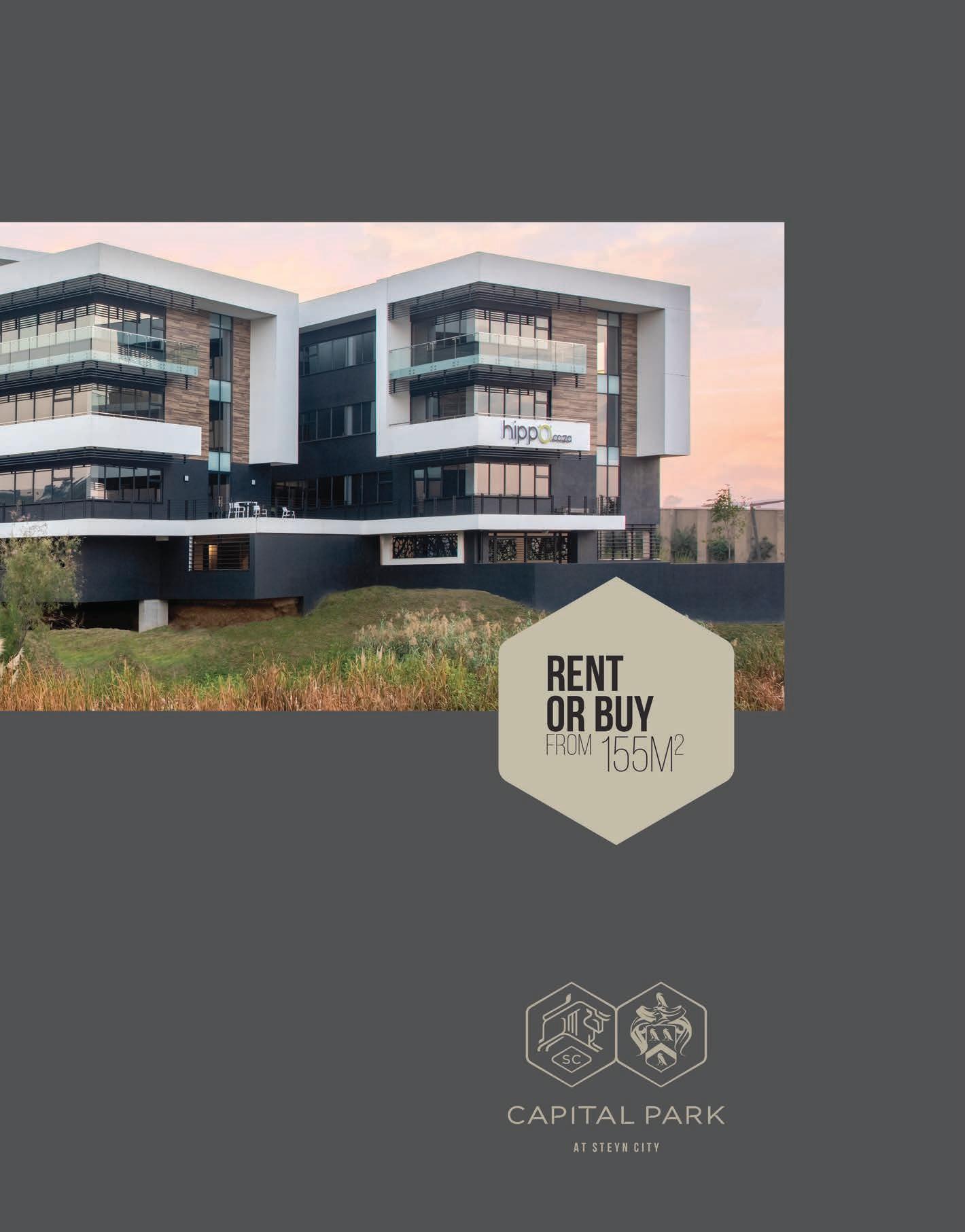
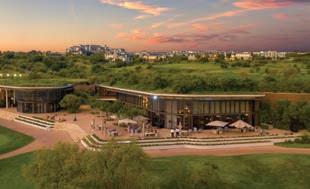
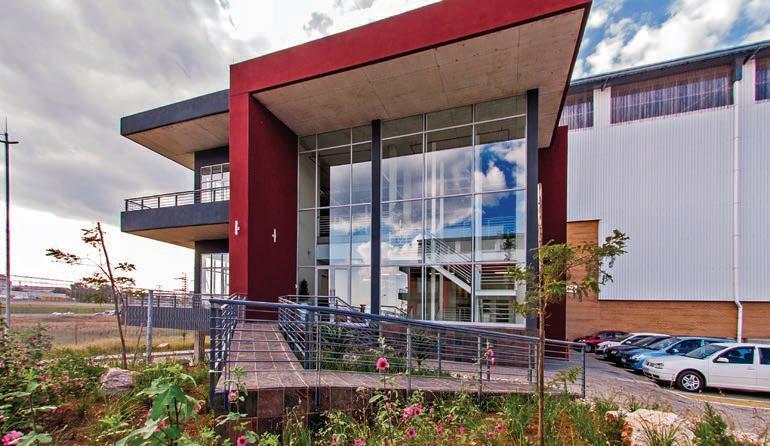
Cover Image: Courtesy Steyn City
SALES
Project Manager: Merryl Klein merrylk@picasso.co.za | +27 21 469 2446
PRODUCTION
Production Editor: Shamiela Brenner
Advertising Co-ordinator: Fatima Dramat
Subscriptions and Distribution: Fatima Dramat fatimad@picasso.co.za
Printer: CTP Printers, Cape Town
MANAGEMENT
Management Accountant: Deidre Musha
Business Manager: Lodewyk van der Walt General Manager, Magazines: Jocelyne Bayer
COPYRIGHT: Picasso Headline. No portion of this magazine may be reproduced in any form without written consent of the publisher. The publisher is not responsible for unsolicited material. Commercial Property is published by Picasso Headline. The opinions expressed are not necessarily those of Picasso Headline. All advertisements/advertorials and promotions have been paid for and therefore do not carry any endorsement by the publisher.
POTENTIAL, INNOVATION AND STABILITY
There’s no doubt that the recent challenges faced within the commercial property sector will forever leave the industry changed. But, according to our experts, these changes, if managed well, could lead to exponential growth. Innovation within smart city planning, tapping into the potential of the township economy, reimagining occupier space, and investment into sustainable building are all geared to recreate stability within a somewhat volatile economic reality.
Contents
4 FINANCE
Investment opportunities for new entrants to the local commercial property market; Why many local investors are considering dipping their toes into the offshore commercial property market.
6 PROPERTY MANAGEMENT
The prevailing trend of working from home has shifted the demand for office space; Why the township economy is ideal fertile ground for innovative services to meet unfulfilled needs.
8 INDUSTRIAL DEVELOPMENT
Agility is the best word to describe South Africa’s major CBDs’ ability to adapt to new changes to ensure the property market remains stable. 7 9 6 12
The rise of e-commerce and supply chain optimisation are going to maintain logistics facilities’ momentum as one of the best perfoming property subsectors in SA.
9 MIXED-USE DEVELOPMENTS
Mixed-used developments, also known as urban villages, are booming across South Africa’s major cities.
11 GREEN BUILDINGS
Greening buildings to make them sustainable and environmentally friendly is a key part of the climate change battle.
12 OCCUPIER SPACE
Raina Julies
IS IT A GOOD TIME FOR NEW ENTRANTS TO INVEST?
CARYN GOOTKIN looks at investment opportunities for new entrants to the local commercial property market
The biggest barriers to entry for new investors in the commercial property space are price (generally higher than residential property) and financing constraints. “Entry-level investments for decent commercial property are around R1.5-million,” says Andrew Dewey, managing director of Swindon Property. “Banks will usually only loan 70 per cent of the value of the property on a 10-year bond, so investors need to pay 30 per cent in cash and be able to service higher bond repayment costs than for residential property because of the shorter lifespan of the loan.”
Office space vacancies across SA has created great opportunities for new entrants into the office and retail space market.
PARK THIS IDEA
Some parking garages allow buyers who are not sectional title owners to own parking bays. “The price point is a lot lower than traditional commercial property, from R100k - R250K depending on demand,” says Dewey. “Returns are low (four to five per cent), but long-term capital growth is good.”
Investors must ensure a suitable revenue stream to offset these costs – either from tenants or their own business as owner-occupiers.
“If rental income covers expenses, no profit margin means no tax liability, and the investor can then enjoy capital growth in the years to come due to inflation and improvements in the property or the area,” says Dewey.
Expected yields for commercial property investments range from eight to thirteen per cent. “Returns depend on the position and quality of the property, the tenant mix, and what rental terms tenants can support,” says Dewey. “Long-term leases with strong national
“LOOK FOR PROPERTIES THAT ARE DISTRESSED OR HAVE BEEN ON THE MARKET A WHILE.” – ANDREW DEWEY
THE ATTRACTION OF OFFSHORE INVESTMENTS
Many local investors are considering dipping their toes into the offshore commercial property market. CARYN GOOTKIN asks an expert why this makes good business sense
There are three main reasons offshore commercial property investments are attractive, according to Andrew Wooler, joint CEO of Investec Property Fund. These are his three main reasons:
1. STABILITY
Global property markets provide stable returns as they exist in stable economies within stable political environments.
2. INTEREST RATES
Many Western economies have very beneficial interest rates. This cycle of lower interest rates enhances equity returns.
3. STRONG FUNDAMENTALS
The property fundamentals in these economies are strong. We base our investment decisions on these fundamentals rather than rand hedges.
It is very important to have people on the ground in the economies where you are investing. The global property market is hugely competitive; it provides great returns, but you have to understand the local playing field.
Take Europe for example. As a macroeconomy it is fairly benign, but there are very strong microeconomies within, like the logistics industry. The global boom in online shopping has created a strong demand for warehousing stock, but there is very little supply – strict land controls make building new stock difficult. The huge demand for logistics facilities for global supply chains has driven up rentals and positively impacted the revenue line. South African investors can tap into these global tailwinds, earning returns in hard currency.
“THE
tenants provide lower yields, around nine per cent, but riskier acquisitions – short-term leases or small businesses – can provide higher returns.”
While market values fluctuate, there is opportunity. “COVID-19 has caused a reduction in value across the country – specifically in the office and retail sector, which provides opportunities for new entrants. “Look for properties that are distressed or have been on the market a while,” says Dewey. “Do a proper due diligence and make an aggressive offer substantiated by your broker with comparative sales data and market conditions. Also consider light industrial mini units in areas peripheral to the CBDs. Trade them at a low rental and then develop them into office or retail space down the line.”
DIRECT VERSUS INDIRECT INVESTMENTS
You can invest in offshore commercial property through direct or share-block ownership of a property, or a local real estate investment trust (REIT) or other listed stock.
“SA investors are lucky to have access to the JSE for global opportunities,” says Wooler. “The benefits are liquidity (shares are easily tradable), diversification (investment across an array of stocks) and using local rather than offshore capital allowances to invest. The tradeoff is that you cede control of investment decisions, albeit to management teams that have the experience on the ground.”
Direct ownership of a specific property provides far less diversification, limited liquidity and requires you to do your due diligence. “You get to use a lot more leverage to enhance your investment and retain control over investment decisions, but you don’t get the same tax benefits that a REIT can offer, and can become caught up in a market you don’t understand fully.”
HUGE DEMAND FOR LOGISTICS FACILITIES FOR GLOBAL SUPPLY CHAINS HAS DRIVEN UP RENTALS AND POSITIVELY IMPACTED THE REVENUE LINE.” – ANDREW WOOLER
A PIONEERING PARTNERSHIP
Absa and property group Exemplar REITail partnered to pioneer a syndicated sustainability-linked use of benefit loan
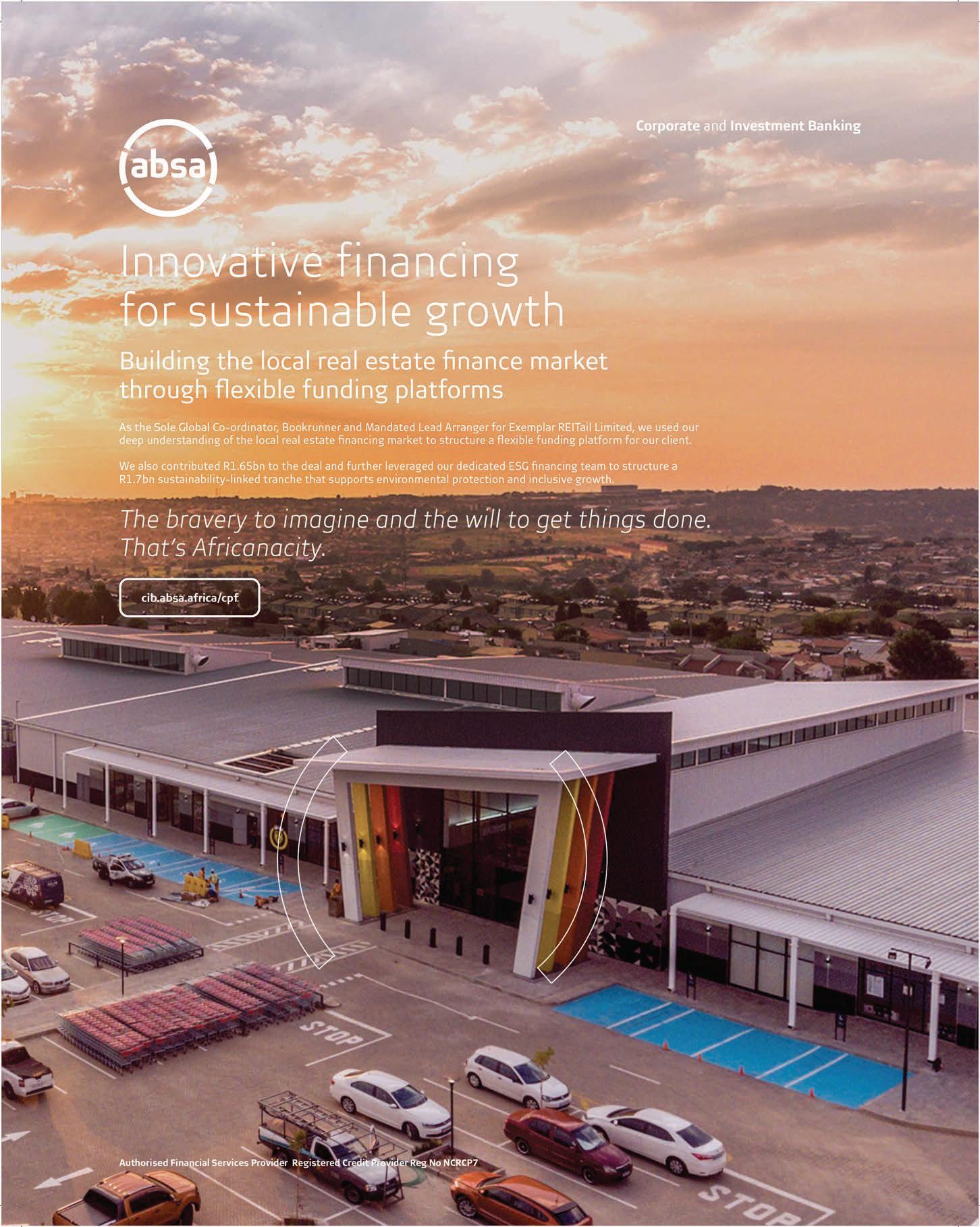
In a landmark transaction highlighting confidence in township and rural commercial property, Absa Bank acted as sole global co-ordinator and bookrunner in the strategic refinancing of Exemplar REITail Limited’s R3.135bn debt package.
The transaction includes R1.791bn of sustainability-linked loan with margin reductions applied, subject to the successful achievement of pre-agreed environmental targets (solar energy, carbon offset, and water intensity). Uniquely, the facility includes use-of-benefit provisions, for which Exemplar will invest in community initiatives in their property catchment areas, using any of the interest cost savings from these loans.
The R3.135bn senior, secured, syndicated debt package establishes a flexible platform to support Exemplar’s future growth. Beyond refinancing existing debt, the facilities will be used for capital expenditure and will expand Exemplar’s flexibility by increasing available working capital for the business.
underserviced regions of our nation. We have always put our local communities first, a priority emphasised once again by this transaction. All interest savings generated will be invested directly into our communities, ensuring their ongoing upliftment and development in line with our #ChangeforGood mantra.”
50 per cent of the funding requirement and
The transaction was well supported by the market, garnering an appetite more than triple the original transaction size. As a result of this strong demand, the transaction was upsized to re-finance the majority of Exemplar’s debt. In addition to its role as global co-ordinator and bookrunner for the transaction, Absa Commercial Property Finance provided over 50 per cent of the funding requirement and acts as facility agent.
Jason McCormick, Exemplar REITail Limited’s CEO, says: “We are delighted with the successful conclusion of this landmark transaction highlighting the confidence of the market in the strength of the Exemplar business. The proceeds of this transaction have, in part, been earmarked for the continued expansion of the business, helping us to provide retail services to more of the most
“THE FUNDRAISING WAS A HUGE SUCCESS AND A TESTAMENT TO THE QUALITY OF EXEMPLAR’S BUSINESS AND MANAGEMENT, AS WELL AS OUR EXPERTISE IN MANAGING CAPITAL MARKETS TRANSACTIONS OF THIS NATURE.” – KLAUS-DIETER KAEMPFER
Klaus-Dieter Kaempfer, head: commercial property finance and equity investments at Absa, says: “This landmark transaction is a great example of how Absa CIB is working in partnership with clients, acting as both lead arranger and funder. Despite the challenging market backdrop in the commercial property sector, the fundraising was a huge success and a testament to the quality of Exemplar’s business and management, as well as our expertise in managing capital markets transactions of this nature.”
Klaus-Dieter Kaempfer
Jason McCormick
EVOLVING AGREEMENTS TO CURRENT WORKING TRENDS
The prevailing trend of working from home has shifted the demand for office space and is set to become further ingrained, writes PUSELETSO MOMPEI
David Seinker, founder of The Business Exchange, which provides flexible working spaces in multiple locations, says that over the past two years there has been an unbundling of work and workspace. “Work is no longer tied to location, which has meant that the spaces in which work gets done have had to be reimagined and redesigned,” he explains. “Instead, the office has had to become a destination rather than the default place from where work is done.”
For many landlords this has meant becoming more flexible about lease agreements and the actual utility of the space. In some cases, it has seen their role evolve into one that encompasses an aspect of hospitality management.
“This hasn’t always been an easy transition for landlords as the serviced office space, designed around flexibility and hybrid work models, isn’t their core area of expertise. I anticipate that we’ll see more landlords partnering with serviced office space providers to bring the necessary dynamism to their spaces,” says Seinker.
“THIS HASN’T ALWAYS BEEN AN EASY TRANSITION FOR LANDLORDS AS THE SERVICED OFFICE SPACE, DESIGNED AROUND FLEXIBILITY AND HYBRID WORK MODELS, ISN’T THEIR CORE AREA OF EXPERTISE.” – DAVID SEINKER
EVOLVING AGREEMENTS
To address the shift from traditional working spaces to more flexible models, operating agreements, also called management agreements, are growing in popularity. These are the plans that govern the agreement between a landlord and a serviced office space provider. Seinker says that with the ultimate goal of filling vacant space, it is in the best interest of both parties to ensure the operating agreement makes provision for measures of adaptability and flexibility so that current workspace needs (as those dictated by flexible and hybrid work) can be met timeously.
“As with any agreement of a commercial nature, the benefit of an operating agreement is that it clearly outlines best practices in terms of organisational structure and management roles.” However, the disadvantages are that a document of this nature can be quite prescriptive and often with the rapidly evolving workspace, there is a need to be able to pivot quite quickly to effectively respond to changing workplace needs.
LOOKING AHEAD
This year (2022) is set to be the year that business leaders get serious about a hybrid working model if they want to retain top talent. This model is ideally positioned for a combination of remote work and in-office work and takes the needs of both the employer and employee into consideration by responding with a solution that is cost-effective for the former and appealing to the latter.
The hybrid working model will likely see even greater growth in 2022, especially among corporates who hadn’t considered it before, signalling a substantial shift in how it has always been assumed work should be done.
The Business Exchange
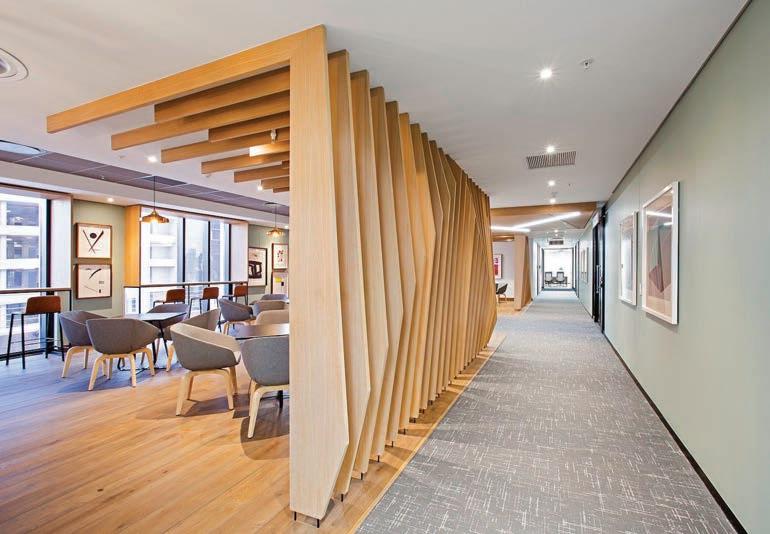
Rivonia Road, The Business Exchange office space
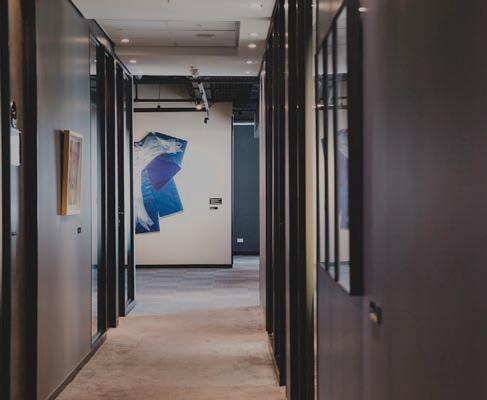
Private working offices
UNLOCKING TOWNSHIP POTENTIAL
The townships are a bustling hive of activity with massive populations as well as enormous structural issues crying out for innovative services to meet unfulfilled needs, writes PUSELETSO MOMPEI
Exemplar REITail, a market-leading developer, owner and manager of township and rural retail shopping centres in South Africa, is in the business of providing retail services to many underserviced regions of the country, filling the gap in the market.
Jason McCormick, Exemplar REITail CEO, says having been in the industry for almost 40 years already, the company has the benefit of long-term insight into the relative growth of the “township and rural areas. We’ve been positioning ourselves over the past four decades and have built up strong partnerships and an incredible development pipeline in many (if not most) of the more viable underserviced areas”.
THE FINANCING CLIMATE
When it comes to funding, the company’s experience has been that raising debt has been relatively easy in that the appetite from lenders is good. However, McCormick says the current economic climate and conditions in the sector itself over the past two to three years, as well as the effects of the COVID-19 lockdowns and the July 2021 riots have made it more difficult to raise equity capital. “There is no doubt though that the fortunes of the sector have changed in the last year or so, generally speaking, and investor appetite is improving.”
A LANDMARK DEAL
At the time of Exemplar’s listing in 2018, it raised debt for purposes of settling the cash portion of the purchase price of the 20 retail properties it acquired.
Following that, Exemplar decided to unwind and replace the structure with a new one, making it easier to introduce new assets and lenders. “Absa acted as the lead arranger and approached the debt market on our behalf,” says McCormick. “As with the previous structure, our debt has been
“WE’VE
syndicated and, at this stage, we have three lenders in the ‘club’, being Absa, Standard Bank and Nedbank.
“In essence, we refinanced R3.135-billion debt at an average rate around Jibar+180bpts, including a R1.791-billion ‘sustainability-linked loan’ with the innovative ‘Use of Benefit’ structure with all benefits being used to support CSI initiatives in our communities rather than shareholders,” he explains.
McCormick adds that the financing deal signals optimism in the market as a whole and there is no doubt that there has been a greater appreciation of this segment in recent times.
BEEN POSITIONING OURSELVES OVER THE PAST FOUR DECADES AND HAVE BUILT UP STRONG PARTNERSHIPS AND AN INCREDIBLE DEVELOPMENT PIPELINE IN MANY (IF NOT MOST) OF THE
MORE VIABLE UNDERSERVICED AREAS.” – JASON MCCORMICK
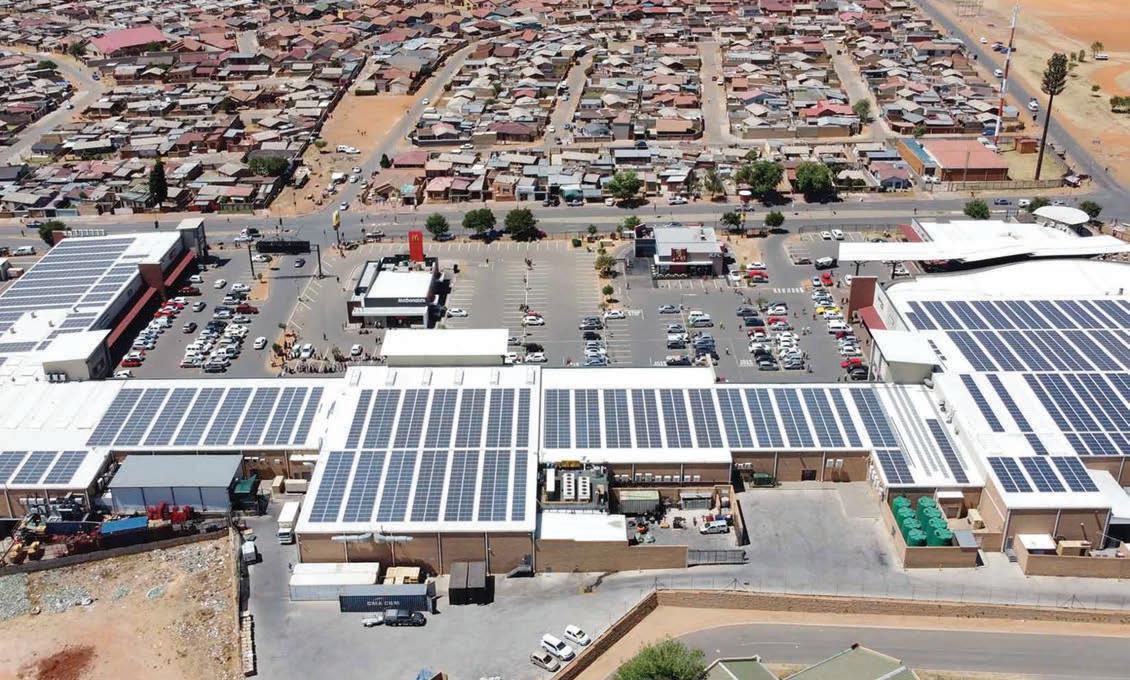
Diepkloof Square
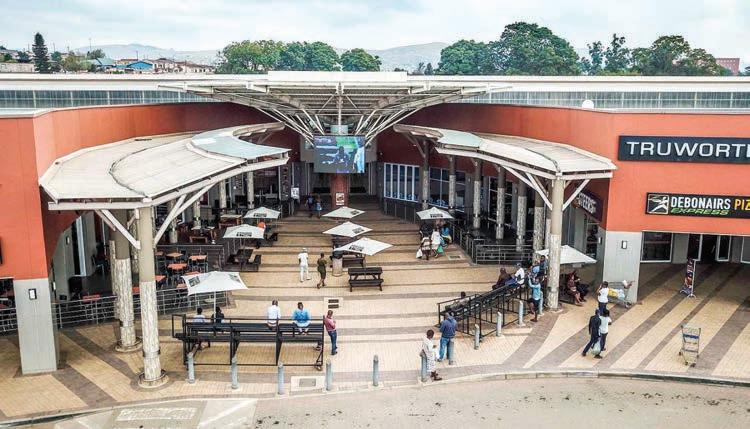
Edendale Mall, KwaZulu-Natal
ROSY FUTURE FOR THE LOGISTICS PROPERTY MARKET
The rise of e-commerce and supply chain optimisation are going to maintain logistics facilities’ momentum as one of the best-performing property subsectors in South Africa, writes
TREVOR CRIGHTON
While hundreds of thousands of square metres of A-grade office space countrywide stand empty, the industrial sector has been very robust, says Improvon’s head of leasing and marketing: developments, Mark Truscott. “People still need to receive goods and services, and manufacturing and distribution has to happen – particularly with e-commerce adoption on the rise,” he says.
LEADING INFRASTRUCTURE
Equites Property Fund’s head of research and analytics, Wynand Smit, says that South African logistics facilities are among the best in Africa because of how global players like transport and logistics company DSV have developed advanced facilities in the country. Truscott agrees: “We have always been influenced by multinational companies that needed a specific standard of warehouse. As a result, our facilities now rate as world-class.”
Smit cautions that there have been some challenges to the country’s logistics leadership position, most notably the infrastructure
of our ports. “There is definitely a need for improvements in infrastructure and layout at the Durban port and there’s talk of developing Gqeberha’s to make it one of the country’s key facilities,” he says.
e-COMMERCE DEMAND
“The paradigm shift from brick-and-mortar to online shopping is gaining momentum in SA, with numerous retailers doubling their online sales and the expectation that e-commerce will reach five per cent of total retail sales in
“EQUITES IS OF THE VIEW THAT THE FOCUS ON SUPPLY CHAIN OPTIMISATION AND GROWTH IN E-COMMERCE WILL BE STRONG TAILWINDS TO SA’S LOGISTICS PROPERTY MARKET IN FUTURE.” – WYNAND SMITH
2022, according to a World Wide Worx report,” says Smit. “Equites is of the view that the focus on supply chain optimisation and growth in e-commerce will be strong tailwinds to South Africa’s logistics property market in future.”
Truscott says that for now, e-commerce hasn’t materially changed the way logistics facilities are designed or built, but the rise in e-commerce transactions is going to result in an increased demand for high-quality warehousing space by retailers. “The three golden rules will always apply: well-planned yards, high height-to eaves means more volumetric capacity for adequate racking, and a space that allows for free flow of traffic,” he says. “These pillars help any logistics operator deal with the high volume of deliveries they need to process, so well-designed and modern warehousing will continue to be in demand.”
FAST FACT
• The 2021 South African Digital Customer Experience Report estimates that SA’s e-commerce market could double from 2.8 to 5.6 per cent.
• In 2020, South Africa recorded over 450 000 square metres of warehousing space sales transactions (RCA).
Warehouses at Gosforth Park near Rand Airport
DSV logistics hub in Johannesburg
HOW PEDESTRIANISATION AND PUBLIC SPACE DEVELOPMENT IS REDEFINING URBAN SPACES
Mixed-use developments, also known as urban villages, are booming across South Africa’s major cities. THANDO PATO speaks to developers to find out why these offer a positive alternative to monofunctional cities
The introduction of mixed-use developments means that people now can live, work, shop and relax in an integrated environment where these elements of life are close to each other, says Pieter van der Westhuizen, managing director at SquareTurn Development, the developer of mixed-use development Devonbosch in Stellenbosch. “This not only cuts down on the wasted time and cost of commuting, but also creates a sense of community, ultimately improving quality of life. Mixed-use developments deliver these elements in harmonious environments that speak to the demands of the modern consumer,” he explains.
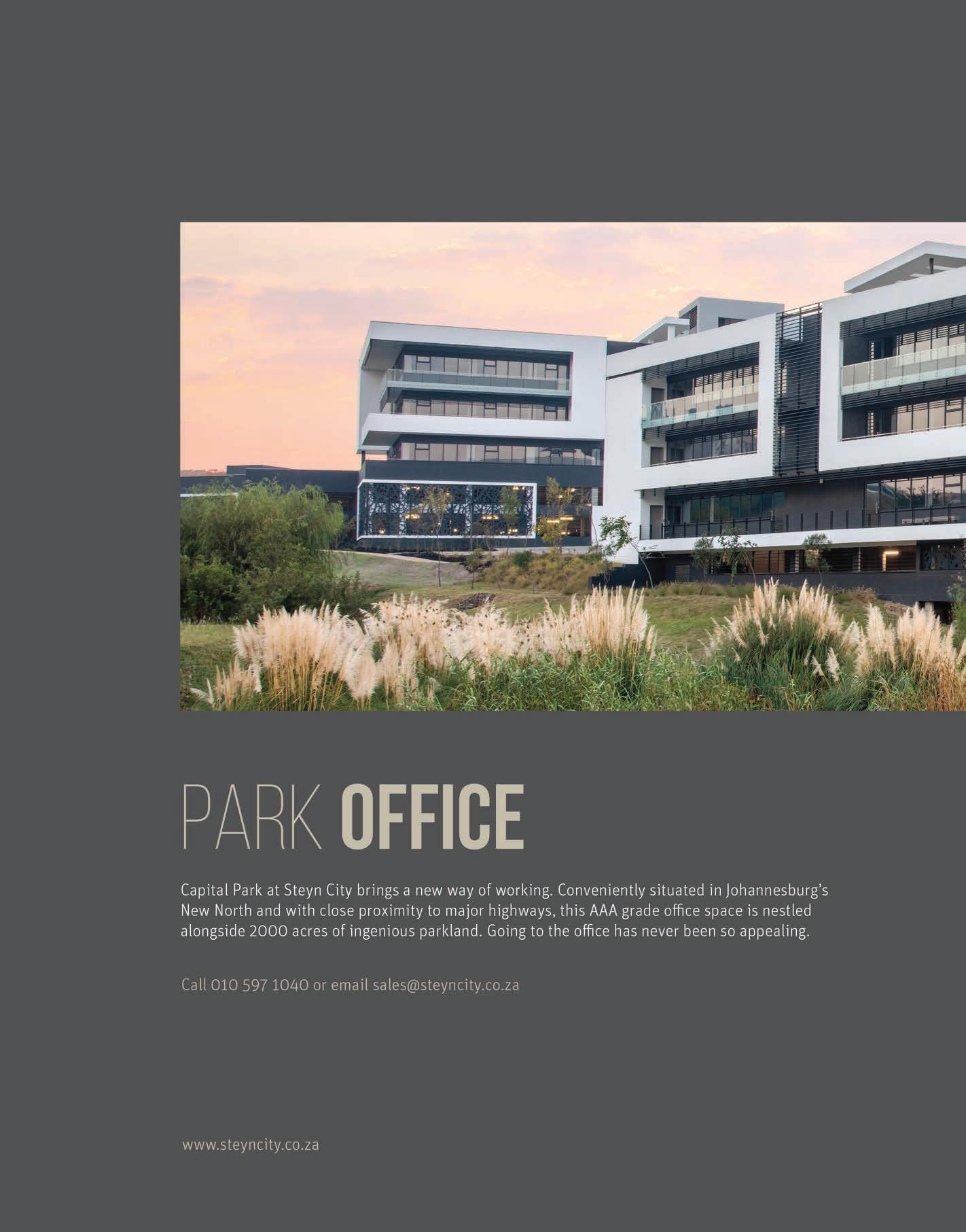
Besides the lifestyle benefits, mixed-use developments offer a higher level of safety, says Zoe van Onselen, head of marketing for Steyn City Properties, the developer of one of Johannesburg’s largest mixed-use development properties, Steyn City. “We believe that demand for
mixed-use developments will continue to be driven by the post-pandemic lifestyle: crime is sadly a growing concern locally, encouraging many people to move away from the suburbs; and in an era where a lack of connection is the norm, that sense of community is highly valued. We have ensured that Steyn City’s security measures are without compare. In addition to biometric access control, our residents are kept safe with round the clock foot patrols and a 24/7 security nerve hub.”
In addition to rigorous safety measures, mixed-use developments also offer better investment opportunities, says van der Westhuizen. “Mixed-use developments are less volatile and provide diversification of assets because they include a variety of uses and tenants. Generally, investors can justify higher rental costs if their properties are in areas with plenty of convenient amenities. Developments within walking distance of green spaces, retail outlets and leisure facilities can draw higher rent than those situated in areas dominated by just one type of real estate. Because mixed-use developments offer both residential and commercial real estate options, investors can reduce the amount of risk and rely on income from units in other categories when one suffers.”
“BESIDES THE LIFESTYLE BENEFITS, MIXED-USE DEVELOPMENTS OFFER A HIGHER LEVEL OF SAFETY.” – ZOE VAN ONSELEN
Devonbosch
AN URBAN VILLAGE IN THE HEART OF THE WINELANDS
Recently launched, Devonbosch is a mixed-use urban development in the heart of the Stellenbosch Winelands. It is situated on the corner of the R304 and Bottelary Road, and is linked to the N1 highway. Once completed, Devonbosch hopes to offer a vibrant, economic, and sustainable town.
Featuring some 80ha of green parklands and waterways and open and decluttered public spaces, the precinct will also feature broad and open pedestrian and cycling pathways to encourage everyone to walk between buildings and use the parks as breakout areas.
As part of the first phase, Precinct A will offer 610 residential opportunities, 46 000m² of commercial office space, 7 000m² of retail space and warehousing totalling 108 000m² of developable bulk. Precinct A is a quarter of the developable land and should be completed within seven years.
The completed Brickfield Studios and offices currently have 75 per cent occupancy, ranging from small start-up businesses to multinational regional head offices.
ARE URBAN VILLAGES REPLACING TRADITIONAL SUBURBS?
“There is always going to be a demand for a traditional freestanding home. That said, well-planned mixed-use developments can cater to people who want the feeling of privacy that comes with a freestanding home, as well as the convenience and security of a development. Again, Steyn City is a case in point – our options range from freehold homes to clusters and apartments so we can accommodate people at all life stages,” says van Onselen.
Urbanisation is growing at a rapid pace in South Africa, says van der Westhuizen, and mixed-use developments address all the challenges facing town planners. “More and more people are migrating to urban areas to be closer to economic opportunities. This has increased the pressure to provide not only housing, but also working, shopping, schooling, and healthcare facilities closer to these economic centres and, where possible, within the urban nodes of these towns and cities. Mixed-use developments provide the perfect solution to this problem,” he explains.
Zoe van Onselen Steyn City Clubhouse
BUILDING A GREENER FUTURE
Greening buildings to make them sustainable and environmentally friendly is a key part of the climate change battle. By
RODNEY WEIDEMANN
With the growing recognition of the dangers of climate change, an increasing number of companies and individuals are setting targets to lessen their environmental impact.
Green buildings are one of the quickest and most cost-effective ways to reduce carbon dioxide emissions and improve local economic development, air quality, and health.
Lisa Reynolds, CEO of the Green Building Council South Africa (GBCSA), points to a growing number of buildings being certified in this manner. She notes that, on average, the GBCSA awards around 100 certifications a year. However, last year it certified some 140.
“Certification of green buildings allows for credible and objective measurement of the environmental claims made about them. If a building has been certified using one of the tools in our suite of rating systems, you can be assured that the building has been through a rigorous technical assessment, and measured against robustly developed benchmarks,” she says.
“Rating tools provide guidance on what elements to consider when aiming to green a building and allow investors to accurately assess just how ‘green’ a building and portfolio is.”
Reynolds notes that although there are lower numbers of new build projects being rated – in line with the lower number of new build projects happening – there has been an uptick in the number of owners focusing on refurbishing and enhancing their existing assets.
Asked what she feels are key drivers of this growth, she suggests that the pandemic has generated a strong focus on health and
wellness, particularly air quality – something that green buildings have always addressed.
“Simultaneously, the pandemic has meant that many are looking to save on operating expenses as much as possible. One of the best ways to do this is through utilities, and ensuring energy and water efficiency – also things that have been a green buildings’ focus area.
“If companies can implement these sustainability initiatives, it is worthwhile for them to get these efforts rated or certifi ed to reap the benefi ts that come with the recognition of certifi cation.”
Reynolds adds that from an environmental perspective, going green helps to minimise resource depletion and pollution, enhances energy and water effi ciency and resilience, and produces less waste and emissions. From a fi nancial one, it lowers building maintenance costs and electricity and water spend, leads to lower vacancy rates, increases the marketability, and is effectively a future-proofed investment.
“As for the health and social benefi ts, it leads to increased cognitive function in occupants, boosts workplace productivity, reduces sick building symptoms, lowers airborne disease transmission, and promotes eco-friendly behaviours.
“To date, the GBCSA has awarded over 750 such certifi cations, the cumulative impact of which has been tremendous. The above-mentioned benefi ts are being felt by property owners, tenants and the built environment industry as a whole,” she concludes.
“IF A BUILDING HAS BEEN CERTIFIED USING ONE OF THE TOOLS IN OUR SUITE OF RATING SYSTEMS, YOU CAN BE ASSURED THAT THE BUILDING HAS BEEN THROUGH A RIGOROUS TECHNICAL ASSESSMENT, AND MEASURED AGAINST ROBUSTLY DEVELOPED BENCHMARKS.” – LISA REYNOLDS
MEASURING SUSTAINABILITY
Growthpoint’s decision to sponsor the new pilot Green Star Existing Building Performance (EBP) rating tool for industrial buildings – one of several sector-specific GBCSA tools – is in line with its deeply rooted commitment to creating a more sustainable built environment. This is according to Grahame Cruickshanks, head of sustainability and utilities at Growthpoint Properties.
“Urgently reducing carbon emissions needs collective effort. By playing our part in developing rating tools that are accessible to all, we are helping drive the green building movement in South Africa,” he says.
He explains that Green Star rating tools provide a common standard of measurement for green buildings, supporting the company’s own strategy. They provide assurance of the environmental impact of Growthpoint’s 84 green-certified buildings. Moreover, the company’s ambitious target is for all its 400-plus South African buildings to be carbon-neutral by 2050.
“These tools consider the important environmental categories of energy, water, transport, indoor environment quality, management, materials, land use and ecology, and emissions.
“They rank a building’s performance in each area – and overall – against a benchmark, which can be used to improve building performance over time. The results reveal areas where a building outperforms and areas for improvement. This decides what certifications it qualifies for: three green stars being the lowest and six the highest.”
Cruickshanks adds that green rating tools are proven to have a direct impact on increasing the number of certified new and existing green buildings and delivering positive environmental impacts for the country.
“Improving the efficiency of buildings, particularly their energy use, is one of the fastest and most cost-effective ways of reducing carbon emissions. Ultimately, it is also cost-effective for the businesses operating in these buildings, and helps them reach their own environmental goals,” he concludes.
AGILE AND RESILIENT
Cape Town CBD’s strategic success has been its agility to adapt to changing environments. ITUMELENG MOGAKI finds out more
Despite tough economic times, Cape Town property developers concur that the stability and steady growth of the city central’s property market can be attributed to a combination of specific factors. These range from constant communication across various platforms to developing futuristic spaces where tenants can simultaneously work, live, and play.
Rob Kane, CEO of Boxwood Property Fund and chairperson of Cape Town Central City Improvement District (CCID), believes there are four key reasons Cape Town City’s property market has remained resolute.
The first is the State of Cape Town Central City Report (SCCR), which provides useful data for property developers, owners, buyers, and tenants alike, enabling them to make informed development, purchase, and rental decisions.
“With documents such as the SCCR, developers can track what’s going on in the city – from property developments and price comparisons to available land, and more. It’s realtime information that allows them to decide if it’s a suitable time to be developing,” says Kane.
“The second reason,” he adds, “is that Cape Town has a well-balanced work, play live environment.
“If you want to be in Cape Town, the city centre is really the place: it has a well-balanced community and thousands of apartment buildings catering for all levels – from elementary apartments to really expensive penthouses.”
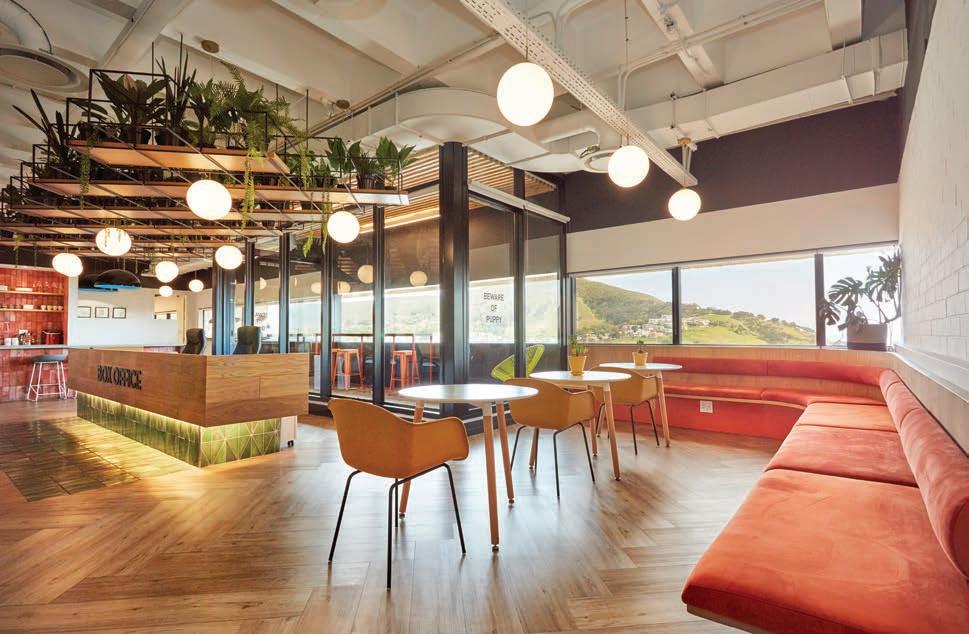
A good example, Kane says, is one of Boxwood’s apartment buildings, completed in December 2021, which features a unique food court similar to those found in shopping centres.
“The food court on the ground level of the Box Office building is convenient for tenants. Here, different restaurants cater for all tastes and cultures. A futuristic living, working, and playing space to match today’s Cape Town property lifestyle,” says Kane.
Thirdly, the city centre communicates fantastically with the city council and citizens in general.
“Unlike other cities in South Africa where communication is lacking, we have our own commercial property newspaper and other online platforms that talk specifically about every little thing that’s going on about the city’s development.
“During the hard lockdown, the city council permitted landlords to drop the permit system and allowed restaurants to set up sizeable stalls outside their normal business premises to sell their goods, a fitting example of how well our communication policy with all concerned is working in everyone’s favour,” says Kane.
The fourth reason is that they have built a formidable community of property owners.
“Although we are competitors, we value working together for the betterment of our city. If I have a potential tenant that I can’t accommodate, I will recommend they talk to one of my competitors. By doing that, we maintain strong, healthy, and fruitful relations,” he says.
Ryan Joffe of Ryan Joffe Properties, which developed the R500-million aparthotel, The Rockefeller, agrees that property developers in the Cape Town CBD prefer working and supporting each other. And, he says, they have focused on redesigning living, working and entertainment spaces to meet the demands of today’s lifestyle.
He says the Cape Town CBD is resilient because it’s a finite area. “You are not going to move our CBD to a better location like vast areas in Johannesburg, so we innovatively make do with what we have to suit the needs of our deserving clients.
“Century City is an amazing development, but it will never replace the Cape Town CBD because of the centre’s location to the Atlantic Sea and the harbour, a drawcard for many local and international tourists.”
CAPE TOWN CBD’S DEVELOPMENTS
Some developments have adapted to the demands brought about by lifestyle changes and the impact of COVID-19.
• Opened in December 2021, The Rockefeller is a R500-million residential-cum-aparthotel development, buying into the current all-important trend of flexible use of building space and lifestyle choices.
• The renovation of the Picbel Parkade into The Felix (completed in the last quarter of 2021) is one of Boxwood Property Fund’s developments. It buys into the trend of reimagining staid old office buildings into more creative, innovative spaces, following the pandemic’s disruption of the conventional ways of working.
• The Fynbos, Africa’s first biophilic building, is all about the trend of clean living and sustainability.
The biggest developments include:
• The R860-million residential development, 16 on Bree, developed by FWJK Developments.
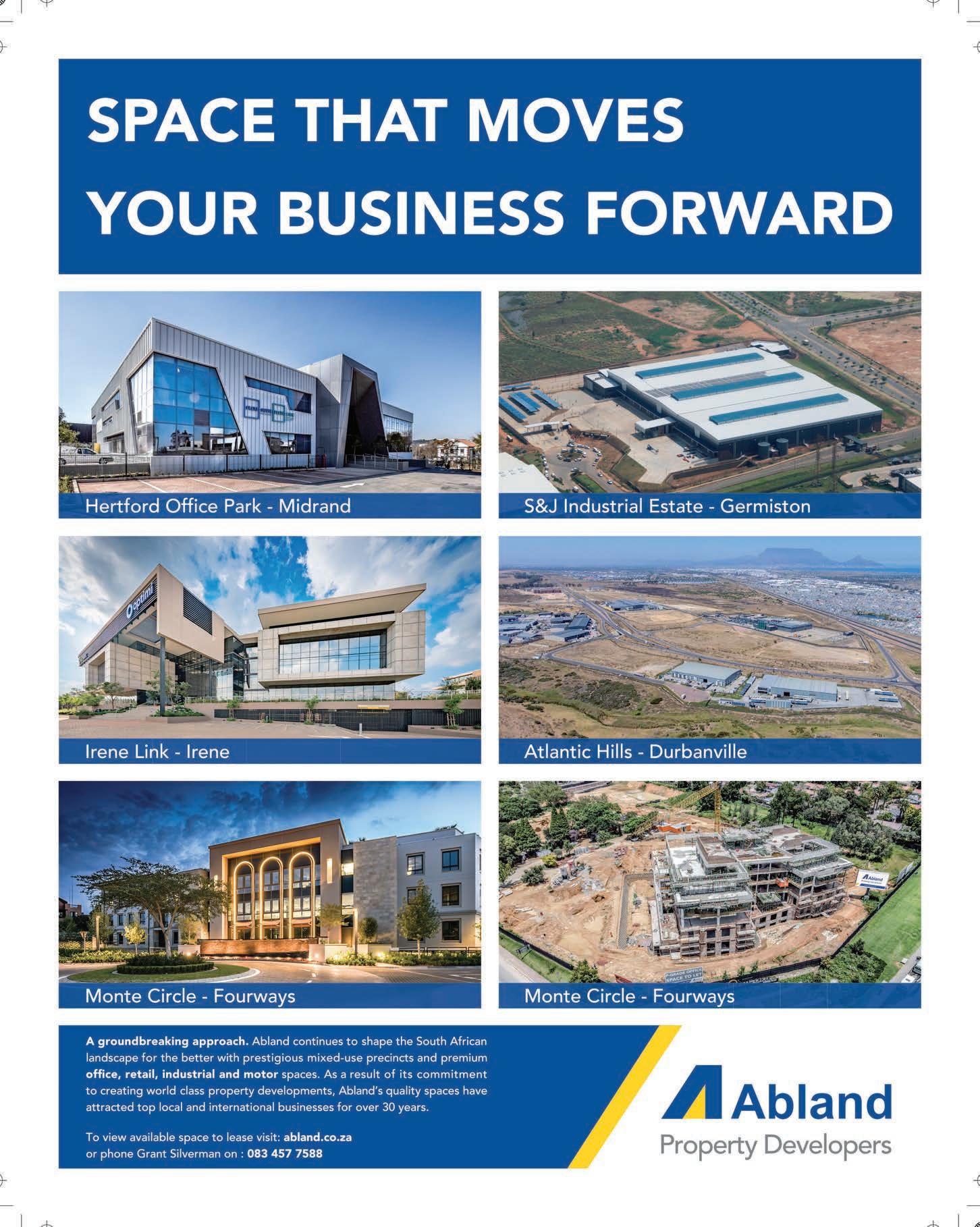
• A R500-million commercial property development on 35 Lower Long by property developers Abland.
• Ryan Joffe Properties’ R500million mixed-use development, The Rockefeller.
Source: Cape Town Central City Improvement District.