InfrastructureInfrastructure
Building a better South Africa

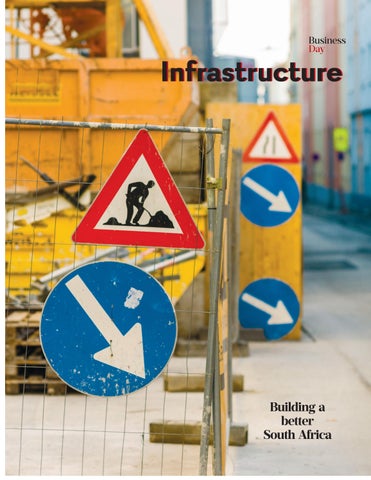
Building a better South Africa

The Housing Development Agency (HDA) is a national public sector development agency that inter alia has the mandate to identify, acquire, prepare, and develop suitable land for human settlements. The agency also undertakes the program and project management for the development of housing and human settlements.
From Sea Point to Braamfontein, the HDA is unlocking strategically located urban developments designed to bring affordable housing closer to economic opportunity.


We are an investment-ready implementation partner focused on delivery, infrastructure coordination, and scalable public-private partnerships.
Delivery-focused. Investment-ready. Committed to sustainable human settlements.


Engineers should be the first port of call for any project
By LYNETTE DICEY
Functioning infrastructure is the engine of a thriving economy. Yet, in South Africa, that engine is stuttering, plagued by a growing disconnect between technical necessity and political interference.
Chris Campbell, CEO of Consulting Engineers South Africa (Cesa), warns that the continued sidelining of engineering expertise is no longer just an administrative oversight but a threat to South Africa’s economic growth.
“There is no form of politics that’s going to fix our infrastructure,” says Campbell. “This paternalistic notion that infrastructure is the ‘engineers’ problem’ has to stop. It’sa national problem, and we need to behave accordingly.”
For years, South Africa has been hailed for its world-class policies and legislative frameworks. But, as Campbell points out, a plan is only as good as its execution. Despite President Cyril Ramphosa signing the Professionalising the Public Sector Framework nearly three years ago, it has yet to be implemented.
A symptom of this malaise is the political deployment of unqualified individuals to technical leadership roles. Campbell points to instances in provincial departments where

individuals with HR backgrounds are appointed to lead huge infrastructure portfolios, even when competent, qualified engineers are available.
“We wonder why we have water crises and infrastructure failures,” says Campbell.
“Political deployment is still the order of the day. We need a culture of consequence management where officials are held accountable for nonperformance and delayed payments.”
The crisis is perhaps most visible in the water sector.
Campbell says the decay of entities such as Joburg Water, which were intended to be self-sustaining, initially ringfenced utilities. Over time, these have been absorbed into centralised control models, where revenue collected for water is diverted into a general municipal pot, leaving little funding available for critical maintenance or recruitment.
“To get Joburg Water back on its feet, we may have no choice but to consider publicprivate partnerships (PPPs),” says Campbell, pointing to successful models such as
Sembcorp Siza Water in KwaZulu-Natal or the Mbombela Water Services Concession as blueprints for securing capital and rebuilding resource bases.
However, the regulatory environment for PPPs remains a challenge. Even with new regulations aimed at easing the burden for projects under R2bn, procedural complexities often shift rather than disappear. Campbell says successful PPPs require a “meeting of the minds” on risk-sharing, as seen in the 15-year-old Gautrain project, where the state eventually had to subsidise ridership shortfalls.
Campbell is particularly critical of current procurement trends, specifically the move towards framework agreements or panels. Despite being intended to reduce the administrative burden of open tendering, their execution is often counterproductive.
“Government entities are charging companies up to R7,500 for digital bid documents where there is no guarantee of work,” he says. “You get onto a panel for three years and may never see a project. It’sa farcical approach that creates a wasted cost of bidding that
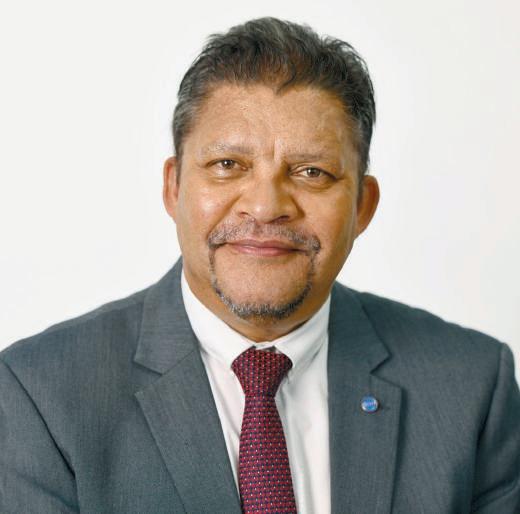
Chris Campbell.
many smaller, black-owned firms simply cannot absorb.”
This is exacerbated by the state’s failure to adhere to the 30-day payment cycle. By acting as unintended creditors to the state, many engineering firms, particularly SMEs, are forced to shut down.
To reverse this decline, Campbell says the state needs a different approach when it comes to managing its technical assets. Technical departments must be led by registered, competent professionals rather than political appointees to ensure decision-making is rooted in engineering logic. Utilities must be allowed to reinvest their own revenue directly into maintenance and staff. Treasury directives on 30-day payments must be strictly enforced, with clear penalties for officials who fail to comply, to protect the solvency of service providers. And finally, local industries must be protected from the dumping of low-quality materials such as steel and cement.
“Functional infrastructure is a catalyst for economic growth and job creation. Various sectors of our economy, including agriculture, tourism, mining and manufacturing, all depend on decent roads, reliable rail, capable ports, potable water, functional wastewater treatment systems and stable energy.
“We need political decisionmakers to realise that engineers must be brought in early not as a ‘save the day’ measure when things have already collapsed but as proactive partners in building the country.”
By LYNETTE DICEY
For decades, South Africa’s economic potential has been running on an overburdened track.
The national rail network, once the backbone of a thriving logistics and export sector, has faced severe operational and financial challenges. These constraints have hobbled exports, forced mining companies to operate below capacity and left roads choked with heavy-haul trucks.
Encouragingly, a shift is under way. Government’s move toward rail reform, opening the sector to private sector participation (PSP), represents the most significant economic infrastructure opportunity in a generation.
Mpho Mutloane, investment principal at African Infrastructure Investment Managers (AIIM), is optimistic about this transition. “The government’s decisive move towards rail reform represents the most significant economic infrastructure opportunity in a generation,” he says, adding that the private sector is ready to deploy both capital and expertise to rebuild this vital artery of the economy.
The current trajectory of rail draws parallels with South

Africa’s energy sector. For years, Eskom’s monopoly sidelined private participation until a severe crisis necessitated the successful Renewable Energy Independent Power Producer Procurement programme.
Transnet finds itself in a similar position, says Mutloane. “Transnet, like Eskom, is a critical national institution, but cannot shoulder the immense investment and operational burden alone. The state has recognised that the efficiency and innovation of the private sector are no longer just beneficial they are essential.”
The public-private partnership (PPP) model offers a solution, allowing the government to secure worldclass infrastructure without immediate, huge capital outlays. This structure transfers construction and maintenance risks to private partners while ensuring the assets eventually revert to the state.
The reform agenda targets both freight and passenger rail. On the freight side, initiatives for key commodity lines,
including coal routes from Mpumalanga to Richards Bay and iron ore lines from the Northern Cape to the Western Cape, are expected to unlock billions in private investment.
Passenger rail is also seeing movement, evidenced by the transport department’s recent Request for Information (RFI) regarding Prasa operations.
“These projects are a social necessity,” says Mutloane. “A functional, reliable passenger rail system is not a luxury but an economic and social imperative that gets people to work affordably.”
Despite the potential, hurdles remain. Chief among them is the need for clear, equitable risk-sharing models. Private capital requires certainty regarding land access, volume guarantees and mechanisms for state default.
“To attract private money, the rules need to be clear and fair, especially if things go wrong,” says Mutloane. “While the existing framework is a solid start, it must be tailored specifically for the complexities of the rail sector.”
There is also a lingering
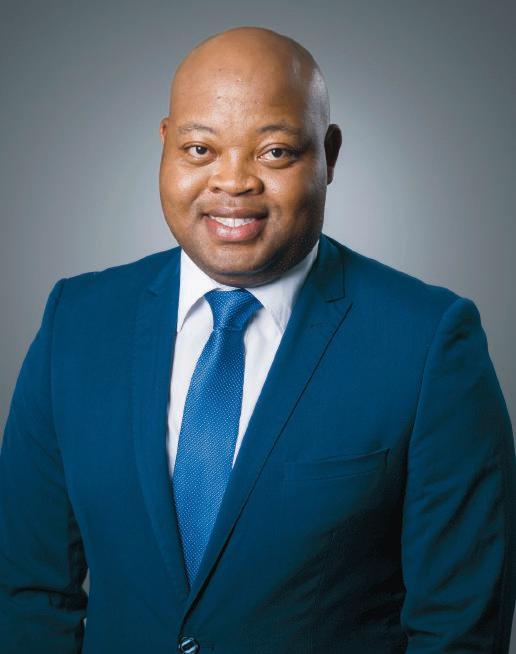
Mpho Mutloane.
trust deficit within some stateowned entities. Some fear that private participation is akin to handing over the family silver. The private sector’s intent, says Mutloane, is not to usurp, but to partner. “We’re not looking to enrich ourselves at the national expense; we are here to enrich the lives of South Africans by building the infrastructure that drives inclusive economic growth.”
Investment in rail is not for those seeking quick wins. Reforms of this magnitude typically require a five- to 10year horizon before tangible efficiency gains are realised. AIIM, for instance, is already active in the sector through its interests in The Logistics Group and Bulkstream and is part of a bidding consortium for the new operator of the Gautrain system.
Beyond economic gains, rail offers a greener alternative to road transport. By investing in modern, efficient locomotives, the sector can contribute to South Africa’s decarbonisation goals while creating sustainable jobs.
“Private investors are prepared for the duration of these projects. We are not looking for a quick exit. We are built to be a patient partner to the government for 20 to 25 years, or longer. We are ready to walk, jog or run at the pace that government sets,” says Mutloane.
“We can transform our rail network from a bottleneck into a powerful engine for a sustainable future if we embrace a genuine partnership model. The private sector has the capital, the expertise and the patience now it’s time to get to work.”
By LYNETTE DICEY
The Housing Development Agency (HDA) has announced a strategic investment pipeline of more than R1bn to assist organs of state to accelerate property development and address the housing delivery backlog in South Africa’s rapidly expanding cities.
To initiate this rollout, the HDA is hosting an investment networking session on May 28, bringing together investors,
developers and public sector leaders. The platform is designed to align capital and capability with the national mandate, moving beyond traditional stakeholder engagement towards the execution of bankable property opportunities.
The HDA, an agency of the department of human settlements, has transitioned to both a facilitator and developer, positioned to assist organs of state to resolve delivery bottlenecks. The agency’s newly launched investment pipeline consists of catalytic, investmentready projects with defined funding requirements.
Key projects include a highvalue coastal residential development on Cape Town’s
Consulting Engineers South Africa – CESA – represents over 600 consulting engineering firms, representing about 17 000 employees across the country, committed to infrastructure excellence, professional integrity and sustainable development.
Atlantic Seaboard; a large-scale mixed-income development in Cape Town’s eastern corridor; and an inner-city conversion project for affordable rental housing in a major metropolitan node. Collectively, these initial developments represent a value exceeding R1bn.
The portfolio reflects a shift towards precise project packaging and stronger alignment with private sector investment frameworks. These projects are designed to drive urban renewal, economic participation and improved access to opportunities in well-located areas.
HDA CEO Bheki Khenisa says the agency aims to reposition human settlements as a driver
of long-term economic growth and is focused on moving beyond planning into tangible delivery. “South Africa is not short of plans; what has been missing is coordinated execution. This platform is about turning prepared projects into funded developments and ensuring that partnerships translate into visible progress on the ground,” says Khenisa. By convening targeted decision-makers, the HDA intends to reinforce the role of collaboration in addressing developmental challenges. Its message is clear: the transition from coordination to execution is under way, creating conditions necessary for investment to flow into shovel-ready projects.
Our member firms plan, design and deliver the infrastructure that enables economic growth and builds a more resilient South Africa. Engineering Excellence For A Better South Africa. Through professional





Scan to connect with a CESA member firm.
growth.
Expansion is an important catalyst for a competitive energy
By LYNETTE DICEY
South Africa’s power system has entered a period of renewed stability, a shift defined by sustained operational discipline and a strategic pivot toward longterm infrastructure health.
Eskom’s latest performance indicators suggest a utility capable of meeting national demand, a milestone underpinned by the Generation Recovery Plan which has successfully prioritised reliability across the fleet.
This improvement is evidenced by Eskom’s ability to maintain a consistent energy supply of 98.9% during the past financial year (April 1 2025 to March 31 2026), an improvement from 9% two years ago. This represents a strengthening of system resilience compared to the volatility experienced just two years ago. These gains have allowed for an outlook of no supply interruptions this winter under base-case assumptions.
However, the stabilisation of the generation fleet is only half of the energy security equation. The National Transmission Company South Africa (NTCSA) is now driving infrastructure expansion through the Transmission
Development Plan (TDP). This programme represents the most significant grid rollout in decades, designed to modernise the pathways that deliver electricity to the economy.
Monde Bala, CEO of the NTCSA, says this expansion is an important catalyst for a competitive energy landscape.
“Transmission expansion is a foundational reform for South Africa’s electricity market. A stronger, expanded grid is essential to enable nondiscriminatory access, enable competition by supporting the local wholesale electricity market and ensure all generation can be integrated efficiently and transparently.”
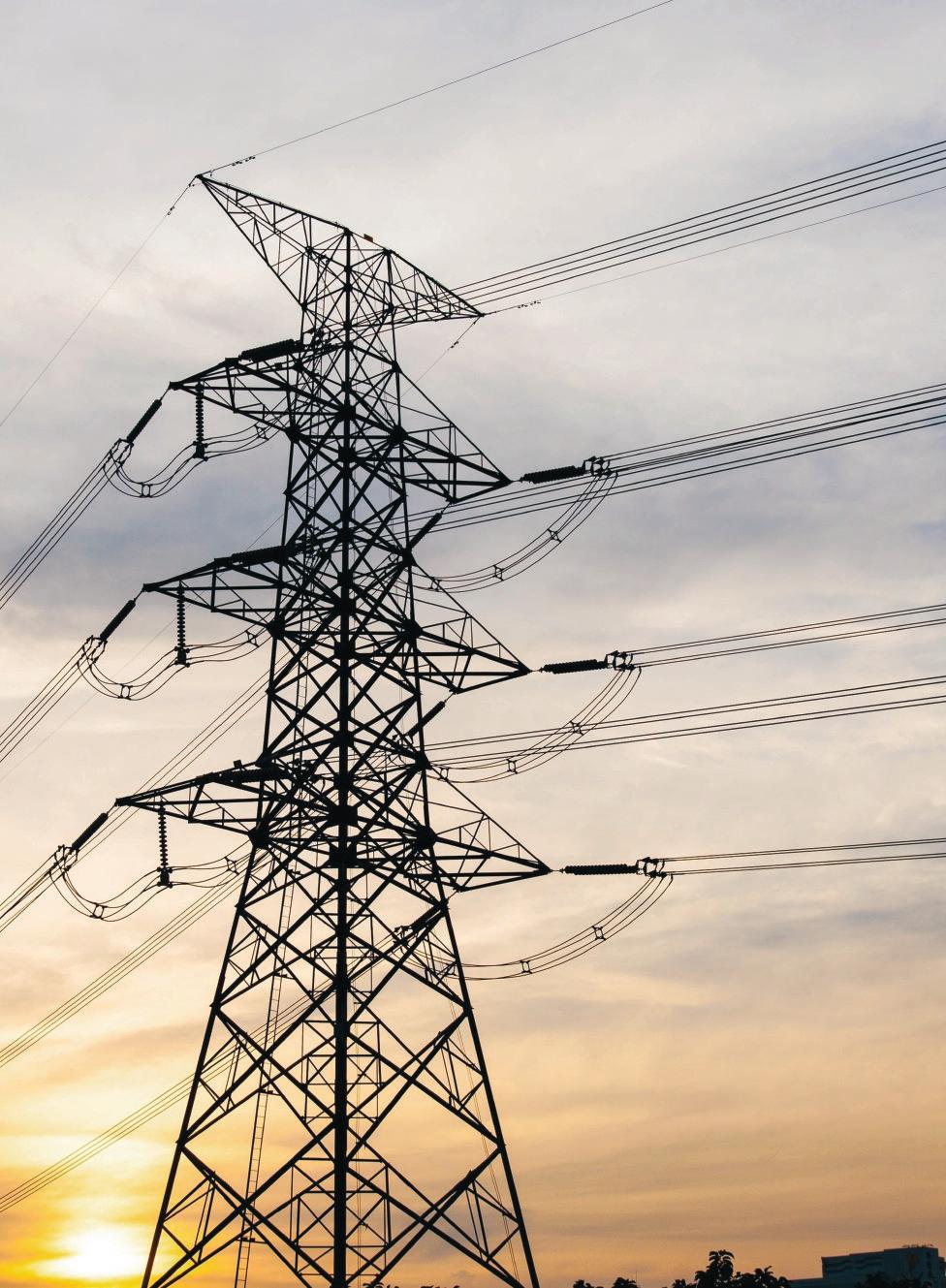
The TDP 2025-2034 outlines an unprecedented strengthening of the network over the next decade. The objective is to alleviate regional congestion, particularly in the Western Cape, Eastern Cape
“The stability of the grid will increasingly act as a foundation for productivity and investor confidence
and KwaZulu-Natal, thereby unlocking new investment in renewable energy. The physical scale of the programme is vast, involving the construction of about 14,500km of new transmission lines, the development of multiple substations and the installation of roughly 210 transformers.
“The success of the energy transition depends entirely on this infrastructure being ready to receive new capacity,” says Bala. “South Africa’s energy transition and future economic growth depend not only on generation recovery, but on a transmission grid capable of integrating new independent and Eskom generation plants at scale.”
To meet the country’s anticipated capacity requirements by 2030, the grid must accommodate 10.3GW of solar PV, 7.4GW of wind, 3.7GW of battery storage and 6GW of gas-fired generation.
This requires a collective effort from both Eskom and independent power producers (IPPs). To facilitate this, the NTCSA is diversifying its contracting models and expanding local supplier capacity to ensure that the delivery mechanisms are robust enough to handle the workload and the country receives the full benefit of these huge investments.
financing for NTCSA-verified suppliers and contractors, the initiative ensures the supply chain is adequately capitalised to meet the technical demands of the grid expansion.
These partnerships are vital for long-term resilience and rebuilding the electricity value chain, says Bala. “Transmission expansion is expected to attract private investment, deepen competition in the electricity market and support South Africa’s transition to a more diversified and resilient energy mix.”
South Africa’s Build Programme was completed in September 2025 with the completion of the Medupi and Kusile power stations. These supercritical coal-fired plants, designed for a 50-year life span, contribute up to 9,600MW to the national grid, providing important baseload power available 24/7, 365 days of the year to support reindustrialisation and enable the country to integrate more renewable energy sources that are variable in nature.
“The convergence of improved generation, strengthened distribution and forward-looking transmission investment has broad implications for the South African economy,” says Bala. “As the NTCSA continues to execute the TDP, the stability of the grid will increasingly act as a foundation for productivity and investor confidence.
A key component of this acceleration is the recent memorandum of understanding (MoU) signed between the NTCSA and the Industrial Development Corporation (IDC) to bolster local industrial capacity while fast-tracking critical infrastructure. By facilitating
“By focusing on the structural integrity of the transmission network, the country is not merely solving for today’s demand but is building the capacity for tomorrow’s growth.”