Takeaways from burger wars
• Two recent decisions cover a great deal
Gaelyn Scott ENSafrica
Tof trademark law
wo recent trademark decisions, one inthe Netherlands andone in the UK, both involve whatmight be described as “burger marks” Between them,they covera lot of trademark law.
TheDutch casehasbeen running forabout 20years. What happenedhere was Wendy’s, theUS fast-food chain,applied toregisterthe name Wendy’s asanEU trademark forfast-food services.But asmallDutch snack barcalled Wendy’ s, situated in theremote Dutch province of Zeeland, stood in the way.The Dutchbusiness has a Beneluxregistration for the trademarkWendy’ s, a registration thatcovers fastfood services andfoodstuffs.
The UScompany responded byattacking the registration fornonuse, claiming thetrademark had notbeenused inanormal commercial manner. To put it in other terms, there had been no genuineuse of the trademark.
Whatmakes thiscase interesting isthe trademark had quite clearly been used forfast-food services,butnot intheway theUScompany

seemingly thinksa fast-food trade mark should be used. The use thatwas established was used inrelation to a single smallsnack food business. There wasno proof of usein relation to achain of outlets.
TheDutch supremecourt heldthat thisone-outletuse was sufficient tokeep the registrationalive. Itmadethe point thatin theNetherlands snack bartrademark usage generally comprises small owner-run eateriesrather than chains. The proof of use of the trademark on the shopfrontas wellason receipts andbags wassufficient. Thefact thatthe trademark had beenused in only one ofthe threecountries covered by a Benelux registration (theNetherlands, but not Belgiumand Luxembourg) was not relevant. Thecourt did,however, feel that the situation was different insofaras theregistration coversfood products.
THE PROOF OF USE OF THE TRADEMARK ON THE SHOPFRONT AS WELL AS ON RECEIPTS AND BAGS WAS SUFFICIENT



The court heldthat in the Netherlands normal,genuine use of a trademark for food products involvesgoods manufactured bylarge companies. This meant the sale of individual Wendy’s hamburgers didnot amountto genuine use of the trademark Wendy’s. The upshot was the registration wasvalid for fast-foodservices, butnotfor food products.
BAD FAITH
The UKcase involvedanother fast-foodgiant, McDonald’s. Whathappened here was that a company called Children’s Cancer Aid Limited applied to register the trademark McVeganin the
food classes,an application that coveredvegan sausages and veganburgers. Unsurprisingly, McDonald’ s opposed theapplicationon various grounds.One of these was theclaim that the application had been filed in bad faith. There was evidence the applicanthad previously appliedto registerthetrademark McBaileys,an application that had been successfully opposedby Diageo,the company thatowns the brand Baileys Irish Cream.
So the applicant had a history ofcopying well-known trademarks.
Perhaps more importantly, therewas evidencethat the applicant had approached



of thetrademark McVegan would takeunfair advantage of,orbe detrimentalto,the distinctive reputeor characterof theregisteredtrademark McDonald’ s.
The hearing officer accepted theMc trademark family is well established, citing McChicken, McNuggets and McCafe. The hearing officer accepted theUK public will probablybelieve any foodtrademark thathasthe prefix Mcis connectedwith McDonald’s. Thepublic will almost certainlybelieve the trademark McVegan is part of the Mc family.
CLEAR BENEFIT
McDonald’sprior tofilingits application forMcBaileys, witha viewtoestablishing some sortof partnership arrangement.
UNFAIR ADVANTAGE
When thisapproach was rejected the applicant bizarrely threatenedto open aMcVegan nexttoevery McDonald’s outlet inthe UK, suggesting itwould manage this bypartnering withcompetitors of McDonald’ s.
Unsurprisingly thehearing officer had little hesitation accepting thatthe application had been filed in bad faith.
McDonald’s alsoclaimed unfair advantage;in other words, it argued that adoption



The hearing officer went on tosay thatevenif thegoods or services tobe registered under thetrademark McVeganare dissimilartothose offered byMcDonald’s, the McDonald’s trademark will stillbe broughttomind. Asa result, theMcVegan trademark will take unfair advantageof theearlierMcDonalds trademarks. Thepublic will assume there issome economic linkbetween the owners ofthe McVegan trademark and McDonald’ s. This assumptionwill provide the ownerof theMcVegan trademark with a clear benefit,in thesensethat itwill makeit easiertoget itsbrand up and running. As mentioned, twodecisions with a great deal of content. Or perhaps burgers with a lot of filling!




LATERAL THINKING
Ins and outs of jab mandates
• Business Day Law & Tax editor Evan Pickworth interviews Johan Botes, partner and head of employment & compensation, and Tracy van der Colff, senior associate, employment & compensation, at Baker McKenzie Johannesburg on mandatory vaccination policies for the workplace
EP: What does South African law sayabout mandatory vaccines?
JB:Onlyabout 36%oftheSA populationhas beenvaccinated sofar. Ithas been widelyreported thegovernmentwill implementa mandatory vaccination policyfor someactivitiesand locations,at thebeginningof 2022.
The NationalEconomic Development andLabour Councilhave reachedbroad agreement on the policy, with some details still to be finalised. Cosatuwas initially againsta mandatoryvaccine policy but they have now joined businesses inbacking amandatory policy,which they sayis in thebest interests of their members.
Numerous large businesses (including Discovery) have made vaccinesmandatory in their workplaces.
The department of employment &labour inSA providedguidance inrelation tovaccination policieswithin the workplace in June 2021. Theminister publishedan amendmentto theConsolidatedDirection onOccupationalHealth andSafetyMeasuresin CertainWorkplaces (directive), whichmakes provisionfor employersto implement amandatory vaccinationpolicy inits workplace.
EP:What doestheguidance entail?
TvdC:The directiveprovides guidanceon firstundertaking arisk assessmentbefore implementing a vaccination policy.This riskassessment must:
● Take intoconsideration operational requirements;
● Indicatewhether itintends toimplement amandatory vaccination policy;
● Identify whichemployees it will require to be vaccinatedbased onthe riskof acquiringCovid-19 atwork, or the risk of severe Covid-19 symptomsdue tothe employee sage orco-morbidities; and
● Beconducted inaccordancewithsection 8and9of theOccupational Healthand Safety Act, which places a duty on the employer to maintaina workingenvironment forits employeesand other persons that is safe and, asfar asreasonablypracticable, free from health risks.
Oncethis riskassessment

iscomplete, employersmust develop a vaccination plan.
The planhas to setout the measuresa businesswill implementto ensurethe workplace is safefor its employees. Thisplan hasto indicate whether the employerintends tomake thevaccine mandatoryfor any employees,and hasto identifythe employeeswho will be required to be vaccinated,theprocess tobefollowedto ensurecompliance withthe directiveand whetherthe employerplans tomake thevaccinemandatoryasand whenitbecomes available to employees.
IN TERMS OF POPIA, PERSONAL MEDICAL INFORMATION CAN ONLY BE PROCESSED WITH THE CONSENT OF THE DATA SUBJECT
Any employerwho isof theopinion thatthevaccination of its employees is necessary for theirhealth and safetyis entitledtoimplementa mandatoryvaccinationpolicy. Theemployer s riskassessment hasto,however,support thisrequirement and indicatethat there isalegitimate needforthe workforce to be vaccinated.
EP:What areanemployee’s rights with regardto a mandatory vaccine policy?
TvdC: Thedirective setsout guidelines to employers whendrafting andimplementinga mandatoryvaccinationpolicy. Importance is placed on public health, the constitutional rights of employeesand theefficient operationof theemployer s business
Where an employer makes vaccination manda-
tory, it mustnotify each employeeidentified inthe plan that [they]must be vaccinatedas andwhen thevaccinationis availabletothem, and that the employee may consultwith ahealthand safetyworker ortradeunion representative should the employee wish to do so.
Further, theemployer must informthe employeeof their right to refuse the vaccine on medical or constitutional grounds.These grounds are specifiedin the guidelinesand makeprovision for anemployee to refuse the vaccineon the medical basisof a “ contraindication” of thevaccine (iean allergicreaction tothe first doseof the vaccineor to a component ofthe vaccine), or theconstitutional basisof the employee’s right to bodily integrity and/or right to freedomof conscience,religion, thought, belief and opinion, as set out in section12 and 15 of the constitution.
The directive prescribes that where an employee does raise one ofthese objections, theemployer isrequiredto counselthe employee,refer such an employeefor a medical evaluation for any allergic reactionto thevaccineand, where necessary, reasonably accommodate the employee in accordance withthe Code ofGood Practice:Employment of People with Disabilities,as publishedin termsof the Employment Equity Act.
Such reasonableaccommodation may include allowing the employee to work offsite, athome, inisolation at the workplaceor, inlimited circumstance, the employer mayrequire theemployeeto work with a N95 mask.
Wherean employerdoes implement amandatory vaccinationpolicy andan employee refusesto bevaccinated,the employermust ensure thatthe groundsfor refusalare consideredfully and that the employee is consulted inrelation tothe groundsraised. Should the employerbe unabletoreasonably accommodate the employeeand theemployee continues to refuse to be vaccinated,an incapacityprocedure must be followed before theemployer mayterminate the employee s contract.
EP:How doemployees prove they can refuse the vaccine onconstitutional grounds ie theright to bodily integrity,

conscience or belief?
JB: The employee would have todemonstrate their religion or belief system has a clear objectionto vaccinationand this is establishedin doctrine. Theywould alsohaveto provetheir strictadherence to this religionor belief system.Use ofthis objectionin this context isuntested in courtand isexpected tobe difficult to prove.
EP:What elsedoemployers need to do for employees who have the vaccination?
JB:Interms ofsection4(1)(k) ofthe directive,employers mustgive employeespaid time off at the date and time of their vaccination, regardless ofwhether suchvaccination is in termsof a vaccination policyornot, andsickleave mustbe usedshouldan employee experienceany adverse sideeffects fromthe vaccine.An employermay request proofof thevaccination when returning to work, or proof thatthe vaccination will take place during working hours.
Wherean employeeis vaccinated in terms of the mandatory vaccination plan, theemployer mustaffordthe employee paid time off for adverse side effects of the vaccine, even if the employee hasexhausted theirsick leaveentitlement. [Or]the employer may lodgea claim with the Compensation Fund, in terms of the Compensation forOccupational Injuriesand DiseasesAct. The employer shouldorganise transportto and from the vaccination site, ifpossible, foremployees identified in the policy.
EP:What aboutemployee dataprivacy how isthat affectedby amandatory vaccine policy?
TvdC: Personal medical information is protectedin terms of the Protection of Personal Information Act (Popia). Employersmust ensurethey

collect,process anddisseminate informationregarding employee’s vaccination status in compliance with Popia.
In terms of Popia, personal medicalinformation canonly be processedwith theconsentof thedata subject;if itis necessaryfor theestablishment, exercise or defence of a right orobligation in law;if it is necessary to comply with international law obligations, theinformation hasbeen deliberatelymade publicby thedata subject;and theprocessingof theinformationis forhistorical, statisticalor research purposes.
It islikely that onlytwo of these conditions willapply in respectof employersimplementing mandatory vaccine policies:consent andif itis necessaryfor theestablishment, exercise or defence of a right or obligation in law
Itis thusextremely importantfor employersto gain the consent of their employeesbefore theycollect,process anddisseminate their employees vaccination information. Such consent mustbe voluntary,specific andinclude aninformed expression of will.
THE EMPLOYER SHOULD ORGANISE TRANSPORT TO AND FROM THE VACCINATION SITE, IF POSSIBLE, FOR EMPLOYEES
EP:Are employeesentitled to any compensationif the vaccinegoes wrongand they get bad side effects?
TvdC: Yes.In October2021, the compensation commissioner issueda noticeon compensation for Covid-19 vaccinationside effects.[It] was published in terms of
section 6A(b) of the Compensation forOccupational Injuriesand DiseasesAct Coida andprovides thatthe Compensation Fundwill “cover employeesfor injuries,illness ordeath asa result ofreceiving theCovid19 vaccine”
EP:How doemployees qualify for compensation?
TvdC: All ofthefollowing requirements must be met:
● Thevaccination mustbe regardedas aninherent requirement of the job (as informedby theemployer’ s risk assessment).
● Theemployee mustbe vaccinatedwith aSahpraapproved Covid-19 vaccine;
● Evidence of the employer’ s occupationalhealth andsafety risk assessment and vaccination plan(as set outin the Consolidated Directionson Occupational Healthand SafetyMeasures incertain workplacesdated May28 2021) must be provided;
● The sequence between receiving thevaccine andthe development ofsymptoms must be provided;
● Thesymptoms andclinical signs must be ones that are generallyrecognised asside effects; and
● Additionaltests maybe required to assess the presence of abnormalities of any organ affected.
EP:Under whatconditions canthis compensationbe claimed?
TvdC:Where anemployer implements a mandatory vaccinationpolicy, andan employeewho receivesa Covid-19vaccine inlinewith suchpolicy suffersadverse sideeffects, theemployee may be entitled to claim compensation from Coida. Accordingto thenotice, claimswill beadjudicated, and theamount ofcompensation will be determined and paid according to Coida and the CompensationFund guidelines.
EP:What doemployers need to do about this now?
TvdC: Employers should informtheir employeesof their right to claim compensation for any injuries, illness or deathas a directresult of receivingthe Covid-19vaccination, as well as the requirementsthatmust bemetto qualify for sucha claim. If employers have notyet undertakena riskassessmentand implementeda vaccinepolicy, theyshould do so now.
ENSafrica | Africa’s largest law firm







ENSafrica has been a key player in the tax market for years and continues to field one of the largest teams in South Africa









BUSINESS LAW & TAX
P’s and q’s of Paia and Popia
• Many clients are confused over which act to use for what kind of information and which rights apply
Ahmore Burger-Smidt
Werksmans
We have received numerous queries from clientsseeking advice on attending torequests in terms ofthe Promotionof Access to InformationAct, 2 of2000 (Paia)aswell asthe Protection ofPersonal Information Act, 4 of 2013 (Popia). Whatis evidentis thetendency ofboth requesters/ data subjectsand private/ public bodies(Paia) or responsible parties(Popia) to conflate ormisinterpret the rightsthat maybeexercised intermsof PaiaandPopia. This results inrequests being brought in terms of the incorrect legislative provision, when a Popia request is brought disguised as a Paia request or vice versa, which can in effectinvalidate the request.
Popia giveseffect tosection14 ofthe Constitutionof the Republic ofSA, 1996, which providesthat everyonehas therightto privacy.It does thiswhile balancingthis right against competing rights and interests,particularly the right to access to information.
But also,in termsof Popia, a datasubject hasa number of rights, including to:
● Request a responsible party to confirm,free of charge, whether or not the responsible partyholds personal informationabout the data subject;
● Request froma responsibleparty therecordor description ofthe personal information aboutthe data subject held by the responsible party,including informationaboutthe identityofall third parties,or categoriesof
thirdparties, whohave,or havehad,access totheinformation;
● Request a responsible party to correct or delete personal informationabout the datasubject initspossession or underits controlthat is inaccurate, irrelevant,excessive, outdated,incomplete, misleading, orhave been obtained unlawfully; and
● Request aresponsible party to destroy ordelete a record ofpersonal information about the data subject that the responsible party is no longer authorised to retain.
From theabove, wesee that Popia requests deal with a person ’spersonal information meaning information
A RESPONSIBLE PARTY MAY OR MUST REFUSE, AS THE CASE MAY BE, TO DISCLOSE ANY INFORMATION REQUESTED IN TERMS OF POPIA
about a data subject that another person(responsible party) holds or controls.
In terms of section 23(4)(a) of Popia, aresponsible party may or must refuse, as the case may be,to disclose any information requested in terms of Popia.
These are the same grounds for refusal of access torecords ascontainedin Paia (see part 2, chapter 4 and part 3, chapter 4).
When exercisinga rightin termsof Popia,a datasubject request should relate to personal information about them orabout athird-partydata subject on whose behalf the request is made.
PAIA
Paiagiveseffect tosection32 ofthe constitution,which providesthat everyonehas theright toaccessinformation heldby the state,as well as information held by a private body whensuch privatelyheld informationis required forthe exerciseand protection ofrights. Thisfosters a cultureof transparency andaccountability inboth public and privatebodies as defined inPaia. Itfurther upholds theconstitutional valuesof participationand accountability.
Accordingly, section 11 of Paia provides that a requester mustbegiven accesstoa record of a public body provided thatthey complywith allthe proceduralrequirements prescribed by Paia and no grounds for refusal apply. Section11(2) furtherprovides that a requestfor a record excludes a request for access to a record containing personalinformation aboutthe requester.
Section 50 of Paia providesfor theright toaccess recordsof privatebodies specifically. In terms of this provision, access toa record of aprivate bodymust be granted ifthat recordis requiredfor theexerciseor protection of any right along with satisfying the procedural requirementsand absenceof grounds for refusal.
Beingable toexerciseor protect anyright asenabled bya Paiarequest meansthat persons can leanon a broaderspectrum ofrights thatare not necessarily linked to section32 oftheconstitution. This isin contrast toa Popia datasubject accessrequest whichprovides forspecific instanceswhen orreasons for which arequest can be made.
NEED TO KNOW

Further, a request in terms of section 50 of Paia includes a request for access to a record containing personal information aboutthe requester or theperson on whose behalfthe requestis being made.
A distinction must be madeto emphasisethat requests in terms of Paia relate to the records of a publicor privatebodyfrom which the request is made. In otherwords, itis notnecessarily personal information that a requesteris concerned with but rather any recorded informationheld byorunder the control of the public or
EVERYONE HAS THE RIGHT TO ACCESS INFORMATION HELD BY THE STATE, AS WELL AS
INFORMATION HELD BY A PRIVATE BODY
privatebody. Thisbroadens the scopeof informationthat can berequested underPaia. Moreover,any personcan bring a request under Paia.
Theact providesa listof reasons or grounds on which a request for access to a record mayor mustbe refused.This isimportantas the request can only be refused onthe basis ofone of these listed grounds.
Thereare twotypesof groundsfor refusalinterms ofPaia: mandatorygrounds and discretionary grounds.
The mandatory grounds are as follows:
● Mandatory protection of privacy of third party who is a natural person;
● Mandatory protection of certain records ofthe SA Revenue Service;
● Mandatory protection of commercial informationof third party;
● Mandatory protection of certain confidential information, andprotection ofcertain
other confidentialinformation, of a third party;
● Mandatory protection of safety of individuals, and protection of property;
● Mandatory protection of policedockets inbailproceedings,and protectionof lawenforcement andlegal proceedings;
● Mandatory protection of recordsprivileged fromproductionin legalproceedings; and
● Mandatory protection of researchinformation ofa third party,and protectionof researchinformation ofpublic or private body.
The above mandatory groundsare somewhatthe same for publicand private bodies, except for the mandatoryprotection ofcertain records of Sars,police dockets in bailproceedings, law enforcementand legalproceedings,which areonly applicable to public bodies. Consequently, requesters/data subjectsand public/private bodiesmust be aware of what requests can be brought in terms of which legislationas wellas under which circumstances. Should it be that a person is seeking toexercise rights intermsof Popia,whichare limited to data privacy and protection,then arequest should be madein terms of Popia in theform prescribed by the regulations thereof, or section 50of Paiawhere applicable. However,where the request relatesto the recordsof apublic orprivate bodythenit shouldbemade in termsof section11 or50 of Paia and the form as specified inthe Paiaregulations,consideringthat personsmay rely on a broader spectrum of rights which theyseek to protectto justifytheir requests for records.
Paia requests have escalatedrecently. Clearlyunderstandinghow todealwith theserequests isundoubtedly important.
SA gets up to speed with own cybercrimes act
Ahmore Burger-Smidt Werksmans
By proclamation inthe Government Gazette,President CyrilRamaphosa fixed December 12021 as thedate on which certainsections ofthe Cybercrimes Act,19 of2020 cameinto operation.This means the actis now enforceable.
The followingcybercrimes,among others,willas of December 12021 be punishableby fineorimprisonment:
● Unlawfully accessinga
computersystem orcomputerdata storagemedium; which allows the person to interceptdata orinterfere with data or the computer system;
● Unlawfully intercepting data,for exampleacquiring, viewing, capturing or copying any data that is nonpublic so as tomake it availableto a personother thanthelawful owner or holder of the data;
● Unlawfully interfering with acomputer program,data programor computersystem,for examplethrough deleting,altering, ordamag-
ing thecomputer programor system;
● Committing cyber fraud suchas unlawfullygaining accessto avictim s personal identity,bank account,and otherinformation tosteal information or money;
● Cyberforgery, forexample wheredigital signaturesare unlawfully replicated;
● Cyberextortion, forexamplewhere apersonuses another person s sensitive informationand threatensto shareit publiclyunlessa demand is met such as paying a ransom; and
● Theftof incorporealproperty suchas shares ina company.
Further, certainoffences which aredescribed asmaliciouscommunications inthe CybercrimesAct arecriminalised, in particular:
● Thosewhich inciteviolence or damage to property;
● Thosewhich threatenpersons withviolence ordamage to property; and
● Thosewhich containan intimate image.
Bydefinition, theabove actscanbe carriedoutby way ofsocial mediacommu-
nication such as WhatsApp or anyother socialmediaplatform.This isbecauseWhatsApp or other social media communications fallwithin the definitionof data and data message as setoutin the act.
WHAT DOES THIS MEAN?
SA citizens arenow afforded the legislativemeans toprotectthemselves againsta new formof criminalactivity which haspreviously escaped prosecution.Also, SAjoinsthe restoftheworld in having enacted similar leg-
islation to dealwith onlinebased offences. Without a doubt, a country cannotpursue thefourth industrial revolution without arobust cybercrimesactin place.Consequently, wenow havean operationalCybercrimes Actto helpus deal with increasingly sophisticatedand novelformsof crimecommitted viaonline facilities. What remainsto beseen is how ourlaw enforcement and court system will deal withandgive effecttothis powerful piece of legislation.
/123RF MINDSCANNER
BUSINESS LAW & TAX
Global minimum tax deal
• The agreement covering 90% of world GDP raises chances of a multinational tax hike by 2023
Dr Albertus Marais AJM Tax
The multilateral agreement in principle among 136 countries to move to auniform global minimumtax of15% by2023 issignificantfor Africaandits investors.
For a start, the countries involved represent more than 90% of world GDP so this is a big deal for everyone trading and investingacross borders. The otherimportant takeawayisa uniformratemay help thosecompanies that facea slewof varyingrates and approaches.
Onthe downside,many companies thathave enjoyed lifeunder theold system,will now have toface far closer scrutiny. What is clear is companies willneed toplan ahead, especiallyif the changes meanthey maybe faced with a higher tax bill.
Firms operating across borders will therefore need to determine possiblecredit riskthanks tohighermarginal taxes,and theframework will require changes to legal structuresand theflow of capital investments.
According to Fitch Ratings, the agreementincreases the chances of a multinational tax hike by 2023.This is because oneof theproblemsthe agreement triesto overcome is the practice by multinationals toblend income
streams fromhigh andlow taxjurisdictions, togeta lower overall rate.Despite a finalagreement notyetbeing in place,many developed countries arealready moving to increase tax rates.
Whatis significantisthat the framework also proposes reallocating taxingrights from home countries to those countries whereprofits are earned a movethat is aimed athelping emerging markets, especially where digital taxes havenot kept pace with change.
TheOrganisation forEconomic Co-operationand Development predicts
THE OECD PREDICTS $150BN IN EXTRA GLOBAL TAX REVENUE WILL BE COLLECTED AS A RESULT OF THESE CHANGES
$150bn in extra global tax revenue will be collected as a result of these changes.
In a nutshell, the new twopillar plan toreform internationaltaxation rulesand ensure that multinational enterprises pay a fair share of taxwherever theyoperate updates keyelements ofthe century-old internationaltax system. The aim is to stabilise theinternational taxsystem
and ensure large multinationalspay afairershare, whichis whyaminimum corporate taxrate of15% has been proposed for them.
Pillar One aimsto ensure afairer distributionofprofits and taxing rights among countrieswith respecttothe largest MNEs, including digital companies.It wouldreallocate some taxing rights over multinational enterprises (MNE) from their home countries to the markets where they have business activities and earn profits, regardless ofhaving aphysical presence there.
PillarTwo seeksto puta floor on competition over corporate income tax, throughthe introductionofa global minimum corporate tax rate that countries can use to protect their tax bases.
The two-pillar package will provide much-needed support togovernments needing to raise necessary revenues to repairtheir budgets andtheir balancesheets while investing in essential public services,infrastructure andthe measuresnecessaryto helpoptimisethe strength and the quality of the post-Covid-19 recovery.
Under PillarOne, taxing rightson morethan$100bn of profit are expected to be reallocated to market jurisdictions each year. The global minimum corporateincome tax under Pillar Two with a minimum rateof atleast 15%
RICHES IN REVENUE

is estimatedtogenerate about $150bn in additional global tax revenues annually. Whatis clearis thatcertain jurisdictions could become less favourabledue to
THE DOOR IS OPENING WIDER FOR COMPANIES AND INDIVIDUALS TO OPERATE IN JURISDICTIONS THEY CAN TRUST
CONSUMER BILLS
perceived unfair tax advantages no longerbeing available. Others can step up and take advantage.
An example where SA has recently made a step towards becoming more attractive is the announcement that our corporate incometax rateis tobe loweredfrom 28%to 27%,which isa corporatetax rate that is more competitive compared to the rest of the world.
Several so-called tax havens have become unpopularto tradewitheven
before these changes, so the door is opening wider for companies and individuals to operate in jurisdictions they can trust.
Accordingly, entitieswill need to do a close analysis andauditof therisksand advantages of their current international tax structure. They willneed tocarefully assess their cross-border risks, and make appropriate changes to ensurethey are compliant, but also benefit fromawider arrayoflegitimate structuring options.
What protection is there for personality rights?
The age of information has become an age of defamation. With everyone now having access to media, invasion of personality rights has become a communicable disease spreading at the speed of light.
Our subjective rights to protect our human personality has a number of components that are easily stated but not so easy to protect. The right to reputation relates to the public esteem or the good opinion held about us generally or within a particular group or community, and is protected by the law of defamation.
The constitutionally entrenched right to dignity is more subjective and relates to our own feelings of dignity and our personal sense of self-worth. The best

protection usually comes through the equality courts because trampling on this right to dignity is usually an interference with human rights protected under the bill of rights. The personality right to privacy protects us against interference within our own private space and against the infringement of our private communications. Besides the general protection available through the courts against intrusion into your private space, we now have legislation protecting the disclosure of
personal information and the information regulator to enforce the right.
On top of these rights is the more fragile right to our identity or uniqueness or individuality as a particular person. These rights are coming to the fore with the acknowledgment that gender is not binary and narrow classifications of he or she and other limiting descriptions may no longer be acceptable to many people. This right recognises diversity and needs to be acknowledged in relation to our classification in public identity documents from our birth certificate onwards.
There is another more esoteric right to feelings, which refers for instance to our feelings towards culture, morality, religion and kinship which is seldom actively protected by the legal
process. It requires all of us to tolerate the benign views of others but we should not tolerate harmful instincts like patriarchy.
Last is the personality right to physical liberty which encourages freedom and freedom of movement and which may be abused for instance by damaging gender-based attitudes short of physical violence such as confining a spouse to the home by financial deprivation.
Although defamation carries with it a right to legal redress, we have to be careful not to cry foul and rush off to lawyers whenever we feel insulted. Every week in the media there is someone claiming to have been defamed and threatening to sue for millions but is never heard from again. The potential
damages are never millions and the legal costs will often exceed the value of the uncertain outcome.
The legal proceedings themselves may result in the defamatory remarks being more widely published for much longer than would otherwise be the case.
A farmer in the Eastern Cape recently went all the way to the Supreme Court of Appeal to be told that the alleged private information regarding his unlawful trapping of wild animals was
EVERY WEEK IN THE MEDIA THERE IS SOMEONE CLAIMING TO HAVE BEEN DEFAMED AND THREATENING TO SUE FOR MILLIONS
already in public documents so there was no intrusion on his rights. Be careful what private information you make public. In this age where everything seems to be photographed and posted, the doors to invasion of personality rights are much wider open than they used to be. The common law and the constitution recognise the value of these overlapping personality rights and it may be necessary to take action to prevent an invasion of those rights.
It is sometimes good advice to deal with the matter calmly and to respond with dignity. But sometimes it is necessary to fight the disease.
PATRICK BRACHER
● Patrick Bracher (@PBracher1) is a director at Norton Rose Fulbright.
/123RF POOKPIIK
Impact on SA exports as EU gets serious
• Future legislation will ensure ESG alignment in the entire supply chain, including beyond EU borders
James Brand, Koos Pretorius & Mansoor Parker ENSafrica
On March 10 2021 the European Parliament adopted a resolution and issued recommendations includinga draft directive in respect of the corporate duediligence and accountability ofundertakings withbusiness activities in the EU.
Once theEU directiveis passed,it islikelyto havefarreaching implications for suppliers of goodsand productsin countriesoutsideof theEUthat sellproductsor provide services in the EU.
IMPACT ON
AGRIBUSINESS IN SA
These developments in Europe need tobe carefully monitored byparticipants in the SAagribusiness sector who exportagri-products to the EU market.From a destination pointof view,the African continentand Europe continued to be the largest markets forSA’s agricultural exports, absorbing38% and 27%oftotal exportsin2020, in valueterms, respectively. Thetop productstothese markets overthis period were beverages,fruit, grains, sugar and vegetables.
ESG WHAT DOES IT MEAN?
TheEU resolutionmakesit clear that the European Parliament has embarked on a course that is aimed at ensuring accountabilityof EU undertakings forany activity thatmay causeharmto human rights,the environment andgood governance, internationally. These considerations arecommonly referred toas environmental, social andgovernance (ESG) objectives.
Whilethe EUdirectiveis stillto beadopted,it isclear from theintroduction, the wording ofthe EUresolution, andthe draftEUdirective itself thatthe futureand finalised EUdirective is intended tohave extraterritorial applicationbeyond EU borders. Thislegislation will be directed atEU undertakings to ensure ESG alignment
throughout thesupply chain within the EU.
Thedraft EUresolution also meansthat undertakings operatingoutside oftheEU that want to remain in business withEU undertakings willalsoneed tocomplywith the EUdirective (once adopted) and adhere to these same ESG objectives.
Inpractical terms,this means EUundertakings will in futurebe requiredto undertake due diligence investigations andpublish resultsnotonly inrelationto their ownESG compliance, butalso inrelation tothe activities ofother participants intheir valuechain, suchas their suppliers. These investigations, amongother things, will be required to focus on:
● Environmental: The activitiesofsuppliers inrespectof their productionof waste, diffuse pollutionand greenhouse gasemissions, deforestation and any other impact the suppliers may have on the climate,air, soilandwater
SUPPLY CHAINS WILL NEED CONSIDERABLE AMOUNTS OF DATA TO PROVIDE VISIBILITY ACROSS THEIR GLOBAL NETWORK
quality, the sustainableuse of natural resources, biodiversity and ecosystems;
● Social: Whether such suppliers areadhering toappropriate standards applicable to the basic working conditions of their employees, whether these employees have the right to be unionised, whether suppliers make use of any child,forced or compulsory labour and other consideration concerning freedom ofassociation, collective bargaining,minimum age, occupational safety and health and equal remuneration;
● Governance: Whether suppliers have in place and implement measuresagainst corruption and money laundering and whether the management of suppliers adheres to appropriate governance standards to facilitate trans-
parency, access to information and accountability in respect of their business activities.
The EU resolution furthermore indicates that compliance by EU undertakings with these due diligence obligations inrespect oftheir suppliersshould beaconditionfor accessto theinternal EU market.
Thisis likelytorequire suppliers and other operators (importers and freighting agents, for example)to establish and provide evidence, through the exercise of due diligence, that the products theyplaceon theEUmarket are in conformity with the ESG criteria, set out in the future due diligence legislation thatwill regulatethe scope and application of these investigations.
Until thatlegislation matures, some guidance for agri-exporters tothe EUis to be found in the OECD-Food & Agricultural Organisation Guidance for Responsible Agricultural Supply Chains, which isreferred toin theEU resolution.
The potentially far-reaching effect of the proposed legislation isaptly illustratedby thedefinition of supplier in the EU resolution, which means any undertaking that provides a product,part of a product or serviceto another undertaking in theEU, either directly or indirectly,in the context of abusiness relationship. Similarly, the relevant value chain means all activities, operations,business relationships and investment chains of an EU undertaking. This includes entities the undertaking has a direct or indirect business relationship with,upstream and downstream, and that either supply products, parts of products or services contributing to the EU undertaking s own products or services, or receive products or services from the EU undertaking.
EU DIRECTIVES
Article4.8of thedraftEU directive stipulates that EU undertakings shallensure their business relationships put in place and carry out human rights,environmental and good governance policies
that arein linewith theirdue diligence strategy including, for instance, bymeans of framework agreements, contractual clauses, the adoption of codes of conduct or by means ofcertified andindependent audits. EU undertakingsshall ensuretheirpurchase policies do not cause or contribute to potential or actual adverse impacts on human rights, the environment or good governance.
Article 4.9of thedraft EU directive provides that undertakings shall regularly verify that subcontractors and suppliers comply with their obligations under article 4.8.Itis alsoanticipatedEU undertakings should set up an internal value chain mapping process that involves making proportionateand commensurate efforts to identify the business relationships throughout andin all stages of their value chain.
STAKEHOLDERS
Article 5 of the draft EU directive furthermore makes provision fora complaintsor grievance process that may be initiatedby anystakeholder, including persons whose rights and interestsmay be affected by anydecision of an EU undertaking. The stakeholder concept includes workers, localcommunities, children, indigenous peoples, citizens, associations, shareholders and organisations whose statutory purpose is to ensure thathuman andsocial rights, climate, environmental and good governance standards arerespected, such as trade unions and civil society organisations. These stakeholdersare not confinedto thosepresent in theEU. Thisis inapparent recognition of recent international law developments where parentcompanies have beenfound tohave incurred common law duties of care to foreign claimants as seen inthe DutchCourt of Appeal where the parent company of the Shell Group was held to have incurred a duty of care to farmers in the Niger Delta. See too the UK Supreme Court decision of
Lungowe v Vedanta Resources Plc and Okpabi and others (Appellants) v Royal Dutch ShellPlc and another (Respondents).
Article13.6of thedraftEU directive stipulates EU memberstates shallensure that,if the failureto complywith the EU directive could directly leadto irreparableharm,the adoption of interim measures by theEU undertakingconcerned, or in compliance with the principles of proportionality, the temporary suspensionof activitiesmaybe ordered.Inthe caseofEU undertakings governedby the law of a nonmember state that operatesin theinternal EU market, the temporary suspension of activities may implyaban onimportinginto oroperating intheEU internal market.
Ifthedraft EUdirectiveis adopted inits currentform, compliance by EU undertakings withtheir duediligence obligations, including in respect of suppliers and operators outsideof theEU, will be acondition for access to the internal EU market.
This is not the only proposed EU lawthat has potential implications for undertakingsoutsideof theEUthat
TREASURY IS DRIVING ITS OWN ESG AGENDA AND HAS PUBLISHED THE SECOND DRAFT OF ITS GREEN TAXONOMY
export intothe EU. OnJuly 14 2021,the EuropeanCommission presented variouspolicy measures and proposals aimedat reducinggreenhouse gasemissions ofEU memberstates andtheir businesspartners. Themost contentious ofthese, froman international point of view, is thecarbon borderadjustment mechanism (CBAM), duetotake effectinatransitional form fromJanuary 1 2023 andbe fullyoperational from January 1 2026.
It aims to avoid carbon tax leakagefor certainproduct imports into the EU (such as aluminium,cement, ironand steel,electricity andfertiliser) thatarenot subjecttocarbon taxintheir countryofproduction andwhich aremanufactured using fossil fuels. TheCBAM foreseesan importlevyon EUimportsof theseproducts, dependingon theemission contentofproductionand thedifference betweenthe EUemissions trading systemprice andany carbon price or tax paid in the country of production.
Itremainsto beseenhow this proposed EU mechanism willinterface withSA’s existing carbon taxregime in terms ofour CarbonTax Act, 15of 2019andwhether allowancesor rebateswill applyas aresult ofour domestic carbon tax. SAcarbontaxpayers whoreduce the SAcarbon tax liabilities through permissible allowances and deductions may then paya higher import carbon taxwhen theirgoods are imported into the EU.
TREASURY AGENDA
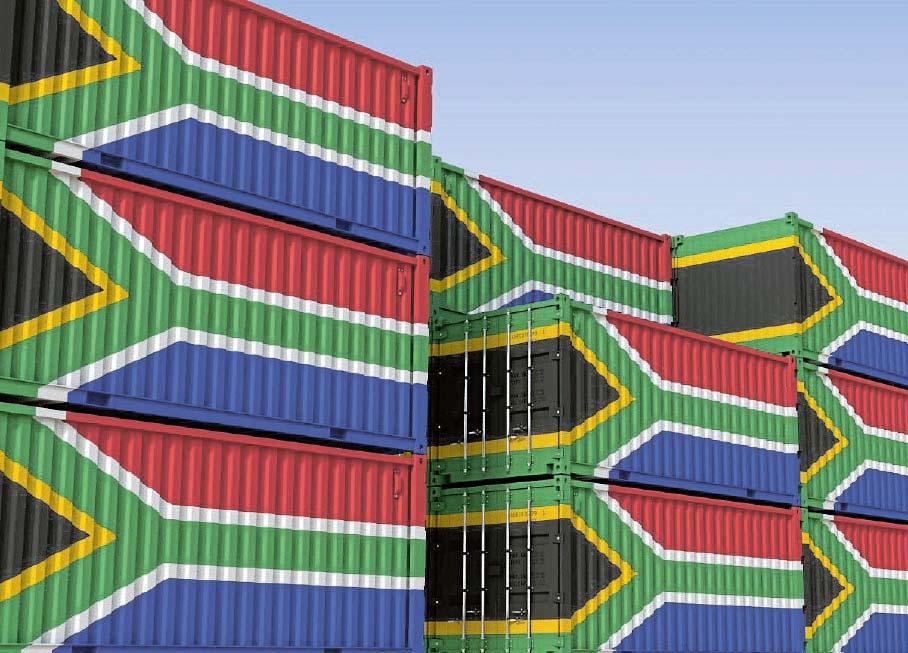
While external motivators fromtheEU arelikelyto become a more present reality for SAbusinesses when it comes to ESG, internally SA s NationalTreasury isdriving its own ESGagenda and has alreadypublished thesecond draft of itsgreen taxonomy. Thisdocument providesan indication of the technical and legal criteriathat wouldneed tobefulfilled onasector-bysector basis to be considered ESG aligned from an SA perspective.It willbeinteresting to seehow potential futureESG requirementsin the EU align with our own green taxonomy. One thing is clear: supply chains will need considerable amounts of data to provide visibilityacross theirglobal network.The soonerSA undertakingsstart ontheir ESGjourney andset upplatforms for data capture and reporting,the soonerthey willbeready toadapttoboth thelocally andinternationally developing ESG regimes. FLYING THE FLAG
BUSINESS LAW & TAX
Let the Squid trademark games begin
• Netflix has been hard at work worldwide to protect the name of its wildly popular series
Mpho Dzhivhuwo Spoor & Fisher
Not resting on its laurels since releasing Squid Game, itsmost watched series todate, Netflixhas beenhard atwork filing trademark applications worldwide to protect the Squid Game name and logos for a wide variety of products and services.
Let’sexamine whythis manner ofintellectual property (IP) protection is critically important,ifnot quiteamatter of life or death.
Sinceits releasein September 2021,the South Korean Netflixseries Squid Game has becomeaworldwide phenomenon.
Theshow brokeall records, with 111-million viewers in itsfirst month of release unprecedented for a TVseries, letalone onein a foreign language.
Squid Game features a group of456 debt-ridden individualswho areluredto fight for survival, by competing intraditional children’ s games witha gruesome twist.They havethechance to win billionsof South Korean won ifthey win a series of six games. But if they lose, they die.
TRADEMARK FILINGS AND CLASSIFICATION
Following itshuge success, Netflix filedtrademark applications to protectthe Squid Game name and logos in more than20 regions, including theEU, Argentina, Canada, Malaysia, Peru,
Philippines, SouthKorea, and the US.
Netflixis seekingtrademarkregistration inanumber of classesof the Nice Classification system,far beyond the traditional classes that wouldnormally covera television series.
TheNice Classificationis an internationalsystem used to classify productsand services for thepurposes of the registration oftrademarks. It simplifies the trademark process by ensuring the products and servicescovered byan application areclassified in the same manner in all trademark officesworldwide that adhere to the classification.
TRADEMARK REGISTRATION STRENGTHENS CONSUMER RECOGNITION OF THE BRAND
The SquidGame trademark applications have been filedfor anextensive rangeof merchandise, such as stationery cases, mouse pads, luggage, handbags, mugs, bottle openers, swimwear and even balloons,which are but afew examplesof goods falling into classes 16, 18, 21, 25 and 28 of the Nice Classification. These classes mostly coverkey categoriesofmerchandising products for the show including cookie cutters, which, as fans will know, featurein oneof the show s deadly challenges.
WHY THE MOVE TO REGISTER?
Securing trademark protection will give Netflix exclusive rights over its IP and offer a spectrum of merchandise for fans ofthe show.It willalso deter copycats from using the reputationof theshow tosell fake merchandise.
Many successfulbusinesses leverage their IP to develop ancillary products and services,using themto attract new customersand to strengthen existingrelationships. Theefforts takento protect trademarks underline the importance of trademarks and merchandising to all expanding businesses.
Merchandising canbe definedin thecontext ofthe entertainment industry as the licensing ofthe rightto use the film’s name, characters and artwork on spin-off products such as toys, clothing, novelisations and soundtrack albums.
The licensor, whois in most cases the producer of the film, is the owner of the differentforms ofIP,including trademarks, while the licensee is the authorised manufacturer of products bearing the trademarks or any otherform ofIP owned by the licensor. Normally the parties conclude a licensing agreement that allows the licensee to leverage popular IP ortrademarks tocreate branded products, usually for a specific period of time.
Merchandising isa major money spinner in the film industry. Star Wars, the epic space opera multimedia franchise created by George

Lucas, is saidto have generated more revenue from the sale of its toys and licensing income from third parties than it made at the box office. Other films, including several Disneyfranchises such as Toy Story, Transformers, Despicable Me and Frozen, have had similar merchandising success.
The 2021License Global Annual Report,which showcases the world’s most powerful brands based on prior-year sales of licensed merchandise, is once again topped by TheWalt Disney Company, which reported $54bnin retailsalesworldwideof licensedanddirectto-consumer products.
POKÉMON
Also featured is the Pokémon Company, which achieved $5.1bn inretail salesin 2020, a $900mincrease yearon year. Pokémonattributes retail sales to the franchise growth efforts of its insanely popularvideo gameapp,the trading card game, gaming devices, toys, apparel and accessories, tech gear, home decor and more.
These aregood examples of successfulbusinesses diversifying theirproducts and ramping up their trademark protection efforts to match the outpouring of public interest, ensuring they reap benefits onthe merchandising side too.
Butwhat doesit meanfor
small andmedium-sized businesses?
PRIORITISE TRADEMARK PROTECTION
Every business, irrespective of the size of its operations, must prioritisetrademark protection. This is why:
● By registering a trademark, you are afforded statutory remedies to prevent someone else from making unauthorised use of your trademark;
● Registered trademarks may beused assecurity for debt finance;
● Registered marks are afforded furtherprotection
SECURING TRADEMARK PROTECTION WILL GIVE NETFLIX EXCLUSIVE RIGHTS OVER ITS IP
underthe CounterfeitProducts Act,as you canapply to seizeand destroycounterfeit products;
● Registration provides an opportunity to generate royalties;
● Trademark registration strengthens consumer recognition of thebrand and offersnew opportunitiesfor market penetration;
● Byregistering atrademark, you can enhance your
reputation management and alsosteer clearofcustomer confusion;
● Registration can circumvent cybersquatting;
● Registered trademarks are prima facie evidenceof ownership and validity; and
● “Registered Trademark” or other suitable symbols can be used to indicate ownership of marks.This actsas adeterrent to potential infringers.
TERRITORIAL
If youdecide to embarkon a trademark filing programme, keep in mind that trademark protection is territorial.
A trademark registered in one country does not prevent othersfrom registeringthe exact or similartrademark in other countries, which is why Netflixprotected itstrademark in several countries. When deciding on which countriesto registertrademarksin, youmightconsider factors such as:
● Wherethe productsare sold or services offered;
● Whereyour businesshas operations,a sizeablerevenuestream orconsumer basesfor theproductsand services; and
● Ifthe businessanticipates expansion plans abroad. So whether you are a giant in your field, such as Netflix, oran emergingor smallto medium-sized business, trademarks arecritical business tools that have clear benefits.
Jab side effects could warrant compensation
OnOctober 222021,the compensation commissioner issued a notice on compensationfor Covid-19vaccination side effects. Thenotice waspublished interms ofsection 6A(b)of theCompensation forOccupational Injuries and Diseases Act130of 1993(Coida)and
provides thatthe Compensation Fundwill cover employees for injuries, illness ordeath asaresult ofreceiving the Covid-19 vaccine For an employee to qualify for compensation, allof the following requirements must be met:
● The vaccinationmust be regarded asan inherent requirementof thejob(as informed bythe employer s risk assessment).
● The employeemust be vaccinated witha Covid-19 jab approvedby theSA Health ProductsRegulatory Authority.
● Evidence of the employer s occupational healthand safety riskassessment and vaccination plan (asset out in the Consolidated Directions on OccupationalHealth and Safety Measuresin certain workplaces datedMay 28 2021) must be provided.
● The chronological sequence betweenreceiving the vaccine andthe developmentof symptomsmustbe provided.
● The symptomsand clinical signsmustbe onesthatare generally recognisedas side effects.
● Additional testsmay be requiredto assessthepresenceof abnormalitiesofany organ affected. Where anemployer
implements amandatory vaccination policy,and an employee whoreceives a Covid-19 vaccinein linewith such policysuffers adverse side effects,the employee may be entitled to claim compensation from Coida. According tothe notice, the amountof compensation will bedetermined andpaid according to Coidaand the Compensation Fund guidelines.
Employers should inform their employees of their right to claimcompensation for any injuries,illness ordeath as a directresult of receiving the Covid-19vaccination, as wellas therequisiterequirementsthat mustbe metto qualify for such a claim. Employers whowish to implement amandatory vaccination policymust ensure they completethe requisite risk assessment.
Tracy van der Colff & Tiisetso Rabolao Baker McKenzie
POPCORN WORTHY
/123RF ROKASTENYS
BUSINESS LAW & TAX
Cross-border insolvency act stillborn
• SA lags behind other countries in adopting a UN protocol that has been in place for 23 years
Eric Levenstein & Nastascha Harduth Werksmans Attorneys
Recentnews outof Indiais thatthe government there isabout toadopt the UN Commission onInternational Trade Law (Uncitral)Model Lawof Cross Border Insolvency.
Themodel lawwas accepted byUncitral in Vienna on May30 1997. On November 131997, the GeneralAssembly oftheUN adopted aresolution, cosponsored bySA, recommending thatmember states review theirlegislation on cross-border insolvencyand give favourableconsideration to the model law.
Inthe evershrinking world ofcommerce brought about by theonset on Covid19, and where the existence of borders are no longer as significant, the implementation of the model law becomes all the more important, becauseits objectives and purposes include:
● The needfor fairand efficient administrationof crossborder insolvenciesthat protects the interests of all creditors andother interested persons, includingthe debtor
company; and
● The need for the facilitation of therescue offinancially troubled businesses,thereby protecting investmentand preserving employment.
Unfortunately SAhas fallen behindthe curve. Although the countryhad a good startand becamea signatory to the Uncitral model lawin 2000,SA fellshort whenwe adoptedthemodel lawintoour nationallawin the form of the Cross Border Insolvency Act 42 of 2000. In
IN THE EVER SHRINKING WORLD OF COMMERCE THE IMPLEMENTATION OF THE MODEL LAW BECOMES ALL THE MORE IMPORTANT
terms ofthe legislation,SA had the opportunity, through the justice department, to designate countries to which the act would be applicable. No such designation has as yet occurred. For practical purposes, therefore,the Cross-Border Insolvency Act is not yet in operation. The act wasintendedto
provide efficient mechanisms for dealing with cases of cross-border insolvency, to regulate the jurisdiction of the high courts in regard to cross-border insolvency matters, to strengthen cooperation between SA and foreign courts in the administration of insolvent estates, and to facilitate the rescue of financially troubledcompanies and thus to protect investment andpreserve employment in SA.
ADVANTAGES
The Cross Border Insolvency Act wouldhave, butfor the designation requirement, provided significant advantages to representatives and creditors in relation to foreign proceedings and which would include speedy access to the SA courts, clarity on the ranking of creditor claims of foreign creditors,streamlining notificationprocedures for localand foreigncreditors and, where once appointed, a foreign representative would beable toinstituteproceedings to set aside dispositions of the debtor’ s property in SA.
Therefore theCross Border Insolvency Act remains stillborn and inoperative and has remained so for more
BEHIND THE CURVE

than 20 years. SA is thus left with anact thathad allthe mechanisms to allow us to go the wayof India,but the government has taken no further steps(such asdoing away with the designation requirement altogether it’ s not containedin themodel law, in any event) to make this branchof SAinsolvency law a reality.
South Africansare left with no alternative but to allow cross-border insolvency matters to be regulated by principles of common law and private international law as developedby caselaw precedent since there is no local statutorydispensation in operation yet.
SA high courtsare called on from time to time to consider the grantingof relief to foreign insolvencyestate representatives and to clothe themwith specificpowersto deal with assetsand matters relating tothe estatesof debtors in SA,but subject to foreign insolvency orders.
South Africanshave,
however, not been held back, despite the inoperative Cross Border Insolvency Act.
Recent examples of crossborder insolvencyprocesses being recognised bythe SA courts have supported the fact that ourcourts remain opentodevelop caselawand legal precedent for crossborder recognition of insolvency processes, both outbound and inbound.
COMAIR
Oneexample istherecent outbound recognition of the Comair businessrescue process inthe NewYork bankruptcy court in 2021 and where the US Bankruptcy Court inthe SouthernDistrict of New York ruled that the SA business rescueproceeding was tobe recognisedas a foreign main proceeding and granted an automatic stay of all claims against Comair in the US.
Other cross-border recognitions have included the inbound recognition of the USchapter 11insolvency
process inSA inthe overseas shipping case; the recognition of the powersof a foreign Mauritian liquidator in the case of MetalminMetals and Minerals, and the outbound recognitionof theCell Cand the Edcon section 155 compromise processes inthe US bankruptcy court.
RESUSCITATION
However,there isnodoubt that the implementation of the Cross Border Insolvency Act (with the designation requirement deleted)would be a welcomeaddition to the arsenal of mechanisms that SA lawyers and practitioners could use when undertaking cross border mandates in SA. Allthey candofor nowis to wait for the justice minister to appropriatelyresuscitate the Cross Border Insolvency Act.
There is no reason for SA to lag behindcountries such as Indiain adoptinga UN protocolwhich hasbeenin place since 1997, some 23 years ago.
A watershed year ahead for labour law
Jonathan Goldberg & Grant Wilkinson Global Business Solutions
The past twoyears have turned our lives upside down and labourlaw hasn t escaped the impact of Covid19. However,as wetry to rebuild afterthe devastating pandemic, weoffer insight into how the labour law landscape could look in 2022.
Thisyear willbedefinitive intermsof whetherweare able tocreate sustainable employment in SA.Critical to this will be theeffects of a number ofissues, including the nationalminimum wage increase.The impactofthe national minimum wage increase in the domestic and agriculture sectorsin 2021
has not beenresearched and the impact inthese sectors again in 2022will be important tocreating employment at the lower end.
Further significant amendments tothe EmploymentEquity Actareexpected this year andthese will be fundamental interms of implementing employment equity andthe processes being followed up to now.
Sectoral targetsare going to beimpactfully definitive because unlessorganisations reachall targetsin afive-year period, they will not be able to obtain acompliance certificate.
Thatcould meantheloss of governmentand quasigovernment business, which could again affect jobs.
AMENDMENTS TO THE LABOUR RELATIONS ACT
Regarding theLabour Relations Actamendments that are due to be negotiated at Nedlac thisyear, theimperative iswhetheraset of amendments can come out of Nedlac thatwill create a platform toallow forthe creation ofjobs. Thesecouldinclude no dismissalprocedures in the first12 monthsof employment, especiallyfor earners who are below the threshold of R211,596.30.
On the otherhand, some review should takeplace on executive dismissals.They have causedblockages and costs in the public and private sectors. In the instance of the public sectorexecutive dismissals have come at a huge
expense to the SA taxpayer. People exceedingthe specific earningbracket should not be afforded the same protection created in SA labour law, whichwas created specifically for the employees who have aweaker economic footing.
PROTECTIONS
Ifonelooks atextraprotection under SA labour law, one should alsoexamine the international standardof equal treatmentand additionalrights, whichkick in between six and 12 months as opposedto thecurrentthree months that is law.
To go back to what was agreed to in2015 between the socialpartners and regarding many ofthe above
aspects, agreements have been reachedbetween the social partnersthat were rejected byparliament. That rejection definitelyhad an effect onemployment during the past five or six years.
COLLECTIVE BARGAINING
This yearwill alsobe a watershed onewhen it comes tocollective bargaining. The pre-pandemic positional-based bargaining world ofunrealistic demands and hostilenegotiation, followed by militantand often violent strikeaction, wenton a hiatus duringthe height of the pandemic asboth parties in the negotiation were realistic in the face of the unknown environmentcre-
ated by the worst pandemic to hit during our lifetime. Weare alreadyseeingthe rise of unrealistic demands as parties try to make up ground on the pandemic agreements. The question nowis if reasonability in negotiation, which willensure creation and retention of employment, willprevail orifwe willsee demands become unrealistic again, followedby the inevitable hostility and violent strike action.
It will be a definitive year on the labour law landscape. It is necessarythat business, labour, thegovernment and the community come up with ideas regarding how to create opportunities forjobs, which is our singlebiggest problem in the SAlabour market.
BUSINESS LAW & TAX
Lying to help staff is a crime
• Misinforming the UIF to enable unemployment payouts is not worth the potential trouble caused
Siphile Hlwatika ENSafrica
Seeking toreach an agreement withan employee onthe terms ofa mutual separation agreement(MSA) orinan effortto come to the aid of an employee whofaces unemployment after termination,employers might be tempted to misinform theUnemployment Insurance Fund (UIF) that an employee wasretrenched when they were not.
However, employers should rememberthat they will be committinga criminal offence if they do so.
Anemployee whofaces the possibility of being subjected todisciplinary action anddismissal duetopoor work performancemay proposetothe employerthatan MSA beconcluded regulating the termination of his or her employment. Inmost cases, theMSA willrecord thatthe contract ofemployment is terminated byagreement or that the employee will resign.
Theadvantage ofthis approach foremployees is that they avoid the risk of being dismissedon the grounds ofmisconduct or poor workperformance and a dismissalwould therefore not staintheir employment record.Thereis alsothepossible advantage thatthe MSA willmake provisionforthe payment ofa sumof money to the employee.
Thereare alsopotential advantages foremployers: an MSAmay eliminatethepossibility ofthe employee claiming unfairdismissal and
save thecosts associated with disciplinary proceedings or poorwork performance procedures andany subsequent litigation. Inmany cases,itmay betheemployer who proposes the conclusion of a MSA.
The way inwhich the MSA isformulated mayhave important taxand other implications. Thisis illustratedby thefactsin therecent decision of theLabour Court in Swanepoelversus KPMG Services (Pty) Ltd. Swanepoelhad beenemployed byKPMG assenior manager forinternal audit risk andcompliance service with effectfrom November 162015.During ameetingon
THE WAY IN WHICH THE MUTUAL SEPARATION AGREEMENT IS FORMULATED MAY HAVE IMPORTANT TAX IMPLICATIONS
November14 2017,KPMG raisedconcerns withSwanepoelregarding hisperformance. He was given the option toresign orbe subjectedto adisciplinaryprocess. However, Swanepoel was not preparedto resign becausehe wantedtoclaim an unemploymentbenefit fromthe UIFand/or tolodge a claim forpayment in terms of an insurance policy.
It appears that KPMG was not preparedto agreeto this.
On November15 2017,KPMG and Swanepoel nevertheless
concluded anMSA interms ofwhich hisemployment wasterminated “on a mutual basiseffective fromNovember 302017”. KPMGsubsequently provided Swanepoel with a certificate of service as wellasthe UIF’s UI-19 form, whichis necessarytoclaim an unemploymentbenefit from the UIF.The reason for thetermination recordedin thesedocuments was “involuntary resignation”
When Swanepoelsought toclaim anunemployment benefit from the UIF, he was informed thatthe reasonfor termination stated in the UI19form, voluntaryresignation, was nota recognised reasonfor claimingabenefit interms oftheUnemploymentInsurance Act. He requestedKPMG toamend theUI-19form sothatit showeda recognisedreason, but to no avail.
Swanepoel thenbrought anapplication beforethe LabourCourt tocompel KPMG to classifyhis dismissalas aretrenchment and,accordingly, toamend, inter alia, the UI-19 form.
The Labour Court noted that in terms section 16(1)(a) of the UnemploymentInsuranceAct, anunemployed contributor to theUIF is entitledto unemploymentbenefits if the reason for the termination of employment is:
● Thetermination ofthe contributor’scontract ofemployment by theemployer or a fixed-term contract;
● Thedismissal ofthecontributor as defined by section 186 ofthe LabourRelations Act, 1995; or
● Insolvencyin termsofthe
MISSING PIECES

provisionsof theInsolvency Act 1936.
KPMG contended that the reason givenin theUI-19 form and thecertificate of service was notan incorrect reflection of the terms of the settlement agreement and deniedit hadretrenchedor constructively dismissed Swanepoel. KPMGfurther said,when properlyconstrued,the settlementagreementconstituted atermination ofthe contractof employmenton amutual basis and settledall the claims thatmay arisefrom the contract of employment.
The Labour Court found the introductory clause of the MSA clearly states that the parties reached consensus on Swanepoel sdeparture andit wascommon causethat mutualseparation wasan optionchosen bySwanepoel insteadof adisciplinary enquirybased onallegations of poor performance.In this context, Swanepoel s contract of employment was ter-
minated by agreement.
The Labour Court further noted that section64 of the Unemployment Insurance Act provides that no person may wilfully makeany false entryon acontributor’ s record cardor inany other book,record ordocument relating to eithera contributor’semployment historyor toa contributor’sclaim fora benefit, and that any person whocontravenes thisprovision is guilty of an offence.
Given the finding that Swanepoel’s contractof employment wasterminated on a mutual basis, the Labour Court foundthat therecordal of involuntary resignation in
THE COURT NOTED THAT … NO PERSON MAY WILFULLY MAKE ANY FALSE ENTRY ON A CONTRIBUTOR’S RECORD CARD
the UI-19form wouldobviously constitute a false entry in terms ofsection 64(1)(b) anda criminaloffencein terms ofsection 64(2)of the Unemployment Insurance Act.The LabourCourtheld that,in essence,Swanepoel askedKPMG tolie aboutthe reason for the termination of hiscontract ofemployment to enable himto claim UIF benefits and,in turn,to commita criminaloffencein terms ofsection 64of the Unemployment Insurance Act.
Inlight ofthesefindings, theLabour Courtultimately held that, all things considered, Swanepoel s contractof employment wasterminated by agreement. As such, Swanepoel claim smust failas it wasill-conceived andunjustified.The applicationwas dismissed.
● Reviewed by Peter le Roux, an Executive Consultant in ENSafrica’ s Employment department.
Private equity opportunities open up after Covid
Michael Denenga Webber Wentzel
While the Covid-19 pandemic hashad aclear impacton some ofthe privateequity firms fundraising timelines andtargets, thiswaspartly offset byincreased development finance institutions (DFI) activity,which meant the private equity sector was in general resilient in 2021.
We expect that DFIs will continue to havea meaningfulimpacton thePElandscape in 2022 and beyond, as they takea longer-termview than the private sector firms. Surveys conductedby the African PrivateEquity and Venture CapitalAssociation (Avca) andthe Southern
African VentureCapital and Private EquityAssociation (Savca) showthat although there was initial slowdown in fundraising in2020, private equity activity is picking up and is expected to accelerate further in 2022.
The Savcasurvey showed there was a 22.1% decrease in the totalvalue offunds raised in SA in 2020 compared with 2019,but thefigure wasstill higher thanin 2016-2018, which was encouraging. Activity wasmainly driven bypension and endowment fundswithin SA, with 27%emanating from Europe and the UK.
The Avcasurvey, which examined activityin thefirst halfof2021, showedthetotal
value ofPE dealsreported in Africa was$2.1bn, against $3.3bn for the whole of 2020.
The mostactive sectorsin this periodwere financials, consumer discretionary, industrials andinformation technology.
The resilience ofthe sectorhas alsobeen helpedby existing strong relationships between generaland limited partners. Theseexisting relationships werenot affected by restrictedtravel andthe inability tohold face-to-face meetings.
Oneof thechangeswe expectto seeinthe sectoras aresult ofCovid-19is thatPE managers mayopt for longer-term funds, possibly with a tenure of10 years or
longer, oreven permanent capital vehicles,which give managers a longerperiod to ride out volatility.
The sector is likely to see more blendedfinance, where privatesector riskismitigated andexpanded by blending itwith government and philanthropic funding.
ACTIVE SECTORS
Some ofthe mostactive sectors inAfrica forprivate equity after Covid are likely to include healthcare, because the pandemichighlighted the need forinvestment in affordable health care.
Already thissector has attracted a number of significant PEdeals byvalue, and this is likely to continue.
Other sectorsthat provide essential services,such as affordable housingor food security, arealso likelyto attract funding.
Fintech is front of mind for fund managersacross Africa, because technologyhas the potentialto enhanceallother sectors itisable tocontribute toreducing costs, improving productivity, overcoming borders and managing waste.
Environmental, socialand governance (ESG)factors are central to PE investment in 2022and beyond.ESGis seen asvital forvalue creation, and therehas been a particularfocus ongoodgovernance andinclusivity. The pandemic hasdemonstrated
the needfor improved logistics and infrastructure, particularly regionalinfrastructure, acrossAfrica, and weexpect theseareaswill receive attention.
Many ofthese sectors, whichoffer growthintothe future,also offerthepotential for exit, which is important for PE investors.The Avca survey showed 16 exits were reported fromPE investments in Africa in the first half of 2021,which compares with 30for thewhole of 2020 and 44 in2019. Most of thepurchasers ofthesebusinesses weretrade buyers. Where there are clear exit opportunities, itwill encourage greater investmentby a range of PE players.
/123RF TADAMICHI
BUSINESS LAW & TAX
Retrenchment protection in the spotlight
• A quick, standardised process would be better than convoluted, uncertain enforced consultation
Fritz Malan & Jan Norval ENSafrica
When the need to revitalise the SA economy is thetopic ofdiscussion, reference is often made to the rigidity oflabour lawsas a potential contributory cause forthe persistentlackof economic growth, investment and job creation.
In 2019, SA was ranked by the WorldEconomic Forum (WEF) as129th outof 141 countries forflexibility in hiring andfiring practices in itsWorld Competitiveness Report.
Reformof SA’s labour laws is often referenced as an avenue to stimulatejob creation andimprove investment opportunities.
Therate ofunemployment(reported atarecord high of 34%) is alarming. What isparticularly concerning is thetrajectory of the unemployment crisisover decades. TheIMF predicts unemployment inSA will worsen to 38.6% by 2026.
Ina reportdatedJune 2021detailing howSAcould rebuildjobs aftertheCovid19pandemic, theWEFsuggested thatthe government could considera temporary suspension oflabour regulations that increasethe real cost of labour and make job recovery more difficult.
Whilethe WEFsuggested such changesshould be negotiated atthe National Economic Development and Labour Council(Nedlac), it didnot suggestwhatsuch changes would entail.
This is the first of four contributions in which we look at some specific areas of our labour lawthat couldbe reformed tostimulate employment whilemaintaining protectionsfor vulnerable employees. Inthis contributionwe considertheregulation of dismissals for operational reasons.
DISMISSAL FOR OPERATIONAL REASONS RETRENCHMENT
Any investmentdecision represents anassessment of risk, reflectingthe factthat
the commercial life of any enterprise haselements of unpredictability.
It is therefore of obvious importance toemployers to be able torestructure their workforce tomeet unforeseeable changesin operational circumstances.
The nature of legal restrictions on the right to do so is naturally a factorto consider in anyinvestment decision which mayinvolve employing people.
The SA lawin relation to retrenchment represents a changing and complex set of detailed and prescriptive provisions thatconceal myriad potential pitfallsfor employers. Althoughan employer may, inprinciple, dismiss
THE SA LAW IN RELATION TO RETRENCHMENT REPRESENTS A CHANGING AND COMPLEX SET OF PRESCRIPTIVE PROVISIONS
employees foreconomic, technological andstructural reasons,the processrequirementsimposed ondismissal for those reasons are considerablymore onerousthan those thatapply toother fair
reasons todismiss, suchas misconduct or incapacity.
Employers are required to consultwith theiremployees (ortheir representatives)ona numberof topicsrelatedto the retrenchment and to seek consensusbefore takinga decisionto retrenchemployees.How muchconsultation is required is, however, not particularlyclear fromeither thestatutory provisionsor decided case law.
The relevantcode ofgood practiceis alsonotpractically helpfulinsofaras itreflectsa preferencefor idealisticand subjective languageconstructsthat donotenhance practical understanding.
The experience of these authorsover yearsofadvisingemployers inparticular suggeststhat enforcedconsultation,despite thebest intentions ofthe draftersof the LabourRelations Act,seldomproduces consensusor mutually satisfactory solutions as thecompeting interests of parties are in reality simply too stark.
The courts have, with respect,also struggledtogive anycertainty intheirinterpretationofthis areaofthe law.Thisis bestillustratedby the differingapproaches adopted by the courts in relation to the extent to which the employer s commercial rationalefor aretrenchment exercise may be the subject

IN THE HOT SEAT

of scrutiny.
The courts have also “second guessed” employers’ commercialdecisions incircumstances wherejudges are in realityill equipped to assess these decisions at all.
The applicationof theSA retrenchment lawprovisions areso unclearthat evena reasonably well-informed lay person is unlikely to have any certainty on how to achieve compliance.
The decided case law contains examplesof retrenchment processes undertakenby largeand sophisticated employers,no doubt withthe benefitof the best oflegal adviceand with extensive consultation processes,that arenonetheless found tohave fallenshort in their effortsto complywith the law.
Though the risksof the retrenchmentprocess canbe managed withsensible specialisedlegal advice,the ultimate outcomeof retrenchment disputes in front ofour arbitratorsand courts issomewhat ofa lottery. Disputesregarding retrenchments are furthermoremost oftendetermined only years afterthe retrenchments were effected.
Theimporting ofyeta further distinction between so-called large-scale and other retrenchments has served to add another layer of complexityand nuanceto analready dauntingcompliance burden.
The introduction of this distinctionseems tohave been based on the questionablenotion thatlegislated retrenchment restrictions preserve employmentand thatthegreater thescaleofa retrenchment the more restrictive, and interventionist, theregime thatregulates it should be.
There is a simple logical inconsistencyin thislineof thought. As a matter of simple logicemployers generallyact in their own economic interest and would not be inclined toretrench employeeswho haveeconomic valueto
their business.
Preventing retrenchments that employers believeto be in the economicor operational interest oftheir enterprises through overly restrictive laws canonly be aninhibitor ofefficiency and probablydiscourages employment creation.
An assessment of retrenchment protectionsin otherjurisdictions andtheir effect onunemployment ratesdoes notappear tosupport the notion that greater protection againstretrenchmenthas apositive effecton unemployment ratesand worker income levels.
The unemployment rate oftheUS, whichofferslittle protection againstretrenchment, isreported as4.8% and averagefamily incomeis reportedas $79,900;while the SAunemployment rateis reported as 34%with an average family income of less than $10,000.
IT
IS AN ECONOMIC IMPERATIVE THAT A NEW BALANCE NEEDS TO BE FOUND BETWEEN THE COMPETING INTERESTS INVOLVED
Inthe UK,whichoffers workers moreprotection against retrenchmentthan the US, but still considerably less thanSA, theunemploymentrate isreported as4.6% and the average income per familyis reportedasabove $35,000.
Although there are myriad complexhistorical reasons for the discrepancies above, theabsence ofappreciable protectionagainst retrenchment has, at the very least, not inhibited employment creationin anumber of foreign jurisdictions.
In 2007,when France considered more flexible labour laws to stimulate employment, the Institute for
the Study ofLabour, the world’s largest research network for economic science, published a study entitled “Labour Retrenchment Laws and their Effect on Wages and Employment: A Theoretical Investigation” It concludedthat “flexible labour laws can be in the interestof alllabourers that is,easier firingrulescan increase employment and wages of all workers” The studywarns, however, that proper protections forworkers shouldstill bein place,but theredoes seemto be compelling evidence to showthe lessrigid acountry s retrenchment laws are, the more likely there will be a positive impact on employment numbers.
Reimagining thisarea of ourlawhas, inourview, become a pressing necessity. Itis notsuggested thatthe rights ofworkers toprotection against unfair dismissal can, in the overall historical and constitutional context of SA, be ignored.
It is,however, aneconomic imperativethat anew balance needs to be found between thecompeting interests involved.
It would be more appropriate to abandonthe convoluted, uncertain and artificial world of enforced consultation in favour of a standardised retrenchment process which isdesigned tocome to a conclusion asearly as possible.It doesnot, inthe first place, seempractical to expect employersto guessat what a sufficient consultation processwill compriseinthe hope a courtmay agree in future.
It alsodoes notappear realisticto armcourtswith the authorityto secondguess the operationalrationale applied beyond testing the bona fides of the retrenching employer.
● Thesecond andfinalpart ofthisarticle, tobepublished intheMarch editionofBusiness Law & Tax, will examine the future of retrenchment.
/123RF JOJOJOJO
BUSINESS LAW & TAX
ESG is not just about business it’s personal
• The momentum is shifting towards sustainability, which includes business and human rights
Pooja Dela, Bernadette Lötter & Hoosein Mayet Webber Wentzel
Greater emphasis is being placed on thehuman rights obligations ofbusinesses than before, withlikely moves towards binding treaties.
Environmental, social and governance (ESG)considerations arebecoming increasingly relevantacross the spectrum: frominvestor and shareholder relations,brand and reputationmanagement and dataprotection to business andhuman rights, corporate governance and fiduciary dutiesof companies and their directors.
Businesses ranging from JSE-listed entitiesto your friendly neighbourhood stores areaffirming their commitment toa better world for all.And so they should.
CONCEPT OF BUSINESS AND HUMAN RIGHTS
Recently, businesses have been refocusingand re-evaluating theircommitment to ESG and sustainability. There’s beenan intentional shift in focus tothe “S” goals, which were often overlooked in the past. The S goals include business and human rights. Human rightsimperatives for business are,for example, to protectindividuals from unfair discrimination based on raceor gender,or communities frombeing negatively affectedby business operations. While business interests are generally focused onprofitability, it would be incorrect to assume they are atodds with human rights.Infact, thereisan opportunity formutual growth and convergence.
Itis importantforbusinesses to beaware of the framework which guides them ontheir responsibilities to respect andprotect human rights. TheUNsustainable development goals (SDGs) are the starting point.
Theyconsist of17goals which call onall countries to take actionsthatensure sustainability andinclude
specific humanrightsfocused goalssuch asno poverty; zerohunger; good health and well-being; quality education; genderequality, clean waterand sanitation; decent workand economic growth; reduced inequalities; and peace, justice and strong institutions.
The SDGs exist at the level ofprincipleor softlaw.The UN has also released its Guiding Principleson Business andHuman Rights (UNGPs). Though they are not legally binding,they offer guidance onhow businesses should embrace human rights and express their commitment torespecting and promoting human rights.
Accordingto theUNGPs, the core of a corporation’ s responsibilities isto respect and protecthuman rights. This means they should avoid infringing onthe human rights of othersand address adverse human rights impacts with whichthey are
IN EFFECT, THROUGH THIS TREATY, THE HUMAN RIGHTS OBLIGATIONS OF BUSINESSES WILL BECOME LAW
involved. Practically,this means businesses should at least be incorporating the following strategies into their human rightsinitiatives, appropriate to theirsize and circumstances:
● A policy commitment to meet their responsibility to respect human rights;
● A human rightsdue diligence process to identify, prevent, mitigate and account forhow theyaddresstheir impacts on human rights; and
● Processes to enable the remediation of any adverse human rights impacts they cause or to which they contribute.
We expect there will be moves towardsbinding treaties that entrench the human rights obligations of businesses. For example, recently a UN intergovernmental working group
(which was established in 2014 after aresolution of the UN Human Rights Council sponsored by the governments ofSA andEcuador) met in Geneva to discuss the thirddraftof alegallybinding treaty on business and human rights.
Thepurpose ofthetreaty includes clarifying the human rights obligations of business enterprises and ensuring businesses respect those obligations and are preventing and mitigating the occurrence of human rights abuses. This will be done through monitoringand enforceability mechanisms, and by ensuring access to justice and effective, timely remedy for victims of human rights abuses.
Thetreatyis stillindraft form but, once finalised and adopted by states, it is intendedtoapply todomesticand transnational business activities in signatory countries, andto coverallinternationally recognisedhuman rights and fundamental freedoms. In effect,through this treaty,the humanrightsobligations of businesses will become law.
THE SA CONTEXT
There isno specificbinding legislation in SA which directly holdsbusinesses accountable for human rights violations. At least, not yet.
But ESGstrategies must still encapsulatehuman rights considerations. These include equality and inclusivity in theworkplace, fair labour practices, an environmentthat isnot harmful,particularly for communities that may be situated near production or industrial sites, heightened corporate social responsibility (CSR) and sustainable supply chains.
SA s constitutionis oneof the most progressive in the world. The bill of rights a cornerstone of democracy affirms the democratic values of human dignity, equality and freedom.
It alsoenshrines theright toan environmentthat isnot harmful to the health and well-being ofthe people,and several socioeconomic rights, including the right of access to housing, health care, food, and water.
BUILDING A BETTER FUTURE

The beauty of the constitution is in its application. Not only must the state respect, protect and promote the rights inthe billof rights,but natural and juristic persons (ie businesses) have these obligationstoo, totheextent applicable, consideringthe nature of the right and the nature of any duty imposed by the right.
The drafters of our constitution weredecades aheadof their time when they enshrined these provisions relating to socioeconomic rights and the application of the billof rightsinto theconstitution. And SA s unique history, coupled withits progressive constitution, has placed it aheadof the curve on certain human rights issues such asequality in the workplace, including through transformation initiatives and broad-based BEElegislation.
BUSINESS RISKS
This, in turn, assists with the promotion of socioeconomic rights. The general sense, however, is that businesses are not doing enough.
Even if theyare doing something, they are not being held legally accountable for human rights failures.
Businesses thatdo not shift their focusto human rightsare atrisk. KeyESGrelated risks includethe risk of litigation, which involves not only the costs of legal services but the potential costs of
alienating the communities in which a business operates, its investors, consumers and the public at large.
For example,in the Netherlandsin May2021,a district court of The Hague ordered Royal Dutch Shell to reduce its global carbon emissionsby 45%fromtheir 2019 level by 2030.
EMISSIONS
The litigation was launched against Royal Dutch Shell by various NGOs, whichargued thatthe annualCO2 emissions ofthe globalgroup were contributing to climate changeandposed athreatto their human rights.
There havealso been
ONCE PEOPLE FEEL THEIR RIGHTS ARE RESPECTED, THE BUSINESS GAINS PUBLIC, INVESTOR AND SHAREHOLDER CONFIDENCE
reportsthat similarlitigation is beingconsidered byaction groupsin Germanyagainst companiessuch asVolkswagen, Mercedes-Benz and BMW onthe basisthat the companies excessive CO2 emissionswill violatetheir rightsto freedom,property andhealth. SAmay wellsee similar claims soon.
THE WAY FORWARD
SAbusinesses wouldbewell advisedto takeadeliberate approach to the advancement of human rights,both internally(their employees)and externally (communities in whicha businessdirectly operatesor indirectlyaffects). Properly implemented, whetherthrough aninternal or external ESGstrategy or otherCSR initiative,the advantages are obvious. Once people feel their humanrights arerespected, thebusiness gainspublic, investor and shareholder confidence, and greater employee engagement and dedication.All theseadvantagestranslate togreater innovation,access totalent, resourcesand fundingand, ultimately, profitability and sustainability.
It is notenough for businessesto indicateawillingnessto respect,protectand promote human rights. They must take proactive stepsto realisethese objectives, includingby implementing ESGstrategies which mustincorporate elementssuch ashuman rights,due diligences,impact assessments andcompliance analyses. Perhaps most importantly, mechanisms must beput in place which empower affected individuals tohold a business toaccount whenit fails inits humanrightsobligations.
/123RF STOCKWERKFOTODESIGN
Ten ways Africa can shine
• While Covid-19 hit economies, there are abundant opportunities
Lerisha Naidu, Lodewyk Meyer, Mike van Rensburg & Virusha Subban Baker McKenzie Johannesburg
Here are 10 reasons infavour of African trade and investment opportunities in
2022.
1. Visiblegreen shoots rising commodity prices
The pandemic closed borders andstopped trade,otherthan for essentials, across the continent and wasthe principal reason for a decline in investment in 2020. A lack of available capitaland acquisition finance, aswell asdifficulties pricing deals inan uncertain market, affected investment.
Otherreasons fordeclining investmentincluded that levels ofeconomic activity have slowedin major African economies, suchas Nigeria and SA.
But greenshoots arevisible andmarket fundamentals are signalling aregion with underlying resilience. Commodity prices are rising and landmark dealsare returning to the continent.
2. The launch of AfCFTA
To date, 38 countries in Africa have ratified the African Continental FreeTrade Area (AfCFTA) agreementand 54 countries have signedit. The start of trading in 2021 resulted in an increase in investor sentimentas deal makers took note of the agreement’s first movers.
AfCFTAis unlockingsignificant growth opportunities for thecontinent, providing thechance forcountriesto diversify theireconomies, scale production capacity and widenthe rangeofproducts

collaboratewith DFIsand access returns.
made in Africa, in particular boosting theproduction of manufactured goods.
Closer integrationof neighbouring economies is providing apotential avenue for creating scale and competitiveness through domestic marketenlargement, promoting developmentthrough greater efficiency.
AfCFTA is also acting as an impetus forAfrican governments to address their infrastructureneeds aswell asto overhaul regulationrelating to tariffs,bilateral trade, cross-border initiatives and capital flows.
MANY AFRICAN COUNTRIES HAVE BEGUN ASSESSING WAYS TO IMPROVE THEIR MANUFACTURING CAPACITIES
3. Shiftingpatterns and alternative financing
Therehas beenanurgent imperative toidentify and enable newsources of finance, outsideof traditional lenders and international partners, toaddress Africa’ s infrastructure gaps.
Inthe commodityfinancing space, international banks have withdrawnas they focuson managingtheirliquidity and debt positions. As a result, developmentfinance institutions (DFIs)are increasingly anchoringthe infrastructure ecosystem in Africa. Localand regional banks, specialist infrastructurefunds andprivateequity and debt arestepping in to


Multifinance and blended solutionsare expectedto grow inpopularity asa way to deriskdeals andsupport a broader ecosystem of lenders.
4. Global interest
Tradedata fromChina’s ministryof commerceshowed China’s trade with Africa has risen 20-fold in 20 years firming China’s positionas Africa’sbiggest bilateraltradingpartner. However,fewer infrastructure financing projects are expected out of Chinagoing forward.Those thatdooccur willbeofa higher quality, using sophisticatedstructures andnew finance options.
The US is renewing its focuson impact-buildingand financing strategic long-term projects inthe region,with theExport-Import Bankof theUS supportinginfrastructuredevelopment inAfrica. TheUS announced the renewedProsper Africainitiative,which focuseson improving reciprocal trade andinvestment betweenthe two regions.
The EU has always been clearabout itscommitment tostrong relationshipswith African countries. Recently, DFIsfromthe US,Franceand Germany collaboratedto financea substantialtransaction in the African healthcare sector.
TheUK isalso makinga strongplay forinfluence, investmentand tradewith Africapost-Brexit. Furtherto keysummits in2020and 2021, finance is being redirected into Africa.
5. Post-pandemicsector potential Investorswith strongmarket positions and an appetite for riskare capitalisingonthe bargainsin challengedsectors such asretail, transport,
energy, construction,hospitality and leisure,and eyeing opportunities inwellperformingsectors suchas technology,health careand fintech. The oil and gas industryand noncoreinfrastructuresectors havefacedsignificant stress,producing opportunitiesfor buyers.An unabateddemand fortechnologyhas causedextensive cross-sector disruption,with thefinancial, energy,transport,retail, agriculturaland healthsectors allseeking opportunitiesto expandtheir tech infrastructure.
6. Digitisation
Digitisationis enablingthe development and harmonisation of a regulatory frameworkto integrateAfrica’ s digital economies.
The African Virtual TradeDiplomacy Platformwas implemented to allowparties across differenttimelines, languagesand legalframeworks tomeet ina secure online environment, streamlining cross-bordernegotiations.
Digitisation is also helping lenders assess risk more accurately before they deploy capital in theregion. This is allowingprojects thatwould otherwise seem too risky to go ahead.
7. Leapfroggingtraditional energy systems
Access topower inthe continent ishampered bythe lack ofaccess tocompetitive funding, the dire state of Africa’s utilities infrastructure,andthe needforenergy policyand legislationtobe adapted to boost investment.
However, new systems andnetworks arebeing designedaround futureenvironmental stressors and energy demands, without having toconsider thelimitations of old infrastructure.
With theuse ofmobile technology and thelack of



existing electricity transmissionnetworks, thesedevelopmentsare providingan opportunityfor Africancommunities to gainaccess to powerby leapfroggingthe traditionalmodel ofcentralised generation and transmission of power. New andcost-effective solutionsthat userenewable energy,green hydrogen,battery storage and smart power technologies, as well as the global drive towards a decentralised, decarbonised and secureenergy supplythat addresses climatechange and stimulates economic growth,are allleadingto investment opportunities.
8. Mending chains
Beforethe pandemic,supply chainswere alreadyunder pressurein Africadueto inadequate infrastructure, corruption and security issues,poor logisticsand onerous regulatory requirements. DuringCovid-19, thesechains becamelonger andmore vulnerableto
THE
UK IS ALSO MAKING A STRONG PLAY FOR INFLUENCE, INVESTMENT AND TRADE WITH AFRICA POST-BREXIT
breaks. WhenAfCFTA became operational, it highlighted thecrucial needfor improved infrastructure and stronger supply chains to facilitate the free flow of trade across the continent.
In 2021,the AfricanUnion African Peer Review Mechanism highlighted Africa s supply chain challenges and overreliance on foreign trade, and suggested the continent boost itsmanufacturing



capacityto buildasupply chain that could not be weakened by global blockages.
As aresult, manyAfrican countries have begun assessing ways toimprove their manufacturing capacitiesso theycan producelocalcomponents.
9. Competition law and enforcement Competition policy continues tobe viewedby regulatorsas a keydriver ofeconomic growth. Across Africa, competition policy enforcement is increasingly beingemployed asa toolto boosteconomic performance and to promote the revitalisation oftrade and industry.
Numerous jurisdictions have strengthenedtheir competition and antitrust regimes throughamendments to legislation, the introduction of new laws and regulations, and have renewed political will to enforce laws.
These developments draw attention tothe continent’s collective enthusiasm in ensuringcompetition compliance, and its determination inpromoting andprotecting effective economies.
10. Environmental,social and governance
As Africa reducesits overdependence on natural resources and increases its manufacturing capacity,it must ensure it develops in a sustainable way spurring investment in projects focused on clean energy, community development initiatives, wildlifeprotection, sustainable agricultureand low-carbon development.
A commitmentto environmental, social and governance principles is now a primary focus inthe quest for post-pandemic funding,with accessto capitalforlarge projects almost certainly containing sustainability requirements.