

SMART FARMING & INNOVATION

PLANNING FOR PROFIT
THE NEXT GENERATION OF FARMERS
DESALINATION AND THE FUTURE OF FARMING
SUSTAINABLE FOOD PRODUCTION



How agriculture shapes everyday life













Picasso Headline,
A proud division of Arena Holdings (Pty) Ltd, Hill on Empire, 16 Empire Road (cnr Hillside Road), Parktown, Johannesburg, 2193 PO Box 12500, Mill Street, Cape Town, 8010 www.businessmediamags.co.za
EDITORIAL
Editor: Elriza Theron
Content Manager: Raina Julies rainaj@picasso.co.za
Contributors: Jennifer Booth, Annelize Crosby, Hanlie du Plessis, Magda du Toit, Busani Moyo, Dewald Olivier, Ivor Price, Professor Albert Strever
Copy Editor: Brenda Bryden
Content Co-ordinator: Natasha Maneveldt
Head of Design: Jayne Macé-Ferguson
Senior Designer: Mfundo Archie Ndzo
Project Designer: Annie Fraser
Cover Images: graphicswizzard/123RF.com, yourapechkin/123RF, supplied
Online Editor: Stacey Visser vissers@businessmediamags.co.za
SALES
Project Manager: Gavin Payne GavinP@picasso.co.za +21 469 2477, +27 74 031 9774
Sales: Frank Simons
PRODUCTION
Production Editor: Shamiela Brenner
Advertising Co-ordinator: Fatima Dramat
Subscriptions and Distribution: Fatima Dramat fatimad@picasso.co.za
Printer: CTP Printers, Cape Town
MANAGEMENT
Management Accountant: Deidre Musha
Business Manager: Lodewyk van der Walt General Manager, Magazines: Jocelyne Bayer


COPYRIGHT: Picasso Headline.
In this edition of Agriculture, we take a step back to look at agriculture in a way that feels a little closer to home. For many people, agriculture can seem like something that happens somewhere else, out of sight and out of mind. Yet it touches almost every part of our daily lives. The food we buy, the prices we pay, and even the availability of certain products are all shaped by what happens along the agricultural value chain.
This issue brings together a range of stories that unpack some of the factors working behind the scenes. We explore how regulations support responsible and sustainable food production and why keeping up with innovation is becoming increasingly important for South Africa. You’ll also meet women making a real impact in the dairy industry and see how industry bodies are investing in skills and people to strengthen the sector.
Some of the topics may feel unexpected at rst glance, but they are more relevant than they appear. Foot-and-mouth disease, for example, has implications that reach far beyond farms and into the broader economy. Developments in desalination could in uence how water is managed for irrigation in the future. These are the kinds of links that are not always obvious, but they matter.
We also touch on areas where awareness makes a difference. Food safety, the responsible use of agricultural inputs and managing the growing pressure from plant and animal diseases all play a role in shaping a resilient agricultural system.

This edition aims to offer a clearer picture of how connected agriculture is to everyday life. Whether you work in the sector or engage with it as a consumer, there is always more to understand about the journey from farm to table.
Elriza Theron EDITOR
The regulatory framework for responsible and sustainable food production.
Women are transforming the dairy industry.
From research to on-farm training, industry bodies are investing in people to grow the next generation of farmers.
Turning salt into sustainability – the future of desalination in agricultural irrigation.
South Africa cannot afford to fall behind the
How farm implements mirror the evolution of South African agriculture.
Foot-and-Mouth Disease is affecting your pocket more than your plate.
Crucial shifts for farmers when planning for the future.
What experts wished you knew about food safety.
The century of viruses – why every farm is now on the frontline.
The end user’s responsibility to read and follow pesticide label instructions.
Growth beyond the farm gate. 44
Unlocking growth through veterinary services across South Africa.

How ESG principles and regulatory frameworks are shaping the future of responsible food production. By
ANNELIZE CROSBY , head of legal intelligence, Agricultural Business Chamber
Sustainability in farming is fundamentally about managing the resources required for food production in a way that ensures future generations can continue to meet their needs. The United Nations Sustainable Development Goals (SDGs) re ect this through a combination of environmental and social objectives, including clean water, clean energy, decent work, climate action and good health and wellbeing. At its core, sustainability integrates the economic, social and environmental dimensions of agriculture.
The South African agricultural sector is increasingly embracing this reality. There is a growing recognition that sustainable farming methods are critical to long-term viability. Sustainable agriculture requires balancing food and bre production with preserving environmental ecosystems. Regenerative farming practices are gaining traction, and many commodity organisations are developing environmental, social and governance (ESG) frameworks for their growers.
These ESG frameworks typically address biodiversity, water use, waste management, energy ef ciency, carbon reduction and social considerations such as labour conditions and community relations. As a result, ESG considerations are becoming integral to how agricultural businesses operate in South Africa.
SUPPORTIVE REGULATORY FRAMEWORK
A comprehensive regulatory framework exists to support sustainability and responsible food production, both internationally and
issues such as climate change, biodiversity, labour standards and pesticide management. Examples include the United Nations Framework Convention on Climate Change and the Convention on Biological Diversity.
These international agreements are often incorporated into national legislation. In South Africa, for instance, the Climate Change Act was adopted in 2024. Regulations relating to carbon and other emissions are being developed under this Act, and the Department of Forestry, Fisheries and the Environment is working on sectoral emissions targets, including for agriculture. These targets aim to guide sectors toward meaningful transformation by setting greenhouse gas reduction goals over de ned periods, ensuring alignment with international climate commitments.
Labour and employment standards are similarly well regulated. South Africa has adopted numerous International Labour Organisation conventions, which are re ected in domestic legislation. These cover key principles such as the right to organise, collective bargaining, the prohibition of forced and child labour, minimum working age and the elimination of discrimination.
In the area of pesticides and chemicals, South Africa is a signatory to several international agreements, including the Rotterdam Convention, which promotes shared responsibility in the trade of hazardous chemicals and requires proper labelling, safe handling instructions and disclosure of restrictions. The Stockholm Convention
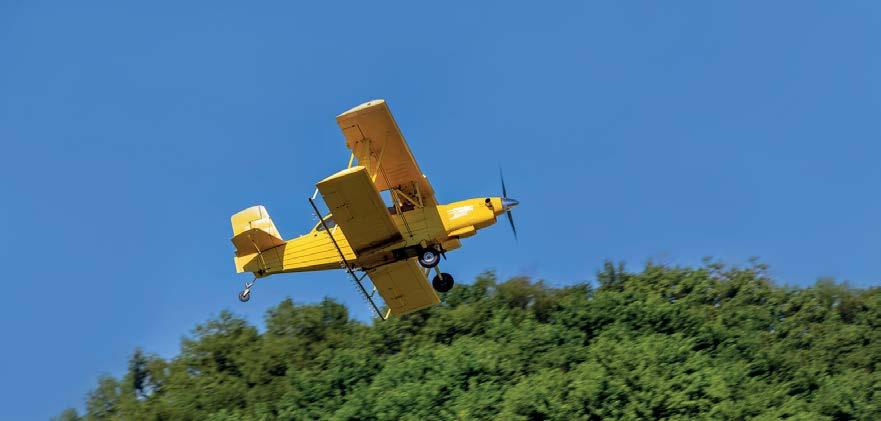
Low-flying crop dusters can combat pests, safeguarding fields and ensuring healthy crop yields.
the Basel Convention regulates the transboundary movement and disposal of hazardous waste.
Domestically, agriculture operates within a highly regulated crop protection regime. This includes strict requirements for labelling, application standards, maximum residue limits and record-keeping. The Fertilizers, Farm Feeds, Agricultural Remedies and Stock Remedies Act (Act 36 of 1947) serves as the primary legislation governing the registration of agricultural remedies, supported by extensive regulations.
In addition, broader legislation plays an important role. The Occupational Health and Safety Act (Act 85 of 1993), along with the 2021 Regulations for Hazardous Chemical Agents, governs worker safety. Environmental oversight is largely provided by the National Environmental Management Act (Act 107 of 1998), which ensures pesticide use aligns with environmental protection and sustainable practices.
Agriculture is inherently a long-term endeavour, and sustainability lies at the heart of every farming operation. ESG principles, when effectively implemented, have the potential to enhance productivity, drive value addition, improve export competitiveness and strengthen climate resilience.
However, resource constraints remain a signi cant challenge to broader adoption. As highlighted by Herman de Kock, executive head of mid-corporate at Nedbank: “Farmers can only implement environmentally sustainable practices if they are economically sustainable. That’s where ESG strategies and nanciers play a valuable role.”
The agricultural sector is committed to responsible food and bre production and to advancing ESG practices. To fully realise these ambitions, however, continued support, both nancial and structural, will be essential to enable farmers to adopt and sustain best practices in an increasingly demanding environment.
Follow: Annelize Crosby www.linkedin.com/in/ annelize-crosby-69835a1a
Women are leading change in South Africa’s dairy industry, breaking barriers in farming and leadership while fostering innovation and resilience. By IVOR PRICE
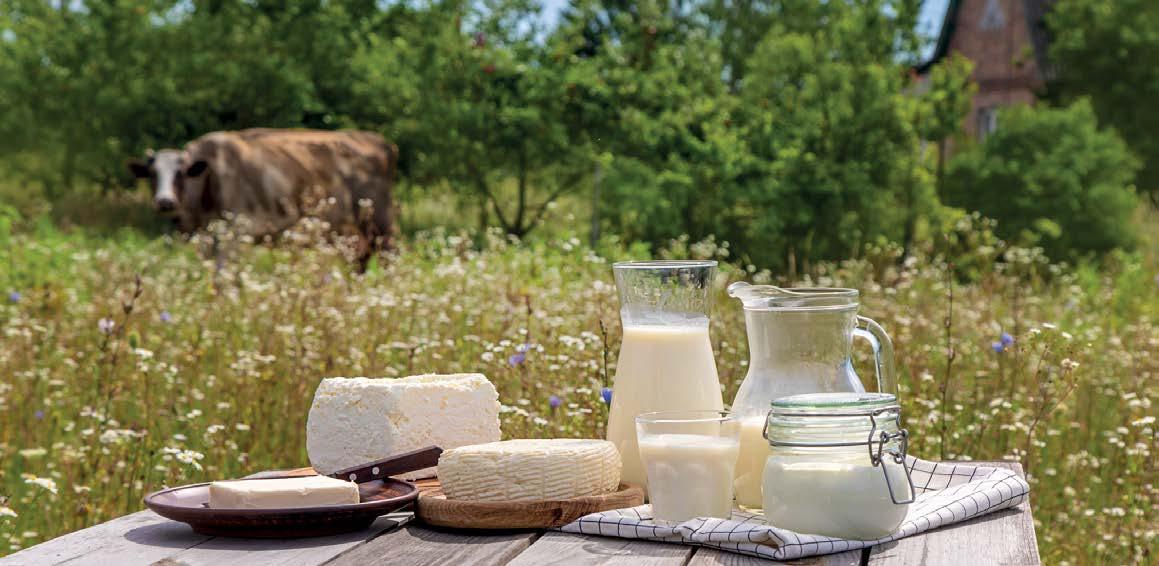
In South Africa, the dairy industry is often seen as a straightforward chain of production: milk ows from farm to factory to store shelves. Behind every litre of milk, every wheel of cheese and every bottle of yoghurt are people whose work sustains the industry. Women are increasingly stepping into roles that have long been dominated by men, both on farms and in leadership positions.
Helen McDougall, chief executive of cer of Woodlands Dairy, has spent over two decades in fast-moving consumer goods (FMCG) roles at companies such as Mars South Africa and Danone South Africa, before joining the dairy sector. Her path into FMCG was unexpected. She initially pursued medical research, moved into medical sales and later transitioned into consumer-focused roles, where her career truly began. Over the years, leadership revealed a deeper purpose in developing and empowering others.
McDougall says women’s growing presence is reshaping the dairy industry. “Inclusive leadership will play a key role in strengthening food systems, ensuring resilience and supporting long-term sustainability, affordability and accessibility,” she explains.

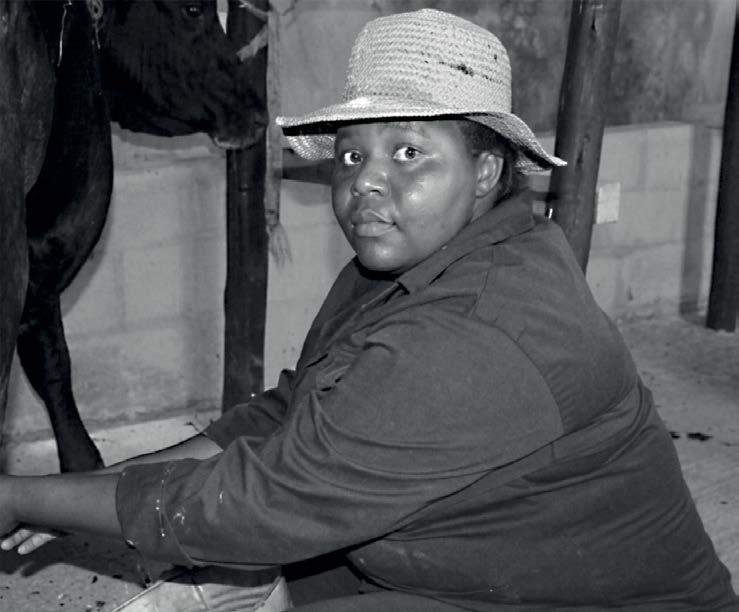
That in uence starts on farms, where women are proving that resilience and leadership go hand in hand. One example is Thando Molefe at Fifehead Dairy in Lidgetton, KwaZulu-Natal. Molefe begins her day before
In the production of ce, Charlize Nel, a lab technician, adds that women bring precision and innovative thinking to processes historically dominated by men. Drivers like Precious Leotlela and Letta Zwane demonstrate that mindset often outweighs physical ability.
McDougall re ects on the value women bring to leadership. “Women often bring strong emotional intelligence, empathy and collaboration, qualities that are increasingly critical in today’s business environment. Leading with both strength and compassion has been a powerful approach in my own journey.”
dawn. “By 04:30, I am checking the cows, milking them and making sure they are healthy,” she says.
The work is physically demanding, and accidents are a real possibility. “Sometimes cows kick me in the hands. I have been injured, and it can be scary, especially when you are new and shy,” she admits. Each day brings lessons. Molefe has learned to identify illnesses, monitor milk quality and care for animals through every stage of production. She notes the importance of humility and respect. “If you respect the cows and your colleagues, they will respect you. It makes working with others so much easier.”
Apprenticeship programmes across South Africa, supported by the National Skills Foundation, help young women gain these crucial skills. They build con dence alongside technical expertise, giving women a foothold in commercial agriculture.
Hands-on farm work is just one entry point. Women are making their mark across the dairy value chain, from delivery trucks to lab analyses, administration and executive leadership.
Tip-Top Milk, director Anika Niehaus says her leadership focuses on prioritisation.

At Milk knowing what matters most
“Strength is not about doing everything yourself. It is about knowing what matters most and doing it well,” she says. Michelle Hoffman, a creditors clerk, blends warmth and professionalism in daily interactions with suppliers.
The stories of female farmers echo themes of determination, mentorship and innovation. In the Free State, Beauty Mokoena manages her family’s dairy farm. Her journey began helping her father with basic tasks, which sparked a lifelong interest in agriculture. A diploma in primary agriculture from Maluti TVET College provided the technical foundation she needed to manage animal health, production schedules and nances.
Despite limited access to land and nancing, Mokoena dreams of turning her farm into a pro table business. She urges young people from rural areas to take agriculture seriously, noting that passion and determination are critical in an environment where employment opportunities are scarce. Her story re ects the broader reality for women across South Africa, where determination and strategic thinking are essential to succeed in commercial dairy farming.
WOMEN ARE INCREASINGLY STEPPING INTO ROLES THAT HAVE LONG BEEN DOMINATED BY MEN, BOTH ON FARMS AND IN LEADERSHIP POSITIONS.
In the Eastern Cape, Sinokuphile Kekezwa exempli es this on a larger scale, overseeing 2 400 cows on a 600-hectare farm at Ncora Dairy. “Being a black, young, female manager requires a thick skin,” she explains. “You have to deal with people who remind you every day that they have been here longer than you. But I always say, yes, that may be true, but I am still your boss, and that is where the story ends.”
Kekezwa grew up immersed in farming, helping her father with livestock, and later gained formal training in animal science and through internships, including a year in New Zealand. She mentors younger women, believing that lifting others strengthens the industry.
a whole. “The role of women in the dairy industry will continue to expand across the full value chain, from production and research to leadership and operations. As more women step into decision-making roles, the industry will bene t from more diverse perspectives, stronger collaboration and more sustainable, forward-thinking approaches.”
This commitment to nurturing talent is visible not only on farms, but also in factories, where women are rising through the ranks and shaping the industry from the production oor up.
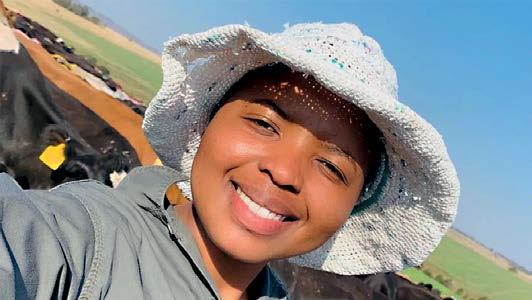
Starting small is another lesson Kekezwa shares. When she could not immediately establish a commercial dairy operation, she began a poultry business during the COVID-19 lockdown in 2020. By focusing on a manageable scale, she could build experience, structure and a future business model that could expand into larger ventures. Her advice to young farmers is practical and patient: “Be willing to start at the bottom and understand that it is going to take time.”
McDougall highlights the signi cance of these individual journeys for the sector as
Pamella Dzindikwa started as a cleaner at Puglia Cheese in Somerset West, Western Cape, and became production manager under the guidance of founder Davide Ostuni. “I had little experience at rst, but my determination and willingness to learn set me apart,” she recalls. Dzindikwa oversees the technical aspects of cheesemaking, from pH levels to adjusting cultures, ensuring quality in every batch. Winning the Hollard Game Changer Award in 2025 recognised her impact and ability to innovate while guiding others.
McDougall notes that creating an environment where talent can grow is central to industry leadership. “Strong business performance and a positive, inclusive culture are deeply connected. My leadership style is collaborative and empowering, grounded in empathy while maintaining a
clear focus on accountability and results. Beyond policy, it’s about intentional action; fostering an environment where people feel supported, heard and empowered to contribute in their own authentic way. Removing barriers and challenging limiting mindsets are essential to building a truly inclusive culture.”
Under McDougall’s guidance, Woodlands Dairy is shaping the future of the sector. The company is expanding across Africa and growing its presence in international markets with health-focused, value-added products. Innovation, sustainability and social impact are priorities, from high-protein functional products to reducing carbon emissions, improving packaging circularity and investing in communities.
“I am driven by growth, whether within an organisation or in the people I’ve had the opportunity to coach and develop. Seeing progress and results, particularly in others, is deeply rewarding. Since taking on the role at Woodlands Dairy, my focus has been on positioning the business as one of Africa’s most admired dairy companies,” she says.
From the farm to the boardroom, women are rede ning South Africa’s dairy industry. Their stories show that resilience, mentorship and leadership go hand in hand, creating an industry that is stronger, more inclusive and ready to meet the challenges of the future.
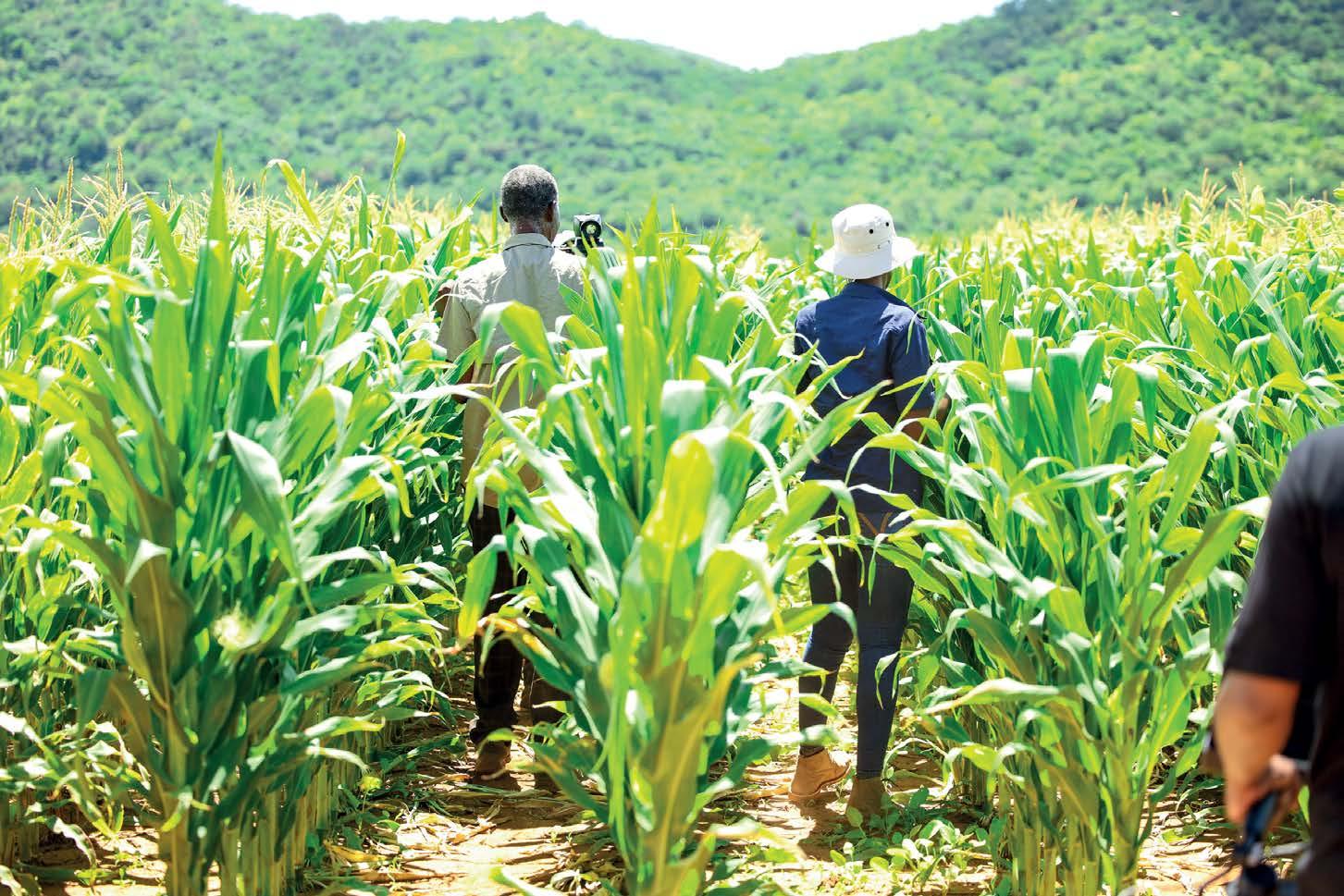
In a world facing food shortages, it is more vital than ever to improve crop yield and nutrition. New breeding techniques offer genomic improvements that will help meet increasing food demands. By CORTEVA AGRISCIENCE
Gef cient, more precise and alternatives to traditional breeding, enabling speci c genomic improvements, without introducing foreign DNA into the nal product.
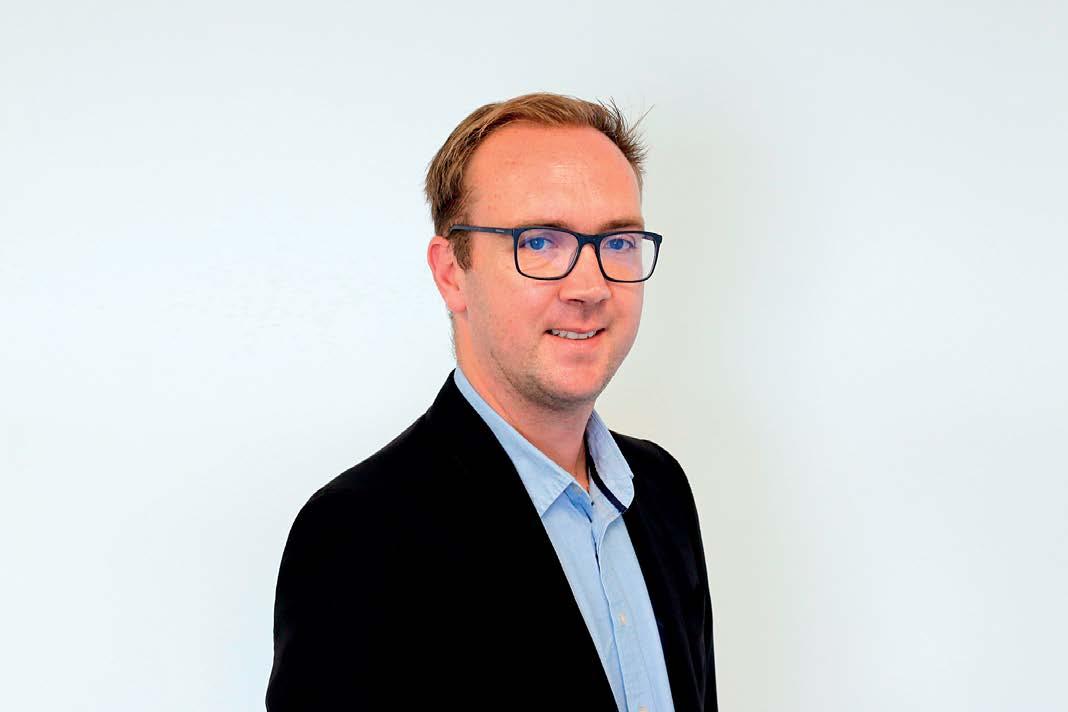
Driaan Bresler, AME seed product development lead at Corteva, notes that various techniques are used for this, with producers selecting from wild progenitors and using technology to select the relevant traits and improve crops to help meet increasing food production demands.
“The aim is to be more sustainable, while producing strong yields and healthier foods, as well as ensuring food is more affordable. Gene editing is a modern plant-breeding
Driaan Bresler
approach focused on making targeted improvements in plant DNA. We have advanced to the point where we know which genes control things like growth and disease, so it is now possible to create the speci c variation we want without needing
knowledge to improve them naturally,
thousands of genetic maize types, but we can take the genes from one plant in a certain area that is resistant to disease and insert this into a plant elsewhere that is
He adds that in South Africa, farmers are under a lot of pressure, facing threats like climate variability, drought, heat stress, various pests and rising production costs.
“Staying at the forefront of this technology allows for more variation and better yield for farmers’ crops. To this end, we have research centres countrywide that design plants to overcome challenges speci c to that region. For example, the eastern side of the country suffers from certain disease pressures, so we have implemented a trial network that screens for major diseases and understands how these interact with genetics. We trial these in on-farm conditions.
“Then in the west, the challenges are greater around heat and drought stress, so we have targeted locations that select plants with traits that can handle these conditions and test them in on-farm conditions, too. By understanding the stress responses of plants at a genetic level, we can improve these responses, leading to better yields.”
Bresler notes that on-farm testing is vitally important and is the foundation on which Corteva has built its genetic potential. “Equally crucial is the data foundation that we use to develop our expansive next-generation technologies,” he explains.
“Essentially, every new hybrid plant we create, we have DNA sequencing data around this, alongside data regarding its in- eld testing,” says Bresler. “Combining these two datasets and running them through arti cial intelligence (AI) and predictive analytics technologies allow us to model and predict how genetic variants will react in speci c environments.
“Of course, we can today create an immense amount of genetic variation –somewhere in the region of one million new types – and we obviously cannot test all of these in- eld, which is where AI and predictive analytics come in, as they assist us in understanding things like climate and speci c weather conditions like El Niño (a key climate signal that helps scientists anticipate weather risks). By running all these numbers correctly, we can signi cantly reduce the numbers we need to test in- eld.”
regulations govern this sector, all designed to protect consumers. These laws are science-based, and Corteva works with a range of government departments, including Health, Labour and Agriculture, to ensure its products are authorised and approved.
“Among these regulations is the GMO Act, which is a risk assessment of all GMOs produced in South Africa to ensure consumption safety and minimal impact on the environment. Then there is the National Environmental Management Act (NEMA) and
“WE USE THE PLANT’S OWN GENETIC MATERIAL, MAKING SMALL, PRECISE EDITS TO ITS EXISTING DNA TO IMPROVE TRAITS SUCH AS DISEASE RESISTANCE – WITHOUT INTRODUCING GENES FROM OTHER PLANTS.”
–
DRIAAN BRESLER

GMO foods involve a scenario where scientists insert foreign DNA into the plant –taken from an entirely different species – to add a new trait to the original plant. For example, DNA from a bacterium is inserted into a maize plant. This helps maize express a bacterial protein that can protect the plant from an invasive insect – it is essentially using a different species to help protect the plant.
required at every stage and what it will cost them. Corteva’s gene editing tools play into this angle perfectly, as they have far fewer regulatory hoops to jump through than GMO foods do,” he says.
Of course, regulations also need to keep up with the latest developments, and ensuring the law can adapt to such fast-evolving technologies and developments is not easy, as it struggles to keep up with this speed of development.
“To this end, Corteva works closely with various industry groups across the value chain, including other technology developers, the farmers and others, to consider what is coming down the line that may impact South Africa,” Machaba explains.
“We then engage with the authorities and ask them to consider any potentially impactful evolution as early as possible. This makes it easier for the authorities to develop a policy that is t-for-purpose, and can properly accommodate these evolving biotechnologies in the local market,” he concludes.
For farmers, he continues, there are multiple bene ts. Notably, this approach ultimately leads to more consistent yields, even under tough climatic conditions, as well as reduced losses, increased productivity and fewer problems with diseases.
Kulani Machaba, regulatory lead for Africa at Corteva, explains further that several
“With gene editing, however, it is about editing the plant’s existing DNA to cultivate speci c positive traits. Here, for example, some genes create ‘background noise’ that may impact something like drought tolerance, but we can switch these genes off to quiet this ‘background noise’.”
Regulatory clarity is key for investors – it provides the con dence to play in this arena as they understand from the outset what is

For more information: https://www.corteva.com/za
From research to on-farm training, industry bodies are investing in people to secure and build on the success of South Africa’s fruit and wine industry.
By JENNIFER BOOTH
South Africa’s fruit and wine sector has ourished over the past two decades, becoming one of the country’s most notable agricultural achievements.
Today, South African producers export to over 100 countries, supported by favourable growing conditions, advanced production practices and strong industry co-ordination, while continuing to supply local markets year-round.
At the core of the industry are its people. To empower the next generation to maintain this growth, industry associations prioritise research and skills advancement.

These efforts are re ected in a wide range of programmes led by the Citrus Growers’ Association (CGA), Hortgro, the South African Table Grape Industry (SATI), South African Subtropical Growers’ Association (Subtrop) and the Fresh Produce Exporters’ Forum (FPEF) under the
Fruit South Africa umbrella. In addition, South Africa Wine drives skills development within the wine and brandy industry.
Fhumulani Ratshitanga, chief executive of cer of Fruit South Africa, explains that collaboration across the value chain is important to strengthen development programmes.
“Stakeholders, particularly government, play a crucial role in maintaining conditions that enable the sector to expand, create jobs and support the inclusion of previously disadvantaged participants,” says Ratshitanga. She notes that continued growth relies on essential support structures, such as ef cient port operations, reliable infrastructure and an enabling policy environment.
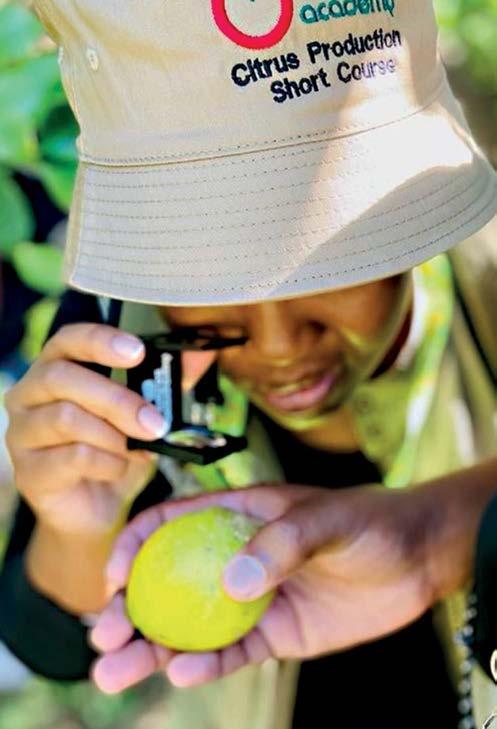
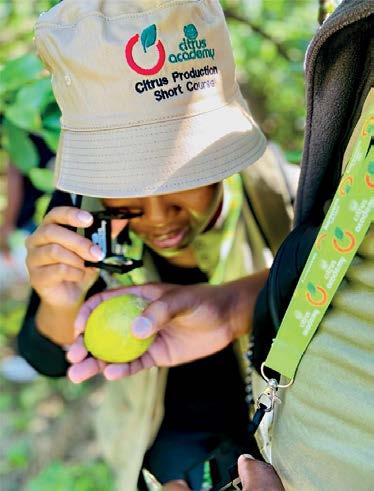
The Citrus Academy, established by the Citrus Growers’ Association of Southern Africa, plays a central role in developing skilled professionals as orchards expand and export markets become more competitive.

Jacomien de Klerk, general manager of the Citrus Academy, says their programmes are crafted to ensure workers and growers have the expertise to compete internationally.
“Our training spans the full development pathway into the citrus sector, from introducing school learners in citrus-growing areas to the basics of citrus production to helping new entrants transition into the workplace through the Ready-Steady-Work programme,” de Klerk explains. The academy also supports tertiary studies through bursaries in elds such as horticulture, plant science, agricultural economics and logistics.
Within the deciduous fruit industry, Hortgro’s science programmes equip growers to address
requirements, climate shifts, water scarcity and changing phytosanitary requirements.
Skills development initiatives focus on equipping farm workers, technicians and young professionals with practical training in orchard management, packing technology, food safety and leadership. In addition, the Hortgro Skills Accelerator programme supports rst-generation producers through training, mentorship and business development support.
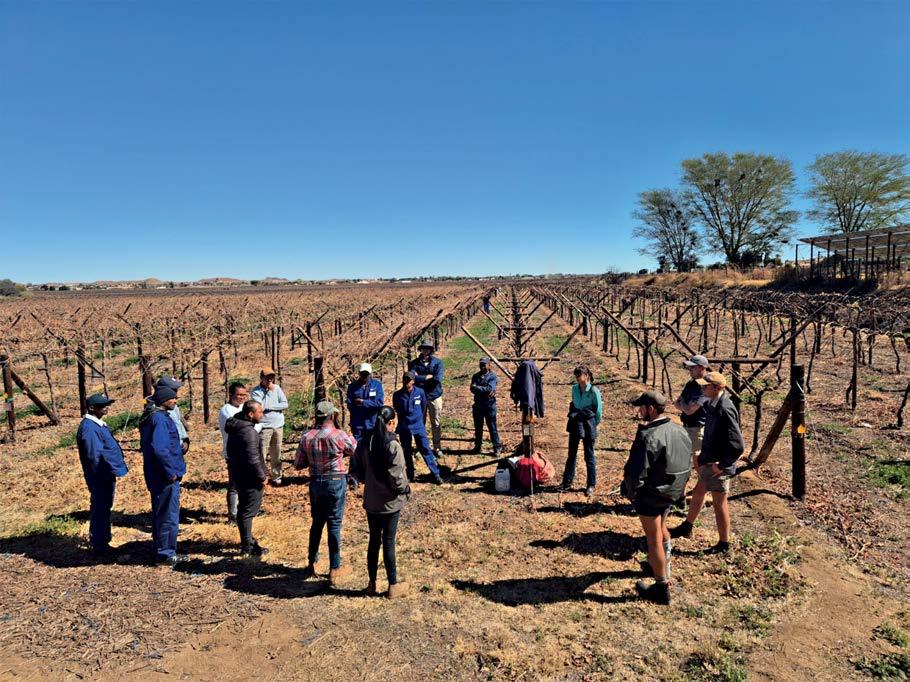
In the table grape sector, a key initiative is the Stellenbosch University Table and Raisin Grape Short Courses, delivered jointly with the South African Table Grape Industry (SATI) and Raisins SA. Accredited at NQF Level 6 and hosted by the Department of Viticulture and Oenology, the courses provide supervisors, foremen, production managers and seasoned farm workers with essential technical skills and theoretical insight for vineyard practices.
SATI’s chief executive of cer, Mecia Petersen says the industry deliberately works to make training accessible. As a result of subsidising course fees, SATI has helped over 500 participants access advanced technical training.
“Our organisation also offers bursaries aligned with the industry’s future skills needs, supporting students pursuing studies relevant to the table grape sector at South African tertiary institutions,” Petersen adds.
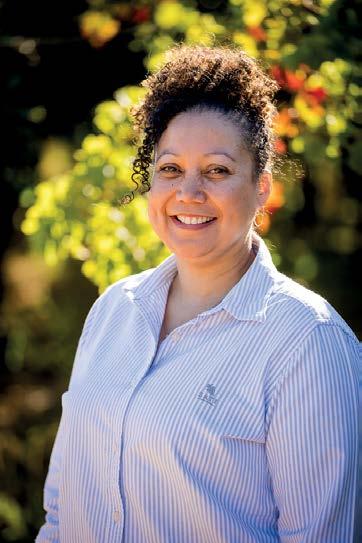
Another key initiative is the Vineyard Development Programme, which guides rst-generation farmers toward commercial viability. It is tailored for individual needs, providing nancial support to upgrade to new cultivars, thereby boosting long-term productivity and competitiveness.
“Our focus is on enabling growers to become market-ready and sustainable,” says Derek Donkin, chief executive of cer of Subtrop. Emerging growers are supported in meeting food safety, compliance and traceability standards required by formal retail markets, including through GlobalG.A.P. training. Bursaries, RecruitAgri placements and extension of cer training further strengthen their ability to supply retailers such as Freshmark, Woolworths and Pick n Pay.
As the berry industry rapidly expands and consumers increasingly seek the health advantages of superfruits, investing in young professionals becomes critical. Elzette Schutte, operations manager at BerriesZA, says: “The BerriesZA internship programme helps bridge the gap between academic training and practical workplace experience by connecting students with structured in-service training opportunities across the sector.”
Many students at TVET colleges and universities of technology face dif culty securing placements, which are vital for completing the practical segment of their studies. Consequently, many are unable to graduate, resulting in a signi cant loss of potential agricultural talent. In collaboration with Hortgro, the internship programme places students on farms and in packhouses and nurseries, where they gain hands-on experience while completing their studies.
The long-term sustainability of South Africa’s fresh produce export industry depends, in part, on the work of the Fresh Produce Exporters’ Forum (FPEF). “Our agship graduate placement programme places high-calibre black graduates in member companies across roles such as commercial operations, logistics, post-harvest technical functions and data science,” says FPEF transformation manager, Johannes Brand. Participants start on 6–12-month contracts to transition into permanent positions and develop
future industry leaders. Since launching in 2016, the FPEF graduate placement programme has placed 105 graduates in member companies. Roughly two-thirds of participants advanced to permanent roles, contributing to a more diverse and skilled export workforce.
To strengthen long-term development, the FPEF also launched the Young Professionals’ Network to help participants build skills, expand networks and grow future leaders for the fresh produce export industry.
Another key capacity-building initiative is the Harvest to Home training programme, which covers quality management, compliance, cold chain management, production, packaging, logistics, documentation and market dynamics. Since its launch in 2004, more than 1 400 individuals have been trained, resulting in improved operational ef ciency and better export outcomes.
support to emerging wine businesses, says Kachné Ross, people development manager at South Africa Wine.
Entrepreneurs are supported through practical training, including masterclasses, exposure to winemaking and viticulture, and online learning. Many participants have reported increased business con dence, more market opportunities and improved capabilities after receiving mentorship from experienced professionals. Ross notes that the goal is to equip new entrants with the skills, knowledge and networks needed to develop sustainable wine businesses.

Brand adds: “While technology supports modern supply chains, the industry ultimately depends on skilled people who can build strong relationships and deliver high-service levels, ensuring quality fruit reaches global markets ef ciently and according to customer speci cations.”

Transformation in the wine industry is increasingly focused on empowering new entrepreneurs. South Africa Wine’s Inclusion and Development department works with industry partners to deliver tangible
The story of Klein Goederust in Franschhoek highlights the impact of mentorship and industry collaboration. Owner Paul Siguqa realised his dream in 2025 when he opened Franschhoek’s rst black-owned wine cellar, supported by years of mentorship and industry partnerships. manager for inclusive growth strategies at South Africa Wine, explains that the farm stands as an example of how collaboration transforms ambition into ownership and fosters a more inclusive wine industry.
Looking ahead, further advances will depend on robust skills development, collaboration and supportive frameworks to sustain growth and expand inclusion.
Follow: Fhumulani Ratshitanga www.linkedin.com/in/fhumulani-mashau-ratshitanga-66164347
Mecia Petersen www.linkedin.com/in/meciapetersen Kachné Ross www.linkedin.com/in/kachne-ross-32a58536
Jacomien de Klerk www.linkedin.com/in/jacomien-de-klerk-14a6a635
Phil Bowes www.linkedin.com/in/phil-bowes-6aab576

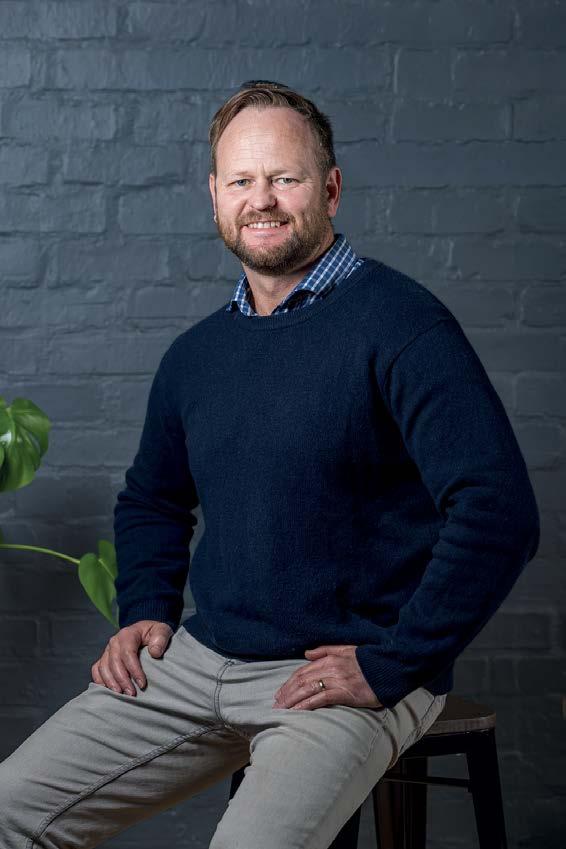
Desalination is emerging as a viable irrigation solution for South African agriculture, writes HANLIE DU PLESSIS
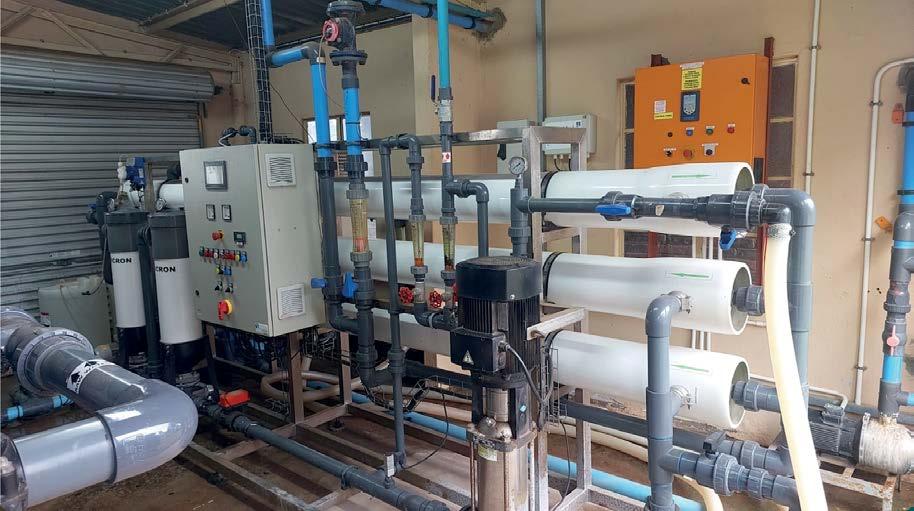
Water scarcity deepens under the pressures of climate change, population growth and rising urban demand, forcing agriculture to reconsider how it secures one of its most critical inputs: water. Desalination, once regarded as too costly and energy-intensive for farming, is increasingly being considered as a supplementary source for irrigation, particularly in water-stressed, coastal and arid regions.
Globally, agriculture accounts for roughly 70 per cent of freshwater withdrawals, placing immense pressure on already strained resources. In South Africa, recurring droughts, declining dam levels and growing urban demand are intensifying competition for water. Against this backdrop, desalination is shifting from a last-resort option to part of a broader water resilience strategy.
International experience shows what is possible, and few countries illustrate this better than Israel. Once de ned by chronic water shortages, the country has leveraged large-scale seawater desalination, wastewater reuse and regulation to achieve a level of water security that now supports urban and agricultural needs.
Today, desalination is a central pillar of Israel’s national water system, reducing reliance on natural freshwater sources while sustaining high-value agricultural exports.
Technological advances are driving this shift. Reverse osmosis, the dominant desalination method, has become more ef cient over the past two decades. Energy consumption has declined, membranes have improved and operating costs have decreased. According to the Food and Agriculture Organisation, modern desalination plants can now operate at signi cantly lower energy levels, making them increasingly feasible for agricultural use, particularly for high-value crops.
Yet the economics remain complex. Desalinated water is still more expensive than conventional sources, often by a factor of two to four. This limits its use to sectors where consistent water quality and supply justify the cost, such as horticulture, greenhouse production and nurseries.
In South Africa, desalination for agriculture remains limited. Tommie van Zyl, chief executive of cer of ZZ2, the southern hemisphere’s
largest tomato producer, is among the few farmers using the technology. The company applies reverse osmosis on a small scale in its nurseries, where water quality is critical.
“At the nursery level, desalination is crucial because it is such a concentrated environment,” van Zyl says. “But for large-scale primary agriculture, the technology is not yet viable in South Africa on its own.”
He cautions that South Africa’s energy landscape presents a major barrier. “With Eskom’s tariffs and uncertainty around future increases, desalination becomes a high-risk investment unless energy is sustainably affordable.”
Energy remains the single biggest cost driver in desalination. While renewable energy offers a pathway to reducing both costs and emissions, large-scale integration is still evolving. Without reliable and affordable power, wider agricultural adoption is likely to remain constrained.
Environmental considerations also persist. Desalination produces brine, a concentrated salt byproduct, that must be carefully managed to prevent ecological damage. Emerging approaches, including brine dilution, reuse and mineral extraction, are beginning to address these risks.
Desalination is unlikely to replace existing water sources, but rather to complement them. Blending desalinated water with surface water, groundwater or treated wastewater can improve affordability and water quality while strengthening system reliability. This, in turn, supports more stable production and supply across the agricultural value chain.
Looking ahead, desalination’s role in agriculture will depend on technological progress, energy costs and reliability, policy support and the value of crops being produced. It is not a universal solution, but in areas where water supply is uncertain and threatens agricultural viability, it offers a viable supplementary option.
As pressure on water resources continues to increase, supplementing supply from nontraditional sources will become more important. In a water-constrained future, the question is no longer whether desalination has a role in agriculture, but where, how and at what cost it can help secure production in changing conditions.
Follow: ZZ2 www.linkedin.com/company/zz2 www.instagram.com/zz2farming www.youtube.com/channelUCDAPETzyaSPu7XyfwxXxMxQ
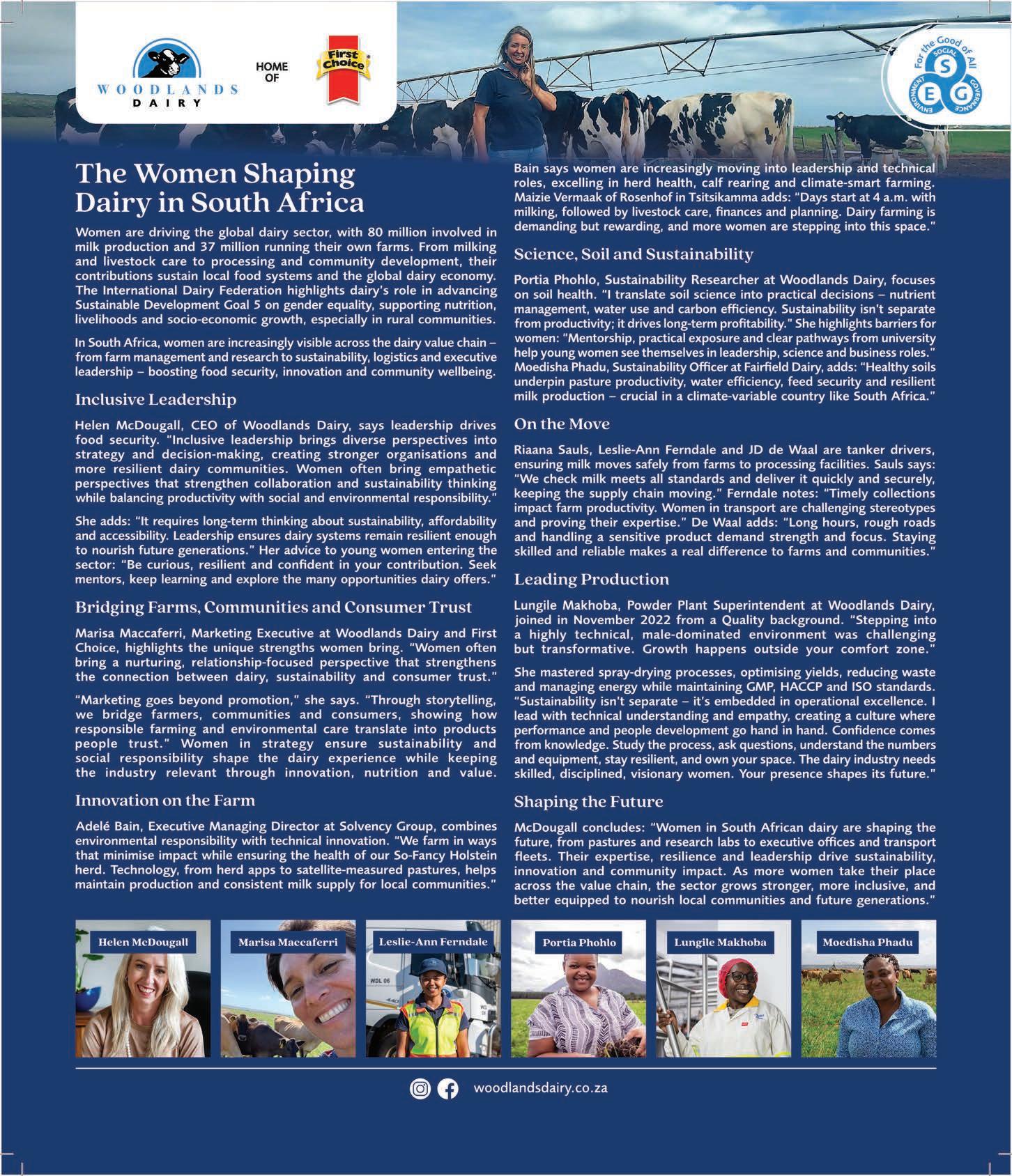
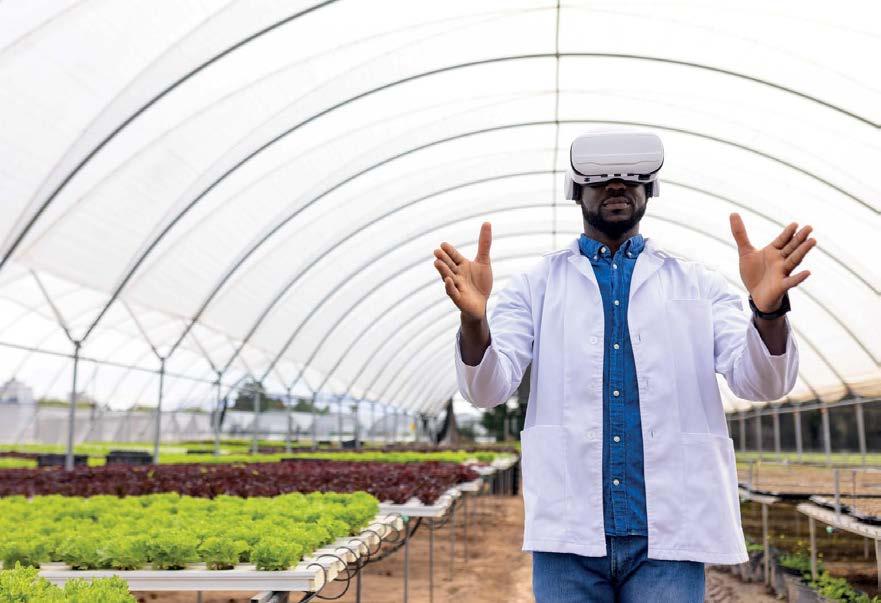
South African agriculture must accelerate innovation and embrace technology or risk falling behind global competitors, as regulatory delays and skills gaps constrain competitiveness and growth, writes Professor ALBERT STREVER from the University of Stellenbosch
South African agriculture stands at a critical juncture, and begs the question: are we enabling innovation fast enough to remain competitive in an increasingly technology-driven global market? For decades, the sector has shown remarkable resilience and competitiveness. South African producers consistently meet stringent export standards and compete successfully against heavily supported international counterparts. However, this success masks a structural, unequal reality because, unlike farmers in the European Union, the United States, China or India, South African producers operate without meaningful input subsidies or state-backed safety nets. In this context, innovation becomes the primary mechanism through which competitiveness is maintained, yet there are growing signs that the country is constraining its own progress.
Regulatory inef ciencies are among the most immediate concerns. Delays in the registration of new agricultural remedies limit access to lower-risk and more sustainable innovations, often forcing producers to rely on older, less ef cient alternatives. Similarly, the absence of clear policy direction on new plant breeding techniques, such as gene editing, creates uncertainty that undermines local research and
development efforts. While competitor nations accelerate the deployment of climate-resilient cultivars, South Africa risks falling behind.
In parallel, regulatory frameworks governing technologies such as drones remain misaligned with the operational realities of modern agriculture. Despite their proven bene ts in improving precision, reducing input use and enhancing safety, the cost and complexity of compliance continue to restrict adoption.
Without subsidies, South African producers rely entirely on innovation and ef ciency to stay competitive. We must choose our markets where we can optimise value and nd niche opportunities. When the regulatory environment slows innovation adoption, it effectively places South African farmers at a double disadvantage. These constraints are further compounded by a diminishing national capability in agricultural engineering and technical skills.
Globally, agricultural transformation is increasingly driven by interdisciplinary expertise spanning engineering, data science and biological systems. Countries that lead in this space have invested heavily in building these capabilities. The United States, for example, hosts more than 70 universities offering agricultural engineering programmes, while in Europe, agricultural engineering is
widely established, with dozens of universities across Germany, France, the Netherlands, Italy, the United Kingdom, Spain, and the Nordics offering specialised programmes focused on mechanisation, robotics and environmental systems engineering, to name a few.
South Africa, by contrast, has only a limited number of institutions offering comparable training, many of which operate under constrained capacity or within hybrid programme structures. The implications are signi cant, for instance, a reduced pipeline of engineers can limit the development of locally appropriate technologies, which, in turn, increases reliance on imported solutions that may not align with domestic production conditions or cost structures.
While there are ongoing efforts to bridge this gap, such as interdisciplinary collaboration between agricultural science, engineering and data science, these initiatives remain insuf cient in the absence of a stronger, dedicated skills pipeline.
Despite these challenges, the sector has demonstrated an ability to adapt the available technologies to local conditions, develop cost-effective solutions and respond dynamically to constraints with its “A Farmer Makes a Plan” mindset. South Africans excel at resource-ef cient, problem-driven innovation, which is not merely a coping mechanism, but also a strategic asset. With appropriate policy support, it could underpin the development of a competitive domestic agri-tech sector that encompasses locally manufactured equipment, precision agriculture tools, biological inputs and digital platforms tailored to both commercial and smallholder contexts.
However, unlocking this potential requires deliberate intervention, such as policy certainty on emerging technologies, streamlined and science-based regulatory processes and a more enabling environment for precision agriculture tools and breeding innovations. Equally important is the expansion of nancing mechanisms to support agri-tech innovation, alongside strengthened partnerships between government, industry and research institutions.
Follow: Professor Albert Strever www.linkedin.com/in/ albert-strever
Farm implements have evolved from manual tools to intelligent, data-driven systems, helping South African farmers boost efficiency, reduce costs and navigate modern agricultural challenges, writes BUSANI MOYO
Farm implements have always been more than steel and hydraulics. They re ect the farming systems, economic realities and technological capabilities of their time.
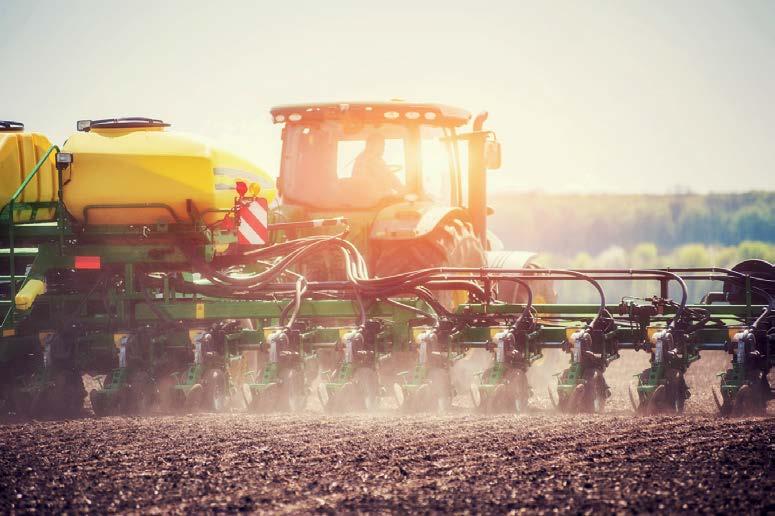
From animal-drawn ploughs and mechanical seeders to GPS-guided planters and autonomous tractors, the evolution of equipment mirrors agriculture’s shift from labour-intensive production to precision-driven ef ciency.
Before engines took over, agriculture relied on heavy, horse-drawn mouldboard ploughs and the back-breaking toil of weeding entirely by hand. This exhausting manual labour starkly highlights how far modern mechanisation has advanced.
In South Africa, that evolution has accelerated as farming systems have grown larger, become more commercial and increasingly data-driven. As those farms expand to remain economically viable, equipment has had to scale accordingly.
Derrick Coetzee, New Holland product marketing specialist, Southern Africa at CNH Industrial, says the biggest in uences on machinery design today are technology and cost savings.
“We have seen farms scaling up by using bigger machines to cover more hectares per day and also to reduce the use of labour and fuel,” he explains.
With rising input costs and tightening planting and harvesting windows, productivity per hectare and per hour is critical. Larger, more ef cient tractors and combines allow farmers to complete operations more quickly while reducing labour dependence.
While farmers cannot easily in uence input prices, such as seed and fertiliser, mechanisation offers greater control over operational expenses. “Mechanising your operation will enable you to reduce labour costs and ensure reliability,” says Coetzee. Modern equipment can also be tailored to speci c enterprises, whether grain, livestock, hay or mixed farming systems,
ensuring a closer t between machinery and operational needs.
Farm implements are no longer purely mechanical, but rather intelligent, connected systems. Precision technologies such as GPS auto-guidance, telematics and proactive adjustment systems have transformed machinery into data platforms. Telematics enable farmers to monitor eet performance remotely, offering insights into fuel use, ef ciency and maintenance requirements. This data-driven approach supports continuous improvement. Performance statistics highlight cost-saving opportunities and help improve arable land year after year. In a competitive market, precision has become essential.
Harvesting technology has also advanced beyond basic grain collection. For example, New Holland’s CR Twin Rotor combines equipped with NutriSense™ technology allow crop sampling during harvesting. This reduces reliance on certain third-party tests and provides immediate access to crop data.
“It gives the edge to have your own crop sampling data to get a better price for your harvested crop,” Coetzee notes.
introduced the T4 Electric Power, described as the rst all-electric utility tractor with autonomous features, opening a new “Utility Electric” class. The tractor delivers “powerful, emission-free and silent energy power with high torque and fast response achieved at the lowest speeds”, re ecting the industry’s move toward cleaner farming systems.
New Holland South Africa has also imported three methane-powered tractors, a rst for the country, signalling that alternative energy solutions are entering the local market. These innovations aim not only to reduce emissions, but also to address the total cost of ownership and labour shortages, key pressures facing South African farmers. Looking ahead, cost-effectiveness will remain central to equipment development.
“Technology advances daily, and with advanced machinery, the agricultural sector can create more cost-effective solutions,” says Coetzee.
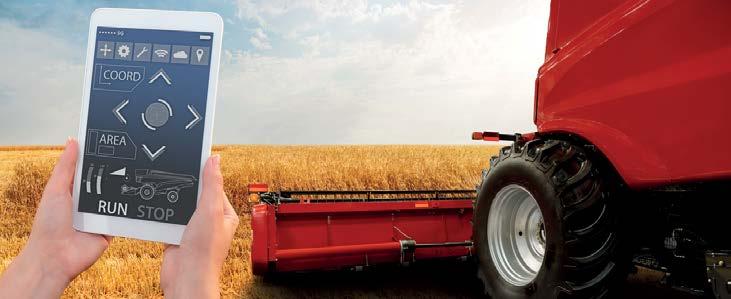
Telematics-generated yield maps reveal eld-level variability, identifying areas that require soil improvement or management adjustments in the following season. Equipment is no longer just executing tasks; it is guiding agronomic decisions.
Sustainability is increasingly shaping implementation development. Manufacturers are investing in alternative energy solutions to address environmental concerns and rising fuel costs. Coetzee reports that New Holland recently
As climate variability, input costs and market pressures intensify, machinery will continue to evolve alongside farming systems. The evolution from iron ploughs to electric drivetrains illustrate that today’s implements do more than work the land; they de ne the future of South African agriculture.
Follow: Derrick Coetzee www.linkedin.com/in/ derrick-coetzee-31111785
South Africa’s export-orientated table grape industry plays a key role in generating employment, supporting rural communities and strengthening food security, writes DENENE ERASMUS from the South African Table Grape Industry
Table grape production in South Africa comprises about 19 400 hectares planted nationally across ve production regions and 500 production units. South Africa is the fourth-largest exporter of table grapes by volume globally, according to Trademap, and enjoys a reputation as a reliable supplier of quality produce to some of the largest importing countries.
Alongside other fruit export sectors, table grapes rank among South Africa’s most globally competitive agricultural industries, supplying high-quality fruit to markets across Europe, Asia, the Middle East and North America. However, its in uence extends far beyond the farm and the export terminal. The sector plays a crucial role in national food security, rural economic development and long-term socioeconomic stability – all critical to resilience in a country with persistently high levels of unemployment and household-level food insecurity.
Although a large share of South Africa’s fresh fruit production – including 95 per cent of table grapes – is destined for international markets, the local impact of this export orientation is profound. The fruit industry, as represented by the umbrella body Fruit SA, supported an estimated 320 000 on-farm jobs in 2024, accounting for around 35 per cent of all agricultural employment and nearly 2 per cent of South Africa’s total employment base.
The table grape industry provides employment across the Western Cape, Northern Cape and northern production regions. With labour-intensive activities ranging from vineyard management to packhouse operations, table grape farming creates both permanent and seasonal opportunities.
This drives income generation in communities where alternative employment options are limited. In 2024, the industry provided nearly 105 000 employment opportunities – about
14 300 of which were permanent. As table grapes are often a dominant agricultural activity in these regions, the industry plays a pivotal role in sustaining local economies, stabilising rural households and supporting essential services. If one considers that each worker typically supports about four dependants, the fruit industry plays a direct role in the livelihoods and food security of more than 1.2 million South Africans. In a food-insecure country, stable employment and a reliable income are among the strongest determinants of whether families can consistently access nutritious food. In this respect, the fruit export sector is both an agricultural contributor and a social stabiliser.
The industry generates substantial economic value for South Africa. Table grape exports contribute signi cantly to foreign exchange earnings, while adding to domestic economic activity through a large value-chain footprint.
Table grapes are an important contributor to agriculture’s share of gross domestic product. As one of the top ve horticultural industries, by value, the sector continues to drive growth, investment and competitiveness within the country’s agricultural economy.
The sector stimulates local economies in multiple ways. Wages earned by farmworkers and packhouse staff circulate through rural towns, supporting local retailers, clinics, transport providers and service businesses. Investment in new vineyards, packhouses and cold-chain facilities stimulates secondary sectors, such as construction, logistics and agricultural services. These economic linkages create a powerful multiplier effect that strengthens regional food security through improved income stability.
The industry’s investment in social development also contributes meaningfully to community resilience and long-term food security.
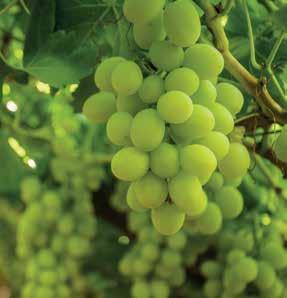
Many table grape producers invest in early childhood development, after-school programmes, educational support, bursary schemes, nutritional initiatives and general worker welfare. Partnerships between industry and local developmental organisations and international retailers’ corporate social responsibility programmes provide childcare, community development, literacy programmes and various social support-structures.
The table grape industry, and the wider fruit sector, in uences all three of the base pillars of food security: availability, access and affordability.
By creating stable, labour-intensive employment, it ensures that thousands of households can purchase food consistently. Export earnings stimulate economic stability and support broader agricultural con dence, while industry investment in human development improves long-term income potential.

Foot-and-mouth disease is affecting how meat reaches your plate, and ultimately, what you pay at the checkout, writes DEWALD
OLIVIER, chief
executive officer at Red Meat Industry Services
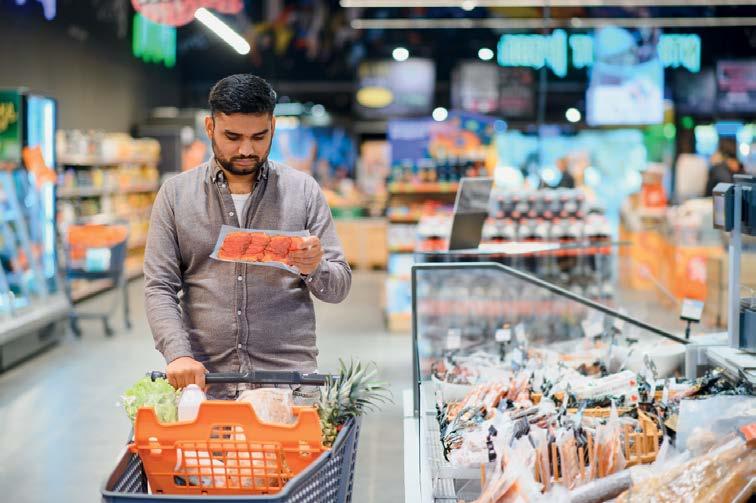
When food prices rise, every item in the trolley matters – especially meat. Meat remains one of the most important sources of nutrition in South African households, which is why foot-and-mouth disease (FMD) is drawing attention beyond the agricultural sector.
Fortunately, South Africans can be con dent that FMD does not pose a health risk. Red meat supplied through established value chains is safe to eat, with consistent checks and controls that are part of standard practice to protect quality and food safety, not only during outbreaks.
The impact of FMD on consumers is mainly economic. FMD affects how livestock move through the supply chain and how ef ciently meat reaches the market. This is where price pressure starts.

When an outbreak occurs, authorities implement control measures to limit the spread of the disease. This restricts how and when animals can move through the supply chain, causing delays. As this imbalance moves through the system, supply and demand fall out of sync, prices become more volatile, and consumers start to feel the impact. Prices are not set by any single organisation in the value chain. They are shaped by supply and demand across the market.
When supply is disrupted or uneven, prices adjust accordingly.
Even when the situation begins to stabilise, the system does not reset immediately. It takes time for the normal ow of livestock and meat to settle back into a consistent rhythm. Until that balance is restored, some level of price pressure can remain.
PRICE CHANGES DURING AN OUTBREAK ARE USUALLY LINKED TO SHORT-TERM SUPPLY DISRUPTIONS, NOT LONG-TERM SHORTAGES. AS THE SYSTEM RECOVERS, SUPPLY IMPROVES AND PRICING
To protect both the value chain and consumers against disruption and price volatility, the red meat industry came together in 2022 and aligned around the Red Meat Industry Strategy. The strategy focuses on strengthening how the system functions, with a clear emphasis on resilience, co-ordination and long-term sustainability. Red Meat Industry Services (RMIS) is responsible for developing and implementing these systems across the value chain. In the case of FMD, the RMIS traceability platform allows trade to continue under controlled conditions, helping to minimise disruption and reduce pressure on consumers.
Planning around specials instead of xed shopping habits and comparing prices across retailers can also make a difference. Buying in bulk when prices ease and freezing portions for later use can help reduce pressure over time.
It also helps to understand that price changes during an outbreak are usually linked to short-term supply disruptions, not long-term shortages. As the system recovers, supply improves and pricing stabilises.
The response to the current outbreak has shown that better co-ordination is possible. Government, veterinarians and industry organisations are working more closely to manage the situation and improve how the system responds.
The focus now is on containing the disease. At the same time, work is underway to improve how the system functions and reduce the impact of disruption on consumers. Over time, a more stable and co-ordinated system will help keep supply steady and prices more predictable.
As efforts continue to stabilise supply, there are practical ways for households to manage rising costs. Consumers who are open to different cuts of meat often nd better value.
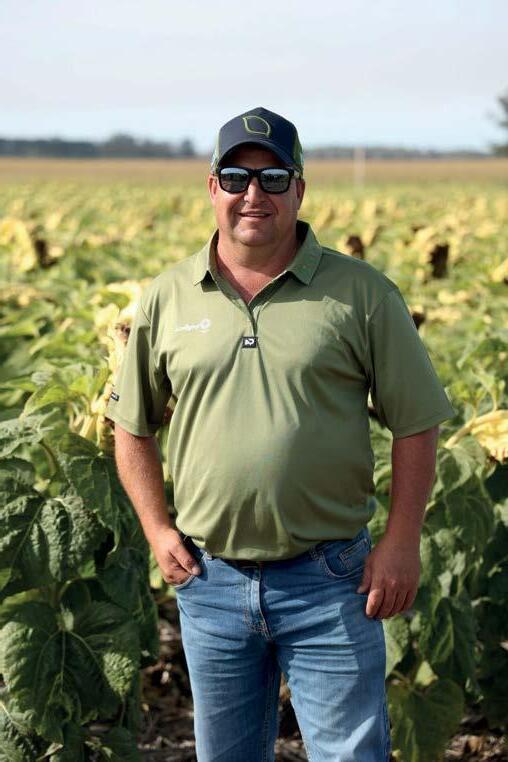
Riaan Taljaard
In today’s complex agricultural environment, farmers need to shift from a production-focused to a pro t-driven mindset to thrive. For decades, on-farm decision-making revolved around selecting inputs and applying them to chase yields. However, to survive today, farmers need a new approach to pro tability, ef ciency and sustainability.
“As farmers we need to root our decision-making to sustainable and pro table outcomes. We need to focus on long-term resilience and return on investment,” says Riaan Taljaard, Hoopstad farmer and 2025 grain producer of the year nalist.
Taljaard adds that discipline, meticulous record-keeping and planning based on market information are crucial for on-farm sustainability.
“You need to realise the potential of every kernel you plant by optimising all inputs. Equally important is to do the right thing at the right time while managing costs and risks.”
Risk management can be a daunting task, says Louis du Toit, manager NWK Financing. “When markets are dominated by volatility and associated uncertainty, ef cient management in the grain market is paramount for producers. To manage movements in the grain market, it is crucial that a producer receives transparent information and follows the right strategy to hedge risk.”
Alf White, group chief nancial of cer at NWK, says farmers need to understand the available marketing options and use them wisely. “A well-thought-out and nancially reasoned marketing plan is an important

Heleen Viljoen, senior economist at Grain SA, says sound nancial planning and a forward-looking operational strategy are critical, especially looking back over the past ve years, where extreme volatility in the market and even the climate have become the norm.
She notes that the nalisation of grain marketing contracts adds to pro tability.
“Planting and harvesting time are important for marketing decisions.
Farmers must shift to profit-focused strategies, using smart planning, cost control, market insight and technology to improve resilience, efficiency and long-term sustainability, writes MAGDA DU TOIT
Usually, grain contracts are used to hedge price risks. Physical delivery can be used to hedge a price position, but delivery can only take place after the physical grain has been harvested, for which the peak period for summer grain is between April and July.”
Dawie Maree, head of information and marketing at FNB Business – Agriculture, says the rule of thumb is to x one-third of the planned harvest at planting, one-third mid-season, and one-third at harvest. What is important is to have a hedging strategy and again involve the experts working with this daily.”
On the production side, du Toit adds that producers must not blindly chase yield, but rather focus on determining the costs to obtain certain levels of production. “Yield is good, but how you get there is more important, and keeping an eye on margins is even more crucial.”
Maree advises farmers to consider involving specialists in nancial planning. “When it comes to nancial requirements, things
change rapidly, especially regarding tax, so involve people who know what they are doing. Farmers must use the experts at their disposal to make informed decisions. Budgets should be focused on pleasing the bank manager, but should also be a living document for monthly comparison between income and actual expenses. All variable and xed costs of production should be considered, even living costs.”
Du Toit says resource evaluation adds much value. “If you apply all resources optimally, pro tability is the natural outcome. Farmers must know what they want to do, why they are doing it, and how the plan will come together. Short-, medium- and long-term planning will determine the overall long-term strategy.”
Maree concludes by noting that using the right technology at the right time can be a game-changer. “Used correctly, technology can be a useful tool, but wrong applications can be expensive and wasteful. Use what you can manage and afford and what is applicable to your farm and situation.”
Follow: NWK Limited www.linkedin.com/company/nwklimited Dawie Maree www.linkedin.com/in/dawie-maree-65ab118 Heleen Viljoen www.linkedin.com/in/heleen-viljoen-56280b1b0
Agriculture is evolving beyond traditional inputs and outputs. Success is increasingly de ned by visibility, predictability and control. As operations scale and supply chains become more complex, agricultural businesses must move beyond reactive management towards a more connected, intelligence-driven approach.
At Power eet, we see this shift as fundamental. Whether in- eld, in transit or at the point of delivery, organisations need to understand not just what is happening, but why and what to do next. True operational resilience is built on real-time insight across every asset, every movement and every decision point.
In agriculture, particularly in sectors such as fresh produce, dairy and cold-chain logistics, product quality is directly tied to environmental conditions. Even minor temperature deviations can lead to spoilage, nancial loss and reputational damage.
Traditional temperature monitoring methods are often manual, inconsistent and reactive. This creates signi cant risk, as issues are typically identi ed only after damage has occurred.
Connected cold chain solutions change this dynamic. By enabling real-time, continuous temperature monitoring across storage, transport and distribution, agricultural businesses gain full visibility into the condition of their goods at every stage. Wireless sensors track temperature inside trailers, containers and storage facilities, while automated alerts are triggered the moment conditions fall outside de ned thresholds.
This shifts operations from reactive to proactive. Instead of discovering spoilage after the fact, teams can intervene immediately, protecting product quality, ensuring compliance and safeguarding revenue. Automated temperature logging also creates a complete audit trail, supporting regulatory requirements and strengthening customer trust.
In practical terms, this means a farming co-operative transporting perishable goods can
identify a refrigeration failure mid-route, take corrective action instantly and prevent an entire load from being lost.
While maintaining product integrity is critical, ensuring safe and ef cient delivery is equally important. Agricultural logistics often involve long distances, time-sensitive deliveries and challenging road conditions. Without real-time visibility, delays, inef ciencies and risks can quickly escalate.
Last-mile delivery, in particular, presents unique challenges, ranging from traf c congestion and route inef ciencies to limited visibility into driver behaviour and delivery timelines.
Power eet addresses this through AI-powered on-road intelligence. Solutions such as advanced dashcam solutions monitor driver behaviour in real time, detecting risks such as fatigue, distraction or unsafe driving practices before incidents occur. These systems trigger immediate alerts and provide video evidence for coaching, enabling organisations to proactively improve driver performance and reduce accident risk.
When combined with a uni ed platform, this intelligence extends beyond safety. Agricultural businesses gain a connected view of vehicles, trailers and cargo from warehouse to nal delivery, enabling better route optimisation, accurate delivery tracking and improved customer communication.
The result is not just safer operations, but more reliable, predictable and ef cient delivery performance.
What differentiates modern agricultural operations is not the presence of technology, but how effectively it is integrated. Disconnected systems create blind spots while uni ed platforms provide clarity.
By consolidating data across assets, eets and environmental conditions, agricultural businesses can move from fragmented
decision-making to a single, connected view of operations. This enables smarter resource allocation, improved ef ciency and faster response to emerging risks.
More importantly, it allows organisations to anticipate problems before they occur – whether a temperature deviation, a safety risk or a delivery delay.
The future of agriculture will not be de ned solely by production, but by the ability to operate with precision, agility and control. As supply chains become more complex and expectations continue to rise, connected intelligence is no longer optional; it is essential.
At Power eet, we enable agricultural businesses to embed safety, visibility and ef ciency into every layer of their operations, from eld to eet and through to nal delivery. If you’re looking to protect product quality, enhance safety and gain real-time visibility across your agricultural operations, connect with Power eet to explore how our solutions can help you operate more smartly, reduce risk and drive sustainable growth.


In farming, success rarely happens by chance. It starts long before a seed is planted or the first raindrop falls. Looking ahead allows producers to make decisions that will shape their future successful harvests, writes OMNIA
Omnia partners with producers to nd the best way to achieve success.
Through its Nutriology ® model – the science of growing – it supports producers through every phase of the season, helping them understand their soil, track crop performance and make con dent, informed decisions from planning to harvest.
“Since partnering with Omnia, I’ve gone from strength to strength,” says Attie Smook, a farmer from Sannieshof.
For Smook, success starts with surrounding himself with the right expertise. He has partnered with Omnia for more than a decade, a relationship that’s grown from professional support into a partnership of trust.
Through regular visits and engagements with his Omnia agronomist, Anton Schulenberg, every conversation becomes part of a shared plan. One that combines experience, data and foresight.
“Schulenberg is invaluable to me. We talk at least once a week. Sometimes it’s about rainfall or soil conditions, sometimes just to check in. If you don’t have a trusted partner, things can go wrong,” Smook says.
Across the country, producers are proving that the best yields start long before the season even begins.
“We do things much more scienti cally these days,” says Johan Schickerling of Bosbult near Delareyville. “To ensure future success, you have to embrace new ideas.”
Working closely with his Omnia agronomist, Schickerling begins each season with a detailed analysis of the previous crop performance. This is supported by new soil chemical and physical analysis, which provide insights into nalising the plan for the season ahead.
“Our plan is based on the data and insights from the previous season and the trusted guidance of our agronomist. That’s what Nutriology ® means to me, real science behind the advice. This approach enables crops to handle stress better and produce optimally,” Schickerling says.
For him, planning is also the producer’s greatest form of risk management. “You can’t control the rain, but you can control how ready you are for whatever the season brings.”
For Hoopstad producer Pieter van den Berg, planning ahead was instrumental in negotiating the challenges that go with farming.
“Omnia’s agronomist helped me rebuild my soil and make better crop management decisions. From then onwards, things improved year after year.”
By applying the Nutriology ® model, van den Berg turned depleted soil into elds producing nancially viable yields.
“When I started farming, our soil pH was 4.5. It’s now 6.1, which is ideal for root development, enabling our plants to absorb water and nutrients optimally. Once your soil is right, the rest falls into place,” explains van den Berg.
One thing that will never change is that farming will always come with risk. From droughts to market shifts, the amount of uncertainty can make the job seem impossible, but planning ahead turns that same uncertainty into opportunity.
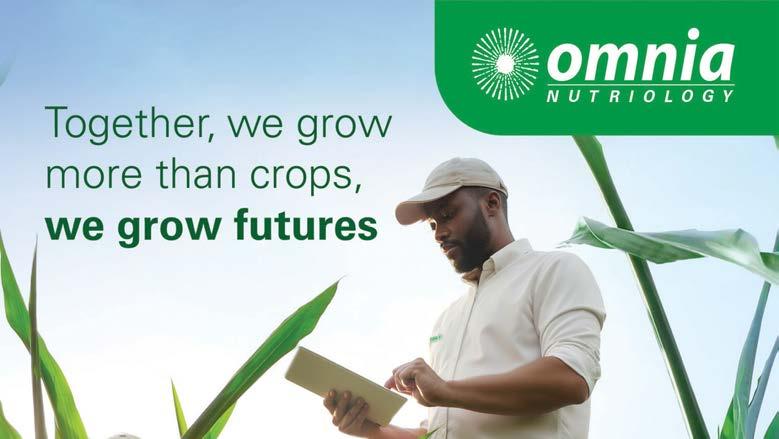
At Omnia, planning is more than a process. It’s a partnership built on science, timing and trust. When producers and agronomists plan together, they grow more than crops.
They grow knowledge. They grow con dence. They grow futures .

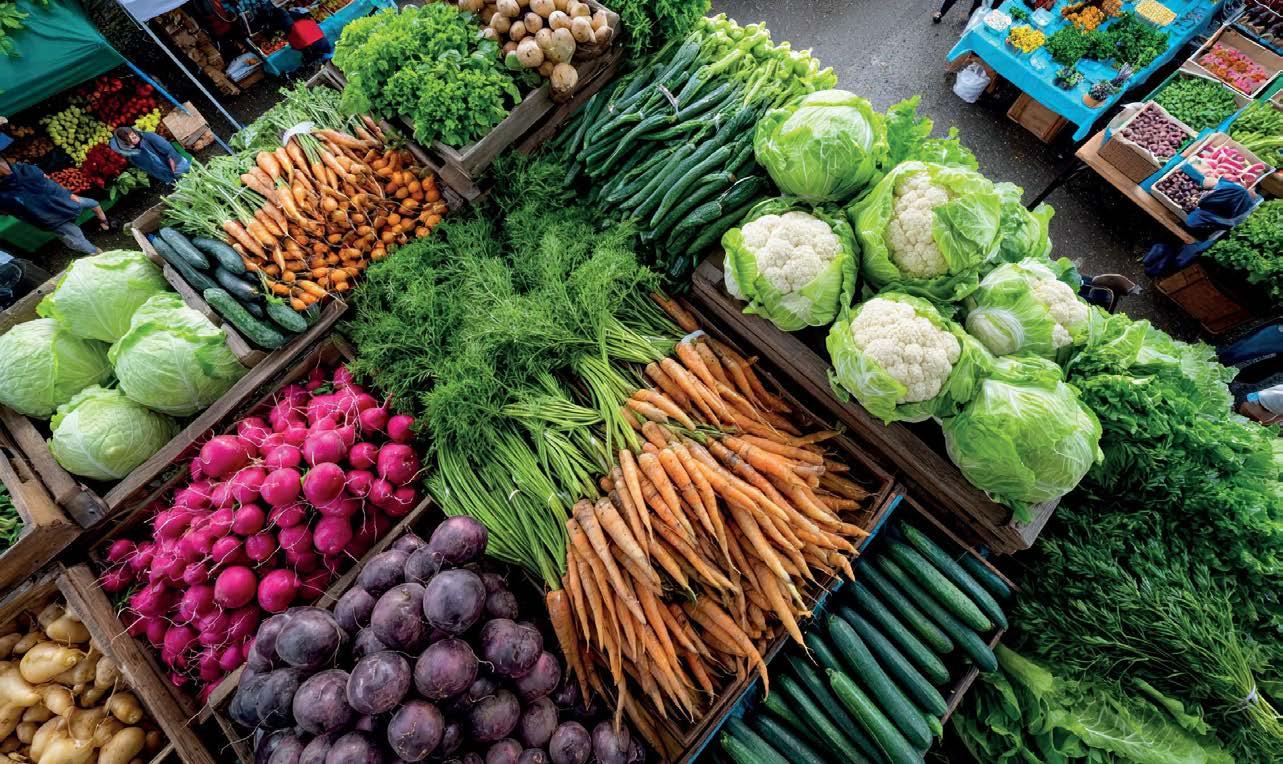
Food safety goes beyond fear, rooted in rigorous science, regulation and monitoring. From farm to plate, strict systems, testing and global standards ensure food remains safe, reassuring consumers daily. By ELRIZA THERON
When people hear the words food safety, their minds often jump to headlines about contamination, pesticides, or “chemicals in food”, which is understandable because we are so connected with our food. Just the act of sitting around the dinner table with loved ones or preparing a meal for your family goes far beyond basic nutritional value and survival – it is rooted in a deeply meaningful and personal experience. Experts working behind the scenes in agriculture, toxicology and food regulation say that the reality of food safety is far more reassuring than many people realise.

Modern food safety systems are built on layers of science, regulation and monitoring designed speci cally to protect you, mostly with wide margins for safety. The food safety
process starts on the farm long before our food reaches the supermarket.
Elise-Marie Steenkamp, group manager of communication at Hortgro, which represents the pome and stone fruit producers of South Africa, says producers follow detailed systems to ensure crops are grown responsibly and safely. “One widely used approach is integrated pest management, which focuses on incorporating a mix of targeted interventions to ensure pest populations do not cause unacceptable harm.”
She adds that most farmers must also comply with strict certi cation systems, such as GlobalG.A.P. or SIZA, which require them to document everything – from fertilisers used to pest control methods and residue testing of the nal product – and they undergo regular independent audits. This means that by the time food reaches your plate, it has already been monitored, tested and veri ed multiple times.
Tom Murray, technical manager for produce and horticulture at Woolworths. notes that there seems to be some public misconception that a good agricultural system is one without pesticides, or that all players in the industry should be trying to
become pesticide-free. He explains that pest management is a routine part of farming, and pesticides help to ensure crops go from eld to fork, which is particularly important in a food-insecure country like South Africa. “Of course, at Woolworths, we are measured and rigorous in our application of best practice when it comes to the use of pesticides in our value chain. We’re guided by legislation and ongoing research, and our consistent residue testing.”
Many consumers are concerned about the concept of pesticide residues, but experts stress that the term itself can be misleading. A maximum residue level (MRL) is often misunderstood as a safety limit when in reality, it is not a threshold for harm, but rather a legal standard set far below levels that could pose a risk to human health.
Paula Bester, food safety specialist at the Citrus Growers’ Association of Southern Africa, explains >

that MRLs are established using scienti c data and meticulous calculations to ensure no consumer harm occurs in the short or long term. “An independent, international scienti c group, the Joint FAO/WHO, conducts risk assessments based on all data submitted for national registrations of agricultural remedies worldwide, as well as all peer-reviewed scienti c publications.” She adds that, before MRLs are set, scientists determine levels like No Observed Adverse Effect Level, the highest dose that causes no harm, Acceptable Daily Intake, which refers to how much can be safely consumed daily over a lifetime, and Acute Reference Dose, relating to what can be safely consumed in a single day or short period of time (like a single meal). In South Africa, MRLs are gazetted by the Department of Health and are based on product registration data submitted under Act No. 36 (The Fertilizers, Farm Feeds, Agricultural Remedies and Stock Remedies Act No. 36 of 1947). “Factors such as dietary intake of all groups in the population, including the most vulnerable, food variety and consumption patterns in the speci c country are also taken into account,” Bester adds. The amount of residues legally permitted on food are routinely tested by analytical chemistry experts using extremely sensitive equipment. These values already include large safety buffers, often 100 times lower than levels shown to have no effect in studies, meaning when food complies with MRLs, it is operating well within conservative safety margins and is more than
To put this into perspective, Dr Gerhard , director of the Griffon Poison Centre, provides an example for everyday scenarios, for example, tomatoes. He says the average South African consumes, on average, 12kg of tomatoes per annum or 0.033kg per day.
The South African MRL for mercaptothion is set at 3 mg/ kgs. He explains that, using an example of an adult weighing 72kg, it will be technically impossible for any scenario of observable risk to materialise. “Similarly, for staple foods like bread, even unusually high residue levels would require extreme consumption, such as eating several loaves per day, every day, to approach levels of concern.” He adds that these scenarios are intentionally exaggerated to test safety margins. “In reality, actual exposure is much lower,” he says.
Kobus Hartman, an agricultural consultant with nearly ve decades of experience, reiterates the importance of integrated pest management and the responsibility across the value chain to ensure safe food production. In fruit production, he says, producers are held responsible for testing residues, and buyers insist on it, rejecting produce that does not comply with the required standards.
Another key point experts emphasise is that food safety standards are not designed for the “average” adult but rather to protect everyone. When scientists calculate safe exposure levels, they consider children, pregnant women, elderly individuals and people with higher consumption patterns. In other words, if food is deemed safe under these standards, it is safe for the entire population, not just healthy adults.
Food safety systems are not static either, they are continuously reviewed and updated. MRLs and regulations are regularly reassessed based on new scienti c data, changing diets, and improved testing methods. This ongoing process ensures that standards remain relevant and protective as new information emerges.
Perhaps most importantly, experts want consumers to feel con dent, not fearful, about the food they eat. Food safety is one of those invisible systems we rarely think about, but behind every apple, tomato or loaf of bread is a network of scientists, farmers, regulators, and inspectors working to ensure it is safe.
From a retailer’s perspective, Murray echoes this: “Residue testing is highly sophisticated and precise, and our residue testing protocols are aligned against our commitment to the highest levels of food safety. At Woolies, we test for pesticide residue across product categories and ranges to ensure all our food products are in line with our high expectations. We also test often, not because we believe there is necessarily a need for constant testing, but rather because we value the data and what we can learn from it. Consumers may have a fairly narrow view of residue testing, but it’s vital to understand that the science in this regard is advanced and the results produced are accurate.”
Hartman adds: “Besides the additional safety margins catered for when setting MRLs, there should be no exceedance to begin with as long as the products are used as prescribed by the registered product label. It is very similar to medicine,” he explains, while reiterating that the mere presence of a substance is not an indication of danger.
The key takeaway is not that risks do not exist, but it is important to remember that those risks are not the norm, and they are carefully managed, measured and minimised using some of the most robust scienti c frameworks available.
So, the next time you pick up fresh produce or prepare a meal, you can do so with a little more understanding and a lot more peace of mind.
Follow: Elise-Marie Steenkamp www.linkedin.com/in/elise-marie-tancred-steenkamp-7922058b
Paula Bester www.linkedin.com/in/paula-bester-835a81209
Dr Gerhard Verdoorn www.linkedin.com/in/dr-gerhard-h-verdoorn-99540388

Viral diseases are reshaping agriculture, spreading faster and wider than ever before. Strong biosecurity, early detection and prevention are critical to protect livestock, trade and long-term food security. By
Viral disease is no longer merely a periodic threat to agriculture; it is a constant one. From foot-and-mouth disease to avian in uenza, outbreaks are increasing in frequency, scale and impact, exposing weaknesses in biosecurity, trade systems and on-farm management.
It often begins quietly. A normal day, livestock moving through routine tasks, the steady rhythm of a working farm. Everything appears to be in order, yet beyond what can be seen, something shifts: viruses.
For decades, agriculture has focused on productivity, ef ciency and scale. However, more connected and intensive systems have increased exposure to biological risk. Viruses move without warning, adapt quickly and exploit gaps in management. Scientists and veterinarians increasingly refer to this as the “century of viruses”.
The idea that disease is distant no longer applies. COVID-19 showed how quickly disruption can affect labour, supply chains and markets, with direct consequences for agriculture.
South Africa is currently experiencing the worst foot-and-mouth disease (FMD) outbreak in its livestock industry’s history. Worldwide, FMD remains one of the most serious production
HANLIE DU PLESSIS
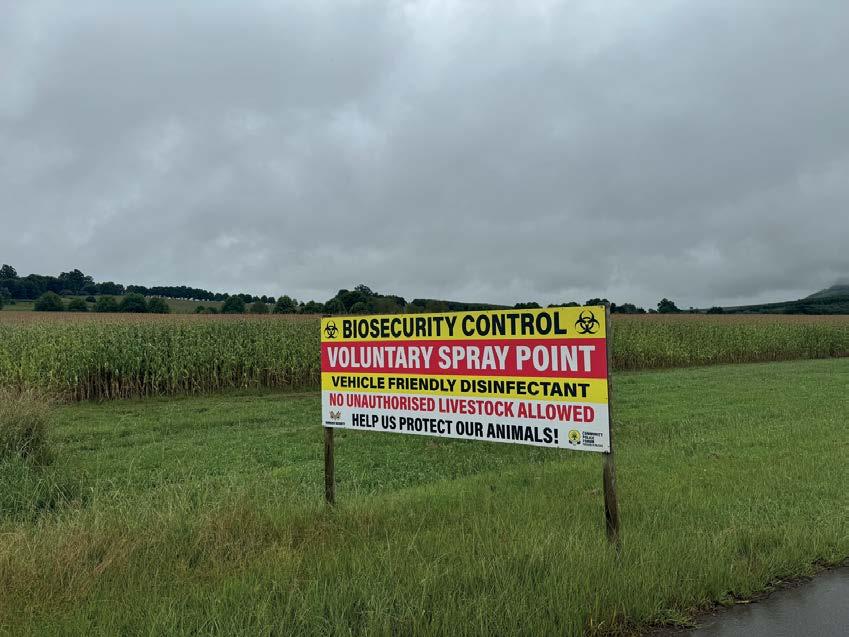
threats. It spreads through air, clothing, equipment and animal movement, and can halt trade and reduce farm income within days.
It is not only FMD. Other viruses are also spreading. Lumpy skin disease has moved into new regions, supported by changing climate conditions and insect vectors. Globally, avian in uenza and African swine fever continue to disrupt poultry and pig production systems, with signi cant trade and food security implications. Endemic viruses, such as bovine viral diarrhoea, infectious bovine rhinotracheitis and respiratory diseases, continue to affect production and animal health. These trends are not isolated, pointing to sustained pressure on animal health systems.
Dr Mark Chimes, animal health and welfare programme manager and veterinary advisor for Milk SA , says several factors are driving this shift:
• High-density production systems enable faster transmission once infection occurs. Shared airspace, equipment and close animal contact increase exposure.
• Global trade introduces additional risk.
Animals, genetics, feed and equipment frequently move across borders, raising the likelihood of pathogen introduction.
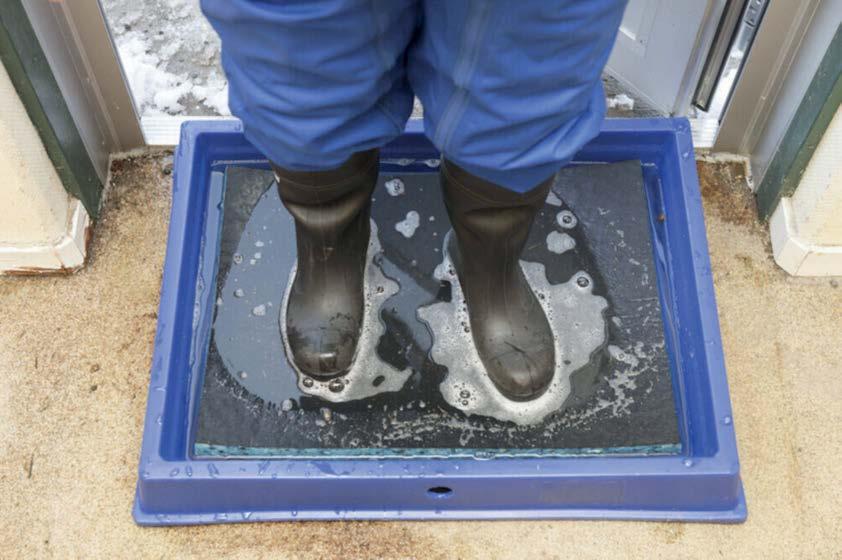
Footbaths are a simple but critical biosecurity measure, helping prevent the spread of disease between farms via contaminated footwear.
Climate change is in uencing disease patterns. Warmer temperatures extend the activity of vectors such as ticks and biting insects, allowing diseases to spread into new areas.
• Production pressure reduces resilience. Animals under stress, or facing nutritional or environmental challenges, are more susceptible to infection.
• Viruses evolve rapidly, with new variants reducing the effectiveness of vaccines and control measures.
Clear biosecurity signage and disinfectant points play a key role in controlling access and limiting disease transmission.
“Responding after an outbreak is no longer suf cient,” says Dr Chimes. “The focus needs to shift to prevention.”
He adds that biosecurity is a basic requirement. Farms need controlled access points and clear protocols for people, vehicles and equipment. Measures such as disinfecting boots, logging visitors and using dedicated clothing reduce the risk of spread, but quarantine remains critical. New or returning animals should be isolated for two to three weeks and monitored before joining the herd.
He further recommends that vaccination programmes should be developed with veterinary input and based on local risk, and that a uniform approach is often ineffective. Early detection depends on observation. Changes in feed intake, behaviour, respiratory signs or production levels should be recorded and investigated. Farms must have response plans, including isolation procedures, access to protective equipment and clear communication with veterinary services.
“Keeping animals in good condition should form part of any prevention strategy,” Dr Chimes says. “Nutrition, housing, ventilation and handling all affect immune function.”
Technology can support this; for instance, monitoring systems and herd management tools can identify changes and enable faster response.
The risk environment has changed. Gaps in biosecurity, delayed responses and poor monitoring increase the likelihood of outbreaks. Where systems are robust, outbreaks can be contained, but where they are weak, consequences can be swift and severe.
Agriculture has always been able to adapt. The century of viruses demands that it does so again with sharper focus on prevention, monitoring and response and a clear commitment to protecting livestock and livelihoods.
Follow: Milk SA https://milksa.co.za


LUCINDE RHOODIE, director – Dispute Resolution practice and Agriculture, Aquaculture & Fishing sector, and LIËTTE VAN SCHALKWYK, senior associate – Dispute Resolution practice, at Cliffe Dekker Hofmeyr, unpack the vaccination challenges, government obligations and legal consequences of Foot-and-Mouth Disease
Foot-and-Mouth Disease (FMD) is a highly contagious viral disease affecting cloven-hoofed animals such as cattle, goats, sheep and pigs. While not a food safety risk to humans, FMD signi cantly harms the economy through reduced productivity, livestock losses, export restrictions and broader agricultural disruptions.
The national livestock sector, valued at approximately R80-billion, faces heightened vulnerability during multiprovince outbreaks such as the current one.
FMD remains one of the most economically devastating livestock diseases globally, and a recurring threat to South Africa’s agricultural sector. Classi ed as a controlled animal disease under the Animal Diseases Act 35 of 1984, FMD imposes extensive responsibilities on both the government and livestock owners. Recent outbreaks, which for the rst time in South African history have spread over the demarcated FMD area across provinces, have intensi ed pressure on government systems responsible for disease control, vaccine procurement and regulatory enforcement.
South Africa has recently accelerated efforts to contain the outbreak through large -scale vaccination campaigns and renewed local vaccine production. However, these initiatives have not been without

controversy, particularly regarding who may lawfully administer vaccines and the extent of state authority under the governing legislation.
The Department of Agriculture, Land Reform and Rural Development has begun administering millions of vaccine doses, including two million doses sourced from the Botswana Vaccine Institute.
At the current stage, South Africa must administer 28 million vaccine doses over the next 12 months. High-potency vaccines, including trivalent doses for SAT 1, SAT 2, and SAT 3 strains, have been imported from Argentina and Turkey, while local production is being scaled up. Private veterinarians are authorised to administer vaccines under the act, and vaccination tracking uses ear-tag identi cation for ef ciency. Provinces like KwaZulu-Natal, identi ed as the outbreak’s epicentre, have intensi ed vaccination efforts, with teams capable of vaccinating up to 90 000 animals per day.
More than 2.5 million FMD vaccine doses have landed in South Africa since late February, with millions more scheduled. The government is responsible for the payment of the vaccines. Storage facilities are prepared, and the roll-out is underway to accommodate more vaccine doses. Yet on farms across the country, frustration is mounting because the distance between a dose in a warehouse and administration of the vaccine to an animal turns out to be longer and more complicated than most realised.
Agricultural organisations, including the South African Agri Initiative, Sakeliga, and Free State Agriculture, have issued an urgent application against the government, demanding that private livestock owners be permitted to administer vaccines independently. The Minister of Agriculture warned that litigation could divert veterinary resources, slow vaccine purchases and jeopardise South Africa’s goal of regaining FMD-free status with vaccination from the World Organisation for Animal Health.
The government has emphasised that the act strictly governs the administration of
vaccines for controlled diseases like FMD, and that private administration requires regulatory compliance and proper permitting, and stressed that this dispute risks delaying vaccine distribution and diverting critical veterinary resources from frontline operations.
The matter is currently pending in our courts, and the outcome will hopefully provide a clearer pathway to combat this outbreak in the best interest of all role players.
Under the act, the government must:
•Regulate and control the spread of FMD as a controlled disease.
• Ensure vaccination protocols, movement controls, inspections and surveillance are legally enforced.
•Procure vaccines and oversee their lawful administration.
Government powers during an outbreak include that the government may:
•Enforce Disease Management Areas (DMAs) and restrict animal movement.
• Require immediate reporting of suspected cases.
•Deploy veterinary authorities for inspections, quarantines, and enforcement.
On 13 February 2026, FMD was declared a National State of Disaster, which allows faster co-ordination, mobilisation of law enforcement, release of emergency resources and strengthening of biosecurity measures.
Farmers and agricultural businesses face strict duties during an FMD outbreak, including:
A DOSE IN A WAREHOUSE AND
ADMINISTRATION OF THE VACCINE TO AN ANIMAL TURNS OUT TO BE LONGER AND MORE COMPLICATED THAN MOST REALISED.
•Restriction of animal movement and adherence to DMA protocols.
• Implementation of strict biosecurity measures.
•Proper documentation for all livestock movements.
• Co-operation with inspections and surveillance.
These duties arise directly from the act and associated regulations.
Failure by inter alia farmers to comply with the act carries signi cant penalties. Certain offences may result in nes or imprisonment of a period not exceeding seven years.
• A rst conviction may result in a ne of up to R8 000 or imprisonment of up to two years.
• A second conviction may result in nes up to R16 000 or imprisonment up to four years.
•Third or subsequent convictions may result in imprisonment without the option of a ne. Additionally, actions, such as unlawful vaccine administration or failing to adhere to movement restrictions, may constitute criminal offences under the act, and individuals will be

The outbreak has led to export bans and trade restrictions, causing signi cant nancial losses for farmers and the broader livestock industry, resulting in beef exports declining sharply and subsistence farmers reporting losses of hundreds of thousands of rands due to infected herds and quarantine measures. The government has allocated R1.4-billion to support vaccination and containment efforts. The national disaster classi cation also enables co-ordinated monitoring, reporting and enforcement of biosecurity measures, including disinfection, movement control and auction closures.
With outbreaks in the majority of provinces, the economic impact extends to:
•Loss of export markets due to FMD-related
• Increased quarantine and surveillance costs.
• Threats to commercial and communal farming livelihoods.
Legal challenges concerning vaccine administration threaten to:
•Delay procurement and roll-out processes.
•Divert veterinary and nancial resources away from containment efforts.
• Create regulatory uncertainty during a national agricultural emergency.
South Africa’s battle against FMD is not merely a veterinary or agricultural challenge; it is also a legal and administrative one. The act imposes clear responsibilities on both the government and livestock owners, and failure to adhere strictly to this framework carries substantial legal consequences.
While recent progress in vaccine acquisition, local production and strategic planning marks a turning point, legal disputes around vaccine administration highlight the delicate balance between private rights and public biosecurity. Maintaining this balance is crucial to safeguarding South Africa’s livestock sector, preserving biosecurity and restoring the country’s FMD -free status.

For more information: www.cliffedekkerhofmeyr.com

commitment to effective water governance, which could entail enhanced monitoring and increased accountability for water users, particularly high-volume users such as the agricultural sector, the largest consumer of water in South Africa.
Against this backdrop, biosignal technology, which captures real-time physiological signals from plants to assess water stress and irrigation needs, could emerge as a powerful tool not only for irrigation optimisation, but also for regulatory compliance and risk mitigation in relation to water use licensing.
Water use licences issued under the NWA typically impose conditions relating to volumetric abstraction limits to ensure the ef cient use of water and the avoidance of wasteful or excessive use. The National Water Amendment Bill seeks to strengthen these obligations by creating a stronger “use-it-or-lose-it” principle: enhancing
director – Sustainability practice at Cliffe Dekker Hofmeyr, explains how biosignal technology could play a key role in enabling compliance with water use licensing under South Africa’s evolving water law framework
THE ACTUAL CROP IRRIGATION REQUIREMENTS.
the minister’s powers to reallocate water; repealing the ability to declare existing lawful water use, thereby forcing historical users into the licensing regime; and prioritising equity, sustainability and optimisation of water use in all licensing decisions.
In practical terms, agricultural water users, particularly those who have historically relied on the existing lawful water use regime and who will now be required to regularise their water use through the water use licensing process, will be required to demonstrate, via a compulsory water use licence application process, that water is
being used ef ciently and optimally and that the volumes of water applied for are both sustainable and equitable.
Biosignal technology in the agriculture sector involves the use of advanced biosensors attached directly to plants to measure electrical, physiological and biochemical signals that indicate how crops are responding to environmental conditions, including water availability.
Unlike conventional irrigation systems, biosignal systems capture real-time plant stress responses, identify water stress before visible symptoms emerge and translate plant signals into the actual crop irrigation requirements. In real terms, biosignal technology allows the plant itself to con rm when water is genuinely required, and when irrigation would constitute an ef cient and necessary use of water or a waste thereof.
Optimisation and efficient use of water One of the express objectives of the
National Water Amendment Bill is to optimise the use of water in support of the guiding principles of the NWA. Biosignal-driven irrigation directly advances this objective by preventing overirrigation, thereby reducing further losses caused by evaporation and run-off.
Demonstrable compliance with licence conditions
Water use licences frequently require monitoring, measurement and reporting. Biosignal technology can assist by generating continuous data and auditable records of irrigation volumes based on actual crop needs, rather than speculative needs. In addition, this information can be used to support statutory reporting
to the Department of Water and Sanitation, compliance audits and licence renewal applications, thereby reducing compliance uncertainty and enhancing the prospects of a positive outcome to a new licence or a renewal application.
The Amendment Bill empowers the minister to reallocate water uses. Where agricultural users can accurately demonstrate the actual and ef cient use of water, such users are likely to be better positioned when reallocation decisions are made. Given the highlighted bene ts associated with the use of biosignal technology, it is evident that such technology can function as a
strategic risk-mitigation tool in the context of the minister's proposed new water use reallocation powers.
From a legal due diligence perspective, agricultural entities that deploy biosignal technology are better positioned to demonstrate actual water use volumes and compliance with historical allocations and pending future licensing requirements, thereby reducing the risk of regulatory red ags being raised in transactions where water use is subjected to heightened scrutiny.
The National Water Amendment Bill marks a pending yet decisive shift in the water use legal regime to be applied in South Africa. For the agricultural sector, compliance will no longer be satis ed by historic entitlements. Biosignal technology can evidently enable farmers to comply proactively with water use volume allocations, support pending water use licence applications as we move away from the principle of existing lawful water uses, support future water use licence renewal applications, and align irrigation practices with the evolving sustainability and equity objectives of South Africa’s water law framework. As water scarcity intensi es, biosignal technology could become both an ef ciency tool and a core compliance mechanism under South Africa’s water regime.
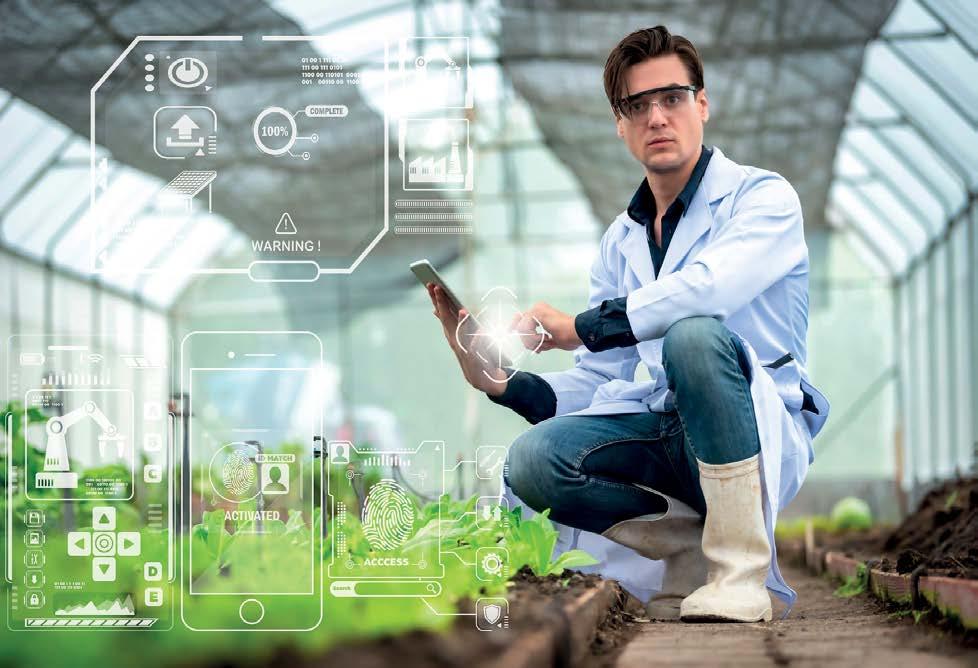

BELINDA SCRIBA , director – Dispute Resolution and Agriculture, Aquaculture & Fishing sector, and CLAUDIA GROBLER , associate –Dispute Resolution practice, at Cliffe Dekker Hofmeyr, provide an update on South Africa’s cannabis and hemp industry
South Africa stands at a pivotal crossroad in its relationship with cannabis, a plant woven deeply into its social, cultural and economic fabric for generations. With the global cannabis economy projected to surpass $100-billion by 2030, the question confronting South Africa is no longer whether to engage in cannabis commercialisation, but how to do so in a way that is legally sound, economically empowering, socially balanced and acceptable.
The domestic stakes are equally compelling. According to the Department of Trade, Industry and Competition (dtic),
the South African cannabis and hemp sector already represents an estimated R14-billion domestic market, with the government targeting 10 per cent annual growth from this existing base. The formal cannabis industry alone currently generates approximately R5.5-billion in annual revenue. Globally, demand for hemp products is rising sharply, with the hemp market projected to grow at 17.3 per cent annually between 2025 and 2032. For investors and industry participants, understanding where the law currently stands and where it is heading is essential.
Before engaging with the regulatory landscape, it is important to understand the legal distinction between cannabis, the drug, and hemp, as these two terms are often used interchangeably despite carrying very different legal consequences.
While cannabis and hemp derive from the same plant species, the critical difference lies in their chemical composition: hemp contains less THC (tetrahydrocannabinol –the compound responsible for psychoactive effects) than cannabis. Historically, South Africa applied a threshold of 0.2 per cent THC to distinguish hemp from cannabis. However, as discussed further below, the regulations to the Plant Improvement Act 11 of 2018 (the Plant Improvement Act), effective as of 1 December 2025, raised this threshold to 2 per cent THC.
This is a development that materially expands the scope of what quali es as hemp and, with it, the commercial opportunity available to cultivators and investors. The two products are also consumed for different purposes. Generally, cannabis, with its higher THC component, is used for recreation and medical consumption for its psychoactive effects (for example, relief from pain or anxiety), while hemp is used more industrially as a natural alternative to other products, such as fuel, textiles and seed-based food and nutritional products, to name a few The distinctions between the two matter enormously from a regulatory and investment perspective and are governed by materially different legal frameworks.
The Cannabis for Private Purposes Act 7 of 2024 (the Cannabis Act), signed into law on 28 May 2024, establishes a legal framework for the use, possession and cultivation of cannabis in South Africa for private purposes. The private use, possession, cultivation and consumption of cannabis for medicinal reasons is also exempted by the Minister of Health under Schedule 6 of the Medicines and Related Substances Act 101 of 1965 (the Medicines Act). Critically, however, the use of cannabis in a public space and the distribution of cannabis for commercial and recreational purposes remains illegal and constitutes a criminal offence.
FOR INVESTORS AND AGRICULTURAL STAKEHOLDERS, NOW IS THE TIME TO DEVELOP A THOROUGH UNDERSTANDING OF THE
THE POLICY PROCESS.
Importantly, while the Cannabis Act has been signed into law, it has not yet been formally promulgated. The main reason for its delayed promulgation is the delay in nalising its supporting regulations, which would prescribe the quantities for possession, cultivation and related matters. In a signi cant and recent development, however, the Department of Justice and Constitutional Development published a Government Notice (Notice R.7067, dated 2 February 2026) inviting public comments on the Draft Cannabis for Private Purposes Regulations, 2025. Comments were due by 5 March 2026.
The content of these Draft Regulations are noteworthy for several reasons. First, they propose that an adult person may possess a maximum of 750 grams of cannabis in a private or public place at any given time during the course of a single day – a gure that is considerably more generous than many anticipated. Second, the Draft Regulations propose that an adult may cultivate a maximum of ve cannabis plants in a private place at any given time, regardless of size, shape or strain. Third, the Draft Regulations include detailed conditions governing the transportation of cannabis, requiring it to be concealed from public view and imposing obligations on both drivers and passengers. Finally, and perhaps most signi cantly from a social justice perspective, the Draft Regulations introduce a formal procedure for the expungement of criminal records for cannabis-related offences under prior legislation. These Regulations signify a de nite relaxation of the rigid stance taken by the government in the past, indicating the recognition of the fact that while there needs to be control around the industry, a legal structure that allows for the opening up the industry for both its social and economic bene ts is also required.

The cultivation and commercial trade of medicinal cannabis is legal for those in possession of the relevant licence issued by the South African Health Products Regulatory Authority (SAHPRA),
under section 22C(1)(b) of the Medicines Act. The regulatory framework is rigorous: applicants must meet various compliance standards, appoint a registered nurse and submit to regular audits. SAHPRA oversees the regulated cultivation, manufacturing and export of medicinal cannabis to markets such as Europe, ensuring South Africa remains competitive in the rapidly expanding global medicinal cannabis economy.
Hemp: commercial cultivation now open –and the stakes just got higher
On the commercial hemp side, as discussed above, the Plant Improvement Act, together with its recent regulations, signi ed a landmark moment for South Africa’s agricultural sector.
In addition to increasing the THC levels permitted, this legislation also legalised the commercial cultivation, import and export of hemp with the relevant permits.
For investors, the signi cance of the increased threshold to 2 per cent THC cannot be overstated. Under the previous regulatory position, hemp was de ned as containing less than 0.2 per cent THC. The raising of this threshold tenfold to 2 per cent substantially broadens the pool of cannabis plants that legally qualify as hemp, and which can therefore be commercially cultivated, imported and exported under the Plant Improvement Act framework.
In practical terms, this means that a far wider variety of strains, including many previously caught in a regulatory no-man's land, can now be lawfully grown for commercial purposes. As stated above, the commercial applications for hemp are extensive. South Africa's climate and agricultural infrastructure are well-suited to large-scale hemp cultivation, and the country is positioned to become a meaningful exporter of hemp to global markets.
The scale of the hemp permitting programme already underway highlights this potential. Since hemp was recognised as an agricultural crop in 2022, the Department of Agriculture has >
issued 2 031 cultivation permits across the country. For agricultural investors and farmers, the commencement of this framework represents arguably the most immediately actionable investment opportunity in the South African cannabis and hemp space today.
Social and grow clubs: an unresolved question
One area of persistent legal uncertainty concerns cannabis social or grow clubs. The clubs are member-based associations, collectively cultivating and sharing cannabis for personal use, with members paying a membership/club fee.
The structure around these clubs is designed to fall within the permits of the Cannabis Act.
Section 2(1)(b) of the Cannabis Act provides that an adult person may, without the exchange of consideration per occasion, provide to or
WHILE THE CANNABIS
HAS BEEN SIGNED INTO LAW, IT HAS NOT YET BEEN FORMALLY PROMULGATED.
cultivation and distribution of cannabis in a setting that can reasonably be considered public – this is inconsistent with the Cannabis Act's clear intention to limit cannabis use to personal private consumption.
The Western Cape High Court, in The Haze Club (Pty) Ltd and others v Minister of Police and others [2023] 1 All SA 280 (WCC), refused to grant a declaratory order con rming that grow or social clubs are lawful in South Africa. The matter subsequently went on appeal to the Supreme Court of Appeal. Before this court ruled on the matter, the appeal was withdrawn, leaving the High Court judgement as the leading case on grow and social clubs. This has the effect that, while the refusal of the declaratory order does not automatically render these clubs illegal, the legal risk for operators and investors in this space is real

"aims to increase the quality and variety of cannabis being produced for local and international markets" and that "government will also be implementing changes to the policy and regulatory framework to drive investment and jobs in this sector".
South Africa's cannabis and hemp sector is evolving. The publication of the Draft Cannabis Regulations in February 2026, the commencement of the Plant Improvement Act framework and the anticipated Cannabis Commercialisation Policy all signal that the legislative deadlock is slowly, but discernibly, beginning to break. For investors and agricultural stakeholders, now is the time to develop a thorough understanding of the existing regulatory framework, position strategically and engage with the policy process.
For the time being, the key investment opportunities in the near term lie in licenced medicinal cannabis cultivation and export, commercial hemp cultivation under the Plant Improvement Act framework, and the pharmaceutical and wellness sectors.
The shifting legal environment presents both challenges and opportunities, and how policymakers, businesses and investors respond will shape the industry's outcome.
On the face of it, grow clubs therefore do not appear to be in direct contravention of the Cannabis Act – a fee is charged for membership, not for the growth and exchange of the cannabis product itself. However structured, these clubs are viewed by our courts as the commercialisation of both the
South Africa's cannabis potential is substantial. The country possesses an ideal climate, world-renowned cannabis genetics and a deep cultural heritage in cannabis cultivation. Yet, as matters stand, entrepreneurs, farmers and investors remain constrained by a regulatory framework that legalises private use but does not yet unlock commercial opportunity – a paradox that the government has signalled its
Hemp Steering Committee has indicated that a new Cannabis Commercialisation Policy is being nalised for submission to Cabinet by April 2026, and a consolidated Cannabis Bill is under development to harmonise the current fragmented legislative landscape. The parliamentary brie ng of 6 March 2026 con rmed that the overarching Cannabis Bill is expected to be introduced in Parliament
Address, President Cyril Ramaphosa stated, "we want South Africa to be leading in the commercial production of hemp and cannabis", with government subsequently con rming that the cannabis master plan
Cliffe Dekker Hofmeyr continues to advise clients across all aspects of cannabis and hemp regulation, licensing and commercialisation, and remains committed to helping stakeholders navigate this evolving landscape.
For more information: www.cliffedekkerhofmeyr.com
How the Competition Act promotes enterprise and supplier development initiatives in the agricultural sector and dovetails with the AgriBEE Sector Code and broader Companies Act requirements. By
ANDRIES LE GRANGE
director – Competition Law, at Cliffe Dekker Hofmeyr
The merger provisions of the Competition Act require parties to a merger to address public interest consideration, such as the effect the merger will have on employment, the ability of small and medium businesses or rms controlled or owned by historically disadvantaged persons to effectively enter into, participate in or expand within the market and the promotion of a greater spread of ownership, particularly to increase the levels of ownership by historically disadvantaged persons and workers in the rms in the market. These considerations must be taken into account when assessing mergers, and conditions have been imposed on many mergers to advance the public interest objectives of the Competition Act.
Similar considerations are echoed in the AgriBEE Sector Code and, in terms of the Companies Act, certain companies must establish social and ethics committees to monitor environmental, social and governance matters. King IV adopts a stakeholder-inclusive approach, requiring boards to ensure responsible corporate citizenship across workplace, economic, societal and environmental dimensions.
In the agricultural sector, there are many examples of conditions being imposed on mergers that address the public interest aspects. In the VKB/GWK merger, the merging parties undertook to “facilitate the provision of nancing, in terms of the merging parties’ applicable credit policies and relevant legislation, to historically disadvantaged persons (HDPs), in the value chains and the geographical areas where the merging parties operate”. The parties also undertook to ensure that certain workers would
become bene ciaries of the parties’ employee share schemes.
In the Senwes/Suidwes merger, a condition was imposed to the effect that for a period of three years following the implementation date, Senwes was required to advance the sum of R20-million annually in the form of production loans to black farmers, in addition to any existing loans to black farmers, in keeping with the relevant provisions of the AgriBEE Sector Code.
For the purposes of scoring under the AgriBEE Sector Code, the Code recognises loan and credit facilities made to bene ciary entities and training and mentoring to bene ciary communities as activities that comprise enterprise and supplier development contributions. The agri-industry undertook, in the Code, to provide access to inputs, credit, infrastructure, markets and technology, and support to land reform bene ciaries. The provision of nancial support would often require complementary training and mentoring activities to facilitate the repayment of the loans and the realisation of the developmental objectives of the Code.
Conditions have been imposed in various other mergers outside the agricultural sector, which seek to foster supplier development initiatives, such as support for HDP and small, medium and micro enteprise suppliers, learnership programmes for HDP youth, and skills development initiatives, such as apprenticeships and learnerships, and artisan recognition programmes. The development and implementation of such initiatives would be aligned with the broader strategic objectives of the rms concerned and serve to demonstrate their commitment to supporting the development of the economic and social ecosystems within which they operate.
It is prudent for rms in the agricultural sector that intend to embark on mergers to start considering what existing initiatives they have in place that could be harnessed to satisfy the public interest objective of the Competition Act. This is because the conceptualisation and implementation of employee share schemes or enterprise and supplier development initiatives takes time and careful consideration.
A process of consultation with role players is also required, as this is in alignment with the requirements of the relevant sector codes. Confronting these aspects for the rst time during a merger approval process may be challenging and costly; therefore, advance awareness of the various ways in which public interest considerations feature in the merger approval process is of utmost importance.
TAYYIBAH SULIMAN, head – Technology & Communications sector and director – Agriculture, Aquaculture & Fishing sector and SHANLEY WEBB, candidate attorney – Corporate & Commercial practice, at Cliffe Dekker Hofmeyr, explain how to navigate the legal landscape of agritech contracting

Tayyibah Suliman
Agricultural technology, better known as agritech, refers to the use of advanced technologies to improve agricultural production and ef ciency. Tools such as arti cial intelligence (AI), the internet of things (IoT), precision sensors, drones and data platforms are moving agriculture into a data-driven era, changing the way agricultural businesses worldwide operate.
South Africa is very much part of this shift. The country’s agritech market was valued at approximately $1.1-billion in 2025, with signi cant growth projected towards 2030. While the commercial potential is considerable, the rapid adoption of agritech also introduces new legal and contractual challenges. Data ownership, technology
partnerships, liability and regulatory compliance present new risks.
For agricultural businesses, a strategic legal approach that anticipates risk and provides contractual clarity is becoming just as important as the technology itself.
AI has been increasingly embedded in agritech solutions. It analyses data from sensors, drones and weather stations to provide real-time insights on irrigation, fertilisation and pest management.
Machine learning models advise on planting and harvesting windows. IoT sensor networks feed soil, moisture and temperature data into platforms that respond in real-time. These capabilities are becoming accessible to a far wider range of producers.
The scale and pace of innovation were illustrated at the 57th NAMPO Harvest Day in Bothaville and at NAMPO Cape 2025 in Bredasdorp. Both events showcased AI-enabled irrigation autopilot systems,
drone-based precision application and wireless solar-powered control technologies.
At the centre of much of this innovation is Stellenbosch, which is emerging as a leading hub for agricultural technology development in South Africa.
In February 2025, Telkom launched its Smart Agritech Initiative, a collaboration between Telkom, AI and IoT technology partners, Stellenbosch University and South Africa Wine. It deployed a platform enabling real-time vineyard monitoring and AI-driven yield forecasting. Telkom has positioned the initiative as a potential global model for multiparty agritech deployment.
Investor interest is growing alongside these technological developments. In March 2025, the digital agricultural platform Khula! raised R126-million in a Series A funding round led by E Squared Investments, with backing from Absa, AECI and PepsiCo’s Kgodiso Fund. The transaction marked one of the largest agritech capital raises in South African history, and re ects growing investor con dence in the sector.
GENERALLY, OWNERSHIP AND USAGE RIGHTS ARE DETERMINED ENTIRELY BY STANDARD - FORM PLATFORM AGREEMENTS.
IF THOSE AGREEMENTS VEST BROAD RIGHTS IN THE TECHNOLOGY PROVIDER, A FARMER’S PRODUCTION DATA MAY BE AGGREGATED, ANALYSED AND MONETISED WITHOUT THE FARMER SHARING IN THAT VALUE.
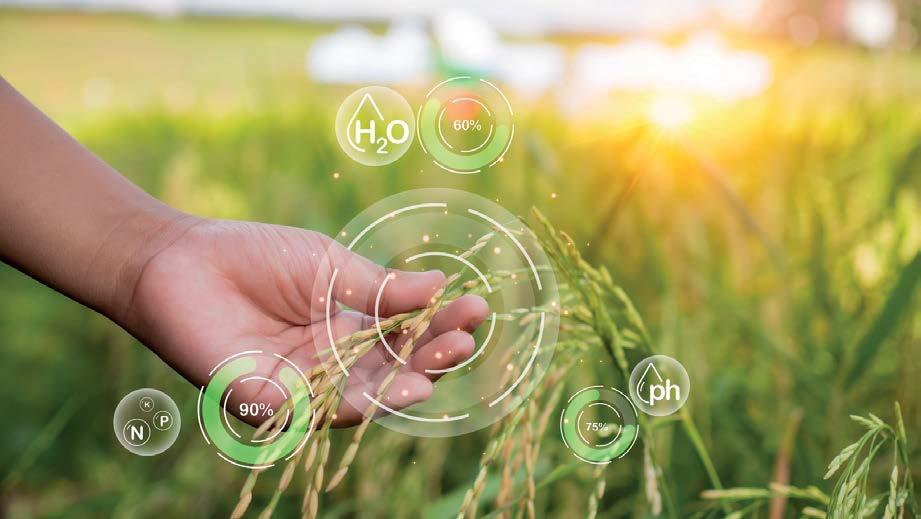
Technology can transform agriculture. Poor contracting can undermine it just as quickly.
Data ownership is perhaps the most immediate consideration. Agritech platforms generate vast quantities of data, including soil readings, yield histories, livestock metrics and crop health indicators. That data has economic value beyond a single season. Generally, ownership and usage rights are determined entirely by standard-form platform agreements. If those agreements vest broad rights in the technology provider, a farmer’s production data may be aggregated, analysed and monetised without the farmer sharing in that value.
Liability presents a second layer of risk. AI-driven platforms now generate recommendations on irrigation timing, fertiliser application, crop protection and yield forecasting. When those recommendations are wrong, the nancial consequences can be material. Does responsibility rest with the farmer who acted on the advice, the software developer whose algorithm generated it or the data provider whose inputs informed it?
In the absence of dedicated AI legislation in South Africa, responsibility is determined by the contract. Standard limitation-of-liability clauses drafted for generic software environments may not be adequate for the agricultural context. A failed crop cycle is not equivalent to a minor software malfunction.
Intellectual property is another area where assumptions can be costly. Where software or analytics tools are custom-developed, ownership does not automatically transfer to
the commissioning party. South African case law has con rmed that, without a clear written assignment, copyright may remain with the developer. For agribusinesses investing in bespoke systems, clarity on ownership and commercialisation rights is essential from the outset.
Regulation also operates in the background. The Protection of Personal Information Act 4 of 2013 (POPIA) applies wherever platforms process personal information relating to farmers or employees or supply chain participants. Data-sharing arrangements must meet the lawful processing requirements of POPIA. AI platforms making recommendations must comply with the Plant Health (Phytosanitary) Act 35 of 2024 where applicable.
If an AI system tells a farmer to apply a speci c crop protection product and that product is unregistered or incorrectly dosed, there is a regulatory consequence.
Environmental, social and governance compliance deserves particular attention. It is becoming a contractual condition embedded in export buyer agreements and linked to public funding under the Department of Agriculture’s Strategic Plan for 2025–2029/30. Modern agritech platforms rarely perform a single function. They operate as ecosystems combining marketplaces, input supply channels, data analytics and embedded nancial services that are each governed by a different regulatory framework. Agritech innovation may move quickly, but sustainable growth depends on the legal and commercial frameworks that support it.
The agritech sector presents a compelling opportunity for South Africa. As both a major agricultural exporter and an emerging technology hub, the country is well-positioned to bene t from the digital transformation of farming.
However, technology alone does not transform sectors. Governance does. The contracts, frameworks and legal certainty determine whether the agritech innovation can scale sustainably and attract long-term investment.
The legal framework enables agritech growth. And, in a data-driven agricultural economy, it is what ensures that opportunity is not only created, but also secured.


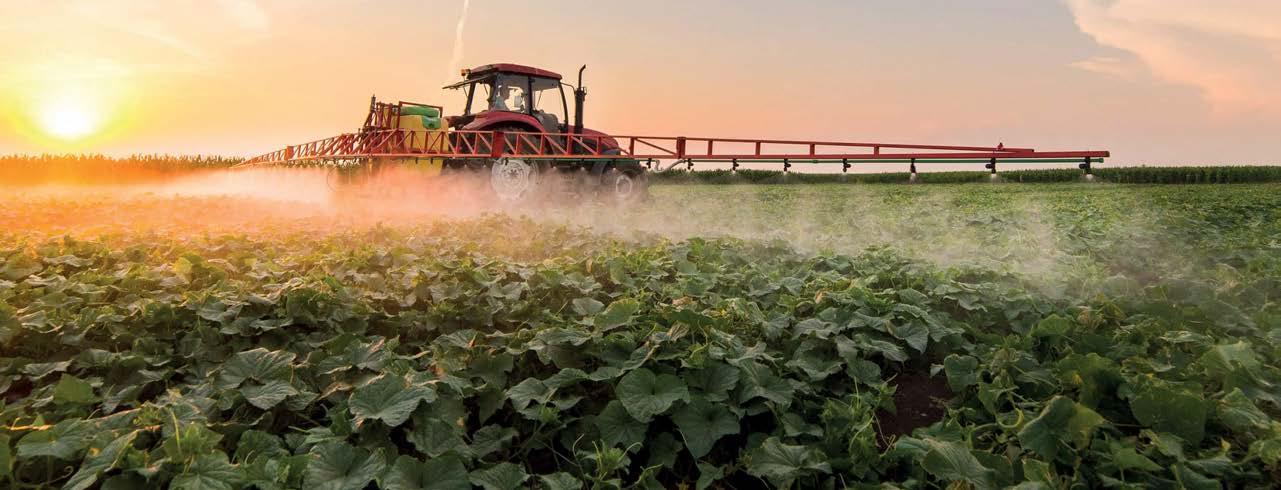
Reading and following pesticide labels ensures safety, effectiveness, legal compliance and environmental protection for everyone using these products. By
In today’s fast-paced world, it is easy to rely on quick answers and summaries rather than taking the time to read detailed instructions. While this approach may work for some everyday decisions, it can be risky when using products like pesticides. These products are speci cally designed to control pests, and when used incorrectly, they can pose risks to people, animals and the environment. This is why reading and following the label instructions is so important.
All pesticides registered in South Africa are classi ed according to the Globally Harmonised System (GHS), which identi es the level of hazard associated with each product. This system helps users understand the potential dangers of a pesticide and the necessary precautions to be taken during its use. The classi cation is not there to alarm users, but rather to inform and guide them so that they can take appropriate steps to use the product safely and responsibly.
In line with the Regulations for Agricultural Remedies (pesticides) that were promulgated in August 2023 in terms of Act 36 of 1947, every pesticide label must clearly display the phrase “READ THE LABEL BEFORE USE” in bold. This statement is not just a helpful reminder; it’s a legal requirement. Whether the product is intended for large-scale agricultural use or for household pest control, the expectation remains the same in that users must read and follow the instructions provided on the label.
There are several key reasons why this is essential.
Firstly, safety is a primary concern. Pesticide labels contain important information about the hazards associated with the product and the precautions needed to minimise those risks. These precautions are directly linked to the product’s hazard classi cation. The higher the hazard, the more stringent the safety measures. The label may include instructions on protective clothing, safe handling, storage and what to do in case of accidental exposure. It also considers the safety of others, including children, pets and wildlife. For example, rodenticides are required to be used only in bait stations to prevent unintended access. By following these instructions, users can signi cantly reduce the likelihood of harm.
Secondly, the label ensures correct and effective use. Pesticides are developed for speci c purposes, and the label clearly outlines those purposes. It will specify which pests the product is intended to control, as well as the crops, plants or environments where it may be used. If a particular pest or situation is not listed on the label, the product should not be used in that way. The label also provides detailed instructions on how to apply the pesticide, whether it is ready to use or requires dilution, and if so, at what rate. Applying too little may result in ineffective control, while applying too much can increase risks without improving results. Following the label directions helps ensure the product performs as intended.
Thirdly, the label provides guidelines for responsible disposal. After use, there may be leftover product or empty containers
that must be managed properly. The label includes instructions on how to dispose of these safely, helping to prevent environmental contamination and accidental exposure. These instructions are also legally binding, reinforcing the importance of handling pesticides responsibly from purchase to disposal.
It is also worth noting that pesticide labels are carefully developed and approved as part of the product registration process. The information they contain is based on scienti c research and regulatory requirements, making them the most reliable source of guidance for that speci c product. While online resources and digital tools can offer general information, they cannot replace the accuracy and authority of the product label itself.
Ultimately, taking a few extra minutes to read the label before using a pesticide is a simple but important step. It helps protect your health, the wellbeing of those around you and the environment. By following label instructions, users not only comply with the law, but also contribute to the safe and responsible use of pesticides.

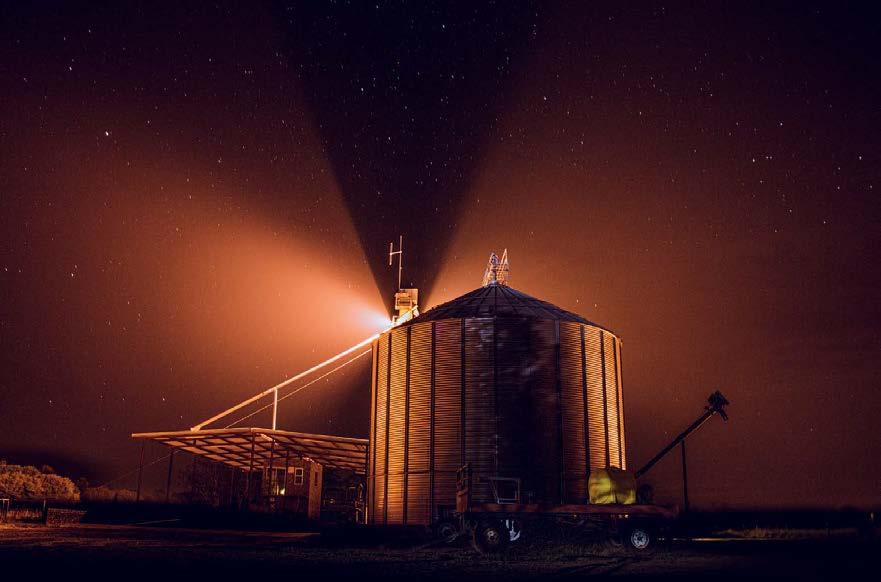
Despite the global and other challenges impacting the agricultural sector, there is opportunity and potential to unlock growth across the agricultural chain, writes GRAIN SA
South Africa’s agricultural sector nds itself at a critical in ection point. While the country’s grain producers continue to demonstrate resilience and adaptability, the environment in which they operate has become increasingly constrained. Rising input costs, global market volatility, infrastructure inef ciencies and policy uncertainty are placing sustained pressure on pro tability.
Yet within these constraints lies a clear opportunity: to unlock growth not only at farm level, but also across the entire agricultural value chain.
Growth in agriculture can no longer be viewed through a narrow lens. It is not simply about producing more; it is about creating a system that is ef cient, competitive and sustainable from input supply through to market access. Unlocking this potential requires alignment across all stakeholders, from government and industry to nanciers, researchers and logistics providers.
At the centre of the current reality is a growing imbalance between production costs and the returns producers achieve. This pro tability squeeze is not unique to South Africa, but local conditions have ampli ed its impact. Input costs remain a primary concern. South Africa’s reliance on imported fuel and fertiliser exposes producers to global
price shocks. Volatility in international energy markets continues to lter directly into production costs, with diesel forming a signi cant share of on-farm expenditure. Fertiliser, often accounting for up to half of variable input costs, remains particularly sensitive to global supply disruptions.
Domestic inef ciencies compound these pressures. Logistics constraints, from rail limitations to port congestion, increase the cost of moving grain to market, eroding competitiveness and reducing producer margins. At the same time, global grain prices have remained under pressure, limiting producers’ ability to absorb rising costs.
The result is a structural pro tability challenge that threatens long-term sustainability if left unaddressed.
The challenges facing producers are not isolated. They are symptoms of broader inef ciencies across the agricultural value chain. Unlocking growth requires a shift in perspective from individual segments operating in silos to a fully integrated system where each link is optimised and aligned. When there are inef ciencies at any point in the chain, the impact is felt across the system, ultimately affecting the producer at the centre.
Improving market transparency is one critical area. Access to reliable, timely data on
production, stock levels, trade ows and pricing enables better decision-making and reduces uncertainty. Transparent systems support both producers and market participants, contributing to a more stable and predictable environment. Equally important is the responsiveness of trade and regulatory systems. Delays in tariff adjustments or policy responses can have signi cant downstream consequences, particularly in a sector where timing is critical. A more agile and transparent policy environment would enhance con dence and support long-term investment.
Infrastructure remains another key constraint. Ef cient transport and logistics systems are essential for connecting producers to markets. Without them, gains made at farm level are undermined by inef ciencies further along the chain.
Addressing these challenges is not about isolated interventions. It requires co-ordinated action across the value chain.
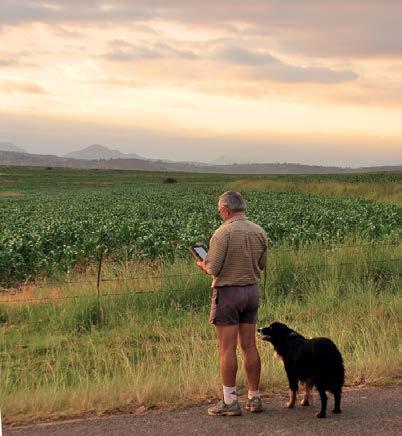
Despite the pressures, South African agriculture continues to demonstrate a strong capacity for innovation.
Producers are adopting new technologies and practices to improve ef ciency, manage risk and optimise resource use. Precision agriculture, improved seed technologies and data-driven decision-making are becoming increasingly important tools in navigating a complex environment.
However, innovation must extend beyond the farm.
There is signi cant potential to unlock growth through:
• Financial innovation: improving access to tailored funding solutions that re ect the realities of agricultural production cycles.
• Logistical innovation: enhancing ef ciency in the movement and storage of grain.
• Policy innovation: ensuring regulatory frameworks keep pace with a rapidly evolving sector.
• Research integration: aligning scienti c advancements with practical, on-the-ground needs.
South Africa has a strong research base, but the true value of research lies in its application. Bridging the gap between research, policy and implementation is essential to driving meaningful impact.
In an environment shaped by global forces, not all variables are within the control of producers or industry stakeholders. However, there remains signi cant opportunity to strengthen resilience by focusing on what can be managed.
At farm level, this includes improving operational ef ciency, optimising input use and adopting practices that enhance long-term productivity. Soil health, water management and climate-smart approaches are increasingly important in building resilience against both environmental and economic shocks.
Risk management also plays a critical role. Diversi cation, careful planning and the use of available tools and data can help producers navigate uncertainty more effectively.
At industry level, organisations such as Grain SA continue to focus on in uencing the broader environment by advocating for policy reform, engaging with key stakeholders and ensuring the voice of the producer is represented in critical discussions.
No single stakeholder can unlock growth in isolation. The complexity of the agricultural
WELL-POSITIONED TO UNLOCK GROWTH. THE COUNTRY HAS A STRONG FOUNDATION: EXPERIENCED PRODUCERS, ESTABLISHED INSTITUTIONS AND A DYNAMIC VALUE CHAIN.
value chain means that collaboration is not optional; it’s essential. Strong partnerships between producers, input suppliers, processors, nanciers and government are key to addressing shared challenges and unlocking new opportunities.
This collaboration must be underpinned by a shared understanding of the sector’s priorities. Aligning efforts towards improving ef ciency, reducing costs and enhancing competitiveness will deliver bene ts across the value chain.
There is also a growing need for collaboration at a practical level. Knowledge sharing, capacity building and collective problem-solving can strengthen resilience and support innovation.
The importance of unlocking growth in agriculture extends beyond the sector itself. A sustainable and competitive grain industry is fundamental to South Africa’s food security. It supports rural livelihoods, contributes to economic growth and ensures a stable supply of staple foods.
However, food security cannot be achieved without pro table producers. If producers are unable to sustain their operations, the entire value chain is affected. This makes it critical for all stakeholders to recognise the link between pro tability and food security and work together to support a viable production environment.
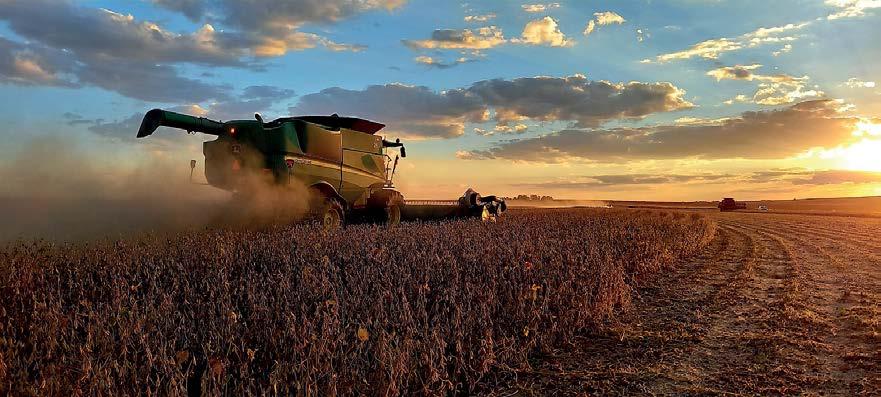
While the challenges are signi cant, South Africa’s agricultural sector remains well-positioned to unlock growth. The country has a strong foundation: experienced producers, established institutions and a dynamic value chain. There is also growing demand for agricultural products, both locally and regionally, presenting opportunities for expansion and market development.
Unlocking this potential will require a deliberate focus on improving competitiveness. This includes reducing inef ciencies, enhancing market access and creating an enabling environment for investment.
It also requires a forward-looking approach, one that embraces innovation, strengthens partnerships and prioritises long-term sustainability.
Unlocking growth across the agricultural value chain is not a single intervention. It is a continuous process that requires commitment, co-ordination and a shared vision.
Grain SA remains committed to playing a leading role in this process by connecting stakeholders, advocating for the interests of producers and supporting initiatives that strengthen the sector as a whole. The path forward will not be without challenges. However, with the right focus and collaboration, there is a clear opportunity to build a more resilient, competitive and sustainable agricultural system. Growth is possible. The opportunity exists. The task now is to unlock it together.
The SOUTH AFRICAN VETERINARY ASSOCIATION plays a vital role in strengthening animal health, supporting food security, advancing public health and empowering communities through veterinary excellence, outreach and industry leadership nationwide
Healthy animals, whether livestock or companion animals, are essential for a productive and resilient South Africa. Livestock health drives food security and agricultural output, while companion animals play a vital role in human wellbeing, public health and community safety. As the country’s leading professional veterinary body, the South African Veterinary Association (SAVA) supports both sectors through scienti c excellence, community engagement, professional development and public advocacy.
Established in 1920, SAVA has shaped the development, standards and integrity of the veterinary profession for more than a century. Its mission, to promote collaboration, excellence and sustainability across animal health, public health, food security and community wellbeing, supports the essential role veterinarians play in society.
1. Supporting livestock productivity
Livestock farmers rely on veterinarians to protect herd health, enhance production and reduce disease-related losses. SAVA’s Special Interest Groups (SIGs), covering ruminants, pigs, poultry, equine, wildlife and public health, ensure veterinarians remain equipped to address emerging and longstanding challenges. By promoting continuous learning and scienti c sharing, SAVA strengthens the veterinary contribution to all livestock-based industries.
2. Disease prevention that protects food security
Strong veterinary oversight underpins national biosecurity. Through VetNews, the South African Veterinary Association’s journal, and of cial scienti c communication platforms,
SAVA provides veterinarians with updated insights on disease trends, regulatory requirements and global standards. This leadership aids in the prevention of livestock losses, stabilises food production and safeguards South Africa’s export markets.
3. Veterinary outreach supporting rural communities
Veterinary access remains limited in many rural and low-income areas. Since 1998, SAVA’s Community Veterinary Clinics (SAVA-CVC) have enabled veterinarians to deliver essential mobile services across 41 clinics nationally. These clinics provide vaccinations, parasite control, sterilisation and education, strengthening the animal assets that many households rely on for food and income. Their major role in rabies prevention, especially in high-risk provinces, shows how veterinary services protect both public health and rural livelihoods.
4. Companion animals: A critical but often overlooked value chain
Companion animals contribute signi cantly to human wellbeing, public health and the national economy. Their value extends far beyond the household.
Human health and wellbeing
Companion animals improve mental health by reducing stress, loneliness and anxiety. They also increase physical activity and social engagement, and support child development and emotional resilience.
Public health and community safety
Veterinary care for companion animals forms a key protective barrier through:
• Rabies prevention.
• Parasite and zoonotic disease control.
• Sterilisation that reduces stray populations and community risk.
Economic contribution
The companion-animal sector supports:
• Veterinary practices.
• Pet food and nutrition industries.
• Grooming, boarding and behavioural services.
• Service-dog and working-dog programmes
By supporting high clinical standards in companion-animal medicine, SAVA strengthens a growing and economically signi cant value chain closely linked to human health and social stability.
5. Developing the veterinary workforce SAVA supports a strong veterinary pipeline through student development programmes, elective-friendly practices and mentorship for new graduates, ensuring the profession remains capable of meeting national agricultural and public health needs.
6. Advocacy for sustainable growth SAVA’s policy and legislative advocacy supports effective regulation, food safety, animal welfare and the stability of both livestock and companion animal sectors.
More than a professional association, SAVA is a strategic enabler across South Africa’s agricultural, public health and companion animal value chains. By empowering veterinarians, promoting scienti c integrity and expanding community access to veterinary care, SAVA strengthens every system that depends on healthy animals – and ultimately, healthy people.

Why not grow your own seedlings? Don’t plant them the ‘old’ way. Plant them the SFG “seedling snail” method. It’s cheap, easy and ef cient.
What is a seedling snail?
A seedling snail is a simple, rolled-up strip of growing medium with seeds tucked inside — like a Swiss roll for your garden. Drop it into a SFG “smart” grow cup, add water once, and walk away. Within 35 days, each snail produces up to 10 or more transplant-ready seedlings. No daily watering. No fuss. The “smart” cup’s passive self-watering system does the work for you. Compare that to buying seedlings at R5–R15 each from a nursery. A seedling snail costs a fraction of that — and you get up to 10 plants per snail.
How are the seedling snails grown?
The images below show how the snails are grown.
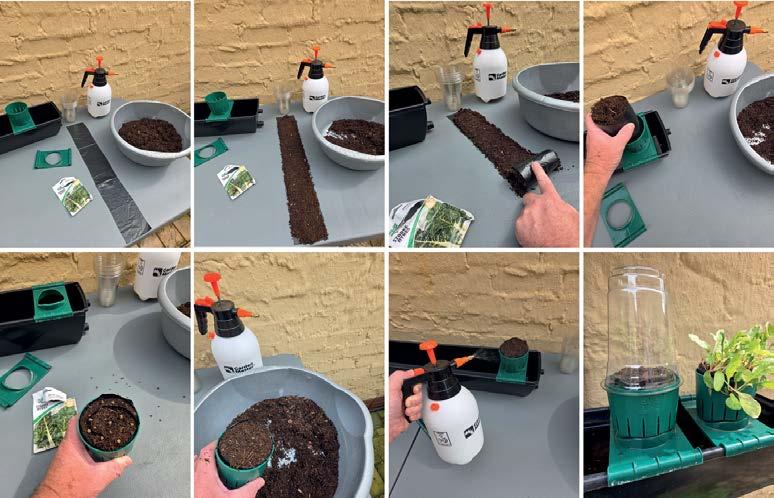
Ready to go commercial? SFG Tec offers a complete Seedling Snail Grow Kit:
• 15m × 9m tunnel + 24 benches
• 144 HydroGrow Pro units
• 2,160 DRZ cups
• Output: 300 seedling snails per week
That’s 3,000 + seedlings every week from a single tunnel. Use your own tunnel and benches, or order the full kit from SFG Tec. Whether you’re a commercial farmer cutting input costs or a hobby grower supplying your neighbourhood — this system pays for itself.
Contact SFG Technologies to learn more about seedling snails, the HydroGrowTM Pro, or the complete Grow Kit www.sfgtec.com
What are the seedling snails grown in?
The seedling snails are grown in the SFG HydroGrow Pro (HGP) unit, which can hold 15 smart grow cups. The HGP reservoir holds 15 litres of water. The HGP units can work as stand-alone units or can be plumbed together. You can add a pump to circulate the water if desired. The deep water helps to keep the plants cool, and as the reservoir is large, it seldom needs to be topped up. The self-watering design saves you a heap of time and effort — and germination success is excellent.