The Magazine of Summit School

When Louise Futrell founded Summit in 1933, she said, “I had a dream school in mind where everybody could be a somebody.”
We make this dream real in the daily experience of our students. It requires design and shared commitment—among teachers, families, and students—to see, challenge, and celebrate each learner as unique.
This is the dream—and the joy.
It shows up first in how we know our students—in the particulars of who they are: what they care about, where they struggle, and what they are capable of becoming.
To be understood in this way is to know that you matter.
It shows up in the kind of learning we design. A program that is rigorous and joyful. Structured and expansive. One that asks students not only to know things, but to make sense of them. To ask questions. To take intellectual risks. To grow with the confidence and courage—and the discipline and creativity—to be curious.
It shows up in the environment we curate. Spaces that invite experimentation and support focus. That make collaboration natural and visible. That inspire both individual achievement and collective accomplishment. An environment grounded in a simple idea: how we learn is shaped by where we learn—and with whom.
It shows up in the relationships we cultivate with families. Partnerships grounded in trust, sustained through conversation, and strengthened by a shared commitment to the flourishing of each child.
And it shows up in how we define investment. At Summit, we invest in relationships. In the day-to-day work of teaching and learning. In the care it takes to understand a child. In the trust built over time between families and school. The return is measured not only in moments, but in a student’s character, confidence, and curiosity—now, and far into the future.
This issue of SOAR demonstrates that Summit is not content to stand still. We continue to improve—grounded in who we are, and guided by what matters most.
Thank you for all you do to make our dream real.
Onward and upward,
Michael Ebeling Head of School
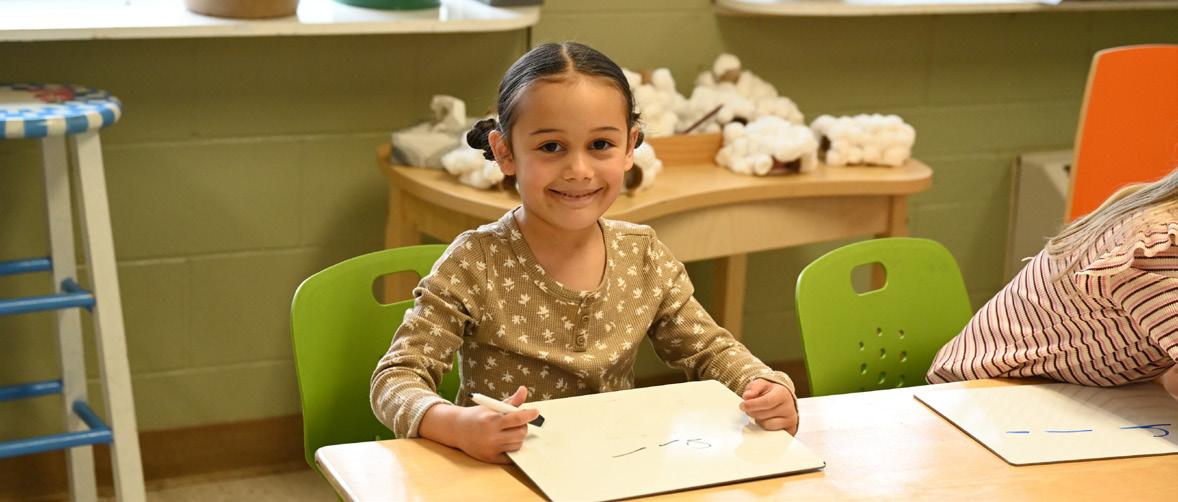
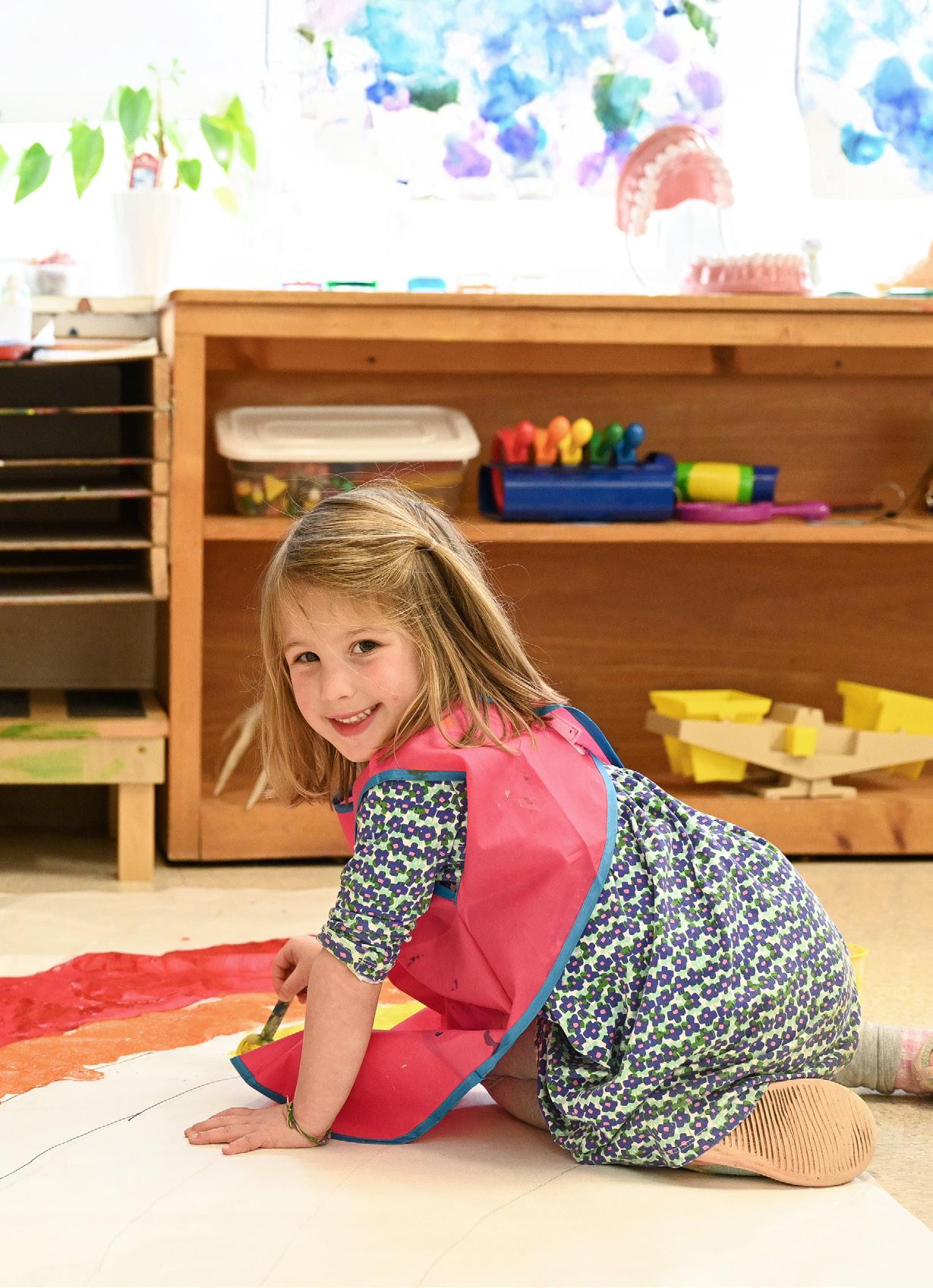
At Summit, curiosity isn’t just encouraged—it’s cultivated. Even our youngest students begin to see themselves as scientists: asking questions, testing ideas, and discovering that learning often begins with the courage to try.
That mindset takes shape early in Summit’s Early Childhood classrooms, where curiosity, experimentation, and thoughtful risk-taking are part of everyday learning.
Is there a connection between science and courage? You bet there is.
At first glance, they may not seem to have much in common, but students in Summit’s Early Childhood could tell you how they’re linked. They learn that it takes courage to be curious — and curiosity is a vital trait every scientist needs.
Della Childers, Kindergarten teacher, says, “It’s all about trying. Courage doesn’t mean you’re not afraid, nervous, or uncomfortable. It means you’re willing to try something even while feeling those things. That idea came from our Early Childhood and Lower School director, Tom Gething.”
That’s an important lesson for scientists—and for life.
Any experiment that led to a breakthrough began because someone was curious enough to ask a question and brave enough to test an idea. In Summit classrooms, students practice those habits early and often.
“We talk a lot about perseverance in our classroom,” said Childers. “We encourage trying. If it doesn’t work, you try again. You don’t give up because your first or second attempt didn’t work.”
Every scientist must learn how to approach uncertainty— and that learning begins with understanding that risk looks different for everyone.
Some of us are comfortable with risk; others are riskaverse. That’s not just true of adults; you can see it in our early childhood learners as well.
“An appetite for risk isn’t universal,” said Sherry Hastings, Junior Kindergarten teacher. “So, we really try to know each student and their comfort level.”
For some students, speaking up and contributing to a group discussion may feel like a big risk. For others, the challenge might be experimenting with materials in the tinkering studio or exploring the natural world outside.
“It’s important that we meet each student where they are and support them there,” said Eaglets teacher Heather Younts. “If a child is uncomfortable getting dirty, then it’s a risk to go on a nature walk in search of bugs. Teachers celebrate any student who gets out of their comfort zone — wherever that zone may be.”
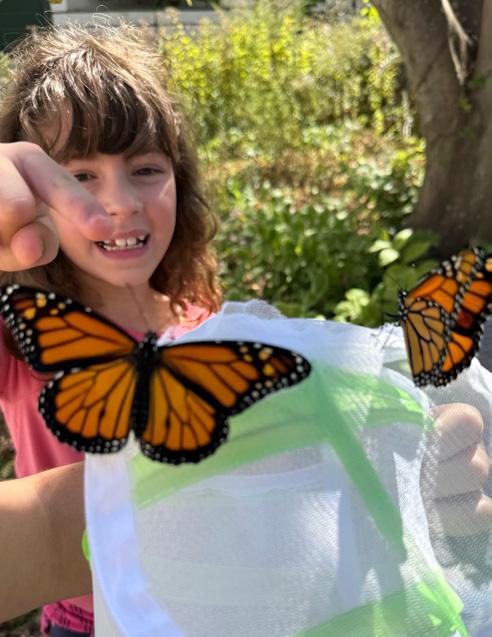
While one student may eagerly pick up an insect to examine it, another may prefer to observe more closely with a magnifying glass. Both approaches are valid ways of engaging with the world.
“We allow each child to be who they are and honor their fears, their attempts, and their triumphs,” Younts added.
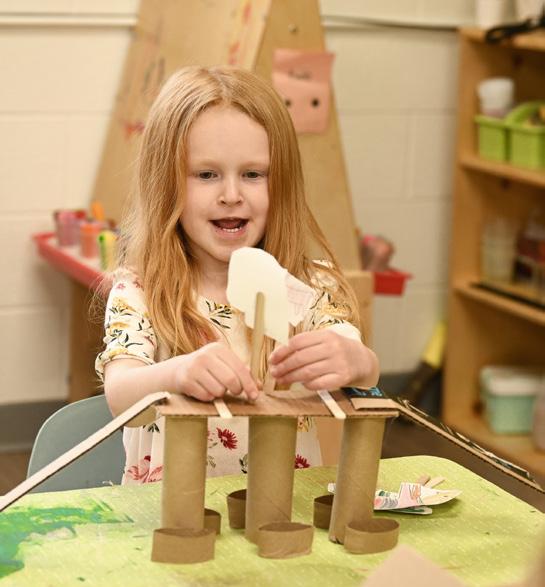
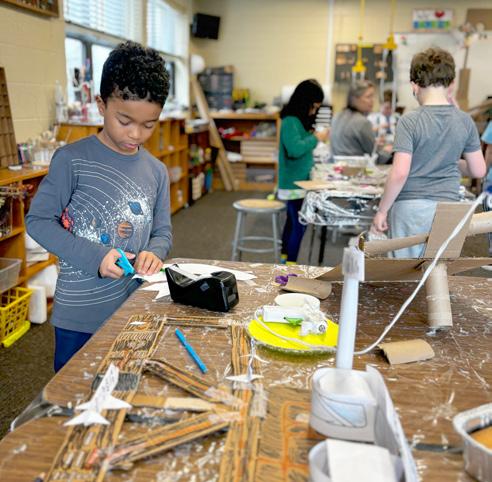
Scientific thinking also means learning to embrace uncertainty. In Summit classrooms, students learn that curiosity often begins with not having all the answers. Teachers encourage prudent risk-taking in the classroom. In the tinkering studio, students solve problems using hot glue guns and a multitude of materials.
Through this kind of open-ended exploration, students learn that mistakes are not setbacks—they are part of discovery.
“We tell students that mistakes are part of progress,” said Childers. “They’re a learning opportunity. We ask a lot of
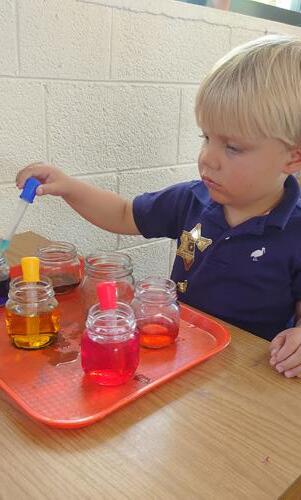
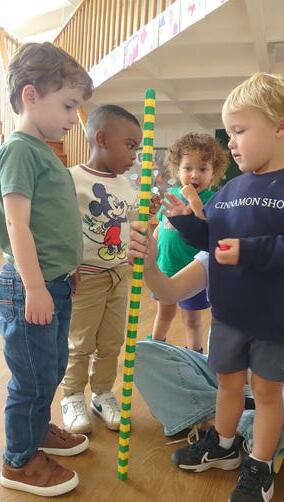
open-ended questions that require prediction: What would happen if …? Even if a student’s prediction isn’t accurate, we honor the attempt.”
“Summit teachers lead by example,” Childers said.
And that may include telling students they don’t know the answer to one of their questions.
“One of the biggest tools we have as adults is to model,” she said. “I intentionally will say, ‘I don’t know. Let me think about that.’ Or ‘I’m not sure. Let’s do some research at the library.’ Not knowing and simultaneously being curious is a very acceptable, even desired, state as a learner.”
When teachers say “I’m not sure,” they give students permission to say it, too. It’s OK not to know the answer— as long as you pursue finding out.
Science doesn’t just happen in a classroom. At Summit, students are encouraged to notice and investigate the world around them wherever they are.
“We want students to understand that science is everywhere,” Childers said. “And we encourage them to be curious and investigate. Whether they’re at home, school, or somewhere else, they should always try to determine: Is this safe for me? Is this a good risk for me to take?”
She cites cooking and baking at home with a parent as a perfect opportunity to use math and science outside the classroom.
Teachers also introduce students to a concept called “slow looking,” which encourages them to be intentional and patient when observing and solving problems.
“Slowing down builds resilience in young children,” Younts said. “By staying on a single task for a longer period of time, you notice so much more. It’s a fast and immediate world we live in these days, so teaching skills that require
stillness and focus is really important.”
It’s not easy for young children to come to a place of stillness.
“After a group discussion, I’ll have barely finished speaking when I see hands popping up,” Hastings added. “And I’ll remind, ‘I want everybody to think for a minute.’ And we all rub our temples to ‘massage our brains.’ I did that during the first week of school. Now, the kids do it on their own.”
All this curiosity, courage, and slowing down have led to something powerful—Summit’s youngest students begin to see themselves as scientists.
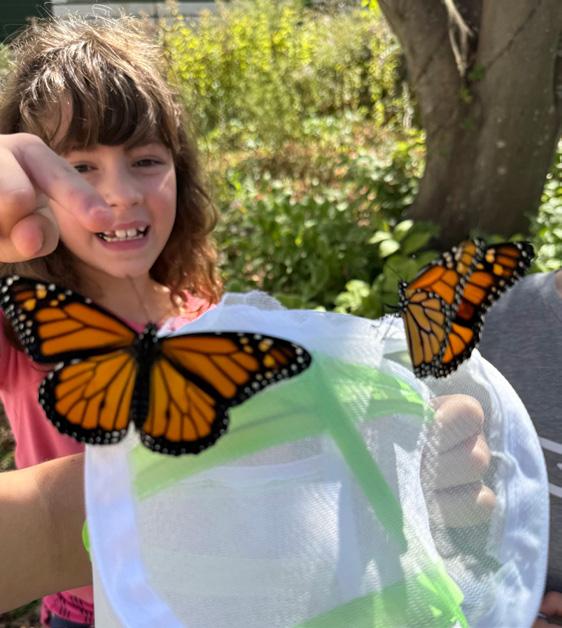
While teaching her Eaglets about monarch butterflies one day, Hastings told her students, “You’re going to be scientists and researchers today.”
Several students responded, “But we can’t read.”
She reminded them that scientists learn by observing carefully and asking questions.
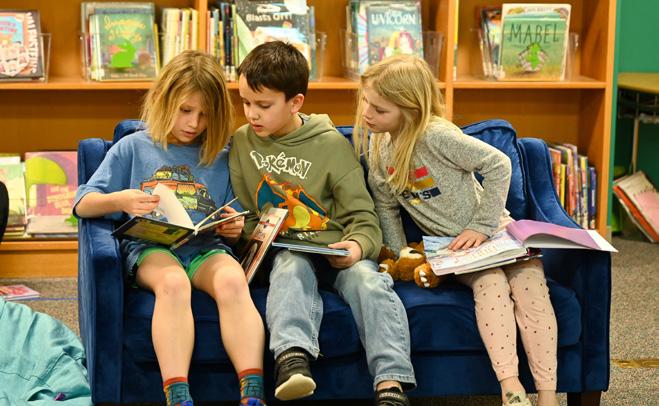
“They can learn a lot by slowing down and studying pictures,” Hastings said.
“They loved it. They sat there for 30 minutes looking through different books, talking to each other, sharing discoveries.”
There are discoveries everywhere. All it takes is curiosity, patience, and the courage to try.
And at Summit, even the youngest learners are beginning to understand what it means to investigate the world like scientists.
“ One of the biggest tools we have as adults is to model,” she said. “ I intentionally will say, ‘I don’t know. Let me think about that.’ Or ‘I’m not sure. Let’s do some research at the library.’ Not knowing and simultaneously being curious is a very acceptable, even desired, state as a learner.”
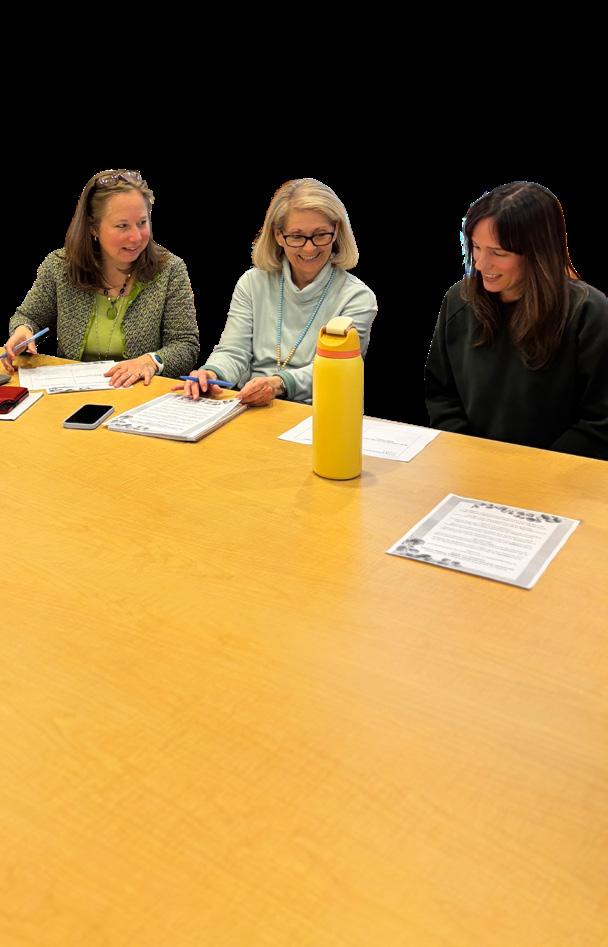
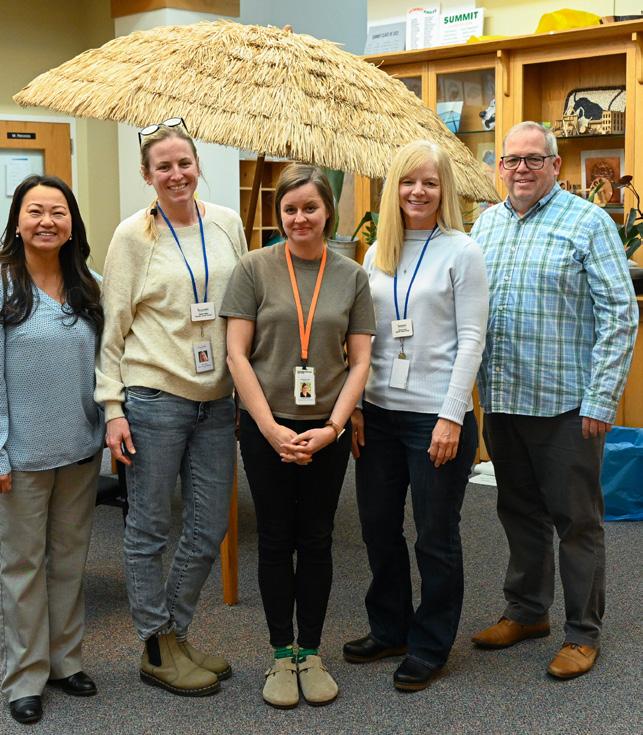
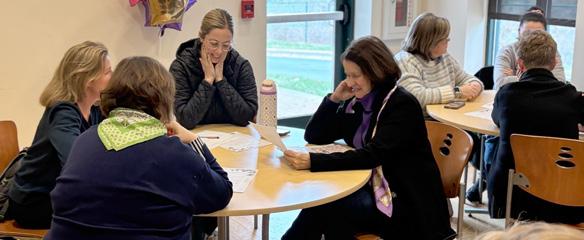
At Summit, student growth begins with exceptional teachers. Facilities matter. Programs matter. Curriculum matters. But it is the skill, judgement, and character of a teacher that ultimately determine whether a student develops confidence, curiosity, and mastery.
Understanding that teachers are the most important influence in the classroom shapes how Summit invests in professional development. These educators set the tone for learning, challenge students to think deeply, and create the relationships that help young people grow into capable, confident learners. This foundation matters profoundly.
Because of this conviction, professional development at Summit is not an occasional opportunity. It is a deliberate strategy for sustaining educational excellence.
Summit teachers are experts in their disciplines. They are also lifelong learners who understand that expertise is not static. In a world evolving as rapidly as ours—consider the rise of artificial intelligence over the past few years— standing still is not an option.
“We cannot remain still as a school,” said Misty Hyman, Director of Upper School. “If we are going to evolve, we’re required to keep learning.”
Professional development at Summit is structured, funded, and strategically aligned with the school’s priorities. It reflects a shared commitment to the relationships that define great schools—between teacher and student, school and family, and the broader community that supports Summit’s mission.
Professional development at Summit includes:
• Growth-Oriented Evaluation – A structured process supports continuous learning and professional growth.
• Opportunities for Leadership – Teachers have clear leadership opportunities within the school to develop their skills and share expertise.
• Personalized Development Plans – Employees receive tailored professional learning opportunities aligned with their Highest Point of Contribution maps and Summit’s strategic priorities.
Professional development is built into the rhythm of each school year.
“We’re very intentional about meeting with each teacher and discussing their goals and priorities for the school year,” said Hyman. “It’s something all three division directors do annually. And, really, it’s an ongoing conversation.”
School leaders proactively identify research-based conferences, workshops, and trainings aligned with
institutional initiatives. When the school adopts new approaches to support students, teacher learning follows. This year, for example, Summit is implementing the RULER approach developed by the Yale Center for Emotional Intelligence. When teachers requested more robust tools to support students’ self-management, the school invested in targeted professional learning to ensure excellence in implementation.
This is the model: clear strategy, followed by meaningful teacher development that translates directly into classroom practice.
Summit’s Portrait of a Teacher describes educators who are reflective practitioners, student-centered, collaborative, and committed to whole-child growth.
Professional development helps bring that portrait to life in daily teaching.
Because Summit students matriculate to a range of high schools, alignment with evolving academic standards is essential. “Because our students graduate from Summit after Ninth Grade and feed into different high schools, it’s imperative that we pay close attention to standards in North Carolina for science, math, social studies, and language arts,” Hyman said. “Sending teachers to statewide and national conferences helps us do that.”
Summit educators regularly participate in leading national conferences such as Learning and the Brain. Programs such as The Writing Revolution are standard professional development for new faculty who teach English Language Arts in Triad and the Upper School as part of their onboarding process. In the Triad division, the OrtonGillingham Academy Conference remains a leading source of research and best practices in literacy instruction.
In many cases, Summit teachers do more than attend conferences—they contribute to them. When Summit educators are invited to present nationally, it signals that the school is not simply adopting best practices. It is helping shape them.
Professional development benefits every Summit teacher, whether or not they travel. Three times a year, faculty members share insights from conferences and trainings during Professional Development Days. Strategies are spread across divisions. Instruction becomes more
aligned. Students experience coherence rather than fragmentation in their learning.
“These sessions ensure that students have a consistent learning experience from one subject to another and from one grade to the next,” said Lisa Buschek, Head of the Triad Division. “Teachers have their own individual styles, of course, but their approaches are based on the same proven methodologies, and they’ve been trained on the best ways to use those for different types of learners.”
This collaborative culture ensures that new ideas strengthen the entire school community.
For families, it means instructional depth and consistency across classrooms.
For alumni, it means the Summit you remember continues to grow and evolve.
For donors, it means investment in teachers directly strengthens program quality and student outcomes.
Professional development is not an extra expense. It is how Summit protects its promises: Scholarship at Its Best, Educators Who Engage the Whole Child, and a Fertile Learning Environment rooted in curiosity and confidence.
Professional development also plays a critical role in attracting and retaining exceptional educators. Talented teachers seek schools that value their growth and provide the support needed to refine their craft.
“My first career was in interior design. In those early days, anything I could learn about teaching was vital to me,” said Lisa Buschek, Head of the Triad Division.
“We expect teachers to be experts in the classroom—in both what they teach and how they teach it,” added Misty Hyman, Director of Upper School. “That requires the training, tools, and resources to keep growing. I’m proud that Summit provides those to every teacher.”
At Summit, professional development is not a perk. It is a strategic commitment.
When teachers grow, students flourish. When educators are supported, excellence compounds.
And when a school invests intentionally in the people who shape children every day, the result is lasting: students who leave Summit prepared not only for the next
No need to wait for “someday” to make a difference.
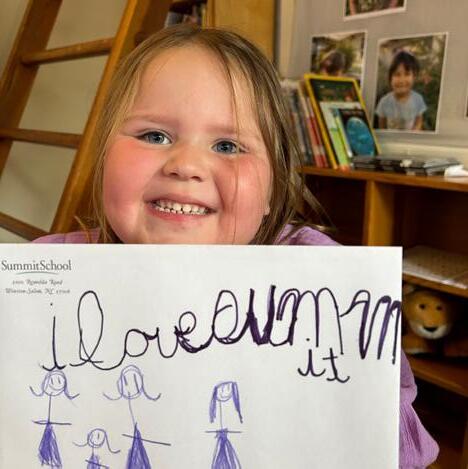
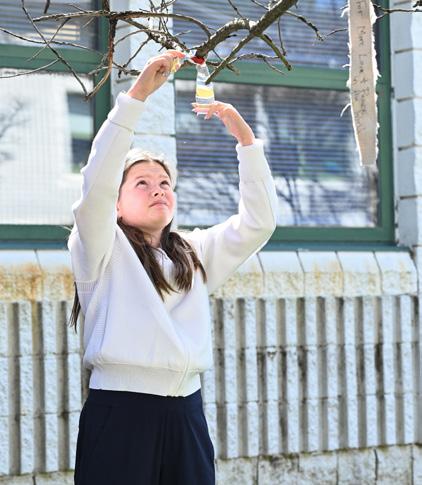
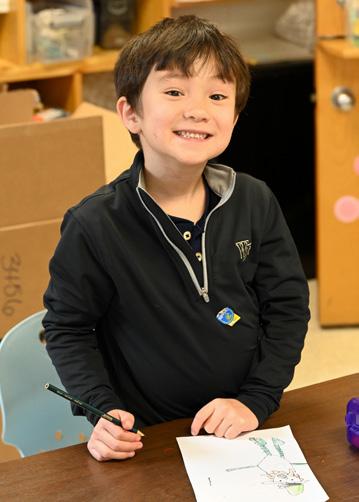
At Summit, social responsibility is not something students simply discuss in class. It is something they practice.
By the time students reach Ninth Grade, they have spent years developing leadership skills, empathy, and a sense of responsibility to their community. Their final year in Upper School becomes an opportunity to put those lessons into action through service, research, and philanthropy.
Social responsibility — along with preparedness, honor, curiosity, and acceptance — is one of Summit’s core competencies. Beginning in the Early Childhood division, students learn to organize service projects and work together to support causes that matter to them. By Ninth Grade, those lessons evolve into meaningful experiences that connect academics, leadership, and community impact.
Scan here to view Summit’s Core Competencies
One example is the Summit Coffee Project. Every year since 2021, Ninth Graders have been part of the Summit Coffee Project, which supports small coffee bean farmers in Costa Rica. The innovative project also supports Summit students in several important ways, offering lessons in entrepreneurship, science, service, and philanthropy.
Students roast, grind, package, and sell single-origin, small-batch coffee from around the world. The Santa Elena Cloud Forest in Costa Rica receives a portion of the proceeds from the coffee they sell. Along the way, students gain hands-on experience with advertising, marketing, sales, and finance while also developing
leadership skills and learning the craft of roasting and grinding coffee.
Through this work, philanthropy becomes tangible. Students see how their efforts — from product development to sales — can support communities and environmental conservation far beyond Summit’s campus.
Service Within the Summit Community
Service is also woven into the daily life of Ninth Grade.
Every Ninth Grader holds an on-campus role during the school year. Students are placed in jobs based on the interest survey they complete, and they have the option of switching roles throughout the year.
Some roles happen behind the scenes. Students might help clean animal cages in the science classrooms, wash lab equipment, clean fish tanks, prepare supplies for the tinkering classroom, or shelve books in the library.
Other roles place them alongside Summit’s youngest students. A Ninth Grader might help hesitant Eaglets, Kindergartners, and Junior Kindergartners into their classroom buildings in the morning or assist younger students during morning activities. They might also play math games in Eaglets through third grade classrooms, which “frees up the teacher and/or assistant to work oneon-one with students needing extra help,” said Katie Leach, Ninth Grade Language Arts teacher.
Through these responsibilities, Ninth Graders provide an important service to the school community while serving as role models for younger students.
Civic Responsibility in Action
Beyond campus, many Ninth Graders pursue Service Learning projects independently or with classmates.
The Service Learning program introduces students to the issues affecting their community and the world, as well as the nonprofit organizations working to address those challenges. Students learn about civic responsibility and then put that knowledge into practice through volunteering.
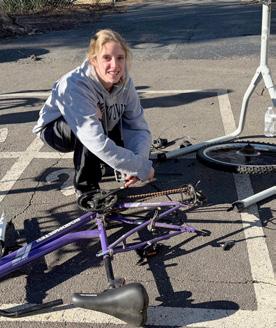
At the Twin City Bike Collective, for example, students volunteer alongside friends in a lively workshop setting while repairing donated bicycles that will be given to people in need.
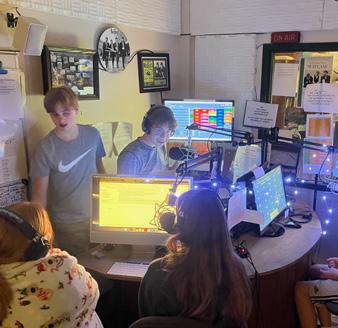
Another recent initiative began with a student suggestion to support Brenner Children’s Hospital. Wanting to focus on teenagers who may feel overlooked in pediatric settings, students collected items teens might enjoy or need during a hospital stay — including blankets, puzzles, handheld games, and extra-long phone chargers. The group assembled 13 “Baskets for Brenner,” which they donated in early March.
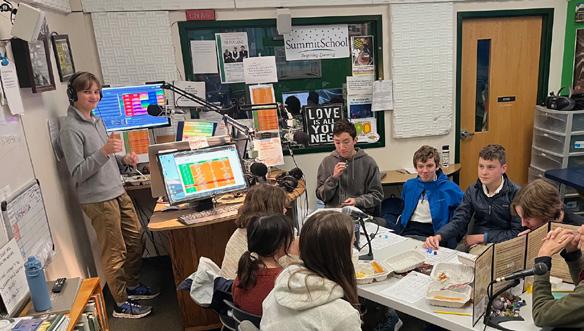
Students also lead larger community initiatives. This year’s Radiothon, a 24-hour student-run radio marathon, raised $2,850 for The Speech Bus, a nonprofit that provides mobile, language-based speech therapy and literacy services to preschoolers.
At the end of the school year, Ninth Graders make a gift of their own.
The class researches nonprofit organizations and selects one to receive a $2,500 grant. The process introduces students to the responsibilities of thoughtful philanthropy.
It begins with Charlie Lovett ’77 speaking with students about the importance of supporting causes that feel meaningful and personal. Students then research nonprofit organizations — studying their missions, financial structures, and needs — before presenting their findings to classmates.
After narrowing the list and reviewing grant applications, the class votes on the organization that will receive the award. The funding is made possible through Lovett’s generosity, which ensures students do more than learn about philanthropy — they experience it.
Leach calls it “a real-world application of skills they’ve learned at Summit.”
Last year’s class selected Westlawn School, a nonprofit school serving twice-exceptional students — those who are both gifted and have a learning difference such as ADHD, autism, or dyslexia.
Westlawn requested funding for pottery wheels, a proposal that resonated with Summit students. “That further deepened the emotional connection because Summit students have benefited from an incredible
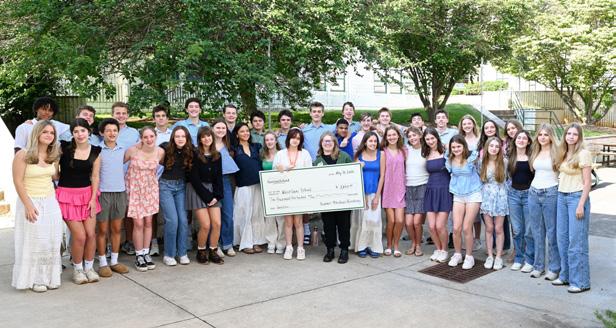
ceramics program,” Leach said. “So, they were excited to share that with another school.”
Students present the grant to the nonprofit’s director during their graduation breakfast, celebrating both the organizations they support and the impact they have created together.
Philanthropy at Summit is closely tied to academic work. Last year, Lisa Emmerich and her co-teacher, Courtney Harrell, taught “Research in Action” as part of a Research and Writing course.
“The capstone research paper and speech are an integral part of the ninth grade English curriculum,” Emmerich said. “Students can propose their own service projects, which come directly from their research papers.”
Students frequently turn research into action.
Juliet Emmerich ’25 and Louise Johnson ’25 created an Instagram platform, Coaching for Change (@coaching. for_change), to raise awareness of how coaching language can affect student-athletes’ mental health and relationships with food.
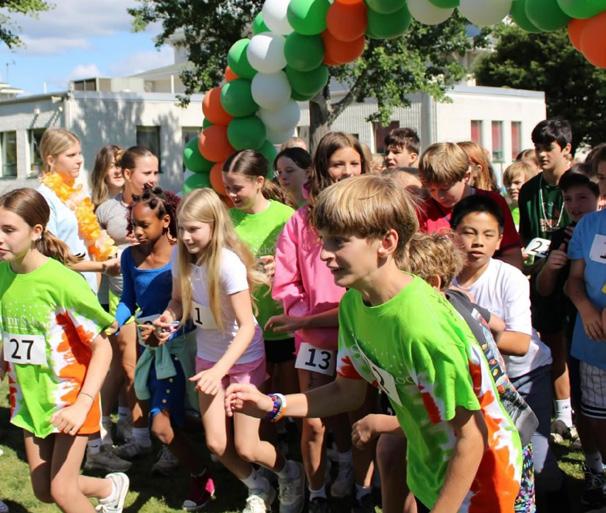
Another project addressed water scarcity. Channing Miller ’25 organized the Run for Change during Eagle Day, raising $4,000 for Charity: Water, which provides clean drinking water to communities around the world.
Similarly, through the Summit Coffee Project, the Class of 2026 connected classroom learning with global impact. Through roasting, packaging, marketing, and selling coffee, students raised and donated $300 to support the Monteverde Cloud Forest in Costa Rica.
A Foundation for Lifelong Service
Through experiences like these — from managing a coffee business to researching nonprofits and launching service initiatives — Summit students develop a deeper understanding of the needs that exist in their communities and around the world.
More importantly, they learn something powerful early in life: You don’t need to wait to make a difference.
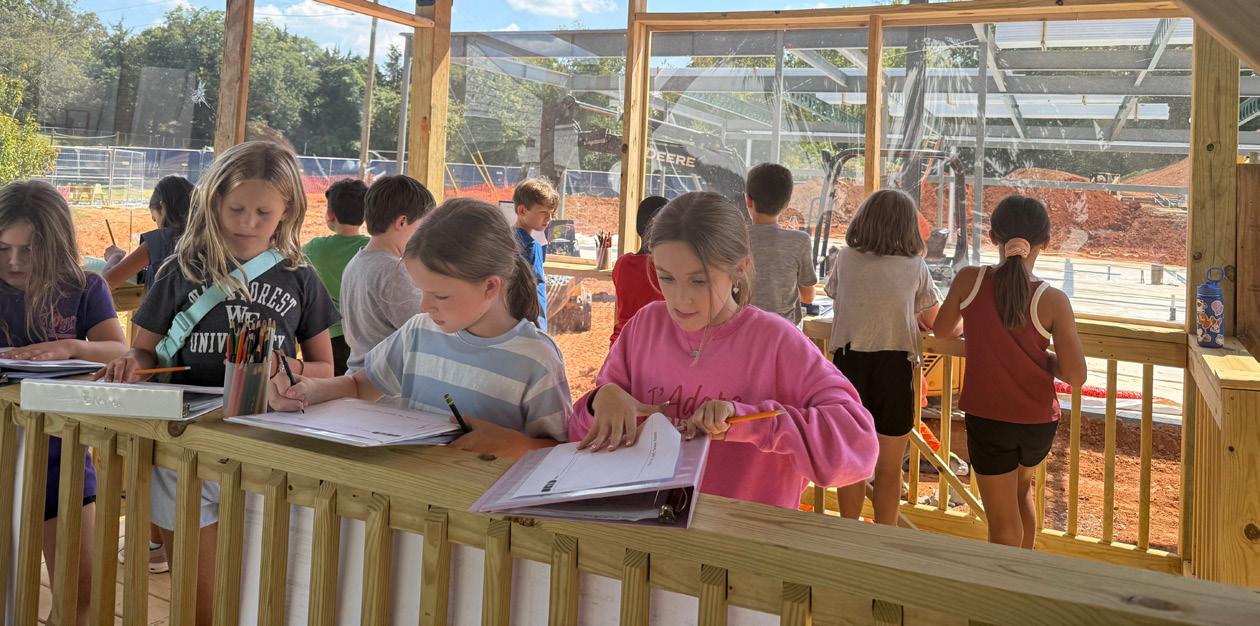
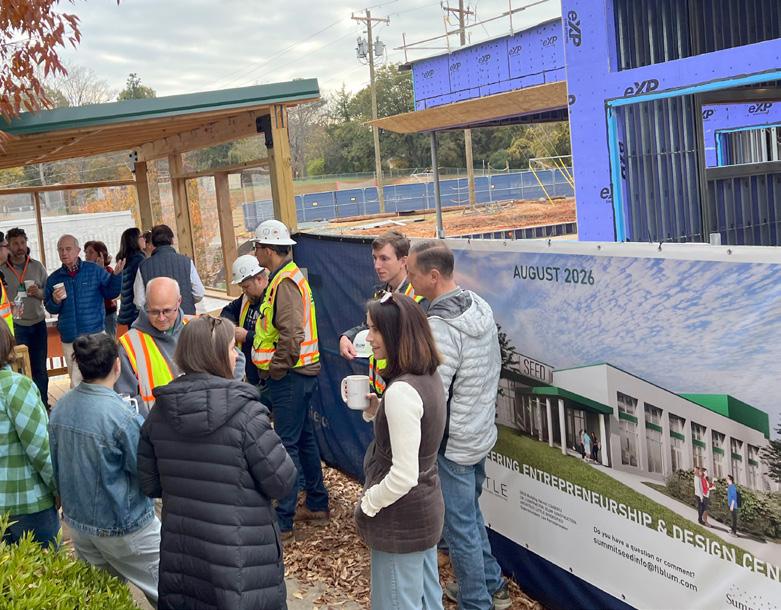
For nearly two years, the Summit community has been dreaming out loud about the SEED Center. The vision has been shared, the renderings have come to life, and the construction updates have been followed closely. Conversations have happened in carpool lines, at board meetings, in classrooms, and at campaign events. The SEED Center has been a shared project — imagined together, built together — and now, with opening day in August 2026 finally within reach, that long anticipation is giving way to something even more exciting: the real thing.
This fall, the full story of what it feels like to learn and teach inside the SEED Center will be told. But right now, on the eve of opening, it's worth capturing something equally powerful — the voices of some of the faculty who have been part of this journey, and who are ready to bring it to life.
Summit's Science, Engineering, Entrepreneurship, and Design curriculum has long been one of the school's defining strengths — taught across divisions, woven into the fabric of how students learn. What has been missing is a single, purpose-built space where that work can happen together, where a kindergartener planting seeds and an upper school student engineering a prototype can exist in the same ecosystem. The SEED Center changes that.
For Beatriz Gurgel Burns, Triad Lower School Science teacher, the new space unlocks a different kind of learning entirely. Long-term projects, messy hands-on activities, and big group lessons that were once difficult or impossible become the norm. With upgraded equipment, better tools, and organizing systems designed around the student experience, the curriculum that Summit teachers have always wanted to deliver will finally have the conditions it deserves. “There are many more uses of the space that I haven't even dreamed up yet,” she says — and that sense of open possibility may be the most telling thing of all.
The SEED Center doesn't introduce a new direction; it gives an already extraordinary cross-divisional program the dedicated home
it has always deserved — and the physical conditions to go further. Upper School Science teacher Jason Felten has been thinking about what that convergence will make possible. “By bringing Science, Engineering, Entrepreneurship, and Design under one roof, my students can do more than just observe life — they can innovate within it,” he says. “We're moving from ‘what is this?’ to 'what can we create with this?’”
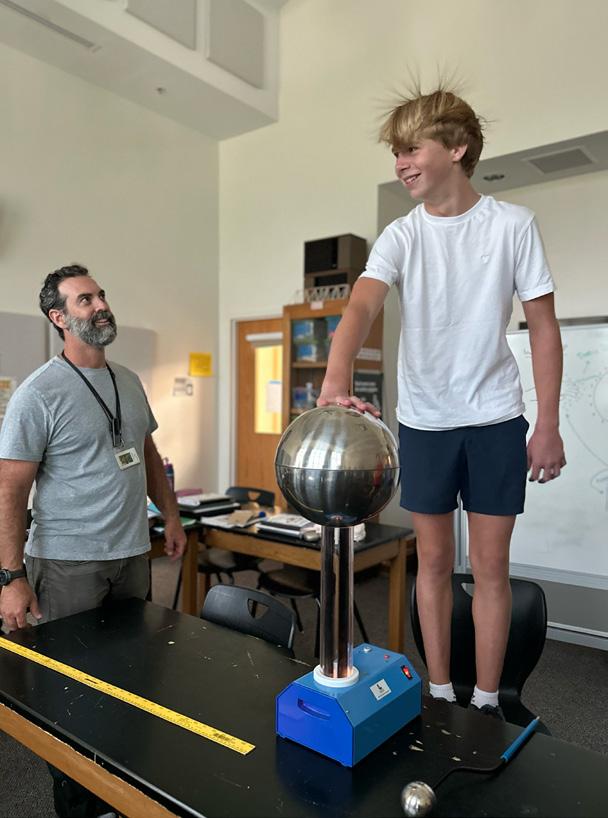
Lower School Science teacher Rains Paden ’95 sees the SEED Center as the fullest expression yet of how Summit has always believed learning should work. “The SEED Center provides students a dynamic new space to explore science the way scientists actually do — by following their curiosity, asking questions, testing ideas, and gathering data to make inferences and draw conclusions.”
The greenhouse has captured the imagination of teachers across divisions. For TJ Petronzio, Upper School Science teacher and current Summit parent, the building's crossdisciplinary design reflects a collaboration that has been building for years. “Easy access to the engineering and design space will be incredibly valuable for students, especially in the Innovation and Entrepreneurship class I help teach. And I can't wait to start growing plants in the raised beds with students.”
The journey to the SEED Center has belonged to every division, including the youngest members of the Summit community. Kindergarten teacher Nargiza Kiger has been holding a particular vision close. “For our youngest learners, the SEED Center will be pure magic,” she says. “Raised garden beds, outdoor learning spaces, and a greenhouse will give them endless opportunities to dig, plant, observe, and wonder.”
Eaglets faculty member and current Summit parent Alyson Baker sees it as a foundation for everything that follows. “The new SEED Center will offer a place to cultivate boundless creativity and bring it to life through innovation in a state-of-the-art facility. I am confident it will help our children see themselves as capable learners, keen observers, and joyful explorers.”
This fall, Summit students will walk through the doors of the SEED Center for the first time. Teachers across divisions will set up their spaces, plant the first seeds in the greenhouse, and begin writing the next chapter of this story. And in the fall magazine, readers will be brought into that experience — the sights, the discoveries, and the voices of a community finally home in a space built for everything they've always been capable of.
The SEED Center represents more than a state-of-the-art building—it represents possibility. With spaces designed for exploration, innovation, and discovery, this center will shape the learning experience for generations of Summit students. We invite you to be part of this transformational moment by supporting the Seeding Possibilities Campaign!
To support SEED, please scan this QR code or contact Margaret Turner ’93, Campaign Director, at margaret.turner@summitmail.org.
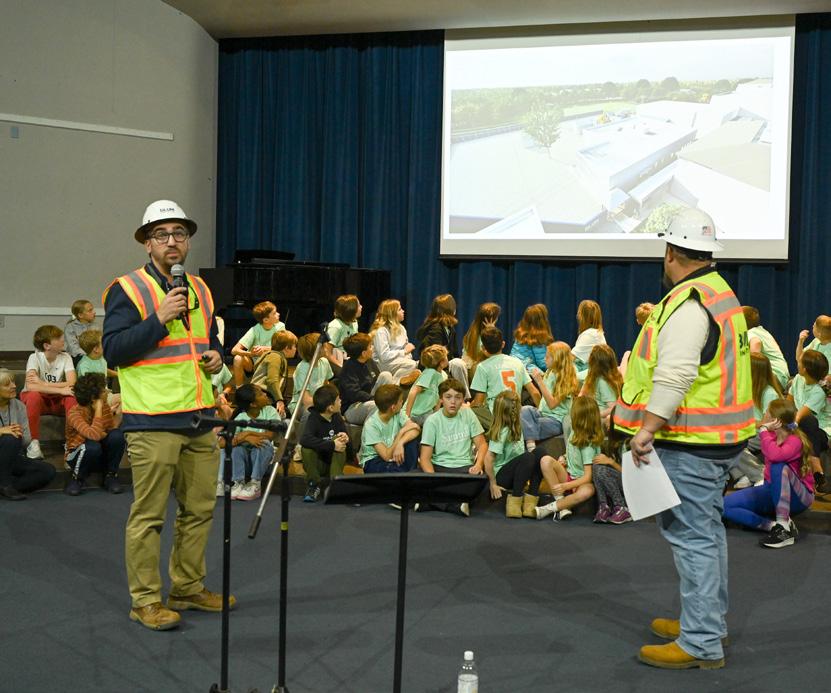
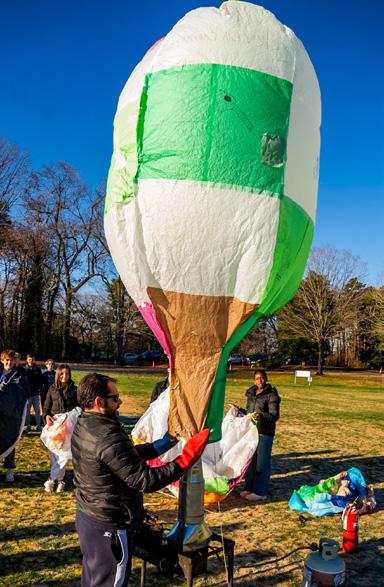
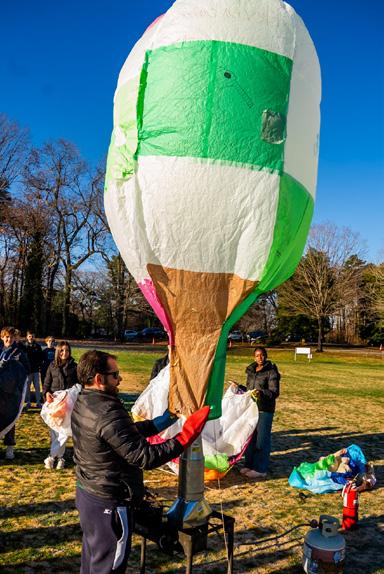
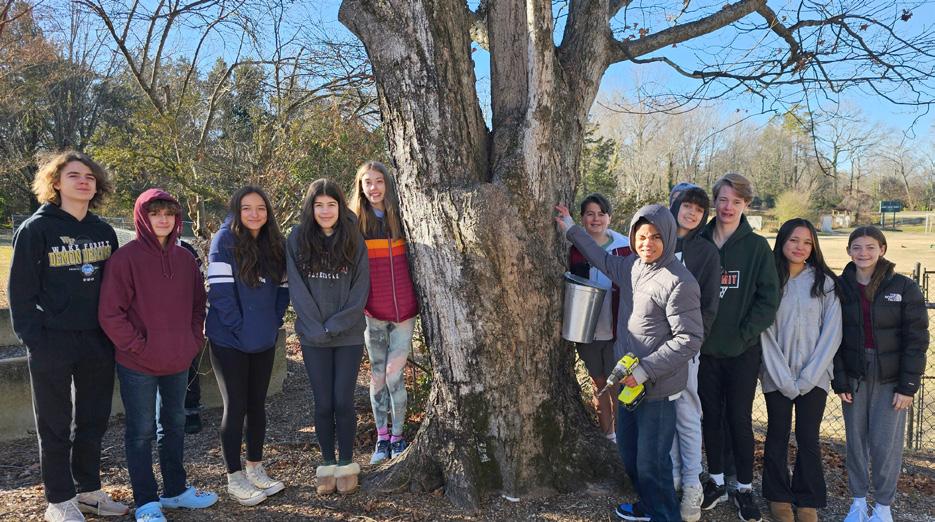
As it was when we were students, the alum community is engaged and active; recent examples include:
Several reunions were held last fall; see pages 17-19 for photos and event descriptions.
Want to know more about next steps when students leave Summit? Enjoy the “Where Are They Now” article on page 28 which highlights the class of 2022.
Classes of 1966, 1976, 1986, 1996, 2006, and 2016—Save the Date, Founders Week 2026. Celebrate your class reunion on Friday, September 25, 6:00 pm at Summit. Details, including additional weekend events, and invitation to follow.
The Alumni Council continues to provide Summit with leadership and support for all alumni activities. If you have an idea or question, please contact me at racheljoyce@gmail.com.
Rachel Neely Johnson ’99
Alumni Council President 2025-2026
It is a privilege to serve as the Summit liaison for alum engagement! I could not do this work without the Alumni Council which provides leadership for school activities. Please reach out to the following to thank them for their donation of time and talent to Summit:
Rachel Neely Johnson ’99, Chair
Lynda King Morris ’63
Barbour Strickland ’67*
Leesa Lybrook Goodson ’71*
Ridgely Medlin Phillips ’76
Jimbo Galloway ’80
Kay D Burress King ’83*
*past chair
Carolyn Sherrill Fuller ’85*
Meredith McCullough Welch ’88
Alex Polychron Collins ’97
Dixon Douglas ’99
Wilson Douglas ’04
Blitz Hoppe Phillips ’07
Ellie Kangur ’13
Donelle Leak ’18
Every day is a great day on the Summit campus but my favorite days include those when alums are present: attending reunions or sporting events, serving as interns during their academic year or during Summit Summer, speaking with student audiences or supporting curriculum events. These visits are often planned but are sometimes spontaneous either way, make plans to join us on campus this year!
If you would like to learn more about opportunities for alums or want to get involved, please contact me at alums@summitmail.org.
Sarah Dalrymple Director of Alumni and Community Engagement
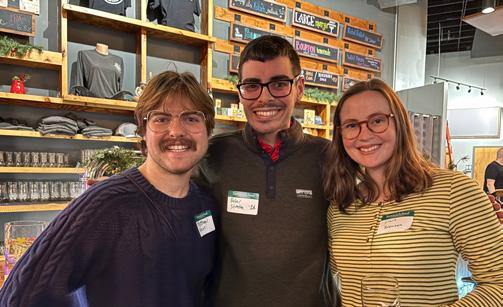
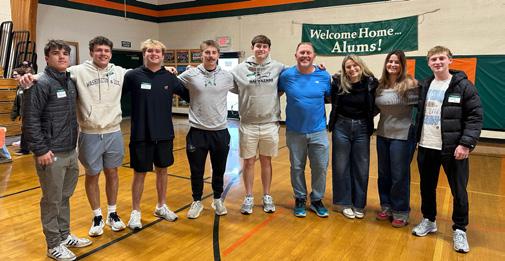
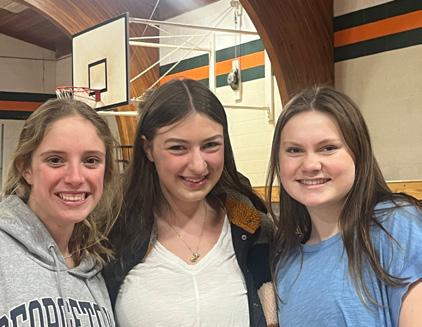
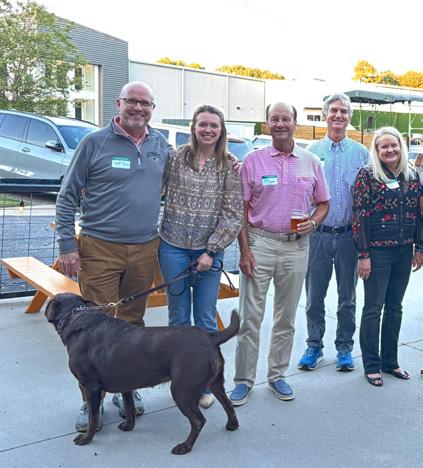
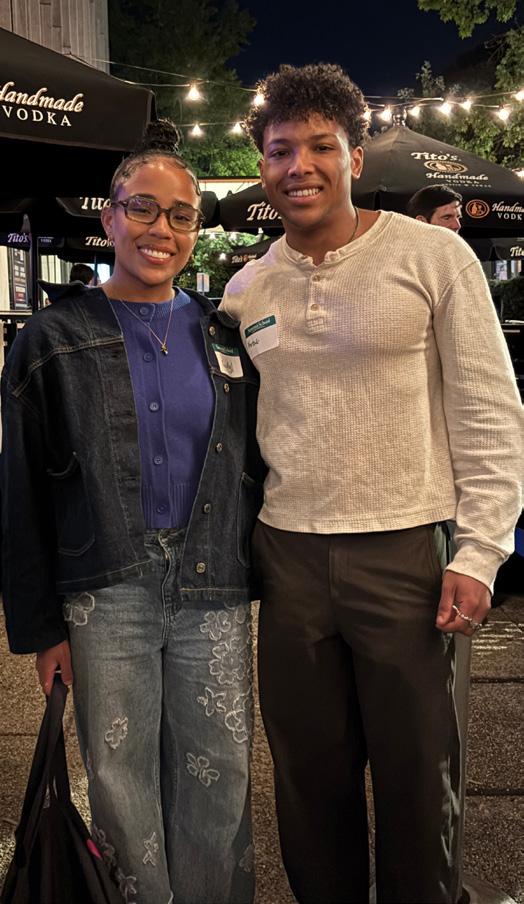
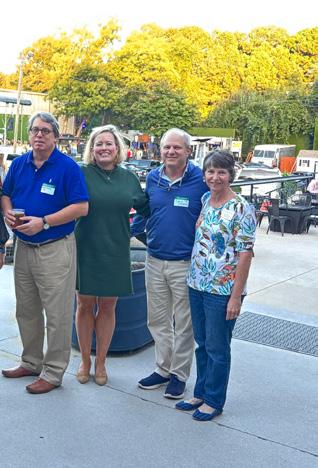
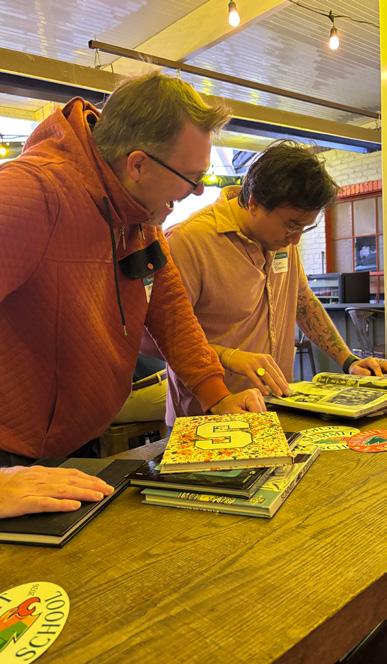
1. Burke Rollins ’19, Lily Robins ’19, Iris Leonard ’19, Patrick Tuohy ’19, Carter Holmes ’19, Christian Hildebrandt ’19, and Auguste Reboussin ’19 2. Jackson Brown ’18, Evan Andrews ’18, and Henderson Holder ’18 3. Matthew Arcuri ’14, Peter Stratta ’14, and Claire Reboussin ’14 4. Michael Ebeling, Tori Huggins ’15, and Ash Huggins ’15
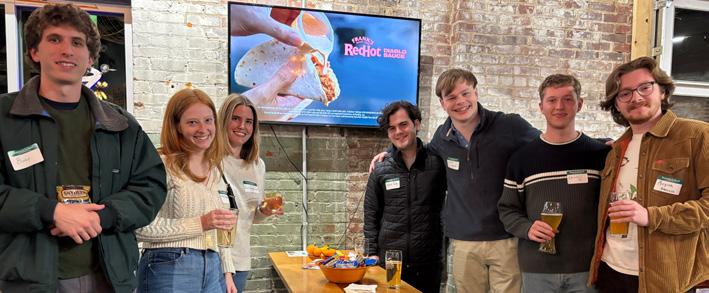
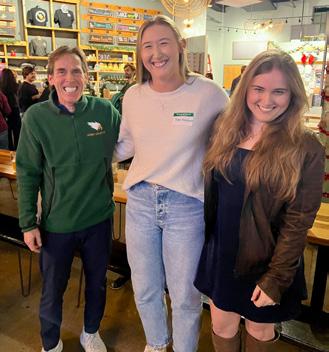
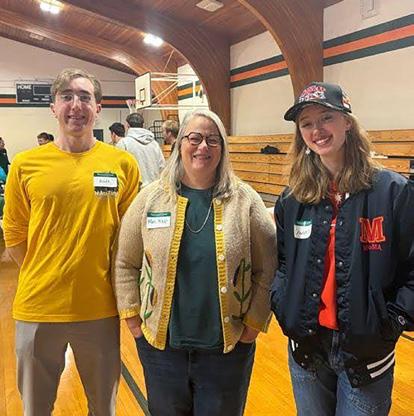
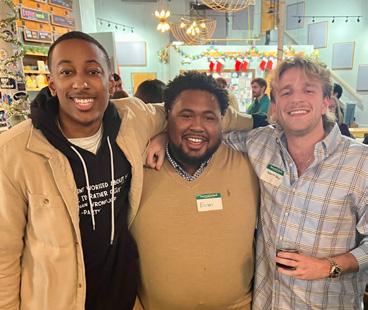
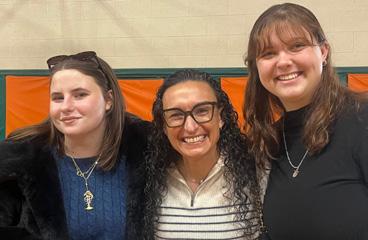
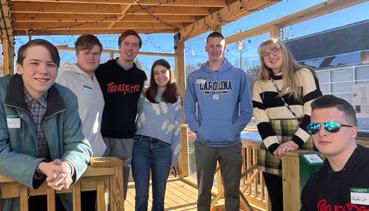
5. Thomas Smith ’22, Isaac Ross ’22, Tyler Cronan ’22, Cooper Mihalko ’21, Ben Schultz ’22, Ryan Mihalko, Lilly Zaks ’22, Kate Walker ’22, and Wyatt Pearce ’22 6. Channing Miller ’25, Juliet Emmerich ’25, and Harper Hoffman ’25 7. Heath Turner ’25, Elizabeth Wild '84, and Charlotte Henshaw ’23 8. Madeline Wild ’20, Lisa Emmerich, and Reese Robinson ’20 9. Ollie Andree Bowen ’24, Ben O’Hara ’24, Evan McCollum ’24, Jilly Fowler ’24, Logan Garner ’24, Anya Vyse ’24, and Hayden Garner ’24
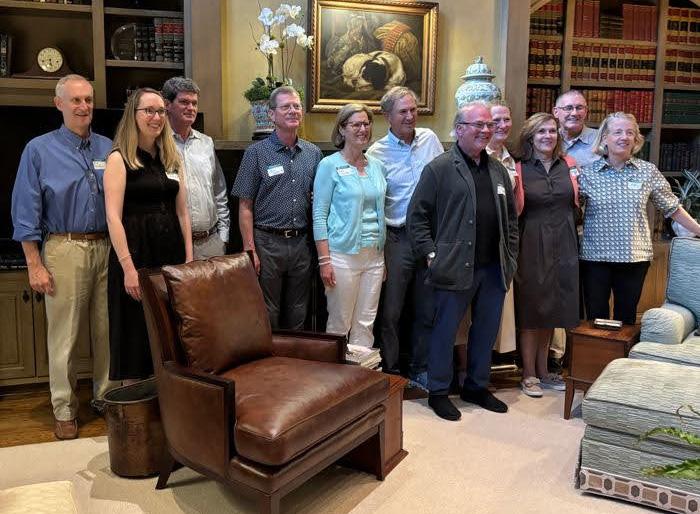
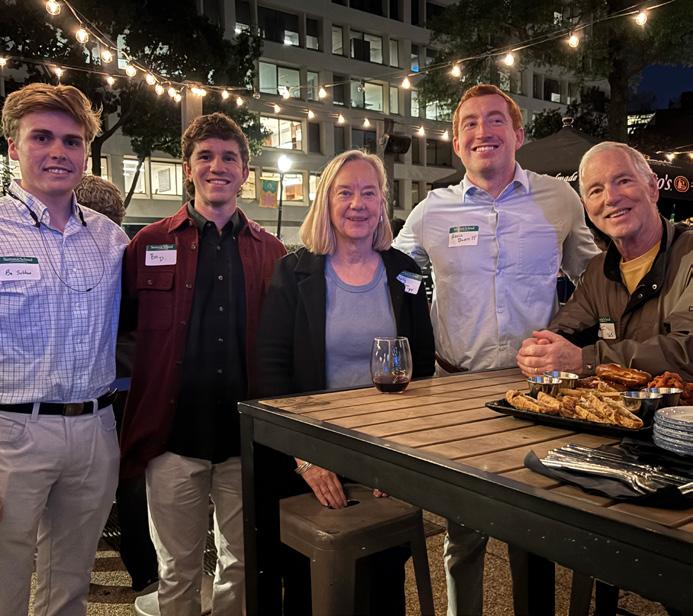
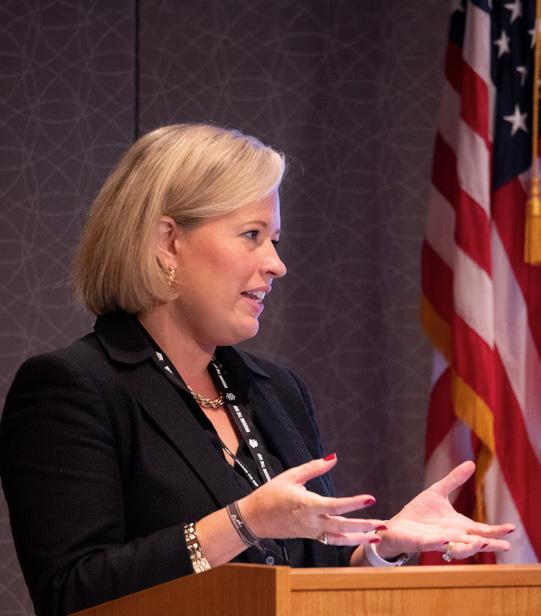
Suzanne Wood Wilkison ’91 serves as President of the North Carolina Association for Biomedical Research (NCABR). She attended Mount Tabor High School and received a BA in Journalism & Mass Communication and Political Science from UNC-Chapel Hill.
Wilkison began working at NCABR after graduation and has served as its President since 2008. The organization operates out of Raleigh and is housed in the Duke School of Medicine. NCABR supports the state’s biomedical research community by providing professional development on topics such as biosecurity, research integrity, and rigor and reproducibility. NCABR also works to improve the public’s understanding of and trust in science by connecting lay audiences, mainly those with multiplier effects such as the news media and K-12 educators, to researchers in North Carolina. Examples include teacher professional development programs where they introduced educators from around the state to Dr. Chris Ohl and Dr. Capri Foy ʼ77 (who was a student of her father, Summit science teacher, Mr. Phil Wood), who work at the Wake Forest School of Medicine.
Describe a favorite Summit teacher, curriculum event/project or special memory that resonates with you:
My time at Summit left me with a general feeling of “I’ve got this.” I think that’s what a rigorous education does. It prepares you for the road ahead and gives you the confidence to tackle difficult things. One example would be the ninth grade speech. At the time, I thought that once that speech was over, I’d never need to give another speech
again. As luck would have it, I’ve spent most of my adult life behind podiums, and there have been a few times over the years where I did take a deep breath and think, “If I could do this as a Ninth Grader, I can do this talk today.” Having memories of a classmate (Libby Whitaker Kelly ʼ91) telling me that I had done a good job with my speech or another classmate (Teebie Bunn Saunders ʼ91) telling me that my writing was solid, meant a lot. Words like that stay with you and help carry you for the rest of your life.
If a student wants to enter your field or area of study, how do they ‘get there’?
At UNC-Chapel Hill, I trained to be a newspaper journalist and worked at newspapers before shifting to the cancer center during my junior year. While there, I worked in a capacity very much needed today, even with AI: we need people from the humanities who write well and can share science with the public. When society does not understand or appreciate science, unfortunate things happen. We need writers to support and protect the research enterprise. If you are curious about science and you write well, you do not have to choose between science and the humanities.
What advice would you give to Summit students or to your younger self?
I would share the advice that author and journalist Charles Kuralt gave me when I was a Ninth Grader and I asked him for career guidance: “Read widely. Practice writing. (Good writing derives from good reading)...you will find your passion, the thing you want more of and finally cannot live without. Don’t be concerned that you haven’t found it yet. You will.” I’d add to his words, that in each step of your life’s journey, “Always do your very best, and you’ve got this.”
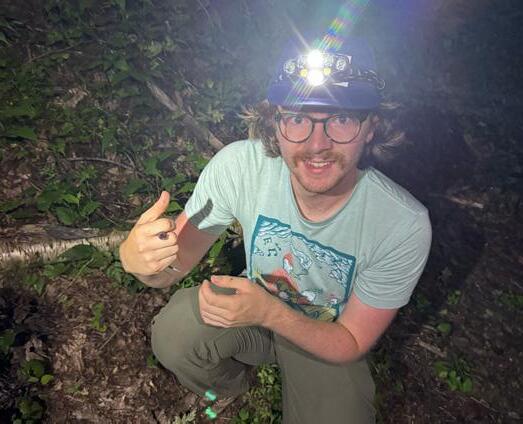
Auguste Reboussin ’19 is a senior at Davidson College with a double major in Biology and Anthropology. After Summit, he attended RJ Reynolds High School. Upon graduating, Reboussin will pursue a career in wildlife conservation and rewilding.
Describe a favorite Summit teacher, curriculum event/ project or special memory that resonates with you:
I remember my science teachers fondly! Mr. Petronzio, Mr. Felten, and Mrs. Welch especially helped me gain my passion for the sciences.
If a student wants to enter your field or area of study, how do they ‘get there’?
You can take a wide variety of classes ranging from biology, environmental science, indigenous studies, environmental humanities and ethics, and even English. It is also helpful to focus on gaining experience through internships in organizations or in labs, as well as studying abroad at field schools. Acquiring skills is very important in field biology, and they can be attained from a variety of jobs and experiences.
What advice would you give to Summit students or to your younger self?
Follow a passion, don’t do something just to progress forward, have a reason that speaks to you intrinsically and makes you excited. Appreciate what is in front of you!
Jim Ruffin ’77 is retired from a 40-year career in the commercial construction and development business; the first 27 years was with a design/build construction firm. Ruffin currently serves on the North Carolina Wildlife Resources Commission. After Summit, Ruffin attended McCallie School and North Carolina State University where he majored in civil engineering.
Describe a favorite Summit teacher, curriculum event/ project or special memory that resonates with you:
My favorite teachers were Mr. John Seymour and Mrs. Alice Cleland. Mr. Seymour was able to make Spanish easy for me to understand. I still remember some of the language and it has been useful, particularly during my career in construction. Mrs. Cleland taught me how to study and established my interest in math. Also, Jolly Place and May Frolics along with MACOS (Man A Course of Study) in Mrs. Teague’s Fifth Grade are some of the things I have fond and vivid memories of while I was at Summit.
If a student wants to enter your field or area of study, how do they ‘get there’?
I majored in Civil Engineering, which was very helpful, but that is not a “prerequisite” for my career path. If I had it to do over, I would have majored in mechanical engineering due to its more versatile curriculum which provides more career options. Also, although I did not pursue it, I think
combining an engineering degree with a Masters of Business Administration (MBA) opens a lot of opportunities in almost any professional field.
What advice would you give to Summit students or to your younger self?
Be around people you respect and would like to be like. You will learn more by seeing what others do than you will ever learn from someone who tells you what to do. Also, embrace the joy of learning!
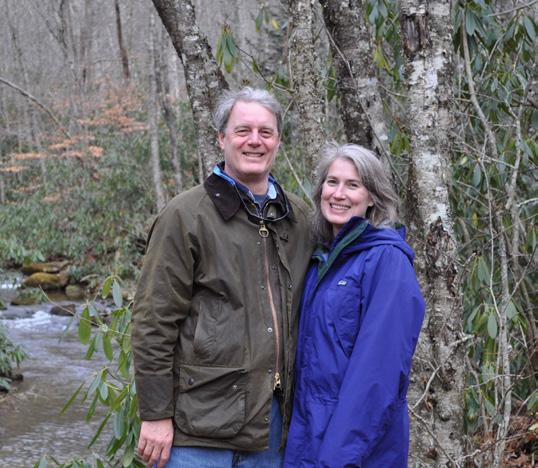
1964
E. Vernon Glenn writes from South Carolina, “I am working on my next book, have gotten interested and involved in some ‘small scale’ real estate investing, more involved in a family company, and own a couple of fine dressage horses.”
Congratulations to Ann Garner Riddle who received the Order of the Long Leaf Pine, North Carolina’s highest civilian award. Riddle is the retired CEO of Garner Foods. The award was presented by Winston-Salem City Councilwoman Regina Ford Hall on behalf of Governor Josh Stein, in recognition of her 52 years of service to Garner Foods and her extensive charitable work across North Carolina, with a focus on nutrition, housing, and education, including her recent efforts through the Garner Foods Foundation.
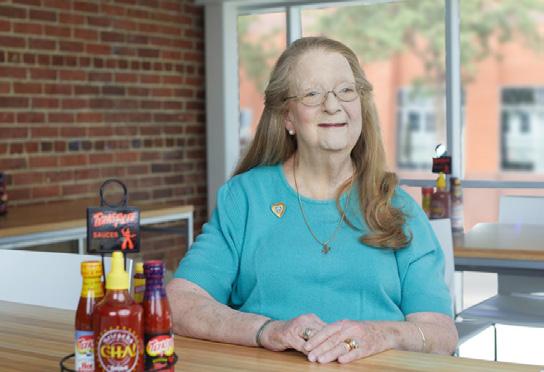
1968
Judge Tori Roemer retired after working five years as an assistant district attorney (covering five counties), two years as a magistrate in Forsyth County and 28 years as a district court judge. She retired as the Chief District Judge in Forsyth County, appointed by Chief Justice Newby.
1980
John Budd is a retired US Army and Air Force Aviator. He and his wife live on a farm in Sparta, NC. They enjoy horseback riding and spending time with their children and grandchildren.
Last fall Elizabeth Kerr Wild, Ceramics and Glass Arts teacher at Summit, returned to her alma mater, Salem Academy, to speak with students. The event, Occupational Wellness Career Conversations, highlighted careers in technology, public policy, sustainable agriculture, the arts, and education. The experience was designed to help students see the many career pathways ahead.
Last summer Dack Stackhouse and his wife Stavroula Glezakos spent the summer on Crete and then traveled to Thailand in early October. The couple were in Bangkok, Koh Samui, and Chiang Mai. Dack lived in Chiang Mai from 2000-2004 and said, “Boy has it changed! It’s still a great place, but it’s a lot bigger and much more modern, which makes sense after 20+ years!” While there he reconnected with former students and colleagues.
Peter Milner lives and works in Raleigh where he serves as the Business Development Catalyst for Refuge Homes and Benchmark Building and Development. Their goal is to help end cycles of generational poverty.
Hayley McDowell Flanagan was recognized as teacher of the year. Flanagan is a fifth grade teacher at Buena Vista Elementary School in Greer, SC. Of the recognition, she said “I am forever grateful for the people I work with and the children and families I serve.”
Chelsea Curran Adams lives and works in the Triangle area of North Carolina. She began teaching at Wake Technical Community College last fall serving as an Adjunct Professor. She instructs students pursuing an interest or career in Simulation and Game Development.
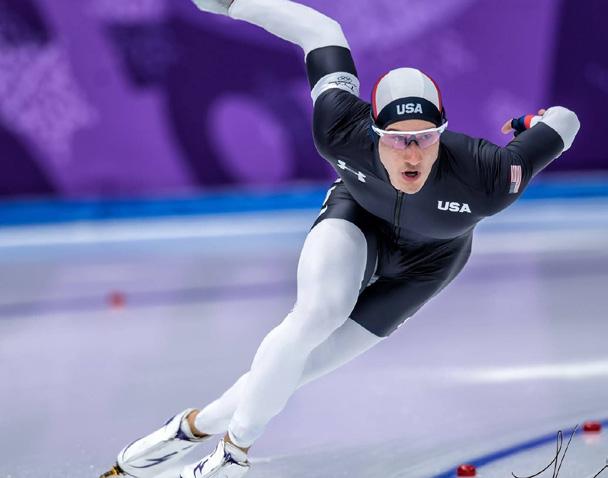
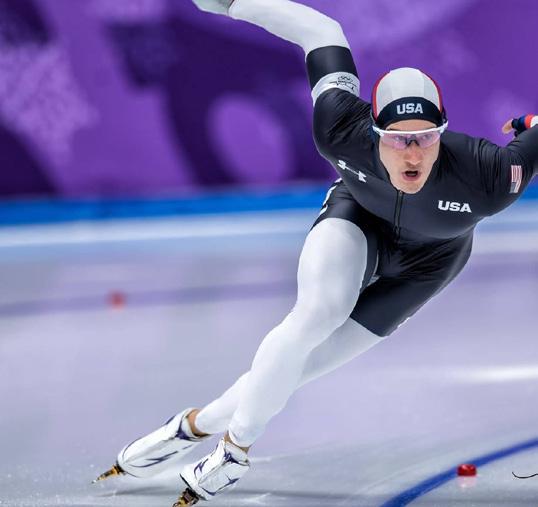
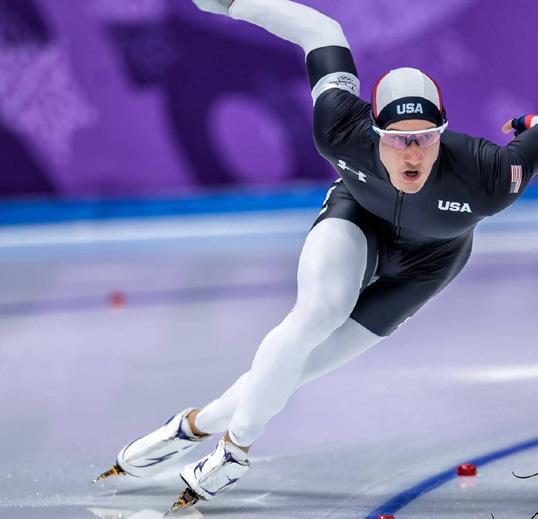
Congratulations to Kimani Griffin who traveled with Team USA to the Winter Olympics! A former Olympic speed skating competitor, Griffin served as the equipment technician manager for the U.S. Olympic Speed Skating Team. Fun fact: Griffin discovered his love for speed skating at a young age, at Skate Haven in Winston-Salem.
Mary Grace Douglas Orr served as a class representative for the Class of 2005 reunion last September and helped generate both enthusiasm and attendance for the annual fall event. On a professional note, she was recognized as a top producer with Leonard Ryden and Burr Real Estate.
Betsy Mann lives and works in New York, NY. This past fall, she completed the New York City Marathon for Team New York Junior League! (NYJL). For the past four years, Mann has been a member of NYJL serving in various roles from fundraising to volunteering. She said, “I’m grateful to have been on their marathon team, supporting its mission of advancing women’s leadership for meaningful community impact.”
Winborne Broughton recently moved to Austin, TX and is working for Williamson County Emergency Medical Services (EMS), a 911 service in the area. She said, “so far I am really enjoying Austin and working in EMS. I’m learning so much, especially in the medical field with the really wide range of calls I get at work.”
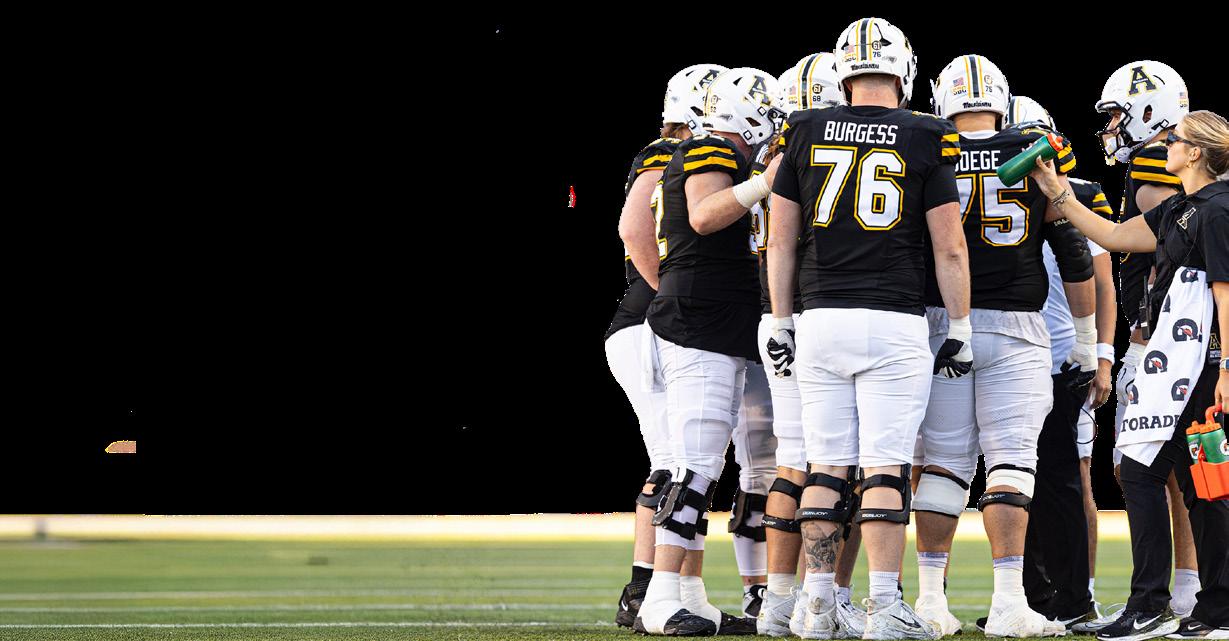
Colby Seagle, a junior in the Honors College at Appalachian State University (ASU), is pursuing a Bachelor’s degree in Kinesiology in the University Honors Program and the Kinesiology Departmental Honors Program. When she enrolled at App, she had a strong interest in clinical care and felt a passion to become a Physician Assistant (PA). She said, “I have always been a hands-on learner from a young age as a student at Summit. In college, I sought opportunities that allow me to apply classroom knowledge in a real world setting. I was fortunate to be given the opportunity to work with the Appalachian State Sports Medicine staff assisting the athletic trainers and physicians caring for the football team.
“During practice and game days, I support the athletic trainers in a fast-paced, high-pressure environment, gaining first hand exposure to collegiate level sports medicine. I assisted in basic wound care, treatment protocols, sideline care, and hydration. I was able to watch and assist in injury evaluation and I was able to see how medical decisions are made in real time to protect and support student athletes.”
Of the experience, she said “the opportunity provided invaluable hands-on learning and a deeper understanding of what goes into clinical care at the collegiate level of sports. Working closely with the athletic training staff confirmed my passion for healthcare and reinforced my goal of pursuing a career as a PA. After completing my undergraduate degree, I plan to pursue PA school and training, where I can expand upon these experiences and continue developing as a hands-on and patient focused clinician.”
Max Dresel sent a message to the alum office about a recent trip. “Last January I had the privilege of joining some friends from Summit on a 10-day trip to Vietnam which felt like a coming-of-age story where the group learns they aren’t as worldly as they thought and learns some deep lessons. Between the five-story A/C-less sauna masquerading as a French villa that we stayed in, our valiant but ineffective attempt at bartering at Bến Thành Market, and a series of culinary adventures featuring congealed blood, the whole-squid-and-egg bites we dubbed “squidibles,” and a lobster that was a little too fresh, we were humbled at record speed. By day five, everyone was down with food poisoning except me—I was battling a head cold instead—and our grand adventure devolved into exhausted sleep, dehydration, and one dramatic ER visit. We returned home slightly wiser, deeply grateful for the air-conditioning and food safety laws of the United States.”
Lily Winters, a senior at Bishop McGuinness High School, plays tennis and lacrosse. In November 2024, the tennis team won the NCHSAA 1A dual-team championship and Winters was awarded the Sportsmanship award. The team team was honored during half time of a football game recognizing their achievements. This past fall, the tennis team finished the season as third in the state for 2A. Winters played singles individuals and advanced to the semi-finals for regionals.
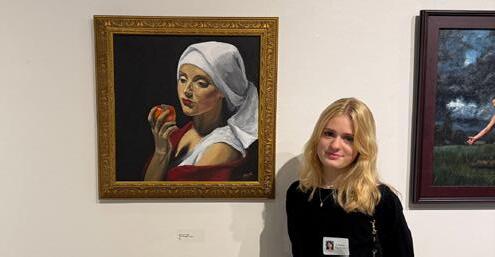
Katie Pike-Werle is pursuing a BA in the arts at Wake Forest University while also performing with several jazz bands. This past year, she had paintings accepted into the following shows: American Artist Professional League’s 2025 Emergence Young Artist and Associate Artist Member Online Show, National Oil & Acrylic Painters’ Society 2025 Associate Exhibition, and the Academic Artists Association’s 75th Annual National Exhibition in Connecticut. Two of her pieces are currently hanging in the Portrait Society of Atlanta’s 2026 Spring Members Only Exhibition in Georgia.
Congratulations to Grace McPhail, on earning the bronze medal in Women’s Foil at the North Carolina Fencing League’s Individual Tournament in late February. She also captained the Salem Academy Women’s Foil Team, which took first place at the North Carolina Fencing League Team Championship earlier in the year.
Congratulations to the following who signed to play college sports:
Jacob Brown - Belmont Abbey College, lacrosse
Laney Heafner - Campbell University, soccer
Aedan McCarty - Hood College, lacrosse
Heath Ropko - Mars Hill University, football
If we have inadvertently omitted your name, please send an update to Sarah Dalrymple, Director of Alumni and Community Engagement at alums@summitmail.org
Last fall Ollie Andree Bowen was a member of the team representing Atkins High School which placed second in The 12—the annual state academic competition. In the event, 12 students participate in 12 rounds covering 12 academic topics.
those we have lost since April 1, 2025
Molly Weeks Johnson ’37
Juliette Revelle Moore ’45
Weezie Hill Gunter ’52
Pete Crow ’57
Ann Wilsey DuFrane ’59
Marion Avera
Pat Capps
Barbara Eure
Lehoma Goode
Kerr Spencer ’67
John May ’70
Andrew Dewees ’82
BriAnna Atkins ’03
Bingle Lewis
Becky Marion
Cinda Meyer
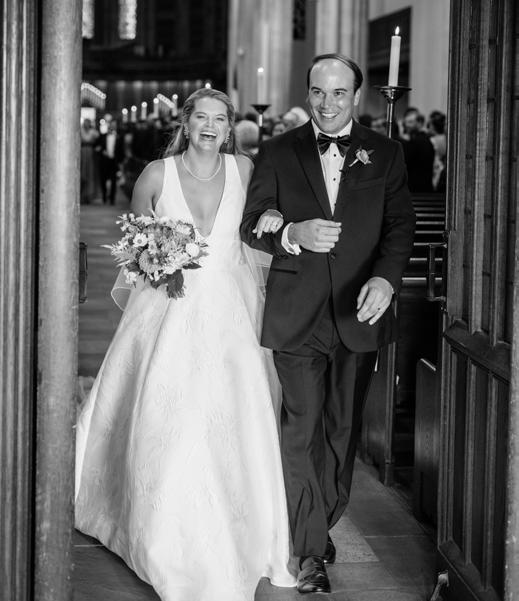
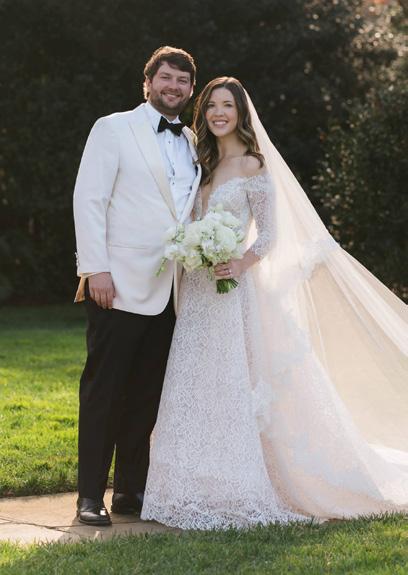
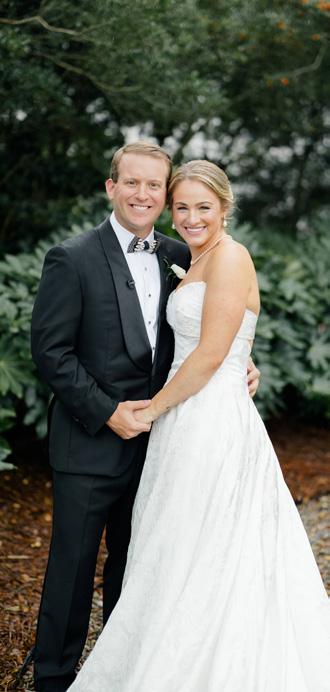
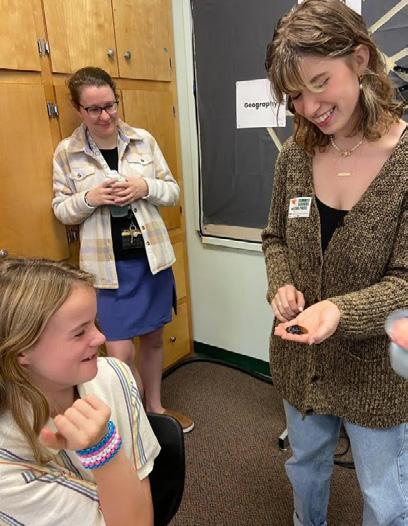
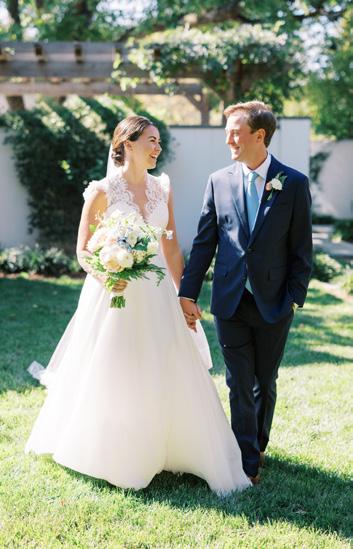
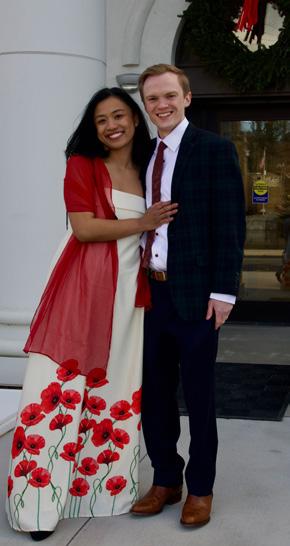
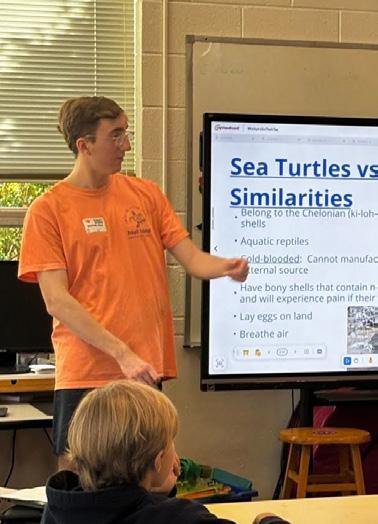

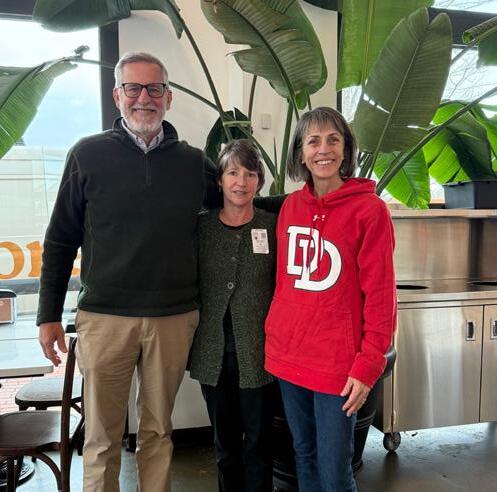
1. Lydie Neill Chambers ’11 2. Emory Waite ’22, Jeff Turner, Mac Semans ’22, and Charlotte Richter ’21 at Furman University 3. Micah Bryant ’20 and Cam Whitley 4. Janie Thomas Haus ’13 and Sam Haus ’08 5. McKenzie Folan ’10 6. Wills Combes ’15 7. Hannah Davies ’17 visits campus and talks about her experience living in Taiwan 8. Michael Smith, former Summit coach and athletic director, Sarah Dalrymple, and Laura Mueller Woods ’77 at Davidson Day 9. Suzanna Roemer Shaw ’05 10. Quin Kinser ’20, a junior at NC State University, speaks to sixth grade students as they prepare for the grade level signature event Bug Cafe 11. Heath Turner ’25 visits campus and speaks to upper school science students about bee propolis
Lane Albright Davidson College
Sara Bailey St. Louis University
Sidney Baird Wake Forest University
Hines Batten Wofford College
Jager Bellissimo University of Miami
Amelia Bergman NC State University
Olivia Bland UNC - Chapel Hill
Preston Cain Morehouse College
Grace Campbell University of South Carolina
Ann Cooper Cannon UNC - Chapel Hill
Gray Cartwright UNC - Charlotte
Stephen Chermak Davidson Community College and Forsyth Technical Community College
Tyler Cronan University of Georgia
Quin Davis Davidson College
Max Dresel Swarthmore College
Hunter Eckman UNC - Wilmington
Mimi Emmerich New York University
Austin Fowler Emory and Henry College
Martin Fulp UNC - Wilmington
Lauren Grubbs Samford University
Joanna Holden Wake Forest University
Anna Hollan University of South Carolina
Peyton Hopkinson UNC - Charlotte
Noora Hosseinzadeh UNC - Chapel Hill
Preston Howe Yale University
Adelaide Jernigan NC State University
Ethan Jones UNC - Wilmington
Amory Kelly University of Virginia
Sawyer Kribbs UNC - Chapel Hill
Jacob Leonard Berklee College of Music
Virginia Lewis Wake Forest University
Grayson Linville Cape Fear Community College
Caroline Lovett UNC - Chapel Hill
Max Mahler Lafayette College
Mason McLendon UNC - Charlotte
Adelaide Merrick Denison University
Mac Murphy Lenoir-Rhyne University
Jack Nolan Appalachian State University
Liam O'Neill Ohio State University
Charlie Owens UNC - Chapel Hill
Angelina Paparoupas Southern Methodist University
Wyatt Pearce University of Tennessee
Jack Peterson Rutgers University
Caroline Petronzio New York University
Gabby Petronzio Furman University
Sophie Petronzio Wake Forest University
Katie Pike-Werle Wake Forest University
Sophia Pisapia Davidson College
Campbell Platz NC State University
Jackson Powers Appalachian State University
Tejus Ranadive Hobart and William Smith Colleges
Emma Rogers Clemson University
Isaac Ross Washington and Lee University
Ben Schultz Virginia Polytechnic Institute
Rebekah Self Forsyth Technical College
Mac Semans Furman University
Perry Skorich Appalachian State University
Eva Skoteiniadis NC State University
Marshall Smith UNC - Chapel Hill
Thomas Smith Southern Methodist University
Ava Snider UNC - Chapel Hill
Georgia Stallings Northeastern University
Whitten Staton Wake Forest University
Nelson Storch University of Mississippi
Olivia Stubbs University of Virginia
Benton Sullivan Sewanee University
William Tuohy University of Texas
Poppy Veneziano University of Georgia
Emory Waite Furman University
Kate Walker University of Tennessee
Jake Winslow Wake Forest University
Jack Winterle University of Texas
Lilly Zaks UNC - Chapel Hill
If we have inadvertently omitted your name, please contact Sarah Dalrymple, Director of Alumni and Community Engagement, alums@summitmail.org
Every year, hundreds of donors make gifts to The Summit Fund, the annual fundraising campaign that supports the school’s operating needs. These gifts—whether they are $20, $100, $500, or higher—reflect a deep belief in the power of a Summit education.
T.J. Petronzio, Summit parent and Upper School Science teacher, has been making an annual gift to Summit School for 11 years in a row and shared the following about why making this annual donation is important to him:
“Summit is a one-of-a-kind place with a strong vision for education. I believe in the school’s mission, and see how Summit prepares students for a future we can’t yet imagine. The dedication and compassion of the teachers make all the difference. Supporting Summit feels like an investment in helping students become adaptable, well-rounded, and ready for any challenge ahead.
“Summit’s programs encourage students to discover their strengths, build resilience, and dive into handson learning. But even more than that, it’s the lifelong relationships kids form—with each other and with their teachers—that makes Summit unique. These connections, along with the skills they gain, give them a strong foundation for the future. Giving to Summit is a way to support a community that helps students grow, connect, and learn.
“With 25 years of teaching behind me, my favorite classes are the ones where students take the lead. The best days are when I step back and let them be creative, use their hands, make mistakes, and try again. Those are the moments I love most—encouraging them and giving back.
“My wife and I have six children, all of whom have attended or currently attend Summit. It’s great seeing them share so many of the same experiences, from the class trips to projects that define each grade. Each of them has been shaped by the teachers and community here, often in ways they may not even realize yet. For us, Summit is more than just a school; it’s a big part of our family. That’s why I give.”
T.J. Petronzio
Parent of Mason ’19, Annabelle ’21, Riley ’23, Jax ’25, Miles ’27, and Kai ’29
Consecutive years of giving: 11
Summit Fund
Scan this QR code to submit your application.
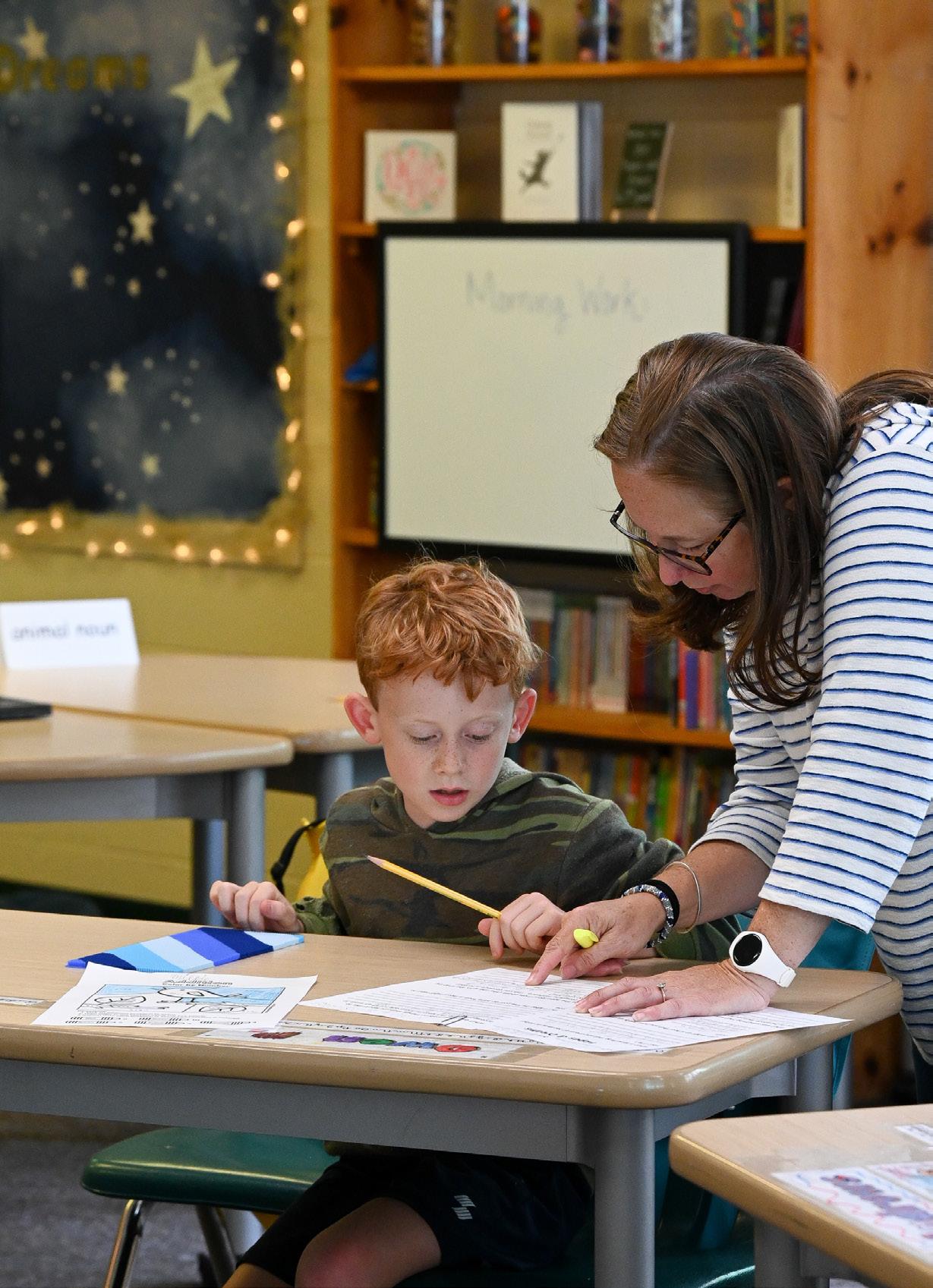
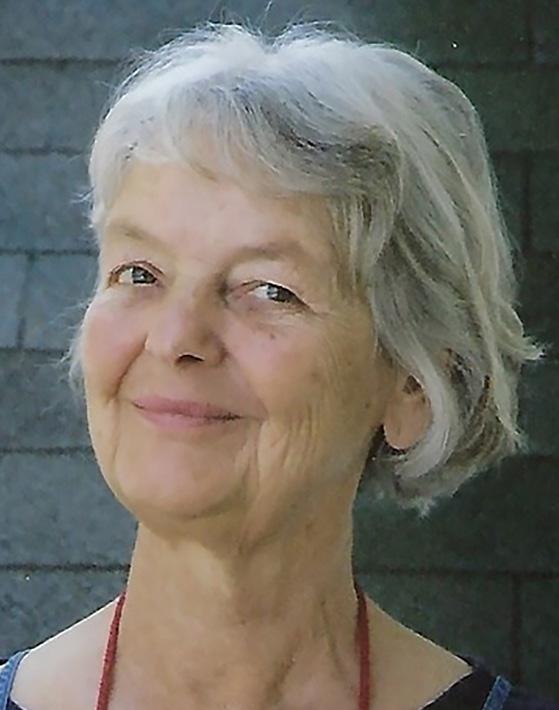
A basket in hand, moving from classroom to classroom, “Madame Lewis” brought French to life for generations of Summit’s youngest students— introducing not just language, but the warmth and presence that defined Emilie Gratwick Lewis.
Known to family and friends as “Bingle,” she became part of Summit’s daily life in 1957, when she and her husband, Doug Lewis, moved to Winston-Salem as he began his long tenure as head of school. While Doug led the institution, Bingle shaped the daily experience of the community in ways both visible and quietly essential.
“ More than what she did, it was how she did it that made Bingle such an important part of the Summit community. She will forever be part of Summit’s strong, enduring history.” - Sandra Adams, Head of School 1990-2008
As former Head of School Sandra Adams, who succeeded Doug Lewis, reflected, Bingle saw her role as supporting “Douglas”—but in practice, that meant doing whatever the school needed. She hosted faculty in their home, ran last-minute errands, drove vans to pick up students, welcomed visiting educators, and supported colleagues through life’s challenges. Just as importantly, she brought steadiness in moments of tension, often “calming the waters” with a grace that left a lasting impression on Summit’s entire community.
Students encountered Bingle at every stage of their Summit experience. Lower School students knew her as “Madame,” while Third Graders came to know her through Pioneer Day at the family farm in Traphill, where she and Doug created an immersive, hands-on glimpse into early American life. Older students remember her grading French workbooks, supporting theater productions backstage, chaperoning trips, and showing up— without fail—for school events.
In the end, what endures from Bingle is not a list of roles, but a way of being: a melodic voice, an open heart, an adventurous spirit, and a genuine interest in every person she met. Long after the basket was set aside, her presence remains woven into the fabric of Summit.