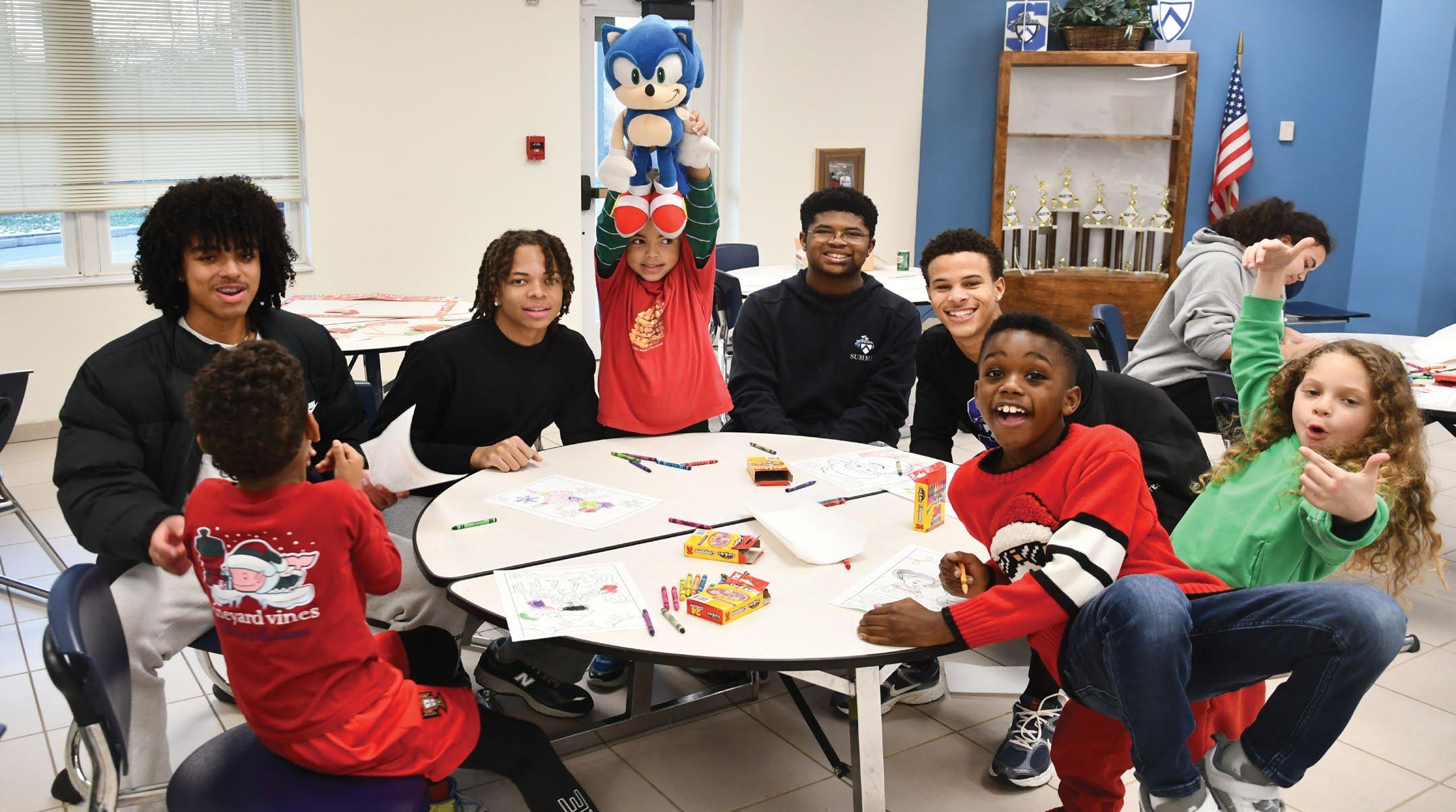
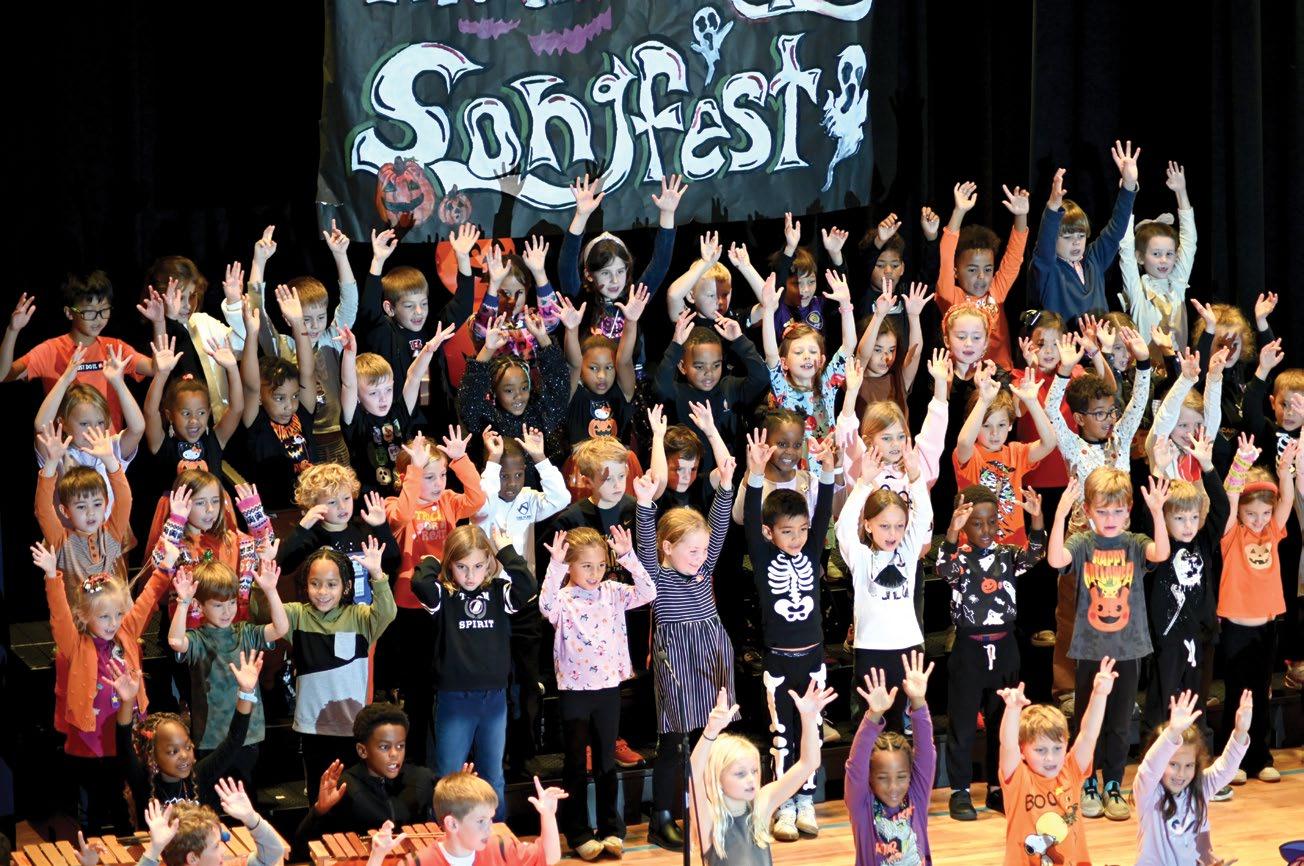
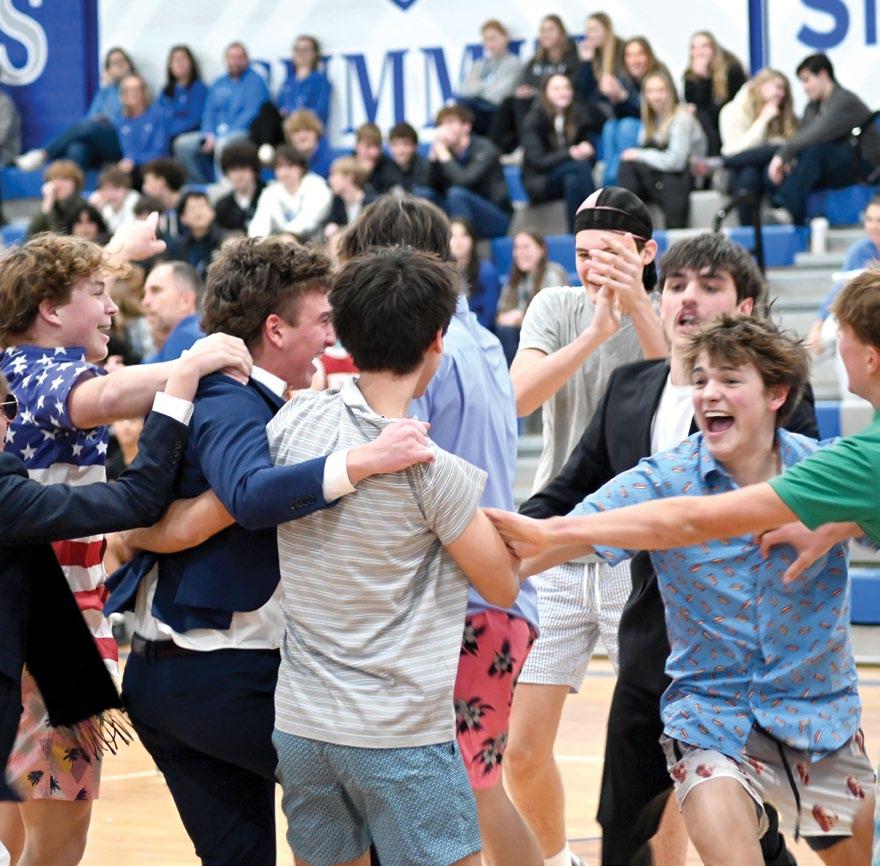
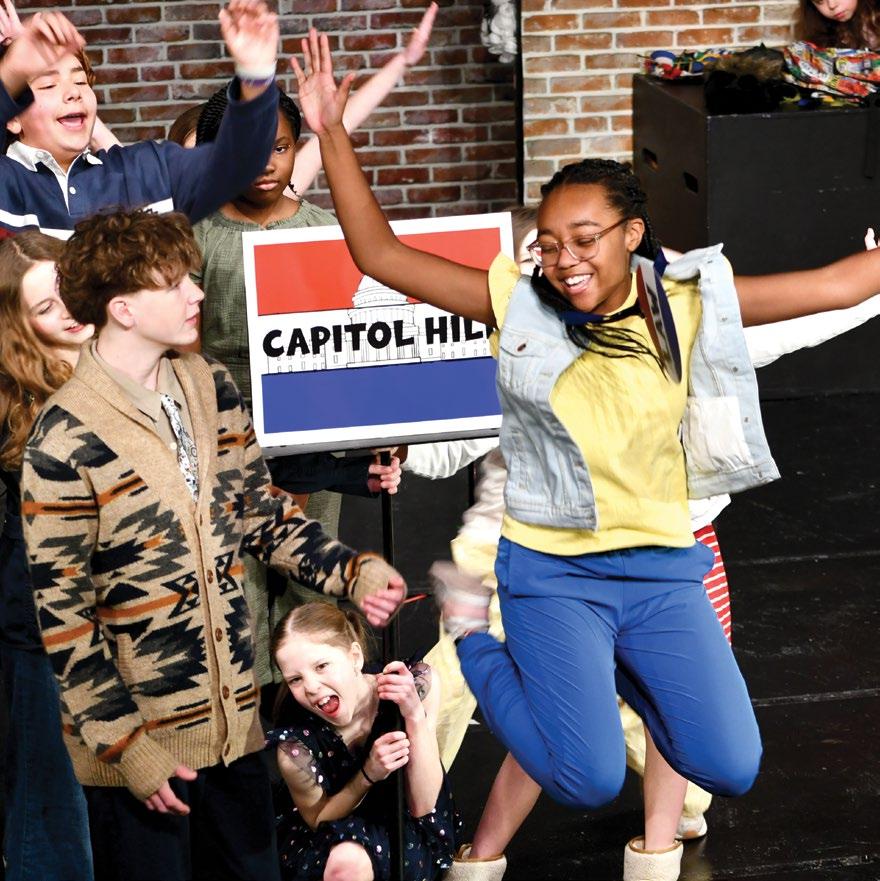
The Summit Country Day School is a Catholic and independent school minutes from downtown Cincinnati.
Affiliated with The Sisters of Notre Dame de Namur, we offer a coeducational experience for students from 18 months through grade 12. Our mission is to educate leaders of character across five pillars – spiritually, academically, physically, socially and artistically.
Grounded in our Leaders of Character framework
Spring at The Summit Country Day School is a season of renewal, an invitation to reflect with pride on the growth of our students and the forward momentum of our mission. As I look across our campus and community during this 135th anniversary year, I am once again inspired by what defines The Summit at its core: the character, curiosity, and leadership we intentionally cultivate in every learner, from our youngest Montessori students to our graduating seniors.
In this issue, you will see meaningful progress across areas of our strategic plan. This fall, we proudly launched the Institute for Leadership and Character, a multi-divisional framework ensuring that every Summit student grows not only as a scholar, but as a person of faith and a leader of character. I am pleased to share the appointment of Dr. Caroline Wagner as Associate Director of the Institute for Leadership and Character, whose leadership will help guide this vital work forward.
Grounded in our Leaders of Character framework, the Institute brings to life the Hallmarks of the Sisters of Notre Dame de Namur while preparing students to lead with purpose in an ever-changing world. The Institute extends our mission beyond campus, serving as a resource for our broader community. You will see evidence of this in an article highlighting the Institute’s inaugural symposium held this past November, featuring Travis Steele, Summit parent and Miami University Men’s Basketball Coach.
Our enduring commitment to educating the whole child through the five pillars is vibrant across all four divisions. We begin in Montessori, where even our youngest learners are immersed in the values of grace, courtesy, and respect, foundations that shape a lifetime of charactercentered learning and personal responsibility.
You will also read about the dynamic partnership between Upper School Physics and Engineering teacher Derek
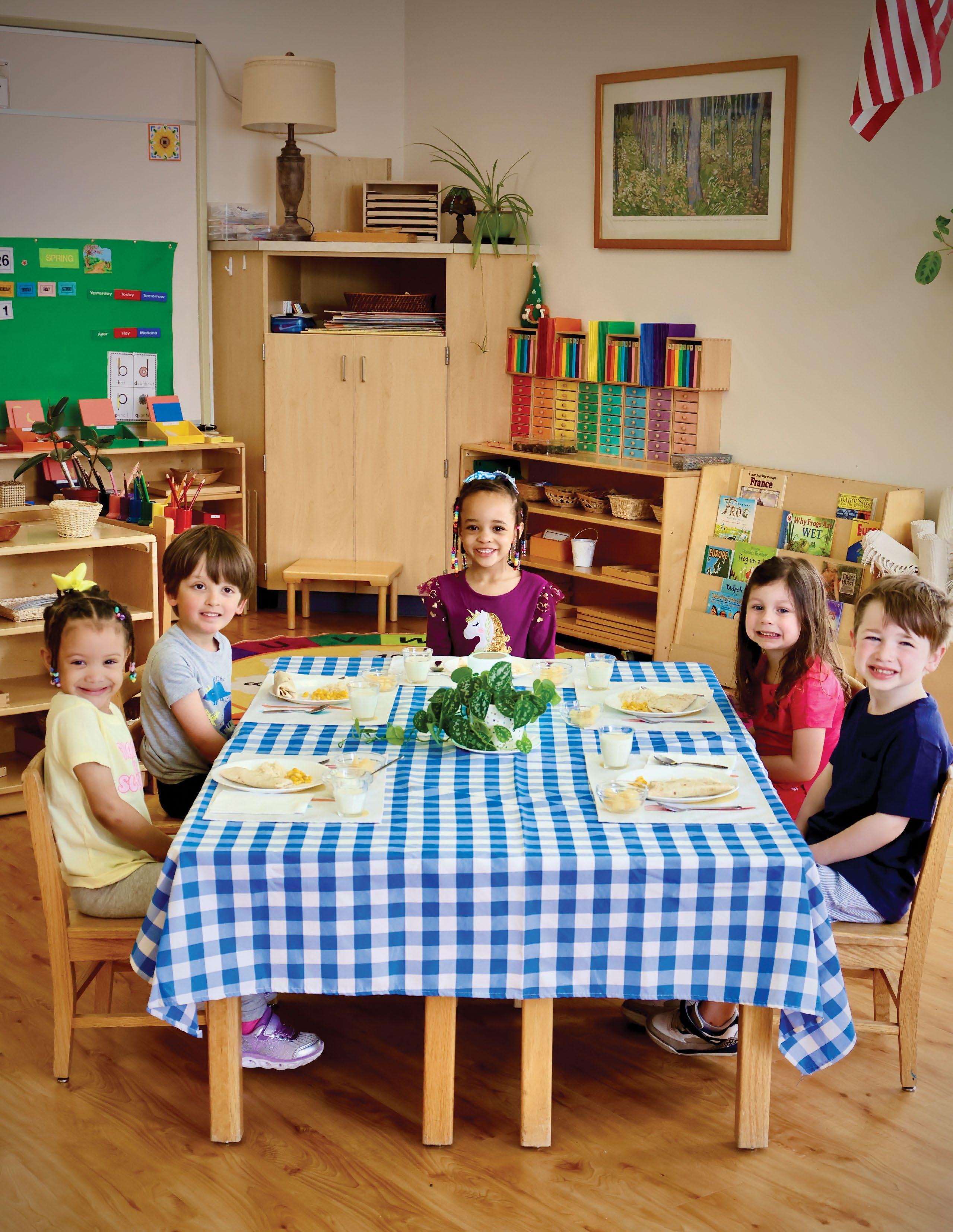
On the Cover: Montessori pre-K students learn the proper etiquette of eating at a dining table with friends:
Gabriel Gallant, Grace Crouser, Vivian Myers, Oakley Medley and Juan Jerez Salamanca
Duncan and Exploratarium Coordinator Mary Kate Newton. Their collaboration has sparked powerful, cross-divisional learning experiences that develop critical thinking skills, confidence, communication, and collaboration. Mary Kate’s expanding work with the Middle School in design thinking and experiential learning further exemplifies how The Summit prepares students to approach real-world challenges with creativity, resilience, and courage.
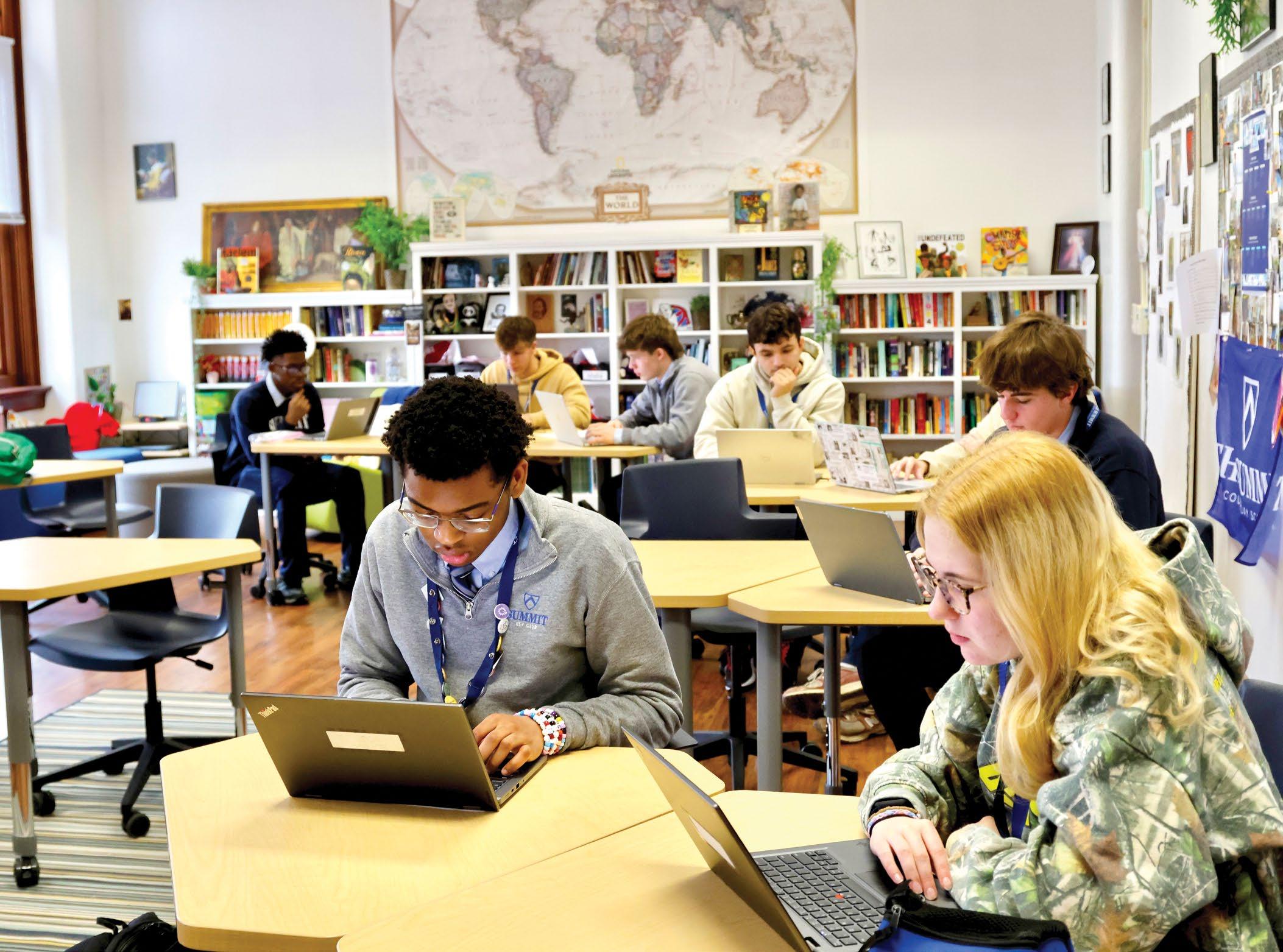
Our exceptional four-year college counseling program continues to distinguish Summit graduates, providing intellectually curious and academically accomplished students with personalized guidance that aligns their aspirations with outstanding colleges and universities both nationally and internationally. We also celebrate the expansion of our House System into the Lower School, a joyful milestone that strengthens belonging, leadership opportunities, and cross-grade connections.
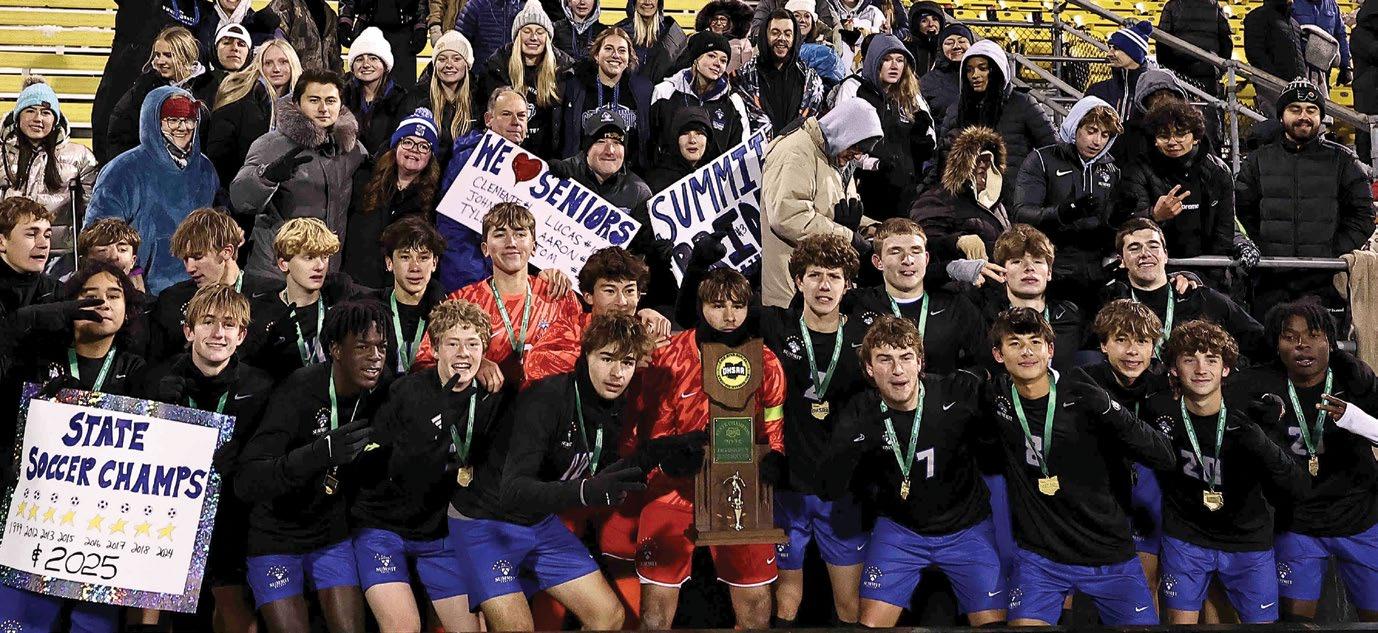
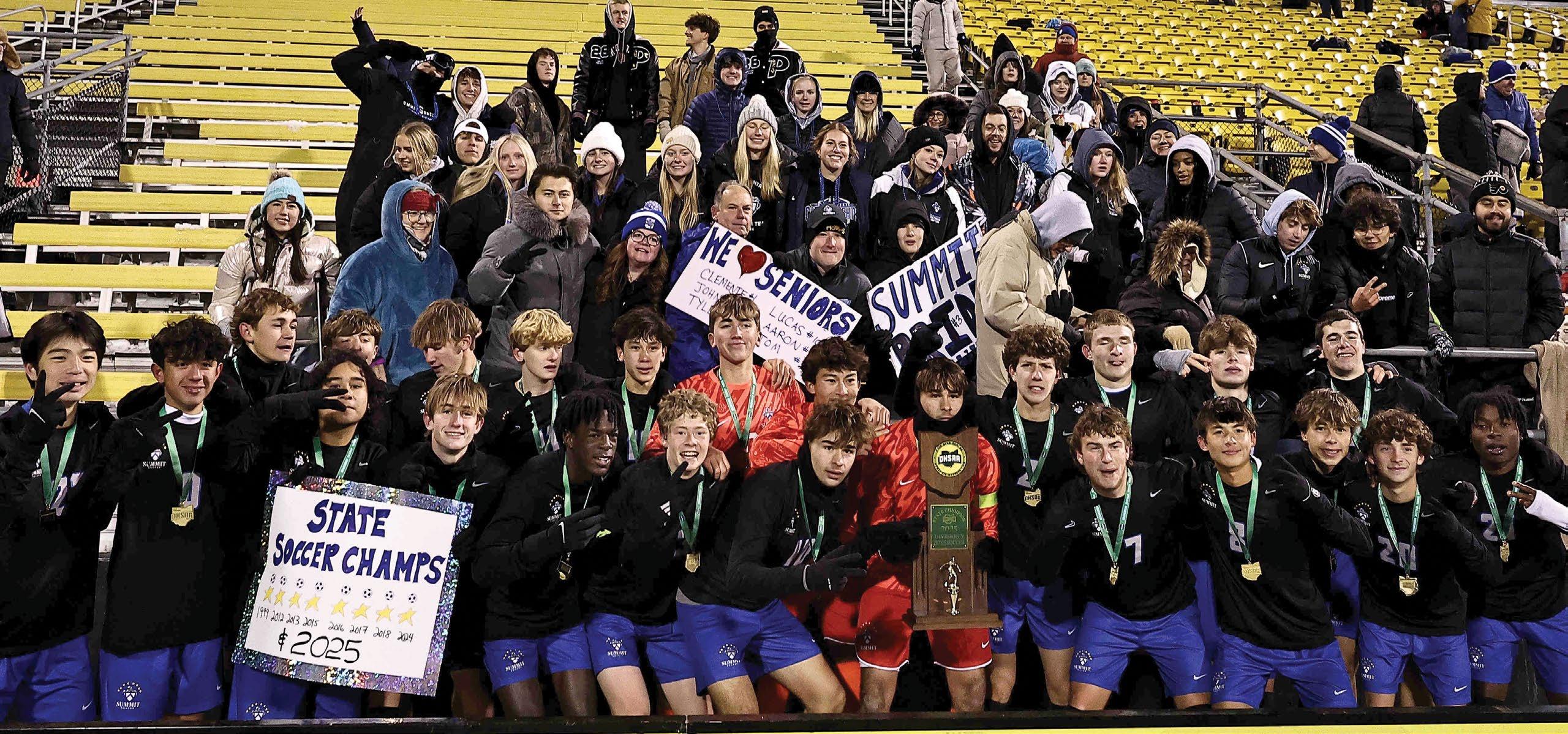
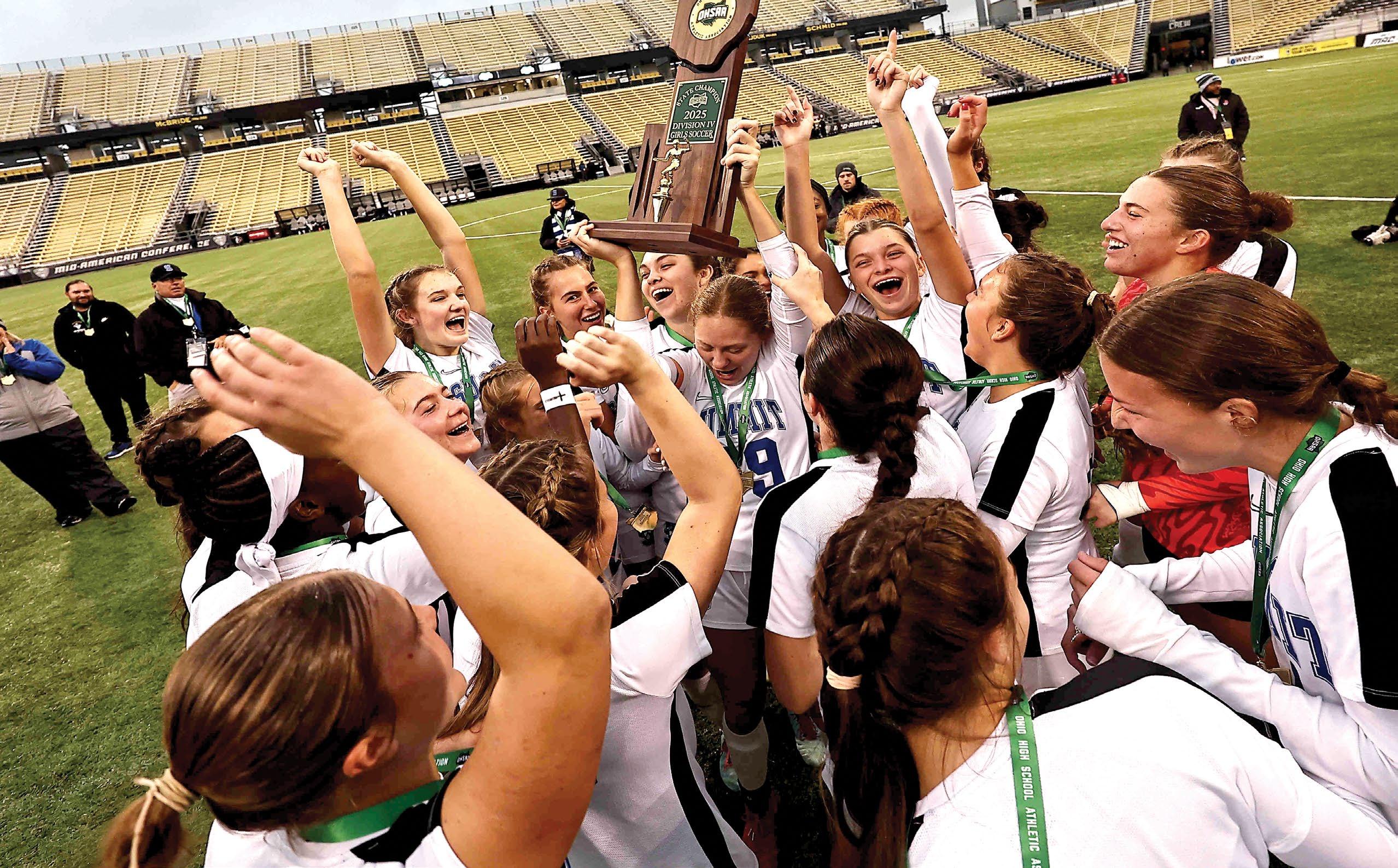
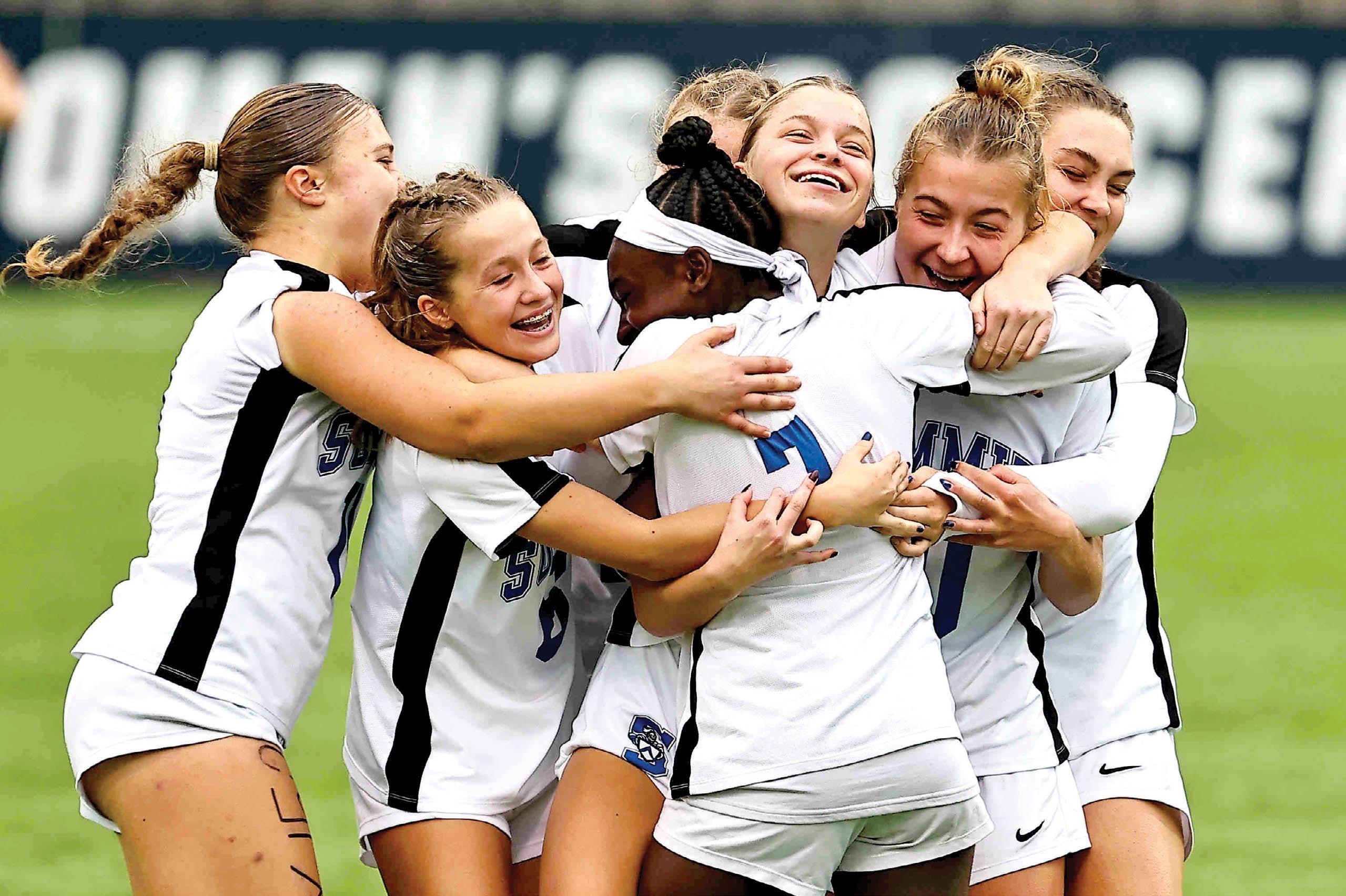
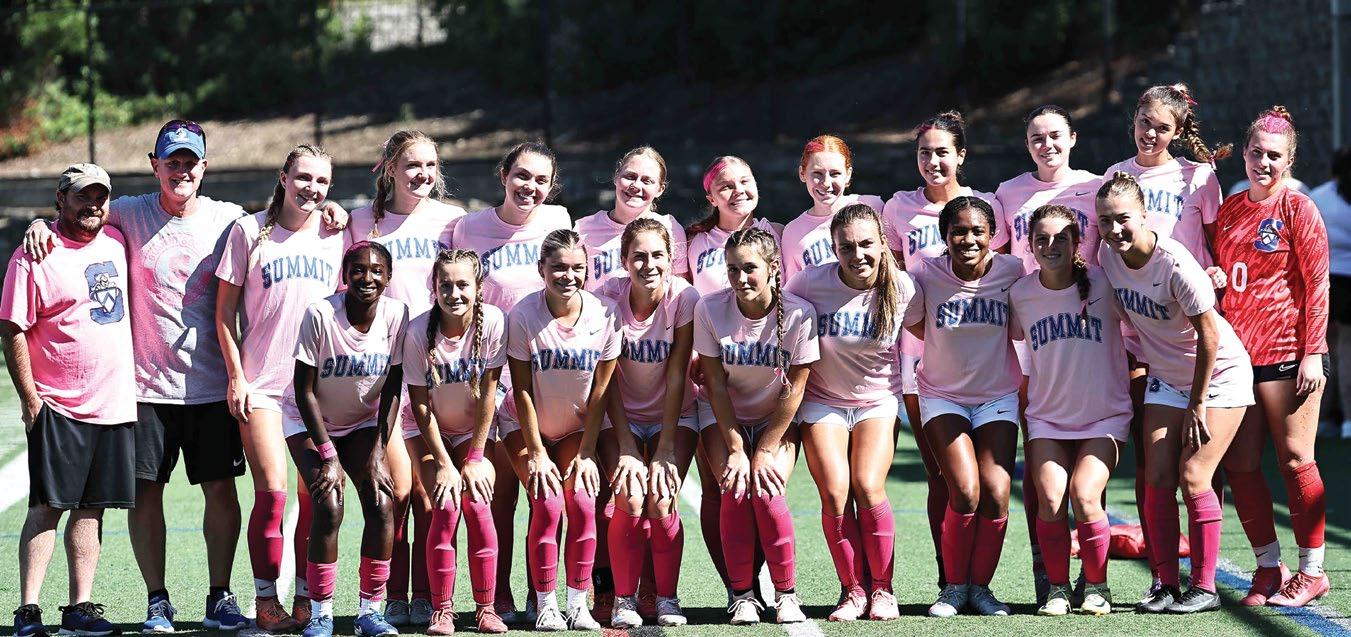
Our Silver Knights have given us much to celebrate this year. We proudly honor our boys’ and girls’ soccer teams on their dual state championships, and we applaud the remarkable postseason performances of all of our teams. Their dedication, teamwork, and sportsmanship exemplify the very best of Summit athletics.
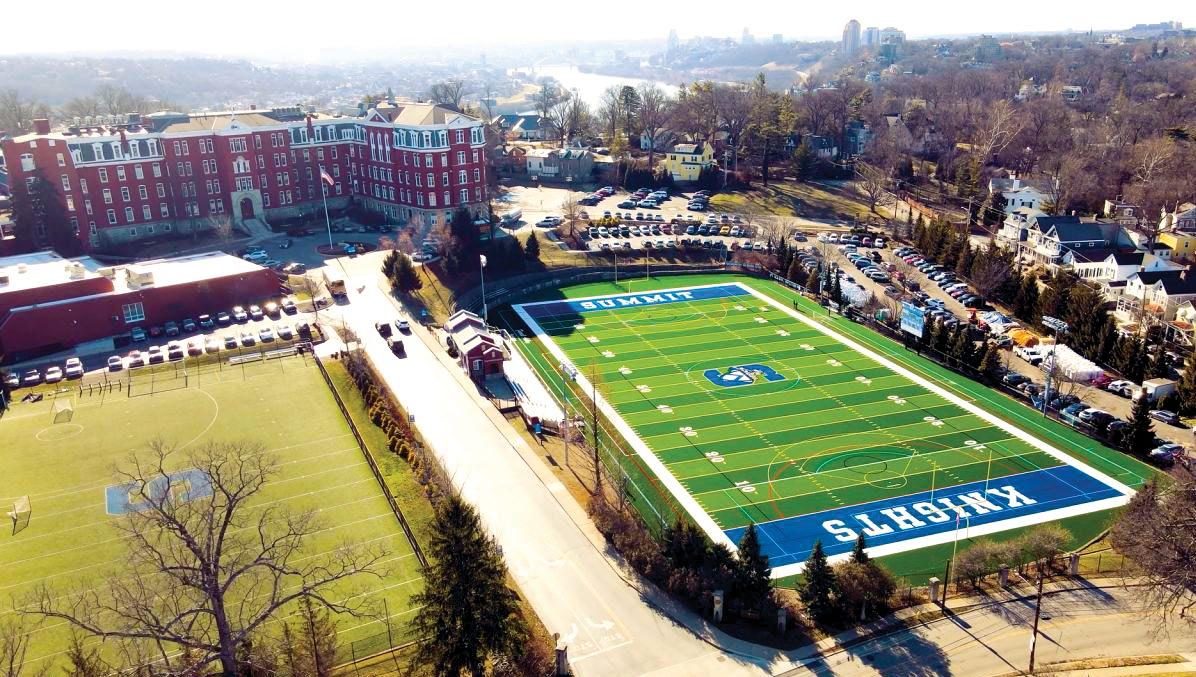
Looking ahead, we are excited to break ground this May on a new Montessori and Lower School nature inspired playground, an investment that will enrich outdoor learning and play for generations to come. We also celebrated the opening of our enhanced Williams Field, featuring best-in-class turf,
shock pads, updated branding, electrical improvements, and lacrosse netting, facilities worthy of the excellence our students bring to the field.
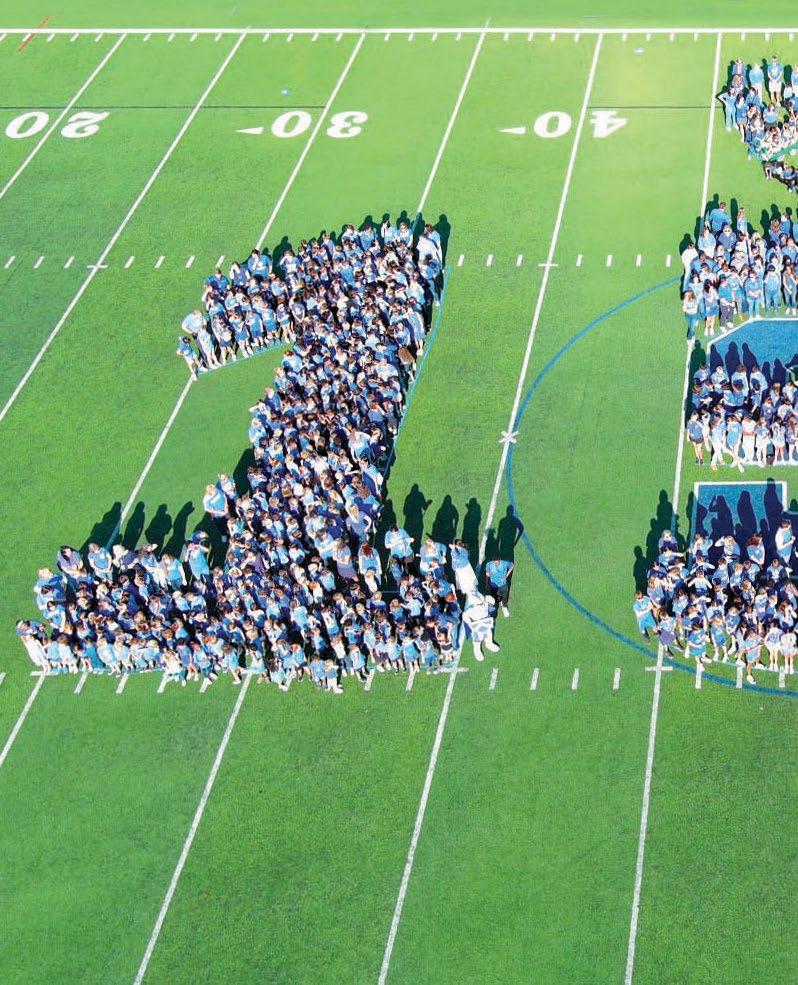
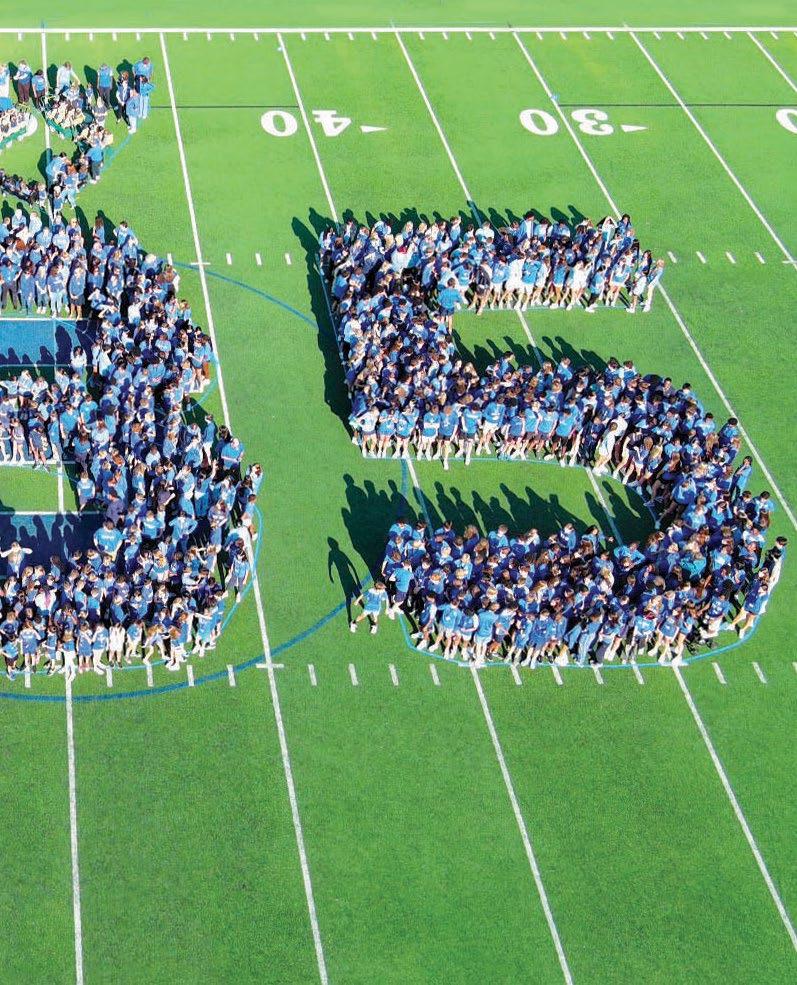
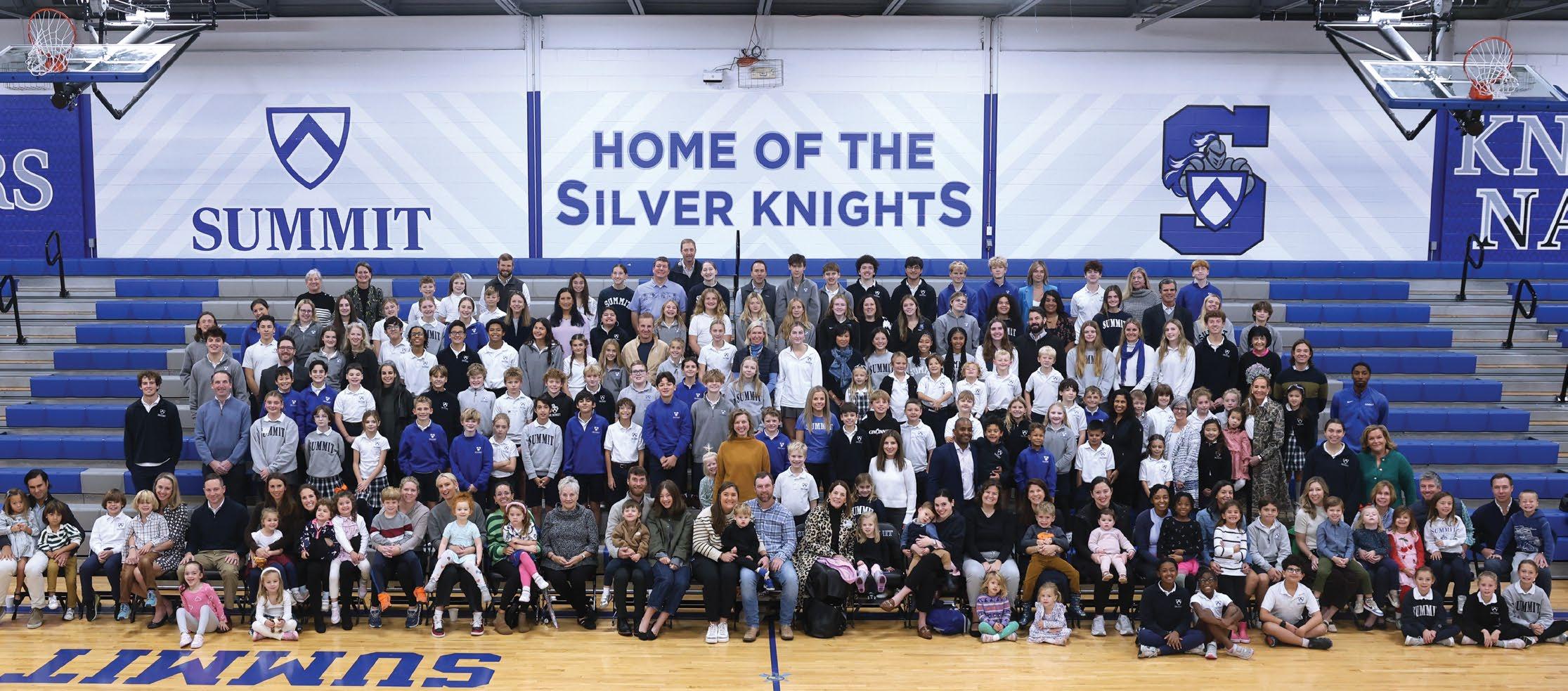
At the heart of this issue, you will find a special center spread featuring the “135 Photo” a joyful tribute to Summit’s remarkable 135-year legacy. It captures who we are today while honoring the generations who came before us and shaped the school we love. As we enter the final weeks of the school year, I am filled with deep gratitude for our students, who inspire us daily; for our faculty and staff, who lead with purpose and passion; and for our families, whose partnership strengthens all that we do. Thank you for your trust and your belief in the transformative power of a Summit education.
Grow in Grace and Wisdom,
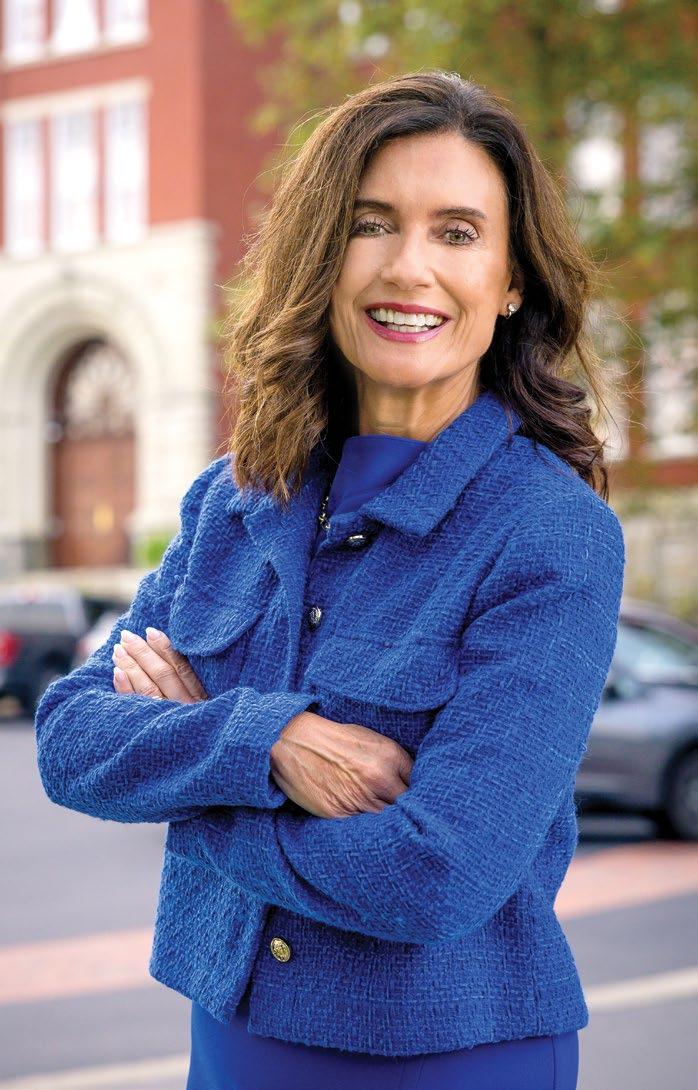
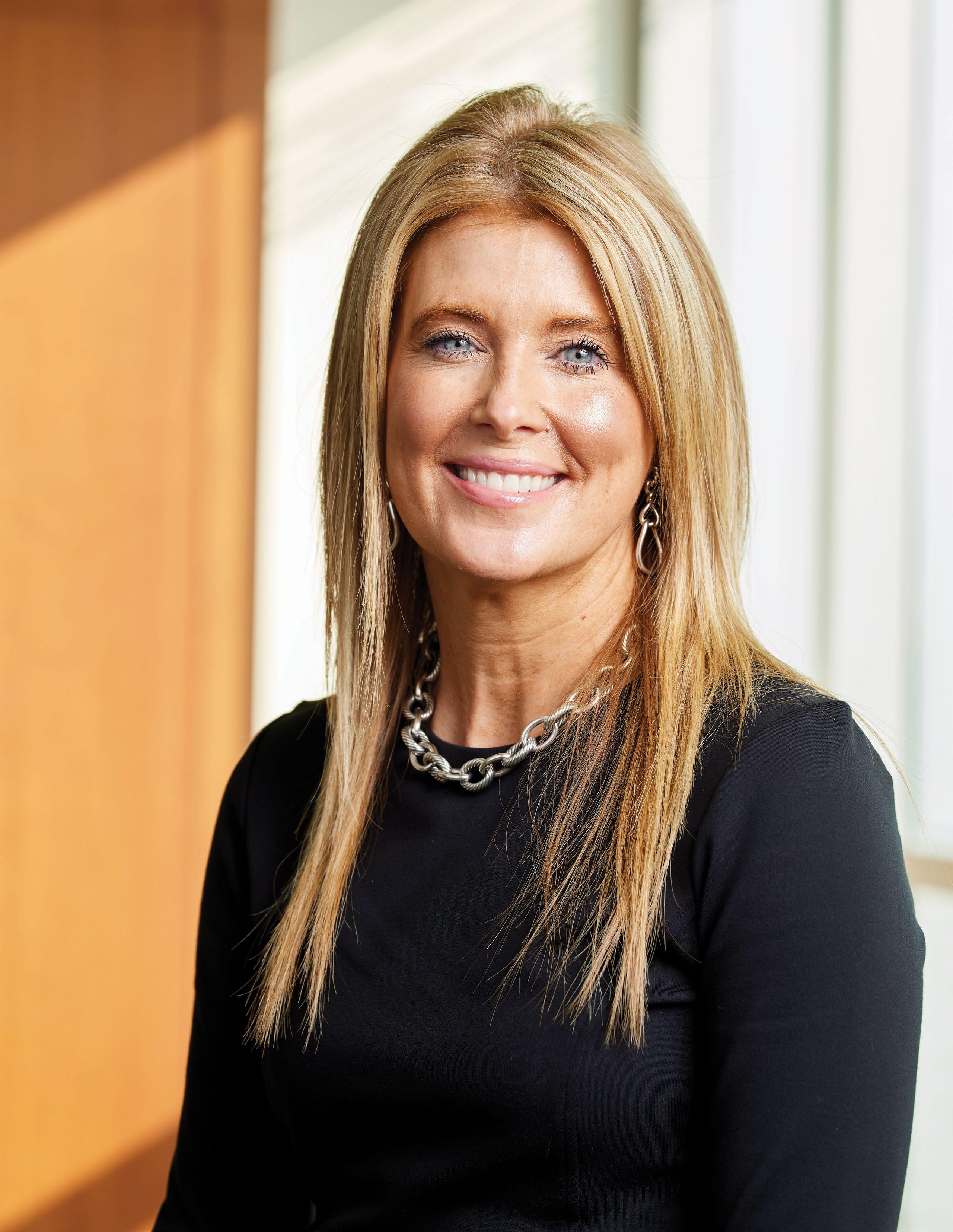
Kelley Schiess HEAD OF SCHOOL
Our Montessori toddler program builds Leaders of Character through its unique etiquette lessons, quietly shaping empathy, independence and community.
From laser cutters to listening skills, Summit students discover engineering starts with people.
In the Exploratarium, Middle School students learn that perseverance, iteration, and curiosity are the real building blocks of confidence.
More than admissions advising: how Summit’s four-year college counseling program prepares students for life beyond high school.
The Summit reaches a new high, launching the Institute for Leadership and Character with its first-ever community symposium.
Claire Wiltshire ‘26 turns curiosity into a purpose-driven brand, proving entrepreneurship can start small and mean something big.
A season for the history books as Summit soccer claims dual championships and defines excellence as tradition.
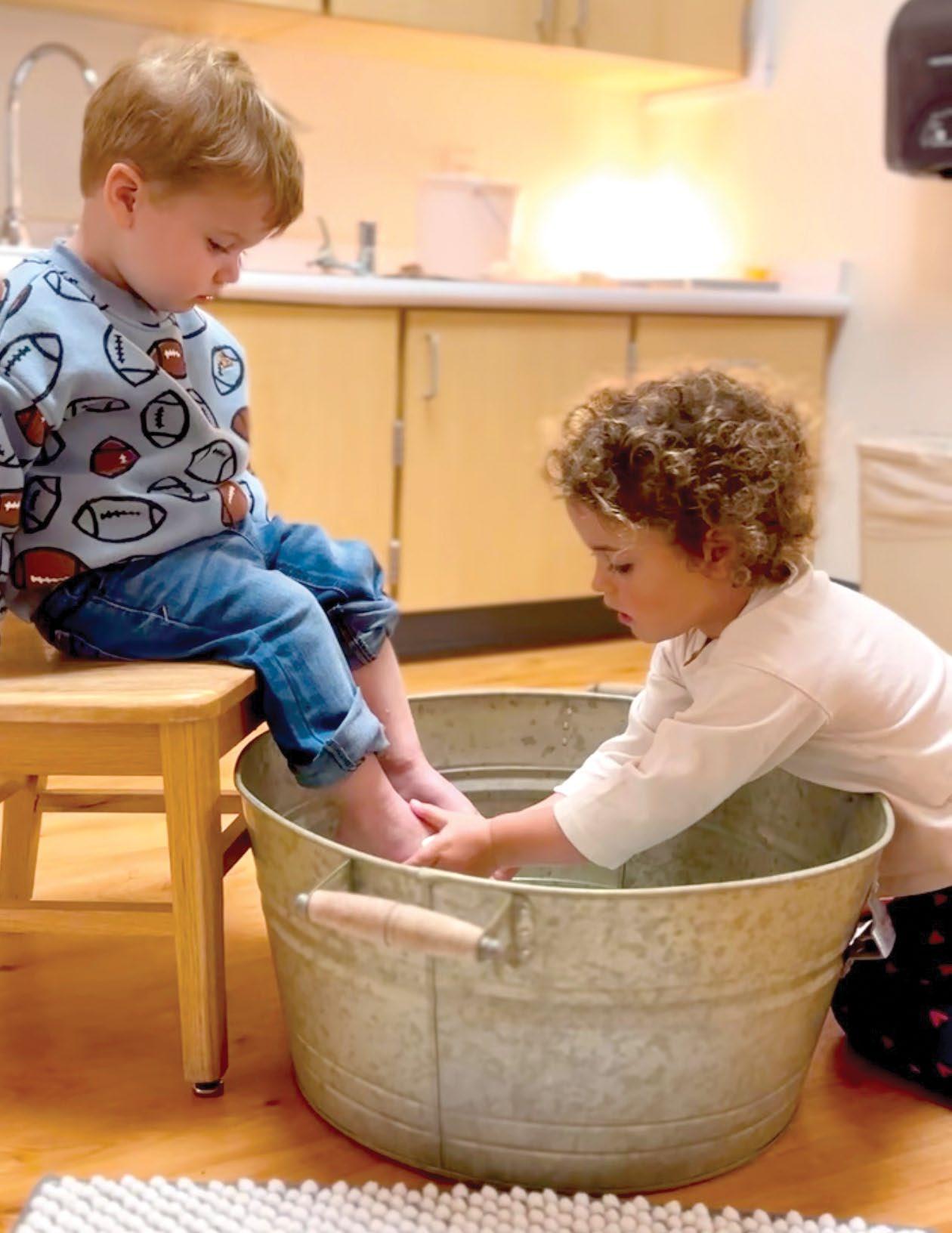
The mixed-age Montessori classroom naturally supports grace and courtesy throughout the day. During a recent lesson in feet washing, an older toddler gently washed the feet of a younger classmate, who sat quietly in awe!
To Grow in Grace and Wisdom
By Pieper Buckley
I n the Montessori classrooms of The Summit Country Day School, the quiet rhythm of daily routines becomes a living lesson in empathy, independence and community. Division Director Stephanie Hicks says these habits begin with simple, meaningful interactions.
“In our classrooms, grace and courtesy lessons are modeled by teachers and practiced naturally by children,” she says. “These help students learn at a young age how to contribute to their community with respect, empathy, and confidence through real interactions.”
That spirit is visible from the earliest years. In the Toddler program, children use real drinking glasses, porcelain dishes and child-sized silverware, learning to handle their environment with genuine care. Toddlers sit together in small groups and gather their own dishes. They help prepare food, pass water to one another and practice polite language that feels natural and sincere. Teachers gently model phrases such as “Would you like some bread today?” or “Could you please pass the water?” Toddlers learn to offer food, make decisions and respond with “yes, please” or “no, thank you,” building confidence through authentic social exchanges.
Mealtimes serve as moments of connection. Children unpack their lunches from home, join in prayer and share conversation in a peaceful setting. The atmosphere is calm and communal, creating a meaningful pause in the day. Afterward, they wash their own dishes, clean their tables and even sweep the floor. Practical life skills— dressing, toileting, putting on shoes, preparing food—are built into the routine. Teachers provide time for these tasks and model them with consistency, helping toddlers realize just how capable they are when given an environment designed for success.
As children move into the 3–6 Montessori classrooms, these early experiences deepen. Preschoolers now enjoy lunch in their classrooms rather than the Lower School dining hall, allowing these important rituals to continue uninterrupted. Students set tables independently, prepare food and care for the classroom after meals. Many rooms incorporate cloth linens or battery-operated candles, creating a warm and intentional lunchtime atmosphere.
The mixed-age structure of Montessori education strengthens these habits throughout the day. Older children naturally become role models as they zip coats, guide younger classmates through challenges and demonstrate how to care for shared materials. These interactions build empathy and leadership in older students while offering younger children the comfort of peer support.
“With no more than 10 full-day preschoolers in each class, students and teachers share conversation, say a prayer together, and build community,” Hicks says. “These routines strengthen independence while fostering connection and belonging.”
Across every age level, these routines support The Summit’s mission of forming the whole child. Character building, respect for all and the development of genuine community are not abstract ideals in Montessori—they are lived experiences. In classrooms intentionally prepared for independence and kindness, children learn not only how to contribute but why their contributions matter.
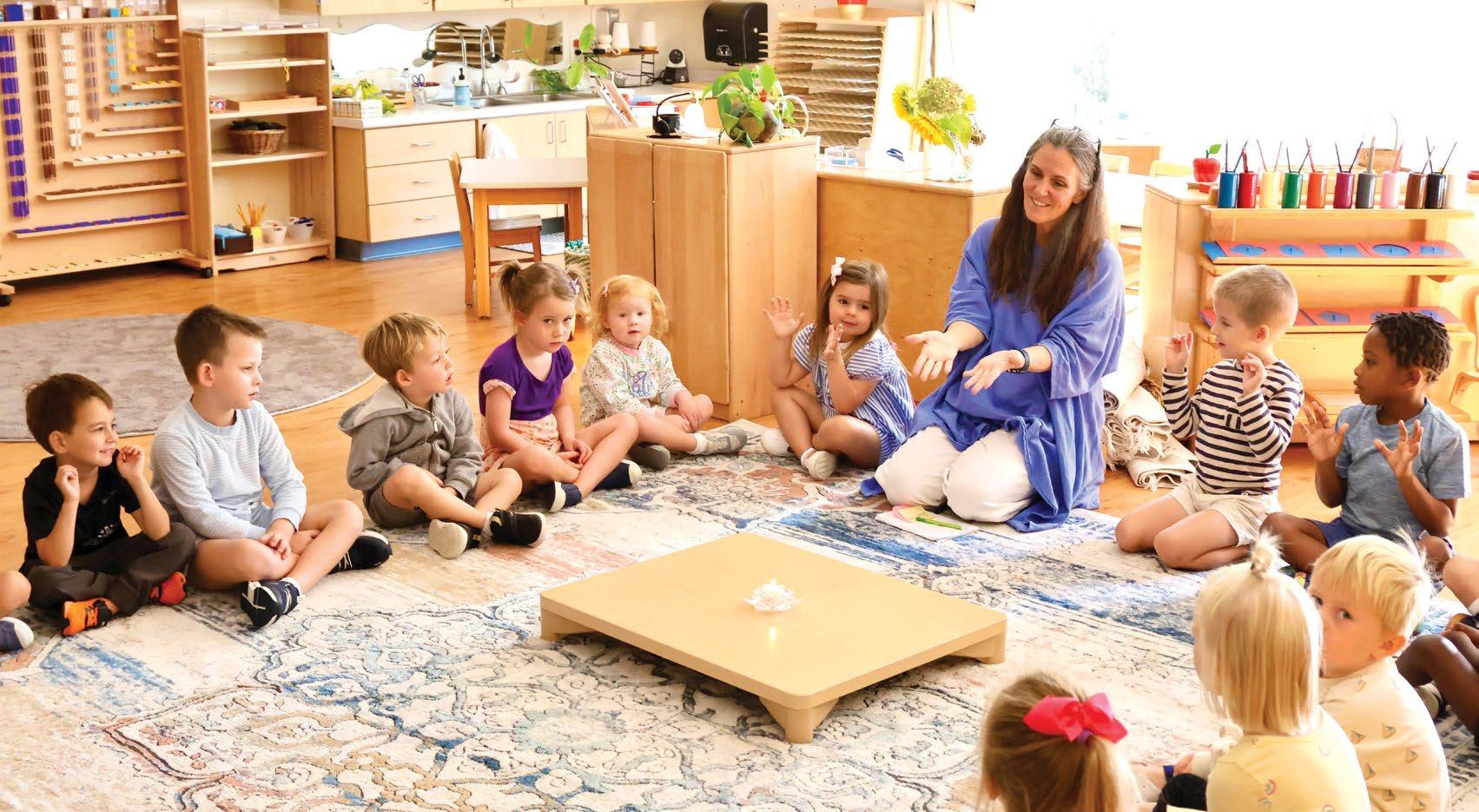
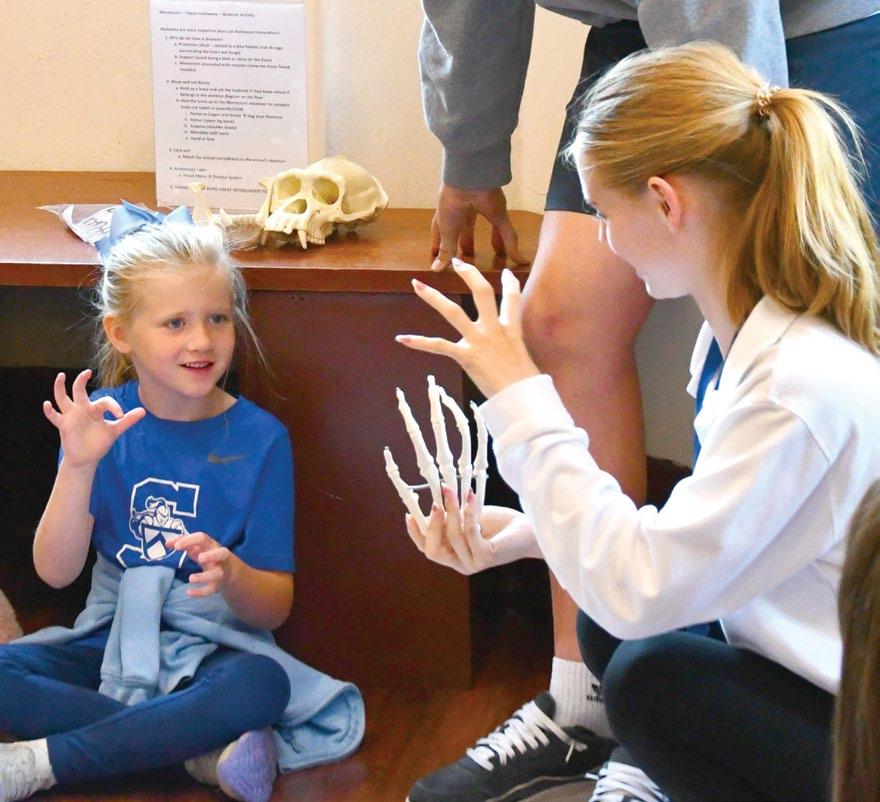
Older students serve as role models and helpers during circle time, assisting with problem solving and caring for younger classmates.
Connected by Design: A Unified Approach to Applied Learning
By Emily Fernback
I
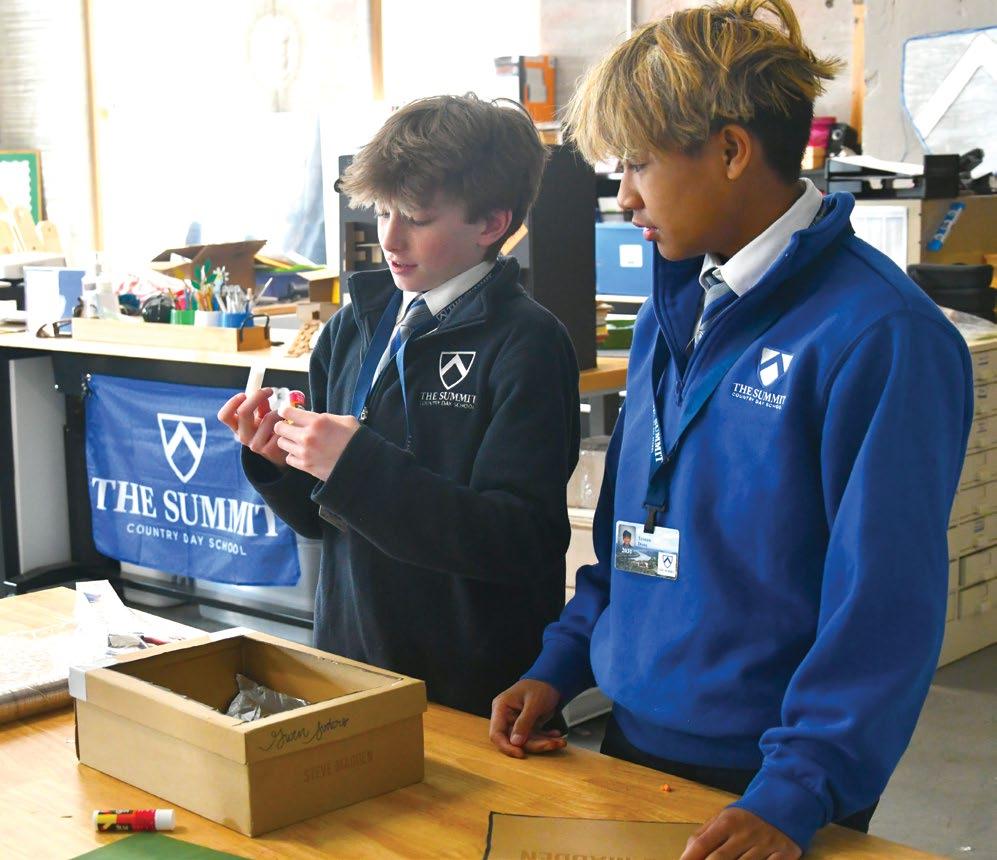
n Summit’s Exploratarium, an Upper School engineering student kneels beside a Montessori kindergartener, listening closely as they describe a drawing of a rocket ship. A laser cutter hums in the background. Brushes and paint trays line the table. It looks like a makerspace. It is, but it is also a conversation.
This is the heart of Summit’s Introduction to Engineering course, taught by Upper School science teacher Derek Duncan in collaboration with Exploratarium Coordinator Mary Kate Newton. The process begins not with tools, but with people. Students learn laser cutting, digital design, project management and systems thinking—but they also learn how to communicate, listen, adjust and collaborate across ages.
“Engineering starts with people,” Mr. Duncan says. “Before we touch a tool, we listen, we ask questions and we make sure we understand the need. When we put human needs first, the technical work becomes clearer and the solutions get better.”
This program takes full advantage of Summit’s 18 months to Grade 12 model. Upper School students work directly with Montessori children, Middle School students, teachers and the campus environment itself. Each project is rooted in authentic need and serves as a testbed for both technical and interpersonal growth.
People
A cornerstone of the course is the Montessori partnership. Before any tools come out, students participate in an empathy session led by Montessori teacher Chelsea Hahn ’07, who walks them through observation, pacing and communication strategies for working with young learners.
By partnering younger and older students, younger learners gain access to tools and materials that would otherwise be beyond their capabilities. At the same time, older students get to practice working with clients and tap into a more creative, energized mindset. Learning is playful, and it happens naturally with younger kids. As they get older, that excitable lens can become clouded by growing expectations and evolving stressors. Working together can allow older kids to tap back into that joyful learning.
Both Upper School and Montessori students bring something unique to the table, and that exchange makes the collaboration meaningful and fulfilling. The end product is stronger than what either group could create alone, and the shared process is what makes the work truly worthwhile.
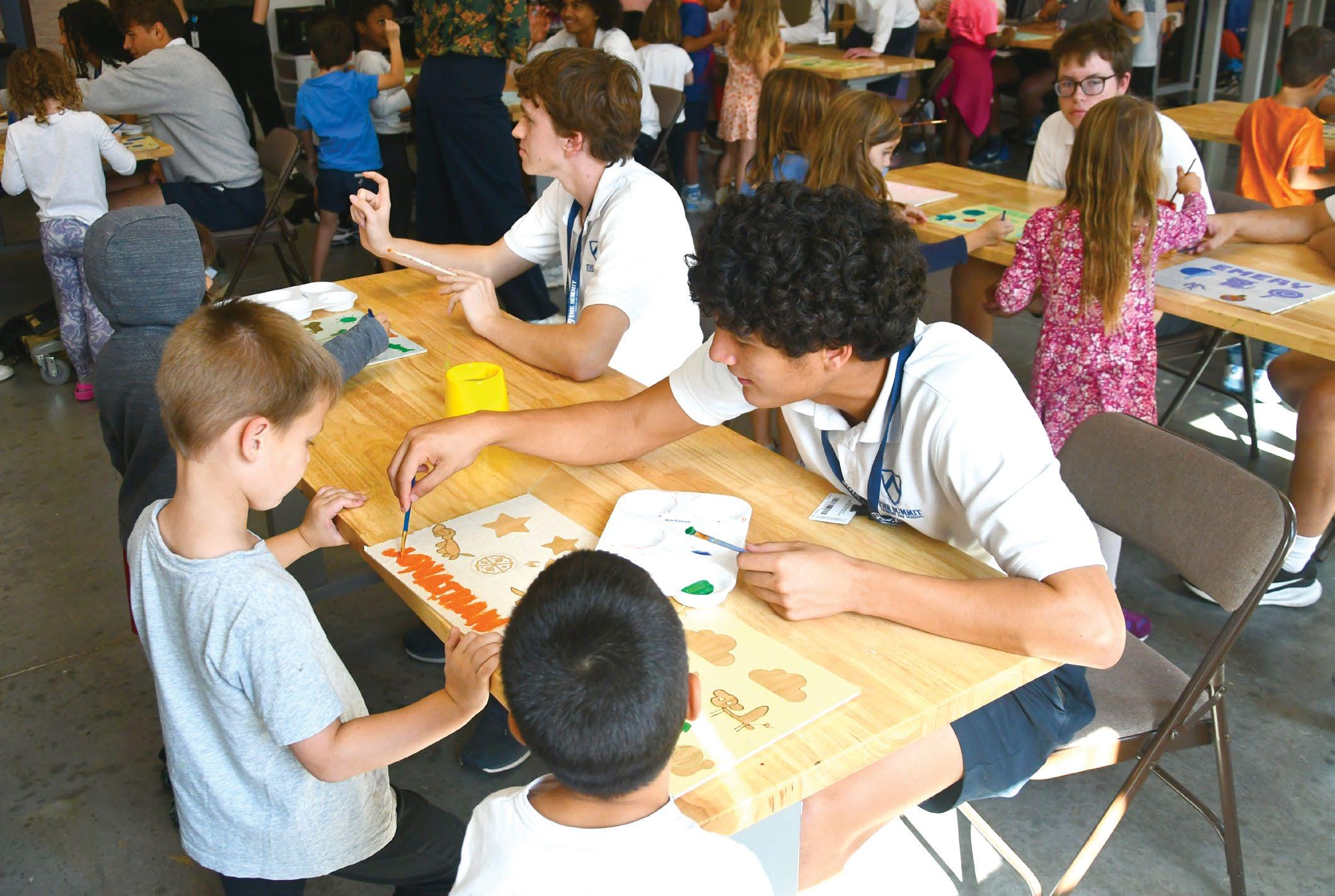
The puzzle collaboration is one of the clearest examples of multi-division learning. Montessori students begin with concept sketches. Upper School engineers digitize those sketches, score puzzle lines on the laser cutter, and guide their partners in painting and assembling the final piece. Older students must ask thoughtful questions, interpret needs, gently explain limitations and keep the creative ownership with the child.
Students feel the shift immediately. “I learned more patience working with them, waiting for them to speak up and figuring out what they want,” says JT Reder ‘26, an engineering student.
These moments reveal what Mr. Duncan and Mrs. Newton emphasize: empathy is a skill, and it’s just as teachable as computer-aided design or circuitry.
Purpose
The course introduces students to a range of engineering mindsets. Early in the fall, they learn about the Agile and Scrum frameworks—tools normally reserved for college programs or professional teams. With support from Summit’s Human Resources Director Mikayla Trinkley, students practice setting up project boards in Microsoft Teams and Planner, running short stand-ups and managing tasks through sprints.
“It’s impressive seeing collegiate-level concepts adapted to a high school class,” Mrs. Trinkley says. “So many jobs require project management skills, but it’s often not a common piece of curriculum taught to teenagers.”
Those same organizational skills carry into every project.
For the Traffic Study project, engineering students stepped outside the lab and into the flow of campus life. They analyzed traffic patterns in all carlines in the Montessori, Middle and Lower School and front circle, collecting time-stamped data, mapping bottlenecks and proposing practical improvements. Here, they approach
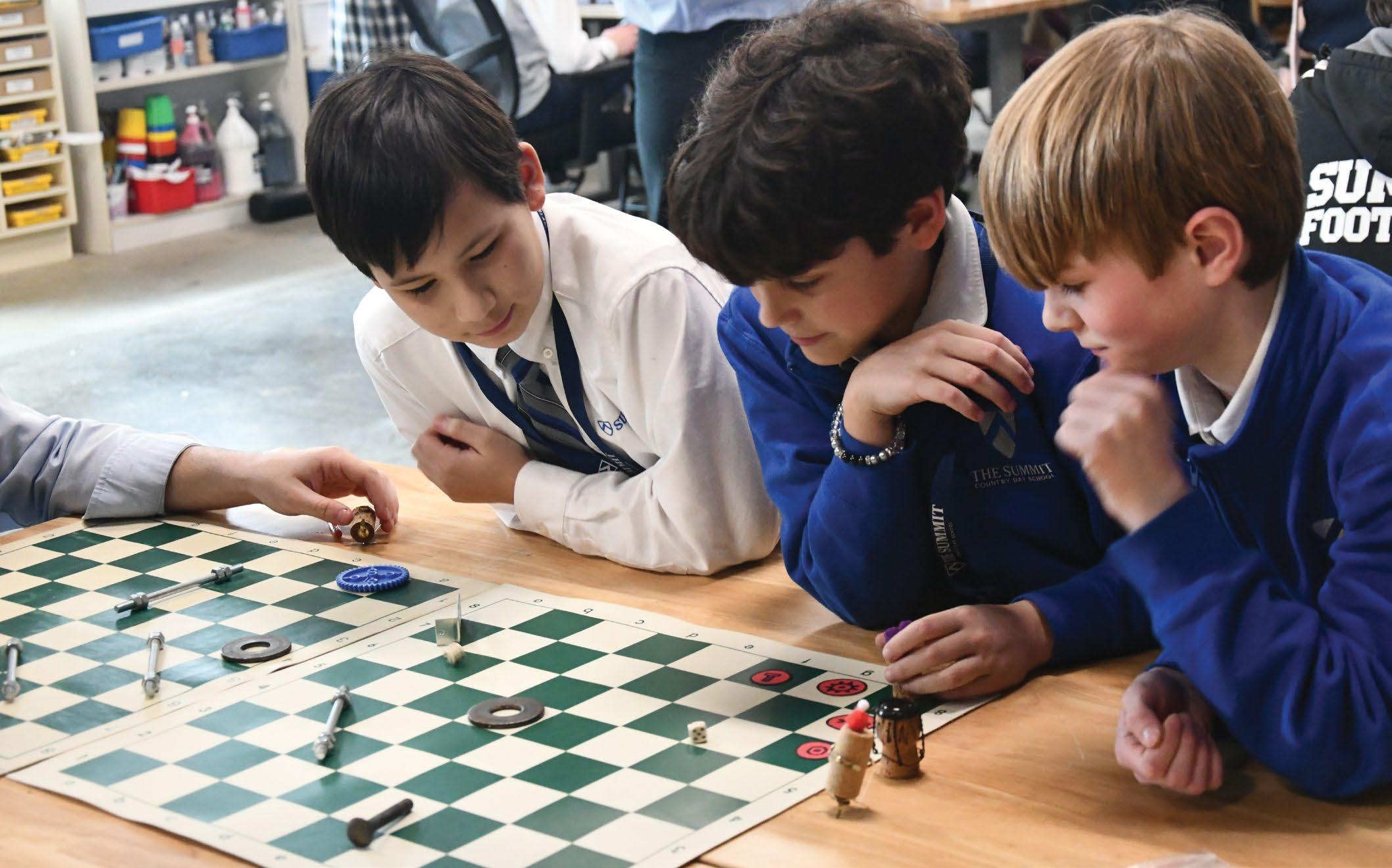
Aaron Lee ‘33, Michel Huguet ‘33 and Theo Sabatalo ‘33 in the Exploratarium try to solve a puzzle
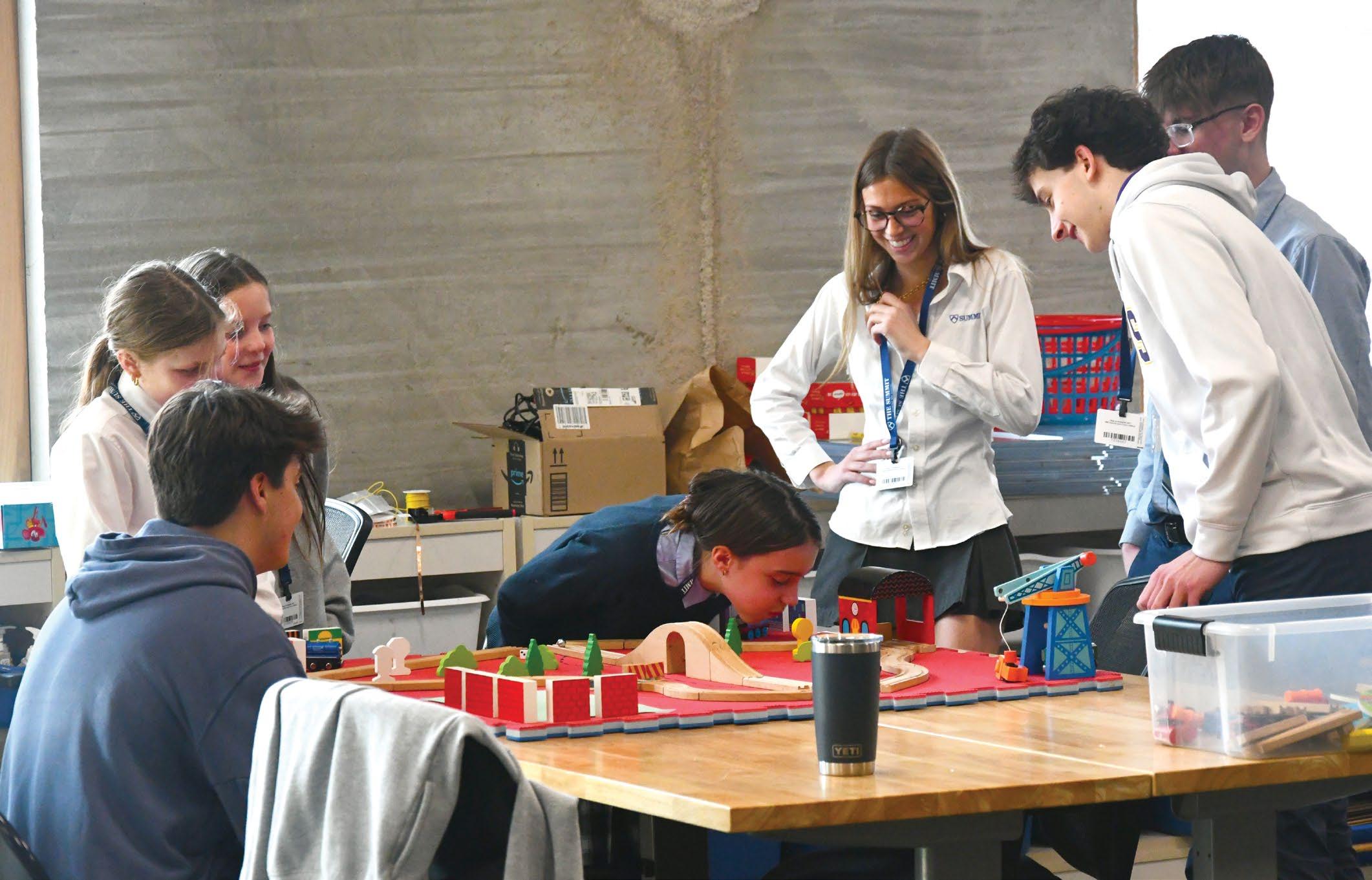
Middle School students work on a project with Paige Brown ‘26, Ben Helton ‘26 and others
a real-world problem, that Summit administrative leaders have expressed needing help understanding, and are able to use these tools to analyze and offer solutions with real world constraints. While progress is still underway, Mr. Duncan emphasizes that “the traffic audit led to changes that were adopted by the school and did improve traffic flow.”
Regardless of the project, students begin to recognize a pattern: when they communicate well, work intentionally with their teammates and stay open to iteration, the work becomes more precise. Over time, they see that empathy isn’t separate from engineering— it strengthens it.
Places
The Exploratarium is the crossroads of advanced tech (laser cutters, 3D printers, robotics) and analog tools (hammers, pencils, paper). As the hub of all of this work, the space is intentionally designed to invite collaboration. Tools are visible but approachable; project surfaces support group work, and the space easily adapts to a mix of learners of all ages. Combining hands-on elements with technology allows students the ability to do things they wouldn’t otherwise be able to do.
“When students walk into the Exploratarium, they understand it’s a place to build,” says Mrs. Newton, “with their hands and with each other.”
But the campus itself becomes a classroom too. The traffic study takes students outside, where they observe real systems in motion. They learn to treat campus assets—sidewalks, signs, time windows—as constraints in a design challenge. It’s a living lesson in how environments shape engineering solutions.
Soft Skills with Substance
While students finish the course with stronger technical abilities, the more lasting growth shows up in the habits they develop along the way. They learn to listen before they solve and to communicate easily across experiences. They become more comfortable managing shared work with clarity, adjusting when a plan changes and stepping into leadership roles with confidence and care. They also learn to keep going when a prototype does not behave the way they initially expected.
Mrs. Newton notes that the impact of a course like this is more important than specific product output: “Not every student in this course is planning on becoming a professional engineer, but all these skills are transferable.”
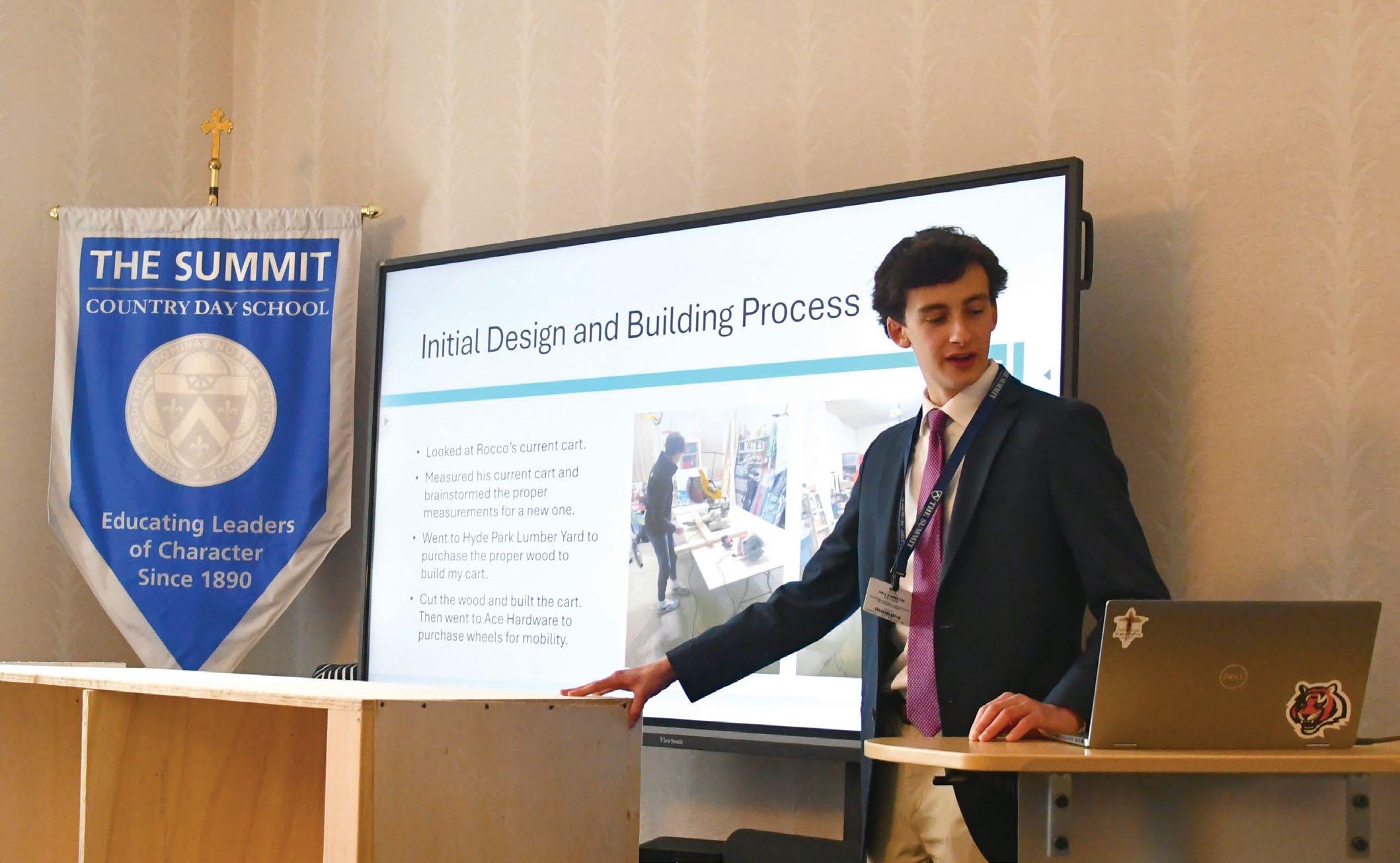
Ben Helton ‘26 presents his engineering project in December
These are the qualities that employers and universities consistently identify as true differentiators. At The Summit, students build them through authentic practice with real partners, real needs and real challenges.
“I didn’t realize how many life skills come from a class like this,” says engineering student Paige Brown ‘26. “You learn how to talk to people, how to plan with others and how to adjust when something goes wrong.”
Looking Ahead
Mr. Duncan and Mrs. Newton see the program expanding naturally with more multi-division collaborations, more community-based projects and continued integration of professional engineering habits. Their vision is not to increase complexity, but to increase authenticity: more real clients, more real problems and more opportunities for students to see engineering as a human-centered discipline.
“The Sisters teach that you learn not for school, but for life,” Mrs. Newton says. “When kids get their hands on tools, it opens them up to the idea that they can fix things, and problems stop feeling unsolvable. I want students to feel like they can walk in when they come across a problem and feel empowered to solve it.”
Marcel Huguet ‘26 works through a project with Montessori students
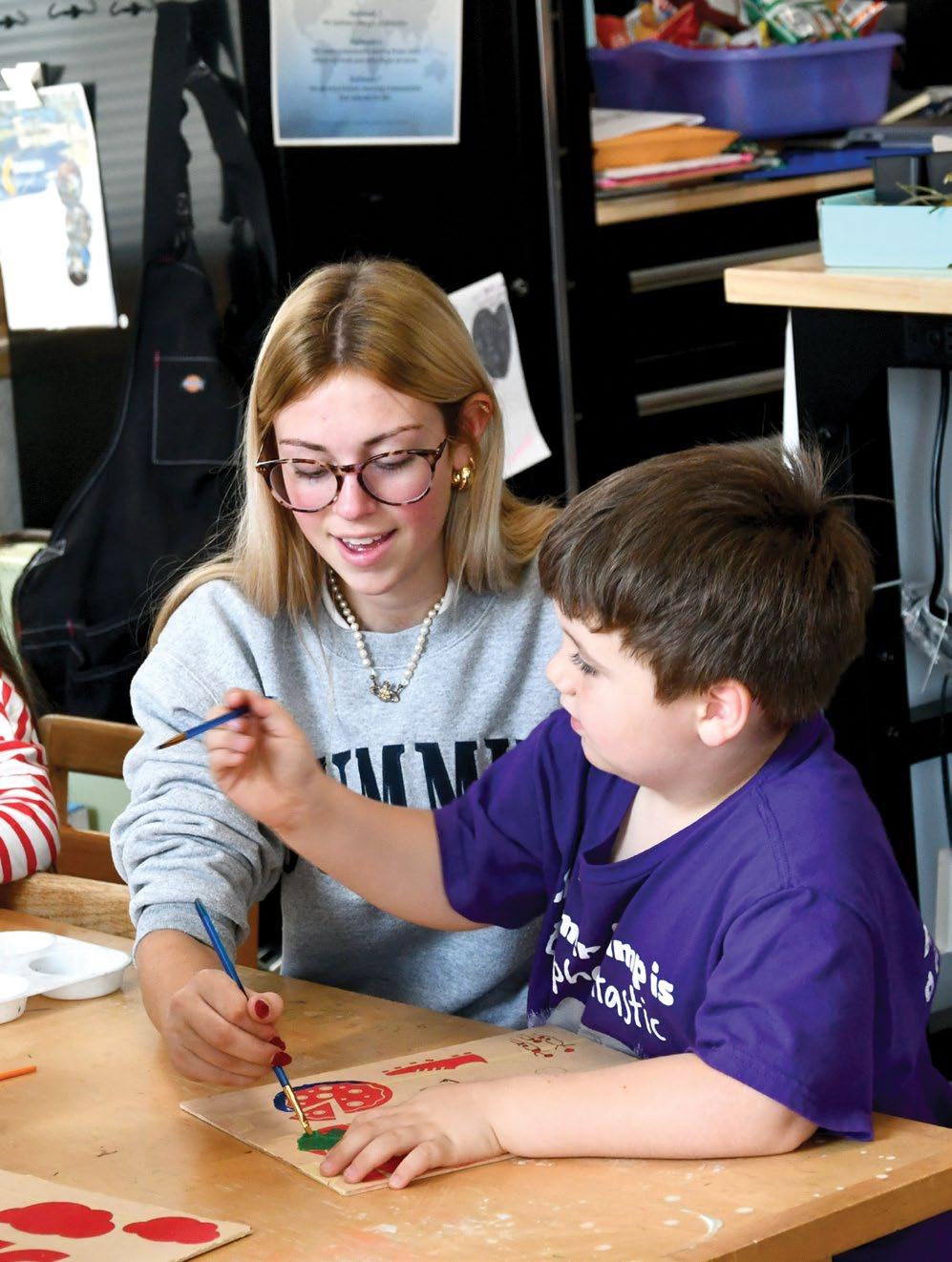
Paige Brown ‘26 talks with Andrew Lyons ‘38 while painting
Learning to Stay with the Problem
How Middle School design thinking turns curiosity into confidence
By Tanya Bricking Leach
T he marble does not rush. In the Exploratarium, a hands-on learning space at The Summit, fifth graders lean over marble runs they’ve built and watch gravity do its work. Their goal is not speed. It is patience. How slowly can a marble move using gravity alone? Students crouch, time their runs and make small adjustments.
What looks like play carries intention. It is design thinking in action.
Design thinking gives students a way to approach problems, test ideas and revise their thinking through hands-on work. In the Middle School, teachers use this approach to anchor science and health classes, with the Exploratarium serving as a place where students turn ideas into something they can see, test and improve.
A way of approaching problems
Design thinking at Summit starts with a simple premise. Students identify a problem. They work toward a solution. Then they test, revise and test again.
Mrs. Mary Kate Newton, who runs the Exploratarium, describes the approach as structured but flexible and usable across subjects. “It is basically a strategic way to
approach a problem and develop a solution,” she says. In science classes, that work often follows the engineering design process. “It’s just a step-by-step cyclical process that students can go through when they are identifying a problem and then working towards a solution.”
This approach removes the pressure to reach a single correct answer. “The conclusion is drawn after repetitive engagement with the problem,” Mrs. Newton says. Students revisit ideas, seek feedback and refine their work. The process carries the learning, not just the final product.
A space built for experimentation
The Exploratarium reflects that mindset. Newton describes it as a STEAM lab serving students from Montessori through Grade 12 and designed for handson, project-based learning. Middle School classes use the space for projects tied directly to their curriculum.
Ms. Annie Christy, a fifth grade science and health teacher, sees the difference immediately when her students enter the space. “I love the Exploratarium because we’re able to do things that we’re not able to do in the regular classroom,” she says. “I think all of our projects done in the Exploratorium require some sort of building.” When design thinking works well, the room
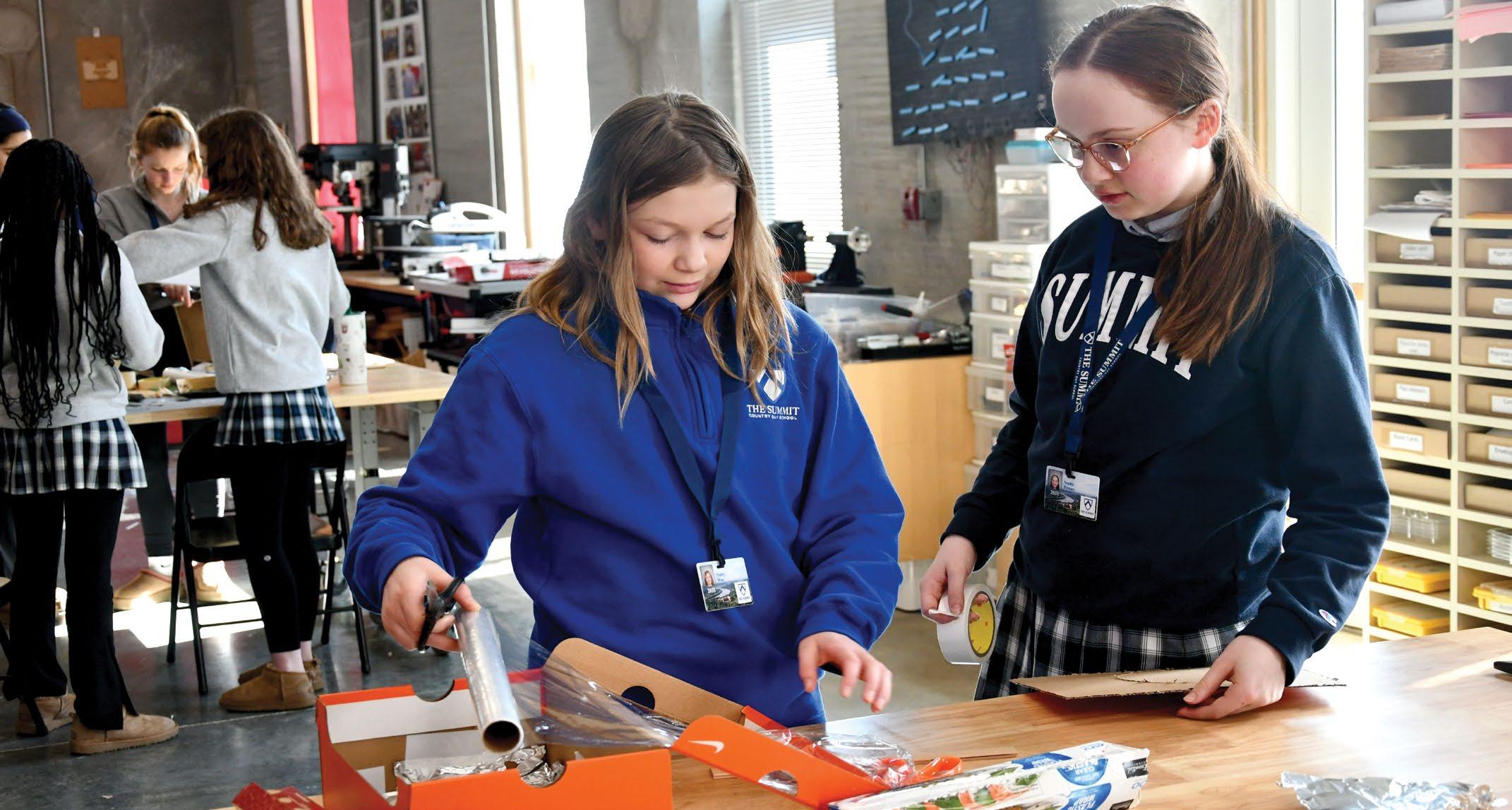
Hailey Wise ‘31 and Sophie Pressey ‘31 work together to assemble a solar oven in the Exploratarium
hums. Students move between tables, compare ideas and ask for help. “It looks like kids in their natural habitat engaging with materials and playing with ideas,” Newton says.
Why Middle School is the moment
Design thinking shows up across divisions at The Summit, but Middle School offers a particularly strong entry point. Newton works with students from early childhood through Upper School and sees something distinct in middle schoolers. “They’re super creative,” she says. “They want to engage in collaborative work, but they need to learn how to do that with finesse.”
By fifth grade, students bring the fine motor skills and confidence to work safely with tools. They can build and test ideas while staying open and playful in their thinking. “It’s a joyful type of learning,” Newton says. That joy carries forward. Students who practice iteration in Middle School recognize the value of that process later. “When I’m seeing these students again in the Upper School, they know that it’s time to exercise that part of their brain,” Newton says. “We’re going to try new things. And it might not work the first time, but we’re going to try again.”
Learning to revise ideas
One of the hardest skills students practice involves staying with an idea long enough to improve it.
“Iterating on one idea is a really difficult mental exercise for most people,” Newton says. “Everybody wants to go with their first one.”
Students present early ideas, gather feedback and revise. Newton often compares the process to writing. “When you’re writing, you spend a lot of time in that first draft, but we spend even more time going back and doing that editing process of our ideas,” she says. Mrs. Christy sees the shift over the school year. At first, some students resist feedback. “They can feel like there’s something wrong if they’re getting feedback,” she says. After a while, they begin to see collaboration as part of the work.
When frustration is part of the plan
Failure plays a role in every project.
“We preface these projects by saying everyone is going to be frustrated,” Newton says. “We know it’s coming.” That expectation changes how students respond when something breaks or fails.
During the marble run project, students spent days testing and adjusting their designs. Christy reminded
them to focus on the work, not the outcome. “They were constantly working on it, making little tweaks, working on it together,” she says.
Reflection anchors the process. Students document their work in digital journals, capturing problems, solutions, feedback and revisions. At the end, they present not just what they made, but how their thinking evolved. “We ask them to ‘Show me all your work,’” Newton says. “‘Make your learning visible.’
Confidence built over time
By the end of a project, students take on more responsibility, Christy says. “There’s less and less of those students that are sitting back, and more that are involved,” she says. Newton sees students work with greater independence. They identify what they need, choose tools with intention, and keep working when something does not go as planned. “When kids learn how to use tools to create something or to fix something, it’s very empowering,” she says. When a project ends, the final product matters less than how students learn to collaborate, stick with an idea and revise it.
A foundation that lasts
For Christy, success extends beyond what students build. “I want them to have good memories about fifth grade science,” she says. Newton says learning can remain playful, even as academic demands increase. “It’s very beneficial to play with ideas and exercise our creativity across the STEM fields,” she says.
Back in the Exploratarium, the marble reaches the end of its track. Students reset and try again. That, by design, is the lesson.
Lincoln Mulvihill ‘31 and Tristan Dona ‘31 make final adjustments as their project comes together
College Counseling - A Four-Year Approach that Delivers Confidence, Clarity and Results
By Tanya Bricking Leach and Tina Tedesco
W hen Susan Miller talks about college counseling, her starting point is always about the student.
After nearly two decades at The Summit, Miller, Senior Associate Director of College Counseling, has witnessed dramatic shifts in the admissions landscape. Testing policies change. Application volumes rise. Competition intensifies. What has remained constant, she says, is the need for students to understand who they are before attempting to present themselves to colleges.
That belief anchors The Summit’s four-year college counseling program, a deliberately sequenced and highly personalized approach that begins in ninth grade and continues through graduation. Rather than compressing the process into a single year of highstakes decision-making, The Summit treats college counseling as a developmental journey—one that emphasizes reflection, readiness, and informed choice.
“It’s not about building a résumé,” Mrs. Miller says. “It’s about building your life.”
A Four-Year Framework, Experienced Early
At many schools, college counseling begins midway through junior year. At The Summit, it starts almost as soon as students enter Upper School.
Freshmen engage with counselors through class meetings and small-group conversations focused on academic planning, goal setting, time management, and extracurricular exploration. Counselors help students recognize how early decisions can widen future options without pressuring them to commit too soon.
Lydia Hiller ‘26 recalls being surprised by how early those relationships began. She expected college counseling to matter eventually, but not right away. “I didn’t think I was really going to know who the counselors were until senior year,” she says. “I was surprised how much contact we had before that.”
Sophomore year expands the conversation to include families, with programming designed to explain how college admissions work today. These sessions help recalibrate expectations and replace outdated assumptions with clarity and transparency.
Junior year marks a turning point. Students participate in one-on-one meetings and workshops focused on college list development, essays, and application strategy. By senior year, much of the foundational work is already complete.
“By the time students are applying,” Miller says, “they’re not starting from scratch. They’re refining decisions they’ve been thinking through for years.”
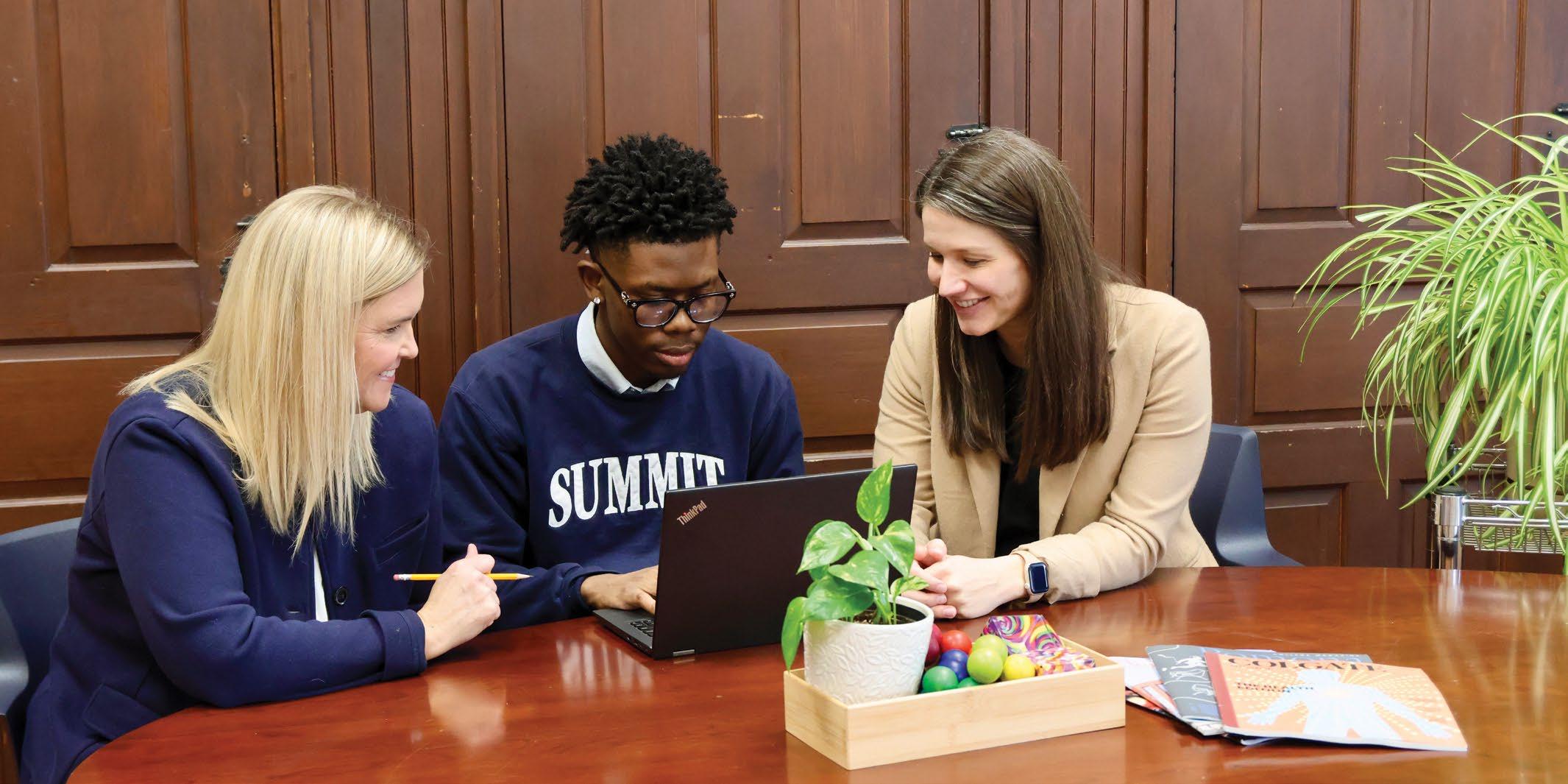
Laffaron Tucker ‘26 works on his admissions materials with Mrs. Miller and Mrs. Smith
Expertise and Relationships that Matter
Miller works alongside Lindsey Smith, Associate Director of College Counseling. Together, they bring extensive school-based and university admissions experience to their work.
Miller holds a certificate in College Counseling and completed the Harvard Summer Institute on College Admissions. Smith previously served as Director of Territory Management in Xavier University’s undergraduate admission office. Both counselors are active members of national and regional professional organizations, including NACAC, OACAC, and ACCIS.
But both say credentials alone are not what define the program.
“We’re relational,” Miller says. “We want students to feel known, supported, and welcome when they walk into our office.”
That relational approach allows counselors to tailor guidance to individual goals—from selective universities and engineering programs to performing arts pathways and HBCUs. No two students follow the same timeline because no two students define success the same way.
For Lydia, that flexibility mattered when she felt unsure about her academic direction. During a one-on-one meeting, she and Mrs. Smith reviewed majors, courses, and potential pathways. “That conversation helped me start to figure out what I wanted,” she says. “I felt a lot more confident after that.”
Clearer in Hindsight
For graduates, the value of a four-year approach often becomes most evident once the process is over.
Austen Young ‘23, a Summit alumnus now studying computer science at Ohio State University, says college counseling helped him stay grounded during a process he initially found overwhelming. Unsure where he wanted to go, he relied on the counseling office to help him narrow his list and navigate scholarships.
Summit Acceptance Rates Compared to National Averages Recent Graduating Classes ‘20-24
Boston College
Summit • 16% National Denison University
Summit • 17% National University of Notre Dame
Summit • 12% National Northwestern University
Summit • 7% National Ohio State University
Summit • 51% National
Results reflect a four‑year college counseling model focused on individualized advising, intentional list‑building, and informed decision‑making—not last‑minute applications.
When Smith encouraged him to apply for Ohio State’s Morrill Scholarship Program, it ultimately shaped his college decision. The award covers full tuition, but its impact went deeper than finances. “It gave me a sense of belonging,” Austen says.
Finding the Right Fit ‘For You’
Throughout the process, counselors consistently redirect students away from rankings and toward fit, based on academic programs, campus culture, location, and affordability.
“We always put ‘for you’ at the end of the question,” Smith says. “Is it a good school for you?”
That philosophy aligns with what Smith observed while working in university admissions. “Many families underestimate how many colleges are actively looking to admit students,” she says. “There are outstanding institutions that may not be at the top of a ranking list but offer exceptional opportunities.”
At The Summit, a personalized, student-centered approach and commitment to excellence lead to strong, meaningful outcomes. Summit students routinely achieve acceptance rates higher than national averages across a range of selective colleges and universities— results that reflect years of intentional preparation, realistic list-building, and individualized advising.
Preparation Beyond the Application
By senior year, college counseling at The Summit looks less like admissions coaching and more like preparation for adulthood. Students are weighing tradeoffs, managing timelines, advocating for themselves, and articulating their decisions with confidence.
For counselors, seeing that growth is the true measure of success.
That growth showed up as confidence for Lydia. “I felt really good about what I put together.” For Austen, the process reinforced habits he still relies upon, including time management, independence and self-advocacy. “I developed my work ethic at The Summit,” he said.
In that sense, college decisions are not the finish line. They are the outcome of a four-year process designed to help students grow, not just as applicants, but as young adults prepared to step forward with clarity and confidence.
“We’re looking for students who understand themselves and can explain why they’re making the choices they’re making,” Miller says. “If they can do that, they’re ready for whatever comes next.”
More Than the Game: Summit Launches
Inaugural
Leadership & Character Symposium
The Summit marked an important milestone in its commitment to developing leaders of character with the launch of its inaugural Institute for Leadership and Character (ILC) Symposium. Held on November 8, the event brought together parents, students, alumni and community members for a day of reflection, inspiration, and hands-on learning centered around the theme: “More Than the Game: Leadership and Character Through Sports.”
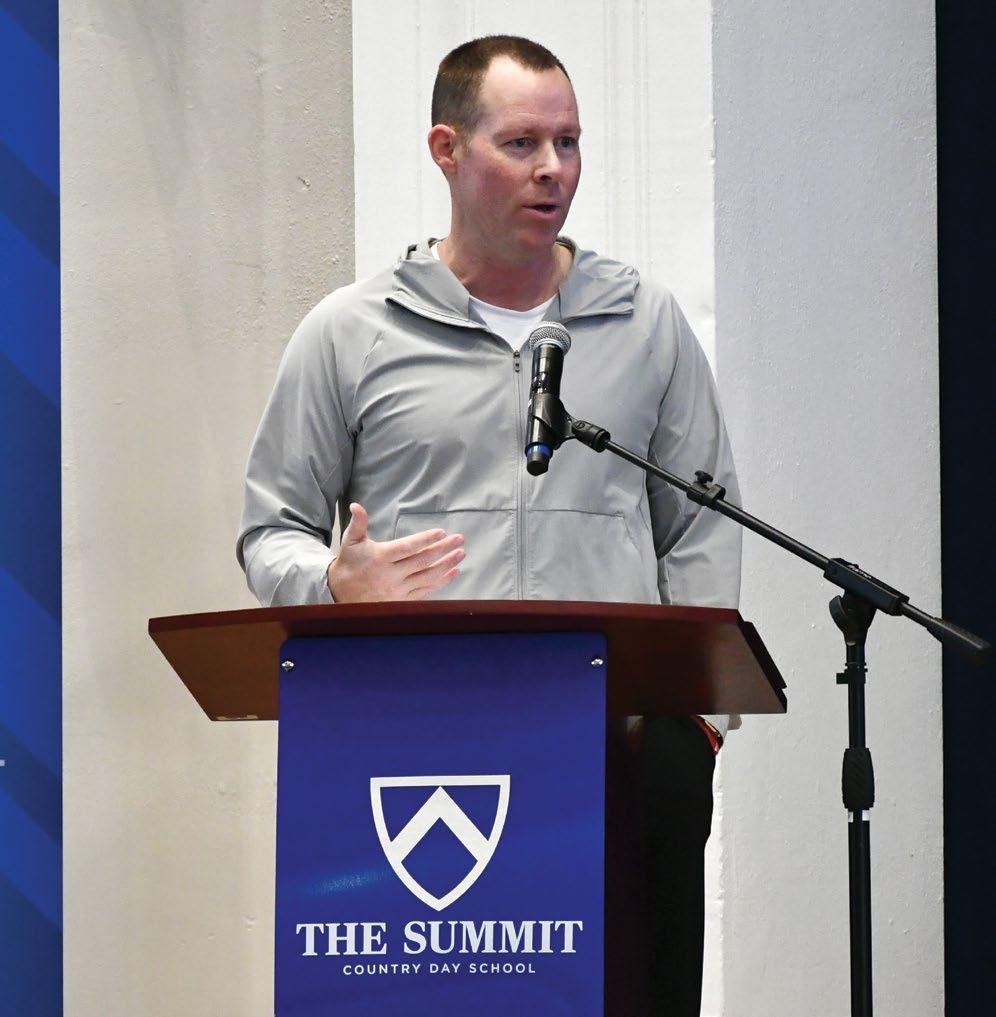
The symposium’s keynote address was delivered by Travis Steele, Summit parent and Head Men’s Basketball Coach at Miami University, whose message resonated deeply with families and students alike. Steele spoke passionately about the life lessons embedded in athletics: grit, resilience, humility and perseverance.
“Athletics is an incredible teacher of helping get people, young people, ready for the real world,” he shared. While competition is often associated with wins and losses, Steele emphasized that its true value lies in the habits and character it builds. “There are no participation trophies in the real world,” he noted. “It’s about pushing yourself, working hard, and embracing the journey.”
Steele highlighted the core values that define his coaching philosophy: teamwork, relentless effort, undeniable confidence and the pursuit of Magis—the Jesuit principle of striving for more.
“Striving for more means having a curious mind, choosing a growth mindset, and embracing the process,” he said. “It’s fighting the human urge to give in and choosing to live life fully, being all-in every single day.”
Athletics plays an essential role in the educational experience at The Summit, where every student is encouraged to participate in sports at some level. For Kelley Schiess, Head of School, athletics helps fulfill the school’s mission of developing well-rounded leaders.
“Students learn what it means to be part of something larger than themselves,” she said. “They learn leadership, honor, grace under pressure, time management, and how to respond to both success and adversity with integrity.”
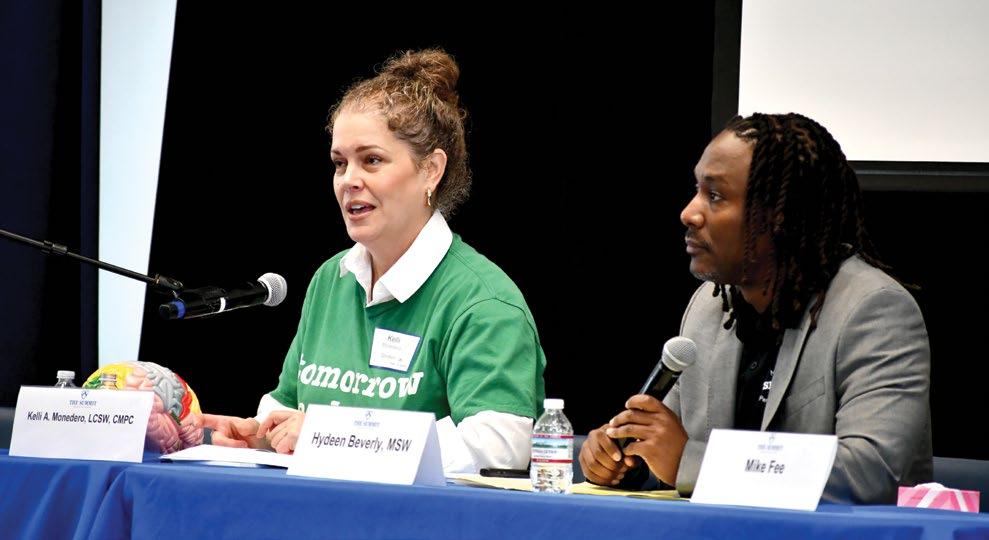
The symposium offered targeted programming for both students and their families. Parents explored topics such as performance psychology, wellness and nutrition and navigating the balance between club and school sports. Meanwhile, students engaged in age-appropriate athletic clinics, where they practiced skills while reflecting on values like teamwork and perseverance.
Alumni athletes returned to share personal stories about how Summit athletics shaped their college experiences and helped prepare them for life beyond graduation—offering current students a vision of what leadership in action truly looks like.
With the success of its inaugural year, the ILC Symposium will become an annual tradition. It represents a deepening of the school’s long-standing commitment to forming leaders of character across its five pillars: spiritual, academic, physical, social and artistic.
Breakout sessions included nutrition and performance psychology.
College coach and Summit parent Travis Steele gave the keynote address during the inaugural symposium.
Schiff Family Science Research Institute Colloquium
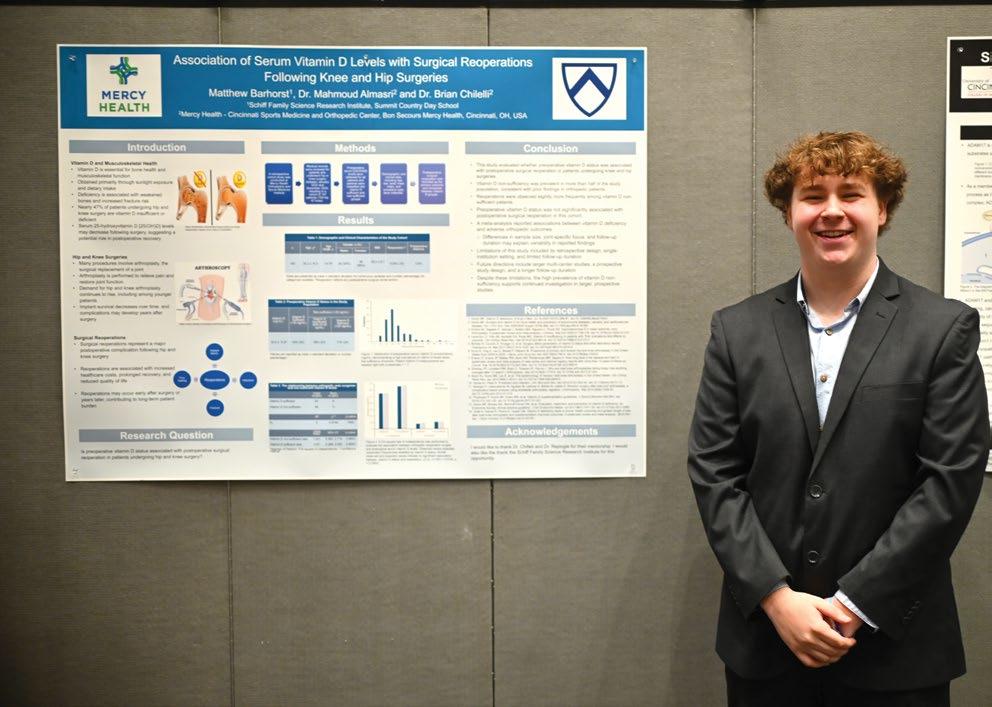
Under the direction of Jessica Sakash Replogle, Ph.D., 14 seniors presented research posters and scientific talks about their work during the 12th annual Schiff Family Science Research Institute Colloquium. The colloquium is the capstone experience in a curriculum that teaches students how to work in research settings and gives them exposure to regional science and engineering professionals.
Haley Baker - Optimizing Visual Presentation of Well-Being Survey Date for Community Stakeholder Meeting (Cincinnati Children’s Hospital)
Matthew Barhorst - Role of Vitamin D in Surgical Reoperations Following Knee and His Surgeries (Mercy Health)
Sophia Carazo - Site Directed Mutagenesis of Cell Membrane Sheddase ADAM17 (UC - Dept. of Molecular and Cellular Biosciences)
Meghana Curran - Letting the Cat of the Crate: Studying the Feeding Habits and the Phenomenon of Contrafreeloading of Domestic Cats at CREW (Cincinnati Zoo and Tracks Technology)
Caitlyn Ferrer - Anginal Symptoms are Related to Symptomology in Underlying Coronary Microvascular and Vasomotor Dysfunction (CMVD) (The Christ Hospital and UC School of Medicine)
Callie Fox - Creating a Simulation of the Cosmic Microwave Background Using Python Code (UC Physics Dept.)
Blake Hollenbeck - Use of Osteopontin and Novel Hydrogel in Diabetic Wound Healing: Collagen Analysis (UC Dept. of Biomedical Engineering)
Zaina Kamran - Higher Inflammation Does Not Correlate to Reduced Brain Area and Gray Matter Among Bipolar Patients (UC Dept. of Psychiatry and Behavioral Neuroscience)
AP Art Expo
During the second annual AP Art Exposition, 13 seniors in AP Portfolio, led by Carrie Barnett, shared their year-long artistic investigations before submitting their portfolios to the AP Board for assessment.
Natalie Kenter - Imaging Findings and Clinical Outcome of Cephaloceles Identified on Fetal MRI (Divisions of Neurology, Neurosurgery and Radiology, and Dept. of Pediatrics, Cincinnati Children’s Hospital and UC)
Alexis Lange - The Comparison of Pretreatment EGSS Results from PTSD Patients across Multiple Demographic Factors (PTSD Division Cincinnati Veterans Affairs Medical Center, Dept. of Psychiatry and Behavioral Neuroscience, UC College of Medicine)
Gabriella McCauley - Exercise Mitigation of Neurotoxic Effects of Benzo[a]pyrene on Cognitive and Motor Function in a Cyp1b1 Mouse Model (Dept. of Neuroscience, NKU)
Caroline Mulvihill - The Effect of Human TSC2 Mutations on mTOR Phosphorylation in a Cell Culture Model of Tuberous Sclerosis (Cincinnati Children’s Hospital, Dept. of Pediatrics, UC College of Medicine)
Jack Phillabaum - Acoustic Dampening for Jet Engines: Evaluating Surface Patterns Using 3D Printed Liners (Schiff Family Science Research Institute)
Clemente Volk - Circadian Rhythm of ICU Patients and its Significance to Patient Care (Cincinnati Children’s Hospital)
Class of 2026 AP artists:
Molly Anderson
Haley Baker
Ava Caldwell
Lauren Domaschko
Molly Fitzpatrick
Tom Hobbins
Sarah Hunting
Natalie Kenter
Halle Kinross
Gabi McCauley
Kaitlyn Rassi
Katie Shackleford
Sasha Woodard
Matthew Barhorst
From Kitchen Experiments to Purpose-Driven Entrepreneurship: Claire’s Journey with Clarity
By Bob Jablonski, Head of the Homan Center for Entrepreneurial Leadership
E ntrepreneurship often begins with curiosity, creativity and a willingness to try—sometimes before all the pieces are in place. For Claire Wiltshire ‘26, a student in our Homan Center for Entrepreneurial Leadership center, that spirit showed up early and evolved into a meaningful venture with real-world impact.
Claire’s first entrepreneurial experiments began in grade school, when she sold her drawings to family members for 25 cents. By sixth grade, she had convinced her parents to let her open an Etsy shop selling homemade sugar scrubs and stickers. The business didn’t last long. Between excessive sugar use and a rapidly dwindling supply of lavender essential oil, the kitchen-based startup came to an end.
Looking back, Claire sees those early attempts not as failures, but as lessons. “I’m able to reflect on this experience and realize the importance of planning and organizing instead of hastily throwing together a business,” she shared. That realization came into focus during her sophomore year, when she took her first business class at Summit.
In that class, Claire learned how structure, market research, and persistence play a critical role in turning ideas into sustainable ventures. She also began to understand why her early businesses struggled: limited organization, lack of long-term motivation and difficulty pushing through setbacks. While the class’s year-long project was designed to learn an entrepreneurial process—with no expectation of launching—it had a lasting effect.
“Through this class, I was able to identify my passions and interests, motivating me to start a business,” Claire explained. Reflecting on her past experiences, she gained clarity—both figuratively and literally—and founded her clothing brand, Clarity.
Clarity is more than a sweatshirt and hoodie line. It is a purpose-driven brand designed to support mental health, spark hope, and remind people that they are never alone. 20 percent of all profits are donated to mental health resources, reinforcing the brand’s mission of compassion and support.
What truly sets Clarity apart is its thoughtful design. Each hoodie includes a marble fidget sewn discreetly into both sleeves, allowing wearers to manage stress and anxiety in everyday settings, whether sitting in class, taking a walk or winding down. “I can’t get rid of all the stress and anxiety in the world,” Claire said, “but I can give people something to hold onto when it feels like too much.”
From designing the hoodies on her iPad to contacting manufacturers for prototypes and building a website, Claire led every step of the process herself. Her motivation remained constant: helping others and making them smile. Seeing customers enjoy the hoodies—and knowing that their purchases support mental health initiatives—has been especially meaningful.
Although Clarity is still in its early stages, its impact is already clear. Claire has received messages from customers who shared how the embroidered phrase “Storms don’t last” helped them through difficult moments, including medical procedures and the loss of loved ones. “These messages confirmed to me that Clarity really is making a difference and fulfilling the mission I’ve been striving toward,” she said.
What began as a childhood interest in small businesses has grown into a mission rooted in empathy and action. Through Clarity, Claire has discovered the power of purpose-driven entrepreneurship—and her own ability to turn compassion into something tangible.
“Clarity has shown me the power that everyone has to make their goals a reality through time, dedication, and hard work,” she reflected. As she continues to grow the brand, Claire’s journey stands as a powerful example of what can happen when creativity, education and purpose come together.
Founded at The Summit in 2018, Hope Squad is a peer-to-peer mental health initiative made up of students nominated by their classmates for their empathy and leadership. Trained to recognize warning signs, have difficult conversations, and foster connections, Hope Squad members work year-round to spark hope and create a supportive school culture.
“ Through the Homan Center, I was able to identify my passions and interests, motivating me to start a business. ”
“Just like Harry Potter!”
The Lower School introduces house teams
By Tracy Law, Ph.D. ‘85
When asked about the new Lower School house team program, third grader, Shiv Sachin ‘35 enthusiastically responded, “I think the House System is great. It is fun to earn points, and it reminds me of Harry Potter!”
The tradition of house teams has a long history at The Summit, extending back a century to 1924. Sister Josephine Mary, head of the school, returned from a tour of Europe with a head full of plans. These included the introduction of the house team system to six grades of girls, as well as the Boys School. As described in the 1925 Rostrum, “It is a plan of cooperation—one that tends to bring about better understanding and sympathy between teachers and pupils, greater loyalty to school and classmates, and more diligent application to studies by stimulating and arousing keener interest in school work, because of the friendly competition and group rivalry existing between the members of the various ‘Houses.’”
The program was a resounding success and continued to evolve in subsequent decades. With the formal founding of the Boys Middle School in 1941, the house team program particularly excelled, inspiring generations of male students through the hallmarks of competitiveness, community-building and responsibility.
With the consolidation of the Girls and Boys Middle Schools in the 1990s, the concept of house teams faded in practice, but was never forgotten. A consistent topic of conversation among alumni, the idea resonated with Michael DiPaola in the 2020s as the Middle School was seeking to revitalize their emphasis on Leaders of Character. He shepherded the reintroduction of an updated program in 2023-24, drawing upon both Summit’s heritage and psychological research on the role of belonging in developing self-esteem (see the Fall 2024 Summit Magazine, “Reviving Middle School House Teams”). In its third year, the Middle School house team program continues to build on its successes.
“When we were talking about starting the MS house system, we talked about how it would be great to be able to do house activities with the Lower School,” remembers LS Director, Mike Johnson. “Fast forward to the 2024-25 school year when we were talking about building divisional pride, enhancing our behavioral expectations, and desiring more cross divisional engagement, Megan (Maag) Kline ’98 volunteered to lead the charge and Michelle Livingstone jumped in to help. The goal was to build community and pride within the Lower School.”
Teachers spent time learning about STAR behavior during the beginning of the year in-service, emphasizing young students’ need to be Safe,
Lower School students Colin Clements ‘34, Jane Coughlin ‘34 and Miles Alexander ‘34 on House Selection Day.
Trustworthy, Accountable and Respectful. House team programming and expectations used this as their foundation.
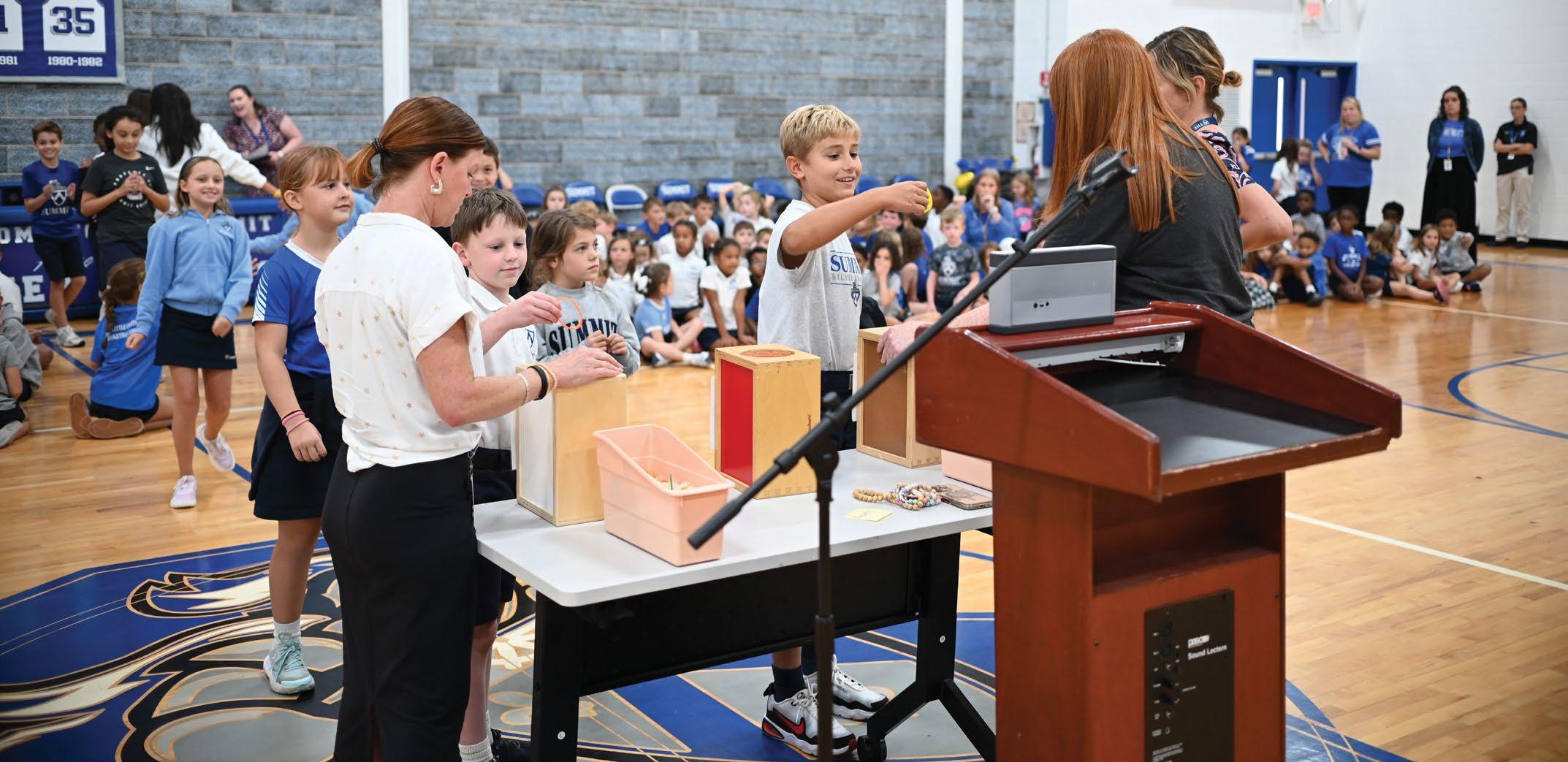
When the Sorting Ceremony finally took place in August, the excitement from students and faculty was palpable. Michelle Livingstone said, “The Sorting Day was so much fun! Lower School students all gathered in Flannery gym, and from a mystery box students selected a colored wristband to assign them to their House: red for Lion, black for Oak, yellow for Sunflower, and orange for Owl.” Currently, her role is to collect and count the STAR points assigned by teachers. “Teachers assign STAR points through the portal, so parents are immediately informed about great behavior choices their children are making,” she says. “Teachers reward points for anything that they perceive to be going above and beyond. Points are given for participation, being a great friend, great hallway behavior, and being respectful. This has been such a great development for the Lower School!”
Student response has also been positive. Fourth grader, Charlie Spriggs ‘34 reflects, “It is nice to have
competition between houses. We do activities together and because the house selection was random, groups come together that don’t usually see each other.” Lucas Dapore ‘34 (also a fourth grader) adds “I think it is fun because you see new people and I like to help younger students and be a leader.”
Activities thus far have included a popsicle party where fourth graders led their Houses in cheers, athletic activities in the gym, competitions to identify faculty baby photos and a weekly reading of Level I positive behaviors, where those students then have the opportunity to participate in a drawing for an out-ofuniform day while also wearing their House sash. “The kids love having this added experience of belonging with a mixed grade group,” reports Mr. Johnson. “They enjoy seeing each other in their house colors.”
Looking forward, Johnson adds, “Promoting belonging and positive behavior. That is our goal. We want to have meaningful ways for kids to engage with one another and we want to hold up examples of exceeding our behavioral expectations for all to see and learn from.”
Henry Martin ‘34, Ava Kelly ‘36, Ava Steele ‘36 and Alynn Harper ‘34 during a House Day activity.
Naomi Robinson ‘35, Charlie Spriggs ‘34 and Michaela Rankin ‘36 during a House Day activity.
Rowers at The Summit
By Tracy Law, Ph.D. ‘85
The Summit community is blessed, year after year, with news of the many successes achieved by our soccer players. We also hear often about baseball, tennis, volleyball, football, track and cross country. But what of the singular Upper School students who explore and master unique sports? Did you know there have been students who were masters in gymnastics, water-skiing, fencing and rowing? That several of these students continued with these sports at the collegiate level?
The fight for these “outside” sports to receive recognition by the school was a passion project for Richard Massey, parent of rower Whitt Massey ’18. “I appreciate that The Summit is formally recognizing alternate sports for students,” Mr. Massey says. “As a past president of the Summit Athletics Booster Board, we felt it was important to support all athletic interests of our students within the sports offered by the school and those within the community. The Summit and Greg Dennis were instrumental in ensuring these students received recognition as a senior and to ensure those athletes were given credit meeting OHSAA PE requirements with their participation.”
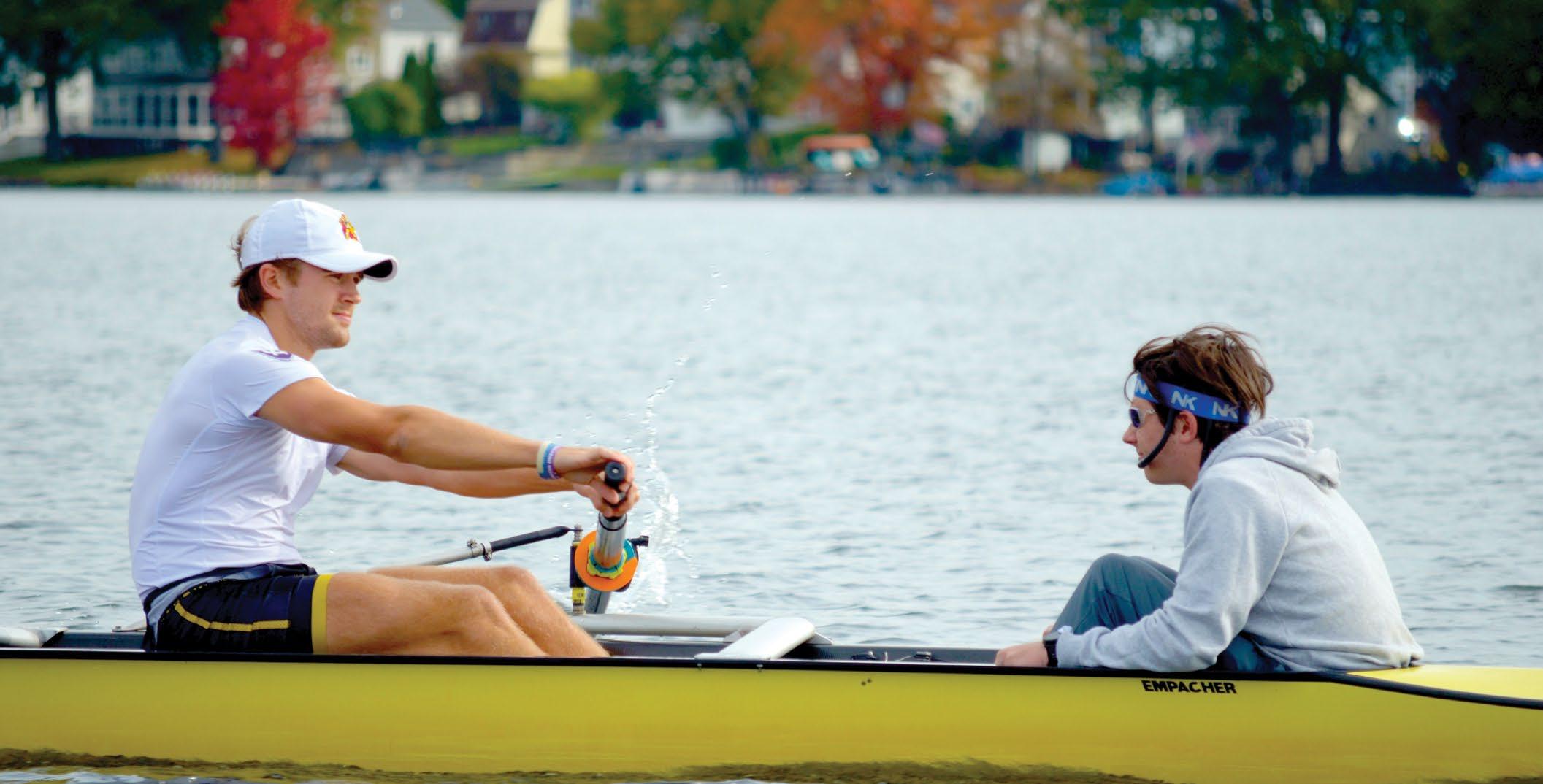
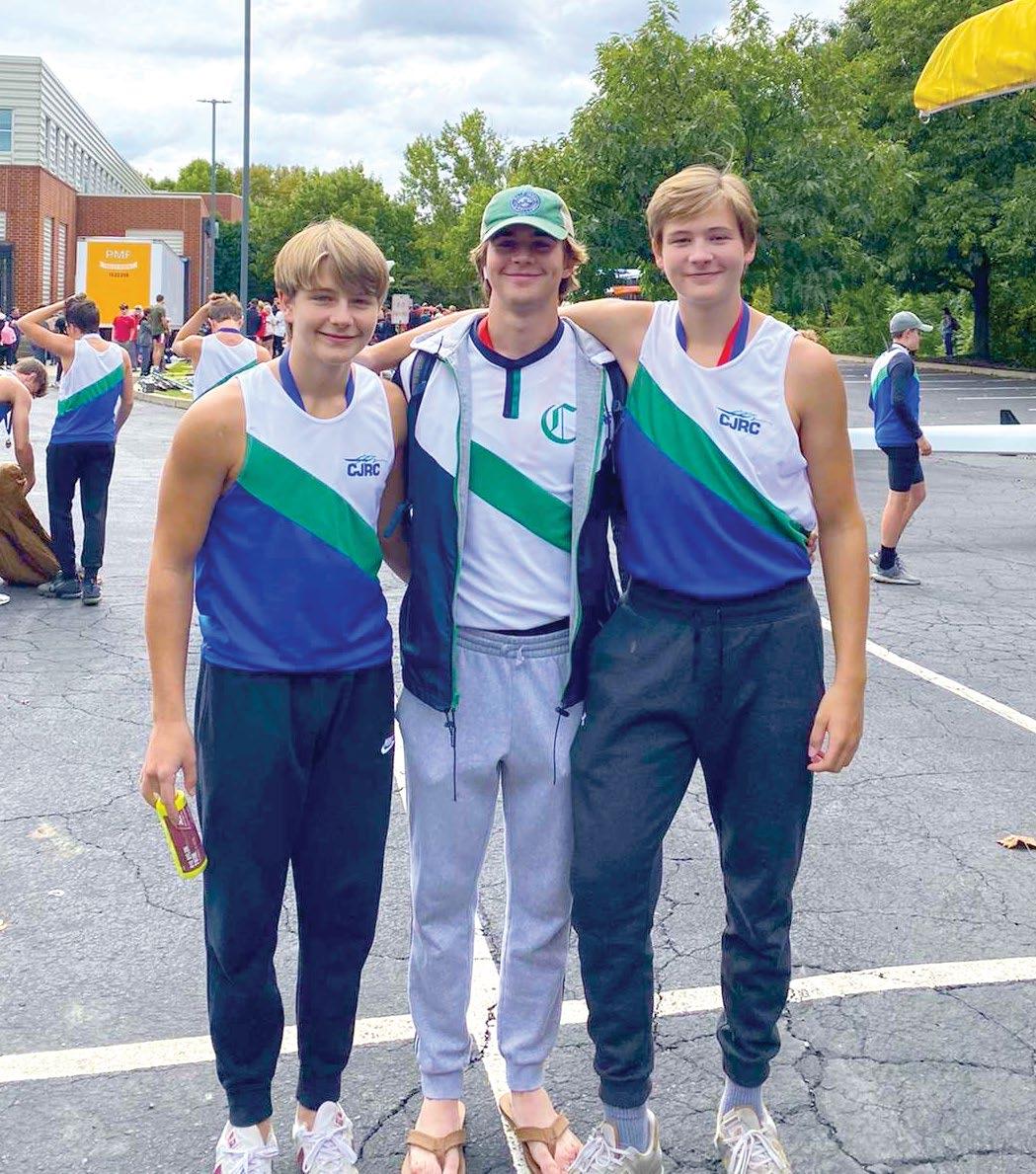
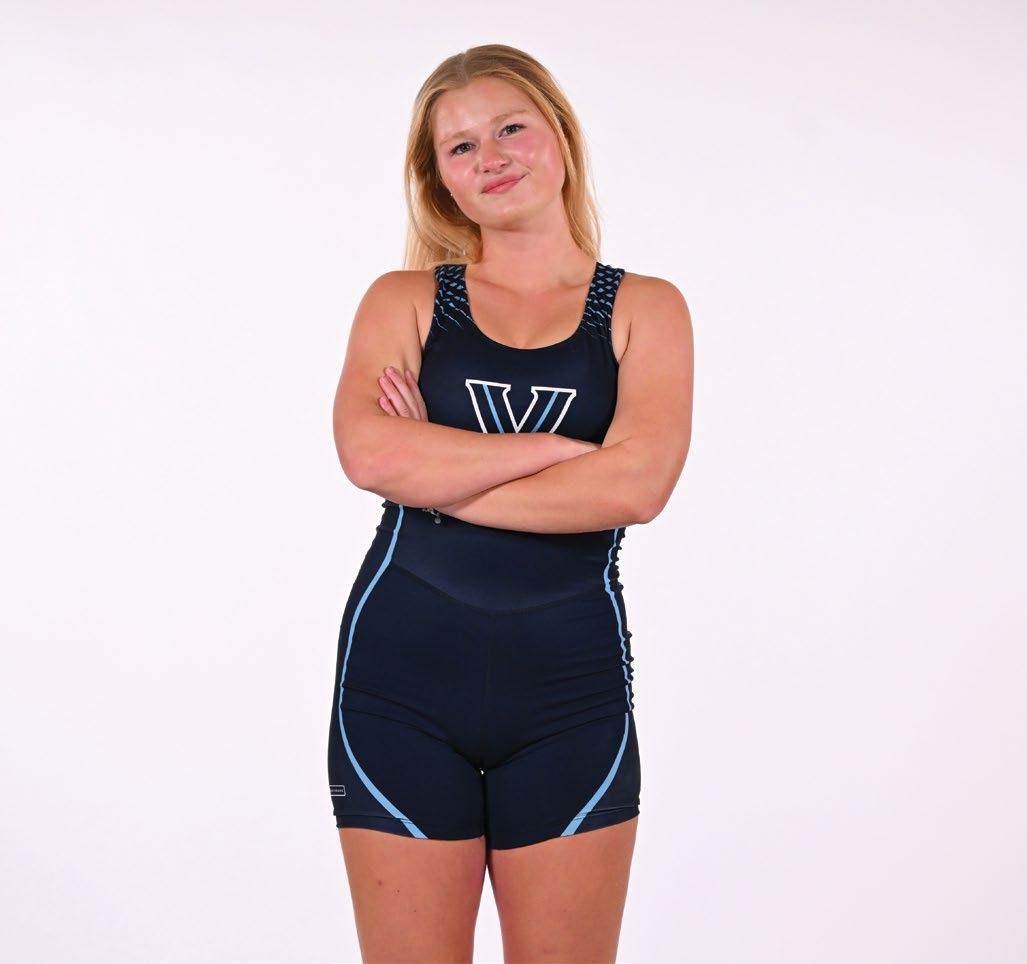
Most local rowers participate in the sport through membership at the Cincinnati Junior Rowing Club (CJRC). The Summit has seen at least nine of their Upper Schoolers be highly involved in the last decade and a half. Maddie Sumnar ’23 continues to row at
Villanova University. Reflecting on the experience of being invested in a sport novel to many of her high school peers, she recommends giving it a try. “I would say to give whatever sport might be interesting a shot. You never know what may come out of it.” She still values the memory of her athletic signing ceremony, saying “everyone celebrated me as if I had played a Summit sport.”
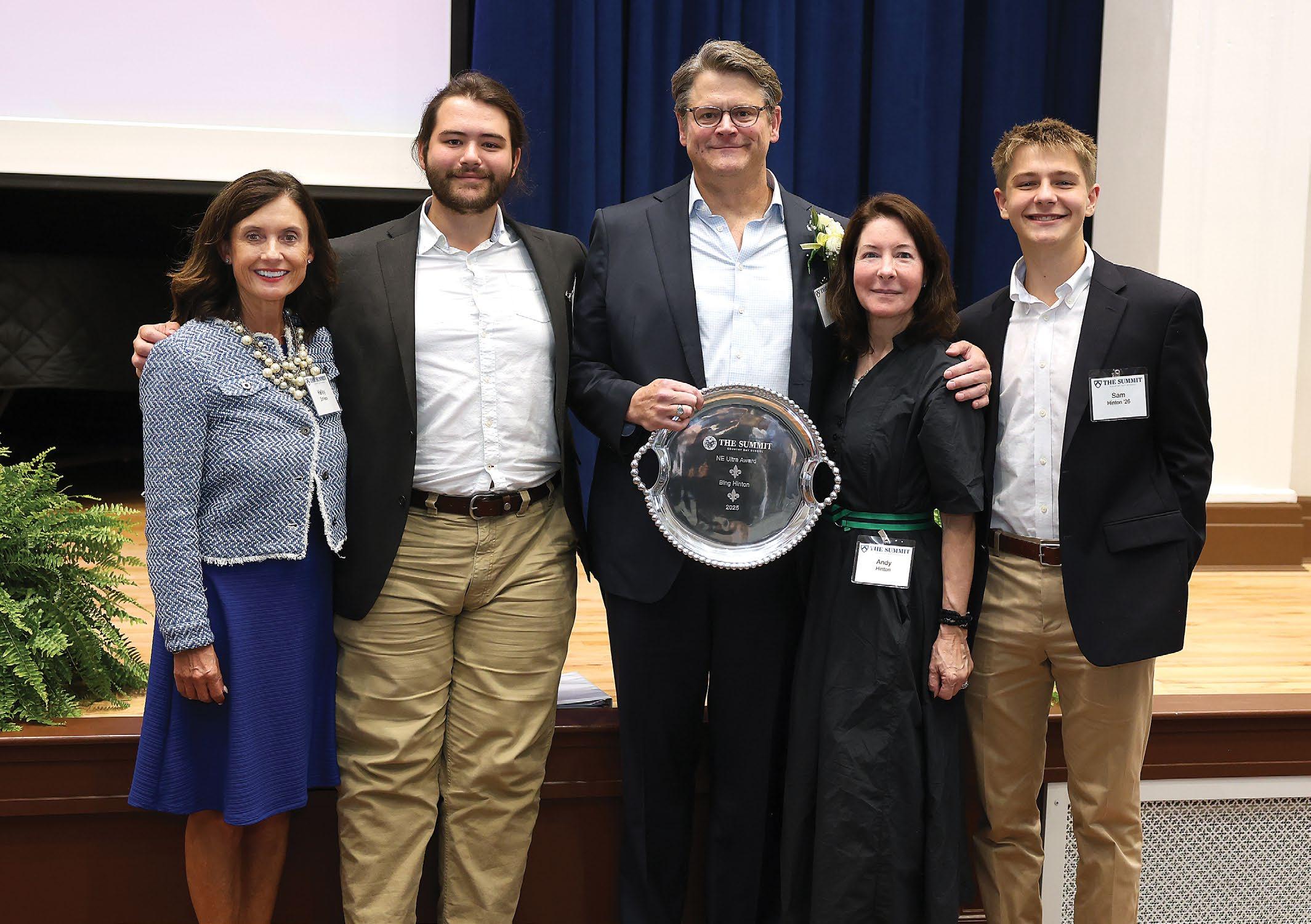
No Summit family has been more embedded in the sport of rowing than the Hintons, with all four sons (all Summit lifers) carrying on at the college level: Burke ’20 (Trinity College), James ’23 (College of the Holy Cross), Drew ’24 (Wesleyan College) and Sam ’26 (Dartmouth College). Parent and former Trustee, Dr. Bing Hinton says “the Cincinnati Juniors Rowing Club is a local gem—a club team that draws on twenty-some local high schools and competes at the national level. It’s true team culture and instills a determined work ethic.”
Like Maddie, all the Hintons point to the friendships built with teammates from across the city as a meaningful benefit. Burke shares that it “was a great change of pace. Being in one school community for so many years can feel very close-knit, so joining a team made up of students from a dozen different schools was an exciting way to broaden my perspective and engage with a wider world. The scheduling conflicts could be inconvenient, since racing requires significant travel, and explaining the sport to people outside the team sometimes took more effort than talking about
James Hinton ‘23 works out with his team at College of the Holy Cross
something more universally familiar like football. Still, I came to see those moments less as challenges and more as interesting opportunities.”
However, it was due to a major scheduling challenge that the family emerged with what has undoubtedly been their most unique and memorable Summit experience. The US Rowing Midwest Regional Finals traditionally falls on the same May weekend as Summit graduation. It is the qualifying race for the Youth National Championship, and the racing continues all weekend. “The school generously allowed the boys to dress and walk during the final graduation rehearsal, with friends and faculty speaking on their behalf,” says Bing. “We are so grateful The Summit has created this personal moment for each of them and the opportunity to celebrate this milestone as a family.”
Wearing tuxedos as their classmates sport casual attire, James and Drew have each celebrated in this way. James remembers, “I always think fondly about and cherish the words my friends said about me that day and how that gave additional meaning to my graduation. Even though it was shorter and not the standard experience, I would not trade my own graduation for another.”
Drew adds, “I was glad to be able to have the graduation experience I did. It may not have been the most traditional and I’m not a huge fan of having the major spotlight, but I am very grateful.”
With his own Summit graduation around the corner, Sam looks forward to continuing the family “alternative graduation” tradition, as well as achieving on the water. His most valued moments of his rowing career came from his freshman and junior year Midwest Regionals. Reflecting back, Sam says, “Freshman year I was lucky enough to row varsity at the same time as my older brothers, James and Drew. All three of us qualified for nationals, and my boat was second in the country in the U17 4+. Junior year we set a course record at our Midwest regionals and went on to get sixth at Nationals in the most competitive event.”
When asked what advice they would give to other Summit students interested in exploring nontraditional sports, each Hinton brother says, “Go for it!”
“Own it, and find a way to make time for it,” says Burke. “Fostering any passion builds two of the most important foundations of personal growth, consistency and an appreciation for life; fostering an unconventional passion builds resiliency as well. It may not be easy and it may not even be the thing for
you, but you owe yourself an honest effort in case it is.” Sam adds, “I would say continue doing your nontraditional sport if it’s what you have a passion for. I started rowing just wanting to try out the sport that my older brothers were doing. I never expected to be team captain in my fifth year of rowing; I just fell in love with the sport. I know it will be an experience I will cherish for the rest of my life. Although there may be some downsides and it requires a different routine than those around you, it is worth it if you truly enjoy it.”
Maddie Sumnar ‘23, Villanova University Crew
The Hinton brothers (Sam, James and Drew) reunite at the 2023 US Rowing National Youth Championships
Summit Boys’ Soccer Never Stops
By Brandon Lorentz ’13
There is no other way to say it: The Summit Boys’ Soccer program is a dynasty.
Led by Head Coach Scott Sievering in his 11th season, the Silver Knights enter every year with one clear objective: compete for an OHSAA State Championship. At Summit, that expectation is not aspirational; it’s historical. Since 2012, the program has captured eight state titles and nine overall since its first championship in 1999. Excellence is no longer the goal; it’s the standard.
A Season Forged Early
The 2025 season began with uncertainty. After graduating eight seniors, Summit entered the fall young and untested. A demanding early schedule offered no cushion.
Six matches in, the Knights were 0–3–3. Their first win — a 2–0 conference victory over Roger Bacon — provided momentum. A week later, a lastsecond victory over Lakota East revealed the team’s identity: resilient and composed under pressure. A team
that never stops fighting until the final whistle. Summit went on to earn a share of the Miami Valley Conference title, its seventh straight and 25th overall. Though the regular-season record stood at 5–6–6, the Knights played the highest-rated strength of schedule among Division V tournament teams. Coaches across the state recognized that battle-tested résumé, awarding The Summit the No. 1 local seed in the OHSAA Tournament.
A Postseason Surge
The Knights responded with authority. Victories over Georgetown, Purcell Marian and Preble Shawnee produced 26 goals without conceding, securing a District Championship in the process. A 4–0 win over Botkins in the Regional Semifinal advanced Summit to a third straight Regional Final — and a familiar opponent. Seven Hills.
Midway through the first half, Beckett Brinkman’28 kicked a corner found Forrest Cloran’28 for the breakthrough goal. Emmett Hood ’27 added insurance in the second half to seal a 2–0 victory that would send Summit to the State Final Four for the tenth time in program history.
“At this point, Seven Hills isn’t just a rival, they’re a measuring stick,” Coach Sievering said. “Our guys were calm and confident because they’ve been in these moments before.”
Built for The Moment
In the state semifinal at Centerville, Fairbanks struck first early in the second half. With time slipping away, Coach Sievering adjusted tactically, pushing AllAmerican defender Elijah Warner ’27 into an attacking role. The Knights gained momentum with this move, generating chance after chance, but the equalizer remained elusive.
Until the final seconds.
With just over 10 seconds remaining, Summit’s Forrest Cloran earned a free kick outside the box. Sophomore Beckett Brinkman stepped up over the ball. After a deep exhale and calm run-up, his left-footed strike curled perfectly over the wall and into the net with five seconds left, sending Centerville’s Alumni Stadium into pandemonium.
“The feeling was surreal,” Beckett said. “Just feeling the energy shift completely was amazing.”
In overtime, defender Sam Viltro ’28 delivered the final blow to Fairbanks. A 25-yard strike into the side netting after dribbling past confrontation from a
Fairbanks defender.
The scene that followed at Centerville felt ripped from a sports movie. Chaos erupted as Sam sprinted to the corner to celebrate with a backflip as teammates and students mobbed him to celebrate the goal that punched their team’s ticket to defend their title.
Back to Historic Crew Stadium
A Championship Statement in facing Ottawa Hills at Historic Crew Stadium, The Summit left no doubt.
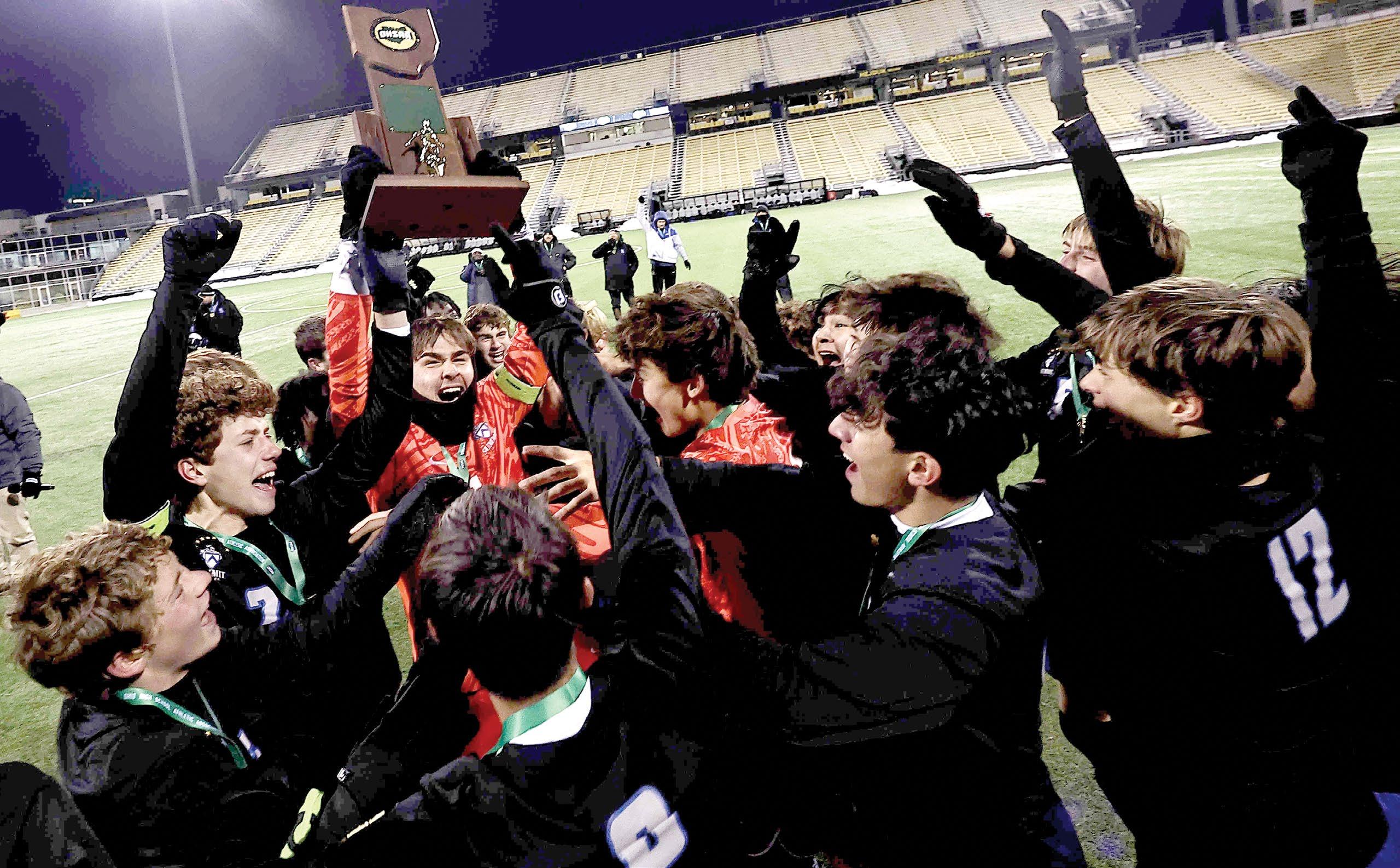
Carter Lund ’27 scored twice in the first half and completed his hat trick early in the second, becoming just the sixth Ohio boys’ soccer player to record three goals in a state championship match. Forrest added a third tally before halftime with a long-range strike from his left foot, giving the Knights a commanding advantage. Isaiah Rodgers ’28 added the fifth and final goal in the commanding 5–1 victory.
The title marked Summit’s ninth state championship — the most among Southwest Ohio programs. The weekend grew even more historic as the Summit Girls’ Soccer team also captured a state title, making Summit the first school in Ohio history to see both programs win back-to-back championships in the same year.
AMID EXPECTATIONS AND UNFORGETTABLE MOMENTS, ONE TRUTH ENDURES: SUMMIT SOCCER NEVER STOPS.
Sights On Six: The Season That Started a Dynasty
By Brandon Lorentz ’13
The fall soccer season at The Summit began the way it often does—with ambitious goals. But this year, ambition came paired with lofty expectations.
The Silver Knights weren’t simply chasing another postseason run towards a sixth title. They were chasing history: a third consecutive OHSAA State Championship and a return to Historic Crew Stadium in Columbus. Ahead of the season, programs from around Ohio circled Summit on their calendars.
“We talked about that all year,” Head Coach Mike Fee said. “We didn’t run from the pressure. We embraced it.”
Under Coach Fee’s leadership over the last 25 seasons, Summit Girls’ Soccer has become Ohio’s gold standard, reaching nine Final Fours since 2011—including each of the past three seasons. With six Division I college commits and a roster seasoned with championship experience, this team understood that expectation wasn’t a burden. It was a privilege.
Setting the Tone
The message was delivered early. On opening night at Badin, against a state contender christening its brand-
new stadium, The Summit silenced the crowd with a commanding 5–0 win. “That game showed who we could be,” Coach Fee reflected. “It set the standard.”
The wins continued: Highlands (KY), Tippecanoe, Waynesville, Loveland. A midseason trip to Philadelphia tested the group further. Summit rallied past nationally ranked Springside Chestnut Hill and battled a tough William Penn Charter team to a draw.
They returned home and went on an eight-game tear, including a gritty win over Indian Hill and a decisive shutout win of St. Ursula. A draw with eventual Division I State Runner-Up Seton affirmed their place among Ohio’s elite. Along the way, Summit claimed its third straight Miami Valley Conference championship—the program’s 19th—by sweeping the conference. Momentum had become their identity.
A Dynasty Delivers
Summit entered the postseason as Ohio’s top-ranked team—and played like it. Through four tournament matches, the Silver Knights outscored opponents 31–0, overwhelming every challenge in their path. True adversity didn’t arrive until a Regional Final rematch with No. 2 Indian Hill.
For the first time all postseason, Summit trailed. A defensive miscue late in the first half gave Indian Hill a 1–0 lead at the break. An unfamiliar position for a team accustomed to control, but there was no panic.
“I didn’t have to say much at halftime,” Coach Fee said. “The captains were leading the talk. They said everything we would have had to say.”
The response was immediate. Carolyn Federle’26 surged down the left flank set up Cammy Lorentz’27 for a powerful equalizer. Minutes later, Mia Stevens ’26 delivered a precise cross to Aubrey Blakely ’29, whose composed finish put Summit ahead and ignited the crowd at Wright State.
“It wasn’t just about the goal,” Aubrey said. “It was about what it meant for our team and the tournament run.”
The 2–1 comeback secured a third straight Regional Championship and sent Summit back to the State Final Four.
In the State Semifinal, the Titans struck first, feeding off an energetic crowd that made the three-hour trip to Fairborn. But Summit responded with poise.
Abigayle Penote ’27 leveled the match midway through the half, then completed a hat trick as the Knights unleashed a second-half avalanche. Mia added two goals, Hailey Holscher ’29 with one more, and The Summit rolled to a 6–2 victory.
Another trip to Historic Crew Stadium awaited.
Back to Historic Crew Stadium
Back at Historic Crew Stadium, Summit embraced the stage. After a competitive first half against Columbus Academy, it took less than a minute into the second half for Federle to break free from the kick-off and bury a shot into the top corner from outside the box. Aubrey doubled the lead shortly after off an assist from Mia, who added two more of her own, cementing her own place in Summit history as the program’s all-time leader in goals, points, and assists.
When the final whistle echoed through Columbus, a three-peat was no longer a pursuit. It was reality. Three unforgettable seasons. Three championships. One enduring standard.
The Summit, excellence in soccer isn’t a moment—it’s a tradition.
Athletic Round Up
Fall season at The Summit was nothing short of extraordinary, showcasing the talent, resilience, and spirit of our Silver Knights across multiple sports. From historic firsts to championship triumphs, our athletes delivered remarkable performances on the field, the court, and in the classroom.
Highlights include back-to-back state titles in boys’ and girls’ soccer, a groundbreaking Final Four appearance for volleyball, and a fifth consecutive MVC championship for girls’ cross country. Individual accolades, academic honors, and record-breaking achievements further underscore the dedication and excellence that define Summit athletics.
CROSS COUNTRY
The girls’ cross country team won their fifth straight MVC championship, finished runner-up at both districts and regionals, and advanced to the state tournament as a team where they finished 8th overall. The boys’ team finished 3rd in the MVC, runner-up at districts and had two individual runners qualify for state. Throughout the season, 18 different runners posted personal best times, and three school records were broken. At the middle school level, Emma McCormick ‘30 was the girl’s individual State Champion. Callie Fox ‘26 was the first female runner from Summit invited to the Midwest XC Championships, which features the best runners from Ohio, Michigan, and Indiana. She finished 15th overall. Emma McCormick also represented Summit at the Middle School National Championship and finished amongst the top half of the field. Success continued in the classroom as well with eight students (six girls, two boys) receiving Academic All-Ohio recognition.
FIELD HOCKEY
Field Hockey returned eight veteran players, welcomed nine new players, and a return of the school’s Middle School program in 2025. Despite not finishing at the top of the league, Summit took home multiple honors including Emily Betz as Coach of the Year, Chloe Castellini ‘26 as Defensive Player of the Year and first team All-SWOFHL and Halle Kinross ‘26 getting Honorable Mention.
FOOTBALL
Football had a bounce back season, more than doubling their win total from last year and hosting a playoff game for the first time since 2022. Ten players were recognized as All-MVC First or Second team, with half of them as underclassmen returning next year, including Kor’de Williams ‘29 who was awarded All-MVC First Team and All-Ohio third team, All-Southwest District DVI First Team, Sam Reder ‘26 was also named to the All-
GOLF
The golf team finished 4th in the MVC this year, but placed 2nd in Sectionals as a team, and 4th in Districts as a team, which fell just a few strokes short of qualifying for state. Grayson Houchin ‘26 was the individual champion at Sectionals.
SOCCER - BOYS
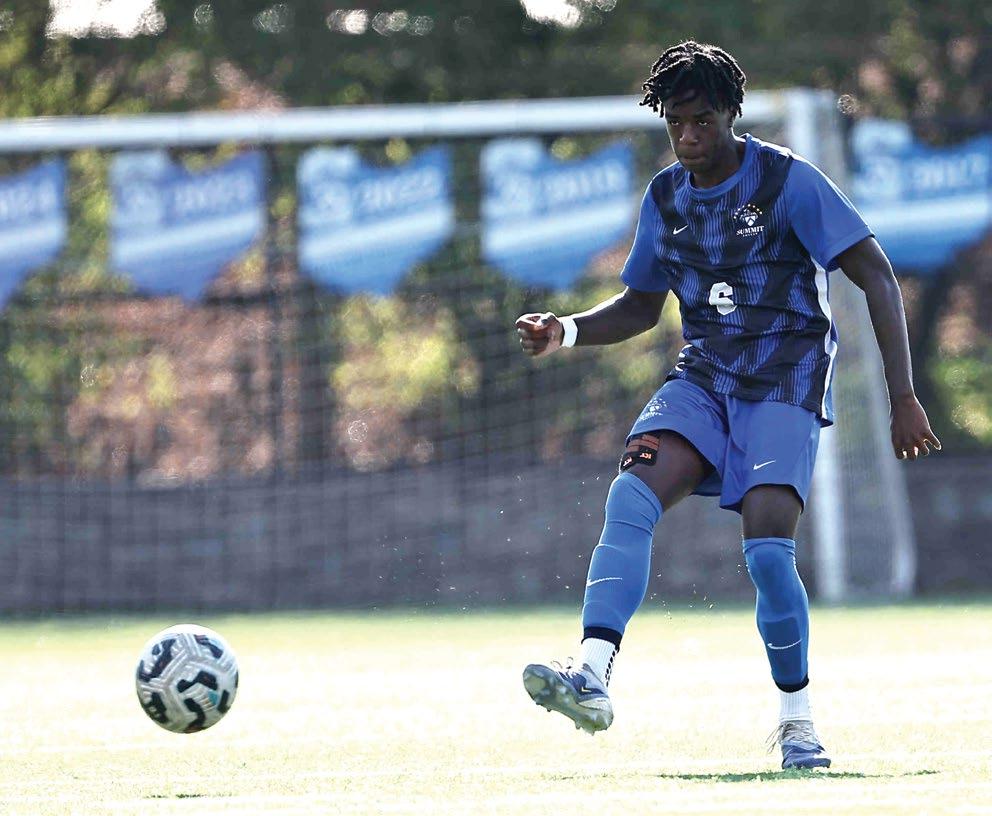
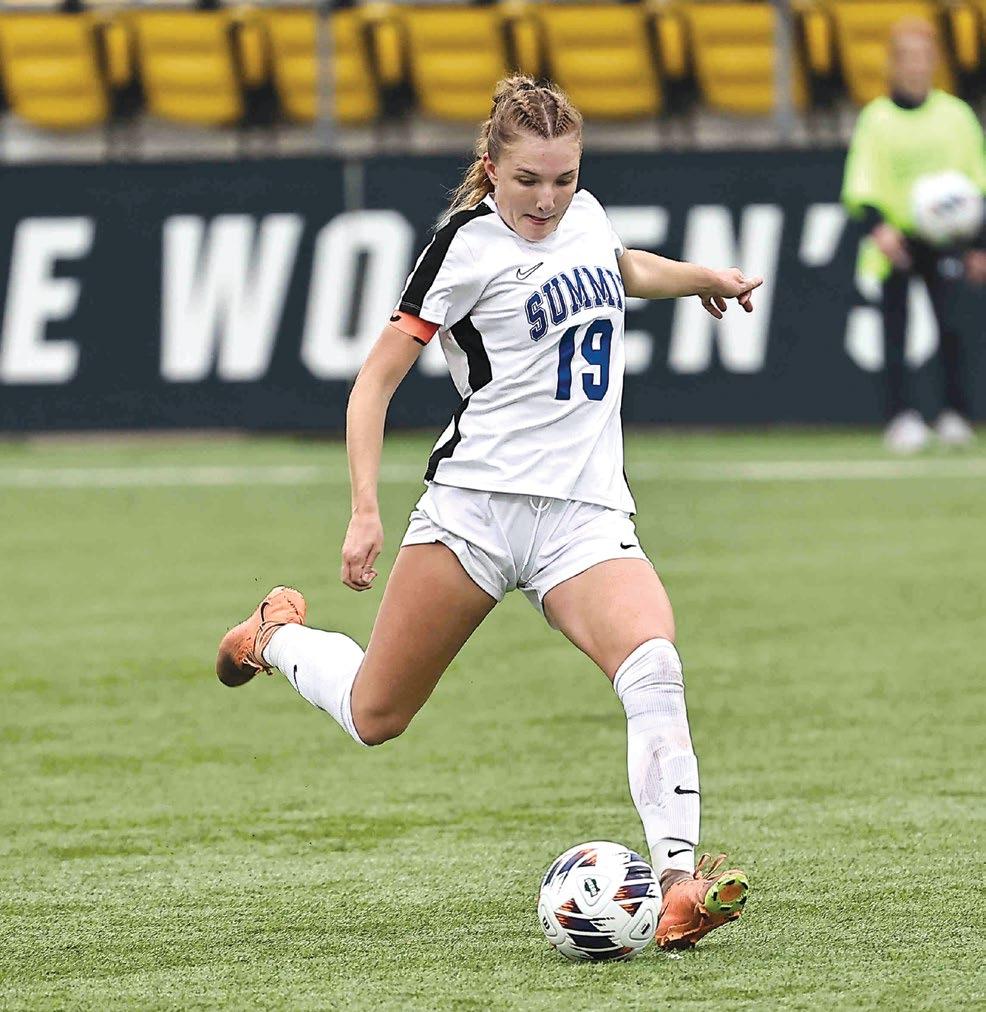
Boys’ soccer started their state title defense by sharing the MVC title with Cincinnati Hills Christian Academy. This is the fourth straight conference title. They went on to win their third straight District Championship, second Regional Championship, and back-to-back State Championship, their ninth in program history. One of the leaders of this effort was Elijah Warner ‘27, All-American, who was named Co-MVC Player of the Year, All-Southwest District Player of the Year and First Team All-State.
SOCCER - GIRLS
Girls’ soccer had another fantastic season, finishing 20-0-2, and capturing their third straight State Championship. Along the way, they won their third straight MVC title, fourth straight district title, and third straight regional title. Led by two All-American and All-State Seniors in Bree Reder ‘26, who won the MVC Player of the Year, and Mia Stevens ‘26, the Ohio DIV Player of the Year. Fourteen players were named AllSouthwest Ohio Academic and six seniors named AllOhio Academic (Sydney Brinkman, Ava Caldwell, Elle Edwards, Bree Reder, Mia Stevens and Evi Wallace). Mia Stevens was also named Ms. Soccer Ohio 2025.
Southwest District DVI Team and All-Ohio Honorable Mention.
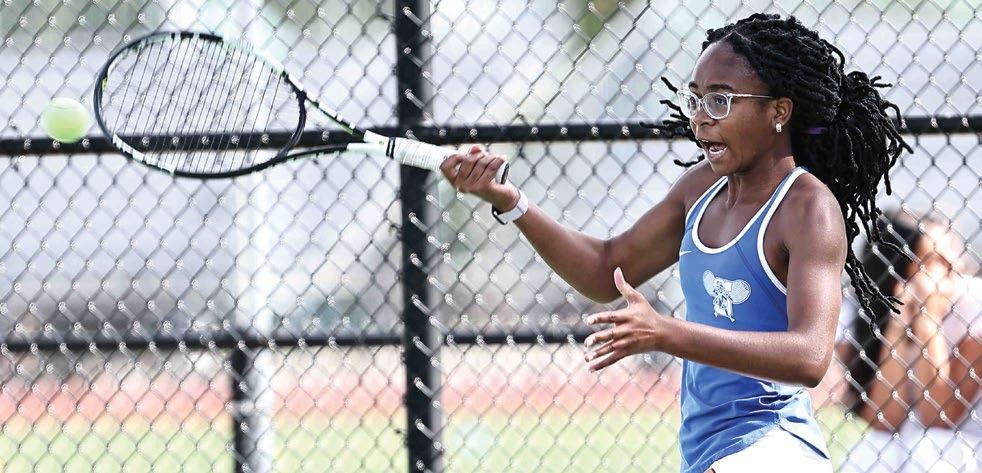
The Varsity Girls Tennis team delivered a standout season, finishing 3rd in the competitive MVC. They earned multiple All-League honors, led by First Team selection Jayden Puryear ‘26 in singles play. Second Team recognition went to the doubles pair of Ceci Viveros ‘26 and Faye Edmondson ‘27, while the duo of Laney Hodge ‘27 and Emily Pickup ‘28 received Honorable Mention. The team was also celebrated by the Greater Cincinnati Tennis Coaches Association, where Puryear was named First Team Singles and the doubles team of Paige Kropp ‘26 and Ceci Viveros ’26 earned Honorable Mention.
VOLLEYBALL
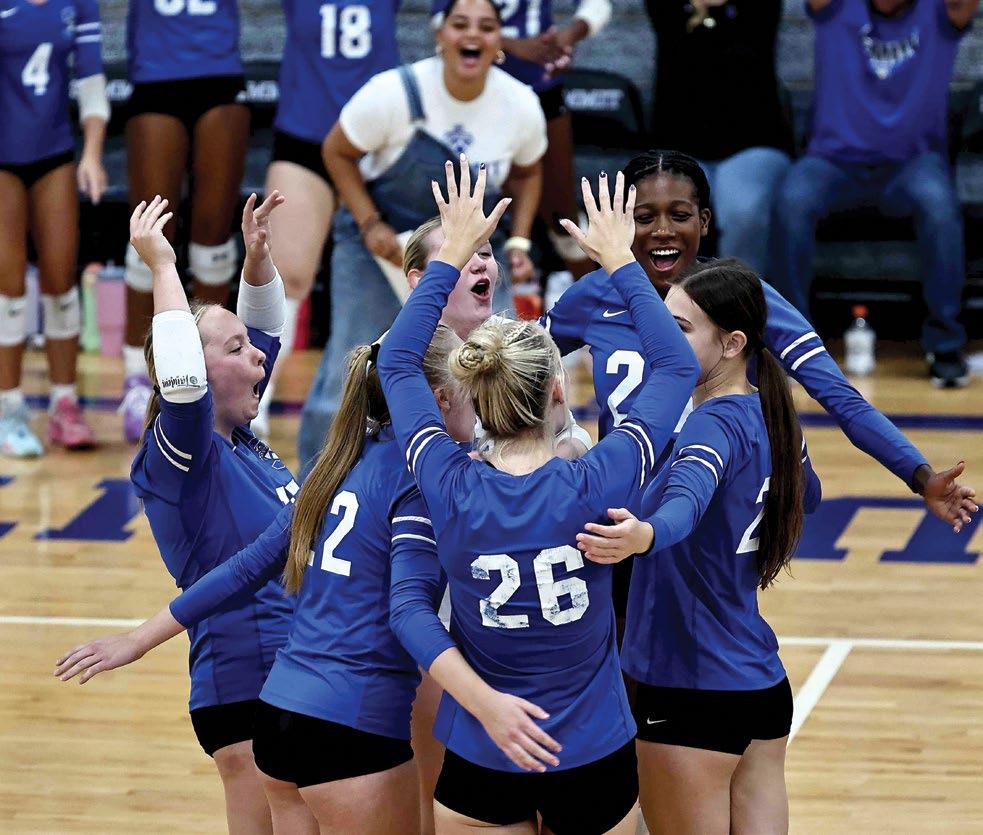
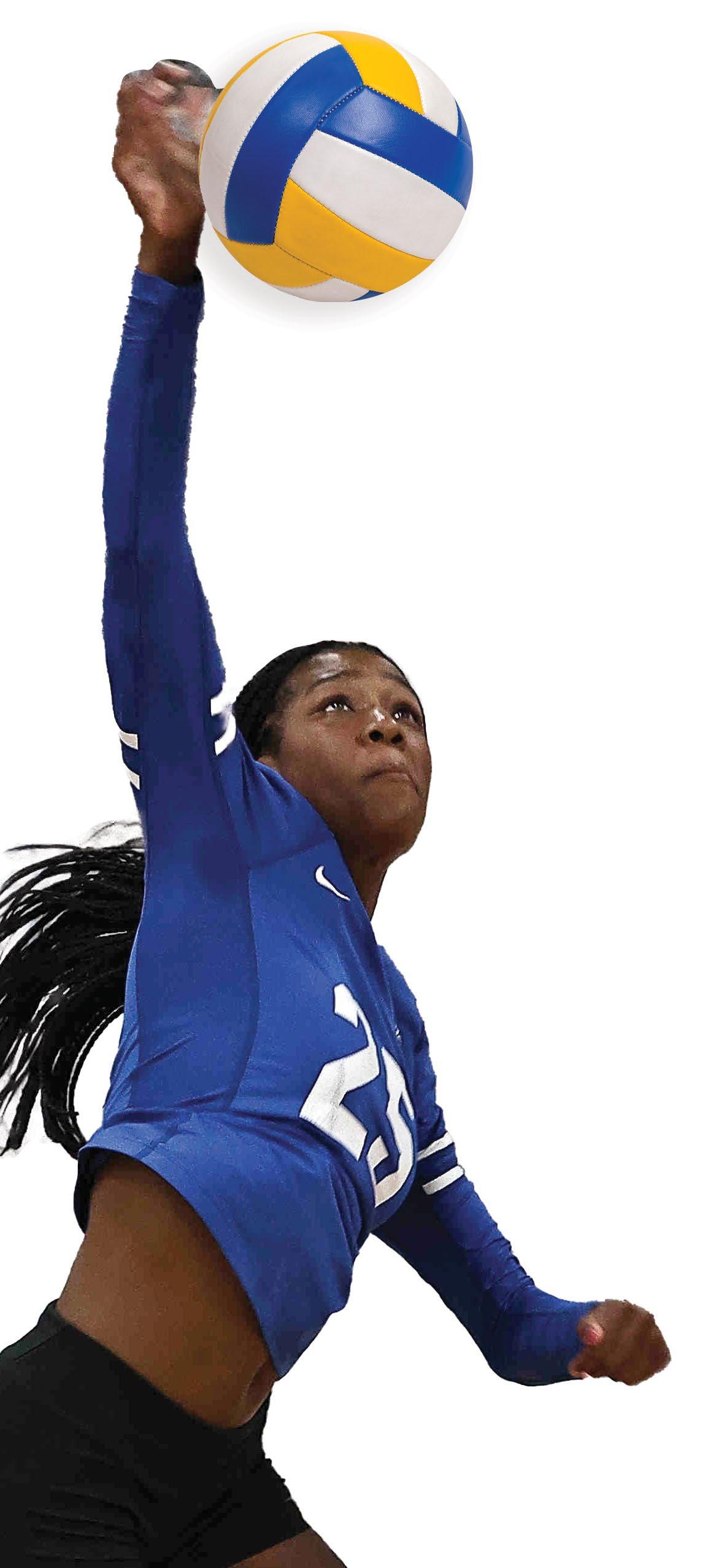
The Volleyball program had a truly historic season filled with incredible accomplishments! With an entirely new coaching staff, the team had to adjust –and they did so with open arms. The team left their mark by finishing 23-5, sharing the MVC title with CHCA, their first MVC title since 2016, and beating rival Roger Bacon for the first time in school history. Coached by first year head coach, Courtney Perdue, and led on the court by Kendall Northern ‘26, who earned MVC Player of the Year and Ohio DV Player of the Year, the Silver Knights won a District title, and their first ever Regional title, sending this team to the State Final Four for the first time in school history.
Elijah Warner ‘27, defender, 2025 All-American
Mia Stevens ‘26, midfielder, crowned 2025 Ms. Soccer Ohio
Volleyball goes to the State Final Four for the first time
First Team singles player, Jayden Puryear ‘26
135 years education in Cincinnati.
years of Catholic and Independent
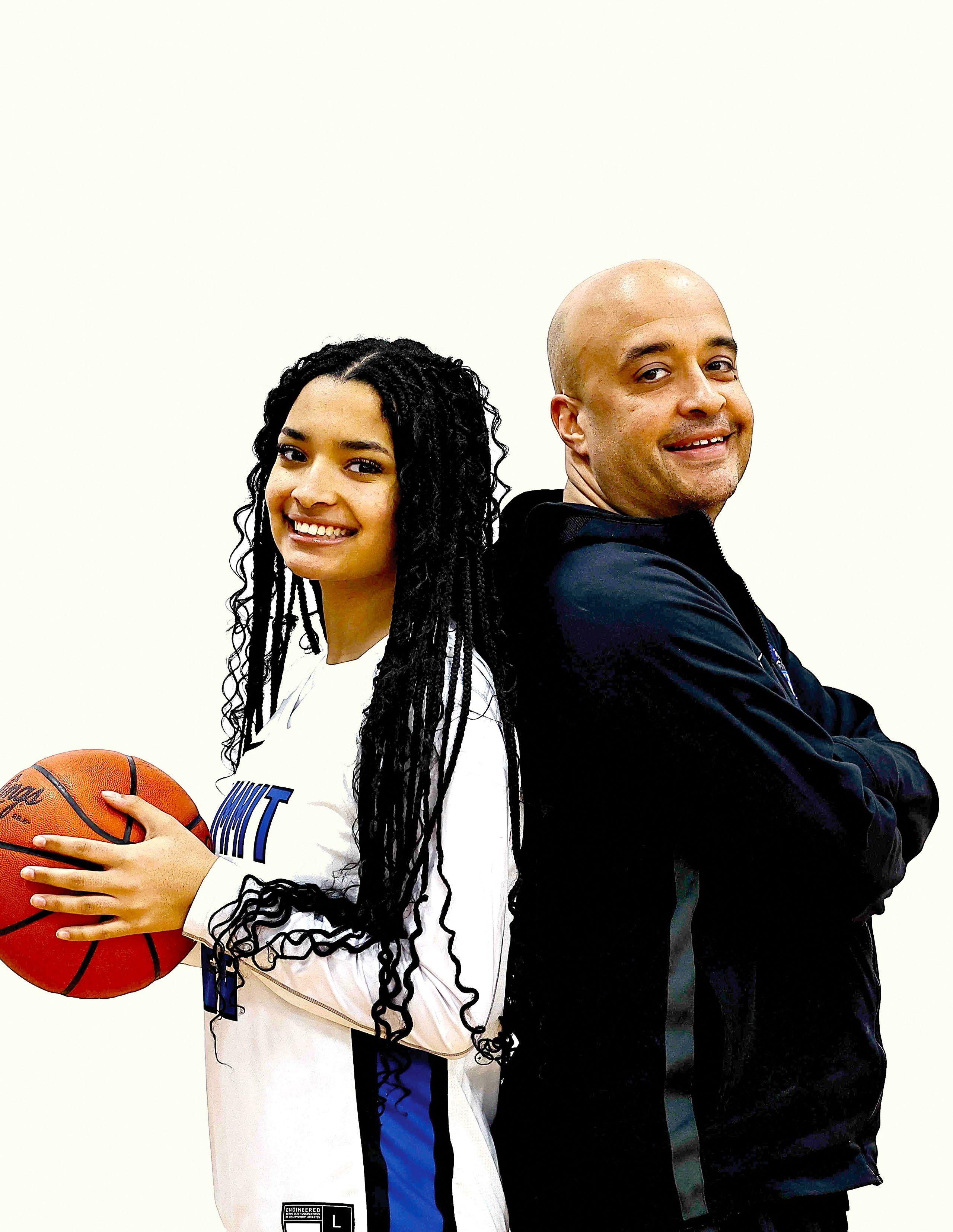
Q & A with my dad, Chris Woodard
By Sasha Woodard ‘26
Dad, as the K–8 athletic coordinator, what’s your overall vision for our sports programs, and how do you make sure that vision reaches students from kindergarten all the way through eighth grade?
My hope for our sports programs is that we are inviting and welcoming to all of our children, giving them a chance to experience all the sports we offer. I want us to provide an environment where they can not only experience sports but also grow by training them in the correct way. Then through this, I hope they might find a sport or sports they fall in love with and play through our high school. Ultimately, that is the end game: for us to see our kids playing multiple sports in our high school at a competitive leve, growing in their relationships and skills while winning championships. We are working on this by building a curriculum and structure for our sports that begins as early as kindergarten and continues through Middle School.
What are some moments you wish more people understood about what happens behind the scenes to make each season successful?
I wish people understood the work that goes into preparing for and running a season, particularly the work that is handled by our volunteer sports coordinators. This amazing group of people puts in so much effort to make sure coaches are assigned and their requirements are met, uniforms are ordered, practices are scheduled, families are communicated with, equipment is given to coaches and so much more.
How do you balance competitiveness with making sure our youngest athletes—especially in kindergarten and Lower school—are just having fun and learning the basics?
This is very challenging. First, we promote opportunity. Kids will have the opportunity to play a sport they love or are interested in throughout their entire Summit experience no matter their skill level. But second, we want to encourage those that are really interested to grow and become the best they can be playing at the highest level possible. Obviously, in high school we are competing for championships. So, in K–8, we are building toward that. We want to provide our children with an opportunity to play at a high level if that becomes an interest to them. We want to encourage them to be the best they can be, all while making room for the child that wants to play and just enjoy the game and the social experience. There is room for both at Summit and we welcome both equally.
What qualities do you look for in coaches across all grade levels, and how do you help them create a positive culture that I can showcase online?
The main thing I am looking for in coaches is that they understand it is not about winning the fourth or fifth grade championship. It is about building toward the Middle and Upper School experience. Don’t get me wrong, I want to win more championships than Mr. Dennis has won in the high school, but it isn’t about that. It is about developing these children and their skills, which may mean you have to lose a few more games along the way because you are teaching them the right way. But it will all pay off once they are in Middle School, and you see them not only doing it the right way but also producing wins at that level. I want coaches that understand this. I also want coaches that understand every kid has an opportunity and deserves your full attention. I want a coach that wants to help every child be their best. I don’t want coaches to just focus on the kids that have natural ability or already play at a high level. Those are easier to coach. Ultimately, I want coaches that love and care for kids and are passionate enough about the sport they coach to learn and develop themselves.
From your perspective, how has social media— especially our athletics Instagram account—changed the way families and students engage with school sports?
It has definitely brought more awareness of what is happening. When we have events and share them, I have had people stop me and say, “I didn’t know that was happening.” They are really excited to learn about it and sad they missed it. So hopefully, it has encouraged more families to read our emails we send out promoting these events. But seriously, it has also brought more excitement as the kids have seen their pictures and pictures of their friends posted.
What’s the key message you want our families and athletes to understand about being in this program?
To be a part of our program gives you the chance to experience all of the joys, challenges and growth opportunities sports provide. I believe sports are invaluable during the educational journey. They are an integral part of the educational process. Being a part of our program allows you to experience, challenges, build friendships, create memories, overcome challenges and difficulties, and see yourself grow from one experience to the next often in measurable ways. I want everyone to know that we want you to experience this, and we will be here to support your family throughout the journey.
Faculty Spotlight
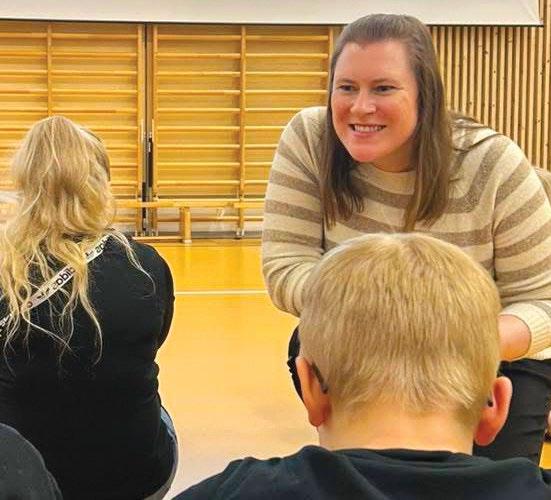
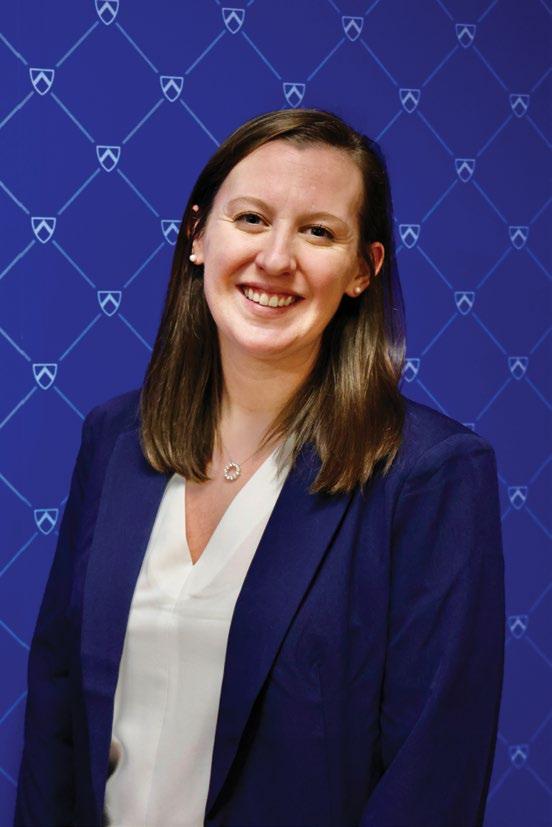
Summit Counselor Elizabeth Ko Pursues Fulbright Research in Finland
Lower School counselor Elizabeth Ko is spending the spring semester in Finland after being selected as one of just 14 educators nationwide for the 2025–26 Fulbright Distinguished Awards in Teaching Research Program. She began her fellowship in January and is spending four months studying how Finnish educators cultivate student well-being through social-emotional learning, emotional regulation, and executive-function development.
Mrs. Ko’s work places her directly inside Finnish schools, where she observes classroom practices, meets with teachers, and examines the cultural values that shape student support systems. “Every culture has priorities that affect the overall student experience,” Ko said before departing. “I’m eager to see firsthand how Finland’s system prioritizes student well-being and what practices might translate back to our work at Summit.”
In preparation for her residency, Ko studied Finnish through the University of Eastern Finland, allowing her to engage more authentically with students and educators. Throughout her fellowship, she is conducting school visits across several communities and documenting the strategies she encounters.
To keep Summit connected to her work, Ko is maintaining a blog that offers timely reflections on Finnish school routines, student interactions, and the broader educational landscape. Teachers at Summit have already begun sharing her entries with students, giving them a window into classroom life halfway around the world.
Administrators say Ko’s selection underscores her expertise and ongoing dedication to student wellness. “Elizabeth’s expertise in social and emotional wellness has been a tremendous asset to The Summit,” said Lower School Director Mike Johnson. “At a time when schools across the country are grappling with unprecedented levels of student dysregulation and social isolation, her pursuit of the Fulbright Fellowship reflects her commitment to serving our community with the highest level of care and insight.”
Ko’s research aligns closely with Summit’s strategic priorities around social-emotional learning and holistic student development. She continues to connect virtually with Summit classrooms while abroad and will share her findings with faculty and professional organizations upon her return. She will also produce a public-facing final project designed to make her research accessible to a wide audience.
Ko is scheduled to return in late spring, bringing home new insights gathered from one of the world’s most studied education systems.
Karen
Suder
– Outstanding Private School Educator
Upper School biology teacher, Karen Cruse Suder, was recognized with the Outstanding Cincinnati Private School Educator Award, presented by Xavier University’s College of Professional Sciences. Eight individuals were honored in total, each nominated by partnering institutions for their impact on student learning and their contributions to education in Greater Cincinnati and Northern Kentucky.
Lower School counselor Elizabeth Ko visits with students in Finland
Hilary Carvitti: elevating visual arts within the elementary curriculum
Lower School art teacher, Hilary Carvitti has been recognized as the 2025 Elementary Division winner by the Ohio Art Education Association, a distinguished honor celebrating excellence in art education across the state. This award highlights her outstanding commitment to inspiring young learners, fostering creativity, and elevating the role of visual arts within the elementary curriculum.
Derek Duncan: committed to conservation education
The Hamilton County Conservation District honored Derek Duncan as Educator of the Year, recognizing his outstanding commitment to conservation education and his enthusiastic leadership within our community. Derek’s dedication as an advisor for the Area IV Envirothon, combined with his passion for teaching and inspiring the next generation of environmental stewards, exemplifies the spirit of this award. As we celebrate our 80th Anniversary Conservation Celebration—dedicated to our volunteers, partners, and the public we serve—we are thrilled to recognize Derek for the meaningful impact he has made on conservation efforts throughout Hamilton County.
Alumni Achievements: Barnett, Pope and Suder Three Upper School faculty members have received alumni achievement awards from their alma maters: Art teacher Carrie Barnett-Oak Hills, Assistant Upper School Director Cliff Pope – Wittenberg University, Biology teacher Karen Suder- Mt. St. Joseph University.
Dr. Kristen Fleming: Auschwitz Legacy Fellowship
Social Studies teacher Kristen Fleming has been selected as one of Ohio’s representatives for the prestigious Auschwitz-Birkenau Memorial Foundation’s Auschwitz Legacy Fellowship, an honor earned through a rigorous application and interview process. This program includes six months of remote, synchronous study with leading scholars, followed by intensive summer learning in Warsaw, Krakow, and Auschwitz-Birkenau. Now in her third month of preparation, Kristen is already gaining meaningful insights and looks forward to continued growth as both an educator and an individual.
Dr. Shannon Smith: championing excellence in chemistry
Dr. Shannon Smith has been elected to the governing board of the American Association of Chemistry Teachers (AACT) as president-elect, a distinguished recognition of her leadership, expertise, and commitment to advancing chemistry education nationwide. Her selection reflects her dedication to
supporting teachers, elevating instructional practice, and inspiring students through high-quality science education. As she steps into this influential role, Dr. Smith will help shape the future direction of AACT and continue championing excellence in the chemistry teaching community.
Dr. Kat Sickinger, Marty Wells, Dr. Kristin Fleming, and Dr. Tracy Law: Lending Their Expertise to AP Exam Grading
Dr. Kat Sickinger and Marty Wells have been selected by the College Board to serve as Table Leaders for AP Physics and AP Environmental Science exam grading, a prestigious recognition of their expertise and leadership in their fields. They are joined by Dr. Kristin Fleming, who will serve as a Table Leader for AP U.S. History, and Dr. Tracy Law, who has been selected as a Table Leader for AP Human Geography. Together, their contributions help ensure consistent, rigorous scoring and strengthen the overall quality of AP assessment for students across the country.
Dr. Caroline Wagner, previously Summit’s Community Engagement and Events Coordinator, has expanded her role to serve as Associate Director of the Institute for Leadership and Character (ILC). In this full-time position, she will partner with Dr. Kirstin McEachern to support strategic coordination, program development, and community engagement across the Institute’s five Centers of Distinction. She will also lead initiatives within the Center for Community Engagement, enhancing partnerships, programs, and the Institute’s visibility.
With a robust background in higher education, including roles in program design, leadership development, and global academic experiences, Dr. Wagner brings deep expertise to this expanded portfolio.
She will continue to serve as the primary liaison for the school’s parent groups while overseeing major all-school events, ensuring alignment, continuity, and strong relationships across the community.
The Ascent of Kendall Northern ‘26
At The Summit, excellence is tradition—but few athletes have elevated that legacy quite like Kendall Northern, the 6-foot-2 volleyball standout named the 2025 Ohio Gatorade Volleyball Player of the Year. Her senior season was a masterclass in dominance, leadership, and competitive fire, cementing her status as the top-ranked player in Ohio and one of the nation’s most exciting recruits.
Kendall delivered staggering numbers: 601 kills, 273 digs, 53 aces, and a .528 kill percentage, guiding the Silver Knights to a historic 23–5 record and their first-ever state tournament appearance. Her performance didn’t just rewrite record books—it reshaped expectations for the program.
Those closest to the transformation felt her impact daily. Summit head coach Courtney Perdue saw Kendall’s influence extend well beyond the stat sheet.
“Kendall is one of our biggest leaders on the team,” Perdue said. “Kendall is great.”
Coaches across the region echoed that assessment, praising her rare blend of power and poise. Multiple outlets ranked her the top volleyball player in Ohio, a reputation supported by her selection as the Ohio High School Volleyball Coaches Association Player of the Year and a Division V first-team all-state honoree.
Her rise didn’t happen overnight. Evaluators point to qualities that go beyond height and athleticism—traits that translate to the next level. Penn State assistant coach Mike Henchy described what sets her apart: “Kendall Northern is lightning quick… she has things that you can’t train, that’ll be an asset in the gym.” Teammates and coaches alike describe her as the kind of athlete who raises the level of everyone around her.
That excellence has earned national attention. Kendall was selected to compete in the Under Armour All-American Game, further cementing her place among the nation’s elite prospects. Off the court, she pairs athletic achievement with academic dedication, maintaining a 3.83 GPA while committing her time to service through Tender Mercies, peer tutoring in French, and church-led community initiatives.
Kendall speaks with the maturity of an athlete who understands both the journey and the responsibility that comes with being program-defining. Reflecting on her growth, she said, “I’m very grateful. I am very proud of my growth over the past few seasons both offensively and defensively. I am glad that I am able to be a leader on the team in a bigger way this year.”
The next chapter of her story unfolds in Happy Valley. After committing in 2024 and signing in November 2025, Kendall will bring her explosive athleticism to Penn State, one of college volleyball’s most storied programs. Her national ranking of No. 13 in the Class of 2026 underscores her readiness to make an immediate impact.
Kendall leaves The Summit with historic milestones, statewide recognition, and a legacy of elevated expectations. For Ohio volleyball, she is a generational talent. For The Summit, she is a legacy—carried forward in Summit blue, now competing on the collegiate stage.
Student Spotlight
40 Upper School students were inducted into the Summit Country Day School chapter of the National Honor Society at a ceremony on March 9. These students were recognized for their dedication to scholarship, leadership, service and character.
Tofunmi Ajayi ‘30 (above) won first place in the Middle School Geography Bee, where he demonstrated his advanced knowledge about history and geography. Russell Roth ‘31 achieved second place, and Hudson Pfeffer ’30 and Emma Rinehart ‘30 placed third and fourth, respectively.
Three Upper School students competed in the Region 8 Ohio History Day competition, where they presented their original research on the topic of Revolution and Reform. Kiersten Diaz ‘28 and Francesca Loeb ‘28 scored in the top 3 Senior Paper Exhibitors. This accomplishment makes Kiersten and Francesca the region’s State Qualifiers for the Ohio History Day competition, held at Capital University.
Sophia Suwiryo ‘27 was selected as finalist in the Overture Awards, one of the most prestigious arts competitions in the Cincinnati area, recognizing excellence among high school artists across multiple disciplines.
Henry Knepfle ‘31, Emma Rinehart ‘30, Matti Hofmann ‘31, Sophie Pressey ‘31 and Charlie Williams ‘30 were chosen among the most talented musicians in the region to participate in the Cincinnati Catholic Honor Band. The students spent an entire weekend rehearsing from morning to evening in preparation for the performance, displaying outstanding character and musicianship.
Three students on the Mock Trial team won special awards at the district competition held at the Hamilton County Courthouse on Friday, January 30. Lydia Hiller ‘26 (center) received the Best Attorney Award, and Shilo Captain ‘28 (left) and Ceci Viveros Valdepena ‘26 (right) were named among the Best Witnesses. The Summit blue team advanced to Regionals, with Lily Grant ’27 receiving the Best Witness Award.
Isaiah Santiago ‘30 swept the competition at a chess tournament in December. He won all four of his matches, taking the divisional win.
The Middle School Power of the Pen team has been representing The Summit in competitions around the region. The team competed in the Southwest Regional Tournament, where Evelyn Paulsen ‘30 placed sixth overall for her grade. Earlier in the school year, the team competed in districts, where Millie Rich ‘31 placed 10th overall for seventh grade, Evelyn placed 12th overall for eighth grade, and the eighth-grade team placed 4th overall.
In November, the Summit Chess Team competed in the Cincinnati Scholastic Chess Series tournament, held at Lakota West High School. Nine students competed across three divisions, most experiencing their first tournament. The Summit won two medals: Charlie Aguilar ‘33 placed 9th in the Under 300 section and Sophia Suwiryo ‘27 placed 3rd in the Under 1100 section. In March, the team competed in the same tournament series. In the Under 700 division, Isaiah Santiago ‘30 tied for first, promoting to the next division and earning third place for the season. In the Under 500 division, Charlie Aguilar ‘33 and AJ Gray ‘31 tied for 11th. Quinn Harding ‘32 competed in his first tournament in the unrated division, winning a game.
Brady Costello ‘38 (above) competed in his first chess tournament under the coaching of Upper School educator Derek Duncan. Brady won a match against a second grader from another school.
home first place
Annual Summit Pink Games Support Karen Wellington Foundation
Summit student athletes participate in the annual October Pink Games to spread awareness and raise money for the Karen Wellington Foundation (KWF), which supports women battling cancer by providing gifts of fun, including spa days and family vacations.
Players on our field hockey and football teams played with purpose at “pink out” games. Additionally, the soccer and volleyball teams brought valuable health resources directly to our community with a free mammogram van during their “pink out” games.
The Summit has been one of KWF’s biggest supporters since 2011, raising enough money to positively impact eight to ten families each year.
Tofunmi Ajayi ‘30 (center) won first place in the Middle School Spelling Bee after eight rounds of competition. Izze Montaque ‘30 (right) and Russell Roth ‘31 (left) were runners-up.
The Latin Team gave an outstanding performance at the 2026 Ohio Junior Classical League Convention held in Columbus. The team placed second overall, continuing The Summit’s tradition of placing first or second for 17 consecutive years. Out of 348 participants, Cailyn Youtsey ‘27 earned first place in overall points and total graphic arts points with her model and stitching artwork. Seven of her pieces placed first and two won Best of Show.
Henry Knepfle ‘31 was chosen to perform in the Ohio Music Education Association District 14 Honor Band after a rigorous audition process.
Sophie Pressey ‘31 performed as a member of the Cincinnati Youth Wind Ensemble, which she auditioned for over the summer. The group has been regularly rehearsing at the College-Conservatory of Music on the University of Cincinnati’s campus.
Emma Rinehart ‘30 (above) took
at the Hyde Park art show in October. Quinn Carlson ‘32 placed third overall and Will Ahouse ‘32 received an Honorable Mention. All winners had their artwork displayed at the Hyde Park Library.
Ne Ultra Award
Bing Hinton, M.D.
The Ne Ultra Award, Latin for “nothing higher,” is reserved for the rare leader whose action and vision have moved The Summit forward in alignment with our mission. This year’s recipient, Dr. Bing Hinton, has served the school as a current parent (Sam ’26), parent of alumni (Burke ’20, James ’23, Drew ’24), trustee, advisor and visionary donor.
Invested in a variety of projects at The Summit, one of Bing’s most visible successes was an almost decadelong push to breathe new life into St. Cecilia Hall, one of the school’s original spaces from the 1890s. In 2013 he first expressed interest in the space, “It has so much impact, hitting every division. The Chapel is for formal events, and Flannery is for casual. This is for inbetween. If the Chapel is the dining room of the school, then St. Cecilia’s is the kitchen.” Through the David and Margaret Clare Foundation, founded by his grandfather, Bing championed the renovation plans, with the clear expectation that “the space would be used for the community and by the community.”
As a parent to four “lifers,” Bing has many favorite memories that fuel his passion to help the school become it’s best: “Watching the boys in the sharing circle in Montessori one day and seeing the encouragement and kernel of character formation; going to Lessons & Carols, which reminds me of my childhood and is one of those ways I see continuity with my boys’ experience and my own upbringing; oddly, parent-teacher conferences because, even when there were challenges, the faculty were always superb, always keenly aware of the boys – they got them – and this is deeply gratifying as a parent. Finally, all of the small moments where the community was palpable, where the growth and development of the boys was visible in a larger, supportive sense.”
“What inspires me most,” said Head of School Kelley Schiess, “is that Bing’s generosity is quiet in tone but bold in effect. He is a partner who seeks results, not the spotlight. His leadership and generosity have enhanced The Summit experience for every student and educator who enters these doors.”
McKenzie-Sargent Distinguished Alumni Award
Chris
(Castleberry) Lippert ’89 and Wayne Lippert ’89
Established in honor of The Summit’s first alumnae in 1983, the McKenzie-Sargent Distinguished Alumni Award recognizes graduates who embody exceptional professional achievement and a deep commitment to service. This year, we proudly celebrate Chris (Castleberry) Lippert ’89 and Wayne Lippert ’89, two leaders whose steadfast dedication has strengthened our school in lasting ways.
Championing Safety, Strategy and Innovation
In his service on the Buildings, Grounds and Technology (BGT) Committee, Wayne Lippert placed student and faculty safety at the forefront. His leadership helped usher in transformative campus security enhancements, including a modern visitor-screening system, an expanded camera network and trained security personnel. Parent feedback affirmed the impact—confidence in campus safety rose substantially during his tenure.
Wayne also played a pivotal role as a connector across committees, helping to shape a forward-looking master plan that reimagines academic, arts, athletic and classroom spaces. His emphasis on modernization led to a transition to a managed IT services model that improved reliability, strengthened infrastructure and enhanced day-to-day support. The result: smoother operations and an elevated experience for every student and educator.
His work on the Business Affairs and Retirement committees brought a disciplined, long-range perspective to financial planning, ensuring sustainability and thoughtful stewardship of school resources.
Welcoming Families and Building a Culture of Generosity
A trusted and genuine presence for prospective families, Chris (Castleberry) Lippert has long been one of The Summit’s warmest ambassadors. As a first point of contact, she brings candor, kindness and clarity—helping families feel at home from their earliest interactions and supporting a strong foundation for retention.
Her influence extends far beyond first impressions. Chris has elevated parent philanthropy by inviting families to share their time, talents and resources so that all students benefit. She models wholehearted engagement, and others follow her lead. Through her work in both admissions and advancement, she fosters relationships that help families choose The Summit, stay at The Summit and invest in The Summit.
Investing in Students, Faculty and the Future
The Lipperts’ generosity has had a direct and meaningful impact on teaching and learning. Their investment in Middle School learning supports expanded coaching, intervention and targeted instruction—providing students with the confidence and skills they need to thrive as they enter Upper School.
Their gift to enhance the Class of 1989 Pond transformed an outdoor space into a dynamic extension of the classroom. Today, it is used for science investigations, reading circles, art projects, reflection, movement and collaboration—bringing together wellness, creativity and academic exploration.
They have also strengthened essential school operations by supporting classroom resources, faculty development and student programming. The security improvements they championed—screening technologies, cameras and trained personnel—give families greater peace of mind and allow teachers and students to focus fully on learning.
Servant Leaders Who Inspire
Chris and Wayne lead with joy, steadiness and authenticity. Their service strengthens the community, elevates the student experience, and inspires others to give generously of themselves. The Summit is profoundly grateful for their vision, commitment and extraordinary example of servant leadership.
SUMMIT ATHLETICS
Celebrating Excellence
Summit honors athletic achievement and lifelong impact at annual Hall of Fame event
By Nancy Berlier and Tina Tedesco
E
ach fall, The Summit Country Day School community gathers to celebrate the power of athletics—not only the triumphs on the field, track or court, but also the character, leadership and lifelong relationships forged through sport. This year’s Athletic Hall of Fame celebration brought together alumni, families, faculty and friends to honor two distinguished Athletic Hall of Fame inductees and three recipients of the school’s prestigious special awards. Together, their stories form a powerful portrait of what it means to live out the values of the Silver Knights.
Honoring the 2025 Special Award Recipients
The celebration began with recognition of three individuals whose dedication has strengthened Summit athletics in profound and lasting ways. The Silver Knights Victory Award, Sister Rose Ann Fleming ’50 Award and Farrell Ackley Award underscore the importance of service, leadership and character—qualities that define the Summit spirit.
Dr. Robin Cotton: Silver Knights Victory Award
A longtime friend and benefactor of Summit athletics, Dr. Robin Cotton was honored for his extraordinary support of the school’s running programs. A retired Cincinnati pediatric otolaryngologist and a national leader in his field, Dr. Cotton—along with his wife, Cindi—has championed Summit’s cross-country program for more than a decade. Their commitment includes establishing the Cotton Family Endowed Cross Country Coach Fund, ensuring the long-term sustainability of the sport that shaped their son Colin, a 2011 graduate and two-time state champion.
Cross Country Varsity Head Coach Kurtis Smith praised the Cottons for helping build a vibrant culture of growth and participation. “Due to their philanthropy, we’ve been able to give our athletes a well-rounded experience year-round,” he said, noting the ripple effect their generosity has had on the entire athletic department. Dr. Cotton, reflecting on his family’s connection to Summit, emphasized the school’s welcoming approach to athletics: “One of the things I really like about Summit is its athletic development and the fact that it came with no cut system where everyone can participate.”
Dr. Patricia White: Sister Rose Ann Fleming ’50 Award
Beloved by students, coaches and colleagues alike, Dr. Patricia White was honored for her far-reaching impact during her 15 years at Summit, where she served as School Counselor, College Counselor, Interim Head of School and Upper School Director. The award recognizes individuals who have strengthened Summit athletics—especially opportunities for female athletes— while contributing to the holistic development of students.
Alumnus Kevin Johnson Jr. ’13, now Head Boys’ Basketball Coach and Alumni Engagement Gifts Officer, credits Dr. White with shaping his high school journey. “Pat had compassion and love for all students,” he said. “If you were struggling academically, she would figure out a plan; if you were struggling with your mental health, she made sure you were well.” Dr. White attributes her approach to the teachings of the Sisters of Notre Dame de Namur: “I worked from the academic angle with coaches to develop the total child.”
Jerry Hilton ’91: Farrell Ackley Award
Teacher, coach and mentor for nearly two decades, Jerry Hilton ’91 received the Farrell Ackley Award—an honor recognizing individuals who exemplify the values championed by the late teacher and coach Farrell Ackley: honesty, character, discipline and loyalty. Hilton has coached basketball, track and now cross-country, shaping countless student-athletes along the way.
Former student-athlete Kevin Johnson Jr. reflected on Hilton’s influence: “Jerry provided so much wisdom and support for me throughout high school.” Hilton himself spoke to the role of adversity in athletics: “Competition forces you to be honest with yourself... That brutal honesty helps growth because it teaches you what you need to improve.”
Inducting Two Outstanding Alumni into the Athletic Hall of Fame
The heart of the celebration came with the induction of two remarkable alumni whose athletic achievements— and personal character—continue to inspire: baseball standout Michael Peterson ’07 and football and track star CJ Collins ’09.
Michael Peterson ’07: A Legacy on the Mound
Known for his talent, work ethic and leadership, Michael Peterson made his mark as a Summit baseball standout before playing four years at DePauw University. During his time at Summit, Peterson
excelled in both soccer and baseball, earning MVP honors in 2006 and leading the Miami Valley Conference in Earned Run Average. His senior-year performance at the A.J. Cohen Memorial Tournament— where he threw a no-hitter and was named MVP— remains a cherished memory.
Peterson attributes much of his development to former coaches Andy Poli and Triffon Callos, who emphasized accountability and preparation. “I just had fun coming to play a sport,” he said. “I was committed to improving myself and making the team the best I could.” Beyond his individual accolades, Peterson treasures the camaraderie of Summit athletics: “It’s the bus rides and hanging out with your friends—you miss that the most.”
Today, Peterson is Global Client Director at Apex Systems in Chicago, where he lives with his wife Bee and their two children—continuing a Peterson family legacy deeply rooted in the Summit community.
CJ Collins ’09: The Heart of a Competitor
Honored posthumously, CJ Collins ’09 remains one of the most electrifying multi-sport athletes in Summit history. A standout in football, track and basketball, Collins set Summit’s 400-meter dash record in 2008 and broke it again in 2009—a record that still stands. On the football field, his senior year alone produced a string of top-10 performances, culminating in 2,642 career all-purpose yards and a remarkable 8.95 yards per carry.
Athletic Director Greg Dennis remembered meeting Collins in eighth grade. “CJ told me he was going to be a football star—and he was,” Dennis said. CJ’s parents, Craig and Tonia Collins, recall how opponents often underestimated him due to his size—5’9”, 230 lbs.— until they saw his explosive talent. “After one race, one three-pointer, or one touchdown,” his mother shared, “they quickly learned he was a formidable opponent.”
Beyond the statistics, CJ is remembered as a charismatic, joyful and compassionate young man whose energy lifted every room he entered. His legacy lives on not only in Summit’s record books but in the hearts of those who knew him.
Together, this year’s honorees reflect the deep roots and far-reaching impact of athletics at The Summit. Their contributions remind us that sports are more than competition; they are a platform for growth, community, leadership and lifelong connection.
Scholarships Empower Future Successes
By Emily Fernback
Since moving under the leadership of an independent board of trustees in the 1980s, The Summit has continued to build on its endowment. A portion of these endowed funds supports scholarships that give gifted students access to opportunities they may not otherwise have.
The Upper School distinguishes itself through exceptional resources and distinctive learning experiences, including a faculty that offers 24 collegelevel Advanced Placement courses.
“The Scholarship Awards Ceremony is a powerful reflection of The Summit’s commitment to academic excellence and the formation of leadership and character,” Development Director Bailey Bundy shares.
“As we celebrate our incoming Class of 2030, we are inspired by these students who embody the heart of our mission: guided by faith, leading with character and living with purpose. We are honored to welcome them into our community and look forward to supporting their growth and impact at The Summit.”
Celebrated in the Immaculate Heart of Mary Chapel in March, 22 endowed scholarships were awarded to 35 rising freshmen in the Class of 2030.
Marc Bohlke Memorial Scholarship
Glady Cohen, St. Ursula Villa
Jack Cummings, Lakota Plains Junior School
Susan S. Castleberry Scholarship
Gretchen Weldishofer, Our Lady of the Visitation School
Ruth (Jung) Conway ‘46 Memorial Scholarship
Ainsley Bothell, St. Columban School
Kim and Scott David Family Scholarship
Mackenzie Moore, The Summit Country Day School
Amelia Hamberg Foss ‘24 Scholarship
Morgan Remmel, St. Dominic
Missy Segal and Brian J. Fox Scholarship
James Hodge, The Summit Country Day School
Marc Gerald Fragge ‘83 Scholarship
Max Nelson, Madeira Middle School
Beckham Vanderstelt, Madeira Middle School
Rachel Burkart, The Summit Country Day School
Joan and James J. Gardner Family Scholarship
Robert Johnson, The Summit Country Day School
Robert T. Hertzel ‘81 Memorial Scholarship
Isaiah Santiago, The Summit Country Day School
Margo S. Homan Scholarship
Lucy Leyendecker, Home School
The Charles and MayBelle Barrett and John and Marian Leibold Scholarship
Adrian Land, Bethany School
Perin/Tyler Scholarship Fund
Santi Dwyer, The Summit Country Day School
PNC Bank Scholarship Fund
Brooke Lewis, St. Ursula Villa
Virginia Pohl Family Scholarship
Drew Bajorek, St. Mary School Hyde Park
Jacob Viltro, Our Lady of the Visitation School
Marge & Charles Schott Family Fund
Ellie Alfieri, Good Shepherd Catholic Montessori
Emilio Garcia, St. Susanna
Sammy Hauser, Home School
Seltman Family Fund Scholarship
Nolan Stout, St. Ursula Villa
The Summit Family Fund Scholarship
Aiden Plummer, St. Ursula Villa
Arthur and Irma Theobald Scholarship
Moses Browning, Bethany School
Josiah Fisher, Nativity School
Ka’Miya Lampley, St. Cecilia School
Ella Wood, Bethany School
Logan Woody, Saint Gabriel Consolidated School
Nyele Zachery, Bathany School
Patricia Tyler-Perin Scholarship
Reagan Stephenson, St. Margaret of York Catholic School
Johnny Warrington ‘05 Memorial Scholarship
Evie Flora, Liberty Junior School
Williams Family Scholarship
Izze Montaque, The Summit Country Day School
Evelyn Paulsen, The Summit Country Day School
Madie Richard, The Summit Country Day School
The Richard F. Williams SBS ‘58 Scholarship
Henry Seibert, Mother Teresa Catholic Elementary School
MERIT SCHOLARS: 54 IN TOTAL
In addition to endowed scholarships, 54 merit scholarships were awarded based on high academic achievement, testing, character references, teacher recommendations, individual interviews, and an essay. Merit scholarships include Presidential, Billiart, Honor and Notre Dame.
INCOMING MERIT SCHOLARS (24)
Sisters of Notre Dame de Namur Merit Scholarships:
Evie Scarpitti, St. Ursula Villa
Sister Superior Louise Van der Schriek Merit Scholarships:
Joseph Breazeale, St. Ursula Villa
Glady Cohen, St. Ursula Villa
Declan Davidson, St. Margaret of York Catholic School
Sammy Hauser, Home School
Adrian Land, Bethany School
Johnny Lechko, St. Cecilia School
Ewan Murdell, St. Margaret of York Catholic School
Max Nelson, Madeira Middle School
Morgan Remmel, St. Dominic
Reagan Stephenson, St. Margaret of York Catholic School
Beckham Vanderstelt, Madeira Middle School
Clara Weaver, Nagel Middle School
Gretchen Weldishofer, Our Lady of the Visitation School
Sister Superior Julia McGroarty Merit Scholarships: Emilio Garcia, St. Susanna
Henry Seibert, Mother Teresa Catholic Elementary School
St. Julie Billiart Merit Scholarships:
Emerson Anderle, St. Ursula Villa
Ainsley Bothell, St. Columban School
Hudson Hiltz, St. Ursula Villa
Tatiana Lanier, Cincinnati Hills Christian Academy
Brooke Lewis, St. Ursula Villa
Lucy Leyendecker, Home School
Nolan Stout, St. Ursula Villa
Lucy Weaver, Nagel Middle School
CURRENT SUMMIT MERIT SCHOLARS (30)
Sisters of Notre Dame de Namur Merit Scholarships:
Izze Montaque
Andrea Perez Sanchez
Rebeca Perez Sanchez
Sister Superior Louise Van der Schriek Merit Scholarships:
Tofunmi Ajayi
Eliot Brown
Rachel Burkart
Andrew Caldwell
EJ Clements
Lily Finkleman
Emerson Kaeppner
Kate Kroner
Evelyn Paulsen
Sister Superior Julia McGroarty Merit Scholarships:
Callie Chadwell
Olivia Elfenbein
James Finkleman
Elise Goebel
Vivie Kate Keeney
Hudson Pfeffer
Isaiah Santiago
St. Julie Billiart Merit Scholarships:
Anna Baker
Annabelle Huttenbauer
Caroline Lavelle
Dylan MacDonald
Emma McCormick
Mackenzie Moore
Brenna Neyer
Estelle Neyer
Nick Rassi
Arianna Trimm
Aly Verdin
Wednesday, May 13 One Day. All Knights. Giving Day
www.summitcds.org/giving via credit card, Paypal or Venmo
From Classrooms to Williams Field: Spaces Designed for Impact
From the rows of wooden desks and chairs that anchored our 1890 classrooms to today’s vibrant, flexible spaces designed for hands-on exploration, our learning environments reflect generations of growth and a deepening commitment to high-impact instruction.
From Lower to Upper School, new classroom furniture supports our strategic commitment to high-impact learning by creating flexible spaces that encourage collaboration, creativity, and easy movement—empowering students and teachers to adapt learning in real time.
Celebrated the opening of our enhanced Williams Field, featuring best-in-class turf, shock pads, updated branding, electrical improvements, and lacrosse netting - facilities worthy of the excellence our students bring to the field.
Five Questions with Board Chair, Carolyn Karageorges
What drew you to The Summit, and what inspires you most about serving on our Board of Trustees?
Our family was first drawn to The Summit through Elaine Pearl, who welcomed us when we toured the Montessori program while searching for a preschool for our daughter, Callie, just after her second birthday. From that initial experience, it was clear that The Summit was a community grounded in care, purpose, and excellence.
As The Summit celebrates its 135th anniversary, I am inspired by the depth of its traditions and the enduring vision of the Sisters who founded the school. Serving on the Board of Trustees gives me the opportunity to steward those traditions, remain true to the school’s hallmarks, and work closely with the senior leadership team to help thoughtfully shape the future of the school.
Looking ahead, what opportunities do you see for The Summit as we pursue our mission and strategic plan?
Looking ahead, one of The Summit’s greatest opportunities lies in intentionally bringing its mission to life in ways that are increasingly connected, visible, and transformative for students. As an institution grounded in whole-child education and character formation, the strategic plan provides a clear framework to deepen how students grow spiritually, academically, and socially at every stage of their educational journey.
The creation of the St. Julie Center of Excellence is the opportunity I am most excited to see move into action. By coordinating service learning across divisions, the Center allows The Summit to move from meaningful, one-time service experiences to a more coherent, developmental approach to service and leadership in partnership with community organizations. The goal of the Center is for students to see service not as a series of activities, but as a long-term commitment rooted in faith, reflection, and action—one they will carry with them as they enter the world as leaders of character.
Which experiences—professional, personal, or educational—have shaped the way you think about leadership in schools?
Throughout my professional and personal experiences, I have consistently been drawn to organizations that are mission-driven and values-centered. Serving in leadership roles within these environments has
reinforced my belief that strong governance requires clarity of purpose, diverse voices at the table, and a commitment to the greater good of the community. As a trustee, I believe it is essential to step beyond the perspective of an individual parent and approach our work through a broader lens that prioritizes the long-term health and mission of the entire school community. The Hallmarks of the Sisters provide a steady compass for our work, grounding our leadership in faith, integrity, and a deep respect for everyone within the community.
What is one value or principle that guides your decision-making, and how do you hope it will influence your work on the board?
As I prepared for my first Board meeting as chair this year, I spent time learning more about St. Julie and was especially moved by her belief that joy must be at the heart of her schools. She understood education not only as the formation of the mind, but as the nourishment of the spirit and that education should be rooted in hope, kindness, and trust in God. For St. Julie, a joyful school was one where students could flourish, teachers taught with compassion, and the love of God was made visible in everyday life.
Joy, grounded in faith and purpose, is the value that most guides my decision-making. In my work on the Board, I hope this principle helps keep our focus on both outcomes and culture and fosters an environment where everyone in our community is challenged and thrive.
Tell us something our school community might be surprised to learn about you.
Many people are surprised to learn that I didn’t start running until later in life. I began running after my children were born and completed my very first 5K in my mid-thirties. What started as a personal challenge to compete in a race supporting the American Heart Association in honor of a loved one, turned into a passion. Since then, I’ve run more half marathons than I can count, and two years ago I completed my first full marathon.
Carolyn Karageorges, VP and Chief Accounting Officer at Cincinnati Children’s Hospital Parent of Callie ‘26 and Stefen ‘29
A Knight’s Tale
The Summit’s 135th Anniversary Gala, A Knight’s Tale, was an unforgettable evening celebrating the school’s rich legacy while uniting the community in support of its mission. The event raised vital funds for The Summit Fund, which provides the flexibility to ensure and enhance the Summit experience for every student, faculty, staff, and community member beyond what tuition alone supports.
(Top left) Nate and Anne Carlson, Jaime SMS ‘98 and Alison Masters, Rob and Alexa McDonald, Jim ‘95 and Jenny Price (Top right) Mary and Joe Humpert ’00
(Middle right) Keith Harsh ‘84, Mary Frances (Harsh) Kwiatkowski ‘14 and Kathryn (Stahl) Harsh ‘84
(Bottom left) Christa and Kristian Gatewood with Derrick and Tomeka Williams
(Top left) Samar Kaukab GMS ‘94 and Sadaf Chaudhry ‘96
(Top right)Lev and Margaret Orlov with Liz Dammert-Lopez and Francisco Lopez
(Middle left) Dr. Charles Mehlman, Greg Dennis and Dr. Elsira Pina
(Middle right) Heather Britt leads the flash mob, joined by Kathryn (Stahl) Harsh ‘84, Kelley Schiess and others.
(Bottom left) Lauren Goebel ‘96 and dad, Joe Brinkmeyer
(Bottom right) Michaela (Frisbie) Facchinei ‘05, Wes ‘02 and Libby Homan, Michael Facchinei and Kristen Ellsworth
Class Notes
Alumni class notes are now published in the quarterly alumni e-newsletter. Please submit your updates on job promotions, marriages, babies, awards and other notable events online at www.summitcds.org/ submityournews or scan the QR code.
Legacy photo 2025
Upcoming Dates
May 8
Fleur-de-Lis Cocktail Party
May 13
Alumni Happy Hour Wenzel Distillery
July 21-23
Alumni Athletic Games
Oct. 2
SPA Fall Festival, Alumni Tailgate and Homecoming game
Oct. 3
Athletic Hall of Fame Reception (Inductees will be announced at halftime during the Oct. 2 football game.)
Memorial Mass Campus tours
Reunions for this year are the class years ending in 6 and 1. The reunion weekend will be Oct 2-3. All alumni are invited.
If you are interested in planning your reunion for 2027, contact your class rep or Kevin Johnson Jr. ’13, Alumni Engagement and Gifts officer, at johnson_k@summitcds.org.
Oct. 22
Legacy Photo
Nov. 27
Alumni Bowling Night
Living the Mission
How Summit Alumna Katie Corrigan ’22 Is Changing Lives Long After Graduation
When Katie Corrigan ’22 graduated from The Summit, she carried with her more than academic achievements and athletic accolades. She carried a commitment to service, leadership and purpose. As a collegiate student-athlete at Walsh University, Katie continues to embody Summit’s mission in ways that are capturing national attention and transforming young lives.
In August 2025, Katie was selected to the inaugural Allstate NACDA Good Works Team, a prestigious national honor celebrating just 20 student-athletes across all collegiate divisions, including NCAA Divisions I, II, III, NAIA, and junior colleges. This selection is especially significant. Before 2025, the Good Works recognition was reserved solely for college football players. The expansion across all sports opened the door for leaders like Katie, who rose to the top of a pool of thousands of student-athletes nationwide.
At the core of Katie’s recognition is her dedication to Camp Kesem, a nonprofit offering free support to children whose parents are affected by cancer. Her connection to the organization is deeply personal. Katie grew up as a camper at Camp Kesem, an experience that ignited a lifelong commitment to giving back. Over the past decade, Katie has continued to serve the camp as a counselor, leader and advocate. She has helped raise nearly $60,000 to support Camp Kesem’s programs to ensure children receive the same comfort and joy she once experienced.
“The magical feeling I had as a camper is the same feeling I get every time I return as a counselor,” she shared in an interview with Walsh University. Her favorite moments come from forming relationships with campers and “giving them a bright spot in their life.”
At Walsh University, Katie is a senior member of the women’s soccer team and a two-year captain. Her influence, however, extends far beyond the soccer field. Katie volunteers in the North Canton community, including food pantries, the YWCA, and local youth soccer programs, demonstrating her ongoing commitment to helping others wherever she goes.
Katie is just one example of what The Summit hopes every graduate carries into the world: integrity, compassion and the courage to lead with purpose. Her journey from Silver Knight to nationally recognized collegiate leader reminds us that a Summit education is not just preparation for a career; it is preparation for a life of meaningful service.
The Village, Reimagined
By Emily Fernback
“It takes a village to raise a child.”
The well-known African proverb speaks to the power of shared responsibility and community, the idea that children thrive when many caring hands help guide their journey. At The Summit, that spirit lives inside The Village.
When Andrea (Ross) Bennett ‘02, Administrative Assistant in the Lower School, looks back on her years as a student, she remembers something important was missing. “The Village was something that my family really was seeking when I was a student here,” she says. “There were other Black families, but we were lacking community. There were no social events. We did not know the families in the other grades. And for the longest time, I think it was first grade all the way through eighth grade, I was the only Black girl in the grade.”
She pauses before adding, “I would have loved a Buddy Program or a Girls that Rock program. So that is what I think has changed.”
The desire to build that community has shaped The Village into one of the school’s most dynamic, reimagined efforts. This year, Mrs. Bennett launched the Buddy Program, pairing Upper School students with Lower School students in The Village. “I was able to pair them up pretty much one on one,” she says. “We meet once a month for about 45 minutes to an hour and just spend time together. It has been a blast.”
What surprised her most was how meaningful the experience became on both sides of the age gap. “I think the Upper School students look forward to it just as much as the Lower School kids,” she says. “I noticed that the younger kids never really interacted with the older kids; they were just admiring them from afar. And I asked myself, ‘Wouldn’t it be nice if when they went to these basketball games and other school events, they knew some of the players?’”
Girls That Rock, she explains, came just as naturally. “As soon as I got this job in 2020, that was one of the first things I wanted to implement. Collaborating with Arielle (Campbell) Wilson ‘06, from the Montessori
LS Administrative Assistant and Village Coordinator Andrea Bennett ‘02 with Zaria Cockrell ‘34, Tiasia Cockrell and Ambi Smith ‘31 at The Village Meet & Greet.
division allowed my dream to come to fruition quickly. Seeing how needed that was and how important it has been to the families involved to have that community, I figured, ‘why not do more?’”
That “more” soon became ownership of The Village. And, starting next year, Mrs. Wilson and Mrs. Bennett will be starting Boys That Rise.
When asked to describe these programs, she puts it simply. “Girls That Rock, and Boys That Rise, are after school safe spaces for kids to see their classmates that look like them, and a place where they can grow what they are learning here and implement it with the rest of their friends from other grades. It is playtime, it is lessons, it is learning about different cultures.” Guest speakers have already become part of the rhythm. “For instance, we have Mrs. Woodard coming to talk about her Haitian culture.”
But Mrs. Bennett is clear that The Village is not exclusive. It is expansive by design. “For all Summit families of any background, I would say please come to an event,” she says. “We have a resource board on the Portal with more information. Just show up or email me or come find me on campus. We would love to have The Village be as big as possible, and everyone is welcome.” Getting involved is a way to show support, share talents and influence our community for good. Much like our five pillars, five core community groups are open
to parents and community members of The Summit: Parent Ambassadors, Parent Advancement Network, Summit Boosters Association, Summit Parents Association and The Village.
See how you can get involved with The Village and our many other community and parent organizations at summitcds.org/community.
The Village Lower School & Upper School Buddy Program. Yaa Boateng ‘26 and Omolara Ishola ‘36.
Zach West ‘27, Braxton Austin ‘27, Justice Kniffley ‘37, Collin McGuire ‘28, Dallas Goins ‘27, Pirouz Ghohestani ‘36 and Preston Rice ‘36 after school at The Village Lower School and Upper School Buddy Program.
Student Life
(Top left) LS celebrates Halloween with the Not-so-Spooky Songfest, (Top right) Upper School dodgeball tournament, (Middle left) Working with paper mâché in Montessori, (Middle right) MS performs Schoolhouse Rock Live! Jr., (Bottom right) US science students show skeleton bones to Mont. kids
(Top left) Outdoor science lessons have highimpact on student success, (Top right) Football gives thanks after a well-played game, (Middle left) Twister teaches colors, left and right, and it’s fun, (Middle right) Camerata performs Lessons & Carols after a snow delay in December, (Bottom right) The wind section of our MS/US band concert
JUNE 1 - JULY 31
Our Summer Camp programs are packed full of fun for children from all over the tri-state area. We offer classes for ages 3 to high school students.
#1 Catholic High School in Ohio for eight consecutive years