We are the Southern Environmental Law Center, one of the nation’s most powerful defenders of the environment, rooted right here in the South. As lawyers, policy and issue experts, and community advocates and partners, we take on the toughest challenges to protect our air, water, land, wildlife and the people who live here. Together, we can solve the most complex environmental challenges right here in Virginia.

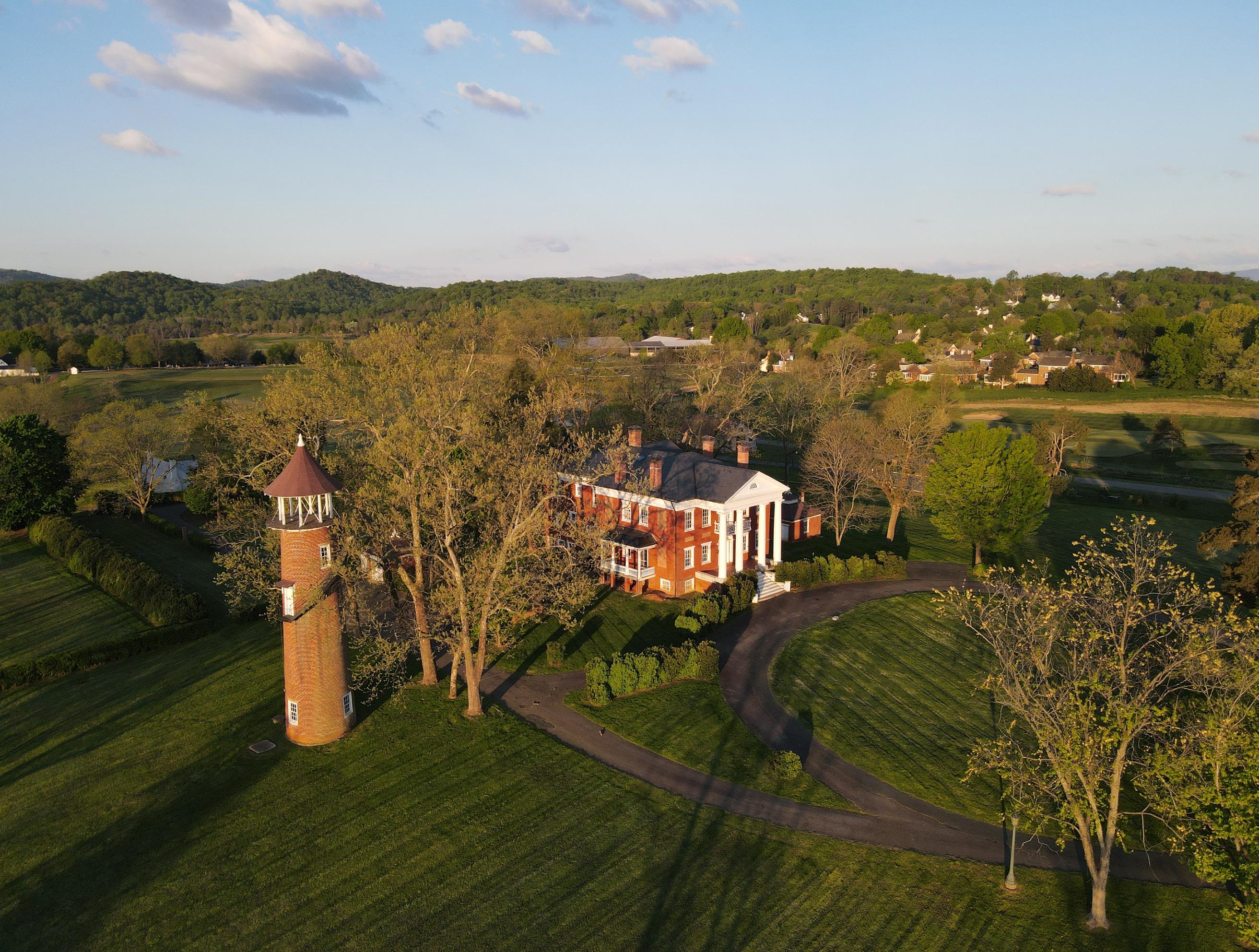
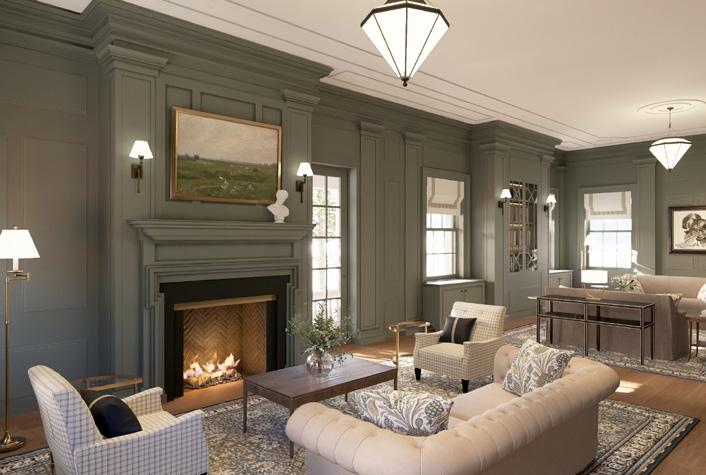
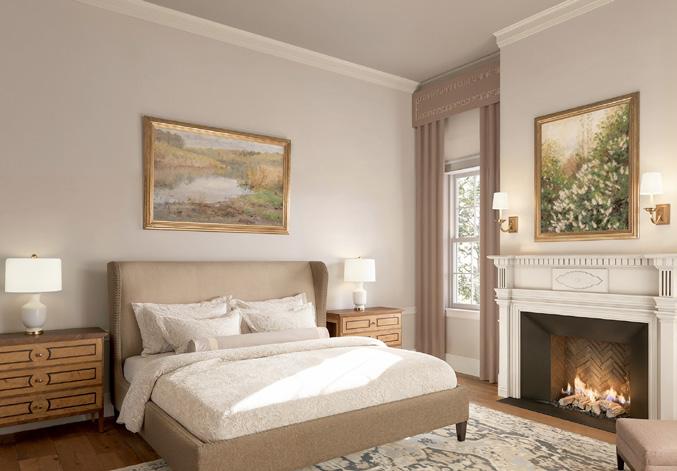
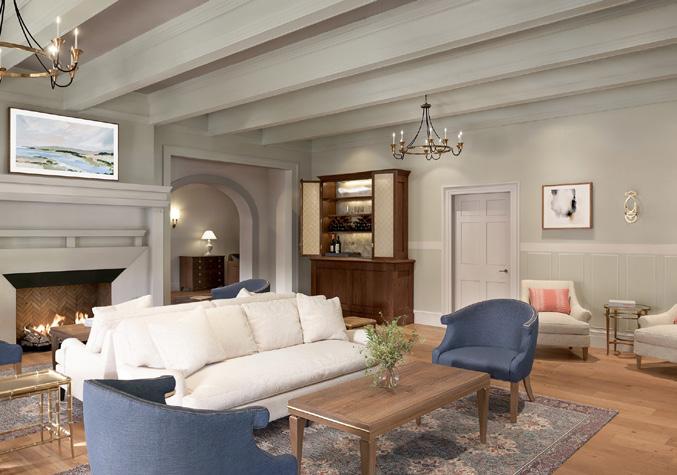
Step into the Birdwood Mansion, where history blends with natural beauty and pristine luxury. Recently restored to its former glory, this gem invites guests to uncover hidden treasures.
Boutique Hotel: Weddings | Events | Dining | Afternoon Tea
PRESIDENT
BLAKE DEMASO
blake@albemarlemagazine.com
EDITOR
ROBERT VICCELLIO robert@albemarlemagazine.com
SENIOR ACCOUNT MANAGERS LEAH WOODY leah@albemarlemagazine.com
KATIE HARTWELL katie@albemarlemagazine.com
SENIOR DESIGNER
REBECCA CENCEWIZKI rebecca@albemarlemagazine.com
CONTENT COORDINATOR AMANDA LIVERETTE
ONLINE DIRECTOR CRAIG SNODGRASS

PROVIDING TOP-QUALITY PAINTING SERVICES AND SHOP FINISHES SINCE 2007

PAINT STORE • PAINT WORKSHOP • PAINTING SERVICES
CONTRIBUTING WRITERS & PHOTOGRAPHERS
Jim Carpenter
Catherine Purple Cherry
Kristin Finn
Myles Mellor
Zach Phillips
Myles Mellor
SUBSCRIPTIONS & CIRCULATION
albemarlemagazine.com/subscription-services business@albemarlemagazine.com 434-817-2755
ADVERTISING
blake@albemarlemagazine.com
COMMENTS & STORY IDEAS robert@albemarlemagazine.com
www.albemarlemagazine.com
albemarlemagazine
albemarlemagazine 977 Seminole Trail PMB 294 Charlottesville, VA 22901
Albemarle magazine is published bimonthly by DeMaso Publishing, LLC, Copyright ©2026.
Subscription rates for the USA: 6 issues $18.00 Canada and all other countries: 6 issues $38.00 (US)

ANNOUNCING PROUD NEW PARTNERSHIP WITH FARROW AND BALL







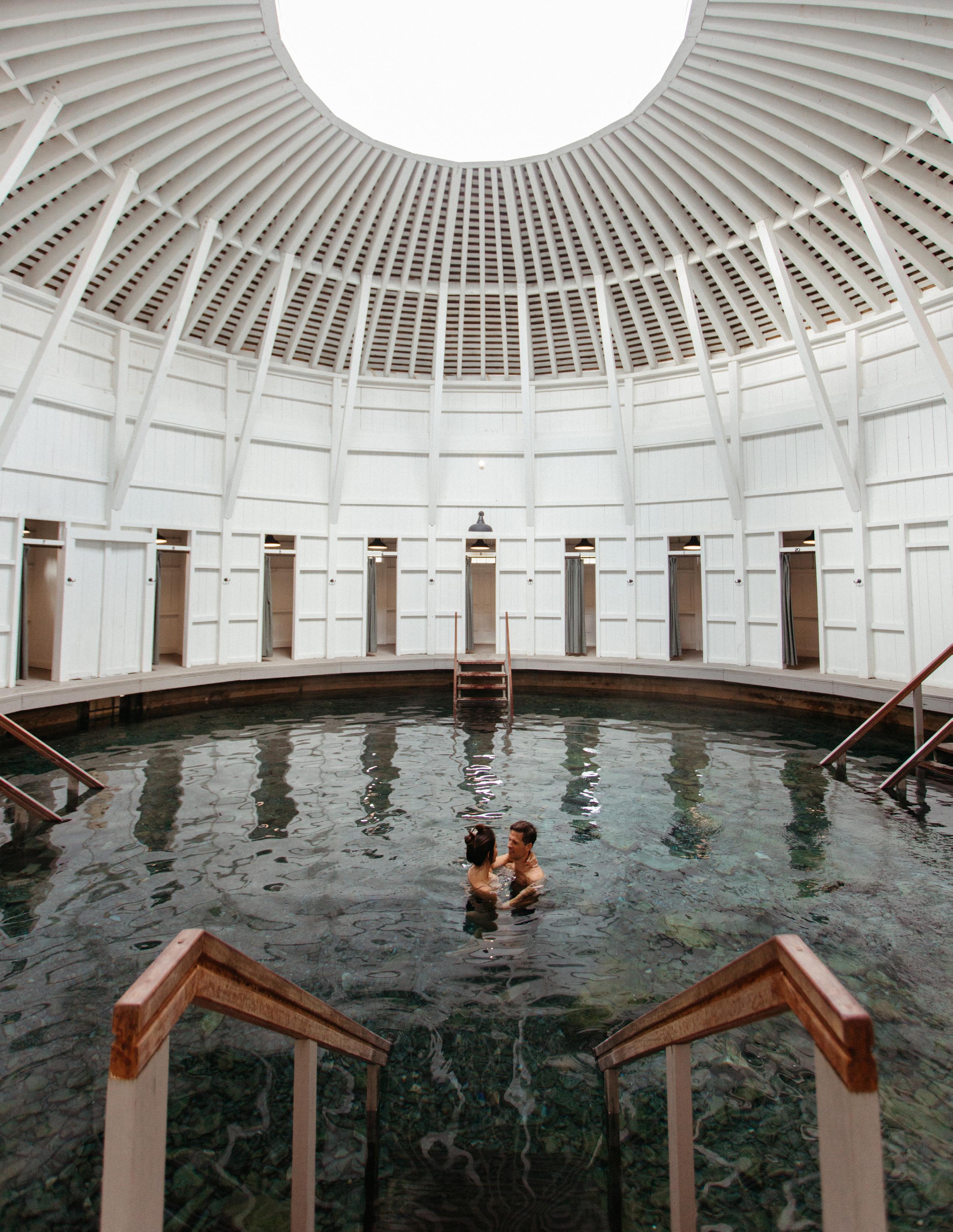
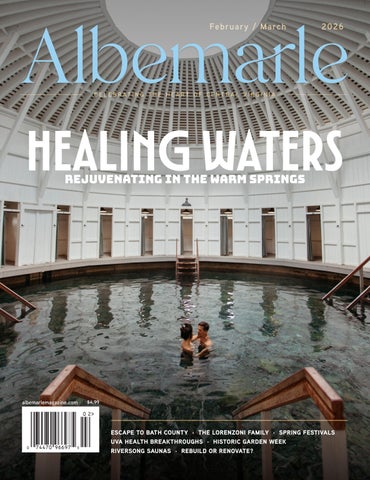
After a meticulous restoration, Bath County’s Warm Springs Pools let visitors soak in 98-degree mineral waters steeped in history, healing and American tradition.
The Lorenzoni family shares the story behind Ragged Mountain Running & Walking Shop, a Charlottesville institution rooted in community and helping people. It Runs in
UVA Health’s researchers are advancing cancer treatment, brain science, heart health, and diabetes care, proving how ambitious ideas can change lives for the better.
An ancient ritual finds a new home along the Rivanna, where Riversong Saunas turns winter into a season of heat, cold plunges, and community.
Historic Garden Week showcases Virginia’s historic gardens and landscapes, highlighting the people and places that shaped the Commonwealth and the nation.
A guide to one of homebuilding’s biggest questions, and a farmhouse transformation that demonstrates how thoughtful design can honor both past and present.
Test your skills with the Cardinal Home Center crossword 12 Local Life
22 Art Life
Upcoming exhibitions at The Fralin, Les Yeux du Monde, Museum of the Shenandoah Valley, and more
Film and book festivals, honors for a local winery, and spring gardening events 64 Life of the Party
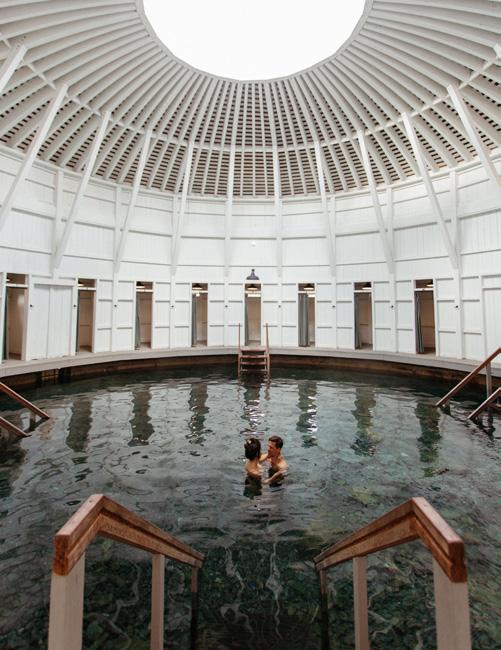
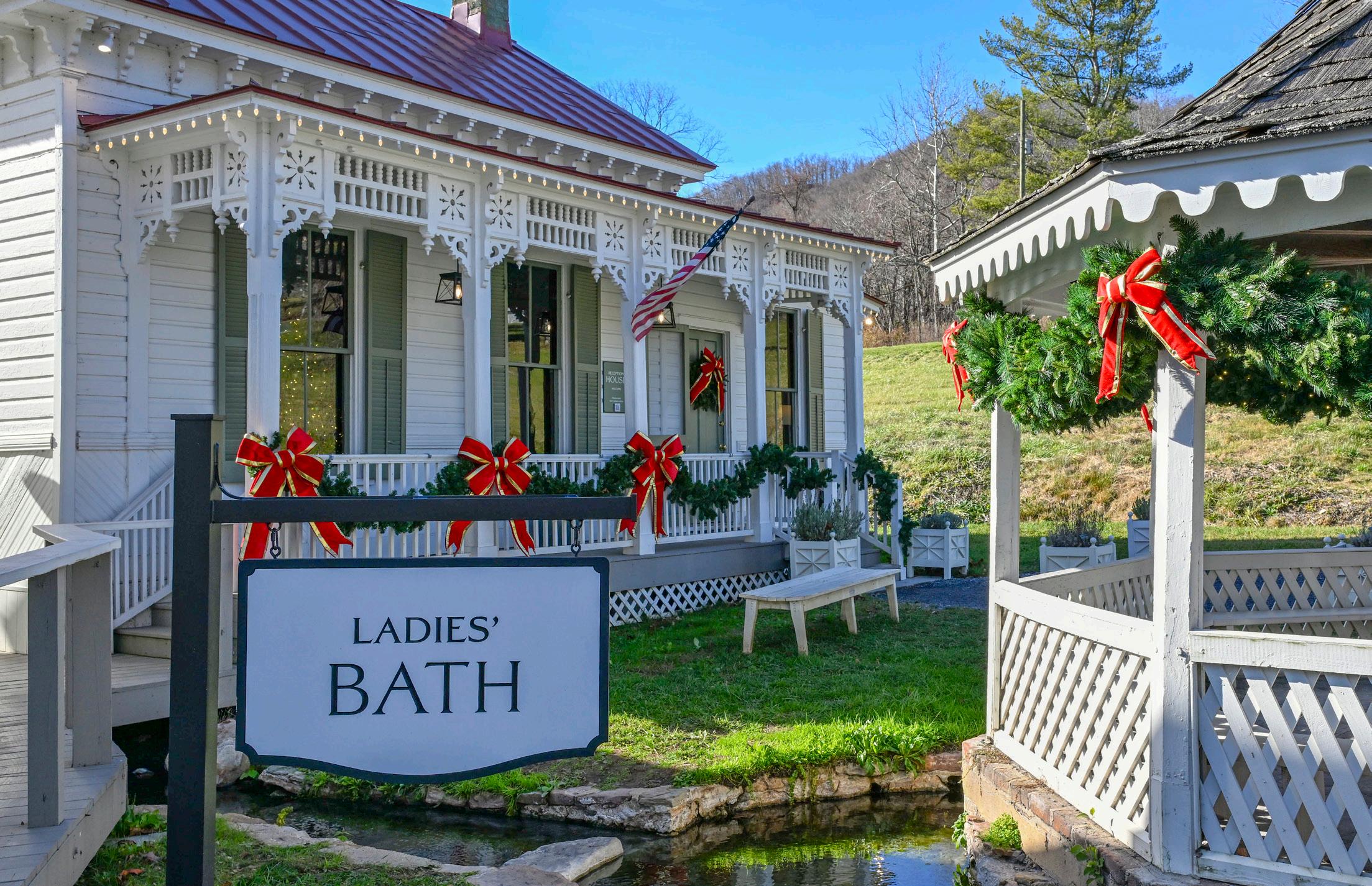
The Warm Springs Pools in Bath County. Photo courtesy of The Omni Homestead Resort & Spa.
Keb’ Mo’ brings his signature brand of blues to The Paramount 62 Crossword
Potter’s Wassail Festival brings back a medieval tradition ON THE COVER:



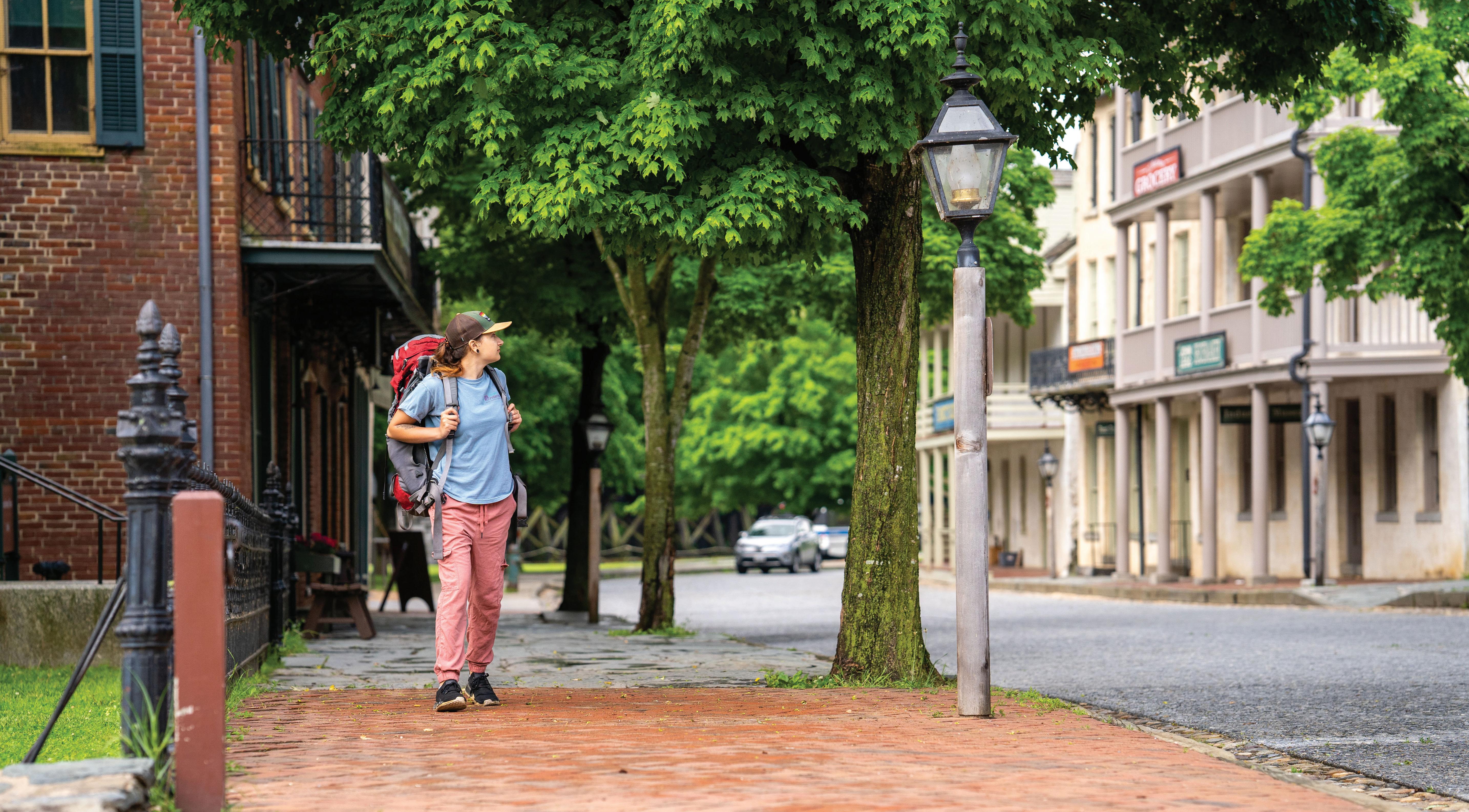
Sometimes, a voice from the past echoes in the breeze.
Our history isn’t hidden—it calls softly from riverbanks, courthouse steps, and college grounds that shaped civil rights.
Discover the unexpected in Je erson County, West Virginia.



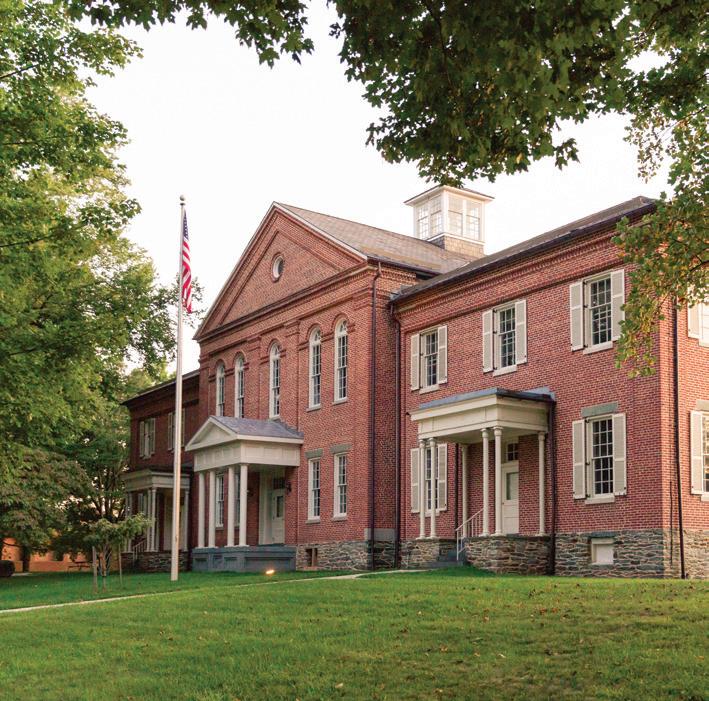

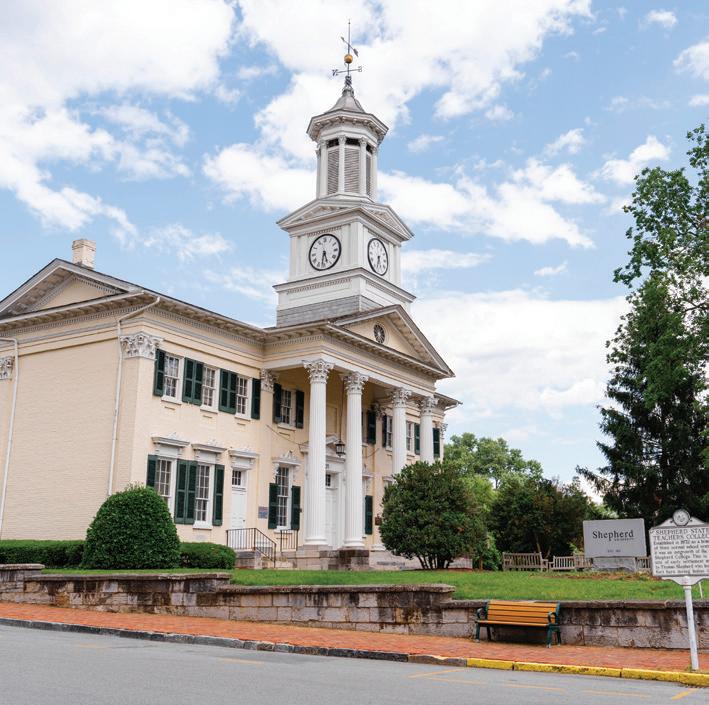
In 1906, civil rights leader W.E.B. Dubois hosted the national conference of the Niagara Movement at Storer College in Harpers Ferry, the rst institution of higher learning in West Virginia for African Americans.




Discover
“Shepherdstown is blessed by natural beauty from the surrounding mountains and meandering Potomac River. It’s also rich with MORE THAN 250 YEARS of history.” —Southern Living
The Virginia Festival of the Book returns to Charlottesville March 20–22, 2026, marking its 32nd year as the region’s signature celebration of books, reading, and literary culture. Produced by Virginia Humanities and the Virginia Center for the Book, the festival brings authors and readers together for in-person conversations, readings, and book signings. Events will take place along the Downtown Mall and surrounding venues, reinforcing the festival’s longstanding role as a walkable, communitycentered gathering.
The festival launched in March 1995, following a 1994 U.S. News & World Report ranking that named Charlottesville among the nation’s top cities for books read per person. Its inaugural theme, “Charlottesville: a place for books,” helped establish what has become a three-decade literary tradition.
The 2026 festival centers on the theme “Revolutions,” aligning with America’s 250th anniversary and interpreting revolution broadly as a fundamental shift in thinking, culture, or circumstance. This year’s streamlined format runs from Friday afternoon through Sunday afternoon, with most programming concentrated on Saturday, March 21.
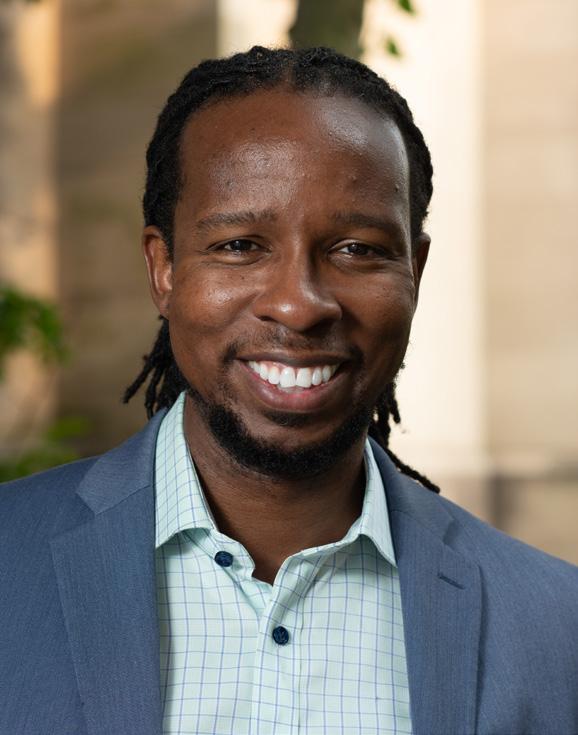
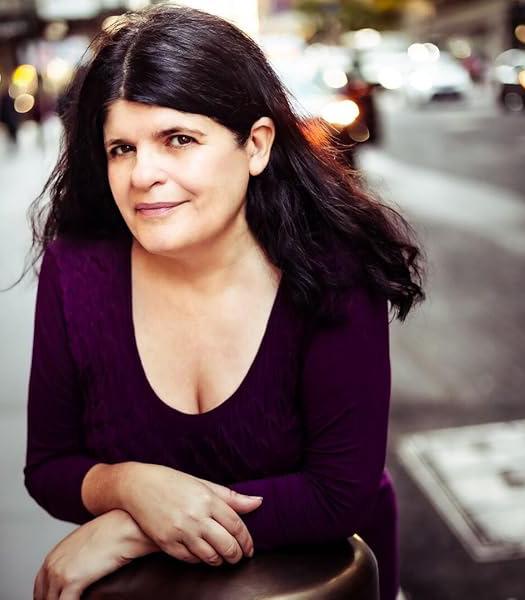
Featured authors include Sadeqa Johnson, discussing her February 2026 novel Keeper of Lost Children, a sweeping work of historical fiction exploring family, identity, and resilience; Ibram X. Kendi, presenting Chain of Ideas: The Origins of Our Authoritarian Age, which traces the historical roots of modern authoritarian thinking; and Laurie Gwen Shapiro, whose critically acclaimed The Aviator and the Showman reexamines the complex marriage of Amelia Earhart and publisher George Putnam, arguing that their partnership helped shape the making of an American icon.
Most events are free and open to the public, with the full schedule to be released closer to the festival. For more details, visit vabook.org.


The Charlottesville Free Clinic is preparing for a surge in patient demand as changes to Affordable Care Act subsidies and Medicaid funding take effect in 2026, leaving thousands of local residents facing new barriers to affordable health care. The clinic already serves more than 3,000 unique patients each year through thousands of visits, providing essential primary care to uninsured and underinsured residents regardless of ability to pay. With federal coverage rules shifting, clinic leaders expect that number to rise sharply.


“We already see the human impact of coverage loss here in Charlottesville,” said Tish Polgar-Bailey, clinic director.
“For people who now have to choose between rent and medicine, free clinics become the only lifeline. We are doing everything we can to meet that need, but the expected influx will test our capacity.”
The Clinic relies on volunteer health professionals who donate more than 14,000 hours annually. The clinic is calling on local leaders, health systems, and community partners to support expanded resources—including volunteer recruitment, increased funding, and new partnerships—to ensure the region’s most vulnerable residents can continue to receive care.



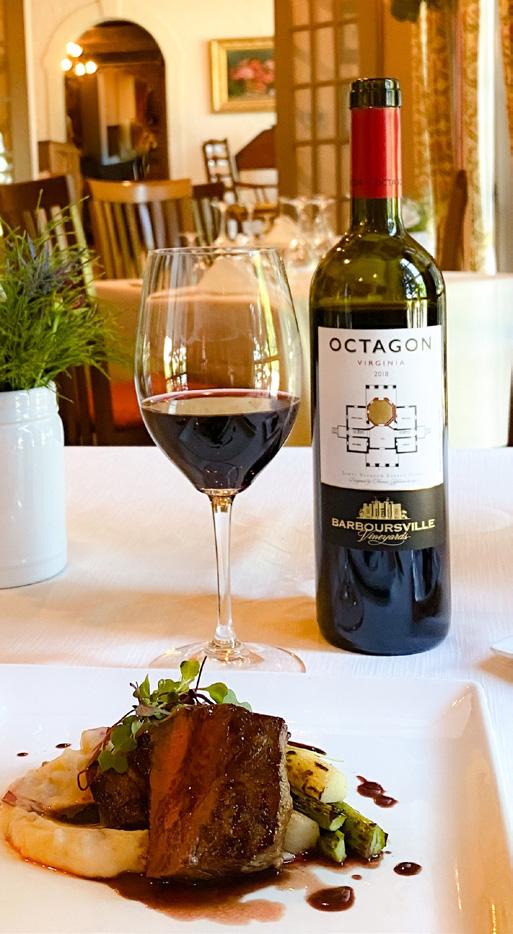
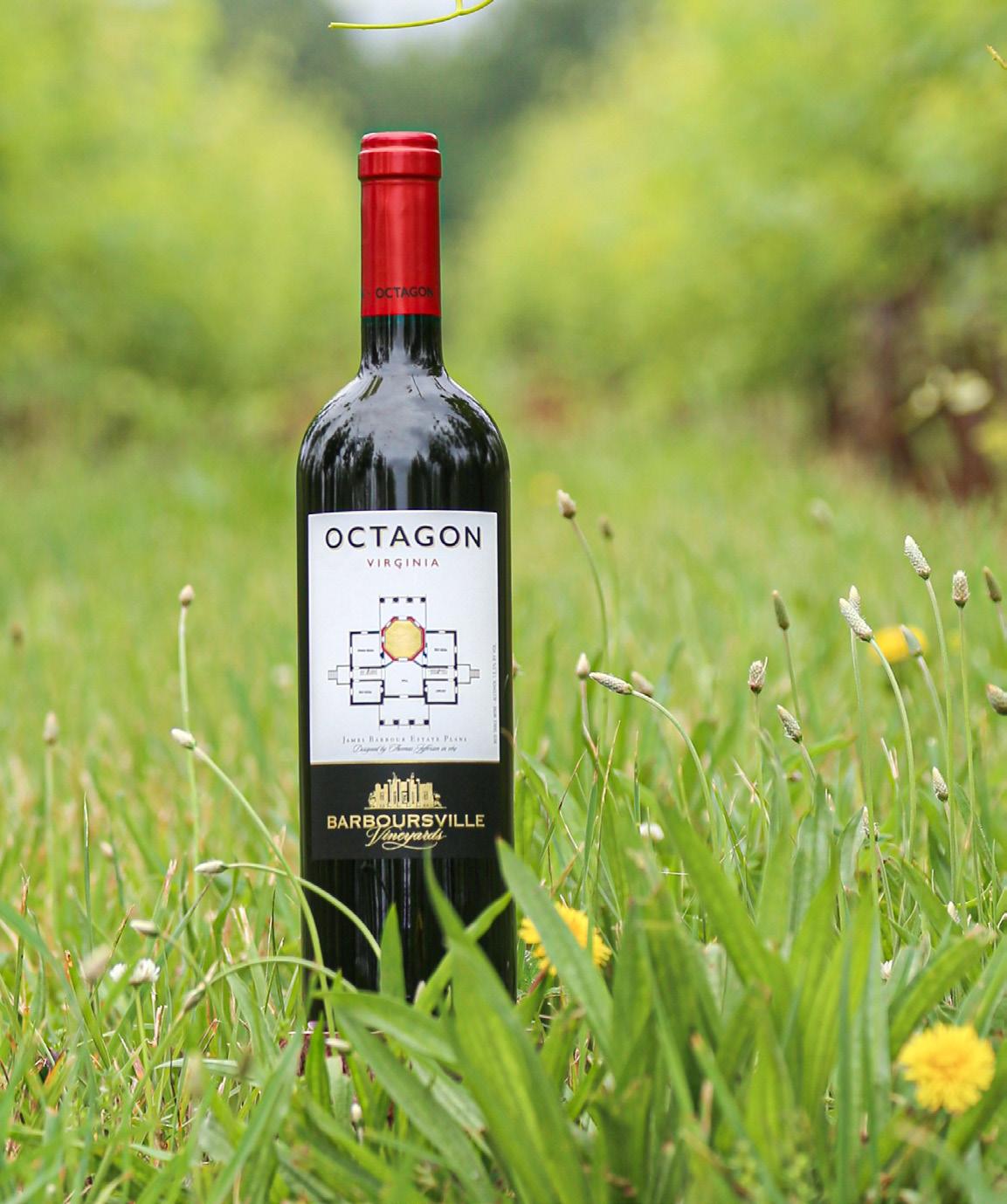
Barboursville Vineyards’ flagship red, Octagon 2017, has been named among Decanter’s Top 50 U.S. Wines of 2025, marking the first time a Virginia wine has received the honor. Decanter is Britain’s pre-eminent oenophile periodical.
Only one of two wines recognized from outside the Pacific Coast, Octagon 2017 represents another milestone for Virginia’s growing global reputation. Founded in 1976, Barboursville Vineyards will celebrate its 50th anniversary in 2026 and concentrates on European grape varieties cultivated in central Virginia.
The wine’s enduring stature reflects the long stewardship of Luca Paschina, Barboursville’s General Manager and Winemaker. International recognition dates back to a 2002 Decanter column by the late Michael Broadbent, who welcomed Octagon (3rd edition, 1998) into the top rank of Bordeaux-style blends, praising its “opaque core, impressive, with an arboreal crisp fruit aroma shone through…full bodied and seriously good.”
Since then, Octagon vintages have earned repeated Governor’s Cup honors and appeared at landmark occasions, including a 2009 U.S. presidential inaugural and a 2007 reception for Queen Elizabeth II.
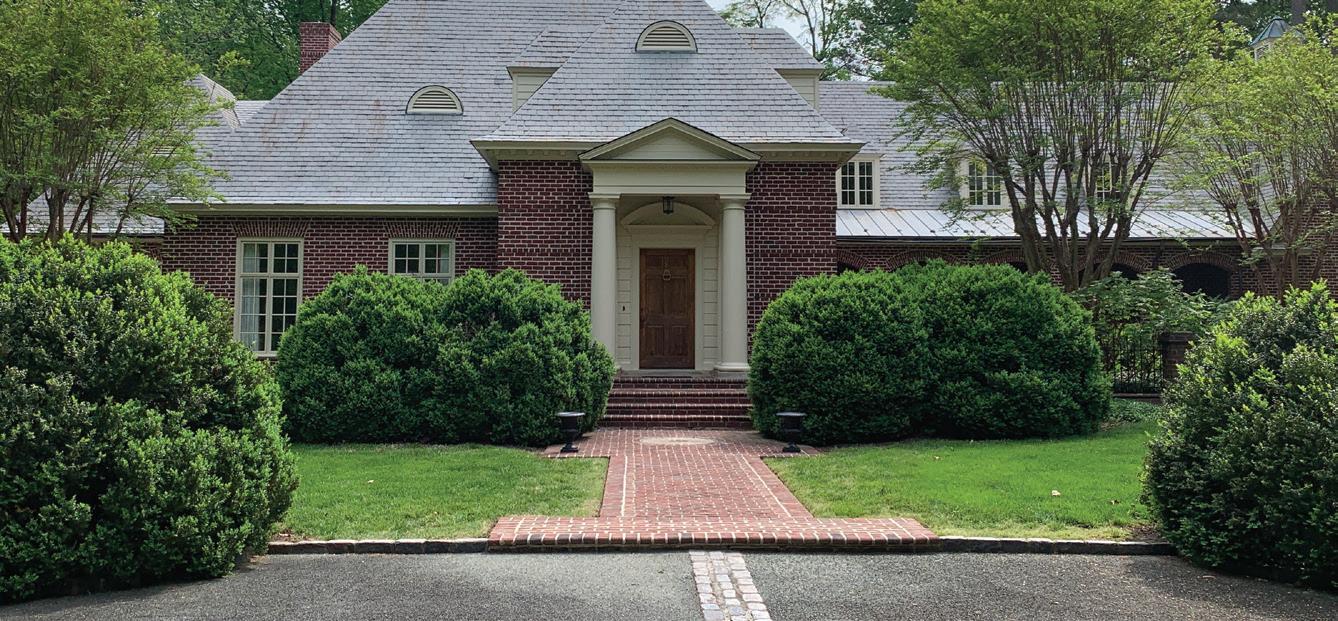
tour will allow full access to the house and grounds. Your entry ticket includes complimentary appetizers and wine!
Opening Gala
April 10th
This RSL hosted event will include an outdoor cocktail party under the big tent, music by the John Winn Quintet and a preview of the house. Daily House Tours April 14th

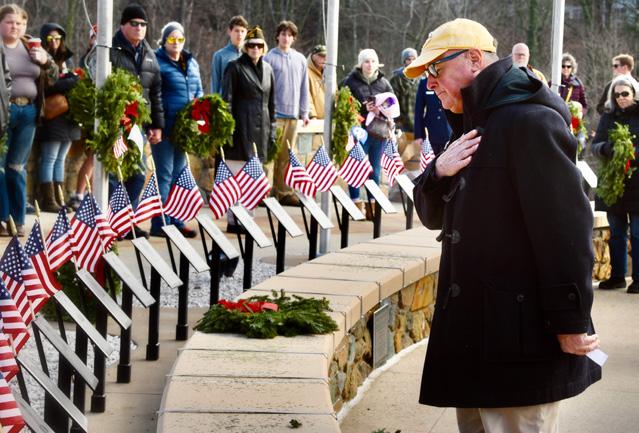
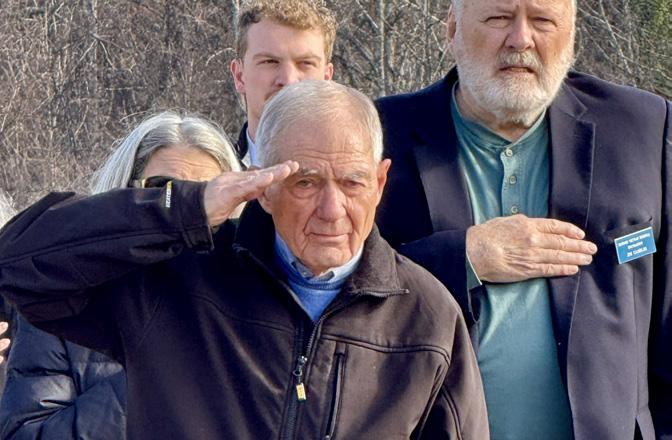
Hundreds gathered at the Dogwood Vietnam Memorial to observe Wreaths Across America, honoring local service members lost in the Vietnam War. Family members, veterans, and community supporters laid balsam wreaths, read names aloud, and reflected on lives cut short. The Charlottesville ceremony was one of more than 5,000 sites across all 50 states and abroad participating in the December 13 National Wreaths Across America Day. The ceremony honored those from Charlottesville, Albemarle County, and the University of Virginia who gave their lives in military service, alongside a growing display recognizing all U.S. veterans. Community members can continue that remembrance by purchasing a Brick for Bravery, which helps maintain the memorial and honors individual veterans. Space remains for approximately 300 additional bricks. To order a brick or make a donation, visit dogwoodvietnammemorial.org.
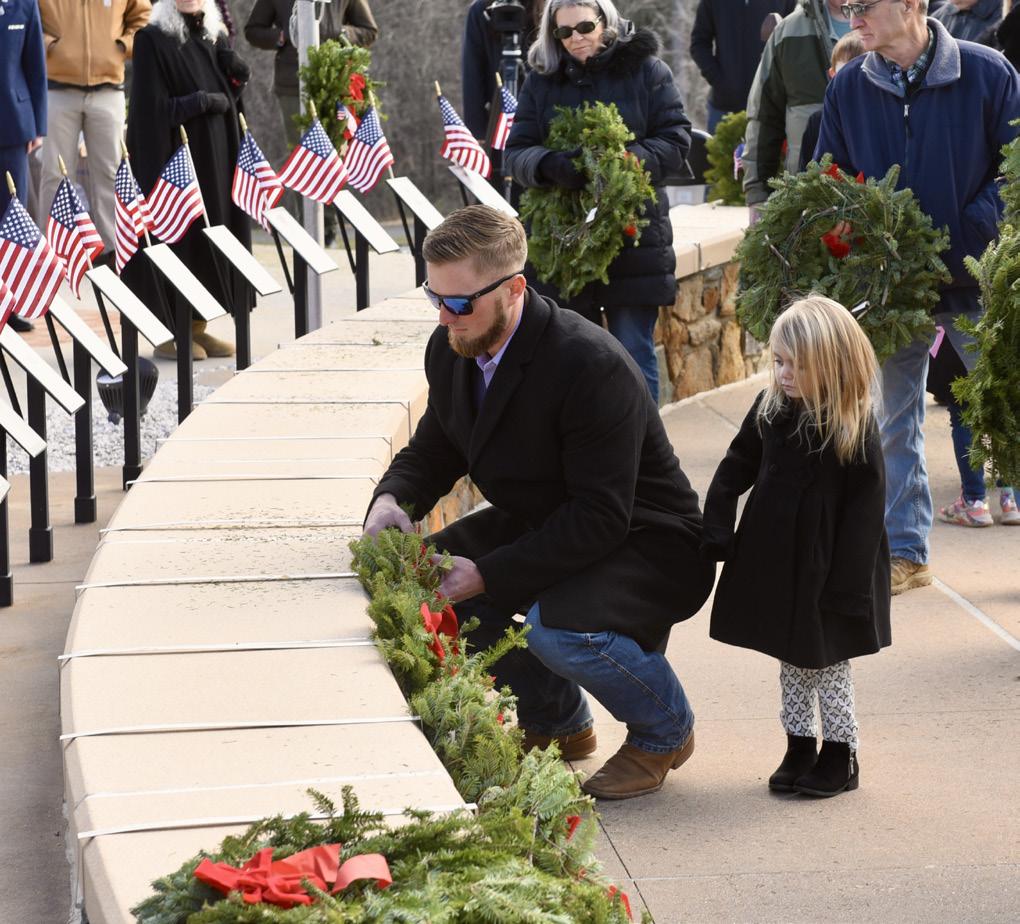

Top: Hunter Marshall places a wreath in honor of his great-uncle, Warrant Officer Robert Edward Marshall.
Bottom left: Virginia State Senator Creigh Deeds pays his respects.
Bottom right: Leonard Sandridge, retired vice president and chief operating officer of UVA and former Army reservist, salutes during the national anthem.
Jim
Piedmont Master Gardeners has announced a new slate of free Garden Basics programs for 2026, offering science-based, practical guidance for gardeners of all experience levels. The classes run throughout the year and are presented through Virginia Cooperative Extension, with sessions hosted in partnership with James Monroe’s Highland and the Bread & Roses program at Trinity Episcopal Church.
Early-season offerings focus on building strong foundations for the growing year ahead. Garden Soil Preparation: Laying the Foundation for Success, held February 14 at Highland, explores both basic and advanced soil strategies to support healthy vegetables from spring through fall. On March 21, Be Your Own Florist: Get Started Growing Cut Flowers meets at Trinity Episcopal Church, introducing gardeners to plant varieties and techniques for producing vase-worthy blooms across multiple seasons.
Additional classes throughout 2026 cover topics ranging from native plants and pollinators to trees, herbs, and sustainable pest management, reinforcing the Piedmont Master Gardeners’ mission to promote environmentally sound gardening across the Charlottesville–Albemarle region.
All Garden Basics programs are free, though some sessions have limited enrollment. Registration is encouraged at piedmontmastergardeners.org/events.

The American Skin Association is relocating its national headquarters to Charlottesville. Founded more than 38 years ago, ASA supports young scientists, advances skin health education, and funds critical research to better prevent, detect, and treat melanoma, skin cancer, and other skin disorders. The decision to relocate reflects Charlottesville’s growing role as a hub for medical research and innovation.
Coinciding with the move, ASA welcomed Dr. Lu Q. Le as Virginia Scientific Advisor to its Medical Advisory Committee. Le, who became chair of the Department of Dermatology at the University of Virginia in 2024, is a nationally recognized physician-scientist whose work focuses on cancer biology and skin-related genetic disorders.
ASA also announced two new medical student grants named in honor of Charlottesville native and ASA cofounder George W. Hambrick Jr., MD, supporting future dermatologists at UVA.
“As a renowned hub for dermatological research, Charlottesville is a natural location for ASA’s headquarters as we chart this next phase of the organization’s growth and development,” says Howard P. Milstein, Chairman of ASA.






























Film has become a powerful community-builder in Charlottesville, anchored by the internationally renowned annual Virginia Film Festival in October. This spring, two more festivals—one supporting wilderness conservation, the other championing independent filmmakers— demonstrate how cinema can serve both global causes and local creative ecosystems.
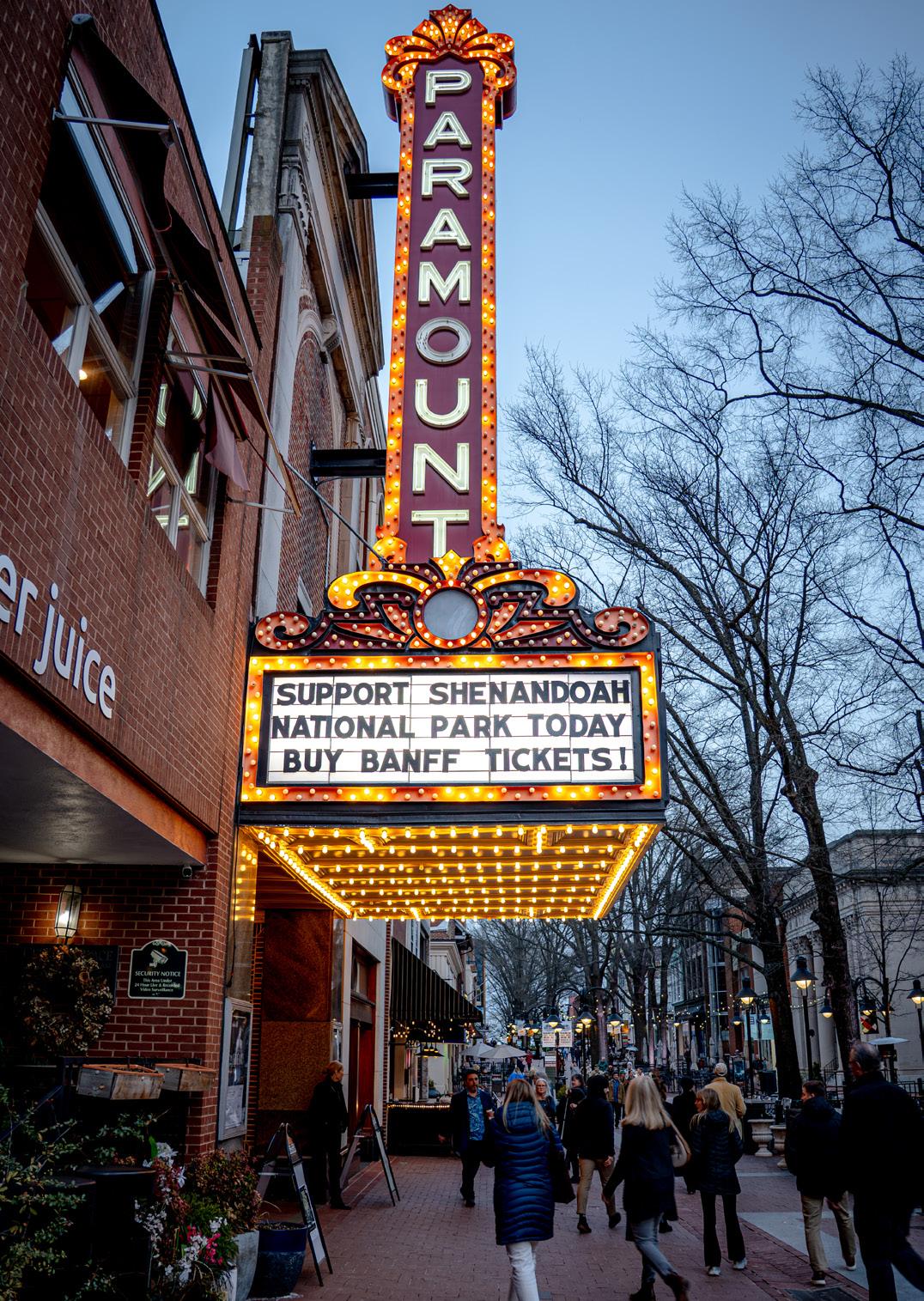
On March 6–8, Shenandoah National Park Trust, the official philanthropic partner of Shenandoah National Park, hosts the Banff Mountain Film Festival World Tour. Founded in 1976 in Banff, Alberta, the World Tour is the world’s premier mountain film event. Its World Tour now reaches more than 550,000 viewers annually across more than 40 countries.
In Charlottesville, Banff functions as the Trust’s largest annual fundraiser, drawing thousands of attendees from across central Virginia. For 2026, the festival expands to three nights at The Paramount Theater, with a different slate of films each evening, including stories of climbers, skiers, runners, and cultural traditions unfolding in some of the planet’s most remote, breathtaking landscapes. The featured films inspire audiences to contemplate their own relationship with wilderness and risk.
Ticket sales, raffles, and sponsorships directly support Shenandoah National Park programs, from wildlife protection to ranger staffing and education initiatives.


Returning March 20–22 for its third year, the Indie Short Film Festival has quickly established itself as an event rooted in craft, access, and community. Founded by local filmmaker Ty Cooper, the festival grew out of his Indie Short Film Series, launched in 2019, and evolved into Charlottesville’s first standalone short-film festival in 2024. Since then, it has expanded to more than 100 films, drawing filmmakers from across the U.S. and abroad.
Screenings are paired with filmmaker panels, table reads of winning screenplays performed by professional actors, and a limited-enrollment cinematography workshop led by awardwinning professionals. Panels and table reads remain free, reinforcing the festival’s commitment to lowering barriers for emerging artists. Many of the films screened have already appeared at Sundance, Tribeca, and Toronto, positioning IsFF as both a showcase and a conversation hub for work already vetted at the highest level.
The festival takes place at Violet Crown Cinemas, Vinegar Hill Theatre, Vault Virginia, Common House, and The Bradbury, all showcasing bold, thought-provoking short films from around the globe.
“This festival is about more than just films—it’s about fostering conversation, culture, and creativity in a city that supports the arts,” says Cooper.
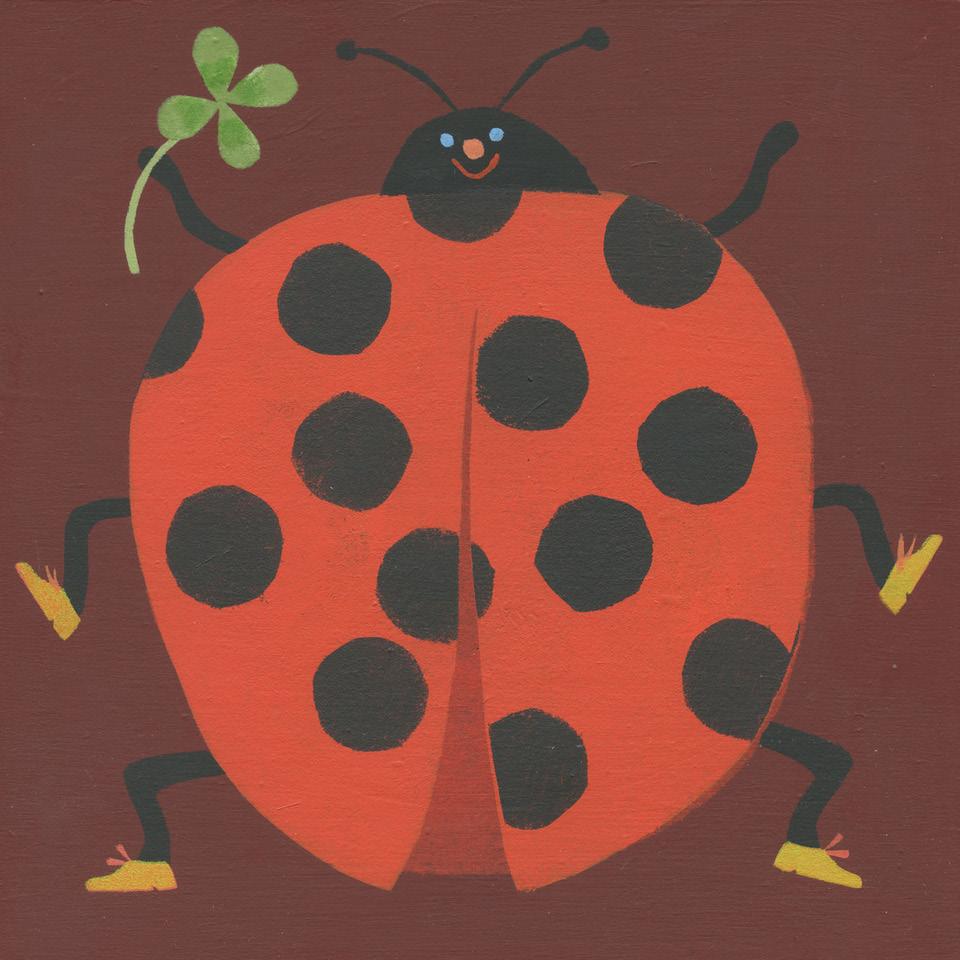
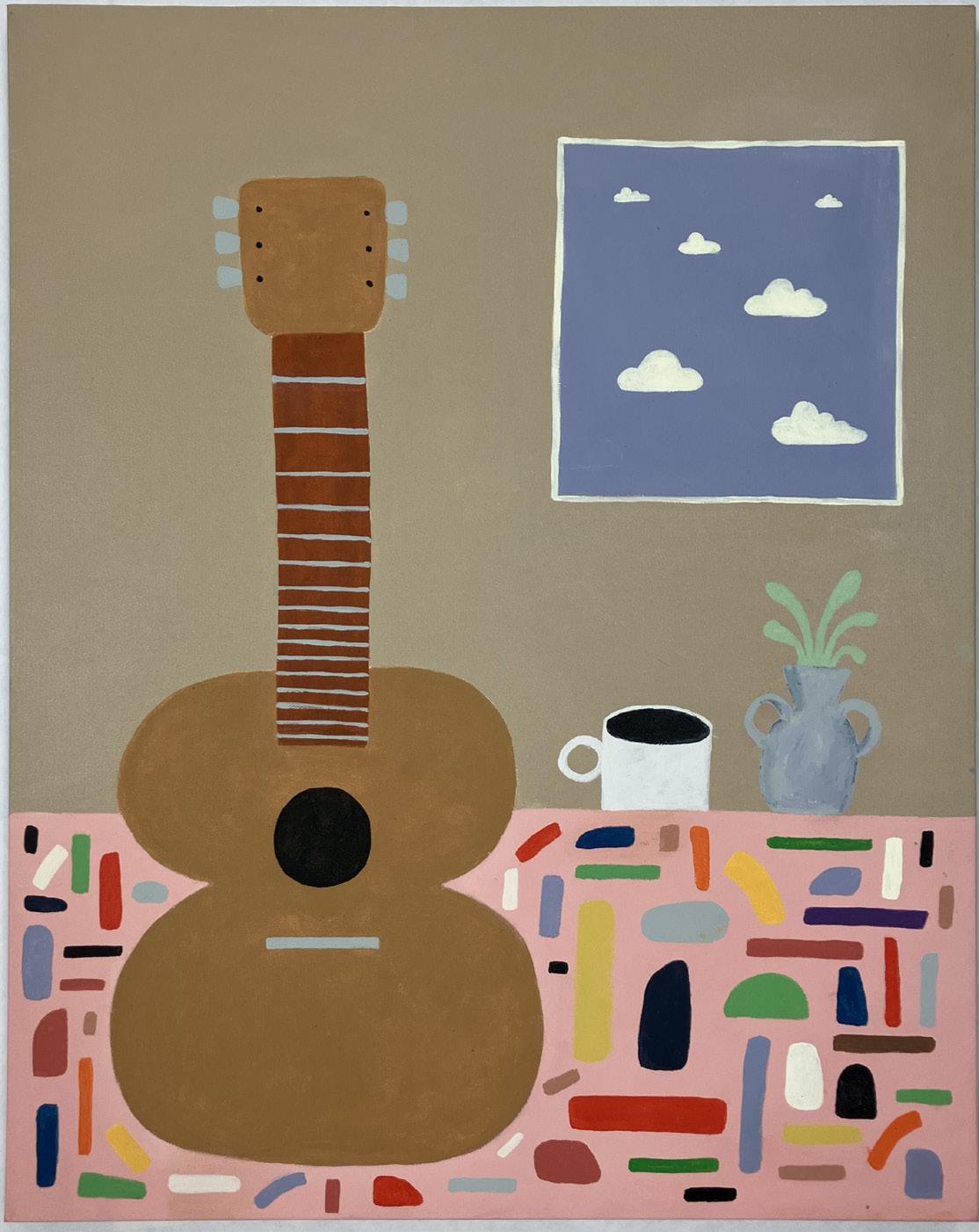
115 Second Street SE, Charlottesville 434-977-7284 • secondstreetgallery.com
February 6–March 20
Richmond-based artist Sarah Hand's Everyday Illuminations presents new works that are an exuberant, deeply optimistic exploration of connection and possibility. Through symbolic figures, familiar luck charms, and fantastical vignettes, Hand imagines a benevolent conspiracy linking us through community, chance, and small flashes of magic at the margins. Her richly colored scenes feel at once playful and reverent, offering a sanctuary from uncertainty and a gentle exhortation to look for light. An artist, author, and educator, Hand’s work appears in private collections and public spaces and reflects a practice grounded in joy, craft, and generosity. The exhibition is on view in Second Street’s Dové Gallery.
February 6–March 20
In Second Street’s Main Gallery, Mixed Bag features new interdisciplinary work by Charlottesville-based artist Ryan Trott. Combining vibrant paintings and playful papier-mâché sculptures with original musical soundtracks composed and recorded by the artist, the exhibition creates an immersive, dreamlike environment populated by exaggerated characters and familiar objects. By pairing visual and sonic elements, Trott explores how sound shapes our perception of the physical world, inviting viewers to move slowly, listen closely, and form their own narrative connections. An elementary art educator, visual artist, and musician, Trott draws inspiration from children’s art, folk traditions, and editorial illustration, creating work that is accessible, imaginative, and open to interpretation.

LES YEUX DU MONDE
841 Wolf Trap Road, Charlottesville 434-882-2622 · lydmgallery.com
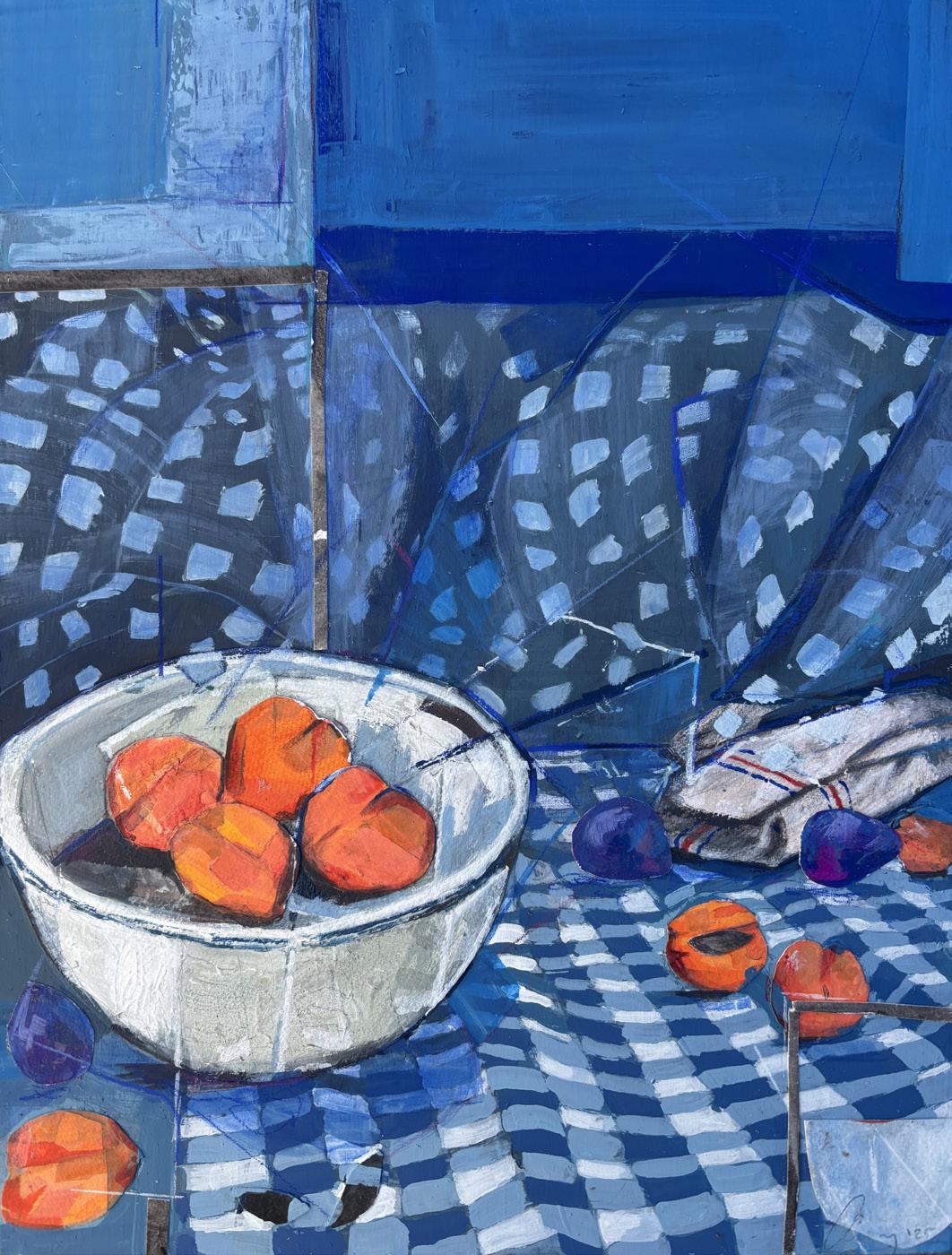
Cassie Guy, Apricots in Serviers, 2025. Mixed media on wood panel, 16 x 12"
LOST AND FOUND: A CORRESPONDENCE
TRANSCENDING TIME
Through February 22
Lost and Found: A Correspondence Transcending Time pairs new work by Virginia-based painter Cassie Guy with the first U.S. presentation of works by French modernist Tony Gonnet.
The exhibition traces an unexpected connection that began when Guy encountered a small gouache by Gonnet in a local antique shop, sparking years of research, travel to France, and close engagement with the artist’s archive and legacy. A figure of mid-century French modernism, Gonnet developed a disciplined language of geometric abstraction shaped by Surrealism, industrial design, and postwar intellectual life in Paris.
Responding to Gonnet’s work and environments, Guy creates contemporary paintings that blur documentation and imagination, extending his visual language across time through color, form, and quiet reverie.




155 Rugby Rd, Charlottesville
434-924-3592 • uvafralinartmuseum.virginia.edu
February 7-May 30
Across cultures and centuries, tea has been far more than a beverage. It has functioned as ritual, social connector, and artistic muse. Crafted for Tea brings together material and visual culture from Asia, Europe, and the Americas to explore how tea-drinking traditions have traveled, adapted, and taken on new meanings across time and place. Highlights include Yixing teapots, Worcester porcelain tea sets, Jeffersonian-era silver teaware, a Virginian tea table, and contemporary ceramics that reimagine the teapot as a vessel for sustainability and social critique. Pictorial representations of tea gatherings—from Japanese teahouses to British afternoon tea—reveal how local customs, aesthetics, and global exchange shaped the rituals surrounding tea.
Kitagawa Utamaro. Portrait of Teahouse Girl O-Kita of the Naniwaya, ca. 1795-1796; reprinted by UNSODO in the 20th century. Color woodcut on paper, 16 × 10 3/4 in. Collection of The Fralin Museum of Art at the University of Virginia. Gift of Alan S. Hartman, 1992.8.187.5









March 6-April 15
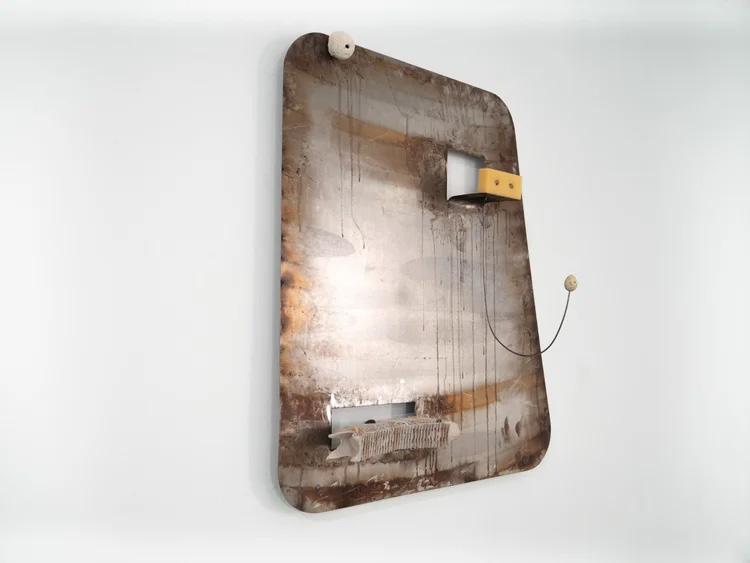
This exhibition of work by Stephanie Germosen Salazar features sculptural installations that examine memory, displacement, and identity. Working in ceramic and metal, Germosen Salazar creates objects that function as vessels—both literal and metaphorical—carrying personal and collective histories shaped by migration and cultural hybridity. As the artist explains, the work “explores the tangible manifestations of memory and displacement through ceramic and metal objects...conveying the multifaceted nature of diasporic identities and the challenge of preserving time in a constant state of flux.”
Germosen Salazar earned her BFA from the School of the Art Institute of Chicago and her MFA from Virginia Commonwealth University. Her work has been exhibited nationally, including at Zakaib and Sullivan Galleries, Jamaica Center for Arts & Learning, Bass & Reiner, and Artist Space Gallery.


FEBRUARY 21-AUGUST 2
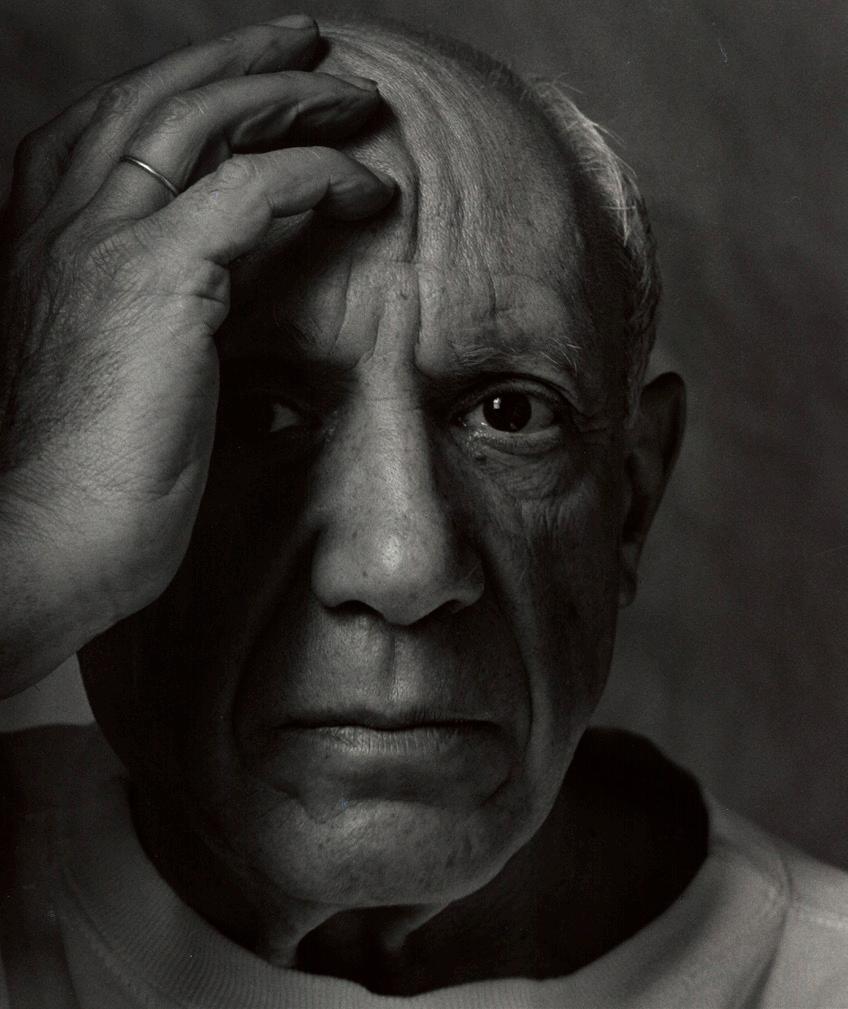
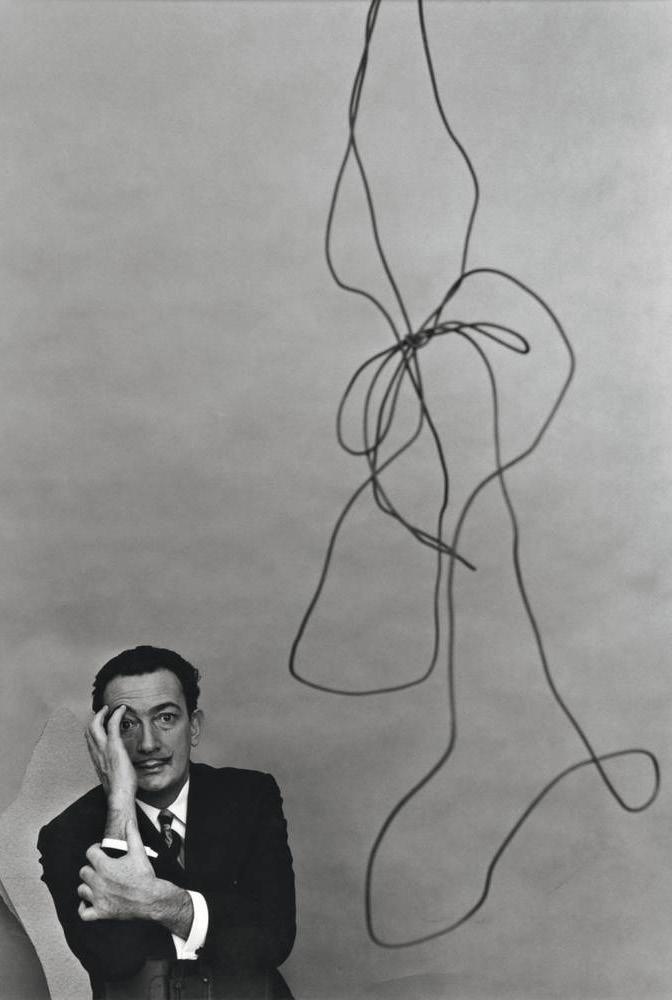
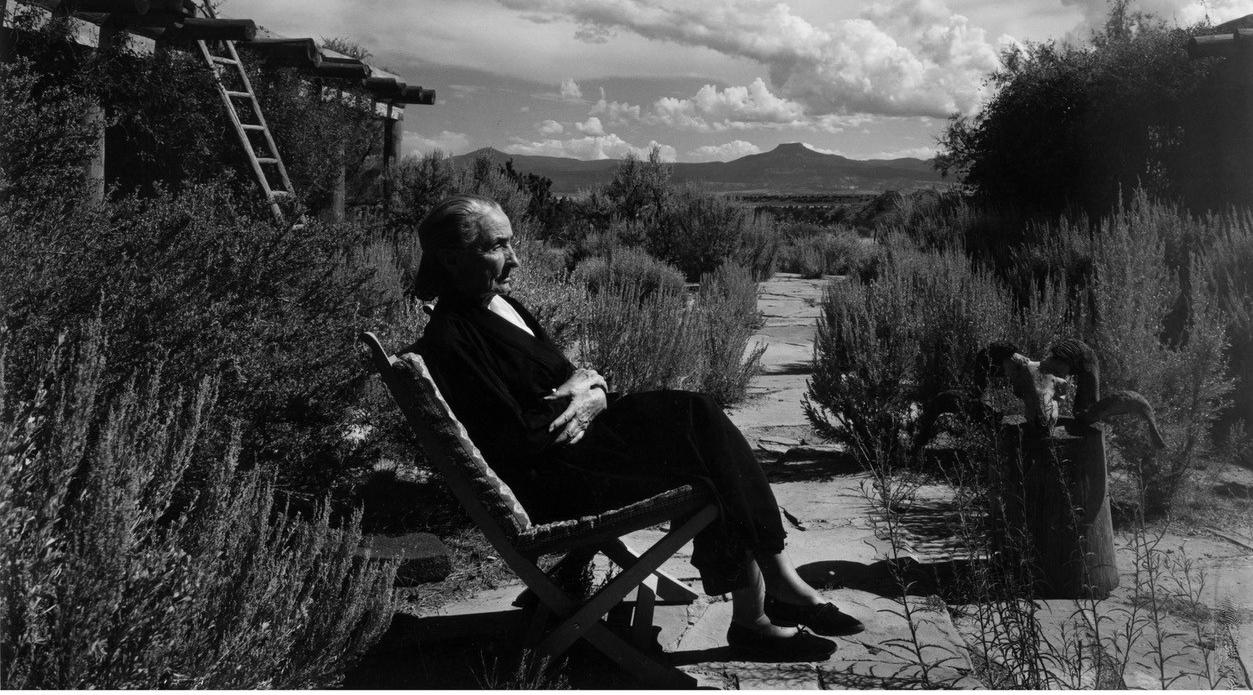
“We don’t take pictures with our cameras—we take them with our hearts and minds, and the camera is nothing more than a tool,” Arnold Newman once said. That conviction guided a career spanning nearly seven decades, during which Newman created some of the most enduring portraits of the twentieth century’s innovators, artists, and cultural icons.
Arnold Newman: Masterclass traces the evolution of his singular vision—from early informal portraits, cityscapes, documentary images, and design studies to the revolutionary approach he pioneered and famously termed “environmental portraiture.” The exhibition features more than 100 photographs of celebrated sitters, including John F. Kennedy, Pablo Picasso, Andy Warhol, Truman Capote, Salvador Dalí, and Marilyn Monroe.
Together, these works offer an intimate look at Newman’s life, career, and artistic philosophy, revealing a master photographer whose emotionally grounded approach permanently reshaped the language of portraiture.
MUSEUM OF THE SHENANDOAH VALLEY
901 Amherst Street, Winchester 540-662-1473 • themsv.org
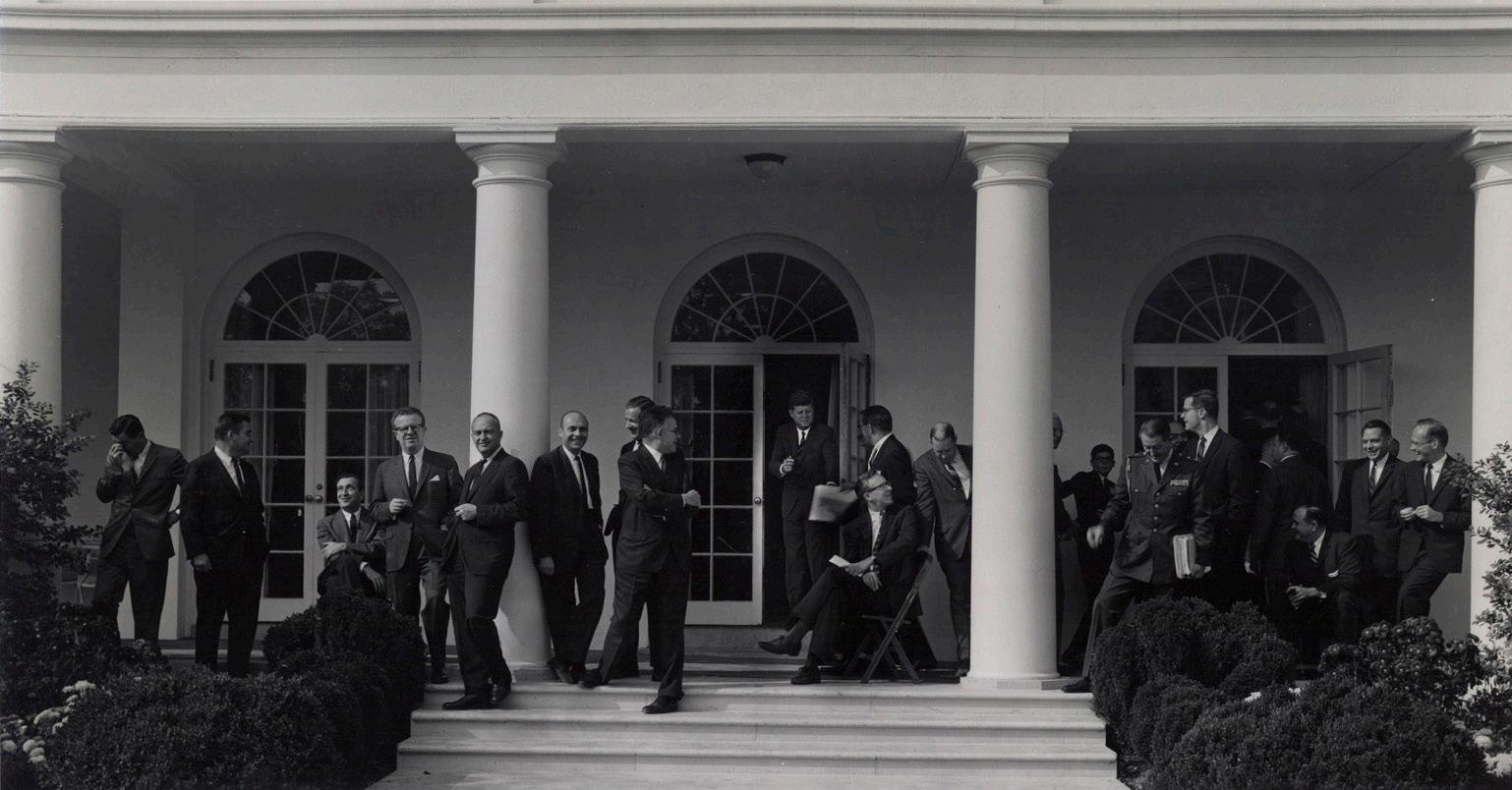
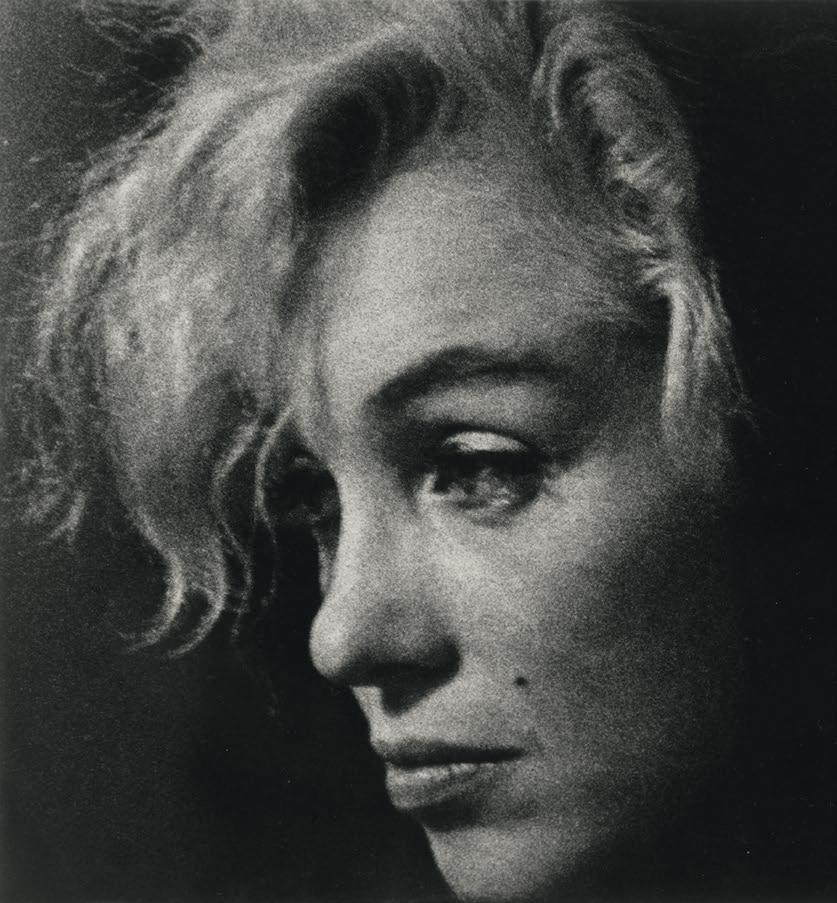
Top: John F. Kennedy, President of the United States, with his advisors, White House, Washington, DC. © 1963 Arnold Newman/ Getty Images. Middle Left: Marilyn Monroe, actress and singer, Beverly Hills, California, 1962. [detail] © 1962 Arnold Newman/ Getty Images. Middle Right: Salvador Dali, painter, New York, 1951 [detail] © 1951 Arnold Newman/Getty Images. Bottom: Georgia O’Keeffe, painter, Ghost Ranch, New Mexico, 1968. [detail] ©1968 Arnold Newman/Getty Images.
Faulconer 434.981.0076 jfaulconer@mcleanfaulconer.com
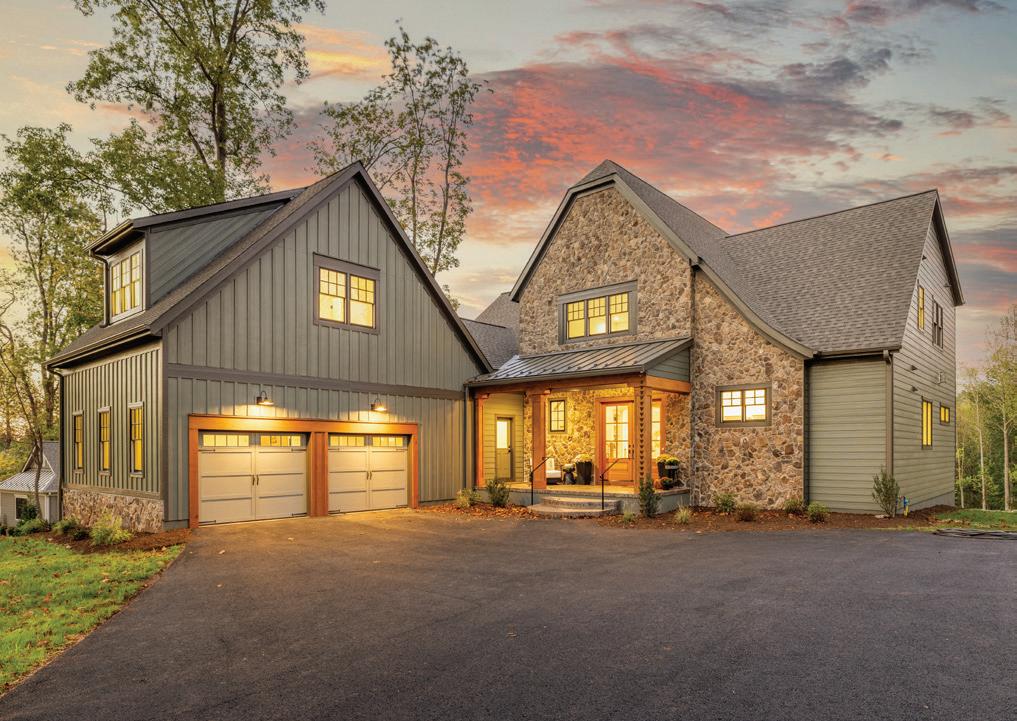
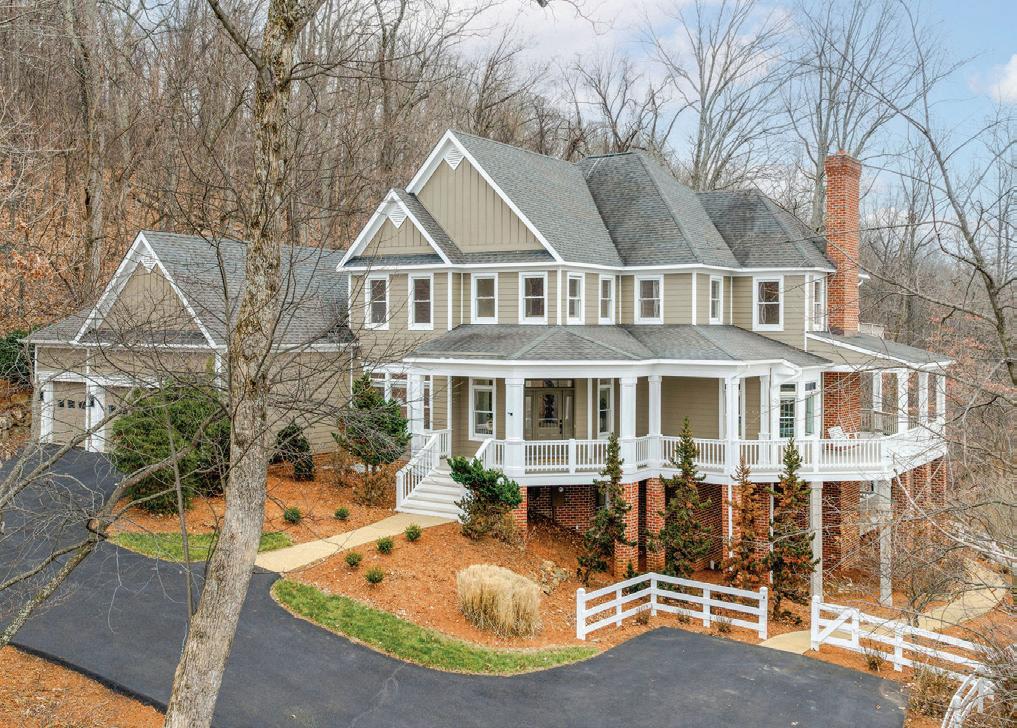
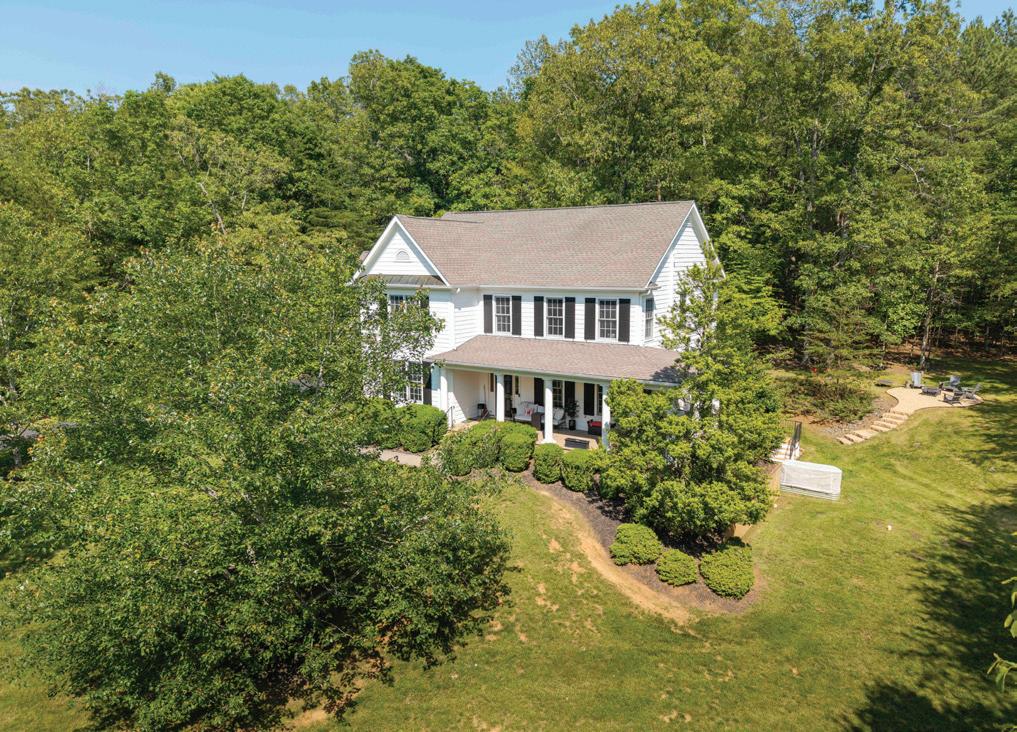
$12,500,000 | MLS 576150 | North Garden Court Nexsen, 646.660.0700
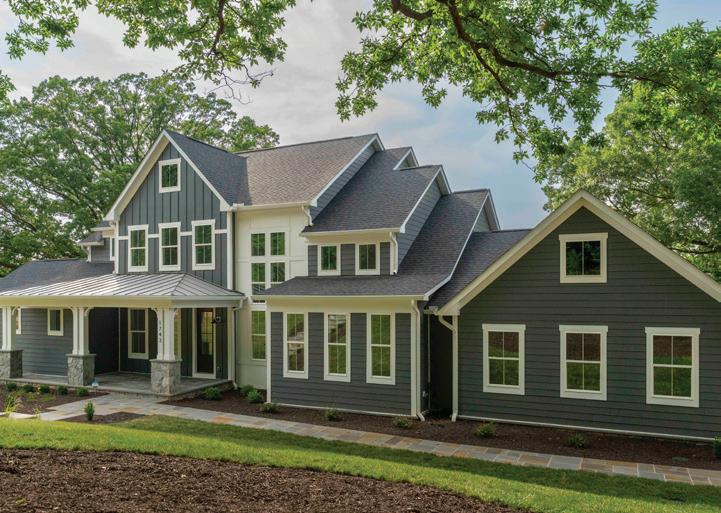
$1,860,000 | MLS 672174 | Free Union Jeremy Fields, 434.270.1220
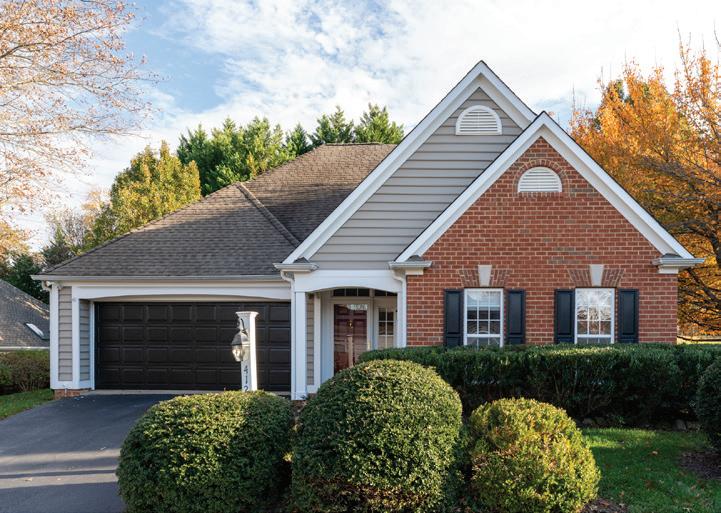
$595,000 | MLS 670827 | Charlottesville Sonja Casero, 434.981.3523
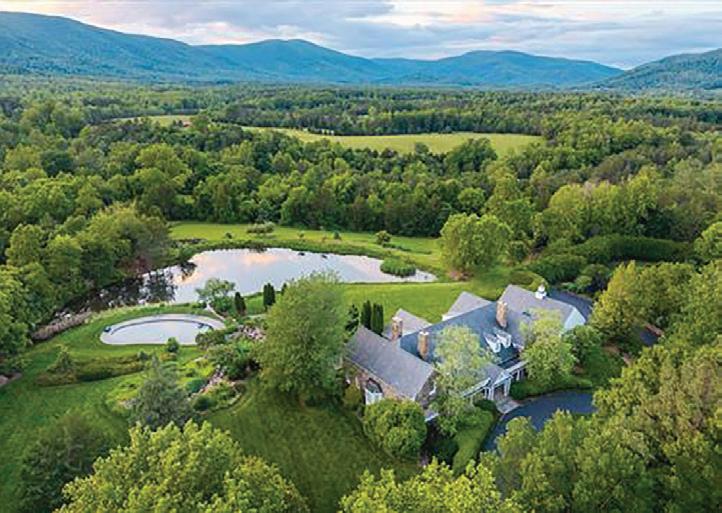
$8,800,000 | MLS 665249 | Crozet Jim Faulconer, 434.981.0076 Will Faulconer, 434.987.9455
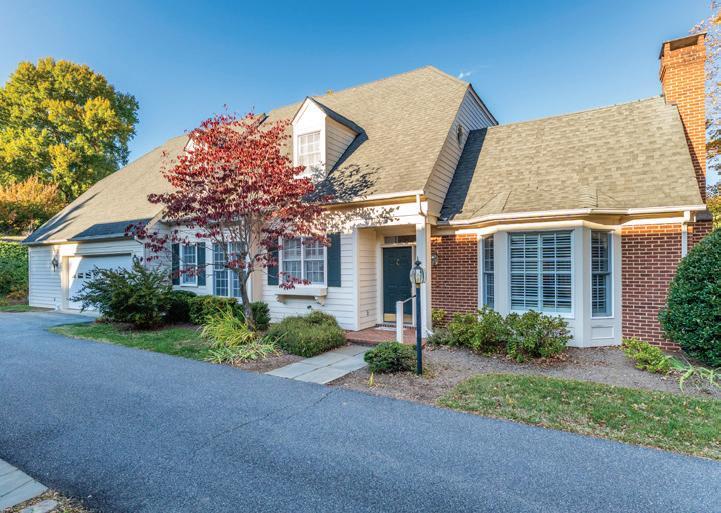
$1,325,000 | Charlottesville Court Nexsen, 646.660.0700
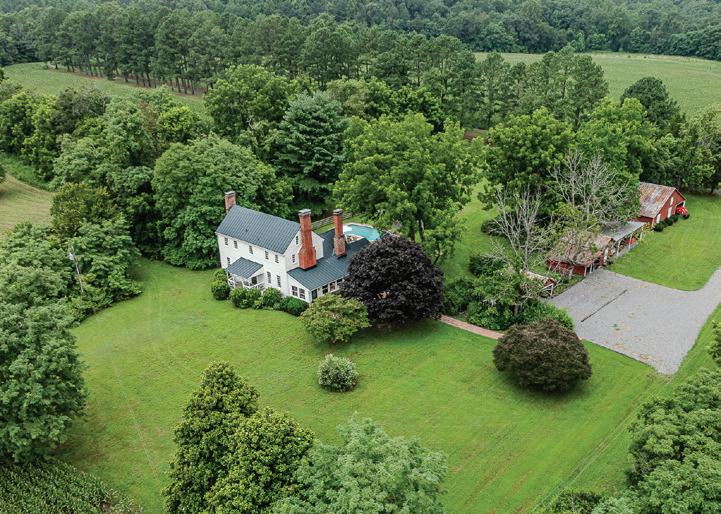
$2,100,000 | MLS 2520067 | Bowling Green Philip Reed, 804.833.8325
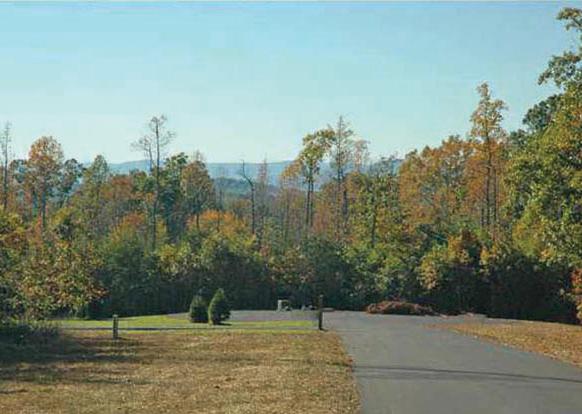

$470,000 | MLS 671323 | Charlottesville Jeremy Fields, 434.270.1220 EDNAM -
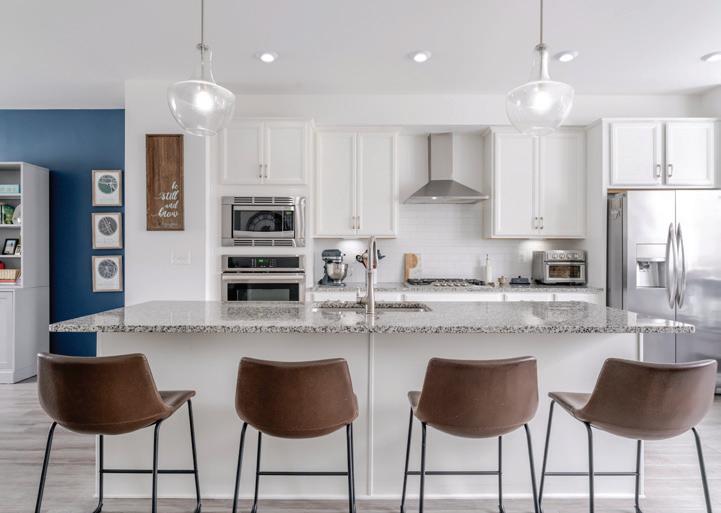
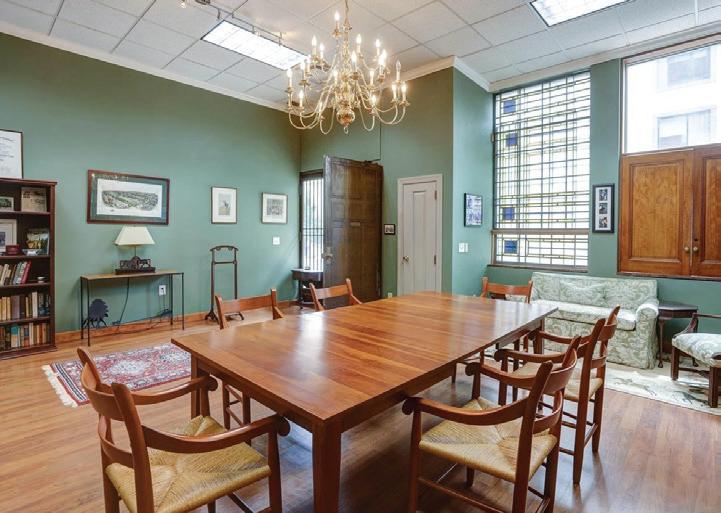
$425,000 | MLS 671743 | Charlottesville Charlotte Dammann, 434.981.1250

Jim Faulconer
434.981.0076
jfaulconer@mcleanfaulconer.com
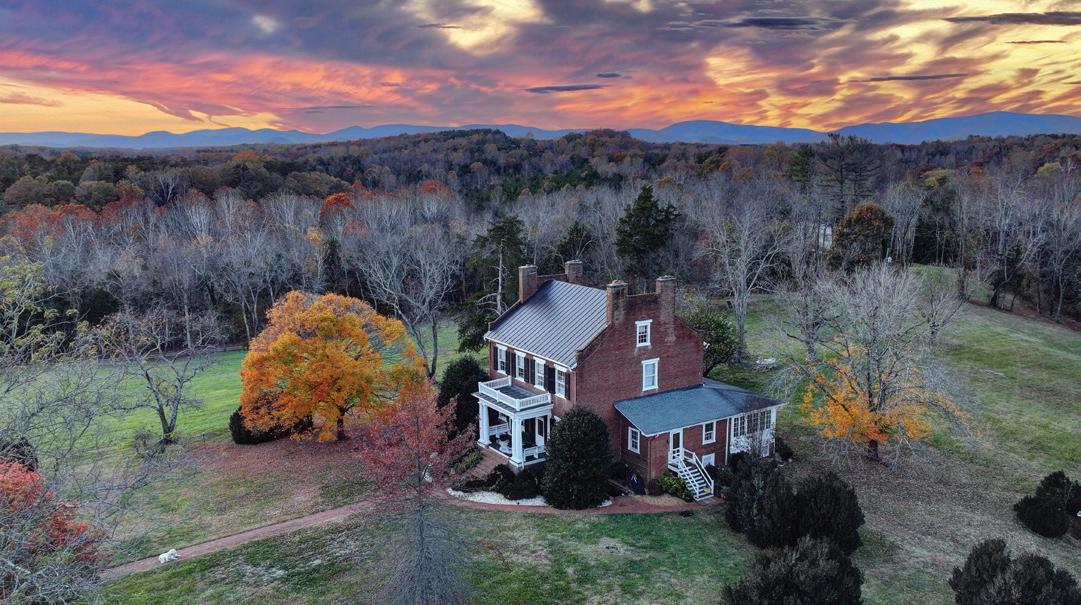
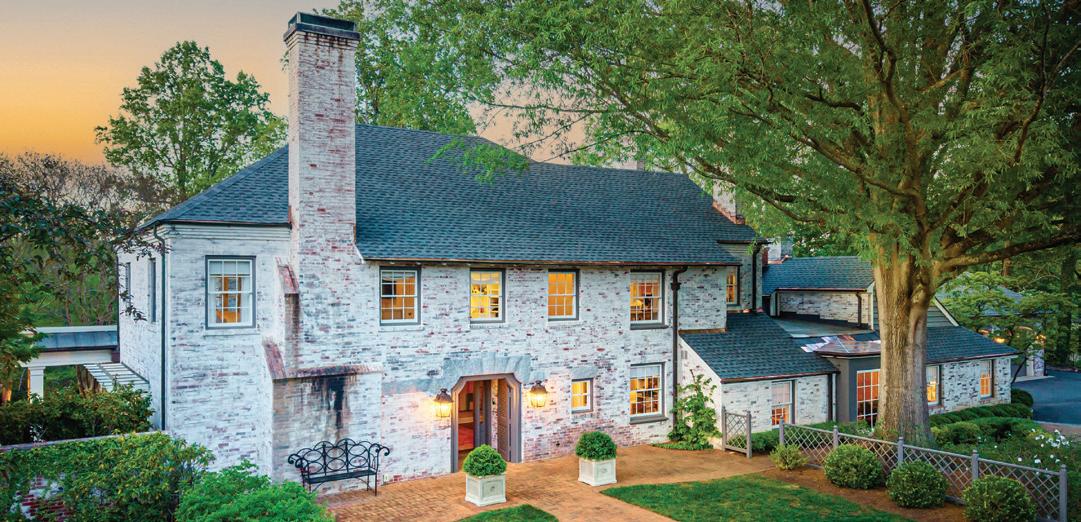
$6,995,000 | MLS 668551 | Charlottesville Court Nexsen, 646.660.0700
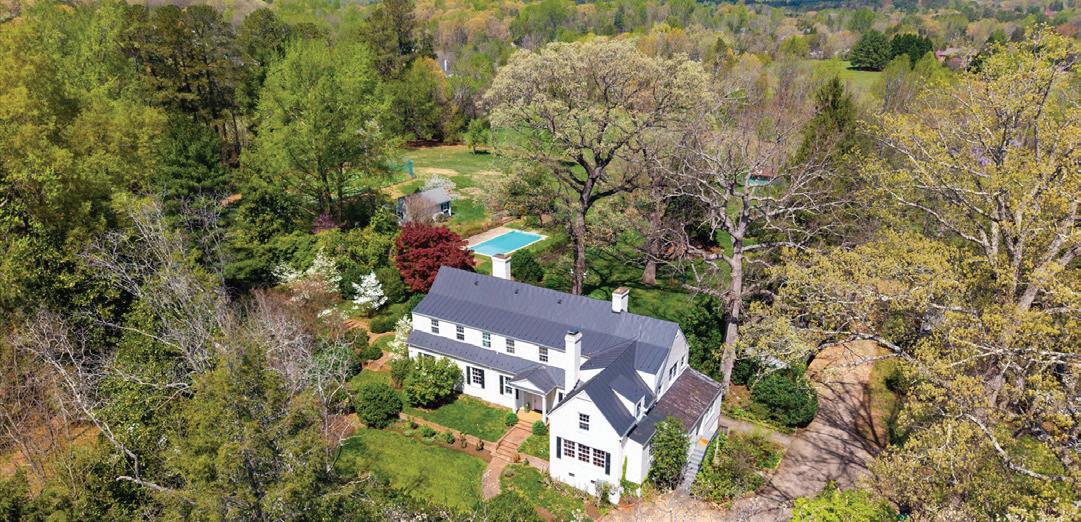
$2,225,000 | MLS 663005 | Ivy Katherine Leddington, 646.593.0333
Court Nexsen 646.660.0700
court@mcleanfaulconer.com
$3,275,000 | MLS 671230 | Charlottesville Charlotte Damman, 434.981.1250
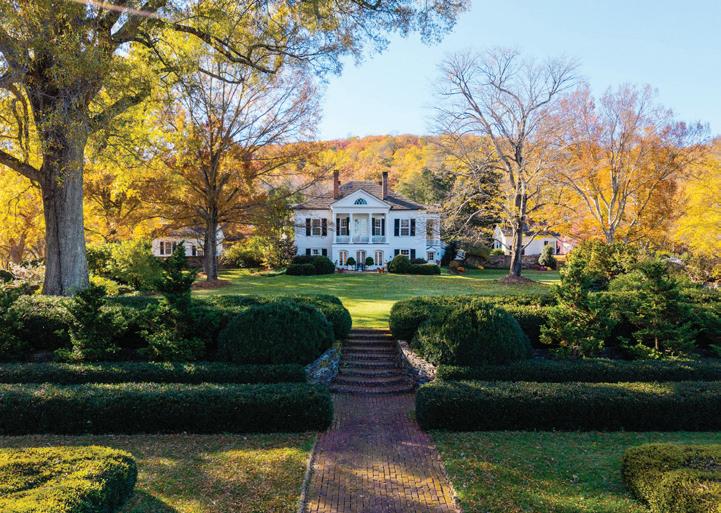
Elegant and timeless, this stately 1810 Federal-style residence on 100+/- acres blends historic architectural detail and craftsmanship with contemporary livability. Outdoors enjoy firepit area, stone barn and grounds of open hayfields and woodlands with five miles of private walking trails and 3/4 mile Rivanna River frontage. Convenient to amenities and University of Virginia.
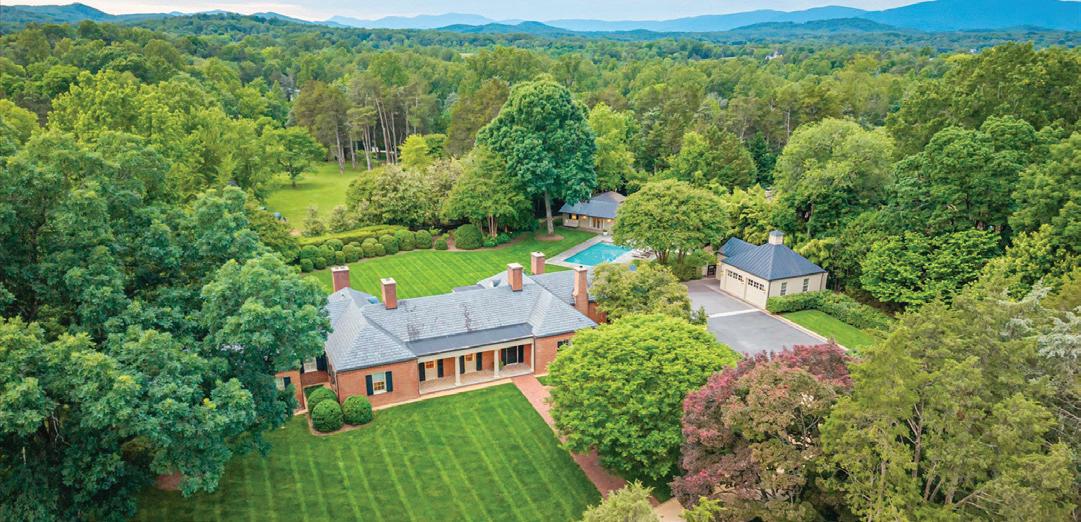
$5,995,000 | MLS 665286 | Charlottesville Court Nexsen, 646.660.0700
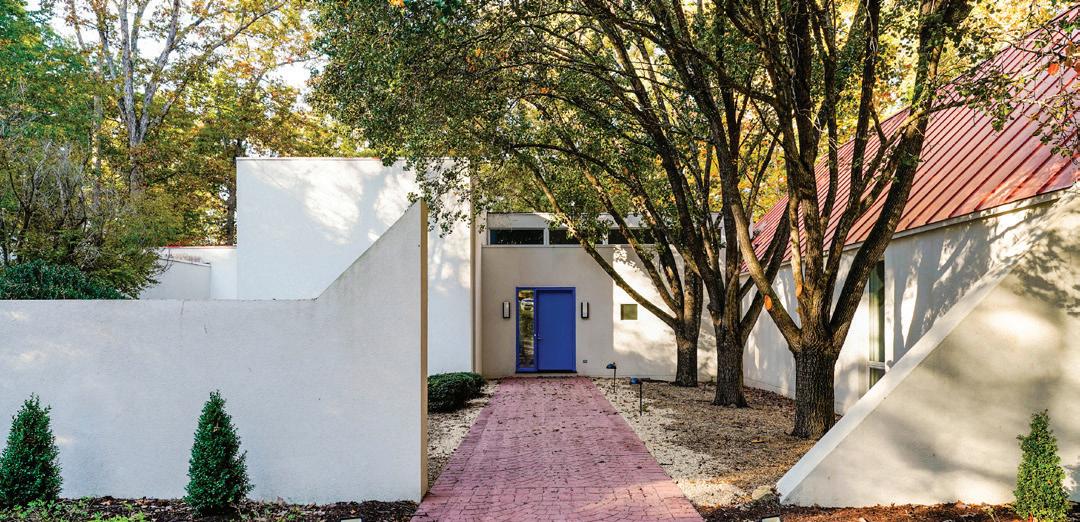
$1,295,000 | MLS 670607 | Charlottesville
Jim Faulconer, 434.981.0076 Will Faulconer, 434.987.9455
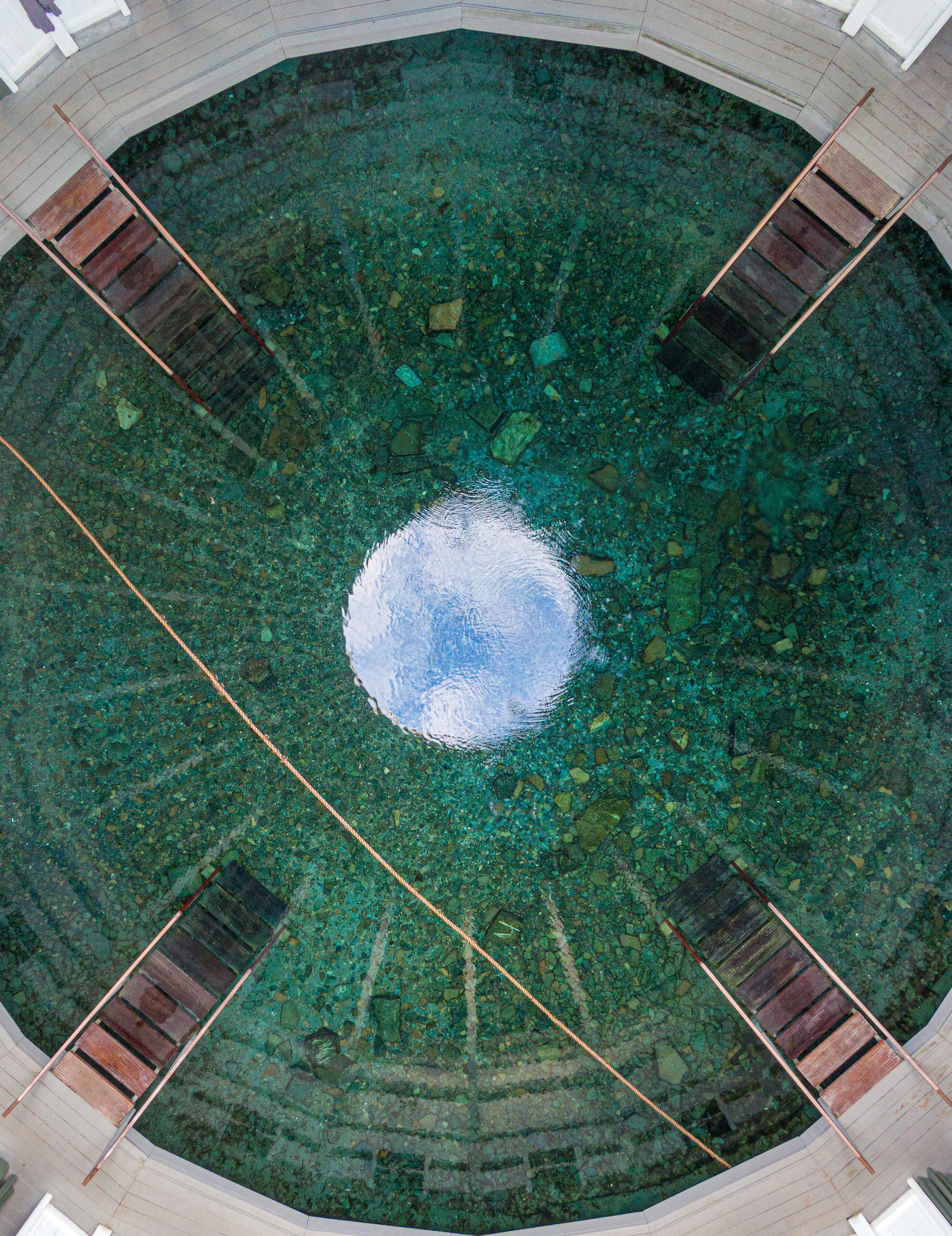
For nearly 9,000 years, the naturally heated mineral springs of Bath County have drawn seekers of restoration to their crystalclear, 98-degree waters. Those who have immersed themselves in the pools include Native American healers who considered the site sacred, Thomas Jefferson, who journeyed west in search of relief from debilitating rheumatism, and 22 U.S. presidents who followed in his footsteps.
Today, after Bath County’s $4.6 million restoration project completed in December 2022, the iconic Warm Springs Pools are once again welcoming visitors. The project returned both the original stone basin and its companion Ladies’ Pool House to their former glory, allowing modern bathers to experience the same geothermally heated waters that have attracted centuries of wellness pilgrims. Naturally enriched with minerals, including magnesium sulfate, iron, silica, boron, and lithium, the springs’ temperature and composition have remained unchanged throughout recorded history.
Long before European settlers documented the therapeutic potential of Bath County’s waters, Native American peoples
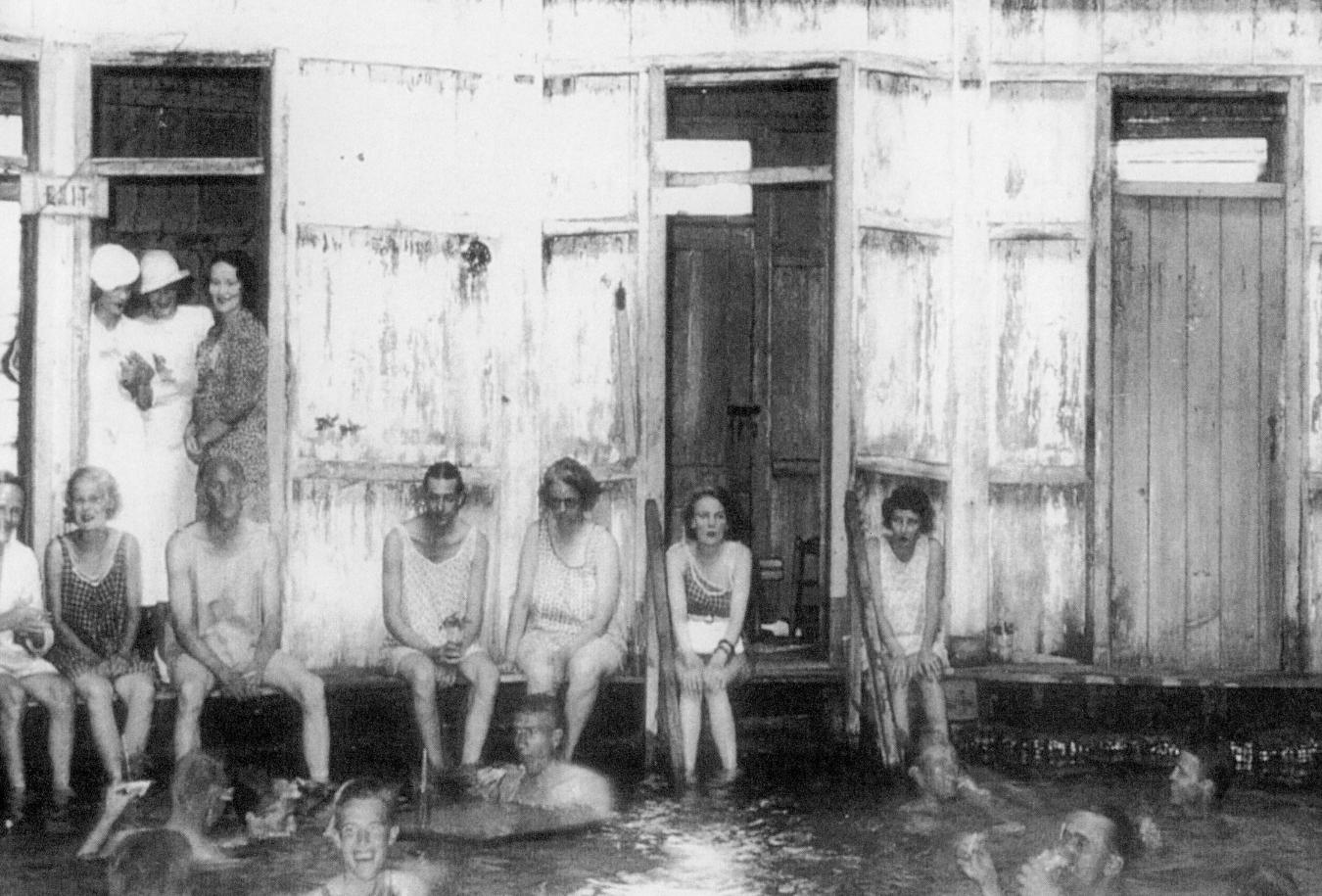

recognized their restorative power. According to oral tradition, an Indigenous wanderer fell asleep in the mineral springs and awoke renewed, discovering what would become a sacred place of healing.
The springs themselves flow at an astounding rate of approximately 1.7 million gallons per day. They are fed by a complex geological system in which rainwater seeps deep underground and travels through geothermally heated rock nearly a mile below the surface. The water takes roughly 20 years to complete its subterranean journey before resurfacing, enriched by prolonged contact with warm stone and maintaining a consistent temperature of 98°F year-round, unaffected by seasonal change.
That extended journey gives the water its distinctive properties. Dissolved minerals create what early physicians described as a natural pharmacy, while also contributing to the springs’ exceptional clarity. A 1913 New York Times article reported “bathers could be seen as clearly under water as on the surface.” The water’s buoyancy also allows bathers to float almost effortlessly.
Nineteenth-century physician William Burke wrote that the water’s “temperature, buoyancy, refractive power, transparency—all invest it with indescribable luxury to the feelings and to the sight.” Medical practitioners of the era believed different mineral compositions addressed specific ailments: alum-rich springs were said to “purge the bowels,” while sulfur- and iron-enriched spring waters were prescribed for a wide range of illnesses.
Among the most famous visitors was Thomas Jefferson, whose 22-day stay in August 1818 is one of the best-documented wellness pilgrimages in American presidential history. At 75, Jefferson traveled 90 miles west from Monticello seeking relief from rheumatoid arthritis that had plagued him for decades. As early as 1794, he wrote of “a paroxysm of the Rheumatism, which has now kept me for ten days in constant torment.” By the time he arrived in Bath County, the springs had earned a reputation throughout Virginia for its curative properties.
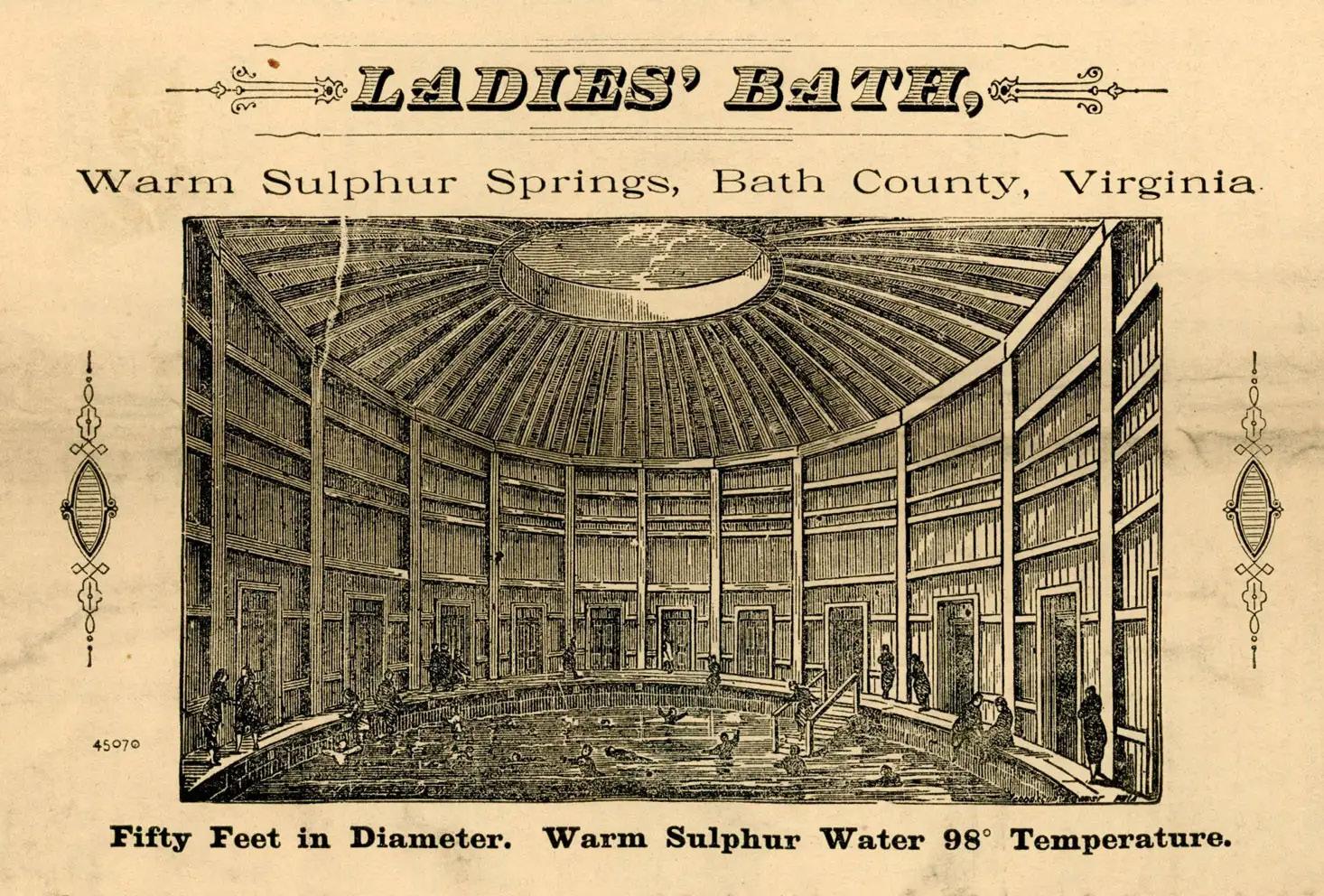
The physical setting of the Warm Springs Pools reflects a careful union of architecture and therapeutic function. The octagonal stone basin was constructed in 1761 and later enclosed with Gentlemen’s Pool House built in the 1820s, making it the oldest spa structure in the United States. Captain Thomas Bullitt, founder of The Homestead resort in 1766, understood that enclosing the spring would appeal to colonial visitors accustomed to European hydrotherapy traditions. The building’s design addressed the challenges of constant heat and humidity: a large opening in the roof allowed steam to escape, while the octagonal form provided structural stability in persistently damp conditions.
In the 1870s, The Homestead added the Ladies’ Pool House, a 22-sided polygonal structure that provided separate facilities for
female bathers. The addition reflected both the growing popularity of the springs and the Victorian era’s emphasis on propriety and gender-segregated spaces.
The Warm Springs Bathhouses were placed on the Virginia Landmarks Register in 1968 and added to the National Register of Historic Places the following year. Despite those protections, decades of exposure took their toll. By 2017, the historic wooden structures had deteriorated so severely that Bath County ordered the pools closed to the public, citing safety concerns.
Their revival began in 2015, when Omni Hotels & Resorts, owners of The Homestead, formed the Bathhouses Advisory Committee, a group of leading historic preservationists who were charged with creating the Historic Structures Report. The HSR was completed in 2016 and became a key resource for the comprehensive restoration. Physical work started in 2021, with the goal of preserving as much historic fabric as possible while meeting modern safety and accessibility standards. The $4.6 million project reconstructed roofs to match late-19th-century designs, repaired foundation piers, and retained original copper and wood elements wherever feasible.
When the Warm Springs Pools reopened in December 2022, they offered modern visitors the chance to once again immerse themselves in the same therapeutic waters Jefferson described as “of first merit.” The pools offer a range of experiences: family sessions open to all ages, adult co-ed soaks for those 16 and older, and traditional clothing-optional sessions separated by gender. The pools now serve as they always have: a place to pause, float, and recover.
In the Allegheny Mountains along Virginia’s western border, Bath County offers winter travelers a blend of historic luxury and mountain hospitality. The surrounding George Washington National Forest, nearby Douthat State Park, and Lake Moomaw make this rural county a true four-season escape, where you can ski, hike, and soak in warm springs, all in a single day.
The Omni Homestead Resort
For more than 250 years, The Homestead has been welcoming guests—including 24 U.S. presidents—to its historic Hot Springs location. This National Historic Landmark underwent a $170 million restoration, completed in 2023, that preserved its Colonial Revival architecture while modernizing amenities.
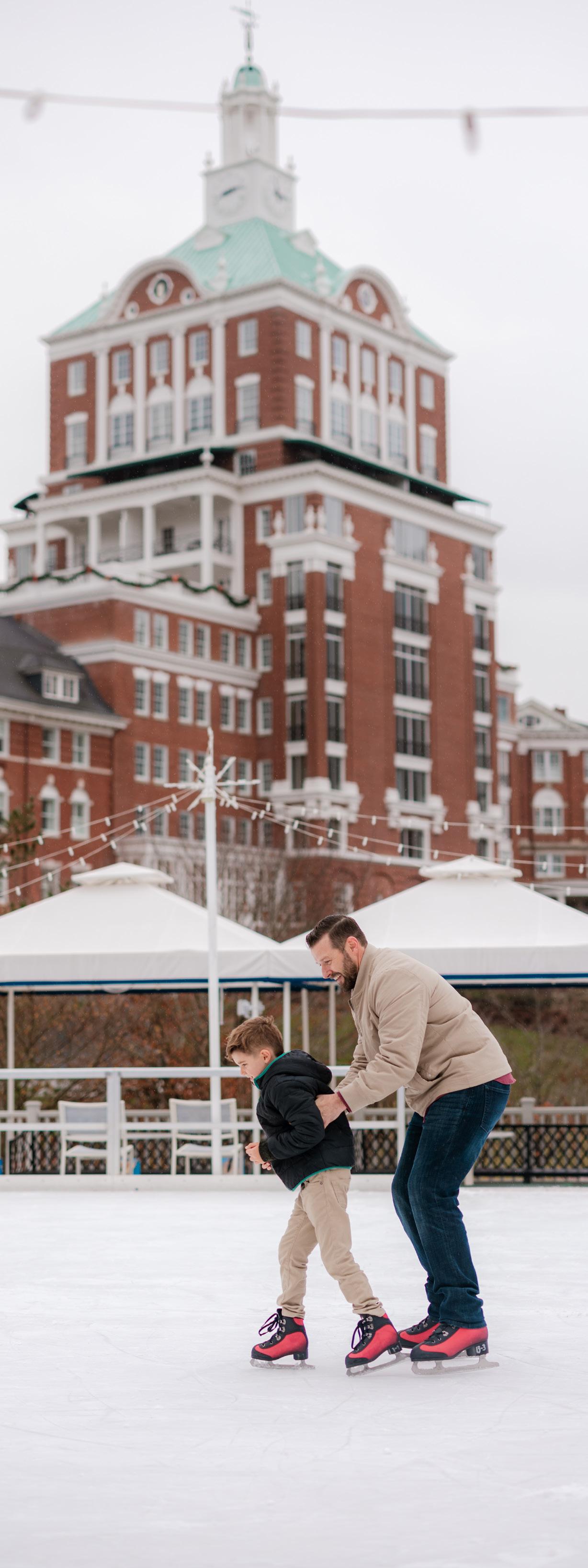
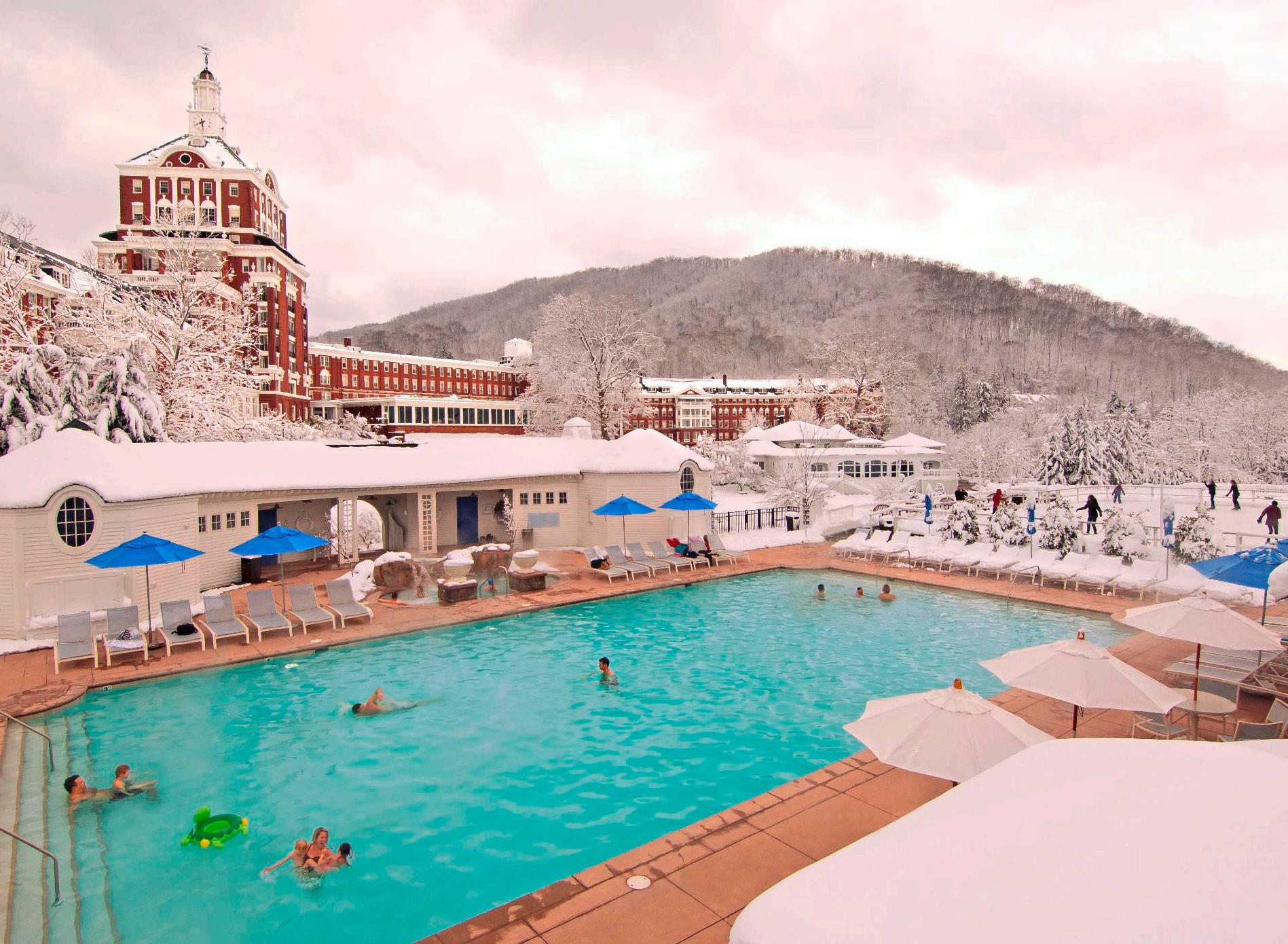
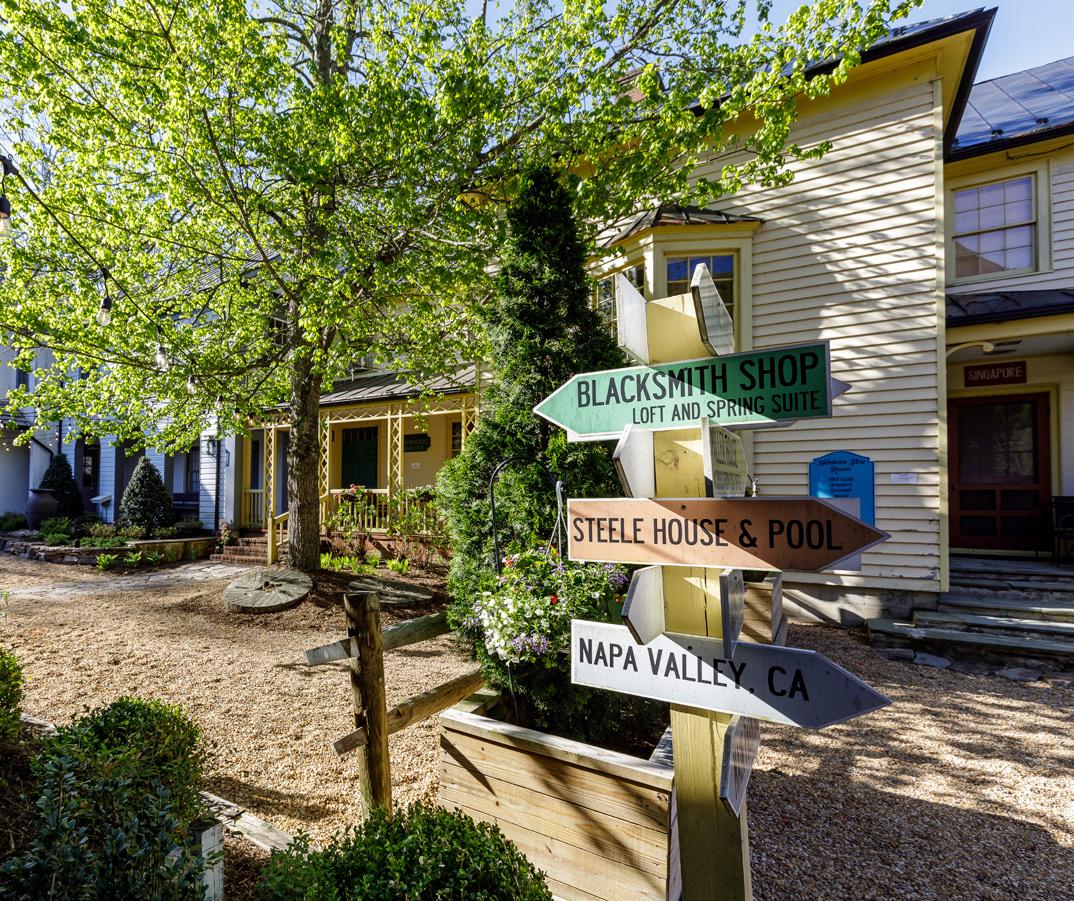
Winter activities at the resort include Virginia's oldest ski area (founded in 1959), along with snow tubing and ice skating. When you're ready to warm up, go for a swim in the resort's outdoor pool with naturally heated mineral spring water.
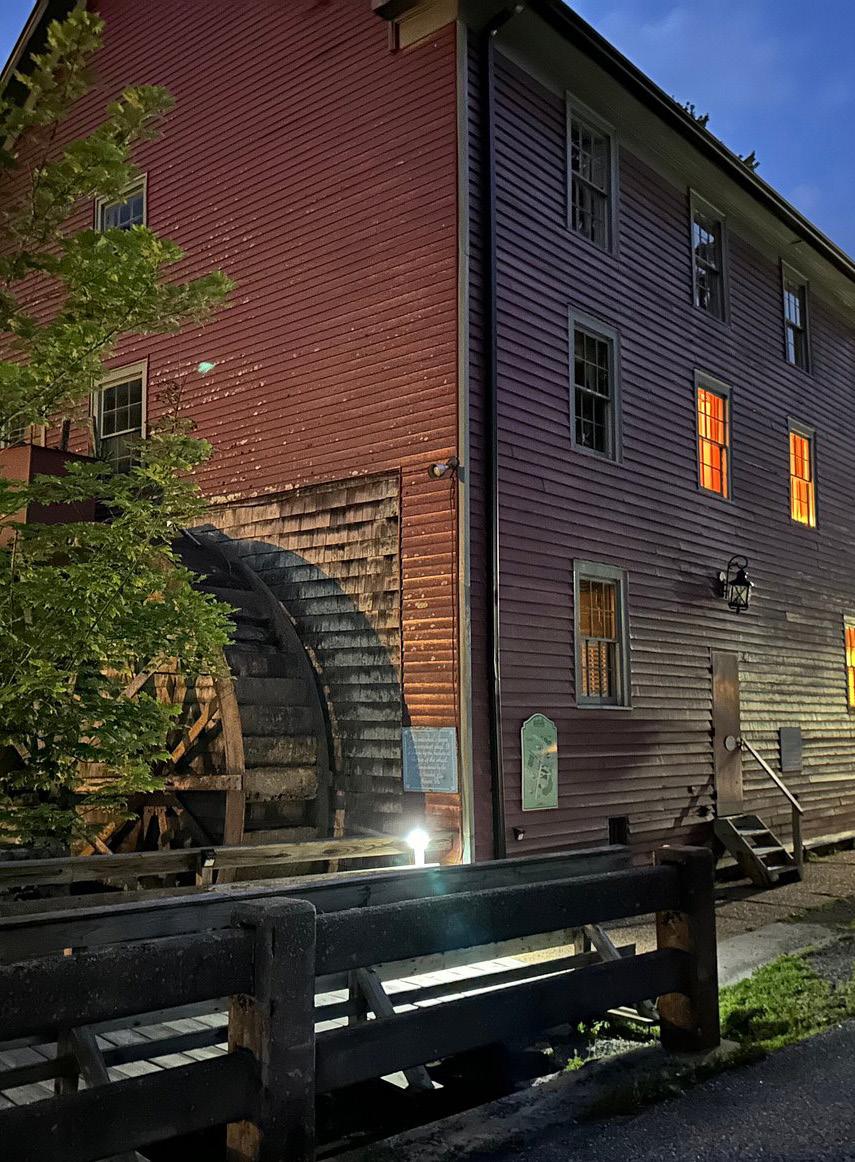
For a more laid-back experience, the Inn at Gristmill Square in Warm Springs offers rooms and suites spread across restored 19th-century buildings that resemble a small colonial village. The inn's signature touch is the complimentary continental breakfast delivered to your room each morning, featuring items like spinach and feta pastries, freshly baked croissants, egg casseroles, and freshly squeezed orange juice.
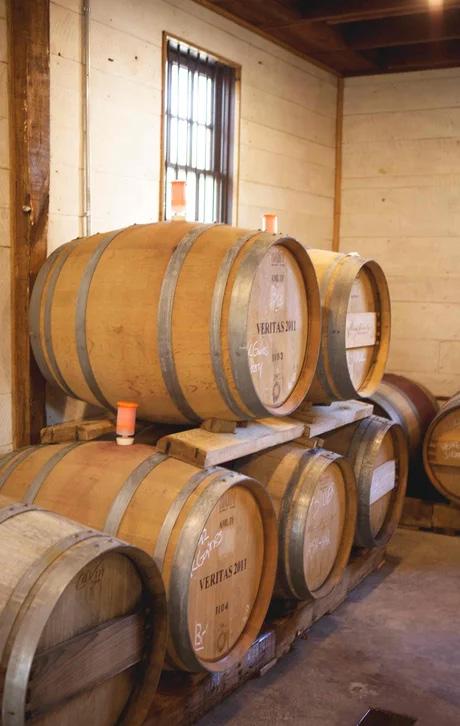
Located within the Gristmill Square complex, the Waterwheel Restaurant has been Bath County's premier dining destination since 1973. Housed in a 100+ year-old mill building, this awardwinning restaurant showcases farm-to-table cuisine with seasonal menus featuring the freshest local ingredients. The restaurant offers an elegant main dining room, an adjoining pub, and access to a historic wine cellar deep within the old mill foundation.
House Market at the Old Dairy
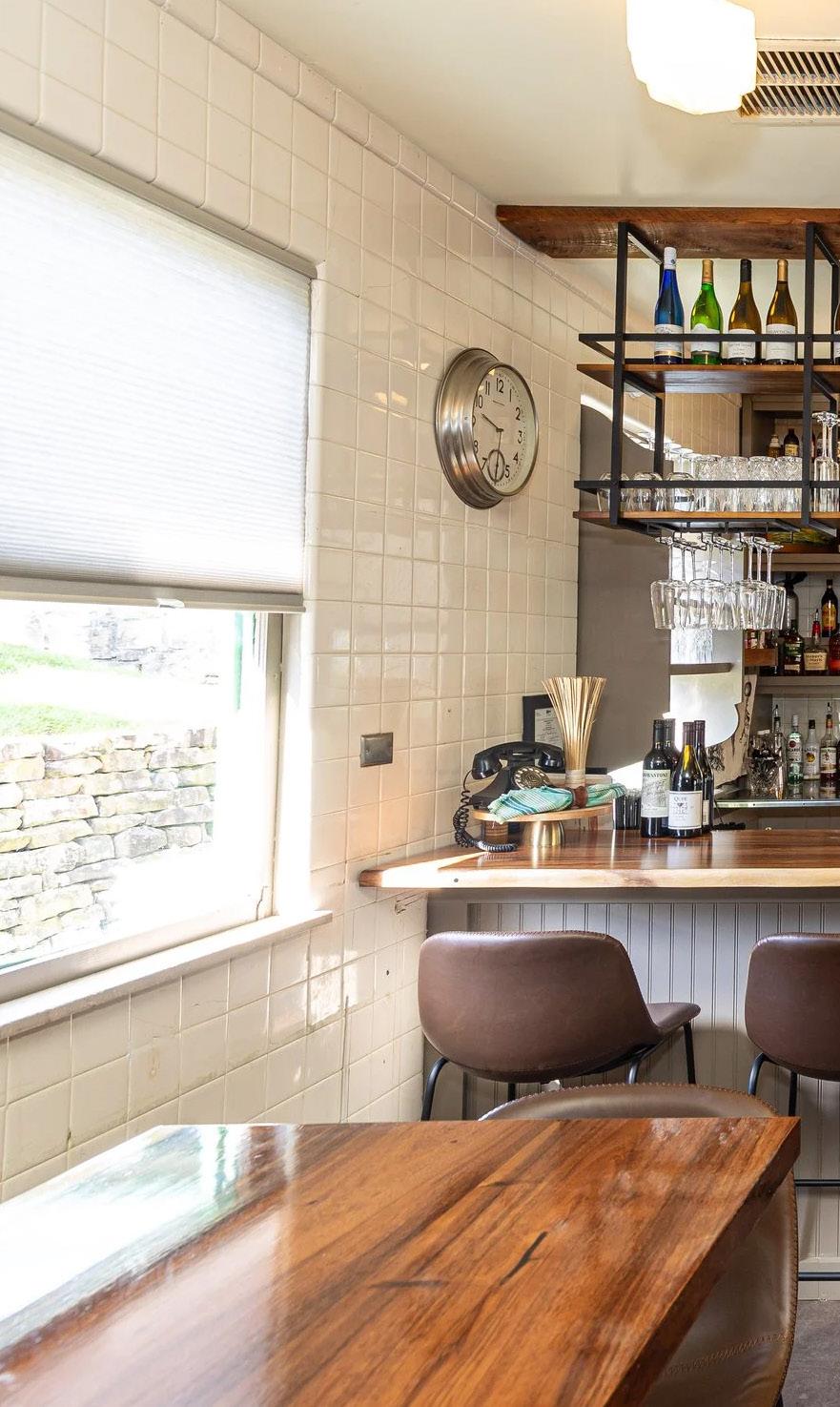
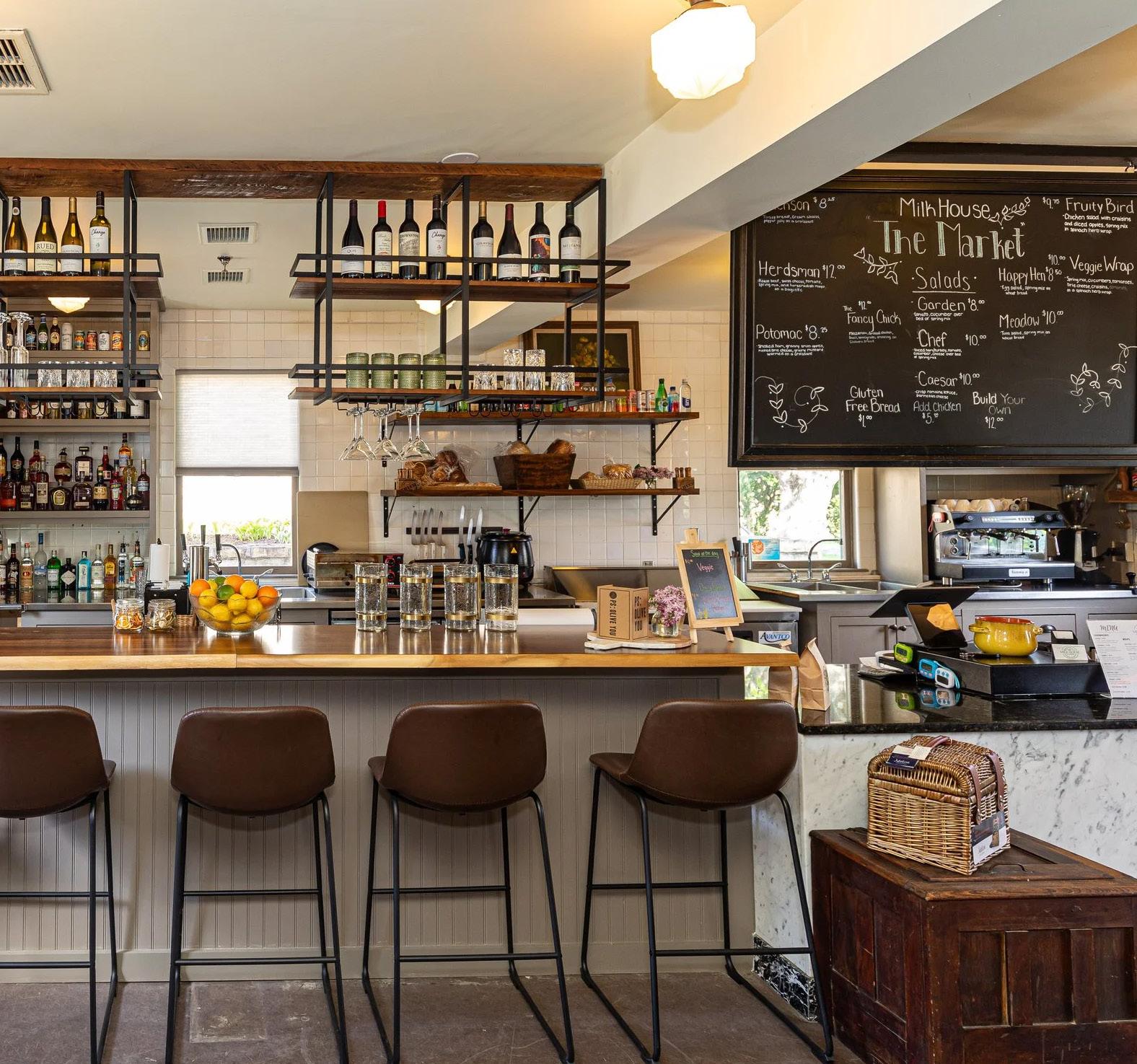
Located in the Old Dairy complex of The Preserve, the Milk House Market serves lunch featuring craft sandwiches and fresh salads, then transitions to dinner with craft pizzas, small plates, and seasonal specials. The market’s specialty provisions shop sells local products and specialty wines in a casual, cozy atmosphere that’s perfect for a relaxed meal after exploring Bath County's winter landscapes.
At Oakley Farm in Warm Springs, Troddenvale Cider works with true cider varietals grown in their orchard, relying on native microbial populations for fermentation, aging in neutral French oak, bottling unfiltered for texture, and limiting preservatives to create ciders that are “transparent, alive, and evolving.” You can sample the fruits of their labor in a tasting room that’s open on Fridays and Saturdays.
The Spa at The Omni Homestead
This state-of-the-art facility offers comprehensive wellness experiences, including an Aqua Thermal Suite with European-style healing aquatic environments and a year-round Serenity Garden featuring a River Reflexology Walk, hot springs soaking, Finnish sauna, and deluge showers. The spa recently developed a custom bath and body line inspired by the mineral composition of the Warm Springs Pools.
Warm Spirit Spa
Just steps from the Inn at Gristmill Square at 145 Old Mill Road, Warm Spirit Spa specializes in restorative facials and therapeutic massage treatments, including their signature hot stone massage and Ayurvedic-inspired services. This boutique spa's twotreatment-room setting provides exceptional quality at more accessible prices than resort spas.
Since it first opened on the UVA Corner in 1982, Ragged Mountain Running & Walking Shop has been a hub of fitness and community in Charlottesville. What began as a tiny running store has evolved into a multigenerational, community-focused business that serves everyone from elite runners to people who simply want to walk comfortably and stay healthy.
Here, founders Mark and Cynthia Lorenzoni and children Alec and Audrey talk about the store’s beginnings, how it has evolved, and their best advice for anyone looking to start a running or walking routine.
Q: When you founded Ragged Mountain, what were your initial goals for the business, and how have those evolved?
Cynthia: I got injured running in college at Michigan State, and my coach finally said, “I’m done seeing you so sad—go get a job.” I ended up working at a Frank Shorter Sports store, which was incredibly busy and full of runners. That’s where I first understood that a specialty running store could be a real hub for a community.
When Mark and I moved to Charlottesville, we saw a similar running culture here in the early ’80s. That planted the seed for Ragged Mountain.
Mark: Back then, there was a need but not a true service. Our goal was to make the store a clubhouse, like the Cheers of athletic stores, where you walk in, people know your name, and you feel comfortable no matter who you are.
When we opened, about 80% of our customers were young, fast male runners. Today, our customer base has morphed right along with us. We used to be young, fast runners; now we’re older and walk more. And so do many of our customers. The mission, though, is the same: provide a needed service, not just sell shoes.
Cynthia: We were 23 and 25 when we opened. We had nothing to lose. Except for a couple of people, everyone told us not to do it. So we started small and just tried to serve the community as best we could.
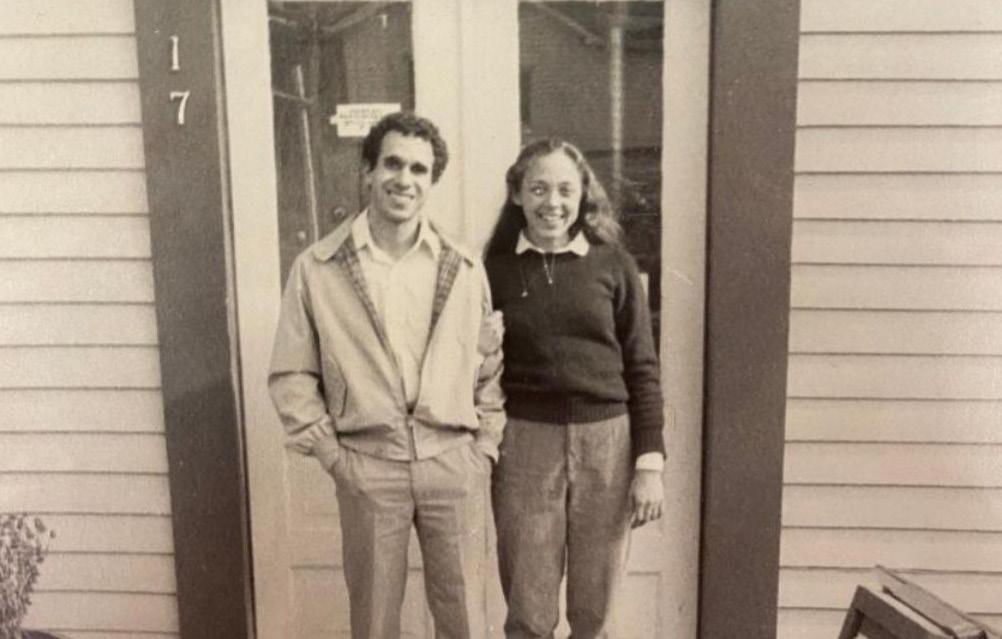
Mark and Cynthia at the first Ragged Mountain shop
Q: Alec and Audrey, when you took over the business in 2020, what did you most want to preserve and what have you changed?
Alec: My parents have always had a deep connection to community events—training programs, races, and partnerships with nonprofits. Everything they did was tied to a cause, and they did it all as volunteers. That community focus was non-negotiable for us to keep.
We also wanted to protect the “clubhouse” feel. Audrey and I are on the floor throughout the day. There’s almost always at least one Lorenzoni here. Our customers know they’re not just walking into a store—they’re walking into a place where people know them.
On the change side, we computerized the store and inventory, and we added an online store. But online is intentionally a tiny fraction of the business. It’s there for people who’ve moved away or want to browse, but our goal is still for people to come in.
Audrey: We’ve also expanded kids’ footwear and support. Working with kids has become one of my favorite parts of the business, getting them into the right shoes early and helping them enjoy movement.
Mark: These guys have really grown the business. Some of our
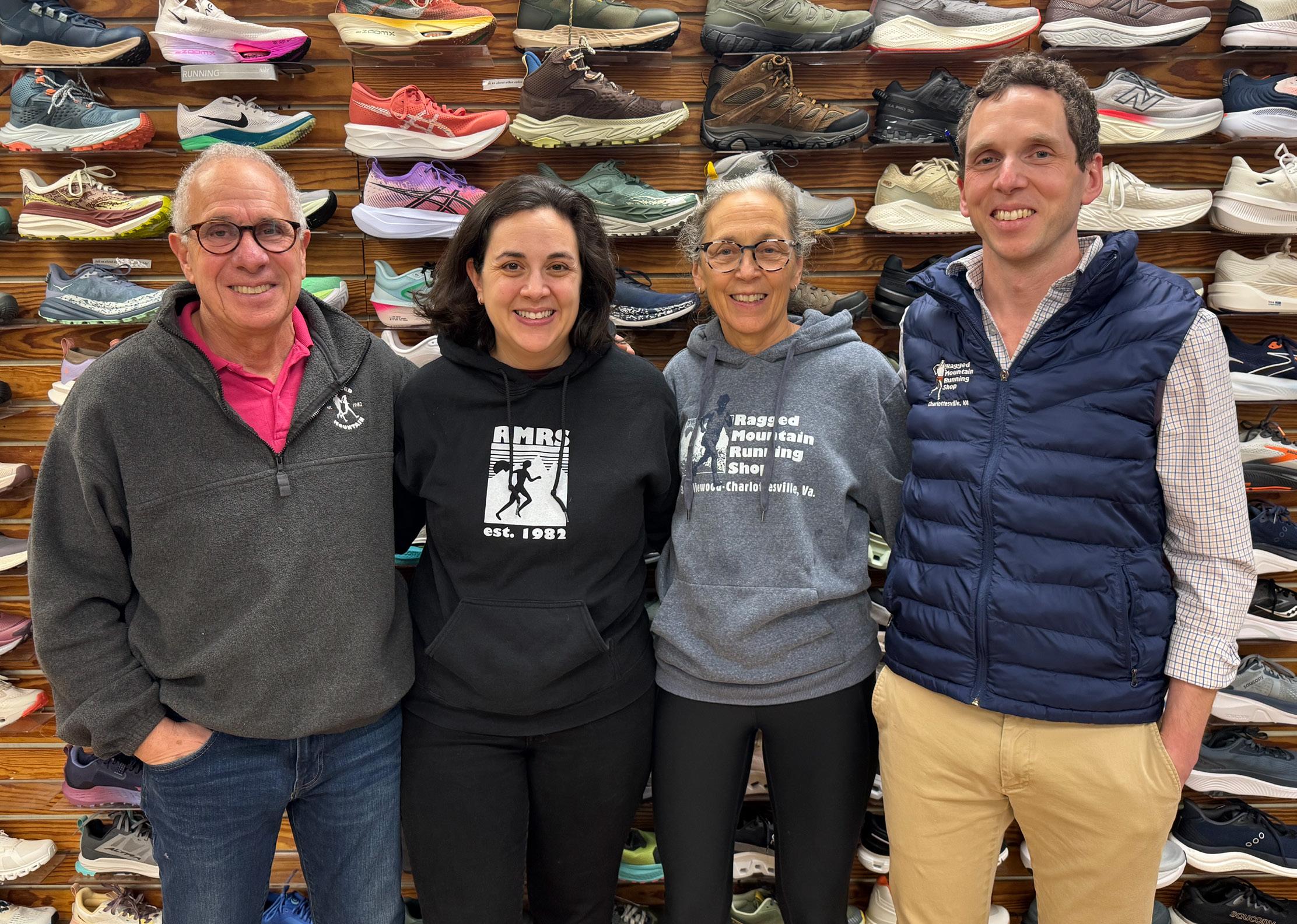
customers are driving here from as far as West Virginia, Virginia Beach, D.C., and Roanoke. They’re coming for our reputation and our service.
Q: How has your customer base changed over the years?
Audrey: Today, we sell far more women’s shoes than men’s, sometimes almost double in a day. That’s a huge shift from the early days.
Cynthia: When I started running in the late ’70s, women were often told running was bad for them. It was intimidating and hard to know how to start. A lot of what we did over the years was about making running and walking accessible, especially for women. Programs like the Women’s Four Miler were all about that.
Mark: We formally added walking to the store’s name a few years before the pandemic, when walking was about 30% of our business. During COVID, walking exploded. Now about 60% of our customers are walkers or standers—nurses, Costco workers, people who are on their feet all day.
We’ve shifted from simply helping people get faster to helping
people stay healthy and comfortable. That feels like a very meaningful evolution.
Q: What do each of you personally bring to the culture of the store?
Alec: I ran in high school and college and then coached at Albemarle High School for five years. One of the things I loved most as a coach was that there were no cuts: if you showed up and worked hard, you were on the team.
That carries over here. We don’t want anyone intimidated to walk through the door. The vast majority of people we serve are not elite athletes. They’re everyday people. My coaching background makes me passionate about creating that welcoming, team-like environment.
Audrey: I look very different from the stereotypical runner, and I’m mostly a walker and hiker now. I’ve also dealt with chronic, longterm injuries. That gives me a deep empathy for people who feel broken down or left out of the “fit” world. When someone walks in and thinks no one can relate, I can say, “Actually, I can.” I know what it’s like to be sidelined from something you love for a long time. I think that helps people feel seen and safe.
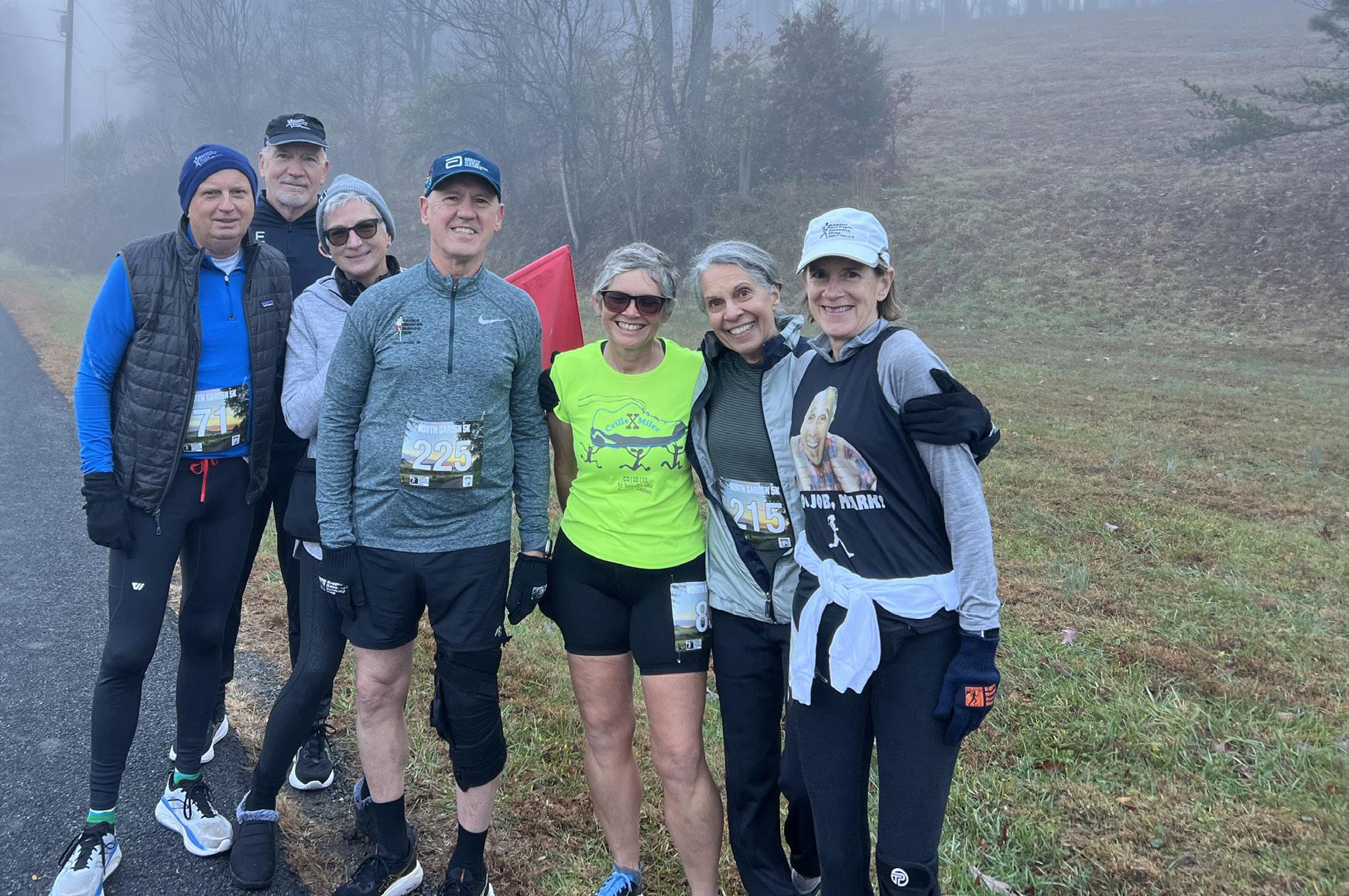
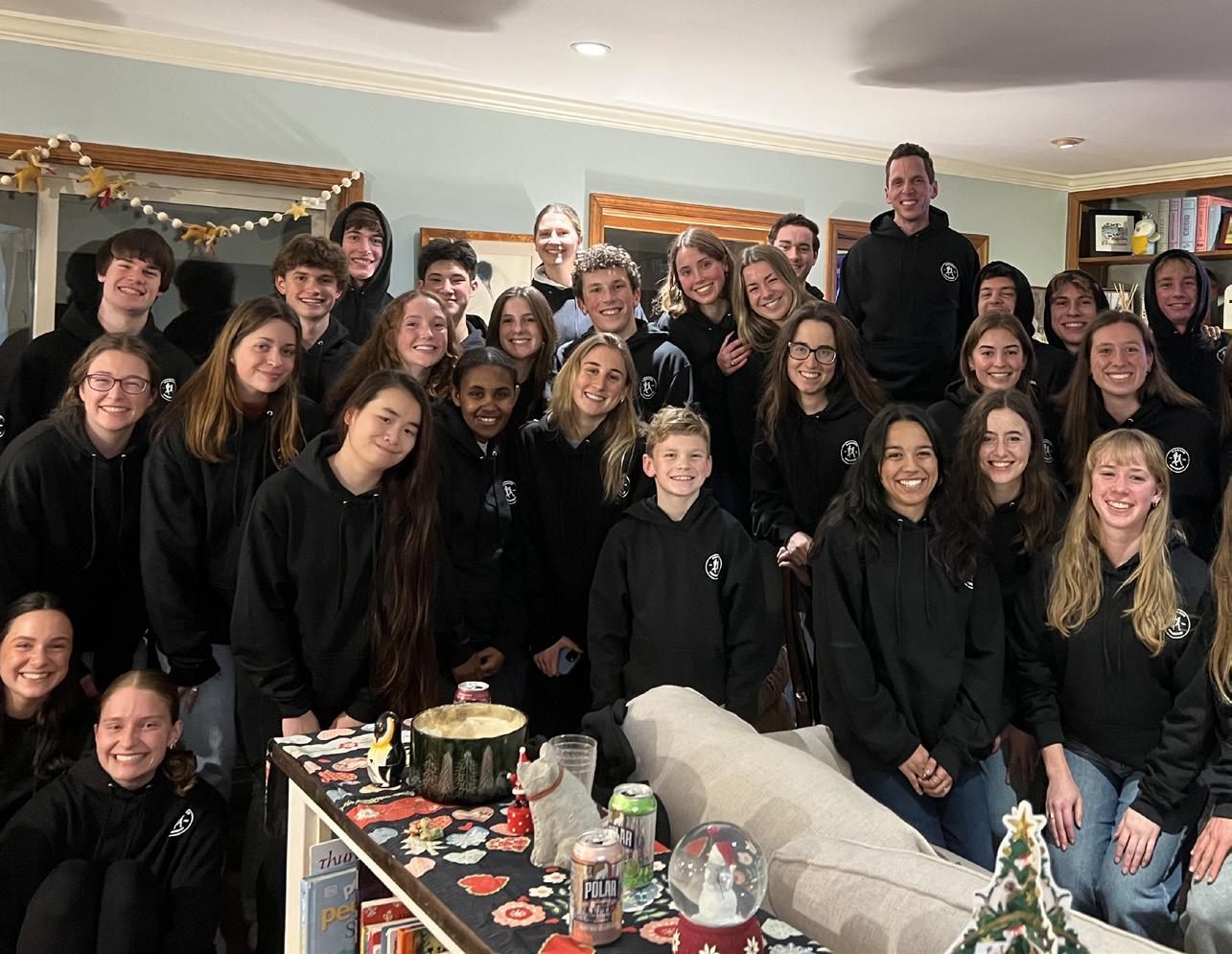
Along with serving countless customers, Ragged Mountain has seen:
• Over 1,000 “Ragged Kids” since opening in 1982 (local high school and UVA student employees).
• More than a dozen “Ragged Legacies” (children of former employees coming to work at the shop).
• Ten “Ragged Mountain Marriages” (people who got married after meeting while working at the store).
I was not an athlete growing up, then I became a serious runner and eventually a competitive marathoner. I’ve never forgotten what it felt like to be new. I’m a big believer in personal goal-setting: where you are now, where you want to go, and how to bridge that gap.
Whether someone runs nine-minute miles or walks with a grandchild, we help them set realistic goals and map out a pathway. That’s been my approach to life and to customers.
I see myself as a coach at heart, even when I’m standing behind the counter. Whether I’m sketching out a training plan or talking someone out of doing too much too soon, I’m always thinking, “How do we keep this person healthy, encouraged, and
Q: What’s your advice for someone looking to start a running or walking routine?
Alec: Find someone to do it with. It could be one friend, a training group, or a casual workout crew. On cold, dark days, it’s so much easier to get out the door when someone is waiting for you.
Audrey: Set realistic, sustainable expectations. A lot of people start gung-ho and burn out because what they’re doing doesn’t actually fit into their real lives. Figure out what you can truly do every week and build a routine around that. Having a specific goal, like a race or a hike, can help with motivation.
Cynthia: The biggest mistake people make is doing too much too soon, going too far or too fast because they remember what they used to be able to do. Start slow and build gradually. A couple of harder days a week is plenty; the rest should be easy days. And have a solid plan.
Mark: I think of Ragged Mountain as a trusted, multi-faceted resource. People often show me online training plans that are wildly unrealistic for their lives and bodies. Our role is to be the rational voice in the sometimes irrational world of the motivated athlete.
You don’t need a marathon or a massive hike as your first goal. Maybe it’s “I want to lose some weight,” or “I want to hike with my grandchild next summer.” We’ll sit down and map out a starter program that actually fits your life.
My coaching rule is that your exercise has to fit your life, or it won’t last.
Q: What is your approach to matching people with shoes?
Audrey: We’re trying to find the right shoe for you, not what the internet says you should wear or what worked for your friend. We start from bare feet, ask about your history and what you’ll be doing—running, walking, standing at work—then look at your
arches, calluses, movement, and fit. The internet cannot do that. It can’t see that your shoes are too big, or that you need more, or less, support.
The other big thing is that people tend to wear shoes too long. Someone came in yesterday with 600 miles on a pair they’d used for a 10-miler training cycle and couldn’t figure out why they were hurting. For most people, that’s far beyond what the shoe can handle.
Alec: We care a lot about value. Prices have crept up, but if we can keep you healthy in a $130 shoe instead of a $160 one, we will. We don’t sell inserts unless they’re truly needed.
We also take a holistic approach: what you wear at work, around the house, or for yardwork all matters. Many injuries come from a combination of factors, not just your “running shoes.” We’re always trying to find the root cause, not just slap a band-aid on the pain.
Q: For people more likely to walk than run, either on a treadmill or outside, what should they know about shoes?
Alec: From a footwear standpoint, we treat walkers and runners the same. The goal is keeping you healthy, whether you’re training for a marathon or walking a mile at a time. Biomechanics, arch shape, width, and support needs matter far more than your pace.
Audrey: The key is using shoes designed for forward motion, not lateral movement. Respect the specific sport or activity when you choose a shoe. You can technically walk in basketball or court shoes, but they’ll usually be less cushioned and not as supportive for longer, straight-ahead activity. Their soles are designed for courts, not pavement, and they tend to wear out fast in the wrong environment.
Cynthia: With running and walking, the shoe’s primary job is absorbing shock. Every time your foot hits the ground, it’s absorbing a multiple of your body weight. Court shoes sacrifice some of that shock absorption to give you lateral stability. That’s great for tennis or basketball, but not ideal for long walks or runs.
For hiking, I won’t start a serious hike without a waterproof, high-top hiking boot. On uneven terrain, that kind of support is essential.
Audrey: And the same good shoe you use
outside is the one you should use on the treadmill. If anything, treadmill use can be harder on shoes because each step is so mechanically similar. My treadmill shoes are the same as my outdoor walking shoes.
Q: How do you see Ragged Mountain’s role beyond selling shoes?
Mark: Over the years, we’ve put on hundreds of races, raised millions of dollars for local causes, and coached countless people. But one of the things I’m proudest of is how the shop has helped connect people. In an era of loneliness and disconnection, those relationships really matter. Honestly, if my tombstone reads, “He helped bring people together,” I’d be very happy with that.
Cynthia: We live in a beautiful area with endless opportunities to be outside. Whether it’s walking, running, or hiking by the river or in the woods, we want people to feel equipped, confident, and ready to do that.
Alec: For me, it’s also about being outside and disconnected. I don’t run with my phone, music, or podcasts. I’m either with my own thoughts or with friends and family. An hour where no one looks at a screen is a gift.
I feel strongly about being outside, being with people, and being disconnected from all the noise. I think most people, if they could do that even a little bit—whatever their pace—I think they’d be surprised by how much better they feel.
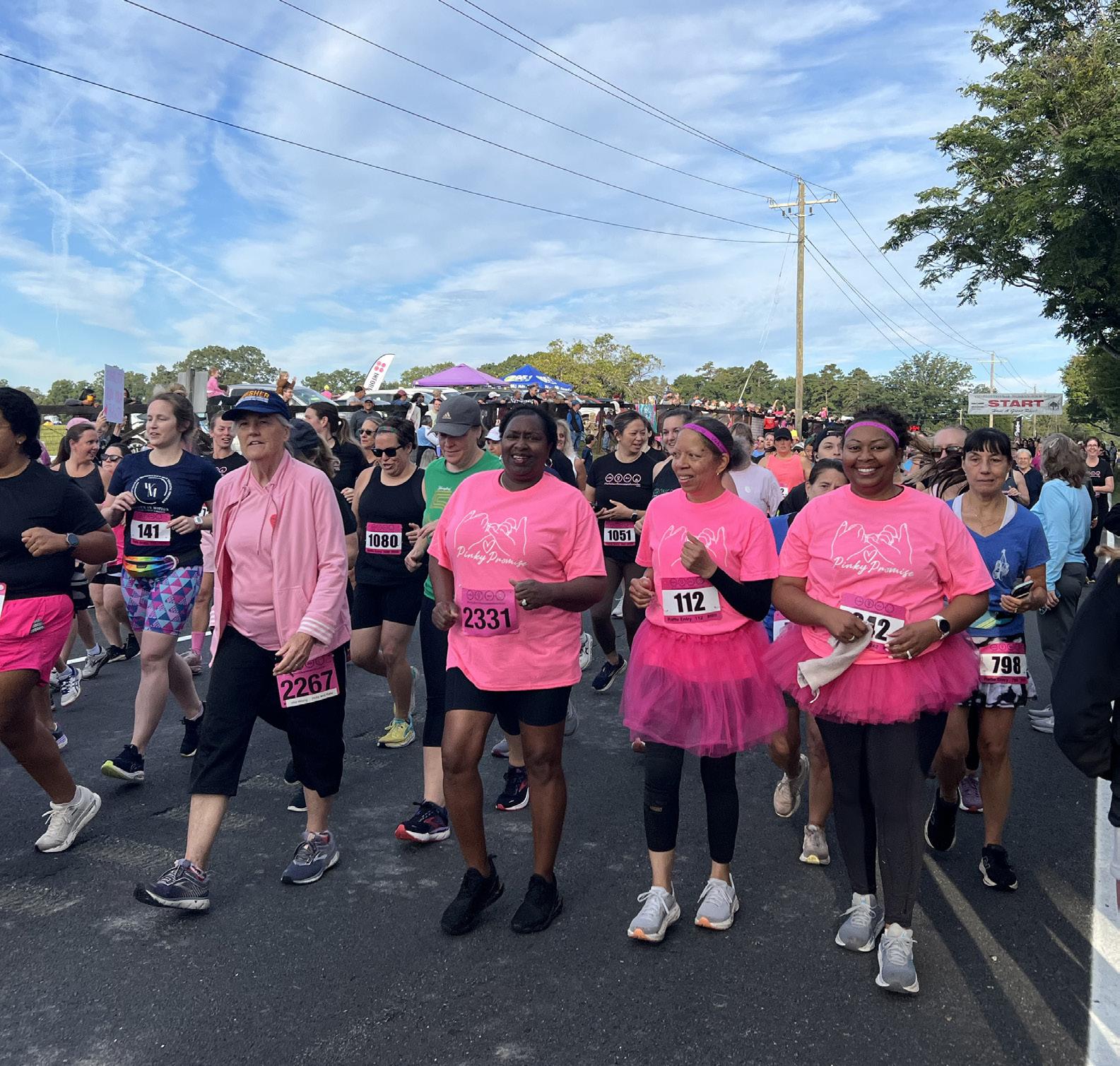
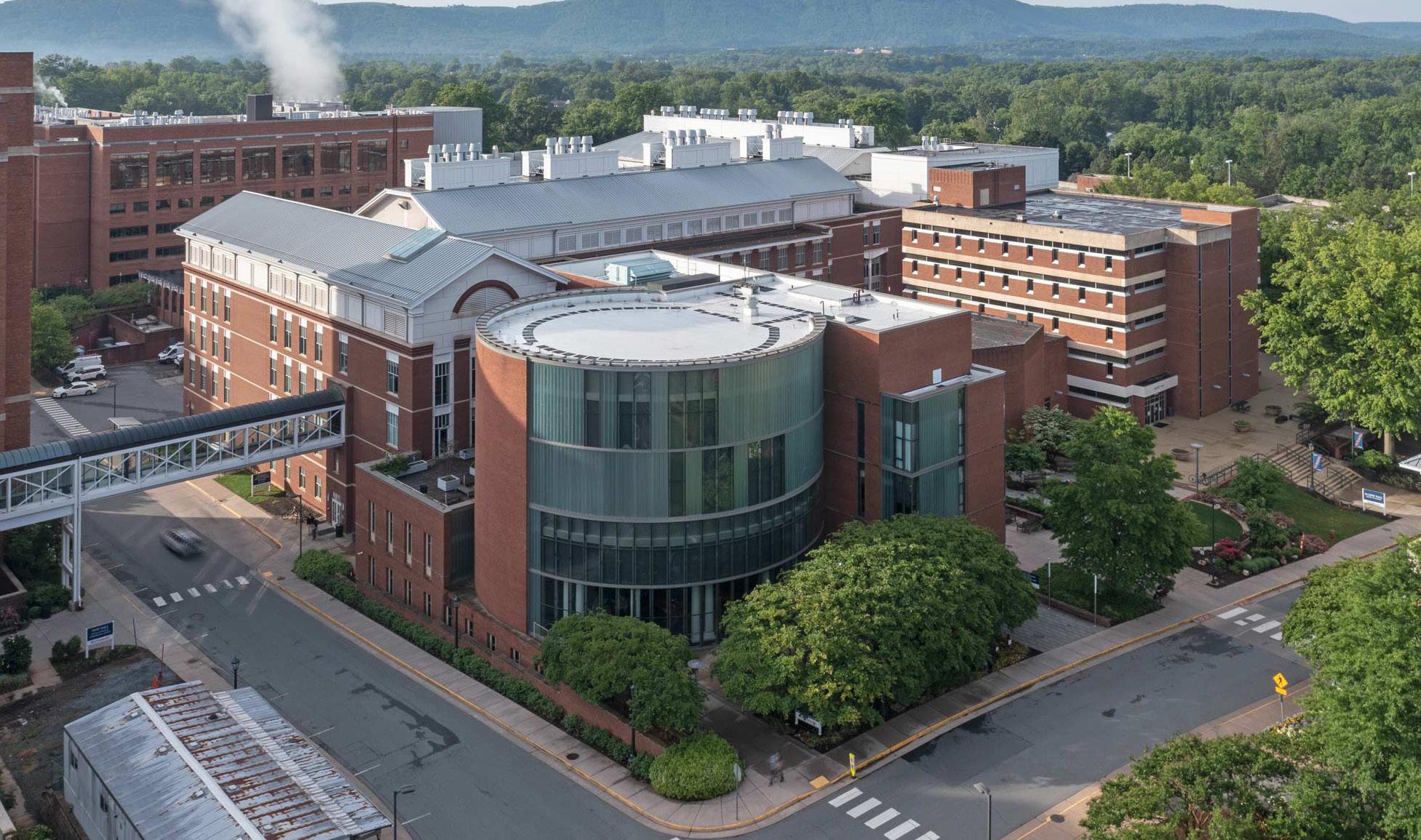
From life-saving cancer drugs to artificial intelligence systems redefining chronic disease management, research at the UVA Health System is reshaping the future of medicine. Backed by more than $287 million in annual research funding and major new facilities on the way, UVA Health has become a national leader in turning bold scientific ideas into real-world treatments. The breakthroughs that follow span cancer, neuroscience, heart health, diabetes, and beyond—all offering new hope to patients locally and around the world.
While at UVA, researchers Jolanta Grembecka and Tomasz Cierpicki helped develop ziftomenib (brand name Komzifti), a groundbreaking new treatment for acute myeloid leukemia—the deadliest blood cancer—that received FDA approval in November 2025. This once-daily oral medication offers hope for patients with recurring or treatment-resistant disease who have the NPM1 gene mutation and previously had no good treatment options. The drug works by disrupting menin protein interactions that drive leukemia cell growth, allowing cells to mature normally instead of becoming cancerous. Their UVA- and University of Michigan–based work pioneered a class of menin inhibitors at a time when much of the pharmaceutical industry was skeptical that targeting protein-protein interactions was even feasible.
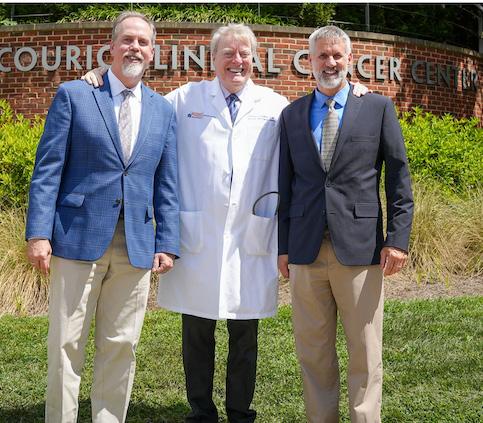
UVA Health became the first healthcare provider in Virginia to offer tarlatamab, a revolutionary immunotherapy for small cell lung cancer (SCLC). This “bispecific T-cell engager” supercharges the body’s immune system to find and destroy cancer cells, significantly extending patient survival. In UVA’s published results from 21 patients, nine showed partial tumor response, with an overall response rate of 42.9%—a remarkable outcome for one of the deadliest cancers. In larger clinical trials of tarlatamab, median survival has reached about 14 months, compared to less than 6 months with standard chemotherapy. UVA has developed an outpatient protocol that expands access to this life-extending therapy across Virginia.

Harald Sontheimer, chair of UVA’s Department of Neuroscience, and his research team have discovered why Alzheimer’s patients lose the ability to recognize family members and friends, solving a heartbreaking mystery that has plagued families for generations. Published in October 2025, their research found that protective “perineuronal nets” surrounding neurons in the brain’s social memory center break down in Alzheimer’s disease. Using MMP inhibitor drugs, they successfully preserved these protective nets in mice and protected social memory, offering a completely new therapeutic target. This discovery could lead to treatments that delay one of the most devastating aspects
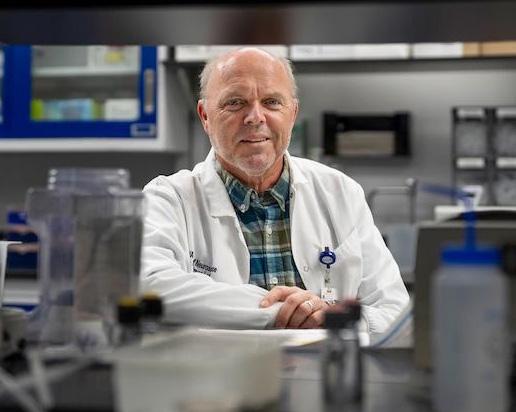
of Alzheimer’s—when patients no longer recognize their own loved ones.
Professor John Lukens, director of the Harrison Family Translational Research Center in Alzheimer’s and Neurodegenerative Diseases, discovered that DNA damage accumulating during aging triggers inflammation in the brain that damages neurons and impairs memory in Alzheimer's disease. By removing the STING protein in mice, his team dampened harmful immune activation, protected neurons, and improved memory function—revealing a novel pathway for potential treatments that could slow or prevent Alzheimer’s progression.
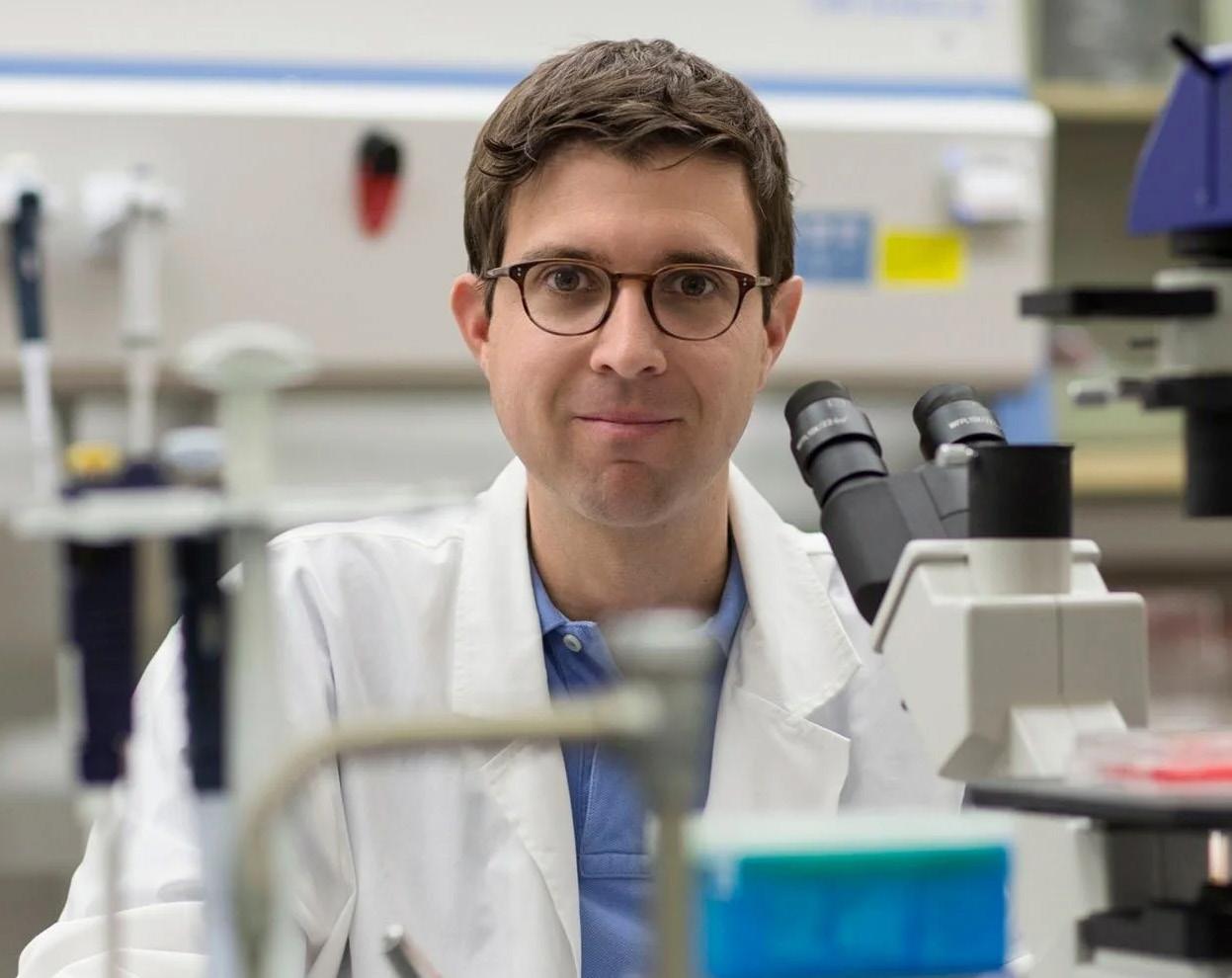
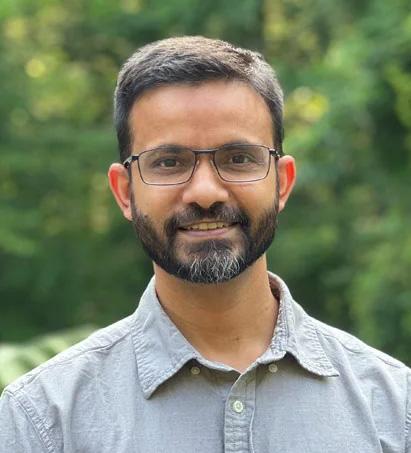

In breakthrough research announced December 2025, professor Swapnil Sonkusare and his team discovered a previously unknown mechanism causing high blood pressure in obesity—and it comes from within blood vessels themselves. They found that smooth muscle cells in small arteries release an inflammatory molecule called TNF that disrupts neighboring endothelial cells, raising blood pressure. Using a TNF-blocking drug, they successfully lowered blood pressure in obese mice, with early human cell tests showing promise. This discovery opens the door to targeted treatments for the millions of Americans with obesity-related hypertension.
UVA scientists, led by Drs. R. Ariel Gomez and Maria Luisa S. SequeiraLopez, revealed how our bodies naturally regulate blood pressure by controlling a key hormone, discovering what amounts to a built-in “off switch” for high blood pressure. This discovery of how calcium activity in kidney cells regulates renin production could lead to new treatment strategies for the millions of Americans struggling with hypertension.

AI-Powered Artificial Pancreas Frees Diabetes Patients from Constant Management
UVA’s Center for Diabetes Technology developed an FDA-approved artificial pancreas that uses advanced algorithms to automatically adjust insulin delivery, significantly improving blood glucose control for people with type 1 diabetes. In a major clinical trial, the system increased time in a healthy glucose range from 72% to 77% compared with standard therapy, while reducing the daily burden of diabetes management. Building on this progress, UVA researchers are now testing next-generation artificial pancreas systems that use artificial neural networks and “digital twin” technology to model individual physiology and move toward fully automated insulin delivery without patient input. These systems remain in clinical trials, while the FDA-approved UVA artificial pancreas already supports patients worldwide.
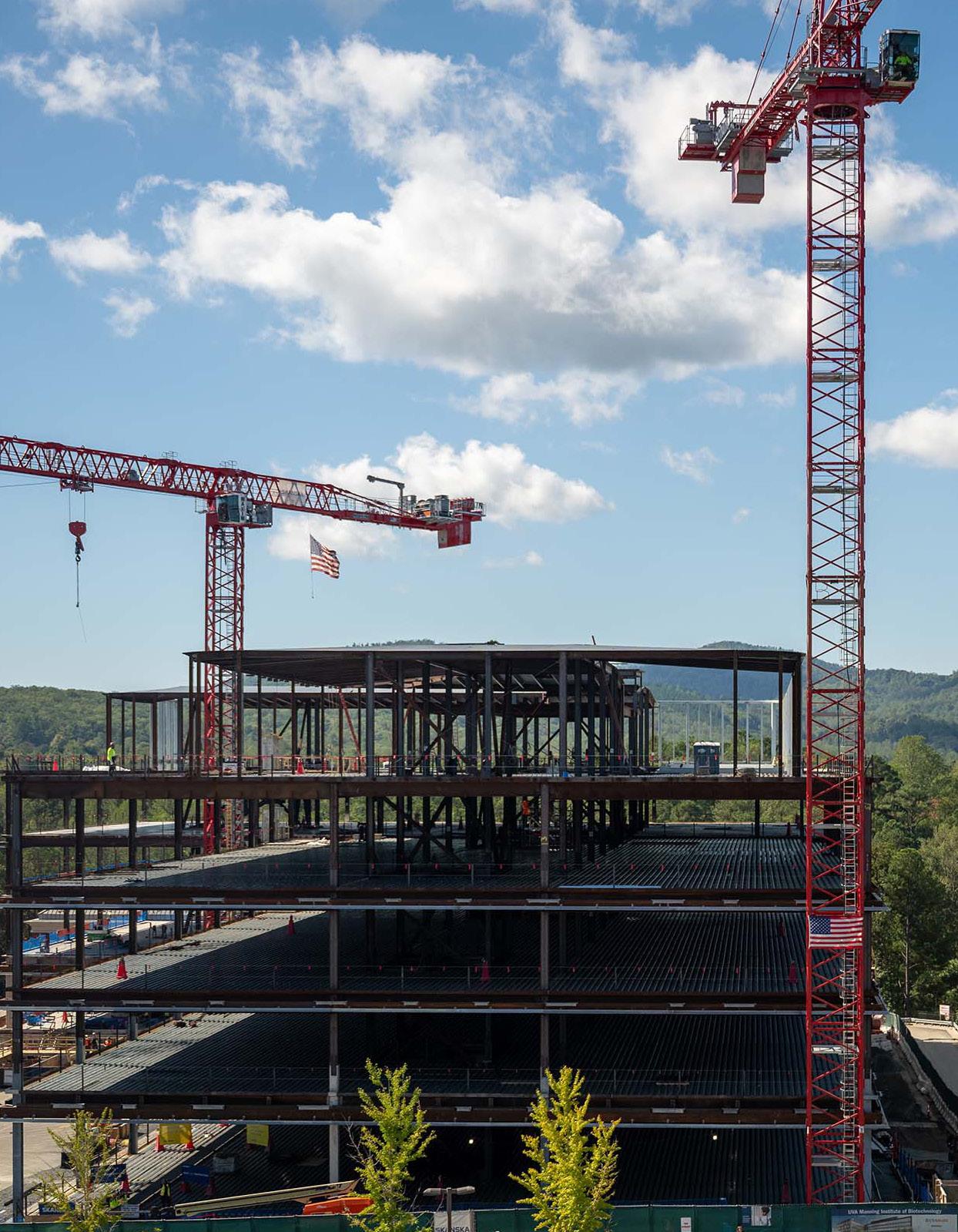
Manning Institute of Biotechnology
UVA marked a key construction milestone with the “topping-out” ceremony in October 2025 for the Paul and Diane Manning Institute of Biotechnology, a 350,000-square-foot facility at Fontaine Research Park. Funded by $100 million from Paul and Diane Manning, $100 million from the Commonwealth of Virginia, and $150 million from UVA, the $350 million project is designed to dramatically speed up how quickly new treatments move from the lab to patients.
The institute will function as a kind of “factory for cures” by housing, in one place, scientists discovering new therapies, specialized clean rooms that can manufacture cell and gene therapies, and clinical spaces where patients can receive those experimental treatments. Its work will center on cellular therapies that use a patient’s own cells as medicine, gene therapies that fix or replace faulty genes, immunotherapies that train the immune system to fight cancer, and nanotechnology-enabled drug delivery that sends medicine directly to diseased cells while sparing healthy tissue. Expected to open in 2027, the institute is projected to create hundreds of high-skilled jobs and attract biotech partners such as AstraZeneca—already collaborating with UVA on new ways to combat serious infections.
UVA Health launched its Clinical Trials Network in September 2025, bringing cutting-edge clinical trials to community hospitals across Virginia for the first time. Patients at UVA Health’s Culpeper and Prince William medical centers can now access clinical trials for breast cancer, kidney stones, and other conditions without traveling to Charlottesville—dramatically expanding opportunities for Virginians to participate in groundbreaking research.
Long COVID Treatment Trials Offer Hope
UVA Health joined nationwide NIH RECOVER Initiative trials in March 2025 to test potential long COVID treatments for patients suffering from POTS (postural orthostatic tachycardia syndrome) and sleep disturbances. These trials are testing multiple promising therapies including intravenous immunoglobulin, ivabradine, modafinil, and light therapy to address the debilitating symptoms affecting millions of Americans.
Dr. Gerald Teague discovered that nearly a quarter of children with recurrent wheezing have “silent” viral lung infections better treated with antivirals than commonly prescribed steroids. This discovery can immediately improve care and prevent lifelong side effects like stunted growth from unnecessary steroid use—a game-changer for pediatric respiratory care.
UVA Health became among the first hospitals worldwide—and the first in Virginia—to adopt the da Vinci 5 robotic surgical system in 2024. Featuring 150 design innovations including force feedback technology and improved 3D vision, this cutting-edge system enables more precise minimally invasive procedures across multiple surgical specialties.
UVA Health introduced high-intensity focused ultrasound (HIFU) technology in November 2025 for treating prostate conditions without a single incision. This revolutionary robotic technology offers more precise treatment with smoother recovery and fewer side effects for patients.

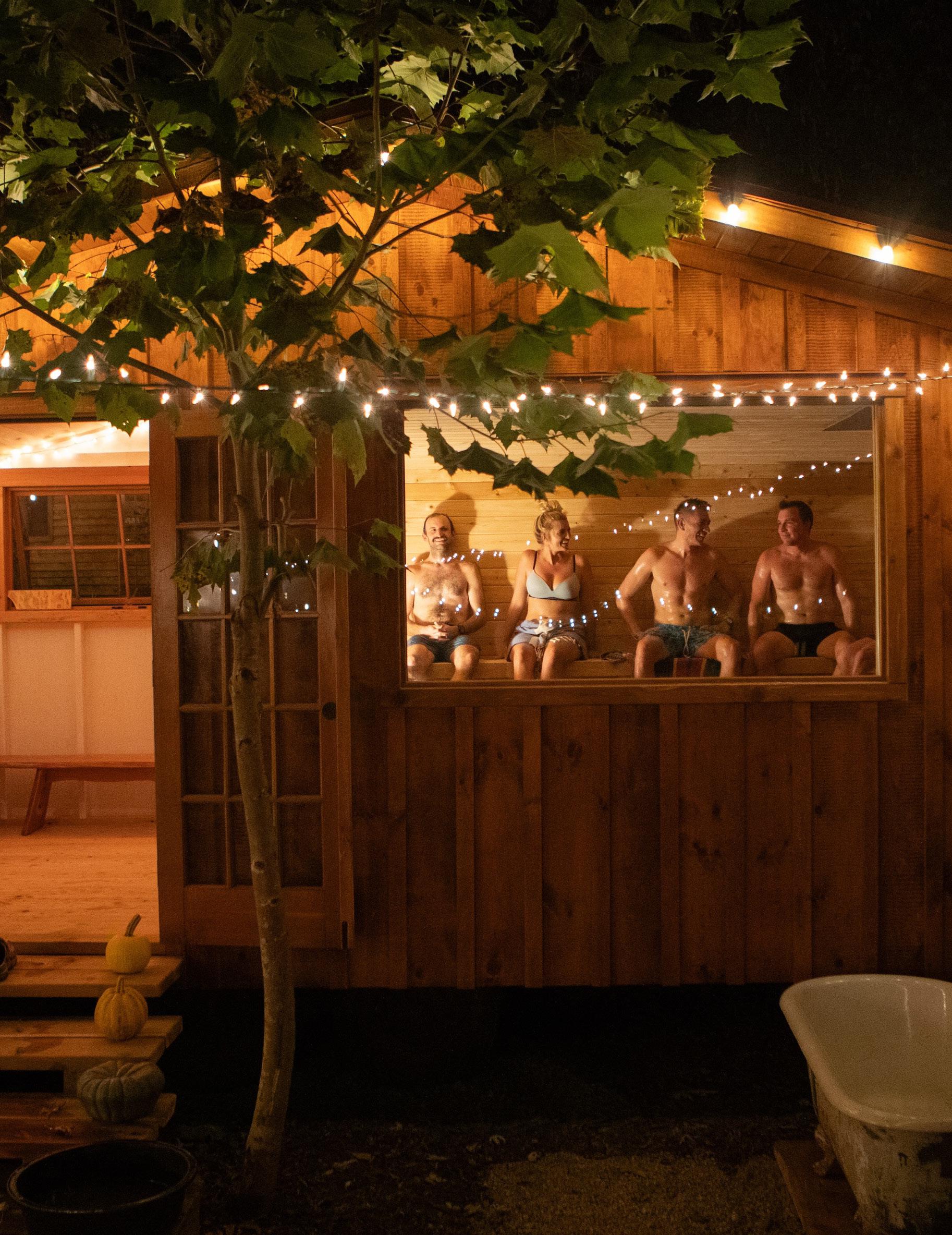
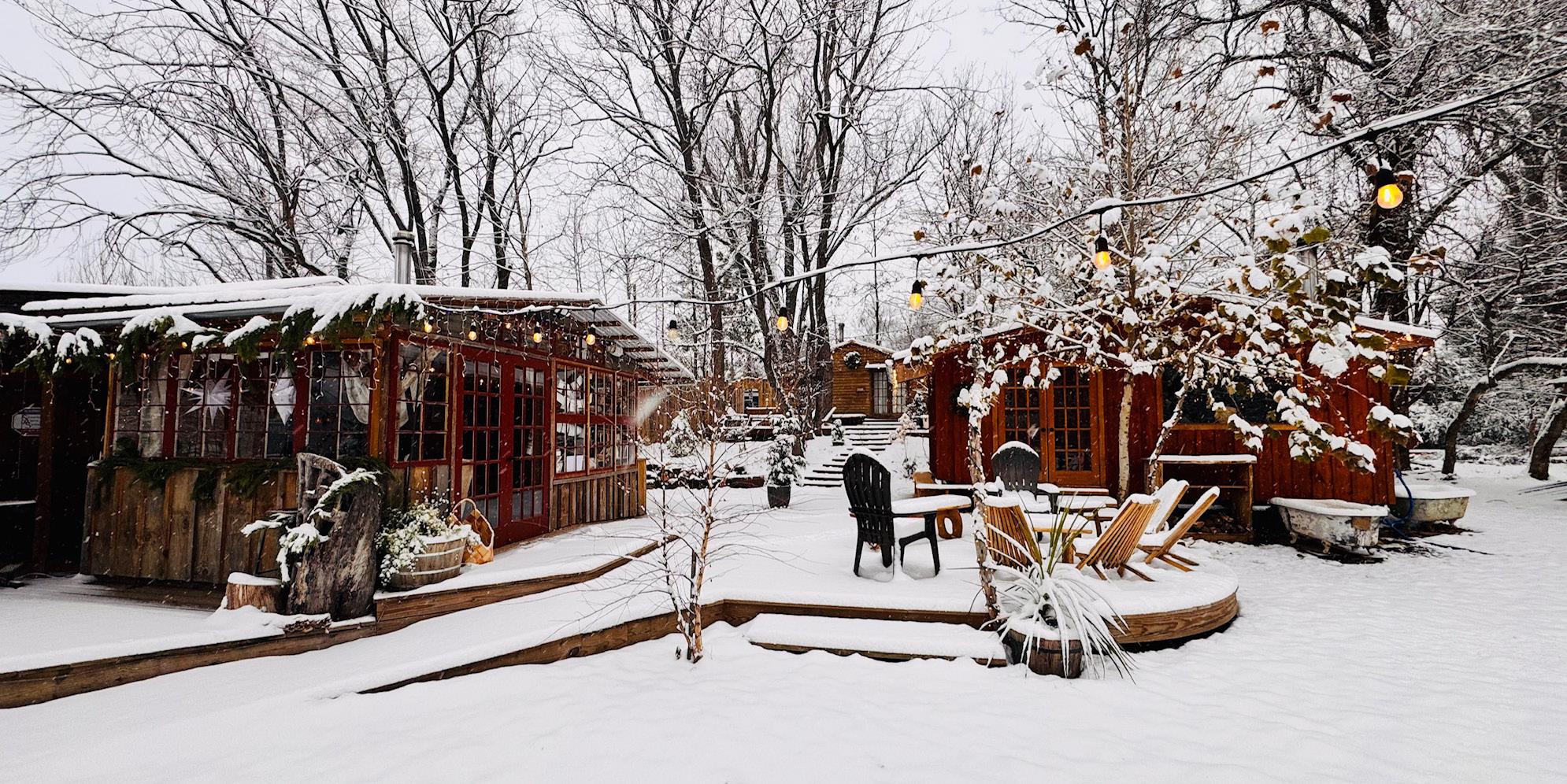
During the gray winter months, the Rivanna River flows cold and quiet, empty of the people who swim, paddle, and float there in the summertime. Along one stretch of the river, however, an ancient practice has drawn many back to the wintry Rivanna.
Riversong Saunas is the newest chapter in the work Gabe and Sonya Silver have been doing since 2015, when they founded Rivanna River Company as Charlottesville’s first paddlesports outfitter. From the beginning, they’ve seen the business as a way to connect people to the river. In warm weather, that connection happens through kayaks, tubes, and canoe shuttles. After a few years, they started asking what might draw people to the Rivanna during the colder months.
“Sonya and I had been searching for a way to welcome people to this riverfront place year round,” Gabe says. “What activity could we offer in the cold weather that would draw people outdoors and together into a community?”
It wasn’t an easy question to answer. The idea ultimately sprang from a conversation when Sonya asked, “If we can't have hot springs here, is there a way we could create another heat therapy experience based in nature?”
Then they began looking at sauna.
Sauna is one of the world’s oldest forms of heat bathing, with archaeological evidence suggesting it dates back as far as 8,000 to 10,000 years, emerging shortly after the last Ice Age. Its most enduring tradition comes from Finland, where sauna developed as a practical, communal space used for cleansing, healing, and gathering. Early saunas were often dug into the earth and heated by firewarmed stones that produced steam, establishing a simple cycle of heat, cooling, and rest that remains central to the practice today.
Similar traditions emerged independently across cultures. In ancient Rome, public bathhouses formalized contrast bathing through sequences of hot and cold rooms, while Indigenous peoples across North America practiced sweat bathing in lodges that combined heat, steam, and cold water immersion as part of daily and ceremonial life.
Modern research supports many of these ancient practices. Sauna bathing raises heart rate and circulation, producing cardiovascular effects similar to moderate exercise, while alternating heat and cold supports vascular function and reduces inflammation. Regular use is also associated with stress reduction, improved sleep, and mental clarity, reinforcing sauna’s enduring role as both a physical and restorative practice.
The concept also aligned with the way they have always approached Rivanna River Company: identify a need, imagine a solution, and build it themselves. That hands-on approach comes naturally to Gabe, who has a background in construction and custom home building. Rather than purchasing a prefabricated structure, the Silvers began studying Finnish sauna culture and spent an offseason designing and building their first sauna by hand.
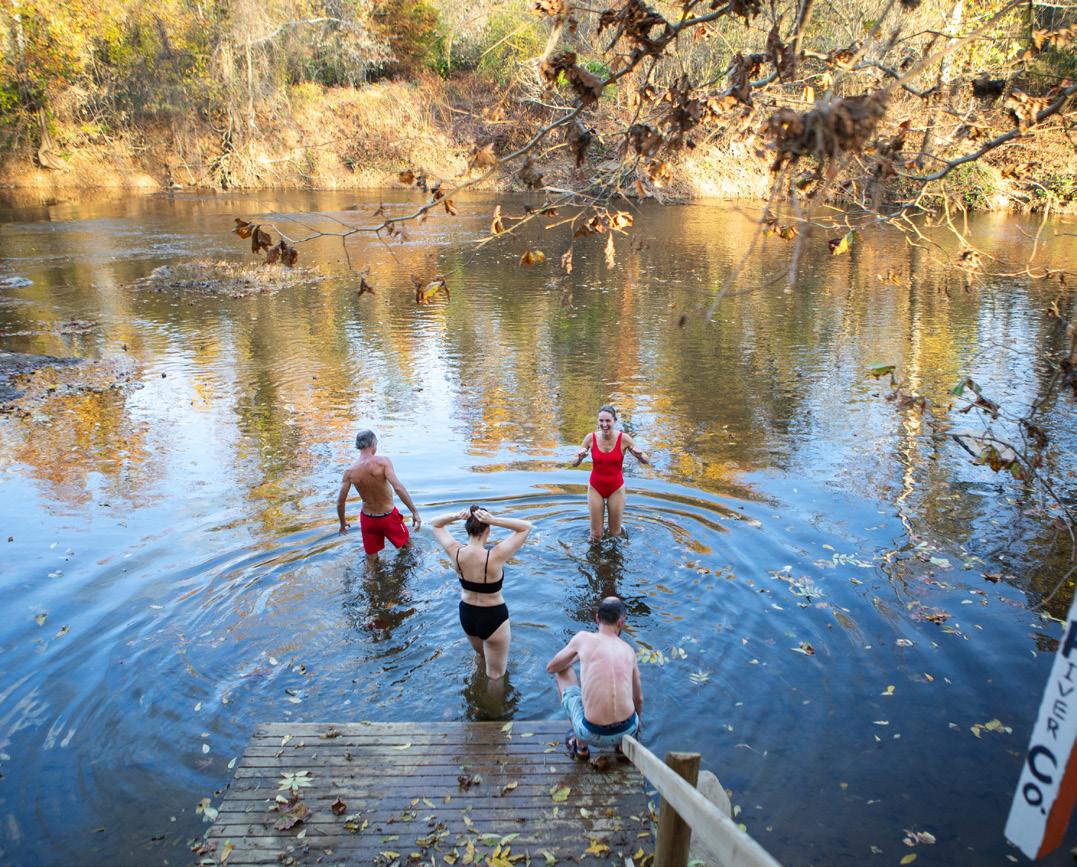
Particularly appealing was the idea that the cold element could be the river itself, accessed by the same stairs Rivanna River Company already uses during the summer, reinforcing the sauna’s connection to place rather than separating it from the landscape.
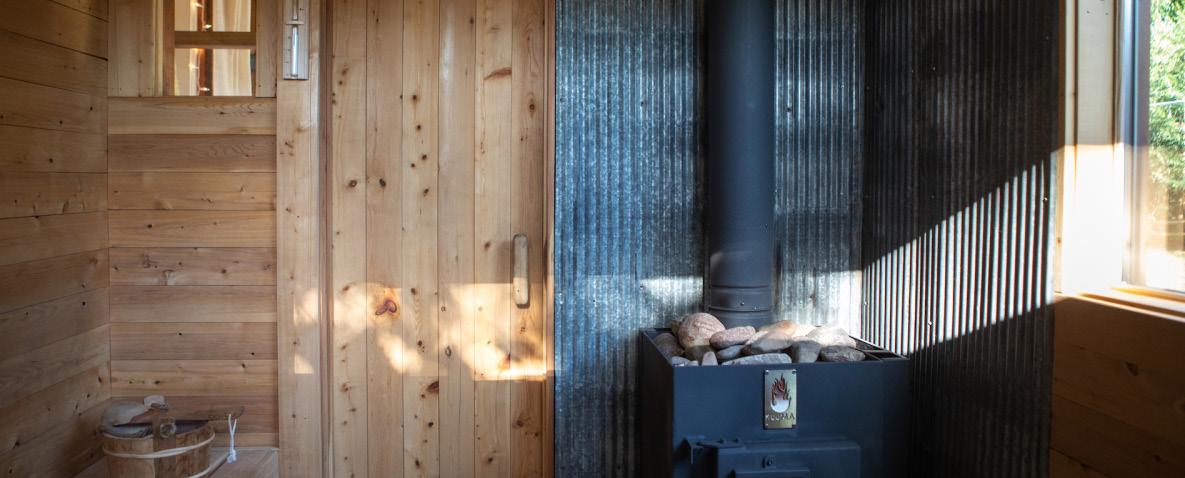
They built their first sauna in 2022, lining the hot room with Atlantic white cedar and heating it with a Kuuma wood-burning stove made in Minnesota. They consulted a sauna expert to help design a wellventilated, comfortable space that follows traditional principles. A second, larger sauna was completed in fall 2024, primarily for community sessions of up to 12 to 14 people. The original sauna is now used mainly for private rentals, with its own deck and lounge to create some separation on what has become a small sauna campus.
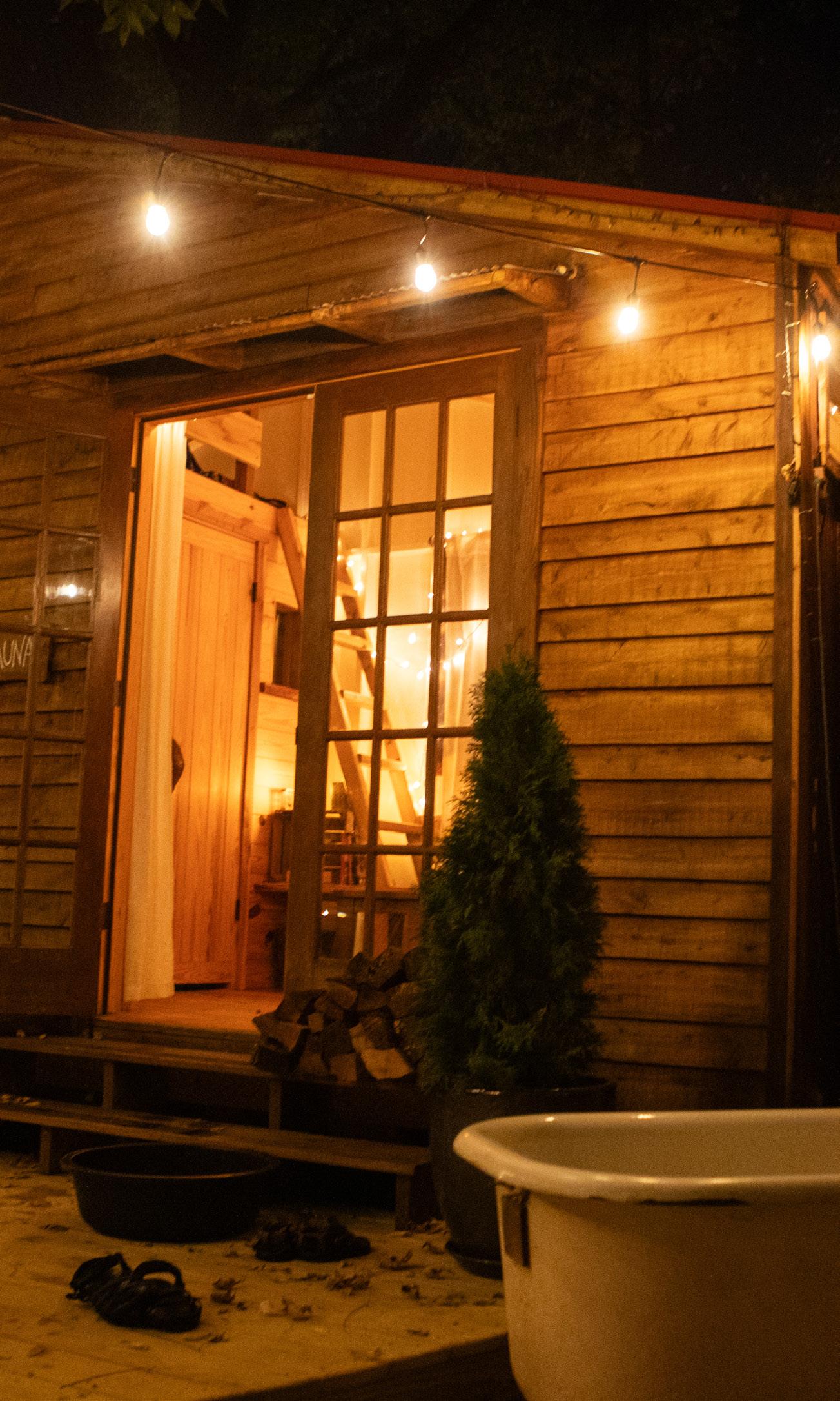
Sauna season runs from November through April, and a typical Riversong session lasts 90 minutes, which allows time for about three rounds of heat, cold, and rest. Guests arrive a bit early, change, and enter the sauna in bathing suits. Most people start with about five to 15 minutes of heat. Then they cool down by sitting outside in the cold air, showering, plunging in a tub, or heading down to the river. Cold exposure varies widely. For some it’s a quick splash of water and fresh air; for others it’s a full river plunge for a minute or two, sometimes longer. Between rounds, guests rest in a temperate lounge or on the outdoor deck.
Both Gabe and Sonya are quick to point out that Riversong’s success isn’t something they’ve created on their own. From maintaining the fires and guiding first-timers through the rhythm of a session to preparing tea, their staff plays a central role. Gabe describes the team as “amazing,” noting that the sense of welcome people feel has as much to do with who’s on site as with the sauna itself. Reviews consistently reflect that care, reinforcing the Silvers’ belief that Riversong works because it’s stewarded by people who understand and believe in the experience.
At first, it was unclear whether sauna would work commercially, but early sessions with friends suggested something was there. “Almost immediately, they noticed how much they liked it, how much they wanted to do it more,” says Gabe. “They felt invigorated and talked about sleeping better. They wanted to bring others.”
Sonya says the response to Riversong has gone far beyond what they imagined. “It has just surpassed all of our dreams and expectations of people taking to it,” she says. “It really feels like it’s filling a need in people’s lives. People want to be with other people, to slow down together, and to feel part of something that’s real and present.”
She also points to something more seasonal and specific to Central Virginia. “It’s not always easy to embrace winter here,” she says. “We don’t have a lot of snow, or the kinds of winter activities that
naturally make you love the cold.” Sauna has helped shift that relationship. “We hear it over and over: ‘I’ve never looked forward to winter until now.’”
The aspect of the experience most commonly discussed among guests isn’t about how long they stayed in the heat or how cold the river felt, but about how they felt afterward. Relief from stress and anxiety comes up again and again. “It’s very difficult to come through a sauna session and come out with a mind that’s still anxious,” Gabe says. He theorizes that sauna and cold plunge replace the constant, lowlevel stress of modern life with a short, contained challenge—“the kind of stress we’re more evolved to deal with.” People may be stressed out when they arrive, but after a few cycles of heat and cold, that tension disappears.
Another key component is simply presence. Guests are encouraged to leave phones in their bags. Without screens or schedules, people sit and talk together in a space that slows down the hectic pace of daily life. It’s an increasingly rare experience, and one that many guests cite as unexpectedly restorative.
After the heat and cold, a visit to Riversong ends with small comforts, offering lemon-ginger-honey tea (homemade with real lemons and fresh ginger) and warm lavender water with washcloths near the end of a session. There are snacks, charcuterie, and a sense of being looked after. Sonya said those touches weren’t part of the original plan, but became important as they realized how much guests respond to care.
“They’ve become this really ingrained part of what we do,” she explains. “It gives people this feeling of, ‘Oh, I can really let down here. I’m being cared for.’ It’s just a little moment in someone’s day, but they realize, ‘I can rest easy here.’ Those small things mean a lot, and it’s been really meaningful to lean into them.”
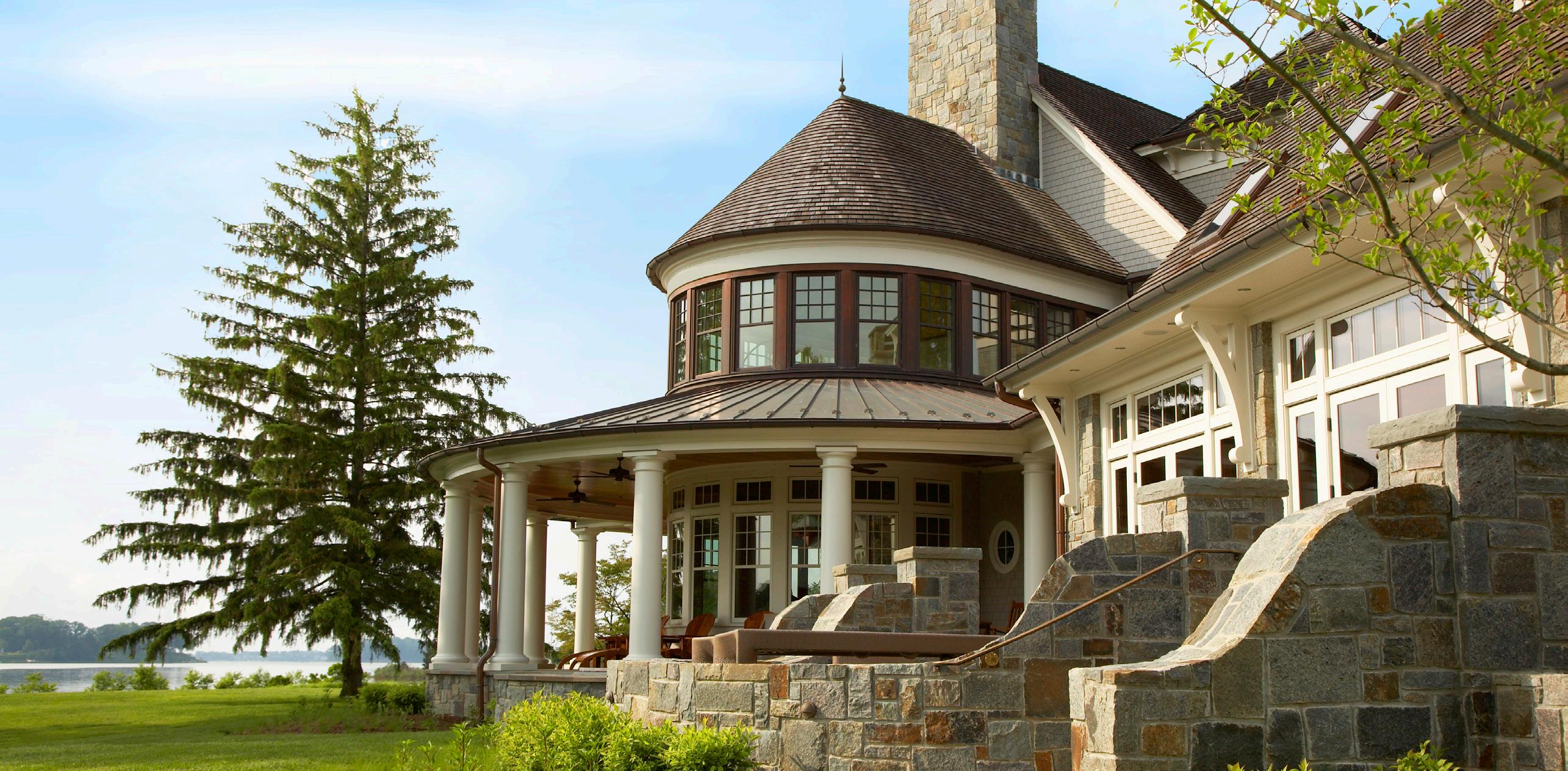
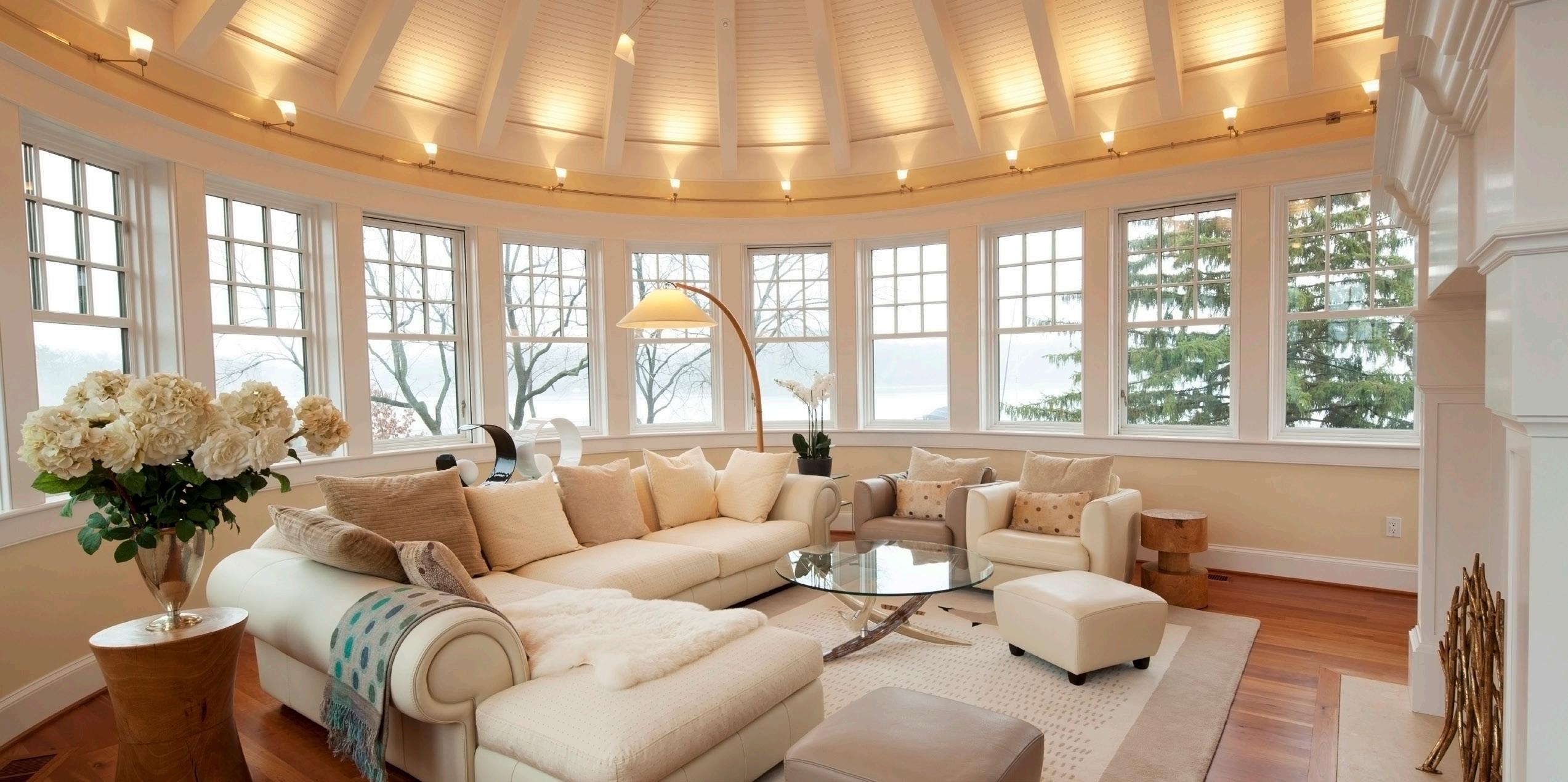
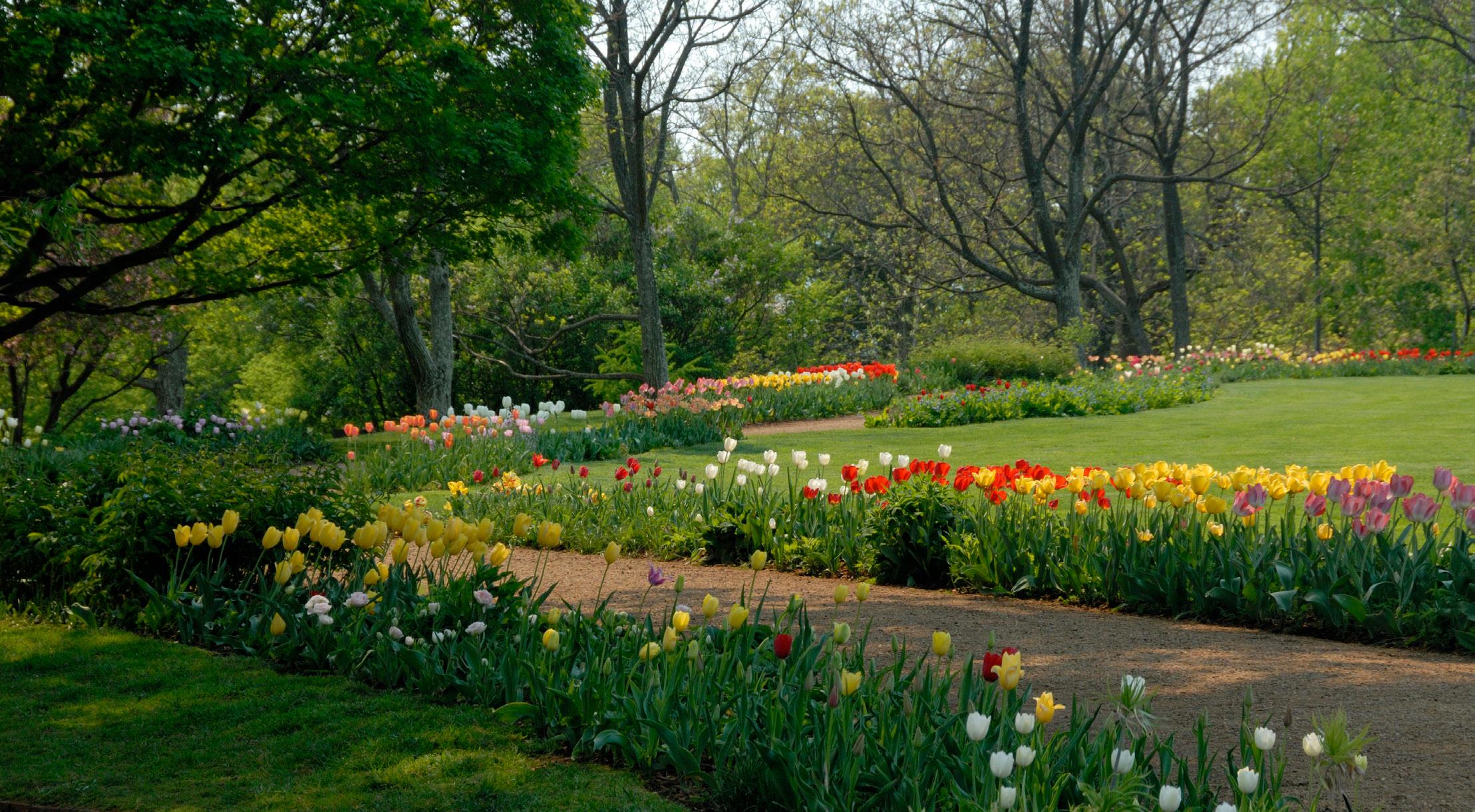
Historic Garden Week began in 1927, when a Garden Club of Virginia flower show raised $7,000 to preserve trees planted by Thomas Jefferson at Monticello. More than a century later, as the nation celebrates its 250th anniversary in 2026, Historic Garden Week continues to offer immersive ways to explore Virginia’s deep roots in American history. This statewide spring tradition opens the gates to many of the properties connected to early Virginians who helped shape the country—from Jefferson and George Washington and to the Indigenous peoples who first inhabited these lands and the enslaved Africans whose labor built many of the sites still standing today.
This April, nearly 130 private homes and historic landmarks across the Commonwealth will welcome visitors for 29 distinct tours, along with bonus gardens at Little Oak Spring and Morven. Spanning four centuries of architecture and design, the tours showcase an extraordinary range of properties, from rural farmhouses and grand manors to urban townhomes and mid-century modern icons. Each tour typically features three to five private homes and gardens, many of which are open to the public only during Historic Garden Week, along with access to notable state and national landmarks.
Historic Garden Week has become a cherished spring ritual, drawing more than 24,000 visitors each year from across the country and around the world. Last year, visitors from 42 states and 16 countries traveled to Virginia to take part in the nation’s oldest house and garden tour. Proceeds support the restoration and preservation of Virginia’s public gardens and historic landscapes, along with historic landscape research and fellowships that continue to deepen understanding of Virginia’s gardens and the stories they tell.
The tours take place throughout Virginia—here’s a look at a few of the tours that are closest to home.
April 18
Hosted by: Dolley Madison Garden Club
This walking tour features five architecturally diverse homes and gardens in Orange’s Marshall Heights, including a rare kit house and a hidden garden with sweeping views.
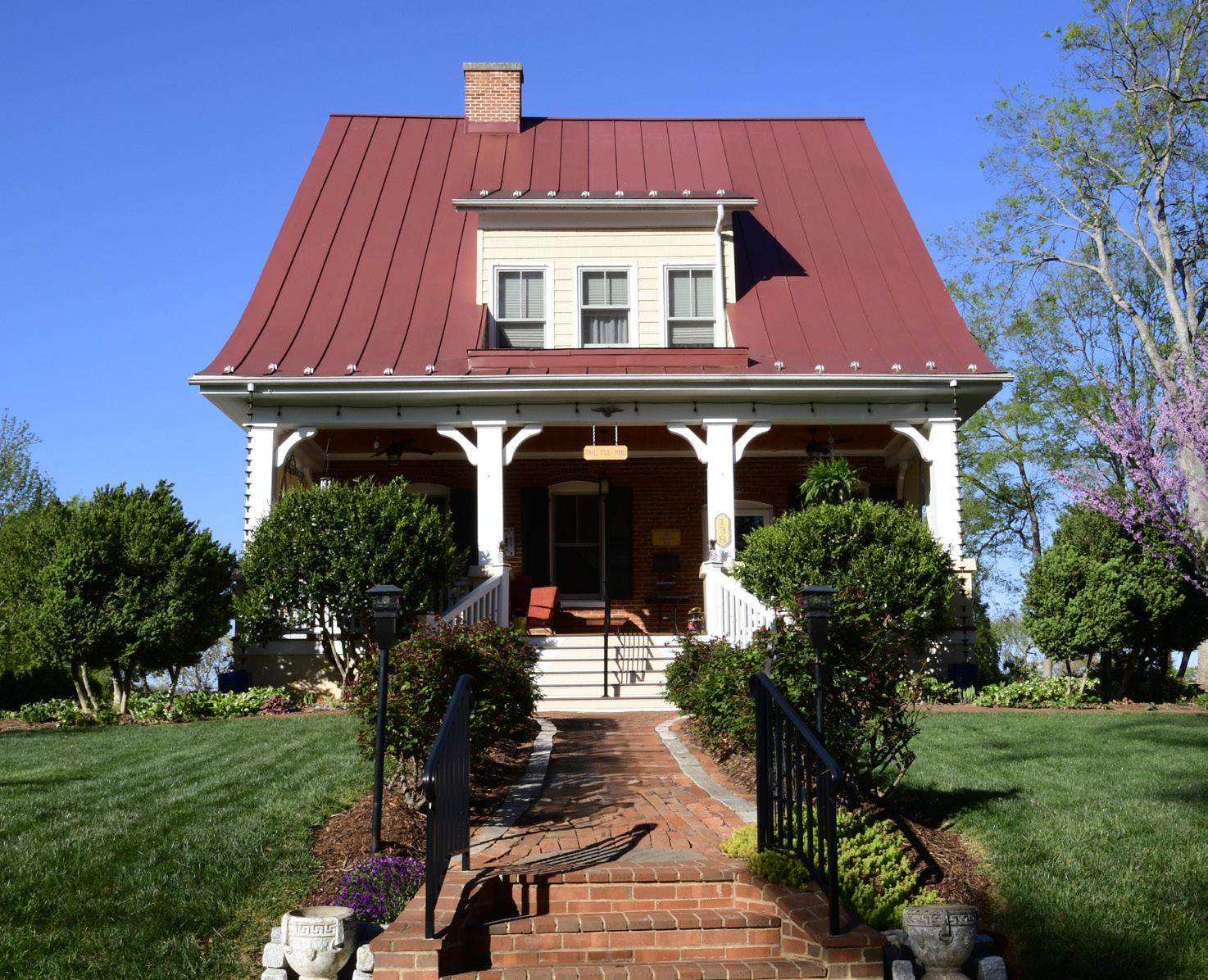
Built in 1912 by Alexander and Adra Browning, Thistle Dhu is the first Arts and Crafts house in the Town of Orange and remains one of its most distinctive homes. Set on a half-acre lot, the house features a steep gabled roof, wide eaves, a broad front porch with square concrete columns, and interiors rich with oak trim, hardwood floors, plaster walls, and pocket doors. Subtle details—including numbered brass window tags and rare triple casement dining-room windows—hint at its kit-built origins. Held by the Browning family for more than a century, the house has been carefully updated, preserving its original character while thoughtfully integrating new architectural and landscape elements.
Built in 1930 by William and Mary Browning in an 18th-century style, the cottage sits on a three-acre property that includes boxwood terraces, a summer house, and a three-bay pole barn.
A Greek Revival landmark dating to 1868 has a columned porch, carriage
porte cochere, and intact agricultural outbuildings. The house reflects early modernization layered onto its 19thcentury form.
Built in 1898 by the Maddox family, this Queen Anne home reflects layered domestic history, from Depression-era multi-family living to preserved heart-pine floors, pocket
doors, and wainscoting that anchor its late19th-century character and original plan.
Built circa 1850 by Peyton Grymes, this former rental home survived the Civil War Battle of Mine Run. Original glass, woodwork, and a central stair with a possible bullet hole preserve its 19thcentury history.
April 19
Tour Chairs: Pati Cunningham, Helen Hilliard, and Ann Garland
This driving tour explores Albemarle County’s garden and farm history, from Monticello to historic Garth Road, with rolling landscapes, renowned properties, and private gardens.
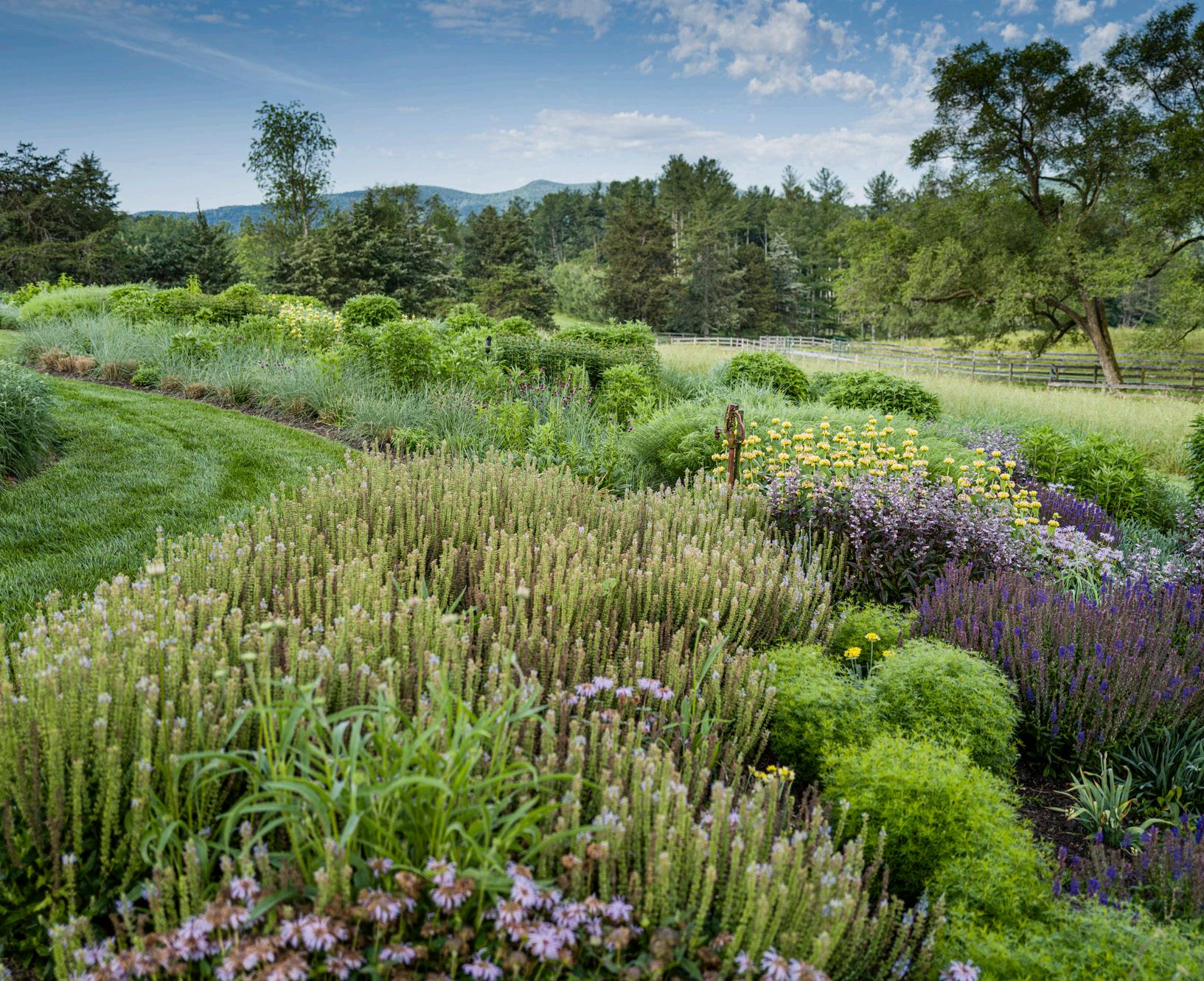
4900 Deep Rock Farm, Crozet
Part of a 160-acre working farm, the flower and prairie gardens at Deep Rock Farm feature flowing drifts of perennials and soft grass paths. Designed by Luciano Giubbilei, House & Garden’s 2024 Garden Designer of the Year, the gardens are framed by the Blue Ridge Mountains and anchored by a historic barn reimagined by architect Gil Schafer. More than 14,000 native plants are interwoven with carefully chosen non-natives, with a simple reflecting pool echoing the barn’s form.
The landscape also reflects the site’s agricultural past, grounding its contemporary design in centuries of Virginia farming tradition. Garden Club of America Medalist Roy Diblik collaborated on the planting plan, which was planted with help from University of Virginia landscape design students. Designed for sustainability with minimal watering, the biodiverse gardens provide a thought-provoking landscape.
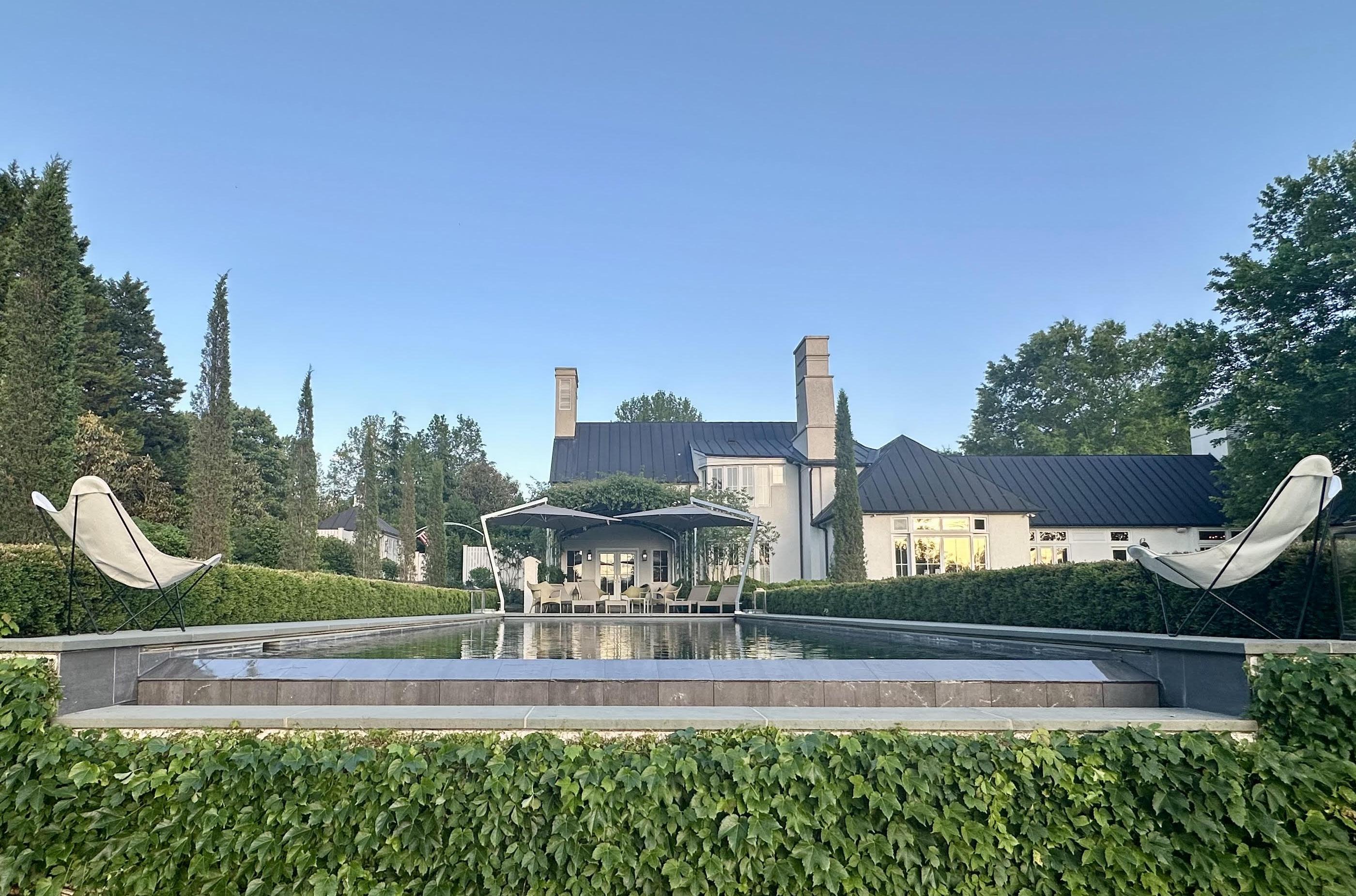
1220 Inglecress Drive, Charlottesville
The gardens at Skye Fall are structured primarily by boxwood, echoing the French Normandy style of the main house. A boxwood-lined drive passes beneath hornbeam arches and specimen trees, setting a formal tone that carries throughout the landscape. Floor-to-ceiling windows and French doors open to layered garden views and distant Blue Ridge vistas.
Terraced grass steps edged in bluestone descend to a broad lawn, while a series of boxwooddefined garden rooms guide movement across the property. The garden reflects a long tradition of European-inspired landscape design, adapted thoughtfully to Virginia’s climate and terrain. Near the pool, columnar junipers and sculptural containers introduce a subtle Mediterranean note. In bloom nearly year-round, the garden’s elegant structure shines even in winter.
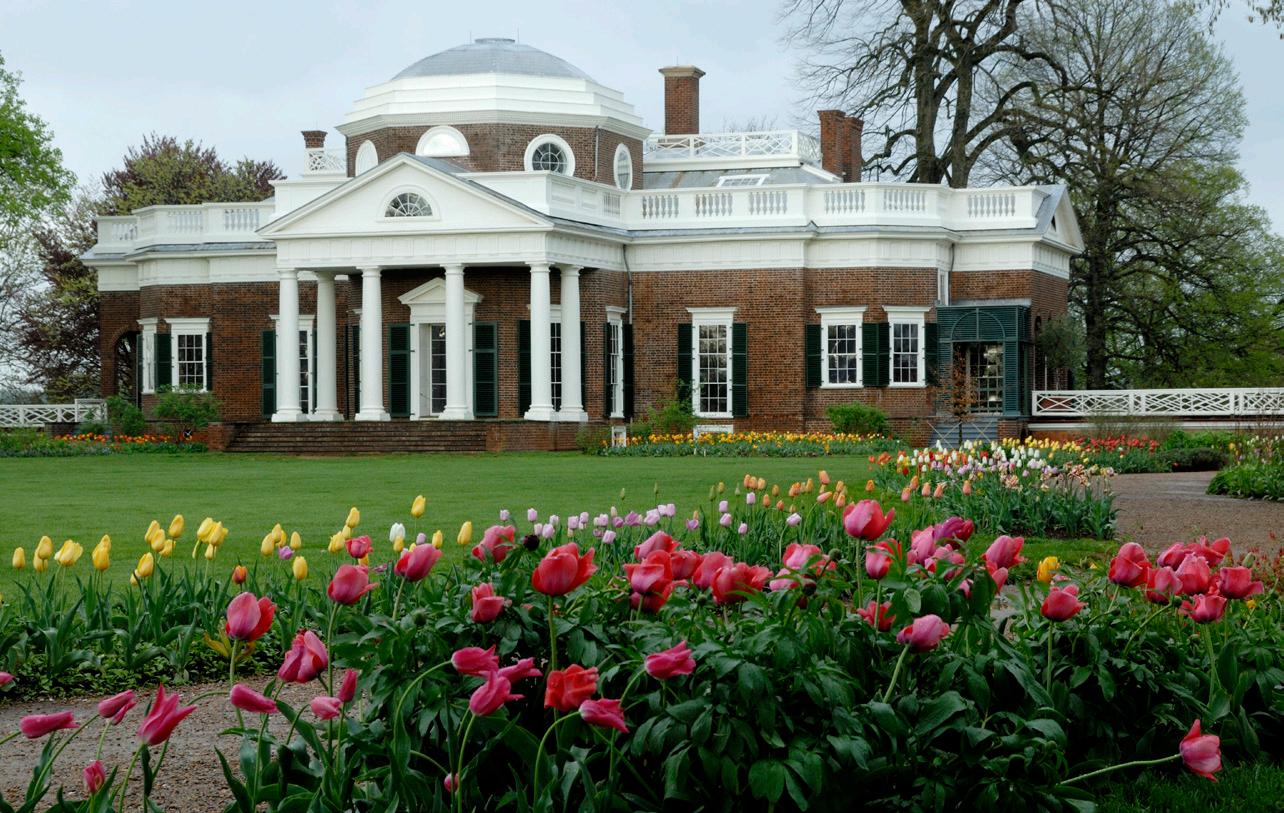
1050 Monticello Loop, Charlottesville
Thomas Jefferson had a lifelong passion for shaping the house and gardens at Monticello. The West Lawn design visitors see today dates to an 1807 sketch drawn during his presidency. In 1923, the Thomas Jefferson Memorial Foundation was formed, and soon after, the Garden Club of Virginia emerged as a vital partner, funding and guiding restorations based on Jefferson’s original plans. Over decades, the Club has led work that revived key garden features and views, preserving the landscape Jefferson imagined as an expression of a new nation.
Saturday, April 18
This shuttle tour features three private homes and gardens, city and country settings, Shenandoah Valley views, and highlights of improvements to Gypsy Hill Park highlights.
Tour Chair & Co-Chair: Laura Nordstrom and Catherine Lareau
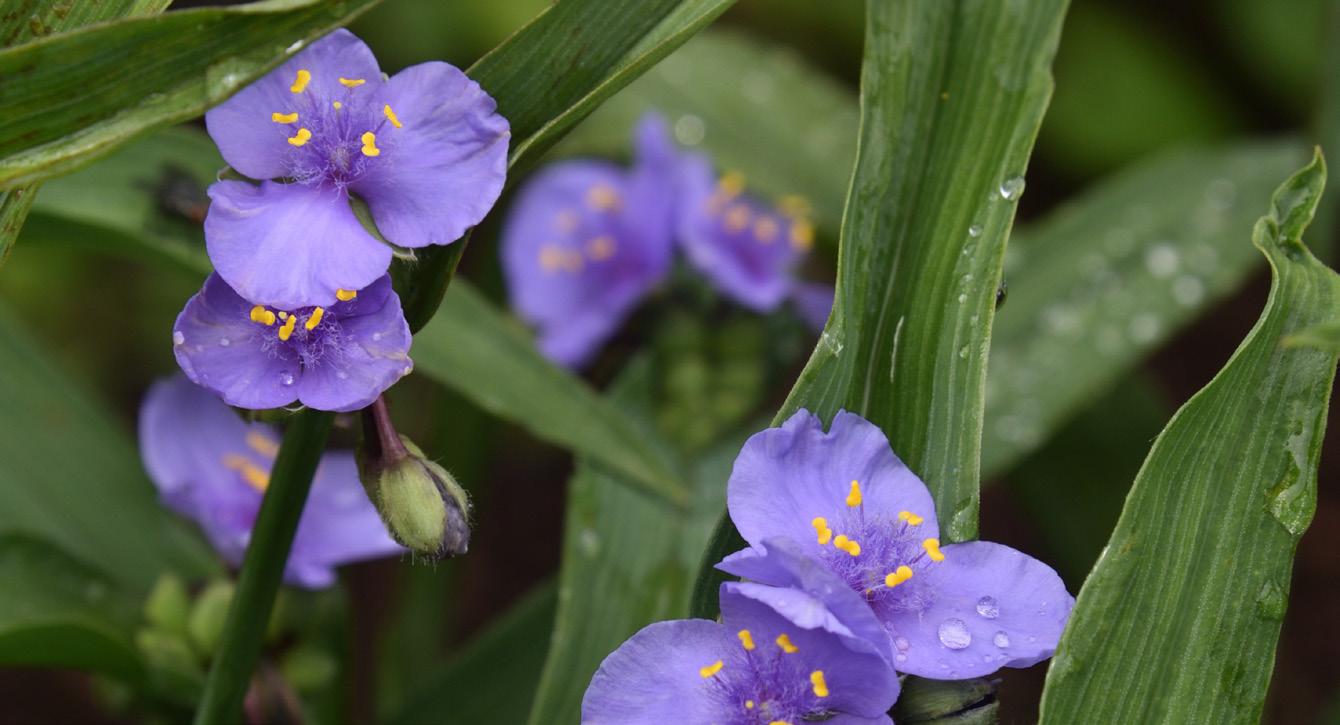
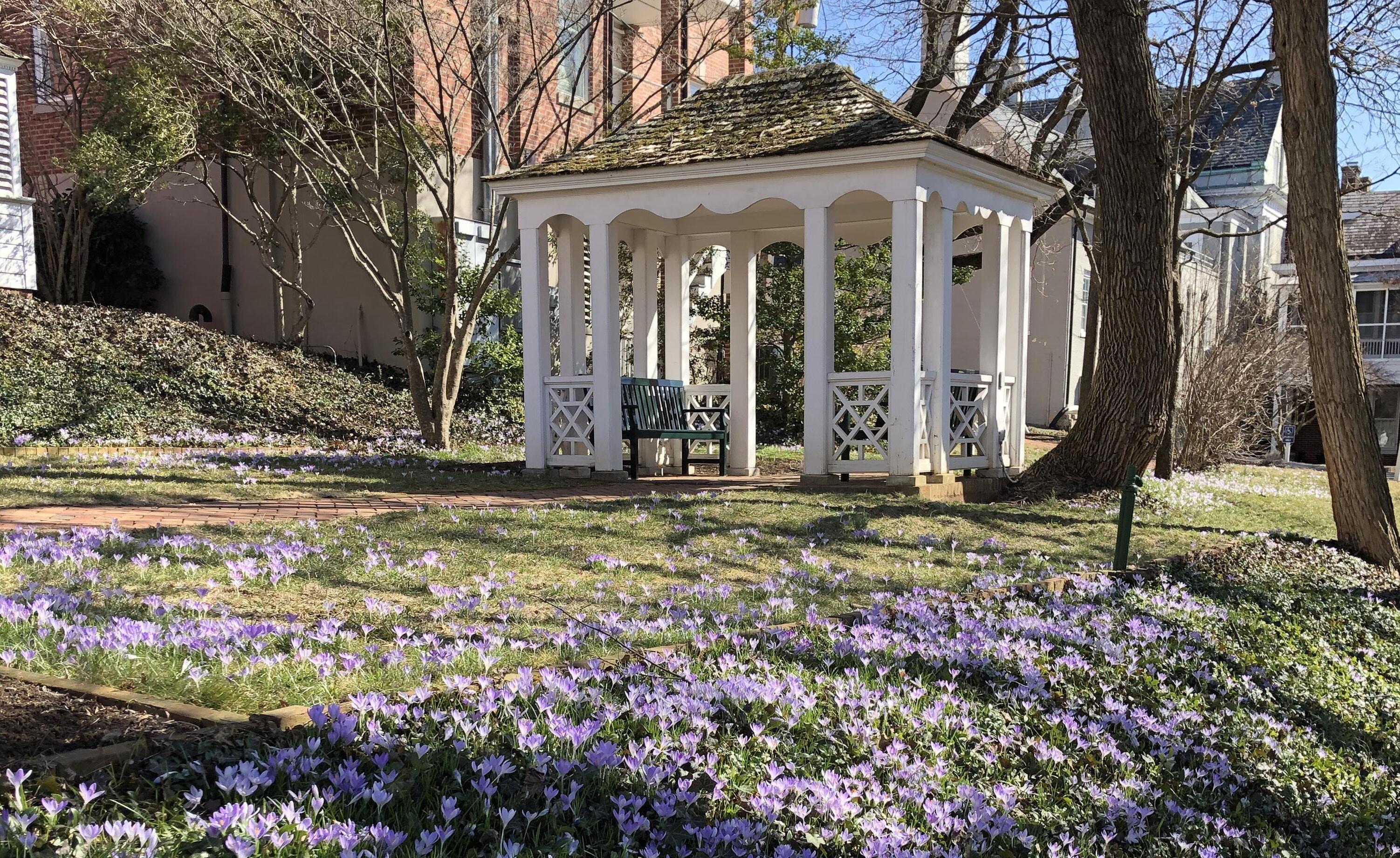
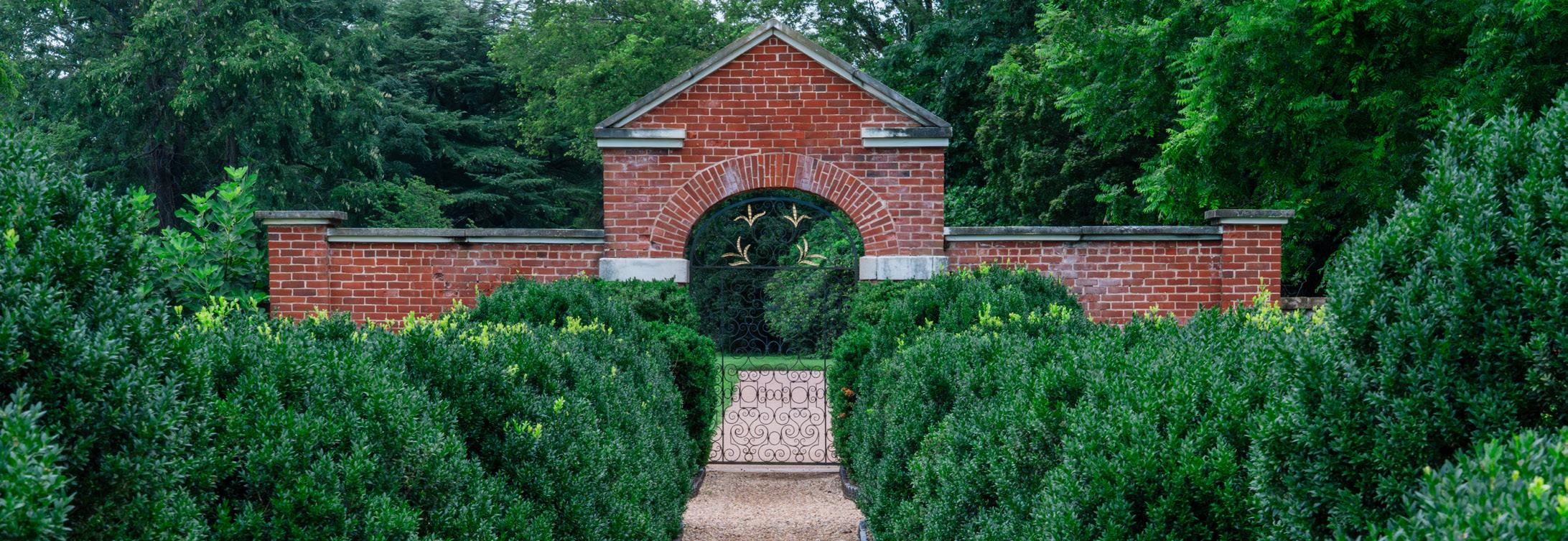
Built in 1912, Falcroft is a distinguished example of early 20thcentury Colonial Revival architecture in Staunton. In 1924, owner Bertram Alwin Jacob commissioned a major expansion by noted local architect Sam Collins, who added servants’ quarters, a carriage house, and stables. Brick-walled gardens, stone paths, and remnants of a private golf course reflect the property’s historic role as both refined residence and leisure landscape.
Erected in 1939 for the Taylor family, this Colonial Revival home reflects popular residential design of the late Depression era. Family lore holds that the original plans came from a 1930s magazine and were adapted by architect Sam Collins. Later
renovations respected the home’s historic proportions while adapting the original layout, preserving a layered architectural record of mid-20th-century domestic life. The recent rear garden features limestone walls, bluestone terraces, board fencing, vegetable garden boxes, and a stone whale surprise.
Built in 1946 atop Two Mile Hill, this postwar residence was originally owned by the Bratton family, proprietors of Staunton’s Worthington Hardware. Many original hardware elements sourced directly from the family business remain intact. The home’s siting, materials, and enduring floor plan reflect postwar domestic ideals, while decades of careful stewardship have preserved its warmth, character, and strong connection to the surrounding landscape.
The Garden Club of Virginia has completed a total of nearly 50 landscape restoration partnerships statewide, many funded by Historic Garden Week and tied to the nation’s 250th anniversary. The Club has focused on restoring the gardens and landscapes that were integral the early history of Virginia and the United States, including projects at George Washington’s Mount Vernon, Thomas Jefferson’s properties Monticello, Point of Honor, and Poplar Forest, James Madison’s Montpelier, and the Mews at St. John’s Church, located in Richmond’s Church Hill, the site of Patrick Henry’s famous call to arms.
Some lesser-known sites include Burwell Morgan Mill, co-owned by Daniel Morgan, a leading general in the American Revolution, and Fincastle Church, one of the gateways to the west.
Tour tickets go on sale in midFebruary. The annual Guidebook can be ordered online or is available for free at nearly 800 locations around Virginia. A full tour schedule and details are available at gcvirginia.org/ historic-garden-week
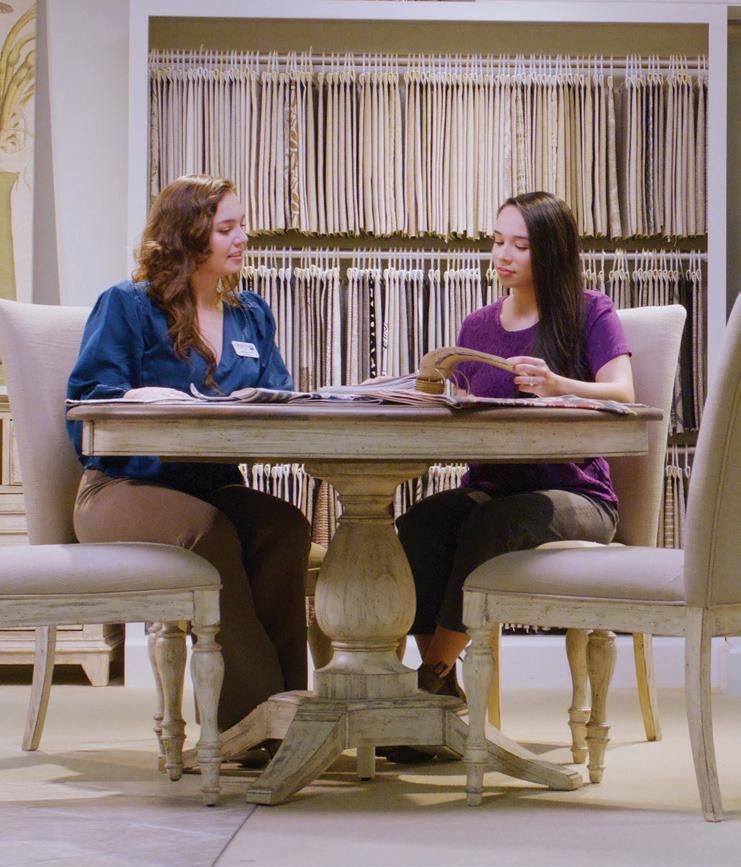



Sometimes, finding your happy means making it your own. That’s why Charlottesville Grand Home Furnishings offers special order options from many of our top brands.
Choose your fabric, finish, pillows, and trim, with help from our experienced team. Select from trusted names to create furniture that feels right at home.
Visit your Charlottesville Grand to explore your options and find your happy.
By Catherine Purple Cherry, AIA, LEED AP, Founder and Principal of Purple Cherry Architecture & Interiors
As a custom residential architect, I’m often asked, “Should we renovate our home or tear it down and start fresh?” After more than 37 years in the architecture profession, the answer usually comes down to three critical factors.
First: Budget In the Mid-Atlantic region, new construction for custom homes currently ranges from $400 to $1,200 per square foot, depending on level of detail. If a client’s desired investment is significantly below new construction costs, renovation becomes the starting point. However, expectations must align with reality. Often, the scope clients envision exceeds their stated budget. A successful renovation requires honest conversations, thoughtful prioritization, and sometimes creative alternatives—a willingness to expand the budget or reduce square footage and fit and finish.
Second: Age and condition of the structure. Homes from the early 20th century, especially those built on piers with outdated systems and inefficient layouts, often require such extensive intervention that renovation costs approach or exceed new construction. When every wall wishes to move, and all electrical and plumbing need to be replaced and foundations need to be underpinned (I personally live in a house that is on the National Register of Historic Places), starting new can be the better path. Unless the owner is deeply passionate about preserving historic fabric—or eligible for historic tax credits—these homes often point toward a teardown.
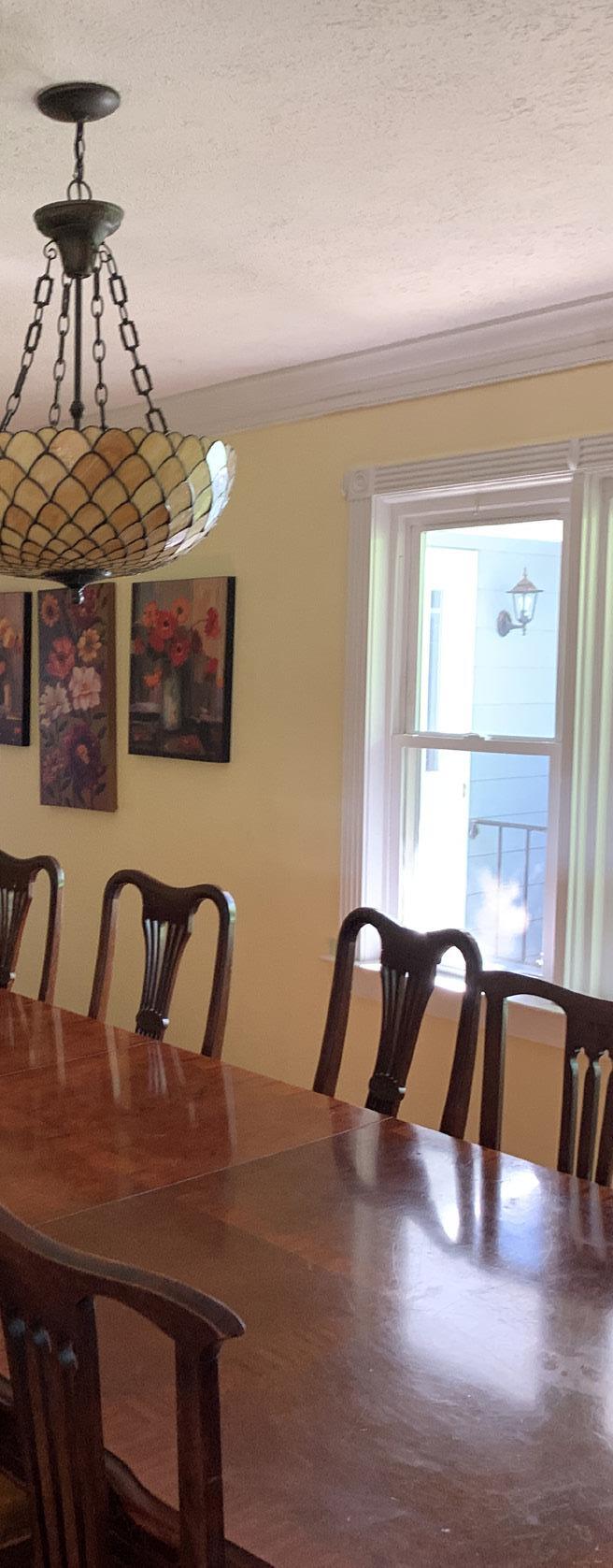
Third: Functional reality. When touring an existing house, I often ask: Is every room moving? Are all the windows changing? Is the stair relocating? Are plumbing locations shifting? And are you comfortable with the existing eight-foot ceilings? If the answer
is “everything changes,” it’s usually not a renovation—it’s a rebuild.
In the end, whether renovating or rebuilding, the outcome can be equally beautiful. Thoughtful design, clear goals, and informed decision-making are what transform a house into a home—one that honors the past while supporting the way we live today.
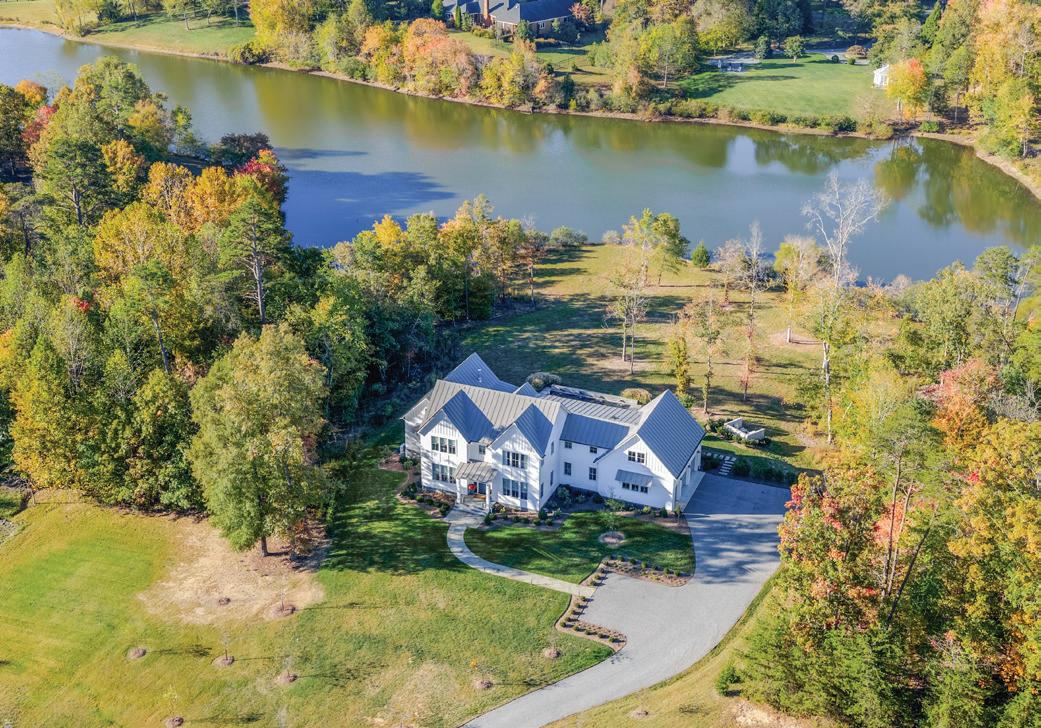
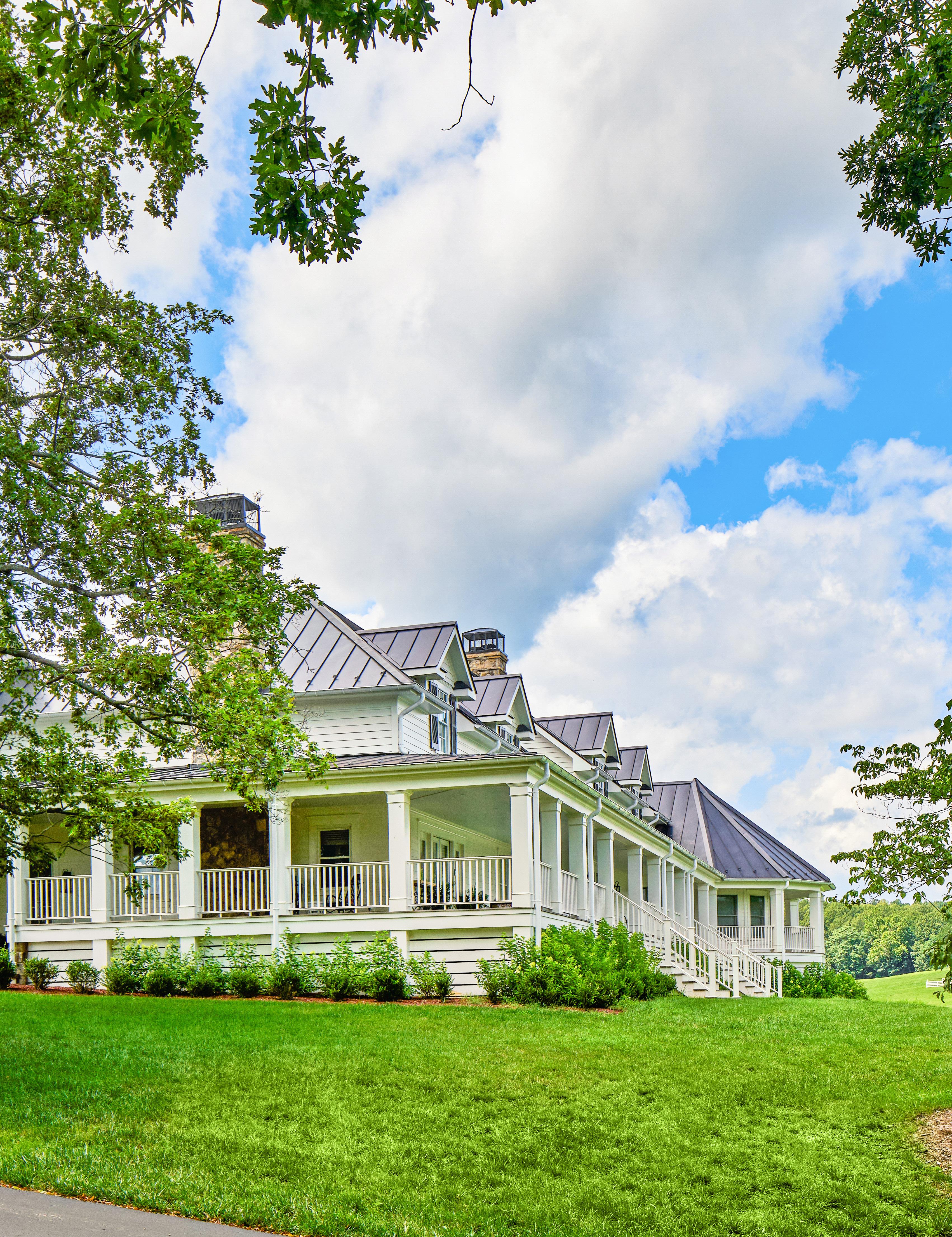
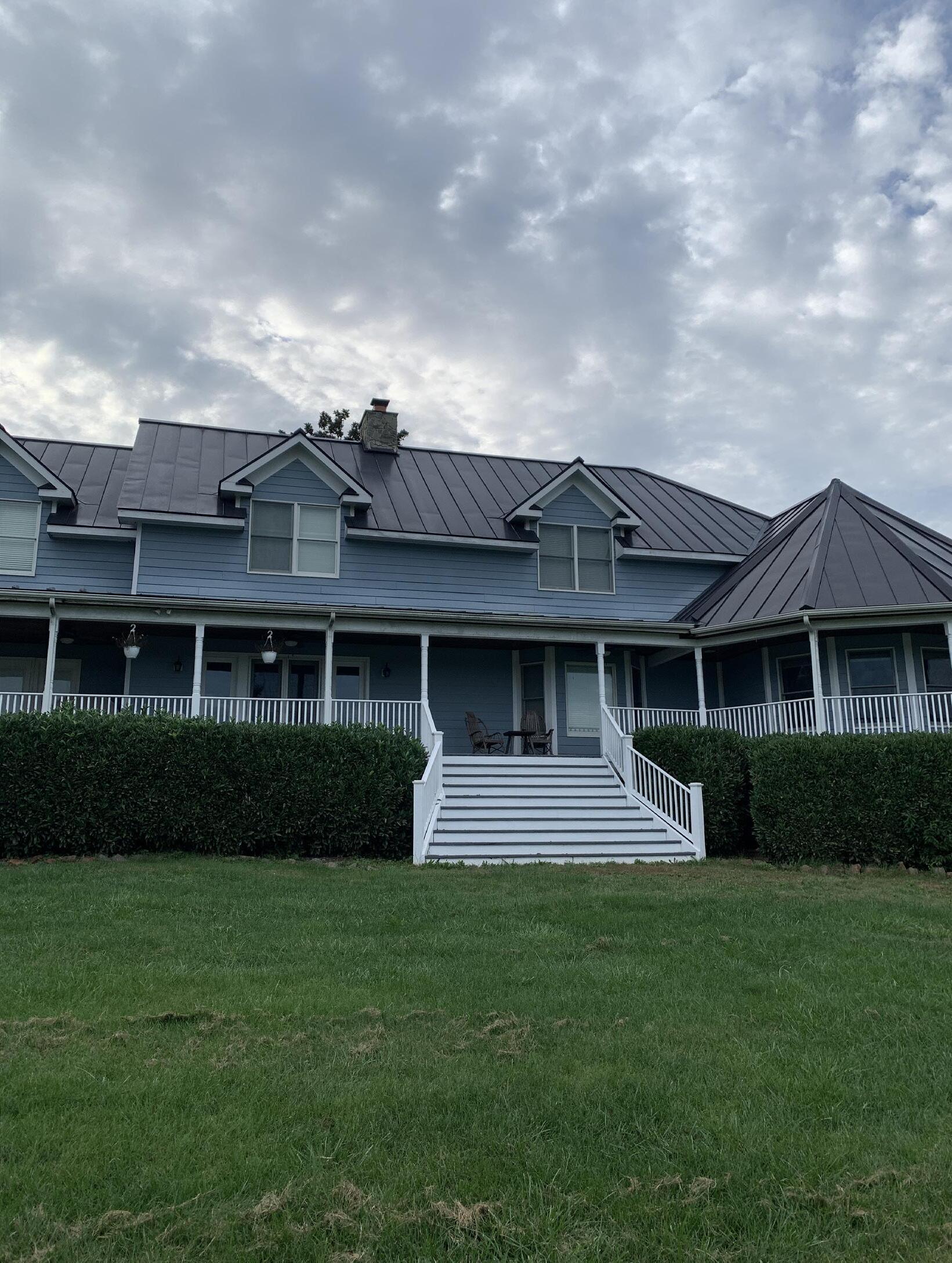
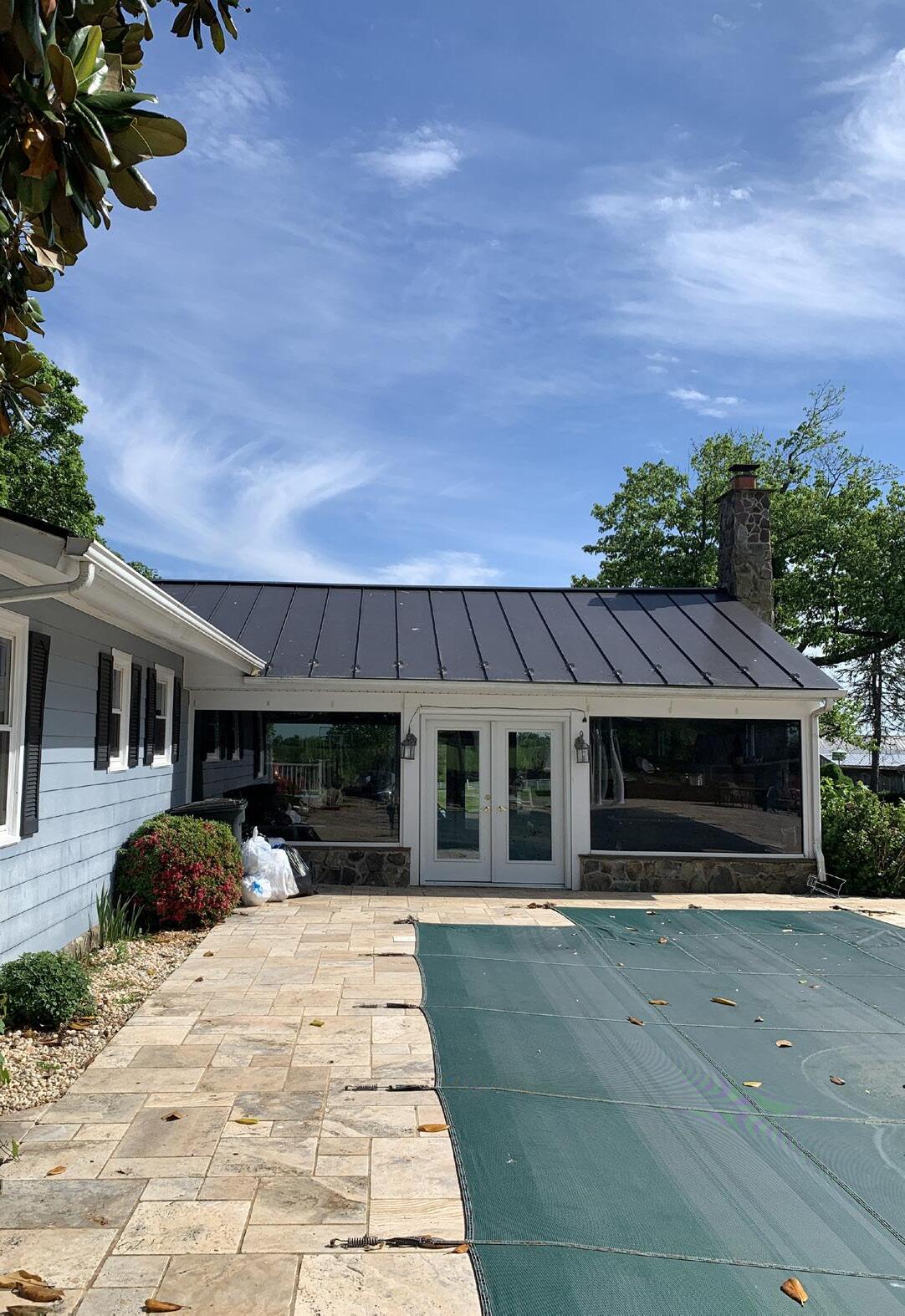
At first glance, the Gordonsville house had charm—layers of history built over time, generous acreage, and the bones of something special. But like many rambling estate homes, it lacked cohesion. Multiple additions over the years had left the exterior disjointed, interior spaces disconnected, and circulation unclear. The homeowners loved the land and the spirit of the house and its connection to the other structures, but they wanted it to function as a modern family home—one designed for gathering, entertaining, and everyday ease—while still honoring a Virginia farmhouse aesthetic.
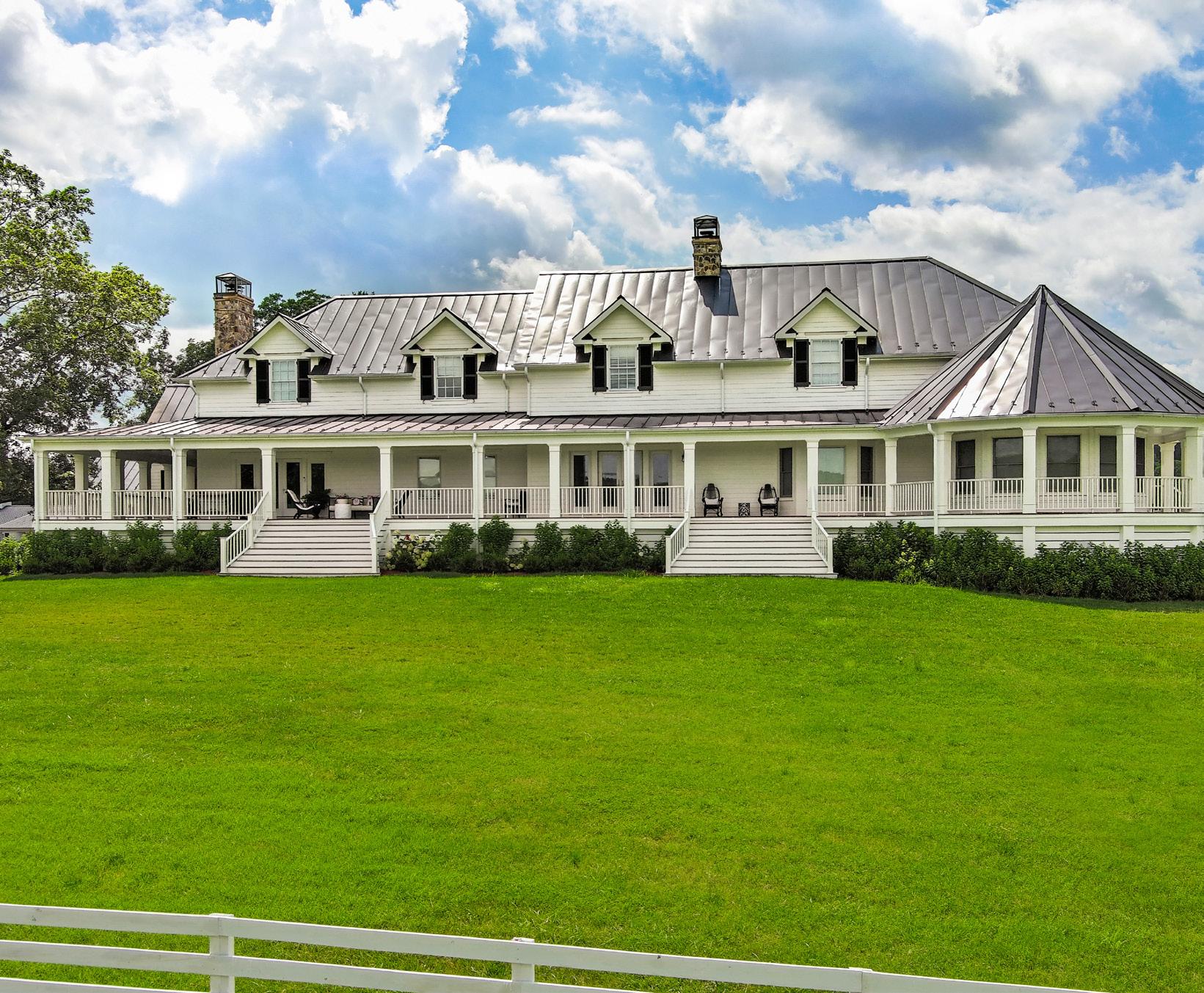
In this instance, the solution was not a tear down—the home was built in the 1950s and some of the spaces were worth renovating— but a comprehensive 4,800-square-foot renovation and addition that reimagined the home holistically, masterfully executed by Gibson Magerfield Edenali. The goal was clear: create a cohesive farmhouse estate that felt timeless, welcoming, and deeply connected to its setting, with each structure connected to each other and to the land.
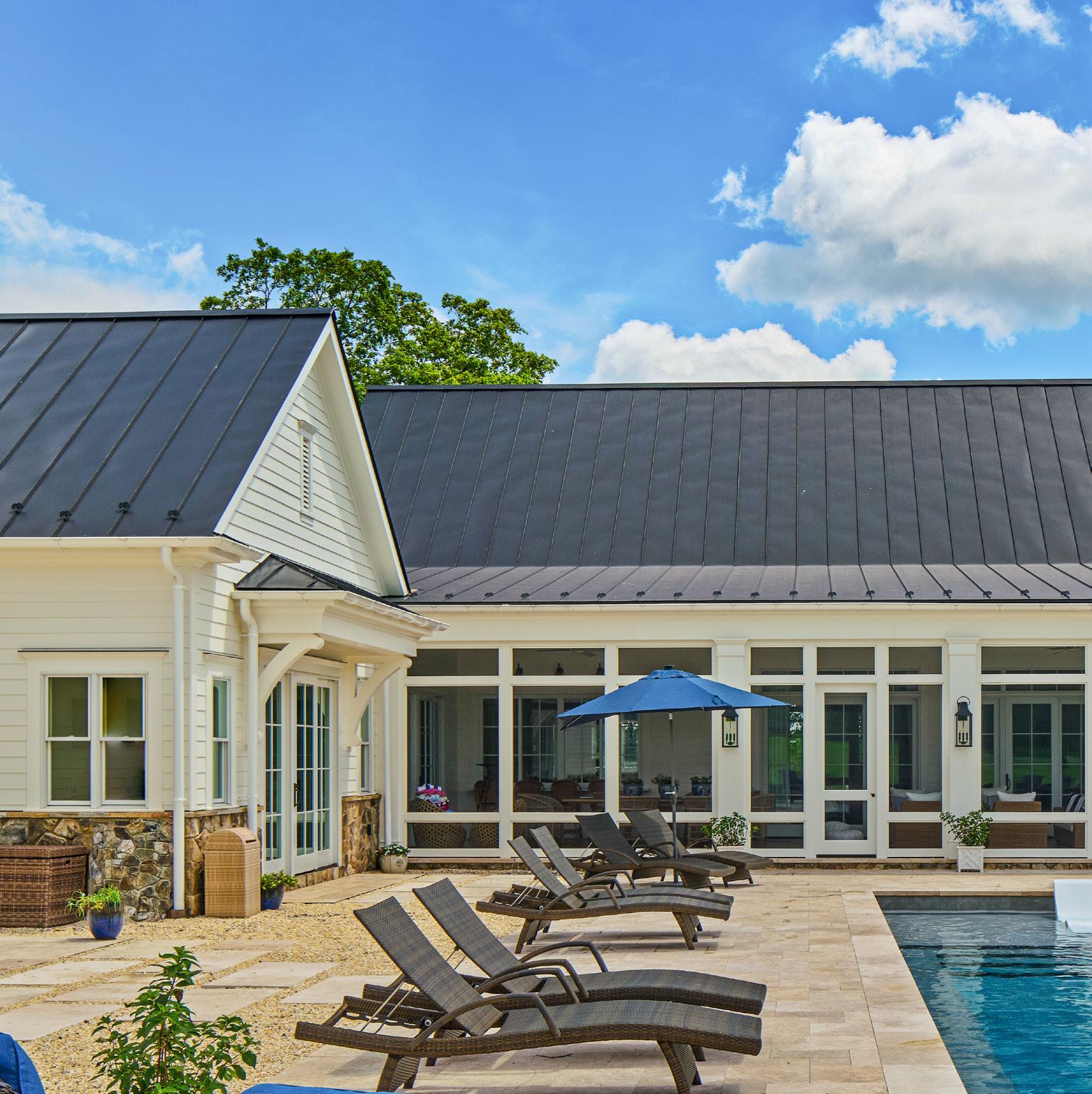
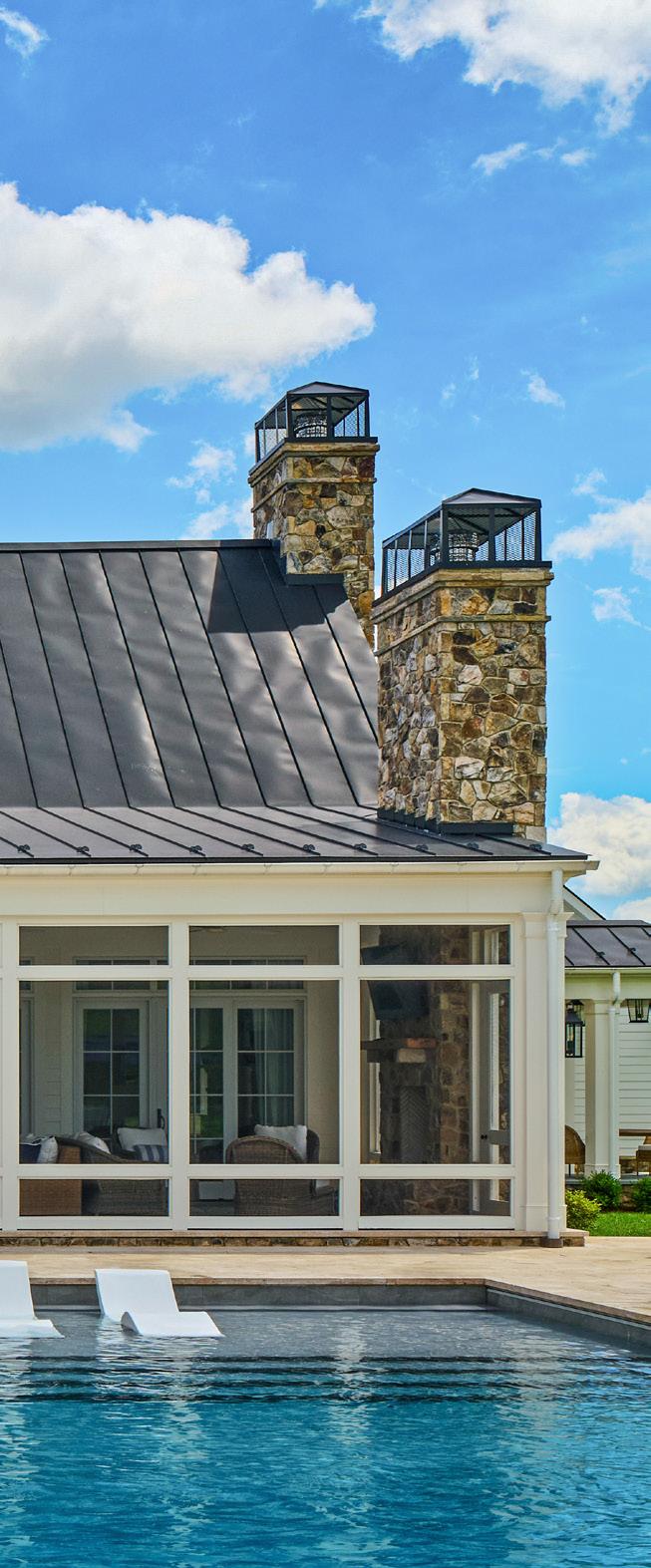
One of the most impactful decisions was to approach the exterior as a single composition rather than a series of patched moments. The entire home received new siding and a complete re-roof, immediately unifying old and new. Chimney stonework was replaced, front dormers were updated with new trim, windows and classic shutters, and the home was repainted in a crisp white— conjuring the understated elegance of a Virginia equestrian farmhouse.
A reimagined front porch became a defining architectural gesture. New posts, decking, and ceiling details were introduced, while the wide Southern-style steps were preserved to maintain the classic country veranda feel. The wraparound porch was extended into the addition, reinforcing the idea that the home had evolved naturally over time.
The transformation extended beyond the architecture. A full landscape redesign at the front of the property re-established a gracious arrival sequence, setting the tone for the home’s renewed presence on the land. The rear terrace was also renovated to create an outdoor space equally well suited for intimate family events and large entertaining.
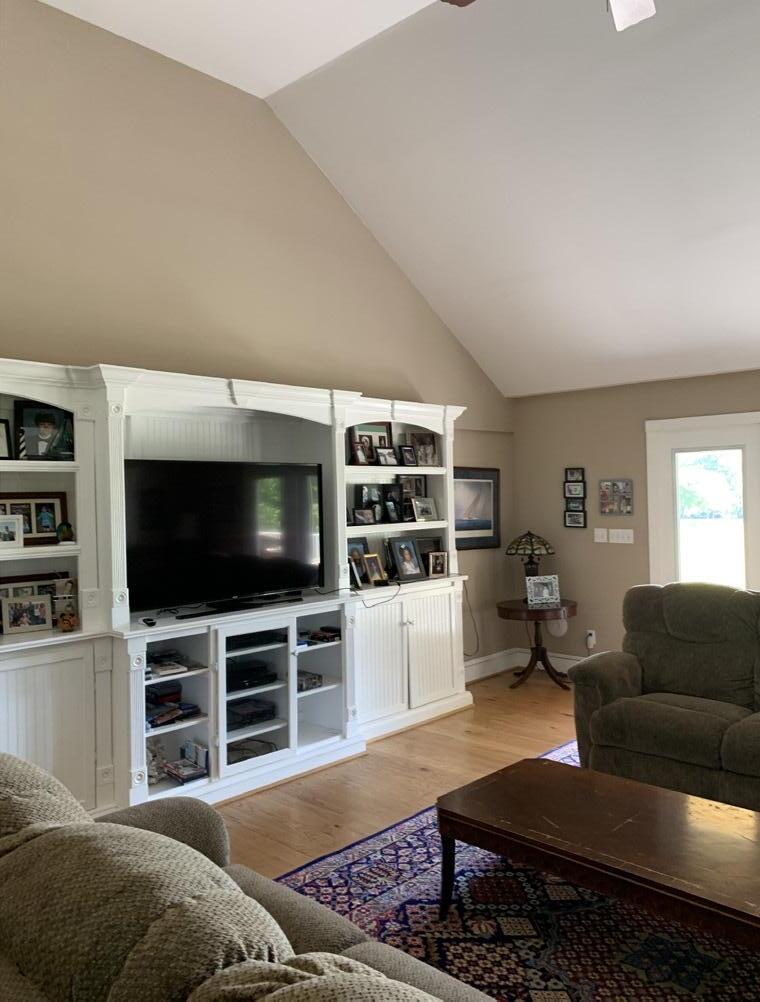
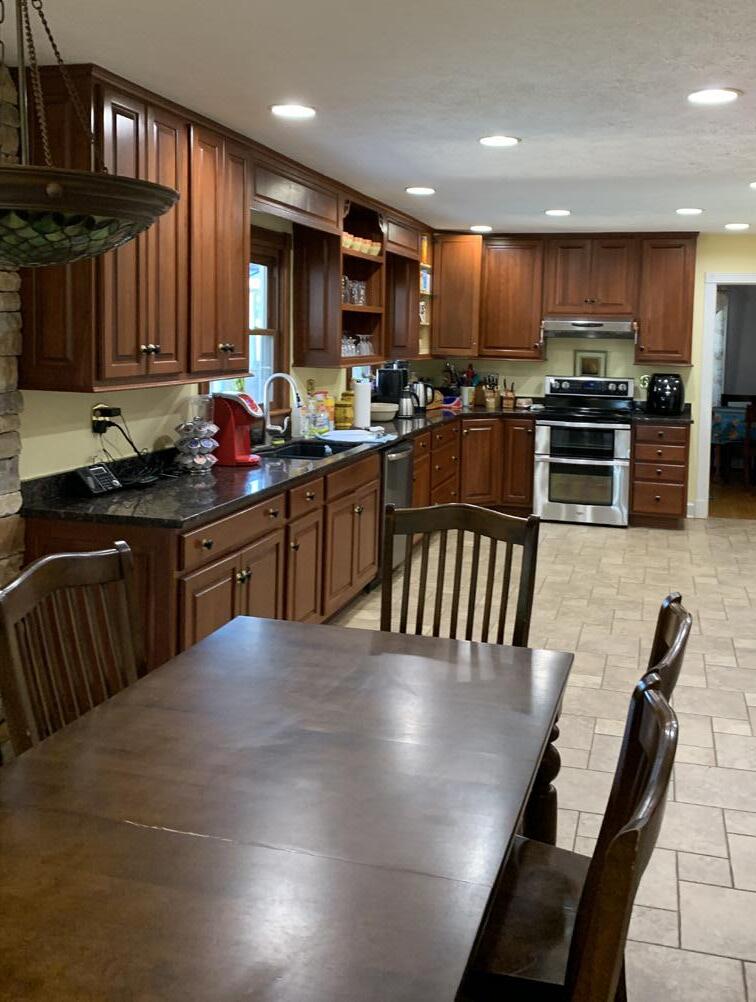
Inside, the renovation focused on connectivity—between rooms, between indoors and outdoors, and between formal and casual living. A new great room, kitchen, back kitchen/bar, dining

room, mudroom, screen porch, pool bath, and detached garage connected by a breezeway allow the home to function seamlessly for both daily life and largescale entertaining.
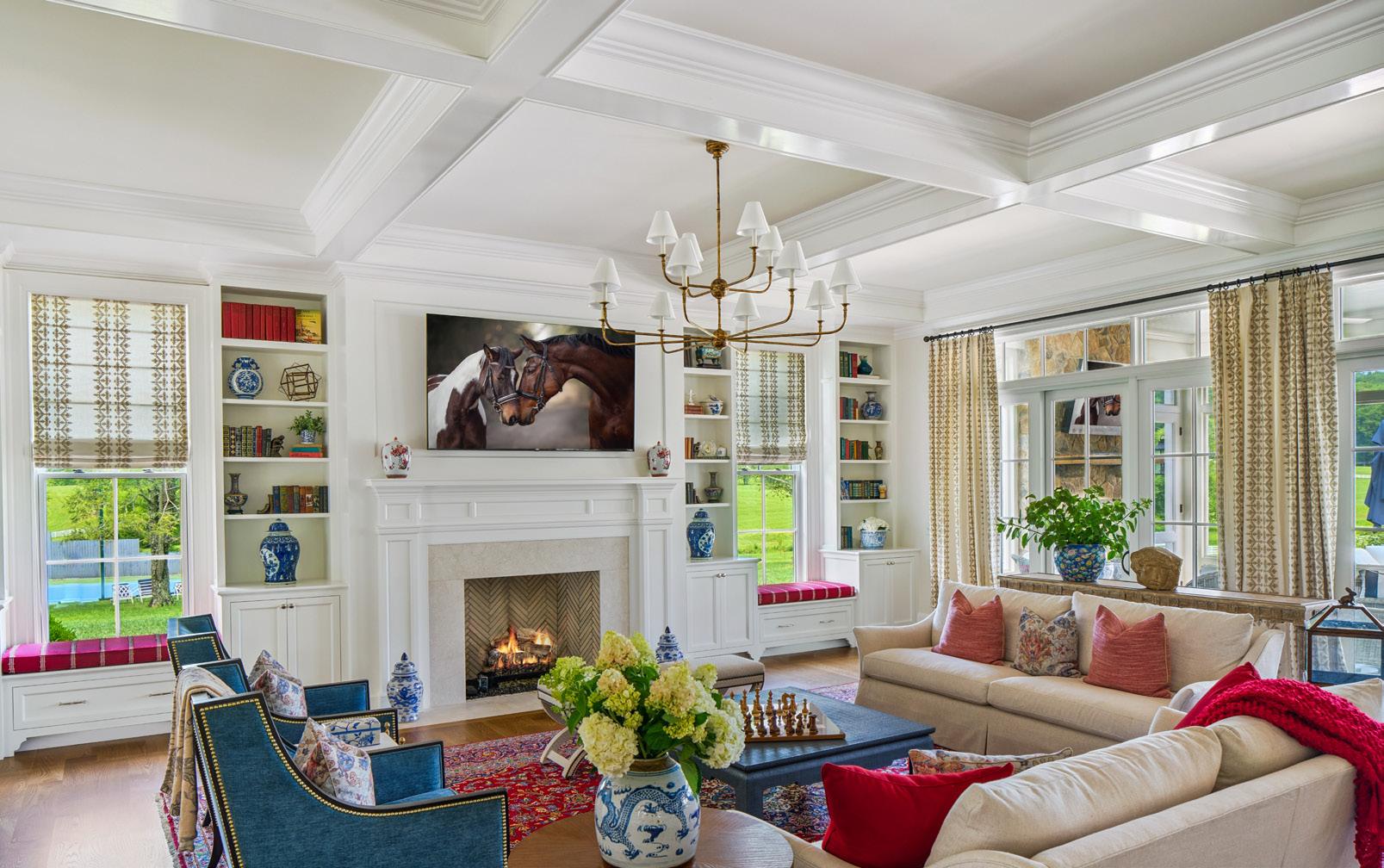
The great room serves as the heart of the home. A two-tone coffered ceiling adds depth, while custom built-ins designed specifically to display family heirlooms ground the space in personal history.
A limestone-clad fireplace anchors the room and visually connects to the kitchen beyond, while flanking window seats offer views of rolling fields and tennis courts.
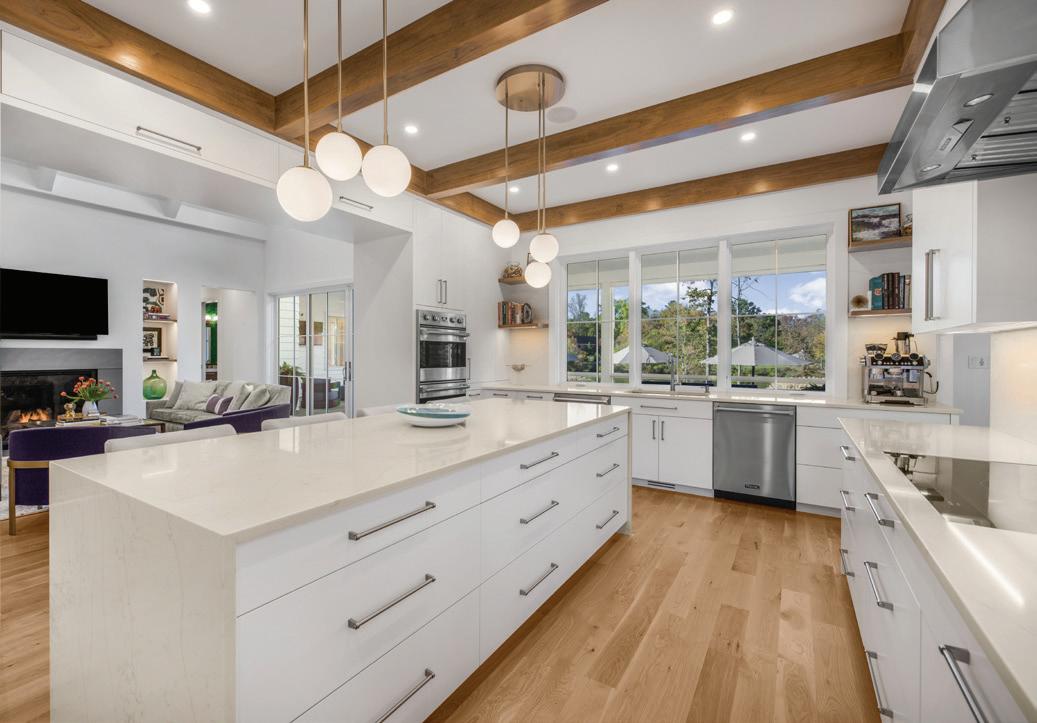
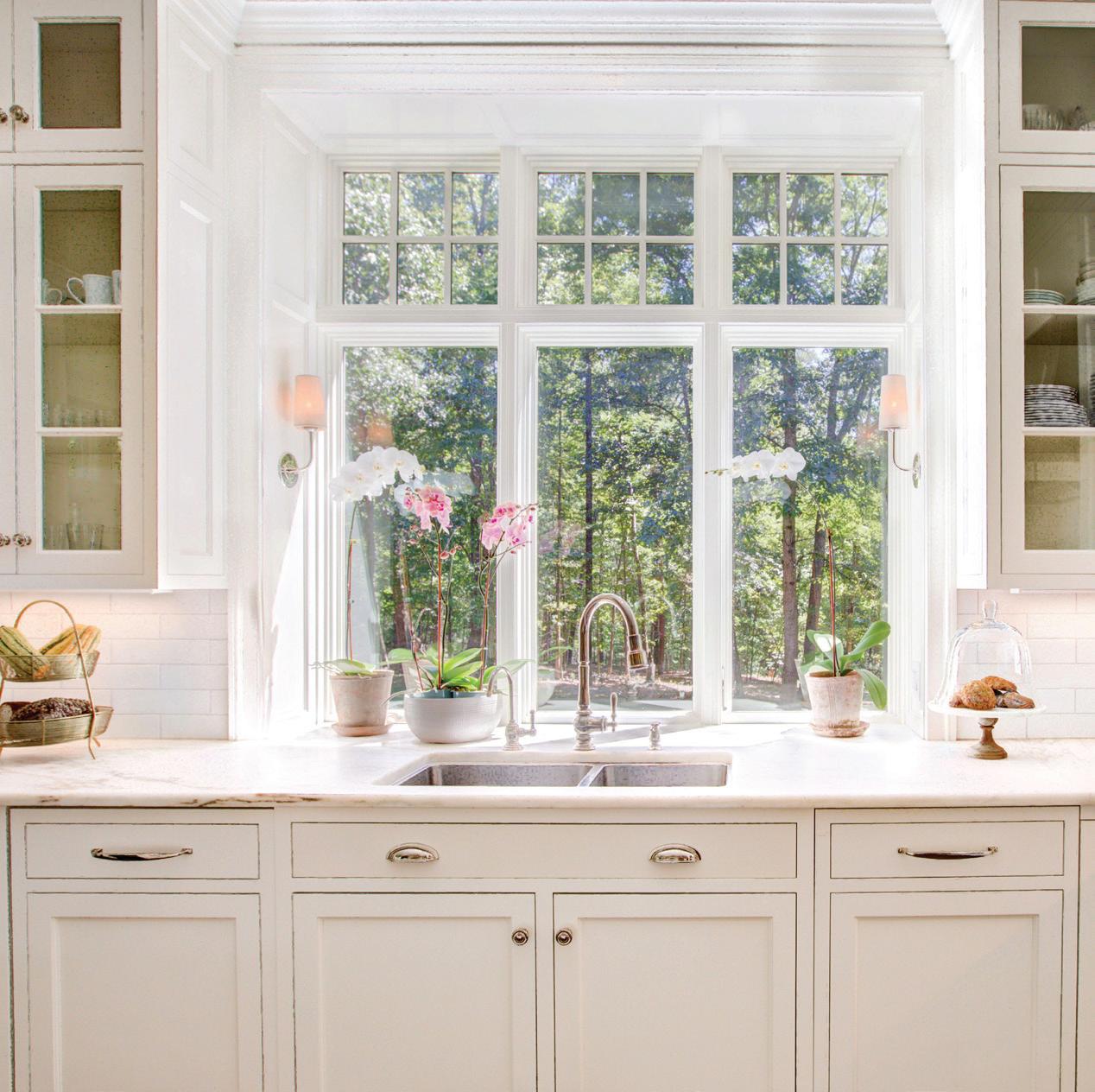
The kitchen features double islands and a statement metallic herringbone backsplash at the range wall. Adjacent to it, the back kitchen and bar introduce a more relaxed sensibility. Light blue cabinetry offers a playful contrast, while a beadboard V-groove plank ceiling, handmade white square tile backsplash, tumbled natural stone flooring, and a sliding serving window into the screened porch create a space suited for poolside entertaining.
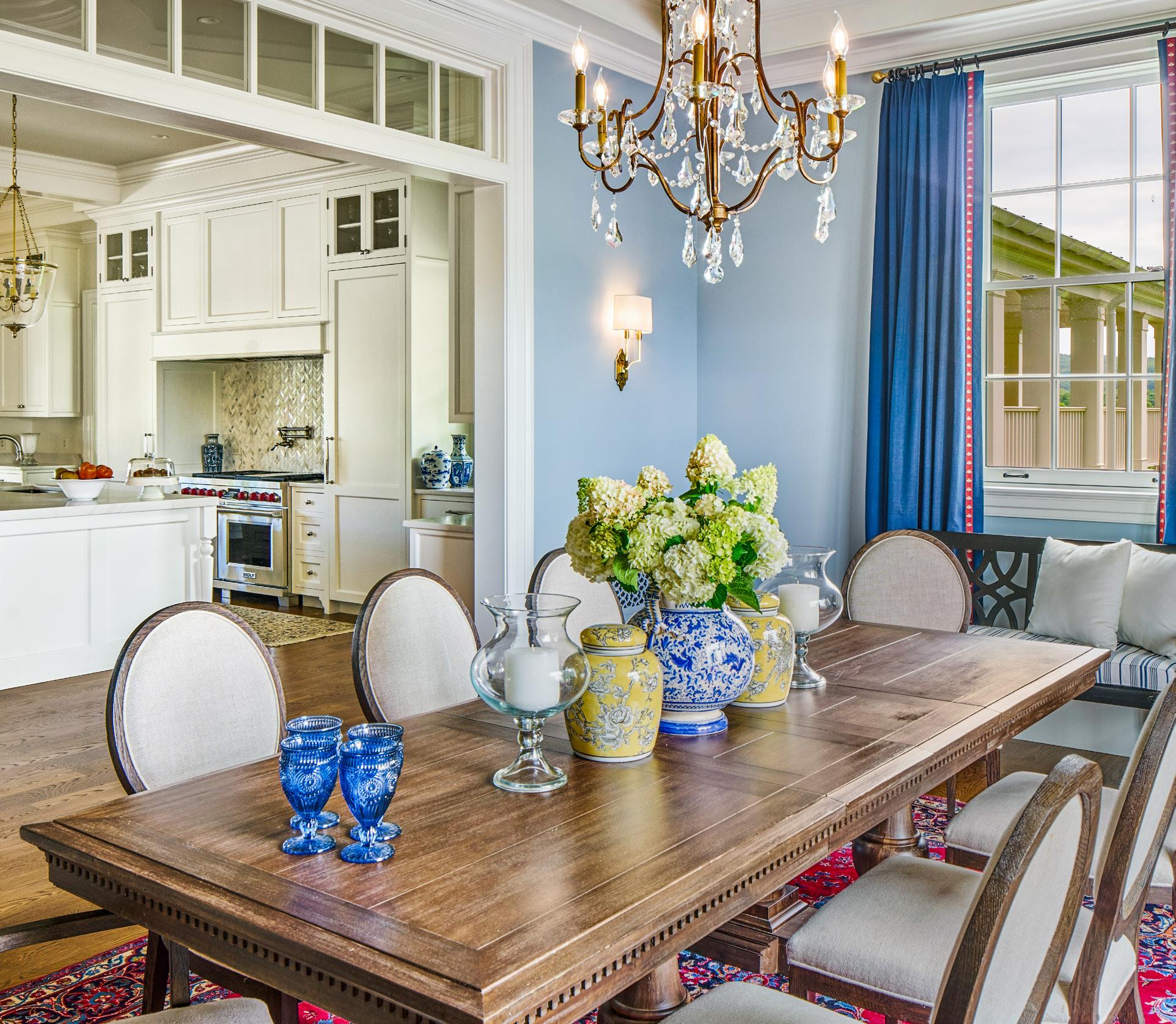
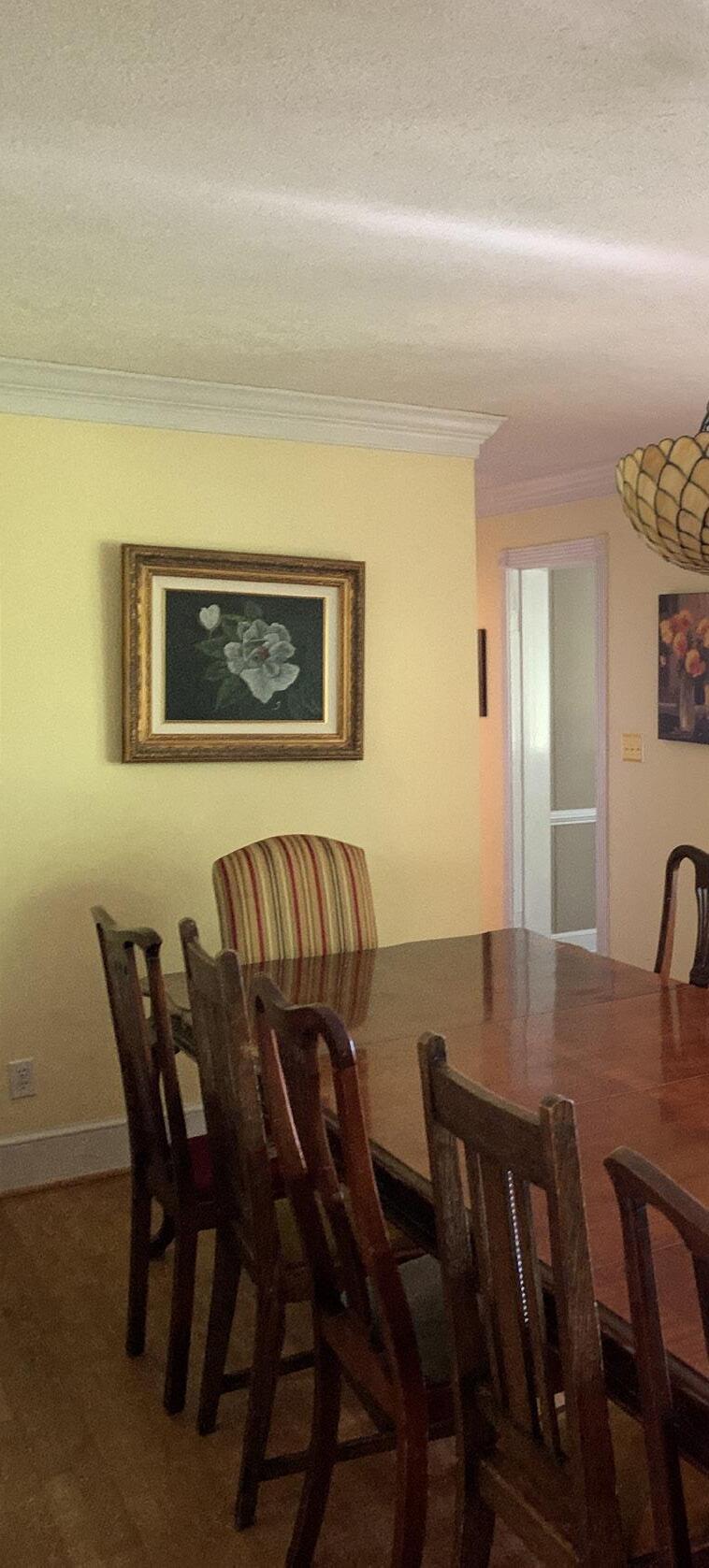
The dining room bridges formal and familiar. Client-owned furnishings anchor the space, complemented by custom
drapery and a unique circular coffered ceiling detail that contrasts with the linear coffering of the great room. Transom windows allow natural light to travel through the home, reinforcing its sense of openness.
Supporting spaces were given equal consideration. The mudroom features limestone flooring and a custom builtin bench with cushions, designed to balance the formality of the great room with the casual nature of the pool and outdoor spaces. A nearby powder room includes a marble slab vanity,

basketweave marble flooring, and a beautiful chandelier—a small space elevated with intentional detail.
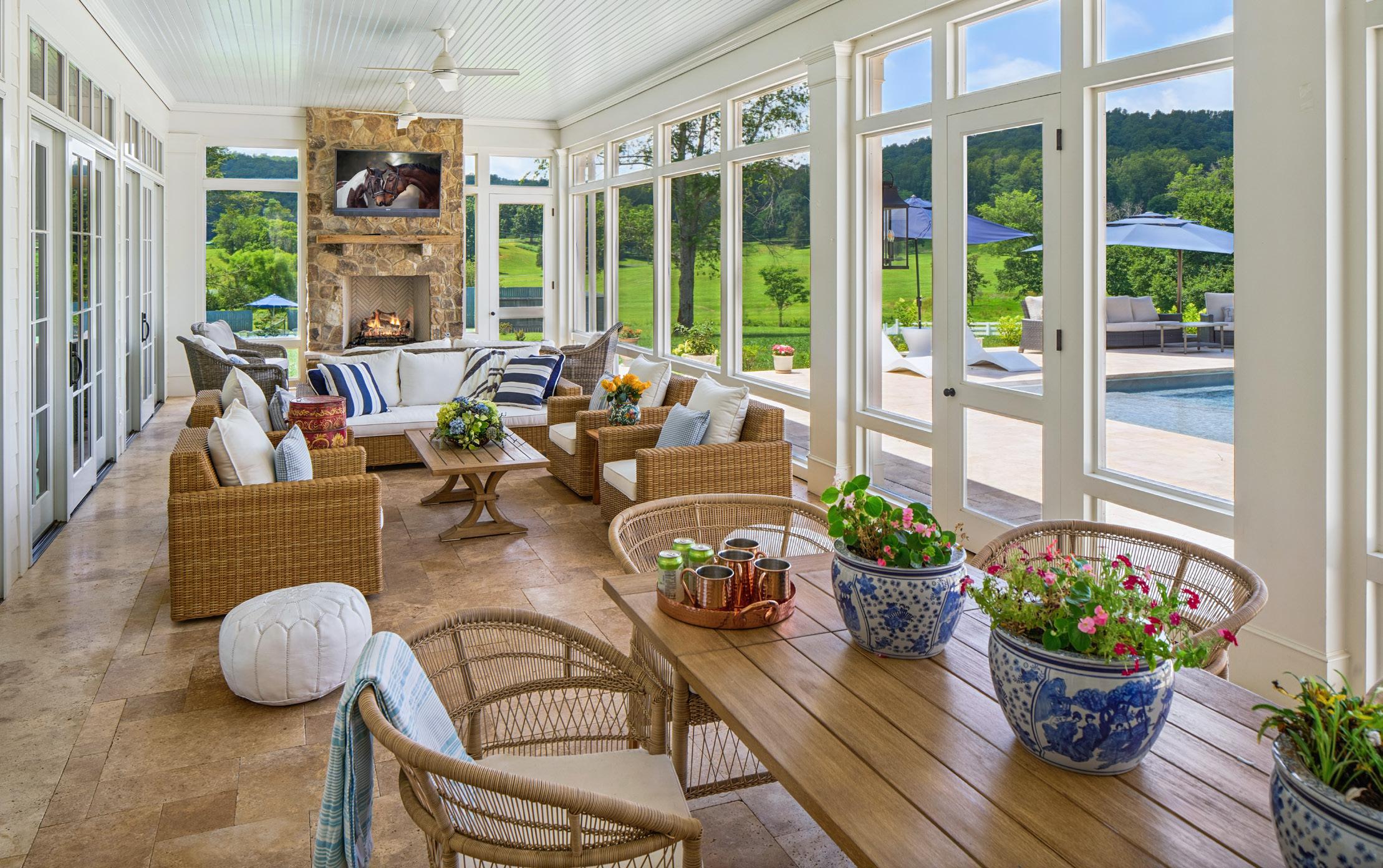
The new screen porch embodies Southern living at its best.
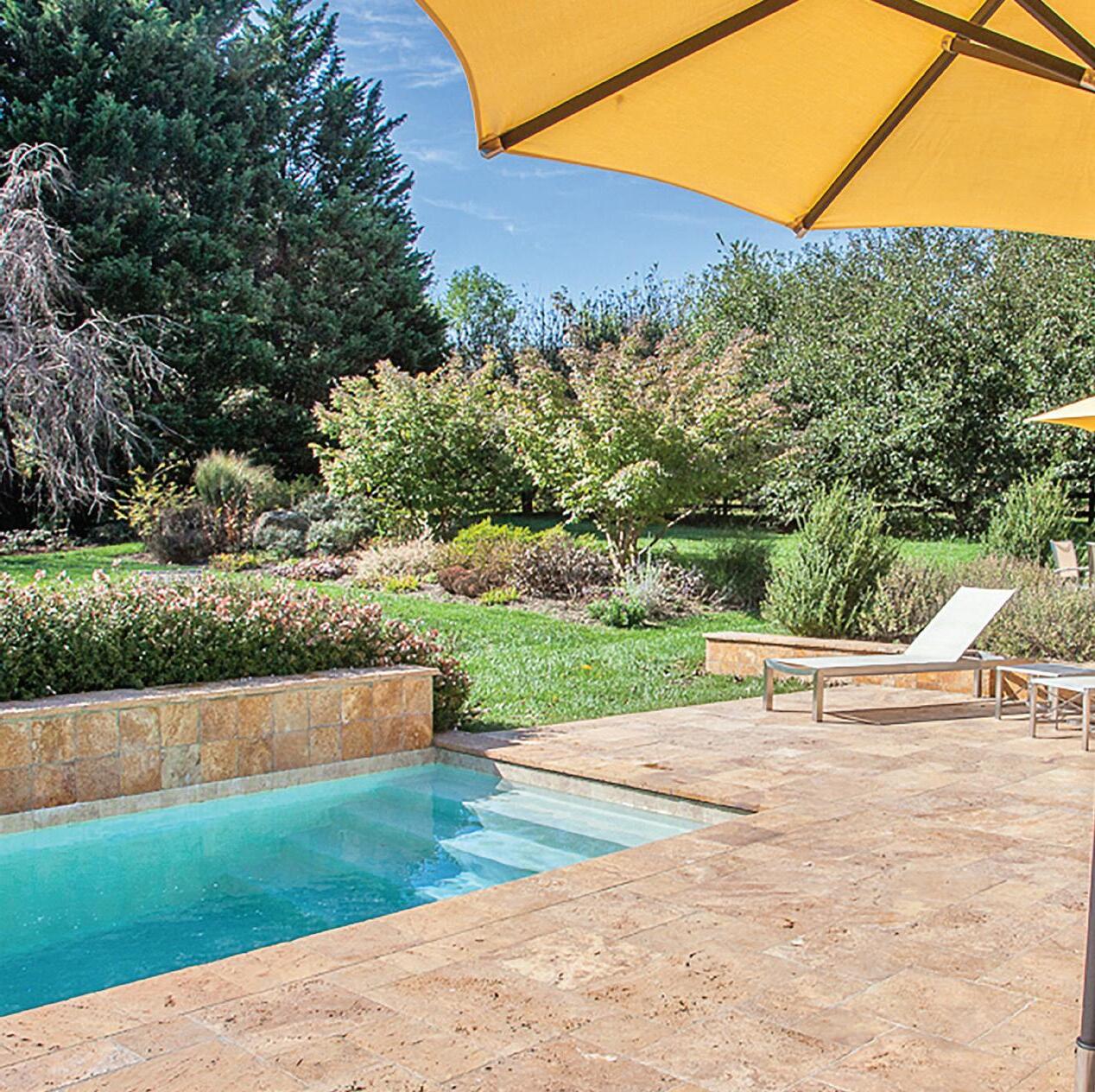
A new stone fireplace and classic, light blue-painted ceiling create an inviting atmosphere, while screens create flexibility—in pleasant weather, the windows open for seamless indooroutdoor entertaining; in bad weather, the space fully encloses and functions as an extension of the great room. A new pool, updated pool decking, new steps, and surrounding patios complete the experience.
Every decision—inside and out— was guided by one principle: the home and estate should feel inviting, interconnected, and effortless.

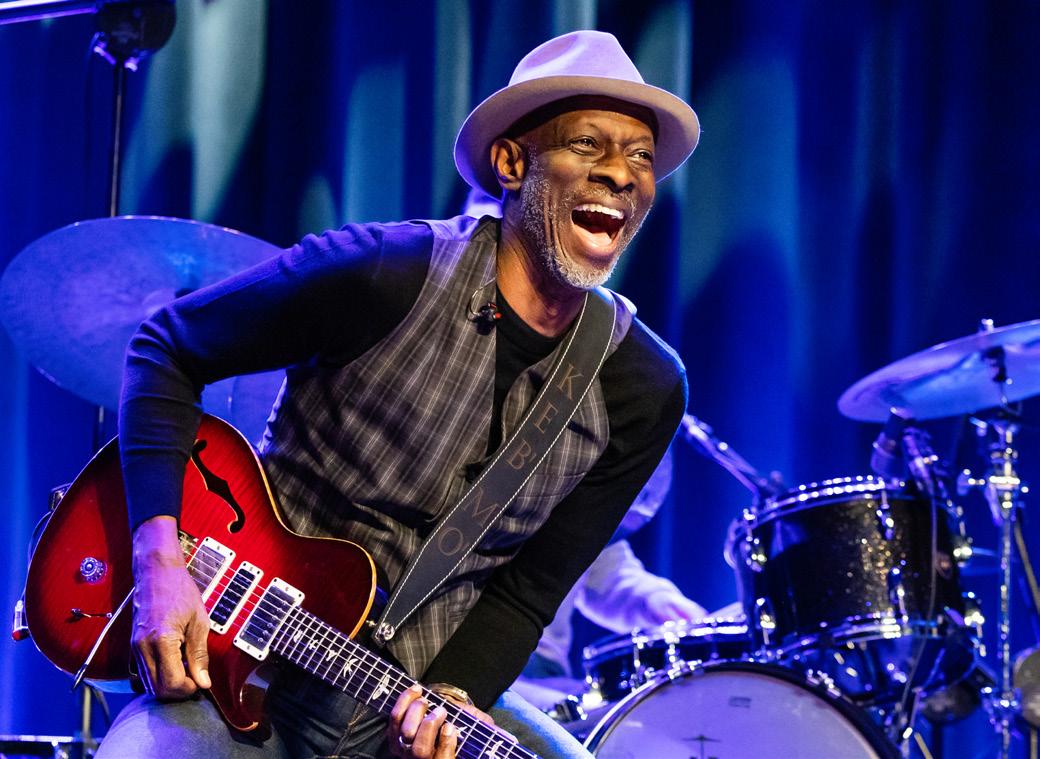
Over the past three decades, Keb’ Mo’ has blended blues with Americana, country, folk, and soul, collaborating with artists from Taj Mahal to Rosanne Cash. Born Kevin Roosevelt Moore in Compton, California, he grew up surrounded by Southern-influenced music and spent his early career performing in the calypso, R&B, and blues scenes in Los Angeles before stepping into the spotlight under his now-familiar stage name with his breakout 1994 self-titled album. With a devoted following that spans generations, blues musician Keb’ Mo’ brings his warm and approachable style to The Paramount on Feb. 22.
Over the course of his career, he has received the Americana Music Association’s lifetime achievement performance award, was inducted into the Music City Walk of Fame, and has earned five Grammy Awards—four for Best Contemporary Blues Album (Just Like You, Slow Down, Keep It Simple, and TajMo) and one for Best Americana Album (Oklahoma)—along with 14 Blues Foundation Awards and six BMI Awards for his work in television and film. He has also received 11 total Grammy nominations, including a Country Song of the Year nomination for “I Hope,” co-written with The Chicks.
JOHN PAUL JONES ARENA
295 Massie Road, Charlottesville
434-243-4960 • johnpauljonesarena.com
FEB 25: Riverdance 30 - The New Generation
MARCH 12: The Harlem Globetrotters 100 Year Tour
MARCH 28-29: Hot Wheels Monster Trucks LiveGlow N Fire
SCOTT STADIUM
1815 Stadium Rd, Charlottesville
APRIL 4: Luke Combs - My Kinda Saturday Night Tour
PRO RE NATA
434-823-4878 • prnbrewery.com
6135 Rockfish Gap Turnpike, Crozet
FEB 6: Cherry Red - Rolling Stones Tribute
FEB 7: Yesterday’s Gone - Authentic Fleetwood Mac
FEB 14: Slate River Band
FEB 20: Abrams Bridge - Springsteen Tribute
FEB 21: Urgent - Tribute to Foreigner
FEB 27: Stone Temple Pilots Projekt - Tribute to STP
FEB 28: Gone Country
MARCH 28: Burn - The Cure Experience and Fast Fashion - The Depeche Mode Experience
THE SOUTHERN CAFÉ & MUSIC HALL
434-977-5590 • thesoutherncville.com
103 South 1st Street, Charlottesville
FEB 7: Dogwood Tales & Euphoria Again
FEB 9: Dar Williams
FEB 12: Tim O’Brien with Jan Fabricius
FEB 19: J. Roddy Walston and the Automatic Band
FEB 20: The Jack Wharff Band
FEB 21: Dirty Grass Players
FEB 24: Blackwater Holylight
FEB 25: Laundry Day - The Time of Your Life Tour
FEB 26: Kendall Street Company
FEB 27: Full Moon Fever - Tom Petty Tribute
FEB 28: Joe Pug
MARCH 4: Larry Keel and Jon Stickley Duo
MARCH 15: Amelia Day
THE FRONT PORCH
434-806-7062 • frontporchcville.org
221 E Water St, Charlottesville
FEB 8: Kathleen Parks of Twisted Pine
FEB 14: Lizzie No
FEB 21: Danny Knicely, Cesar Garabini & Fernanda
Bravo
FEB 27: Erin Lunsford Trio
MARCH 1: Joe Troop & the Truth Machine
MARCH 20: The High & Wides
MARCH 27: Terri Allard, Jason Pollock & Thomas Gunn
MARCH 28: Bill Evans’ Banjo in America
THE PARAMOUNT THEATER
434-979-1333 • theparamount.net
215 East Main Street, Charlottesville
FEB 7: David Foster and Katharine McPhee
FEB 12: Tango After Dark
FEB 14: Met Live in HD - Cinderella
FEB 15: Charlottesville SymphonyMasterworks Series, Romance
FEB 22: Keb’ Mo’
FEB 27: Jake Owen
MARCH 3: The Academy of St. Martin in the Fields with Joshua Bell
MARCH 6-8: Banff Centre Mountain Film Festival
MARCH 9: Rhythm of the Dance
MARCH 14: Charlottesville Ballet - A Fairytale Gathering
MARCH 14: Charlottesville BalletAmerica250, Voices of America
MARCH 19: PAT Metheny
MARCH 20: The Peking Acrobats
MARCH 22: Diana Krall
MARCH 27: The Moth
MARCH 28: Met Live in HD - Tristan und Isolde




MARCH 29: AHS Jazz Band - Swing Into Spring Benefit Concert
MARCH 31: The Simon & Garfunkel Story
THE JEFFERSON THEATER
800-594-TIXX • 434-245-4980
jeffersontheater.com
110 East Main Street, Charlottesville
FEB 7: Zoso - The Ultimate Led Zeppelin Experience
FEB 13: Langhorne Slim
FEB 14: The Leg Warmers
FEB 16: Margo Price
FEB 20: Almost Queen
FEB 21: Drew Pace
FEB 23: The Runarounds
FEB 25: STS9
FEB 26: Rumors ATL
FEB 28: Aly & AJ
MARCH 4: Rory Scovel
MARCH 6: Louisiana Calling
MARCH 7: Donna the Buffalo
MARCH 26: Infinity Song
MARCH 31: Ryan Caraveo


THE FOUNDRY AT BASIC CITY BEER
540-943-1010 • thefoundrysound.com
1010 East Main Street, Waynesboro
FEB 13: Soulcry
FEB 20: Smile Empty Soul, Primer 55 & Makes My Blood Dance
FEB 21: ÜGA BÜGA
MARCH 21: Filter with Finger 11 & LOCAL H
AMERICAN SHAKESPEARE CENTER
877-682-4236 • americanshakespearecenter.com
10 South Market Street, Staunton
FEB 19 - MAY 3: Twelfth Night
FEB 26 - MAY 17: The Hound of the Baskervilles
LIVE ARTS
434-977-4177 • livearts.org
123 East Water Street, Charlottesville
THROUGH FEB 15: Stage Kiss
MARCH 6-22: Emma



Crutchfield’s team of home A/V experts is ready to help you design, install, and enjoy the media system of your dreams. Whether you’re a cinephile or music fan (or both), we have the gear and know-how to bring it all into focus. Visit the Crutchfield store to get started.
817-1100
Keep in touch with Albemarle magazine and our loyal advertisers via Instagram, Facebook, and by visiting albemarlemagazine.com
CROSSWORD PUZZLES ONLINE
Sponsored by Cardinal Home Center albemarlemagazine.com/crossword
Albemarle magazine frequently features ideas for buying, building, renovating, repurposing and redecorating the indoor and outdoor spaces that define our lives, and the resources to bring those ideas to fruition.
CARDINAL HOME CENTER HAS YOU COVERED.
Learn more about the services, premium brands, and products Cardinal Home Center offers at their stores in Madison, Charlottesville, and Crozet. Their dedicated staff provides expert advice for your next project, helping you pick out the right paint, hardware, lumber, cabinets, and more. The expansive showrooms also offer an array of electrical, plumbing, tools, and more for homeowners, DIYers, or contractors alike. cardinalhomecenter.com
VACATION HOME, RELOCATING, DOWNSIZING, NEW BUSINESS, OR BUSINESS EXPANSION?
Albemarle magazine invites you to meet our Who’s Who of Realtors®, an exclusive listing of CAAR members on our website (albemarlemagazine.com/whos-who) dedicated to connecting potential buyers and sellers and building relationships in our community.
by Myles Mellor

1 Among the first hospitals in the world to use the da Vinci 5 robotic surgical system, abbr.
3 County where the Warm Springs pools are located
5 Big Apple, abbr.
8 Gabe and Sonya ____ , founders of the Riversong Saunas at Rivanna River Company
9 UVA center research led to Leukemia Drug Small Cell Lung ____breakthrough
One of Alcott’s “Little Women”
13 UVA developed an AI-driven and FDAapproved artificial _____ technology
14 “Deck the Halls” syllables
16 For example, abbr.
17 State of being free of physical or psychological disease, illness, or malfunction 22 Aesthetic works
23 Charlottesville institute centered on the development of new cellular, gene, and immunotherapies
25 Short life story
27 Defined land area
28 Nothing
29 Charlottesville family who have helped shape the local running scene for more than 40 years
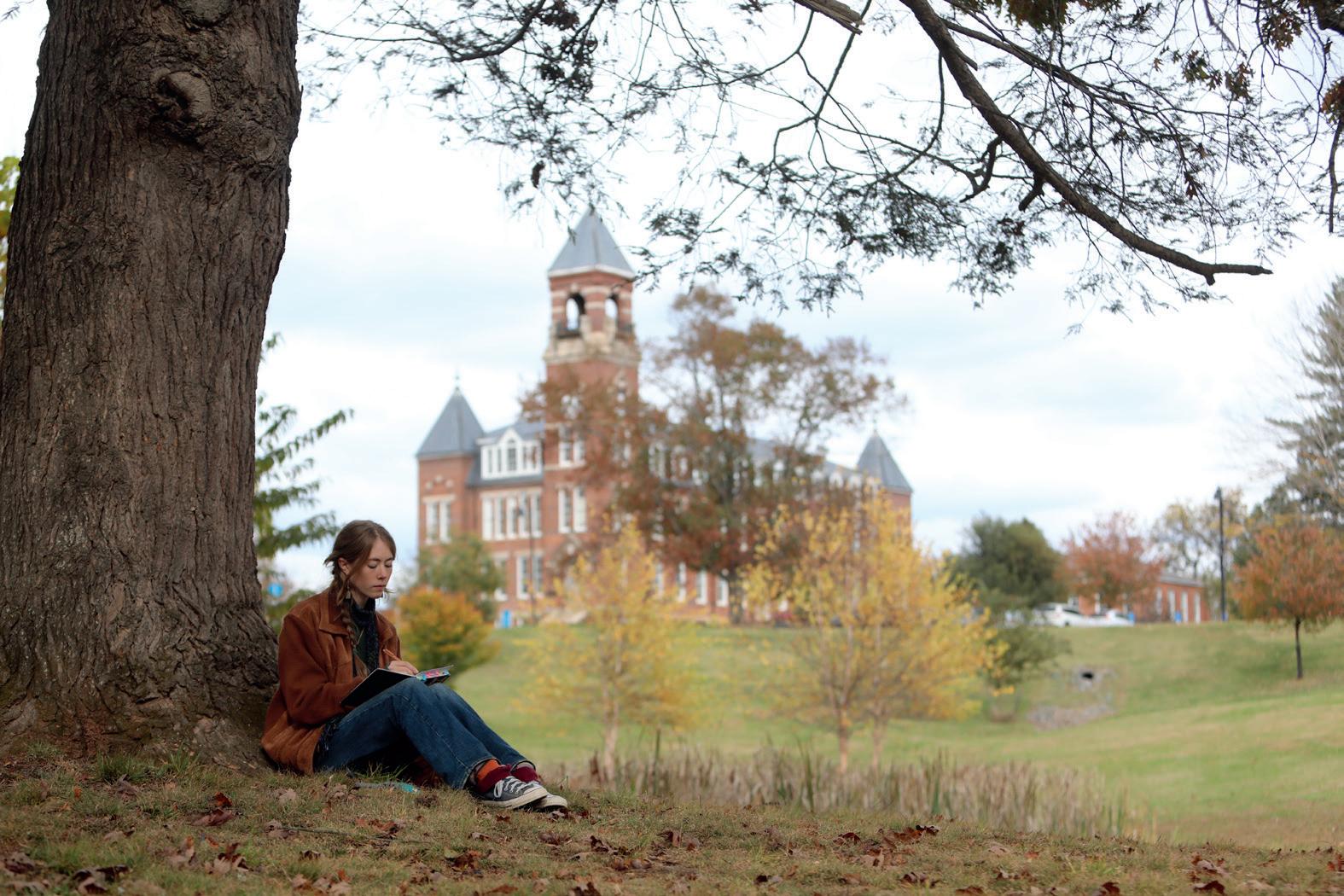
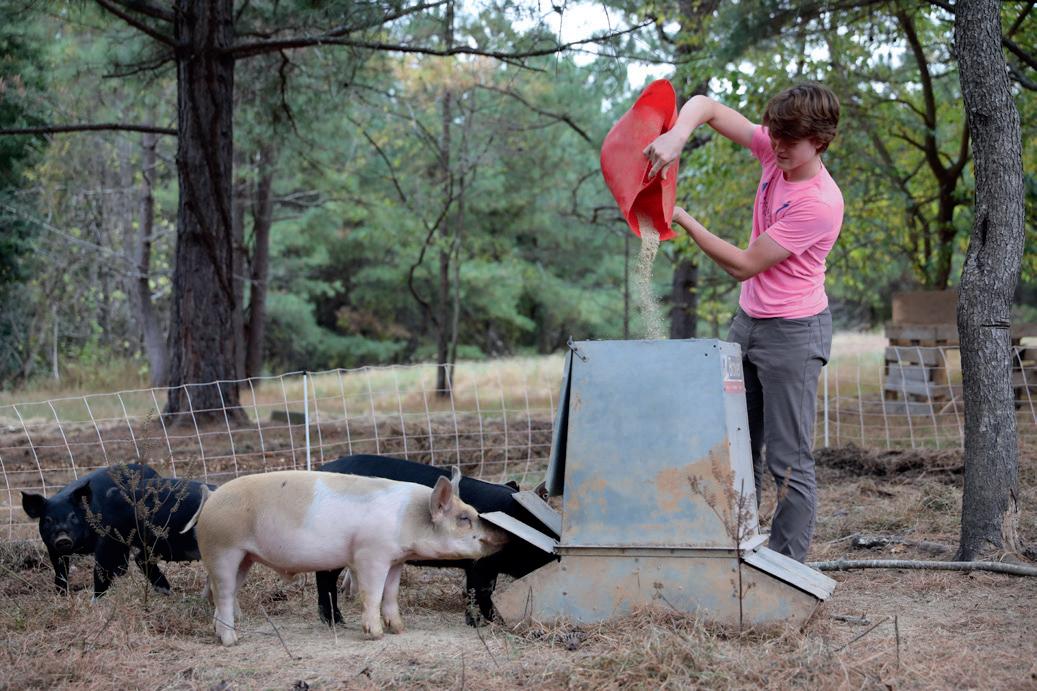
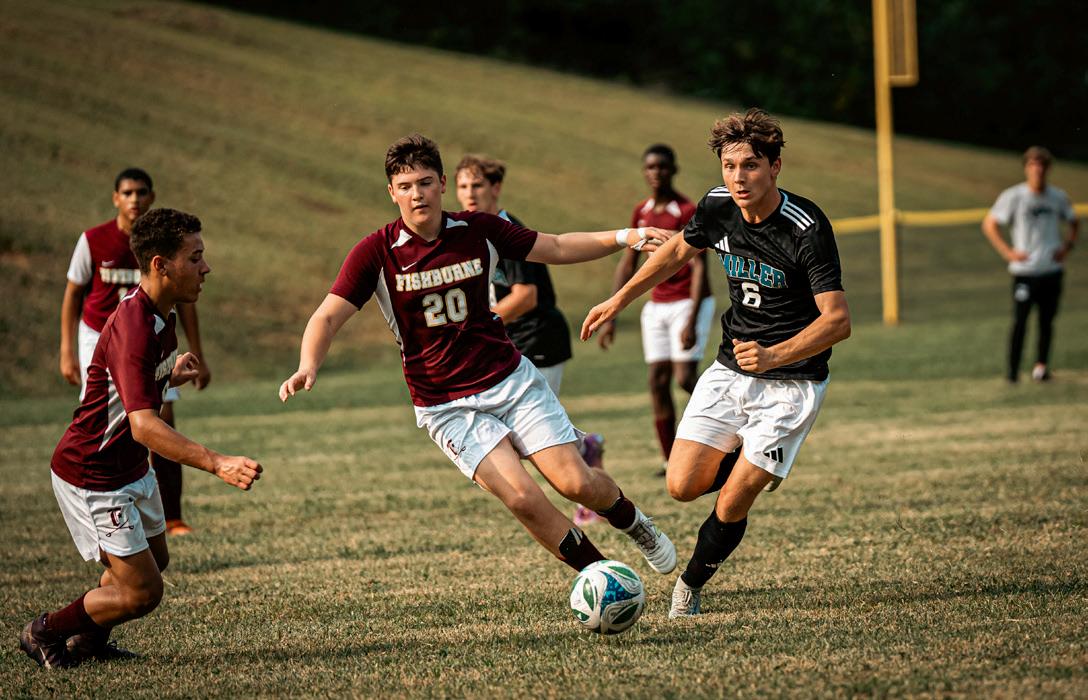

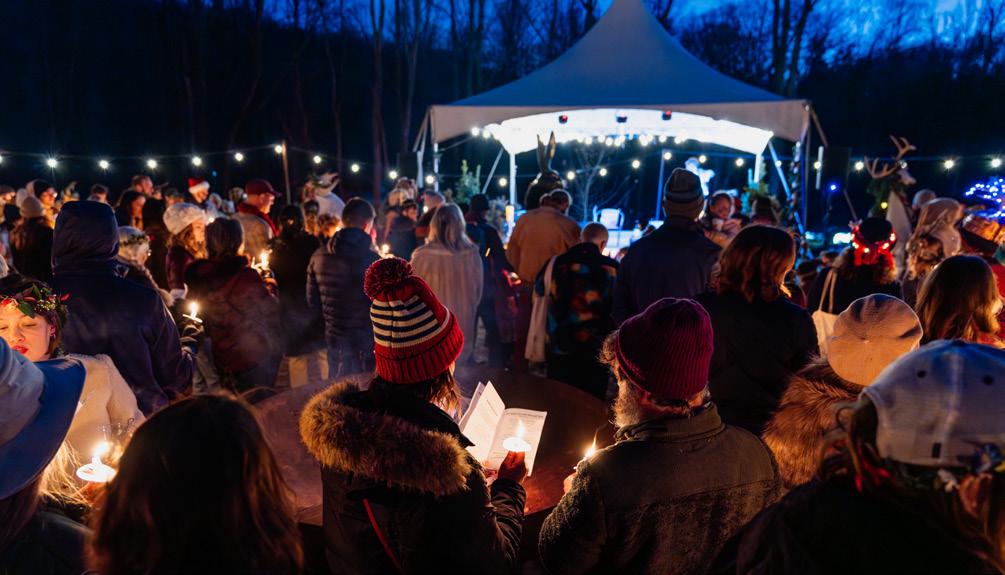
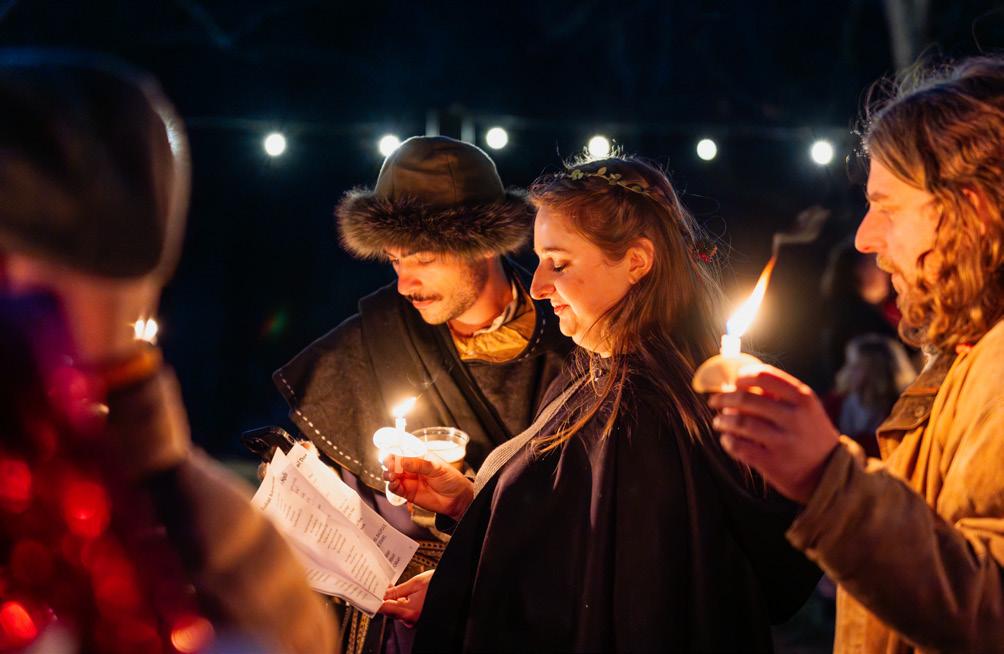
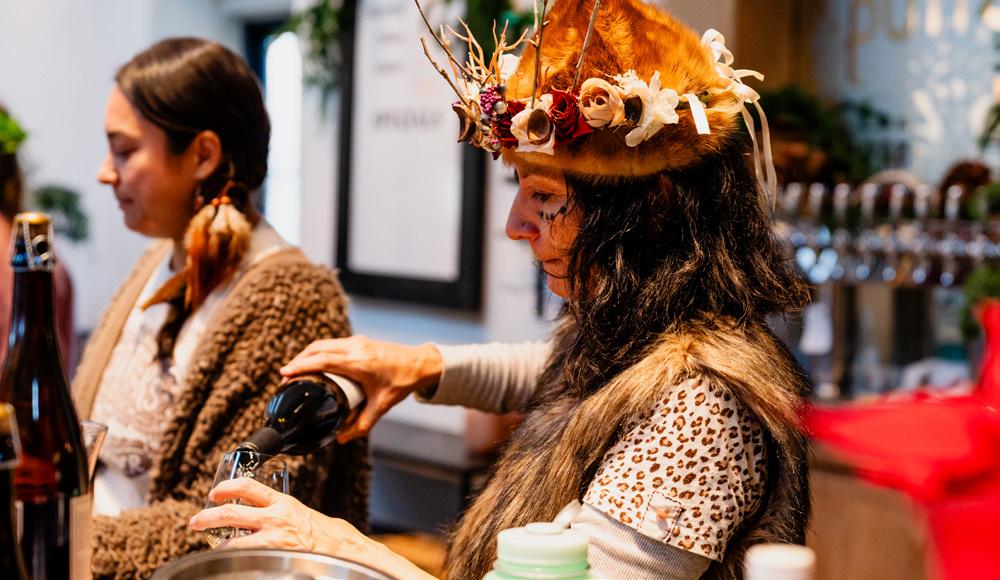
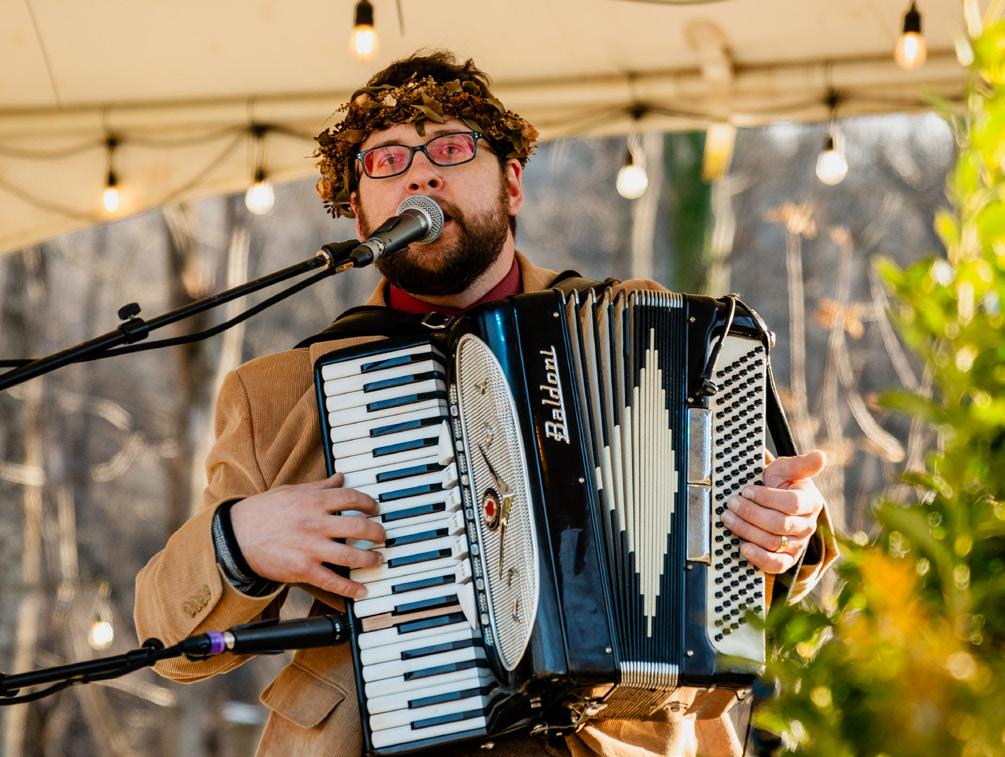
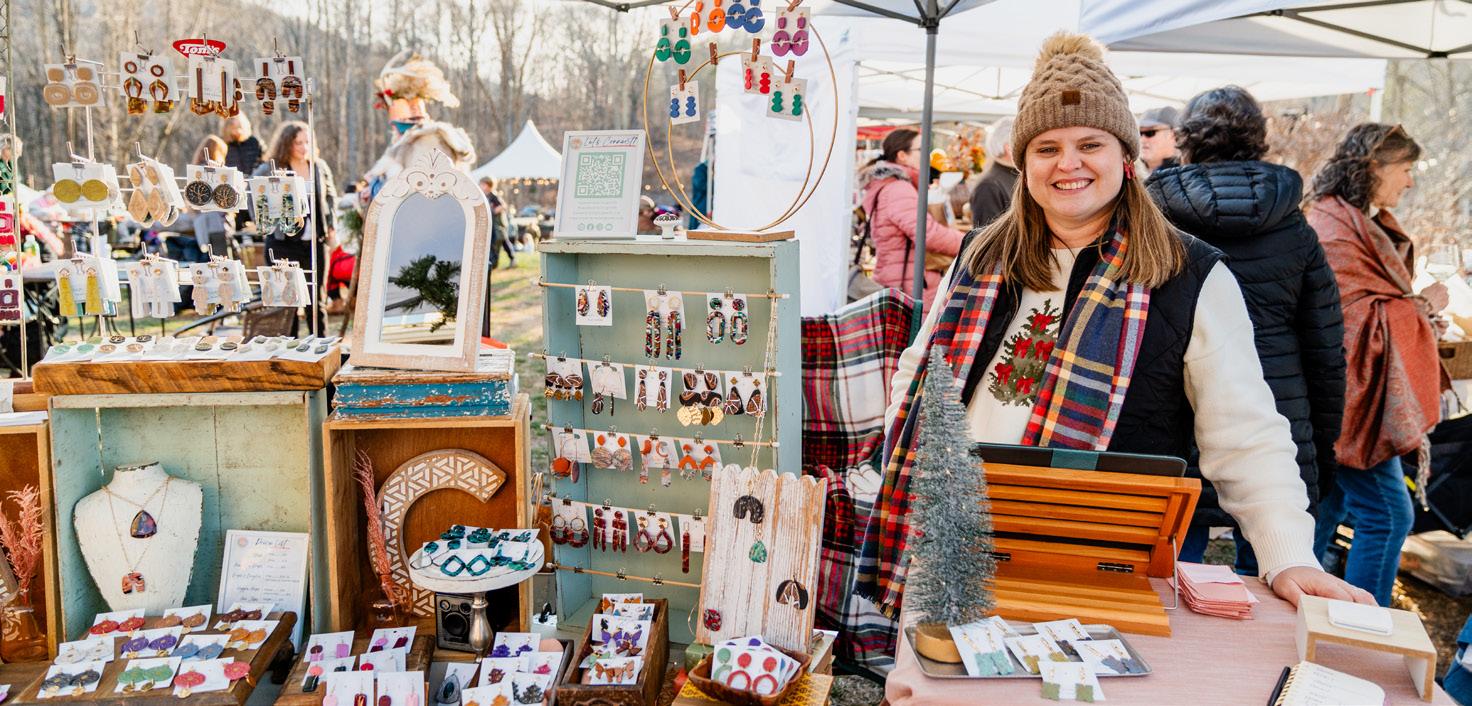
On December 20, an all-day winter festival at Potter’s Craft Cider harkened back to a medieval Christmastide English drinking tradition, celebrated to ensure a good cider apple harvest for the coming year. The event included a tasting room featuring wassail (hot mulled cider), live music, and family-friendly indoor/outdoor celebrations. Other activities included fire pits, caroling, vendor market, a Yule log, and the crowning of the new Wassail Royals.
Photography by Zach Phillips
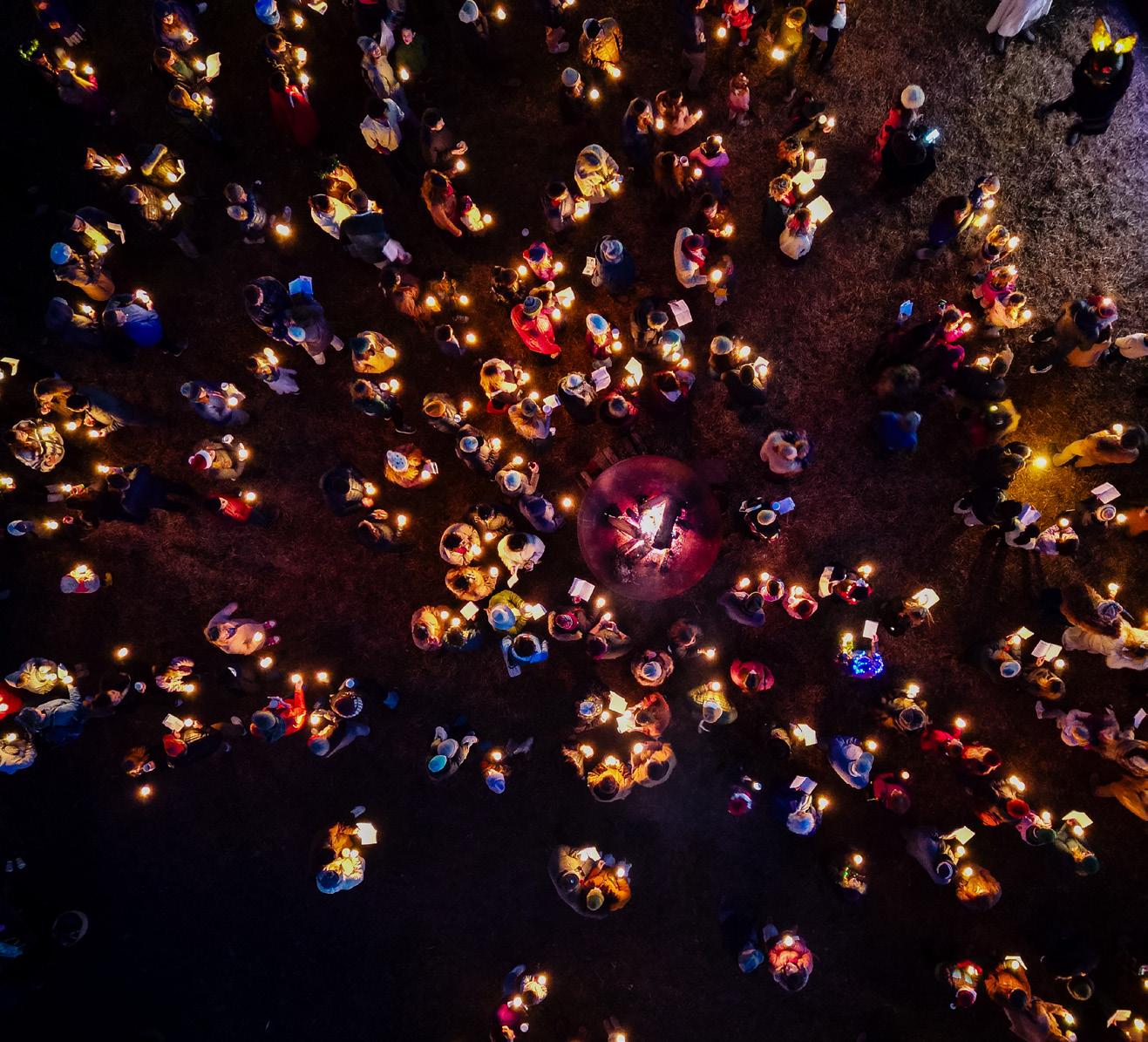
Discover a taste of SoSi� where warm hospitality meets bold local flavors. From elegant bistros and family-friendly diners to cozy coffee houses, mouth-watering bakeries� and romantic wineries� Danville and Pittsylvania County serve up something for every craving. Explore hometown favorites� including Me's Burgers and Brews� King Cropp Kitchen� The Homeplace Vineyard� Walker�s Roadside Diner� and more� during your next Southern Virginia getaway.