
We are the Southern Environmental Law Center, one of the nation’s most powerful defenders of the environment, rooted right here in the South. As lawyers, policy and issue experts, and community advocates and partners, we take on the toughest challenges to protect our air, water, land, wildlife and the people who live here. Together, we can solve the most complex environmental challenges right here in Virginia.


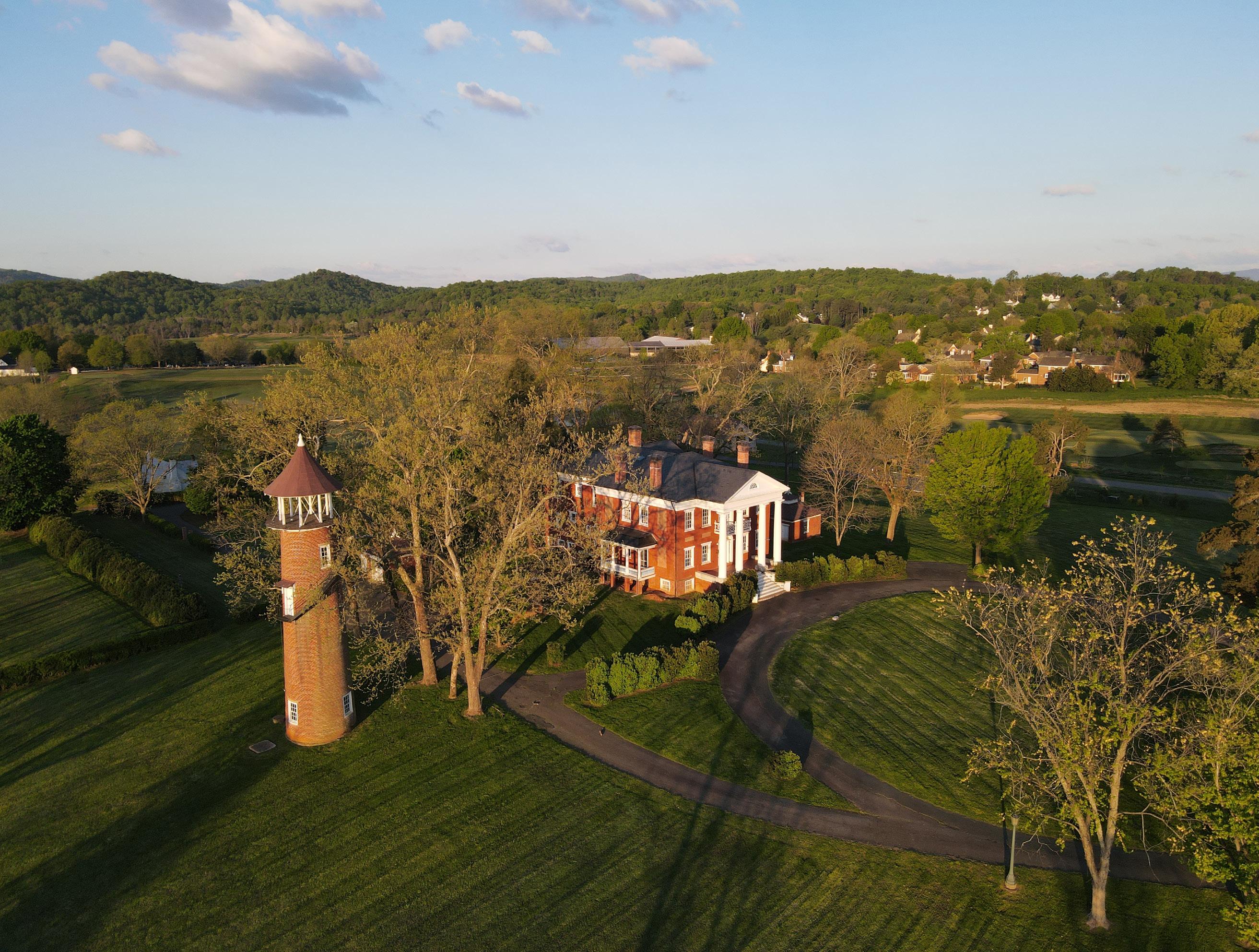
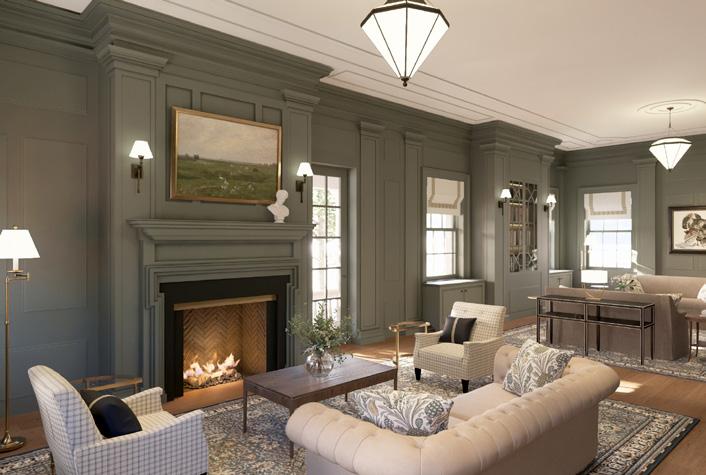

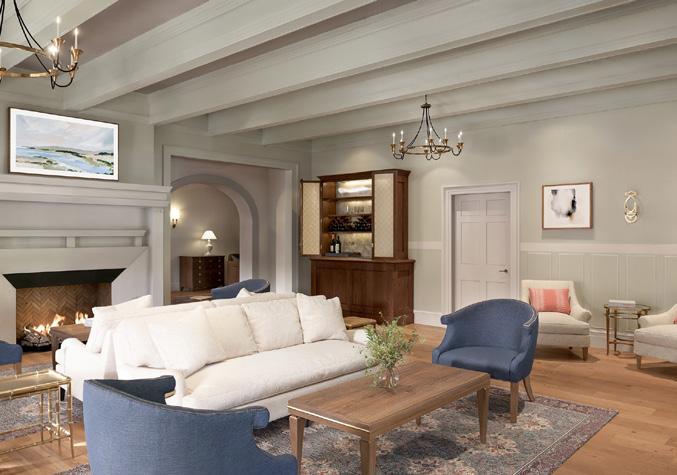
Step into the Birdwood Mansion, where history blends with natural beauty and pristine luxury. Recently restored to its former glory, this gem invites guests to uncover hidden treasures.
Boutique Hotel: Weddings | Events | Dining | Afternoon Tea
PRESIDENT BLAKE DEMASO blake@albemarlemagazine.com
EDITOR
ROBERT VICCELLIO robert@albemarlemagazine.com
SENIOR ACCOUNT MANAGERS LEAH WOODY leah@albemarlemagazine.com
KATIE HARTWELL katie@albemarlemagazine.com
BUCK BRICE buck@albemarlemagazine.com
SENIOR DESIGNER
REBECCA CENCEWIZKI rebecca@albemarlemagazine.com
CONTENT COORDINATOR AMANDA LIVERETTE
ONLINE DIRECTOR CRAIG SNODGRASS
CONTRIBUTING WRITERS & PHOTOGRAPHERS
Ian Atkins Stephanie Kowalczyk Myles Mellor Molly Minturn Matt Riley Jan Smith
SUBSCRIPTIONS & CIRCULATION albemarlemagazine.com/subscription-services business@albemarlemagazine.com 434-817-2755
ADVERTISING
blake@albemarlemagazine.com
COMMENTS & STORY IDEAS robert@albemarlemagazine.com www.albemarlemagazine.com
albemarlemagazine
albemarlemagazine 977 Seminole Trail PMB 294 Charlottesville, VA 22901
Albemarle magazine is published bimonthly by DeMaso Publishing, LLC, Copyright ©2026.
Subscription rates for the USA: 6 issues $18.00 Canada and all other countries: 6 issues $38.00 (US)

PROVIDING TOP-QUALITY PAINTING SERVICES AND SHOP FINISHES SINCE 2007


PAINT STORE • PAINT WORKSHOP • PAINTING SERVICES
ANNOUNCING PROUD NEW PARTNERSHIP WITH FARROW AND BALL

(434) 296-0900


From Jefferson and Madison to lesser-known patriots, Central Virginia’s interconnected families helped define the American Revolution and shape a nation.
A local guide to the 250th reveals how Central Virginia’s historic sites are interpreting the Revolution by offering new ways to engage with America’s founding and its complexities.
Monticello’s president Jane Kamensky is positioning this historic site as a living classroom, connecting Jefferson’s ideas to modern civic dialogue during the nation’s 250th.
Behind the Barracks Road name lies the story of Albemarle Barracks, a sprawling Revolutionary War prison camp that became one of Virginia’s largest wartime communities.
Through centuries of change, Farmington has grown without erasing its past, offering a rare look at how architecture evolves while preserving its original character.
Tony Bennett honored, Tom Tom returns, honors for writers, UVA opens new hotel

Two nights of Billy Strings at JPJ are highlights of spring concert schedule
Upcoming exhibitions at Shannon Library, Phaeton Gallery, Virginia Museum of History & Culture, and more.

A directory of the region's
Test your skills with the Cardinal Home Center crossword
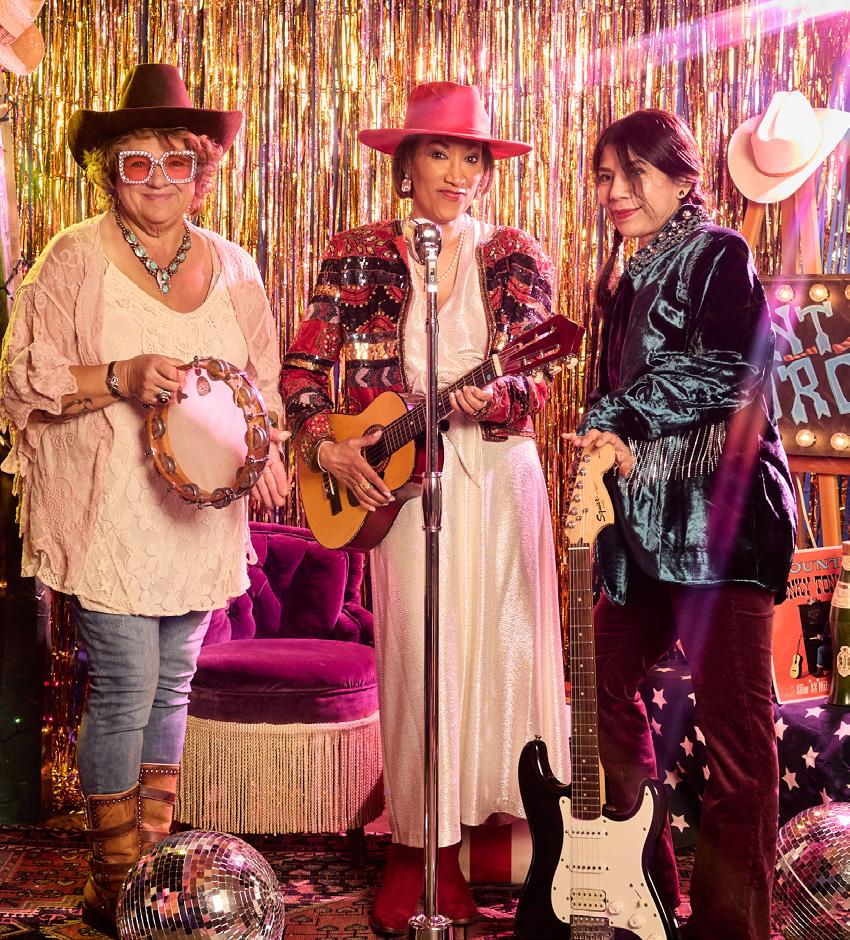
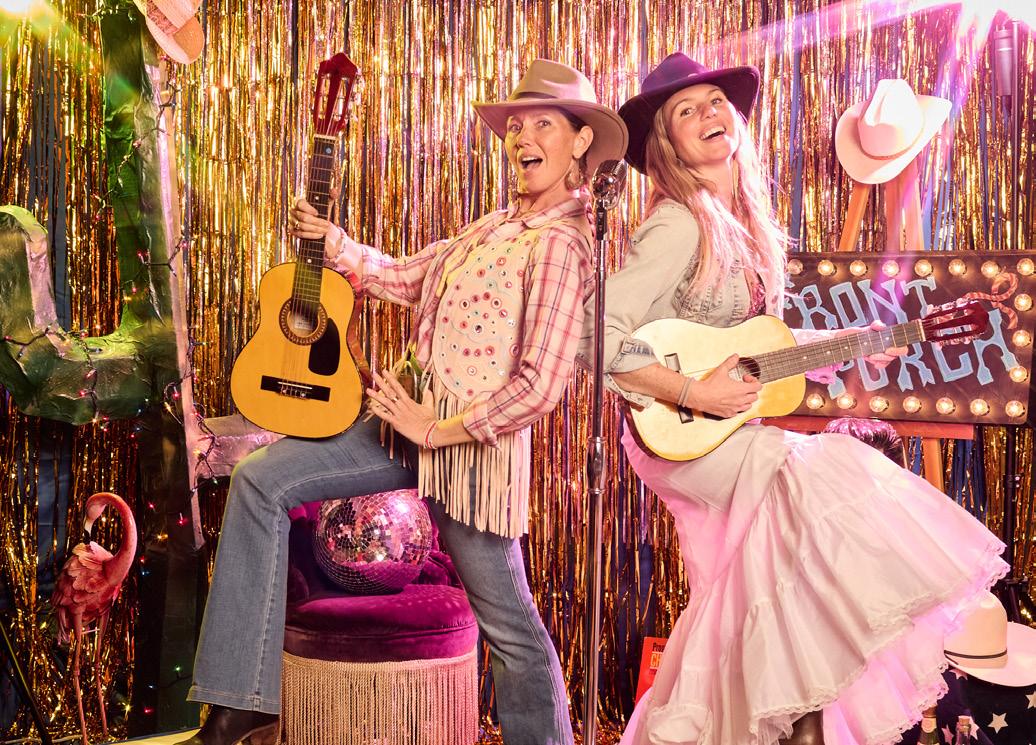
The Front Porch celebrates a decade with “A Night in Nashville” ON THE COVER:
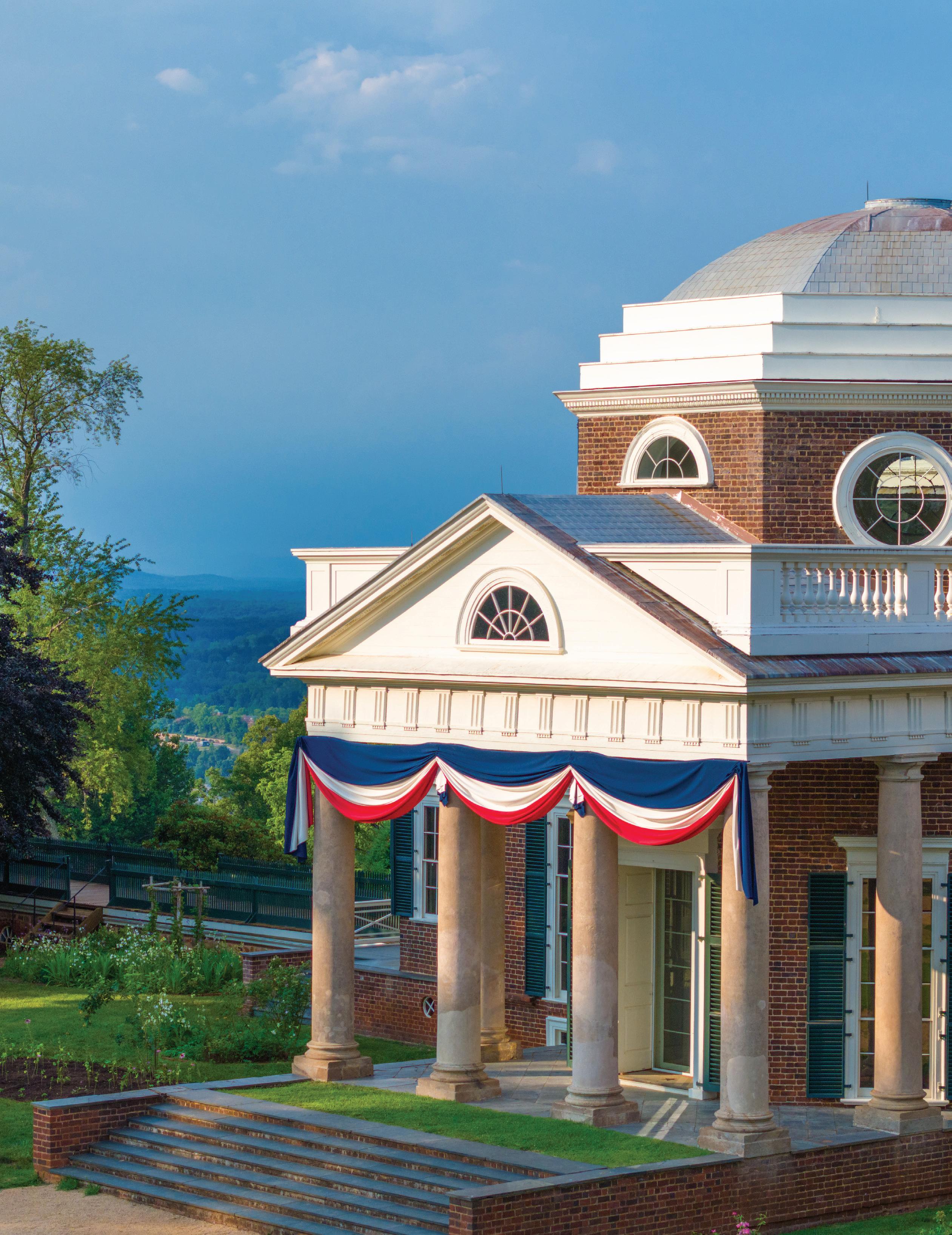
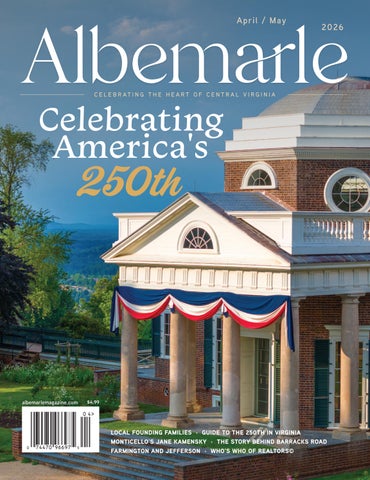
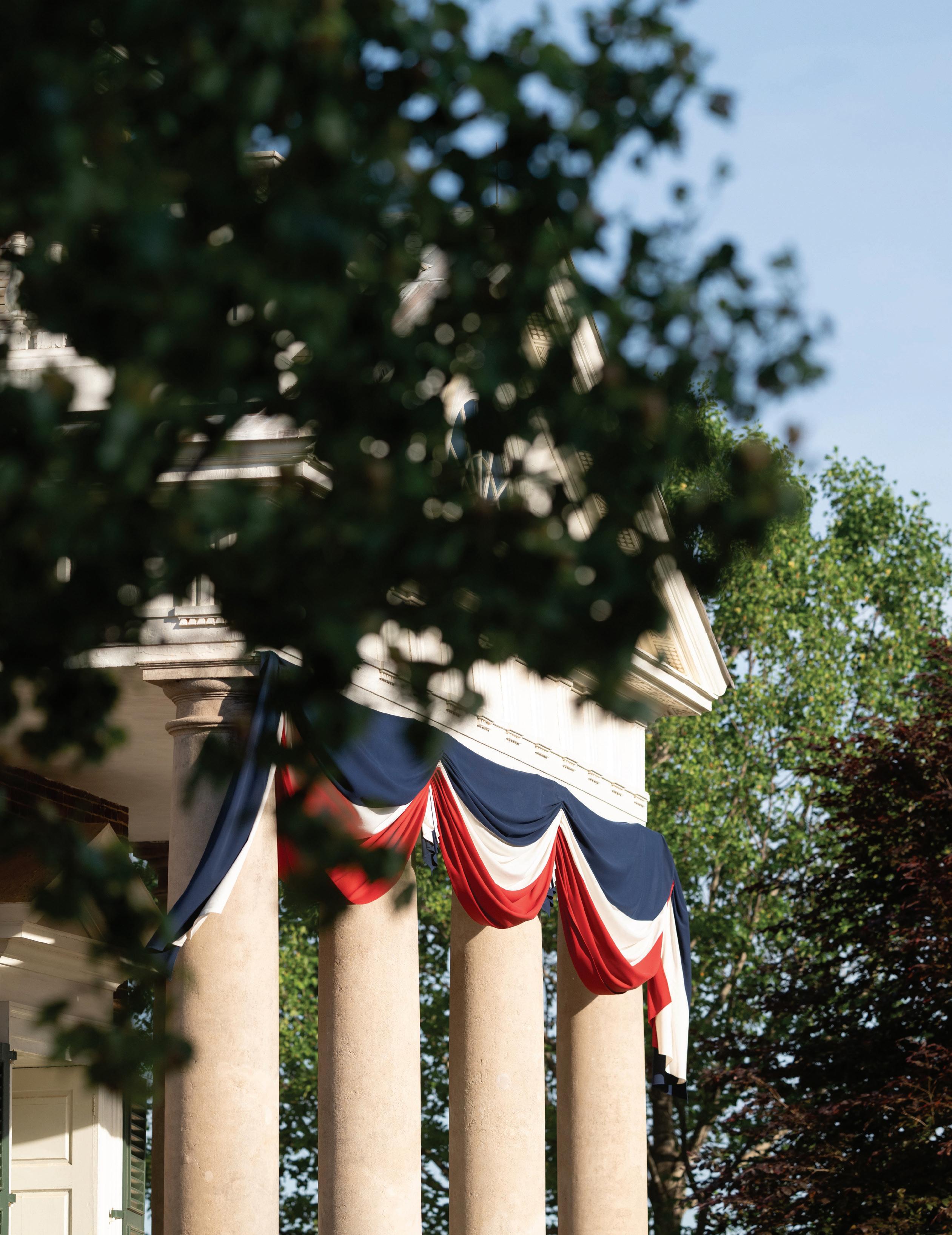
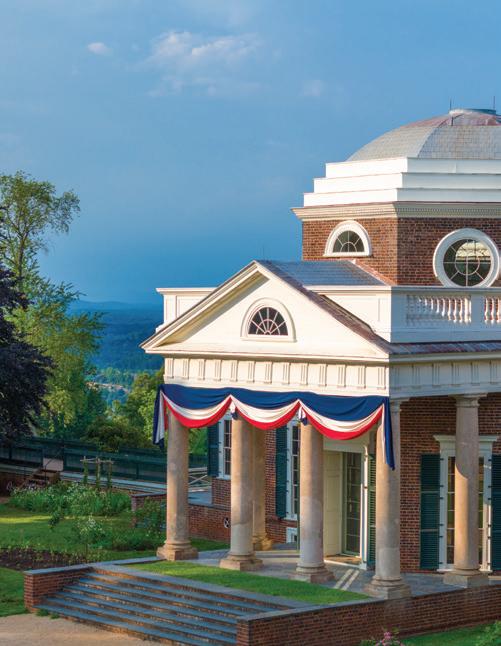
Monticello readies for Independence Day with patriotic bunting. Photo © Thomas Jefferson Foundation at Monticello.





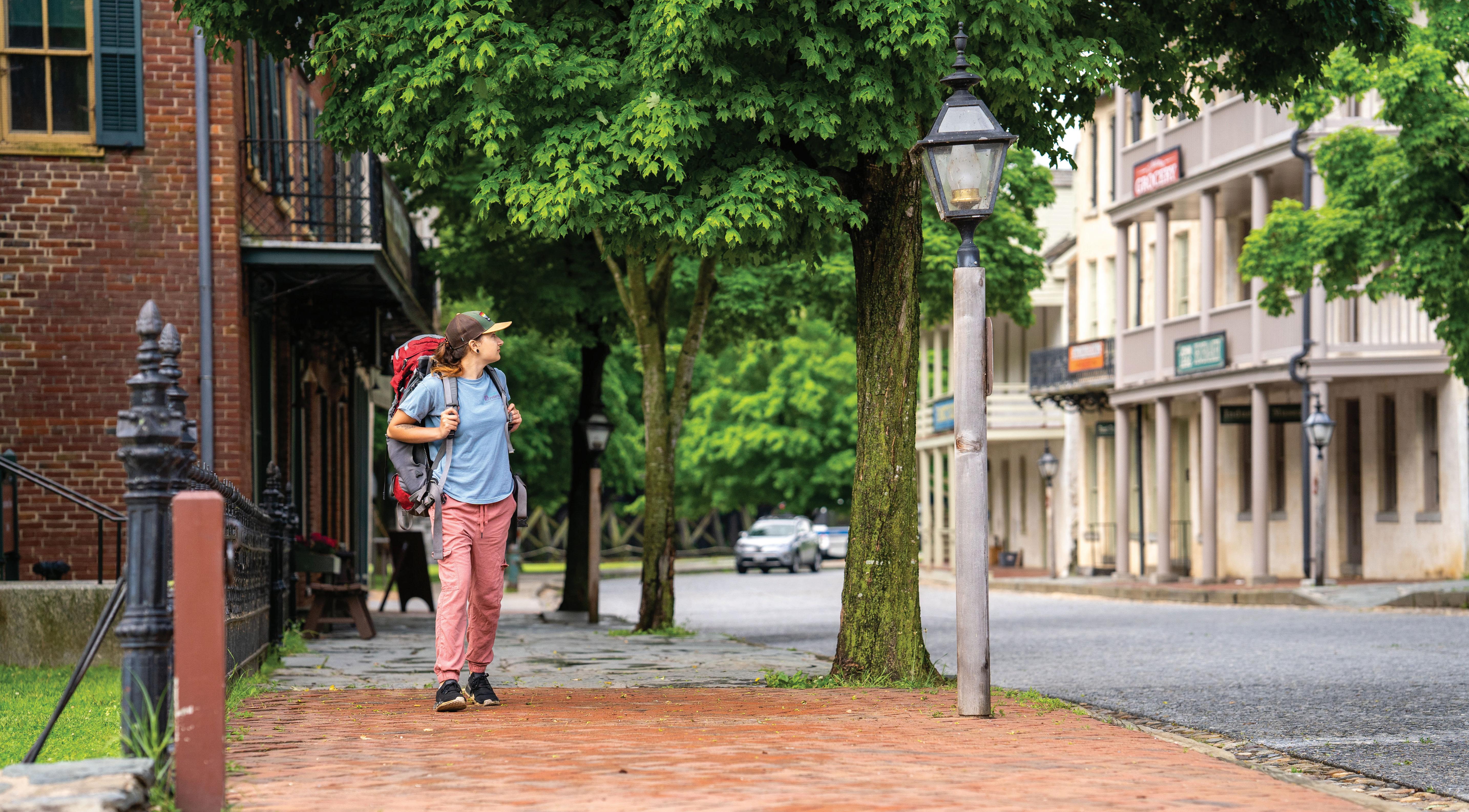
Sometimes, a voice from the past echoes in the breeze.
Our history isn’t hidden—it calls softly from riverbanks, courthouse steps, and college grounds that shaped civil rights.
Discover the unexpected in Je erson County, West Virginia.
BOLIVAR



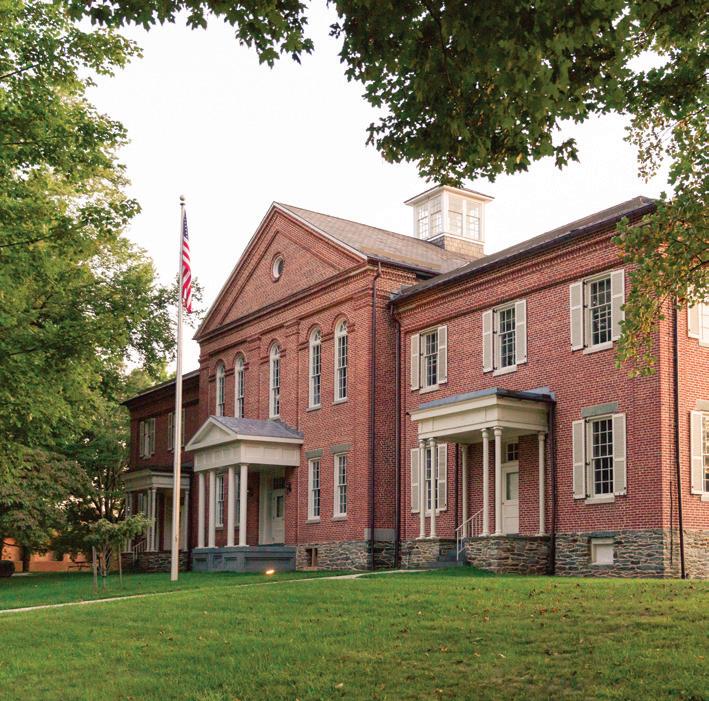

In 1906, civil rights leader W.E.B. Dubois hosted the national conference of the Niagara Movement at Storer College in Harpers Ferry, the rst institution of higher learning in West Virginia for African Americans.
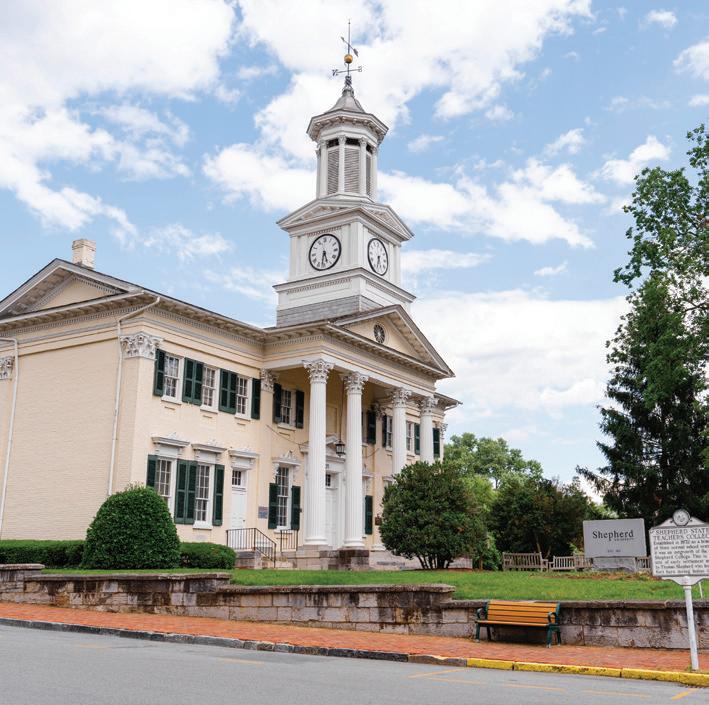




Discover
“Shepherdstown is blessed by natural beauty from the surrounding mountains and meandering Potomac River. It’s also rich with MORE THAN 250 YEARS of history.”
—Southern Living
Tony Bennett honored at JPJ
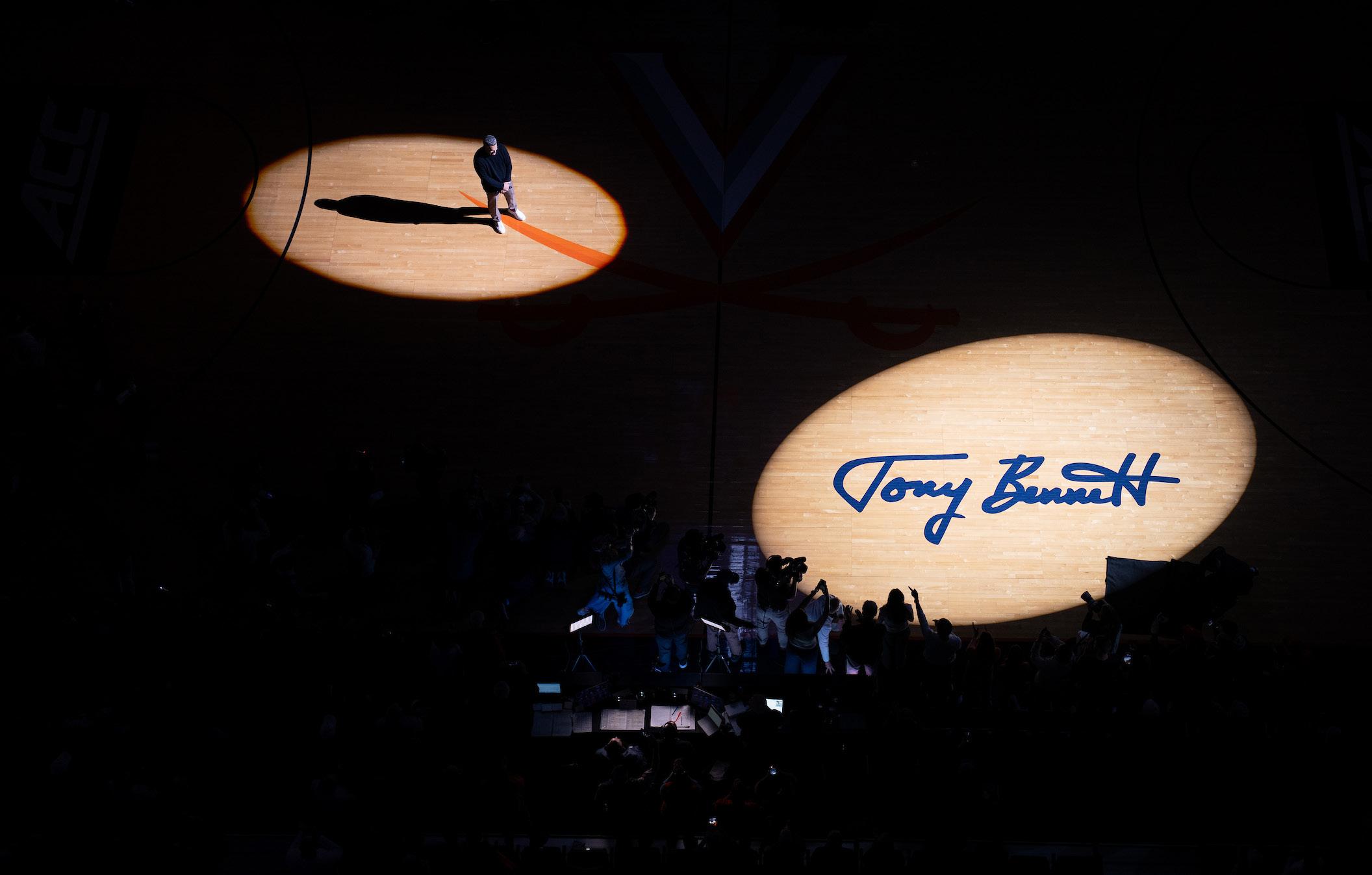
In a pregame ceremony before the University of Virginia Cavaliers faced Miami on February 21, the floor at John Paul Jones Arena was officially dedicated as Tony Bennett Court, recognizing the coach whose 15-season tenure reshaped Virginia basketball. Bennett, who retired in 2024, finished with a 364–136 record and delivered the program’s first national championship in 2019.
“[Tony Bennett] is what college basketball is all about from a coaching perspective,” Odom said following the game. “He was about all the right things. He proved that you could win at the ultimate level, the highest level, and do it with dignity and class and integrity and a ferociousness from a competitive standpoint.”
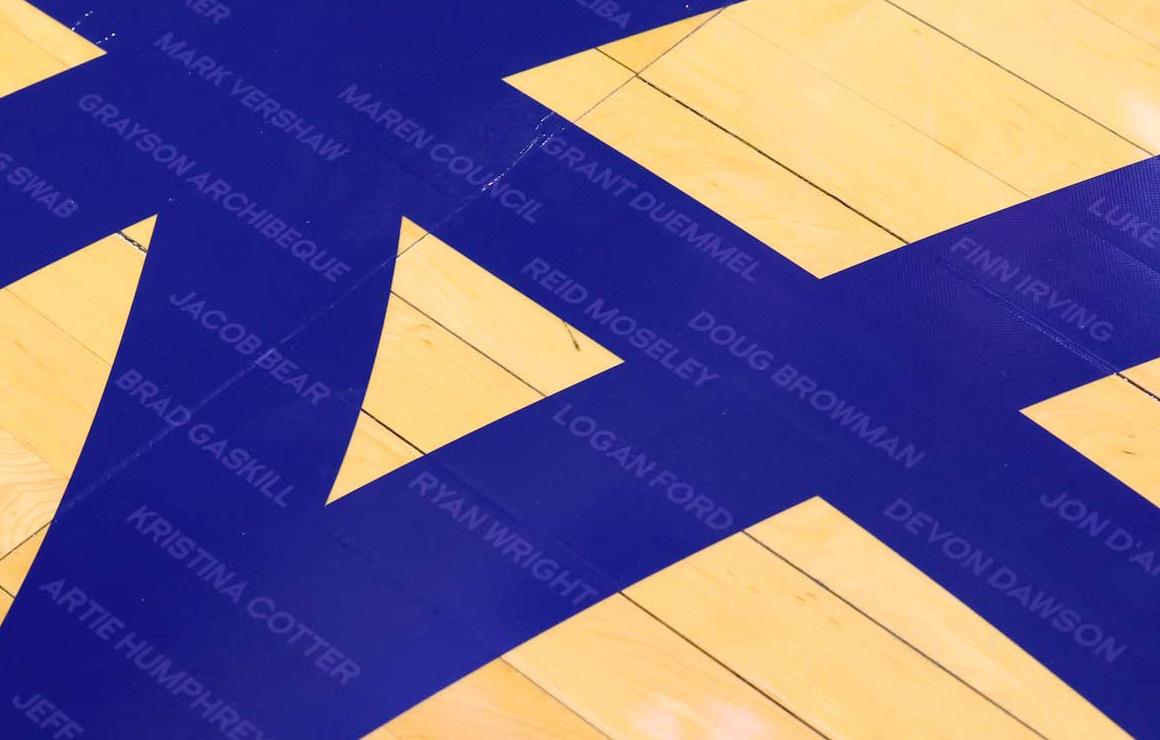
The large on-court rendering of Bennett’s signature reflects his characteristically selfless, team-first philosophy. He asked that the names of every player, manager, coach, and staff member who was part of the program during his tenure be included within the lines of the signature.
“Forever,” Bennett said, “we’ll be on that court together.”
My heart is full. I am overwhelmed by this.,,
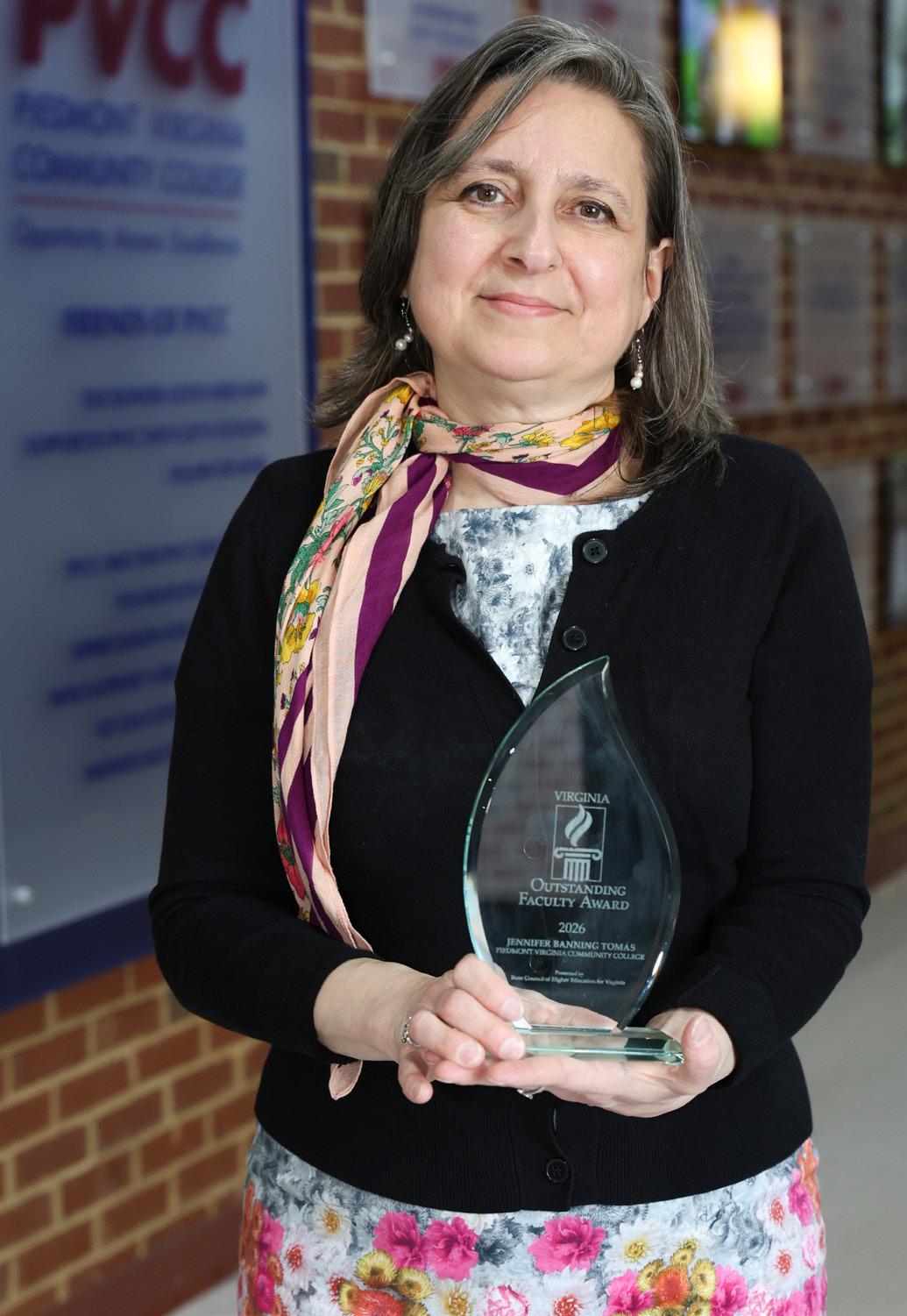
Piedmont Virginia Community College history professor Jennifer Banning Tomás has been named a recipient of the 2026 Outstanding Faculty Award from the State Council of Higher Education for Virginia, one of the Commonwealth’s highest honors for college educators.
Tomás was selected from a pool of 81 nominees representing public and private colleges and universities across Virginia. She is one of 12 recipients statewide and one of two honorees from Virginia’s community college system.
Recipients of the award are recognized for excellence in teaching, scholarship, and service. The awards were announced at a March ceremony in Richmond, where each recipient received a $7,500 prize.
“Professor Banning Tomás embodies the very best of Piedmont Virginia Community College,” says PVCC President Dr. Jean Runyon. “Her unwavering commitment to student success, her innovative and engaging teaching, and her meaningful service to our college and community distinguish her as an extraordinary educator.”
Tomás specializes in United States social and political history and recently published Reclaiming Clio: Making American Women’s History, 1900–2000.





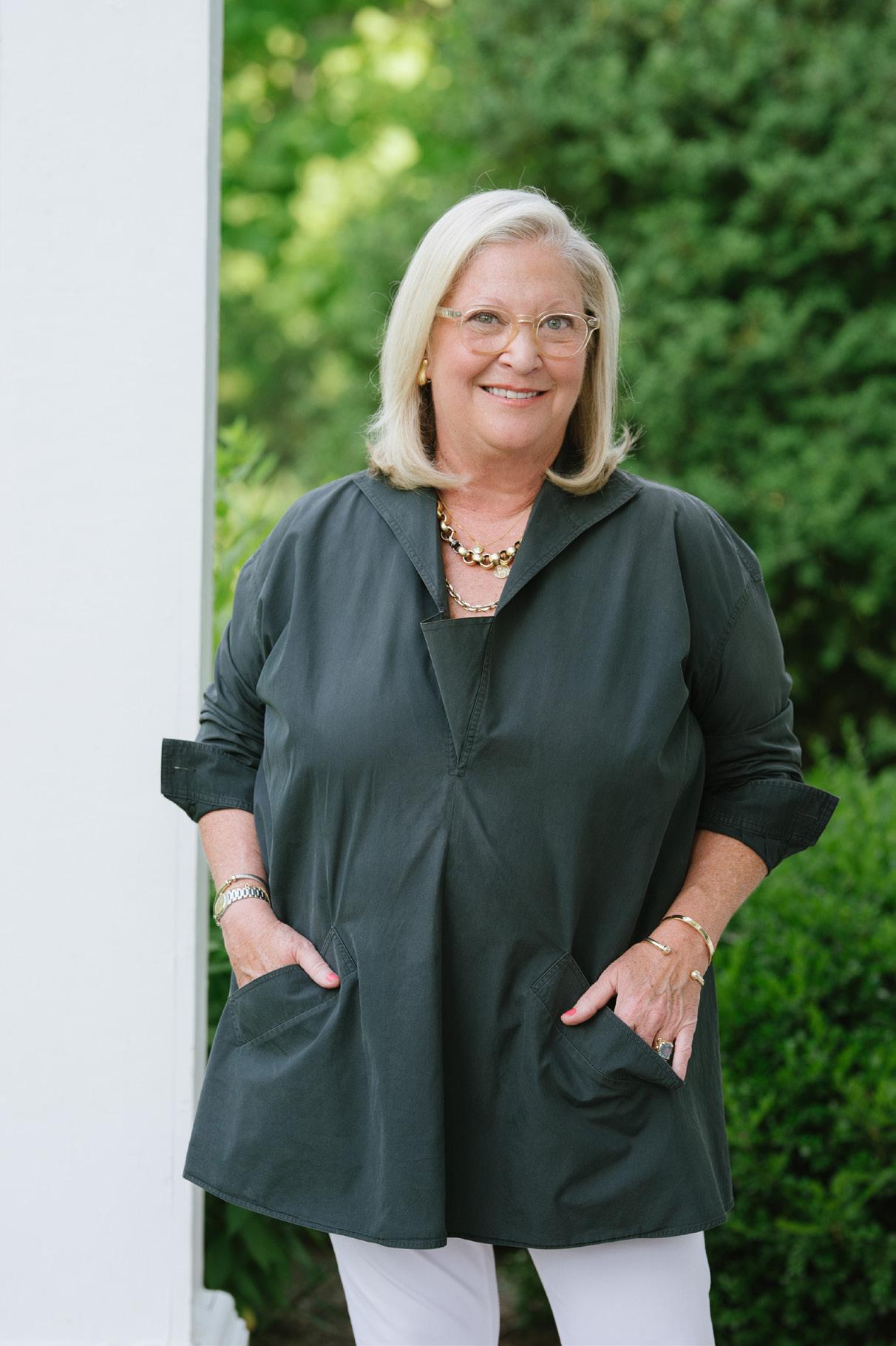
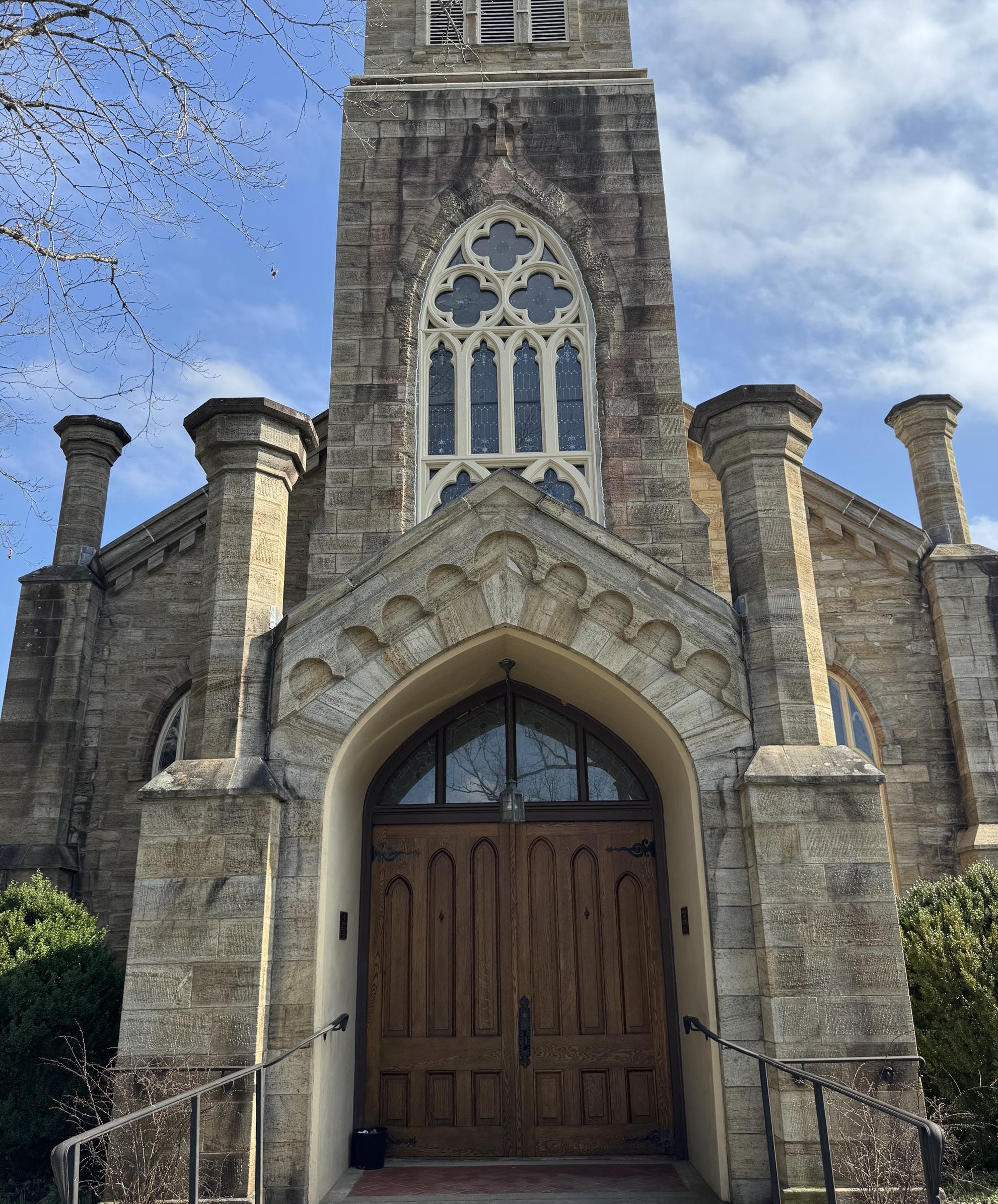
The Grace Church Farm Tour offers a rare chance to step inside some of the most scenic and storied landscapes in eastern Albemarle County, an area Thomas Jefferson once described as “the Eden of America.”
The 15th annual Grace Church Farm Tour and Country Fair will take place June 6 from 10 a.m. to 4 p.m., offering behind-the-scenes access to farms, vineyards, and equestrian properties in the Keswick area. Tour stops include Southwest Mountain Vineyards and the historic stone ruins at Castalia, dressage demonstrations at Linden Lane Farm, musical drillteam performances at Montanova Stables, and foxhound demonstrations at the Keswick Hunt Club. Family-friendly activities will also be featured at a nearby Gordonsville farm.
The day also includes a Country Fair at Grace Episcopal Church, featuring 4-H animal exhibits, live music, crafts, children’s activities, pony rides, and homemade food and baked goods. The church is one of only six colonial churches in Virginia that still has an active congregation. The original church was constructed in 1745, and its foundation stones remain in front of the present church building.
Advance tickets are $20 ($25 on tour day), with children under 12 admitted free. Proceeds support local nonprofits—last year’s event raised $65,000, benefitting 29 local organizations.
•Listed and Sold 300+ Glenmore Homes
• 30 Years of Local Experience Marketing & Selling Fine Properties
•Expertise in Keswick, Glenmore, Charlottesville & Albemarle
•Sought After Network of Interior Designers, Builders & Architects


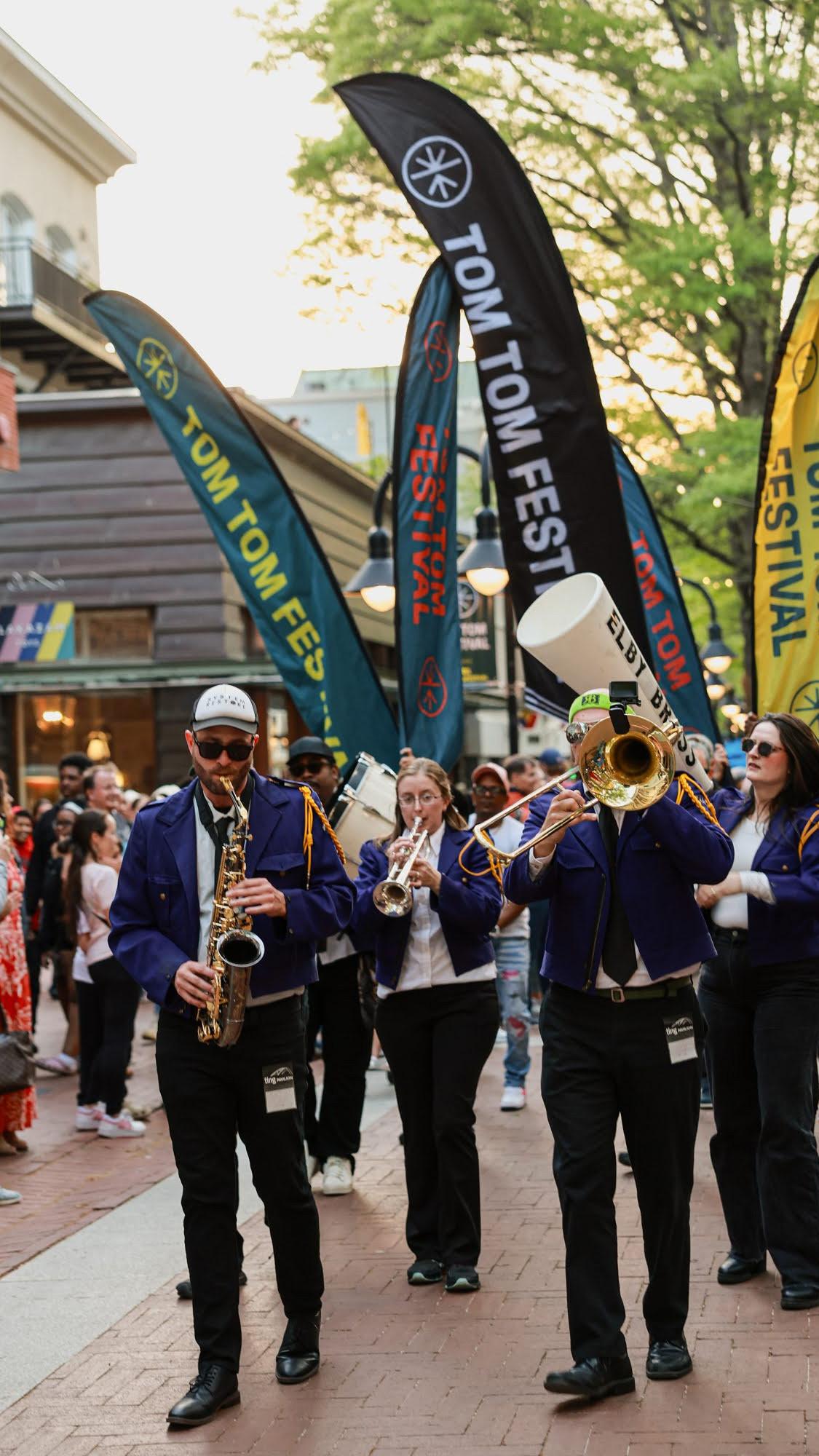
From April 22–26, the 14th annual Tom Tom Festival will once again bring music, ideas, and creative energy to Charlottesville’s Downtown Mall.
This year’s theme is “Courage,” and participants are encouraged to consider what it means to imagine and build a braver future. Through talks, art installations, concerts, and civic discussions, the festival explores how individuals and communities take risks, bridge divides, and shape the next chapter of life in Charlottesville and beyond.
Founded by the nonprofit Tom Tom Foundation, the festival has grown into one of the region’s most distinctive cultural events. In recent years it has drawn roughly 25,000 attendees and featured more than 200 events ranging from large outdoor concerts and
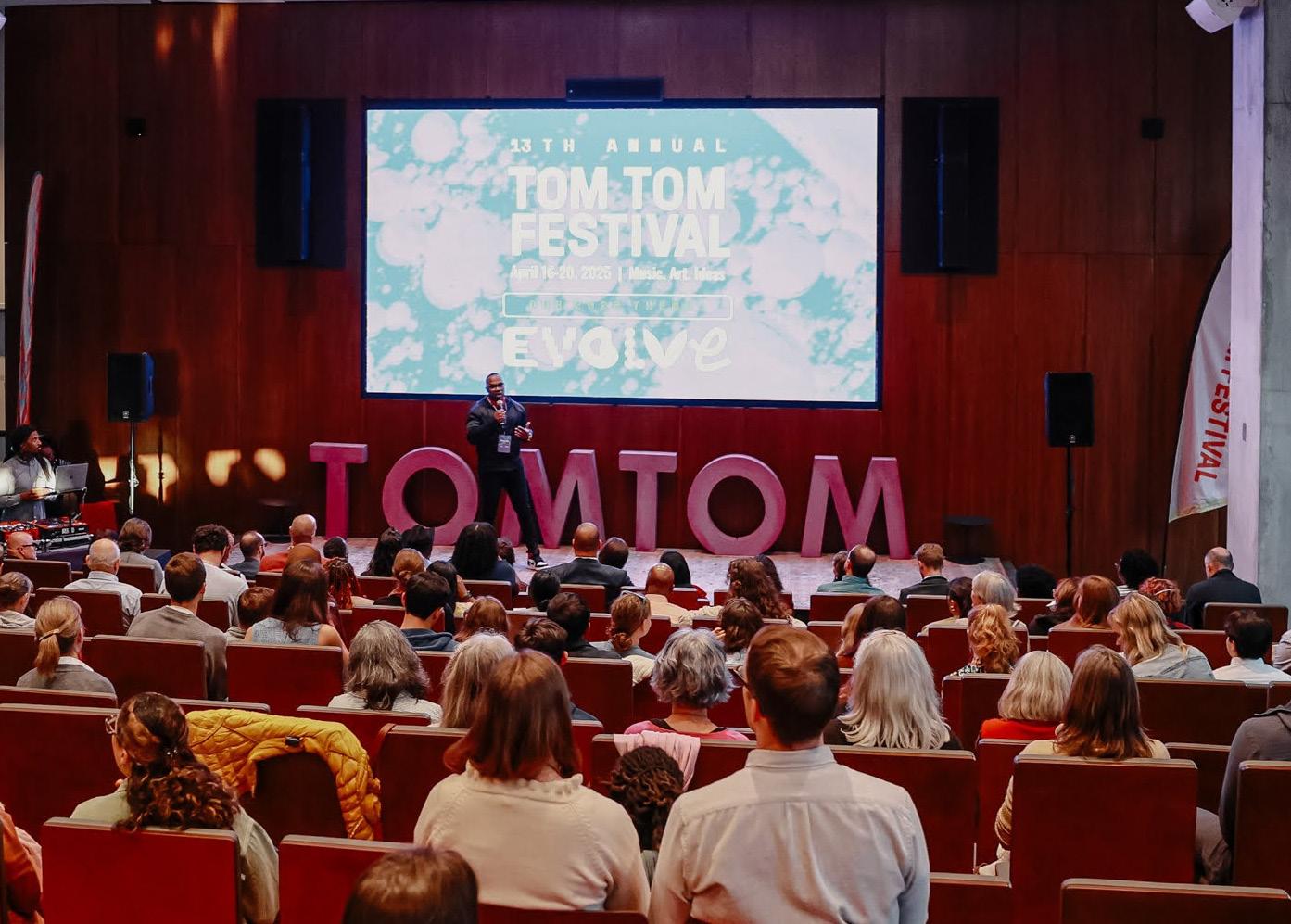
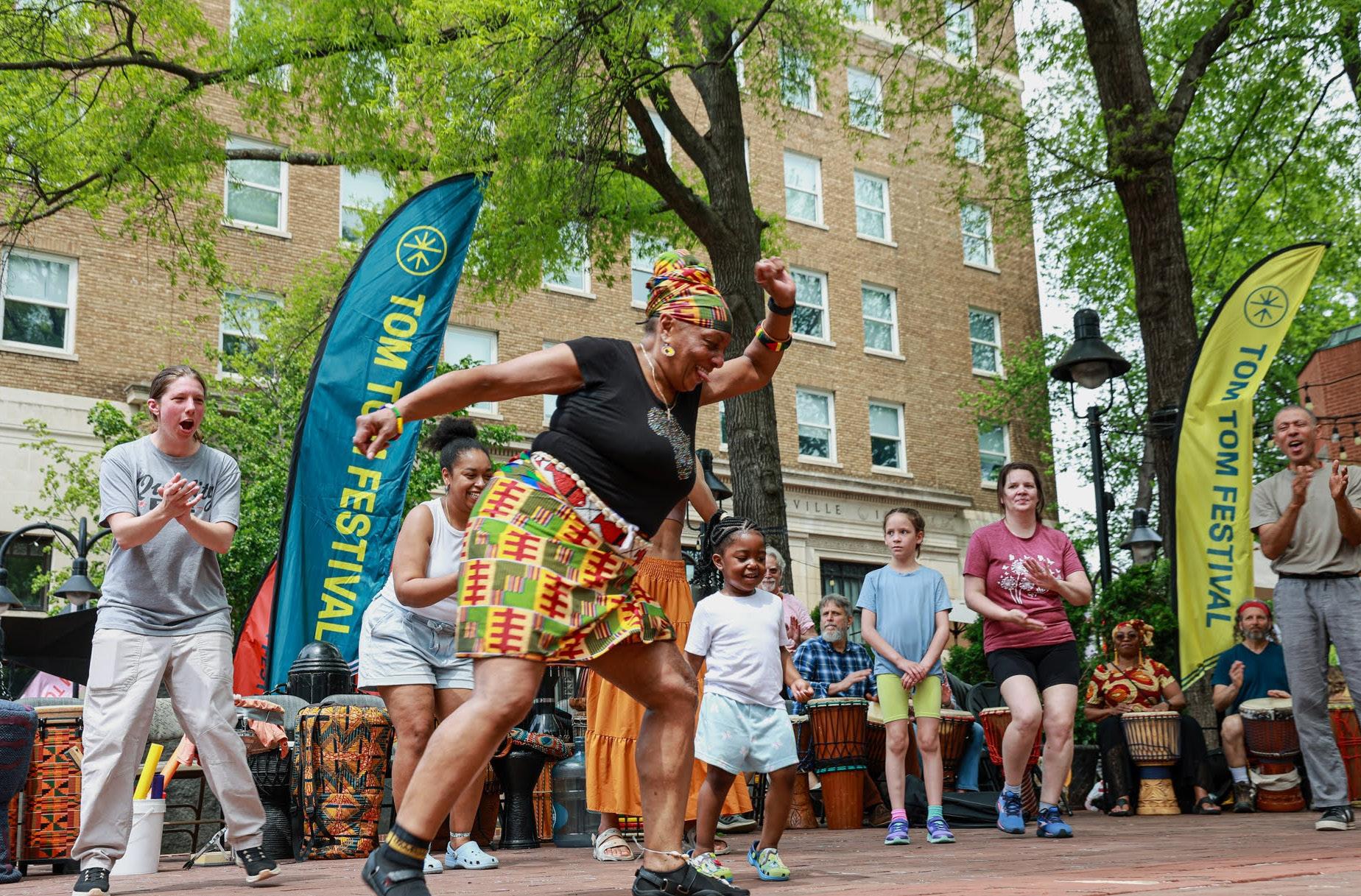
dance parties to panel discussions and workshops.
Music and celebration remain at the heart of the week. Pop-up performances, DJ sets, and the festival’s signature Downtown Mall block party turn the city center into a walkable festival corridor. At the same time, Tom Tom’s conference programming anchors the event’s “ideas” side. The Civic Futures Summit and Innovation Summit bring together entrepreneurs, educators, artists, and community leaders to discuss topics
such as economic development, housing, technology, and regional storytelling.
A hallmark of the festival is its open, collaborative approach. Through a Community Partner Program, local organizations, artists, and entrepreneurs host their own events during festival week—adding dozens of workshops, exhibits, and neighborhood happenings to the schedule.
For the full schedule and festival details, visit tomtomfoundation.org.

Each year, the Southern Environmental Law Center recognizes writers whose work deepens public understanding of the South’s environmental challenges and natural beauty. The organization’s 2026 Phillip D. Reed Environmental Writing Award honors two voices whose storytelling brings urgent environmental issues into sharp focus.
The Book Award goes to environmental justice advocate Catherine Coleman Flowers for Holy Ground: On Activism, Environmental Justice, and Finding Hope. In her collection of essays, Flowers reflects on decades of organizing work across the rural South, examining how climate change, poverty, and systemic disinvestment continue to affect communities’ access to clean air, safe water, and healthy environments. Blending personal history with social analysis, the book calls readers to confront environmental inequities while holding onto the possibility of change.
The Journalism Award recognizes Lindsey Liles for the Garden & Gun feature “Inside the Fight to Save the World’s Most Endangered Wolf.” Her reporting explores the fragile future of the red wolf, whose only remaining wild population survives in a small area of eastern North Carolina. Through detailed reporting on science, policy, and local perspectives, the story highlights the complicated balance between conservation, land use, and public will.
Based in Charlottesville, the Southern Environmental Law Center established the Reed Award in 1994 to honor writing that illuminates the South’s environmental story and the people working to protect it.
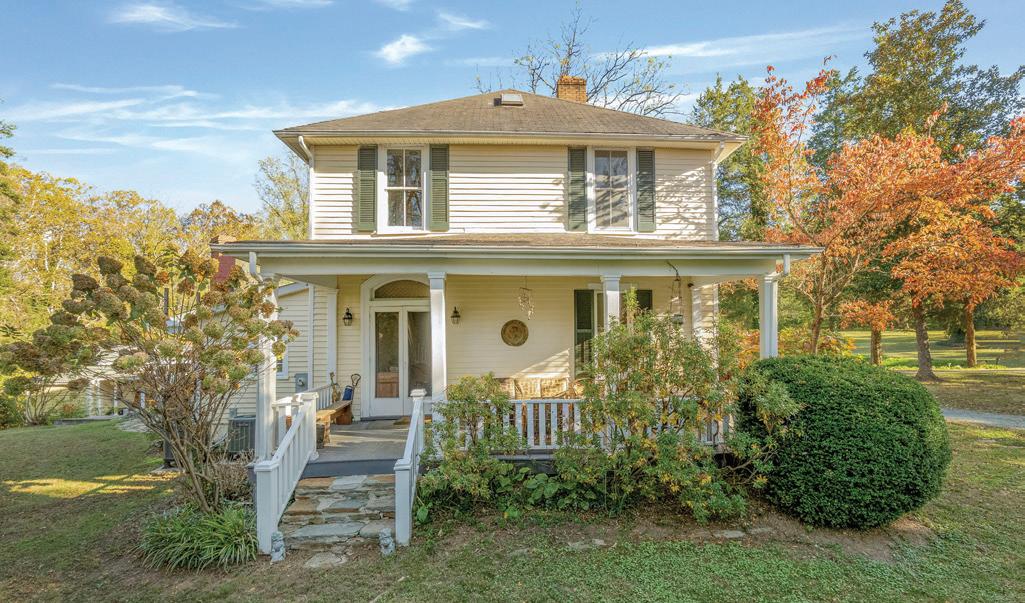
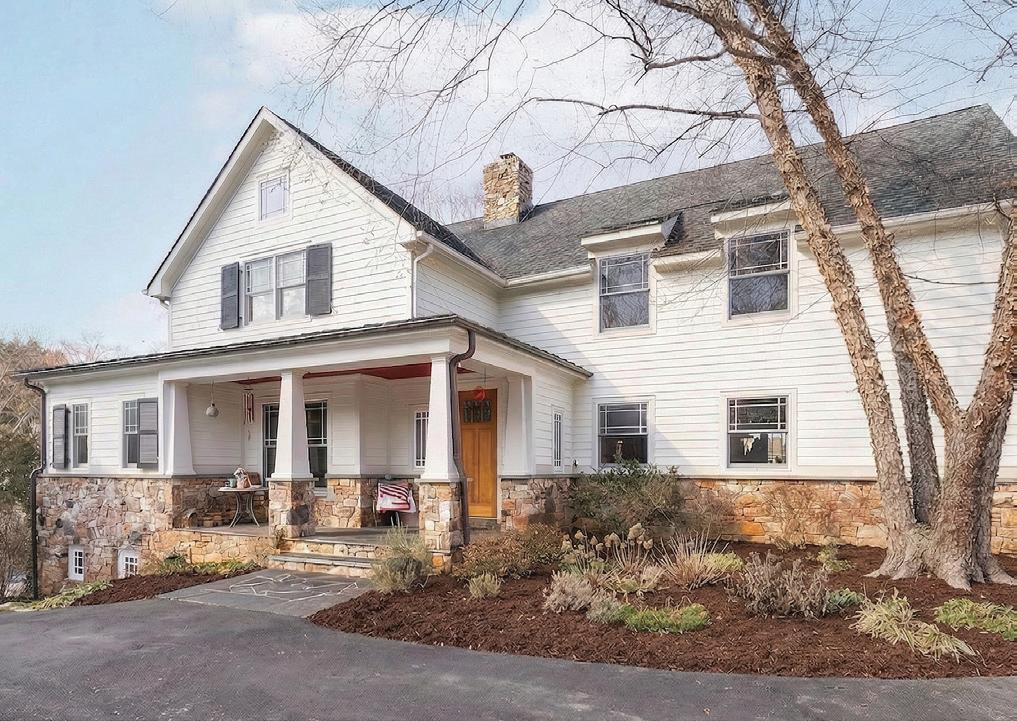
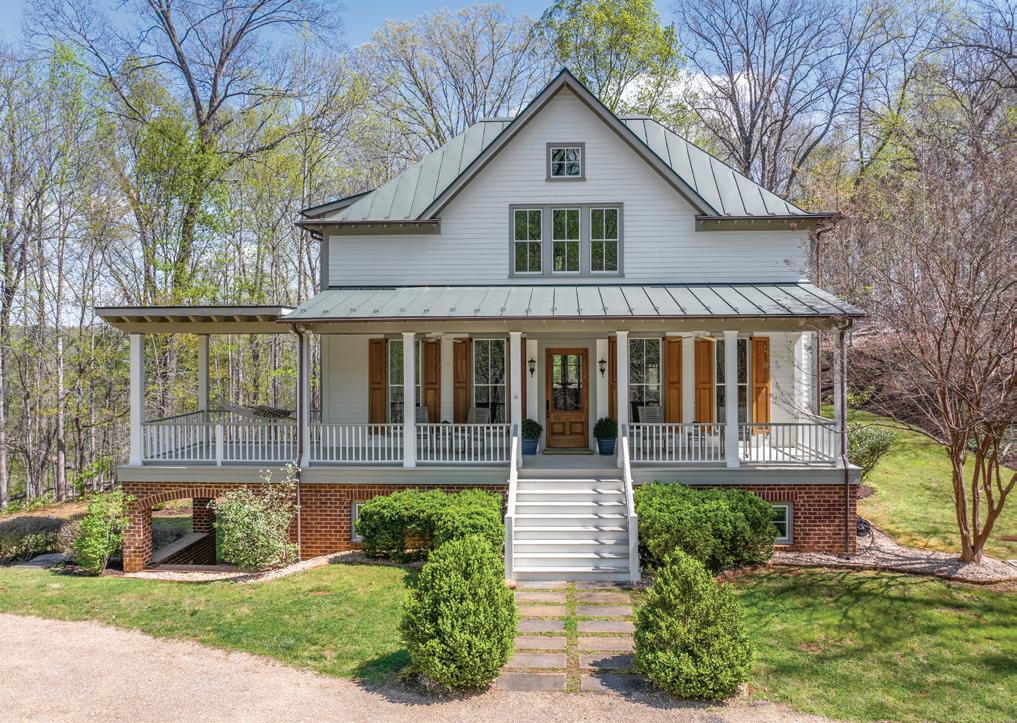
Mulberry Hill ~ 22.44 acres
$1,395,000
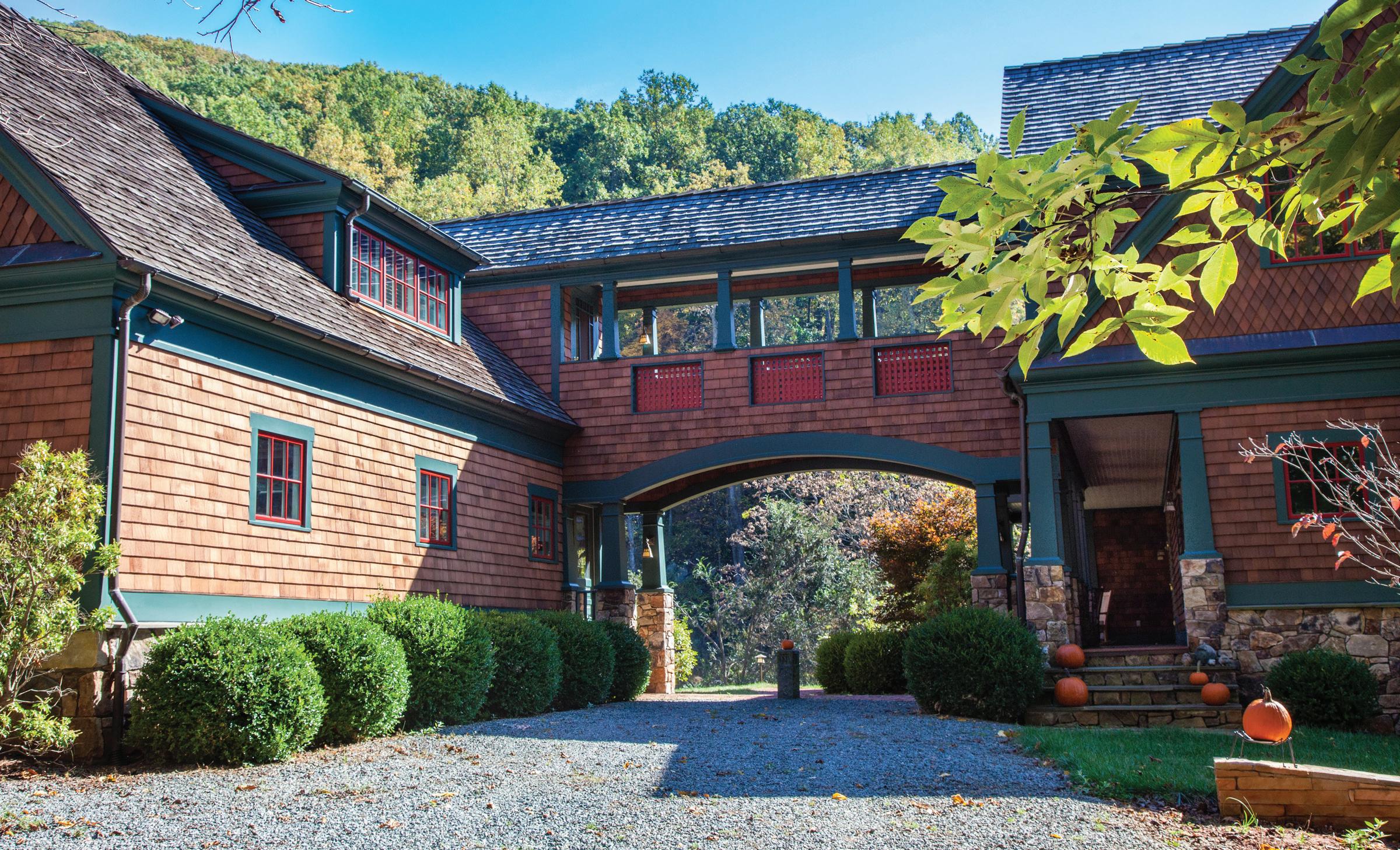
Mulberry Hill ~ c. 1900 in Keswick Hunt Country. The main house and guest house are both contributing historic dwellings in the Southwest Mountains Rural Historic District. A fine example of the vernacular Victorian style with a grand hall, 10-foot ceilings, hardwood floors and a central chimney with two fireplaces. A cozy one-bedroom guest cottage is nestled close to the rear of the house. Development rights.
Ross L. Stevens rstevens@stevensandcompany.net 434-981-5268
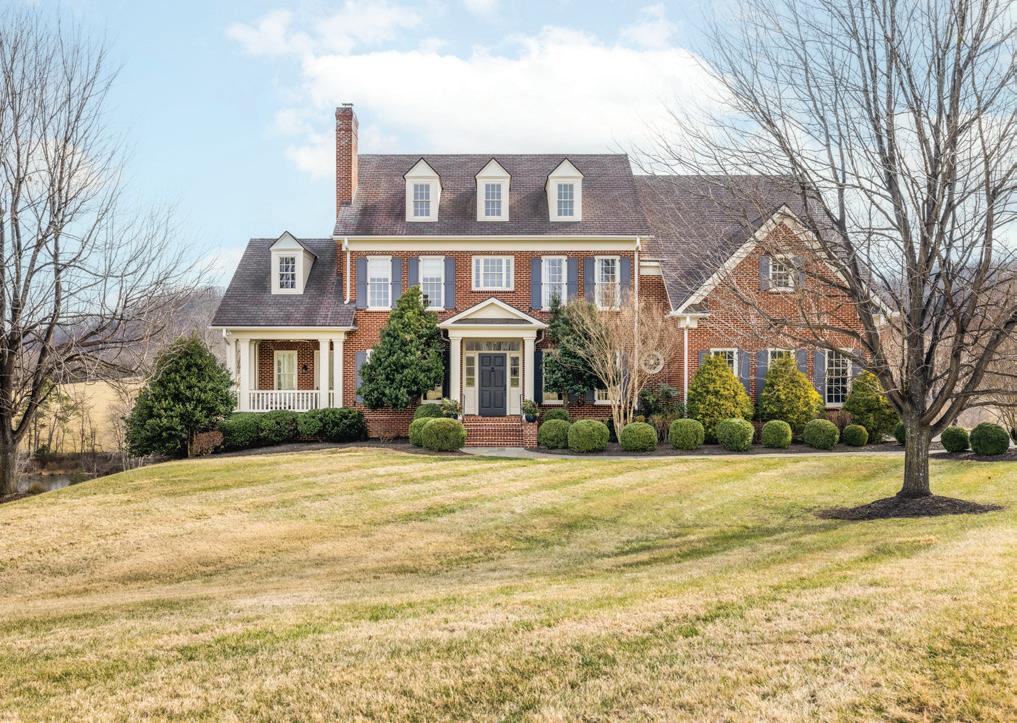
777 Emmaeus Road ~ 7.68 acres
$1,295,000
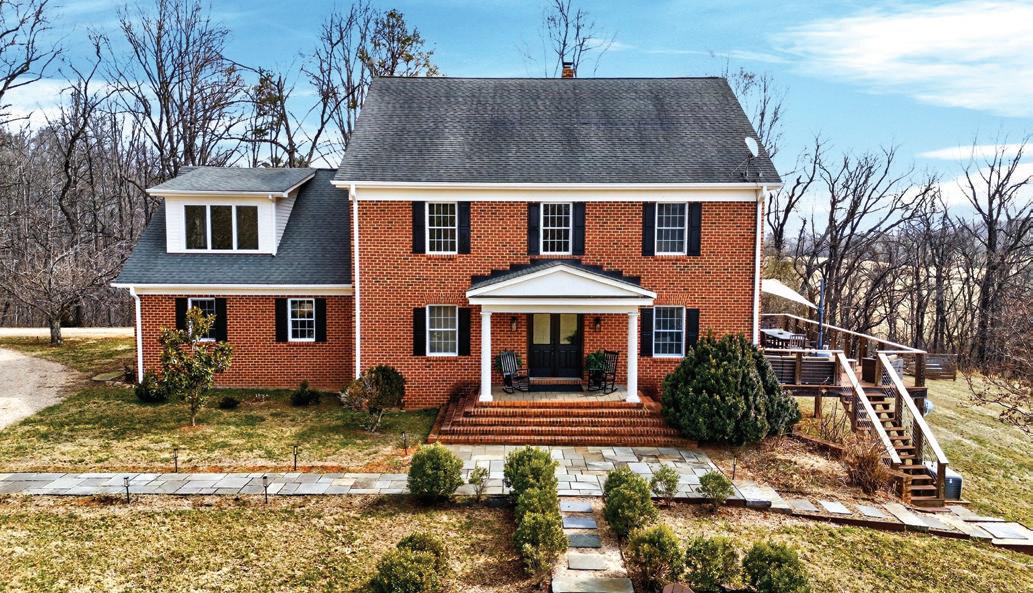
beautifully maintained three-story brick home in Afton offers 3,378 sq.
of comfort, efficiency, and breathtaking mountain views. Designed for real life, the flexible floor plan provides space for guests, remote work, and gathering with ease. The spa-inspired primary bath with soaker tub, curbless shower and bidet is a serene retreat; while two porches, a large deck, and a fire-pit area create unforgettable outdoor living.
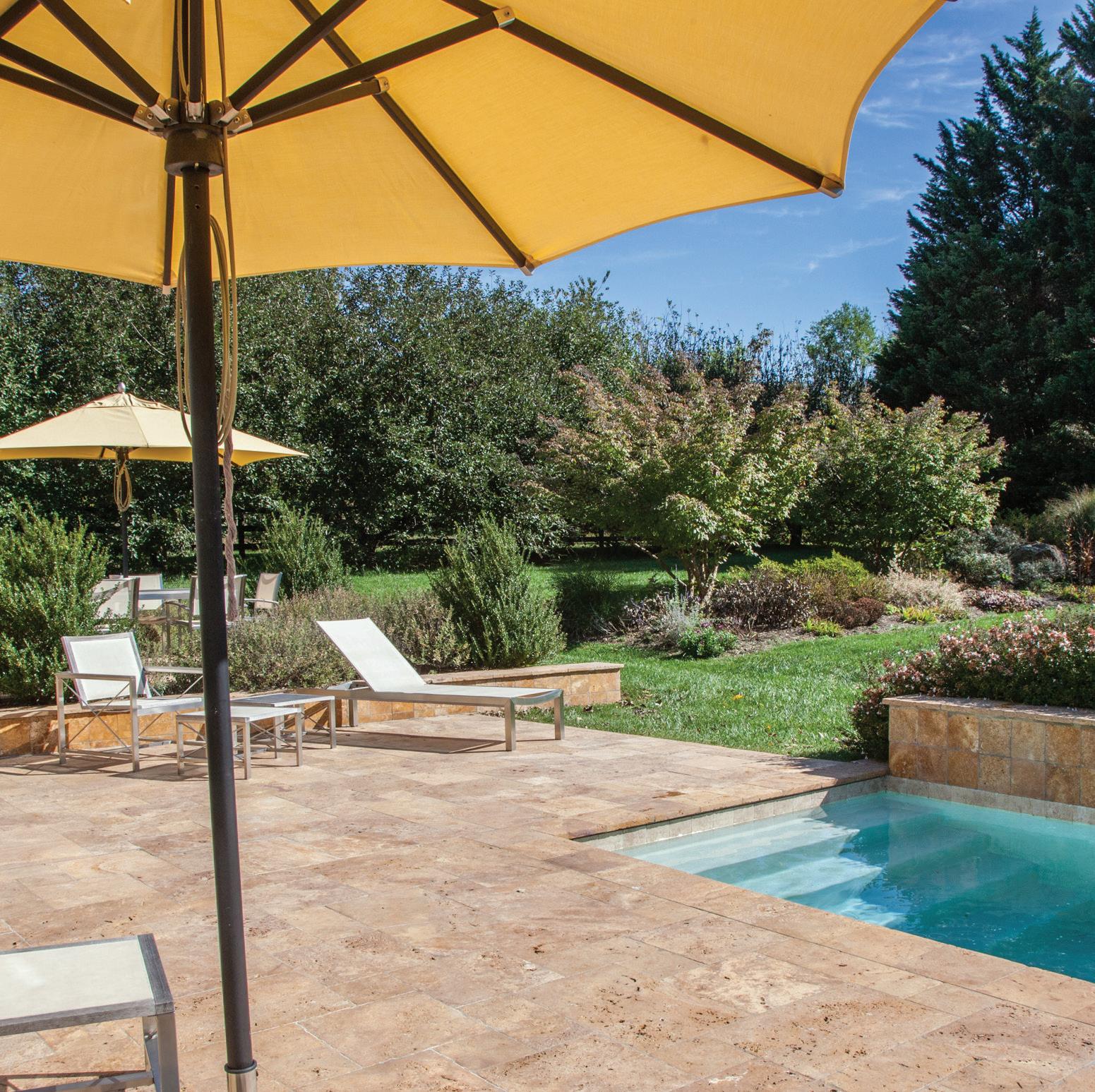
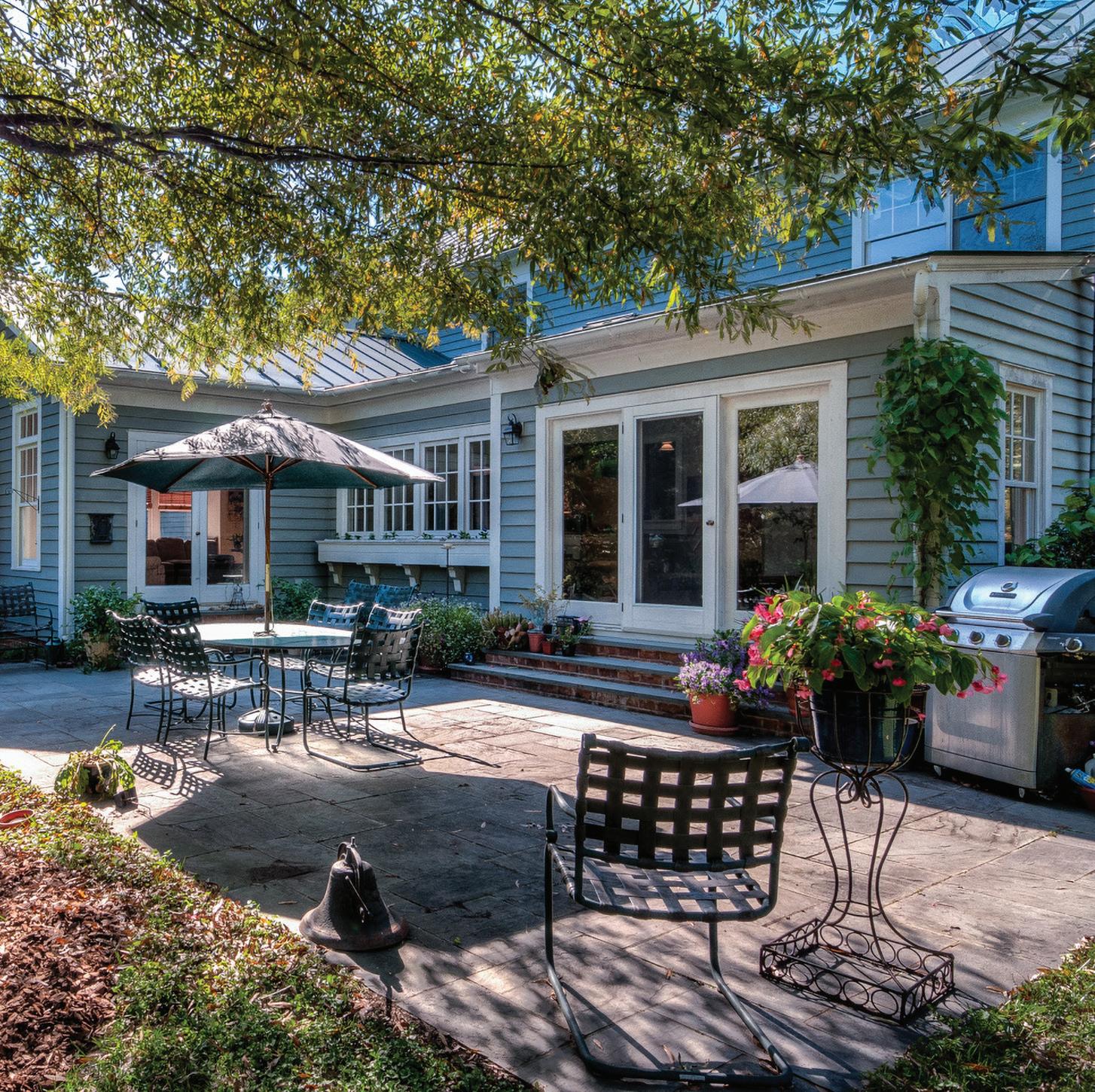
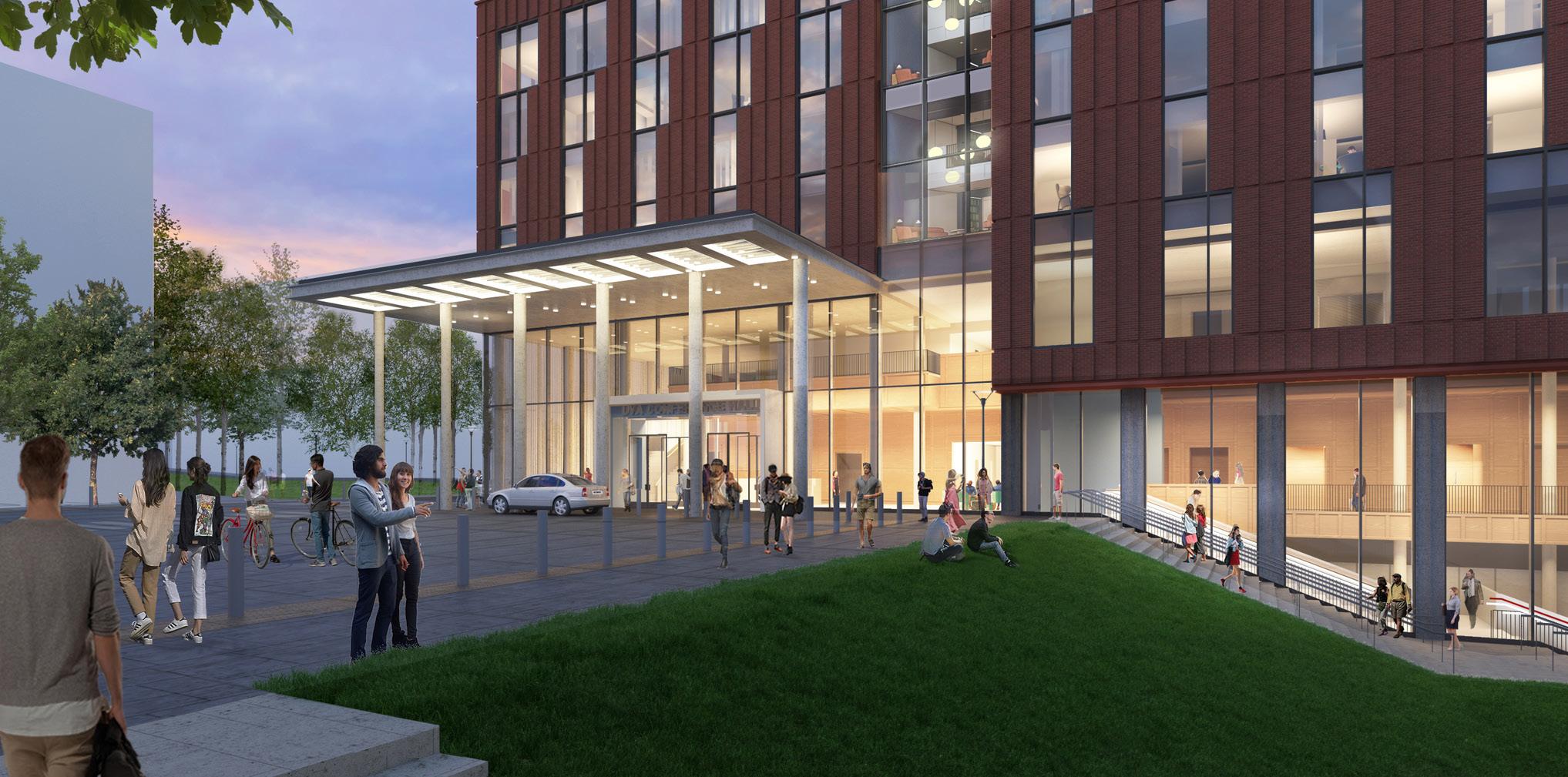
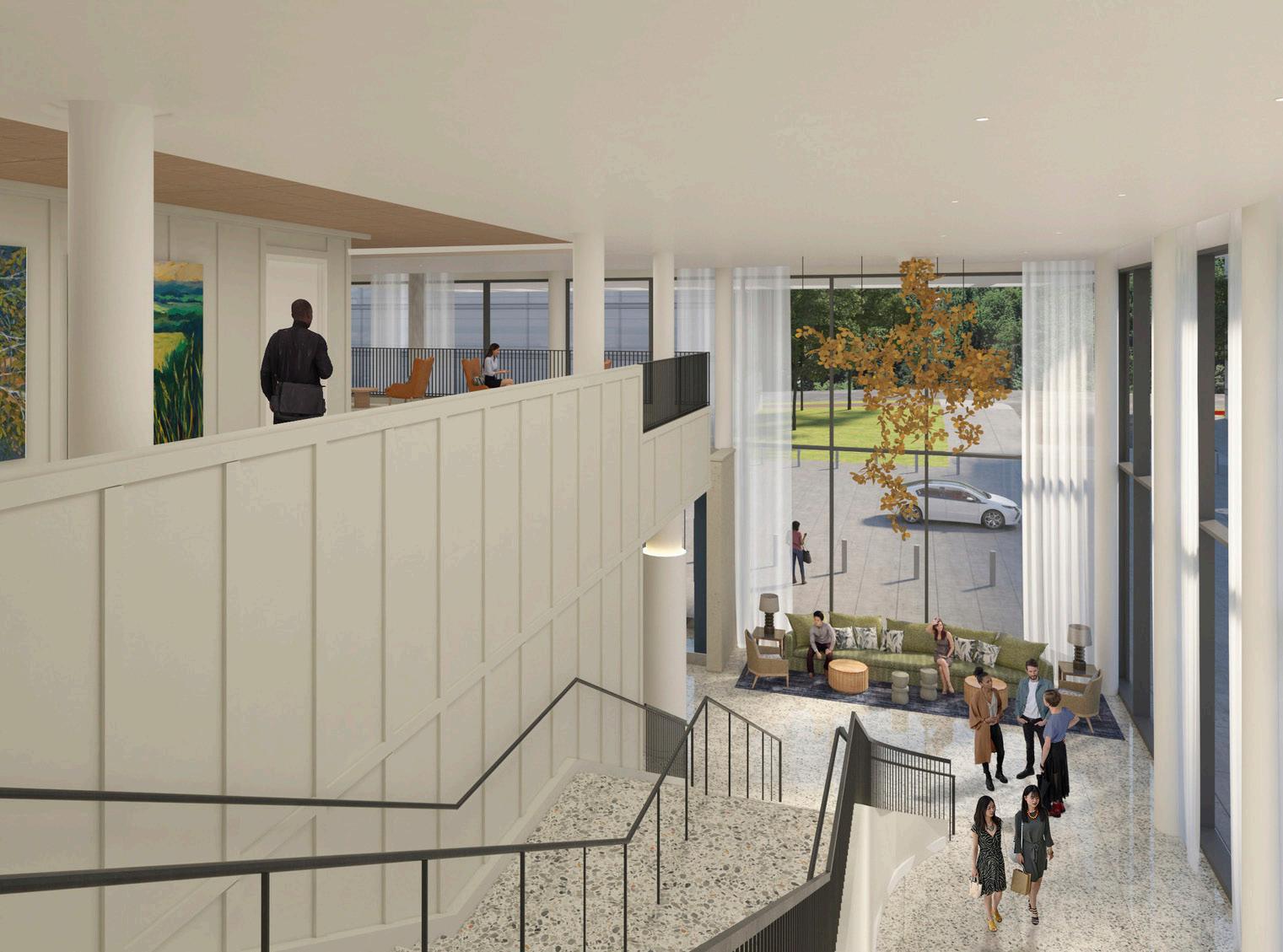
The University of Virginia is unveiling a new gateway for visitors arriving on Grounds. Opening this April, the Virginia Guesthouse Hotel & Conference Center is a full-service hotel and gathering space designed to welcome travelers, alumni, and the broader Charlottesville community.
Located along the University’s Ivy Corridor, the 214-room hotel is owned by the UVA Foundation and is located near the historic Lawn, the School of Data Science, and the Karsh Institute of Democracy. The project is intended to serve as both a hospitality destination and a central hub for academic gatherings, conferences, and community events.
The hotel features more than 25,000 square feet of meeting and event space, including a ballroom capable of hosting nearly 1,000 guests. Designed to support conferences, university programs, and social celebrations, the facility will be one of Charlottesville’s largest venues for meetings and academic convenings.
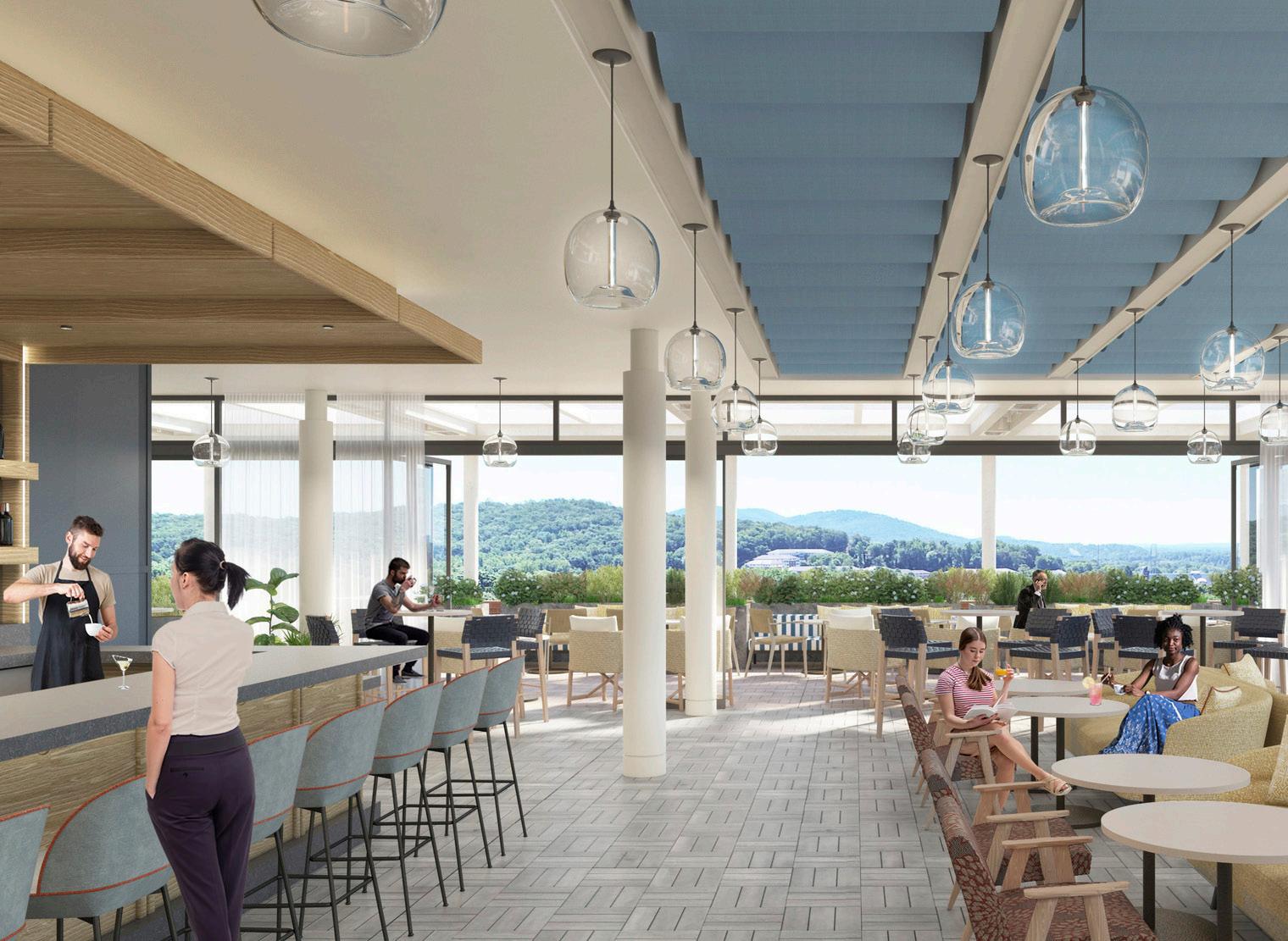
The property’s signature restaurant, Poplar, will offer breakfast, lunch, and dinner with menus rooted in regional cuisine and seasonal ingredients. The Counter Café will provide a more casual option, serving coffee, pastries, and grab-and-go fare throughout the day. Above it all, The Perch, a rooftop bar with fire pits and lounge seating, will offer sweeping views of the University and the surrounding Blue Ridge foothills.
Beyond lodging and dining, Virginia Guesthouse is designed to function as a “front door” for UVA. A welcome center on the ground floor will serve as a starting point for Grounds tours and university events, offering resources for prospective students and visiting families.
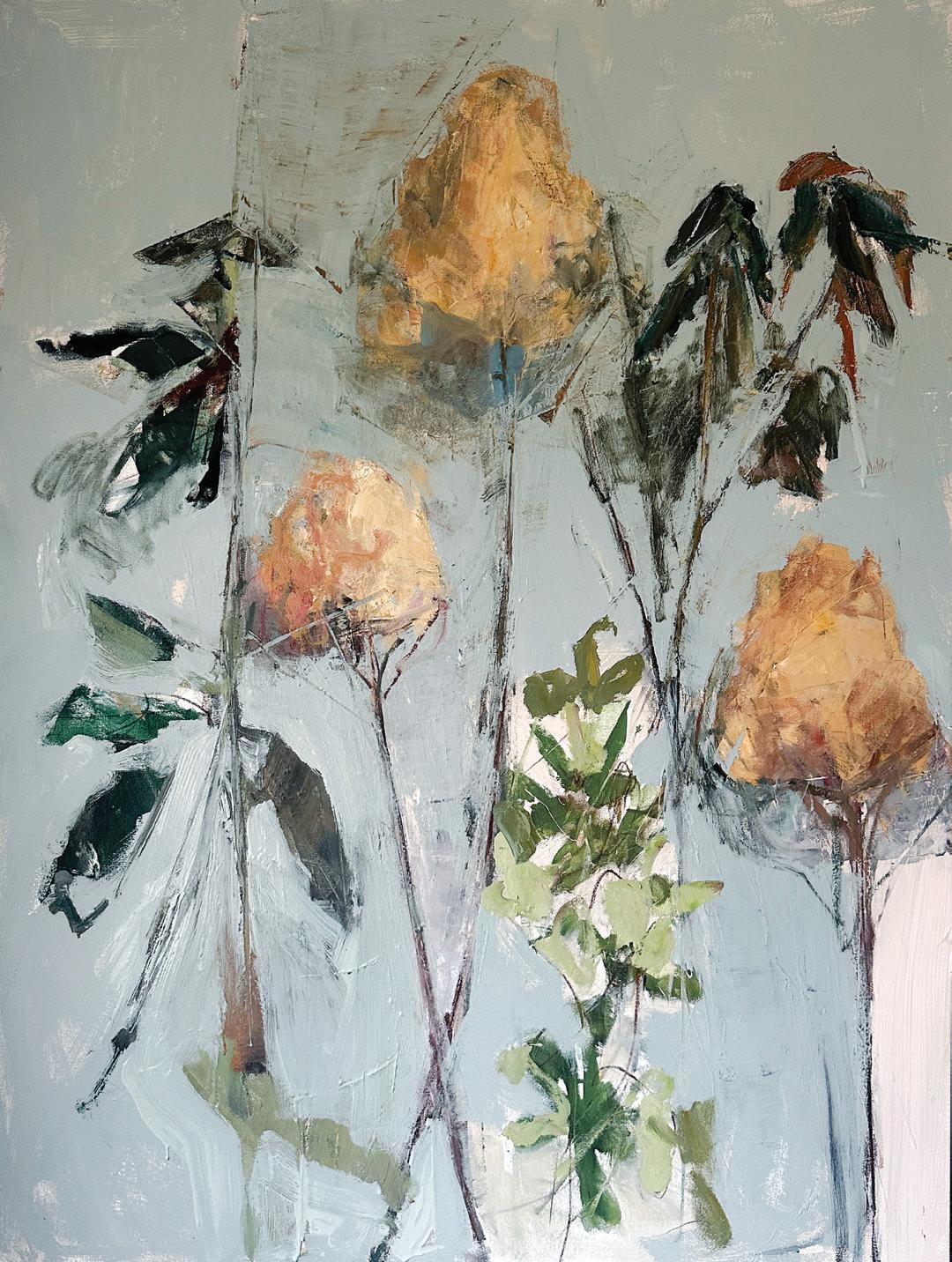
Cate West Zahl
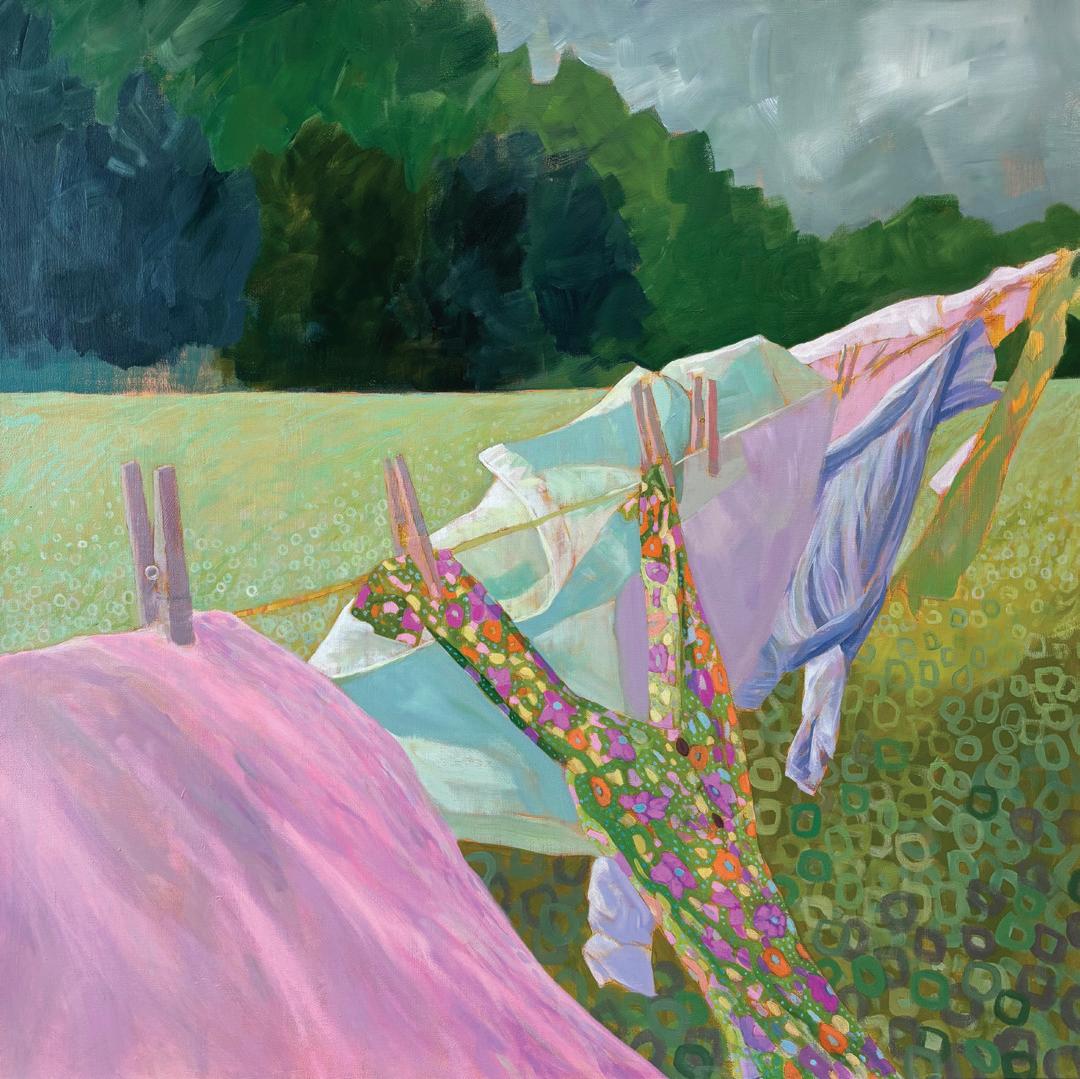
Sarah Trundle, Krista Townsend, Suzanne Keith Loechl, Laura Wooten, Somé Louis, Mary Lamb, Donna Ernest, Lindsey Luna Tucker, and Jennifer Esser



SHANNON LIBRARY
160 McCormick Rd, Charlottesville 434-924-3282 • library@virginia.edu
Through December 2026
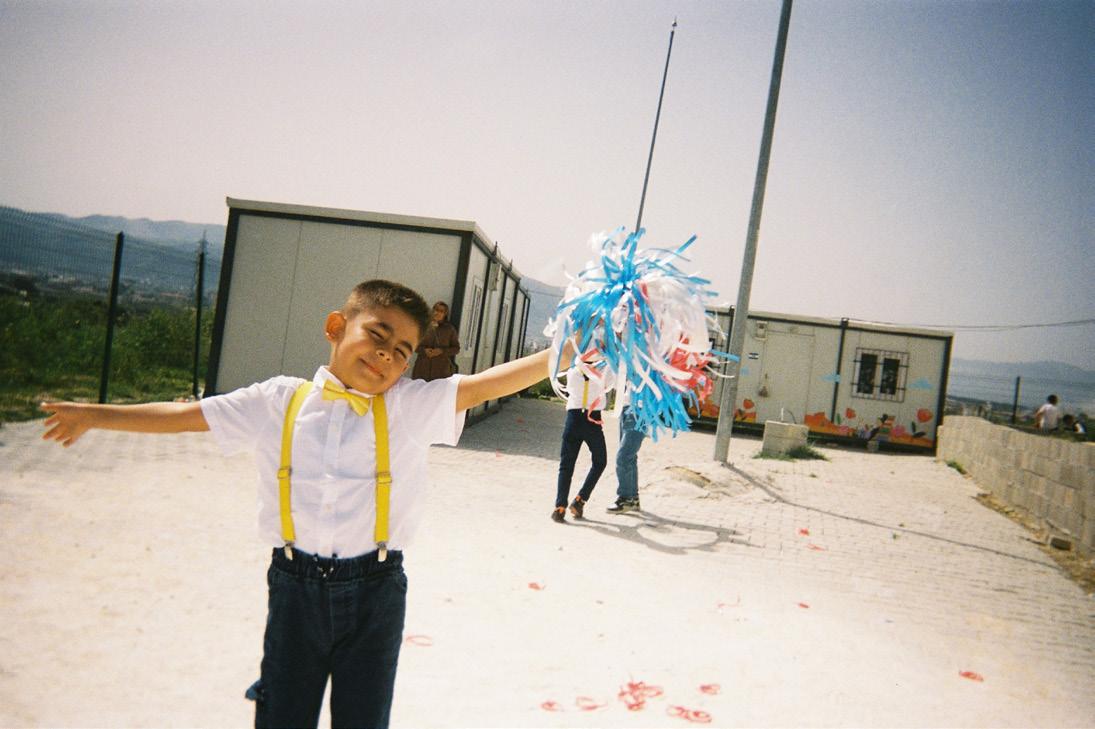
When Lucy Bassett was a child, her mother had a makeshift darkroom in their family’s basement.
“We’d be folding laundry and also hanging pictures on the clothesline,” she says. Bassett stayed interested in photography and recently wove it into her work as a professor of practice in public policy at UVA’s Batten School.

At UVA, Bassett focuses on programs and policies to support children and families in humanitarian contexts, working to improve early child development outcomes. In the aftermath of a 7.8 magnitude earthquake that shook southeastern Türkiye and northern Syria in February 2023, Bassett became concerned about the 2.5 million people, many of them children, who were displaced by the disaster and were now living in crowded container camps.
About a year after the immediate earthquake response when most displaced people had settled into container camps, Bassett visited two camps in Hatay, Türkiye, the area hardest hit by the earthquake. There, working with the humanitarian organization Save the Children, she led a project to learn about the perspectives of young children in the camps, giving 23 5–10-year-olds 35-millimeter disposable cameras, training them to look through the viewfinder, and asking them to take photos of their daily lives. The children had two weeks to take the photos, and their work resulted in hundreds of vibrant, colorful images that showed their unique perspectives of life in the camp.
The exhibition is on display in the gallery space on Shannon Library’s second floor.
— by Molly Minturn, UVA Library
*The names listed in this exhibit are pseudonyms to protect the children’s identities.






VIRGINIA MUSEUM OF HISTORY & CULTURE
428 N Arthur Ashe Boulevard, Richmond 804-340-1800 • virginiahistory.org
Through November 1
In 1775, thirteen American colonies rose in rebellion against British rule despite being woefully unprepared for war. They possessed no navy, little industry, and no professional army, making victory over the British Empire seem improbable at best. Independence was secured not only on the battlefield, but through the quiet, and often covert, work of diplomats, politicians, merchants, spies, money launderers, and gunrunners. As France, Spain, and the Dutch Republic were drawn into the struggle, a colonial dispute over taxation expanded into a global conflict that reshaped empires and altered the balance of power.
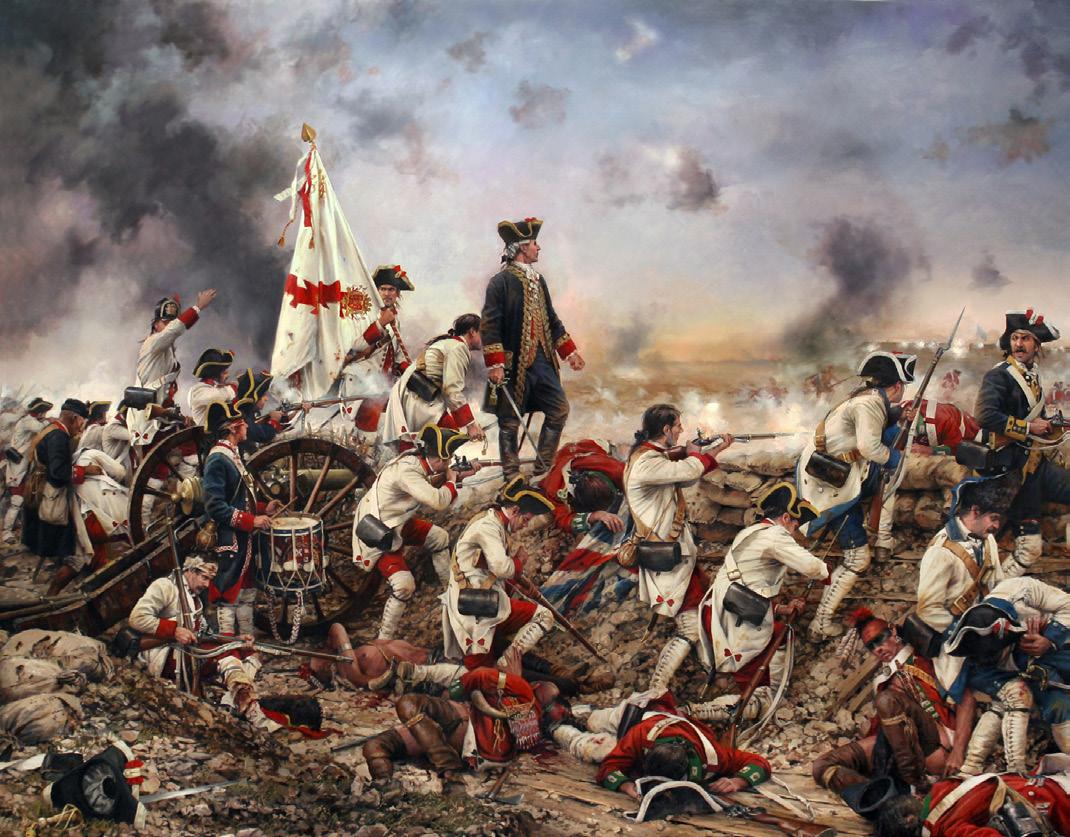
For Spain and for King, Gálvez in America, 2015, Augusto Ferrer Dalmau
Told through the lives of four individuals—Arthur Lee (United States), Pierre-Augustin Caron de Beaumarchais (France), Jean de Neufville (Dutch Republic), and Francisco de Saavedra (Spain)—the exhibition reveals how American independence depended on the support of foreign, and sometimes unlikely, allies.




JEFFERSON SCHOOL AFRICAN AMERICAN HERITAGE CENTER
233 4th Street NW, Charlottesville 434-688-6854 • jeffschoolheritagecenter.org
Through May 30
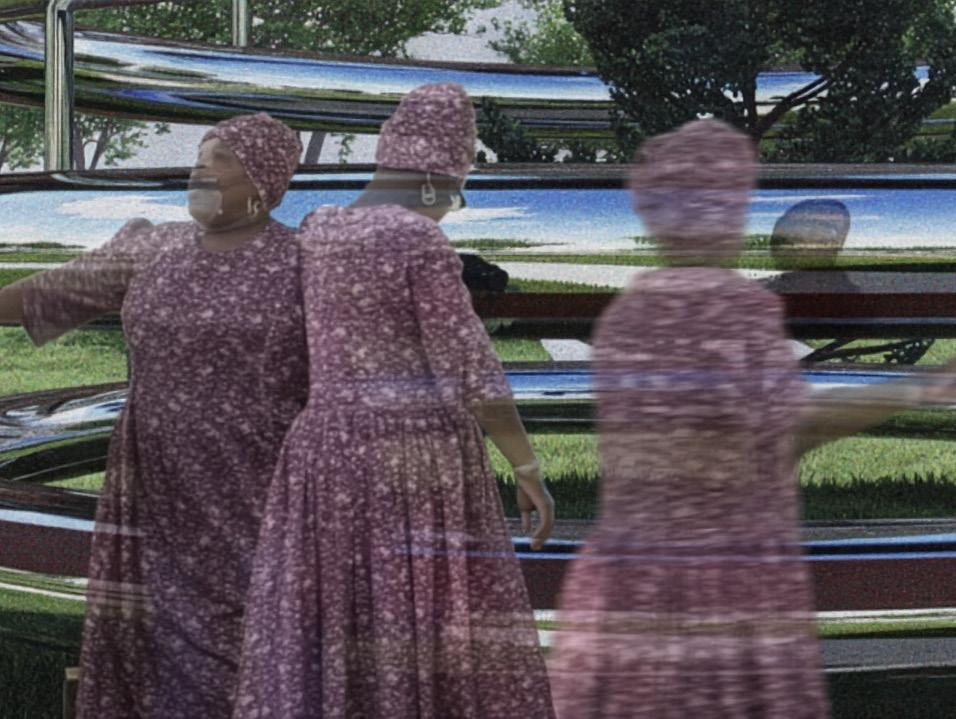
Three internationally recognized design firms will present competing proposals to transform bronze from Charlottesville’s former Robert E. Lee statue into new public art during an exhibit at the Jefferson School African American Heritage Center.
The event is part of Swords Into Plowshares, a project stewarded by the Jefferson School African American Heritage Center following the 2021 removal of Charlottesville’s Confederate monuments. Nearly two tons of bronze from the melted Lee statue are being recast into a new artwork intended to advance conversations about memory, history, and multiracial democracy.
The Recast/Reclaim exhibit includes photographs documenting the dismantling and melting of the monument.
The finalists are MASS, Hood Design Studio, and PUSH Studio, firms known for nationally prominent memorial and landscape projects.
“These design groups are each leaders in national and international conversations about race, memorialization, and public space, aligned with our global aspirations for this project,” says Dr. Andrea Douglas, executive director of the Jefferson School African American Heritage Center. “Swords Into Plowshares is transformative for us here in Charlottesville and will ignite imaginative possibilities for decisive intervening in racial justice narratives in all public spaces.”


SATURDAY, APR 25


& Hospitality
Packages offer the ultimate race day package providing outstanding brand visibility, client and employee engagement, and a fully curated race-day experience For more information: information@foxf ieldraces.com 434 .293.9501

PHAETON GALLERY & CARRIAGE WORKS STUDIOS 114 Old Preston Avenue, Charlottesville phaetongallery.com
Through April 26
“A painter can say all he wants to say with fruit or flowers or even clouds.”
— Manet
In a new exhibition of paintings titled Nature Studies, artist Cate West Zahl turns her attention to the quiet language of the natural world, bringing the outside into her studio and translating it through observation, gesture, and reflection. Working with arrangements of flora set against the light of her studio window, Zahl becomes captivated by the negative spaces surrounding her subjects. Hydrangea cuttings, magnolia branches, birds’ nests, and found animal skulls emerge within layered compositions where gestural charcoal lines meet broad passages of oil paint. Evidence of the process—pentimento and revisions—remains visible, allowing the viewer to witness the journey of each work as it unfolds.
In these paintings, the simple act of recording nature becomes a kind of meditation. Zahl’s practice offers a moment of stillness and attentiveness, a quiet response to the complexity and chaos of daily life.
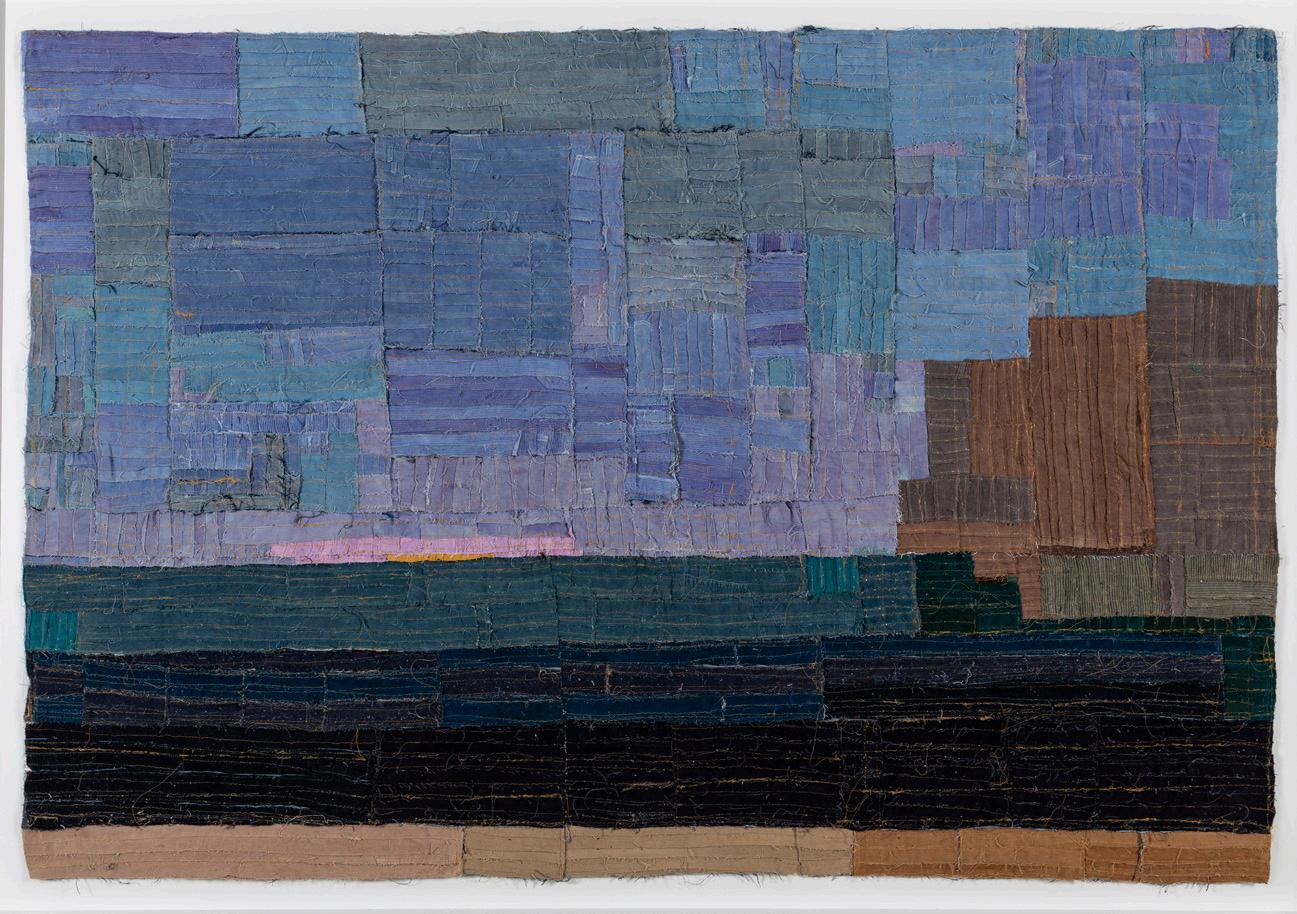
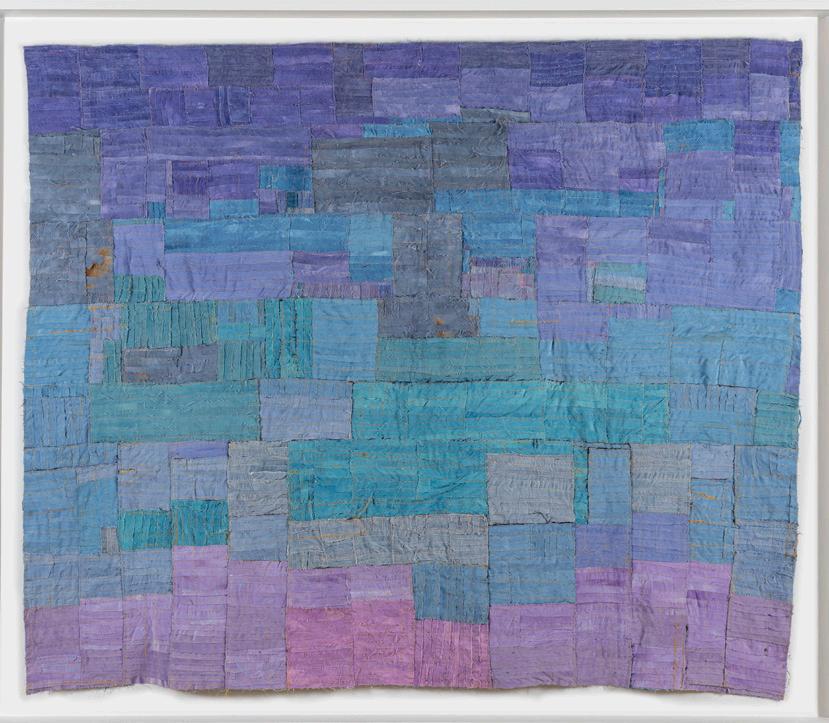
Blue Hour: Sunset at the Fortress, 2025. Deconstructed and dyed corduroy, backed by denim, 56 x 82"
LES YEUX DU MONDE
841 Wolf Trap Road, Charlottesville 434-882-2622 · lydmgallery.com
ASA JACKSON - PARADISE FOUND: WHERE HEAVEN AND EARTH MEET
April 10-May 24
With Paradise Found, Asa Jackson turns to landscape as a site of spiritual inquiry, exploring the boundary between the physical and the ethereal. Known for a practice that treats textiles as an anthropological record, Jackson recontextualizes found materials, histories, and personal narratives into richly layered compositions.
Working in fiber, he employs pattern, repetition, and tactility to reflect on time, collective consciousness, and the ways personal origins shape present understanding. These works extend his ongoing series The King’s Cord, which investigates the symbolism of corduroy, drawing on its historical association with Corde du Roi, or “Cord of the King,” to examine ideas of sovereignty and self-governance.
A Boston University-trained artist with an international exhibition record, Jackson’s work is held in major public and private collections. His imagined landscapes feature mountains, temples, and star-filled skies that unfold as interior terrains, suggesting that paradise is not distant, but discovered within.
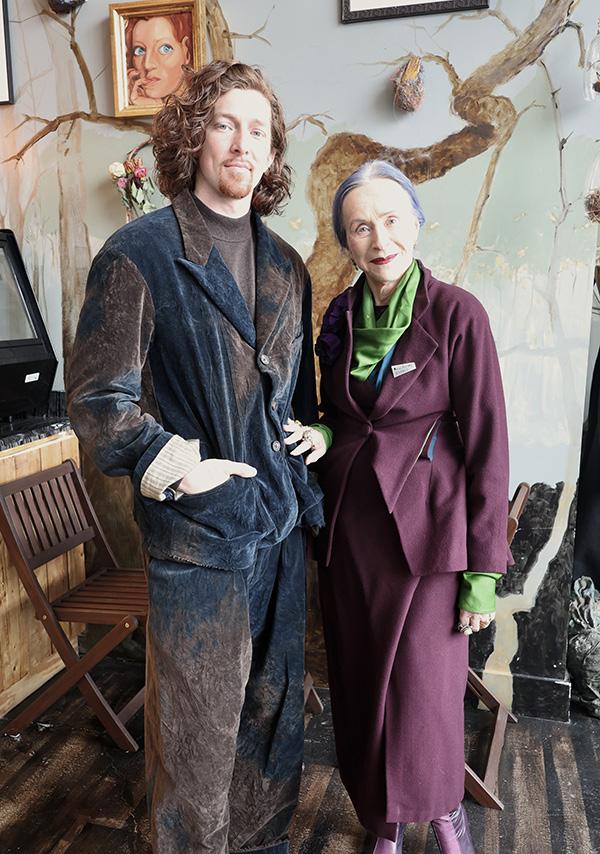
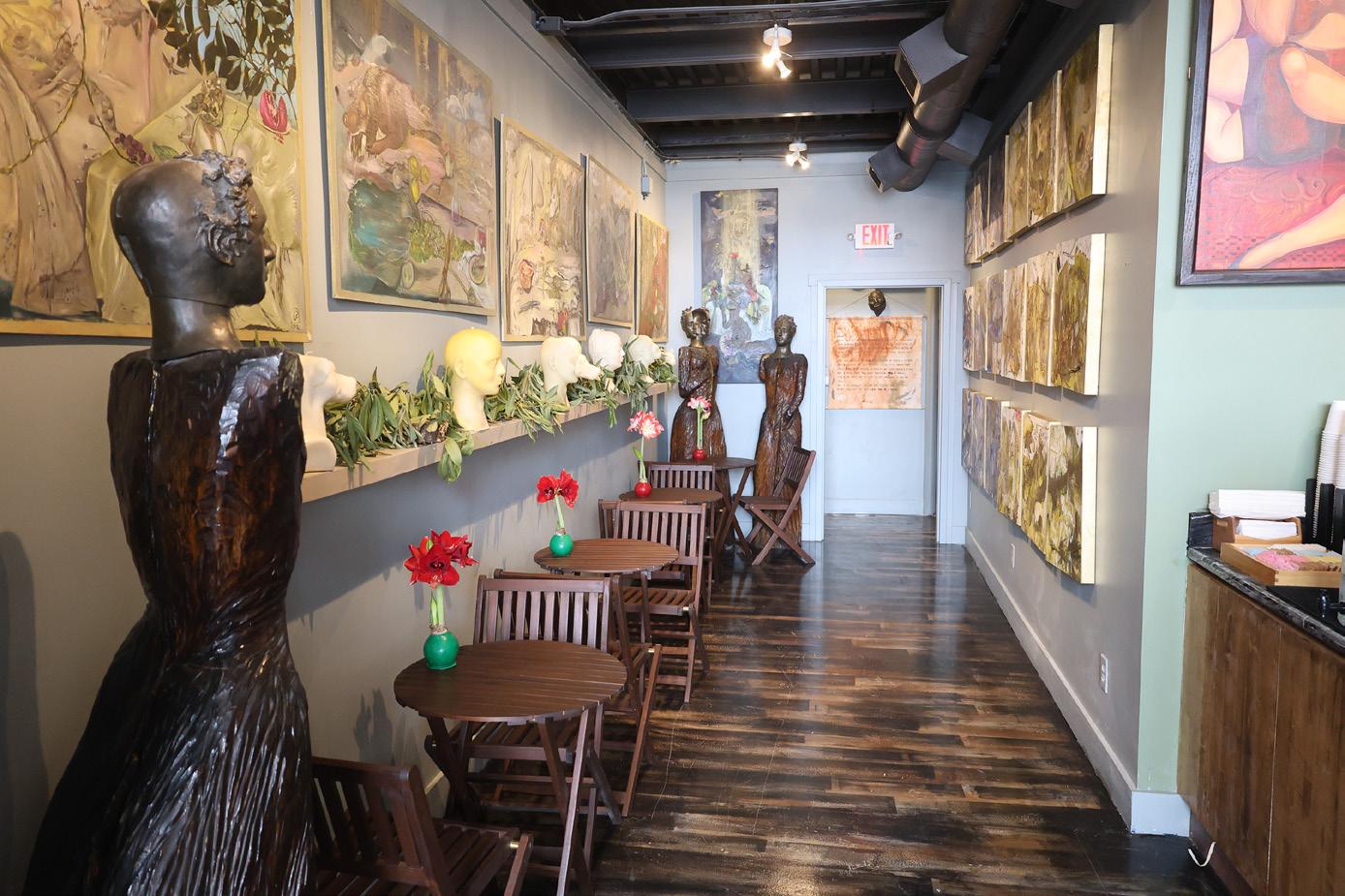
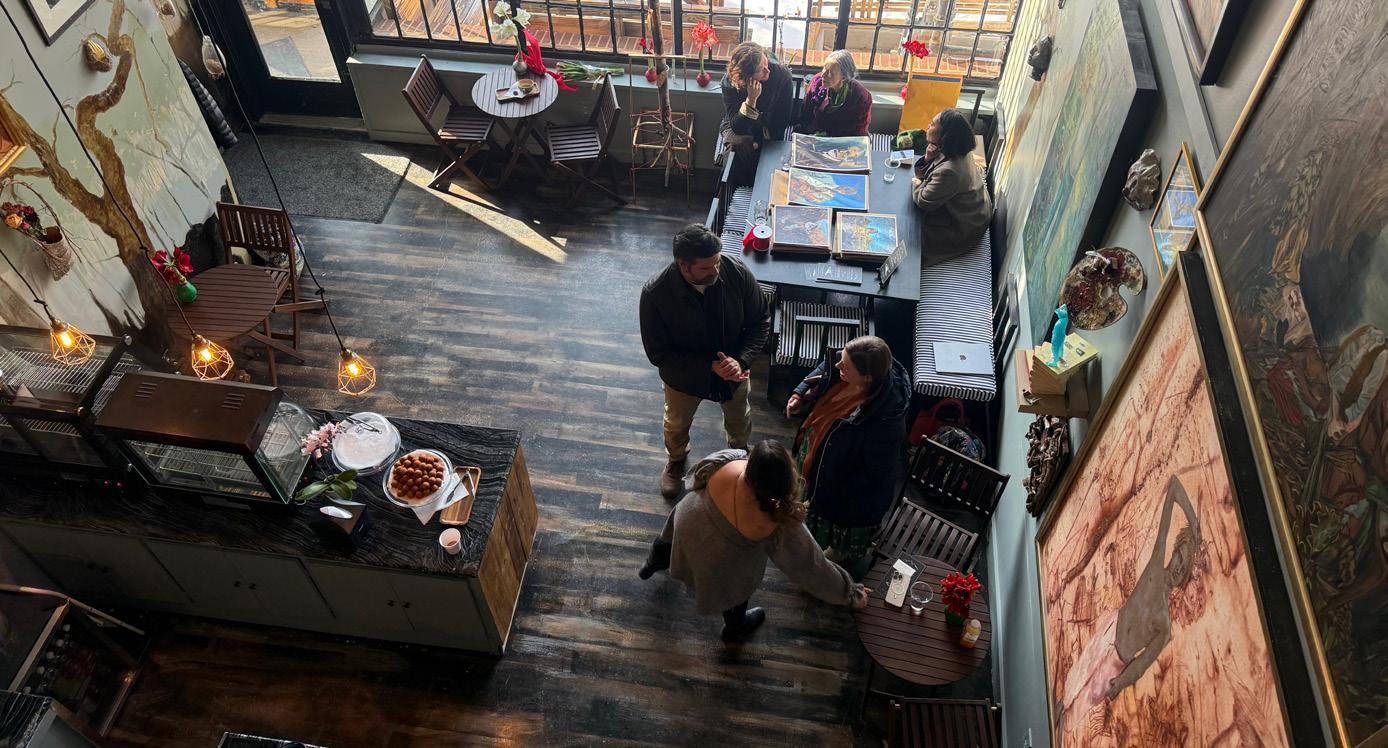
A new space for art, reflection, and conversation has opened in downtown Charlottesville. A gallery-café called the bardo has been created by artist Beatrix Ost in collaboration with Cumbre Bakery. It marks the first time Ost has opened a gallery devoted exclusively to exhibiting her own work.
The name comes from the Tibetan word bardo, often translated as an “in-between state” or transitional space. Ost envisions the gallery a place where visitors can pause between the rhythms of daily life to encounter art, ideas, and one another.
“I set out to create a space in which the community can gather for art, conversation, presence, and sensory exploration,” Ost says.
Internationally recognized as an artist, writer, designer, philosopher, and fashion icon, Ost has spent more than six decades developing a body of work that spans painting, sculpture, and mixed media. Her art often explores themes of transformation, myth, and liminality, drawing viewers into imaginative, dreamlike environments. At the bardo, works from across her career are brought together to create what curator Syris King-Klem describes as a new conversation among the pieces.
“By combining all her works across her entire lifetime, we created the bardo to be a place where Beatrix’s art tells a new story,” KingKlem says. “There are endless conversations happening between the different mediums. So, when people come, bring their laptop, or have a cup of coffee with a friend, they will be inspired to tell new stories and have important conversations—and most importantly, you can have a moment with yourself that reminds you who you truly are.”
The gallery is paired with the welcoming atmosphere of Cumbre Bakery, which serves coffee, pastries, and Argentine specialties.
THE BARDO
313 2nd Street SE, Charlottesville inthebardo.com

Jim Faulconer
434.981.0076
jfaulconer@mcleanfaulconer.com
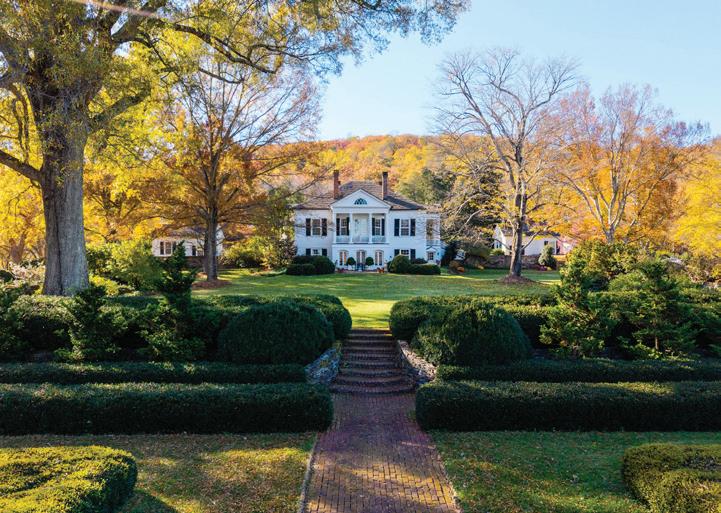
$12,500,000 | MLS 576150 | North Garden Court Nexsen, 646.660.0700
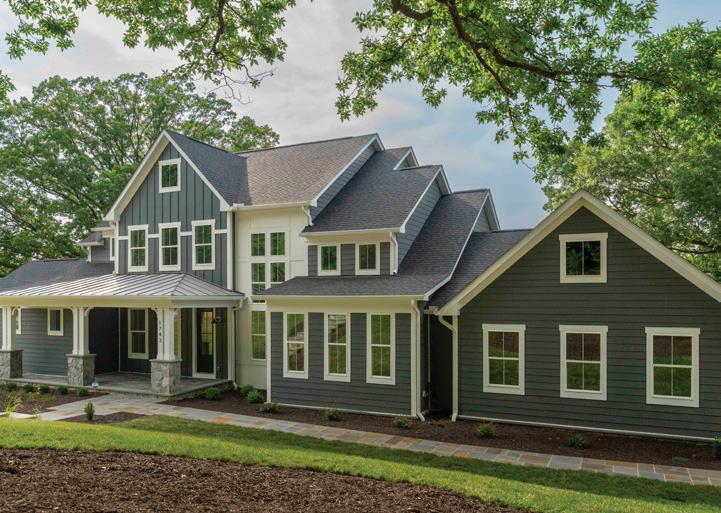
$1,860,000 | MLS 672174 | Free Union Jeremy Fields, 434.270.1220
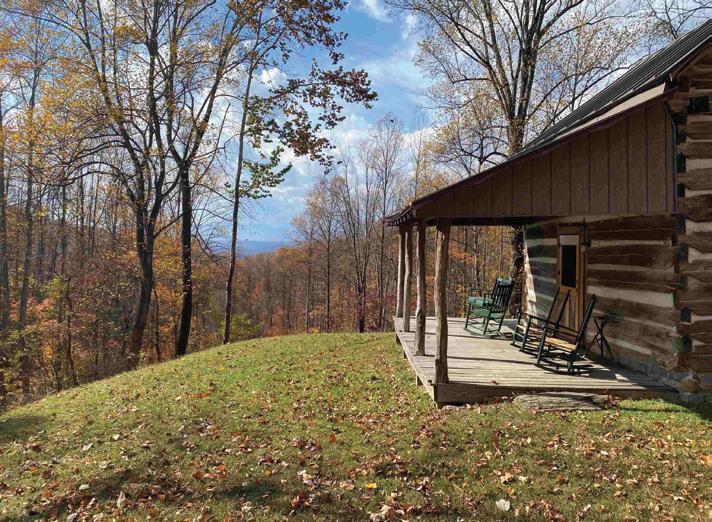
$649,000 | MLS 673824 |
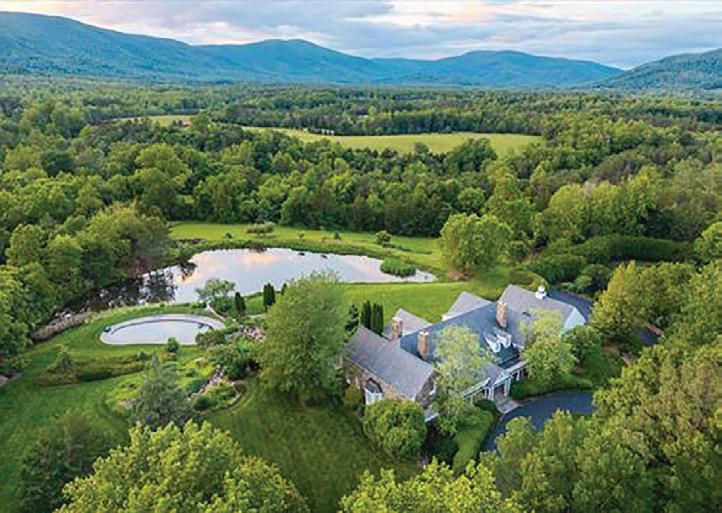
$8,800,000 | MLS 665249 | Crozet
Jim Faulconer, 434.981.0076 Will Faulconer, 434.987.9455
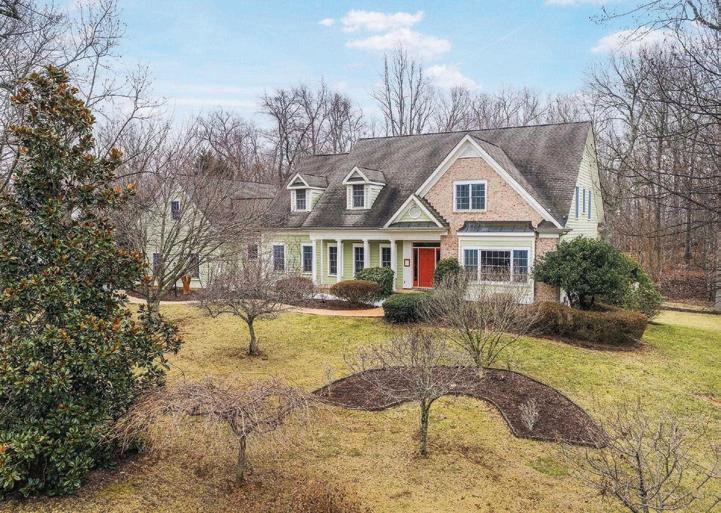
$1,200,000 | MLS 674034 | Earlysville Bridget Archer, 434.981.4149 Pam Dent, 434.960.0161

$649,000 | MLS 672392 | Charlottesville Jeremy Fields, 434.270.1220
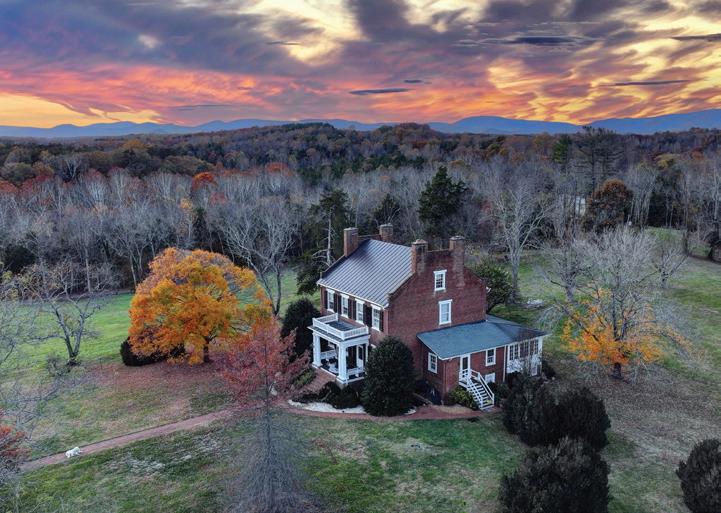
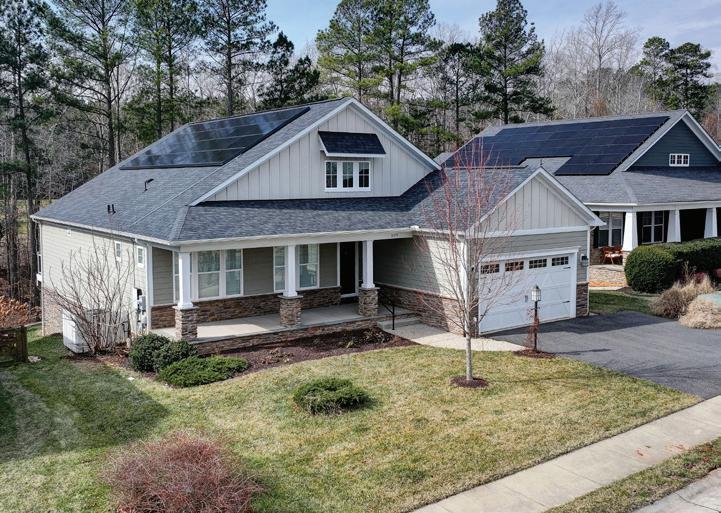
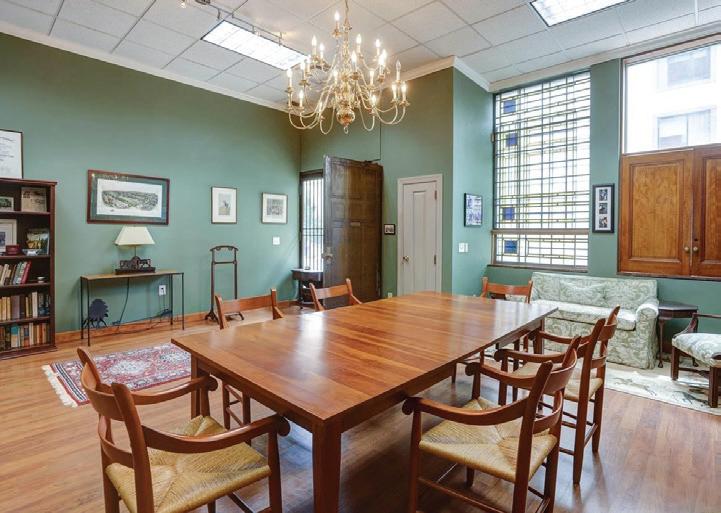

Jim Faulconer
434.981.0076
jfaulconer@mcleanfaulconer.com
$6,995,000 | MLS 668551 | Charlottesville Court Nexsen, 646.660.0700
$4,100,000 | MLS 671927 | Free Union Jim & Will Faulconer, 434.981.0076

Court Nexsen 646.660.0700 court@mcleanfaulconer.com
$4,450,000 | MLS 673409 | Charlottesville Will Faulconer, 434.987.9455 Jim Faulconer, 434.981.0076
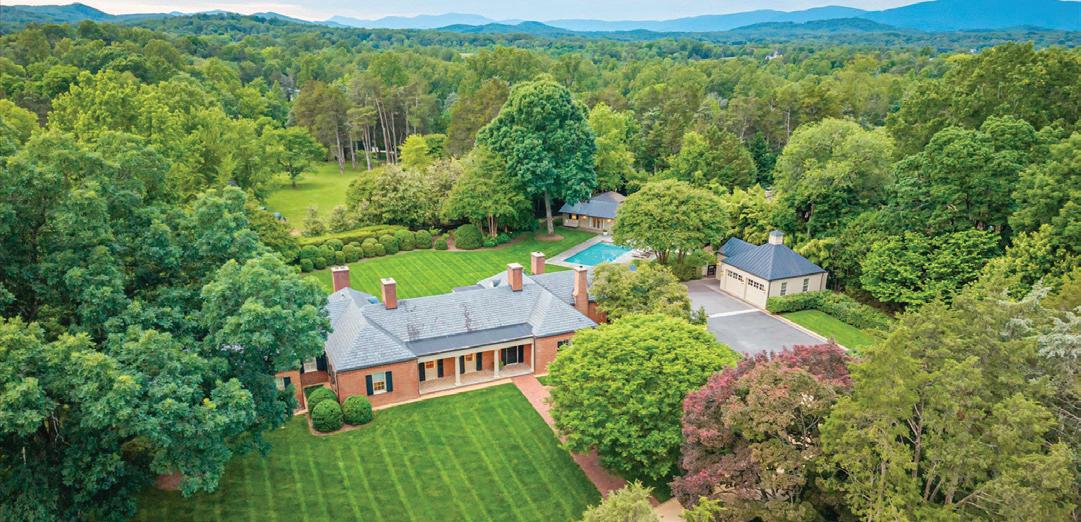
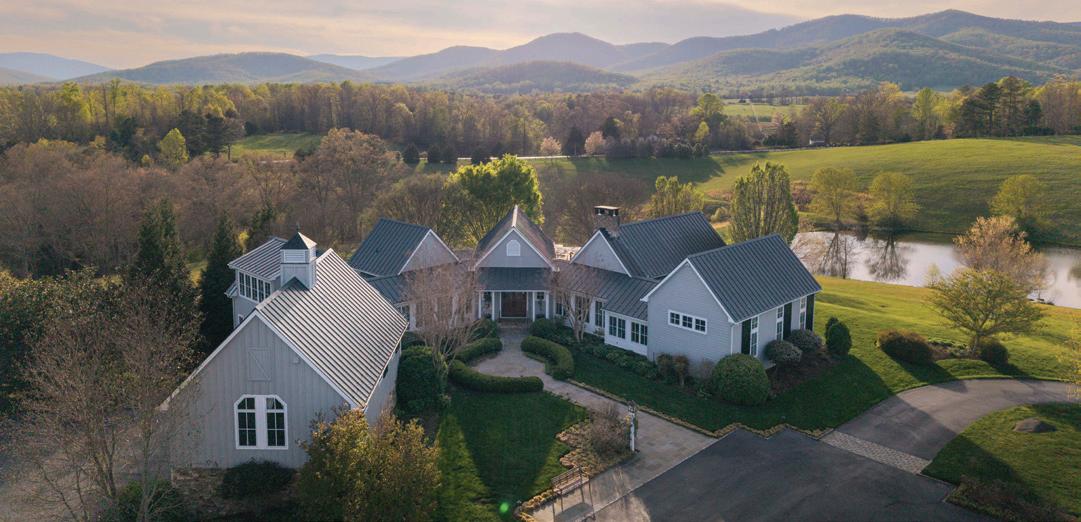
An exceptional English country estate on 6.67 private acres offering 7,000+ square feet of exquisite living space, a professionally designed culinary garden with greenhouse, and a luxurious guest cottage—all walkable to Ivy village and minutes from Charlottesville. Custom craftsmanship, chef’s kitchen, and seamless indoor-outdoor flow to terraced lawns along Little Ivy Creek complete this rare architectural gem.
$5,995,000 | MLS 665286 | Charlottesville Court Nexsen, 646.660.0700 GREY OAKS
$3,995,000 | Free Union Court Nexsen, 646.660.0700 Jim & Will Faulconer, 434.981.0076



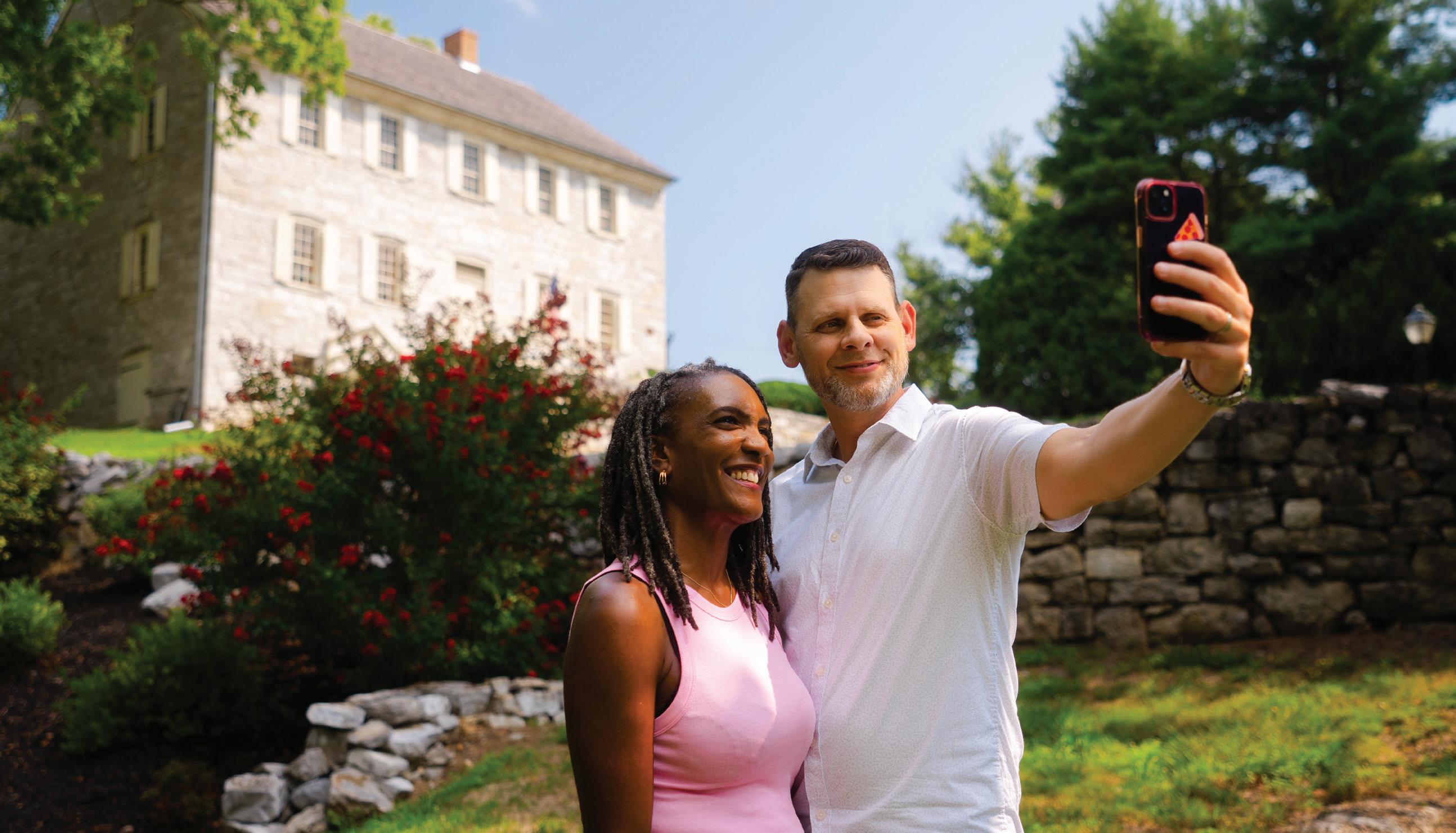
Time together becomes more precious everyday. Stroll our historic downtown or explore country roads full of lovingly preserved manors. Try a wine flight, a beer flight, or a spirits flight prior to enjoying a delicious meal. Take in an outdoor concert or a live performance at our historic theater. All just a short drive away in Berkeley County, West Virginia.


The foothills around Charlottesville are known today for vineyards, historic estates, and picturesque views. In the decades surrounding the American Revolution, this small corner of Virginia produced thinkers, soldiers, and statesmen who helped shape the nation’s founding documents and defend its independence.
Within a few miles of one another lived founders who would write the Declaration of Independence, frame the Constitution, fight on Revolutionary battlefields, and build the political culture of the early republic. Their families formed a tight network that bound Albemarle County to the founding of the United States.
Some of their legacies are well-known. Many are familiar names whose contributions to the founding era might not be common knowledge, while others have been all but forgotten but are finally being honored. Here are just a few of their stories.
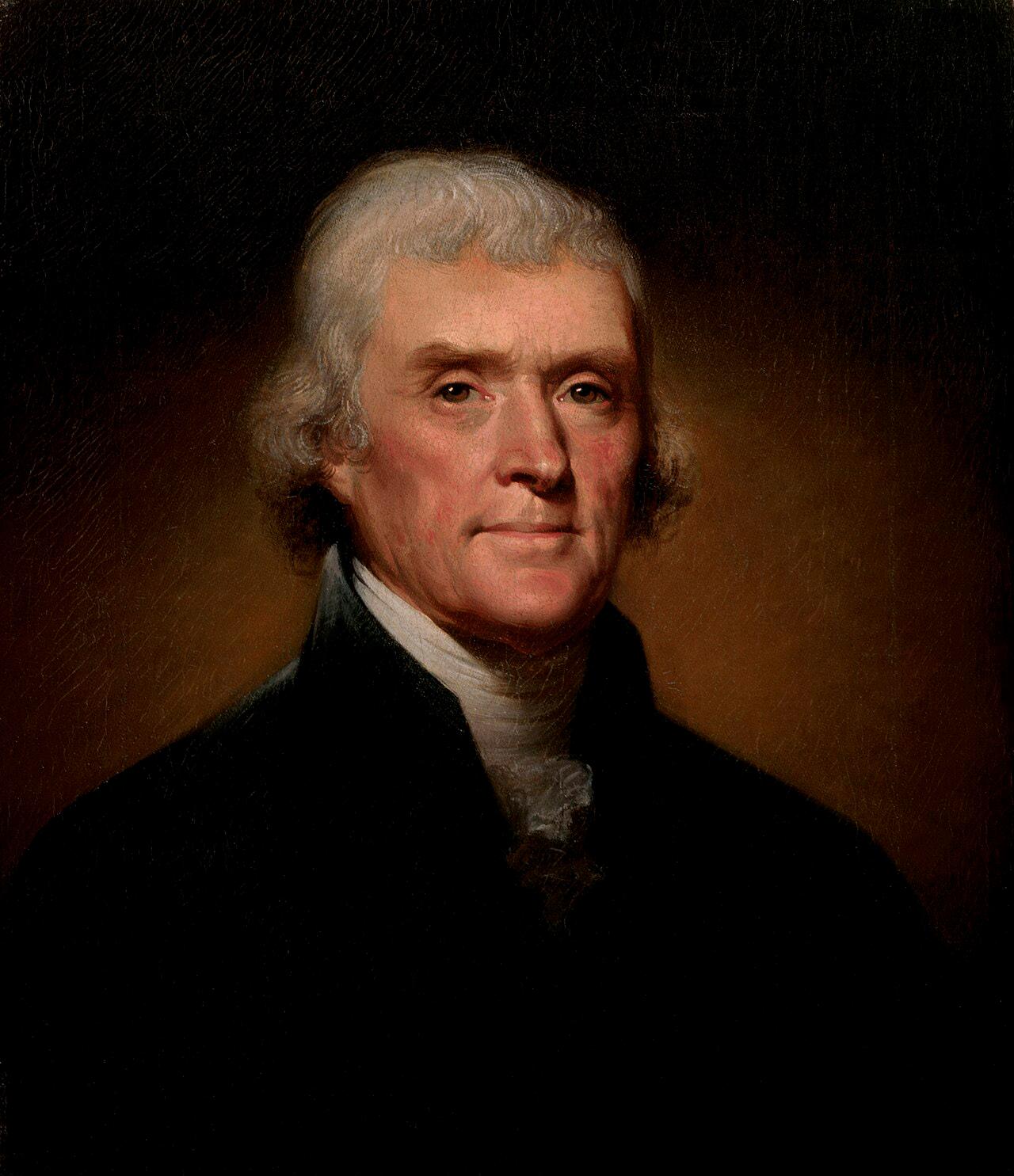
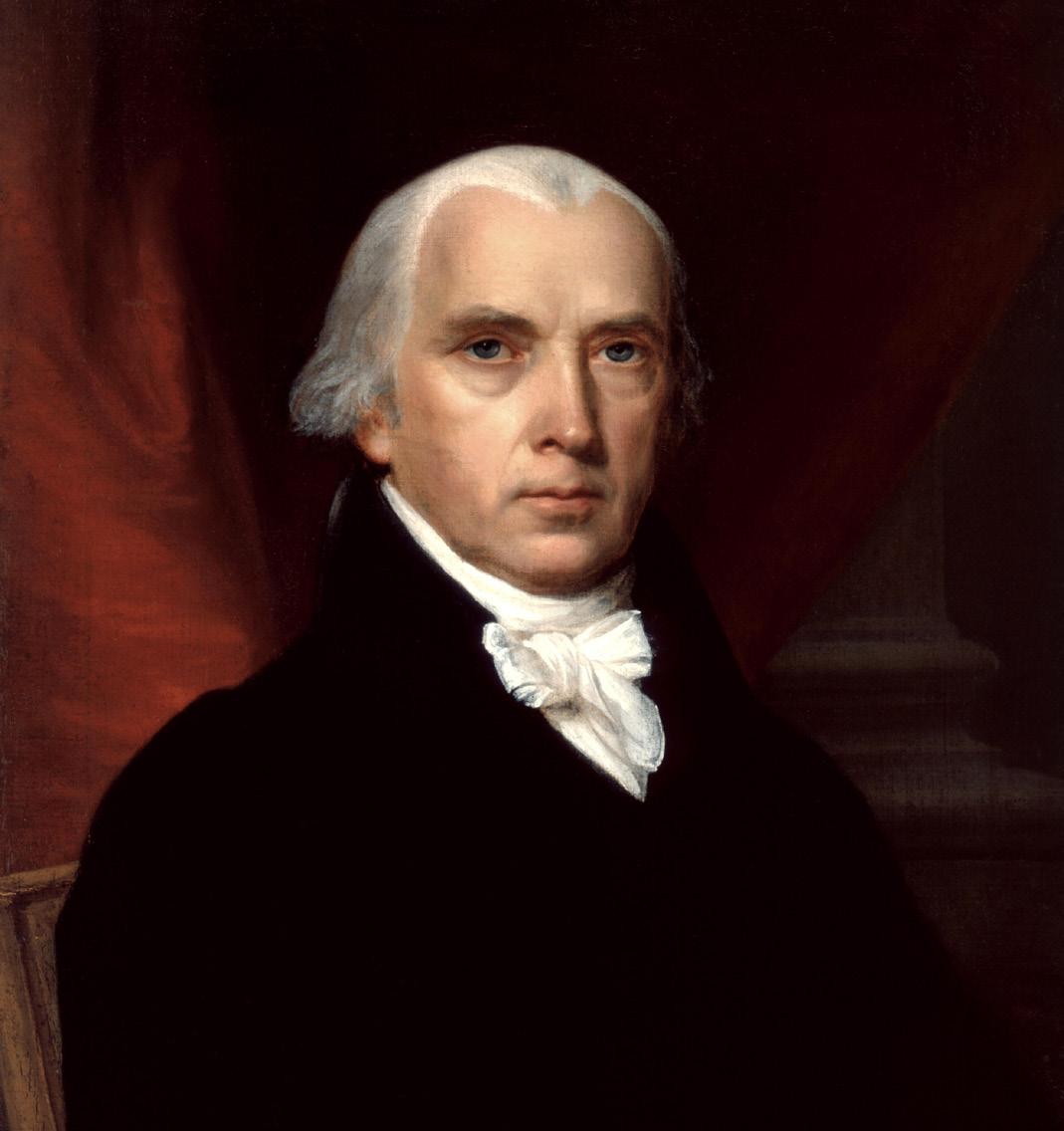
Nowhere else in America are the homes of three founding presidents so close together as in Central Virginia.
No figure looms larger in the region’s Revolutionary story than Thomas Jefferson.
Born in 1743 at Shadwell along the Rivanna River, Jefferson grew up in Albemarle County and went on to become the principal author of the Declaration of Independence in 1776. Working in Philadelphia as a delegate to the Continental Congress, he drafted the document that articulated the colonies’ reasons for breaking with Britain and set forth the enduring principle that “all men are created equal.”
Jefferson’s roots in Albemarle ran deep. His father, Peter Jefferson, had been a surveyor, planter, and member of the Virginia House of Burgesses. In 1751, Peter Jefferson and Joshua Fry produced the Fry-Jefferson Map of Virginia, the most accurate cartographic representation of the colony at the time—an achievement that helped establish the family’s prominence.
During the war years, Jefferson served as governor of Virginia from 1779 to 1781. His time in office coincided with the Revolution’s most dangerous moment for the state. In June 1781, British cavalry under Banastre Tarleton rode toward Charlottesville hoping to capture the governor and the Virginia legislature. Jefferson escaped from Monticello only hours before the British arrived, alerted by a dramatic overnight warning ride from a local militia officer.
Jefferson’s personal life was equally tied to the landscape of Albemarle. In 1772 he married Martha Wayles Skelton, a young widow from a prominent Virginia family, at her father’s plantation, The Forest, near Williamsburg. By then the main house at his birthplace, Shadwell, had already been destroyed by fire in 1770, pushing him to accelerate work on his mountaintop home at Monticello, where the couple would make their life together. Jefferson later recalled that Martha’s death in 1782 left him with “a wound that will never be cured,” and no portraits of her are known to survive.
A short ride to the north, another Virginian was preparing ideas that would shape the nation’s next chapter.
James Madison grew up at Montpelier in nearby Orange County and became the intellectual architect of the U.S. Constitution. His careful study of political systems and historical republics informed the debates at the Constitutional Convention in 1787.
Madison later collaborated with Alexander Hamilton and John Jay on The Federalist Papers, essays that helped persuade Americans to adopt the Constitution. He also introduced the amendments that became the Bill of Rights.
Jefferson and Madison were close friends and frequent
collaborators, exchanging ideas about republican government and religious liberty. Their intellectual partnership shaped the political philosophy of the new republic.
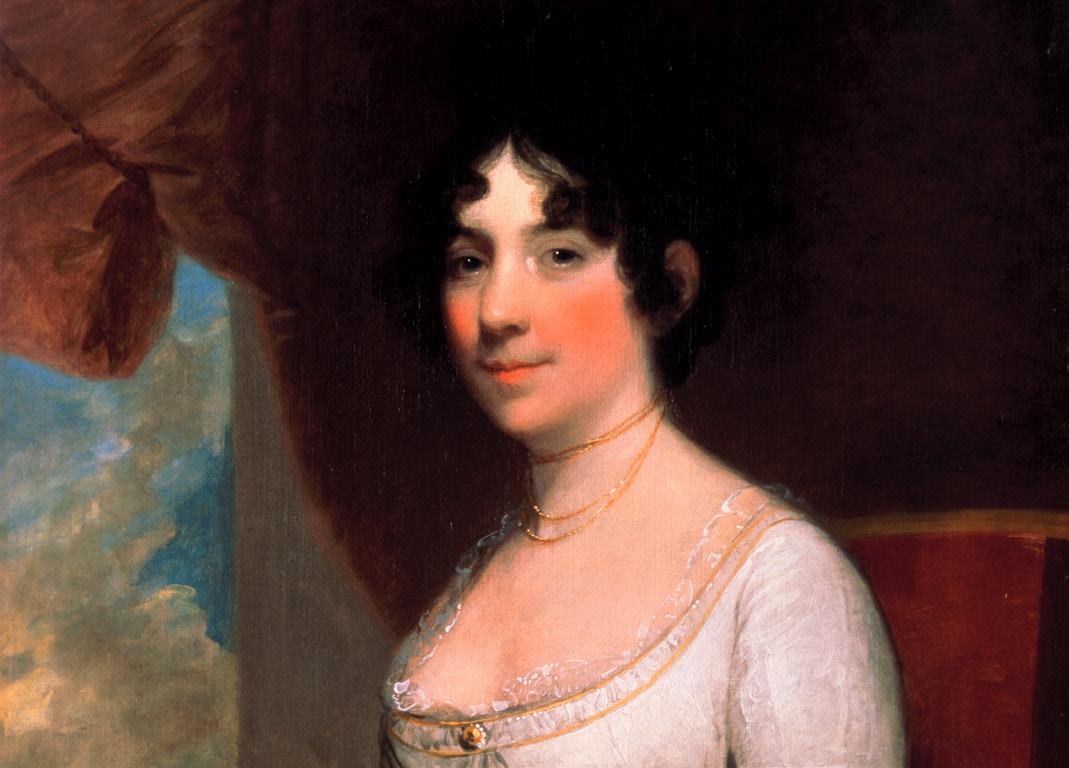
Madison’s public life was complemented by his wife, Dolley Madison. Married in 1794, Dolley became one of the most influential hostesses in early Washington during her husband's presidency. Known for her warmth and political savvy, she helped bring together rival factions in the young republic’s capital through social gatherings that fostered conversation and compromise. During the War of 1812 she famously oversaw the rescue of Gilbert Stuart’s portrait of George Washington from the White House before British troops burned the building in 1814. At Montpelier after Madison left office, she continued to welcome visitors and preserve her husband’s legacy as the “Father of the Constitution.”
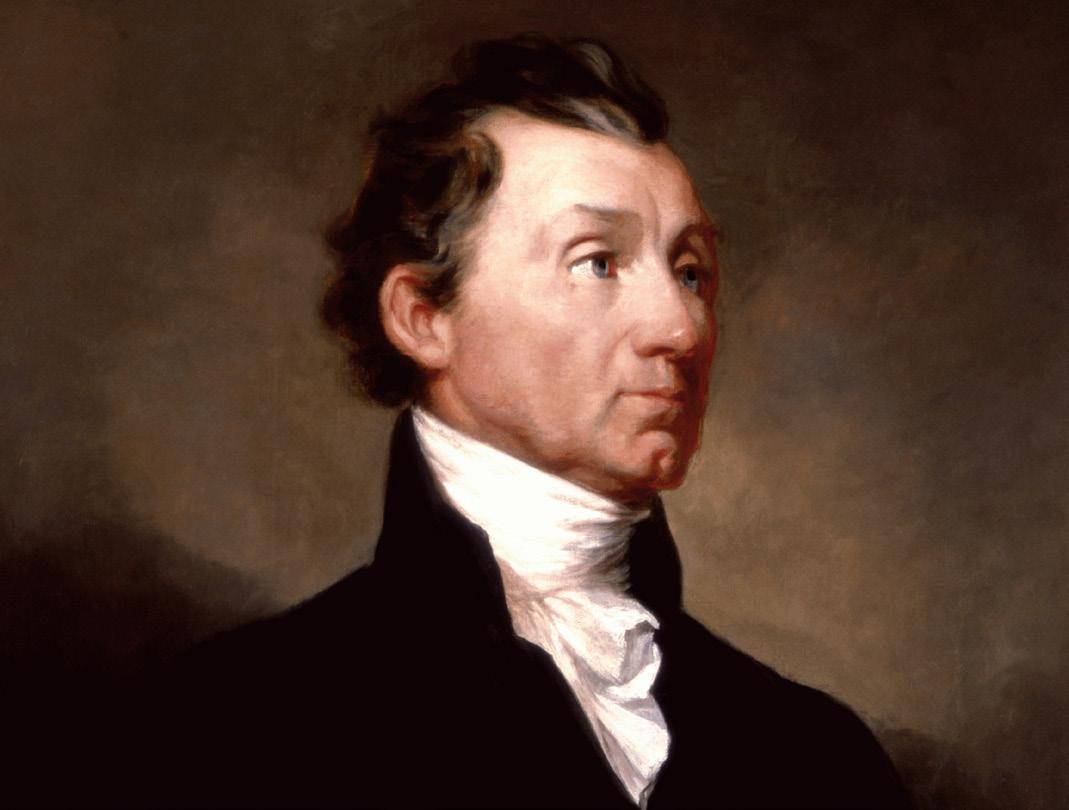
Another future president experienced the Revolution as a soldier. James Monroe joined the Continental Army as a teenager and fought under George Washington. He participated in the famous crossing of the Delaware and was severely wounded during the Battle of Trenton in 1776.
After the war, Monroe studied law under Jefferson’s guidance. He later purchased Highland, a plantation just a few miles from Monticello, further linking the region’s founding families.
Monroe’s long public career—from diplomat to president—reflected the generation that carried the ideals of the Revolution into the early decades of the United States.
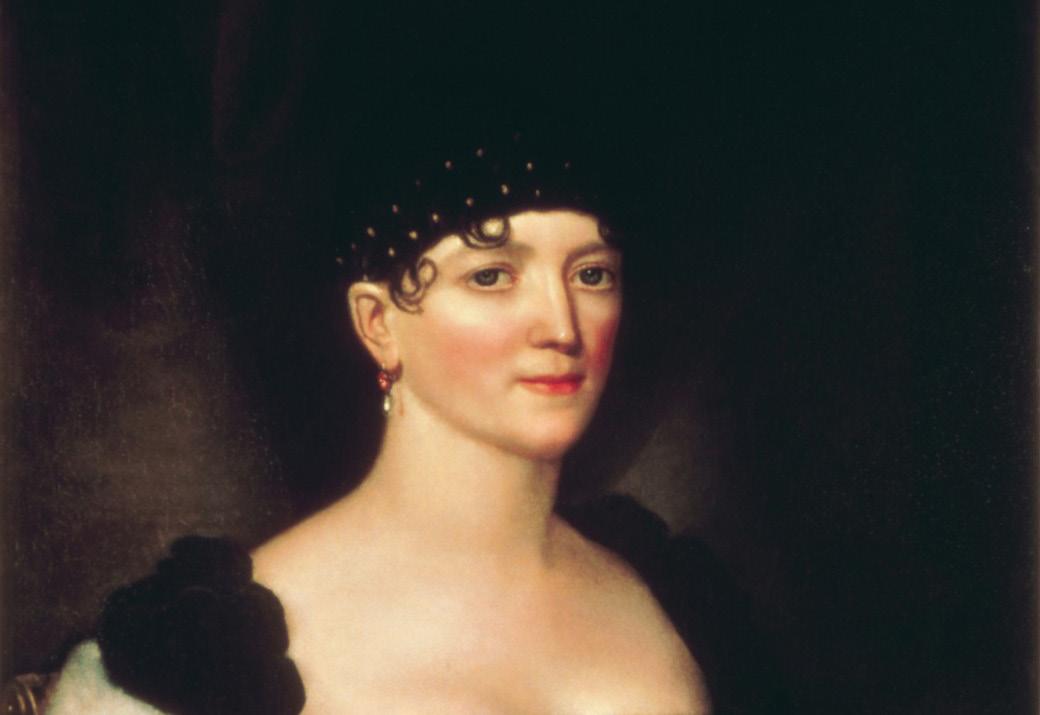
His wife, Elizabeth Kortright Monroe, also left her mark on the early republic. A New York native known for her elegance and reserve, Elizabeth gained international attention during Monroe’s diplomatic service in France when she played a notable role in efforts that preceded the release from prison of Adrienne de Lafayette, the wife of the Marquis de Lafayette, during the French Revolution. As First Lady from 1817 to 1825, she brought a more formal tone to the presidential household, drawing on the diplomatic traditions she had observed in Europe.
Some of the Revolution’s dramatic moments unfolded far from famous battlefields. At Castle Hill, near the Southwest Mountains, the Walker family played a quiet but consequential role in Virginia’s Revolutionary story.
Dr. Thomas Walker, a physician, explorer, and colonial leader, had long been a friend of Peter Jefferson and served as guardian to the young Thomas Jefferson after his father’s death. Walker himself had explored the Appalachian frontier and is credited with discovering the Cumberland Gap decades before Daniel Boone.
Castle Hill was the scene of a famous encounter during the British raid of June 1781. According to legend, when Banastre Tarleton’s cavalry stopped there on their way to Charlottesville, Mildred Thornton Meriwether Walker is said to have delayed the officers with breakfast and hospitality. The pause bought precious time for the warning that allowed Jefferson and members of the Virginia legislature to escape capture.
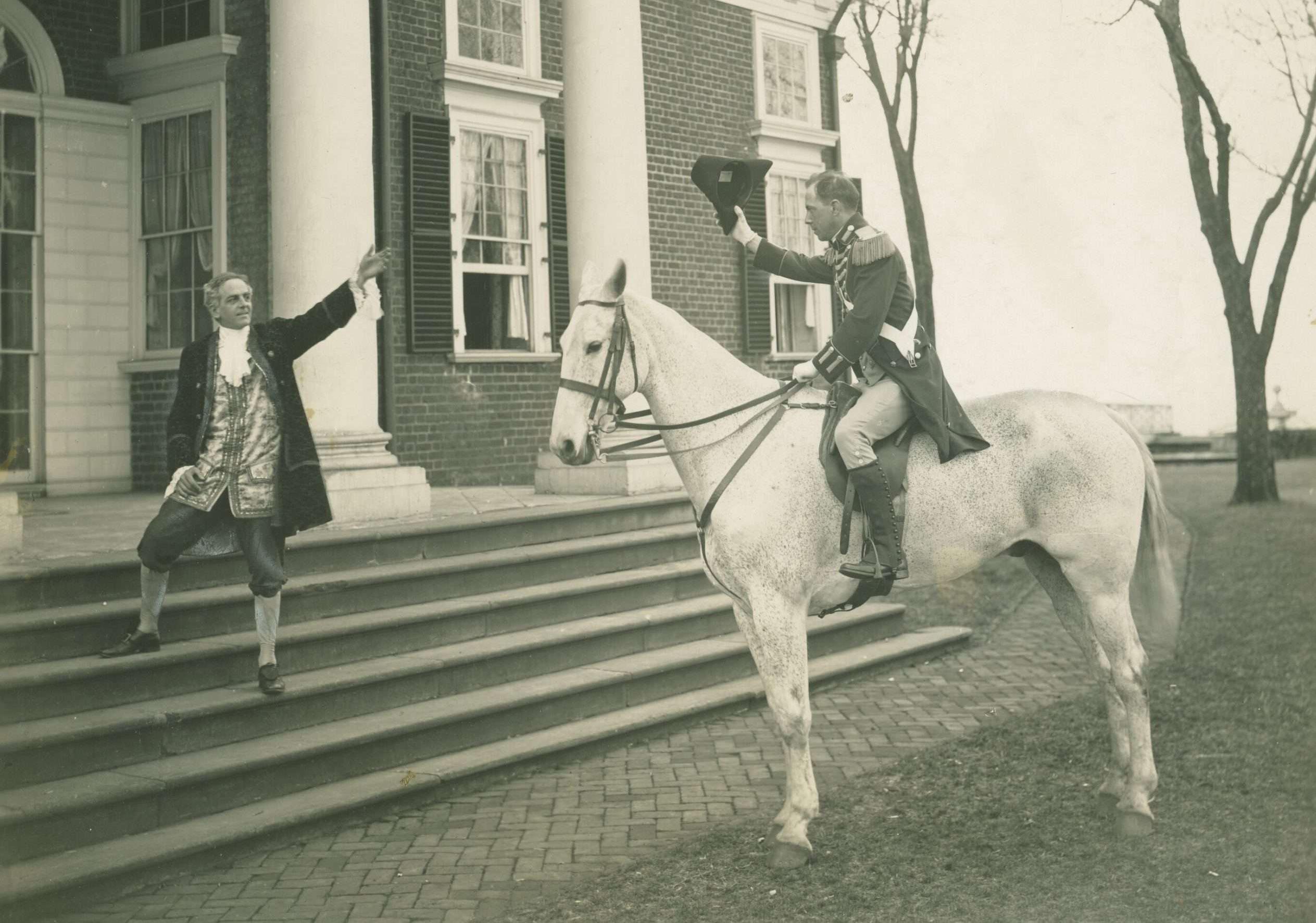
Dr. George Gilmer was one of Albemarle County’s most prominent physicians during the Revolutionary era and a trusted friend of Thomas Jefferson. He served as a surgeon during the war and later represented Albemarle County at the Fifth Virginia Convention in 1776, where delegates approved the Virginia Declaration of Rights and instructed their representatives to support independence. Gilmer’s home near Charlottesville became a gathering place for leading Virginians during the tumultuous years of the Revolution.
George Rogers Clark, born in 1752 near the Rivanna River in Albemarle County, became one of the most important military leaders on the Revolutionary frontier. As a young officer in the Virginia militia, Clark led daring expeditions into the Illinois Country, capturing British posts at Kaskaskia in 1778 and Vincennes in 1779. His victories helped secure American control of the Northwest Territory and strengthened the United States’ claims to lands north of the Ohio River after the war.
The Meriwether and Lewis families were among the early landholding families of Albemarle County, and their estates included large tracts such as Locust Hill and Castle Hill. William Lewis served as a lieutenant in the Virginia militia and was among the signers of the Albemarle Declaration of Independence in 1779, a local pledge supporting the revolutionary cause. After his death, his widow Lucy Meriwether Lewis managed the family plantation and raised their children, including Meriwether Lewis, who would later lead the Lewis and Clark Expedition and help open the American West to exploration.
Michie Family
In the rural communities surrounding Charlottesville, everyday places also played a role in the Revolutionary era. William Michie, a soldier who served during the war, later established Michie Tavern along the old Buck Mountain Road in Earlysville. For generations the tavern provided food, lodging, and news for travelers, continuing the tradition
of roadside gathering places where politics, commerce, and local life intertwined. The tavern was carefully dismantled and relocated in 1927 to its present site near Monticello, where it continues to welcome visitors as a reminder of the region’s early roadside culture.
Few families were more influential in colonial Virginia than the Randolphs, whose vast network of relatives filled political offices across the colony. Descended from William Randolph and Mary Isham Randolph, the family produced generations of legislators, planters, and public leaders. Their influence extended into Albemarle County through Jane Randolph, who married Peter Jefferson and became the mother of Thomas Jefferson. Through this marriage, the Randolph legacy of political leadership became intertwined with the Jefferson family and the founding generation.
Dabney Carr (1743–1773) was Thomas Jefferson’s closest boyhood friend and later became his brother-in-law by marrying Jefferson’s sister Martha. Although Carr died before the Revolution began, he helped advance the patriot cause by proposing the Virginia Committees of Correspondence, which coordinated communication among the colonies. Jefferson honored a youthful promise by burying Carr on the slopes of Monticello and helping raise Carr’s sons after his death. Members of the extended Carr family later served in militia and local government during the Revolutionary period.
The Minor family also played a role in Virginia’s Revolutionary leadership. Major John Minor II (1735–1800) served in the Caroline County militia during the war and held public office as a justice of the peace. During the conflict he also helped manage the estates and affairs of Thomas Nelson Jr., the Virginia governor who later commanded American forces at the Siege of Yorktown. Minor’s marriage to Mary Carr linked the family to the Carr and Jefferson networks that shaped Albemarle County’s political life.
In June 1781, Central Virginia briefly became a Revolutionary War flashpoint when British cavalry under Lieutenant Colonel Banastre Tarleton rode toward Charlottesville, intent on seizing the General Assembly and Governor Thomas Jefferson. Late on the night of June 3, Captain John “Jack” Jouett Jr. spotted Tarleton’s column near Cuckoo Tavern in Louisa County and set off on a punishing 40-mile ride along dark back roads and wooded trails. By dawn on June 4 he had reached Monticello and, soon thereafter, Charlottesville, rousing Jefferson and the legislators in time for most of Virginia’s leadership to flee west over the Blue Ridge Mountains to Staunton, where the Assembly quickly reconvened and kept the state’s government functioning.
Jefferson took a different path. After Jouett’s warning he first moved his family from Monticello through a series of nearby safe houses and guided them farther southwest across central Virginia until they reached his remote Bedford County retreat at Poplar Forest. They stayed there for about six weeks at the plantation’s overseer’s house, as Jefferson’s octagonal house had not yet been built. Had Tarleton captured the governor and legislature in a single sweep, the impact on Virginia—the Revolution’s largest and most crucial state—could have been devastating, which is why Jouett’s heroic ride is remembered as Virginia’s answer to Paul Revere’s.
Thomas Jefferson’s Escape Route is a drivingtour project of the Virginia American Revolution 250 commemoration, created by members of the Albemarle Chapter of the National Society Daughters of the American Revolution in partnership with Monticello and Thomas Jefferson’s Poplar Forest. The project invites travelers to trace Jefferson’s 1781 flight from Monticello to Poplar Forest as British cavalry closed in on Charlottesville.
Drivers can follow roads that re-create the historic path with waypoints such as Enniscorthy, Joplin’s Ordinary, and Hugh Rose’s Geddes. The route turns a harrowing episode of the Revolution into an accessible trip, with free brochures available at Virginia welcome centers, Monticello, and Poplar Forest, as well as online at albemarlechapterdar.org.
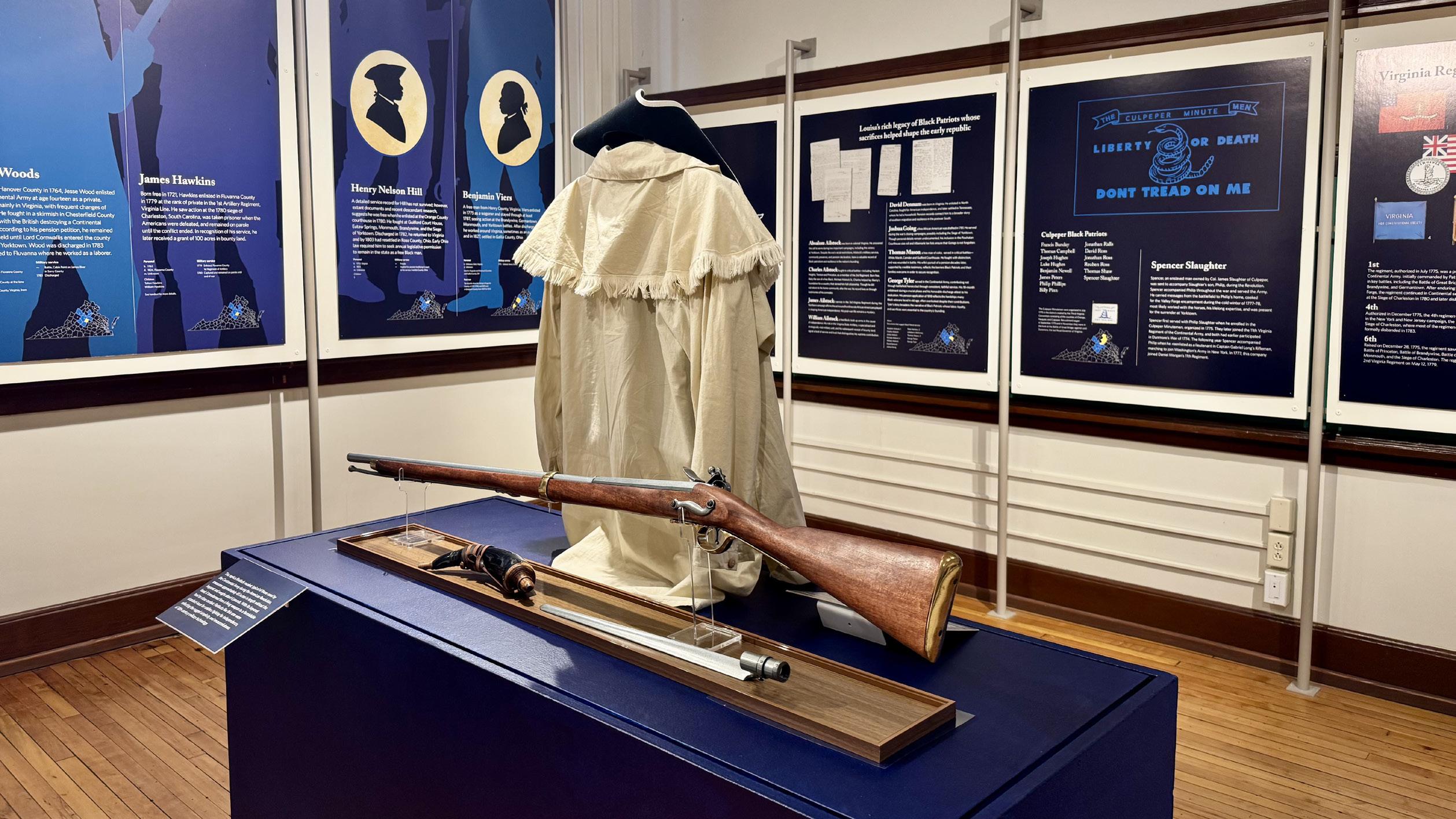
During the American Revolution, African American men and women—both enslaved and free—stood at the crossroads of liberty and bondage. In Central Virginia, they fought and provided services for a country that denied their freedom yet dared to hope for a better future. Although their names rarely appear in traditional histories of the Revolution, their service helped shape the nation’s founding.
A recent exhibition, Finally Remembered: The Black Patriots of Central Virginia, restores these names to the story of America’s independence. Curated by genealogist Dr. Shelley Viola Murphy and presented at the Jefferson School African American Heritage Center, the exhibition is part of the region’s broader Virginia American Revolution 250 (VA250) commemorations marking the nation’s 250th anniversary. The exhibition has concluded, but an online version is being developed and will be available at jeffschoolheritagecenter.org
Drawing on military records, pension applications, tax rolls, and family histories, the exhibit highlighted Black patriots from Albemarle, Buckingham, Fluvanna, Louisa, Nelson, and Orange counties. Together, their stories reveal the complicated realities of freedom, service, and survival in Revolutionary Virginia.
Some, like Shadrach Battles, served as free Black soldiers in the Continental Army, fighting in pivotal battles including Brandywine, Germantown, Monmouth, and the siege of Savannah. Others, such as Benjamin Viers and Henry Nelson Hill, enlisted in Virginia
regiments and fought at Yorktown or endured long campaigns across the colonies before returning to lives shaped by the limits placed on free Black citizens.
The war also drew in people whose contributions unfolded beyond the battlefield. William Payne, a waterman, helped move supplies vital to the war effort, while Spencer Slaughter, an enslaved man connected to the Culpeper Minutemen, carried messages, cooked for soldiers at Valley Forge, and served through the final campaign at Yorktown.
Still others are known primarily through fragments of documentation such as pension records, court appearances, and muster rolls. Men such as Johnson Smith, Richard Spinner, Charles Barnett, and David Barnett left behind traces of service that historians continue to piece together.
The exhibition also acknowledges the complex ties between freedom and slavery during the era. Figures such as Jupiter Evans, who worked closely with Thomas Jefferson, illustrate the intertwined lives of enslaved people and the leaders of the Revolution.
Together these stories challenge the idea that the struggle for independence belonged to only a few. They reveal a broader cast of participants whose labor, courage, and persistence helped secure the nation’s founding, while also reminding us that the promise of liberty remained unfinished.
“They are not just footnotes,” the exhibition notes. “They are foundational.”
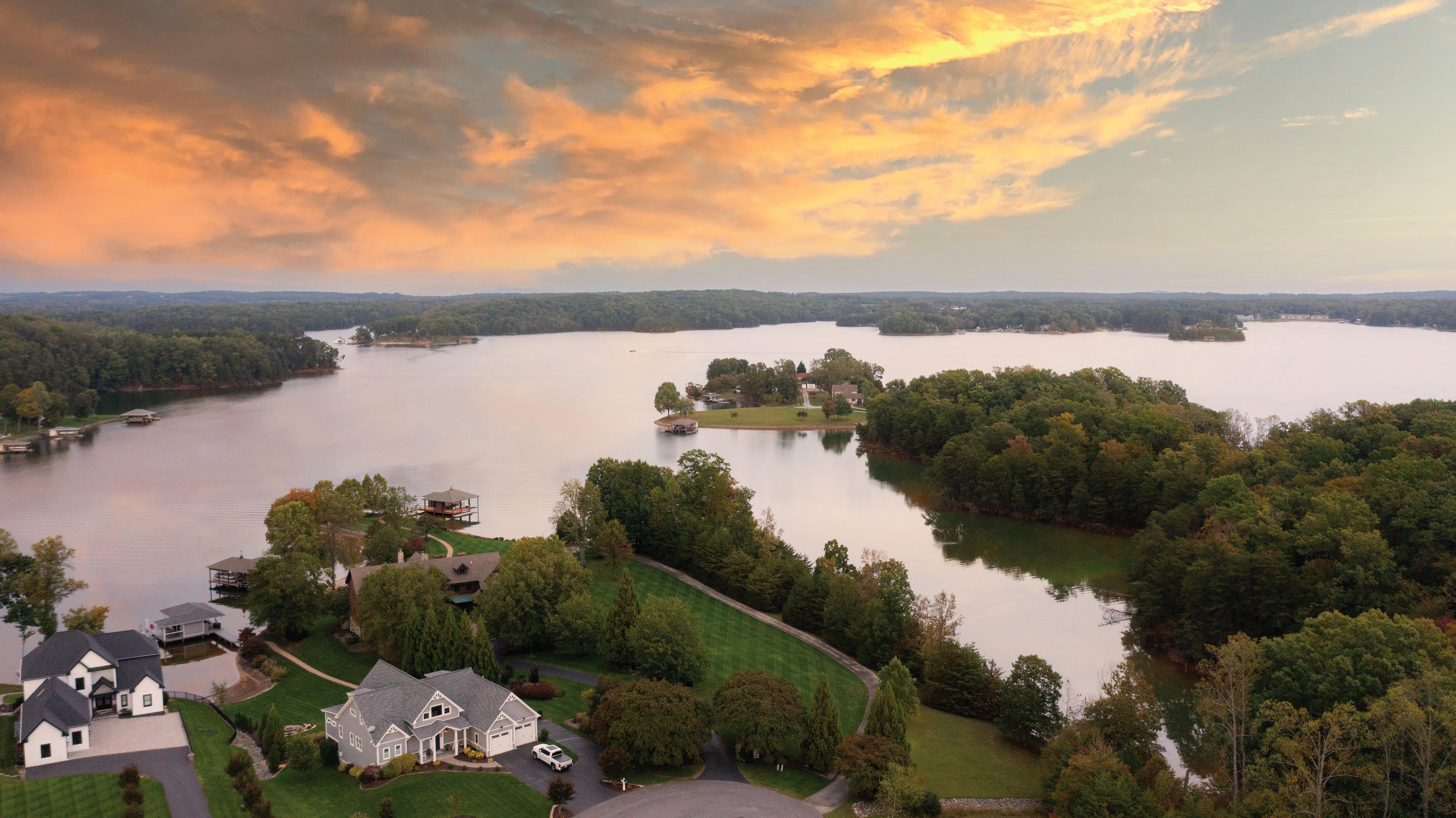
Spring is calling in Danville and Pittsylvania County, ready to kick off a season full of fresh adventures. Dock and unwind at Smith Mountain Lake for a peaceful escape, grab a kayak and ride the Dan River, make a fluffy new friend at Funky Fleece Farm� or browse a farmers� market packed with local goodness. No matter your pace� adventure is in full bloom.
Start your journey at VisitSoSi.com.
A
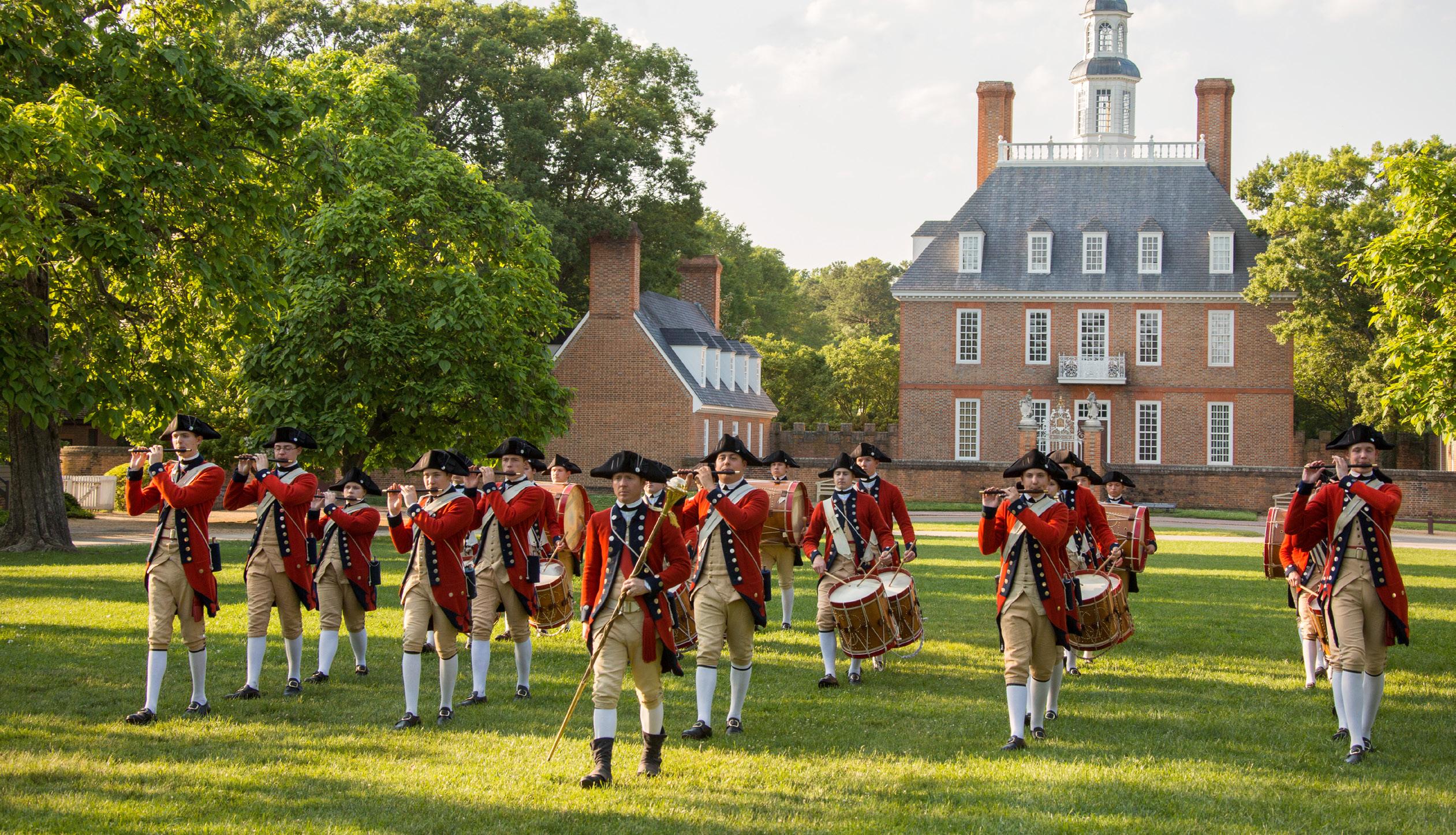
As the United States marks the 250th anniversary of the Declaration of Independence this year, communities are preparing to reflect on the Revolution and the founding ideals that shaped the nation.
The American Revolution can sometimes feel distant—something confined to textbooks, battlefields, and famous quotations. But in Central Virginia, the Revolution remains part of the landscape. From Monticello and Highland to Montpelier and the river town of Scottsville, historic places across the area are interpreting the Revolution and its aftermath in new ways.
The statewide effort is coordinated by the Virginia American Revolution 250 Commission, known as VA250, which is guiding a decade-long series of programs, exhibitions, and events across the Commonwealth. The goal is not only to revisit the Revolution, but to explore its full and complex legacy.
Locally, the VA250 effort is coordinated by the Charlottesville Albemarle Convention & Visitors Bureau, linking local museums, historic sites, and community organizations in the statewide commemoration. The initiative highlights the region’s Revolutionary history while emphasizing a broader and more inclusive interpretation of the era.
VA250 programming at Monticello highlights three intertwined themes: Jefferson’s role in the American Revolution and early republic, the lived experiences of the enslaved community who made life on the mountain possible, and the continuing work of citizenship symbolized by the site’s annual Independence Day naturalization ceremony.

The July 4 celebration is one of Monticello’s signature events. This Independence Day, new Americans will again gather on the West Lawn to take the oath of citizenship, continuing a tradition that began here in 1963. The ceremony includes remarks by a keynote speaker, musical performances, and the formal proceedings led by federal officials.
Summer programming also aligns with the national Civic Season, the period from Juneteenth through July 4 that encourages reflection on the nation’s founding ideals. Recently, Monticello has hosted programs such as the “Founding Friends, Founding Foes” tour examining Jefferson’s complex relationship with John Adams, along with discussions, readings, and food-focused events that explore the social and political culture of the founding era.
On May 2, 2026, Monticello’s West Lawn will host an event that explores the words that launched a nation. “Pen to Paper: The Civic Gospel of the Declaration of Independence,” part of the statewide VA250 commemoration, invites the public to revisit the Declaration not only as a historic document but as a living statement of democratic ideals.
The afternoon program will include a shared public reading of the Declaration along with remarks from Monticello President and CEO Jane Kamensky and VA250 honorary chair Carly Fiorina. Musical performances by Virginia musician Horace Scruggs and a poetry reading by former Virginia Poet Laureate Tim Seibles will add contemporary voices to the historic setting.
The event also marks the launch of Declare: A Civic Gospel, a collaborative publishing project between Monticello and Arion Press that reexamines the language and legacy of the Declaration 250 years after its adoption.
Following the program, Monticello will stage a performance of Jefferson and Adams , a play dramatizing the long friendship and rivalry between the two founding figures.
A visit to James Madison’s Montpelier offers a compelling way to connect Revolutionary history with the creation of the Constitution. A day on the grounds reveals how Madison’s Piedmont estate fits into the larger story of America’s founding.
“Highlights of Montpelier” tours, offered most Thursdays through Sundays, introduce Madison’s life and his central role in drafting the Constitution in 1787, while also tracing the political debates that helped define the young republic. Afterward, take time to wander the surrounding landscape: the formal grounds, archaeological sites, and Madison’s small garden temple, where views across the countryside offer a reminder that ideas debated in Philadelphia took shape in places like this.
“The Mere Distinction of Color” is Montpelier’s exhibition exploring slavery at the site. Through documents, oral histories, and multimedia interpretation, the exhibition confronts the gap between the Revolution’s promises of liberty and the realities experienced by the enslaved community who lived and worked here. Visitors can explore the South Yard and plantation work areas, where guided Enslaved Community Tours are offered on select dates. Even without a tour, the site map allows for a meaningful self-guided visit, followed by a walk along Montpelier’s wooded trails.
Throughout 2026, Montpelier will also host Constitution-focused programs, including its annual Constitution Day celebration in September.
Robert Llewellyn
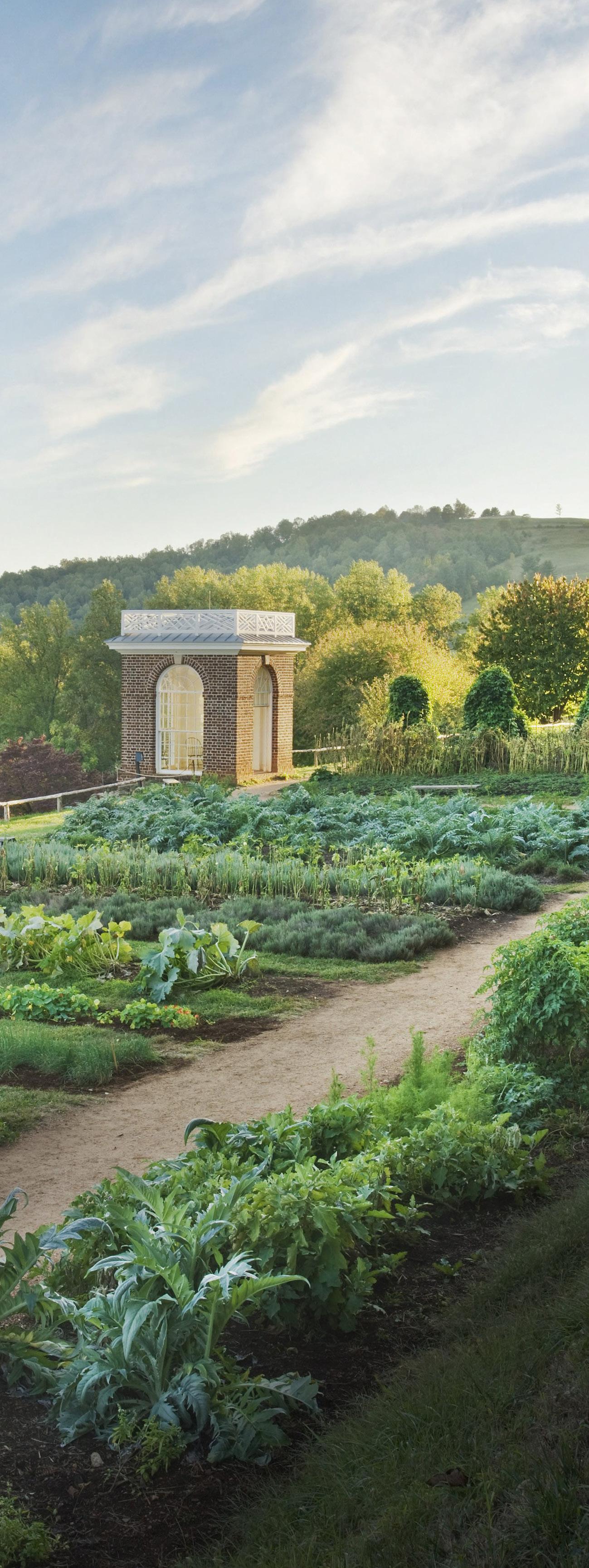
Monticello’s Vegetable Garden
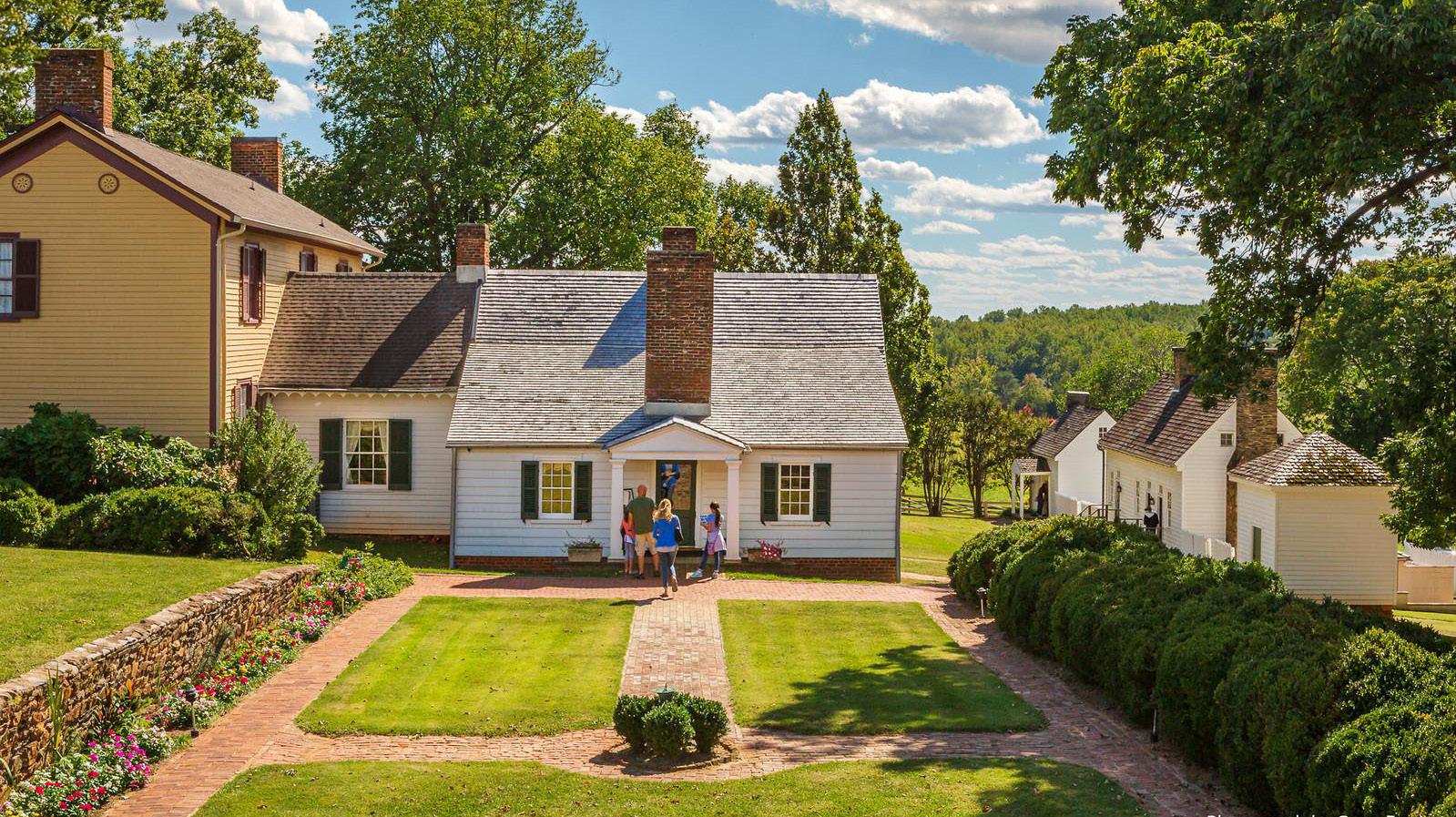
James Monroe’s Highland offers a distinctive lens on the American Revolution’s aftermath. The historic farm and landscape highlights what historians often call the Revolution’s “second generation”—the leaders who fought for independence and later shaped the young republic.
Highland is using the statewide Virginia American Revolution 250 Commission commemoration to spotlight Monroe’s Revolutionary roots while connecting his career to the broader
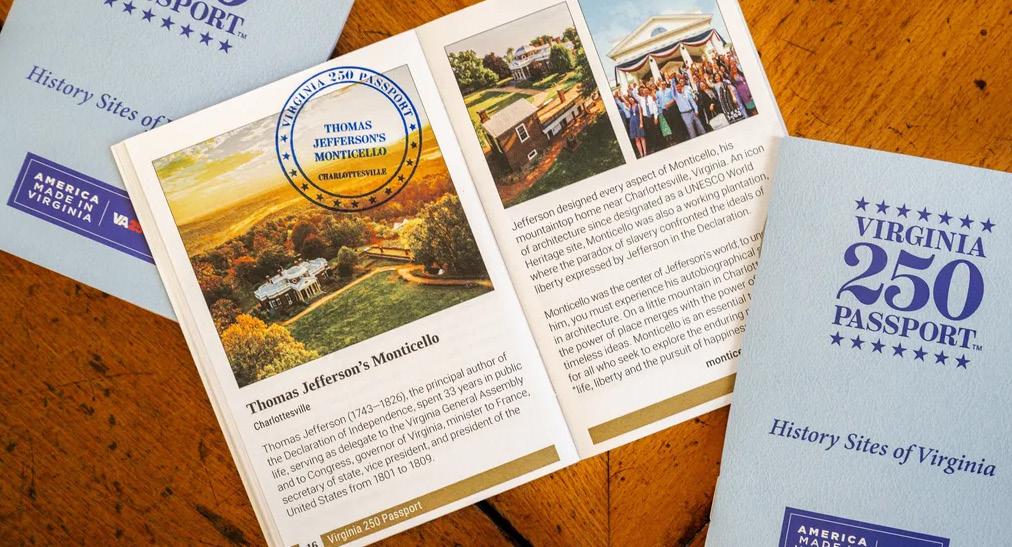
As Virginia marks the nation’s 250th anniversary, the Virginia 250 Passport turns the commemoration into a statewide travel adventure. Produced by the Virginia American Revolution 250 Commission, the passport is a limited-run, 64-page booklet that invites visitors to explore 70 museums and historic sites across the Commonwealth throughout the year. At each stop, travelers collect a custom stamp, gradually filling the passport’s pages while tracing Virginia’s Revolutionary and founding-era landscape.
The passport is free while supplies last and can be picked up Monticello, Colonial Williamsburg, George Washington’s Mount Vernon, and the Virginia Museum of History & Culture, as well as at Virginia welcome centers and select VA250 events.
story of the nation’s founding. A young officer wounded at the Battle of Trenton, Monroe would go on to serve as diplomat, secretary of state, and president during the “Era of Good Feelings.”
Interpretive programs and exhibitions emphasize how the ideals of independence evolved during Monroe’s lifetime. Through installations such as Highland’s Viewpoints exhibit and its “Window to a New America” themes, visitors are invited to consider how questions about liberty, expansion, and political identity unfolded in the decades after 1776.
Beyond the stamps, the booklet doubles as a travel planner. Once visitors collect their first stamp, they can receive up to 15 percent off admission at other participating sites. Gathering five or more stamps also unlocks eligibility for a statewide sweepstakes with prizes that include museum memberships and cash awards.
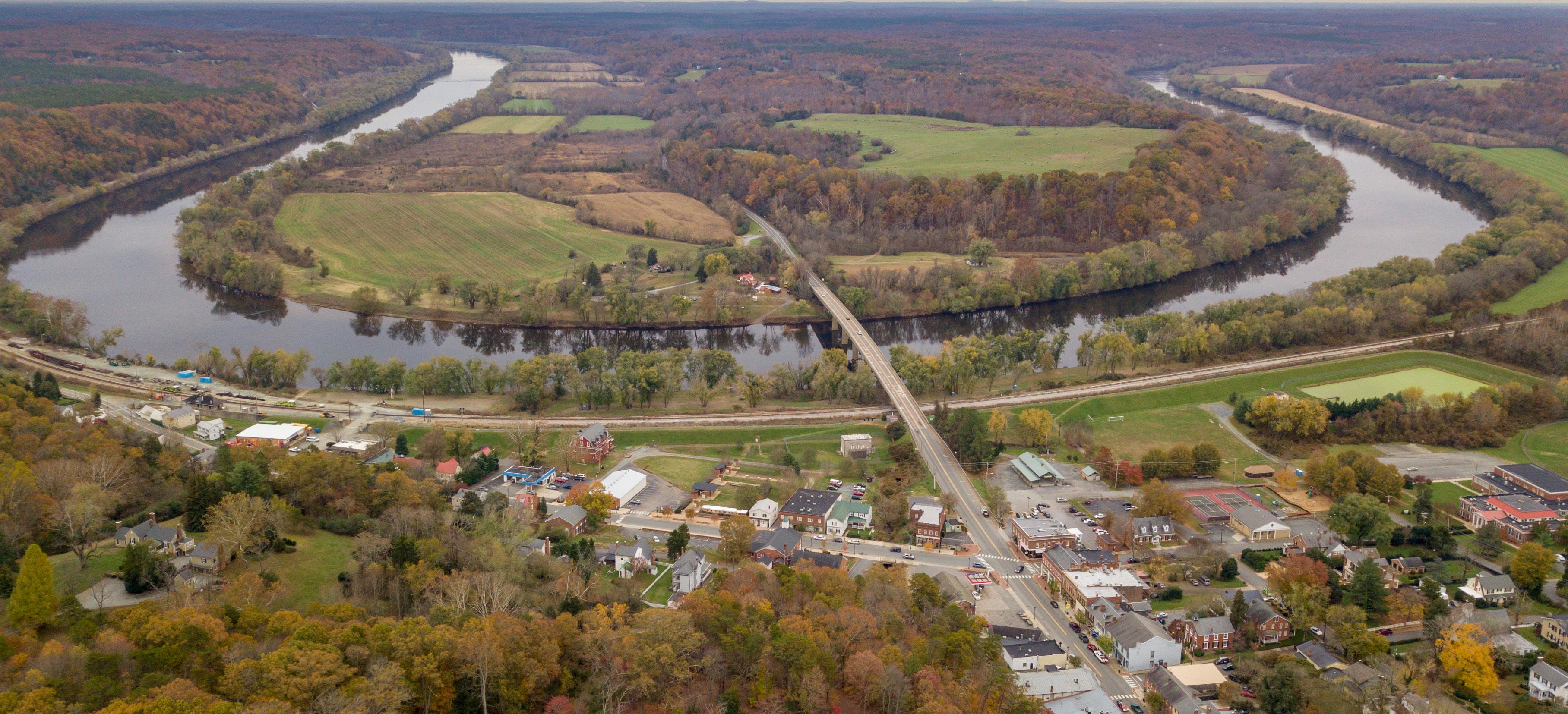
Along the James River, the historic town of Scottsville offers a river-centered chapter of Albemarle County’s Revolutionary story. Once the county’s early seat of government and an active port on the James, Scottsville played an important logistical role during the era of independence.
Today, the Scottsville Museum anchors the town’s participation in the statewide VA250 commemoration, highlighting how interior communities along the river supported the Revolutionary cause. Exhibits explore Scottsville’s beginnings as Scott’s Landing, a ferry crossing and bateaux port where tobacco moved downriver toward Richmond and imported goods traveled back inland to local farms and plantations. The museum also interprets a dramatic moment from the war’s closing months. In June 1781, British cavalry under Banastre Tarleton swept through central Virginia searching for Continental supplies after a raid on Charlottesville. Scottsville’s courthouse area and river landings were among the locations they hoped to reach.
As part of the Charlottesville-Albemarle VA250 effort, the museum links this James River legacy to the Revolutionary landscape through exhibits, lectures, and walking tours.
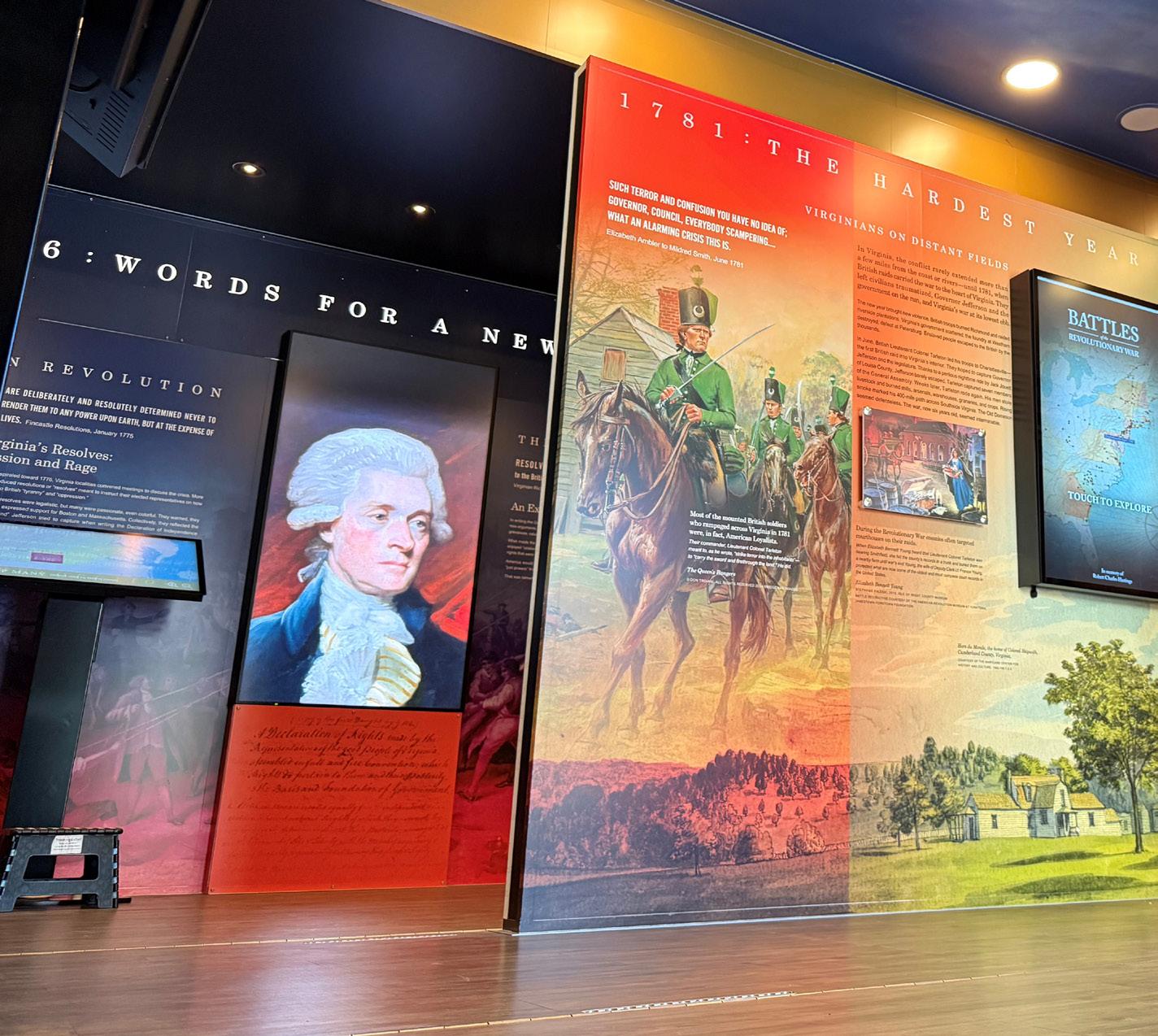
A 90-foot tractor-trailer has become one of the most visible symbols of Virginia’s 250th. Branded the VA250 Mobile Museum Experience and titled “Out of Many, One,” the traveling exhibit unfolds into a walk-through gallery that brings the Revolution to parking lots, fairgrounds, and courthouse squares across the Commonwealth. Inside, visitors move past touchscreens, archival images, and short films that trace Virginia’s role from early protests through Yorktown, with stops along the way for George Washington, James Madison, Patrick Henry, and a wider cast of Indigenous Virginians, free and enslaved African Americans, women, and other participants who rarely show up in textbook timelines.
The museum rolls into town on April 13-15, parking on Charlottesville’s Downtown Mall for Founders Day and Jefferson’s Birthday.
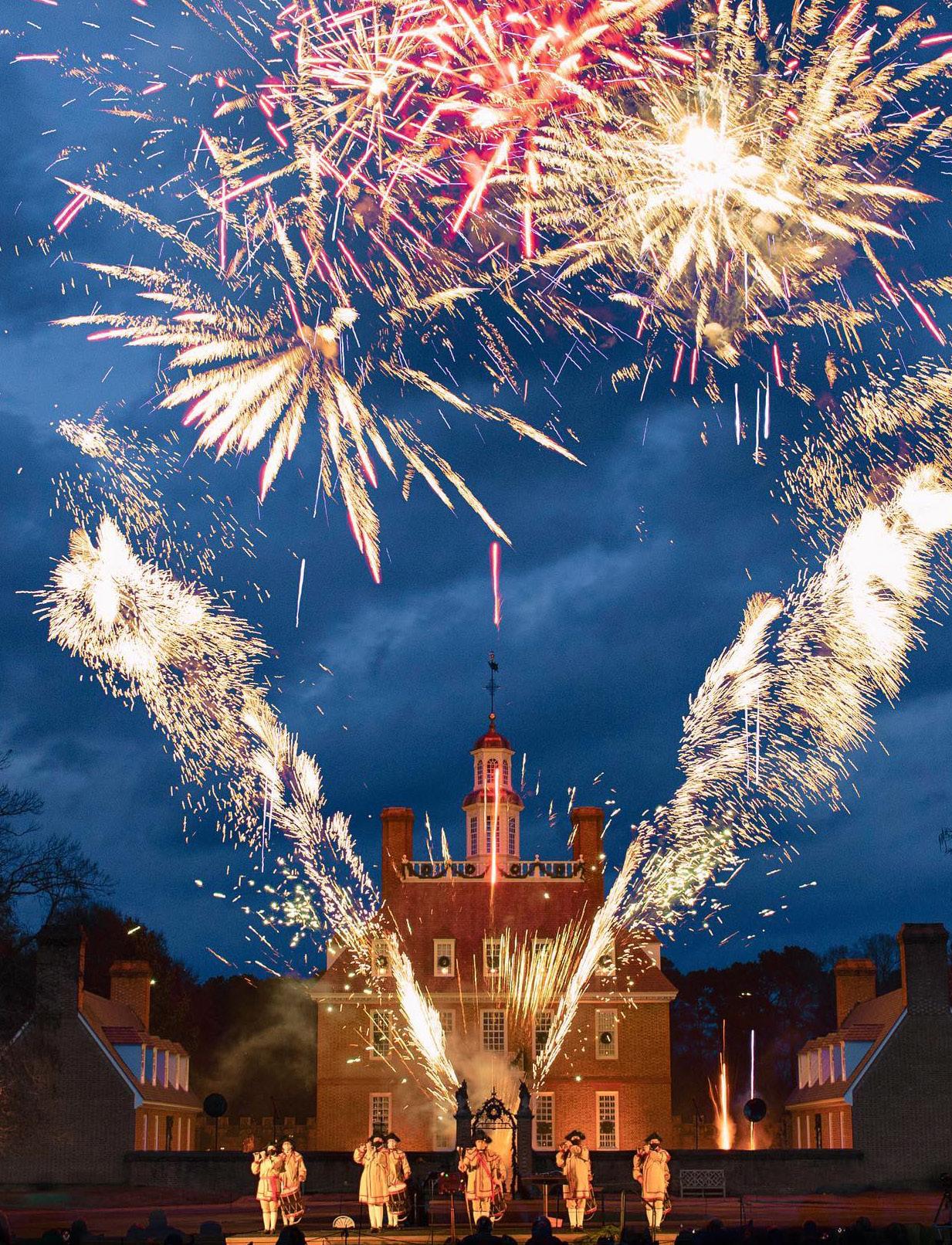
VA250’s “America Made in Virginia Signature Event Series,” highlights the Commonwealth’s central role in the nation’s founding. Launching at Colonial Williamsburg, the series will bring together communities, educators, and historic institutions to explore the nation’s full story and inspire civic engagement. Featuring events, exhibitions, and programs at many of Virginia’s most iconic historic sites, the series will feature voices and stories that broaden the understanding of the American experience.
“Virginia has always been the crucible of the nation. Two hundred and fifty years ago was not the beginning of an idea, but the moment it came into sharp focus—shaped by years of debate, experience, and sacrifice. The Declaration of Independence has stood as our beacon ever since, challenging each generation not just to celebrate liberty, but to uphold it,” says Carly Fiorina, VA250 National Honorary Chair.
“The America Made In Virginia Signature Event Series is an invitation to look fully and unafraid into the mirror of our past, to tell the whole story, and for each of us to recommit to the enduring work of citizenship, towards a more perfect union,” says Fiorina.
America’s Semiquincentennial Celebration: Inspiring a Season of Civic Renewal
April 24 at Colonial Williamsburg
Pen to Paper: The Civic Gospel of the Declaration of Independence
May 2 at Monticello
The Flame of Revolution: 250th Anniversary of the 5th Virginia Convention
May 15–16, 2026 at Colonial Williamsburg
Virginia Resolved: A Commemoration of Independence — 250th Anniversary of the Lee Resolution for Independence
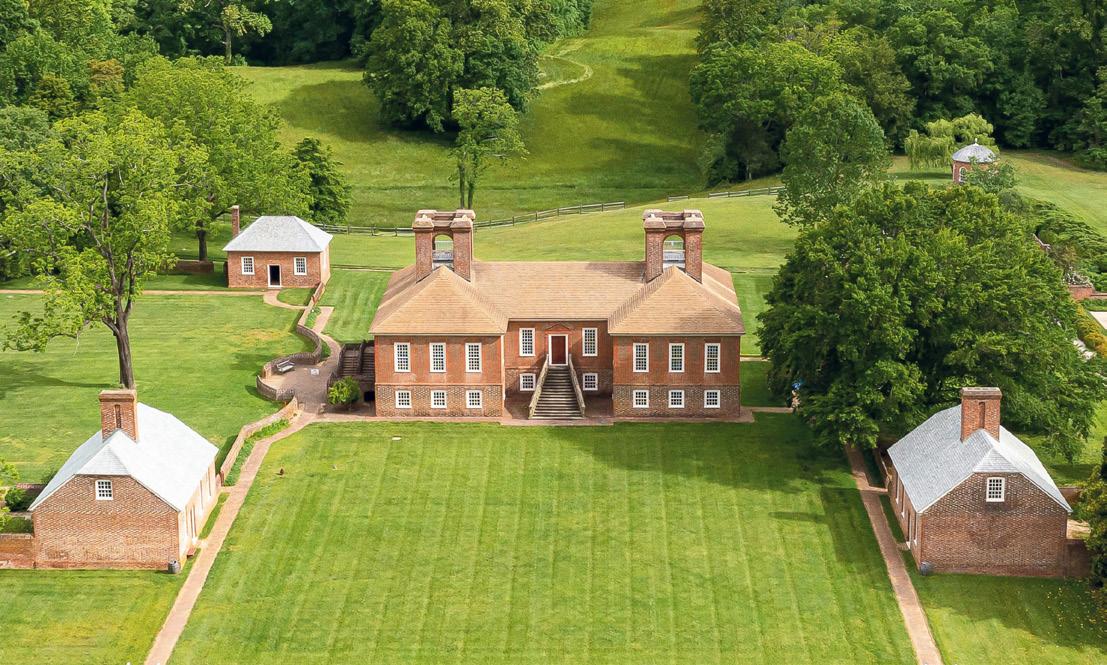
June 7, 2026 at Stratford Hall
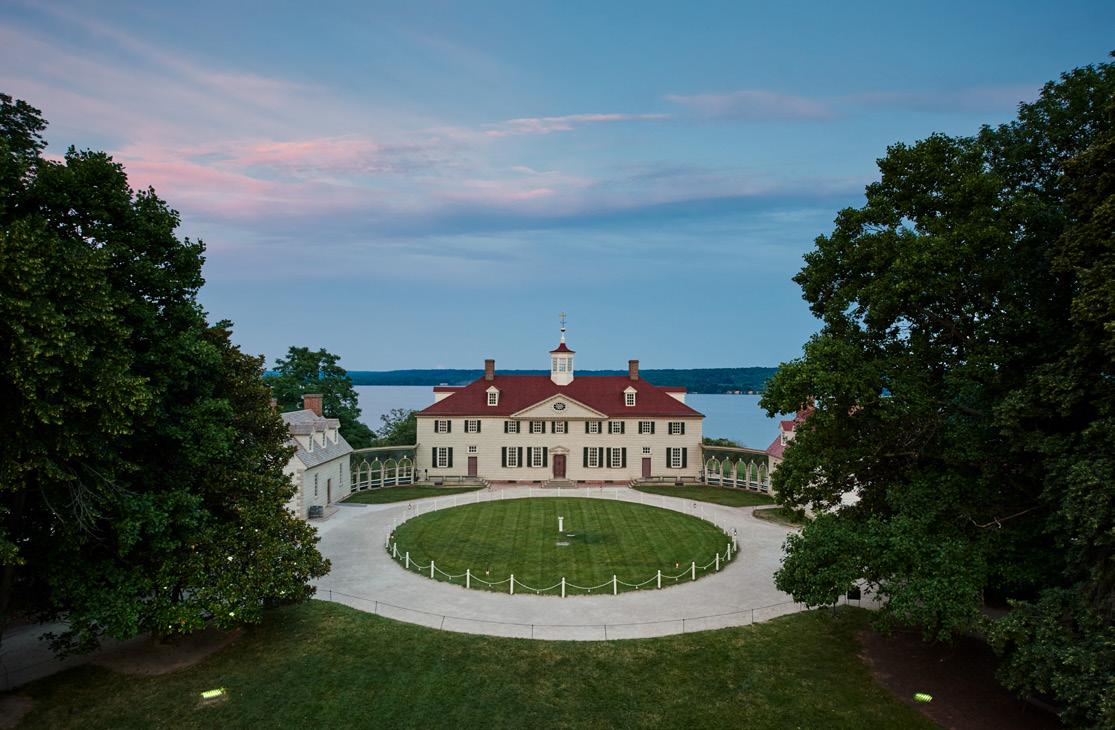
George Washington: A Revolutionary Life, celebrating the new education center
June 2026 at Mount Vernon
Freedom Flows on the Potomac: Celebrating 250 Years of the Virginia Declaration of Rights
June 12–14, 2026 at George Mason’s Gunston Hall & Old Town Alexandria
Sail250® Virginia: Goodwill Tour with International Fleet of Tall Ships
June 12–14, 2026 at Yorktown, Hampton, Richmond, Onancock, Smithfield, and Alexandria
June 19–23, 2026 at Cape Charles, Chesapeake, Portsmouth, and Norfolk
Virginians are invited to attend Juneteenth events and programs throughout the state exploring the African American journey toward freedom. Learn more at VA250.org/ Juneteenth.
June 2026
Independence Day
On July 4, 2026, the Commonwealth will host a landmark day of celebration beginning with a Naturalization Ceremony at Thomas Jefferson’s Monticello. The day will culminate that evening at Colonial Williamsburg with America Made In Virginia: 250 Years Together, a free two-hour live event and telecast featuring stirring performances from outstanding American artists and a fireworks display for the ages.
August 2026 at Fort Monroe, Hampton
Kings Mountain (Barter Theatre production)
September 17–October 31, 2026 at Barter Theatre, Abingdon
First Virginia General Assembly: 250th Anniversary
October 7 at Colonial Williamsburg
250th Anniversary of the Historic First Baptist Church
October 9 at Colonial Williamsburg
Visit va250.org for more information.
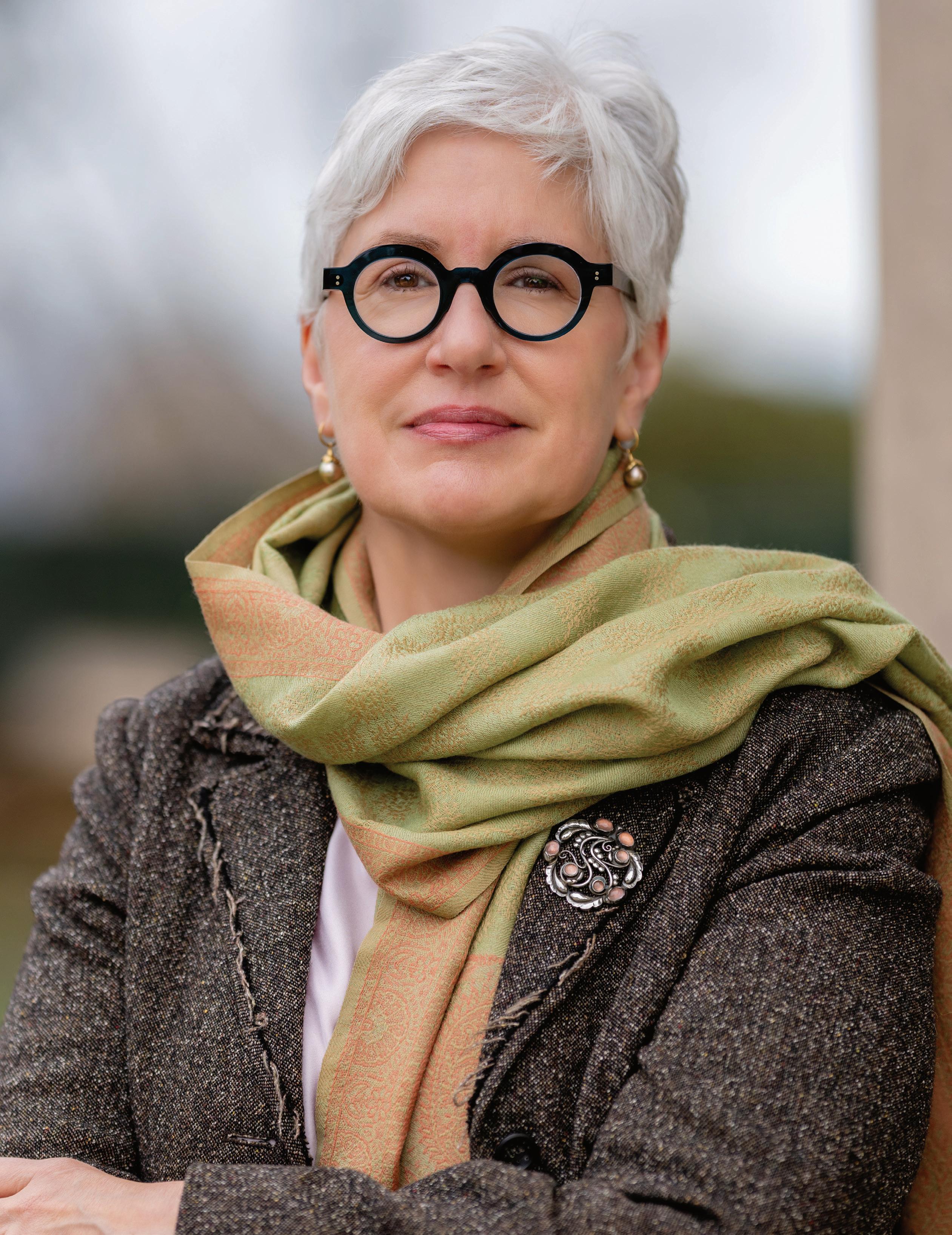
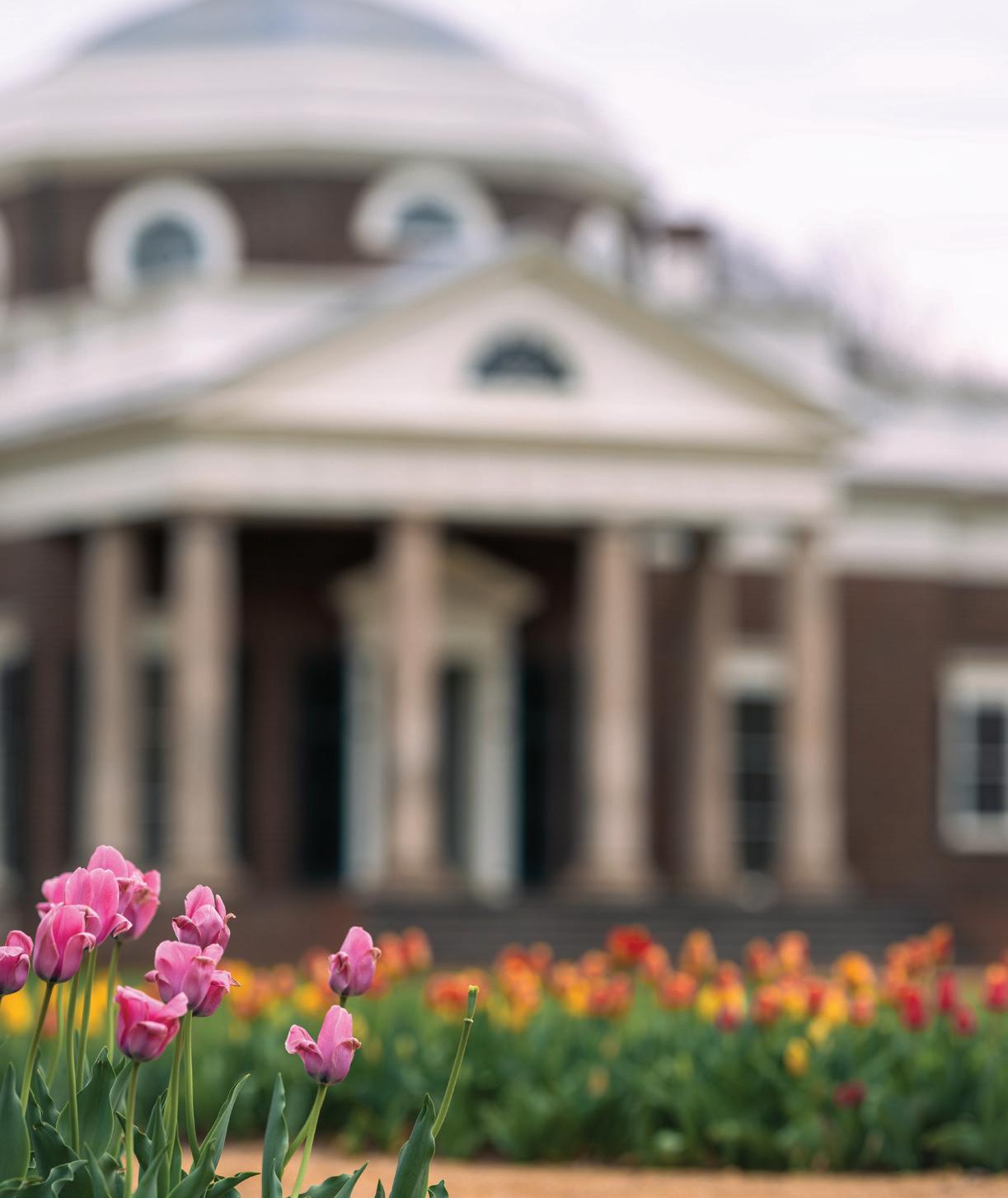
Monticello has always stood as both a symbol of America’s promise and a reminder of its contradictions. For historian Jane Kamensky, Thomas Jefferson’s mountaintop home is also a vast, wide-reaching classroom.
Before coming to Monticello, Kamensky was most recently the Jonathan Trumbull Professor of American History at Harvard and director of the Schlesinger Library, where she earned national recognition for her vivid, prizewinning histories of early America. Now, as president and CEO of the Thomas Jefferson Foundation—the organization that owns and operates Monticello—she is bringing that same scholarly lens to Monticello.
Kamensky is leading the ongoing efforts to ensure that Monticello is not only a historic site, but also a place for civic learning, courageous conversations, and deeper engagement with the ideas that shaped the nation. In this conversation, Kamensky reflects on Monticello’s evolving role, the preparations for America’s 250th anniversary this year, and why this local treasure and UNESCO World Heritage Site is one of the most important places in the country to think about the country’s past and future.
Q: What made this the right moment for you to come to Monticello?
Jane Kamensky: I think it was a confluence of two things. One, I had been in the classroom for 31 years, and I was looking at a time of consequence—even peril—for the country and thinking about how my skills as a historian and teacher could best be used in service of the United States.
Monticello is a really big classroom. We serve more than 300,000 history-curious people every year with content that is at once honest, rigorous, and inspirational. The pull of being able to do civic education at scale was really powerful.
The other factor was the 250th anniversary itself. I started thinking about where the best place in the country might be to tell a true story of our history at a moment of generational curiosity about the founding and
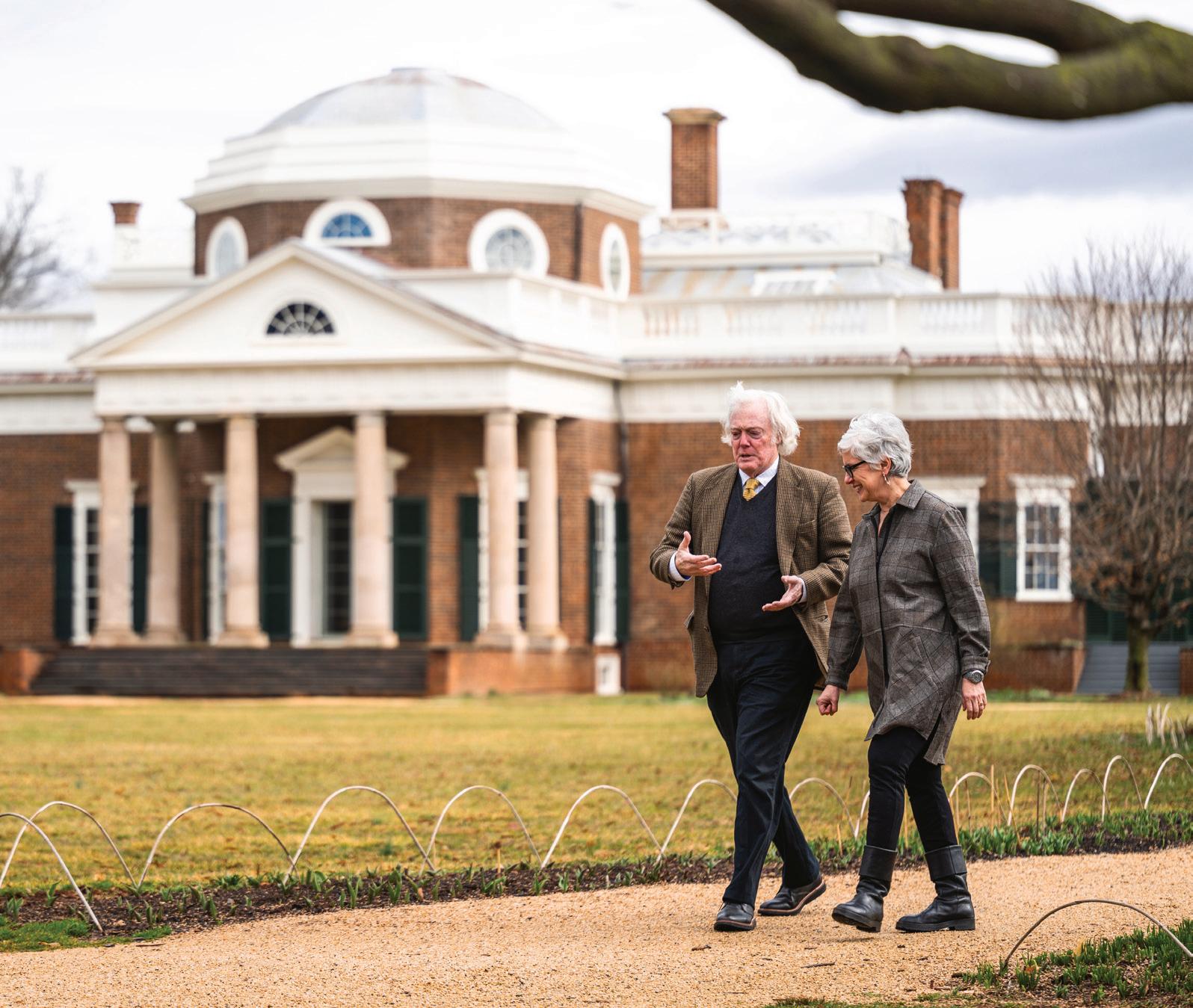
Kamensky in conversation with Bill Barker, widely recognized as the nation’s foremost interpreter of Thomas Jefferson.
how it plays out today. Both of those roads led to Jefferson’s mountaintop.
Q: Since arriving a couple of years ago, what has most impressed or surprised you about Monticello?
Kamensky: I knew it was a place that had done great work for a generation or more, but the depth of excellence and purpose in the staff continues to impress me. It’s an incredibly mission-driven workforce of about 380 people. Whether you’re talking to someone who leads tours, conducts scholarship, replants the mountaintop vineyard, or cleans the visitor center, there is a level of passion about the mission and its significance that I’ve never encountered before.
Charlottesville itself has also been a learning experience. The generational attachment to place—the rootedness in home, history, and family stories among people from all walks of life—is very different from my experience in the Northeast. That’s been wonderful to see.
Q: Community connections are important to you and to Monticello. How are you strengthening those ties locally?
Kamensky: Our new strategic plan, Climb
the Mountain, Discover America, articulates two overarching and connected goals: Monticello as and for America, and Monticello for Virginia.
We want to be a place that people who live in the area feel attached to and passionate about as visitors, supporters, and believers in this mission. That means getting Monticello off the mountain as well as inviting our neighbors to join us.
We’ve been building partnerships with institutions like Piedmont Virginia Community College, which has been an increasingly vital partner. We’re also working closely with the Jefferson School African American Heritage Center, which shares our commitment to telling the stories of people of African descent and the intertwined histories of slavery and freedom in this place.
And of course there are many partnerships with UVA and with people and organizations in the region who care deeply about the rural landscape and sustainability. The most formal connection with UVA is the annual Thomas Jefferson Foundation Medals, which recognize achievements in law, architecture, citizen leadership, and global innovation.
I also hold a courtesy faculty appointment at UVA, and we’ve talked about teaching a
January-term course. Recently we worked with the architecture school on what was called the World Heritage Trail Studio, thinking about how to intervene lightly on the landscape so people might once again walk from UVA to Monticello as they did in Jefferson’s time. There are many points of partnership, and I’d like to bring some of those together more tightly in the future.
Q: Many locals have already visited Monticello. Why should they visit again now?
Kamensky: There’s an awful lot that’s new. That includes programming, galleries, restoration work inside the house, and changes to the landscape itself.
Right now we’re finishing the mountaintop accessibility project, which will transform the pathways up to the mountaintop. We also have a vibrant series that brings historians, scholars, and public-history leaders to Monticello regularly.
We have three new galleries that are now open: the orientation gallery “Many Threads, One Story,” the Griffin Discovery Room for families, and a new 1776 gallery that features an engraving of the Declaration once owned by James Madison. We’re also developing a couple of incredible new tours and expanding access to more of the landscape.
We’re building a variety of experiences so that someone from Charlottesville could come back monthly, or even weekly, and encounter something new. We’re also developing a membership program to encourage people who walk the Saunders-Monticello Trail to continue up to the mountaintop and experience Monticello’s gardens and landscape.
Q: As the nation approaches its 250th anniversary, what role does Monticello play in that commemoration?
Kamensky: The semiquincentennial marks the birth of the United States at the moment that the Declaration of Independence was signed. As the T-shirt in our gift shop reminds people, “Our guy wrote it.”
So we’re digging deeply into that vision statement of what the United States as
one people stands for, and looking at the generations of Americans who have worked to fulfill Jefferson’s vision of a people created equal with inalienable rights—life, liberty, and the pursuit of happiness.
We’re presenting a theatrical experience in which our first-person interpreter of Jefferson, Bill Barker, reflects on the season of the Declaration in different rooms of the house.
Beyond July Fourth, we’re hosting a robust series of programs around the theme of founders—not only the founding generation, but Americans today as founders and re-founders of the republic. And we’re pairing that with fun programs like Culinary Diplomacy events and “Feast of Reason,” conversations that encourage thoughtful dialogue about why the 250-year experiment in American self government is worth preserving and sustaining.
Q: Monticello tells the story of Jefferson as a founding father and the author of the Declaration, but also the story of the hundreds of people he enslaved. How does the institution hold those truths together?
Kamensky: I love the way you put that— holding those truths together. And there’s actually a third truth. Jefferson was the philosopher of liberty, he enslaved more than 600 people over the course of his life, and Jefferson also loathed the institution of slavery.
A major goal is to understand how all of those things went together. As a preservation and education institution, we aim to restore this place and tell its story in a way that brings visitors as close as possible to the world of the founding era.
Jefferson knew those contradictions existed. My colleague Gayle Jessup White often says she’s interested in the ways enslaved people “freed Jefferson,” how their labor allowed him to be a philosopher king, living a life of books and the global, cosmopolitan life of the mind. At the same time, people who were enslaved at Monticello and their descendants did tremendous and heroic work to realize the vision of the Declaration of Independence.
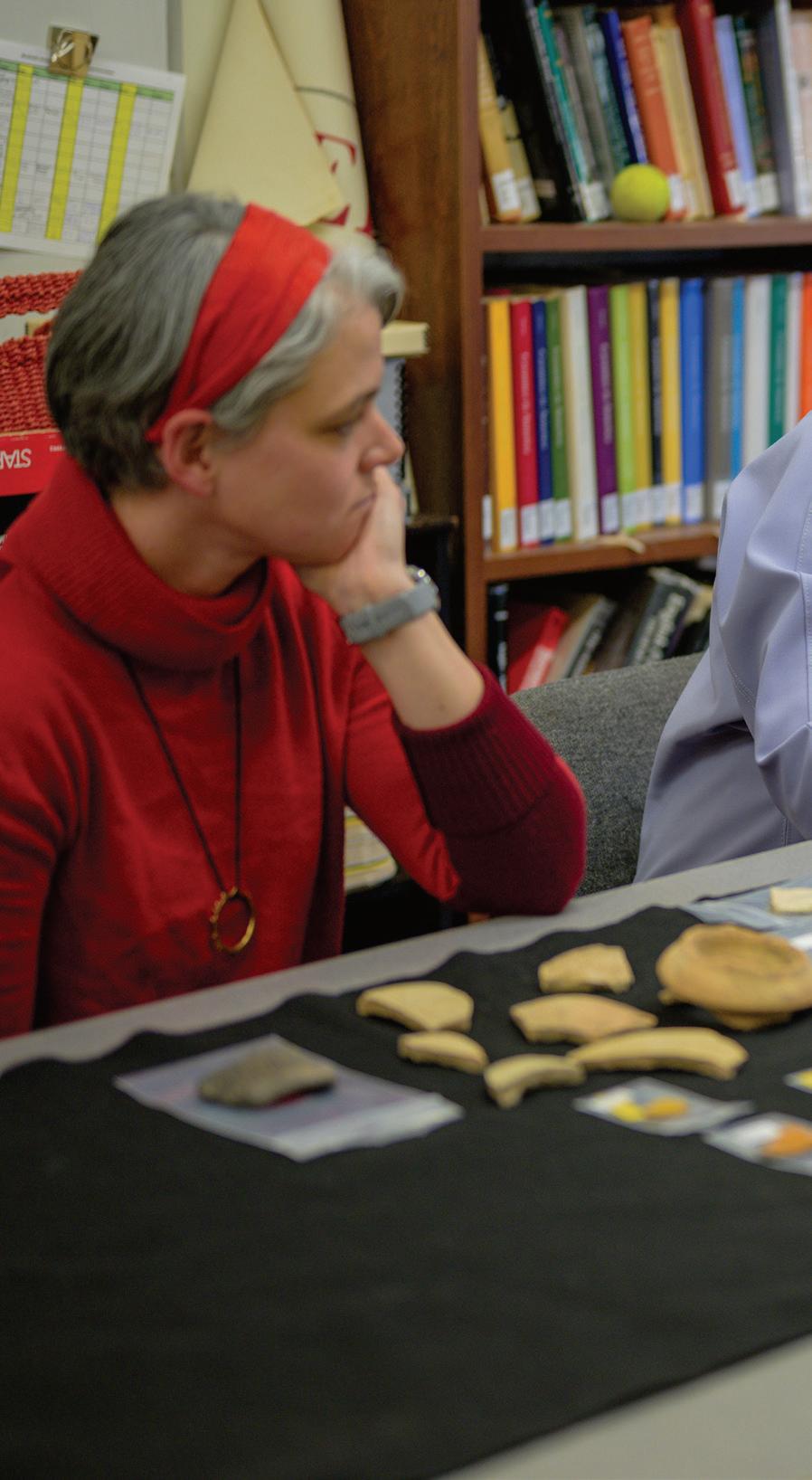
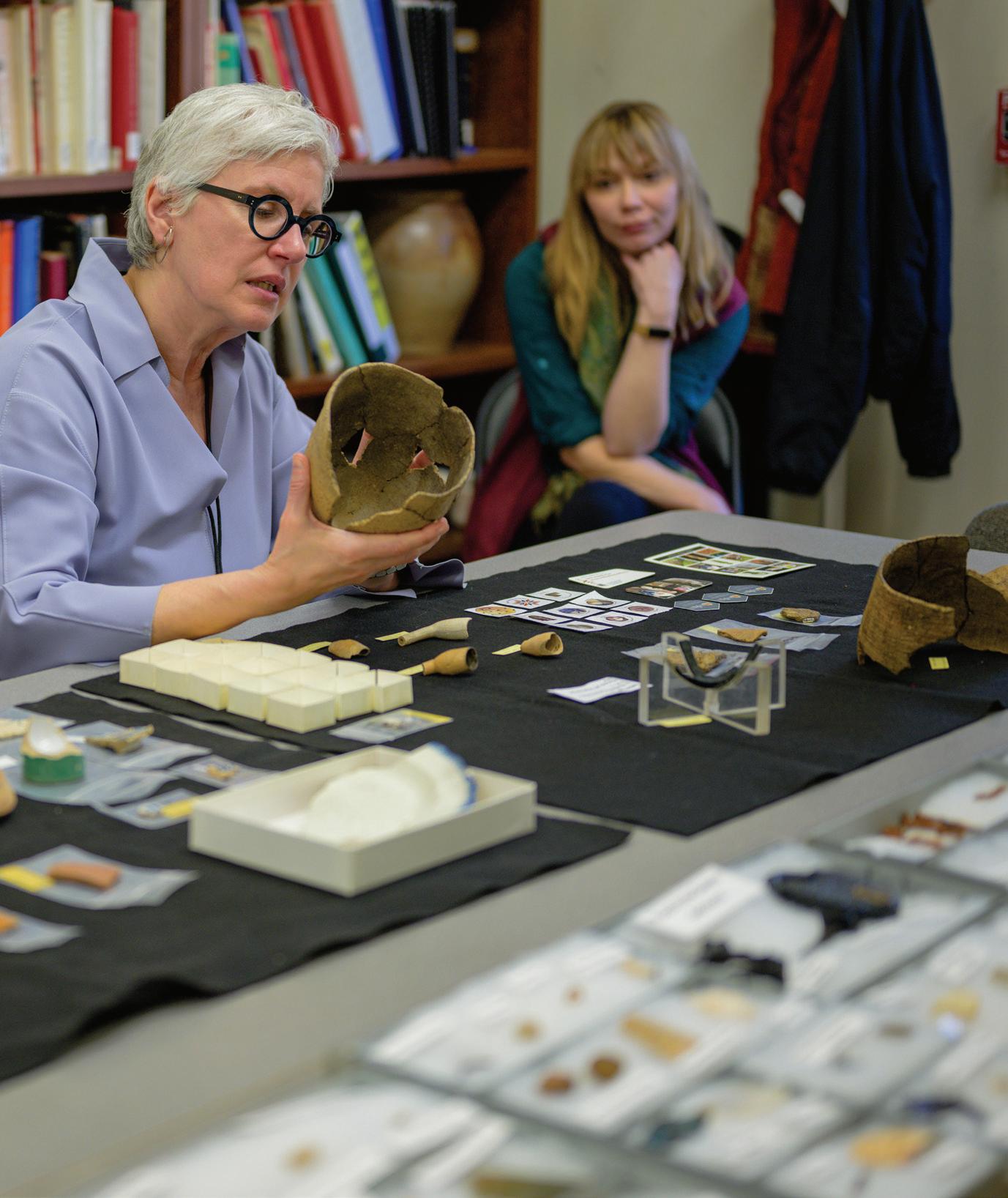
Examining artifacts discovered during
Telling those intertwined stories helps restore a more coherent fabric of the past, especially in the period after Jefferson’s retirement, which is the era we interpret here.
Q: You’ve spoken about “courageous conversations” at Monticello. What do those look like in practice?
Kamensky: Our “Founding Friends, Founding Foes” tour is a good example. It centers on the contentious political relationship between Thomas Jefferson and John Adams. As we tell that story, guests realize that most of what they fought over in the 1790s through the 1820s are still fault lines in American politics today.
One point we emphasize is that division is a feature, not a bug, of constitutional democracy. It’s been there since the beginning because the founders disagreed fiercely. What we need is not to imagine that there will be a time when we stop disagreeing about some of these tension points in the life of what is now the world’s oldest democracy. Instead, we can learn to
disagree productively, and to build coalition with people who can help us move forward on one issue, even if we disagree on another.
Jefferson himself was a passionate advocate of freedom of speech. He famously said that if given a choice between newspapers without a government or a government without newspapers, he would choose newspapers every time, even though he was often the target of really heated newspaper politics.
We hang a lot on Jefferson’s injunction to follow the truth wherever it may lead, and to allow error airtime as long as reason is left free to combat it. So this is a place to talk about difficult questions.
Q: At a moment when the country feels particularly divided, what role can Monticello play in strengthening civic understanding?
Kamensky: Civic educators often talk about braiding three things together: content knowledge, civic skills, and civic virtues.
We share rigorous and nuanced historical content about the early history of the United States and the way that that has played out over 250 years. We model civic skills—how to engage in civil disagreement, how to evaluate evidence, and how you know what you know. And ultimately we hope to cultivate civic virtues: empathy, grace, and the ability to hold contradictory ideas in your mind at the same time.
One visitor commented after taking the “Founding Friends, Founding Foes” tour that they felt motivated to seek out someone who disagreed with them and try to understand their perspective. If 300,000 visitors take that spirit home and share it with others, I would love to be able to scale that and reach the whole country with that call to virtue and curiosity.
Q: What do you hope visitors take away from Monticello during the 250th anniversary?
Kamensky: At our Mountaintop Activities Center, we often have a station where young visitors try writing with a quill pen. One child wrote “Life, liberty, and the pursuit of happiness,” and you could see her struggling with the quill, which is a really tough technology. At the end she writes: “P.S. This is hard.”
I think that captures what I hope people take away: an appreciation for the difficult work of creating this nation, and a sense of their own ongoing responsibility in doing this hard thing. That we’re all in this work together, that it needs all of our talents, our charity, our engagement, and our unique and often warring perspectives. That it will never be perfect, but that together we can make it more perfect.
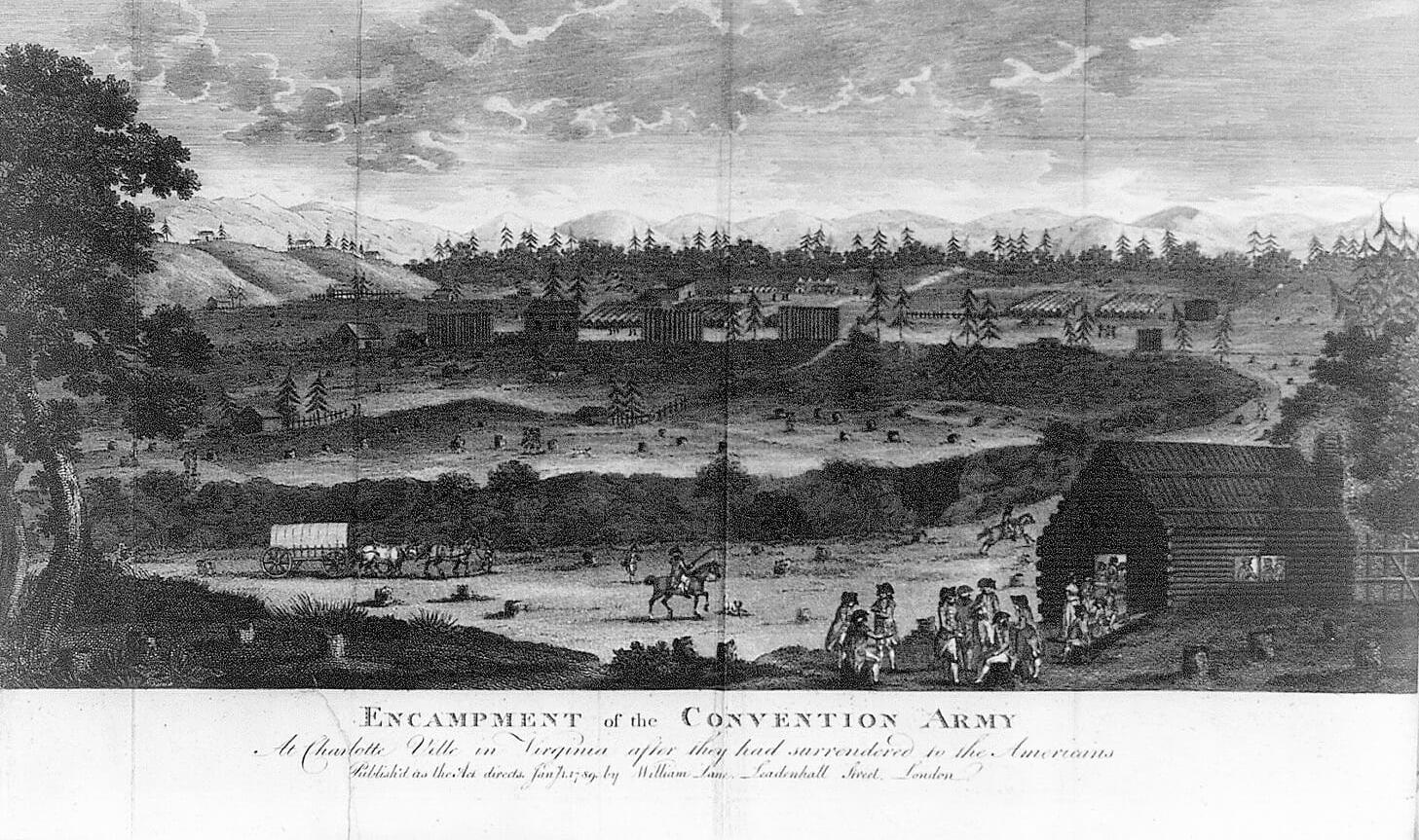
Today, Barracks Road and the Barracks Road Shopping Center are familiar landmarks, known to nearly every Charlottesville resident. Fewer realize that the name points to a long-vanished prisoner-of-war camp that once stood just outside town. In the winter of 1779, roughly 4,000 British and German prisoners marched into Albemarle County and built a sprawling encampment along Ivy Creek. For nearly two years, this hillside settlement became one of the largest communities in Revolutionary Virginia.
The story began far from Virginia. In October 1777, British General John Burgoyne surrendered his army to American forces at the Battle of Saratoga in New York, a turning point in the Revolutionary War. Under the terms of the Convention of Saratoga, Burgoyne’s defeated troops—consisting of thousands of British and German (or Hessian) soldiers—were supposed to be transported back to Europe on the condition that they would not fight again in North America.
The agreement soon unraveled. American leaders suspected Britain might redeploy the soldiers once they returned home, while British authorities hesitated to fully honor the terms. As the stalemate dragged on, the captured force, soon called the “Convention Army,” remained in American custody.
Initially housed near Boston, the prisoners became a financial and logistical burden for the surrounding communities.
Concerned about security and supply, the Continental Congress decided in late 1778 to move them far inland. Albemarle County seemed an ideal location because it was remote from British naval power and situated within a fertile agricultural region capable of supporting a large camp.
Thomas Jefferson, who would be elected the second governor of Virginia in June of 1779, saw another advantage to setting up a camp in Albemarle. “The safe custody of these troops is another circumstance worthy [of] consideration,” he wrote to Patrick Henry in March 1779. “Equally removed from the access of an
Eastern or Western enemy central to the whole state so that should they attempt an eruption in any direction they must pass through a great extent of hostile country, in a neighborhood thickly inhabited by a robust and hardy people zealous in the American cause, acquainted with the use of arms and the defiles and passes by which they must issue, it should seem that in this point of view no place could have been better chosen.”
Local landowner John Harvie, a lawyer, planter, and member of the Continental Congress, offered a tract of land along Ivy Creek northwest of Charlottesville for the purpose. Harvie proposed allowing the government to use the land rent-free, but historians note that the arrangement also promised practical benefits, such as federal construction and prisoner labor that could improve the property’s value. Congress accepted the proposal, and preparations began for what would soon become known as Albemarle Barracks.
The prisoners began their journey south in late 1778. After marching for about 70 days and covering roughly 600 to 650 miles, more than 4,000 British and German prisoners of war arrived here after a long march from Massachusetts. For nearly two years, they lived in a sprawling, stockaded camp, transforming a rural tract along Ivy Creek into a
temporary town, complete with huts, gardens, workshops, guards, and constant wagon traffic bringing supplies from nearby farms.
When the first groups arrived at Albemarle Barracks in January 1779, the scene awaiting them was grim. Construction of the barracks had fallen behind schedule. Instead of finished quarters, the prisoners encountered a partially cleared site dotted with unfinished log structures. Contemporary accounts describe their frustration at discovering that only a handful of huts had been started, many still roofless and filled with snow. As described by a Hessian officer, “The construction is so miserable that it surpasses all that you can imagine in Germany of a very poorly built log house.”
Faced with winter weather and inadequate shelter, the prisoners were forced to complete much of the work themselves. The barracks were laid out as a large square enclosure measuring about 1,000 feet on each side, surrounded by a wooden stockade. Rows of log huts filled the interior, while guard posts controlled entry through the main gates.
Life inside Albemarle Barracks was harsh at first. Early huts lacked windows, doors,
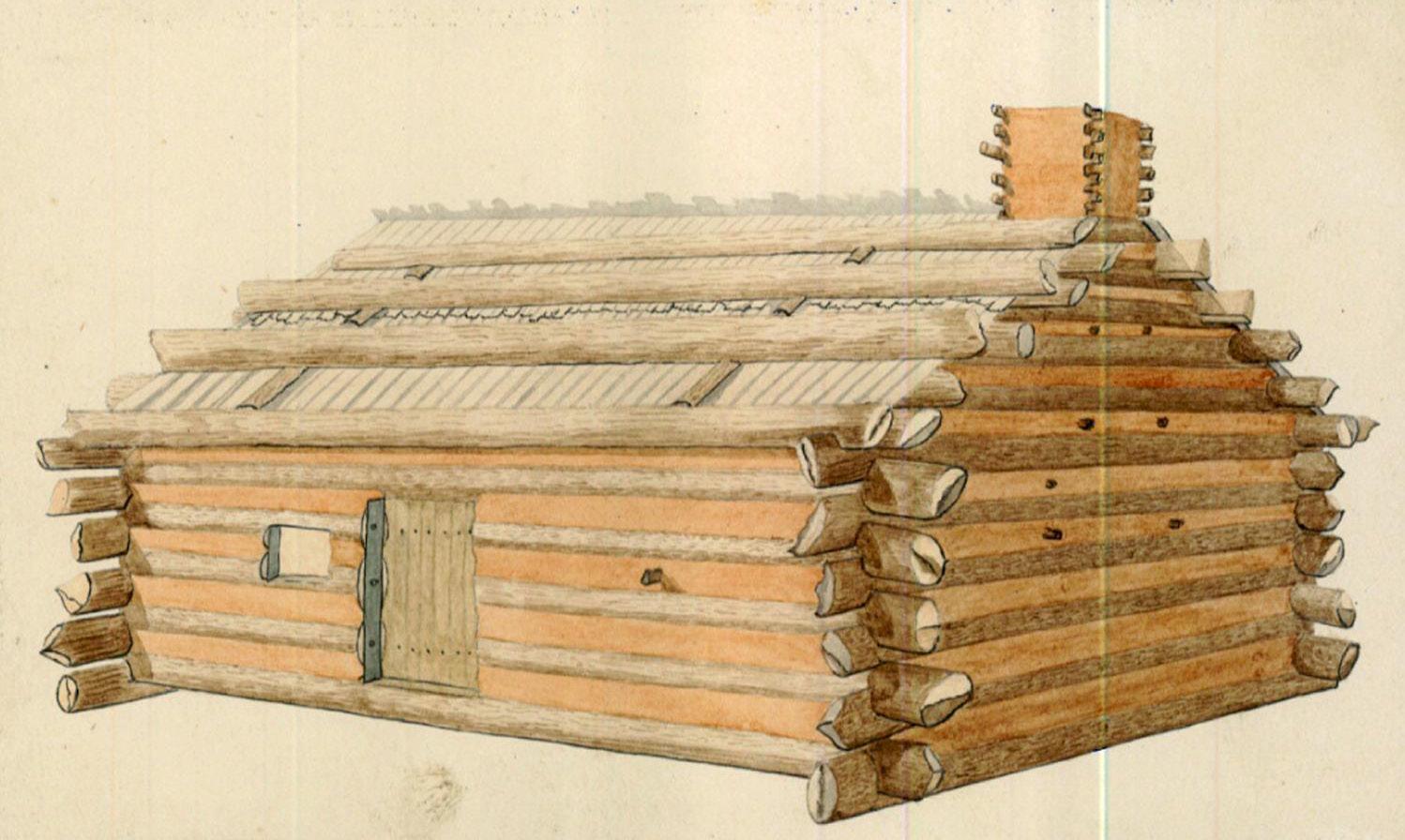
chimneys, and even proper flooring. Cold weather and shortages of clothing and firewood added to the misery. Gradually, however, the rough camp began to resemble a small town. The prisoners chinked the walls of their huts and built stone fireplaces. Some established small workshops for carpentry, blacksmithing, and tailoring. Livestock appeared inside the enclosure, and vegetable plots spread along the cleared ground. At least two churches were built and, according to one later account, a tavern, theater, and billiard hall were added inside the stockade.
Food, flour, beef, and firewood arrived constantly by the wagonload from nearby farms. Local craftsmen and teamsters found work supplying the encampment. The surrounding hillsides were steadily stripped of timber to feed the camp’s enormous demand for fuel. For a time, Albemarle Barracks became one of the largest concentrations of people in Virginia and was larger than the colonial capital of Williamsburg. Just outside the small town of Charlottesville, a wartime community had appeared almost overnight.
American authorities hoped to demonstrate the young republic’s civility by treating prisoners with respect. Officers were frequently granted parole, allowing them to live outside the barracks under the promise that they would not escape. Many rented rooms in nearby houses or plantations.
Escapes also occurred, and some prisoners slipped into the Blue Ridge Mountains, where stories later circulated about deserters settling permanently in the region. While not every legend can be verified, historians acknowledge that desertion was common during eighteenth-century warfare.
Despite its rapid growth, Albemarle Barracks proved temporary. By 1780, the Revolutionary War was shifting southward. British forces were active in the Carolinas, and American leaders worried that an inland raid might attempt to free the Convention
Army. Virginia governor Thomas Jefferson and other officials also feared that if British troops approached the region, the thousands of prisoners in Albemarle might stage a mass escape or uprising.
The Continental authorities decided to disperse the camp, and beginning in late 1780 and continuing into 1781, most of the prisoners were marched north to new confinement sites. Many had finally made their huts comfortable just as orders arrived to abandon them.
Once the prisoners departed, Albemarle Barracks quickly deteriorated. The Continental Army had little use for the site and the buildings began to decay. In 1782, Quartermaster General Timothy Pickering authorized the sale of the remaining structures. Timber and other materials were sold off, and the land gradually returned to agricultural use under John Harvie’s ownership.
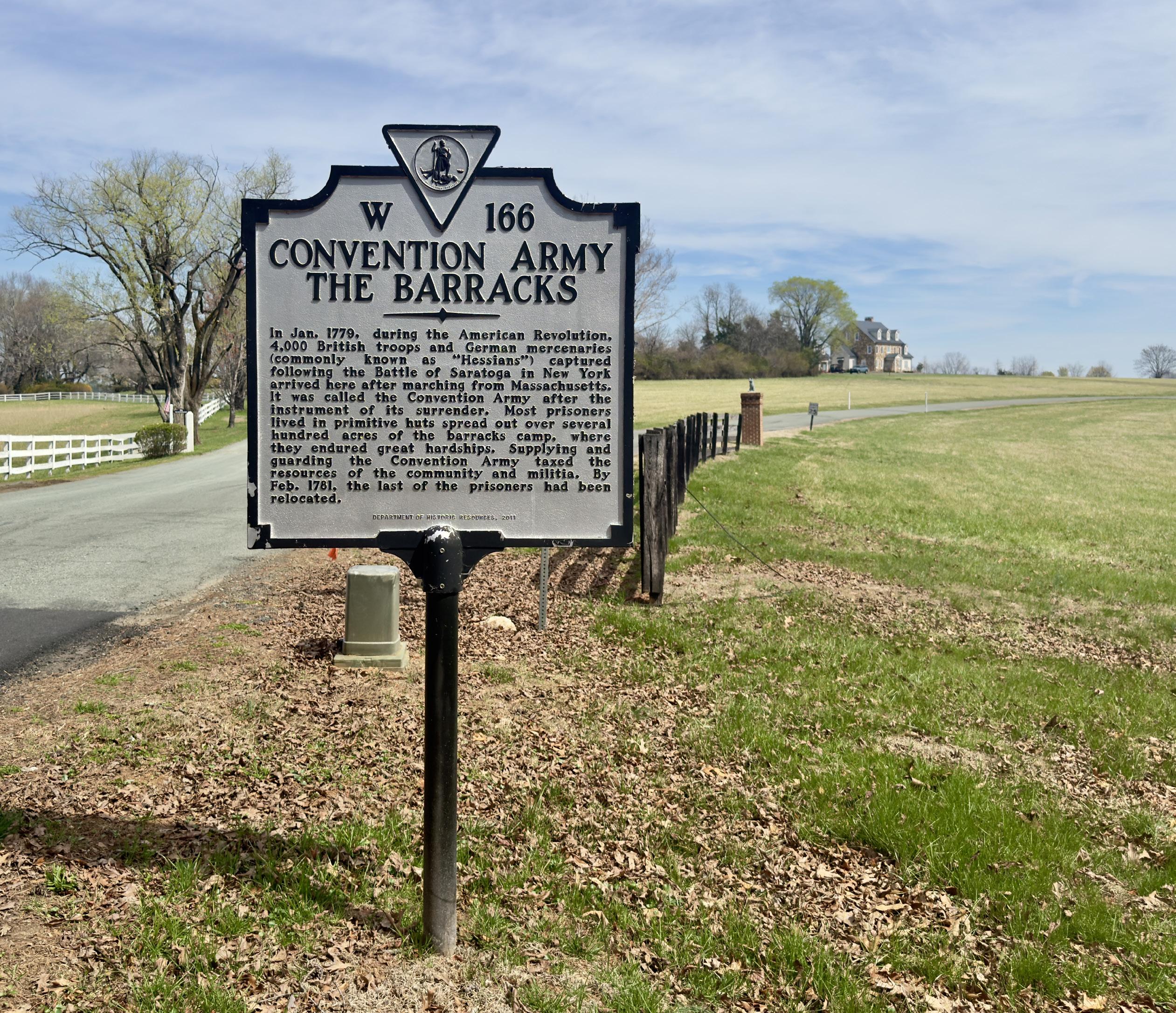
Today, little visible evidence remains of Albemarle Barracks. The original site lies within a residential area near Barracks Farm Road and Ivy Farm Drive, roughly five miles northwest of downtown Charlottesville. A Virginia historical highway marker and a plaque installed by the Albemarle Charlottesville Historical Society identify the general location of the Revolutionary War camp.
One of the most poignant remnants is a small burial ground discovered during residential development in the late twentieth century. The site marks the resting place of several unknown British and German prisoners who died while confined in Albemarle County. Otherwise, all that remains of the Albemarle Barracks are the familiar roads and the shopping center that share the Barracks name.
ne of Virginia’s most historic buildings, Farmington unfolds in layers, with each generation leaving its mark, and each era still visible to those who know where to look.
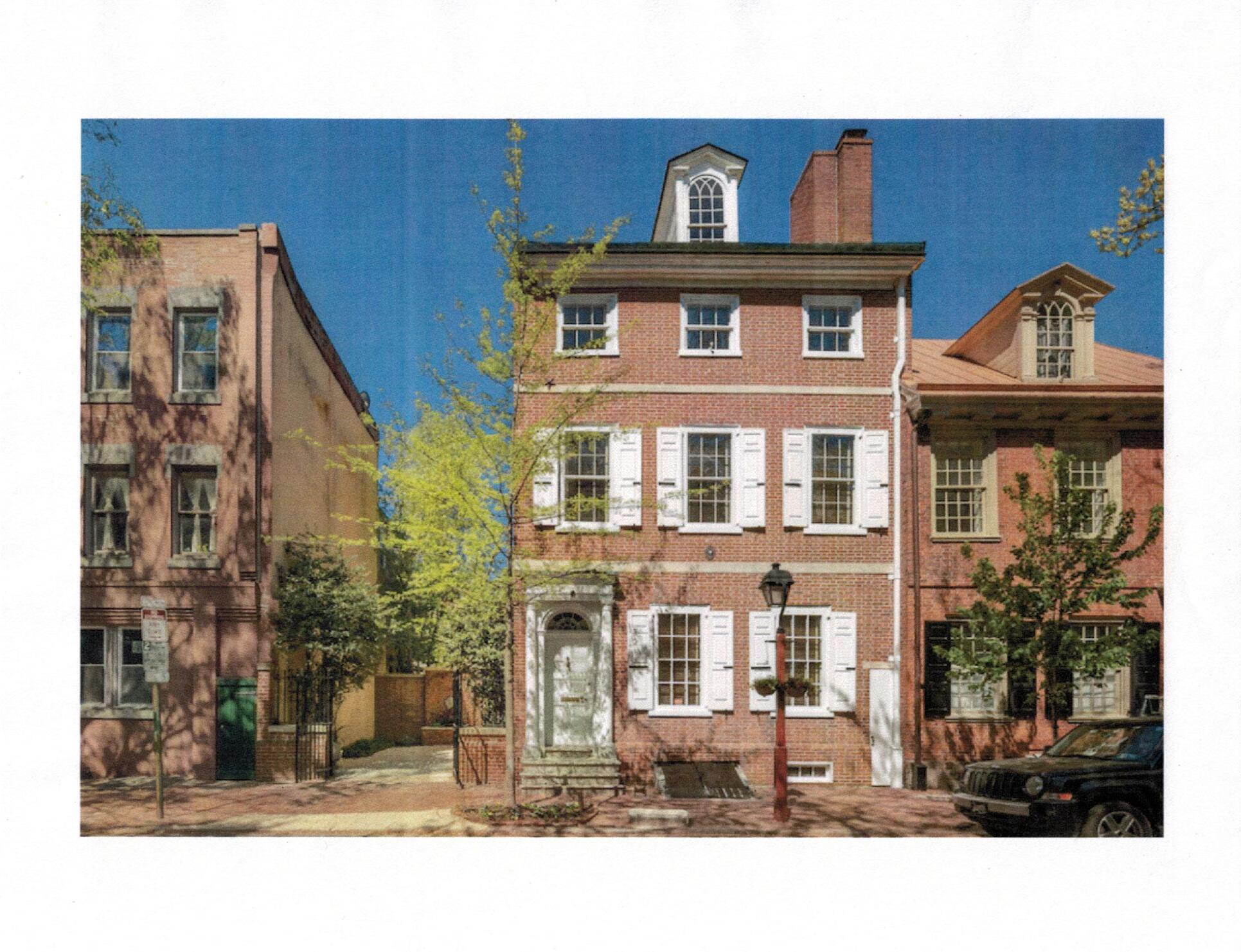
George Divers, an Albemarle County landowner and merchant who served as paymaster in the 14th Virginia Regiment of the Continental Army, purchased the Farmington property 1785. Two years later, he completed construction of a late- Georgian side-passage dwelling that served as his home and forms the historic core of the current building. A longtime friend and correspondent of Thomas Jefferson, Divers’ house was not purely local in its inspiration. Like many Virginians of his generation, he drew on urban models he had seen in Philadelphia, adapting the proportions and plans of town houses there to a rural setting at Farmington.
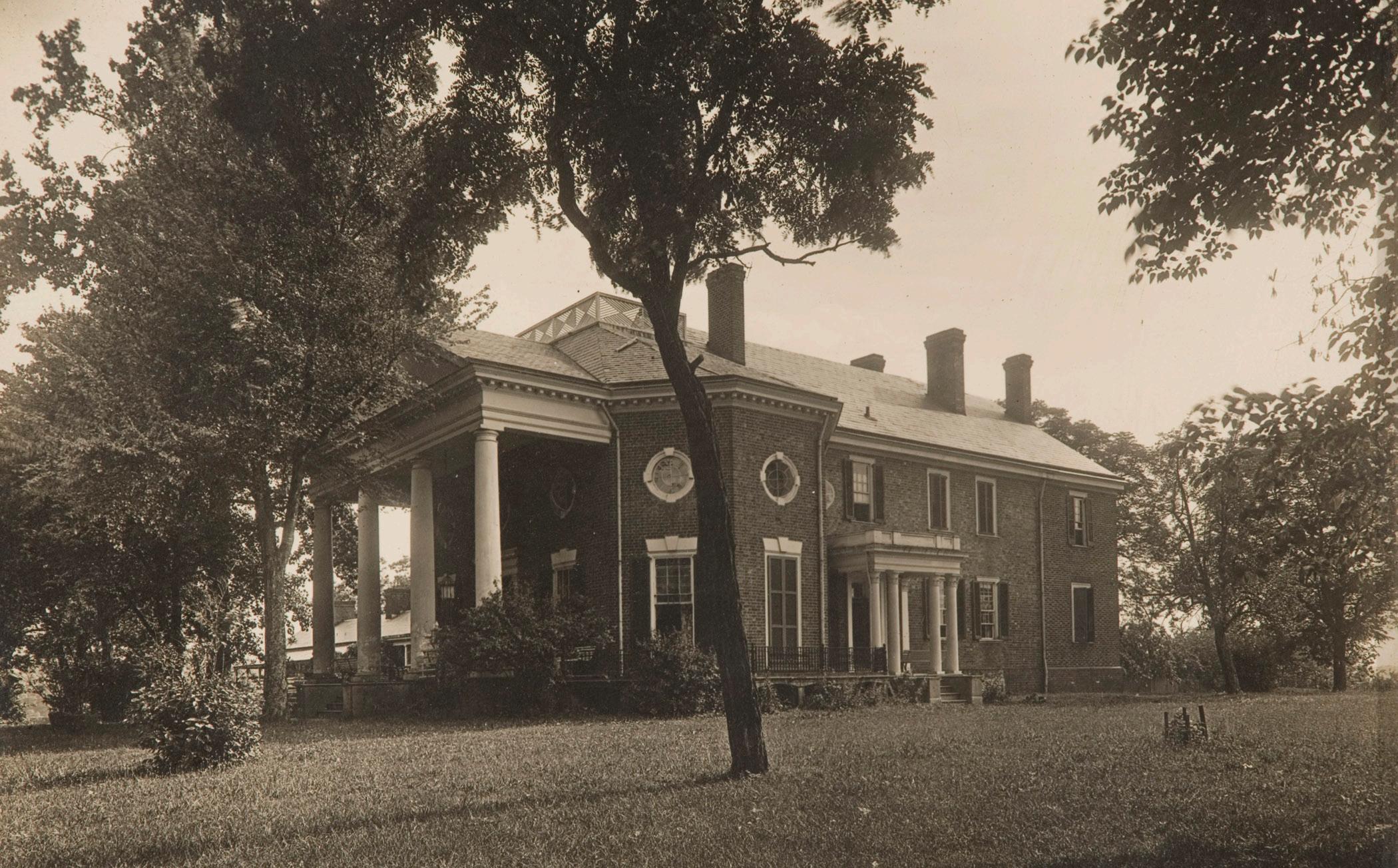
What stands today is something more complex. It’s a house transformed by Thomas Jefferson, expanded by later owners, and adapted into its present life as a country club. To understand Farmington is to see how a house can change over time without losing the core of its identity.
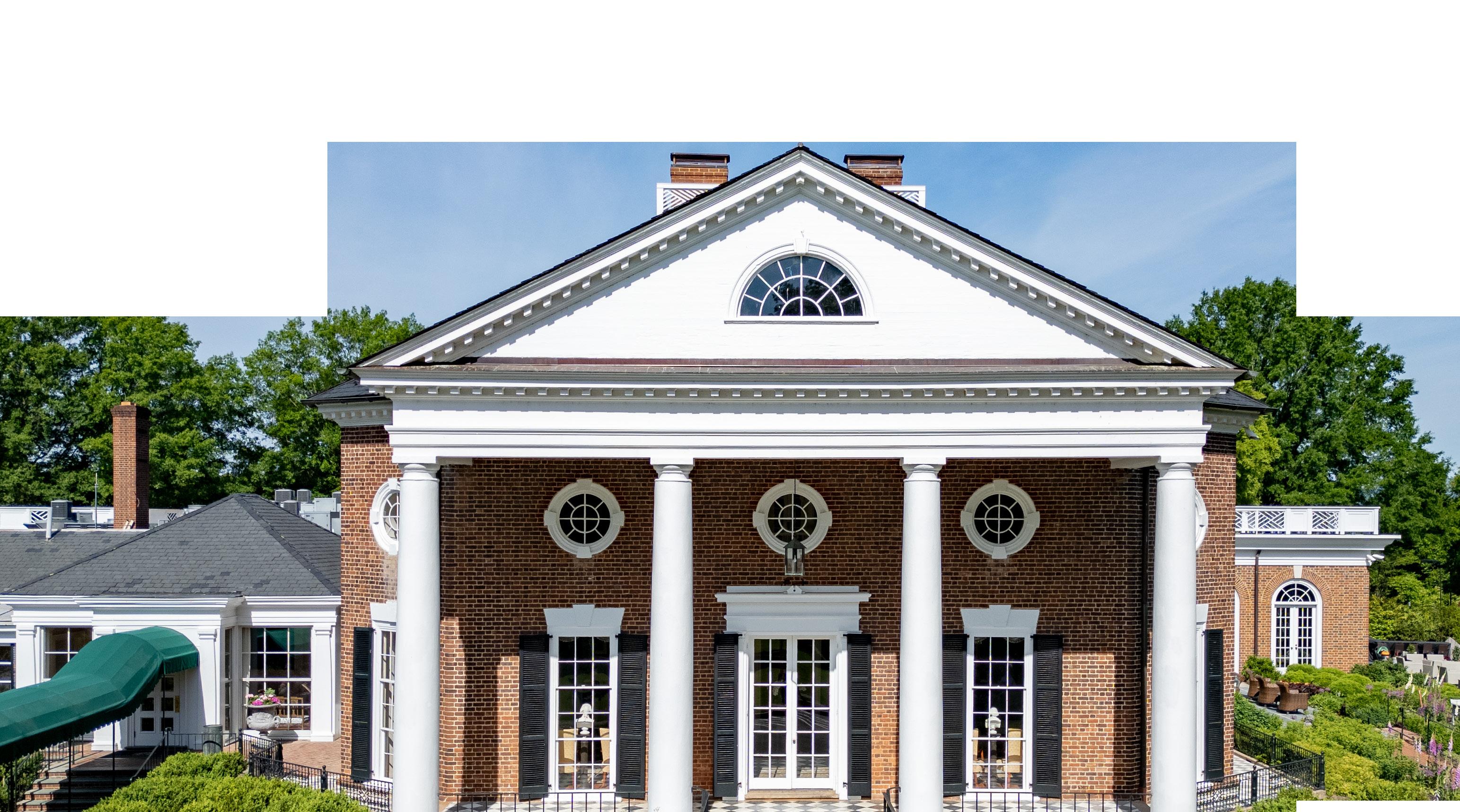
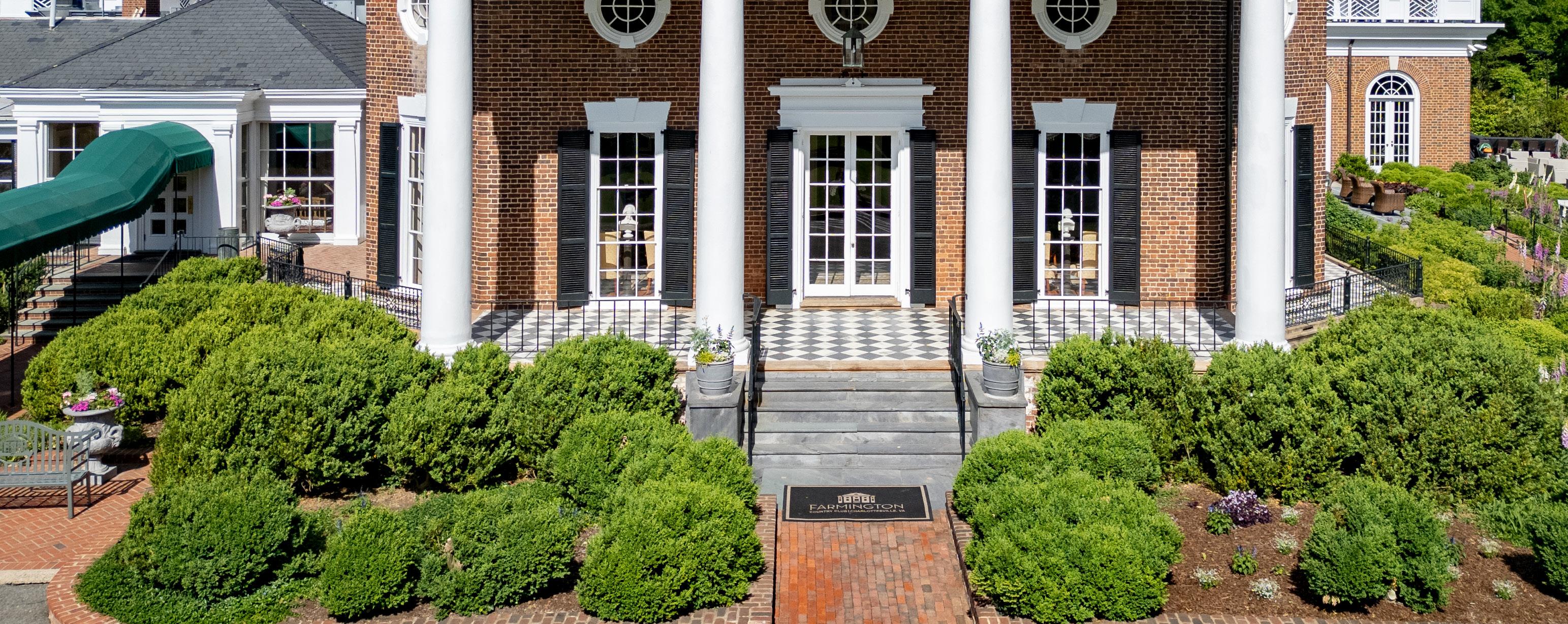

Around 1802, Jefferson (who was president of the United States at the time) designed the octagonal addition for Divers. The Jefferson Room, with its Tuscan portico and round windows, gave the house a distinctly Jeffersonian profile.
Beyond the new wing, Farmington grew into a working plantation with an extensive set of outbuildings and a covered passageway that recalled Jefferson’s all-weather passage at Monticello, linking the main house to the stable. Much of this fabric survives in altered form within the present-day country club, offering a glimpse of how Jefferson’s addition plugged into a larger system of service spaces, even if only the octagonal wing can be firmly traced to his surviving plans.
Divers and Jefferson shared interests that went well beyond architecture. At Farmington, Divers maintained extensive brick-walled gardens and worked closely with Jefferson, growing and testing seeds Jefferson brought back from his travels. Both men were deeply interested in agricultural improvement, including livestock, and Divers collaborated on Jefferson’s broader experiments with imported sheep breeds. That same spirit of experimentation carried into the house itself. Jefferson embraced the challenges of working with an existing structure at Farmington. He did not replace the original house, but instead extended and improved it. The octagonal room exemplifies his use of geometry to solve practical problems—bringing in light from multiple angles and creating a space that feels both open and structured.
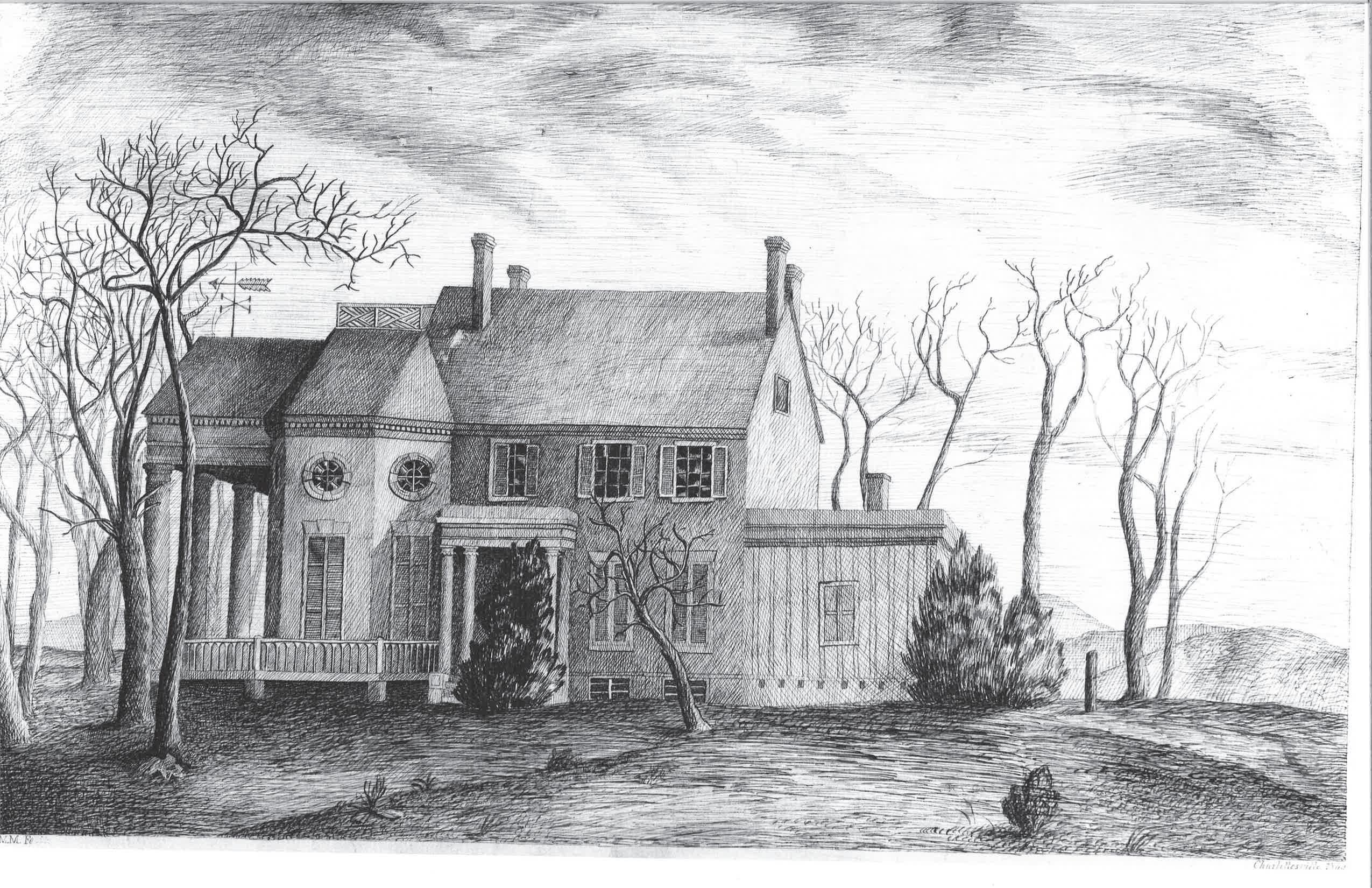
An 1860 sketch depicts the home as it appeared when Mary Ann Miller Wood Harper bought the property. Jefferson’s addition, the Divers home, and a single-story section that was later replaced by an 1897 two-story wing are shown.
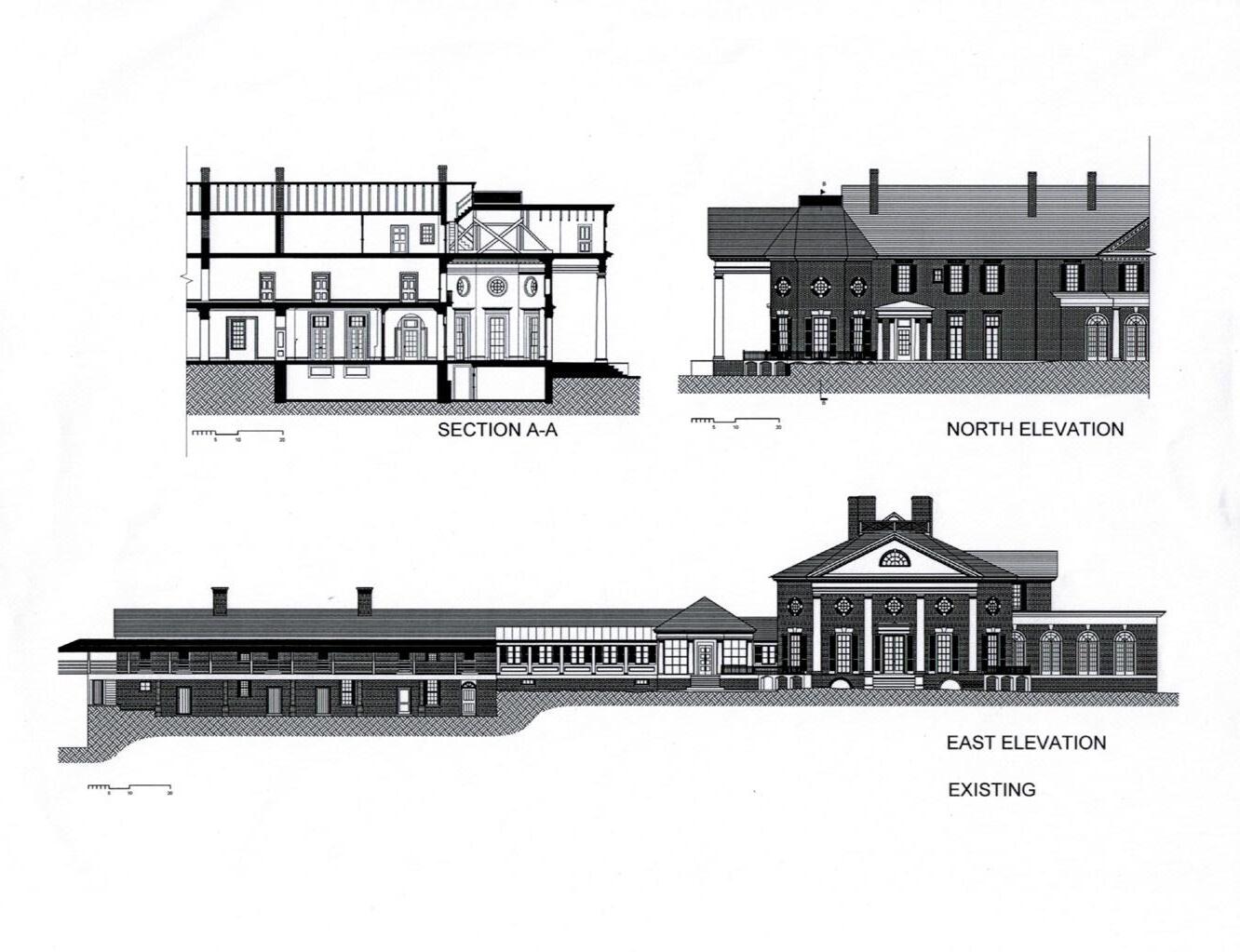
The Jefferson Room is now a single, expansive space, but it was originally divided into smaller rooms functioning as parlor, passage, and dining spaces. Below the addition, Jefferson’s practical side is just as clear. Storage rooms, a kitchen, wine cellars, and barrel rooms were built into the design.
The original Divers house still remains in important ways. Much of the early fabric is still there, including heart pine floors, original window frames, fireplaces, moldings, and the hand-carved staircase.
Farmington continued to change after Jefferson’s addition. In 1852, General Bernard Peyton undertook major renovations, reworking interior spaces and altering the Jefferson wing
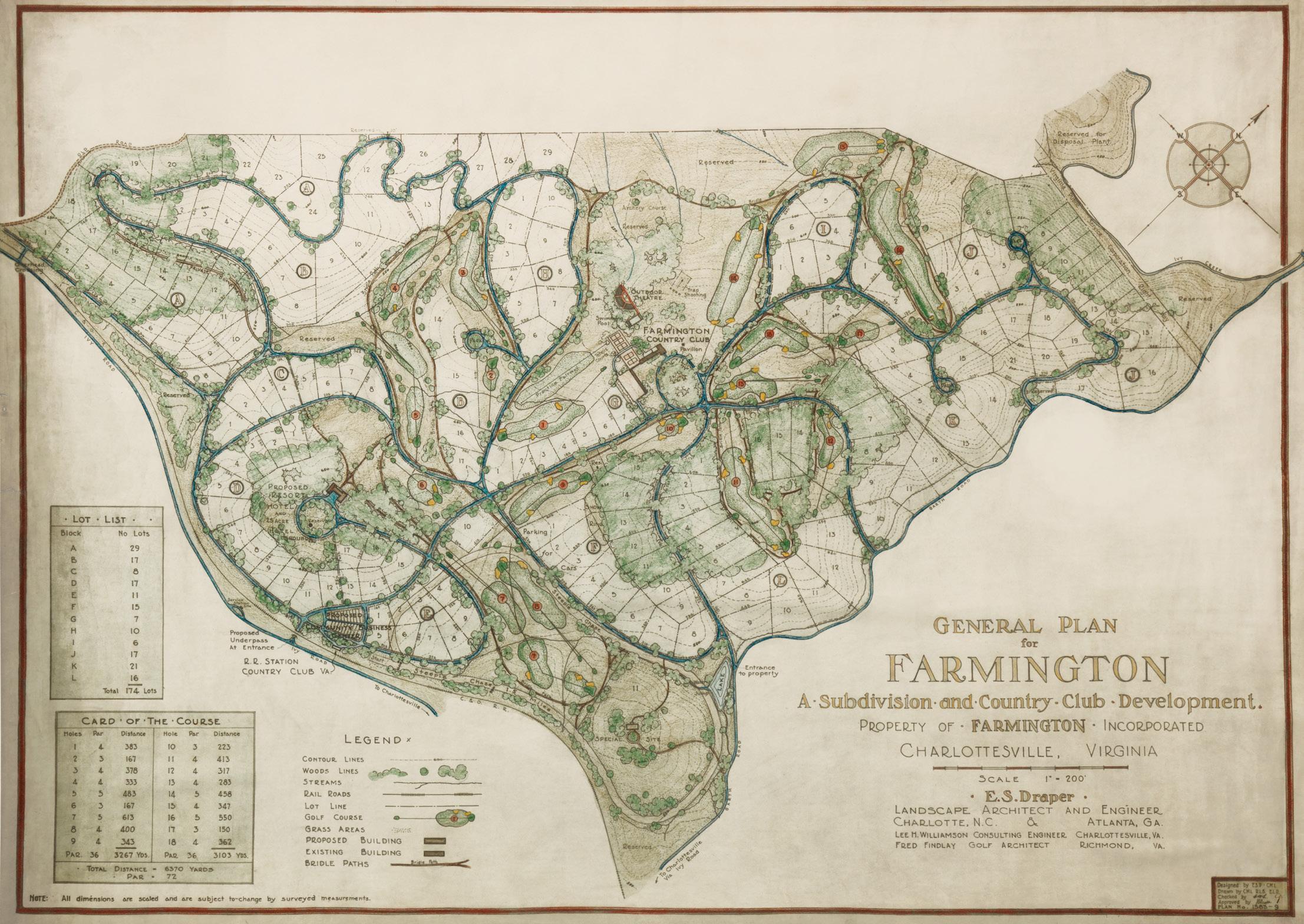
Renovations to the Farmington home were part of a larger development plan that introduced the golf course, along with a proposed steeplechase track, resort hotel, outdoor theater, and archery and shooting ranges. Most of those amenities were not built, but the ambitious plans reflected early 20th-century ideas about leisure and planned communities.
by dividing its elongated octagonal room into two stories and four smaller rooms. The work has traditionally been attributed to Peyton himself, and no firm evidence links any outside architect to this phase.
In the late nineteenth century, Warner Wood expanded the house again, adding a two-story wing that increased the number of bedrooms and extended the house westward. Importantly, these changes did not erase what came before and the new construction was integrated into earlier elements. Fireplaces remained in place, original openings were preserved, and the house grew by incorporating its earlier forms rather than replacing them. That evolution explains why so much of Farmington’s history is still visible today.
In 1927, the property was sold and converted into a country club, bringing significant changes to the house. Interior walls were removed to create larger gathering spaces, rooms were opened up and repurposed, and spaces that had been private became communal.
Even so, the underlying structure remained intact. That tension between preservation and change helps define the Farmington building today. Earlier elements were adapted rather than being erased. A former exterior wall might now sit inside the house, old window frames mark where the building once ended, and additions from different periods remain visible alongside one another.
Farmington remains a building whose history is visible in its architecture. The original Divers house is still there and Jefferson’s octagonal addition still provides an elegant focal point. Later changes made by Peyton, the Wood family, and during the country club era are all part of the story.
“Farmington is a house you read in layers, and it keeps revealing itself the more you study it,” says Farmington historian Punkie Feil. “What’s remarkable is how much has survived. They kept adding and building around it, and that’s why you can still read the whole history. Every generation changed it, but they didn’t erase what came before.”
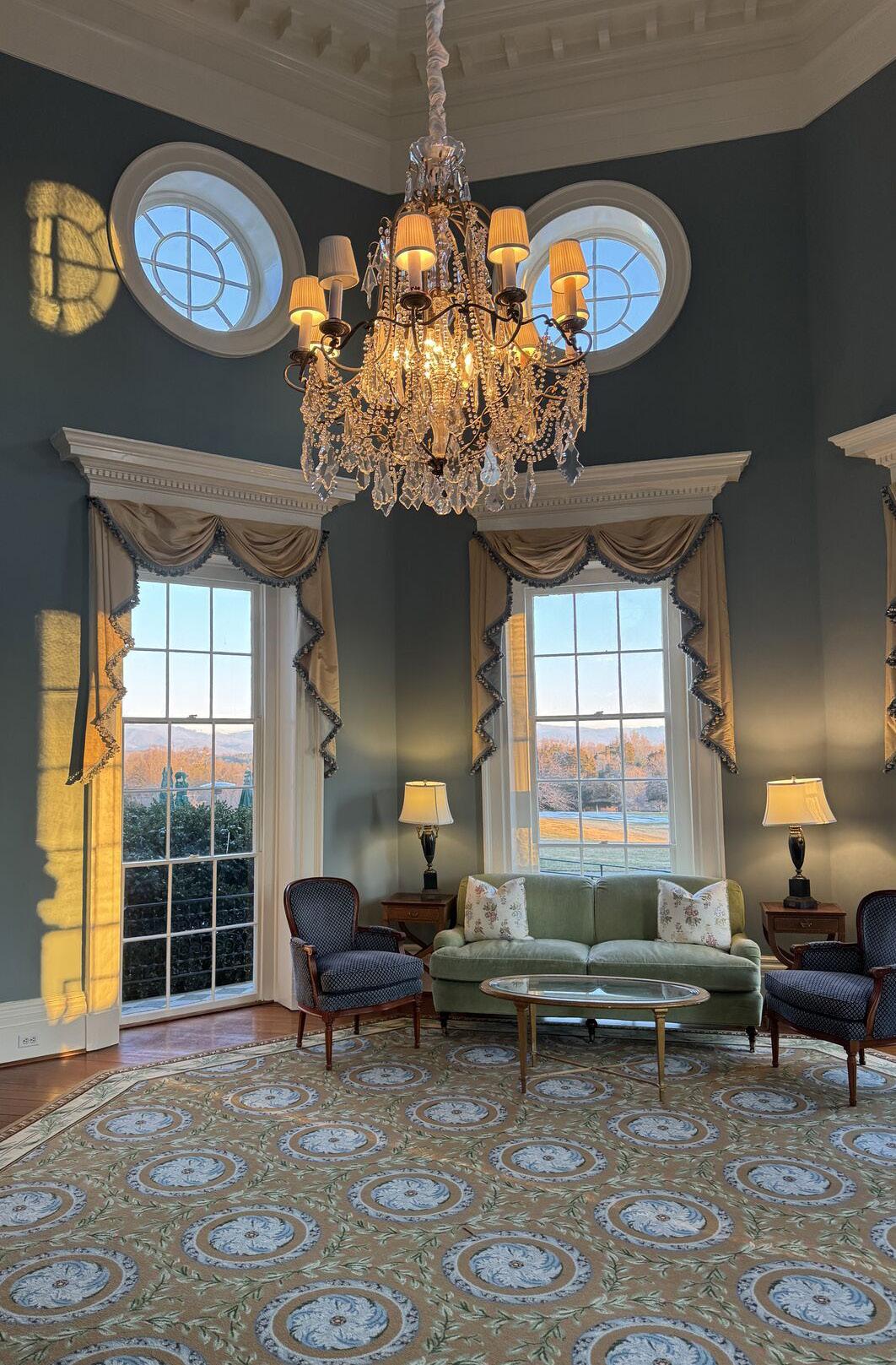
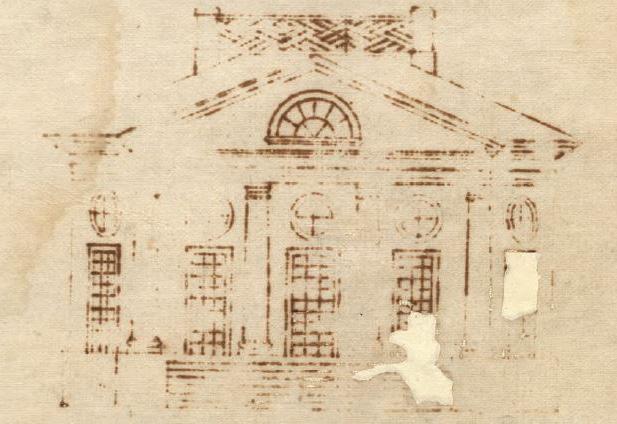
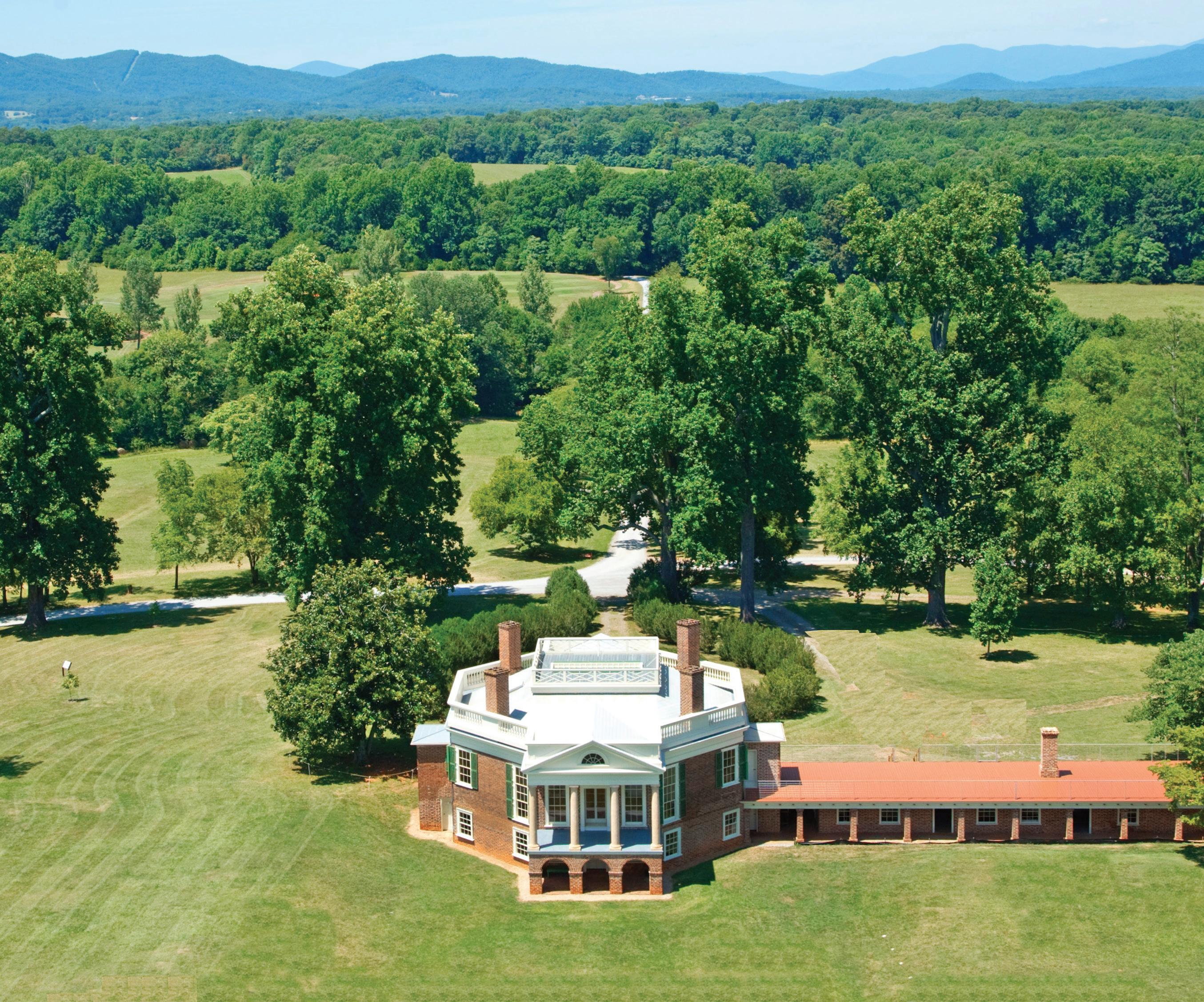

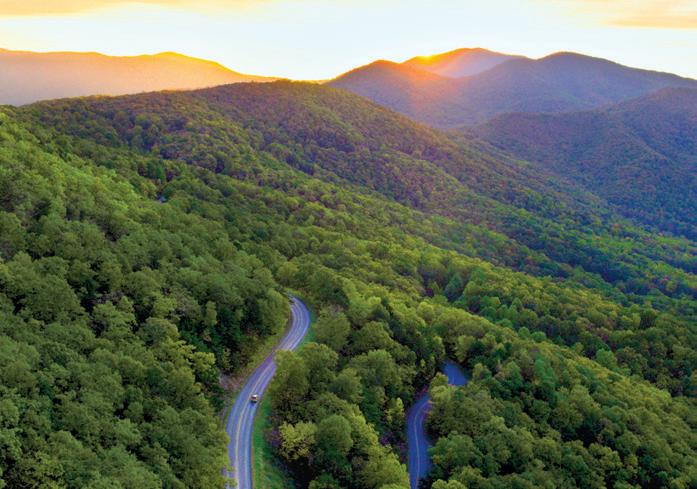











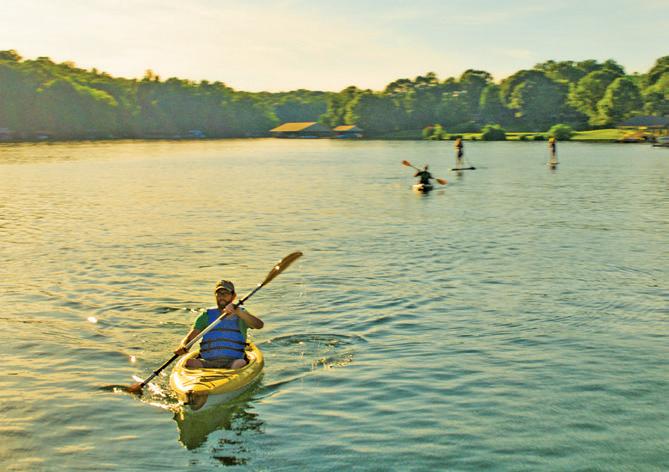

Albemarle Magazine is an affiliate member of the Charlottesville Area Association of REALTORS® (CAAR) A directory of the leading real estate professionals in our area, representing the best Virginia has to offer, from homes and estates to farms and commercial properties.
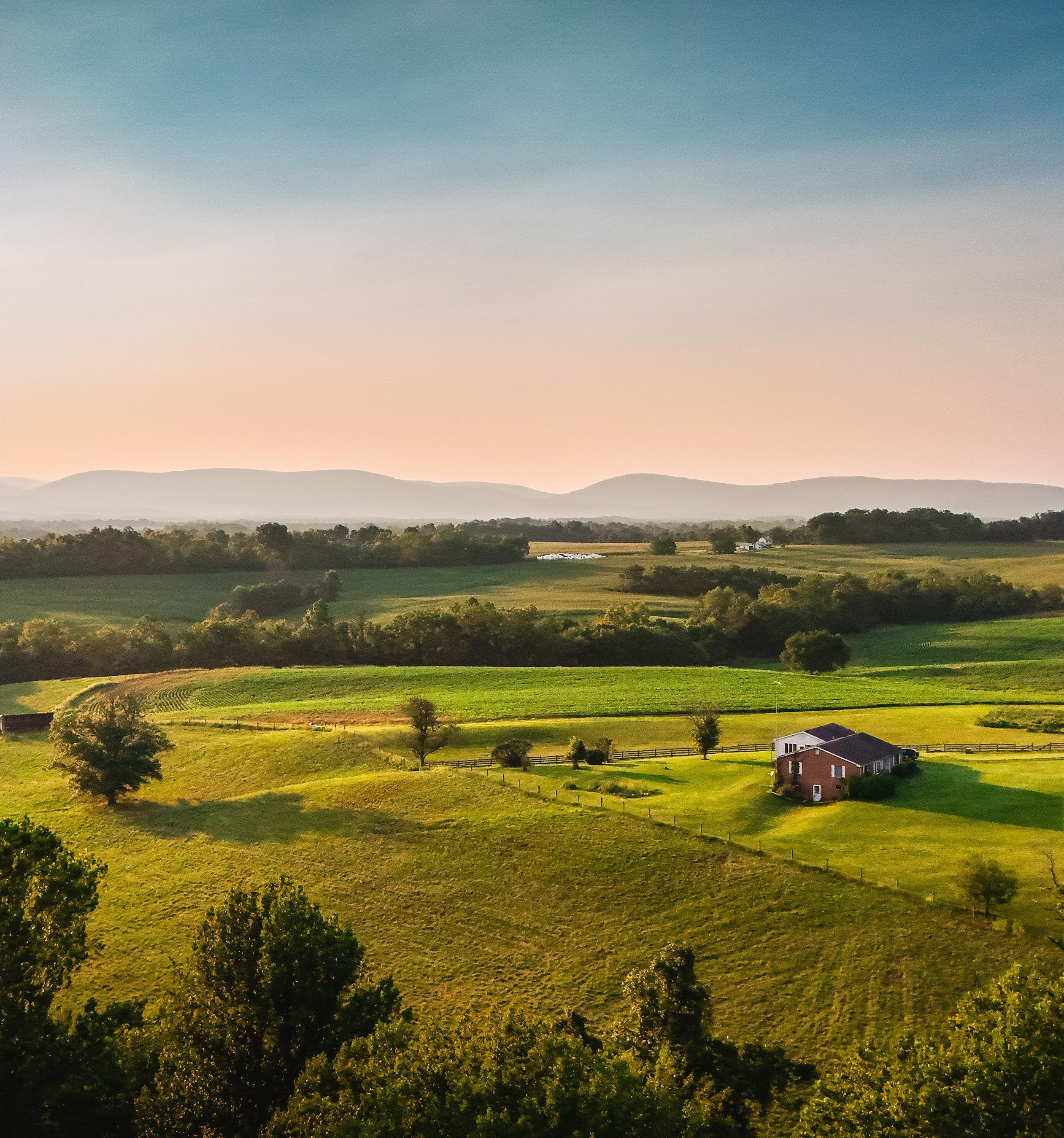


Licensed to Sell Real Estate in Virginia McLean Faulconer, Inc.
Bridget@virginiacountryliving.com
434-981-4149 · VirginiaCountryLiving.com
LISA K. CAMPBELL REALTOR®
YES Realty Partners
Lisa@HomeAgainVA.com 434-282-5568 · HomeAgainVA.com
ZOYA COOPERSMITH
Associate Broker, REALTOR®
Core Real Estate Partners
Zoya@corecville.com 706-614-0045 · corecville.com
LYNN FOX
Associate Broker Fox Realty Group, LLC
Lynn@foxrealtygrp.com 434-962-1830 · foxrealtygrp.com
GIL GALLARDO REALTOR®
Long and Foster Real Estate, Founder’s Club, Chairman’s Club, Gold Team, Top 100 Agent at LNF 434-326-6521 · g.gallardo@LNF.com
CYNTHIA HASH Owner, Principal Broker Find Homes Realty LLC hash@findhomesusa.com 434-531-5351 · CynthiaHash.FindHomesUSA.com
KATELYN MANCINI REALTOR®, ABR, GRI, RRS, RESA Howard Hanna Real Estate Services katelyn.realtor@gmail.com 703-203-3388 · katelynmancini.com
RIVES BAILEY
Associate Broker
New Leaf Team at Montague Miller & Co.
Rives@newleafcville.com 434-981-2338 · newleafcville.com
DARIAN COCHRAN
Owner, Principal Broker Avenue Realty, LLC
Darian@avenuerealtygroup.com 434-270-8839 · avenuerealtygroup.com
MARCELA FOSHAY REALTOR®
Nest Realty marcela.foshay@nestrealty.com 540-314-6550 · marcelafoshay.com
ELIZABETH “BUNNY” FRENCH REALTOR®
Loring Woodriff Real Estate Associates Bunnyfre@gmail.com 434-996-1029 · Bunnyfrench.com
ERIN GARCIA
REALTOR®, Eco Broker, ABR, Green, AHWD Nest Realty erin.garcia@nestrealty.com 434-981-7245 · charlottesville.nestrealty.com
LIBERTY KALERGIS REALTOR® Frank Hardy Sotheby’s International Realty liberty.kalergis@sothebysrealty.com 434-962-9911 · sothebysrealty.com/frankhardysir
SABINA MARTIN
Associate Broker, CRS, GRI Real Estate III
sabinaRmartin@gmail.com 434-981-1147 · sabinamartin.realestateiii.com
LINDSAY MILBY
Broker, Principal Loring Woodriff Real Estate Associates
Lindsay@loringwoodriff.com 434-962-9148 · loringwoodriff.com
SUE PLASKON
REALTOR®, Your Marketing Specialist
Long and Foster Charlottesville
Sue.plaskon@LNF.com 434-981-0115 · longandfoster.com/sueplaskon
DENISE RAMEY
REALTOR®, GRI, CRS
Long & Foster - Charlottesville West Deniserameyrealtor@gmail.com 434-812-2388 DeniseRamey.com
ALEX AND BOBBY SCHWARTZ TEAM
REALTOR®, Associate Broker
Loring Woodriff Real Estate Associates
202-725-2545 · alexandra@loringwoodriff.com 202-841-6642 · bobby@loringwoodriff.com AlexandBobbySchwartz.com
AMY N. STEVENS
REALTOR®
Stevens & Company amy@stevensandcompany.net 434-996-0934 · stevensandcompany.net
STEVE WHITE
REALTOR® McLean Faulconer, Inc. info@stevewhiterealtor.com 434-242-8355 · mcleanfaulconer.com
LORING WOODRIFF
Principal Broker and Owner Loring Woodriff Real Estate Associates lwoodriff@loringwoodriff.com 434-466-2992 · loringwoodriff.com
COURT NEXSEN
Co-Owner, REALTOR® McLean Faulconer Inc.
court@mcleanfaulconer.com 646-660-0700 · mcleanfaulconer.com
KYLE R. OLSON
Managing Broker, Charlottesville Office, REALTOR® Montague Miller & Co. kyle@montaguemiller.com 540-649-4131 · kolson.montaguemiller.com
MARINA RINGSTRÖM
REALTOR®, Listing Specialist Long & Foster Glenmore MarinaRing777@gmail.com 434-465-0035 · MarinaRingstrom.com
STEPHANIE SHELLENBERGER
REALTOR®
Avenue Realty
stephanieshellenberger123@gmail.com 434-989-0351 · stephanieshellenbergersellscville.com
ROSS L. STEVENS
Broker Stevens & Company rstevens@stevensandcompany.net 434-981-5268 · stevensandcompany.net
SHANN WHITED
REALTOR®, CRS, GRI, CBR Avenue Realty shann@shannwhited.com 434-962-4741 · shannwhited.com
ARLEEN YOBS
Associate Broker, Nest Realty REALTOR®, CRS, ABR, SRES, GREEN, C2EX, AHWD arleenyobs@nestrealty.com 434-981-4108 · uniquehomesofcharlottesville.com
When Billy Strings comes to John Paul Jones Arena for two nights, April 17-18, audiences can expect a musician who honors bluegrass tradition while redefining what the genre can look and sound like.
Born William Lee Apostol and raised in Muir, Michigan, Strings was introduced to bluegrass by his stepfather, guitarist Terry Barber. An aunt nicknamed him “Billy Strings” after noticing his early talent on the instrument.
He first gained wider attention performing with mandolinist Don Julin, building a following through energetic shows across the Midwest. After relocating to Nashville, Strings formed his own band and developed a reputation for live shows that blend tight, traditional picking with extended improvisation. Now, he headlines and sells out major arenas, underscoring both his crossover appeal and the genre’s expanding reach.
His 2019 album Home earned the Grammy Award for Best Bluegrass Album, helping establish him as a leading voice in contemporary bluegrass. Additional Grammy wins for Live Vol. 1 and Highway Prayers, along with high-profile collaborations such as “California Sober” with Willie Nelson and “High Note” with Dierks Bentley, have broadened his following well beyond the traditional bluegrass circuit.
JOHN PAUL JONES ARENA
295 Massie Road, Charlottesville
434-243-4960 • johnpauljonesarena.com
APRIL 8: Jeff Dunham - Artificial Intelligence
APRIL 17-18: Billy Strings
MAY 28: Journey - Final Frontier Tour
PRO RE NATA

434-823-4878 • prnbrewery.com
6135 Rockfish Gap Turnpike, Crozet
APRIL 11: A Farewell to Kings - Rush Tribute
APRIL 16: Start Making Sense - Talking Heads Tribute
APRIL 17: Emo Night with Joey's Van
APRIL 18: Cumberland Road
MAY 1: Cherry Red - Rolling Stones Tribute
MAY 15: The Greenhorns
MAY 29: Bostyx - The Ultimate Boston and Styx Tribute
THE SOUTHERN CAFÉ & MUSIC HALL
434-977-5590 • thesoutherncville.com
103 South 1st Street, Charlottesville
APRIL 10: Speidel, Goodrich, Goggin & Lille
APRIL 11: Billie Marten
APRIL 17: J. Roddy Walston and the Automatic Band
APRIL 18: Jay Webb
APRIL 19: Fantastic Cat
APRIL 21: Maris
APRIL 25: An Evening with Martin Sexton
APRIL 28: Arts Fishing Club & Harvey Street
APRIL 30: Yarn
MAY 2: Melt
MAY 15: Magoo
THE FRONT PORCH
434-806-7062 • frontporchcville.org
221 E Water St, Charlottesville
APRIL 18: Driftwood
MAY 8: Javanese Keroncong (String Band)
THE BATESVILLE MARKET
434-823-2001 • batesvillemarket.com
6624 Plank Road, Batesville
APRIL 10: The Honey Dewdrops
APRIL 11: The Pollocks
APRIL 12: Second Sunday Bluegrass Jam
APRIL 17: Royce Campbell Jazz Trio
APRIL 18: Eli Cook
APRIL 19: An Lar Traditional Irish Band
APRIL 25: Buzzard Hollow Boys
APRIL 26: Local Musician Spotlight
MAY 9: The Pollocks
MAY 10: Second Sunday Bluegrass Jam
MAY 16: Mama Tried
MAY 17: An Lar Traditional Irish Band
MAY 22: A. Lee Edwards
MAY 22: The Zip
THE PARAMOUNT THEATER
434-979-1333 • theparamount.net
215 East Main Street, Charlottesville
APRIL 9-10: Hypocrite the Musical
APRIL 15: Graham Nash
APRIL 17: 15th Annual Grand Marquis Gala
APRIL 19: Step Afrika - The Evolution Tour
APRIL 21: Beatles vs. Stones
APRIL 22: A Conversation with John Grisham and Deirdre Enright
APRIL 23: Wordplay
APRIL 25: Sherri Shepherd
APRIL 30: Luis Elizondo
MAY 3: Hare & Tortoise
MAY 5-6: World Ballet Company - Swan Lake
MAY 9: Met Live in HD - Eugene Onegin
MAY 20: Exhibition on Screen- Frida Kahlo
MAY 30: Met Live in HD - El Último Sueño de Frida y Diego
TING PAVILION
434-245-4910 • tingpavilion.com
THE JEFFERSON THEATER
800-594-TIXX • 434-245-4980
jeffersontheater.com
110 East Main Street, Charlottesville
APRIL 7: Penny & Sparrow
APRIL 8: Cameron Whitcomb
APRIL 10: Old 97’s
APRIL 12: Bad Suns
APRIL 15: Tigers Jaw
APRIL 27: The Happy Fits
MAY 5: Soulja Boy
MAY 8: Waylon Wyatt
MAY 10: Arcy Drive
MAY 12: The Head and the Heart
MAY 16: Steep Canyon Rangers
MAY 23: Indecision - with Hash the Band
MAY 31: Trousdale
THE FOUNDRY AT BASIC CITY BEER
540-943-1010 • thefoundrysound.com
1010 East Main Street, Waynesboro

Battle of the Bands Shot Thru the Heart: The Bon Jovi
The Nashville Knights Band - The

Ultimate 90s Country Experience
MAY 9: Fozzy
FOUR COUNTY PLAYERS - THE CELLAR
540-832-5355 • fourcp.org
5256 Governor Barbour Street, Barboursville
MAY 8-24: Eurydice
AMERICAN SHAKESPEARE CENTER
877-682-4236 • americanshakespearecenter.com
10 South Market Street, Staunton
APRIL 9 - MAY 2: A Bold Stroke for a Husband
THROUGH MAY 3: Twelfth Night
THROUGH MAY 17: The Hound of the Baskervilles
LIVE ARTS
434-977-4177 • livearts.org
123 East Water Street, Charlottesville
APRIL 10-26: Blood at the Root
MAY 14-31: Fringe Favorite



Keep in touch with Albemarle magazine and our loyal advertisers via Instagram, Facebook, and by visiting albemarlemagazine.com
Sponsored by Cardinal Home Center albemarlemagazine.com/crossword
Albemarle magazine frequently features ideas for buying, building, renovating, repurposing and redecorating the indoor and outdoor spaces that define our lives, and the resources to bring those ideas to fruition.
CARDINAL HOME CENTER HAS YOU COVERED.
Learn more about the services, premium brands, and products Cardinal Home Center offers at their stores in Madison, Charlottesville, and Crozet. Their dedicated staff provides expert advice for your next project, helping you pick out the right paint, hardware, lumber, cabinets, and more. The expansive showrooms also offer an array of electrical, plumbing, tools, and more for homeowners, DIYers, or contractors alike. cardinalhomecenter.com
HOME,
VACATION HOME, RELOCATING, DOWNSIZING, NEW BUSINESS, OR BUSINESS EXPANSION?
Albemarle magazine invites you to meet our Who’s Who of Realtors®, an exclusive listing of CAAR members on our website (albemarlemagazine.com/whos-who) dedicated to connecting potential buyers and sellers and building relationships in our community.
by Myles Mellor

The Boston ___ Party
National Trust historic site in Orange, VA, formerly owned by President James Madison
2 He was a close friend of the Washington's and was the first Presidential speech writer, ____ Humphreys
Army member
Encouraging word 5 Charlottesville road named after the encampment originally built by British and Hessian soldiers captured at the battle of Saratoga
Cavalry weapons used in the Revolutionary war
She is believed to be the creator of the original American flag, _____ Ross
Pea's place
The Clifton, for example (built for Thomas Jefferson's daughter)
Double reeded woodwind
She was a dedicated nurse in the Revolutionary
of
____ Powhatan in Prince George County - it defended key waterways from British forces
CEO’s deg., perhaps








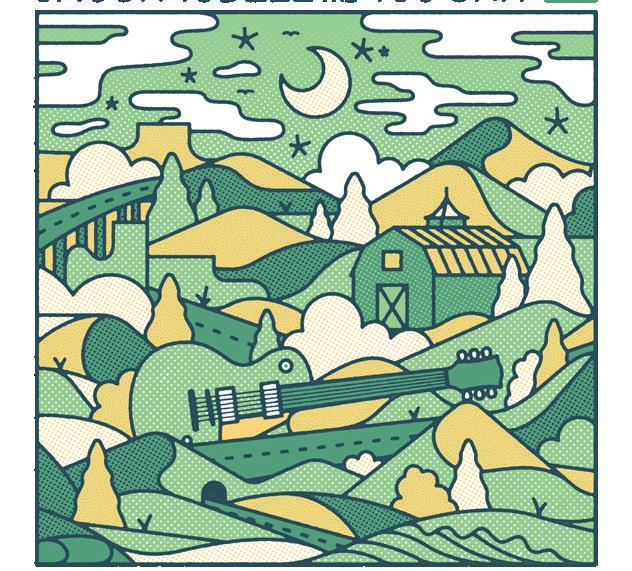





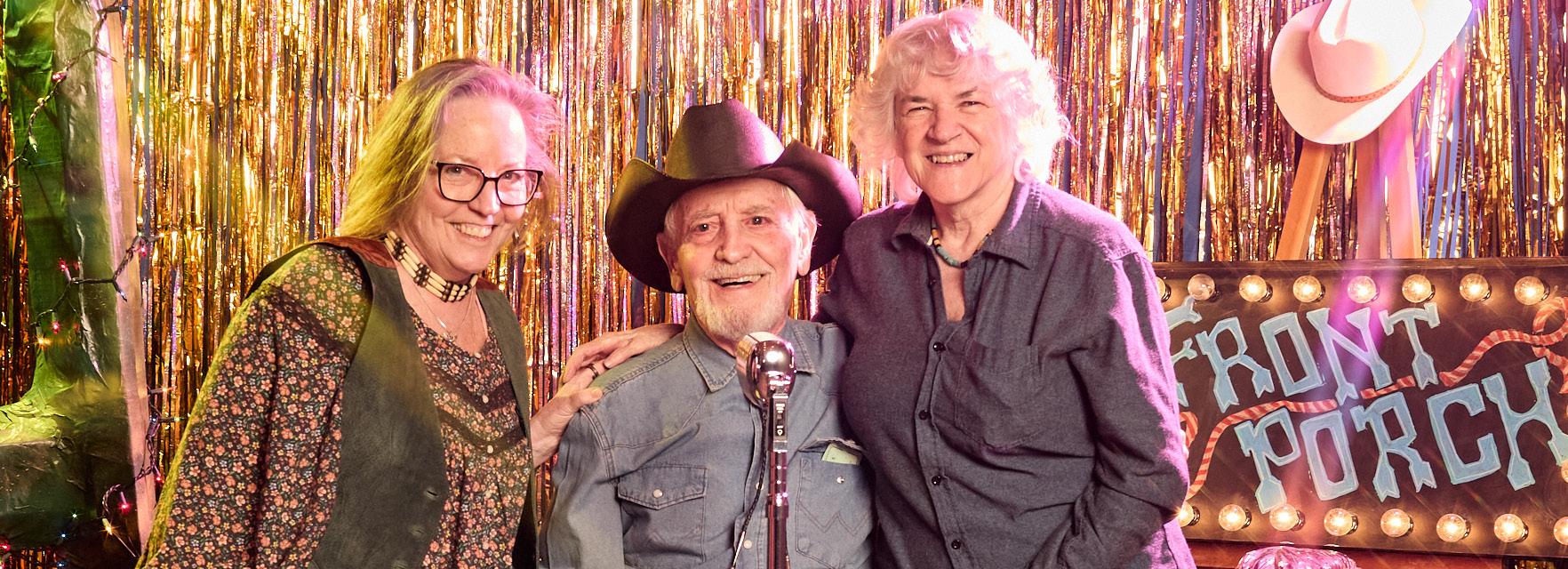
Boots and cowboy hats took over Three Notch’d Brewery for a March fundraiser benefiting The Front Porch, whose mission is to connect everyone through music by making music education and experiences inclusive, affordable, and accessible to people of all ages and backgrounds.
1. Dawna Renick McCracken, Rusty Renick, and Nikki Hartwell
2. Mike Burris and Charlie Davis
3. Susan Evans, Liz Reynolds, Katen Reynolds, and Mike Evans
4. Paul McArtor and Mary Katherine King
5. Madi Alford of Scrappy Elephant
6. Doraine Glidden, Olivia Branch, and Imelda Solis
Photography by Katen Reynolds and Anna Kariel of Parlor the Studio