



Published by the Deutsche Gesellschaft für
Internationale Zusammenarbeit (GIZ) GmbH
Registered offices
Bonn and Eschborn, Germany
B-5/2, Safdarjung Enclave
New Delhi-110029, India
T 011-49495353
F 011-49495391
E giz-indien@giz.de
As at June 2026, New Delhi
Prepared by
Sustainable Urban Mobility – Air Quality, Climate Action and Accessibility
Commissioned by Federal Ministry for Economic Cooperation and Development (BMZ), Germany Political Partner
Project Advisor
Neetu Anna Joseph
Technical Advisor, SUM-ACA
Project Team
Zohra Mutabanna, Team Lead, GFA Consulting Group GmbH
Sriharsha Chowdary, Technical Expert, GFA Consulting Group GmbH
Fathima Zebha, IDFC Foundation
Tarun George, IDFC Foundation
A.R. Chitra, Taliru Foundation
Design and Layout Avian Media Private Limited
Photo and Map Credits
GIZ, IDFC Foundation and Taliru Foundation
Disclaimer
The information presented in this document is provided for informational purposes only. While every effort has been made to ensure accuracy, GIZ makes no representations or warranties regarding the validity, accuracy, completeness, or currency of the information contained herein and accepts no liability for any consequences arising from its use.
Mobilisation and Institution Building
Access to Financing and Ownership Models
Policy and Ecosystem Partnerships
Case Study: Women-Led Electric Mobility Livelihoods Program in Mysuru Imprint
Ministry of Housing and Urban Affairs (MoHUA), Government of India
Implementation Partners
Mysuru City Corporation (MCC)
IDFC Foundation
Taliru Foundation
Responsible
Manjunath Sekhar
Project Director, SUM-ACA
GIZ is responsible for the content of this publication.
On behalf of the
German Federal Ministry for Economic Cooperation and Development (BMZ) Copyright All rights reserved.
Getting around the city is a part of everyday life. It connects people to work, education, healthcare, and opportunities. But urban transport systems do not work the same way for everyone.
For women, especially from low-income backgrounds, moving around the city can be difficult. Safety concerns, high travel costs, and gaps in last-mile connectivity often limit their access to opportunities. These challenges not only affect how women travel, but also whether they are able to work, earn, and participate in public life.
These challenges affect not just mobility, but also women’s access to income and independence. Studies show that women face significant mobility restrictions in everyday life, with one in every two urban women in India reportedly not making any trip outside their home on a given day1
At the same time, women are largely missing from the mobility workforce. Driving and transport-related sector jobs are still seen as male-dominated, and many women do not get the chance to learn these skills. In India, women make up less than 2% of commercial drivers operating public transport vehicles, while nationally, women account for less than 1% of drivers on ride-hailing platforms2 Limited access to training, licensing processes, financial constraints, and social barriers all make it harder for women to enter this sector.
However, this is also a moment of opportunity.
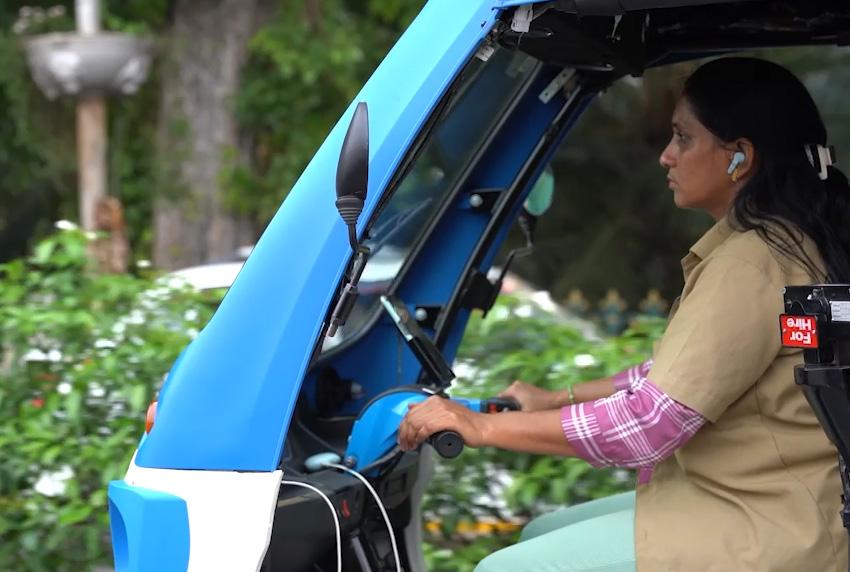
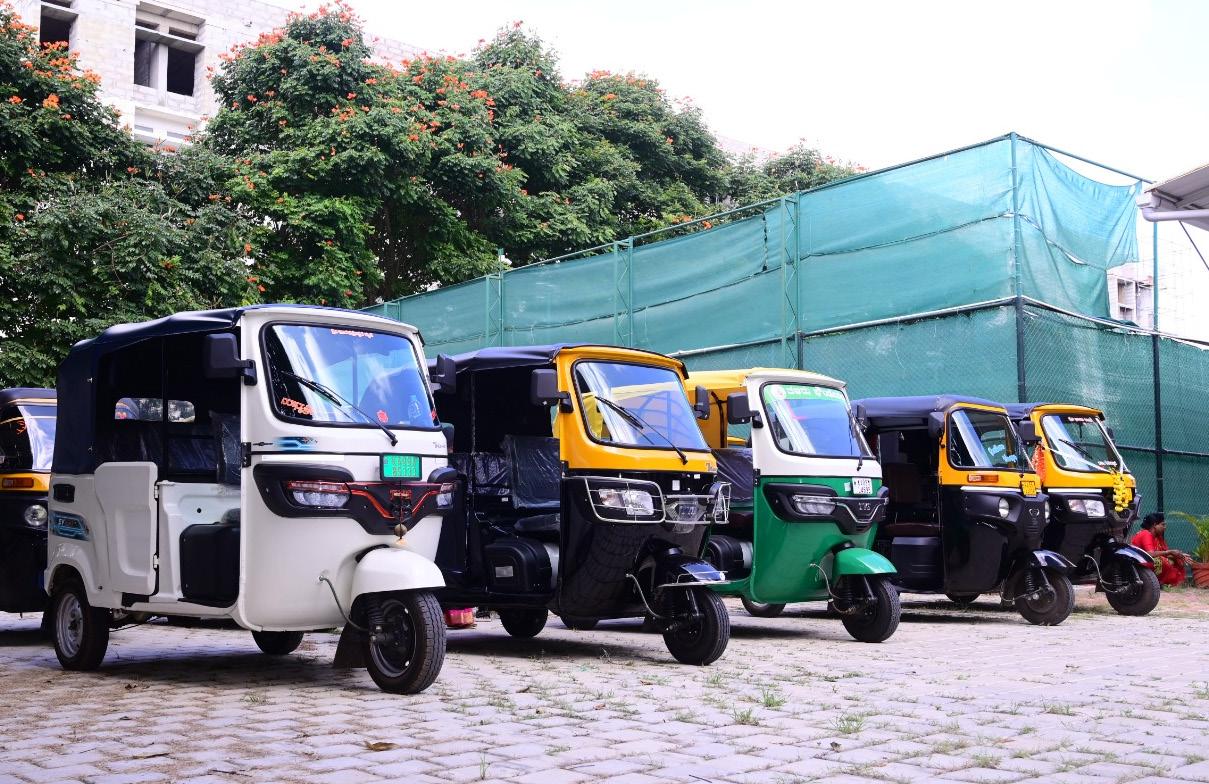
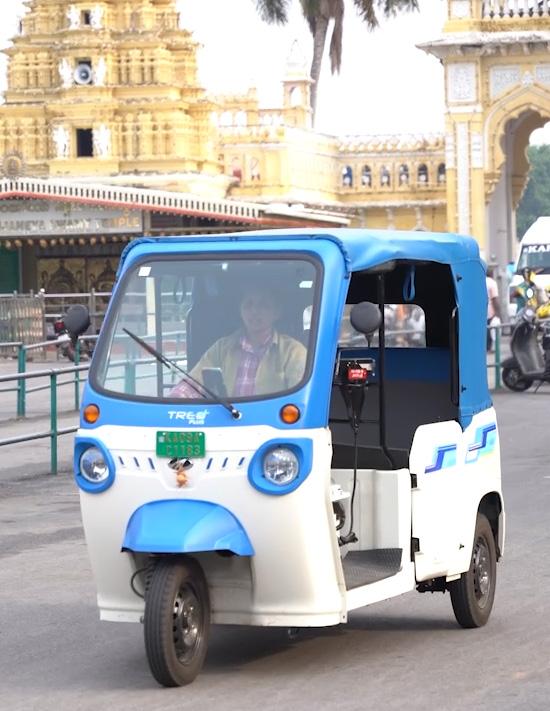
Cities are increasingly shifting toward cleaner and more sustainable transport systems, especially through electric vehicles. Electric autorickshaws, in particular, offer a practical and accessible entry point for women. They are relatively easier to operate, have lower running costs, and are in growing demand for last-mile connectivity, school transport, and local travel.
For women, this opens up a new kind of livelihood, one that combines income generation with greater independence and visibility in public spaces.
To support this transition, women need more than just training. They need access to finance, confidence-building, and a support system that helps them sustain their livelihoods over time.
This is where community-based grassroots-level collective structures, such as Self-Help Groups (SHGs) and Joint Liability Groups (JLGs), become important.
These groups provide a platform for women to come together, save regularly, and support each other. They help build financial discipline, improve access to credit, and create a sense of collective strength. For women entering a new sector like mobility, SHGs can also provide encouragement, accountability, and ongoing support.
Over time, as groups strengthen their savings practices and establish bank linkages, they can also expand into larger livelihood and entrepreneurial opportunities. This may include collectively leasing or owning electric autorickshaws, supporting more women to enter the sector, or exploring allied enterprises such as EV charging, vehicle maintenance support, and mobility service operations. In this way, collective structures can evolve from support systems into long-term community-led livelihood institutions.
Thus, emerging mobility opportunities, electric vehicles, skill development, financial access, and community-based collective structures can create pathways for women not only to access livelihoods but also to build long-term economic independence and community-led mobility enterprises.
This guidebook is designed to provide a simple and practical framework to support women in forming and strengthening community-based, grassroots collective structures, such as SHGs and JLGs, to access and participate in urban mobility livelihoods, particularly through electric autorickshaw driving.
It aims to:
• Present the overall approach and value chain in a clear, structured, and easy-to-understand manner.
• Provide practical guidance to organisations and practitioners on mobilising, building, and supporting women through communitybased, grassroots collective structures.
• Outline pathways for enabling and expanding entrepreneurship opportunities in urban mobility for women.
• Share key insights and learnings drawn from on-ground implementation.
This guide is intended for:
• NGOs and implementation partners
• Livelihoods and community mobilisation teams
• Urban Local Bodies (ULBs) and other government/ social welfare departments
• CSR and development/ funding organisations
The approach outlined in this guide is adaptable and can be contextualised across different cities and mobility-related livelihood models.
This guidebook is organised to take the reader through the complete journey of enabling women’s mobility-based livelihoods, from concept to implementation.
• Conceptual Framework: Overview of just transition in urban mobility, the role of community-based collective structures, SHGs, key stakeholders, and the end-to-end livelihood value chain.
• SHG Mobilisation and Institution Building: Outlines how women are mobilised, organised into SHGs, and supported to build strong collective structures.
• Access to Financing and Ownership Models: Explains different vehicle ownership and financing options, and the role of SHGs in enabling access to credit.
• Policy and Ecosystem Partnerships: Describes the roles of key stakeholders such as government agencies, financial institutions, private sector actors, and NGOs in supporting implementation.
• Case Study: Presents insights from an on-ground implementation, highlighting key learnings, challenges, and outcomes.
Just transition seeks to ensure that the social and economic benefits of a green economy transition are shared more equitably across society. Urban mobility systems are changing with the shift toward electric vehicles. This transition offers an opportunity not only to reduce emissions, but also to create more inclusive and equitable livelihoods.
In the context of urban mobility, a Just Transition ensures that new opportunities, such as electric mobility, are accessible to groups that have traditionally been excluded, including women from low-income backgrounds.
By linking women to emerging roles in electric mobility, cities can move toward both environmental sustainability and social inclusion.
A just transition ensures that the shift to electric mobility also creates inclusive opportunities, especially for women
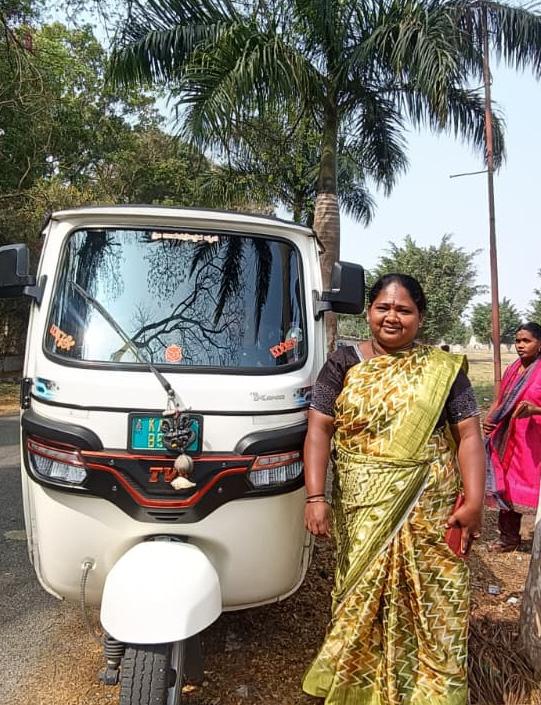
Community-based collective structures such as Self-Help Groups (SHGs) and Joint Liability Groups (JLGs) play an important role in enabling women’s access to livelihoods, finance, and peer support. These groups help women organise collectively, improve financial discipline, and build confidence while entering new livelihood sectors.
Self-Help Groups (SHGs) are small groups of women who come together to save regularly and support each other financially. Typically consisting of 10–20 members from similar socio-economic backgrounds, SHGs function as grassroots institutions built on trust, regular interaction, and collective decision-making.
Joint Liability Groups (JLGs), on the other hand, are smaller informal groups usually formed for the purpose of accessing loans or undertaking a shared economic activity. Unlike SHGs, which focus strongly on savings and long-term group functioning, JLGs are more credit-oriented and are often used where quicker access to finance is required. In mobility livelihoods, JLGs may be useful when women are immediately transitioning into vehicle ownership or operations and require collective borrowing support.
The choice between an SHG and a JLG depends on the context and objective of the program. SHGs are more suitable where the focus is on long-term institution building, savings practices, and social support systems. JLGs may be more suitable in cases where the immediate priority is access to credit for livelihood activation. In some cases, both structures may complement each other.
In women mobility-based livelihoods, SHGs play a critical role, becoming important after the initial stages of training and livelihood preparation. Once women begin transitioning into income-generating activities, forming SHGs helps provide a structured system for:
• improving access to loans and finance
• building financial discipline
• providing peer support and confidence
• enabling collective decision-making
• supporting long-term livelihood stability
SHGs are not only savings groups but also a foundation for women to enter and grow in new economic opportunities.
The following section focuses primarily on the mobilisation and functioning of SHGs. However, many of the broad principles and processes discussed are also applicable to Joint Liability Groups (JLGs).
This framework explains how the program’s activities lead to sustainable livelihoods for women and more inclusive urban mobility systems.
A structured pathway combining skills, finance, and support systems enables women to transition into sustainable mobility livelihoods.
Key Assumptions
• Women are willing and able to participate
• Family and community support is present
• Access to finance and vehicles is available
• Demand for mobility services exists
Enabling women’s participation in mobility livelihoods requires coordinated action across a diverse set of stakeholders. Each actor plays a distinct role, ranging from policy support and financing to training, operations, and market access, ensuring the long-term sustainability of the model. At the centre of this ecosystem are women drivers and their collectives (SHGs), supported by a network of government agencies, financial institutions, implementation partners, and private sector players who together enable access, opportunity, and growth.
The value chain illustrates the step-by-step journey through which women enter, sustain, and grow in mobility-based livelihoods.
SHGs form a strong foundation for enabling women’s participation in mobility livelihoods. They provide a platform for savings, financial access, and collective support.
Formation Approach
SHGs can be mobilised in two ways:
Leveraging existing SHGs:
Where active SHGs already exist, interested members can be identified
and supported to transition into mobility-based livelihoods.
Forming new SHGs:
Where suitable groups are not available, new SHGs can be formed with women who are interested in mobility-based livelihoods, and are ready to take up income-generating opportunities. In this model, SHG formation is closely aligned with livelihood readiness. In both cases, the focus should be on building groups with shared motivation, similar socio-economic backgrounds, and willingness to work collectively.
Step 1: Selection of Women Beneficiaries
Women should be selected based on:
• Interest in driving and willingness to take up mobility-based livelihoods
• Motivation to learn and participate actively in a group
• A supportive or negotiable family environment
• Financial profile and discipline (e.g., CIBIL/CRIF score)
• Ability to commit time for training, group meetings and regular work
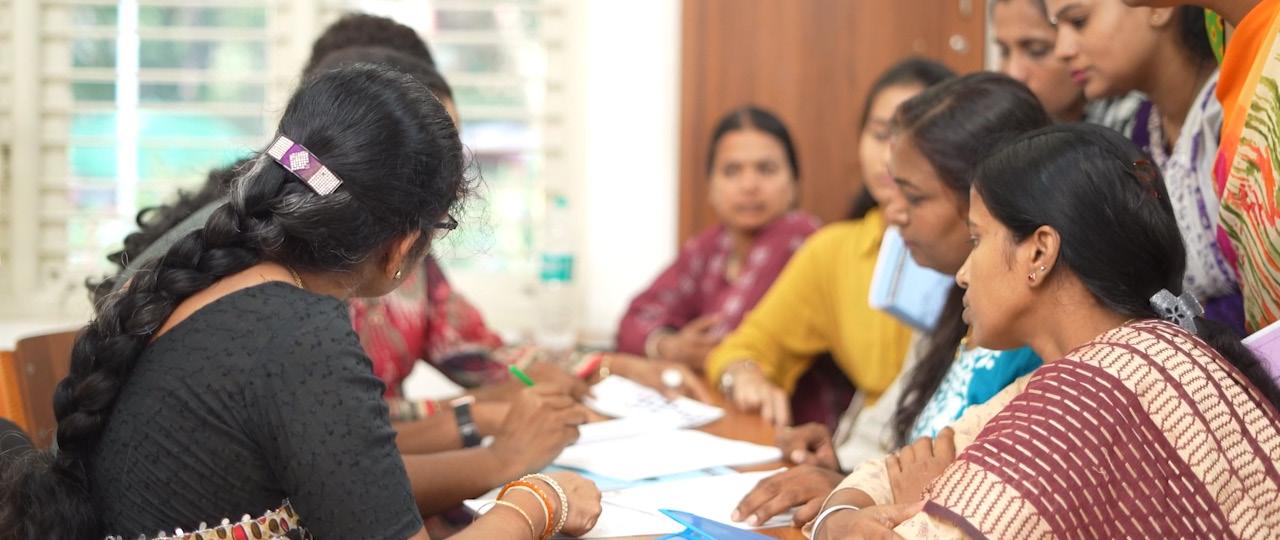
Step 2: Introductory Group Meetings
Initial meetings are organised to:
• Introduce the concept of SHGs and its benefits and functioning
• Build understanding of savings practices and group functioning
• Clarify roles, expectations, and potential benefits
Address concerns and answer questions These sessions should be interactive, creating a safe space for women to openly share doubts, discuss expectations, and build initial trust.
Step 3: Group Formation and Cohesion
SHGs evolve gradually over a series of meetings. During this stage:
• Members get to know each other
• Trust and mutual comfort are built
• Regular meeting practices are established
Shared goals and a sense of collective purpose begin to emerge. This process typically takes a few weeks and should be allowed to develop organically, without being rushed.
Step 4: Membership and Leadership
• Ideal group size: 10–15 members (can go upto 20 members)
• One member per household
• Members should have broadly similar socio-economic backgrounds
Leadership should be:
• Shared and, where possible, rotational
• Based on willingness, participation and reliability
Key roles include:
• Coordinating meetings
• Maintaining records
• Communicating with external stakeholders
During the initial phase of group formation, it is common for:
• Some members to drop out or new members to join
• Members to take time to understand roles and responsibilities
• Group processes to evolve gradually
These are natural stages in group development, and SHGs should be given adequate time and support to stabilise.
Step 5: Building Skills and Training Ecosystem
SHG members should be supported with:
• Basic financial literacy
• Understanding of savings and internal lending
• Exposure to mobility-based livelihood opportunities
• Ongoing confidence-building and handholding support
Peer learning and group discussions are important tools at this stage to build trust, confidence, and shared learning.
Step 6: SHG Functioning and Documentation
SHGs should follow simple, consistent practices to ensure effective functioning:
• Regular meetings (weekly or bi-weekly)
• Fixed savings contribution
• Attendance tracking
• Internal lending practices
Basic records to be maintained:
• Minutes register
• Savings and loan register
• Member passbooks
Documentation should be kept simple, clear, and easy to manage to
ensure regular use and transparency.
Step 7: Linking SHGs to Banks
Once regular savings practices and a consistent meeting structure are established, SHGs should be linked to formal banking systems:
• Open a joint bank account in the name of the SHG
• Authorise 2–3 members as account signatories to operate the account
• Route savings through the bank account
This step builds the group’s financial credibility and enables access to future loans.
Typically, this process involves a group resolution signed by members, identification of authorised signatories, and submission of basic KYC documents.
Linking SHGs to the formal banking system is a critical milestone in advancing financial inclusion and strengthening long-term livelihood opportunities.
Step 8: NULM Registration
After initial group formation and meetings, the SHG may be registered under the Deendayal Antyodaya Yojana – National Urban Livelihoods Mission (DAY-NULM) through the Urban Local Body (ULB).
Registration under NULM provides several benefits:
• Eligibility for accessing a Revolving Fund support (typically around ₹20,000 per SHG)
• Access to capacity building and training support
• Interest subvention of about 5% on the SHG-bank linkage credit
• Access to other government incentives (eg: PM-EGP scheme etc.)
• Integration into a larger institutional ecosystem (Area Level Federations (ALF), and City Level Federations (CLF))
• Improved credibility with financial institutions
NULM aims to strengthen grassroots institutions and enable urban poor households to access sustainable livelihoods and credit.
Savings, Internal Lending and Financial Discipline
The group should begin with regular savings, even if the amount is small.
Over time:
• A common fund is created
• Small internal loans can be given to members
• Repayment discipline is developed
This stage is important because it prepares members for:
• Handling larger loans
• Managing livelihood-related finances
• Building trust within the group
Progressive Credit Linkages
As SHGs become more stable through regular meetings, savings practices, and internal lending, they gradually become eligible for larger forms of institutional credit. Under the SHG–Bank Linkage Programme and DAY-NULM, access to credit typically evolves in stages based on the group’s financial discipline, repayment performance, and overall maturity.
Once the SHG establishes a strong track record of financial management and repayment, it can begin accessing loans for livelihood-related activities such as vehicle leasing, down payments for e-autos, or other small mobility enterprises. These loans are extended to the group collectively, with all members sharing responsibility for repayment.
Typically, after about six months of active functioning and adherence to financial norms, SHGs become eligible for their first credit linkage, often around ₹3 lakh. Subsequent linkages generally increase progressively based on repayment history, utilisation of previous loans, and the strength of the group’s corpus and banking relationship.
Groups may explore future opportunities such as:
• Shared vehicle fleets
• Charging partnerships
• School transport services
• Tourist transport services
• Women-led ride services
Access to finance is one of the biggest barriers preventing women from entering mobility-based livelihoods. Purchasing or leasing an electric autorickshaw requires upfront capital, documentation, repayment capacity, and institutional support, all of which can be difficult for first-time women borrowers to access independently.
For many women, especially those from low-income backgrounds, mobility livelihoods become more accessible when supported through
collective structures such as SHGs and through partnerships with financial institutions, government programs, and vehicle providers.
Different ownership and financing models may be suitable depending on the financial readiness, risk appetite, and livelihood stage of the beneficiary.
Key features
The woman owns and operates the vehicle herself. The woman operates vehicles owned by another individual, fleet operator, or institution.
Accessing finance can be a major challenge for first-generation women drivers, particularly those with limited savings, credit history, or documentation. Different financing pathways may therefore be suitable depending on the beneficiary’s financial readiness and livelihood goals.
Women with stronger financial profiles and repayment capacity may be able to access formal bank loans under ownership models such as the Driver-Cum-Owner (DCO) model. Others may rely on NBFC financing, which may offer more flexible access but often at higher interest rates.
Down payment requirements can remain a barrier across both financing pathways. In such cases, facilitating agencies may need to support beneficiaries in accessing additional support through savings, SHGs, donor funding, CSR support, or government-linked livelihood programs.
For women who are not yet ready for ownership, leasing or rental models can provide a lower-risk pathway to begin earning and building livelihood experience.
• direct ownership of the vehicle
• higher long-term income retention
• opportunity for asset creation
• greater financial independence
• flexible working hours
• lower entry barrier
• reduced upfront investment
• faster livelihood activation
• useful for first-time operators Challenges
• higher upfront financial commitment
• loan eligibility and repayment responsibility
• documentation requirements
• The DCO model may be more suitable for women who demonstrate financial readiness, stable income potential, and willingness to take long-term ownership responsibility.
• Leasing models can be particularly useful during the initial stages of livelihood transition, when women may not yet be ready to take on full ownership risk.
• lower income retention compared to ownership
• dependency on external vehicle providers
• varying/absence of formal rental conditions and agreements
SHGs can play an important role in improving women’s access to formal financial systems and livelihood-linked credit. Through regular savings, internal lending, and collective repayment practices, women gradually develop financial discipline and familiarity with banking processes.
Some of the benefits are illustrated in the figure below.
SHGs also help women:
• build confidence in handling financial transactions
• understand loan and repayment processes
• access peer support during borrowing and repayment
• reduce dependence on informal lenders
In addition to supporting financial inclusion, SHGs can also create pathways for future collective enterprises such as shared vehicle ownership, leasing models, EV charging services, and other mobilityrelated businesses.
Government schemes and support programs can play an important role in reducing financial barriers and improving access to mobility-based livelihoods for women. Facilitating agencies should actively explore convergence opportunities across livelihood, enterprise, EV adoption and financial inclusion programs.
The formation of SHGs and other collective structures can further strengthen access to such schemes by improving institutional credibility, savings discipline, documentation readiness, and linkage with formal banking systems and government programs.
Under the Deendayal Antyodaya Yojana – National Urban Livelihoods Mission (DAY-NULM), urban SHGs can access institutional and financial support mechanisms that strengthen livelihood readiness and financial inclusion.
Key support mechanisms include:
• Revolving Fund (RF): Eligible SHGs may receive a one-time Revolving Fund support of ₹10,000-20,000 to strengthen savings and internal lending practices.
• Interest Subvention: DAY-NULM provides interest subvention on SHG-bank linkage loans, reducing the effective interest burden on borrowers. Women SHGs that demonstrate timely repayment may receive an additional interest subvention benefit
Prime Minister’s Employment Generation Programme (PMEGP)
PMEGP is a credit-linked subsidy scheme implemented by the Ministry of MSME to support micro-enterprise development. The scheme can support eligible women beneficiaries and SHGs seeking to establish mobility-related enterprises.
Key features include:
• subsidy-linked bank loans
• lower beneficiary contribution for women applicants
• support for service-sector enterprises
• entrepreneurship development training support
Under PMEGP, women beneficiaries fall under the “special category,” which may make them eligible for higher subsidy support and lower own-contribution requirements.
Prime Minister’s E-DRIVE Scheme
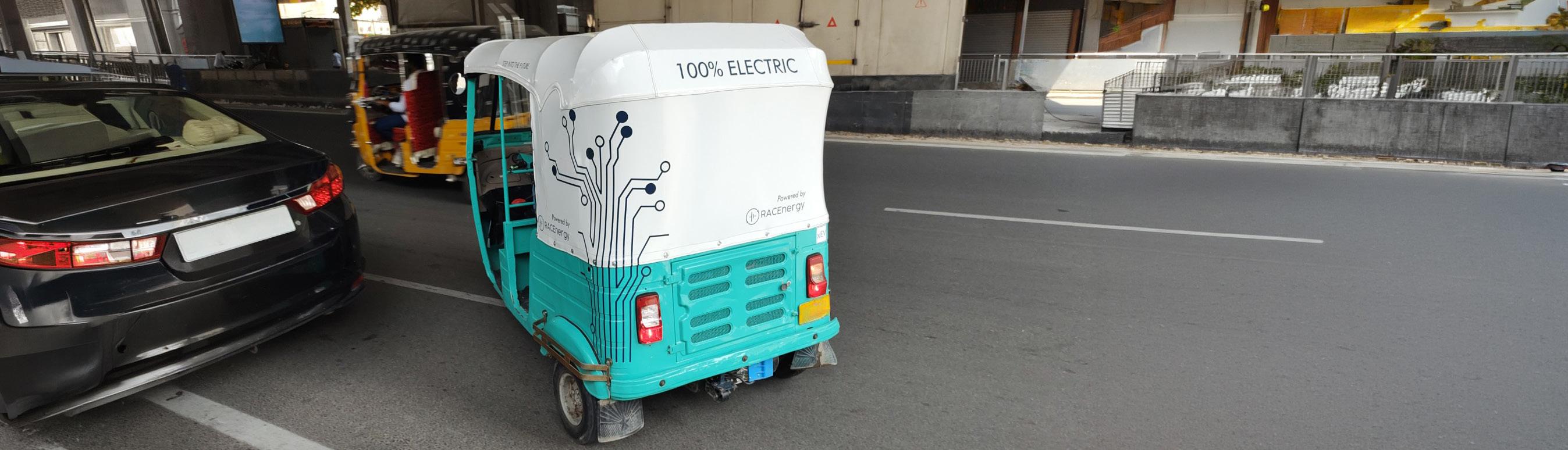
The Government of India’s PM E-DRIVE scheme supports the adoption of commercial electric vehicles, including electric three-wheelers, through demand incentives and EV ecosystem support mechanisms.
Such incentives can help reduce the effective purchase cost of e-autorickshaws, thereby improving affordability for women entering mobility livelihoods under ownership-based models. The scheme also supports the development of charging infrastructure, which is important for the long-term operational sustainability of electric mobility livelihoods.
In addition to national-level schemes, several state-level livelihood and SHG strengthening initiatives may support women-led collective enterprises and mobility-based livelihoods
In Karnataka, initiatives such as the Karnataka Mahila Abhivruddhi Yojane (KMAY) and the Stree Shakti Programme support women’s SHGs through financial inclusion, entrepreneurship development, livelihood promotion, and institutional strengthening.
Several states in India have also demonstrated strong women-led collective enterprise models, including:
• Kudumbashree in Kerala
• Mission Shakti in Odisha
• Mahalir Thittam in Tamil Nadu
These initiatives demonstrate how community-based women’s institutions can support enterprise development, collective ownership models, financial inclusion, and long-term livelihood sustainability.
Women’s participation in mobility livelihoods depends not only on training and finance, but also on the presence of a supportive ecosystem. Government institutions, financial institutions, private sector actors, and civil society organisations each play an important role in enabling women to enter and sustain mobility-based livelihoods.
Strong coordination between these stakeholders helps reduce barriers related to licensing, financing, vehicle access, safety, and long-term livelihood support.
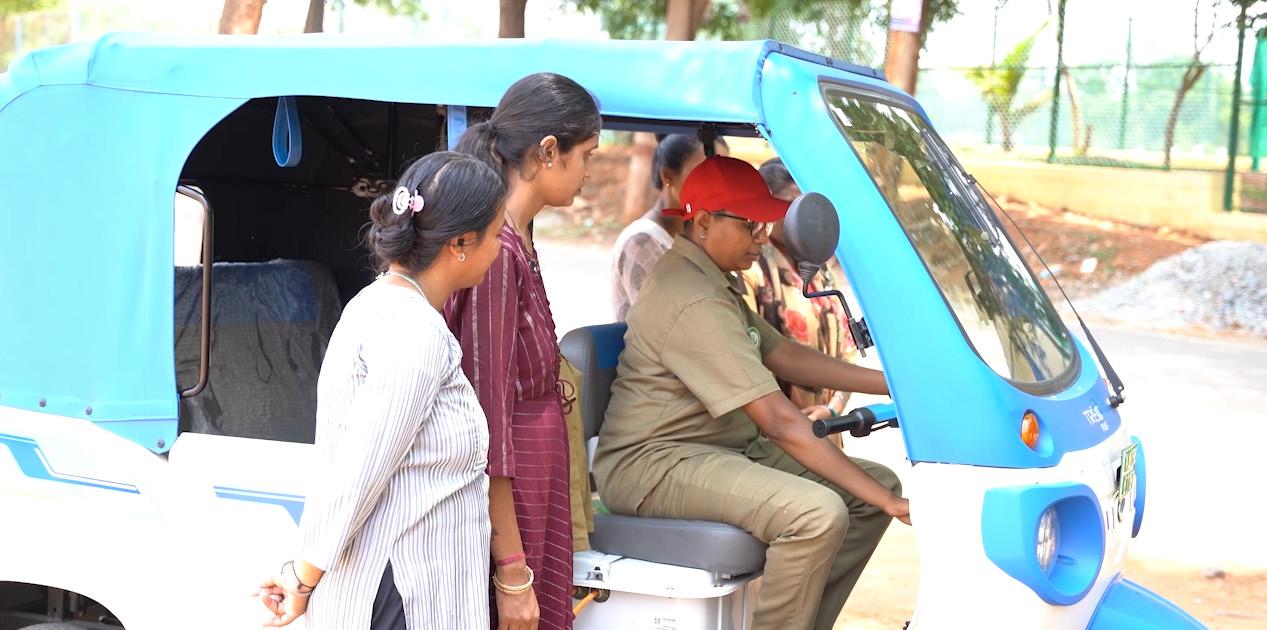
Urban Local Bodies (ULBs) and DAY-NULM systems play an important role in strengthening community institutions and enabling financial inclusion for urban poor women.
Key areas of support include:
• SHG mobilisation and registration
• Facilitation of Revolving Fund support
The State Transport Department plays a critical role in enabling women’s entry into mobility professions.
Key areas include:
• learner’s licence and driving licence processes
• commercial badge and permit systems
Financial institutions play an important role in improving access to vehicle financing and livelihood credit.
Important considerations include:
• CIBIL score and credit eligibility
• repayment capacity assessment
• Interest subvention under SHG-bank linkage
• Convergence with urban livelihood programs
ULBs can also support coordination between SHGs, financial institutions, and livelihood programs at the city level.
NGOs and facilitating agencies often play a central role in coordinating and sustaining the overall livelihood ecosystem.
Key areas of support include:
• beneficiary mobilisation and counselling
• training coordination
• SHG formation and strengthening
• regulatory approvals
• awareness and facilitation support for women drivers
Simplified and women-friendly licensing support systems can significantly improve participation in mobility livelihoods.
• documentation requirements
• flexibility in financing structures
• ease and speed of loan processing
Financial institutions can also support first-generation women borrowers through simplified procedures and financial literacy support.
• documentation and loan facilitation
• family and community engagement
• monitoring, evaluation, and learning (MEL)
• post-training handholding and risk mitigation
Long-term support and trust-building are often critical for sustaining women’s participation in mobility livelihoods.
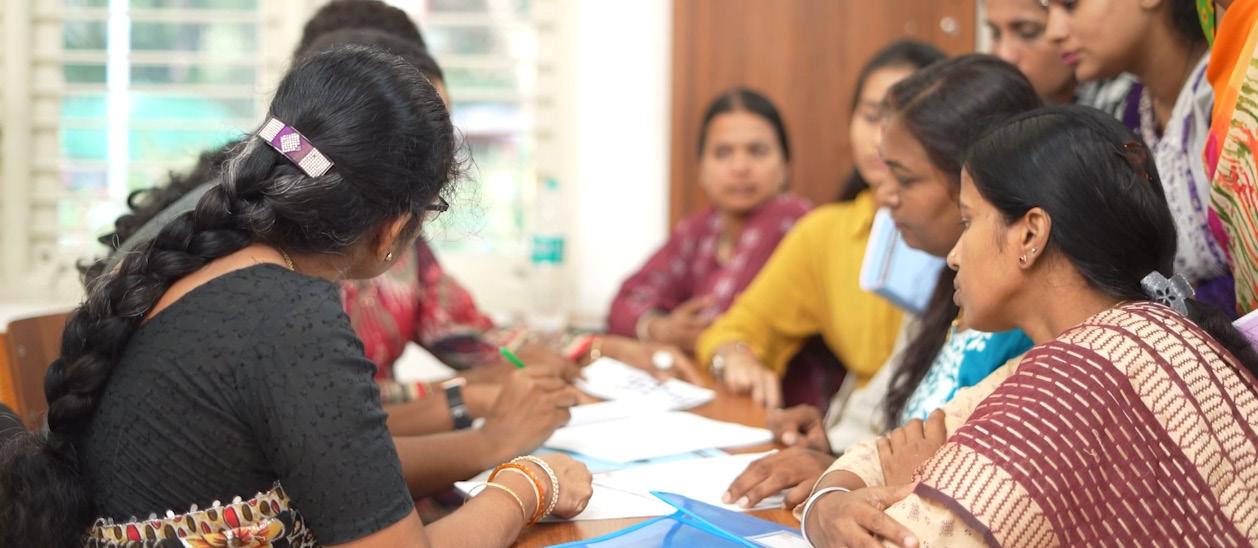
Private sector actors help strengthen the operational ecosystem required for sustainable mobility livelihoods.
OEMs and Dealerships
Vehicle manufacturers and dealerships can support:
• access to suitable electric autorickshaws
• after-sales service and maintenance
• vehicle training and orientation
• financing coordination support
Charging Infrastructure Providers
Accessible and reliable charging infrastructure is important for operational sustainability.
Key considerations include:
• safety and accessibility of charging stations
• affordability of charging services
• proximity to operational routes
• ease of use for women operators
Aggregators and Ride-Hailing Platforms
Digital mobility platforms can support:
• access to customers and ride demand
• digital onboarding and payment systems • increased visibility for women driver
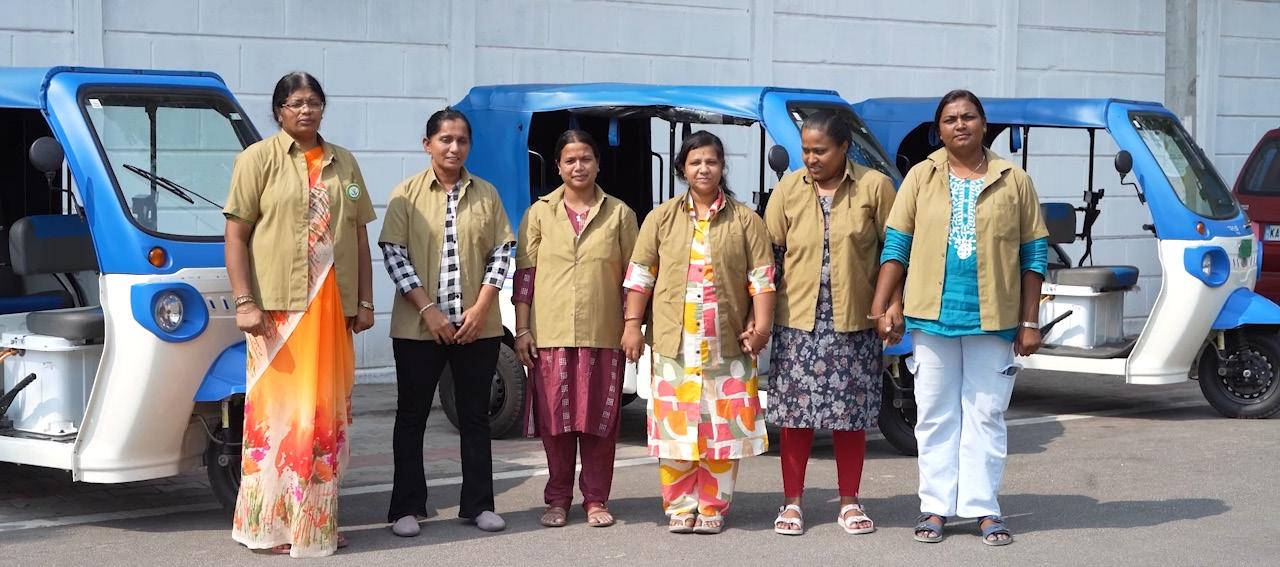
Mysuru presents a strong opportunity for developing inclusive and sustainable urban mobility solutions. The program aimed to develop a women-led electric mobility livelihood model combining training, finance, SHGs, and ecosystem support to enable long-term and sustainable livelihoods.
The initiative was implemented under GIZ India’s Sustainable Urban Mobility, Air Quality, Climate Action and Accessibility (SUM-ACA) Project in partnership with IDFC Foundation, and Taliru Foundation to support women from low-income and vulnerable backgrounds to enter electric mobility livelihoods through e-autorickshaw operations.
The program combined:
• SHG formation
• driving and life skills training
• financial access support
• livelihood preparation
• ecosystem partnerships
The overall approach focused not only on technical skill development, but also on building confidence, financial readiness, and long-term livelihood sustainability.
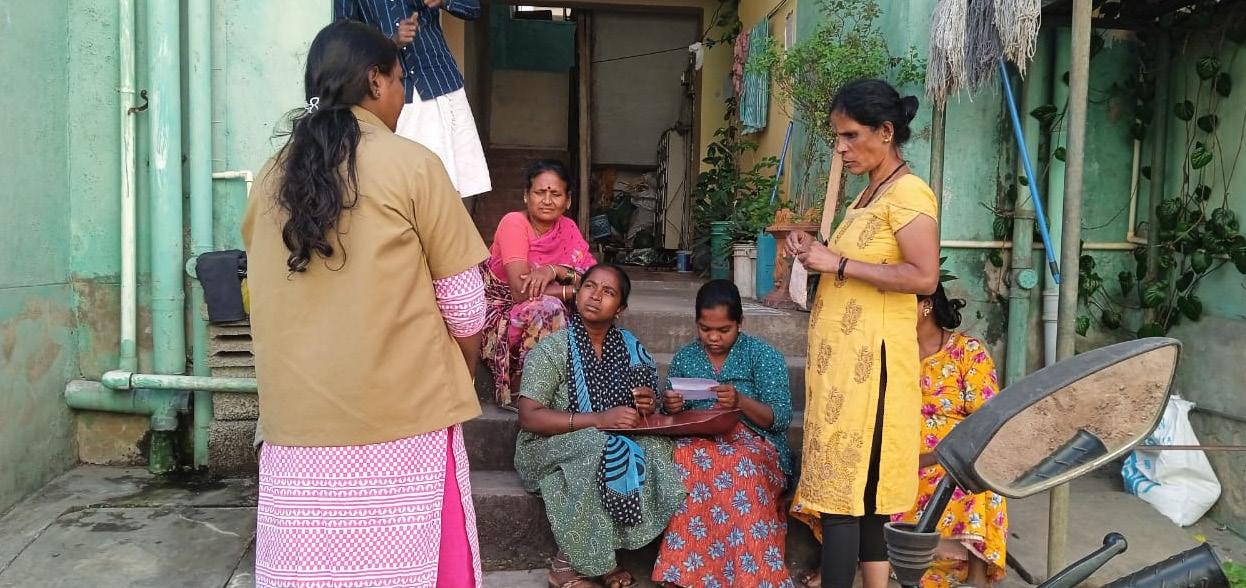
Mobilisation activities focused on identifying women who demonstrated interest and willingness to participate in mobility-based livelihoods.
Outreach methods included:
• community campaigns
• awareness meetings
• referrals through local networks
• direct engagement within vulnerable communities
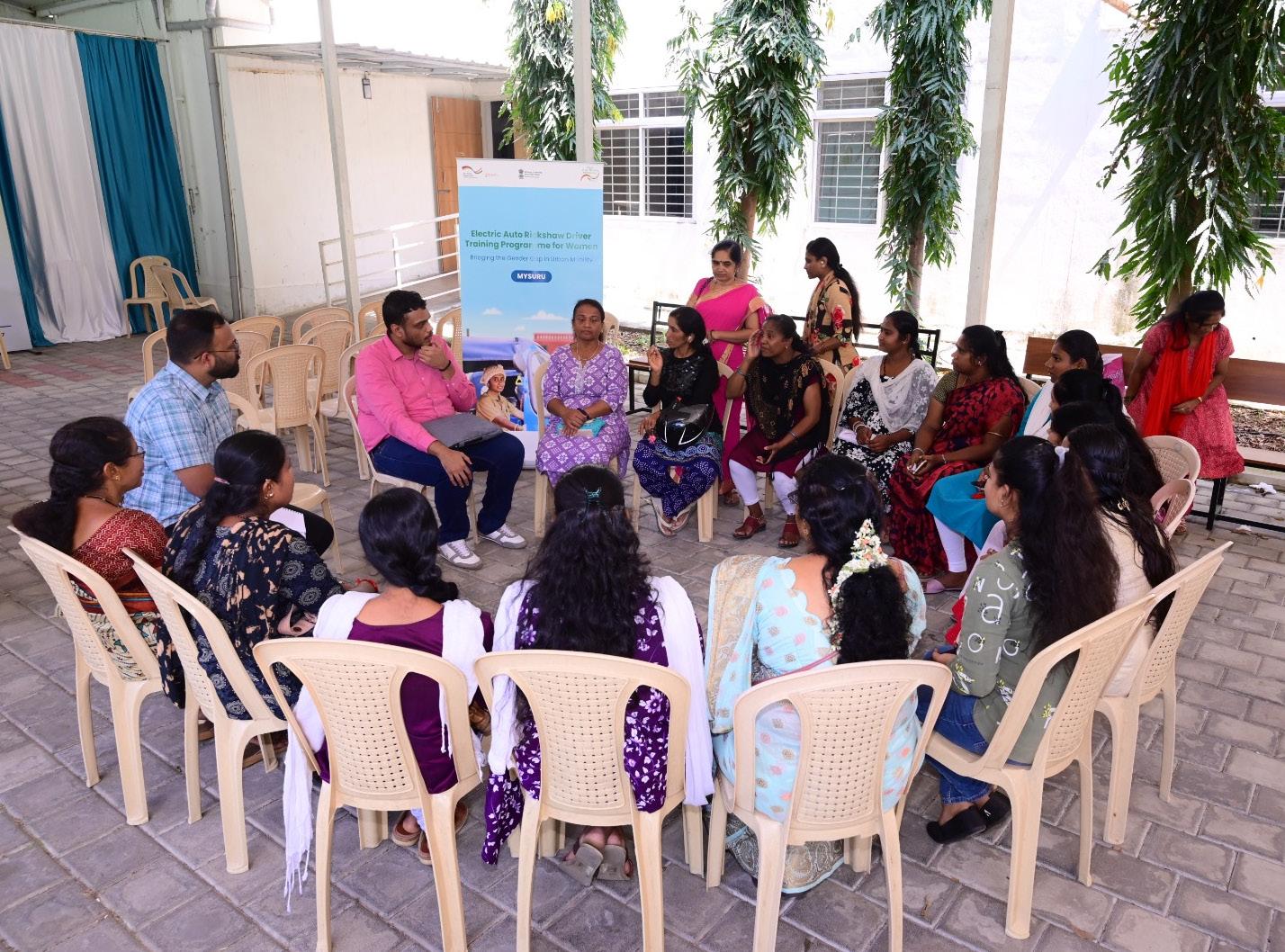
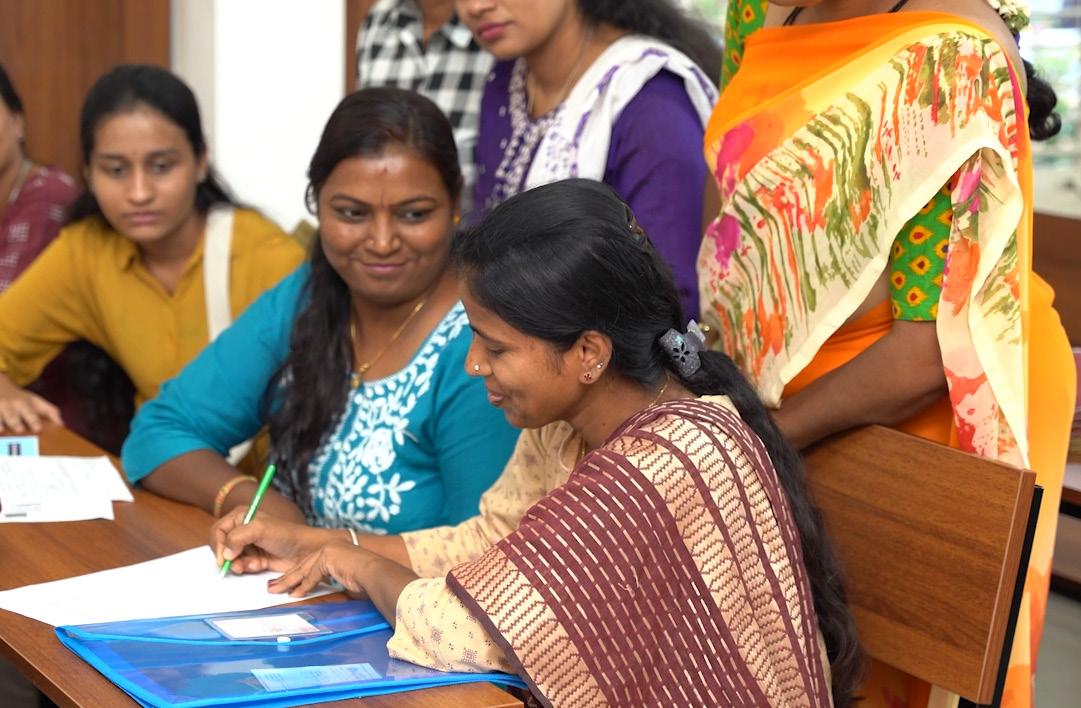
About 45 women were identified for training. To strengthen collective support systems, the identified women were organised into three SHGs during the early stages of the program. Group meetings were conducted to build awareness on concepts such as savings, collective functioning, financial discipline, and livelihood planning.
Many of the identified women had never considered driving as a livelihood option due to social norms, safety concerns, and limited exposure to mobility-related professions. The SHGs helped create a supportive environment where women could learn together, discuss challenges, and collectively build confidence.
• Majority aged between 30–45 years
• Many participants were widowed, separated, or primary caregivers
• Most participants had studied up to primary or secondary school levels
• Majority were engaged in informal and low-income occupations
• Common livelihood backgrounds included housekeeping, tailoring, sales work, home-based work, and daily wage labour
• Most participants reported limited asset ownership and irregular household incomes.
Stage 2: Training and Capacity Building
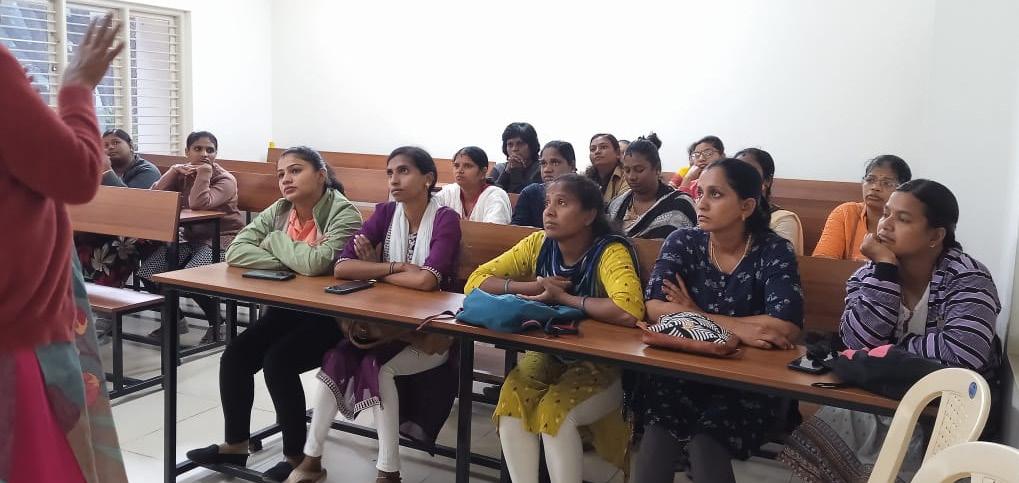
The training model combined technical driving instruction with life skills and confidence-building support.
Driving Training
The program included:
• theory and road safety sessions
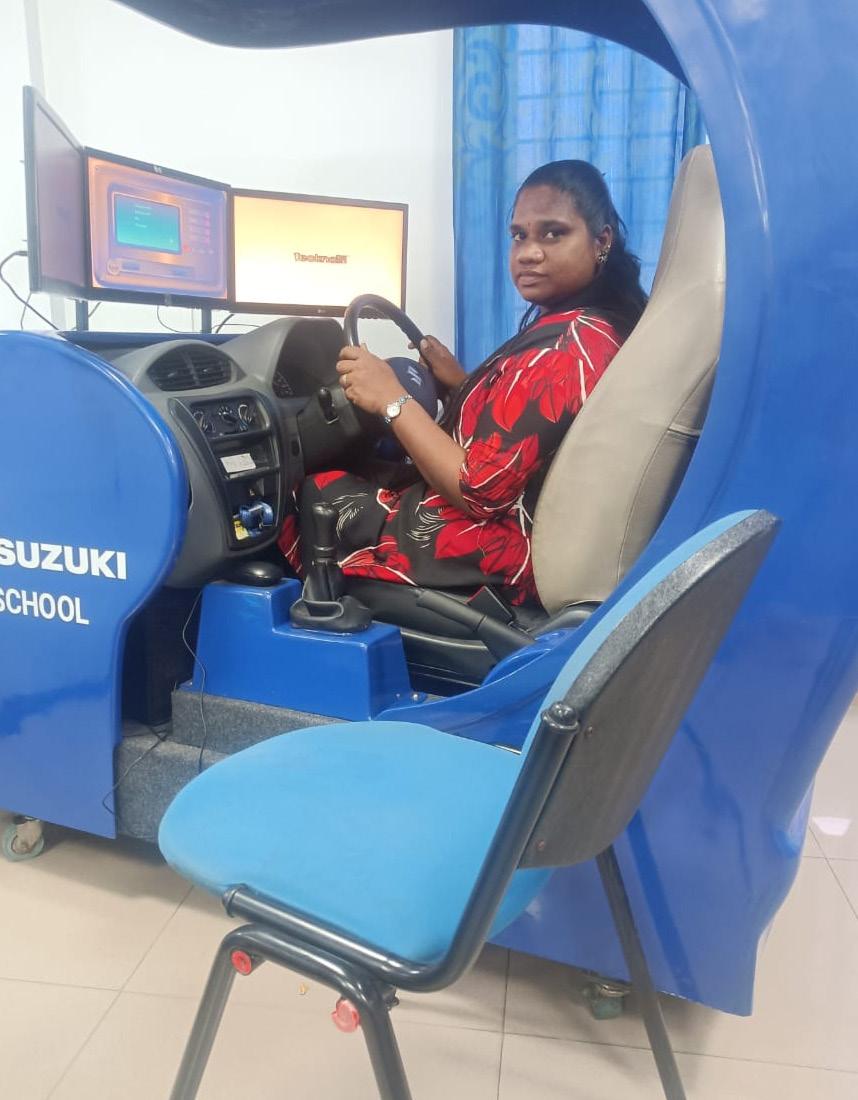
• simulator-based learning
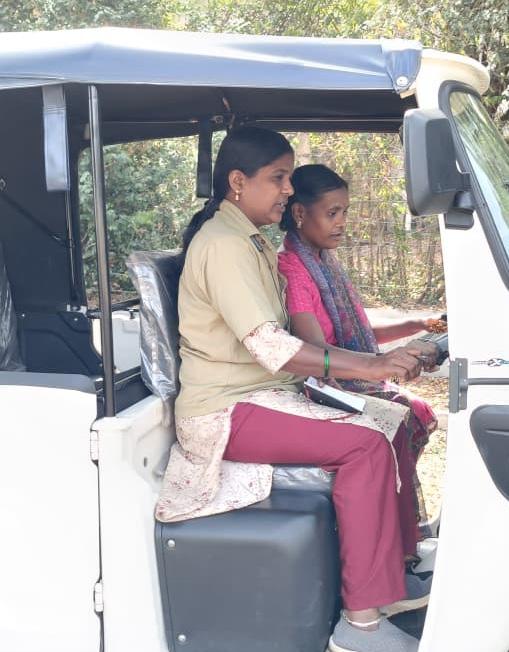
• practical driving training
• phased exposure to road conditions
Theoretical sessions, simulator learning, and licensing support were conducted through an external driving school, while practical on-road training was led by trained instructors from the implementation team
Life Skills Training
Women also received training in:
• communication and professional behaviour
• financial literacy
• legal awareness
• self-defense and safety
• counselling and emotional support
The life skills component played an important role in improving confidence and preparing women for professional work environments
Stage 3: Financing and Vehicle Access
Access to finance emerged as one of the major implementation challenges.
Many women had limited savings, low credit history, or insufficient financial documentation, making access to formal loans difficult.
The initiative explored multiple financing pathways, including:
• Driver-Cum-Owner (DCO) models
• leasing and rental arrangements
• bank-linked financing
• NBFC financing options
Several women applied for SRTO-linked vehicle loans through formal banking systems, particularly through SBI. While some women successfully moved toward ownership-based models and purchased vehicles, others explored NBFC financing pathways due to lower credit scores or limited loan eligibility.
A number of trained women also gained access to autorickshaws either through ownership, financing support, or access to vehicles owned by family members.
Beneficiaries were supported with documentation, loan applications, financial counselling, and engagement with vehicle providers and OEMs.
Down payment requirements remained a significant barrier for several beneficiaries, highlighting the need for continued institutional and financial support.
Stage 4: Livelihood Activation and Continued Support
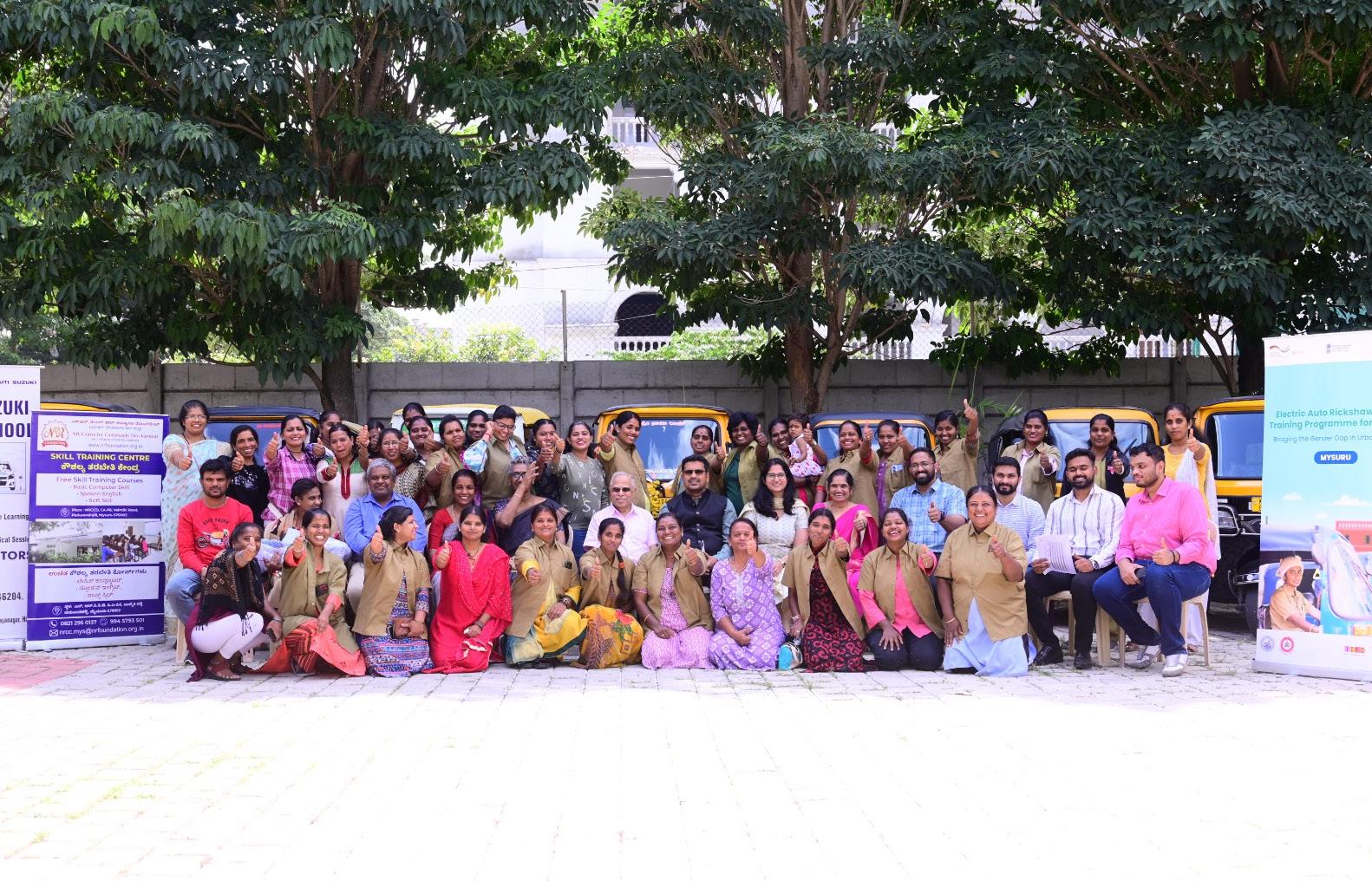
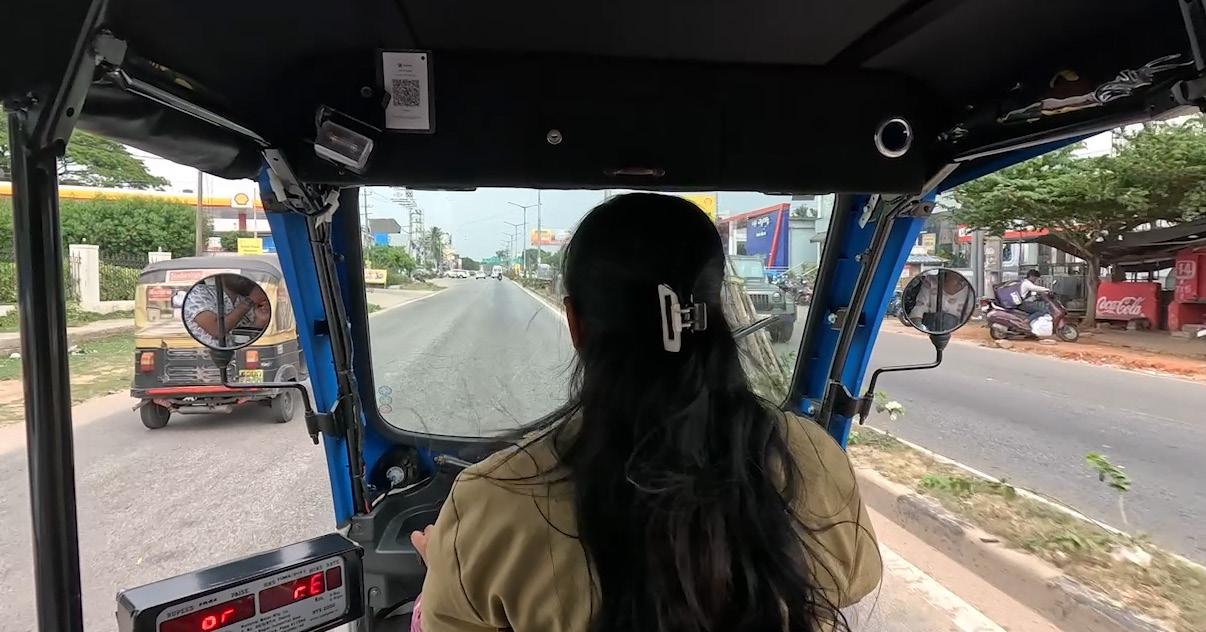
The final stage focused on supporting women as they transitioned into active mobility livelihoods. This included support for vehicle onboarding, operational readiness, route familiarisation, and continued mentoring during the initial stages of livelihood operations.
Women were also supported through:
• regular follow-up and handholding
• strengthening SHG functioning and savings practices
• linkage with institutional support systems
• troubleshooting operational and financial challenges
• building confidence in professional mobility environments
This stage was important in helping women sustain participation, adapt to real-world work conditions, and gradually build long-term livelihood stability.
Key Challenges Faced During Implementation
The implementation process highlighted several operational and institutional challenges.
Social Challenges
• Resistance from family and community members toward women entering mobility professions
• Limited confidence and fear of driving in public road environments
• Confidence-building is as important as technical training.
• Long-term mentoring and handholding are essential during livelihood transition.
• Balancing training participation with caregiving and household responsibilities
• Family engagement plays a critical role in sustaining participation.
Financial Challenges
• Low credit scores and limited financial histories among several participants
• Difficulty in arranging upfront down payments for vehicle purchase
• Limited familiarity with formal loan procedures and banking systems
• Variation in financial readiness across beneficiaries
Institutional and Operational Challenges
• Difficulty in navigating licensing and approval-related processes
• Limited awareness of formal institutional procedures such as NULM registration and SHG documentation
• Delays in financial processing and coordination across institutions
These experiences highlighted the importance of long term handholding, ecosystem coordination, and institutional support in enabling womenled mobility livelihoods.
• SHGs help create strong peer-support systems.
• Financing remains one of the biggest barriers for first-generation women mobility entrepreneurs.
The initiative demonstrated that women-led mobility livelihoods require not only training but also sustained institutional and ecosystem support.
With continued support in financing, training, and institutional convergence, similar models can be adapted and scaled across other urban contexts to create safer, cleaner, and more inclusive mobility systems.