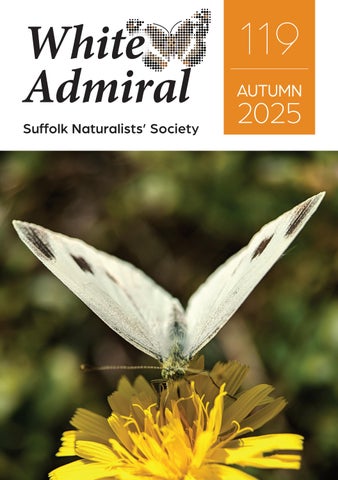
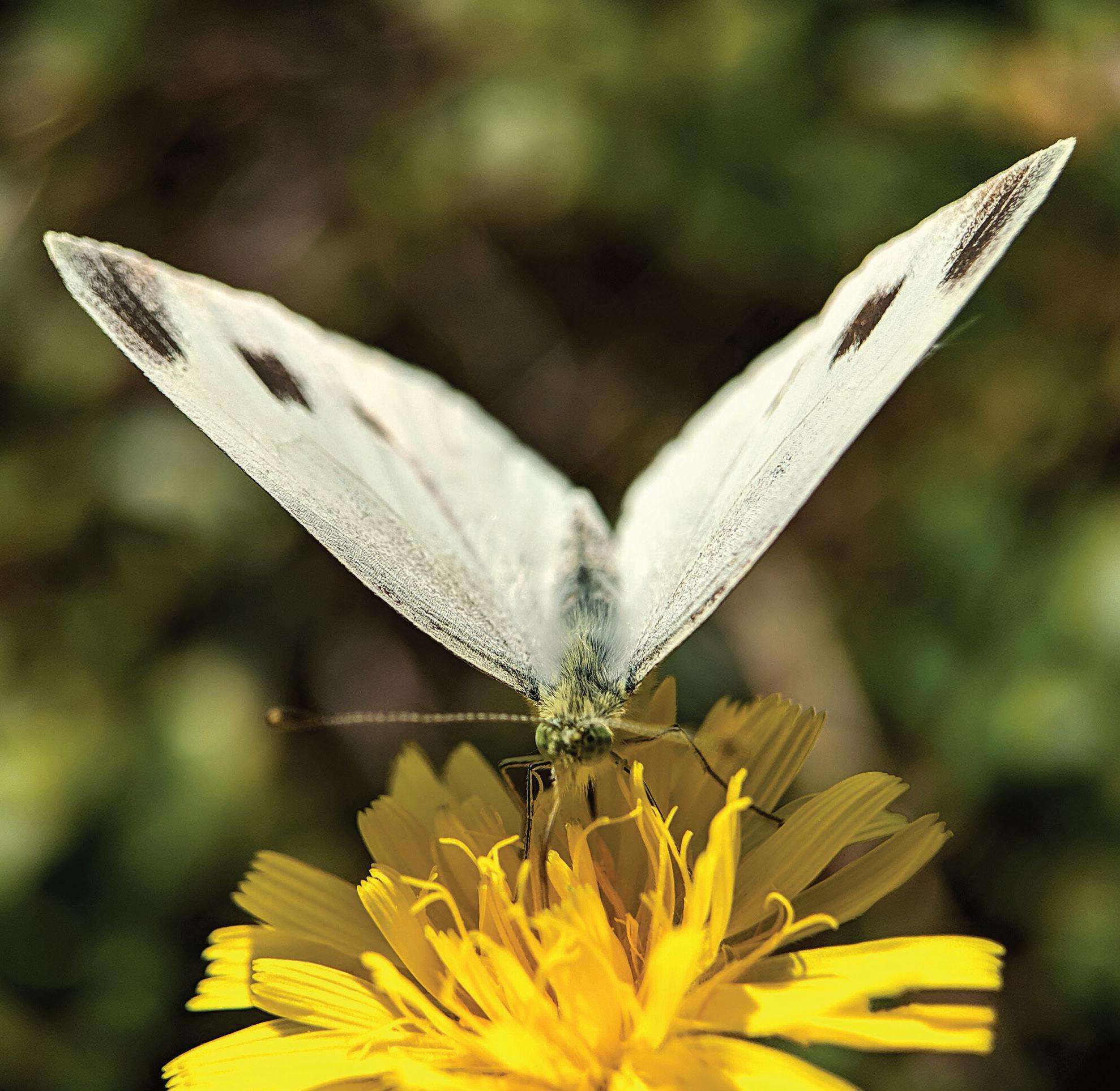
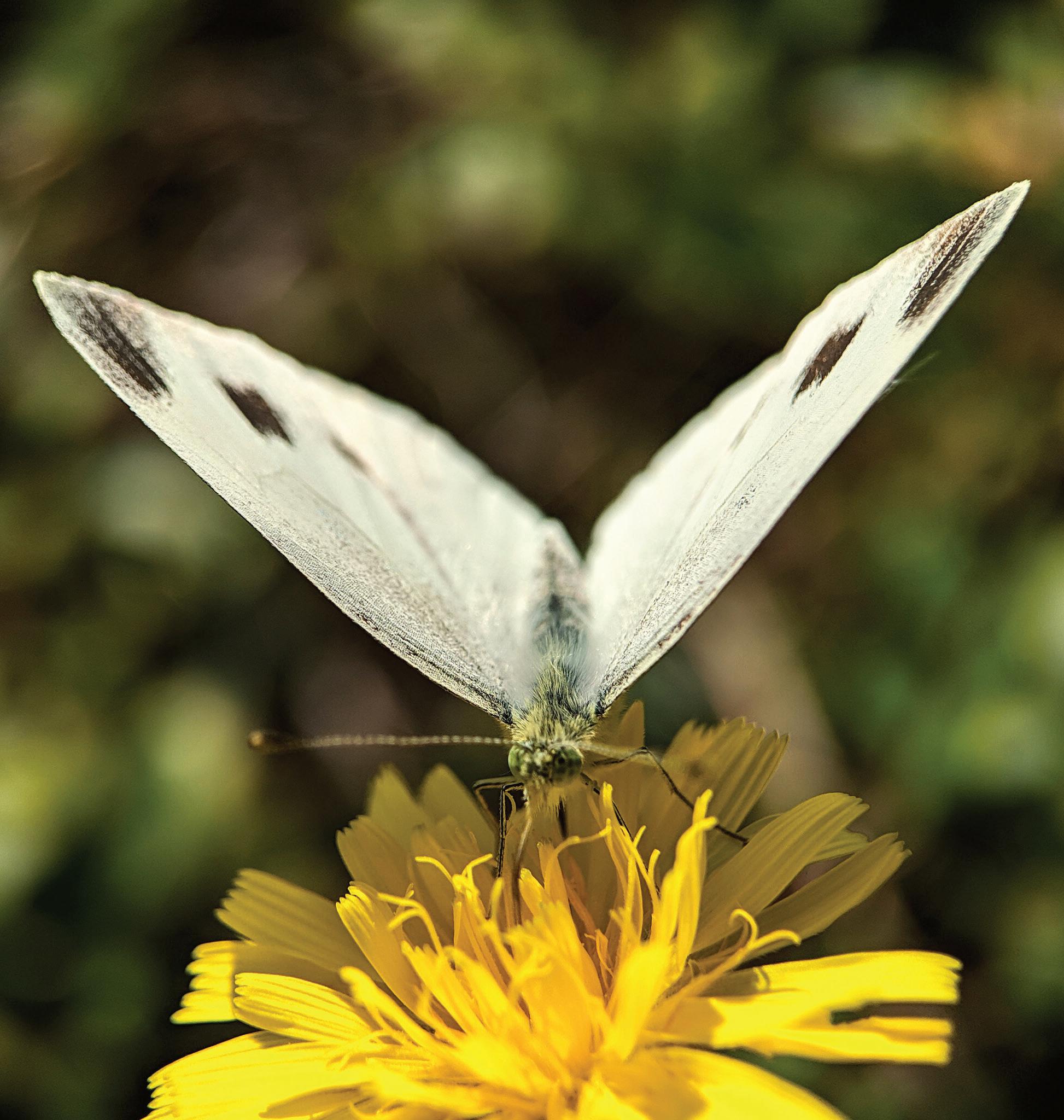
Welcome to White Admiral, despite being late autumn I’ve chosen a very summery image for the front cover, but this rare visitor to Suffolk deserves a moment in the spotlight! Read more in James Corton’s article on the Southern Small White. You’ll also find reports from our recent meetings, news about forthcoming events, articles, book reviews, notes and observations and even some poetry in this issue.
Do you have a study or project you’d like some funding for? Then take a look at the grants page on the SNS website to find what we can offer and how you can apply.
www.SNS.org.uk Suffolk Naturalists Society - Members Group Suffolk-nats1929
SNS RECORDERS
BIRDS – NORTH EAST
Richard Walden bird-ne@sns.org.uk
ACULEATE HYMENOPTERA
Adrian Knowles hymenoptera@sns.org.uk
AQUATIC INVERTEBRATES
Adrian Chalkley aquatics@sns.org.uk
COLEOPTERA
Ross Piper coleoptera@sns.org.uk
FERNS & FLOWERING PLANTS
Martin Sanford botany@sns.org.uk
GALLS
Jerry Bowdrey gall@sns.org.uk
MAMMALS
Alison Looser mammal@sns.org.uk
MOLLUSCS
Ian Killeen mollusc@sns.org.uk
SPIDERS, ARACHNIDS, ISOPODA & MYRIAPODA
Paul Lee spider@sns.org.uk
BIRDS – SOUTH EAST
Steve Fryett bird-se@sns.org.uk
ALGAE (FRESHWATER)
Position vacant
BRYOPHYTES
Richard Fisk bryophyte@sns.org.uk
DIPTERA
Peter Vincent diptera@sns.org.uk
FRESHWATER FISH
Position vacant
HEMIPTERA
Adrian Knowles bugs@sns.org.uk
BATS
Alan Miller bats@sns.org.uk
MOTHS
Neil Sherman moth@sns.org.uk
STAG BEETLES
Colin Hawes cervus@sns.org.uk
BIRDS – WEST
Chris Gregory bird-w@sns.org.uk
AMPHIBIANS & REPTILES
John Baker amphibian@sns.org.uk
BUTTERFLIES
James Corton suffolkbutterflies@sns.org.uk
DRAGONFLIES
Adrian Parr dragonfly@sns.org.uk
FUNGI & SLIME MOULDS
Neil Mahler mycology@sns.org.uk
LICHENS
Chris Hitch (Emeritus) & Anthony Speca lichen@sns.org.uk
MARINE LIFE
Gen Broad marine@sns.org.uk
ORTHOPTERA
Stuart Ling orthoptera@sns.org.uk
BLACK POPLAR
Sue Hooton blackpoplar@sns.org.uk
SNS NEWS ROUNDUP
Inspiring Suffolk’s future naturalists!
It’s been a joy to be out and about recently, meeting so many people at events with the University of Suffolk and Ipswich Museum.
We set up our stand to share our love for the natural world, complete with fascinating displays and hands-on demonstrations. The “woodlice under the microscope” was a huge hit with curious young minds and their families!
There’s nothing better than sparking that “wow” moment and sharing our passion for Suffolk’s wildlife. It was also the perfect chance to show everyone what being part of the SNS community is all about.
A new Admin system (and your new membership number!)
We’re happy to let you know we’ve just launched a new administration system! This is a big step forward for us, making it much easier to manage memberships, renewals, grants, and more. It also includes a new email system for sharing occasional news with you.
The main takeaway for you: You now have a new membership number. You can use this to renew online (if you don’t pay by Direct Debit). You can find your new number on the address label of this issue, or by emailing us at admin@sns.org.uk.
A new way to read your member publications!
We’ve always kept our newest publications as a member-only exclusive. But we’ve heard from many of you that you’d love to access them online. So, we’ve created a brand-new, password-protected page just for you.
You can now read all our latest issues whenever you like. Our older archives will, of course, still be available in the SBIS library (www.suffolkbis.org.uk/publications).
Visit: sns.org.uk/latest-publications and enter the password: 25-685/SNS
A community where passion for nature thrives, no expertise required!
MEETING REPORT – COLLEGE FARM, CREETING ST.
MARY, SATURDAY
23RD AUGUST
Raymond A Watson
The night was good for flying insects, and a good catch was expected. Three traps were used. Two 125w Mercury Vapour Robinson traps, and a Skinner Actinic light trap. They were placed within a few hundred metres of each other. Their closeness was not an issue because of the high diversity of habitats and flora, and as it was a good night for insects to fly they would travel distances.
Two moth species were not fully identified as they flew off before a good look could be made. The Eucosma species has been listed and suggested as E. hohenwartiana because of the abundance of the foodplant and time of year, but this cannot be proven. Also, an Endothenia species escaped. Some species were abundant in the traps; shown in bold. A few moths were exclusively immigrant species. Three species were nationally scarce: Parectopa ononidis larvae feed on clovers and rest harrow, Ypsolopha horridella larvae feed on apple and sloe, and Evergestis limbata larvae feed on Hedge Mustard and Garlic Mustard (whilst classified as nationally scarce, this species is common in Suffolk).
A few insects other than moths were captured, and most have been identified. It should be noted that the green lacewing Chrysoperla carnea is a species complex of at least three species that, without DNA analysis, can only be identified from the ‘song’ of the adults.
Species list
Moths
Orange Swift
Tischeria ekebladella
Tinea semifulvella
Tinea trinotella
Phyllonorycter cerasicolella (GD female)
Parectopa ononidis
Cameraria ohridella, Horse Chestnut Leaf-miner
Yponomeuta mallinellus
Yponomeuta cagnagella, Spindle Ermine
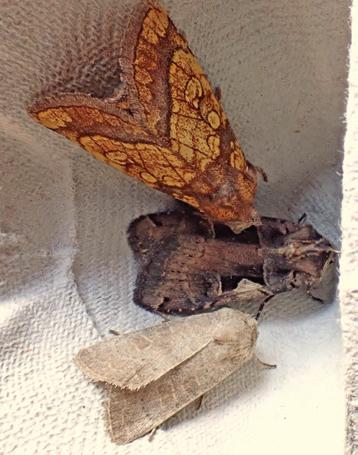
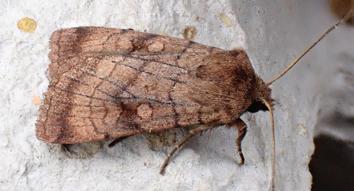
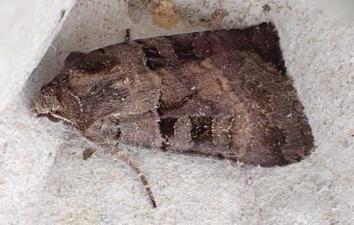
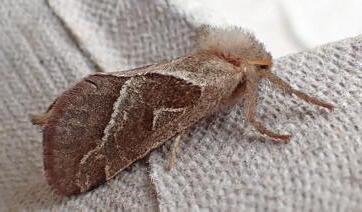
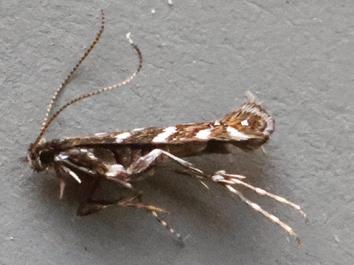
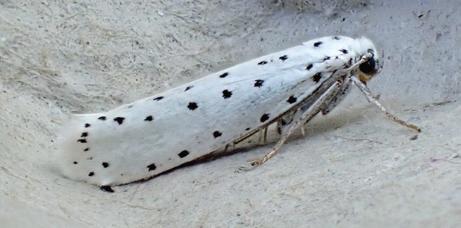
Top to bottom:
1. Frosted Orange, Setaceous Hebrew
Character and Vine’s Rustic.
2. Six-striped Rustic
3. Square-spotted Clay.
4. Orange Swift female.
5. Parectopa ononidis. Right:
Yponomeuta cagnagella
Yponomeuta rorrella
Paraswammerdamia albicapitella
Ypsolopha scabrella
Ypsolopha horridella
Plutella xylostella, Diamond Backed Moth
Prays fraxinella
Scythropia crataegella
Endrosis sarcitrella, White-shouldered House moth
Carcina quercana
Scrobipalpa ocellatella
Beet Moth
Coleophora alcyonipennella
Elachista freyerella (GD)
Blastobasis adustella
Emmelina monodactyla
Archips podana, Large Fruit Tree Tortrix
Pandemis corylana
Pandemis heparana
Epiphyas postvittana, Light Brown Apple Moth
Acleris variegana
Cochylimorpha straminea
Agapeta hamana
Agapeta zoegana
Neocochylis hybridella
Cochylichroa atricapitana
Celypha striana
Celypha lacunana
Lobesia abscisana
Spilonota ocellana
Eucosma sp (hohenwartiana)
Galleria mellonella, Wax Moth
Nephopterix angustella
Acrobasis advenella
Pyrausta despicata, Mint Moth
Pyrausta purpuralis, Common Purple and Gold
Anania coronata
Ostrinia nubilalis
Udea ferrugalis
Patania ruralis, Mother of Pearl Moth
Nomophila noctuella
Cydalima perspectalis, Box-tree Moth
Evergestis forficalis
Evergestis limbata
Eudonia mercurella
Eudonia pallida
Agriphila tristella, Comon Grass-moth
Agriphila staminella
Agriphila geniculea
Catoptria falsella
Oak Hook-tip
Chinese Character
Poplar Hawk-moth
Single-dotted Wave
Small Blood-vein
Blood-vein
Garden Carpet
Common Carpet
Dark Spinach
Purple Bar
Green Carpet
Double-striped Pug
Cypress Pug
Lime-speck Pug
Wormwood Pug
Tawny Speckled Pug
Treble Bar
Sharp-angled Peacock
Tawny Barred Angle
Latticed Heath
Brimstone
Dusky Thorn
Willow Beauty
Common White Wave
Common Wave
Light Emerald
Iron Prominent
Swallow Prominent
Maple Prominent
Pale Prominent
Chocolate-tip
Snout
Gypsy Moth
Ruby Tiger
Dingy Footman
Spectacle
Burnished Brass
Copper Underwing (Amphipyra pyramidea GD)
Mouse
Scarce Bordered Straw
Mottled Rustic
Vine’s Rustic
Straw Underwing
Angle Shades
Flounced Rustic
Frosted Orange
Rosy Rustic
Cloaked Minor
Centre-barred Sallow
Nutmeg
Bright-line Brown-eye
Common Wainscot
White Point
Heart and Club
Archer’s Dart
Turnip
Shuttle-shaped Dart
Flame Shoulder
Small Square Spot
Large Yellow Underwing
Broad-bordered Yellow Underwing
Lesser Yellow Underwing
Langmaid’s Yellow Underwing
Lesser Broad-bordered Yellow
Underwing
Square-spotted Clay
Square-spot Rustic
Six-striped Rustic
Setaceous Hebrew Character
Short Cloaked
Caddis flies
Glyphotaelius pellucidus
Limnephilus affinis
Limnephilus rhombicus
Mystacides longicornis
Beetles
Nicrophorus investigator
Harlequin Ladybirds
Philorhizus quadrisignatus
Heterocerus fenestratus
Bugs
Adelphocoris lineolatus
Pentatoma rufipes
Cranefly
Tipula oleracea
Green lacewings
Dichochrysa ventralis
Chrysoperla carnea aggregate
Key
Larger Moth
Immigrant
Species abundant
Nationally scarce
REPORT – BEGINNERS
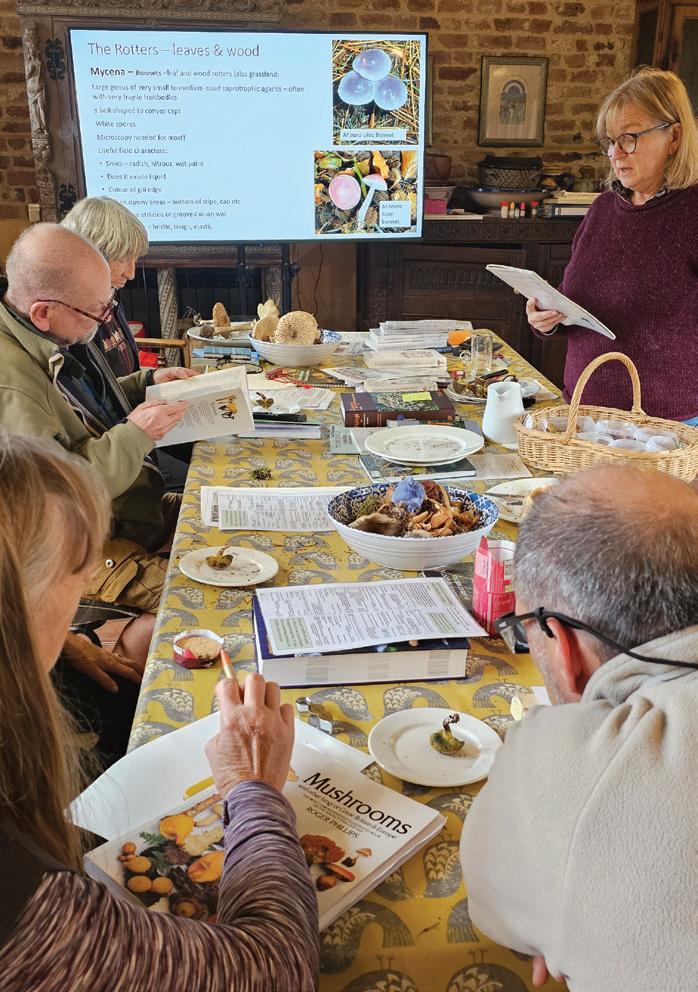
FUNGI COURSE, MILDEN HALL, SUDBURY
Joan Hardingham
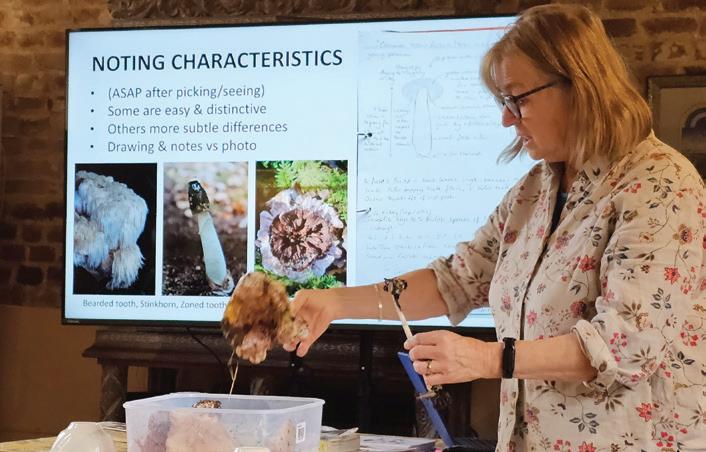
Juliet Hawkins is running a series of three workshops at her farm at Milden. This was sponsored by SNS offering a deduction for Members.
What became obvious early on that no matter how experienced one might be, in the world of fungi there is always more to learn.
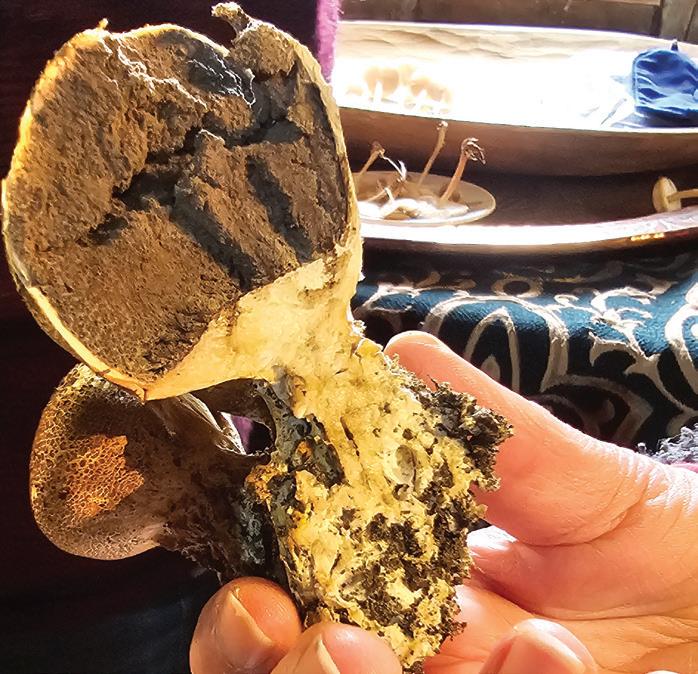
At the time of writing there have been two sessions each attended by up to twelve people. Juliet introduced us gently into this wonderful world by demonstrating that there was no shame in finding identification challenging. It is so important to constantly renew our acquaintance with fungi especially as the season is short for most of the spectacular species. The farm records showed that this was the driest spring and summer since 1972, so fungi were sparse and Juliet literally went the extra mile to get an amazing selection from Thetford Forest. Keys were introduced as terrific puzzles to be solved and her advice on the best publications and online resources was invaluable.
I hope that there can be more of this type of workshop for other species groups so Members can experience an interesting and enjoyable introduction to other aspects of natural history.
James Corton, County Recorder for Butterflies, Suffolk
The Southern Small White (Pieris mannii) was first confirmed in the UK on 2nd August 2025 at Landguard Bird Observatory in Suffolk by Chris van Swaay using photographic evidence supplied by Will Brame. It sparked a great deal of interest from wildlife enthusiasts. A large influx of white butterflies has occurred this year in successive waves throughout June and July, mostly on the east coast, with some waves numbering into the hundreds of thousands. In mainland Europe, for every Southern
Pieris mannii Hildesheim, Germany
Small White there are reportedly 10,000 Small White. In an ‘invasion year’ such as 2025 there could be hundreds of Southern Small White in the UK already – and now people are looking out for them. At least one more has since been confirmed.
As County Recorder for Suffolk, I have been involved and had a busy few days with social media and through my County Recorder emails. The queries received has led to this field guide being compiled with the help of ten years of field experience from Chris van Swaay and his photographs of ‘typical’ Southern Small White butterflies at various times of year. Variation occurs which makes identification even harder so I will concentrate on typical adults only.
Identifying Features of the Southern Small White
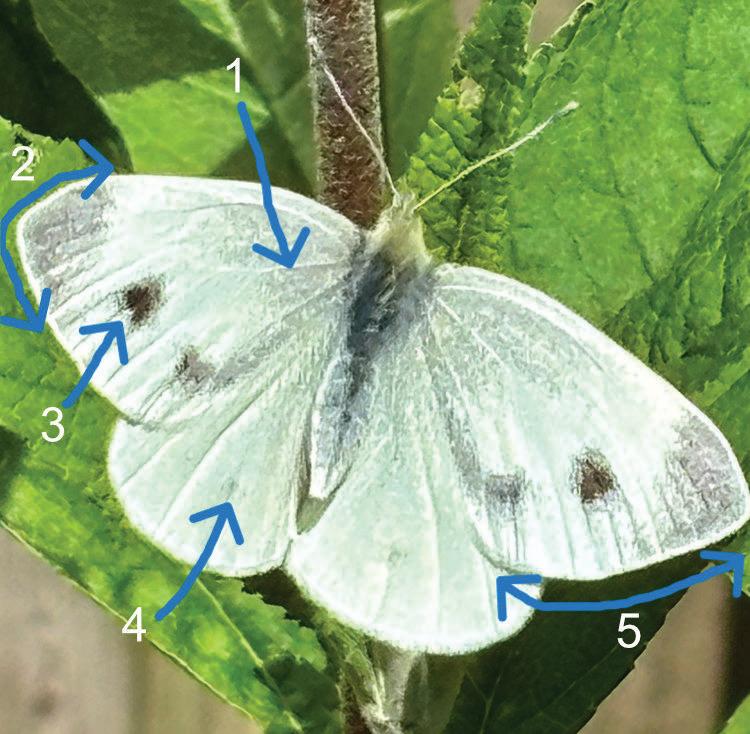
Females are perhaps easier to separate from other whites than the males. The species can have three generations a year and markings vary both between generations and individuals. To keep things as simple as I can I’ll describe the typical spring brood features and then the summer/autumn brood features which differ from this.
Spring brood features:
1. Heavy dusting of blackish pigment across much of the wings
2. The apical patch is large and extends down one third of the wing margin, level with the discal spot
3. The discal spot is large and squared, often with a concave outer border
4. Sometimes there is an additional discal spot on the hindwing which can be reduced to a smudge and is often paler
5. The outer wing margin is noticeably curved compared to the straighter margin of the Small White
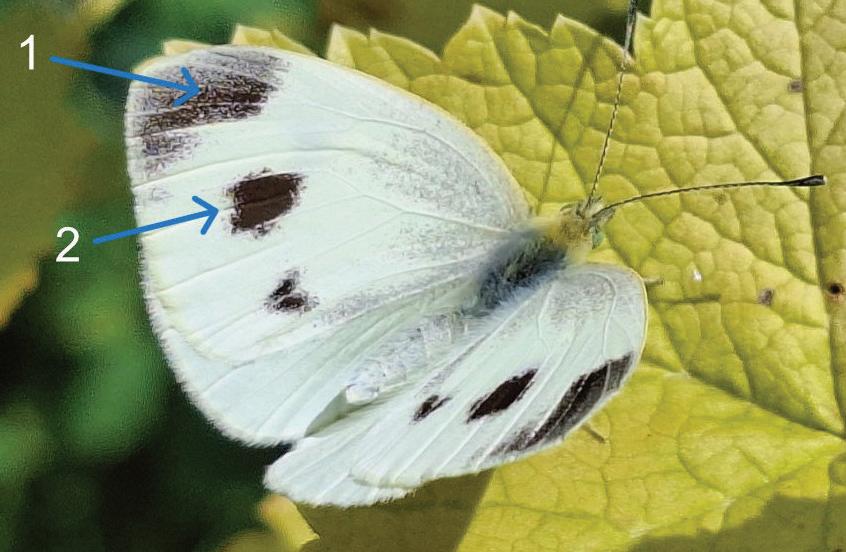
Summer and autumn broods have much more contrast. The discal spot is even larger, sometimes spilling over the veins –a feature not found even in well-marked Small White. As with the spring generation, it is square-like and often concave on the outer edge. Some females have both forewing spots joined by a bar of black scales and/or another discal spot, on the upperside hindwing (see Will Brame’s photograph). This also rarely occurs in Small White females.
Summer brood features:
1. Markings are darker in summer and autumn broods and more extensive than in the Small White
2. The discal spot is still large, square-like and often with a concave outer edge – sometimes so large it spills beyond the boundary of the wing veins
The caterpillar looks similar to the Small White but has a dark head in its early stages and feeds on Candytuft, Inflated Bladderseed and probably related plants also. The pupa is whitish and sometimes fused with red and lacks any black markings. By contrast, the Small White pupa is greenish and has black markings.
Similar Species
Large, Small and Green-veined White are all in some ways similar to the newly arrived Southern Small White. Large White are the easiest to separate, being larger and the wing markings are quite different when observed. The apical patch extends down the margin a long way (two thirds) and males have no discal spot. Females have two large forewing spots but these are rounded. Green-veined White can resemble Southern Small White on the upperwings but the discal spots are rounded and their veins blackened. Additionally, the apical patch is broken and continues down the margin much further than in Southern Small White. The Small White is the species most likely to be confused. It varies quite a deal and can appear similar to Southern Small White. Individuals maturing during hot weather appear darker with more black pigmentation of their wings, including extended apical patch and larger spots—but not the very large and square-like spots of typical Southern Small White. They are also rounded and not concave on the outer edge. There is an overlap in markings due to variation in both species where it is impossible to identify with certainty and this will affect recording.
Flight
Some similar looking whites have characteristic flight patterns which help to identify them. For example, Clouded Yellow, including the whitish helice form, have a bobbing flight which makes them stand out from other whites. The Southern Small White also has a different flight and it has been likened to the dainty flight of the Wood White.
Requirements for Acceptance of Records
Butterfly Conservation has requested the species be added to the iRecord database so that users can record sightings. The species is new to the UK list and we are all inexperienced with it. Additionally, there is overlap with the very variable Small White. So, we as County Recorders will be looking for diagnostic features which typical specimens will possess. Ambiguous records will probably not be acceptable because we have to be certain in order to keep accurate data on the occurrence and spread of a new species. These can be recorded still, at genus level as Pieris species or Small White.
In conclusion, all records should be accompanied by one or more photographs before they can be verified and confirmed.
Curious about the natural world on your doorstep? The SBIS Knowledge Hub holds a treasure trove of information about Suffolk’s wildlife. Our digital library shelves are stocked with back issues of local natural history journals, including Suffolk Natural History, Suffolk Birds, White Admiral, The Harrier, and Suffolk Argus. Enjoy a deep dive into our fascinating Species of the Month, and explore the brilliant Suffolk Bird Atlas or the brand new Suffolk Bat Atlas.
Discover all this and more at www.suffolkbis.org.uk.
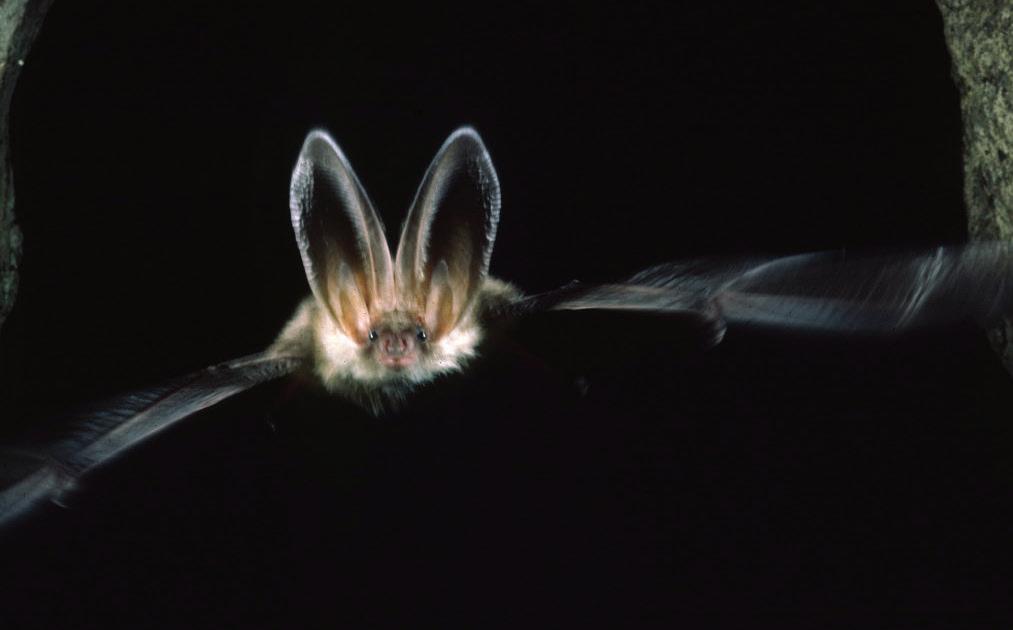
Brown long-eared, Plecotus auritus, one of the bat species most affected by remedial timber treatment in house roofs.
LEGAL PROTECTION FOR BATS ORIGINATED IN SUFFOLK
Robert E Stebbings
It is now exactly 50 years since the first legislation came into force giving some limited protection for bats. It was in early 1974 that Lord Beaumont of Whitley introduced into Parliament a seedling, Wild Plant Protection Bill. However, after the second reading Lord Cranbrook had discussions with Lord Beaumont of Whitley and suggested his Bill should be combined with a more comprehensive one incorporating animals as well. Parliamentary time is always at a premium and therefore it was much more sensible to cover all wildlife needing protection at that time. In effect, it was our former President, the 4th Earl of Cranbrook who lived at Great Glemham, Saxmundham, who managed to create and guide through Parliament the Wild Creatures and Wild Plants Bill 1975. After that was enacted he started working on the follow-up next bill giving full protection to bats in the Wildlife and Countryside Act 1981, but unfortunately he became ill and died in 1978 (aged 78). He was President of the SNS from 1950 to 1977.
So how did this happen? Lord Cranbrook was not a trained biologist but he had a great fascination in natural history and archaeology, always asking questions about how animals lived. Many of his observations and investigations were published in the Transactions of The Suffolk Naturalists’ Society. Often written with humour such as discovering water shrews have a poisonous bite. As a countryman he was always active in any legislation concerning countryside issues.
So where did the bat interest start? Certainly there were many bats around Great Glemham and on occasion he had specimens which he held in captivity to observe their behaviour. My first contact was a letter he sent to me dated 12 October 1957 just after I had joined the Mammal Society of the British Isles of which he was also the President. He noted I came from Bury St Edmunds, Suffolk so he wrote, ‘where I plough a very lonely mammalian furrow’ and invited me to join SNS – which I did some 68 years ago. Over the following months and years we exchanged letters on many topics but mostly concerning bats.
When I began to realise bats showed signs of declines in abundance from observations I was making around southern Britain in the early 1960s I wrote to him suggesting bats should be protected. He told me there would be no chance because not only did we not have sufficient hard facts but the Peers and MPs would not give them protection because generally bats were regarded as vermin. Local Councils sent their ‘rat catchers’ to get rid of bats from houses usually with poison gas where owners complained about bats living there.
Going back to my introduction to bats. A group of undergraduates at Cambridge started visiting the chalk mines at Bury in 1947 and then started ringing bats in 1949. They were David Harrison, reading medicine (became a GP and of the Harrison Museum – an expert on Arabian mammal fauna, it’s now the Harrison Institute, Sevenoaks, Kent), Kenneth Burtsal, Law and became a solicitor and Brian Francis, who went into banking. Later the local biologist Owen Gilbert joined them and wanted someone to help as he was living away at university in Wales and Manchester. Subsequently he was employed by the new Nature Conservancy as a soil ecologist and was based in Cumbria. He wrote short notes on Suffolk pseudoscorpions published in the SNS Transactions. So when I was aged ten years and one month he took me into the mines and showed me how to find bats, how to identify them and how to ring them. So I had two visits with him in January and February 1952. Then I was on my own.
In the 1950s we found the numbers of bats were fewer after first visits in a winter which appeared to be partly due to the disturbance of bats in hibernation which I myself was causing. Some years later I was able to measure the loss of the bats body mass due to my disturbance. That discovery caused a change in how results were being obtained in the hibernation season by reducing disturbance. (see Stebbings 2023). As a result of discussing these with Lord Cranbrook combined with other observations I was beginning to make across mostly southern England, he suggested what kind of work was necessary to achieve a possible route to legislation. One key piece of work which clearly would have seriously impacted bats was work at Rothamsted Research Station which showed the number of night flying insects declined by 50% in six years around 1950.
In 1960 I failed my A-level exams at school and wanted a temporary job so contacted Dr Owen Gilbert asking for suggestions. He knew a college friend who also worked for the Nature Conservancy, based at Furzebrook Research Station, near Wareham, Dorset. He, Dr Derek Ranwell, was studying the development of salt marshes. I was lucky to get a three week casual labour job there which got extended to six weeks and then a full year. Fortuitously the late Victorian former country house was found to shelter nine of the then twelve species of bats resident
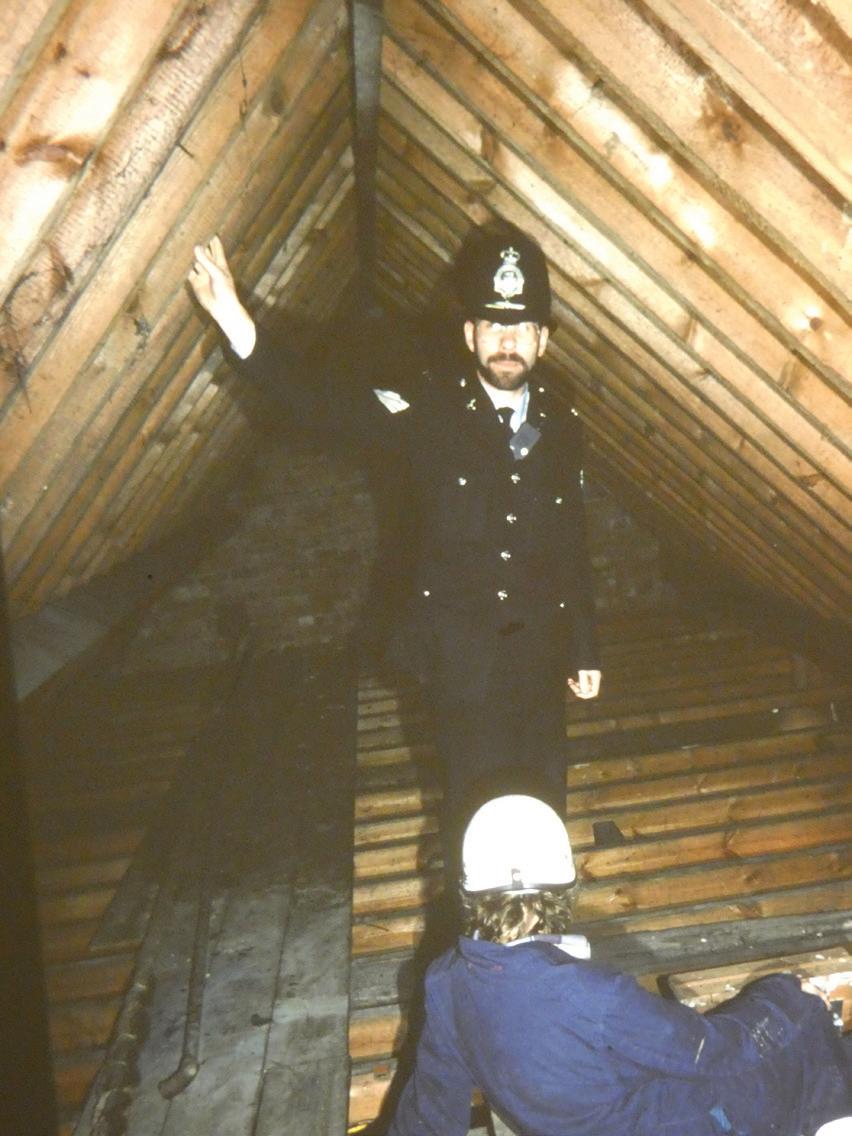
Policeman in house roof where a forbidden chemical had been used to treat timbers which killed bats. The policeman was present to witness the gathering of evidence for a possible prosecution.
in Britain. However, working for the Statutory Nature Conservation agency gave me the opportunity to quiz the senior managers about the need for research on bats as advised by Lord Cranbrook. Every year I kept pushing the idea we needed some detailed research on bats but the answer was always NO! So in my spare time I continued to accumulate evidence which I considered would show the threats to bats and the consequences.
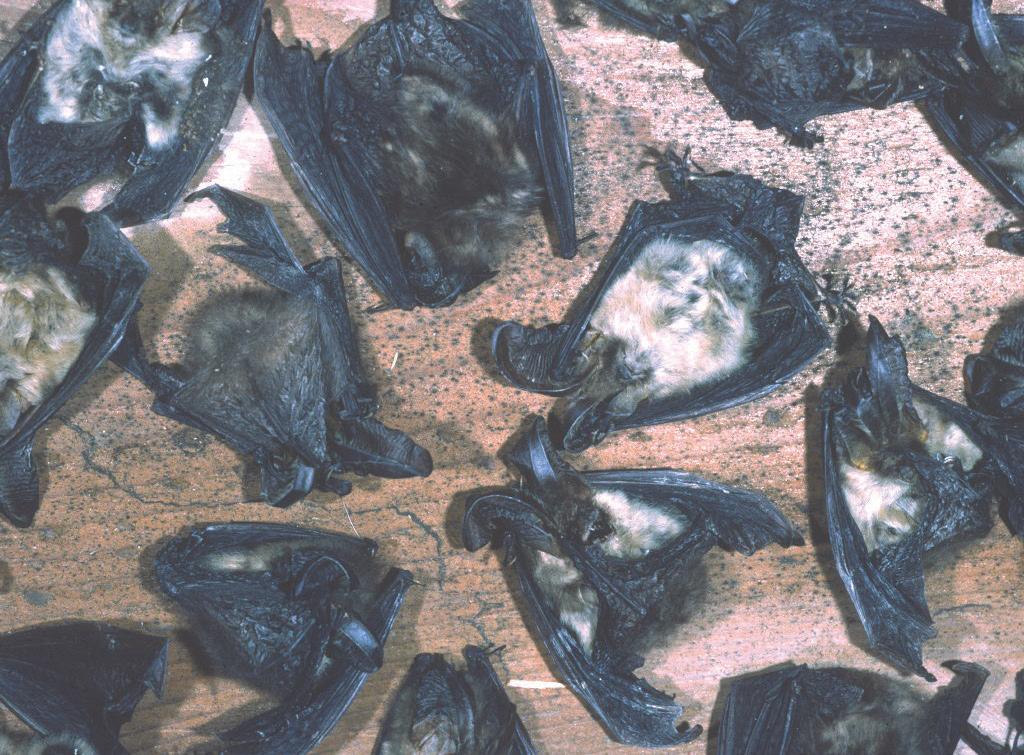
Apart from deliberate killing of bats by people wishing to get rid of them, there were other serious issues causing their deaths. From around 1950 the growing remedial timber preservation industry used mostly the organochlorine pesticides including DDT, dieldrin and lindane. Many bats live in buildings and some cases were discovered where thousands of bats were killed and most seriously, these chemicals were highly persistent so any bats entering treated areas even years after treatment could die.
After European Conservation Year (ECY) in 1970 when a large amount of publicity concerning the lives and declines in bats was given, peoples attitude suddenly changed. Also, my years of plaguing the Nature Conservancy hierarchy paid off in 1972 when I was transferred to Monks Wood Experimental Station, near Huntingdon to work on bats under Dr Norman Moore in the Toxic Chemicals Section. After ECY bats became the subject of interest for their special biology and life histories and not just as creatures of horror stories. Lord Cranbrook started to be swayed as to the need for some protection for bats. And with others in the House of Lords a plan was hatched to get some protection. But Lord Cranbrook wisely advised that their Lordships would not consider a bill giving blanket protection
Brown long eared bats killed by remedial timber treatment. Note these bats often die in convulsions while biting their wrists
and said bats do not have lovely big eyes like seals and therefore, lacked the loving impact. It was agreed we had really good knowledge about greater horseshoe bats, Rhinolophus ferrumequinum, with huge losses in populations (Stebbings & Arnold 1989) and also the greater mouse-eared, Myotis myotis, which had tried to colonise England but had failed (Stebbings 2024) and effectively had become extinct again. In addition, there had been no control of ringing bats which was known to cause harm to bats so in order to do so, it became subject to people requiring a licence from the Statutory Nature Conservation organisation.
It was in the early summer of 1975 that the bill was passed and it came into force in September that year, 50 years ago. It had been a bumpy ride getting those little bits of bat protection through Parliament with the persistence and lobbying of our former Suffolk President, the 4th Earl of Cranbrook. This laid the foundation of the bill and Act to come, the Wildlife and Countryside Act 1981 giving protection to all bats. It is interesting to read the debates published in Hansard (all on the Web) which show the kinds of problems our legislators considered. The full history of my involvement was published earlier this year (Stebbings 2025).
REFERENCES
Stebbings, R. E. & Arnold, H. A. 1989. Preliminary observations of 20th century changes in distribution and status of Rhinolophus ferrumequinum in Britain. Proc. 4th European Bat Research Symposium. Prague (1987).559-563
Stebbings, R.E. 2023. The Phenology of Hibernating Bats in Chalk Mines in West Suffolk Over 76 Years with Comments on Survival of the Different Species. Trans. Suffolk Nat. Soc. 59 (2023), 1-30.
Stebbings, R.E. 2024. Attempted Colonisation of Dorset and South England by the Greater Mouse-eared Bat, Myotis myotis, 1940 – 2021. Proceedings of the Dorset Natural History and Archaeological Society 145, 43-46. Stebbings, R.E. 2025. A half century of legal protection for bats in Britain: a personal perspective. British Wildlife. June 25, 36, 7, 488 – 495.
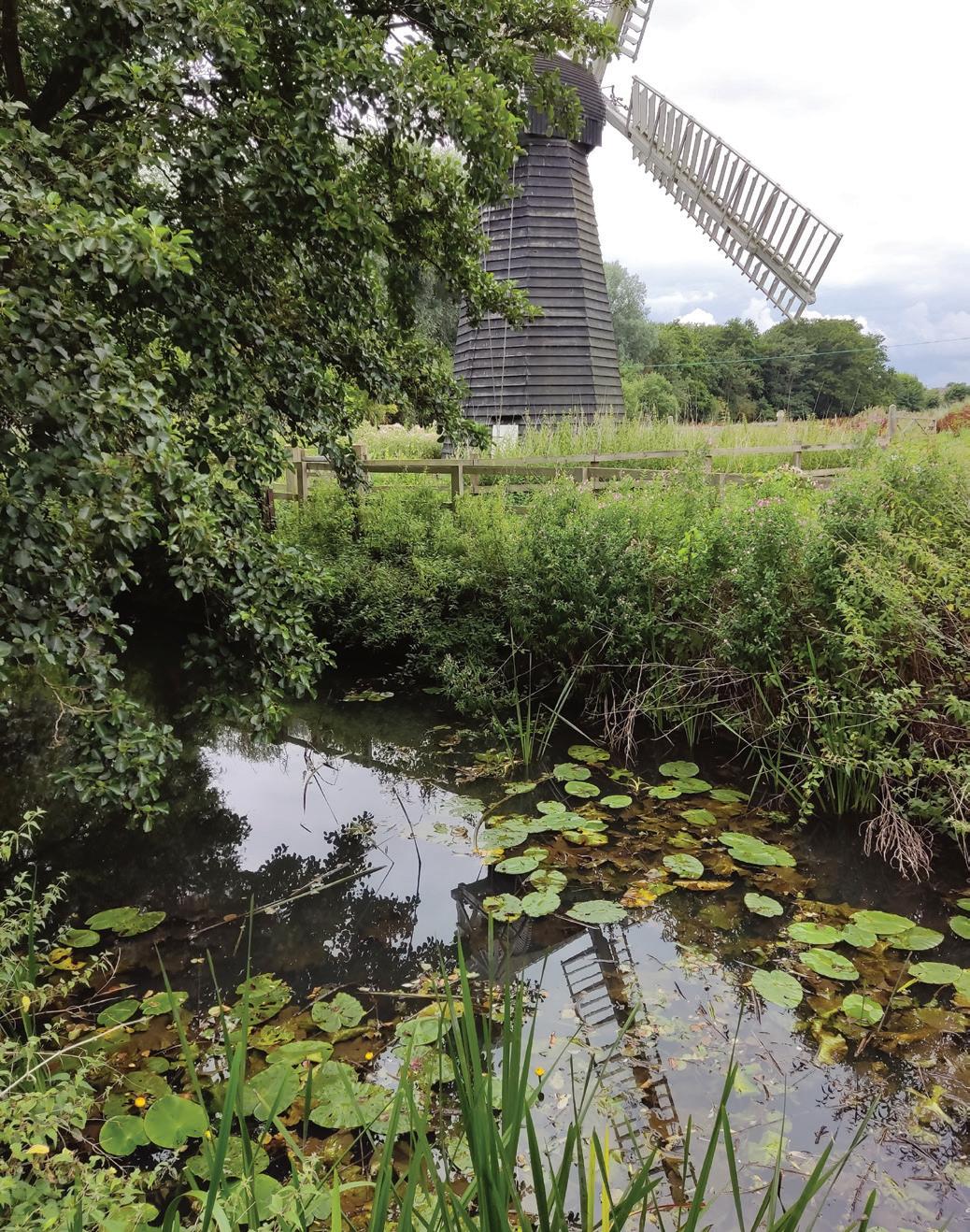
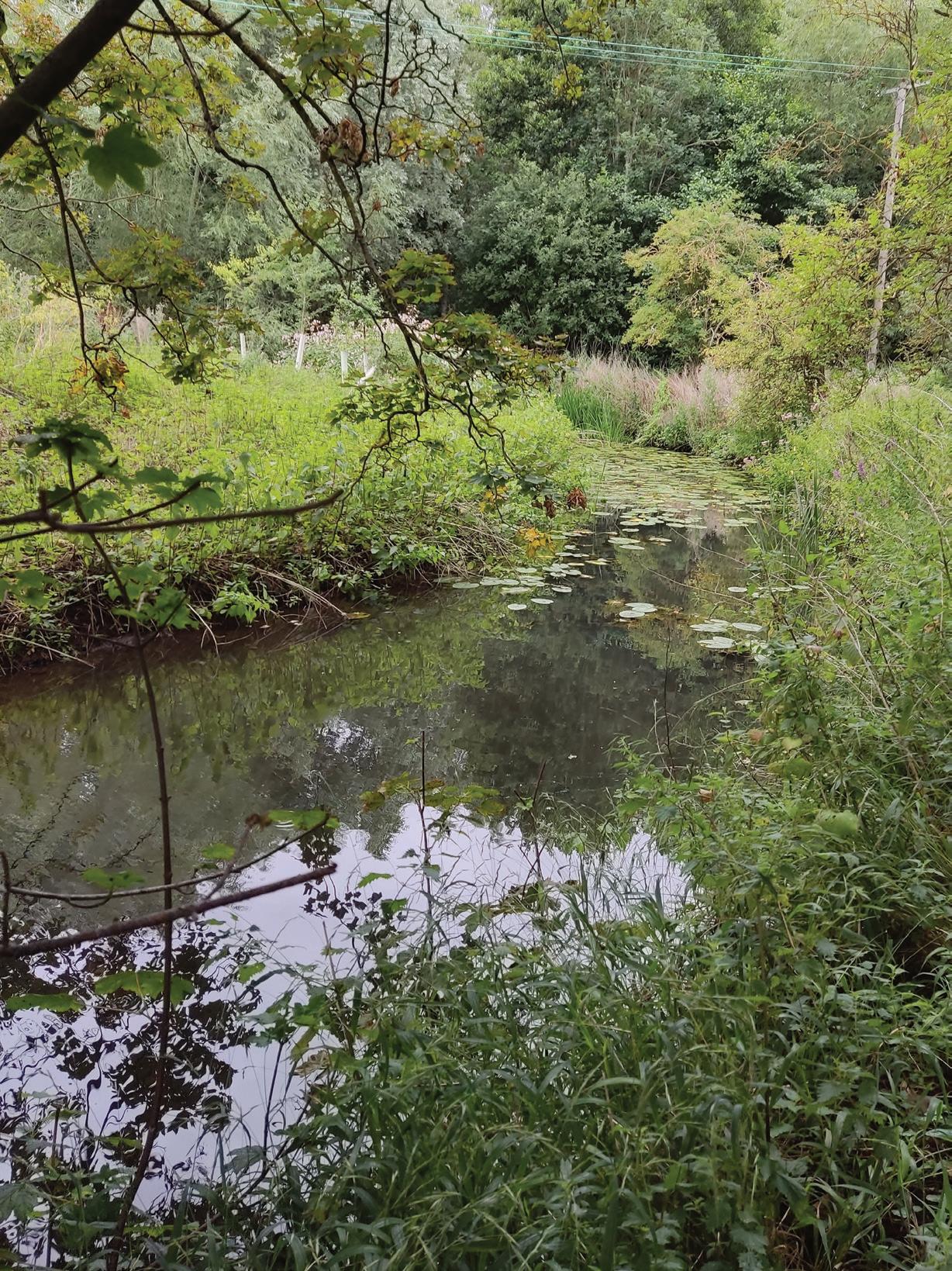
Looking upstream – the high banks indicate the low discharge of the river when the photo was taken in July 2025. The northern flood plain is clearly visible, with the Eastbridge wind pump (moved to the Museum) standing on it
THE RATTLESDEN RIVER CGS
Caroline Markham, GeoSuffolk
The Rattlesden River rises in Bradfield Woods at a height of approx. 90m OD and flows eastwards to join the River Gipping at Stowmarket 15km downstream at approx. 60m. This low relief, reinforced by Suffolk’s low rainfall and extensive vegetation cover, results in low energy levels and slow flow. The river flows over Anglian Till (deposited by the ice sheet) for its entire course, suggesting its origins are post-Anglian. The till, a stony clay, provides a high suspended load. Once lifted into suspension, clay particles require little energy for transportation. Indeed, it has been said that a high suspended load actually makes a river more efficient (thus requiring less energy) by damping down turbulent flow.
Gravel terraces along the valley sides of the Rattlesden River suggest periods of higher energy flow post-Anglian. These terraces are present along the Gipping valley downstream and were investigated by Rose et al1, suggesting snow melt and increased run off over frozen ground during cold phases contributed to their development. The flood plain is about 200m wide in Stowmarket and is floored by alluvial deposits. Investigations during the construction of the Stowmarket relief road2 suggest the present low energy regime began sometime after 7,000 BP when alluvial silts gave way to peaty deposits in the floodplain.
Unlike the gravel terraces lower down the Gipping valley, those along the Rattlseden River have not been exploited for building materials and there is no evidence of
alterations to its channel for navigation. In places there is evidence that the channel has been managed by landowners, but for the most part the Rattlesden River has remained unaltered. It is representative of our rivers on the ‘High Suffolk’ tills, initiated following the retreat of the Anglian ice sheet.
GeoSuffolk has designated a 350m section of the river and its floodplain within the Food Museum grounds in Stowmarket, as a County Geodiversity Site. This CGS encompasses two meanders of approx.130m wavelength and amplitude, sitting comfortably in a 200m floodplain, typical landforms of a river in its middle course. It is accessible to the public with an easy access path along the north bank. We are grateful to the Food Museum for conserving and giving access to this section of the river.
References
Rose, J., Turner, C., Coope, G.R. & Bryan, M.D. 1980. Channel Changes in a Lowland River Catchment over the last 13,000 years. In Timescales in Geomorphology. Gearey, B., Chapman, H. and Howard, A., 2015. Down by the River: Archaeological, Paleoenvironmental and Geoarchaeological Investigations of the Suffolk River Valleys.
The river channel, looking upstream towards one of the large meanders – note the slow flow and vegetated banks.
A WONDROUS ENCOUNTER: A CONVERSATION
Jessica Rafinski and Rasik Bhadresa
This article is a conversation between the authors when Jessica Rafinski (JR) excitedly related a local (East Bergholt) sighting of helleborines to Rasik Bhadresa (RB) one morning in late June when they bumped into each other, JR was running and RB was on his morning walk. The exchanges shifted to emails from 3 July.
JR: I came across a couple of Helleborines in Old Hall Wood1 .
RB: Oh wow. What a find! Where exactly?
JR: Just around 50 to 60 yards past the concrete footbridge over the Riber on the footpath linking the east side of Flatford Lane to the west side. Two specimens by the side of the well-trodden path, well before the sewage works on the left (PROW 34).
RB: (a day later, following an investigation, another chance meeting) I actually came across ‘three’ plants on Tuesday (1 July) morning but the flowers were not quite out.
16.46 3 Jul 2025
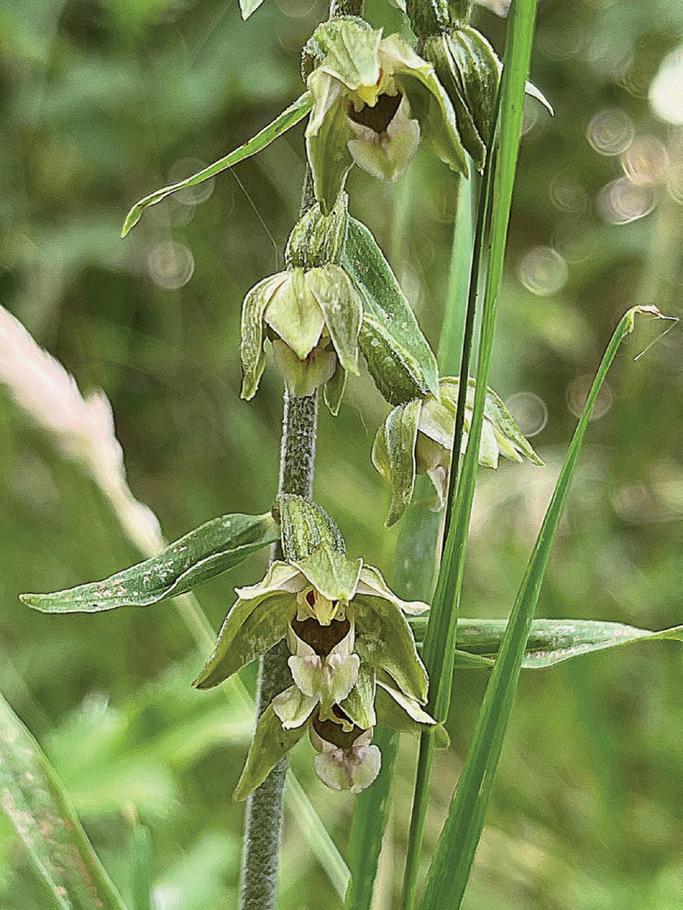
JR: One of the helleborines now has some open flowers! Please see the photograph attached (Photo 1). I will go with my magnifying glass and books but I’m inclined to think it is broad-leaved. Let me know what you think.
19.23 3 Jul 2025
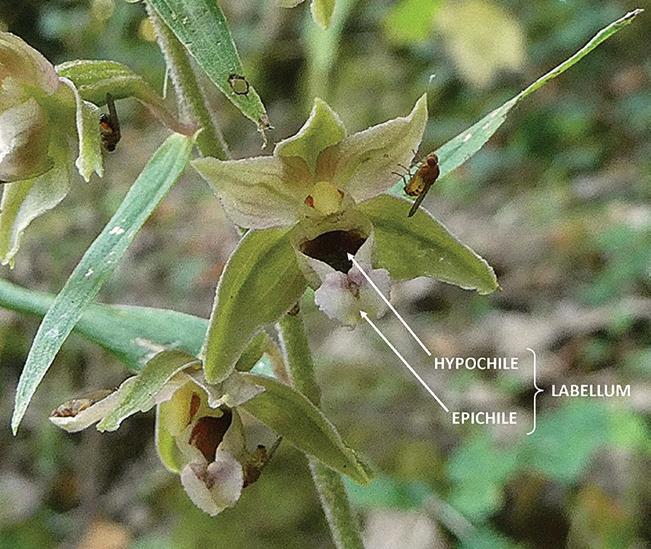
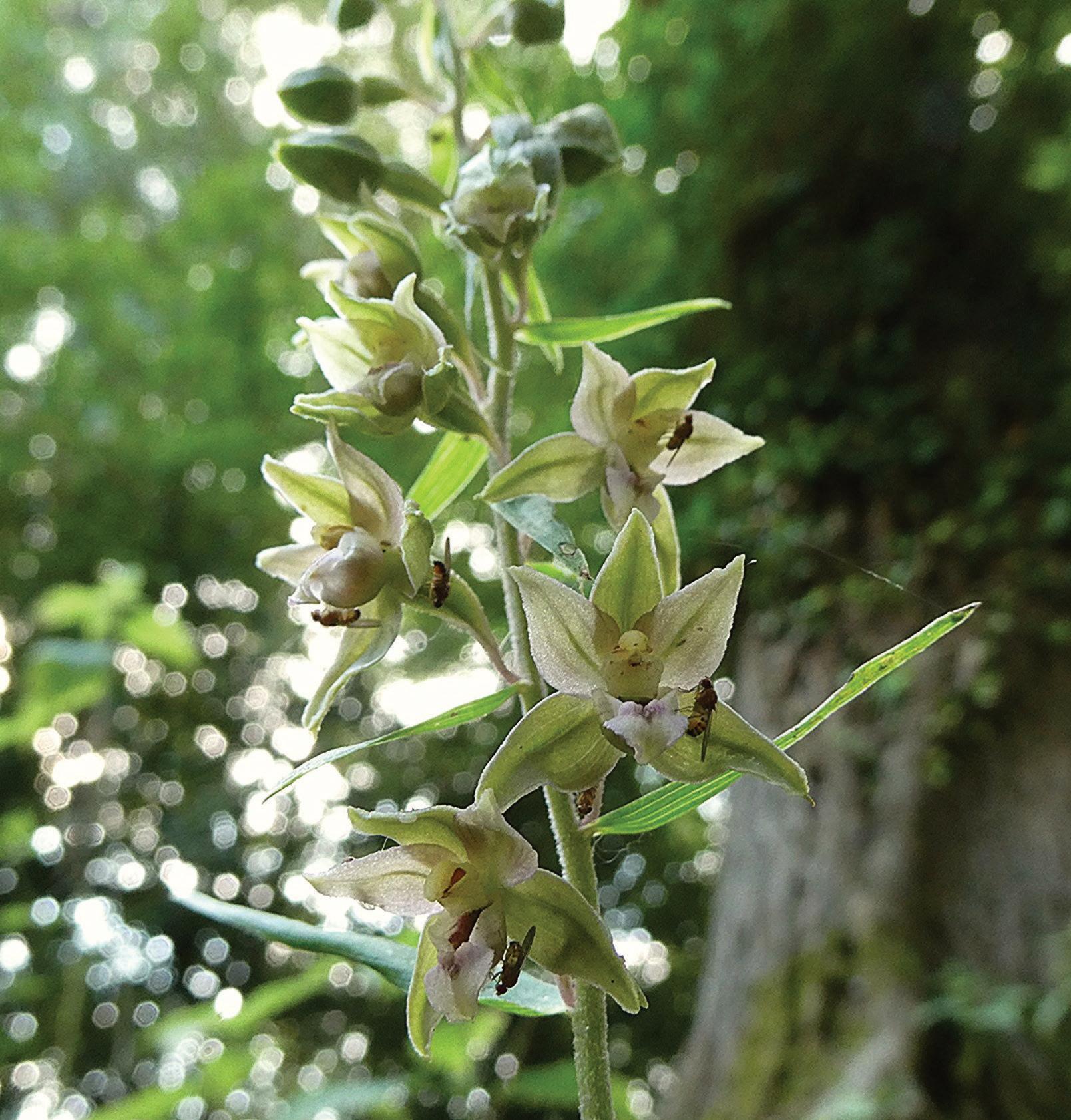
RB: Quite certain it is Broad-leaved Helleborine (Epipactis helleborine), Jess. The flat dull green ribbed leaves could have been slightly broader for my liking, but the flowers are diagnostic. If you look at the flower lip, firstly, the epichile (the front part) is ovate and greenish-white with a recurved apex. And secondly, the hypochile (the back part of the lip) is ‘cupshaped’, greenish-white on the outside and ‘dark reddish-brown’ inside. These features convince me it is BLH. I will look again and examine the flowers closely! Thank you for your lovely photo.
JR: Thank you – will take my books and have a closer look too (and for the extra plant that I’ve missed so far…). I also thought the sheathed lower leaves and purpling stem lower down helped the identification? Quite agree on the breadth of the lower leaves but I understand they can be very variable plants…
11.03 4 Jul 2025
RB: I looked again this morning. The third one is further along on the left and ‘39 steps’ ahead. The epichile is slightly pink in this third specimen which is an accepted variation. There is an ash tree on the left and a young sycamore nearby ahead. The leaves of the first plant were suffering from chlorosis. Anyway, considering the dry summer we have had so far), to be kind and to help them along, I took some rain water with me this morning and watered them all (I hope this will be regarded as a conservation measure!).
20.17, 8 Jul 2025
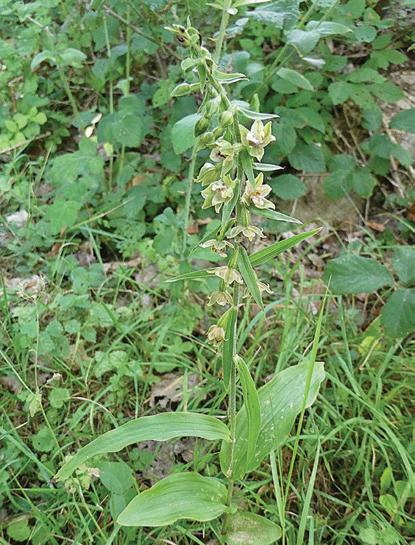
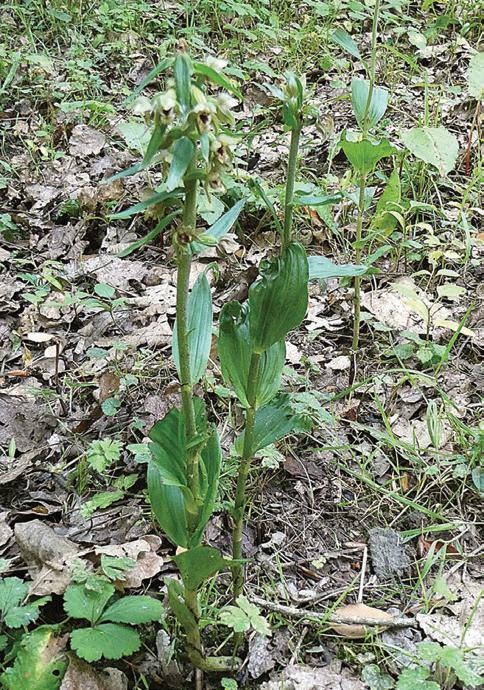
RB: I thought I had to let you know. This morning, I came across 5 more plants. Two had the tips chewed off and one most of the plant (in all likelihood muntjac!). The other two, around 40-50 cm tall, had the spikes intact. As for location, they were next to the path that runs parallel to the brook, so once again, on the lower east side of the wood. This path is the first turning on the left so about 20 steps after the footbridge. I have drawn a small arrow on the trunk of an ash trunk in this corner. Then after around 80 steps along this path in a small clearing, there is one on the left of the path and the other four on the right (could easily be trampled unknowingly). As a guide, I have wedged a small white square of paper on the heavily ivyied trunk of the tall hybrid black poplar nearby! There is an ash and an oak on the right and further along some young sycamore trees. Hope you find them. Here is a photo (Photo 2) of an individual flower and one of the whole plant (Photo 3) with leaves, characteristically, heavily veined and in a spiral and bottom ones broadly oval, and flowers, a few horizontal but most drooping.
I think you found helleborine central! Thanks to your good directions, I found the tree (and retrieved the white paper). I then spent about an hour crawling along the path – I counted 37 stems!!! Couldn’t believe it…. Starting in that area and working along, I counted 11 along the left-hand side with 4 flowering and 26 on the right-hand side with 4 flowering. Most stems were single but a few groups of 2 or 3 together. I took my ‘Orchids of Britain and Ireland’ by the Harraps1 and my hand lens, and I’m as confident as I can be working through the descriptions that they are Broad-leaved Helleborines.Whilst some of the stems without (or very few) flowers had definitely been eaten, I thought some looked like non-flowering stems which I gather is relatively common. Some were very small stems (or the remains of after being eaten) but distinctive. And for luck, I then found another tall, flowering stem on the path from Flatford Lane to the brook – as you walk downhill towards the woods, as the path widens out, just behind the tree on the right. Makes me wonder just how many are in there as I didn’t risk leaving the path. I had to leave or dinner was going to be very late…. Thank you for sharing and I managed to get a reasonable shot of a flower (on the one Alex found as there is just one that isn’t drooping downwards). Wow!
17.24 10 July 2025
RB: Seek and ye shall find…and in your case, ‘plenty’! That’s amazing. Since they are rhizomatous, small clumps growing together might be ‘clones’! But a good quantity would have seeded and produced new ‘starters’. However, I am fairly certain they have NOT been reported from this part of Suffolk! So a new find! I will get this checked at some point3. I will have a bit of a probe tomorrow morning, and treading (possibly not on all fours!) extremely carefully. Thank you for the detail, evidently the flowers are generally ‘droopy’. Thank you for retrieving the ‘conspicuous’ piece of white paper!
15.54 14 July 2025
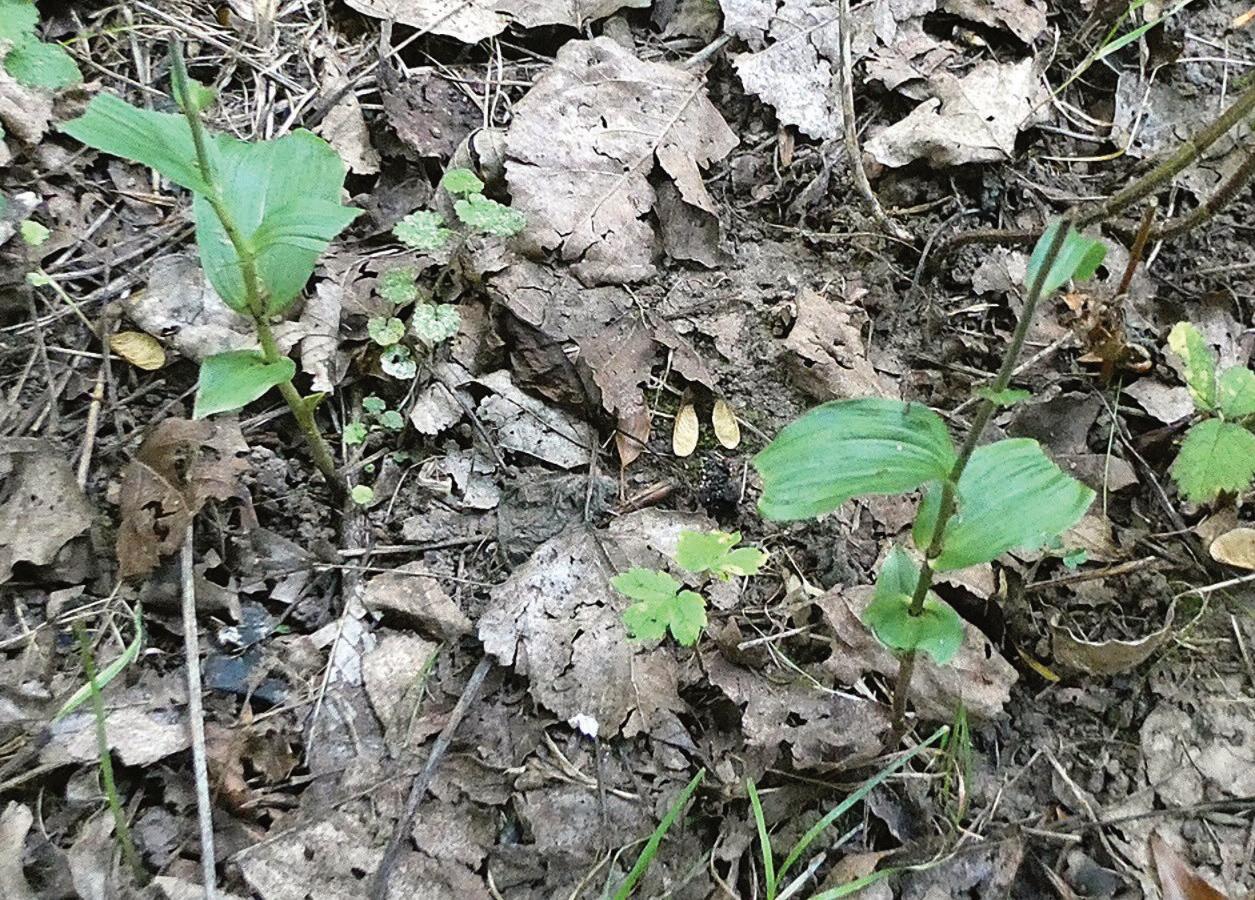
RB: Yes, I have had a look at the colony but did not crawl around counting but I did see quite a few, and many showing signs of ‘vegans’ on the loose (Photo 4 –with large parts of the racemes gone, and Photo 5 – only some leaves remaining, the angular frayed cuts indicative of muntjac browsing). Perhaps muntjacs preferentially seek them out! But I also came across, interestingly, one intact spike but with some ‘dipteran’ visitors (Photo 6). Our plants are indeed popular. And as I left, I heard a muntjac barking not far away.
But just when I was thinking there possibly can’t be any more, I came across 3 more but on the right of the main path just opposite where we turn left for our ‘colony’. One is near an oak sapling and the other two (one with a missing spike!) under the canopy of a young sycamore. These BLHs possibly all have mycorrhizal associations with differing tree roots!
JR: Isn’t it amazing to think what may be going on under our feet! Alex and I walked that way today and found even more looking for your extra stems. Maybe we are up to around 50?
I’ve had a quick look in Harraps and they suggest an affinity for beech but note that BLH is opportunistic and can colonise other habitats. I don’t know much at all about different fungi but Harraps says BLH has an association with ectomycorrhizal fungi so may gain nutrients from the roots of nearby trees via these fungi? They also note that it may flower and then spend 1 or 2 or 3 years dormant with germination to flowering being from 18 months to 8 or 9 years! Aren’t they a remarkable plant?!
16.00 17 August 2025
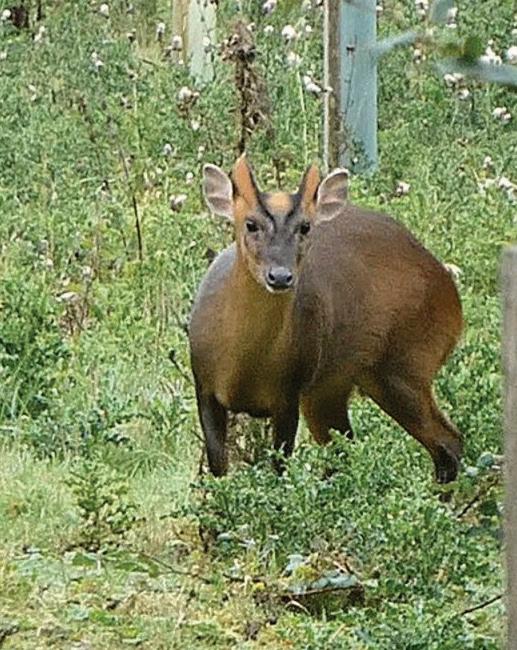
RB: Yes, a true masterpiece. Affinity with beech?? That may well be. However, we simply don’t have any Beech to speak of in OHW! So quite agree, they are an opportunistic species. I had a good look around at the trees surrounding our BLH finds. I got the impression that they had an entaglement with the roots of especially poplar and ash. Now that we are on the case, Jess, it will be interesting to see what happens in future years. And just like a muntjac (Photo 7 – this one seen in the new plantation adjacent to OHW), keep our beady eyes open!
Notes
1. Old Hall Wood is also referred to as the ‘Plantation’ by the Old Hall Community to whom the wood belongs. This other name dates back to around 40-45 years ago when mainly Ash was planted in many parts of this small (c300mx150m) mixed woodland which surrounds the local sewage works. Apart from the occasional older oaks, sycamores and poplars (c100-150 years old), the wood also supports Holly, Hazel, Hawthorn, Field Maple, Scot’s Pine, Sweet Chestnut and Wych Elm. As expected, Ash is
now by far the dominant species growing as straight standards reaching the sky. Young sycamores also abound. Age estimates are based on girth measurements using Mitchell’s Rule.
2. Harrap, A and Harrap, S (2009): Orchids of Britain and Ireland: A Field and Site Guide, A & C Black.
3. A summary of my brief Email exchange with Martin Sanford: RB: Just to let you know, Martin. We have discovered Broadleaved Helleborine in a wood in East Bergholt TM075340, first seen late June. Possibly not reported from East Bergholt before? Are you able to verify? Photo attached.
MS: Thanks Rasik. What a nice find. They do turn up in new sites occasionally and don’t seem to be particularly loyal to ancient sites. We had one in a new housing estate in Ipswich a couple of years ago and they sometimes colonise forestry plantations in the Brecks. Don’t think we’ve had E. helleborine recorded in your area before (well, not in the last 50 years!). Fab!
A remarkable, brilliantly written, must-read revelation and insight into plant behaviour. What a delight to discover Boquila trifoliolata and its tendrils, which creep along the forest floor and, on meeting other plants, enable it to mimic any plant it comes across, thus turning “itself into a near-exact replica of another”. This is masterpiece full of botanical surprises.
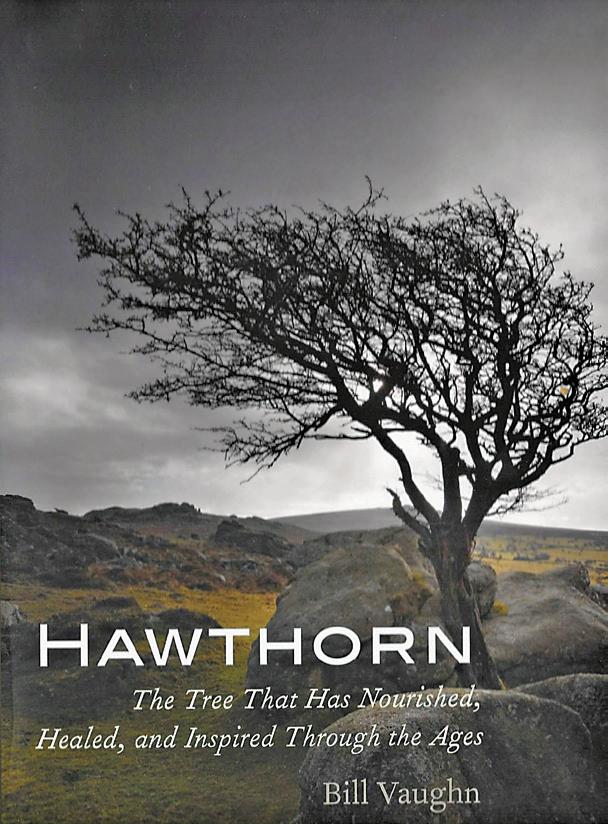
Hawthorn: The Tree that has Nourished, Healed, and Inspired through the Ages by Bill
Vaughn
A captivating, exploration of the history bound up in this thorny tree, a tree that “has deeply influenced European and American landscapes and cultures”. The book is divided into twelve, fascinating chapters starting with, ”The World’s Busiest Tree”, describing the author’s amusing, if bloody, encounter with a hawthorn that was causing a problem; it had “shot out eight trunks” and become entangled in a fence. You can imagine the cursing that must have occurred trying to remove this hawthorn. As I read each chapter, I realised that my knowledge of the hawthorn was extremely limited. Bill Vaughn writes an engaging story about this ancient tree “and its varied role in human history”. Even if you are not interested in trees, this book is recommended for the remarkable tree’s history through the ages.
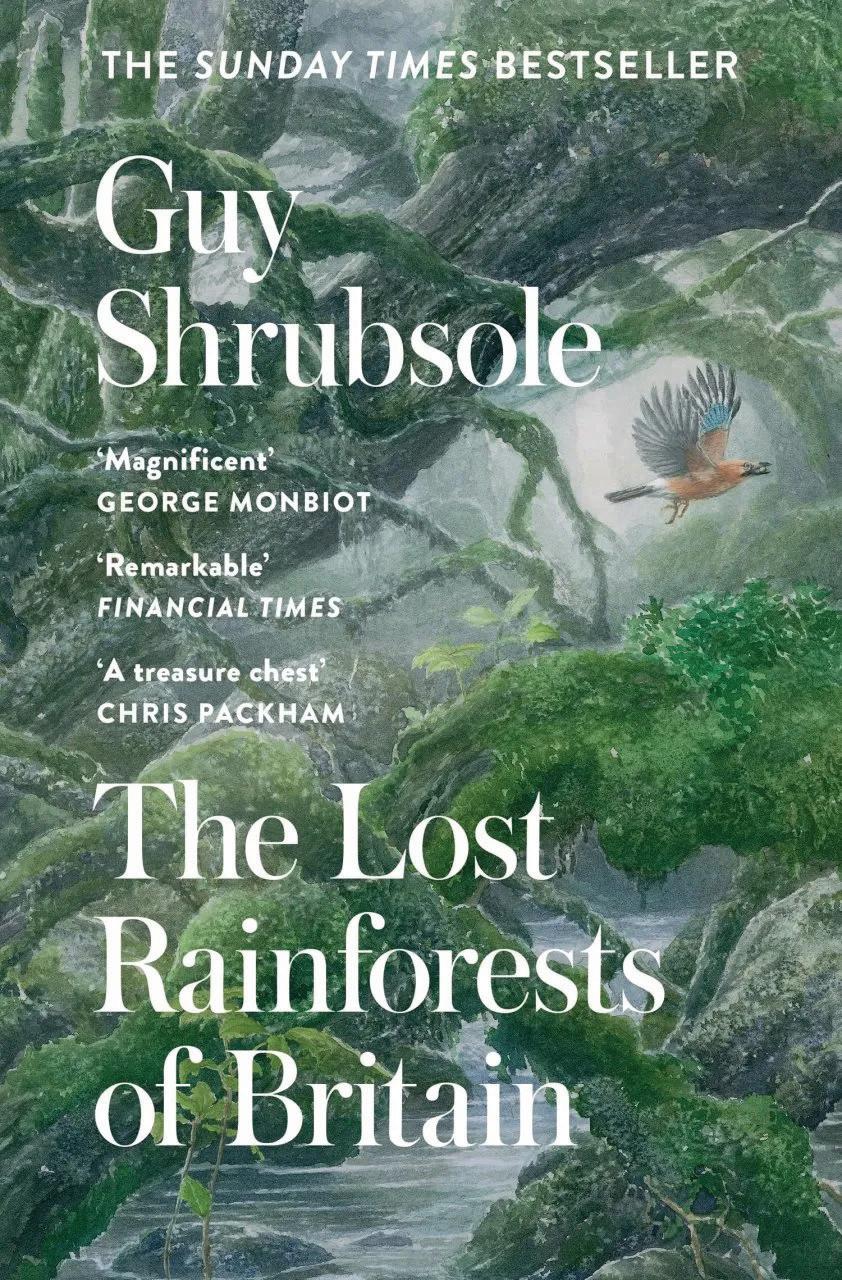
The Lost Rainforests of Britain
by Guy Shrubsole
The Sunday Times Best Seller and Science Book of the Year 2022
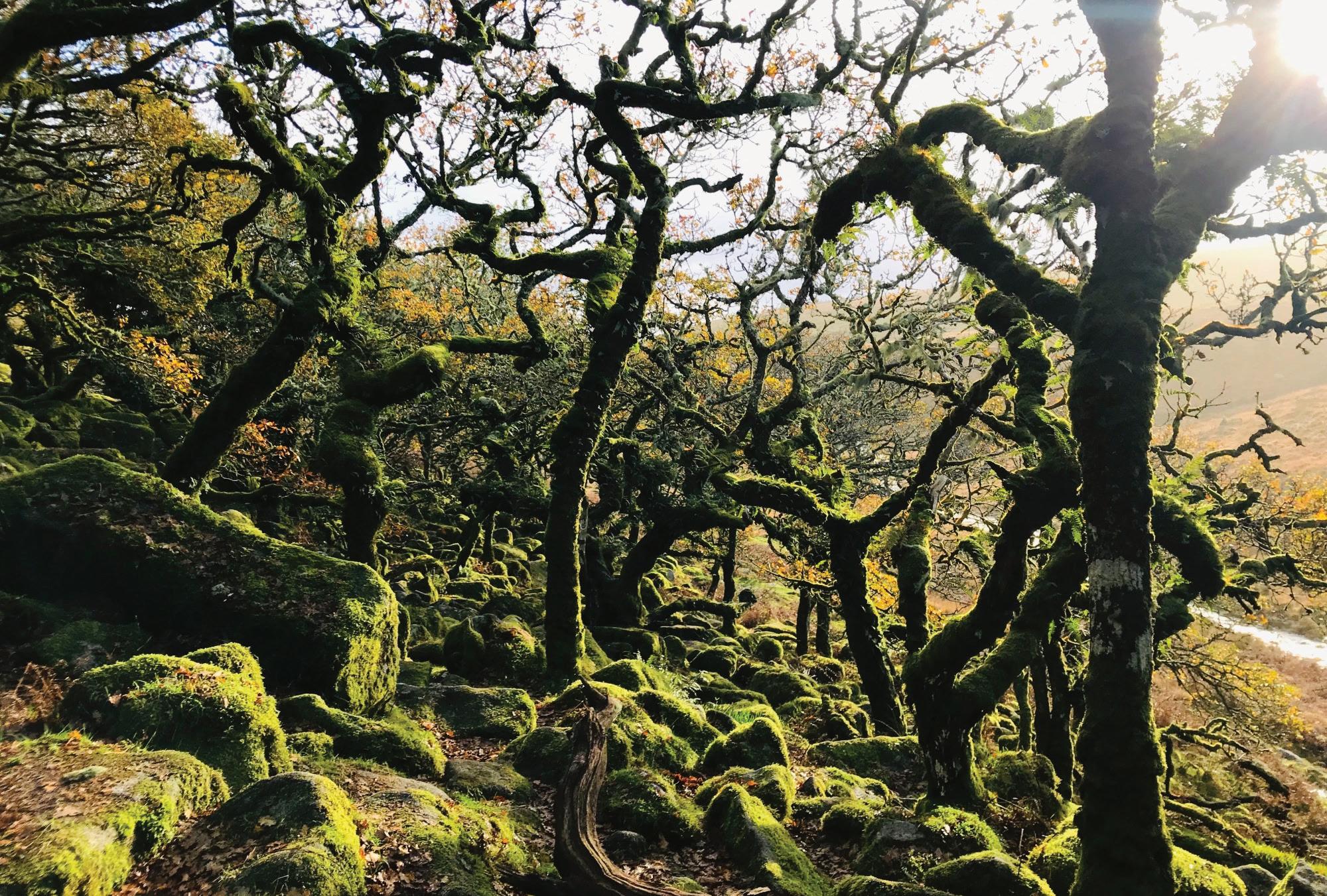
An inspiring, crucial book that brings to life the temperate rain forests which have been neglected for many years. This fascinating, extraordinary tale is long overdue and “may prove to be among the most valuable contributions to the appreciation of, and care for woodlands in Britain since the work of the great historical ecologist Oliver Rackham in the 1980’s”. My wife and I have visited Devon’s Wistman’s Wood on several occasions; this is no ordinary wood. It is an ancient fragment of temperate rain forest. The oak trees there are stunted and have very twisted branches due the cold prevailing wind but tree-ring studies suggest they could be hundreds of years old. It has been suggested that this wood may well have stood here for thousands of years. Apart from the odd-looking oaks, what interested us were the festoons of mosses and lichens on the twisted branches and covering the rocks on the ground, it was like another world, a world that is said to be indelibly associated with folk tales. Great care must be taken to avoid treading on the mosses and damaging this remarkable National Nature Reserve.
FALLING
THROUGH THE CRACKS:
INATURALIST INVERTEBRATE RECORDS IN THE UK
Joss Carr (Queen Mary University of London)
iNaturalist, an online citizen science biodiversity recording platform, divides opinion in the UK biological recording community. However, it is clear that iNaturalist is here to stay and we must embrace it, redress its shortcomings, and maximise the millions of biological records being generated. iNaturalist users can take photos of wild organisms, upload them with location and date, and suggest identifications. If at least two users provide a species-level identification that 2/3 agree on, the observation is classified as ‘Research Grade’ and shared with key biodiversity datasets.
iNaturalist links to the broader digital infrastructure for biological recording through iRecord. Records from iNaturalist are imported to iRecord if they meet four criteria: (1) they must be within the UK, (2) they must involve a species on the UK Species Inventory, (3) they must have a CC-0, CC-BY, or CC-BY-NC license, and (4) they must be Research Grade on iNaturalist. It is expected that verifiers will review these records similarly to those from other sources. But does this happen?
I had been using iNaturalist for several years. However, when I explored iRecord, I was surprised to find that only about 10% of my records were accepted, even though they had been reviewed by experts and included proper metadata. This issue wasn’t isolated to me; many taxonomic groups on iRecord had even lower acceptance rates. It seems engaging with iNaturalist is not valued by verifiers. Why is that?
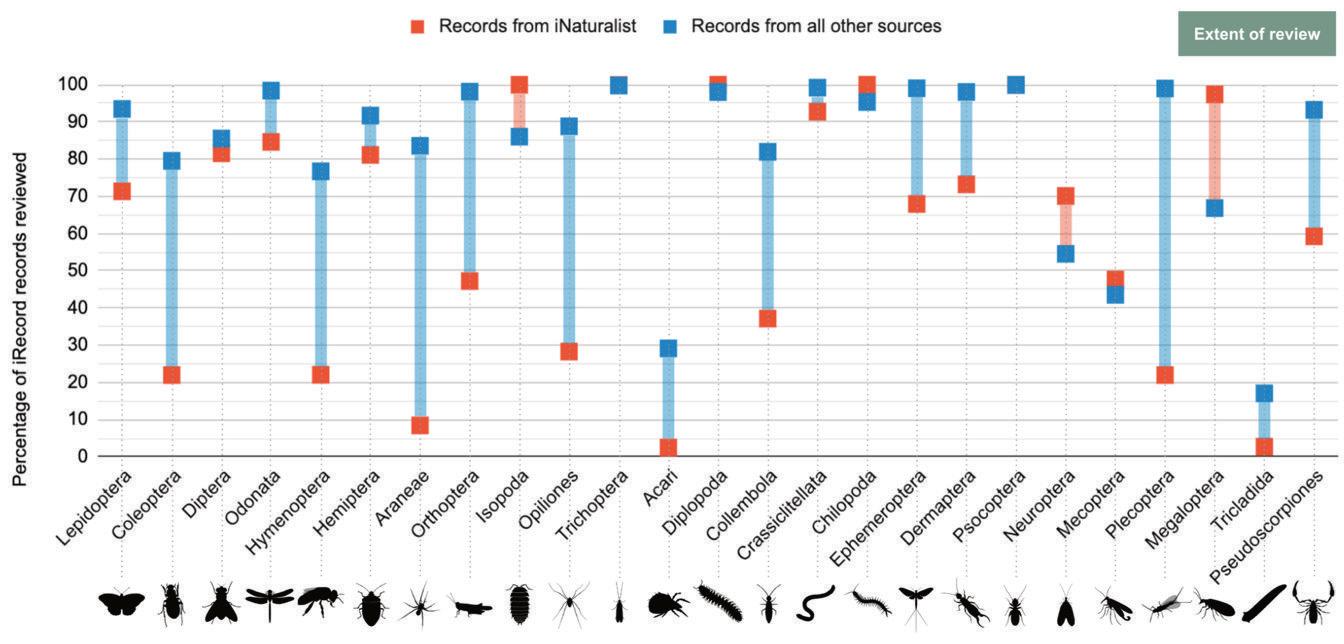
Figure 1: Comparison of record review extent for the top 25 UK non-marine invertebrate groups on iRecord, highlighting discrepancies between iNaturalist (red) and other sources (blue). Reviewed records had a status other than pending, with groups ordered by total records from left (most) to right (least).
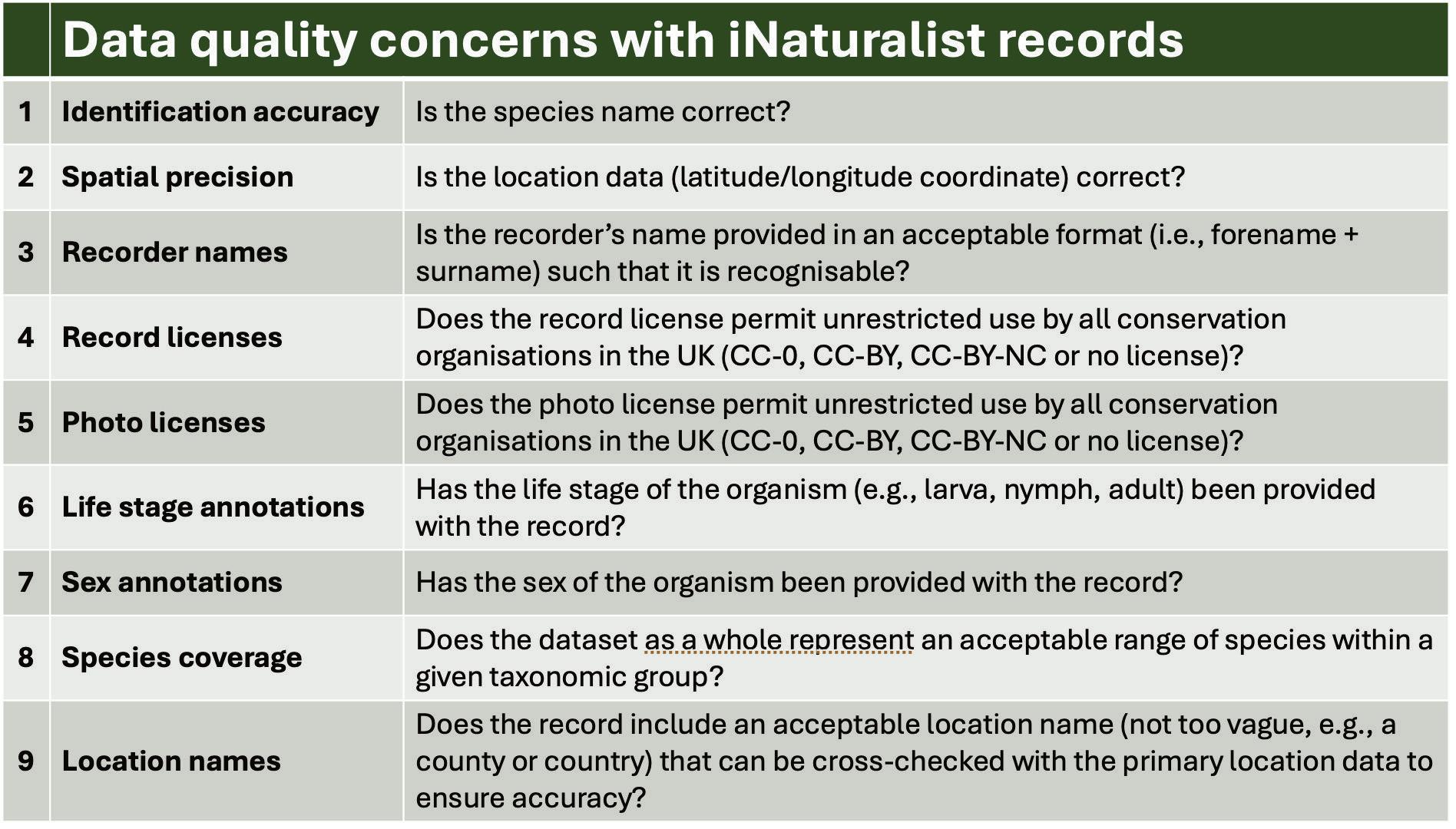
I asked on the NFBR Facebook page why many iNaturalist records are not being reviewed, and the response cited data quality concerns. Verifiers believe that iNaturalist data is mostly of poor quality, highlighting nine key areas where records are lacking (Table 1).
I distributed a questionnaire to iRecord verifiers of non-marine invertebrates to assess their perceptions of iNaturalist data quality. I also analyzed iRecord data to identify data quality issues in key UK non-marine invertebrate taxonomic groups, comparing iNaturalist records with those from other sources.
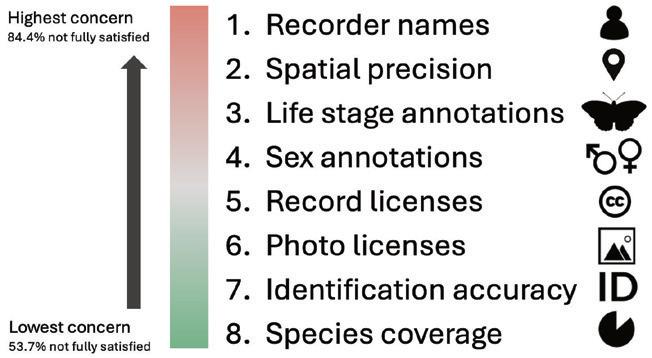
Perceptions of iNaturalist-sourced records vary widely, even among verifiers within the same taxonomic group. Some view these records positively, while others are critical. There is no universal agreement on what constitutes high-quality data. Still, certain elements – recorder names, spatial precision, and details on life stage and sex – are deemed necessary. iNaturalist records are only verified within iRecord 0.67% of the time, raising questions about the accuracy of identifications. Differences in verifier handling make it difficult to measure accurate identification accuracy, indicating a need for further analysis.
I found widespread concerns about the data quality. Due to the minimal onboarding process, many users submit thousands of observations without understanding data implications. Despite efforts to improve data quality, progress has been limited, underscoring the need for more effective outreach. Additionally, discussions among verifiers and data aggregators are necessary to reassess quality standards and recruit more verifiers to handle the increasing volume of records.
To learn more about this research project you can watch a recording of a webinar I delivered on the subject as part of the Biological Recording Company’s entoLIVE series: https://www.youtube.com/watch?v=4QfjH-_e8hw
A WALK ON THE WILD SIDE
Rasik Bhadresa
Every morning as I wander in nature
My senses are drawn to the detail
In the peace prevailing all around me
Birds are injecting expressive notes
Sonorous epics and fruity melodies
Ringing laughs and rowdy percussion
All at it as if part of a huge symphony
Alive and vibrant a good description
And everyday a different composition
On occasion a buzzard tosses in a mew
And a muntjac cuts in with a solid bark
Herbs, shrubs, trees nod in harmony
And as if to extend a hand of friendship
Breezes blow in comforting aromas
Making me feel included, accepted
In this tranquil and soothing ambience
At times I hum, hun hun hun, hun hun
‘These are a few of my favourite things’
NOTES AND OBSERVATIONS
Stranger than fiction, Creeting St Mary ▶
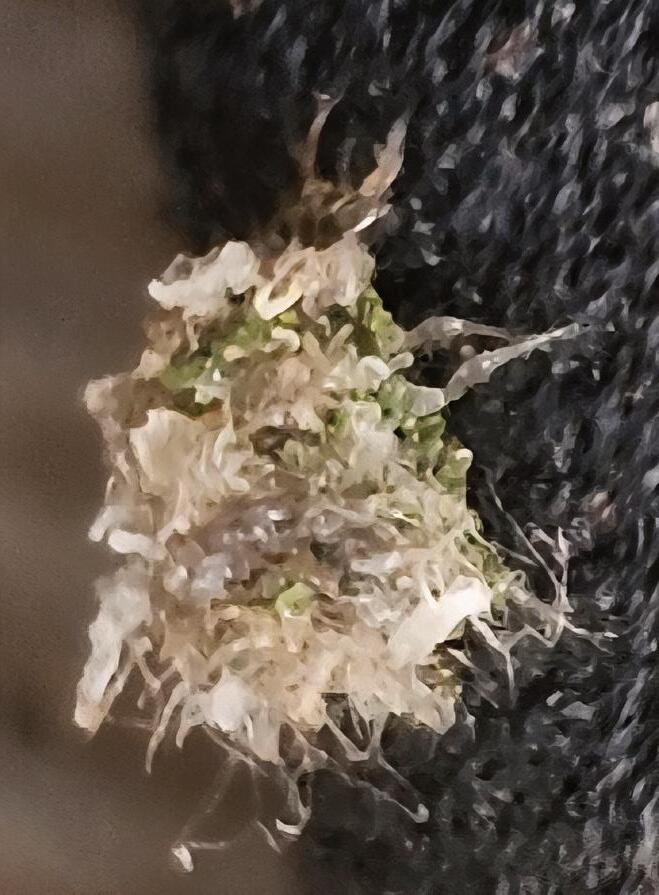
Green Lacewing larva – Chrysoperla
carnea – a wolf in sheep’s clothing, rather gruesomely sticks the remains of it’s victims onto it's body as a disguise. Nature knocks the spots off any horror film. And these are in my garden!
Joan Hardingham
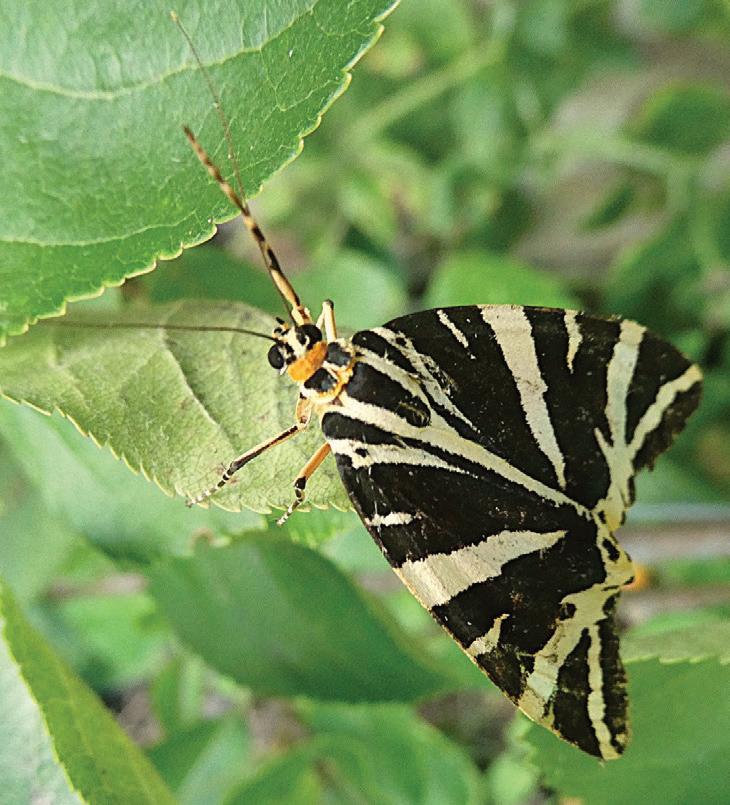
◀ Jersey Tiger sighting
Came across this (see photo) late afternoon (08.08.25) in our garden in East Bergholt. Also saw the dark orange underwings with black spots as it flew. It was a sheer delight to see it for the first time ever! I got in touch with county recorder Neil (Sherman). “Perhaps you can fill me in on how rare/common it is in Suffolk. That would be appreciated”. This is what he had to say, it came as quite a surprise, “Yes, they are a nice moth. It is fast becoming a common species in the county. Euplagia quadripunctaria was first recorded in Suffolk (at Westleton) in 2004. This year has seen a rapid expansion with a large number of sightings. I catch it regularly in my moth traps on the edge of Ipswich, with over 10 some nights! All due to climate warming. I’ll log this sighting in the moth database, thanks for sending it in”. (suffolkmoths.co.uk for detailed distribution in Suffolk).
Rasik Bhadresa
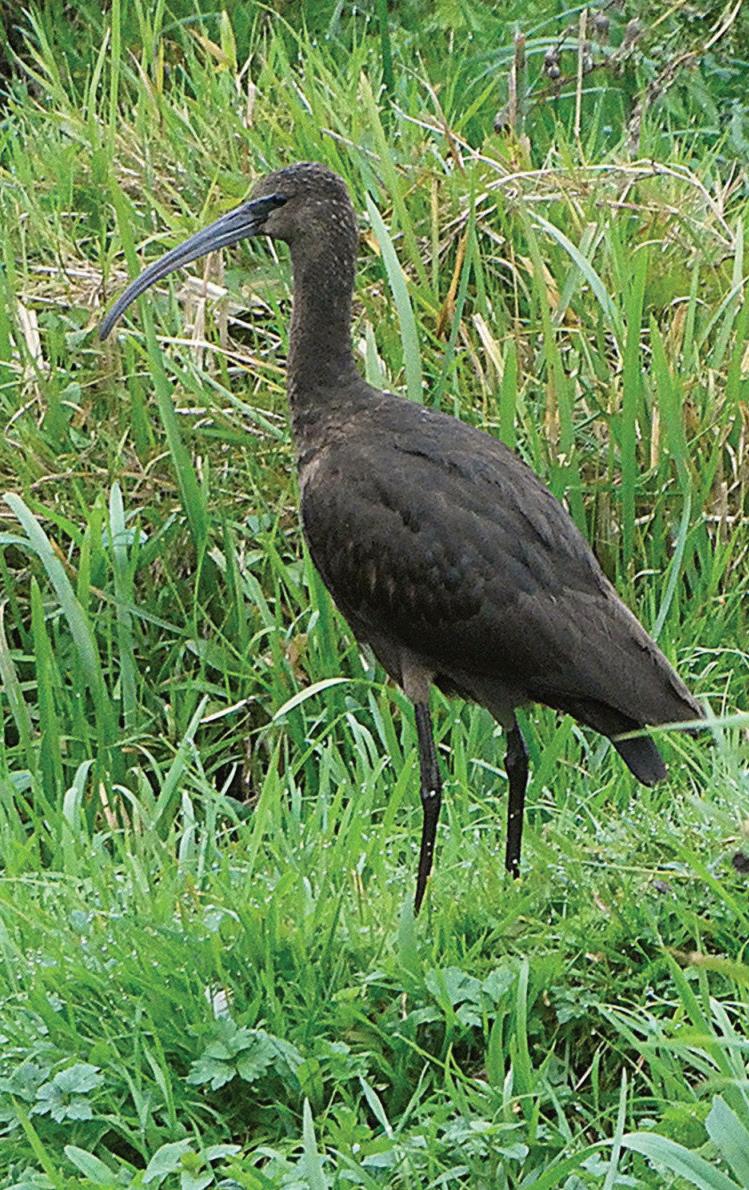
Glossy Ibis sighting, 10 Oct 2025 ▶
Having walked from Fen Bridge on my way towards Flatford on my early morning walk, I was just following a bend in the River Stour when right in from of me, barely 10 yards away, was a Glossy Ibis (Plegadis falcinellus)! I couldn’t quite fathom it as it moved about in the emergent vegetation, foraging. As it came onto the bank and looked my way, I managed to take a picture (see photo). On getting home I wrote to SNS Bird Recorder Steve (Fryett) to tell him about my chancing upon a Glossy Ibis (photo attached). I wrote, “It was great to simply come by it. I understand there have been quite a few sightings recently. Is this one new for this part of Suffolk? Would be glad if you are able to provide some detail. Thank you.” I didn’t have to wait long for his reply:
“Many thanks for your record of Glossy Ibis, which has been duly noted. Excellent photo by the way. As you may know Glossy Ibis have been recorded in Suffolk for several years, usually singles but occasionally in twos. This year a flock of 30+ was seen flying up the coast at East Lane, Bawdsey on 06/09/25 with the flock eventually landing in north Suffolk close to the Norfolk border. Since then this flock has dispersed with just the odd bird turning up almost anywhere in Suffolk. The 30+ was part of a large influx into the UK involving more than 600 birds over several days during early September.”
Rasik Bhadresa
WOULD YOU LIKE INFORMATION ABOUT SNS MEETINGS AND EVENTS SENT STRAIGHT TO YOUR INBOX?
A lot can happen between issues of White Admiral, and we would like to keep you updated. If you don’t currently receive emails from us, and would like to, please email enquiries@sns.org.uk with ‘Email Update’ in the subject line, and your name or first line of your address in the text.
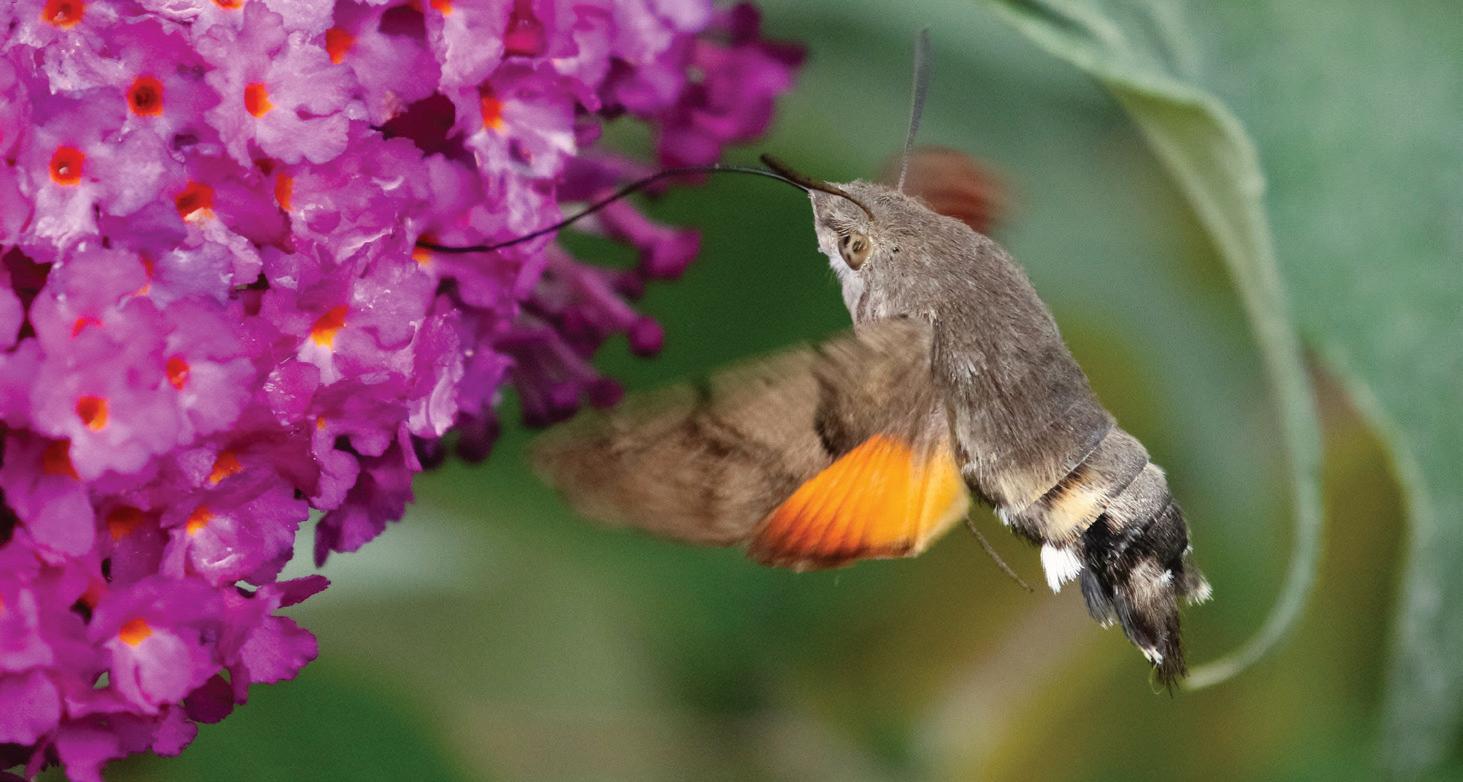
The Hummingbird Hawk moth must be one of the most spectacular of our British insects though in reality it is a migratory species. There have been a few records of successful hibernation in sheltered areas and if our milder winters continue records should increase- rather like the Red Admiral in recent years. In 2022 we had at least sixteen visits in our garden on Westerfield road, Ipswich, from mid-june to the end of August. These were mainly to Buddleia Davidii but other nectar sources visited were Verbena bonariensis, Red Valerian, Marjoram and Plumbago in a large pot. In previous years both Lavender and Aubretia were visited and in 2025 one was nectaring on Catmint in the gardens at Helmingham Hall. I managed to time one visit to red Valerian and an amazing forty florets were visited in one minute. For a colourful moth seemingly living its life ‘in the fast lane’ I was amazed when a friend, Brian Ranner, first pointed one out at rest. No colour was visible, just a drab brown and well camouflaged.
So far in 2025 we have had nine garden sightings, all on Buddleia Davidii, and this is a moth we have seen late into the evenings, in dull conditions and at 8.47 am on 12th August this year.
The main larval food plant is Bedstraw which is increasing on our lawn so breeding could be a possibility.
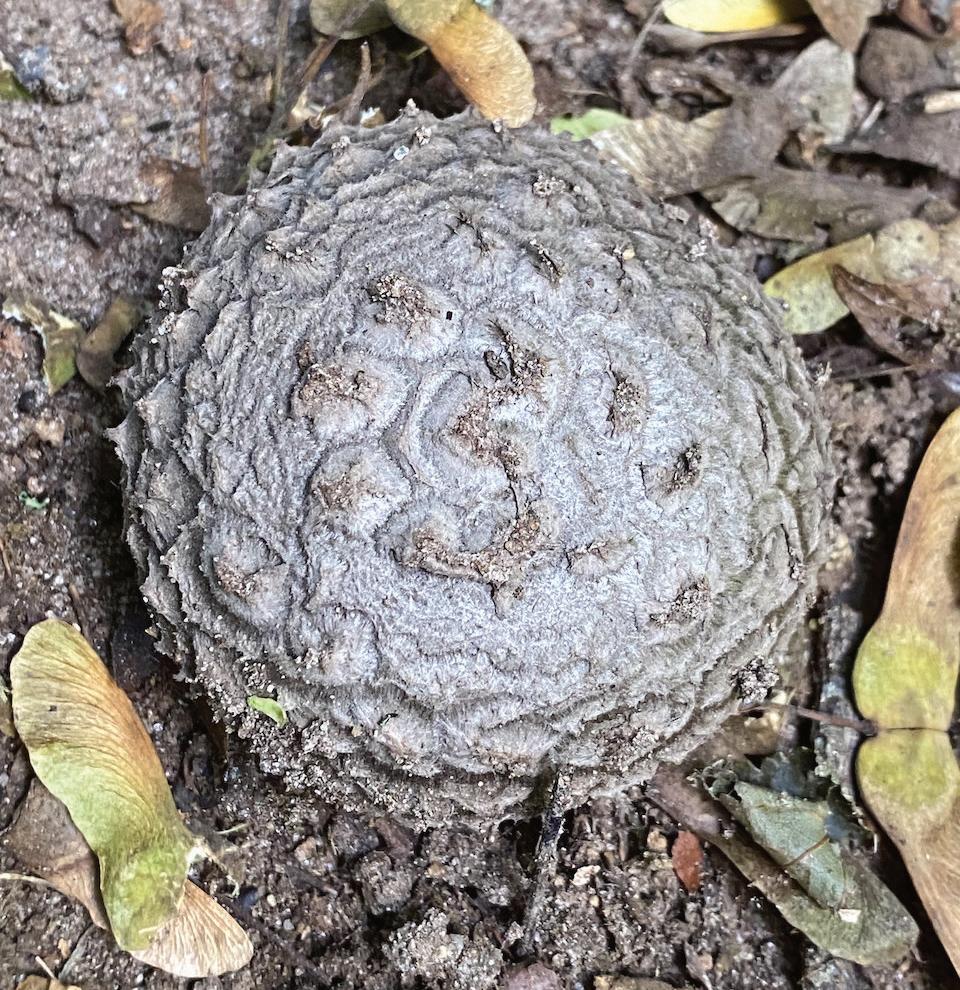
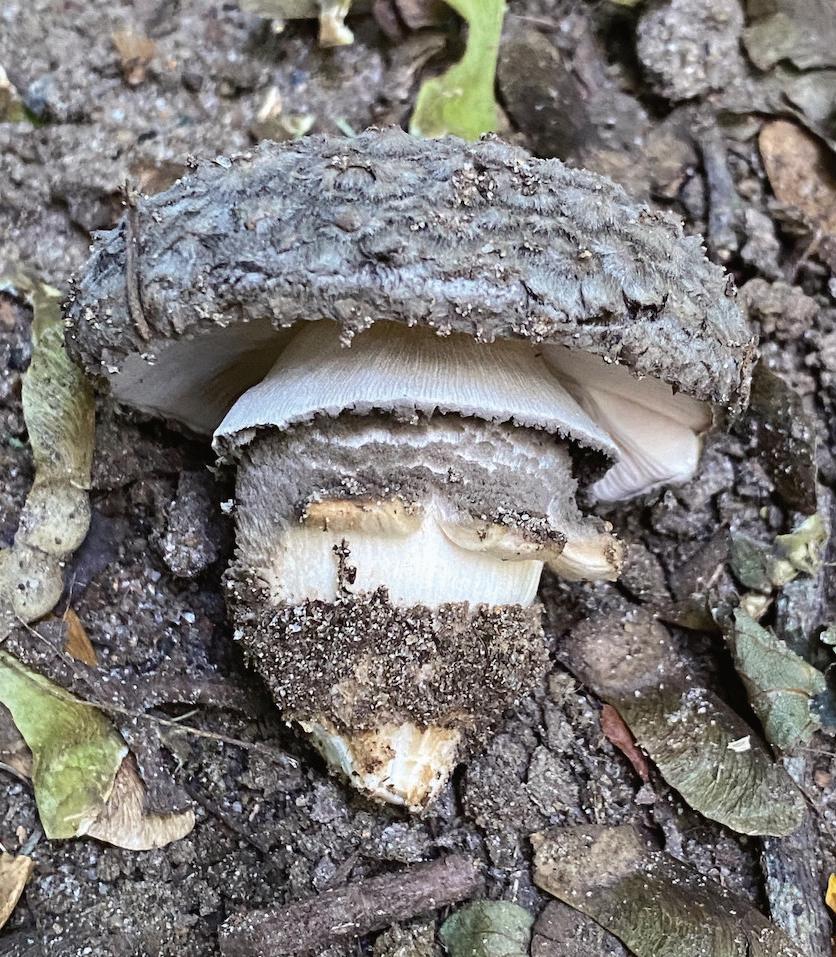
Unexpected Amanita (Amanita inopinata) – Third site in Suffolk
For the past couple of years, I have been trying to learn more about fungi and autumn walks are the perfect opportunity to look for them.
James Dye and I were at Newbourne Springs recently. James spotted a mudcoloured Amanita-type fungus by the path, and I took a closer look. I’d not seen anything like it before, so had a gut feeling that it could be something special. I took some photos and sent them to Neil Mahler. In his reply he confirmed that it was an Amanita inopinata. He also gave details of the two previous sightings of this species in Suffolk.
“This would be the third Suffolk record (as far as I know) for this rare but spreading species which seems to be currently confined to South-East England. The first record was by Geoffrey Kibby when he was fungus tutor at Flatford Mill FSC and the second record was when I inadvertently put my foot on it and Jonathan Revett spotted/recognised it when we were studying another rare fungus at Felixstowe –on both occasions it was growing close to coppiced Hazel although surprisingly this Amanita is NOT mycorrhizal with any particular plant – hence the name ‘Unexpected Amanita’.”
• Wildlife Live Webinar - Bird Pellets • 27 Jan 2026 • Online
• World Wetland Day Guided Walk • 2 Feb 2026 • Carlton Marshes
• Wildlife Live Webinar - Biofluorescence • 11 Mar 2026 • Online
Full details, booking and more events: www.suffolkwildlifetrust.org/events
FIELD STUDIES COUNCIL: COURSES
• Bee Nesting Ecology • 17 Nov • Virtual
• An Introduction to Woodland Habitats – Webinar • 3 Dec • Virtual
• Identifying Broadleaf Trees in Winter • 26 Jan 2026 • Virtual
• Bee Conservation • 2 Feb 2026 • Virtual
• Discovering Beetles • 26 Feb 2026 • Virtual
• Introduction to Amphibian Surveying – Webinar • 6 Mar 2026 • Virtual
• Discovering Garden Birds: Identification and Ecology • 10 Mar 2026 • Virtual
• Introduction to Reptile Surveying – Webinar • 13 Mar 2026 • Virtual
Natural History Courses: Covering all aspects of the natural world. www.field-studies-council.org/fsc-natural-history-courses
BIOLOGICAL RECORDING
COMPANY
• Crayfish 3: Conservation and Management • 11 Nov • From £12.50
• Hedgehog Research Virtual Symposium • 24 Nov • From £30.00
• Innovative Moth Monitoring: Farmer Citizen Science Using AI • 24 Nov • Free
• Surveying For Beetles • 25 Nov • From £12.50
• Making the Most of Bird Sounds • 26 Nov • Free
• The Shining Guest Ant: An Unexpected Houseguest • 3 Dec • Free
• The Key to the Queendom: Driver Ants as Keystone Species • 8 Dec • Free
• Plastic Pollution and Reef Manta Rays: Sources and Exposure • 9 Dec • Free
• Ferns of the UK: Male & Buckler Ferns • 16 Dec • From £12.50
• Arboreal Harvestmen • 30 Dec • From £12.50
• Identifying Mosses • 6 Jan 2026 • From £12.50
• Wildlife Gardening Virtual Symposium 2026 • 14 Jan 2026 • From £30.00
• Introduction To Camera Trapping • 22 Jan 2026 • From £12.50
• An ‘Alien’ in Antarctica • 27 Jan 2026 • Free
• Hay Meadow Restoration • 29 Jan 2026 • From £12.50
• Subterranean Harvestmen • 5 Feb 2026 • From £12.50
• Mapping the Beetle Tree of Life • 17 Feb 2026 • Free
• Deploying Camera Traps • 19 Feb 2026 • From £12.50
Full details, booking and more events: www.eventbrite.co.uk/o/the-biologicalrecording-company-35982868173
GOT AN IDEA FOR A PROJECT?
FUND YOUR SUFFOLK NATURE STUDY!
Amateur naturalists have always been at the forefront of discovering and recording Suffolk’s incredible natural history. Now, you can be part of that legacy. We are proud to offer grants to support our members’ research into the county’s rich flora, fauna, and geology. Let us help you overcome the financial barriers to your study.
Whether you’re a seasoned expert or just starting out, if you have a project in mind, get in touch. We are especially keen to support work that explores understudied areas or helps share the importance of our natural world with the public.
Funding for projects Large and Small
We welcome applications for grants of all sizes. We grant small sums for specific needs, or larger awards – £1,000 or more – for substantial, longer-term studies.
What can the Grant be used for?
• Our funding is flexible and can be used for:
• Scientific equipment, specialist books, or software
• Reasonable travel and subsistence costs for fieldwork
• Attending training courses, conferences, or visits to scientific institutions
• Running workshops or field meetings that get people involved in wildlife studies
• Payment for expert guidance or acquiring necessary licences
What we look for
To be successful, your application should meet a few key criteria:
1. Original Work: Your project should bring something new to the table and genuinely further our collective knowledge of Suffolk’s natural history.
2. Sharing Your Findings: We ask for a written report within 12 months (unless it’s a long-term study). The goal is to share your work with fellow members in one of our society’s excellent journals: Suffolk Natural History, Suffolk Birds, or White Admiral.
3. Acknowledgement: We simply ask that you acknowledge the Suffolk Naturalists’ Society’s support in any publications or publicity that comes from your project.
Ready to apply?
There’s no deadline! Applications can be made at any time.
For full details and to download an application form, please visit our website: www.sns.org.uk/grants
The Suffolk Naturalists’ Society, founded in 1929 by Claude Morley (1874 -1951), with help from Canon A.P. Waller. It pioneered the study and recording of the County’s flora, fauna and geology. It is the seed bed from which have grown other important wildlife organisations in Suffolk, such as Suffolk Wildlife Trust (SWT) and Suffolk Bird Group (SBG).
Recording the natural history of Suffolk is still the Society’s primary objective. Members’ observations go to specialist recorders and then on to the Suffolk Biodiversity Information Service at The Hold to provide a basis for detailed distribution maps and subsequent analysis with benefits to environmental protection.
Funds held by the Society allow it to offer substantial grants for wildlife studies.
Annually, SNS publishes its transactions Suffolk Natural History, containing studies on the county’s wildlife, plus the county bird report, Suffolk Birds (compiled by SBG). The newsletter White Admiral, with comment and observations, appears three times a year. SNS organises two members’ evenings a year and a conference every two years.
Subscriptions to SNS:
Individual membership £20; Family/Household membership £23; Student membership £13. Membership is for 12 months from date of joining.
Joint subscriptions to SNS and SBG:
Individual membership £35; Family/Household membership £41; Student membership £21. Joint members additionally receive the SBG newsletter The Harrier.
As defined by the Constitution of this Society its objectives shall be:
2.1 To study and record the fauna, flora and geology of the County
2.2 To publish a Transactions and Proceedings and a Bird Report. These shall be free to members except those whose annual subscriptions are in arrears.
2.3 To liaise with other natural history societies and conservation bodies in the County
2.4 To promote interest in natural history and the activities of the Society.
For more details about the Suffolk Naturalists’ Society contact: Suffolk Naturalists’ Society, The Hold, 131 Fore St, Ipswich IP4 1LR. www.sns.org.uk/join • enquiry@sns.org.uk