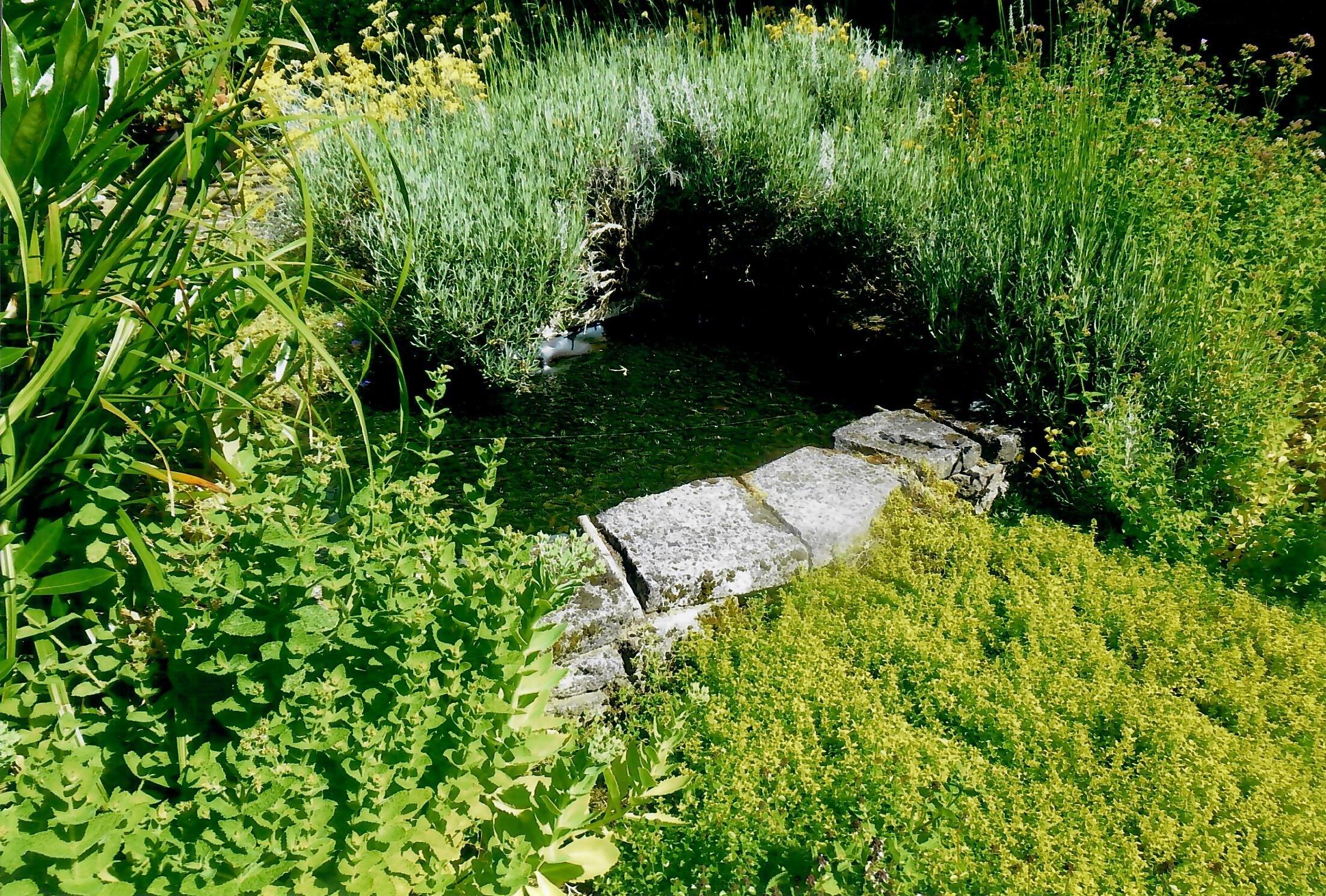
Pond Life 2024
Our garden pond at Westerfield Road, Ipswich is a fibreglass precast mould roughly oval in shape. Its small size and precast shape mean there are no shelves for aquatic plants or a shallow area. Consequently, just Canadian pondweed covers the surface and a water bowl is nearby for birds to bathe and drink. Sticks have been wedged into gaps between the paving slabs around the pond and these are intended to help emerging dragonflies and damselflies. These sticks are linked by fishing line to deter amorous Mallards and early morning Grey Herons. The pond is visible from our nearby kitchen window. This diary runs from February to October 2024.
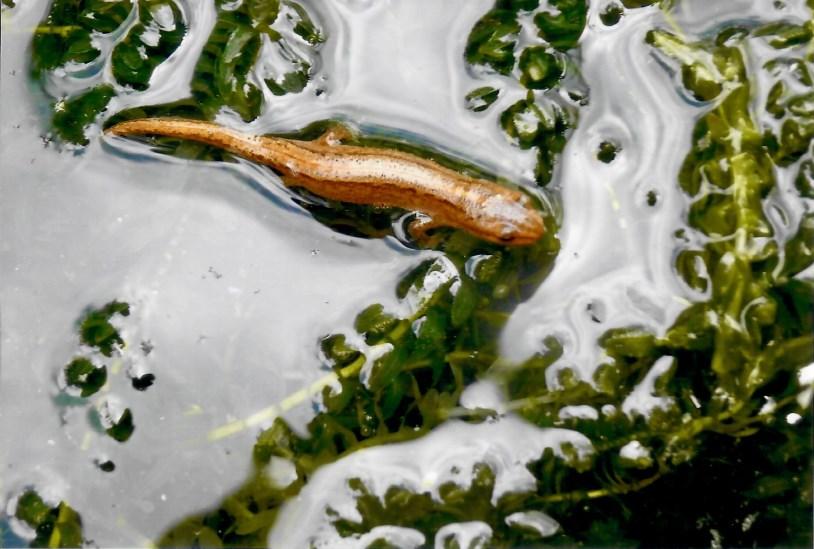
24.2: The first Common Newt was seen in the water. They spend the winter out of the pond but we have only once found one in its winter quarters.
7.3: Algae was removed from the pond, with a close search for any water snails, some just 3mm in diameter. These were returned to the pond.
18.3: The first frog was seen in the pond.
27.3: Three frogs were now present, presumably all male as we have had no frogspawn for many years. I know of several places where I could get some but that would risk transferring any infections.
29.3: A large amount of Canadian pondweed was removed and left close to the pond for several days to allow any aquatic life to survive. A close search revealed an unidentified small beetle, water snails and a very welcome six Common Newts.
11.4: The first Large Red damselfly arrived, one of the species breeding in the pond. We only occasionally find exuviae.
26.4 : Now two Large Reds have arrived.
7.5: The first Azure damselfly was seen and this also breeds in the pond. The first Water Skater arrived. The presence of five frogs probably explained why a Grey Heron flew low across our lawn and headed for the pond. Seeing us it flew off.
8.5: Returning from Ipswich we interrupted a Magpie leaning over the pond. This was one of a pair frequenting our garden and soon aware of our absence.
9.5: A second Azure was seen plus a female Broad-bodied Chaser, which also breeds in the pond.
10.5: The female broad-bodied Chaser was using topmost twigs of our plum tree to perch and search for prey.
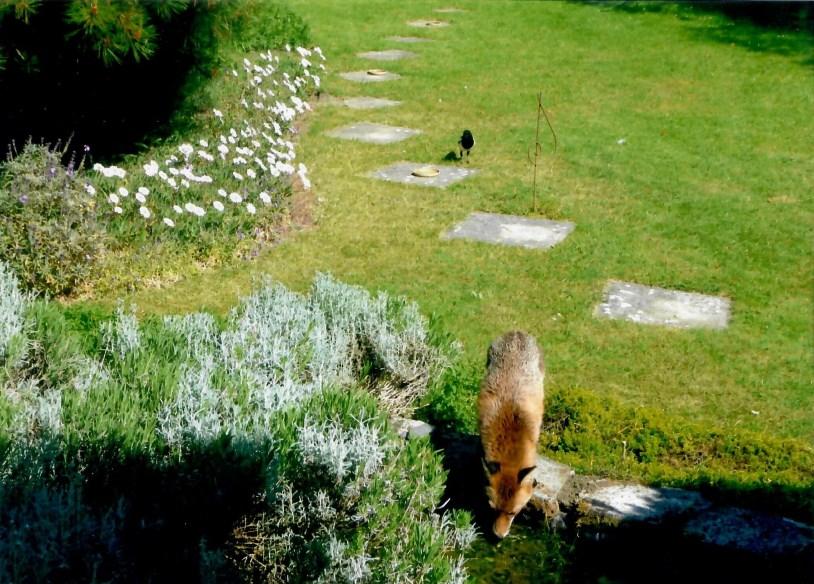
17.5: New life and death today, with A pair of Large Reds ‘in tandem’ ovipositing but one dead Common Newt close to the pond. This could be the result of predation by Magpie, domestic cat, Grey Heron or Fox. These newts are at their most vulnerable when surfacing for air or ‘sunbathing’, also on the surface. Such activity does allow us to see the male’s resplendent breeding crest along its back.
24.5: The first paired Azures were ovipositing. A young Common newt was discovered in a water-filled garden pot close to the pond. Bronze in colour it remained motionless when returned to the pond but eventually started to move and disappeared below the surface. Recent heavy rain had thankfully removed the pond’s algae, a regular problem despite the use of a proprietary liquid meant to clear it.
2.6: The frog numbers rose to nine, but none made any attempt to catch mating damselflies, despite five pairs of Large Red, one single Large Red and a pair of Azure. This was a beautiful kaleidoscope of colour and movement.
7.6: All the algae has now gone but replaced by Common Duckweed, which is not gelatinous and easier to remove.
14.6: A boisterous wind blew a pair of mating Large Reds right across the pond but thankfully into a nearby lavender bed.
17.6: I used my Papilio binoculars, which focus down to 0.5m, to watch Large Reds ovipositing. They had two methods, the first being laying of oval shaped eggs on water vegetation below the surface and the second just dropping more rounded eggs directly onto the water surface.
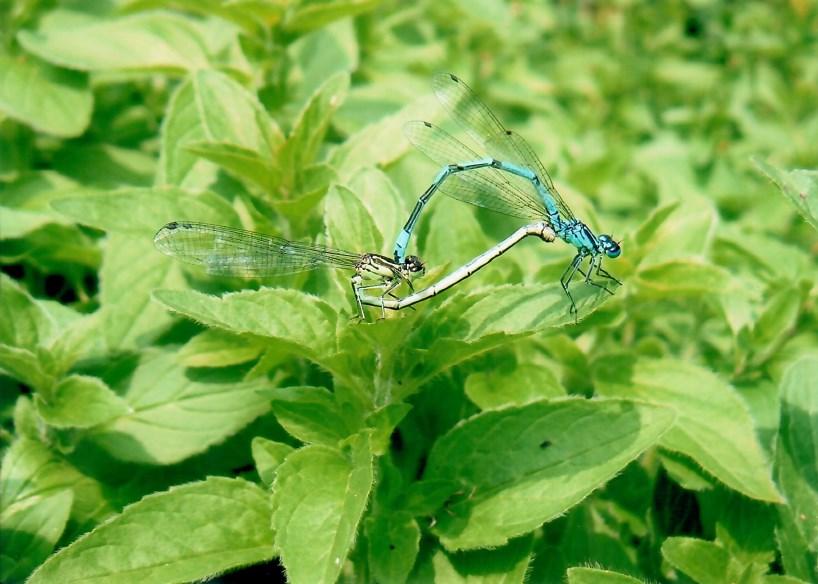
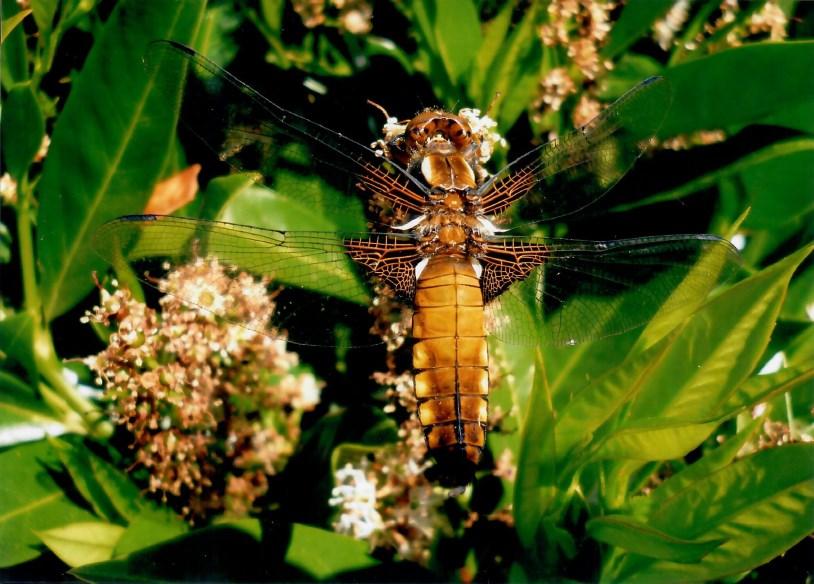
18.6: Damselflies need to feed but a Large Red had no success when pursuing a Mint moth.
20.6: A Woodpigeon was drinking from the pond. Some smaller birds have been seen both preening and drinking by using mats of Canadian pondweed. We have had just one fatality, regrettably a drowned Goldcrest.
21.6: A pair of Azures settled on Pendulous Sedge next to the pond. This plant arrived without our assistance but is too large for our pond and needs to be cut back before seeding.
25.6: The first Common Darter, a female, was seen. Again, this species breeds in the pond. They often perch on a garden ornament in the form of a music stave, giving extra height for sighting prey.
8.7: After heavy rain just one Azure was seen, perched on pondside vegetation.
24.7: Four full watercans were emptied into the pond to raise water levels. We avoid the use of tap water whenever possible.
1.8: Three Common Darters were hunting above our lawn but none were seen ovipositing.
7.8: Three more full cans of water were emptied into the pond.
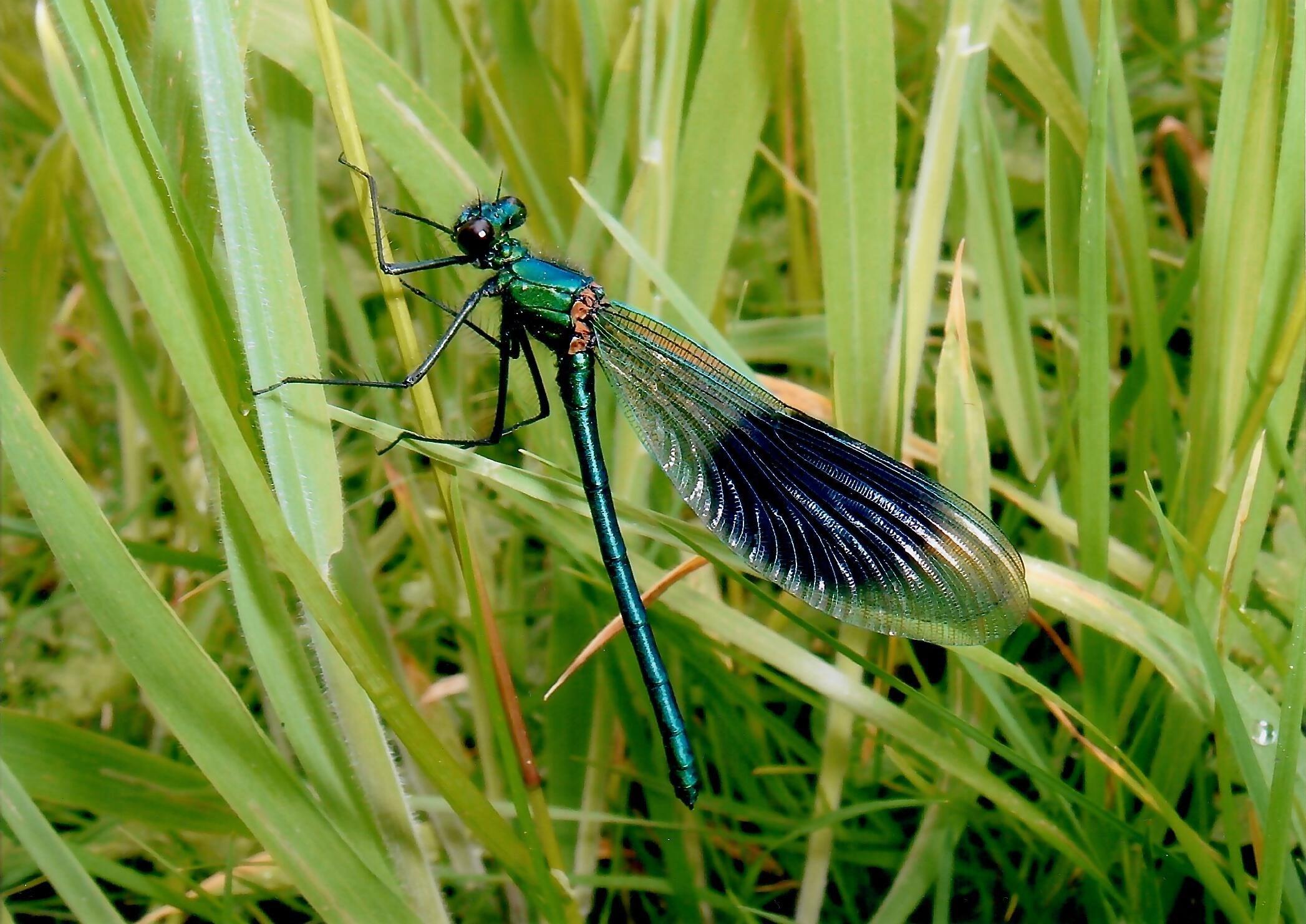
10.8: A telephone call in my upstairs study was interrupted by a call from my wife Ann -Marie. She had seen a male Banded Demoiselle on green leaves of Sedum spectabile close to the pond. It then moved to an unpruned Fuchsia which I could just see from the study. I went quickly downstairs for closer views as it perched on the top twigs of the Fuchsia and made short darting flights after prey. This must be one of our most beautiful insects, especially when it flashes its wings. It stayed from 12.50 pm to a last sighting at 4pm, much longer than the only other record, of two separate visits, in 2015.This species is usually found by rivers, but we are some distance from the rivers Orwell or Fynn.
18.8: The first Migrant Hawker arrived, a female.
27.8: Male and female Migrant Hawkers were settled on a bare Buddleia twig, just a few inches apart.
6.9: The pond is surrounded by several insect-attracting plants, including Thyme, Marjoram and Lavender. Spiders often construct webs between these plants and today a Large White butterfly had been caught, immobilised and wrapped up before we saw it.
15.9: We were able to see a Southern Hawker at rest just a few inches away, without using binoculars. At such close range the bulbous compound eyes were particularly impressive, giving all-round vision and sensitive to movement up to 10m away.
21.9: Almost every day I have used an old kitchen stainer to remove duckweed. One such sweep included thirty-nine small Water Snails. Today they were accompanied by several small dark Common Newts, known as efts, with vestiges of their three leaf-like gills and proof of breeding this year. The eggs, covered in jelly, are laid singly and carefully wrapped around underwater plants to minimise predation.
7.10: Recent rain has filled the pond and just three frogs were seen today. This is just about the end of the season. Finally, species recorded in previous years but not seen in 2024 were Willow Emerald and Blue-tailed Damselfly plus Brown Hawker and Fourspot Chaser Dragonflies.
All dragonfly records have been sent to the County Dragonfly Recorder.
Richard Stewart
‘Valezina’, 112, Westerfield Road, Ipswich, Suffolk. IP4 2 XW.