DIPTERA REPORT 2024
PETER VINCENT
During August the movement of sheep and cattle was restricted in Norfolk and Suffolk after several confirmed cases of bluetongue disease. As a result, the Department for Environment, Food and Rural Affairs put in place a restricted zone to mitigate the risk of further cases of disease occurring. Further cases have now been reported and the current (November) restricted zone covers much of eastern England as far north as Yorkshire. Bluetongue is an insect-borne viral disease to which all species of ruminants are susceptible, although sheep are most severely affected. Cattle and deer are less likely to show clinical signs but are thought to be important ‘reservoirs’ of the virus. It does not affect humans. The impact on susceptible animals can vary greatly –some show no clinical signs or effects while for others it can cause productivity issues such as reduced milk yield. It can cause infertility and breathing problems in sheep, cattle and goats. In the most severe cases, it can kill infected animals. This is bad news for livestock farmers, both economically and emotionally as no wants to see their animals suffering, but what of the insects that carry the bluetongue virus? These are flies of the Ceratopogonidae family and, more specifically, flies of the Culicoides genus.
The Ceratopogonidae form a family of small nematocerous flies, usually less than 4mm, dark in colour, with broad wings. They are best known as ‘biting midges’ but are also called ‘sand flies’, ‘biting gnats’ and in America as ‘no-see-ums’. These are familiar and plentiful insects - as anyone who has been to Scotland in summer and encountered the Highland midge Culicoides impunctatus Goetghebuer, 1920 will quickly testify. Biting midges breed in damp organic matter such as soil, leaf litter, compost, and animal dung (different to mosquitos who breed in water such as ponds). Female midges feed on the blood of vertebrates, including humans, to get protein for egg-laying and are responsible for the transmission of arboviruses of livestock such as bluetongue. Biting midges are short-lived, producing multiple generations per year with populations that fluctuate annually between periods of high and low adult abundance. In normal conditions they are only capable of short distance dispersal, usually within 1km of their breeding site, but many species, particularly during periods of high abundance, exhibit long-distance wind aided dispersal. Flights of infected Culicoides on prevailing winds have been inferred to reach several hundred kilometres in a single night over water bodies (Burgin, Gloster, Sanders et al., 2013).
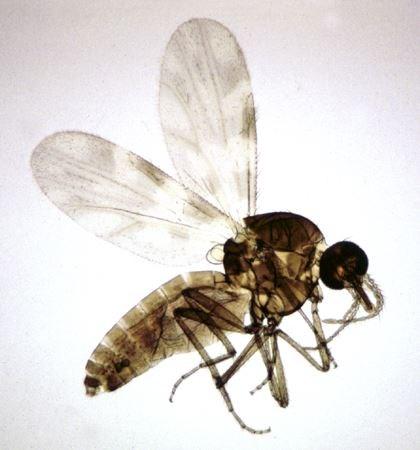
Culicoides obsoletus
Multiple biting midge species in Europe are known, or suspected to be, bluetongue vectors but species in the Obsoletus group (C. chiopterus (Meigen, 1830), C. dewulfi Goetghebuer, 1936, C. obsoletus (Meigen, 1818) and C. scoticus Downes & Kettle, 1952 plus C. pulicaris (Linnaeus 1758) and C. punctatus (Meigen, 1804) of the Pulicaris group are the most likely transmitters (Möhlmann, Keeling, Wennergren et al., 2021). Most of these species are tiny (1-2 mm) and their wings speckled with light and dark patterns; some species, though, have unmarked wings. In general, those involved in disease transmission have distinctive wing patterns which allows relatively easy identification of a very difficult family of flies.
To the general dipterist the Ceratopogonidae are not a well known or recorded family, for instance the NBN has only c6400 records of the important Culicoides genus. Here in Suffolk only 37 species out of the 173 British Ceratopogonidae have been recorded, consisting of just 48 records in total. Myself, I have only collected fewer than ten biting midges in many years of netting. The method of capture may be the key here. In studies to evaluate the abundance and dispersal of Culicoides, light emitting diode suction traps e.g. (Möhlmann, Keeling, Wennergren et al., 2021) or Rothamsted suction traps e.g. (Sanders, Shortall, Gubbins et al., 2011) were the standard methods of capture. Here c50,000 biting midge specimens were collected from a wide range of dispersed sites. Variables in these studies included seasonal factors such as temperature and rainfall but also habitat and land use. It is revealing to note how much land use can influence the catch; a pastoral trapping site with a high density of cattle near Preston in Lancashire collected c33,000 biting midges from a total of c51,500 in the 12 sites of the entire study. This compares with a total catch of just 221 from Brooms Barn, Higham, Suffolk, an arable area with very low density of cattle (Sanders, Shortall, Gubbins et al., 2011). From a Suffolk dipterology perspective the Brooms Barn results, provide records of six species of Ceratopogonidae, three of which have been absent from the Suffolk Diptera checklist, namely, C. dewulfi, C. punctatus and C. scoticus and another C. chiopterus was last recorded in 1916.
As an aside, it should be noted that some tropical biting midges of the Forcipomyia genus are not blood feeders but feed on plant nectar and are the primary pollinators of the cacao (or cocoa) tree. Note, without these midges there would be no chocolate.
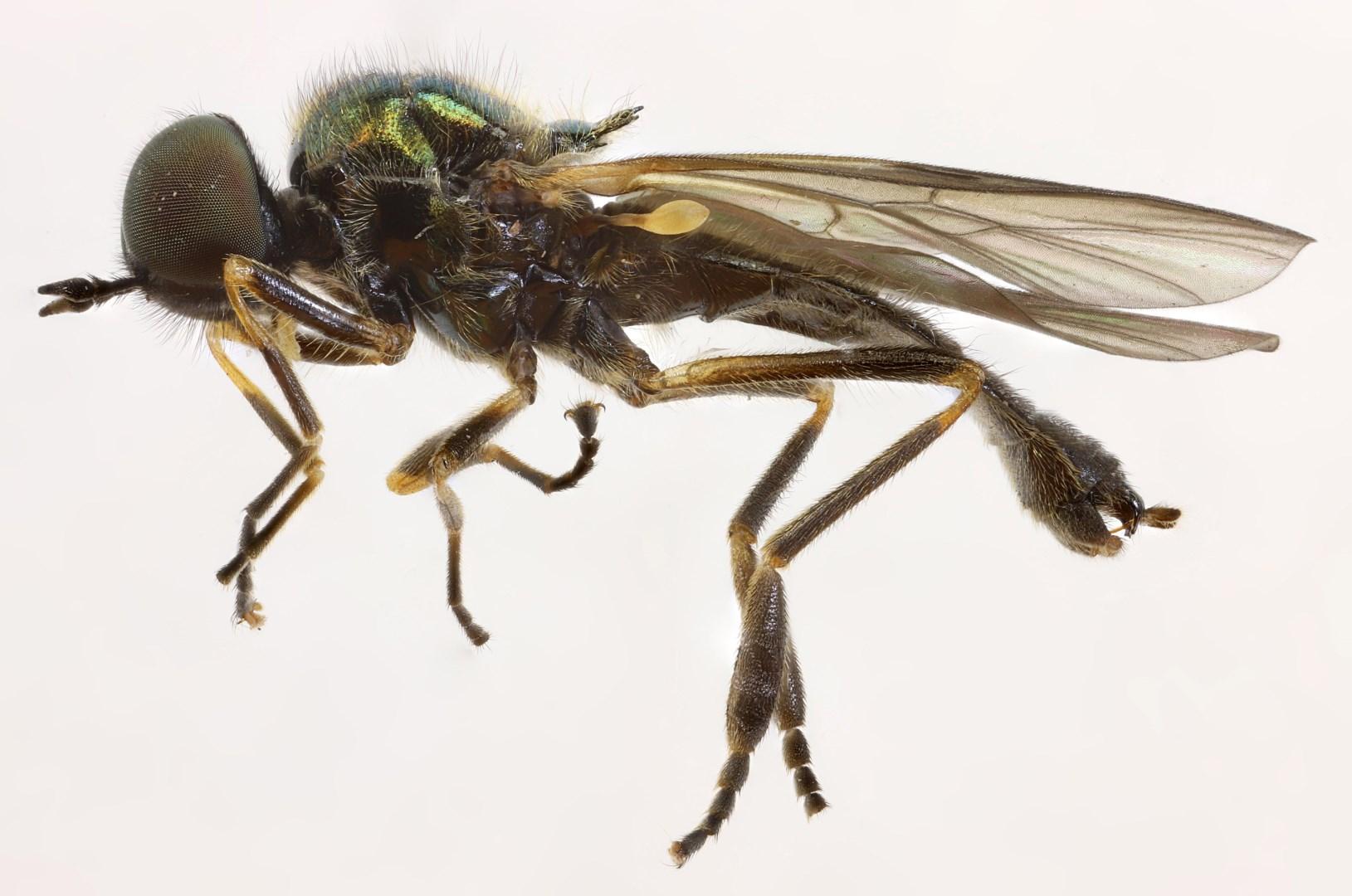
Some interesting and uncommon species that have recently been recorded from Suffolk (this includes records obtained from iRecord) are, the Agromyzids, Agromyza alnibetulae Hendel, 1931, A. abiens Zetterstedt, 1848, A. demeijerei Hendel, 1920, A. flaviceps (Fallén, 1823), A. johannae de Meijere, 1924, Amauromyza morionella (Zetterstedt, 1848), Liriomyza eupatorii (Kaltenbach, 1873), L. atipalpis Hendel, 1920, Phytomyza cytisi Brischke, 1881, P. marginella Fallén, 1823 and P. pastinacae Hendel, 1923, the Caliphorids, Stevenia deceptoria (Loew, 1847) and Tricogena rubricosa (Meigen, 1824), the Ceratopogonid, Clinohelea unimaculata (Macquart, 1826), the Chloropids, Cryptonevra consimilis (Collin, 1932), C. flavitarsis (Meigen, 1830) and Lasiochaeta pubescens (Thalhammer, 1898), the Conopids, Myopa hirsuta Stuke & Clements, 2008, M. tessellatipennis Motschulsky, 1859, the Ephydrids, Philygria picta
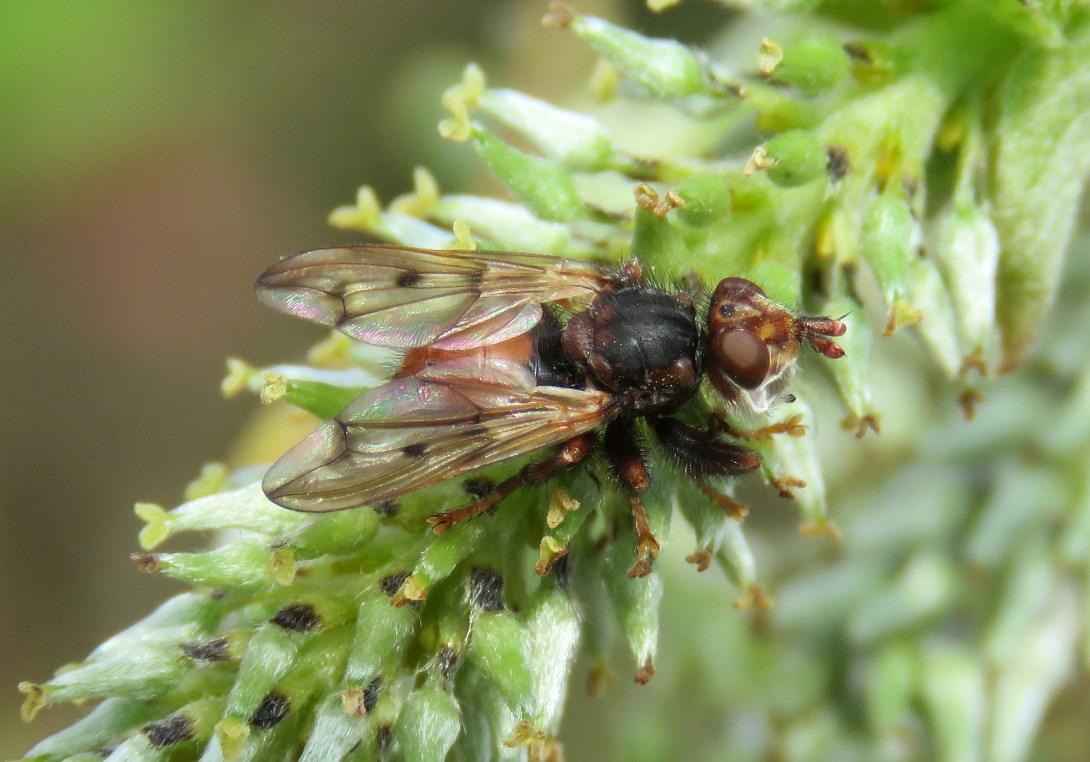
(Fallén, 1813) and Psilopa compta ( Crataerina pallida (Olivier in Latreille, 1812), the Hybotids Platypalpus maculipes (Meigen, 1822) and P. stabilis (Collin, 1961), the Lauxaniid, Homoneura notata (Fallén, 1820), the Limoniids, Erioptera meijerei Edwards, 1921 and E. nielseni de Meijere, 1921, the Muscid, Eudasyphora cyanicolor (Zetterstedt, 1845), the Rhagionid, Spania nigra Meigen, 1830, the Scathophagids, Ceratinostoma ostiorum (Haliday in Curtis, 1832), Cleigastra apicalis (Meigen, 1826) and Scathophaga litorea (Fallén, 1819), the Scatopsids, Anapausis soluta (Loew, 1846) and Reichertella pulicaria (Loew, 1846), the Sciarid, Bradysia fungicola (Winnertz, 1867), the Stratiomyid, Beris fuscipes Meigen, 1820, the Syrphids, Criorhina ranunculi (Panzer, [1804]), Portevinia maculata (Fallén, 1817) and Xylota florum (Fabricius, 1805), the Tachinids, Cinochira atra Zetterstedt, 1845, Platymya fimbriata (Meigen, 1824) and Tachina magnicornis (Zetterstedt, 1844),
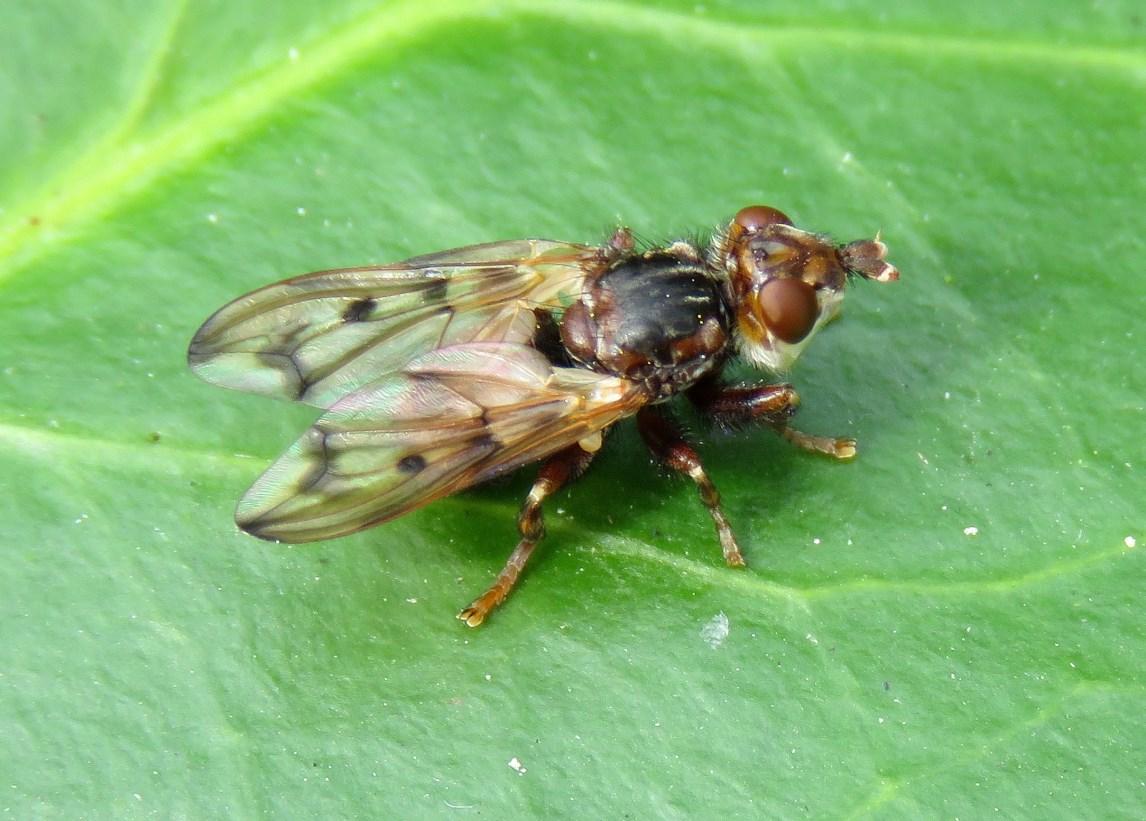
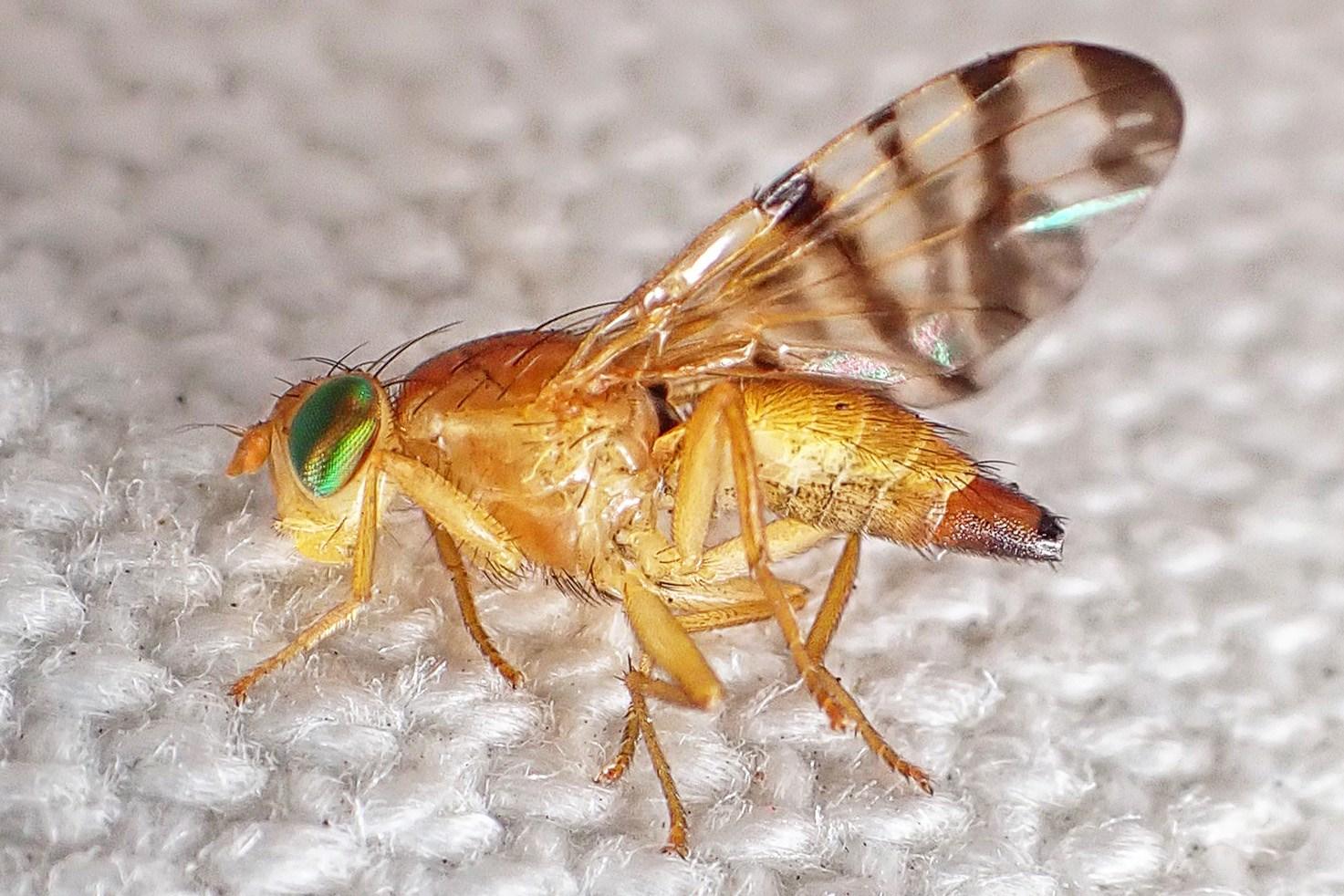
Tephritid Rhagoletis alternata
and the Tephritids, Goniglossum wiedemanni (Meigen, 1826), Rhagoletis alternata (Fallén, 1814) and Trypeta zoe Meigen, 1826.
References
Burgin, L. E., Gloster, J., Sanders, C., Mellor, P. S., Gubbins, S., & Carpenter, S. (2013). Investigating incursions of bluetongue virus using a model of long-distance Culicoides biting midge dispersal. Transboundary Emerging Diseases 60(3): 263-272
Möhlmann, T. W. R., Keeling, M. J., Wennergren, U. et al. (2021). Biting midge dynamics and bluetongue transmission: a multiscale model linking catch data with climate and disease outbreaks. Science Report 11, 1892.
Sanders, C. J., Shortall, C. R., Gubbins, S., Burgin, L., Gloster, J., Harrington, R., Reynolds, D. R., Mellor, P. S. & Simon Carpenter, S. (2011). Influence of season and meteorological parameters on flight activity of Culicoides biting midges. Journal of Applied Ecology 48(6): 1355-1364.
Peter Vincent
Pennyfields, Rectory Road, Middleton, Suffolk. IP17 3NW Diptera@sns.org.uk