RECENT, NOTEWORTHY COLEOPTERA FROM SUFFOLK ROSS PIPER
Introduction
Much of my work has taken me out of the county this season, so I didn’t do very much beetling in Suffolk this year. It has also been a very strange year in terms of the weather with the early Summer being inclement to say the least.
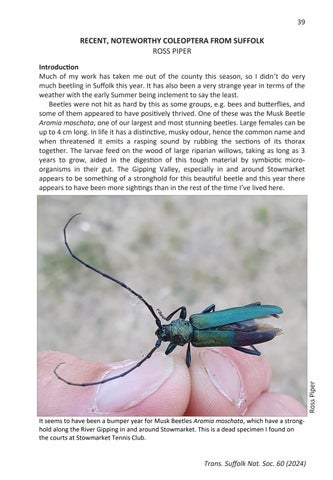
Beetles were not hit as hard by this as some groups, e.g. bees and butterflies, and some of them appeared to have positively thrived. One of these was the Musk Beetle Aromia moschata, one of our largest and most stunning beetles. Large females can be up to 4 cm long. In life it has a distinctive, musky odour, hence the common name and when threatened it emits a rasping sound by rubbing the sections of its thorax together. The larvae feed on the wood of large riparian willows, taking as long as 3 years to grow, aided in the digestion of this tough material by symbiotic micro-
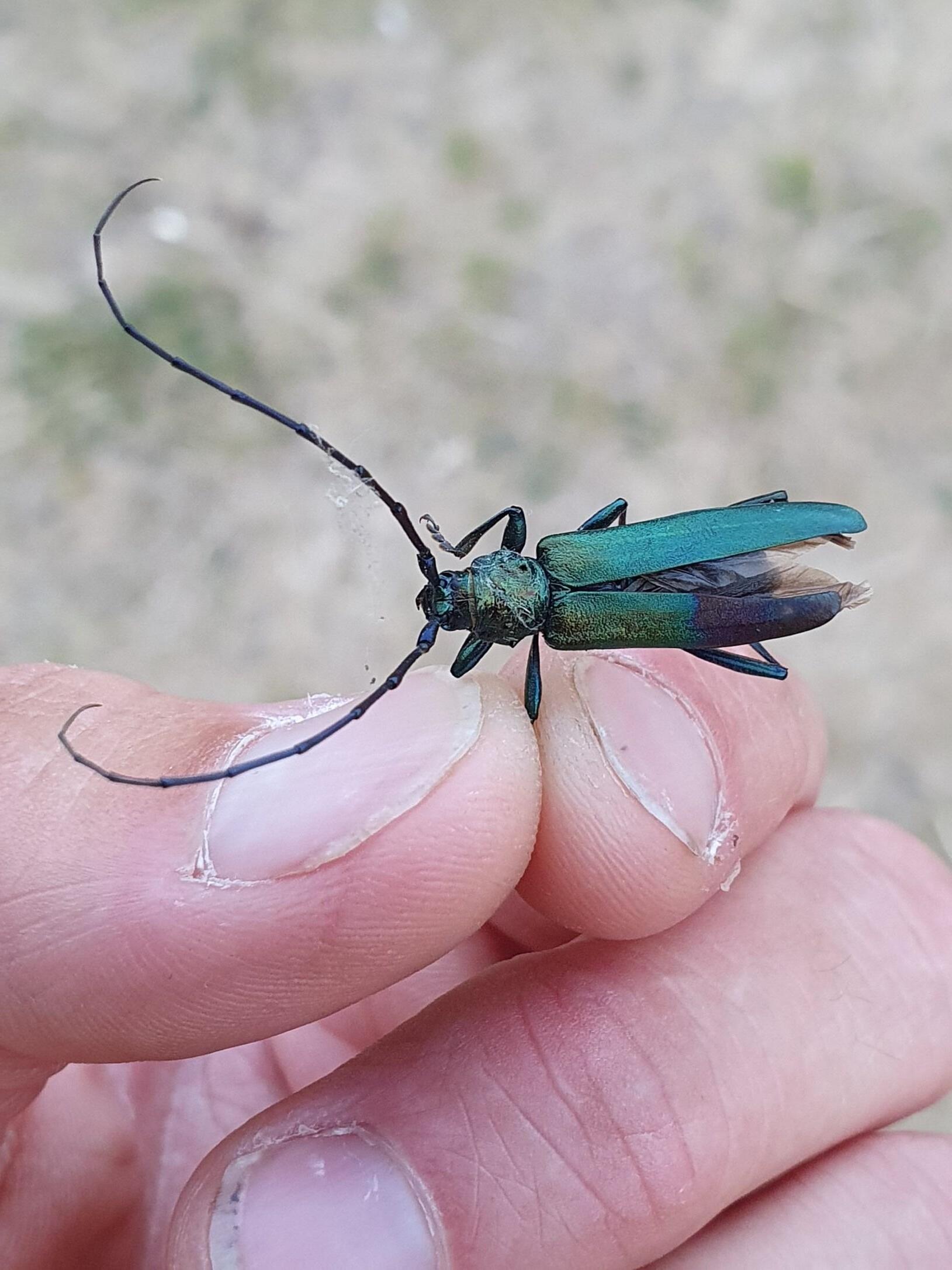
It seems to have been a bumper year for Musk Beetles Aromia moschata, which have a stronghold along the River Gipping in and around Stowmarket. This is a dead specimen I found on the courts at Stowmarket Tennis Club.
I’m also pleased to report that the Black Oil Beetle Meloe proscarabaeus colony on Forestry Commission land near Wordwell is clinging on with a number of individuals spotted this year. Nearly all of the oil beetle species we have in the UK have declined enormously over the post war period, especially in East Anglia. The main factor in this decline is probably agricultural intensification. As larvae, they are parasites in the nests of solitary bees and so they are intricately linked to the fortunes of their hosts. The adults of this species are only active for a rather short period of time in the early part of the season, usually from March. These too are very large beetles, with the females measuring as much as 3 cm long. Later in the year, in May and June, keep your eyes peeled for their larvae, tiny active creatures called triungulins that hang around in flowers, waiting for a bee to clamber onto. There are few other known sites for oil beetles in East Anglia, so keep a look out for them between March and May.
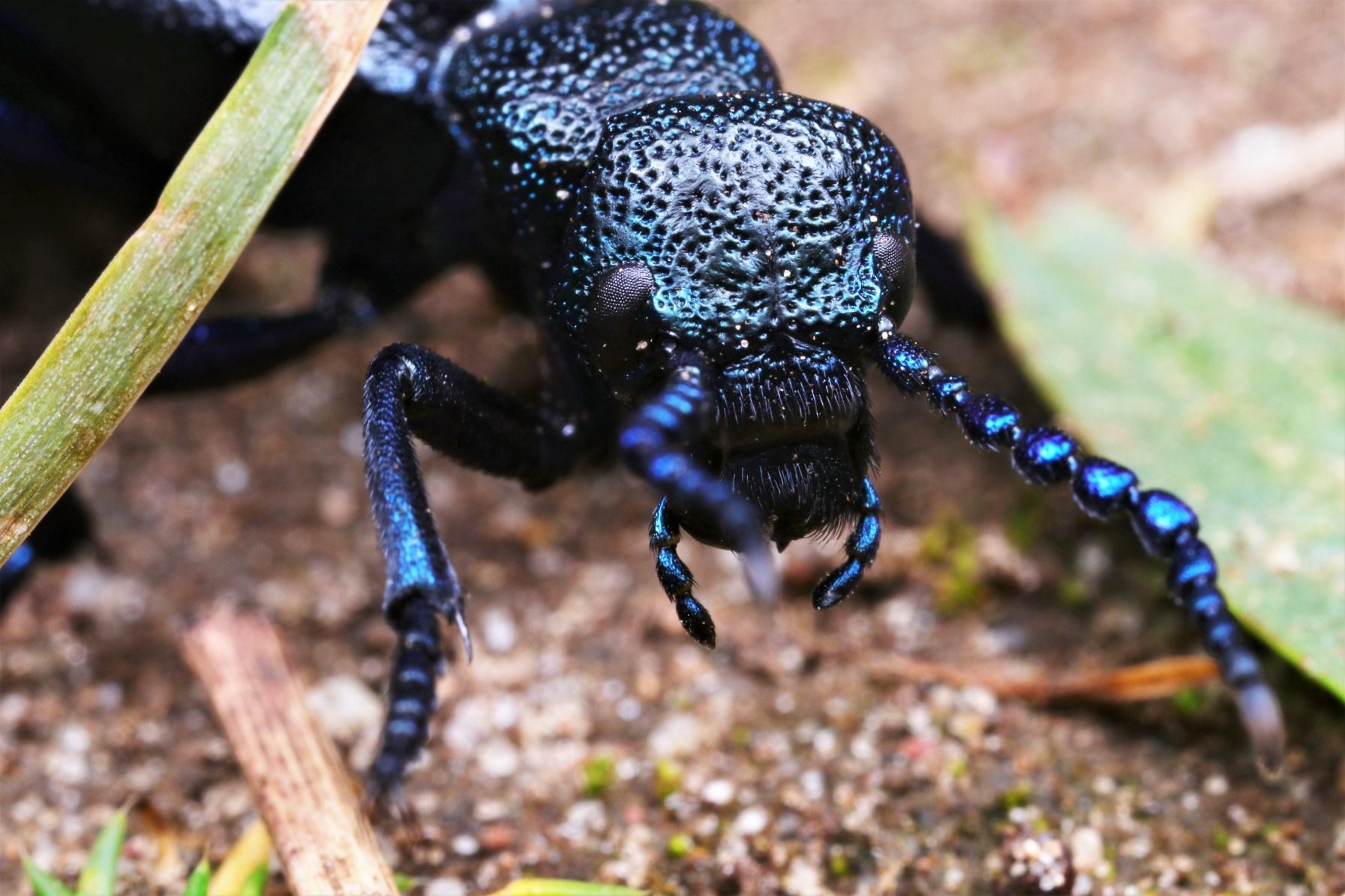
The charity Buglife has put together a good guide on these beetles, which is free to download on their website (https://cdn.buglife.org.uk/2019/08/Oil-Beetle-nationalsurvey-leaflet-for-web_5-species.pdf).
Other species of note from my limited Suffolk forays this year was the net-winged beetle Platycis minutus from Priestly Wood in Barking. The larvae of this species also depend on wood and the adults are to be found later in the season.
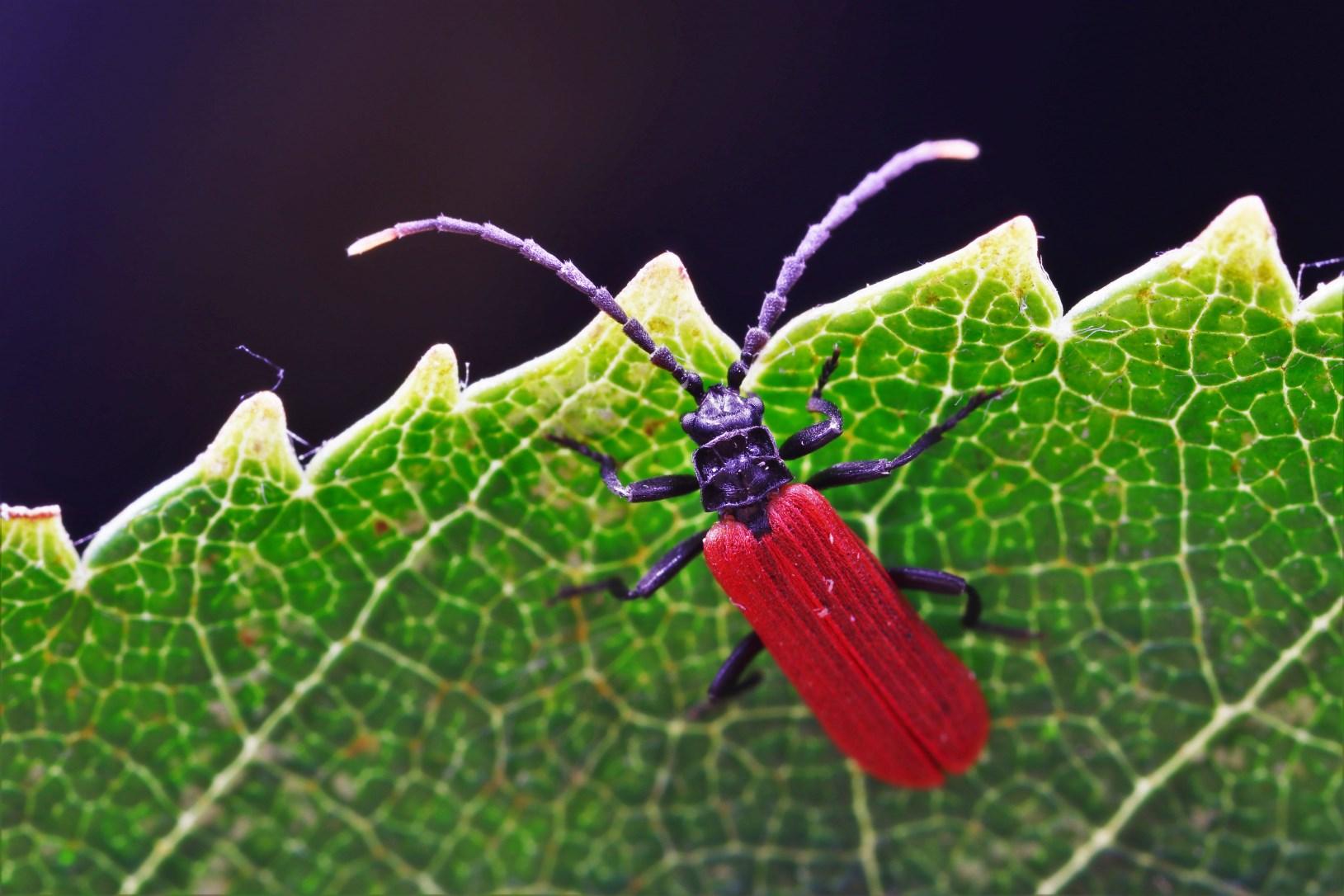
The net-winged beetle Platycis minutus is an easily overlooked late summer species, predominantly of ancient woodland. This specimen was seen in September in Priestley Wood near Barking.
During the hot spells in the summer, the meadow I’ve created in the back garden,
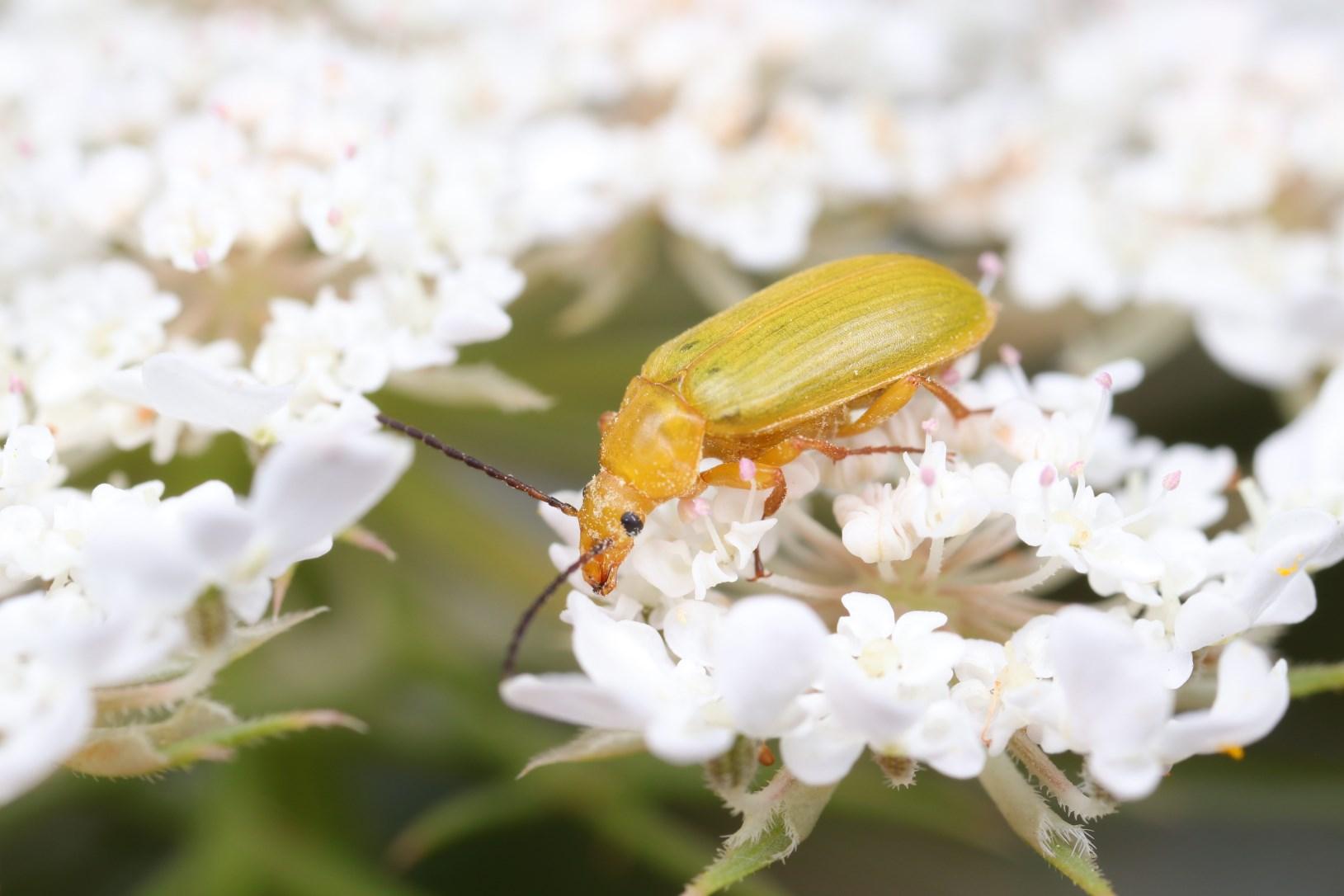
The Sulphur beetle is specialist of dry habitats, especially coastal sites and the Brecks. This specimen was found in a meadow created in my back garden in Barking.
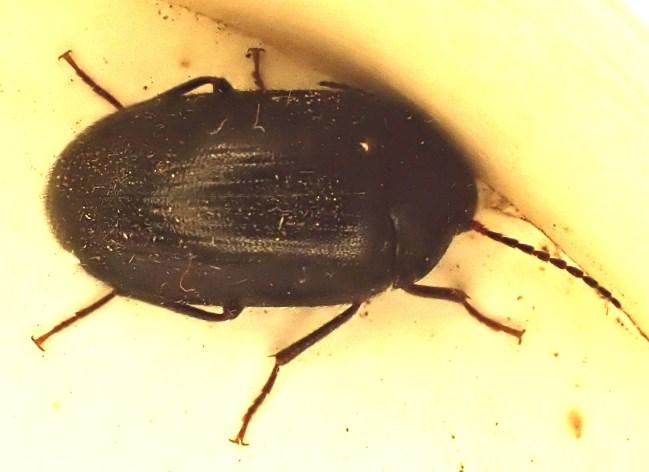
Another darkling beetle, albeit a much scarcer one was found by Jerry Bowdrey in his moth trap on 10 July in Kelsale. Prionychus melanarius is a very scarce species with few recent records, although it has been found previously in Suffolk. It is associated with dead and decaying trees –the larvae consuming organic matter that accumulates in the hollows within old trees. Like many other beetles, the adults are nocturnal and will come to moth traps, etc.
Two seed beetles, probably new to Suffolk, were recorded by Howard Mendel. Bruchidius siliquastri was found on Judas tree in Woodbridge. Bruchidius varius was found on Trifolium incarnatum in Blaxhall in May.
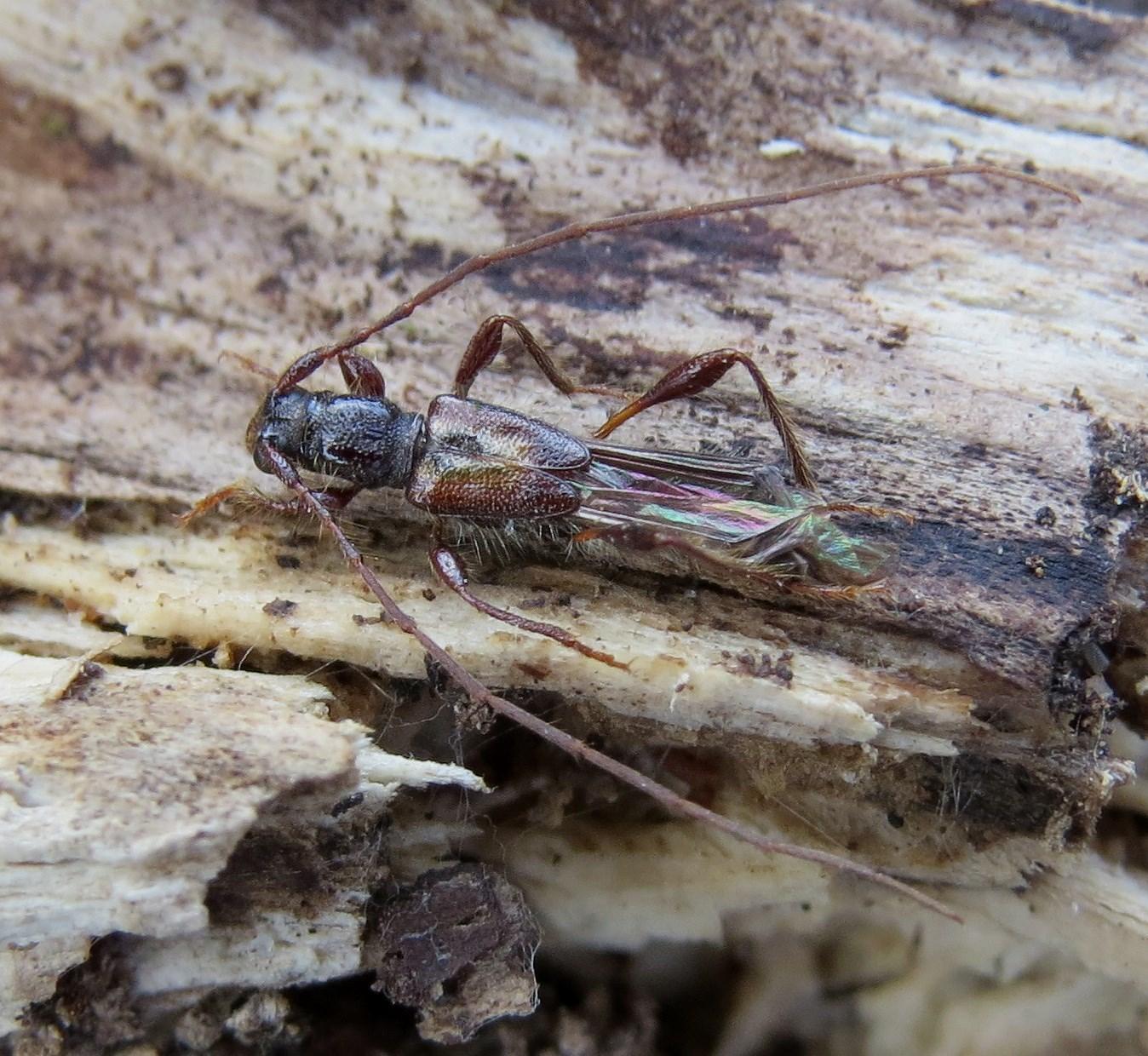
Martin Rejzek visited Fakenham Wood on 22 June and recorded a number of beetle species, most interesting was which was the small, but distinctive longhorn
Ross Piper
Ashburnham Farm, Needham Road
Barking, Suffolk, IP6 8HJ coleoptera@sns.org.uk