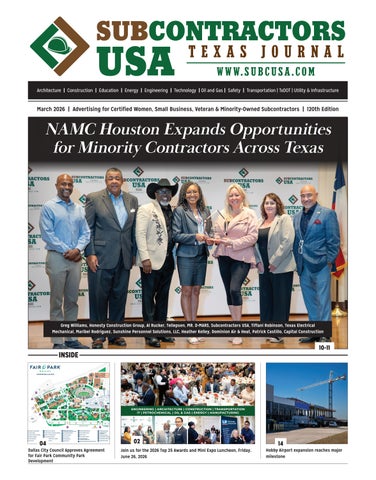
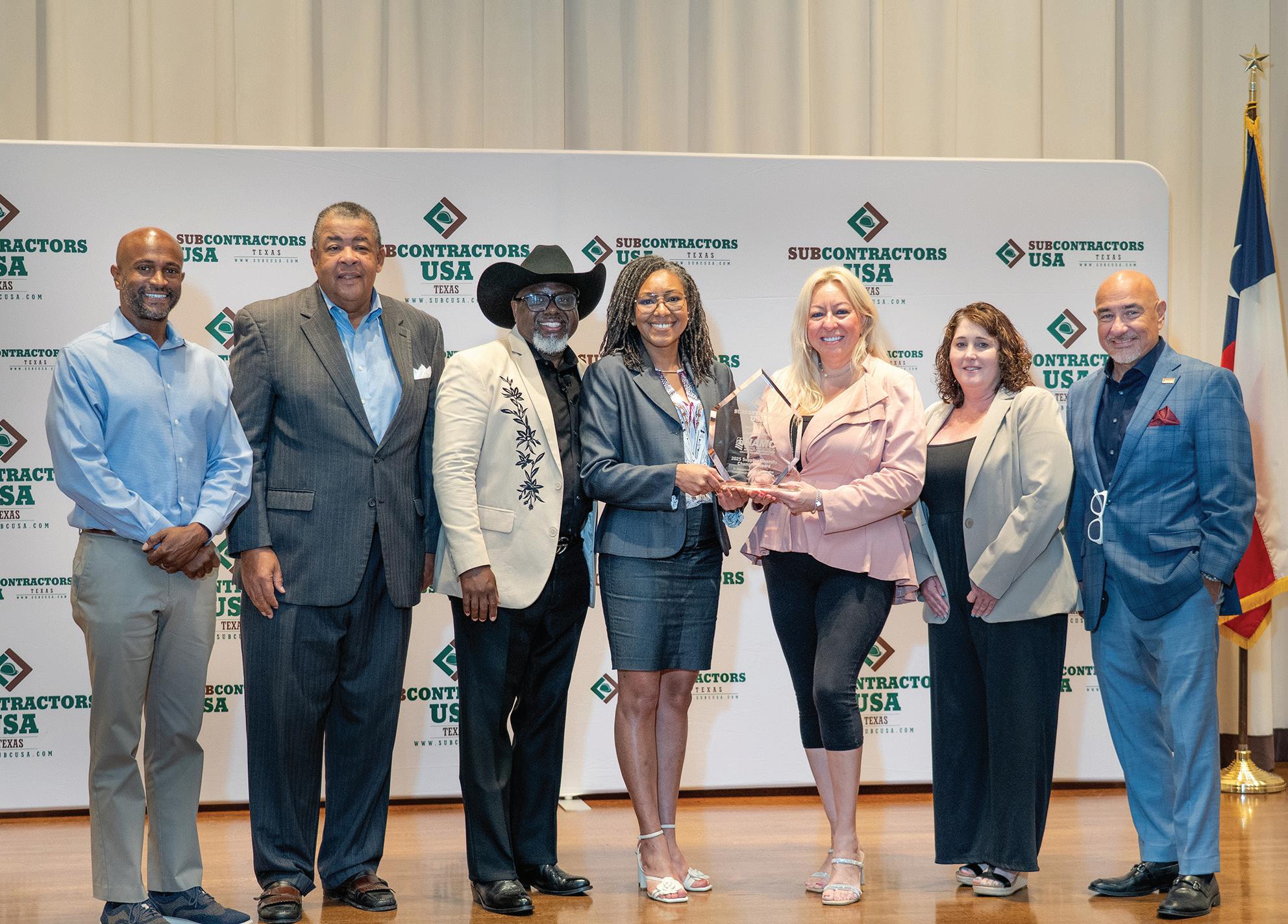
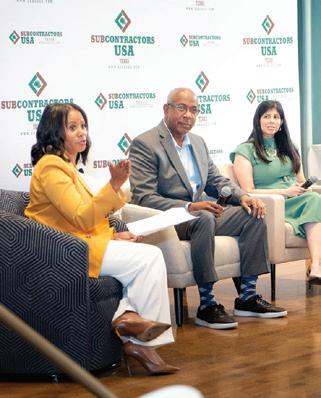
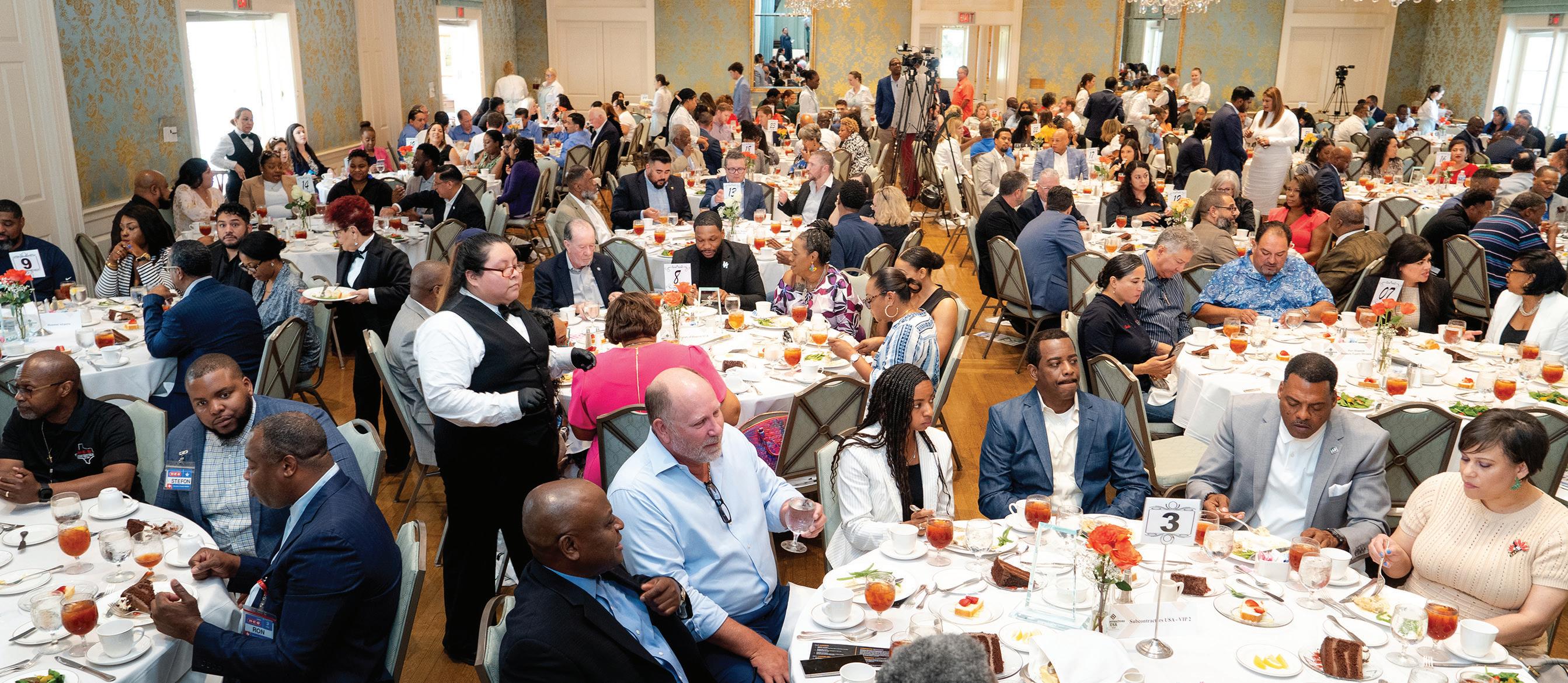
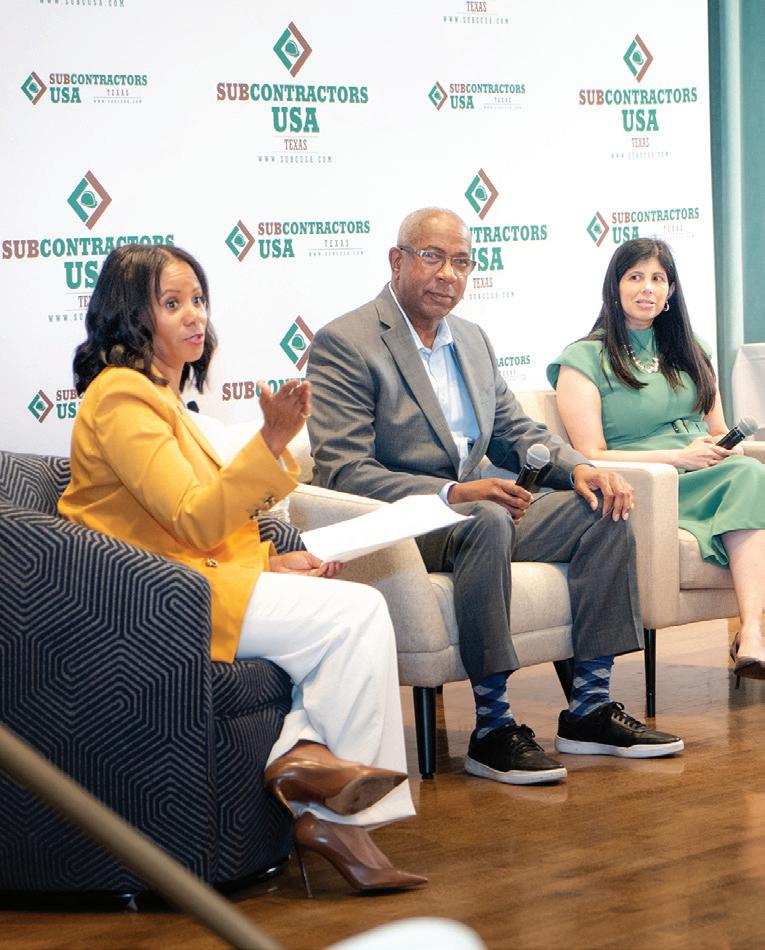
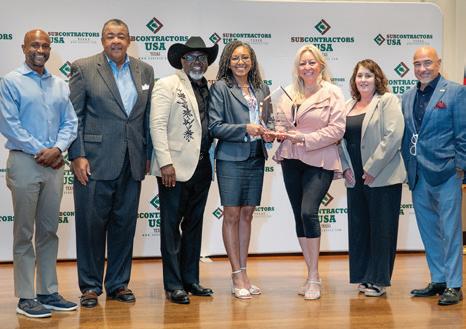
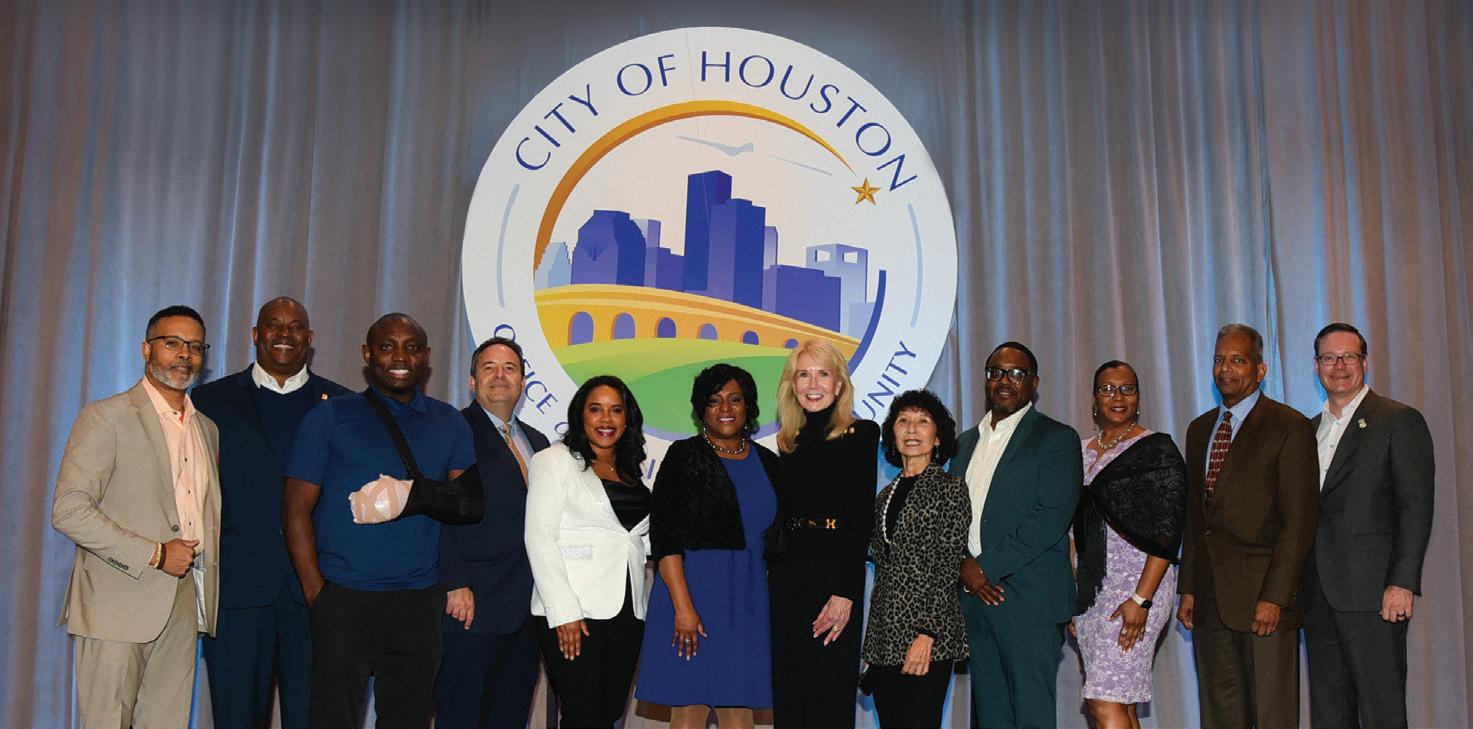
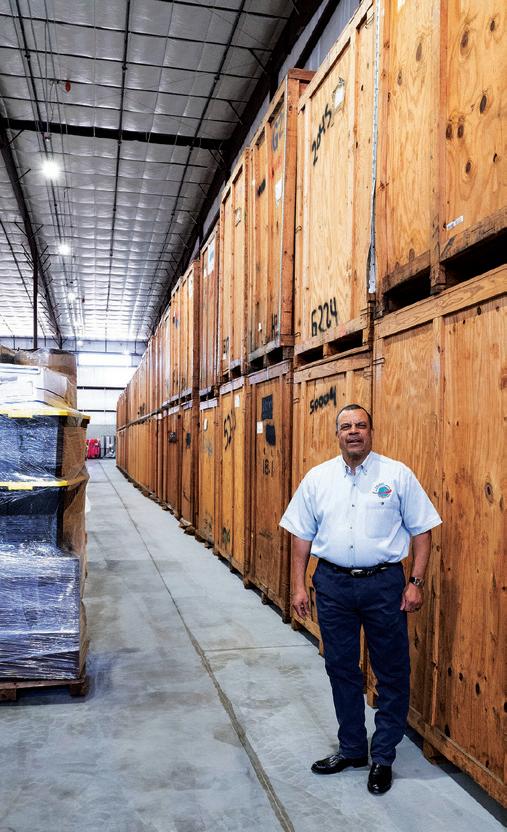
Greg Williams, Honesty Construction Group, Al Rucker, Tellepsen, MR. D-MARS, Subcontractors USA, Tiffani Robinson, Texas Electrical Mechanical, Maribel Rodriguez, Sunshine Personnel Solutions, LLC, Heather Kelley, Dominion Air & Heat, Patrick Castillo, Capital Construction
BEHIND THE JOURNAL
PUBLISHER & CEO
Keith J. Davis, Sr.
CHIEF FINANCIAL OFFICER
Eugenie Doualla
CHIEF OF STAFF & MANAGING EDITOR
Kimberly Floyd
CREATIVE MANAGER
Emma Aguiñaga
SENIOR GRAPHIC DESIGNER
George Gustin
WEB DESIGNER & DEVELOPER
Shahzad Shahab
SR. BUSINESS DEVELOPMENT MANAGER
Chivon Jones
OPERATIONS COORDINATOR
Ronda Damon
PROJECT MANAGER
Dy'v-l Davis
PHOTOGRAPHY
Grady Carter
DISTRIBUTION
Carneal Addison
CONTRIBUTING WRITERS
Helen Callier
PUBLISHER’S MESSAGE
At Subcontractors USA-TEXAS, we remain committed to sharing stories that reflect growth, access and opportunity across our communities. Our mission is rooted in elevating organizations and leaders who are creating pathways for economic advancement, strengthening industries and ensuring progress is inclusive.
In this issue, we highlight the impactful work of the National Association of Minority Contractors (NAMC) Houston Chapter, an organization expanding access and opportunity within the construction industry. As Texas experiences rapid growth in infrastructure and development, NAMC Houston is helping ensure minority contractors are not only included but positioned to thrive.
Through advocacy, professional development and strategic connections, NAMC Houston
CONTENTS
“We rise by lifting others.”
— Robert Ingersoll
is building a strong network of contractors, suppliers and industry professionals. Its reach extends across Texas, where chapters are working together to strengthen the pipeline of minority contractors and create a more connected, equitable ecosystem.
The organization’s commitment to mentorship, training and access to contracting opportunities reflects a broader vision centered on ownership, capacity building and long-term sustainability. These efforts support individual businesses while contributing to the overall economic strength of our communities.
As we spotlight NAMC Houston, we are reminded that meaningful progress requires intentional investment in people and opportunity.
Thank you for your continued support of Subcontractors USA-TEXAS.
OUR SERVICES
GRAPHIC DESIGN
• Logos
• Flyers
• Ads
• Folders
• Brochures
• Door Hangers
PRINTING
• Business Cards
• Flyers
• Folders
• Pull-Up Banners
• Step-and-Repeat Banners
• Brochures
• Door Hangers
• Letterhead • Envelopes PHOTOGRAPHY
Headshots
Event Photography
Keith "MR. D-MARS" Davis, Sr.
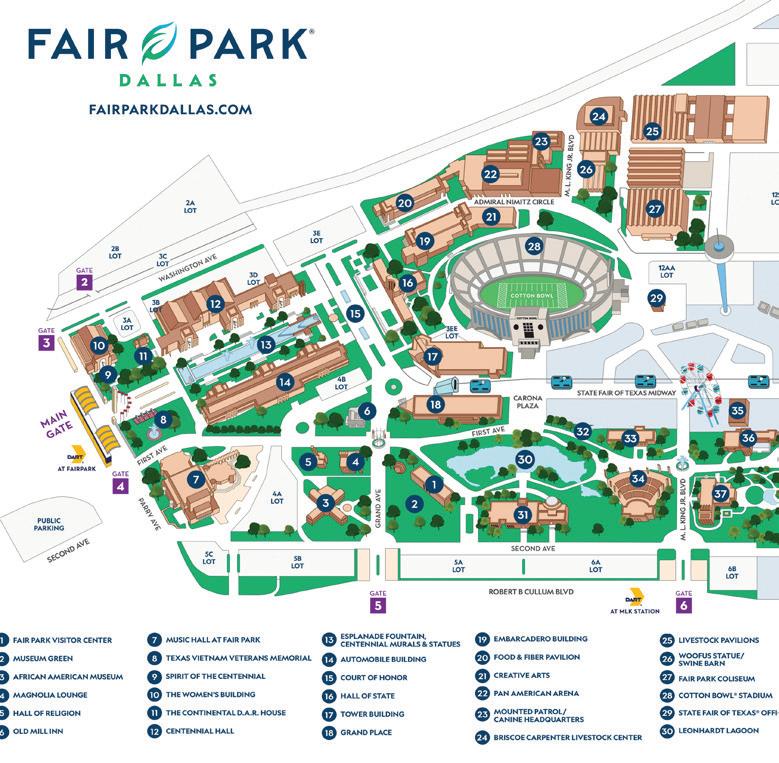
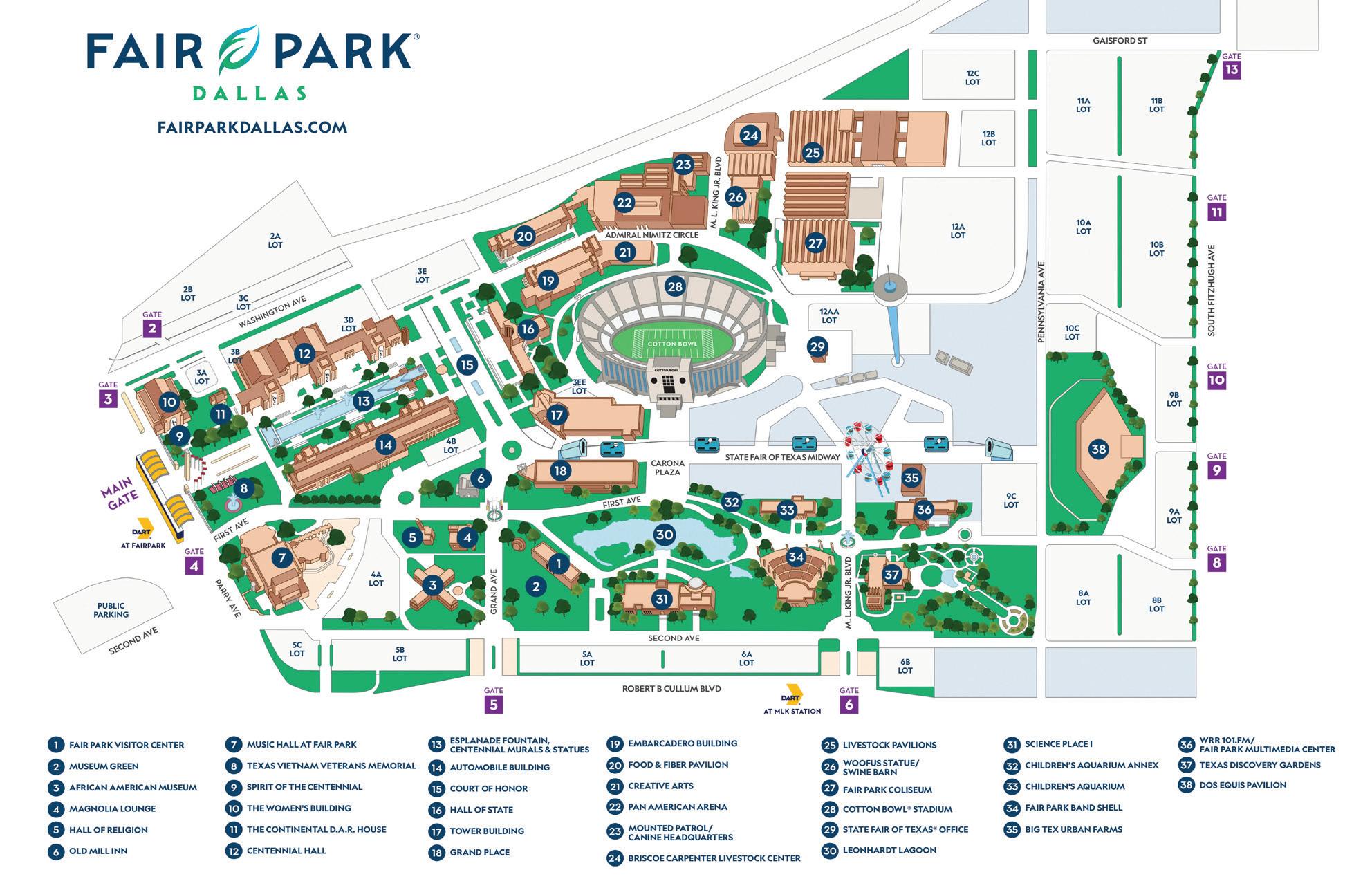
DALLAS CITY COUNCIL APPROVES AGREEMENT FOR FAIR PARK COMMUNITY PARK DEVELOPMENT
Agreement with Fair Park First (FPF) for the design, fundraising, and construction of a new Community Park at Fair Park.
TThe new Community Park represents a major step in the City’s ongoing commitment to revitalize Fair Park and enhance recreational and green space for the South Dallas community
and the public at large.
“This long-awaited Community Park will transform underused space into a vibrant, welcoming destination for families, seniors, and children across South Dallas,” said Dallas City Manager Kimberly Bizor Tolbert.
“The investment will honor the historic Fair Park neighborhoods while delivering new green space to play and gather, and a stronger sense of connection for the residents who have advocated for this project for so many years. Thanks to all members of the city council and community leaders who helped make this happen,”
Tolbert added.
Under the agreement, FPF will be responsible for raising sufficient funds to fully support construction within six months of execution, completing design within six months, and beginning construction within ninety days of permit issuance. Completion is targeted within twenty-four months of the construction contract execution.
FPF will oversee design, permitting, and construction, while the City will retain ownership of all improvements. The agreement also provides for ongoing transparency, with City audit rights and required quarterly and annual financial briefings. The Park and Recreation Department Director will review and approve all design development and construction documents throughout the process.
Source: Dallascitynews.net
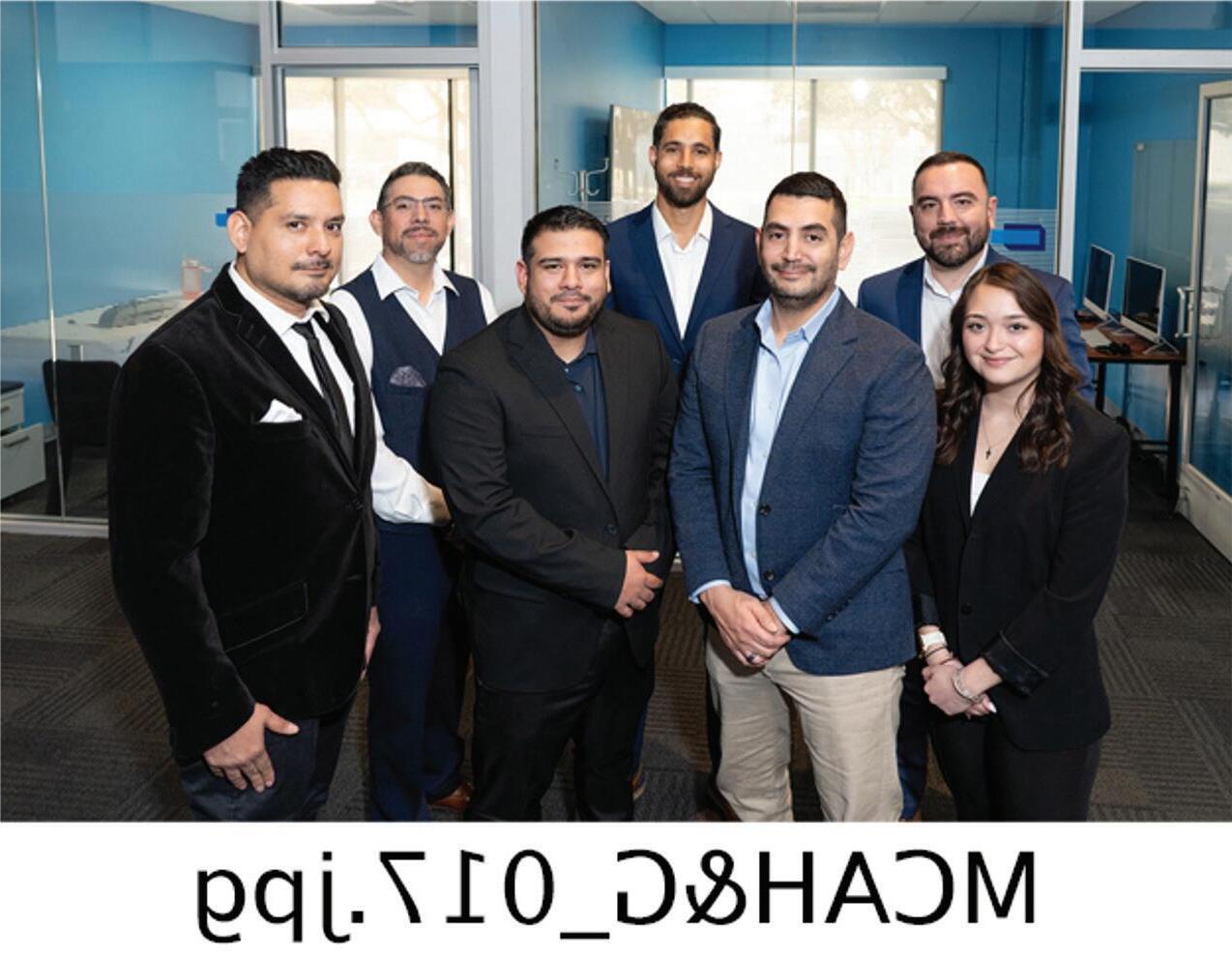
Design Experts in IT, Network Cabling, AV, & DAS
We believe we can provide advanced solutions that help businesses and individuals succeed in today's ever-changing world. Our solutions are designed to make life easier, more efficient, and more productive
Who We Are
MCA Design Group delivers expert IT, AV, cabling, wireless, and data center solutions tailored to industries like energy, healthcare, and hospitality With a unique blend of field, engineering, and design expertise, our team streamlines the entire design process, saving clients time and money
We provide comprehensive services for large corporations, government agencies, public sector entities, educational institutions, healthcare facilities, and commercial real estate clients, including:
Why Choose Us
e S o l u t i o n s : O f f e r i n g
t a i l o r e d s e r v i c e s f o r l a r g e c o r p o r a t i o n s , g o v e r n m e n t a g e n c i e s , e d u c a t i o n a l
i n s t i t u t i o n s , h e a l t h c a r e f a c i l i t i e s , a n d
c o m m e r c i a l r e a l e s t a t e c l i e n t s .
I n d u s t r y - F o c u s e d A p p r o a c h : S p e c i a l i z e d
i n p r o v i d i n g h i g h - q u a l i t y d e s i g n s o l u t i o n s
f o r p u b l i c a n d p r i v a t e s e c t o r
o r g a n i z a t i o n s .
MAJOR DEMOLITION UNDERWAY AT KAY BAILEY HUTCHISON CONVENTION CENTER DALLAS
By Subcontractors USA News Provider
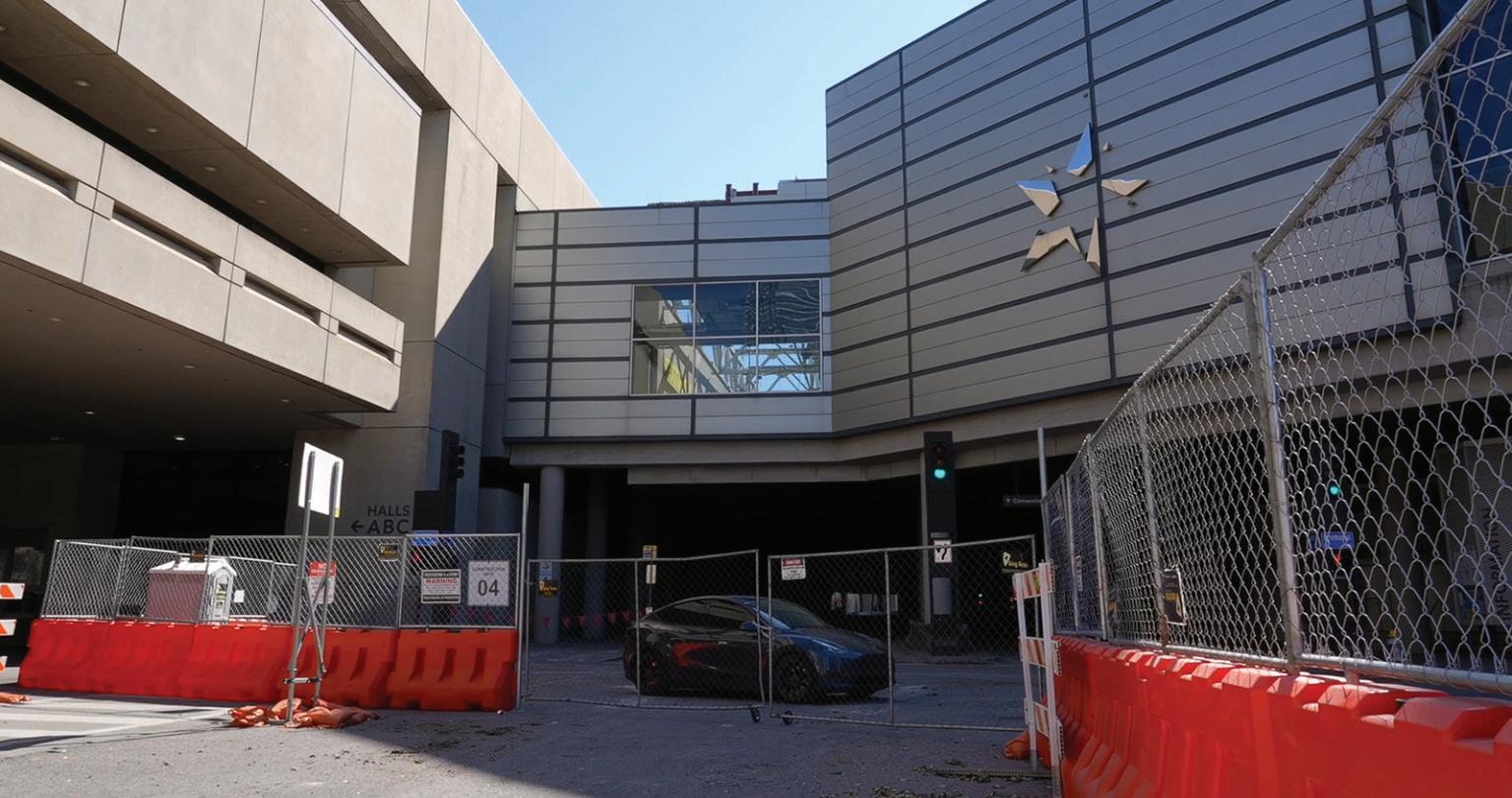
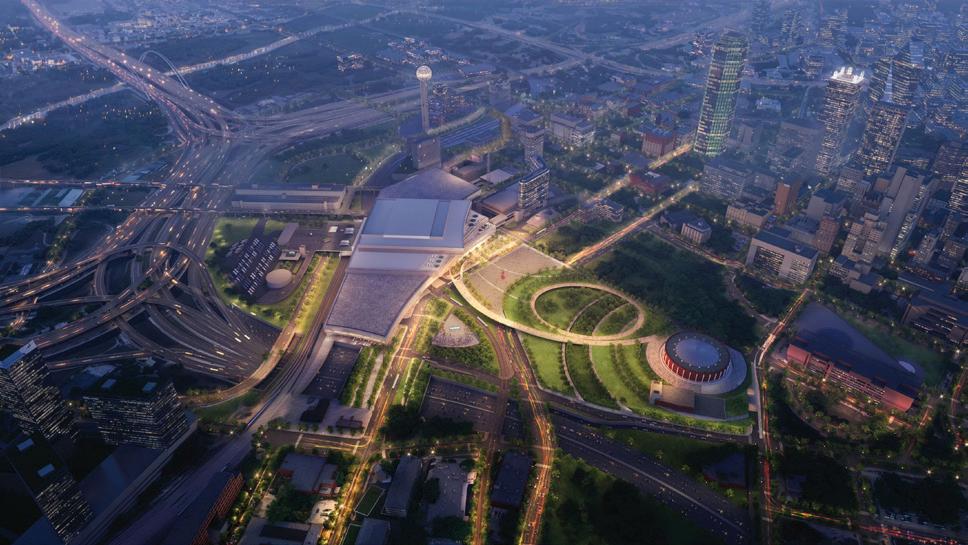
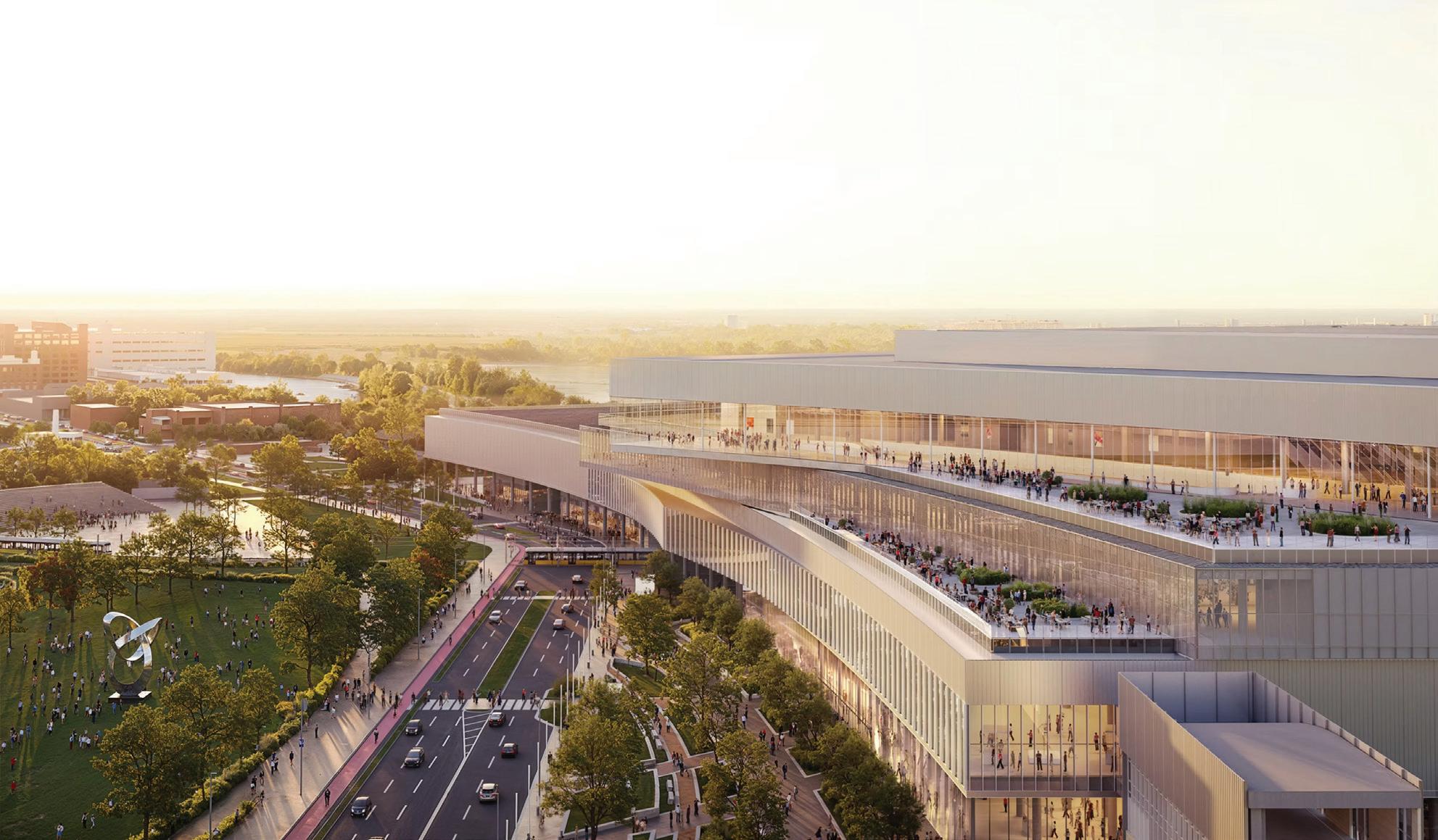
The City of Dallas announced today that major demolition is underway at the Kay Bailey Hutchison Convention Center Dallas (KBHCCD), marking a significant milestone in the delivery of a new, modern convention center and connected district.
Demolition of Halls D, E, and F is now in progress to make way for construction of the new facility. This phase follows months of pre-enabling work, including utility relocations, internal structural separation, and site preparation.
Halls A, B, and C will remain active throughout the coming years, ensuring continuity of operations. The convention center will serve as the FIFA World Cup 2026 International Broadcast Center through August 2026, after which ongoing events and convention activity will continue in the remaining active halls while demolition and construction proceed in phases.
“Today marks a major milestone in a transformation years in the making,” said City Manager Kimberly Bizor Tolbert.
“Guided by our Mayor, City Council, and the support of Dallas voters, this demolition signals visible, tangible progress. Every step is executed with precision, fiscal responsibility, and a forward-looking vision—ensuring this investment fuels opportunity, growth, and prosperity for Dallas residents and
businesses for decades to come. Dallas is building the future, brick by brick,” Tolbert added.
As part of the demolition strategy, the structure spanning Lamar Street will be carefully separated. Once that structural separation is complete, the remaining portions of Halls D, E, and F will continue to be dismantled.
A portion of Hall F that spans the DART and Union Pacific rail lines will remain in place. The floor slab covering the rail corridor will be maintained to protect critical infrastructure below, while everything above that floor will be removed.
As previously announced, the DART convention center station will remain closed for the duration of construction, though DART trains will continue operating through the site. Riders can learn more about temporary detours on the DART website.
Dozens of Union Pacific freight trains move through the corridor daily, and maintaining uninterrupted rail operations is a key priority during demolition and construction.
“This milestone reflects the extensive planning and collaboration behind the scenes to keep events operating while we transform the site,” said Rosa Fleming, Director of Convention and Event Services. “Our team is focused not only on delivering a world-class facility, but also on ensuring that clients, partners, and visitors continue to experience a seamless experience throughout construction.”
Major demolition activities are expected to be substantially complete by the end of 2026, with the overall project on track for completion in 2029.
The redevelopment will deliver approximately 750,000 square feet of contiguous exhibit hall space, 105,000 square feet of ballroom space, and 180,000 square feet of meeting rooms.
The project is already producing measurable economic results, with 70 major conventions booked for 2029 and beyond, representing approximately $1.9 billion in total economic impact.
Funding remains anchored by dedicated Hotel Occupancy Tax (HOT) and Project Financing Zone (PFZ) revenues, which have generated more than $224 million to date.
A $1 billion bridge loan approved by City Council in 2025 allows the City to advance enabling works and maintain schedule discipline, with long-term revenue bonds planned for issuance in 2026.
Beyond delivering a new convention center, the project will anchor a walkable, mixed-use district that better connects downtown to The Cedars and southern Dallas, unlocking more than 30 acres of developable land for future housing, hotels, retail, and dining.
For more information about the Kay Bailey Hutchison Convention Center Dallas Master Plan, please visit DallasCCMasterPlan.com
Source: Dallascitynews.net
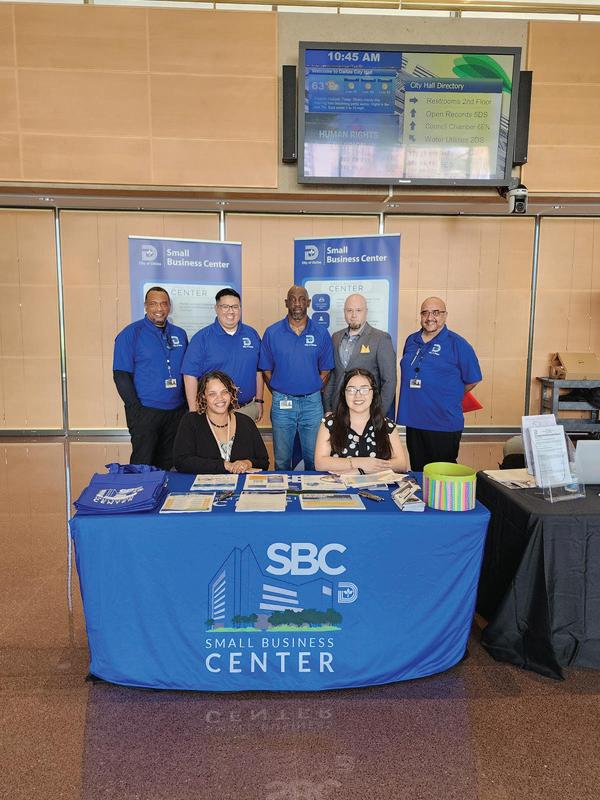
Small Business Enterprise Program
•
Texas Construction Faces Workforce Strain as
Immigration Crackdown Tightens Labor Supply
By Subcontractors USA News Provider
Texas’ construction industry is confronting one of its most serious challenges in years: a shrinking workforce fueled by stepped-up immigration enforcement and policy uncertainty.
Builders from San Antonio to the Rio Grande Valley say that federal immigration raids and intensified documentation requirements have reduced the availability of skilled labor, delaying projects and driving up costs at a time when demand for housing, infrastructure, and industrial facilities remains high.
The labor shortage, already a chronic problem, has worsened since late 2025, when federal officials increased workplace audits and enforcement operations across South and Central Texas. Contractors report losing key crews almost overnight, halting residential and commercial projects in communities where immigrant labor has been the backbone of construction for decades.
“Construction can’t continue at this pace without immigrant workers,” said one South Texas homebuilder, who requested anonymity to avoid drawing federal attention. “We’ve got the projects; we’ve got the funding — but we don’t have the people.”
According to data from the Federal Reserve Bank of Dallas, Texas construction employment growth slowed significantly in the final quarter of 2025, even as the state’s
broader economy continued to expand. Analysts attribute much of that slowdown to reduced immigration flows and heightened enforcement actions that have discouraged workers from seeking or maintaining employment in the industry.
as highway expansions and airport upgrades, including the multibillion-dollar renovations at George Bush Intercontinental Airport in Houston, are facing longer completion timelines and potential cost overruns. Private developers, meanwhile, report increased
Immigrant labor accounts for an estimated 40% of the Texas construction workforce, according to the Associated General Contractors of America. Many of those workers occupy critical roles in framing, concrete, roofing, and finish work — trades that have struggled for years to attract U.S.-born workers despite higher pay and training incentives.
The tightening labor market has direct consequences for the state’s infrastructure and housing pipeline. Public projects such
bidding costs and longer lead times for skilled subcontractors.
calling for immigration reforms that recognize the economic role of foreign-born workers.
U.S. Rep. Monica De La Cruz, R-Texas, recently introduced legislation seeking legal work status for certain undocumented laborers with clean records who contribute to the construction and agriculture sectors.
Industry advocates say such measures could provide stability to a workforce vital to maintaining Texas’ growth trajectory. “Without comprehensive reform, we risk slowing the engine of Texas’ economy,” said a spokesperson for the Texas Association of Builders. “We need a legal pathway that balances security with economic necessity.”
While immigration policy remains largely under federal jurisdiction, the business implications are being felt most acutely at the state level. With Texas leading the nation in new construction spending — totaling nearly $90 billion annually — the question is not whether projects will continue, but how efficiently they can proceed amid an evolving labor landscape.
As 2026 unfolds, builders, policymakers, and economists agree on one point: the future of Texas construction depends not only on cranes and concrete, but on the people who make the state’s growth possible.
In response, some state and local officials are
Demetrius Navarro Founder/President
NAMC Houston Expands Opportunities for Minority Contractors Across Texas
Suporting growth, equity and access in Texas' booming construction industry
By Subcontractors USA News Provider
As Texas continues to experience rapid growth in construction and infrastructure, the National Association of Minority Contractors (NAMC) Houston Chapter is working to ensure minority-owned businesses have access to opportunities, resources and networks needed to succeed. Founded on the principle of equity in the construction industry, NAMC Houston serves as a hub for contractors, developers, suppliers and professionals seeking to build capacity and compete in both public and private sectors.
“We are focused on creating access, building relationships and ensuring our members are positioned for long-term success,” said a representative of NAMC Houston.
A Mission Rooted in Equity and Opportunity
NAMC was established nationally in 1969 to address disparities in the construction industry, particularly for minority contractors who historically faced barriers to entry and growth. Today, the organization continues to advocate for fair contracting practices while equipping members with tools to scale their businesses.
In Houston, the chapter plays a critical role in connecting
minority contractors to major projects, including municipal developments, infrastructure improvements and private sector opportunities.
The organization also collaborates with government agencies, prime contractors and developers to promote supplier diversity and inclusion.
Statewide Impact Across Texas
While the Houston chapter is one of the most active, NAMC’s presence extends across Texas, with chapters in cities such as Dallas-Fort Worth, Austin and San Antonio.
These chapters work collectively to strengthen the pipeline of minority contractors statewide, sharing best practices, hosting joint events and advocating for equitable policies.
As Texas continues to grow, it is critical that minority contractors are not left behind. Through its network of chapters, NAMC is building a stronger, more connected ecosystem that supports contractors across the state.
"WE ARE FOCUSED
ON CREATING ACCESS, BUILDING RELATIONSHIPS AND ENSURING OUR MEMBERS ARE POSITIONED FOR LONG-TERM SUCCESS"
Membership: Who Can Join
• General contractors
• Subcontractors
• Construction managers
• Suppliers and vendors
• Architects and engineers
• Industry professionals and consultants
Benefits of Membership
NAMC Houston offers membership opportunities for a range of professionals within the construction ecosystem.
Membership is open not only to minority-owned businesses but also to individuals and organizations committed to advancing diversity and inclusion in the construction industry.
To join, prospective members typically complete an application through the local chapter and pay annual dues. Requirements may vary slightly by chapter, but the process is designed to be accessible and inclusive.
For many members, the value of NAMC Houston lies in its ability to open doors that might otherwise remain closed.
Networking and Relationship Building
NAMC Houston hosts regular meetings, mixers and industry events that connect members with key decisionmakers, including developers, government officials and prime contractors.
These relationships are critical to long-term success, helping members build visibility, credibility and trust within the industry. In many cases, it’s not just about what you know—it’s about who knows you and has confidence in your work.
Professional Development and Training
The organization offers workshops, seminars and training sessions designed to strengthen business operations, financial management and compliance. Topics often include:
• Bonding and insurance requirements
• Project management
• Certification processes
• Business growth strategies
How to Get Involved
Individuals and businesses interested in joining NAMC Houston can visit the chapter’s website or attend a local meeting to learn more about membership options.
With a growing network across Texas, NAMC continues to provide a platform for minority contractors to connect, grow and lead in an evolving industry. For more information, please visit namctexas.org.
Access to Contracting Opportunities
Members gain visibility into upcoming projects and procurement opportunities. Through partnerships with public agencies and private developers, NAMC helps ensure its members are considered for bids and contracts.
Advocacy and Representation
NAMC advocates for policies that promote fairness and inclusion in contracting. This includes working with local and state agencies to ensure minority contractors have equitable access to projects.
Mentorship and Capacity Building
NAMC Houston provides mentorship opportunities that pair emerging contractors with experienced professionals. This support helps newer businesses navigate challenges and scale effectively.
Community and Collaboration
Beyond business, members benefit from a sense of community. The organization fosters collaboration rather than competition, encouraging members to partner on projects and share resources.
Building the Future
As Houston and other Texas cities continue to expand, the demand for skilled contractors will only increase. NAMC Houston is positioning its members to meet that demand while ensuring diversity remains a priority in the industry. The organization’s work goes beyond contracts—it is about creating pathways to generational opportunity and economic empowerment. Construction remains one of the most powerful industries for building wealth, and NAMC is committed to ensuring that opportunity is accessible to all.
to opportunity and economic empowerment
When Acceleration Policies Create AHJ Congestion: The Hidden Risk in Housing Reform
LBy Helen Callier Contributing Writer
ast week, I wrote about the bipartisan Housing for the 21st Century Act and how federal policymakers are now directly targeting permitting speed as part of the housing supply solution.
This is a significant move.
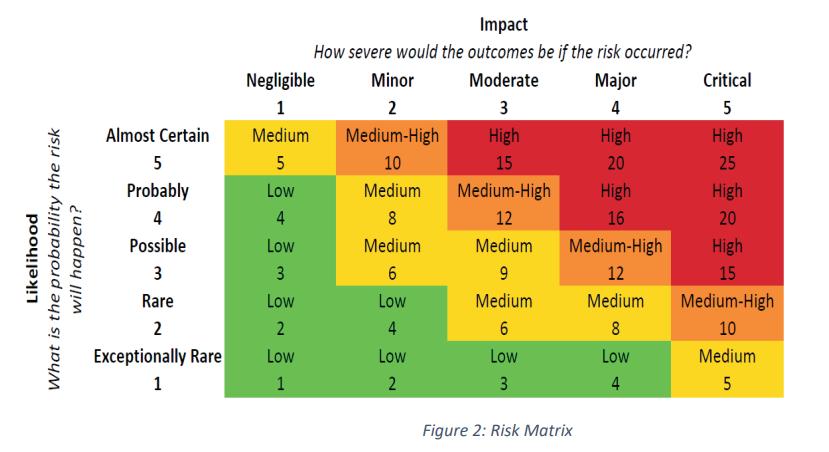
But there’s a gotcha lurking and one that holds an operational reality that contractors, developers, and project owners must understand as the days progress in 2026: Acceleration policy like the one Congress passes can create short-term congestion at permitting jurisdictions.
When legislation has finally heard the voices from developers and builders and encourages faster housing production, this often can result in an immediate increase in submittals to permitting jurisdictions. More projects enter the plan review pipeline. More plans hit the plan reviewers’ queues. And subsequently, more inspections are scheduled.
The question then becomes: What does not increase overnight?
> Jurisdiction staffing level.
> Capacity of Plan Reviewers.
> Bandwidth of Inspectors.
> Internal coordination across multiple departments.
And that gap between policy intent and operational capacity is where schedule risk quietly enters and sits at your desk.
WORK VOLUME DOES NOT EQUAL SPEED
It is great to think that if federal and state leaders are focused on accelerating housing, approvals will automatically move faster, but the contrary most likely happens first and causing delays with permits.
Increased demand for affordable housing, multifamily development, and mixed-use projects can stretch existing jurisdictions’ organizations and processes. Even with streamlining environmental review provisions as the recent Congressional bill shows, local amendments, ordinances, life safety checks, and utilities infrastructure coordination still apply.
The key point is permitting execution still happens locally.
And local capacity and changes scale more slowly than federal policy.
Why This Matters in a Disciplined Capital Environment
As I have written about in earlier articles, 2026
is shaping up to be a disciplined execution year.
Capital is available, but underwriting expectations are tighter. Timelines are scrutinized. Lenders and equity partners are more sensitive to delays tied to execution risk.
In this environment, even modest permitting slowdowns can create waves through construction and impact:
• Subcontractor scheduling
• Material procurement, logistics and storing
• Scheduling of inspections
• Financing milestones promised to Owner
• Certificates of Occupancy
When projects are moving under tighter
margins and greater all eyes on the bottom line, small timeline disruptions matter more than they did in a hotter cycle.
THE STRATEGIC RESPONSE
The solution is not to wait for policy to “fix” permitting.
It is to prepare earlier, develop a strategic plan and execute smarter.
That means:
Engaging permitting expertise during preconstruction
Submitting complete, coordinated packages
Understanding jurisdiction workload including processes
Sequencing inspections proactively
Treating permitting as a critical-path activity, not an administrative afterthought
Acceleration policies may increase opportunities in housing and related sectors.
But opportunity without preparation creates bottlenecks.
THE BIGGER PICTURE SHOWS A LOT
The national conversation is increasingly acknowledging that permit approvals matter. The reality is that local jurisdiction rule and still require strategic coordination.
Whether the market is hot, lukewarm, or disciplined, one constant remains:
YOU CANNOT BUILD LEGALLY WITHOUT A PERMIT.
And in a year where policy is pushing for speed-to-market, thoughtful permitting approaches and strategies become even more essential to protecting schedules and investment capital.
If you are planning housing, healthcare, airport, or mixed-use projects in 2026 and want to proactively assess jurisdiction risk and timeline exposure, visit PermitUsNow.com/ quote or call 1-844-PERMIT-4.
Permitting is not a simple administrative task; it is an execution strategy.
TXDOT UPDATES AI STRATEGIC PLAN
By Subcontractors USA News Provider
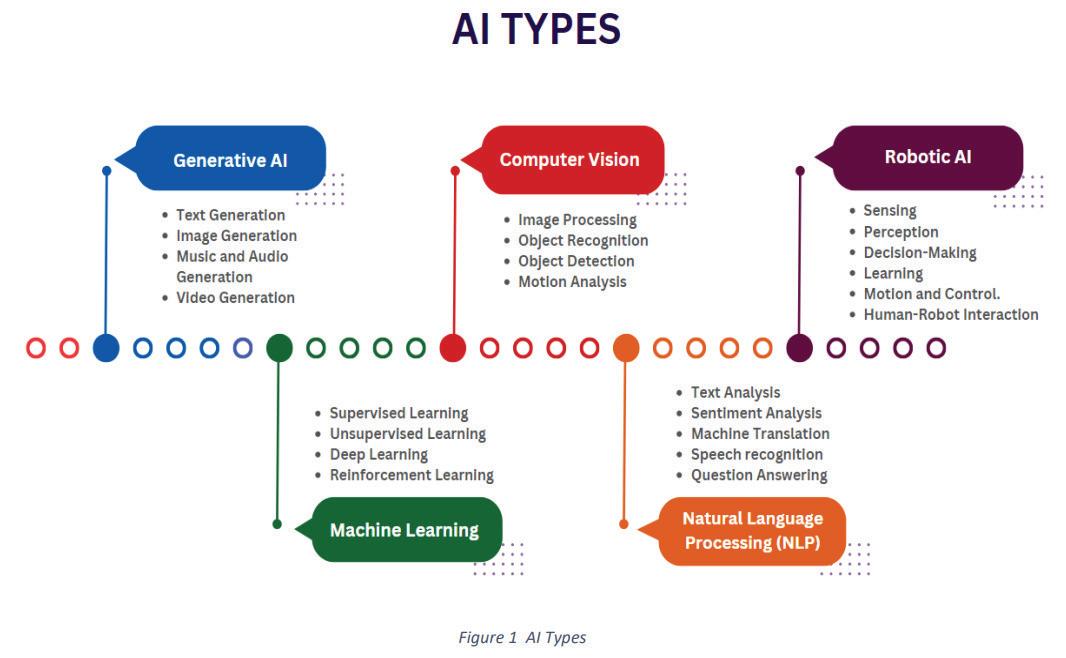
ignificant changes in the capabilities and use of AI have led to the need for TxDOT to update its Artificial Intelligence Strategic Plan. Since launching its AI Strategic Plan in December 2024, the Texas Department of Transportation (TxDOT) has been using AI to improve safety and efficiency on Texas highways.
The 2026 update reflects rapid changes in artificial intelligence over the past year, including the rise of AI systems that are capable of reasoning, planning and executing complex tasks. TxDOT has seen success moving small pilot AI programs into
everyday operations, while prioritizing human-led decision making.
“AI is no longer experimental at TxDOT,” TxDOT Executive Director Marc Williams said. “It is a strategic asset that is now embedded in our workflows and delivering measurable results.”
Williams has asked all TxDOT district and division leaders to identify AI leads on their teams, employees who will help expand adoption of the new technology and determine ways it can help improve operations.
According to the plan, TxDOT has already realized significant benefits from completed AI projects. AI-driven incident detection in the Austin area has improved how quickly crashes and roadway hazards are identified. At the center of the update is a “human-led, AI-supported” governance philosophy.
“Our goal is to remain at the forefront of innovation while upholding our commitment to ethical and responsible AI adoption,” Williams said.
While AI tools are used to accelerate analysis, data processing and workflow execution, human professionals remain accountable for all final decisions and outputs. Mandatory
human-in-the-loop review is required for AI-assisted work, reinforcing professional judgment and ethical oversight. Going forward, TxDOT plans to use a Readiness Scorecard to evaluate and prioritize more than 200 potential AI use cases. Projects will be assessed based on data availability, technical feasibility, business sponsorship, impact, and ethical risk.
“THIS IS A PIVOTAL YEAR FOR TXDOT’S AI ADOPTION,”
Williams said. “By combining strong governance, high-quality data and workforce engagement, we are positioning AI as a force multiplier that helps us deliver a safer, more reliable transportation system for Texas.”
Source: Texas Department of Transportation
HOBBYAIRPORTEXPANSION REACHESMAJORMILESTONE
By Subcontractors USA News Provider
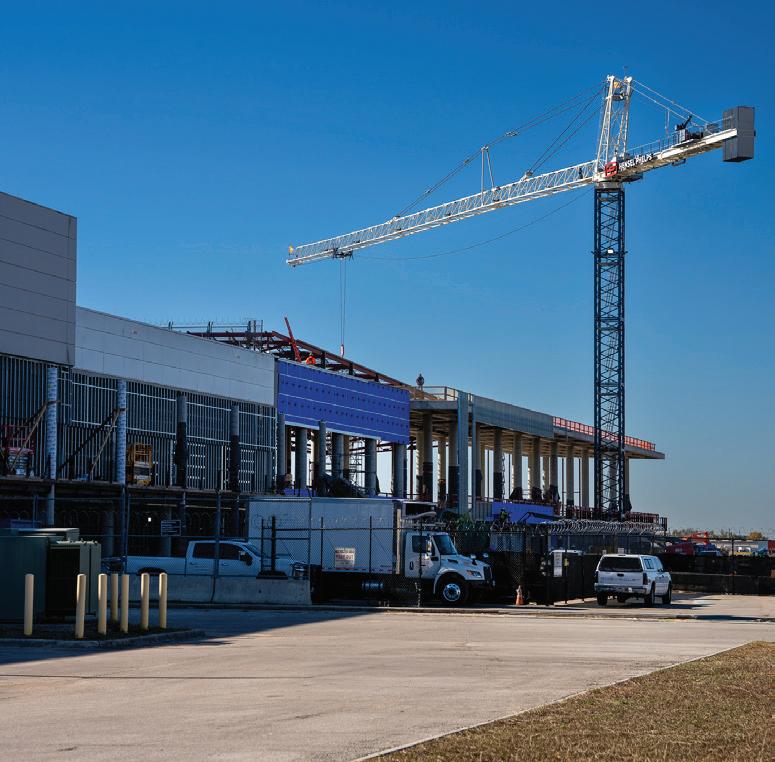
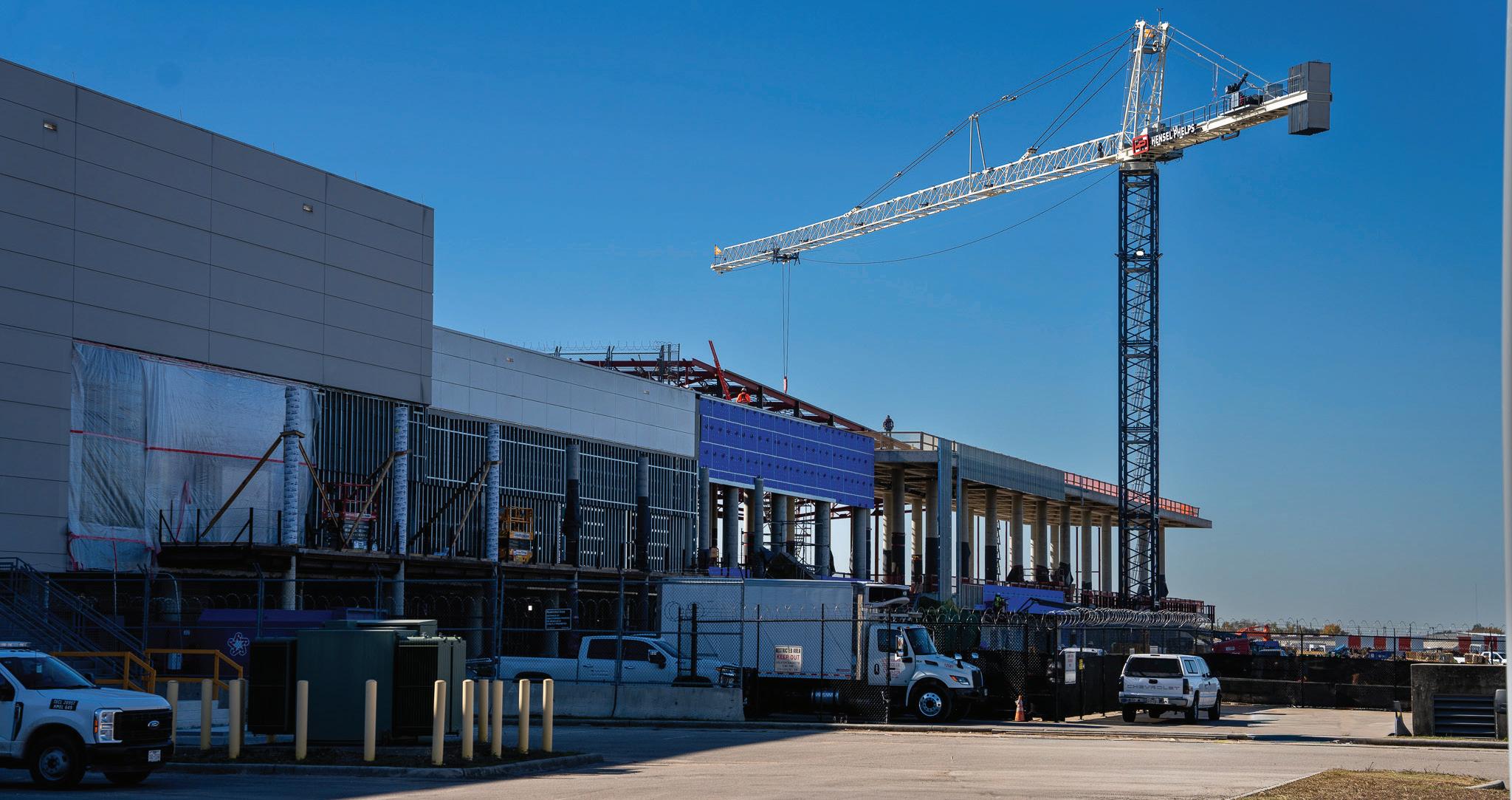
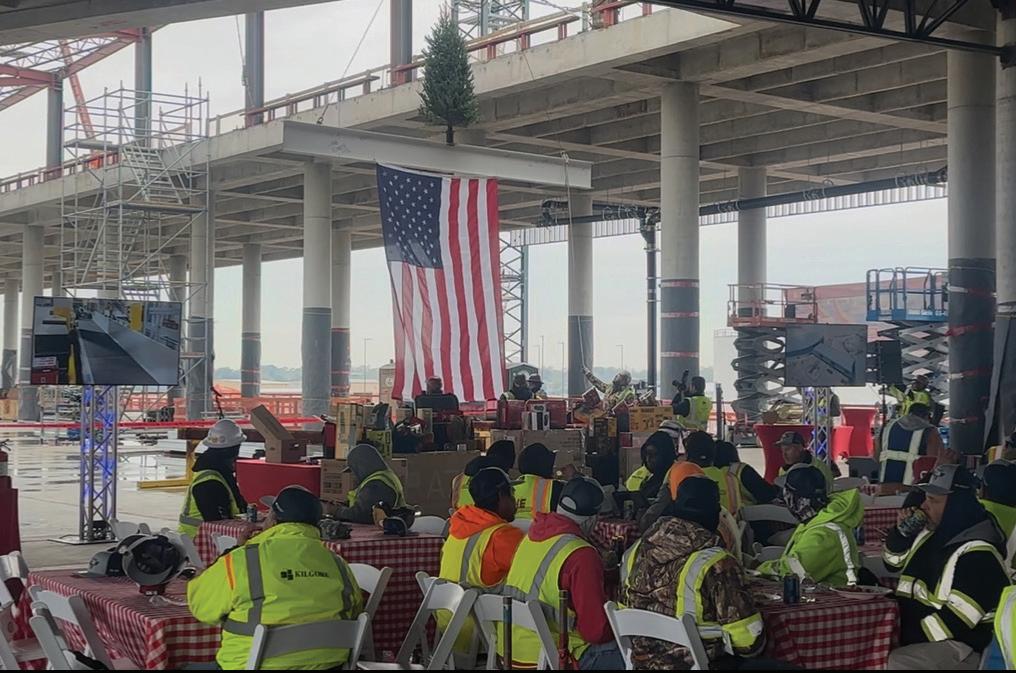
onstruction crews working on the $470 million West Concourse expansion at William P. Hobby Airport (HOU) reached a major milestone December 5, 2025, as Hensel Phelps set the final piece of steel into place. The topping-off ceremony marked significant progress on the multi-year project and honored the tradespeople whose work has carried the expansion forward.
The celebration focused on the skilled workers building the future of HOU — ironworkers, carpenters, electricians, equipment operators and many others whose expertise is shaping the new concourse. The event included brief remarks from Hensel Phelps staff and raffles for the crews on site.
Houston Airports and Southwest Airlines are partnering on an exciting transformation at William P. Hobby Airport (HOU), North America's first and only 5-star Skytrax rated airport. The West Concourse Expansion is more than just a construction project—it's a bold step into the future of travel, offering passengers an elevated experience that matches Houston's vibrant, welcoming spirit.
The $470 million expansion, set to be completed in 2027, will introduce seven new gates capable of serving domestic and international flights, ensuring even smoother connections to destinations worldwide, a modern baggage handling system with additional claim carousels and a weather-protected canopy connecting the Red Garage to the departures curb. Inside the concourse, passengers will also see expanded amenities and can look forward to more space for restaurants, retail, and
public art that reflects Houston's unique culture and energy.
In 2015, Southwest Airlines unveiled the current West Concourse, returning international flights to HOU for the first time in 46 years. This next chapter builds on that legacy with modern design, enhanced amenities, and a focus on creating a "Houston-friendly" environment where passengers feel right at home.
When completed in 2027, the West Concourse will support continued growth at North America’s first 5-Star Skytraxrated airport and help meet rising demand for both leisure and business travel through HOU.
The topping-off milestone underscores the craftsmanship behind one of Houston’s most significant aviation projects — and marks the moment the new concourse officially began its transition from structure to space.
Dallas City Council Approves New DART Governance Structure
he Dallas City Council today approved a resolution endorsing a reformed governance structure for Dallas Area Rapid Transit (DART), By Subcontractors USA
Treaffirming the City’s commitment to the long-term viability and success of the regional transit system.
Under the proposed model, Dallas would hold 45% of the voting share and seven board seats, while ensuring that every member city retains representation on the DART Board
and that no single city controls a majority of seats. These principles reflect Dallas’ goodfaith effort to preserve a strong, collaborative system for the entire region.
The vote follows months of negotiations among DART member cities, driven by concerns over governance, service and
funding. Both governance and funding concerns prompted six cities to call for withdrawal elections scheduled for May 2026. Throughout the process, Dallas remained at the table, committed to protecting public transit as a critical engine for economic growth and mobility across North Texas. The City’s Transportation and Infrastructure Committee reviewed the status of negotiations on January 20, 2026, and provided guidance to reach today’s resolution.
“I want to thank the Mayor and City Council for their leadership and for voting in support of this resolution,” said City Manager Kimberly Bizor Tolbert. “Today’s vote is a step in the right direction and reflects a decision made with the health of the entire system in mind. Dallas residents rely on DART to travel to work, school, and medical appointments throughout the region, and this action is a win-win for the City of Dallas, DART, and the entire region. Today’s vote affirms Dallas’ commitment to ensuring regional transit not only remains strong but continues to thrive.”
With a governance agreement in place, attention now turns to funding solutions. The DART Board will continue discussions this week, and on Thursday, February 12, 2026, the Regional Transportation Council (RTC) will consider its role in the proposed agreement.
Source: www.dallascitynews.net
TxDOT asphalt testing adopted as national standard
By Subcontractors USA News Provider
new asphalt testing method will help improve pavement quality and make roads more durable over time, not just in Texas but across the country.
The method, developed by the Texas Department of Transportation (TxDOT) and the University of Texas at Austin Center for Transportation Research, fills missing gaps in testing for asphalt binder.
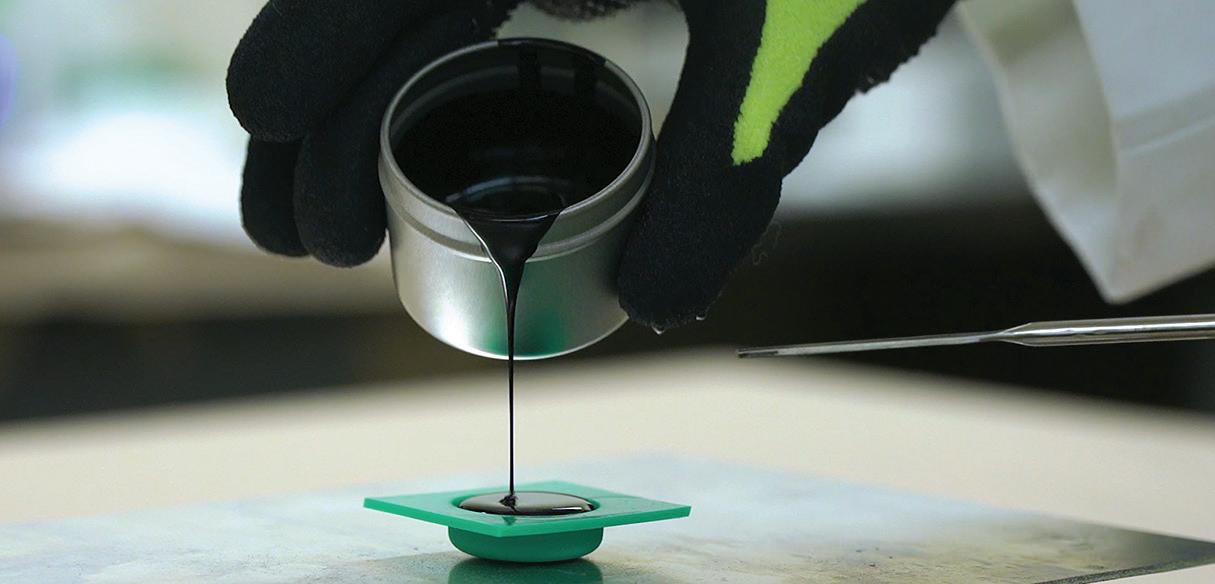
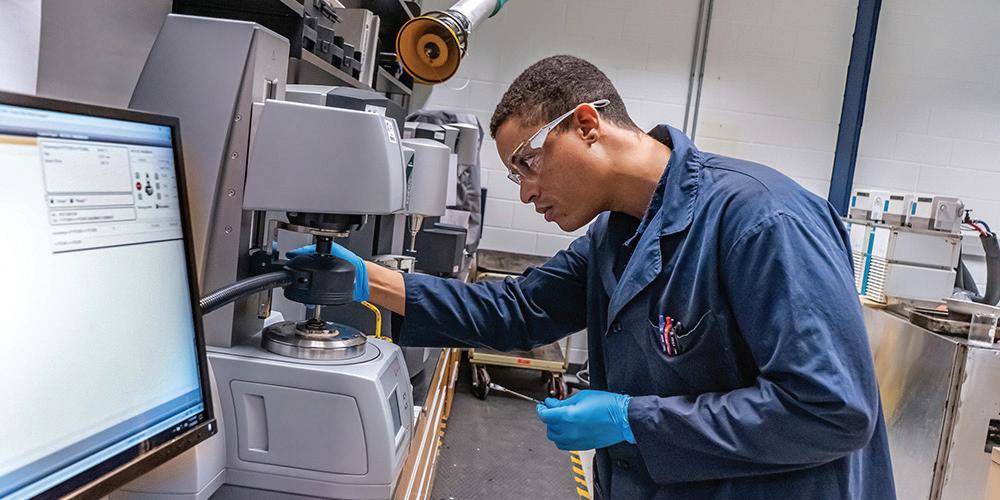
The test, called the “poker chip method,” models the stress that asphalt endures on a roadway to check for cracking in the material. A sample of asphalt binder in the shape and size of a poker chip is sandwiched between two plates and then pulled until the sample cracks or fails.
The method has been in development and refinement since 2016. Zahra SotoodehNia, an engineer in TxDOT’s Materials and Tests Division, was a researcher at CTR during the implementation stages of the project.
“The previous testing methods were developed over 30 years ago, and they simply don’t account for the wide range of modifiers used in today’s asphalt binders,” SotoodehNia said. “The poker chip test is highly sensitive to both the type and quality of these modifiers. That means it can better predict how long a pavement will last and how well it will resist cracking over time. Ultimately, it helps us build roads that are more durable and require less maintenance.”
Asphalt binder is one of the components used to produce hot asphalt mix and seal coats –which is used in large amounts to pave and maintain the more than 200,000 miles of TxDOT roads across the state. By improving the quality of the binder, the pavement will last longer and be less expensive to maintain over time.
“When
that’s holding these roads together,”
said Amit Bhasin, CTR Director and lead researcher on the project. “That inherent ability of the binder to resist cracking is what dictates the serviceable life of an asphalt pavement.”
The method has been adopted by the American Association of State Highway and Transportation Officials (AASHTO) as the provisional standard test method to be used nationwide. TxDOT plans to specify this test in the upcoming year and will use it to check the quality of asphalt binders both before and after they are shipped to projects.
“That's a major milestone for us and it shows that Texas is leading the way in innovation and that the other 49 states see the value in this approach,” SotoodehNia said. “We hope that with AASHTO's endorsement, we see more states adopting this method which, could elevate pavement performance nationwide.”