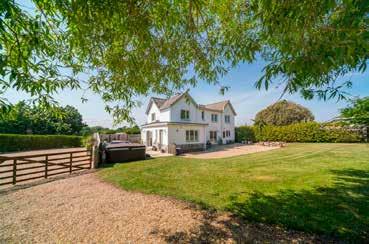
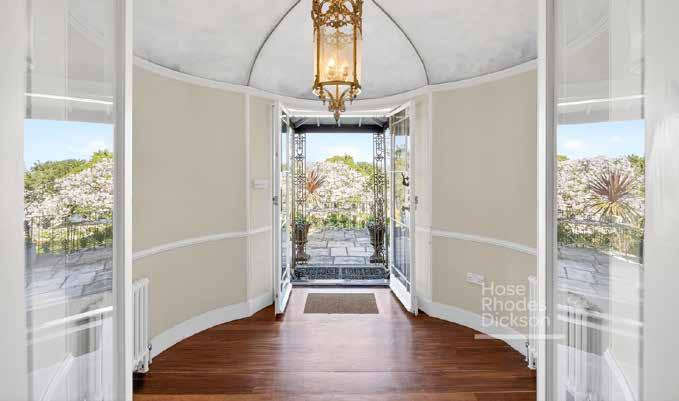
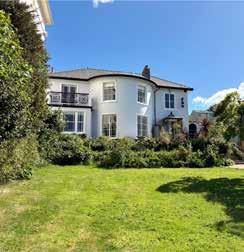
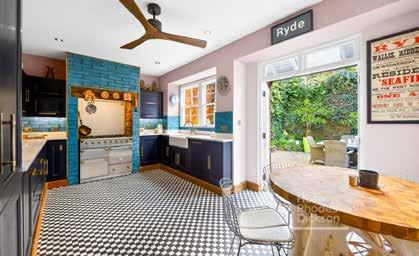
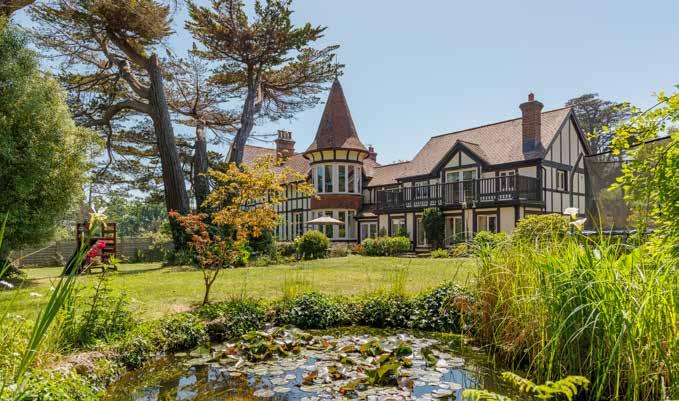
• Long garden with a wild garden at the furthest part
• Chain Free!!
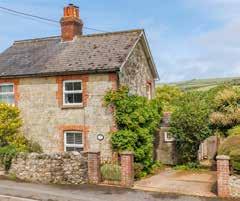
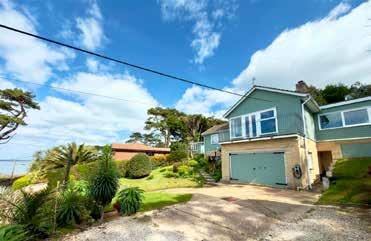
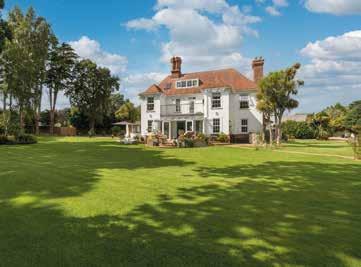
• Detached Cottage Style Home
• Two Double Bedrooms
• Three Reception Rooms
• Established Private Gardens
• Ample Driveway Parking
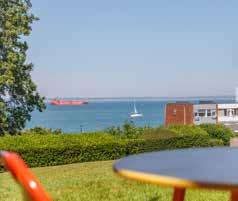
• Beautiful views over countryside with sea glimpses
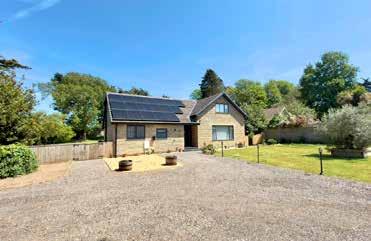
• Four bedrooms
• Two large reception rooms
• Superb mature gardens
• Garage & offroad parking for 3 vehicles
Helping
Guide Price
£575,000 Northwood
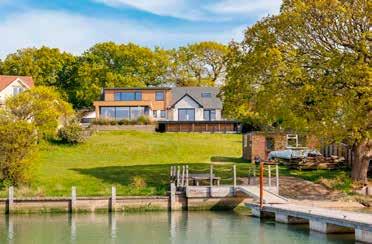
• Detached 4 Bedroom Home
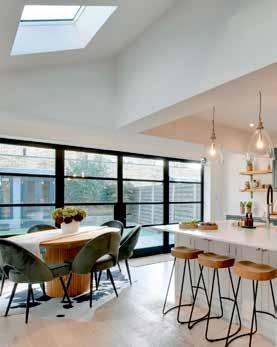
• Lovely Open Plan Living Area
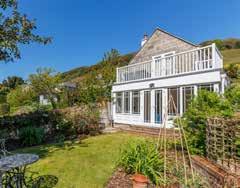
• Roof Terrace with Countryside Views
• Recently Renovated & Extended
Guide Price
£495,000 Cowes
• Substantial Victorian home
• Six bedrooms over three floors
• Elegant and well presented
• Short walk to Cowes town and marina
Guide Price £735,000 Cowes
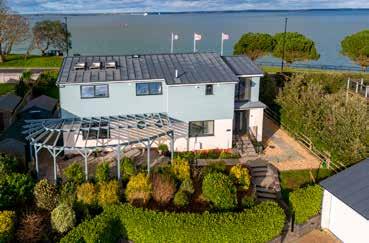
• Detached 4/5 bedroom home
• Expansive south facing garden
• New plumbing, electrics, flooring and bathroom
• Off road parking for 5 vehicles
Guide Price £750,000 Cowes
• Planning permission GRANTED for a modern property over 3,500 sq ft
• Exciting opportunity in a prestigious location
• Ra Rarely available plot with SOUTH FACING GARDEN
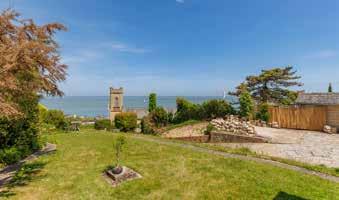
• Elevated position with FAR REACHING SEA VIEWS
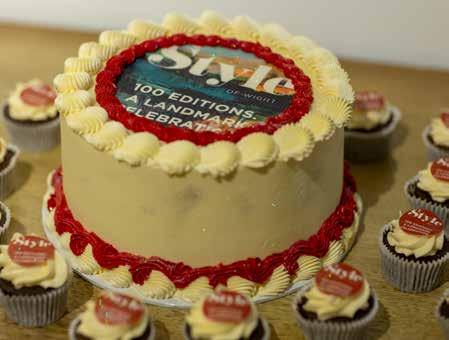
Proud to feature in this landmark 100th edition
The Island’s property people
From coastal homes to countryside retreats, we’ve been helping people make their move across the Island for over 35 years.
With sales & lettings branches in key locations across the Island, we can help you sell your property and find your next home. Scan to book your free property valuation today.
We’re the Island’s most-trusted agent and have been selling and letting homes since 1990.
SPENCEWILLARD.CO.UK
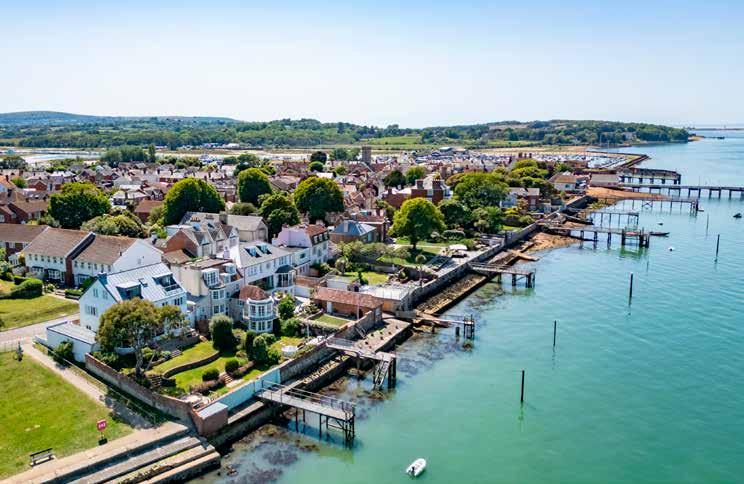
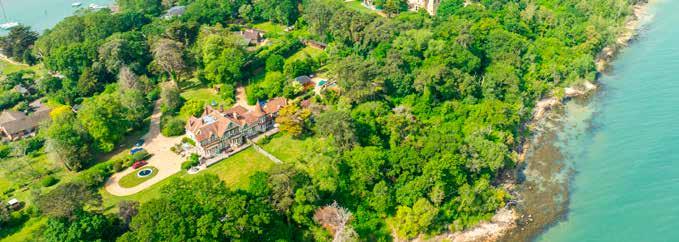
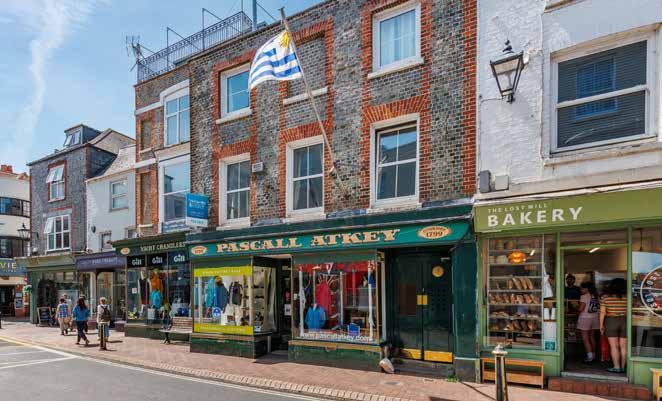
YARMOUTH £2,695,000
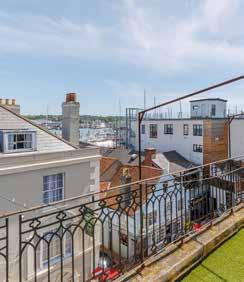
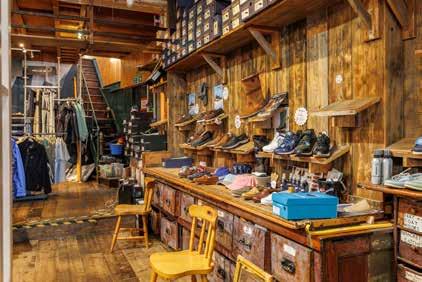
One of Yarmouth’s’ most desirable properties on the exclusive Yarmouth High Street. EPC E
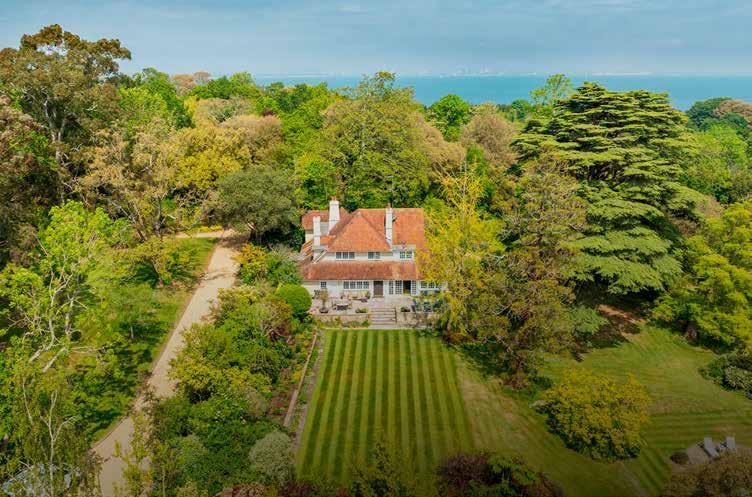
PUCKPOOL HILL £2,250,000
A fine and substantial family home set within established, stunning gardens, located a short walk from the beach and Seaview village. EPC C
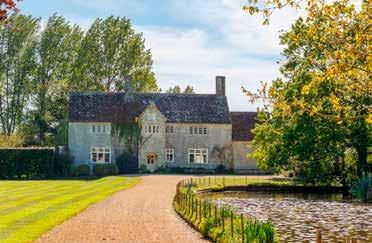
MERSTONE £2,000,000
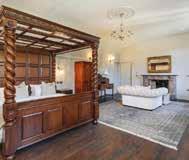
An exquisite historic Jacobean Manor House set in delightful grounds of around 8.5 acres with traditional outbuildings and with a particularly attractive approach passing the ancient carp ponds. EPC Listed, Grade II
BEMBRIDGE £1,250,000
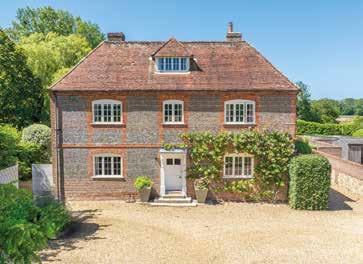
Nestled in beautiful countryside with an outlook to downland, this comprehensive package includes a large family home, substantial garden and grounds, and various outbuildings. EPC D
FRESHWATER BAY £850,000
A fabulous detached chalet bungalow located in a quiet and sought after residential road on the outskirts of Freshwater Bay, backing on to farmland, with solar panels contributing to its energy efficiency. EPC B
WOOTTON BRIDGE £1,600,000
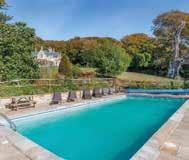
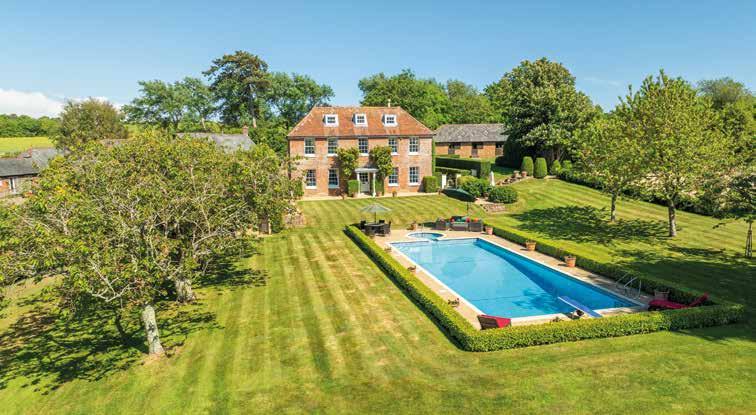
A rare opportunity to acquire a thoughtfully renovated five bedroom property on a private road, with a swimming pool and direct Creek access. EPC C
YARMOUTH £1,095,000
Little Dashwood was the subject of a significant and thorough upgrade during 2024, which has delivered a magnificent house enjoying a frontline position. EPC C
TOTLAND BAY - £399,950
This spacious detached two bedroom property, located in an elevated coastal part of Totland Bay, boasts far-reaching sea and coastal views and is a short stroll from the beach. EPC D
Distribution office@styleofwight.co.uk 01983 861007
We print on sustainable paper using ecologically friendly inks and use a ‘carbon balanced’ printer.
See page 81 for details Every effort is made to ensure the accuracy of Style of Wight Magazine, but legal responsibility cannot be accepted for errors, omissions or misleading statements. Winners at the IW Chamber Awards 2016
Note
from the Editor
As summer arrives, life on the Isle of Wight naturally turns towards the sea. Beaches fill with families, paddleboards and sailing boats skim across the water, cafés serve the day’s catch, and evenings stretch a little longer beside the shore. At this time of year, it becomes impossible to ignore how deeply the sea shapes our lives. Yet even when the beaches are empty, and winter winds return, its influence never truly leaves us.
Living on an island means the sea is more than scenery. It shapes our weather, our history, our livelihoods and our imaginations. It defines our horizons and influences the rhythm of our days, often in ways we barely notice. Whether we live beside the coast or further inland, we all share the same shoreline. In many ways, we are all sea creatures.
That idea runs throughout this edition of Style of Wight as we celebrate the remarkable relationship between the Island and the waters that surround it.
Beneath the waves, photographer Theo Vickers introduces us to an extraordinary underwater world, revealing the rich marine life that exists just beyond our beaches. His work is a reminder that some of the Isle of Wight’s greatest wonders are hidden in plain sight.
Our conversation with Ian Boyd encourages us to look even closer. Through the humble sea limpet, he explores ideas of resilience, belonging and home, drawing thoughtful parallels between these remarkable creatures and ourselves. Like them, our lives are shaped by the sea, relying on it in ways both obvious and unseen.
This issue is a celebration of the waters that surround us and the people whose lives have been influenced by them. Whether through nature, creativity, history or simple moments spent beside the shore, the sea continues to define this Island in countless ways. As you enjoy everything summer has to offer, we hope these pages encourage you to see the coastline with fresh appreciation and to remember that, here on the Isle of Wight, the sea is never far away.
Whether you’re chasing sea shanties in Ventnor, watching yachts race around the Island or dancing through a carnival parade, summer is when the Isle of Wight truly comes alive. Here’s where the action is happening.
XV Interiors at Bayliss & Booth
Date TBA
Lushington Hill, Wootton
After meeting at Style of Wight’s 100th edition celebration (see event feature for more), Bayliss & Booth are hosting a special Meet the Maker evening with Izzey, owner of XV Interiors, to launch the new Days Like These design. The collection will be stocked in store, and Izzey will be there in person to introduce it, alongside drinks and nibbles.
baylissandbooth.co.uk / xvinteriors.com
Ventnor Fringe
17–26 July
Various locations around Ventnor
Isle of Wight Pride
18 July
Various locations around Ryde Ryde’s seafront will fill with a rainbow of colour as Pride Parade winds through the town before arriving at the Community Village and live entertainment area. Expect music, performers, community groups and a celebration of the island’s diverse LGBTQ+ community.
iwpride.org
Isle of Wight County Show
11–12 July
Isle of Wight County Showground, Northwood
There’s nothing quite like a county show, and this one is a showcase of Island farming, food and rural life. The County Show combines livestock competitions, equestrian displays, countryside pursuits and local produce. It’s a chance to see the agricultural traditions that continue to shape our Island today.
iwcountyshow.co.uk
For ten days, Ventnor becomes one giant performance space. Expect theatre in churches, comedy in big tops, circus in hidden corners and live music everywhere from woodland clearings to seafront venues. It’s Britain’s quirkiest arts festival, with more than 150 shows spread across the town.
vfringe.co.uk
Isle of Wight Scooter Rally
28–31 August
Thousands of scooter enthusiasts arrive on the Island for a long weekend of ride-outs, live music and Mod culture. Expect rows of immaculate Vespas and Lambrettas lining the seafronts, alongside sharp tailoring, Northern Soul and all-night celebrations. vfmscoot.co.uk
Wight Games Festival
Various dates from June–August
With around 50 events taking place across the Island, from cricket and pickleball to Roman board games and Welly Wanging, this inaugural event is one you won’t want to miss. All ages and abilities are welcome, and the festival will be supporting Mountbatten Hospice, Independent Arts and the IOW NHS Trust Charity. wightgames.co.uk
Unique Yaverland
One of the Island’s most spectacular beauty spots has gained worldwide recognition. Yaverland Beach was recently named among Tripadvisor’s most unique beaches in the world in its 2026 Travellers’ Choice Awards. With colourful cliffs and fossil-hunting sands, it’s easy to see why this coastal gem has captured the attention of visitors from across the globe.
Red Funnel Votes
Have your say in the 2026 Red Funnel Isle of Wight Awards. Voting is now open, giving residents and visitors the chance to support their favourite Island businesses, attractions and experiences. Cast your vote before 1 September and help crown this year’s winners.
at redfunnel.co.uk/awards
Victorious Festival
28–30 August
Portsmouth/Southsea
One of the South Coast’s biggest music festivals returns with three days of live performances overlooking the sea. This year’s line-up includes headline sets from Richard Ashcroft, The Black Keys and Kasabian, alongside comedy, food and family entertainment across multiple stages. A packed weekend atmosphere with something for all ages. victoriousfestival.co.uk
Grab a chippy tea and head for the beach – it’s practically an Island summer tradition, and you can’t go wrong with Mill Bay in Ventnor or The Cod Father in Ryde.
I Scream for Ice Cream
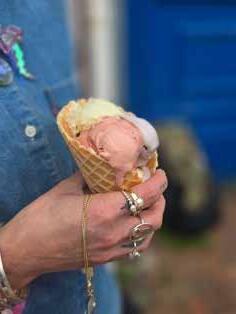
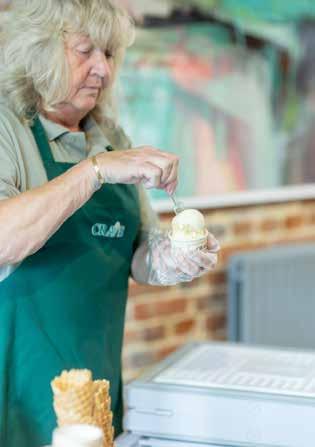
An ice cream in hand and a sea view in front of you is one of life’s simple pleasures – our favourite ice-creameries include Crave in Ventnor or Toppings in Shanklin.
SUMMER Sorted
From coastal-inspired fashion and handcrafted jewellery to beauty essentials and family favourites, our latest Style Picks celebrate the best of the season. Better still, every featured item is available to win.
01
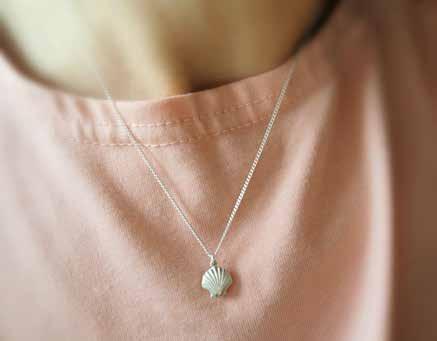
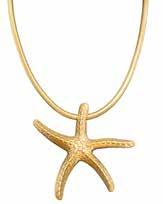
JANA REINHARDT NECKLACE
Delicate, handcrafted and inspired by nature, Jana Reinhardt’s jewellery feels perfectly suited to Island life. Celebrating 20 years in business, the award-winning designer continues to create beautiful pieces using sustainable methods, with selected collections supporting a range of animal welfare charities.
janareinhardt.com
02
PO.P KIDS SWIMWEAR
Long days at the beach call for practical protection, and Swedish childrenswear brand PO.P delivers with its colourful collection of swimwear and UV-resistant clothing. Made from high-density fabrics with UPF 50 protection, the range is designed to keep little ones safe while they enjoy every minute outdoors.
From £18 | polarnopyret.com
LEIGHTON DENNY RESORT READY COLLECTION
Whether you’re heading abroad or enjoying a staycation, Leighton Denny’s new Resort Ready Collection brings instant summer polish. Inspired by sunshine escapes and warmer days, the collection features a palette of vibrant seasonal shades designed to take you effortlessly from beach days to evening drinks.
£25.00 | leightondenny.com
04
BLING2O SWIM GOGGLES
Fun, colourful, and full of personality, Bling2o goggles make a splash with young swimmers. From glitter finishes to playful designs, they combine style with practical features including anti-fog lenses, UV protection, and soft adjustable seals. Perfect for holidays, swimming lessons and summer adventures.
From £13 | bling2o.co.uk
05
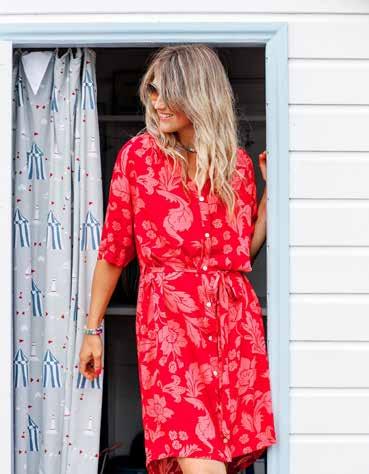
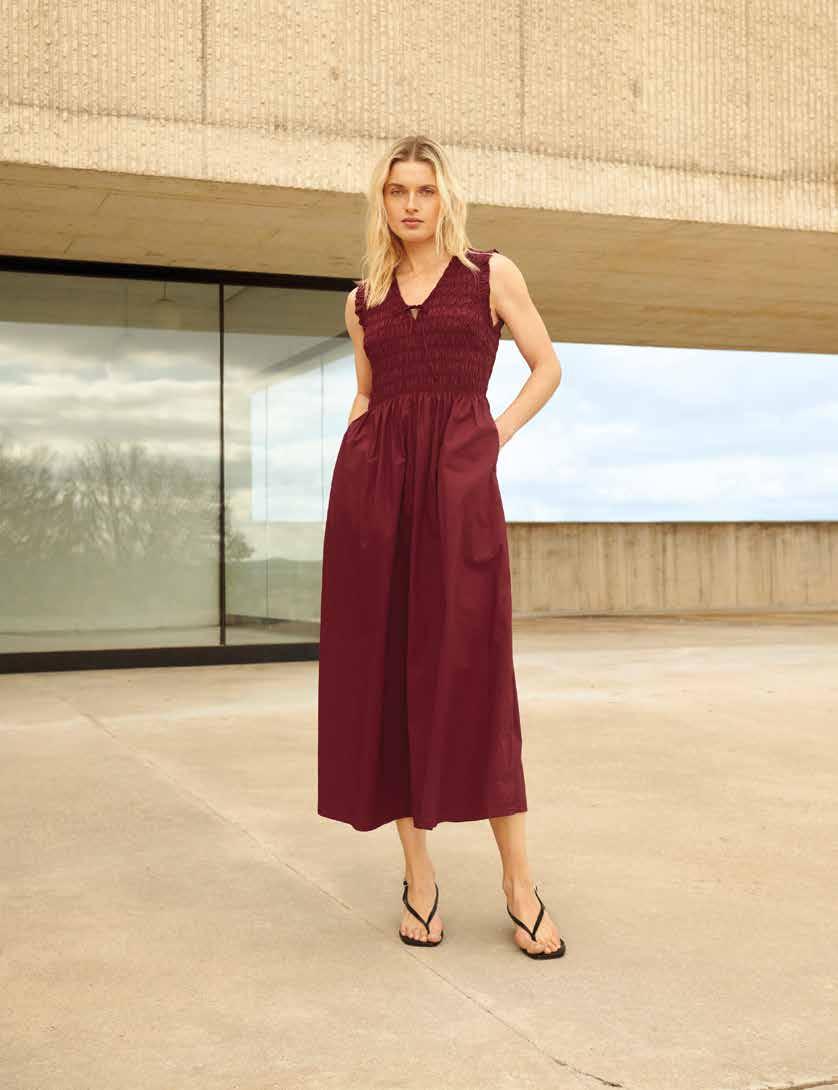
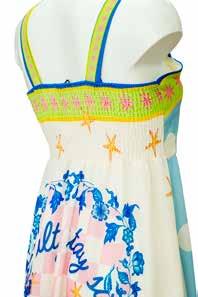
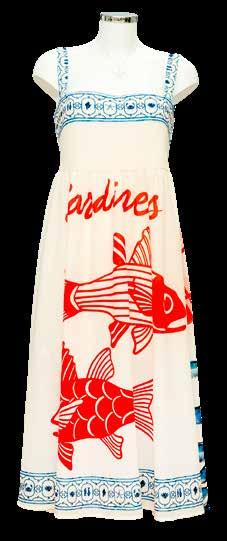
ALOFT FLORAL SHIRT DRESS
Designed by Beth and Kim, Aloft’s vibrant floral shirt dress is made for easy summer dressing. The relaxed silhouette can be worn loose or cinched at the waist, while thoughtful details including pockets and a dipped hem make it as practical as it is stylish.
From £60.00 | aloftclothing.co.uk
06
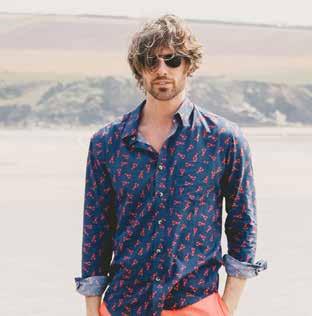
ALOFT LOBSTER BEACH SHIRT
A summer wardrobe staple with a playful twist. Made from lightweight cotton poplin and printed with Aloft’s handdrawn lobster motif, this easy-wearing shirt is ideal for holidays, coastal weekends and long lunches by the sea.
From £70.00 | aloftclothing.co.uk
- OUR STYLE PICKS!
WITH IAN BOYD INTO THE INTERTIDAL ZONE
Words: Emma Elobeid
Pictures: Julian Winslow
Q: What’s the laziest question you can ask an intertidal ecologist?
A:
“If you could be any marine species, what would it be and why?”
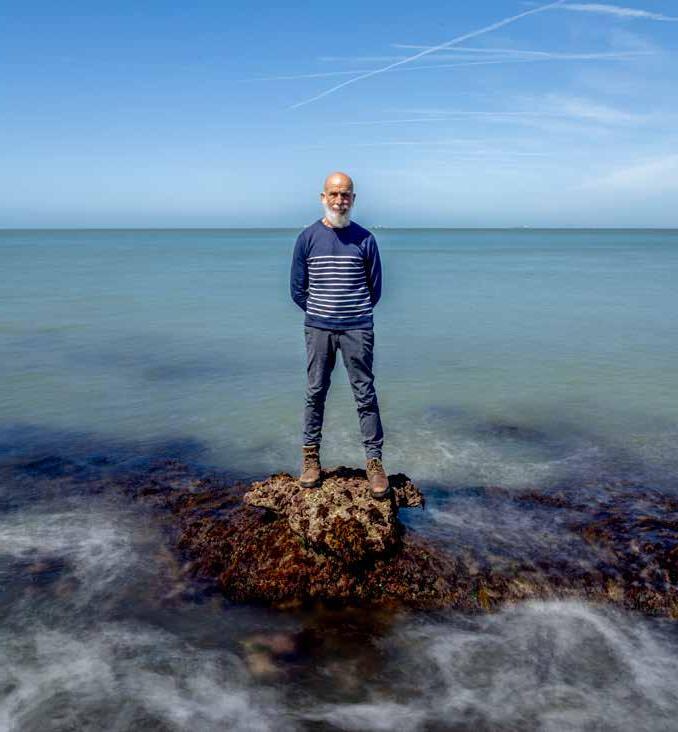
I’m not sure if I’m trying to be Cilla Black or Herself from Chicken Shop Date, but I cringe even as the words come out of my mouth. “Oooh, that’s a really interesting question,” says Ian Boyd, stroking his sea-captain beard.
“I really like limpets.”
I had been hoping for something a little more obscure. Looking around the quirk-in-every-corner office with the best address this side of Culver Down (The Bunker, Browns Golf Course), I see jars of preserved specimens, fragments of fish skulls, stacks of shark egg cases, crab legs and countless curiosities. Surely, I think, flicking through the 500-or-so champion and priority species identified as part of Ian’s work on the Isle of Wight Local Nature Recovery Strategy, we can do better than limpets: European stingray? Tentacled lagoon worm? Starlet sea anemone? My eyes fall on a beautiful
brittle starfish, sunbleached and symmetrical; I make encouraging noises over a single shrunken seahorse.
But no, limpets it is. Those common, conical, grey and knobbly creatures of plenty that you stub your toe on as you’re clambering over rocks in search of something more special.
“I admire them,” Ian continues, oblivious of my scepticism. “I wish I had their resolve.”
When threatened, he explains, a limpet sticks firm. Their teeth are (it’s true, I fact-checked) the strongest biological material on earth, with a structural profile that surpasses spider silk, steel alloys, and any synthetic materials man has so far come up with.
“I love the fact that they think ‘ugh, everything is [expletive]
awful’ and just clamp down,” says Ian. “They do come back out again, but they move on their own terms. They’re in control, but they have total freedom. Their persistence, their determination; they’re amazing in every possible way.”
I take my eyes off the seahorse. Maybe there’s something in this limpet motif after all.
Ian Boyd has spent the past thirty years – or thereabouts – watching over and inspiring wonder in this same bit of beach. By my calculation, that’s more than 20,000 low tides.
His Island story begins in 1992 when
he drifted ashore – not on the ballast of a boat or clinging to a piece of ghost fishing gear (“God, how I’d hate to be a barnacle. How tragic”) – but on a fixedterm contract with the Isle of Wight Council’s Countryside Management Service. He arrived, a self-confessed nomad, “not knowing a single thing about how councils worked.”
Befitting today’s nautical jumper and partial-piratey appearance, Ian confirms that he is “Cornish to the Dark Ages and Celtic to the hilt,” and has the DNA test to prove it, albeit he grew up in Birmingham. From the Grammar School boy who was “nerdy about
nature” to the Edinburgh University (Environmental Sciences) dropout – “in retrospect, a terrible mistake” – Ian has always lived life on the wilder side of the tracks. Much of his “somewhat hillbilly” early career was spent outdoors, getting hands-on with habitats and “actually doing stuff”, from RSPB reserves to the Dyfed Wildlife Trust in Wales. There are, as you might imagine, an assemblage of ‘under the stone’ stories: from near-death experiences in the muddy river Stour to living with a “bunch of lunatics in a terrace of maniacs” while working as a warden in Carlisle.
Freshly landed and full of confidence, Ian’s first impressions of the Isle of Wight were not
positive. “When I first arrived, I thought it was small, parochial, and boring. I absolutely hated it.”
“Gradually, though, I became completely obsessed.”
And now? Ian spends his days doing “whatever this is” as he waves a hand at the sketches, specimens, and wellsunk sofas around us.
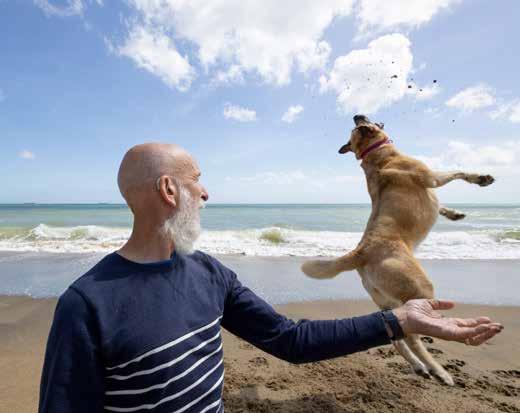
It’s a difficult job description to pin down. No two days – just like no two tides – are ever the same. You might find Ian nose to the groyne, inspecting new arrivals to the award-winning multi-species ‘Vertipools’, lending his brain out to countless causes at home and away, or dreaming up his next Big Idea while walking the beach with Luna, his seven-year-old husky x boxer, glued to his side.
Over the past three decades, Ian has left his mark on an extraordinary number of endeavours to make this unique belt of green and blue better. If he looks familiar, it could be because you’ve encountered him anywhere from a town council meeting to the Poo Museum. He has founded projects,
launched campaigns, supported vital research, helped shape the Island’s status as a UNESCO Biosphere Reserve and inspired generations of beachcombers to look more closely at the coast. There’s a good chance Ian was many Islanders’ first experience of rock-pooling, whether during his early public ‘walk and talks’ along the Bay or at one of his famously popular ‘Under the Pier’ free family events.
As our conversation oscillates from water contamination to empty buildings and back again, I begin to realise that Ian seems most interested in what happens when different things (species and habitats, communities and landscapes) meet – a kind of intellectual intertidal zone that brings dreaming and doing together.
Perhaps the easiest way to describe what Ian does is through one of his guiding principles. “Everything we do,” he says, “every policy, every activity, every project, should be probiotic –they should create conditions that are favourable to life.”
It sounds straightforward. But he didn’t always think this way.
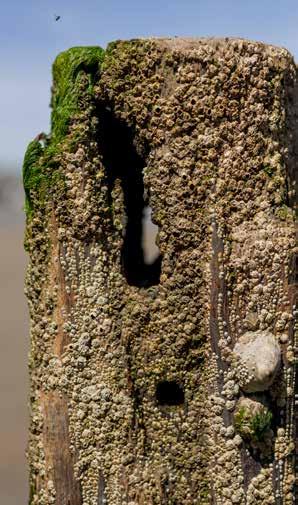
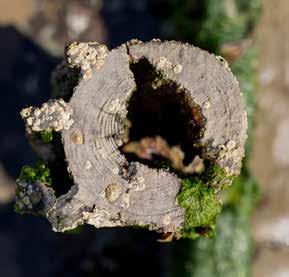
Limpets and barnacles on old groyne posts
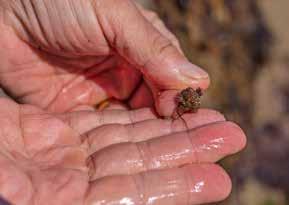
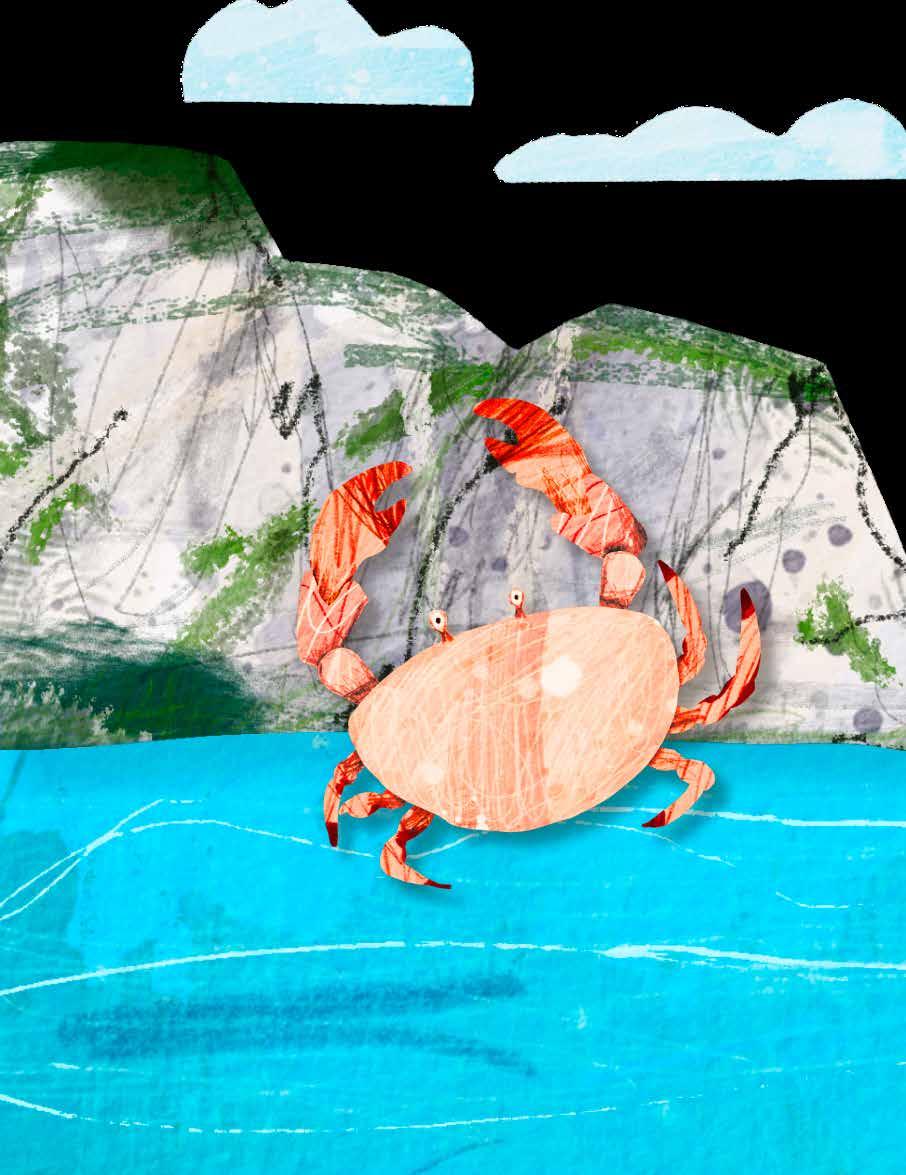
A very small Hairy Crab
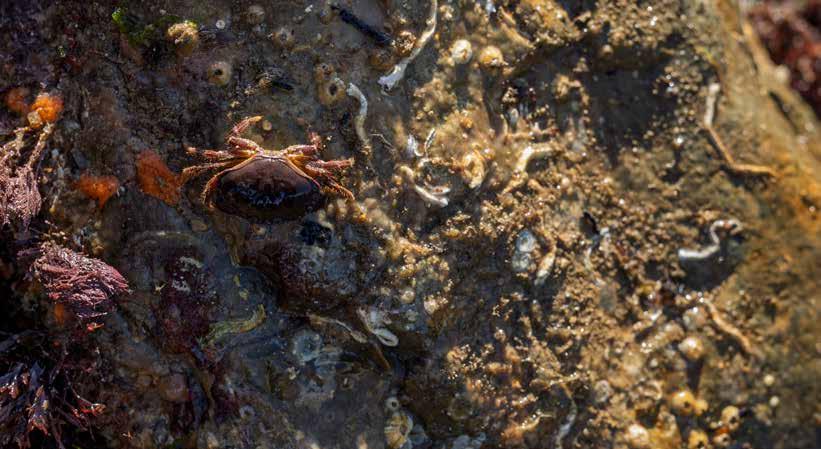
Juvenile Edible Crab with Tubeworm burrows
In the early 1990s, the natural world felt more stable, and conservation seemed to come with clear rules. Arriving confident and certain, back then Ian was a man who thought he knew how nature worked, with a mainlander’s been-there-done-that attitude that got him into trouble on more than one occasion, from accidentally felling protected sycamores to fencing off someone else’s land.
Over time, Ian has come to see nature as largely self-managing. “Too often we treat nature as an empire to be colonised,” he says, explaining how The Common Space approach doesn’t dabble in quick fixes or generic ecoservices, but in providing nature with the space it needs to thrive on its own terms.
“I think it’s this idea of having a conversation with nature that has affected me in all sorts of ways,” he muses. “I’m much more careful about that interaction. On the foreshore now, I’m very careful about lifting up a stone and how I put it back. I’m learning all the time.”
Today’s marine environment is a much less predictable place: the sea is warming and acidifying, and species are shifting in near-constant response.
Things once considered rare are becoming commonplace and vice versa.
“In many ways,” Ian says, “the Island really is a sort of climate frontier.”
By way of illustration, he presents Peacock’s Tail, an “incredibly rare, super vulnerable, legally protected and nationally very scarce Mediterranean seaweed.” Porcelain-esque, with funnel-shaped fronds and chalkylooking concentric bands, it’s showing up on one of the Bay’s busiest beaches this summer. “The Island is basically its headquarters,” Ian says.
In summary: “Stuff is arriving every single day. Some of it persists, and some doesn’t.”
Take Pacific oysters. Ten years ago, Sandown Bay had no oysters at all, native or otherwise. Now they carpet its groynes. Ian is characteristically accepting, where some might rush to take eradicative action against these alien invaders; he remembers what it’s like to be a newcomer.
“They’re not taking up space occupied by anything else,” he says. “Ecosystem services is a terrible phrase,” he continues, explaining their contribution to their new community, “they’re filtering the water, they’re creating a
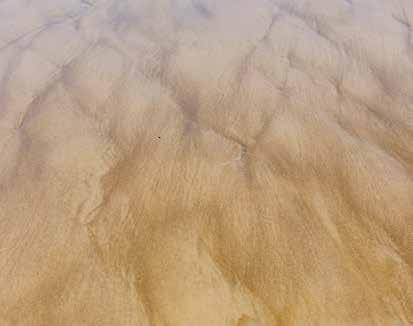
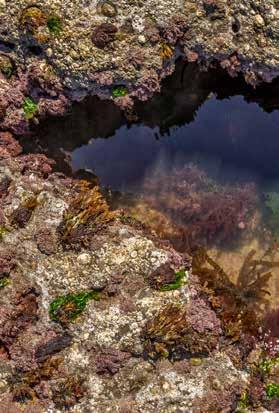
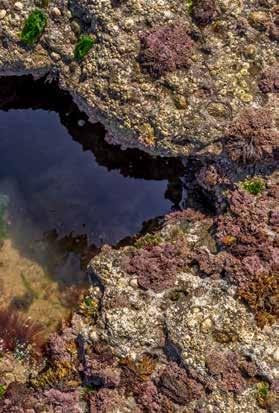
Crusty sandstone reef with pool at Horse Ledge
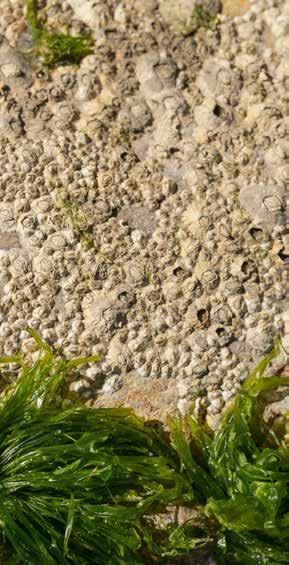
Barnacles
new structure. They’ve come here for a reason, but now they’re here, they’re actually doing something.”
If the Isle of Wight has taught Ian anything, it is that change is the only certainty.
Back on the beach, Luna has lost interest in jumping for the camera on cue and is now happily digging holes in the sand. We pause and watch her play in the waves, which are annoyingly rather too choppy for the mermanesque shot we had planned, and not quite choppy enough for anything brooding and dramatic. As the sea recedes, a lone limpet appears on the sand. Ian lifts it up gently.
Limpets, he explains with obvious fondness, create a tiny depression called a “home scar” in their chosen rock or surface. Tide after tide – and often generation after generation –they return to exactly the same spot. Scientists aren’t entirely sure why; it could be some kind of chemical cue, or muscle memory, or something else. Either way, once they find a home, they choose it again and again and again.
Suddenly, I understand why Ian admires them so much.
“I keep picking the Island,” he smiles.
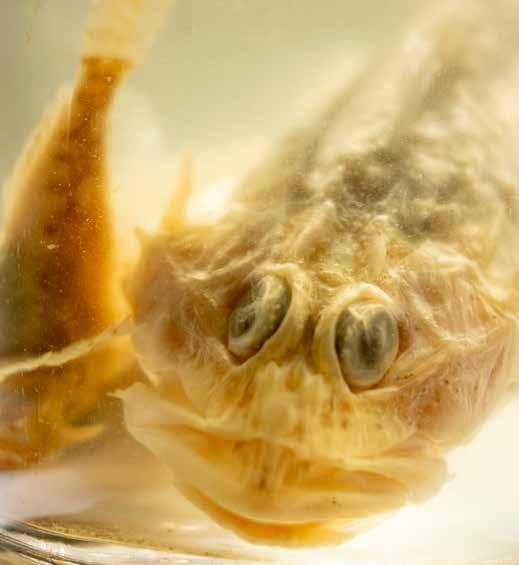
Scorpion fish (pickled)
THE INSPECTOR CONTINUES TO CALL
A new exhibition at Dimbola Museum & Galleries shines a light on J.B. Priestley, the celebrated writer, broadcaster and social commentator whose connection to the Isle of Wight ran far deeper than many people realise.
For generations of schoolchildren, J.B. Priestley is known as the author of An Inspector Calls, the enduring stage classic that continues to captivate audiences nearly 80 years after its first performance and remains a fixture on the English Literature curriculum. Yet Priestley’s influence extended far beyond the theatre.
During the Second World War and the years that followed, he became one of Britain’s most recognisable public voices, helping to shape national debate and inspiring ideas that would contribute to the creation of the modern welfare state.
Now, a new exhibition at Dimbola Museum & Galleries offers visitors the opportunity to explore the remarkable life and work of a man whose ties to the Isle of Wight were surprisingly deep.
Curated by Priestley’s granddaughter, Sadie Wykeham, the exhibition seeks to tell a story that she feels has often been overlooked.
“Why has nothing ever been presented about him here?” she asks. “He lived on the Isle of Wight for more than 25
years. He wrote some of his finest works whilst living here, farmed here, raised his family here, and wrote affectionately about the Island.”
While other literary figures associated with the Island are regularly celebrated, Priestley’s contribution has remained largely under the radar.
The exhibition charts the extraordinary breadth of Priestley’s career. Novelist, playwright, broadcaster, traveller, and social commentator, his output was astonishing. His wartime broadcasts reached millions, while works such as English Journey offered an honest and compassionate portrait of Britain during the hardships of the 1930s.
His granddaughter believes that ability to connect with ordinary people was one of his greatest strengths.
“He portrayed people with understanding and empathy. He wanted to see improvements in people’s lives and actively encouraged change.”
Yet it is An Inspector Calls that continues to introduce new generations to Priestley’s work. Thanks to its place on the national curriculum,
audiences today are often filled with teenagers encountering the play for the first time.
“The students absolutely love it,” she says. “I’ve seen the play countless times, but I never tire of it. The ending still gives me chills when it’s done well.”
Part morality tale, part mystery, and part social commentary, the play’s message about responsibility and community remains as relevant today as when it first appeared.
For visitors to the exhibition, the aim is not simply to celebrate a famous author, but to reveal the scale of his influence and his enduring connection to the Isle of Wight.
As well as exploring his literary achievements, the exhibition highlights the role Priestley played in shaping post-war Britain and showcases the immense creative energy that defined his life and work.
For anyone interested in literature, history, politics or the Island’s cultural heritage, it offers a fascinating opportunity to rediscover a writer whose voice still resonates today.
The Binnel Studios Summer Exhibition 2026: WORLD-CLASS
We have a tendency on the Isle of Wight to limit our artistic expectations, to say ‘we don’t have that on the Island,’ or ‘we can’t get that here,’ or ‘we have to go to the mainland for that.’
But in the leafy enclave of St Lawrence there is a group of artists who are followed nationally and internationally. Once a year, they open their studios at Binnel Bay over August bank holiday weekend so we can marvel at their work and meet its makers.
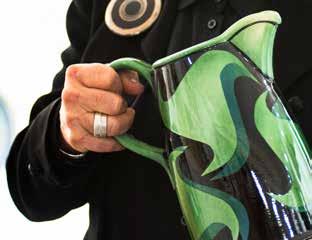
Potter Molly Attrill has just been visited by a group from Japan, where artisan tableware has been venerated for centuries. Her pieces are timeless and forever pleasing. Solid and grounded, her decoration, sometimes fish or animals, gives an individual frisson. “I am thrilled that they want to show my work in an exhibition in
ART ON OUR DOORSTEP
Tokyo, in August!” she says. “The show is based on the Mingei Movement from the 1920s, which celebrated the artisan craftsman.” She adds: “I was particularly thrilled because the Mingei ‘philosophy’ was my initial inspiration to be a potter.”
Her Japanese visitors have commissioned a lot of pieces, and she’s also been invited to take part in an exhibition at the Bluecoat Display Centre, Liverpool. “They want my sgraffito ware – so I’ve been scraping away,” she smiles, showing delicately etched cows on jugs and greyhounds on tiles. For Binnel’s Summer Exhibition she will still have plenty to show. “I’ve been creating my teapots, which have proved quite popular.”
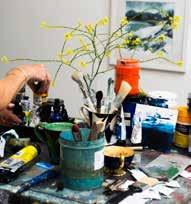
“I’ve put a few touches of yellow in it, very subtle but just enough to make
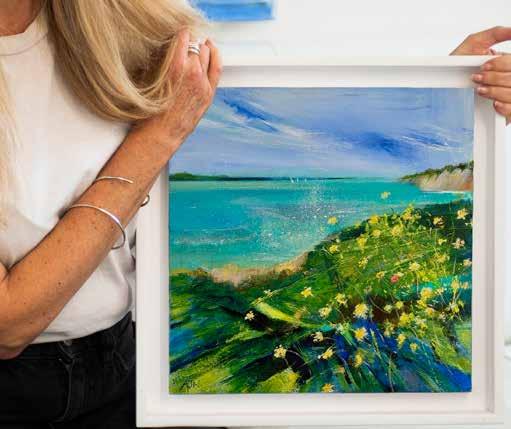
it pop,” says Amanda Wheeler as she stands brush in hand, facing a small canvas. Step into her studio and you are immersed in the colour and movement of the sea, the feeling of being there, outside, on a cliff walk, in the wind. “It’s little things like when the light shines on the water or through the trees – that’s what gets me.” It isn’t just the Island that informs her work: “I’m lucky enough to be able to travel, and I bring those different scenes to my canvasses too.”
When she isn’t painting, Amanda is at her popular restaurant, The Crab Shed, in Steephill Cove. But she has made the difficult decision to step back from that, in favour of her art. “Opening less often isn’t going to be popular, but I need to do it. I have to have a clear head to focus on my work.”
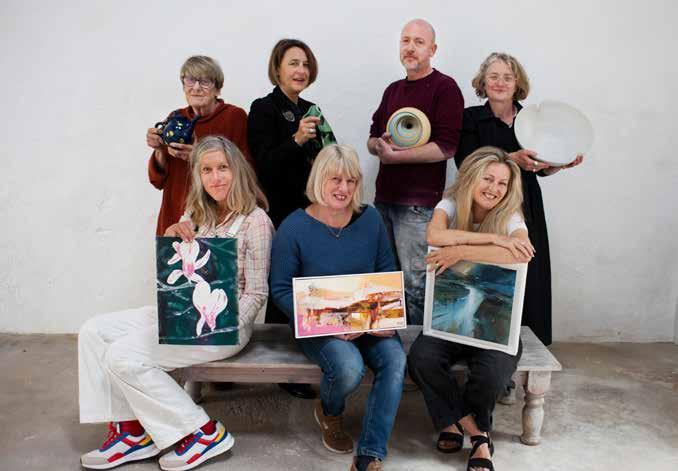
Artists clockwise from top left: Molly Attrill, Jane Cox, Matthew Chambers, Sue Paraskeva, Amanda Wheeler , Celia Wilkinson, Sadie Tierney
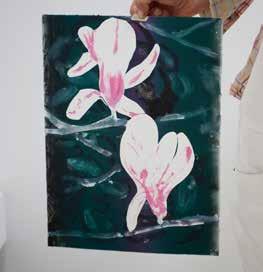
Art as obligatory – less a choice than a necessity – is common with all the artists at Binnel Studio. Sadie Tierney, painter and printmaker, has found herself this year returning repeatedly to the Island landscape and, in particular, to a magnolia tree in Arreton.
“Magnolias are among the oldest flowering plants on earth,” she says. “They bring a sense of the ancient into suburbia. They’re one of the first signs of spring.” What draws her to these trees is their ephemeral quality. “The blooms seem fragile and fleeting, yet emerge from a strong underlying structure. I’m interested in that tension, and in the challenge of translating it through line, colour, and surface.”
Although she paints from life, en plain air, the images, textural and earthy, are not photorealistic. “They are imagined, almost. And once the blooms are over I still use that subject matter in my studio.”
This year, two of Sadie’s woodcut prints have been selected for the prestigious Royal Academy Summer Exhibition.
Imagined work brings us to Celia Wilkinson. A pleasing feather in her cap has been a painting featured in a TV drama being filmed in Scotland – an understandable choice, since her
richly coloured canvasses have a sense of intimacy even while drawing you into a landscape that seems to open up in front of you. She has moved away from her dalliance with statuesque still life paintings that she showed last year, back to those compelling, imaginative landscapes for which she is known. “I never really know what’s going to come out on the blank canvas,” she says. Celia doesn’t consciously go out looking for inspiration, her paintings are memories of places she has been, capturing the essence of it. “It’s really moments of light and colour.”
A roving gallery took Celia and her work to New York, where she was very successfully received, and that was the impetus for her to be shown to gallerygoers in San Francisco, Boston, Palm Beach and Austin, Texas. These are all new audiences getting the chance to see and buy Celia’s colour-imagined landscapes.
The work of ceramicist Matthew Chambers has also been changed by being with other ceramicists, and by the affirmation of collectors. Known for his large, circular labyrinthine sculptures, he has just returned from Ceramic Art London, at Olympia, where he was showing small versions, his famed detail distilled into handheld size. “I wanted to make something with a miniature intricacy,” he says. “A jewel, as it were.” These will be available at the Summer Exhibition.
He is far from abandoning his large-sized pieces, however. In a small
town in France, within handy driving distance of Paris, art enthusiasts have flocked to the opening of his exhibition. “I was nervous beforehand, but the response has been heartwarming, especially of my new work where the layers come out.”
These feature curves and movement that rise dramatically away and outside the sphere. “It’s quite figurative isn’t it,” he says, taking a step back. “I thought it was like a dance or a flowering.”
Jane Cox has barely paused for breath. Also fresh from Ceramic Art London at Olympia — one of the most prestigious showcases in the ceramic calendar, where galleries descend in search of new work — she is already talking about what comes next.
At Olympia, two collections vied for attention, and both sold out. The first, her new body of work titled Highgate, marks a striking departure for Jane. “It’s inspired by oak leaves and butterfly wings,” Jane explains. “I wanted to capture that feeling of a childhood memory, looking up through the trees on Hampstead Heath.” The second collection featured a luminous yellow glaze, a bold step away from the lagoon blues and sea-washed hues that have long adorned her generous
platters, statuesque jugs and beautifully weighted cups – which are as pleasurable to use as they are to look at.
From Olympia, Jane was involved in organising an exhibition at the Art Workers Guild in Bloomsbury — booking speakers, selecting exhibitors and shaping the show. This season’s show had particular spark: exhibitor Tatty Devine has been collaborating with Dame Zandra Rhodes, who attended the preview “which added a bit of glam to the event!” Jane says. Dame Zandra also commissioned one of Jane’s large platters — a fitting coda to a season in which her work has clearly caught the eye of people with a very good eye indeed. The Guild’s ancient building provides a quietly dramatic backdrop to the contemporary work displayed, drawing an international audience.
By contrast, the settings for Sue Paraskeva’s work recently could not be more contemporary. “I’ve supplied Osip, the 2-Michelin-starred Somerset restaurant, with little vases for their tables,” says Sue, laughing slightly as when featured on BBC1’s Great British Menu recently the vases were nearly out of shot, “and my funeral discs were part of a curated exhibition
at Osip.” After explaining the origin of these neanderthal objects, she throws in: “I’m also making plates for [TV chef ] Tom Kerridge.” He’s ordered contemporary yet earthy cream glazed platters with a slightly upturned contrasty edge, like a petticoat.
While these are certainly celebrity feathers in Sue’s cap, she is equally delighted to hear of the joy ordinary folk get out of owning her work. For this year’s Summer Exhibition Sue is featuring creamware, which, while it might suggest Victorian afternoon tea, actually is a devil-may-care frivolity in pure white porcelain. Sue is also using her wood kiln to fire a collection of her uniquely fine stoneware. “I’m using a dark aubergine glaze called Tenmoku, which is perfect for wood firing,” she says, adding, “and there’ll be little speckles from the fire.”
Her work captures and defines ordered randomness.
The Summer Exhibition is sponsored by BCM. WILSON HILL
The artists will be welcoming all comers to the Summer Exhibition on August 29 - 31, 11 am - 4 pm Binnel Studios, Old Park Road, St Lawrence, Isle of Wight, PO38 1XR
Following another successful Isle of Wight Open Studios, we shine a spotlight on five artists supported through the Brave Island programme.
Sponsored by Isle of Wight Open Studios and delivered by Ventnor Exchange, Brave Island supports emerging and
developing artists through exhibitions, mentoring and creative opportunities.
Working across painting, illustration, digital art and mixed media, these artists offer fresh perspectives on contemporary creative life on the Isle of Wight.
Fine Artist
Xeno Kulla creates striking figurative works exploring identity, symbolism and the human condition. His imaginative paintings demonstrate the breadth and ambition of contemporary creative practice emerging on the Isle of Wight.
ERICA LAYTON Painter
Inspired by the Island’s landscapes and changing seasons, Erica Layton creates atmospheric paintings that capture a strong sense of place. Through colour, texture and mood, her work celebrates the beauty and character of the Isle of Wight.
Artist & Illustrator
Ioana Mateescu’s expressive drawings and illustrations explore identity, emotion and personal experience. Working in black ink and mixed media, she combines delicate linework with powerful visual narratives, creating work that invites reflection and conversation.
XENO KULLA
IOANA MATEESCU
KIRA LACEY
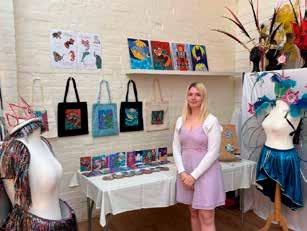
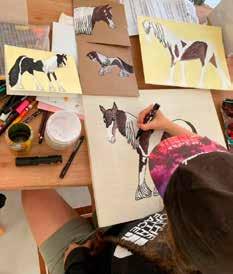
Artist, Designer & Creative Maker
Kira Lacey combines illustration, graphic design and community creativity to create work that is bold, colourful, and instantly recognisable.
A regular volunteer with New Carnival, Kira also works as a freelance costume designer, maker and workshop facilitator. Since taking part in Open Studios last year, her confidence and creative practice have continued to grow, making her a fantastic example of the opportunities Brave Island helps create for emerging artists.
Her work demonstrates how contemporary creative practice can connect people, place, and community.
WHAT IS BRAVE ISLAND?
Brave Island is an artist development programme delivered by Ventnor Exchange, supporting emerging and developing creatives on the Isle of Wight through exhibitions, mentoring, networking and creative opportunities.
Each year, Isle of Wight Open Studios sponsors five Brave Island artists to take part in the event, helping nurture the next generation of Island creatives.
Find out more at braveisland.uk
Save the date: Isle of Wight Open Studios returns 21–31 May 2027.
TASHA
Tasha Green’s colourful paintings are inspired by nature, light and the landscapes around her. Her expressive use of colour creates work filled with movement, optimism and a deep appreciation for the natural world.
GREEN Painter
AT HOME WITH THE SEA
Words: Ursula Brunetti
The sea has long been imbued with legend and folklore – from mermaids and selkies to lost lands and leviathans – and it’s the coast’s ever-changing appeal that is at the heart of XV Interiors, a sustainable home furnishings brand inspired by life on and off the water.
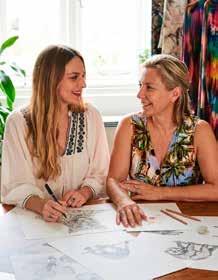
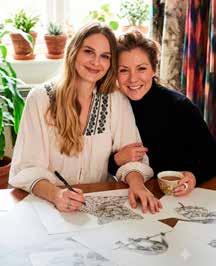
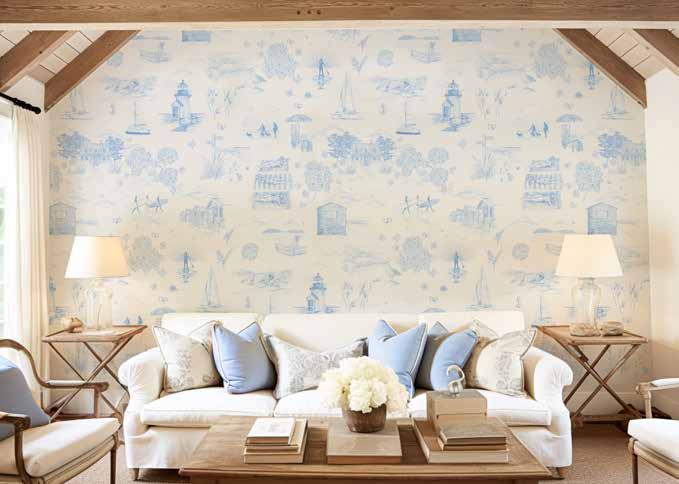
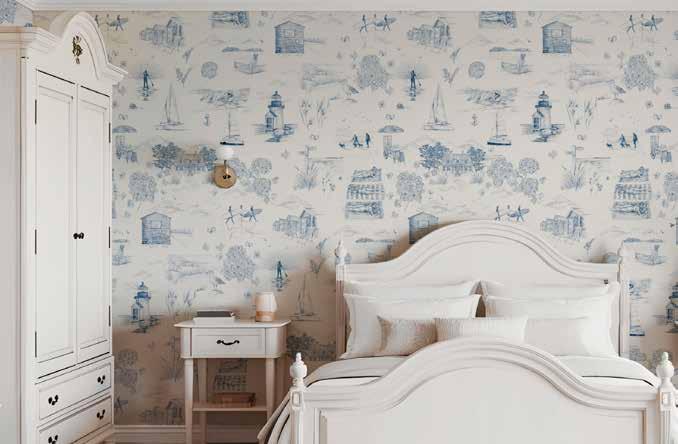
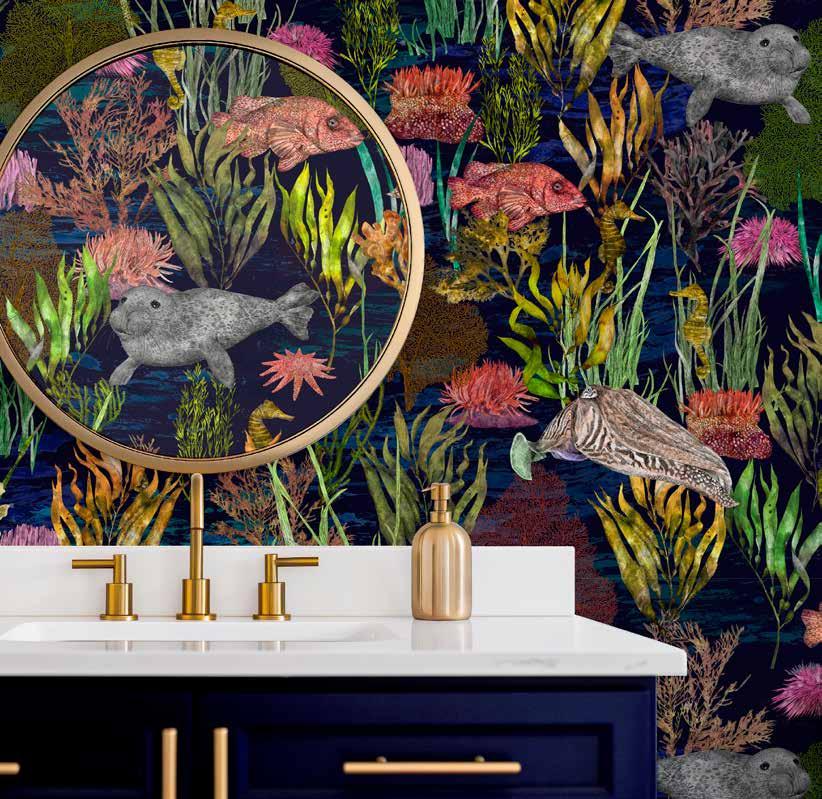
Victoria Sanders, former Head of Design at Matthew Williamson and Textiles Designer at Zara Home Europe, and business consultant Izzey Hung make an impressive team, but more than anything they’re close friends with a shared love of the ocean. It was this shared passion that led them to start XV Interiors in 2019, with the intention of creating a sustainable interiors brand that captures the allure of coastal living. Today, XV Interiors is known for its handdrawn print collections and intricate story-led designs that find their way onto wallpapers, fabrics, cushions, lampshades and tableware.
Between land and sea
With its undulating coastline, beaches with endless natural interest, and seascapes that change as often as the tides, it’s easy to see how the Isle of Wight makes the perfect natural home for a company whose design philosophy is rooted in the transporting power of coastal aesthetics. For Victoria, who is based on the mainland, the idea of bringing the sea home is
deeply personal. The coast reminds her of childhood. She grew up in Looe in Cornwall after emigrating, by boat, from South Africa. She tells me about evening walks along the Cornish coast after dinner and taking a small boat around a local island at the weekend. Coastal living wasn’t a lifestyle choice for her child self - it was just life. “I think our designs transport you into that world,” she says. “When you look at one of our designs you can tell it’s actually come from a deep understanding of that connection to the sea.” These days she comes regularly to the Island to develop each new collection – and to see Izzey at her Brighstone home.
That connection to the sea is central to Izzey as well. For as long as she can remember, she has always wanted to live by the coast. Although, surprisingly, until relatively recently she was genuinely afraid of the water. It was sailing that changed that. Now Izzey is a racer running a competitive J70 team. She describes being on the water as generating her lowest heart rate of the day. “Which is bizarre,” she
laughs, “because it shouldn’t be.” She moved to the Isle of Wight a few years ago and now counts the long sweep of Compton Bay as one of her favourite views. The Island, she says, instils a particular kind of gratitude in those who live there. “It gives you a different perspective being by the sea. The Island does that to you.”
“Shells in our pockets, sketch books in our hands” Every XV Interiors collection begins with a story – and comes to life on location. When the Seaview collection was in development, Victoria and Izzey walked beaches together, picking up shells and pieces of seaweed, photographing rock pools, making drawings in sketch books and bringing samples of flowers home. They worked with Hampshire Wildlife Trust to research the specific species of sea creatures and marine plant life native to the waters around the Island, because for XV Interiors, authenticity is central to the way they work.
“We make sure we have a great deal of
“It gives you a different perspective being by the sea. The Island does that to you.”
research within all of our design,” says Victoria, “so that they actually make sense when we’re telling the story.”
The resulting Seaview collection is the first to move from above the sea to beneath the water, incorporating kelp forests, sea creatures, and the textures of life below the sea’s surface. From that original mural design came two further wallpapers: Solent Snapper and Kelp Forest, each one drawing from the same well of drawings but distilling it into something simpler. It’s an approach XV Interiors has refined across various collections. They often begin with a complex, story-rich design and then pull out individual elements for those who want just a fragment of the design rather than the whole. It means that there are multiple ways
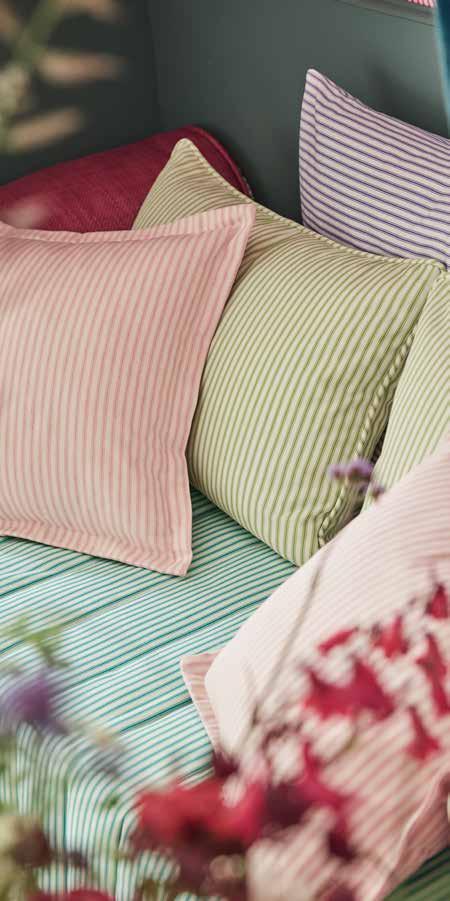
for a customer to decorate with their collections, using more complex designs for feature wallpaper, for example, and pairing this with cushions or lampshades that take just one or two elements from the same original design, for a cohesive, layered look. XV Interiors serves both individual customers and trade customers such as hotels and companies, so it’s important their offer has something for every type of space – both domestic and commercial.
You can tell that each design has had a lot of love and passion put into it, and is the result of countless sketches made by Victoria. The forthcoming Days Like These collection has been three years in the making (longer than any previous design). It is also the most intricate:
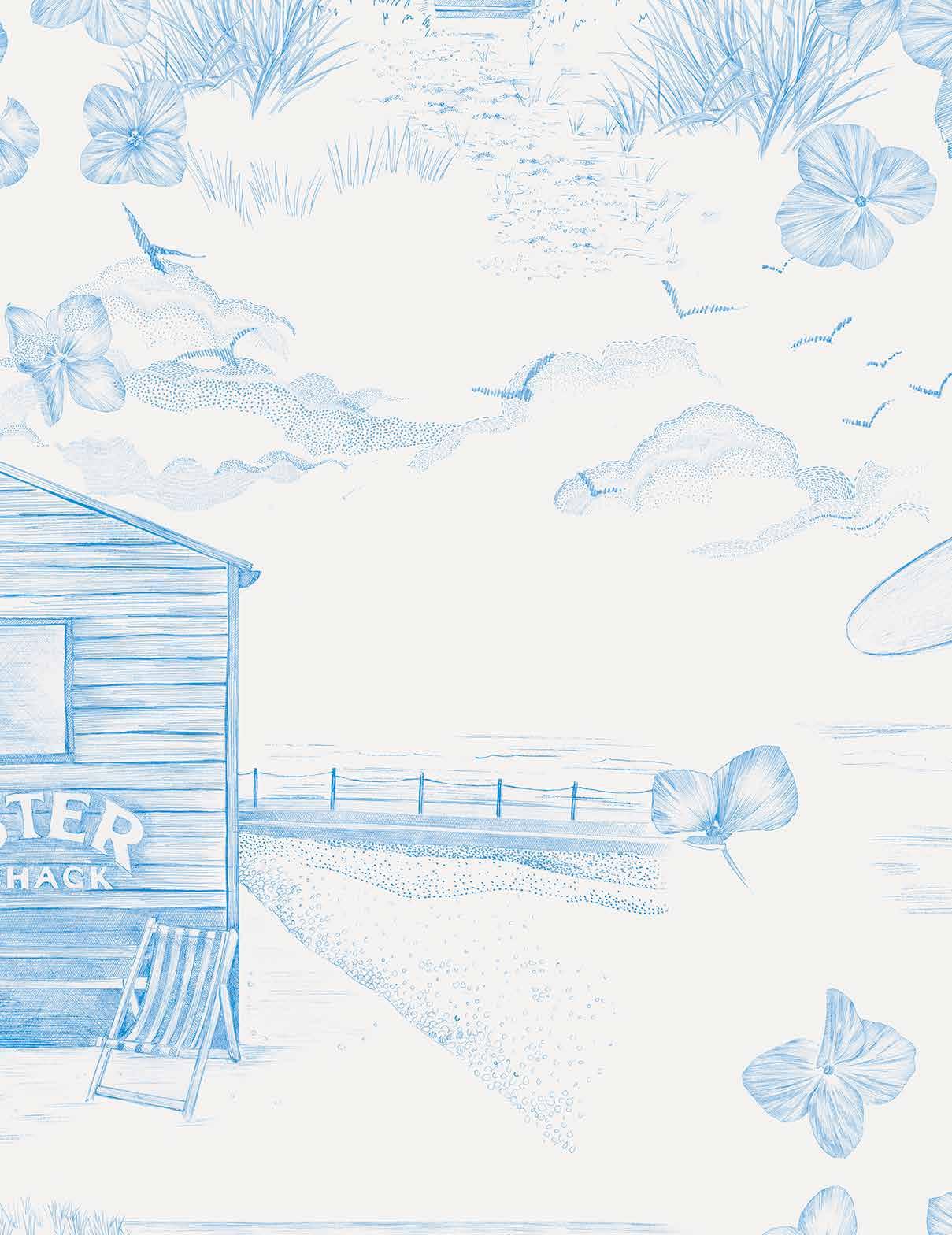
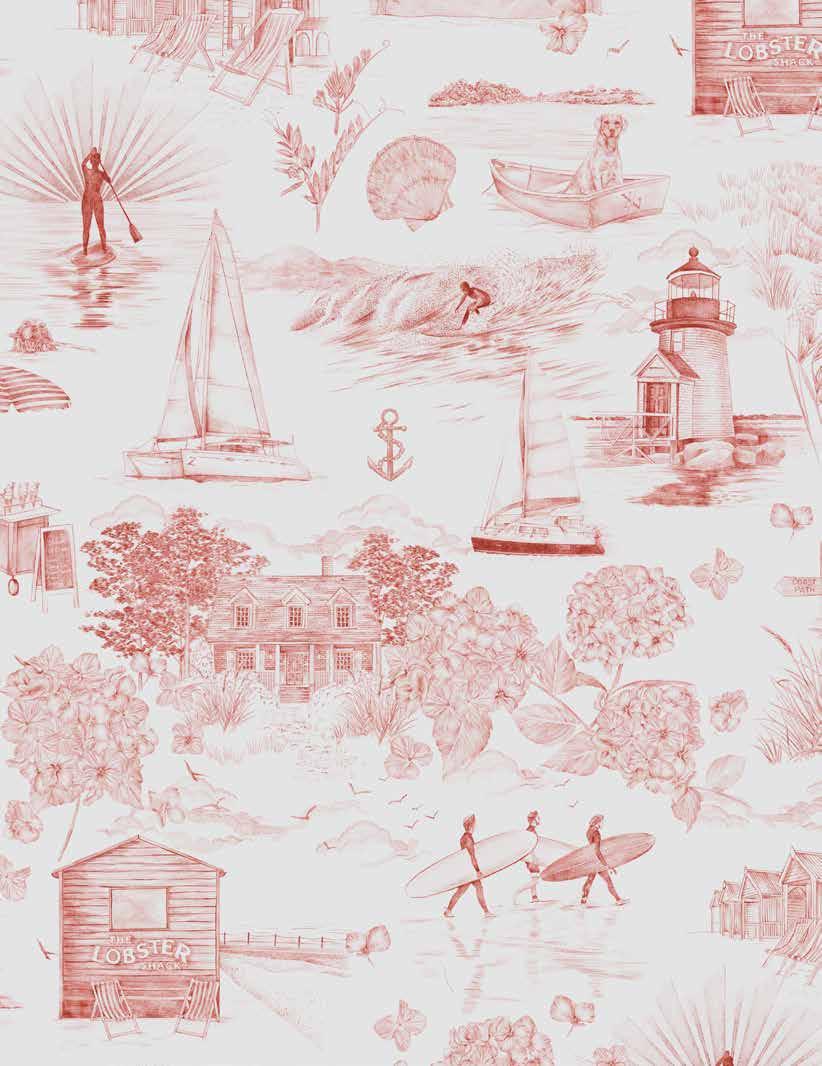
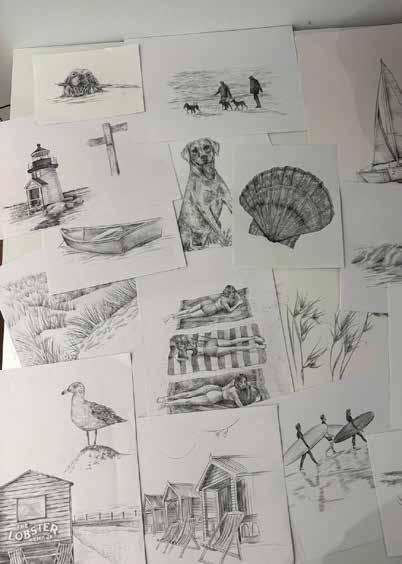
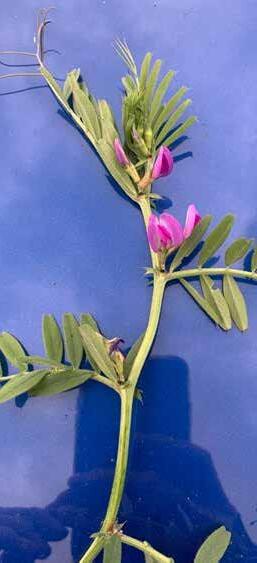
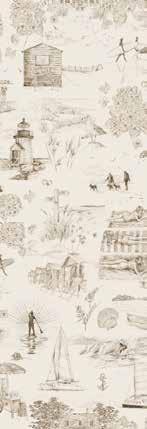
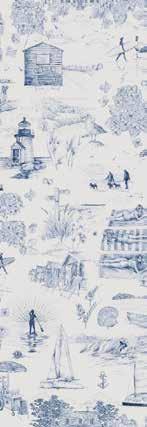
hundreds of individual fine-line pen drawings, scanned and composed into a half-drop repeating pattern. Where earlier collections were anchored specifically to the Isle of Wight, Days Like These casts its net a little wider, nodding to Nantucket, Cornwall, the Island, and every coastline in between. Dog walkers on blustery beaches, girls sunbathing, beach huts, lobsters, hydrangeas from Izzey’s garden and a delicate pink flower picked from Newtown Creek. And for those who know to look, there’s a tiny Isle of Wight Ice Cream Company logo, on a seafront shack. “Other people wouldn’t necessarily know,” says Izzey, “but they are all things inspired by the Island, that we’ve handpicked with love.”
“They are all things inspired by the Island, that we’ve handpicked with love.”
Drawn from the sea
What sets XV Interiors apart in an increasingly crowded interiors market is deceptively simple: everything is hand drawn. Not digitally generated or adapted from stock illustrations or photography. Victoria works exclusively in fine-line pen, producing individual drawings before a single repeat is designed. Those drawings are then scanned, coloured, and composed – a process Victoria clearly loves as much as the drawing itself.
“For a wallpaper, the repeat is almost as important as the drawings,” she says. “You can have lovely drawings, but if it’s plonked in too uniform a way, it doesn’t work.”
Designed with nature in mind
Unsurprisingly, for a company that has such an intrinsic connection to nature, XV Interiors prides itself on its sustainability credentials. The designs come from the natural world, and so do the materials with which they are rendered into pieces for people’s homes. All cotton is organic or sustainably sourced, wallpapers are FSC-certified, and produced by one of the world’s most respected sustainable wallpaper printers. When a product can’t meet their sustainability criteria, they simply don’t make it. “We just say no,” says Izzey.
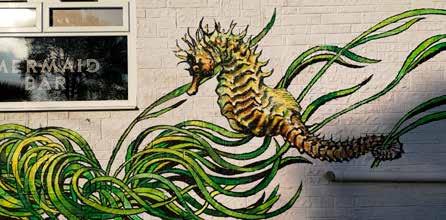
It’s this commitment to preserving and celebrating the natural beauty and calm of coastal living that continues to motivate them both, and Victoria’s future fascinations are already shaping up. When asked about her favourite sea creatures, she instantly talks about seahorses. “They have such beautiful textures and colours.” She’s also got an eye on fish scales. “I think they could become their own kind of animal print.”
The sea, and all its wonderful creatures, is still giving plenty of inspiration to XV Interiors – and we can’t wait to see what’s next.
The Power of the Pen
A Celebration of Young Island Talent
THE ROYAL FAMILY
Words: Kassi-Ann Wills, The Federation of the Church Schools of Shalfleet and Freshwater & Yarmouth
Illustration: Lemon Jelly Press
Sofia was a princess who lived in a royal stone castle atop a hill in Frothemville.
She didn’t have the life she wanted. Being royal wasn’t easy, especially when more than half the town was filled with boys left and right.
Sofia would look out of her window every day and night at the nearby college and high school, thinking she might be able to get into one someday and restart her life.
But let’s be real here — she’s royalty. She’s not some normal schoolgirl who gets up at 6 in the morning to learn for six hours straight.
Sofia was lying in her bed in her bright blue silk pyjamas (which, yes, her mum chose for her). Then all of a sudden, a knock could be heard from the other side of her door.
“Sofia?” her maid spoke up.
Sofia sighed and got up. “Whattttt!!!” she called out.
“Your mother wants to see you. She is waiting in the dining hall,” the maid said, then walked down the hall.
Once Sofia was ready, she walked down what felt like endless hallways and corridors, eventually making it to the dining hall. Her mother was waiting in her grand chair at the end of the table.
“Sofia,” Sofia’s mother said sternly. “You have to start school. It is unacceptable how atrocious your knowledge is. You don’t even know what 7 × 3 is, for goodness’ sake!”
“It’s 21, but… everyone knows what I look like! I’m royalty! Everyone in Frothemville knows what I look like!” Sofia exclaimed.
“That’s why you’re going in disguise,” Sofia’s mother said, not bothering to look at her.
Sofia looked at her mother. She knew she couldn’t disobey her, so she nodded and walked off.
Back in her room, she flopped onto her bed.
“Why couldn’t I just have a magical wand to get out of this palace and be someone normal?” she muttered. She rolled her eyes and sat up.
The next week, she joined Trottrem Senior School.
Sofia walked down what seemed like endless hallways, searching for her class, until she bumped into someone.
“Oh! I’m sorry! Are you alright?” a voice exclaimed.
Sofia looked up, her hand on her forehead. “H-huh? Yeah, I’m fine…” she mumbled quietly.
The girl helped Sofia up and introduced herself.
“I’m Amelia. What’s your name?”
“I’m Sofia,” she said.
“Oh! Cool! I’ll see you later!” Amelia said as she ran off down the hallway, bumping into about seven people.
Sofia continued walking. When she got to the exit door, her hood blew down.
“Shoot!” Sofia whispered to herself.
Her cover had been blown, and everyone knew who she was now.
People around her gasped loudly, and Sofia ran around the corner, hiding behind a wall.
She looked around and saw no one, so she sighed in relief and sat down.
But then she saw Amelia standing there.
“Sofia?... I… is that— is that you?!”
Sponsored by
A SUMMER OF COLOUR AND LIGHT AT SEAVIEW ART GALLERY
Words: Linda Groves, Seaview Art Gallery
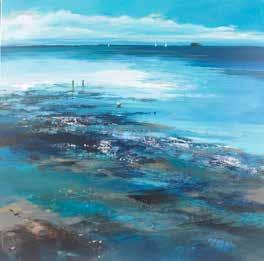
Seaview Art Gallery champions the very best of our local Island artists, showcasing a rich and varied seam of fabulous works in different mediums, styles and genres. You can find us opposite Lily’s Café in Seaview. This is our 11th year in the village, and I cannot believe how fast time has gone. I feel so lucky to work with such incredible and talented artists. We also have an interesting and varied selection of antique and collectable gifts, glass, bar accoutrements, and jewellery. This year it was time to inject some Zap Pow!! onto the Gallery walls to
create the perfect backdrop. Personally, I think white walls in a Gallery are so passé, but that is just my view. I’ve taken inspiration from the Georgians and Victorians and the historic Royal Academy Summer Shows, where the backdrop colours are carefully curated year on year and room to room, inspired by the exhibition theme and title.
When choosing the perfect wall colour at home, select your artwork first. Whether you go for full immersion with a strong jewel colour, or just ‘dip your
toe in’ and try a feature wall or chimney breast in a more muted palette, it will make you fall in love with your space all over again, and make the art on your walls sing. Drop in to see us soon for that perfect piece.
seaviewart.co.uk
Feature Artist Exhibitions
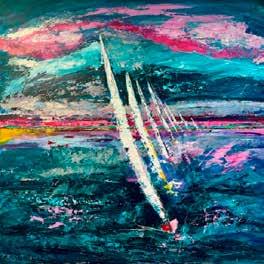
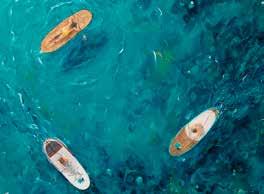
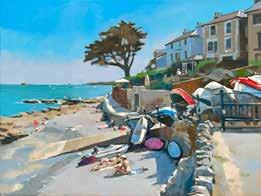
‘Summer Light’ July 6-18
‘Our Beautiful Island’ July 24 - August 7
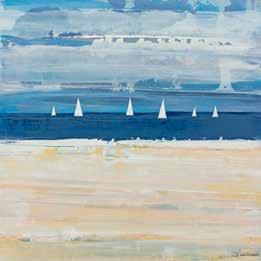
‘Sun, Sea and Sailing’ August 14 - 31
Favourable Winds
Warm Waters
Seaview Beach
Shapes of Sunset
Low Tide
Seaview Sailing
EXPERIENCE HENDRIX
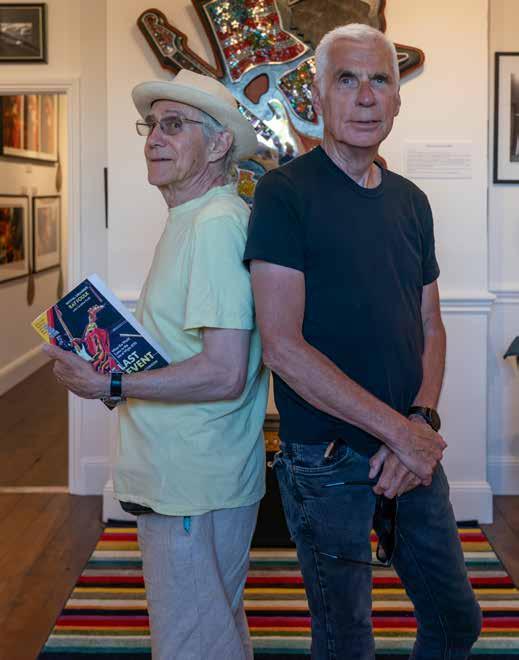
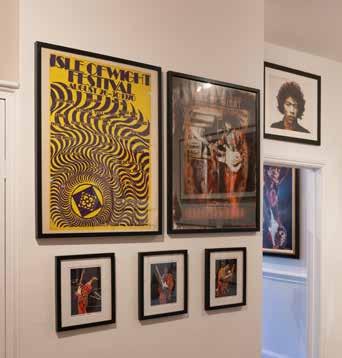
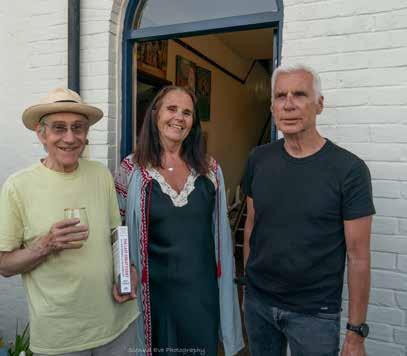
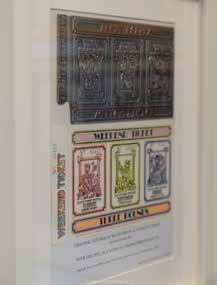
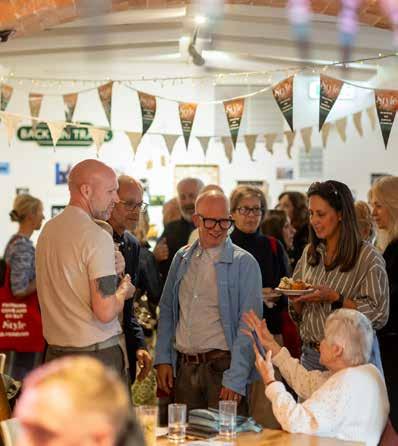
Around 100 ‘beautiful people’ fluttered over to Dimbola for the opening of their new permanent exhibition Experience Hendrix. Attendees included John Giddings, whose company Solo sponsored the exhibition, and Ray Foulk, the original 1970 Isle of Wight Festival organiser.
Creative Director Jo Macaulay made a short speech thanking everyone, and Dr Brian Hinton dedicated the exhibition to “Jimi Hendrix, wherever he is!” before John Giddings added: “I came here in 1970 as a schoolboy and
was stunned when I came over the hill and saw 600,000 people. I decided, “I need to get a job in this, I don’t really want to work hard for a living, I want to hang around in the music business!
“Annie Horne is the person who rang up everybody and asked them to restart the Isle of Wight Festival… and I came down for a laugh. I remember sitting on that ferry, seeing the sun glinting off the Solent. I feel there’s something magical about this Island when you cross that water. I joke about it and say it’s ten years behind the real world, but
that has an element of truth in it.
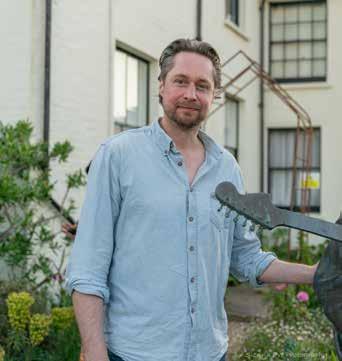
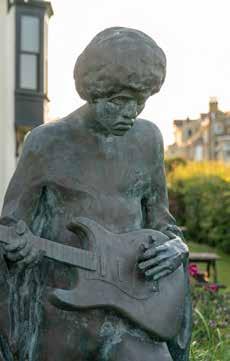
“And then I found this bunch of herberts, and this place! (Dimbola). It’s fantastic what they’ve done. And John (Swindells) built the statue!” This year is the 20th anniversary of Jimi’s statue arriving at Dimbola.
“And this is the man responsible!” said John, introducing Ray Foulk.
“Now I was asked to come here today to talk about Jimi Hendrix, about whom I know very little,” said Ray. “I’m not the
Ray Foulk and John Giddings
Words: Penny Newnham
John Swindells with his statue of Jimi Hendrix
Hendrix aficionado that John is, and I was told that the photograph that we just did where we were back-to-back was about me being a Bob Dylan fan and John being a Hendrix fan.
‘At the 1969 Festival, 150,000 music fans thronged the west Wight to watch Bob Dylan. Matching that headliner the following year was always going to be a challenge.
“We didn’t have one superstar of Dylan’s calibre for the 1970 festival,” remembers Ray, “but we thought we’d get a whole raft of top artists to fill the bill.”
“It’s still the best line up ever,” said John. “Well, I’m sure it is,” replied Ray. “It started off with Ronnie booking Hendrix with Dick Katz. Then our agent in America, who was Bob Dylan’s
manager, Bert Block, booked Joan Baez. During that summer Hendrix’s stock began to rise – and by the Festival, Hendrix had overtaken Joan Baez.
“The thing that the two artists have in common is that they are both famous for doing Dylan covers. There’s something important about that…it’s because of the content of the songs and not the style of the music.”
Whether you are a Hendrix fan or a Dylan fan, or both, you’ll find a lot to fascinate you at Experience Hendrix!
Experience Hendrix is on the ground floor of Dimbola Museum & Galleries, 10am to 4pm, and entry is included in the ticket to Julia Margaret Cameron’s former home and photographic studios.
Dimbola.co.uk
Dimbola Museum & Galleries, Terrace Lane, Freshwater, PO40 9QE
Ray Foulk, Joanna Macaulay and John Giddings
Ray Foulk, Christian Warren and the back of Johns head!
Chris Cornford and Vicky Foulk, Ronnie Foulk’s daughter
John Giddings with his daughter, and Head of Communications at Solo, Lisa Birch
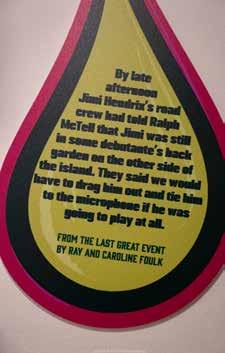
teardrop quotation from the book ‘The Last Great Event’ by Ray and Caroline Foulk
Breathtaking sea views, hearty food, and live music by the sea. Muddy boots and well behaved dogs always welcome
For nearly two centuries, East Dene Estate has stood as a keeper of stories. A Grade II* listed Regency villa blends Gothic elegance with coastal beauty, offering a setting unlike any other on the Isle of Wight.
Sweeping lawns, woodland walks, and timeless architecture have welcomed generations of families, friends, and visitors. Today, East Dene continues that legacy—inviting you to write your own chapter in a house made for memories.
MAKING HISTORY SINCE
1824
DISH OF THE DAY: ISOLA’S TRIO
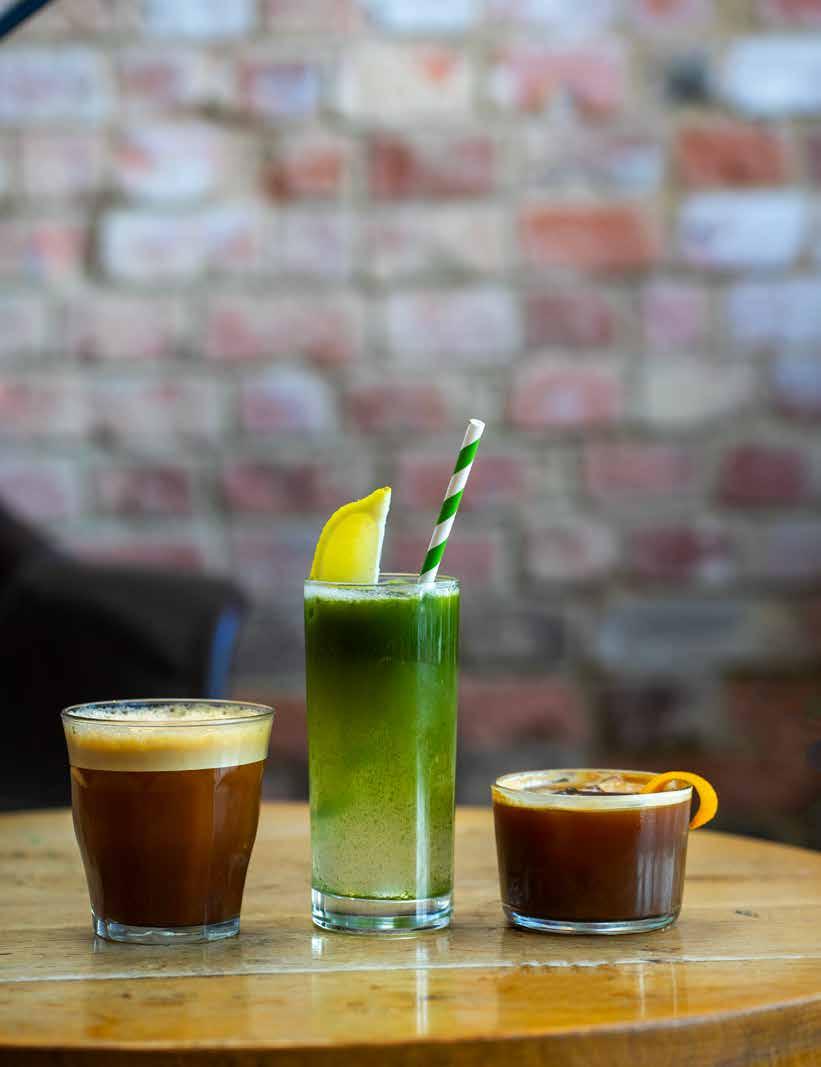
Caffè Isola presents us with three cold drinks worth paying attention to this summer, each doing something a little different with coffee, tea, and citrus.
Nitro Coffee is a double shot of espresso steamed with ice and served long over cold water. The result is a chilled, velvety iced coffee with a smooth texture and a clean, strong finish. No extras, just espresso treated carefully and served cold.
Matcha Lemonade mixes ceremonial grade matcha with fresh lemon juice, sugar, and sparkling water. It lands somewhere between iced tea and lemonade, with a floral green tea base and a sharp citrus lift. Light, clean, and easy to drink.
Espresso Tonic pairs a single-origin Brazilian espresso with tonic water, lifted with orange oil and fresh peel. It’s bitter, bright, and refreshing – think sharp edges softened by citrus.
All three drinks share the same approach: simple ingredients, properly handled, served cold. Nothing complicated, nothing overworked.
Just drinks designed for warm days when you want something refreshing that still has character. Caffè Isola keeps it straightforward and refreshing here, and that’s exactly the point.
Caffè Isola
85a St James Street, Newport islandroasted.co.uk
DOWN ON THE FARM
Long before farm to fork became fashionable, the Griffin family at Briddlesford Farm were quietly building a life around their herd of Guernsey cows. Today, that connection between people, animals and landscape still shapes daily life on the farm, where generations of experience guide everything they do.
Arriving at Briddlesford, there is an immediate sense of rhythm and familiarity. Cows graze across open pasture while the processing plant quietly hums into action nearby. The café fills steadily with walkers, families and regular customers collecting fresh milk, cream and cheese from the farm shop. It is a place where farming remains visible and connected, not hidden behind distance or anonymity.
The rhythm of a working dairy farm is reassuring. The early mornings. The changing seasons. The routines repeated day after day, year after year. At Briddlesford, farming feels personal in a way that is increasingly rare. The cows are not anonymous livestock, but calm, curious animals known individually by the family and team who care for them each day. Their welfare sits at the centre of the farm’s approach, shaped by consistency,
patience and decades of understanding the herd.
The Guernseys themselves are central to the story. Known for their rich golden milk and gentle temperament, they have become part of Briddlesford’s identity over many years. The milk’s distinctive colour comes naturally from high levels of beta carotene, giving the cream and butter a richness that customers instantly recognise.
Watching the herd move quietly through the fields, it becomes clear why the family remains so devoted to the breed.
What also makes Briddlesford remarkable is the closeness of everything on site. The fields, processing plant, café and farm shop all sit together, creating a direct connection between production and customer that few farms can
genuinely claim. Milk travels only yards from cow to bottle, offering a level of transparency and traceability that feels increasingly valuable in modern food production. Visitors can see where their food comes from, speak directly to the people producing it, and experience farming as something real and immediate.
Behind the idyllic scenes, however, lies demanding work. Dairy farming
is relentless, shaped by unpredictable weather, rising costs and long physical days that begin before most people are awake. There are no shortcuts and very few pauses. It is not a romanticised lifestyle, but one built on resilience, responsibility, and consistency every single day of the year.
What makes Briddlesford resonate so strongly, though, is the people behind it. Farmer Paul Griffin brings a
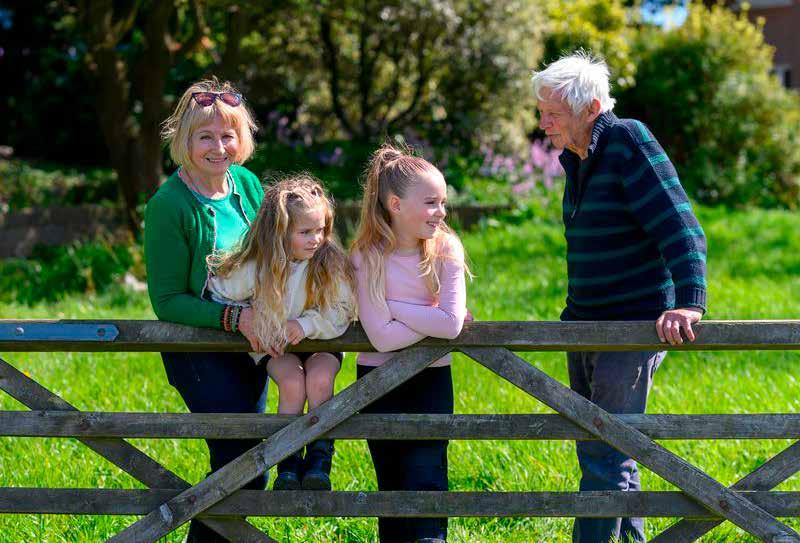
Left: Paul surveys the herd, Chris, her grandchildren and Dickie
natural warmth and energy to the farm, equally at home discussing music as he is talking cattle and farming. His wife Chris, a former primary school teacher, leads the café and educational visits, creating experiences that help children connect with farming, food and the countryside in a meaningful and memorable way. At a time when many young people are increasingly disconnected from where food comes from, that role feels more important than ever.
Paul’s sister Louise runs the farm shop with genuine care and attention, while family matriarch Judi continues to create the beautiful floral displays visitors are greeted by on arrival. She also oversees the farm’s heritage centre, preserving traditional farming knowledge and sharing the story of the Island’s agricultural past with future generations. Dickie Griffin remains a respected and constant presence too, representing decades of dedication to both Briddlesford and the wider Isle of Wight farming community.
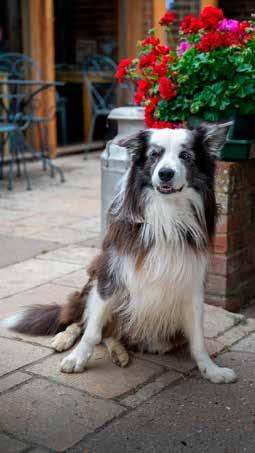
Beyond the family itself is a loyal team who have become part of the farm’s identity over many years, from Ian, Kate and Jack caring for the herd, to Colin in the shop, Tim in the café and Gary and Charlie in the processing plant. Even the farm dogs, Spot and Sparkle, contribute to the warmth and character that make the place feel so welcoming.
As the day draws on and the light softens across the fields, Briddlesford feels less like a business and more like a living reflection of the values that have sustained it for generations. In a world increasingly dominated by automation and anonymity, it offers something tangible and reassuringly real. A reminder that some of the most meaningful stories are still built on care, resilience and people who genuinely believe in what they do.
Spot the dog welcomes farm visitors
The freshest milk, straight from the bottle
Photos: Stephanie Mackrill
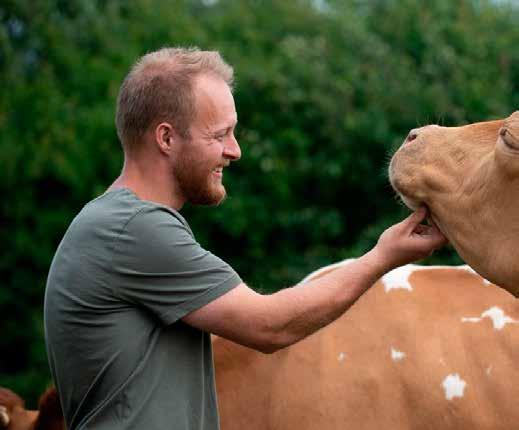
Jack with the cows
In 1923, Charles Griffin made a historic journey, walking his pedigree Guernsey herd across the downs from Adgestone to Briddlesford Farm. More than a century later, Briddlesford remains a fourth-generation, family-run working dairy farm, proudly run by the Griffin family. Over the years, the farm has grown into a thriving local food hub, with farming, milk processing, a café and farm shop all based on site.
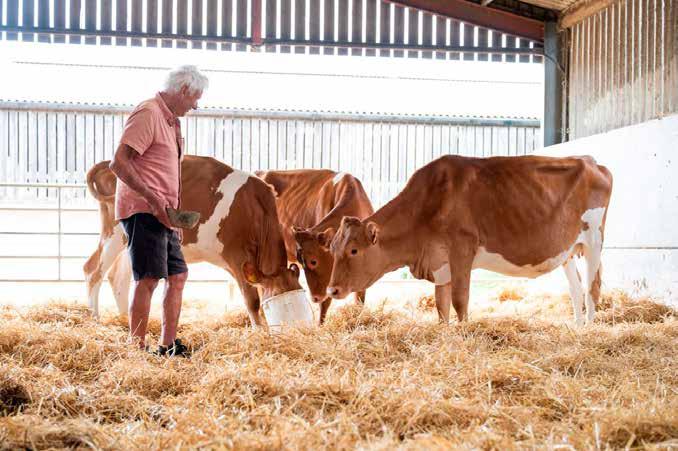
Dickie’s decades of dedication show in the healthy herd
RESTAURANT REVIEW: THE COCKLE
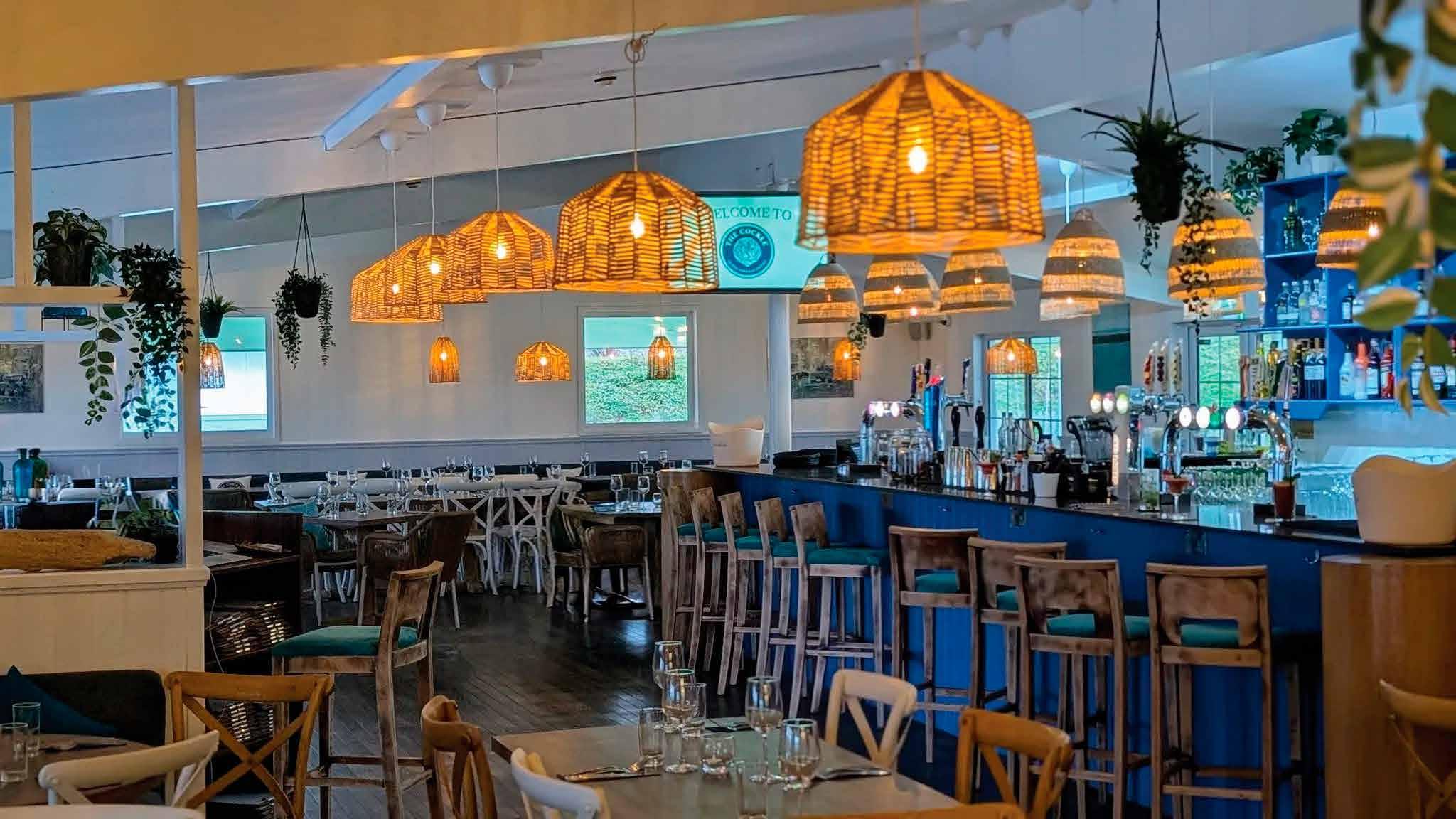
A winding road takes us down to Island Harbour on a sunny spring afternoon. We’re on our way to visit The Cockle, the new riverside restaurant offering relaxed dining on the water.
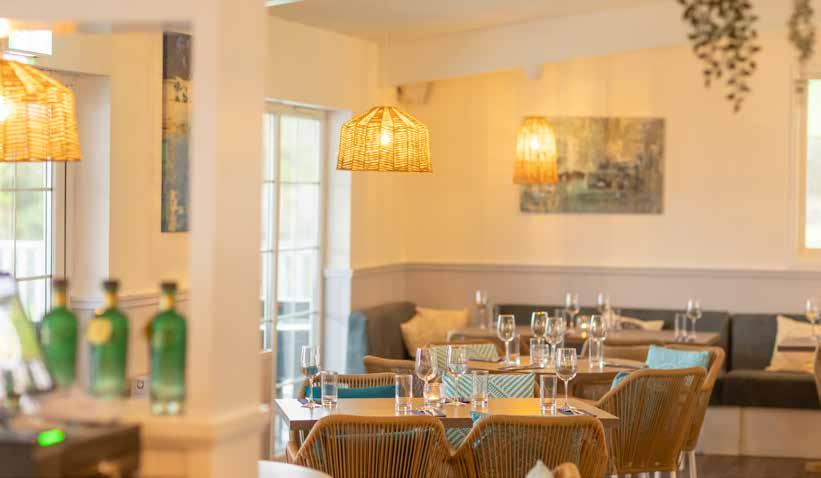
Fresh, bright, and styled with contemporary coastal décor, The Cockle is run by father-and-son duo Sam and Joe, and is home to a friendly young team. Chef Ashley Randle leads the kitchen, with a menu inspired by his Cornish roots. Fresh seafood is front and centre, with a selection of dishes influenced by Mexican and Asian-fusion cuisine.
Since the team opened the doors in January this year, the restaurant has generated a buzz, with patrons praising its waterside location and innovative menu. At the time of writing, head chef Ashley had just gained a place as one of 40 semi-finalists in the 2026 National Chef of the Year
competition, run by the Craft Guild of Chefs and celebrating seasonality, creativity, and technical skill.
As we arrive, we’re greeted warmly and shown to a table with a view over the river. Boats bob on the water and gulls soar overhead. It’s a picturesque aspect – the perfect place for a long, leisurely lunch while the sun shines. Our waiter, Cameron, is welcoming, explaining each dish to us as we take in the menu. To start, we opt for a selection of sharing plates, then sit back to enjoy the atmosphere, chilled glasses of wine in hand.
First up are fried corn ribs, seasoned with kombu. The savoury, smoky flavour complements the sweet corn
A light, modern interior, with coastal and Scandi influences
“The Cockle is a great place to enjoy good food, take your time, and appreciate relaxed dining.”
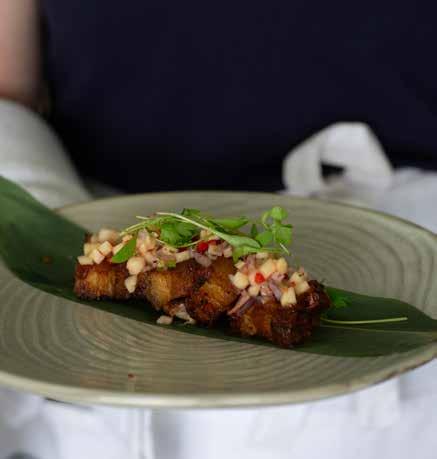
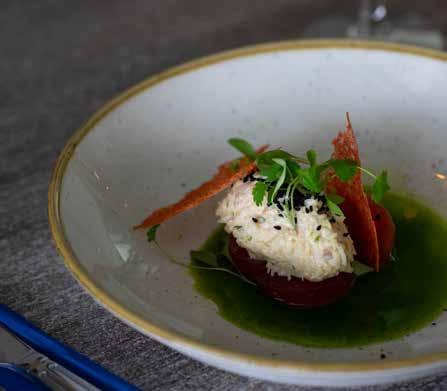
perfectly – we’re off to a good start. To accompany these, we’ve also chosen a crab and watermelon salad, a classic summer dish. It’s well-balanced and vibrant, with crisp, sweet watermelon meeting the delicate richness of crab meat. Pork carnitas are also set on the table, beautifully presented on a leaf bed and garnished with bright pineapple salsa. These are super flavoursome and lightly spicy, with sweet fruit cutting through the heavily marbled, succulent pork. With our appetites whetted, it’s a short wait for our mains, which arrive looking just as well presented as the elegant starters. Companionable silence falls over our formerly chatty table as we
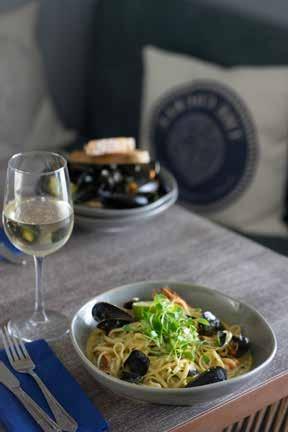
all indulge. I’m served St Austell Bay Moules Marinieres, which arrive piping hot and with lightly toasted sourdough for the all-important dipping. The mussels are tender and complemented by a velvety, fragrant broth – it’s a light but satisfying dish. The chicken Kyiv also arrives, served on a bed of pommes purée. It’s golden and crispy, falling away from the bone, with a silky garlic, parsley and butter sauce. Another in our party has opted for the seafood linguine. A generous portion is served, topped with mussels and tiger prawns, and dressed in a creamy sauce. The seafood is well cooked, briny and meaty. Chilli-forward, with notes of citrus and pepper, the pasta dish is moreish and full of flavour.
Pork carnitas, served with bright pineapple salsa
Sweet and spicy corn ribs with kombu
Crisp white wine and creamy, spicy seafood linguine
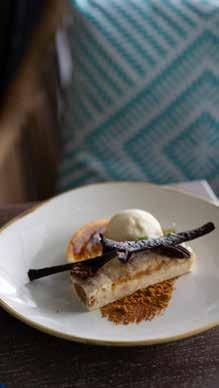
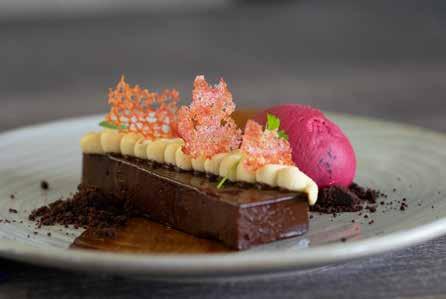
After some time relaxing, enjoying the view and good conversation, it seems rude not to try dessert, so we opt to share a burnt butter chocolate ganache and a caramelised banana parfait. Both arrive generously portioned and beautifully presented. The ganache is incredible; rich dark chocolate pairs with the fruity sharpness of a vibrant blackberry sorbet. The parfait is a lighter choice. Mellow, soft and utterly delicious, a Biscoff crumb bed adds a contrasting texture.
To really set things off, we finish the afternoon’s meal with a round of cocktails; a Salted Caramel Espresso Martini, made with the Island’s favourite tipple, Mermaid; a Harry’s Bellini, and an alcohol-free Regal Orchard. As with the food, all are well-balanced, made with care and attention to detail.
We’re waved off by Cameron as we head into the afternoon sun for a slow walk along the riverside. As we meander next to the River Medina, we chat about the well-considered food,
attentive team and glorious setting, in agreement that The Cockle is a great place to enjoy good food, take your time, and appreciate relaxed dining.
Island Harbour Marina
Mill Ln, Binfield Newport t: 01983 533388
thecockle.co.uk
Rich dark chocolate ganache served with vibrant blackberry sorbet
Caramelised banana parfait with a Biscoff crumb
A classic combination: crab and watermelon salad
With Will Steward, Living Larder
We love ‘padrons’ in our house. We tend to use them as a pre-dinner snack whilst preparing for the main event and have them on the table when friends come around.
Originating from PadrÓn in northern Spain, these small peppers are picked green before any heat has developed within the seeds. In season from early summer and available until autumn, they are a great option for communal eating and quite simply a little bit of fun. If growing at home, keep them well watered to prevent undue stress, which can result in the peppers turning hot before they are ready.
Blistered Padron Peppers
Method:
Very simply cooked in a smoking-hot cast-iron pan – I find it’s best to do this with washed and dried padron peppers and no oil. Don’t crowd the pan and allow them to blacken and blister slightly, giving them a good shake regularly.
Once cooked, give them a little drench of olive oil and a sprinkle of Maldon sea salt. Serve with cool, creamy Greek yogurt.
I like to cook these on our fire bowl for an added smoky flavour. Being from Galicia, these pair well with a cold, crisp glass of Albarino on a hot summer day.
livinglarder.co.uk for more recipes.
Living Larder is a family-owned, Soil Association certified Organic farm, supplying local fruit and vegetable boxes. livinglarder.co.uk | Instagram: @livinglarder
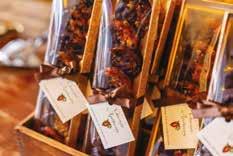
Chocolate Apothecary
Chocolate Apothecary
7 Esplanad , Isle of
To enjoy them at ase eat within 3 weeks
Store in a cool dr y place
The Island’s home for handmade chocolates specialty organic coffees, Award Winning Hot Chocolates and cakes. Located at Ryde’s Seafront opposite the pier, our Apothecary boasts a unique experience no other place can offer. Relax with some tea and cake while watching our master chocolatier create handmade chocolates, or sit back and watch the tide roll in.
Chocolate Apothecary
@craveventnor @CraveIceCreamIOW The Ventnorian, 5 Spring Hill, Ventnor PO38 1PE tel. 01983 472143 OPEN 7 DAYS A WEEK 10am to 4pm ( Winter Hours )
Briddlesford is a family farm shaped over a century, but our focus has never changed – our Guernsey herd, and the quality of the food we bring to your table.
LIFE BY THE SEA
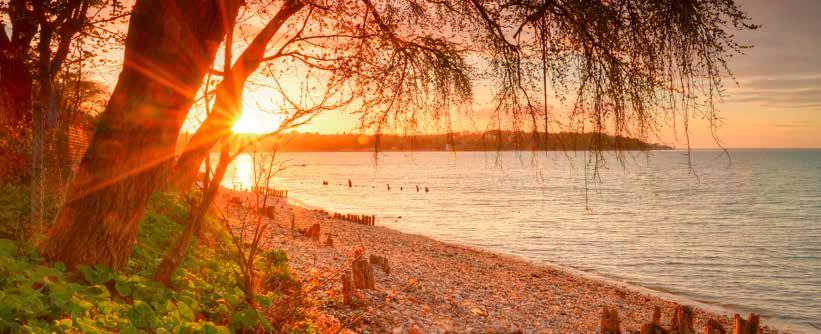
There is something special about waking up by the water.
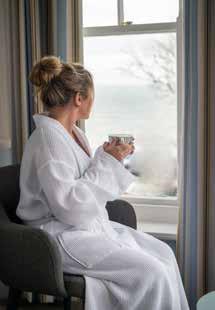
The first light of morning filtering through the window, a coffee in hand, and the sound of the sea’s gentle rhythm offer a moment of stillness before the day begins.
At the Seaview Hotel, this is not an occasional luxury, it is merely part of everyday life.
Nestled in the heart of one of the Isle of Wight’s most charming coastal villages, the independently owned hotel offers guests the opportunity to slow down and embrace a gentler pace. Just moments from the shoreline, with easy access to Seagrove Bay, Priory Bay and miles of coastal walks, it is a place where the sea is never far from view.
Yet life by the sea is about more than the scenery. It is about fresh air, good company, and memorable food.
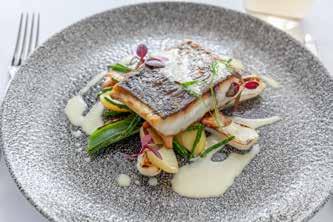
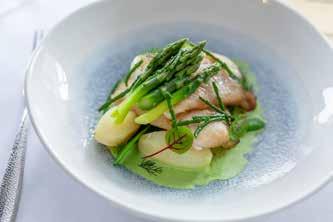
Dining sits at the heart of the Seaview Hotel experience. Working closely with Island producers, the hotel’s kitchens celebrate the very best seasonal ingredients the Isle of Wight has to offer. From beautifully prepared seafood to refined modern British dishes with a distinctive Island influence, every plate reflects a deep connection to the coast and countryside that surround it.
Whether enjoying an intimate dinner in The Aquitania, a relaxed lunch in the Bistro, or drinks with friends in the Pump Bar, guests can expect warm hospitality and a genuine taste of the Island. The hotel’s dining credentials are reflected in its long-standing 2 AA Rosettes, awarded for its commitment to quality and consistency.
For visitors seeking an authentic coastal escape, the Seaview Hotel
captures the essence of Island style. Elegant yet unpretentious, relaxed yet refined.
Inspired by the surrounding coastline, the hotel’s chefs create dishes that celebrate the Isle of Wight’s rich food heritage.
CRAFTED ON THE ISLAND, MIXED FOR MODERN TASTES.
A true taste of the Isle of Wight, these cocktails pair Wight Whisky’s Signature Malt Blend with fresh, vibrant ingredients to create effortlessly drinkable serves perfect for long summer afternoons and coastal evenings.
Wight Whisky’s Signature Malt Blend meets vibrant orange and pineapple juices in this tropical twist on a classic spritz. Topped with Prosecco and soda for a refreshing sparkle, it’s a perfectly balanced serve with bright fruit notes and a crisp, uplifting finish.
25ml Signature Malt Blend
25ml Orange Juice
25ml Pineapple Juice
50ml Prosecco
Top with soda Garnish with orange peel and a few pineapple leaves
Bliss
Smooth Signature Malt Blend meets fresh lemon juice, finished with crisp peach kombucha for a vibrant, sparkling finish. Fruity, refreshing, and perfectly balanced, this modern highball combines whisky character with the added appeal of kombucha’s gut-friendly qualities.
50ml Signature Malt Blend
Splash of sugar syrup
25ml Lemon Juice
Top with Peach Kombucha
Tropic Spritz
Peach
COOKING BY THE COAST
There’s something about cooking by the sea that changes everything. Perhaps it’s the pace, the produce, or simply the appetite that arrives with salt air and a long walk along the coast. At The Albion’s restaurant, The Rock, new Head Chef Liam Frisby is embracing all three — creating a menu inspired by the shoreline just beyond the windows.
Liam Frisby, Head Chef at The Rock, The Albion Hotel
At The Albion, the sea is never simply the view. It sets the rhythm of the day, inspires the kitchen, and influences everything that graces the table. With Liam’s arrival in June, the menu at The Rock leans further into coastal cooking — seasonal dishes inspired by Freshwater Bay, Island produce, and the simple pleasure of eating well beside the water.
Here, the coastline becomes part of the dining experience. The changing tide, the salt air drifting through the open terrace doors, and the light softening across the bay as long lunches stretch into evening mean that dining here is deeply connected to place. Freshwater Bay shapes how people want to eat: generously, seasonally and without
unnecessary complication.
For Liam, coastal cooking is about allowing ingredients to speak for themselves. Since joining The Albion, Liam has focused on creating a menu that feels rooted in both the Island and the coastline beyond it — ingredient-led dishes inspired by local suppliers and the abundance of fresh seafood.
“Cooking by the sea changes how people want to eat,” says Liam. “There’s a simplicity to coastal dining that I really love. Guests want food that feels fresh, relaxed and full of flavour — something generous and thoughtful, without being overly complicated.”
Fresh from the sea today
“Every day begins with the ingredients,” says Liam. “The fish change with each catch, the produce shifts with the season, and the menu evolves naturally around what arrives fresh that morning. The menu mirrors the landscape – clean, seasonal and constantly changing with the rhythm of the coast.”
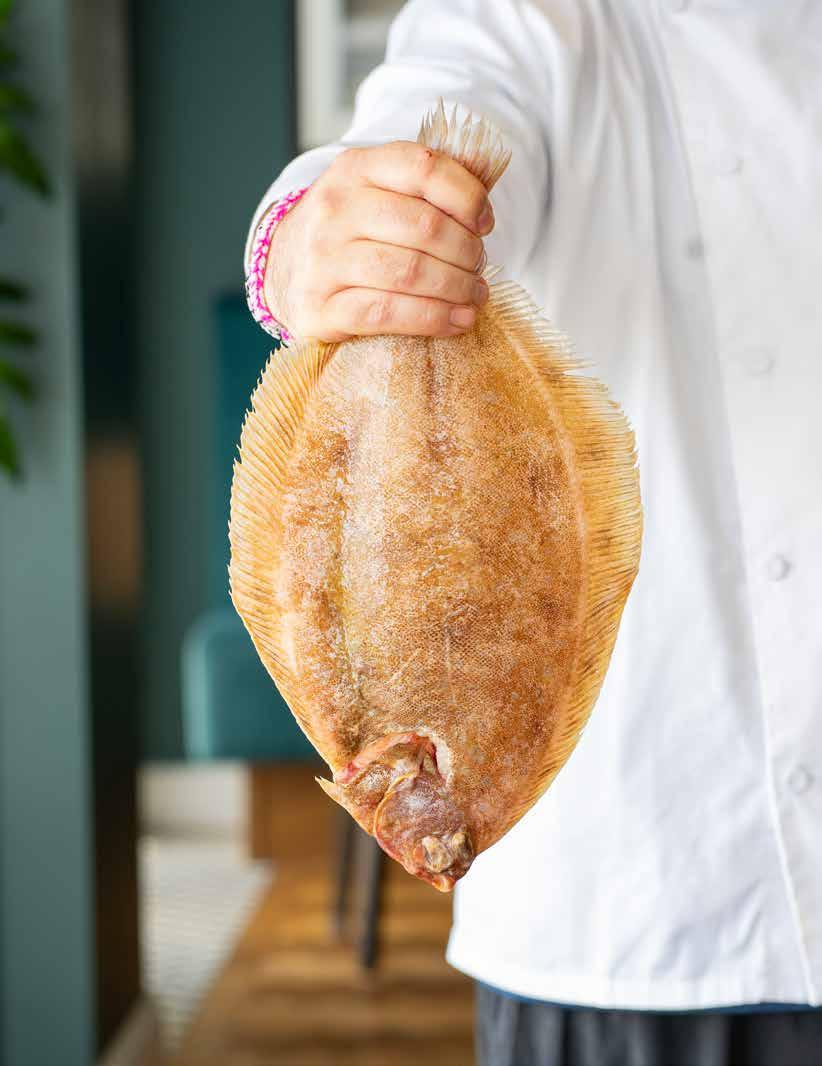
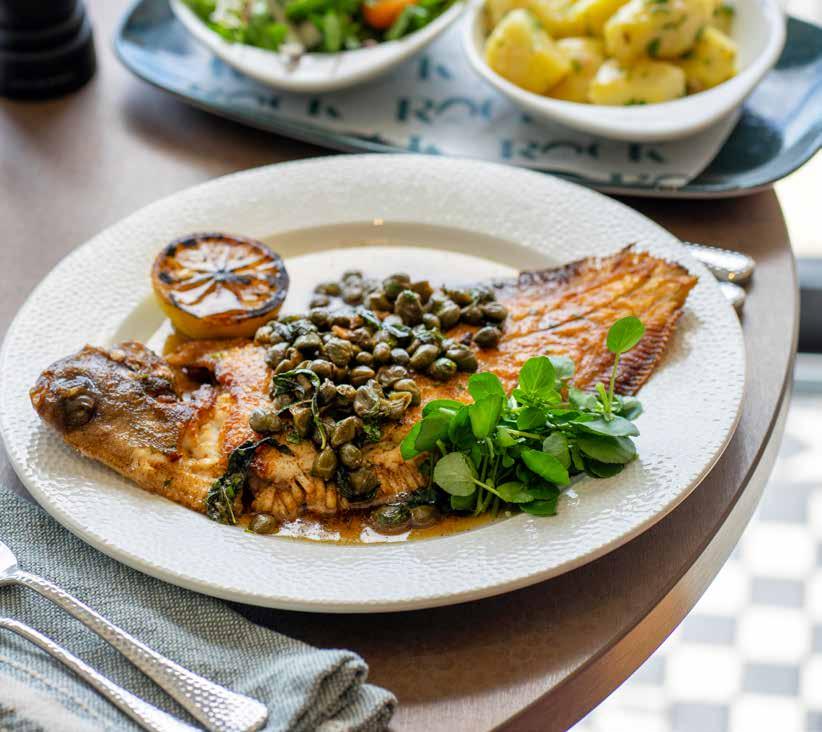
Whole Market Fish has quickly become one of the defining dishes at The Rock — served simply with grilled lemon, sea herbs and warm butter, allowing the quality of the fish to remain the focus.
“It’s coastal cooking at its most understated and confident,” explains Liam. “It’s the sort of dish that feels perfectly at home here: uncomplicated, ingredient-led and best enjoyed with the windows open to the sea air or out on our terrace.”
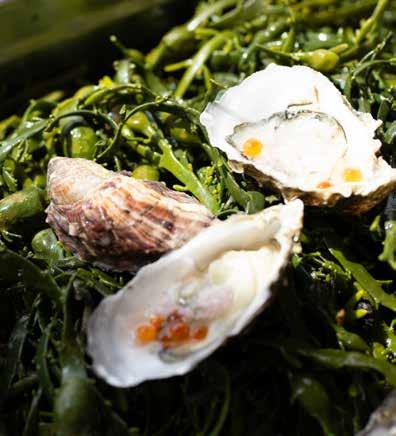
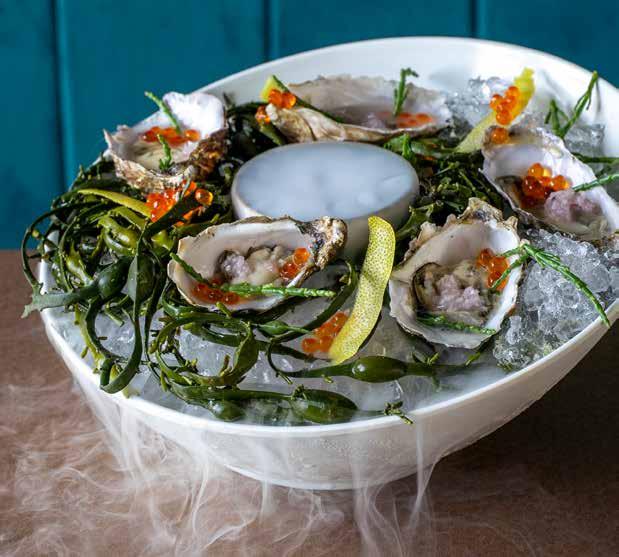
Oysters on ice feel inseparable from the setting here — the taste of the coastline distilled into a single dish. Served simply with shallot vinegar, Tabasco and native seaweed from the surrounding shore, these ingredients need very little interference.
The Lobster Spelt Risotto embodies the quieter luxury of dining at The Rock. Sweet lobster and crisp tempura claw sit alongside creamy spelt risotto, finished with seaweed. Rich yet restrained, it’s a dish that subtly echoes the flavours of the bay itself.
Dining at The Rock is intentionally unhurried – shaped by long afternoons changing with the tides and the kind of sea views that encourage guests to stay for another glass.
For Liam, the setting shapes a unique dining experience. “You can feel the sea while you’re eating here,” he says. “There’s something really special about that connection between the plate and the place. For me, it is this connection between the food and the setting that defines The Rock. You can feel the sea in the atmosphere here. It changes how people gather, how they relax, and how they eat. There’s something very special about serving food that feels so connected to the place around it.”
Naturally Simple, Simply Natural
Simply Jaspers is a premium dog food brand based on the Isle of Wight, founded 10 years ago from our love for our beagle, Jasper.
Our recipes use high-quality ingredients and are carefully developed to provide real health benefits because we genuinely care about pets and their wellbeing.
Sea
Creatures
Words and
illustrations
by Lottie Begg
Life on an island is shaped by the sea in ways both obvious and unexpected. It influences our landscapes, our livelihoods, our traditions and the stories we tell about where we live. From hidden rockpool worlds and remarkable marine wildlife to coastal festivals, artists, conservationists and communities connected by the shoreline, this special feature celebrates the many ways the sea threads through Island life. Whether we spend our days on the water, beside it, or simply looking out towards the horizon, we are all, in our own way, sea creatures.
Whether you’re searching for the perfect swimming spot, a beach where dogs can roam freely, a peaceful stretch of coastline for a morning walk, or simply somewhere to enjoy an ice cream with a sea view, the Isle of Wight has a shore to match every mood. From family favourites and hidden coves to the former private beaches of Queen Victoria, each offers its own unique charm and story. Read on as we explore some of the Island’s most beloved beaches and reveal where to swim, stroll, paddle, picnic and soak up the best of Island life by the sea.
Beaches Our Play
Sandown’s long sandy beach, gently shelving waters and traditional seaside attractions make it one of the Island’s most popular destinations for families. Children can enjoy paddling, building sandcastles and exploring the shoreline, while nearby cafés, arcades and ice cream shops provide plenty of entertainment away from the beach. With everything close at hand, it is the perfect setting for a classic family day by the sea.
For surfing and bodyboarding, Compton Bay is hard to beat. Exposed to the open sea, it often enjoys some of the Island’s largest waves, making it a favourite with watersports enthusiasts. Beyond the surf, its sweeping sands, striking cliffs and dramatic coastal scenery have also made it a popular destination for photographers, walkers and anyone looking to experience the wilder side of the Isle of Wight.
For dog walkers, Brook Bay is hard to beat, offering a long sandy shoreline where dogs are welcome all
Sport Dog Walks Sun Bathing
Appley Beach, near Ryde, is ideal for sunbathers thanks to its large sandy shoreline and wide open space. Even during busy summer days, there is usually plenty of room to lay out a towel and relax. The calm atmosphere and views across the Solent make it a popular choice for those looking to unwind.
Eat Views
Ventnor Beach offers one of the Island’s best seaside dining scenes. From traditional fish and chips enjoyed on the promenade to independent seafood restaurants and contemporary eateries overlooking the bay, there is something to suit every taste. Combined with the town’s distinctive character and stunning coastal views, it is the perfect place to spend a leisurely afternoon by the sea.
Alum Bay is immediately recognisable for its colourful sand cliffs and stunning views of the Needles. Attracting thousands of visitors throughout the year, it is perfect for enjoying the Island’s famous scenery.
The Isle of Wight’s Greatest Wildlife Spectacle Lies Offshore Beneath the Blue:
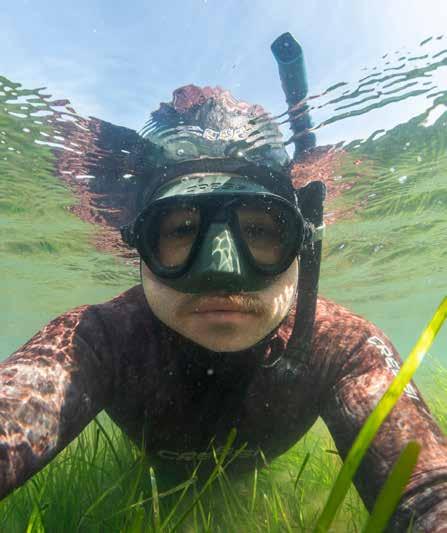
to marine biologist, underwater photographer and PhD researcher Theo Vickers, some of the Island’s most remarkable landscapes lie beneath the surface.
“The biodiversity of our waters surprises many people,” says Theo, who is currently researching Isle of Wight sharks and rays at the Institute of Marine Sciences, University of Portsmouth. “So many of us live beside the sea, yet relatively few Islanders are aware of the range of habitats and species found around our coastline.”
For Theo, one habitat stands out above all others.
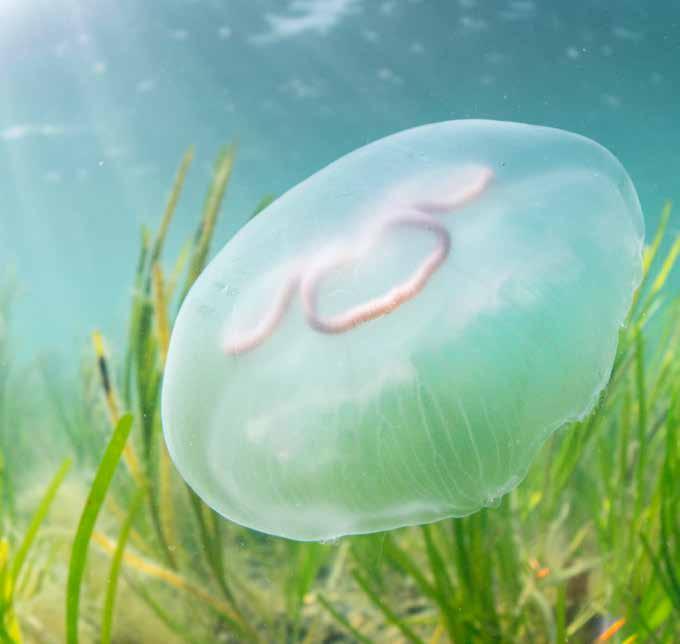
“If I could encourage every Islander to experience one thing, it would be our seagrass meadows,” he says. “You can swim through the seagrass and see a huge range of species using the habitat.”
Often mistaken for seaweed, seagrass is a flowering plant that forms underwater meadows rich in wildlife.
These habitats provide shelter for fish, crustaceans and countless smaller species while helping stabilise the seabed and store carbon.
“On a warm, clear day, visibility can be incredible,” Theo explains. “You can swim through the seagrass and see a huge range of species using the habitat.”
For those who prefer to stay on shore, the Island’s coastline still offers plenty to discover. Rock pools reveal miniature ecosystems filled with crabs, shrimps, anemones and colourful sea slugs. Along the coastal paths, patient observers may spot dolphins, harbour porpoises, tuna and seabirds offshore.
One of Theo’s favourite experiences comes after dark. During autumn
low tides, a UV torch can reveal biofluorescent marine life along the rocky shore.
“Seeing biofluorescent anemones glowing under UV light is incredible,” he says.
Among his many underwater encounters, one remains especially memorable.
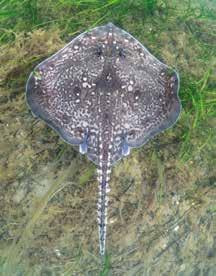
“A common stingray was probably my most exciting sighting. I’d spent years trying to work out where I might find
them underwater, then suddenly came across a large female resting in seagrass.”
The Isle of Wight’s rich marine life is largely shaped by its varied geology. The sheltered Solent supports seagrass meadows, gravel banks and saltmarshes. Beneath the Needles and Culver cliffs lie internationally rare chalk reefs, while the rocky shores of Ventnor and the Undercliff support kelp forests, rock pools and reef communities.
For such a small island, the diversity is remarkable.
Whether exploring a rock pool, watching the sea from a cliff top or snorkelling through seagrass, Theo believes a closer look can reveal a side of the Isle of Wight that many people never experience.
“The wildlife is here all around us,” he says. “Sometimes all it takes is taking a moment to look.”
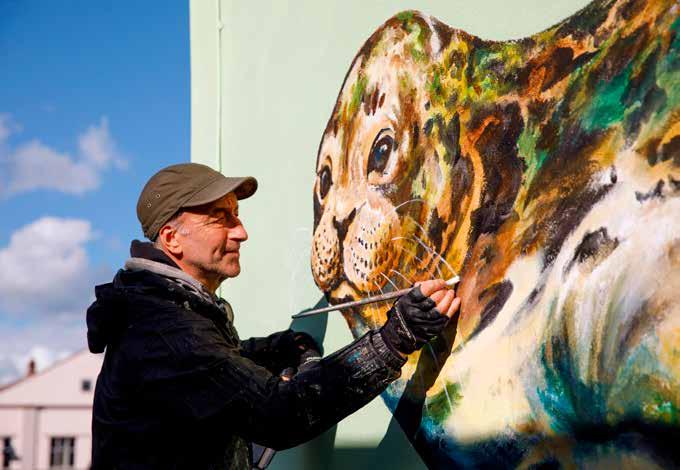
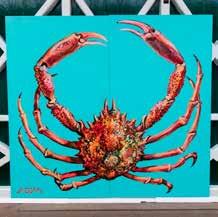
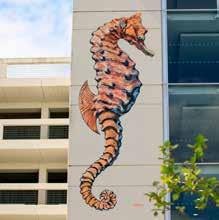
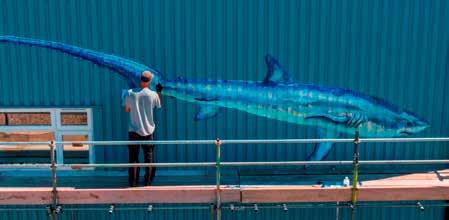
The Seal Beside the Library
On a wall beside Newport Library, a giant harbour seal watches over the town. Some people pass it every day without a second glance as they head to work, browse the shops or hurry between appointments. Others stop and stare, drawn in by its bright eyes and lifelike presence.
Beautifully detailed and full of character, the mural has become a subtle landmark in the heart of Newport. Yet this impressive artwork is far more than a colourful addition to the town centre. It is part of a much bigger story about the wildlife living in the waters around the Isle of Wight and
the artist using public spaces to help people discover it.
The mural was created by renowned street artist ATM, whose giant wildlife artworks can be found across Britain and Europe. His work celebrates the creatures that share our landscapes, coastlines and seas, transforming ordinary urban walls into powerful tributes to the natural world.
Growing up surrounded by nature, ATM developed a lifelong fascination with wildlife and the places it calls home. Birds were his first inspiration, but over time his work expanded to include mammals, marine creatures and
invertebrates. Today, his murals can be found from London and Bristol to Poland and Norway, each one painted freehand and designed to capture the unique spirit of the animal it portrays.
Across Hampshire and the Isle of Wight, ATM has created a series of marine-themed murals celebrating some of the region’s most fascinating species.
These include a short snouted seahorse in Southampton, a thresher shark at Langstone Harbour, a lobster at Hamble Harbour, a spider crab at Hythe Pier and a cuttlefish in Portsmouth.
Each species was chosen through a community vote, helping local people connect with the wildlife found in their own coastal waters.
The harbour seal was selected as Newport’s marine ambassador, and it is easy to understand why. Harbour seals are among the Solent’s most characterful residents. They can often be seen resting on sandbanks and beaches throughout the region, sometimes adopting their distinctive curved “banana” pose with both head and tail lifted into the air. These remarkable mammals feed on fish, squid, crabs and shellfish, spending much of their lives navigating the waters around our coastline. During the summer months, seal pups are born and are able to swim within hours. For many Islanders, spotting one of these sea creatures remains one of the most magical wildlife encounters the Solent can offer.
ATM hopes the mural encourages people to think more deeply about the ocean environment.
“The harbour seal is a captivating animal, and I hope when people see it, they are inspired to think more about the diversity of life hidden beneath the waves and the importance of protecting vital habitats within the Solent,” he says.
The artwork also shines a light on the wider marine story of the Solent itself.
While many people know the area for sailing, ferries and watersports, it is also home to seagrass meadows that provide shelter for seahorses, young fish and crustaceans. These underwater habitats support a rich variety of marine life and play an important role in the health of our coastal waters.
Dr Tim Ferrero, Senior Marine Biologist
at Hampshire & Isle of Wight Wildlife Trust, believes public art offers a powerful way to help people appreciate this hidden world.
“The harbour seal is surely one of our most charismatic marine wildlife species,” he says. “Having our mural in the centre of Newport is a fantastic way to raise awareness of our region’s marine mammals.”
At the heart of ATM’s work is a simple philosophy: art should be available to everyone.
Rather than placing wildlife imagery inside galleries, he brings it directly into public spaces where people can encounter it as part of everyday life. A trip to the library, a walk through town or a visit to the shops becomes an opportunity to engage with the natural world.
For more than a decade, Sally Grylls and Ron Holland have been among the Isle of Wight’s most dedicated champions for Dementia UK. Through fundraising, awareness campaigns and community events, they have helped ensure Island families affected by dementia can access the specialist support of Admiral Nurses. Their warmth, enthusiasm and commitment have become familiar to many across the Island.
Now, a new initiative is celebrating that remarkable legacy while inviting the wider community to become part of it.
Steps to Remember is a 70-mile passport challenge inspired by the full length of the Isle of Wight Coastal Path. Created to raise awareness and funds for Dementia UK’s Admiral Nurses on the Island, the challenge encourages participants to complete the distance in whatever way suits them, whether through coastal walks, countryside rambles, daily dog walks or even laps of the garden.
Every penny raised remains on the Isle of Wight, supporting local families living with dementia. At the heart of the initiative is a beautifully designed passport that transforms each mile into part of a larger journey.
Participants can colour their progress map, collect milestone stickers and record reflections and memories along the way. It is a keepsake as much as a challenge, designed to accompany people wherever their 70 miles may take them.
The scheme has already brought together an inspiring community of walkers. Guided Memory Miles during the Isle of Wight Walking Festival have taken participants through some of the Island’s most beautiful landscapes,
with support from organisations including Wildheart Sanctuary and Hovertravel. Community groups such as the Island Adventure Girls have embraced the challenge, completing the full 70 miles together and sharing their experiences with others.
More than anything, Steps to Remember reflects the spirit that Sally and Ron have fostered for so many years. It celebrates community, connection and the simple act of
putting one foot in front of the other. Every mile walked helps support Admiral Nurses on the Isle of Wight, ensuring that families facing dementia continue to receive expert guidance, understanding and care.
Sign up at JustGiving: www.justgiving.com/team/ stepstorememberiow
Passports can then be collected from Hovertravel.
The Secret Grden Beneath the Sea
The Isle of Wight’s most remarkable landscape is one that few people ever see. Beneath the surface of the Solent, underwater meadows of seagrass ripple gently with the tide, supporting an astonishing diversity of marine life while quietly helping to protect the coastline itself.
More than just underwater grass
Seagrass is often mistaken for seaweed, but it is actually a flowering plant. Its long leaves create sheltered underwater habitats where young fish, crabs, cuttlefish and seahorses can feed, grow and thrive. These meadows are among the most productive ecosystems on Earth, forming the foundation of a healthy coastal environment.
Nature’s coastal defender
The benefits extend far beyond wildlife. Seagrass anchors sediment with an extensive root system, helping to stabilise the seabed and maintain clearer coastal waters. It also captures
and stores carbon within the seabed, making it one of the world’s most effective natural carbon sinks and an increasingly important ally in addressing climate change.
Restoring the Solent
Across the Solent, including waters around the Isle of Wight, conservationists, scientists and volunteers are restoring these underwater meadows through the Solent Seascape Project. Alongside seagrass, the initiative is rebuilding native oyster reefs and restoring saltmarshes, recognising that healthy coastal habitats are strongest when they work together as one connected ecosystem.
For many Islanders, the beauty of the coast begins with dramatic cliffs and sweeping beaches. Yet some of its greatest treasures lie beneath the waves. Every new patch of seagrass strengthens marine habitats, supports wildlife and helps ensure that the Isle
Pre-Historic Coastline
The Isle of Wight’s extraordinary marine wildlife begins with a coastline shaped over millions of years. Preserving more than 125 million years of Earth’s history, the Island is one of Europe’s most important geological landscapes and continues to attract geologists and palaeontologists from around the world. As recently as 2025, a previously unknown species of dinosaur was identified from fossils discovered here, proving the coastline is still revealing new chapters of prehistoric life.
Compton Bay’s cliffs transport visitors to the Early Cretaceous, when dinosaurs roamed subtropical floodplains, while nearby Yaverland continues to yield fossils of dinosaurs, crocodiles, turtles and ancient marine creatures. Further west, Alum Bay’s famous coloured sands record around 34 million years of geological history, and the iconic Needles were formed from microscopic marine organisms that settled on the floor of a tropical sea around 70 million years ago.
of Wight’s coastline remains as rich and resilient below the surface as it is above it.
Find Out More
If you would like to learn more, visit the Solent Seascape Project at solentseascape.com, the Hampshire and Isle of Wight Wildlife Trust at hiwwt.org.uk, or Project Seagrass
Today, these ancient rocks continue to shape the Island’s marine habitats, creating chalk reefs, sheltered bays and rock pools that support an incredible diversity of coastal life. Next time you visit the Isle of Wight’s coastline, take a moment to imagine the ancient worlds hidden beneath your feet and the millions of years that shaped the shores you see today.
Olivia Parkes
Every coastline has its wildlife, from the seabirds that circle overhead to the creatures hidden beneath the waves. Yet the sea has always shaped human lives too, and few Islanders have lived as closely with it as Olivia Parkes. Better known as Britannia, she became one of Ventnor’s most remarkable characters by making her home in a weathered wooden hut perched above the shoreline of Myrtle Bay.
A Home by the Sea
The hut was originally built during the Victorian era for the Undercliff Swimming Club before later being used by local fishermen. In the late 1920s, Olivia moved in and remained there for almost three decades. Standing on wooden stilts above the rocks, the hut overlooked the English Channel and became an unmistakable part of Ventnor’s coastline.
Life there was wonderfully simple. There was no electricity or running water, so Olivia collected fresh water each day from nearby Flowers Brook. She became a familiar sight to walkers and fishermen, often seen outside her hut with the sea stretching endlessly behind her.
The Woman They Called Britannia
Olivia’s independent spirit and striking appearance made her something of a local legend. Newspapers affectionately nicknamed her “Britannia”, while visitors were fascinated by the woman who had chosen the sea as her closest neighbour. Even fierce winter storms failed to shake her determination. During one memorable gale in 1931, the steps leading to her hut were swept away, leaving her stranded until firefighters came to her rescue.
As the years passed, the hut weathered alongside its owner. When it was finally considered unsafe in 1958, Ventnor Urban District Council helped Olivia move
into a flat. The following year, the hut was dismantled, bringing to an end one of the Island’s most unusual chapters.
A Story That Lives On
Today, Myrtle Bay is still a place where people come to enjoy the sea, watch the waves and explore the coastline. Most pass by without realising that one extraordinary woman once called this stretch of shore home.
Issue 17 (2021) Issue 101 (2026)
Fourteen years after the original image appeared on the cover of Style of Wight, this special shoot revisits and reimagines a memorable cover from Issue 17.
Created to celebrate the publication of Style of Wight’s 100th issue, the concept has been brought up to date through a collaboration of contemporary Isle of Wight creatives, independent businesses and makers. The recreation also reunites members of the original creative team, including stylist Becca Charlo and nail artist
Amy Bates, while introducing a new generation of Island brands and contributors.
Inspired by the colours of summer and the Island’s creative spirit, the image combines artisan ice cream, vibrant jewellery and coastal influences in a playful nod to the original cover. Produced in Ventnor, the shoot reflects both how much has changed over the past fourteen years and the enduring creativity that continues to thrive on the Isle of Wight.
PRODUCT INDEX
Jewellery
Tatty Devine tattydevine.com
beCHARLO Jewellery becharlo.co.uk
Isle of Wight Pearl iowpearl.co.uk
Fashion
Visual Impact Ladies visualimpact.co.uk
Ice Cream
Crave Crave, Ventnor
CONTRIBUTORS
Photography
Gary Wallis
Styling
Becca Charlo of beCHARLO Jewellery becharlo.co.uk
Model Becca Charlo
Nails
Amy Bates of Cozy Coast cozycoast.co.uk
Location Ventnor, Isle of Wight
Ahoy Ventnor!
Every August, Ventnor becomes the Isle of Wight’s own pirate port, as thousands of visitors descend on the town for four days of sea shanties, colourful costumes and carnival celebrations. Running from 12–15 August, the Ventnor Pirate Festival returns this year in partnership with Ventnor Carnival, promising its biggest programme yet.
For Adam Edmunds, General Manager of The Spyglass Inn, the festival’s magic begins with its setting.
“Ventnor is so special,” he says. “That’s why it’s the perfect place to hold a Pirate Festival. Teamed with Ventnor Carnival, there is no better place to dress up and get into the carnival spirit.”
The festival has become one of the Island’s most distinctive events, transforming the seafront into a swathe of, pirate flags and smiling faces.
“The spectacle of a sea of tricorn hats, hooks and frilly shirts taking over Ventnor is always worth seeing,” Adam says. “It’s all about getting involved, enjoying the atmosphere and celebrating all things pirate and carnival.”
This year’s programme features live music, traditional sea shanties, family entertainment and a brand-new prize for the Best Pirate in the Carnival.
One of the festival’s greatest strengths is that it remains completely free to attend, thanks to an army of volunteers, performers and local businesses.
“Ventnor, and the Island in general, is full of creative and eclectic people who
love our community and want to show it off,” Adam explains.
For anyone yet to experience the festival, his invitation couldn’t be simpler.
“It’s free! Days’ worth of entertainment and activities for kids and adults alike.”
More than anything, he hopes visitors leave with lasting memories of one of the Island’s most characterful towns.
“We hope you’ll take away some special memories that remind you of our little corner of the Island.”
Whether you arrive in full pirate costume or simply come to soak up the atmosphere, Ventnor Pirate Festival offers a wonderfully spirited celebration of community, creativity and seaside fun.
From Sea
To Sip
The sea shapes so much of Island life, from the ingredients we use to the places we gather. These locally crafted drinks capture that coastal spirit, each offering its own flavour of the Isle of Wight.
Yachtsman’s Ale
Named in honour of the Island’s sailing heritage, Yachtsman’s Ale is one of the Isle of Wight Brewery’s best-loved creations. Deep chestnut in colour, it combines roasted malt with balanced hops to produce a smooth, full-bodied ale with a crisp, refreshing finish. Brewed with traditional craftsmanship and a commitment to quality, it’s a fitting choice after a day on the coast and a true taste of the Island.
Tidal Bloom
The Isle of Wight Distillery has earned an international reputation for its award-winning Mermaid Gin, and Tidal Bloom is a perfect showcase of its creative approach to cocktails. Delicately pink with a single cherry garnish, this low-alcohol serve is light, floral and gently sweet, with a refreshing finish that’s made for sunny afternoons. Elegant, colourful and inspired by the coast, it’s a cocktail that captures the easy-going spirit of Island life.
ROYAL WATERS
Discover Cowes’ remarkable Royal sailing heritage this summer
As Cowes Week celebrates its bicentenary, this summer offers a unique opportunity to discover the remarkable royal connections that helped shape the town into one of the world’s most famous sailing destinations. From The Royal Yacht Britannia to Prince Philip’s beloved Dragon Bluebottle, a new exhibition and maritime heritage trail bring to life the people, vessels and stories at the heart of Cowes’ enduring maritime legacy.
SAILING THROUGH ROYAL HISTORY
Opening at Commodores House from 31 July to 29 August, Sailing Through Royal History is a fascinating new pop-up exhibition from The Royal Yacht Britannia Trust, the charity responsible for preserving and caring for the former Royal Yacht Britannia in Edinburgh. Earlier this year, the visitor attraction was named Tripadvisor’s No.1 Attraction in the World – the first UK attraction ever to receive the accolade. A familiar sight at Cowes Week between 1955 and 1996, Britannia regularly accompanied Prince Philip and other members of the Royal
Family to the regatta, cementing her place in the town’s rich sailing heritage.
At the heart of the exhibition is the remarkable story of Uffa Fox, one of the most influential figures in modern sailing. Fittingly, it is housed at Commodores House, Fox’s former home and workshop. Visitors can discover how his revolutionary dinghy designs transformed the sport, learn about the airborne lifeboats he developed during the Second World War, and explore his close friendship with Prince Philip, with whom he regularly raced. Visitors will also
discover the Royal Family’s enduring connection with Cowes, alongside stories of Britannia, her preservation and the projects made possible by The Royal Yacht Britannia Trust.
A particular highlight is the return of Coweslip, the Flying Fifteen presented to then Princess Elizabeth and The Duke of Edinburgh by the people of Cowes as a belated wedding gift in 1949. Displayed on the very quay where she once berthed between regattas, Coweslip offers a rare and poignant glimpse into a golden age of royal sailing.
The legacy of Bluebottle is woven into the story of Cowes. Presented to the then Princess Elizabeth and The Duke of Edinburgh as a wedding gift by members of Cowes’ Island Sailing Club, the elegant Dragon-class yacht soon secured her place in sailing history. In 1956, she was loaned to the British sailing team for the Melbourne Olympic Games, where Lt Cdr Graham Mann steered her to a bronze medal – a feat that remains unmatched by any other British Dragon.
Under the care of The Royal Yacht Britannia Trust and following a meticulous restoration by Cowesbased David Heritage Racing Yachts, Bluebottle has enjoyed a remarkable return to competitive racing. Crewed by four accomplished sailors, including Graham and Julia Bailey from Cowes, she continues to compete at the highest level, regularly outperforming her modern fibreglass counterparts on national and international racecourses.
Now in her 79th year, Bluebottle remains a living piece of sailing history. Her return to the water not only showcases the enduring quality of her original craftsmanship but also reflects The Royal Yacht Britannia Trust’s commitment to preserving and sharing Britain’s maritime heritage. Nearly eight decades after she first took to the water, she continues to turn heads on the racecourse, proving that elegance, craftsmanship and competitive spirit never go out of style.
“Hearing that winning gun validated Prince Philip’s decision to put her back on the circuit, which was quite an emotional moment! I think we all felt the Duke was with us at times, and whilst we were saddened by the fact he never got the chance to see her race again, everyone we spoke to said how delighted he would have been said,” Graham Bailey, helm and skipper of Bluebottle.
Recent seasons have seen Bluebottle crowned Dragon Class Champion at Cowes Week 2025 and become the first British Dragon ever to win the prestigious Marblehead Trophy. She also recently made the top spot in the 2026 International Rankings List. This August, she returns to Cowes to defend both titles, writing the latest chapter in a remarkable story that has spanned almost eight decades.
“Bluebottle is no ordinary boat. She carries incredible history, yet still proves she can compete with the very best,” said– Graham Bailey
FOLLOW THE MARITIME HERITAGE TRAIL
Continue the journey through Cowes’ royal sailing heritage with the new Maritime Heritage Trail, created by The Royal Yacht Britannia Trust and The Classic Boat Museum. Stretching from the Royal Yacht Squadron to the Classic Boat Museum, the trail uncovers the remarkable stories behind Britain’s royal sailing heritage.
Along the route, beautifully illustrated interpretation panels reveal the lives of royal sailors, including King Edward VII, King George V and Prince Philip, alongside the famous yachts that helped establish Cowes’ international reputation.
QR codes along the route unlock additional historical content, archive material and lesser-known royal connections, creating an engaging experience for visitors of all ages.
PLAN YOUR VISIT
Sailing Through Royal History Exhibition 31 July – 29 August
Commodores House, Cowes PO31 7AJ
Open daily with the first entry at 10:00 and last entry at 16:00. Tickets can be purchased from the website or on the door.
More information and tickets: royalyachtbritannia.co.uk/cowes
HERITAGE UNDER SAIL
Bluebottle’s remarkable second chapter
KEEPING DOGS SAFE ON THE ISLE OF WIGHT’S BEACHES THIS SUMMER
From sandy adventures to seasonal restrictions, here’s what every dog owner should know before heading to the coast.
There are few better ways to spend a summer’s day on the Isle of Wight than with a dog at your side and the sea stretching out before you. From quiet coves to expansive sandy bays, the Island offers some of the most beautiful coastal walks in the country, and for many dog owners they are a year-round favourite.
But while the warmer months bring longer days and perfect beach weather, they also come with a few important considerations for pet owners.
Between seasonal beach restrictions and the growing risks associated with high temperatures, a little planning can make all the difference.
Know Before You Go
One of the joys of the Isle of Wight is the number of beaches that welcome dogs, even during the busiest months of the year. Popular spots such as Compton Bay, Bembridge Beach, Yaverland, and parts of Appley Beach remain accessible to dogs throughout the summer, offering plenty of space to roam, paddle and explore.
However, some beaches operate seasonal restrictions between May and September to help manage visitor numbers and protect designated bathing areas. Locations including parts of Ryde, Sandown, Shanklin and Ventnor have sections where dogs are not permitted during peak season. The rules vary from beach to beach,
so it is always worth checking before setting off. The Isle of Wight Council’s Public Spaces Protection Order (PSPO) outlines where restrictions apply, helping owners avoid an unexpected change of plans.
When the Beach Becomes Too Hot
While many people associate hot weather with happy dogs and seaside trips, veterinary professionals are increasingly warning that high temperatures can pose a serious threat to canine health.
Dogs are far less efficient at regulating body temperature than humans. They rely primarily on panting to cool themselves and can quickly overheat during warm weather, particularly during exercise.
The British Veterinary Association has repeatedly highlighted the dangers of walking dogs during periods of extreme heat, noting that heatstroke can develop rapidly and, in some cases, prove fatal. It is a risk that owners underestimate.
Even when air temperatures feel manageable, surfaces such as sand, pavements and promenades can become dangerously hot. If a surface is uncomfortable for your hand after a few seconds of contact, it is likely too hot for a dog’s paws.
Early Starts and Evening Strolls
During warm spells, timing becomes everything.
Veterinary experts recommend walking dogs during the coolest parts of the day, typically early morning or later in the evening, when temperatures are lower and direct sunlight is less intense.
On particularly hot days, owners may want to reconsider exercise altogether. Missing a walk is far safer than risking heatstroke.
Beach visits can still be enjoyable, but shorter outings, access to shade and
plenty of fresh water are essential. Dogs should never be encouraged to run excessively or engage in strenuous activity during peak afternoon temperatures.
Spotting the Warning Signs
Heatstroke can escalate quickly, making early recognition crucial.
Signs can include:
Excessive panting
Difficulty breathing
Excessive drooling
Lethargy or weakness
Vomiting or diarrhoea
Confusion or disorientation
Collapse
If heatstroke is suspected, immediate action is required. Moving the dog to a cool area, offering water and contacting a veterinary professional as quickly as possible can be lifesaving.
Beach Etiquette Matters Too
Responsible dog ownership is not just about keeping pets safe. It is also about helping everyone enjoy the Island’s coastline.
Keeping dogs under control around wildlife, respecting restricted areas, cleaning up after pets and being mindful of other beach users all help preserve the Isle of Wight’s reputation as a dog-friendly destination.
Many beaches become particularly busy during school holidays, and not every visitor is comfortable around dogs, no matter how friendly they may be.
Making the Most of an Island Summer
The Isle of Wight remains one of the UK’s best destinations for dog owners, offering miles of coastline, spectacular scenery, and plenty of opportunities for four-legged adventures.
With a little forward planning, awareness of local restrictions, and a healthy respect for rising temperatures, owners and their dogs can continue to enjoy everything the Island’s beaches have to offer throughout the summer months.
After all, the best beach days are the ones where everyone gets home safely, sandy paws included.
The Island offers some of the most beautiful coastal walks in the country.
Friday and Saturday 7:30 am to 10 pm, Sundays 8 am to 9:30 pm
THE SQUARE, YARMOUTH PO41 0NP
A PICNIC AT THE PIER
The best picnics are spontaneous. The type that you dash to assemble before spreading out on the beach for a whole afternoon.
Harvey’s of Yarmouth have carefully selected the picnic essentials - crusty french bread, shavings of DOP Parmigiano Reggiano, plump olives, decadent cheeses, slivers of salty Parma Ham, fresh fruits, crisp Alpine water and cold Aperol Spritz and a bag of Torres Black Truffle Crisps. Feast now; call back in later
for all the pantry ingredients to bring the Mediterranean flavours home.
Simple and generous, this is good food with quality that speaks for itself.
The Square, Yarmouth, PO41 0NP t: 01983 760219
T.M. Barber has a Hatton Garden based workshop who can deal with any repair on silver, gold and platinum jewellery. An established jewellery workshop with a family history of 150 years. Bespoke commissions and remodeling of treasured inherited jewellery.
A Renata watch battery service and watch strap replacement.
Stunning sapphire and diamond cluster bangle in 14ct gold, showcasing vibrant colour and dazzling sparkle. A timeless statement piece.
£5,795
Victorian-style scroll link bracelet in 9ct yellow gold, featuring a classic T-bar detail and
Preloved cabochon amethyst and round brilliant-cut diamond ring, exquisitely crafted in an Art Deco-style 18ct white gold setting. A striking and timeless statement piece.
£3,295
Oval-cut emerald pendant, framed by 14 brilliant-cut diamonds and set in luxurious 18ct yellow gold A timeless and elegant addition to any jewellery collection.
Handcrafted sterling silver blue butterfly with stunning Plique-à-Jour enamel wings, accented by an opal and white sapphires. A beautiful and unique wearable work of art.
£325
Opening hours 9.30 till 4.30 Monday to Saturday |
T. M. BARBER JEWELLERS: Not just a shop window!
Most people walk past the stunning display window of T. M. Barber Jewellers believing they have seen everything the shop has to offer. They couldn’t be more wrong.
Step through the door, and you’ll find a world of sparkling gemstones, timeless gold and silver, and unexpected treasures waiting to be discovered. Guiding customers through it all are owner Tess Barber, whose jewellery career spans more than four decades, and manager Jack, whose passion for style and craftsmanship is helping shape the future of the business.
While the Newport High Street shop has been part of the town centre for more than 20 years, Tess’s jewellery story stretches back to the early 1980s. Some customers still remember buying jewellery from her decades ago; today, many return with their children and grandchildren. In an age of online shopping and mass-produced imports, that kind of loyalty is increasingly rare.
“We like to look after our customers, and their jewellery,” says Tess.
That philosophy lies at the heart of the business. Whether restoring a family heirloom, creating a bespoke design or helping someone choose an engagement ring, the focus is always on finding the right piece of jewellery for the person and the occasion.
Supporting that approach is a network of trusted makers, suppliers and repair specialists built up over forty years. From jewellery repairs and resizing to bespoke commissions, customers have access to expertise that extends far beyond the shop itself.
The same care is reflected in the jewellery chosen for the cabinets. Tess is drawn to timeless classics and elegant contemporary designs, while Jack favours bold gold pieces, statement jewellery and unusual gemstones. Together, they create a collection that feels both varied and personal.
For Jack, that passion began long before he joined the business. Well known to many Islanders through his work in a popular lifestyle store, he has been a customer of T. M. Barber for years.
“It has always been a passion of mine,” he says.
Five years after joining the team, that enthusiasm has been matched by growing expertise. Learning from Tess while bringing his own eye for style and design, he is helping shape the next chapter of the business.
That blend of experience and fresh perspective is one of the reasons T. M. Barber continues to thrive.
Because for generations of Islanders, T. M. Barber has never been just a shop window.
Tmbarberjewellers.co.uk
Tess and Jack combine experience and energy with exceptional customer care
Showroom
open Monday - Saturday 10am - 4pm
Bowery 2-Carat Diamond Bubble Ring
The Bowery ring design can be found online and in our Ryde showroom. Choose from natural or lab-grown diamonds in a choice of diamond carat weights from 0.5-carat to 3-carats.
Domed Silver Cuff Bangle
The Fiorelli domed silver cuff bangle makes a beautiful statement accessory, featuring a heavyweight domed tapering design. Collect from our showroom or buy online while stocks last. Price £225.00.
Bespoke Blue Sapphire and Diamond Trilogy Ring
Isle of Wight Ashes Necklace
This unique pendant design is handcrafted and completed in our Ryde showroom. The necklace features a shallow Isle of Wight shaped recess into which we can apply cremation ashes in coloured resin, or even Isle of Wight beach sand. Price £200.00.
Another beautiful bespoke ring commission recently completed. The ring featured two incredible blue sapphires either side of a 2-carat diamond, set into 14ct white gold with talon claws and trellis setting.
Bespoke Ruby Ring
Ruby is the birthstone for July, and what better example than a recent bespoke ruby and diamond ring created through our bespoke design service. Crafted in yellow gold, the ring combined precision cut oval rubies with princess-cut diamonds.
Purple Pearl Halo Necklace
Beautifully styled, with an iridescent purple freshwater pearl, this Sterling Silver halo necklace makes a perfect gift suitable for any occasion. Order online or purchase from our Ryde showroom. Price £50.00.
Isle of Wight Shaped
Sea Glass Necklace
One of our popular showroom necklace designs, created in our Ryde workshop. The design features genuine Isle of Wight sea glass, crafted in the shape of the island, in 925 Sterling Silver. Price £40.00. Call in to see new additions added weekly.
Independent family jewellers on the Isle of Wight since 2007
PLATFORM ONE CELEBRATES ITS FIRST SUSTAINABLE FASHION GRADUATES
This year’s Platform One Fashion Show was a landmark event, marking not only the institution’s 25th anniversary, but also the graduation of the very first cohort from the BA (Hons) Sustainable Fashion degree.
Held in June, the runway show brought together work from students across the fashion programmes, with the highlight of the evening being the debut graduate collections from final-year BA students Reece, Amber, Lauren, Iris, Megan, Poppy, Charlotte, and Tia. Their collections represent the culmination of three years of creative exploration, technical development, and sustainable design practice.
The final major project challenged students to establish a distinctive design identity while responding to
opportunities and responsibilities of contemporary fashion. Given complete creative freedom, each designer developed a capsule collection that reflected their individual interests, values and aesthetic direction. The resulting collections demonstrated a remarkable diversity of approaches, exploring everything from repurposed bedsheets, curtains and lingerie to reclaimed sailcloth, zero-waste patterncutting, and reimagined bridalwear.
Over recent months, students have dedicated countless hours to researching, sketching, sourcing materials, experimenting with construction techniques, and refining their ideas into fully realised runway collections. The show provided an opportunity to celebrate not only the finished garments but also the
innovation, resilience, and craftsmanship behind them.
Sustainability sits at the heart of every collection. All garments presented on the runway were created using repurposed and waste materials, including donated clothing that would otherwise have entered the textile waste stream, garments sourced from charity shops, community donations of antique and vintage textiles, deadstock fabrics from industry, and surplus materials diverted from other sectors.
Together, these collections offer an inspiring glimpse into the future of fashion, demonstrating how creativity, innovation and responsible design can challenge industry norms and reimagine what sustainable fashion can be.
Graduate designers:
Lauren Spragg, Charlotte Sterne, Tia Masterton, Megan Haes, Amber Adkins-Hughes, Iris Little, Reece Chessell, Poppy Bird
Event photographers
Gray Steel, David Rutherford
STYLE FOR THE SEASON AT MIA
Mia has been a beloved staple of Cowes high street for almost a decade, anchoring the town’s vibrant shopping scene with its fresh approach to style. Founded by Maria, whose lifelong passion for fashion began at just 18 years old, the boutique has grown from strength to strength, also encompassing two successful locations in Ryde catering to men and women.
Step inside the Cowes branch and you are immediately greeted by an atmosphere that beautifully balances high energy with genuine warmth. The bright colours on the rails, upbeat music, and friendly conversation
create an almost party-like buzz, an energy that reaches its peak during Cowes Week. Yet, despite the lively environment, Maria and her team have fostered a wonderfully welcoming, homely space. This unique charm is championed by their exceptional customer service, where every visitor is treated like an old friend.
What truly sets Mia apart is the special balance of affordable pricing and exceptional quality. The boutique takes immense pride in offering carefully curated, trend-led pieces that feel premium without the premium price tag. This unique balance appeals effortlessly to different generations,
drawing in fashion-conscious women of all ages who appreciate high-quality clothing.
With the new summer collections now gracing the rails, the shop is bursting with seasonal inspiration. The carefully chosen selection caters effortlessly to every aspect of Island life, whether you are dressing for a relaxed beach day, an elegant evening party or a formal summer event. For a truly personal shopping experience that celebrates contemporary style and local charm, Mia remains the ultimate clothing destination on Cowes high street.
Summer Gut Health:
YOUR SEASONAL GUIDE
With Caroline Hurley
AFN RSPH - Nutritionist and Wellbeing Practitioner at Healthwell Solutions
The Hidden Summer Challenge
Rising temperatures can shift your internal microbial balance, potentially increasing harmful bacteria and bloating. Heat may cause a “leaky” gut, allowing toxins to pass into the blood more easily, increasing inflammation. Travel, disrupted sleep, and changes in routine can further knock your digestive rhythm off course. To restore balance, following the following tips:
Feed Your Microbiome
• Prioritise plant diversity: Aim for 30g of fibre daily from seasonal produce like berries, peaches, and leafy greens.
• Add fermented staples: Yogurt, kefir, sauerkraut, and kimchi introduce live probiotics to support digestion.
• Include polyphenols: Herbs like basil and mint, plus colourful berries, act as natural antioxidants for your good bacteria.
Stay Hydrated, Inside and Out
• Proper hydration is critical for bowel regularity, especially as heat increases fluid loss through sweat.
• Eat your water: Snack on cucumber, watermelon, and tomatoes, which provide both fibre and essential hydration.
• Limit sugary drinks and ultraprocessed foods that can irritate the gut and disrupt bacterial balance.
Lifestyle Habits for Balance
• Prioritise sleep: Quality rest is fundamental for a healthy gut-brain axis.
• Be mindful: Take time to relax and savour meals, as stress can negatively impact digestive function.
• Seek sunshine: Aim for 10–20 minutes of daily sun exposure for vitamin D, which is essential for immune and gut health.
Smart Swaps for Summer Fun
• Freeze it: Turn plain yogurt or watermelon slices into gut-friendly frozen snacks.
• Boost your BBQ: Swap standard sides for mixed bean salads or fibre-rich whole grains.
• Pack for travel: If flying, hydrate consistently and eat fibrous snacks to counter the effects of long-haul digestion lag.
Your Seasonal Commitment
Your gut is your second brain, influencing your mood, immunity, and energy throughout the sunny months. By incorporating these small, seasonal changes, you can transform summer from a time of digestive distress into a period of gut-thriving vitality.
The Greek word soma (σώμα) literally translates to “body” in English. It refers to the physical, material, and tangible form of a living being. With this in mind, soma is perfectly balanced with the four pillars of health. We have the four pillars of feeling good at our core and want to guide our members to help improve their wellbeing.
Good health rarely comes from one big overhaul. More often, it is the gentle rhythm of everyday choices that helps us feel more like ourselves again; steadier, brighter, and better able to meet the demands of real life. When we look at health through a warmer, more human lens, four pillars tend to stand out: wellbeing, nutrition, sleep, and movement. Each one supports the others, and together they create a foundation that feels less like restriction and more like care.
WELLBEING
is the thread that holds everything together. It is the way you speak to yourself on hard days, the moments when you pause to breathe, and the small pockets of joy you make room for in an otherwise busy week. True wellbeing isn’t about perfect routines or constant positivity; it’s about feeling connected, supported, and emotionally resourced enough to navigate life with a little more ease.
NUTRITION SLEEP MOVEMENT
is another pillar, but it is not about rules or chasing the latest trend. It is more about feeding yourself in a way that feels steady, satisfying, and realistic. Nourishing meals can be simple and still be powerful: a colourful plate, a comforting breakfast, a snack that keeps your energy even. When food feels supportive rather than stressful, it becomes a source of strength rather than a thing to manage.
is the overlooked reset button that so many of us underestimate until we are running on empty. A good night’s rest doesn’t just help the body recover; it softens the edges of the next day, helping mood, focus, and resilience return to balance. Protecting sleep is rarely glamorous, but it is deeply kind, one of the most generous things you can do for yourself.
is the pillar that reminds us that the body is designed to be used, enjoyed, and kept in motion. This does not have to mean intense workouts or hours in the gym. A brisk walk, a stretch between meetings, dancing in the kitchen – it all counts. Movement works best when it feels like an invitation, not a punishment, and when it leaves you feeling more alive in your own skin.
What matters most is not doing everything at once, but beginning where you are. A little more rest, a more nourishing meal, a gentler self-talk moment, a few extra steps, these small acts add up in beautiful ways. Over time, they become habits that support not just your health, but your whole life. And that is the real magic: not perfection, but progress that feels sustainable, kind, and truly yours.
Exceptional houses on the Isle of Wight
Champion Farm, Rookley - £2,500,000
An Exemplar of Georgian architecture situated within around 15 acres of its own beautiful grounds, gardens, woods and parkland.
EPC: TBC CT: G BR: £6,600
Watchingwell Manor, Swainston - £1,395,000
A stunning, refurbished Grade II listed, 6-bedroom Georgian Manor situated 15 minutes’ drive from Yarmouth with tennis court, gym/outbuilding and gardens, in all extending to 2.55 acres. Further land and stables is available by separate negotiation.
EPC: E CT: G
Farm Lane House, Bembridge - £1,850,000
A fine Edwardian Villa originally built in 1912 and now extending, in all, to about 7000sq (including the four apartments) that were converted within recent years to provide a robust stream income. The property, not listed, enjoys a large plot of over 1.29 acres, just minutes from Bembridge Beach.
EPC: D CT: G BR: £1,600 (main house only)
BCM Wilson Hill, Red Barn, Cheeks Farm, Merstone Lane, Merstone, Isle of Wight PO30 3DE 01983 828800 | iow@bcmwilsonhill.co.uk | Offices also in Petersfield | Winchester | Oxford
OCEANS APART
Words: Rebecca Lawson
A different approach to coastal interiors, where colour, texture and restraint replace seaside clichés with something deeper and more permanent.
Living on the Isle of Wight means the sea isn’t just for summer holidays and seaside postcards. It forms the background of daily life. It flickers through the trees on the school run; it’s the backdrop of the drive to work; it reflects the grey weather when it turns moody; it even sets the tone of the light itself. So when it comes to interiors, Island homes don’t need to feel like a tourist shop. It’s more about tone, impression, and subtle references. Less novelty, more depth. Less holiday, more home.
Sea-themed interiors don’t mean everything has to be blue. The strongest ocean-inspired interiors comprise more than that. Deep teal, soft hints of coral, and the warmth of terracotta-toned cliffs all play a part. But just as important are the textures – glass that catches light like moving
water, wallpapers that suggest ripples, and the smoothness of natural stone under hand. It’s about bringing the ocean inside in a way that feels natural and permanent, rather than themed.
In living spaces, Bayliss and Booth get this balance right with their Ian Mankin Ticking Archive One fabrics. The stripes feel classic and easy to live next to, with no trace of coastal cliché. The colour story is where the pull comes in. Coral tones sit within the fabric, softened and slightly dusty rather than bright, threaded with touches of ocean blue that keep everything from becoming candy-sweet. It gives the scheme a natural depth, like something shaped over time by sea light moving through a room. Whether used for cushions, bedding, or drapes, the fabrics sit comfortably in both traditional and more modern spaces
because they don’t push too hard in any direction. Paired with teal bowls and an aquatic Maison Berger fragrance, the result is a space that feels finished without needing much else.
Luchelle Boutique brings in smaller details that reinforce the same idea. Their ocean-blue wine glasses shift the mood of a table, especially in evening light, softening everything around them. They’re deeper in tone than standard glass, which makes even a simple setting feel more planned. Their oyster dolomite salt and pepper pinch pots add another layer. Small, tactile, and slightly irregular, they feel like they were found on a recent walk to the beach. Together, these pieces finish a space without overworking it, and they add some lovely talking points.
Flooring is where the ocean idea
“It’s more about tone, impression, and subtle references. Less novelty, more depth.”
gains real depth. Long Lane Flooring’s terracotta bathroom tiles bring in a cliff-side warmth that balances the cooler blues used elsewhere. It stops the scheme feeling too cold and gives a solid, grounded base for everyday life. In contrast, deep blue carpeting on staircases is more expressive. It draws the eye and creates a sense of flow through the house, drawing you in like a current from one level to another. It’s simple, but effective.
On the walls, Anne Ginger’s paints
and wallpapers sit between colour and subtlety in a useful way. Her oceaninspired greens are layered rather than flat, shifting slightly depending on light and time of day. Some lean into grey, others into a mallard blue, but none feel expected. The wallpapers follow the same approach, suggesting movement and texture rather than showing obvious seaside energy. This makes them easier to live with long term, especially in spaces where you want atmosphere without distraction.
For something more expressive, XV Interiors’ statement ocean wallpapers bring a stronger focal point into a room. Best used on a single wall or in a space like a bathroom or hallway, they add impact without the need for much additional styling. They can change the feel of a room quickly yet subtly.
What ties all this together is restraint. A few strong materials and colours do more work than lots of scattered references. The sea doesn’t need to be
“Not a seaside version of a home, but a home that happens to live beside the sea, quietly reflecting it in the background.”
spelled out through anchors or shells for a home to feel connected to it. More often, it’s enough to work with tones that feel deep and natural, textures that carry weight, and finishes that aren’t overly polished.
There’s also a practical side to this approach. Homes on the Island deal with shifting light, changing weather, and a constant sense of movement outside. Interiors that respond to that will feel more settled and comfortable. They sit alongside the environment rather than competing with it.
SHOP THE LOOK
Anne Ginger Soft Furnishings 6b Lake Industrial Way, Newport Rd, Sandown anneginger.co.uk
t: 01983 407 730
Bayliss and Booth
Even small accessories contribute to that feeling. Glassware, ceramics, fabrics all play their part. They don’t need to match each other exactly. In fact, it works better when they don’t. A mix of tone and texture keeps things relaxed and avoids anything feeling too staged.
At its best, an ocean-inspired interior on the Island doesn’t read as a theme at all. It feels like a natural extension of what’s outside the window. Not a seaside version of a home, but a home that happens to live beside the sea, quietly reflecting it in the background.
Lushington Hill, Wootton Bridge
baylissandbooth.co.uk
t: 01983 528 600
Long Lane Carpets and Flooring Long Lane, Newport
longlanecarpetsandflooring.co.uk
t: 01983 716717
Luchelle Boutique 28 High St, Ventnor
luchelleboutique.co.uk
t: 01983 717902
XV Interiors xvinteriors.com
Embark on a journey of discovery with XV Interiors' inspired collections. Immerse yourself in the beauty of the natural world, where every hand-drawn design tells a story and every piece evokes a sense of wonder.
Scan
DELICIOUS VENTNOR
WITH ITS STEEP STREETS, SUNTRAP BAY AND CONFIDENT FOOD SCENE, VENTNOR HAS BECOME ONE OF THE ISLAND’S MOST REWARDING PLACES TO EAT. FROM BEACHSIDE BREAKFASTS AND PROPER FISH AND CHIPS TO BASQUE SMALL PLATES AND STANDOUT ICE CREAM, THIS IS A TOWN BEST EXPLORED ONE BITE AT A TIME.
There is something faintly improbable about Ventnor. A town folded into steep hills at the Island’s southern edge, where people talk about ‘the microclimate’ without irony. Sheltered by St Boniface Down, it boasts warmer weather and brighter skies than most of the UK, a fact backed up by both
geography and beachgoers. Time feels slightly different here – things move at a slower pace, slightly softer around the edges. Locals call it Ventnor Added Time (VAT).
And perhaps that helps explain why food matters so much in Ventnor.
This is not a place of hurried meals grabbed between activities. The best days here unfold slowly: sea air first, coffee second, lunch that may or may not turn into dinner, then perhaps an ice cream reward when you make it up the hill.
Words: Rebecca Lawson | Images: Christian Warren
Breakfast should probably begin on the seafront at Besty & Spinky’s, next to the paddling pool on the eastern esplanade. Here, beach café culture is taken unusually seriously. Families spill out onto the front, dogs stretch in patches of sun, and the soundtrack is often gulls mixed with live music. There is some covered outdoor seating too, making it somewhere you can happily linger even when the British weather turns up. The breakfasts are generous and the service warm. It also works as a proper all-day spot, so a ‘quick coffee’ has a habit of becoming a second breakfast without anyone judging you for it.
Of course, eventually the sea starts calling again, and at the western end of the bay you’ll find The Spyglass Inn, one of Ventnor’s enduring characters. Nautical in every sense, with treasuretrove interiors and a front-row view of
the water, it feels as though the walls have absorbed decades of sea stories. Summer brings a lively atmosphere, and during Ventnor Pirate Festival, the whole stretch of seafront leans enthusiastically into its salty, rumsoaked alter ego. There is often live music spilling out onto the promenade, and it becomes less a pub visit and more a full seaside experience.
A little further along, The Mill Bay deserves more than a passing mention. While many know it as a pub/restaurant, locals will point you towards the takeaway fish and chips, best eaten down on the sand. There is often live music through the summer and a distinctly cheerful atmosphere. Families gather, people drift between drinks and dinner, and suddenly an ordinary Tuesday has somehow turned into an evening out. It also has that versatile Ventnor quality of feeling
Let breakfast become brunch at Besty & Spinky’s Soak up seaside vibes at The Spyglass
Go where the mood takes you at The Mill Bay
equally right for a long lunch, a quick pint, or a full evening that was not originally planned – and we all know they often turn out the best.
For something lighter, or somewhere to pretend you are only stopping for one drink, The Met earns its place. Order the Rosie Bruschetta and try not to become evangelical about it. Crisp bruschetta piled with honeywhipped feta, Isle of Wight tomatoes, red onion, basil and balsamic sounds straightforward enough, but tastes exactly like summer on a plate. It manages to be both indulgent and fresh, the sort of thing you immediately vow to recreate at home before quietly accepting you almost definitely won’t. Tapas-style plates make lingering easy and, helpfully, their delicious ice cream bar next door provides an obvious dessert strategy. The space also works well for sharing plates over
a long catch-up, where time tends to disappear without you noticing.
Speaking of dessert, no conversation about eating in Ventnor can avoid ice cream.
Crave has become something of a pilgrimage stop, and rightly so. Located up the hill, it specialises in proper, small-batch ice cream flavours that veer between nostalgic and inventive. On warm evenings, there is often a queue, though nobody seems to mind. Waiting for ice cream near the sea feels oddly civilised. Children deliberate intensely over flavours, while adults pretend they are choosing responsibly before ordering something gloriously unnecessary. Holiday logic applies. It also has a slightly ‘treat yourself because you’ve walked up the hill’ energy that makes every scoop feel justified.
Linger over The Met’s tapas plates
Waterfront refreshment on tap
Besty and Spinky’s Ocean Blue Quay, Eastern Esplanade PO38 1JR
t: 01983 857444
e: bestyandspinky.co.uk
Crave
The Ventnorian, 5 Spring Hill PO38 1PE
t: 01983 472143
The thing about Ventnor is that people often arrive for the beach and leave talking about where they ate. Somewhere between breakfast on the esplanade, bruschetta in the afternoon, fish and chips by the sea and an excellent dinner you had not entirely expected, the town gets under your skin.
It turns out Ventnor is not simply delicious.
It’s the kind of delicious that lingers long after you’ve left.
e: facebook.com/ CraveIceCreamIOW
The Met Esplanade PO38 1JP
t: 01983 853544
e: themetwinebar.co.uk
The Mill Bay
The Mill Bay, Esplanade PO38 1JR
t: 01983 852394
e: facebook.com/p/The-MillBay-The-Plaice-to-be
The Spyglass Esplanade PO38 1JX
t: 01983 855338
e: thespyglass.com
Satisfy your ice-cream urge at Crave
ISLE OF WIGHT FESTIVAL 2026
THE ISLAND TAKES CENTRE STAGE
Every summer, the Isle of Wight Festival transforms Newport’s Seaclose Park into one of Britain’s most celebrated music destinations, bringing global artists, thousands of visitors and a renewed sense of Island pride.
Since the legendary gatherings of the late 1960s and early 1970s, music has become part of the Island’s identity. Today’s Festival continues that story, bringing together global performers, local talent and generations of music lovers in a way that feels uniquely Isle of Wight.
This year’s event once again balanced international names with home grown success. Wet Leg returned to an enthusiastic home crowd, while Wight Noize winner Fugo Kid opened Sunday’s Main Stage, proving that the Festival continues to champion the Island’s next generation of musicians. Away from the headline stages, smaller venues, independent traders, local food producers and community organisations all helped create the atmosphere that makes the weekend so distinctive.
There were plenty of memorable moments beyond the music. Chloe Qisha admitted she had enjoyed the ferry crossing far more than expected, The Kooks once again spoke warmly about their affection for the Island, and a sunflower presented to The Cure by Island charity Mountbatten provided one of the weekend’s most touching images.
For Island residents, the Festival is more than four days of live music. It is a reminder of what the Isle of Wight does so well: welcoming visitors, supporting creativity and confidently taking its place on an international stage. As another Festival drew to a close, it left behind more than unforgettable performances. It reinforced the Isle of Wight’s reputation as a place where culture, community and creativity continue to flourish.
CONNECTING WITH THE SEA
Words: Tom Court
For as long as I can remember, the sea has shaped the rhythm of my life. Growing up on the Isle of Wight, the ocean wasn’t just scenery – it was a playground, a teacher, and eventually a pathway into a career built around movement, weather, and adventure.
What fascinates me most is how the relationship between humans and the sea keeps evolving. Over the last twenty years, I’ve had the privilege of being involved in one of the biggest shifts in watersports culture: hydrofoiling.
At first glance, hydrofoiling almost looks unnatural — boards lifting silently above the surface, gliding without resistance like some kind of sea
creature adapting to its environment. But once you experience it, it feels strangely intuitive, like unlocking another layer of the ocean that was always there waiting to be discovered.
I first became involved during the early development of kite foiling, when riders began experimenting with hydrofoils to ride in lighter winds and open up entirely new possibilities on the water. From there, the progression accelerated rapidly. Wing foiling exploded into mainstream watersports, blending freedom and simplicity in a way that made foiling more accessible than ever. More recently, para wings have started pushing that exploration further again, offering lightweight ways to travel with the wind and swell.
Then there’s eFoiling – arguably the most accessible gateway into this whole new world. Riding a Fliteboard gives you the sensation of flying above the water with almost no noise, no wake, and no requirement for wind or waves. It strips everything back to pure glide. For many people, it’s their first real taste of foiling, and from that moment, something clicks.
What I love most is that all these different disciplines ultimately reconnect us to the sea in the same way. They sharpen awareness. You start reading tides, texture, wind lines, changing light – almost becoming part of the environment rather than simply travelling across it.
Living on the Isle of Wight means I’m lucky enough to experience that connection daily. Colwell Bay, in particular, has become an incredible place to introduce people to foiling in safe, beautiful conditions. I now offer private one-to-one Fliteboard coaching there, giving people the chance to experience this sensation for themselves.
Because once you lift above the water for the first time, you never quite look at the sea the same way again.
Oceans of Hope gives people who live with Multiple Sclerosis opportunities to sail. Claire Janes takes up the many challenges it offers
“You mean to say you lived in Cowes for years and never tried sailing?” said my friend Debbie. “I’ve been out mackerel fishing on the Solent”, I replied, “does that count?”“You should try Oceans of Hope, it’s amazing . . . I’m hooked!”
As someone who gets sea-sick on a pedalo, and whose idea of a good evening is Netflix and a family bag of pistachio nuts, I wasn’t rushing to sign up, but after my diagnosis of Multiple Sclerosis (MS) in 2018 and now having to give up my much loved property development and interior design business (I used to write about interiors for this magazine) I thought, why not try something completely out of my comfort zone? And so my adventure began . . .
Oceans of Hope was founded by a Danish doctor and keen sailor, Mikkel Anthonisen. The name comes from the 67ft racing yacht that was part
of a project to take 100 people with MS sailing on a circumnavigation of the globe. Dr. Anthonise happened to visit Brighton Marina and met Robert Munns, whom I was lucky enough to sail with. Rob had spent his life messing about on boats. He also has MS, and after a long conversation with Dr. Anthonisen, Rob decided to join the project. So, inspired by the whole experience, a few credit card expenses later, Oceans of Hope UK was born.
So let’s get the boring bit out of the way first. MS is a disease which affects the brain and the nervous system. This delightful disease affects the physical, cognitive, and emotional aspects of the body. There is no cure, although medication is available for some to ease symptoms.
It is called The Oceans of Hope Challenge. I found out why from the moment I was lucky enough to secure a place on board a 45ft yacht
Words: Claire Janes
to explore some of the Greek Islands. Challenge 1: I had to book my flight to Preveza. Not much of a challenge, I thought cockily. I then met with my fellow crew members via a ‘dipping in and out’ Zoom call (medium challenge). There were two ladies from Iceland, one from Holland, the rest from the UK. Thankfully, they were all delightful. Then – Challenge 2 – I had to WhatsApp my Greek taxi driver, (slightly more of a challenge), who was to transfer me from the airport to the Marina. Luckily Demetrius’s English was perfect. Challenge 3: meeting two complete strangers from Denmark, Peter and Sofie, (also delightful), with whom I had to share the taxi and who were also going sailing on one of the three boats doing the same journey.
Challenge 4: stepping onto the 45ft yacht, remembering to climb backwards down the ladder into the galley.
For most people, not a challenge. With MS? A definite challenge.
I met with my seven fellow crew members, all with MS except one, Anna our skipper. Sailing since the age of six, Anna volunteers a week of her time, taking time out from her busy life to take MSers out onto the ocean. Having met everyone I was to sail with, I was shown to my cabin – or do I mean cupboard? I think it’s fair to say there’s not much room aboard a 45ft yacht for eight people, but we all got along famously – in fact, if you’ll excuse the pun, we had a ‘whale’ of a time.
Anna (skipper), assisted by Rob (founder and CEO of Oceans of Hope UK ), gave us step-by-step instructions on how to sail; five of us never having sailed before and three of us learning in a second language! All whilst having to cope with another MS symptom, a complete lack of balance.
The next morning, after breakfast, we set off. Slowly we meandered out of the marina then, leaving the comforting warm air, we made our way out to the
sea, much cooler and ‘choppier’. But we hoisted the sails, and we were off! What a ‘rush’ sailing is! You’re powering through the waves with only the wind blowing those enormous sails. No fuel needed, just Mother Nature taking charge. We all took turns: hoisting, steering and guiding our boat through what was at times quite rough sea (force 6). I was told, thanks to my skillful steering, I managed to get us up to 8.9. Let’s be honest here – I’ve no idea what that actually meant, and I’m sure it was more by luck than judgement, but it felt fast, and apparently amazing for a beginner! In order to keep the nausea at bay, I came up with a song, “8.9, and I’m feeling fine”, and along with the unrelenting
that owning, buying, hiring and running a yacht is not a ‘cost conscious’ activity, which makes Oceans of Hope all the more remarkable. Our fares were heavily subsidised by the various companies and organisations giving sponsorship or donations to the charity. But as always, these financial donations cannot be taken for granted, and fundraising will always be needed.
It’s hard to put into words what this amazing experience did for me and my fellow MSers. The bonding with crew members, the shared activities, both nautical and domestic, the total freedom of knowing you’re being powered only by the wind, but most of all – that even though you have this
Each day we sailed to different Islands and different locations, to have a meal, a wander around, or a swim. It was heaven. I learned (and experienced) that some Islands are solely inhabited by goats, or pigs, or dogs. Islanders told tales of sailors years ago taking animals they considered a burden in boats and dumping them.
As we moored into a tight space in the marina, (thanks to the skill of both Rob and Anna), my fellow crew member Camilla exclaimed: “Marinas always have that familiar smell. What is it?” “Wealth!” I replied. I think it’s fair to say
wretched disease, you are still capable of doing something quite extraordinary.
I have so much love and gratitude to Anna, for her patience, and the amazing Rob, without whom none of this would have happened.
I’ll end on a positive. Since being diagnosed, and now a recent member of the wheelchair-using community, I have encountered nothing but kindness, patience, compassion . . . The list goes on, but I think in this troubled world it’s worth knowing.
oceansofhope.co.uk
wind it seemed to do the trick.
100 AND COUNTING:
STYLE OF WIGHT CELEBRATES A MILESTONE
Words: Rebecca Lawson
Friends, contributors and supporters came together at Quay Arts to celebrate a milestone moment for the Island’s much-loved magazine.
In May, Quay Arts played host to a very special celebration as Style of Wight marked the release of its 100th edition, bringing together contributors, supporters and familiar Island faces for an event that felt both personal and reflective of how far the magazine has come.
Guests arrived to welcome drinks, with Mermaid Gin and elderflower tonic setting the tone for an evening designed to reflect the passions and personality of editor and publisher Christian Warren. More than simply a launch, the event felt like a snapshot of the magazine itself – creative, community-minded and unmistakably local.
The newly released 100th issue took centre stage, eye-catching with its
vibrant cover featuring artwork by Celia Wilkinson. Guests were given the chance to look back on the magazine’s journey so far with a specially curated exhibition celebrating key moments from Style of Wight’s history. Visitors were also invited to enjoy private access to the Open Arts exhibition in the Corinthia West Gallery, alongside an installation from the New Carnival Company, adding an artistic thread to the evening.
Food came in the form of an abundant grazing table featuring artisan breads and sausage rolls served picnic-style and championing local produce. Desserts were impossible to ignore, with an ice cream servery from Crave proving particularly popular, alongside sweet treats from Baked by Jen. Guests also had the chance to pick
up carefully prepared goodie bags, available for the first 100 attendees, while a generously donated prize table added another layer of excitement.
Live music and entertainment created a relaxed atmosphere throughout the evening, encouraging conversation between collaborators, advertisers and members of the Island community who have helped shape the magazine over the years. Congratulatory speeches were also given by Lady Sally Grylls and the Island’s High Sheriff, Nigel Hartley.
Celebrating 100 editions is no small achievement, and this event felt like a fitting reflection of Style of Wight –stylish, creative and firmly grounded in the people and businesses that make the Island unique.
Liza Pulman TAKES THE STAGE AT WIGHT PROMS
Founded by singer and Cowes resident Mike Christie, The Wight Proms Festival has become one of the Island’s most anticipated cultural events. Taking place at Northwood House in Cowes from 31 July to 9 August, the boutique festival combines world-class music, entertainment and a uniquely relaxed atmosphere. Among the highlights this year is acclaimed singer and actress Liza Pulman, who will take to the stage alongside renowned pianist and vocalist Joe Stilgoe to perform a medley of movie-musical songs. Style of Wight caught up with Liza as she prepares for the Proms.
You’re returning to the Isle of Wight as part of Wight Proms this August. What can audiences expect from your performance, and what are you most looking forward to about the festival?
Joe and I have grown up steeped in these films and these songs, and we are having an absolute ball performing them. When we began this show I think we’d really underestimated how much this music would mean to people. These songs seem to have been handed down from generation to generation, and each song seems to mean something different to every single person who walks into the theatre, whether they are 9 or
90 years old. The response has been overwhelming and very moving.
Is there a particular song or moment in the show that you’re especially excited to share?
There are so many moments in the show that I love – Joe is such a whizz on the piano and does a show-stopping medley of the theme tunes to almost every film you’ve ever known! But a real highlight is our version of Sunrise/Sunset from Fiddler on the roof. It’s a very personal song for me and you can hear a pin drop when we do it.
You’ve enjoyed a hugely successful career across music, theatre and television. What continues to inspire you as a performer?
Audiences! For as much as we’ve gained in this modern world, for me nothing yet beats the old-fashioned relationship between a performer and a live audience. That’s where the magic is and I feel very lucky to be able to earn a living doing something that I love.
Has your relationship with performing changed over the years?
I guess I feel I have less to prove, but
maybe that’s just ageing generally! I started out life as an opera singer, but I come from proper old fashioned theatre stock, and I guess it was inevitable that I would go back to my roots eventually. The work that I do now allows me to utilise all my skills as a musician, writer, singer, and comedian.
Wight Proms has become one of the Island’s standout summer events. What do you think makes outdoor performances and festivals so special?
When we played it last year with my group, Fascinating Aida, the vibe was amazing. It was a roasting-hot night and because it was light until the very end, we could see everyone sitting together on the lawn, drinking rosé, eating and just generally enjoying themselves. Everyone was up for a great summer’s night out, so the atmosphere was wonderful.
Is there a memorable outdoor performance that stands out in your career?
One of my first-ever solo gigs was performing in the Abbey Gardens on Tresco in the Isles of Scilly. The sun was setting as I sang and it was probably the most beautiful sunset I have ever seen. All of mother nature’s colours were represented that night. It was magical.
Do you have a favourite place on the Isle of Wight, and what makes it special to you?
The Garlic Farm! The first time I visited was with Dillie and Adéle [of Fascinating Aida], and I still cook in the apron that I bought myself from there all those years ago, although the bulbs on the pockets have faded after a thousand washes!
Do you have any childhood memories of visiting the Isle of Wight?
I don’t have any childhood memories, as the first time I ever came was in my late 20s to perform with the Shanklin Opera Society. I was drafted in to play the lead in Sigmund Romberg’s operetta,
“The Desert Song.” I spent three, halcyon weeks, rehearsing and performing this highly ridiculous museum piece of an opera with all these lovely am-dram enthusiasts. I even got to dress up as a member of the French Foreign legion and perform it on the stage of the gorgeous Shanklin Theatre. The whole thing was such fun!
You’ve spoken previously about the influence your family has had on your life and career. How important has your mum been as a source of inspiration and support throughout your journey?
Mum died a few years ago, but she was a huge supporter of mine – basically, a fan! She was incredibly proud of the work I did with Fascinating Aida but sadly never got to see me and Joe perform, as I know she would have so loved what we do together. She was still working until the day she died, aged 92, and she used to say to me: “You just have to outlast them darling!” So that’s what I’ll try and do. Like her, I reckon I’ll just keep going until I can’t!
Style means different things to different people. What does style mean to you?
Ooh, I love clothes! I used to be slightly ashamed, as if it made me a bit frivolous or something, but now I see it as a super-power! I oversee all the onstage sartorial choices for me and the Fasci-
nating Aida girls when we put together a new show, and I’m often being asked to pop over to my friends’ houses to help them sort an outfit for a special event or holiday. I think clothes can make or break the way you feel about a day, and I love how no two people ever look the same in the same outfit. I’ve never followed fashion, though I’m aware of it of course; I wear what makes me feel good. I’m also a really fast walker and am always busy, so whatever I wear has to be practical as well as lovely, as I can’t cope with being uncomfortable. Finding the right dress for the stage is always a challenge; it has to be effortlessly glamorous but also allow me to run around or slip on a banana skin if I need to! I probably get as many people asking me where I got my dress from as telling me how much they’ve loved the show. In Dublin recently, a woman asked if she could just take a photo of the dress I’d worn that night as she thought her daughter would love it for her graduation! I ended up lifting my skirt up in the foyer of the theatre in order to show her the petticoat beneath!
Finally, if you could sum up Wight Proms in three words, what would they be?
An “utterly joyous affair” – friends and family coming together to watch topclass entertainment in the evening sun. What’s not to like?!
Whether you’re planning ahead or buying and selling property, Roach Pittis is here to guide you with expert, personal advice:
• Wills & Estate Planning
• Lasting Powers of Attorney (LPAs)
• Residential Property Sales & Purchases
• Probate, Inheritance and more
Speak to one of our experts today
Island Women: CATHERINE DIXON
Words: Cheryl Buggy, Founder, Island Women
Welcome to the second in the Day in the Life series, brought to you by Island Women – a new venture created by broadcaster Cheryl Buggy – celebrating some of the inspiring women who live and work here on the Island. This time, it’s the turn of Catherine Dixon, Chief Executive of UKSA, the world-renowned sailing academy based in Cowes…
After breakfast, Catherine heads off to work by bike, taking the scenic Squirrel Trail. It’s an appropriate start to her day, although to describe her as a “keen cyclist” would be a serious understatement.
“I like a challenge,” says Catherine. “I’ve always wanted to see the world, so I decided cycling around it would be the way to do it.”
And so she did – on a tandem – and along the way set a world speed record that still stands. More recently, she completed a 1,300km race across Spain and Portugal.
Catherine’s professional journey to UKSA is just as fascinating as her cycling achievements.
“School wasn’t great for me. I only really saw the point of getting qualifications once I was already working, and I didn’t have a clear sense of what I wanted to do.”
Determined to forge her own path, she worked her way through a law degree and qualified as a solicitor. Her career has since spanned law, public service, health, and international organisations. She has served as Chief Executive of the Law Society of England and Wales, NHS Resolution, and the Chartered Institute of Arbitrators (CIArb) – the global professional body for people who resolve disputes. Earlier in her career, she held roles as General Counsel at the NSPCC and Commercial Director at Bupa.
She also spent time as an officer in the British Army, and before joining
UKSA, she led Askham Bryan College, a specialist land-based and agricultural college in York. Together, these experiences have shaped a strong commitment to fairness, social justice and equality.
“My working day often begins with a team meeting where we look at future plans and priorities. Our overarching aim is to inspire children and young people through the sea, and to support them into meaningful careers.”
From “Test the Water” taster days for all Year 6 children on the Island, to sessions for younger pupils, Polly’s Challenge fun days, and more structured, career-focused programmes, UKSA offers a wide range of opportunities. These include clear pathways into maritime careers, from entry-level exposure through to instructor qualifications, Yachtmaster training, cadetships and roles in the hospitality sector.
“We are focused on creating as many routes into employment as possible. The maritime sector offers huge opportunities at every level – but just as importantly, early experiences on the water can be transformative, building confidence, resilience and aspiration
that stays with young people for life.”
After lunch – often taken in the canteen – Catherine makes a point of walking around the site and down to the water’s edge.
“It genuinely feels like the best job in the world. Seeing all the activity – whether it’s dinghies, windsurfers, kayaks or yachts – and watching young people learn, grow and thrive outside the classroom is incredibly rewarding.”
UKSA employs around 140 staff at peak times, many of whom first came through as students themselves – a powerful reflection of the organisation’s lasting impact.
Later in the day, Catherine’s focus turns to networking, fundraising, and ensuring that supporters and sponsors stay closely connected to UKSA’s work.
“It’s vital that we can make as many of our courses as accessible as possible and, where we can, free of charge.”
Evenings are a chance to unwind, often with her blue short-haired cat, Lun, listening to an audiobook (preferably a murder mystery). She’s also studying for a Master’s degree and continues her work with Fighting With Pride, supporting LGBT+ veterans.
And, inevitably, there’s time spent planning the next cycling challenge
To find out more about the opportunities at UKSA, visit uksa.org.
You can also discover more about Island Women on Instagram, Facebook and Apple Podcasts.
PENNYROYAL, RYDE:
Steeped in history and rich in period character, Pennyroyal is an exceptional Grade II listed residence believed to have been built in 1809 for a General Major of Her Majesty’s Royal Navy. Set behind private gates in one of Ryde’s most sought-after residential roads, the property combines historic significance with generous family accommodation and sympathetic modern improvements.
The current owners have carefully enhanced the property while respecting its heritage, including the installation of a new slate roof and traditional cast iron guttering, along with redecoration throughout and a newly fitted kitchen. These improvements ensure the home retains its timeless charm while offering the comfort and practicality expected for modern living.
The accommodation is arranged over several floors and offers impressive space and versatility. In total, the home provides six well-proportioned bedrooms, served by four bathrooms, two of which are en-suite, plus an additional separate W.C. The property further benefits from three elegant reception rooms, ideal for formal entertaining, family living, or quiet retreat. Large windows in several rooms enjoy views towards the Solent, where the ever-changing maritime scene of passing ferries, yachts, and commercial vessels creates a striking coastal backdrop.
hose-rhodes-dickson.co.uk 01983 212 188
Agent: Hose Rhodes Dickson
RYDE
BODWEN COURT, WOOTTON:
Bodwen Court forms the western wing of an impressive coastal property, (now divided into three) and occupies a quiet location near the entrance to Wootton Creek that benefits from attractive grounds and direct water frontage onto The Solent.
Originally, Bodwen was built as the summer residence of Lady Cowley, then set in grounds of around 9 acres, before being subdivided into three properties.
Bodwen Court has been subject to substantial extension andmodernisation by the current owners to create particularly spacious and light principal rooms, which benefit from diverse views over the mature grounds and The Solent towards the Hampshire coast.
Set in approximately 2.58 acres and within the Isle of Wight National Landscape, the partially wooded grounds form a
stunning setting and include a good range of outbuildings including a recently built timber garage/workshop/ log store along with further stores and a summer house. A path leads down to the water’s edge, where the current owners formerly accessed the property with a Sealegs rib. All this creates a rare opportunity to acquire a substantial coastal home within impressive waterfront grounds.
Situated on the north coast of the island, nearby Wootton Bridge has a range of local shops, restaurants and a spa hotel, as well as mooring facilities and the Royal Victoria Yacht Club on the eastern side of the Creek. The car ferry from Fishbourne to Portsmouth is about two miles by road whilst more extensive facilities are available in nearby Ryde.
spencewillard.co.uk
01983 200 880
Agent: Spence Willard
WOOTTON
OLD TOWN, COWES:
Agent: McCarthy & Booker
In the heart of Old Town Cowes lies a property unlike any other. Home to the legendary Pascall Atkey ship chandlery since 1799, this extraordinary building has stood at the centre of British yachting heritage for more than two centuries.
Behind its iconic façade are beautifully preserved retail premises, where original floorboards, exposed beams and elegant display windows evoke a bygone era. Above, an expansive five-bedroom apartment of over 200 sq m offers character-filled living with views over the bustling High Street, while a secluded sun-drenched courtyard provides a peaceful retreat.
Extensive workshops, stores and additional buildings offer exciting possibilities for creative, commercial or residential use, subject to planning.
Rarely does a property combine such history, scale and potential in one of the UK’s most celebrated sailing destinations.
mccarthyandbooker.co.uk 01983 300 111
High Sheriff of the Isle of Wight, Nigel Hartley, in ceremonial dress for his year in office.
MY LIFE, MY DEATH, MY PLAN
Words: Rebecca Lawson
The Isle of Wight’s High Sheriff, Nigel Hartley, is encouraging Islanders to talk more openly about death, planning and community care.
When Nigel Hartley took on the role of High Sheriff of the Isle of Wight this spring, he inherited one of Britain’s oldest surviving civic positions, dating back more than 1,000 years. Historically, the High Sheriff was responsible for collecting taxes for the Crown, a role Nigel jokes was so unpopular that people once actively tried to avoid it. Today, the position is very different.
“The High Sheriff is the King’s representative in each county,” he explains, “The main focus is supporting charities in your community and highlighting the work they’re doing.”
“We’re not saying you have to complete your plan now,” Nigel says. “Instead, we’re giving people access to a whole range of tools to help them with their own planning.” But for Nigel, success will not simply be measured by paperwork completed.
“What I’m hoping for in this first year is awareness,” he says. “Even if people aren’t putting plans in place yet, at least it’s in their consciousness. We mustn’t underestimate the power of that.”
The campaign will include workshops, a developing group of community champions, and access to practical tools and information to help people feel more confident talking about death, a subject many still avoid. “That’s one of the real barriers,” Nigel says. “How do you open conversations?”
It is a voluntary role, formally appointed through the Privy Council, and each High Sheriff chooses a focus. For Nigel, whose career spans decades in hospice and palliative care, the choice felt obvious.
His campaign, ‘My Life, My Death, My Plan’, aims to help Islanders prepare for end-of-life care practically and without fear. “When people die without planning,” he says, “family dynamics can get complicated and difficult.”
At its core, the campaign is about reducing chaos at moments of crisis, rather than waiting until illness or loss forces difficult decisions. Nigel wants people to think ahead and have conversations earlier.
The project, led by the Mountbatten Hospice alongside NHS services, Age UK, GPs, and other local organisations, will offer Islanders practical tools and guidance around everything from wills and lasting power of attorney to digital passwords and end-of-life wishes.
Nigel believes this is where the Isle of Wight still holds an advantage. Despite growing loneliness and pressures on care systems, he sees an Island community still capable of looking after its own. “Neighbours here still knock and check you’re alright,” he says. “That’s something you don’t often get in large cities. We need communities to deal with the support that’s going to be needed in the future.”
For a man whose career has been spent alongside some of life’s hardest moments, the goal is surprisingly hopeful: less fear, better preparation, and stronger communities. Nigel’s goal for better planning and more conversations around death is clear, and he sums it up perfectly: “We have to try and pull death back into life.” Scan the
From Guns to Rockets: THE STORY OF THE NEEDLES BATTERIES
On a clear day at the western edge of the Isle of Wight, the view from the cliffs is unforgettable. White chalk stacks rise dramatically from the sea, waves roll endlessly across the English Channel, and seabirds glide on the wind high above the water. For many Island residents it is a familiar scene, being a favourite place for a walk or simply a quiet moment looking across the horizon
‘From Victorian soldiers to cold war scientists, the Needles Batteries have witnessed more than a century of history’
Hidden among these grass-covered cliffs lies a story that many who pass along the path may not fully realise. Built into the chalk are two historic military fortifications, the Needles Old Battery and the Needles New Battery. They form one of the Island’s most captivating heritage sites, but their history stretches far beyond the peaceful landscape that visitors see today.
Together, the two batteries tell a story that spans more than 160 years, beginning with Victorian fears of invasion and later continuing into the secret scientific developments of the Cold War. It is a reminder that even the most tranquil corners of the Island have played a role in the wider history of Britain.
Standing on the cliffs, it quickly becomes apparent why this location was chosen for this defensive site. The Needles overlook the western entrance to the Solent, the stretch of water that leads to the major naval port of Portsmouth. In the nineteenth century, protecting this route was considered essential. Britain’s power at the time depended heavily on its navy, and the security of southern ports was vital.
Among these new defences was the Needles Old Battery, at the time known just as The Needles Battery. Completed in 1862, it was constructed directly into the chalk cliffs, providing soldiers with a commanding view over the sea and the shipping routes below. Heavy guns were installed to defend the approach to the Solent, ready to fire if enemy vessels appeared on the horizon.
Despite the tensions that led to its construction, the Old Battery never fired its guns in battle. The feared French invasion never came, and the fort remained largely a watchful presence overlooking the sea. Over time, however, the pace of technological advancements meant the original defences were becoming outdated.
By the late nineteenth century, naval warfare had advanced rapidly. Warships were equipped with increasingly powerful artillery capable of firing over far greater distances. In response to these developments, a more modern installation was built nearby during the 1890s: The Needles New Battery.
During the 1860s, concerns about a possible invasion by France were sweeping the country. Napoleon had expanded the French navy significantly, and was beginning to match the might of our own Royal Navy, prompting the government to strengthen its coastal defences in preparation. A network of forts was built along the entire south coast, guarding the strategic waterways and naval bases.
Although the two sites sit only a short distance apart, they represent different generations of military design. The Old Battery reflects the defensive thinking of the early Victorian period, while the New Battery demonstrates how quickly military technology was evolving by the end of the century.
The New Battery allowed for improved gun positions and modern equipment, ensuring that the defences of the Solent
could keep pace with the rapidly changing nature of warfare. Like its older neighbour, it would never see combat. Instead, both batteries gradually became less important as military strategy shifted in the early twentieth century with the build up to the Great War.
Yet the story of the Needles batteries did not end with the decline of coastal artillery. In fact, one of the most unexpected chapters in their history was yet to come.
After the Second World War, Britain entered a new era of technological and military development. The tensions of the Cold War created a race for scientific advancement, particularly in the fields of rocket and missile technology. Remote locations were needed for both researching and testing, and the cliffs around the Needles proved to be surprisingly well suited to take on this new role.
The New Battery became connected with secret research programmes linked to rocket testing on the western side of the Island. The underground rooms and facilities
were used by scientists and engineers for their experimental work linked with Britain’s early missile projects. Although much of this activity remained confidential at the time, it formed part of the wider scientific developments taking place globally during the Cold War.
To help with the secrecy of this project, rather than firing the rockets directly into space the engines were mounted on large test stands and fired horizontally across the sea. This allowed scientists to measure thrust, fuel efficiency, and reliability while directing the intense noise and exhaust safely away from populated areas. Even so, for those living on the Island the tests were impossible to ignore. When engines fired, a deep roar echoed across the cliffs and countryside, often shaking nearby buildings. What had once been a quiet Victorian defensive site had become a centre for British aerospace innovation.
Today the guns are silent and the research laboratories are no longer active, yet that dramatic edge to the cliffs remains, and those who visit can see parts of the batteries with their explorable tunnels, gun emplacements and observation points that once served as one of Britain’s most important defensive positions. It shows that if you take time to explore a little deeper, you’ll see the echoes of history running through even the most peaceful of landscapes.
“Despite the tensions that led to its construction, the Old Battery never fired its guns in battle.”
The New Battery National Trust Credit Laura McConnell
The Old Battery National Trust Credit Paul Harris
Kate Brett: THE SENSORY BARBER
Kate Brett has transformed the barbering experience for families across the Isle of Wight. Known as The Sensory Barber, she specialises in supporting children and young people with sensory needs, creating calm, personalised appointments built around trust, patience and understanding.
Her journey began at home when she struggled to find a barber who could meet the needs of her own children. “It was sensory overload,” she recalls. Determined to create a better experience, she began cutting their hair herself before training professionally. What started as a solution for her family has grown into a valued service for families across the Island.
Working in clients’ homes, Kate tailors every appointment to the individual. Some children need time to become familiar with the clippers, while others benefit from shorter, carefully paced visits. The result is a service where confidence grows alongside practical skills and where milestones are celebrated together.
“The biggest challenge is often undoing past trauma,” she says. “Sometimes we have to take a few steps back before we can move forward.”
Kate’s work has gained recognition beyond the Island, earning nominations for both local and national awards. Yet her greatest reward remains the relationships she builds with families. “I get to witness and celebrate milestones with them,” she says.
Away from work, Kate finds inspiration in the Island itself, particularly paddleboarding at St Helens Duver and enjoying quiet moments by the sea. Looking ahead, her vision is simple: “My ultimate goal is to make haircuts accessible for everyone, whatever their needs may be.”
Through compassion, creativity and unwavering patience, Kate Brett is helping make the Isle of Wight a more inclusive place, one haircut at a time.