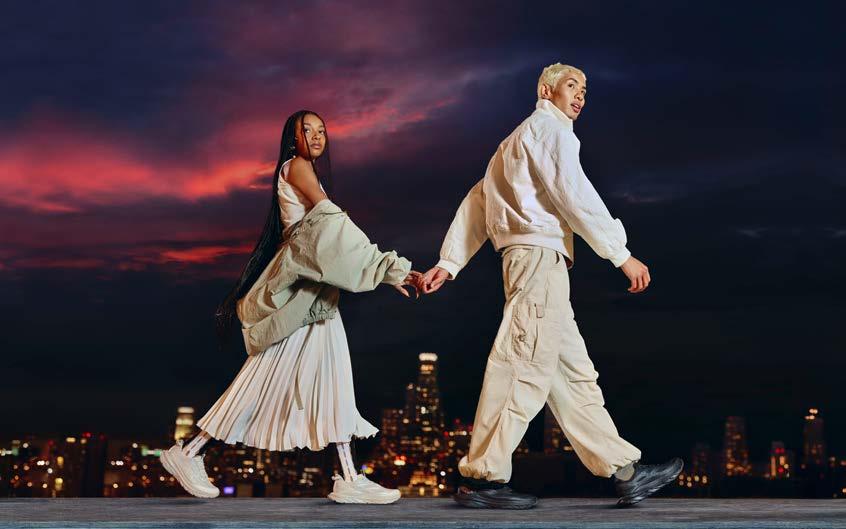
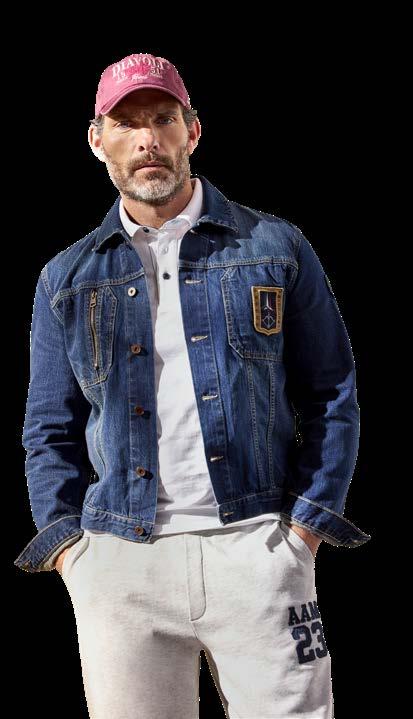
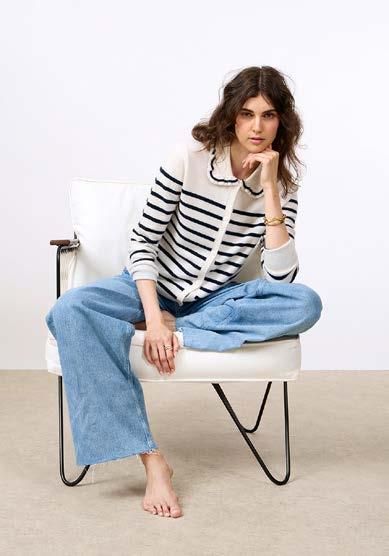
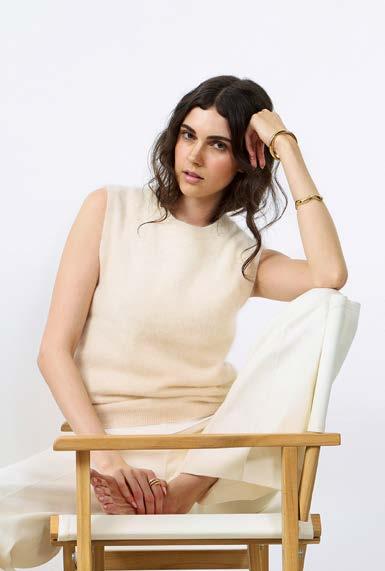
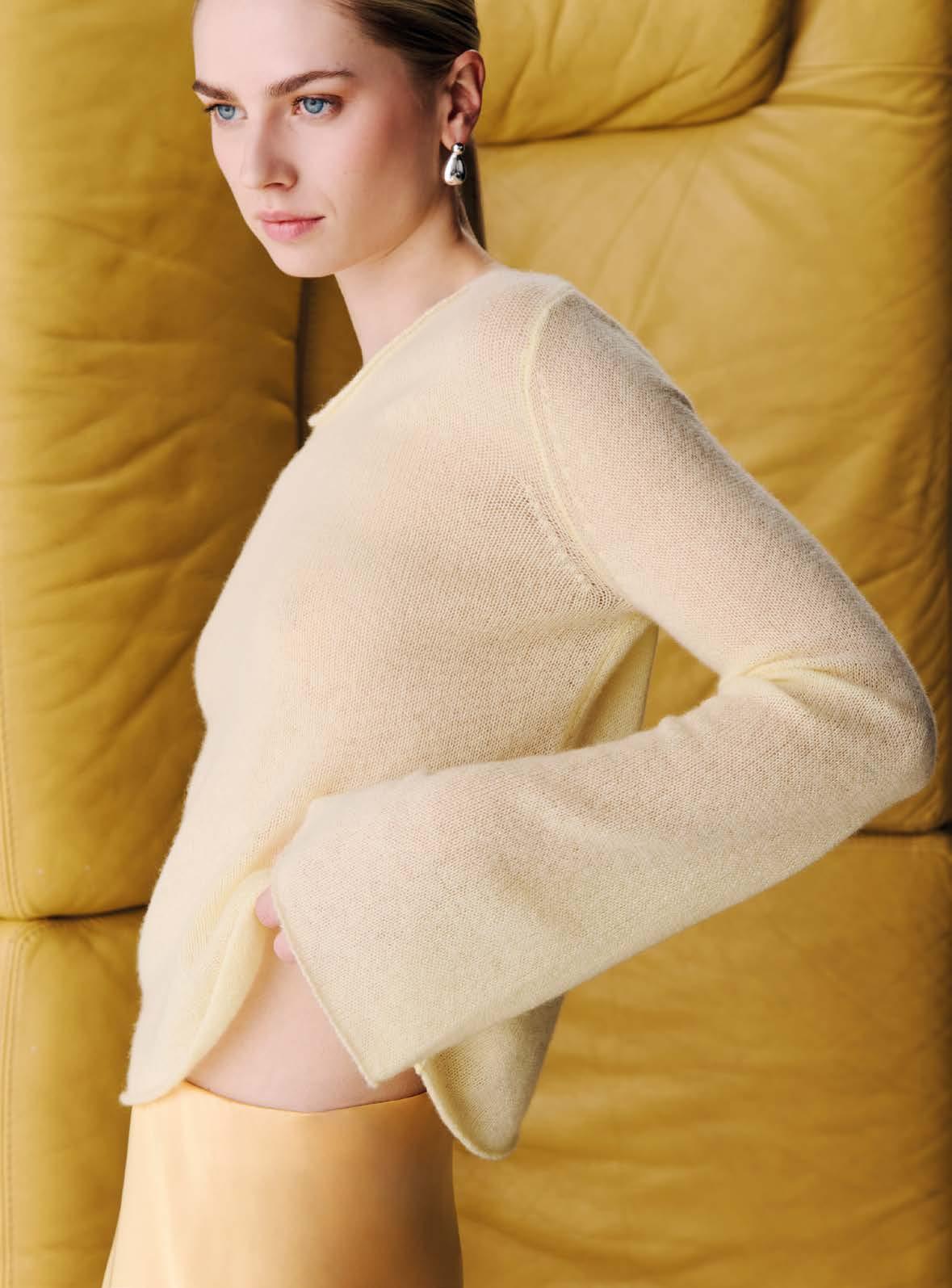
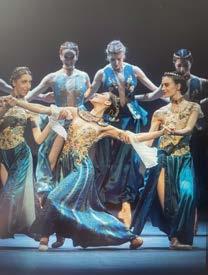
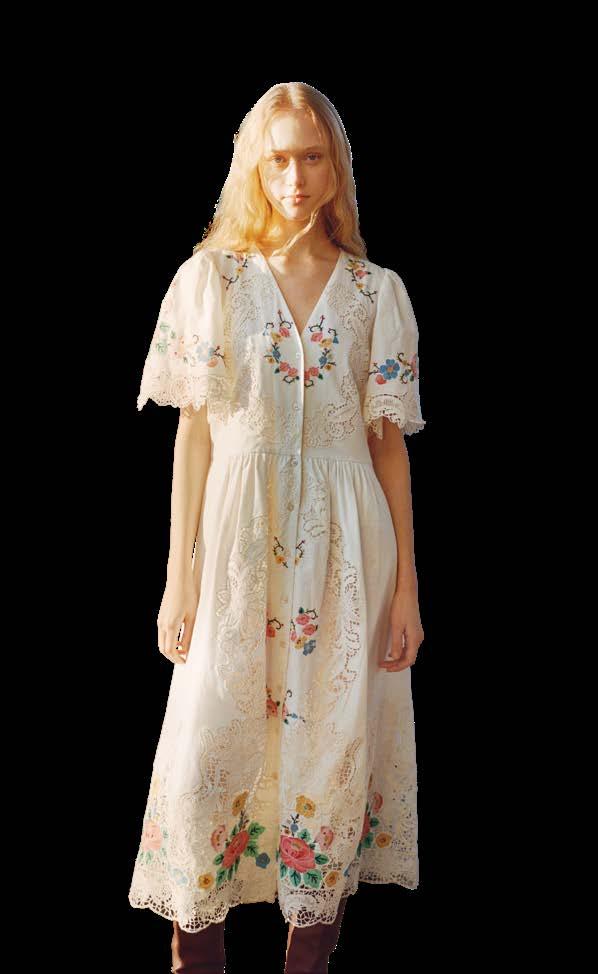
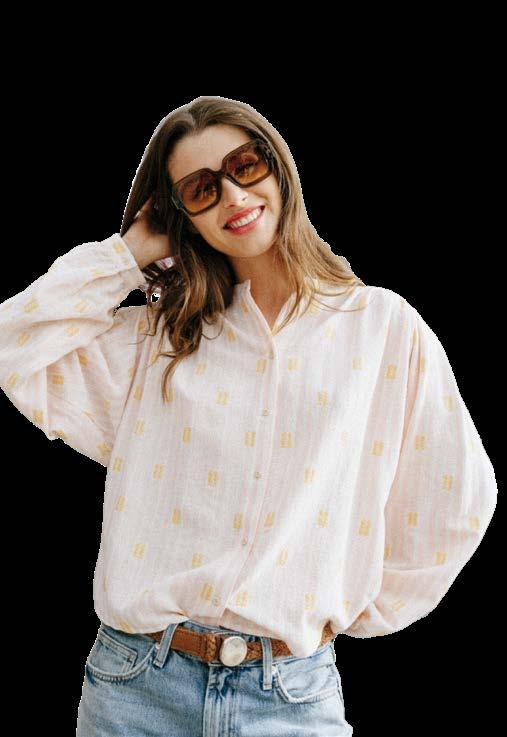
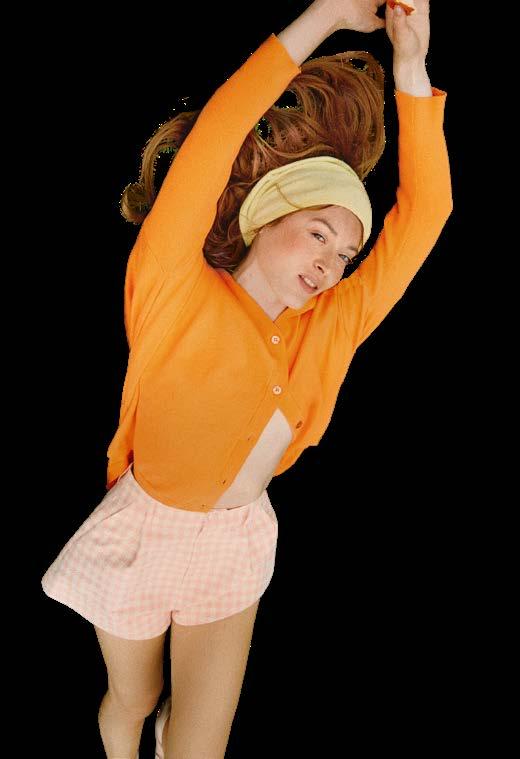
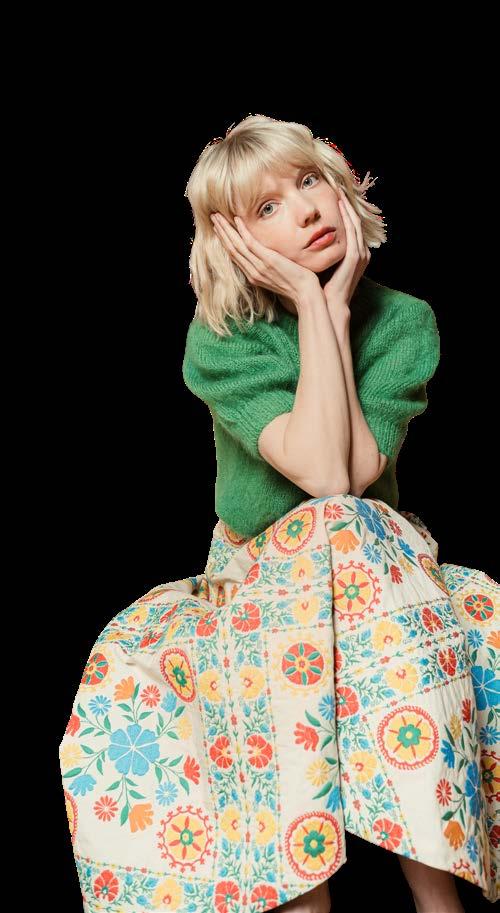
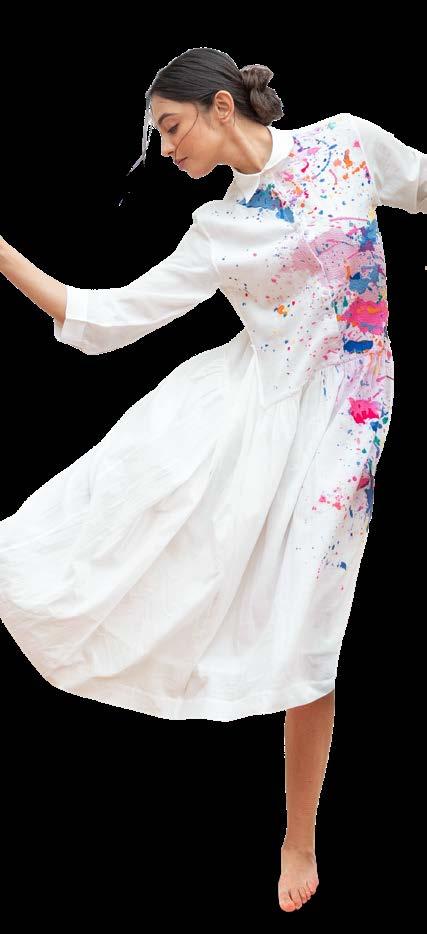
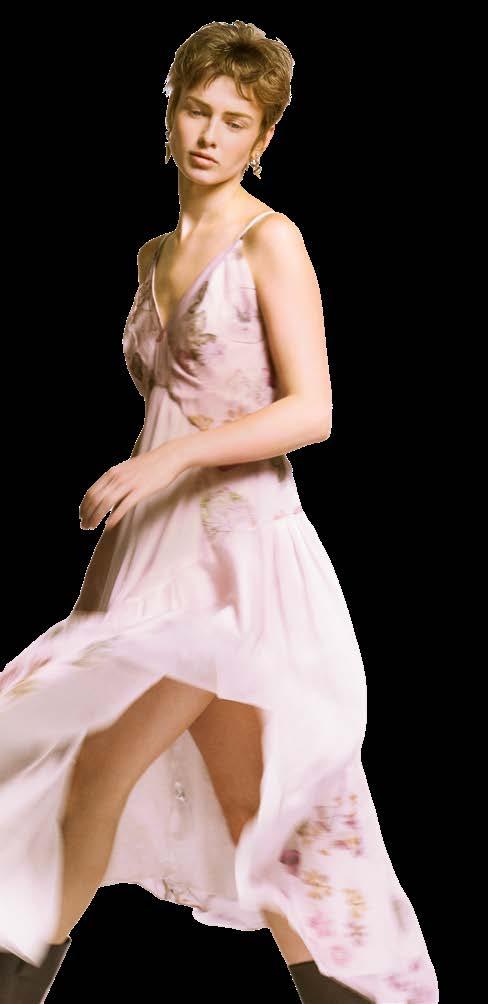
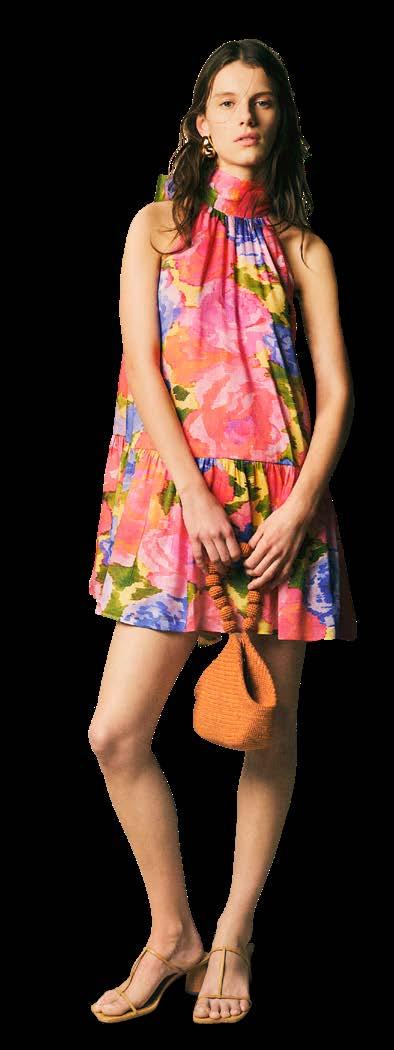
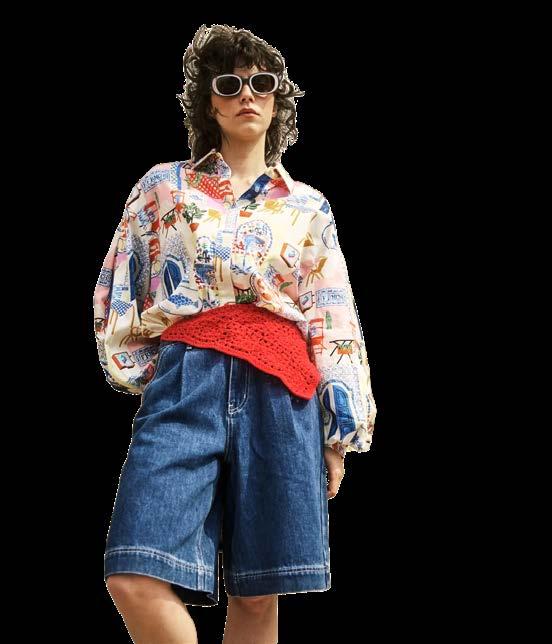
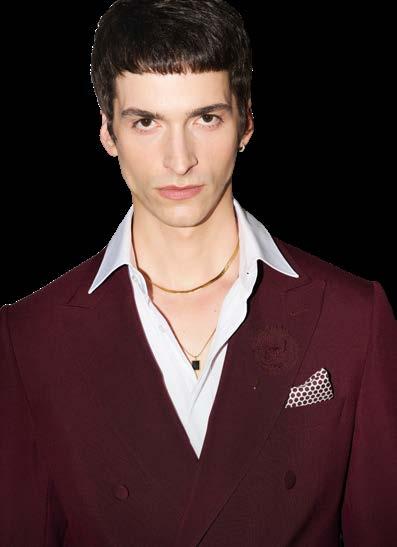
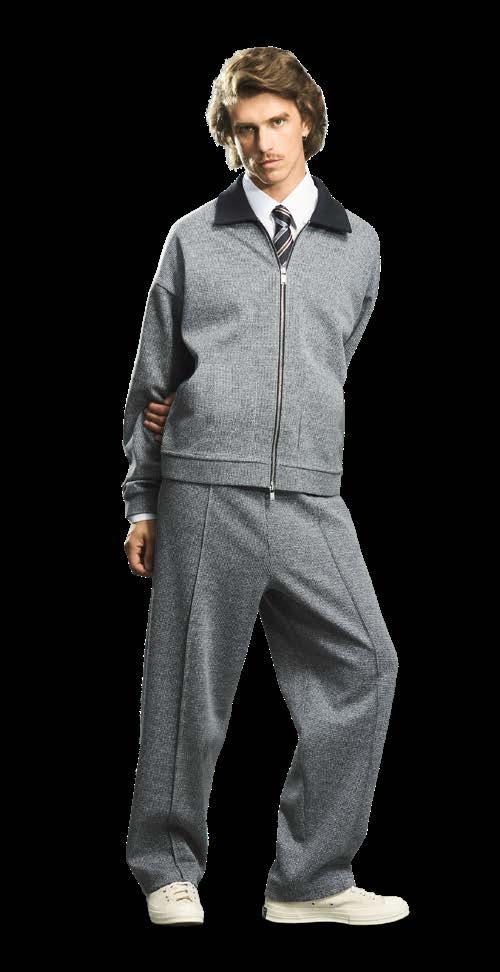
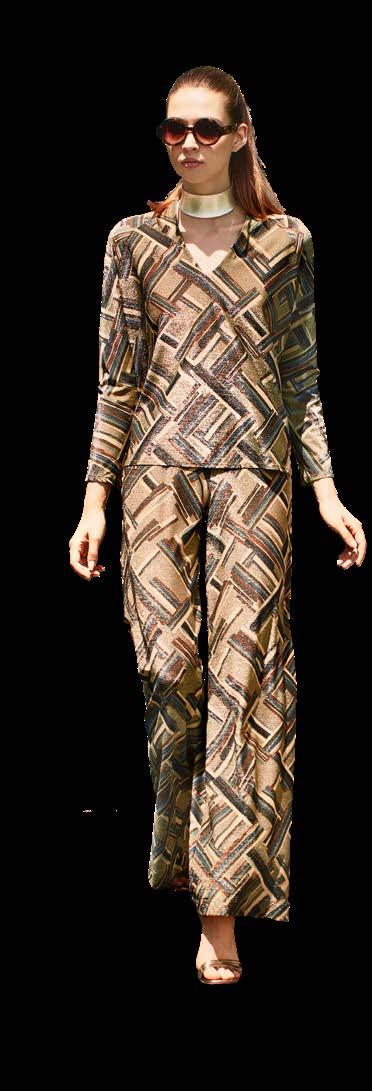
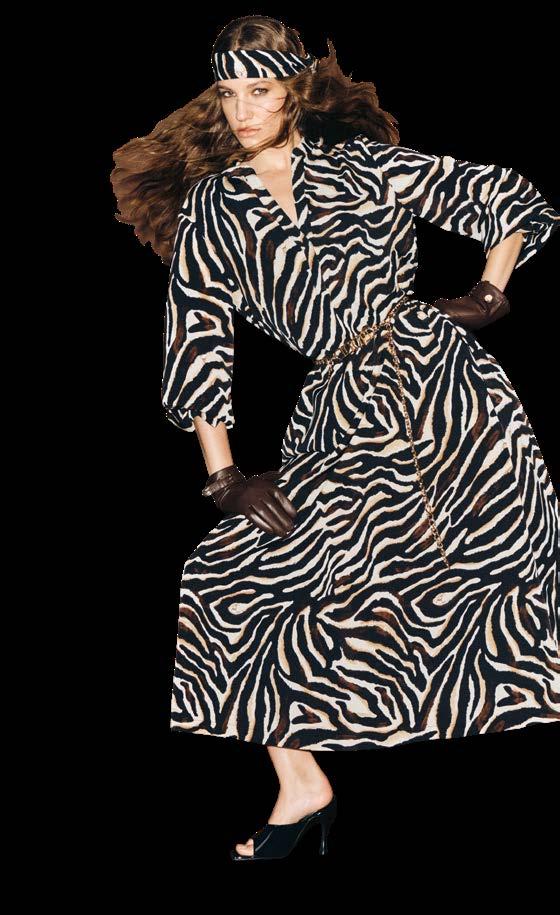
NORMALIZE NOT KNOWING WHAT’S NEXT AND DANCING ANYWAY.
Welcome to these lines.
This phrase has stuck with me for years. I don’t remember exactly where I found it, but I know it has stayed with me. And I think I know why: because it makes no promises and demands no answers. Dance anyway. That is exactly what I believe is the right thing to be doing right now – for all of us, for this industry, for this magazine.
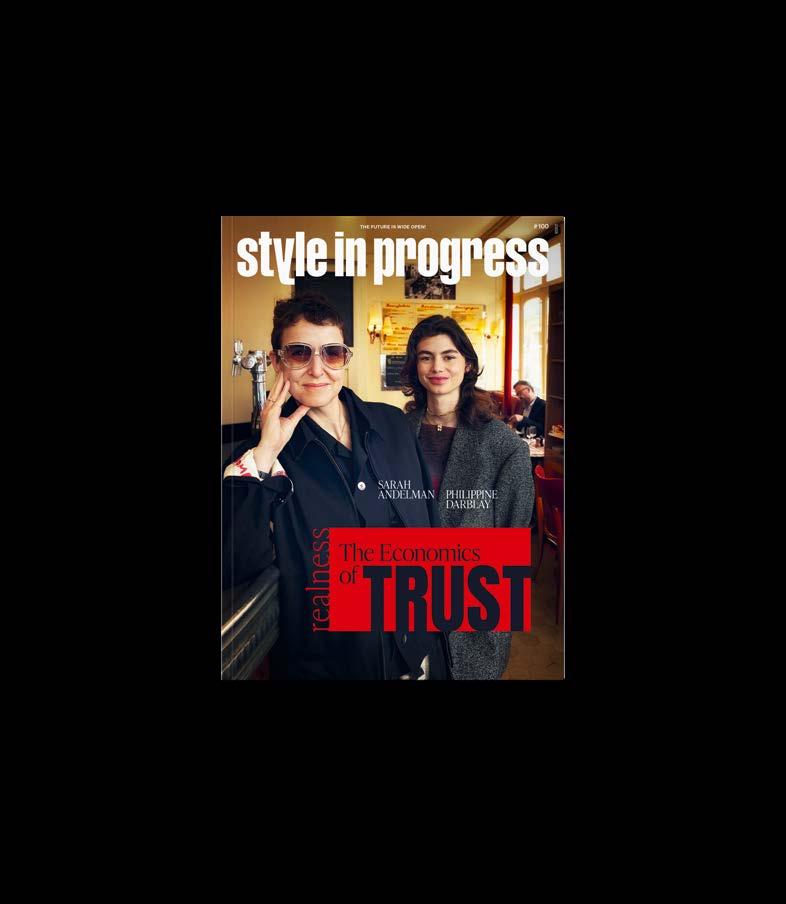
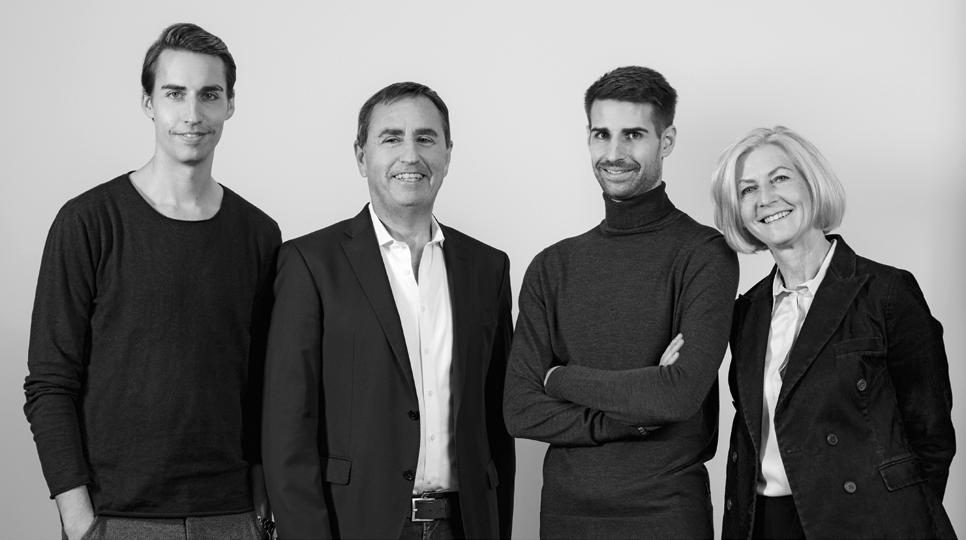
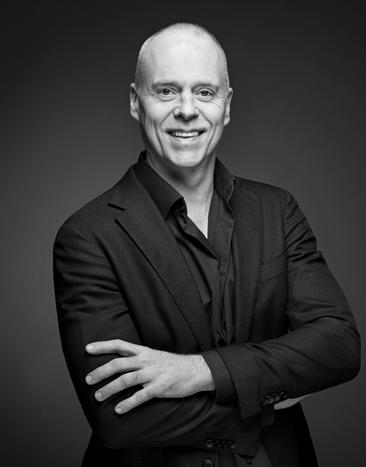
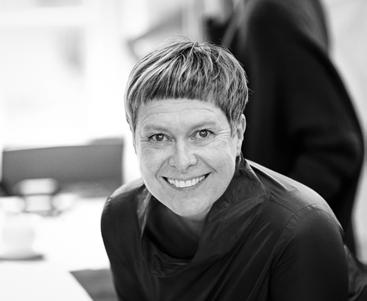
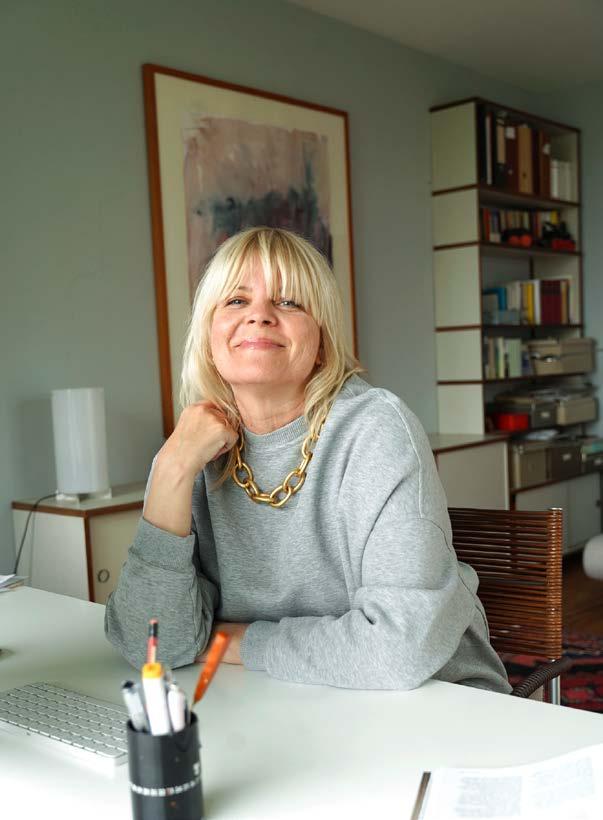
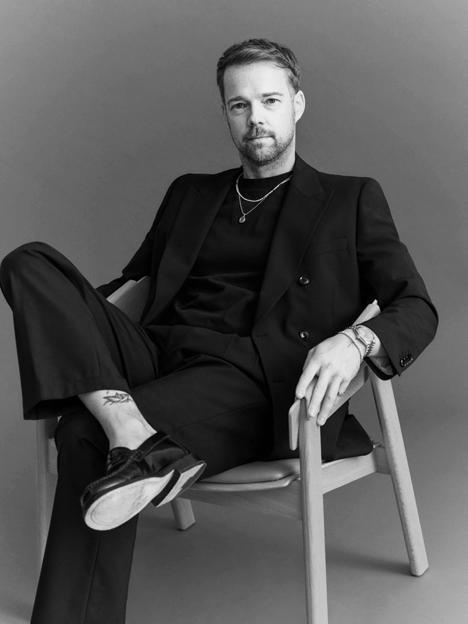
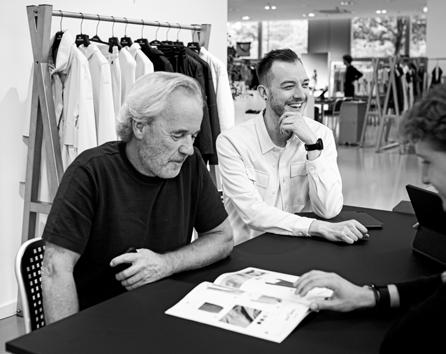
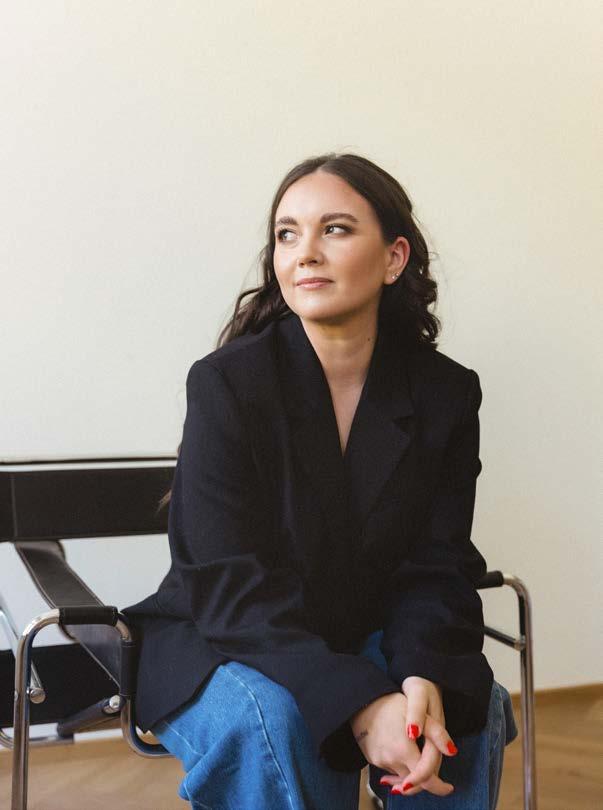
What you’re holding in your hands right now is the 100th issue of style in progress. An anniversary that fills me with two feelings above all else. Respect – for all those who have shaped this magazine in the past, above all Stephan Huber with his vision and his very being. And joy – joy at leading this magazine into the future, together with him and an inspiring team. That is precisely why it would feel wrong to become nostalgic. Rather, it is about looking openly toward the future: A 100th issue, not with a retrospective, but with a focus on what lies ahead.
The industry we all operate in is currently anything but easy to navigate. Predictability has increasingly become a foreign concept in fashion retail, and the industry. Global events make things that seemed self-evident yesterday appear more fragile today. For some, fashion is beginning to waver. I understand that. And yet I still say: We’ve got to dance anyway.
Not because everything is easy, but because choosing joy and confidence takes courage. The fashion industry has always been a gathering place for precisely those people who summon this courage – time and again. A glance through the pages of this issue shows just how diverse this courage can be: when Janaina Engelmann-Brothánek demonstrates in the agency chapter how far the agency business has already grown beyond itself. When Nicoletta Schaper describes in the womenswear lead article how joy is becoming the new language of fashion. When Isabel Faiss discovers not crisis but vision in the retail sector, driven by people who believe in the future. What unites these examples: The willingness to move forward – not in spite of uncertainty, but with it.
I invite you to dance with us. Through the season, through the uncertainty, through this 100th issue. Unaware of what lies ahead. Not nostalgic, never naive, but with a confidence greater than any forecast: The future is wide open.
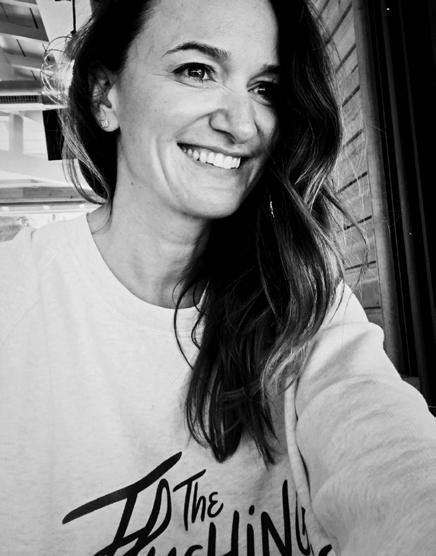
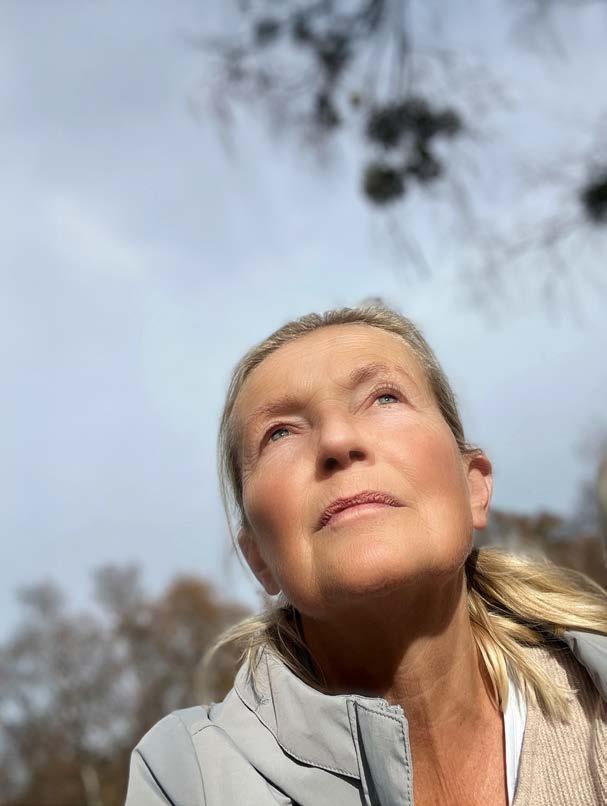
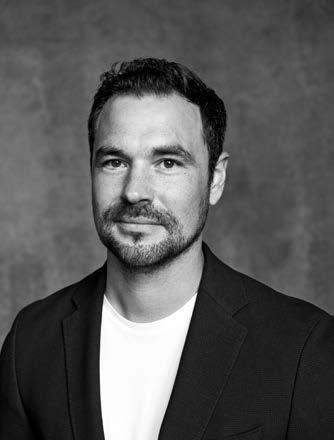
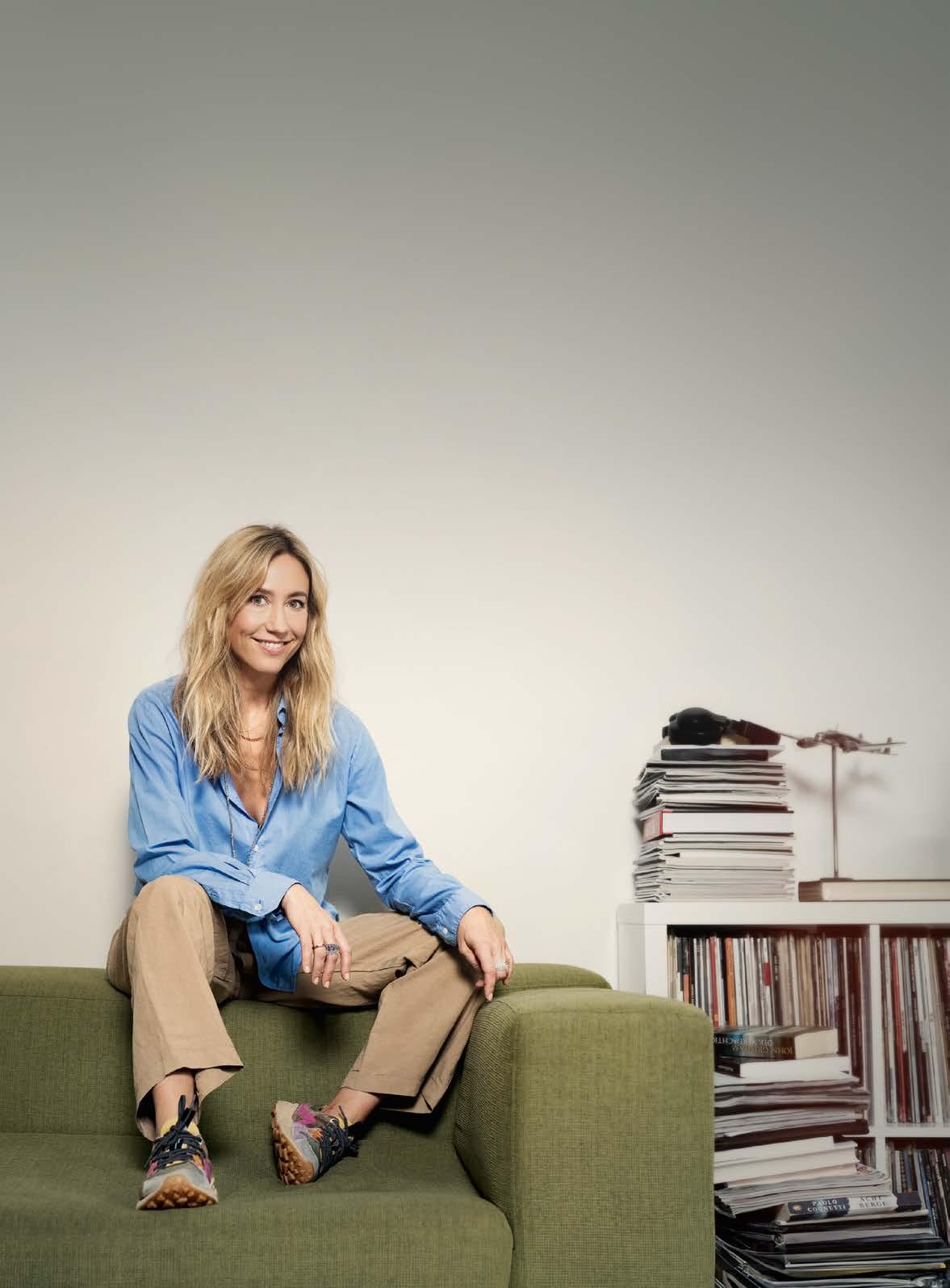
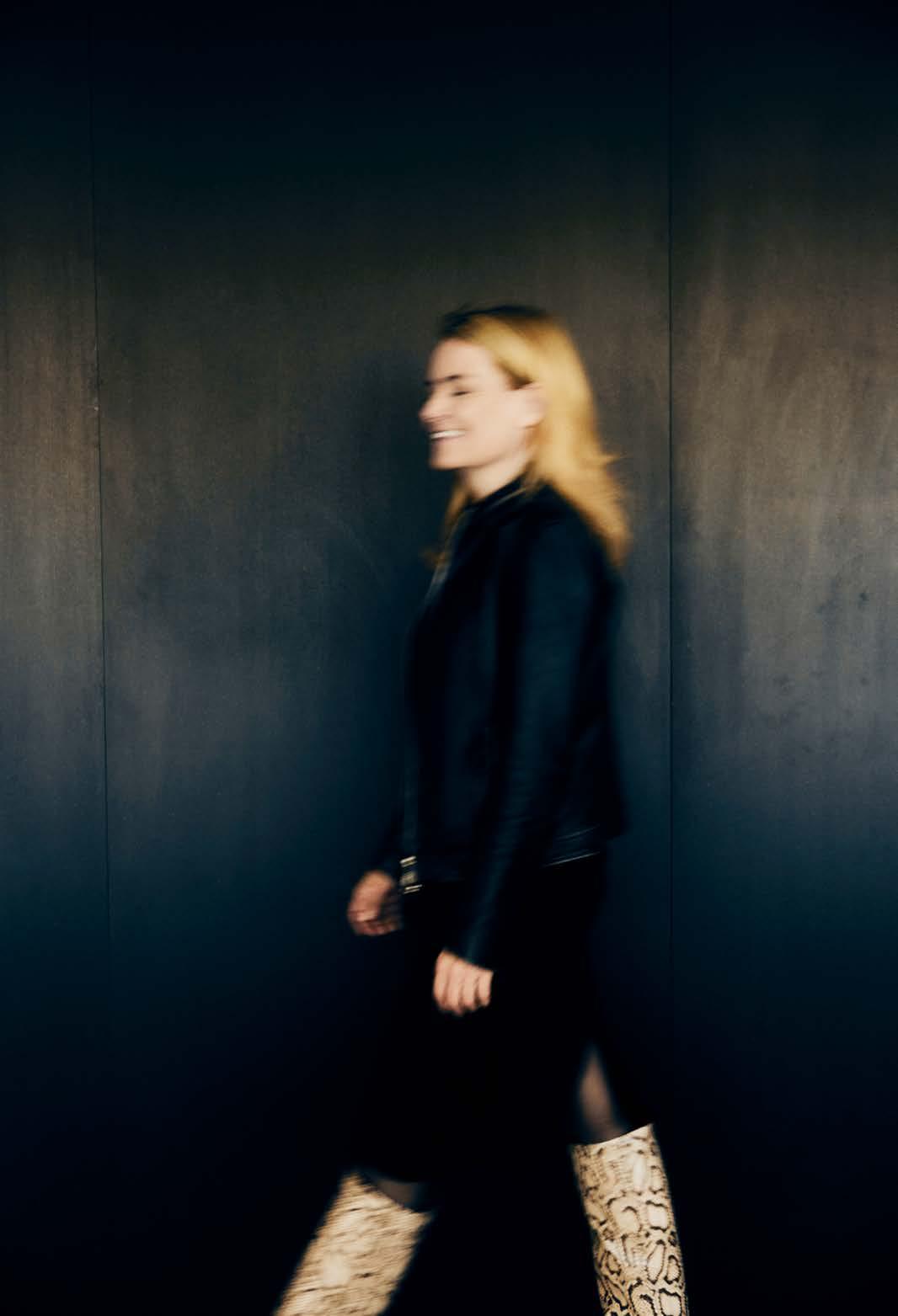
Lisa Hollogschwandtner and the team at style in progress
ABOUT US
Publisher, Editorial Office,
Advertising Department and Owner style in progress
Art Direction, Design, Production Elisabeth Prock-Huber elisabeth@style-in-progress.com
Managing Editor
Johannes Seymann
Editorial Staff
Janaina Engelmann-Brothánek
Isabel Faiss
Claudia Jordan
Kay Alexander Plonka
Nicoletta Schaper
Cheryll Mühlen
English Translation
Georgmaria Prock
Manfred Thurner
Editor
Georgmaria Prock
Image Editing
Johannes Hemetsberger
Illustrations
Alexander Wells
Printing
Sandler Gesellschaft m.b.H. & Co. KG, 3671 Marbach, Austria
Printing Coordinator
Manfred Reitenbach
Advertising Director
Stephan Huber stephan@style-in-progress.com
Accounting
Verena Wigoutschnig verena@style-in-progress.com
Digital Edition www.style-in-progress.com/en/epaper/
THE FUTURE IS WIDE OPEN!
Next Issue #101 11 January 2027
TRUST
114 The Economics of Trust
An Essay by Stephan Huber
LONGVIEW
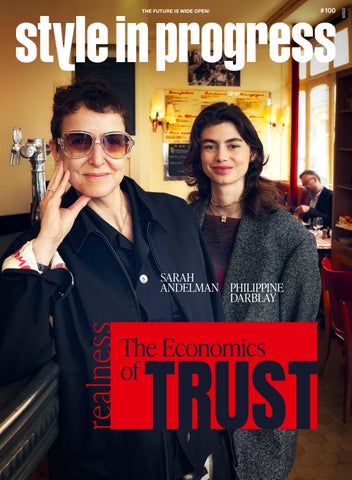
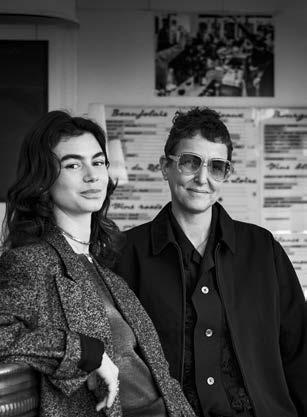
120 REALNESS
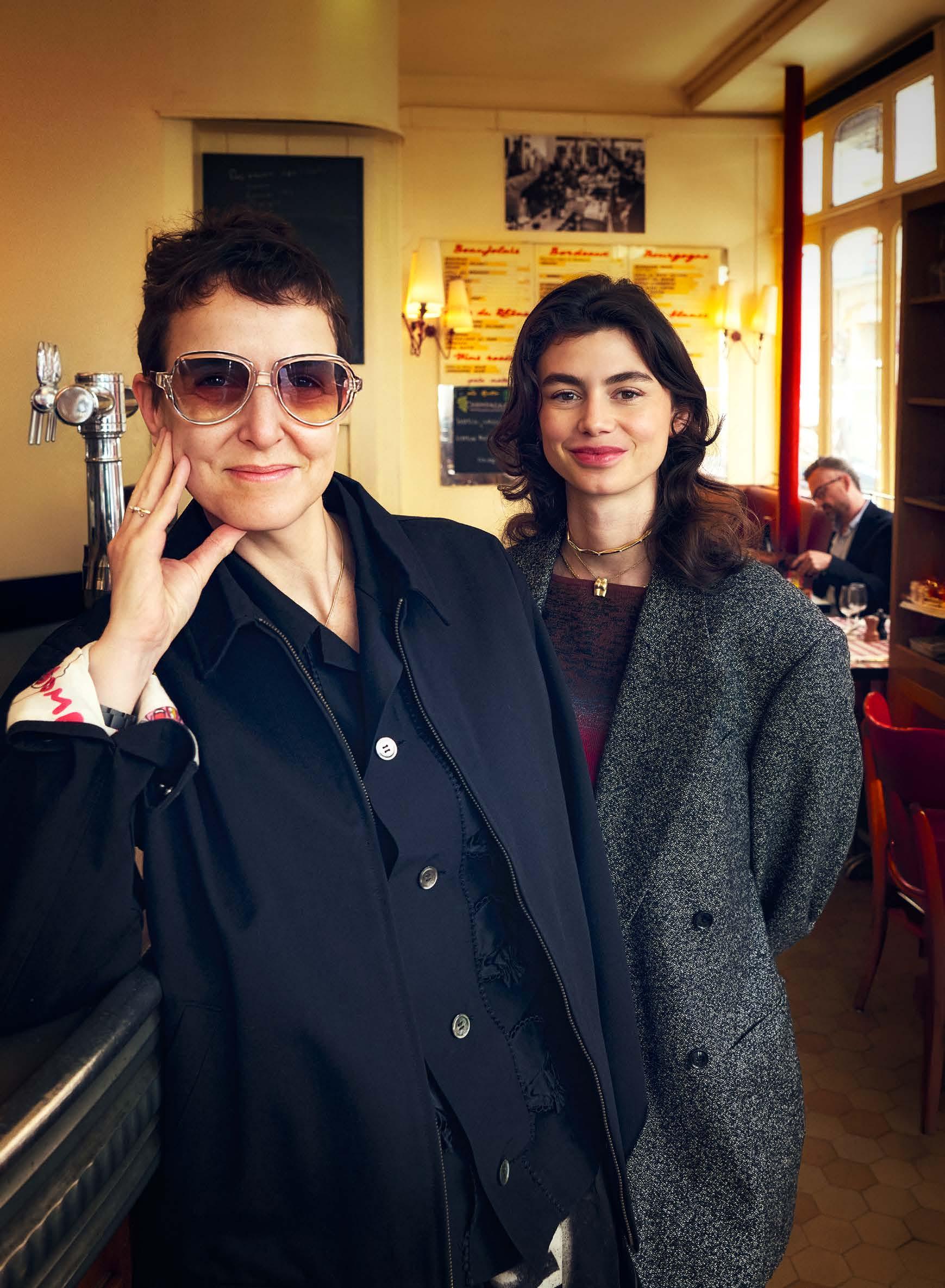
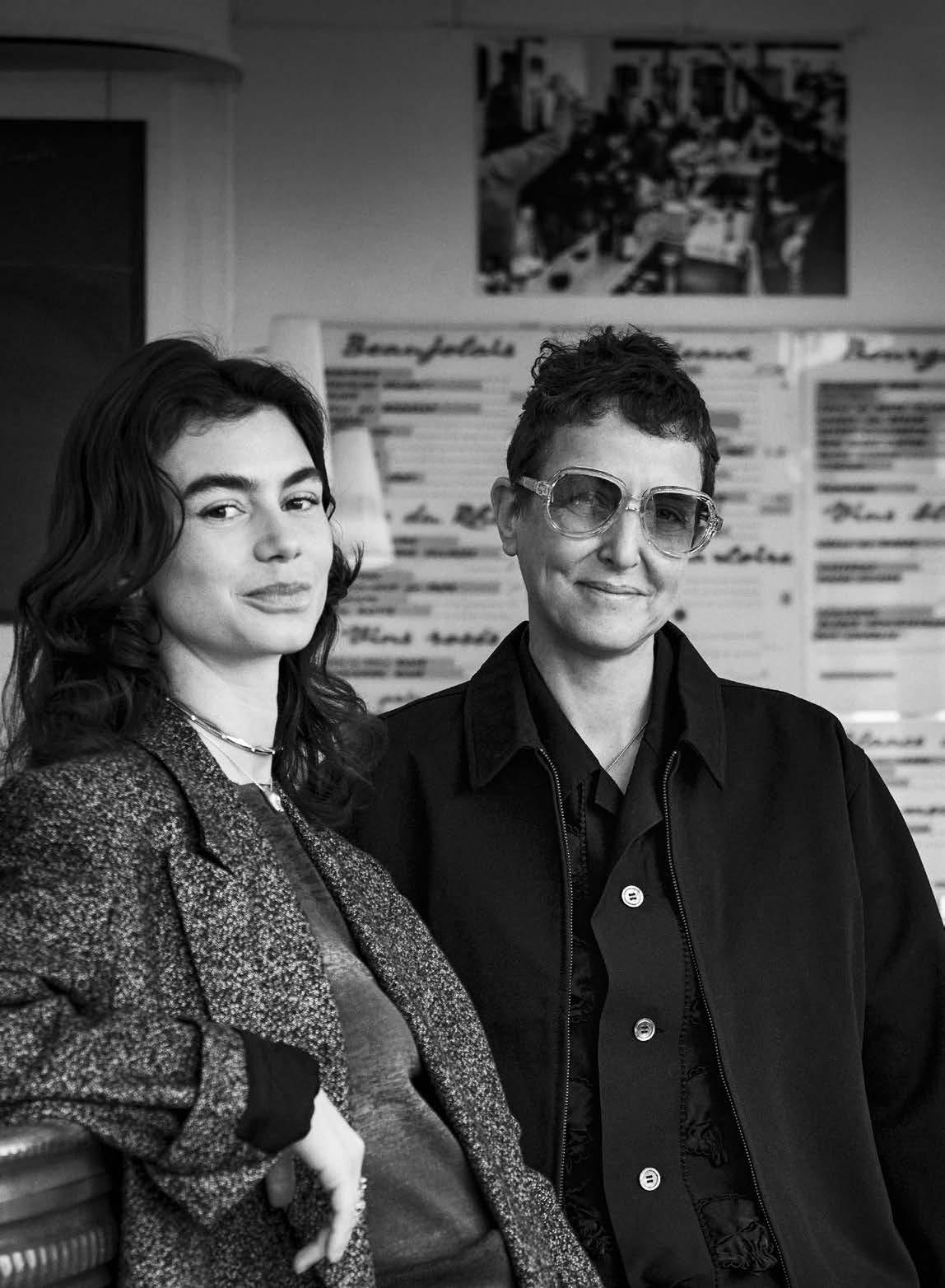
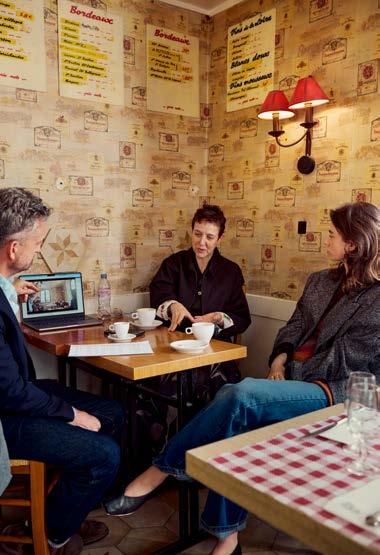
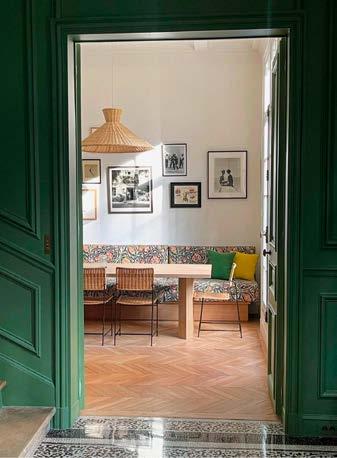
A dialogue at Le Rubis Paris with Sarah Andelman and Philippine Darblay.
A magazine thrives on the people who shape it. This Is Us!
109 Elisabeth Prock-Huber
173 Nicoletta Schaper
179 Claudia Jordan
207 Lisa Hollogschwandtner
219 Kay Alexander Plonka
243 Verena Wigoutschnig
275 Janaina Engelmann-Brothánek
287 Isabel Faiss
FASHION
134 FORM FOLLOWS FEELING
Womenswear is shifting its focus away from pure form and toward what inspires it.
136 HEART OVER HEELS
Womenswear is experiencing a revival of emotion. A debate about what truly moves us.
144 A MATTER OF THE (HE)ART
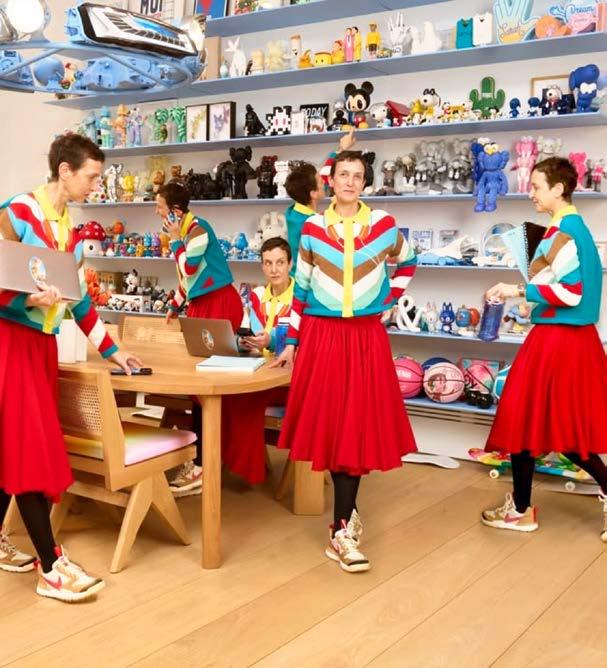
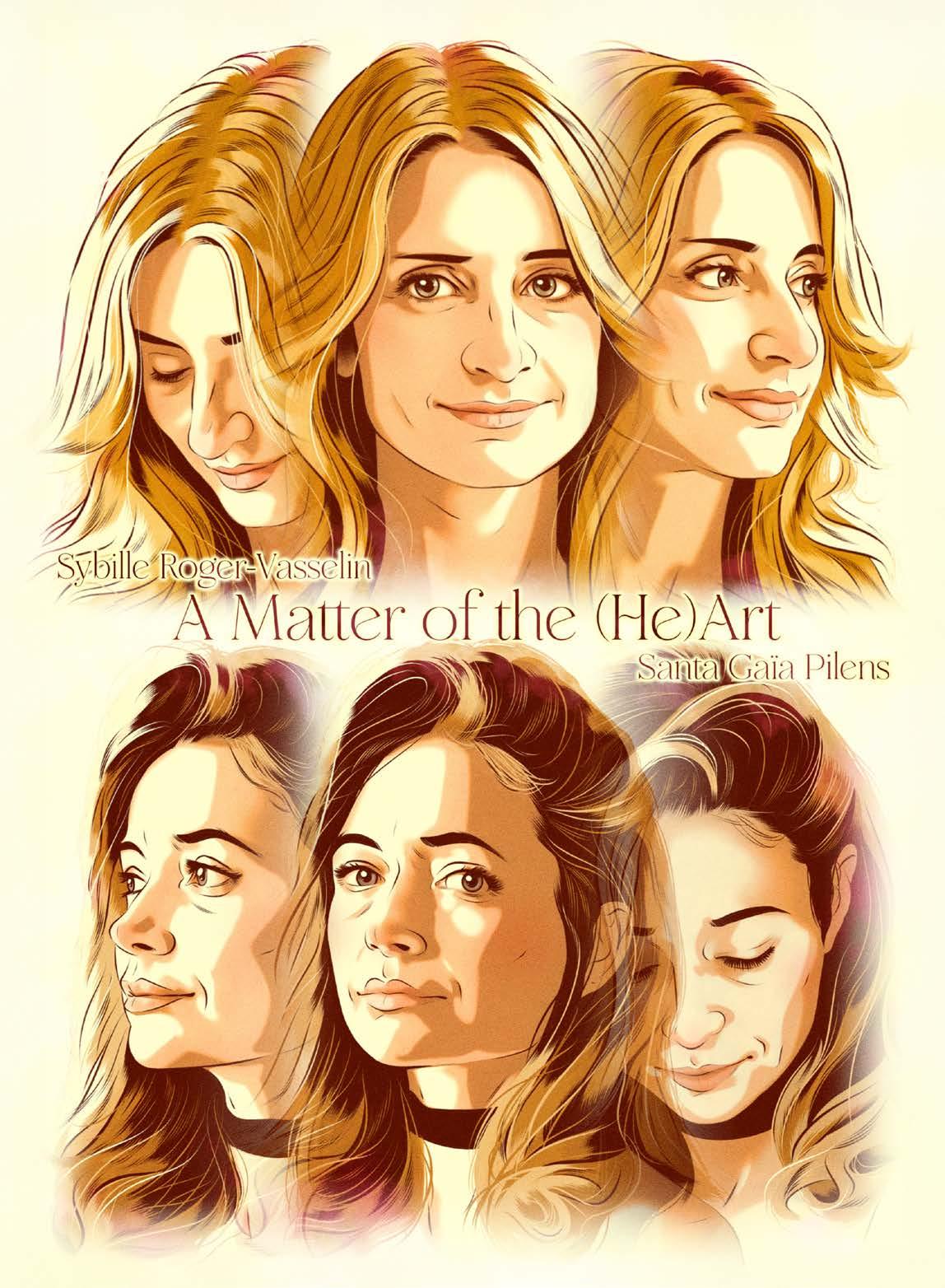
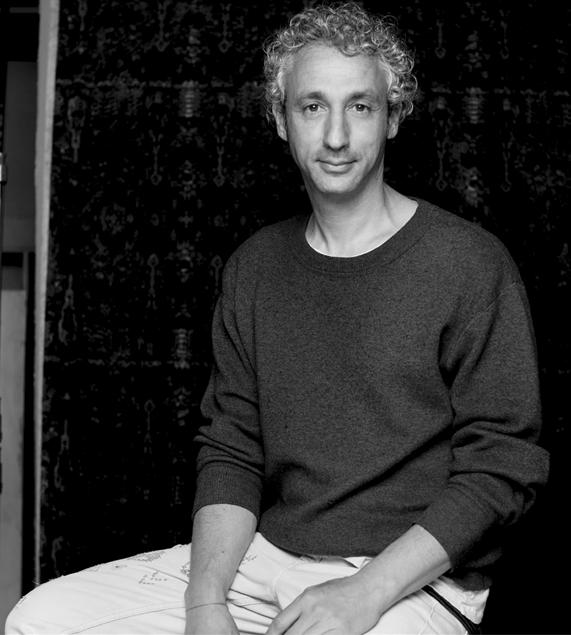
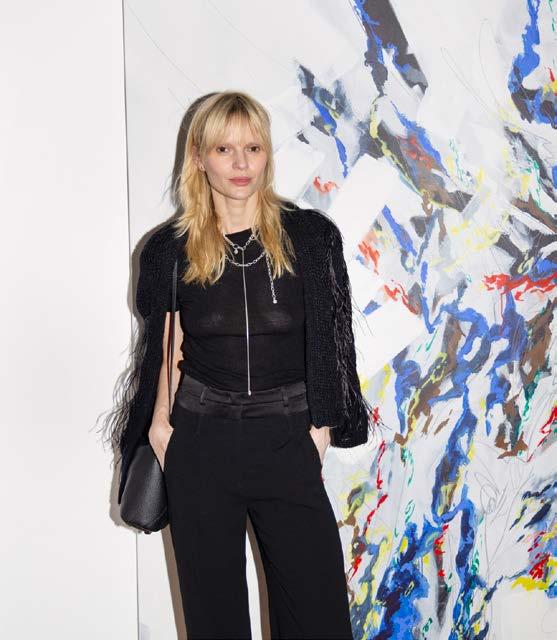
Sybille Roger-Vasselin, Creative Director and founder of Petite Mendigote, and artist Santa Gaïa Pilens discuss creative intuition and womenswear that resonates on an emotional level.
156 Simone Rocha: Emotional Structures
158 Xandres: Timeless with a Twist
160 Katharina Hovman “Strives to Elicit Oohs and Aahs!”
161 Lu Ren: Less is More
162 Garea: One for All
162 Augusta: Fashion Forward
164 Maison Hotel: Love & Laugh
164 Jades: Evelyn Hammerström believes in Good Vibes for the new season
166 Kiltie: Rediscovering a Sense of Wonder
167 Jérôme Dreyfuss: A Matter of Respect
168 Luisa Cerano: Clear Stance
168 Magasin: Magali Steidle on a French wave in womenswear
170 Palu Store: “Without Courage, I Would Have No Store!”
170 Sea NY: Romantic Ease
172 Triumph: Beyond Beautiful
174 Editor’s Picks: Made by Hand and Heart
180 A FUTURE FOR THE PAST
Menswear is redefining heritage. The past serves as inspiration for the present.
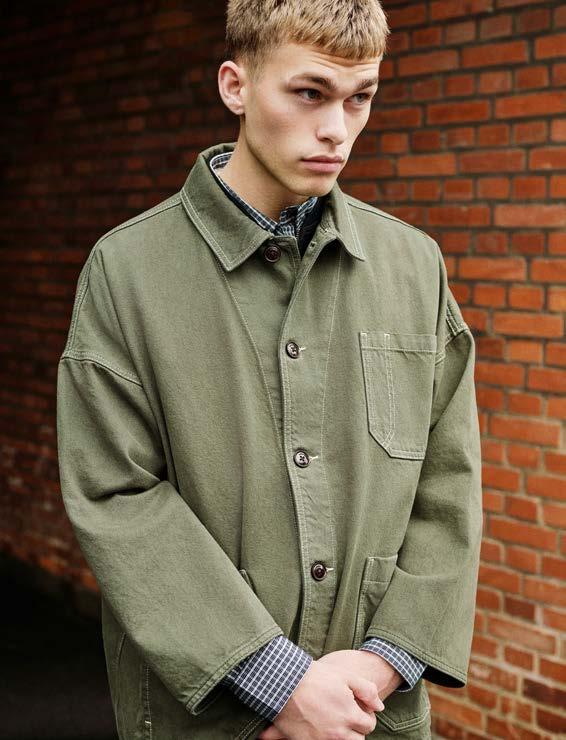
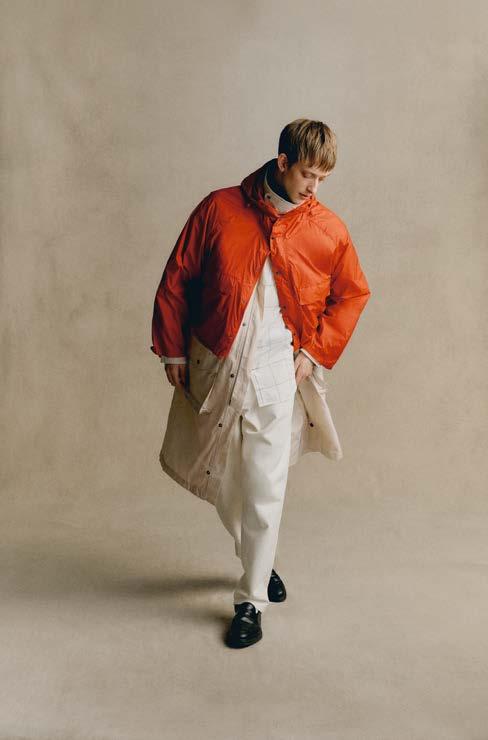
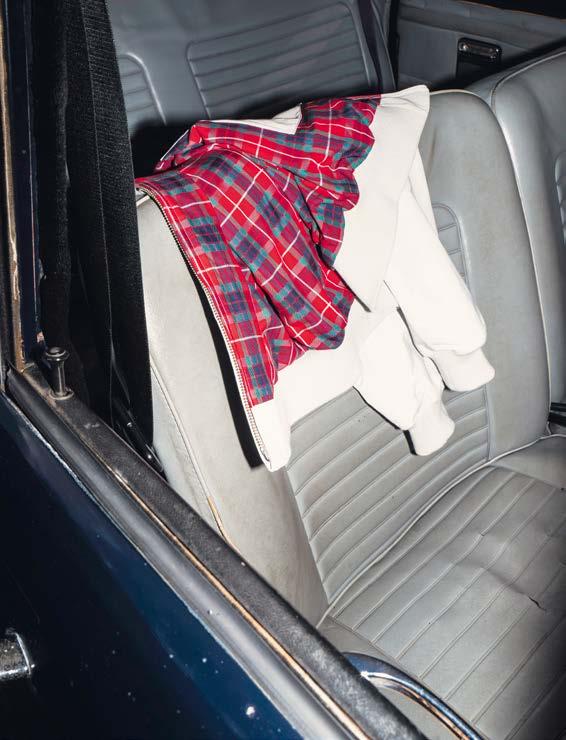
182 THE TEXTURE OF TIME Heritage is not reproduced, but reinterpreted.
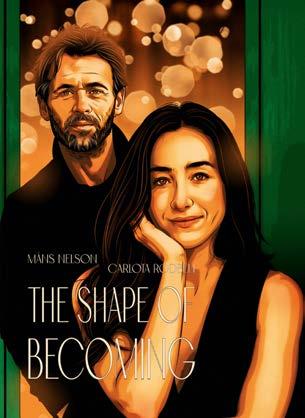
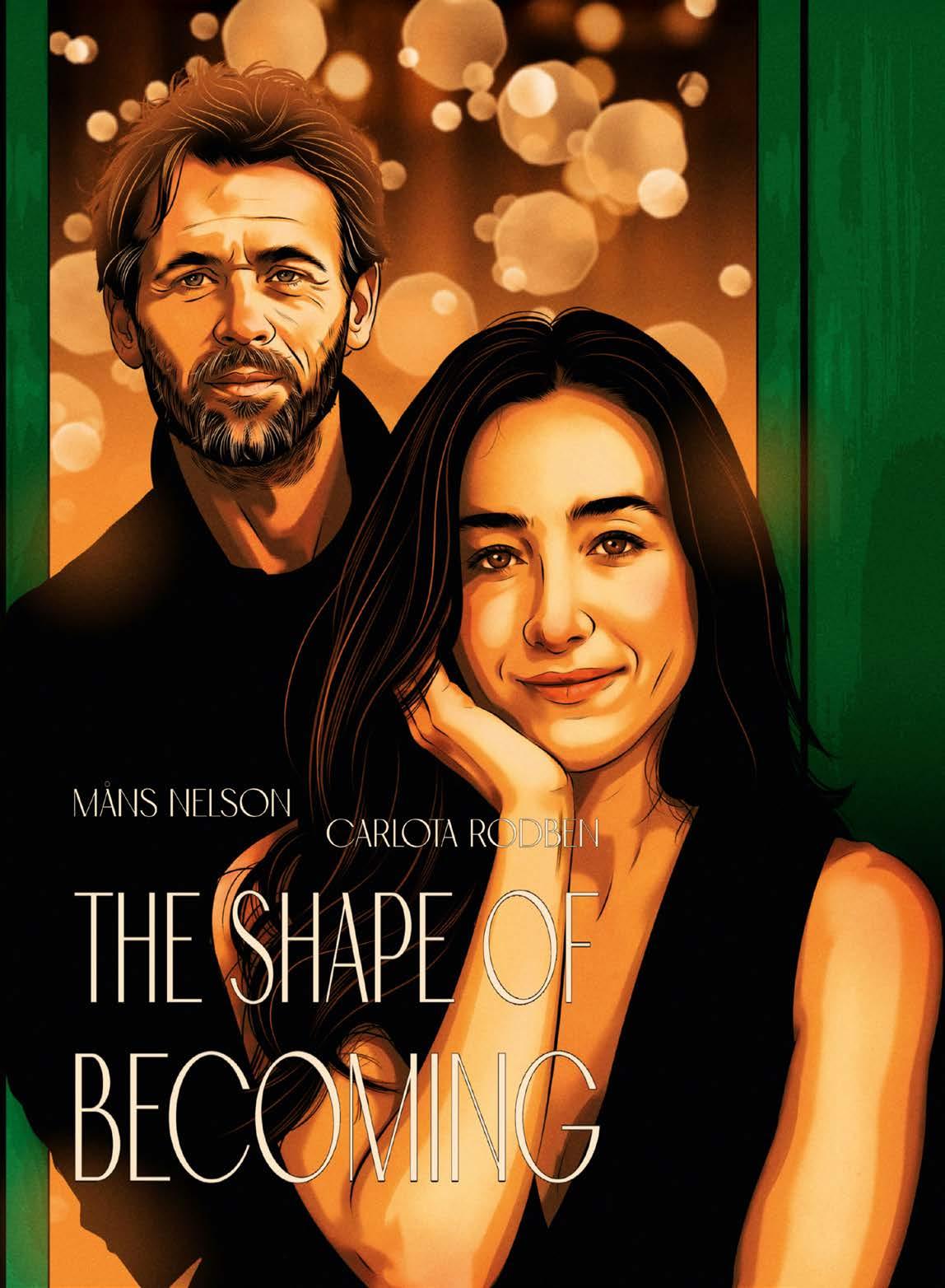
190 THE SHAPE OF BECOMING
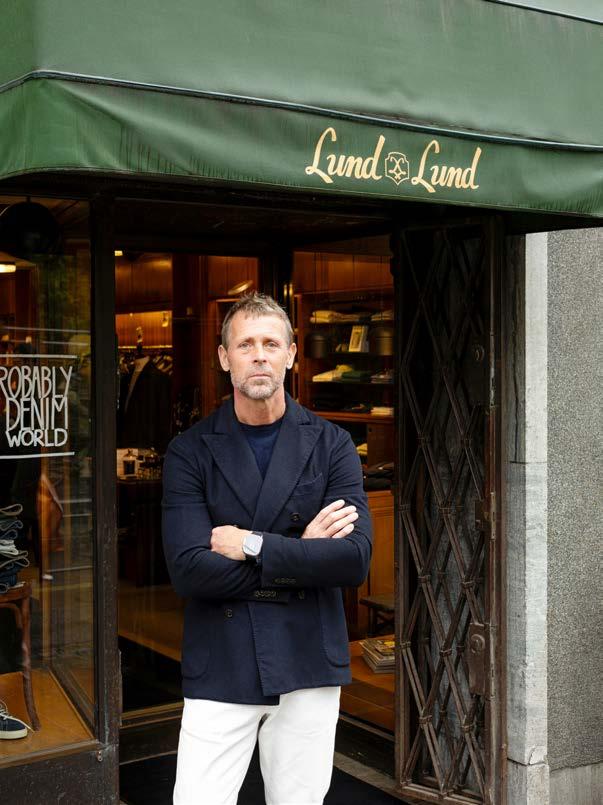
Carlota Rodben, founder and CEO of Beyond Luxury Group, and Måns Nelson, partner at Lund & Lund, on casual elegance, tradition, and emotional depth.
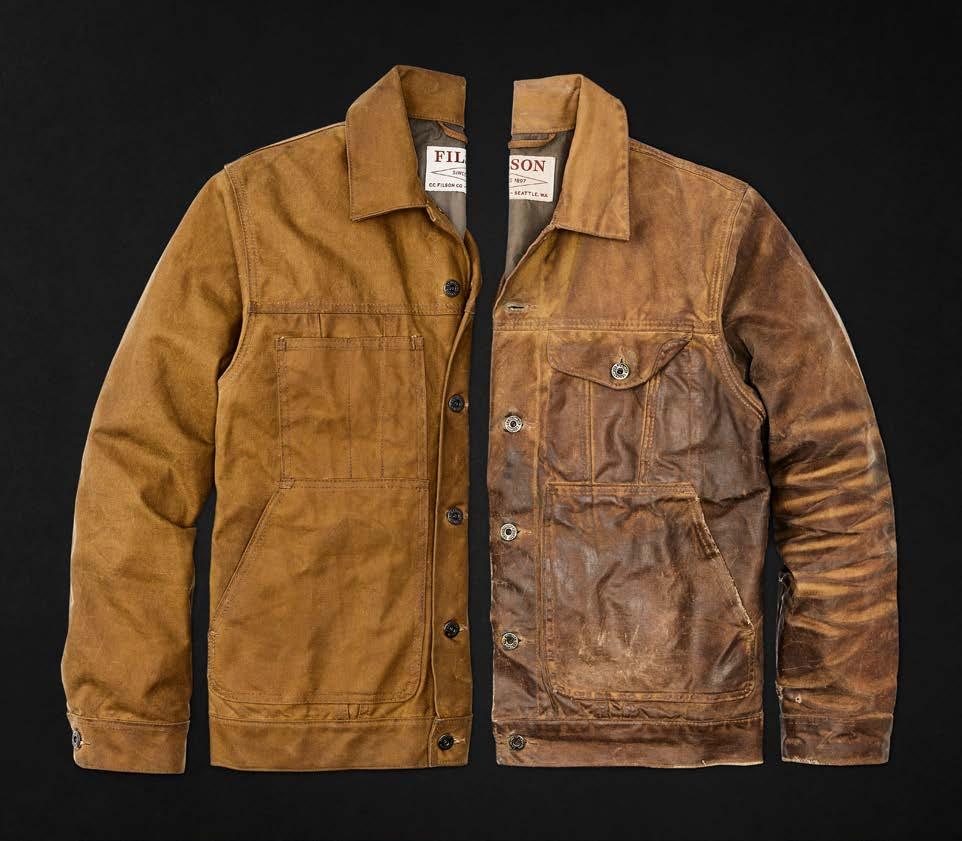
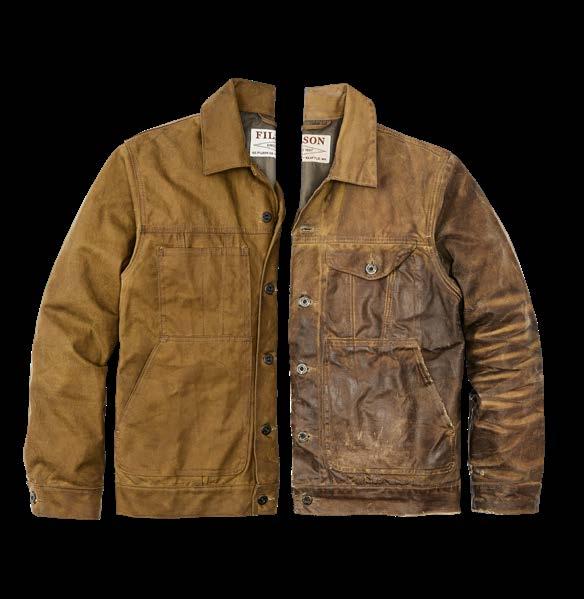
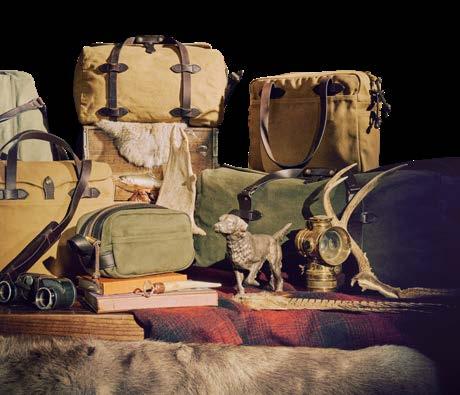
200 Filson: Built for Purpose
202 Gregor Langerspacher discusses Joop! menswear
203 Universal Works: Feel-Good Goods
203 Original Vintage Style: Credibility
204 Dstrezzed: Modern Style Clash
204 Bugatti: Revitalization Over Retrospection
205 Manufaktur Grasegger: Tradition as Origin
205 Studio Pungetti x Aquascutum Active: Tradition Reimagined
206 Alberto: Dynamic
206 Dressler: Strong Development
208 Editor’s Picks: The Real Deal
CORE AGENCIES
210 THREADS OF TRUST
The role of sales agencies has expanded rather than diminished. A look at current and future business practices – grounded in trust.
212 NOT ONE, BUT MANY What was once viewed as a purely mediating role has evolved into a multifaceted field of expertise. An overview.
218 Guest commentary by Ben Botas: Reach Alone Doesn’t Sell!
244 Trust is the most important currency at Mos Mosh
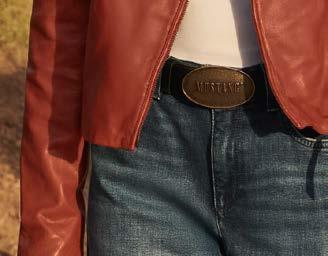
245 Mustang: “When the Product Is Spot On, We No Longer Need to Explain Everything”
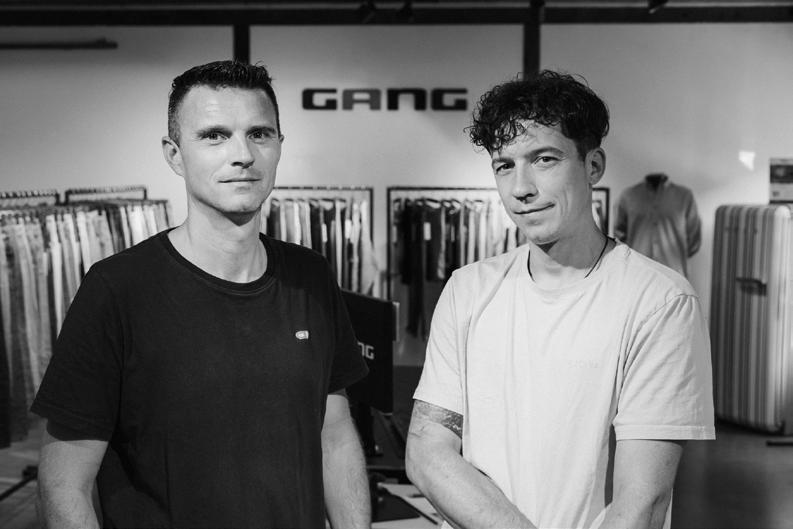
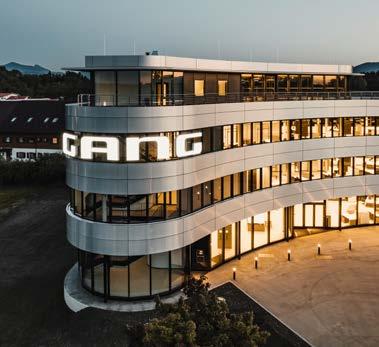
246 Gang: Tailored to People
247 Botto Giuseppe: 150 Years of Tradition Reimagined
248 Deep love for the product at Copenhagen Studios
249 Parajumpers: Entering a New Era
250 Gabba: Denim as Foundation
251 Jeff Green makes a fresh start
252 Wira: Crafted Between Cultures
253 Pitti: A New Chapter
254 Performance Days: On Track for Success
DEEP DIVE
256 WHAT GOES AROUND COMES AROUND
What if the order of things is a cycle?
258 BEYOND THE SEASON
Fashion has long followed a clear logic: acceleration as principle, renewal as constant. What happens when old truths decline in significance? An attempt at an explanation.
264 Voices from the retail sector
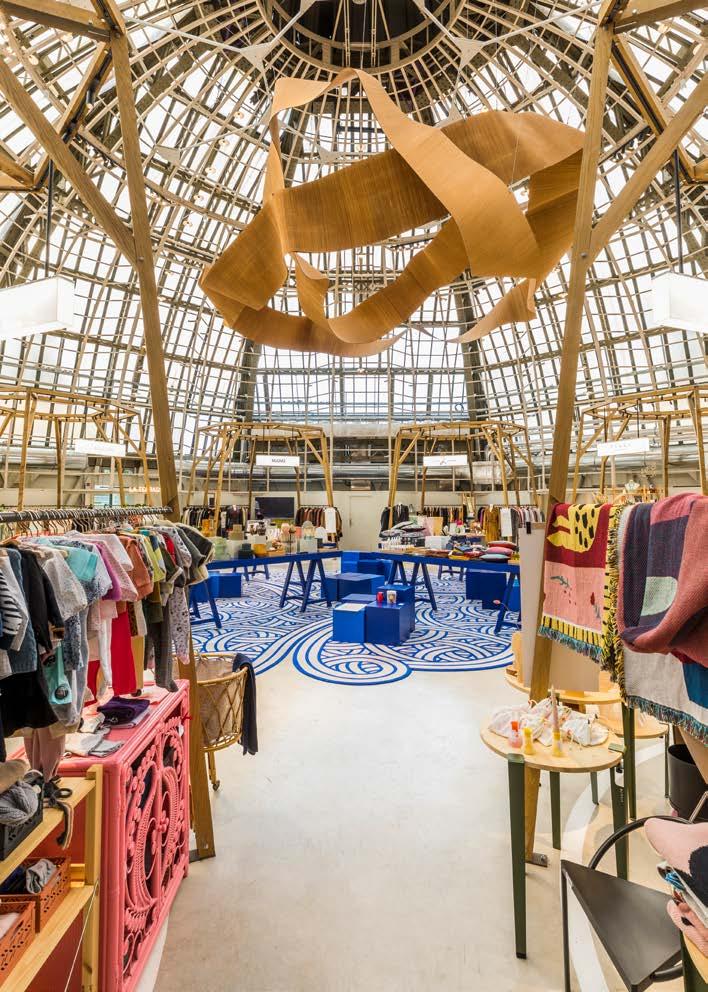
266 Printemps: Seventh Heavens, Second Cycles
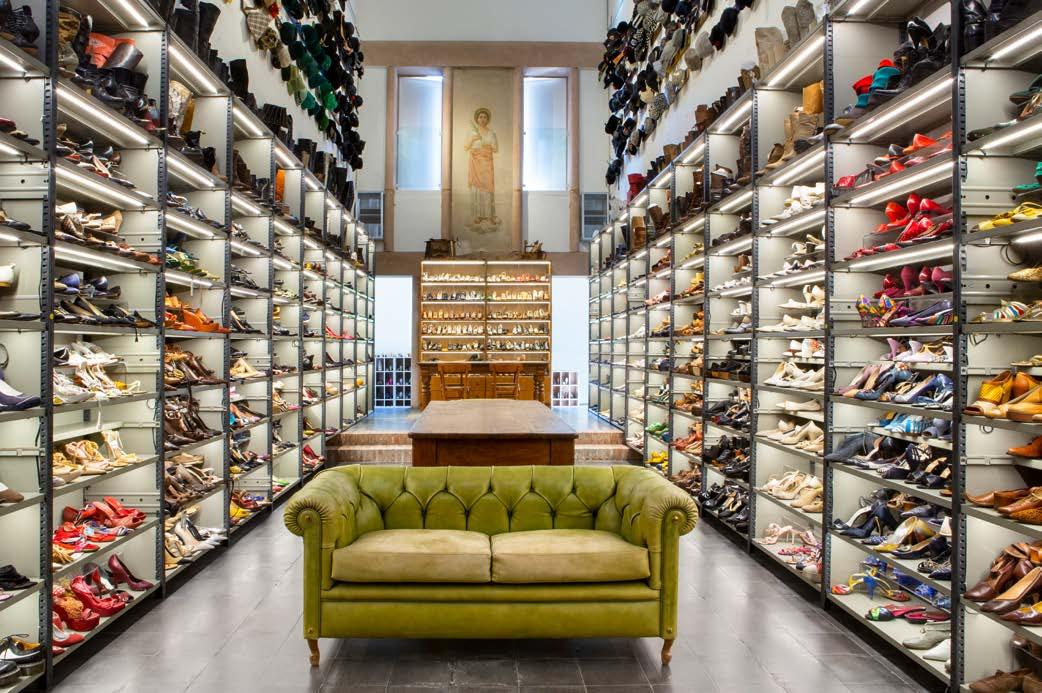
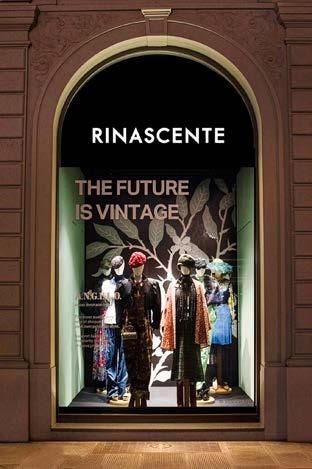
268 Father of Vintage: A.N.G.E.L.O.
270 One-of-a-Kind at Lily Eve
272 Editor’s Picks: A New Approach
SPACES
276 BLUR THE LINES
Tangible surrealism is one of the strongest USPs that stationary retail has over its digital counterpart - a fact that is currently being widely rediscovered.
290 PECULIARLY UNIQUE
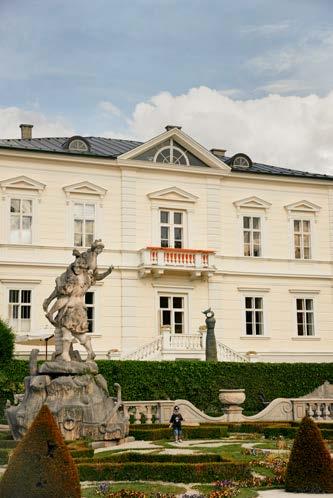
Caught between the world stage and provincial life, Salzburg always remains Salzburg.
FASHION
308 BREAK OUT
Tendencies & Forecasts for Upcoming Seasons
320 EDITOR'S LETTER
Suspiciously Perfect
SPRING | SUMMER | 2027
Core
Less predictable, more character.
Selected Style with Attitude
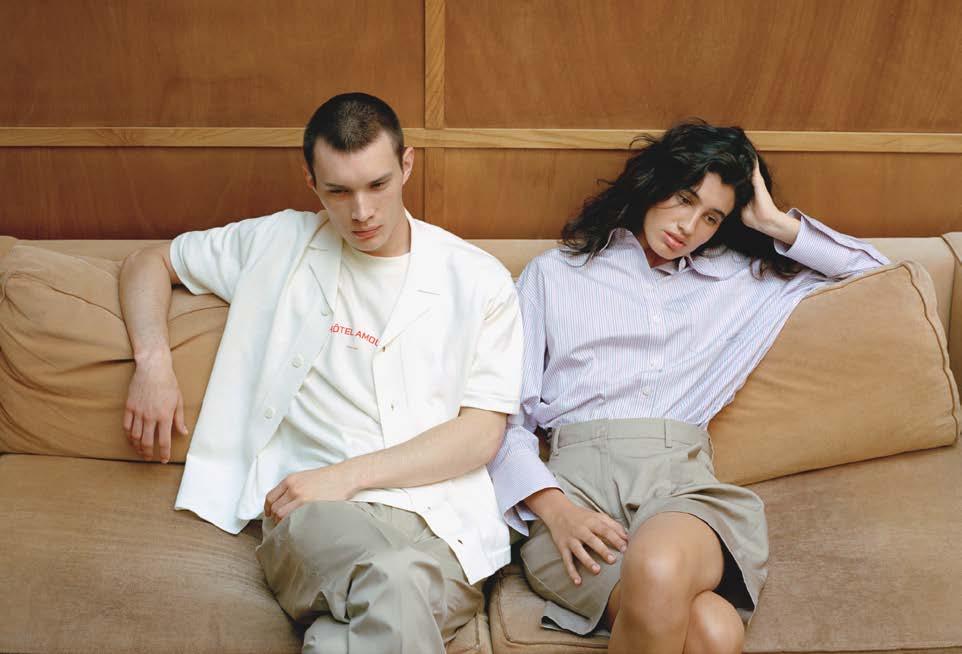
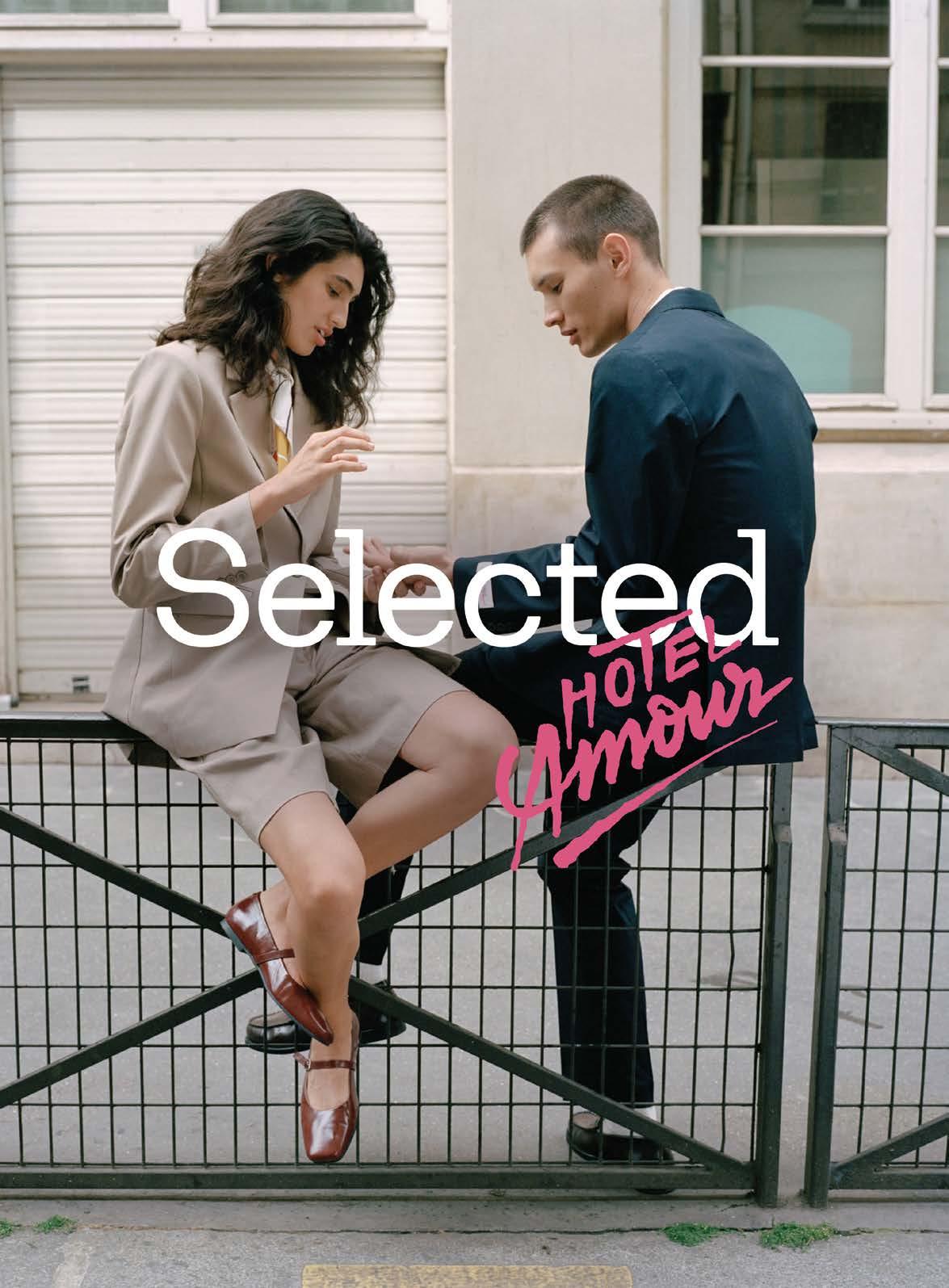
The 2026 spring/summer collection from best-selling brand Selected was created in collaboration with the iconic Parisian Hotel Amour and blends French eclecticism with Nordic clarity. Inspired by the hotel’s creative spirit and provocative aesthetic, the brand ventured into new color palettes, textile techniques, and designs. In doing so, the label remained true to its own identity: wearable, comfortable everyday fashion that combines creativity, lightness, and style. The goal is to appeal particularly to younger, fashion-conscious consumers and create products with added emotional value without losing the brand’s Nordic roots. According to Design Manager Lucas Hiersemann, Selected is thus consciously focusing on storytelling and a holistic brand experience. The collection also complements the brand’s recent retail expansion in cities such as Amsterdam, Antwerp, and Bruges and supports a holistic strategy to build a strong community. The collaboration will be presented at an exclusive event at the Hôtel Grand Amour in Paris. www.selected.com
Selected is focusing on stronger storytelling to infuse the brand with emotional resonance.
Drykorn Modern Luxury
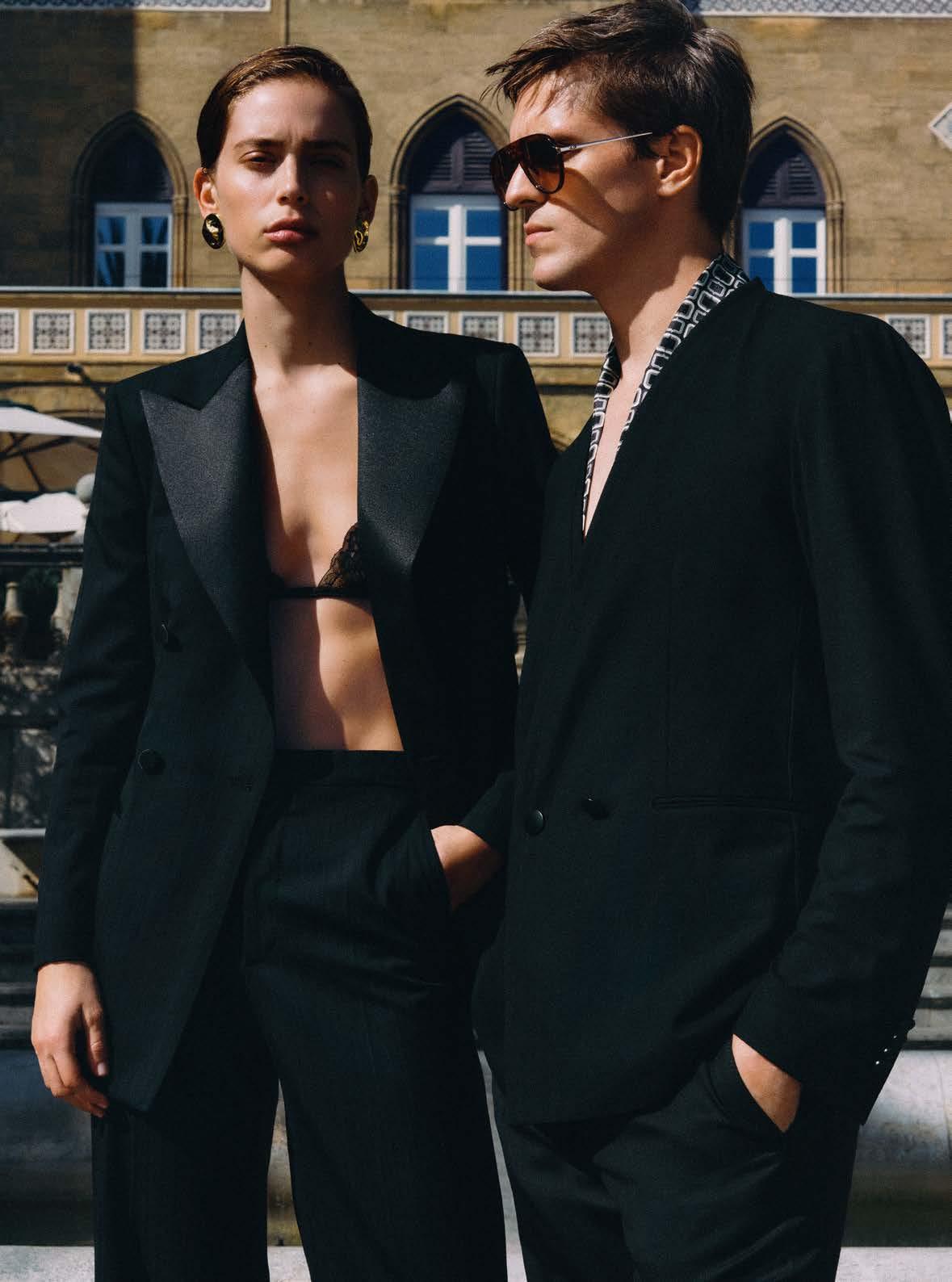
Drykorn’s first drop for spring 2027 reinterprets modern luxury and unites womenswear and menswear through a shared aesthetic. While the women’s styles interpret luxury as a balance between minimalist clarity and sensual allure, the men’s collection offers formal elegance paired with playful, subculture-inspired interpretations. The collection is divided into casual and festive segments for both womenswear and menswear. The festive segment for women, titled Refined After-Dark Luxury, features clean silhouettes, flowing fabrics, and sheer layering. Black leather and textured surfaces add depth. www.drykorn.com
In balance between strength and delicacy.
Myths Material First
What is the focus for Myths in spring/summer 2027?
Simone Bernardi, CEO of Myths: Lightness as a result of development. For us, Research Attitude means starting with the material – from construction all the way to the finished product. What makes your materials special?
Ice Cotton is central – a crinkled cotton yarn that feels cool and extremely light. New additions include textured variations and an exceptionally fine, almost weightless version. This is complemented by Ice Wool: Wool that is dry, light, and unexpectedly fresh. How does this manifest in the product?
Through function and precision. Washable wool, technical surfaces, and classic patterns like houndstooth or stripes feel familiar but function differently. And the silhouette?
Wider, more fluid, more relaxed – with a clear focus on movement. What is crucial?
That you don’t see the evolution but feel it when you wear it. www.myths.it
Material research as the foundation – translated into tangible lightness.
Absolut Cashmere
Normal Is Boring
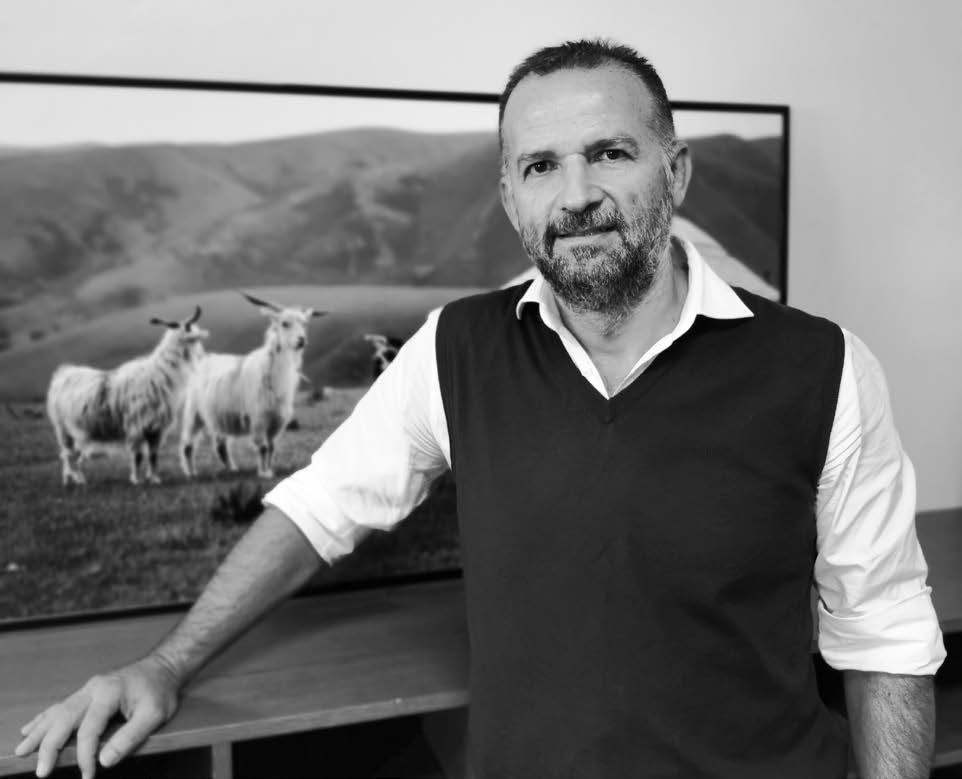
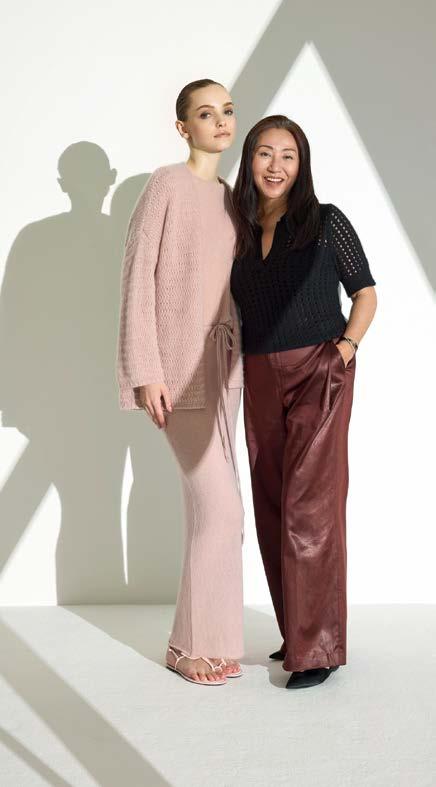
While others are turning up the volume, Absolut Cashmere operates with subtlety. Brand Manager Laurence Vignot talks about the new collection, the Economics of Trust, and what she values in D-A-CH retailers.
The new spring/summer collection is titled Reinvented Authenticity. How does this return to the essentials manifest itself?
Laurence Vignot, Brand Manager: Iconic styles are reimagined with sensitivity. They retain their power while becoming lighter, softer, and freer. The color palette unfolds like an emotion: powdery pastel tones in dialogue with sun-kissed shades. We were inspired by golden sandy beaches, slow strides and floating moments. This sense of detachment never loses touch with everyday life. Even cashmere joggers are reinterpreted, in shades that brighten without overpowering. Linen, fine cashmere and natural fibers form a collection of understated luxury and comfort.
Our magazine is currently exploring The Economics of Trust. What does trust mean in the cashmere business?
Over 30 years of expertise within a cashmere group, more than a decade of Absolut Cashmere. Our legacy stands for artisanship and people. Loyalty remains our focus – toward suppliers, agents, and partners. We build relationships and grow together. True success is collective.
You’re placing greater emphasis on the D-A-CH region. Why here in particular?
We’re impressed by the attitude of the retailers: they take their time, examine products carefully, and ask about texture and manufacturing. Here, they don’t chase every trend – that suits us. Add to that customers who immediately sense the difference between a solid piece, and an exceptional one. What are you most looking forward to in the new season? The encounters. We’re strengthening our international presence and returning to Scoop London, Who’s Next Paris, White Milano, and Preview Netherlands. Reuniting with our partners is a joy in itself. And the reactions to our colors: They are at the heart of our identity. www.absolutcashmere.com
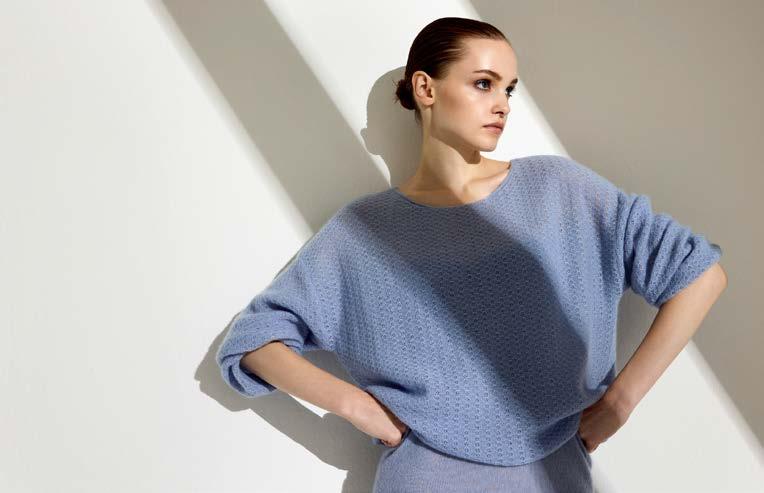
Lightweight knitwear, pure natural fibers, a color palette like an emotion.
ELEGANT STATEMENT SINCE 1929
The Holy Goat Good Vibes!
Today, the fashion world is longing for carefree joy. How does The Holy Goat evoke that feeling?
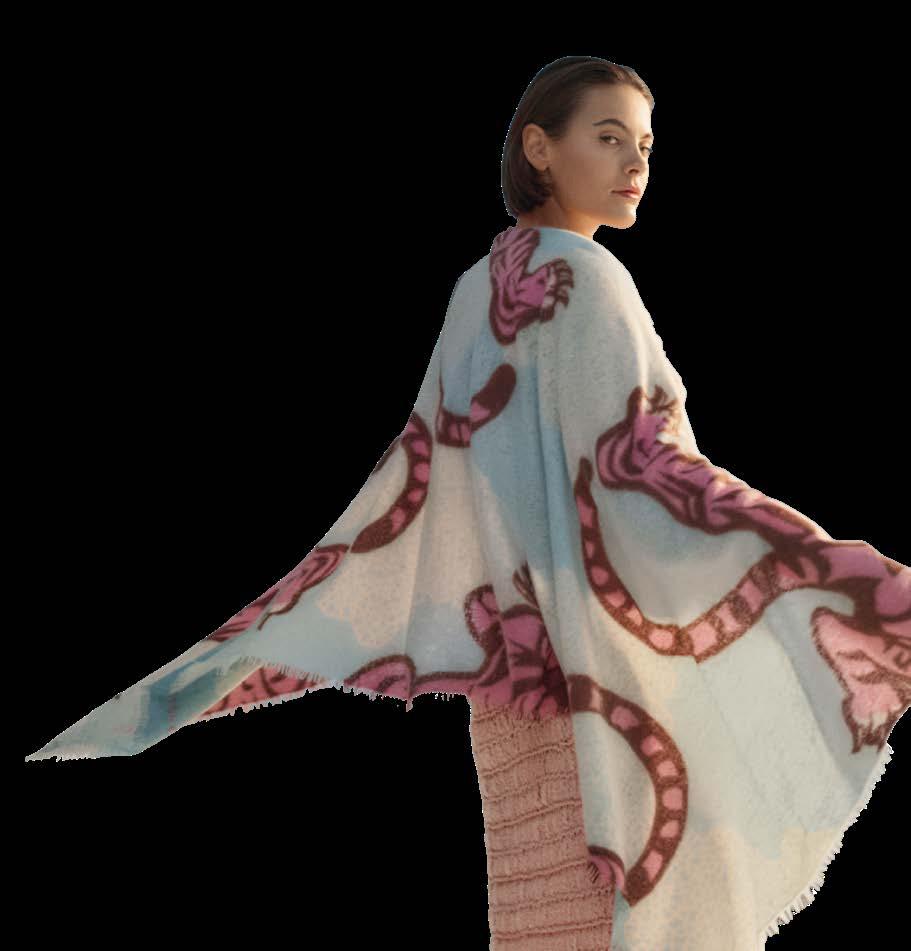
Simone Goschler, Founder of The Holy Goat: Our customers fall in love with our products. The Holy Goat’s scarves, plaids, and sweaters appeal to those who want to own a beautiful piece crafted with love and first-class artisanship. They feel the energy that is present from start to finish of the creation process.
How exactly do you achieve that?
By focusing on long-lasting relationships where everyone involved in the process benefits. We regularly see that this requires loving dedication, and sometimes hard work!
What can we look forward to this coming season?
A soft, summery color palette and new embroidery designs that put you in a good mood. The highlights? A pleated blouse and super-fine 16-gauge sweaters: In dark colors, perfect for going out, in light or bright shades, a great companion for daytime wear. www.theholygoat.com
Fluid Tailoring
With its spring/summer 2027 collection, Circolo 1901 refines its concept of silhouette: moving away from clean lines toward shapes that develop as they are worn. Structure remains, yet dissolves at the edges. References to Apulia are present without appearing illustrative. Earthy tones meet lightened shades, classic patterns are shifted, botanical motifs abstracted. At the same time, the material gains presence: jersey is complemented by woven fabrics with more body and tension. From poplin to gabardine, a play of weights emerges that reimagines volume as an open system between origin and movement. www.circolo1901.it
Precise, yet with a casual ease.
Positive energy: The Holy Goat.
Circolo 1901
LINDSAY CAMPBELL
Head of Wholesale DACH
lindsay.campbell@xandres.de
+49 160 979 04 536
SHOWROOM MÜNCHEN
Karl-Weinmair-Strasse 9-11 80807 München
PETRA HAMMELSTEIN
Sales Manager
petra.hammelstein@xandres.de
+49 151 541 47 593
SHOWROOM DÜSSELDORF
Kaiserswerther Str. 183a 40474 Düsseldorf
Tagliatore
Realignment in Germany
Tagliatore is restructuring its sales operations on the German market and transferring distribution to Peter Härtel of Vestitus. The brand, which has been present in Germany with women’s and men’s collections for over two decades, is thus entering a new phase of its international development. Its long-standing presence has contributed to a clear market positioning. The new partnership is intended to continue on this course and develop it further in a targeted manner. “After more than 20 years of growth in Germany, a new phase is beginning for us. Together with Peter Härtel, we want to align our position even more precisely,” comments Pino Lerario. www.tagliatore.com
19 Andrea’s 47
Intuitive
Andrea, what is the focus of your spring/ summer 2027 cashmere scarf collection?
Andrea Bardelli, CEO of 19 Andrea’s 47: Definitely movement and perception. Our products interact more strongly with the body and evolve as they are worn. How does the color palette of this collection come about?
Not through fixed combinations. Color emerges during the process – through overlays and contrasts that are more intuitive than planned. What role does the scarf still play today? It is reinterpreted through proportion. It is no longer just an accessory or an addition, but part of the construction of a look. How do you work with material and surface? Light, natural cashmere qualities meet visible artisanship. Spray and brush techniques create depth and distinction. What is crucial in the end result?
Openness. The pieces should not appear finished, but rather leave room for interpretation – both in how they are worn and how they are perceived. www.19andreas47.com
Pino Lerario, Creative Director at Tagliatore.
“The scarf is no longer just an accessory or an addition, but part of the construction of a look.”
AlphaTauri Innovation as an Enabler
Premium Active is expanding the AlphaTauri range for the first time with a permanent, performance-oriented capsule collection. What strategic role does the line play within the brand’s development?
Isabelle Mi-A Ko, Global Head of AlphaTauri: For AlphaTauri, Premium Active is a natural evolution of our brand; it reflects our community’s lifestyle even more strongly, while simultaneously reinterpreting it. Our focus remains firmly anchored in daily wear, travel, and modern office wear. At its core, it’s about a holistic lifestyle, just as it is embodied by our brand ambassadors such as Jürgen Klopp and Matthias Dandois. The synergies between fashion and sports are deeply rooted in our DNA. With Premium Active, we’re translating our technologies and design signature into products for training, sporting events, and an active everyday life.
How important is textile innovation today for positioning premium fashion in the international wholesale market?
Textile innovation is becoming increasingly important in the international premium wholesale sector. However, it is never an end in itself, but rather gains relevance in conjunction with fit and aesthetics. The look remains the first and decisive point of entry. Technology only creates real added value when it is immediately understandable and functions without complexity. At its core, we have a clear stance: Innovation as an enabler, not as an end in itself.
Premium Active is clearly geared toward a dayto-night lifestyle. Are you observing a growing demand for hybrid wardrobe concepts in retail? The demand for hybrid wardrobe concepts that combine work, travel, and performance is noticeably growing in retail. At the same time, this approach is still in a development phase: products are no longer exclusively assigned to traditional sports or performance sections, but are showcased in contemporary sections as part of a holistic understanding of lifestyle. This fall, we will be implementing exciting concepts in this area from Germany to Spain. www.alphatauri.com
Rebranding with a Rich History
The Swiss brand for the finest underwear, nightwear, and loungewear is sharpening its positioning and will adopt a modernized visual identity featuring a new logo. “The rebranding translates the brand’s historical heritage into a contemporary context and positions it for a sustainable future. The goal is to preserve quality and heritage while creating a clear, forward-looking positioning through a consistent focus on private luxury,” explains CEO Pascal Höhener. Production, design, and development remain anchored in Switzerland. Highlights include the ready-to-wear line made from Sea Island cotton. www.zimmerli.com
Premium Active: Technical essentials for the modern day-to-night look.
Masterpieces of Swiss artisanship since 1871.
Zimmerli
By-bar
Crafted with Joy
By-Bar invites you to be part of their Lucky Society – a community of optimists, dreamers, and doers. Luck is a mindset. With fresh colors and positive energy, the label brings joy to everyday life and embraces authenticity. Entrepreneurship is part of its very DNA – curious, agile, and courageous, it forges new paths. Quality is at the heart of everything: With a love for detail, thoughtfully crafted products are created, paired with responsibility and transparency. www.by-bar.com
Buvanha
Designed for Travel
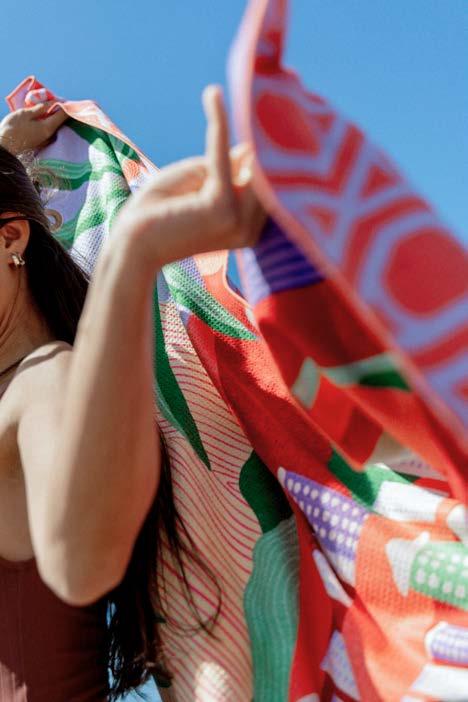
Inspired by destinations around the world, Buvanha creates travel towels that combine functionality with a sense of freedom. Founder Siebe Goos has collaborated from the start with designer Vera Smits, who translates the brand’s vision into colorful designs: places as inspiration, colors as emotion, and each towel as a memento of special journeys. Towel models bear names such as Marrakech, Kyoto, or Curaçao. At the same time, Buvanha is committed to sustainability: since 2019, over 100,000 trees have been planted in cooperation with One Tree Planted – one for every towel sold online. www.buvanha.com
Pinkwonder Skin Care & Self Care
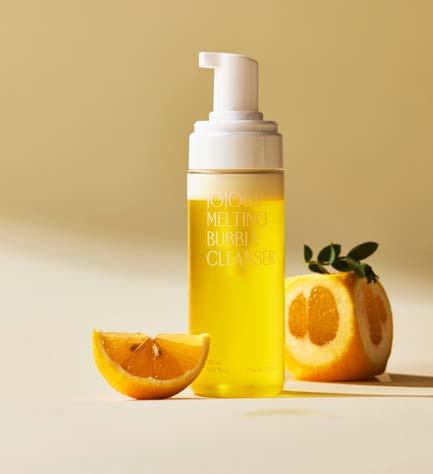
Pinkwonder combines research with the power of natural oils and focuses on highly effective clean beauty for all skin types, regardless of age or gender. A key ingredient is organic golden jojoba oil, which repairs the skin barrier and restores balance. In Europe, the skincare brand by Olivia Choi from Seoul is available at Le Bon Marché and KaDeWe, among other retailers. @pinkwonder_official
G.H.Bass DANCEABLE
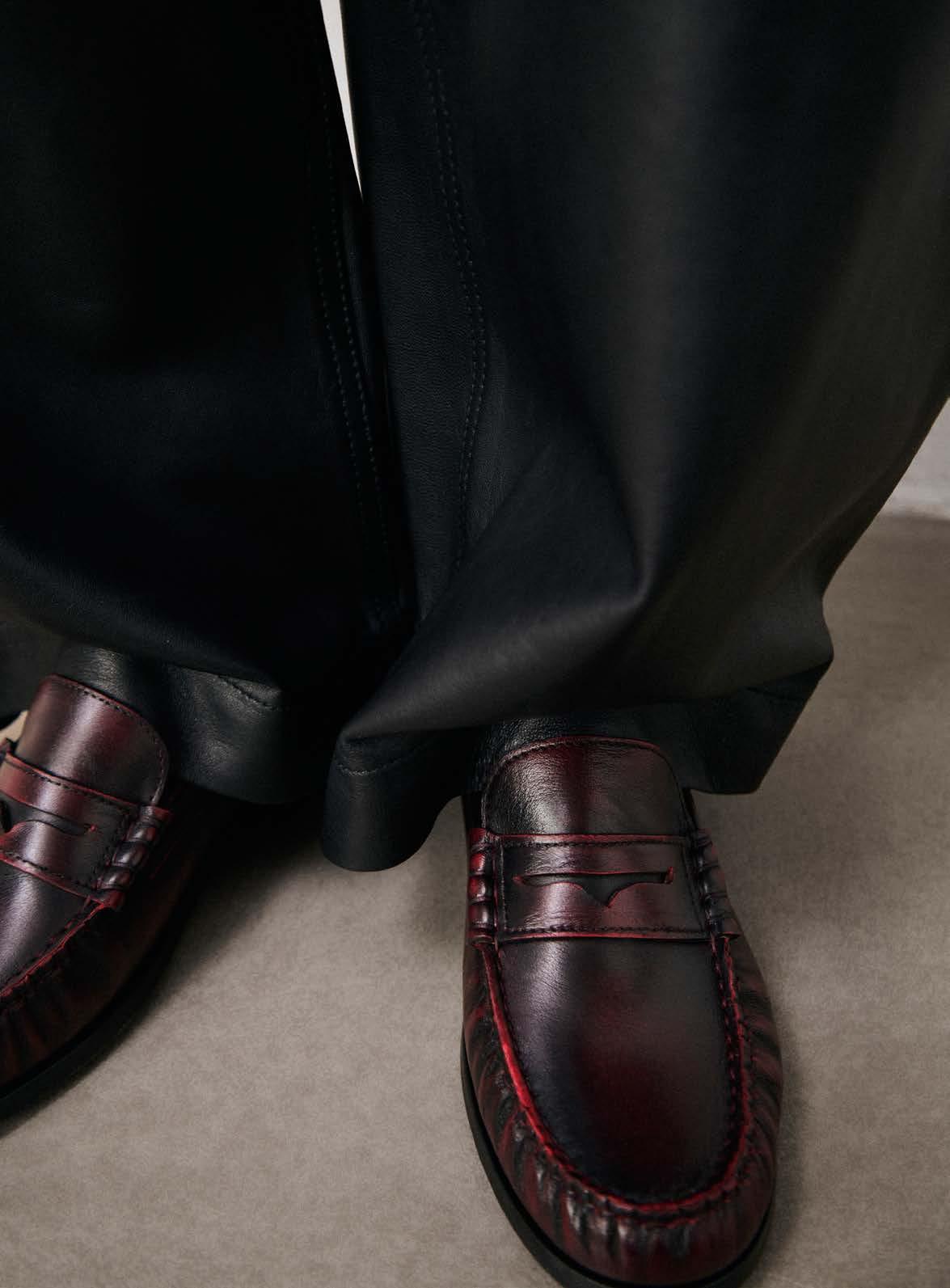
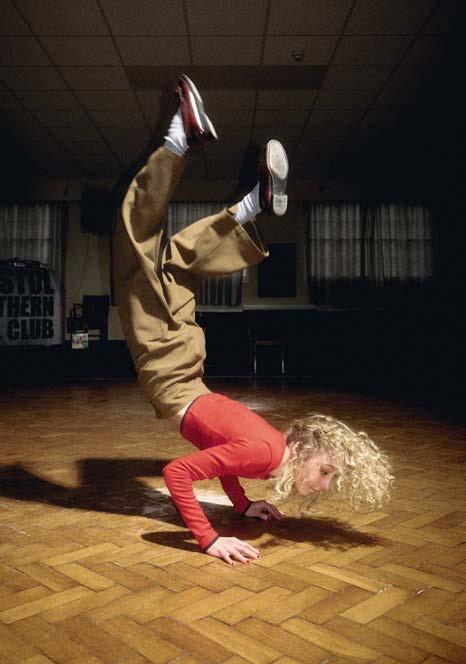
G.H.Bass’s Archives EP.01 isn’t a typical campaign for his penny loafers – the same ones worn by moonwalk icon Michael Jackson – but rather a declaration of love for the nightly ritual of the Bristol Northern Soul Club. Shot in a raw 1990s documentary style, the film features no models, but real dancers from the scene, who artfully glide across the wooden dance floor in the shoes. @ghbass
CREATIVE REINTERPRETATION
In collaboration with Danish designer Henrik Vibskov, Keen has reinterpreted two of its Uneek Open Air sneakers using bold colors, materials, and shapes. Rugged functionality and comfortable everyday wear meet Vibskov’s distinctive design language. @keeneurope
Hoka MACH REMASTERED
Hoka’s Mach running shoe has been updated and reimagined as the Mach Remastered, available in five colorways. The feather-light feel and high-frequency welded overlay remain intact. New features include a transparent ripstop lining, metal eyelets, and a microfiber tongue with an open edge for a modern, sleek aesthetic. @hoka
Keen x Henrik Vibskov
Avant Toi One Piece, Two Lives
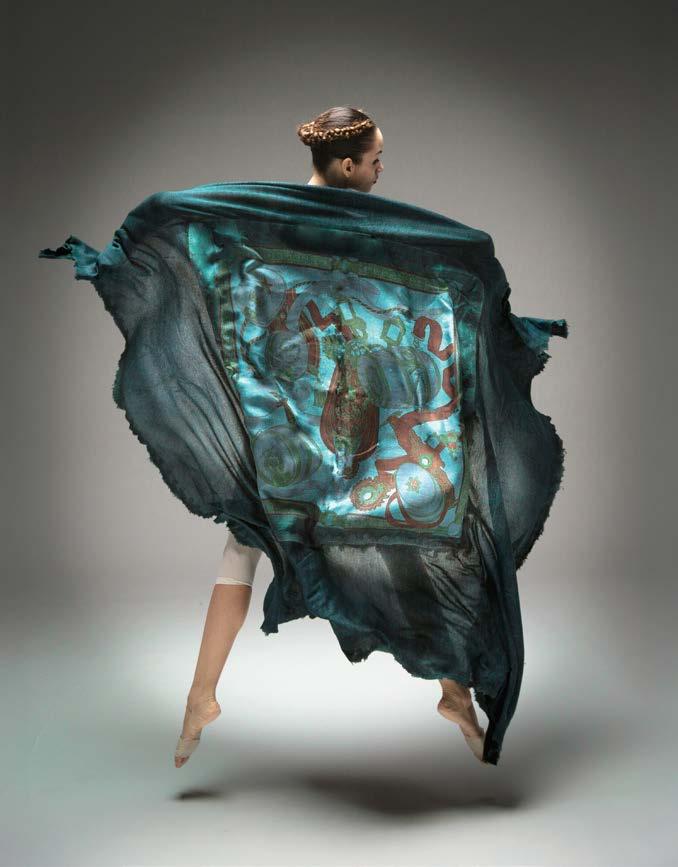
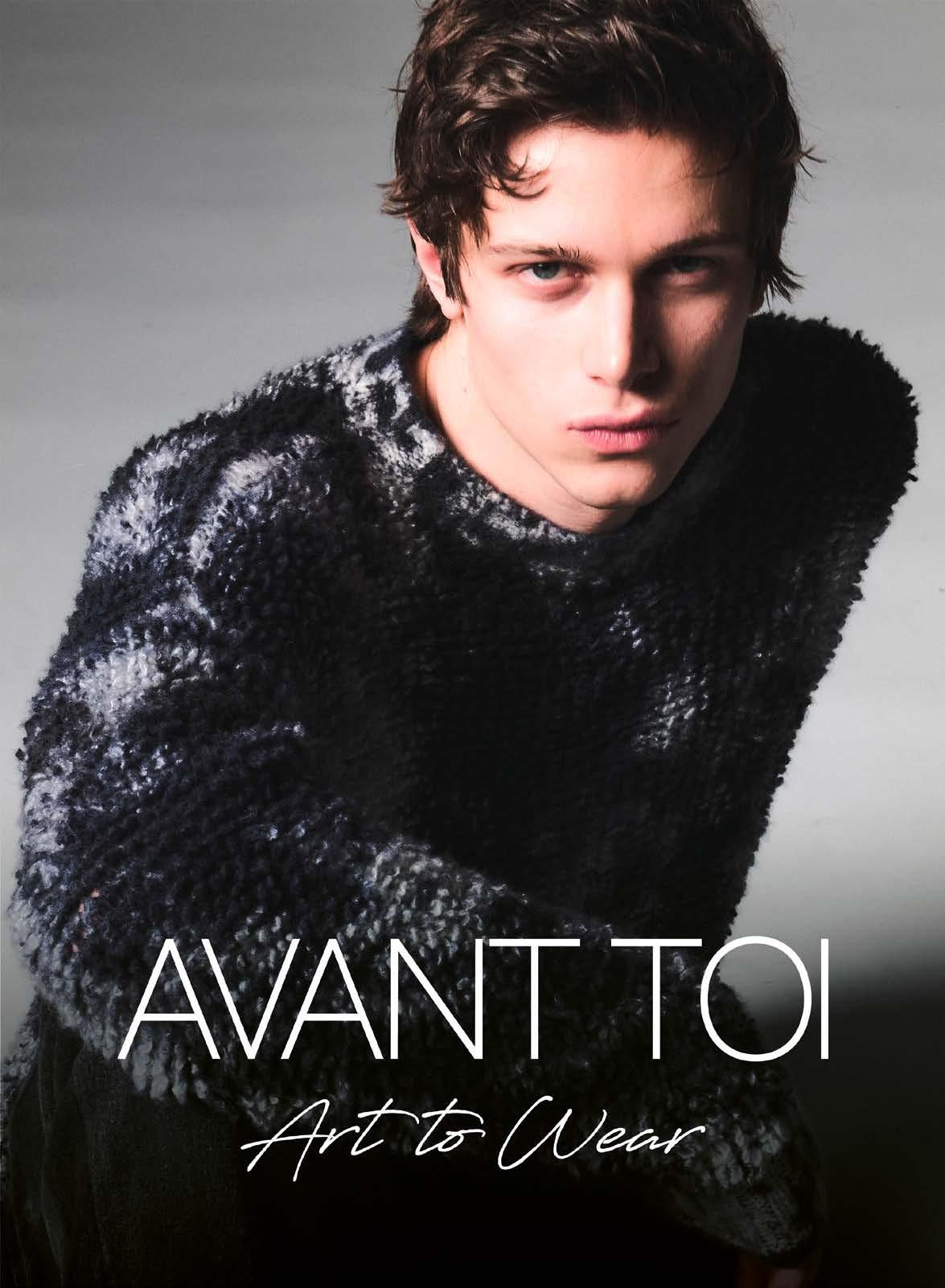
With the Quadrello, Avant Toi transforms materials into value. The starting point is a vintage silk scarf – found, not designed, and always with its own story. Through a precise process, the material is bonded to a lightweight cashmere-silk base using needle-punching, ensuring that both materials remain visible and flexible. The surface remains open, the silk present. Subtle handiwork shifts color and texture only minimally, creating depth without obscuring the original. The result is not a new product, but a second life – carried by calm and precision, by material, time, and care. www.avant-toi.it
Yippie
Hippie
Lust for Life
“With our 2027 summer collection, we’re taking our customers’ feedback even more into account, with more form-fitting cuts and slim styles to meet the demand for a greater variety,” says Managing Director Christiane Braun Prettin. This also applies to the materials, where soft velvets, linen textures, textured jerseys, and airy cotton fabrics dominate. These are complemented by lace and embroidery details – sometimes used individually, sometimes in combination. What remains constant at Yippie Hippie? “Creative design, emotion, freedom, and a lifestyle that celebrates individuality and the joy of life.” www.yippiehippie.de
One of the impressive one-of-a-kind pieces from the Quadrello series.
Comfort, color, casual style: Yippie Hippie.
Cambio
Key Piece: Pants
For the spring/summer 2027 season, pants become a versatile key piece. Color serves as the central theme: soft shades meet color blocking as well as natural tones like olive and khaki. Feminine lingerie details featuring lace and sheen contrast with utility elements and sporty influences in the spirit of soft athleisure. Floral prints, checks, and stripes bring freshness and pure emotion. Silhouettes are slimmer – ranging from slim fits to cigarette cuts and straight shapes. Volume remains relevant with O- and E-shapes, flared, balloon, and baggy styles. Waistlines drop slightly, while capri lengths and culottes add summery accents.
Small Steps, Big Impact
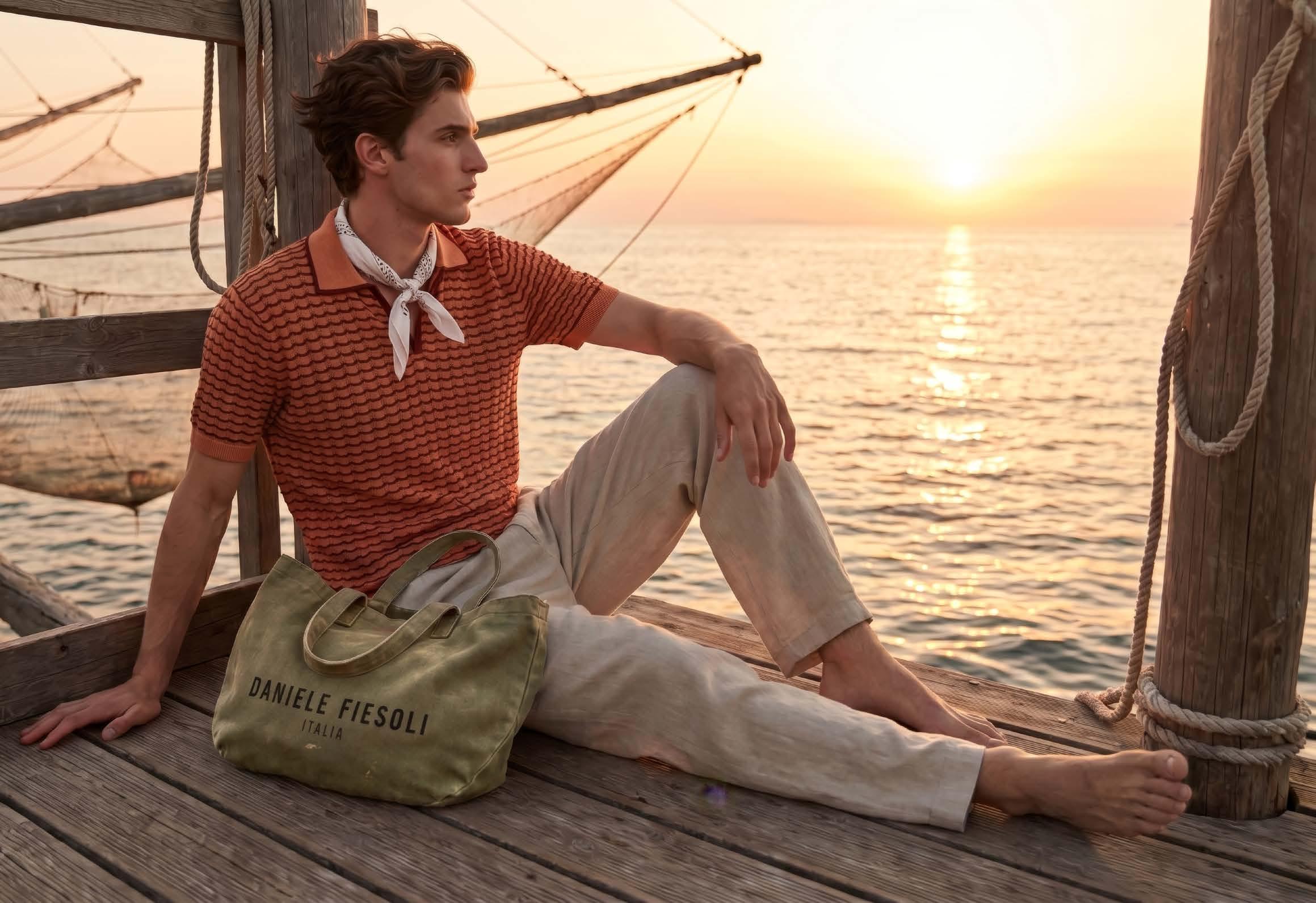
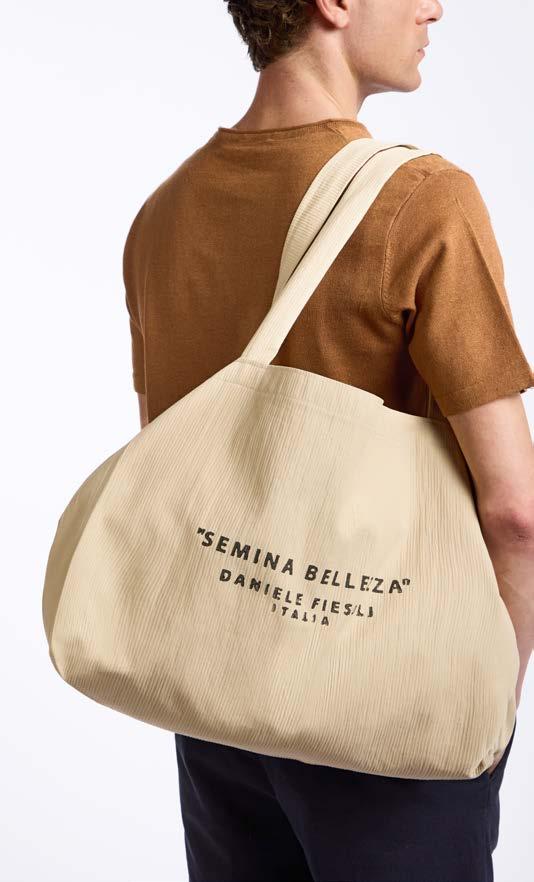
With Semina Bellezza, Daniele Fiesoli continues his approach into its third season – less of a campaign, more of an ongoing practice. The focus is on targeted interventions throughout the product lifecycle: biodegradable packaging, durable materials, and labels with embedded flower seeds. “I don’t believe in extreme positions,” says Fiesoli, “but you can improve many small things and support new life cycles.” The collaboration with Fody Fabrics demonstrates what this looks like in practice. Shopping bags are created out of production scraps from local businesses, made together with people in precarious living situations. www.danielefiesoli.com
Daniele Fiesoli
Cambio is lively and full of contrasts.
Bags from the collaboration with Fody Fabrics.
New Multisourcing Prospects
From August 31 to September 2, the trade show will once again bring together the international textile and apparel industry in Paris-Le Bourget. Around 1,200 exhibitors from China, Turkey, India, and Korea will present fabrics, raw materials, apparel, and accessories. New sourcing-strong countries such as Mongolia, Pakistan, and Taiwan will also be represented. The offering is complemented by Avantex, the innovation zone for sustainable, technological solutions. New additions include an Eco-Hub featuring sustainable producers from China, pavilions for leather and jewelry, and an outdoor area for technical fabrics and sportswear.
www.texworld-paris.fr.messefrankfurt.com
Co’Couture
Very Personal
Co’Couture gained many new customers last season. What’s the secret? Marie-Louise Elgaard Pedersen, Brand Manager: We stay in tune with the season and offer strong, sellable collections with a twist. Close collaboration with our partners is essential. We want them to run profitable businesses. Our 3.0 margin reflects this commitment.
In terms of fashion, we’re seeing a shift toward femininity and more tactile materials. Is that the case at Co’Couture as well?
Yes, though we always start with classic wardrobe essentials and give them a contemporary twist. Right now, we’re working a lot with three-dimensional fabrics and new textures; that’s definitely becoming more important.
When consumers buy fashion today, it has to be personally relevant, right?
Absolutely! Our outfits are meant to highlight personality, for every occasion. We look forward to wearing the styles ourselves. Even though it’s a job – for us, it’s very personal!
www.cocouture.com
Texworld focuses on the mid-range and premium segments.
Wardrobe essentials with a twist: Co’Couture.
Texworld Paris
Floris van Bommel
Actions Speak Louder Than Words
What does realness mean to you personally?
Floris van Bommel, Creative Director: To me, the term is clear-cut: something is real, or it isn’t. At the same time, I often find the discussion about it strange. When is someone a “real” man, and when is a brand “real”? Many people seem to find it interesting to dismiss something as “fake.” Most of the time, that says more about them than anything else. Every person and every brand is real – just different. It’s precisely these differences that should be described in more detail.
And what about your shoes?
We don’t participate in this competition for authenticity. I believe more in actions than words. On dating shows, many describe themselves as funny or rebellious – the truly interesting people rarely do that. When you observe them, you recognize their character on your own. It’s the same with shoes. You don’t have to go out of your way to explain what you are. You just recognize it.
How does that show up in your business practices?
We don’t concern ourselves with that. Our focus is on building a sustainable company and telling our story with honesty. If people connect with that and like the products, they become customers.
@florisvanbommel
Modern fit, clear pricing, reliable supply chains: 9AM.
Even Greater
News from German pants label 9AM: thanks to a new production facility, the brand is investing in efficiency and market flexibility. Starting immediately, retail partners can benefit from competitively priced wholesale prices ranging from 55 to 74 Euros. Reliable, on-time delivery remains a given. The new styles combine a relaxed, casual look with a feminine silhouette and are available in sizes 34 to 44 (inch 24 to 34). For Germany and Austria, the collections are available at Modeist in Munich and Düsseldorf, and in Switzerland additionally through the
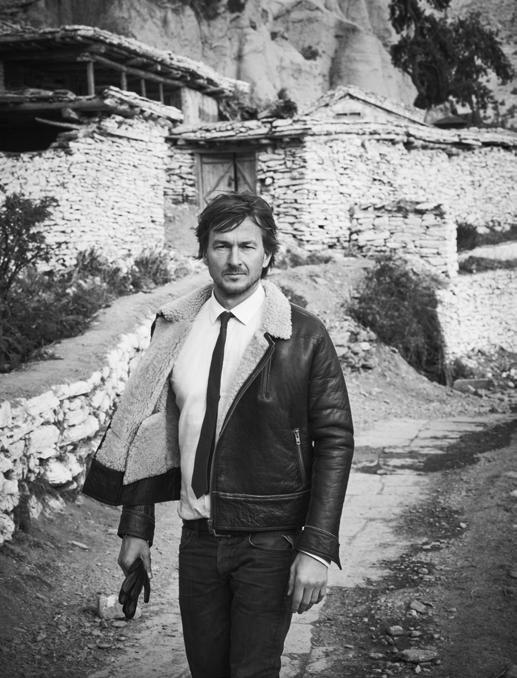
Creative Director Floris van Bommel in Nepal.
SPRING/ SUMMER 2027
ILM
“Those Who Come Want to Make a Difference”
A spirit of optimism: ILM in Offenbach continues to grow. In this interview, Arnd Hinrich Kappe explains what the 164th edition has in store.
You experienced the last ILM as a real new beginning. What has changed?
Arnd Hinrich Kappe, CEO of ILM Offenbach: That was the first ILM in a long time where people weren’t constantly talking about problems. Those who come want to make a difference. You could really feel that. On top of that, there’s an extremely high level of international participation. People made plans to attend the ILM and traveled here, despite everything that’s going on right now. What’s new for the 164th edition?
Exciting new additions: Eastpak, Doc Martens, as well as Furla and Karl Lagerfeld. The partnership with the Travel Goods Association from the U.S. is growing to include 20 brands. The outdoor sector is expanding, even though there are hardly any trade shows left for it worldwide. For the first time, there will be two awards: for the best retailer and for the best product, presented by Frauke Ludowig. The supporting program focuses heavily on products: how are materials changing, and what should you rely on? Retailers want to know what will drive sales in the future. Also new are ten content creators who will showcase their favorite ILM products on social media. What else?
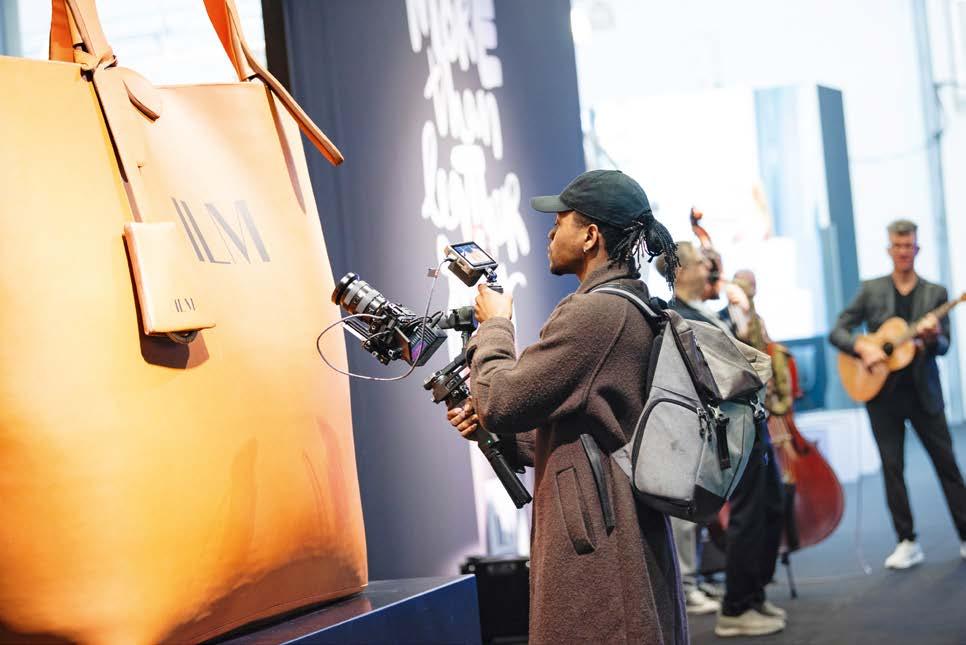
Our entrance is getting more glamorous, with a sequin wall and the giant bag again –a perfect photo backdrop. There will also be food trucks, the in-house band, and two singers plus a DJ at the chill-out parties, as well as a large block of hotel rooms at discounted rates.
The Economy of Trust – what does that mean for you and ILM?
Reliability. We are a business platform for the industry. This is where strategies are negotiated. Everyone is coming closer together; we can feel that clearly. Unlike some other trade shows, we are growing, investing more, and becoming more significant. Visitors from over 65 countries at the last ILM – that’s no small feat! What we do brings direct benefits to exhibitors and visitors. Here, it’s not an algorithm that decides, but the industry itself that determines what’s relevant. www.ilm-offenbach.de
The meeting place for leather goods, travel accessories, and handbag fashion: ILM Offenbach.
Energetic: Arnd Hinrich Kappe.
nineto9.de
Colmar
Spotlight on the Product
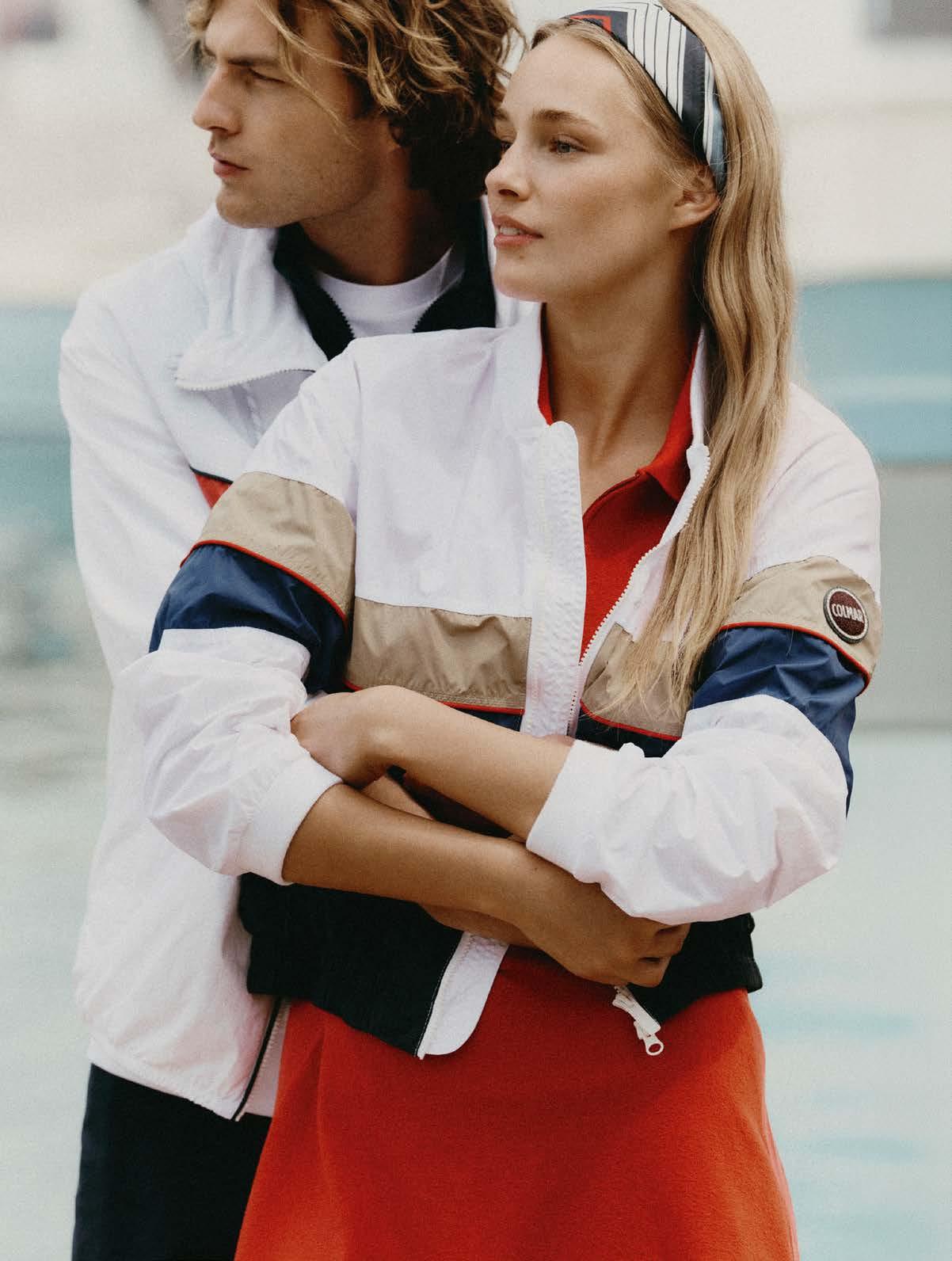
The new collection reflects the brand’s sporty-elegant DNA and builds on iconic outerwear – from lightweight, padded styles to unlined models with technical performance. “Our focus is clearly on the product and its versatility,” says Product Merchandising Manager Roberta Colombo. Technical fabrics are combined with natural fibers like cotton and linen for performance and comfort. Highlights include ultra-light jackets and taped three-layer shells. The shift is also evident in the silhouettes, with softer fits and lighter constructions gaining prominence. www.colmar.com
G-Lab
Zeitgeist
What’s new for spring/summer 2027?
Björn Gericke, Founder of G-Lab: We’re expanding our range of high-quality fashion pieces – they’re becoming increasingly relevant. Two new fabrics are joining the lineup: lightweight, super-soft Supima Cotton with a subtle sheen, and Fine Melange with a summery canvas look. Following our most successful summer season in 2026, we’re looking forward to spring/summer 2027 with optimism. What sets you apart?
G-Lab stands for modern aesthetics with functionality you can feel. Our straightforward approach, nature-based materials, reliable pricing, and high quality capture the spirit of the times. This reliability is appreciated by retailers as well as end consumers. www.g-lab.com
Roberta Colombo, Product Merchandising Manager at Colmar. (Photo: Maki Galimberti)
Fashionable design, functional benefits: G-Lab.
Stetson x Lanificio Bottoli Coffee Capsule
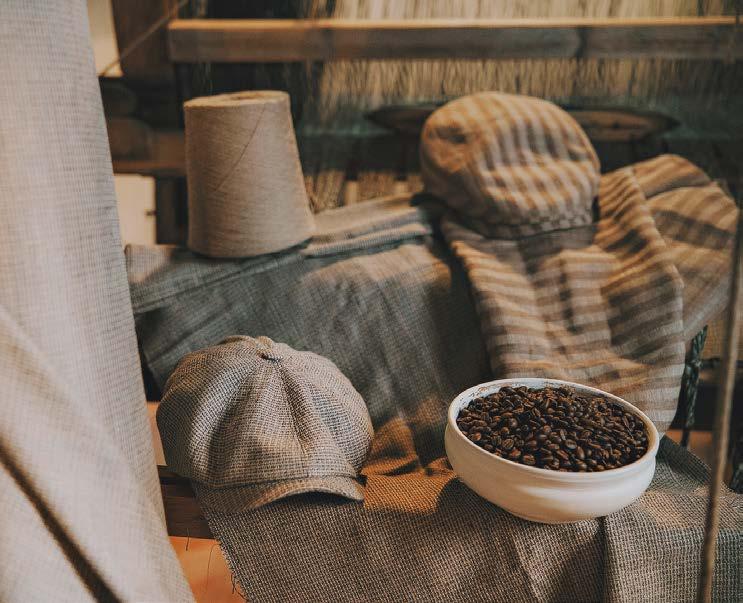
In collaboration with Italian weaver Lanificio Bottoli, Stetson combines natural cotton, dimensionally stable virgin wool, linen, and fine silk. The beige-colored yarns, some of which were dyed with coffee grounds, give the rustically woven fabric with an open weave a warm, earthy hue while ensuring a comfortable fit and breathable properties. In addition to the classic driver, kent, hatteras and texas styles, the collection also includes a baseball cap. The collaboration also represents another step by Stetson toward sustainable production. www.stetson-europe.com
Save the Duck
A Second Life in Store
With a new take-back initiative, Save the Duck is expanding its approach to circular consumption. At select stores, customers can drop off gently used clothing, which is then inspected by Humana People to People Italia and either resold or distributed internationally. “For us, it’s about putting responsibility into action. The initiative creates an opportunity to keep clothing in circulation and actively involve customers in this process. At the same time, it brings them back to the store and strengthens their connection to the brand,” explains Daniela Holnsteiner, International Commercial Director. www.savetheduck.com
Caps featuring a timeless herringbone pattern or subtle stripes.
Daniela Holnsteiner believes in take-back initiatives at the POS.
Tom Ripley
A Declaration of Love
News in distribution: The Hoegieman & Friends Agency is now taking on North Rhine-Westphalia as a distributor, in addition to Hesse, Rhineland-Palatinate, and Saarland. The Made in Italy collection is a declaration of love to Italian summers and American coolness. The collection features organic cotton, linen, and mulberry silk. A key focus? Resort wear in the Italian marine style, with terry cloth polo shirts and button-through cotton-linen shirts paired with shorts. Extra-fine knit polo shirts form the basis of the knitwear collection, while other styles feature textured fabrics such as waffle weaves or ajour patterns. Short-sleeve cardigans, V-necks, and a knitted two-button blazer round out the collection. www.tom-ripley.com
Faherty
Launch on the D-A-CH Market
The iconic U.S. label Faherty is expanding into Europe. Brothers Alex and Mike Faherty founded their brand because they felt there was a lack of authentic, high-quality sportswear. Alex’s wife, Kerry, oversees impact initiatives and native design partnerships at the B Corp. Jacob Bjerregaard leads the international expansion. René Nebauer and his team at Product M52 are responsible for the D-A-CH launch. Prices for the men’s and women’s collection range from 79 to 399 Euros. The strong warehouse concept is key to the brand’s success. At launch, partners include KaDeWe, Breuninger, Lorenz Bach, and Fellinger. @fahertybrand
Launch in Florence at Pitti: Tom Ripley.
The new collection will be showcased at Pitti Uomo, in Paris, and in Munich.
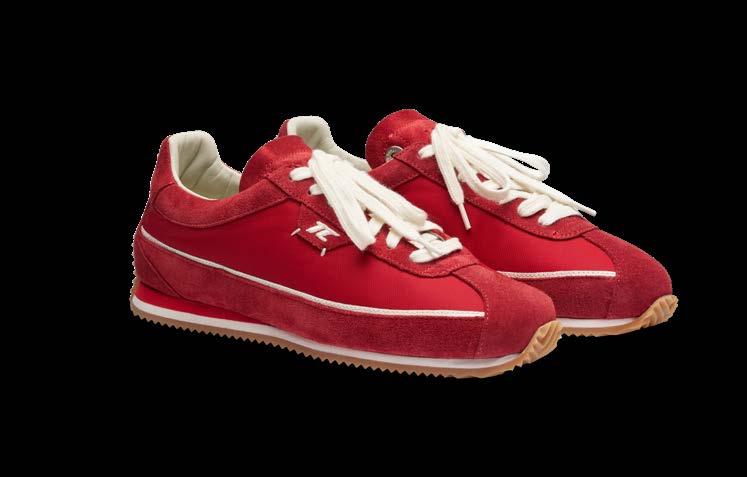
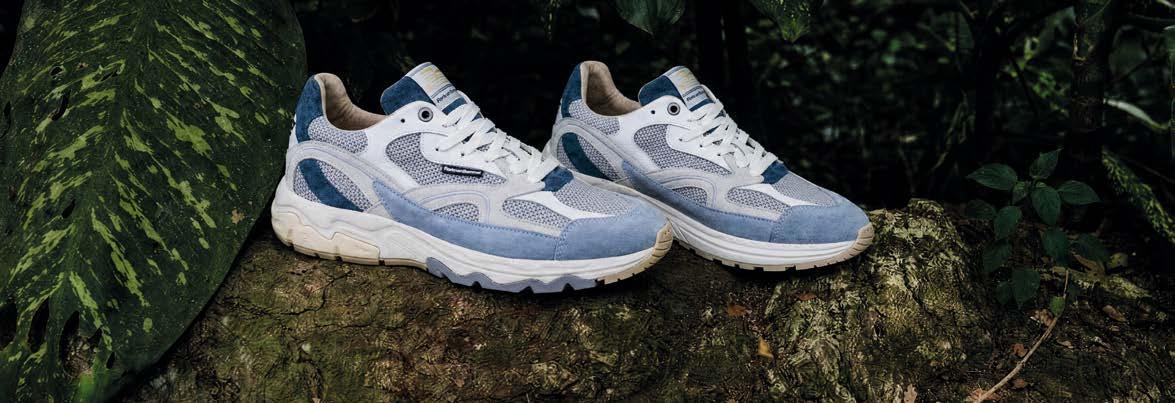
Thesing Retro Sneakers from Berlin
Berlin-based sneaker brand Thesing has taken off like a rocket since the summer of 2024. Founded by childhood friends Johannes and Louis, the brand now not only has a store in Berlin’s Torstraße, but is also represented at retailers including Revolve & FWRD in the U.S., Breuninger, The Wants Shoes in Cologne, Schnitzler in Münster, Apropos, Whim Gazette in Japan, and Ma Boutique in France. The retro-inspired sneakers are handcrafted in Portugal from Italian leather and retail for between 180 and 220 Euros. @thesing.berlin
“Schumy” in the limited colorway racing red as a tribute to motorsports legend Michael Schumacher.
Authenticity and responsibility: The Nim Standard.
The
Nim Standard
Upgrade
What’s key for the new season? Claudio Parolini, founder of The Nim: We’re strengthening our identity through quality at every level – better fabrics, refined artisanship, and sophisticated finishes. New additions include denim sets for men and women, such as overshirts paired with pants for an effortless total look. The silhouettes? Casual, but with refined proportions and modular volumes. Hybrid pieces that blend tailoring and denim are becoming more prominent. Overall, we’ve streamlined the collection and are focusing heavily on medium- to lightweight denim, recycled cotton, and Tencel. In terms of color, we’re pairing blue with ecru, gray, and dusty pastel tones. What does The Economics of Trust mean to you?
That really resonates with us, especially in today’s market. Trust is no longer just a brand value, but a business model. We believe that trust is built over time – through actions, not statements. Delivering on our promises every season is ultimately what makes us credible. www.thenimstandard.com
Rosemunde
Everyday Luxury
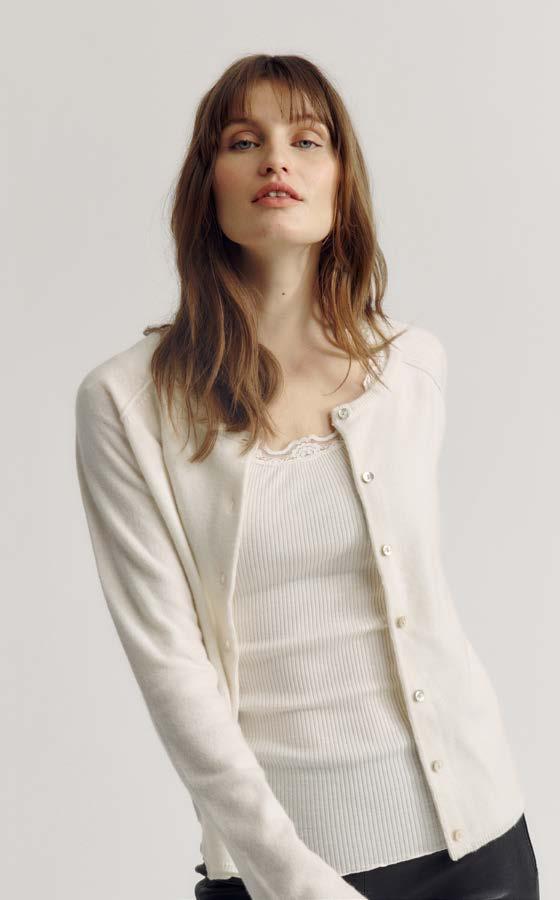
Founded in Copenhagen in 2004, the Rosemunde brand stands for timeless design, feminine silhouettes, and luxurious everyday fashion. It is based on the philosophy that luxury should not be reserved for special occasions, but should be experienced daily through comfort, quality, and thoughtful design. For over 20 years, the brand’s bestsellers have been silk tops with delicate lace details. The collection is complemented by a NOS program featuring seasonal colors and trend-driven basics, offering retail partners continuity, reliability, and long-term commercial performance. Today, Rosemunde is represented in 24 markets and over 900 stores, including Magasin, Illum, Karma, Brando, and Get Inspired, combining Scandinavian flair with a scalable business model. Germany is one of the brand’s best-established markets. Rosemunde has been present in German-speaking countries since 2005 and has long-standing partnerships with clients such as Breuninger, Ludwig Beck, Zalando, Otto, Manor, and Gygax. Agentur Olly Dees has been handling southern Germany for many years, while northern, western, and eastern Germany will be managed by Agentur Prins-Juric starting this season. In Austria, Modeagentur Parisa Engel handles distribution, and in Switzerland, Agentur Beckers.
Rosemunde offers two main collections featuring approximately 140 styles in up to seven colors, as well as two pre-collections with 80 to 90 styles in up to six color variations. The spring pre-collection is delivered from mid-May through June, and the fall pre-collection from mid-November through December, enabling an early, commercially strong transition into the next season. The collections are based on feminine wardrobe essentials, high-quality materials, and durable designs with a focus on silk, knitwear, natural fibers, and modern layering pieces. Silk tops range from 49 to 99 Euros, knitwear from 119 to 249 Euros, and dresses from 139 to 299 Euros. Each main season also includes an occasionwear collection with 15 to 20 styles priced from 189 to 399 Euros, which is delivered in April and October. www.rosemunde.com
Rosemunde is positioned in the affordable premium segment.
Linda
TOGETHER
Collezione N01 Daniele Fiesoli QUIETLY
NATURAL
For the women’s line, natural tones come together to create a serene presence –warm, sandy, and light. The focus is on airy, lightweight cotton with a distinct texture. Loose silhouettes and flowing lines form clean, head-to-toe looks that fill the space with a sense of calm.
@danielefiesoliitalia
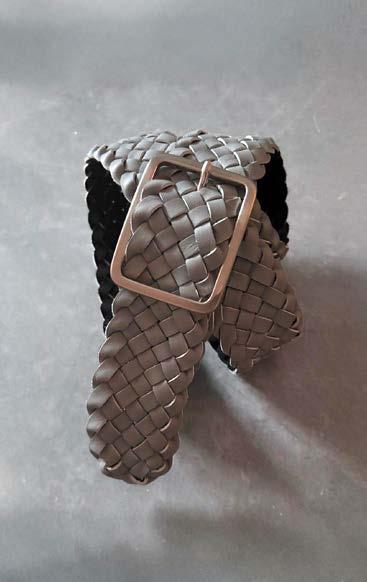
Whether hand-woven belts ranging from two to six centimeters wide, wide-cut belts made of patent and suede leather, or models with eyelets – the range is diverse. For decades, Linda Neiber has worked closely with the best Italian tanneries. Cooperation on equal terms defines the label’s philosophy: “Because only together can we create something truly positive.” www.neiber-gmbh.de
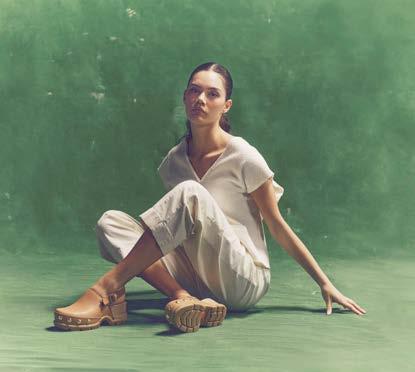
CLOGS ARE CALLING
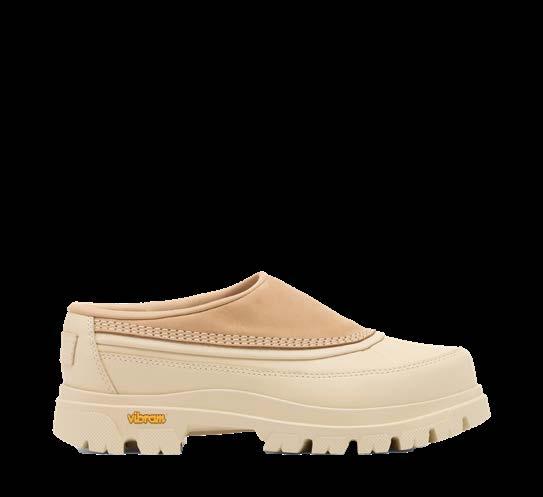
In its clogs, Sorel combines a heritage of performance with contemporary lifestyle design: whether as a sturdy leather mule with triple stitching, a Vibram sole, and Gore-Tex technology; as an eye-catching platform silhouette with a boho vibe and striking rivet details; or as a modern everyday essential in a lightweight, minimalist EVA construction with statement appeal. @sorelfootwear
Neiber
Sorel
The Gigi Donna Soft Tailoring, Strong Identity
With the new season, The Gigi is repositioning its women’s line. The focus is on a sartorial aesthetic, inspired by classic men’s tailoring and translated into modern, feminine silhouettes. The collection combines precise artisanship with high-quality materials and contemporary fits. Classic blazers are complemented by piece-dyed and washed versions that add a more casual touch. Personalization is key. Printed linings, unique buttons, and subtle details define the look. Under the direction of Gaby Ventrella, a line is emerging that offers a contemporary take on Italian artisanship. www.thegigi.it
Barefoot Pull
The Barefoot European Shoe Fair in Offenbach will take place for the second time from July 24 to 26. “The fair addresses a huge lifestyle trend with barefoot shoes, and the response shows us just how relevant it is,” says Arnd Hinrich Kappe, Managing Director of Messe Offenbach. Barefoot features over 70 international exhibitors. The first two days of the fair are reserved for trade visitors, while on the third day, end consumers are also welcomed. The role of retailers remains clearly defined: direct on-site sales are not permitted.
The third edition is already scheduled for January 29–31, 2027. @barefoot.offenbach
Twodays
Networking
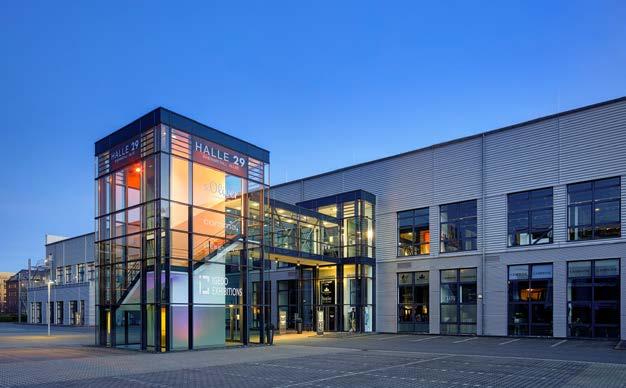
From July 25 to 27, 2026, the fifth edition of Twodays, powered by Igedo Exhibitions, will open its doors alongside Düsseldorf Fashion Days. Since January 2025, Hall 29 has proven to be the ideal venue for this ordering platform for fashion, shoes, accessories, and bags. The format is complemented by the Showroom Concept at Kap.One, which will offer initial ordering opportunities starting July 24 and bring together national and international brands, agencies, and retailers. “With Hall 29 and Kap.One, we are creating the perfect environment that combines networking, inspiration, and successful business in the heart of Düsseldorf’s fashion scene,” says Ulrike Kähler, Managing Director of Igedo Exhibitions. www.twodays-duesseldorf.com
Lifestyle topic: The Barefoot trade show in Offenbach.
The place to be: Twodays at Hall 29.
The Gigi Donna, available via Ventrella.
Ralf Klute, Head of Design: “Clear stylistic boundaries are dissolving.”
Ana Alcazar
Unmistakable
What sets Ana Alcazar apart in a market that offers so much similarity?
Beate Ilzhöfer, co-founder of Ana Alcazar: Fashion at Ana Alcazar has always been about self-expression, never conformity. Our signature style features expressive prints, vibrant colors, and feminine cuts. A woman must feel comfortable, stylish, authentic, yet not overly flashy. This delicate balance between self-confidence and effortless elegance is our goal. In a world dominated by mediocrity, the brand that stands out and fosters a sense of identity is the one that wins. What looks can we expect for the new season?
Crochet-style knitwear in delicate pastel shades, delicately embroidered cotton with a bleached look in burgundy and taupe, and denim in the form of a wrap dress. The most poetic highlight? Paradise prints on crushed fabrics in goldbeige, for exciting two-piece sets, summery A-line dresses, or short-sleeved dresses with peplum collars. A look that feels both nostalgic and contemporary, and exemplifies our print DNA.
www.a-n-a.com
CG – Club of Gents
Tailoring Meets Emotion
What changes is menswear undergoing?
Ralf Klute, Head of Design: Menswear is currently undergoing a very positive transformation. Clear stylistic boundaries are dissolving – whether wide or slim, colorful, or more understated: today, almost anything is possible and more exciting than ever. Silhouettes are interpreted more freely and looks appear more playful and individual. Is emotionality being incorporated more strongly?
If you understand coolness as a form of emotionality, then definitely yes. Emotionality plays an increasingly important role in collection development. It’s no longer just about individual products, but about a lifestyle and a story that’s being conveyed. That’s why we also develop campaigns and videos based on clear storylines. Are there new interpretations of trends? Absolutely. For us, this is currently evident in the reinterpretation of classic tailoring icons that we’ve incorporated this season: Cary Grant is back – as the inspiration for a new suit silhouette. www.cg-fashion.com
Fashion that says something about the wearer: Ana Alcazar.
Liv Bergen
“We Love Color!”
What trends are you playing with this season?
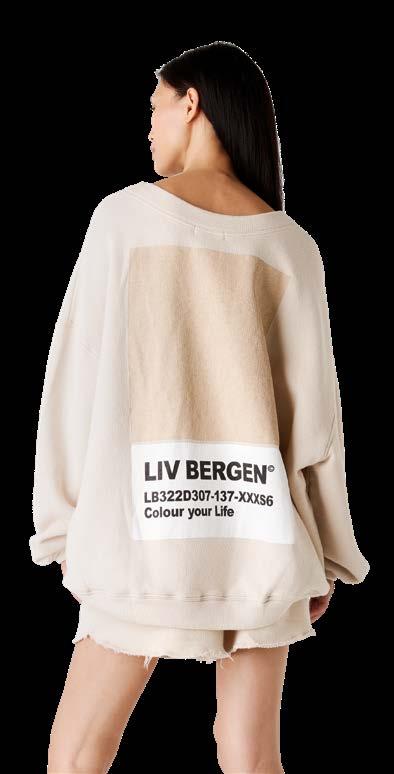
Sybille Mezger, Founder: Stripes – horizontal, vertical, block stripes, or narrow Breton stripes. A multicolored watercolor-style stripe on linen or viscose looks great. Pair that with polka dots on flowing fabrics or color-blocking on knitwear. We’re combining pastels with bold colors and a touch of neon. As a highlight, we’re featuring culottes in flowing jersey – super cool with a cropped shirt! Is it getting more feminine?
Absolutely! With various skirts, a dress with a drawstring, or T-shirts with delicate pearl embroidery.
But always with a cool edge, especially with the linen suit paired with Bermuda shorts. Why are buyers so enthusiastic? Because the collection has a high recognition factor. They feel the quality, see bold cuts and color combinations – they sometimes sell items straight out of the box.
And in terms of distribution?
We’re strongest in Germany and France. Now Switzerland is on the rise, and we’ll be exhibiting at CIFF for the first time.
www.livbergen.com
Quality and coolness: Liv Bergen.
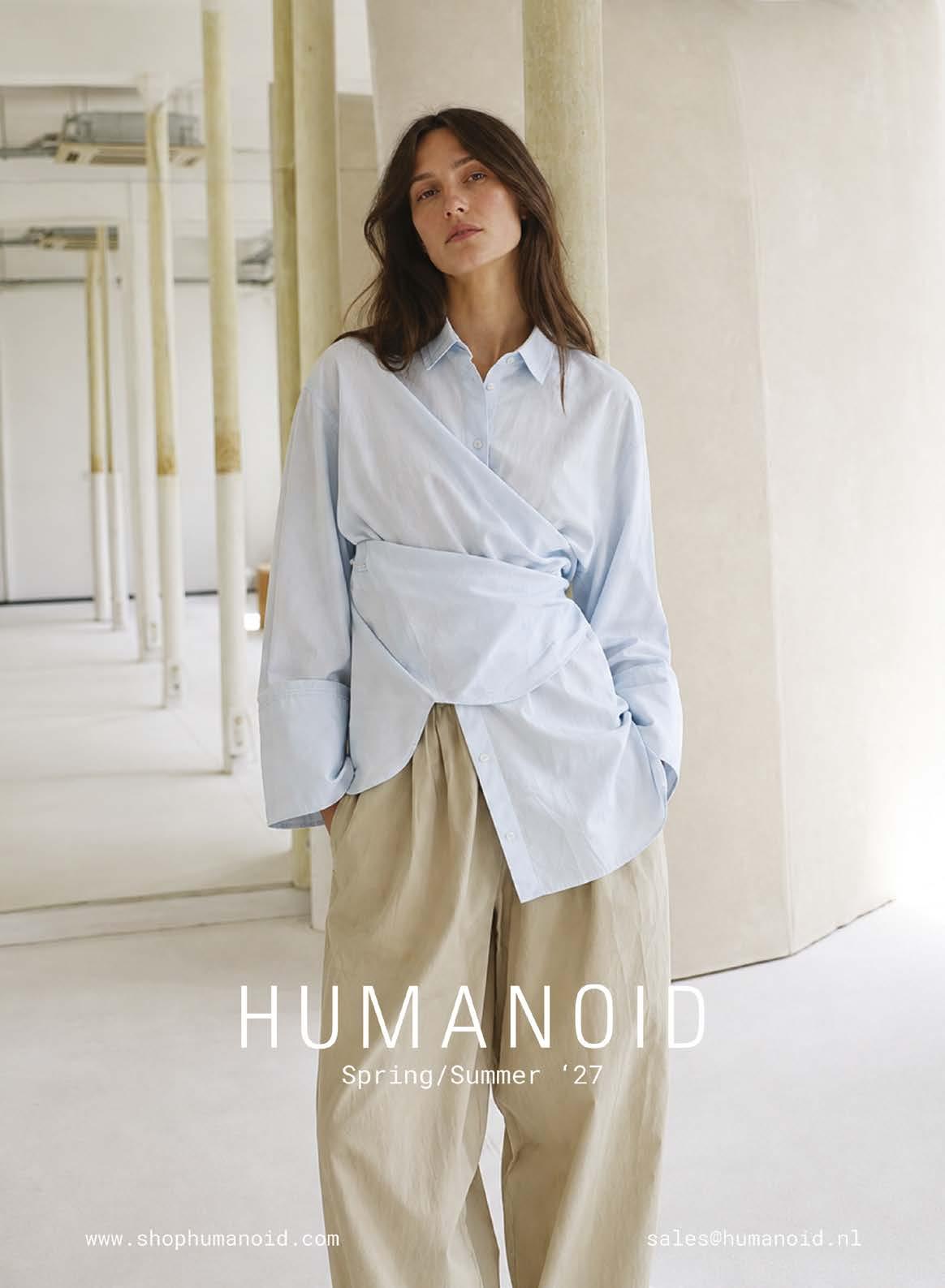
Tactile fabrics, soft silhouettes: Humanoid.
Humanoid
Create the Things You Wish Existed
Daan, what’s new for spring/summer 2027?
Daan Berkhoff, co-owner of Humanoid: Lots of experimentation! We want to design things that don’t exist yet – playful, versatile pieces. Silhouettes inspired by circles feature soft shoulders and curved hems. Straps and 3D pockets bring in utility influences.
Do you see more emotion in womenswear?
Yes, that strikes a chord. We want pieces that feel intuitive and personal. Cotton plays a key role, ranging from feather-light to heavier twills with vintage washes, for depth and texture. Where is the strategic focus?
We’ve moved away from the idea that growth means constant expansion. We achieve 30 percent growth per season by deepening existing partnerships. Trust is the currency right now – that’s why we offer 60-day payment terms. Collaboration is everything, especially with Sandra Mindner for Germany. That’s how we strengthen our presence where it makes sense, without compromising our values.
www.shophumanoid.com
Dopper On the Go
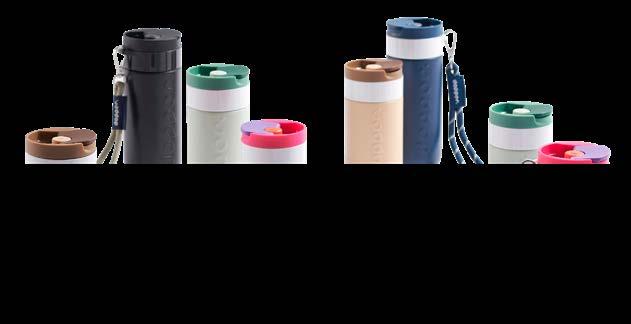
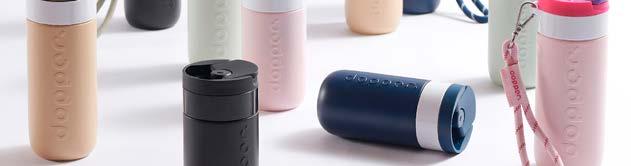
The new Dopper Travel Mug for hot, cold, and carbonated beverages is available in two sizes – 300 or 400 milliliters – and five colors. It’s leak-proof and can be used with one hand. It fits in most cup holders and is dishwasher-safe. With the customizable ring and various cords, you can style the mug exactly to your liking. @dopper_official
Duno
Functional Ease
The new spring/summer 2027 collection feels calm, almost effortless. What’s the focus for you this season?
Chris Wang, CEO of Duno: Functional ease. Less noise, more clarity. We’re consciously streamlining and giving function room to breathe.
Duno is once again working with four lines. How should we interpret them?
Timeless is our iconic cornerstone – familiar, balanced, durable. Contemporary is our core line: new volumes, new materials, straddling urban and outdoor. Attic brings a quiet elegance to the mix, with high-quality Italian fabrics and plenty of lightness, especially through linen. And Code is the look ahead to the future – technical, precise, almost purist. White is the central color (or non-color) here.
Who is the Duno customer?
Someone who doesn’t commit to one thing, who moves between the city and nature and is looking for clothing that does exactly that – uncomplicated, functional, and with a certain natural ease.
www.d-duno.it, @duno__official
A Distinctive Style
Pride to Be has long since evolved beyond simply representing strong expertise in outdoor apparel; it has developed into a clearly defined brand that deserves a permanent spot in stores. While the label continues to impress in the realm of lightweight spring jackets and coats, the collection is now being consistently expanded: functional outdoor pieces in nylon and vegan leather meet flowing dresses as well as modern, summery total looks featuring tops and new pant styles. The result is a cohesive, distinctive collection with a clear signature and high fashion relevance. Available at Modeist (Düsseldorf, Munich) and at Zirlewagen in Switzerland. www.pridetobe.de
A collection with its own attitude: Pride to Be.
Floris van Bommel 9th generation shoemaker since 1718
Raffaello Rossi
30 Years of Perfect Fit
With the anniversary theme “30 Years of Perfect Fit – Empowering Women with Style,” Raffaello Rossi is celebrating its 30th anniversary and honoring all the women who define the brand with their personality, poise, and individuality.
For 30 years, Raffaello Rossi has stood for premium women’s pants with a perfect fit, high quality, and modern style. Founded in 1996 by Brigitte and Ralf Schellenberger in Großwallstadt, the label has grown into an internationally successful brand in the premium segment. Today, the founders, together with their sons David and Tobias, are leading the brand into the next generation with the goal of combining tradition and the future. “30 Years of Perfect Fit” stands for three decades of consistent innovation and customer focus.
With approximately 130 employees, a female workforce of over 80 percent, and a predominantly European production, Raffaello Rossi focuses on quality, responsible business practices, and timeless modernity. More than one million pairs of pants are sold annually in over 20 countries – to approximately 1,450 specialty retail partners worldwide and more than 1,000 in the D-A-CH region.
The focus has always been on the combination of a perfect fit and emotional value. “From the very beginning, our goal was not only to dress women with our pants, but to make them feel good. Comfort, style, and self-confidence all in one,” explains Product Manager Brigitte Schellenberger. This commitment remains central for the next generation as well. Tobias Schellenberger emphasizes: “For us, innovation, sustainability, and modernity naturally go hand in hand – with the goal of designing pants for the women of today and tomorrow.” David Schellenberger adds: “For us, 30 years are above all a driving force to further develop the brand and continually capture the spirit of the times for our customers.” Father Ralf Schellenberger is proud of his sons’ decisions: “We look on with pride as our values are carried forward by the next generation and interpreted in a contemporary way with fresh inspiration.” www.raffaello-rossi.de
The Schellenberger Family: A brand story driven by passion.
Pants that instill self-confidence.
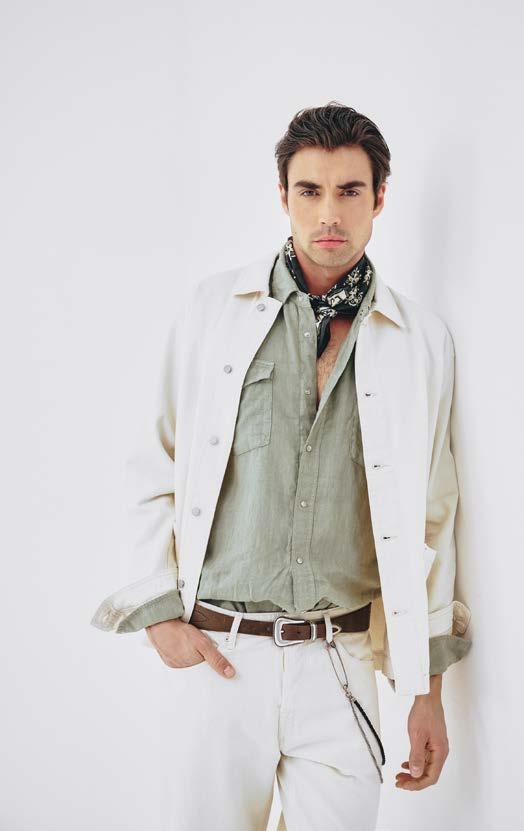
Aquascutum Active x Geoff Bell Modern Outerwear
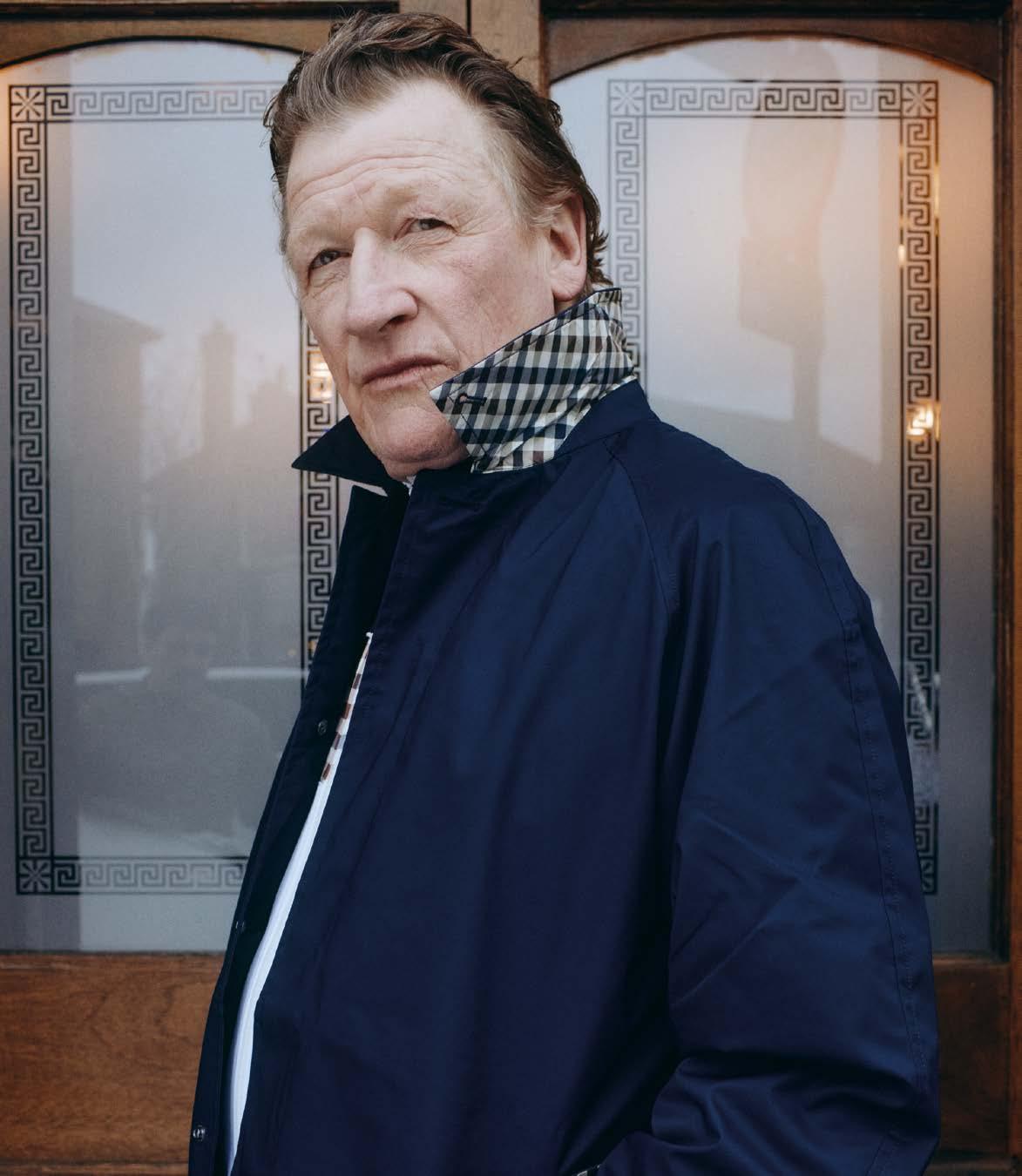
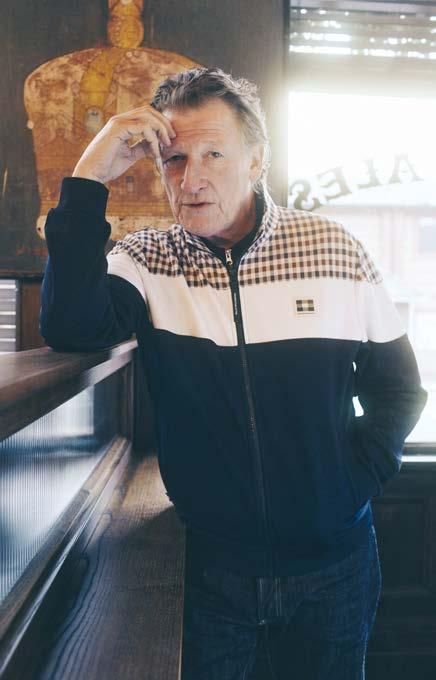
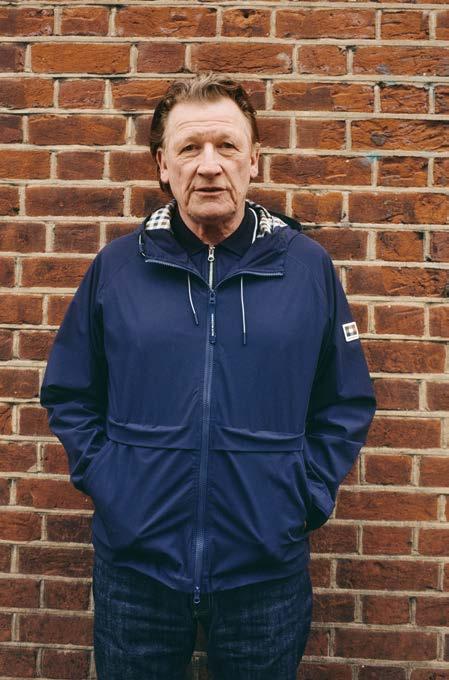
The British brand combines tradition and functionality. The six-piece capsule collection featuring acting legend and soccer fan culture icon Geoff Bell reflects exactly that. Statement pieces such as the Club Check Shoulder Track Top, the four-way stretch shell hooded jacket, a Harrington jacket, and a foldable trench coat combine everyday practicality with advanced material development. Head designer Alessandro Pungetti once again brings British heritage into the present with technical sophistication and a modern attitude. Chusaja from Munich is responsible for distribution in the D-A-CH region.
www.aquascutum-active.com
Edelle Lightness as a (Design) Language
What’s new for the upcoming season at Edelle?
Hilke Blömeke, CEO & Creative Director at Edelle: We remain true to our strengths and continue to build on them: versatility for modern everyday life and a soft feel thanks to luxurious materials remain our focus. Lightness and clarity – both in the silhouettes and in the patterns. We’re introducing many new styles. The collection combines minimalist design with flowing blouses, new skirt styles, and clean dresses, creating modern, uncomplicated looks. Important: The price range up to 199 Euros retail has been greatly expanded. What role does emotion play for spring/summer 2027?
Fashion also serves an emotional function. Clothing can enhance well-being and act as a mood regulator. It provides a sense of security and can trigger positive emotions. Especially in times when many people long for stability, this aspect is becoming increasingly important. www.edelle.de
New for spring/summer 2027: In June, Edelle will showcase its collection at Salon Düsseldorf, and in early August at Munich Praterinsel.
Club Check as the unmistakable hallmark of British elegance.
Boss Welcome to the Club
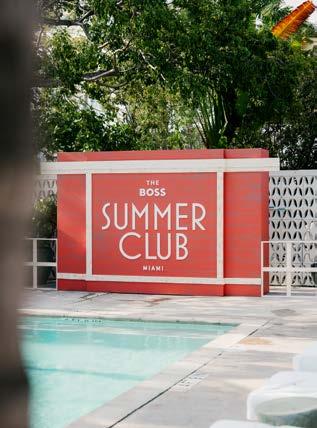
To launch the Summer Resort 2026 Selection, Boss and Soho House transformed their Miami Pool House into an exclusive poolside destination from early to mid-May. With this temporary concept, Boss focused specifically on immersive brand experiences and community building as a strategic extension of traditional fashion communication. Guests experienced a curated brand world featuring a pop-up store, styling, music, wellness, and dining. A collaboration that demonstrates how lifestyle partnerships will grow in importance in the future to emotionally connect with brands and reach new target audiences. www.hugoboss.com
For the second half of 2026, Boss and Soho House will continue their partnership and offer members exclusive Onlyat-Soho-House experiences.
Linen and Algae
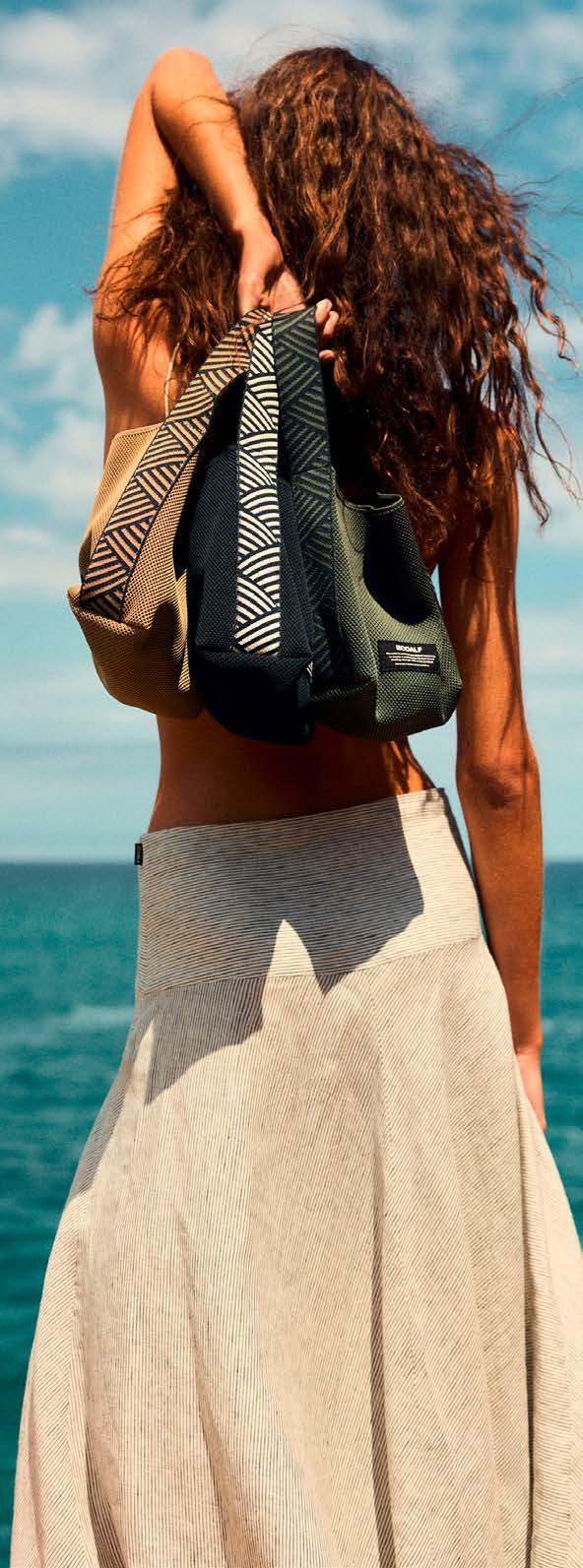
Algae-based dyes are a central element of the Ecoalf spring/summer 2027 Outerwear Collection. Algae grow quickly, require no farmland, and absorb CO2 as they grow. As a result, they help reduce the ecological footprint. Unlike synthetic dyes, algae-based dyes are biodegradable and contain no toxic chemicals. The stylish Striped Linen Capsule features lightweight shoppers and breathable shirts and dresses that reflect the eco-friendliness of the material, which requires only rainwater to grow.
@ecoalf
Ecoalf
The algae-dyed styles feature slightly washed-out tones with a natural look.
Bloom La Dolce Vita
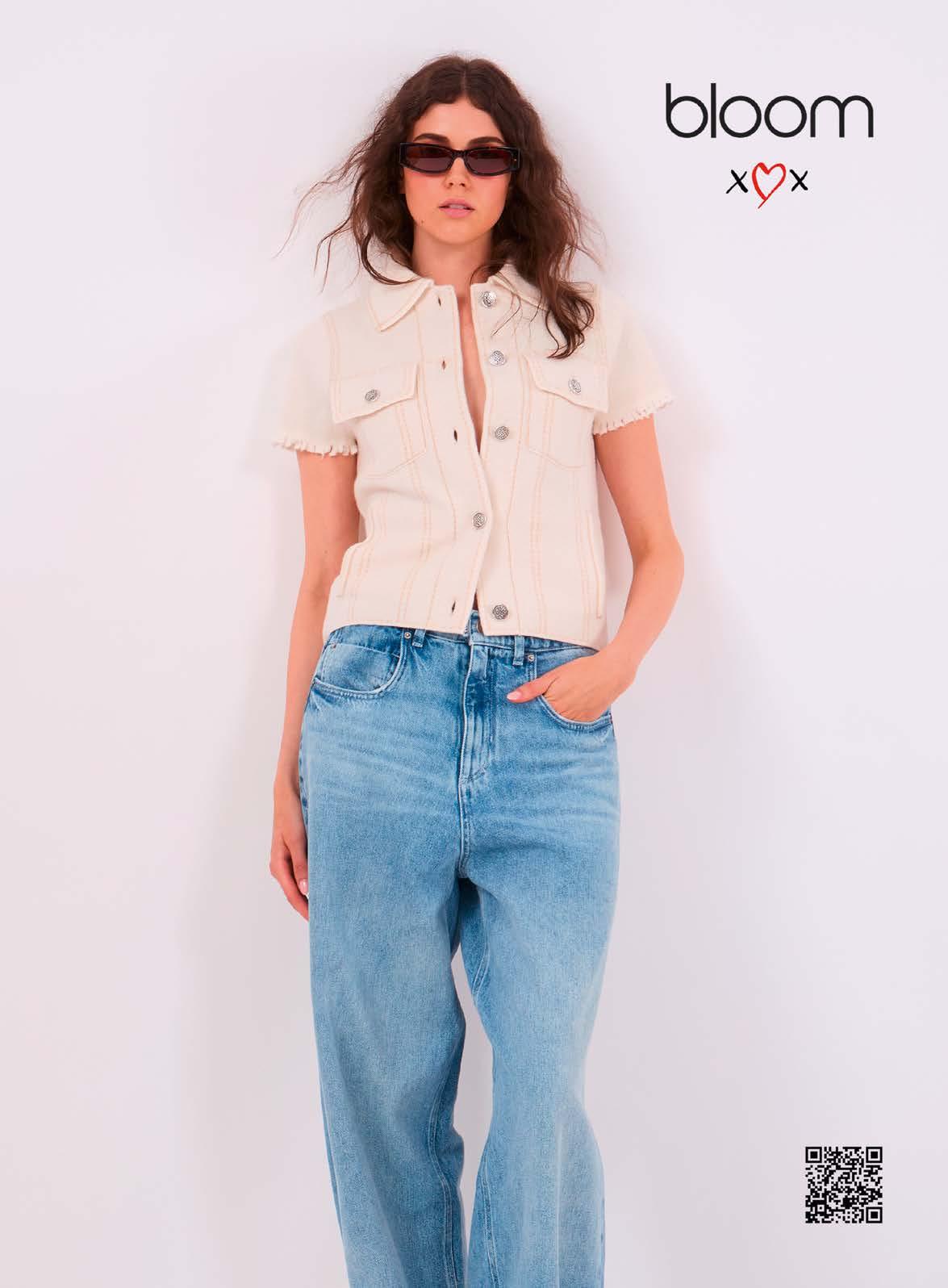
The new Bloom collection embodies lightness, softness, and femininity, inspired by the Dolce Vita of southern Italy in the 1970s and reimagined for today with a touch of Hanseatic urban chic. Twinsets, tops with crocheted edges, and polo shirts bring retro vibes. Short-sleeve knits, vests, and sweaters with scalloped edges represent the here and now. A highlight? The short-sleeved jacket with fringe paired with denim-look knit shorts. Gelato shades like lemon, pastel rose, and light jade meet rose pink, orange-red, and Italian green, while off-white, sand, and dark coffee provide a calming touch. Super-soft cashmere, blended with silk and wool, features in openwork and wave patterns. Flowing skirts and midi dresses perfectly capture the summery lightness. www.bloom-fashion.de
New Denim Line
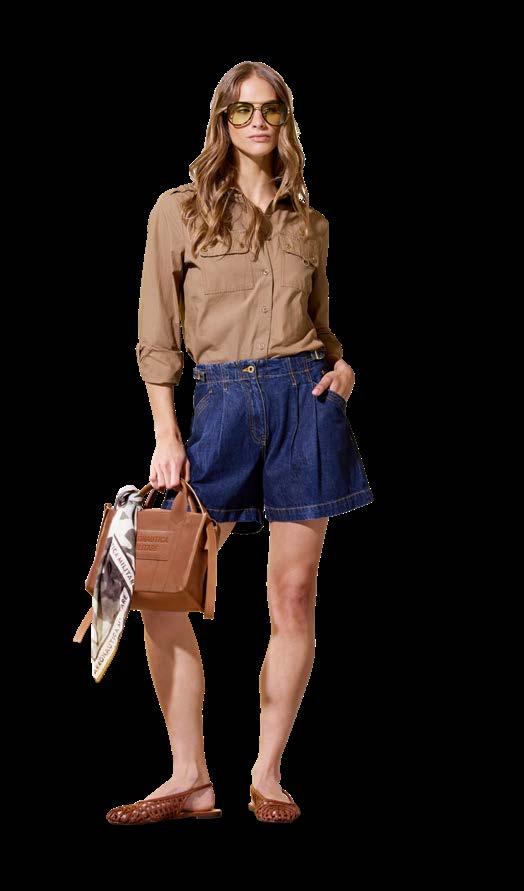
In 2026, the Italian brand is making a strong statement in the Austrian fashion retail scene with an exclusive pop-up at Kastner & Öhler in Graz. It showcased its world with a focus on heritage, military aesthetics, and Italian artisanship. At the heart of the new 2027 summer collection is a modular denim concept that spans all product categories and creates high versatility and commercial appeal through various washes, fabrics, and constructions. Graphic multi-patch and heritage elements, as well as aviation-inspired details, underscore the brand’s identity. @aeronautica_officialstore
Aeronautica Militare
Agentur Niko Fastenhuber represents Aeronautica Militare in Austria.
Summerbreeze: Bloom.
Sleepers BETTER FLIP-FLOPS
Sleepers are ethically produced from natural rubber in Sri Lanka. These colorful, eco-conscious flip-flops are available in Slim, Tapered, and Plateau styles, priced from 39 to 79 Euros, and are already available at Le Bon Marché, Phänomen, Kastner & Oehler, Moosbrugger, Bella Donna, Identità Italiana, The Wants, and Breuninger. @shopsleepers
Academia MATCHING
Mademoiselle YéYé FABRIC TALES
Large prints, bold colors, and plenty of humor – that’s Mademoiselle YéYé’s formula for success. Sustainability isn’t just a footnote here; it’s part of the recipe: 90 percent of the collection is made from sustainable materials. The focus is on fair, long-term partnerships with producers. From statement pieces to easy basics: it feels YéYé! www.yeyeye.de, @mademoiselle_yeye
For spring 2027, Academia reinterprets the classic women’s blouse. Flowing silhouettes, modern striped patterns, and natural materials combine Nordic clarity with Italian artisanship. The color palette ranges from blue to soft rosé and natural tones. The focus is on relaxed matching sets consisting of a blouse and Bermuda shorts – in stripes, paisley, or solid colors. @academiashirt
Munich Fabric Start
30 Years as the Industry’s Barometer
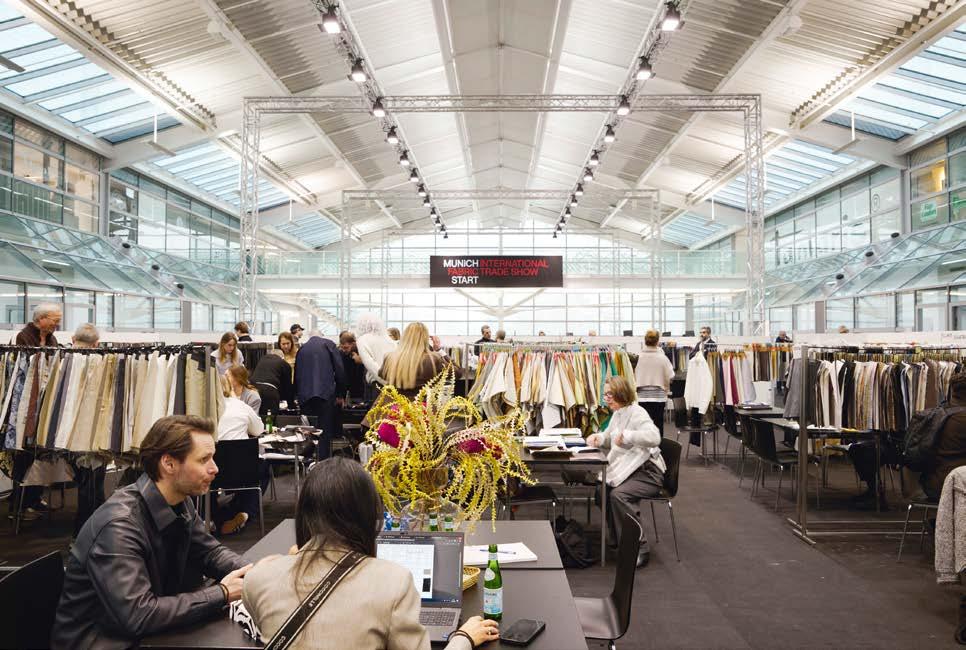
For three decades, the trade show – which began in 1996 with around 50 exhibitors at Munich’s MOC – has brought together fabrics, trims, innovations, and future-oriented themes into a creative ecosystem that goes far beyond the traditional concept of a trade show. Munich Fabric Start redefined the role of traditional textile trade shows early on. Designers, brands, manufacturers, technology partners, and decision-makers come together here across the entire value chain. Formats such as Bluezone, Keyhouse, The Source, and ReSource exemplify the event’s interdisciplinary approach and regularly provide inspiration for the international fashion and textile world.
In doing so, the trade show has always served as a barometer for the industry.
“Sustainability, circularity, smart materials, and responsible supply chains became visible here long before they reached the mass market. At the same time, the event established itself as an important working and inspiration platform for design, product management, and buying for international fashion brands,” says Managing Director Florian Klinder.
Over the past 30 years, the trade show has played a key role in positioning European textile expertise on the international stage, making sustainable innovations market-ready, and connecting young talent with industry and retail. Denim and sportswear cultures have also been repeatedly reinterpreted here. Italian fabric expertise, German engineering quality, international creativity, and global sourcing networks converge in Munich to form a platform for the industry’s future challenges.
On the occasion of its 30th anniversary, the focus is firmly on the future: renewable materials, AI-driven product development, digital supply chains, and circular business models are already shaping the next generation of the industry. The past decades show that relevance arises where innovation, responsibility, and creativity come together – a commitment that Munich Fabric Start intends to uphold in the future as a key driving force in the fashion industry.
www.munichfabricstart.com
Munich Fabric Start: From fabric trade show to platform for the future.
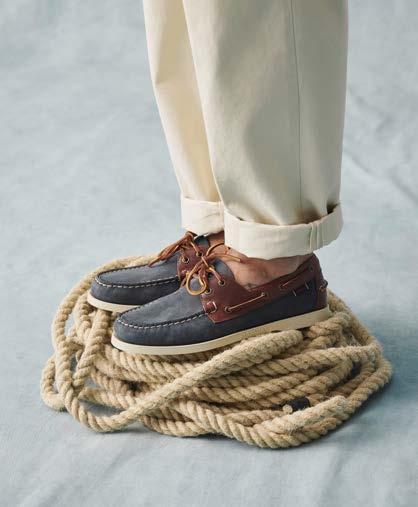
Sebago Back to the Sea
Following its 80th anniversary in 2026, Sebago continues to stay true to its roots for Summer 2027, further sharpening its nautical profile. The focus is on the brand’s heritage, inspired by the sailing culture of the American East Coast and the lifestyle of classic yacht clubs. Lightweight shirts, linen pants, and nautical stripes define the collection, complemented by key pieces like the versatile three-hook jacket. The iconic boat shoe remains central, a symbol of artisanship and authenticity, with a clear commitment to Made in USA. Sebago combines tradition with modern ease and translates its heritage into a contemporary summer wardrobe with a clear focus: back to the sea. www.sebago.com
JcSophie
A Relaxed Approach
Please describe the strategy that led to JcSophie’s success. Richard and Joannette van der Mark, Owners: Our approach is actually quite simple. We focus on creating collections that we believe are both beautiful and commercially successful. For us, the most important thing is to develop the right products with the right quality and at the right price, and to have them available in stores at the right time. How do you go about this?
This approach requires a clear, practical, and straightforward way of working that makes beautiful products accessible to consumers at a reasonable price.
We love the exchange with other brands, with new perspectives, with special places. That’s exactly why we feel at home in multibrand stores: The hidden gems of a city.
What defines your collection?
Our total-look collection is casual yet feminine, figure-hugging, and subtly inspired by Asian minimalism. www.jcsophie.nl, @jc.sophie
The iconic Docksides boat shoe.
A relaxed style with a feminine silhouette.
CATCH YOU BY THE WATER
For the Spring/Summer 2027 season, mey is introducing the new resort collection. Designed for endless summer vacations, it stays true to the concept of the iconic mey total look.
Pin 1876
Seasonless Cashmere
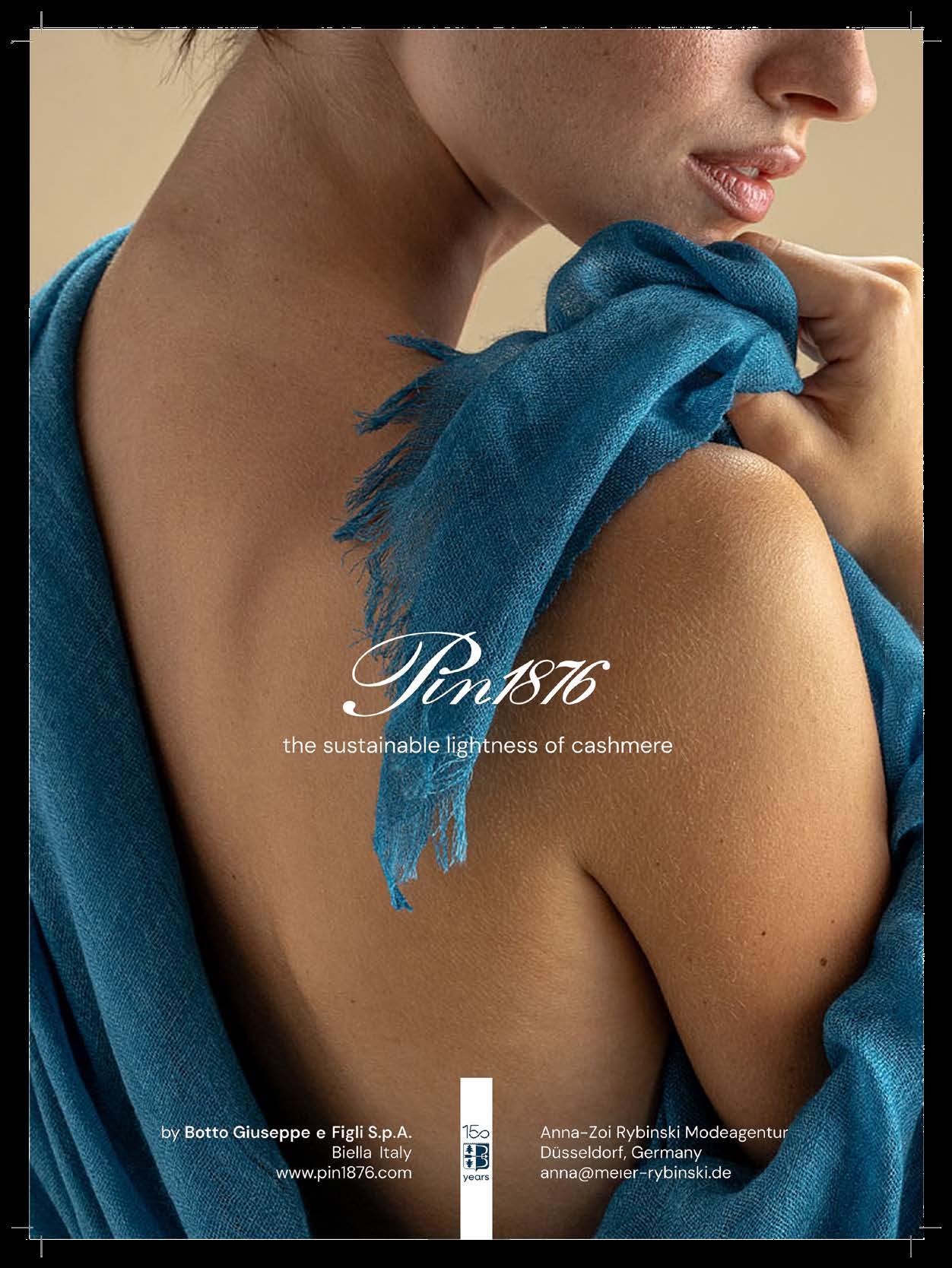
150 years of Botto Giuseppe – what does this anniversary mean for Pin 1876?
Alberto Zia, Managing Director of Pin 1876: It is both a clear sign and an incentive. Pin 1876 is the accessory brand from Botto Giuseppe, and even though we are a relatively young division, it was important to us to highlight this long history. The founding year 1876 in the logo is not just a detail, but a deliberate statement. Being part of a company that has been in the textile industry for so many decades means responsibility, but also motivation. It’s about carrying on this tradition while remaining open to new developments.
Cashmere in the summer – does that really work?
Yes, very well, in fact. What initially sounds contradictory has been clearly confirmed in practice. Especially in coastal regions and tourist destinations, we see strong demand for our cashmere stoles. They are lightweight, comfortable against the skin, and at the same time offer protection from wind and moisture. It is precisely this combination that makes them a versatile layering piece – not as a classic warm layer, but as a functional companion that can be used flexibly.
What are the key pieces for summer 2027?
We are strategically refining our existing cashmere bestsellers and expanding them with new qualities, particularly cashmere-silk blends featuring specially developed finishes. At the same time, we are working on more compact styles that are even easier to incorporate into everyday life. Another focus is on color development. Pastel tones, dégradé effects, and light shades bring freshness and lightness to the collection and give it a clear summery focus. At the same time, we’re also thinking commercially. Part of the collection is deliberately designed to be relevant for the end-of-year business and to be delivered early.
How would you summarize the brand’s direction?
It’s about combining experience, quality, and innovation to develop a product that works across seasons. www.pin1876.com
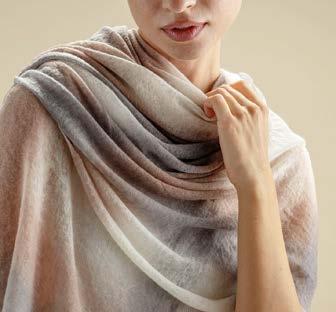
Cashmere scarves by Pin 1876: Lightweight, functional, and made in Italy.
Alberto Zia relies on cashmere – even in summer.
Latinò
A Return to Joy
Are we currently witnessing a return to emotion in fashion?
Massimo Vendali, Founder and CEO of Latinò: Yes, absolutely. After years of a very rational, algorithm-driven aesthetic, there’s a growing desire for something authentic. Fashion should once again move us, energize us, and convey a feeling – not just be stylish. It’s about a new, free form of femininity.
How does that show in your collection?
Above all in silhouettes and fits that adapt to the body and appeal to different women. The color palette is also becoming more emotional, with pastel tones that convey lightness and freshness. At the same time, pants – especially denim – remain our core product: Minimalist, essential, and timeless.
What role do materials and details play?
A central one. Textures are not just meant to be worn, but experienced. Accessories and details give the look personality. www.latinobrand.it
Strength Through Regionality
With a fresh structure and a clear focus, Soldout is entering a new phase: going forward, the label created by Marion Hoferer will collaborate with regional agencies. Remaining true to the collection’s core message, the development of the collection will continue to be in her hands. New features include shorter supply chains, new production methods with equally new qualities, and a pricing structure similar to before: around 30 percent more affordable, with retail prices averaging 129 to 179 Euros. Soldout continues to stand for everyday favorites –uncompromising in comfort and style. www.soldout-fashion.de
points of
Latinò – denim that makes you happy.
Soldout
New
contact: Agentur Michaelis (Southern Germany), Oliver Ahrens (Northern/Eastern Germany), Agentur Nürnberger s. U. (Central Germany), Zirlewagen Modeagentur (Switzerland), and Agentur Friedrich (Austria).
Nine to 9
Maximum Value
With its new spring/summer collection, Nine to 9 continues to evolve towards a total look. The focus is on blouses and dresses made from soft, flowing fabrics such as Tencel, modal crepe, and technical jersey from Italy. These are complemented by coordinating blazers, pants, and tops for relaxed, feminine total looks. The collection is rounded off by shiny denim-Tencel. Attractive wholesale prices (blouses starting at 55, dresses starting at 69 Euros) and flexible delivery dates are designed to offer retailers maximum added value. In addition to the Modeist showrooms in Munich and Düsseldorf (Germany, Austria), the brand is represented by Zirlewagen in Switzerland. www.nineto9.de
Crafting Cashmere
Since 1972, Malo has been synonymous with Italian knitwear of the highest quality. Founded in Florence, the brand is built on a clear philosophy: the finest yarns, precise artisanship, and a deep understanding of materials. For spring/summer 2027, clean silhouettes, balanced proportions, and a perfect fit remain central to the collection. Cashmere, silk, and Makò cotton define the collection, complemented by a distinctive color palette and an extensive archive. Production takes place entirely in Italy, with in-house manufacturing and deep artisanship. www.malo.com
Stuff ı Wolkenstricker Atelier ı Xaver Luis Schuhmanufaktur ı Zhrill
24–25 November 2026
Gusswerk Salzburg
White Milano
Setting New Standards
How was the February 2026 edition?
Brenda Bizzi Bellei, CEO of White Milano: Very positive. Thanks to the support of ICE and Confartigianato, White was able to significantly expand its international reach. We had twice as many international buyers as in previous editions, and they made substantial purchases. What makes White special today?
Today, White is much more than a traditional trade show. It’s about experience, hospitality, networking, and building genuine relationships. The focus is on a diverse brand portfolio, inspiring encounters, and high-quality service for international guests.
What are the goals for September?
We expect four times as many international buyers compared to September 2025. At the same time, the trade show is growing, with new sections for accessories and urban lifestyle. White Resort is also expanding: For the first time, the June format will also take place in September – with its own area and a strong focus on the resort and hospitality business. @whiteshowofficial
Susanne Kaufmann
Edelweiss: A Symbol of Resilience
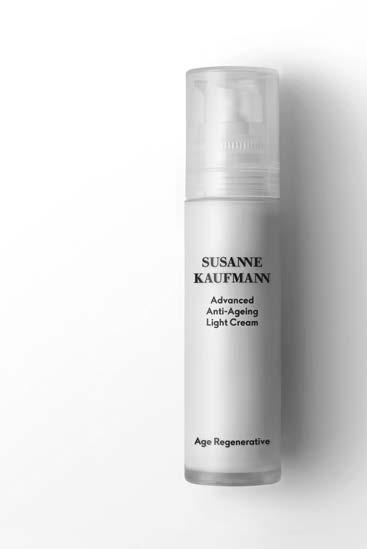
The new Advanced Anti-Ageing Light Cream by Susanne Kaufmann combines the regenerative power of alpine edelweiss plant extracts with modern peptide technology to specifically promote skin regeneration. The formula, containing 99 percent naturally derived ingredients, supports the skin’s natural renewal processes and combats visible signs of aging. @susannekaufmann_
The Düsseldorf Shoe Days combine the Goodiez and Twodays formats into a single weekend.
Goodiez Order Days and Twodays powered by Igedo Exhibitions
Joining Forces
New to Düsseldorf’s trade show scene: for the first time, Goodiez Order Days and Twodays powered by Igedo Exhibitions are teaming up as DSD – Düsseldorf Shoe Days. On August 30 and 31, 2026, both platforms will present footwear and accessories labels at Kap.One as well as at locations on Kaiserswerther Straße, Cecilienallee, and Medienhafen; among them are the agencies Orderlounge, Stefan Michalski, and Sas Agency, and collections such as Ecoalf, Mou, and Blauer USA. Participating showrooms will be integrated through joint communications, listings on the websites, and a shuttle service. www.twodays-duesseldorf.com
The afterparty at Sogni: One of the highlights of the last edition.
SALT
Together
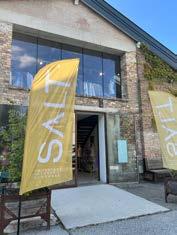
With the expansion of its showroom space at Gusswerk Salzburg by 300 square meters, Salt took a strategically important step in early 2026. The additional space was extremely well received and has significantly strengthened the Salzburg trade show and ordering format. Today, Salt offers nearly 1,800 square meters of presentation space for high-quality fashion, lifestyle, artisanal, and sports brands. For the summer dates in 2026, the organizers aim to build on the success of the beginning of the year – with their proven mix of strong partners and new labels. Initiator Hubert Stolzlechner is particularly pleased that brands such as Chrysalis England, despite their strong winter focus, are now also committing to SALT in the summer: “This is a wonderful confirmation of the quality of our event.” Established fixtures include the dates SALT 01 (July 21–22), SALT Fashion (August 2–4), and SALT 02 (August 21–23). New this year is SALT Sport in November, held in parallel with SnowPulse, the platform for sports and outdoor brands at Gusswerk. This brings together all sportsoriented showrooms for fall/winter 2027. www.salt-salzburg.at
Praterinsel by Petra Esparza McAlpine
Inspiration as a Guiding Principle
From August 6th to 11th, Munich’s Praterinsel once again transforms into a destination for inspiration. “At the last edition, attendance almost doubled, with most appointments booked in advance,” says Petra Esparza McAlpine. “A relaxed atmosphere is our guiding principle, allowing our customers to explore the venue in peace: everyone should be able to do so at their own pace.” Returning participants include Harris Wharf London, now with an expanded fashion offering, Su Official, Pierre-Louis Mascia and Arch4. “They will be joined by our guests Rossi, Stouls, Sminfinity, Katharina Hovman, MyBob and 8PM, among others.” New entry: Die Kaufleute with Malo, Mantù and Finamore. www.esparza-mcalpine.de
SALT: Real brands, real values, real encounters.
Petra Esparza McAlpine continues to position the Praterinsel as a key destination for inspiration.
grasegger.de/order
Bob 20 Years of Creativity
To celebrate its 20th anniversary, BOB presents a collection that views fashion as a language of constant movement. The looks further develop the brand’s signature style, combining high-quality materials with creative details. Inspired by the archives, the collection revisits the first polo line from 2006 as a tribute to its origins. Natural tones, as well as linen, cotton, denim, seersucker, and crinkle cotton, define the collection. New corrosion washes give outerwear, knitwear, pants, and polos a vintage-inspired look. Airbrush, shibori, and dégradé effects, as well as micro-embroidery and prints, underscore the artisanal character. www.bobcompany.it
Love Future
Love Your Bright Future!
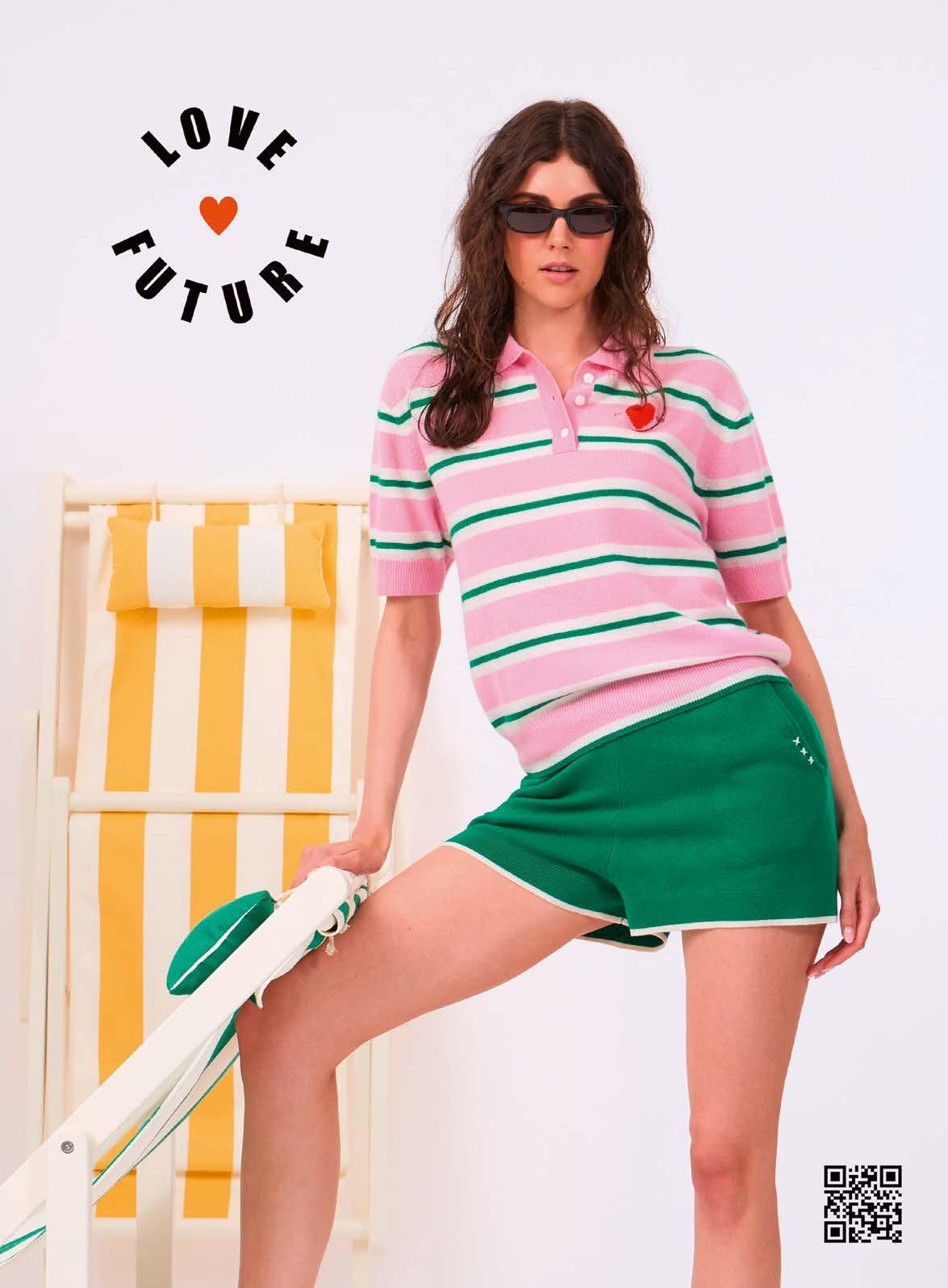
Fresh, sporty, eye-catching: Love Future’s knitwear featuring the heart icon has already attracted many new customers, with slim-fit pullovers and T-shirt sweaters featuring ribbed cuffs, as well as striped or marled polo shirts. For the third season, the collection features pieces with tonal hearts and subtle embroidery, as well as a new cashmere capsule collection with heart intarsia at a premium entry-level price point. Complementing these are slim, ribbed wool-cashmere sweaters with deep polo collars, as well as oversized sweaters and rugby jackets made from a soft baby alpaca blend. The color palette is dominated by pink and red, off-white, sand, and light gray mélange, refreshed with lemon, milky matcha, green, neon pink, and leopard print. www.lovefuture.de
Good vibes: Love Future.
The natural evolution of Bob-DNA.
Purschoen Connection
Jana, is the feeling of wanting to fall in love making a comeback in fashion?
Jana Gutzmann, Designer at Purschoen: Absolutely! Our scarves are favorite pieces – grounding, warming, and durable. We need consistency in this crisis-ridden world, a faithful companion that offers protection and lends individuality with color and prints. With what innovations?
The new collection is a journey around the world, capturing the mood of Asia; we dive into the depths of the ocean and discover the mystique of South America. We fall in love with bold animal prints, serene mineral tones, and make a statement with our Silky; worn in the hair, as a belt, or on the wrist.
The feel is your strength. What drives you?
When the finest cashmere touches the skin, it’s like a silent embrace. We want to make the intangible tangible, with felted fibers as light as morning mist. The archaic power of felting gives delicate wool cloud-like volumes and makes the world grow quiet for a moment. www.purschoen.de
Find your Ease
For spring/summer, Sloggi once again presents a wide-ranging collection full of highlights – including the new Fresh Ease series, which ensures a fresh and comfortable feel even on hot days. Thanks to innovative Polygiene® StayCool technology, moisture is actively wicked away from the body, accelerating evaporation and creating a cooling effect of up to 3 degrees Celsius in the fabric. With sophisticated details and elegant silhouettes, the collection combines comfort with lightness. At the same time, Sloggi is committed to greater sustainability: All newly launched products are certified, licensed, or made from recycled fibers. @sloggi
Sloggi
A little luxury: Scarves and Silkies from Purschoen.
Lightness for body and mind: Sloggi.
Fashion Meets Function
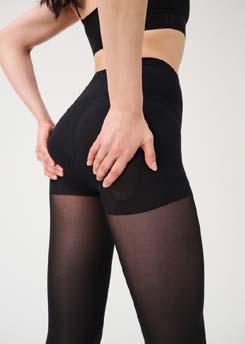
Whether tights, legwear, or bodysuits: thanks to built-in high-tech compression, Item m6 provides support, comfort, and a boost of confidence for all women, without compromising on a modern, feminine aesthetic. The products are designed not to reshape the female body, but to support it as effectively as possible. It’s an approach that’s resonating, as evidenced by rising demand: “Today, customers expect more from fashion products than just aesthetics,” says the label. For retailers, Item m6 thus opens up great potential – by women for women, with high relevance and a strong repurchase rate. Now available through Modeist. www.item-m6.com
"Compression is our DNA" is the foundation of every product development.
Stefan Brandt Product Excellence
What’s new for the spring/summer 2027 season?
Stefan Brandt, owner of Stefan Brandt Sea Island GmbH: The most revolutionary fabric in our company’s history: Masterspun, made from pure Sea Island cotton. It is the most disruptive of all our innovations and arguably the most transformative and perfect natural sensory experience for the skin that has ever existed in the world of cotton fabrics. How is this quality produced?
We push the boundaries of what is possible regardless of cost and use only the top 30 percent of the longest fibers from this most precious commodity. Using a special process, we are able to gradually extract the silk inherent in the cotton and weave it into the ultimate density. The fabric is so fine-threaded that it can only be processed with specially made sewing needles. How do you define Realness?
It is worth rediscovering true product excellence as the real treasure trove. I call on everyone to be courageous and ready to go the extra mile. Those who remain true to their dreams will also be able to achieve something extraordinarily great.
www.stefanbrandt.com
Stefan Brandt is committed to the highest quality.
Carl Gross
Easy Prep
For spring/summer 2027, Carl Gross reinterprets the classic preppy style. Inspired by the aesthetic of American Ivy League universities, The New Prep presents menswear classics with modern casualness and relaxed tailoring. While the Main Line embraces the sporty, more colorful character of the preppy look, the Black Line is more understated and elegant. Key pieces include washed suits, linen blazers, double-breasted jackets, royal Oxford shirts, cardigans, and field jackets. These are complemented by a focused pant collection, new signature details, and an expanded shoe collection designed to complete the total look. www.carlgross.com
Under her eponymous label, designer Jana Wieland creates collections that engage in a direct dialogue with the body. Her design philosophy is characterized by precision, opulence, and playful lightness. Founded in 2016, the brand has become a staple of the Austrian fashion scene. Currently, the focus is on the wedding line Weds, which consistently carries forward the house’s characteristic design language. The collection, made from sustainable materials and featuring a clean yet voluminous aesthetic, is aimed at today’s brides who want to combine individuality, responsibility, and effortless elegance. www.janawieland.at
New Trade Show Concept
With Val:ue Milan, Messe Frankfurt is launching a new premium format for the international textile industry. From February 3 to 5, 2027, the business hub at The Mall in Milan-Porta Nuova will bring together selected manufacturers, designers, and buyers of high-quality clothing and accessories. The goal is to foster strategic partnerships, high-quality contacts, and new momentum for the industry. Milan was deliberately chosen as the location because the city is regarded as a global center for fashion, design, and textile innovation. Val:ue Milan focuses on sustainable quality, innovative materials, and international networking in the luxury textile segment. www.valuemilan.com
The look exudes a modern, effortless vibe.
Messe Frankfurt aims to bring together the premium segment.
Val:ue Milan
Jelinek
Mac
An Open Outlook
In line with our overarching theme, The Economics of Trust: What does trust mean to Mac?
Eveline Schönleber, Managing Partner: Trust isn’t built on grand words, but on reliability, integrity, and consistency in our daily actions. For us at Mac, trust means building long-term relationships: with our retail partners, our customers, but also within our team and throughout our entire supply chain. At the same time, it also means being open to change today – for example, in the areas of sustainability, material innovation, or supply chains. We are convinced that trust arises above all where values are clearly lived and where aspirations and reality align. What opportunities does spring/summer 2027 bring?
Barbara Hirt, Head of Product Management Womenswear: We see great potential in a new openness to change in fashion. Consumers are once again more willing to try out new colors, silhouettes, and proportions. This creates space for more creativity and for a more emotional fashion overall. We are particularly looking forward to bold colors, modern femininity, and the season’s new lightness.
Simon Khasani, Creative Director Menswear: In menswear, we’re looking forward to the new loose silhouettes, the consistent further development of our Drivers collection, and the collaboration with rally legend Walter Röhrl. We’ve significantly expanded the range once again. www.mac-jeans.com
Social Business
Secrid’s card holders, which are manufactured in the Netherlands in workshops staffed by people with disabilities, are now also available in an envelope style featuring a convenient compartment for business cards and loose change. The original, patented Cardprotector securely holds up to six cards and makes them instantly accessible at the touch of a button. Minimal in size yet highly practical for everyday use. @secrid
Secrid
Fair since 1973: Mac.
Sassenbach
Customizing
Between radical clarity and individual freedom, Sassenbach’s new spring/summer 2027 collection defines itself as an alternative to the fast-paced fashion industry. Produced exclusively in Germany, the label stands for transparent manufacturing, flexible restocking, and an uncompromising focus on the customer.
At the heart of the collections lies the concept of customization. Lengths and colors can be individually tailored – a great opportunity for retailers to build customer loyalty. Instead of overproduction, the label relies on flexible reorders and demand-driven manufacturing. A concept that is not only more sustainable but also eases the burden on brick-andmortar retailers.
The cuts remain as minimalist as ever. Fringes and a linen look are central to the new season. Jersey is partially fringed, and hem lines dissolve. New additions include zebra prints in soft shades of brown. www.sassenbach-style.de
White Sand
Going Hybrid
For spring/summer 2027, White Sand is honing its core expertise: pants. The signature drawstring remains, but becomes removable on all styles. A subtle yet effective update that creates new freedom: relaxed and slightly edgy with the drawstring, cleaner, more minimalist, and more formal without it. Made in Italy, the standards remain as high as ever. Premium materials, 3D textures, jacquard fabrics, and modern interpretations of denim define the collection. The color palette is calm and natural: burnt tones, off-white, and classic denim blue. A subtle evolution – precise, relevant, and absolutely contemporary. white-sand.it
Just one material – and always new, exciting accents: Sassenbach.
Sportalm High Performance
With its new Course collection for spring/ summer 2026, Sportalm presents a modern golf line that combines functionality and design. Technical materials, precise artisanship, and details such as laser cuts and sporty silhouettes define the collection. The color palette features navy, off-white, and burgundy, with accents in pink and red. Characteristic elements include dot prints, collegiate details, and the iconic S-badge. The looks are sporty, modern, and work equally well on the golf course and in leisure time. www.sportalm.at
Mey
First Beach and Resort Collection
Mey is expanding its range with a beach and resort collection for women. The Coastal Bloom capsule collection for spring/summer 2027 draws on maritime influences and combines minimalist designs with high-quality materials. The collection includes beachwear and lightweight cover-ups, adding a new segment to the brand’s offerings. All styles are designed according to the mix-and-match principle, allowing for flexible combinations. An easy-sizing approach and tailored construction details are intended to expand the target audience reach in retail. In addition to the seasonal collection, Mey is introducing a permanently available NOS range. www.mey.com
Technical, feminine, and clean – a new definition of golf fashion with a fashion-forward attitude: Sportalm.
A new segment in the quality you’ve come to expect.
Hiltl More Volume, More Comfort, Clean Lines
The new collection features relaxed silhouettes with comfortable width and plenty of freedom of movement. In addition to slimmer T-shaped cuts, the new Treviso fit complements the range – a contemporary interpretation with a pleated waistband and watch pocket. The focus is on exclusive fabric innovations. An innovative cotton-lyocell blend with integrated rapeseed oil paraffins ensures lasting temperature-regulating comfort. The collection is complemented by a super-lightweight cotton-silk fabric with a high silk content of 22 percent, as well as a machine-washable Super 130’s wool with a summery, elegant look. www.hiltl.de
Vor Progressive Restraint
Vor combines timeless design with authentic artisanship and uncompromising quality. Founded by Jörg Rohwer-Kahlmann and Andreas Klingseisen and influenced by hip-hop, skateboarding, and street culture, the brand was born from the idea of viewing sneakers as long-lasting companions rather than fleeting trends. Timothy Hoferer, who recently added the brand to his agency Modeist’s portfolio, is particularly impressed by the brand’s flexibility: “The guys are super flexible when it comes to exclusive styles. That offers retailers real added value.” The brand is currently carried by Lodenfrey and Bungalow, among others – and plans to continue growing selectively for spring/ summer 2027. www.vor.shoes
Minimalism with depth: Vor.
Hiltl adds classic elements to a contemporary silhouette.
SoSue
Mouleta
Samantha Sung
IFCO
Where Fashion Connects
With IFCO—Istanbul Fashion Connection—Istanbul has established itself as a major hub for the international apparel industry. From August 19 to 21, 2026, the trade show will once again bring together manufacturers, brands, and buyers from around the world at the Istanbul Expo Center, covering a broad portfolio ranging from womenswear and menswear to denim and kidswear, as well as underwear, shoes, and accessories.
Organized by IHKIB and coordinated by ITKIB Fairs Inc., IFCO is now one of the leading platforms in the European fashion industry. Visitors from more than 100 countries underscore the trade show’s international focus and its role as an interface between European, Middle Eastern, and Asian markets. For manufacturers and brands in particular, IFCO offers the opportunity to expand international contacts and tap into new export markets.
In addition to its clear B2B focus, the fair is increasingly emphasizing content-driven formats. Trend Areas, seminar spaces, and fashion shows address current industry developments—from sustainability and consumer behavior to innovations in design and production. At the same time, The Core Istanbul highlights the creative energy of Turkish design talent, adding a cultural perspective to the fair.
As a result, IFCO is increasingly positioning itself not only as an order platform but also as an international network for the global fashion and sourcing industry. www.ifco.com.tr
IFCO brings together international brands, manufacturers, and buyers at the Istanbul Expo Center.
The Trend Area is one of the highlights of IFCO.
the point:
DMI
The Potential of After-Sales
In a study, Narravero and the DMI examined the impact of customers’ post-purchase experiences with products on brand perception and price sensitivity. “Whether it’s real estate, a VW Golf, a Hermès Birkin bag, or a Rolex – a high resale value is always by far the most powerful argument for a high new price,” says DMI Chief Analyst Carl Tillessen. “Many fashion brands view the secondary market for their products as competition for the primary market and the lower resale price as a threat to the retail price. The opposite is true.” The complete study can be downloaded for free from Narravero. www.deutschesmodeinstitut.de
Brompton Urban Mobility
With its new Electric Titan line, the British company is making another statement in urban mobility. Handcrafted in London, this folding bike weighs just 14 kilograms, making it one of the lightest e-bikes in its class. When folded, it can be easily transported on buses or trains – ideal for use in the city. With a range of up to 90 kilometers, the model combines maximum portability with a particularly comfortable riding experience. Retail price: Around 7,000 Euros. @bromptonbicycle
New Store Opening on Sylt
Moritz Berlin, known to many as the bearded lifeguard from Kampen Beach, and Dirk Thomas, most recently a buyer and store manager at 14 oz. in Berlin and Kampen, met on Sylt. It quickly became clear that they were connected not only by the island but also by a shared understanding of style, quality, and aesthetics. This encounter sparked the idea for their own store featuring a curated selection of brands such as Alden, Saint James, Ivy Ellis, Croots, Fleurs de Bagne, Les Motocyclettistes, Baracuta, Stetson, and Good On. The selection is complemented by accessories such as sunglasses from Lesca, pocket knives from Passion France, cashmere scarves and blankets from Atelier Alpiniste, soaps and hair care products from Marc Booten, as well as select locally sourced items like leather goods, spirits, and Italian delicacies. Many unique vintage pieces in the store’s interior are also for sale. @modis_kampen
A connection to the island and an international brand perspective: Modi’s is a combination of the first letters of Moritz and Dirk.
To
Carl Tillessen, DMI.
Salon Düsseldorf
Harmonious Community
From July 23 to 28, 2026, Salon Düsseldorf will bring together international designers, buyers, and creatives for the second time at Künstlerverein Malkasten. The unique atmosphere creates a space for focused work and inspiring exchange. “During the Düsseldorf Order Days, Salon Düsseldorf deliberately establishes an independent alternative to the traditional trade show: Instead of fast-paced activity and anonymous halls, curated spaces are created for personal conversations, long-term relationships, and collaborative work,” explains organizer Marcus Schiess. New exhibitors include Christiane Strobel, Edelle, and Seldom.@salon_duesseldorf
Phil Petter
State-of-theArt Knitwear
At Phil Petter, sustainability is evident not only in certified materials, but above all in the durability of every single piece. The spring/summer 2027 collection combines high-quality cotton and viscose yarns with seamless knitting techniques that reduce waste and conserve resources. Short supply chains and the conscious selection of materials further underscore the brand’s commitment to sustainability. At the same time, the season showcases the technical diversity of in-house production. Double-faced knits, crochet textures, Aran patterns, and two-tone ribbed sections are created on the brand’s own machinery. Made in Austria – for over 50 years. www.philpetter.com
Curated order platform at Künstlerverein Malkasten.
Knitting expertise: Phil Petter.
ELISABETH PROCK-HUBER
100 editions of style in progress, that means about 20.000 layouted pages. I’ve been part of this magazine since its first edition in 1998, since 2002 I’ve been in charge of art direction, graphic design and production. I fell into graphic design completely by chance in the 1990s and never had formal a education in it. It was simply learning by doing. This decade opened up amazing possibilities for magazines – the first software programs for graphic design becoming available meant that all of a sudden, not only publishing houses but also smaller agencies could produce them.
I always liked to design, not least countless covers for my notebooks during the long long time I spent in school. This is why I quickly felt at home in front of a mac and put my all into style in progress fully becoming my calling card. I want to give everything I design its own unique look, anything less than that won’t fly. I strive to do this with as little elements as possible, and to give each story its own character through careful combinations.
I am the mother of an adult child and live in Salzburg with my husband, with a great view of the Untersberg mountain. I love the music of Leonard Cohen and Bruce Springsteen and I am passionate about literature from the US, as well as Italy – and about soccer! @elisabeth.prockhuber
1 28 years of creativity and passion for style in progress: Elisabeth Prock-Huber loves what she does.
2 The art director and the publisher: Elisabeth with her little brother Stephan Huber, 14 years before the first edition.
3 My garden is my sanctuary. It’s all my own creation, and over the years it has become my very own personal paradise.
4 Document of a revelatory experience in 1979: My first Leonard Cohen concert.
EDITOR’S PICKS
Komono AVAILABLE TO ALL
Komono was founded in Belgium in 2009 by former professional snowboarders
Anton Janssens and Raf Maes and has established itself as a major player in the accessories segment. Inspired by the Antwerp fashion scene, the brand combines avant-garde design with commercial accessibility, including in its pricing. The product range includes sunglasses, watches, and complementary accessories. A defining feature is the deliberate use of color, form, and material that transcends fleeting trends. The focus is also on durability, functional quality, and the conscious use of resources – factors that are becoming increasingly relevant in the B2B context. www.komono.com
By Marymary
MOLECULES TO MAGIC
By Marymary operates at
the intersection of fragrance, design, and understated presence. Founded by Marie Moehle, the brand is known for products that don’t make a loud impression, but rather leave a lasting impact – on the skin, in a room, and in one’s memory. The idea arose from a personal need: “I spent a long time exploring niche fragrances, but never found one where I could say, ‘This is me.’ So I filled that gap for myself,” says Marie. The fragrance is deliberately reduced to precise, high-quality molecules. The range includes 5-, 15-, and 50-milliliter bottles as well as a scented candle. The brand is currently carried by approximately 30 high-end retail partners. www.bymarymary.com
Upper Hights STORY AND SOUL
While Upper Hights was initially known only to the most well-informed denim enthusiasts as a brand emerging from the denim collective Guestlist Tokyo, it has been establishing itself in the European market with its minimalist aesthetic since its debut at Copenhagen Fashion Week in the spring of 2025. The women’s collection has already been added to the portfolio of the Melagence agency. The minimalist pant styles, available in ten different fits ranging from slim to ultra-wide, place denim at the heart of the collection, which has since expanded into a complete look. Add beauty to everyday is the brand’s motto, encapsulating the precise blend of Japanese denim expertise, sustainable production, and timelessness. www.upperhights.tokyo
Looops FROM OUTDOORS TO INDOORS
Since its founding, Looops has made it its mission to bring nature into their customers’ homes. To do this, the Salzburg-based manufacturer uses 100% natural essential oils that are carefully processed by hand. Suppliers are carefully selected, and short supply chains are prioritized: stone pine oil comes from South Tyrol and lemon oil from southern Italy. Each composition is reduced to just a few clear essences. The product range includes scented candles, incense sticks and refills, essential oil blends, room and pillow sprays, and aroma diffusers. Looops now works with around 300 selected retail partners – including Lederleitner, Monocle Meran, and Manufactum. www.looopsmoments.com
Molebo WESTERN REVIVAL
The Danish belt brand was founded in 2024 by a family of experienced leather artisans. Here, the expertise of three generations meets a contemporary, distinctive design approach. All pieces are crafted in the brand’s own workshop in Tommerup, Denmark, using high-quality materials such as Italian, LWG-certified full-grain leather and traceable leather from Denmark. The designs combine classic belt traditions with modern, sometimes playful elements and striking Western references. Clients include The Next Door, Sportivo, Storm Fashion, Goodhood, 10 Corso Como in Seoul, Incu, Above The Clouds, and Opener. The collection is showcased in Florence, Paris, and Copenhagen. @molebo_belts
Fallninetythree DRESSING PEOPLE BEFORE BODIES
Launched for the fall 2026 season, the Italy-based brand sees itself not merely as a collection, but as an ongoing exploration of imagery, emotions, and cultural references. At its core are contemporary womenswear styles that consciously interweave memory and the future. The four core product groups are jackets, pants, dresses, and knitwear. Clean silhouettes, a minimalist color palette, and a high-quality material selection consisting of wool, silk, and recycled fabrics define an overall aesthetic that combines style with sustainability. Each piece is designed with the intention of “dressing the person – not just the body.”
@fallninetythree
The Economics of
Those who cannot outscale platforms and algorithms can out-trust them. Not as moral resistance to modern markets, but as a sharper form of market intelligence. An essay by
Stephan Huber
ST
Trust is not simply a decoration within a free, democratic, market-based society. It is the cultural foundation that makes such a society possible in the first place. And yet we are currently witnessing what happens when trust begins to erode.
Across politics, media, digital environments and markets alike, suspicion has become a permanent background noise of contemporary life. Every institution becomes questionable. Every price appears manipulated. Every promise sounds strategic. Every relationship risks becoming transactional. Every interaction demands verification. This creates enormous friction: socially, culturally and economically. A society in which nobody can trust anymore becomes expensive in every possible sense: Emotionally exhausting, economically unstable and culturally fragmented.
At the same time, trust cannot exist as a one-sided demand. Trust requires reciprocity: the willingness to act in a trustworthy way, and the willingness to place trust. Not mindlessly. Not naively. But openly enough to allow relationships, exchange and society itself to function.
This is precisely where another contradiction of the past decades becomes visible. Large parts of contemporary consumer culture have celebrated a radical form of individualism in which every decision, every desire and every advantage revolves around the self. Self-optimization became virtue. Immediate personal benefit became the silent organizing principle behind entire business models. But markets, like democracies, cannot function sustainably through self-interest alone. A society built exclusively around the mantra me first weakens the very conditions that allow trust to exist at all.
This matters profoundly for industries built not on existential necessity, but on desire, experience, emotion, culture and human connection – fashion among them. Because once trust disappears, these industries lose far more than sales. They lose emotional resonance and ultimately the conditions that make desirability itself possible. This is where realness begins. A competitive strategy for everyone who cannot win through scale, speed, platform power or algorithmic dominance, but who can win through expertise, trust, judgement, presence and relationships. Realness is not a moral counter-movement to platform capitalism. It is a strategic response to a market environment in which trust, orientation and human judgement have become economically decisive again. Those who cannot outscale platforms and algorithms can outtrust them.
More Than the Good Alternative
Moral debates rarely change consumer behavior. Better economic models do. Realness does not ask anyone to be better. It offers a way to operate more intelligently. Nobody builds a functioning business model on permanent self-sacrifice. And nobody saves a market by confusing margin with guilt. So it begins with the sober recognition that not every player in the market can win at the same game. In a platform-shaped economy, scale wins scale games. For independent retailers, owner-driven brands, specialist agencies, craftspeople and local businesses, trying to compete on those terms is not brave. It’s foolish.
They will not be faster than the fastest system. They will not be cheaper than the cheapest system. They will not outspend platforms on reach, data or convenience. And they do not need to.
Realness is not the friendlier option. It is the sharper one. Not moral superiority. Market intelligence. Realness begins where algorithms stop understanding people.
Where Platforms Cannot Go
Platform economies are built for transaction. Amazon perfected frictionless purchasing. Temu and Shein industrialized accelerated consumption. AI shopping agents will push this logic even further:
predictive recommendations, automated selections, instant acquisitions. For many categories, this is highly efficient. Almost no one dreams romantically about ordering printer paper. In purely functional categories, reducing friction is often a genuine improvement. Not every purchase is a logistical problem waiting to be solved. A platform can distribute products at enormous scale. It can predict behavior. It can optimize recommendation loops. But there are still things it struggles to produce convincingly: judgement, for example. An algorithm can tell someone what resembles previous purchases. A skilled stylist, bookseller, wine merchant or gallerist can tell what deserves attention and why. That is not the same thing.
Human touch creates forms of trust impossible to digitize. A conversation in a store, a recommendation delivered with conviction, the atmosphere of a space, the way a garment feels on the body, the memory attached to a place, the subtle reassurance created by competence – these experiences operate differently from transactional convenience. This is one reason physical spaces are regaining relevance. They create context. And context creates value. The same object purchased anonymously through infinite scrolling acquires a different meaning when connected to conversation, expertise, memory or physical experience. Fashion cannot survive as pure transaction. It requires context, interpretation, physical experience and cultural meaning around the product itself. Once fashion reduces itself to perpetual novelty and accelerated consumption, it erodes its own value. This logic did not stop with ultra-fast fashion. Luxury absorbed it too. People do not only remember what they bought. They remember how they were made to feel while buying it.
The Retailer as a Source of Trust
For a long time, the dominant narrative suggested that independent retailers were becoming obsolete. style in progress was never entirely persuaded. Not because we are nostalgic romantics, but because we have spent enough time around actual human beings. Platforms would replace expertise with algorithms. Infinite assortment would replace curation. Convenience would replace conversation. Physical stores would gradually dissolve into logistics points wrapped in lifestyle branding. It sounded convincing. And in certain areas, it even worked. But this diagnosis misunderstood something fundamental. This is where independent businesses regain their strength. The best were never simply sellers of pro -
June 16 - 19, 2026
ducts. They were interpreters of complexity, creating confidence through judgement and competence. Not by offering everything. But by knowing what deserves to be there in the first place. Selection is not limitation. It is responsibility.
Trust in Front and Behind the Counter
Trust cannot stop at the customer interface. It must extend throughout the entire chain of relationships that shapes a product long before it reaches the sales floor. And this is where large parts of the fashion industry undermined themselves. For years, enormous energy was invested into storytelling aimed at consumers, while distrust quietly expanded behind the scenes:
• Inflated pricing structures
• Artificial markdown systems
• Overproduction disguised as optimism
• Panic ordering
• Permanent risk shifting
The result is a market driven by insecurity while still speaking the language of aspiration. The industry spent years confusing volume with strength. This produced overstock, dependency, pricing erosion and permanent instability. Distrust is expensive. It destabilizes pricing, weakens long-term thinking and pushes businesses into constant reaction instead of conviction.
What would a functional market require? Relationships capable of creating stability instead of permanent uncertainty. Because trust changes how markets behave: retailers buy differently. Suppliers produce differently. Customers decide differently. Better decisions emerge from stable relationships. And stronger markets emerge from better decisions. This is not idealism. It is the logic within the economics of trust.
The City as Proof
For decades, commerce was increasingly reduced to efficiency: faster delivery, permanent availability, frictionless convenience. Urban retailers were told to compete by becoming smaller versions of logistics systems. It was a disastrous misunderstanding. A city cannot survive as simply delivery addresses. Cities must create places people actively want to experience. Because desire does not emerge in isolation. People rarely want things in a vacuum. Desire is shaped through atmosphere, interaction, memory, discovery and physical presence. Consumption often
follows naturally from environments people genuinely enjoy inhabiting. This is why physical retail continues to matter, especially in industries built around emotion, identity and aesthetics. Not despite digital culture. Because of it. After years of mediated consumption and permanent digital acceleration, many people increasingly search for experiences that feel tangible and real. Not simulated participation. Actual participation. Realness understands that commerce is not only about moving products efficiently. It is about creating places where human beings can still enjoy being human.
THE FUTURE IS WIDE OPEN
What happens when trust once again becomes the foundation of economic life, rather than a marketing slogan attached to it? Markets change. Businesses buy with greater conviction and produce with greater precision. Stable margins regain importance. Long-term relationships become competitive advantages again. Expertise, reliability and accountability recover economic weight. Cities change too: more spaces people actually want to enter. More independent businesses shaped by knowledge, presence and character. Streets defined not only by transaction, but by encounter, culture and participation. Consumption changes. Less driven by manipulation and permanent stimulation. More connected to experience, quality, memory and human judgement. And eventually, society changes with it. Because economies built on trust tend to produce citizens rather than isolated consumers. Participation instead of permanent extraction. Responsibility instead of pure self-interest. Confidence instead of suspicion. This is not a utopia. It is economic logic. A realistic direction for businesses, retailers, brands, cultural spaces and local economies capable of understanding where long-term value is actually created. Realness is not a retreat from the future. It is the most intelligent way to move into it.
REAL NESS
The Economics of Trust
A Dialogue with Philippine Darblay and Sarah Andelman
Interview: Stephan Huber. Photos: Søren Jepsen @thelocals
What a wonderful place this is to discuss REALNESS – The Economics of Trust. And even more wonderful to do this with you, Philippine and Sarah. In your own ways, you are both what I would call me-brands. Sarah, of course, you will always be connected to Colette, whether you like it or not, it remains an extraordinary legacy. Just an Idea sounds almost deliberately understated, considering the cultural impact you’ve had. Was that also a way for you to redefine your role after Colette? And does that name allow you to move more freely than a traditional structure would?
Sarah Andelman: For me, it’s a continuity from Colette. I still work with physical places. Earlier this year I’ve been curating a shop called Plan C Framework in Milan for Design Week, bringing together different designers and artists. And honestly, it’s very close to what I’ve always done during Colette, and with everything I’ve done since. Whether it’s a shop for a street-art exhibition or for the Snoopy exhibition in New York, it’s always about finding a balance, bringing creativity together, introducing people to things they may not know yet. So in many ways, what I do now is still Colette, just in a different form.
But still deeply rooted in the physical world.
Sarah Andelman: Yes, always. Right now, for example, I’m working with Memo Paris on a collaboration with illustrator Olimpia Zagnoli. I was looking for a space for them in Milan and discovered this place with these incredible red stairs. I completely fell in love with it and proposed doing a Just an Idea project there. And actually, that says a lot about how I work today. Everything connects to something else. Sometimes I curate directly, sometimes I consult for brands and help them find the right collaborations or environments. But in the end, it always comes back to the same thing: creating an experience around a space. It’s very similar to what I used to do with Colette, except now it’s no longer tied to one permanent location. The work became more temporary, more flexible, more open. But the intention behind it hasn’t changed.
This feels incredibly real: translating ideas into physical experiences. Philippine – what you share isn’t just information about a restaurant, a patisserie or a hidden gem for street food. You spread a feeling. You give people a sense of wanting to be somewhere, of feeling good somewhere. How would you describe what you do?
Philippine Darblay: What interests me most is the feeling of a place. Honestly, I often return somewhere more for the people than for the food itself. I can keep going back to a café where the coffee isn’t even that good if the atmosphere feels right and the people make you feel good. The opposite is harder. You can have an incredible meal, but if the atmosphere feels cold, or something just doesn’t connect, you may never come back. So for me, it’s really about warmth. About the way a place welcomes you. I think hospitality is still deeply underestimated. I love places where you immediately feel at ease, where there’s a person behind the place, a personality, something human beyond simply what’s on the plate. I believe people are longing for that again. In food, for example, there was this long period of highly constructed gastronomic experiences, spectacular plates, very conceptual dining. And it brought amazing things. But after everything that changed in recent years, including Covid, many people are again searching for something else. Something more human. More immediate. More real. Maybe that also comes from my own path. Before working independently, and now with projects for Madame Figaro or Lonely Planet, I never fully felt at home in traditional media environments. I had worked in Copenhagen, London, Berlin, and when I came back to France, I suddenly felt slightly out of sync. The conversation around food was often very focused on gastronomy itself, while I was always more interested in atmosphere, emotion and above all, people.
So, I’d summarize that what people are longing for is an individual omnisensorial experience – not another perfectly standardized experience, not another Chanel boutique or Starbucks that look and feel the same everywhere in the world. Is that something you both experience?
Sarah Andelman: We still underestimate how much a place is shaped by the people welcoming you. And you’re right: whether you go to Starbucks or Chanel, in the end it’s still the people who make the difference. It sounds obvious, but it’s amazing how many places still don’t understand that properly. You have to brief your team to say hello, be efficient, know what you sell, and to know what your products mean. If you’re selling something by a designer from Hong Kong or a glassmaker from Copenhagen, it changes completely when somebody can explain who made it and how it was created. And that’s something online can’t really replace. Online, you read the story yourself. But in a real space you already have music, smells, an atmosphere: an omnisensoric experience. And still, sometimes nobody actually tells you anything about what you’re looking at.
What you both do, in very different ways, is make people want to leave the house and experience something physically like a store, a restaurant, a space, a street, a moment. Why do you think this desire for real places is so strong again now?
Sarah Andelman: I think people are exhausted by screens. There’s a real desire again to be part of something shared. An experience, a group, something you can talk about afterward. It’s like going to the movies.
Sure, you can watch a film at home, but it’s different to be with other people and experience something together. That’s also the specific role of curation: creating places people want to visit because they discover something they haven’t seen before. Bringing together designers or ideas that normally wouldn’t exist side by side. Giving people a different perspective instead of just another version of the same thing. What gives a place its own voice? Its own twist? At Colette, for example, one thing that always mattered to me was how clean the place was. It sounds almost ridiculous to say it, but so many places simply don’t seem to care. Dirty windows, dusty products, tables that aren’t clean. It drives me crazy.
Philippine, you use a digital platform to create something deeply physical; you turn attention into movement. People see something you post and suddenly they feel they have to experience it themselves.
Philippine Darblay: Because seeing a place online and actually being there are two completely different emotions. You can look at a beautifully curated place in Milan online and think: wow, that’s amazing. But when you physically go there, when you experience the atmosphere, the sounds, the people, the energy of the place, it creates something else inside you. Something real. And yes, of course, almost immediately we take out our phones again to photograph it. But the emotion itself is completely different from simply looking at an image online. I also think phones constantly pull us away from the present moment. They push us toward the next thing, the next scenario, the next worry. We absorb the lives of thousands of people at the same time. I often feel lost because of my phone even though it’s also part of my work. So I have a real love-hate relationship with it. Even now, this conversation feels nice partly because I don’t have my phone in my hand. And I think that’s why physical places matter so much. They allow you, at least for a moment, to actually be present. That becomes harder and harder, especially for younger generations. There’s less and less sense of truly being somewhere. And spaces can still create that feeling.
Sarah, your approach to retail never felt purely transactional. The sale always seemed like the consequence of something else: Discovery, emotion, experience.
Sarah Andelman: To me, that’s also an economic idea – a completely different one from systems like Temu or Shein, where everything is built around unconscious consumption. Not to be misunderstood: consumption is the engine of civilization. But maybe people are exhausted by being pushed to consume.
Philippine Darblay: I have to jump in here. Because that’s exactly why we loved Colette so much. There was always something to discover. You could come back every single week and find something new. Back then I could barely afford anything. So I was buying pens. But they were the coolest pens on earth. And even when you didn’t buy anything, you just wanted to look at everything. And Sarah has this incredible way of transmitting excitement. I remember the exhibition she curated around literature and books at Le Bon Marché. She knew every single artist, every object, every story. She would say: “Look at
this cup – I love these guys because…” or “This artist is incredible because…” And suddenly you didn’t just receive information, you felt her enthusiasm. You became excited too. You felt almost like a child again. There was so much happening around you. And now I remember every single detail of an object that was there when we shot something around that exhibition. I have something from that exhibition at home, and every time I look at it, I kind of feel this excitement again. It’s fantastic.
It’s interesting that you mention Le Bon Marché. They kind of really understand how to create realness, and I don’t even like department stores.
Sarah Andelman: People who don’t like department stores usually like Le Bon Marché.
Because it still feels strangely local. Even though it’s a big store, it feels connected to an actual, local community. And everyone there really seems to know what they’re talking about.
Philippine Darblay: And there’s no pressure. No aggressive selling. You can just walk through it, almost like an exhibition. That’s what Colette felt like too. You didn’t feel forced to buy anything. In today’s world, that’s such a luxury, to simply look, discover, spend time. And maybe that even creates more sales in the end.
Which comes back to this whole idea of the economics of trust: People trusted the eye behind the selection.
Sarah Andelman: But trust was there from the beginning. I started Colette with my mother, and she trusted me completely. We simply wanted to show things we loved, from a pen to a luxury piece, without constantly thinking: Will this sell? I was incredibly lucky. Nobody stood behind me saying: “Be careful with the budget.” I had freedom. And somehow it worked because the selection made sense together. You would place a pack of candies next to something unexpected, next to something else again. And suddenly people wanted all of it. The best projects afterward, whether with Just an Idea or Le Bon Marché, always came from that same trust. What I loved at Le Bon Marché was their flexibility. Most big stores are locked into systems. But there, if I suddenly wanted to add something new to the project a week later, they were open to it. That freedom matters.
Maybe that’s the real shift now: Not asking what people want to buy, but what might genuinely surprise them?
Sarah Andelman: From Colette until today, it was never just: buy this. It was: look at this. Maybe you’ve never seen it before. Maybe you didn’t even know you wanted it.
Influencer has become such a strange word. Misused, overused. And yet, in a way, both of you influence people all the time.
Sarah Andelman: What interests me is how. Because the digital world keeps selling us the same promise: convenience. Everything instantly available. One click, no effort. But convenience also makes us passive and lazy.
Less curious. Less engaged. Maybe that’s why people are searching again for guidance, for people with taste, knowledge, perspective. For someone opening a door.
Philippine Darblay: I do love translating things. I love speaking with people who are deeply inside their own world, food, art, craft, whatever it is, and then finding a way to make their passion accessible to someone outside of it. Maybe that’s what I really do. I’m super curious myself, so I ask questions. And then I try to share that curiosity in a way that feels inviting instead of intimidating.
I remember your truffle cheese sandwich story. The way you spoke about it, immediately you wanted to taste it yourself. Desire in the best sense.
Sarah Andelman: I think what we really do is open people up to things they might not have found on their own. Most people stay with what they already know, the same places, the same habits. But there’s always something else out there: another restaurant, another designer, another perspective. You have to stay curious. Go out. Explore. But there’s also a responsibility in that now. So many things look incredible online, and then you arrive and feel nothing. People can tell when something comes from a real point of view and when it’s just marketing.
Philippine Darblay: Yes. And honestly, that’s why I refuse a lot of things. So far, I’ve never done paid collaborations with restaurants. If I talk about a place, it’s because I genuinely want to talk about it. I could never recommend something I don’t believe in. People feel the difference anyway. If something is done honestly, it lasts. If it’s fake, it fails.
Sarah Andelman: It’s the same in retail. People can copy products, styling, even an atmosphere. But they only copy the surface, not the eye behind it. Not the knowledge. Not the intention.
And maybe that’s exactly where things started to drift in luxury too. Brands always built cultural worlds around themselves. But somehow this shifted to fueling hard-selling machines. More drops, more hype, more selling, higher prices – almost like luxury binge buying. Is that the moment where trust starts to disappear? When the whole experience feels engineered mainly to push consumption?
Sarah Andelman: Luxury brands understand that a store alone is no longer enough. So they try to create entire worlds around themselves. Louis Vuitton recently opened this huge ship-like space in Shanghai with exhibitions, a café, even a bookstore inside. Hermès has been doing similar things for years, like its gallery spaces in Japan. Dior collaborates with chefs and hospitality projects across Asia. They’re no longer just selling products. They’re trying to create environments people want to spend time in – places with culture, atmosphere, conversation.
But can that still feel genuine?
Sarah Andelman: I think that’s exactly why creating credible worlds matters so much. For me, that’s always
been the most fun part, bringing together design, art, books, fashion, food, objects, people. When it’s done well, it becomes more than retail. It becomes a culture around something.
Philippine Darblay: That’s my definition of luxury today. People immediately feel when something is only designed to sell to them. What stays with you is something else, when there’s a real story, a real person, a real obsession behind it. I think people are looking for that more and more. They want to feel that someone actually discovered something, understood it, and is sharing it with genuine excitement. Not just pushing a product, but translating an experience.
Philippine, in your own way, you’ve also become part of the fashion world. Fashion Week, intimate presentations, conversations with designers – you move through that universe very naturally. What is it that attracts you to fashion?
Philippine Darblay: What I love most is the craft behind it. Fabrics, materials, the way things are made. I actually wanted to go to fashion school when I was younger, but my parents wouldn’t let me. I love the history of clothes, the savoir-faire behind them. Fashion can be an incredible tool for identity and self-expression, if you approach it playfully. I don’t care if someone is deeply into fashion or not at all. But the moment people start experimenting with it, playing with it, it becomes exciting.
Sarah Andelman: And thankfully there is still room for that: for artisanship, for savoir-faire, for people who dedicate years to learning something properly, whether it’s fashion, wine, leather, lace, anything. Of course that kind of work often becomes expensive because it takes time, knowledge, hands. But for me there should be a space for everything: from a silly Japanese gadget produced in a factory to a tiny independent brand fighting to survive among the big luxury groups. What matters is that people still search for things with personality. Things that feel personal. Unique. And those things still travel the best the old way: through word of mouth. And through personal experience.
Maybe desire itself has changed. People don’t buy a coat because they need a coat. They don’t go to a restaurant simply because they’re hungry. So the question becomes: How do you create longing nowadays?
Sarah Andelman: Storytelling. Always!
True, but storytelling became a marketing cliché. So how does it still work?
Philippine Darblay: People just feel whether there’s something real behind it. Take wine in restaurants: sometimes you hear these endless stories about tiny producers, and it all sounds the same. But sometimes someone speaks about a wine in a very simple way, and you immediately feel they genuinely love it. That changes everything. And I believe that’s also where taste comes from. Not from being told what is good, but from someone transmitting
COOLCOOLSUMMER, PLANET
excitement honestly. There are thousands of objects, thousands of places. The real skill is knowing what feels right at a certain moment, what deserves attention now.
Like your truffle cheese sandwich.
Philippine Darblay: (laughs) Exactly. You share emotion first, not the product.
So good curation is really about understanding people?
Philippine Darblay: And about honesty. A friend of mine worked in retail for years and always told me: If something doesn’t suit a customer, say it, don’t lie.
The Economics of Trust?
Sarah Andelman: Yes, but trust means nothing without quality behind it. The quality of your eye, your research, your knowledge. People feel whether real work and real care stand behind something.
Philippine Darblay: Again – people are not stupid. Maybe they fall for something once, but if the experience disappoints them, they won’t come back. Trust is difficult to build and incredibly easy to lose. It sounds simple, but it’s true.
Looking ahead, where do you think all of this is going? What happens when experience becomes more important than pure consumption?
Sarah Andelman: Timing has become incredibly important. Desire moves so fast now. Something suddenly becomes huge, everybody wants it, and two weeks later people mock it again. Look at Labubu. Behind it there’s a real artist, Kasing Lung, and a whole universe that existed for years. Then suddenly it exploded and became massively desirable almost overnight. Or the way A24 handled the Marty Supreme merch. They made the objects feel almost impossible to get. Very limited drops, appearing briefly, disappearing again. Everything moves so fast now, desire, obsession, rejection. It’s not just about products anymore. It’s about timing, rarity, emotion, the feeling that something exists only for a brief moment. If you miss it, you miss it. That’s also why I want to slow down a little myself. I love moving between very different projects, but now I want to spend more time with them. Fewer projects maybe, but with more depth, more continuity.
Philippine Darblay: It’s funny because I feel the same. I’ve been making short videos for years now, and sometimes it feels less like a creative process and more like understanding the mechanics of attention. You think about the first three seconds, which image comes first, how to keep people watching. I do it because that’s the language of the platform. But lately I’ve been wanting something else. More time. Longer formats. More real interaction.
Just a tiny objection. To put a smile on someone’s face, that’s powerful.
Philippine Darblay: That’s actually the nicest thing someone could say about what I do. Because yes, I want people
to feel something good. And I think kindness is underrated sometimes. Especially in France, where being too nice can still be perceived as naïve or uncool. But I think younger generations are changing that. They’re much more direct with their enthusiasm. And maybe that’s also why I’m craving longer formats now. I miss real exchanges. Real conversations. Not just one image after another in this endless vertical rhythm of one topic, one sentence, one emotion after another. Even today, downstairs while we were filming, we had to stop talking for a moment and suddenly there was this very French argument happening behind us. (laughs) I loved it. Those little moments of life, that’s what I want to capture more of. And sometimes one minute simply isn’t enough for that.
So in the end, is that what you do? Spreading joy?
Sarah Andelman: Yes, for me, absolutely. It’s a real motivation: making people discover things and, through that, making them happy. That’s also why I always try to include something a little unexpected in my projects. Something playful, a little absurd sometimes. An object that makes you stop for a second and smile because you thought it was one thing and suddenly it’s something else. I like that lightness. Even when there is serious artisanship behind it, I don’t want everything to feel too serious. I think this balance is important.
Philippine Darblay: Everything I do is really about making people go somewhere and feel something. The best thing for me is when someone says: “I went there, and I could feel what you felt.” Or even: “I felt something completely different, but I really felt something.”
SARAH ANDELMAN
Sarah Andelman has shaped the cultural landscape of fashion, design, retail and art like very few others of her generation. As the co-founder and creative force behind the legendary Paris concept store Colette, she transformed retail into a space for discovery, conversation and cultural exchange – long before the concept of curation became an industry standard. What made Sarah Andelman’s influence so unique was never simply product selection, but her instinct for energy, relevance and unexpected connections. Fashion existed alongside photography, music, publishing, street culture and contemporary art – all treated with the same curiosity and openness. Through her ongoing platform Just An Idea, collaborations with brands such as Vans and Valentino, as well as projects like the immersive Mise en Page exhibition at Le Bon Marché, she continues to build bridges between disciplines and generations. Thoughtful, independent and endlessly curious, Sarah Andelman represents a rare kind of cultural influence: One built not on spectacle or hype, but on trust, taste and a genuine passion for creativity in all its forms.
@sarahandelman
3 Through her consulting and curatorial agency Just An Idea, Sarah Andelman develops creative concepts that bridge disciplines. The focus is on collaborative projects, cultural narratives, and curated experiences at the intersection of art, fashion, and design.
2 Colette closed in 2017 and remains unforgettable to this day. Together with her mother, Colette Roussaux, Sarah Andelman created more than just a store – a curated vision that turned Rue Saint-Honoré into a meeting place for an entire generation of creatives.
3 With Mise en Page, Sarah Andelman presented a multifaceted universe centered around printed matters at Le Bon Marché in Paris – ranging from books and magazines to art objects and fragrances with literary references.
� Art and design are central pillars in Sarah Andelman’s life. Here is a personalized work by Jean Jullien.
PHILIPPINE DARBLAY
She moves effortlessly between fashion, gastronomy, hospitality and Parisian culture – always guided by a deep sense for beauty, emotion and atmosphere. A journalist for Madame Figaro, contributor to Lonely Planet and the creator of Les Adresses de Philippine, she has become a thoughtful voice for a more emotional and human approach to contemporary lifestyle. Or, as she describes herself on Instagram: “If Ratatouille were a journalist.” What makes Philippine special is her ability to discover places, people and ideas before they become obvious, and to translate them into a feeling others instantly want to be part of. Elegant yet approachable, curious yet grounded, she represents a new generation of cultural tastemakers shaped less by trends than by intuition, sensitivity and genuine connection. Based in Paris, Philippine Darblay continues to build bridges between fashion, food, travel, and the art of living – always with a very personal perspective and a strong belief in authenticity, artisanship and meaningful experiences.
@philoudarblay
� Philippine Darblay navigates the world of fashion and everyday Parisian life with a keen sense for style and atmosphere.
2 The path to becoming a food journalist doesn’t have to be traditional: Philippine Darblay comes from the hospitality industry. Her experiences in freelance work, business, travel, and various educational programs shape her perspective on food and culture today.
3 Through her Instagram account @philoudarblay and the video series Les Adresses de Philippine, she shares her favorite spots, special discoveries, and personal insights into Parisian lifestyle.
FFORM FOLLOWS FEELING
Womenswear is shifting its focus – away from pure form toward what it evokes. After seasons of rationality, emotion reclaims center stage. Sensuality, tactile quality, and (self-)expression are emerging as the new formula for fashion that is both visible and tangible.
Edited
HEART OVER HEELS
Following a period dominated by intellectual aesthetics and algorithm-driven fashion trends, womenswear is experiencing a revival of emotion. Fashion desires to – and should – move people again by becoming more sensual, while striving to be felt and experienced.
text: Nicoletta s chaper. Photos: Brands
The womenswear shows in Paris last March went straight to the heart. Far from intellectual restraint, the collections celebrated rich detail and creative freedom: dreamy looks featuring bows and ruffles at Dior, new silhouettes and richly embroidered fabrics at Chanel, large sequins at Lanvin, and vibrant colors at Loewe. One might be tempted to think of them as detached and out of touch with reality, but that first impression is misleading: The looks demonstrate a very keen sense of reality, as they ignite the long-awaited and much-needed spark that extends far into the contemporary realm.
“After years dominated by minimalism and a very rational aesthetic, people are craving more expressive fashion,” says Greta Violanti, brand manager at Bazar Deluxe, with conviction. This was evident while touring the showrooms during the last buying season: multicolored nylon jackets with sequins by Mother evoke freedom, while embroidered scattered flowers at The Great bring back childhood memories. Fringes, feathers, and bows at Plan C look modern without being kitschy. The artisanship is on display, not hidden. Lightness replaces heaviness, with swaying skirts and
flowing coats. Classics are also being reinterpreted, often with a touch of humor – for example, a trench coat featuring an embroidered beach scene on the yoke by French label Mii.
Labels like Sézane, Sessùn, Loulou de Saison, Ba-sh, and Soeur prove that this lightheartedness pairs particularly well with the effortless French savoir-faire – collections that succeed in embodying a certain joie de vivre with visual, positive energy. Benoît Bernard, with his French agency Kiss & Fly, has embraced precisely this energy, for example through collections such as Frnch, Laurence Bras, Louise Misha, and Louizon. “We are currently exploring collections that convey something positive and optimistic, rather than anything intellectual or controversial. The demand focuses on directness and immediate clarity. Chic, yes –but not overly contrived.” In this context, femininity is making a comeback in a new guise: “The silhouettes definitely voice female empowerment.” Greta Violanti also identifies fashion-based self-empowerment as a key trend in womenswear. “Women no longer define themselves through minimalism or neutrality, but through individuality, emotion, and self-confidence,” she argues. Carolina Castiglioni, founder of Plan C, likewise associates femininity with strength, featuring
Heart over head: Mii reinterprets classics with humor, playful lightness, and an eye for detail.
oversized suits, lightweight parkas, and pajama sets with colorful drawstrings. Ruffles, lace inserts, and subtle floral prints emphasize the playful nature of the collection, as does the growing proportion of bags and jewelry. The latter segments have gained in relevance because accessories make every outfit even more personal.
TACTICAL
Womenswear for spring/summer 2027 is rediscovering its sensual, tactile side. Overall, there is a strong focus on dynamic surfaces and tactile qualities. Materials such as taffeta and silk, feathers and sequins, as well as richly embroidered fabrics, demonstrate that texture is now a key medium of expression rather than a secondary consideration. This new approach to women’s fashion aims to appeal to all senses, creating a multisensory experience. This results in a heightened emphasis on physical experience. Many of these collections cannot be adequately conveyed on Instagram. They require direct, immediate engagement.
Because, yes, we all desire to regain that feeling of happiness and joy that fashion is capable of inspiring –which forms the very heart of the business. In this light, it seems important to distinguish between the concepts
of joy and fun. Carolina Castiglioni explains: “Joy is a deep, lasting feeling that stems from freedom, creativity, and personal expression. Fun is lighter, more immediate, more playful.” For Plan C, she strives to combine both: “Our collections offer joy through design and quality, featuring pieces that are durable and transition seamlessly across seasons into an evolving wardrobe. Details and fabrics make simple pieces special, while playful accents showcase a desire to experiment and are, quite simply, fun.”
All of this raises one question: How do these developments impact quiet luxury, arguably one of the most frequently cited concepts of recent seasons? Was it essentially a pause in a world that had fallen apart? Fact is that, even in the spring/summer 2027 collections and product lines, well-made essentials remain indispensable, as they embody a blend of quality and design that endures the test of time. However, this requires different, new, exciting impulses: “All designers dream of creating something timeless, but I believe that this is wishful thinking,” says Benoît Bernard with a smile. “Fashion always needs a little new twist to regain its desirability.” Thus, the added emotion in womenswear should not be seen as a break with the past, but rather as an evolution: Away from understatement, toward a more sensual experience.
Plan C interprets femininity as strength in a contemporary spirit, while accessories give outfits an even more personal touch.
MEANINGFUL
This experience has to stand up to one key question: What am I investing in? As individual spending budgets continue to shift, other areas of consumption and life are gaining importance to women. The secret lies in emotion – whatever it is, it has to trigger something. “Fashion should definitely evoke emotion and joy; hardly anything else is more suited to expressing personality,” says Petra Fischer, owner of Modehaus Fischer. ”Every piece tells a story, be it with scattered flowers, stripes, or checks. Clothing expresses how you feel and what message you wish to convey.”
For Pierre-Louis Mascia, founder of the eponymous brand, substance is key in this context: “To tell a story with our collection, we look to the past and then draw a connection to contemporary sensibilities. We start with simple shapes, almost like a blank canvas, and overlay them with a sophisticated print that drives the narrative. Examples include a French work jacket from the 1920s, reinterpreted in velvet, or a dress printed with a photo of a dress from our archives. This creates something entirely new, yet with surprising depth.” He adds what sounds like a leitmotif: “In a highly irrational world, we need more poetry in everyday life. Perhaps we also need a
feminine perspective on the world, with less conflict, less testosterone, and more subtlety.”
This could provide the fashion industry with the key to regaining what it has, to some extent, lost over the years: its intrinsic value. “The relentless pursuit of reach in fashion strips creativity of its soul, and in our quest to conquer the world, we lose our uniqueness,” says Lucie Bourreau Dutta, who founded the label Mii together with Bapan Dutta. “But evoking emotion through a garment means forging an invisible bond between a brand and the person wearing it. Above all, it means restoring meaning to the whole.” Lucie Bourreau Dutta considers her label Mii to be a workshop of sorts, a place where pieces are crafted with care and responsibility. “We celebrate the artisanship that has been passed down over time. I am convinced that emotion cannot arise from something that is poorly made.” Mii uses exclusively natural materials and only manufactures to order. Flower-shaped sequins are created from remnants of previous collections – hand-embroidered until a delicate floral tapestry emerges. “There are poetry, playfulness, and humor in our pieces,” explains Lucie Bourreau Dutta. “In a challenging environment, we wish to convey messages of gentleness, and joy is a way to feel the world and be a part of it.”
Bazar Deluxe reflects a shift in perspective: Away from omission and toward addition, but without exaggeration.
Substance and sensuality: Pierre-Louis Mascia tells a story through fabric alone.
AUTHENTIC
The search for meaning and depth is omnipresent. Instagram is awash with images showing people in museums and galleries or holding a good book instead of a smartphone. Art and culture are reclaiming their place in our personal identity. “This reflects our desire for authenticity and cultural depth,” observes Greta Violanti. “After years of fast-paced, highly staged digital content, people are looking for something more meaningful and personal.” How does this align with our desire for more lightheartedness in fashion? Greta Violanti: “We are striving for both. Modern women seek meaning in what they wear, and at the same time, a sense of lightness.” “Fashion is not superficial,” as Benoît Bernard points out. “When we feel comfortable in our clothes, we immediately feel better overall – more confident, happier, and more present. Clothing changes our relationship with the world.”
Heart over Head, the theme of this article and the new season, is not an escape but a contemporary response to the genuine human need for sensuality, authenticity, and joy. In a world marked by global tensions and the growing presence of AI and technology, consumers are even more eager to find inner resonance. The opportu-
nity for retailers lies in fashion that resonates and niche collections with a distinct identity to set them apart from the overly generic glut of options. “Ultimately, for us retailers, what matters is creating something unique out of it,” says Petra Fischer. “Customers trust us to pick out the right things for them. That means we have to research much more when placing orders, combine ideas in our heads, and think holistically.” The key to succeeding is passion. “It is tough and demanding out there, but you have to remain curious and open-minded,” emphasizes Petra Fischer. “Then you discover a collection in the showroom, immerse yourself in it, and as you walk out, you think: 'That was really great!' I want to share that excitement.” The tea shop Conservatoire des Hémisphères, which the retailer discovered in Paris, is a perfect example: Asian music playing in the background, scent samples of each variety, tea packed into gold or velvet-lined tins and wrapped in tissue paper that could be personalized with a message. “The care and attention made it a dream come true for all tea enthusiasts! That is what ultimately matters, also in fashion. Everyone should retain their passion in their field and then pass it on.”
Collections like Sessùn succeed in embodying a certain attitude towards life.
DACH AGENCIES
GERMANY
Prins Juric GmbH
East Showroom: Europarc Dreilinden, Gebäude A2 Heinrich Hertz Straße 1c 14532 Kleinmachnow
North Showroom: Lottestr. 57 22529 Hamburg
West Showroom: Kaiserswerther Str. 119 40474 Düsseldorf
General Contact: info@prins-juric.com www.prins-juric.com
Fashion has long been a language of the visible – of form and aesthetic impact. But increasingly, it is becoming something else: a language of feeling. In a world that moves ever faster, emotional resonance is emerging as a new kind of currency. We met artist santa Gaïa Pilens and creative director sybille rogervasselin (Petite Mendigote) to speak about the unseen layers that shape creation – and the quiet power of what lingers beyond the surface. text: lisa Hollogschwandtner. Illustration: alexander Wells @alexanderwells
Both of you work in different creative disciplines, yet they share a common thread: the ability to evoke emotion. With that in mind, how does what you feel shape your creative process?
Sybille Roger-Vasselin: Emotion is crucial. I don’t create in the same way when I feel slow or unwell compared to when I’m positive and energetic. I’m also convinced that the emotion we put into our collections and garments stays with them. Recently, we did a makeover video with a mother and her daughter in one of our stores. The mother didn’t have much of an interest in fashion, but after trying on different looks, she looked at herself in the mirror and began to cry because she couldn’t recognize herself. In that moment, I was reminded in such a powerful way that clothing goes far beyond fabric or design – it can unlock something deeply emotional, it can shift how we see ourselves, and sometimes, it can reveal parts of us we had forgotten were even there.
Santa Gaïa Pilens: I completely agree. I don’t work during low periods, because I truly believe that the artwork absorbs and transforms that energy – so I need to be in a good state of mind to begin. I consider myself a symbolist artist, and while everything in life carries a duality, I always choose to translate themes through their brighter side. I believe the world needs more love, more light, and more positive energy – and that is what I try to put into my work.
Focusing on fashion now: Do you feel that womenswear is more and more shifting from how it looks like to how it feels?
Sybille Roger-Vasselin: Yes, that has definitely changed a lot. For a very long time, fashion was primarily about visual impact. Now, it has evolved into something more sensory – it’s more important how clothes feel on the body, and how they make you feel when you wear them.
Santa Gaïa Pilens: I agree. And I would definitely add that fashion is no longer just about the garments themselves; it has almost become a reflection of your
way of living. We see fashion brands expanding into interior spaces, art projects, and film. You connect to a brand through its vision and the emotion it conveys, as well as through the personality of its creative director.
This clarity and consistency in a brand’s overall message also helps customers identify more strongly with it – and express themselves more clearly through it. After seasons of understatement and quiet luxury, do you think women now want to tell more about themselves through what they wear?
Santa Gaïa Pilens: Yes, fashion is certainly becoming an even stronger tool for self-expression, but I believe what we want to say through what we wear can change every day. I personally never clicked with the idea of quiet luxury, because I believe people naturally move through different phases in their lives. Sometimes you have the energy to stand out, to wear colors and accessories, and at other times you may feel differently. Expression is fluid – it simply reflects who you are in that moment. I personally love to put it that way: I am all the women in me.
Sybille Roger-Vasselin: I completely agree. Clothes should be a partner in everyday life; wardrobes aren’t meant to make life louder, but to make it easier. With my brand, I try to encourage clients to be a bit more audacious – to dare to wear something different, instead of always choosing the safe option. When they take that risk, they often discover a different, very beautiful expression of their femininity.
That’s a beautiful segue to my next question. In my view, the definition of femininity – and what it means to dress femininely – seems to be shifting right now. What’s your perspective on that?
Santa Gaïa Pilens: Femininity, for me, is very closely linked to sensuality. It’s not about chasing trends or fitting into a predefined idea of what is considered feminine. I can feel incredibly strong in a beautiful dress – I don’t need trousers to feel empowered. Historically, wearing a man’s suit was often used as a symbol of equality. But today, I don’t necessarily resonate with that in the same way anymore. Expression feels more personal, more fluid.
Sybille Roger-Vasselin: Femininity used to be very much tied to roles – being at home, expressing yourself through small gestures like lipstick or a dress. Today, it has expanded into a much larger space. You can be androgynous, romantic, minimal, bold – everything is possible. You decide what femininity means for you.
Santa Gaïa Pilens: Nowadays, fashion really feels like a stage to me. I once tried to build a very fixed wardrobe, one clear direction – but it doesn’t work for me at all. One day I want to feel like Marie Antoinette, the next like Saint Laurent: sharp, minimal, precise. Fashion needs to stay playful.
I love that both of you referenced the roles women have been assigned in the past and, in some cases, still navigate today. Do you see us moving away from needing to be perfect and towards being interesting?
Santa Gaïa Pilens: I would actually reframe “interesting” into “authentic.” That is what I try to pass on to my children as well, especially because they are growing up in a world dominated by TikTok trends and constant comparison. Everyone is trying to adapt, to perform, to fit into something that already exists. But authenticity is the only truly original thing. What works for one person might never work for another. The key is to find your inner strength and follow it.
Sybille Roger-Vasselin: It is a paradox of our time. Women have more freedom, visibility and influence than ever before. But at the same time, there is still this pressure to be everything at once – successful, present, caring, perfect. We want to work, be mothers, partners, friends – and do it all well. It can be exhausting. For me, freedom is the most important value: the freedom to live and choose without constantly thinking about what others expect. So, to come back to your question: Today, it’s not just about being perfect anymore – it’s about being free, and yes, also being interesting in your own way.
Talking about authenticity, about personal interest, about not being perfect, but being real: Why does art have such a powerful ability to move people, and what can fashion learn from it?
Santa Gaïa Pilens: First of all, there are no trends in art. Art is the expression of one human vision, and whether you resonate with it or not is deeply person-
al. That’s what makes it so powerful. It can speak to different people at different moments in their lives, and its meaning can completely change over time.
Sybille Roger-Vasselin: And the process of creating art is not bound by time. In fashion, you are constantly working against deadlines. In art, there is space – space to reflect, to pause, to rethink. Art is also not required to be useful, which creates a huge sense of freedom. Fashion, on the other hand, is always negotiating with reality. But fashion is now slowly moving towards those values. People don’t just buy garments anymore – they buy stories, philosophy, artisanship, emotion.
Santa Gaïa Pilens: I totally agree. When art becomes purely a business, it stops being art. The creative process needs time, reflection, and distance from pressure. But I also believe the exchange goes both ways – art can learn a lot from fashion as well. If you want to survive as an artist today, it is not enough to rely only on the purity of your work. You also need to understand how to communicate it: storytelling, presentation, even curation and visual identity. Fashion is very strong in this. It knows how to build worlds around an idea, how to make something visible, desirable, and accessible. Some artists remain too closed in their process, too isolated from how their work is received. Opening that door without losing artistic integrity is something art can for sure learn from fashion.
When working on a new series, Santa, where does your creative process begin?
Santa Gaïa Pilens: During my time in fashion, the most exciting part of creating a collection was always the very beginning – coming up with the story, building the narrative behind it. And that is exactly what I still do in my artistic process today. The way I see the world is shaped through my background in fashion, so the same rules apply. You start with ideas, with images, with references – mood boards, fragments, intuitions. I even have what I call my desk of inspiration in my atelier. It’s where I gather everything that inspires me at a certain moment –pictures, fabrics, notes, objects, everything reflects a specific emotional state in my life. That’s the starting point – but often, what you imagine in the beginning is completely different from what the final work becomes. (laughs)
Sybille Roger-Vasselin: Absolutely! A collection is almost like a pregnancy – it takes time, it evolves. For
me, it always starts in a very messy way, in my head. And then, little by little, like a puzzle, the shape appears, the story becomes clearer. At Petite Mendigote, it’s really important to us to push women to dare more, but also to meet them where they are. And coming back to the beginning of our conversation: emotions play a major role in the design process. Joy can be expressed through color; confidence through fabric or construction – how a piece follows or shapes the body. The aim is to inspire our customers, to take them a little bit out of their comfort zone and enable them to express who they are through what they wear.
Santa Gaïa Pilens: There’s something that comes to my mind that I’d love to share: I had a very interesting emotional experience in 2023, through a project I called the Artist Suit. Together with the fashion brand Pixie I created a black, masculine-inspired suit, influenced by figures like Frida Kahlo and Georgia O’Keeffe – women who used clothing as a statement of equality in a male-dominated art world. For the visuals we shot, I wore it on a naked body, which created a beautiful contrast: a masculine form layered over feminine sensuality. I think that’s a beautiful example of how layered self-expression through fashion really is: the suit was a way to express inner feminine strength through a masculine structure – without losing femininity itself. It was a form of experimentation that I still reflect on today.
That brings me to my next question, one that might be a little philosophical: Do you think there is beauty in what is not immediately visible?
Sybille Roger-Vasselin: Absolutely. I would even say this is the essence of real beauty. It lives in the hidden details – a delicate seam, an inner lining, the structure of tailoring. It can also be the passage of time: the patina of leather, the softness of aged cashmere, the way materials evolve and fade. These invisible elements are what make garments truly unique.
Santa Gaïa Pilens: I would like to add to that: for me, it goes even one step further – it’s less about what is visible, and more about what can be felt. The energy of the person wearing a piece almost becomes part of it, like an invisible layer that transforms the garment completely.
If your work could leave one emotional trace on the women who experience it, what would it be?
Santa Gaïa Pilens: I honestly can’t decide, so my answer involves two things: selective presence and calmness. Selective presence means choosing consciously where to put your energy – being fully there in the moment that matters and letting go of everything else. In a world that feels increasingly fast, loud and overstimulating, I think staying calm has become something almost radical. I try to create things that don’t compete for attention. Something quieter. My work doesn’t demand to be seen – but it stays with you. Coming back to your last question: It can be felt, even when it’s not immediately visible.
Sybille Roger-Vasselin: For me, it would be self-confidence and freedom. I think we as women are often still too self-critical – we question ourselves, whether we are enough, whether we are allowed to take up space. What I would love is for someone to put on my clothes, feel beautiful in them, and immediately feel something shift inside. To step into their day with a sense of ease, empowerment, and freedom –without overthinking it. Because in the end, clothing should not make you question yourself more, but remind you of who you already are.
SYBILLE ROGER-VASSELIN
sybille roger-vasselin is a fashion designer whose career path developed unexpectedly. Her father was a lawyer and her mother a fashion editor, she first studied law and political science before turning to fashion. today, she sees herself not only as a designer, but even more as an entrepreneur. Her goal is to build something meaningful with talented people and create a wardrobe that truly serves her clients. at the age of 26, sybille founded Petite Mendigote with a clear idea in mind: to create beautiful accessories that add a touch of charm and give women more confidence in their everyday lives. Her unique approach was rooted in combining Parisian elegance with a subtle sense of playfulness. over time, Petite Mendigote evolved into a complete wardrobe. each piece, still shaped by this balance of elegance and irreverence, is designed for modern women who enjoy mixing sophistication with a hint of mischief, embracing a free, bold, and joyfully Parisian style.
@ petitemendigote
1
2
3
A creative mind and an entrepreneur at heart: Sybille Roger-Vasselin.
Sybille’s home: Colors and prints play a central role not only in her creations, but also in her everyday life.
Flowers are an endless source of inspiration for the creative director.
4 With the Petite Mendigote Book Club, Sybille pays tribute to her passion for literature.
SANTA GAÏA PILENS
Blending textiles, craft, and storytelling, santa Gaïa Pilens developed a distinctive practice grounded in material and process. With a background in fashion – as a stylist, set designer, and artistic director – she brings a strong sensitivity to fabrics, layering, and composition to her work. at the center of her practice are large-scale textile murals, created using her signature technique called contemporary mummies. By combining raw linen and shellac, she builds layered surfaces that reveal narratives between the visible and the hidden. Influenced by scenography and documentary photography, her approach remains tactile and rooted in artisanship, rather than painting. Drawing on prehistoric and folk traditions, her work explores collective memory and cultural heritage, while maintaining an intuitive, handson engagement with textiles.
@ gaiapilens
1 “I am all the women in me is the most accurate way to describe myself, as I move through so many different roles every day,” says Santa Gaïa Pilens.
2 For the artist, fashion is a wide and open field of exploration.
3 A defining feature of her work is her liberated approach to proportion.
4 The close connection between fashion and art in her practice also becomes visible in her studio.
EMOTIONAL STRUCTURES
simone rocha’s work exists in a space where emotion becomes structure and clothing becomes narrative. Her collections are often described as poetic encounters between fragility and strength, romance and disruption – garments that feel at once deeply personal and open to interpretation. We sat down with the Irish fashion designer for a conversation about intuition and intention, about independence as both freedom and responsibility, and about storytelling as the quiet force behind her work. From memory to imagination, she reveals how tension and tenderness shape her vision – and how this language continues to evolve through her exploration of menswear. text:
lisa Hollogschwandtner. Photos: Jacob lillis, William Waterworth
The Irish designer was born in Dublin and studied at the prestigious Central Saint Martins College.
Simone, your collections are often described as deeply emotional, balancing fragility and strength, romance and subversion. When you begin designing, do you consciously think about the feelings you want to evoke in the wearer, or do these emotions emerge more intuitively through your process?
simone rocha, founder and Creative Director: It really can be a mix, but in general I start each collection with an intention, how I want it to feel and what emotions it can evoke. that is achieved by pulling on a memory or telling a story, those thoughts and ideas develop as the collections develop. through research and the development of fabrics and silhouettes it then all starts to fall into place.
You’ve chosen to remain independent despite significant industry interest, preserving a very distinctive and personal creative language. Do you feel that this independence allows you to create more emotionally resonant work – perhaps pieces that prioritize lasting meaning over immediacy?
I create things that feels personal to me, an independent spirit allows that to be the priority. Independence can be freeing but also comes with responsibilities, to my team, my manufacturers, etc. so it’s both sides of the coin, pure creativity but also reality. It is that balance that I’m always navigating. the freedom to follow an idea fully, but also the awareness that it exists within a wider process and many hands. I think that duality is what keeps the work grounded for me, even when it begins from something very instinctive or emotional.
Your designs are often described as dreamlike and highly expressive, yet they also have a strong presence in the real
world. They are worn by women and men across different contexts and are even embraced through collaborations with more accessible brands. How do you balance this poetic quality with the desire to create pieces that bring tangible joy in everyday life?
I like the juxtaposition of these elements, the tension of the in-between. I’ve always been drawn into it, I’ve always been drawn to collaboration, the invitations into another world and process and the opportunity to create something new and unique, and to surprise. that space in-between is something I find very natural to work within. It allows the collections to exist in different ways depending on who wears them, and in what context they are experienced. there is a freedom in that movement – between the imagined and the everyday – that keeps the work alive beyond the runway.
You are Guest Designer at Pitti Uomo 110 in Florence. Have you noticed differences between your menswear and womenswear in how emotion is expressed or perceived? Does designing for men open up different ways of exploring sensitivity, romance, or even vulnerability within your work?
For sure, they are both influenced by storytelling, but developing menswear as its own collection and presenting it in Florence has really sharpened my perspective on all of these aspects, as well as on the many layers of masculinity. I’ve approached it in a more grounded proposition compared to my womenswear, focusing on masculine fabrications, knitwear, signature pieces, and ideas that help define the character of menswear. a tender masculine proposition. www.simonerocha.com
Lace, pearls, and ruffles are among Simone Rocha’s signature design elements.
Guest designer at Pitti Uomo 110: Simone Rocha – featuring the presentation of her menswear collection.
Belgian craftswomanship since 1968: Xandres.
TIMELESS WITH A TWIST
text: lisa Hollogschwandtner. Photos: Xandres
For this issue, we’re focusing on emotion in womenswear. Is this something that resonates with your brand?
Willem Wijnen, Ceo Xandres: absolutely. emotion sits at the very core of what we do. We believe every woman has a unique personality, and our purpose is to help her express that –in a way that feels both personal and lasting. our customer is confident and refined. she doesn’t necessarily want to be loud, but she does want to express herself through what she wears. this idea of subtle self-expression is deeply connected to the identity of Xandres.
How do you translate that philosophy into the collections?
through clarity and focus. every piece carries one distinctive element – a twist in fabric, silhouette, fit or detail. We intentionally avoid overdesigning. By concentrating on one strong idea, we create collections that feel contemporary without losing their timeless character. this approach also creates real value for retailers and customers alike. our collections are designed to work together across seasons, allowing women to combine new pieces with items already in their wardrobe. that versatility increases wearability and creates more styling possibilities, which naturally supports a stronger sell-through at retail level.
How important is market research in defining this positioning?
It plays an important role. While our vision comes from the heart of the brand, we also validate it through research and close customer dialogue. as Germany becomes increasingly relevant for us, we conducted dedicated research among more than 1,000 premium womenswear consumers. What we found confirmed our intuition: women are looking for timeless elegance, but they also want individuality and emotional connection. that is why we see such a strong
market fit for Germany: the customer appreciates quality, longevity and understated sophistication – values that are deeply embedded in Xandres. at the same time, we continue to see a very strong performance in the Netherlands, while Belgium remains our established home market.
Does this philosophy also connect to sustainability?
very much so. We believe longevity is the most powerful driver of sustainability. that’s why we focus not only on timeless design, but also on extending product life through initiatives such as our lifelong repair and care service. a key example is our Green Friday, when we pause sales and dedicate the day entirely to repairing garments for customers free of charge. sustainability is embedded throughout the company, from sourcing to material choices, and our commitment has been recognized with an ecovadis Gold rating.
Inclusivity has also been part of the Xandres identity for many years.
Yes, we made that decision almost 20 years ago, long before inclusivity became an industry trend. We design one collection for all women, from size 34 to 56. We don’t separate or label categories – it’s simply about creating beautiful fashion for everyone.
Looking ahead, what are your ambitions for Xandres?
First and foremost, to stay true to our purpose: helping women express their unique selves. at the same time, we continue to build on a strong business foundation, with continuous growth and profitability over the past nine years – something that is far from self-evident in today’s fashion market. our ambition is to further establish Xandres as a recognized premium womenswear brand across europe. www.xandres.com
Xandres
Katharina Hovman
“I STRIVE TO ELICIT OOHS AND AAHS!”
How does fashion inspire emotion? Katharina Hovman is one of those niche labels that create a unique world with their own distinct identity, allowing retailers to surprise customers.
text: Nicoletta schaper. Photos: Katharina Hovman, Philine von sell
How can fashion stir emotions? Katharina Hovman’s collection serves as a prime example. “Fashion is anything but superficial; it has substance and is highly indicative of the wearer’s personality,” says Hovman. “For it to resonate emotionally, it requires atmosphere. that is why I encourage our buyers to create a world of their own in the store and to convey a positive vibe.”
It all starts with the collection. the style is clean and refined, with excitement evoked by fresh, bold hues that the label is renowned for. In the new season, these are grounded by the customary elegant, muted shades, such as mauve, rosewood, and mustard. “they are unusual and develop a very special, sophisticated effect in taffeta,” says Hovman. taffeta is her signature fabric. “I am fascinated by its lightness, airiness, and ethereality. I add volume with o-shapes and subtle details like pleats and ruffles, balanced by narrow shoulders or slim-fit pants worn with the tunic – always with a modern touch. I aim to showcase these qualities in showrooms from Düsseldorf to Paris to New York. I strive to elicit oohs and aahs. I want people to feel surprised again!”
What else is Hovman hoping for? a sense of optimism, similar to what she experienced last season in Paris among international clients. “the world is challenging, but there I sensed that fashion holds a different value as a cultural asset. I hope for the same here: for people to enjoy surrounding themselves with beautiful things. It has nothing to do with being out of touch with reality. sometimes all it takes is flipping a switch and opening yourself up to joy.”
www.katharina-hovman.com
Embracing emotions: Katharina Hovman.
Identity and substance: The Katharina Hovman collection.
Lightness, softness, and timeless elegance define the Lu Ren signature.
Lu Ren
LESS IS MORE
For Katie Ji, founder and CEO of Lu Ren, fashion has never been just about clothing; it has always been about memories and emotions. She was deeply influenced from an early age by her grandmother, after whom she named her brand. Her grandmother instilled in her self-confidence and the belief that she could make her own dreams come true. To this day, Far Eastern philosophy, a love of detail, and a deep understanding of the emotional significance of clothing are reflected in Lu Ren’s DNA. text: Janaina engelmann-Brothánek. Photos: lu ren
In 2013, the Chinese-born designer founded her brand in seefeld, Bavaria, near Munich, with a clear vision: to create timeless womenswear that conveys tranquility, quality, and durability. “the idea has always been a ‘less is more’ wardrobe: fewer pieces, but higher quality, longevity, and emotional value,” explains Katie Ji. the focus is on the finest natural materials and uncompromising artisanship. only high-quality yarns made from cashmere, silk, linen, hemp, or extra-fine merino wool are used. the close connection to Mongolian cashmere tradition is particularly defining. all yarns come directly from Mongolia, the home of the famous cashmere goat. there, Katie Ji collaborates with renowned suppliers who also work with international luxury brands and major fashion houses. a passion for exquisite knitwear runs through every collection. above all, the signature cashmere-silk and linen-cashmere blends embody the brand’s commitment to combining exceptional comfort with timeless elegance. “Cashmere is delicate yet durable, luxurious yet understated,” says Ji. she defines luxury as something far removed from excess or ostentation: “It’s about quality, authenticity, and the freedom to make conscious choices.” a high-quality cashmere sweater that grows more beautiful with age and carries memories feels, to her, far more luxurious than any short-lived trend product. available through rolf Griesinger. www.lu-ren.com
With Lu Ren, Katie Ji combines luxurious knitwear with modern understated elegance.
Garea ONE FOR ALL
When a passion for handicraft becomes the driving force, products like these are born. Instead of fastpaced overproduction, Garea consciously embraces minimalism: a collection based on a single, uncompromisingly perfected product. the result is not only an alternative to industrial mass-produced goods, but an expression of genuine dedication and sustainable thinking. this philosophy is embodied in an iconic, handcrafted bag currently available in two styles. For the lerna and Nisa models with a woven base, the founding duo from valencia collaborates closely with local artists and workshops. the collection launched in January 2026 at legendary Parisian department store la samaritaine. www.garea.es
Augusta FASHION FORWARD
augusta embodies a love of beauty, understated luxury, and total dedication. the two sisters Paloma and Cristina rato, who founded the shoe label together, translate the quality of traditional spanish leather manufacturing into an ultra-feminine, elegant look. their two greatest strengths: deep expertise in shoe artisanship and an absolutely clear, expressive, feminine aesthetic. to this day, every shoe is handmade in spain. a collection that embodies the essence of european artisanship and modern elegance, inspiring fashion-conscious women worldwide. www.augustathebrand.com
Made in Spain: Augusta puts Spanish artisanship in a new context.
The epitome of dedication and the embodiment of a product philosophy based on an iconic product: Garea.
ANTONES GmbH. Sarah Freise, mail@antones.de Düsseldorf. Cecilienallee 20, 16. – 28. Juli München. LODENFREY Haus C, 30. Juli – 12. August
Hamburg. Susanne Haase, haase-susanne@gmx.de Salzburg. Agentur Friedrich, office@friedrich-fashion.at Zürich. Agentur Picinelli, t.windscheid@picinelli.ch 20. Juli – 28. August
Maison Hotel LOVE & LAUGH
Maison Hotel was born out of a desire to escape our fast-paced world and immerse oneself in a more tranquil rhythm. at the heart of the brand are summer collections made of linen and cotton, characterized by lightness and airiness. today, the range also includes winter fashion, yet the summery touch remains. love & laugh describes the brand’s philosophy: love stands for care, lovingly selected materials, and genuine artisanship, while laughter brings lightness, imperfection, and joy. Beauty isn’t taken too seriously – small imperfections are part of the charm. emotion is the starting point for every collection. Memories, places, and moods shape the designs more than trends. each piece is meant to feel like a journey – personal, vibrant, and full of character. Production takes place primarily in India, as well as in Italy, spain, and Portugal, with a focus on artisanship and authenticity.
www.maisonh.com
Jades “FASHION IS SOMETHING THAT HAPPENS TO YOU”
Evelyn, you reopened Jades on the Düsseldorf Kö with the same optimism that the brand has always epitomized. Good vibes are back, right?
evelyn Hammerström, owner of Jades: absolutely! lightheartedness, friends, laughter, a place that feels good – that is what people desire, and Jades represents just that.
Is this a renaissance of emotion?
More like emotion is permissible again. Fashion is more than just looks; fashion is something that happens to you. trends matter, but timing is everything – think bold prints instead of logo mania, and pieces that define who you are.
For example?
Paisley, bandanas, and checks have been around for years. Gigi Hadid’s preppy style with Guest in residence, so smoothly combined with the Nili lotan jacket. I love bold prints – not easy to wear, but all the more relevant for that very reason. r13 nails it.
Does this new joy replace understated luxury?
No. Joy just shifts the focus. the mix makes it exciting: basic plus statement. that creates a sense of joy. www.jades24.com
Maison Hotel – Flower Power-inspired pieces for modern women.
Fashion is emotion: Evelyn Hammerström.
REDISCOVERING A SENSE OF WONDER
A timeless feminine style inspired by masculine lines –Kiltie’s collection reveals a thoroughly Italian soul. For the spring/summer 2027 season, the Brescia-based brand redefines feminine elegance with even more emotional depth. text: Nicoletta schaper. Photos: Kiltie
“We want fashion to evoke something within us. this yearning has noticeably intensified among consumers,” says Ceo Carlo soffiantini. “there is a deep desire for emotional connection. today, fashion no longer simply serves a purpose, but becomes part of one’s personality by acting as a tool to express identity, to rediscover a sense of wonder and surprise.”
the new collection taps into this potential with flowing silhouettes and tactile textures, such as washed silk and textured linen. Playful details are reflected in unexpected asymmetries, while the color palette combines fresh, vibrant hues with warm earth tones. the key pieces are lightweight, versatile shirts, blouses, and dresses featuring organic prints. “the focus lies on extreme lightness and silhouettes that mirror the body’s natural movement with flowing materials.”
Kiltie’s fashion is not about short-lived effects. “Fun is a fleeting, extroverted experience, whereas joy is a deeper, more lasting feeling. Designing joyful garments means creating something in which the wearer feels comfortable over a longer period of time.” this philosophy is also reflected in the quality. every Kiltie piece is a testament to Italian tailoring, crafted with a passion for artisanship and tradition. “Quality and durability form the foundation. to truly fall in love with a piece of clothing, it must be built to last and age gracefully. this transforms an impulse buy into an emotional and sustainable investment.”
The Kiltie collection blends feminine modernity with high quality standards.
Jérôme Dreyfuss
A MATTER OF RESPECT
A conversation with Jérôme Dreyfuss transcends the typical fashion interview. It unfolds as a philosophical exchange about femininity, authenticity, and an industry that often loses sight of its true purpose. We met with the French designer for an emotional discourse on the essence of true luxury. text: lisa Hollogschwandter. Photos: Jérôme Dreyfuss, Germain Chauveau
You describe your work in very emotional terms. To what extent do your feelings influence your design process?
Jérôme Dreyfuss: I have always thought of fashion as a gesture of respect. the key is to understand what it means to be a woman. My constant ambition is to create something practical that accompanies women in their daily lives without trying to change them. Unfortunately, modern fashion is often dictatorial. It suggests: “You must wear this or that.” No! Women should simply be themselves.
It seems that personality has regained importance over perfection. Would you agree? absolutely! Women who are not afraid to be themselves – like Nina Hagen, vivienne Westwood, or sonia rykiel – inspire me. Genuine strength lies in authenticity. after all, our differences are precisely what make us interesting.
Is the definition of luxury changing? to me, luxury equals artisanship, time, and rarity – not a logo. Major luxury houses have expanded to a point where they lack any sense of exclusivity. When I buy an expensive bag, I would prefer not to come across someone carrying the exact same item around every corner. We use high-quality, vegetable-tanned leather, which is a pure byproduct of the food industry. our bags are designed to live and develop their own unique patina over time. You consciously design pieces to last a lifetime. exactly, I create timeless companions. the greatest compliment is seeing my friends’ 18-yearold daughters proudly carrying their mothers’ bags from 20 years ago. a bag should be like a good pair of vintage jeans: it reflects your personal story and only grows more beautiful with age. www.jerome-dreyfuss.com
Billy, Bobi, Yves… all bags bear men’s names and are intended to be loyal partners to women.
Jérôme Dreyfuss: Leather craftsman and enfant terrible of fashion.
Magasin PETIT MAGASIN, GRANDS PLAISIRS
As a retailer and agent, you are privy to two key perspectives on the fashion industry. What trends do you currently observe?
Magali steidle, owner of Magasin in stuttgart and twowear agency: I sense a yearning for lightness. In times of uncertainty, customers are seeking out fashion that evokes joy. the focus is not on trends, but on emotions.
What role does stationary retail play in this context? a central role. the spotlight is not on the purchase itself, but on immersing oneself in another world. stores offer a holistic experience, combining personal consultation with many small details that contribute to creating an atmosphere. We encourage our customers to escape their everyday lives for a few moments. French brands (note: such as Sessùn, Petite Mendigote) feature prominently in both your store and agency. Is a French wave rolling through women’s fashion?
I firmly believe so. the French style of our brands embodies effortless elegance and joie de vivre. When a customer trying on clothes feels transported to Paris or the south of France, it creates exactly what matters in modern retail: a feeling. Fashion – and the retail sector – should make this lifestyle tangible and draw the customer in. Personal consultation and styling are crucial in this regard. www.twowear.de, @magasin_stuttgart
Luisa Cerano CLEAR STANCE
Modern fashion is often too unambiguous. luisa Cerano is interested in the grey areas: ambivalence, new perspectives, and broad interpretations. art plays a crucial role in this context. Ceo Jürgen leuthe: “It is not merely a decorative accessory, but part of our DNa.” the company’s most recent art-related initiative was its support of the Holzwege exhibition during Gallery Weekend Berlin. Inspired by the philosophy of Martin Heidegger, the so-called Holzweg, today meaning being on the wrong track, was not considered a mistake, but rather a path into unknown territory. For luisa Cerano, initiatives like this reflect a clear stance. In a world of snap judgments, we need perspectives that cannot be immediately categorized. www.luisacerano.com
Magali Steidle: “It’s time for lightness!”
French focus: Magasin in Stuttgart does not just sell fashion, but a way of life.
Artist Anna Kuen in front of her work.
t h e n i m s t a n d a r d . c o m
t h e n i m s t a n d a r d
Sea NY ROMANTIC EASE
Sea NY thrives on quotes and clear statements. Which one is most important to you?
Monica Paolini, Co-owner and Designer sea NY:
I always hope that when a woman puts on sea, she feels like herself, just a little more open and at ease. It’s less about making a statement to the outside world, and more about creating a sense of comfort and self-recognition within.
Flying through your collection, the buzzword that comes to my mind is emotion.
emotion is really at the center of everything we do. In a world that moves very quickly, I think people are craving things that feel considered and lasting. that can come through a fabric, a memory, a reference, or even just a feeling we’re trying to translate into something tangible. Within the designs you show so many facets of different ethical and cultural influences.
We’re drawn to traditional techniques, handiwork and the stories behind them, and we try to approach those influences with care and respect. those cultural threads bring depth – they connect the past to the present, and remind us that clothing can carry meaning, memory, and a sense of place.
www.sea-ny.com
Palu Store
“WITHOUT COURAGE, I WOULD HAVE NO STORE”
Why is it key to order fashion that evokes emotion?
silvie Greiter, owner and Designer of Palu store: Fashion in our segment is inherently emotional; our regular customers shop accordingly. right now, people are into color and more daring. I order boldly, allow intuition to guide me. Without that courage, I would have no store! How do you inspire customers?
our window displays change weekly, often with a wild twist: a mix of patterns, a lemon-yellow blouse, chunky knit paired with a silk skirt. that draws people into the store, which feels like a living room in which they are happy to experiment. What matters is that the outfit suits their personality and they feel comfortable. That requires trust, right?
Yes, customers trust that I have what they want. some come in looking for a t-shirt and leave with a whole new look. only recently, someone left wearing a leather skirt by ayasse and a blouse by Narli. It is wonderful when they immerse themselves and say that they love the pieces!
www.palu-store.de
Emotion made wearable: Sea NY by Sean Monahan and Monica Paolini is a creative extravaganza on every level.
Curation with love: Silvie Greiter.
Triumph BEYOND BEAUTIFUL
With Feels Like Triumph, Triumph introduces a new, more emotionally driven brand vision. We spoke with Nicola Tacchi and Tamsin Smith about femininity, emotional connection and what women expect from brands today.
text: lisa Hollogschwandtner. Photos: triumph
With ‘Feels Like Triumph’, you shift the focus from appearance to emotion. What sparked this change?
Nicola tacchi, Global Head of Brand and Marketing: the catalyst was something our teams have experienced for years, across fitting rooms, insight studies and, really, the millions of conversations with our consumers: ask a woman about her bra, and she will tell you about her life. that’s the territory lingerie communication has consistently missed. With Feels like triumph, we wanted to put into words what’s usually unspoken, the running conversation between a woman and her bra. the gap we’re filling is emotional. Not how lingerie looks. How it feels to live in it. Are female consumers increasingly seeking emotion in fashion?
tamsin smith, Head of Design: Yes, but I’d frame it slightly differently. Women aren’t suddenly wanting more emotion from what they buy. the emotion was always there. What’s changed is that they’re losing patience with brands that ask women to admire products. Now they want products that understand them. less performance, more recognition.
The new brand identity marks a confident step forward for Triumph. How do you manage to bring existing customers along on this journey?
Nicola tacchi: In fact, we don’t just intend to bring along our existing consumer, we want to grow with them by offering them more of what they already love. We also want to evolve the way we show up as a brand, by bringing a more modern and feminine expression, design DNa and consumer experience to the front we also want to attract a new consumer for whom style is as important as fit. our new identity adds emotional openness and cultural relevance without abandoning familiarity. Triumph stands for 140 years of product expertise and artisanship. What are your aspirations for the future?
Nicola tacchi: the ambition for what comes next is simple. Not to be the lingerie brand that’s been around the longest. to be the one women feel most understood by – the one that unlocks the beautiful feelings every woman deserves.
www.triumph.com, @triumphlingerie
A love letter written in lace: Triumph.
NICOLETTA SCHAPER
Nicoletta schaper’s love of fashion took her from patternmaking and design to style in progress. she is particularly passionate about womenswear that features subtle irony and playful elements, as well as the contrast between femininity and masculinity interpreted in a casual manner.
as a freelancer, she has been part of the style in progress team since 2000 – almost from the very beginning. she thrives on interactions during interviews and at trade shows, such as those in Florence, just as much as she enjoys the quiet concentration at her desk. variety keeps things fresh, prevents boredom. Her aspiration is to discern the true meaning behind statements and glean insights from them.
the mother of three lives in Kaarst near Düsseldorf. as the daughter of artist Walter Urbach, she is fascinated by unusual colors and shapes and takes an interest in abstract art – from antoni tàpies, rupprecht Geiger, and anselm Kiefer to contemporary video installations.
1 On the team since 2000: Nicoletta Schaper.
2 Music is a constant companion: Once in a Lifetime by the Talking Heads and the Köln Concert by Keith Jarrett.
3 A defining influence: The art of her father, Walter Urbach, who would have turned 101 this year.
scholl A CONSTISTENT CULT CLASSIC
2026 belongs to the Pescura. scholl’s iconic silhouette is celebrating its 70th anniversary and remains surprisingly unfazed by its own legacy. Perhaps because it never set out to be a trend, but rather a functional design that looks good. since 1906, the Us brand, founded by William scholl, has approached design through the lens of anatomy. Comfort is the guiding principle here. the fact that the Pescura, handmade in Italy, is once again circulating as an it-piece today – not least thanks to collaborations with Balenciaga and No.21 – speaks less of nostalgia than of a new understanding of fashion. amid the hype and over-the-top staging, this wooden sole seems almost radically consistent. scholl thus demonstrates how contemporary consistency can be – quiet, precisely, and compelling. www.scholl-shoes.com
suryo
THE ART OF ARTISANSHIP IN JAVA
suryo transforms traditional handicrafts into designs that work in everyday life. Founded in 2019 and inspired by Yogyakarta on Java, the label collaborates with local craftswomen whose knowledge has been passed down through generations. each bag is made-to-order, requiring up to 17 hours of work and featuring woven and crocheted textures. Beads, feathers, and embroidery are strategically incorporated to deliberately break up the textile base. the design balances decorative and structural elements without veering into the whimsical. Color palettes and material combinations vary but remain controlled. In this way, suryo brings cultural knowledge into a global context without risking overproduction. www.suryo.design
studio ena A FRESH TAKE ON PEARL JEWELRY
elena Kayser gave up her fulltime job to focus entirely on studio ena. those who take this step rarely do so out of bravado, but out of conviction. With this mindset, studio ena doesn’t chase trends. Pieces are crafted in small batches and exclusively made to order. rooted in her family’s 100-year-old pewter foundry, designs are created using pewter, pearls and gemstones, brought to life in local workshops. Here, pearls shed all traces of cliché: not sweet or classic, but clean, modern, and with a playful twist. as a natural extension of this approach, pieces can be customized. Jewelry that takes artisanship to the next level with precision. www.studioena.de
Joseph SUBTLE BOLDNESS
British restraint remains with the royal family. this UK-based womenswear label embraces boldness while maintaining an air of confidence. Mario arena, the brand’s new creative director since 2024, brings a sharper edge without losing sight of founder Joseph ettedgui’s legacy: the balance between fashion and timeless wardrobe essentials. tailoring remains the backbone, but takes on a softer, more fluid silhouette. Joseph takes minimalism further, moving away from quiet luxury toward a conscious reduction. opulence is not on display here, but rather disciplined. Glitter and glamour, statement jewelry, feathers, leather, and even animal prints make a confident statement. that is precisely the art of it: a look that stands out without going overboard. www.joseph-fashion.com
Give a Pon HANDMADE IN GREECE
Julia Brants and Denise Huntink developed their label, Give a Pon, out of a shared fascination with Greece. During their travels in the Peloponnese, they discovered traditional Greek slippers and transformed them into a contemporary design concept. they draw on historical stitching patterns and translate them into modern, carefully coordinated color schemes – a fusion of traditional artisanship and contemporary design sensibilities. the duo’s studio is located in the Hague, while production takes place at a family-run workshop in Greece, where everything is handmade. Inside, a lining made of pure sheep’s wool provides exceptional comfort. www.giveapon.de
Hibourama BRAIDED LUMINANCE
Behind Hibourama are rachele Mancini and Maila Ferlisi, who blend roman artisanship with a clean, contemporary aesthetic. at the heart of the collection are hand-braided jewel bags that play with crystals, capture light, and are designed to turn heads. Mediterranean lightness meets glamour, but without overdoing it. Crystals are combined with raffia, reimagined through fur-stitch techniques, or accented with ostrich feathers. Whether day or night: these meticulously handcrafted pieces are a contemporary interpretation of wearable jewelry – precisely woven, visually striking, and distinctive enough to stand on their own. www.hibourama.it
Pilgrim MADE BY HAND AND HEART
Pilgrim embodies a distinct brand identity with international appeal: inspired by the spirit of travel, open to new ideas, and constantly evolving. Designed in Denmark, the brand’s jewelry and sunglasses blend scandinavian design traditions with commercial relevance. With great attention to detail, handcrafted collections are created that blend timeless elements with current trends and integrate seamlessly into existing product lines. Pilgrim offers retail partners a consistent brand concept with high brand recognition. the focus is on long-term collaborations with partners who value design quality, authenticity, and a compelling brand presence.
@pilgrimjewellery
Marie Marie a msterdam CROCHET COMMUNITIES
the accessories label was founded in 2022 by Marthe de Groot. It all started with a crocheted bag from her grandmother’s crochet club. From there, de Groot developed her label, which focuses on community and artisanship. the creative concept is based on crochet communities in the Netherlands, where women come together to make bags and accessories. Instead of anonymous production processes, Marie Marie deliberately puts the creators in the spotlight. they are an integral part of the brand and shape its identity. retail prices range from 29 euros for brooch flowers, to purses and mini shoppers, up to large shopping bags for 159 euros. www.marie-amsterdam.com
lotta ludwigson WEAR YOUR
VALUES
the cotton used in her eU-produced luma t-shirt can be traced back via a Qr code all the way to the seeds on a small farm in tanzania or India. and that’s just one of the values that company founder and startup expert Charlotte Piller from Berlin talks about. another is financial independence, which she and her business partner NhuHa Dao consider just as essential as a natural limitation of the collection and its availability. lotta ludwigsson is a young, vibrant, and expressive collection with a clearly defined stance. the scarves and shawls tell visual stories of female empowerment and diversity.
www.lottaludwigson.com
Helena Harfst MADE IN HESSE
the designer specializes in finding new and innovative ways to use natural materials, focusing primarily on linen, cotton, and natural wool. she does not use any synthetic materials. she frequently incorporates elements of her native Hessian traditional wear into her collections, adding a fresh twist in almost unexpected ways. What began in 2020 with the sale of her first original designs in an online shop has now grown into a brand with retail partners in Germany, austria, and the Us. Production takes place exclusively in Germany and is limited to small runs. a particular highlight is the patchwork appliqué on jackets and sweaters, made from production offcuts. www.helenaharfst.de
Phisique du rôle ANDROGYNOUS WITH FEELING
Phisique du rôle, founded by alessandra Bellelli in Carpi, Italy, combines traditional knitting with an androgynous, relaxed approach. the look oscillates between Italian nonchalance and artistic understatement: softly draping jerseys, flowing yet boxy silhouettes, never overly styled. Clothing that envelops the body, rather than shaping it. the brand manufactures in Italy, according to its own statement using sustainable producers, in small batches, and with a focus on natural materials. the result is a calm, durable wardrobe beyond fleeting trends – minimalist, wellthought-out, and quite consistent in what it aims to be. www.phisiquedurole.com
a nne Bernecker GRAND DAME, REIMAGINED
anne Bernecker and her eponymous label don’t fit into the classic underground designer narrative, and that is precisely where their strength lies. since 2015, she has been creating womenswear from existing vintage pieces, which she alters, reassembles, and embellishes with intricate embroidery. the starting point is what already exists. each piece remains one-of-a-kind: cuts, materials, and proportions vary, complemented by limited-edition embellishments. the silhouette is often designed to be unisex, without losing any of its flair. a form of everyday glamour that doesn’t require grand gestures. Playful yet controlled, and with a natural ease that you don’t see that often.
www.annebernecker.co.uk
CLAUDIA JORDAN
Claudia Jordan, owner of a media consulting agency, combines strategic depth with creative sensitivity. a member of the style in progress team since 2022 and closely associated with the fashion world for over two decades, she is fascinated by the people, ideas, and stories that give rise to marketing concepts and strong brands. the native viennese favors a feminine, clean style characterized by casual elegance and a keen sense of aesthetics.
outside the office, she finds balance in walking, cycling, or tending to her vegetable garden – a space that grounds her and allows creative ideas to blossom. Classical ballet has been a constant in her life for many years: its discipline, precision, and quiet strength never fail to impress her. Claudia Jordan draws fresh inspiration from her travels, which she most enjoys together with her husband, far from crowds, in pristine landscapes and untouched waters.
1 Her motto is to take things lightly without superficiality.
2 Family-oriented: “It always feels right to support them,” says Claudia.
3
A FUTURE FOR THE PAST
Menswear is reimagining heritage. The past is not reproduced but used as a source of inspiration for the present. It is not a retreat, but a resource. Attitude, construction, and substance remain – translated into an era that craves authenticity.
Beach Brains: “Authenticity is our Wealth” is not just a slogan, but a design principle.
THE TEXTURE OF TIME
Menswear is undergoing a profound transformation – and this transformation, quite literally, involves structure. Heritage and tradition are increasingly shaping the contemporary and premium segments. Yet, to view this as a mere nostalgic return to the past misses the point. rather, it is about a renegotiation of time. Heritage is not being reproduced, but reinterpreted – from a perspective firmly rooted in the present.
text: l isa Hollogschwandtner. Photos: Brands
Ayoung attendee raises his hand. Trend researcher Edwin Van den Hoek has just finished lecturing on how heavily past decades shape the present of fashion. His statement is both succinct and essential: “But your past is not our past.” This simple observation initiates a discussion that seems indispensable when considering the upcoming fashion season. For while menswear for spring/summer 2027 draws inspiration from history, it does not attempt to replicate it. Fashion is context-dependent; accordingly, it interprets the past differently and translates what previously existed into a modern framework. This is particularly evident in the materials: sturdy denim, tweed, and wool in summery blends, as well as leather, serving as proof that the best products gain value over time rather than depreciating. For the new season, tradition is not preserved in the archives. Instead, it is brought to life as a working tool. Lorenzo Boglione, CEO of BasicNet Group, describes
this approach with an analogy that succinctly summarizes how modern brands operate: “We almost think like archaeologists or treasure hunters. Many of our brands boast a long, multifaceted history. Our task is to identify what is relevant to the present and interpret it in a contemporary manner.” BasicNet Group, whose portfolio includes Woolrich, Sebago, Superga, and Sundek, views the archive as a starting point for the future. The same applies to WP Lavori in Corso, a distributor and licensor for brands such as Barbour, Baracuta, and Filson. Owner Cristina Calori highlights the current transformation and explains: “For us, heritage means studying a brand’s origins to determine the right path forward. The past is not replicated – it must be brought into the present.”
RETURN OF SOPHISTICATION
The years of dominance by loud, in-your-face logos and the frenzy caused by fast-moving trends have given way to a profound sense of structural fatigue. The aura of pure brand names and superficial symbols is steadily fading. What remains is a desire for something that endures – both literally and figuratively; a yearning for authenticity in an increasingly digitized world that often feels artificial. This shift cannot be viewed in isolation, as it reflects societal parallels. In 2025, US vinyl record sales surpassed the billion-dollar mark for the first time since 1983, and experts predict annual growth of 9.41 percent for analog photography through 2033. In menswear, this growing desire for authenticity manifests itself in artisanal artisanship and tactile fabrics. Why, then, are heritage, Americana references, and elements drawn from British countryside aesthetics resonating so strongly now? One possible explanation is to view this evolution as a form of escapism. The appeal of these worlds is immediately apparent. The
Woolrich refers to itself as “The Original Outdoor Clothing Company” – and the collection reflects this by featuring true originals.
countryside exists beyond the hyperactivity of the city. It is a haven of freedom, but also offers depth, longevity, and substance. Clothing originally designed for these environments and their challenges shares these qualities. Tweed, flannel, and waxed cotton promise durability rather than speed, and depth rather than mere tempo.
This shift – away from simplistic messages toward inner conviction – can be observed on a collective level. Cristina Calori captures it perfectly: “At its core, quality is a form of honesty, a matter of knowing who you are and what you want to say. The clothing we feature is aimed at people who already have answers to these questions.”
NEW TACTILITY
The new season thus embraces a style of fashion that draws on impulse before the mind makes a rational decision. Daniel Gosling, founder and creative director of Auckland-based Beach Brains, has adhered to this credo since the brand’s inception: “For me, every design starts with the fabric. We find exceptional quality and then ask ourselves what we can make of it.” He explains his decision to consistently include tweed in his collection across multiple seasons, even before the broader market followed suit, as a matter of personal conviction: “I knew this was something I would want to wear myself.” Born out of a deliberate rejection of loud, graphically overloaded, and heavily seasonally driven trends, Gosling’s brand understands itself as a counter-concept. Logos recede into the background, while the focus shifts to construction – with a clear commitment to longevity. The phrase “Authenticity is our Wealth,” featured on the label’s website, is more an attitude than a slogan.
Jesper Møller Christiansen, brand manager at Danish brand Anerkjendt, agrees that authenticity, honesty, and a return to the genuine are not merely marketing
ploys, but a matter of substance. Scandinavian workwear serves as the creative foundation for the brand. Christiansen believes the art lies in the translation: “We take details – whether fabrics or specific elements – and place them in a new context to render them contemporary.” When, for example, a classic military fatigue bag is unexpectedly placed on a pair of modern ripstop pants, it creates precisely this bridge between then and now. However, Christiansen warns against superficiality when brands merely jump on the trend bandwagon. According to him, true authenticity is primarily evident in whether a brand has truly understood the stories behind these references and can convey them credibly.
AGE OF ALGORITHMS
Another driver behind the current enthusiasm for tactile quality is the rapid advancement of digitization and AI. While technological advancements streamline
Based in Denmark and inspired by the heritage of Scandinavian workwear: Anerkjendt.
design and production processes, they also give rise to a new form of nostalgia. The more perfectly algorithms produce, the more valuable the human element, in all its deliberate imperfection, becomes. Visible artisanship – such as a seam or fabric that ages and changes – thus evolves into a new hallmark of quality in menswear.
In this context, it is worth looking beyond classic Americana or British brands to Asian design schools. Japanese and Korean labels, in particular, have systematically refined the return to artisanal attention to detail and complex construction. Marc Weinreuter, watch and fashion editor, as well as an expert on the world of heritage, has been observing this development for decades. He highlights the pivotal role of Japanese manufacturers: “They have meticulously upheld the American textile heritage – often with a level of care that surpasses the original.” As early as the 1980s, many of them began searching the US for original military pieces and acquiring historic shuttle looms. Many of these machines are still used in Japanese workshops to
further develop traditional techniques and adapt them to new contexts. This is how products with lasting value are created.
Speaking of lasting value, Lorenzo Boglione argues that quality and durability are the industry’s only honest response to the sustainability debate. “The only truly sustainable solution is to buy things that last forever,” says the CEO, citing Woolrich jackets from family archives that are still in pristine condition decades later. The product itself thus serves as proof of its own durability. Cristina Calori adds: “At a time when technology is capable of producing almost anything quickly and cheaply, a product’s artisanship emerges as the last honest distinguishing feature. The details on a Filson tin-cloth jacket, the edged buttonholes on a waxed Barbour jacket, the rolled collar of a Baracuta G9 – these are more than decorative features. They are functional choices that also speak volumes about the ingenuity behind the garment. In today’s menswear, construction reveals character. It gives insight into how a brand thinks beyond the moment – whether it designs for this season or for the years to come.”
TIMES OF TRUST
When logos lose their impact and names alone no longer provide legitimacy, a concept that often exists as nothing more than a buzzword moves into the spotlight. A concept that regains its full meaning in this context: trust. Trust is the true currency in a market that longs for deceleration.
In the retail environment, this new era of reliability demands a steadfast approach. Thomas Jablonski manages Düsseldorf-based boutique Stuf|f, which he founded with Stephan Bartelmuss, under the motto “Stephan, Thomas, and Friends – Feines”. His “selfish lifestyle concept” is based on exclusively selling items that he and his team love themselves. The result is a curated selection full of soul-made brands. Jablonski
Barbour is collaborating with Kaptain Sunshine on a capsule collection for the third time, combining tradition with functionality.
values honesty over quick sales. His customers are not heritage stereotypes, but men who desire things that last: “I believe the beauty of the fashion we sell lies in its durability. Our customers appreciate the assurance of knowing that they can wear what they buy from us for a long time.”
Firuse Attar, owner of Viennese boutique Firis, has also turned her back on large, impersonal designers. Instead, she focuses on brands that pour their heart and soul into their work, and she particularly swears by Italian and Japanese labels whose artisanship is still palpable. In doing so, she caters to the tastes of customers whose shopping habits have distinctly changed: “Men are more fashionable and informed than ever before. They closely monitor the market, have become more body-conscious, and often know exactly what they want the moment they set foot in my store.” For the boutique owner, this informed customer is not an obstacle but a confirmation of her philosophy of moving away from big names towards an appreciation of what is genuine and tangible.
Even brands seek out such environments. Daniel Gosling pursues a clearly defined business strategy. Rather than managing a “faceless corporation”, he aspires to be represented in the appropriate stores managed by likeminded people, ensuring that customers retain the sense of having discovered something special. Jesper Møller Christiansen shares a similar perspective and emphasizes that mutual growth is rooted in mutual understanding and a genuine interest in each other’s DNA.
BUILDING THE PRESENT
Knowing where you come from, and where you want to go. Today’s menswear is by no means stuck in a nostalgic loop, but rather undergoing a powerful process of refinement. At its core lies a return to what endures: construction, attitude, and honesty.
The statement of Van den Hoek’s young listener mentioned at the beginning – “Your past is not our past” – is not a rejection of history, but an invitation to reinterpret it: without sentimentality, yet with an awareness of one’s own target audience, their expectations, experiences, and context.
The fabric that catches your eye. The seam that remains visible. The story that needs no explanation because it recounts a universal truth about quality. Products that offer these qualities provide stability in uncertain times. Heritage, in this sense, is not a mere reference. It is a method, the way we build the present and shape the future.
A collection full of icons: Baracuta.
THE SHAPE OF BECOMING
Menswear consumers are no longer buying just to own; they are buying to become. In an increasingly fast-paced, digitally saturated world, the relationship with clothing has fundamentally shifted. For menswear, this marks the beginning of a new era – one in which rigid codes dissolve and make way for a recalibrated masculinity defined by relaxed elegance, heritage, and emotional depth. But how do brands navigate this change? to explore this further, we brought together two distinct voices: Carlota rodben, Founder and Ceo of Beyond luxury Group, and Måns Nelson, partner at stockholm’s tailoring house lund & lund. together, they discuss world-building, the return of ritual, and why the future of menswear lies not in what we wear, but in who we become through it.
Interview: lisa Hollogschwandtner.
artwork: alexander Wells @alexanderwells
Iam incredibly excited to bring both of your perspectives together for our 100th issue. From our journalistic point of view, we at style in progress see a palpable shift in menswear right now, particularly regarding how people approach fashion and luxury. Heritage and traditional codes are currently extremely present. Do you share this observation?
Måns Nelson: Yes, I definitely see it, though the timeline is interesting. Before the pandemic, there was already a very strong influence of classic, tailored menswear. Whenever I went to Pitti Uomo in Florence, you could see people taking deep influences from old-style menswear and creating something entirely new from it. We worked heavily with a small, specialized brands from Naples, focusing on beautiful, handmade pieces. But when the pandemic hit, there was a change in what customers – at least ours – were looking for. As a shop, we have moved more towards quiet luxury; think of the aesthetics you see in shows like Succession. Today, many of our customers are still leaning into that relaxed, looser style born out of the pandemic. So, while the heritage is there, the rigid, pre-pandemic tailoring has softened significantly.
Carlota Rodben: If we look at this from a cultural perspective, I think men defaulted heavily to streetwear and logo-driven branding in recent years. There was this massive, digitally amplified hype around it all. Today, however, I see a profound recalibration. There is a deep component of nostalgia at play. Men are reaching for garments that carry more weight – pieces that connect them to something they remember from the past. It’s a return to tailoring, but as Måns mentioned, a much more relaxed, flowing tailoring rather than the oversized streetwear or the strict, corporate shapes of the past. There is a renewed appreciation for well-crafted garments. You see this reflected in the men who are currently defining the cultural zeitgeist – icons like Pedro Pascal or Jacob Elordi. It’s a brilliant reflection of a new era of masculinity where men have a bigger appetite for developing their own unique imprint, sometimes even embracing more feminine silhouettes.
Carlota, knowing your deep expertise in AI, that brings me to my next thought: Do you think this renewed focus on artisanship is almost an emotional response to a world that is becoming increasingly digital?
Carlota Rodben: The short answer is yes. We are currently living in a burnout society. We are caught in a quest for endless self-optimization, living in a world of almost compulsive freedom, to borrow a philosophical concept. Because AI and the digital dimension make everything so readily available and instantaneous, there is a powerful, emotional return to rituals.
If we extrapolate this to fashion, there is a return to the ritual of getting dressed, and importantly, the ritual of going into a store to purchase something. Statistics show that while Millennials still purchase heavily online, Gen Z and Gen Alpha actively want to go shop in-store. Because so much of their life exists in a digital void, they want to touch things, they want to feel them. When it comes to luxury or vintage fashion, they want to take that journey back in time. They want to experience the sheer pleasure of seeing craft, feeling the textiles, and understanding the human hands that made what they are wearing. This inherently changes the way you feel. The ritual of waking up and putting on structured, well-crafted garments shifts your self-concept. It allows men to go beyond the mere physical utility of an item.
Artisanship and heritage have always been the foundation of Lund & Lund as a tailoring house. Måns, do you also observe this changing perception of artisanship among your customers, perhaps across different generations?
Måns Nelson: Absolutely. Lund & Lund opened in 1963, originally as a pure bespoke tailoring shop for suits, trousers, and jackets. It has always been a classic gentleman’s store. But when I became a partner ten years ago, we decided to make a subtle but vital shift. We changed our brand mix and our approach, aiming at a slightly younger customer base, roughly between 30 and 50 years old. What I strongly believe is that to get people – especially younger generations – to leave their screens and come into a physical space, the store has to provide something much deeper than just items of clothing. It must be a truly beautiful place to linger at – which is why we have worked incredibly hard on our interior to create an atmosphere that feels more like a boutique hotel experience. We have a lot of young customers who come in simply because they love the environment, and they return because of it. You have to offer something else, an emotional resonance, when people are out shopping today.
That transitions perfectly to a concept I’ve heard you speak passionately about, Carlota: the shift from material value to emotional value. How crucial is this emotional experience for retail and consumer behavior today?
Måns Nelson: Before Carlota jumps in, I just want to add an observation from Stockholm. H&M recently rebuilt and opened a massive flagship store in the city center. The approach inside the store is totally different now – it’s entirely about the experience, looking less like a store, more like an exhibition space or showroom. It just proves that no matter who you are, you absolutely must offer an experience beyond the clothing itself.
Carlota Rodben: That is exactly it. Luxury is going through a deep, foundational shift: we are moving from the concept of having to the philosophy of becoming. When you apply this to menswear, and to that new definition of masculinity we discussed, it is a profound reconfiguration: when you transition from having to becoming, you aren’t just buying a suit or a pair of shoes. What you purchase becomes an inseparable part of who you are aspiring to be. Luxury fashion essentially fills the gap between who you are today and who you aspire to become tomorrow. Whenever a garment or an experience narrows that gap, you make a purchase driven by deep emotion, rather than just buying one more thing to hang in your closet. Men are looking into fashion now because it gets them closer to this modern definition of masculinity. You see brands like Chanel that don’t even have dedicated menswear bringing in men like A$AP Rocky or Jacob Elordi as ambassadors because they embody this cultural shift. Men are recalibrating their identities and purchasing with a completely different ethos.
Måns, looking at your daily reality on the shop floor, do you observe your customers making more emotionally driven purchases, rather than purely logical ones?
Måns Nelson: It’s a mix, but the shift is undeniable. We still have the customer who simply needs a suit for work, isn’t particularly fond of shopping, and just wants to get it done. But the other group, mostly men aged between 25 and 40, are incredibly interested and intentional.
They get their inspiration and information from social media and deep dives on the web. I’ve noticed over the last few years that it has become almost impossible to sell a customer something they don’t explicitly connect with. Ten years ago, you could sell a man a pair of pants just because he needed pants. Today, he wants a very specific shape. He wants a certain high waist, a wider drape, a specific fabric. Today’s customers are increasingly aware of the story they want to tell through what they wear.
Storytelling is exactly what bridges the gap when we sell things people don’t strictly need
but deeply aspire to have. How important is storytelling in communicating the value of a product right now?
Måns Nelson: For us, it is vital. Whenever I introduce something new to the store – whether it’s a new brand or a special collaboration we’ve done with a partner in Italy or Japan – we always make sure there is a clear story behind why we have it. It’s about educating the customer and getting them interested in the why. When we do this successfully, the sell-out is phenomenal. People are genuinely hungry for the story behind the items.
Carlota Rodben: Storytelling is everything –but the way we tell stories has completely changed. The generations shaping culture today grew up in a world of social media, where they could always participate, comment, and have a voice. The old model of brands to simply broadcast a story from above doesn’t really work anymore. Today, people want to feel like they are part of the story. I almost think we’ve moved from storytelling to what I would call storyparticipating. It’s no longer just about what a brand says – it’s about whether people can actually see themselves inside that world. Chanel is a great example. One of the house’s core ideas has always been the emancipation of women. But today, emancipation looks very different. It’s not the rigid tweed skirt suit anymore. It’s Margot Robbie in jeans, a loose white shirt and a tweed jacket, throwing a big bag over her shoulder while running through the city – elegant, comfortable, powerful, and completely effortless. And when women see that, they think: That could be me. That’s when storytelling becomes powerful again – when people don’t just admire the story, but emotionally inhabit it.
That brings up a massive challenge for legacy brands: How do you find the sweet spot between honoring your rich history and transporting it into the present to capture the zeitgeist, without just being nostalgic?
Måns Nelson: It’s a delicate balance, but people love heritage if it’s framed right. For example, to celebrate Lund & Lund’s history, we recently did a small collection. We made a simple dad cap featuring our modernized logo on the front and our founding year on the back. To my absolute surprise, that cap sold out online in just two hours! It proved to me that our new, younger clientele deeply respects the heritage and the history of this prestigious store, but they want to consume it through a modern, everyday item. They want the history, but they want it to fit their current lifestyle.
Carlota Rodben: It is the hardest thing for brands to achieve. How do you stay true to your legacy while genuinely innovating? The secret lies in extrapolating the core message. Let’s look at Louis Vuitton, for example. Their core legacy is about the traveler. They were the premier trunk makers of their era – the Rimowa of their time, essentially. To innovate, you don’t just keep making identical trunks, you ask yourself: What does today’s traveler actually look like? What do they need today to travel in a chic, elevated way? It’s like repurposing a sacred text. You don’t read it word-for-word and apply it literally to the modern day; you reinterpret its profound, core meaning for your current life. These brands are 150 years old. The story remains powerful, but the translation must adapt to the present.
I’d love to take a glimpse into the future with both of you: What will define true luxury and true value in menswear over the next years?
Måns Nelson: For an independent store like ours, the future relies entirely on offering more than just the transaction of items: we have to build a community. We are currently trying to host more events with our suppliers, occasionally setting up a bar in the shop for people to just drop by, connect, and talk. We have to be a destination. If you are just a place where someone buys clothes, you will struggle. Human connection will be the ultimate luxury.
Carlota Rodben: I completely agree with Måns. Today, brands need to sell something bigger than the product itself. You need to sell a world. And to sell a world, you need world-building. Many heritage brands already have this incredible foundation – strong codes, values, colors and identities people instantly associate with them. But their biggest challenge today is transforming that heritage into a living world people actually want to take part in. Because – and I don’t want to repeat myself, but I think it’s important – luxury is shifting from having to becoming. People are no longer simply buying an item; they are buying into an ethos, an aura, a way of seeing themselves. Fashion becomes part of identity construction. At the same time, sameness is becoming incredibly palpable. Everyone sees the same references, the same trends, the same algorithms. And with AI styling becoming more accessible, even a benchmark like good taste itself will become increasingly ubiquitous. So in order to feel special, people will search for worlds that feel more niche, more personal and more emotionally specific. That is why independent brands and craftspeople will gain so much relevance. Today, nobody really wants to wear an exact runway look anymore because it feels too visible, too familiar.
People want a vintage piece, a hidden artisan in Italy, a garment no one else knows about. The construction of the self will become deeply intertwined with the worlds people choose to belong to – through the brands they wear, the garments they collect and the way they choose to express themselves.
To finish, I would love to end on a more personal note: What makes something truly valuable to you – whether in fashion or more generally, in life?
Måns Nelson: If we are speaking personally, the most valuable to me is time spent with my family. It’s about trying to do things together as often as we can, intentionally getting my kids – and myself – away from our phones. Going hiking, being outside. It’s about a pure presence in the now, and actually taking the time to see the things and the people right in front of you. I think that kind of grounded presence will become the most valuable, rare thing for many people in the future.
Carlota Rodben: For me, an item or an experience holds true value when I sense a profound, undeniable shift in how I feel when I engage with it. If we are talking about fashion, value is found in that specific garment that, the moment I put it on, makes me feel ten times more powerful walking into a room. If it’s an experience in life, it’s the one that leaves me feeling deeply at peace or incredibly clear about my direction. So perhaps we can put it this way: True value is not about possession, but about transformation.
CARLOTA RODBEN
as founder and Ceo of Beyond luxury Group, a media and advisory platform at the intersection of luxury, culture, and future strategy, Carlota rodben guides companies in translating cultural shifts into clear strategic decisions. Her approach combines storytelling, innovation, and human experience, focusing on how luxury redefines itself in an ever-changing world. a former Head of Innovation at Chanel, she draws on almost a decade of experience in the luxury industry.
she is the author of “Beauty as It Is” and “Beyond luxury – the Promise of emotion”, as well as the co-author of “luxe renaissance” (2026). she also hosts the Beyond luxury podcast and a leading business-focused substack publication.
Carlota lectures internationally for organizations such as vogue, Google, and Goldman sachs, was awarded top luxury voice in 2026, and teaches at institutions such as Ie University, NYU, and esaDe today, she consults for global luxury and hospitality brands, as well as investors, on the development of forward-looking strategies, serving as a powerful voice for the future of the industry.
@carlotarodben, carlota@beyondluxury.group
1 Carlota Rodben operates at the intersection of culture and technology, where strategic thinking meets spirit and attitude.
2 “My first language was movement,” recalls the founder and CEO of Beyond Luxury Group, a former prima ballerina who now is an author and podcaster.
3 As a highly sought-after speaker, Carlota Rodben shares her expertise with others.
HANNOH
HANNOH WESSEL
MJ WATSON
SHOTO MAN
MÅNS NELSON
1
1 Måns Nelson has been a partner at the Stockholm-based menswear institution for approximately ten years.
2 Tactile: high-quality materials are paramount at Lund & Lund – in both its collections and store design.
3 To mark its 75th anniversary, Lund & Lund launched caps in homage to its own history.
“The blend of modernity and heritage is central to us,” says Nelson.
Måns Nelson, a key figure in scandinavian menswear retail, began his career in the early 1990s. His journey has encompassed various roles in the fashion world – from Italian label Manuel ritz Pipò to positions at armani and brands such as Kenzo and Cerruti. after gathering international experience, he transitioned to multi-brand retail and played a pivotal role in establishing menswear store Gabucci in stockholm, which has since become a permanent fixture in the scandinavian market.
about ten years ago, he became a partner at lund & lund, one of stockholm’s most renowned menswear stores. since joining the company, he has played a decisive role in shaping the brand and its direction – from curating the brand selection and expanding the target customer base to developing the online store.
His primary focus has always centered on purchasing and creative assortment design. With a keen sense for brands, quality, and customer needs, he combines traditional retail expertise with a cutting-edge understanding of contemporary menswear trends.
@lundochlund
The archive at the WP Lavori in Corso headquarters in Bologna.
Heritage with an eye on the present: Filson.
Rocco Scazzariello, brand director at
Filson, believes the end use of a garment is key.
BUILT FOR PURPOSE
What lends credibility to a heritage brand today? Filson believes the answer lies in consistency rather than nostalgia. A conversation with Rocco Scazzariello about community, collaborations, and enduring values. Interview: stephan Huber. text: lisa Hollogschwandtner. Photos: Filson
Filson is steeped in a rich history. Beyond the products and aesthetics, what forms the core of the brand?
rocco scazzariello, Brand Director at Filson: Filson celebrates its 130th anniversary next year. the brand was founded in seattle in 1897, in the midst of the Klondike Gold rush. Back then, we outfitted gold prospectors heading to alaska. every subsequent development stems from this heritage: workwear and, later, outdoor gear. these two worlds continue to shape us to this day. We do not consider ourselves a fashion brand; our roots lie in functionality. Pieces are designed for a specific purpose – durable, robust, and high-quality.
Can heritage be a limitation in certain circumstances?
We view heritage as a legacy that must be treated with respect, but we refuse to be shackled by it. our objective is to interpret the brand’s DNa in a manner that allows us to meet the needs of each specific market. this might mean making a jacket lighter, adjusting the fit, or introducing new colors – yet the essence always remains the same.
What role do collaborations play in this strategy?
they play a central role, which is why our approach to them is highly selective. We receive many inquiries every day, but we often decline. this is also a matter of respect for our brand. Collaborations must make genuine sense in terms of content. For us, they are not marketing exercises, but rather a way of interpreting our DNa through a different lens. examples include Junya Watanabe, our ventures with Birkenstock, and our most recent project: a collaboration in the automotive sector with Ford. our guiding principle is always shared values and a common mindset.
Speaking of shared mindsets, the same applies to retail partnerships. How significant is multi-brand retail for you?
It is essential. Filson needs to be experienced – seen, smelled, and touched. the best place
for that is brick-and-mortar retail. However, we want to avoid monotony. We encourage our retail partners to interpret Filson from their own perspective. those who engage in authentic storytelling through their product range and atmosphere evolve into the brand’s voice. I am convinced that this makes all the difference on the sales floor.
How important is community, including in the digital sphere, for Filson?
Filson has been sharing stories about people for 130 years, which is precisely why community is such a central pillar of our brand. a fascinating aspect is that much of it has developed organically rather than from a traditional community-building approach. the Filson owners Club, which now boasts around 13,000 to 14,000 members, is an excellent example. that community covers all topics: new products, releases, and changes to the brand. they are not just fans in the traditional sense, but rather critical custodians of the brand who hold us to an extremely high standard. What is particularly interesting is that, although this community is organized digitally, its energy translates heavily into the real world. some people drive for hours to seattle to visit our mothership store, where they meet up, share experiences, and celebrate the brand together. We do not regard this community as a marketing channel. We deliberately intervene very little, refrain from over-commenting, and avoid influencing the discourse. We listen, observe closely, and learn from the experience. It is precisely this independence that makes the community so credible – and ultimately so valuable to us.
What are your hopes for the future of the brand? our objective remains clear: to continue inspiring our community while reaching new customer groups, but without compromising who we are. our approach is to open doors and let the brand speak for itself.
www.filson.eu
The full interview is available on our “Curated Coincidence” podcast channel on Spotify and Apple Podcasts.
Filson
Universal Works FEEL-GOOD GOODS
We’re seeing a shift toward heritage, materiality and substance in menswear. Would you agree?
David Keyte, Co-Founder & Design Director: I do see that trend towards more authenticity, appreciation of genuine craft and realness, but honestly, this was in our DNa from the beginning. We always worked with small productions, older craftspeople and family workshops who brought authenticity to their own work and added it to ours. Particularly in the German market, quality has always been at the forefront of what customers value. But it does seem the general consumer is less dazzled by big labels and logos and is seeking quality and value instead – something to feel good about buying and owning. What role does artisanship still play in menswear today?
aI and tech advances can create more uniformity and conformity. While this can be useful, I also think it makes us crave humble, honest handicrafts more – a desire to hold on to the human side of things. Being human is often about the not so perfect. More of us embrace the Japanese idea of wabisabi, the beauty of imperfection. Finding those human details, moments of discovery or unexpected features in a product is something we hope to maintain in our collections. www.universalworks.com
Original Vintage Style CREDIBILITY
Heritage has developed into a significant stylistic element in menswear. What does the term convey to you?
enrico Giarrè, Designer for original vintage style: Heritage has evolved significantly. It is no longer a matter of nostalgia, but of leveraging the past to create something new. the growing vintage market reflects a desire for originality, whilst new collections need to be contemporary. that is why we avoid reproducing old designs; instead, we conduct research to translate historical influences into modern pieces. Heritage is a valuable asset that must be preserved and reinterpreted – yet fashion should always engage with the present. Customers now crave quality and authenticity. Do you agree?
Yes. the key term here is credibility. Following fast fashion devoid of substance and excessive luxury logo mania, there is a growing demand for brands that offer recognizable, reputable, accessible, and authentic products.
What role do artisanship and details play in a digital world?
In an age of rapid reproducibility, artisanship becomes the decisive factor. technology and aI can provide support, but the handicrafts process remains irreplaceable for the character of a garment. www.originalvintagestyle.it
The charm of vintage meets the quality of the new.
Contemporary clothing since 2009: Universal Works.
Dstrezzed
MODERN STYLE CLASH
In contemporary menswear, we’re seeing that heritage is no longer understood as a nostalgic reference, but rather as an active method for shaping the present and the future. Do you see this shift as well?
robin Plijter, Design Director Dstrezzed: Yes, we absolutely recognize that shift. It’s very much aligned with how we’ve been approaching our collections in recent years. at Dstrezzed, one of our core beliefs is that we respect the classics, but always reinterpret them in a contemporary way. rather than replicating the past, we use it as a foundation to create something new and relevant. What does that look like in practice? our approach is what we like to call a modern style clash. For example, we might take the iconic design of a Ma-1 bomber jacket, but execute it in an unexpected bouclé fabric instead of traditional nylon. or we reverse that thinking, using a classic suiting fabric and elevating it through a more casual, modern silhouette like an overshirt with a zip closure. It’s about honoring heritage while keeping things fresh and dynamic. In a way, it’s like listening to your grandfather’s best advice, you value it, but ultimately use it to shape your own story. www.dstrezzed.com
REVITALIZATION OVER RETROSPECTION
The menswear collection for spring/summer 2027 reimagines heritage, not as a nostalgic reference but as an active design principle. Does that apply to Bugatti as well?
Florian Wortmann, Chief Brand & Commercial officer: My approach has always centered on drawing from our heritage to shape the here and now. We can talk at length about where our brand comes from. What matters is how that translates to today. I often refer to this as a revitalization of our DNa this is a mindset I have always embraced. our KPIs validate this approach. When heritage is properly embedded, you no longer have to constantly retell the story. Are quality and substance coming back into sharper focus?
Following periods of logo mania and highly trend-driven collections, many customers have realized that they lack longevity. today, it is all about striking a balance between trends and quality. Consumers are making more informed decisions about where to obtain maximum value and are willing to spend more if the quality justifies it. For me, however, Bugatti represents more than just product quality, even though that is a given for us: our values – passion, enjoyment, and community – are an integral part of every collection. www.bugatti-fashion.com
Bugatti
Florian Wortmann: “We draw from our heritage to shape the here and now.”
Honoring heritage, bringing it into the present: Dstrezzed.
Joop! BUILT ON TRUST
Menswear for spring/summer 2027 strives for reliability. A conversation with Gregor Langerspacher, Head of Design at Joop! Menswear, about heritage, tailoring, and trusting one’s intuition. text: lisa Hollogschwandtner. Photos: Joop!
What role does trust presently play in menswear?
Gregor langerspacher, Head of Design at Joop! Menswear: trust is crucial. We are experiencing turbulent times, which intensifies customers’ desire for reliability. When they have had positive experiences with a brand, it fosters a positive association – one they are happy to return for.
In terms of fashion, this manifests in a return to heritage and tailoring. Why are traditional codes gaining importance?
Because they represent longevity. today’s customers shop more consciously and seek security. Pieces that work and stand the test of time. tailoring is an excellent example. this principle is deeply rooted in our DNa, so we are consistent in applying it for spring/ summer 2027 – for special occasions and beyond.
How do you succeed in reinterpreting heritage codes without appearing nostalgic?
By focusing on casualness and materiality. In this context, the mix of materials is critical. It creates a fresh twist without compromising character. our blazers are a prime example. Clean, flat-knit bodies are paired with ribbed knit sleeves or velour variants featuring knit elements. In the suit segment, our focus lies on mix-and-match options in new micro-patterns, as well as an expanded color palette to complement our existing collection.
Which three terms best sum up the mood for spring/summer 2027?
our central source of inspiration is andalusia, so I would say Mediterranean, light, and vivacious.
A personal question to wrap things up: What do you trust in more today than in the past?
My intuition. especially as a designer, it is essential to trust your own inner voice. www.joop.com
Inspired by Andalusia: Joop! translates the intensity of the South into confident styles for spring 2027.
Gregor Langerspacher is the head designer for the Joop! menswear collections.
Manufaktur Grasegger TRADITION AS ORIGIN
Few are better qualified to discuss the current heritage revival in menswear than Franz Grasegger. For decades, Manufaktur Grasegger has been regarded as the embodiment of Bavarian sartorial culture – deeply rooted in tradition yet open to contemporary interpretations. Grasegger believes this is precisely where the strength of the current zeitgeist lies: “We view tradition as the origin, not a trend.” tracht has always been the root – designed for functionality, later interpreted fashionably. today, the key is to translate this past into the present.
He is not surprised that heritage currently plays such a major role in menswear. In times of social uncertainty, there is a growing desire for stability, familiar imagery, and durable products. the key is to avoid presenting traditional influences in a nostalgic way. “the interpretations must remain vibrant, radiate joy, and convey a sense of lightness.” this creates an understanding of heritage that does not remain trapped in the past but rather draws new energy from it.
www.grasegger.de/die-manufaktur
Studio Pungetti x Aquascutum Active TRADITION REIMAGINED
What inspires your design language?
alessandro Pungetti, designer & creative director: My work draws on the interplay between traditional sportswear, technical innovation, and modern menswear. My years at CP Company, as well as developing stone Island’s knitwear line, have had a particularly strong influence on my focus on material research, functionality, and precise tailoring. Which projects have been most influential in your creative development?
International collaborations constantly broaden my perspective on design and function. I pursue a philosophy of longevity and material integrity. today, my work is also influenced by my experiences collaborating with Korean brands and new projects like aquascutum active.
What was your approach to developing the collection for Aquascutum Active?
a modern reinterpretation of British sportswear codes, combined with a contemporary take on the iconic aquascutum check pattern. the focus lies on duality and versatility, featuring reversible styles, double-layered constructions, and two-tone fabrics. the collection also includes beachwear for the first time.
@aquascutumactive
Grasegger’s motto: “Tradition is the origin, not a trend.”
Aquascutum balances performance, aesthetics, and identity.
Alberto DYNAMIC
What trends are you currently observing, Marco?
Marco lanowy, Ceo of alberto: We find ourselves in an incredibly dynamic phase. Many things are being redefined, opening up a myriad of possibilities. While speed and complexity are increasing, that is precisely what generates energy. How does that impact Alberto specifically?
In essence, it validates our approach. our roots lie in functionality and material innovation – and both are now more important than ever. lightness, comfort, and intelligent quality are our primary focus. at the same time, we aim to make modernity wearable, not abstract.
How are pants evolving as a product category?
I often argue that pants remain pants, just more comfortable. silhouettes are more relaxed, and the classic slim fit is rapidly losing relevance. Instead, the focus has shifted to freedom of movement, new proportions, and a natural feel. For many young customers, belts are superfluous because today’s approach to fit is different. the revival of jeans is particularly exciting – but not in a nostalgic sense, rather as a new interpretation. www.alberto-pants.com
Dressler
STRONG DEVELOPMENT
“Dressler’s heritage is phenomenal,” says thomas Jaeger, Ceo of Dressler. “the company was founded during a time of major change, when people were reconceptualizing ideas while remaining focused on the future.” this near 100-year history is precisely what underpins the brand’s current development. Dressler is systematically advancing its transformation from a traditional manufacturer into an international brand in the luxury segment, modernizing its visual identity, product range, and brand image. “We are investing heavily in this evolution, building the new Dressler step by step,” explains Jaeger. the response from retailers and key customers has been encouraging. the new brand identity is being well received and generating enthusiasm. above all, the combination of heritage, quality, and modern elegance is winning people over. so, what now? “We are committed to continuously evolving our identity and adapting it to the present and future without compromising our heritage,” says Jaeger. the team works toward this goal every day with enthusiasm – a passion that is contagious! www.dressler1929.com
Comfort and modernity – no contradiction at Alberto.
New highlight: The evening capsule with a November delivery date.
LISA HOLLOGSCHWANDTNER
lisa has been part of the style in progress team since January 2025. In her capacity as editor-in-chief she is responsible for the magazine’s content alongside stephan Huber. Her education at KunstModeDesign Herbststrasse in vienna, as well as her studies in business administration and business psychology, give her an interdisciplinary perspective.
lisa lives and works in vienna. In addition to her work for style in progress, which allows her to focus on her greatest passion fashion, she regularly conducts interviews on the topic of design for the austrian edition of FaCes Previously, she worked in the art sector for the White Wall Collectors Club, as well as for the social impact startup Commonground in the fields of diversity, equity, and inclusion.
Picked up in 2023, DJing is a relatively new pursuit. lisa draws numerous parallels to journalism, as both are forms of storytelling capable of connecting people. Her sound is rooted in the house genre, primarily disco. What she particularly enjoys about journalism is the opportunity to provide a platform for people, making their individual stories accessible to a wide audience. this ultimately inspired her to introduce the podcast format to style in progress.
@lisa.hollogschwandtner
3
1 At just 28 years of age, Lisa has been working in B2B fashion journalism for over ten years.
taiga takahashi FASHION AS A TIME CAPSULE
the label known simply as t t. was founded by taiga takahashi between New York and Kyoto. It views clothing as something that preserves time. the starting point are thousands of vintage pieces from the 1920s to the 1950s that he has been collecting since his youth. Cuts, fabrics, and constructions are analyzed almost archaeologically and reinterpreted using Japanese techniques such as natural dyeing or fabrics woven on historical looms. the result is not artificial nostalgia, but a calm, precise evolution of clothing. Following takahashi’s death in 2022, the team continues this unique and sophisticated approach with the same focus on substance rather than surface. www.taigatakahashi.com
Dale of Norway KNITTED FOR THE AGES
Dale of Norway isn’t about nostalgia – it’s about continuity. Produced in Norway since 1879, the label is one of the few knitwear manufacturers that keeps its production in its home country. the current collection demonstrates that tradition can also be contemporary. It moves between alpine functionality and cultural references, reinterpreting classic patterns, such as in resort-inspired lines that bring ski aesthetics into everyday life. the focus is primarily on materials and artisanship, not on staging. Wool is used in a way that ensures it will last for years – understated in appearance, precisely accented. thus, Dale remains what it has always been: a benchmark, not a trend. www.daleofnorway.de
Paper straight AGAINST RUSHED DESIGNS
Founded in amsterdam by randell vliet, the brand develops footwear from an analytical perspective, focusing on silhouette, proportion, and wearability. the starting point was the close observation of a worn shoe. visually, the collection falls somewhere between a derby and a hiker, rooted in classic design but with a twist in volume and details. By the way: the name Paper straight refers to the track Been away by Brent Faiyaz – a song about the tension between the pursuit of (financial) success (paper) and the desire to remain true to oneself (straight). that is precisely the core: thinking ahead without losing sight of one’s own standards. www.paperstraight.com
Kiltane FABRIC OF THE CITY
Founded in edinburgh, Kiltane is deeply rooted in the city’s cultural and stylistic identity – with a prominent presence along the royal Mile and a clear positioning as a specialist in high-quality cashmere. today, the brand’s influence extends far beyond scotland and reaches international markets. at the heart of the brand is cashmere of the highest quality: crafted from select yarns processed using time-honored, traditional methods. this results in durable, breathable products with a strong sense of heritage and timeless appeal. For retail partners, Kiltane offers a consistent brand concept that combines tradition, quality, and desirability. @kiltanescotland
Pal sporting Goods IT’S NOT ABOUT WINNING
the amsterdam-based label Pal sporting Goods is run by Penny-Jane and Poyan rahimzadeh – a duo with extensive experience at brands such as K.o.I, G-star raw, and Na-kd. the idea arose from the feeling that a brand was missing that consistently reflected their own values. the name refers to Palmer and lola, two fictional characters who embody the approach: no difference between champs and chumps; participation counts more than the result. sports serve not as a measure of performance, but as a unifying element. the collections draw on motifs from summer and winter sports, translated into heavyweight jersey fabrics. Made from regenerated yarns, designed for durability. www.palsportinggoods.com
sillage DRIVEN BY DESIRE
sillage wasn’t born from market analysis, but out of a need: Founder Nicolas Chalmeau couldn’t find clothes that fit his body type, so he developed his own proportions. to this day, this approach defines the brand. Generous silhouettes, flowing cuts, and a deliberate use of volume define its aesthetic. Behind this lies a cultural complexity as well. French and thai roots, complemented by life in Japan, shape the perspective. sillage does not follow a fixed sizing logic – the concept of an ideal fit is deliberately challenged. Here, clothing is created based on wearing comfort, not on a set standard. www.sillage.online
Sales agencies no longer operate solely as conduits between brands and retailers. They interpret, connect, and stabilize the fashion ecosystem far beyond their original scope. Their role has not diminished but expanded: from traditional sell-in to a comprehensive understanding of sell-out, market, and impact. This shift reveals their true function – not as an additional layer, but a connecting element in an increasingly complex structure.
NOT ONE, BUT ...
Today, agencies are far more than a mere interface within a traditional sales environment. They translate between brand, market, and retail, support processes throughout the entire value chain, and hold together a system that, as complexity grows, relies increasingly on their mediation services. What was once interpreted as a purely intermediary role has evolved into multifaceted expertise – strategic, operational, and analytical.
Text: Janaina Engelmann-Brothánek, Lisa Hollogschwandtner.
Photos: Agencies
In recent years, the role of sales agencies has been called into question repeatedly. Are they necessary at all, or are they primarily an additional cost factor in a system that is seeking to streamline itself? No small number of companies have begun to centralize their sales operations by setting up their own showrooms and targeting markets directly – in Milan, Paris, or other European hubs. In this new model, the traditional intermediary seemed superfluous.
This perspective is, however, extremely simplistic. While structures should be streamlined, reality has become more complex. Markets across Europe operate differently, respond uniquely, and require specific strategies that cannot be managed from afar. This is precisely where the true value of agencies comes into play. They not only operate within the market; they understand it in depth – in all its nuances and its dynamics.
FROM SELL-IN TO SELL-OUT
Sales used to be confined to a clearly defined moment within the season, embedded in fixed processes centered around the order. Now, that moment is just one aspect of a much broader context, because the focus has shifted noticeably – away from pure sell-in toward sell-out. That is, toward the question of how products actually perform, how they develop, and what momentum they generate in the market. Agencies engage in this entire process and view their work as continuous support that extends far beyond the closing of a deal. It begins where the success of a collection is determined.
“Sales remains our core competence,” affirms Malte Kötteritz of Munich-based agency Heritage Showroom, which has managed a curated portfolio of international brands for years. However, he also outlines a reality in which this role has become significantly more comprehensive: “Our clients expect swift, proactive, solution- and result-oriented action.” His partner Michael Brockmann adds: “The basic processes remain unchanged, but the pace has accelerated dramatically.” This acceleration gives rise to a new form of responsibility, where decisions are made sooner and processes are managed more closely.
This trend is also evident in consciously focused, smaller structures, as exemplified by Daniel Picinelli, who firmly believes his agency in Switzerland is now part of a broader ecosystem: “We go beyond sales; we organize marketing activities and work with our suppliers to develop strategies for improving performance.” The direct correlation to sell-out is central to this approach: “We intervene heavily and provide constant feedback, which yields new styles that often turn into bestsellers.” He considers pop-ups, POS activities, and 360-degree storytelling not as ancillary services, but as tools for actively driving sales.
A similar understanding of agency work is also evident in an international context, for example at British agency Options. Over the decades, the company has established itself as a permanent fixture between brands, retailers, and the retail ecosystem. With a broad client portfolio – ranging
Daniel Picinelli, Picinelli Modeagentur “We provide constant feedback.”
Malte Kötteritz, Heritage Showroom “A focus on solutions and results is expected.”
Michael Brockmann, Heritage Showroom “The pace has become extremely fast.”
from international department stores and large retail groups to independent boutiques – Options serves as a platform for brand development and market expansion. The role extends far beyond traditional sales functions, as wholesale and operations manager Gurd Lidder explains at a temporary showroom in Paris. The agency blends sales with strategic brand management, retail expertise, and creative disciplines such as PR, design, and content creation. Supported by a dedicated team of digital and customer service specialists, the agency not only manages sales but also actively assists in developing brand presence, visibility, and long-term growth. Rather than focusing solely on brokerage, the key lies in providing continuous support to brands as they evolve within the market – with the ultimate objective of creating structures that foster lasting relevance.
Vestitus also pursues a clear strategic approach. The Düsseldorf-based agency, led by Volker Haertel, serves brands such as Caruso, C.P. Company, Herno, Doucal’s, and Tagliatore, acting as a strategic partner connecting brands and markets. Sales support, training, product line adjustments, and continuous optimization are integral parts of a process geared toward “conveying the brand’s expertise, message, and appeal to the sales floor.” Sales no longer end with the order itself. It has become an ongoing process in which sell-out has become the primary metric.
MARKET TRANSLATION BETWEEN SYSTEMS
Meanwhile, a second function is gaining in importance: the role of agencies as interpreters across different markets, expectations, and perspectives. Especially in a European context, where consumer behavior, pricing structures, and aesthetic codes differ significantly, this ability becomes a central skill.
Agencies not only transfer products from one market to another, but also convey meanings, expectations, and market logics, thereby ensuring that collections remain relevant in different contexts. “We represent brands in all their strategic complexity,” says Volker Haertel, referring to a role that involves identifying market requirements and incorporating them into the collaboration with the brands.
In smaller, tightly run agencies, this translation service is particularly evident. “We are very closely connected to our market,” says Malte Kötteritz. “Through conversations, data, travel, and feedback, we understand the requirements and incorporate them into the development of the next collection.” Michael Brockmann describes this process as raising awareness. Brands need to be “designed with an eye and feel for our markets.”
Daniel Picinelli echoes this sentiment: “Every market has its unique needs. If we cannot identify them, who can?” At the same time, he acknowledges that new developments are not always automatically embraced: “Many retailers are cautious of new products, but consumers are constantly seeking that ‘wow’ factor.” It is precisely in this dynamic that the real value of translation lies.
Matthias Schwarte of Agentur Schwarte describes his role in even more strategic terms: “Today, we tend to think more in terms of brand logic. That means focusing on target audiences, positioning, and relevance.” His agency operates at the intersection of sales, brand-building, and strategic development, supporting these efforts throughout the entire value chain. “We no longer simply sell products, but narratives and perspectives,” says Schwarte. Market translation, therefore, does not imply simplification, but rather clarification, serving as the foundation for different systems to work together.
NEW CORE FUNCTION: SYSTEM STABILIZATION
This combination of a focus on sell-out and market interpretation gives rise to a third function that long remained in the background but is now becoming increasingly visible: the stabilizing role of agencies within a system that has become more complex, fast-paced, and multifaceted. Agencies aggregate information, coordinate processes, and ensure that developments do not progress in isolation but remain interconnected. “Roles have become increasingly hybrid,” says Matthias Schwarte. Sales, strategy,
Volker and Peter Haertel, Vestitus “The objective? Conveying the brand’s expertise, message, and appeal to the sales floor.”
Matthias Schwarte, Agentur Schwarte “We no longer simply sell products, but narratives and perspectives.”
consulting, and analysis are all intertwined, often within a single conversation. “We help people make better decisions – both brands and retailers alike.”
This dynamic is also emerging as the new normal at Heritage. “The lines are becoming increasingly blurred by the day,” says Malte Kötteritz, while Michael Brockmann highlights a key point: “New technologies have led to a breakdown in communication in some areas – and that is precisely what we need to make room for again.” In an age when, in theory, anyone could organize everything on their own, the focus is shifting more toward genuine collaboration. “Today, partnership determines whether people choose to work together. No one has to collaborate anymore.”
Nina Johanna Pipo, owner of Salzburg-based Concept Agency Nina Jo, describes communication and ongoing dialogue as a central aspect of day-today business – not solely between brands and retailers, but within an entire ecosystem of people, ideas, and markets. “The idea is to build a community around the store and inspire it,” she says. “Our showroom is designed like a concept store. When customers gather, we introduce them to one another, encourage dialogue, and try to help them connect.” What matters most, she adds, is less the pure sales logic and more the active cultivation of relationships: conversations, encounters, and the deliberate gathering of different perspectives.
This approach is also reflected in her international endeavors. “I travel a great deal – most recently to New York – and incorporate these impressions into my customer conversations,” says Pipo. Trends are not merely observed, but actively shared, categorized, and fed back into the market – even beyond one’s own portfolio. “We also talk about brands that are not in our portfolio at all if we see that they are exciting or performing well.” Communication evolves into an open system of learning and knowledge-sharing. Particularly memorable are carefully planned showroom moments, such as those featuring guests like designer Gerald Brandstätter, who spoke about sustainable fashion during a trade show. “People remember such encounters because they reach beyond the product,” says Pipo. “We schedule appointments, and customers are offered the opportunity to exchange ideas with a true expert. Wait times are reduced, and genuine added value is created simultaneously.”
Strikingly, this increasingly complex field of work is often handled by relatively small teams that develop highly responsive capabilities through short decision-making processes and close coordination: “We are in constant communication,” says Malte Kötteritz. At the same time, technological advancements are unlocking new opportunities. “With the right tools, anything is possible today,” says Michael Brockmann. This is precisely why the ability to identify connections and coordinate efforts is becoming crucial. The structure of collaboration is also undergoing a fundamental shift. “In the past, the agency acted as a go-between for brands and retailers,” says Malte Kötteritz. “Today, everyone is moving toward one another.” Trust, transparency, and continuity are becoming key factors in this process: “Long-term partnerships are formed when everyone speaks the same language,” Daniel Picinelli argues.
Today’s sales environment thus constitutes a shift within the existing system – one with far-reaching structural implications – rather than a new model. Agencies have long since ceased to act as mere intermediaries between brands and retailers; instead, they serve as a unifying element in a structure that would drift apart without constant coordination. They bridge the gap between sell-in and sell-out, act as interpreters between markets, expectations, and logics, ensuring that individual initiatives coalesce into a coherent process. Their true relevance lies precisely in this role: not as an additional component, but as an entity that establishes connections, makes dynamics discernible, and places decisions within a broader context. In a system that is becoming increasingly differentiated and accelerated, this ability is a prerequisite for it to function at all. Or in other words, agencies do not merely react to what happens. They are the glue that holds together the very system in which it happens.
Nina Johanna Pipo, Concept Agency Nina Jo “It is not just about appointments or orders; it is about people getting to know one another, striking up conversations, and inspiring each other.”
REACH ALONE DOESN’T SELL!
On the mistake of confusing visibility with success – and why so many brands are rediscovering wholesale.
A guest commentary by Ben Botas Owner and CEO of Ben And
half of all brands now say that wholesale is their most profitable channel. Three years ago, nobody wanted to hear that.
A recent global study by JOOR confirms the same shift. Just a few years ago, everyone was obsessed with DTC: Own your store, own your community, own the customer relationship, full control.
Now many brands are realizing something else: Customer acquisition keeps getting more expensive, and reach alone does not create sustainable revenue. That’s why wholesale is becoming strategically relevant again. Not as a step backwards, but because it offers something DTC alone often cannot: Access to customer groups brands would otherwise never fully reach, visibility at the point of sale, and more predictable revenue streams.
For retailers, this creates a real opportunity: new brands, younger audiences, fresh energy on the shop floor. But only if brands understand what they are actually stepping into. Most still treat wholesale as if it were simply another sales channel.
They underestimate the complexity of it. Delivery windows, payment terms, forecasting, EDI systems – it’s an entirely different world from running a Shopify store.
Many brands still think about DTC and wholesale as two separate ecosystems. Meanwhile, retailers
see the brand offering 30% discounts online while expecting full-price sell-through in-store. What that does to customer’s trust in retailers is often completely ignored.
Too many brands focus on sell-in instead of sellthrough. Securing an order is not success. Success means the product actually sells once it reaches the store. And the first delivery matters enormously.
Late shipments, incorrect packing lists, missing products, operational chaos – you often only get one chance. If the start goes wrong, trust disappears immediately.
When a retailer brings a brand into their store, they are giving it space in front of their customers. They invest floor space, staff, time, and ultimately their own reputation. That relationship is built on trust. And in wholesale, trust is the hardest currency there is.
We’ve shown with brands like Na-kd, Oh April, Hey Marly, and Axel Arigato that the transition from DTC into wholesale can work. But only when brands take the business seriously and understand that on the other side are people who plan, invest, and rely on you.
Retail is not an outdated model. It remains one of the most powerful places for brands to build trust and grow over time. And it deserves partners who understand that too.
KAY ALEXANDER PLONKA
1
2
3
4
Berlin resident Kay Alexander Plonka has been contributing to style in progress as a freelance journalist since 2007. From 2008 to 2014, he served as executive editor for the 14 oz. store and Bread & Butter trade show.
Since 2017, he has been marketing multicolored cashmere scarves and blankets made of offcuts under the label Atelier Alpiniste, which are crafted by elderly people on traditional wooden looms in Nepal. The Bochum native also volunteers in homeless charities and goes out on night-time aid rounds to alleviate the impact of homelessness.
His great passion is natural horsemanship: respectful, horse-centered riding, either on former racehorses or sturdy logging horses. The key is that they are kept in species-appropriate open stables. To unwind, he boards the Apple Pie sailing yacht every year for extended sailing trips on the Atlantic or the Baltic Sea.
@kayalexanderplonka
Horseback riding in the forests of Brandenburg.
Night-time volunteer work with the Berliner Obdachlosenhilfe (Organization for Homeless People in Berlin)
Helping people help themselves in the Himalayas: Cashmere scarves by Atelier Alpiniste.
Traveling with the wind: The Apple Pie sailing yacht off the archipelago of Norway.
Core
Agencies
Gayk Fashion Lounge UNBEATABLE
Bettina, your portfolio is now expanding to include a new product line –please tell us more.
Bettina Gayk, Owner of Gayk Fashion Lounge: We’ve recently added high-quality supplements to our lineup. For me, lifestyle and health are inseparable; this topic has been close to my heart for a long time, and I’ve studied it extensively. I’d like to share this passion with our customers.
And what’s happening in fashion? Co’Couture has gotten off to a great start; the collaboration is a wonderful symbiosis of positive energy. That’s exactly what the collection stands for, always surprising us with new highlights. That’s exactly what we need right now. The same goes for Ana Alcazar; retailers keep telling us that they can’t do without those great dresses and outfits. Alix the Label from the Netherlands adds extra excitement – ultra-trendy, sometimes polarizing, and unbeatable in sales. And there’s another special event coming up in your showroom.
Yes, we’re planning a get-together with Ana Alcazar and Co’Couture in July, featuring Flying Food, a DJ, and a saxophonist. We’re looking forward to it!
Brands: Alix the Label, Ana Alcazar, Befamous, Co’Couture, Freequent, Marta du Château, Smashed Lemon, Via delle Rose www.gayk-fashionlounge.com
coolness from Co’Couture.
Feminine
Trend-conscious: Alix the Label.
Flessa Modeagentur HIGH-CONTRAST AESTHETICS
After a three-year hiatus, the Italian brand Drome, designed by Creative Director Marianna Rosati, is back with Flessa and is distributed in collaboration with the Marcona 3 showroom in Milan. The collection, featuring 50 to 60 pieces, is no longer as extensive as it once was and is now produced by Pellemoda Srl in Empoli, near Florence. Drome is known for butter-soft leather pants with an excellent fit, as well as intricately finished leather jackets, luxurious dresses, and perforated blouses.
Drome’s sophisticated glamour look blends with a punk attitude.
NICHE AND SERVICE
For the new season, the agency is expanding its portfolio with two new additions. Lavenham, originally known for high-quality equestrian vests, focuses on local production, durable materials, and responsible use of resources under the guiding principle of “Being Better.” In addition to a Classic Line and annual collections, collaborations with brands such as Beams, Comme de Garçons, and Sunspel play an important role. Also new is Glücklich – made in Italy, high-quality, durable, and inspired by Liberty Fabrics, as well as select knitwear for the fashion-conscious woman. Furthermore, Fashion Factory continues to focus on successful summer brands such as Oas, Rivieras, Portuguese Flannel, Schott NYC, Edmmond, and Homecore. For owner Mark Grütters, one thing is certain: Niche brands with storytelling, tradition, and genuine values continue to gain importance.
Heritage is expanding its portfolio to include two Italian brands united by their materials and artisanship: a focus on leather, reinterpreted for the modern era. The Jack and The Jackie offer leather jackets for women and men, respectively – featuring clean silhouettes, high-quality finishes, and an urban aesthetic. From minimalist classics to vibrantly refined finishes, the result is a collection that redefines leather for the modern era. Vetra Studio applies the same philosophy to the bag segment. Hand-woven leather, produced in small batches, makes each model unique. Eleven styles in nine colors provide substance to the collection and a clean, understated aesthetic – free of branding, with a focus on materials and artisanship.
Brands: Circolo 1901, Myths, The Jack, The Jackie, Vetra Studio www.heritage-showroom.de, @heritageshowroom
Komet und Helden FASHION REMAINS OUR CORE BUSINESS
The usual question: How was the season?
Florian Ranft, CEO of Komet und Helden: Good – above all, there were no negative surprises. The market has become clearer overall.
Henrik Soller, CEO of Komet und Helden: Buyers make more precise decisions today, and product ranges are more focused. Less breadth, more relevance – as a result, the focus is on fewer brands, and that’s exactly where we benefit.
Were there winners or losers?
Soller: Actually, nothing went badly. Consumption is simply distributed differently – with a clear shift, for example, away from sneakers toward leather, more understated silhouettes, and lifestyle products as add-ons.
So more lifestyle?
Ranft: It complements and creates an atmosphere, but our core remains fashion. What are your hopes for the coming season?
Soller: Sales.
Ranft: (laughs) Success, however you define it. The important thing is to stay positive. There have always been crises.
Brands: 7 For All Mankind, Anerkjendt, Aspesi, Baracuta, Bd Baggies, Blauer, Bowery NYC, C.T. Plage, Champion, Elitè, Filson, Flower Mountain, Floyd, Icon Denim, K-Way, Le Bonnet, No Map Society, Ottod’Ame, Save The Duck, Sebago, Seven Gauge, Sunspel, Supa Dupa Goods, Superdry, Taji, Ten C, The.Nim, Two Jeys, Universal Overall, Universal Works, Yades Après www.kometundhelden.de
The Jackie: Leather is all the rage.
New addition: Floyd.
Hannah Böhringer and Mark Etzold: “We think entrepreneurially in the interests of our customers.”
Every style is available in different qualities and colors: Lu Li
MNE Fashion
“WE’RE
HAPPY WHEN THE CUSTOMER IS HAPPY!”
Ten Years of MNE Fashion: Owner Mark Etzold explains how the agency became a full-service distributor and why customer satisfaction matters more than profit.
Interview: Nicoletta Schaper. Photos: Brands
You’re looking back on ten years of MNE. How have you evolved?
Mark Etzold, Co-owner of MNE Fashion: It all started with Samantha Sung, a product specialist for elegant dresses. That collection laid the foundation for everything that followed. Some of it was planned, other parts emerged organically – that’s how we evolved from a sales agency into a distributor. We now have full responsibility for the labels Lu Li Lina, Mouleta, and White T, providing support in design, social media, and end-to-end operations. Today, in our 350-square-meter showroom in Düsseldorf, we showcase eight collections, have a network of over 500 retailers in the D-A-CH region, and collaborate with international agencies to build our brands. Service is a priority for you. What matters most?
That we are, first and foremost, partners. Sometimes we put our own business interests on the back burner, grant payment extensions, exchange items, and even entire collections. It’s not an immediate benefit for us, but the customer is satisfied, which pays off in the long run. We drive 80,000 kilometers a year, visiting our customers in person every season. This close interaction is at the heart of our work.
What’s new with you?
The WOC feel-good collection featuring jerseys and sweatshirts from Southern Italy –minimalist yet emotional. Produced locally, with early delivery and a three-way pricing structure.
And which labels are the most successful?
Lu Li Lina with its own unique prints and colors that put you in a good mood, Mouleta with luxurious cashmere scarves, and SoSue with a casual total look that’s simple to wear. Brands: Lu Li Lina, Lamarque, Mouleta Cashmere, Samantha Sung, Shaft, SoSue, White T, WOC www.mne-fashion.de
Minimalist, emotional: WOC from Southern Italy.
Lina.
Striking colors: Absolut Cashmere.
Originale_C is taking off.
Michaelis Fashion Agency REDEFINED
René, what’s new?
René Michaelis, co-owner of Michaelis Fashion Agency: Sold out in Bavaria and Baden-Württemberg. The brand was launched in collaboration with a strong manufacturer; the designs are created by Marion Hoferer from the Modeist agency – minimalist and feminine, yet always easy to wear, with retail prices ranging from 79 to 179 Euros.
Which items are performing particularly well?
Originale_C. The label has really taken off and gained many new customers. As a foundation for Blonde No 8 and Como No 1, it combines modern styling with marketability and marks the entry-level price point in the premium segment, while effortlessly keeping pace in terms of feel and quality. The jackets are priced up to 3.6 for summer – even after a 30 percent discount, the markup remains above the industry average. The capsule collections comprise 25 to 30 pieces, plus sweatshirts, bags, and accessories.
Your favorite brand?
Yippie Hippie. In consultation with many retailers, we’ve redefined our focus –back to the positive vibes the collection has always stood for.
Matthias Schwarte, Owner of Agentur Schwarte: Overall, it’s been good. Winter was strong, even though sell-out is a bit more challenging right now. However, that’s more of a general market situation. Overall, we’re satisfied and looking ahead with optimism.
Where is the agency headed?
We want to develop strategically, giving the agency a sporty, urban look that fits our identity. At the same time, we’re consolidating our existing brands, which continue to perform very solidly.
What’s new?
With Department Five, we have an exciting new addition. The brand is a true specialist in premium denim and sporty pants and is consistently evolving toward a total look. It’s exactly this combination that makes it so interesting to us.
What does that mean for you?
It’s the right balance – strengthening what we have while building something new.
Brands: Armani Exchange, Alberto Luti, Daniele Fiesoli, Department Five, Manifattura Ceccarelli, Max’n Chester, Mother Karen’s, Parajumpers www.agentur-schwarte.de
New addition Department Five: Dynamic, sporty, urban.
Iamacme KNOWLEDGE TRANSFER
After 25 years in B2B wholesale, Oliver Feske has been supporting lifestyle and fashion brands in entering the D-A-CH market for the past year through his new company, Iamacme, under the motto “A company making everything possible.” Services range from traditional wholesale and marketplace integration to D2C and S2C optimization, as well as sustainability management. “With my network of experts, I can offer a new kind of distribution – leaner and smarter. We also provide hands-on solutions for complex tasks,” explains Feske, who has done pioneering work for brands such as Herschel, Kings of Indigo, and Minimum for many years. www.iamacme.com
Room Nine Agency WILD AND VIBRANT
New to the portfolio are MoEa Mother Earth sneakers from Paris: sustainable, vegan, and made from organic materials. “A great brand; the shoes are very comfortable,” enthuses agency owner Torsten Müller. In addition, the agency is sticking with tried-and-true brands: Distretto 12, which is growing rapidly, is expanding its performance line. The wrinkle-free stretch suit in a bag comes as a NOS in four colors and with two pant styles. Aigle presents a gender-neutral Rain Pack in many colors that is packable and suitable for everyday use.
It’s also a great complement to the boots and rubber boots made in France, available in many colors and patterns. Wool & Co is bringing new linen polos and shirts in fresh colors and cuts for the summer.
“Always with good pricing and topnotch inventory service,” says Torsten Müller. Things get wild and colorful with the patterned swim shorts from Zeybra Portofino.
Shoes by Shirakawa are new at the agency. What convinced you?
Bettina Groeger, Owner of Agentur Knallgrau: The Japanese aesthetic, combined with Portuguese artisanship. The suede loafers, in particular, are a huge hit, with retail prices ranging from 139 to 159 Euros.
Which labels are standing out?
Liv Bergen is doing great; we saw another 20% increase in pre-orders for the fall/winter collection. The crochet line is especially popular – we’ve had lots of repeat orders! We also have casual sweatshirts with printed slogans, eye-catching and in bold colors. Extraordinary things really work! Seamless Basic is also successful; we were able to attract new customers with it at Body & Beach. The fact that we also supply Mey’s own stores with these shirts is a great validation. And what else?
Noumeno is expanding its range with tees and sweatshirts. Blouses are replacing dresses, sometimes with a bow or other collar styles that pair perfectly with shorts or jeans. We love the stripes and ringlet patterns!
Brands: Cute Stuff, Dawn x Dare, Floor, Liv Bergen, Noumeno Concept, Poura, Seamless Basic, Shirakawa, Shirtaporter, Wuth Cashmere www.knallgrau-agentur.de
Oliver Feske offers support and a network of experts through Iamacme.
New at the agency: MoEa Mother Earth Sneaker.
Casual: Liv Bergen.
Aesthetics and comfort: Shirakawa.
Thomas Berger INTIMACY OVER MASS
Thomas Berger’s agency is known for a thoughtfully curated portfolio that stands apart from the mainstream. Small, personal, and run with great passion, Berger focuses on brands with character – above all mbyM and Blue Fire Co., which have become consistently exciting and reliable staples for him. Exchanges with partners on equal footing, reliability, and honest collaboration shape Berger’s daily work just as much as the conviction that personally managed retail has more justification today than ever before, because genuine encounters, individuality, and passion cannot be replaced by anything. For Berger, fashion thrives on variety, movement, and the courage to give space to brands beyond the familiar. It is not the size of a brand that matters, but its values and the people behind it. Ultimately, it is the sense of community that makes all the difference for him.
Brands: Blue Fire Co., Depeche, Lovelies Studio, mbyM @agenturthomasberger
New additions to our portfolio since last season: Antonia Zander, mindful luxury made from the finest cashmere (top), and UBR, functional clothing from Norway that meets the highest standards of fashion (right).
Scandinavian Coolness: mbyM.
OVERALL PACKAGE
A summary of the current season?
Hubert Stolzlechner, Owner of Stolz Agentur: The market looked very good up until March; April and May were more challenging. Nevertheless, we as an agency can be very satisfied. We were able to maintain our sales and even increase them in some cases. Overall, we are in a very stable position.
Two new brands were added to the portfolio last season…
UBR from Norway and Antonia Zander from Munich. We will consistently develop both and build them up over the long term. It is particularly rewarding that we have a very stable customer base. We are very satisfied with the core brands Habsburg, Dirndl & Bua, Grasegger, and Wallmann in our portfolio.
What does it take to succeed in the market
The overall package is crucial: quality, value for money, good marketing, service, and reliable delivery. If even one piece of the puzzle is missing, you’re immediately penalized today. Brands must perform at every level. This also applies to agencies: We have to perform better today and offer real added value.
For spring/summer 2027, Modeist is looking resolutely ahead and expanding its portfolio with labels that have a distinct identity, strong value for money, and international potential. For Timothy Hoferer, one thing is paramount: To be a modern, authentic, and retailer-focused agency that positions itself among major brands and occupies precisely the niche that is particularly exciting for the retail sector today.
In the future, there will also be a focus on the brands’ economic orientation. The new labels offer higher margins because, as Hoferer believes, “only a stronger cost structure enables brick-and-mortar retailers to survive in the long term and counteract the industry’s typical discount pressure.”
While Marion Hoferer focuses on private labels, Timothy is responsible for expanding the portfolio. With a strong team that combines long-standing expertise with fresh perspectives, the two aim to continue writing their success story.
Among the new additions is Diana Studio – a modern knitwear label from Florence that combines high-quality materials such as linen, modal, cashmere, and silk with contemporary silhouettes. Eufonia offers a modern total-look collection with excellent value for money and high everyday wearability. The brand combines a fashion-forward aesthetic with commercial relevance and rounds out the contemporary segment. Also new is Item M6 – functional bodywear with a fashionable appeal. In the bag category, the Italian label VEEV translates its artisanal character into modern design. What unites the new brands: “They have enormous potential but are currently still flying under the radar, thus offering retailers the chance to present something new and special.”
For Modeist, communication, flexibility, and personalized support remain key priorities. To this end, Timothy Hoferer is also reimagining the ordering experience: with drinks, culinary offerings, and enough time per appointment, per the agency owner’s wishes. The goal is to create an environment where purchasing is done more thoughtfully – for a successful spring/summer 2027 season and beyond.
Brands: 9AM, Alohas, Diana Studio, Eufonia, Item M6, JNBY, Less by JNBY, Multitudes, Nine to 9, Pride to Be, VEEV, Vor Shoes www.modeist.com
A staple in the portfolio: Alohas.
world
Available year-round as NOS:
from Denmark.
Antones by Sarah Freise
A SENSE FOR THE RIGHT MOMENT
With the launch of her agency Antones in 2020, Moismont has grown into a true success story for Sarah Freise. “I discovered the brand at the legendary Club 55 in Saint-Tropez and was instantly hooked,” says Sarah Freise, reflecting on her instinct for the right brands at the right moment.
Through carefully selected collaborations and international pop-ups – most recently with Le Bon Marché and Merci – as well as its partnership with Vintage 55 and their Italian concept stores, Moismont continues to strengthen its international visibility in a highly focused way. This autumn, the label will further expand its presence with a dedicated space at Galeries Lafayette, a pop-up with French Trotters in the Marais, and its first own brand event in Germany on October 23rd and 24th at Ludwig Beck in Munich.
“Moismont has established itself as a strong realness brand – and offers highly compelling qualities for premium retail,” says Sarah Freise. A clear and distinctive identity, attractive margins and a unique emotional appeal all contribute to the growing relevance of the brand. “Today, trust matters more than ever. There needs to be a genuine partnership between brand, retailer and customer,” she explains.
Alongside Moismont, Antones represents a carefully curated portfolio that feels both contemporary and complete – from the emotional denim world of Latinò Denim to the relaxed sophistication of O’Mer and the modern Antwerp perspective of Nous Antwerp.
The team is looking ahead to the upcoming season and many personal encounters in the Düsseldorf and Munich showrooms with great anticipation.
“Right now, the strongest connections and ideas are created through direct exchange,” says Sarah Freise optimistically.
Brands: Latinò, Le Daf, Moismont, Nous, O’Mer www.antones.de
First Floor Agency CONTINUITY
Moismont pop-up in Paris’s Marais district – the brand is increasingly becoming a physical experience.
“Bongusta impresses with its outstanding performance and four-season products, which are available year-round as NOS,” says Ludovico Nees of First Floor Agency. “The GOTS-certified Naram Family terry collection continues to expand in styles and colors, and starting in fall 2026, a bedding line featuring the signature Bongusta design will round out the collection.” Tenue is unveiling a new logo and rebranding as part of the brand’s consistent evolution. “White Sand is receiving strong feedback from retailers and very positive sales,” says Nees. “The growing in-season business is set to expand in the future through increased warehouse capacity.”
Brands: Academia, Bongusta, Homestudyo, Moro, Noello, Printworks, Tenue, White Sand, Yacaia, Yup in the Boom www.firstflooragency.com
Bongusta
The
of Moismont: Real, sensual, and full of atmosphere.
INTEGRATED SERVICE MODEL
A new fusion of sales, brand strategy, and social media: in partnership with agency The Wants Social, sales agency Orderlounge aims to reach brands, buyers, and customers not only during traditional order events in showrooms or at trade shows, but wants to support them year-round and actively engage with the market. With this partnership, the agency is responding to the growing importance of digital communication and social platforms within the fashion and footwear industry. “Since a large portion of information gathering now takes place via social media, the decision to bring in a specialized agency was a logical step. This allows us to simultaneously create added value for our brands and customers,” explains Darius Herges, Managing Director of Orderlounge.
For the brands in the portfolio, this creates a holistic setup – from the initial contact through the order date to the end-customer touchpoint on platforms like Instagram and TikTok. The Wants Social brings extensive experience from brick-and-mortar retail and e-commerce to the table. “Together with Orderlounge, we want to translate this expertise into a visual language and tone that works in the social media sphere without diluting the showroom’s curatorial standards,” says Mark Hegelau of The Wants Social.
The range of services includes brand strategy, social media branding, content production, ongoing channel management, influencer marketing, event management, and paid media. Anna Siepenkötter and Karla Jenders, Heads of Strategy & Creative, are responsible for the project’s operations. Both have previously worked for brands such as Scholl, Copenhagen Studios, Liebeskind Berlin, PNTS, and Les Visionnaires.
For the spring/summer 2027 season, Orderlounge is also expanding its portfolio to include Save The Duck Footwear, the barefoot shoe brand Lejan, and the Spanish womenswear label Alma En Pena.
Brands: Bianco, Blauer, Coccinelle Shoes, Colors of California, Ecoalf, Enterprise Japan, Filling Pieces, Hibourama, LAG World, Liu Jo, No Name, Replay, and others.
@orderlounge_showroom
Footwear DNA meets social-first storytelling: Darius Herges, Orderlounge (left), and Mark Hegelau from The Wants Social.
Rosenthal
Trading
“TOGETHER, WE FORM A TEAM”
They leave it to others to be loud: with their agency, Heinz and Avischeh Rosenthal serve a niche market with tasteful collections that emphasize understated elegance. In this interview, Heinz Rosenthal explains why even on the world of AI, people remain the focus for them, and shares what’s new at the agency.
As an agency, you rely on traditional values in the best sense of the word. Why are they more relevant than ever?
Heinz Rosenthal: Because even today, nothing works without good personal contact. Trust is a very valuable asset, and it’s important that we inspire and support one another. Our clients, our producers and us form a team. Digital support helps, of course, but the personal touch is what makes the difference – perhaps even more so in the future than before. This includes a willingness to perform, as well as a willingness to serve and to make an effort to succeed, especially in challenging situations. The success of honest products backed by genuine appreciation creates security and reliability with economic relevance.
Speaking of honest products: What's new?
FPM Milano, a luggage collection for stylish travel and a beautiful alternative to run-of-the-mill offerings. The third-generation family business behind it manufactures the luggage in Italy to the highest standards from aluminum or polycarbonate and carries out exciting collaborations with Pagani or Gucci.
What other collections define you?
The Felisi bag and belt collection, founded in 1973, crafts a very high-quality product with artisanal excellence. Van Kukil features first-class, yarn-dyed cashmere from the Himalayan mountains. Kiltie is also a long-standing partner with a wonderfully tasteful line and its own distinct identity. The product is authentic, without any artificial hype. The fact that the merchandise is delivered on hangers is an additional, customer-oriented service that is not a given.
How do you view the new womenswear collection for spring/summer 2027?
Christian Klaus, Agency Owner: Styles are constantly evolving – that’s a positive thing. Standout pieces continue to perform well. A good value for money remains key, as it speeds up turnover in the store and makes sales easier.
Can you confirm the revival of a new emotionality?
I don’t see a revival; rather, the importance of emotionality in purchasing and sales decisions is being recognized more consciously. We must therefore hold fast to our core values while continuously evolving – a challenge made easier by a passion for fashion.
Which core themes are being reinterpreted?
Concrete Matters CONTEMPORARY STREETWEAR
One highlight is Cléon Manufacture – a fourth-generation French family business known outside Germany as Kleman. Its roots lie in the industrial workforce of the 1940s, when shoes were manufactured for railway workers. To this day, production takes place exclusively in France – with retail prices ranging from 160 to 220 Euros at a 2.5 markup. The timeless sandals, loafers, and Norwegian boots embody a consistent design philosophy: Minimalist unisex silhouettes, sturdy soles, and durable materials.
The portfolio is complemented by Olaf from Amsterdam. Founded in 2015 and a true hidden champion across the Benelux market, the brand is firmly rooted in the street fashion culture of the Dutch capital. Wearable styles for women and men, around 50 models priced between 150 and 350 Euros, with a markup of 2.7.
The in-store experience! Foot traffic and dwell time are becoming just as important as customer well-being. Concept stores, fashion and dining, pop-up spaces, and a stronger focus on accessories offer great opportunities to trigger impulse purchases. Brands: Absolut Cashmere, By-Bar, Gustav, Henriette Steffensen, JcSophie, Maison Hotel, Marc Aurel, Margittes, Milestone, Oakwood, Penn & Ink N.Y, Unio www.modeagentur-klaus.at
Cléon Manufacture: Work footwear from France.
Christian Klaus: “Passion makes it easier.”
Maison Hotel impresses with its vintage character.
Adventure Fashion Agency “DUNO
IS REALLY FUN”
Marc, how has this season been for you overall?
Marc Kofler, CEO of Adventure Fashion Agency: Overall, really good. The winter was steady to very encouraging. There’s definitely positive momentum in the market, even if you have to look at things selectively, of course. Where do you currently see the strongest growth?
Definitely with Duno. The brand is performing above average, both in sell-in and sell-out. A key factor is the clear evolution of the collections, which are now more differentiated. What specifically made the difference?
Above all, the new fashion line Code. It has brought us completely new customers while also bringing back former ones. It’s simply fun – for us and for retailers alike. In the end, that’s exactly what matters.
Brands: 120% Lino, Alcidia Da Veiga, Anfiny, Daniele Fiesoli, Duno, Gas Bijoux, Kiefermann, Leomax Cashmere, Oflab, Sainte Mer, Tiefenbacher Lehmann, Tonno & Panna, Un_artig, Urbancode London www.adventure-gmbh.de
Ventrella
ENAMORED
What does the industry need most right now?
Michael Ventrella, Founder and CEO of Ventrella: To fall in love again. If you don’t feel anything anymore, you can’t sell anything either. It’s about falling in love anew with products, with brands, with what we do.
How does that manifest itself in the showroom?
Through authenticity. You have to show exactly who you really are – no facade, no staging. That’s the only way to reach the right buyers, and the customers. Where is Ventrella headed?
Further and more clearly toward the niche market. Away from mass production, toward a curated portfolio with character. Less, but more precise – with genuine emotional depth. What did you fall in love with?
With The Gigi. These deconstructed sartorial approaches, paired with genuine artisanship – that has real soul. We’ll be launching the women’s line this summer as well; it has real potential.
Your outlook for the next season?
Becoming even more focused. Curating more sharply, staying consistent, and continuing to convey exactly this emotion. In the end, it’s not the volume that matters, but the feeling, the trust that resonates with the customer.
Brands: Avant Toi, Al’Ain, Bazar Deluxe, Caliban, Le Sarte Pettegole, Grifoni, NDV Project, Novelle, Nine in the Morning, The Gigi, Vipera www.agentur-ventrella.de
The Gigi is new to the portfolio.
“Duno will also perform well this summer,” says Kofler.
Agentur Kays Kacem COMMERCIAL ESSENTIALS
The Düsseldorf-based agency is located in a courtyard at the beginning of Kaiserswerther Straße. This season, Greymarl’s second summer collection is on display there. These modern classics, which set high standards for quality, design, and details, range in price from 150 to 250 Euros for knitwear, 90 to 150 Euros for sweatshirts, and 50 to 70 Euros for T-shirts. Clients include Aest Store, Le Shop, Djana Store, Genny from the Blog, and Linette. “Dr. Denim from Sweden has been on the market since 2004 and offers high-end jeans in a price range of 70 to 90 Euros, a segment that barely exists today,” explains agency owner Kays Kacem. The collection for women and men combines commercial pricing with authentic rigid and stretch denims, contemporary fits, and high-quality washes. Clients include Peoples Place, Reischmann, The Spot, Livid, No Cream, Chewing Gum, and Orange Jungle.
Brands: Dr. Denim, Greymarl @agentur.kays.kacem
4pm – The Agency
A NEW LEVEL OF CLOSENESS
“I’m convinced that partnerships with brands are much more intense today than they were in the past. This also creates entirely new opportunities for clients,” explains Patric Maly. The agency owner deliberately focuses on long-term collaboration and is deeply integrated into the structures of his partner brands. “For example, I work for Butcher of Blue almost like a consultant country manager,” he describes. This creates greater affinity with the brands and, consequently, greater flexibility in dealing with retailers. For his clients, he is far more than a traditional agent: Maly acts proactively, analyzes performance data, develops solutions, and supports implementation directly at the POS – in-store and through social media initiatives. “I see it as a full-service offering,” says Maly. Key for spring/summer 2027: focus. The goal is to continue growing with the existing brand portfolio.
Brands: Butcher of Blue, Kiefermann, Nichba www.4pm-agency.com
For Patric Maly, the agency business goes far beyond simply taking orders.
Greymarl showcases simple luxury essentials.
Dr. Denim introduces new lightweight denims and multi-season washes.
Chusaja BRITISH SPORTSWEAR
British sportswear brand Marshall Artists is the latest addition at the agency that offers tailor-made sales and marketing solutions for international brands in the D-A-CH region, with showrooms in Munich, Zurich, and Berlin. Under the tagline Modern Tailoring by the People for the People, the label has been producing streetwear with a British influence since 2001.
A signature fabric is the lightweight, tear-resistant nylon ripstop with a reinforced grid structure for added durability, which is also featured this season in many best-selling styles in a fresh color palette. The collection comprises around 250 SKUs: jackets from 100 to 200 Euros retail price; hoodies, shirts, overshirts, T-shirts, and polos from 30 to 120 Euros; cargo pants, jeans, sweatpants, chinos, track pants, shorts, and swimwear from 45 to 90 Euros; and accessories from 35 to 50 Euros, all available from stock in Germany.
Key accounts include The Smart Dresser, Asos, Casual Lads, and 80s Casual Classics. www.chusaja.com
The portfolio of the Bochum-based sales and distribution specialists has a new addition. Founded in 1913 in Bristol, Tennessee, Pointer Brand connects its roots to the evolution of traditional workwear. Initially, the company produced sturdy, high-quality overalls, jackets, and jeans for farmers, railroad workers, and laborers in the rural South of the United States. Today, minimalist graphics and thoughtful details reflect the brand’s commitment to quality and innovation, creating a fresh, contemporary take on classic workwear. The collection is on display in the Paris showroom. The second new addition is Norwegian brand Hiking Patrol from Oslo, founded by Wai Tsui. www.saeckundnolde.de
Brands: Gramicci, Hiking Patrol, Keen, Mizuno, New Amsterdam, Pointer Brand, Stüssy, and others.
Pointer Brand combines modern workwear with subtle streetwear influences and a touch of country Americana.
Marshall Artists: Performance Essentials refined for everyday wear.
Die Hinterhofagentur “IT’S THE WHOLE PACKAGE THAT COUNTS”
What’s your focus for the new season?
Dominik Meuer, Owner of Die Hinterhofagentur: We want to build even closer relationships with both our customers and our suppliers. Strong partnerships matter more than ever! Newcomers are held to the same standards as the better-known brands. Many criteria – such as product uniqueness and quality, value for money, delivery quality, fit, ability to restock, gross margin, brand communication, flexibility, authenticity, and sustainability – must be met to successfully enter the D-A-CH market and, above all, to thrive there. We will intensify our business with partners who understand this.
What’s new?
Leather jacket label Delan from Tuscany, a specialist in washed leather with great details. In recent years, the company has focused more on producing under license for other brands. Since its relaunch for winter 2026, the company is now investing more heavily in its own brand again. The men’s line launches this summer, with the women’s line to follow.
Brands: Alessandro Lamura, Bob, Cashmere Company, Delan, Des Petits Hauts, Fourten, Hartford, Koike, Original Vintage Style, Outhere, Prime Shoes, Sacrécoeur, The Jacksons @diehinterhofagentur
Amtraq Distribution HANDMADE IN MEXICO
Starting with the spring/summer 2027 season, Amtraq Distribution, based in Frankfurt, will take over the distribution of Mexicana for Germany and Austria. The boots have been around since 1987. Today, the company is run by the third generation, with over 2,000 employees and partners and a presence in 50 countries. Over the past 40 years, more than a million boots have been manufactured, including in collaboration with renowned fashion brands such as, most recently, Comme des Garçons – using traditional methods with a special focus on material quality, comfort, durability, and artisanship. The centerpiece of the collection, featuring a 2.5-caliber design, is the extensive women’s range priced from 325 to 695 Euros retail price, complemented by a men’s collection as well as handcrafted clogs priced around 170 Euros, bags ranging from 350 to 650 Euros, and belts.
Torsten Lange is likely known to many as an online pioneer and the founder of frontlineshop.com. Most recently, he served as Commercial Director, building up the sneaker brand Hoff in the D-A-CH region. Now his agency is opening its showroom in Düsseldorf’s Drahthaus on Kaiserswerther Straße. The latest addition for the D-A-CH region is athletic brand Etonic, founded in the U.S. in 1876, which is already sold at retailers including Merci, Galerie Lafayette, Lulli sur la Toile, and Princess Antwerpen at prices ranging from 130 to 200 Euros. The collection includes six models in up to 13 colors, primarily featuring 1980s, 1990s, and Y2K running and basketball silhouettes. There is also a premium line. The warehouse is located in the EU, with a cost ratio of 2.6. Other highlights include Italian sneaker
stands for comfort and quality.
Wash-treated leather jackets by Delan.
Mexicana reinterprets classic Western boots in a modern way.
Etonic
The Noon Agency SUBSTANCE OVER NOISE
“In a market characterized by more conscious purchasing decisions and selectivity, reliability, continuity, and clear product messaging are becoming key values in retail,” says Oliver Braun. Gabba, one of Denmark’s most traditional denim brands, is once again at the heart of The Noon’s upcoming season. In addition to denim, chinos in particular remain a key component of the brand’s commercial strength. “Relaxed silhouettes, modern fits, new washes, and attractive entry-level price points create relevance for today’s menswear retail, while expanded NOS programs and targeted key looks underscore the importance of availability and predictability in retail.” Blue de Gênes, Bianco, and accessories from Akaroa come together to create a contemporary menswear look. “In addition, international labels will expand the agency’s curated portfolio approach for the spring/ summer 2027 season.”
Brands: Akaroa, Bianco, Blue de Gênes, Gabba, Von Jungfeld www.thenoon.agency
The VII Agency NEW GENERATION AGENCY
Since 2021, The VII Agency has been dedicated to building and strategically developing international fashion brands with a clear focus on long-term partnerships and creative visions. Founder Tina Ferragamo Loch combines sales, branding, and design in a very personal way. With labels such as Rails, Apparis, and Homiēs Marbella, the portfolio is constantly evolving and focuses on brands with character and growth potential. Mansphil is particularly exciting right now – an in-house design project by the agency that combines creative freedom and entrepreneurial independence. The focus is on high-quality silk and lace, crafted into versatile designs in a harmonious color palette. A new addition to the portfolio is Danish womenswear label Herskind. All labels share a clear commitment to quality and character – without pretension, but with poise.
Tina Ferragamo Loch in her own design: Mansphil stands for high-quality silk styles.
In focus: Gabba.
Freyer Agentur STEADY GROWTH
Freyer Agentur looks back on the past season with satisfaction. Distretto12, Gran Sasso, and LBM 1911, in particular, experienced strong growth – driven by clearly positioned collections, high-quality products, and a strong commitment to service. “Today, it’s about much more than just sales,” says Markus Freyer, owner of the Munich-based agency, “retailers expect support, strategy, and a genuine partnership.” This is precisely the approach Freyer aims to further strengthen within the agency: Service, strategic support, and the close connection between manufacturers and retailers will increasingly take center stage for the spring/summer 2027 season as well.
Blouses, cool and edgy: for the new season, the Van Laack White Label capsule collection is available in collaboration with PrinsJuric. “We’re presenting blouses, but with a cool and edgy twist, for customers with a keen sense of style,” says Damir Prins-Jurič. “Behind this lies Van Laack’s expertise, combined with our fashion-forward vision.” Also new for Northern, Eastern, and Western Germany, is the romantic bohemian style of Rosemunde. Penn&Ink N.Y. is now bringing more elegance to sportswear.
“Last but not least, our new showroom in Düsseldorf is a huge hit,” says Damir Prins-Jurič. “I hope for more confidence in our industry. We’ve overcome so much together! I’m glad to be in this industry.”
Brands: Aeon, Alessia Santi, Amaranto, Ana Alcazar, Berna, Bobi Los Angeles, Deblon, Devotion Twins, Herzens, Icon, IDEight, I’m Brian, Janice, Johnny Was, My Real Identity, NiMo, Out ryght, Pera Lima, Penn&Ink N.Y, Rosemunde, Sincere, Solocascmir, Van Laack White Label, Vilagallo, Voluspa, Wushu www.prins-juric.com
On its way up: Janice.
“The leather collection from The Jack and The Jackie has a lot of potential,” says Ebnöther.
The Wearhouse CONSOLIDATION
The Wearhouse looks back on a successful season with a 14 percent increase, according to Managing Director Patrick Ebnöther. Duno, Daniele Fiesoli, and Circolo 1901 performed particularly well. For the coming season, the agency is deliberately focusing on consolidation. To ensure sustainable growth and clear positioning, existing brands will be further developed and strategically expanded in the Swiss market.
Brands: Caliban, Circolo 1901, Daniele Fiesoli, Dea Kudibal, Duno, Edelle, FFC, Ibeliv, LBM 1911, Le Bonnet, Mason’s, No Map Society, Sassenbach, Save The Duck, Tantä, The Jack, The Jackie, Tintoria Mattei, Velvet, Via Masini www.wearhouse.ch
Distretto12 is one of the strongest brands in the Munich-based agency’s portfolio.
Mindner Showroom “GOOD THINGS HAPPEN ON A SMALL SCALE”
Sandra, what’s new with you?
Sandra Mindner, agency owner: Red Legend from Marseille. They use exclusively Candiani denim, produced in Turkey and Morocco – all organic and completely free from chemicals. Behind it is a small, fair-trade company that really gets to the heart of the matter. What’s performing particularly well right now?
Humanoid is developing great, step by step. Everything is now produced in Europe, including high-quality leather styles. I’m just as excited about Nomads NY: organic, made in small workshops, with great colors and beautiful hand-knits. Right now, I believe even more in the niche and the flexibility of small labels. Who else?
Scarlett Poppies is growing steadily. The boho look works brilliantly and is even more city-friendly today. Hand-printed, embroidered day blouses start at 75 Euros wholesale, dresses between 110 and 250 Euros wholesale. A summer special are the handmade bags from Paris by Camalya: up to 20 colors, starting at 35 Euros wholesale with a three-item minimum order. Available in Munich, Paris, and at Düsseldorfer Malkasten.
Brands: Bloom, Camalya, Humanoid, Liya Antwerp, Neu Nomads NYC, Red Legend, Scarlett Poppies www.showroom-mindner.com
New addition: Majestic Filatures.
Select Studio CLOSE TO THE MARKET
“The agency business has changed dramatically. It used to be all about sell-in and order deadlines – today, it’s about helping brands evolve over the long term and staying truly close to the market. Our job doesn’t end with the order. In fact, that’s when it really begins,” say Susann Nuru-Waage and Bernard Waage, founders and owners of Select Studio. Especially today, brands and retailers need partners who take responsibility. In-season management, product feedback, shelf performance, community building, and digital visibility are therefore essential. Currently, the company is consciously investing in market proximity – through activations in collaboration with retailers. New additions for the upcoming order round: Not Shy, Majestic Filatures, Peserico, Ferrante, and Valstar.
Brands: Berwich, Cruna, Essentiel Antwerp, Ferrante, Gestuz, Gianni Chiarini, Ivy Oak, John Smedley, Knit-ted, Lardini, Les Tricots de Lea, Majestic Filatures, Marrea, Munthe, Not Shy, Paul & Shark, Peserico, Posa, P448RRD, Santaniello, Stand Studio, Suncoo, Toral, Valstar @selectstudio_agency
Cool, feminine: Humanoid.
Stirner Agency A SOLID REPUTATION
What is your focus for spring/summer 2027?
Fabian Stirner, Sales Austria, and Stefan Stirner, Sales Switzerland: We will focus even more on strengthening our flagship brands. Gang, in particular, is doing a lot of things right at the moment. Our retailers are seeing very strong sales, and despite challenging market conditions, we are on an exceptionally good track. At the same time, we see further potential despite this positive development.
What’s new?
The modernization of our showroom is complete; now we’re focusing on the next steps. We’re actively seeking new brands to meaningfully expand our portfolio.
The overarching theme of our Issue #100 is The Economics of Trust. What does trust mean to you?
We believe trust is built through collaborative partnerships on equal footing. Brands can rely on the fact that our feedback is reliable, and customers can trust that we will handle their trust in us responsibly. In short: for us, trust means a handshake is a promise. It sounds a bit old-school, but that’s what we’ve lived by since day one.
Stefan and Fabian Stirner believe in collaboration as equals.
Mantù stands for Italian femininity.
Diekaufleute STRUCTURED GROWTH
Norbert, how was last season? Norbert Klauser, Diekaufleute: Very positive. We significantly increased our sales. The growth came mainly from new accounts and a clearer focus. Which brands performed particularly well?
All lines are doing well – but De Laurentiis, Briglia, Malo, Universel, and newcomer Gala were especially strong.
How do you see the market right now?
Quite simply: if repeat orders are coming in, you’re on the safe side. That’s a key indicator right now.
Where are you focusing for the next season?
Definitely on women’s wear. We’re continuing to expand the commercial segment, including with new blouse and dress collections.
What is your outlook going into the next season?
With a focus on consolidation and targeted further development. Less dispersion, more clarity.
Brands: Bomber’s Original, Briglia, Filippo De Laurentiis, Gala, Gala Finamore, Guarinucci, L’Impermeabile, M. Alba, Malo, Mantù, Ploumanac’h, Truzzi, Universel www.diekaufleute.com
Marcona3 NEW ENERGY
Marcona3 is kicking off the season with fresh energy and expanding its portfolio to include Drome. Marianna Rosati’s Italian brand is known for its modern, soft approach to leather. The agency led by Antonio Longo also focuses on Au Depart, Purple, Hopeium, and Costumein. Accessories are also gaining further importance, including L.G.R, Unimatic, and Mirko Buffini: “Today, more than ever, a clear brand mix with relevance and personality is what counts,” says Longo.
“We’re kicking things off with Alysi and are absolutely thrilled. The effortless look, flowing fabrics, and slightly androgynous cuts – that’s exactly what we were missing,” says agency owner Florian Kuhblanck. The Roman brand, which is primarily produced in Italy, releases four collections per year with two delivery dates per season and is now expanding its focus to include accessories and shoes. At PT Torino, following a change in leadership, the motto is back to the roots with a modern twist, featuring artisanship, high-quality fabrics, and superior fits. In the men’s division, a new entry-level price category is also being introduced. For the agency, Florian Kuhblanck emphasizes consistency: “We strengthen our brands and remain loyal to them. In a confusing market, direction is often lacking. The retail sector needs agencies that do their homework. Those who come to us know: You can rely on this partnership.”
Brands: Alysi, Aragona, Caya, Faliero Sarti, GMS75, La Couverture, Phisique du Role, PT Torino, Semi Couture, Silk95Five, Siyu www.agentur-toepfer.com
Alysi is new at the agency.
Drome: New at Marcona3.
Elegant and different: Bags from Garea.
look, great fit: Su Offical.
JOY OF LIVING
Petra, which collection has that real wow factor right now?
Petra Esparza McAlpine, agency owner: Su Official clearly stands out with its fashion forward flair, strong visual identity on social media, and accessible pricing for younger customers – all of which made for a strong first season. Mii is gaining momentum, telling a new story every season and conveying a sense of joy.
What’s new?
Garea from Spain – bags unlike any other currently on the market. High-quality craftsmanship, beautiful colors, retail prices under 500 Euros. Our favorite: a basket-style bag combined with premium leather. Another addition is Pirati: sandals from the Amalfi coast, made near Naples, featuring tartan details and small bows. Very unique! And which established brand stands out?
Harris Wharf London has become more fashion-forward showing new, strong silhouettes and new fabrics.
Though the industry is definitely more demanding, I continue to get excited season after season!
Brands: Amambaih, Ancient Greek Sandals, Ant45, Arch4, Garea, Harris Wharf London, Jumper 1234, Labo.Art, Mii Collection, Pierre-Louis Mascia, Pirati, Radica Studio, Rhea, Simkhai, Su, Vittoria Gwen, Talking Walls www.esparza-mcalpine.de
Agentur Wittmann
NEW IN: SKILLS MILANO
Starting in spring 2027, Agentur Wittmann will take over distribution of Skills Milano in Germany. The Italian womenswear brand embodies feminine modernity, natural ease, and commercial wearability. Brands: Antony Morato, AT.P.CO, Bomboogie, Crime London, Daniele Fiesoli, Five Fellas Jeans, Humility, La Fée Maraboutée www.agentur-wittmann.de
Distinctive
Petra Esparza McAlpine Agency
Skills Milano stands for Italian lightness.
High 5 Brands NEW ADDITION TO PREMIUM SPORTSWEAR
Through his Munich-based agency, Henning Kaesebier represents innovative brands in Germany, Austria, and occasionally Switzerland. Starting this season, High 5 Brands will handle distribution in Germany for Italian jacket specialist Peuterey. The complete collection for women and men features functional outdoor elements combined with elegant Italian design. Founded in Tuscany in 2002, the name and the three-point mountain peak logo refer to the Peuterey Ridge on Mont Blanc. While the winter collection focuses primarily on high-quality parkas and down jackets made from technically functional materials in a minimalist, clean smart-casual look, the spring and summer lines include not only T-shirts and transitional jackets but also pants, knitwear, sweatshirts, and total-look ready-to-wear collections. Brands: Lyle & Scott, Peuterey, and others. www.high5-brands.com
Modeagentur Kimpfler THE ONE AND ONLY
Markus, what’s new at the agency?
Markus Kimpfler, agency owner: Fil Noir, shirts crafted with a passion for Italian heritage and artisanship. From graphic patterns to ornamental and floral prints, all the way to shirts with clean lines, Fil Noir has something for everyone. What collection sparks emotion?
Mos Mosh and Mos Mosh Gallery. The innovation and lightness just feel good, and Mos Mosh Gallery tops it off with a Circle Denim collection.
Your classics?
Ragman – it gives retailers exactly what they need in turbulent times: perfect value for money, reliable quality, and optimal delivery service. The premium Pima cotton T-shirt with ribbed cuffs is the one and only! The polos, long-sleeved shirts, and T-shirts impress with twelve colors in six styles. Then there’s Roy Robson, where the Nordic DNA is being emphasized more strongly for the coming season. Last but not least, lounge and sleepwear brand Novila from the Black Forest, family-run since 1946. The attention to detail impresses specialty retailers.
Brands: Dante, Fil Noir, G1920, Monti, Mos Mosh, Mos Mosh Gallery, Novila, Pearlwood, Ragman, Roy Robson, Two Flowers, Unio Heritage, Unio Socks, Vittozzi www.modeagentur-kimpfler.de
Innovation: Mos Mosh Gallery.
Peuterey is new to the High 5 Brands portfolio.
VERENA WIGOUTSCHNIG
Numbers tell stories, and Verena reads, understands, and structures them. She has been supporting style in progress and Stephan Huber in the fields of accounting and finance since 2020. When he placed his trust in her when she was only 24, he saw potential and she sensed an opportunity. style in progress was her first client and remains so to this day. “That still motivates me, because someone who places unconditional trust in a young woman, especially as a self-employed professional, leaves an impression that never fades,” says Verena. She now applies her expertise across a wide variety of companies. When you remain curious, you never get bored. Her additional training in the psychosocial field completes the skill set. If you understand people, you understand companies.
“The Future Is Wide Open” – this guiding principle of style in progress is also Verena’s personal motto. She thinks in solutions, walks her path with conviction and gratitude, and, yes, with a smile. Loyalty, education, gratitude, and humor are constant companions – the latter especially when the annual report gets challenging.
@variaanas
1 Part of the team since 2020: Verena Wigoutschnig.
2 Always on the move: Verena now applies her expertise at various companies.
3 Rooted in nature. As a native of Carinthia, the mountains hold a special place in Verena’s heart.
Mos Mosh
“TRUST IS THE MOST IMPORTANT CURRENCY”
What started with seven pairs of jeans atop a kitchen table has grown into an international brand true to its original vision. Kim Hyldahl explains why reliability and trust still form the foundation of Mos Mosh today.
Interview: Nicoletta schaper. Photos: Mos Mosh
Kim, the founding of Mos Mosh is part of your personal story. Tell us about it.
Kim Hyldahl, Founder and Creative Director : Mos Mosh was born during a chapter of my life that required a fresh start. In 2010, I was sitting in my kitchen with seven pairs of women’s jeans and a clear vision: denim featuring a perfect fit, excellent quality, and a special twist. Italian brands offered great washes and details but often lacked the right fit for the Northern European market. American denim provided a better fit but was less refined. My ambition was to combine the two.
How much does this story still shape you today?
Significantly. Our business has grown. In 2020, we expanded into menswear with Mos Mosh Gallery, and in 2024, we launched the Heyanno collection. Yet the founding philosophy remains unchanged. We have never been driven by Excel spreadsheets, rather by design. What matters is the product: fit, quality, attention to detail. We care about people, too. Many have stuck with us since the beginning, including our first employee and our first jeans supplier. I believe that says a great deal about our culture. At the same time, we have always had an international mindset. Today, our primary focus is on growing sustainably in existing markets.
Our current issue reflects deeply on the concept of trust. Does that resonate with you?
Absolutely! Trust is the most important currency – within the team, with partners, with customers. Anyone who buys a Mos Mosh piece should get value for their money. We strive to live up to that promise time and again.
What do you enjoy most about your work?
Witnessing both personal and company growth. Recently, I arrived late for a meeting and wanted to offer our guests coffee, but they had already been offered some several times. This small detail reflects the level of care we maintain for each other. That really makes me proud! www.mosmosh.com
Distinct DNA: Mos Mosh.
“Despite its growth, Mos Mosh has remained an approachable company.”
– Kim Hyldahl
“TRUST ARISES FROM EVERYDAY LIFE”
Our issue #100 deliberately focuses on the concept of trust. What does trust mean to you?
Caroline Christel, Product Management, and Markus Schentz, General Management: For us, trust is not an abstract concept; it arises from everyday life. When a product delivers on its promises, when partners can count on us, when customers know that this is the right fit, and is here to stay. At Mustang, trust equates to reliability above all else. We create clothing that is genuine in terms of quality, values, and communication. This is reflected in our responsible use of materials and processes, as well as our long-term decisions. We believe this is not a short-term trend, but a fundamental prerequisite for acting with integrity.
In an industry heavily influenced by trends and fast cycles, Mustang embraces timelessness. How do you consistently deliver on this promise?
We draw inspiration from trends, but we refuse to follow them blindly. We focus on products that work beyond seasons. We accomplish this through three core principles: clean designs, high-quality materials, and a consistent approach. When the product is spot-on, communication comes easier because we no longer need to explain everything. Quality and durability play a central role in this regard. Our ambition is to develop products that can be worn for a long time and remain relevant throughout. This approach is validated by the positive feedback we receive from our customers and partners.
Looking ahead, what are the top priorities on your agenda?
Our primary focus is on evolving forward without losing sight of our roots. This entails the consistent refinement of our materials and quality standards, as well as the increased use of certified materials. We strive to cultivate long-term, reliable partnerships worldwide, strengthen our brand through clear, consistent communication, and develop products that bear our own distinctive signature while clearly differentiating us from the competition. We need to foster the tradition and identity of the Mustang brand and further expand our presence in the B2B and B2C sectors. At the same time, our objective is to build closer relationships with our customers, understand their needs, and develop products that remain truly relevant.
www.jcc.de/marken/mustang
JCC Ledermoden Vertriebs GmbH is a Mustang licensee for leather outerwear. Caroline Christel and Markus Schentz are convinced that a great product needs no explanation.
TAILORED TO PEOPLE
Gang has been synonymous with expertise in pants and denim with an Italian soul for 30 years. the label’s identity is defined by its mastery of fit, authentic washes, and a keen eye for detail, all underpinned by a corporate culture that prioritizes people. text: lisa Hollogschwandtner. Photos: Gang
The essence of Gang cannot be boiled down to the product alone. Obviously, there are the jeans – the heart of the brand – designed to flatter every body type. Yet underneath it all lies a philosophy that runs deeper. “Gang” is more than just a name, it is a reality: a team defined by solidarity, trust, and mutual respect. These values have underpinned the company since its founding by Roberto Chini in 1994.
Chini built the company with entrepreneurial courage and a great deal of intuition. This emotional foundation, still evident to this day, is now being transposed into the future. Marcus Grahm has served as CEO of Chini & Company GmbH since April 2024. Having worked with the company for several years as a sales agent, he knows it inside out and is assuming responsibility with respect for existing structures. “The mere fact that I was entrusted with taking over Roberto’s life’s work appealed to me,” says the new CEO. For him, trust is not just a buzzword, but a principle: “It is the foundation and cornerstone of any working relationship.”
Together with Jessica Pupavac and Klaus Niessner, Grahm forms a triumvirate that brings together experience, product expertise, and strategic thinking. While Pupavac oversees the collections and Niessner manages operations, Grahm drives initiatives in sales, marketing, and organization. His focus lies on balancing the brand’s established emotional appeal with clear structures. On the product side, denim remains the heart of the brand, complemented by the expansion of adjacent segments. Growth should not be forced but rather allowed to develop organically – driven by a strong team. Grahm is convinced: “If we manage to encourage people to come here and believe in something together, then we will be successful. www.gang-fashion.com
Thinking blue, building green: The CO2-neutral Gang headquarters.
More than 30 years of product expertise: Gang.
A CEO from their own ranks: Marcus Grahm.
150 YEARS OF TRADITION REIMAGINED
In 2026, Botto Giuseppe celebrates an anniversary that is more about looking forward than looking back. The Italian family business has been synonymous with luxurious yarns, fine fabrics, and innovative jersey fabrics for 150 years, and counts some of the world’s most prestigious fashion and luxury brands among its clients.
“In this special year, every gesture, every event, and every encounter forms a story that not only recalls the past but also aims to inspire, connect, renew, and look toward the future,” says CEO Silvio Botto Poala. “150 years are more than a milestone. It represents a passing of the torch to the next generation, a promise and hope for the future, and the awareness that this story continues.”
Today, the fourth generation leads the company with a commitment to reimagining and building upon tradition. From the finest wool fabrics to the iconic Pin 1876 cashmere scarves crafted from Alashan, Botto Giuseppe combines quality, innovation, and transparency.
Investments in energy efficiency, smart processes, and responsible supply chains transform heritage into a modern luxury DNA. In other words, history becomes the future. www.bottogiuseppe.com
Sustainable and high-quality: Yarns by Botto Giuseppe.
Botto Giuseppe
Silvio Botto Poala represents the fourth generation to lead the company.
Copenhagen Studios
“WE
HAVE A DEEP LOVE FOR THE PRODUCT”
scandinavian spirit, versatile collection: Copenhagen studios’ footwear remains true to its DNa without committing to a specific style. sales Director Fritz Becker offers insights into a strategy that has been paying off for years.
What is the secret to your success, especially in challenging times?
Fritz Becker, Sales Director Copenhagen Studios: We have a clear understanding of who we and our customers are. We focused on sneakers in 2018 and later added sporty boots. Both lines are still going strong today. After developing more feminine styles in recent seasons, our loafers and moccasins are now also proving very popular. We respond quickly to market demands, with bold designs and superior comfort. The brand needs to remain tangible, whether in our 18 stores, at trade fairs and in showrooms across Europe.
How do you build trust in the brand?
We manufacture our shoes in Europe and offer reliable pricing. Retail prices for sneakers range between 159 and 199 Euros, loafers cost around 199 Euros. We deliver on time and restock during the season without overproducing. In terms of design, we clearly outline what the bestsellers for the next season might be.
In 2021, s.Oliver Group acquired a majority stake. To what extent has this shaped Copenhagen Studios?
Brothers Julian and Johannes Rellecke remain managing directors of Copenhagen Studios and continue to actively support the brand. Meanwhile, many long-time employees have taken on more responsibility. In other words, there has been no major shake-up. Instead, we appreciate the opportunity to leverage synergies within the s.Oliver Group.
What does the future hold?
The D-A-CH region is our strongest market, and Italy is our largest export market. Most European markets, such as Sweden and Poland, are performing very well, and at the same time we see great potential with key international accounts like Le Bon Marché. Innovation remains our guiding principle across the product range – from shoes to bags and accessories, which we continue to expand – always with the goal of making the brand tangible in every segment. www.copenhagenstudios.com
With the Supernova collection, Parajumpers kicks off its 21st year, not with a nostalgic look back, but with a fresh start fueled by new energy. The spring/summer 2027 collection feels like that moment immediately before an explosion – when two decades of technical expertise, product culture, and functional DNA meet a new creative freedom. The result: a collection that feels significantly more emotional, fashionable, and experimental while retaining its identity.
Five chapters form the new Parajumpers universe. Icons groups together the outerwear pieces that define the brand: strong bestsellers, uncompromising function, and unmistakable character. Rescue is even more technical: military codes, utility details, and complex constructions meet maximum performance.
It gets exciting in Evolution, where the brand visibly pushes boundaries. New volumes, experimental silhouettes, and natural materials like cotton and linen introduce a new lightness. Pastels and earthy nuances break up the typical technical austerity without compromising the brand’s energetic color palette.
Travel feels more minimalist and cleaner – pieces designed for movement, everyday life, and modern mobility. Functional, yet less loud. At the same time, Parajumpers is approaching the collection more holistically than ever: Outerwear, pants, t-shirts, and layers come together to create a true total look.
The real shift, however, is Laboratorio. This is where the brand truly steps out of its comfort zone. In collaboration with specialists in tailoring and production, pieces are created and developed directly on the body. No traditional pattern-making here –rather, a sartorial approach. Artisanal interventions, new proportions, and unexpected constructions offer a clear indication of where Parajumpers is headed.
The new season thus presents a version of Parajumpers that does not abandon its technical DNA but rather expands upon it. Less pure function, more fashion. Less uniform, more expression. www.parajumpers.com
Laboratorio showcases the new, clean side of Parajumpers.
New volumes and technical shapes point in a progressive direction.
Utility details and new constructions expand the brand’s technical DNA.
Futuristic and fashionable alike: Laboratorio.
WORN FOR LIFE
Danish brand Gabba has been creating menswear with denim at its core since 1983. In this interview, Caspar sloth Grundahl explains why consistency is the real currency of today and what makes a good pair of jeans a personal favorite.
text: Nicoletta schaper. Photos: Gabba
What does Gabba represent?
Caspar Sloth Grundahl, Commercial Director: Gabba was founded as a denim brand, and that still influences how we think about clothing to this day. We believe excellent style starts with pieces that become part of everyday life. Our motto is Worn For Life: clothing that is not only durable, but also allows you to move naturally through modern, urban life. In a market driven by perpetual novelty, we insist that the finest wardrobes are built around pieces that people keep coming back to year after year. We have come to realize that trust is essential for commercial success. To what extent does this apply to you?
Consumers demand brands that remain relevant beyond a given season. Trust is built through consistency – in quality, fit, and communication. This is precisely why denim is such a vital category. Excellent jeans are deeply personal; people return to the same fit and feel year after year. And trust is deeply rooted in honesty. We create clothing that people actually live in, rather than fashion fantasies.
And in terms of your relationships with partners?
Strong relationships are paramount for us. We have been working with many customers and agents for years, especially in Germany, which is one of our most important markets. We are reliable and attentive. The fact that we enjoy meeting in person is a key factor in the longevity of many of these relationships. Where do you want to gain ground in the future?
We are now more focused and authentic, which is paying dividends. We are seeing positive developments in Sweden and France, as well as growth in e-commerce. In the German-speaking market, we aim to raise awareness of Gabba as a denim-inspired lifestyle brand. The greatest potential lies in the combination of Danish design sensibility, everyday practicality, and a love of denim. www.gabba.com
“We create clothing that people actually live in rather than fashion fantasies.”
Caspar Sloth Grundahl
Sharpened identity: Gabba.
EVERYWEAR FOR ANYWHERE
Jeff Green is entering a new chapter: as a modern active ready-to-Wear brand positioned between understated performance and an urban fashion mindset. to shape this next step, founder Maurice Wong brought leoon & the CC agency on board. text: stephan Huber. Photos: Jeff Green
Why does the market still need a new active brand today?
Martina Schmidl, Founder Leoon: A new generation of consumers defines luxury, performance and value very differently. People are still willing to spend money on clothing – but they expect real substance behind it. Between high-end luxury brands like Moncler and the mountain-climbing mentality of traditional performance brands, we see an exciting gap for Jeff Green. We did not want to create an outdoor brand that obviously looks like one. Instead, the idea was to develop Active Ready-to-Wear with technical expertise, an urban mindset and a genuine fashion appeal.
What exactly do you mean by Active Ready-to-Wear?
Johannes Hochgreve, Head of Design Jeff Green: For us, it is about functionality without an outdated tech overstatement. Performance should be tangible, but not aggressively visible. For a long time, many brands communicated functionality through as many visible gimmicks as possible. We see it in a more reduced and elegant way today. Jeff Green combines technical materials, comfort and freedom of movement with a clear design-driven approach. The pieces work before, during and after sports – naturally fitting into everyday life, travel or the office. That hybrid lifestyle was exactly what we wanted to translate into the collection. How do you plan to build the brand strategically?
Martina Schmidl: Today, wholesale, community and direct-to-consumer need to be approached holistically. Premium retail plays a central role because brands need to become experiential again. That is exactly where we see the great opportunity of multi-brand retail. Our goal is a long-term top-to-down strategy with a clear premium positioning – but at a price level that remains relevant for a new generation of consumers. That is why Jeff Green will not only be built through products, but also strongly through community, events and collaborative formats.
Active Ready-to-Wear: Jeff Green.
Jeff Green
Wira CRAFTED BETWEEN CULTURES
Founded in 2019 between lima and elche, Wira merges Peruvian cultural heritage with spanish shoemaking artisanship, translating pre-Columbian textiles into contemporary footwear. the brand embodies a calm, timeless aesthetic, high-quality natural materials, and a mindful approach to resource use.
text: Janaina engelmann-Brothánek. Photos: Wira
The idea for Wira was inspired by a lecture delivered by textile specialist Yuki Seo at Universidad Nacional San Marcos in Lima. Her research into the revitalization of millennia-old textile techniques served as the creative foundation for the brand. To this day, the collections are infused with geometric patterns and traditional textures found in pre-Columbian fabrics. Manufacturing takes place in Elche, Spain – one of Europe’s most prominent regions for shoemaking.
The creative vision is led by designer Zuzana Kralova. A graduate of Istituto Europeo di Design in Madrid, she previously worked for international brands and has spent years exploring sustainability, circular economy, and traditional handicrafts. Her experiences in Peru and at Amano Museum in Lima have greatly influenced her design approach.
At the heart of the collections lies baby alpaca, an exceptionally soft, breathable, and durable natural fiber that lends the designs lightness and comfort. Yet Wira remains committed to a minimalist manufacturing approach. Items are produced exclusively on order to avoid overproduction and material waste. The fibers used are Responsible Alpaca Standard (RAS) certified, ensuring transparent supply chains and responsible manufacturing. Available now via d-tails. www.wirashoes.com
Pre-Columbian patterns and Spanish shoemaking artisanship define Wira’s modern aesthetic.
Wira's bags combine clean lines with functional simplicity.
Blending tranquility, comfort, and artisanship, Wira creates a modern take on everyday essentials.
A NEW CHAPTER
the 110th edition of Pitti Immagine Uomo marks the beginning of a new chapter for Pitti Immagine. Balancing strategic realignment, international ambition, and cultural vision, the time-honored trade show platform once again asserts its status as one of the most important catalysts in the global fashion world.
text: lisa Hollogschwandtner. Photos: Pitti Immagine
Management changes at the helm of Pitti Immagine. Under the presidency of Antonio De Matteis, a new management team aims to shape the future of the international trade show platform with fresh energy and a clear vision. The appointment of Ivano Cauli as CEO and the introduction of Raffaello Napoleone’s new role in international and institutional relations signal a strategic evolution that balances continuity with renewal. Fashion is perceived as a cultural force rather than a mere product.
This mindset will be evident once more from the 16th to the 19th of June 2026, when Fortezza da Basso transforms into the epicenter of international menswear during Pitti Immagine Uomo. More than 720 brands from 30+ countries converge to engage with a global community of designers, buyers, and creatives. Spanning classic tailoring, progressive collections, and avant-garde concepts, this year’s summer edition once again demonstrates why the trade show extends far beyond a mere ordering platform: it simultaneously serves as a barometer of trends, a source of inspiration, and a cultural hub.
Hosting guests such as Simone Rocha, Kei Ninomiya, and Jiyong Kim, Florence returns as a stage for international perspectives. This year’s theme – The Pool – reflects the organizers’ vision perfectly: calm on the surface, yet full of movement beneath. A metaphor for an industry in transition and for an event that knows how to bridge tradition and the future. www.pittimmagine.com
Pitti Immagine
Ivano Cauli, formerly the company’s general manager, has been appointed CEO.
New president: Antonio De Matteis. Raffaello Napoleone is responsible for international and institutional relations.
Backstage: Hed Mayner’s show at Pitti Uomo in January 2026.
The cooperation with TheCube Archive brings the past and the future into an exciting dialogue.
Performance Days
ON TRACK FOR SUCCESS
Performance Is Function. Fashion Gives It Meaning. text: stephan Huber. Photos: Performance Days
For a long time, Performance Days in Munich was primarily associated with technical fabrics, sportswear innovation and product development. A highly focused sourcing platform built around function, protection and performance. That foundation remains. But the fair itself is beginning to evolve.
Today, brands like Louis Vuitton, Loro Piana, Diesel or Drykorn walk the halls of Performance Days not only in search of technical innovation, but of new fabrics and new ways of thinking about products. Because performance fabrics are no longer limited to sports or outdoor categories. They have become part of the language of contemporary fashion itself.
“Performance is function. Fashion gives it meaning.” The clearest expression of this development was the newly introduced Creative Area and its collaboration with TheCube Archive and Diesel fabric researcher Luca Zanatta. At the center of the installation: vintage performance garments, archival workwear, technical fabrics, and contemporary silhouettes assembled into a visual dialogue between past and future. The installation felt neither nostalgic nor like a conventional sustainability statement. Instead, it reflected a growing cultural movement that reaches far beyond fashion itself: the rediscovery of existing resources. Architecture increasingly works with reclaimed materials. Furniture design embraces repairs and visible aging. Vintage has evolved from a niche obsession into a serious business. And fashion, after years of overproduction and disposability, finally begins to rediscover the value of product longevity, repair and second cycles.
“The idea is not to produce something new just to create a fashion statement,” explains Viktoria Strehle, Head of Visitor Management. “We consciously work with existing garments and existing materials.” That idea runs through Performance Days more deeply than expected. Exhibition systems are reused season after season. Repair services are integrated into the fair itself. Material forums
increasingly focus on longevity, recycled fibers and natural materials designed for extended use rather than short-term consumption. The tone around these topics has changed as well. Less moral. Less ideological. Nobody here speaks in the language of sacrifice. The focus is on product intelligence, emotional durability and material quality. On garments people actually want to keep. Or repair. Or reinterpret. This is where the fair becomes genuinely interesting for fashion beyond sourcing alone. Because Performance Days increasingly operates less like a traditional textile trade show and more like a curated knowledge platform. “You don’t need fifty contacts,” says Strehle. “You need the right five.” That sentence may explain why the event continues to grow while many traditional trade fairs struggle. The strength of Performance Days lies not in scale, but in trust: carefully selected exhibitors, focused networking, strong educational formats, and a very clear sense of direction. And perhaps that is also why the growing fashion presence around the fair feels significant. Not because fashion suddenly discovered technical fabrics. But because the industry begins to understand that material knowledge, durability and functionality have become part of contemporary luxury itself.
Parts of the retail industry still seem slow to engage with that shift. Despite endless discussions around sustainability, circularity and transparency, many retailers continue to underestimate how important material literacy and product understanding may become in the years ahead. “There is so much education available here,” says Clarissa Stadelmann, Brand Manager at Performance Days. “And it costs nothing. But many still don’t use it.” Performance Days may still lack some of the glamour traditionally associated with fashion events. But that increasingly feels beside the point. What’s emerging here is a different, new understanding of product culture, embedded in a community built on trust and personal interaction. www.performancedays.com
Kaprad Collective Studio, Munich: Second-Hand as a boutique – precisely curated, clearly staged, naturally positioned in the high-end segment.
BEYOND THE SEASONI
Fashion has long followed a clear logic: acceleration as principle, renewal as constant. yet this system is under increasing pressure. the certainties on which it was based are beginning to erode – subtly, but undeniably. this text is not an attempt to paint a comprehensive picture, but rather an exploration: a look at shifts, ruptures, and possible new directions.
text: Janaina engelmann-Brothánek. Photos: Brands
Collection follows collection as seasons dictate the rhythm – and thus the value. These fundamental principles, which have long governed the fashion system, are now shifting. Items are no longer conceived solely in seasonal terms but as part of an extended lifecycle. The end customer is no longer the ultimate destination in the supply chain but often just one of several stops along a garment’s journey. This development impacts the entire industry: brands, retailers, consumers. It is not so much a break as it is a process – an expansion of existing structures, driven primarily by a younger generation that engages with fashion differently, makes more conscious purchasing decisions, and switches more naturally between new and existing pieces.
Accordingly, the term second cycle is intended to represent a broader understanding of product cycles in which fashion circulates, changes context, and acquires new value over time. The full scope of this development only becomes truly apparent when viewed through the lens of current market data.
As the ThredUp Resale Report 2026 reveals, the global resale market is growing eight to nine times faster than traditional fashion retail and is projected to reach a volume of approximately 393 billion US Dollars by 2030. Secondhand fashion has thus long since arrived in the mainstream. About half of the consumers surveyed have already purchased pre-owned fashion, and 57 percent of US consumers proactively sell clothing to generate additional income.
A prime example is Vinted: the C2C platform recorded 38 percent revenue growth in 2025 and achieved a trading
volume in excess of 10 billion Euros. Resale is thereby increasingly evolving into an infrastructure that realigns supply and demand. “To establish secondhand as the first choice, we must create the most efficient and simplest system,” says CEO Thomas Plantenga. “If we succeed, the selection improves with every new member.”
The RealReal illustrates how this dynamic also impacts brands, pricing, and long-term value. The American platform regards resale not merely as an additional channel, but as a standalone market with its own logic, pricing signals, and growing strategic relevance for brands: “We have spent more than a decade building the infrastructure that transforms resale into a true market, not just an additional sales channel,” says CEO Rati Sahi Levesque. In doing so, she touches on a crucial aspect. The second market not merely transfers value; it redefines it. Aggregating supply and demand on a large scale creates a new form of pricing. “We can monitor in real time how brands, categories, and individual products are performing. This leads to dynamic pricing based on actual transaction data rather than conjecture,” explains Levesque. It reveals which items retain relevance beyond their initial sale. Authentication is a key factor in this environment. “Trust forms the foundation of everything we do,” says Levesque. Only this assurance enables reliable market prices to emerge. For brands, this primarily equates to transparency. The second market reveals which products stand the test of time and why. “Resale is increasingly becoming an indicator of a brand’s health,” Levesque continues. Here, relevance, desirability, and value retention are made visible. This consequently alters the perspective on the initial purchase. A growing number of customers are already factoring resale value into their initial purchase
“We are increasingly defining what a product is worth—not just at the time of the initial sale, but throughout its entire lifecycle,” says Rati Sahi Levesque, President and CEO of American resale platform The RealReal.
decision. The resale option thus serves as an additional point of reference.
Trends emerging online also impact the traditional retail sector. The store is no longer solely a place for initial sales; it is increasingly evolving into a space where different life stages of products can coexist – new items alongside pieces in their second, third, or fourth cycle. Some retailers have already begun incorporating this logic into their business models. Though not yet widespread and often still in the exploratory phase, the concept proves that value creation can be approached more broadly in the future.
NEW FACETS OF RETAIL
While chatting at Fifty Eight.S in Frankfurt, it quickly becomes clear that much of the current discourse surrounding the second cycle is hardly new; it rather stems from an approach that has always been at the heart of excellent retail practices. Jutta Heidt-Hansel has been managing her store for more than 40 years. Consequently, her perspective is shaped by experience and a clear commitment to quality rather than by trends. “My customers often tell me that pieces they bought from me have survived in their wardrobe for 20 years.” This statement captures the essence of what underpins all second cycle logic: The conscious decision for products that last.
At Fifty Eight.S, this mindset is also evident in how pricing and timing are handled. Not every item is subject to the traditional cycle of full price to clearance: “Why should I
“We
mark down a brand like Rick Owens – with recurring styles and timeless pieces – after just three months? That makes no sense to me. We deliberately maintain these items in our collection, keeping them in stock and combining them in new ways. Our customers understand and appreciate this approach.” The store thus evolves from a place of constant renewal into a space where products are allowed to develop over time. New merchandise remains important, but it no longer stands alone; instead, it interacts with existing pieces. “Before I place a new order, I first carefully analyze exactly what I still have,” explains Heidt-Hansel. “What can I keep? How much new merchandise do I really need?” She is not surprised that the second market is thriving: “Vintage is incredibly popular, particularly among young people.” However, she does not see this as competition for her business, but rather as a complementary offering. She firmly believes that, ultimately, both categories are vital: New products that capture a moment, and those that stand the test of time.
This is exactly where concepts like Super Vienna come in. They share Heidt-Hansel’s commitment to quality but take it a step further by actively integrating second cycle products into their business model. They took a deliberately pragmatic approach from the outset: Super-Preloved is currently available in their online shop, separated from the physical store. “The biggest issue for us is actually space,” explain owners Karin Schwarzmaier and Carolina Rukschcio, adding: “With only 25 square meters of floor space, adding an extra area would be difficult, so the digital space was the obvious first step.” Processes, preparation, presentation – all call for new solutions, especially in smaller structures. “It does involve extra work, which we are currently assessing,
deliberately maintain these (excellent) items in our collection, keeping them in stock and combining them in new ways.”
Jutta Heidt-Hansel, owner of Fifty Eight.S
“With only 25 square meters of floor space, adding an extra area would be difficult, so the digital space was the obvious first step.”
Karin Schwarzmaier and Carolina Rukschcio, owners of Super Vienna in Vienna
including how we can make it feel right for us.” In terms of content, the approach certainly remains consistent. Super Vienna has always focused on a clear, minimalist selection. “Better to have fewer items in stock, but ones that last,” says Schwarzmaier. Both are keen to emphasize that second cycle is not considered an extended sale, but rather a standalone concept. All items have already been worn, and Super-Preloved does not sell discounted new merchandise. In terms of both pricing and product selection, the offering is guided by its own principles. The response? “We have received very positive feedback. Much is still a work in progress, but the direction is crystal clear to us.”
Dirk Kaprad brings this blend of new merchandise and second cycle products to life at his Kaprad Collective Studio, which was launched in Munich in March 2026. He spent a year preparing: scouting for the right location, refining the visual concept, researching inventory management and point-of-sale systems, and, above all, figuring out how to present second cycle items in a retail setting that conveys fashion, not sacrifice. For Kaprad, the secret lies primarily in viewing secondhand as a carefully curated boutique rather than a way to offload leftover stock: “At first, customers had no idea that they were surrounded by second cycle products here.” He believes the key lies in presentation and physical experience: “People want to touch the items, try them on, see how they fit.” Items that can only be described online can be experienced first-hand. Consultation, atmosphere, and presentation thus contribute significantly to the value proposition. It quickly became clear that this approach was striking a chord: “The concept has been incredibly well received, especially by younger customers,” says Kaprad, who works on a commission basis 95 percent of the time. “I regularly hear 16-year-olds say that they only buy secondhand now.”
ARCHIVE AS SOURCE OF INSPIRATION
What happens when the second cycle does not begin at the point of sale, but is already incorporated into the design process? TheCube Archive exemplifies this shift in perspective. Drawing from the archive of Stefano Chiassai, a seminal figure in Italian menswear design, the project is based on a collection of over 20,000 pieces – including vintage clothing, deadstock, and materials – that has accumulated over the years. Corinna Chiassai and Marius Hordijk are transforming the project into a creative hub that now collaborates internationally with design teams, stylists, DJs, and figures from the worlds of music and film. At the heart of the project lies engagement with existing inventory: Pieces are not merely analyzed but reimagined – as a starting point for new silhouettes, combinations, and directions.
The recent Performance Days in Munich illustrated how this approach can be applied across the broader market. In collaboration with TheCube Archive, the trade show presented looks curated from archive pieces and deadstock. “If we managed to inspire people with what we showcased, then we did our job,” comments Marius Hordijk. Aside from projects with individual companies, TheCube Archive attaches great importance to knowledge transfer. In partnership with international universities and design schools, the archive is proactively incorporated into curricula. Students utilize existing materials, analyze products, and develop new approaches based on them. The objective is to impart a nuanced understanding of design processes: One that builds upon existing resources and consciously applies them in new contexts.
“Our archive does not show what was, but what is possible.” Marius Hordijk, co-founder of TheCube Archive.
“At first, customers had no idea that they were surrounded by second cycle products here.” Dirk Kaprad, owner of Kaprad Collective Studio.
CIRCULARITY AS A DESIGN PRINCIPLE
Jessica Solomon’s work falls squarely into this emerging category. The Paris-based designer founded her label Second Main in 2021 – based on a clear principle: “What others consider finished is just the beginning for me.” Her designs are not created on paper, instead emerging directly from the material itself. This is not simply a matter of individual upcycled pieces, but rather a system. Solomon deliberately works with recurring material groups such as denim and cotton, analyzes available color palettes, and uses these as a foundation to develop designs that can be reproduced despite varying starting points. This approach makes deadstock both predictable and scalable. Manufacturing takes place in Madagascar, where design and production are closely interwoven. Material availability, artisanship, and local structures are directly incorporated into the design process. An environment in which resources are limited encourages a different approach to materials – one that is more precise, more immediate, and often more experimental. It also represents a new understanding of product cycles: rather than constantly developing new collections, existing styles are continued and refined. Design evolves through iterations, not by being replaced.
While Second Main draws its inspiration from materials and processes, Oriens approaches things differently by drawing on cultural heritage. The project, founded in Apulia, works with historic textiles – such as handmade tablecloths, napkins, bed linens, and crocheted pieces – that were once part of traditional dowries and have now largely faded from everyday life. “These pieces contain so much effort, time, and meaning, yet they languish unused in closets,”
explains founder Valentina Taglioli, who runs the project together with her partner Francesco Paulillo. “It was clear to us: this cannot be the end of their story.” Accordingly, Oriens uses these very fabrics to create small, deliberately limited collections: one-of-a-kind pieces ranging from pants and dresses to bustiers. “We work with the material, not against it,” explains Taglioli. “The silhouette emerges from what is already there.”
With Atelier Oriens, opening in Apulia in 2026, the company is taking its philosophy one step further. The space is not just a workshop, but a platform for events, music, and community: “Our interest extends beyond the project,” says Paulillo. “We are interested in how people reconnect with these pieces.” Oriens thus expands the concept of second cycle to include a cultural dimension. This is more than just recycling; it is about repositioning – about how materials, memories, and community can be placed in a new context.
What is evident in all these approaches is not a uniform model, but a shared direction. The second market reevaluates, with new formats emerging in retail. Archives are transforming into workspaces, design processes no longer start from scratch, and, even within existing brand structures, the way materials and time are handled is shifting. Second cycle accurately describes this very movement. This is not a closed loop, but an open system in which products circulate, alter their context, and take on new meaning over time. Value is no longer generated solely at the moment of sale, but along a journey that continues through wearing, passing on, rediscovering, and reimagining. Perhaps that is the actual shift: that fashion is no longer thought of in terms of seasons, but in terms of context, and that a product’s true value is not fulfilled at the point of sale, but in the way it is used.
Oriens turns deadstock into the future, driven by artisanship, heritage, and a new understanding of value – handmade in Puglia.
Second Main: deadstock denim and cotton, manufactured in Madagascar –beauty is born from scraps.
CHANCE MEETS CURATION
“one of the greatest challenges in the pre-loved luxury sector is that we never know exactly which pieces will be available on a daily basis, as this depends on the items entrusted to us on consignment. that said, our focus on a curated selection – prioritizing relevance, style, timelessness, brand heritage, and long-lasting quality over shortterm trends – creates a unique, high-quality shopping experience. the influence of pre-loved luxury in the fashion market has been on the rise for years, yet we firmly believe that second cycle would not exist without the primary market. We therefore view the concept as complementary, not as a replacement.”
Camilla Kleemann and Kathrine Gøtke Jørgensen, owners of I Blame Lulu www.iblamelulu.com, @iblamelulu
BUILDING ON THE EXISTING
“Indie is rooted in silk, so it was only natural to incorporate vintage kimonos from Japan into our collection from the outset. the second cycle idea aligns perfectly with our concept. Founders Praline Le Moult and harri Cherkoori have also developed their own line featuring deadstock fabrics and historical materials. For us, categories are less relevant than continuity: Building on what already exists, recontextualizing it, and, of course, thinking beyond the regular product range.”
“When you consider how many products already exist, it hardly makes sense to ask for something new. Secondhand items represent the quality and artisanship of the past. you are not just buying clothes; you are buying a piece of history. Much of what is created today is essentially just a reissue. to me, it defies all logic to produce even more when so much of value already exists. this provides precisely the opportunity to restore a sense of mindfulness and appreciation regarding consumption. our customers at Maison Rivée share this mindset – we now ship all over the world.”
Edisa Shahini and Maria Ratzinger, founders of Maison Rivée www.maisonrivee.com, @maisonrivee
FOUND AROUND THE WORLD
“our FotW* label – Found around the World – denotes unique one-of-a-kind pieces that we source from europe, asia, and the americas: vintage, secondhand, and upcycled. We find inspiration in places like the Rose Bowl Flea Market in Pasadena. these finds complement our regular collections and create new contexts, ensuring that our product range stays vibrant and keeps evolving.”
Marco Ghetti, owner of Lemon Lugo www.lemonshop.it, @lemonlugo
THE KEY FACTOR REMAINS DESIRE
“a second cycle necessarily presupposes a first cycle. Second cycle pieces are not an independent parallel system, but rather a long-overdue complement to traditional fashion retail. What we find particularly exciting is that consumer behavior and underlying motivation hardly differ between first and second cycle. If a customer really wants a specific jacket, they will order it by mail from america if necessary – regardless of whether it originated from the spring/summer collection of 2026 or 2006. the desire to own a product remains the key factor!”
Lukas und Clemens Hoecker, co-founders of Opening Act www.opening-act.eu, @opening.act
HONEST CYCLE
“Bags are no longer necessarily rare just because they bear a famous name, which changes the key issue. the focus has shifted from whether something is new to whether something is genuinely interesting – does a bag have character, does the material age well, does the design stand the test of time, or will it be forgotten after a single season. When I buy a damaged bag at a low price, restore it professionally, and resell it at a fair price, it creates an honest cycle. the profit margin may not be the highest, and from a purely economic standpoint, other approaches may be more efficient. In the long run, however, I find this approach more appealing because of its credibility. Customers can tell exactly whether something has substance, and they return.”
David Meran, founder of Borsa Nera www.borsanera.at, @borsa_nera
Printemps
SEVENTH HEAVENS, SECOND CYCLES
With the 7ème Ciel, launched in 2021 in Paris, Printemps has created a space spanning more than 1,000 square meters that combines buyback, authentication, and vintage curation, elevating the concept to a new level. Second cycle is not regarded as a trend, but as a response to changing consumer behavior – and as an opportunity to attract new customers without compromising the core business. A conversation with Angélique Liautaud.
Interview: Janaina engelmann-Brothánek, Lisa hollogsschwandtner. text: Janaina engelmann-Brothánek.
Photos: Printemps
Angélique, how did the idea for 7ème Ciel come about?
Angélique Liautaud, Buying Director Womenswear, Accessories and Circular Fashion at Printemps Paris: Like many changes in our industry, the catalyst was the pandemic. It had become clear to us that attitudes toward clothing, ownership, and value were shifting. Concurrently, platforms like Vestiaire Collective and Vinted were booming. We said to ourselves: Why not create a concept that reflects Printemps’ values and takes this shift seriously? Nine months later, the result was 7ème Ciel – our very own second cycle floor.
What distinguishes 7ème Ciel from traditional resale concepts?
We envision the space as a curated fashion narrative – a concept underscored in particular by its staging. Our objective is to bridge the gap between fashion history and the present. In fact, we created the concept as a labor of love, not purely out of business logic. From an operational standpoint, 7ème Ciel is the exact opposite of a traditional department store. In the firsthand market, you work with quantities, size ranges, and established SKUs. In the secondhand market, you deal with individual items, individual stories, and individual risks. We needed to completely reconceive processes, IT, logistics, and valuation systems. If our sole focus had been on short-term profitability, we likely never would have implemented the project.
Today, sell-through rates are high. Yes, even higher than in some segments of the firsthand market. In part, because customers discover aspects that cannot be found elsewhere to the same extent: Uniqueness, history.
What role does trust play in this context?
A central role, as trust and authentication are key, especially in terms of our buying service. Customers bring their designer or luxury items to us; these are appraised, authenticated, and purchased on the spot. In this area, we exclusively employ absolute experts. The same applies to sales.
Absolutely. This floor requires a different level of expertise and a different sensibility than the traditional designer departments. Some customers entrust us with pieces of
immense emotional value to them; others demand very precise information about products, eras, and designers. This calls for credibility, expertise, and empathy from our team, in addition to sales competence.
Does 7ème Ciel attract customers who fall outside the traditional Printemps target demographic? Yes, and precisely that is one of the most exciting aspects. There is virtually no cannibalization: our secondhand customers often differ from those who shop for new luxury goods. At the same time, some people sell their luxury items to us and use their credit to purchase new luxury products elsewhere in the store. This model effectively expands our customer base while generating additional traffic. Secondhand sales do not detract from existing business. On the contrary: Our experience shows that this segment opens up new avenues, builds loyalty, and increases customer frequency.
What can the fashion industry learn from the success of 7ème Ciel for the future?
Longer product cycles are not incompatible with economic success. On the contrary, they create new sources of relevance. For us, the secondhand market is not a side show but a self-contained system with its own logic, its own KPIs, and its own clientele. If you take it seriously, you not only tap into a new business segment but also develop a different relationship with fashion, value, and loyalty.
Angélique Liautaud, Buying Director for Womenswear, Accessories, and Circular Fashion, initially had to convince others of the 7ème Ciel pilot project.
“Secondhand does not detract from existing business, on the contrary!”
“We never wanted it to feel like a giant thrift store – it was meant to feel like a concept store,” says Liautaud about 7ème Ciel.
“Second market is not an alternative to retail, it expands it.”
A Rinascente shop window during the collaboration with A.N.G.E.L.O.
Fashion icons – reinterpreted and reimagined.
A sample of the archive, which comprises around 150,000 pieces.
A.N.G.E.L.O.
THE FATHER OF VINTAGE
In the late 1970s, at a time when second-hand and vintage did not yet exist as concepts or markets, Angelo Caroli began trading in pre-owned clothing. Today, Angelo Vintage Palace encompasses both a retail business and an archive comprising 150,000 pieces. A conversation about new cycles, curatorial practice, and true value.
Interview:
Janaina engelmann-Brothánek. Photos: a n.G.e.L.o., Ph. Manzotti
Angelo, tell us about the early days of your business. Angelo Caroli, founder and CEO of A.N.G.E.L.O.:
When I was 17, I started selling shirts from the US at school: button-down shirts, Hawaii shirts – items that were not readily available here. Selection was vital from the outset. My model entailed more than mere resale. I carefully selected every piece, always taking past performance into account. Washing the clothes was also a crucial aspect. Back then, second-hand pieces were often sold in poor condition. It seemed obvious to me that the ability to wear a product right away completely changes how people perceive it. Later, I started traveling to Prato every week, where I learned to identify quality and value. I sifted through tons of old clothes and filtered out the pieces that worked. This method of selection is basically what we would call curation today. When did the archive come into play?
Relatively early on. Some pieces were always set aside from sale because they held a special significance. I remember finding a dress from the 1920s that was discarded in a warehouse. It made me realize that there are pieces that need to be preserved rather than passed on. Today, our archive comprises around 150,000 pieces and serves as both a workspace for designers and a research platform for exhibitions and films. What matters is accessibility, not ownership.
You started working in retail early on. What role can the second market play in a store?
Projects with retailers like Rinascente and McArthurGlen have shown that the second market represents more than a content-related expansion, as it also appeals to new target groups. At the same time, it creates a different rhythm in the product offering. Pieces are no longer perceived as seasonal merchandise, but in a broader context. This not only changes perception, but also the length of time a customer spends in the store and the way they shop. First market forms the foundation – the second market cannot exist without it. Interconnection is the crucial factor, because the second market opens up additional dimensions. Many projects have demonstrated that it creates economic value. What significance does trust hold in this segment? Trust is key. The customer needs to understand what they are buying. Selection, quality, authenticity, and context are crucial. This distinguishes a store from online platforms, making it a place that offers reassurance. What is your most important takeaway?
An excellent item should never vanish! It experiences cycles, adapts to new contexts, and grows in significance along the way. If the quality is up to par, it remains relevant well beyond a single season. www.angelovintage.com
Angelo Caroli, founder of A.N.G.E.L.O., has a trained eye for quality.
ONE-OF-A-KIND
LilyEve, launched in 2020 by Lily Clempson in New York, specializes in couture made of pre-owned Hermès textiles and deadstock. Upcycling does not represent a compromise, but rather a conscious luxury concept. A conversation about sourcing and scalability in the second-cycle segment.
Lily, talk us through the beginnings of your brand. Lily Clempson, founder and designer of LilyEve: During the pandemic, I moved back to my parents’ home in East Hampton and came across some inherited Hermès towels. I decided to transform them into masks to raise money for the New York Food Bank. With the first sales, people started to take notice. They started bringing their own Hermès towels, and soon the project shifted beyond masks.
You still work with existing luxury products to this day. What does that imply in terms of the design process? Deadstock is not a problem, but rather a starting point. These pieces convey quality, history, and a strong visual identity. Our cuts are deliberately minimalist to give the fabrics room to flourish.
This is where Michel comes in.
Correct, Michel is a 92-year-old tailor who still designs all the blanket jackets. We rely on his patterns – clear, precise, and devoid of unnecessary complexity. You operate on a weekly drop schedule instead of traditional seasons. Why?
New Blanket Jackets – our bestsellers – go online every Monday. We usually release six to seven pieces, exactly the number we were able to produce the week before. This approach maintains authenticity: we only showcase what is actually available, and our community knows it. Many follow the drops via Instagram and our newsletter. Our waiting list now exceeds 400 people.
How does this affect growth?
Our growth is not driven by volume; arbitrary scaling is not possible because the material is limited. Nevertheless, we can achieve controlled growth through margins, pricing, and direct customer relationships. On good days, we sell four to five jackets. It may not be a mass market business, but it is economically viable.
How does the traditional retail sector react to your business model?
It was difficult at first because buyers think in terms of volume. Today, they realize that the opposite approach works just as well. Uniqueness creates relevance within the product range. The fact that we are listed at Bergdorf Goodman in New York and enjoy strong sales through our own website demonstrates that a limited, non-reproducible model can also be economically viable in retail. What insights can be gained from your approach regarding the future of (luxury) retail?
A product lives beyond a single moment. It can be reinterpreted, worn in new ways, and transitioned into another cycle. For retailers, this means that relevance is no longer driven by volume or seasons, but by curation and context. Unique pieces extend product cycles, create differentiation, and can also thrive in traditional retail. The future lies not in more, but in better.
www.lilyeve.store
LilyEve
Lily Clempson, founder of LilyEve, believes that existing Hermès pieces represent a starting point, and that the second cycle defines the new understanding of luxury.
this interview was conducted before Michel’s sudden and unexpected death. as style in progress, we extend our deepest condolences to Lily Clempson, Michel’s family, and all his loved ones.
A LilyEve signature piece: The cropped trench coat made of Hermès blankets and deadstock cashmere.
Lily and Michel at work.
Second cycle, first choice: Michel and Lily’s blanket jackets are bestsellers with a long waiting list.
Story Mfg. A KINDER APPROACH
Story Mfg. is less a brand than a philosophy, founded by husband and wife Katy and Saeed al-Rubeyi. Behind it is a network of talented dyers, weavers, embroiderers, and tailors. artisanship is understood as a collective process, not a marketing term. their so-called manifesto is not a rigid set of rules, but a living document. at its core: less ideology, more responsibility. Waste is seen as a design flaw; materials are reimagined, and cycles are closed. Production uses natural, skin-friendly fabrics and dyes, with durable construction and a commitment to actively giving back. www.storymfg.com
Société a ngelique THE COOL POET
Founder and designer angelika Kammann creates for women who combine lightness with a natural confidence. her looks are stylish, slightly playful, and never arbitrary. those who know her recognize her in every piece: effortlessly cool, with charm. the collection is made from deadstock and sustainable materials, with a transparent supply chain. each item can be traced back to its origin via a QR code. Behind this is an approach that redefines fashion more strongly through product and process, not mass production. Instead of tempo, she focuses on favorite pieces that last. Still an insider tip in the d-a-Ch region, Société angelique is set to increase its international visibility in the future. www.societeangelique.eu
Rave RVW CONSCIOUS RULE BREAKING
Controlled chaos with a system. that’s how you might describe your first impression upon encountering Rave RVW. Patchwork at its finest – stripes, checks, floral prints. here, elements that at first glance don’t seem to belong together are brought together with surprising confidence. the silhouettes remain clean, almost classic. What appears to be an aesthetic contradiction is, in fact, a method. Upcycling often means taking what’s available and hoping it works. Josephine Bergqvist and Livia Schück have made this their guiding principle. Since 2018, the Stockholm-based label has been transforming existing materials into limited-edition pieces that blur the line between remake and high fashion. www.rave-rvw.com
Jiyong Kim THE AESTHETICS OF TIME
Jiyong Kim doesn’t work against the system; he slows it down. the South Korean winner of the 2024 LVMh Prize and special guest at Pitti Uomo #110 uses time as a central design element, allowing materials to age under natural conditions. his sun-bleaching technique makes transience visible. Fabrics are exposed to sun, wind, and rain for months. the result is oneof-a-kind pieces bearing the marks of time – irreproducible, uncontrollable. his designs are rooted in a deep exploration of the body and movement. Sculptural silhouettes meet functional menswear, surfaces that defy perfection – the process itself becomes the statement. www.jiyongkim.net
Façon Jacmin BOLD & FIERCE
Sporty, edgy, sexy – and thoroughly deconstructed. the Belgian label Façon Jacmin, founded by twin sisters alexandra and Ségolène Jacmin, puts an end to eco-fashion clichés once and for all. alexandra, the creative force behind the brand, with stops at Maison Martin Margiela and Jean Paul Gaultier, translates those influences into a signature style: gender-fluid silhouettes that blend tailoring and streetwear, minimalist yet raw. denim serves as the central medium of expression. Production is intentionally carried out using upcycled materials, certified fabrics, and in european ateliers. Vintage pieces are transformed into one-of-a-kind items that deliberately blur the line between new and existing. www.faconjacmin.com
a nnelies timmermans LESS, BUT BETTER
Since 2008, the Belgian label annelies timmermans has been combining conceptual clarity with Italian leather artisanship. their bags feature a minimalist design and are functional in concept, yet anything but understated – color is used deliberately here, infusing minimalism with a sense of drama. design, production, and distribution are all handled in-house. Manufacturing takes place in Italy, with a focus on quality, artisanship, and materials designed for longevity. this approach is complemented by a repair service – a detail that underscores the commitment to not only selling products but making sure they remain usable for years to come. www.anneliestimmermans.com
Re/jekt Project A NEW APPROACH TO FASHION
the project by Jens Laugesen and hitesh Sachdev was launched in January at CIFF in Copenhagen and represents a radically reimagined new direction in fashion thinking. nordic clarity meets Indian artisanship, with a consistent focus on using deadstock materials from Indian leather manufacturers. the result: a minimalist, contemporary collection that combines hybrid tailoring, unisex sizing, and durability. Laugesen’s international experience, including working for Calvin Klein and net-a-Porter, meets Sachdev’s expertise in global production, gained at Marni, Maison Margiela, diesel, donna Karan, and Karl Lagerfeld – an alliance of creativity and structure. www.rejektproject.com
Studio nostos BECOMING AGAIN
Studio nostos is more than just a label, it is a vibrant bottega where fashion, art, and space intertwine to form a shared language. Founded in tuscany in 2020 by nathalie engelmann, the German-Brazilian designer and artist weaves her perspectives into an open, interdisciplinary cosmos. at its heart lies the act of retelling and continuing the journey. each piece begins with something that has already had a life – vintage, secondhand, deadstock – and is transformed into something new through colors and handiwork. here, upcycling is not merely a practice, but a delicate process of transformation – a sensitive reimagining rather than new production. www.studionostos.com, @nathalie_engelmann
Lea Roesch LUCKY BAG
the Berlin-based label Lea Roesch reimagines accessories – moving beyond conventional upcycling narratives. Bags made from recycled truck tarps and deadstock leather meet clean, minimalist shapes and deliberately bold color statements. the result: pieces with attitude that combine durability and design sophistication. Produced in Germany, in limited editions and season-independent, complemented by readyto-wear. each bag comes with an inner pouch made from deadstock cotton sourced from european manufacturers. When the inner and outer bags happen to match in color or pattern, they are called Lucky Bags – rare matches that make each piece even more special. www.learoesch.com
JANAINA ENGELMANN-BROTH Á NEK
half Brazilian, half German, raised in Italy, and married to a Czech – Janaina lives and works amid different cultures, languages, and stories. She joined style in progress in 2010 after her former office neighbor in Munich, Isabel Faiss, recruited her for a cover interview (Boglioli). after she retreated to tuscany, Martina Müllner and Stephan huber brought her back into the team in 2019.
today, she still contributes from tuscany, living with her husband and two children, and primarily reports on the Italian market. For her, style in progress is more than a mere magazine: it is a community for exchange, inspiration, and genuine connections. When not writing or managing her PR agency, she acts as a chauffeur for dorothea (12) and Ruben Leo (8). She unwinds by dancing the samba. Luxury is when her friend and private chef nicole taddei cooks, or when the sun sets over “her” hills. @janaina_brot_von_engeln
1 Her friends nicknamed her “la sguaiata” (the cheeky one).
2 Being on the go is her favorite state of being.
3 No compromises when it comes to food.
@lemongrassandoliveoil
4 Tuscany is a vibe.
5 Her first interview for style in progress: The Boglioli cover story of 2010.
Boundless Perception: Artist Rong Bao named his sculpture Crown of Perception, which he presented in May 2025 in the window of Selfridges in London. He staged a representation of individual intelligence that extends beyond the given limits of the brain.
Reactions to Surrealism are as extreme as its stylistic devices themselves. Some are annoyed by its watch-me attitude, while others find that the idea of a reality beyond reality lifts them into higher, creative realms – and no one manages to remain unaffected by it. A veritable fireworks display of genius, inspiration, sensory impressions, suspense and humor paired with self-irony, a dash of madness, and fun: applied in this cocktail, surrealism is the logical evolution of the current need for authenticity and realism and a counter-model to digital oversaturation and monotony in retail. Surrealism completes the demand for realness as its logical extension to another level, because it critically questions, stirs emotions, and moves people. By definition, it describes states and experiences that appear dreamlike, bizarre, and unreal. Whether interpreted as an escape from reality, the joy of fun, or simply as an exaggeration of experiential retail: Surrealism that can be experienced in real life is one of the strongest USPs that brickand-mortar retail has over digital retail, and it is currently being rediscovered in a big way.
Text:
Isabel Faiss. Photos: Stores, Brands, Architects
“What’s your loop?” greets guests as a question at the entrance. Fifteen years after its grand opening, Loop 5 has redefined its concept and aims to establish itself as Germany’s first entertainment shopping center. The XXL playground at the heart of the building is just the beginning.
Loop 5/Weiterstadt
RETHINKING THE MALL
new Impulses: this motto succinctly describes how loop 5 in Weiterstadt near Frankfurt has evolved from a classic shopping center into a hotspot for retailtainment. The goal? To stand out and offer more than just shopping as an attractive destination. As key drivers for foot traffic, visitor retention and brand building, the team led by Center Manager Jaqueline Brunner focuses its efforts on interactive activity areas, rotating events, seasonal highlights, and emotional touchpoints. “Our visitors expect inspiration, connections, and experiences. That’s exactly what we’ve designed our center for. Shopping here should feel easy, lively, and surprising, and should naturally blend with leisure and enjoyment.”
Haus Nowhere, Seoul THE FUTURE RETURNED
haus nowhere is one of those rare retail projects that instantly shifts the discussion about the limits of what’s possible and the raison d’être of physical stores. In September 2025, Korean eyewear brand Gentle Monster opened its haus nowhere concept store in Seoul as a massive multi-label concept spanning a total of 14 floors.
As in every Gentle Monster store, the actual products are not the main focus. The flagship store also serves as the company’s new headquarters in the trendy student district of Seongsu. It is less of a store and more the culmination of the surreal artistic excess that Gentle Monster presents in every retail project. To achieve this, the latest technologies, animatronics, sculptures and experimental digital media are employed. The entire building is an immersive experience of surreal art installations, various brand presentations, and experimental retail technology. Fun and entertainment take center stage, yet every art installation also invites reflection. The top three floors are designed as event and community spaces and are not accessible to visitors – unless one finds the nonexistent staircase in the building that doesn’t exist anywhere.
With "More is More", German-Namibian artist Max Siedentopf created an entire landscape of black trash bags that inflate in succession. Standing amidst the trash is a person clutching a golden plastic bag.
One of the centerpieces is an oversized dachshund that greets visitors on the ground floor.
Halo, Paris THE LOGIC OF MUSEALIZATION
Photos: Yvan Moreau
In the heart of Paris’s Sentier district, the hybrid concept store halo by Victor Goyeneix and Matthieu nicolai opened in 2024 as a fusion of haute cuisine by Chef Victor Blanchet, design, and fashion. emerging local designers, vintage fashion, and small brands including Dolla Paris, Axel Chay, and Atxi contribute to the overall sensory experience. Architects lucie Rosenblatt and Benoit huen of Mur Mur Architects are responsible for the concept’s design. “After rediscovering the building’s original soul, we were able to design the space with an unusual and modernist staging. The restaurant is hidden away; as soon as you enter, a bench turns away from the guest and breaks up their presence into mirrored facets,” says lucie Rosenblatt, describing the appeal of halo. Why, in her opinion, could an interdisciplinary project like this only be realized in such a distinctive way in Paris? “This store exudes history, and Paris is full of history. The way places like halo are perceived here is certainly very distinctive. There are few cities with such a formative historical past where one can unabashedly dare to interpret spaces with complete freedom. Beyond the logic of museumification, yet within an almost futuristic vision. That requires a certain self-confidence.” Another highlight besides the minimalist fashion store and the restaurant is located in the building’s basement. The in-house music club heclipse provides an answer to the complex question of whether a place determines how one perceives an art form: the monochromatic, colorless, and darkly designed sound space, which opened in spring 2025, is stripped down to an XXl sound system. here, the music itself is the space.
“Reality is expanded,” says architect Lucie Rosenblatt, describing her approach to the Halo concept store in Paris, which houses a 60-square-meter fashion store alongside a restaurant, a bar, and a club.
Harry Nuriev’s immersive club Heclipse in the basement of Halo transforms listening to music into a surreal total experience.
Louis Vuitton Visionary Journeys at The Louis in Shanghai takes guests on a surreal journey below deck. Spanning two floors, the exhibition guides visitors through themed rooms that trace the brand’s creative journey from its beginnings to the present day.
The Louis, Shanghai VISIONARY JOURNEYS
louis Vuitton pays tribute to its history as a stylish outfitter for transoceanic sea voyages with the concept store The louis in the heart of Shanghai’s central business district, Wujiang Road. The store, shaped like a gigantic ocean liner and built from oversized louis Vuitton suitcases, houses le Café louis Vuitton, an exhibition on the company’s history featuring early designs for ocean-travel suitcases, a retail space, and a terrace spread across three floors. The spectacular 30-meter-tall, 1,600 square meter flagship store opened in June 2025 and is located directly in front of the famous hKRI Taikoo hui shopping center.
Apoc,
London
A PLATFORM FOR ART
Just six months after the opening of Apoc’s first physical store in london, owners Ying Suen and Jules Volleberg expanded their concept to include a gallery. Originally launched as an online store for experimental fashion and avant-garde design, Apoc ventured into physical retail for the first time in 2025. The next step followed immediately: for the gallery, the owners make their store temporarily available to a single artist as a platform, allowing creatives to design the entire interior. The new approach debuted in winter 2025 with British metal artist Barnaby lewis, who plays with the boundaries between functional objects and art.
The art objects and sculptures by artist Barnaby Lewis exemplify the versatility and recyclability of steel. He designed the Apoc Store for December 2025.
The store is an excess of symbolism, references, and surrealism, more a meeting place for the international creative scene than a marketplace. On the upper floor, the Eyes Wide Shut room shines like a dreamscape with its gleaming walls and vaulted ceiling featuring a large-scale fresco by artist Pedro Hoz.
Nude Project, Amsterdam
BY ARTISTS, FOR ARTISTS
The flagship store of Catalan brand nude Project, which opened in early summer 2025, pays homage to the famous Surrealists of its Spanish homeland, as well as to the iconic film sets of Stanley Kubrick classics such as The Shining and A Clockwork Orange. The design studio el Departamento, led by Alberto eltini and Marina Martín, deliberately incorporated a profound exploration of Amsterdam’s Calvinist roots, its reputation as a refuge for outsiders in the art scene, its pragmatic approach to law and morality, and the fine line between individual freedom and social control into its design.
Maison Mihara Yasuhiro, Tokyo MANIPULATED BOUNDARIES
Photos: Kozo Takayama
Designer Mihara Yasuhiro had a clear goal for the five-story flagship store of his eponymous label, flanked by other Japanese brands: he did not want to create mere effects, but rather to establish a genuine distinction from what had come before. In november 2025, the Maison reopened in Tokyo after extensive renovations. he consciously allowed the contrasts inherent to the space, such as old and new, exterior and interior, heavy and light, to clash in various contexts, creating a fresh visual impact. The highlight of the building is the fifth floor with its sloped floor, which serves as a wake-up call to mindfulness by making it a challenge for visitors to stroll across the space due to the slight incline.
On the ground floor, sneakers are lined up on a monolithic marble pedestal, like a snake basking in the warmth of the heavy stone.
The slightly sloped, glossy resin floor contrasts with truncated table legs and subtly raised furnishings. They make the discrepancy between perception and function part of the experience.
Speakers embedded in glass panes are set into vibration by an air gap between the wall and the pane, so that the products placed in this cavity become part of the acoustic environment.
interpretation of a modern wellness temple in the
Nike x Skims, Paris MESSAGE IN A BOX
Odd One Out, Santa Monica NEXT STOP
Along the famous Third Street Promenade, Santa Monica’s most popular pedestrian zone, the Taiwanese tea and ice cream brand Odd One Out designed a pavilion in the style of a retro bus stop. Clever, since there is hardly a place that resists the hustle and bustle of everyday life more stubbornly than a bus shelter. As a result, the street café not only stands out from its immediate surroundings but also revitalizes the previously unpopular northern end of the promenade with its offerings. David Wick of Wick Architecture and Andrew lindley of land Design Studio evoked the atmosphere of a California sunset in their design concept. Warm, inviting orange tones characterize this small oasis in the heart of the city, inviting visitors to stop and take a break.
of
Faced with the challenge of creating a buzz around a six-day pop-up store in le Marais, Paris, to accompany the global launch of the nike x Skims collaboration, designer harry nuriev of Crosby Studios responded with an elegant black box in brown that he positioned as a gap-filler between two buildings on the famous Rue de Turenne. A stroke of genius, because the façade was striking enough to turn heads on a street lined with art galleries and brand stores, while the contrast to Parisian city life was hidden behind that very façade. enveloped in soft brown and pink tones, the store not only invited shoppers in but literally transported them into the romantic dream world of a modern ballerina aesthetic. Ballet, Pilates, and yoga classes were offered in dedicated studios.
An
heart
Paris: Nike x Skims launched their brand in February 2025 with this pop-up store featuring a time-out vibe.
Trademark bubble tea: Odd One Out’s second destination in Los Angeles blends history and modernity – a historic market stall transformed into a state-of-the-art tea and ice cream bar.
Museum of the Future, Dubai 50 YEARS IN THE FUTURE
What one might immediately imagine as a temple of new technologies and AI systems is interpreted in a completely different way by the Museum of the Future in Dubai, famous for its iconic, ring-shaped architecture. Spanning five thematically coordinated floors, it offers an immersive journey to the year 2075, but incorporates surprising elements along the way. While the top floor is dedicated to a journey into space with nASA, the Al Waha installation on the third floor is particularly striking. here, architects and artists have created a spa for the senses as a kind of antidote to digital overload. It transports visitors into the surreal experience of their own sensory worlds, allowing them to reconnect with their own bodies and sensory perceptions.
A symbol of mysticism and, at the same time, unlimited possibilities: The Museum of the Future in Dubai is one of the most innovative buildings in the world.
Netflix House, Dallas SURVIVE THE TRIALS
Participating live in a Squid Game is just one of the features netflix offers visitors at its Dallas house, which opened in December 2025. Spanning over 9,000 square meters, the production company brings together retail, dining, gaming, and experiences under one roof, all themed around the streaming service’s most famous series, such as Stranger Things, Bridgerton and Wednesday. Whether 30 minutes, 3 hours, or 3 days, there are no limits to staying. The spaces, designed as surreal experiential worlds, cater to all the fantasies that have turned netflix customers into loyal fans.
The entrance area, featuring a red-envelope design, is a nod to Netflix’s early days. In 1997, the company launched by mailing video DVDs in red envelopes.
Rocket launch at the push of a button: The elevator in the Museum of the Future simulates the interior of a spaceship, transporting visitors to the Hope Orbital Station on the fifth floor.
Jacquemus, Selfridges London TIME TO TAKE A BATH!
Designer Simon Porte Jacquemus is famous for his love of surrealism and its staging in the form of popup stores and temporary installations. Years ago, he created the le Bleu store at Selfridges in london, for which he staged his own bathroom in an XXl format. highlights included disproportionate elements such as a gigantic tube of toothpaste in the storefront window, an aspirin tablet in an oversized upside-down glass, and the sensory recreation of running faucets in the shower area. With this, he set new standards in this genre.
Simon Porte Jacquemus designed an azure-blue world as a tribute to water and its versatility for his pop-up store at Selfridges in London.
ISABEL FAISS
how fortunate that Salzburg, the headquarters of UCM Verlag, happens to be nestled between Munich and Vienna, where Isabel secured her first permanent employment at various editorial offices after completing her journalism degree. So it came to pass that, at the age of 27, her path eventually led her to style in progress – as well as x-ray at the time – and Stephan huber’s publishing house, a family business driven by strong personalities and with ample room for new ideas. Isabel considers it a privilege to have been part of the style in progress family and its history for the past 20 years.
The proudest moment of her career was undoubtedly when a bouncer at a Munich nightclub waved her through as “x-ray” rather than using her name. As the newly appointed editor-in-chief of style in progress’s sister publication at the time, this was the greatest compliment. style in progress has been a constant presence in Isabel’s life: “As a team, we have started families while remaining one ourselves.”
3
1 A second home: the former editorial office of UCM Verlag in Anif near Salzburg. Pictured here with Elisabeth Prock-Huber.
2 With three sons who play baseball, trips around the world are a regular part of life.
A fond memory of a fantastic time: x-ray magazine.
Oh, Salzburg, you unrivaled cosmopolitan village! So beautifully nestled between your three city peaks. So madly in love with all your clichés, and yet so much more than that. Behind all the baroque festival glamour, the sticky Mozartkugeln, and the Sound of Music idyll lies a second Salzburg: rougher, more cosmopolitan, more creative, and more international than one would expect of this city. Full of people who have gone out into the world only to return again and again, or who have landed here to stay. In this constant tension between the world stage and the provinces, Salzburg remains, after all, always Salzburg. Peculiarly unique.
Text: Stephan huber. Photos: Yasser Almhna, @yasser.a.studio
I was born and raised in Salzburg. After graduating from high school, I founded the film production company 2010 entertainment Gmbh in 2012 together with two colleagues, where I am responsible as a director and screenwriter for short films, commercials, corporate videos, and music videos. My feature film debut, Die beste aller Welten (The Best of All Worlds), premiered at the 2017 Berlinale. In addition to my passion for film, soccer holds a special place in my heart: I’m now on the board of the Austria Salzburg soccer club.
@2010_entertainment
1| Austria Salzburg Stadium in Maxglan
I’ve been a die-hard Austria Salzburg fan for over 25 years, and I’ve really grown to love the stadium in the Maxglan borough. Since I’m now on the board and my son plays for the youth team there, I’m there several times a week. I’ve experienced many moments of joy, but also many disappointments there –above all, though, emotion!
@austriasalzburg
2| 47°50‘08.9“n 13°01‘25.3“e
I spent dozens of nights at this spot on the banks of the Salzach river as a child; we built campfires and had adventures. It was like my living room. It was also the filming location for my first movie, Die beste aller Welten.
3| Kapuzinerberg
My children’s home mountain. We lived in Schallmoos for a few years, and we walked up Kapuzinerberg almost every day. It was especially wonderful during the pandemic. I’m an avid trail runner and have run up it countless times. My favorite route is the ascent from linzergasse at the Jesus passion way to the monastery.
CAROLIN SINEMUS
Owner and Designer Madl
Six years ago, I bought Madl, the long-established tailor and couture house in Getreidegasse, and thus became a new resident of Salzburg. After studying law and fashion design in Berlin and Paris, and working as a designer in hong Kong and Milan, it was a challenge at first. A rather small city, new people, a new company, new employees. Making friends, getting to know the company, and making it my own. But Salzburg somehow makes it easy. Several times a year, the city transforms into an international hub brimming with inspiration: opera, theater, music, and culture at the highest level. This contrast between cosmopolitan flair and the tranquility of a small town is truly special.
@carosinemus
1| Madl
Madl is closely connected to the special place that is Salzburg. In the heart of Getreidegasse, our studio creates bespoke pieces, couture, and handcrafted one-of-a-kind items for a national and international clientele. It is work that demands great dedication and skill and can likely only function this way here – amidst tradition, culture, and personal encounters. Salzburg has become an oasis for me – for the eyes, for the ears, and also for the soul. Getting away is, of course, important – experiencing other cities and other people every now and then to find new inspiration and return with a fresh perspective. But then, I really love it!
@madl_salzburg
2| Restaurant
Schlosswirt Aigen
A particularly magical place in summer, in the garden under the chestnut trees. Aigen always feels like a getaway in the South of France – the gravel ground, the good food. Maybe it’s childhood memories of past vacations, but in any case, I’ve always left here feeling recharged, full, and happy.
@schlossaigen
3| Marina Abramovic
“Spirit of Mozart”
Amid the hustle and bustle in front of Spängler Bank, by the Salzach river and the Staatsbrücke, stands the sculpture consisting of eight chairs and a 15-meter-tall chair. Although the corner is so bustling and hectic, I’ve often sat there – perhaps precisely because of that – and watched people. That’s important in my profession. For me, the tall chair symbolizes looking beyond the city, beyond borders, being open and curious, broadening one’s horizons, and constantly evolving. Also important in my profession.
PAULA BRÜNDL
Freelance Chef
I am a freelance chef by passion. My culinary journey began in the South Tyrolean Ahrntal, where my grandparents cultivated and refined natural foods. There, I discovered my love for nature and its bounty at an early age – first out of a spirit of adventure, and today out of conviction and a deep connection to the natural world. Thanks to my mom, I grew up on freshly cooked South Tyrolean cuisine. These simple, regional dishes shaped my palate and still define good food for me today: honest, fresh, and without frills. When I was 15, I went to the U.S.; with 18, to Colombia. There, I realized how strongly food is connected to home and identity. While studying psychology in Vienna, my passion for cooking was ignited during the first lockdown. I participated in TV shows like Die Küchenschlacht (Kitchen Battle) and The Taste, which I ultimately won. After that, I decided to pursue a professional career as a chef. I began my training at Steirereck in Vienna and continued it at Mühltalhof with Philip Rachinger.
@paulabrundl
1| Meindl Shop in linzergasse
I’m a huge fan of this family-run business and the artisanship they embody. here, a natural material is transformed into something high-quality and durable. I find their holistic approach particularly exciting. even leather that can’t be used in a culinary context is given a new, valuable life here. I love how leather develops a patina over time and becomes more and more beautiful – pieces for eternity that express genuine appreciation. @meindl_fashion
2| Schranne (farmer's market)
I love visiting the market because I’m guaranteed to find fresh, regional food there and can get to know the producers personally. This helps me develop a sense of the people behind the products, and I’m convinced that this also influences their flavor and energy. For me, visiting the market is an expression of appreciation and often the most creative part of cooking: Sometimes all it takes is two ingredients lying next to each other for a new idea to emerge.
3| 220 Grad
A Salzburg-based family business with incredibly warm hosts, plenty of hard work, and creativity. I especially love the café in the nonntal borough – the combination of raw concrete walls and the lively bar in the middle really inspires me. A mindful coffee ritual is pure luxury for me. high-quality coffee from their in-house roastery, beautiful cups, and a harmonious atmosphere make the experience special. Add to that great homemade cakes and the chance to try different types of coffee. @ 220grad
STEPHAN HUBER
Editor-in-Chief and Publisher, style in progress
1| My Childhood home
Growing up at the foot of Salzburg’s hohensalzburg Fortress occasionally led to assumptions of wealth. And in a way, I truly did grow up surrounded by the greatest wealth one could wish for: being loved and being free. Whenever someone asks me where I come from, my answer is usually: “I’m from nonntal.” A pathologically curious small-town kid with big dreams and an even bigger mouth, who somehow –and then maybe not so somehow after all – ended up in the world of fashion. And because I was able to discover this world in my own way – but above all because I met, and continue to meet, so many truly wonderful, inspiring and lovable people within it – I stayed. Most of the thought loops, themes, stories and questions constantly circulating in my mind have ultimately been sparked by encounters and conversations with people. I like that, and I hope it stays that way. The Future is Wide Open!
2| Untersberg
The view of Untersberg mountain – more precisely the Salzburger hochthron – has accompanied me for almost my entire life. Whether seen across Krauthügel, a place filled with many personal memories, or from the other side in Anif, where I now live with my family: the mountain is simply there. A constant through changing days, seasons and phases of life.
3| Gesund ist Besser
In October 2024, my wife Susanna opened Gesund ist Besser (Better healthy) in the heart of Salzburg’s Kaiviertel – a place that combines a forward-thinking practice for integrative, longevity and preventive medicine with a personally curated concept store for high-quality micronutrients, superfoods and clean beauty essentials. Surrounded by wonderful neighbors like Ma Makers Café, Golden Soul, Bergers Feinste Confisserie and many more.
ANASTASIA BEKETOVA & MARINA REIFENSTEIN
Founders of Ma Makers
even as a child, cooking and the food industry were a big part of my life. I, Anastasia, come from a family of Ukrainian restaurateurs, where food has always held a special place. My parents were always in the kitchen, and I was inspired by that from an early age. While studying in Salzburg, I wanted to deepen my knowledge in the areas of organization and entrepreneurship, so I tried out various jobs. During the pandemic, I finally found the time to focus more intensively on baking and figure out what truly brings me joy. Marina and I both realized that Salzburg lacks places that stand for high-quality ingredients, mindful enjoyment, and a new generation of gastronomy. Since we ourselves had often searched in vain for exactly such offerings, we decided to create them ourselves.
I, Marina, grew up in the lungau region of Salzburg and moved to Salzburg for my studies. From an early age, I had the desire to eventually launch my own hospitality project. After stints in Italy, Brussels, and helsinki, I returned to Salzburg for a job in the hotel tech industry and quickly realized how much the proximity to the mountains meant to me. Over time, I developed a desire for more new Wave gastronomy in Salzburg – and so, after a brief detour at a bakery in Copenhagen, it became clear: I wanted to open my own café with a bakery. Anastasia and I noticed that there are many young, creative people in Salzburg, but few places where they can come together; at the same time, it was time for us to create something of our own – and that was the beginning of Ma Makers.
1| Ma Makers Café
With Ma Makers, we’re fulfilling our desire to make more things by hand, offer natural and seasonal products, brew good coffee, and bring back the idea of artisanal food preparation in a modern way. The space has become a neighborhood hub for the Salzburg community and feels very much like home to us.
@mamakerscafe
2| Baltram – Fine Patisserie
One hundred percent artisanal artisanship from the finest patisserie – whether French pastries or small tartes, we greatly appreciate the attention to detail and professionalism, especially since we come from the industry ourselves. Plus, the timelessness of the establishment shows a lot of character. We often pick something up there, enjoy the charming location away from the bustling city center, and then take a stroll along the Salzach.
@patisserie.baltram
3| natural Wine Dealers
Our long-term partners – a young, passionate duo who seem to know everything about natural wines and bring a wealth of experience to the table. It’s always a pleasure to stop by their warehouse in the Riedenburg borough and browse through thousands of wine bottles. Rafael and nina also always have a few fine wines ready for tasting –it never gets boring!
@naturalwinedealers
ANNE-LIESE PREM
Head of Cultural Insights & Trends, Loop
I grew up in the Pongau mountains and spent many years traveling between different places and cultures, such as Australia and Africa, before moving to Salzburg over ten years ago. What surprises many people is just how international this city feels. Thanks to its location, you can quickly reach other cities and countries while still living very close to nature.
Today I work as head of Cultural Insights & Trends at loop, an internationally active digital agency. In a way, my work also reflects my own perspective: working from Salzburg while always keeping an eye on the world. Salzburg has a low-key but very international creative scene that many visitors don’t expect at all.
@anneliese.prem
1| Galerie Thaddaeus Ropac
An opening at Galerie Thaddaeus Ropac always feels like a window into the international art world. The mix of artists, collectors, and visitors is always exciting and stylish.
The gallery showcases some of the most important contemporary artists and serves as a reminder that Salzburg plays a significant role not just with its festival, but also in fine arts. Villa Kast is also a beautiful place for a leisurely stroll through the exhibition.
@thaddaeusropac
2| Salzburger landestheater
A place that I associate with early cultural memories. I took ballet lessons in Pongau, but the best part was always going into town with my mother to see the ballet matinees and performances at Salzburger landestheater. The costumes, the stage, and the atmosphere were wonderful to me. That sense of magic has stayed with me to this day. even today, the theater continues to surprise me with bold productions – most recently, for example, with a play dedicated to Rosalía.
@sbglandestheater
3| Café Konditorei Fürst
An absolute institution that has been a part of my life for as long as I can remember. My parents used to go there on dates, which has firmly anchored this place in my heart. The Mozartkugeln wrapped in blue and silver are a classic souvenir from Salzburg and always make people happy. When I’m out and about in the city, I like to stop by for a quick coffee, flip through newspapers, and enjoy the unmistakable Salzburg coffeehouse atmosphere.
@originalmozartkugel
ALEX KARIOS
DJ & Founder of Sonntagstanz
I’m Alexander Karios, DJ and founder of Sonntagstanz – a curated daytime event for electronic music that I launched in 2018. What began as an idea quickly became a staple in the scene.
On sunny Sundays in spring and fall (outside the regular swimming season), Waldbad in Anif becomes a gathering spot for everyone who loves house music. Right by the water, a special vibe takes hold – relaxed, open, and full of positive energy. That’s exactly what Sonntagstanz means to me: Good music, good people for those moments when everything feels just right.
As a DJ, I’m on the road internationally myself, and it’s precisely these influences that flow into my events. Through my network, I’m able to bring exciting artists to Salzburg time and again and put together diverse lineups. Meanwhile, Sonntagstanz is also expanding beyond the city – first stops like Vienna are already part of it. nevertheless, Salzburg remains the base. @ikarios_
1| Waldbad Anif
Our central spot for Sonntagstanz. On the pier, right by the water, people dance, celebrate, and simply enjoy the moment – well into the night. The atmosphere there is hard to beat. @sonntags.tanz, @waldbad.anif
2| Café Bazar
The combination of cuisine, service, views, and atmosphere at Café Bazar is a winner across the board – ideal for unwinding or meeting up in a relaxed setting. @cafebazar_salzburg
3| Salzach Riverbank and Almkanal
My favorite retreats in the summer. With friends, music, and a few drinks, you can spend hot days here relaxing without leaving the city.
YASSER
Photographer and Art Director
I was born in Iraq and grew up in europe, between two cultures and two languages. At first, I often saw this as more of a hurdle; today, I see it as an enrichment. This perspective between different worlds has shaped me and is a big part of how I see images. I started with photography back then to help me find myself and understand my place in a new environment. For me, it wasn’t just a creative tool at the beginning, but also a way to connect with people. Through the camera, I could observe, get closer, see stories, and slowly start to feel more at home.
Today, I work as a photographer and art director across fashion, commercial, creative direction, and moving images. In my work, I’m interested in natural moments, people, light, nature, and small gestures. I like images that are warm, calm, sometimes high-contrast, but not too perfect. They should evoke a feeling and not just look beautiful. yasserstudio.com, @yasser.a.studio
1| My home
My first favorite place in Salzburg is my home. It might sound unremarkable at first, but for me, it’s the most important place. here, I can sort through my thoughts and unwind. Precisely because I’m constantly on the move between places, people, and projects, I really need this personal space. It’s a home, an office, and a studio all at once, but above all, it’s a place where I can find peace, recharge my energy, and reconnect with myself.
2| Townhouse
For me, the Townhouse is one of those places where you wouldn’t expect what’s happening inside just by looking at the outside. It’s very unassuming in the old town, almost a house you’d walk right past – and inside, suddenly, a whole different world.
I was there once for a production and could hardly believe how much a space can do for you. The light, the old walls, the materials, art, and furniture radiate a special calm. nothing feels random, but it’s not too perfect either. It feels warm, almost a little secretive – as if you’ve briefly left Salzburg behind.
@townhouseweisseskreuz
3| Between Mozarteum and the Mirabell Gardens
I’m not exactly sure why this spot is one of my favorites. Maybe because that’s often where my walks begin. It’s not a place where you have to stay long; you can just pause for a moment, sit down, and let the surroundings sink in. I really like the mix there: modern architecture, greenery, art objects, and the interplay of light and shadow. A transitional space, between city, garden, art, and everyday life.
BREAK OUT
Tendencies & Forecasts for Upcoming Seasons
Rarely before has emotion taken center stage in fashion as it does now. What fails to stir the soul fails to inspire. In the return of romanticism, for example, this takes on almost transcendent dimensions of an escape from everyday life, transporting us into the emotional world of childlike naivety and optimism. Just how refreshing this season’s natural cheerfulness is for the entire industry is evident in the bold embrace of strong themes, vibrant colors, and bold references to various ethnic traditions. As a counterpoint to the political climate, fashion proudly displays its superpowers: the effortless harmony of opposites, the overcoming of boundaries, and the power of positive energy. Values such as artisanship, local flavor, and diversity play an equally significant role.
Editor: Isabel Faiss.
Photos: Brands
SHOW-OFF
Charles & Keith
HYPERFUNCTIONAL
Duno
EASE OF MIND
Gattinoni
HUMAN-MADE
Sea NY
EMBRACE CLARITY Nine in the Morning
EASE OF MIND
The yearning for peace and quiet finds expression in an idealized romanticism of everyday life, which effortlessly blends femininity, emotion, and childlike imag ination with a touch of nostalgia and self-assured cuteness. The focus lies on sensual fabrics and patterns, a voluminous softness in the materials, and delicate details and embellishments. It represents an escape from reali ty, expressed through lace trims, bows, traditional fabric patterns, and appliqués.
Welcome Bob
Sea NY
Absolut Cashmere
Heinzelstück
Unartig
Schott
Sacrécoeur
Gang
Sebago
Denim expertise with a modern twist: Gang continues to expand its focus on the total look built from denim.
As a specialist in highquality knitwear made from extra-fine merino wool, the Daniele Fiesoli collection is becoming increasingly fashion-forward, with more progressive designs.
Feels Like Triumph is the motto that defines the lingerie specialist’s rebranding toward an even more romantic, deeply personal philosophy.
The.Nim
Mii
Souleiado
Comptoir de Contonniers
Rosemunde
Daniele Fiesoli
Avant Toi
Sézane Pin 1876
Triumph
HUMANMADE
High-quality products made of materials with depth embody a desire for genuine values and traditional artisanship. Ethnic influences and a handmade aesthetic drive this trend. A passion for authenticity, dedication, and expertise is conveyed in a grounded, urban look. The spotlight is on the depth of the individual production techniques. Think handcrafted masterpieces with references and influences from Tracht, outdoor wear, leather, and loden.
Holzschuhmanufaktur Waltl
Recyclette
Frnch
Department Five
Filson
Cashmere Victim
Purschoen
Simone Bruns
Sézane
The artful scarves, stolas and shawl by Puerschoen are made out of certified organic cashmere without added chemicals. The brand partners with The Good Cashmere Standard.
The handsewn cashmere sweater Gabrielle by Simone Bruns is made in Nepal from 22-ply cashmere in Triple-A quality.
Filson
Marrea
Stetson
Moismont
Louis Vuitton
Helena Harfst
Mos Mosh Gallery
Sugri
Mou
Panos
Sebago
Handwoven neoprene bags are the hallmark of Amsterdam accesories brand Marrea, one of the strongestgrowing brands in the portfolio of Agentur Select Studio.
EMBRACE CLARITY
This quiet, understated, and gentle trend is the logical continuation of the slow luxury movement of the last few seasons. A clean look featuring streamlined silhouettes and a soothing color palette, all realized in high-quality materials. Here, minimalism is understood as a return to the essentials.
Avant Toi
Thinking Mu
Humanoid
Nude
19 Andrea’s 47
Peaktime
Edmmond Studios
Joop!
Alberto
Daniele Fiesoli
Liv Bergen
Ultra-lightweight, breathable, and machine-washable, Alberto’s premium Super Ceramica Stripe model features a contemporary striped design.
Mos Mosh
Tom Ripley
Carl Gross
The.Nim
Semicouture
The Gigi
Katharina Hovman
Anaii
Kiltie
Pride to Be
Myths
JcSophie
Heyanno
Nine in the Morning
Ice Wool Solaro is the name of the latest iteration of Myths’ Ice Wool fabric. Its sophisticated texture combines technical innovation with elegant lightness – shown here as a suit.
SHOW-OFF
More is more. Be it explosive color combinations, expressive XXL prints and patterns, or bold, voluminous designs: the focus lies on the sheer joy of self-expression and grand entrances. Blending retro and futuristic styles, this look exudes a Watch Me! attitude. This is conveyed by maximum visibility: Striking accessories, bold color combinations, and deliberate style clashes are the order of the day.
Floris van Bommel
Dressler
Tretorn
Karl Lagerfeld
Louis Vuitton
Siyu
Plan C
Drykorn
Joop
Monies
Materials with depth and character, 3D fabrics and striking zebra prints: “Texture is the new detailing” is Joop’s motto for 2027.
This year, the Stuttgart-based brand Rich &
is celebrating its 20th anniversary and is bringing its brand slogan Dressing Superwoman to life in a stylish way.
Oversized blazed combined with shorts and high boots – Alix the Label permeated their entire collection with casualness as a self-assured attitude.
Rich & Royal
Bazar Deluxe
Alix the Label Railin
Gattinoni
Co’Couture
Arzu Kaprol
Blutsgeschwister
Tagliatore
Esther Perbandt
Drome
Royal
HYPERFUNCTIONAL
Everyday activewear with a versatile athleisure look has firmly established sports and streetwear in the urban fashion scene. Here, genuine luxury manifests itself in the technical features and finishing of the materials. Influences from active outdoor fashion blend with sporty cuts, minimalist colors, and relaxed silhouettes.
For their 20-year anniversary as a company, Parajumpers is reissuing early designs as style icons under the name The Making of a Masterpiece.
Gabba
Parajumpers
Red Wing
Grifoni
Max’n Chester
UBR
Norwegian Rain
Karl Lagerfeld
Duno
Copenhagen Sudios
Oversized parka made of waxed cotton with panels of technical fabric in contrasting colors – a striking and sophisticated mix of materials from Duno’s new collection.
Groundies
The current shoe line by Groundies that is promoting their true-sensesole is called Fuck Foam and is all about feeling the ground most authentically when walking.
Superga
Gang Bugatti
Nine in the Morning
Alix The Label
Rive Gauche
G-Lab
Polartec x Satisfy
Drykorn
Pride to Be
Thinking Mu
Bracken
SUSPICIOUSLY PERFECT
On a narrow peninsula in Cornwall, surrounded by the Atlantic Ocean on three sides, lies St Ives. The luminous beaches of finely crushed granite and shell sand reflect the sunlight in a way that feels almost unreal. William Turner was famously drawn here by exactly this quality of light. And it is probably no coincidence that a branch of the Tate found its home in this seemingly remote corner of the world.
If you wander through the tiny streets around the harbor, past old stone houses, little galleries, wet dogs and surfers in neoprene, and if you happen – accidentally or not – to choose the right alleyway, the irresistible smell of buttery brioche and grilled meat suddenly hits you. Blas Burgerworks. Six tables perhaps. Maybe seven. No reservations, so you either need luck or patience. Cornish Blue Cheese on grass fed beef, truffle aioli, skin-on fries, everything freshly prepared from ingredients that taste exactly as good as they should. Local beer served in fogged-up glasses and, just to complete the scene, Iggy & The Stooges playing in the background. Suspiciously perfect.
Nobody in their right mind would even consider demanding Big Mac prices here. This omnisensorial experience has a value and therefore a price. And in this tiny oasis of relaxed hospitality, the connection between the two is tangible in every single moment.
Over the years, fashion has gradually lost this kind of intuitive price literacy. In fact, the industry has rather systematically trained people out of it. Back then, Lagerfeld for H&M genuinely felt
exciting. New. Irreverent. Unexpected. The oxymoron of democratic luxury was born. It quickly evolved into a system trying to combine artificial scarcity, luxury fantasies, permanent markdowns and total availability into a kind of perpetual motion machine of unconscious consumption. As we know, perpetual motion machines are physically impossible. And so this permanent state of availability, acceleration and discount logic eventually eroded trust in that once very obvious relationship between price and value. Not only for consumers, by the way.
What fashion is currently experiencing is a crisis of trust. And in that sense, fashion once again mirrors society itself.
What an opportunity.
Suddenly, people who can provide orientation become interesting again. Good retailers. Good hosts. People with taste, experience and genuine curiosity. People who do not simply sell things, but can put them into context. Why something is good. Why something is special. Why something costs what it costs.
The fascination with exactly this culture – and the people bringing it to life – has always shaped style in progress. If we are fortunate enough to celebrate our 100th issue this season, then above all because we have earned the trust of these people over the course of the previous 99. And because we genuinely live the difference between the Deluxe at Blas Burgerworks in St Ives and the Hunger Games: Drive-Thru Edition.