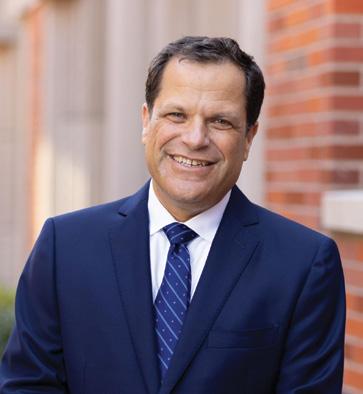
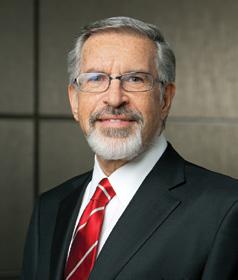
Rapid advances in science and technology, profound social and population changes, and shifting values are reshaping our world. The Institute will provide the analysis and facts necessary to advance practical policy solutions that make a meaningful difference in people’s lives and their communities.”
LEONARD D. SCHAEFFER
expanding our impact
This year marked a new chapter as our first full year as the USC Leonard D. Schaeffer Institute for Public Policy & Government Service. The Institute brings together two nationally recognized programs—the Schaeffer Center for Health Policy & Economics and the Leonard D. Schaeffer Fellows in Government Service—and launched a new effort to meet global challenges to democracy: the Center for Civic Society.
“It’s
critical to bridge divides with careful analysis and a clear understanding of policy tradeoffs. The Schaeffer Institute will meet this moment through rigorous data, in-depth expertise and constructive engagement.”
FOUNDING DIRECTOR DANA GOLDMAN
This report provides updates on our recent work and accomplishments. The Schaeffer Center for Health Policy & Economics, established 16 years ago, continues to advance a policy model grounded in rigorous evidence and practical relevance. In fact, this past year was perhaps our most successful to date. We brought objective analysis to some of the most vexing health policy challenges, serving as a trusted resource to policymakers. Schaeffer scholars testified at four congressional hearings, met with hundreds of policymakers, and published hundreds of articles, comments and white papers to help navigate the health policy landscape.
Demand for our evidence-based approach is robust. We are witnessing an extraordinary era of innovation, perhaps most notably in revolutionary treatments for obesity and advances to slow the progression of Alzheimer’s. While these offer immense promise, the costs are exceptional as well. Helping policymakers understand the implications of scientific progress— and craft approaches to encourage competitive innovation while expanding access—remains central to what we do.
To meet this policy demand, we welcomed an expanded cohort of internationally recognized nonresident and resident scholars. Their expertise in health economics, behavioral science, public administration and regulatory policy broadens the Institute’s capacity to deliver timely, independent analysis and engagement with federal, state and local decision makers.
Meanwhile, declining global trust in democratic institutions weakens the very ability to advance evidencebased policies that improve people’s lives. We launched the Center for Civic Society to elevate research and dialogue on governance, institutional trust and the role of evidence in democratic decision making. This work underscores a core belief: Effective policy begins with an engaged public and a true understanding of the issues affecting us, including what drives polarization and how to combat it to build civic trust.
The challenges facing policymakers are significant, both here and abroad. Economic uncertainty, rising healthcare costs and global pressures will continue to shape both near-term decisions and long-term strategy. With another U.S. election cycle approaching, it’s critical to bridge divides with careful analysis and
a clear understanding of policy tradeoffs. The Schaeffer Institute will meet this moment through rigorous data, in-depth expertise and constructive engagement.
And, true to Leonard Schaeffer’s legacy as an effective public servant, we continue our efforts to foster the next generation of civic leaders. The Schaeffer Fellows in Government Service program supports undergraduates committed to public service to work and build connections in local, state and federal government offices. More than 10 years after the program’s founding, a dedicated and growing network of alumni serve as mentors and build professional ties across the public policy community.
We have accomplished much over the years—and I expect our influence to grow through the new Schaeffer Institute. Thank you for your continued support as we advance our nonpartisan mission to inform, elevate and improve policymaking for a healthier society.
DANA GOLDMAN Founding Director USC Schaeffer Institute for Public Policy & Government Service
by the numbers
190+
PUBLICATIONS IN PEER-REVIEWED JOURNALS IN 2025, INCLUDING JAMA, HEALTH AFFAIRS AND ANNALS OF INTERNAL MEDICINE
OPINION PIECES AND PERSPECTIVES PUBLISHED IN 2025 IN THE WALL STREET JOURNAL, WASHINGTON POST, HEALTH AFFAIRS, STAT AND MORE
MEDIA MENTIONS IN 2025, INCLUDING INTERVIEWS WITH AP, THE NEW YORK TIMES, WALL STREET JOURNAL AND WASHINGTON POST 5,000+ 30+ 5 12 13 # 3
ECONOMIC REPORTS OF THE PRESIDENT CITED USC SCHAEFFER RESEARCH OF THE LAST
RANKING OF THE SCHAEFFER CENTER GLOBALLY IN THE FIELD OF HEALTH ECONOMICS
430+
CITATIONS OF SCHAEFFER RESEARCH IN GOVERNMENT REPORTS AND DOCUMENTS PUBLISHED
CONGRESSIONAL TESTIMONIES
GIVEN BY SCHAEFFER SCHOLARS SINCE THE START OF THE 119TH CONGRESS
“CMS should reconsider the coverage question soon. Covering anti-obesity medications with Medicare and Medicaid would generate substantial health improvements and economic returns far exceeding those of alternative uses of public funds. It would save lives, prevent suffering, reduce healthcare costs and generate enormous value for society.”
SCHAEFFER SCHOLAR ALISON SEXTON WARD & SCHAEFFER INSTITUTE FOUNDING DIRECTOR DANA GOLDMAN IN THE WASHINGTON POST (APRIL 7, 2025)
3 21
400+ NOBEL LAUREATES
VIEWS AND DOWNLOADS OF SCHAEFFER-PUBLISHED WHITE PAPERS, ISSUE BRIEFS AND REPORTS SINCE LAUNCHING THE INSTITUTE WEBSITE IN 2025
200 50 467
9
ELECTED MEMBERS OF THE NATIONAL ACADEMY OF SCIENCES
SCHOLARS RANKED IN THE TOP 2% OF RESEARCHERS GLOBALLY, BY CITATIONS
INTERACTIONS WITH THE NEW ADMINISTRATION AND CONGRESS ABOUT TIMELY TOPICS, INCLUDING ALZHEIMER’S DISEASE, OBESITY AND CHRONIC DISEASE, DRUG PRICING AND MEDICARE ADVANTAGE
60K +
GOVERNMENT INTERNS SUPPORTED BY THE SCHAEFFER FELLOWS PROGRAM FROM 2015 THROUGH 2025
CITIES ACROSS THE COUNTRY WHERE SCHAEFFER FELLOWS HAVE LIVED AND WORKED DURING THEIR INTERNSHIP
GOVERNMENT OFFICES AT LOCAL, STATE AND FEDERAL LEVELS HAVE HOSTED A SCHAEFFER FELLOW
3 INSTITUTE FLAGSHIP PR0GRAMS
SCHAEFFER CENTER FOR HEALTH POLICY & ECONOMICS, CENTER FOR CIVIC SOCIETY AND SCHAEFFER FELLOWS IN GOVERNMENT SERVICE
policy impact cycle
1. Identify the Problem
The Institute focuses on the issues that most affect lives, markets and democratic institutions. Using the toolkits of social scientists, Schaeffer scholars quantify trade-offs, detect system failures and assess whether societal needs are appropriately met.
2. Shape the Debate
Through direct engagement with policymakers, media and stakeholders, the Institute shapes debates and ensures public discourse is grounded in evidencebased research.
3. Design Policy Solutions
Schaeffer scholars develop policy frameworks grounded in science and informed by engagement across the public and private sectors. This work equips decision makers with rigorously tested solutions that improve health and wellbeing.
4. Evaluate Outcomes
After adoption of policy reforms, Schaeffer researchers measure outcomes, assess costs and benefits, and identify unintended consequences—ensuring that policies evolve based on evidence and deliver lasting public value.
Policy debates shift with the rapidity of the headlines, so durable impact requires discipline. The Schaeffer Institute has systemized how to engage policymakers, offer solutions and evaluate outcomes. The approach leverages a repeatable policy cycle with four stages: Identify high-stakes problems, shape the policy debate, offer novel solutions and rigorously evaluate the results.
What this means, in practice, is that translation and dissemination of Schaeffer research radically differ from the traditional academic setting. At universities, dissemination often ends after publication and, perhaps, a press release. At Schaeffer, translation of academic research into clear insights is a strategic priority: Opinion pieces, white papers and briefings on salient policy topics are buttressed by years of rigorous, nonpartisan research. By integrating evidence-based research with direct policy engagement, the Institute moves ideas into action.
2/3 OF GLOBAL PHARMACEUTICAL PROFITS ARE GENERATED IN THE UNITED STATES, BUT THE COUNTRY ACCOUNTS FOR LESS THAN ONE-FOURTH OF GLOBAL GDP
elevating biomedical innovation
Few topics in health policy ignite as much debate as how to balance affordability with innovation. Schaeffer scholars go beyond identifying policy flaws to propose viable solutions that spur medical progress while containing costs and widening access to vital care.
PROMOTING VALUE-BASED PRICING WORLDWIDE
Biomedical advances over the past 50 years have resulted in unprecedented progress in treating complex diseases, including heart disease, cancer and HIV. While this progress continues, Americans are increasingly frustrated by costs. Contributing to this tension: Americans pay nearly three times more for the same prescription drugs as people in other developed countries. One approach receiving increased attention would peg U.S. drug prices to those of other countries through a policy called “most-favored nation” (MFN).
In May 2025, President Trump signed an executive order calling for equalization of American and overseas prescription prices. However, this tactic risks hindering innovation without lowering costs.
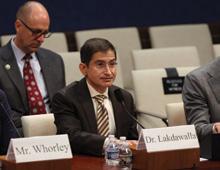
Schaeffer Founding Director Dana Goldman and Chief Scientific Officer Darius Lakdawalla suggest in STAT that MFN would be “a response that will help no one.” Schaeffer research demonstrates that lowering prices to European benchmarks would reduce breakthroughs and cost American consumers more than half a year of life expectancy—similar to the health loss if U.S. doctors suddenly “forgot” how to perform bypass surgery.
Logistical hurdles also remain. For example, pharmaceutical companies could easily game the system by inflating foreign list prices through hidden
rebates, creating the appearance of parity without reducing prices. Furthermore, Schaeffer research finds that European pricing systems are no better than the U.S. at aligning costs with value. Yet, by ceding pricing decisions to countries with different health valuations, the U.S. would be importing foreign values that may not reflect those of American patients and society. The MFN policy also overlooks the fact that nearly 70% of global pharmaceutical profits—and the resulting investments in new cures—are generated by the American market. By tying U.S. prices to foreign systems that invest less, MFN would effectively outsource national policy decisions and import the medical rationing that often follows.
Rather than adopt flawed international benchmarks, Schaeffer investigators propose value-based pricing tied to clinical outcomes. Ideally, prices should rise with good performance and fall when drugs fail to fulfill their promise. Such a model would limit U.S. prices to rational estimates of a therapy’s true benefit while preserving incentives for discovery. Using antiobesity medications as an example, payers could make performance-based payments that accumulate when weight loss is sustained; if a drug fails to work, insurers and patients would be refunded.
Schaeffer scholars further recommend aligning international pricing with American leadership. Companies adopting this approach would pledge not to accept any overseas price below the U.S. price, adjusted for income differences, in exchange for fairtrade benefits such as $35–$50 copays in Medicare and U.S. support in negotiating fair prices abroad through tariff relief or similar incentives. The goal is not to penalize industry but to anchor global pricing in rational, evidence-based valuations that reward genuine therapeutic progress.
UP TO
15% DECLINE IN U.S. INNOVATION FROM A 10% DROP IN EXPECTED REVENUES
30M
AMERICANS HAVE A RARE DISEASE, MANY OF WHICH LACK FDA-APPROVED TREATMENTS
“Only American price leadership can both help consumers and sustain innovation into the future,” conclude Goldman and Lakdawalla.
In July, Lakdawalla presented at a closed-door Schaeffer Policy Coffee Chat at the USC Capital Campus, attended by industry stakeholders, patient groups and congressional staff. In addition, he has testified before Senate and House committees about fostering biomedical progress.
LOWER REVENUE, LESS INNOVATION
At the heart of this tension between prices and innovation is a critical question: How do changes in drug revenues affect future medical breakthroughs? Schaeffer researchers found that, since drugmakers adjust their investments based on profit expectations, every 10% drop in expected U.S. revenues leads to a decline in pharmaceutical advances of between 2.5% and 15%.
Analyzing Congressional Budget Office projections as well as benchmark studies from academia, Schaeffer research confirmed that lower revenues consistently lead to fewer new medicines, though the size of that effect varies with policy design.
Yet, Lakdawalla asks, “Do short-run savings outweigh the long-term costs of lost innovation and the longer, better lives that come from it?”
“Given the contributions of drugs to better health,” Goldman adds, “we should be cautious in our demands for lower prices.”
The authors conclude that thoughtful value-based pricing along with robust coverage can balance affordability with discovery—ensuring that patients benefit today without sacrificing the cures of tomorrow.
LEVERAGING TAX POLICY TO FUEL DISCOVERY
Tax policy may seem far removed from medical research, yet it can influence the pace of scientific discovery. A Schaeffer white paper by scholar Karen Mulligan, predoctoral researcher Drishti Baid and Lakdawalla revealed the connection between corporate income tax rates and biomedical advances. They found that lowering corporate taxes likely increases the number and quality of U.S. biomedical
patents by attracting higher investments, including from overseas. In contrast, targeted R&D tax credits often increase reported spending without generating actual breakthroughs, since large firms can reclassify expenses to qualify while smaller ones rarely benefit.
As Congress looks at ways to support biotech discoveries, Schaeffer scholars recommend tax policies that expand the development pipeline— through R&D appropriations, workforce development and predictable, pro-innovation tax frameworks.
“Fostering a competitive biomedical industry is critical for American patients and has positive spillover effects throughout the United States,” Lakdawalla says.
By aligning incentives with long-term research goals, the U.S. can maintain its position as the world’s most dynamic engine for medical innovation—while ensuring that tomorrow’s breakthroughs remain within reach of patients everywhere.
STRENGTHENING THE NATIONAL INSTITUTES OF HEALTH
A foundational element of the U.S. biomedical ecosystem is the National Institutes of Health (NIH). Despite its importance to the country’s wellbeing, the Trump administration has proposed a 40% reduction of the agency’s budget. Writing in the Evidence Base blog, Goldman and Bob Kocher, a Schaeffer nonresident senior scholar, warned that such a drastic cut could reduce new drug development by nearly one-fifth within a decade, or about six fewer marketed drugs each year.
The proposed cuts ignore the NIH’s benefits not only to medical progress but also its value as an economic multiplier. Every $1 invested generates $2.56 in private-sector R&D. For instance, during the Great Recession of 2008, a $10 billion boost to the NIH produced a decade of biotech growth and breakthroughs in fighting cancer, Alzheimer’s disease and obesity.
Private industry is unlikely to take up the slack. “In economic terms, the NIH and the biomedical industry do not substitute for each other,” note Goldman and Kocher—“they are complements.”
Indeed, they observe, NIH Director Jay Bhattacharya previously said the real issue with the
NIH is not too much spending but rather funding priorities that are too conservative.
Goldman and Kocher urge policymakers to safeguard funding for high-risk, high-reward science. Bold investments today, they contend, ensure America’s continued global leadership and the steady flow of lifesaving treatments.
EXPANDING ACCESS TO EMERGENCY MEDICATIONS
Naloxone has become a critical tool in combating the nation’s opioid crisis—and a powerful example of how innovation expands access to vital care. A National Bureau of Economic Research study led by Schaeffer Senior Scholar Rosalie Liccardo Pacula examined how state laws supporting naloxone access and the introduction of Narcan—an easy-to-use nasal spray
launched in 2016—contributed to the rapid increase in overdose-treatment availability.
Pacula and colleagues found that while state laws increased naloxone distribution, Narcan’s introduction substantially accelerated uptake by enabling laypersons with no training to administer the medication effectively. The study was the first to clearly separate the effects of policy from those of a major pharmaceutical advancement in overdose response. The research demonstrated that policymakers who evaluate naloxone access solely through statutory changes risk undervaluing the role of advances that make medications safer and easier to use.
As legislators continue refining naloxone distribution strategies and consider extending overthe-counter availability, Pacula’s research underscores how supporting medical breakthroughs can strengthen policy design to save more lives.
REFORMING THE FDA
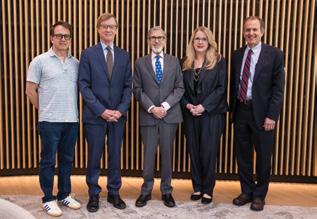
As technology keeps accelerating, the Food and Drug Administration (FDA) must rethink its regulatory approaches to effectively foster new therapies, widen patient access and maintain U.S. leadership in biotechnology. Those were the conclusions shared at a Schaeffer forum in September 2025 featuring former FDA Commissioner Scott Gottlieb, past FDA Acting Commissioner Janet Woodcock, Arsenal Biosciences CEO Ken Drazan and other experts. More than 100 people attended the event, which was hosted at the USC Capital Campus and streamed live.
The discussion centered on reforms outlined in a Schaeffer white paper co-authored by Lowell Schiller, former FDA acting chief counsel and Schaeffer nonresident senior scholar.
The white paper offers comprehensive recommendations for how the FDA can modernize drug development by streamlining clinical trials, providing clearer guidance to drugmakers about newer technologies and improving agency efficiency amid substantial staff reductions. Taken together, these steps could reduce the considerable time and cost of bringing new drugs to market, pushing down prices and improving patient access while maintaining rigorous safety and effectiveness standards.
“This report really gets at: How do you build a stronger institution from a policy standpoint for drug development?” said Gottlieb during his keynote.
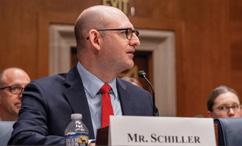
Following the release of the paper and the event, Schiller was invited to testify before the Senate HELP Committee at a hearing on “Maintaining U.S. Biotech Competitiveness and Delivering Lifesaving Cures to Patients.”
“Strategic FDA reforms can help attract research and operations in the United States, while also improving access to safe and effective medical technologies,” Schiller told the committee.
$ $ 314M TO 2.8B COST OF BRINGING A NEW DRUG TO MARKET
100B
POTENTIAL SAVINGS FROM DELINKING MIDDLEMAN COMPENSATION FROM LIST PRICE
ensuring fair access & coverage
Patients often bear the burden of artificially high prescription drug prices while the forces behind these prices remain largely hidden. Schaeffer scholars expose the incentives that distort prices and restrict access to help policymakers build a fairer, more transparent system.
REALIGNING INCENTIVES
Pharmacy benefit managers (PBMs) negotiate prices and decide which drugs appear on insurers’ formularies. Their compensation is often tied to a drug’s list price—a structure that rewards higher prices and helps explain why patients may be steered toward expensive therapies even when lower-cost options are available.
Research led by Schaeffer Senior Scholar Geoffrey Joyce shows just how costly those incentives have become. His analysis finds that if compensation to PBMs and other middlemen was delinked from list prices and replaced with straightforward, fixed fees, the nation could save nearly $100 billion annually.
While policy discussions often focus on modest reforms such as transparency measures or antitrust enforcement, Joyce cautions that these steps alone won’t shift PBM behavior. Delinking compensation
from list prices, he argues, is the most direct and effective way to lower drug spending while preserving competition and innovation.
“Our pharmaceutical distribution system should work for patients, not against them,” said Schaeffer Senior Scholar Neeraj Sood at a Senate Committee on the Judiciary hearing focused on PBMs and competition issues in the prescription drug supply chain. Since 2021, Schaeffer scholars have been invited to testify as expert witnesses at five congressional hearings focused on issues in the PBM market.
WHEN COVERAGE RESTRICTIONS UNDERMINE CARE
While PBM practices are often linked to high costs that patients pay at the pharmacy counter, restrictive formularies, particularly for high-cost specialty drugs, also undermine access and can lead to poor health outcomes. For complex diseases like multiple sclerosis (MS)—where patients often need to try several therapies to find one that works—broad exclusions can undermine care.
A Schaeffer study of 85,000 Medicare beneficiaries with MS, published in JAMA Network Open, shows
NAVIGATING MEDICAL DEBT
Schaeffer scholars are examining the roots of medical debt and identifying practical steps to help patients avoid long-term financial harm.
A nationally representative survey led by Schaeffer Scholar Erin Duffy found that 1 in 5 households received a medical bill they either could not pay or believed was incorrect—most often from imaging services, emergency or urgent care, or hospital stays where patients have little control over costs.
The research also shows that many problems can be resolved with a simple phone call. Among those who contacted a billing office, roughly three-quarters secured some form of relief—payment plans, discounts, financial assistance or even full bill cancellation. A similar share who suspected an error saw it corrected, and many who negotiated succeeded in lowering the amount owed.
Duffy’s insights were featured in major news outlets including NBC News, Time and The Guardian
that those enrolled in plans with wider coverage had significantly lower risk of relapse. While exclusions and other tactics used by PBMs and insurers may lower premiums for the broader population, they can come at a serious cost to those whose conditions require highly individualized treatment.
The risk of restrictive coverage in Medicare prescription drug plans may grow under the Inflation Reduction Act’s $2,000 out-of-pocket cap, which pushes more financial responsibility onto plans. Schaeffer researchers note that without new financing models to help insurers manage long-term specialtydrug costs, plans may tighten coverage even further.
HOW COST-SHARING BURDENS PATIENTS
Even when drugs are covered, plan design can dramatically affect what patients pay. Work by Schaeffer Center Co-Director Erin Trish shows that standalone Medicare Part D plans have rapidly shifted from flat copays to coinsurance, which ties patients’ costs to inflated list prices. As a result, beneficiaries can end up paying far more—even for medicines they’ve taken for years.
Only a few years ago, a small fraction of standalone plans used coinsurance for preferred brand-name drugs. Now, most do. Out-of-pocket costs for widely used medications have more than doubled for many beneficiaries, even as rebates have grown. Although Medicare Advantage plans have largely maintained predictable copays, a considerable share switched to coinsurance last year. As a result, patients taking highly rebated drugs often pay the most.
“This is the opposite of how insurance is supposed to work,” says Trish, who shared these findings in testimony before two House Oversight subcommittees last spring.
While the IRA’s annual cap will help those with the highest costs, Schaeffer researchers warn that most
beneficiaries will never reach that ceiling. Instead, they’ll face higher deductibles, steeper coinsurance and repeated exposure to list prices that bear little resemblance to what insurers actually pay.
PROTECTING PHARMACY ACCESS
Retail pharmacies excluded from Medicare Part D networks by PBMs can be forced to shut their doors—a trend with profound consequences for patient access. Research led by Schaeffer Senior Scholar Dima M. Qato, published in Health Affairs, shows how the growth of preferred pharmacy networks has accelerated closures across the country.
These shutdowns contribute to what Qato first defined as “pharmacy deserts,” areas where residents lack convenient access to medications, causing them to skip doses, stop treatment, or take time off work to travel long distances for essential prescriptions and healthcare services. Today, 1 in 8 U.S. neighborhoods lacks reliable pharmacy access, and closures have surged since 2018 amid industry consolidation, including the merging of major chains with dominant PBMs.
To help communities and policymakers respond, Qato and fellow researchers have expanded their national pharmacy desert mapping tool, an initiative launched in 2022 through a collaboration between USC and industry partners. The upgraded tool lets users track pharmacy openings and closures over multiple years, assess how each closure affects local access and identify neighborhoods at greatest risk.
“Ultimately, our goal is to make pharmacy access visible and actionable so that policymakers, health departments and advocates can target interventions and ensure every community has access to the medicines people rely on,” Qato says.
74 % OF PATIENTS HAD A BILLING ERROR FIXED AFTER REACHING OUT
1.7X HIGHER RISK OF PERMANENT CLOSURE FOR PHARMACIES EXCLUDED FROM MOST PART D NETWORKS
charting dementia’s financial toll
As Americans live longer, dementia has become one of the most devastating and costly challenges of aging. Schaeffer scholars examine dementia’s economic and social impact to guide policies that improve care, support families and strengthen systems serving older adults.
QUANTIFYING THE COST OF DEMENTIA
INFORMING DECISION MAKING
To trace dementia’s far-reaching effects, the USC team developed a dynamic microsimulation model that integrates data from Medicare, national aging surveys, clinical studies and social science sources.
An estimated 5.6 million Americans are living with dementia, including 5 million who are 65 and older.
781B
COST OF DEMENTIA IN THE U.S. IN 2025 ALONE 233B
IN INFORMAL CARE PROVIDED BY PATIENTS’ FAMILY AND FRIENDS EACH YEAR OF TOTAL MEDICAL AND LONG-TERM CARE COSTS ARE PAID BY MEDICARE AND MEDICAID $ $
Schaeffer researchers found that the total expense of Alzheimer’s disease and related dementias in the United States exceeded $781 billion in 2025 alone. The findings come from the first in a series of yearly, comprehensive estimates produced by an interdisciplinary team of experts from across USC who form the U.S. Cost of Dementia project. The initiative, supported by a five-year, $8.2 million grant from the National Institute on Aging, is reshaping understanding of the disease’s full economic and social burden.
Beyond the cost of care, the team’s innovative model accounts for lost earnings from patients and care partners who cut back work hours or leave jobs, as well as the diminished quality of life experienced by millions of patients and their families, among other factors.
“Having a better understanding of who bears these costs and how they change over time can inform evidence-based policies that may ultimately reduce the financial impact of dementia,” says Julie Zissimopoulos, co-director of Schaeffer’s Aging and Cognition Program and the project’s principal investigator.
The U.S. Cost of Dementia project—whose USC partners include the Keck School of Medicine, Mann School of Pharmacy and Pharmaceutical Sciences, Davis School of Gerontology, Dworak-Peck School of Social Work and Viterbi School of Engineering— delivers ongoing national estimates to help families, clinicians, insurers, and policymakers plan for the financial and social realities of dementia.
Project advisor Maria Aranda notes how these pressures ripple through families—reducing savings, delaying educational opportunities for children and compounding financial vulnerability. The team’s work aims to illuminate these patterns clearly and concretely for the first time. “These consequences add up to an intergenerational transmission of inequality,” Aranda says.
Medical and long-term care for patients with dementia cost the United States $232 billion in 2025, including $52 billion paid out of pocket by patients and their families. More than two-thirds of the total cost of care is paid for by Medicare ($106 billion) and Medicaid ($58 billion).
Dementia’s societal costs are even more staggering, the model reveals. The largest share stems from a factor often not measured in other cost estimates: the significant decline in quality of life for patients ($302 billion) and care partners ($6 billion). Lost earnings among friends and family who forgo work to provide care—another measure often not captured by other estimates—total $8.2 billion. Care partners provide 6.8 billion hours of informal, unpaid care annually, valued at $233 billion.
The team is also building tools that will allow researchers to model the impact of new therapies, prevention efforts and support programs. As Zissimopoulos explains, existing clinical trial data rarely measures the outcomes families care about most: quality of life, the ability to remain at home or the delay of costly residential care.
“A drug that slows decline for even a few months may meaningfully reduce long-term costs and caregiver strain—yet those benefits aren’t captured in today’s tools,” Zissimopoulos says. “With the infrastructure we’re building, we’ll be able to understand better what the value is—and for whom.”
A recent study is a case in point. Schaeffer Director of Health Policy Simulation Bryan Tysinger and colleagues modeled the long-term value of lecanemab, one of the newer drugs available for patients with mild cognitive impairment and dementia. They found that the drug reduces medical costs and caregiver hours and also improves quality of life for the person living with the disease.
Schaeffer Institute Founding Director Dana Goldman, who co-leads the U.S. Cost of Dementia project, underscores the broader implications: “Once
TOTAL COST OF DEMENTIA BY COST CATEGORY 2025
$ 781 B
01% lost earnings of care partners
01% quality-of-life loss for care partners
30% informal care
30% medical & long-term care
38% quality-of-life loss for persons with dementia
“Having a better understanding of who bears these costs and how they change over time can inform evidence-based policies that may ultimately reduce the financial impact of dementia.”
JULIE ZISSIMOPOULOS CO-DIRECTOR, AGING AND COGNITION PROGRAM
you factor in the social costs of Alzheimer’s—how it affects families, care partners and others—you quickly realize it is not just an illness but a social epidemic.”
INCREASING TREATMENT USE
Although more effective treatments for slowing Alzheimer’s are emerging, their success depends on access and use—especially for people most at risk. Zissimopoulos is tackling this issue by exploring factors that support or hinder the use of Alzheimer’s therapeutics, particularly in non-Hispanic Black communities. Despite having a higher risk of developing Alzheimer’s, Black adults in the U.S. are diagnosed later in the disease’s progression, are less likely to receive care by a dementia specialist or symptomatic therapies for dementia, and remain underrepresented in clinical trials. Understanding the complex reasons behind this will likely help expand treatments for those in need across demographics. Toward that end, Zissimopoulos’ team held focus groups with Black adults over 60 without cognitive impairment. These volunteers provided valuable insights into the real-world barriers and concerns that influence healthcare decision making.
Participants expressed strong interest in learning more about Alzheimer’s and maintaining brain health but raised critical concerns regarding potential side effects, ethical considerations, quality-of-life risks and financial costs associated with treatments. Interviewees reported distrust in medical research within Black communities, shaped by historical instances of unethical medical practices. The conversations also emphasized the need for more inclusive, transparent research efforts and better representation in clinical trials.
COVERING COGNITIVE SCREENING
Nonresident Senior Scholar Joseph Grogan, former director of the White House Domestic Policy Council, further makes the case for increasing access by allowing Medicare to expand cognitive screening efforts. He suggests that early detection, streamlined reimbursement and broader recommendations by the independent U.S. Preventive Services Task Force are essential to accelerating diagnosis, supporting innovation and reducing Alzheimer’s costs.
“The task force still does not recommend routine cognitive screening. This must change,” argues Grogan in an Evidence Base blog post. He notes that this is especially true given how science is signaling that early intervention can make a big difference for patients and help bend the cost curve.
REAL-WORLD APPLICATIONS
The U.S. Cost of Dementia project draws on the experiences of those on the frontlines of dealing with dementia. Patients and caregivers are advising the research team to ensure the model reflects realworld challenges such as balancing employment and caregiving, coordinating medical visits, managing behavioral symptoms and navigating long-term care.
Input from the Alzheimer’s Association, UCLA, the University of Pennsylvania and the Los Angeles County Department of Public Health helps align the model with community needs and health-system realities.
Meanwhile, USC Viterbi engineers are designing a public interface so families, researchers and policymakers can easily explore findings. Users will be able to test scenarios—such as the financial effect of delaying nursing-home placement or the potential savings from community-based support services— and visualize how interventions influence outcomes over time. For families making difficult decisions, this
accessibility could offer critical guidance that blends data with empathy.
EMPOWERING FAMILIES
Over time, the model will allow researchers and decision makers to evaluate the full social and economic impact of dementia interventions. It can help determine how behavioral therapies reduce emergency-room visits, how new drugs affect longterm spending and how caregiving responsibilities evolve across disease stages.
The initiative will also illuminate disparities— identifying which populations face the steepest caregiving burdens, where community supports are weakest and how policy changes might narrow those gaps.
Ultimately, the goal is to give families, clinicians and policymakers what they have long lacked: a comprehensive, evidence-based understanding of what dementia truly costs and how smarter investments can improve lives. By creating the most complete picture of dementia’s economic and social impact ever assembled, USC is equipping the nation to plan wisely, act compassionately, and reduce the profound burdens of Alzheimer’s and related dementias across generations.
IMPROVING CLINICAL TRIAL RECRUITMENT AND RETENTION
5.6M AMERICANS ARE LIVING WITH DEMENTIA
Clinical trials are essential to medical progress, yet many struggle to recruit and retain participants—especially from historically underrepresented communities. Alzheimer’s trials take longer and have higher recruitment costs than other therapeutic trials because of stigma and mistrust, limited detection of cognitive impairment and restricted access to diagnostic tools that confirm eligibility. These barriers inspired the creation of the Clinical Trial Recruitment Lab (CTRL), a collaboration between Schaeffer and the USC Epstein Family Alzheimer’s Therapeutic Research Institute (ATRI), which develops, tests, and scales practical strategies to improve access and representation in clinical research. One such strategy, published in JAMA Health Forum, involves offering gift cards to low-income enrollees. The research, led by Schaeffer Senior Scholar Mireille Jacobson and Schaeffer Scholar Doris Molina-Henry, shows that $25 cards increased enrollment by almost 40%. However, the invitation-only approach was far less costly. Ultimately, investing in outreach to underrepresented communities may be a more effective use of patient registry resources, the researchers conclude.
The initiative also advances the science of fighting Alzheimer’s. For example, the ATRI-led AlzMatch Study has shown promising results using plasma biomarkers to identify eligible candidates for preclinical Alzheimer’s trials.
CTRL has already funded six pilot projects that are evaluating a range of recruitment strategies, developing innovative digital cognitive assessments, promoting community-based screenings for research registries and leveraging electronic health records to identify patients at high risk of developing dementia.
By broadening who can participate in research, CTRL helps ensure that breakthrough treatments are tested in populations reflecting the full diversity of the United States—so they reach those most in need.
improving dialogue on climate change
As the impacts of climate change intensify, effective solutions depend on clear communication and public trust. Schaeffer researchers develop evidence-based strategies that build understanding and inspire positive action. By studying how people think, talk and make decisions about important issues, messaging and interventions can align with how they process information.
These insights matter because even well-intended communication can fall flat if the language feels unfamiliar or overwhelming. When the stakes are high, simple wording becomes a tool for cutting through noise, reducing confusion and helping individuals focus on what they can act on now.
WORDS MATTER
People increasingly encounter terms such as “climate crisis,” “climate emergency” and “climate justice.” These phrases are designed to highlight the severity of environmental threats, but research led by Schaeffer Senior Scholar Wändi Bruine de Bruin and USC Distinguished Professor Gale Sinatra shows that they may not be as persuasive as intended.
In a nationally representative survey of more than 5,100 adults, the research team found that Americans were more familiar with—and more concerned about—“climate change” and “global warming” than any of the newer phrases. The study, published in Climatic Change, found no evidence that the alternative terms boosted urgency or support for climate policies.
“Climate justice” performed worst, probably because it was the least familiar. Responses were consistent across political affiliations: Republicans, Democrats and independents alike reacted more strongly to the familiar language. Meanwhile, overly dramatic phrasing may not just fail to build a sense of urgency, but might even backfire by prompting doubt or disengagement.
The study was covered widely in climate-focused and mainstream news outlets, including UPI, Psychology Today and Grist. The researchers also presented their findings at several professional conferences on decision making and risk.
FAMILIARITY WORKS BEST
Familiar terms endure because people understand them immediately. They also have subtle distinctions.
NUDGING HEALTHY FOOD CHOICES
Research co-authored by Schaeffer Senior Scholar Wändi Bruine de Bruin illustrates how small changes in phrasing can meaningfully shift eating behavior. In a study of more than 7,000 Americans, participants were asked to choose between gift baskets with or without meat and dairy. The animal-free option was randomly labeled “vegan,” “plant-based,” “healthy,” “sustainable,” or “healthy and sustainable.”
The results were striking. Only 20% chose the basket when it was labeled “vegan,” and just 27% did so when it was described as “plant-based.” But when the same basket carried health or sustainability language, more than 40% selected it. The study, published in the Journal of Environmental Psychology, highlights how framing foods in terms of benefits—not identities—can increase interest in options that are better for both personal and environmental wellbeing.
A separate USC study shows that Los Angeles County faces a dual challenge: 1.4 million adults experience both food insecurity (lack of access to sufficient food) and nutrition insecurity (lack of consistent access to nutrient-dense food), a combination strongly linked to diabetes and poor mental health. The research reveals that young adults, Latinos and Asians face the highest risks, though in different ways. Asians are twice as likely as whites to be nutrition insecure, while Latinos are more likely to be food insecure.
The findings make clear the need to track both forms of insecurity to design policies that ensure residents have enough food— and access to food that supports good health.
“Global warming” refers to rising temperatures, while “climate change” describes broader shifts in weather and environmental systems. A historical review found that, in the past, people were less likely to associate “climate change” with human activity than “global warming.”
That difference helped shape political responses. Democrats once rated global warming as more serious, while Republicans saw climate change as more concerning. The popularization of climate change has been credited to Frank Luntz, an advisor to the George W. Bush administration who argued that the phrase would sound less alarming. Those distinctions have since faded, and most Americans now express concern about both.
Newer phrases have gained visibility as news outlets and advocates seek to convey the escalating risks of a warming planet. In 2019, The Guardian adopted “climate crisis” to emphasize the urgency of the issue, and advocates have increasingly used “climate justice” to draw attention to the disproportionate impacts on the vulnerable communities that have contributed the least to the problem.
Although these may be noble ideas, Schaeffer researchers found that the terms remain less effective at eliciting concern or policy support. Raising the emotional temperature of the language does not necessarily increase engagement. If anything, people may tune out wording that feels exaggerated or politically coded, rather than framed as a shared challenge.
KEEP IT SIMPLE
Bruine de Bruin’s research has long documented how technical jargon can obscure understanding. A previous study in collaboration with the United Nations’ Intergovernmental Panel on Climate Change explored common misunderstandings of climate science. Americans said experts often “talked over their heads” with terms like “adaptation,” “mitigation,” “sustainability” and “carbon-dioxide removal.” Even highly educated respondents preferred everyday language when discussing environmental issues.
This insight inspired Bruine de Bruin’s team to create a plain-language guide to climate science jargon, part of a broader effort to help science communicators choose familiar yet precise wording. A recurring theme from the research was that experts often overestimate what the public understands because technical terminology feels second nature to them.
The conclusion is as clear as the need for persuasive language. The research team suggests using “global warming” when referring to rising temperatures and “climate change” when describing broader shifts in climate systems, and avoiding language that may be confusing or alienating. By grounding communication in straightforward terminology, policymakers, journalists and advocates can promote understanding, encourage engagement and better equip Americans to respond to one of the defining challenges of our time.
“We want to help policymakers make a difference,” Bruine de Bruin says. “And that means creating policies and policy communication that better inform the people they want to reach.”
88%
OF AMERICANS WERE FAMILIAR WITH THE TERM “CLIMATE CHANGE” COMPARED TO 33% WHO REPORTED FAMILIARITY WITH THE TERM “CLIMATE JUSTICE”
91% OF DEMOCRATS EXPRESSED CONCERN ABOUT CLIMATE CHANGE, WHILE ONLY 37% OF REPUBLICANS WERE CONCERNED
40%
OF ADULTS HAVE OBESITY, WHICH IS ASSOCIATED WITH INCREASED RISK OF MORE THAN 200 DISEASES
preventing chronic disease
Nearly half of all American adults live with at least one chronic condition—the leading driver of the nation’s $5.3 trillion in annual healthcare costs. Schaeffer experts are shaping policies and interventions that promote disease prevention, reduce obesity and enhance population health while confronting the inequities that deepen the burden of chronic disease.
ENSURING ACCESS TO OBESITY TREATMENT
weight loss. Senior administration officials cited Schaeffer findings when announcing the new agreement, noting projected savings that align closely with Schaeffer research.
42T ESTIMATED CUMULATIVE CHRONIC DISEASE COSTS BY 2030 $
The 2025 White House decision to expand access to anti-obesity medications, which reversed Medicare’s prior exclusion, builds on two decades of evidence generated at Schaeffer. In a 2005 study published in Health Affairs, Schaeffer Chief Scientific Officer Darius Lakdawalla and Schaeffer Institute Founding Director Dana Goldman showed that obesity will cost Medicare more than other diseases.
“Because of its profound effects on morbidity and healthcare expenditures, obesity represents a larger immediate risk from a fiscal perspective,” Goldman, Lakdawalla and colleagues wrote in a follow-up study in 2009. In the years since, Schaeffer scholars have authored 18 additional studies as well as 10 opinion pieces on obesity.
The White House agreement, reached with manufacturers and informed by Schaeffer analysis, allows Medicare to cover GLP-1 therapies for select beneficiaries at negotiated prices, while Medicaid programs and self-pay patients gain access to lowercost options.
The shift addresses a crisis in public health: More than 40% of adults have obesity, a driver of diabetes, heart disease and escalating Medicare spending.
Yet the GLP-1 medications that most effectively reduce obesity—such as tirzepatide and semaglutide—have remained largely inaccessible because Medicare long excluded treatments for
In STAT, Goldman called expanded access to obesity medications “probably the single most effective policy for improving public health,” pointing to Schaeffer research that shows broad access generates annual returns exceeding 13% even after accounting for treatment costs, outperforming the U.S. stock market over this century.
Schaeffer scholars examined safety as well as effectiveness in making weight-loss drugs more available. In The Wall Street Journal, Schaeffer Nonresident Senior Scholar Lowell Schiller warned that compounding pharmacies circumventing Food and Drug Administration rules were “pushing the envelope,” emphasizing the need for regulated access.
More than a thousand citations in major outlets, from NPR to The Washington Post and Los Angeles Times, further highlight Schaeffer’s pivotal role in shaping public understanding and guiding the national conversation on obesity, access and long-term value.
Over the years, Schaeffer scholars have been frequently consulted by congressional staff and federal health officials on access to obesity treatments. This sustained engagement has established Schaeffer as a go-to resource for policymakers grappling with how to reduce the burden of obesity and other chronic diseases. A bipartisan bill in Congress allowing Medicare to pay for obesity treatments was informed by Schaeffer research, and a 2023 Schaeffer white paper on Medicare savings was cited in the Joint Economic Committee’s annual report.
INCENTIVIZING PREVENTION AND TREATMENT
Obesity is just one of the chronic conditions that Schaeffer researchers are addressing through
evidence-based policy suggestions. Anne Peters, a Schaeffer senior scholar and USC Keck professor of medicine, testified before the House Energy and Commerce Subcommittee on Health, offering a clinician’s perspective on what policymakers must do to prevent and treat chronic disease more effectively.
Drawing on decades of treating both affluent and underserved communities, Peters described the widening and preventable disparities she sees daily. In Beverly Hills, her patients routinely live into their 80s and 90s with few diabetes complications. In East Los Angeles, she treats patients in their 20s and 30s with preventable blindness, amputations, kidney failure and cardiovascular disease—outcomes, she notes, that result from gaps in access, support and policy.
“The data support that prevention is worth our investment,” Peters told lawmakers. She explained that clinicians currently lack the tools and incentives to deliver sustained lifestyle and chronic disease management, so value-based policy changes are needed that reward outcomes rather than just procedures performed.
“Currently, our healthcare system is tilted toward treating diseases rather than preventing them or finding cures,” she wrote. “This short-term focus can lead to higher overall costs and poorer health outcomes. By rebalancing our approach to favor prevention and cures, we can potentially reduce the
REDUCING SUBSTANCE USE AND ADDICTION
long-term burden of chronic diseases on individuals and the healthcare system.”
Peters amplified these points in a piece for the Los Angeles Times focused on obesity, noting that asking people in under-resourced neighborhoods “to change their diets has proved ineffective” because it ignores issues such as high costs and limited access to fresh foods. But, she emphasized, GLP-1 medications can help reduce disparities and promote healthier lives. “Of course we also need to keep pressing for better, broader fresh food access, healthier diets and safe places to exercise,” she added.
GROWING DIVIDE IN RURAL AMERICA
Chronic disease is reshaping health and longevity across the country, with some of the starkest impacts in rural America. Research led by Schaeffer Scholar Jack Chapel finds that rural men are dying earlier than their urban counterparts and spending fewer of their later years in good health. Higher rates of smoking, obesity and cardiovascular disease are widening this urban-rural divide—and the gap has grown over time.
Today, 60-year-old rural men can expect to live two fewer years than urban men, a disparity that has nearly tripled over the past two decades. They also face 1.8 fewer years in good health, with that gap more than doubling.
The opioid epidemic has claimed more than 770,000 American lives and remains an urgent public health challenge. Schaeffer scholars are advancing evidence-based policies to help stem this crisis. Key initiatives include the RAND-USC Schaeffer Opioid Policy Tools and Information Center (OPTIC), a national resource for policymakers and practitioners that evaluates which interventions work, why they work and how they can be implemented effectively.
One key study shows how the epidemic’s impact has shifted over time. Once concentrated in rural, white communities, opioid overdose deaths have surged among Black Americans as the crisis evolved from prescription painkillers to deadlier, contaminated illicit drugs. Researchers found that much of this shift reflects how changes in the drug supply intersect with local conditions.
“The opioid epidemic today is fundamentally different than how it started 25 years ago or even 10 years ago,” says Schaeffer Senior Scholar Rosalie Liccardo Pacula, who co-directs OPTIC. Her research underscores the need for coordinated efforts among healthcare providers, recovery services, law enforcement and community organizations—as well as spotlighting how treatment access and socioeconomic disparities shape who is most affected.
Other research provides the first nationwide picture of public awareness and use of the opioid reversal drug naloxone. Schaeffer Senior Scholar Mireille Jacobson co-led a survey showing that while nearly half of U.S. adults have heard of naloxone, far fewer carry it. Most users reported obtaining it from clinics, hospitals or community organizations rather than buying it themselves. These insights may help policymakers target resources where they can have the greatest impact.
GLP-1 investment compared to the U.S. stock market and early childhood education 2000–2025
Education explains part of the difference, but not all of it. Place itself matters. As the population ages and physician shortages persist, rural communities face mounting challenges in managing chronic disease. Expanding access to care—including obesity medications—strengthening prevention and aligning public health efforts will be critical to closing these gaps and improving healthy aging nationwide.
IMPROVING PRICING MODELS
As the administration implements the new pricing and coverage policy, questions remain about long-term sustainability and how to broaden GLP-1 access to all clinically eligible patients. Schaeffer’s ongoing work on innovative drug-pricing models may inform how policymakers navigate these challenges, especially as new treatments continue to be developed.
Schaeffer scholars developed a pricing model for obesity treatments that pairs lower upfront drug prices with performance-based payments that link manufacturers’ revenues to demonstrated improvements in patient outcomes. The approach limits upfront costs while expanding access to treatment.
Under a hypothetical contract in which manufacturers receive half of the documented savings generated by reduced obesity-related spending, traditional Medicare outlays would decline by $24 billion in year 10, while manufacturers would earn $12 billion in bonus payments tied to those verified cost reductions. This structure expands access, stabilizes federal spending and rewards long-term effectiveness rather than short-term volume.
Projected Medicare offsets (Parts A, B and D) under universal GLP-1 access IN BILLIONS
MODELING LONG-TERM IMPACTS
This research—led by Goldman, Lakdawalla, Schaeffer Scholar Alison Sexton Ward and Schaeffer Senior Scholar Bryan Tysinger, relies on the Future Adult Model, which projects lifetime trajectories of health, medical costs, earnings and disability across nationally representative cohorts of adults. This enables researchers to quantify cost offsets and total social value. Across all scenarios, increased access to GLP-1s leads to large improvements in population health and significant reductions in Medicare spending.
The model draws on clinical trials demonstrating sustained weight loss of about 20%. Schaeffer scholars’ estimates incorporate both conservative and optimistic assumptions about the durability of diabetes prevention, creating a range that reflects real-world uncertainty while guiding practical policymaking.
By grounding national debate in rigorous analysis, Schaeffer researchers have helped move the country toward an evidence-based response to a generational public health challenge. Their research informed White House policy, shaped congressional debate, and provided the analytical tools needed for the Centers for Medicare & Medicaid Services to evaluate coverage pathways.
As new therapies emerge, Schaeffer experts will continue to illuminate their value, guide sustainable coverage models and ensure that lifesaving treatments reach patients in need.
20+ STUDIES ON THE BURDEN OF OBESITY AUTHORED BY SCHAEFFER SCHOLARS OVER THE LAST TWO DECADES $
10T IN SOCIAL VALUE WOULD BE GENERATED BY WIDESPREAD ACCESS TO ANTI-OBESITY MEDICATIONS— EQUIVALENT TO ABOUT 6% OF HOUSEHOLD WEALTH
restoring trust in democratic values
“Healthy democracies depend on engaged citizens and effective institutions.”
LEONARD D. SCHAEFFER
The Schaeffer Institute has established the Center for Civic Society through a gift made by Leonard D. Schaeffer. The newest flagship program of the Institute, the Center for Civic Society’s mission is to assess, strengthen and promote democratic values around the world through research, civic engagement and global dialogue.
“Healthy democracies depend on engaged citizens and effective institutions,” Leonard Schaeffer says. “The Center for Civic Society at the USC Schaeffer Institute will conduct rigorous research that provides evidence and insight to meaningfully address our most urgent civic challenges.
This research and the resulting policy recommendations will help us find common ground and new ways to foster a sense of shared purpose across communities.”
A GLOBAL STATESMAN JOINS USC
The Center for Civic Society is chaired by The Right Honorable Gordon Brown, former prime minister of the United Kingdom. Brown has also been named a Schaeffer distinguished scholar and holds the new Ronald L. Steel Chair in Foreign Policy and International Affairs, established by the late USC Professor Emeritus Ronald Steel, an influential thinker on U.S. foreign policy.
Over more than three decades of public service in the U.K., Brown’s leadership resulted in significant policy achievements,
including major reform of Britain’s monetary and fiscal policy and sustained investment in health and education. Since leaving office, he has continued to lead efforts to bolster global democratic norms and improve social wellbeing. All resources for the chair and Center will go toward his ongoing research to understand the roots of polarization and offer a path forward for renewed civic trust.
“At a time when many democracies are being pulled apart by the politics of division, this Center will stand for something different: the rigorous pursuit of understanding,” says Brown, who will also teach courses at the USC Dornsife College of Letters, Arts and Sciences. “Our research will not only expose the roots of polarization but help illuminate the path to renewed civic trust. Universities have always been places of inquiry, but today they must also be engines of empathy, bringing evidence, reason and humanity back into the heart of public discourse.”
“As political divides deepen across the country, USC continues to be a place where scholars with differing perspectives can come together for real-world solutions to some of society’s most stubborn problems,” noted USC President Beong-Soo Kim when announcing the Center and Brown’s appointment.
The Center builds on Leonard Schaeffer’s decades of public-service philanthropy.
%
FEWER
THAN ONE-FIFTH OF YOUNG ADULTS IN THE U.S. BELIEVE DEMOCRACY IS WORKING WELL FOR YOUNG PEOPLE
In 2009, he established the USC Schaeffer Center for Health Policy & Economics, which remains one of the nation’s leading resources for health economic scholarship and policy advice. In 2014, the Leonard D. Schaeffer Fellows in Government Service was formed, creating paid undergraduate internships that now introduce 50 students each year to government careers. In 2024, he launched the USC Schaeffer Institute to serve as a policy laboratory for translating university research into real-world impact. The throughline across these programs— which spurred the creation of the new Center for Civic Society—is an enduring desire to support nonpartisan, evidencebased research that translates into better public policy and productive dialogue.
REBUILDING CIVIC TRUST
The Center will unite scholars across the Schaeffer Institute to address the roots of polarization and identify pathways to
healthier democratic life. Its research agenda will include behavioral science approaches to understanding and informing public opinion; strategies to increase civic participation, voter turnout and trust in institutions; and the implications of emerging technologies such as artificial intelligence on governance and democratic processes.
“The Center for Civic Society represents exactly the kind of work USC—and the Schaeffer Institute—are built for: addressing complex societal challenges with rigorous analysis and actionable solutions,” notes Schaeffer Institute Founding Director Dana Goldman. “Under Gordon Brown’s leadership, this Center will build on our commitment to dig into the data, translate the evidence and develop tools that policymakers can actually use.”
Schaeffer Senior Scholar Wändi Bruine de Bruin and Chief Scientific Officer Darius Lakdawalla will lead projects in support
of the Center’s mission, collaborating with scholars across and outside of USC. Planned initiatives include a Schaeffer civic engagement index that will examine how factors such as loneliness, social network structure and community fragmentation contribute to polarization. A separate index will offer policymakers a more nuanced understanding of how economic pressures—from inflation to changes in welfare programs—affect daily life and public sentiment.
As democracies worldwide continue to face a growing loss of faith in science and government, the Center’s—and the Schaeffer Institute’s—mission to engage public- and private-sector leaders in productive, nonpartisan dialogue is more urgent than ever.
developing the next generation of civic leaders
For more than a decade, the Leonard D. Schaeffer Fellows in Government Service program has demonstrated the transformative power of early public service experience. Rooted in Leonard Schaeffer’s own time as a congressional intern— which sparked a lifelong career in public service and health policy—the program funds government internships, provides professional development and fosters mentorship for undergraduate students with exceptional potential. Fellows gain experience-based knowledge of government operations, a deeper understanding of the impact of public service, and the skills and motivation to join the next generation of civic leaders.
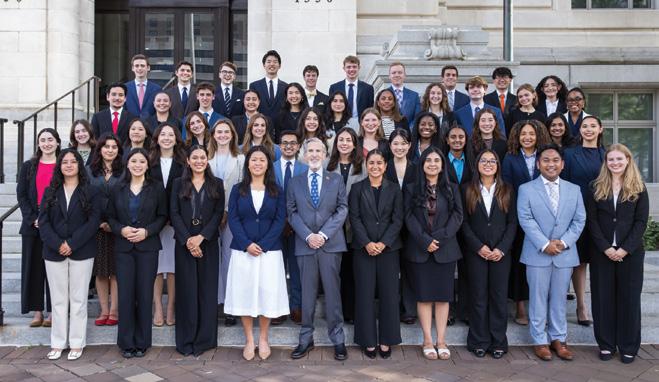
Each summer, 50 undergraduates from five prestigious universities—USC,
Harvard University, Princeton University, University of Virginia (UVA) and University of California, Berkeley—serve in full-time government internships at the federal, state and local levels across the country. Fellows’ contributions strengthen public institutions and support communities nationwide. With 467 fellows since 2015 providing more than 5,000 collective weeks of service, the program has become a model for preparing future changemakers.
IMPACT ACROSS ALL GOVERNMENT LEVELS
The 2025 Schaeffer Fellows worked at all levels of government, 28 new internship sites and 17 cities. Their experiences spanned the breadth of public service in policy areas such as infrastructure, technology and trade, and civic education.
At the local level, USC’s Nadia Bashier gained experience in large-scale infrastructure planning at the Los Angeles County Metropolitan Transportation Authority, where she organized briefings, coordinated events and researched heatmitigation strategies for the 2028 Olympics. Bashier’s work reinforced her interest in transportation policy and helped her translate her internship into a continued role at L.A. Metro.
SCHAEFFER FELLOW ALUMNI
↑ 2025 Schaeffer Fellows
+
COLLECTIVE WEEKS OF PUBLIC SERVICE
SINCE 2015
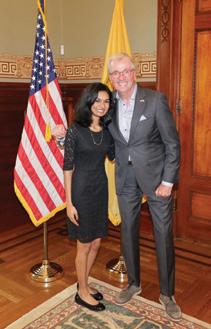
At the state level, Princeton’s Dhyana Mishra analyzed emerging technologies, trade issues and transportation policy for the New Jersey governor’s office. Contributing to the FY 2026 budget process and researching ways to strengthen air-traffic-control pipelines deepened her understanding of policy implementation.
At the federal level, UC Berkeley’s Shawn Ree Canin gained hands-on experience with constituent services in the district office of U.S. Rep. Lateefah Simon (CA-12). Through casework and community outreach, he developed communication, research and policy development skills he now applies as a student senator.
A YEAR OF GROWTH AND NEW OPPORTUNITIES
In 2025, the program continued to expand its reach, impact and support. Weekly virtual Fellows Forums offered space for reflection, skill-building and networking while strong mentorship from supervisors and alumni reinforced values-driven public service.
The USC Schaeffer Institute for Public Policy & Government Service’s offices in Washington, D.C., provided a new venue for the annual Schaeffer Fellows Summit, now a four-day experience. The 2025 summit focused on Collaborating for Community
OF ALUMNI REPORTED
%
PURSUING INTERNSHIPS, FELLOWSHIPS OR JOBS IN PUBLIC SERVICE
Impact. Fellows engaged in conversations with public service leaders, interactive professional development workshops and a cross-sector case study. They also explored the capital, including a Juneteenth visit to the National Museum of African American History & Culture. Many reported leaving with stronger relationships, a deeper understanding of their guiding values and new strategies to support their career goals.
INVESTING IN ALUMNI
Each fall, Leonard Schaeffer and program staff visit fellows at their universities to recognize their contributions to public service and welcome them into the growing alumni community. Graduates of the program pursue diverse careers in various sectors such as business, media, international affairs and law, with many continuing in public service. One example is Elizabeth Esteban-Hernandez (2024) who interned with the communications team in California Gov. Gavin Newsom’s office. After graduating from Harvard in 2025, EstebanHernandez returned to the governor’s office full time as a cabinet affairs assistant.
Alumni remain engaged through regional events, virtual forums and one-to-one mentorship. This year, 62% of mentors shared both university and program ties, including 2022 UVA fellow and incoming
UVA law student Jeremy Odrich, who mentored 2025 Fellow Sydney Harris during her internship with the Office of the Attorney General of Virginia.
Looking ahead, the program will continue to strengthen alumni engagement through a new mobile app, expanded professional development resources and closer partnership with policy-focused organizations, reinforcing its commitment to developing emerging public service leaders.
PREPARING LEADERS FOR A CHANGING WORLD
The 2025 Schaeffer Fellows program reaffirmed the importance of experiential learning, mentorship and community in preparing the next generation of civic leaders. Through hands-on work, reflection and collaboration, fellows deepened their understanding of government and developed skills applicable to any career path. As Schaeffer Fellows alumni make an impact across sectors, the program continues to foster leaders committed to strengthening institutions and serving their communities.
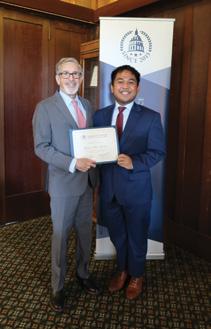
↑ Dhyana Mishra with New Jersey Gov. Phil Murphy; Leonard Schaeffer with Shawn Ree Canin
From coast to coast—and around the world—the Schaeffer Institute advances evidence-based policy for a healthier, more engaged public. Through white papers on urgent issues, media engagement, convenings of thought leaders, closed-door briefings with policymakers and testimony before Congress, we continue expanding our reach and impact.
EVENTS BRINGING TOGETHER POLICYMAKERS, STAKEHOLDERS AND THOUGHT LEADERS HOSTED AT THE USC CAPITAL CAMPUS SINCE IT OPENED IN 2025 15 5K
SUBSCRIBERS TO OUR E-BLASTS, NEWSLETTERS AND EVENT ANNOUNCEMENTS
year in review
“Only American price leadership can both help consumers and sustain innovation into the future.”
quarter 01
January–March
Policy Coffee Chat: “Identifying Pharmacies at Risk of Closure and Potential Reforms,” with Dima Qato
Public Comment Letter: “Coverage of Anti-Obesity Medications” by Dana Goldman, Bryan Tysinger and Alison Sexton Ward, submitted to the Centers for Medicare & Medicaid Services on proposed Medicare and Medicaid changes
White Paper: “The Elasticity of Pharmaceutical Innovation: How Much Does Revenue Drive New Drug Development?” by Darren Filson, Karen Van Nuys, Darius Lakdawalla and Dana Goldman
13 %
RETURN ON INVESTMENT FOR SOCIETY FROM EXPANDING ACCESS TO ANTI-OBESITY MEDICATIONS
“A 60-year-old man living in a rural area is expected, on average, to live two fewer years than an urban man.”
ELIZABETH CURRID-HALKETT, BRYAN TYSINGER AND JACK CHAPEL IN THE CONVERSATION
Op-Ed: “Medicare Should Cover Wegovy—But Not Negotiate Its Price” by Joe Grogan in STAT First Opinion
White Paper: “Lifetime Social Returns From Expanding Access to Anti-Obesity Medications” by Alison Sexton Ward, Bryan Tysinger, PhuongGiang Nguyen, Darius Lakdawalla and Dana Goldman
Op-Ed: “Medicare Drug Price Negotiations Need Something New: A Floor” by Darius Lakdawalla in STAT First Opinion
Op-Ed: “Rural Americans Don’t Live as Long as Those in Cities” by Elizabeth Currid-Halkett, Bryan Tysinger and Jack Chapel in The Conversation
quarter 02
April–June
Op-Ed: “A Missed Chance to Make America Healthier and Richer” by Alison Sexton Ward and Dana Goldman in The Washington Post
Issue Brief: “The Cost of Dementia in 2025” by Julie Zissimopoulos, Dana Goldman and Bryan Tysinger
Grand Opening: Schaeffer Institute’s D.C. office
Op-Ed: “‘Most-Favored Nation’ Drug Pricing Has Three Significant Problems” by Darius Lakdawalla and Dana Goldman in STAT First Opinion
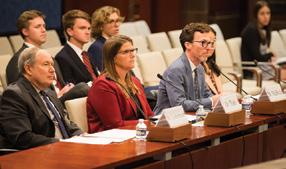
Testimony: “Competition Issues in the Prescription Drug Supply Chain,” Neeraj Sood as an expert witness to the U.S. Senate Committee on the Judiciary
Policy Coffee Chat: “Shifting Cost Sharing Burden to Beneficiaries in Medicare
Part D,” with Erin Trish
↑ Neeraj Sood (right)
DARIUS LAKDAWALLA AND DANA GOLDMAN
“I study conflicts of interest at federal agencies. … Scalpels and sunshine—and a genuine commitment to a holistic approach—can buttress public trust in our health agencies and our healthcare system.”
GENEVIEVE KANTER IN STAT
Webinar: “Revolutionary Decisions—Reshaping How We Understand Human Choice,” Schaeffer Distinguished Scholar Daniel McFadden on the evolution of his groundbreaking work in choice modeling that earned him the Nobel Prize in Economics and transformed how economists analyze and think about consumer behavior and market demand
Testimony: “IRA Implementation’s Threat to Medicine,” Erin Trish as an expert witness to the U.S. House Oversight and Government Reform Subcommittee on Economic Growth, Energy Policy and Regulatory Affairs and Subcommittee on Health Care and Financial Services
Seminar: “CBO’s Model of Drug Development: Ongoing Updates,” Chris Adams, principal analyst at the Congressional Budget Office (CBO), discussing the CBO’s drug development model and how it scores drug pricing legislation
White Paper: “How Does Corporate Tax Policy Influence Innovation?” by Karen Mulligan, Drishti Baid and Darius Lakdawalla
Op-Ed: “What RFK Jr. Gets Wrong About Conflicts of Interest” by Genevieve Kanter in STAT
White Paper: “Shifting Cost-Sharing Burden to Beneficiaries in Medicare Part D” by Erin Trish and Barbara Blaylock
Op-Ed: “Agency Overreach Leaves Patients Untreated” by Joe Grogan in The Wall Street Journal
“Our best lever for countering [China] is really going to be to think about how to modernize our regulatory framework, where we can streamline particularly early phases of development and give American developers the same edge in testing compounds the Chinese now enjoy.”
FORMER FDA COMMISSIONER SCOTT GOTTLIEB
quarter 03
July–September
Policy Coffee Chat: “The Challenge of Implementing Most-Favored Nation Drug Pricing,” with Darius Lakdawalla
Issue Brief: “Operational and Policy Considerations in the Effectuation of Medicare’s Maximum Fair Drug Prices for Part D” by John Coster
Conference: “Reforming the FDA to Meet Today’s Innovation Challenges,” Schaeffer Institute discussion with former Food and Drug Administration (FDA) Commissioner Scott Gottlieb, Former FDA Acting Commissioner Janet Woodcock, ArsenalBio CEO Ken Drazan and Lowell Schiller, nonresident senior scholar and former FDA acting chief counsel
Policy Coffee Chat: “Policy Recommendations for FDA to Advance Medical Product Innovation and Patient Access,” with Lowell Schiller
White Paper: “A Blueprint for FDA Reform: Recommendations to Improve Innovation and Access” by Lowell Schiller, Eunjoo Huisung Pacifici and Barry Liden
↑ Erin Trish (center)
Launch: Center for Civic Society
Policy Coffee Chat: “Inefficiencies in the 340B Program,” with Ryan Long
White Paper: “Cui Bono? Misaligned Incentives in the 340B Program” by Ryan Long, Karen Mulligan, Melissa Frasco, Erin Trish and Michael Chernew
Op-Ed: “HHS’s Chance to Save Hundreds of Boys” by Elizabeth Currid-Halkett in The Wall Street Journal
quarter 04
October–December
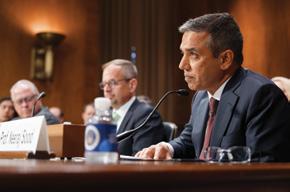
Testimony: “Maintaining U.S. Biotech Competitiveness and Delivering Lifesaving Cures to Patients,” Lowell Schiller as an expert witness to the U.S. Senate Committee on Health, Education, Labor and Pensions
Comment Letter: Submitted to Health Economics Methods Advisory on Draft Report “Defining Appropriate Benefits for Economic Evaluation of Health Care Technologies” by Alice Chen, Jason Doctor, Dana Goldman, Darius Lakdawalla, Barry Liden, Karen Mulligan, Desi Peneva and Charles Phelps
Schaeffer Research Convening: “Advancing Alzheimer’s Research” Schaeffer Institute and USC Epstein Family Alzheimer’s Therapeutic Research Institute hosted a meeting that included Bill Gates
“Expanded coverage of obesity medications is probably the single most effective policy for improving public health.”
Conference: “Improving the U.S. Clinical Trial Recruitment Ecosystem for Alzheimer’s Disease,” Schaeffer Institute’s Clinical Trial Recruitment Lab’s second annual symposium, which explored how new technologies and improved diagnostics can strengthen clinical trial recruitment, shed light on the patient experience in trials, and examined the urgent economic realities for patients and families affected by the disease.
Testimony: “Accelerating Medical Breakthroughs for American Patients and Their Families,” Darius Lakdawalla as an expert witness to the U.S. House Committee on Oversight and Government Reform’s Subcommittee on Economic Growth, Energy Policy and Regulatory Affairs and Subcommittee on Health Care and Financial Services
Op-Ed: “Benchmarking Drug Prices to Inflation Overlooks What Truly Matters: Value” by William Padula in Health Affairs Forefront
Impact: White House moving to expand obesity treatment access, with Schaeffer research informing the policy shift
↑ Darius Lakdawalla
↑ Lowell Schiller
DANA GOLDMAN IN STAT #2 340B HAS BECOME THE SECOND LARGEST DRUG PURCHASING PROGRAM IN THE U.S.
13
research training programs
YEARS OF CONTINUOUS FUNDING FROM THE NIH TO SUPPORT JUNIOR FACULTY RESEARCH THROUGH THE ALZHEIMER’SFOCUSED RESOURCE CENTER FOR MINORITY AGING RESEARCH
51
POSTDOCTORAL RESEARCH SCHOLARS
TRAINED AT SCHAEFFER INSTITUTE SINCE THE PROGRAM LAUNCH IN 2012
Schaeffer prepares the next generation of health policy researchers to bring innovation and expertise to higher education, government and research institutions. Through its training programs, Schaeffer has developed a network of scholars throughout the U.S.
Distinctions include:
One-on-one mentorship and opportunities to collaborate with distinguished investigators in the field
Dedicated, full-time administrative and data support at the USC Schaeffer Institute, and access to university-wide educational and career-development resources
Equipping trainees with sophisticated data-analysis tools and resources
Numerous professional development opportunities, including support for grant writing, publication in peer-reviewed journals, and travel for attending and presenting at major conferences
Assistance in securing influential positions in prestigious academic, public and private settings
POSTDOCTORAL RESEARCH PROGRAM
The USC Schaeffer Institute Postdoctoral Research Program supports emerging researchers tackling the most pressing issues in health policy and economics. Postdoctoral researchers work alongside world-renowned faculty on interdisciplinary research that improves health outcomes and informs public policy—locally, nationally
and globally. A network of scholars from throughout the U.S. has emerged through Schaeffer’s research training programs.
Nearly 50 researchers have been mentored through this program since its inception in 2012. During that time, the Schaeffer Institute has partnered with the National Institutes of Health (NIH) and other prominent institutions to support and develop early-career researchers.
Postdoctoral researchers have gone on to successful careers as professors, research scientists, policymakers and industry leaders. They publish in leading journals, secure competitive grants and contribute to high-impact studies that shape the healthcare landscape.
NIH-FUNDED PILOT OPPORTUNITIES
USC Alzheimer’s Disease Resource Center for Minority Aging and Health Economics Research
Housed within the Aging and Cognition Program at the Schaeffer Center, the USC Alzheimer’s Disease Resource Center for Minority Aging and Health Economics Research focuses on the pathways through which social, behavioral and economic factors, as well as policies and health systems, contribute to disparities in dementia risk and in the health, healthcare and economic outcomes of individuals living with dementia. These pilot awards support underrepresented junior investigators by providing funding, mentorship and analytic resources to help launch their research careers.
Center for Advancing Sociodemographic and Economic Study of Alzheimer’s Disease and Related Dementias
Also housed within the Aging and Cognition Program at the Schaeffer Center, the NIH-funded Center for Advancing Sociodemographic and Economic Study of Alzheimer’s Disease and Related Dementias (ADRD) accepts applications annually to fund one-year research pilot projects. Scholars at all stages of their careers who are interested in social science research related to ADRD are invited to apply.
USC-Yale Roybal Center for Behavioral Interventions in Aging
The USC-Yale Roybal Center for Behavioral Interventions in Aging accepts proposals annually for projects that study mechanisms of behavior change and involve randomized controlled trials. Participants are encouraged to propose trials at their own institutions or coordinate with Roybal Implementation Network partners. Ultimately, the Roybal Center aims to
Schaeffer’s research training programs extend well beyond our Los Angeles campus. Spanning universities, medical schools, Veterans Affairs centers and hospitals nationwide and abroad, they build a broad, collaborative network advancing the science of aging, dementia, clinical trials and health policy
address some of the country’s most pressing population health concerns that are driven by overuse of medical services and underuse of comparatively effective services.
ADDITIONAL OPPORTUNITIES
Clinical Trial Recruitment
Lab Pilot Program
The Clinical Trial Recruitment Lab (CTRL) is a partnership between the USC Schaeffer Institute and the USC Epstein Family Alzheimer’s Therapeutic Research Institute. CTRL pilots put innovative ideas to the test in the real world. Each project explores practical ways to improve how clinical trials reach, engage and reflect the communities they aim to serve. By examining what works—and what doesn’t—these pilots generate real-world evidence and lessons that can strengthen recruitment practices across the field.
Clinical Scholars
The clinical scholars program fosters collaboration between Schaeffer Institute
scholars and exceptional early-career clinical researchers and thought leaders. The program provides training and support for grants, papers and ongoing research projects.
Predoctoral Researchers
Predoctoral students in related programs in the USC Mann School of Pharmacy and Pharmaceutical Sciences, USC Price School of Public Policy, and USC Dornsife College of Letters, Arts and Sciences conduct research under the guidance of a Schaeffer Institute scholar, gaining knowledge and experience relevant to their doctoral program.
Research Assistantships
Students from relevant disciplines—such as economics, public policy, health policy, statistics, medicine and psychology—work directly with Schaeffer scholars on specific projects, attaining valuable experience and skills to further their research proficiency.
data core & microsimulation
MODELS THAT LEVERAGE DISEASESPECIFIC DATA SOURCES TO PREDICT OUTCOMES AND COSTS: FEM DEMENTIAS, FEM PARKINSON'S AND FEM CONGENITAL HEART DISEASE
S10k+
WEB VISITORS TO THE 2025 U.S. COST OF DEMENTIA REPORT, THE FIRST COMPREHENSIVE ANNUAL ESTIMATE OF THE TOLL OF DEMENTIA
chaeffer’s evidence-based analysis and predictive modeling are backed by big data and a team of experts in programming, microsimulation modeling, data management, statistics and more.
Schaeffer researchers and students rely on these leading-edge resources for a diverse range of impactful projects.
The data core library includes survey data, public and private claims, contextual data and electronic health network data feeds. The data core maintains this vital yet sensitive information using the most exacting security possible—from air-gapped computing to state-of-the-art, Health Insurance Portability and Accountability Act (HIPAA)-compliant systems with 24/7 monitoring to ensure data protection.
MODELING THE FUTURE
Since its beginning, USC Schaeffer has been at the forefront of developing innovative economic/demographic microsimulation tools to effectively model future health trends and answer crucial health policy questions. The cornerstone of this research is the Future Elderly Model (FEM), which turns data from a representative panel of nearly 20,000 Americans into forecasts
PROGRAMMERS, STATISTICIANS AND DATA SCIENTISTS MAKE UP THE MICROSIMULATION AND DATA TEAMS
of health and economic outcomes for the U.S. population ages 50 and older. Survey participants’ information is updated every two years, allowing issues to be studied across the lifespan.
Schaeffer investigators employ the FEM to explore a range of matters—including the benefits of early Alzheimer’s interventions, how equitably public programs like Social Security and Medicare distribute benefits, and the importance of diversity in clinical trial recruitment.
The FEM’s robustness makes it unparalleled in the scope of questions it can address. “Other research groups in the U.S. use microsimulation models, but they tend not to cover as many topics as we do,” says Bryan Tysinger, who directs the health policy microsimulation program.
Tysinger and colleagues have built upon the FEM’s success by extending its demographic coverage to the entire U.S. adult population through the Future Adult Model (FAM). Among other projects, the FAM has been used to demonstrate the value of anti-obesity drugs, as well as in studies by Nobel Laureate James Heckman evaluating the impact of early childhood education on lifetime health outcomes.
CHRONIC DISEASE BREAKTHROUGHS
In groundbreaking work that informed the 2025 White House decision to expand access to anti-obesity medications, Schaeffer scholars used the FAM to project lifetime returns from GLP-1 therapies. The analysis found that broad access generates annual returns exceeding 13% even after accounting for treatment costs—demonstrating how weight loss translates into reduced diabetes incidence, lower cardiovascular risk and decreased demand for costly medical interventions.
“Expanded coverage of obesity medications is probably the single most effective policy for improving public health,” notes Founding Director Dana Goldman. The model projected that Medicare coverage alone would generate nearly $1 trillion in social benefits over a decade.
Schaeffer researchers have also extended the FEM to quantify Alzheimer’s disease and related dementias. The U.S. Cost of Dementia project found that dementia cost the nation $781 billion in 2025 alone— including not just medical expenses but also unpaid family care, lost earnings, and diminished quality of life for patients and care partners.
“Having a better understanding of who bears these costs and how they change over time can inform evidence-based policies that may ultimately reduce the financial impact of dementia,” says Julie Zissimopoulos, co-director of Schaeffer’s Aging and Cognition Program and the project’s principal investigator.
The Alzheimer’s and related dementias model has also been used to assess new therapies like lecanemab, demonstrating how drugs that slow decline can meaningfully reduce long-term costs and caregiver strain—benefits not captured in traditional clinical trials.
GLOBAL TO LOCAL
The microsimulation team continues to build a global network of collaborators who are developing country-level FEM-based models around the world. More than 20 nations—from North America to Europe and Asia—are part of this network. A current project focuses on modeling the costs and implications of Alzheimer’s disease and related dementias in countries around the world. The effort enables researchers to compare demographic, health and economic trends on a global scale—and
is increasingly important given the world’s aging population and rising dementia rates.
Models have also gone local, with simulations conducted for California and Los Angeles County to help policymakers at the state and county levels understand trends and the impact of policy decisions. Modelers are also evaluating urban-rural disparities and other demographic trends across the country.
Findings using the FEM and FAM have been published in top journals and cited— or commissioned—by government agencies, the White House, the National Academies of Sciences, Engineering and Medicine, and private organizations interested in aging policy. Ultimately, these microsimulations help legislators at all levels weigh the pros and cons of potential policies when deciding where to put resources.
DATA PARTNERSHIPS
In addition to serving as a resource for Schaeffer researchers, the data core and microsimulation team join with local, state, federal and international collaborators to develop data projects and models.
financial report
FEDERALLY FUNDED PROJECTS INFY25
For fiscal year 2025 (July 1, 2024–June 30, 2025), the Schaeffer Institute funded $21.2 million in operating expenses from $21.2 million in current revenue.
The operating budget includes compensation for scholars and staff, programmatic expenses and general operating costs. Scholar salaries covered by the schools are not included in these totals, nor does university support include faculty salaries covered by the schools. Expenses by function are outlined in the top right graph. Since its inception, USC Schaeffer (including the Schaeffer Center for Health Policy & Economics) has raised $225.8 million.
OPERATING EXPENSES FY 2025
$21.2 million
$0.9 M data core
$2.3 M external affairs
$3.6 M administration
$14.3 M research & training
REVENUE THROUGH JUNE 30, 2025
$225.8 million
$17.1 M USC & others
$47.9 M individuals & foundations
$56.5 M corporations
$104.3 M government
CONFLICT OF INTEREST POLICY
The USC Leonard D. Schaeffer Institute for Public Policy & Government Service conducts innovative, independent research that makes significant contributions to policy.
Institute experts pursue research spanning a variety of domains, including health policy and behavioral economics, with support from a variety of sponsors, including government, foundations, corporations, individuals and an endowment. At all times, the independence and integrity of the research is paramount, and the Institute retains the right to publish its findings. Funding sources are always disclosed, and the Institute does not engage in proprietary research.
As is the case at many elite academic institutions, scholars associated with the Schaeffer Institute are sought for their expertise by corporations, government entities and others. These external activities (e.g., consulting) are governed by the USC Faculty Handbook and the university’s Conflict of Interest in Professional and Business Practices and Conflict of Interest in Research policies. All outside activities must be disclosed via the university’s online disclosure system, diSClose, and scholars must adhere to all measures put in place to manage any appearance of conflict.
schaeffer institute supporters
Agency for Healthcare Research and Quality
Drew Altman
Alzheimer’s Association
American Heart Association
Amgen
Angell Foundation
Arnold Ventures
Arsenal Biosciences
BioMarin Pharmaceutical
Blue Cross Blue Shield of Arizona
Brown University
California Health Care Foundation
California Hospital Association
Center for Corporate Innovation Inc.
Gregory Douglas Chesley
Carl Dickerson
Jason Doctor
Ken Drazan
Edwards Lifesciences
Eli Lilly and Company
Gates Ventures
Genentech
Gilead Sciences
Golden Belt Community Foundation
Kenneth Goulet
Toni and Chase Haddix
Ann and Kent Harada
Gavin S. Herbert
Incyte
Johnson & Johnson
Kaiser Foundation Hospitals Inc.
Cindy and Bob Kocher
Peter and Anna Kolchinsky Foundation
L.A. County Department of Public Health
Lloyd’s Register Foundation
Michael Lohnberg
Massey University
Michael J. Fox Foundation
National Cancer Institute
National Institute for Health Care
Management
National Institute on Aging
National Institute on Drug Abuse
Northeastern University
Novartis
Peter G. Peterson Foundation
Pfizer
Noah Quezada
RAND
Regents of the University of Michigan
Sarepta Therapeutics
Leonard D. Schaeffer
Stand Together Trust
University of Minnesota
University of Texas at San Antonio
University of Texas Health Science Center at San Antonio
University of Wisconsin
Felix George Vladimir
Wake Forest University Health Sciences
Elizabeth and Timothy Wright
Yale University
schaeffer center advisory board
Leonard D. Schaeffer, Chair
Judge Robert Maclay Widney Chair, USC Founding Chair and CEO, WellPoint
Thomas Priselac, Vice Chair President and CEO Emeritus, Cedars-Sinai
Drew Altman
President and Chief Executive Officer, KFF
Niranjan Bose
Managing Director, Health and Life Sciences Strategy, Gates Ventures
Victor Bulto
President, Novartis U.S.
Carmela Coyle
President and Chief Executive Officer California Hospital Association
Lloyd Dean
Chief Executive Officer Emeritus CommonSpirit Health
Carl Dickerson
Founder and Chair of the Board
Dickerson Insurance Services
Ken Drazan
Chairman, CEO and Co-Founder
Arsenal Biosciences
Andrew Dreyfus
Former President and Chief Executive Officer
Blue Cross Blue Shield of Massachusetts
Elizabeth Fowler
Former Director, Center for Medicare and Medicaid Innovation, CMS
Dennis Gillings
Co-Founder and Former Executive Chair Quintiles Transnational (IQVIA)
Peter Griffith
Executive Vice President and Chief Financial Officer, Amgen
Alexander Hardy
President and Chief Executive Officer
BioMarin
Gavin Herbert
Chair Emeritus, Allergan Inc.
Rod Hochman
President and Chief Executive Officer
Providence St. Joseph Health
Hervé Hoppenot
Former Chairman and Chief Executive Officer
Incyte
Douglas Ingram
President and Chief Executive Officer
Sarepta Therapeutics
Pamela Kehaly
President and Chief Executive Officer
Blue Cross Blue Shield of Arizona
“Leonard Schaeffer is a visionary whose leadership exemplifies service to the public good. With the launch of the Schaeffer Institute, he builds on a legacy of advancing rigorous, evidence-based policy solutions that bridge divides and improve lives.”
BEONG-SOO KIM PRESIDENT, UNIVERSITY OF SOUTHERN CALIFORNIA
39
MEMBERS OF THE SCHAEFFER CENTER ADVISORY BOARD, INCLUDING THOUGHT LEADERS IN BIOMEDICAL INNOVATION, HEALTH INSURANCE AND HOSPITALS SYSTEMS
Former Chair and Chief Executive Officer Edwards Lifesciences
Norman Payson President, NCP Inc.
Judith Salerno
President Emeritus and Senior Scholar New York Academy of Medicine
Scott Serota
Former President and Chief Executive Officer Blue Cross Blue Shield Association
Daniel Skovronsky
Chief Scientific and Product Officer and President, Lilly Research Laboratories
Eli Lilly and Company
Jennifer Taubert
Executive Vice President and Worldwide Chairman, Pharmaceuticals Johnson & Johnson
Seema Verma
Executive Vice President and General Manager, Oracle Health and Life Sciences
Faye Wattleton Co-Founder, EeroQ Quantum Hardware
Timothy Wright
General Partner, Time BioVentures
Bernard Zovighian
Chief Executive Officer, Edwards Lifesciences
EX-OFFICIO MEMBERS
Christopher Boone
Dean and C. Erwin and Ione L. Piper Chair
USC Price School of Public Policy
Dana Goldman
Co-Director, USC Schaeffer Center
Founding Director, USC Schaeffer Institute for Public Policy & Government Service
University Professor of Public Policy, Pharmacy and Economics, USC
Vassilios Papadopoulos
Dean, John Stauffer Decanal Chair in Pharmaceutical Sciences and Professor of Pharmacology and Pharmaceutical Sciences
USC Mann School of Pharmacy and Pharmaceutical Sciences
Erin Trish
Co-Director, USC Schaeffer Center
Associate Professor, USC Mann School of Pharmacy and Pharmaceutical Sciences
schaeffer fellows advisory board
Leonard D. Schaeffer, Chair
Judge Robert Maclay Widney Chair, USC Founding Chair and CEO, WellPoint
Jack Ebeler, Vice Chair
Former Acting Assistant Secretary of Planning and Evaluation, U.S. Department of Health and Human Services
William Antholis
Director and CEO, Miller Center for Public Affairs, University of Virginia
Sheila Burke
Former Chief of Staff, Senator Bob Dole Faculty, Harvard Kennedy School of Government
Kimberly De Los Santos
Executive Director, Pace Center for Civic Engagement, Princeton University
Carole Johnson
Former Administrator, Health Resources and Services Administration President and CEO, University Hospital, Newark, N.J.
Jamie Kwong
2016 Schaeffer Fellow, University of Southern California Fellow, Carnegie Endowment for International Peace
Brian Osberg
Former Director, Minnesota State Medicaid
David Schaeffer
Representative, Brewster Foundation
Itcelia Segoviano-Ramirez
2018 Schaeffer Fellow, University of California, Berkeley
Assistant Executive Director, Stiles Hall
Jacob Vaughan
Representative, Brewster Foundation
EX-OFFICIO MEMBERS
Willa Erickson
Assistant Director, Schaeffer Fellows in Government Service
Dana Goldman
Founding Director, USC Schaeffer Institute for Public Policy & Government Service
Erica Lovano McCann
Executive Director, Schaeffer Fellows in Government Service
↑ Jacob Vaughan, Brian Osberg, Leonard Schaeffer, Carole Johnson and Jack Ebeler
schaeffer institute leadership
Dana Goldman
Founding Director, USC Schaeffer Institute
Co-Director, USC Schaeffer Center for Health Policy & Economics
Darius Lakdawalla Chief Scientific Officer
FLAGSHIP PROGRAMS
Leonard D. Schaeffer Center for Health Policy & Economics
Erin Trish Co-Director
Sarah Axeen Director, Data Analytics
Alice Chen Director, Value of Life Sciences Innovation
Erin Duffy Director, Research Training
Mireille Jacobson
Co-Director, Aging and Cognition
Bryan Tysinger Director, Microsimulation
Julie Zissimopoulos Co-Director, Aging and Cognition
Leonard D. Schaeffer Fellows in Government Service
Erica Lovano McCann
Executive Director
Willa Erickson Assistant Director
Center for Civic Society
The Right Honorable Gordon Brown
Ronald L. Steel Chair in Foreign Policy and International Affairs and Distinguished Scholar, USC Schaeffer Institute
ADMINISTRATION
Stephanie Hedt Director, External Affairs
Chris Klein Chief of Staff
Barry Liden Director, Public Policy
Nichole Phillips
Senior Director, Finance and Research Administration
Hossein Pourmand Director, Advancement
about our flagship programs
USC LEONARD D. SCHAEFFER CENTER FOR HEALTH POLICY & ECONOMICS
Since its inception in 2009, the USC Schaeffer Center for Health Policy & Economics has served as an intellectual hub for health policy and economics research at USC.
The Center’s mission is to measurably improve value in health through evidencebased policy solutions, research excellence, and private- and public-sector engagement.
The Center ranks third in the world in health economics and is a trusted resource for the White House, Congress, federal agencies (including the Centers for Medicare & Medicaid Services, Food and Drug Administration, Congressional Budget Office and National Institutes of Health), and key stakeholder groups. Schaeffer Center research earned a reputation for providing an evidence base that informs decision making and that can result in the formation of sound health policy.
The Center is a partnership between the USC Mann School of Pharmacy and Pharmaceutical Sciences and the USC Price School of Public Policy.
LEONARD D. SCHAEFFER FELLOWS IN GOVERNMENT SERVICE
For more than a decade, the Schaeffer Fellows in Government Service program has funded government internships for undergraduate students with exceptional potential and provided mentorship to foster career development—and democracy itself. Schaeffer Fellows gain experience-based knowledge of government operations, a deeper understanding of the impact of public service, and the skills and motivation to join the next generation of civic leaders.
Each summer, the program supports a distinguished cohort of fellows through 10-week, high-level internship opportunities and access to specialized resources. As alumni, Schaeffer Fellows join a vibrant community that fosters networking and career growth.
Over the past decade, the Schaeffer Fellows program has built strategic partnerships with five universities and several national nonprofit organizations that enrich the internship experience, expand professional development and strengthen alumni engagement.
CENTER FOR CIVIC SOCIETY
The Center for Civic Society was established in 2025 through a gift from Leonard D. Schaeffer. Its mission is to assess, strengthen and promote democratic values around the world through research, civic engagement and global dialogue.
The Center is chaired by former United Kingdom Prime Minister Gordon Brown, who holds the Ronald L. Steel Chair in Foreign Policy and International Affairs at USC.
The Center unites scholars from across USC to identify the roots of polarization, address complex societal challenges, conduct rigorous analysis and develop actionable solutions. Planned efforts include the development of indices to measure civic engagement and examine how the strength, quality and diversity of civic life and economic status affect political polarization and fragmentation across democratic nations.
about the schaeffer institute
USC LEONARD D. SCHAEFFER INSTITUTE FOR PUBLIC POLICY & GOVERNMENT SERVICE
Founded in 2024, the Leonard D. Schaeffer Institute for Public Policy & Government Service at the University of Southern California develops evidence-based solutions to address the nation’s most pressing policy issues.
Building on the successes of its flagship programs—the USC Schaeffer Center for Health Policy & Economics, the Schaeffer Fellows in Government Service and the new Center for Civic Society—the Institute serves as a policy laboratory to develop and test ideas generated by the USC academic community. It fosters civic engagement, supports new generations of public service leaders, and provides a forum to reach federal and global policymakers.
The Schaeffer Institute has offices at USC in Los Angeles and at the USC Capital Campus in Washington, D.C. More than 140 scholars and staff—including nine elected members of the National Academies—are part of the Institute.
ABOUT LEONARD D. SCHAEFFER
Leonard D. Schaeffer is one of the most accomplished leaders in American healthcare, with a career that spans the private, public and philanthropic sectors. He was the founding chairman and CEO of WellPoint, then the nation’s largest health benefits company by membership, and earlier was the administrator of the federal Health Care Financing Administration (now the Centers for Medicare & Medicaid Services) with responsibility for the U.S. Medicare and Medicaid programs. He is an elected member of the National Academy of Medicine, serves as chair of the USC Health System Board and is a USC trustee. He has served on the boards of numerous businesses, philanthropic organizations and professional bodies.