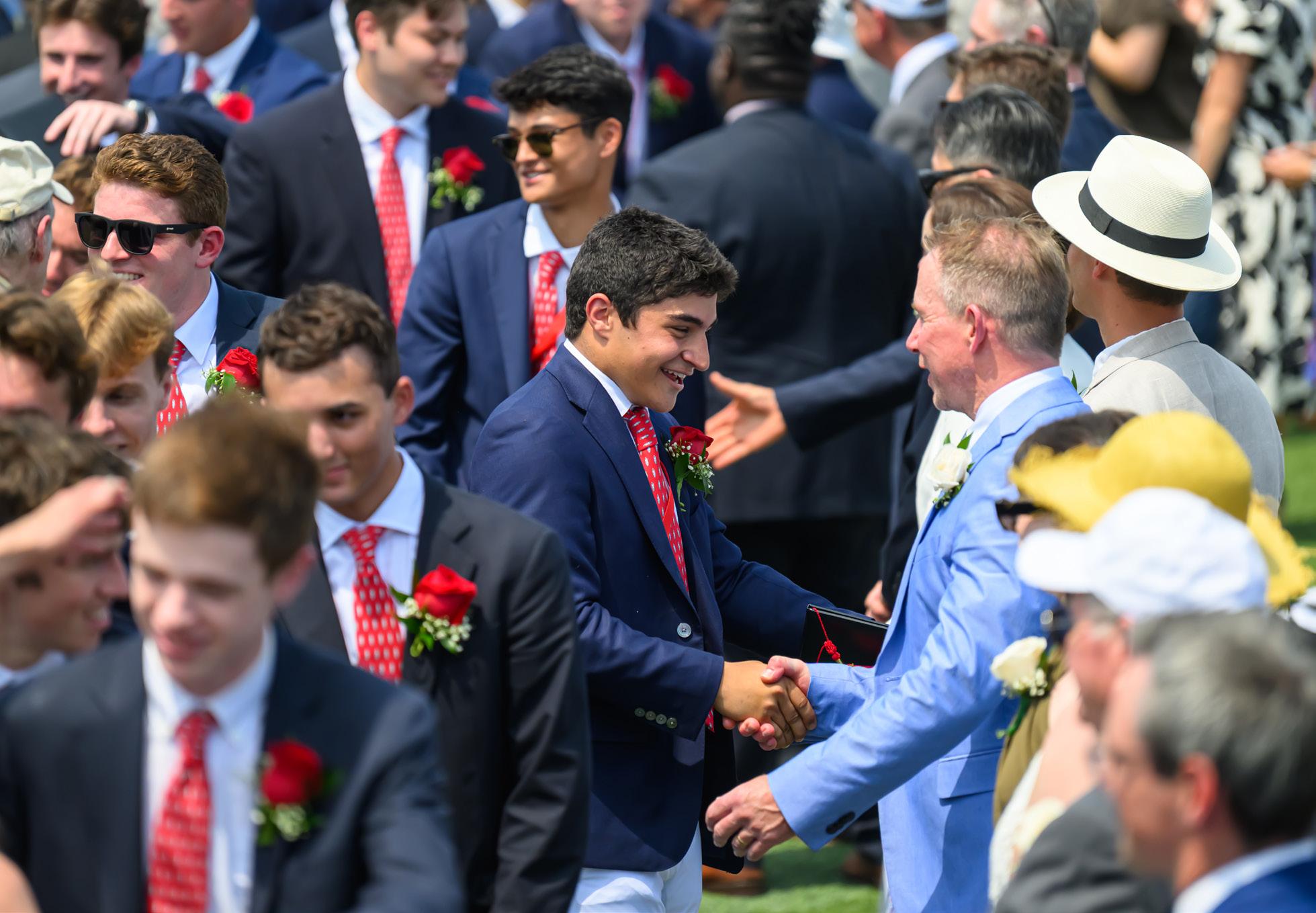
A Catholic independent school, St. Sebastian’s seeks to engage young men in the pursuit of truth through faith and reason.
By embracing Gospel values in an inclusive, nurturing community and by inspiring intellectual excellence in a structured liberal arts curriculum, St. Sebastian’s strives to empower students for success in college and in life.
The ideal St. Sebastian’s graduate will be a moral and just person, a gentleman of courage, honor, and wisdom, a life-long learner who continues to grow in his capacity to know, to love, and to serve God and neighbor.
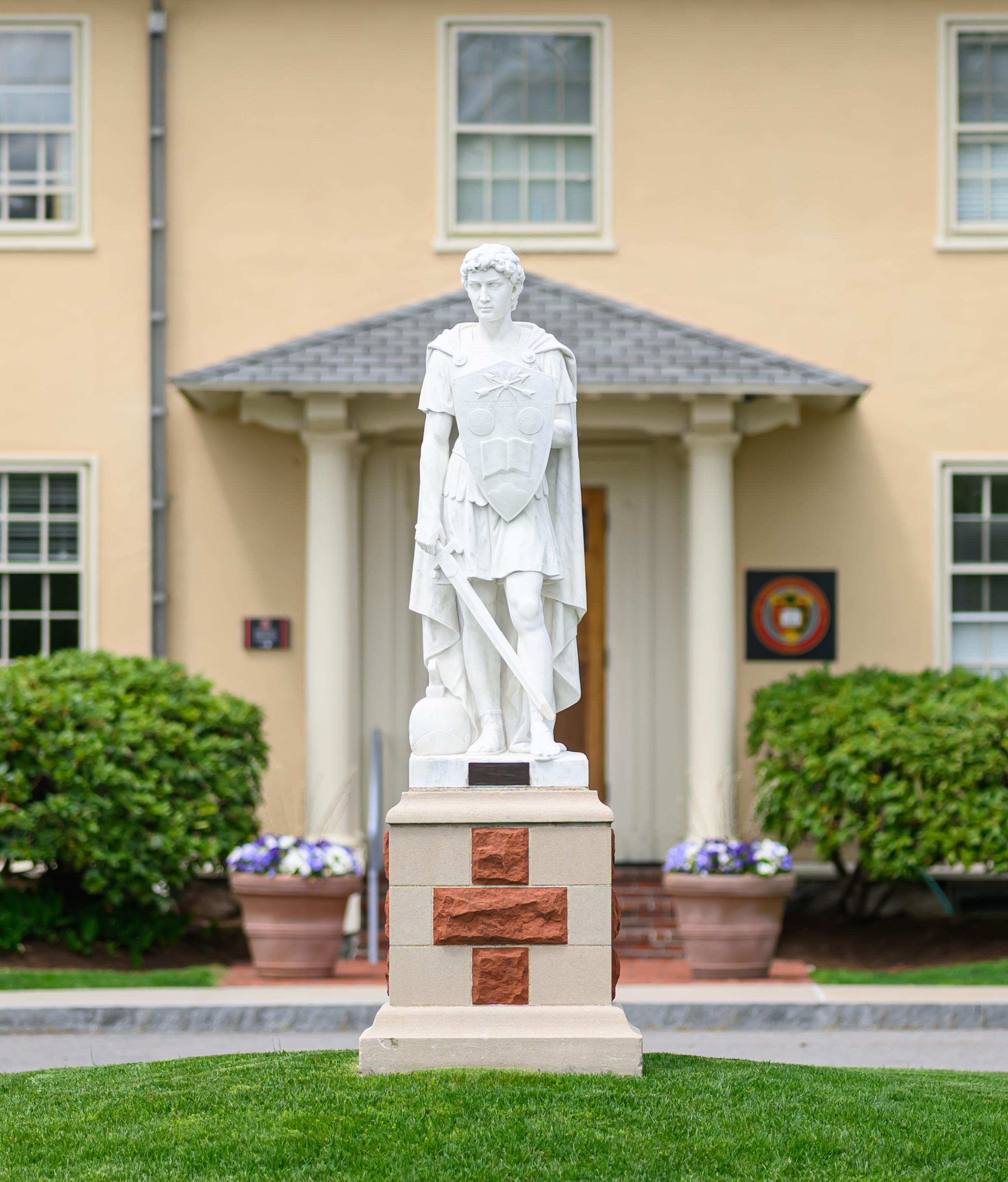
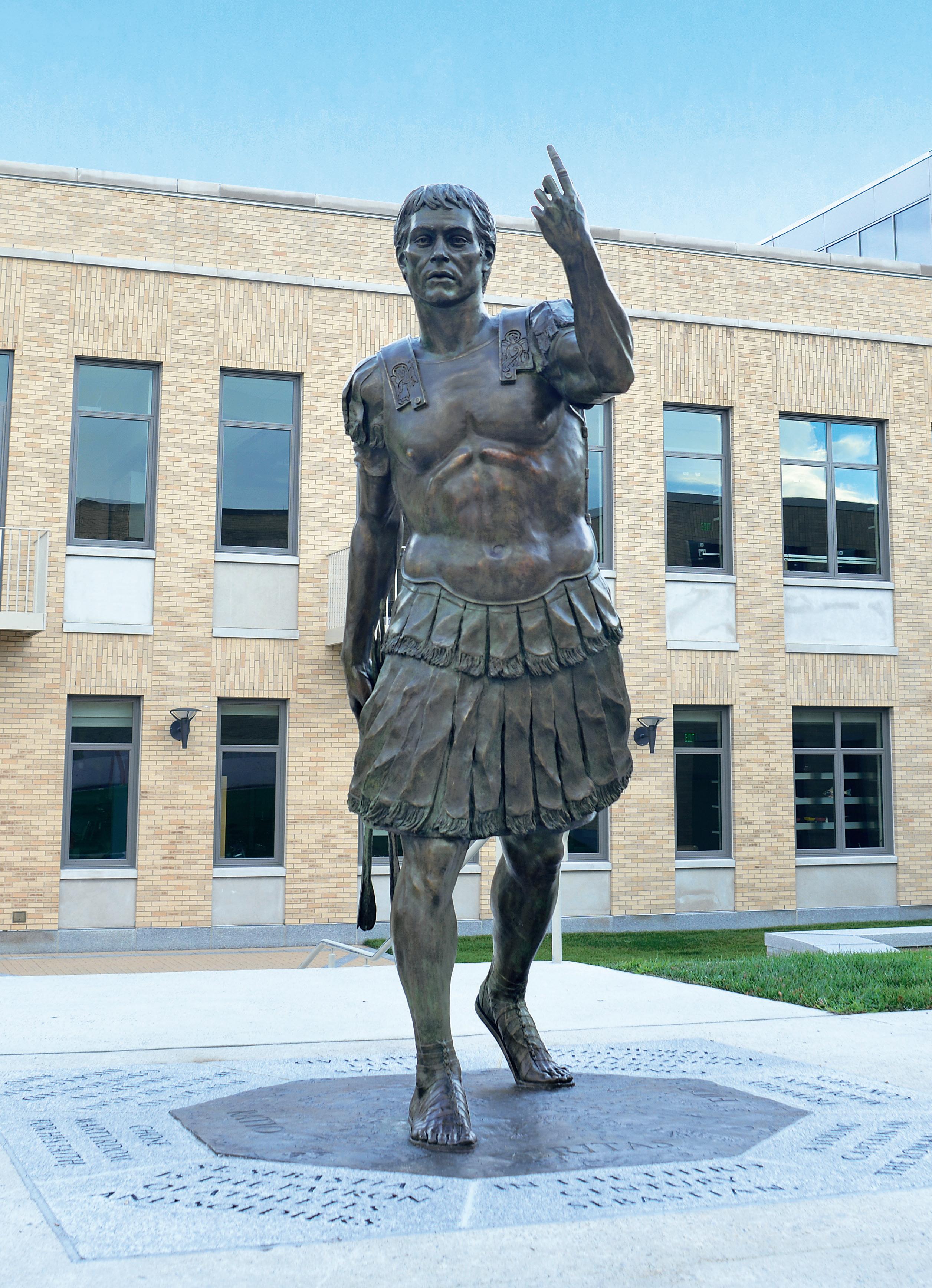
St. Sebastian’s was founded in 1941 by William Cardinal O’Connell, Archbishop of Boston. In keeping with the spirit of the age, the School was named for Sebastian, the soldier-saint. St. Sebastian continues to be a role model for our boys. His values of integrity, leadership, courage, and faith have never been more vital. Our 380 boys in grades seven through twelve engage fully in all endeavors as they grow in body, mind, and spirit.
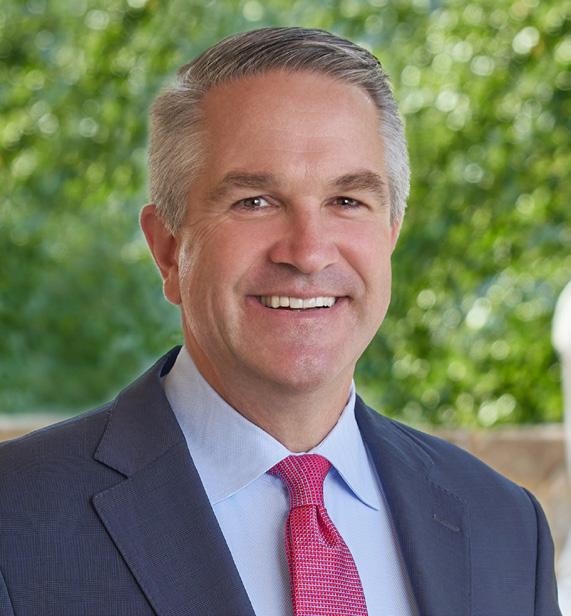
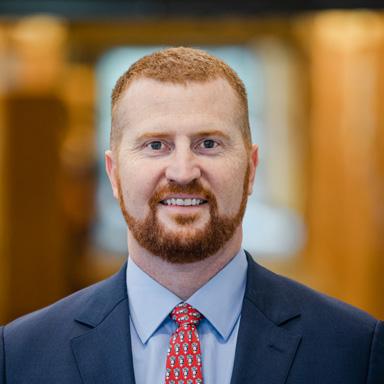
A MESSAGE FROM HEAD OF SCHOOL BRENDAN W. SULLIVAN
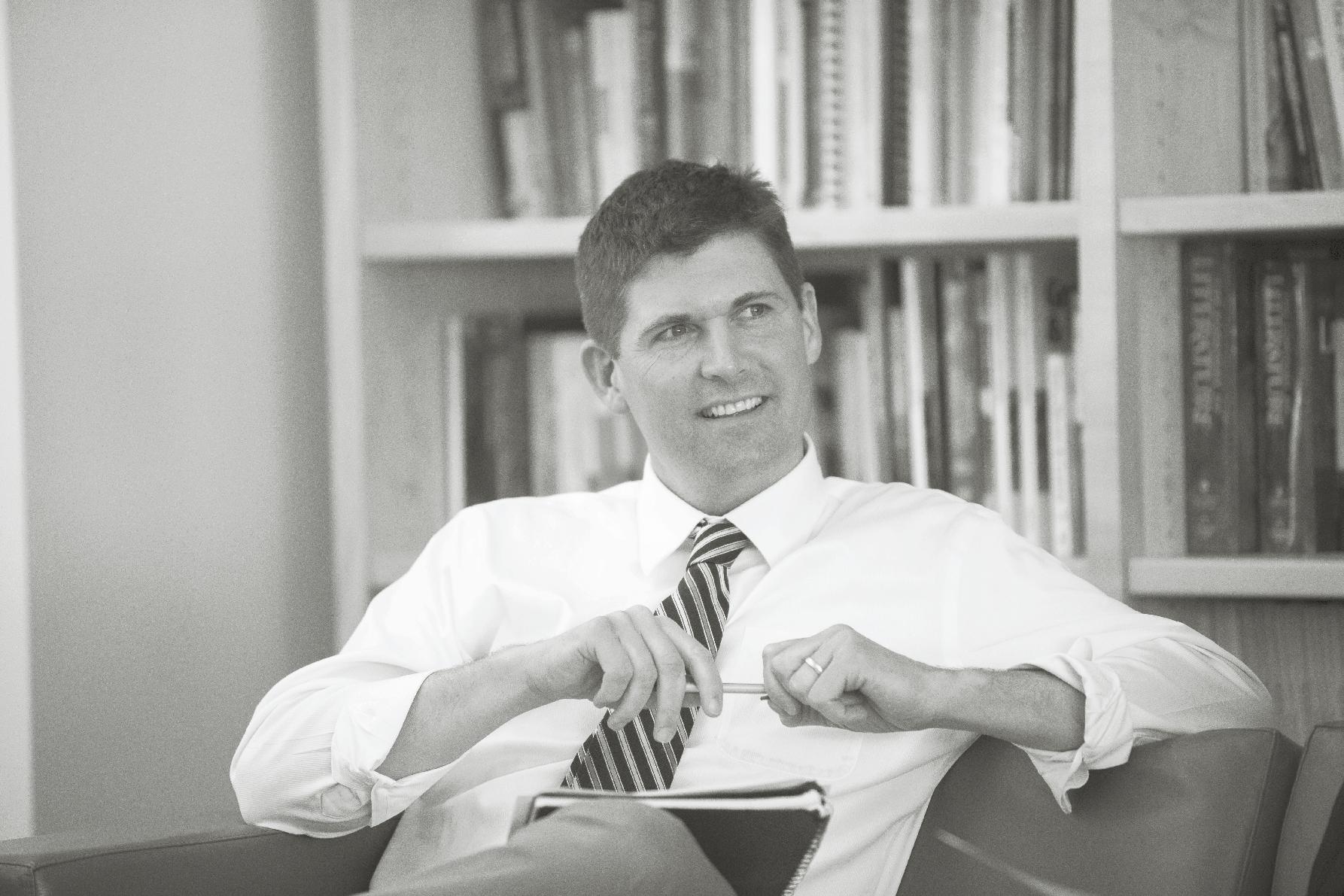
Brendan W. Sullivan began his tenure as St. Sebastian’s tenth Head of School on July 1, 2024. Brendan is a dedicated educator who applies his vast experience and passion for St. Sebastian’s mission to lead the School to ever greater levels of excellence. Joining the faculty in 1994, he has served St. Sebastian’s as a beloved and well-respected science teacher, coach, Athletic Director and Dean of Students. Brendan earned a BA at Princeton University and an MA at Wesleyan University. He is married to Rebecca Sullivan, a Public Relations Director. The Sullivans have three children: Eliza, Class of 2025 at the College of the Holy Cross; Joseph, a member of St. Sebastian’s Class of 2025 and Princeton Class of 2029; and Patrick, the Class of 2029.
Welcome to St. Sebastian’s School
Our mission at St. Sebastian's is clear and distinct—to pursue truth through faith and reason. St. Sebastian’s is a community where boys push themselves, develop deep relationships and respect for others, grow in their faith, and learn what it means to be a gentleman of courage, honor, and wisdom. St. Sebastian’s is the only Catholic school in the Independent School League, and we are enriched by families of all faith traditions. By embracing Gospel values and universal morals, our boys embark on a purpose-driven life.
I could feel the special nature and incredible spirit of St. Sebastian’s when I first stepped onto campus in September of 1994, a spirit that continues to distinguish our community from all others. Serving the School for three decades, I have developed a profound appreciation for and love of our students, teachers, parents, and alumni. Our faculty and staff are devoted to creating an inclusive, nurturing school that inspires intellectual excellence. Their passion and commitment are the driving forces that inspire happy students, loyal alumni, and proud parents.
When you walk our campus, you will quickly see that we have some of the strongest academic, athletic, fine arts, and extracurricular programs imaginable. You will hear our students eloquently profess their love and appreciation for their school, and you will feel the St. Sebastian's Spirit that permeates our community. Our boys learn from teachers who are not only brilliant scholars but are also models and guideposts for a character-driven education.
Our unique mission, our outstanding programs, our spirit, and our community are best experienced in person. I invite you to visit us to feel the difference for yourself. We would be honored to have you.
Peace be with you, Brendan W. Sullivan
St. Sebastian’s prepares young men for
fulfilling lives of perpetual discovery.
ST. SEBASTIAN’S IS
a School of Academic Rigor
We believe that, in his heart, every young man wants to be part of something great. He wants to become as wise, as just, as balanced, and as brave as he can be. He wants to be in love with learning. Now, he may not know all of this right away, but we do. Our job is to evoke from each student his greatness.
Our focus is firmly fixed on the individual. Our approach, for instance, is not to teach Algebra to a student, but, rather, to teach a student Algebra. Teachers get to know their students right away and connect with them soul to soul. Because of the nurturing care they receive, students gain the confidence needed to take risks.
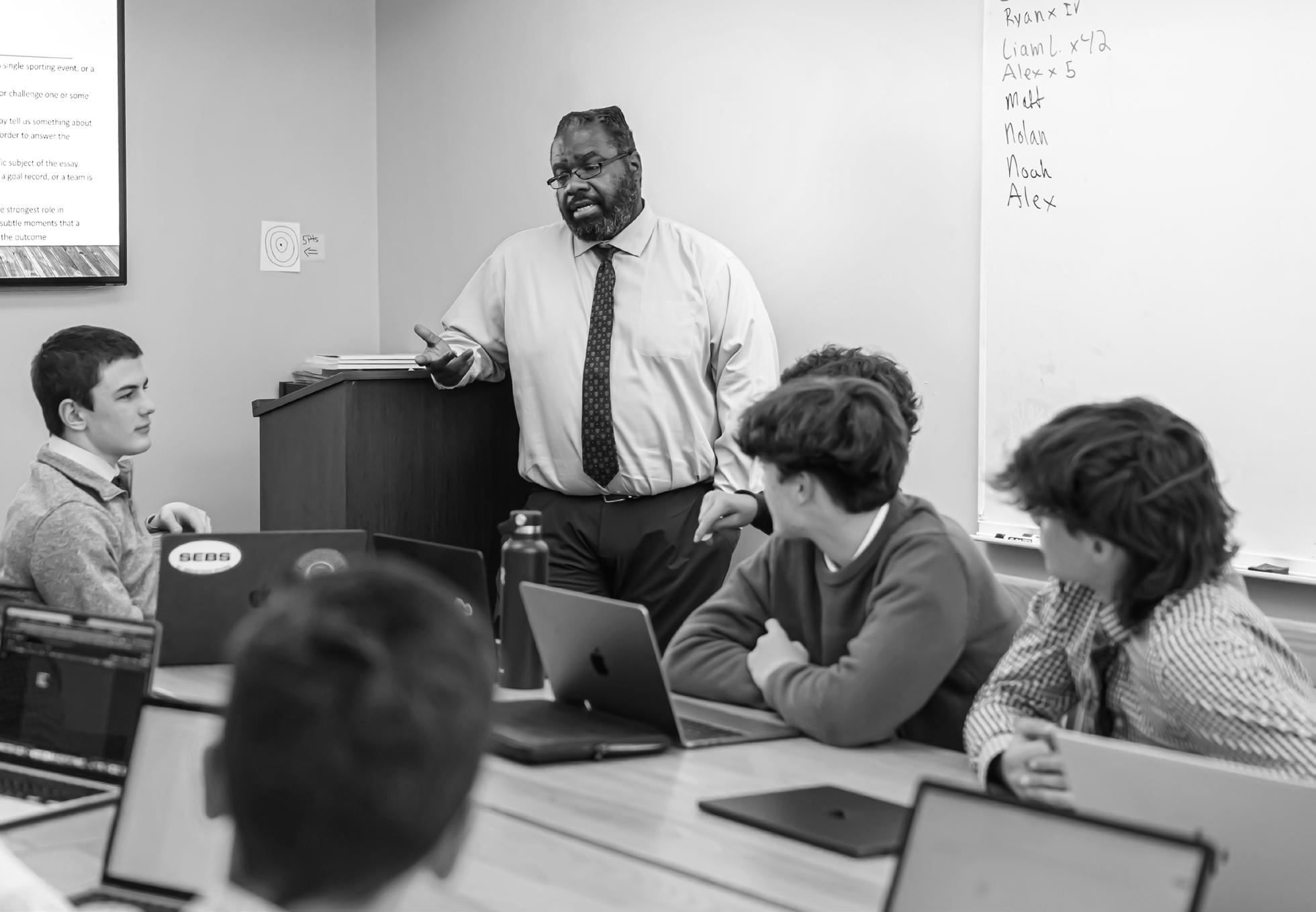
In small, intimate settings—average class size of 10—extraordinarily talented, devoted educators challenge bright, promising students to throw their hearts and souls into the learning process, to become the most engaged, industrious, erudite scholars that they can possibly be. To enjoy success in our structured liberal arts curriculum, students must expend hours upon hours of energy in disciplined, focused study.
We pursue excellence in every discipline, but it is perhaps our unique commitment to verbal skills development, which most dramatically distinguishes us from other excellent schools. Our students write every day, and they speak all the time. They memorize literary passages and vocabulary lists; they churn out a multitude of five paragraph essays, longer papers, poems, and narrative pieces; they stand before their classmates and in front of the entire student body to deliver speeches. And every step of the way, they work with caring, committed, knowledgeable teachers, who draw the very best from them.
The Honor Code, at the core of our academic program, calls each young man to pledge on his sacred honor that the work he turns in is his own. Hence, students are reminded several times a day that they must be young men of unquestionable integrity who give their best, most honest effort in the classroom and in all areas.
Our students leave us prepared for and excited about the challenges they will face in college and beyond. >>>
Within our structured liberal arts curriculum, we place a particular emphasis on verbal skills development. In short, we strive to give our students a comprehensive writing and speaking experience that simply cannot be found elsewhere.
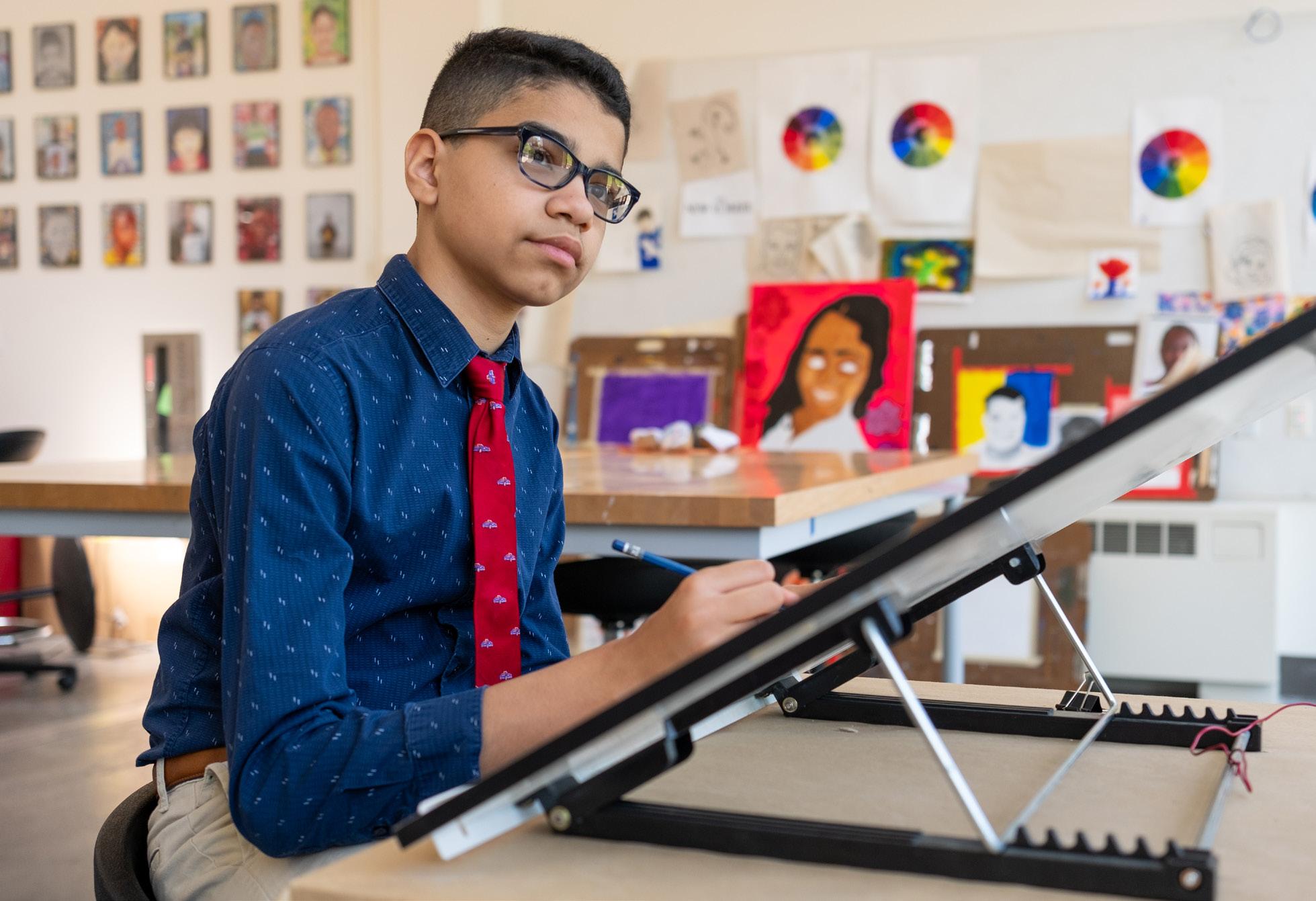
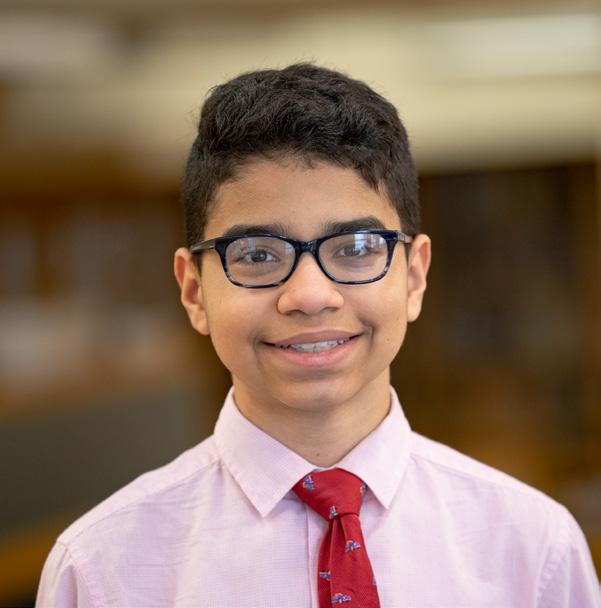
DIEGO FUENTES GRADE
8
Math Club, Animation Club, and Case Club
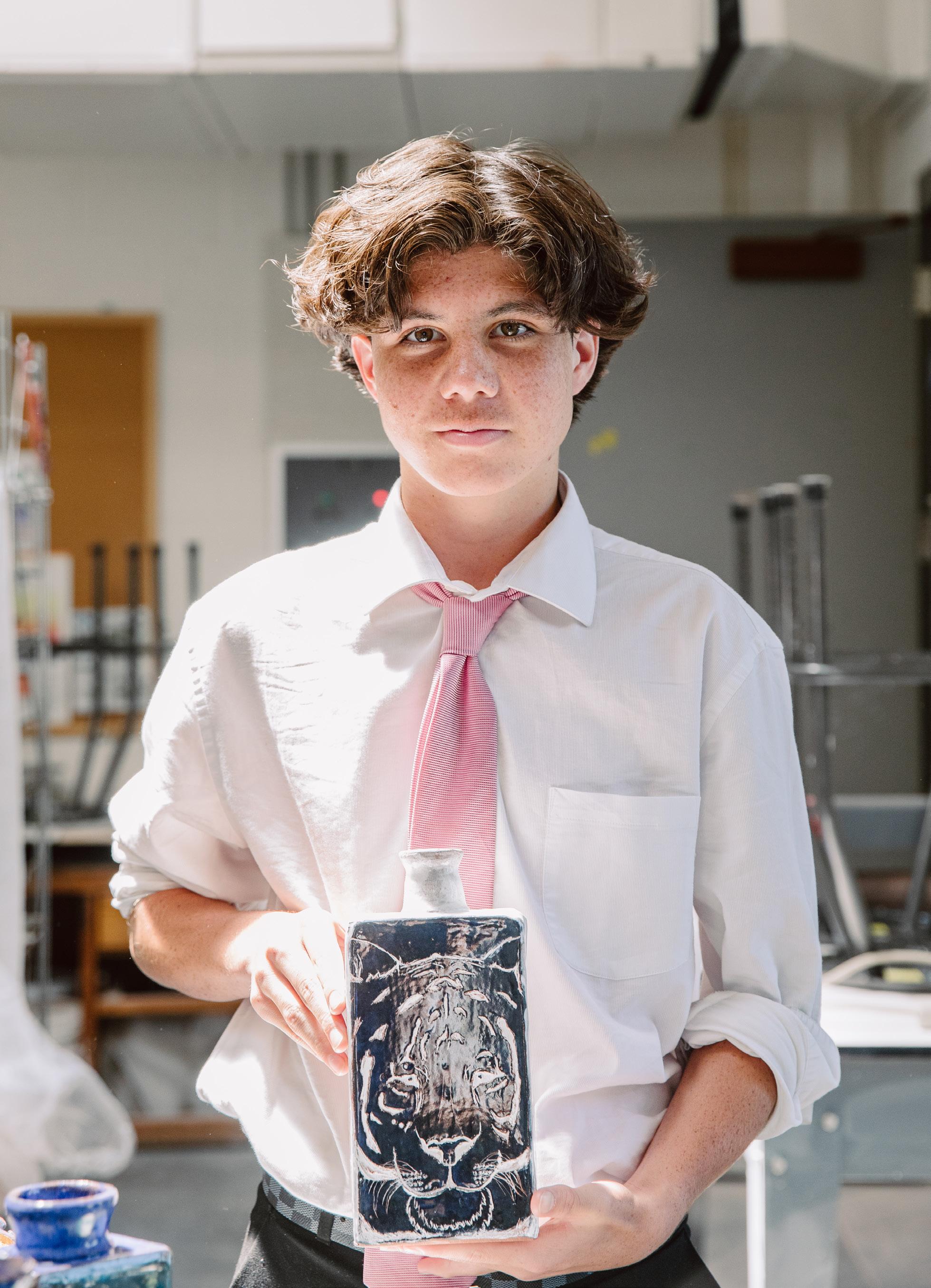
“Becoming an Arrow was the best decision I ever made. St. Sebastian’s has helped me push myself as a student, and I have become more social than I ever was before. A big part of the person I am is St. Sebastian’s encouraging me to be a good person in and out of school. Subjects I didn’t enjoy before have become some of my favorites, and participating in events after school is now part of my daily routine. I now go to Math Club, Animation Club, and Case Club. St. Sebatian’s has made the biggest impact on me ever since I came here, and I am grateful to all the students and faculty for making my days better. St. Sebastian’s has put me into a great position to become the man I want to be.”
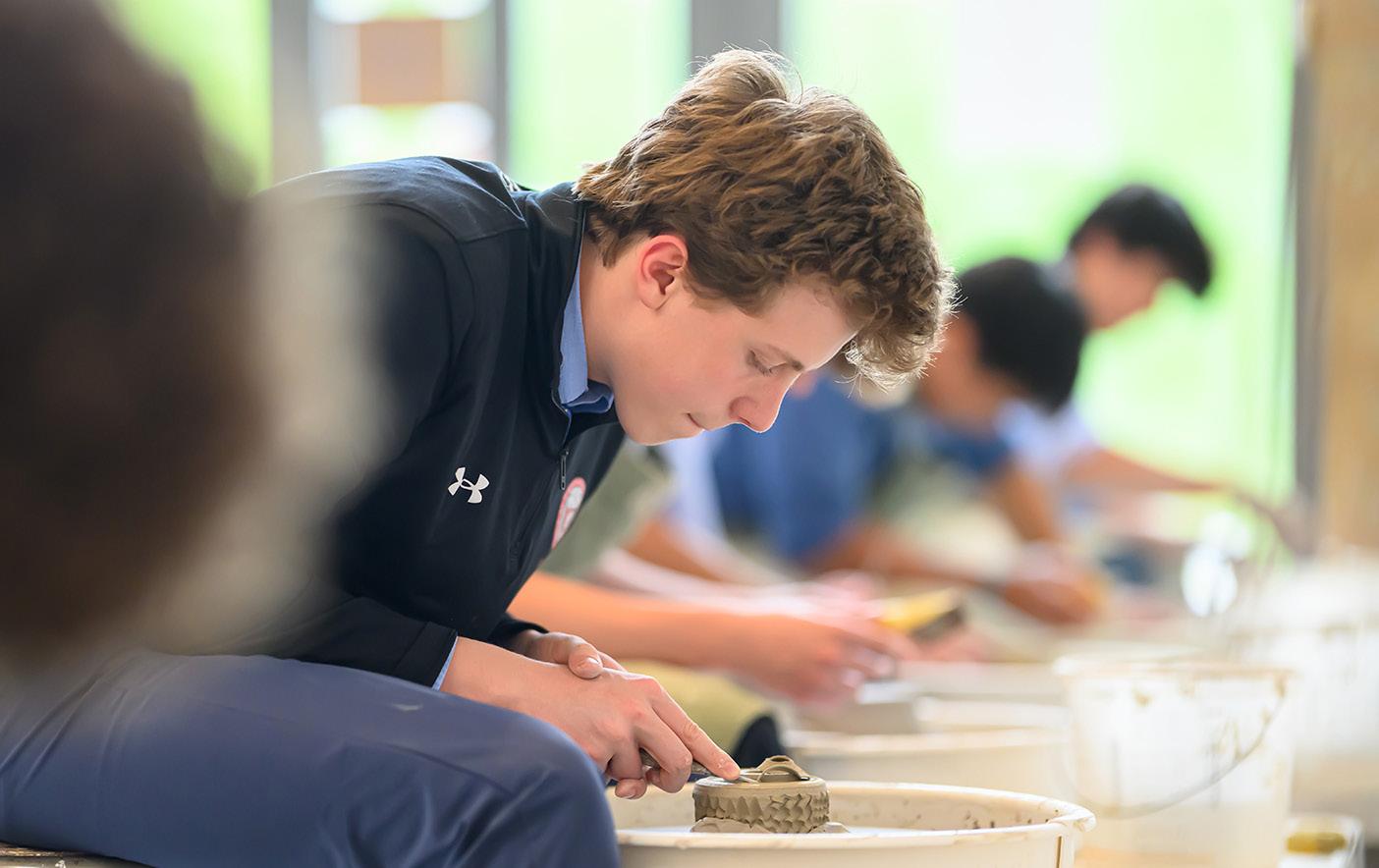
“Diego is an emerging and talented artist who takes full advantage of our fine arts offerings. He often participates in our studio sessions after school, where he demonstrates creativity in everything that he tries. When I taught Diego in ceramics class, I remember how excited he was to start his mug, and how he was even more excited that we would be using the Innovation Lab to assist with our project. Diego’s enthusiastic participation will fuel his further growth as an artist in our high school programs.”
Barrett Ellis, Chair, Fine Arts Department
ST. SEBASTIAN’S IS
a Community of Spiritual Depth
A School of heart as well as head, we seek to motivate the better angels of our students’ natures, encouraging them to do the right thing regardless of the consequences. By inspiring the pursuit of moral and intellectual excellence, St. Sebastian’s prepares young men for fulfilling lives of perpetual discovery.
We believe that there is an objective reality, an absolute right and wrong, a way we ought and ought not to behave. There is indeed a truth to be apprehended, and to grasp as much of it as possible, we must open our souls to the Eternal as well as our minds to the knowable. As our Chaplain urges, we open ourselves to the power of the Holy Spirit at work in our weakness.
We want our students to know that the spiritual world is no less real than the natural world. Both must be experienced, examined, explored. Our understanding of each realm must be deepened, expanded exponentially. The power of St. Sebastian’s, then, is the synergy of faith and reason in the focused, determined, inexorable pursuit of Truth.
Faith informs reason; reason informs faith. Blessed Pope John Paul II says it best: It is faith which stirs reason to move beyond all isolation and willingly to run risks so that it may attain whatever is beautiful, good, and true. Faith thus becomes the convinced and convincing advocate of reason.
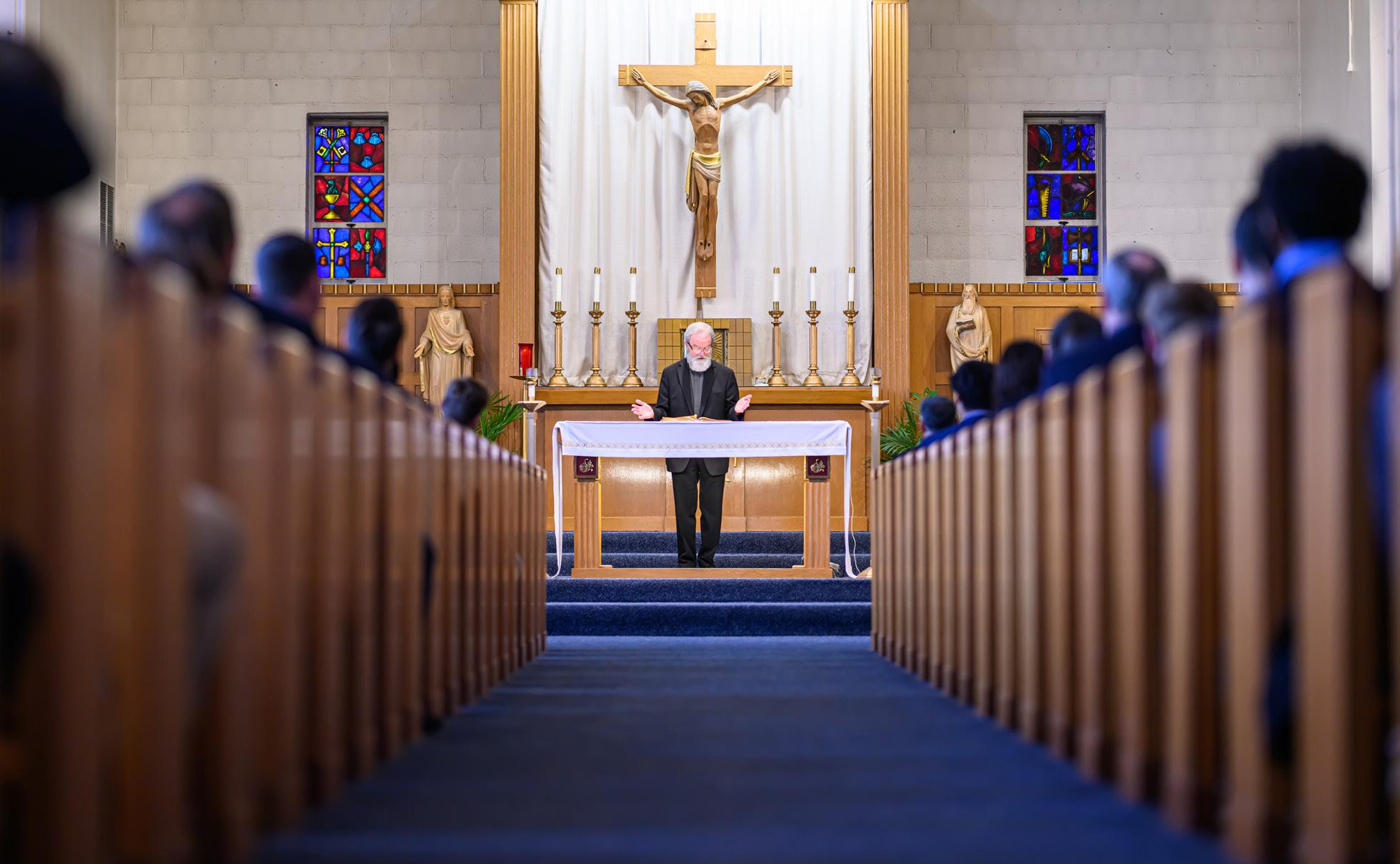
We pray together in Chapel and in Church. We sing hymns and psalms. We receive the sacraments. In praise and thanksgiving, we worship and glorify our Heavenly Father, the Giver of all gifts.
Theologians assert that devotion to God and service to others should be our chief concerns. In thousands of ways over thousands of days, we seek to advance these goals within our walls, throughout the Greater Boston area, and in far reaches of other countries. >>>
In accord with the School’s ethos of service, all seniors perform five weeks of community service in the spring. Many describe the experience as transformative.
TAYLOR HOLMES
GRADE 8
“St. Sebastian’s is a special place, where your friends develop into your brothers. The brotherhood here is what makes me look forward to school every day; I get to interact with my friends in the classroom, during sports, and after school. Having chapel every week and hearing my peers’ chapel speeches has helped me appreciaate their stories and get to know them even better. Our teachers develop a balance between making subjects challenging and providing us with support. The teacher-coach model has allowed me to deepen my relationships with teachers outside of the classroom. It allows me to see other sides of teachers, which has made playing sports very special. St. Sebastian’s has very talented students in many areas, whether it be music, sports, academics, or all three. This develops a competitive and fun atmosphere, and has ultimately helped me to grow as a student and a person. Coming to St. Sebastian’s has been one of the best decisions of my life, and I look forward to further growing my relationships with my fellow Arrows.”
“With superior dedication to academic excellence, Taylor has exhibited a growth mindset each day in our math classroom. Taking advantage of Math Lab or collaborating with his peers, Taylor has fostered a strong love of learning. He welcomes feedback, embraces challenges, and understands that effort is the key component to mastery. Initially an apprehensive participant, Taylor is now a class leader who shares his wisdom confidently. As his teacher and coach, I have seen Taylor’s academic aspirations and growth translate to his athletics pursuits as well. Taylor has already made an indelible impact on the hockey and lacrosse programs. His mental toughness, selfless approach, and team-first attitude make him a true “Arrow” student-athlete, always willing to contribute to the community in so many meaningful ways.”
Mark Pohlman, Mathematics Department
Arrowheads, Arrows Together, Communications Club, Jazz Band, Latin Club, Mass Ensemble, Cross Country, Hockey, and Lacrosse.
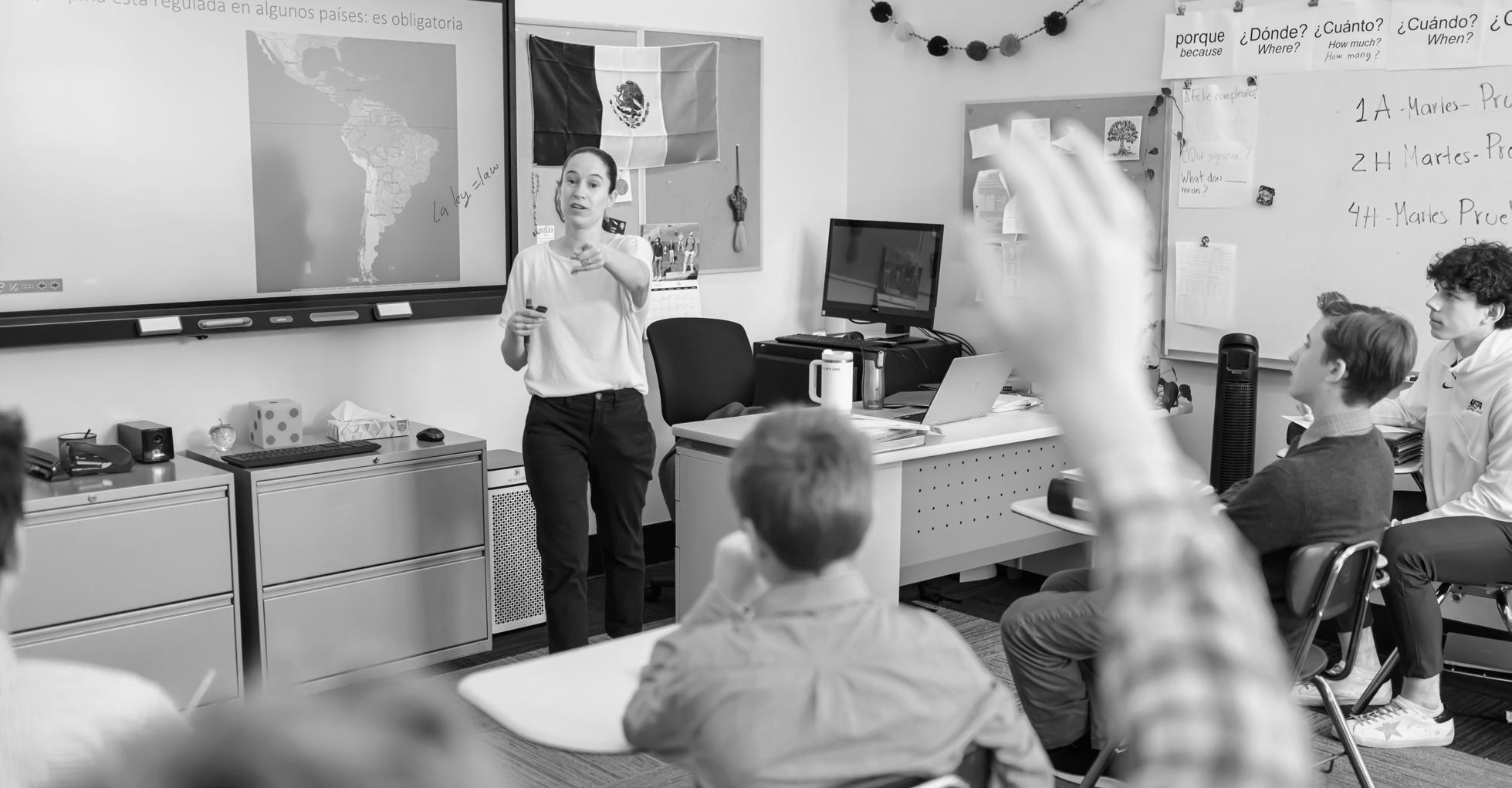
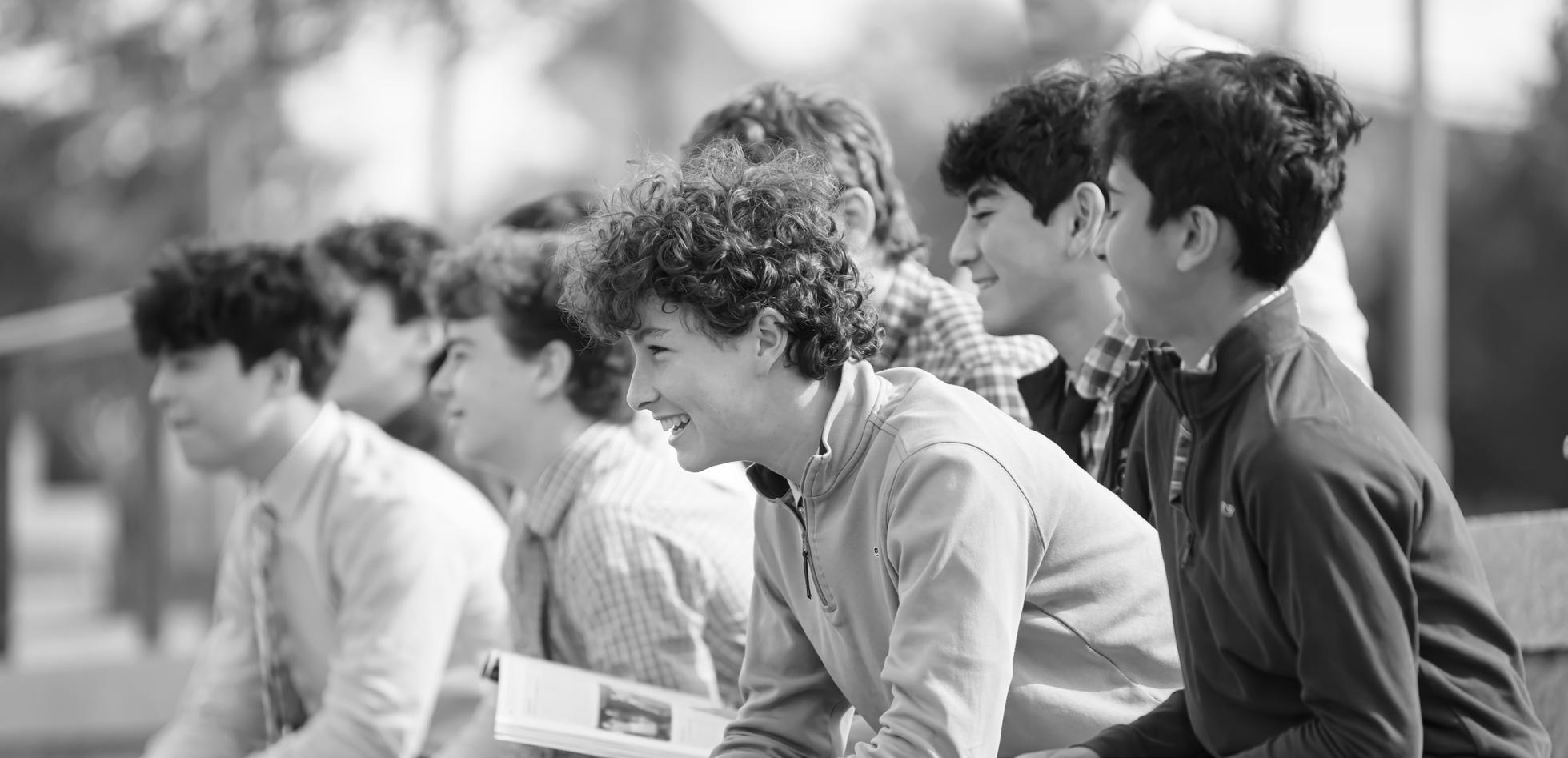
Unusually small classes stimulate honest discussion, allow for individual attention, create an intimate learning community, and foster the pursuit of truth.
ST. SEBASTIAN’S IS
a School Marked by Excellence in the Arts and Athletics
When students engage in the arts and athletics, they learn valuable lessons about themselves and about life, lessons that they simply could not learn in any other way. It is indeed an honor and a joy to create, to compete, to strive for excellence in all things.
Our students are encouraged to draw, to paint, to shape and form, to act, and to make music. Some write and direct plays. Some build sets; others work on sound and lighting. We have had painters and photographers gain admission to the best art schools in the country, we have had a piano player win a New England Concerto competition, we have had a singer perform for the Pope in Rome and for the President in the White House, and a number of our alumni are enjoying successful writing and acting careers in Hollywood.
Our talented and devoted art, music, and drama teachers and our beautiful arts facilities conspire powerfully, providing the prompting and the platform for creative expression.
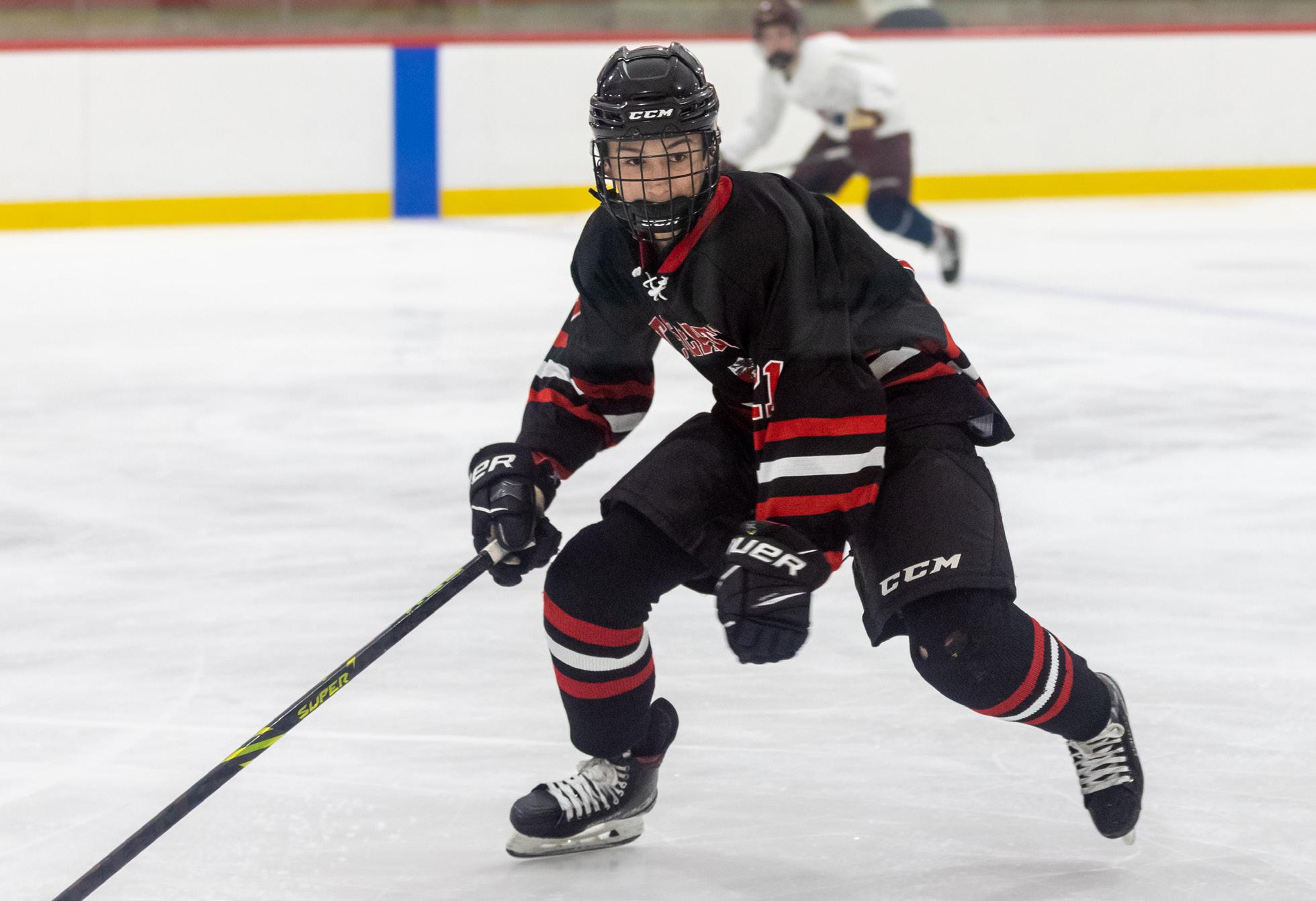
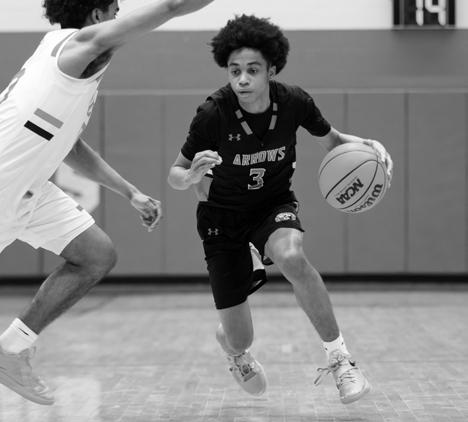
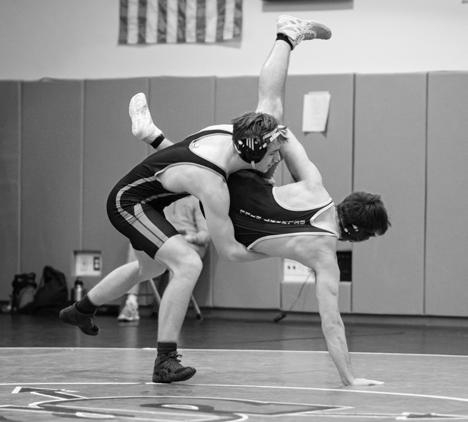
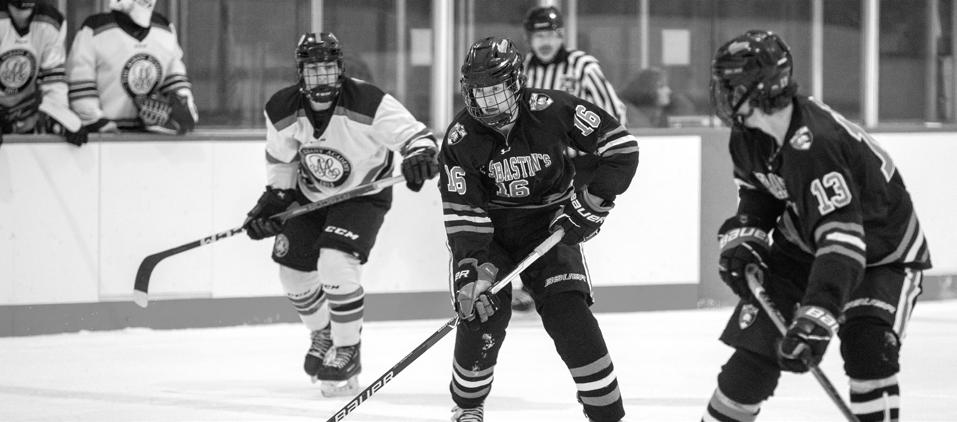
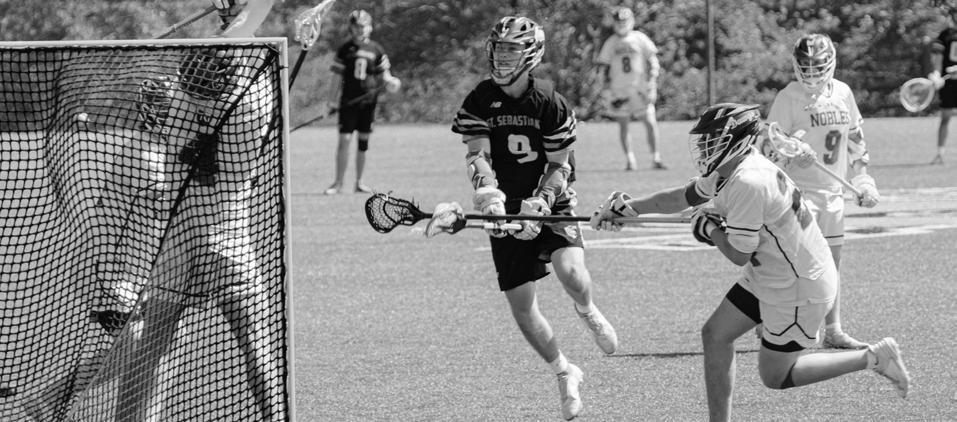
Hard work and fair play, full commitment and good sportsmanship—these are the hallmarks of the St. Sebastian’s athletic program.
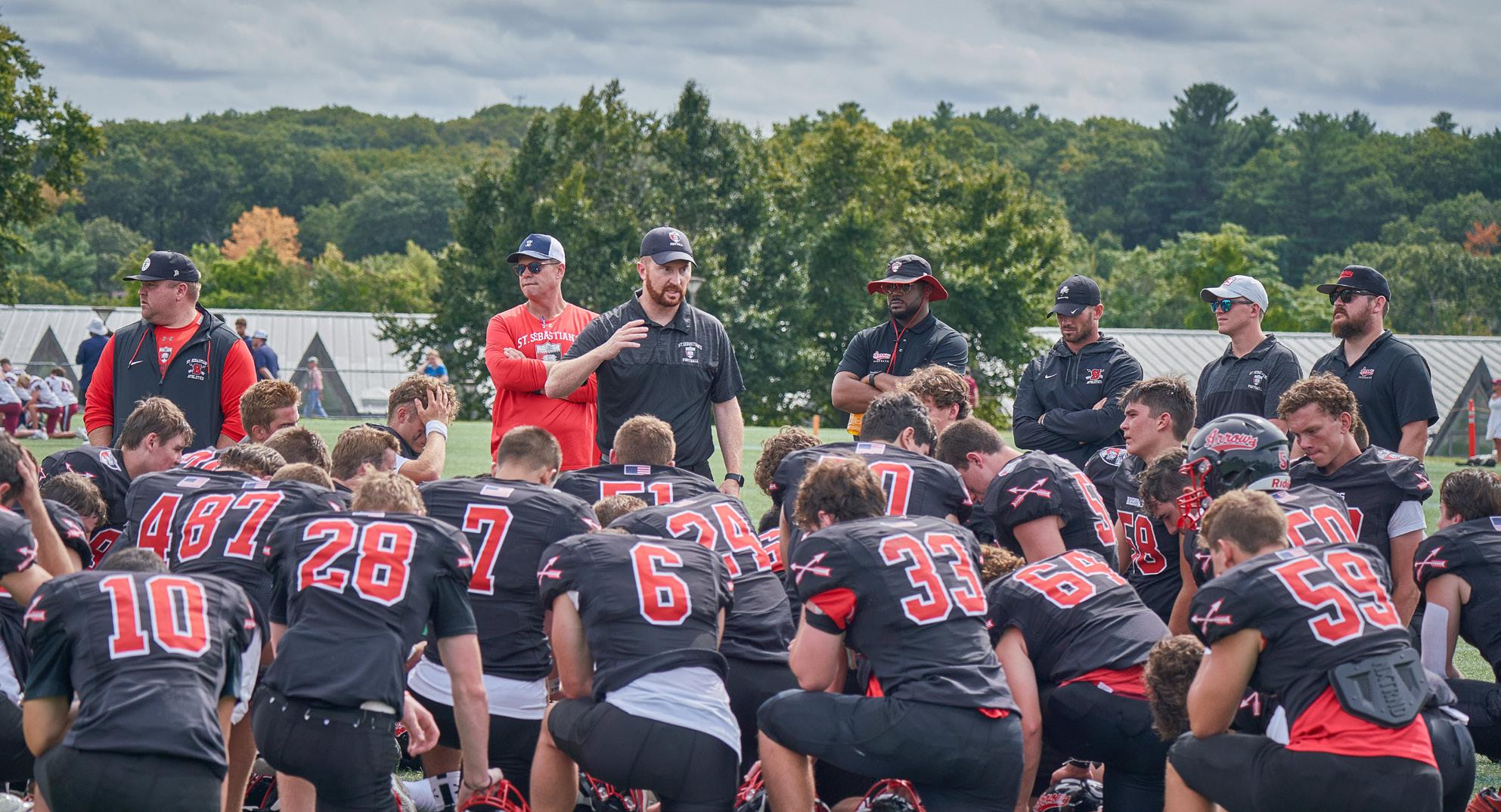
At every level and in every season, our interscholastic teams are coached by full-time members of our faculty. As a result, the fully integrated St. Sebastian’s experience does not suffer a lapse in the afternoon. Coaches and athletes work in harmony to advance our most important mission in all that they do.
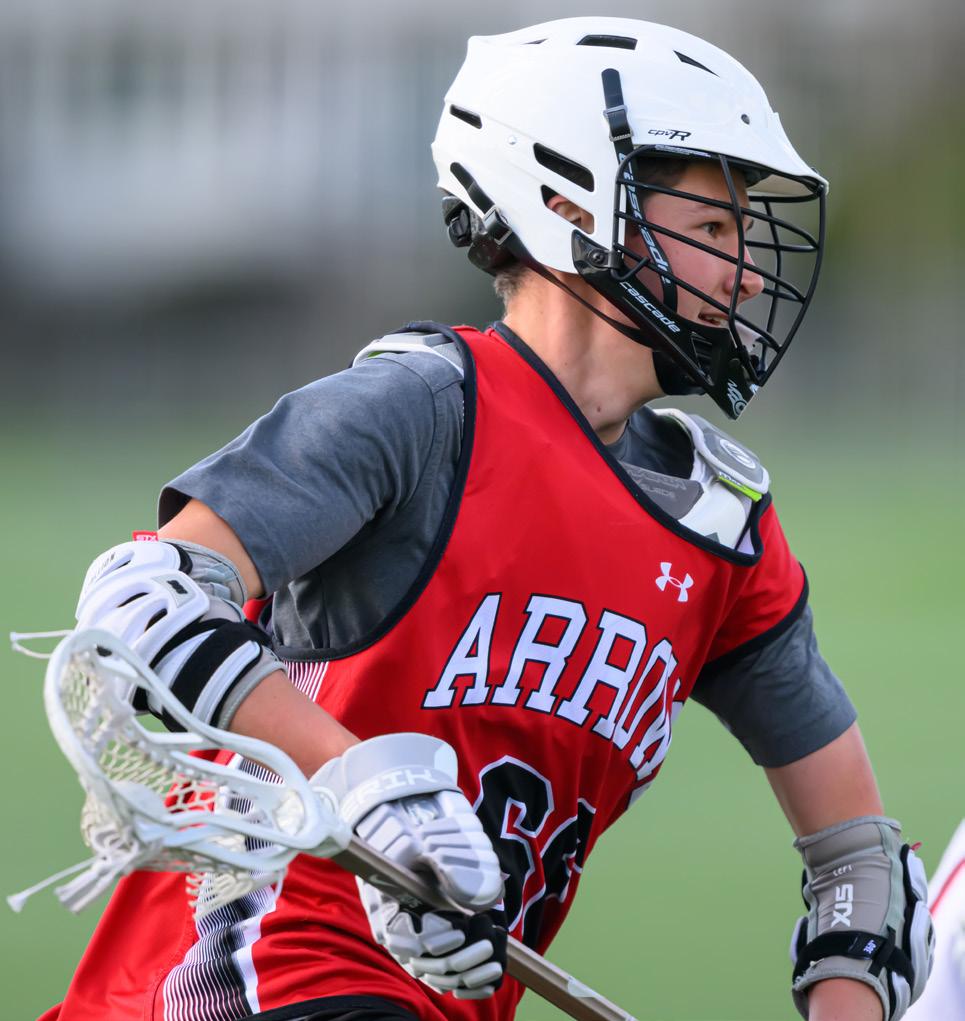
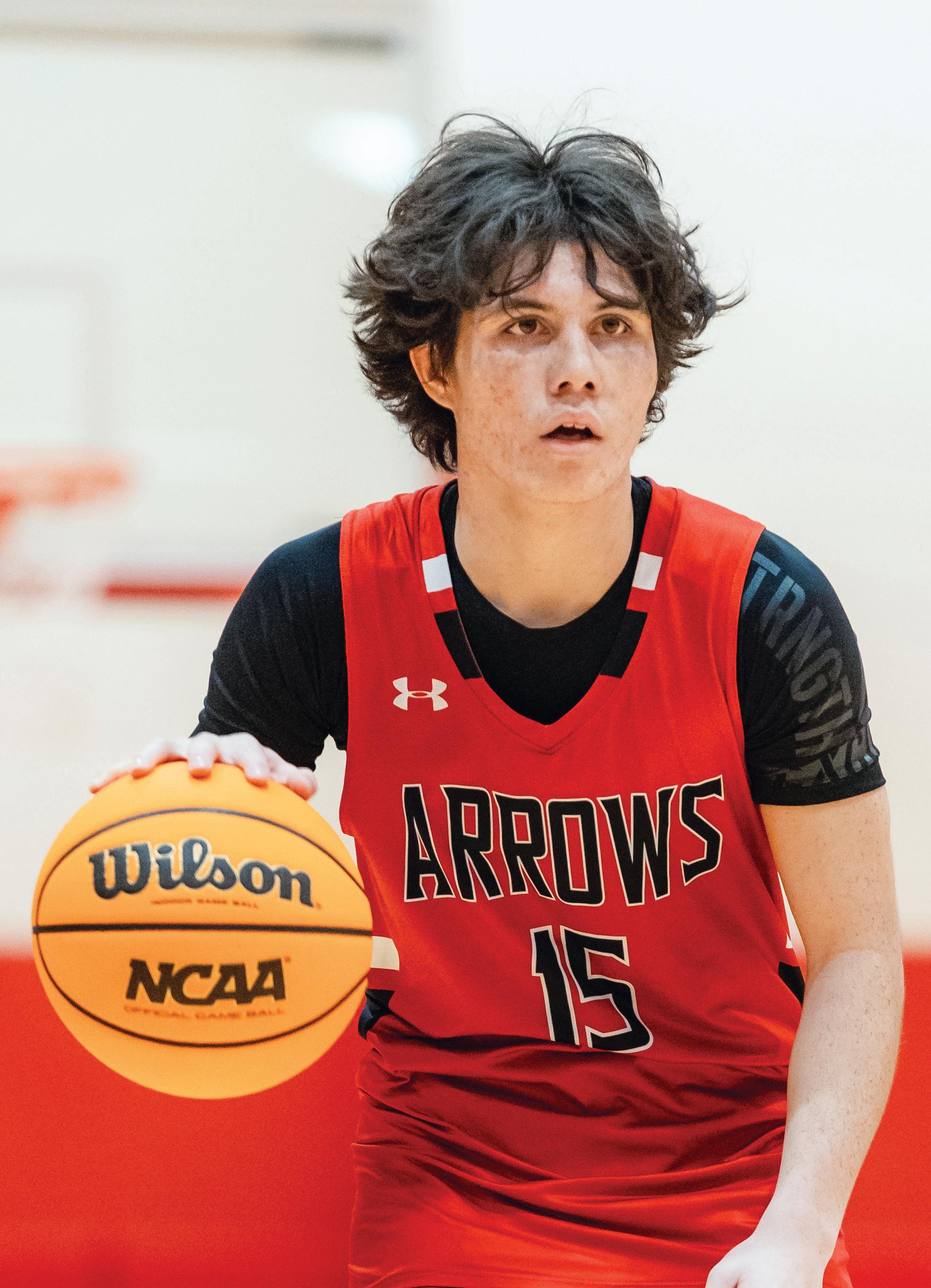
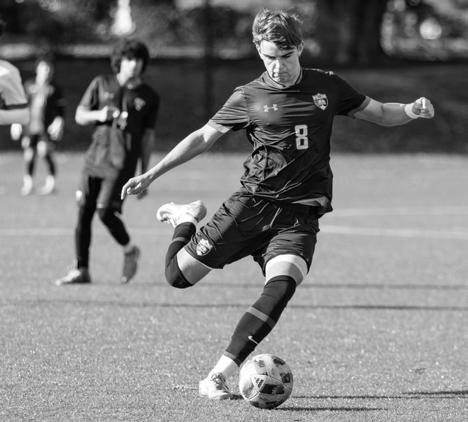
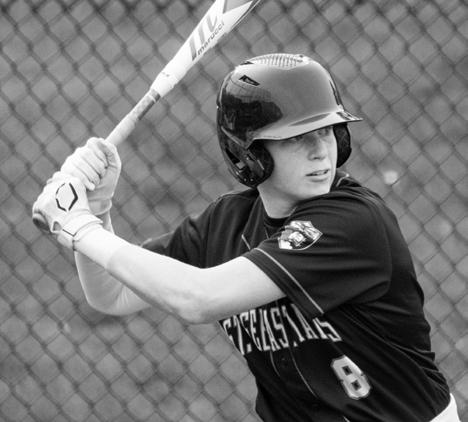
We emphasize opportunity for all, fielding as many as five teams for each sport. Students report that, through their athletic experiences, they gain a deeper understanding of and a more sincere dedication to such virtuous qualities as humility, courage, sacrifice, patience, discipline, focus, encouragement, grace under pressure, and concern for others.
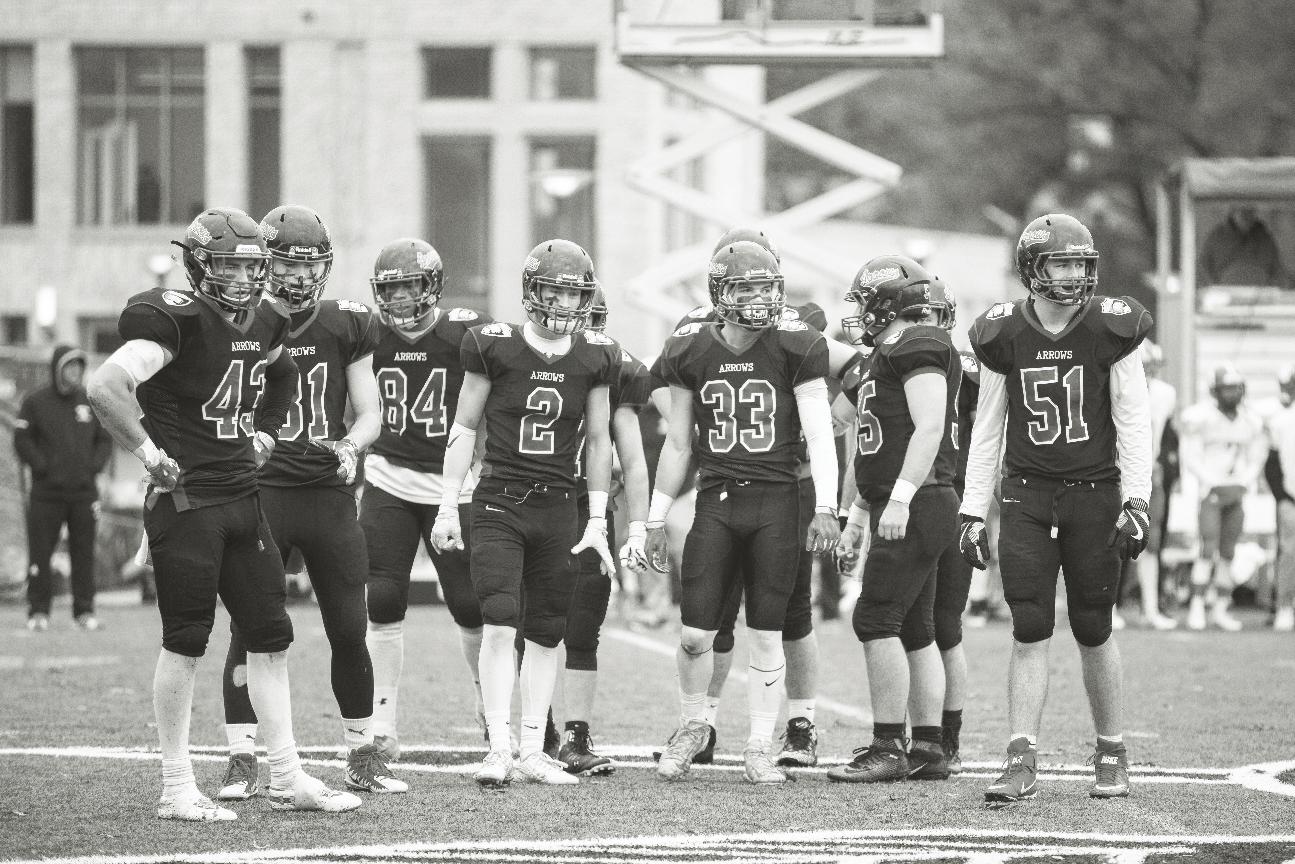
Our athletic teams are perennially among the most successful in the prestigious Independent School League, and, in recent years some of our teams have won New England championships. Many of our athletes go on to enjoy terrific careers in college, where a disproportionate number are elected to captain their teams. Some even make it to the professional ranks. >>>
Our students are taking advantage of myriad opportunities to create, perform, and compete. A number of them have found professional success as athletes, writers, actors, and artists.
When students engage in arts and athletics, they learn
valuable lessons about themselves and about life.
DERRON ST. MARIE GRADE 11
The Quiver, Poetry Club, MPA, Art Club, Jazz Band, Chamber and Mass Ensemble, Wrestling, Ultimate Frisbee
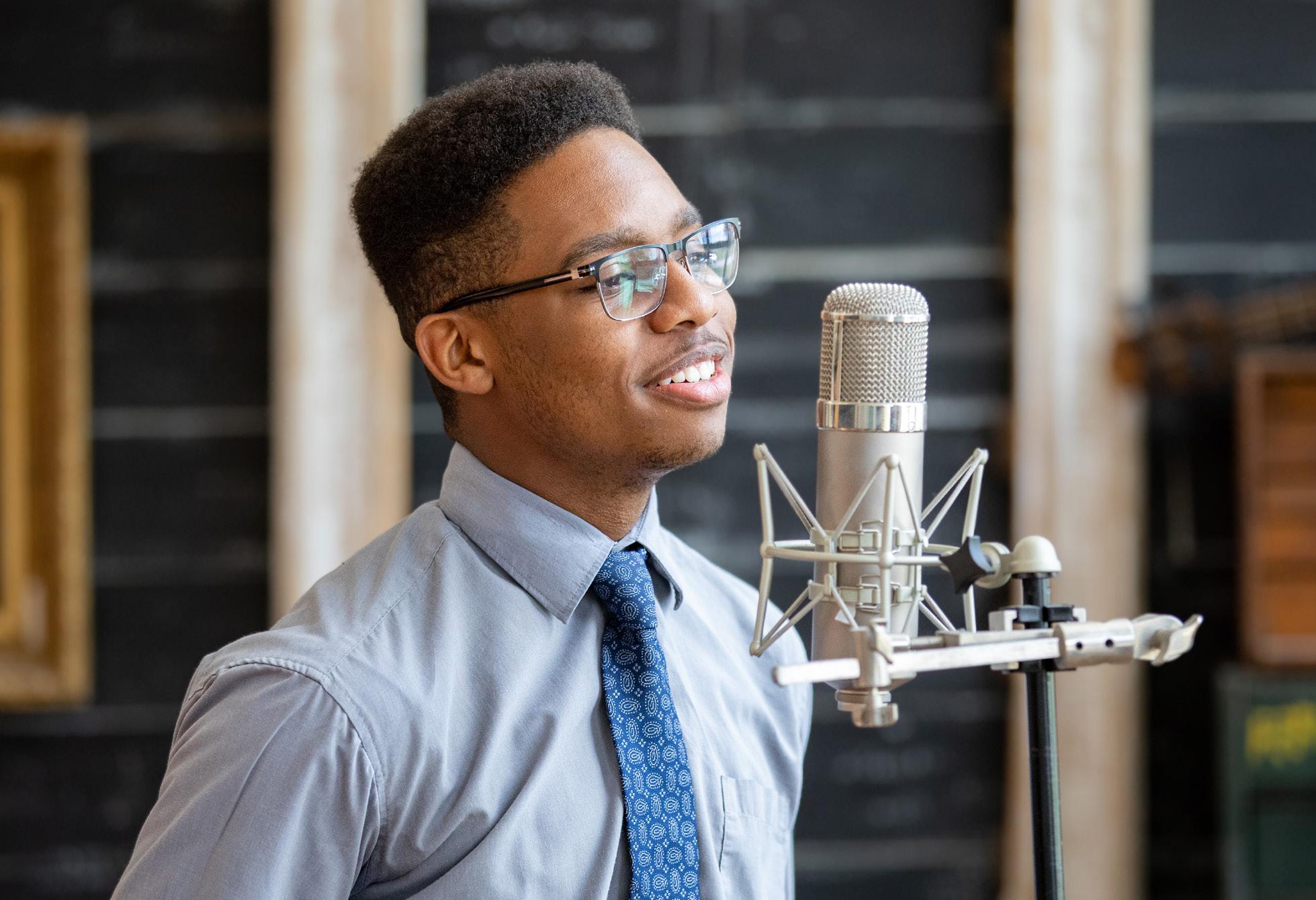
“St. Sebastian is truly a special place. From inside the classroom, to the athletic fields and into the art studio, everybody here has been so supportive of everything that I have desired. The teachers at St. Sebastian’s are some of the greatest people in the universe. They push you and encourage you to be the best version of yourself that you can be. This has helped me in everything from Physics class, to singing ensembles, to wrestling matches. With such a great community, St. Sebastians has become a place that I truly can say is my second home. I have made relationships with students and teachers that I know will last a lifetime.”
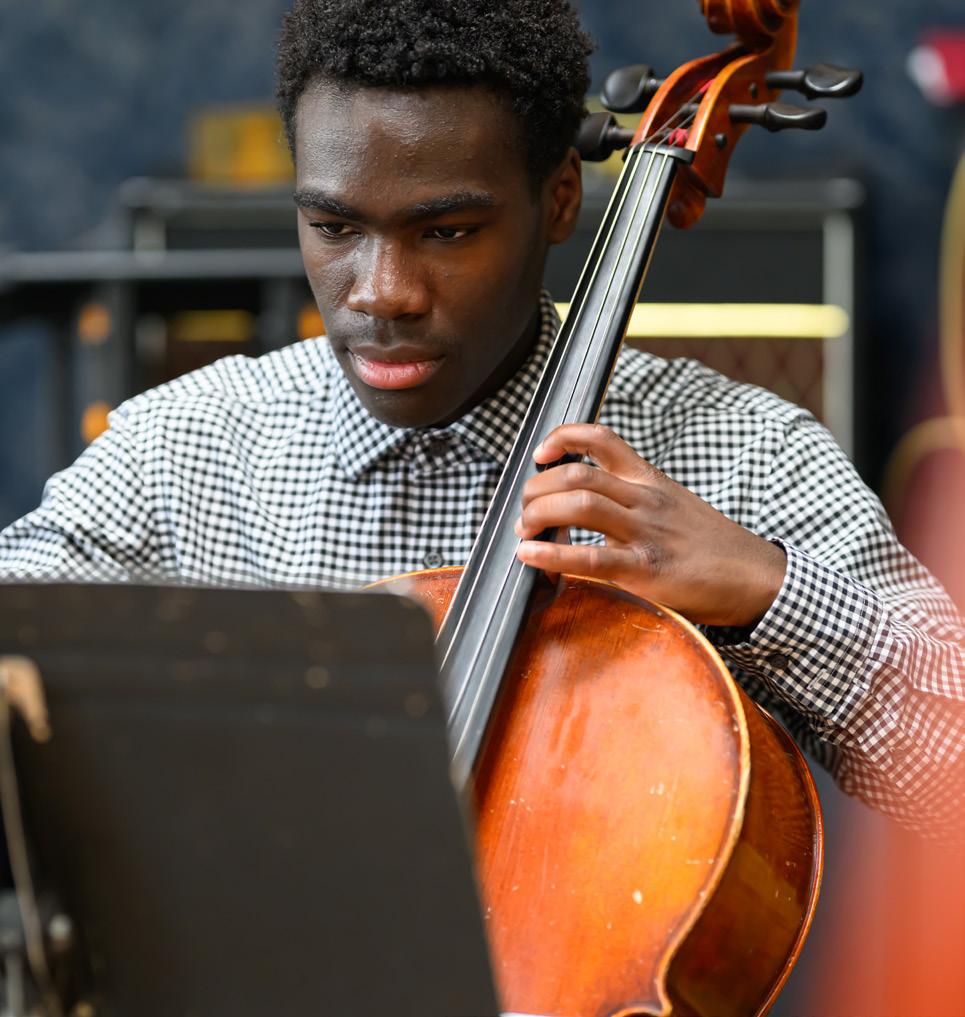
“Derron St. Marie personifies our school’s music program and the growth that students enjoy in it. Derron arrived as a young seventh grader who exuberantly stated his love for K-pop music, playing the saxophone, and singing. And for the past five years, the school has enjoyed the riches that Derron brings to the community. He feels at home performing for his peers in class, singing the national anthem at school games, or dancing at our Jazz and Pop Ensemble concerts. He is the creative leader that every teacher dreams of working with. I am grateful for our relationship and for his many contributions that have helped our programs flourish.”
Karl Grohmann, Music Department
ST. SEBASTIAN’S IS a School of Ultimate Purpose
We seek to inspire the integrated, happy, healthy, holy life that God wants us to live. We want our young men to go on to the most appropriate, most excellent colleges for them, and we want them to graduate prepared to commit themselves to the mission of making this world a much better place. And we want them to go to heaven. Everything we do at St. Sebastian’s will be done with this sense of ultimate purpose ever before us. >>>
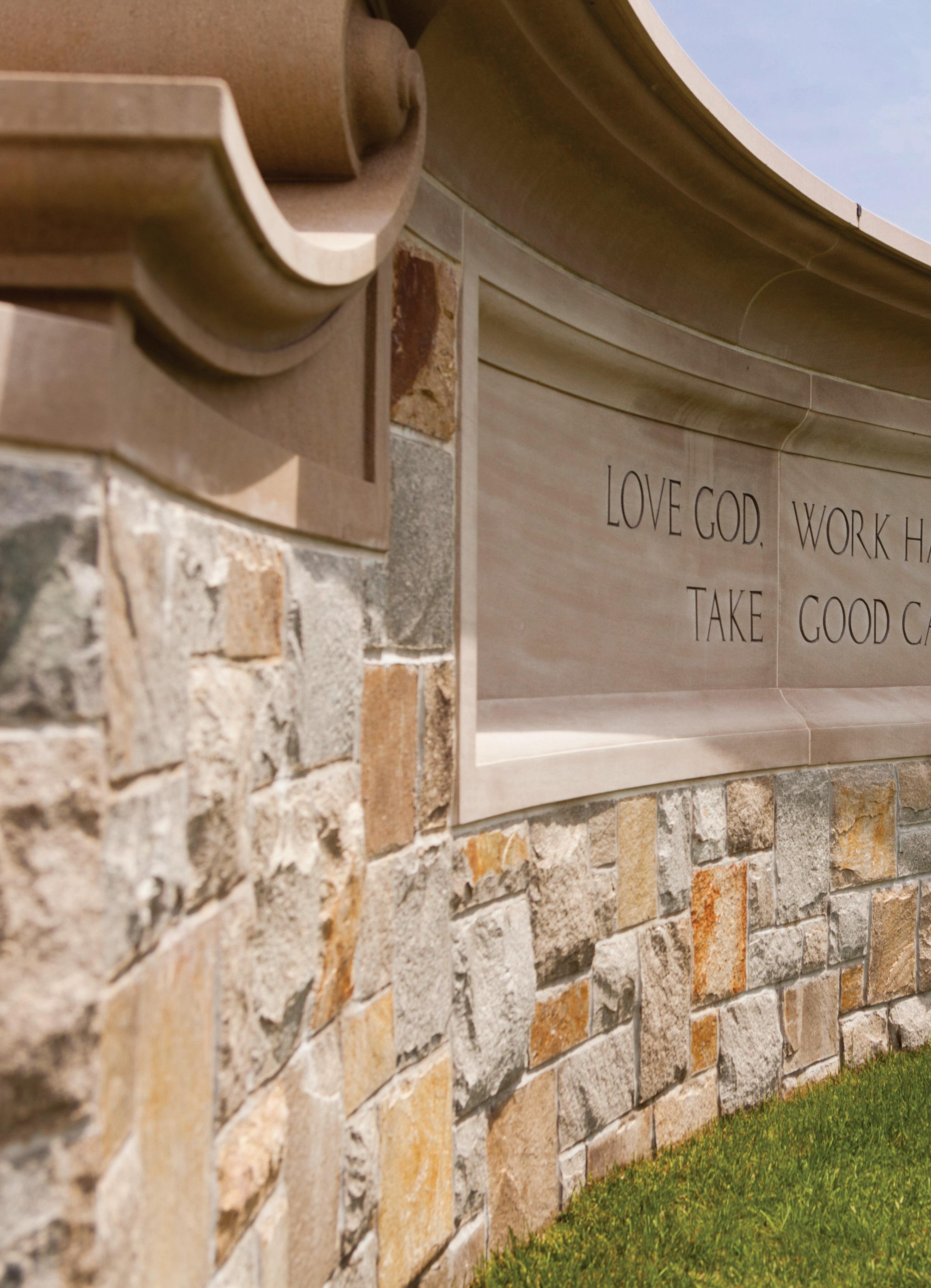
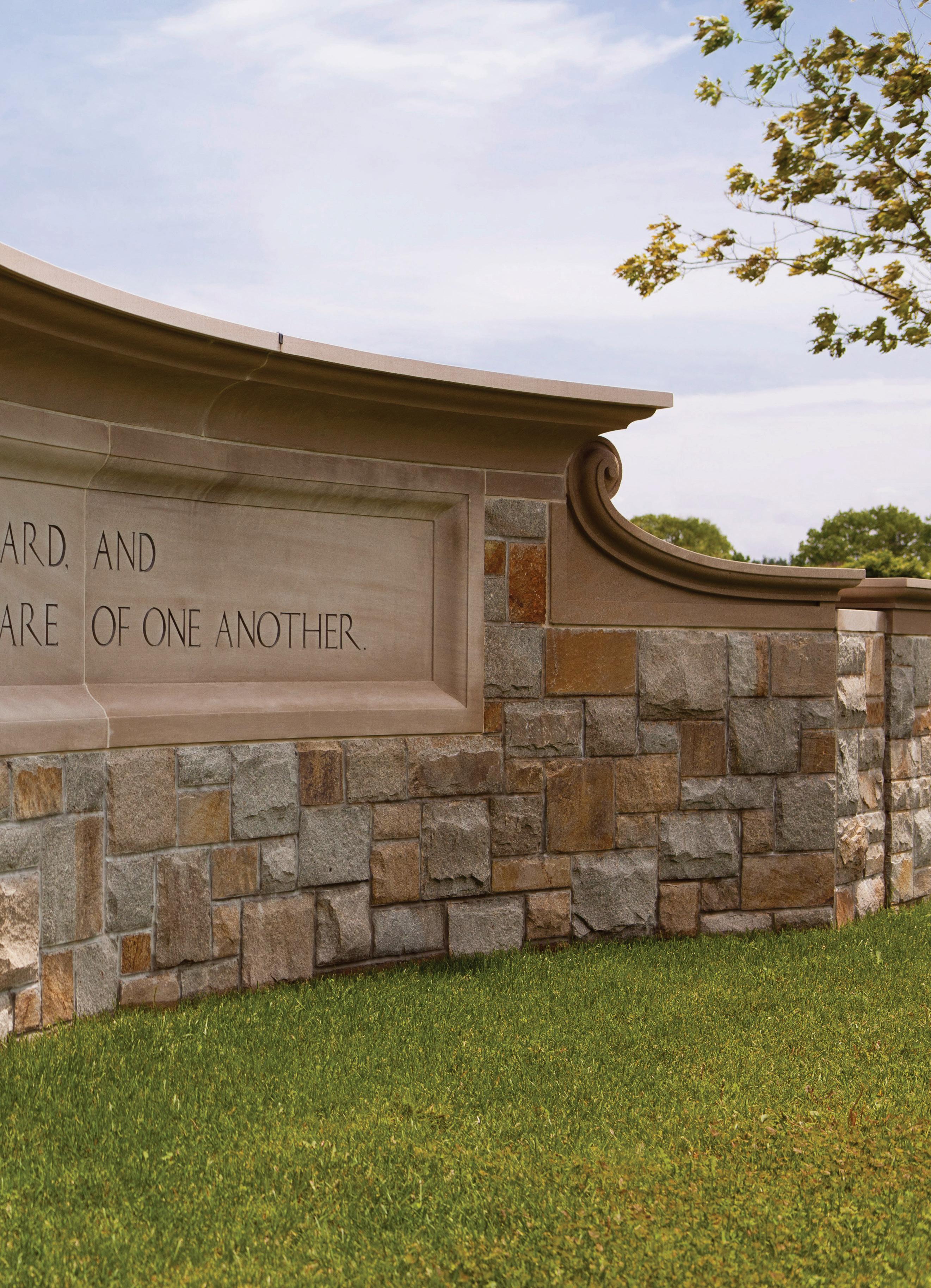
At St. Sebastian’s, where the order of the day is love God, work hard, and take good care of one another, we nurture and develop eternal relationships with God and neighbor.
LANDON BAILEY GRADE 12
Admissions Tour Guide, Finance Academy, MPA, National Honor Society, Football, and Wrestling
“St. Sebastian’s has encouraged me to grow into the best version of myself. The boy who came here as a seventh grader has developed his academic and athletic skills beyond his hopes and expectations. I am now a man prepared for college and beyond. I owe that growth to the St. Sebastian’s community in which everyone is known and loved. We have a full slate of challenging and engaging classes every day, followed by practices and games. Our teachers, who are also our coaches, want us to succeed in all endeavors. We are inspired in all ways, including in our faith lives. We truly “Love God, Work Hard, and Take Good Care of One Another.” We’re all friends here, and everyone is working on bettering themselves as well as their peers.”
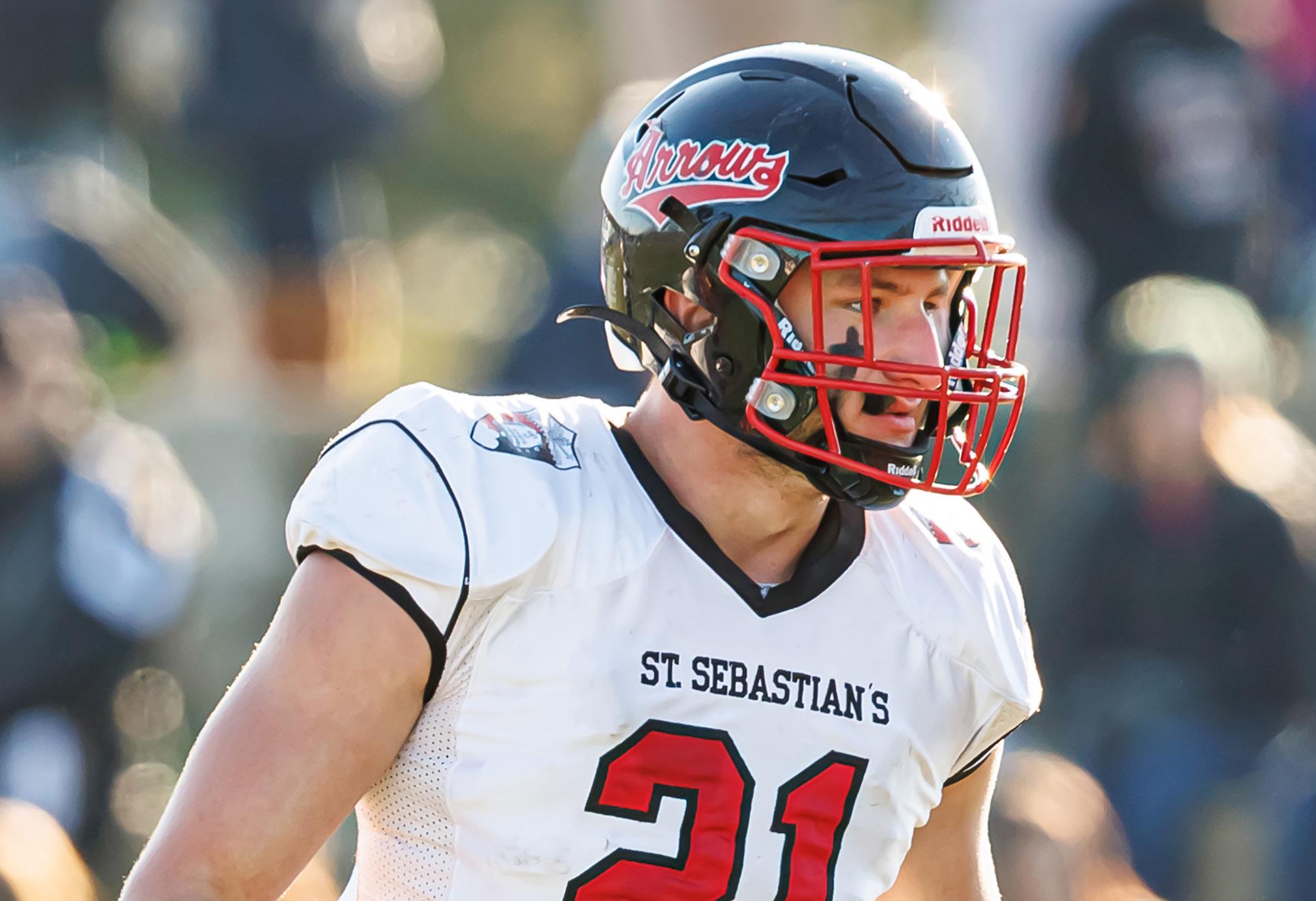
“A model student athlete, Landon challenged himself academically at St. Sebastian’s, excelling in the most demanding courses. His dogged work ethic and competitiveness also made Landon an outstanding athlete and leader. Captain of both the Varsity Football and Varsity Wrestling teams, he modeled the joy that can come from success through hard work. An All-ISL and All-New England football player, Landon led the team to an ISL Championship. He then captained the Wrestling team to its best record in history, earning the ISL’s Most Outstanding Wrestler Award. More important than his well-deserved accolades, Landon is an honorable, gracious, charitable young man. I have been so honored to coach and to know Landon, and I know the same will be true for his professors, peers, and coaches at Middlebury College.”
Daniel Burke, Assistant Dean of Students, English
The Academic Program
St. Sebastian’s is a school, whose primary mission is to educate. We believe that all young persons are fundamentally good, uniquely created, and eager to be fully engaged in the learning process. St. Sebastian’s seeks to develop graduates who will pursue truth for its own sake. The unusually small classes stimulate honest discussion, allow for individual attention, create an intimate learning community, and foster the pursuit of truth. The academic program is rigorous and flexible. The faculty is both demanding and caring and provides each student with the structure and support he needs to develop as a thinker. Our entire liberal arts curriculum is centered on meeting the needs of the individual student. The faculty is devoted to ensuring the success of each student in this intellectually challenging environment.
ADVANCED COURSES AND SEMINARS
The job of the student at St. Sebastian’s is first and foremost to learn, to love learning. From the computer room to the biology lab, from the library to the writing center, from Honors U.S. History to Advanced Placement Latin or Spanish, from Religion papers to Math problems, each student is given every opportunity to become well educated. Through the relentless pursuit of excellence in all academic endeavors, he will form the habit of learning and become what the School hopes for him—a lifelong learner.
AP Art History
AP Art 2D
AP Art 3D
AP Biology
AP Calculus AB
AP Calculus BC
Multivariable Calculus: Advanced Seminar
AP Chemistry
AP Computer Science A
AP Computer Science Principles
AP English Language
AP English Literature
AP Latin
Latin V: Advanced Seminar
AP Modern European History
AP Music Theory
AP Physics 2
AP Physics C
AP Spanish Language
AP Spanish Literature
Spanish: Advanced Seminar
AP Statistics
AP U.S. Government
AP U.S. History
In order to help our students become lifelong learners we have developed a traditional, focused, classical academic program. The curriculum is based upon the belief that students need to develop the necessary skills and habits to think critically and clearly, and to express themselves articulately and persuasively in both the written and spoken word. We want our students to develop the capacity to reason mathematically and scientifically, and to solve problems logically. The structure of our academic program encourages them to make connections between disciplines and to draw inferences about the interrelationships of ideas.
The School’s curriculum is based on a clear philosophy that students are best served by courses that enable them to explore core subjects in great depth. Rather than offer a cornucopia of electives, which tend to foster a disjointed academic experience, the St. Sebastian’s curriculum features thoughtfully prescribed courses in every discipline, building a strong foundation for future study.
Because of our classical and focused curriculum, our students are well prepared for the rigors of the most competitive colleges and universities in the nation, and ready to meet the challenges which life will inevitably present to them. >>>
“Our students gain admission to and succeed in the finest colleges and universities in the country. But our hopes and dreams for them transcend academic success: we want them to be honorable, courageous and virtuous men who will dedicate their lives in generous service to others.”
- Michael Nerbonne Assistant Head of School and Dean of Studies
Michael P. Nerbonne, who joined the St. Sebastian’s faculty in 1986, currently serves the School as Assistant Head of School and Dean of Studies. He earned his B.A. at the College of the Holy Cross, graduating summa cum laude, and later earned his M.A. at the University of Michigan. A member of the Classics Department and a teacher of ancient Greek, Mr. Nerbonne oversees the School’s academic program and works closely with both students and faculty to ensure that each student is fully challenged and supported. He also coaches the School’s Debate Team.
Writing Program
True to the liberal arts ideal, the St. Sebastian’s curriculum encourages the pursuit of outstanding accomplishments in every discipline. Nowhere is that claim more evident than in our Writing Program. A fundamental form of communication, good writing must be appreciated both for its own sake and as a means to express one’s thoughts and feelings. In recognition of its importance, the Writing Program at St. Sebastian’s invites students to think clearly, write coherently, and understand the world more fully.
In grades seven and eight, students work with teachers to master the fundamentals of grammar. Instructors pay careful attention to building vocabulary and to gaining a firm grasp of mechanics—parts of speech, usage, spelling, and punctuation—as each student develops his writing voice. Frequent writing, both in English and across the curriculum, promotes clarity of expression and evokes from students their unique interpretations and opinions.
Though its benefits are felt in all disciplines, the cornerstone of the Writing Program at St. Sebastian’s is Freshman Writing, a course taken by all ninth graders in addition to their traditional English class. By providing a constructive opportunity for verbal skills development in the crucial ninth grade year, St. Sebastian’s helps each student gain confidence and proficiency in this important craft. Students in Freshman Writing commit to the four-part writing process: prewriting, drafting, revising, and editing. They learn to express themselves in poetry as well as prose, and they develop critical and expository essays as well as narrative fiction. Small classes (typically no larger than 12) and frequent one-on-one sessions with teachers have a profound impact on each student’s progress.
Upon completion of Freshman Writing, students apply their skills in a variety of important areas. Sophomores write at least two essays per week in their required Modern European History course. At all grade levels, and in every department, but particularly in English, history, and religion, students produce thoughtful and well-organized papers in increasing frequency. Students are also encouraged to share their written work aloud with audiences large and small, and to pursue publication opportunities when possible. To support their efforts, the School maintains six school publications, including a critical journal, a literary magazine, and two school newspapers. All students’ chapel speeches and college essays benefit tremendously from their sharp focus on writing during their tenure at St. Sebastian’s. Most importantly, however, each student achieves a respect and proficiency for the written word that will serve him well not only in college but in every area of his life. >>>
“Our graduates are confident and thoughtful writers who are well prepared for the challenges they face in their chosen disciplines. We often hear from our alums that they are well ahead of their peers in terms of written and verbal communication skills. We have no doubt a St. Sebastian’s graduate is ready for the demands of college, graduate school and his chosen career.”
–Christopher Lynch, Chair, English Department.
“I dreaded my first chapel speech. For weeks I hoped that my name would be skipped as we moved alphabetically through the grade. Of course, I was not skipped, and looking back, I am so grateful for the experience. After only months in the Writing and Chapel Speaking programs, I presented a speech that I still remember proudly. To this day, the quality of my St. Sebastian’s education is apparent to me, as I am approached often to help my college classmates with their papers. Thanks to St. Sebastian’s, I have confidence in my ability to produce quality work and strong presentations in even my toughest courses at Duke.”
– Robert Lordi, Duke University
Chapel Speaking Program
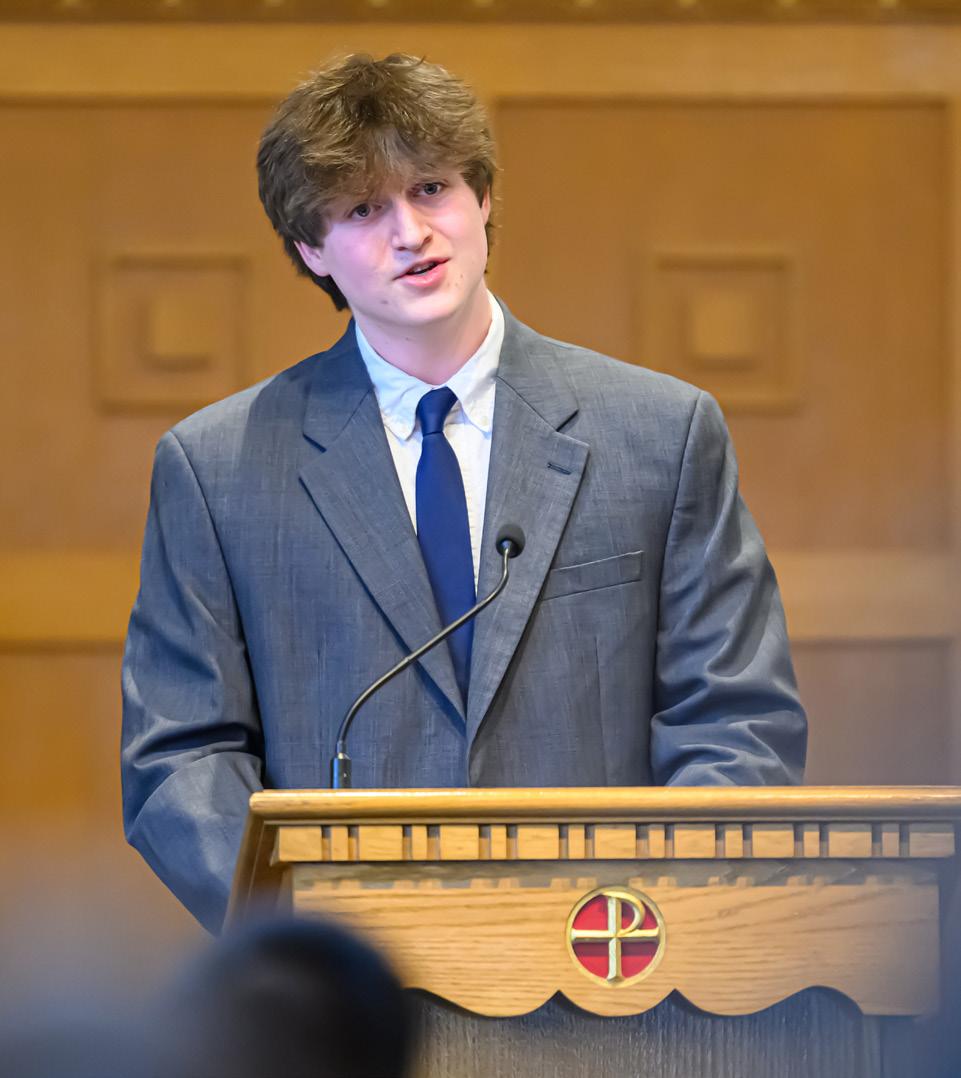
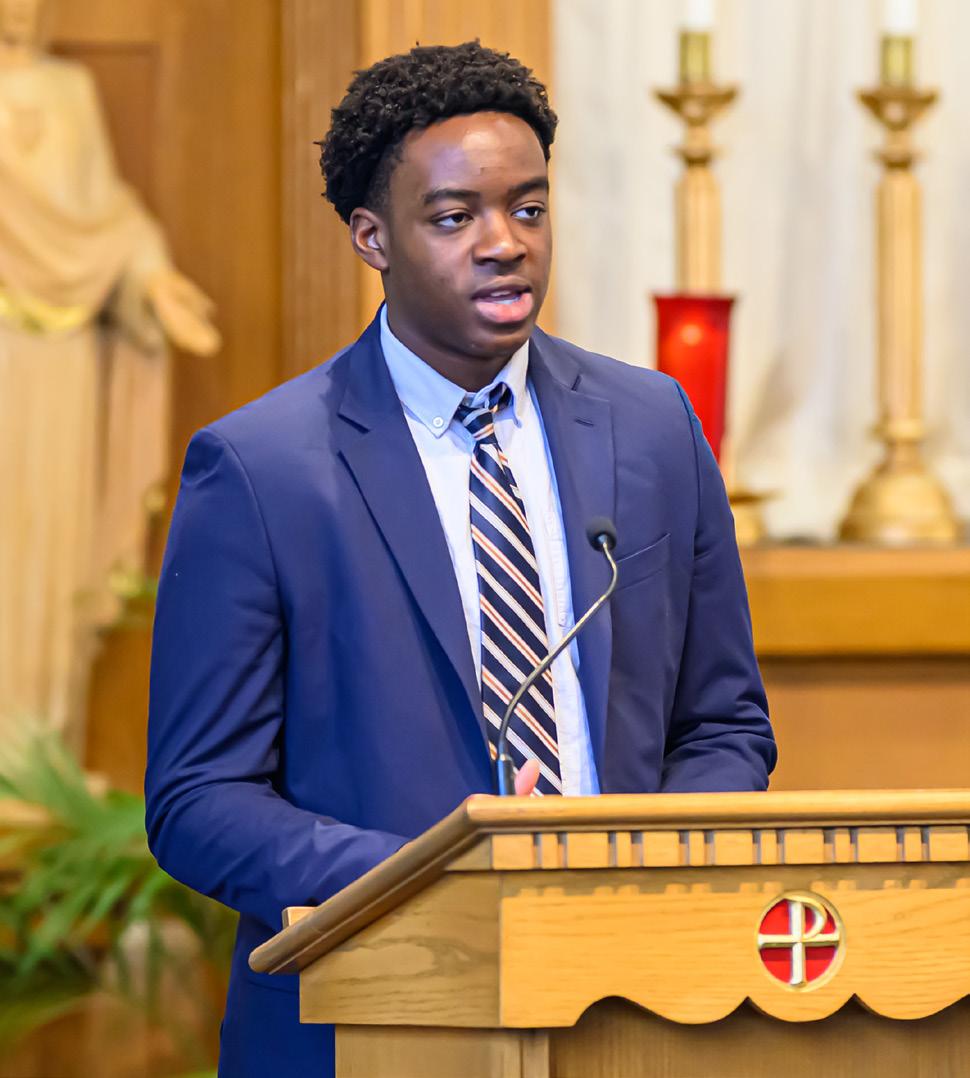
The Chapel Speaking Program plays a vital role in the intellectual and spiritual life of St. Sebastian’s. In conjunction with our Writing Program and Chapel experience, it empowers students in every grade to write and speak confidently about topics important to them. By offering an opportunity for public expression, chapel speaking honors the sanctity of each student, inviting him to share his ideas and reflections in a supportive environment.
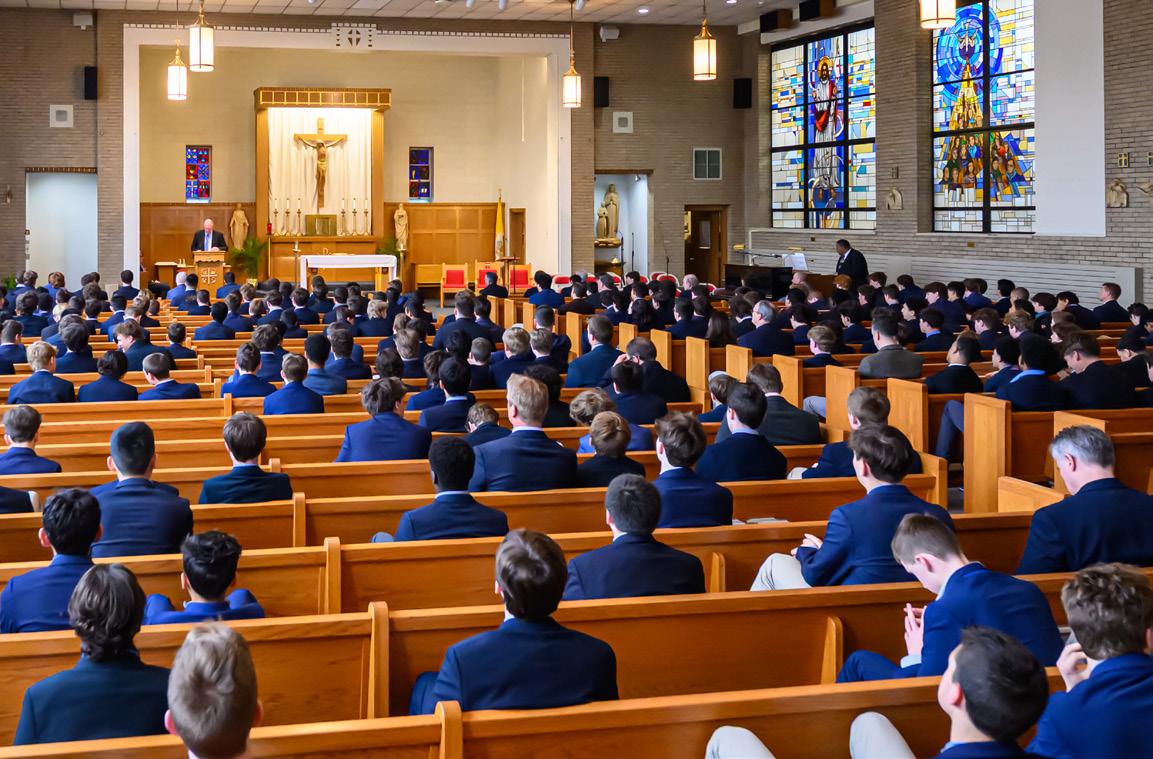
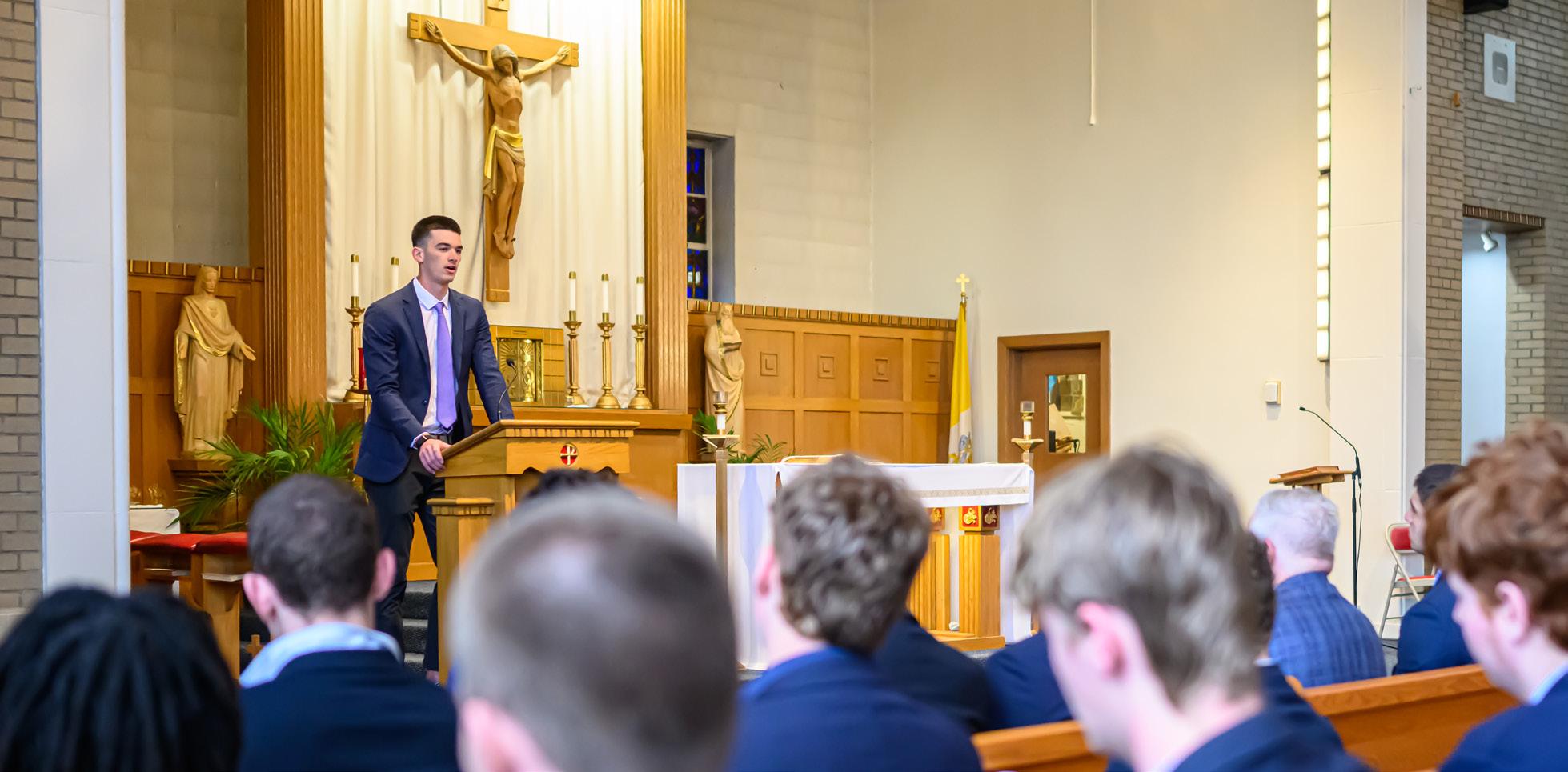
Each week begins with an all-school gathering in our Corporate Chapel. As a community of faith, we come together in prayer, song, and personal reflection, reminded of our commitment to Christ and to each other. In this setting, seniors deliver their speeches to the entire school community— a group of over 400 people. Whether it is a moving tribute to a parent or teacher, a humorous anecdote about time with friends, or a commentary on a political issue, each speech invites and stimulates discussion between faculty and students throughout the school day. Though the senior speech highlights the writing and speaking skills our graduates gain during their time at St. Sebastian’s, the foundation for these skills is laid in the lower grades. Annually, each student in grades 7–11 writes and delivers a speech to his classmates in our weekly Chapel service. Faculty advisors meet individually with students to review and edit their speeches and to provide instruction on effective delivery techniques. After the speech is presented, the advisors’ written evaluations detail strengths and shortcomings and offer suggestions for improvement. This one-on-one relationship plays an essential role in each student’s growth as a writer and public speaker over time.
The results of the Chapel Speaking Program are often spectacular. By infusing their speeches with concrete detail and descriptive anecdotes, students bring their topics to life; by developing sound speaking habits of regular eye contact, proper posture and a clear and deliberate cadence, they engage their audiences with increasing effectiveness as they mature. In addition to the benefits to each individual student, the Chapel Speaking Program unites classes as well as the entire School community. Students and faculty gather to hear both the Chapel speeches and reflections on each student’s message that follow. In the intimate setting of our chapel, we experience our students’ development as writers and speakers and celebrate their growth as young men. By combining community and communication, speeches and skills, the Chapel Speaking Program has therefore become a fundamental and joyous part of the School’s daily mission <<<
ENGLISH
The English Department at St. Sebastian’s has three distinct goals: first, to help students read with understanding, appreciation, and insight; second, to encourage incisive thinking through involved discussion; third, to enable students to write clearly, logically, and personally about the issues and ideas of literature and of their lives.
All three goals are intrinsic to the program. The selection of required canonical and nontraditional literature and the expectation of independent reading contribute to the development of sound comprehension skills and analytical ability. The quality and range of discussion possible in small classes generates increased depth of thought as it places a premium on the ability to present ideas with clarity and focus. An emphasis on frequent writing at every grade level works toward the establishment of refined and persuasive writing ability. As it works to produce effective readers, thinkers, and writers, the Department also seeks to develop each student’s intrinsic love of literature and increase his understanding of cultures different from his own.
The goals and diverse methodologies of the Department depend heavily upon collaborative involvement and participation of both teachers and students rather than dissemination of facts. In their classes, English teachers embrace an active student model, where each member of the class is both engaged in and responsible for his own learning. Students sit face to face with one another and with the teacher, creating a fertile environment for shared discussion and genuine learning.
In grades seven through eleven, students participate in full-year, comprehensive English courses in which they study literature in its major forms: short story, novel, poetry, drama,
and nonfiction. The Department’s teachers examine the fundamentals of English language with their students and provide guidance and comments that develop proficiency in writ ing. At the same time, students in these classes learn to find their own voices both in their writ ten work and in the daily discussions central to every English class in the School. In grade twelve, qualified students have an opportunity to pursue AP courses in English Literature and/ or Writing. All upper school English courses are offered on honors and standard levels.
ENGLISH 7
In this course, students undergo their ini tial preparation for advancement through the English program. The emphasis is upon writing skills and basic grammar, as well as an expanded view of literature. Additionally, students read a variety of short stories, plays, poems, and novels. Students learn to express in writing their responses to the works they read. Texts include Peck, A Day No Pigs Would Die ; Hackett, The Diary of Anne Frank; McDougal, Littel Literature, Green Level; Shakespeare, A Midsummer Night’s Dream ; and Vocabulary Workshop, Level C.
ENGLISH 8
In this course, students continue their study of language and literature, and they engage in more comprehensive writing. Students
The St. Sebastian’s Visiting Authors Series offers students the opportunity to attend author-led workshops and readings from works that are studied in the context of the curriculum. In recent years we have welcomed a variety of writers including Dennis Lehane, David McCullough, Steve Pemberton, Arthur Brooks, and Richard Price.
“It is a great privilege to be a part of these students’ lives— to read great texts with them, to share in their excitement at discovering some new idea. We read the best books in a class of 10 or 12 motivated students. I can’t think of a better environment in which to learn and to grow.“
Christopher
F. Lynch Chair, English Department
Appointed to faculty in 1997
B.A., College of the Holy Cross
M.A., Middlebury College
M.Ed., Boston College
with language that is essential to the appreciation of serious thought. As they progress from the writing of paragraphs to well-structured compositions, they develop the techniques of outlining, revising, and following a well-ordered plan of writing. Works studied include Elements of Literature, Second Course; Hansberry, A Raisin in the Sun; Hemingway, The Old Man and the Sea; Lee, To Kill a Mockingbird; and Shakespeare, Julius Caesar
ENGLISH 9
In the grade nine course, students further refine their writing ability, producing expository papers of up to five hundred words in length. The study
of various forms of literature continues, with an eye to the development of critical reading and interpretive skills. Works studied include Golding, Lord of the Flies; Homer, Odyssey (trans. Fagles); Beowulf; Shakespeare, Henry IV, Part 1; and Wilson, Fences
FRESHMAN WRITING
This required course, taken in addition to English 9, provides an academic forum in which students develop their abilities to express themselves intelligently, accurately, and creatively. The writing process—prewriting, drafting, revising, and editing—becomes a natural and effective method for students as their writing confidence and skills grow. The class engages students in reading published expository prose, fiction, poetry, and peer writing as models of
and inspiration for their exemplary compositions. In conjunction with the formal modes of analytical writing, journal writing fosters the open expression of ideas and voice. In addition, students build their peer-revision and self-revision skills through discussions, teacher-student conferences, and exercises in the classroom. To help students edit with purpose and certainty, the course emphasizes grammar and mechanics lessons as the foundation of strong, well-organized prose. Texts include Grammar for Writing; Models for Writers; and Vocabulary from Classical Roots, Book D.
ENGLISH 10
In this sophomore course, students examine works of British Literature from the Anglo-Saxon period to the 21st century. Class discussion focuses on the development of the English language as well as the major themes of each text. Students will be required to write longer, more complex analyses of the works studied, and perform from memory poems and excerpts of plays. Works studied include Beowulf; Chaucer, Canterbury Tales; Shakespeare, Macbeth; Austen, Pride and Prejudice; Dickens, A Tale of Two Cities
ENGLISH 11
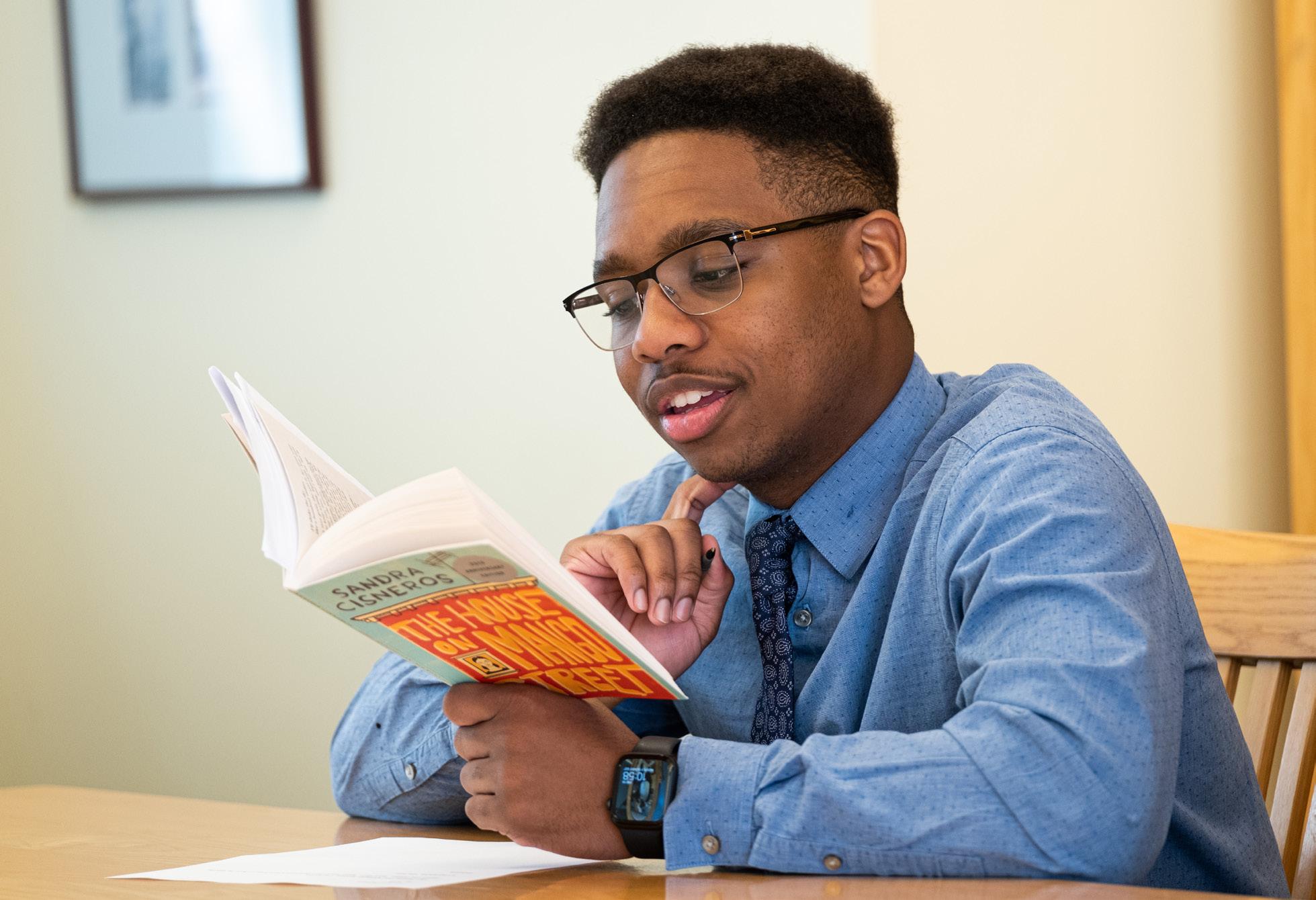
In the eleventh grade, students undertake the study of American literature from the precolonial to the modern period. Class discussion and written assignments consider American themes including race, freedom, individuality, and the family. Works studied include Narrative of the Life of Frederick Douglass, an American Slave ; Cisneros, The House on Mango Street; Faulkner, Go Down Moses; Fitzgerald, The Great Gatsby ; Twain, Adventures of Huckleberry Finn;
Hemingway, A Farewell to Arms, In Our Time ; Miller, Death of a Salesman; and Krakauer, Into the Wild.
ENGLISH 12
The study of literature and composition in the senior year is intended to be intensive. Class discussions focus on a critical eye in reading. Students are regularly required to compose analytical essays as well as creative responses to the literature studied. Works studied include Shakespeare, Hamlet, Othello; McCarthy, The Road; Ellison, Invisible Man; and Huxley, Brave New World.
AP ENGLISH LITERATURE
This course is an intensive full-year study of literature intended to be the equivalent of a college-level English course. Students engage in significant amounts of reading, writing, critical thinking, and discussion as they confront important works of fiction, non-fiction, poetry, and drama. Students should expect the degree of difficulty, the amount of time required for outside preparation, and the workload to be substantial. All students are prepared for and are required to take the AP Literature and Composition exam in May. Works studied include Dostoevsky, Crime and Punishment; Tolstoy, Anna Karenina; and Shakespeare, Hamlet, King Lear; Donne , Selected Poems; Yeats , Selected Poems.
AP ENGLISH LANGUAGE AND COMPOSITION
AP Language and Composition is a writing and reading-intensive course designed to develop students’ personal and analytical writing.
Students engage in reading and discussion about effective writing, complete peer writing reviews, and examine models of narrative and argumentative writing in preparation for their own essays and papers. Students will also prepare for the AP Language and Composition test by taking practice examinations and reviewing the reading skills and literary terms required by this exam. Works studied include On Writing Well, Zinsser; The Bedford Reader ; Short Takes: Brief Encounters with Contemporary Non-Fiction
AP ENGLISH LANGUAGE AND COMPOSITION: CREATIVE WRITING
This course is designed for seniors with a serious interest in creative writing. The class demands a high volume of original writing, which is
peer-reviewed in an open and supportive workshop. All genres – including fiction, nonfiction, poetry, and drama – are explored. In the second semester, students begin work on a defining project – novella, memoir, poetry chapbook, short story collection, or play – which is completed by the end of the year. In May, the students are required to take the AP Language and Composition Exam. Reading is selected with an eye toward investigating the mysteries of craft, process, and point-of-view; these texts may include Pinsky, Singing School; Zweig, Chess Story ; Saunders, A Swim in the Pond in the Rain.
CLASSICS
The Classics Department leads each student to knowledge of and appreciation of Latin and Greek literature, its unbroken influence on humanity and, through close study of the thoughts and deeds of Greece and Rome, the ability to think, speak, and write with increased clarity, cogency and knowledge.
While exposure to etymology and word derivation undoubtedly has a positive, practical impact on the students of Latin and Greek, the Department firmly believes that the true and lasting benefit of study in the Classics is the intrinsic value of the literature. As each student gains the power and wisdom of the words of Cicero, Ovid, Catullus, Horace, Virgil, and Homer, he achieves an informed sense of their relevance both to the human story and to his own life story. These life examples provide him with a more informed perspective from which to both view the world and negotiate its challenges.
At all grade levels, the primary focus of the study of Classics is directed toward reading the great prose and poetry of the period. In this project, each student gains exposure not only to the precise and thoughtful construction of accomplished and lasting writing, but also to the equally long-enduring philosophical contributions made through the literature. The Department works closely with other academic departments to ensure that students make connections between the disciplines and apply their training in all the ways their predecessors have. Although students are not required to study Latin and Greek, nearly half of the student body chooses to do so voluntarily.
Students of Classics play an important and enduring role in perpetuating and celebrating the Catholic environment around which the School is centered. The Classics Department seeks to support the growth of our students’ faith and
reason as they read of conversion in St. Augustine and examine scripture in St. Jerome’s Vulgate. The annual Latin Mass, the recitation of the Pater Noster in Chapel, and the singing of the Rorate Caeli or Attende Domine provide an important link to our Catholic faith and traditions. Students may explore this living connection even more fully by partaking in a week-long trip to Rome, offered every two years.
LATIN I
This basic course in the study of Latin and the life of the Romans covers the elements of grammar, the five declensions of nouns, the four conjugations of verbs, pronunciation, derivatives, relative pronouns, passive verbs, participles, and infinitives. Through the required texts (Ecce Romani I and II), students build reading skills, learn vocabulary, and achieve broader exposure to Roman culture. Students undertake a basic study of mythology and offer presentations on various topics and themes. All students participate in Level I of the National Latin Exam. The course is offered as a two-year sequence to seventh graders and returning eighth graders. New eighth graders and new ninth graders without previous exposure to Latin complete the course in one year.
LATIN II
In this course, students undertake a study of advanced grammar, including the subjunctive mood. Through the required texts (Ecce Romani II and III), continued emphasis is placed on the development of reading skills, learning a broad
Raif
Boit ’24 and Rui Do Rosario ’24 each received a Loeb Classical Book Award for four years of gold medals on the National Latin Exam.
“The adage Non scholae, sed vitae - not for school, but for life - is at the center of the study of Classics at St. Sebastian’s. Striving beyond information and the mere words of the Greeks and Romans, we seek together the knowledge and meaning of their great literature.”
Sean P. Albertson Chair, Classics Department
Appointed to faculty in 1988
B.A., College of the Holy Cross
M.Ed., Harvard University
base of vocabulary, and furthering discovery of Roman culture. A variety of readings are taken, including selections from Cicero and Caesar. Students continue their study of mythology and offer presentations on more advanced topics and themes. Participation in Level II of the National Latin Exam is a component of the course.
LATIN III
Essentially a course in Latin literature, students carefully engage in reading from a range of classical authors. The works of Caesar and Cicero are examined both for their style and their historical interest. Selections from Catullus, Horace, and Ovid introduce students to the variety and complexity of Latin poetry. The year includes an introduction to Vergil’s Aeneid, laying a solid foundation for continued study.
LATIN IV HONORS
In this course, students read a range of poetry and prose, covering the period of the Late Republic through the Augustan era and into the early Empire. Recent authors studied have included Lucretius, Catullus, Vergil, Horace, Ovid, and St. Augustine. Cultural and historical themes surrounding selected texts, as well as their place within the Western canon, are considered. Students work to solidify their grasp of advanced grammar, thereby learning to read Latin texts with greater confidence and appreciation.
AP LATIN IV
Designed to prepare students for the AP Latin exam, students in this intensive, college-level course translate selections from Vergil’s Aeneid and Caesar’s Gallic War. Appreciation of the literary, historical, and stylistic aspects of both
Vergil’s and Caesar’s works leads to a comprehensive understanding of classical literature. All students are prepared for and required to take the AP Latin exam in May.
LATIN V: ADVANCED SEMINAR
Students in this intensive, college-level course read selections from a range of Latin poets and prose authors, paying special attention to the historical, literary, and cultural contexts. Emphasis is given to the translation, interpretation, and analysis of Latin texts as well as their enduring relevance to contemporary culture. In addition to studying select works of Cicero, Horace, Catullus, and Virgil, students also explore the traditions, metrics, and poetical issues of Hellenistic poetry for an informed understanding of Latin literature.
LATIN VI: SPECIAL TOPICS
This independent research course is designed for motivated and well-prepared students. In
depth, guided research is conducted on topics of the student’s choosing, often involving a particular author, genre, or time period. A multi-disciplinary approach is encouraged (e.g., images of Ancient Rome in contemporary film) with the student’s work, typically culminating in a paper or a creative project. Past topics have included Roman engineering and architecture, images of tyrants in Seneca, and women in Ovid’s Metamorphoses
ANCIENT GREEK
This senior elective course introduces students to the elements of Greek, the language of ancient Athens. The course covers lessons of Athenaze: Introduction to Greek, supplemented by readings and other useful work in etymology and vocabulary building. Students are provided with many opportunities to present material on ancient Greek history, literature, and culture, with special emphasis placed on contemporary society’s common debt to Greek civilization.
SPANISH
The Spanish Department enables students to communicate in the Spanish language with ease and accuracy, to grow in understanding and appreciation of Spanish-speaking societies, and to engage successfully in a world of ever increasing diversity and multiculturalism.
Exposure to Spanish language and culture is both enlightening and practical, enhancing and enriching the lives of all students who meaningfully engage the language. As they learn the skills necessary to communicate in Spanish—reading, writing, listening, and speaking—students gain a valuable foundation for success in their future academic, professional, travel, and leisure pursuits. As they become informed about the world’s Spanish-speaking cultures, their awareness and acceptance of diversity increases and expands, empowering them to communicate effectively with the many Spanish-speaking peoples of the world. Knowledge of diverse customs, traditions, histories, and artistic achievements fosters increased respect for people of other backgrounds. This enriched perspective is a true advantage in today’s global, interdependent society.
Pedagogically, the Department employs varied multimedia techniques across the curriculum to make the learning process interactive and rewarding. SMART technology, which facilitates the incorporation of multimedia sources, such as Voicethread, CDs, films, MP3s, Powerpoint, etc., into the core curriculum, serves to further the goal of maximizing the use of Spanish within each class. Small classes and dedicated teachers ensure individual attention and daily use of Spanish by each student in the program. Field trips, both local and abroad, as well as School-sponsored cultural presentations and guest speakers, support the goal of making the learning process experiential and participatory. The Department works to integrate Spanish language and appreciation for
world cultures into the general life of the School community.
While the School requires that students pursue at least three years of study in one language, most Spanish students voluntarily pursue upper level electives. Honors and standard level courses are available at all levels of study. AP courses are offered at the upper levels of the curriculum.
SPANISH I
This course introduces vocabulary and grammatical structures related to everyday topics. Sound listening and speaking skills, including correct pronunciation, are achieved by the students’ imitation of teacher modeling. Pair-work and small group activities are employed to maximize use of the language. Role-playing and creation of original dialogues also contribute to the accomplishment of the goal. This course is offered as a two-year sequence to seventh graders and returning eighth graders. New eighth graders and new ninth graders without previous exposure to Spanish complete the course in one-year.
SPANISH II
In this course, students refine the listening, speaking, reading, and writing skills acquired in Spanish I through the continued study of everyday topics accompanied by related grammatical structures. Both spoken and written expression improve as students continue to develop linguistically, learning and using new and practical vocabulary; reading material becomes more complex. The presentation of cultural aspects of the Spanish-speaking world is an integral part of the curriculum.
During March break, Spanish Department faculty often lead cultural immersion trips to Spain and countries in Central and South America.
“In a world of linguistic and cultural diversity, it is important to understand and appreciate difference. As our students grow in their ability to communicate in Spanish, they achieve a new perspective of their own culture and a genuine respect for the world around them.“
Ryan J. Moore Director of Admissions Outreach Chair, Spanish Department
Appointed to faculty in 2008
B.A., Boston University
M.A., Middlebury College
SPANISH III
Communicative competence grows as students learn vocabulary pertaining to the post office, the bank, hospitals, cars, hotels, animals, foods, and giving directions. Many new grammatical structures are introduced, including advanced verb tenses. Oral proficiency is enhanced through pair-work and small group activities. Compositions and other writing activities become more demanding and frequent.
SPANISH IV
This course builds upon previously acquired material, adding new and useful vocabulary and grammatical structures. Authentic literary works, both fiction and nonfiction, are analyzed in detail. Readings about contemporary issues such as nature, ecology, immigration, poetry,
the fine arts, and the media, serve as a point of departure for classroom discussion and written assignments.
SPANISH V
This course centers on Spanish and Hispanic literature as well as discussion of contemporary issues. Reading selections serve as the basis for the classroom discussions and the written assignments, providing deeper insight into traditions, culture, history and art. Advanced grammar study continues while students hone their written and oral expression.
SPANISH VI
Conducted exclusively in Spanish, this advancedlevel course focuses on sophisticated written and oral expression. By analyzing Peninsular and Latin American literature and film, students engage in comparative studies examining
similarities and differences in cultural values. Small class sizes and seminar-style conversation further enhance communicative and analytical skills at the highest proficiency levels.
AP SPANISH LANGUAGE AND CULTURE, PART I
This course, to be elected after Spanish II, covers more material and utilizes more of the target language than other level III classes. Students begin their preparation for the Advanced Placement Spanish Language and Culture Examination and continue their studies during the next year in AP Spanish, Part II. Further proficiency in speaking, listening, reading, and writing is achieved through thematic study areas (student life, holidays, professions, travel, etc.) accompanied by the introduction of advanced grammatical notions.
AP SPANISH LANGUAGE AND CULTURE, PART II
This advanced level seminar, a continuation of AP Spanish, Part I, enables students to further develop speaking, listening, reading, and writing skills in preparation for the Advanced Placement Spanish Language and Culture Examination in
May. Original Spanish works of literature and readings based on contemporary issues serve as a point of departure for conversational and writing activities.
AP SPANISH LITERATURE AND CULTURE
Conducted entirely in Spanish, this elective course covers the major movements in Spanish and Hispanic literature and Culture, from medieval through contemporary times. Through class discussion and written essays, students develop their skills in literary analysis. While learning the historical, social and artistic contexts of each work, all students prepare for and take the AP Spanish Literature and Culture exam in May.
SPANISH: ADVANCED SEMINAR
Conducted entirely in Spanish, this seminar is designed for the gifted student who has successfully completed the Advanced Placement Program in Spanish. Class discussions and written work focus on more sophisticated texts and prepare students for accelerated placement and achievement at the college level.
HISTORY
The History Department helps students develop an analytical understanding of the cultures, societies, institutions, leaders, and events that have shaped the broad social evolution of the world and, more specifically, of the United States, preparing them to undertake active and responsible roles in society.
Offering a program of required courses that exposes all students to the study of geography, ancient and medieval history, modern European history, and American history, the Department instills in students both an awareness of and a curiosity about the ever-changing nature of the world in which they live. Through their study of history, students cultivate an informed appreciation for their own culture and national identity, and they develop a new perspective on cultures and traditions that are fundamentally different from their own. Cognizant of its role in “citizen-building,” the Department provides students with the intellectual and moral foundation for constructive participation in the democratic institutions that affect both their own lives and the lives of those around them. As they actively engage the past and apply a critical and reflective eye to those events that have shaped contemporary society, students achieve a better understanding of their own lives and become prepared for future challenges.
The teaching methodology in all courses includes frequent opportunities for discussion, as well as regular oral presentations by students. Independent student work consists of reading assignments, topical projects, brief analytical papers, and research papers. Essential skills of critical and creative thinking and expository essay writing receive particular emphasis in the upper grades. The Department employs various forms of audiovisual media to complement the curriculum.
A history or social studies course is required in grades seven, eight, ten, and eleven. Many students pursue electives in their senior year. Upper School courses are taught on AP, honors, and standard levels.
GEOGRAPHY
Required of all seventh grade students, this course helps to develop basic skills in geography, including map reading, map making, interpretation of geographic charts and diagrams, acquisition of some technical vocabulary, and collection and analysis of factual information with an eye toward problem-solving. Students study the interrelationship of geographic, economic, and political factors in today’s world, accumulating a store of information, which will lay the foundation for future readings in history, politics, and economics.
ANCIENT AND MEDIEVAL HISTORY
Required of all eighth grade students, this course surveys the ideas and events that preceded and contributed to the formation of the “modern era.” In their study, students investigate time periods from the advent of the River Valley civilizations to the waning of the European Middle Ages. Though particular emphasis is directed toward the lives of the ancient Greeks and Romans, as well as the rise of Christian Europe, the course is designed to make students aware of the parallel achievements of non-European civilizations of each era, especially those in China, India, and the Islamic world.
Every year St. Sebastian’s delegates join students from around the country for Harvard University’s Model Congress and many are recognized with awards for their distinguished participation.
MODERN EUROPEAN HISTORY
“Knowing where we have been is an absolute requirement in order to understand where we want to go. The study of history at St. Sebastian’s provides students with an opportunity to appreciate the challenges past generations have faced. It is a story of courage, perseverance and hope.”
Denis J. Cleary Chair, History Department
Appointed to faculty in 2006
B.A., College of the Holy Cross
M.A.T., Harvard University
This tenth grade course focuses on developments in Europe from the sixteenth century to the present. The course seeks to present historical facts as accurately as possible while still exposing students to a variety of viewpoints and conflicting interpretations of the eras studied. Special attention is given to the French Revolution, the rise of nationalism, the First and Second World Wars, and the Western World since 1945. Students do frequent writing, including research papers. Oral presentations are another regular feature of the course. Some students in the honors sections are invited to take the AP Modern European History exam in May.
UNITED STATES HISTORY
This eleventh grade course surveys the political, economic, social, and cultural evolution of American society. Its focus spans the colonial
period to the present. Emphasis is placed upon the exploration of concepts vital to the understanding of the American tradition. The main text is supplemented by outside readings where appropriate. A research paper of eight to ten pages is required in the second semester.
AP UNITED STATES HISTORY
This course focuses intensively on the 20th century, considering the works of important American historians as well as textbook readings. Students become proficient in responding to questions based on primary source documents, and they learn to devise free response essays that are both effective and efficient. While the course involves some lecture, seminar-style discussion is emphasized and preferred. All students are prepared for and are required to take the AP U.S. History exam in May.
ADVANCED TOPICS IN UNITED STATES HISTORY HONORS
This course examines in depth the most controversial decisions the U.S. faced during the 20th and 21st centuries. Questions studied will include the following: Should we have joined the Allied efforts in World War I and II? Did JFK handle the Cuban Missile Crisis properly? What should have been U.S. policy in Vietnam and, more recently, in the Middle East? What is the proper role of the U.S. in world affairs—policeman; last, best hope of humanity; or Fortress America and isolation? Public speaking skills are emphasized as students research, prepare, and defend positions on all these issues.
AP UNITED STATES GOVERNMENT
This course features a study of American government at the national, state, and local levels. It examines the three branches of the United States government and outlines their responsibilities. The Constitution is studied, with special attention given to the Supreme Court decisions that have shaped our nation into a strong federal system. Other topics examined include citizenship, civil rights, and the politics of American democracy. An oral presentation on a designated Supreme Court case serves as a culmination of the course for each student. All students are prepared for and are required to take the AP U.S. Government exam in May.
MATHEMATICS
The Mathematics Department imparts practical and necessary skills as it evokes an increased capacity for logical and intuitive thought. It further strives to build a foundation for success in the future study of mathematics, exposure to other disciplines, and the challenges and opportunities of life.
The Mathematics Department offers a traditional college preparatory program that adapts to the developmental needs of each student. Skills are taught through a traditional sequence of courses that exposes students to the fundamental concepts, operations, and functions of mathematics. Whether formally structured inside the classroom or within the Math Lab (a daily tutorial workshop where students at all levels receive extra help), faculty work to build a student’s confidence along with proficiency in problem solving in a challenging and nurturing environment. As students experience success in learning mathematics, they grow in appreciation of its usefulness. Upon graduation, a St. Sebastian’s student will be a mathematically literate and critical thinker, well prepared to succeed both in a rigorous college setting and in our increasingly technological world.
All students elect at least one mathematics course each year. Beginning with Algebra I, courses are offered on both honors and standard levels. Course offerings in mathematics include AP Statistics and AP Calculus at both the AB and BC levels, as well as AP Computer Science
A. All students who study at the advanced placement level must take the AP exam in May. The results on these exams in recent years have been impressive, with the vast majority of students earning 4’s and 5’s.
PRE-ALGEBRA
This course is designed to review and expand upon knowledge gained by students in their preceding mathematics courses. Students are introduced to basic concepts of algebra including
variables, variable expressions, and solving equations while maintaining skills and facility with positive and negative integers, decimals, fractions, and percent. Emphasis is also placed on utilizing algebraic methods to solve real world problems.
ALGEBRA I
This course provides students with an understanding of all the algebraic concepts necessary to continue study in mathematics. Topics covered include variables, open sentences, and equations of several types. The four fundamental operations applied to polynomials and real numbers are also taught. Students are introduced to basic graphing, quadratic equations, and functions.
GEOMETRY
This course treats both two-dimensional and three-dimensional geometry. Proofs of geometric propositions are required, although an intuitive approach is encouraged at specific times. The course includes study of the characteristics of polygons and circles, as well as areas and volumes of solids.
ALGEBRA II
This course is a continuation of the concepts learned in first year Algebra. New factoring methods are introduced as students work with more difficult rational expresions and learn to solve higher order equations and inequalities. Topics include complex numbers, solving systems of equations, logarithmic, and exponential functions, sequences, series, conics and analytic
If they complete AP Calculus BC during their junior years, seniors may take an Advanced Seminar that tackles linear algebra and multivariable calculus typically studied by college sophomores. Recent students who have done so include John Lordi ’23, (Wake Forest University ’27), Liam Gavin ’24 (RPI ’28), Raif Boit ’24 (Harvard ’28), Max Kalinichenko ’25 (Georgetown ’29) and Owen Zhang ’25 (Emory College ’29).
“The opportunity to work one-on-one with a student in the Math Lab or after school and help him master a concept continues to make teaching exciting after twentyfive years in the classroom.”
James W. Rest Chair, Mathematics Department
Appointed to faculty in 1989
B.A., Hamilton College
M.Ed., Boston College
geometry with an emphasis on the relationship between an equation and its graph. Problem solving is emphasized throughout the course and the TI84 calculator is used extensively.
PRECALCULUS
This course builds upon topics covered in Algebra II, with an emphasis on polynomial, exponential, and logarithmic functions, before launching into an in depth study of analytic trigonometry, sequences, and series. An introduction to matrices, determinants, limits, and vectors in the honors class adds to students’ preparation for the study of calculus. Students regularly use the TI84 calculator while developing skills to solve real world problems throughout this course.
TRIGONOMETRY AND STATISTICS
This elective includes a semester of trigonometry and a semester of statistics. Approached from a practical viewpoint, the trigonometry portion of the course exposes students to triangle
trigonometry, radian measure, circular trigonometry and reference angles, graphs of trigonometric functions, inverse functions, identities, equations, vectors and polar coordinates. In the statistics portion of the course students study descriptive statistics, probability, the normal distribution, estimation, linear regression and hypothesis testing. The use of the TI84 calculator is extensive.
CALCULUS
In this course, students explore differential and integral calculus topics from geometric, algebraic, and numerical approaches whenever possible. Formal definitions and principles evolve from investigating practical problems. Topics from pre-calculus are reviewed as necessary in preparation for study of related concepts in calculus.
AP STATISTICS
This course is an upper-level elective that introduces students to the concepts and tools for collecting, analyzing and drawing conclusions
from data. Students are exposed to four broad conceptual themes: exploring data, planning a study, anticipating patterns and statistical inference. All students are prepared for and are required to take the AP Statistics exam in May.
AP CALCULUS AB
Following closely the Advanced Placement curriculum, the AB course exposes students to topics and applications related to differential and integral calculus. Technology is used throughout the course to reinforce and broaden understanding. All students conclude the course well prepared, and required, to take the AP exam in May.
AP CALCULUS BC
This intensive, college-level course requires of the student an especially strong mathematics preparation through the treatment of elementary functions. The course covers all topics covered in the Calculus AB course, as well as several additional topics. Topics common to both syllabi are treated in the same depth. All students are prepared for and are required to take the AP Calculus BC exam in May.
AP COMPUTER SCIENCE PRINCIPLES
Offering a multidisciplinary approach to teaching the underlying principles of computation, the course introduces the creative aspects of programming, abstractions, algorithms, large data sets, cybersecurity and computing impacts. The course addresses real-world problems and builds relevant solutions using Python language. All students are prepared for and are required to take the AP Computer Principles exam in May.
AP COMPUTER SCIENCE A
In this equivalent of a first-semester college course, students attain a real world understanding of coding by writing and analyzing it in a collaborative setting, using the Java programming language. This course emphasizes object-oriented
programming methodology with an intense focus on problem solving and algorithm development. The class also includes the study of data structures and abstraction. All students are prepared for and are required to take the AP Computer Science A exam in May.
DISCRETE MATHEMATICS
The first semester of this course focuses on statistical analysis of real word situations, probability (including combinations and permutations), and decision algorithms relating to loans, investments and savings options. In the second semester, students analyze exponential and logarithmic graphs, solve systems of equations (both graphically and algebraically) and learn the applications of matrices and logarithms. The course concludes with a study of Sequences, Series and Derivatives.
MULTI-VARIABLE CALCULUS: ADVANCED SEMINAR
This course is designed for the gifted student who has successfully completed Advanced Placement Calculus at the BC level. Topics include single variable calculus topics not covered in the BC course, differential equations, linear algebra, and multi-variable calculus.
SCIENCE
The Science Department ensures that each student achieves scientific and technological literacy for real world application, and that, through his knowledge of S.T.E.M., each student is awakened, challenged and, ultimately, awarded by better understanding, appreciating, and respecting himself, others, and the universe.
In the science curriculum, each student becomes familiar with a basic set of fundamental facts, a body of knowledge to be used as a resource in solving or analyzing life problems. Beyond these specific facts are the values and attitudes that guide the application of acquired skills. As such, in depth discussions of moral and ethical issues related to science receive serious attention throughout the curriculum. Students come to appreciate more fully both the positive and negative potential of science in an increasingly complex and technical world.
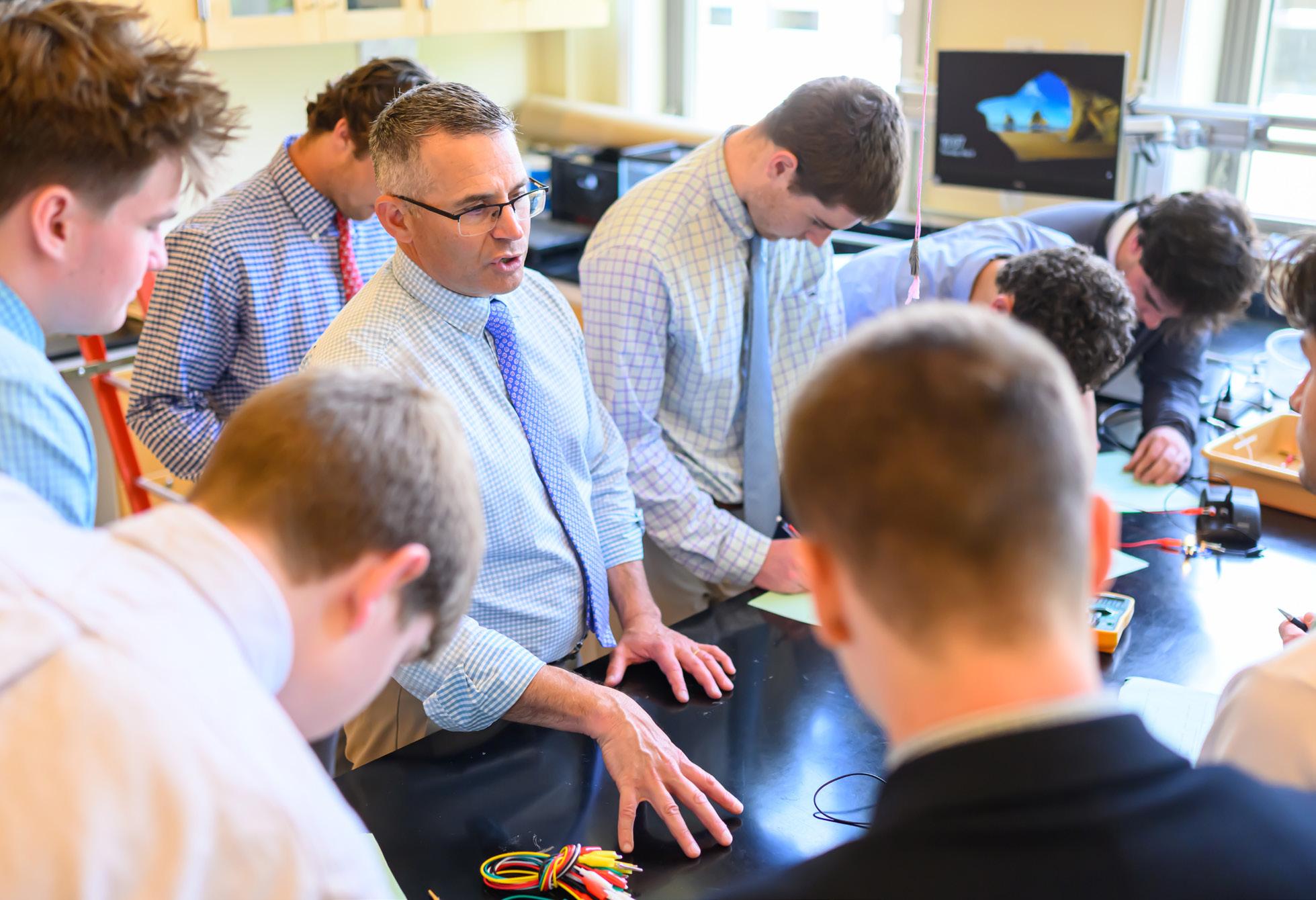
Even in a rigorous learning environment, care and support play a fundamental role. The science classroom is therefore a dynamic place where participation and academic risk-taking are encouraged, where confidence is built and maintained, and where the learning experience is shared. Teachers provide a positive example of excitement and openness to science as students develop their ability to analyze complex situations logically and rationally.
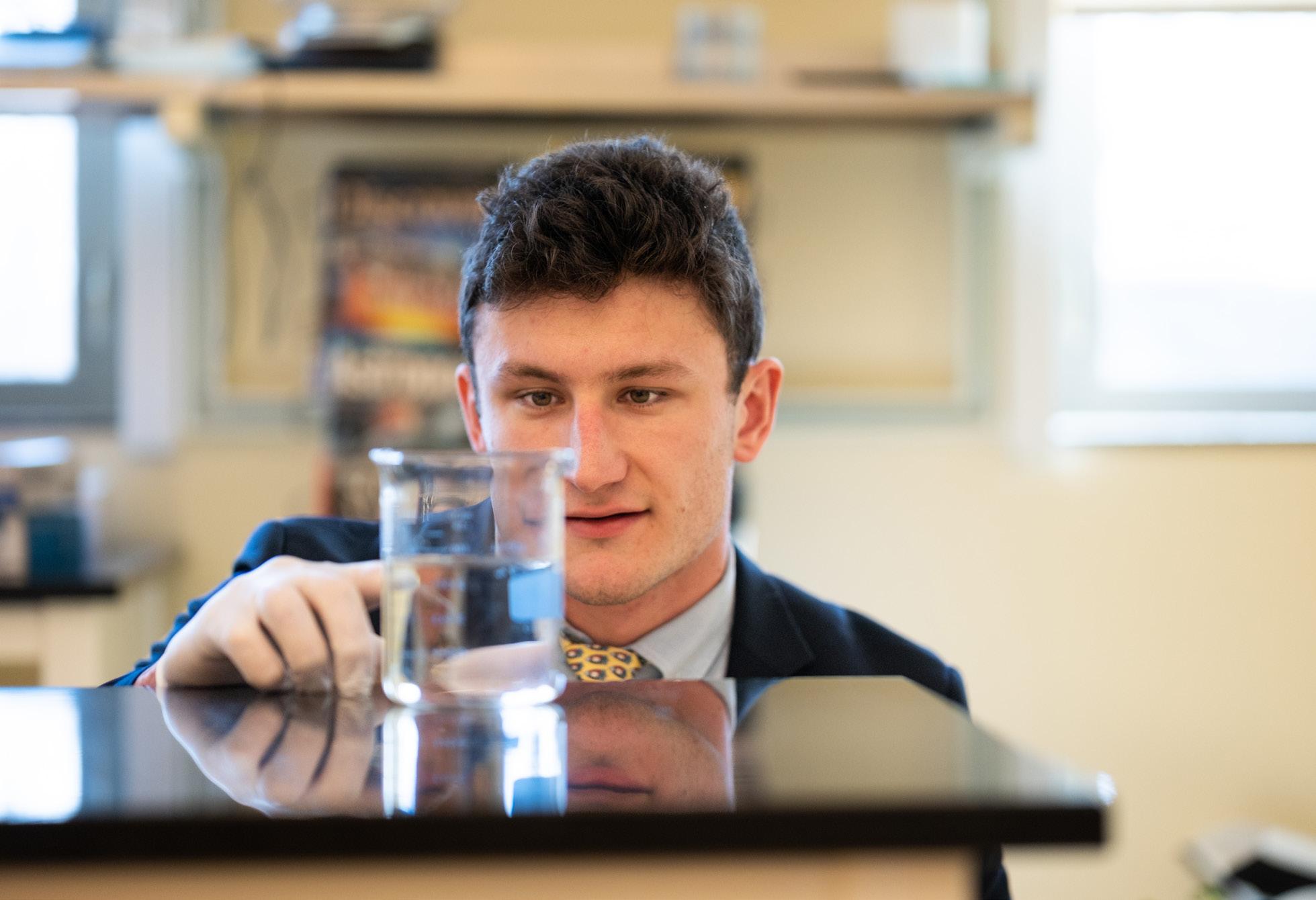
All Middle School students participate in a hands-on, two-year integrated general science course, which introduces astronomy and marine science in addition to laboratory topics in biology, chemistry, and physics. The science sequence in the Upper School begins in the ninth grade with Biology for most students and progresses through additional laboratory courses in Chemistry and Physics. Honors and standard level courses are available in the Upper School. A second year of study at the AP level is available in each discipline for students who exhibit appropriate motivation and aptitude. Though students are required to take Biology and one other laboratory science
prior to graduation, most students pursue at least three years of laboratory science in the Upper School.
GENERAL SCIENCE
General Science is a two-year course for students in grades 7 and 8 in which they learn about the world around them in lab-based units including The Nature of Science, Astronomy, Computer Science and Coding, Heat, Marine Biology, Physics, and Chemistry. Process is emphasized, as students are encouraged to use the scientific method, employ proper laboratory and study techniques, and think clearly and logically. Systematic development of scientific knowledge occurs through class work, labs, demonstrations, projects, fieldwork, and related readings. Understanding is enhanced using Internet resources, and all students learn how to use Vernier Sensors, Excel, and PowerPoint programs. In all units environmental concerns are addressed and good stewardship of the earth is encouraged.
BIOLOGY I
Most freshmen at St. Sebastian’s take an in-troductory course in Biology at either the college prep or honors level. This laboratory based course examines life through the study of chemistry, cells, energetics, cellular reproduction, genetics, biotechnology, evolution, ecology, as well as anatomy and physiology. The students are engaged in lectures, class discussion, projects, and labs, including computer-based labs and a DNA fingerprinting lab using gel electrophoresis.
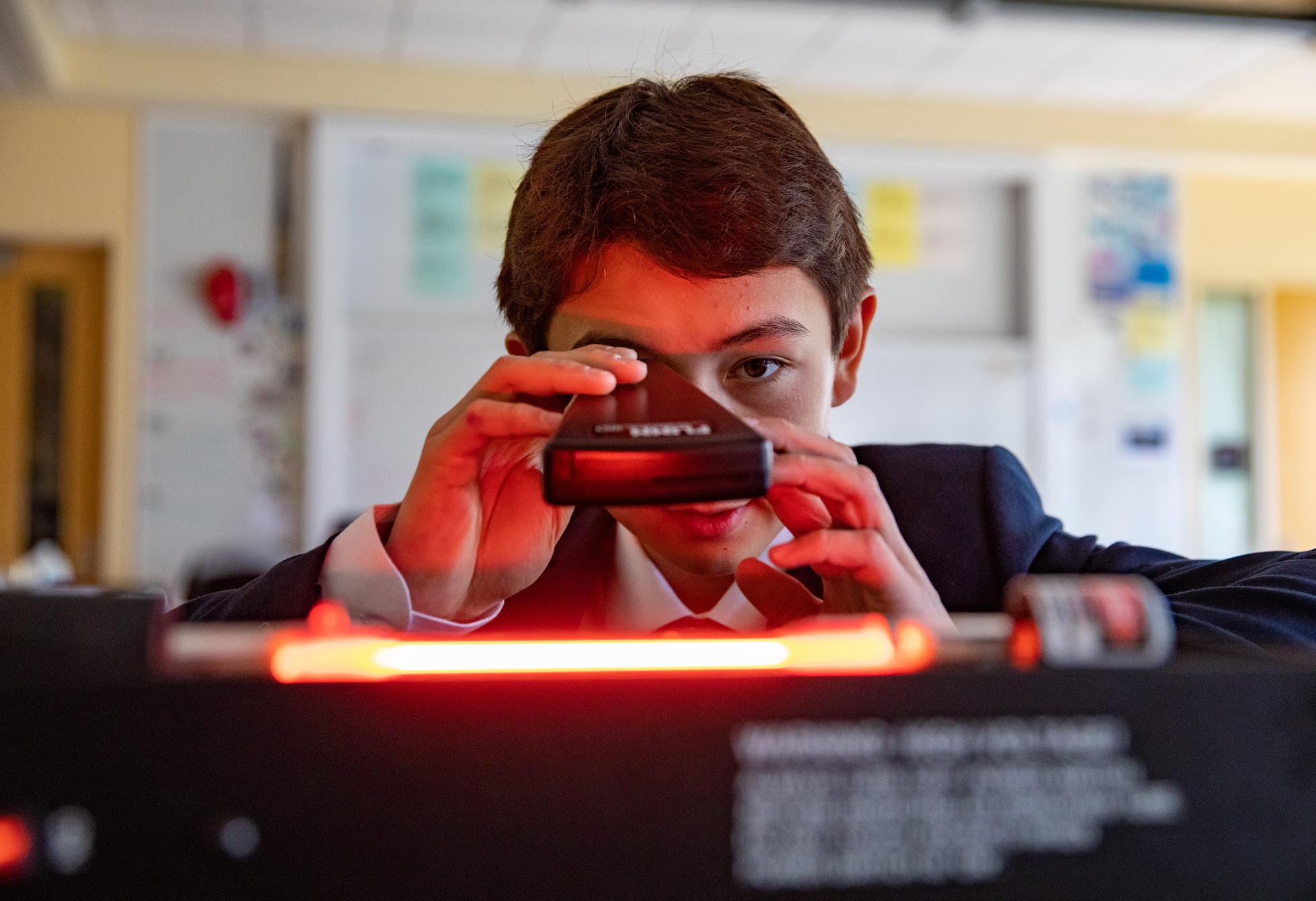
A Life Sciences Club, Engineering Club, Robotics Team, and two STEAM-focused Innovation Labs provide students opportunities outside of the classroom for enhanced, hands-on science experiences. The state-of-the-art Innovation Labs include CAD software and graphic design technologies, filament and resin 3d printers, laser cutters, a band saw, a drill press, and a three-axis CNC milling machine.
AP BIOLOGY
“Experience leads to understanding, which leads to confidence. In our science classrooms, students are encouraged to take chances with their thinking and make mistakes along the way. The academic and personal growth gained from this process is far more valuable than any answer we could give them to their own questions.”
David J. Wilbur Dean of Faculty, Science
Appointed to faculty in 1994
B.S., Worcester Polytechnic Institute
M.A., University of Virginia
This course focuses on developing understanding of essential concepts through inquiry-based learning and honing advanced inquiry and reasoning skills—such as designing plans for collecting data, analyzing data, applying mathematics, and connecting topics across content areas. The four content areas covered are Evolution, Cellular Processes (Energy and Communication), Genetics and Information Transfer, and Interactions. Previous or concurrent study of chemistry is required. A strong mathematics foundation is recommended. Students are required to take the AP Biology exam in May. This course is equivalent to a twosemester college introductory biology course.
CHEMISTRY I
This is a survey course that covers the basic principles of chemistry. Major topics include atomic
theory and atomic structure, chemical reactions, stoichiometry, ionic and covalent bonding, states of matter, elements, classification of matter, periodicity, chemical structure, electrolytes, acids and bases, gases, pH, and entropy and enthalpy. This class is complemented by a full battery of lab activities that allow the student to acquire and apply knowledge in a hands-on environment. Special attention is paid to laboratory safety and the development of proper technique.
AP CHEMISTRY
The advanced placement chemistry course is equivalent to a college introductory chemistry course. The course differs from first year chemistry in its emphasis on chemical calculations and mathematical formulations and concepts. Topics covered include atomic structure, oxidation/ reduction reactions, solution chemistry, thermo-chemistry, chemical kinetics, equilibrium,
acids and bases, electrochemistry, and an introduction to organic chemistry. Appropriate laboratory investigation accompanies class activity. First year chemistry is a prerequisite and all participants are required to take the AP Chemistry exam in May.
PHYSICS I
This introductory physics course emphasizes the application of fundamental principles to explain and understand everyday occurrences. The syllabus covers a traditional sequence of topics, including Newtonian mechanics, electricity, and magnetism. Extensive laboratory work, numerous demonstrations, and outside projects are integral components of the course. This course can be taken at the college prep level or the honors level. At the college prep level, a working knowledge of algebra is expected. At the honors level, advanced problem solving is an integral part of the course, and students should concurrently be enrolled in Algebra II or higher.
AP PHYSICS 2
This is a second year laboratory course in which more advanced topics are introduced, including fluids, optics, thermodynamics, and nuclear and quantum physics. Emphasis is on the development of conceptual understanding and problem-solving ability using algebra and trigonometry, but rarely calculus. This course is relevant for students considering further study of the fundamental sciences at the college level, as well as those students considering future work in the life sciences, premedicine, and some applied sciences. All students are prepared for and are required to take the AP Physics 2 exam in May.
AP PHYSICS C
This course ordinarily forms the first part of the college sequence that serves as the foundation for
students majoring in the physical sciences or engineering. The sequence is parallel to or preceded by mathematics courses that include calculus. Methods of calculus are used wherever appropriate in formulating physical principles and in applying them to physical problems. The sequence is more intensive and analytic than that in the 2 course. Strong emphasis is placed on solving a variety of challenging problems, many requiring calculus. The subject matter of the C course is principally mechanics and electricity and magnetism, with approximately equal emphasis on these two areas. All students are prepared for and are required to take the AP Physics C exam in May.
ANATOMY AND PHYSIOLOGY HONORS
This is an elective, honors-level lab course designed for seniors who have successfully completed coursework in biology, chemistry and physics. The course examines both gross and microscopic anatomy of the human systems and the function of these systems. It also covers biomechanics and biochemistry, particularly of the skeletal, muscular, and cardiovascular systems. Disease and nutrition are addressed, as are their effects on homeostasis and health. This lab-based course includes traditional labs in biology and chemistry as well as computer-based labs, particularly in the realm of biomechanics.
FINE ARTS
The Fine Arts Department inspires appreciation of and participation in the fine and performing arts, encouraging each student to celebrate his individuality, develop his creativity, and enhance his positive perception of both himself and the larger world.
Initial engagement in the arts is experiential, enabling each student to discover for himself how artists create. Further study introduces significant work in drama, music, and studio art, improving each student’s ability to perceive and evaluate art critically. The student’s experience of art as both creator and critic contributes to an enriched perspective from which he will benefit throughout his life.
In the required two-year Middle School course, students are exposed to four main fine arts disciplines. The Upper School program builds on each student’s broad previous exposure to the arts, delving deeper into the areas of art history, studio art, and music. By the time of his graduation, each student who joins the School in the seventh grade can expect to have completed at least three full years of study in the fine arts. Opportunities for AP study are available in studio art, art history and music.
Perhaps more than any other department, the Fine Arts Department is inextricably linked to the extracurricular life of the School. The Drama Club, with the participation of girls from neighboring schools, stages two major productions each year: a full-length play in the fall and an evening of one-act plays in the winter. Canonical, contemporary, and musical plays have all been staged with great enthusiasm. For our annual Spring Revue, students write and direct their own short plays and skits. Students with musical interests are encouraged to supplement their coursework by participating in vocal and/or instrumental groups, which perform regularly during the year, and an album of student instrumental and vocal music is
produced each year. A student-centered liturgical music group plays an essential role in the celebration of monthly Masses. The work of student artists is frequently put on display for the benefit of the School community and in recognition of the artists themselves. The Fine Arts Department frequently arranges for visits by guest artists in visual art and music.
INTRODUCTION TO FINE ARTS, 7 & 8
Focusing on different disciplines in each of the four quarters, this required course in grades seven and eight develops enthusiasm and appreciation for the arts in a variety of forms; introduces students to the fundamental elements in the study of Studio Art and Ceramics, Music, Drama, and Innovation; and develops each student’s creative interests and capabilities.
INTRODUCTION TO FINE ARTS, 9-12
Meeting five times a week, this course includes one semester of Music and one semester of Studio Art, and it fulfills a student’s Fine Arts requirement for graduation. Music covers the history of pre-20th century music, the innovations of atonality, the invention of jazz, and the evolution of popular music. The semester concludes with a workshop in which students compose short pieces and learn the basics of notation. In our Composition Lab, students use the latest software and keyboards to assist them in writing their own music. Studio Art offers an introduction to drawing and painting by exploring the study of line, form, value studies, perspective, composition, and color theory. Trips to area art museums and
Through the Memory Project, St. Sebastian’s artists create portraits for youth around the world who are neglected, orphaned or disadvantaged. To date, students have sent nearly 400 portraits to children in Paraguay, Thailand, Cambodia, Rwanda, Ghana, and India.
“As art instructors at St. Sebastian’s, we have the privilege of encouraging young students to uncover their hidden talents or to cultivate their creative abilities when they first arrive, and then helping them develop into accomplished artists as they prepare for college and beyond.”
Barrett M. Ellis
Chair, Fine Arts Department
Appointed to faculty in 2012
B.F.A. New York State College of Ceramics at Alfred University
classroom visits by local artists enrich the students’ experience.
STUDIO ART II
Offered to students who have completed their requirement, this five day a week course in Drawing and Painting or Ceramics helps selfmotivated and accomplished artists to find a personal approach for their art. This course is ideal for aspiring artists in developing a college portfolio. Students are able to work in various drawing mediums, watercolor painting, acrylic painting, ink, block print, ceramics, and three-dimensional sculpture. Periodic guest artist demonstrations, slide presentations, and occasional trips to art museums augment the work in the studio.
AP STUDIO ART
This elective, college-level art course is designed for the talented and highly motivated art student who wants to explore and develop his own
personal style. Prerequisite is completion of the Fine Arts requirement plus evaluation and acceptance by the Chair of the Fine Arts Department. Each student refines his skills and creates a body of work based on his own unique theme or topic. The portfolio submitted for evaluation to the College Board in May consists of five selected pieces of his best work and 15 images, including finished work, process, and experimentation. This class meets five times a week with additional studio time and weekend assignments required. The following courses are all offered: AP Drawing and Painting; AP 3-Dimensional Sculpture; AP 2-Dimensional Design/Photography.
AP ART HISTORY
This elective course is offered to Juniors and Seniors in preparation for the College Board Examination in May. Various political, social, gender issues, economic and religious conditions affecting the relationships of artists to their culture are explored. Students study and review the
Paleolithic Age through the present to understand better the consciousness and creativity of culture and the critical impact of Art. The class emphasizes critical writing and analysis to prepare for the essay portion of the exam. Students present often, investigating art beyond the European tradition. The class makes frequent trips to local museums and listens to art related lectures.
AP MUSIC THEORY
This elective course is designed for students with musical backgrounds who are interested in taking a detailed look at the fundamental elements of music theory. Discussions of scales, modes, chords, composition, and sight-singing—the material of this class will be equivalent to that found in a college freshman music course. Students will prepare for the Advanced Placement exam in May. Most importantly, this course enables the diligent student to hear and enjoy music in a completely different way.
COMPUTER ASSISTED COMPOSITION
Because technology is an important tool when composing music, this elective class features an in-depth study of music composition and enables students to create original pieces in a variety of styles with computer assistance in writing and organizing the music on the page, playing the music back, and printing the finished project. Students have the opportunity to learn about various styles of music composition as well as become familiar with MIDI and composition software.
FINE ARTS FOUNDATIONS
Available to all ninth to twelfth grades students during free periods or after school, individualized offerings give students a foundation in their chosen discipline. These courses inspire a further appreciation for the Arts and nurture each student’s creative interests. The following courses
allow a student to fulfill his Fine Arts requirement or to deepen his study of the arts if he is not pursuing Advanced Placement courses in the arts:
art history deepens a student’s understanding of art from the Paleolithic Age to the present by surveying paintings, drawings, archeology, architecture, sculpture, philosophical movements and photography.
ceramics includes an introduction to clay forming and surface decorating techniques; emphasizes handbuilding with slabs and coils, pinch and modeling methods, underglazing, scraffito, and mishima; and instructs students on the use of the potter’s wheel.
dark room and digital photography focuses on basic black and white photographic procedures from film exposure in a manual camera, to the development of negatives, and finally, to the finishing of a photographic print. Digital photography includes instruction on camera technology and manipulation of digital images on a computer.
drawing and painting helps an artist to explore his approach to his art by analyzing other artists and by working in various drawing mediums, watercolor painting, acrylic painting, ink, and block print.
film empowers students in all areas of filmmaking from planning and shooting footage, to editing material in the School’s state of the art studio. Through peer workshops and the study of other films, the course also fosters an understanding of and appreciation for the medium of film.
guitar focuses on practice exercises, technique drills, scales and chords, while learning improvisation, soloing, accompaniment, and transcribing music by ear to instrument.
RELIGION
The philosophy of the Religion Department is rooted deeply in the Judeo-Christian tradition, which sees all persons as valued and sacred, as made in the Image of God. The Department’s mission is, indeed, the School’s mission: to help young men grow in wisdom and grace, and in their capacities to know, to love, and to serve God and neighbor.
True to the teachings of the Catholic Church, and appreciative of the teachings of diverse religious traditions, the Department strives to bring all students to God in an inclusive way through a variety of courses and programs. In providing a basic knowledge of Catholic theology, faculty promote broad-based religious literacy, including knowledge and appreciation of other religions. Similar to other academic course offerings, Religion courses foster the continued development of reading and writing skills, and critical and incisive thinking. In its required courses, the Department seeks to evoke in all students the search for Truth, as well as to engage all students in the quest for meaning.
In addition to intellectual development, the Department shares the responsibility of moral and ethical development with the larger school community. Love of neighbor, the centerpiece of Christian life, is the fundamental choice which students are called to make. In their daily interactions, all students are encouraged both to live and to promote the Gospel values of faith, hope, justice, honesty, compassion, integrity, courage, and honor. Community Service plays a vital role within the curriculum, and students are encouraged to pursue service opportunities through School-sponsored programs and in their local communities.
Spiritually, the Department aspires to deepen the religious awareness and active faith lives of all students. The Sacraments of Eucharist and
Reconciliation are offered on a regular basis, and the Department works to help Catholic students prepare to be confirmed in their local parishes. To further help students nurture and deepen their relationship with God, the Department sponsors frequent retreats and days of reflection. As students grow in understanding and respect for their own religious culture, they are encouraged to continue the significant spiritual journeys they have already begun.
INTRODUCTION TO CATHOLICISM
This seventh grade course provides an overview of the major topics undertaken during the students’ six years of religious studies at the School. Students are provided with introductory information on Catholic doctrine, and they explore in a general way some scripture, morality, and sacramental theology. In concert with their other courses, students develop research and paperwriting skills, do independent projects, and make frequent oral presentations.
CHURCH HISTORY AND HEROES
This eighth grade course begins with the study of Catholic Church history, providing a thematic overview of the growth of Christianity, and concludes with an examination of contemporary Catholicism in North America. In addition, students undertake an examination of people who throughout the Church’s history have struggled to understand Christ’s teachings
“Give what you have been given.” With these words, Father John Arens sends young men out to their service placements, where they put their faith in action.
“We view the study of Religion as complementary to all other subjects. Our Religion courses promote learning in other disciplines by instilling in students gratitude for our minds and awe of the natural world. Our purpose is to invite students to know more fully the Creator and thereby to live a happy, meaningful life. At the core of our instruction is dedication to the Gospel, wherein we find the perfect model of love in Jesus Christ, the Word made flesh.”
Josef N. Cressotti Chair, Religion Department
Appointed to faculty in 2012 B.A., Yale University; M.Phil. University of Glasgow; PhD., University of California, Riverside
and to live them without compromise. The lives of such great Christian heroes as Father Damien DeVeuster, St. Francis of Assisi, Maximilian Kolbe, and Mother Teresa of Calcutta receive indepth consideration.
SACRAMENTAL LIFE
This ninth grade course begins with a fundamental review of the tenets of the Catholic faith. Students grow in their understanding of Catholic beliefs, practices, traditions, and prayers. The focal point of the course is a detailed study of the history and theology of the Seven Sacraments, culminating with a concentrated study of the Sacrament of Confirmation. This particular theological study prepares the Catholic students in the course for the celebration of Confirmation in their local parish churches.
HOLY SCRIPTURE
This tenth grade course examines in detail the Old and New Testaments. Initially, the major ideas and developments of the Old Testament are treated. The Bible is placed in an historical and cultural context, illustrating the historical reality of God’s relationship to humanity. Selected books of the Old Testament are subsequently studied. In the second semester of the course, students examine the New Testament with particular attention to its origin, authorship, and historical setting. A closer look at the Passion and Resurrection of Jesus and the formation of the Church receives special emphasis.
MORALITY AND ETHICS
This eleventh grade course begins with an inquiry into Christian moral principles and the process of ethical decision-making. From this Christian theoretical foundation, contemporary moral issues, such as political persecution and economic injustice, are considered. Personal ethical issues, such as the use of drugs and alcohol, social relationships and sexuality, and peer and cultural pressure, are also analyzed in light of Catholic moral teaching.
WESTERN PHILOSOPHY
The twelfth grade course introduces students to some of the major questions of western philosophy. Students are challenged to think more deeply about concepts fundamental to their theoretical and practical reasoning: the soul, virtue,
friendship, freedom, purpose, and, most of all, human happiness. Reading actual texts of philosophers, students begin the year studying the Greek founders of philosophy: Socrates, Plato, and Aristotle. They then study the two most important Christian philosophers and Doctors of the Church, Augustine and Aquinas, who develop the natural philosophy of the Greeks in the light of revelation. The course concludes with the study of two modern philosophers, Pascal and Locke, who defend ancient truths in a time of scientific innovation and religious skepticism. Students are encouraged to read critically, to discuss with an open mind, and to write with precision and force. The goal of the course is that students see more clearly the relationship between Faith and Reason and be able to articulate this relationship to others.
The Honor Code, at the core of our academic program, calls each young man to pledge on his sacred honor that the work he turns in is his own. Hence, students are reminded several times a day that they must be young men of unquestionable integrity who give their best, most honest effort in the classroom and in all areas.
SERVICE PROGRAM
Integral to the School’s mission, the Service Program lives the order of the day of loving God, working hard, and taking good care of one another. By engaging directly with the people they serve, students understand the Gospel’s truth that to love God, they must love their neighbors, particularly neighbors who are most in need.
“It is a great blessing to witness the spiritual growth of our students as they engage in their service experiences. They come to understand that the Gospel value of loving our neighbor is a universal calling, the root of all of our humanity, and the summit of St. Sebastian’s lofty mission.”
John C. Eaton Director of Service Program
Religion Department
Appointed to faculty in 2003 B.S., Boston College
The Service Program is required of all students in seventh through twelve grades throughout the entire calendar year. Students’ work has included tutoring and mentoring inner city youth, coordinating clothing and food drives, serving at food pantries, helping run programs for senior citizens, and assisting both children and adults with physical and mental disabilities.
St. Sebastian’s is committed to service trips that immerse students in settings that work directly with people and help students come to know more of themselves and God through serving others.
The Service Program concludes with the Senior Service Program. Beginning in mid-April, when non Advanced Placement coursework is complete, each senior is required to commit one hundred and fifty hours of service to a non-profit
organization which serves needy members of the community. The work done at the placement site must involve consistent one-on-one contact. Through weekly discussion groups, seniors are required to reflect upon the meaning of their experiences. At the conclusion of their service the entire senior class gathers in the Chapel to share their stories with one another and with the faculty. This morning of oral presentation often ranks among each senior’s finest hours.
The philosophy underlying the Service Program is rooted deeply in the Catholic mission of the School. Our students’ faith and God’s love is given a tangible sign when we seek to emulate Christ by serving our neighbors. Students learn that loving their fellow human being is right and just, and that humbly reaching out to others is an appropriate response to Jesus’ teachings.
Students engage in annual services trips in far off places impacted by natural disaster or protracted poverty, and they engage in weekly service opportunities in our Boston community. Their local outreach includes tutoring at St. Pope John Paul II Catholic Academy, leading art projects at The Cotting School, serving meals at The Paulist Center Food Pantry, and participating in The Miracle League.
SPORTS & CLUBS
Through participation in a broad range of athletic and club activities, each student is called on to find and develop his special interests and talents. As he grows in self-confidence and self-reliance—whether on the athletic field, behind the debate podium, or as a member of a musical performance group—he also develops an appreciation for the value of belonging to and participating in something larger than himself.
INDEPENDENT SCHOOL LEAGUE
Belmont Hill School
Brooks School
Buckingham Browne & Nichols School
Governor’s Academy
Groton School
Lawrence Academy
Middlesex School
Milton Academy
Noble & Greenough School
Rivers School
Roxbury Latin School
St. George’s School
St. Mark’s School
St. Sebastian’s School
Tabor Academy
Thayer Academy
“My St. Sebastian’s experience has been crucial to my success at the college level. I was motivated and pushed by my St. Sebastian’s teachers, coaches, and classmates to be my best every day and to constantly improve as a student-athlete. I am thriving in the highly competitive environments in the classroom and on the field at UPenn. The lessons my teacher and coaches instilled during my time at St. Sebastian’s were invaluable to my development as a person and still drive me when I wake up every morning.”
– Peter J. Blake
Though participation in athletics is not a stipulated requirement, virtually all students choose to play at least one sport. As the School seeks to enable each student to pursue various interests and find the best in himself, athletic events, play practices, music rehearsals, student council programs, and other activities are, whenever possible, scheduled not to conflict.
Club activities appeal to a wide range of tastes, and new organizations develop as student interests warrant. Students are expected to remain on campus after classes to pursue this total learning experience. As they learn to explore, they are reminded in myriad ways that anything worth doing is worth doing well.
CLUBS AND ACTIVITIES
Arrow Club (Community Service)
Arrows Together (Faith Discussion)
Arrowheads (a capella Group)
Art Club
Chess Club
Communications Club
The Dart & The Walrus (School Newspapers)
Debate Team
Drama Club
Engineering Club
Finance Academy
Harvard Model Congress
International Club
Jazz Ensemble & Rock Band
Life Sciences Club
Liturgical Ministries
Math Club & Math Team
Men with Positive Attitudes (Student Diversity Group)
FALL SPORTS
Varsity Cross Country
Junior Varsity Cross Country
8th Grade Cross Country
Varsity Football
Junior Varsity Football
9th Grade Football
8th Grade Football
7th Grade Football
Varsity Soccer
Junior Varsity Soccer
9th Grade Soccer
8th Grade Soccer
7th Grade Soccer
The Quiver (Literary & Artistic Magazine)
Robotics Club
Schola and Mass Ensemble
Spanish Conversation Club
St. Sebastian’s Journal (Scholarly Journal)
Student Council
S.A.D.D.
WINTER SPORTS
Varsity Basketball
Junior Varsity Basketball
9th Grade Basketball
8th Grade Basketball
8th Grade Basketball
Varsity Hockey
Junior Varsity Hockey
9th Grade Hockey
8th Grade Hockey
7th Grade Hockey
Varsity Skiing Squash
Varsity Wrestling
Junior Varsity Wrestling
Middle School Wrestling
SPRING SPORTS
Varsity Baseball
Junior Varsity Baseball
9th Grade Baseball
8th Grade Baseball
7th Grade Baseball
Varsity Golf
Junior Varsity Golf
Varsity Lacrosse
Junior Varsity Lacrosse
9th Grade Lacrosse
8th Grade Lacrosse
7th Grade Lacrosse
Varsity Tennis
Junior Varsity Tennis
Middle School Tennis
Ultimate
ADMISSIONS & FINANCIAL AID
St. Sebastian’s seeks to provide each prospective family ample opportunity to develop a genuine understanding of the School and its unique mission. During the fall prior to the year for which the student wishes to enroll, families interested in learning more about the School should contact the Admissions Office for an updated catalog and application.
APPLYING
Information on applying and a detailed application timeline are available on the School website or by calling the Admissions Office. All applicants are required to schedule a personal campus tour and interview, which is conducted by a member of the faculty. Interviews are scheduled during regular School hours from October through January. Appointments should be made weeks in advance. Open House and other important dates are included in the School calendar. The application deadline is February 1.
COST OF ATTENDANCE
The total cost of attendance for the 2025-2026 school year is $63,600. On average, additional book expenses are about $400. The School organizes a used book sale to help defray the cost of books.
An enrollment deposit is required of accepted families to reserve a place in the class for the next academic year. This amount is applied to the tuition, the remainder of which can be paid in two installments, on August 1 and December 1. Extended payment plans administered by outside agencies are available to enable families to spread out their payments, usually over a period of eight to ten months.
FINANCIAL AID
As a school, St. Sebastian’s makes a strong commitment to ensuring that no student is denied a place simply due to his family’s financial means. Students are encouraged to apply for admission regardless of their family’s ability to meet the full cost of attendance. Over the past five years, 33% of the student body has received financial assistance from the School. The School awards financial aid only to those qualified applicants who exhibit demonstrated financial need.
To apply for financial aid consideration, families must submit an application in Clarity, the school’s financial aid platform, no later than February 1. More information can be found at www.stsebs.org/admissions/affordingstsebastians. Please contact the Admission Office at any time for a one-on-one conversation.
St. Sebastian’s School does not discriminate on the basis of religion, race, or ethnic origin in the administration of its admissions, financial aid, or educational policies.
COLLEGE COUNSELING
St. Sebastian’s prepares young men for successful college careers. The art of selecting the right school—from initial research to final choice—is guided by the college counselor and supported by the faculty. Though the college counselor frequently consults, both formally and informally, with students and parents in the first two years of the upper school, preparation for the college search process begins in earnest in the junior year.
“St. Sebastian’s College Counselors provide the right combination of independence and support to help students choose the best path to a successful and fulfilling career in college and beyond. We empower them to engage in rigorous self-reflection in order to identify their priorities and aspirations for the next phase of their educational journey. ”
Mrs. Ellen B. Hinman Director of College Counseling
Appointed to faculty in 2019
B.A., Dartmouth College, M.A., Boston College
M.Ed., Columbia University Teachers College
A successful college search, application, and ultimately matriculation depends on three things: thoughtful, openminded reflection about a student’s strengths, accomplishments, and aspirations; proactive communication among students, parents, counselors, and colleges; and an organized, timely approach to all collegerelated activities. The college process yields the most positive outcomes when students engage fully, taking the lead on this educational journey, in order to develop the tools they will need for a successful and fulfilling career at a college appropriate to their individual strengths and interests.
The college search process begins in earnest in the junior year. Through individual and group meetings, each student and his college counselor embark on a two-way exchange of information; conversations start broad and ultimately narrow
over the next 10-12 months to yield a carefully curated application list and finally an enrollment decision.
We provide personalized counseling; we help students tell their story; and we communicate clearly and promptly with families, welcoming questions at any time and giving them information they need to support their sons with confidence and wisdom.
Our College Counseling Office also works, in partnership with the Head of School, to act as strong advocates for both individual students and the School as a whole. We visit colleges and universities throughout the year to maintain a current understanding of these institutions, and to familiarize colleges with the unique strengths and character of St. Sebastian’s and its students.
COLLEGE MATRICULATION
Members of the last five graduating classes have enrolled at the colleges and universities listed below.
College of the Holy Cross 28
Boston College 24
Providence College 16
Villanova University 16
Georgetown University 15
Harvard University 12
Colby College 11
Trinity College 9
Tufts University 7
Fordham University 6
Middlebury College 6
Northeastern University 6
University of Notre Dame 6
Wake Forest University 6
Brown University 5
Bucknell University 5
Clemson University 5
Fairfield University 5
University of Michigan 5
University of Virginia (Main Campus) 5
Dartmouth College 4
Duke University 4
Indiana University (Bloomington) 4
Syracuse University 4
University of Wisconsin (Madison) 4
Amherst College 3
Babson College 3
Princeton University 3
Skidmore College 3
Southern Methodist University 3
United States Military Academy at West Point 3
University of Richmond 3
University of Southern California 3
Vanderbilt University 3
Worcester Polytechnic Institute 3
Bates College 2
Catholic University of America 2
Colgate University 2
Colorado College 2
Cornell University 2
Dickinson College 2
Emory University 2
Lafayette College 2
Northwestern University 2
St. Lawrence University 2
Tulane University of Louisiana 2
Union College 2
University of California (Los Angeles) 2
University of Denver 2
University of Miami 2
University of Pennsylvania 2
American International College 1
Anna Maria College 1
Assumption University 1
Baylor University 1
Bentley University 1
Birmingham City University 1
Boston University 1
Bowdoin College 1
Clark University 1
Clarkson University 1
College Name 1
College of Charleston 1
Culinary Institute of America 1
Emerson College 1
Furman University 1
George Washington University 1
Gordon State College 1
Howard University 1
James Madison University 1
Johns Hopkins University 1
Lake Forest College 1
Lehigh University 1
Merrimack College 1
Morehouse College 1
Pitzer College 1
Rensselaer Polytechnic Institute 1
Santa Clara University 1
Seton Hall University 1
Siena University 1
Springfield College 1
Suffolk University 1
The Ohio State University 1
The University of Tennessee (Knoxville) 1
University of California (Irvine) 1
University of Connecticut 1
University of Georgia 1
University of Hartford 1
University of Louisville 1
University of Maryland (College Park) 1
University of Massachusetts (Amherst) 1
University of Vermont 1
Vassar College 1
Washington University in St. Louis 1
Western Connecticut State University 1
Xavier University 1
Yale University 1
ADMINISTRATION, FACULTY, & STAFF
2025–2026
ADMINISTRATION
Brendan W. Sullivan
B.S., Princeton University
M.A.L.S., Wesleyan University
Head of School, Science
Michael P. Nerbonne
B.A., College of the Holy Cross
M.A., University of Michigan
Assistant Head of School, Dean of Studies, Classics
Richard F. Arms
B.S., St. Anselm College
J.D., Suffolk University Senior Advancement Officer
Jonathan R. Bartlett
B.A., Colby College
M.Ed., Boston College Director of Athletics
Jenny Callahan
B.A., Boston College
M.S.W., Boston College Dean of Advancement
Brian J. Canavan
B.A., College of the Holy Cross
M.S., Boston University Director of Operations
Ellen B. Hinman
B.A., Dartmouth College
M.A., Boston College
M.Ed., Columbia University Teachers College
Director of College Counseling
Jennifer L. Joyce, R.N.
B.S., University of Rhode Island
B.S.N., New York University Director of Health Services
G. David Riedell
B.A., University of New Hampshire
M.S., Boston College Director of Finance
Jeffrey J. Riemann
B.A., Williams College
M.A., Middlebury College Director of Grades Seven & Eight, English
David J. Wilbur
B.S., Worcester Polytechnic Institute
M.A., University of Virginia Dean of Faculty, Science
Matt G. Willey
B.B.A., University of Massachusetts
M.Ed., University of Hawaii
Dean of Students, Science
Gregory W. Wishart
B.A., Colgate University
M.A., Middlebury College Dean of Enrollment, English
Edward J. Zadravec
B.A., Brown University
Psy.D., Massachusetts School of Professional Psychology Consulting Psychologist
CHAPLAIN
Rev. Christopher Boyle
B.A., St. Joseph’s College Chaplain, Religion
FACULTY
Dean B. Adams
B.A. Boston College
M.A., Middlebury College English, College Counseling
Aturo Adkins
B.A., Dickinson College Assistant Admissions Associate, History
Sean P. Albertson
B.A., College of the Holy Cross
M.Ed., Harvard University Chair, Classics Department
Adam M. Andrew
B.A., Colgate University
M.S., Brandeis University Science
Rev. John F. Arens
B.A., B.Th., M.Div., St. John’s Seminary Senior Priest, Alumni Relations, Fine Arts
Matthew T. Aventuro
B.A., Colgate University Classics
Paula M. Barbosa
B.A., Providence College
M.Ed., Providence College Spanish
Courtney F. Bent
B.A., Colgate University Fine Arts
Weston R. Brach ’16
B.A., Middlebury College
Director of Academic Technology
Benjamin A. Brown
B.A., Vanderbilt University Science
Daniel B. Burke ’97
B.A., Dartmouth College
Ed.M., Harvard University
Assistant Dean of Students, English
Matthew M. Burke ’00
B.A. Middlebury College Science, Academic Support
Julia H. Burnet
B.S., Elon University Science
Carla A. Callini
B.A., Providence College
M.S.T., University of New Hampshire Mathematics
Michael P. Carpino
B.A., Lasell University
M.Ed., Boston College Assistant Athletic Trainer
Gabriela Cesaro
B.A., Universidad de los Andes
M.S., Boston University
LL.M., University of Miami School of Law Spanish
Denis J. Cleary
B.A., College of the Holy Cross
M.A.T., Harvard University Chair, History Department
Sean A. Cleary
B.A., Tufts University
M.F.A., The University of Montana English
Nicholas T. Connelly ’17
B.A., Kenyon College
M.A., The University of Manchester
M.A., University College Dublin English
John S. Cornish
A.B., Princeton University English
Josef N. Cressotti
B.A., Yale University
M.Phil., University of Glasgow
Ph.D., University of California
Chair, Religion Department
Amber Crossman
B.A., Brandeis University
M.A., Emerson College
English, Fine Arts, Drama
Frederick E. Dashiell, Jr.
B.A., University of Chicago
M.A., Boston University English
Michael R. Deschenes
B.A., College of the Holy Cross
M.A., Tufts University
M.L.I.S., University of Illinois
Director of Library & Information Services, Computer Science
John J. Doherty, Jr. ’86
B.A., Bowdoin College
M.A., Tufts University History
John C. Eaton
B.S., Boston College Director of Service Programs, Religion
Barrett M. Ellis
B.F.A., New York State College of Ceramics at Alfred University Chair, Fine Arts Department
James E. Ferguson
B.A., Trinity College, Dublin
M.A.T., Boston University
M.A., Boston University Classics
T. Kern Fitzgerald ’79
B.S., M.Ed., Springfield College
Athletic Trainer, Physical Education, Science
Shayna R. Goldstein
B.A., University of Vermont
M.A., Middlebury College Spanish
David B. Hinman
B.A., Hobart College
Ed.M., Boston University
Coordinator of Health & Wellness Program, Mathematics
Matthew P. Karpowicz ’16
B.A., Williams College Mathematics
Paul J. Keady ’16
B.A., Georgetown University Religion, Classics
Henry J. Lagasse
B.S., Trinity College Science
Brian P. Lewin
B.A., College of the Holy Cross
M.T.S., Boston College
M.Ed., Endicott College Religion
Christopher F. Lynch
B.A., College of the Holy Cross
M.A., Middlebury College
M.Ed., Boston College Chair, English Department
Lautaro Mantilla
B.A., Universidad Javeriana
M.A., New England Conservatory of Music
D.M.A., New England Conservatory of Music Fine Arts, Music
Andrew S. Maxwell
B.S. United States Military Academy, West Point History
Sean P. McCann
B.A., Harvard University Director of Admissions Operations and Financial Aid
Sandra A. McKeigue
B.A., The Catholic of University of America
M.A., Teachers College, Columbia
Director of Academic Support, Spanish
Trevor McLean
B.A., Emerson College Assistant Director of Admissions, History
John E. McNamara, Jr. ’14
B.A., Boston College
M.Ed., Boston College Mathematics, Academic Support
Rossana Molina Loza
B. A., Universidad Femenina del Sagrado Corazon Spanish
Ryan J. Moore
B.A., Boston University
M.A., Middlebury College Director of Admissions Outreach, Chair, Spanish Department
George J. Morelli
B.S., Villanova University
M.S.T., Boston College Mathematics
Michael Moroco B.A., Villanova University English
Mark T. Nelson
B.A., Colby College
M.S., Johns Hopkins University Mathematics
Andrea A. Ortigosa Doglioli
B.S., B.B.A., Universidad Catolica Argentina
M.B.A., Babson College Spanish
Richard J. Palmaccio ’62
B.S., M.A.T., Boston College Mathematics
Ryan S. Patrico
B.A., Brown University
M.A., Yale University
Ph.D., Yale University Religion
Anthony A. Perez ’19
B.A., Dartmouth College English, Religion
Manuel P. Pettine
B.A., Berklee College of Music Music
Mark E. Pohlman
B.S., Boston College
M.S., Boston College Mathematics
Diane M. Popeo
B.S., Georgetown University
M.Ed., Clemson University Chair, Science Department
Woody B. Redpath
B.A., Wesleyan University
M.A., Wesleyan University History, College Counseling
James W. Rest
B.A., Hamilton College
M.Ed., Boston College Chair, Mathematics Department
John J. Ryan III
B.S., University of Notre Dame Science
Deirdre A. Rynne Annan
B.A., Hobart & William Smith Colleges
M.A., Boston College Fine Arts
Stephen P. Salomone
B.S., U.S. Military Academy, West Point
MTS, Harvard Divinity School Religion
Ryan A. Sanderson ’12
B.A., Bowdoin College Science, Mathematics
Joseph S. Scordino
B.S., B.A., Boston College
M.B.A., Northeastern University History
Shaun P. Stanton
B.A., Boston College
M.A.T., University of St. Mary History
James D. Sullivan
B.S., Boston College
M.Ed., Boston State College Mathematics
David M.J. Thomas
B.A., Middlebury College
M.S.T., Boston College Science
Paul G. Tremblay
B.A., Providence College
M.S., University of Vermont Mathematics
Olivia B. Uhlman
B.A., Williams College Science
Lauren A. Warner
B.A., California State University, Long Beach
M.A., Loyola Marymount University
Music Ministry
Kera A. Wiggin
B.A., Wellesley College
M.A., Middlebury College
English
Jay Wu
B.A., Boston College
M.S., Boston College
M.F.A., Pennsylvania Academy of the Fine Arts Mathematics
STAFF
Andrew J. Carr
B.S., Bridgewater State University
Physical Education, Strength & Conditioning
Alexandra Colgan
B.S., Providence College Communications Associate
Paula J. Coskren
A.A., Aquinas College
Assistant to the Head of School
Fred J. Daly ’70
B.S., Boston College Assistant Director of Alumni Programs
Lesley Anne H. Day
B.A., University of Massachusetts Advancement Associate
Chris Dehney
B.S., Bowdoin College Visual Media Coordinator
James Donovan ’19
B.A., College of the Holy Cross Assistant Director of Alumni Programs
Julie A. Duddy
B.S., Rhode Island College Advancement Assistant
Matthew Duffy ‘07
B.A., University of Tennessee Athletic Scheduler
Maureen L. Gilligan Advancement Assistant & Receptionist
Anderson Julio Auza
B.A., Universidad Distrrital Francisco
Jose de Caldas
M.A., Middlebury College
M.S., Northeastern University Director of Technology
Kelsey E. Kane
B.A., St. Anselm College Events Coordinator & Advancement Associate
Cliffor Kurker
B.A., UMass Lowell, M.S., Boston College Director of Peak Performance, Head Strength & Conditioning Coach
Eric J. Ludwig
B.S., Bridgewater State University Maintenance
Helen E. Maxwell
B.F.A., Boston University
M.Ed., Massachusetts College of Art Admissions Coordinator
Jeanne L. McKenzie
B.A., Seton Hall University Campus Store Manager
Karilan S. McPartland
B.A., Bucknell University
M.Ed., Lesley University Director of Annual Giving
Michael W. Melley
B.A., University of Virginia Executive Director of Advancement
Jared A. Mosman
Rink Manager
Linda Panetta
B.A., University of Massachusetts Assistant to the Director of Advancement
Paul F. Panetta, Jr. Assistant Director of Maintenance
Thomas Perry
B.S., Merrimack College Help Desk Specialist
Christine Y. Robertson
B.S., Trinity College Director of Communications
Paul J. Rossini
B.S., Wentworth Institute of Technology Assistant Director of Technology
Jean Ryan
B.S., University of Notre Dame School Secretary
Angela Vassalotti
B.S., Bentley University Business Office and Human Resources Associate
C. Douglas Warry
B.S., Salem State University Maintenance
Patricia M. White
B.S., Northeastern University Assistant to the Director of College Counseling
Most Reverend Richard G. Henning, S.T.D., Archbishop of Boston Chairman
Devin C. Condron ’92, P’29, ’29, ’31 President
Brendan W. Sullivan P’25, ’29 Executive Officer, Head of School
James F. Mooney III P’18
Vice President
John A. Piccione ’76 Secretary
Michael J. Maguire ’91, P’22, ’25 Treasurer
BOARD OF TRUSTEES
2025–2026
Mark H. Carter P’28
Meyer J. Chambers P’10, ’14
Tara B. Ciongoli P’25, ’25, ’27, ’29
Denis J. Cleary, III P’27
Casey M. Condron ’94, P’23, ’24, ’28
Timothy J. Connelly P’17, ’19
Marybeth Connolly P’27
Catherine C. Daniel P’15, ’18, ’20
Paul A. D’Attanasio ’96 P’31
Timothy P. Doherty ’87, P’17
Michael R. Frisoli P’17, ’19, ’21, ’22, ’26
Dr. Chris Hahm P’22, ’26
Kristen D. Maxwell P’25
David Nahabedian P’29
Matthew R. Perry ’06
Dr. Edward T. Ryan P’23
Michael J. Stanton ’88, P’20
Gina Usechek P’27, ’29
Jeffrey P. von Arx, S.J.
Robert V. Wallace Jr. ’89, P’25
Stephen P. Ward ’96, P’24, ’25, ’27, ’29
Kyle E. White ’09
Wendy C. Thurmond P’25, ’28 President, Guild of St. Irene
Richard H. Sutphin Jr. P’26 President, Men’s Association
Ryan R. Fitzpatrick ’92 President, Alumni Association
David F. Gately ’73 Trustee Emeritus
VISITING ST. SEBASTIAN’S SCHOOL
DIRECTIONS TO THE CAMPUS
From the North:
Take Rt. 128 (Rt. 95) South
Exit 33 (Great Plain Ave.)
Left off ramp
Left on Greendale Avenue
First right into parking lot
From the South:
Take Rt. 128 (Rt. 95) North
Exit 32 (Rt. 135)
Right off ramp
Right on Greendale Avenue
Left into parking lot
FOR MORE INFORMATION
Admissions Office
St. Sebastian’s School 1191 Greendale Avenue
Needham, MA 02492
phone: 781 247-0125
admissions@stsebs.org
www.stsebs.org
CREDITS
design Epitome Studio, Melrose, MA
photography Brett Crawford, Adam Richins, Bobby Quillard